Eureka Math Grade 3 Module 3 Lesson 12 Answer Key

Students of Grade 3 can get a strong foundation by referring to the Eureka Math Book. It was developed by highly professional mathematics educators and the solutions prepared by them are in a concise manner for easy grasping. To achieve high scores in Grade 3, students need to solve all questions and exercises included in Eureka Grade 3 Book.

Engage NY Eureka Math 3rd Grade Module 3 Lesson 12 Answer Key

Teachers and students can find this Eureka Book Answer Key for Grade 3 more helpful in raising students’ scores and supporting teachers to educate the students. Learning activities are the best option to educate elementary school kids and make them understand the basic mathematical concepts like addition, subtraction, multiplication, division, etc. Grade 3 elementary school students can find these fun-learning exercises for all math concepts through the Eureka Book.

Eureka Math Grade 3 Module 3 Lesson 12 Pattern Sheet Answer Key

Multiply

Eureka Math Grade 3 Module 3 Lesson 12 Pattern Sheet Answer Key 1

Answer:
8 x 1 = 8, 8 x 2 = 16, 8 x 3 = 24, 8 x 5 = 40, 8 x 6 = 48, 8 x 7 = 56, 8 x 8 = 64, 8 x 9 = 72, 8 x 10 = 80, 8 x 5 = 40, 8 x 6 = 48, 8 x 5 = 40, 8 x 7 = 56, 8 x 5 = 40, 8 x 6 = 48, 8 x 5 = 40, 8 x 7 = 56, 8 x 5 = 40, 8 x 8 = 64, 8 x 5 = 40, 8 x 9 = 72, 8 x 5 = 40, 8 x 10 = 80, 8 x 6 = 48, 8 x 5 = 40, 8 x 6 = 48, 8 x 7 = 56, 8 x 6 = 48, 8 x 8 = 64, 8 x 6 = 48, 8 x 9 = 72, 8 x 6 = 48, 8 x 7 = 56, 8 x 6 = 48, 8 x 7 = 56, 8 x 8 = 64, 8 x 7 = 56, 8 x 9 = 72, 8 x 7 = 56, 8 x 8 = 64, 8 x 6 48, 8 x 8 = 64, 8 x 7 = 56, 8 x 8 = 64, 8 x 9 = 72, 8 x 9 = 72, 8 x 6 = 48, 8 x 9 = 72, 8 x 7 = 56, 8 x 9 = 72, 8 x 8 = 64, 8 x 9 = 72, 8 x 8 = 64, 8 x 6 = 48, 8 x 9 = 72, 8 x 7 = 56, 8 x 9 = 72, 8 x 6 = 48, 8 x 8 = 64, 8 x 9 = 72, 8 x 7 = 56, 8 x 6 = 48, 8 x 8 = 64.

Explanation:
In the above-given question,
given that,
the table of 8 and multiply.
8 x 1 = 8, 8 x 2 = 16, 8 x 3 = 24, 8 x 5 = 40, 8 x 6 = 48, 8 x 7 = 56, 8 x 8 = 64, 8 x 9 = 72, 8 x 10 = 80, 8 x 5 = 40, 8 x 6 = 48, 8 x 5 = 40, 8 x 7 = 56, 8 x 5 = 40, 8 x 6 = 48, 8 x 5 = 40, 8 x 7 = 56, 8 x 5 = 40, 8 x 8 = 64, 8 x 5 = 40, 8 x 9 = 72, 8 x 5 = 40, 8 x 10 = 80, 8 x 6 = 48, 8 x 5 = 40, 8 x 6 = 48, 8 x 7 = 56, 8 x 6 = 48, 8 x 8 = 64, 8 x 6 = 48, 8 x 9 = 72, 8 x 6 = 48, 8 x 7 = 56, 8 x 6 = 48, 8 x 7 = 56, 8 x 8 = 64, 8 x 7 = 56, 8 x 9 = 72, 8 x 7 = 56, 8 x 8 = 64, 8 x 6 48, 8 x 8 = 64, 8 x 7 = 56, 8 x 8 = 64, 8 x 9 = 72, 8 x 9 = 72, 8 x 6 = 48, 8 x 9 = 72, 8 x 7 = 56, 8 x 9 = 72, 8 x 8 = 64, 8 x 9 = 72, 8 x 8 = 64, 8 x 6 = 48, 8 x 9 = 72, 8 x 7 = 56, 8 x 9 = 72, 8 x 6 = 48, 8 x 8 = 64, 8 x 9 = 72, 8 x 7 = 56, 8 x 6 = 48, 8 x 8 = 64.
Eureka-Math-Grade-3-Module-3-Lesson-12-Answer Key-1

Eureka Math Grade 3 Module 3 Lesson 12 Problem Set Answer Key

Question 1.
Each Eureka Math Grade 3 Module 3 Lesson 12 Problem Set Answer Key 2 has a value of 9. Find the value of each row. Then, add the rows to find the total.

a. 6 × 9 = ___54____
Eureka Math Grade 3 Module 3 Lesson 12 Problem Set Answer Key 3
6 × 9 = (5 + 1) × 9
= (5 × 9) + (1 × 9)
= 45 + ___9__
= __54___

Answer:
6 x 9 = 54.

Explanation:
In the above-given question,
given that,
6 x 9 = ( 5 + 1 ) x 9.
( 5 x 9 ) + ( 1 x 9 )
45 + 9
54.
Eureka-Math-Grade-3-Module-3-Lesson-12-Answer Key-2

b. 7 × 9 = ____63___
Eureka Math Grade 3 Module 3 Lesson 12 Problem Set Answer Key 4
7 × 9 = (5 + __2__) × 9
= (5 × 9) + (__2__ × 9)
= 45 + __18___
= ___63__

Answer:
7 x 9 = 63.

Explanation:
In the above-given question,
given that,
7 x 9 = ( 5 + 2 ) x 9.
( 5 x 9 ) + ( 2 x 9 )
45 + 18.
63.
Eureka-Math-Grade-3-Module-3-Lesson-12-Answer Key-3

c. 8 × 9 = ___72____
Eureka Math Grade 3 Module 3 Lesson 12 Problem Set Answer Key 5
8 × 9 = (5 + ___3__) × 9
= (5 × 9) + (___3__ × __9___)
= 45 + __27___
= __72___

Answer:
8 x 9 = 72.

Explanation:
In the above-given question,
given that,
8 x 9 = ( 5 + 3 ) x 9.
( 5 x 9 ) + ( 3 x 9 )
45 + 27.
72.
Eureka-Math-Grade-3-Module-3-Lesson-12-Answer Key-4

d. 9 × 9 = ____81___
Eureka Math Grade 3 Module 3 Lesson 12 Problem Set Answer Key 6
9 × 9 = (5 + ___4__) × 9
= (5 × 9) + (__4___ × ___9__)
= 45 + __36___
= __81___

Answer:
9 x 9 = 81.

Explanation:
In the above-given question,
given that,
9 x 9 = ( 5 + 4 ) x 9.
( 5 x 9 ) + ( 4 x 9 )
45 + 36.
81.
Eureka-Math-Grade-3-Module-3-Lesson-12-Answer Key-5

Question 2.
Find the total value of the shaded blocks.

a. 9 × 6 = 54
Eureka Math Grade 3 Module 3 Lesson 12 Problem Set Answer Key 7
9 sixes = 10 sixes – 1 six
=__60___ – 6
= __54___

Answer:
9 x 6 = 54.

Explanation:
In the above-given equation,
given that,
9 sixes = 10 sixes – 1 six.
60 – 6.
54.

b. 9 × 7 = 63
Eureka Math Grade 3 Module 3 Lesson 12 Problem Set Answer Key 8
9 sevens = 10 sevens – 1 seven
= __70___ – 7
= __63___

Answer:
9 x 7 = 63.

Explanation:
In the above-given equation,
given that,
9 sevens = 10 sevens – 1 seven.
70 – 7.
63.

c. 9 × 8 = 72.
Eureka Math Grade 3 Module 3 Lesson 12 Problem Set Answer Key 9
9 eights = 10 eights – 1 eight
= __80___ – 8
= __72___

Answer:
9 x 8 = 72.

Explanation:
In the above-given equation,
given that,
9 eights = 10 eights – 1 eight.
80 – 8.
72.

d. 9 × 9 = 81.
Eureka Math Grade 3 Module 3 Lesson 12 Problem Set Answer Key 10
9 nines = 10 nines – 1 nine
= __90___ – __9___
= __81___

Answer:
9 x 9 = 81.

Explanation:
In the above-given equation,
given that,
9 nines = 10 nines – 1 nine.
90 – 9.
81.

Question 3.
Matt buys a pack of postage stamps. He counts 9 rows of 4 stamps. He thinks of 10 fours to find the total number of stamps. Show the strategy that Matt might have used to find the total number of stamps.

Answer:
9 x 4 = 36.

Explanation:
In the above-given equation,
given that,
9 fours = 10 fourss – 1 four.
40 – 4.
36.

Question 4.
Match
Eureka Math Grade 3 Module 3 Lesson 12 Problem Set Answer Key 11

Answer:
3 x 9 = 27, 45 / 9 = 5.
9 x 9 = 81, 9 / 9 = 1.
8 x 9 = 72, 90 / 9 = 10.
9 x 4 = 36, 72 / 9 = 8.
2 x 9 = 18, 54 / 9 = 6.

Explanation:
In the above-given question,
given that,
the multiplication and division of 9.
3 x 9 = 27, 45 / 9 = 5.
9 x 9 = 81, 9 / 9 = 1.
8 x 9 = 72, 90 / 9 = 10.
9 x 4 = 36, 72 / 9 = 8.
2 x 9 = 18, 54 / 9 = 6.
Eureka-Math-Grade-3-Module-3-Lesson-12-Answer Key-6

Eureka Math Grade 3 Module 3 Lesson 12 Exit Ticket Answer Key

Question 1.
Each Eureka Math 3rd Gradde Module 3 Lesson 12 Exit Ticket Answer Key 12 has a value of 9. Complete the equations to find the total value of the tower of blocks.
Eureka Math 3rd Grade Module 3 Lesson 12 Exit Ticket Answer Key 13
___5__ × 9 = (5 + __1__ ) × 9
= (5 × ___9__ ) + ( __1___ × __9___ )
= 45 + __9___
= __54___

Answer:
6 x 9 = 54.

Explanation:
In the above-given question,
given that,
5 x 9 = ( 5 + 1 ) x 9.
( 5 x 9 ) + ( 1 x 9 )
45 + 9.
54.

Question 2.
Hector solves 9 × 8 by subtracting 1 eight from 10 eights. Draw a model, and explain Hector’s strategy.

Answer:
9 x 8 = 72.

Explanation:
In the above-given question,
given that,
9 x 8 = 72.
10 eights – 1 eight.
80 – 8.
72.

Eureka Math Grade 3 Module 3 Lesson 12 Homework Answer Key

Question 1.
Find the value of each row. Then, add the rows to find the total.

a. Each Eureka Math 3rd Grade Module 3 Lesson 12 Homework Answer Key 15 has a value of 6.
9 × 6 = ___54_____
Eureka Math 3rd Grade Module 3 Lesson 12 Homework Answer Key 14
9 × 6 = (5 + 4) × 6
= (5 × 6) + (4 × 6)
= 30 + __24___
= __54___

Answer:
6 x 9 = 54.

Explanation:
In the above-given question,
given that,
6 x 9 = ( 5 + 4 ) x 6.
( 5 x 6 ) + ( 4 x 6 )
30 + 24.
54.
Eureka-Math-Grade-3-Module-3-Lesson-12-Answer Key-7

b. Each Eureka Math 3rd Grade Module 3 Lesson 12 Homework Answer Key 15 has a value of 7.
9 × 7 = ___63_____
Eureka Math 3rd Grade Module 3 Lesson 12 Homework Answer Key 16
9 × 7 = (5 + __4___) × 7
= (5 × 7) + (__4___ × 7)
= 35 + __28___
= ___63__

Answer:
9 x 7 = 63.

Explanation:
In the above-given question,
given that,
9 x 7 = ( 5 + 4 ) x 7.
( 5 x 7 ) + ( 4 x 9 )
35 + 28.
63.
Eureka-Math-Grade-3-Module-3-Lesson-12-Answer Key-8

c. Each Eureka Math 3rd Grade Module 3 Lesson 12 Homework Answer Key 15 has a value of 8.
9 × 8 = ____72____
Eureka Math 3rd Grade Module 3 Lesson 12 Homework Answer Key 17
9 × 8 = (5 + __4___) × 8
= (5 × 8) + (__4___ × ___8__)
= 40 + ___32__
= __72___

Answer:
9 x 8 = 72.

Explanation:
In the above-given question,
given that,
9 x 8 = ( 5 + 4 ) x 8.
( 5 x 8 ) + ( 4 x 8 )
40 + 32.
72.
Eureka-Math-Grade-3-Module-3-Lesson-12-Answer Key-9

d. EachEureka Math 3rd Grade Module 3 Lesson 12 Homework Answer Key 15 has a value of 9.
9 × 9 = ____81____
Eureka Math 3rd Grade Module 3 Lesson 12 Homework Answer Key 18
9 × 9 = (5 + _____) × 9
= (5 × 9) + (__4___ × __9___)
= 45 + ___36__
= __81___

Answer:
9 x 9 = 81.

Explanation:
In the above-given question,
given that,
9 x 9 = ( 5 + 4 ) x 9.
( 5 x 9 ) + ( 4 x 9 )
45 + 36.
81.
Eureka-Math-Grade-3-Module-3-Lesson-12-Answer Key-10

Question 2.
Match
Eureka Math 3rd Grade Module 3 Lesson 12 Homework Answer Key 19
Answer:
50 – 5 = 45, 9 x 5 = 45.
60 – 6 = 54, 9 x 6 = 54.
70 – 7 = 63, 9 x 7 = 63.
80 – 8 = 72, 9 x 8 = 72.
90 – 9 = 81, 9 x 9 = 81.
40 – 4 = 36, 9 x 4 = 36.

Explanation:
In the above-given question,
given that,
the multiplication and division of 9 is given.
50 – 5 = 45, 9 x 5 = 45.
60 – 6 = 54, 9 x 6 = 54.
70 – 7 = 63, 9 x 7 = 63.
80 – 8 = 72, 9 x 8 = 72.
90 – 9 = 81, 9 x 9 = 81.
40 – 4 = 36, 9 x 4 = 36.

Eureka-Math-Grade-3-Module-3-Lesson-12-Answer Key-11

Eureka Math Grade 3 Module 3 Lesson 1 Answer Key

Teachers and students can find this Eureka Answer Key for Grade 3 more helpful in raising students’ scores and supporting teachers to educate the students. Eureka Math Answer Key for Grade 3 aids teachers to differentiate instruction, building and reinforcing foundational mathematics skills that alter from the classroom to real life. With the help of Eureka’s primary school Grade 3 Answer Key, you can think deeply regarding what you are learning, and you will really learn math easily just like that.

Engage NY Eureka Math 3rd Grade Module 3 Lesson 1 Answer Key

Students of Grade 3 Module 3 can get a strong foundation on mathematics concepts by referring to the Eureka Math Book. It was developed by highly professional mathematics educators and the solutions prepared by them are in a concise manner for easy grasping. To achieve high scores in Grade 3, students need to solve all questions and exercises included in Eureka’s Grade 3 Textbook.

Eureka Math Grade 3 Module 3 Lesson 1 Sprint Answer Key

Mixed Multiplication

Eureka Math Grade 3 Module 3 Lesson 1 Sprint Answer Key 1

Answer:
2 x 1 = 2, 2 x 2 = 4, 2 x 3 = 6, 4 x 1 = 4, 4 x 2 = 8, 4 x 3 = 12, 1 x 6 = 6, 2 x 6 = 12, 1 x 8 = 8, 2 x 8 = 16, 3 x 1 = 3, 3 x 2 = 6, 3 x 3 = 9, 5 x 1 = 5, 5 x 2 = 10, 5 x 3 = 15, 1 x 7 = 7, 2 x 7 = 14, 1 x 9 = 9, 2 x 9 = 18, 2 x 5 = 10, 2 x 6 = 12,
2 x 7 = 14, 5 x 5 = 25, 5 x 6 = 30, 5 x 7 = 35, 4 x 5 = 20, 4 x 6 = 24, 4 x 7 = 28, 3 x 5 = 15, 3 x 6 = 18, 3 x 7 = 21, 2 x 7 = 14, 2 x 8 = 16, 2 x 9 = 18, 5 x 7 = 35, 5 x 8 = 40, 5 x 9 = 45, 4 x 7 = 28, 4 x 8 = 32, 4 x 9 = 36, 3 x 7 = 21, 3 x 8 = 24, 3 x 9 = 27.

Explanation:
In the above-given question,
given that,
The tables of 1, 2, 3, 4, and 5.

2 x 1 = 2, 2 x 2 = 4, 2 x 3 = 6, 4 x 1 = 4, 4 x 2 = 8, 4 x 3 = 12, 1 x 6 = 6, 2 x 6 = 12, 1 x 8 = 8, 2 x 8 = 16, 3 x 1 = 3, 3 x 2 = 6, 3 x 3 = 9, 5 x 1 = 5, 5 x 2 = 10, 5 x 3 = 15, 1 x 7 = 7, 2 x 7 = 14, 1 x 9 = 9, 2 x 9 = 18, 2 x 5 = 10, 2 x 6 = 12,
2 x 7 = 14, 5 x 5 = 25, 5 x 6 = 30, 5 x 7 = 35, 4 x 5 = 20, 4 x 6 = 24, 4 x 7 = 28, 3 x 5 = 15, 3 x 6 = 18, 3 x 7 = 21, 2 x 7 = 14, 2 x 8 = 16, 2 x 9 = 18, 5 x 7 = 35, 5 x 8 = 40, 5 x 9 = 45, 4 x 7 = 28, 4 x 8 = 32, 4 x 9 = 36, 3 x 7 = 21, 3 x 8 = 24, 3 x 9 = 27.
Eureka-Math-Grade-3-Module-3-Lesson-1-Answer Key-1

Eureka Math Grade 3 Module 3 Lesson 1 Sprint Answer Key 2

Answer:
5 x 1 = 5, 5 x 2 = 10, 5 x 3 = 15, 3 x 1 = 3, 3 x 2 = 6, 3 x 3 = 9, 1 x 7 = 7, 2 x 7 = 14, 1 x 9 = 9, 2 x 9 = 18, 2 x 1 = 2, 2 x 2 = 4, 2 x 3 = 6, 4 x 1 = 4, 4 x 2 = 8, 4 x 3 = 12, 1 x 6 = 6, 2 x 6 = 12, 1 x 8 = 8, 2 x 8 = 16, 5 x 5 = 25, 5 x 6 = 30,
5 x 7 = 35, 2 x 5 = 10, 2 x 6 = 12, 2 x 7 = 14, 3 x 5 = 15, 3 x 6 = 18, 3 x 7 = 21, 4 x 5 = 20, 4 x 6 = 24, 4 x 7 = 28, 5 x 7 = 35, 5 x 8 = 40, 5 x 9 = 45, 2 x 7 = 14, 2 x 8 = 16, 2 x 9 = 18, 3  x 7 = 21, 3 x 8 = 24, 3 x 9 = 27, 4 x 7 = 28, 4 x 8 = 32, 4 x 9 = 36.

Explanation:
In the above-given question,
given that,
the tables of 1, 2, 3, 4, and 5.
5 x 1 = 5, 5 x 2 = 10, 5 x 3 = 15, 3 x 1 = 3, 3 x 2 = 6, 3 x 3 = 9, 1 x 7 = 7, 2 x 7 = 14, 1 x 9 = 9, 2 x 9 = 18, 2 x 1 = 2, 2 x 2 = 4, 2 x 3 = 6, 4 x 1 = 4, 4 x 2 = 8, 4 x 3 = 12, 1 x 6 = 6, 2 x 6 = 12, 1 x 8 = 8, 2 x 8 = 16, 5 x 5 = 25, 5 x 6 = 30,
5 x 7 = 35, 2 x 5 = 10, 2 x 6 = 12, 2 x 7 = 14, 3 x 5 = 15, 3 x 6 = 18, 3 x 7 = 21, 4 x 5 = 20, 4 x 6 = 24, 4 x 7 = 28, 5 x 7 = 35, 5 x 8 = 40, 5 x 9 = 45, 2 x 7 = 14, 2 x 8 = 16, 2 x 9 = 18, 3  x 7 = 21, 3 x 8 = 24, 3 x 9 = 27, 4 x 7 = 28, 4 x 8 = 32, 4 x 9 = 36.

Eureka-Math-Grade-3-Module-3-Lesson-1-Answer Key-2

Eureka Math Grade 3 Module 3 Lesson 1 Problem Set Answer Key

Question 1.
a. Solve. Shade in the multiplication facts that you already know. Then, shade in the facts for sixes, sevens, eights, and nines that you can solve using the commutative property
Eureka Math Grade 3 Module 3 Lesson 1 Problem Set Answer Key 3

Answer:
The facts of 6 are 2, 3, and 12.
the facts of 7 are 7, 1, 14.
the facts of 8 are 8, 16.
the facts of 9 are 18.

Explanation:
In the above-given question,
given that,
the facts of 6, 7, 8, and 9.
The facts of 6 are 2, 3, and 12.
the facts of 7 are 7, 1, 14.
the facts of 8 are 8, 16.
the facts of 9 are 18.

Eureka-Math-Grade-3-Module-3-Lesson-1-Answer Key-3

b. Complete the chart. Each bag contains 7 apples.
Eureka Math Grade 3 Module 3 Lesson 1 Problem Set Answer Key 4

Answer:
The number of bags is 2, the total number of apples = 14.
The number of bags is 3, the total number of apples = 21.
The number of bags is 4, the total number of apples = 28.
The number of bags is 5, the total number of apples = 35.
The number of bags is 6, the total number of apples = 42.

Explanation:
In the above-given question,
given that,
Each bag contains 7 apples.
The number of bags is 2, the total number of apples = 14.
The number of bags is 3, the total number of apples = 21.
The number of bags is 4, the total number of apples = 28.
The number of bags is 5, the total number of apples = 35.
The number of bags is 6, the total number of apples = 42.
Eureka-Math-Grade-3-Module-3-Lesson-1-Answer Key-4

Question 2.
Use the array to write two different multiplication sentences.
Eureka Math Grade 3 Module 3 Lesson 1 Problem Set Answer Key 5

Answer:
The number of rows is 4, the number of columns = 6.
6 x 4 = 24.
4 x 6 = 24.

Explanation:
In the above-given question,
given that,
the array contains the number of rows and number of columns.
The number of rows is 4, the number of columns = 6.
6 x 4 = 24.
4 x 6 = 24.
Eureka-Math-Grade-3-Module-3-Lesson-1-Answer Key-5

Question 3.
Complete the equations.

a. 2 sevens = __seven_____ twos
= ____14____

Answer:
2 sevens = seven twos.
14 = 14.

Explanation:
In the above-given question,
given that,
2 sevens = seven twos.
2 x 7 = 7 x 2.
14 = 14.

b. 3 ___sixs_____ = 6 threes
= ___18_____

Answer:
3 sixs = 6 threes.
18 = 18.

Explanation:
In the above-given question,
given that,
3 sixs = 6 threes.
3 x 6 = 6 x 3.
18 = 18.

c. 10 eights = 8 __tens______
= ___80_____

Answer:
10 eights = 8 tens.
80 = 80.

Explanation:
In the above-given question,
given that,
10 eights = 8 tens.
10 x 8 = 80 and 8 x 10 = 80.

d. 4 × __six_____ = 6 × 4
= ___24_____

Answer:
4 x six = 6 x 4.
24 = 24.

Explanation:
In the above-given question,
given that,
4 x six = six x 4.
4 x 6 = 6 x 4.
24 = 24.

e. 8 × 5 = ____five____ × 8
= __40______

Answer:
8 x 5 = five x 8.
40 = 40.

Explanation:
In the above-given question,
given that,
8 x 5 = 5 x 8.
40 = 40.

f. ___5____ × 7 = 7 × ___five____
= __35______

Answer:
5 x 7 = 7 x five.
35 = 35.

Explanation:
In the above-given question,
given that,
5 x 7 = 7 x five.
35 = 35.

g. 3 × 9 = 10 threes – ___1____ three
= __27______

Answer:
3 x 9 = 10 threes – 1 three.
27 = 30 – 3.

Explanation:
In the above-given question,
given that,
3 x 9 = 10 threes – 1 three.
27 = 30 – 3.
27 = 27.

h. 10 fours – 1 four = __9_____ × 4
= ____36____

Answer:
10 fours – 1 four = 9 x 4.
40 – 4 = 36.

Explanation:
In the above-given question,
given that,
10 fours – 1 four = 9 x 4.
40 – 4 = 36.
36 = 36.

i. 8 × 4 = 5 fours + __3_____ fours
= ____32____

Answer:
8 x 4 = 5 fours + 3 fours.
32 = 20 + 12.

Explanation:
In the above-given question,
given that,
8 x 4 = 5 fours + 3 fours.
32 = 20 + 12.
32 = 32.

j. __six_____ fives + 1 five = 6 × 5
= ____35____

Answer:
six fives + 1 five = 6 x 5.
30 + 5 = 35.

k. 5 threes + 2 threes = __7___ × __3___
= ___21_____

Answer:
5 threes + 2 threes = 7 x 3.
21 = 21.

Explanation:
In the above-given question,
given that,
5 threes + 2 threes = 7 x 3.
15 + 6 = 21.
21 = 21.

l. ____5__ twos + __five____ twos = 10 twos
= ___20_____

Answer:
5 twos + 5 twos.
20 = 20.

Explanation:
In the above-given question,
given that,
5 twos + five twos = 10 twos.
10 + 10 = 10 twos.
20 = 20.

Eureka Math Grade 3 Module 3 Lesson 1 Exit Ticket Answer Key

Question 1.
Use the array to write two different multiplication facts.
Eureka Math Grade 3 Module 3 Lesson 1 Exit Ticket Answer Key 6

Answer:
The number of rows is 4, the number of columns = 7.
7 x 4 = 28.
4 x 7 = 28.

Explanation:
In the above-given question,
given that,
the array contains the number of rows and number of columns.
The number of rows is 4, the number of columns = 7.
7 x 4 = 28.
4 x 7 = 28.

Eureka-Math-Grade-3-Module-3-Lesson-1-Answer Key-6
Question 2.
Karen says, “If I know 3 × 8 = 24, then I know the answer to 8 × 3.” Explain why this is true.

Answer:
3 x 8 = 24.
8 x 3 = 24.

Explanation:
In the above-given question,
given that,
3 x 8 = 24.
8 x 3 = 24.
24 = 24.

Eureka Math Grade 3 Module 3 Lesson 1 Homework Answer Key

Question 1.
Complete the charts below.
a. A tricycle has 3 wheels.
Eureka Math 3rd Module 3 Lesson 1 HomeWork Answer Key 7

Answer:
The number of tricycles is 3, the total number of wheels = 9.
The number of tricycles is 4, the total number of wheels = 12.
The number of tricycles is 5, the total number of wheels = 15.
The number of tricycles is 6, the total number of wheels = 18.
The number of tricycles is 7, the total number of wheels = 21.

Explanation:
In the above-given question,
given that,
A tricycle has 3 wheels.
The number of tricycles is 3, the total number of wheels = 9.
The number of tricycles is 4, the total number of wheels = 12.
The number of tricycles is 5, the total number of wheels = 15.
The number of tricycles is 6, the total number of wheels = 18.
The number of tricycles is 7, the total number of wheels = 21.
Eureka-Math-Grade-3-Module-3-Lesson-1-Answer Key-7

b. A tiger has 4 legs.
Number of Tigers
Eureka Math 3rd Module 3 Lesson 1 HomeWork Answer Key 8

Answer:
The number of tigers is 5, the total number of legs = 20.
The number of tigers is 6, the total number of legs = 24.
The number of tigers is 7, the total number of legs = 28.
The number of tigers is 8, the total number of legs = 32.
The number of tigers is 9, the total number of legs = 36.

Explanation:
In the above-given question,
given that,
A tiger has 4 legs.
The number of tigers is 5, the total number of legs = 20.
The number of tigers is 6, the total number of legs = 24.
The number of tigers is 7, the total number of legs = 28.
The number of tigers is 8, the total number of legs = 32.
The number of tigers is 9, the total number of legs = 36.

Eureka-Math-Grade-3-Module-3-Lesson-1-Answer Key-8

c. A package has 5 erasers.
Number of Packages 6
Eureka Math 3rd Module 3 Lesson 1 HomeWork Answer Key 9

Answer:
The number of packages is 6, the total number of Erasers = 30.
The number of packages is 7, the total number of Erasers = 35.
The number of packages is 8, the total number of Erasers = 40.
The number of packages is 9, the total number of Erasers = 45.
The number of packages is 10, the total number of Erasers = 50.

Explanation:
In the above-given question,
given that,
A package has 5 erasers.
the number of packages = 6.
The number of packages is 6, the total number of Erasers = 30.
The number of packages is 7, the total number of Erasers = 35.
The number of packages is 8, the total number of Erasers = 40.
The number of packages is 9, the total number of Erasers = 45.
The number of packages is 10, the total number of Erasers = 50.
Eureka-Math-Grade-3-Module-3-Lesson-1-Answer Key-9

Question 2.
Write two multiplication facts for each array.
Eureka Math 3rd Module 3 Lesson 1 HomeWork Answer Key 10

Answer:
The number of rows is 4, the number of columns = 6.
6 x 4 = 24.
4 x 6 = 24.

Explanation:
In the above-given question,
given that,
the array contains the number of rows and number of columns.
The number of rows is 4, the number of columns = 6.
6 x 4 = 24.
4 x 6 = 24.

Eureka-Math-Grade-3-Module-3-Lesson-1-Answer Key-10

Eureka Math 3rd Module 3 Lesson 1 HomeWork Answer Key 11

Answer:
The number of rows is 3, the number of columns = 8.
3 x 8 = 24.
8 x 3 = 24.

Explanation:
In the above-given question,
given that,
the array contains the number of rows and number of columns.
The number of rows is 3, the number of columns = 8.
3 x 8 = 24.
8 x 3 = 24.

Eureka-Math-Grade-3-Module-3-Lesson-1-Answer Key-11

Question 3.
Match the expressions.

3 × 67 threes
3 sevens2 × 10
2 eights9 × 5
5 × 98 × 2
10 twos6 × 3

Answer:
The expressions 3 x 6 = 6 x 3.
3 sevens = 7 threes.
2 eights = 8 x 2.
5 x 9 = 9 x 5.
10 twos = 2 x 10.

Explanation:
In the above-given question,
given that,
The expressions 3 x 6 = 6 x 3.
3 sevens = 7 threes.
2 eights = 8 x 2.
5 x 9 = 9 x 5.
10 twos = 2 x 10.
Eureka-Math-Grade-3-Module-3-Lesson-1-Answer Key-12

Question 4.
Complete the equations.

a. 2 sixes = ___six___ twos
= ____12___

Answer:
2 sixes = six twos.
12 = 12.

Explanation:
In the above-given question,
given that,
2 sixes = six twos.
12 = 12.

b. ___3__ × 6 = 6 threes
= ____18___

Answer:
3 x 6 = 6 x 3.
18 = 18.

Explanation:
In the above-given question,
given that,
3 x 6 = 6 x3.
18 = 18.

c. 4 × 8 = _8____ × 4
= __32_____

Answer:
4 x 8 = 8 x 4.
32 = 32.

Explanation:
In the above-given question,
given that,
4 x 8 = 8 x 4.
32 = 32.

d. 4 × _8____ = _8____ × 4
= ___32____

Answer:
4 x 8 = 8 x 4.
32 = 32.

Explanation:
In the above-given question,
given that,
4 x 8 = 8 x 4.
32 = 32.

e. 5 twos + 2 twos = _7____ × ___2__
= __14_____

Answer:
5 twos + 2 twos = 14.

Explanation:
In the above-given question,
given that,
5 twos + 2 twos = 7 x 2.
10 + 4 = 14.
14 = 14.

f. __5___ fives + 1 five = 6 × 5
= ____30___

Answer:
5 fives + 1 five.
30 = 30.

Explanation:
In the above-given question,
given that,
5 fives + 1 five = 6 x 5.
25 + 5 = 30.
30 = 30.

Eureka Math Grade 2 Module 8 Lesson 5 Answer Key

Engage NY Eureka Math 2nd Grade Module 8 Lesson 5 Answer Key

Eureka Math Grade 2 Module 8 Lesson 5 Sprint Answer Key

A.
Subtraction Patterns
Eureka Math Grade 2 Module 8 Lesson 5 Sprint Answer Key 1

Question 1.
8 – 1 =
Answer:
By subtracting 8 and 1 we get 7.

Question 2.
18 – 1 =
Answer:
By subtracting 18 and 1 we get 17.

Question 3.
8 – 2 =
Answer:
By subtracting 8 and 2 we get 6

Question 4.
18 – 2 =
Answer:
By subtracting 18 and 2 we get 16

Question 5.
8 – 5 =
Answer:
By subtracting 8 and 5 we get 2.

Question 6.
18 – 5 =
Answer:
By subtracting 18 and 5 we get 13.

Question 7.
28 – 5 =
Answer:
By subtracting 28 and 5 we get 23

Question 8.
58 – 5 =
Answer:
By subtracting 58 and 5 we get 53

Question 9.
58 – 7 =
Answer:
By subtracting 58 and 7 we get 51.

Question 10.
10 – 2 =
Answer:
By subtracting 10 and 2 we get 8.

Question 11.
11 – 2 =
Answer:
By subtracting 11 and 2 we get 9.

Question 12.
21 – 2 =
Answer:
By subtracting 21 and 2 we get 19.

Question 13.
61 – 2 =
Answer:
By subtracting 61 and 2 we get 59.

Question 14.
61 – 3 =
Answer:
By subtracting 61 and 3 we get 58.

Question 15.
61- 5 =
Answer:
By subtracting 61 and 5 we get 56.

Question 16.
10 – 5 =
Answer:
By subtracting 10 and 5 we get 5.

Question 17.
20 – 5 =
Answer:
By subtracting 20 and 5 we get 15.

Question 18.
30 – 5 =
Answer:
By subtracting 30 and 5 we get 25

Question 19.
70 – 5 =
Answer:
By subtracting 70 and 5 we get 65.

Question 20.
72 – 5 =
Answer:
By subtracting 72 and 5 we get 67.

Question 21.
4 – 2 =
Answer:
By subtracting 4 and 2 we get 2.

Question 22.
40 – 20 =
Answer:
By subtracting 40 and 20 we get 20.

Question 23.
41 – 20 =
Answer:
By subtracting 41 and 20 we get 21.

Question 24.
46 – 20 =
Answer:
By subtracting 46 and 20 we get 26

Question 25.
7 – 5 =
Answer:
By subtracting 7 and 5 we get 2.

Question 26.
70 – 50 =
Answer:
By subtracting 70 and 50 we get 20.

Question 27.
71 – 50 =
Answer:
By subtracting 71 and 50 we get 21.

Question 28.
78 – 50 =
Answer:
By subtracting 78 and 50 we get 28.

Question 29.
80 – 40 =
Answer:
By subtracting 80 and 40 we get 40.

Question 30.
84 – 40 =
Answer:
By subtracting 84 and 40 we get 44.

Question 31.
90 – 60 =
Answer:
By subtracting 90 and 60 we get 30.

Question 32.
97 – 60 =
Answer:
By subtracting 97 and 60 we get 37.

Question 33.
70 – 40 =
Answer:
By subtracting 70 and 40 we get 30.

Question 34.
72 – 40 =
Answer:
By subtracting 72 and 40 we get 32.

Question 35.
56 – 4 =
Answer:
By subtracting 56 and 4 we get 52.

Question 36.
52 – 4 =
Answer:
By subtracting 52 and 4 we get 48.

Question 37.
50 – 4 =
Answer:
By subtracting 50 and 4 we get 46.

Question 38.
60 – 30 =
Answer:
By subtracting 60 and 30 we get 30.

Question 39.
90 – 70 =
Answer:
By subtracting 90 and 70 we get 20.

Question 40.
80 – 60 =
Answer:
By subtracting 80 and 60 we get 20.

Question 41.
96 – 40 =
Answer:
By subtracting 96 and 40 we get 36.

Question 42.
63 – 40 =
Answer:
By subtracting 63 and 40 we get 23.

Question 43.
79 – 30 =
Answer:
By subtracting 79 and 30 we get 49.

Question 44.
76 – 9 =
Answer:
By subtracting 76 and 9 we get 67

B.
Subtraction Patterns
Eureka Math Grade 2 Module 8 Lesson 5 Sprint Answer Key 2

Question 1.
8 – 1 =
Answer:
By subtracting 8 and 1 we get 7.

Question 2.
18 – 1 =
Answer:
By subtracting 18 and 1 we get 17.

Question 3.
8 – 2 =
Answer:
By subtracting 8 and 2 we get 6.

Question 4.
18 – 2 =
Answer:
By subtracting 18 and 2 we get 16.

Question 5.
8 – 5 =
Answer:
By subtracting 8 and 5 we get 3.

Question 6.
18 – 5 =
Answer:
By subtracting 18 and 5 we get 13.

Question 7.
28 – 5 =
Answer:
By subtracting 28 and 5 we get 23.

Question 8.
58 – 5 =
Answer:
By subtracting 58 and 5 we get 53.

Question 9.
58 – 7 =
Answer:
By subtracting 58 and 7 we get 51.

Question 10.
10 – 2 =
Answer:
By subtracting 10 and 2 we get 8.

Question 11.
11 – 2 =
Answer:
By subtracting 11 and 2 we get 9

Question 12.
21 – 2 =
Answer:
By subtracting 21 and 2 we get 19

Question 13.
61 – 2 =
Answer:
By subtracting 61 and 2 we get 59

Question 14.
61 – 3 =
Answer:
By subtracting 61 and 3 we get 58.

Question 15.
61 – 5 =
Answer:
By subtracting 61 and 5 we get 56

Question 16.
10 – 5 =
Answer:
By subtracting 10 and 5 we get 5.

Question 17.
20 – 5 =
Answer:
By subtracting 20 and 5 we get 15.

Question 18.
30 – 5 =
Answer:
By subtracting 30 and 5 we get 25

Question 19.
70 – 5 =
Answer:
By subtracting 70 and 5 we get 65

Question 20.
72 – 5 =
Answer:
By subtracting 72 and 5 we get 67

Question 21.
4 – 2 =
Answer:
By subtracting 4 and 2 we get 2

Question 22.
40 – 20 =
Answer:
By subtracting 40 and 20 we get 20

Question 23.
41 – 20 =
Answer:
By subtracting 41 and 20 we get 21

Question 24.
46 – 20 =
Answer:
By subtracting 46 and 20 we get 26

Question 25.
7 – 5 =
Answer:
By subtracting 7 and 5 we get 2.

Question 26.
70 – 50 =
Answer:
By subtracting 70 and 50 we get 20

Question 27.
71 – 50 =
Answer:
By subtracting 71 and 50 we get 21

Question 28.
78 – 50 =
Answer:
By subtracting 78 and 50 we get 28.

Question 29.
80 – 40 =
Answer:
By subtracting 80 and 40 we get 40

Question 30.
84 – 40 =
Answer:
By subtracting 84 and 40 we get 44.

Question 31.
90 – 60 =
Answer:
By subtracting 90 and 60 we get 30.

Question 32.
97 – 60 =
Answer:
By subtracting 97 and 60 we get 37

Question 33.
70 – 40 =
Answer:
By subtracting 70 and 40 we get 30

Question 34.
72 – 40 =
Answer:
By subtracting 72 and 40 we get 32

Question 35.
56 – 4 =
Answer:
By subtracting 56 and 4 we get 52.

Question 36.
52 – 4 =
Answer:
By subtracting 52 and 4 we get 48.

Question 37.
50 – 4 =
Answer:
By subtracting 50 and 4 we get 46

Question 38.
60 – 30 =
Answer:
By subtracting 60 and 30 we get 30.

Question 39.
90 – 70 =
Answer:
By subtracting 90 and 70 we get 20.

Question 40.
80 – 60 =
Answer:
By subtracting 80 and 60 we get 20.

Question 41.
96 – 40 =
Answer:
By subtracting 96 and 40 we get 56.

Question 42.
63 – 40 =
Answer:
By subtracting 63 and 40 we get 23.

Question 43.
79 – 30 =
Answer:
By subtracting 79 and 30 we get 49

Question 44.
76 – 9 =
Answer:
By subtracting 76 and 9 we get 67.

Eureka Math Grade 2 Module 8 Lesson 5 Problem Set Answer Key

Question 1.
Circle the shape that could be the face of a cube.
Eureka Math Grade 2 Module 8 Lesson 5 Problem Set Answer Key 3
Answer:
Eureka-Math-Grade-2-Module-8-Lesson-5-Problem-Set-Answer-Key-3

Question 2.
What is the most precise name of the shape you circled?
Answer: square

Question 3.
How many faces does a cube have?
Answer: A cube has 6 faces.

Question 4.
How many edges does a cube have?
Answer: A cube has 12 edges

Question 5.
How many corners does a cube have?
Answer: A cube has 8 corners.

Question 6.
Draw 6 cubes, and put a star next to your best one.
Eureka Math Grade 2 Module 8 Lesson 5 Problem Set Answer Key 4
Answer:
Eureka-Math-Grade-2-Module-8-Lesson-5-Problem-Set-Answer-Key-4

Question 7.
Connect the corners of the squares to make a different kind of drawing of a cube. The first one is done for you.
Eureka Math Grade 2 Module 8 Lesson 5 Problem Set Answer Key 5
Answer:
Eureka-Math-Grade-2-Module-8-Lesson-5-Problem-Set-Answer-Key-5

Question 8.
Derrick looked at the cube below. He said that a cube only has 3 faces. Explain why Derrick is incorrect.
Eureka Math Grade 2 Module 8 Lesson 5 Problem Set Answer Key 6
Answer: Derrick only counted the 3 faces he can see but there are 3 more faces of the cube he cannot see.

Eureka Math Grade 2 Module 8 Lesson 5 Exit Ticket Answer Key

Question 1.
Draw 3 cubes. Put a star next to your best one.
Answer:

Eureka Math Grade 2 Module 8 Lesson 5 Homework Answer Key

Question 1.
Circle the shapes that could be the face of a cube.
Eureka Math Grade 2 Module 8 Lesson 5 Homework Answer Key 7
Answer:
Eureka-Math-Grade-2-Module-8-Lesson-5-Problem-Set-Answer-Key-3

Question 2.
What is the most precise name of the shape you circled?
Answer: square

Question 3.
How many corners does a cube have?
Answer: 8 corners

Question 4.
How many edges does a cube have?
Answer: A cube has 12 edges

Question 5.
How many faces does a cube have?
Answer: A cube has 6 faces.

Question 6.
Draw 6 cubes, and put a star next to your best one.
Eureka Math Grade 2 Module 8 Lesson 5 Homework Answer Key 8
Answer:
Eureka-Math-Grade-2-Module-8-Lesson-5-Problem-Set-Answer-Key-4

Question 7.
Connect the corners of the squares to make a different kind of drawing of a cube.
Eureka Math Grade 2 Module 8 Lesson 5 Homework Answer Key 9
Answer:

Question 8.
Patricia used the image of the cube below to count 7 corners. Explain where the 8th corner is hiding.
Eureka Math Grade 2 Module 8 Lesson 5 Homework Answer Key 10
Answer: 8th corner is hiding at the bottom.

Eureka Math Grade 2 Module 8 End of Module Assessment Answer Key

Engage NY Eureka Math 2nd Grade Module 8 End of Module Assessment Answer Key

Eureka Math Grade 2 Module 8 End of Module Assessment Answer Key

Question 1.
Match each description to the correct shape name by drawing a line. Draw an example for each shape to the right.
Eureka Math Grade 2 Module 8 End of Module Assessment Answer Key 1
Answer:
Eureka-Math-Grade-2-Module-8-End-of-Module-Assessment-Answer-Key-1

Explanation:
i. The polygon that contains five angles is pentagon.
ii.The polygon that contains 3 sides is a triangle.
iii. The polygon that contains four angles is quadrilateral.
iv. The polygon that contains 6 square faces is a cube.
v. The polygon that contains 6 sides is called hexagon.

Question 2.
Partition each whole circle into equal shares of 2 halves, 3 thirds, and 4 fourths.
Eureka Math Grade 2 Module 8 End of Module Assessment Answer Key 2
Answer:
Eureka-Math-Grade-2-Module-8-End-of-Module-Assessment-Answer-Key-2

Question 3.
Solve.
a. 1 whole = _____ halves
Answer: 2 halves

1 whole = ______ thirds
Answer: 3 thirds

_______ fourths = 1 whole
Answer: 4

b. Use vertical lines to partition rectangle:

A into halves.
Eureka Math Grade 2 Module 8 End of Module Assessment Answer Key 3
Answer:
Eureka-Math-Grade-2-Module-8-End-of-Module-Assessment-Answer-Key-3 (1)
Halves are nothing but the rectangle is divided into 2 parts.

B into thirds.
Eureka Math Grade 2 Module 8 End of Module Assessment Answer Key 4
Answer:
Thirds are nothing but the rectangle is divided into 3 parts.
Eureka-Math-Grade-2-Module-8-End-of-Module-Assessment-Answer-Key-4

C into fourths.
Eureka Math Grade 2 Module 8 End of Module Assessment Answer Key 5
Ans:
Fourths are nothing but the rectangle is divided into 4 parts.
Eureka-Math-Grade-2-Module-8-End-of-Module-Assessment-Answer-Key-5

c. Use horizontal lines to partition rectangle:

D into halves.
Eureka Math Grade 2 Module 8 End of Module Assessment Answer Key 6
Answer:
Eureka-Math-Grade-2-Module-8-End-of-Module-Assessment-Answer-Key-3

E into thirds.
Eureka Math Grade 2 Module 8 End of Module Assessment Answer Key 7
Ans:
Eureka-Math-Grade-2-Module-8-End-of-Module-Assessment-Answer-Key-7
Thirds are nothing but the rectangle is divided into 3 parts.

F into fourths.
Eureka Math Grade 2 Module 8 End of Module Assessment Answer Key 8
Ans:
Eureka-Math-Grade-2-Module-8-End-of-Module-Assessment-Answer-Key-8
Fourths are nothing but the rectangle is divided into 4 parts.

d. Circle all of the rectangles that are partitioned into fourths, and cross out any rectangle that is not partitioned into fourths.
Eureka Math Grade 2 Module 8 End of Module Assessment Answer Key 9
Answer: Figure a, b and d are the rectangles that are partitioned into fourths.
Eureka-Math-Grade-2-Module-8-End-of-Module-Assessment-Answer-Key-9

Question 4.
Draw the hands on the analog clock to match the time shown on the digital clock. Then, circle a.m. or p.m. based on the description given.

a. Time to go to school.
Eureka Math Grade 2 Module 8 End of Module Assessment Answer Key 10             Eureka Math Grade 2 Module 8 End of Module Assessment Answer Key 11
Answer: 8:10 a.m
Eureka-Math-Grade-2-Module-8-End-of-Module-Assessment-Answer-Key-11

b. Time for lunch.
Eureka Math Grade 2 Module 8 End of Module Assessment Answer Key 12               Eureka Math Grade 2 Module 8 End of Module Assessment Answer Key 11
Answer: 12:25 p.m.
Eureka-Math-Grade-2-Module-8-End-of-Module-Assessment-Answer-Key-11

c. Time for dinner.
Eureka Math Grade 2 Module 8 End of Module Assessment Answer Key 13                 Eureka Math Grade 2 Module 8 End of Module Assessment Answer Key 11
Answer: 5:45 p.m.
Eureka-Math-Grade-2-Module-8-End-of-Module-Assessment-Answer-Key-12

Question 5.
Write the time shown on each analog clock.

a. Eureka Math Grade 2 Module 8 End of Module Assessment Answer Key 14
Answer: 07:25

b. Eureka Math Grade 2 Module 8 End of Module Assessment Answer Key 15
Answer: 02: 45

c. Eureka Math Grade 2 Module 8 End of Module Assessment Answer Key 16
Answer: 12: 54

Eureka Math Grade 5 Module 4 Lesson 25 Answer Key

Engage NY Eureka Math 5th Grade Module 4 Lesson 25 Answer Key

Eureka Math Grade 5 Module 4 Lesson 25 Problem Set Answer Key

Question 1.
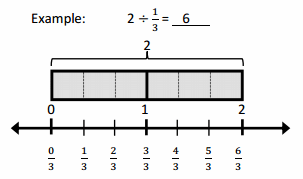
Draw a tape diagram and a number line to solve. You may draw the model that makes the most sense to you. Fill in the blanks that follow. Use the example to help you.
Eureka Math Grade 5 Module 4 Lesson 25 Problem Set Answer Key 1
There are 3 halves in 1 whole.
There are 6 halves in 4 wholes.

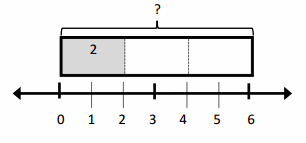
Eureka Math Grade 5 Module 4 Lesson 25 Problem Set Answer Key 2
If 2 is \(\frac{1}{3}\), what is the whole? 6

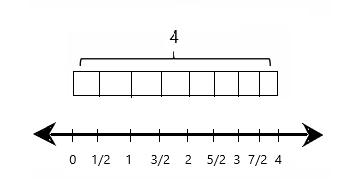
a. 4 ÷ \(\frac{1}{2}\) = _________
There are __ halves in 1 whole.
There are ___ halves in 4 wholes.
If 4 is \(\frac{1}{2}\), what is the whole? __

Answer:
4 ÷ \(\frac{1}{2}\) = 8
There are 2 halves in 1 whole.
There are 8 halves in 4 wholes.
If 4 is \(\frac{1}{2}\), the whole is 4.

Explanation:
Given that 4 ÷ \(\frac{1}{2}\) on solving we will get the result as 8. And there are 2 halves in 1 whole and there are 8 halves in 4 whole.
Eureka-Math-Grade-5-Module-4-Lesson-25-Problem-Set-Answer-Key-1-2

b. 2 ÷ \(\frac{1}{4}\) = __
There are ____ fourths in 1 whole.
There are ____ fourths in 2 wholes.
If 2 is \(\frac{1}{4}\), what is the whole? __

Answer:
2 ÷ \(\frac{1}{4}\) = 8
There are 4 fourths in 1 whole.
There are 8 fourths in 2 wholes.
If 2 is \(\frac{1}{4}\), the whole is 8

Explanation:
Given that 2 ÷ \(\frac{1}{4}\) on solving we will get the result as 8. And there are 4 fourths in 1 whole and there are 8 fourths in 2 wholes.

c. 5 \(\frac{1}{3}\) = __
There are ____ thirds in 1 whole.
There are ____ thirds in 5 wholes.
If 5 is \(\frac{1}{3}\), what is the whole? __

Answer:
5 \(\frac{1}{3}\) = 15
There are 3 thirds in 1 whole.
There are 15 thirds in 5 wholes.
If 5 is \(\frac{1}{3}\), the whole is 15.

Explanation:
Given that 5 \(\frac{1}{3}\) on solving we will get the result as 15. And there are 3 thirds in 1 whole and there are 15 thirds in 5 wholes.

d. 3 ÷ \(\frac{1}{5}\) = _________
There are ____ fifths in 1 whole.
There are ____ fifths in 3 wholes.
If 3 is \(\frac{1}{5}\), what is the whole? __

Answer:
3 ÷ \(\frac{1}{5}\) = 15
There are 5 fifths in 1 whole.
There are 15 fifths in 3 wholes.
If 3 is \(\frac{1}{5}\), the whole 15.

Explanation:
Given that 3 ÷ \(\frac{1}{5}\) on solving we will get the result as 15. And there are 5 fifths in 1 whole and tThere are 15 fifths in 3 wholes.

Question 3.
Divide. Then, multiply to check.

a. 5 ÷ \(\frac{1}{2}\)

Answer:
5 ÷ \(\frac{1}{2}\) = 10.

Explanation:
Given that 5 ÷ \(\frac{1}{2}\) which is 5 × 2 = 10. To check we will \(\frac{1}{2}\) × 10 which is 5.

b. 3 ÷ \(\frac{1}{2}\)

Answer:
3 ÷ \(\frac{1}{2}\) = 6.

Explanation:
Given that 3 ÷ \(\frac{1}{2}\) which is 3 × 2 = 6. To check we will \(\frac{1}{2}\) × 6 which is 3.

c. 4 ÷ \(\frac{1}{5}\)

Answer:
4 ÷ \(\frac{1}{5}\) = 20.

Explanation:
Given that 4 ÷ \(\frac{1}{5}\) which is 4 × 5 = 20. To check we will \(\frac{1}{5}\) × 20 which is 4.

d. 1 ÷ \(\frac{1}{6}\)

Answer:
1 ÷ \(\frac{1}{6}\) = 6.

Explanation:
Given that 1 ÷ \(\frac{1}{6}\) which is 1 × 6 = 6. To check we will \(\frac{1}{6}\) × 6 which is 1.

e. 2 ÷ \(\frac{1}{8}\)

Answer:
2 ÷ \(\frac{1}{8}\) = 16.

Explanation:
Given that 2 ÷ \(\frac{1}{8}\) which is 2 × 8 = 16. To check we will \(\frac{1}{8}\) × 16 which is 2.

f. 7 ÷ \(\frac{1}{6}\)

Answer:
7 ÷ \(\frac{1}{6}\) = 42.

Explanation:
Given that 7 ÷ \(\frac{1}{6}\) which is 7 × 6 = 42. To check we will \(\frac{1}{6}\) × 42 which is 7.

g. 8 ÷ \(\frac{1}{3}\)

Answer:
8 ÷ \(\frac{1}{3}\) = 24.

Explanation:
Given that 8 ÷ \(\frac{1}{3}\) which is 8 × 3 = 24. To check we will \(\frac{1}{3}\) × 24 which is 8.

h. 9 ÷ \(\frac{1}{4}\)

Answer:
9 ÷ \(\frac{1}{4}\) = 36.

Explanation:
Given that 9 ÷ \(\frac{1}{4}\) which is 9 × 4  = 36. To check we will \(\frac{1}{4}\) × 36 = 9.

Question 3.
For an art project, Mrs. Williams is dividing construction paper into fourths. How many fourths can she make from 5 pieces of construction paper?

Answer:
The number of fourths can she make from 5 pieces of construction paper is 20 fourths.

Explanation:
Here, Mrs. Williams is dividing construction paper into fourths, so the number of fourths can she make from 5 pieces of construction paper is 5 ÷ \(\frac{1}{4}\) which is 5 × 4 = 20.

Question 4.
Use the chart below to answer the following questions.
Donnie’s Diner Lunch Menu

Food

Serving Size

Hamburger

 lb

Pickles

 pickle

Potato chips

 bag

Chocolate milk

 cup

a. How many hamburgers can Donnie make with 6 pounds of hamburger meat?

Answer:
The number of hamburgers can Donnie make with 6 pounds of hamburger meat is 18 hamburgers.

Explanation:
The number of hamburgers can Donnie make with 6 pounds of hamburger meat is 6 ÷ \(\frac{1}{3}\) which is 6 × 3 = 18 hamburgers.

b. How many pickle servings can be made from a jar of 15 pickles?

Answer:
The number of pickle servings can be made from a jar of 15 pickles is 60 pickles.

Explanation:
The number of pickle servings can be made from a jar of 15 pickles is 15 ÷ \(\frac{1}{4}\) which is 15 × 4 = 60 pickles

c. How many servings of chocolate milk can he serve from a gallon of milk?

Answer:
The number of servings of chocolate milk can he serve from a gallon of milk is 32 servings of chocolate milk..

Explanation:
The number of servings of chocolate milk can he serve from a gallon of milk is, as 1 gallon is 16 cups and 16 ÷ \(\frac{1}{2}\) which is 16 × 2 = 32 servings of chocolate milk.

Question 5.
Three gallons of water fill \(\frac{1}{4}\) of the elephant’s pail at the zoo. How much water does the pail hold?

Answer:
The pail holds 12 gallons.

Explanation:
Here, Three gallons of water fill \(\frac{1}{4}\) of the elephant’s pail at the zoo, so the pail holds 3 ÷ \(\frac{1}{4}\) which is 3 × 4 = 12 gallons.

Eureka Math Grade 5 Module 4 Lesson 25 Exit Ticket Answer Key

Question 1.
Draw a tape diagram and a number line to solve. Fill in the blanks that follow.

a. 5 ÷ \(\frac{1}{2}\) = _________
There are ____ halves in 1 whole.
There are ____ halves in 5 wholes.
5 is \(\frac{1}{2}\) of what number? _______

Answer:
5 ÷ \(\frac{1}{2}\) = 10
There are 2 halves in 1 whole.
There are 10 halves in 5 wholes.
5 is \(\frac{1}{2}\) the number is 10

Explanation:
Given that 5 ÷ \(\frac{1}{2}\) which is 5 × 2 = 10. And there are 2 halves in 1 whole and there are 10 halves in 5 wholes.

b. 4 ÷ \(\frac{1}{4}\) = _________
There are ____ fourths in 1 whole.
There are ____ fourths in ____ wholes.
4 is \(\frac{1}{4}\) of what number? _______

Answer:
4 ÷ \(\frac{1}{4}\) = 16
There are 4 fourths in 1 whole.
There are 16 fourths in 4 wholes.
4 is \(\frac{1}{4}\) the number 16

Explanation:
Given that 4 ÷ \(\frac{1}{4}\) which is 4 × 4 = 16. And there are 4 fourths in 1 whole and there are 16 fourths in 4 wholes.

Question 2.
Ms. Leverenz is doing an art project with her class. She has a 3 foot piece of ribbon. If she gives each student an eighth of a foot of ribbon, will she have enough for her class of 22 students?

Answer:
Ms. Leverenz has 3 foot ribbon or 36 inches, so she have enough for her class 22 students.

Explanation:
Here, Ms. Leverenz is doing an art project with her class and she has a 3 foot piece of ribbon, which is 12 × 3 = 36 foot. and if she gives each student an eighth of a foot of ribbon which is \(\frac{8}{12}\) = 1.5 inches of ribbon. Here Ms. Leverenz gives each students 1.5 inches ribbon. Therefore she needs for 22 students which is 22 × 1.5 = 33 inches. So she has 3 foot ribbon or 36 inches, so she have enough for her class 22 students.

Eureka Math Grade 5 Module 4 Lesson 25 Homework Answer Key

Question 1.
Draw a tape diagram and a number line to solve. Fill in the blanks that follow.
a. 3 ÷ \(\frac{1}{3}\) = _________
There are ____ thirds in 1 whole.
There are ____ thirds in 3 wholes.
If 3 is \(\frac{1}{3}\), what is the whole? _______

Answer:
3 ÷ \(\frac{1}{3}\) = 9
There are 3 thirds in 1 whole.
There are 9 thirds in 3 wholes.
If 3 is \(\frac{1}{3}\), the whole is 9.

Explanation:
Given that 3 ÷ \(\frac{1}{3}\) which is 3 × 3 = 9. And there are 3 thirds in 1 whole and there are 9 thirds in 3 wholes.

b. 3 ÷ \(\frac{1}{4}\) = _________
There are ____ fourths in 1 whole.
There are ____ fourths in __ wholes.
If 3 is \(\frac{1}{4}\), what is the whole? _______

Answer:
3 ÷ \(\frac{1}{4}\) = 12
There are 4 fourths in 1 whole.
There are 12 fourths in 3 wholes.
If 3 is \(\frac{1}{4}\), the whole 12.

Explanation:
Given that 3 ÷ \(\frac{1}{4}\) which is 3 × 4 = 12. And there are 4 fourths in 1 whole and there are 12 fourths in 3 wholes.

c. 4 ÷ \(\frac{1}{3}\) = _________
There are ____ thirds in 1 whole.
There are ____ thirds in __ wholes.
If 4 is \(\frac{1}{3}\), what is the whole? _______

Answer:
4 ÷ \(\frac{1}{3}\) = 12
There are 3 thirds in 1 whole.
There are 12 thirds in 4 wholes.
If 4 is \(\frac{1}{3}\), the whole 12.

Explanation:
Given that 4 ÷ \(\frac{1}{3}\) which is 4 × 3 = 12. And there are 3 thirds in 1 whole and there are 12 thirds in 4 wholes.

d. 5 ÷ \(\frac{1}{4}\) = _________
There are ____ fourths in 1 whole.
There are ____ fourths in __ wholes.
If 5 is \(\frac{1}{4}\), what is the whole? _______

Answer:
5 ÷ \(\frac{1}{4}\) = 20
There are 4 fourths in 1 whole.
There are 20 fourths in 5 wholes.
If 5 is \(\frac{1}{4}\), the whole is 20.

Explanation:
Given that 5 ÷ \(\frac{1}{4}\) which is 5 × 4 = 20. And there are 4 fourths in 1 whole and there are 20 fourths in 5 wholes.

Question 2.
Divide. Then, multiply to check.

a. 2 ÷ \(\frac{1}{4}\)

Answer:
2 ÷ \(\frac{1}{4}\) = 8.

Explanation:
Given that 2 ÷ \(\frac{1}{4}\) which is 2 × 4 = 8. To check we will perform multiplication \(\frac{1}{4}\) × 8 which is 2.

b. 6 ÷ \(\frac{1}{2}\)

Answer:
6 ÷ \(\frac{1}{2}\) = 12.

Explanation:
Given that 6 ÷ \(\frac{1}{2}\) which is 6 × 2 = 12. To check we will perform multiplication \(\frac{1}{2}\) × 12 which is 6.

c. 5 ÷ \(\frac{1}{4}\)

Answer:
5 ÷ \(\frac{1}{4}\) = 20.

Explanation:
Given that 5 ÷ \(\frac{1}{4}\) which is 5 × 4 = 20. To check we will perform multiplication \(\frac{1}{4}\) × 20 which is 5.

d. 5 ÷ \(\frac{1}{8}\)

Answer:
5 ÷ \(\frac{1}{8}\) = 40.

Explanation:
Given that 5 ÷ \(\frac{1}{8}\) which is 5 × 8 = 40. To check we will perform multiplication \(\frac{1}{8}\) × 40 which is 5.

e. 6 ÷ \(\frac{1}{3}\)

Answer:
6 ÷ \(\frac{1}{3}\) = 18.

Explanation:
Given that 6 ÷ \(\frac{1}{3}\) which is 6 × 3 = 18. To check we will perform multiplication \(\frac{1}{3}\) × 18 which is 6.

f. 3 ÷ \(\frac{1}{6}\)

Answer:
3 ÷ \(\frac{1}{6}\) = 18.

Explanation:
Given that 3 ÷ \(\frac{1}{6}\) which is 3 × 6 = 18. To check we will perform multiplication \(\frac{1}{6}\) × 18 which is 3.

g. 6 ÷ \(\frac{1}{5}\)

Answer:
6 ÷ \(\frac{1}{5}\) = 30.

Explanation:
Given that 6 ÷ \(\frac{1}{5}\) which is 6 × 5 = 30. To check we will perform multiplication \(\frac{1}{5}\) × 30 which is 6.

h. 6 ÷ \(\frac{1}{10}\)

Answer:
6 ÷ \(\frac{1}{10}\) = 60.

Explanation:
Given that 6 ÷ \(\frac{1}{10}\) which is 6 × 10 = 60. To check we will perform multiplication \(\frac{1}{10}\) × 60 which is 6.

Question 3.
A principal orders 8 sub sandwiches for a teachers’ meeting. She cuts the subs into thirds and puts the mini-subs onto a tray. How many mini-subs are on the tray?

Answer:
There will be 24 mini-subs are on the tray.

Explanation:
Given there are 8 sub sandwiches for a teachers meeting and each sandwich cuts into third. So 1 ÷ \(\frac{1}{3}\) which is 1 × 3 = 3 as there are 8 sub sandwiches, so there will be 8 × 3 = 24 mini-subs are on the tray.

Question 4.
Some students prepare 3 different snacks. They make \(\frac{1}{8}\) pound bags of nut mix, \(\frac{1}{4}\) pound bags of cherries, and \(\frac{1}{6}\) pound bags of dried fruit. If they buy 3 pounds of nut mix, 5 pounds of cherries, and 4 pounds of dried fruit, how many of each type of snack bag will they be able to make?

Answer:
There are 24 nut mix, 20 cherry bags and 24 dried fruits.

Explanation:
As some students prepare 3 different snacks and they make \(\frac{1}{8}\) pound bags of nut mix and they will be able to make number of nut mix bag is 3 ÷ \(\frac{1}{8}\)  which is 3 × 8 = 24, and \(\frac{1}{4}\) pound bags of cherries they will be able to make number of cherries bag is 5 ÷ \(\frac{1}{4}\) which is 5 × 4 = 20 , and \(\frac{1}{6}\) pound bags of dried fruit and they will be able to make number of bags of dried fruit is 4 ÷ \(\frac{1}{6}\) which is 4 × 6 = 24. So there are 24 nut mix, 20 cherry bags and 24 dried fruits.

Eureka Math Grade 3 Module 6 Answer Key | Engage NY Math 3rd Grade Module 6 Answer Key

Eureka Math Grade 3 Module 6 Answer Key is all about building knowledge, not just skills. Avail the Eureka Math 3rd Grade Module 6 Solutions and have a deeper understanding of concepts. We know every child has a different potential to learn the concepts so our experts prepared the Engage NY Math 3rd Grade Module 6 Answers keeping in mind all kinds of them. Students can find the Eureka Math Grade 3 Answer Key Module 6 Collecting and Displaying Data extremely helpful during their preparation to score higher grades in the exams.

EngageNY Math Grade 3 Module 6 Answer Key | Eureka Math 3rd Grade Module 6 Answer Key

Engage NY Math 3rd Grade Module 6 Answers has questions belonging to Lessons, Extra Practice, Cummulative Assessments, Mid Module, and End Module Assessments. All the Solutions are given in detail so that you find it easy to understand the concepts of the Eureka Math 3rd Grade Module 6. Eureka Math Grade 3 Module 6 Collecting and Displaying Data has Questions on the Concepts Generate and Analyze Categorical Data, Generate and Analyze Measurement Data, etc. Tap on the respective topic you wish to avail via the quick links provided below.

Eureka Math Grade 3 Module 6 Collecting and Displaying Data

Eureka Math Grade 3 Module 6 Topic A Generate and Analyze Categorical Data

Engage NY Math 3rd Grade Module 6 Topic B Generate and Analyze Measurement Data

Eureka Math Grade 3 Module 6 End of Module Assessment Answer Key

Summary

Hope the knowledge shared has shed some light on you regarding the Eureka Math Grade 3 Module 6 Answer Key. For more information feel free to reach us via the comment section so that we can get back to you at the earliest. Stay in touch with our site to avail latest updates on Eureka Math Answer Key for all Grades.

Eureka Math Grade 3 Module 5 Answer Key | Engage NY Math 3rd Grade Module 5 Answer Key

Eureka Math Grade 3 Module 5 Answer Key extends and deepens students’ knowledge of understanding fractions as equal partitions of a whole. Knowledge becomes more formal if you work with area models and the number line from our EngageNY Eureka Math 3rd Grade Module 5 Solutions Key. You can download Eureka Math Third Grade Module 5 Solutions for free of cost via quick links available. Take your preparation to the next level by practicing from the Eureka Math Grade 3 Answer Key Module 5 Fractions as Numbers on the Number Line Answer Key on a daily basis.

EngageNY Math Grade 3 Module 5 Answer Key | Eureka Math 3rd Grade Module 5 Answer Key

Eureka Math Grade 3 Module 5 Solutions Key includes the topics Partitioning a Whole into Equal Parts, Unit Fractions and their Relation to the Whole, Comparing Unit Fractions and Specifying the Whole, Fractions on the Number Line, Equivalent Fractions, etc. Access the Topicwise Eureka Math Grade 3 Module 5 Answer Key via quick links available below. You just have to tap on the respective topic at your convenience and prepare the concepts within quite easily.

Eureka Math Grade 3 Module 5 Fractions as Numbers on the Number Line

Eureka Math Grade 3 Module 5 Topic A Partitioning a Whole into Equal Parts

Eureka Math 3rd Grade Module 5 Topic B Unit Fractions and Their Relation to the Whole

Engage NY Math 3rd Grade Module 5 Topic C Comparing Unit Fractions and Specifying the Whole

Eureka Math Grade 3 Module 5 Mid Module Assessment Answer Key

EngageNY Math Grade 3 Module 5 Topic D Fractions on the Number Line

3rd Grade Eureka Math Module 5 Topic E Equivalent Fractions

Engage NY Grade 3 Module 5 Topic F Topic F Comparison, Order, and Size of Fractions

Eureka Math Grade 3 Module 5 End of Module Assessment Answer Key

Final Words

Hope the information shared regarding the Eureka Math Grade 3 Module 5 Answer Key has helped you be on the track and ensure success. If you have any queries left unanswered feel free to reach us via the comment box so that we can get back to you with a possible solution. Bookmark our site to avail latest updates on Gradewise Eureka Math Answers in no time.

Eureka Math Grade 3 Module 4 Answer Key | Engage NY Math 3rd Grade Module 4 Answer Key

Eureka Math Grade 3 Module 4 Answer Key provided is designed with an intense focus on key concepts and creates enduring knowledge. Students can utilize the problem-solving methods used in Module 4 Eureka Math Grade 3 Answer Key to solve related problems in their exams or assessments. Elaborate Solutions provided for all the Eureka Math Grade 3 Module 4 Textbook Questions help you retain the math concepts for a longer time. Our Experts designed Engage NY Eureka Math Grade 3 Module 4 Answers will aid you to remediate the knowledge gap and achieve learning potential.

EngageNY Math Grade 3 Module 4 Answer Key | Eureka Math 3rd Grade Module 4 Answer Key

By Solving the Engage NY Math Third Grade Module 4 Answers you can think strategize and solve problems not just get answers. The Quick Resources available here for Eureka Math 3rd Grade Module 4 Solutions has questions belonging to Lessons, Assessment Tests, Practice Tests, Extra Practice, Cumulative Assessments, etc. Get a good hold of the concepts of Eureka Math Grade 3 Module 4 such as Understanding Area, Area Measurement, Properties using Area, Applications of Area, etc. by solving from our Eureka Math Grade 3 Module 4 Solutions Key regularly.

Eureka Math Grade 3 Module 4 Multiplication and Area

Eureka Math Grade 3 Module 4 Topic A Foundations for Understanding Area

Eureka Math 3rd Grade Module 4 Topic B Concepts of Area Measurement

Eureka Math Grade 3 Module 4 Mid Module Assessment Answer Key

Engage NY Math 3rd Grade Module 4 Topic C Arithmetic Properties Using Area Models

EngageNY Math Grade 3 Module 4 Topic D Applications of Area Using Side Lengths of Figures

Eureka Math Grade 3 Module 4 End of Module Assessment Answer Key

Wrapping Up

Hope the information shared regarding Eureka Math Grade 3 Module 4 Answer Key has helped you to a possible extent. If you have any doubts feel free to reach us via comment box so that our experts can guide you at the soonest possibility. Bookmark our site to avail latest updates on Gradewise Eureka Math Answer Key at your fingertips.

Eureka Math Grade 3 Module 3 Answer Key | Engage NY Math 3rd Grade Module 3 Answer Key

Whether you are just getting started or want to learn more concepts of Eureka Math Grade 3 Module 3 Answer Key you have come the right way. Engage NY Math 3rd Grade Module 3 Solution Key provided sparks up your love for Math and helps you solve real-world problems easily. Module 3 Eureka Math Grade 3 Answer Key provided is as per the latest syllabus guidelines and created by subject experts. You can download the Engage NY Eureka Math 3rd Grade Module 3 Multiplication and Division with Units of 0, 1, 6–9, and Multiples of 10  Answers without paying a single penny anytime and anywhere.

EngageNY Math Grade 3 Module 3 Answer Key | Eureka Math 3rd Grade Module 3 Answer Key

Practice using the Eureka Math 3rd Grade Module 3 Answers to track your progress and identify areas of need. For your comfort, we have organized the Topicwise Eureka Math Grade 3 Module 3 Solutions in an efficient manner. Use whichever topic you would like to prepare by simply clicking on the quick links available. EngageNY Math Grade 3 Module 3 Answer Key helps you gain a complete body of knowledge, not just a discrete set of skills.

Eureka Math Grade 3 Module 3 Multiplication and Division with Units of 0, 1, 6–9, and Multiples of 10

Eureka Math Grade 3 Module 3 Topic A The Properties of Multiplication and Division

Eureka Math 3rd Grade Module 3 Topic B Multiplication and Division Using Units of 6 and 7

Engage NY Math 3rd Grade Module 3 Topic C Multiplication and Division Using Units up to 8

Eureka Math Grade 3 Module 3 Mid Module Assessment Answer Key

EngageNY Math Grade 3 Module 3 Topic D Multiplication and Division Using Units of 9

3rd Grade Eureka Math Module 3 Topic E Analysis of Patterns and Problem Solving Including Units of 0 and 1

Engage NY Grade 3 Module 3 Topic F Multiplication of Single-Digit Factors and Multiples of 10

Eureka Math Grade 3 Module 3 End of Module Assessment Answer Key

Summary

We wish the knowledge shed regarding the Eureka Math Grade 3 Module 3 Answer Key is true as far as our knowledge is concerned. For any queries left unanswered do leave us suggestions so that we can respond to you at the earliest. Bookmark our site to avail latest updates on Eureka Math Grade 3 Answers in no time.

Eureka Math Grade 3 Module 2 Answer Key | Engage NY Math 3rd Grade Module 2 Answer Key

Eureka Math 3rd Grade Module 2 Answer Key is built to be flexible adhering to today’s fluid learning environment. Eureka Math Grade 3 Answer Key for Module 2 Place Value and Problem-Solving with Units of Measure provided offers a full complement of preparation materials for free of cost. Make the most out of the quick resources for Eureka Mathematics 3rd Grade Module 2 Answers and clear the final exams with flying colors. Catch up on your learning taking the help of the Engage NY Math Grade 3 Module 2 Solution Key and remediate the knowledge gap.

EngageNY Math Grade 3 Module 2 Answer Key | Eureka Math 3rd Grade Module 2 Answer Key

Achieve your learning potential and become Proficient in Maths by availing the EngageNY Eureka Math Grade 3 Module 2 Answers available here. Eureka Math Grade 3 Module 2 Place Value and Problem-Solving with Units of Measure Answer Key includes questions from the Concepts of Time Measurement, Measuring Weight and Liquid Volume in Metric Units, Two-Digit and Three-Digit Measurement Addition using Algorithm, Rounding to the Nearest Tenths and Hundredths.

You just have to tap on the quick links available below to access the Place Value and Problem-Solving with Units of Measure Eureka Math 3rd Grade Module 2 Answers for all the topics. Allot time to the areas you are facing difficulty and improvise on them taking the help of the Engage NY Math Third Grade Module 2 Answers provided by subject experts.

Eureka Math Grade 3 Module 2 Place Value and Problem Solving with Units of Measure

Eureka Math Grade 3 Module 2 Topic A Time Measurement and Problem Solving

Eureka Math 3rd Grade Module 2 Topic B Measuring Weight and Liquid Volume in Metric Units

Eureka Math Grade 3 Module 2 Mid Module Assessment Answer Key

Engage NY Math 3rd Grade Module 2 Topic C Rounding to the Nearest Ten and Hundred

EngageNY Math Grade 3 Module 2 Topic D Two- and Three-Digit Measurement Addition Using the Standard Algorithm

3rd Grade Eureka Math Module 2 Topic E Two- and Three-Digit Measurement Subtraction Using the Standard Algorithm

Eureka Math Grade 3 Module 2 End of Module Assessment Answer Key

Conclusion

Hope the information shared regarding the Eureka Math Grade 3 Module 2 Place Value and Problem-Solving with Units of Measure has aided in your preparation. If you have any doubts do leave us your queries via the comment box so that our team of experts can guide you as early as possible. Stay in touch with our site to avail latest updates on Gradewise Eureka Math Answer Key.