Big Ideas Math Answers Grade 5 Chapter 5 Multiply Decimals

Big Ideas Math Answers Grade 5 Chapter 5 Multiply Decimals includes topics like Multiplication Patterns with Decimals, Multiply with Money, etc. that aid students to solve the homework and chapter practice. This will be the best and ultimate guide for exam preparation. You will find every question was explained in a simplistic way so that you are able to understand the concepts easily. Big Ideas Math Answers Grade 5 Chapter 5 Multiply Decimals pdf links are available here for each and every lesson. So, kickstart your preparation and secure the highest marks in the exams.

Big Ideas Math Book 5th Grade Answer Key Chapter 5 Multiply Decimals

Improve your Problem-Solving Skills utilizing the Big Ideas Math Book 5th Grade Answer Key Chapter 5 Multiply Decimals. Start practicing the question covered in the Big Ideas Math Answers Grade 5 Chapter 5 Multiply Decimals and Cross Check the Solutions of Chapter 5 Multiply Decimals from here. So that you can easily rectify your mistakes and fill up the knowledge gap.

Lesson: 1 Multiplication Patterns with Decimals

Lesson: 2 Estimate Products of Decimals and Whole Numbers

Lesson: 3 Use Models to Multiply Decimals and Whole Numbers

Lesson: 4 Multiply Decimals and Whole Numbers

Lesson 5.5 Use Models to Multiply Decimals

Lesson: 6 Use Partial Products to Multiply Decimals

Lesson: 7 Use Strategies to Multiply Decimals

Lesson: 8 Multiply Decimals

Lesson: 9 Problem Solving: Multiply with Money

Chapter: 5 – Multiply Decimals

Lesson 5.1 Multiplication Patterns with Decimals

Explore and Grow

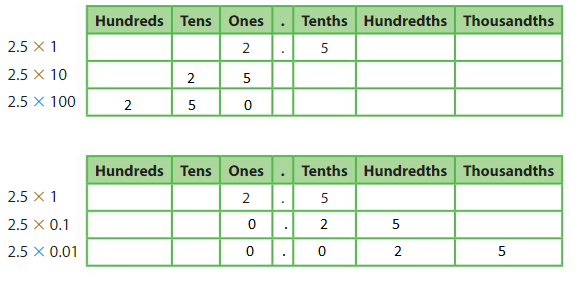
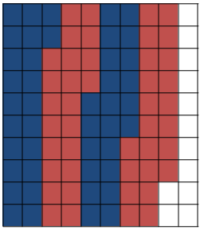
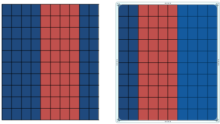
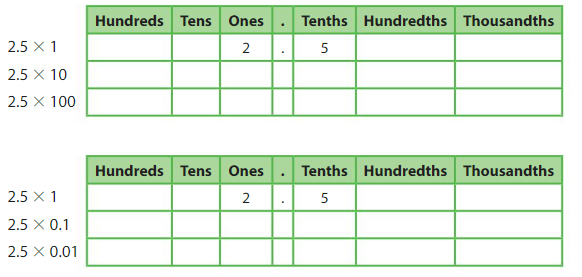
Use the relationship between positions in a place value chart to find each product.
Big Ideas Math Answer Key Grade 5 Chapter 5 Multiply Decimals 5.1 1
What patterns do you notice?
Answer:

I notice that in first value chart the decimal point  shifts one place to the right and in the second value chart the decimal point shifts one place to the left.

Structure
Describe the placement of the decimal point when multiplying a decimal by 10, 100, 0.1, and 0.01.
Answer:
When we multiply 0.01with 10 the decimal point shifts one place to the right(10×0.01=0.1)
When we multiply 0.01with 100 the decimal point shifts two places to the right(100×0.01=1)
When we multiply 0.01 with 0.1 the decimal point shifts one place to the left(0.1×0.01=0.001).

Think and Grow: Use Patterns to Find Products

Example
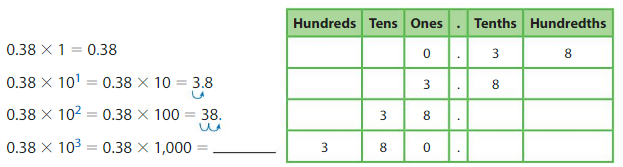
Find 0.38 × 10³.
Use place value concepts. Every time you multiply a number by 10, each digit in the number shifts one position to the left in a place value chart.
Big Ideas Math Answer Key Grade 5 Chapter 5 Multiply Decimals 5.1 2
So, 0.38 × 103 = ______.
Notice the pattern: In each product, the number of places the decimal point moves to the right is the same as the exponent.

Example
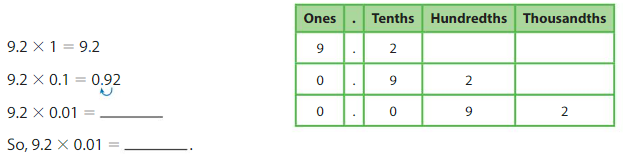
Find 9.2 × 0.01.
Use place value concepts. Every time you multiply a number by \(\frac{1}{10}\) = 0.1, 10each digit in the number shifts one position to the right in a place value chart.
Big Ideas Math Answer Key Grade 5 Chapter 5 Multiply Decimals 5.1 3
Notice the pattern: When you multiply by0.1, the decimal point moves one place to the left. When you multiply by 0.01, the decimal point moves two places to the left.

Show and Grow

Find the product.
Question 1.
2.51 × 104 = _______
Answer:
2.51×10000=25,100

Explanation:
2.51×1=2.51
2.51x 101 =2.51×10=25.1
2.51x 102 =2.51×100=251
2.51x 103 =2.51×1000=2510
2.51x 104 =2.51×10000=25100
So, 2.51x 104 =25100
When we multiply 2.51 by 104 the number of places the decimal point moves to the right is the same as the exponent ie 4 places.

Question 2.
0.7 × 0.01 = ______
Answer:
0.7 × 0.01 = 0.007

Explanation:
0.7×1=0.7
0.7×0.1=0.07
0.7×0.01=0.007
So, 0.7×0.01=0.007
When you multiply 0.7 by 0.1, the decimal point moves one place to the left. When you multiply 0.7 by 0.01, the decimal point moves two places to the left.

Apply and Grow: Practice

Find the product.
Question 3.
4.1 × 102 = _______
Answer:
4.1×100=410

Explanation:
4.1×1=4.1
4.1x 101 =4.1×10=41
4.1x 102 =4.1×100=410
So, 4.1×102 =410
When we multiply 4.1 by 102 the number of places the decimal point moves to the right is the same as the exponent ie 2.

Question 4.
7.03 × 0.1 = _______
Answer:
7.03×0.1=0.703

Explanation:
7.03×1=7.03
7.03×0.1=0.703
So, 7.03×0.1=0.703
When you multiply 7.03 by 0.1, the decimal point moves one place to the left.

Question 5.

16.579 × 104 = _______
Answer:
16.579×10000=1,65,790

Explanation:
16.579×1=16.579
16.579x 101 =16.579×10=165.79
16.579x 102 =16.579×100=1657.9
16.579x 103 =16.579×1000=16,579
16.579x 104 =16.579×10000=1,65,790
So, 16.579x 104 =1,65,790
When we multiply 16.579 by 104 the number of places the decimal point moves to the right is the same as the exponent ie 4.

Question 6.
843.7 × 0.01 = _______
Answer:
843.7×0.01=8.437

Explanation:
843.7×1=843.7
843.7×0.1=84.37
843.7×0.01=8.437
So, 843.7×0.01=8.437
When we multiply 843.7 by 0.1, the decimal point moves one place to the left.When you multiply 843.7 by 0.01, the decimal point moves two placs to the left.

Question 7.
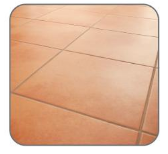
A contractor installs a new floor of a room using 1,000 square tiles. Each tile has an area of 1.25 square feet. What is the area of the floor?
Big Ideas Math Answer Key Grade 5 Chapter 5 Multiply Decimals 5.1 4
Answer:
There are 1,000 square tiles in a room, Area of each tile is 1.25 square feet
Find the area of the floor by multiplying Area of tile by Number of tiles.
Multiplying 1.25 by 1000, shifts the digits 3 positions to the left in a place value chart.So, the decimal point moves 3 places to the right.
=1.25×1000=1,250 square feet
Therefore Area of floor is 1,250 square feet.

Reasoning
complete the equation

Question 9.
_____ × 103 = 6,209
Answer:
6.209×1000=6,209

Explanation:
Multiplying something by 1000, shifts the digits 3 positions to the left in a place value chart.So, the decimal point moves 3 places to the right.As the number 6,209 is already multiplyed by 1000 now to know the missing factor shift the decimal point 3 places to the left.
So, the number is 6.209

Question 10.
_____ × 0.01 = 1.879
Answer:
187.9=0.01=1.879

Explanation:
When you multiply by 0.1, the decimal point moves one place to the left.When you multiply by 0.01, the decimal point moves two places to the left.As the number 1.879 is already multiplied by 0.01 now to know the missing factor shift the decimal point two places to the right.
So, the number is 187.9

Question 11.
0.045 × _____ = 45
Answer:
0.045×1000=45

Explanation:
0.045×1=0.045
0.045×10=0.45
0.045×100=4.5
0.045×1000=45
When we multiply 0.045 by 1000 the decimal point moves 3 placed to the right.

Think and Grow: Modeling Real Life

Example
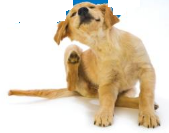
A flea is 1.5 millimeters long. A magnified image of the flea is 100 times as long as its actual length. How much longer is the flea in the image than its actual length?
Big Ideas Math Answer Key Grade 5 Chapter 5 Multiply Decimals 5.1 5
Find the length of the flea in the image by multiplying the length of the flea by 100.
Multiplying 1.5 by 100, or 102, shifts the digits _____ positions to the left in a place value chart. So, the decimal point moves ____ places to the right.
1.5 × 100 = 1.5 × 102 = ______
The length of the flea in the image is _______ millimeters.
Subtract the length of the flea from the length of the flea in the image.
Big Ideas Math Answer Key Grade 5 Chapter 5 Multiply Decimals 5.1 6
The flea in the image is ________ millimeters longer than its actual length.

Answer:
Multiplying 1.5 by 100, or 102, shifts the digits right positions to the left in a place value chart. So, the decimal point moves left places to the right.
1.5 × 100 = 1.5 × 102 = 150
The length of the flea in the image is 150 millimeters.
150 – 1.5 = 148.5
The flea in the image is 148.5 millimeters longer than its actual length.

Show and Grow

Question 12.
The London Eye is a 443-foot-tall Ferris wheel. A model is 0.01 times as tall as the actual Ferris wheel. How much taller is the actual London Eye than the model?
Answer:
The London Eye is 443 feet tall Ferris, a model is 0.01 times tall as actual Ferris.
When we multiply 443 by 0.01 the decimal point moves 2 places to the left
443×0.01=4.43. So, the area of the model is 4.43 feet.
Subtract the area of the model from the actual area of the Ferris.
443.00‐ 4.43=438.57
The actual London Eye ferris wheel is 438.57 feet taller than a model ferris wheel.

Question 13.
Each day,you ride your bike from home to school and back. Your school is 0.9 mile from home. How far do you ride your bike in 10 days?
Answer:
My school is 0.9 mile from my home.If I ride bike from home to school and back every day then I ride 1.8(0.9×2) miles every day.
If each day I ride 1.8 miles then for 10 days i ride 1.8×10=18 miles.
When we multiply 1.8 by 10 and the decimal point moves 1 places to the right.
Therefore I ride 18 miles in 10 days.

Question 14.
DIG DEEPER!
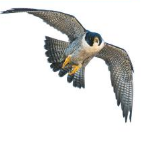
An eel travels at a speed of 2 miles per hour. A starfish travels one hundredth the speed of the eel. A falcon travels 10,000 times as fast as the starfish. How many more miles per hour can the falcon travel than the eel?
Big Ideas Math Answer Key Grade 5 Chapter 5 Multiply Decimals 5.1 7
Answer:
An eel travels at a speed of 2 miles per hour.A starfish and travels one hundredth the speed of the eel.
Speed of starfish is 2×0.01(one hundredth)=0.02miles per hour.
When we multiply 2 by 0.01 the decimal point moves 2 places to the left
A falcon travels 10,000 times as fast as the starfish.
Speed of falcon is 10,000×0.02(speed of starfish)=200 miles per hour.
When we multiply 0.02 by 10000 the decimal point moves 4 places to the right
A falcon can travel 200 miles more miles per hour than the eel.

Multiplication Patterns with Decimals Homework & Practice 5.1

Find the product.
Question 1.
5.201 × 10 = ______
Answer:
5.201 × 10 =52.01

Explanation:
5.201×1=5.201
5.201×10=52.01
So, 5.201×10=52.01
When we multiply 5.201 by 10 the decimal point moves one place to the right.

Question 2.
26.7 × 0.01 = _____
Answer:
26.7 × 0.01 =0.267

Explanation:
26.7×1=26.7
26.7×0.1=2.67
26.7×0.01=0.267
So, 26.7 × 0.01 =0.267
When we multiply 26.7 by 0.1, the decimal point moves one place to the left. When you multiply 26.7 by 0.01, the decimal point moves two places to the left.

Question 3.
0.095 × 103 = ______
Answer:
0.095 × 103 =0.095×1000=95

Explanation:
0.095×1=0.095
0.095x 101 =0.095×10=0.95
0.095x 102 =0.095×100=9.5
0.095x 103 =0.095×1000=95
So, 0.095 × 103 =95
When we multiply 0.095 by 103 the number of places the decimal point moves to the right is the same as the exponent ie 3 places.

Question 4.
37.84 × 0.1 = ______
Answer:
37.84 × 0.1 =3.784

Explanation:
37.84×1=37.84
37.84×0.1=3.784
So, 37.84×0.1=3.784
When we multiply 37.84 by 0.1, the decimal point moves one place to the left.

Question 5.
0.26 × 104 = ______
Answer:
0.26 × 104 =0.26×10000=2600

Explanation:
0.26×1=0.26
0.26x 101 =0.26×10=2.6
0.26x 102 =0.26×100=26
0.26x 103 =0.26×1000=260
0.26x 104 =0.26×10000=2600
So, 0.26x 104 =2600
When we multiply 0.26 by 104 the number of places the decimal point moves to the right is the same as the exponent ie 4 places.

Question 6.
15.9 × 0.01 = ______
Answer:
15.9 × 0.01 =0.159

Explanation:
15.9×1=15.9
15.9×0.1=1.59
15.9×0.01=0.159
So, 15.9×0.01=0.159
when we multiply 15.9 by 0.01 the decimal point moves two places to the left.

Find the product.
Question 7.
0.8 × 0.01 = ______
Answer:
0.8 × 0.01 =0.008

Explanation:
0.8×1=0.8
0.8×0.1=0.08
0.8×0.01=0.008
So, 0.8×0.01=0.008
When we multiply 0.8 by 0.1, the decimal point moves one place to the left. When you multiply 0.8 by 0.01, the decimal point moves two places to the left.

Question 8.
3.1 × 104 = ______
Answer:
3.1 × 104 =3.1×10000=31000

Explanation:
3.1×1=3.1
3.1x 101 =3.1×10=31
3.1x 102 =3.1×100=310
3.1x 103 =3.1×1000=3100
3.1x 104 =3.1×10000=31000
So, 3.1x 104 =31000
When we multiply 3.1 by 104 the number of places the decimal point moves to the right is the same as the exponent ie 4 places.

Question 9.
Writing
Explain how you can use mental math to find 5.4 × 10³ and 5.4 × 0.01.
Answer:
5.4 × 10³ and 5.4 × 0.01
5.4 × 10³
5.4 × 10 × 10 × 10
= 54 × 100
= 5400
5.4 × 0.01 = 0.054

Question 10.
DIG DEEPER!
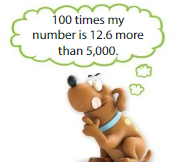
What is Newton’s number?
Big Ideas Math Answer Key Grade 5 Chapter 5 Multiply Decimals 5.1 8
Answer:
Newton’s number is 49.874

Explanation:
Subtract 12.6 from 5000
5000‐12.6=4987.4
Divide the balance with 100 to find Newton’s number.
4987.4×0.01=49.874
When you multiply 4987.4 by 0.01, the decimal point moves two places to the left.
Newton’s number is 49.874

Question 11.
Modeling Real Life
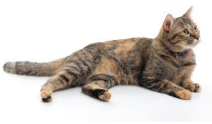
A house cat weighs 9.22 pounds. Hercules the liger is the world’s largest cat, and weighs 100 times the weight of the house cat. How much more does Hercules weigh than the house cat?
Big Ideas Math Answer Key Grade 5 Chapter 5 Multiply Decimals 5.1 9
Answer:
Hercules weigh  912.7 pounds more than the house cat.

Explanation:
A house cat weighs 9.22 pounds, Hercules the liger is the world’s largest cat and weighs 100 times more than a house cat.
The weight of Hercules is 9.22×100=922 pounds
When we multiply 9.22 by 100 the decimal point moves 2 places to the right.
Subtract weight of house cat from the weight of Hercules =922‐9.22=912.7
Hercules weigh  912.7 pounds more than the house cat.

Question 12.
DIG DEEPER!
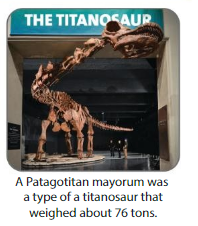
A Tyrannosaurus rex weighed about 1.4 tons more than one-tenth the weight of a Patagotitan. About how much did the mayorumTyrannosaurus rex weigh?
Big Ideas Math Answer Key Grade 5 Chapter 5 Multiply Decimals 5.1 10
Answer:
MayorumTyrannosaurus rex weigh=9 tons.

Explanation:
Weight of patagotitan mayorum is 76 tons and One‐tenth of patagotitan is 76×0.1=7.6 tons.
When you multiply 76.0 by 0.1 , the decimal point moves one places to the left.
A Tyrannosaurus rex weighed about 1.4 tons more than one-tenth the weight of a Patagotitan
Weight of Tyrannosaurus rex=1.4 tons + 7.6 tons= 9 tons
MayorumTyrannosaurus rex weigh=9 tons.

Review & Refresh

Question 13.
Newton and Descartes have a $50.00 gift card to a pet store. Newton’s total is $18.95 and Descartes’s total is $24.38. How much money do they have left on their gift card?
Answer:
Newton’s total is $18.95 and Descartes’s total is $24.38.
Total money they spent in a pet store =$18.95+$24.38 =$43.33
Newton and Descartes have a $50.00 gift card to a pet store
Subtract the money they spent in a pet store from the gift card money
$50.00‐$43.33=$6.67
Therefore , $6.67 is the amount they have left on their gift card.

Lesson 5.2 Estimate Products of Decimals and Whole Numbers

Explore and Grow

Choose an expression to estimate each product. Write the expression. You may use an expression more than once.
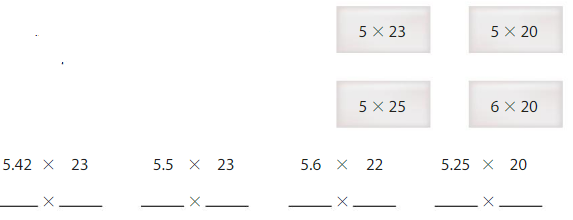
Big Ideas Math Answers 5th Grade Chapter 5 Multiply Decimals 5.2 1
Compare your answers with a partner. Did you choose the same expressions?
Answer:
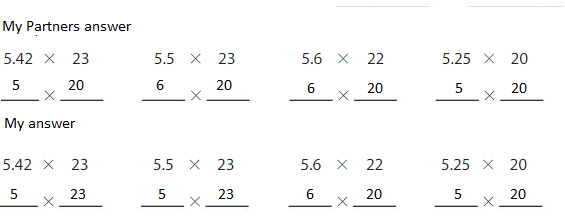
when i compared my answers with my partners answers i found that we didnot choose the same expressions.

Construct Arguments
Which estimated product do you think will be closer to the product of 2.7 and 9? Explain your reasoning.
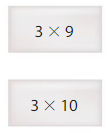
Big Ideas Math Answers 5th Grade Chapter 5 Multiply Decimals 5.2 2
Answer:
The estimated product of 3 and 9 is closer to the product of 2.7 and 9.

Explanation:
The product of 2.7 and 9 is 2.7×9=24.3
The product of 3 and 9 is 3×9=27
The product of 3 and 10 is 3×10=30
24.3 is closer to 27
Therefore the estimated product of 3 and 9 is closer to the product of 2.7 and 9.

Think and Grow: Estimate Products

Example
Estimate 3.85 × 27.
One Way: Use rounding. Round 3.85 to the nearest whole number. Then multiply.
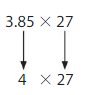
Big Ideas Math Answers 5th Grade Chapter 5 Multiply Decimals 5.2 3
4 × 27 = ______
So, 3.85 × 27 is about = ______

Answer:
4 × 27 = 108
So, 3.85 × 27 is about = 104

Another Way: Use compatible numbers.
Big Ideas Math Answers 5th Grade Chapter 5 Multiply Decimals 5.2 4
4 × 25 = ______
So, 3.85 × 27 is about = ______.

Answer:
4 × 25 = 100
So, 3.85 × 27 is about = 100.

Example
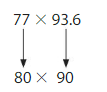
Estimate 77 × 93.6.
One Way: Use rounding. Round to the nearest ten. Then multiply.
Big Ideas Math Answers 5th Grade Chapter 5 Multiply Decimals 5.2 5
80 × 90 = _____
So, 77 × 93.6 is about = ______

Answer:
80 × 90 = 7200
So, 77 × 93.6 is about = 7200

Another Way: Use compatible numbers.
Big Ideas Math Answers 5th Grade Chapter 5 Multiply Decimals 5.2 6
75 × 100 = _______
So, 77 × 93.6 is about = ______.

Answer:
75 × 100 = 7500
So, 77 × 93.6 is about = 7207.

Show and Grow

Estimate the product.
Question 1.
11.6 × 9

Answer:
Use rounding. Round 11.6 to the nearest whole number. Then multiply.
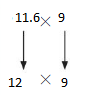
12×9=108
So, 11.6×9 is about =108
Another Way: Use compatible numbers
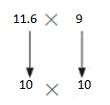
10×10=100
So, 11.6× 9 is about =100

Question 2.
159.81 × 17
Answer:
One Way: Use rounding. Round 159.81 to the nearest whole number. Then multiply.
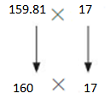
160×17=2720
So, 159.81×17 is about =2720
Another Way: Use compatible numbers
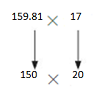
150×20=3000
So, 159.81×17 is about =3000

Apply and Grow: Practice

Estimate the product.
Question 3.
72 × 0.76
Answer:
Use rounding. Round 0.76 to the nearest whole number. Then multiply.
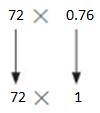
72×1 =72
So, 72×0.76 is about =72

Question 4.
6.1 × 4
Answer:
Use rounding. Round 6.1 to the nearest whole number. Then multiply.
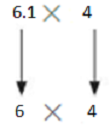
6×4=24
So, 6.1×4 is about =24

Question 5.
1.54 × 12
Answer:
Use rounding. Round 1.54 to the nearest whole number. Then multiply.
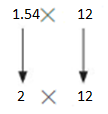
2×12=24
So, 1.54×12 is about =24

Question 6.
22 × 8.02
Answer:
Use rounding. Round 8.02 to the nearest whole number. Then multiply.
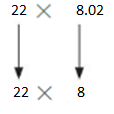
22×8=176
So, 22 × 8.02 is about = 176

Question 7.
147 × 11.6
Answer:
Use compatible numbers
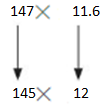
145×12=1740
So, 147×11.6 is about =1740

Question 8.
217 × 13.42
Answer:
Use compatible numbers
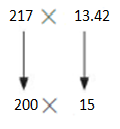
200×15=3000
So, 217×13,42 is about =3000

Question 9.
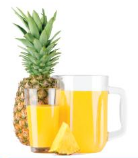
There are 1.36 liters of pineapple juice in 1 can. You buy a case of 8 cans. About how many liters of pineapple juice do you buy?
Big Ideas Math Answers 5th Grade Chapter 5 Multiply Decimals 5.2 7
Answer:
There are 1.36 liters of pineapple juice in 1 can, there are 8 cans in a case.
Number of liters of pineapple juice in a case is about 1.36×8
Use rounding. Round 1.36 to the nearest whole number. Then multiply.
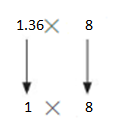
1×8=8 liters
About 8 liters of pineapple juice i shall buy.

Question 10.
Open-Ended
Write a decimal and a whole number that have an estimated product of 16.
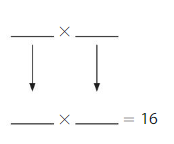
Big Ideas Math Answers 5th Grade Chapter 5 Multiply Decimals 5.2 8
Answer:
Imagine the numbers as 1.9 and 8
1.9 × 8
Use rounding.Round 1.9 to the nearest whole number. Then multiply
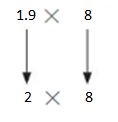
2×8=16
So, 1.9×8 is about =16.

Question 11.
Number Sense
You use 50 × 4 to estimate 45 × 3.56. Is your estimate an overestimate or an underestimate? Explain.
Answer:
My estimate is an overestimate.

Explanation:
50×4=200
45×3.56=160.2
As the product of 50 and 4 is more than the product of 45 and 3.56 so mu estimate is over estimate.

Question 12.
DIG DEEPER!
Describe a situation in which an estimate of the product of a whole number and a decimal is suffcient.
Answer:
A biscuit packet costs 4.83 rupees for a vendor and he sells 15 packets of biscuits he will earn an amount of 75 rupees(15 × 4.83=72.45).

Think and Grow: Modeling Real Life

Example
A space probe is 756,600 miles from Earth. The probe travels 9.7 miles farther from Earth each second. About how far is the space probe from Earth after 60 seconds?
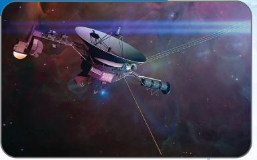
Big Ideas Math Answers 5th Grade Chapter 5 Multiply Decimals 5.2 9
Find the distance the probe travels in 60 seconds by multiplying the distance the probe travels in 1 second by60. Round 9.7 to the nearest whole number because you do not need a precise answer.
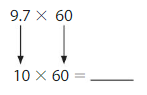
Big Ideas Math Answers 5th Grade Chapter 5 Multiply Decimals 5.2 10
The probe travels about ______ miles in 60 seconds.
Add the distance the probe is from Earth to the distance it travels in 60 seconds.
Big Ideas Math Answers 5th Grade Chapter 5 Multiply Decimals 5.2 11
The probe is about ______ miles from Earth after 60 seconds.

Answer:
10 × 60 = 600
The probe travels about 600 miles in 60 seconds.
Add the distance the probe is from Earth to the distance it travels in 60 seconds.
756,600 + 600 = 757200
The probe is about 757200 miles from Earth after 60 seconds.

Show and Grow

Question 13.
A bucket weighs 1.4 pounds. One gallon of sand weighs 13.4 pounds. About how much does the bucket and 4 gallons of sand weigh in all?
Answer:
A bucket weighs 1.4 pounds, A gallon of sand weighs 13.4 pounds.
Use rounding. Round 1.4 and 13.4 to the nearest whole number
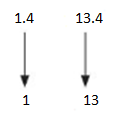
Weight of 4 gallons = 4 × weight of gallon= 4 × 13=52
The bucket and 4 gallons of sand weight=1+52=53 pounds

Question 14.
An 8.2-centimeter-tall plant grows 2.9 centimeters each month for 1 year. About how tall is the plant at the end of 1 year?
Answer:
Length of the plant now is 8.2 centimeters. If it grows about 2.9 centimeter for each month the length of the plant increased is product of 12months and the length of plant that grows each month.
Round of 8.2 and 2.9 to the nearest whole numbers
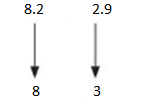
The length of the plant increased is product of 12months and the length of plant that grows each month
12×3=36
Total length= length of plant + increased length after a year=8+36 =44 centimeters
About 44 centimeters tall is the plant at the end of 1 year.

Question 15.
DIG DEEPER!
A motorcycle travels 52.3 miles using 1 gallon of gasoline. A car travels 29.8 miles using 1 gallon of gasoline. About how much farther does the motorcycle travel using 6 gallons of gasoline than the car?
Answer:
A motorcycle travels 52.3 miles using 1 gallon of gasoline and a car travels 29.8 miles using 1 gallon of gasoline
Round of 52.3 and 29.8 sto the nearest whole number.
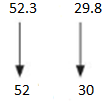
For 6 gallons of gasoline motorcycle travels    30× 6=180 miles
For 6 gallons of gasoline car travels                 52× 6=312 miles
312‐180=132 miles
About 132 miles farther the motorcycle travel using 6 gallons of gasoline than the car.

Estimate Products of Decimals and Whole Numbers Homework & Practice 5.2

Estimate the product.
Question 1.
0.8 × 36
Answer:
Use rounding. Round of 0.8 to nearest whole number. And multiply
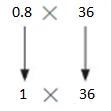
1×36=36
So, 0.8×36=36

Question 2.
2.34 × 16
Answer:
Use rounding. Round of 2.34 to the nearest whole number. And multiply
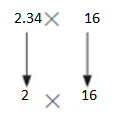
2×16=32
So, 2.34×16 is about =32

Question 3.
9 × 1.67
Answer:
Use rounding. Round of 1.67 to the nearest whole number. And multiply
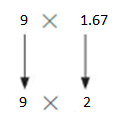
9×2=18
So, 9×1.67 is about = 18

Question 4.
105 × 4.6
Answer:
Use rounding. Round of 4.6 to the nearest whole number. And multiply
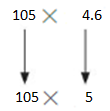
105×5=525
So, 105×4.6 is about =525

Question 5.
88 × 0.9
Answer:
Use rounding. Round of 0.9 to the nearest whole number. And multiply
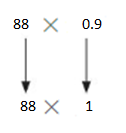
88×1=88
So, 88×0.9 is about =8

Question 6.
5.5 × 131
Answer:
Use rounding. Round of 5.5 to the nearest whole number. And multiply
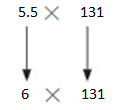
6×131=786
So, 5.5×131 is about =786

Question 7.
An athlete runs 6.23 miles in 1 hour. At this pace, about how far does the athlete run in 4 hours?
Answer:
An athlete runs 6.23 miles in 1 hour.
Use rounding.
Round of 6.23 to the nearest whole number.
6.23——6
Number of miles athlete run in 4 hours
=4× Number of miles athlete run in 1 hour
=4×6=24
About 24 miles the athlete run in 4 hours.

Question 8.
Number Sense
Which expressions are underestimates of 26.5 × 91?
20 × 90
30 × 100
30 × 90
25 × 90
Answer:
20×90 and 25×90 are the underestimates of 26.5×91 as both the estimated numbers in these expressions are less than original numbers.

Question 9.
Writing
Which strategy can you use to estimate the product of 8.02 and 106? Explain.
Answer:
I use compatible numbers strategy because numbers are near to round figures.

Question 10.
YOU BE THE TEACHER
Your friend finds the product. Is her answer reasonable? Estimate to check.?
Big Ideas Math Answers 5th Grade Chapter 5 Multiply Decimals 5.2 12
Answer:
1.06 × 103 = 109.18
Use rounding.Round 1.06 to the nearest whole number. And multiply.
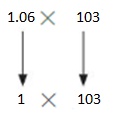
1×103 =103
So, my friend’s answer is reasonable.

Question 11.
Modeling Real Life
Newton pays for 5 pounds of pears that cost $3.75 per pound. Descartes pays$15 for 5 pounds of apples. About how much more do the 5 pounds of pears cost than the 5 pounds of apples?
Answer:
Cost of 5 pounds of pears 5×$3.75
Round 3.75 to the nearest whole number. And multiply
5×$4=$20
Descartes pays$15 for 5 pounds of apples
Subtract cost of apples from pears $20‐$15=$5
About $5 more the 5 pounds of pears cost than the 5 pounds of apples.

Question 12.
Modeling Real Life
A hospital employee works 3 days each week. The route from her house to the hospital is 9.9 miles and the route back to her house is 10.5 miles. About how many miles does she travel for work each week?
Answer:
Use rounding.Round 9.9 and 10.5 to the nearest whole numbers.
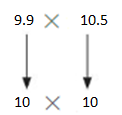
A hospital employee works 3 days each week.
So, as the route from her house to the hospital is 9.9 miles per day for 3 days it is 10×3= 30 miles
As the route back to her house is 10.5 miles per day for 3 days it is 10×3=30 miles
Total number of miles =30+30=60
Therefore About 60 miles she travel for work each week.

Review & Refresh

Question 13.
Write the number in two other forms.
Standard form:
Word form: four and twenty-six thousandths
Expanded form:
Answer:
4.26000

Lesson 5.3 Use Models to Multiply Decimals and Whole Numbers

Explore and Grow

Complete the table.
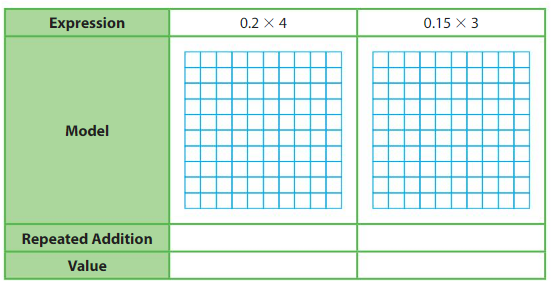
Big Ideas Math Answers Grade 5 Chapter 5 Multiply Decimals 5.3 1
Answer:

Structure
How does the relationship between addition and multiplication help you find each product?
Answer:
Addition is the process of combining a number of individual items together to form a new total.Multiplication, however, is the process of using repeated addition and combining the total number of items that make up equal-sized groups.

Think and Grow: Use Models to Multiply Decimals and Whole Numbers

Example
Find 0.23 × 3.
Use a model. Shade 3 groups of 0.23.
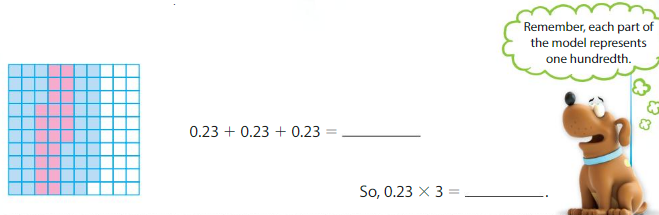
Big Ideas Math Answers Grade 5 Chapter 5 Multiply Decimals 5.3 2

Example
Find 0.48 × 4.
Use a model. Shade 4 groups of 0.48.
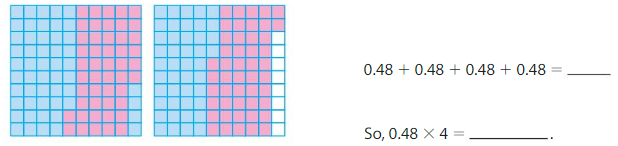
Big Ideas Math Answers Grade 5 Chapter 5 Multiply Decimals 5.3 3

Show and Grow

Find the product.
Question 1.
0.19 × 3 = _____
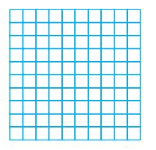
Big Ideas Math Answers Grade 5 Chapter 5 Multiply Decimals 5.3 4
Answer:


0.19+0.19+0.19=0.57
So, 0.19×3=0.57

Question 2.
0.37 × 5 = ______
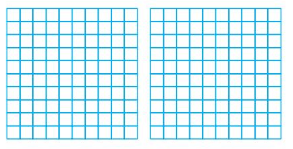
Big Ideas Math Answers Grade 5 Chapter 5 Multiply Decimals 5.3 5
Answer:


0.37+0.37+0.37+0.37+0.37=1.85
S0, 0.37×5=1.85

Apply and Grow: Practice

Find the product.
Question 3.
0.09 × 5 = _____
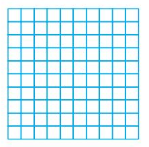
Big Ideas Math Answers Grade 5 Chapter 5 Multiply Decimals 5.3 6
Answer:


0.09+0.09+0.09+0.09+0.09=0.45
So, 0.09×5=0.45

Question 4.
8 × 0.2 = _____
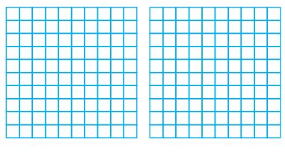
Big Ideas Math Answers Grade 5 Chapter 5 Multiply Decimals 5.3 7
Answer:


0.2+0.2+0.2+0.2+0.2+0.2+0.2=1.6
So, 8×0.2=1.6

Question 5.
7 × 0.14 = _____
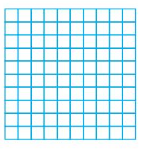
Big Ideas Math Answers Grade 5 Chapter 5 Multiply Decimals 5.3 8
Answer:


0.14+0.14+0.14+0.14+0.14+0.14+0.14=0.98
So, 7×0.14=0.98

Question 6.
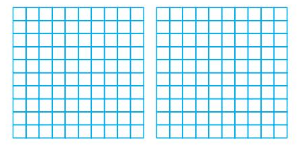
0.96 × 2 = _____
Big Ideas Math Answers Grade 5 Chapter 5 Multiply Decimals 5.3 9
Answer:

0.96+0.96=1.92
So, 0.96×2=1.92

Question 7.
A hummingbird’s heart beats once every 0.05 second. How long does it take for its heart to beat 7 times?
Big Ideas Math Answers Grade 5 Chapter 5 Multiply Decimals 5.3 10
Answer:
Given,
A hummingbird’s heart beats once every 0.05 second.
0.005 × 7 = 0.035 seconds

Question 8.
Precision
When multiplying a decimal less than one by a whole number, how does the product compare to the whole number? Is this true when multiplying two whole numbers?
Answer:
When we multiply a decimal less than one by a whole number the product will be a decimal or a whole number but when we multiply two whole numbers the product will be only a whole number.

Question 9.
DIG DEEPER!
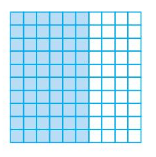
Write two multiplication equations involving a decimal and a whole number whose product is shown.
Big Ideas Math Answers Grade 5 Chapter 5 Multiply Decimals 5.3 11
Answer:
0.2×3=0.6 and 0.3×2=0.6

Think and Grow: Modeling Real Life

Example
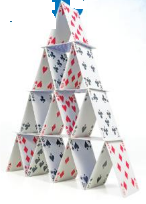
You build the card tower shown. Each row is 0.08 meter tall. Your friend’s card tower is 0.3 meter tall. Whose tower is taller?
Big Ideas Math Answers Grade 5 Chapter 5 Multiply Decimals 5.3 12
Because your card tower has 4 rows, multiply 4 by0.08 to find the height of your tower.
Use a model. Shade 4 groups of 0.08.
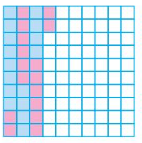
Big Ideas Math Answers Grade 5 Chapter 5 Multiply Decimals 5.3 13
0.08 + 0.08 + 0.08 + 0.08 = ______
Compare the height of your tower to the height of your friend’s tower.
So, ______ tower is taller.

Answer:
0.08 + 0.08 + 0.08 + 0.08 = 0.32
Compare the height of your tower to the height of your friend’s tower.
So, 0.32tower is taller.

Show and Grow

Question 10.
You have 1 meter of ribbon. Do you have enough ribbon to border the outside of the square picture frame?
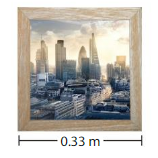
Big Ideas Math Answers Grade 5 Chapter 5 Multiply Decimals 5.3 14
Answer:
No

Explanation:
Length of side of the square picture is 0.33m.
Border of the square picture is 4 × length of side=4×0.33m=1.32m
I have 1 meter of ribbon 1.32>1
So, i don’t have enough ribbon to border the square picture.

Question 11.
Organic shaved coconut originally costs $0.34 per ounce. A baker buys 8 ounces on sale for $0.27 per ounce.How much money does the baker save?
Big Ideas Math Answers Grade 5 Chapter 5 Multiply Decimals 5.3 15
Answer:
Money the baker save is 0$2.72‐$2.16=$0.56

Explanation:
Original cost of organic shaved coconut is $0.34 per ounce
Then for 8 ounces it will be 8×$0.34=$2.72
Cost of the baker is $0.27 per ounce
Then for 8 ounces it will be 8×$0.27=$2.16
Money the baker save is 0$2.72‐$2.16=$0.56

Question 12.
DIG DEEPER!
You have 4 pennies, 3 nickels, and 2 quarters. Find the total weight and the total value of your coins.
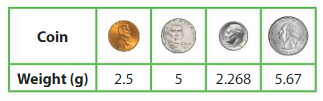
Big Ideas Math Answers Grade 5 Chapter 5 Multiply Decimals 5.3 16
Answer:
4 × 2.5 = 10
3 × 5 = 15
2 × 5.67 = 11.34
10 + 15 + 11.34 = 36.34

Use Models to Multiply Decimals and Whole Numbers Homework & Practice 5.3

Find the product.
Question 1.
0.4 × 2 = _____
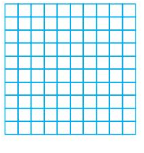
Big Ideas Math Answers Grade 5 Chapter 5 Multiply Decimals 5.3 17
Answer:


0.4+0.4=0.8
So, 0.4×2=0.84

Question 2.
6 × 0.31 = _____
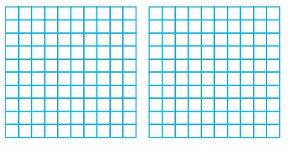
Big Ideas Math Answers Grade 5 Chapter 5 Multiply Decimals 5.3 18
Answer:


0.31+0.31+0.31+0.31+0.31+0.31=1.86
So, 6×0.31=1.86

Question 3.
0.54 × 3 = _____
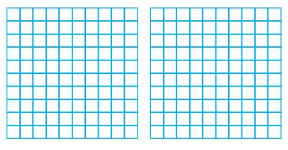
Big Ideas Math Answers Grade 5 Chapter 5 Multiply Decimals 5.3 19
Answer:


0.54+0.54+0.54=1.62
So, 0.54×3=1.62

Question 4.
0.25 × 7 = _____
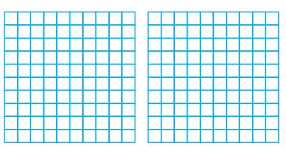
Big Ideas Math Answers Grade 5 Chapter 5 Multiply Decimals 5.3 20
Answer:


0.25+0.25+0.25+0.25+0.25+0.25+0.25=1.75
So, 0.25×7=1.75

Find the product
Question 5.
0.22 × 4 = _____
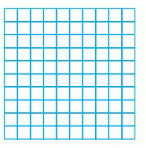
Big Ideas Math Answers Grade 5 Chapter 5 Multiply Decimals 5.3 21
Answer:


0.22+0.22+0.22+0.22=0.88
So, 0.22×4=0.88

Question 6.
5 × 0.4 = _____
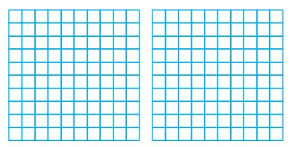
Big Ideas Math Answers Grade 5 Chapter 5 Multiply Decimals 5.3 22
Answer:


0.4+0.4+0.4+0.4+0.4=2
So, 5×0.4=2

Question 7.
A city mayor plans to build two new parks. Each park will cover 1.45 acres. How many acres will the new parks cover altogether? Explain.
Answer:
2.9 Acers

Explanation:
Acres covered by one park is 1.45 acres, A city mayor plans to build two new parks.
Acres covered by two new parks is 2×1.45=2.9acers.

Question 8.
Structure
Write an equation represented by the model.
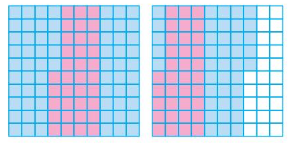
Big Ideas Math Answers Grade 5 Chapter 5 Multiply Decimals 5.3 23
Answer:
0.35+0.35+0.35+0.35+0.35=1.75
So, 0.35×5=1.75

Question 9.
DIG DEEPER!
Find the product of 0.03 and 4. How does the product change when you replace 4 with 0.4? Explain.
Answer:
The product of 0.03 and 4 is 0.03×4=0.12
The product of 0.03 and 0.4 is 0.03×0.4=0.012
When we replace the 4 with 0.4 then the product will become very small.

Question 10.
Modeling Real Life
In 1 year, you spend $1.50 on electricity to charge your tablet. In 1 month, you spend $0.02 on electricity to charge your smart phone. Which device costs more to charge in 1 year?
Answer:
In 1 year, i spend $1.50 on electricity to charge my tablet
If In 1 month, i spend $0.02 on electricity to charge my smart phone in a year i spend = 12months × electricity charge per month
=12×0.02=$0.24
$0.24<$1.50
Therefore Tablet costs more to charge in 1 year.

Question 11.
DIG DEEPER!
You have a 2-pound carton of blueberries. You eat 0.2 of the carton on Monday and 0.35 of the carton on Tuesday. How many pounds of blueberries are left?
Answer:
Weight of carton of blueberries is 2 pounds
I ate 0.2 of carton on Monday 0.2×2=0.4 pounds
I ate 0.35 of carton on Tuesday 0.35×2=0.7
Total of berries i ate is 0.4+0.7=1.1
pounds of blueberries are left=2‐1.1=0.9
Therefore 0.9 pounds of blueberries are left in the carton.

Review & Refresh

Evaluate the expression.
Question 12.
(12 ÷ 4) × 30 – 15
Answer:
(12 ÷ 4) × 30 – 15=75

Explanation:
(12 ÷ 4) × 30 – 15
=(3)×30‐15
=90‐15
=75
S0, (12 ÷ 4) × 30 – 15=75

Question 13.
(11 + 7) ÷ (3 + 5 + 1)
Answer:
(11 + 7) ÷ (3 + 5 + 1)=2

Explanation:
(11 + 7) ÷ (3 + 5 + 1)
=(18)÷(9)
=2
So, (11 + 7) ÷ (3 + 5 + 1)=2

Question 14.
35 ÷ [(153 – 139) ÷ 2]
Answer:
35 ÷ [(153 – 139) ÷ 2]=5

Explanation:
35 ÷ [(153 – 139) ÷ 2]
=35÷[(14÷2)]
=35÷7
=5
So, 35 ÷ [(153 – 139) ÷ 2]=5

Lesson 5.4 Multiply Decimals and Whole Numbers

Explore and Grow

Complete the table.
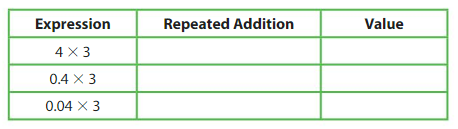
Big Ideas Math Solutions Grade 5 Chapter 5 Multiply Decimals 5.4 1
What pattern do you notice in the placement of the decimal point?
Answer:
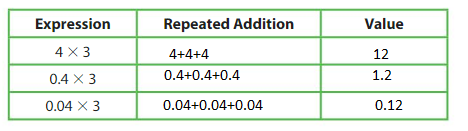

We can notice that the decimal point moves one place to the left.

Structure
How is multiplying decimals similar to multiplying whole numbers?
Answer:
Decimal multiplication is similar to the multiplication of whole numbers after decimal point the product of the numbers is the same.

Think and Grow: Multiply a Decimals and a Whole Numbers

Example
Find 5.8 × 4. Estimate ________
One Way: Multiply as you do with whole numbers. Then place the decimal point.
Find 58 × 4.
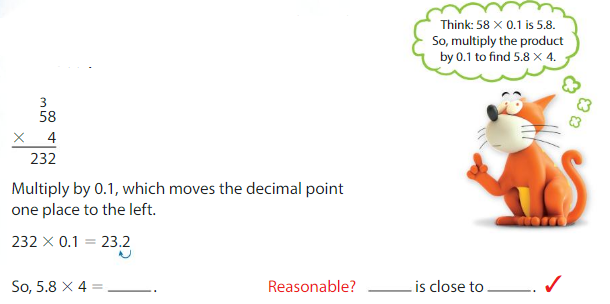
Big Ideas Math Solutions Grade 5 Chapter 5 Multiply Decimals 5.4 2

Another Way: Use place value and partial products.
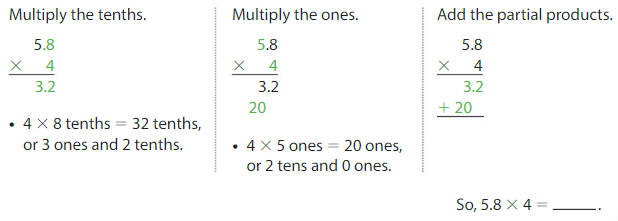
Big Ideas Math Solutions Grade 5 Chapter 5 Multiply Decimals 5.4 3
So, 5.8 × 4 = ______.

Show and Grow

Find the product. Check whether your answer is reasonable.
Question 1.
2.4 × 7 = ______
Answer:
2.4 × 7 =16.8

Explanation:
2.4 × 7
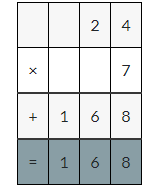
Multiply 24 with 7
24×7=168
Multiply 168 with 0.1
168×0.1=16.8 decimal point moves one place to the left.
So, 2.4 × 7 =16.8

Question 2.
8.15 × 3 = ______
Answer:
8.15 × 3 =24.45

Explanation:
8.15 × 3
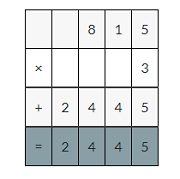
Multiply 8.15 with 3
815×4=2445
Multiply 2445 with 0.01
2445×0.01=24.45 decimal point moves two places to the left.
So, 8.15 × 3 =24.45

Apply and Grow: Practice

Find the product.
Question 3.
6 × 5.3 = _____
Answer:
6×5.3=31.8

Explanation:
6×5.3=
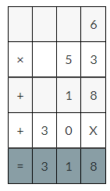
6×53=318
318 ×0.1=31.8decimal point moves one place to the left.
So,6 ×5.3=31.8

Question 4.
4.68 × 4 = ______
Answer:
4.68×4=18.72

Explanation:
4.68×4
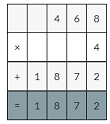
468×4=1872
1872×0.01=18.72decimal point moves two places to the left.
So, 4.68 × 4 =18.72

Question 5.
7 × 0.81 = ______
Answer:
7×0.81=5.56

Explanation:
7×0.81
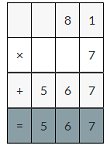
7×81=567
567×0.01=5.67decimal point moves two places to the left.
So, 7 × 0.81 =5.67

Question 6.
1.45 × 5 = _____
Answer:
1.45 × 5=7.25

Explanation:
1.45 × 5
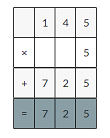
145×5=725
725×0.01=7.25decimal point moves two places to the left.
So, 1.45 × 5 =7.25

Question 7.
34 × 7.2 = _____
Answer:
34 × 7.2=244.8

Explanation:
34 × 7.2
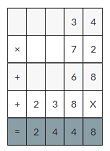
34×72=2448
2448×0.1=244.8decimal point moves one place to the left.
So, 34 × 7.2=244.8

Question 8.
23.66 × 19 = ______
Answer:
23.66 × 19=499.54

Explanation:
23.66 × 19
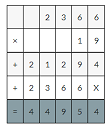
2366×19=44954
44954×0.01=449.54decimal point moves two places to the left.
So, 23.66 × 19 =449.54

Question 9.
How much do you pay for 3 pounds of grapes?
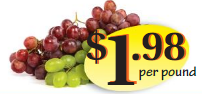
Big Ideas Math Solutions Grade 5 Chapter 5 Multiply Decimals 5.4 4
Answer:
One pound of grapes costs $1.98
3 pounds of grapes cost is 3×$1.98
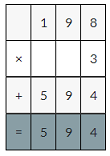
=3×198=598
598×0.01=5.98decimal point moves two places to the left.
Therefore cost of 3 pounds of grapes is 5.98

Question 10.
Which One Doesn’t Belong?
Which equation is not true?
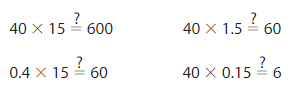
Big Ideas Math Solutions Grade 5 Chapter 5 Multiply Decimals 5.4 5
Answer:
0.4×15=60 is not correct

Explanation:
0.4×15
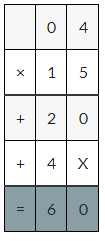
4×15=60
60×0.1=6decimal point moves one place to the left.
0.4×15=6
Therefore it is a wrong equation.

Question 11.
Number Sense
Without calculating, determine whether the product of 0.67 and 8 is greater than or less than 8. Explain.
Answer:
The product of 0.67 and 8 is less than 8.

Explanation:
We know that 0.67 is less than 1 so 0.67 when multiplied with 8 will be less than 8.

Question 12.
DIG DEEPER!
Find the missing digits. Then find the product.
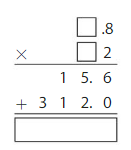
Big Ideas Math Solutions Grade 5 Chapter 5 Multiply Decimals 5.4 6
Answer:

Think and Grow: Modeling Real Life

Example
You buy a 40-pack of bottled water. Each bottle contains 16.9 fluid ounces of water. You drink 10 bottles. How many total fluid ounces of water do you have left?
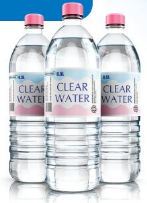
Big Ideas Math Solutions Grade 5 Chapter 5 Multiply Decimals 5.4 7
Subtract 10 from the number of bottles you buy to find the number of bottles you have left.
40 – 10 = 30
To find how much water you have left, multiply the number of bottles you have left by16.9. Multiply as you do with whole numbers. Then place the decimal point.
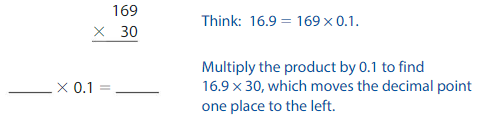
Big Ideas Math Solutions Grade 5 Chapter 5 Multiply Decimals 5.4 8
You have _______ total fluid ounces of water left.

Show and Grow

Question 13.
The stories of a residential building are 3.2 meters tall. The stories of an office building are 0.4 meter taller than the stories in the residential building. The office building has 12 stories. How tall is the office building?
Answer:
The stories of a residential building are 3.2 meters tall.The stories of an office building are 0.4 meter taller than the stories in the residential building
So stories of office building is 3.2+0.4=3.6 meter tall
Office building has 12 stories and each storey is 3.6 meters tall
So, 12×3.6=
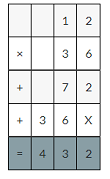
12×36=432
432×0.1=43.2decimal point moves one place to the left.
Therefore the office building is 43.2 meters tall.

Question 14.
You have3 strands of lights that are each 10.8 feet long. You buy 5 strands of lights that are each 16.25 feet long. How many feet of lights do you have in all?
Answer:
If i have3 strands of lights that are each 10.8 feet long
The length of 3 strands is 3×10.8
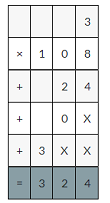
3×10.8=324×0.1 = 32.4 feet decimal point moves one place to the left.
If i buy 5 strands of lights that are each 16.25 feet long
The length of 5 strands is 5×16.25
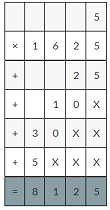
5×1625=8125
1825×0.01=81.25decimal point moves two places to the left.
Feet of lights i have in all is32.4+81.25=133.65 feet.

Question 15.
DIG DEEPER!
You stack $1 in dimes and you stack $1 in quarters. Which stack is taller? How much taller?
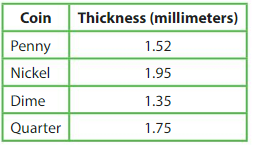
Big Ideas Math Solutions Grade 5 Chapter 5 Multiply Decimals 5.4 9
Answer:
1.35 × 1 = 1.35
1.75 × 1 = 1.75

Multiply Decimals and Whole Numbers Homework & Practice 5.4

Find the product.
Question 1.
9.8 × 2 = _____
Answer:
9.8×2=19.6

Explanation:
9.8×2
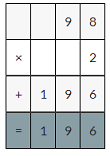
98×2=196
196×0.1=19.6 decimal point moves one place to the left.
So, 9.8×2=19.6

Question 2.
0.61 × 8 = ______
Answer:
0.61 × 8 =4.88

Explanation:
0.61×8
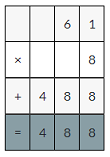
61×8=488
488×0.01=4.88decimal point moves two places to the left.
So, 0.61 × 8 =4.88

Question 3.
82 × 1.1 = ______
Answer:
82×1.1=90.2

Explanation:
82×1.1
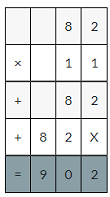
82×11=902
902×0.1=90.2decimal point moves one place to the left.
So, 82×1.1=90.2

Question 4.
43 × 0.6 = ______
Answer:
43×0.6=25.8

Explanation:
43×0.6
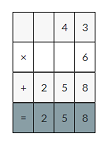
43×6=258
258×0.1=25.8decimal point moves one place to the left.
So, 43×0.6=25.8

Question 5.
2.39 × 57 = _______
Answer:
2.39×57=136.23

Explanation:
2.39×57
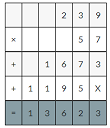
239×57=13623
13623×0.01=136.23decimal point moves two places to the left.
So, 2.39×57=136.23

Question 6.
10.75 × 24 = ______
Answer:
10.75×24=258

Explanation:
10.75×24
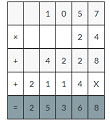
1075×24=25800
25800×0.01=258.00=258decimal point moves two places to the left.
So, 10.75×24=258

Question 7.
There are 6.3 grams of protein in a boiled egg. You eat 3 boiled eggs. How many grams of protein do you consume?
Answer:
There are 6.3 grams of protein in a boiled egg
I eat 3 boiled eggs and grams of protein i consumed=3×6.3
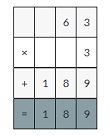
3×63=189
189×0.1=18.9decimal point moves one place to the left.
Therefore 18.9 grams of protein i consumed.

Question 8.
Reasoning
Newton says the product of 7.55 and 8 is 60.40. Descartes says the product is 60.4.Who is correct? Explain.
Answer:
Both Newton’s and Descartes answers are correct as zero at the end of a number after decimal point does not change the value of the number 60.40 and 60.4 is same.

Question 9.
Patterns
Describe and complete the pattern.
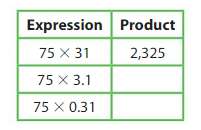
Big Ideas Math Solutions Grade 5 Chapter 5 Multiply Decimals 5.4 10
Answer


In the above table the decimal point is shifting one place to the left in each expression respectively.

Question 10.
YOU BE THE TEACHER
Your friend finds 14 × 0.82. Is your friend correct? Explain.
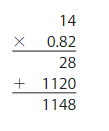
Big Ideas Math Solutions Grade 5 Chapter 5 Multiply Decimals 5.4 11
Answer:
My friend is incorrect.

Explanation:
14×0.82
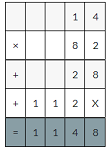
14×82=1148
1148×0.01=11.48decimal point moves two places to the left.
14×0.82=11.48.
so, my friends answer is correct.

Question 11.
Modeling Real Life
A person weighs 2.34 times as much on Jupiter as on Earth. An 85-pound student would weigh 90.1 pounds less on Saturn than on Jupiter. How much would he weigh on Saturn?
Answer:
85 pounds student weighs 2.34 times as much on Jupiter as on Earth.So, weight on jupiter is 85×2.34
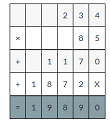
85×234=19890
19890×0.01=198.90decimal point moves two places to the left.
Weight on jupiter is 198.9
student would weigh 90.1 pounds less on Saturn than on Jupiter
So, weight on saturn = weight on Jupiter ‐ 90.1=198.9‐90.1=108.8
Therefore An 85-pound student would weigh 108.8 on saturn.

Question 12.
DIG DEEPER!
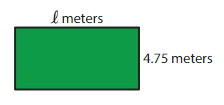
A landscaper digs a rectangular region for a garden. The length is a one-digit whole number of meters. What is the least possible area? What is the greatest possible area?
Big Ideas Math Solutions Grade 5 Chapter 5 Multiply Decimals 5.4 12
Answer:
If length of rectangular region is a one-digit whole number of meters and breadth is 4.75 meters.
Smallest 1 digit whole number is 1
The least possible area is 1×4.75 =4.75 squaremeters
Largest 1 digit whole number is 9
The greatest possible area is 9×4.75
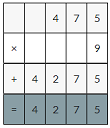
9×475=4275
4275×0.01=42.75 square meters decimal point moves two places to the left.
Therefore The least possible area and the greatest possible area is 4.75 and 42.75 square meters respectively.

Review & Refresh

Find the sum or difference.
Question 13.
0.83 – 0.14 = ______
Answer:
0.83 – 0.14=0.96

Explanation:
0.83‐0.14=
83‐14=69
69×0.01=0.69decimal point moves two places to the left.
So, 0.83 – 0.14=0.96

Question 14.
1.34 + 1.35 = _______
Answer:
1.34 + 1.35 =2.69

Explanation:
1.34 + 1.35
134+135=269
269×0.01=2.69decimal point moves two places to the left.
So, 1.34 + 1.35 =2.69

Lesson 5.5 Use Models to Multiply Decimals

Explore and Grow

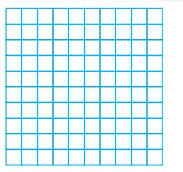
A rectangle is 0.8 meter long and 0.7 meter wide.
Use a model to find the area of the rectangle.
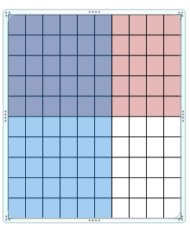
Big Ideas Math Answer Key Grade 5 Chapter 5 Multiply Decimals 5.5 1.1

Answer:

Use a model to find 0.8 × 0.7
Use a model. Shade 8 rows to represent 0.8 and shade 7 columns to represent 0.7
56 squares are shaded twice
So, 0.8 × 0.7=0.56

Use a model to find 0.8 × 1.7.
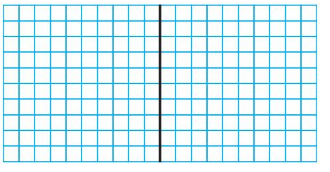
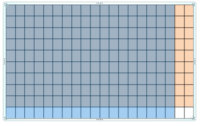
Big Ideas Math Answer Key Grade 5 Chapter 5 Multiply Decimals 5.5 1
Answer:

Use a model to find 0.8 × 1.7
Use a model. Shade 8 rows to represent 0.8 and shade 17 columns to represent 1.7
136 squares are shaded twice
So, 0.8 × 1.7 =1.36

Reasoning
When using a model to multiply decimals, how do you determine the number of rows and columns to shade?
Answer:
For a given multiplication of decimals. The multiplyer is used to determine the number of rows and the multiplicand is used to determine the number of columns.

Think and Grow: Use Models to Multiply Decimals

Example
Use a model to find 0.4 × 0.6
Use a model. Shade 4 rows to represent 0.4 and shade 6 columns to represent 0.6.
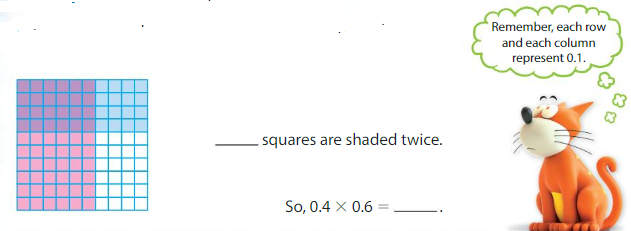
Big Ideas Math Answer Key Grade 5 Chapter 5 Multiply Decimals 5.5 2

Example
Use a model to find 0.7 × 1.4.
Use a model. Shade 7 rows to represent 0.7 and shade 14 columns to represent 1.4.
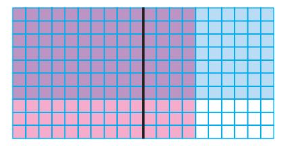
Big Ideas Math Answer Key Grade 5 Chapter 5 Multiply Decimals 5.5 3
_____ squares are shaded twice.
So, 0.7 × 1.4 = ______.

Show and Grow

Use the model to find the product.
Question 1.
0.9 × 0.2 = _____
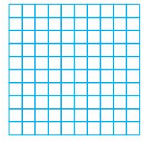
Big Ideas Math Answer Key Grade 5 Chapter 5 Multiply Decimals 5.5 4
Answer:


Use a model to find 0.9 × 0.2
Use a model. Shade 9 rows to represent 0.9 and shade 2 columns to represent 0.2
18 squares are shaded twice
So, 0.9 × 0.2 =0.18

Question 2.
0.8 × 1.5 = ______
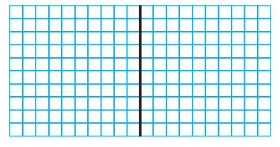
Big Ideas Math Answer Key Grade 5 Chapter 5 Multiply Decimals 5.5 5
Answer:


Use a model to find 0.8 × 1.5
Use a model. Shade 8 rows to represent 0.8 and shade 15 columns to represent 1.5
120 squares are shaded twice
So, 0.8 × 1.5 =1.2

Apply and Grow: Practice

Use the model to find the product.
Question 3.
0.4 × 0.4 = ______
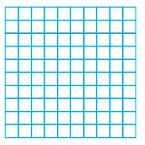
Big Ideas Math Answer Key Grade 5 Chapter 5 Multiply Decimals 5.5 6
Answer:

Use a model to find 0.4 × 0.4
Use a model. Shade 4 rows to represent 0.4 and shade 4 columns to represent 0.4
16 squares are shaded twice
So, 0.4 × 0.4 =0.16

Question 4.
0.9 × 0.9 = _______
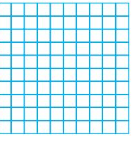
Big Ideas Math Answer Key Grade 5 Chapter 5 Multiply Decimals 5.5 7
Answer:


Use a model to find 0.9 × 0.9
Use a model. Shade 9 rows to represent 0.9 and shade 9 columns to represent 0.9
81 squares are shaded twice
So, 0.9 × 0.9 =0.81

Question 5.
0.2 × 1.7 = ____
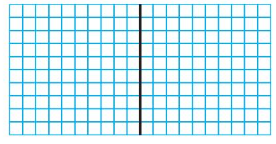
Big Ideas Math Answer Key Grade 5 Chapter 5 Multiply Decimals 5.5 8
Answer:

Use a model to find 0.2 × 1.7
Use a model. Shade 2 rows to represent 0.2 and shade 17 columns to represent 1.7
34 squares are shaded twice
So, 0.2 × 1.7 =0.34

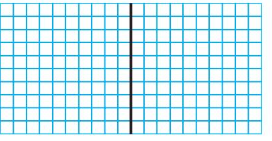
Question 6.
0.6 × 1.6 = _______
Big Ideas Math Answer Key Grade 5 Chapter 5 Multiply Decimals 5.5 9
Answer:

Use a model to find 0.6 × 1.6
Use a model. Shade 6 rows to represent 0.6 and shade 16 columns to represent 1.6
96 squares are shaded twice
So, 0.6× 1.6 =0.96

Question 7.
On Saturday, you ride your bike 1.5 miles. On Sunday, you ride your bike 0.7 times as far as you did on Saturday. How far do you ride your bike on Sunday?
Answer:
On saturday i rode my bike for 1.5 miles
On sunday i rode 0.7 times as far as i did on saturday
miles i rode bike on sunday =0.7×1.5=1.05
Therefore, 1.05miles far i rode my bike on sunday.

Question 8.
Reasoning
When multiplying 0.4 × 0.3, why is the product less than each of the factors?
Answer:
When we multiply 0.4 with 0.3 the product is less than each of their factors this is because we are finding a fractional amount of a quantity.

Question 9.
DIG DEEPER!
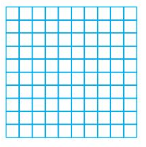
Shade the model to represent the product of 0.6 and 0. What is the product? Explain.
Big Ideas Math Answer Key Grade 5 Chapter 5 Multiply Decimals 5.5 11
Answer:


Use a model to find 0.6 × 0
Use a model. Shade 6 rows to represent 0.6 and shade 0 columns to represent 0
No squares are shaded twice
So, 0.6× 0=0

Think and Grow: Modeling Real Life

Example
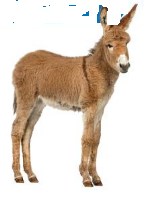
A donkey is 0.9 meter tall. A horse is 1.7 times as tall as the donkey. How much taller is the horse than the donkey?
Big Ideas Math Answer Key Grade 5 Chapter 5 Multiply Decimals 5.5 12
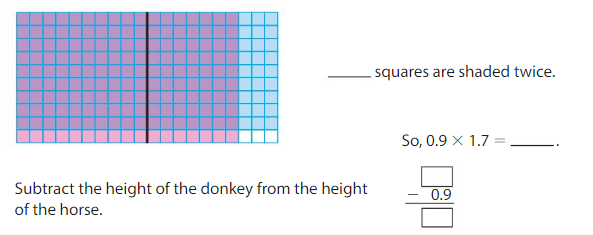
Multiply 0.9 by 1.7 to find the height of the horse.
Use a model. Shade 9 rows to represent 0.9 and shade 17 columns to represent 1.7.
Big Ideas Math Answer Key Grade 5 Chapter 5 Multiply Decimals 5.5 13
So, the horse is ______ meter taller than the donkey.

Answer:
0.9 × 1.7 = 1.53
1.53 squares are shaded twice.
1.53 – 0.9 = 0.63
So, the horse is 0.63 meter taller than the donkey.

Show and Grow

Question 10.
On Sunday, you run 0.6 mile. On Monday, you run 1.3 times as far as you run on Sunday. How many more miles do you run on Monday than on Sunday?
Answer:
Multiply 0.6 by 1.3 to find the number of miles i run on monday.
usinga model. Shade 6 rows to represent 0.6 and shade 13 columns to represent 1.3.
78 squares are shaded twice.
So, i ran 0.78 miles on monday.
Subtract the number of miles i ran on monday from the miles i ran on sunday.
0.78‐0.6=0.72
Therefore 0.72miles i ran on Monday than on Sunday

Question 11.
A candle burns 0.2 ounce of wax each hour. A candle with 14.5 ounces of wax burns for 2.5 hours. How much wax is left?
Answer:
A candle with 14.5 ounces of wax burns for 2.5 hours and a candle burns 0.2 ounce of wax each hour.
Ounces of wax burnt in 2.5 hours is
2.5 hours × ounces of wax burns in each hour.
2.5×0.2=0.5 ounces
Ounced of Wax left=14.5‐0.5=14 ounces.

Question 12.
DIG DEEPER!
You have a bottle that contains 1.5 liters of apple juice. You drink 0.2 of the bottle on Friday, and 0.3 of the juice remaining in the bottle on Saturday. How much apple juice do you have left?
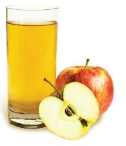
Big Ideas Math Answer Key Grade 5 Chapter 5 Multiply Decimals 5.5 14
Answer:
A bottle contains 1.5 liters of apple juice.
If i  drink 0.2 of the bottle on Friday the amount of juice left is 1.5‐(1.5×0.2)=1.5 ‐ 0.3= 1.2
If i drink 0.3 of the juice remaining in the bottle on Saturday the amount of juice left is
=1.2‐(1.2×0.3)=1.2 ‐ 0.36= 0.84
Apple juice i have left id 0.84 liters.

Use Models to Multiply Decimals Homework & Practice 5.5

Use the model to find the product.
Question 1.
0.8 × 0.9 = ______
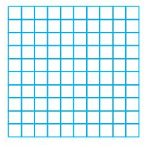
Big Ideas Math Answer Key Grade 5 Chapter 5 Multiply Decimals 5.5 15
Answer:


Use a model to find 0.8 × 0.9
Use a model. Shade 8 rows to represent 0.8 and shade 9 columns to represent 0.9
72 squares are shaded twice
So, 0.8 × 0.9 =0.72

Question 2.
0.4 × 0.2 = _____
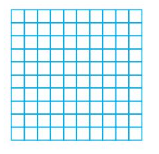
Big Ideas Math Answer Key Grade 5 Chapter 5 Multiply Decimals 5.5 16
Answer:


Use a model to find 0.4 × 0.2
Use a model. Shade 4 rows to represent 0.4 and shade 2 columns to represent 0.2
8 squares are shaded twice
So, 0.4 × 0.2 =0.08

Question 3.
0.6 × 1.9 = ______
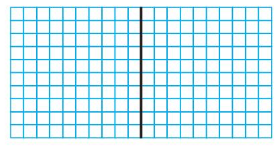
Big Ideas Math Answer Key Grade 5 Chapter 5 Multiply Decimals 5.5 17
Answer:


Use a model to find 0.6 × 1.9
Use a model. Shade 6 rows to represent 0.6 and shade 19 columns to represent 1.9
114 squares are shaded twice
So, 0.6 × 1.9 =1.14

Question 4.
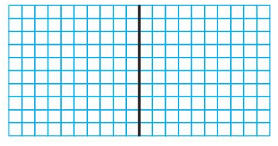
0.7 × 1.2 = ______
Big Ideas Math Answer Key Grade 5 Chapter 5 Multiply Decimals 5.5 18
Answer:


Use a model to find 0.7 × 1.2
Use a model. Shade 7 rows to represent 0.7 and shade 12 columns to represent 1.2
84 squares are shaded twice
So, 0.7 × 1.2 =0.84

Question 5.
One banana contains 1.3 grams of protein. How much protein is in 0.5 of a banana?
Answer:
One banana contains 1.3 grams of protein
0.5 of a banana contains 1.3×0.5=0.65 grans of proteins.

Question 6.
Reasoning
When multiplying 0.6 and 1.2, why is the product less than only one of the factors?
Answer:
When multiplying 0.6 and 1.2, the product less than only one of the factors because we are finding a fractional amount of a quantity a part of the number.

Question 7.
YOU BE THE TEACHER
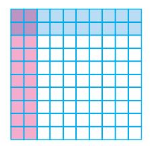
Newton says that 0.2 × 0.2 = 0.36, because there are 36 squares shaded. Is he correct? Explain.
Big Ideas Math Answer Key Grade 5 Chapter 5 Multiply Decimals 5.5 19
Answer:
No

Explanation:
No, Newton’s answer is not correct as the number of squares shaded twice are 4 so, the product will be 0.4 not 0.36.

Question 8.
Structure
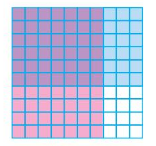
Write a multiplication equation that is represented by the model.
Big Ideas Math Answer Key Grade 5 Chapter 5 Multiply Decimals 5.5 20
Answer:
Number of rows shaded are 6 so, the decimal is 0.6
Number of columns shaded are 7 so, the decimal is 0.7
Number of squares shaded twice are 42 so, the product is 0.42
Therefore multiplication equation is 0.6×0.7=0.42.

Question 9.
Modeling Real Life
A pancake batter recipe calls for 0.5 cup of water. The recipe calls for 1.5 times as much pancake mix as water.How much more pancake mix is needed than water?

Big Ideas Math Answer Key Grade 5 Chapter 5 Multiply Decimals 5.5 21
Answer:
A pancake batter recipe calls for 0.5 cup of water.
The recipe calls for 1.5 times as much pancake mix as water
Amount of pancake mix is 0.5×1.5=0.75 cups
Subtract the amount of pancake mix from the amount of water
0.75‐0.5=0.70 cups
Therefore 0.70 cups more pancake mix is needed than water.

Question 10.
DIG DEEPER!
To make crafts, you buy colored paper for $1.90. You buy a pack of googly eyes that costs 0.4 times as much as the colored paper. How much money do you spend in all?
Big Ideas Math Answer Key Grade 5 Chapter 5 Multiply Decimals 5.5 22
Answer:
Cost of colored paper is $1.90
Cost of a pack of googly eyes is 0.4 times as much as the colored paper=0.4×1.90=$0.76
Add the money spent on colored paper and on googly eyes=$1.90+$0.76=$2.66
The money i spent in all is $2.66.

Review & Refresh

Write the value of the underlined digit.
Question 11.
5,120,379
Answer:
5,120,379
Value of 1 in the above number is 1 Hundred Thousands

Question 12.
400,681
Answer:
400,681
Value of 6 in the above number is 6 hundred.

Question 13.
7,245,819
Answer:
7,245,819
Value of 7 in the above number is 7 million.

Question 14.
23, 504
Answer:
23, 504
Value of  2 in the above number is 2 Ten Thousands

Lesson 5.6 Use Partial Products to Multiply Decimals

Explore and Grow

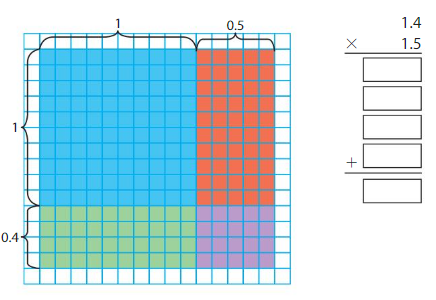
Use the area model and partial products to find 1.4 × 1.5.
Big Ideas Math Answers 5th Grade Chapter 5 Multiply Decimals 5.6 1
Answer:
From the above grid we can note down the following expressions
1×1
1×0.4
1×0.5
0.4×0.5
Find the product of the four equations and then add their products to find the area of the model
1×1=1
1×0.4=0.4
1×0.5=0.5
0.4×0.5=0.2
Add the products of the above four equations
1+0.4+0.5+0.2=2.1

Structure
How can you use partial products to multiply decimals?
Answer:
Breaking up the number to multiply into parts, multiplying the parts separately, and then adding is called partial product.we can use partial product strategy to find the product of decimals by breaking them into parts.

Think and Grow: Use Partial Products toMultiply

Example
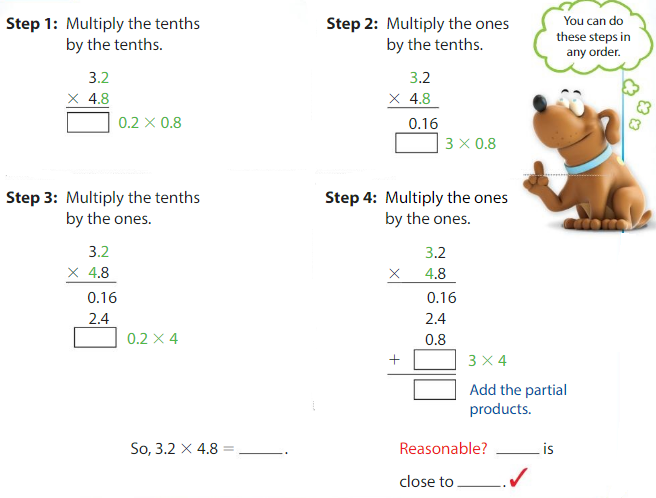
Use partial products to find 3.2 × 4.8. Estimate ________
Big Ideas Math Answers 5th Grade Chapter 5 Multiply Decimals 5.6 2

Show and Grow

Find the product. Check whether your answer is reasonable.
Question 1.
Big Ideas Math Answers 5th Grade Chapter 5 Multiply Decimals 5.6 3
Answer:
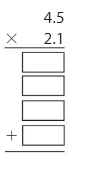
4.5×2.1
1.Multiply the tenths by tenths =0.5×0.1=0.05
2.Multiply the ones by tenths = 0.5×2=1
3.Multiply the tenths by ones = 4×0.1=0.4
4.Multiply the ones by ones =4×2=8
Add all the partial products =0.05+1+0.4+8=9.45
Therefore 4.5×2.1=9.45

Question 2.
Big Ideas Math Answers 5th Grade Chapter 5 Multiply Decimals 5.6 4
Answer:
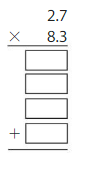
2.7×5.3
1.Multiply the tenths by tenths =0.7×0.3=0.21
2.Multiply the ones by tenths = 0.3×2=0.6
3.Multiply the tenths by ones = 5×0.7=3.5
4.Multiply the ones by ones =5×2=10
Add all the partial products =0.21+0.6+3.5+10=14.31
Therefore  2.7×5.3=14.31

Question 3.
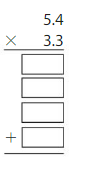
Big Ideas Math Answers 5th Grade Chapter 5 Multiply Decimals 5.6 5
Answer:
5.4×3.3
1.Multiply the tenths by tenths =0.3×0.4=0.12
2.Multiply the ones by tenths = 0.3×5=1.5
3.Multiply the tenths by ones = 4×0.3=1.2
4.Multiply the ones by ones =5×3=15
Add all the partial products=0.12+1.5+1.2+15=17.82
Therefore 5.4×3.3=17.82

Apply and Grow: Practice

Find the product. Check whether your answer is reasonable.
Question 4.
Big Ideas Math Answers 5th Grade Chapter 5 Multiply Decimals 5.6 6
Answer:
4.1×2.3
1.Multiply the tenths by tenths =0.1×0.3=0.03
2.Multiply the ones by tenths = 0.1×2=0.2
3.Multiply the tenths by ones = 4×0.3=1.2
4.Multiply the ones by ones =4×2=8
Add all the partial products=0.03+0.2+1.2+8=9.43
Therefore 4.1×2.3=9.43

Question 5.
Big Ideas Math Answers 5th Grade Chapter 5 Multiply Decimals 5.6 7
Answer:
16.7×0.4
1.Multiply the tenths by tenths =0.7×0.4=0.28
2.Multiply the ones by tenths = 0.7×0=0
3.Multiply the tenths by ones = 16×0.4=6.4
4.Multiply the ones by ones =16×0=0
Add all the partial products=0.28+6.4=6.68
Therefore 16.7×0.4=6.68

Question 6.
Big Ideas Math Answers 5th Grade Chapter 5 Multiply Decimals 5.6 8
Answer:
5.9×8.6
1.Multiply the tenths by tenths =0.9×0.6=0.54
2.Multiply the ones by tenths = 0.9×8=7.23.
Multiply the tenths by ones = 5×0.6=3
4.Multiply the ones by ones =5×8=40
Add all the partial products=0.54+7.2+3+40=50.74
Therefore 5.9×8.6=50.74

Question 7.
23.7 × 3.5 = ______
Answer:
23.7×3.5
1.Multiply the tenths by tenths =0.7×0.5=0.35
2.Multiply the ones by tenths = 0.7×3=2.1
3.Multiply the tenths by ones = 23×0.5=11.5
4.Multiply the ones by ones =23×3=69
Add all the partial products=0.35+2.1+11.5+69=82.95
Therefore 23.7×3.5=82.95

Question 8.
10.6 × 14.7 = ______
Answer:
10.6×14.7
1.Multiply the tenths by tenths =0.6×0.7=0.42
2.Multiply the ones by tenths = 0.6×14=8.4
3.Multiply the tenths by ones = 10×0.7=7
4.Multiply the ones by ones =10×14=140
Add all the partial products=0.42+8.4+9.8+140=155.82
Therefore 10.6×14.7=155.82

Question 9.
1.2 × 3.71 = ______
Answer:
1.2×3.71
1.Multiply the tenths by tenths =0.2×0.71=0.142
2.Multiply the ones by tenths = 0.2×3=0.6
3.Multiply the tenths by ones = 1×0.71=0.71
4.Multiply the ones by ones =1×3=3
Add all the partial products=0.142+0.6+0.71+3=4.452
Therefore 1.2×3.71=4.452

Question 10.
A space probe travels 643.5 miles every minute. How far does it travel in 1.5 minutes?
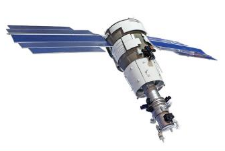
Big Ideas Math Answers 5th Grade Chapter 5 Multiply Decimals 5.6 9
Answer:
A space probe travels 643.5 miles every minute.
The distance it travel in 1.5 minutes is 643.5×1.5
643.5×1.5
1.Multiply the tenths by tenths =0.5×0.5=0.25
2.Multiply the ones by tenths = 0.5×1=0.5
3.Multiply the tenths by ones = 643×0.5=321.5
4.Multiply the ones by ones =643×1=643
Add all the partial products is=0.25+0.5+321.5+643=965.25
Therefore 643.5×1.5=965.25

Question 11.
Number Sense
Which products are greater than 20.4?
3.4 × 7.2
2.5 × 4.8
3.2 × 6.3
8.6 × 2.4
Answer:
3.4 × 7.2=24.48>20.4
2.5 × 4.8=12<20.4
3.2 × 6.3=20.16<20.4
8.6 × 2.4=2.64>20.4
The products of 3.4×7.2 and 8.6×2.4 are greater than 20.4.

Question 12.
Precision
How can you use estimation to help you place the decimal point in a product? Explain.
Answer:
You will need to multiply and then estimate the solution. Start by multiplying just as if you are multiplying whole numbers. Because the original numbers have 4 digits total after their decimal points , insert a decimal point into your answer so that it has 4 digits to its right.

Question 13.
DIG DEEPER!
Write a multiplication equation shown by the partial products.
0.14 + 0.2 + 2.1 + 3
Answer:
0.14 + 0.2 + 2.1 + 3 = 5.44

Think and Grow: Modeling Real Life

Example
A geologist has a blue geode that weighs 2.5 pounds. The geologist has a purple geode that weighs 1.6 times as much as the blue geode. What is the total weight of the geodes?
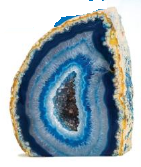
Big Ideas Math Answers 5th Grade Chapter 5 Multiply Decimals 5.6 10
Find the weight of the purple geode by multiplying the weight of the blue geode by 1.6
Big Ideas Math Answers 5th Grade Chapter 5 Multiply Decimals 5.6 11
The weight of the purple geode is ______ pounds.
Add the weights of the blue geode and the purple geode.
Big Ideas Math Answers 5th Grade Chapter 5 Multiply Decimals 5.6 12
The total weight of the geodes is ______ pounds.

Show and Grow

Question 14.
You buy 3.5 yards of yellow fabric to make a Chinese dragon. You buy 2.5 times as much red fabric as yellow fabric. How many yards of fabric do you buy in all?
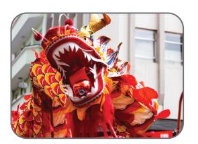
Big Ideas Math Answers 5th Grade Chapter 5 Multiply Decimals 5.6 13
Answer:
Find the yards of red fabric by multiplying the yards of yellow fabric by 2.5
3.5×2.5=8.75(0.25+1.5+1+6)
8.75 yards of red fabric is required to make a dragon.
Add the yards of yellow and red fabric
3.5+8.75=12.25
Total fabric i need to buy to make a dragon is 12.25 yards.

Question 15.
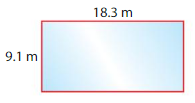
An employee cleans the surface of the rectangular ice rink. What is the area of the ice rink?
Big Ideas Math Answers 5th Grade Chapter 5 Multiply Decimals 5.6 14
Answer:
Ice rink here is in rectangular shape.
Area of a rectangle is length × breadth
Length of ice rink is 18.3 m, breadth of ice rink is 9.1 m
18.3×9.1=0.03+2.7+1.8+162
Area of ice rink is 166.53 square meters

Question 16.
There are 89.1 milligrams of Vitamin C in 1 cup of strawberries. There are 83.2 milligrams of Vitamin C in 1 cup of orange slices. You eat2.5 cups of strawberries and 1.5 cups of orange slices. How much Vitamin C do you consume?
Answer:
Multiply vitamin C in 1 cup of strawberries with 2.5
89.1×2.5=222.75
Multiply vitamin C in 1 cup of orange slices with 1.5
83.2×1.5=124.8
Add both the quantities 222.75+124.8=347.55
Total vitamin c consumed by me is 347.55 milligrams.

Use Partial Products to Multiply Decimals Homework & Practice 5.6

Find the product. Check whether your answer is reasonable.
Question 1.
Big Ideas Math Answers 5th Grade Chapter 5 Multiply Decimals 5.6 15
Answer:
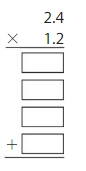
2.4×1.2=
1.Multiply the tenths by tenths =0.4×0.2=0.08
2.Multiply the ones by tenths = 0.4×1=0.4
3.Multiply the tenths by ones = 2×0.2=0.4
4.Multiply the ones by ones =2×1=2
Add all the partial products =0.08+0.4+0.4+2=2.88
Therefore 2.4×1.2=2.88

Question 2.
Big Ideas Math Answers 5th Grade Chapter 5 Multiply Decimals 5.6 16
Answer:
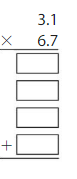
3.1×6.7
1.Multiply the tenths by tenths =0.1×0.7=0.07
2.Multiply the ones by tenths = 0.1×6=0.6
3.Multiply the tenths by ones = 3×0.7=2.1
4.Multiply the ones by ones =3×6=18
Add all the partial products =0.07+0.6+2.1+18=20.77
Therefore 3.1×6.7=20.77

Question 3.
Big Ideas Math Answers 5th Grade Chapter 5 Multiply Decimals 5.6 17
Answer:
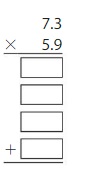
7.3×5.9=
1.Multiply the tenths by tenths =0.3×0.9=0.27
2.Multiply the ones by tenths = 0.3×5=1.5
3.Multiply the tenths by ones = 7×0.9=6.3
4.Multiply the ones by ones =7×5=35
Add all the partial products =0.27+1.5+6.3+35=42.07
Therefore 7.3×5.9=43.07

Find the product. Check whether your answer is reasonable.
Question 4.
Big Ideas Math Answers 5th Grade Chapter 5 Multiply Decimals 5.6 18
Answer:
2.8×3.7
1.Multiply the tenths by tenths =0.8×0.7=0.56
2.Multiply the ones by tenths = 0.8×3=2.4
3.Multiply the tenths by ones = 2×0.7=1.4
4.Multiply the ones by ones =2×3=6
Add all the partial products =0.56+2.4+1.4+6=10.36
Therefore 2.8×3.7=10.36

Question 5.
Big Ideas Math Answers 5th Grade Chapter 5 Multiply Decimals 5.6 19
Answer:
5.6×4.6
1.Multiply the tenths by tenths =0.6×0.6=0.36
2.Multiply the ones by tenths =0.6×4=2.4
3.Multiply the tenths by ones =0.6×5=3
4.Multiply the ones by ones =5×4=20
Add all the partial products =0.36+2.4+3+20=25.76
Therefore 5.6×4.6=25.76

Question 6.
Big Ideas Math Answers 5th Grade Chapter 5 Multiply Decimals 5.6 20
Answer:
14.5×7.8=
1.Multiply the tenths by tenths =0.5×0.8=0.4
2.Multiply the ones by tenths = 0.5×7=3.5
3.Multiply the tenths by ones = 14×0.8=11.2
4.Multiply the ones by ones =14×7=98
Add all the partial products =0.4+3.5+11.2+98=133.1
Therefore  14.5×7.8=113.1

Question 7.
21.4 × 9.3 = ______
Answer:
21.4×9.3=
1.Multiply the tenths by tenths =0.4×0.3=0.12
2.Multiply the ones by tenths = 0.4×9=3.6
3.Multiply the tenths by ones = 21×0.3=6.3
4.Multiply the ones by ones =21×9=189
Add all the partial products =0.12+3.6+6.3+189=199.02
Therefore  21.4×9.3=199.02

Question 8.
58.1 × 8.6 = ______
Answer:
58.1×8.6=
1.Multiply the tenths by tenths =0.1×0.6=0.06
2.Multiply the ones by tenths = 0.1×8=0.8
3.Multiply the tenths by ones = 58×0.6=34.8
4.Multiply the ones by ones =58×8=464
Add all the partial products =0.06+0.8+34.8+464=499.66
Therefore  58.1×8.6=499.66

Question 9.
0.6 × 1.45 = ______
Answer:
0.6×1.45=
1.Multiply the tenths by tenths =0.6×0.45=0.27
2.Multiply the ones by tenths = 0.6×1=0.6
3.Multiply the tenths by ones = 0×0.45=0
4.Multiply the ones by ones =0×1=0
Add all the partial products =0.27+0.6+0+0=0.87
Therefore  0.6×1.45=0.87

Question 10.
Writing
How is multiplying two decimals different than multiplying a whole number and a decimal?
Answer:
You have to line up the decimals in the two numbers with decimals, but the decimal and the whole numbers you don’t have to line up the decimals because there is only one number with a decimal.

Question 11.
DIG DEEPER!
Two numbers each have one decimal place. Is it possible for their product to be a whole number? Explain.
Answer:
No. When you multiply something by a decimal, you make it smaller. Since you’ve started with something smaller than a whole number, and then you make it smaller, the answer will always be less than a whole number, and thus never a whole number

Question 12.
Modeling Real Life
A red-bellied snake is 11.5 inches long. A ring-necked snake is 1.4 times as long as the red-bellied snake. How much longer is the ring-necked snake than the red-bellied snake?
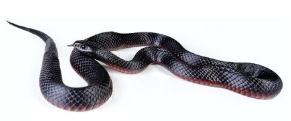
Big Ideas Math Answers 5th Grade Chapter 5 Multiply Decimals 5.6 21
Answer:
To find the length of a ring‐necked snake multiply the length of red‐bellied snake by 1.4
11.5×1.4=16.1
Length of ring‐necked snake is 16.1 inches.
Subtract 11.5 from 16.1=4.6 inches.
4.6 inches much longer is the ring-necked snake than the red-bellied snake.

Question 13.
Modeling Real Life
You use 2 cans of tomato sauce with mushrooms and 1.5 cans of plain tomato sauce to make lasagna. Each can contains 10.5 ounces. How many ounces of tomato sauce are in the lasagna?
Answer:
Each can contains 10.5 ounces of tomato sauce
2 cans contains 2×10.5=21 ounces
1.5 cans of plain sauce contains
1.5×10.5=15.75 ounces of sauce
Add 21 and 15.75 to find ounces of tomato sauce in the lasagna
21+15.75=36.75 ounces.
36.75 ounces of tomato sauce are in the lasagna.

Review & Refresh

Find the product.
Question 14.
24 × 104 = ______
Answer:
24×10000=240000

Question 15.
700 × 30 = ______
Answer:
700×30=21000

Question 16.
200 × 600 = _______
Answer:
200×600=120000

Lesson 5.7 Use Strategies to Multiply Decimals

Explore and Grow

Without multiplying, determine the pairs of expressions that have the same value. Explain your reasoning.
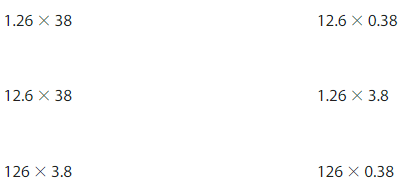
Big Ideas Math Answers 5th Grade Chapter 5 Multiply Decimals 5.7 1
Answer:

Reasoning
How do you know how many decimal places are in each product? Explain.
Answer:
The number of decimal places in each product is the sum of decimal places in the multiplyer and the multiplicand.

Think and Grow: Use Strategies to Multiply

You can use estimation and place value, or multiplication properties to multiply.

Example
Find 3.84 × 2.1. Estimate _______
Multiply 384 by21. Then place the decimal point.
Because the product should be close to your estimate, place the decimal point after the ______.
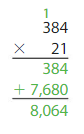
Big Ideas Math Answers Grade 5 Chapter 5 Multiply Decimals 5.7 2
So, 3.84 × 2.1 = _____.

Example
Find 0.3 × 0.7.
You can use properties to multiply.
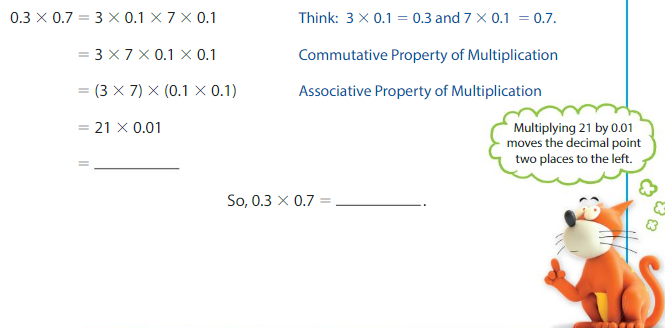
Big Ideas Math Answers Grade 5 Chapter 5 Multiply Decimals 5.7 3

Show and Grow

Find the product. Explain the strategy you used.
Question 1.
4.91 × 0.8 = _____
Answer:
Estimate:4×1=4
Multiply 491×8=3928
Then place the decimal point.
Because the product should be close to your estimate, place the decimal point after one digit ie thousands place.
3.928

Question 2.
10.2 × 5.6 = ______
Answer
Estimate:10×6=60
Multiply 102×56=5712
Then place the decimal point.
Because the product should be close to your estimate, place the decimal point after one digit ie thousands place.
57.12

Question 3.
12.03 × 4.2 = ______
Answer:
Estimate:12×4=48
Multiply 1203×43=51729
Then place the decimal point.
Because the product should be close to your estimate, place the decimal point after two digits ie thousands place.
51.729

Apply and Grow: Practice

Find the product. Explain the strategy you used.
Question 4.
0.9 × 3.2 = _____
Answer:
Estimate:1×3=3
Multiply 9×32=288
Then place the decimal point.
Because the product should be close to your estimate, place the decimal point after one digit ie hundreds place.
2.88

Question 5.
1.7 × 0.84 = ______
Answer:
Estimate:2×1=2
Multiply 17×84=1428
Then place the decimal point.
Because the product should be close to your estimate, place the decimal point after one digit ie thousands place.
1.428

Question 6.
2.4 × 2.4 = ______
Answer:
Estimate:2×3=6
Multiply 24×24=576
Then place the decimal point.
Because the product should be close to your estimate, place the decimal point after one digit ie hundreds place.
5.76

Question 7.
12.1 × 0.8 = ______
Answer:
Estimate:12×1=12
Multiply 121×8=968
Then place the decimal point.
Because the product should be close to your estimate, place the decimal point after one digit ie hundreds place.
9.68

Question 8.
0.05 × 0.9 = ______
Answer:
Think: 0.05=5×0.01 and 0.9=9×0.1
Use properties to multiply (commutative property of multiplication and associative property of multiplication)
0.05×0.9=5×0.01×9×0.1
=(5×9)×(0.1×0.01)
=45(0.001)
=0.045
Multiplying 45 by 0.001 moves the decimal point three places to  the left.
Therefore 0.05×0.9=0.045.

Question 9.
7.4 × 8.6 = ______
Answer:
Estimate:7×9=63
Multiply 74×86=6364
Then place the decimal point.
Because the product should be close to your estimate, place the decimal point after two digits ie hundreds place.
63.64

Question 10.
A newly hatched fish is 0.25 inch long. An adult fish is 7.6 times as long as the newly hatched fish. How long is the adult fish?
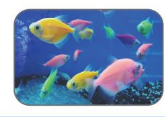
Big Ideas Math Answers Grade 5 Chapter 5 Multiply Decimals 5.7 4
Answer:
A newly hatched fish is 0.25 inch long, An adult fish is 7.6 times as long as the newly hatched fish.
Multiply 7.6 by 0.25
7.6×0.25=(76×25)×(0.1×0.01)=1900×0.001=1.9Therefore the adult fish is 1.9 inches long.

Question 11.
Writing

Which strategy do you prefer to use to multiply decimals? Explain.
Answer:
I prefer estimate strategy as it is very easy find the product of decimals by estimating the product of their whole numbers and placing the decimal point.

Question 12.
Structure
Your friend multiplies two decimals by rewriting the product as (56 × 3) × (0.01 ×0.1). What two decimals could she be multiplying?
Answer:
My friend multiplies two decimals by rewriting the product as (56 × 3) × (0.01 ×0.1)
Use multiplication properties.
(56 × 3) × (0.01 ×0.1)=(56×0.01)×(3×0.1)=0.56×0.3
Therefore my friend multiplied 0.56 by 0.3.

Question 13.
Precision
How many decimal places are in the unknown factor? Explain
_____ × 2.8 = 4.48
Answer:
_____ × 2.8 = 4.48
In the above equation the multiplicand in the equation has one decimal place after decimal point.
As the product has two decimal places after the decimal point the multiplyer will also have 1 digit after decimal point.
Therefore there is one decimal place is in the unknown factor.

Think and Grow: Modeling Real Life

Example
You measure the distance between Los Angeles and Anaheim on a map. Each centimeter represents 2.5 kilometers. What is the actual distance between the cities?
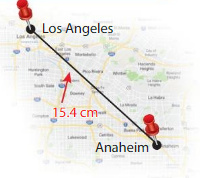
Big Ideas Math Answers Grade 5 Chapter 5 Multiply Decimals 5.7 5
Because each centimeter represents 2.5 kilometers, multiply 15.4 and 2.5 to find the actual distance.
Multiply 154 by 25. Then place the decimal point. Estimate ______
Because the product should be close to your estimate, place the decimal point after the ______
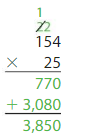
Big Ideas Math Answers Grade 5 Chapter 5 Multiply Decimals 5.7 6
15.4 × 2.5 = _______
So, the actual distance between the cities is _________ kilometers.

Show and Grow

Question 14.
You measure the height of the replica of the Lincoln statue. Each centimeter represents 2.5 meters. What is the actual height of the Lincoln statue?
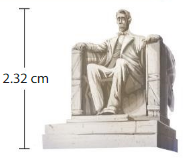
Big Ideas Math Answers Grade 5 Chapter 5 Multiply Decimals 5.7 7
Answer:
Because each centimeter represents 2.5 meters, multiply 2.32 and 2.5 to find the actual height.
Multiply 232 by 25. Then place the decimal point. Estimate 232×25
Because the product should be close to your estimate, place the decimal point after the one digit ie 3 places from the left.
232×25=5800
2.32 × 2.5 = 5.800=5.8
So, the actual height is 5.8 meters
Therefore the actual height of the Lincoln statue is 5.8 meters.

Question 15.
DIG DEEPER!
How much does the bunch of bananas cost? Explain.
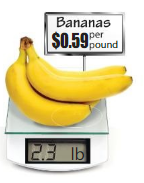
Big Ideas Math Answers Grade 5 Chapter 5 Multiply Decimals 5.7 8
Answer:
The above picture tells us that there are 2.3 pounds of bananas.
Each pound of banana costs $0.59
To find the cost of 2.3 pounds of bananas
Multiply 2.3×0.59=
Estimate
Because the product should be close to your estimate, place the decimal point after the one digit ie 3 places from the left
23×59=1357
Therefore 2.3×0.59=1.357

Question 16.
DIG DEEPER!
Your friend has a digital photograph file that is 0.25 mega byte larger than 7.5 times the file size of your photograph. What is the file size of your friend’s photograph?
Big Ideas Math Answers Grade 5 Chapter 5 Multiply Decimals 5.7 9
Answer:
File size of my photograph is 0.5 MB
My friend has a digital photograph file that is 0.25 mega byte larger than 7.5 times the file size of my photograph.
Estimate
Multiply 0.5×7.5
(5×75)×(0.1×0.1)=375×0.01=3.75 MB
Because the product should be close to your estimate, place the decimal point after the one digit ie 2 places from the left
Add 0.25 MB to 3.75 MB
=3.75+0.25=4 MB
The file size of my friend’s photograph is 4 MB.

Use Strategies to Multiply Decimals Homework & Practice 5.7

Find the product. Explain the strategy you used.
Question 1.
0.8 × 1.4 = ______
Answer:
Estimate:1×1=1
Multiply 8×14=112
Then place the decimal point.
Because the product should be close to your estimate, place the decimal point after one digit ie hundreds place.
1.12

Question 2.

1.3 × 2.9 = ______
Answer:
Estimate:1×3=3
Multiply 13×29=377
Then place the decimal point.
Because the product should be close to your estimate, place the decimal point after one digit ie hundreds place.
3.77

Question 3.
1.7 × 0.6 = ______
Answer:
Estimate:1×1=1
Multiply 17×6=102
Then place the decimal point.
Because the product should be close to your estimate, place the decimal point after one digit ie hundreds place.
1.02

Question 4.
3.86 × 2.8 = ______
Answer:
Estimate:3×3=9
Multiply 386×28=10808
Then place the decimal point.
Because the product should be close to your estimate, place the decimal point after two digits ie hundreds place.
10.808

Question 5.
0.07 × 4.5 = _______
Answer:
Estimate:0x4=0
Multiply 7×45=315
Then place the decimal point.
Because the product should be close to your estimate, place the decimal point before three digits ie hundreds
place.
0.315

Question 6.
2.56 × 6.25 = ______
Answer:
Estimate:3×6=18
Multiply 256×625=160000
Then place the decimal point.
Because the product should be close to your estimate, place the decimal point after two digits ie ten thousands place.
16.0000=16

Question 7.
1.18 × 0.8 = ______
Answer:
Estimate:1×1=1
Multiply 118×8=944
Then place the decimal point.
Because the product should be close to your estimate, place the decimal point before three digits ie hundreds place.
0.944

Question 8.
18.2 × 0.9 = ______
Answer:
Estimate:18×1=18
Multiply 182×9=1638
Then place the decimal point.
Because the product should be close to your estimate, place the decimal point after two digits ie hundreds place.
16.38

Question 9.
6.7 × 5.2 = ______
Answer:
Estimate:7×5=35
Multiply 67×52=3484
Then place the decimal point.
Because the product should be close to your estimate, place the decimal point after two digits ie hundreds place.
34.84

Question 10.
A beaker contains 0.75 liter of a solution. You use 0.1 of the solution for an experiment. How much of the solution do you use?
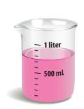
Big Ideas Math Answers Grade 5 Chapter 5 Multiply Decimals 5.7 10
Answer:
To find the amount of solution used multiply 0.75 by 0.1
0.75×0.1=0.075
0.075 litrrs of solution is used.

Question 11.
Structure
Which expressions are equivalent to 0.6 × 0.3?
(6 × 3) × (0.1 × 0.1)
(6 × 3) × (0.01 × 0.01)
(6 × 3) × (\(\frac{1}{10}\) × \(\frac{1}{10}\))
(6 × 0.1) × (3× 0.1)
Answer:
(6 × 3) × (0.1 × 0.1), (6 × 0.1) × (3× 0.1) are equivalent to 0.6×0.3 as their product is equal to the product of 0.6×0.3.

Question 12.
Number Sense
Your friend finds 0.92 × 0.3 by multiplying 92 and 3. Explain how your friend will know where to place the decimal point in the product.
Answer:
My friend finds 0.92×0.3 by multiplying 92 and 3
In 0.92 there are two digits after decimal point and in 0.3 there are three digits after decimal point so the product should have 3 digits after decimal point.
When we multiply 92 by 3 the product is 276
Therefore the decimal  point is placed before 3 digits from the left 0.276 will be the product.

Question 13.
Number Sense
When finding 75 × 0.01, where will the decimal point be placed? Explain.
Answer:
While finding the product of 75 and 0.01 the decimal point will be placed before two digits as the decimal point in 0.01 has two places after decimal.
Therefore 0.75 is the product and decimal point is placed two places from the left.

Question 14.
Modeling Real Life
A toy car designer measures the length of the actual car shown. A toy car is 0.05 times as long as the actual car. How long is the toy car?
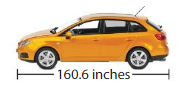
Big Ideas Math Answers Grade 5 Chapter 5 Multiply Decimals 5.7 11
Answer:
A toy car designer measures the length of the actual car shown.
Length of the actual car is 160.6 inches
A toy car is 0.05 times as long as the actual car
Multiply 160.6×0.05=8.03
Therefore Toy car is 8.03 inches long.

Question 15.
Modeling Real Life
A carpet installer measures 3 rectangular bedrooms for new carpeting. Which bedroom needs the most carpeting?
Bedroom A: 3.1 meters by3.1 meters
Bedroom B: 2.9 meters by3.2 meters
Bedroom C: 2.5 meters by3.4 meters160.6 inches
Answer:
Bedroom A: 3.1×3.1= (31×31)×(0.1×0.1)=961×0.01=9.61
Bedroom B: 2.9×3.2=(29×32)×(0.1×0.1)=928×0.01=9.28
Bedroom C: 2.5×3.4=(25×34)×(0.1×0.1)=850×0.01=8.50
Bedroom A needs the most carpeting.

Review & Refresh
Question 16.
Round 4.163
Nearest whole number: ______
Nearest tenth: ______
Nearest hundredth: ______
Answer:
Nearest whole number: 4
Nearest tenth: 4.2
Nearest hundredth: 4.16

Question 17.
Round 10.187.
Nearest whole number: ______
Nearest tenth: ______
Nearest hundredth: ______
Answer:
Nearest whole number:10
Nearest tenth: 10.2
Nearest hundredth: 10.19

Lesson 5.8 Multiply Decimals

Explore and Grow

Choose any strategy to find each product.
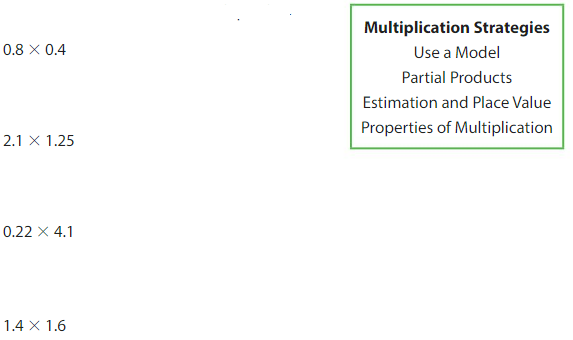
Big Ideas Math Solutions Grade 5 Chapter 5 Multiply Decimals 5.8 1
Answer:

0.8×0.4=
Estimate
=(8×4)×(0.1×0.1)
=32(0.01)
= 0.32
0.8×0.4=0.32

2.1×1.25=
Use partial products
2.1×1.25=
0 .1×0.25=0.025
0 .1×1=0.1
0 .25×2=0.5
2×1=2
2.1×1.25=0.025+0.1+0.5+2=2.625

0.22×4.5
Estimate and place value

22×45=990
There are 3 decimal places in the factors so place the decimal point before three digits ie hundreds place.
0.990=0.99
0.22×4.5=0.99

1.4×1.6
Think: 1.4=14×0.1 and 1.6=16×0.1
Use properties to multiply (commutative property of multiplication and associative property of multiplication
=1.4×1.6
=14×0.1×16×0.1
=(14×16)×(0.1×0.1)
=224(0.01)
= 2.24

Reasoning
How can you determine the number of decimal places a product will have before multiplying?
Answer:
The decimal places of the product is the sum of the decimal places of the factors.

Think and Grow: Multiply Decimals

Key Idea
To multiply decimals, multiply as you do with whole numbers. The number of decimal places in the product is equal to the sum of the number of decimal places in the factors.
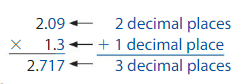
Big Ideas Math Solutions Grade 5 Chapter 5 Multiply Decimals 5.8 2
Big Ideas Math Solutions Grade 5 Chapter 5 Multiply Decimals 5.8 3

Show and Grow

Find the product.
Question 1.
Big Ideas Math Solutions Grade 5 Chapter 5 Multiply Decimals 5.8 4
Answer:
1.8×7.3
Multiply the whole numbers first and place the decimal points
18×73=1314
There are 1 decimal place each in both the factors so the product will have 2 decimal places
Place the decimal point before 2 digits feom the left 13.14
Therefore 1.8×7.3=13.14

Question 2.
Big Ideas Math Solutions Grade 5 Chapter 5 Multiply Decimals 5.8 5
Answer:
12.41×62
Multiply the whole numbers first and place the decimal points
1241×62=76942
There are 2 decimal places and 1 decimal each in both the factors so the product will have 3 decimal
places
Place the decimal point before three digits from the left 76.942

Therefore 12.41×62=76.942

Question 3.
Big Ideas Math Solutions Grade 5 Chapter 5 Multiply Decimals 5.8 6
Answer:
0.14×0.7
Multiply the whole numbers first and place the decimal points
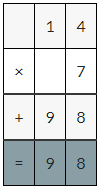
14×7=98
There are 2 decimal places and 1 decimal place each in both the factors so the product will have 3 decimal
places
Place the decimal point before three digits from the left 0.098
Therefore 0.14×0.7=0.098

Apply and Grow: Practice

Find the product.
Question 4.
Big Ideas Math Solutions Grade 5 Chapter 5 Multiply Decimals 5.8 7
Answer:
2.4×8.9
Multiply the whole numbers first and place the decimal points
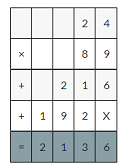
24×89=2136
There are 1 decimal places each in both the factors so the product will have 2 decimal places
Place the decimal point before two digits from the left 21.36
Therefore 2.4×8.9=21.36

Question 5.
Big Ideas Math Solutions Grade 5 Chapter 5 Multiply Decimals 5.8 8
Answer:
0.17×0.3
Multiply the whole numbers first and place the decimal points
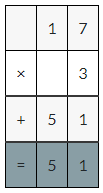
17×3=51
There are 2 decimal places and 1 decimal each in both the factors so the product will have 3 decimal
places
Place the decimal point before three digits from the left 0.051
Therefore 0.17×0.3=0.051

Question 6.

Big Ideas Math Solutions Grade 5 Chapter 5 Multiply Decimals 5.8 9
Answer:
35.4×6.2
Multiply the whole numbers first and place the decimal points
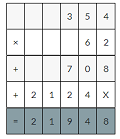
354×62=21948
There are 1 decimal place each in both the factors so the product will have 2 decimal places
Place the decimal point before two digits from the left 219.48
Therefore 35.4×62=219.48

Question 7.
Big Ideas Math Solutions Grade 5 Chapter 5 Multiply Decimals 5.8 10
Answer:
9.87×23.6
Multiply the whole numbers first and place the decimal points
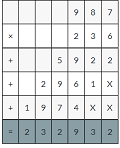
987×236=232932
There are 2 decimal places and 1 decimal each in both the factors so the product will have 3 decimal
places
Place the decimal point before three digits from the left 232.932
Therefore 9.87×23.6=232.932

Question 8.
Big Ideas Math Solutions Grade 5 Chapter 5 Multiply Decimals 5.8 11
Answer:
16.4×7.95
Multiply the whole numbers first and place the decimal points
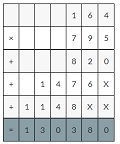
164×795=130380
There are 2 decimal places and 1 decimal each in both the factors so the product will have 3 decimal
places
Place the decimal point before three digits from the left 130.380
Therefore 16.4×79.5=130.380

Question 9.
Big Ideas Math Solutions Grade 5 Chapter 5 Multiply Decimals 5.8 12
Answer:
0.8×0.9
Multiply the whole numbers first and place the decimal points
8×9=72
There are 1 decimal place  each in both the factors so the product will have 2 decimal places
Place the decimal point before two digits from the left 0.72
Therefore 0.8×0.9=0.72

Question 10.
46.5 × 0.73 = ______
Answer:
46.5×0.73
Multiply the whole numbers first and place the decimal point
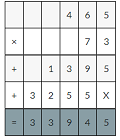
465×73=33945
There are 2 decimal places and 1 decimal each in both the factors so the product will have 3 decimal
places
Place the decimal point before three digits from the left 33.945
Therefore 46.5×0.73=33.945

Question 11.
14.8 × 9.3 = ________
Answer:
14.8×9.3
Multiply the whole numbers first and place the decimal points
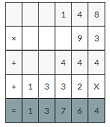
148×93=13764
There are 1 decimal place  each in both the factors so the product will have 2 decimal places
Place the decimal point before two digits from the left 137.64
Therefore 14.8×9.3×=137.64

Question 12.
1.54 × 2.6 = ______
Answer:
1.54×2.6
Multiply the whole numbers first and place the decimal points
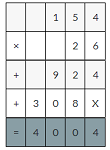
154×26=4004
There are 2 decimal places and 1 decimal each in both the factors so the product will have 3 decimal
places
Place the decimal point before three digits from the left4.004
Therefore 1.54×2.6=4.004

Question 13.
A sugar glider weighs 0.35 times the weight of the pygmy slow loris. How much does the sugar glider weigh?
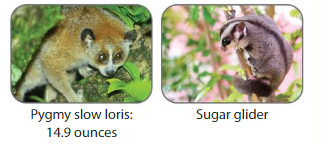
Big Ideas Math Solutions Grade 5 Chapter 5 Multiply Decimals 5.8 13
Answer:
A sugar glider weighs 0.35 times the weight of the pygmy slow loris
Weight of pygmy slow loris is 14.9 ounces
Multiply 14.9 by 0.35 to find the weight of sugar glider 14.9×0.35=
149×35
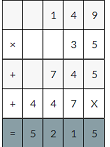
5215
There are 3 decimal places in the factors so the product will have 3 decimal places
Place the decimal point before 3 digits from the left. 5.215
Therefore 14.9×0.35=5.215

Question 14.
Structure
Use the equation to write two different multiplication expressions that have products of 28.34.
109 × 26 = 2,834
Answer:
Equation 1:10.9×2.6=28.34
Equation 2:109×26×0.1×0.1=28.34

Question 15.
DIG DEEPER!
Without calculating, explain how many decimal places are in the product 0.6 0.4 1.9. Rewrite the expression as the product of two decimals to support your answer.
Answer:
0.6 × 0.4 × 1.9
= 0.456

Think and Grow: Modeling Real Life

Example
Nutritionists recommend that fifth-graders should consume about 28 grams of fiber each day. One serving of broccoli contains 3.8 grams of fiber. You eat 4.5 servings of broccoli in 1 day. Do you consume enough fiber for the day by eating broccoli? Explain.
Big Ideas Math Solutions Grade 5 Chapter 5 Multiply Decimals 5.8 14
Multiply 3.8 by4.5 to find how many grams of fiber you consume by eating broccoli.
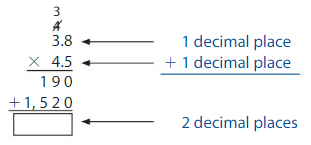
Big Ideas Math Solutions Grade 5 Chapter 5 Multiply Decimals 5.8 15
Compare the product to 28.
So, you ______ consume enough fiber for the day by eating broccoli.

Show and Grow

Question 16.
Your aunt drives a car from Cincinnati to Nashville. The car travels 30.4 miles using 1 gallon of gasoline. There are 6.5 gallons of gasoline in the tank. Can she drive the entire distance without adding more gas to the 6.5 gallons already in the tank? Explain.
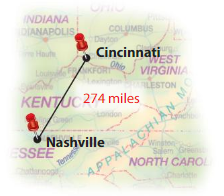
Big Ideas Math Solutions Grade 5 Chapter 5 Multiply Decimals 5.8 16
Answer:
My aunt drives a car from Cincinnati to Nashville.
The distance from cincinnati to Nashville is 274 miles
The car travels 30.4 miles using 1 gallon of gasoline, There are 6.5 gallons of gasoline in the tank.
To find the total distance that my aunt can travel by using 6.5 gallons of gasoline
Multiply 6.5×30.4=65×304
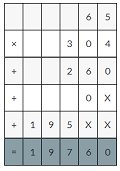
65×304=19760
Place the decimal point before 2 digits from the left 197.60 miles
197.6<274 miles
So, my aunt cannot drive the entire distance without adding more gas to the 6.5 gallons already in the tank.

Question 17.
DIG DEEPER!
The equation shows how to convert a temperature C in degrees Celsius to a temperature F in degrees Fahrenheit. Convert the temperature shown to Fahrenheit.
1.8 × C + 32 = F

Big Ideas Math Solutions Grade 5 Chapter 5 Multiply Decimals 5.8 17
Answer:
Given 1.8×C+32=F
In the above picture the temperature is 37.1°C
To find degrees in Farenheit
Multiply 1.8 by 37.1 and add 32 to the product.
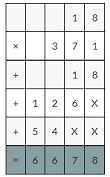
1.8×37.1=66.78+32=98.78°F
Therefore the temperature is 98.78°Farenheit.

Question 18.
DIG DEEPER!
Pennies dated 1982 or later contain about 0.06 gram of copper. Pennies dated prior to 1982 contain about 49.2 times as much copper as newer pennies. How many total grams of copper are in the pennies shown?
Big Ideas Math Solutions Grade 5 Chapter 5 Multiply Decimals 5.8 18
Answer:
Pennies dated 1982 or later contain about 0.06 gram of copper
There is 3 pennies which are dated after 1983
Multiply 3×0.06=0.18
Pennies dated prior to 1982 contain about 49.2 times as much copper as newer pennies
Multiply 49.2 by the copper in penny dated after 1982 ie 0.06
49.2×0.06=2.952
Multiply 49 by 6 and place the decimal point before 3 digits from the left
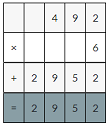
Add 0.18 to 2.952 to find the total amount of copper in all the coins
2.952+0.18=3.132 grams
The total amount of copper in all the coins is 3.132 grams.

Multiply Decimals Homework & Practice 5.8

Find the product.
Question 1.
Big Ideas Math Solutions Grade 5 Chapter 5 Multiply Decimals 5.8 19
Answer:
12.8×0.4
Multiply the whole numbers first and place the decimal points
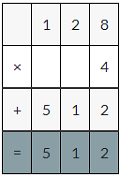

128×4=512
There are 1 decimal place  each in both the factors so the product will have 2 decimal places
Place the decimal point before two digits from the left 5.12
Therefore 12.8×0.4=512

Question 2.
Big Ideas Math Solutions Grade 5 Chapter 5 Multiply Decimals 5.8 20
Answer:
3.97×62.4
Multiply the whole numbers first and place the decimal point
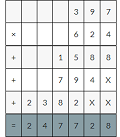
397×624=247728
There are 2 decimal places and 1 decimal each in both the factors so the product will have 3 decimal
places
Place the decimal point before three digits from the left 247.728
Therefore 3.97×62.4=247.728

Question 3.
Big Ideas Math Solutions Grade 5 Chapter 5 Multiply Decimals 5.8 21
Answer:
5.2×0.9
Multiply the whole numbers first and place the decimal points
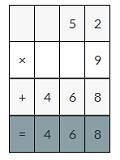
52×9=468
There are 1 decimal place  each in both the factors so the product will have 2 decimal places
Place the decimal point before two digits from the left 4.68
Therefore 5.2×0.9=4.68

Question 4.
Big Ideas Math Solutions Grade 5 Chapter 5 Multiply Decimals 5.8 22
Answer:
18.3×9.27
Multiply the whole numbers first and place the decimal point
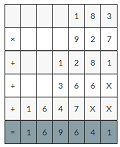
183×927=169641
There are 2 decimal places and 1 decimal each in both the factors so the product will have 3 decimal places
Place the decimal point before three digits from the left 169.641
Therefore 18.3×9.27=169.641

Question 5.
Big Ideas Math Solutions Grade 5 Chapter 5 Multiply Decimals 5.8 23
Answer:
2.57×4.6
Multiply the whole numbers first and place the decimal point
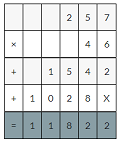
257×46=11822
There are 2 decimal places and 1 decimal each in both the factors so the product will have 3 decimal places
Place the decimal point before three digits from the left 11.822
Therefore 2.57×4.6=11.822

Question 6.
Big Ideas Math Solutions Grade 5 Chapter 5 Multiply Decimals 5.8 24
Answer:
22.5×3.7
Multiply the whole numbers first and place the decimal point
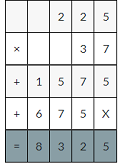
225×37=8325
There are 1 decimal place each in both the factors so the product will have 2 decimal places
Place the decimal point before 2 digits from the left 83.25
Therefore 22.5×3.7=83.25

Question 7.
0.89 × 0.3 = ______
Answer:
0.89×0.3
Multiply the whole numbers first and place the decimal point
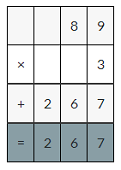
89×3=267
There are 2 decimal places and 1 decimal each in both the factors so the product will have 3 decimal
places
Place the decimal point before three digits from the left 0.269
Therefore 0.89×0.3=0.269

Question 8.
7.1 × 5.6 = ______
Answer:
7.1×5.6
Multiply the whole numbers first and place the decimal points
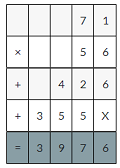
71×56=3976
There are 1 decimal place  each in both the factors so the product will have 2 decimal places
Place the decimal point before two digits from the left 39.76
Therefore 7.1×5.6=39.76

Question 9.
13.63 × 9.2 = ______
Answer:
13.63×9.2
Multiply the whole numbers first and place the decimal point
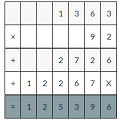
1363×92=125396
There are 2 decimal places and 1 decimal each in both the factors so the product will have 3 decimal
places
Place the decimal point before three digits from the left 125.396
Therefore 13.63×9.2=125.396

Question 10.
The Miniature pinscher weighs 0.12 times the weight of the Doberman pinscher. How much does the Miniature pinscher weigh?
Big Ideas Math Solutions Grade 5 Chapter 5 Multiply Decimals 5.8 25
Answer:
The Miniature pinscher weighs 0.12 times the weight of the Doberman pinscher
Weight of Doberman pinscher is 32.65 kilograms
Multiply 3265 by 12 and place the decimal point before 4 digits from the left.
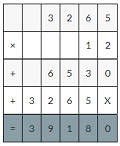
Weight of miniature pinscher is 32.65×0.12=3.918
Miniature pinscher weigh is 3.918 kilograms.

Question 11.
Reasoning
Explain how you can tell which product is greater without multiplying or estimating.
3.75 × 922 or  37.5 × 9.22
Answer:
Product of 3.75 × 922 is greater because the number contains bigger whole number when compared to the other product.

Question 12.
Modeling Real Life
Nutritionists recommend that fifth-graders should consume about 5 ounces of protein each day. One serving of yogurt contains 0.6 ounce of protein. You eat 2.5 servings of yogurt in 1 day. Do you consume enough protein for the day by eating yogurt? Explain.
Big Ideas Math Solutions Grade 5 Chapter 5 Multiply Decimals 5.8 26
Answer:
Nutritionists recommend that fifth-graders should consume about 5 ounces of protein each day.
One serving of yogurt contains 0.6 ounce of protein.
If i eat 2.5 servings of yogurt in 1 day then i consume 2.5×0.6 ounce sof protein per day
Multiply 25 by 6 and place the decimal point 2before 2 digitd from the left
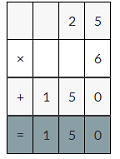
2.5×0.6=1.5 ounces of protein
Compare 1.5 with 5
1.5<5
So, i cannot consume enough protein for the day by eating yogurt.

Question 13.
DIG DEEPER!
Each 18-karat gold ring shown is a mixture of gold and other metals. One gram of 18-karat gold contains 0.75 gram of gold. How many total grams of gold are in the rings shown?
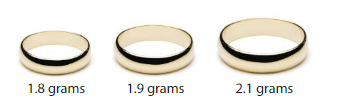
Big Ideas Math Solutions Grade 5 Chapter 5 Multiply Decimals 5.8 27
Answer:
Each 18-karat gold ring shown is a mixture of gold and other metals.
If one gram of 18-karat gold contains 0.75 gram of gold then
Multiply 18 by 75 and place the decimal point before 3 digits from the left
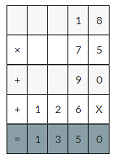
1.8 grams ring contains 1.8×0.75 grams of gold 1.8×0.75=1.35 grams of gold.
Multiply 19 by 75 and place the decimal point before 3 digits from the left
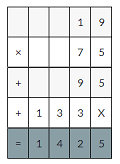
1.9 grams ring contains 1.9×0.75 grams of gold 1.9×0.75=1.425 grams of gold
Multiply 21 by 75 and place the decimal point before 3 digits from the left
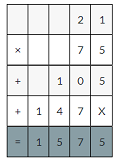
2.1 grams ring contains 2.1×0.75 grams of gold 2.1×0.75=1.575 grams of gold
Add 1.35 , 1.425 and 1.575 to find the total grams of gold 1.35+1.425+1.575=4.35
Total 4.35 grams of gold are in the rings shown.

Review & Refresh

Write the words as an expression. Then interpret the expression.
Question 14.
Subtract 10 from 50, then divide by 5
Answer:
8

Explanation:
Subtract 10 from 50=50‐10=40
divide by 5=40÷5=8

Question 15.
Add the product of 12 and 6 to the product of 6 and 8.
Answer:
120

Explanation:
product of 12 and 6=12×6=72
product of 6 and 8=6×8=48
Add the product of 12 and 6 to the product of 6 and 8=72+48=120

Lesson 5.9 Problem Solving: Multiply with Money

Explore and Grow

Explain how you would estimate the cost of 1.9 pounds of ham, 0.8 pound of turkey, and 1 pound of cheese.
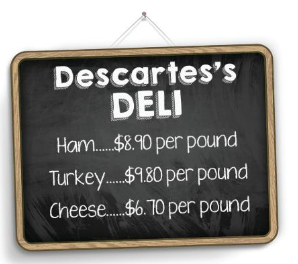
Big Ideas Math Answer Key Grade 5 Chapter 5 Multiply Decimals 5.9 1
Answer:

At Descartes’s Deli the Ham costs $8.90;per pound , Turkey costs $9.80 per pound and Cheese costs $6.70 per pound
Estimated solution
Use rounding
Cost of ham is 9, cost of turkey is 10 and cost of cheese is 7 per pound
By using rounding to find
Cost of 2 pounds of ham=2×9=18
Cost of 1 pound of turkey=10
Cost of 1 pound of cheese=7
Total =18+10+7=35
Original solution
To find the cost of
1.9 pounds of ham, Multiply 1.9×$8.9=$16.91
0.8 pound of turkey, Multiply 0.8×$9.8=$7.84
1 pound of cheese , Multiply 1×$6.7=$6.7
Therefore Total cost is $16.91+$7.84+$6.7=$31.45.

Reasoning
Is your answer an overestimate or an underestimate? Explain.
Answer:
My answer is an overestimate as it is more than the actual cost.

Think and Grow: Problem Solving: Multiply with Money

Example
Carrots cost $0.90 per pound. You buy 2.6 pounds of carrots and give the cashier $5. How much change do you receive?
Big Ideas Math Answer Key Grade 5 Chapter 5 Multiply Decimals 5.9 2
Understand the Problem
What do you know?
• Carrots cost $0.90 per pound.
• You buy 2.6 pounds of carrots.
• You pay with $5.

What do you need to find?
• You need to find the amount of change you receive.

Make a Plan
How will you solve?
Write and solve an equation: Multiply the number of pounds by the cost per pound, and subtract from $5.

Solve
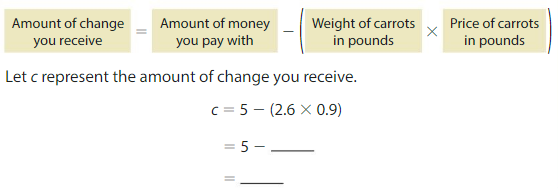
Big Ideas Math Answer Key Grade 5 Chapter 5 Multiply Decimals 5.9 3
So, you receive $ ______ in change.

Show and Grow

Question 1.
Landscaping rocks cost $0.35 per pound. A landscaper buys 86.4 pounds of rocks with $40. How much change does she receive?
Answer:
What i know is
Cost of landscaping rocks per pound is $0.35
A landscaper buys 86.4 pounds of rocks with $40
What i need to find is the change landscaper receives.
The amount of change landscaper receives =Amount spent ‐cost of rock per pound × 86.4 pounds of rock
=($40)‐($0.35×86.4)=$40‐$30.24=$9.76
$9.76 is the change landscaper receives.

Apply and Grow: Practice

Understand the problem. What do you know? What do you need to find? Explain.
Question 2.
A gallon of milk cost $0.82 in 1960. In2015, it cost $0.03 more than 4 times the cost in 1960. How much did a gallon of milk cost in 2015?
Big Ideas Math Answer Key Grade 5 Chapter 5 Multiply Decimals 5.9 4
Answer:
What we know is
The cost of gallon of milk in 1960 is $0.82
What we have find is
The Cost of gallon of milk in 2015 is
(4×$0.82)+$0.03=$3.28+$0.03=$3.31
A gallon of milk cost in 2015 is $3.31

Question 3.
A secretary earns $10.75 each hour. He works 8 hours each day,5 days each week. How much money does he earn in 1 week?
Answer:
What we know is
A secretary earns $10.75 each hour, he works 8 hours each day,5 days each week
What we have to find is
The amount he earns in a weekIf he works 8 hours each day and 5 days a week then he works for 40 hours in a week
The amount he earns in a week =Amount he earns per hour × Number of hours he work in a week.
=$10.75×40=$430
The money he earn in 1 week is $430.

Understand the problem. Then make a plan. How will you solve? Explain.
Question 4.
You download 8 songs for $1.29 each and 1 song for $0.99. How much do you pay for all of the songs?
Answer:
If i download 8 songs for $1.29 each then the money for 8 songs is number of songs multiplied by charges per
song
Ie 8×$1.29=$10.32
If i download another song for $0.99 then total charges i spent is charges of 8 songs plus charges of 1 song
$10.32+$0.99=$11.31
Therefore i pay $11.31 for all the songs.

Question 5.
Your friend buys a snack for $2.75, and a book that costs 5 times as much as the snack. He also buys a poster that costs $3.50 less than the book. How much does the poster cost?
Answer:
Cost of snack is $2.75
Book costs 5 times as much as the snack
The cost of book = 5×cost of snack
=5×$2.75=13.75
poster costs $3.50 less than the book
The cost of the poster = cost of book‐$3.50
=$13.75‐3.50=$10.25
Therefore cost of the poster is $10.25

Question 6.

A pair of shoes costs $35. Newton has a coupon topay 0.8 of the price.Descartes has a $10 off coupon. Who will pay more for the shoes?
Answer:
A pair of shoes costs $35
Newton has a coupon topay 0.8 of the price
=0.8×$35=28
Newton pays $28
Descartes has a $10 off coupon
=$35‐$10=$25
Descartes pay $25
28>25 so, Newton pays more for the pair of shoes.

Question 7.
Two friends eat at a restaurant for $34. They calculate the tip by multiplying $34 by 0.18. How much do they pay for the meal, including the tip?
Big Ideas Math Answer Key Grade 5 Chapter 5 Multiply Decimals 5.9 5
Answer:
Two friends eat at a restaurant for $34
If they calculate the tip by multiplying $34 by 0.18
Amount of tip =0.18×$34=$6.12
The money they pay for the meal, including the tip =$34+$6.12=$40.12
Therefore the money they paid is $40.12.

Think and Grow: Modeling Real Life

Example
A traveler gives a cashier 100 U.S. dollars to exchange for European euros. A $7.50 service fee is deducted from the amount given. How many European euros does the traveler receive?
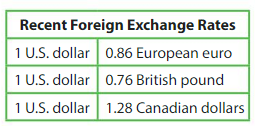
Big Ideas Math Answer Key Grade 5 Chapter 5 Multiply Decimals 5.9 6
Think: What do you know? What do you need to find? How will you solve?
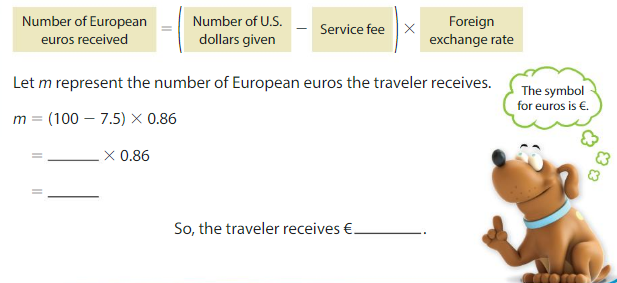
Big Ideas Math Answer Key Grade 5 Chapter 5 Multiply Decimals 5.9 7

Answer:
m = (100 – 7.5) × 0.86
92.5 × 0.86
= 79.55

Show and Grow

Use the table above.
Question 8.
DIG DEEPER!
You need 50 Canadian dollars. You give a cashier 50 U.S. dollars to exchange for Canadian dollars. A $9.50 service fee is deducted from the amount given. Do you have enough Canadian dollars? Explain.
Answer:
I need 50 canadian dollars
I gave 50 U.S. dollars for exchange and the service fee is $9.50
Exchange rate for US dollar to canadian dollar is 1.28
So, 50 US dollars ×1.28=64 canadian dollars
64>50
Therefore i have enough Canadian dollars.

Question 9.
DIG DEEPER!
In the example, the traveler decides to exchange the same number of U.S. dollars for British pounds. Without calculating, determine whether the traveler receives more European euros or British pounds. Explain.
Answer:
The traveler receives more European euros because the exchange rate of European euros ia more than the
exchange rate of British pounds.

Problem Solving: Multiply with Money Homework & Practice 5.9

Understand the problem. Then make a plan. How will you solve? Explain.
Question 1.
One gallon of gasoline costs $2.75. Your cousin fills his car with 10 gallons of gasoline each week. How much money does he spend on gasoline in 1 year?
Answer:
One gallon of gasoline costs $2.75
My friend fills his car with 10 gallons of gasoline each week
We have to find the money he spend on gasoline for a year.
An year consists of 52 weeks
So, multiply 52 by 10 to find number of gallons used in a year
52×10=520
If Cost of a gallon of gasoline is $2.75 then cost of 52p gallons is $2.75×520=$1430
$1430 is the money spend by my cousin on gasoline in 1 year.

Question 2.
Newton buys a guitar for $46 and a guitar amplifier. The amplifier costs $1.54 more than 1.26 times the cost of the guitar. How much does the amplifier cost?
Answer:
Cost of guitar is $46
The amplifier costs $1.54 more than 1.26 times the cost of the guitar
Cost of amplifier = ($46×1.26)+$1.54
=$57.96+$1.54
$59.5
Therefore the amplifier costs $59.5.

Question 3.
One pound of cheese costs $3.98. You buy a box of crackers for $3.37 and 2.5 pounds of cheese. How much do you spend in all?
Answer:
One pound of cheese costs $3.98
Cost of 2.5 pounds of cheese =2.25×$3.98=$8.955
If i  buy a box of crackers for $3.37 and 2.5 pounds of cheese
The money is spent =$3.37+$8.955=$12.325
$12.325 is the money i spend in all.
Question 4.

Writing
Write and solve a two-step word problem involving money.
Answer:
A boy buys a toy car for $3 and also a toy bike for 2.4 times as much as the cost of the toy car. Find the money spend by the boy in all.
Solution:
The cost of toy car is $3
Cost of toy bike is 2.4 × cost of toy car
=2.4×$3=$7.2
Add cost of toy car and toy bike =$3+$7.2=$10.2
The money spent by the boy in all is $10.2

Question 5.Modeling Real Life
You buy 2.75 pounds of pistachios and 2 pounds of cashews. Do you pay more for the pistachios or for the cashews? How much more?
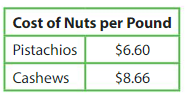
Big Ideas Math Answer Key Grade 5 Chapter 5 Multiply Decimals 5.9 8
Answer:
Cost of pistachios per pound is $6.60
If i buy 2.75 pounds of pistachios then the money spend is 2.75×$6.60=$18.15
Cost of cashews per pound is $8.66
If i buy 2 pounds of cashews then the money spend is 2×$8.66=$17.32
18.15>17.32
So, i pay more for the pistachios.

Question 6.
Modeling Real Life
You, Newton, and Descartes sell items at a craft show. You earn $34.50. Newton earns 5 times as much as you do. Descartes earns 0.1 times as much as Newton does. How much do the three of you earn in all?
Answer:
You, Newton, and Descartes sell items at a craft show
Money i earned is $34.50
Newton earns 5 times as much as i do
Money earned by Newton is 5×$34.50=$172.5
Descartes earns 0.1 times as much as Newton does
Money earned by descartes is 0.1×$172.5=$17.25
Sum of $34.5, $172.5 and $17.25 is 224.25.
$22425 is the money the three earn in all.

Question 7.
DIG DEEPER!
A daycare employee earns $10.90 per hour for the first works in 1 week. He is paid 1.5 times that rate for each additional hour that he works. How much money does he earn working for 43 hours in 1 week?
Answer:
Given,
A daycare employee earns $10.90 per hour for the first works in 1 week.
He is paid 1.5 times that rate for each additional hour that he works.
10.90 × 1.5 = 16.35
16.35 × 43 = 703.05

Review & Refresh

Find the sum. Check whether your answer is reasonable.
Question 8.
24.93 + 3.86 = ______
Answer:
24.93 + 3.86 = 28.79
Explanation:
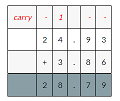
Question 9.
105.6 + 37.1 = _____
Answer:
105.6 + 37.1 = 142.7
Explanation:
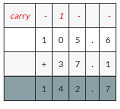
Multiply Decimals Performance Task

You study the different parts of a corn plant in science class.
Question 1.
You have a corn root sample and a corn stem sample on microscope slides. When you view the samples through a microscope, the magnification number tells you how many times larger the image will be than the actual size.You see only a portion of the enlarged image.
Big Ideas Math Answers 5th Grade Chapter 5 Multiply Decimals 1
a. The corn root sample is 0.6 millimeter wide. You magnify the image by400. What is the width of the magnifiedCorn root corn root image?

b. You magnify the corn root sample by1,200. How much wider is the image when magnified by 1,200 than by 400?

c. You have a sample of a corn stem. The corn stem sample is 9.6 times wider than the corn root sample. What is the width of the corn stem sample?
Big Ideas Math Answers 5th Grade Chapter 5 Multiply Decimals 2
Answer:

a.The corn root sample is 0.6 millimeter wide
If i  magnify the image by 400 then the magnifird width =0.6×400=240 millimeters.

b.The corn root sample is 0.6 millimeter wide
If i  magnify the image by 1200 then the magnifird width =0.6×1200=720 millimeters
Subtract 240 millimeters from 720 millimeters
480 millimeters wider is the image when magnified by 1,200 than by 400.

c.Given that the corn stem sample is 9.6 times wider than the corn root sample
The corn root sample is 0.6 millimeter wide
Width of corn stem =9.6 × width of corn root
=9.6×0.6=5.76 millimeters.

Question 3.
An ear of corn has about 16 rows of kernels. Each row has about 50 kernels of corn.
a. About 0.2 of the kernels are white and the rest are yellow. How many kernels are yellow?
Big Ideas Math Answers 5th Grade Chapter 5 Multiply Decimals 3
b. Each ear of corn has about 0.25 pound of corn kernels. How many pounds of kernels are in a dozen ears of corn?
Answer:

a.An ear of corn contains 16×50=800kernels of corn
0.2 of corn are white 0.2×800=160
Subtract 160 from total number  of kernels of corn =800‐160=640
Therefore number of yellow kernels of corn are 640.

b.Each ear of corn has about 0.25 pound of corn kernels.
Dozen corn ears contains 12×0.25 =3 pounds of corn kernels
3 pounds of kernels are in a dozen ears of corn.

Question 3.
You measure the growth of a corn stalk. The corn stalk grows about 1.75 inches each day.About how many inches does the plant growin 1 month? Justify your answer.
Answer:
The corn stalk grows about 1.75 inches each day.
If there are 30 days in a month then the length of corn stalk after month is 1.75 inches ×30=52.5 inches
Therefore, the plant grow 52.5 inches in 1 month.

Multiply Decimals Activity

Race Around the world: Multiplication
Directions:
1. Players take turns.
2. On your turn, flip a RaceAround the World: Multiplication Card and find the product.
3. Move your piece to the next number on the board that is highlighted in the product.
4. The first player to make it back to North America wins!
Big Ideas Math Answers 5th Grade Chapter 5 Multiply Decimals 4

Multiply Decimals Chapter Practice

5.1 Multiplication Patterns with Decimals

Find the product.
Question 1.
0.9 ×103 = ______
Answer:
0.9×103 =900

Explanation:
0.9×1=0.9
0.9×10=9
0.9×100=90
0.9×1000=900
So, 0.9×103 =900
When we multiply 0.9 by 1000 the number of places of decimal point moves to the right is same as the exponent ie 3.

Question 2.
612.5 × 0.1 2 = ______
Answer:
612.5 × 0.1 2 =73.5
Multiply 6125 by 12 and place the decimal places before three places from the left.
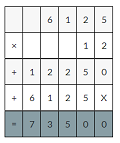
So, 612.5×0.12=73.5

Question 3.
30.1 × 102 = _____
Answer:
30.1×100=3010

Explanation:
30.1×1=30.1
30.1×10=301
30.1×100=3010
When we multiply 30.1 by 100 the number of places of decimal point moves to the right is same as the exponent ie 2.
So, 30.1×100=3010.

Question 4.
45.7 × 0.01 = ______
Answer:
45.7×0.01=0.457

Explanation:
45.7×1=45.7
45.7×0.1=4.57
45.7×0.01=0.457
When we multiply 45.7 by 0.01 the decimal point moves two places to the left
So, 45.7×0.01=0.457

Question 5.
8.6 × 10 = ______
Answer:
8.6×10=86

Explanation:
8.6×1=8.6
8.6×10=86
When we multiply 8.6 by 10 the decimal point moves 1 place to the right.
So, 8.6×10=86

Question 6.
5.24 × 0.1 = _______
Answer:
5.24×0.1=0.524

Explanation:
5.24×1=5.24
5.24×0.1=0.524
When we multiply 5.24 by 0.1 the decimal point moves one places to the left
So, 5.24×0.1=0.524

5.2 Estimate Products of Decimals and Whole Numbers

Estimate the product.
Question 7
0.99 × 45
Answer:
Use Rounding
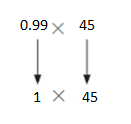
1×45=45
0.99×45 is about 45

Question 8.
3.15 × 8
Answer:
Use Rounding
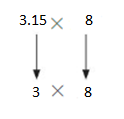
3×8=24
3.15×8 is about 24

Question 9.
17 × 1.68
Answer:
Use Rounding
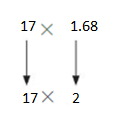
17×2=34
17×1.68 is about 34

Question 10.
95 × 5.02
Answer:
Use Rounding
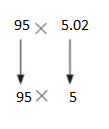
95×5=475
95×5.02  is about 475

5.3 Use Models to Multiply Decimals and Whole Numbers

Find the product.
Question 11.
0.3 × 3 = _____
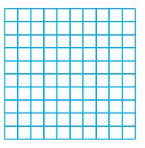
Big Ideas Math Answers 5th Grade Chapter 5 Multiply Decimals chp 11
Answer:


0.3+0.3+0.3 =0.9
Therefore 0.3×3=0.9

Question 12..
0.17 × 8 = _____
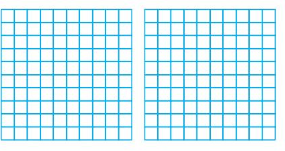
Big Ideas Math Answers 5th Grade Chapter 5 Multiply Decimals chp 12
Answer:


0.17+0.17+0.17+0.17+0.17+0.17+0.17+0.17=1.36
Question 13.
Structure
Write an equation represented by the model.
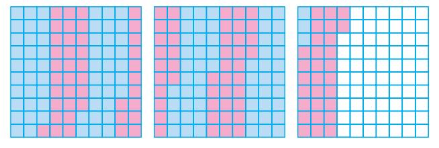
Big Ideas Math Answers 5th Grade Chapter 5 Multiply Decimals chp 13
Answer:
0.29×8=2.32

5.4 Multiply Decimals and Whole Numbers

Find the product.
Question 14.
3 × 1.64 = ______
Answer:
3×1.64=3×164
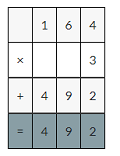
=492
Place the decimal point before 2 places from the left
4.92
Therefore 3 × 1.64 =4.92

Question 15.

2.3 × 8 = ______
Answer:
2.3×8=23×8
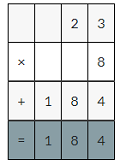
=184
Place the decimal point before 1 place from the left
18.4
Therefore 2.3×8=18.4

Question 16.
9 × 10.7 = ______
Answer:
9×10.7=9×107
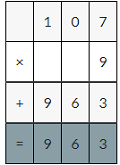
=963
Place the decimal point before 1 place from the left
96.3
Therefore 9×10.7=96.3

Question 17.
18.65 × 6 = _____
Answer:
18.65×6=1865×6
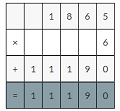
=11190
Place the decimal point before 2 places from the left
111.90
Therefore 18.65×6=111.90

5.5 Use Models to Multiply Decimals

Use the Models to find the product.
Question 18.
0.5 × 0.6 = ______
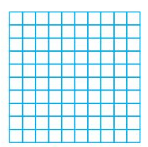
Big Ideas Math Answers 5th Grade Chapter 5 Multiply Decimals chp 18
Answer:


Shade 5 rows to represent 0.5 and 6 column to represent 0.6
30 squares are shaded twice
So, 0.5×0.6=0.30

Question 19.
1.8 × 0.9 = _____
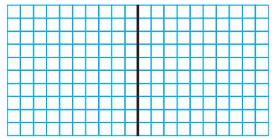
Big Ideas Math Answers 5th Grade Chapter 5 Multiply Decimals chp 19
Answer:


Shade 9 rows to represent 0.9 and 18 columns to represent 1.8
162 squares are shaded twice
So, 1.8 × 0.9= 1.62

5.6 Use Partial Products to Multiply Decimals

Find the product. Check whether your answer is reasonable.
Question 20.
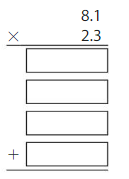
Big Ideas Math Answers 5th Grade Chapter 5 Multiply Decimals chp 20
Answer:
Step 1:0.1×0.3=0.03
Step 2:0.1×2=0.2
Step 3:8×0.3=2.4
Step 4:8×2=16
Add 0.03+0.2+2.4+16=18.63

Question 21.
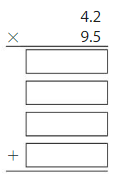
Big Ideas Math Answers 5th Grade Chapter 5 Multiply Decimals chp 21
Answer:Step 1:0.2×0.5=0.10

Step 2:
.2×9=1.8
Step 3:4×0.5=2
Step 4:4×9=36
Add 0.10+1.8+2+36=39.9

Question 22.
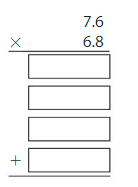
Big Ideas Math Answers 5th Grade Chapter 5 Multiply Decimals chp 22
Answer:
Step1:0.6×0.8=0.48
Step2:0.6×6=3.6
Step3:7×0.8=5.6
Step4:7×6=42
Add 0.48+3.6+5.6+42=51.68

7.6×6.8=51.68

Question 23.
0.7 × 6.5 = ______
Answer:
Step1:0.7×0.5=0.35
Step2:0.7×6=4.2
Step3:0×0.5=0
Step4:0×6=0
Add 0.35+4.2=4.55

Therefore 0.7×6.5=4.55

Question 24.
25.6 × 16.9 = ______
Answer:
Step1:0.6×0.9=0.54
step2:0.6×16=9.6
Step3:25×0.9=22.5
Step4:25×16=400
Add 0.54+9.6+22.5+400=432.64
Therefore 25.6×16.9=432.64

Question 25.
2.5 × 6.81 = _____
Answer:
Step1:0.5×0.81=0.405
Step2:0.5×6=3
Step3:2×0.81=1.62
Step4:2×6=12
Add 0.405+3+1.62+12=17.025
Therefore 2.5×6.81=17.025

5.7 Use Strategies to Multiply Decimals

Find the product. Explain the strategy you used.
Question 26.
0.4 × 0.16 = ______
Answer:
Estimate
4×16
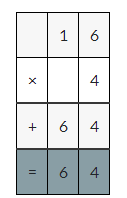
=64 place the decimal point before three places from the left
0.064
Therefore 0.4×0.16=0.064

Question 27.
0.2 × 0.8 = _______
Answer:
Estimate
2×8=16 and place the decimal point before two places from the left
0.16
Therefore 0.2×0.6=0.16

Question 28.
2.5 × 0.3 = ______
Answer:
Estimate
25×3
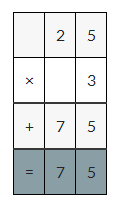
=74 and place the decimal point before two places from the left
0.74
Therefore 2.5×0.3=0.74

Question 29.
Structure
Your friend multiplies two decimals by rewriting the product as (8 × 3) × (0.1 × 0.1). What two decimals is she multiplying?
Answer:
(8×3)×(0.1×0.1)
(8×0.1)×(3×0.1)
0.8×0.3
The two decimals she is multiplying are 0.8 and 0.3

5.8 Multiply Decimals

Find the product.
Question 30.
Big Ideas Math Answers 5th Grade Chapter 5 Multiply Decimals chp 30
Answer:
Multiply 58 by 3 and place the decimal point
58×3
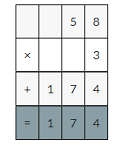
=174
Place the decimal point before two places from the left.
1.74
Therefore 5.8×0.3=1.74

Question 31.
Big Ideas Math Answers 5th Grade Chapter 5 Multiply Decimals chp 31
Answer:
Multiply 722 by 16 and place the decimal point
722×16
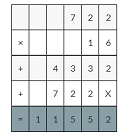
=11552
Place the decimal point before three places from the left
11.552
Therefore 7.22×1.6=11.552

Question 32.
Big Ideas Math Answers 5th Grade Chapter 5 Multiply Decimals chp 32
Answer:
Multiply 408 by 95 and place the decimal point
408×95
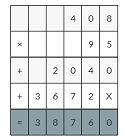
=38760
Place the decimal point before two places from the left
387.60
Therefore 40.8×9.5=387.60

5.9 Problem Solving: Multiply with Money

Question 33.
Your friend buys 4 glow sticks for $0.99 each. She pays with a $10 bill. How much change does she receive?
Answer:
My friend buys 4 glow sticks for $0.99 each
Total cost =4×$0.99=$3.96
Subtract cost from $10
$10‐$3.96=$6.04
change she receives is $6.04

Question 34.
Modeling Real Life
Descartes parks in the parking garage for 3 hours on Monday, 5 hours on Tuesday, and 10 hours on Wednesday. How much does he pay altogether?
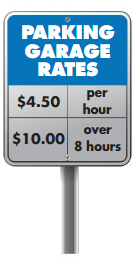
Big Ideas Math Answers 5th Grade Chapter 5 Multiply Decimals chp 34
Answer:
Descartes parks in the parking garage for 3 hours on Monday, 5 hours on Tuesday, and 10 hours on Wednesday.
parking garage rates are $4.50 per hour and $10.00 for more than 8 hours
charges on monday =3hoursx$4.50=$13.5
charges on tuesday =5hoursx$4.5=$22.5
on wednesday deacartes parks his car for more than 8 hours so, charges on wednesday are $10
Add 13.5+22.5+10=$46
Therefore Descartes pay $46 altogether.

Conclusion:

Take the help from the direct links available below and solve the problems covered in Big Ideas Math Answers Grade 5 Chapter 5 Multiply Decimals. Test your knowledge by solving the questions given at the end of the chapter. If you have any doubts regarding the concepts post the comments in the below attached comment box.

Big Ideas Math Answers Grade 5 Chapter 3 Add and Subtract Decimals

Clearing all math exams can be tough for students who are pursuing 5th grade but with Big Ideas Math Answers Grade 5 Chapter 3 Add and Subtract Decimals it can be easy. Because this solutions key is prepared by our highly-experienced subject experts after ample research and easy to understand the concepts too. So, students are implied to answer all the questions while practicing and cross-check the solutions through Big Ideas Math Answers Grade 5 Chapter 3 Add and Subtract Decimals.

Big Ideas Math Book 5th Grade Answer Key Chapter 3 Add and Subtract Decimals

You just need to tap on the quick links available in order to access them and learn all the topics. Bridge the Knowledge Gap taking the help of the Big Ideas Math Answers Grade 5 Chapter 3 Add and Subtract Decimals. Kick start your preparation using these resources and clear the exams with flying colors. Solutions provided in the Big Ideas Math Book 5th Grade Answer Key Chapter 3 Add and Subtract Decimals cover questions from all the Exercises, Cumulative Practice, etc.

Lesson: 1 Estimate Sum and Differences

Lesson: 2 Use Models to Add or Subtract Decimals

Lesson: 3 Add Decimals

Lesson: 4 Subtract Decimals

Lesson: 5 Add and Subtract Decimals

Lesson: 6 Use Mental Maths to Add or Subtract Decimals

Lesson: 7 Problem Solving: Money

Chapter: 3 – Add and Subtract Decimals

Lesson 3.1 Estimate Sum and Differences

Explore and Grow

Estimate each sum or difference.
Big Ideas Math Answer Key Grade 5 Chapter 3 Add and Subtract Decimals 3.1 1
Answer:
Big-Ideas-Math-Answers-Grade-5-Chapter-3-Add-and-Subtract-Decimals-Lesson 3.1 Estimate Sum and Differences

Construct Arguments
Compare your answers to your partner’s answers. Explain why they are the same or why they are different.

Answer:
My Friend and My answers are the same in the process of addition and subtraction.

Think and Grow: Estimate Sums and Differences

You can use rounding or compatible numbers to estimate sums and differences of decimals.+
Example
Estimate 27.21 + 48.73.
One Way: Use rounding. Round each addend to the nearest whole number. Then find the sum of the rounded numbers.
Big Ideas Math Answer Key Grade 5 Chapter 3 Add and Subtract Decimals 3.1 2
So, 27.21 + 48.73 is about _____.
Answer:
So, 27.21 + 48.73 is about 76.

Explanation:
Big-Ideas-Math-Answers-Grade-5-Chapter-3-Add-and-Subtract-Decimals-Lesson 3.1-Think and Grow-Estimate Sums and Differences-example

Another Way: Use compatible numbers.
Big Ideas Math Answer Key Grade 5 Chapter 3 Add and Subtract Decimals 3.1 3
So, 27.21 + 48.73 is about _______.
Answer:
So, 27.21 + 48.73 is about 80.

Explanation:
Big-Ideas-Math-Answers-Grade-5-Chapter-3-Add-and-Subtract-Decimals-Lesson 3.1-Think and Grow-Estimate Sums and Differences-example.

Example
Estimate 388.5 + 103.2.
One Way: Use rounding. Round each number to the nearest ten. Then find the difference of the rounded numbers.
Big Ideas Math Answer Key Grade 5 Chapter 3 Add and Subtract Decimals 3.1 4
So, 388.5 – 103.2 is about ______.
Answer:
So, 388.5 – 103.2 is about 492.

Explanation:
Big-Ideas-Math-Answers-Grade-5-Chapter-3-Add-and-Subtract-Decimals-Lesson 3.1-Think and Grow-Estimate Sums and Differences-Example..

Another Way: Use compatible numbers.
Big Ideas Math Answer Key Grade 5 Chapter 3 Add and Subtract Decimals 3.1 5
So, 388.5 – 103.2 is about ______.
Answer:
So, 388.5 – 103.2 is about  505.

Explanation:
Big-Ideas-Math-Answers-Grade-5-Chapter-3-Add-and-Subtract-Decimals-Lesson 3.1-Think and Grow-Estimate Sums and Differences-Example....

Show and Grow

Estimate the sum or difference.
Question 1.
Big Ideas Math Answer Key Grade 5 Chapter 3 Add and Subtract Decimals 3.1 6
Answer:
Big-Ideas-Math-Answers-Grade-5-Chapter-3-Add-and-Subtract-Decimals-Lesson 3.1-Think and Grow-Estimate Sums and Differences-Show and Grow1
Sum of 112.18 + 47.99 = 160.17

Question 2.
Big Ideas Math Answer Key Grade 5 Chapter 3 Add and Subtract Decimals 3.1 7
Answer:
Big-Ideas-Math-Answers-Grade-5-Chapter-3-Add-and-Subtract-Decimals-Lesson 3.1-Think and Grow-Estimate Sums and Differences-Show and Grow2

Difference of 68.8 – 29.7 = 39.1.

Apply and Grow: Practice

Estimate the sum or difference.
Question 3.
Big Ideas Math Answer Key Grade 5 Chapter 3 Add and Subtract Decimals 3.1 8
Answer:
Big-Ideas-Math-Answers-Grade-5-Chapter-3-Add-and-Subtract-Decimals-Lesson 3.1-Think and Grow-Apply and Grow-Practice1
Difference of 7.95 – 1.72 = 6.23.

Question 4.
Big Ideas Math Answer Key Grade 5 Chapter 3 Add and Subtract Decimals 3.1 9
Answer:
Big-Ideas-Math-Answers-Grade-5-Chapter-3-Add-and-Subtract-Decimals-Lesson 3.1-Think and Grow-Apply and Grow-Practice4
Sum of 237.5 + 345.1 = 582.6.

Question 5.
67.5 + 15.1
Answer:
Sum of 67.5 + 15.1 = 82.6
Big-Ideas-Math-Answers-Grade-5-Chapter-3-Add-and-Subtract-Decimals-Lesson 3.1-Think and Grow-Apply and Grow-Practice5

Question 6.
418.9 – 14.7
Answer:
Difference of 418.9 – 14.7 = 404.2.
Big-Ideas-Math-Answers-Grade-5-Chapter-3-Add-and-Subtract-Decimals-Lesson 3.1-Think and Grow-Apply and Grow-Practice6

Question 7.
13.9 – 8.21
Answer:
Difference of 13.9 – 8.21 = 5.69.
Big-Ideas-Math-Answers-Grade-5-Chapter-3-Add-and-Subtract-Decimals-Lesson 3.1-Think and Grow-Apply and Grow-Practice7

Question 8.
208.6 + 56.9
Answer:
Sum of 208.6 + 56.9 = 265.5.
Big-Ideas-Math-Answers-Grade-5-Chapter-3-Add-and-Subtract-Decimals-Lesson 3.1-Think and Grow-Apply and Grow-Practice8

Question 9.
Number Sense
Descartes estimates a sum by rounding each number to the nearest ten. His estimate is 140. Which sums could he have estimated?
83.6 + 59.8
106.92 + 44.68
130.8 + 4.68
73.5 + 67.4
Answer:
Descartes estimates a sum of 73.5 + 67.4 = 140.9 to be 140 by rounding each number to the nearest ten.

Explanation:
First, we need to calculate the sum by rounding each number to the nearest ten:
83.6 + 59.8 = 143.4
106.92 + 44.68 = 151.6
130.8 + 4.68 = 135.48
73.5 + 67.4 = 140.9

Question 10.
Precision
Does rounding 209.11 – 104.53 to the nearest ten or to the nearest hundred give an estimate that is closer to the actual difference? Explain.
Answer:
Estimation to  the difference by rounding to nearest ten ( 209 – 105 = 104 )is closer to the actual difference ( 209.11 – 104.53 = 104.58 ).

Explanation:
First, Estimate the actual difference:
209.11 – 104.53 = 104.58
Second, Estimate the difference by rounding to nearest ten:
209 – 105 = 104
Third, Estimate the difference by rounding to nearest hundred:
200 – 100 = 100

Question 11.
DIG DEEPER!
Newton packs a suitcase to fly on a plane. His suitcase needs to weigh less than 50.0 pounds. Should Newton overestimate or underestimate the weight of his suitcase? Explain.
Answer: Newton should overestimate the weight of his suitcase because the weigh should not be more than 50.0 pounds.

Think and Grow: Modeling Real Life

Example
About how many feet taller is One World Trade Center than the Empire State Building?
Big Ideas Math Answer Key Grade 5 Chapter 3 Add and Subtract Decimals 3.1 10
Round the height of each building to the nearest hundred because you do not need a precise answer.
One World Trade Center: 1,800 feet
Empire State Building: 1,500 feet
Subtract the estimated height of the Empire State Building from the estimated height of One World Trade Center.
Big Ideas Math Answer Key Grade 5 Chapter 3 Add and Subtract Decimals 3.1 11
One World Trade Center is about ______ feet taller than the Empire State Building.
Answer:
One World Trade Center is about  300 feet taller than the Empire State Building.

Explanation:
One World Trade Center: 1,800 feet
Empire State Building: 1,500 feet
Subtract the estimated height of the Empire State Building from the estimated height of One World Trade Center.
Big-Ideas-Math-Answers-Grade-5-Chapter-3-Add-and-Subtract-Decimals-Lesson 3.1-Think and Grow-Modeling Real Life –
Difference of 1800 – 1500 = 300 feet.

Show and Grow

Question 12.
About how many more tons does the African elephant weigh than the hippopotamus?
Big Ideas Math Answer Key Grade 5 Chapter 3 Add and Subtract Decimals 3.1 12
Answer:
Weight of African Elephant is 3.4 Tons more than the Weight of Hippopotamus.

Explanation:
Weight of African Elephant = 5.7 Tons
Weight of Hippopotamus = 2.3 Tons
Difference:
Weight of African Elephant – Weight of Hippopotamus = 5.7 – 2.3 = 3.4 Tons


Question 13.
One cup of wild rice has 6.5 grams of protein. One cup of shredded chicken has 36.9 more grams of protein than 1 cup of wild rice. About how many grams of protein are in 1 cup of chicken?
Answer:
1 cup of chicken = 43.4 grams of protein.

Explanation:
One cup of wild rice = 6.5 grams
One cup of shredded chicken has 36.9 more grams of protein than 1 cup of wild rice
=> 1 cup of chicken = 36.9 grams + 6.5 grams
=> 1 cup of chicken = 43.4 grams of protein.

Question 14.
The speed Earth orbits the Sun is 18.5 miles per second. This speed is 3.3 miles per second slower than the speed Venus orbits the Sun. About how fast does Venus orbit the Sun?
Answer:
Speed of Venus orbit the Sun is 15.2 miles fast than the Earth orbit per second.

Explanation:
Speed of Earth orbits the Sun = 18.5 miles
This speed is 3.3 miles per second slower than the speed Venus orbits the Sun
=> Speed of  Venus orbit the Sun = 18.5 – 3.3 miles = 15.2 miles

Estimate Sum and Differences Homework & Practice 3.1

Estimate the sum or difference.
Question 1.
Big Ideas Math Answer Key Grade 5 Chapter 3 Add and Subtract Decimals 3.1 13
Answer:
Sum of 76.81 + 2.17 =78.98.
Big-Ideas-Math-Answers-Grade-5-Chapter-3-Add-and-Subtract-Decimals-Lesson 3.1-Estimate Sum and Differences Homework & Practice 3.1.1

Question 2.
Big Ideas Math Answer Key Grade 5 Chapter 3 Add and Subtract Decimals 3.1 14
Answer:
Difference of 79.1 – 32.8 = 46.3
Big-Ideas-Math-Answers-Grade-5-Chapter-3-Add-and-Subtract-Decimals-Lesson 3.1-Estimate Sum and Differences Homework & Practice 3.1.2

Question 3.
418.44 – 23.61
Answer:
Difference of 418.44 – 23.61 = 442.05
Big-Ideas-Math-Answers-Grade-5-Chapter-3-Add-and-Subtract-Decimals-Lesson 3.1-Estimate Sum and Differences Homework & Practice 3.1.3

Question 4.
90.7 + 2.3
Answer:
Sum of 90.7 + 2.3 = 93
Big-Ideas-Math-Answers-Grade-5-Chapter-3-Add-and-Subtract-Decimals-Lesson 3.1-Estimate Sum and Differences Homework & Practice 3.1.4

Question 5.
6.24 – 3.8
Answer:
Difference of 6.24 – 3.8 = 2.44
Big-Ideas-Math-Answers-Grade-5-Chapter-3-Add-and-Subtract-Decimals-Lesson 3.1-Estimate Sum and Differences Homework & Practice 3.1.5...

Question 6.
837.51 + 149.27
Answer:
Sum of 837.51 + 149.27 = 986.78
Big-Ideas-Math-Answers-Grade-5-Chapter-3-Add-and-Subtract-Decimals-Lesson 3.1-Estimate Sum and Differences Homework & Practice 3.1.6

Question 7.
Open-Ended
Write a decimal addition problem that has an estimated sum of 35.
Answer:
Sum of 16.3+18.7 = 35

Explanation:
16.3+18.7 =??
Big-Ideas-Math-Answers-Grade-5-Chapter-3-Add-and-Subtract-Decimals-Lesson 3.1-Estimate Sum and Differences Homework & Practice 3.1.7-Open-Ended

Question 8.
Reasoning
Describe a situation when you would estimate the difference of 25.4 and 19.8 to the nearest whole number.
Answer:
Estimate the difference between 25.4  and  19.8 by to round each number to the nearest whole number and then subtract the rounded numbers.

Explanation:
Rounding number to nearest whole number of 25.4 = 25
Rounding number to nearest whole number of 19.8 = 20
Difference = Rounding number to nearest whole number of 25.4 – Rounding number to nearest whole number of 19.8
= 25 – 20
= 5

Question 9.
Modeling Real Life
Your friend participates in a 3.1-mile race. She walks for 1.4 miles of the race and runs the rest. About how many miles does your friend run?
Answer:
Number of miles my Friend runs = 1.7 miles.

Explanation:
Number of miles the race is my Friend participates  = 3.1 mils
Number of miles my Friend walks = 1.4 miles
Number of miles my Friend runs = Number of miles the race is my Friend participates  – Number of miles my Friend walks
=>  3.1 – 1.4
=> 1.7 miles.

Question 10.
DIG DEEPER!
Your phone has 16,000 megabytes of total storage space. About how much storage space is free?
Big Ideas Math Answer Key Grade 5 Chapter 3 Add and Subtract Decimals 3.1 15
Answer:
Free Storage space left in Phone = 2944.8 megabytes

Explanation:
Total storage space of Phone = 16000 megabytes
Memory Storage for Photos = 3111.1 megabytes
Memory Storage for Applications = 5345.3 megabytes
Memory Storage for Music = 4598.8 megabytes
Free Storage space = Total storage space of Phone – ( Memory Storage for Photos + Memory Storage for Applications +
Memory Storage for Music)
=> 16000 – ( 3111.1 + 5345.3 + 4598.8 )
=> 16000 – 13055.2
=> 2944.8 megabytes

Review & Refresh

Find the sum.
Question 11.
\(\frac{2}{8}+\frac{4}{8}\) = ______
Answer:
\(\frac{2}{8}+\frac{4}{8}\) = \(\frac{3}{4}\) .

Explanation:
\(\frac{2}{8}+\frac{4}{8}\) = \(\frac{2+4}{8}\) = \(\frac{6}{8}\) = \(\frac{3}{4}\)

Question 12.
\(\frac{1}{2}+\frac{5}{2}\) = ______
Answer:
\(\frac{1}{2}+\frac{5}{2}\) = \({3}\) .

Explanation:
\(\frac{1}{2}+\frac{5}{2}\) = \(\frac{1+5}{2}\) = \(\frac{6}{2}\) = \({3}\)

Question 13.
1 + \(\frac{1}{4}\) = ______
Answer:
1 + \(\frac{1}{4}\) = \(\frac{5}{4}\) .

Explanation:
1 + \(\frac{1}{4}\) = \(\frac{4+1}{4}\) = \(\frac{5}{4}\)

Lesson 3.2 Use Models to Add or Subtract Decimals

Explore and Grow

Use base ten blocks to find 1.4 + 0.7.
Big Ideas Math Answers 5th Grade Chapter 3 Add and Subtract Decimals 3.2 1

Use base ten blocks to find 1.16 – 0.89.
Answer:
So, 1.16 – 0.89 = 0.27

Explanation:
1.16 – 0.89 = Big-Ideas-Math-Answers-Grade-5-Chapter-3-Add-and-Subtract-Decimals-Lesson 3.2 Use Models to Add or Subtract Decimals. – Big-Ideas-Math-Answers-Grade-5-Chapter-3-Add-and-Subtract-Decimals-Lesson 3.2 Use Models to Add or Subtract Decimals...= Big-Ideas-Math-Answers-Grade-5-Chapter-3-Add-and-Subtract-Decimals-Lesson 3.2 Use Models to Add or Subtract Decimals.....

Repeated Reasoning
Why can you use base ten blocks to model ones, tenths, and hundredths?
Answer:
Yes, we can use base ten blocks to model ones, tenths, and hundredths because they represent the numeral values in blocks which helps is east calculation and understanding.

Think and Grow: Use Models to Add or Subtract Decimals

You have used models to add or subtract whole numbers. You can use similar models to add or subtract decimals.
Example
Find 1.5 + 2.7.
Make a quick sketch. Add the tenths, then the ones.
Regroup 10 tenths as 1 one.
Big Ideas Math Answers 5th Grade Chapter 3 Add and Subtract Decimals 3.2 2
So, 1.5 + 2.7 = _____.
Answer:
So, 1.5 + 2.7 = 3.2

Explanation:
Big Ideas Math Answers 5th Grade Chapter 3 Add and Subtract Decimals 3.2 2

Example
Find 2.42 – 1.24.

So, 2.42 – 1.24 = _____.
Answer:
So, 2.42 – 1.24 = 1.18

Explanation:
Big-Ideas-Math-Answers-Grade-5-Chapter-3-Add-and-Subtract-Decimals-Lesson 3.2-Think and Grow-Use Models to Add or Subtract Decimals-Example

Show and Grow

Make a quick sketch to find the sum or difference.
Question 1.
3.15 + 0.92 = _____
Big Ideas Math Answers 5th Grade Chapter 3 Add and Subtract Decimals 3.2 4
Answer:
3.15 + 0.92 = 4.07

Explanation:
Big-Ideas-Math-Answers-Grade-5-Chapter-3-Add-and-Subtract-Decimals-Lesson 3.2-Show and Grow1

Question 2.
1.26 – 0.83 = _____
Big Ideas Math Answers 5th Grade Chapter 3 Add and Subtract Decimals 3.2 5
Answer:
1.26 – 0.83 = 0.43

Explanation:
Big-Ideas-Math-Answers-Grade-5-Chapter-3-Add-and-Subtract-Decimals-Lesson 3.2-Show and Grow2

Apply and Grow: Practice

Make a quick sketch to find the sum or difference.
Question 3.
1.61 + 0.22 = _____
Answer:
1.61 + 0.22 = 1.83

Explanation:
Big-Ideas-Math-Answers-Grade-5-Chapter-3-Add-and-Subtract-Decimals-Lesson 3.2-Apply and Grow-Practice3

Question 4.
2.4 – 1.3 = _____
Answer:
2.4 – 1.3 = 1.1

Explanation:
Big-Ideas-Math-Answers-Grade-5-Chapter-3-Add-and-Subtract-Decimals-Lesson 3.2-Apply and Grow-Practice4

Question 5.
2.2 + 0.9 = _______
Answer:
2.2 + 0.9 = 3.1

Explanation:
Big-Ideas-Math-Answers-Grade-5-Chapter-3-Add-and-Subtract-Decimals-Lesson 3.2-Apply and Grow-Practice5

Question 6.
1.56 – 1.08 = ______
Answer:
1.56 – 1.08 = 0.48

Explanation:
Big-Ideas-Math-Answers-Grade-5-Chapter-3-Add-and-Subtract-Decimals-Lesson 3.2-Apply and Grow-Practice6

Question 7.
Number Sense
Newton adds two decimals that are each greater than 0.5. What can you conclude about the sum?
Answer:
If Newton’s adds two decimals that are each greater than 0.5 then the Sum of the decimal numbers is going to be more than 0.5.

Explanation:
First Decimal Number= 1.2
Second Decimal Number = 0.8
Sum = First Decimal Number + Second Decimal Number
= 1.2 + 0.8 = 2.0

Question 8.
Structure
Write an equation represented by the quick sketch.
Big Ideas Math Answers 5th Grade Chapter 3 Add and Subtract Decimals 3.2 6
Answer:
The Equation for the given quick Sketch :
3.54 + 1.63 = 5.17

Question 9.
DIG DEEPER!
Use a model to find 1.31 – 0.4.
Answer:
1.31 – 0.4 = 0.91.54

Explanation:
1.31 – 0.4 = ???
Big-Ideas-Math-Answers-Grade-5-Chapter-3-Add-and-Subtract-Decimals-Lesson 3.2-Apply and Grow-Practice6-DIG DEEPER!-9

Think and Grow: Modeling Real Life

Example
How much longer is the duration of the wooden roller-coaster ride than the duration of the steel roller-coaster ride?
Big Ideas Math Answers 5th Grade Chapter 3 Add and Subtract Decimals 3.2 7
Find the difference of the durations: 4.25 – 1.50.
Make a quick sketch of 4.25.
Big Ideas Math Answers 5th Grade Chapter 3 Add and Subtract Decimals 3.2 8
So, 4.25 – 1.50
Answer:
So, 4.25 – 1.50 = 2.75.

Explanation:
Big-Ideas-Math-Answers-Grade-5-Chapter-3-Add-and-Subtract-Decimals-Lesson 3.2-Think and Grow-Modeling Real Life.
So, 4.25 – 1.50 = ???
Big-Ideas-Math-Answers-Grade-5-Chapter-3-Add-and-Subtract-Decimals-Lesson 3.2-Think and Grow-Modeling Real Life...

Show and Grow

Question 10.
A football player completes a 40-yard dash in 5.84 seconds. Another player completes it in 4.56 seconds. How much longer does it take the first player to complete the 40-yard dash than the second player?
Answer:
Time taken by the the first player to complete the 40-yard dash 1.28 seconds more than the second player.

Explanation:
Time taken by the First player to complete the 40-yard dash = 5.84 seconds
Time taken by the Second player to complete the 40-yard dash = 4.56 seconds
Time taken by the the first player to complete the 40-yard dash than the second player = Time taken by the First player to complete the 40-yard dash – Time taken by the Second player to complete the 40-yard dash
= 5.84 seconds – 4.56 seconds
= 1.28 seconds.

Question 11.
What is the total length of the narwhal?
Big Ideas Math Answers 5th Grade Chapter 3 Add and Subtract Decimals 3.2 9
Answer:
Total Length of whole body Narwhal = 16.40 feet.

Explanation:
Length of Narwhal tusk = 4.92 feet
Length of Narwhal Body = 11.48 feet
Total Length of whole body Narwhal = Length of Narwhal tusk + Length of Narwhal Body
= 4.92 feet + 11.48 feet
= 16.40 feet.

Question 12.
DIG DEEPER!
An Olympic gymnast scores 6.6 points for skill. She starts with 10.0 points for execution, then loses 0.4 point for execution errors. What is the gymnast’s final score?
Answer:
Final score points of Olympic gymnast = 16.2.

Explanation:
Score points of Olympic gymnast for skill = 6.6
Score points of Olympic gymnast for execution = 10.0
Score points lost of Olympic gymnast for execution errors = 0.4
Final score points of Olympic gymnast = Score points of Olympic gymnast for skill + Score points of Olympic gymnast for execution – Score points lost of Olympic gymnast for execution errors
= 6.6 + 10.0 – 0.4
= 16.6 – 0.4
= 16.2

Use Models to Add or Subtract Decimals Homework & Practice 3.2

Make a quick sketch to find the sum or difference.
Question 1.
2.6 + 1.3 = ______
Big Ideas Math Answers 5th Grade Chapter 3 Add and Subtract Decimals 3.2 10
Answer:
2.6 + 1.3 = 3.9.

Explanation:
Big-Ideas-Math-Answers-Grade-5-Chapter-3-Add-and-Subtract-Decimals-Lesson 3.2-Use Models to Add or Subtract Decimals Homework & Practice 3.2.1

Question 2.
1.36 – 0.25 = _____
Big Ideas Math Answers 5th Grade Chapter 3 Add and Subtract Decimals 3.2 11
Answer:
1.36 – 0.25 = 1.11

Explanation:
Big-Ideas-Math-Answers-Grade-5-Chapter-3-Add-and-Subtract-Decimals-Lesson 3.2-Use Models to Add or Subtract Decimals Homework & Practice 3.2.2

Question 3.
0.84 – 0.17 = _____
Answer:
0.84 – 0.17 = 0.67.

Explanation:
Big-Ideas-Math-Answers-Grade-5-Chapter-3-Add-and-Subtract-Decimals-Lesson 3.2-Use Models to Add or Subtract Decimals Homework & Practice 3.2.3

Question 4.
1.25 + 1.55 = _____
Answer:
1.25 + 1.55 = 2.80.

Explanation:
Big-Ideas-Math-Answers-Grade-5-Chapter-3-Add-and-Subtract-Decimals-Lesson 3.2-Use Models to Add or Subtract Decimals Homework & Practice 3.2.4

Question 5.
2.6 – 1.9 = ______
Answer:
2.6 – 1.9 = 0.7.

Explanation:
Big-Ideas-Math-Answers-Grade-5-Chapter-3-Add-and-Subtract-Decimals-Lesson 3.2-Use Models to Add or Subtract Decimals Homework & Practice 3.2.5

Question 6.
3.9 + 0.6 = ______
Answer:
3.9 + 0.6 = 4.5.

Explanation:
Big-Ideas-Math-Answers-Grade-5-Chapter-3-Add-and-Subtract-Decimals-Lesson 3.2-Use Models to Add or Subtract Decimals Homework & Practice 3.2.6

Question 7.
Structure
Write an equation represented by the quick sketch.
Big Ideas Math Answers 5th Grade Chapter 3 Add and Subtract Decimals 3.2 12
Answer:

Question 8.
Number Sense
What is the greatest possible difference of two decimals to the hundredths place that are between 0 and 1?
Answer:
0.01 is the greatest possible difference of two decimals to the hundredths place that are between 0 and 1.

Question 9.
DIG DEEPER!
Write a decimal addition equation that requires regrouping the tenths. Explain how you know you need to regroup to add.
Answer:
Find the Sum of 1.5 +2.7 = 4.2

Explanation:

Big-Ideas-Math-Answers-Grade-5-Chapter-3-Add-and-Subtract-Decimals-Lesson 3.2-DIG DEEPER-9.

Question 10.
Modeling Real Life
The fastest 1-mile sack race was completed in 16.68 minutes. The fastest 1-mile piggyback race was completed in 11.18 minutes. How much longer did it take to complete the sack race than the piggyback race?
Answer:
Time taken to complete the sack race than the piggyback race = 5.5 minutes.

Explanation:
Time taken to complete fastest 1-mile sack race = 16.68 minutes
Time taken to complete fastest 1-mile piggyback race  = 11.18 minutes
Time taken to complete the sack race than the piggyback race = Time taken to complete fastest 1-mile sack race – Time taken to complete fastest 1-mile piggyback race
= 16.68  – 11.18
= 5.5 minutes

Question 11
Modeling Real Life
How many pounds of honey do the hives produce in all?
Big Ideas Math Answers 5th Grade Chapter 3 Add and Subtract Decimals 3.2 13
Answer:
Total number of pounds of Honey produced by Hive A  and Hive B = 36.23 lb.

Explanation:
Number of pounds of Honey Hive A  produce = 15.25 lb.
Number of pounds of Honey Hive B  produce = 20.98 lb.
Total number of pounds of Honey produced Hive A and Hive B = Number of pounds of Honey Hive A  produce + Number of pounds of Honey Hive B  produce
= 15.25 + 20.98
= 36.23 lb.

Review & Refresh

Find the perimeter of the rectangle.
Question 12.
Big Ideas Math Answers 5th Grade Chapter 3 Add and Subtract Decimals 3.2 14
Answer:
Perimeter of Rectangle = 102 yards.

Explanation:
Length of Rectangle = 32 yards.
Width of Rectangle = 19 yards
Perimeter of Rectangle = 2 (l + w)
= 2( 32 + 19 )
= 2 × 51
= 102 yards.

Question 13.
Big Ideas Math Answers 5th Grade Chapter 3 Add and Subtract Decimals 3.2 15
Answer:
Perimeter of Rectangle = 114 mm.

Explanation:
Length of Rectangle = 36 mm
Width of Rectangle = 21 mm
Perimeter of Rectangle = 2 (l + w)
= 2 ( 36 + 21 )
= 2 × 57
= 114 mm.

Lesson 3.3 Add Decimals

Explore and Grow

Find the sum.
Big Ideas Math Answers Grade 5 Chapter 3 Add and Subtract Decimals 3.3 1
Big Ideas Math Answers Grade 5 Chapter 3 Add and Subtract Decimals 3.3 2

Use a model to find the sum. Draw your model.
Big Ideas Math Answers Grade 5 Chapter 3 Add and Subtract Decimals 3.3 3
Answer:
Big-Ideas-Math-Answers-Grade-5-Chapter-3-Add-and-Subtract-Decimals-Lesson 3.3 Add DecimalsBig-Ideas-Math-Answers-Grade-5-Chapter-3-Add-and-Subtract-Decimals-Lesson 3.3 Add Decimals..
Explanation:
Big-Ideas-Math-Answers-Grade-5-Chapter-3-Add-and-Subtract-Decimals-Lesson 3.3 Add Decimals..

Construct Arguments
+-?
Answer:
The adding of decimals is same as to that of adding of whole numbers because here the process we do is adding the numbers in both.

Think and Grow: Add Decimals

To add decimals, add like place values.
Example
Add: 52.76 + 38.18. Estimate ______
Big Ideas Math Answers Grade 5 Chapter 3 Add and Subtract Decimals 3.3 4
Answer:
Sum of 52.76  +38.18 = 90.94
90.94 is close to 91.

Show and Grow

Find the sum. Check whether your answer is reasonable.
Question 1.
Big Ideas Math Answers Grade 5 Chapter 3 Add and Subtract Decimals 3.3 5
Answer:
Big-Ideas-Math-Answers-Grade-5-Chapter-3-Add-and-Subtract-Decimals-Lesson 3.3 Add Decimals-Show and Grow1..
5.6 is close to 6.

Explanation:
Big-Ideas-Math-Answers-Grade-5-Chapter-3-Add-and-Subtract-Decimals-Lesson 3.3 Add Decimals-Show and Grow1

Question 2.
Big Ideas Math Answers Grade 5 Chapter 3 Add and Subtract Decimals 3.3 6
Answer:
Big-Ideas-Math-Answers-Grade-5-Chapter-3-Add-and-Subtract-Decimals-Lesson 3.3 Add Decimals-Show and Grow2
1.76 is close to 2.

Explanation:
Big-Ideas-Math-Answers-Grade-5-Chapter-3-Add-and-Subtract-Decimals-Lesson 3.3 Add Decimals-Show and Grow2

Question 3.
Big Ideas Math Answers Grade 5 Chapter 3 Add and Subtract Decimals 3.3 7
Answer:
Big-Ideas-Math-Answers-Grade-5-Chapter-3-Add-and-Subtract-Decimals-Lesson 3.3 Add Decimals-Show and Grow3.
93.7 is close to 94.

Explanation:
Big-Ideas-Math-Answers-Grade-5-Chapter-3-Add-and-Subtract-Decimals-Lesson 3.3 Add Decimals-Show and Grow3.

Question 4.
Big Ideas Math Answers Grade 5 Chapter 3 Add and Subtract Decimals 3.3 7
Answer:
Big-Ideas-Math-Answers-Grade-5-Chapter-3-Add-and-Subtract-Decimals-Lesson 3.3 Add Decimals-Show and Grow4...
16.51 is close to 17.

Explanation:
Big-Ideas-Math-Answers-Grade-5-Chapter-3-Add-and-Subtract-Decimals-Lesson 3.3 Add Decimals-Show and Grow4

Apply and Grow: Practice

Find the sum. Check whether your answer is reasonable.
Question 5.
Big Ideas Math Answers Grade 5 Chapter 3 Add and Subtract Decimals 3.3 9
Answer:
Big-Ideas-Math-Answers-Grade-5-Chapter-3-Add-and-Subtract-Decimals-Lesson 3.3 Add Decimals-Show and Grow3...
8.89 is close to 9.

Explanation:
Big-Ideas-Math-Answers-Grade-5-Chapter-3-Add-and-Subtract-Decimals-Lesson 3.3 Add Decimals-Apply and Grow-Practice1
Check:
8.89 – 1.07
= 7.82.

Question 6.
Big Ideas Math Answers Grade 5 Chapter 3 Add and Subtract Decimals 3.3 10
Answer:
Big-Ideas-Math-Answers-Grade-5-Chapter-3-Add-and-Subtract-Decimals-Lesson 3.3 Add Decimals-Show and Grow6...
38.7 is close to 39.

Explanation:
Big-Ideas-Math-Answers-Grade-5-Chapter-3-Add-and-Subtract-Decimals-Lesson 3.3 Add Decimals-Apply and Grow-Practice6
Check:
38.7 – 15.1
= 23.6.

Question 7.
Big Ideas Math Answers Grade 5 Chapter 3 Add and Subtract Decimals 3.3 11
Answer:
Big-Ideas-Math-Answers-Grade-5-Chapter-3-Add-and-Subtract-Decimals-Lesson 3.3 Add Decimals-Show and Grow7....
640.89 is close to 641.

Explanation:
Big-Ideas-Math-Answers-Grade-5-Chapter-3-Add-and-Subtract-Decimals-Lesson 3.3 Add Decimals-Show and Grow7

Check:
640.89 – 78.04
= 562.65.

Question 8.
2.5 + 4.6 = _____
Answer:
Big-Ideas-Math-Answers-Grade-5-Chapter-3-Add-and-Subtract-Decimals-Lesson 3.3 Add Decimals-Show and Grow8..
7.1 is close to 7.

Explanation:
Big-Ideas-Math-Answers-Grade-5-Chapter-3-Add-and-Subtract-Decimals-Lesson 3.3 Add Decimals-Show and Grow8

Check:
7.1 – 4.6
= 2.5.

Question 9.
107.5 + 63.5 = _____
Answer:
Big-Ideas-Math-Answers-Grade-5-Chapter-3-Add-and-Subtract-Decimals-Lesson 3.3 Add Decimals-Show and Grow9..
171.0 is close to 171.

Explanation:
Big-Ideas-Math-Answers-Grade-5-Chapter-3-Add-and-Subtract-Decimals-Lesson 3.3 Add Decimals-Show and Grow9
Check:
171.0 – 63.5
= 107.5.

Question 10.
49.87 + 32.53 = ______
Answer:
Big-Ideas-Math-Answers-Grade-5-Chapter-3-Add-and-Subtract-Decimals-Lesson 3.3 Add Decimals-Show and Grow10..
82.40 is close to 82.

Explanation:
Big-Ideas-Math-Answers-Grade-5-Chapter-3-Add-and-Subtract-Decimals-Lesson 3.3 Add Decimals-Show and Grow10
Check:
82.40 – 32.53
= 49.87.

Question 11.
96.5 + 4.1 = _____
Answer:
Big-Ideas-Math-Answers-Grade-5-Chapter-3-Add-and-Subtract-Decimals-Lesson 3.3 Add Decimals-Show and Grow11..
100.6 is close to 101.

Explanation:
Big-Ideas-Math-Answers-Grade-5-Chapter-3-Add-and-Subtract-Decimals-Lesson 3.3 Add Decimals-Show and Grow11
Check:
100.6 – 4.1
= 96.5.

Question 12.
Number Sense
Which expressions have a sum greater than 24.7?
20.9 + 3.8
15.96 + 9.51
14.23 + 9.85
10.62 + 14.11
Answer:
The Sum of 15.96 + 9.51= 25.74 which is  greater than 24.7.

Explanation:
First, find the sum:
20.9 + 3.8 = 24.7
15.96 + 9.51 = 25.47
14.23 + 9.85 = 24.08
10.62 + 14.11 = 24.73

Question 13.
YOU BE THE TEACHER
Your friend finds 34.5 + 6.8 and gets a sum of 413. Without adding, explain how you know your friend’s answer is correct.
Answer:
My Friend’s answer is incorrect because he did not add the digits correctly .

Explanation:
Find the Sum :
34.5 + 6.8 = 41.3
Big-Ideas-Math-Answers-Grade-5-Chapter-3-Add-and-Subtract-Decimals-Lesson 3.3 Add Decimals-YOU BE THE TEACHER13

Think and Grow: Modeling Real Life

Example
You have 6.5 megabytes of storage space left on your tablet. Do you have enough space to download both of the ebooks?
Add the ebook file sizes.
Big Ideas Math Answers Grade 5 Chapter 3 Add and Subtract Decimals 3.3 12
Compare the sum of the file sizes to the available space on your tablet.
You ______ have enough room to download both ebooks.
Answer:
I  have enough space to download both ebooks.

Explanation:
Storage space for tale of the Monster = 3.8 megabytes
Storage space for In the Game = 2.5 megabytes
Total storage for tale of the Monster and In the Game = 3.8 + 2.5 = 6.3 megabytes
Storage space left on the Tablet = 6.5 megabytes
Storage space left after downloading the eBooks = Storage space left on the Tablet  – Total storage for tale of the Monster and In the Game
= 6.5 – 6.3
= 0.2 megabytes

Show and Grow

Question 14.
A chef needs 3.75 pounds of fish for a dinner party. She catches a fish that is 2.50 pounds and another fish that is 1.75 pounds. Does she catch enough fish for her dinner party?
Answer:
She catches enough fish for her dinner party in fact 0.5 pounds more weight fish she catches.

Explanation:
Weight of first fish = 2.50 pounds
Weight of Second Fish = 1.75 pounds
Weight of both Fishes = 2.50 + 1.75 = 4.25 pounds
Weight of the fish needed for a dinner party = 3.75 pounds
Difference:
Weight of fishes caught – Weight of the fish needed for a dinner party
= 4.25 – 3.75
= 0.5 pounds

Question 15.
Your school’s long jump record is 5.51 meters. You jump 3.38 meters on your first attempt. Your second attempt is 1.56 meters longer than your first. Do you break your school’s record?
Answer:
I have broke the school record by jumping more 2.81 meters than the record distance.

Explanation:
Distance long jump record in the school = 5.51 meters
Distance jumped on my first attempt = 3.38 meters
Your second attempt is 1.56 meters longer than your first.
=> Distance jumped on my second attempt = 1.56+ 3.38 meters = 4.94 meters
Total distance jumped by me = Distance jumped on my first attempt + Distance jumped on my second attempt
= 3.38 + 4.94
= 8.32 meters
Difference:
Total distance jumped by me – Distance long jump record in the school
= 8.32 – 5.51
= 2.81 meters

Question 16.
The melting point of aluminum is 403.86 degrees Celsius cooler than the melting point of gold. What is the melting point of gold?
Big Ideas Math Answers Grade 5 Chapter 3 Add and Subtract Decimals 3.3 13
Answer:
The melting point of Gold = 1063.32  degrees Celsius.

Explanation:
The melting point of aluminum = 660.32 degrees Celsius
The melting point of aluminum is 403.86 degrees Celsius cooler than the melting point of gold.
=> Let the melting point of Gold be X
=> X- 403.86 = 660.32
=> X = 660.32 + 403
=> X = 1063.32  degrees Celsius.

Add Decimals Homework & Practice 3.3

Find the sum. Check whether your answer is reasonable.
Question 1.
Big Ideas Math Answers Grade 5 Chapter 3 Add and Subtract Decimals 3.3 14
Answer:
Big-Ideas-Math-Answers-Grade-5-Chapter-3-Add-and-Subtract-Decimals-Lesson 3.3 Add Decimals-Add Decimals Homework & Practice 3.3.1..
8.8 is close to 9.

Explanation:
Big-Ideas-Math-Answers-Grade-5-Chapter-3-Add-and-Subtract-Decimals-Lesson 3.3 Add Decimals-Add Decimals Homework & Practice 3.3.1
Check:
8.8 – 1.3 = 7.5.

Question 2.
Big Ideas Math Answers Grade 5 Chapter 3 Add and Subtract Decimals 3.3 15
Answer:
Big-Ideas-Math-Answers-Grade-5-Chapter-3-Add-and-Subtract-Decimals-Lesson 3.3 Add Decimals-Add Decimals Homework & Practice 3.3.2..
683.89 is close to 684.

Explanation:
Big-Ideas-Math-Answers-Grade-5-Chapter-3-Add-and-Subtract-Decimals-Lesson 3.3 Add Decimals-Add Decimals Homework & Practice 3.3.2
Check:
683.89 – 82.31 = 601.58.

Question 3.
19.73 + 7.16 = _____
Answer:
Big-Ideas-Math-Answers-Grade-5-Chapter-3-Add-and-Subtract-Decimals-Lesson 3.3 Add Decimals-Add Decimals Homework & Practice 3.3.3..
26.89 is close to 27.

Explanation:
Big-Ideas-Math-Answers-Grade-5-Chapter-3-Add-and-Subtract-Decimals-Lesson 3.3 Add Decimals-Add Decimals Homework & Practice 3.3.3
Check:
26.89 – 7.16 = 19.73.

Question 4.
84.6 + 44.7 = ______
Answer:
Big-Ideas-Math-Answers-Grade-5-Chapter-3-Add-and-Subtract-Decimals-Lesson 3.3 Add Decimals-Add Decimals Homework & Practice 3.3.4..
129.3 is close to 129.

Explanation:
Big-Ideas-Math-Answers-Grade-5-Chapter-3-Add-and-Subtract-Decimals-Lesson 3.3-Add Decimals Homework & Practice 3.3.4
Check:
129.3 – 44.7 = 84.6.

Find the sum. Check whether your answer is reasonable.
Question 5.
123.98 + 47.65 = _____
Answer:
123.98 + 47.65 = 171.63.
171.63 is close to 172.

Explanation:
Big-Ideas-Math-Answers-Grade-5-Chapter-3-Add-and-Subtract-Decimals-Lesson 3.3 Add Decimals-Add Decimals Homework & Practice 3.3.5
Check:
171.63 – 47.65
= 123.98.

Question 6.
427.8 + 13.2 = _____
Answer:
427.8 + 13.2 = 441.0
441 is close to 441.

Explanation:
Big-Ideas-Math-Answers-Grade-5-Chapter-3-Add-and-Subtract-Decimals-Lesson 3.3 Add Decimals-Add Decimals Homework & Practice 3.3.6
Check:
441.0 – 13.2 = 427.8.

Question 7.
Reasoning
Your friend adds 46.7 and 5.4. Without calculating, is the sum greater than or less than 51? Explain.
Answer:
Answer is greater than 51 because the Sum of 46.7 + 5.4 = 52.1.

Explanation:
First Find the Sum:
46.7 + 5.4 = 52.1.
Big-Ideas-Math-Answers-Grade-5-Chapter-3-Add-and-Subtract-Decimals-Lesson 3.3 Add Decimals-Add Decimals Homework & Practice 3.3.7

Question 8.
Writing
Explain why it is important to use place value to line up the numbers when adding decimals.
Answer:
When we add whole numbers,  in the Value (cents) column above, you line up the numbers so that the digits in the ones place-value column are aligned. In order to keep the numbers in the proper place-value column when adding decimals, align the decimal points.

Question 9.
Modeling Real Life
You need 10.5 pounds of fruit for a fruit salad. You buy 3.8 pounds of apples and 6.7 pounds of pears. Do you buy enough fruit?
Big Ideas Math Answers Grade 5 Chapter 3 Add and Subtract Decimals 3.3 16
Answer:
Yes, there are enough fruits for a fruit salad.

Explanation:
Weight of fruits for a fruit salad needed = 10.5 pounds
Weight of Apples purchased = 3.8 pounds
Weight of pears purchased = 6.7 pounds
Total Weight of apples And Pears purchased = Weight of Apples purchased + Weight of pears purchased
= 3.8  + 6.7
= 10.5 pounds
=> Compare:
Weight of fruits for a fruit salad needed : Total Weight of apples And Pears purchased
= 10.5 pounds :10.5 pounds

Question 10.
Modeling Real Life
A scientist has 200.59 grams of mercury. She has 135.23 fewer grams of zinc. How many grams of zinc does she have?
Answer:
Zinc she has is 65.36 grams.

Explanation:
Mercury a Scientist has = 200.59 grams
She has 135.23 fewer grams of zinc
=> Let the Zinc be X
=> X + 135.23 = 200.59
=> X = 200.59 – 135.23
=> X = 65.36 grams.

Review & Refresh

Find the factor pairs for the number.
Question 11.
24
Answer:
Factor pairs of 24 :
1 × 24
2 × 12
3 × 8
4 × 6

Question 12.
36
Answer:
Factor pairs of 36 :
1 × 36
2 × 18
3 × 12
4 × 9
6 × 6

Question 13.
17
Answer:
Factor pairs of 17 :
1 × 17
17 is a prime number so it has 1 and itself as factors.

Lesson 3.4 Subtract Decimals

Explore and Grow

Find the difference.
Big Ideas Math Solutions Grade 5 Chapter 3 Add and Subtract Decimals 3.4 1
Big Ideas Math Solutions Grade 5 Chapter 3 Add and Subtract Decimals 3.4 2
Use a model to find the difference. Draw your model.
Big Ideas Math Solutions Grade 5 Chapter 3 Add and Subtract Decimals 3.4 3
Answer:
Big-Ideas-Math-Answers-Grade-5-Chapter-3-Add-and-Subtract-Decimals-Lesson 3.4 Subtract DecimalsBig-Ideas-Math-Answers-Grade-5-Chapter-3-Add-and-Subtract-Decimals-Lesson 3.4 Subtract Decimals..

Explanation:
Big-Ideas-Math-Answers-Grade-5-Chapter-3-Add-and-Subtract-Decimals-Lesson 3.4 Subtract Decimals-

Construct Arguments
How is subtracting decimals similar to subtracting whole numbers?
Answer:
Subtracting decimals is similar to subtracting whole numbers because the process is same for both kind of numbers that is subtracting.

Think and Grow: Subtract Decimals

To subtract decimals, subtract like place values.

Example
Subtract: 18.93 – 7.66.
Big Ideas Math Solutions Grade 5 Chapter 3 Add and Subtract Decimals 3.4 4

Show and Grow

Find the difference. Then check your answer.
Question 1.
Big Ideas Math Solutions Grade 5 Chapter 3 Add and Subtract Decimals 3.4 5
Answer:
Big-Ideas-Math-Answers-Grade-5-Chapter-3-Add-and-Subtract-Decimals-Lesson 3.4 Subtract Decimals-Show and Grow1..

Explanation:
Big-Ideas-Math-Answers-Grade-5-Chapter-3-Add-and-Subtract-Decimals-Lesson 3.4 Subtract Decimals-Show and Grow1

Check:
36.3 + 35.3 = 71.6

Question 2.
Big Ideas Math Solutions Grade 5 Chapter 3 Add and Subtract Decimals 3.4 6
Answer:
Big-Ideas-Math-Answers-Grade-5-Chapter-3-Add-and-Subtract-Decimals-Lesson 3.4 Subtract Decimals-Show and Grow2..

Explanation:
Big-Ideas-Math-Answers-Grade-5-Chapter-3-Add-and-Subtract-Decimals-Lesson 3.4 Subtract Decimals-Show and Grow2
Check:
52.43 + 10.65 = 63.08.

Question 3.
Big Ideas Math Solutions Grade 5 Chapter 3 Add and Subtract Decimals 3.4 7
Answer:
Big-Ideas-Math-Answers-Grade-5-Chapter-3-Add-and-Subtract-Decimals-Lesson 3.4 Subtract Decimals-Show and Grow3..

Explanation:
Big-Ideas-Math-Answers-Grade-5-Chapter-3-Add-and-Subtract-Decimals-Lesson 3.4 Subtract Decimals-Show and Grow3
Check:
15.56 + 9.19 = 24.75.

Apply and Grow: Practice

Find the difference. Then check your answer.
Question 4.
Big Ideas Math Solutions Grade 5 Chapter 3 Add and Subtract Decimals 3.4 8
Answer:
Big-Ideas-Math-Answers-Grade-5-Chapter-3-Add-and-Subtract-Decimals-Lesson 3.4 Subtract Decimals-Apply and Grow-Practice4..

Explanation:
Big-Ideas-Math-Answers-Grade-5-Chapter-3-Add-and-Subtract-Decimals-Lesson 3.4 Subtract Decimals-Apply and Grow-Practice4
Check:
5.7 + 1.8 = 7.5.

Question 5.
Big Ideas Math Solutions Grade 5 Chapter 3 Add and Subtract Decimals 3.4 9
Answer:
Big-Ideas-Math-Answers-Grade-5-Chapter-3-Add-and-Subtract-Decimals-Lesson 3.4 Subtract Decimals-Apply and Grow-Practice5..

Explanation:
Big-Ideas-Math-Answers-Grade-5-Chapter-3-Add-and-Subtract-Decimals-Lesson 3.4 Subtract Decimals-Apply and Grow-Practice5
Check:
2.81 + 81.11 = 83.92.

Question 6.
Big Ideas Math Solutions Grade 5 Chapter 3 Add and Subtract Decimals 3.4 10
Answer:
Big-Ideas-Math-Answers-Grade-5-Chapter-3-Add-and-Subtract-Decimals-Lesson 3.4 Subtract Decimals-Apply and Grow-Practice6..

Explanation:
Big-Ideas-Math-Answers-Grade-5-Chapter-3-Add-and-Subtract-Decimals-Lesson 3.4 Subtract Decimals-Apply and Grow-Practice6
Check:
8.9 + 5.7 = 14.6.

Question 7.
856.02 – 48.12 = _______
Answer:
856.02 – 48.12 = 807.90.

Explanation:
Big-Ideas-Math-Answers-Grade-5-Chapter-3-Add-and-Subtract-Decimals-Lesson 3.4 Subtract Decimals-Apply and Grow-Practice7
Check:
48.12 + 807.90 = 856.02.

Question 8.
3.76 – 0.53 = _____
Answer:
3.76 – 0.53 = 3.23.

Explanation:
Big-Ideas-Math-Answers-Grade-5-Chapter-3-Add-and-Subtract-Decimals-Lesson 3.4 Subtract Decimals-Apply and Grow-Practice8
Check:
0.53 + 3.23 = 3.76.

Question 9.
27.5 – 21.7 = ______
Answer:
27.5 – 21.7 = 5.8.

Explanation:
Big-Ideas-Math-Answers-Grade-5-Chapter-3-Add-and-Subtract-Decimals-Lesson 3.4 Subtract Decimals-Apply and Grow-Practice9
Check:
21.7 + 5.8 = 27.5.

Question 10.
737.2 – 2.8 = _____
Answer:
737.2 – 2.8 = 734.4.

Explanation:
Big-Ideas-Math-Answers-Grade-5-Chapter-3-Add-and-Subtract-Decimals-Lesson 3.4 Subtract Decimals-Apply and Grow-Practice10
Check:
2.8 + 734.4 = 737.2.

Question 11.
YOU BE THE TEACHER
Your friend finds 534.8 – 23.9. Is your friend correct? Explain.
Big Ideas Math Solutions Grade 5 Chapter 3 Add and Subtract Decimals 3.4 11
Answer:
My Friend’s answer is incorrect because he misplaced the digits and then did their difference.

Explanation:
First find the Difference:
Big-Ideas-Math-Answers-Grade-5-Chapter-3-Add-and-Subtract-Decimals-Lesson 3.4 Add Decimals-YOU BE THE TEACHER11

Question 12.
DIG DEEPER!
Find y.
Big Ideas Math Solutions Grade 5 Chapter 3 Add and Subtract Decimals 3.4 12
Answer:
y = 2.2

Explanation:
d + 26.4 = 38.7
=> d = 38.7 – 26.4
=> d = 12.3
d = y + 10.1
Substitute d = 12.3 in d = y + 10.1
=> d = y + 10.1
=> 12.3 = y + 10.1
=> y = 12.3 – 10.1
=> y = 2.2

Think and Grow: Modeling Real Life

Example
The world record for the longest dog tongue is 18.58 centimeters. The previous record was 11.43 centimeters. By how many centimeters was the record broken?
Big Ideas Math Solutions Grade 5 Chapter 3 Add and Subtract Decimals 3.4 13
Subtract the previous record,11.43 centimeters, from the current record,18.58 centimeters.
Big Ideas Math Solutions Grade 5 Chapter 3 Add and Subtract Decimals 3.4 14
So, the record was broken by ________ centimeters.

Answer:
Length of the record was broken by 7.15 centimeters.
Big Ideas Math Solutions Grade 5 Chapter 3 Add and Subtract Decimals 3.4 14

Explanation:
Length of world record for the longest dog tongue = 18.58 centimeters
Length of previous world record for the longest dog tongue = 11.43 centimeters
Length of the record was broken = Length of world record for the longest dog tongue – Length of previous world record for the longest dog tongue
= 18.58 centimeters – 11.43 centimeters
= 7.15 centimeters.

Show and Grow

Question 13.
The average high summer temperature in Death Valley, California, is 46.7 degrees Celsius. The hottest temperature ever recorded is 56.7 degrees Celsius. How much greater is the hottest recorded temperature than the average high temperature?
Answer:
The hottest recorded temperature is greater by 10 degrees Celsius than the average high temperature.

Explanation:
The average high summer temperature in Death Valley, California = 46.7 degrees Celsius
The hottest temperature ever recorded = 56.7 degrees Celsius.
Difference:
=The hottest temperature ever recorded  – The average high summer temperature in Death Valley, California
= 56.7 – 46.7
= 10 degrees Celsius

Question 14.
An athlete’s fitness tracker reads 2.69 miles at noon. The figure shows the athlete’s fitness tracker before going to sleep that night. How many miles were recorded after noon?
Big Ideas Math Solutions Grade 5 Chapter 3 Add and Subtract Decimals 3.4 15
Answer:
Reading of an athlete’s fitness tracker recorded after noon = 3.65 miles.

Explanation:
Reading of an athlete’s fitness tracker  at noon = 2.69 miles
Reading of an athlete’s fitness tracker before going to sleep=6.34 miles
Reading of an athlete’s fitness tracker recorded after noon = Reading of an athlete’s fitness tracker before going to sleep – Reading of an athlete’s fitness tracker  at noon
= 6.34 – 2.69
= 3.65 miles.

Question 15.
DIG DEEPER!
Your friend is using a pattern to knit a 139.7-centimeter-long scarf. He has already knitted 61.8 centimeters. How many centimeters of scarf does he have left to knit? Write your answer as a mixed number.
Answer:
Length of scarf  left to knit = 77.9/100 centimeters

Explanation:
Length of long scarf pattern to knit = 139.7 centimeter
Length of scarf already knitted = 61.8 centimeters
Length of scarf  left to knit = Length of long scarf pattern to knit – Length of scarf already knitted
= 139.7 centimeter – 61.8 centimeters
= 77.9 centimeters

Subtract Decimals Homework & Practice 3.4

Find the difference. Then check your answer.
Question 1.
Big Ideas Math Solutions Grade 5 Chapter 3 Add and Subtract Decimals 3.4 16
Answer:
Big-Ideas-Math-Answers-Grade-5-Chapter-3-Add-and-Subtract-Decimals-Lesson 3.4 Subtract Decimals-Subtract Decimals Homework & Practice 3.4.1
Check:
21.5 + 13.0
= 34.5.

Question 2.
Big Ideas Math Solutions Grade 5 Chapter 3 Add and Subtract Decimals 3.4 17
Answer:
Big-Ideas-Math-Answers-Grade-5-Chapter-3-Add-and-Subtract-Decimals-Lesson 3.4 Subtract Decimals-Subtract Decimals Homework & Practice 3.4.2
Check:
38.51 + 958.23
= 996.74.

Question 3.
Big Ideas Math Solutions Grade 5 Chapter 3 Add and Subtract Decimals 3.4 18
Answer:
Big-Ideas-Math-Answers-Grade-5-Chapter-3-Add-and-Subtract-Decimals-Lesson 3.4 Subtract Decimals-Subtract Decimals Homework & Practice 3.4.3
Check:
3.8 + 19.7
= 23.5.

Find the difference. Then check your answer.
Question 4.
856.02 – 48.12 = ______
Answer:
856.02 – 48.12
= 807.90
Check:
48.12 + 807.90
= 856.02

Question 5.
3.76 – 0.53 = ______
Answer:
3.76 – 0.53
= 3.23
Check:
0.53 + 3.23
= 3.76.

Question 6.
27.5 – 21.7 = ______
Answer:
27.5 – 21.7
= 5.8
Check:
21.7 + 5.8
= 27.5.

Question 7.
737.2 – 2.8 = _______
Answer:
737.2 – 2.8
= 734.4.
Check:
2.8 + 734.4
= 737.2.

Question 8.
Number Sense
Which statements describe the difference of 134.6 and 78.9?
The difference is 55.7.
The difference is greater than 55.
The difference is less than 55.07.
Answer:
The difference is 55.7 is the correct statement.

Explanation:
First find the Difference:
Big-Ideas-Math-Answers-Grade-5-Chapter-3-Add-and-Subtract-Decimals-Lesson 3.4 Subtract Decimals-Subtract Decimals Homework & Practice 3.4-Number Sense
The difference is 55.7.
The difference is greater than 55.
The difference is less than 55.07.

Question 9.
DIG DEEPER!
Find the missing digits.
Big Ideas Math Solutions Grade 5 Chapter 3 Add and Subtract Decimals 3.4 19
Answer:
Big-Ideas-Math-Answers-Grade-5-Chapter-3-Add-and-Subtract-Decimals-Lesson 3.4 Subtract Decimals-Subtract Decimals Homework & Practice 3.4-DIG DEEPER-9
Explanation:
Missing digit in tenths place:
Add tenths place 3 + 8 =11, => 1
Subtract the tenths digits and ones digits to get the missing digit in tens place.

Big-Ideas-Math-Answers-Grade-5-Chapter-3-Add-and-Subtract-Decimals-Lesson 3.4 Subtract Decimals-Subtract Decimals Homework & Practice 3.4-DIG DEEPER-9

Question 10.
Modeling Real Life
The world record for the longest fingernails on a pair of female hands is 576.41 centimeters. The world record for the longest fingernails on a single hand is 909.60 centimeters. How much longer is the world record for the longest fingernails on a single hand than the world record for the longest fingernails on a pair of female hands?
Answer:
The world record for the longest fingernails on a single hand is 333.19 centimeters longer than the world record for the longest fingernails on a pair of female hands.

Explanation:
Length of the world record for the longest fingernails on a pair of female hands = 576.41 centimeters.
Length of the world record for the longest fingernails on a single hand = 909.60 centimeters.
Difference:
Length of the world record for the longest fingernails on a single hand – Length of the world record for the longest fingernails on a pair of female hands
= 909.60 –  576.41
= 333.19 centimeters.

Review & Refresh

Find the product.
Question 11.
80 × 10 = ______
Answer:
Multiplication:
80 × 10 = 800.

Question 12.
30 × 90 = _______
Answer:
Multiplication:
30 × 90 = 2700.

Question 13.
60 × 70 = _______
Answer:
Multiplication:
60 × 70 = 4200.

Lesson 3.5 Add and Subtract Decimals

Explore and Grow

Add the decimals.
Big Ideas Math Answer Key Grade 5 Chapter 3 Add and Subtract Decimals 3.5 1
Answer:
1.36 + 2.5 + 2.78
= 3.86 + 2.78
= 6.64.

Explanation:
Count the given values:
1.36 + 2.5 + 2.78 = ???
Add the decimal values:
Big-Ideas-Math-Answers-Grade-5-Chapter-3-Add-and-Subtract-Decimals-Lesson 3.5 Add and Subtract Decimals

Reasoning
How did you find the sum? What other ways can you find the sum?
Answer:
First count the figures given place values and later add the decimals values.
Other ways are like counting total figures n doing the addition of them.

Think and Grow: Add and Subtract Decimals

Example
Add: 7.39 + 4.16 + 9. Estimate ________
Use place value to line up the addends. Add the hundredths, then the tenths, and then the ones.
Big Ideas Math Answer Key Grade 5 Chapter 3 Add and Subtract Decimals 3.5 2

Answer:
7.39 + 4.16 + 9.00 = 20.55.
20.55 is close to 21.

Explanation:
Big-Ideas-Math-Answers-Grade-5-Chapter-3-Add-and-Subtract-Decimals-Lesson 3.5 Add and Subtract Decimals-Think and Grow-Add and Subtract Decimals

Example
Find 18.46 + 13.31 – 5.6. Estimate _______
Use order of operations.
Big Ideas Math Answer Key Grade 5 Chapter 3 Add and Subtract Decimals 3.5 3
Answer:
26.17 is close to 26.

Explanation:
Big-Ideas-Math-Answers-Grade-5-Chapter-3-Add-and-Subtract-Decimals-Lesson 3.5 Add and Subtract Decimals-Think and Grow-Add and Subtract Decimals-example

Show and Grow

Evaluate. Check whether your answer is reasonable.
Question 1.
6.84 + 2.9 + 5.22 = ______
Answer:
6.84 + 2.9 + 5.22 = 14.96
14.96 is close to 15.

Explanation:
Big-Ideas-Math-Answers-Grade-5-Chapter-3-Add-and-Subtract-Decimals-Lesson 3.5 Add and Subtract Decimals-Show and Grow1
Check:
14.96 – 5.22 – 2.9
= 9.74 – 2.9
=6.84.

Question 2.
41.55 – 14.09 + 42.4 = ______
Answer:
41.55 – 14.09 + 42.4 = 69.86.
69.86 is close to 70.

Explanation:
Big-Ideas-Math-Answers-Grade-5-Chapter-3-Add-and-Subtract-Decimals-Lesson 3.5 Add and Subtract Decimals-Show and Grow2
Check:
69.86 – 42.4 + 14.09
= 27.46 + 14.09
= 41.55.

Apply and Grow: Practice

Evaluate. Check whether your answer is reasonable.
Question 3.
5.3 – 1.7 – 2 = _____
Answer:
5.3 – 1.7 – 2 = 3.6 – 2 = 1.6
1.6 is close to 2.

Explanation:
Big-Ideas-Math-Answers-Grade-5-Chapter-3-Add-and-Subtract-Decimals-Lesson 3.5 Add and Subtract Decimals-Apply and Grow-Practice3
Check:
1.6 + 2 + 1.7
= 3.6 + 1.7
= 5.3.

Question 4.
14.08 + 6.15 – 9.3 = ______
Answer:
14.08 + 6.15 – 9.3 = 10.93
10.93 is close to 11.

Explanation:
Big-Ideas-Math-Answers-Grade-5-Chapter-3-Add-and-Subtract-Decimals-Lesson 3.5 Add and Subtract Decimals-Apply and Grow-Practice4
Check:
10.93 + 9.3 – 6.15
= 20.23 – 6.15
= 14.08.

Question 5.
24.7 – 5.1 + 3.75 = _____
Answer:
24.7 – 5.1 + 3.75 = 19.6 + 3.75 = 23.35
23.35 is close to 23.

Explanation:
Big-Ideas-Math-Answers-Grade-5-Chapter-3-Add-and-Subtract-Decimals-Lesson 3.5 Add and Subtract Decimals-Apply and Grow-Practice5
Check:
23.35 – 3.75 + 5.1
= 19.6 + 5.1
= 24.7.

Question 6.
32.6 + 6 + 15.1 = ______
Answer:
32.6 + 6 + 15.1 = 38.6 + 15.1 = 53.7.
53.7 is close to 54.

Explanation:
Big-Ideas-Math-Answers-Grade-5-Chapter-3-Add-and-Subtract-Decimals-Lesson 3.5 Add and Subtract Decimals-Apply and Grow-Practice6
Check:
53.7 – 15.1 – 6
= 38.6 – 6
= 32.6


Question 7.
You have $35.50. You buy a movie for $15.89 and music for $12.50. How much money do you have left?
Answer:
Amount left with me = $7.11.

Explanation:
Total money I have = $35.50
Cost of movie purchased = $15.89
Cost of music purchased = $12.50
Total amount spent on music and movie = $15.89 + $12.50 = $28.39
Amount left with me = Total money I have – Total amount spent on music and movie
= $35.50 – $28.39
= $7.11

Question 8.
You ride your bike each day over the weekend. How far do you ride your bike altogether?
Big Ideas Math Answer Key Grade 5 Chapter 3 Add and Subtract Decimals 3.5 4
Answer:
Total Distance covered over all travelled on bike = 7.55 miles.

Explanation:
Distance covered on Friday = 1.6 miles
Distance covered on Saturday = 2.85 miles
Distance covered on Sunday = 3.1 miles
Total Distance covered over all = Distance covered on Friday+ Distance covered on Saturday + Distance covered on Sunday
= 1.6 + 2.85 + 3.1
= 4.45 + 3.1
= 7.55 miles.

Question 9.
Logic
Your friend finds 5.31 + 2.8 – 1.27 and gets the answer 4.32. Is your friend’s answer reasonable? Explain.
Answer:
My friend answer is incorrect because the correct answer is 7 not 4.32.

Explanation:
First do the adding the equation:
5.31 + 2.8 – 1.27
= 8.11 – 1.27
= 6.84
6.84 is close to 7.

Question 10.
DIG DEEPER!
Find the missing digits.
Big Ideas Math Answer Key Grade 5 Chapter 3 Add and Subtract Decimals 3.5 5
Answer:
Big-Ideas-Math-Answers-Grade-5-Chapter-3-Add-and-Subtract-Decimals-Lesson 3.5 Add and Subtract Decimals-DIG DEEPER-10
Explanation:
First add hundredths place then tenths values.
Secondly add ones and tens values checking the sum and numbers given for adding.
Big-Ideas-Math-Answers-Grade-5-Chapter-3-Add-and-Subtract-Decimals-Lesson 3.5 Add and Subtract Decimals-DIG DEEPER-10

Think and Grow: Modeling Real Life

Example
A lifeguard walks around the perimeter of the lazy river ride. How far does the lifeguard walk?
Find the perimeter of the lazy river by adding all of the side lengths.
Big Ideas Math Answer Key Grade 5 Chapter 3 Add and Subtract Decimals 3.5 6
The lifeguard walks _______ feet.
Answer:
The lifeguard walks  637.50 feet.

Explanation:
Length of the side of the river = 216.75 feet
Length of the base of the river = 204 feet
Perimeter  of the river = Length of the side of the river + Length of the side of the river + Length of the base of the river
= 216.75 + 216.75  + 204
= 433.50 + 204
= 637.50 feet.

Show and Grow

Question 11.
You ride your skateboard around the perimeter of the park. How far do you ride your skateboard?
Big Ideas Math Answer Key Grade 5 Chapter 3 Add and Subtract Decimals 3.5 7
Answer:
Perimeter of the park = 184.8 m

Explanation:
Length of side of the park = 67.2 m
Length of the base of the park = 39.6 m
Length of the Height of the park = 78 m
Perimeter of the park = Length of side of the park + Length of the base of the park + Length of the Height of the park
= 67.2 + 39.6 + 78
= 106.8 + 78
= 184.8 m

Question 12.
A German shepherd weighs 24.75 pounds less than the Bernese mountain dog. A husky weighs 21.67 pounds less than the German shepherd. How much does the husky weigh?
Big Ideas Math Answer Key Grade 5 Chapter 3 Add and Subtract Decimals 3.5 8
Answer:
Weight of Husky dog = 56.91 lb.

Explanation:
Weight of Bernese mountain dog = 103.33 lb.
A German shepherd weighs 24.75 pounds less than the Bernese mountain dog.
=> 103.33 – 24.75
=.> 78.58 lb.
A husky weighs 21.67 pounds less than the German shepherd.
=> 78.58 – 21.67
=> 56.91 lb.

Question 13.
DIG DEEPER!
Your friend launches a water balloon 136.33 yards. Your cousin launches a balloon 15.67 yards farther than your friend and 8.33 yards farther than you. How much farther do you launch a balloon than your friend?
Answer:
I have launched 24 yards a balloon farther than my friend.

Explanation:
Length of my friend a water balloon = 136.33 yards
Your cousin launches a balloon 15.67 yards farther than your friend and 8.33 yards farther than you.
=>  136.33 + 15.67 = 152 + 8.33 = 160.33 yards
Difference:
Your cousin launches a balloon 15.67 yards farther than your friend and 8.33 yards farther than you – Length of my friend a water balloon
= 160.33 – 136.33
= 24 yards

Add and Subtract Decimals Homework & Practice 3.5

Evaluate. Check whether your answer is reasonable.
Question 1.
2.8 + 7 + 5.3 = _______
Answer:
2.8 + 7 + 5.3 = 9.8 + 5.3 = 15.1.
15.1 is close to 15.

Explanation:
Big-Ideas-Math-Answers-Grade-5-Chapter-3-Add-and-Subtract-Decimals-Lesson 3.5 Add and Subtract Decimals-Add and Subtract Decimals Homework & Practice 3.5.1
Check:
15.1 – 5.3 – 7
= 9.8 – 7
= 2.8.

Question 2.
14.86 + 5.72 – 3 = ______
Answer:
14.86 + 5.72 – 3 = 20.58 – 3 = 17.58.
17.58 is close to 18.

Explanation:
Big-Ideas-Math-Answers-Grade-5-Chapter-3-Add-and-Subtract-Decimals-Lesson 3.5 Add and Subtract Decimals-Add and Subtract Decimals Homework & Practice 3.5.2
Check:
17.58 + 3 – 5.72
= 20.58 – 5.72
= 14.86.

Question 3.
28.95 – 4.12 – 0.7 = ______
Answer:
28.95 – 4.12 – 0.7 = 24.83 – 0.7 = 24.13.
24.13 is close to 24.

Explanation:
Big-Ideas-Math-Answers-Grade-5-Chapter-3-Add-and-Subtract-Decimals-Lesson 3.5 Add and Subtract Decimals-Add and Subtract Decimals Homework & Practice 3.5.3
Check:
24.13 + 0.7 + 4.12
= 24.83 + 4.12
= 28.95.

Question 4.
10.6 – 10.35 + 34.27 = _____
Answer:
10.6 – 10.35 + 34.27 = 0.25 + 34.27 = 34.52.
34.52 is close to 35.

Explanation:
Big-Ideas-Math-Answers-Grade-5-Chapter-3-Add-and-Subtract-Decimals-Lesson 3.5 Add and Subtract Decimals-Add and Subtract Decimals Homework & Practice 3.5.4
Check:
34.52 – 34.27 + 10.35
= 0.25 + 10.35
= 10.60.

Question 5.
19.36 + 24 + 8.5 = ______
Answer:
19.36 + 24 + 8.5 = 43.36 + 8.5 = 51.86.
51.86 is close to 52.

Explanation:
Big-Ideas-Math-Answers-Grade-5-Chapter-3-Add-and-Subtract-Decimals-Lesson 3.5 Add and Subtract Decimals-Add and Subtract Decimals Homework & Practice 3.5.5
check:
51.86 – 8.5 -24
= 43.36 – 24
= 19.36.

Question 6.
5 – 0.2 – 1.37 = ______
Answer:
5 – 0.2 – 1.37 = 4.8 – 1.37 = 3.43.
3.43 is close to 3.

Explanation:
Big-Ideas-Math-Answers-Grade-5-Chapter-3-Add-and-Subtract-Decimals-Lesson 3.5 Add and Subtract Decimals-Add and Subtract Decimals Homework & Practice 3.5.6
Check:
3.43 + 1.37 + 0.2
= 4.8 + 0.2
= 5.

Question 7.
Which One Doesn’t Belong?
Which addition problem does not involve adding zeros to line up the place values?
5.39 + 1.76 + 40.9
25 + 1.8 + 6.3
18.5 + 6.2 + 0.7
12.49 + 10.8 + 0.13
Answer:
The equations 25 + 1.8 + 6.3, 18.5 + 6.2 + 0.7 and 12.49 + 10.8 + 0.13 does not involve adding of zeros to line up the place values.

Explanation:
First, find the sum:
5.39 + 1.76 + 40.9 = 7.15 + 40.9 = 48.05
25 + 1.8 + 6.3 = 26.8 + 6.3 =  33.1
18.5 + 6.2 + 0.7 = 24.7 + 0.7 = 25.4
12.49 + 10.8 + 0.13 = 23.29 + 0.13 = 23.42

Question 8.
Logic
Which expressions have an estimate greater than 10?
4.9 + 2.5 + 3.8
8.1 – 4.3 + 2.7
10.9 – 0.2 – 0.1
10.8 + 3.6 – 5.2
Answer:
The Equation 4.9 + 2.5 + 3.8 and 10.9 – 0.2 – 0.1 have an estimate greater than 10.

Explanation:
First, add and subtract the equation:
4.9 + 2.5 + 3.8 = 7.4 + 3.8 = 11.2
8.1 – 4.3 + 2.7 = 3.8 + 2.7 = 6.5
10.9 – 0.2 – 0.1 = 10.7 – 0.1 =10.6
10.8 + 3.6 – 5.2 = 14.4 – 5.2 = 9.2

Question 9.
Modeling Real Life
You run across the length of the soccer field until you reach the middle, and then run back. Then you run across the entire length of the field. How far do you run altogether?
Big Ideas Math Answer Key Grade 5 Chapter 3 Add and Subtract Decimals 3.5 9
Answer:
Length of the total run altogether = 137.16 m.

Explanation:
Length of the entire soccer field = 91.44 m
Length of the half soccer field = 45.72 m
Length of the total run altogether = Length of the entire soccer field + Length of the half soccer field
= 91.44  + 45.72
= 137.16 m

Question 10.
DIG DEEPER!
Three pumpkins are catapulted at a contest. How much farther does Pumpkin C travel than Pumpkin A?
• Pumpkin A travels 0.61 mile.
• Pumpkin B travels 0.28 mile farther than Pumpkin A.
• Pumpkin C travels 0.06 mile farther than Pumpkin B.
Big Ideas Math Answer Key Grade 5 Chapter 3 Add and Subtract Decimals 3.5 10
Answer:
Pumpkin C travel 0.34 miles longer than Pumpkin A.

Explanation:
Pumpkin A travels= 0.61 mile.
Pumpkin B travels 0.28 mile farther than Pumpkin A.
=> 0.61 + 0.28 = 0.89 miles
Pumpkin C travels 0.06 mile farther than Pumpkin B.
=> 0.89 + 0.06 = 0.95 miles
Difference between the Pumpkin C and Pumpkin A= Pumpkin C travels – Pumpkin A travels
= 0.95 – 0.61
= 0.34 miles

Review & Refresh

Determine whether the shape has line symmetry. Draw each line of symmetry.
Question 11.
Big Ideas Math Answer Key Grade 5 Chapter 3 Add and Subtract Decimals 3.5 11
Answer:
Big-Ideas-Math-Answers-Grade-5-Chapter-3-Add-and-Subtract-Decimals-Lesson 3.5 Add and Subtract Decimals-Review & Refresh-11

Explanation:
No, there is no line symmetry in the given shape.

Question 12.
Big Ideas Math Answer Key Grade 5 Chapter 3 Add and Subtract Decimals 3.5 12
Answer:
Big-Ideas-Math-Answers-Grade-5-Chapter-3-Add-and-Subtract-Decimals-Lesson 3.5 Add and Subtract Decimals-Review & Refresh-12

Explanation:
No, there is no line symmetry in the given shape.

Question 13.
Big Ideas Math Answer Key Grade 5 Chapter 3 Add and Subtract Decimals 3.5 13
Answer:
Big-Ideas-Math-Answers-Grade-5-Chapter-3-Add-and-Subtract-Decimals-Lesson 3.5 Add and Subtract Decimals-Review & Refresh-13

Explanation:
No, there is no line symmetry in the given shape.

Lesson 3.6 Use Mental Maths to Add or Subtract Decimals

Explore and Grow

Use mental math to find each sum.
6.5 + 3.1 + 3.5 = ______
10. 79 + 6.25 = ______
Answer:
6.5 + 3.1 + 3.5 = 13.1.
10. 79 + 6.25 = 17.04.

Explanation:
Given 6.5 + 3.1 + 3.5,
6.5 and 3.5 are compatible numbers. Use addition properties to rewrite the problem.
6.5 + 3.1 + 3.5 = 3.1 + (6.5 + 3.5) Associative Property
= 3.1 + 10
= 13.1

10. 79 + 6.25 = 17.04.

Reasoning
Explain how you used mental math to find each.
Answer:
For the first one, I have rearranged the numbers  to add compatibles numbers first. Later used Associative Property to add them.
Second equation directly I have added the given numbers.

Think and Grow: Use mental math to Add or Subtract Decimals

Example
find 12.4 + 3.9 + 7.6.
Notice that 12.4 and 7.6 are compatible numbers. Use addition properties to rewrite the problem.
12.4 + 3.9 + 7.6 = 3.9 + 12.4 + 7.6 Commutative Property
= 3.9 + (12.4 + 7.6) Associative Property
= 3.9 + 20
= _____
So, 12.4 + 3.9 + 7.6 = _______.

Answer:
So, 12.4 + 3.9 + 7.6 = 23.9.

Explanation:
Notice that 12.4 and 7.6 are compatible numbers. Use addition properties to rewrite the problem.
12.4 + 3.9 + 7.6 = 3.9 + 12.4 + 7.6 Commutative Property
= 3.9 + (12.4 + 7.6) Associative Property
= 3.9 + 20
= 23.9.

Example
Use mental math to find 6.75 – 4.46.
Use compensation.
Big Ideas Math Answers 5th Grade Chapter 3 Add and Subtract Decimals 3.6 1
You subtracted 0.04 more than 4.46, so you must add 0.04 to2.25 to find the answer.
Big Ideas Math Answers 5th Grade Chapter 3 Add and Subtract Decimals 3.6 2
So, 6.75 – 4.46 = _____.

Answer:
So, 6.75 – 4.46 = 2.29.

Explanation:
Big Ideas Math Answers 5th Grade Chapter 3 Add and Subtract Decimals 3.6 1
Subtract 0.04 more than 4.46, so you must add 0.04 to 2.25 to find the answer.
Big-Ideas-Math-Answers-Grade-5-Chapter-3-Add-and-Subtract-Decimals-Lesson 3.5 Add and Subtract Decimals-Think and Grow-Use mental math to Add or Subtract Decimals

Show and Grow

Use mental math to find the sum or difference.
Question 1.
4.25 + 1.36 + 2.75 = ______
Answer:
4.25 + 1.36 + 2.75 = 8.36.

Explanation:
4.25 + 1.36 + 2.75 = ????
Notice that 4.25 and 2.75 are compatible numbers. Use addition properties to rewrite the problem.
4.25 + 1.36 + 2.75 = 1.36 + 4.25 + 2.75 Commutative Property
= 1.36 + (4.25 + 2.75 )Associative Property
= 1.36 + 7.00
= 8.36

Question 2.
12.78 + 5.25 = _____
Answer:
12.78 + 5.25 = 18.03.

Explanation:
Big-Ideas-Math-Answers-Grade-5-Chapter-3-Add-and-Subtract-Decimals-3.6-Show and Grow2
Add 0.05 more than 5.25, so you must subtract 0.05 to 18.08 to find the answer.
Big-Ideas-Math-Answers-Grade-5-Chapter-3-Add-and-Subtract-Decimals-3.6-Show and Grow2..

Question 3.
17.4 – 13.6 = _____
Answer:
17.4 – 13.6 = 3.8.

Explanation:
Big-Ideas-Math-Answers-Grade-5-Chapter-3-Add-and-Subtract-Decimals-3.6-Show and Grow3
Subtract 0.4 more than 13.6, so you must add 0.4 to 3.4 to find the answer.
Big-Ideas-Math-Answers-Grade-5-Chapter-3-Add-and-Subtract-Decimals-3.6-Show and Grow3...

Question 4.
29.8 – 2.27 = _____
Answer:
29.8 – 2.27 = 27.53.

Explanation:
Big-Ideas-Math-Answers-Grade-5-Chapter-3-Add-and-Subtract-Decimals-3.6-Show and Grow4
Subtract 0.03 more than 2.27, so you must add 0.03 to 27.50 to find the answer.
Big-Ideas-Math-Answers-Grade-5-Chapter-3-Add-and-Subtract-Decimals-3.6-Show and Grow4..

Apply and Grow: Practice

Use mental math to find the sum or difference.
Question 5.
1.25 + 2.45 + 1.75 = _____
Answer:
So, 1.25 + 2.45 + 1.75 = 5.45.

Explanation:
1.25 + 2.45 + 1.75 = ???
Notice that 1.25 and 1.75 are compatible numbers. Use addition properties to rewrite the problem.
1.25 + 2.45 + 1.75 =  2.45 + 1.25 + 1.75 Commutative Property
= 2.45 + (1.25 + 1.75) Associative Property
= 2.45 + 3.00
= 5.45.

Question 6.
8.4 + 6.15 + 2.6 = ______
Answer:
So, 8.4 + 6.15 + 2.6 = 17.15.

Explanation:
8.4 + 6.15 + 2.6 = ???
Notice that 8.4 and 2.6 are compatible numbers. Use addition properties to rewrite the problem.
8.4 + 6.15 + 2.6 = 6.15 + 8.4 + 2.6 Commutative Property
= 6.15 + (8.4 + 2.6)  Associative Property
= 6.15 + 11.00
= 17.15

Question 7.
17.82 – 15.61 = _____
Answer:
17.82 – 15.61 = 2.21.

Explanation:
Big-Ideas-Math-Answers-Grade-5-Chapter-3-Add-and-Subtract-Decimals-3.6-Apply and Grow-Practice7
Subtract 0.09 more than 15.61, so you must add 0.09 to 2.12 to find the answer.
Big-Ideas-Math-Answers-Grade-5-Chapter-3-Add-and-Subtract-Decimals-3.6-Apply and Grow-Practice7..

Question 8.
35.7 – 13.8 = _____
Answer:
35.7 – 13.8 = 21.9.

Explanation:
Big-Ideas-Math-Answers-Grade-5-Chapter-3-Add-and-Subtract-Decimals-3.6-Apply and Grow-Practice8
Subtract 0.2 more than 13.8, so you must add 0.2 to 21.7 to find the answer.
Big-Ideas-Math-Answers-Grade-5-Chapter-3-Add-and-Subtract-Decimals-3.6-Apply and Grow-Practice8..

Question 9.
Two years ago, your friend was1.25 meters tall. Today, your friend is1.48 meters tall. How many meters did your friend grow?
Answer:
Height my friend grew = 0.23 meters.

Explanation:
Height of my Friend two years ago = 1.25 meters
Height of my Friend today = 1.48 meters
Height my friend grew = Height of my Friend today – Height of my Friend two years ago
= 1.48 – 1.25
= 0.23 meters

Question 10.
Clothing items are donated to an organization. How many pounds of clothing are donated altogether?
Big Ideas Math Answers 5th Grade Chapter 3 Add and Subtract Decimals 3.6 3
Answer:
Total weight of all clothing donated together = 134.8 pounds.

Explanation:
Weight of Shirts donated = 37.4 pounds.
Weight of Pants donated = 54.8 pounds.
Weight of Coats donated = 42.6 pounds.
Total weight of all clothing donated together = Weight of Shirts donated + Weight of Pants donated + Weight of Coats donated
= 37.4 +  54.8 + 42.6
= 134.8 pounds.

Question 11.
Reasoning
Can you use the Commutative Property to find the difference of two decimals? Explain.
Answer:
Yes, we can Commutative Property to find the difference of two decimals because the methodology we doing is subtraction in between the numerals. So, there wont be any difference expect the points.


Question 12.
DIG DEEPER!
Use each digit from 1 through 8 once to complete the problem.
Big Ideas Math Answers 5th Grade Chapter 3 Add and Subtract Decimals 3.6 4
Answer:

Explanation:
Big-Ideas-Math-Answers-Grade-5-Chapter-3-Add-and-Subtract-Decimals-3.6-DIG DEEPER-12

Think and Grow: Modeling Real Life

Example
A city receives 75.5 inches of snowfall and 45.27 inches of rainfall in 1 year. How much more snowfall does the city receive than rainfall?
Big Ideas Math Answers 5th Grade Chapter 3 Add and Subtract Decimals 3.6 5
Use compensation to find the difference between the amounts of snowfall and rainfall: 75.5 – 45.27.
Big Ideas Math Answers 5th Grade Chapter 3 Add and Subtract Decimals 3.6 6
So, the city receives _______ inches more snowfall than rainfall.
Answer:
So, the city receives 30.23 inches more snowfall than rainfall.

Explanation:
Big-Ideas-Math-Answers-Grade-5-Chapter-3-Add-and-Subtract-Decimals-3.6-Think and Grow-Modeling Real Life

Show and Grow

Question 13.
On average, a left-handed professional baseball player runs from home plate to first base in 4.2 seconds. The record is 3.1 seconds. How much faster is the record than the average time?
Big Ideas Math Answers 5th Grade Chapter 3 Add and Subtract Decimals 3.6 7
Answer:
1.1 seconds is faster the record than the average time.

Explanation:
Time taken on an average, a left-handed professional baseball player runs from home plate to first base = 4.2 seconds
Time of record = 3.1 seconds
Difference in the time = Time taken on an average, a left-handed professional baseball player runs from home plate to first base  – Time of record
= 4.2 – 3.1
= 1.1 seconds

Question 14.
DIG DEEPER!
The distances of each part of a triathlon are shown in the table. What is the total distance? How many more miles are traveled on land than in water?
Big Ideas Math Answers 5th Grade Chapter 3 Add and Subtract Decimals 3.6 8
Answer:
Total Distance travelled on land than in water = 30.07 miles.

Explanation:
Distance travelled to Swimming = 0.93 miles
Distance travelled on Bike = 24.8 miles
Distance travelled by Running = 6.2 miles
Total Distance travelled on land = Distance travelled on Bike – Distance travelled by Running
= 24.8  + 6.2
= 31 miles
Total Distance travelled on land than in water = Total Distance travelled on land  – Distance travelled to Swimming
= 31 – 0.93
= 30.07 miles

Question 15.
DIG DEEPER!
You paint a meter stick for a craft. You paint 30.7 centimeters blue and 67.9 centimeters green. How many millimeters are not painted?
Answer:
Length of meter stick not painted = 14 millimeters

Explanation:
Length of blue paint painted on meter stick = 30.7 centimeters
Length of green paint painted on meter stick = 67.9 centimeters
Total length of meter stick painted = Length of blue paint painted on meter stick  + Length of green paint painted on meter stick
= 30.7 + 67.9
= 98.6 centimeters
Conversion:
1 meter = 100 centimeters
Length of meter stick not painted = 100 centimeters – 98.6 centimeters = 1.4 centimeters.
1 centimeter = 10 millimeters
1.4 centimeter = ???
cross multiplication:
1.4 × 10 ÷ 1
= 14 ÷ 1
= 14 millimeters.

Use Mental Maths to Add or Subtract Decimals Homework & Practice 3.6

Use mental math to find the sum or difference
Question 1.
2.73 + 2.14 = ______
Answer:
2.73 + 2.14 = 4.87.

Explanation:
Big-Ideas-Math-Answers-Grade-5-Chapter-3-Add-and-Subtract-Decimals-3.6-Use Mental Maths to Add or Subtract Decimals Homework & Practice 3.6.1
Add 0.06 more than 2.14, so you must subtract 0.06 to 4.93 to find the answer.
Big-Ideas-Math-Answers-Grade-5-Chapter-3-Add-and-Subtract-Decimals-3.6-Use Mental Maths to Add or Subtract Decimals Homework & Practice 3.6.1..

Question 2.
54.3 + 14.1 = ______
Answer:
54.3 + 14.1 = 68.40

Explanation:
Big-Ideas-Math-Answers-Grade-5-Chapter-3-Add-and-Subtract-Decimals-3.6-Use Mental Maths to Add or Subtract Decimals Homework & Practice 3.6.2

Add 0.9 more than 14.1, so you must subtract 0.9 to 69.3 to find the answer.
Big-Ideas-Math-Answers-Grade-5-Chapter-3-Add-and-Subtract-Decimals-3.6-Use Mental Maths to Add or Subtract Decimals Homework & Practice 3.6.2..

Question 3.
19.86 – 7.2 = ______
Answer:

Explanation:
Big-Ideas-Math-Answers-Grade-5-Chapter-3-Add-and-Subtract-Decimals-3.6-Use Mental Maths to Add or Subtract Decimals Homework & Practice 3.6.3

Subtract 0.8 more than 7.2, so you must add 0.8 to 11.86 to find the answer.
Big-Ideas-Math-Answers-Grade-5-Chapter-3-Add-and-Subtract-Decimals-3.6-Use Mental Maths to Add or Subtract Decimals Homework & Practice 3.6.3..

Question 4.
41.19 – 0.58 = _______
Answer:
41.19 – 0.58 =

Explanation:
Big-Ideas-Math-Answers-Grade-5-Chapter-3-Add-and-Subtract-Decimals-3.6-Use Mental Maths to Add or Subtract Decimals Homework & Practice 3.6.4
Subtract 0.02 more than 0.58 , so you must add 0.02 to 40.59 to find the answer.
Big-Ideas-Math-Answers-Grade-5-Chapter-3-Add-and-Subtract-Decimals-3.6-Use Mental Maths to Add or Subtract Decimals Homework & Practice 3.6.4..

Question 5.
6.5 + 2.32 + 1.5 = _____
Answer:
6.5 + 2.32 + 1.5 = 10.32.

Explanation:
Notice that 6.5 and 1.5 are compatible numbers. Use addition properties to rewrite the problem.
6.5 + 2.32 + 1.5  = 2.32 + 6.5 + 1.5 Commutative Property
= 2.32 + (6.5 + 1.5)  Associative Property
= 2.32 + 8.0
= 10.32.

Explanation:

Question 6.
2.25 – 1.15 = ______
Answer:
2.25 – 1.15 = 1.10.

Explanation:
Big-Ideas-Math-Answers-Grade-5-Chapter-3-Add-and-Subtract-Decimals-3.6-Use Mental Maths to Add or Subtract Decimals Homework & Practice 3.6.6
Subtract 0.05 more than 1.15 , so you must add 0.05 to 1.05 to find the answer.
Big-Ideas-Math-Answers-Grade-5-Chapter-3-Add-and-Subtract-Decimals-3.6-Use Mental Maths to Add or Subtract Decimals Homework & Practice 3.6.6..

Question 7.
YOU BE THE TEACHER
Your friend finds 23.74 – 13.18. Is your friend correct? Explain.
Big Ideas Math Answers 5th Grade Chapter 3 Add and Subtract Decimals 3.6 9
Answer:
My Friend answer is correct because he used mental math to do the sum of the given numbers.

Explanation:
Big Ideas Math Answers 5th Grade Chapter 3 Add and Subtract Decimals 3.6 9

Question 8.
Writing
Describe a situation when you would use the Commutative Property to add decimals using mental math.
Answer:

The Commutative Property of Addition states that the order of the addends does not change the sum.
Let’s test the property using simple whole numbers.

4+5+9=18       4+9+5=18         5+4+9=18        5+9+4=18         9+5+4=18          9+4+5=18

As you can see, we can add the three addends (4, 5, and 9) in many different orders. The Commutative Property of Addition works also works for four, five, six addends, and it works for decimal addends, too.

Question 9.
DIG DEEPER!
Use mental math to find the missing number.
Answer:

Question 10.
Modeling Real Life
How much wider is the wingspan of the albatross than the length of an 8.89-foot-long alligator?
Big Ideas Math Answers 5th Grade Chapter 3 Add and Subtract Decimals 3.6 10
Answer:
2.06 feet wider is the wingspan of the albatross than the length of an 8.89-foot-long alligator.

Explanation:
Length of Albatross wingspan = 10.95 feet
Length of  long Alligator = 8.89 foot
Difference:
Length of Albatross wingspan – Length of  long Alligator
= 10.95 – 8.89
= 2.06 feet

Question 11.
Modeling Real Life
Your friend buys 3.5 meters of blue ribbon, 2.25 meters of red ribbon, and 3.75 meters of white ribbon. How much ribbon does she buy in all?
Answer:
Total Length of all ribbons = 9.50 meters.

Explanation:
Length of blue ribbon = 3.5 meters
Length of red ribbon = 2.25 meters
Length of white ribbon = 3.75 meters
Total Length of all ribbons = Length of blue ribbon + Length of red ribbon + Length of white ribbon
= 3.5 + 2.25 + 3.75
= 5.75 + 3.75
= 9.50 meters

Review & Refresh

Use the figure.
Big Ideas Math Answers 5th Grade Chapter 3 Add and Subtract Decimals 3.6 11
Question 12.
Name a line segment.
Answer:
Line segment = CD or DE or EF

Explanation:
In  geometry, a line segment is a part of a  line that is bounded by two distinct end  points , and contains every point on the line between its endpoints.

Question 13.
Name two different rays.
Answer:
EF and AB are two different Rays.

Explanation:
In geometry, a ray can be defined as a part of a  line that has a fixed starting point but no end point. It can extend infinitely in one direction.

Question 14.
Name two different lines.
Answer:
EA and DF are different lines.

Explanation:
In geometry, a line can be defined as a straight one- dimensional figure that has no thickness and extends endlessly in both directions. It is often described as the shortest distance between any two points.

Lesson 3.7 Problem Solving: Money

Explore and Grow

Use addition or subtraction to make several item Cost conclusions about the prices of the items in the table.
Big Ideas Math Answers Grade 5 Chapter 3 Add and Subtract Decimals 3.7 1
Answer:
Total cost of all items = $180.77.

Explanation:
Cost of Video game = $54.93
Cost of Selfie stick = $15.08
Cost of Power Bank = $27.36
Cost of Speaker = $83.40
Total cost of all items = Cost of Video game + Cost of Selfie stick + Cost of Power Bank + Cost of Speaker
= $54.93 + $15.08 + $27.36 + $83.40
= $70.01 + $27.36 + $83.40
= $97.37 + $83.40
= $180.77.

Precision
Switch papers with your partner. Check your partner’s work for reasonableness.
Answer: Both the answers are reasonableness because the answers procedure is same and answers match.

Think and Grow: Problem Solving: Money

Example
You have$11.83. You earn $13.75 more doing chores. Then you buy headphones for $12.39. How much money do you have left?
Understand the Problem
What do you know?
• You have $11.83.
• You earn $13.75 more.
• You buy headphones for $12.39.

What do you need to find?
• You need to find how much money you have left.

Make a Plan
How will you solve?
Write and solve an equation to find the amount of money you have left.

Solve
Big Ideas Math Answers Grade 5 Chapter 3 Add and Subtract Decimals 3.7 2
Let s represent the amount of money you have left.
s = 11.83 + 13.75 – 12.39
= ______ − 12.39
= ______
You have $ ______ left.
Answer:
Amount left out with me = $13.19.

Explanation:
Amount of money I have = $11.83
Amount of money I have earned = $13.75
Cost of Headphones = $12.39
Amount left out with me = Amount of money I have + Amount of money I have earned + Cost of Headphones
= $11.83 + $13.75 – $12.39
= $25.58 – $12.39
= $13.19.

Show and Grow

Question 1.
You have $32.63. You earn $28.42 more washing windows. Then you buy a video game for $35.95.How much money do you have left?
Big Ideas Math Answers Grade 5 Chapter 3 Add and Subtract Decimals 3.7 3
Answer:
Amount of money left with me = $25.1.

Explanation:
Amount of money I have = $32.63
Amount of money earned = $28.42
Cost of Video game = $35.95
Amount of money left with me = Amount of money I have + Amount of money earned + Cost of Video game
= $32.63 + $28.42 – $35.95
= $61.05 – $35.95
= $25.1.

Apply and Grow: Practice

Understand the problem. What do you know? What do you need to find? Explain.
Question 2.
You buy 3 cell phone games that cost $5 each and an in-game purchase for $1.69. How much money do you spend?
Answer:
Total Cost of money spent = $16.69

Explanation:
Cost of 3 cell phones games = 3 × $5 = $15
Cost of an in-game = $1.69
Total Cost of money spent = Cost of 3 cell phones games + Cost of an in-game
= $15 + $1.69
= $16.69.

Question 3.
Newton buys a movie ticket that costs $4.50, a drink that costs $2.25, and a bag of popcorn that costs $4.75. How much money does Newton spend?
Big Ideas Math Answers Grade 5 Chapter 3 Add and Subtract Decimals 3.7 4
Answer:
Total amount spent = $11.50.

Explanation:
Cost of movie ticket = $4.50
Cost of a drink = $2.25
Cost of a bag of popcorn = $4.75
Total amount spent = Cost of movie ticket + Cost of a drink + Cost of a bag of popcorn
= $4.50 + $2.25 + $4.75
= $6.75 + $4.75
= $11.50.

Understand the problem. Then make a plan. How will you solve? Explain.
Question 4.
Your friend buys a remote control car for$17.89 and some batteries for $5.49. He gives the cashier $25. How much change does he receive?
Answer:
Amount of change he receives = $1.62.

Explanation:
Cost of remote control car = $17.89
Cost of Some batteries = $5.49
Money given to cashier = $25
Amount of change he receives = Money given to cashier- Cost of remote control car + Cost of Some batteries –
= $25 – $17.89 + $5.49
= $25 – $23.38
= $1.62.

Question 5.
Your cousin has $156.34 in his bank account. He withdraws $15.50 one day and $6.75 the next day.  How much money is in his bank account now?
Answer:
Amount left in his bank account = $134.09.

Explanation:
Amount of money my cousin has in bank account = $156.34
Amount of money he withdraws one day = $15.50
Amount of money he withdraws next day = $6.75
Amount left in his bank account = Amount of money my cousin has in bank account – Amount of money he withdraws one day –
Amount of money he withdraws next day
= $156.34 – $15.50 – $6.75
= $156.34 – $22.25
= $134.09.

Question 6.
Adult admission to open skate night costs $5.75. Admission for children under 13 costs $1.50 less than adult admission. What is the total admission cost for two 12-year-olds?
Big Ideas Math Answers Grade 5 Chapter 3 Add and Subtract Decimals 3.7 5
Answer:
Total admission cost for two 12-year-olds = $10.

Explanation:
Cost of Adult admission to open skate night = $5.75
Cost of Admission for children under 13 costs $1.50 less than adult admission
=> $5.75 – $1.50
=> $4.25
Total admission cost for two 12-year-olds = Cost of Adult admission to open skate night  + Cost of Admission for children under 13
= $5.75 + $4.25
= $10.

Question 7.
Descartes buys a book for $14.99 and a bookmark. He pays with a $20 bill and receives $3.96 in change. How much does the bookmark cost?
Answer:
Cost of the book mark = $1.05.

Explanation:
Cost of the book and a bookmark = $14.99
Amount paid by a bill = $20
Amount of money received as change = $3.96
Cost of the book mark = Amount paid by a bill – Cost of the book and a bookmark – Amount of money received as change
= $20 – $14.99 – $3.96
= $5.01 – $3.96
= $1.05.

Think and Grow: Modeling Real Life

Example
You pay for colored pencils, a coloring book, and a pencil sharpener with two $20 bills. Your change is $17.42. How much does the pencil sharpener cost?
Big Ideas Math Answers Grade 5 Chapter 3 Add and Subtract Decimals 3.7 6
Think: What do you know? What do you need to find? How will you solve?
Write and solve an equation to find the cost of the pencil sharpener.
Big Ideas Math Answers Grade 5 Chapter 3 Add and Subtract Decimals 3.7 7
Let c represent the cost of the pencil sharpener.
c = 40 – (8.99 + 5.99) – 17.42
= 40 – ______ – 17.42
= ____ − 17.42
= _____
The pencil sharpener costs $ _____.
Answer:
Cost of the pencil sharpener costs = $7.6.

Explanation:
Cost of the coloring book = $5.99
Cost of the colored pencils = $8.99
Amount received as change = $17.42
Amount paid in two bills = $20 × 2 = $40
Cost of the pencil sharpener costs = Amount paid in two bills  – (Cost of the coloring book + Cost of the colored pencils) + Amount received as change
= $40 – ( $5.99 + $8.99 ) – $17.42
= $40 – $14.98 – $17.42
= $25.02 – $17.42
= $7.6.

Show and Grow

Question 8.
Newton pays for a new collar, a bag of dog food, and a box of bones with four $5 bills. His change is $4.02. How much does the box of bones cost?
Big Ideas Math Answers Grade 5 Chapter 3 Add and Subtract Decimals 3.7 8
Answer:
Cost of the box of bones = $3.39.

Explanation:
Cost of a bag of dog food = $5.49
Cost of a dog’s new collar = $7.10
Amount of change he receives = $4.02
Amount paid in four bills = $5 × 4 = $20.
Cost of the box of bones = Amount paid in four bills – (Cost of a bag of dog food – Cost of a dog’s new collar) – Amount of change he receives
= $20 – ($5.49 + $7.10) – $4.02
= $20 – $12.59 – $4.02
= $7.41 -$4.02
= $3.39.

Question 9.
DIG DEEPER!
Your friend buys the scooter and the helmet. Your friend has two gift cards that are worth the same amount. Your friend uses both gift cards and pays an additional $2.49. What is the amount on each gift card?
Big Ideas Math Answers Grade 5 Chapter 3 Add and Subtract Decimals 3.7 9
Answer:
Cost of the each gift cards = $75.

Explanation:
Cost of the Helmet = $27.50
Cost of the Scooter = $124.99
Amount of money paid additionally = $2.49
Let the gifts cards be X.
= 2Cost of the each gift cards + Amount of money paid additionally = (Cost of the Helmet + Cost of the Scooter)
=> 2X + $2.49 = $27.50 + $124.99
=> 2X + $2.49 = $152.49
=> 2X = $152.49 – $2.49
=> 2X = $150.00
=> X = $150.00 ÷ 2
=> X = $75.

Problem Solving: Money Homework & Practice 3.7

Understand the problem. What do you know? What do you need to find? Explain.
Question 1.
A musician buys an electronic keyboard for $89.94 and 2 books of sheet music for $7.99 each. How much does she spend in all?
Answer:
Total cost of money spent = $105.92.

Explanation:
Cost of an electronic keyboard = $89.94
Cost of two books of sheet music = $7.99 × 2 = $15.98
Total cost of money spent = Cost of an electronic keyboard + Cost of two books of sheet music
= $89.94 +  $15.98
= $105.92

Question 2.
You have$28.49. You spend $14.95 at a bowling alley. You win $35.00 for setting the record score for your age group. How much money do you have now?
Answer:
Amount of money I have now = $48.54.

Explanation:
Amount of money I have = $28.49
Amount spent at a bowling alley = $14.95
Amount of money won = $35.00
Amount of money I have now = Amount of money I have – Amount spent at a bowling alley  + Amount of money won
=> $28.49 – $14.95 + $35.00
=> $13.54 +  $35.00
=> $48.54.

Understand the problem. Then make a plan. How will you solve? Explain.
Question 3.
Newton wins a $50 gift card toa craft store. He uses the card to buy a scrapbook for $19.99 and a set of markers for $10.75. How much money is left on his gift card?
Answer:
Amount of money left on his gift card = $19.26.

Explanation:
Amount of money won for a gift card to a craft store = $50
Amount of money spent to buy a scrapbook by using card = $19.99
Amount of money spent to buy a set of markers by using card = $10.75
Amount of money left on his gift card = Amount of money won for a gift card to a craft store – (Amount of money spent to buy a scrapbook by using card  + Amount of money spent to buy a set of markers by using card)
= $50 – ($19.99 + $10.75)
= $ 50 – $30.74
= $19.26.

Question 4.
A dancer buys a tutu for $48.75 and the ballet shoes. She gives the cashier $80. How much change does she receive?
Big Ideas Math Answers Grade 5 Chapter 3 Add and Subtract Decimals 3.7 10
Answer:
Amount of change received = $4.76.

Explanation:
Cost of the  ballet shoes = $26.49
Cost of the tutu = $48.75
Amount given to cashier = $80
Amount of change received = Amount given to cashier – (Cost of the tutu + Cost of the ballet shoes )
= $80 – ( $ 26.49 + $48.75)
= $80 – $75.24
= $4.76

Question 5.
A theater director buys props for$116.20 and costumes for $494.85. He has $194.27 left. How much money did he have to start?
Answer:
Amount of money he  have started = $805.32.

Explanation:
Cost of props = $116.20
Cost of the costumes = $494.85
Amount left with him = $194.27
Amount of money he  have started = Cost of the costumes + Cost of props + Amount left with him
= $116.20 + $494.85 + $194.27
= $611.05 + $194.27
= $805.32

Question 6.
Descartes uses a metal detector at a beach. He finds 3 quarters, 6 dimes,2 nickels, and 5 pennies. He drops1 quarter and 2 pennies into the water. Then he finds 4 more dimes. How much money does Descartes have now?
Answer:
Total amount of money Descartes have now = 163 pennies.

Explanation:
Number of dimes found = 6
Number of quarters found = 3
Number of pennies found = 5
Number of nickels found = 2
Number of quarters dropped into water= 1
Number of pennies dropped into water = 2
Number of dimes found later = 4
Conversion:

Total number of quarters = Number of quarters found  – Number of quarters dropped into water
=> 3 – 1 = 2
Quarter into pennies
=> 1 Quarter = 25 pennies
=> 2 Quarter  = 25 × 2 = 50 pennies.

Total number of dimes = Number of dimes found  + Number of dimes found later
=> 6 +4 = 10
Dimes into pennies
=> 1 Dime = 10 pennies
=> 10 Dime = 10 × 10 = 100 pennies

Total number of Nickels = Number of nickels found
=> 2
Nickels into pennies
=> 1 Nickel = 5 pennies
=> 2 nickels = 2 × 5 = 10 pennies

Total Number of pennies = Number of pennies found – Number of pennies dropped into water
=> 5 – 2
=>3 pennies
Total amount of money Descartes have now = Total number of quarters  + Total number of dimes + Total number of Nickels + Total Number of pennies
= 50 pennies + 100 pennies + 10 pennies + 3pennies
= 163 pennies.

Question 7.
DIG DEEPER!
Descartes wants to buy a ball launcher for Newton for $12.50. He has one $10 bill, two $5 bills, three $1 bills, and two quarters. Make a table to find four ways Descartes could pay for the ball launcher.
Big Ideas Math Answers Grade 5 Chapter 3 Add and Subtract Decimals 3.7 11
Answer:
Amount of change Descartes receives = $11.00.

Explanation:
Cost of a ball launcher = $12.50
Number of bills he has worth $10 = 1
Number of bills he has worth $5 = 2
Number of bills he has worth $1 = 3
Number of quarters he has = 2
Conversion:
Quarter into Dollars
1 Quarter = $0.25
=>2 Quarter = 0.25 × 2 = $0.50.

Amount given to cashier =  Number of bills he has worth $10 + Number of bills he has worth $5 + Number of bills he has worth $1 +
Number of quarters he has
=> $10 + $5 + $5 + $1 + $1 + $1 + $0.50
=> $23.50

Amount of change Descartes receives = Amount given to cashier – Cost of a ball launcher
=> $23.50 – $12.50
= $11.00
Big-Ideas-Math-Answers-Grade-5-Chapter-3-Add-and-Subtract-Decimals-3.7-Problem Solving-Money Homework & Practice 3.7.7

Question 8.
Modeling Real Life
Your science teacher pays for an ultraviolet light, a beaker, and a glowing liquid kit with five $5 bills. The ultraviolet light costs $13.29. The beaker costs $7.99. Your teacher’s change is $0.77. What is the cost of the glowing liquid kit?
Big Ideas Math Answers Grade 5 Chapter 3 Add and Subtract Decimals 3.7 12
Answer:
Cost of the glowing liquid kit = $2.95

Explanation:
Cost of the ultraviolet light = $13.29
Cost of the beaker = $7.99
Amount of change teacher receives= $0.77

Your science teacher pays an ultraviolet light, a beaker, and a glowing liquid kit with five $5 bills
=> Cost of the ultraviolet light  + Cost of the beaker  + Cost of the glowing liquid kit + Amount of change teacher receives = 5 × $5
=> $13.29 + $7.99 + Cost of the glowing liquid kit + $0.77 = $25
=> $22.05 + Cost of the glowing liquid kit = $25
=> Cost of the glowing liquid kit = $25 – $22.05
=> Cost of the glowing liquid kit = $2.95

Review & Refresh

Find the equivalent length.
Question 9.
10 ft = _____ in.
Answer:
10 ft = 120 in.

Explanation:
Conversion:
1 feet = 12 inches
=> 10 feet = 10 × 12 =120 inches.

Question 10.
2 mi = ______ ft
Answer:
2 mi = 10560 ft

Explanation:
Conversion:
1 Mile = 5280 feet
2 mi = 5280 × 2 = 10560 ft

Question 11.
\(\frac{1}{3}\) yd = ______ ft
Answer:
\(\frac{1}{3}\) yd = \({1}\) feet.

Explanation:
Conversion:
1 Yard = 3 Feet
\(\frac{1}{3}\) yd = \(\frac{1}{3}\) yd  × \({3}\) = \({1}\) feet

Add and Subtract Decimals Performance Task

The table shows the average amount of rainfall each month Rainfall in Mobile, Alabama. Mobile, Alabama
Big Ideas Math Solutions Grade 5 Chapter 3 Add and Subtract Decimals 1
Question 1.
About how many inches of rainfall does the city get Average Month Rainfall during June, July, and August combined?
Answer:
Average rainfall during June, July, and August = 6.77 inches.

Explanation:
Rainfall rate in June month = 6.10 inches
Rainfall rate in July month = 7.24 inches
Rainfall rate in August month = 6.97 inches
Average rainfall during June, July, and August = Rainfall rate in June month + Rainfall rate in July month + Rainfall rate in August month ÷ 3
= 6.10 + 7.24  + 6.97  ÷ 3
= 20.31 ÷ 3
= 6.77 inches

Question 2.
How many more inches of rainfall does the city usually get in July than in October?
Answer:
3.54 inches. of Rainfall is more in the city in July  month than in October month.

Explanation:
Rainfall in July month = 7.24 inches
Rainfall in October month = 3.70 inches
Comparison:
= Rainfall in July month – Rainfall in October month
= 7.24  – 3.70
= 3.54 inches.

Question 3.
a. Round each rainfall amount to the nearest tenth. About how many inches of rainfall does Mobile get each year?
b. How can you check whether your answer is reasonable?
Answer:
a)  The total Rainfall Mobile gets each year = 66.22 inches.
b) We can check the answer is reasonable or not by rounding it to its nearest 10.

Explanation:
a) Round each rainfall amount to the nearest tenth.

Big-Ideas-Math-Answers-Grade-5-Chapter-3-Add-and-Subtract-Decimals-3.7-Add and Subtract Decimals Performance Task-3
5 and above rainfall rate is said to be rounded to its nearest 10 as 10.

Big-Ideas-Math-Answers-Grade-5-Chapter-3-Add-and-Subtract-Decimals-3.7-Add and Subtract Decimals Performance Task

b)
We can check the answer is reasonable or not by rounding it to its nearest 10.
63 is close reasonable to 66.22.


Question 4.
The average yearly amount of rainfall in Seattle, Washington, is about 3 feet.
a. Write an expression to find about how many more inches of rain Mobile, Alabama, usually gets than Seattle each year.
Big Ideas Math Solutions Grade 5 Chapter 3 Add and Subtract Decimals 2
b. Seattle is known for being one of the rainiest cities in the United States, even though it usually gets less rain than Mobile each year. Why do you think Seattle is known as the rainiest city?
Answer:
a) 30.22 inches of rain Mobile, Alabama, usually gets than Seattle each year.

b) Seattle is known for being one of the rainiest cities in the United States, even though it usually gets less rain than Mobile each year. This means that Seattle has more frequent rain, but the light rain results in low totals than compared to rainfall in Mobile, Alabama.

Explanation:
a)The average yearly amount of rainfall in Seattle, Washington, is about 3 feet.
=> Average Rainfall of Seattle, Washington  = 3 feet.
Total Average of  Rainfall in Mobile, Alabama = 66.22 inches
Difference :
1 feet = 12 inches
=> 3 feet = 12 × 3 = 36 inches
Total Average of  Rainfall in Mobile, Alabama – Average Rainfall of Seattle, Washington
= 66.22 – 36
= 30.22 inches

b)
Seattle is known for being one of the rainiest cities in the United States, even though it usually gets less rain than Mobile each year. This means that Seattle has more frequent rain, but the light rain results in low totals than compared to rainfall in Mobile, Alabama.

Add and Subtract Decimals Activity

Decimal Dots
Directions:
1. Players take turns connecting two dots, each using a different color.
2. On your turn, connect two dots, vertically or horizontally. If you close a square around an expression, then evaluate the expression. If you do not close a square, your turn is over.
3. Continue playing until all expressions are evaluated.
4. The player with the most evaluated expressions wins!
Big Ideas Math Solutions Grade 5 Chapter 3 Add and Subtract Decimals 3

Add and Subtract Decimals Chapter Practice

3.1 Estimate the Sum or Differences.

Estimate the sum or difference.
Question 1.
Big Ideas Math Solutions Grade 5 Chapter 3 Add and Subtract Decimals chp 1
Answer:
741.26 + 103.75 = 845.31.

Explanation:
Big-Ideas-Math-Answers-Grade-5-Chapter-3-Add-and-Subtract-Decimals-3.7-Add and Subtract Decimals Chapter Practice.1


Question 2.
Big Ideas Math Solutions Grade 5 Chapter 3 Add and Subtract Decimals chp 2
Answer:
89.5 – 41.8 = 47.7.

Explanation:
Big-Ideas-Math-Answers-Grade-5-Chapter-3-Add-and-Subtract-Decimals-3.7-Add and Subtract Decimals Chapter Practice.2

Question 3.
13.47 – 9.82
Answer:
13.47 – 9.82 = 3.65.

Explanation:
Big-Ideas-Math-Answers-Grade-5-Chapter-3-Add-and-Subtract-Decimals-3.7-Add and Subtract Decimals Chapter Practice.3

Question 4.
64.9 + 17.5
Answer:
64.9 + 17.5 = 82.4.

Explanation:
Big-Ideas-Math-Answers-Grade-5-Chapter-3-Add-and-Subtract-Decimals-3.7-Add and Subtract Decimals Chapter Practice.4

Question 5.
Number Sense
Descartes estimates a difference by rounding each number to the nearest whole number. His estimate is 6. Which problems could he have estimated?
97.5 – 91.8
10.3 – 4.6
23.7 – 18.1
7.2 – 0.8
Answer:
His Problems of estimation to 6 are 97.5 – 91.8 and 7.2 – 0.8.

Explanation:
First  round the numbers to nearest whole number later , find the difference:
97.5 – 91.8 = 98 – 92 = 6
10.3 – 4.6 = 10 – 5 = 5
23.7 – 18.1 = 23 – 18 = 5
7.2 – 0.8 = 7 – 1 = 6

3.2 Use Models to Add or Subtract Decimals

Make a quick sketch to find the sum or difference.
Question 6.
0.27 + 0.19
Answer:
0.27 + 0.19 = 0.46.

Explanation:
Big-Ideas-Math-Answers-Grade-5-Chapter-3-Add-and-Subtract-Decimals-3.7-Add and Subtract Decimals Chapter Practice-3.2 Use Models to Add or Subtract Decimals-6

Question 7.
2.52 – 1.36 = ______
Answer:
2.52 – 1.36 = 1.16.

Explanation:
Big-Ideas-Math-Answers-Grade-5-Chapter-3-Add-and-Subtract-Decimals-3.7-Add and Subtract Decimals Chapter Practice-3.2 Use Models to Add or Subtract Decimals-7

3.3 Add Decimals

Find the sum. Check whether your answer is reasonable.
Question 8.
Big Ideas Math Solutions Grade 5 Chapter 3 Add and Subtract Decimals chp 8
Answer:
10.36 + 0.29 = 10.65.
10.65 is reasonable.

Explanation:
Big-Ideas-Math-Answers-Grade-5-Chapter-3-Add-and-Subtract-Decimals-3.7-Add and Subtract Decimals Chapter Practice-3.3 Add Decimals.4
Check:
10.65 – 0.29
=10.36.

Question 9.
Big Ideas Math Solutions Grade 5 Chapter 3 Add and Subtract Decimals chp 9
Answer:
461.2 + 78.5 = 539.7
539.7 is reasonable.

Explanation:
Big-Ideas-Math-Answers-Grade-5-Chapter-3-Add-and-Subtract-Decimals-3.7-Add and Subtract Decimals Chapter Practice-3.3 Add Decimals.9
Check:
539.7 – 78.5
= 461.2.

Question 10.
97.65 + 23.08 = _____
Answer:
97.65 + 23.08 = 120.73.
120.73 is reasonable.

Explanation:
Big-Ideas-Math-Answers-Grade-5-Chapter-3-Add-and-Subtract-Decimals-3.7-Add and Subtract Decimals Chapter Practice-3.3 Add Decimals-10
Check:
120.73 – 23.08
= 97.65.

Question 11.
63.39 + 4.05 = _____
Answer:
63.39 + 4.05 = 67.44.
67.44 is a reasonable.

Explanation:
Big-Ideas-Math-Answers-Grade-5-Chapter-3-Add-and-Subtract-Decimals-3.7-Add and Subtract Decimals Chapter Practice-3.3 Add Decimals-11
Check:
67.44 – 4.05
=63.39.

Question 12.
Modeling Real Life
You want to conduct an experiment. You need 0.5 cup of water and the same amount of oil. How many cups of liquid do you need for the experiment?
Answer:
Total number of cups required of liquid = 1 cup.

Explanation:
Amount of water required = 0.5 cup
Amount of oil required = 0.5 cup
Total number of cups required of liquid = Amount of water required + Amount of oil required
= 0.5 + 0.5
= 1 cup

3.4 Subtract Decimals

Find the difference. Then check your answer.
Question 13.
Big Ideas Math Solutions Grade 5 Chapter 3 Add and Subtract Decimals chp 13
Answer:
86.5 – 49.4 = 37.1.

Explanation:
Big-Ideas-Math-Answers-Grade-5-Chapter-3-Add-and-Subtract-Decimals-3.7-Add and Subtract Decimals Chapter Practice-3.3 Add Decimals- 3.4 Subtract Decimals - 13
Check:
37.1 + 49.4
= 86.5

Question 14.
Big Ideas Math Solutions Grade 5 Chapter 3 Add and Subtract Decimals chp 14
Answer:
37.82 – 5.07 = 32.75.

Explanation:
Big-Ideas-Math-Answers-Grade-5-Chapter-3-Add-and-Subtract-Decimals-3.7-Add and Subtract Decimals Chapter Practice-3.3 Add Decimals- 3.4 Subtract Decimals - 14
Check :
32.75 + 5.07
= 37.82.

Question 15.
582.58 – 33.21 = _____
Answer:
582.58 – 33.21 = 549.37.

Explanation:
Big-Ideas-Math-Answers-Grade-5-Chapter-3-Add-and-Subtract-Decimals-3.7-Add and Subtract Decimals Chapter Practice-3.3 Add Decimals- 3.4 Subtract Decimals - 15
Check:
549.37 + 33.21
= 582.58.

Question 16.
99.2 – 8.6 = _____
Answer:
99.2 – 8.6 = 90.6.

Explanation:
Big-Ideas-Math-Answers-Grade-5-Chapter-3-Add-and-Subtract-Decimals-3.7-Add and Subtract Decimals Chapter Practice-3.3 Add Decimals- 3.4 Subtract Decimals - 16
Check:
90.6 + 8.6
= 99.2.

3.5 Add and Subtract Decimals

Evaluate. Check whether your answer is reasonable.
Question 17.
9.28 – 5.4 – 2.75 = _____
Answer:
9.28 – 5.4 – 2.75 = 1.13.
1.13 is reasonable.

Explanation:
9.28 – 5.4 – 2.75 =  ???
9.28 – 5.4 – 2.75 = 3.88 – 2.75 = 1.13.
Check:
1.13 + 2.75 + 5.4
= 3.88 + 5.4
= 9.28.

Question 18.
2 + 18.6 – 7.9 = ______
Answer:
2 + 18.6 – 7.9 = 12.7.
12.7 is reasonable.

Explanation:
2 + 18.6 – 7.9 = ???
2 + 18.6 – 7.9
= 20.6 – 7.9
= 12.7
Check:
12.7 + 7.9 – 18.6
= 20.6 – 18.6
= 2

Question 19.
26 – 0.8 + 13.1 = ______
Answer:
26 – 0.8 + 13.1 = 38.3
38.3 is reasonable.

Explanation:
26 – 0.8 + 13.1 = ???
26 – 0.8 + 13.1
= 25.2 + 13.1
= 38.3

Check:
38.3 – 13.1 + 0.8
= 25.2 + 0.8
= 26

Question 20.
1.72 + 4 + 35.68
Answer:
1.72 + 4 + 35.68 = 41.4
41.4 is reasonable.

Explanation:
1.72 + 4 + 35.68 = ???
1.72 + 4 + 35.68
= 5.72 + 35.68
= 41.4

Check:
41.4 – 35.68 -4
= 5.72 – 4
= 1.72

Question 21.
Modeling Real Life
How many inches of snowfall Month Snowfall (inches)are recorded altogether?
Big Ideas Math Solutions Grade 5 Chapter 3 Add and Subtract Decimals chp 21
Answer:
Total Snowfall in all three months = 70.50 inches.

Explanation:
Snowfall in the month of December = 27.5
Snowfall in the month of January = 30.75
Snowfall in the month of February = 12.25
Total Snowfall in all three months = Snowfall in the month of December – Snowfall in the month of January – Snowfall in the month of February
= 27.5 + 30.75 + 12.25
= 58.25 + 12.25
= 70.50 inches.

3.6 Use Mental Maths to Add or Subtract Decimals

Use mental math to find the sum or difference.
Question 22.
6.3 + 2.98 + 5.7 = ______
Answer:
6.3 + 2.98 + 5.7 = 14.98.

Explanation:
Given 6.3 + 2.98 + 5.7 =
6.3 and 5.7 are compatible numbers. Use addition properties to rewrite the problem.
6.3 + 2.98 + 5.7 = 2.98 + (6.3 + 5.7) Associative Property
= 2.98 + 12
= 14.98.

Question 23.
9.1 + 4.57 + 8.03 = _____
Answer:
9.1 + 4.57 + 8.03 = 21.7.

Explanation:
Given 9.1 + 4.57 + 8.03
4.57 and 8.03 are compatible numbers. Use addition properties to rewrite the problem.
9.1 + 4.57 + 8.03 = 9.1 + (4.57 + 8.03) Associative Property
= 9.1 + 12.6
= 21.7

Question 24.
25.7 – 14.9 = _____
Answer:
25.7 – 14.9 = 10.8.

Explanation:
Big-Ideas-Math-Answers-Grade-5-Chapter-3-Add-and-Subtract-Decimals-3.7-Add and Subtract Decimals Chapter Practice-3.6 Use Mental Maths to Add or Subtract Decimals-24
Subtract 0.1 more than 14.9 , so you must Add 0.1 to 10.7 to find the answer.
Big-Ideas-Math-Answers-Grade-5-Chapter-3-Add-and-Subtract-Decimals-3.7-Add and Subtract Decimals Chapter Practice-3.6 Use Mental Maths to Add or Subtract Decimals-24..

Question 25.
9.24 – 2.67 = _____
Answer:
9.24 – 2.67 = 6.57.

Explanation:
Big-Ideas-Math-Answers-Grade-5-Chapter-3-Add-and-Subtract-Decimals-3.7-Add and Subtract Decimals Chapter Practice-3.6 Use Mental Maths to Add or Subtract Decimals-25
Subtract 0.03 more than 2.67 , so you must Add 0.03 to 6.54 to find the answer.
Big-Ideas-Math-Answers-Grade-5-Chapter-3-Add-and-Subtract-Decimals-3.7-Add and Subtract Decimals Chapter Practice-3.6 Use Mental Maths to Add or Subtract Decimals-25..

Question 26.
Number Sense
Use mental math to find the missing number.
9.2 + n + 2.5 = 15.8
Answer:

Explanation:
Given 6.5 + 3.1 + 3.5,
6.5 and 3.5 are compatible numbers. Use addition properties to rewrite the problem.
6.5 + 3.1 + 3.5 = 3.1 + (6.5 + 3.5) Associative Property
= 3.1 + 10
= 13.1

3.7 Problem Solving: Money

Question 27.
Newton buys a board game for $9.99 and a pack of trading cards for $2.99. He gives the cashier a $20 bill. How much change does he receive?
Big Ideas Math Solutions Grade 5 Chapter 3 Add and Subtract Decimals chp 27
Answer:
Amount of money change received = $7.02.

Explanation:
Cost of a board game = $9.99
Cost of a pack of trading cards = $2.99
Amount of bills paid to cashier = $20
Amount of money change received = Amount of bills paid to cashier – ( Cost of a pack of trading cards + Cost of a board game  )
= $20 – ( $9.99 + $2.99 )
= $20 – $12.98
= $7.02.

Question 28.
Descartes has $378.97 in his bank account. He withdraws $59.50 one day and then deposits $20.44 the next day. How much money is in his bank account now?
Answer:
Amount of money left in the bank account = $339.91.

Explanation:
Amount of money Descartes has in his bank account= $378.97
Amount of money withdrawn = $59.50
Amount of money he deposited later = $20.44
Amount of money left in the bank account = Amount of money Descartes has in his bank account – Amount of money withdrawn +  Amount of money he deposited later
= $378.97 – $59.50 + $20.44
= $319.47 + $20.44
= $339.91

Question 29.
Modeling Real Life
A bowling alley charges $7.50 for each person to bowl and $2.25 to rent a pair of shoes. How much does it cost you and your friend to bowl and rent shoes?
Answer:
Amount of money charged  for me and my friend to bowl and rent shoes = $9.75.

Explanation:
Amount of money charged for each person to bowl = $7.50
Amount of money charged as rent for a pair of shoes = $2.25
Amount of money charged  for me and my friend to bowl and rent shoes = Amount of money charged for each person to bowl +
Amount of money charged as rent for a pair of shoes
= $7.50 + $2.25
= $9.75.

Question 30.
Reasoning
Your friend wants to buy a magic kit for $18.75. He has two $10 bills, one $5 bill, four $1 bills, and 3 quarters. Make a table to find three ways your friend could pay for the magic kit.
Big Ideas Math Solutions Grade 5 Chapter 3 Add and Subtract Decimals chp 30
Answer:
Big-Ideas-Math-Answers-Grade-5-Chapter-3-Add-and-Subtract-Decimals-3.7-Add and Subtract Decimals Chapter Practice-3.6 Use Mental Maths to Add or Subtract Decimals-Reasoning-30

Explanation:
Cost of the a magic kit = $18.75
Number of $10 bills my friend has = 2 = $10 × 2 = $ 20.
Number of $5 bills my friend has = 1 = $5 × 1 = $5.
Number of $1 bills my friend has = 4 = $ 1 × 4 = $ 4.
Number of Quarters my friend has = 3
Conversion:
1 Quarter = 0.25 dollar
=> 3 Quarter = 3 × 0.25 = $0.75.
Amount of money my friend has = Number of $10 bills my friend has + Number of $5 bills my friend has + Number of $1 bills my friend has + Number of Quarters my friend has
= $20 + $5 + $4 + $0.75
= $ 25 + $4 + $0.75
= $29 + $0.75
= $29.75.

Add and Subtract Decimals Cumulative Practice

Question 1.
Using the order of operations, which operation should you perform last to evaluate the expression?
(4 × 6) + (100 ÷ 10) – (3 + 4)
A. addition
B. subtraction
C. multiplication
D. division
Answer:
A. addition.

Explanation:
Given Equation:
According to DMAS rule:
First Division:
=> (4 × 6) + (100 ÷ 10) – (3 + 4)
=> (4 × 6) + 10 – (3 + 4)
Second Multiplication:
=> (4 × 6) + 10 – (3 + 4)
=> 24 + 10 – (3 + 4)
Third Addition:
=> 24 + 10 – (3 + 4)
=> 24 + 10 + 1
=> 34 +1
=> 35.

Question 2.
Which numbers round to 4 when rounded to the nearest whole number?
Big Ideas Math Solutions Grade 5 Chapter 3 Add and Subtract Decimals cp 2
Answer:
4.03, 3.98, 4.1 are the numbers round to 4 when rounded to the nearest whole number.

Explanation:
Round all options to nearest whole number:
4.03 –  4
4.5  – 5
44.2 – 44
3.98 – 4
3.46 – 3
4.1 – 4

Question 3.
Which bike trail does the figure show?
Big Ideas Math Solutions Grade 5 Chapter 3 Add and Subtract Decimals cp 3
A. River Run
B. Straight and Fast
C. Twist and Turn
D. Wood Way

Answer:
Total distance from A to E = 4.5 km
=> River Run bike trail the figure shows.

Explanation:
First add all the distances given in the map:
Big-Ideas-Math-Answers-Grade-5-Chapter-3-Add-and-Subtract-Decimals-3.7-Add and Subtract Decimals Chapter Practice-Add and Subtract Decimals Cumulative Practice-3
Distance from A to B = 1.75 km
Distance from B to C = 1.0 km
Distance from C to D = 0.5 km
Distance from D to E = 0.75 km
Distance from E to A = 0.5 km
Total distance from A to E = Distance from A to B + Distance from B to C + Distance from C to D + Distance from D to E
Distance from E to A
= 1.75 + 1.0  + 0.5  +  0.75  + 0.5
= 2.75 + + 0.5  +  0.75  + 0.5
= 3.0 +  0.75  + 0.5
= 3.75 + 0.5
= 4.25 km.

Question 4.
What is 0.045 written as a fraction?
A. \(\frac{45}{100}\)
B. \(\frac{1,000}{45}\)
C. \(\frac{45}{1,000}\)
D. \(\frac{450}{1,000}\)
Answer:
C. \(\frac{45}{1,000}\)

Explanation:
0.045 fraction= 45 ÷ 1000.

Question 5.
A recipe calls for 3 eggs. Newton makes 5 batches of the recipe, and Descartes makes 2 batches of the recipe. Which expressions can you use to determine how many eggs Newton and Descartes use in all?
Big Ideas Math Solutions Grade 5 Chapter 3 Add and Subtract Decimals cp 5
Answer:
The Expression used = (5 × 3) + ( 2 × 2 ).

Explanation:
A recipe calls for 3 eggs.
Number of recipe batches Newton makes = 5
=>Number of eggs used by Newton = 5 × 3
Number of recipe batches Descartes makes = 2
=>Number of eggs used by  Descartes = 2 × 2
Number of eggs both used = Number of eggs used by Newton + Number of eggs used by  Descartes
= (5 × 3) + ( 2 × 2 )
= 15 + 4
= 19.

Question 6.
What is the difference of 97.63 and 4.98?
Big Ideas Math Solutions Grade 5 Chapter 3 Add and Subtract Decimals cp 6
Answer:
97.63 -4.98 = 92.65.

Explanation:
Difference:
97.63 -4.98 =???
Big-Ideas-Math-Answers-Grade-5-Chapter-3-Add-and-Subtract-Decimals-3.7-Add and Subtract Decimals Chapter Practice-Add and Subtract Decimals Cumulative Practice-6

Question 7.
What is 60.25 written in word form?
A. sixty twenty-five
B. sixty and twenty-five tenths
C. sixty and twenty-five
D. sixty and twenty-five hundredths
Answer:
D. sixty and twenty-five hundredths

Explanation:
Number name of 60.25 = ????

Question 8.
Find 55.6 – 3.97.
A. 1.59
B. 51.63
C. 52.37
D. 59.57
Answer:
55.6 – 3.97 = 51.63.

Explanation:
55.6 – 3.97 = ???
Big-Ideas-Math-Answers-Grade-5-Chapter-3-Add-and-Subtract-Decimals-3.7-Add and Subtract Decimals Chapter Practice-Add and Subtract Decimals Cumulative Practice-8

Question 9.
What is the value of the expression?
[21 ÷ (3 + 4)] – 2
A. 9
B. 4 R1
C. 1
D. 2
Answer:
C. 1

Explanation:
[21 ÷ (3 + 4)] – 2
= [21 ÷ (7)] – 2
= 3 – 2
=1

Question 10.
Which statement correctly compares the decimals?
Big Ideas Math Solutions Grade 5 Chapter 3 Add and Subtract Decimals cp 10
Answer:
A. 0.1 > 0.111.

Explanation:
Big Ideas Math Solutions Grade 5 Chapter 3 Add and Subtract Decimals cp 10

Question 11.
What is the value of n?
n – 9.02 = 3.85
A. 12.87
B. 5.17
C. 3.87
D. 12
Answer:
n = 12.87.

Explanation:
n = ??
n – 9.02 = 3.85
n = 3.85 + 9.02
n = 12.87.

Question 12.
Which property is shown?
35 + (15 + 7) = (35 + 15) + 7
A. Associative Property of Addition
B. Commutative Property
C. Distributive Property
D. Associative Property of Multiplication
Answer:
A. Associative Property of Addition.

Explanation:
The associative property states that you can add or multiply regardless of how the numbers are grouped.
35 + (15 + 7) = (35 + 15) + 7

Question 13.
Newton estimates a sum by rounding each number to the nearest ten. His estimate is 140. Which problems could he have estimated?
Big Ideas Math Solutions Grade 5 Chapter 3 Add and Subtract Decimals cp 13
Answer:
123.5 + 19.6, 87.6 + 50.4, 65.43 + 71.59 problem he have estimated.

Explanation:
First, find all sums of given Equations:
123.5 + 19.6 = 124 + 20 = 144.
87.6 + 50.4  = 88 + 50 = 138.
65.43 + 71.59 = 65 + 72 = 137.
98.03 + 34.56 = 98 + 34 = 132.

Question 14.
What is five hundred four thousand, eleven written in standard form?
A. 54,011
B. 54,110
C. 504,110
D. 504,011
Answer:

Explanation:

Question 15.
Which expressions have a value of 8?
Big Ideas Math Solutions Grade 5 Chapter 3 Add and Subtract Decimals cp 15
Answer:
30 ÷ ( 5 × 2 ) + 5, 4 × ( 5 – 3 ) , (16 ÷ 8) + ( 3 × 2 )  are expressions having a value of 8.

Explanation:
First, solve the equations:
30 ÷ ( 5 × 2 ) + 5 = 30 ÷ 10 + 5 = 3 + 5 = 8.
55 – 7 ÷ 6 = 55  – 1.167 = 53.833.
4 × ( 5 – 3 ) = 4 × 2 = 8.
(16 ÷ 8) + ( 3 × 2 ) = 2 + 6 = 8.

Question 16.
Descartes wins a $50 gift card to a sporting goods store. He uses the card to buy two baseballs for $1.79 each, a baseball glove for $14.99, and a baseball bat for $12.25. About how much money is left on his gift card?
A. $21
B. $19
C. $31
D. $18
Answer:
Total amount left on his gift card= $19.18.

Explanation:
Amount of gift card won for a sporting goods store = $50
Cost of the two baseballs  = $1.79 each = > 2 × 1.79 = $3.58
Cost of a baseball glove = $14.99
Cost of a baseball bat = $12.25
Total amount left on his gift card= Amount of gift card won for a sporting goods store – (Cost of the two baseballs + Cost of a baseball glove + Cost of a baseball bat )
= $50 – ( $3.58 + $14.99 + $12.25)
= $50 – ( $18.57 + $12.25)
= $50 – $30.82
= $19.18.

Question 17.
What is the value of 4× 10⁵?
A. 45
B. 400,000
C. 40,000
D. 200
Answer:
4× 105   = B. 400,000.

Explanation:
4× 105
= 4 × 10 ×10 × 10 × 10 × 10
= 4 × 100000
= 400,000

Question 18.
The dimensions of two rectangles are shown.
Big Ideas Math Solutions Grade 5 Chapter 3 Add and Subtract Decimals cp 18
Part A Write an expression to determine how much greater the area of the green rectangle is than the area of the yellow rectangle.
Part B Evaluate the expression.
Part C Explain how you used order of operations to evaluate the expression.
Answer:
Part A : Area of the green rectangle  > Area of the yellow rectangle
9ft × 8ft >  7ft × 5ft

Part B: Evaluate the expression.
9ft × 8ft >  7ft × 5ft
=> 72ft > 35ft

Part C:
I used the order of DMAS rule.
Division, Multiplication, Addition and Subtraction order of operations to evaluate the expression

Explanation:
Part A:
Length of the green rectangle = 9ft
Width of the green rectangle = 8ft
Area of the green rectangle = Length of the green rectangle × Width of the green rectangle
= 9ft × 8ft
= 72 ft.
Length of the yellow rectangle = 7ft
Width of the yellow rectangle = 5ft
Area of the yellow rectangle = Length of the yellow rectangle × Width of the yellow rectangle
= 7ft × 5ft
= 35ft

Part C: Explain how you used order of operations to evaluate the expression.
I used the order of DMAS rule.
Division, Multiplication, Addition and Subtraction order of operations to evaluate the expression.

Add and Subtract Decimals STEAM Performance Task

Students can buy pencils, notebooks, and other supplies at your school’s student store. The table below shows the money in the student store account.
Big Ideas Math Solutions Grade 5 Chapter 3 Add and Subtract Decimals spt 1
Big Ideas Math Solutions Grade 5 Chapter 3 Add and Subtract Decimals spt 2

Question 1.
Line 1 shows how much money was in the account at the start of the school year. Line 2 shows a payment of $85.89 for supplies. Complete the account balance for Line 2.
Answer:
Amount of money left in the account = $14.11.
Big-Ideas-Math-Answers-Grade-5-Chapter-3-Add-and-Subtract-Decimals-3.7-Add and Subtract Decimals Chapter Practice- Add and Subtract Decimals STEAM Performance Task-1

Explanation:
Amount in the account at the start of the school year = $100.00
Amount in the account used for supplies = $85.89
Amount of money left in the account = Amount in the account at the start of the school year – Amount in the account used for supplies = $100.00 – $85.89
= $ 14.11

Question 2.
The store has forty-four dollars and thirty cents in sales for the first week and thirty-two dollars and twelve cents in sales for the second week. The sales each week are deposited into the student store account. Fill in the deposits and balances for Lines 3 and 4.
Answer:
Big-Ideas-Math-Answers-Grade-5-Chapter-3-Add-and-Subtract-Decimals-3.7-Add and Subtract Decimals Chapter Practice- Add and Subtract Decimals STEAM Performance Task-2

Explanation:
Amount of money received in sales for the first week = forty-four dollars and thirty cents = $44.30
Amount of money received in sales for the second week = thirty-two dollars and twelve cents = $ 32.12

Question 3.
The balance after the third week of sales is $115.68. How much money did the store have in sales during the third week? Fill in the deposit and balance for Line 5.
Answer:
Amount of money received in sales for the third week  = $25.15.
Big-Ideas-Math-Answers-Grade-5-Chapter-3-Add-and-Subtract-Decimals-3.7-Add and Subtract Decimals Chapter Practice- Add and Subtract Decimals STEAM Performance Task-3

Explanation:
Amount of money balance after the third week of sales = $115.68
Amount of money received in sales for the first week = forty-four dollars and thirty cents = $44.30
Amount of money received in sales for the second week = thirty-two dollars and twelve cents = $ 32.12
Amount of money left in the account = $14.11
Amount of money received in sales for the third week + Amount of money received in sales for the first week + Amount of money received in sales for the second week + Amount of money left in the account = Amount of money balance after the third week of sales
= Amount of money received in sales for the third week  + $44.30 + $32.12 + $14.11 = $115.68
=> Amount of money received in sales for the third week  + $76.42 + $14.11 = $115.68
=> Amount of money received in sales for the third week + $90.53 = $115.68
=> Amount of money received in sales for the third week  = $115.68 – $90.53
=>Amount of money received in sales for the third week  = $25.15.

You are in charge of purchasing supplies for the student store. All of the supplies for the student store are purchased and then sold at a higher price so the store can earn a profit.
Big Ideas Math Solutions Grade 5 Chapter 3 Add and Subtract Decimals spt 3
Question 4.
You want to buy 300 more pencils. You find two different quantities to buy.
a. Which pencils will you buy to get $35.99$19.99the best value? Justify your answer.
b. You pay about $0.24 for each pencil. How much do you think the store should charge for each pencil to earn a profit? Explain.
c. How much profit does the store earn from selling 100 pencils using your recommended price? Explain.
d. You want to buy some notebooks for a total of $25.24 and 300 pencils. You have a $5 coupon. How much do you spend on notebooks and pencils?
e. Write out the check to buy the supplies. What is the account balance now? Fill in the payment and balance for line 6.
Big Ideas Math Solutions Grade 5 Chapter 3 Add and Subtract Decimals spt 4
Answer:
a) I would like to purchase 300 pencils from Pencil assortment A because the cost of each pencil is lesser than Pencil assortment B.

b)Cost the pencil to be sold = $0.30 because 0.06 is the profit range of 4 % out of 0.24.

c) The profit store owns from selling 100 pencils using your recommended price is $30.

d) Cost of the Notebooks and pencils = $115.24

e) Big-Ideas-Math-Answers-Grade-5-Chapter-3-Add-and-Subtract-Decimals-3.7-Add and Subtract Decimals Chapter Practice- Add and Subtract Decimals STEAM Performance Task-4

Explanation:
a) Cost of 150pencil from Pencil assortment A = $ 35.99
=> Cost of each pencil from Pencil assortment A = $35.99 ÷ 150 = $ 0.2399
Cost of 75pencil from Pencil assortment B = $19.99
=> Cost of each pencil from Pencil assortment B = $19.99 ÷ 75 = $0.2665

b) Cost of pencil is purchased by me = $0.24
Cost the pencil to be sold = $0.24 + $0.06 = $0.30
Because 0.06 is the profit range of 4 % out of 0.24.

c) Cost of each pencils to be sold = $0.30
Cost of 100 pencils to be sold = $0.30 × 100 = $30.

d) Total Cost of the Notebooks = $25.24
Cost of 300 pencils = $0.30 ×300 = $90
Amount of coupon used to pay = $5
Cost of the Notebooks and pencils = Total Cost of the Notebooks + Cost of 300 pencils
= $25.24 + $90
= $115.24.

e) Current account balance = $115.68

Conclusion:

Hope the information provided in the above pdf is helpful for all the students in Grade 5. Download Big Ideas Math Answers Grade 5 Chapter 3 Add and Subtract Decimals for free of cost. Keep in touch with us to get the latest updates of all Grade 5 chapters.

Big Ideas Math Answers Grade 4 Chapter 11 Understand Measurement Equivalence

Quick and easy learning of measurements in maths is possible with our ccss math answers. You can get the best study material on this page. Download Big Ideas Math Answers Grade 4 Chapter 11 Understand Measurement Equivalence for free of cost. You can learn the metric units of length, mass, capacity, units of times, customary units of length, capacity here.

Big Ideas Math Book 4th Grade Answer Key Chapter 11 Understand Measurement Equivalence

The students who are in search of solutions of 4th std can get them on Big Ideas Math Answers Grade 4 Chapter 11 Understand Measurement Equivalence. Learn the different methods to solve the problems in Big Ideas Math Book 4th Grade Answer Key Chapter 11 Understand Measurement Equivalence. We have provided the solutions as per the topics in the below sections. Hence click on the links and kickstart your preparation.

Lesson: 1 Length in Metric Units

Lesson: 2 Mass and Capacity in Metric Units

Lesson: 3 Length in Customary Units

Lesson: 4 Weight in Customary Units

Lesson: 5 Capacity in Customary Units

Lesson: 6 Make and Interpret Line Plots

Lesson: 7 Units of Time

Lesson: 8 Problem Solving: Elapsed Time

Lesson: 9 Mixed Measures

Performance Task

Lesson 11.1 Length in Metric Units

Explore and Grow

Work with a partner. Find 3 objects in your classroom, and use a meter stick to measure them. One of you measure in centimeters, and the other measure in millimeters. Think: What do you notice about the pairs of measurements? How does each measurement compare to1 meter?
Big Ideas Math Answer Key Grade 4 Chapter 11 Understand Measurement Equivalence 11.1 1
1 centimeter is 10 times as long as 1 millimeter.
1 meter is 100 times as long as 1 centimeter.
1 meter is 1000 times as long as 1 millimeter.

Structure
You know the length of an object in centimeters. Without measuring, how can you find its length in millimeters?
Answer:

Think and Grow: Find Equivalent Metric Lengths

Metric units of length include, centimeters, meters, millimeters and kilometers.
Big Ideas Math Answer Key Grade 4 Chapter 11 Understand Measurement Equivalence 11.1 2

Example
Find the number of meters in 3 kilometers.
There are 1000 meters in 1 kilometer.
3 ×1000 =3000
So, there are meters in 3 kilometers.

Example
Find the number of millimeters in 9 meters.
Big Ideas Math Answer Key Grade 4 Chapter 11 Understand Measurement Equivalence 11.1 3
There are 100 centimeters in 1 meter.
9 ×100 = 9 centimeters
There are 10 millimeters in 1 centimeter.
900 × 10= 9000 millimeters
So, there are 9000 millimeters in 9 meters..

Show and Grow

Find the equivalent length.
Question 1.
8 km = ________ m

Answer:
8 km = 8000 m

Explanation:
one kilometer is 1000 times as long as 1 meter
8 x 1000 m = 8000 m
So, there are 8000 meters in 8 km.

Question 2.
7 m = ________ cm

Answer:
7  m= 700 cm

Explanation:
The meter is unit of length in the metric system equivalent to one hundred centimeters.
7×100 = 700cm
so, there are 700 cm in 7 m.

Question 3.
5 cm = ________mm

Answer:
5 cm = 50 mm

Explanation:
The centimeter is unit of length in the metric system equivalent to 10 millimeters.
5×10  =50 mm
so, there are 50 mm in 5 cm.

Question 4.
6 km = ________cm

Answer:
6 km = 600000 cm

Explanation:
1 km is equal to 1000 meters and one meter is equal to100 centimeters.
step 1: 6×1000=6000
step 2: 6000×100=600000

Apply and Grow: Practice

Find the equivalent length.
Question 5.
3 cm =_______mm

Answer:
3 cm = 30mm

Explanation:
The centimeter is unit of length in the metric system equivalent to ten millimeters.
3 x 10=30mm

Question 6.
8 m = _______cm

Answer :
8 m = 800cm

Explanation:
The meter is unit length in the metric system equivalent to 100 centimeters.
8×100=800cm

Question 7.
9 cm = ______mm

Answer:
9 cm = 90mm

Explanation:
The centimeter is unit of length in the metric system equivalent to 10 millimeters.
9×10=90mm

Question 8.
4 m = _______ cm

Answer:
4 m = 400 cm

Explanation :
one meter is equal to 100 centimeter
4×100=400cm.
so, there are 400cm in 4m.

Question 9.
11 km = ________m

Answer:
11 km = 11000m

Explanation:
one kilometer is equal to 1000 meters
11×1000=11000m
so, there are 11000 m in 11 km.

Question 10.
2 km = ________ cm

Answer:
2 km = 200000 cm

Explanation:
one kilometer is equal to 1000 meters and one meter is equal to 100centimeters
2×1000=2000m
2000×100=200000cm

Question 11.
3 m = ______mm

Answer:
3 m = 3000mm

Explanation:
one meter is equal to 100 centimeter and one centimeter is equal to 10 millimeters
3×100=300
300×10=300mm.

Question 12.
5 km = ______m

Answer:
5 km = 5000m

Explanation:
one kilometer is equal to 1000 meters
5×1000=5000m.

Question 13.
A pencil is 19 centimeters long. How many millimeters long is the pencil?

Answer:
The centimeter is unit of length in the metric system equivalent to 10 millimeters.
19×10=190mm long pencil.

Question 14.
Number Sense
How does the meaning of each prefix relate to the metric units of length in this lesson?
Big Ideas Math Answer Key Grade 4 Chapter 11 Understand Measurement Equivalence 11.1 4
Answer:
one kilo is equal to one thousand meter
one centi is equal to hundredth of a meter
one milli is equal to thousandth of a meter.

DIG DEEPER!
Compare.
Question 15.
Big Ideas Math Answer Key Grade 4 Chapter 11 Understand Measurement Equivalence 11.1 5
Answer:
4 meters is equal to 400 cm

Explanation:
one meter is equal to 100 cm
4 x 100 =400cm

Question 16.
Big Ideas Math Answer Key Grade 4 Chapter 11 Understand Measurement Equivalence 11.1 6
Answer:
5000mm is not equal to 50m

Explanation:
5000mm is equal to 5m.

Think and Grow: Modeling Real Life

Example
During 1 day of swim practice, your friend swam12,600 meters. Your friend’s goal was to swim 2\(\frac{1}{2}\) kilometers. Did he reach his goal?
Big Ideas Math Answer Key Grade 4 Chapter 11 Understand Measurement Equivalence 11.1 7
Make a table that shows the relationship between kilometers and meters.

Compare 2,600 meters to 2 \(\frac{1}{2}\) kilometers.

Answer:
2×1/2=2500
Your friend did not reach his goal.

Show and Grow

Question 17.
You have 42 millimeters of wire. You need 4\(\frac{1}{2}\) centimeters of wire to make an earring. Do you have enough wire to make the earring?

Answer: Yes,

Explanation:
The wire is 42 mm, we needed the wire for making earrings which is in cm we have to convert that in to mm.
one cm =10 mm
1cm =10mm
4 ×1/2 =9/2
= 4.5 ×10
=45 centimeters

Question 18.
Which insect’s wingspan is longer? How much longer is it?
Big Ideas Math Answer Key Grade 4 Chapter 11 Understand Measurement Equivalence 11.1 8
Answer:
5cm wing span is longer because 1 cm =10mm

Question 19.
DIG DEEPER!
There are signs posted every 500 meters along a 5-kilometer race. How many signs are posted?
Big Ideas Math Answer Key Grade 4 Chapter 11 Understand Measurement Equivalence 11.1 9
Answer:
10 signs

Explanation:
1 signs are posted for every 500 meters
1 km=1000m
so, there are 10 signs for 5 km.

Length in Metric Units Homework & Practice 11.1

Find the equivalent length.
Question 1.
3 km = ___ m

Answer:
3 km = 8000 m

Explanation:
one kilometer is 1000 times as long as 1 meter
3 x 1000 m = 3000 m
So, there are 3000 meters in 8 km.

Question 2.
5 m = _____ mm

Answer:
5 m = 5000mm

Explanation:
one meter is 1000 times as long as 1000 millimeter
5 x 1000 m = 5000 mm
So, there are 5000millimeters in 5 m.

Question 3.
12 km = ____ m

Answer:
12 km = 12000 m

Explanation:
one kilometer is 1000 times as long as 1 meter
12 x 1000 m = 12000 m
So, there are 12000 meters in 12 km.

Question 4.
8 m = _____ cm

Answer:
8 meters is equal to 400 cm

Explanation:
one meter is equal to 100 cm
8 x 100 =800cm

Question 5.
9 km = ____ cm

Answer:
9 km = 900000 cm

Explanation:
one kilometer is equal to 1000 meters and one meter is equal to 100centimeters
9×1000=9000m
9000×100=900000cm

Question 6.
6m = _____ mm

Answer:
6 m=6000mm

Explanation:
one meter is equal to 100 cm
one cm is equal to 10 millimeter
6m x 100 =600cm
600×10=6000mm

Question 7.
7 m = ____ cm

Answer:
7 m=700cm

Explanation:
one meter is equal to 100cm
7 x 100= 700cm

Question 8.
4 m = ____ mm

Answer:
4m = 4000mm

Explanation:
one meter is equal to 100 centimeter
one centimeter is equal to 10 mm
4 x 100 = 400cm
400 x 10 = 4000mm.

Question 9.
A basketball player is 2 meters tall. How tall is the player in centimeters?

Answer:
200cm

Explanation:
The basketball player is 2m tall,one meter is equal to 100 cm
2 x 100 =200cm
so, the player is 200cm.

Question 10.
Which One Doesn’t Belong?
Which measurement does not belong with the other three?
50 m
500 km
5,000 cm
50,000 mm
Answer:
500 km

Question 11.
Patterns
Describe and complete the pattern.
Big Ideas Math Answer Key Grade 4 Chapter 11 Understand Measurement Equivalence 11.1 10
Answer:

Explanation:
one meter is equal to 100 cm and that is equal to 100mm.

Question 12.
Modeling Real Life
A pencil is 190 millimeters long. A pencil box 1is 20\(\frac{1}{2}\) centimeters long. Will the pencil fit inside the pencil box?
Big Ideas Math Answer Key Grade 4 Chapter 11 Understand Measurement Equivalence 11.1 11
Answer:

215 m long.

Explanation:
one centimeter is equal to 10mm, A pencil is 190 cm is long and the pencil box is 215 cm long it can easily fit in the box.

Question 13.
DIG DEEPER!
An airplane runway is 4 kilometers long. An airplane starts at one end and travels 2,044 meters. How many more meters can the airplane travel before reaching the end of the runway?
Big Ideas Math Answer Key Grade 4 Chapter 11 Understand Measurement Equivalence 11.1 12
Answer:
1956meters

Explanation:
The airplane started and travelled 2044 m
total it has to travel is 4 km
one kilometer is equal to 1000m
4000-2044 =1956m

Review & Refresh

Find the factor pairs for the number.
Question 14.
11

Answer: 1,11
One of two or more numbers or expressions that are multiplied to obtain a given product

Question 15.
25

Answer: 1,5,25
One of two or more numbers or expressions that are multiplied to obtain a given product

Question 16.
12
Answer: 1,3,4,12.
One of two or more numbers or expressions that are multiplied to obtain a given product

Lesson 11.2 Mass and Capacity in Metric Units

Explore and Grow

Use a balance and weights to help you complete the statement.
1 kilogram is 1000 times as much as 1 gram.
Big Ideas Math Answers 4th Grade Chapter 11 Understand Measurement Equivalence 11.2 1

Use a 1-liter beaker to help you complete the statement.
1 liter is 1000 times as much as 1 milliliter.
Big Ideas Math Answers 4th Grade Chapter 11 Understand Measurement Equivalence 11.2 2

Structure
You know the mass of an object in kilograms. Without using a scale, how can you find its mass in grams?
Answer  with the help of :weighing machine

Think and Grow: Find Equivalent Metric Measures

Metric units of mass include grams and kilograms.
Big Ideas Math Answers 4th Grade Chapter 11 Understand Measurement Equivalence 11.2 3

Metric units of capacity include liters and milliliters.
Big Ideas Math Answers 4th Grade Chapter 11 Understand Measurement Equivalence 11.2 4

Example
Find the number of grams in 3 kilograms.
There are 1000 grams in 1 kilogram.
3 ×1000 = 3000
So, there are 3000 grams in 3 kilograms.

Example
The container holds 5 liters of water. How many milliliters of water does the container hold?
Big Ideas Math Answers 4th Grade Chapter 11 Understand Measurement Equivalence 11.2 5
There are 1000 milliliters in 1 liter.
5 ×1000= 5000
So, the container holds 5000 milliliters of water.

Show and Grow

Find the equivalent mass.
Question 1.
6 kg = _______g

Answer:
6 kg = 6000g

Explanation:
There are 1000 grams in 1 kilogram.
6 ×1000 = 6000
So, there are 6000 grams in 6 kilograms.

Question 2.
9 kg = _______g

Answer:
9 kg = 9000g

Explanation:
There are 1000 grams in 1 kilogram.
9 ×1000 = 3000
So, there are 9000 grams in 9 kilograms.

Find the equivalent capacity
Question 3.
7 L =_________ mL

Answer:
7 l = 1000ml

Explanation:
There are 1000 milliliters in 1 liter.
7 ×1000= 7000
So, 7l is equal to 7000 milliliters of water.

Question 4.
10 L = ____ mL

Answer:
10l = 10000ml

Explanation:
There are 1000 milliliters in 1 liter.
10 ×1000= 10000
So, 10l has  10000 milliliters of water.

Apply and Grow: Practice

Find the equivalent mass.
Question 5.
8 kg = 8000 g
Answer:
There are 1000 grams in 1 kilogram.
8 ×1000 = 8000
So, there are 8000 grams in 8 kilograms.

Question 6.
7 kg = 7000g
Answer:
There are 1000 grams in 1 kilogram.
7×1000 = 7000
So, there are 7000 grams in 7 kilograms.

Question 7.
4 kg = 4000g
Answer:
There are 1000 grams in 1 kilogram.
4 ×1000 = 4000
So, there are 4000 grams in 4 kilograms.

Question 8.
67 kg = 67000 g
Answer:
There are 1000 grams in 1 kilogram.
67 ×1000 = 3000
So, there are 67000 grams in 67 kilograms.

Find the equivalent capacity.
Question 9.
9 L = _____ mL

Answer:
9 l = 9000 ml

Explanation:
one liter is equal to 1000ml
9 x 1000 =9000ml

Question 10.
3 L = _____ mL
Answer:
3 l = 3000ml

Explanation:
one liter is equal to 1000ml
3 x 1000 =3000ml.

Question 11.
23 L = ____ mL
Answer:
23l = 23000ml

explanation:
one liter is equal to 1000ml
23 x 1000= 23000ml

Question 12.
40 L = _____ mL
Answer:
40 l = 40000ml

explanation:
one liter is equal to 1000ml
40 x 1000= 40000ml

Question 13.
What is the mass of the bag of apples in grams?
Big Ideas Math Answers 4th Grade Chapter 11 Understand Measurement Equivalence 11.2 6
Answer:
2000g

Explanation:
There are 1000 grams in 1 kilogram.
2 ×1000 = 2000
So, there are 2000 grams of apples in bag.

Question 14.
YOU BE THE TEACHER
Your friend says that 4 liters is greater than 4,500 milliliters. Is your friend correct? Explain.
Answer:
one liter is equal to 1000m
4 l = 4000ml
my friend is not correct4 liters is less than 4500ml.

Question 15.
Writing
Compare the relationship between kilograms and grams to the relationship between liters and milliliters.
Answer:
one kilogram is equal to 1000g
one liter is equal to 1000ml
kilograms and grams are used measure solids
liters and milliliters are used to measure liquids.

Think and Grow: Modeling Real Life

Example
A restaurant chef has 5\(\frac{3}{4}\) kilograms of rice. A recipe uses 5,875 grams of rice. Does the chef have enough rice to follow the recipe?
Big Ideas Math Answers 4th Grade Chapter 11 Understand Measurement Equivalence 11.2 7
Make a table that shows the relationship between kilograms and grams.
Compare 5\(\frac{3}{4}\) kilograms to 5,875 grams.
The chef _____ have enough rice to follow the recipe.

Answer:
No, The chef doesnot have enough rice to follow the recipe

Show and Grow

Question 16.
Your goal is to drink 1,500 milliliters of water each day. Yesterday, you drank 2\(\frac{1}{2}\) liters of water. Did you reach your goal?

Answer:
Goal=1500 ml
drank water = 2 x 1/2 =5/2= 2.5
2.5 x 1000 =2500ml
yes, I reached the goal.

Question 17.
Which egg has a greater mass? How much greater?
Big Ideas Math Answers 4th Grade Chapter 11 Understand Measurement Equivalence 11.2 8
Answer:
ostrich egg

Explanation:
There are 1000 grams in 1 kilogram.
1 x 1/4 = 5/4 = 1.25kgs
but chicken egg is 581grams so ostrich egg is bigger

Question 18.
DIG DEEPER!
A scientist has 3 liters, 818 milliliters, and 410 milliliters of a solution in each of 3 beakers. The scientist wants to divide the solution equally among 7 beakers. How much of the solution should the scientist put into each beaker?
Answer:
In three beakers 1 has 3 liters, 2 has 818, 3 has 410.
he has to divide them to 7 beakers equally
3 x 1000 = 3000 + 818 + 410 = 4228
the total solution is 4228 ml is divided by 7 = 604

Mass and Capacity in Metric Units Homework & Practice 11.2

Find the equivalent mass.
Question 1.
2 kg = _________ g

Answer:
2 kg = 1000 g

Explanation:
There are 1000 grams in 1 kilogram.
2 ×1000 = 2000
So, there are 2000 grams in 2 kilograms.

Question 2.
10 kg = ________g

Answer:
10 kg = 10000 g

Explanation:
There are 1000 grams in 1 kilogram.
10×1000 = 10000
So, there are 10000 grams in 10 kilograms.

Question 3.
50 kg =_________g

Answer:
50 kg =50000g

Explanation:
There are 1000 grams in 1 kilogram.
50 ×1000 = 50000
So, there are 50000 grams in 50 kilograms.

Question 4.
31 kg = _________ g

Answer:
50 kg =50000g

Explanation:
There are 1000 grams in 1 kilogram.
51 ×1000 = 51000
So, there are 51000 grams in 51 kilograms.

Find the equivalent capacity.
Question 5.
7 L = _____ mL

Answer:
7l = 7000 ml

Explanation:
There are 1000 milliliters in 1 liter.
7 ×1000= 7000
So, 7l is equal to 7000 milliliters.

Question 6.
4 L = ____ mL

Answer:
4 l =4000 ml

Explanation:
There are 1000 milliliters in 1 liter.
4 ×1000= 4000
So, 4l has 4000 milliliters.

Question 7.
8 L = ____ mL

Answer:
8 l = 8000ml

Explanation:
There are 1000 milliliters in 1 liter.
8 ×1000= 8000
So, 8l has 8000 milliliters.

Question 8.
11 L = ____ mL

Answer:
11 l = 11000ml

Explanation:
There are 1000 milliliters in 1 liter.
11 ×1000= 11000
So, 8l has 11000 milliliters.

Question 9.
A pitcher contains 3 liters of iced tea. How many milliliters of iced tea does the pitcher contain?
Answer:
3000mm

Explanation:
There are 1000 milliliters in 1 liter.
3 ×1000= 3000
So, the container holds 3000 milliliters of iced tea the pitcher.

Question 10.
Number Sense
The prefix “kilo-” means one thousand. The prefix “milli-” means one-thousandth. How does the meaning of each prefix relate to the metric units of mass and capacity in this lesson?

Answer:
meter

Explanation:
The prefix “kilo-” means one thousand. The prefix “milli-” means one-thousandth. To measure the values of  the meaning of each prefix relate to the metric units of mass and capacity in this lesson 

Question 11.
Number Sense
When measuring the mass of a chair, how will the size of the unit affect the size of the measurement?
Answer:
Dimensions are physical qualities one relates the other in the size of measurement.

Question 12.
Modeling Real Life
To cook a pound of pasta, you need1toboil 4,700 milliliters of water. You fill a pot with 4\(\frac{1}{4}\) liters of water. Is there enough water in your pot?
Big Ideas Math Answers 4th Grade Chapter 11 Understand Measurement Equivalence 11.2 9
Answer:
not enough

Explanation:
To cook a pound of pasta, you need1toboil 4,700 milliliters of water. You fill a pot with 4250 is not enough.

Question 13.
DIG DEEPER!
A 4,500-gram bag of soil costs $3, and an 18-kilogram bag of soil costs $10. Which is the less expensive way to buy 18,000 grams of soil? Explain.
Big Ideas Math Answers 4th Grade Chapter 11 Understand Measurement Equivalence 11.2 10
Answer:
18kg bag

Explanation:
one kg is equal to 1000grams
18kg= 18000grams which costs of 10$
4500 g =3$

Review & Refresh

Find the difference. Then check your answer.
Question 14.
Big Ideas Math Answers 4th Grade Chapter 11 Understand Measurement Equivalence 11.2 11
Answer: 1714

Question 15.
Big Ideas Math Answers 4th Grade Chapter 11 Understand Measurement Equivalence 11.2 12
Answer: 24613

Question 16.
Big Ideas Math Answers 4th Grade Chapter 11 Understand Measurement Equivalence 11.2 13
Answer: 50243

Lesson 11.3 Length in Customary Units

Explore and Grow

Work with a partner. Use a yardstick todraw3 lines on a whiteboard that are 1 yard,2 yards, and 3 yards in length. Then measure the lengths of the lines in feet and in inches. Think: How do the lengths, in inches, compare to the lengths in feet? How does each length compare to 1 yard?
1 foot is ____ times as long as 1 inch.
1 yard is _____ times as long as 1 foot.
1 yard is _____ times as long as 1 inch.

Answer:
1 foot is 12 times as long as 1 inch.
1 yard is 3 times as long as 1 foot.
1 yard is 36 times as long as 1 inch.

Structure
You know the length of an object in feet. Without measuring, how can you find its length in inches?

Answer:
consider the length of an object is x
if we that in inches we have to multiply with 12
so, the answer is 12x

Think and Grow: Find Equivalent Customary Lengths

Customary units of length include inches, feet, yards, and miles.
Big Ideas Math Answers Grade 4 Chapter 11 Understand Measurement Equivalence 11.3 1
Example
Find the number of yards in 2 miles.
There are _____ yards in 1 mile.
2 × _____ = _____
So, there are _____ yards in 2 miles.

Answer:
There are 1760 yards in 1 mile.
2 × 1760 = 3250
So, there are 3520 yards in 2 miles.

Example
Find the number of inches in 7 yards.
Big Ideas Math Answers Grade 4 Chapter 11 Understand Measurement Equivalence 11.3 2
There are _____ feet in 1 yard.
7 × _____ = _____ feet
There are ______ inches in 1 foot.
21 × ____ = ____ inches
So, there are ________ inches in 7 yards.

answer:
There are 3 feet in 1 yard.
7 × 3 = 21 feet
There are 12 inches in 1 foot.
21 × 12 = 252 inches
So, there are 252 inches in 7 yards.

Show and Grow

Find the equivalent length.
Question 1.
6 mi= _____ yd

Answer:
6 mi =10560yd

explanation:
Answer:
There are 1760 yards in 1 mile.
6 × 1760 =10560
So, there are 10560 yards in 6 miles.

Question 2.
4 ft = _____ in.

Answer:
4 ft = 48 in
Answer:
There are 12 inches  in 1 feet.
12 × 4 = 48
So, there are 48 inches in 4 ft.

Question 3.
11 yd = _____ ft

Answer:
11yd = 33 ft.

Explanation:
one yard is equal to 3 feet
11x 3= 33ft

Question 4.
3 mi = _____ ft

Answer:
3 mi = 15840 ft

Explanation:
one mile is equal 5280 feet
3 x 5280 = 15840ft

Apply and Grow: Practice

Find the equivalent length.
Question 5.
10 ft = ______ in.

Answer:
10 ft = 120 in

Explanation:
one feet is equal to 12 inch
10 x 12= 120in
so, there are 120 in in 10 ft.

Question 6.
8 yd = ______ in.

Answer:
8 yards = 288 in.

Explanation:
one yard is equal to 36 inches
8 x 36 = 288in

Question 7.
2 mi = ______ ft

Answer:
2mi = 10560 ft

Explanation:
one mile is equal to 5280 ft
2 x 5280 = 10560.

Question 8.
9 mi = ______ yd

Answer:
9 mi = 15840yd

Explanation:
Answer:
There are 1760 yards in 1 mile.
9 × 1760 = 15840
So, there are 15840 yards in 9 miles.

Question 9.
4 yd = ______ in.

Answer:
4 yd = 144 in

Explanation:
one yard is equal to 36 inch
4 x 36 = 144in

Question 10.
20 ft = ______ in.

Answer:
20ft = 240 in

Explanation:
one ft is equal to 36 inch
20 x 36 = 240in

Question 11.
7 mi = ______ yd

Answer:
7 mi = 12320yd

Explanation:
Answer:
There are 1760 yards in 1 mile.
7 × 1760 = 12320
So, there are 12320 yards in 7 miles.

Question 12.
5 mi = ______ ft

Answer:
5mi = 26400 ft

Explanation:
one mile is equal to 5280  feet.
5 x 5280 = 26400 ft.

Question 13.
You ran 54 yards. How many feet did you run?
Answer:
one yard is equal to 3 feet
54 x 3=162 ft
I need to run 162 feet in 54 yards

Question 14.
Precision
Three students measure the height of a bookshelf. Student A measures 72 units, Student B measures 2 units, and Student C measures 6 units. The teacher says all three students are correct. What units did each student use?
Answer:
1 feet = 12 inch
1 yard = 3 feet
1 yard = 36 inch
student A measures in inch
student B measures in yards
student c measures in feet.

Question 15.
Reasoning
What is one way you can check whether an answer is reasonable when converting from larger units to smaller units?
Answer:
converting from yards to feet

Think and Grow: Modeling Real Life

Example
A football player needs to run 6\(\frac{1}{3}\) yards to score. The player runs 17 feet. Does the player score?
Make a table that shows the relationship between yards and feet.
Compare 6\(\frac{1}{2}\) yards to 17 feet.
Big Ideas Math Answers Grade 4 Chapter 11 Understand Measurement Equivalence 11.3 3
The player _____ score

Answer: 19

Show and Grow

Question 16.
You have 3\(\frac{1}{4}\) feet of string. You need 36 inches of string to make a necklace. Do you have enough string to make the necklace?
Answer: 9 inches

Question 17.
Which snake is longer? How much longer?
Big Ideas Math Answers Grade 4 Chapter 11 Understand Measurement Equivalence 11.3 4
Answer: green anaconda
one yard is equal to 3 feet
green anaconda 28/3 = 9.33 x 3= 27.99feet

Question 18.
DIG DEEPER!
You have 6 yards of ribbon. You wrap 3 feet of ribbon around a present. You wrap 16 inches of ribbon around another present. How many inches of ribbon do you have left?
Answer:
one yard is equal to 3 feet
6 x 3 =18
I have 18 feet of ribbon in total
3 feet for gift wrapping
18-3= 15
one feet is equal to 12 inch
12 inch ribbon for the 2 nd present
15-12 =3
so, the remaining ribbon is 3 inch.

Length in Customary Units Homework & Practice 11.3

Find the equivalent length.
Question 1.
25 ft = _____ in.

Answer:
300 in

Explanation:
one feet is equal to 12 inch
25 x 12 = 300in
there are 300 inches in 25 feet.

Question 2.
3 mi = _____ yd

Answer:
3mi = 5280yd

Explanation:
There are 1760 yards in 1 mile.
3 × 1760 = 5280
So, there are 5280 yards in 3 miles.

Question 3.
7 yd = _____ ft

Answer:
21 feet

Explanation:
one yard is equal to 3 feet.
7 x 3 = 21ft
there are 21 feet in 7 yards.

Question 4.
9 yd = _____ in.

Answer:
324

Explanation:
one yard is equal to 36 inch
9 x 36=324.
so, there are 324 inch in 9 yards

Question 5.
5 mi = _____ yd

Answer:
5 mi =8800 yd

Explanation:
There are 1760 yards in 1 mile.
5 × 1760 = 8800
So, there are 8800 yards in 5 miles.

Question 6.
6 mi = _____ ft

Answer:
31680

Explanation:
one mile is equal to 5280 ft
6 x 5280 = 31680
so there are 5280 feet in 6 miles

Question 7.
\(\frac{1}{4}\)mi = _____ yd

Answer:
440yd

Explanation:
There are 1760 yards in 1 mile.
1760/4 = 440
So, there are 440 yards.

Question 8.
\(\frac{1}{3}\) yd = ____ ft

Answer:
1 feet
one yard is equal to 3 feet
1/3 x 3 = 1

Question 9.
A street is 2 miles long. How long is the street in yards?

Answer:
3520yd

Explanation:
There are 1760 yards in 1 mile.
2 × 1760 = 3250
So, there are 3520 yards in 2 miles.

Question 10.
Number Sense
Does it take more miles or more yards to equal a given length? Explain.
Answer:
when it is measured in miles 1 mile =1760 yd
as the miles contains less units it is easy to calculate.

Question 11.
YOU BE THE TEACHER
Your friend says 1 inch is \(\frac{1}{12}\) of a foot. Is your friend correct? Explain.

Answer:
he is correct

explanation:
one feet is equal to 12 inch

Question 12.
Number Sense
Which lengths are equivalent?
Big Ideas Math Answers Grade 4 Chapter 11 Understand Measurement Equivalence 11.3 5
Answer:
15 yards = 45 feet, 540 inch
540 inch = 45 feet

Question 13.
Modeling Real Life
A plumber has 6\(\frac{1}{3}\) feet of piping. She needs inches of piping. Does she have enough piping?
Big Ideas Math Answers Grade 4 Chapter 11 Understand Measurement Equivalence 11.3 6
Answer:
A plumber has 6\(\frac{1}{3}\) feet of piping. she needs 38 inches of piping.

Question 14.
Modeling Real Life
A teacher has 12 yards of string for her class to make balloon zip lines. Each zipline needs 8 feet of string. How many zip lines can the class make?
Big Ideas Math Answers Grade 4 Chapter 11 Understand Measurement Equivalence 11.3 7
Answer:
The teacher has 12 yards of string for her class to make balloon zip lines. Each zipline needs 8 feet of string
1 yard is equal to 3 feet
12 x 3 = 36
36/8 = 4
so they can make 4 zip lines of 8 feets each.

Review & Refresh

Divide. Then check your answer.
Question 15.
\(\sqrt [ 3 ]{ 501 } \)
Answer:
67.14

Question 16.
\(\sqrt [ 2 ]{ 4,237 } \)
Answer:
130.18

Question 17.
\(\sqrt [ 5 ]{ 6,049 } \)
Answer:
388.87

Lesson 11.4 Weight in Customary Units

Explore and Grow

Use a platform scale to help you complete the statement.
1 pound is ______ times as heavy as 1 ounce.
Big Ideas Math Solutions Grade 4 Chapter 11 Understand Measurement Equivalence 11.4 1
1 pound is 16 times as heavy as 1 ounce.
How can you use the number line to complete the statement?
Big Ideas Math Solutions Grade 4 Chapter 11 Understand Measurement Equivalence 11.4 2
1 ton is ________times as heavy as 1 pound.
Answer:
1 ton is 2240 times as heavy as 1 pound.

Structure
You know the weight of an object in pounds. Without measuring, how can you find its weight in ounces?
Answer:
one pound is equal to 16 times of a ounce by multiplying with the number.

Think and Grow: Find Equivalent Customary Weights

Customary units of weight include ounces, pounds, and tons.
Big Ideas Math Solutions Grade 4 Chapter 11 Understand Measurement Equivalence 11.4 3
Example
Find the number of ounces in 6 pounds.
There are ______ ounces in 1 pound.
6 × _____ = ____
So, there are _______ ounces in 6 pounds.

Answer:
There are 16 ounces in 1 pound.
6 × 16 = 96
So, there are 96 ounces in 6 pounds..

Example
The vehicle shown weighs 8 tons. What is the weight in pounds?
Big Ideas Math Solutions Grade 4 Chapter 11 Understand Measurement Equivalence 11.4 4
There are ______ pounds in 1 ton.
8 × _____ = _____
So, the vehicle weighs ______ pounds.

Answer:
There are 2000 pounds in 1 ton.
8 × 2000 = 16000
So, the vehicle weighs 16000 pounds.

Show and Grow

Find the equivalent weight.
Question 1.
5 T = ____ lb
Answer:
5 t = 10000 lb

Explanation:
There are 2000 pounds in 1 ton.
5 × 2000 = 10000
So, it weighs 10000 pounds.

Question 2.
9 lb = _____ oz

Answer:
9 lb = 144 oz

Explanation:
There are 16 ounces in 1 pound.
9 × 16 = 144
So, there are 144 ounces in 9 pounds..

Question 3.
15 lb = ____ oz

Answer:
15 lb =  oz240

Explanation:
There are 16 ounces in 1 pound.
15 × 16 = 144
So, there are 240 ounces in 15 pounds..

Question 4.
7 T = _____ lb

Answer:
7 t = 14000 lb

Explanation:
There are 2000 pounds in 1 ton.
7 × 2000 = 14000
So, it weighs 14000 pounds.

Apply and Grow: Practice

Find the equivalent weight.
Question 5.
6 T = _____ lb
Answer:
6 t = 12000 lb

Explanation:
There are 2000 pounds in 1 ton.
6 × 2000 = 12000
So, it weighs 12000 pounds.

Question 6.
20 lb = ____ oz

Answer:
20 lb =  oz

Explanation:
There are 16 ounces in 1 pound.
9 × 16 = 320
So, there are 320 ounces in 16 pounds..

Question 7.
12 lb = _____ oz

Answer:
12 lb = 192 oz

Explanation:
There are 16 ounces in 1 pound.
12 × 16 = 192
So, there are 192 ounces in 12 pounds..

Question 8.
2 T = _____ lb
Answer:
2 t = 4000 lb

Explanation:
There are 2000 pounds in 1 ton.
2 × 2000 = 4000
So, it weighs 4000 pounds.

Question 9.
4 T = ______ lb
Answer:
4 t = 8000 lb

Explanation:
There are 2000 pounds in 1 ton.
4 × 2000 = 8000
So, it weighs 8000 pounds.

Question 10.
11 lb = _____ oz

Answer:
11 lb = 176 oz

Explanation:
There are 16 ounces in 1 pound.
11 × 16 = 176
So, there are 176 ounces in 11 pounds..

Question 11.
15 lb = _____ oz

Answer:
15 lb =  240oz

Explanation:
There are 16 ounces in 1 pound.
15 × 16 = 240
So, there are 240 ounces in 15 pounds..

Question 12.
10 T = _____ lb
Answer:
10 t = 20000 lb

Explanation:
There are 2000 pounds in 1 ton.
10 × 2000 = 20000
So, it weighs 20000 pounds.

Question 13.
A bag of flour weighs 5 pounds. What is the weight of the bag of flour in ounces?

Answer:
5 lb = 80 oz

Explanation:
There are 16 ounces in 1 pound.
5 × 16 = 80
So, there are 80 ounces in 5 pounds.

Open-Ended Complete the statement.
Question 14.
54 ounces > _____ pounds
Answer: 54 ounces > 3.375

Question 15.
5,500 pounds < ______ tons
Answer:
5,500 pounds < 3 tons

DIG DEEPER!
Compare
Question 16.
Big Ideas Math Solutions Grade 4 Chapter 11 Understand Measurement Equivalence 11.4 5
Answer: 2 lb > 25 oz

Question 17.
Big Ideas Math Solutions Grade 4 Chapter 11 Understand Measurement Equivalence 11.4 6
Answer:6,500 < 7 t

Think and Grow: Modeling Real Life

Example
A river otter eats 64 ounces of food each day. A zookeeper has 3\(\frac{1}{2}\) pounds of fish to feed the otter. Does the zookeeper have enough food to feed the otter for 1 day?
Big Ideas Math Solutions Grade 4 Chapter 11 Understand Measurement Equivalence 11.4 7
Make a table that shows the relationship between pounds and ounces.
Big Ideas Math Solutions Grade 4 Chapter 11 Understand Measurement Equivalence 11.4 8
Compare 64 ounces to 3\(\frac{1}{2}\) pounds.
The zookeeper ______ have enough food to feed the otter for 1 day.
Answer:
A river otter eats 64 ounces of food each day. A zookeeper has 3\(\frac{1}{2}\) pounds of fish to feed the otter. The zookeeper does not have enough food to feed the otter for 1 day

Show and Grow

Question 18.
The weight limit of a bridge is10,000 pounds. Can the van cross the bridge?
Big Ideas Math Solutions Grade 4 Chapter 11 Understand Measurement Equivalence 11.4 9
Answer:
4.25 t = 8500 lb

Explanation:
There are 2000 pounds in 1 ton.
4.25 × 2000 = 8500
So, it weighs 8500 pounds.

Question 19.
Your backpack weighs 3\(\frac{1}{2}\) pounds. You take a 4-ounce book out of your backpack. How many ounces does your backpack weigh now?

Answer:
3.5 lb x 16 = 56

Explanation:
There are 16 ounces in 1 pound.
3.5 × 16 = 56
So, there are 56 ounces in 3.5 pounds. The bag pack weighs 56-4 = 52 oz.

Question 20.
DIG DEEPER!
A 195-pound man has twenty-five 40-pound packages to deliver. Can he bring all of the packages on the elevator at once? Explain.
Big Ideas Math Solutions Grade 4 Chapter 11 Understand Measurement Equivalence 11.4 10
Answer:

2 t = 2000 lb

Explanation:
There are 2000 pounds in 1 ton.
25 x 40 = 1000
so he can easily take it once in the elevator.

Weight in Customary Units Homework & Practice 11.4

Find the equivalent weight.
Question 1.
3 T = _____ lb
Answer:
3 t = 6000 lb

Explanation:
There are 2000 pounds in 1 ton.
3 × 2000 = 6000
So, it weighs 6000 pounds.

Question 2.
13 lb = ____ oz

Answer:
13 lb = 208 oz

Explanation:
There are 16 ounces in 1 pound.
13 × 16 = 208
So, there are 208 ounces in 13 pounds.

Question 3.
22 lb = ____ oz

Answer:
22 lb = 352 oz

Explanation:
There are 16 ounces in 1 pound.
22 × 16 = 352
So, there are 352 ounces in 22 pounds.

Question 4.
8 T = _____ lb
Answer:
8 t = 16000 lb

Explanation:
There are 2000 pounds in 1 ton.
8 × 2000 = 16000
So, it weighs 16000 pounds.

Question 5.
2 T = ____ lb
Answer:
2 t = 4000 lb

Explanation:
There are 2000 pounds in 1 ton.
2 × 2000 = 4000
So, it weighs 4000 pounds.

Question 6.
20 lb = ______ oz

Answer:
20 lb = 320 oz

Explanation:
There are 16 ounces in 1 pound.
20 × 16 = 320
So, there are 320 ounces in 16 pounds.

Question 7.
5\(\frac{3}{4}\) lb = _____ oz

Answer:
5.75 lb = 93 oz

Explanation:
There are 16 ounces in 1 pound.
5.75 × 16 = 93
So, there are 93 ounces in 5.75 pounds.

Question 8.
6\(\frac{1}{4}\) T = _____ lb
Answer:
6.25 t = 12500 lb

Explanation:
There are 2000 pounds in 1 ton.
6.25 × 12500 = 10000
So, it weighs 12500 pounds.

Question 9.
A hippopotamus weighs 4 tons. What is the weight of the hippopotamus in pounds?
Big Ideas Math Solutions Grade 4 Chapter 11 Understand Measurement Equivalence 11.4 11
Answer:

4 t = 8000 lb

Explanation:
There are 2000 pounds in 1 ton.
4 × 2000 = 8000
So, hippo weighs 8000 pounds.

Question 10.
Writing
Explain how to compare tons to ounces.
Answer:
calculate to pounds and then to ounces

Question 11.
Modeling Real Life
Workers need 20,000 pounds of concrete to create a driveway. The boss orders 10\(\frac{3}{4}\) tons of concrete.Does he order enough?
Big Ideas Math Solutions Grade 4 Chapter 11 Understand Measurement Equivalence 11.4 12
Answer:
43/4t = 21500 lb

Explanation:
There are 2000 pounds in 1 ton.
43/4 × 2000 = 21500
So, it weighs 21500 pounds yes he ordered enough concrete.

Question 12.
Modeling Real Life
You buy crushed tomatoes in 6-ounce cans. You want to1make a recipe that calls for 1\(\frac{1}{2}\) pounds of crushed tomatoes. How many cans do you need to make the recipe?

Answer:
6 ounce cans are there
1.5 pounds of crushed tomatoes
1.5 x 16= 24 ounce
one pound is equal to 16 ounce
we need 3 cans

Question 13.
DIG DEEPER!
How many more ounces does the heaviest puppy weigh than the lightest puppy?
Big Ideas Math Solutions Grade 4 Chapter 11 Understand Measurement Equivalence 11.4 13
Answer: 3/4 is the lightest puppy
7/4 is the heaviest puppy

Review & Refresh

Find the sum
Question 14.
\(\frac{2}{8}+\frac{4}{8}\) = _______
Answer: 6

Question 15.
\(\frac{1}{2}+\frac{4}{2}\) = _______
Answer: 2.5

Question 16.
\(\frac{5}{12}+\frac{3}{12}+\frac{1}{12}\) = ______
Answer:
0.41+4+0.8
=5

Lesson 11.5 Capacity in Customary Units

Explore and Grow

Use the diagram to complete each statement. Then check your answers using a gallon measurement set.
Big Ideas Math Answer Key Grade 4 Chapter 11 Understand Measurement Equivalence 11.5 1
1 gallon is _____ times as much as 1 quart.
1 quart is _______ times as much as 1 pint.
1 pint is ______ times as much as 1 cup.
1 gallon is _____ times as much as 1 cup.
Answer:
1 gallon is 4 times as much as 1 quart.
1 quart is 2 times as much as 1 pint.
1 pint is 2 times as much as 1 cup.
1 gallon is 16 times as much as 1 cup.

Structure
You know the capacity of a container in pints. Without measuring, how can you find its capacity in cups?
Answer: multiplying  with 2

Think and Grow: Find Equivalent Customary Capacities

Customary units of capacity include cups, pints, quarts, and gallons.
Big Ideas Math Answer Key Grade 4 Chapter 11 Understand Measurement Equivalence 11.5 2.1

Example
Find the number of quarts in 15 gallons.
There are ______ quarts in 1 gallon.
15 × _____ = _____
So, there are ______ quarts in 15 gallons.
Answer:
There are 4 quarts in 1 gallon.
15 × 4 = 60
So, there are 60 quarts in 15 gallons.

Example
Find the number of cups in 7 quarts.
Big Ideas Math Answer Key Grade 4 Chapter 11 Understand Measurement Equivalence 11.5 2
There are _____ pints in 1 quart.
7 × ____ = ____ pints
There are ______ cups in 1 pint.
14 × _____ = _____ cups
So, there are ______ cups in 7 quarts.
Answer:
There are 2 pints in 1 quart.
7 × 2 = 14 pints
There are 2 cups in 1 pint.
14 ×2 =28cups
So, there are 28 cups in 7 quarts.

Show and Grow

Find the equivalent capacity.
Question 1.
4 pt = _____ c

Answer:
4 pt = 8 c

Explanation:
There are 2 pints in one cup
4 x 2 = 8.
so, there are 8 cups in 4 pints

Question 2.
6 qt = _____ pt

Answer:
6 qt =24 pt

Explanation:
There are 2 pints in 1 quart.
6 × 2 = 12 pints
There are 2 cups in 1 pint.
12 ×2 =24cups
So, there are 24 cups in 6 quarts.

Question 3.
9 gal = ____ qt
Answer:
9  gal =36  qt

Explanation:
one gallon is equal to 4 quarts
9x 4 = 36 qt

Question 4.
12 gal = _____ pt

Answer:
12 qt =48 pt

Explanation:
There are 2 pints in 1 quart.
12 × 2 = 24 pints
There are 2 cups in 1 pint.
24 ×2 =48cups
So, there are 48 cups in 24 quarts.

Apply and Grow: Practice

Find the equivalent capacity.
Question 5.
30 qt = ____ pt

Answer:
30 qt =120 pt

Explanation:
There are 2 pints in 1 quart.
30 × 2 = 60 pints
There are 2 cups in 1 pint.
60 ×2 =120cups
So, there are 120cups in 30 quarts.

Question 6.
5 gal = ____ pt

Answer:
5 gal = 40 pt

Explanation:
one gallon is equal to 4 quarts
5 x 4 = 20 qt
one quart is equal to 2 pints
20 x 2 =40

Question 7.
9 qt = _____ c

Answer:
9 qt = 36 c

Explanation:
one quart is equal to 4 cups
9 x 4 = 36 cups

Question 8.
8 gal = _____ qt

Answer:
8 gal = 32 qt

Explanation:
one gal is equal to 4 quarts
8 x 4 = 32.

Question 9.
25 pt = _____ c

Answer:
25 pt = 50 c

Explanation:
There are 2 pints in one cup
25 x 2 = 50.
so, there are 50 cups in 25 pints

Question 10.
11 gal = _____ pt

Answer:
11 gal = 88 pt

Explanation:
one gallon is equal to 4 quarts
11 x 4 = 44
one quart is equal to 2 pints
44 x 2 = 88
so, there are 88 pints in 11 gal.

Question 11.
18 gal = ____ qt

Answer:
18 gal =  106 qt

Explanation:
one gal is equal to 4 quarts
18 x 4 =106

Question 12.
16 qt = _____ c
Answer:
one quart is equal to 4 cups

Question 13.
You have a 10-gallon fish tank. How many quarts of water does it take to fill your fish tank?
Answer: 10 x 4 = 40 qt
40 quarts of water takes to fill the fish tank.

Question 14.
DIG DEEPER!
Which measurements are greater than 5 gallons?
Big Ideas Math Answer Key Grade 4 Chapter 11 Understand Measurement Equivalence 11.5 3
Answer: 10 gallons 92 cups

Think and Grow: Modeling Real Life

Example
A berry salad uses 6 pints of blackberries, 2 quarts of strawberries, and 7 cups of blueberries. Which fruit do you use the greatest amount of?
Big Ideas Math Answer Key Grade 4 Chapter 11 Understand Measurement Equivalence 11.5 4
Make a table that shows the relationship between quarts, pints, and cups.
Big Ideas Math Answer Key Grade 4 Chapter 11 Understand Measurement Equivalence 11.5 5
Compare 6 pints, 2 quarts, and 7 cups.
You use the greatest amount as quarts.

Show and Grow

Question 15.
A caterer buys 2 gallons of milk, 12 quarts of lemonade, and 32 pints of apple juice. Which drink does the caterer buy the least amount of?
Answer: pints

Question 16.
You make 4 quarts of soup. You and your friend each eat 1 pint of soup. Will the leftover soup fit into a 10-cup container? Explain.
Answer: 3 pints

Question 17.
DIG DEEPER!
You use 16 gallons of water while taking a shower. Your friend uses 288 cups. Who uses less water? How much less?
Answer: 16 x 4 = 64 quarts
64 x 2 = 128  pints
128 x 2 = 236
288 – 236 = 52.

Capacity in Customary Units Homework & Practice 11.5

Find the equivalent capacity.
Question 1.
7 pt = _____ c

Answer:
7 pt = 14 c

Explanation:
There are 2 pints in one cup
7 x 2 = 14.
so, there are 14 cups in 7 pints

Question 2.
10 qt = _____ pt

Answer:
10 qt =40 pt

Explanation:
There are 2 pints in 1 quart.
10 × 2 = 20 pints
There are 2 cups in 1 pint.
20 ×2 =40cups
So, there are 40 cups in 10 quarts.

Question 3.
8 gal = ______ qt

Answer:
8 x 4 = 36 qt
one gal is equal to 4 quarts.

Question 4.
4 gal = _____ pt

Answer:
4 gal = 36 pt

Question 5.
12 qt = _____ c
Answer:
1 qt = 2 cups
12 x 2 = 24 cups

Question 6.
6 gal = ______ qt
Answer:
6 gal = 28 qt

Explanation:
one gal is equal to 4 qt
6 x 4 = 28 qt

Question 17.
3\(\frac{1}{4}\) gal = _____ pt

Answer:
3.5 x 4 = 13
13 x 2 = 26

Question 8.
4 \(\frac{1}{2}\) pt = _____ c

Answer:
9/2 pt = 9 c

Explanation:
There are 2 pints in one cup
9/2 x 2 = 9.
so, there are 9 cups in 4.5 pints

Question 9.
A bottle holds \(\frac{1}{2}\) quart of liquid. How many cups of water does the bottle hold?
Answer:1 cups of water

Question 10.
Writing
Compare the relationship between pints and cups to the relationship between quarts and pints.

Answer:
1 pint = 2 cups
one quart = 2 pints

Question 11.
Logic
Your friend makes a table of equivalent capacities. What are the labels for the columns?
Big Ideas Math Answer Key Grade 4 Chapter 11 Understand Measurement Equivalence 11.5 6
Answer: cups to quarts

Question 12.
Modeling Real Life
Turning off the faucet while brushing your teeth can conserve 32 quarts of water. Using a low-flow shower head can conserve15 gallons of water. Using a dishwasher can conserve112 pints of water. Which activity conserves the greatest amount of water?
Big Ideas Math Answer Key Grade 4 Chapter 11 Understand Measurement Equivalence 11.5 7
Answer:

Explanation:
There are 2 pints in 1 quart.
52× 2 = 104 pints

Question 13.
Modeling Real Life
Some pitcher plants are large enough to hold 2 gallons of water. A household pitcher holds 16 cups of water. How much more water can a pitcher plant hold than the household pitcher?
Big Ideas Math Answer Key Grade 4 Chapter 11 Understand Measurement Equivalence 11.5 8
Answer:
one gallon equal to 4 parts
2 x 4 = 8
8 quarts are needed.

Review & Refresh

Question 14.
A car dealership owner needs to transport 150 cars and 95 trucks to an island. A ferry can hold 8 vehicles. How many trips with vehicles will the ferry need to make?
Answer: 150 + 95 = 245
245/8 =  30. 8
it has to make almost 30 trips.

Lesson 11.6 Make and Interpret Line Plots

Explore and Grow

Measure your hand length with a ruler. Record the length to the nearest half-inch. Collect the hand lengths of all the students in your class, including yourself. Create a line plot of the results.
Big Ideas Math Answers 4th Grade Chapter 11 Understand Measurement Equivalence 11.6 1
Think: How will you label the scale? What title will you give your line plot?
Big Ideas Math Answers 4th Grade Chapter 11 Understand Measurement Equivalence 11.6 2
Construct Arguments
What conclusions can you make from the line plot?
Answer:
Teacher length is high when compared to kids
but the difference between the kids are less

Think and Grow: Make Line Plots

Example
You plant 10 seeds. After 6 days, you measure the height of each plant. Make a line plot to display the data.
Big Ideas Math Answers 4th Grade Chapter 11 Understand Measurement Equivalence 11.6 3
Step 1: Write the data values as fractions with the same denominator.
The denominators of the data values are 2, 4, and 8. Because 2 and 4 are factors of 8, use a denominator of 8.
Big Ideas Math Answers 4th Grade Chapter 11 Understand Measurement Equivalence 11.6 4
Step 2: Use a scale on a number line that shows all of the data values.
Step 3: Mark an X for each data value.
Big Ideas Math Answers 4th Grade Chapter 11 Understand Measurement Equivalence 11.6 5

Answer: 3/8


3/8 plant height is most common.

Show and Grow

Question 1.
You survey 10 people about the amount of water each person drinks in 1 day. Make a line plot to display the data.
Big Ideas Math Answers 4th Grade Chapter 11 Understand Measurement Equivalence 11.6 6
Big Ideas Math Answers 4th Grade Chapter 11 Understand Measurement Equivalence 11.6 7
Which amount of water consumed is the most common?
Answer:
2/8


Explanation:
to make this make the denominator to equal

Apply and Grow: Practice

Question 2.
The table shows the lengths of 10 chameleons in a pet store. Make a line plot to display the data.
Big Ideas Math Answers 4th Grade Chapter 11 Understand Measurement Equivalence 11.6 8
Big Ideas Math Answers 4th Grade Chapter 11 Understand Measurement Equivalence 11.6 9
Which is most common chameleon length?
Answer:
6/8

Question 3.
A scientist is studying the weights of 15 sugar gliders. Make a line plot to display the data.
Big Ideas Math Answers 4th Grade Chapter 11 Understand Measurement Equivalence 11.6 10
Big Ideas Math Answers 4th Grade Chapter 11 Understand Measurement Equivalence 11.6 11
How many sugar gliders weigh more than \(\frac{1}{8}\) pound?
Answer:

Question 4.
DIG DEEPER!
Use your line plot from Exercise 3. How many times as many \(\frac{2}{3}\) pound sugar gliders are there as \(\frac{3}{8}[/latex] pound sugar gliders? Explain.

Answer:
2/8

Explanation:
denominator is equalized and the factors are multiplied.

Think and Grow: Modeling Real Life

Example
You record the distances you rode your bike for 10 days. What is the difference in the length of your longest ride and the length of your shortest ride?
Big Ideas Math Answers 4th Grade Chapter 11 Understand Measurement Equivalence 11.6 12
Make a line plot. Use a scale that shows all of the data values.
Big Ideas Math Answers 4th Grade Chapter 11 Understand Measurement Equivalence 11.6 13
Subtract the shortest ride from the longest ride.
5 − 6 = 1.
The difference in the length of your longest ride and the length of your shortest ride is 1 miles.

Show and Grow

Question 5.
You record the total monthly rainfall for 10 months. What is the difference of the greatest monthly rainfall and the least monthly rainfall?
Big Ideas Math Answers 4th Grade Chapter 11 Understand Measurement Equivalence 11.6 14

How much did it rain during the 10 months in all?
Answer:
the total rain fall during all the 10 months is 62/8

Make and Interpret Line Plots Homework & Practice 11.6

Question 1.
The table shows the thicknesses of 10 books in a series. Make a line plot to display the data.
Big Ideas Math Answers 4th Grade Chapter 11 Understand Measurement Equivalence 11.6 15
The least common thickness is ______ inch.
There are ______ books that are less than [latex]\frac{5}{8}\) inch thick.
Answer:

The least common thickness is 6/8 inch.
There are 4 books that are less than \(\frac{5}{8}\) inch thick.

Question 2.
DIG DEEPER!
Use your line plot from Exercise 1. How many times as many \(\frac{3}{4}\) inch thick books are there as \(\frac{1}{8}\)-inch thick books?
Big Ideas Math Answers 4th Grade Chapter 11 Understand Measurement Equivalence 11.6 16
Answer:
6/8 are more

Question 3.
A zoologist is studying the weights of 15 skinks. Make a line plot to display the data.
Big Ideas Math Answers 4th Grade Chapter 11 Understand Measurement Equivalence 11.6 17
Answer:

Question 4.
Reasoning
In Exercise 3, do most of the skinks weigh more than \(\frac{5}{8}\) pound?
Answer:
yes most of the skinks weigh more than \(\frac{5}{8}\) pound.

Question 5.
Modeling Real Life
A painter records the amounts of paint he uses in 10 different rooms. What is the difference of the greatest amount of paint used and the least amount of paint used?
Big Ideas Math Answers 4th Grade Chapter 11 Understand Measurement Equivalence 11.6 18
How many gallons of paint were used in all 10 rooms combined?
Answer:
4/2 is least paint used
7/2 is the greatest paint used

Review & Refresh

Write the fraction as a sum of unit fractions.
Question 6.
\(\frac{5}{6}\)
Answer:
0.83

Question 7.
\(\frac{8}{3}\)
Answer:
2.6

Lesson 11.7 Units of Time

Explore and Grow

Use a clock or a stopwatch to help you complete the statements.
Big Ideas Math Answers Grade 4 Chapter 11 Understand Measurement Equivalence 11.7 1
1 minute is ______ times as long as 1 second.
1 hour is _______ times as long as 1 minute.
Answer:
1 minute is 60 times as long as 1 second.
1 hour is 60 times as long as 1 minute.

Structure
You know an amount of time in minutes. Without using a clock or a stopwatch, how can you find the amount of time in seconds?
Answer: multiply with 60.

Think and Grow: Find Equivalent Amounts of Time

Units of time include seconds, minutes, hours, days, weeks, months, and years.
Big Ideas Math Answers Grade 4 Chapter 11 Understand Measurement Equivalence 11.7 2

Example
Find the number of minutes in 6 hours.
There are ______ minutes in 1 hour.
6 × _____ = _____
So, there are _____ minutes in 6 hours.

answer:
There are 60 minutes in 1 hour.
6 × 60 =120_
So, there are 120 minutes in 6 hours.

Example
Find the number of hours in 4 weeks.
Big Ideas Math Answers Grade 4 Chapter 11 Understand Measurement Equivalence 11.7 3
There are ______ days in 1 week.
4 × _____ = ____ days
There are ______ hours in 1 day.
28 × _____ = ______
So, there are ____ hours in 4 weeks.

Answer:
There are 7 days in 1 week.
4 × 7 = 28 days
There are 24 hours in 1 day.
28 × 24 = 672
So, there are 672 hours in 4 weeks.

Show and Grow

Find the equivalent amount of time.
Question 1.
10 min = ______ sec

Answer:
one minute is equal to 60 seconds
10 x 60 =  600 seconds

Question 2.
5 d = _____ h

Answer:
5d = 120 h

Explanation:
one day is equal to 24 hours
5 x 24 = 120 h.

Question 3.
8 wk = _____ d

Answer:
8 wk = 56 days

Explanation:
one week is equal to 7 days
8 x 7 = 56 days

Question 4.
2 d = _____ sec

Answer:
2 d = sec

Explanation:
one day is equal to 24 hours
one hour is equal to 60 seconds
24 x 60 = 2880  sec

Apply and Grow: Practice

Find the equivalent amount of time.
Question 5.
7 yr = ____ wk

Answer:
7yr = 364 wk

Explanation:
one year is equal to 56 weeks
7 x 52 = 364 wk

q6.
4 d = _____ min

Answer:
4 d = 240   min

Explanation:
one day is equal to 60 minutes
4 x 60 = 240 min

Question 7.
3 wk = _____ d

Answer:
3 wk = 21 d

Explanation:
one week is equal to 7 days
3 x 7 = 21 days

Question 8.
6 h = _____ sec

Answer:
6 h =  360 sec

Explanation:
one hour is equal to 60 sec
6 x 60 = 360 sec

Question 9.
2 yr = _____ mo

Answer:
2 yr = 24 months

Explanation:
one year is equal to 12 months
2 x 12 = 24 months

Question 10.
1 wk = _____ h

Answer:
1 wk =  168 hours

Explanation:
one week is equal to 7 days
one day is equal to 24  hours
7 x 24 = 168 hours

Question 11.
24 h = _____ min

Answer:
24 h = 1440  min

Explanation:
one hour is equal to 60 minutes
24 x 60 = 1440 min

Question 12.
10 yr = _____ d

Answer:
10  yr = 3650 d

Explanation:
one year is equal 365 days
365 x 10 = 3650 days

Question 13.
Your friend turns 8 years old today. How many months old is your friend?

Answer:
8 y = 96 months

Explanation:
one year is equal to 12 months
8 x 12 = 96 months
my friend is 96 months old

Question 14.
Writing
Explain how you can show that 3,000 seconds is less than 1 hour.

Answer:
one min is equal to 60 sec
one hour is equal to 60 minutes
60 x 60 = 3600
3600- 3000 = 600 sec
one hour is equal to 3600 minutes
600 sec lesser.

Question 15.
Structure
The number pairs describe the relationship between which two units of time? Explain.
2 and 104
3 and 156
4 and 208
Answer:
2 years is equal to 104 weeks
3 years is equal to 156 weeks
4 years is equal to 208 weeks
year and week relation ship

Think and Grow: Modeling Real Life

Example
Your cousin makes a 3\(\frac{1}{2}\) minute long music video. Your friend makes a 200-second long music video. Who records a longer music video?
Make a table that shows the relationship between minutes and seconds.
Compare 3\(\frac{1}{2}\) minutes to 200 seconds.
Big Ideas Math Answers Grade 4 Chapter 11 Understand Measurement Equivalence 11.7 4
Your friend records a longer music video.

Show and Grow

Question 16.
You put a puzzle together in 150 minutes. Your friend puts the same puzzle together in 1hours. Who put the puzzle 2\(\frac{1}{4}\) together faster?
Answer:
one hour is equal to 60 min
You put a puzzle together in 150 minutes
2 x 1/ 4 = 2.25 x 60
= 135 min

Question 17.
In the wild, a California sea lion can live to be 20 years old. In captivity, it can live to be 360 months old. Does a California sea lion live longer in the wild or in captivity? How much longer?
Big Ideas Math Answers Grade 4 Chapter 11 Understand Measurement Equivalence 11.7 5
Answer:
one year is equal to 12 months
20 x 12 = 240 months
360 is higher than 240 so in captivity.

Question 18.
Movie A is 98 minutes long. Movie B is 1\(\frac{1}{2}\) hours long. Movie C is 1\(\frac{3}{4}\) hours long. Order the movies from longest to shortest.
Answer:
movie a = 98 min
movie b = 90 min
movie c = 105 min
movies c is longest

Units of Time Homework & Practice 11.7

Find the equivalent amount of time.
Question 1.
9 yr = _____ wk

Answer:
9 yr = 468 wk

Explanation:
one year is equal to 52 week
9 x 52= 468 wk

Question 2.
10 min = _____ sec

Answer:
10 min = 600 sec

Explanation:
one minute is equal to 60 sec
10 x 60 =600 sec

Question 3.
1 wk = _____ h

Answer:
1 wk =  168 hours

Explanation:
one week is equal to 7 days
7 x 24 = 168 hours.

Question 4.
6 yr = _____ mo

Answer:
6 yr = months

Explanation:
one year is equal to 12 months
6 x 12 = 72 months

Question 5.
3 yr = _____ d

Answer:
3 yr = 1095 d

Explanation:
one year is equal to 365 days
3 x 365 = 1095 days

Question 6.
2 d = ______ min

Answer:
2 d =

Explanation:
one day is equal to 24 hours
one hour is equal to 60 min
2 x 24 = 48 hours
48 x 60 = 2880 min

Question 7.
\(\frac{1}{3}\) d = _____ h

Answer:
8 hours

Question 8.
2\(\frac{3}{4}\) yr = ______ wk

Answer:
2. 75 yr
one year is equal 52 week
2. 75 = 143 week

Question 9.
How many hours are in 1 week?

Answer:
one week is equal to 7 days
one day is equal to 24 hours
7 x 24 = 168 hours

Question 10.
YOU BE THE TEACHER
Your friend labels the first column Weeks and the second column Years. Is your friend correct? Explain.
Big Ideas Math Answers Grade 4 Chapter 11 Understand Measurement Equivalence 11.7 6
Answer:
yes , my friend is correct the table discribes years and weeks.

Question 11.
DIG DEEPER!
How many days is Newton thinking of?
Big Ideas Math Answers Grade 4 Chapter 11 Understand Measurement Equivalence 11.7 7
Answer:
one week is equal to 7 days
one day is equal to 24 hours
7 x 2 = 14
14 x 24 = 336  hours
yes newton is correct.

Question 12.
Modeling Real Life
You have 1\(\frac{1}{2}\) hours before dinner. You want to watch a movie that is 118 minutes long. Do you have enough time to watch the entire movie?
Big Ideas Math Answers Grade 4 Chapter 11 Understand Measurement Equivalence 11.7 8
Answer: no

Question 13
DIG DEEPER!
The world record for holding a person vertically overhead with one hand is 1\(\frac{1}{12}\) minutes. The world record for holding a person horizontally overhead with one hand is 76 seconds. Which world record is longer? How much longer?
Answer:
one minute is equal to 60 sec
13/ 12 = 1.08
1. 08 x 60 = 65 sec
The world record for holding a person horizontally overhead with one hand is 76 seconds.
is longer

Review & Refresh

Find the product. Check whether your answer is reasonable.
Question 14.
Estimate: _____
418 × 3 = _____
Answer:
1254

Question 15.
Estimate: _____
729 × 5 = _____
Answer:
3645

Question 16.
Estimate: _____
9 × 3,026 = _____
Answer:
27234

Lesson 11.8 Problem Solving: Elapsed Time

Explore and Grow

Use a clock to help answer each question.

How much time has passed since you woke up?
Big Ideas Math Solutions Grade 4 Chapter 11 Understand Measurement Equivalence 11.8 1
How much time has passed since school started?
Answer:
If my school started at 9 o’ clock and now it is 3 o’ clock then the time passed is 6 hours

Construct Arguments
Explain to a partner how you found your answers.
Answer:
The time which had passed away we have to calculate that.

Think and Grow: Problem Solving: Time Intervals

Example
A dinosaur museum closes in 1\(\frac{1}{2}\) hours. Do you have enough time to spend 20 minutes at each of 4 exhibits in the museum?

Understand the Problem
What do you know?
• The museum closes in 1\(\frac{1}{2}\) hours.
• You want to spend 20 minutes at at each of 4 exhibits.

What do you need to find?
• You need to find whether you have enough time to spend 20 minutes at the each of 4 exhibits.museum closes.

Answers:
a. 1 x 1/2 = 3/ 2
1.5
one hour is equal to 60 min
1.5 x 60 = 90 min
b. there are 4 exhibits each takes 20 min
4 x 20 = 80 mins
90 – 80 = 10
c. so the time is sufficient

Make a Plan
How will you solve?
• Find the number of minutes until the museum closes.
• Find the total number of minutes it takes to visit the exhibits.

Solve
Step 1: Find the number of minutes until the museum closes.
There are ______ minutes in 1 hour.
1\(\frac{1}{2}\) × ____ = ______
There are _____ minutes until the museum closes.

Step 2: Find how many minutes it takes to visit the exhibits.
Big Ideas Math Solutions Grade 4 Chapter 11 Understand Measurement Equivalence 11.8 2
It takes _____ minutes to visit the exhibits, which is ______ than 90 minutes.

You ______ have enough time to visit the exhibits.

Show and Grow

Question 1.
You have a total of 9\(\frac{1}{2}\) minutes to complete 4 tasks in a video game. Do you have enough time to spend 150 seconds on each task?

Answer:
total time is 9 x1/2
19 / 2
= 9.5 min
9.5 x 60 = 570 sec
there are 570 sec in total
we have 4 tasks 150 s each
4 x 150= 600
600 – 570 = 30
we want more thirty sec to finish the task.

Apply and Grow: Practice

Understand the problem. What do you know? What do you need to find? Explain.
Question 2.
You spend 1\(\frac{1}{4}\) hours exploring the woods. Then you spend 25 minutes sitting at a campfire. How many total minutes do you spend exploring the woods and sitting at the campfire?

Answer:
my spend time is 1 x 1/4 = 5/4
=1.25
one hour is equal to 60 minutes 25 minutes sitting at a campfire.
1.25 x 60 = 75
Total minutes do me spend exploring the woods and sitting at the campfire is 75 minutes

Question 3.
A bodybuilder spends 2\(\frac{1}{2}\) hours lifting weights. She spends 20 minutes running. How many more minutes does she spend lifting weights than running?
Big Ideas Math Solutions Grade 4 Chapter 11 Understand Measurement Equivalence 11.8 3
Answer:
lifting weights is 2 x 1/2
3/2 = 1.5
1.5 x 60 = 90 min
running = 20
90 – 20= 70
she spend lifting weighs than running is 70 minutes.

Understand the problem. Then make a plan. How will you solve? Explain.
Question 4.
You visit an animal shelter for 1\(\frac{3}{4}\) hours. You spend an equal amount of time with each of the 7 animals. How many minutes do you spend with each animal?

Answer:
The animal shelter visiting time is 1 x 3/4 =
7 / 4 = 1.75
one hour is equal to 60 minutes
1.75 x 60= 105 minutes
an equal amount of time with each of the 7 animals
105 / 7
= 15minutes is the time me spend with each animal

Question 5.
A skate park closes in 3\(\frac{1}{4}\) hours. Do you have enough time to spend 15 minutes practicing each of 13 different skateboard tricks?

Answer:
A skate park closes at 13/4
3.25
one hour is equal to 60 minutes
3.25 x 60 = 195 min
15 x 13 =195
yes I have  enough time to spend 15 minutes practicing each of 13 different skateboard tricks.

Question 6.
A basketball team practices drills for 20 minutes and then scrimmages for 40 minutes. The overall practice time is divided evenly into3 sessions. How many minutes is each session?

Answer:
drills = 20 min
scrimmages= 40 mins
drills + scrimmages
20 + 40 =60min
the total time is 60 min
it is divided to 3 equal parts that is 60/ 3 = 20 mins

Question 7.
A high school music concert is 55 minutes long. The band plays25 minutes to start the concert. The rest of the concert time is divided equally among the choir, band, orchestra, and jazz ensemble. For how many minutes does the orchestra play?

Answer:
Total time is 55 mins
25 mins to start the the concert
55-25= 30
there are 4 types
choir, band, orchestra, and jazz ensemble
orchestra plays 7.5 mins long

Think and Grow: Modeling Real Life

Example
Field day starts at 12:15 .. and ends at 3:30 ..You spend an equal amount of time at each activity.How much time do you spend at each activity?
Big Ideas Math Solutions Grade 4 Chapter 11 Understand Measurement Equivalence 11.8 4
Think: What do you know? What do you need to find? How will you solve?
Step 1: How long is field day?
Big Ideas Math Solutions Grade 4 Chapter 11 Understand Measurement Equivalence 11.8 5
Step 2: How many minutes long is field day?
There are ______ minutes in 1 hour. _____ × _____ = _____
____ + 15 = ______ Add 15 minutes.
Field day is ______ minutes long.
Step 3: Divide the total amount of time by the number of field day activities.
Big Ideas Math Solutions Grade 4 Chapter 11 Understand Measurement Equivalence 11.8 6
You spend _____ minutes at each activity.

Answer:
The field day is 3 hours 15 mins long
There are 60 minutes in 1 hour. 60 × 60 x 60 = 180
180+ 15 =  Add 15 minutes.
Field day is 195 minutes long.
Divided the total amount of time by the number of field day activities.

Show and Grow

Question 8.
You start exercising at 6:30 A.M. and finish at 7:45 A.M. You spend an equal amount of time stretching, walking, and running. How much time do you spend doing each exercise?

Answer:
The total exercise time is 6:30 – 7.45 = 1hr 15 min
1 hr = 60 min
60 + 15 = 75/3 = 25 mins
time do you spend doing each exercise is 25 mins

Problem Solving: Elapsed Time Homework & Practice 11.8

Understand the problem. Then make a plan. How will you solve? Explain.
Question 1.
It takes Descartes 1\(\frac{1}{4}\) minutes to run 3 laps around his house. Each lap takes him the same amount of time. How many seconds does it take him to run each lap?
Big Ideas Math Solutions Grade 4 Chapter 11 Understand Measurement Equivalence 11.8 7
Answer:
5/4 = 1.25 x 60 = 75sec
one minute is equal to 60 sec
Each lap takes him the same amount of time 75 seconds it take him to run each lap.

Question 2.
You watch television for 60 minutes. There are 18 minutes of commercials. The rest of the time is divided evenly between 2 shows. How many minutes long is each show?

Answer:
Total watching time is 60m
18 mins for commercial 60 – 18 = 42
The rest of the time is divided evenly between 2 shows 42/2 = 24 minutes long is each show.

Question 3.
You spend 5\(\frac{1}{2}\) hours at the park this week. You spend 210 fewer minutes at the library than you do at the park. How many minutes do you spend at the library?

Answer:
hours at the park this week is 11/2 = 5.5
5.5 x 60 = 330
330 – 210 = 120 minutes.

Question 4.
Your class spends \(\frac{1}{4}\) hour setting up an experiment. You spend 55 more minutes recording data than you do setting up the experiment. For how many minutes do you record data?

Answer:
1/4 of hour is 60/4 =15min
You spend 55 more minutes recording data than you do setting up the experiment.
55-15 = 40 minutes  you record data.

Question 5.
You have 7\(\frac{1}{2}\) minutes left to successfully complete 3 rock climbing walls. It normally takes 155 seconds to climb each wall. Do you have enough time to climb all three walls?

Big Ideas Math Solutions Grade 4 Chapter 11 Understand Measurement Equivalence 11.8 8
Answer:
15/2 = 7.5
=450 one min is equal to 60 sec
It normally takes 155 seconds to climb each wall 155 x 3 = 465
 time to climb all three walls 465 – 450 = 15 sec less time.
The time does not enough to climb all the three walls

Question 6.
Writing
Write and solve a two-step word problem involving elapsed time.
Answer :
Sam and his mom arrive at the doctor’s office at 2:30 p.m. They see the doctor at 3:10 p.m. How long was their wait?
40 mins

Question 7.
Modeling Real Life
A family attends a family expo from 1:30 P.M. to 5:15 P.M. They spend an equal amount of time at each activity. How many minutes do they spend at each activity?
Big Ideas Math Solutions Grade 4 Chapter 11 Understand Measurement Equivalence 11.8 9
Answer:
There are 5 family expo activities timing from 1:30 to 5:30 is 4 hours
4 x 60 = 240 min
240/5 = 48 min they spend an equal amount of time at each activity.

Review & Refresh

Find the product.
Question 8.
20 × 50
Answer:
100

Question 9.
38 × 30
Answer:
1140

Question 10.
60 × 82
Answer:
4920

Lesson 11.9 Mixed Measures

Explore and Grow

Measure your height, the height of a classmate, and the height of your teacher. Write each height in the table.
Big Ideas Math Answer Key Grade 4 Chapter 11 Understand Measurement Equivalence 11.9 1
Who is taller, you or your classmate? How much taller?

Who is taller, you or your teacher? How much taller?
Answer:

Structure
Without measuring, how can you find each height in inches?
Answer:
by multiplying with 12

Think and Grow: Adding and Subtracting Mixed Measures

Example
Add 3 feet 4 inches and 2 feet 5 inches.
Big Ideas Math Answer Key Grade 4 Chapter 11 Understand Measurement Equivalence 11.9 2
The differences is ____ hours ____ minutes
Answer:
The differences is 2 hours 48 minutes

Show and Grow

Add or Subtract
Question 1.
Big Ideas Math Answer Key Grade 4 Chapter 11 Understand Measurement Equivalence 11.9 3
Answer:
5 days  21 hours

Question 2.
Big Ideas Math Answer Key Grade 4 Chapter 11 Understand Measurement Equivalence 11.9 4
Answer:
3 T     1500 lb

Question 3.
Big Ideas Math Answer Key Grade 4 Chapter 11 Understand Measurement Equivalence 11.9 5
Answer:
2 gal 14 c

Apply and Grow: Practice

Add or Subtract
Question 4.
Big Ideas Math Answer Key Grade 4 Chapter 11 Understand Measurement Equivalence 11.9 6
Answer:
3 yr 7 mon

Question 5.
Big Ideas Math Answer Key Grade 4 Chapter 11 Understand Measurement Equivalence 11.9 7
Answer:
8 lb 11 oz

Question 6.
Big Ideas Math Answer Key Grade 4 Chapter 11 Understand Measurement Equivalence 11.9 8
Answer:
9 yd 2 ft

Question 7.
Big Ideas Math Answer Key Grade 4 Chapter 11 Understand Measurement Equivalence 11.9 9
Answer:
12 gal 3 qt

Question 8.
Big Ideas Math Answer Key Grade 4 Chapter 11 Understand Measurement Equivalence 11.9 10
Answer:
43 sec

Question 9.
Big Ideas Math Answer Key Grade 4 Chapter 11 Understand Measurement Equivalence 11.9 11
Answer:
16 mi  591 yd

Question 10.
Big Ideas Math Answer Key Grade 4 Chapter 11 Understand Measurement Equivalence 11.9 12
Answer:
1 wk 5 d

Question 11.
Big Ideas Math Answer Key Grade 4 Chapter 11 Understand Measurement Equivalence 11.9 13
Answer:
2 pt  1 c

Question 12.
Big Ideas Math Answer Key Grade 4 Chapter 11 Understand Measurement Equivalence 11.9 14
Answer:
4 yr   36 wk

Question 13.
Big Ideas Math Answer Key Grade 4 Chapter 11 Understand Measurement Equivalence 11.9 15
Answer:
3 qt 1 pt

Question 14.
Big Ideas Math Answer Key Grade 4 Chapter 11 Understand Measurement Equivalence 11.9 16
Answer:
3 mi 4851ft

Question 15.
Big Ideas Math Answer Key Grade 4 Chapter 11 Understand Measurement Equivalence 11.9 17
Answer:
12 gal 9 pt

Question 16.
A truck driver transports new vehicles. The total weight of the cargo is 14 tons 1,544 pounds. The truck driver drops off 1 car that weighs 1 ton1,693 pounds. What is the weight of the cargo now?
Big Ideas Math Answer Key Grade 4 Chapter 11 Understand Measurement Equivalence 11.9 18
Answer:
12 ton 1851 pounds

Question 17.
DIG DEEPER!
Find the unknown numbers.
Big Ideas Math Answer Key Grade 4 Chapter 11 Understand Measurement Equivalence 11.9 19
Answer:

Question 18.
YOU BE THE TEACHER
Newton finds the difference between 5 yards 1 foot and 2 yards 2 feet. Is Newton correct? Explain.
Big Ideas Math Answer Key Grade 4 Chapter 11 Understand Measurement Equivalence 11.9 20

Think and Grow: Modeling Real Life

A commercial airplane is 121 feet 6 inches shorter than Air Force One. How long is the commercial airplane?
Big Ideas Math Answer Key Grade 4 Chapter 11 Understand Measurement Equivalence 11.9 21
Subtract 121 feet 6 inches from the length of Air Force One.
Big Ideas Math Answer Key Grade 4 Chapter 11 Understand Measurement Equivalence 11.9 22
The commercial airplane is ______ feet ______ inches long.
Answer:
The commercial airplane is 110 feet 4 inches long.

Show and Grow

Question 19.
An art teacher has 3 quarts 1 pint of yellow paint. The teacher has 1 quart 2 pints less red paint than yellow paint. How much red paint does the teacher have?
Answer: 1 quart 3 pints

Question 20.
A 1-month-old puppy weighs 7 pounds 3 ounces. How much does the puppy weigh after 3 months?
Big Ideas Math Answer Key Grade 4 Chapter 11 Understand Measurement Equivalence 11.9 23
Answer:
10 lb 2 oz

Question 21.
DIG DEEPER!
How long do you work on your science fair project in all?
Big Ideas Math Answer Key Grade 4 Chapter 11 Understand Measurement Equivalence 11.9 24
Answer: each part is raising by hundred

Mixed Measures Homework & Practice 11.9

Add or Subtract
Question 1.
Big Ideas Math Answer Key Grade 4 Chapter 11 Understand Measurement Equivalence 11.9 25
Answer:
4 lb 7 oz

Question 2.
Big Ideas Math Answer Key Grade 4 Chapter 11 Understand Measurement Equivalence 11.9 26
Answer:
2 min 5 sec

Question 3.
Big Ideas Math Answer Key Grade 4 Chapter 11 Understand Measurement Equivalence 11.9 27
Answer:
3 mi 825 ft

Question 4.
Big Ideas Math Answer Key Grade 4 Chapter 11 Understand Measurement Equivalence 11.9 28
Answer:
1 t

Question 5.
Big Ideas Math Answer Key Grade 4 Chapter 11 Understand Measurement Equivalence 11.9 29
Answer:
6 gal 2 qt

Question 6.
Big Ideas Math Answer Key Grade 4 Chapter 11 Understand Measurement Equivalence 11.9 30
Answer:
5 hr  47 min

Question 7.
Big Ideas Math Answer Key Grade 4 Chapter 11 Understand Measurement Equivalence 11.9 31
ans:
9 yd 2 ft

Question 8.
Big Ideas Math Answer Key Grade 4 Chapter 11 Understand Measurement Equivalence 11.9 32
Answer:
6 pt

Question 9.
Big Ideas Math Answer Key Grade 4 Chapter 11 Understand Measurement Equivalence 11.9 33
Answer:
2 ft 10 in

Question 10.
You are making punch. You use 3 quarts 1 pint of pineapple juice and 2 quarts 1 pint of orange juice.How much juice do you use?
Answer:
5 quart 2 pints

Question 11.
Writing
Explain when you need to regroup when subtracting mixed measures.
Answer:
To find out the lengths

Question 12.
Modeling Real Life
How much longer did it take one person to cycle the length of South America than a two-person team?
Big Ideas Math Answer Key Grade 4 Chapter 11 Understand Measurement Equivalence 11.9 34
Answer:
8 days 4 hours 2 minutes

Question 13.
DIG DEEPER!
It rains 1 inch each day for 3 days. A meteorologist says that if the rain had been snow,each inch of rain would have been 1 foot 1 inch of snow. What would have been the total snowfall for the 3 days?
Big Ideas Math Answer Key Grade 4 Chapter 11 Understand Measurement Equivalence 11.9 35
Answer:
3 foot 3 inch

Review & Refresh

Subtract
Question 14.
\(\frac{5}{10}-\frac{1}{10}\) = ______
Answer:
0.5 -0.1
= 0.4

Question 15.
\(\frac{9}{5}-\frac{4}{5}\) = ______
Answer:
1.8-0.8=
1

Question 16.
\(\frac{11}{12}-\frac{7}{12}\) = _____
Answer:
0.91-0.58=
0.33

Understand Measurement Equivalence Performance Task

You and a friend make a gravity-powered racer for an upcoming race.
Big Ideas Math Answers 4th Grade Chapter 11 Understand Measurement Equivalence 1
Question 1.
The rules state that the racer must be less than 40 inches wide and less than 96 inches long. The weight of the racer must be less than 70 pounds.
a. Your racer is 2 feet wide and 1 yardlong. Does your racer meet the size requirements? Explain.
b. Your racer weighs 65 pounds without wheels, and each wheel weighs 22 ounces. Is your racer under the weight limit? Explain.
Answer:
a) one feet is equal to 12 inch
2 x 12 = 24
the required measurement is 40 inch
the racer does not met the requirments.
b) one pound  equal to 16 ounce
so the racer original weight is 64 pounds 4 ounce
the required weight is 70 pounds /
so he is qualified

Question 2.
You test your racer on a track. The length of the track is \(\frac{1}{2}\) mile. What is the length of the track in feet?

Answer:
one mile is equal 5280 feet
5280/ 2 = 2640 feet
the track length is 2640

Question 3.
The table shows the race times for all of the teams.
Big Ideas Math Answers 4th Grade Chapter 11 Understand Measurement Equivalence 2
a. Make a line plot to display the data.
b. How many seconds later did the last team finish than the first team?
Answer: after one minute

Question 4.
After the race, you drink 5 cups of water and your friend drinks 3 pints of water. Who drinks more water? How much more?

Answer:
my friend drank the more water
one pint is equal to 2 cups
3 x 2 = 6
I drank 5 cups my friend drink 6 cups

Understand Measurement Equivalence Activity

Conversion Flip and Find
Directions:
1. Choose which conversion cards you will play with.
2. Place the cards face down on the board.
3. Players take turns flipping two cards.
4. If your two cards show equivalent measures, keep the cards. If your cards show different measures, flip the cards back over.
5. The player with the most matches wins!
Big Ideas Math Answers 4th Grade Chapter 11 Understand Measurement Equivalence 3

Understand Measurement Equivalence Chapter Practice

11.1 Length in Metric Units

Find the equivalent length.
Question 1.
7 km = _____ m

Answer:
7 km = 7000m

Explanation:
one kilometer is equal to 1000m
7 x 1000= 7000m
so there are 7000 meter in 7 km

Question 2.
9 m = _____ mm

Answer:
9 m = 9000mm

Explanation:
one meter is equal to 1000 millimeter
9 x 1000 = 9000
so there are 9000 mm in 9 m.

Question 3.
3 cm = _____ mm

Answer:
3 cm = 30 mm

Explanation:
one cm is equal to 10 mm
3 x 10 = 30mm
so there are 30mm in 3 cm

Question 4.
5 km = _____ cm

Answer:
5 km = 500000 cm

Explanation:
one kilometer is equal to 1000 m
5 x 1000 = 5000m
one meter is equal to 100 cm
5000 x 100 = 500000cm.

11.2 Mass and Capacity in Metric Units

Find the equivalent mass.
Question 5.
3 kg = _____ g

Answer:
3 kg = 3000g

Explanation:
one kg is equal to 1000 g
3 x 1000 = 3000g
so there are 3000g in 3 kg.

Question 6.
7 kg = _____ g

Answer:
7 kg = 7000g

Explanation:
one kg is equal to 1000g
7 x 1000 = 7000g
so there are 7000 g in 7 kg

Question 7.
8 kg = _____ g

Answer:
8 kg = 8000g

Explanation:
one kg is equal to 1000 grams
8 x 1000 = 8000g
so there are 8000g in 8 kg

Question 8.
46 kg = ____ g

Answer:
46 kg = 46000g

Explanation:
one kg is equal to 1000 g
46 x 1000= 46000g
so there are 46000 g in 46kgs

Find the equivalent capacity.
Question 9.
2 L = _____ mL

Answer:
2 L = 2000ml

Explanation:
one liter is equal to 1000ml
2 x 1000 = 2000l
so there are 2000 ml in 2L

Question 10.
10 L = _____ mL

Answer:
10 L = 10000ml

Explanation:
one liter is equal to 1000ml
10 x 1000 = 10000l
so there are 10000 ml in 10L

Question 11.
4 L = ____ mL

Answer:
4 L = 4000ml

Explanation:
one liter is equal to 1000ml
4 x 1000 = 4000l
so there are 4000 ml in 4L

Question 12.
98 L = ____ mL

Answer:
98 L = 98000ml

Explanation:
one liter is equal to 1000ml
98 x 1000 = 98000l
so there are 98000 ml in 98L

Question 13.
What is the mass of the potatoes in grams?
Big Ideas Math Answers 4th Grade Chapter 11 Understand Measurement Equivalence chp 13
Answer:
5 kg = 5000g

Explanation:
one 1 kg is equal to 1000g
5 x 1000 g = 5000g

11.3 Length in Customary Units

Find the equivalent length.
Question 14.
8 ft = ___ in.

Answer:
one feet is equal to 12 inch
8 x 12 = 96inch

Question 15.
10 yd = _____ ft

Answer:
10 yd = 30 ft

Explanation:
one yard is equal to 3 feet
10 x 3 = 30 feet

Question 16.
12 yd = _____ in.

Answer:
12 yd = 432 in.

Explanation:
one yard is equal to 3 feet
12 x 3 =36 feet
one feet is equal to 12 inch
36 x 12 = 432inch.

Question 17.
\(\frac{3}{4}\) mi = _____ yd
Answer:
one mile is equal to 1760 yard
3/ 4 of 1760 is 1320

Question 18.
Modeling Real Life
You have a 4-foot-long roll of magnetic tape. You use 2 inches for each picture you hang on the refrigerator. How many pictures can you hang?
Big Ideas Math Answers 4th Grade Chapter 11 Understand Measurement Equivalence chp 18
Answer:
I have 4 foot of magnetic tape
one foot is equal to 12 inch
4 x 12 = 48
48/2 = 24 pictures i can paste

11.4 Weight in Customary Units

Find the equivalent weight.
Question 19.
4 T = ______ lb

Answer:
4 t = 8000lb

Explanation
one ton is equal to 2000 pounds
4 x 2000 = 8000 pounds

Question 20.
15 lb = _____ oz

Answer:
15 lb = 240 oz

Explanation:
one pound is equal to 16 ounce
15 x 16 = 240 ounce
there are 240 ounce in 15 pounds

Question 21.
12 lb = _____ oz

Answer:
12 lb = 192 oz

Explanation:
one pound is equal to 16 ounce
12 x 16 = 192 ounce
there are 192 ounce in 12 pounds

Question 22.
15 T = ______ lb

Answer:
15 t = 30000lb

Explanation
one ton is equal to 2000 pounds
15 x 2000 = 30000 pounds

Question 23.
2\(\frac{1}{2}\) lb = _____ oz
Answer:
one pound is equal to 16 ounce
2. 5 pound is equal to 40 ounce

Question 24.
\(\frac{3}{4}\) T = _____ lb
Answer:
1500 pounds

11.5 Capacity in Customary Units

Find the equivalent capacity.
Question 25.
6 pt = _____ c

Answer:
6 pt = 12 cups

Explanation:
one pint is equal to 2 cups
6 x 2 = 12 cups
so there are 12 cups in 6 pints

Question 26.
3 qt = ______ pt

Answer:
3 qt = 6 pt

Explanation:
one quart is equal to 2 pints
3  x2 = 6 pints
so there are 6 pints 3 quarts

Question 27.
9 gal = ______ qt

Answer:
9 gal = 36 quarts

Explanation:
one gallon is equal to 4 quarts
9 x 4 = 36 quarts
so there are 36 quarts in 9 gal

Question 28.
2 gal = ______ pt

Answer:
2 gal = 16 pt

Explanation:
one galllon is equal to 4 quarts
one quart is equal to 2 pints
2 x 4 = 8 quarts
8 x 2 = 16 pints

Question 29.
10\(\frac{3}{4}\) gal = ______ pt
Answer:
3 / 4 of one gallon
10. 75 gal is equal to 86 pints

Question 30.
6\(\frac{1}{2}\) pt = _____ c
Answer:
6 x 0.5= 6.5
6.5 x 2= 13 cups

11.6 Make and Interpret Line Plots

Question 31.
A scientist is studying the lengths of 15 sea horses. Make a line plot to display the data.
Big Ideas Math Answers 4th Grade Chapter 11 Understand Measurement Equivalence chp 31
Answer:

Question 32.
Precision
Use the line plot in Exercise 31. How many times as many \(\frac{3}{8}\)-inch sea horses are there as \(\frac{1}{4}\)-inch sea horses? Explain.
Big Ideas Math Answers 4th Grade Chapter 11 Understand Measurement Equivalence chp 32
Answer: 8 times of 3/8 sea horses are there.

Question 33.
Reasoning
In Exercise 31, are most of the sea horses less than \(\frac{5}{8}\) inch long? Explain.
Answer:
each sea horse is greater than 5/8.
according to the table

11.7 Units of Time

Find the equivalent amount of time.
Question 34.
5 yr = _____ wk
Answer:
one year is equal to 52 week
5 x 52 = 260wk

Question 35.
15 min = _____ sec
Answer:
one minute is equal to 60 sec
15 x 60 = 900 sec

Question 36.
\(\frac{1}{3}\) d = _____ h
Answer:
one day is equal to 24 hours
24/ 3 = 8 hours.

Question 37.
1\(\frac{1}{2}\) yr = _____ wk
Answer:
one year is equal to 52 week
one and half year is equal to 76 wk

11.8 Problem Solving: Elapsed Time

Question 38.
A gymnastics competition is 2\(\frac{3}{4}\) hours long. The competition time is divided equally among 5 age groups. For how many minutes does each age group perform?
Big Ideas Math Answers 4th Grade Chapter 11 Understand Measurement Equivalence chp 38
Answer:
each team participates 41 minutes long

11.9 Mixed Measures

Add or subtract
Question 39.
Big Ideas Math Answers 4th Grade Chapter 11 Understand Measurement Equivalence chp 39
Answer:
11 yr 10 mo

Question 40.
Big Ideas Math Answers 4th Grade Chapter 11 Understand Measurement Equivalence chp 40
Answer:
8 gal 1 qt

Question 41.
Big Ideas Math Answers 4th Grade Chapter 11 Understand Measurement Equivalence chp 41
Answer:
11 pints 1 cup

Question 42.
Big Ideas Math Answers 4th Grade Chapter 11 Understand Measurement Equivalence chp 42
Answer:
6 yd 2 feet
one yard is equal to 3 feet.

Question 43.
Big Ideas Math Answers 4th Grade Chapter 11 Understand Measurement Equivalence chp 43
Answer:  4 days 15 h.
one day is equal to 24 hours

Question 44.
Big Ideas Math Answers 4th Grade Chapter 11 Understand Measurement Equivalence chp 44
Answer:
8 miles 1651 yd
one mile is equal to 1760 yards

Understand Measurement Equivalence Cumulative Practice

Question 1.
Four laps around a track is equal to1 mile. You run 3 laps around the track. Which number line show show many miles you run?
Big Ideas Math Answers Grade 4 Chapter 11 Understand Measurement Equivalence cp 1
Answer:
option b

Question 2.
When estimating to find the product of 25 and 32, which expressions will give an estimate that is greater than the product of 25 and 32?
Big Ideas Math Answers Grade 4 Chapter 11 Understand Measurement Equivalence cp 2
Answer:
option a

Question 3.
A bottle of sand art is \(\frac{3}{8}\) full of purple sand and \(\frac{3}{8}\) full of blue sand. The rest of the bottle is full of green sand. How much of the bottle is filled with both purple sand and blue sand?
Big Ideas Math Answers Grade 4 Chapter 11 Understand Measurement Equivalence cp 3
Answer:
option c
is true

Question 4.
Which statements are true?
Big Ideas Math Answers Grade 4 Chapter 11 Understand Measurement Equivalence cp 4
Answer:
option c is wrong

Question 5.
Compare the fractions using benchmarks. Which comparisons are true?
Big Ideas Math Answers Grade 4 Chapter 11 Understand Measurement Equivalence cp 5
Answer:
option b is wrong statement

Question 6.
What number is shown by the model?
Big Ideas Math Answers Grade 4 Chapter 11 Understand Measurement Equivalence cp 6
Answer:
option c
5/10 = 0.5

Question 7.
Which fraction cannot be written as a mixed number?
Big Ideas Math Answers Grade 4 Chapter 11 Understand Measurement Equivalence cp 7
Answer:
option d

Question 8.
What is the missing number in _____ ÷ 2 = 400?
A. 200
B. 800
C. 8,000
D. 600
Answer:
option b
800/ 2 = 400.

Question 9.
Which statements are true?
Big Ideas Math Answers Grade 4 Chapter 11 Understand Measurement Equivalence cp 9
Answer:
option c
1000 m is equal to 1 kilometer

Question 10.
Multiply 2 × 3\(\frac{5}{6}\).
A. 6\(\frac{5}{6}\)
B. 7\(\frac{4}{6}\)
C. 5
D. \(\frac{5}{36}\)
Answer:
option a

Question 11.
Which one does not belong?
A. \(\frac{3}{10}\)
B. 0.30
C. 0.03
D. \(\frac{30}{100}\)
Answer:
option d

Question 12.
Which expression shows \(\frac{4}{3}\) as a sum of unit fractions?
Big Ideas Math Answers Grade 4 Chapter 11 Understand Measurement Equivalence cp 12
Answer:
option d
4 / 3 is represented as 1 / 3 + 1 / 3 + 1/ 3 + 1 / 3.

Question 13.
Look at the dot pattern below. How many dots are in the 112th figure?
Big Ideas Math Answers Grade 4 Chapter 11 Understand Measurement Equivalence cp 13
Answer: 448 dots

Question 14.
Which show 5 hundredths?
Big Ideas Math Answers Grade 4 Chapter 11 Understand Measurement Equivalence cp 14
Answer:
option a 5/100

Question 15.
A child ticket costs $12 less than an adult ticket. In 1 day, 25 adult tickets and 34 child tickets are sold.
Big Ideas Math Answers Grade 4 Chapter 11 Understand Measurement Equivalence cp 15
Part A How much money was raised from adult tickets?
Part B How much money was raised from child tickets?
Part C How much more money was raised from child tickets than from adult tickets? Explain.
Answer:
a. $65
b. $12
c.  $ 53

Question 16.
Which measures are equivalent to8 gallons?
Big Ideas Math Answers Grade 4 Chapter 11 Understand Measurement Equivalence cp 16
Answer:
32 quarts

Question 17.
You want to find 4 × 598 using the Distributive Property. You begin solving as shown. What is your next step?
4 × 598 = 4 × (600 – 2)
A. 4 × 600 × 2
B. (4 × 600) + (4 × 2)
C. (4 × 600) – (4 × 2)
D. (4 × 600) – 2
Answer:
option c
formula: a x  (b – c)
4 (600-2)
4 x 600 – 4 x2

Question 18.
A recipe calls for \(\frac{3}{4}\) cup of peanut butter. You make 3 batches of the recipe. Which expressions show how many cups of peanut butter you use?
Big Ideas Math Answers Grade 4 Chapter 11 Understand Measurement Equivalence cp 18
Answer:
3 x 3/4
option c

Understand Measurement Equivalence STEAM Performance Task

An electrical circuit is a pathway of wires that electricity can flow through. Many homes have an electrical panel that provides power to electrical circuits. The circuits are connected to electrical outlets throughout the home.
Question 1.
Watts are the measure of how much power a circuit can provide. Every electrical current has two components: volts and amps.
Watts = volts × amps
Big Ideas Math Answers Grade 4 Chapter 11 Understand Measurement Equivalence spt 1
a. For a wire that carries 120 volts and 20 amps, how many watts of power are available?
b. For a wire that carries 240 volts and 15 amps, how many watts of power are available?
Answer:
a. watts = volts x amps
120 x 20 = 2400
2400 watts of power are available
b. watts = volts x amps
240 x 15= 3600
for a wire that carries 240 v and 15 a the power of watts available are 3600.

Question 2.
An electrician checks the circuits in your house.
a. One of the circuits has a maximum capacity of 15 amps. The electrician recommends that you only use \(\frac{4}{5}\) of the total amps on the circuit. How many amps should be used?
b. The wire from this 15-amp circuit carries 120 volts. How many watts should be used on this circuit?
Big Ideas Math Answers Grade 4 Chapter 11 Understand Measurement Equivalence spt 2
c. Your toaster is plugged in to the 15-amp circuit. Use the table to find another appliance that can be used on the same circuit and stay within the recommended amount of amps.
Big Ideas Math Answers Grade 4 Chapter 11 Understand Measurement Equivalence spt 3
d.Can you run the microwave and the refrigerator on the15-amp circuit? Explain.
Answer:
yes by the above table recordings

Question 3.
You are decorating for a party at your house.
a. There are 15 bulbs on a string of lights. Each bulb uses 12 watts of energy. How many watts of energy does one string of lights use?
Big Ideas Math Answers Grade 4 Chapter 11 Understand Measurement Equivalence spt 4
b. You connect 7 strings of lights together. Can the lights be plugged into a 15-amp circuit, or is a 20-amp circuit needed? Explain.
c. The length of each string is 20\(\frac{3}{4}\) feet. What is the total length of all 7 strings of lights?
d. Five of the bulbs burn out. Of the bulbs that are lit, \(\frac{2}{10}\)are purple, \(\frac{1}{10}\) are blue, \(\frac{2}{10}\) are green, and the rest are red.What fraction of the bulbs are red?
e. How many more bulbs are purple than blue?
f. The lights are plugged in from 4:35 P.M. until 9:35 P.M. Each hour that the lights are on costs about $0.18 in electricity.What is the total cost to have the lights on for the party?

Answer:
a. one bulb = 8 watts
one string = 15 bulbs
8 x 15 = 120 watts
b.  7 x 120 = 840 watts make an ampire 15 amp wire is enough
1 amp = 120 watt
15 amp 15 x 120 = 1800 watt capacity circuit
c.   145
d.    0.2 are purple
0.1 is blue
0.2 are red
the fraction of the bulbs are red
e.     0.1bulbs are purple than blue
f.     5 x 0.18
= 5.08
is the total cost to have the lights on for the party

Conclusion:

We wish the information provided in this article regarding the Big Ideas Math Answers Grade 4 Chapter 11 Understand Measurement Equivalence Circumference, Area, and Volume is beneficial for all the students. Make use of the given links and practice well for the exams. If you have any queries about Big Ideas Math Answers Grade 4 Chapter 11 Understand Measurement Equivalence you can post your comments in the below section.

Big Ideas Math Answers Grade 3 Chapter 10 Understand Fractions

Big Ideas Math Answers Grade 3 Chapter 10 Understand Fractions: It is very essential for the students to learn the fundamentals. In order to help the students, we are preparing the BIM Grade 3 Answer Key Chapter 10 Understand Fractions in the pdf format. Download Big Ideas Math Answers Grade 3 Chapter 10 Understand Fractions pdf for free. This will help you out to complete the homework, assessment in time.

Big Ideas Math Book 3rd Grade Answer Key Chapter 10 Understand Fractions

Get the Big Ideas Math Answers Grade 3 Chapter 10 Understand Fractions according to the topics from this page. Most of the students think that fractions are difficult but if you understand the concept it is a very easy chapter among all. We have provided the step by step explanation for all the topics in a simple manner. So go through it and start your preparation with love and joy.

Lesson 1: Equal Parts of a Whole

Lesson 2: Understand a Unit Fraction

Lesson 3: Write Fractions of a Whole

Lesson 4: Fractions on a Number Line: Less Than 1

Lesson 5: Fractions on a Number line: Greater Than 1

Performance Task

Lesson 10.1 Equal Parts of a Whole

Explore and Grow

Use the name of the equal parts to divide each rectangle. Write the number of equal parts for each rectangle.
Big Ideas Math Solutions Grade 3 Chapter 10 Understand Fractions 1
Repeated Reasoning
How many equal parts are in a rectangle that is divided into eighths? Explain.
Answer:

Think and Grow: Equal Parts of a Whole
Big Ideas Math Solutions Grade 3 Chapter 10 Understand Fractions 2
The rectangle represents a whole. A whole is all of the parts of one shape or group.
Big Ideas Math Solutions Grade 3 Chapter 10 Understand Fractions 3
2 equal parts, or halves
Big Ideas Math Solutions Grade 3 Chapter 10 Understand Fractions 4
3 equal parts, or thirds
Big Ideas Math Solutions Grade 3 Chapter 10 Understand Fractions 5
4 equal parts, or fourths
Big Ideas Math Solutions Grade 3 Chapter 10 Understand Fractions 6
6 equal parts, or sixths
Big Ideas Math Solutions Grade 3 Chapter 10 Understand Fractions 7
8 equal parts, or eighths

Example
Tell whether the shape shows equal parts or unequal parts. If the shape shows equal parts, then name them.
Big Ideas Math Solutions Grade 3 Chapter 10 Understand Fractions 8
_____ parts.
_________
Big Ideas Math Solutions Grade 3 Chapter 10 Understand Fractions 9
_____ parts.
_________

Show and Grow

Tell whether the shape shows equal parts or unequal parts. If the shape shows equal parts, then name them.

Question 1.

__6__ parts.

_____sixths____

Answer:
i) 6
ii) sixths

Explanation:
From the above figure, we can see that the rectangle is divided into 6 parts and the parts are named as sixths and they are unequal

Question 2.
Tell whether the shape shows equal parts or unequal parts. If the shape shows equal parts, then name them.

Big Ideas Math Solutions Grade 3 Chapter 10 Understand Fractions 11
____ parts.
_________

Answer:
i) 4
ii) Fourths

Explanation:
From the above figure, we can see that the rhombus is divided into 4 equal parts and the parts are named as fourths.

Question 3.
Big Ideas Math Solutions Grade 3 Chapter 10 Understand Fractions 12
_____ parts.
_________

Answer:
i) 3
ii)Thirds

Explanation:
From the above figure, we can see that the rectangle is divided into 3 equal parts and the parts are named as thirds. They become three rectangles

Question 4.
Big Ideas Math Solutions Grade 3 Chapter 10 Understand Fractions 13
_____ parts.
_________

Answer:
i) 8
ii)Eighths

Explanation:
From the above figure, we can see that the  Rectangle is divided into 8 equal parts and the parts are named as eighths.

Question 5.
Big Ideas Math Solutions Grade 3 Chapter 10 Understand Fractions 14
_____ parts.
_________

Answer:
i) 4
ii) Fourths

Explanation:
From the above figure, we can see that the rhombus is divided into 4 equal parts and the parts are named as fourths.

Question 6.
Big Ideas Math Solutions Grade 3 Chapter 10 Understand Fractions 15
_____ parts.
_________

Answer:
i) 6
ii) sixths

Explanation:
From the above figure, we can see that the circle is divided into 6 equal parts and the parts are named as sixths.They are equal in parts after dividing it becomes 6 equal triangles.

Question 7.
Divide the rectangle into 2 equal parts. Then name the equal parts.
Big Ideas Math Answers Grade 3 Chapter 10 Understand Fractions 16

Answer:
When a rectangle is divided into two equal parts then it becomes two halfs.

Question 8.

Divide the square into 6 equal parts. Then name the equal parts.
Big Ideas Math Answers Grade 3 Chapter 10 Understand Fractions 17
________

Answer:
i) sixths

Explanation:
From the above figure, we can see that the square is divided into 6 equal parts and the parts are named as sixths.

Question 9.
YOU BE THE TEACHER
Newton says he divided each shape into fourths. Is he correct? Explain.
Big Ideas Math Answers Grade 3 Chapter 10 Understand Fractions 18

Answer:

From the above figures we can see that they are divided.
From figure one and two they are divided equally and they are named as fourths.
From the third figure the circle is not divided equally.

Think and Grow: Modeling Real Life

Three students want to share a whiteboard to solve math problems. Each student wants to use an equal part of the board. Should the students divide the whiteboard into halves, thirds, or fourths?

Draw to show:
Big Ideas Math Answers Grade 3 Chapter 10 Understand Fractions 19
The students should divide the whiteboard into ____.

Answer:
Big Ideas Math Answers Grade 3 Chapter 10 Understand Fractions Draw to Show
The students should divide the whiteboard into three equal parts and name the parts as thirds.
As the whiteboard looks like a rectangle if we divide the rectangle into three equal parts then it becomes three rectangles

Show and Grow

Question 10.
Six friends want to share an egg casserole. Each friend wants an equal part. Should the friends cut the casserole into halves, fourths, or sixths?
Big Ideas Math Answers Grade 3 Chapter 10 Understand Fractions 20
Answer:
Friend should cut the egg casserole into six equal parts. And the name as sixths

Question 11.
Eight students need to sit around two tables. Each student needs an equal part of a table. Should the tables be divided into thirds, fourths, or sixths?
Big Ideas Math Answers Grade 3 Chapter 10 Understand Fractions 21

Answer:
Big Ideas Math Answers Grade 3 Chapter 10 Understand Fractions Question 8

Explaination:
Each table should be divided into fourths as the eight students want to have equal parts

Question 12.
DIG DEEPER!
Ten friends want to share five rectangular sheets of paper. Each friend wants an equal part. Should the friend cut the sheets of paper into halves or thirds? Explain.

Answer:

The friends should cut each sheet into halves.
As there are five papers if one paper is cutting in two parts it becomes two halves similarly all five.
All five into halves becomes 10

Equal Parts of a Whole Homework & Practice 10.1

Big Ideas Math Answers Grade 3 Chapter 10 Understand Fractions 22
1 equal part, or whole
Big Ideas Math Answers Grade 3 Chapter 10 Understand Fractions 23
2 equal parts, or halves
Big Ideas Math Answers Grade 3 Chapter 10 Understand Fractions 24
3 equal parts, or third
Big Ideas Math Answers Grade 3 Chapter 10 Understand Fractions 25
4 equal parts, or fourths
Big Ideas Math Answers Grade 3 Chapter 10 Understand Fractions 26
6 equal parts, or sixths
Big Ideas Math Answers Grade 3 Chapter 10 Understand Fractions 27
8 equal parts, or eighths

Tell whether the shape shows equal parts or unequal parts. If the shape shows equal parts, then name them.

Question 1.
Big Ideas Math Answers Grade 3 Chapter 10 Understand Fractions 150
_____ parts.
_________

Answer
i) 6
ii) sixths

Explanation:
From the above figure, we can see that the rectangle is divided into 6 equal parts and the parts are named as sixths. They are equal.

Question 2.
Big Ideas Math Answers Grade 3 Chapter 10 Understand Fractions 151
_____ parts.
_________

Answer:
i) 3
ii) thirds

Explanation:
From the above figure, we can see that the circle is divided into 3 unequal parts and the parts are named as fourths.

Question 3.
Big Ideas Math Answers Grade 3 Chapter 10 Understand Fractions 152
_____ parts.
_________

Answer
i) 4
ii) Fourths

Explanation:
From the above figure, we can see that the hexagon is divided into 4 equal parts and the parts are named as fourths.

Question 4.
Big Ideas Math Answers Grade 3 Chapter 10 Understand Fractions 153
_____ parts.
_________

Answer
i) 8
ii) eighths

Explanation:
From the above figure, we can see that the circle is divided into 8 equal parts and the parts are named as eighths.

Question 5.
Big Ideas Math Answer Key Grade 3 Chapter 10 Understand Fractions 154
_____ parts.
_________

Answer
i) 4
ii) Fourths

Explanation:
From the above figure, we can see that the rectangle is divided into 4 equal parts and the parts are named as fourths.

Question 6.
Big Ideas Math Answer Key Grade 3 Chapter 10 Understand Fractions 155
_____ parts.
_________

Answer
i) 3
ii) thirds

Explanation:
From the above figure, we can see that the triangle is divided into 3 unequal parts and the parts are named as thirds.

Question 7.
Divide the square into 3 equal parts. Then name the equal parts.
Big Ideas Math Answers Grade 3 Chapter 10 Understand Fractions 28
_____

Explanation:
If the square is divided into three equal parts the name is thirds

Question 8.
Divide the triangle into 2 equal parts. Then name the equal parts.
Big Ideas Math Answers Grade 3 Chapter 10 Understand Fractions 29
______

Explanation:
If the triangle is divided into two equal then it becomes two halves

Question 9.
Patterns
Use the pattern to divide the square into equal parts. Name the equal parts.
Big Ideas Math Answers Grade 3 Chapter 10 Understand Fractions 30
Big Ideas Math Answers Grade 3 Chapter 10 Understand Fractions 31
_____

Answer:
Big Ideas Math Answers Grade 3 Chapter 10 Understand Fractions Question 9

Explanation:
According to the pattern, the sixth square is divided into 4 parts Horizontally. The name of the equal part is fourths.

Question 10.
Modeling Real Life
Eight friends want to share a lasagna. Each friend wants an equal part. Should the friends cut the lasagna into fourths, sixths, or eighths?
Big Ideas Math Answers Grade 3 Chapter 10 Understand Fractions 32

Explanation:
From the above figure the lasagna is to be shared between 8 friends. In order to share we have to cut the lasagna in to eight equal parts.

Therefore it becomes eighths

Question 11.
DIG DEEPER!
Twelve friends want to pull weeds from three community gardens. Each friend wants to pull weeds from an equal part. Should the friends divide each garden into thirds, fourths, or sixths?

Answer: fourths

Explanation

As twelve friends want to pull weeds from three community gardens. They have to get equal parts each community garden should be divided into four parts.

As each garden divided into four equal parts 3gardens*4parts=12people

3*4=12

So,twelve people get equal parts.

Review & Refresh

Question 12.
2 × (3 × 3) = ___18

Question 13.
(4 × 2) × 9 = ____72

Question 14.
2 × (8 × 5) = ____80

Lesson 10.2 Understand a Unit Fraction

Explore and Grow

Match each shaded part to its name.
Big Ideas Math Answers Grade 3 Chapter 10 Understand Fractions 33
Precision
What is the same about each shape? What is different?

Think and Grow: Understand a Unit Fraction

A fraction is a number that represents part of a whole.
Big Ideas Math Answers Grade 3 Chapter 10 Understand Fractions 34
A unit fraction represents one equal part of a whole.

Example
What fraction of the whole is shaded?
Big Ideas Math Answers Grade 3 Chapter 10 Understand Fractions 35

Show and Grow

What fraction of the whole is shaded?

Question 1.
Big Ideas Math Answers Grade 3 Chapter 10 Understand Fractions 36

Answer

i(one thirds)

Three equal parts


Explanation:
The above figure shows that the circle is divided into 3 parts equally in which 1 part is shaded. Therefore, the shaded part will be in the numerator and the total parts will be in the denominator. So, the fraction name of the shaded part is one thirds.

Question 2.
Big Ideas Math Answers Grade 3 Chapter 10 Understand Fractions 37

Answer

i(one eighths)

Eight equal parts

Explanation:
The above figure shows that the square is divided into 8 parts equally in which 1 part are shaded. Therefore, the shaded part will be in the numerator and the total parts will be in the denominator. So, the fraction name of the shaded part is one eighths.

Question 3.
Big Ideas Math Answers Grade 3 Chapter 10 Understand Fractions 38

i(one halves)

Two equal parts

Explanation:
The above figure shows that the parallelogram is divided into 2 parts equally in which 1 parts are shaded. Therefore, the shaded part will be in the numerator and the total parts will be in the denominator. So, the fraction name of the shaded part is one halves.


Apply and Grow: Practice

What fraction of the whole is shaded?

Question 4.
Big Ideas Math Answers Grade 3 Chapter 10 Understand Fractions 39

i(one sixths)

Explanation:
The above figure shows that the rectangle is divided into 6 parts equally in which 1 parts are shaded. Therefore, the shaded part will be in the numerator and the total parts will be in the denominator. So, the fraction name of the shaded part is one sixths.

Question 5.
Big Ideas Math Answers Grade 3 Chapter 10 Understand Fractions 40

iii (one fourths)

Explanation:
The above figure shows that the ellipse is divided into 4 parts equally in which one parts are shaded. Therefore, the shaded part will be in the numerator and the total parts will be in the denominator. So, the fraction name of the shaded part is one fourths.

Question 6.
Big Ideas Math Answers 3rd Grade Chapter 10 Understand Fractions 41

iii (one halves)

Explanation:
The above figure shows that the hexagon is divided into 2 parts equally in which one parts are shaded. Therefore, the shaded part will be in the numerator and the total parts will be in the denominator. So, the fraction name of the shaded part is one halvess.

Question 7.
Big Ideas Math Answers 3rd Grade Chapter 10 Understand Fractions 42

iii (one eighths)

Explanation:
The above figure shows that the rhombus is divided into 8 parts equally in which one parts are shaded. Therefore, the shaded part will be in the numerator and the total parts will be in the denominator. So, the fraction name of the shaded part is one eighths.

Question 8.
Big Ideas Math Answers 3rd Grade Chapter 10 Understand Fractions 43

iii (one fourths)

Explanation:
The above figure shows that the rectangle is divided into 4 parts equally in which one parts are shaded. Therefore, the shaded part will be in the numerator and the total parts will be in the denominator. So, the fraction name of the shaded part is one fourths.

Question 9.
Big Ideas Math Answers 3rd Grade Chapter 10 Understand Fractions 44

iii (one sixths)

Explanation:
The above figure shows that the triangle is divided into 8 parts equally in which 3 parts are shaded. Therefore, the shaded part will be in the numerator and the total parts will be in the denominator. So, the fraction name of the shaded part is one eighths.

Question 10.
Divide the circle into 4 equal parts. Shade one part. What fraction of the whole is shaded?
Big Ideas Math Answers 3rd Grade Chapter 10 Understand Fractions 45

iii (one fourths)

Explanation:
The above figure shows that the circle is divided into 4 parts equally in which one parts are shaded. Therefore, the shaded part will be in the numerator and the total parts will be in the denominator. So, the fraction name of the shaded part is one fourths.

Question 11.
Divide the square into 3 equal parts. Shade one part. What fraction of the whole is shaded?
Big Ideas Math Answers 3rd Grade Chapter 10 Understand Fractions 46

iii ( one thirds)

Explanation:
The above figure shows that the square is divided into 3 parts equally in which one parts are shaded. Therefore, the shaded part will be in the numerator and the total parts will be in the denominator. So, the fraction name of the shaded part one thirds.

Question 12.
YOU BE THE TEACHER
Descartes says the part he shaded can be represented by a unit fraction. Is he correct? Explain.
Big Ideas Math Answers 3rd Grade Chapter 10 Understand Fractions 47

Think and Grow: Modeling Real Life

For which nation’s flag can you use a unit fraction to represent the amount of green? Explain.
Flag of ____
Big Ideas Math Answers 3rd Grade Chapter 10 Understand Fractions 48
Explain:

Flag of Nigeria:two thirds.

Flag of Mauritius:one fourths.

Flag of Seychelles:one fifths

Explanation:

The above figure shows that the flag of Nigeria is divided into 3 parts equally in which two  parts are green shaded. Therefore, the shaded part will be in the numerator and the total parts will be in the denominator. So, the fraction name of the shaded parts is two thirds.

The above figure shows that the flag of Mauritius is divided into 4 parts equally in which one  parts are green shaded. Therefore, the shaded part will be in the numerator and the total parts will be in the denominator. So, the fraction name of the shaded parts is one fourths.

The above figure shows that the flag of Seychelles is divided into 5 parts equally in which one  parts are green shaded. Therefore, the shaded part will be in the numerator and the total parts will be in the denominator. So, the fraction name of the shaded parts is one fifths.

Show and Grow

Question 13.
For which nation’s flag can you use a unit fraction to represent the amount of red? Explain.
Big Ideas Math Answers 3rd Grade Chapter 10 Understand Fractions 49

Flag of Bahrain:two thirds.

Flag of Australia:two thirds.

Flag of France:one thirds


Explanation:

The above figure shows that the flag of Bahrain is divided into 3 parts equally in which two  parts are red shaded. Therefore, the shaded part will be in the numerator and the total parts will be in the denominator. So, the fraction name of the shaded parts is two thirds.

The above figure shows that the flag of Australia is divided into 3 parts equally in which one  parts are red shaded. Therefore, the shaded part will be in the numerator and the total parts will be in the denominator. So, the fraction name of the shaded parts is one thirds.

The above figure shows that the flag of France is divided into 3 parts equally in which one  parts are red shaded. Therefore, the shaded part will be in the numerator and the total parts will be in the denominator. So, the fraction name of the shaded parts is one thirds.

Question 14.
You paint a plate that has 4 equal parts. You paint two parts orange and one part red. You paint the rest of the plate yellow. What fraction of the plate is yellow?

One fourths

Question 15.
DIG DEEPER!
Draw a quilt square that has blue, red, and white parts, but only the blue part can be represented by a unit fraction.

Understand a Unit Fraction Homework & Practice 10.2

What fraction of the whole is shaded?
Question 1.
Big Ideas Math Answers 3rd Grade Chapter 10 Understand Fractions 50

Explanation:
The above figure shows that the circle is divided into 4 parts equally in which one parts are shaded. Therefore, the shaded part will be in the numerator and the total parts will be in the denominator. So, the fraction name of the shaded part one sixths.

Question 2.
Big Ideas Math Answers 3rd Grade Chapter 10 Understand Fractions 51

Explanation:
The above figure shows that the rectangle is divided into 8 parts equally in which one parts are shaded. Therefore, the shaded part will be in the numerator and the total parts will be in the denominator. So, the fraction name of the shaded part one eighths.

Question 3.
Big Ideas Math Answers 3rd Grade Chapter 10 Understand Fractions 52

Explanation:
The above figure shows that the square is divided into 3 parts equally in which one parts are shaded. Therefore, the shaded part will be in the numerator and the total parts will be in the denominator. So, the fraction name of the shaded part one thirds.

Question 4.
Big Ideas Math Answers 3rd Grade Chapter 10 Understand Fractions 53

Explanation:
The above figure shows that the triangle is divided into 4 parts equally in which one parts are shaded. Therefore, the shaded part will be in the numerator and the total parts will be in the denominator. So, the fraction name of the shaded part one fourths.

Question 5.
Big Ideas Math Answers 3rd Grade Chapter 10 Understand Fractions 54

Explanation:
The above figure shows that the parallelogram is divided into 2 parts equally in which one parts are shaded. Therefore, the shaded part will be in the numerator and the total parts will be in the denominator. So, the fraction name of the shaded part one halves.

Question 6.
Divide the square into 6 equal parts. Shade one part. What fraction of the whole is shaded?
Big Ideas Math Answers 3rd Grade Chapter 10 Understand Fractions 55

Explanation:
The above figure shows that the square is divided into 6 parts equally in which one parts are shaded. Therefore, the shaded part will be in the numerator and the total parts will be in the denominator. So, the fraction name of the shaded part one sixths.

Question 7.
Precision
Did Descartes label the shaded part correctly? Explain.
Big Ideas Math Answers 3rd Grade Chapter 10 Understand Fractions 56

Explanation:
The above figure shows that the rectangle is divided into 8 parts equally in which one parts are shaded.  The shaded part will be in the numerator and the total parts will be in the denominator.

The precision done was wrong numerator place is changed with the denominator

Question 8.

DIG DEEPER!
You want to make a card. You fold a sheet of paper in half, then in half again. What fraction of the sheet of paper represents the front of the card?

Explanation:

One by fourth represent the front of the card

Question 9.
Writing
Explain how you know Newton ate \(\frac{1}{3}\) of his taco.
Big Ideas Math Answers 3rd Grade Chapter 10 Understand Fractions 57

Explanation

The above taco is divided into two three equal parts in that one by third of the taco is eaten as it has shown empty

Question 10.
Modeling Real Life
For which foods can you use a unit fraction to represent the amount eaten? Explain.
Big Ideas Math Answers 3rd Grade Chapter 10 Understand Fractions 58

Explanation:

From the above figures.

  • Wheat is uncountable so we can’t represent as units we can’t share the wheat as units.
  • The leaves are also uncountable.
  • Apple is countable we can represent as units.
  • Maize is also uncountable so we can’t represent as units we can’t share the wheat as units.

Question 11.
Modeling Real Life
You prepare a rectangular dip tray that has 6 equal parts. Three parts are hummus, one part is queso, and one part is guacamole. The rest of the tray is salsa. What fraction of the tray is salsa?

Explanation:

The total number of parts are 6

In that 3 parts one third part is hummus.

One part meant one sixth part is queso.

One by sixth part is guacamole.

The remaining one by sixth part is salsa.

Therefore one sixth is answer

Review & Refresh

Compare

Question 12.
Big Ideas Math Answers 3rd Grade Chapter 10 Understand Fractions 59

Answer:24 is less than 36.

Question 13.
Big Ideas Math Answers 3rd Grade Chapter 10 Understand Fractions 60

Answer: 30 is greater than 20.

Question 14.
Big Ideas Math Answers 3rd Grade Chapter 10 Understand Fractions 61

Answer: 42 is equal to 42.

Lesson 10.3 Write Fractions of a Whole

Explore and Grow

Write a fraction for the shaded part of each whole.
Big Ideas Math Answers 3rd Grade Chapter 10 Understand Fractions 62

Reasoning
All of the equal parts of a shape are shaded. What do you know about the numerator and denominator of the fraction that describes the shaded parts?

Think and Grow: Fractions of a Whole

Example
What fraction of the whole is shaded?
Big Ideas Math Answers 3rd Grade Chapter 10 Understand Fractions 63

Show and Grow

What fraction of the whole is shaded?

Question 1.
Big Ideas Math Answers 3rd Grade Chapter 10 Understand Fractions 64

Answer:4 parts, three fourths.

Explanation:
There are 4 blocks in the square out of which 3 parts are shaded. Each part of the square is 1/4 and the name for the shaded part is three fourths. The fraction of the shaded part is 3/4 three fouth.

Question 2.

Big Ideas Math Answers 3rd Grade Chapter 10 Understand Fractions 65

Answer:6 parts, 6 parts

Explanation:
There are 6 blocks in the rectangle out of which 6 parts are shaded. Each part of the rectangle is 1/6 and the name for the shaded part whole. The fraction of the shaded part is whole.


Question 3.
Big Ideas Math Answer Key Grade 3 Chapter 10 Understand Fractions 66

Answer:5 parts, 8 parts.

Explanation:
There are 8 blocks in the circle out of which 5 parts are shaded. Each part of the circle is 1/8 and the name for the shaded part is Five Eights. The fraction of the shaded part is 5/8.

Question 4.

Big Ideas Math Answer Key Grade 3 Chapter 10 Understand Fractions 67

Answer:two sixths

Explanation:
There are 6 blocks in the hexagon out of which 2 parts are shaded. Each part of the hexagon is one sixth.the name for the shaded parts is two sixths. The fraction of the shaded part is 2/6.

Apply and Grow: Practice

What fraction of the whole is shaded?

Question 5.
Big Ideas Math Answer Key Grade 3 Chapter 10 Understand Fractions 68

Explanation:
There are 6 blocks in the rectangle out of which 4 parts are shaded. Each part of the rectangle is 1/6 and the name for the shaded part is four sixths. The fraction of the shaded part is 4/6.

Question 6.
Big Ideas Math Answer Key Grade 3 Chapter 10 Understand Fractions 69

Explanation:
There are 3 blocks in the circle out of which 3 parts are shaded. Each part of the circle is 1/3 and the name for the shaded part is whole. The fraction of the shaded part is 3/3.

Question 7.
Big Ideas Math Answer Key Grade 3 Chapter 10 Understand Fractions 70

Explanation:
There are 8 blocks in the square out of which 5 parts are shaded. Each part of the square is 1/8 and the name for the shaded part is Five Eights. The fraction of the shaded part is 5/8.

Question 8.
Big Ideas Math Answer Key Grade 3 Chapter 10 Understand Fractions 71

Explanation:
There are 4 blocks in the hexagon out of which 3 parts are shaded. Each part of the hexagon is 1/4 and the name for the shaded part is three fourths. The fraction of the shaded part is 3/4.

Question 9.
Divide the rectangle into eighths. Shade three of the equal parts. What fraction of the whole is shaded?
Big Ideas Math Answer Key Grade 3 Chapter 10 Understand Fractions 72

Explanation:
There are 8 blocks in the rectangle out of which 3 parts are shaded. Each part of the rectangle is 1/8 and the name for the shaded part is three Eights. The fraction of the shaded part is 3/8.

Question 10.
Divide the triangle in half. Shade two of the equal parts. What fraction of the whole is shaded?
Big Ideas Math Answer Key Grade 3 Chapter 10 Understand Fractions 73

Explanation:
If we divide There are 2 blocks in the triangle out of which 2 parts are shaded means the whole is shaded the fraction is 2/2

Question 11.
DIG DEEPER!
Newton is thinking of a fraction. What is his fraction?
Big Ideas Math Answer Key Grade 3 Chapter 10 Understand Fractions 74

Explanation:

According to Newton let us consider a rectangular shape in that it is divided into 6 parts. Here conditions are the number should be odd and greater than three so the number will be five.

There fore the fraction is 5/6.

Think and Grow: Modeling Real Life

You are making a stained glass window that has 6 equal parts. You finish 1 part of the window. What fraction of the window do you have left to finish?
Big Ideas Math Answer Key Grade 3 Chapter 10 Understand Fractions 75

Draw to show:
You have Big Ideas Math Answers Grade 3 Chapter 10 Understand Fractions 76 of the window left to finish.

Answer: 5/6 fraction.

Show and Grow

Question 12.
You color 8 equal parts of a banner for a school play. You write the title in 4 of the parts. What fraction of the banner does not have the title?

Explanation:
There are 8 blocks in the rectangle out of which 4 parts are written title. Each part of the rectangle is 1/8 and the name for the shaded is two eigths. The fraction of the shaded part is 2/8.

Question 13.
A fruit tray has 4 equal parts. One part of the tray has grapes. Another part of the tray has pineapple. The rest of the tray has watermelon. What fraction of the tray has watermelon?

Answer:2/4

Explanation:
There are 4 blocks in the rectangle out of which 1 is filled with grapes and the other with pineapple. Each part of the rectangle is 1/4 and the name for the covered watermelon is two fourths . The fraction of the shaded part is 2/4.

Question 14.
DIG DEEPER!
You divide a flower bed into equal parts. You plant sunflowers in 1 part. You plant daisies in the other 2 parts. What fraction of the flower bed has sunflowers?
Answer: 1/3

Write Fractions of a Whole Homework & Practice 10.3

What fraction of the whole is shaded?
Question 1.
Big Ideas Math Answers Grade 3 Chapter 10 Understand Fractions 77

Explanation:
There are 6 blocks in the square out of which 4 parts are shaded. Each part of the square is 4/6 and the name for the shaded part is four sixths. The fraction of the shaded part is 4/6.

Question 2.
Big Ideas Math Answers Grade 3 Chapter 10 Understand Fractions 78

Explanation:
There are 2 blocks in the triangle out of which 2 parts are shaded. Each part of the triangle is 1/2 and the name for the shaded part is whole. The fraction of the shaded part is 2/2.

Question 3.
Big Ideas Math Answers Grade 3 Chapter 10 Understand Fractions 79

Explanation:
There are 8 blocks in the octagon out of which 5 parts are shaded. Each part of the octagon is 1/8 and the name for the shaded part is Five Eights. The fraction of the shaded part is 5/8.

Question 4.
Big Ideas Math Answers Grade 3 Chapter 10 Understand Fractions 80

Explanation:
There are 6 blocks in the circle out of which 5 parts are shaded. Each part of the circle is 1/6 and the name for the shaded part is Five sixths. The fraction of the shaded part is 5/6.

Question 5.
Big Ideas Math Answers Grade 3 Chapter 10 Understand Fractions 81

Explanation:

Rectangle is divided into 4 parts in it 2 parts are shaded. Fraction is 2/4

Question 6.
Divide the rectangle into sixths. Shade 2 of the equal parts. What fraction of the whole is shaded?
Big Ideas Math Answers Grade 3 Chapter 10 Understand Fractions 82

Explanation:

The fraction of the whole shaded is 2/6.

Question 7.
Divide the square into thirds. Shade 2 of the equal parts. What fraction of the whole is shaded?
Big Ideas Math Answers Grade 3 Chapter 10 Understand Fractions 83

Answer:2/3 parts of the square is shared

Question 8.

Open-Ended
Divide and shade the square to show more than \(\frac{4}{8}\), but less than \(\frac{8}{8}\). What fraction of the whole is shaded?
Big Ideas Math Answers Grade 3 Chapter 10 Understand Fractions 84

Answer:

The square is divided into 8 parts in that four are already shaded 3/8

Question 9.
Reasoning
A pool has 4 swim lanes. Swimmers are using all of the lanes. Draw and shade a model that represents the lanes being used. Then write a fraction for your model.
Big Ideas Math Answers Grade 3 Chapter 10 Understand Fractions 85

Answer:4/4 fraction

Question 10.
Patterns
What fraction of each circle is shaded? Think: What do you notice about the numerators? Model and write the next fraction.
Big Ideas Math Answers Grade 3 Chapter 10 Understand Fractions 850

Answer:1/6, 2/6, 3/6 and the partsnof the circle to be shaded is 4/6

Question 11.
Modeling Real Life
A vegetable tray has 8 equal parts. Three parts have peppers. One part has broccoli. Another part has tomatoes. The rest of the tray has carrots. What fraction of the tray has carrots?

Answer:let us assume a square

  • Three parts are peppers 3/8.
  • One part is broccoli 1/8.
  • One part is tomatoes 1/8.
  • The remaining 3 parts are carrots that is 3/8.

Question 12.
DIG DEEPER!
You divide an art canvas into equal parts. You paint 1 part blue, 2 parts orange, and the last part yellow. What fraction of the canvas is painted orange?

Answer: 2/4

Explanation:

Canvas divided into two parts out of 4.

Review & Refresh

Complete the fact family.

Question 13.
6 × ___ = 42
___ × ___ = 42
42 ÷ 7 = ___
42 ÷ ___ = 7

Answer:

6×7=42

7×6=42

42/7=6

42/6=7

Question 14.
9 × ___ = 9
___ × 9 = 9
9 ÷ 1 = ___
9 ÷ ___ = 1

Answer:

9×1=9

1×9=9

9÷1=9

1÷9=9


Lesson 10.4 Fractions on a Number Line : Less Than 1

Explore and Grow

Use the \(\frac{1}{6}\) Fraction Strips to complete the fractions on the number line. Then plot \(\frac{3}{6}\) on the number line.
Big Ideas Math Answers Grade 3 Chapter 10 Understand Fractions 86

Precision
Plot \(\frac{6}{6}\) on the number line. What do you notice? Explain.

Think and Grow: Fractions on a Number Line: Less Than 1

Every number on a number line represents a distance from 0. The distance from 0 to 1 is one whole. A number line can be divided into any number of equal parts or distances.
Example:
Plot \(\frac{3}{4}\) on the number line.
Step 1: Divide the length from 0 to 1 into ___ equal parts.
Step 2: Label each tick mark on the number line.
Big Ideas Math Answers Grade 3 Chapter 10 Understand Fractions 87

Show and Grow

Plot the fraction on the number line.

Question 1.
Big Ideas Math Answers Grade 3 Chapter 10 Understand Fractions 88

Answer:

One 1/2 is 1/2

1×1/2 is 1/2

Explanation:

Divided the length from 0 to 1 into 2 equal parts. Labeled each tick mark on the number line as 1/2

Question 2.
Big Ideas Math Answers Grade 3 Chapter 10 Understand Fractions 89

Answer:

Two 1/6 is 2/6

Explanation:

Divided the length from 0 to 1 into 6 equal parts. Labeled each tick mark on the number line as 1/6.

Apply and Grow: Practice

Plot the fraction on a number line.
Question 3.
Big Ideas Math Answers Grade 3 Chapter 10 Understand Fractions 90

Answer:

Two 1/4s are 2/4

Explanation:

Divided the length from 0 to 1 into 4 equal parts. Labeled each tick mark on the number line as 1/4.

Question 4.
Big Ideas Math Answers Grade 3 Chapter 10 Understand Fractions 91

The above figure shows the number line 0 to 1

Question 5.
Big Ideas Math Answers Grade 3 Chapter 10 Understand Fractions 92

The above figure is a number line

Question 6.
\(\frac{6}{8}\)

6/8

Explanation:

Divided the length from 0 to 1 into 8 equal parts. Labeled each tick mark on the number line as 1/8.and the latex is 6/8.

Question 7.
\(\frac{3}{4}\)

Answer:3/4

Explanation:

Divided the length from 0 to 1 into 4 equal parts. Labeled each tick mark on the number line as 1/4.

Question 8.
Structure
Complete the number line.
Big Ideas Math Answers Grade 3 Chapter 10 Understand Fractions 93

Answer:

The above number line is divided into seven equal parts. They are0 , 1/7,2/7, 3/7 4/7, 5/7, 6/7 ,1


Question 9.
Writing
How are the number lines the same? How are they different?
Big Ideas Math Answers Grade 3 Chapter 10 Understand Fractions 94

Answer: The both number lines are same because both are divided into same equal parts.

Think and Grow: Modeling Real Life

Three laps around a walking trail is 1 mile. How many laps does it take you to walk \(\frac{2}{3}\) mile?
Model:
Big Ideas Math Answers Grade 3 Chapter 10 Understand Fractions 95
You need to walk ___ laps to walk \(\frac{2}{3}\) mile.

Explanation:

Mark first 0 and 1

Then divide it into 3 equal parts as 1/3 2/3,

That is 2 times of 1/3 is 2/3

Show and Grow

Question 10.
You follow a recipe and make four servings. How many servings can you make using \(\frac{1}{4}\) of each ingredient in the recipe?
Big Ideas Math Answers Grade 3 Chapter 10 Understand Fractions 96

Answer: Four 1/4 of ingredients can be served.

Explanation:

There are four types of ingredients making once with one ingredient as 1/4.

Question 11.
DIG DEEPER!
A gymnast needs to take 8 equal-sized steps to get from one end of a balance beam to the other. She starts on the left end of the beam and takes 6 steps. What fraction of the beam is behind her? What fraction of the beam is in front of her?

Answer:

Fraction of the beam behind her is 4/6.

Fraction of the beam front of her is 2/6.

Question 12.
DIG DEEPER!
A tightrope walker needs to take 6 equal-sized steps to get from one end of a tightrope to the other. He starts on the left side of the rope and takes 5 steps. What fraction of the rope is behind him? What fraction of the rope is in front of him ?
Big Ideas Math Answers Grade 3 Chapter 10 Understand Fractions 97

Answer:

The fraction of the beam behind him is 5/6.

Fraction of the beam front of him is 1/6.

Fractions on a Number Line : Less Than 1 Homework & Practice 10.4

Plot the fraction on a number line.

Question 1.
Big Ideas Math Answers Grade 3 Chapter 10 Understand Fractions 98

Answer: four 1/6 are 4/6

Question 2.
\(\frac{3}{8}\)
Big Ideas Math Answers Grade 3 Chapter 10 Understand Fractions 99

Answer:

The above number line is divided into eight equal parts and the latex is 3×1/8 is 3 /8th parts of 0-1

Question 3.
\(\frac{1}{4}\)
Big Ideas Math Answer Key Grade 3 Chapter 10 Understand Fractions 100

Answer:

The above number line is divided into four equal parts and the latex is 1×1/4 is 1/4th parts of 0-1

Question 4.

\(\frac{2}{6}\)

Answer:

The above number line is divided into eight equal parts and the latex is 3×1/8 is 3 /8th parts of 0-1

Question 5.
\(\frac{5}{8}\)

Answer:

The above number line is divided into eight equal parts and the latex is

5×1/8 is 5/8th parts of 0-1

Question 6.
Logic
What fraction is located halfway between 0 and 1?

Ans: The fraction is located halfway between 0 and 1 is 1/2 and 1/2.

Question 7.
YOU BE THE TEACHER
Your friend draws a number line and plots \(\frac{2}{6}\). Is your friend correct? Explain.
Big Ideas Math Answer Key Grade 3 Chapter 10 Understand Fractions 101

Answer: no

My friend marked the correct point but he did not divided into equal parts.

Question 8.
Structure
Which number line shows \(\frac{2}{3}\) ?
Big Ideas Math Answer Key Grade 3 Chapter 10 Understand Fractions 102

Answer: Second number line.

Question 9.
Modeling Real Life
Four laps around a soccer field is 1 mile. How many laps does it take you to run \(\frac{3}{4}\) mile?

Question 4.
DIG DEEPER!
A diver needs to take 8 equal-sized steps before diving into the pool. She starts at the beginning of the diving board and takes 6 steps. What fraction of the diving board is behind the diver? What fraction of the diving board is in front of the diver?
Big Ideas Math Answer Key Grade 3 Chapter 10 Understand Fractions 103

Answer:

The diving behind the driver is 5/6 and the diving board in front of the driver is 1/6

Review & Refresh

Find the area of the shape.

Question 11.
Big Ideas Math Answer Key Grade 3 Chapter 10 Understand Fractions 104
Area = _21/70__ square units.

Question 12.
Big Ideas Math Answer Key Grade 3 Chapter 10 Understand Fractions 105
Area = __20/70_ square units.

Lesson 10.5 Fractions on a Number line: Greater Than 1

Explore and Grow

Divide each circle into halves. Shade three halves. Write the fraction.
Big Ideas Math Answer Key Grade 3 Chapter 10 Understand Fractions 106

Precision
Complete the fractions on the number line. Plot \(\frac{3}{2}\) on the number line. What do you notice? Explain.
Big Ideas Math Answer Key Grade 3 Chapter 10 Understand Fractions 107

Think and Grow : Fractions on a Number Line: Greater Than 1

When the numerator is greater than the denominator, the fraction is greater than one whole.
Big Ideas Math Answer Key Grade 3 Chapter 10 Understand Fractions 108
You can show fractions greater than one whole on a number line.

Example:
Plot \(\frac{2}{3}\) on the number line.
Step 1: Divide each whole into ___ equal parts.
Big Ideas Math Answer Key Grade 3 Chapter 10 Understand Fractions 109

Show and Grow

Question 1.
Plot \(\frac{15}{8}\) on the number line
Big Ideas Math Answer Key Grade 3 Chapter 10 Understand Fractions 110

Answer:

The above number line is divided into sixteen equal parts that is from  0 to 2 and the latex is fifteen of 1/8 is 15/8

Apply and Grow: Practice

Plot the fraction on the number line.

Question 2.
\(\frac{7}{4}\)
Big Ideas Math Answer Key Grade 3 Chapter 10 Understand Fractions 111

Explanation:

The number line is divided into eight equal parts from 0 to 2. Each part is divided as 1/4. The latex is seven parts of 1/4

Question 3.
\(\frac{9}{6}\)
Big Ideas Math Answer Key Grade 3 Chapter 10 Understand Fractions 112

Explanation: above number line is divided into nine equal parts 9/6 is the nine of 1/6

Question 4.
\(\frac{5}{3}\)
Big Ideas Math Answer Key Grade 3 Chapter 10 Understand Fractions 113

Explanation:

The above number line is divided into six equal parts three from 0 to 1 and three from 1 to 2. 5×1/3 =5/3

Structure
Complete the number line.

Question 5.
Big Ideas Math Answer Key Grade 3 Chapter 10 Understand Fractions 114

Answer: the number line is divided into eight equal parts 1/8

From 0 to 1 is 4 parts and from 1 to 2 is 4 parts.

Question 6.
Big Ideas Math Answer Key Grade 3 Chapter 10 Understand Fractions 115

Answer:

The above number line is divided in twelve equal parts.

From 0 to 1 is 1/6 and from 0 to 2 is 1/6.

Number Sense
Draw and shade a model for the plotted fraction.

Question 7.
Big Ideas Math Answer Key Grade 3 Chapter 10 Understand Fractions 116

3/2

Explanation:

Divided the length from 0 to 1 to two parts.and 1 to 2 two parts total 4 parts

Question 8.
Big Ideas Math Answer Key Grade 3 Chapter 10 Understand Fractions 117

Explanation:

The above number line is divided into eight equal parts and are represented 1/4.

Think and Grow: Modeling Real Life

How far is the aquarium from the bank?
Big Ideas Math Answer Key Grade 3 Chapter 10 Understand Fractions 118
The aquarium is ___ miles from the bank.

Show and Grow

Use the number line to answer the questions.
Big Ideas Math Answer Key Grade 3 Chapter 10 Understand Fractions 119

Question 9.
How far is the gas station from the school?

Explanation:the school is 5/4 of the total distance from school to gas station.


Question 10.
A post office is the same distance from the restaurant as it is from the hospital. How far is the post office from the school?

Explanation:

10/4 miles to the school A

As shown in figure postoffice is the same distance from the restaurant and to the hospital.

Question 11.
DIG DEEPER!
How far is the gas station from the hospital?

The gas station is 7/4 miles from the hospital.

Question 12.
DIG DEEPER!
How far is the library from the amusement park?

Answer:

3 miles far from the amusement park to the library.

Fractions on a Number line: Greater Than 1 Homework & Practice 10.5

Plot the fraction on a number line.

Question 1.
\(\frac{8}{6}\)
Big Ideas Math Answer Key Grade 3 Chapter 10 Understand Fractions 120

Question 2.
\(\frac{3}{2}\)
Big Ideas Math Answer Key Grade 3 Chapter 10 Understand Fractions 121

3/2

Explanation:

Divided the length from 0 to 1 into 2 equal parts.  And divided the 1 to 2 to two equal parts.Labeled each tick mark on the number line as 1/2.and the latex is 3/2.

Question 3.
\(\frac{7}{4}\)
Big Ideas Math Answer Key Grade 3 Chapter 10 Understand Fractions 122

7/4

Explanation:

Divided the length from 0 to 1 into 4 equal parts and again 1 to 2 it is divided into 4 parts.Labeled each tick mark on the number line as 1/4.and the latex is 7/4

Question 4.
\(\frac{7}{6}\)
Big Ideas Math Answers Grade 3 Chapter 10 Understand Fractions 123

7/6

Explanation:

Divided the length from 0 to 1 into 12 equal parts. Labeled each tick mark on the number line as 1/6.and the latex is 7/6.

Question 5.
\(\frac{4}{3}\)

4/3

Explanation:

Divided the length from 0 to 1 into 8 equal parts. Labeled each tick mark on the number line as 1/8.and the latex is 4/3.

Question 6.
\(\frac{6}{4}\)

6/4

Explanation:

Divided the length from 0 to 1 into 8 equal parts. Labeled each tick mark on the number line as 1/8.and the latex is 6/4.

Question 7.
YOU BE THE TEACHER
Newton says 2 is between 1 and \(\frac{9}{8}\) on a number line. Is he correct? Explain.

Answer: he is correct.

Explanation: consider a number line and mark 0 to 3 in between divide the line in to eight equal parts each16/8 is 2.

Question 8.
Writing
Explain what the numerator \(\frac{7}{4}\) of the fraction represents.

Answer: greater

Explanation:

As the number line dividing basis it is divided into 8 equal parts as is greater side.

Question 9.
DIG DEEPER!
What fraction is shaded? Plot the fraction on the number line.
Big Ideas Math Answers Grade 3 Chapter 10 Understand Fractions 124


Question 10.

Big Ideas Math Answers Grade 3 Chapter 10 Understand Fractions 125

Modeling Real Life
Use the number line to answer the questions.
Big Ideas Math Answers Grade 3 Chapter 10 Understand Fractions 126

Question 11.
How far is the grocery store from the school ?

Answer: 2

Explanation:

The grocery store is two miles away from the school.

From the above figure, we can see that each part is divided into 4 equal parts in that way school is 2 miles away.

Question 12.
A playground is the same distance from the grocery store as it is from the library. How far is the playground from the mall?

Answer:1 mile

Explanation:

The grocery store is 1 mile away from the play ground.as it has the same distance each.

Review & Refresh

Question 13.
25 Nearest ten: ___30

The 10 which comes after 25 is 30

Question 14.
182 Nearest hundred: ___200

The 100 which comes after 182 is 200.

Understand Fractions Performance Task

Question 1.
You, your friend, and your cousin are making spinners for a board game.
a. You design a spinner with 3 equal parts for your game. Draw the equal parts.
Big Ideas Math Answers Grade 3 Chapter 10 Understand Fractions 127
b. Your friend designs a spinner that is split into sixths. Does this spinner work for your game?
c. Your cousin wants to design a spinner that is \(\frac{1}{3}\) blue, \(\frac{2}{3}\) yellow, and \(\frac{1}{3}\) red. Is your cousin correct? Explain.

Answer: the spinner is divided into three equal parts to play the game.

B. The spinner which is divided by my friend is useful for the game as he spotted the circle into 6 equal parts it is shown.

C. He is wrong because he divided the circle into 3 parts and saying coloring as four parts.


Question 2.
Use the game board above to find the area of each color in square inches. Which color has the greatest area?

Explanation:

Blue color has 4 inches length in to breadth.

L*B.

2*2=4

Area of the blue surface is4 into no of blocks is 4*12 is 24.

Question 3.

Design a spinner that has 8 equal parts. One part is red, two parts are blue, one part is yellow, and the rest is green.
a. What fraction of the spinner is green?
Big Ideas Math Answers Grade 3 Chapter 10 Understand Fractions 129
b. Which colour are you most likely to spin ? Explain

Understand Fractions Activity

Fraction Spin and Cover

Directions:

  1. Take turns using the spinners to find which fraction model to cover.
  2. Use a counter to cover the fraction model.
  3. Repeat this process until you cover all of the models.
  4. The player with the most fraction models covered wins!

Big Ideas Math Answers 3rd Grade Chapter 10 Understand Fractions 130

Understand Fractions Chapter Practice

10.1 Equal Parts of a Whole

Tell whether the shape shows equal parts or unequal parts. If the shape shows equal parts, then name them.

Question 1.
Big Ideas Math Answers 3rd Grade Chapter 10 Understand Fractions 132

Answer: 6 parts.

Explanation: the above rectangle is divided into 6 equal parts. and name  sixths.

Question 2.
Big Ideas Math Answers 3rd Grade Chapter 10 Understand Fractions 133

Answer:4 equal parts

Explanation:

The above triangle is divided into 4 equal parts which are equal in size. they name as fourths.

Question 3.
Big Ideas Math Answers 3rd Grade Chapter 10 Understand Fractions 134

Answer:9 parts unequal

Explanation:

The above circle is divided but it is not equal. the name as ninths.

Question 4.
Big Ideas Math Answers 3rd Grade Chapter 10 Understand Fractions 135

Answer:3 equal parts

Explanation:The above square is divided into three equal parts. and named as thirds.

Question 5.
Divide the triangle into two equal parts. Then name the equal parts.
Big Ideas Math Answers 3rd Grade Chapter 10 Understand Fractions 136

Answer: Halves

Explanation: the above circle is divided into two equal parts. they named as halves.

Question 6.
Divide the circle into eight equal parts. Then name the equal parts.
Big Ideas Math Answers 3rd Grade Chapter 10 Understand Fractions 137

Answer: eighths.

Explanation: the circle is divided into eight equal parts. the named as eighths.

10.2 Understand a Unit Fraction

What fraction of the whole is shaded?

Question 7.
Big Ideas Math Answers 3rd Grade Chapter 10 Understand Fractions 138

Answer: 1/6 is shaded.

Explanation: the above rectangle is divided into 6 parts and in that one part is shaded. that is 1/6

Question 8.
Big Ideas Math Answers 3rd Grade Chapter 10 Understand Fractions 139

Answer: 1/3

Explanation: the above parallelogram is divided into three equal parts in which one part is coloured. That is 1/3

Question 9.
Divide the square into four equal parts. Shade one part. What fraction of the whole is shaded?
Big Ideas Math Answers 3rd Grade Chapter 10 Understand Fractions 140

Answer:1/4.

Explanation:The above square is divided into four parts in which one is shaded. that is 1/4th part of the whole is shaded.

Question 10.
Divide the circle into eight equal parts. Shade one part. What fraction of the whole is shaded?
Big Ideas Math Answer Key Grade 3 Chapter 10 Understand Fractions 156

Answer:1/8

Explanation: the above circle is divided into eight equal parts. in that one part is shaded. the whole part shaded is 1/8.

Question 11.
Modeling Real Life
Descartes arranges his bedroom into four equal parts. His bed takes up two parts. His dresser takes up one part. The rest of his bedroom is free space. What fraction of Descartes’s bedroom is free space?

10.3 Write Fractions of a Whole

Question 12.
Big Ideas Math Answer Key Grade 3 Chapter 10 Understand Fractions 157

Answer:3/4

Explanation: from the above semicircle the number of divided parts are 4. In that three are shaded that is 3/4th of the whole is shaded.

Question 13.
Big Ideas Math Answer Key Grade 3 Chapter 10 Understand Fractions 158

Answer: whole.

Explanation: the above triangle is divided into two equal parts in that two equal parts are shaded. so the whole part is shaded.

Question 14.
Divide the circle into sixths. Shade 4 of the equal parts. Then write a fraction for the shaded parts.
Big Ideas Math Answers 3rd Grade Chapter 10 Understand Fractions 141

Answer:4/6 parts is shaded.

Explanation: the circle is divided into 6.the 4 parts are shaded the shaded part is 4/6.


Question 15.
Divide the square into thirds. Shade 2 of the equal parts. Then write a fraction for the shaded parts.
Big Ideas Math Answers 3rd Grade Chapter 10 Understand Fractions 142

Answer:2/3 is shaded.

Explanation.

The square is divided into three equal parts of two equal parts are shaded. the shaded part is 2/3.

Question 16.
Modeling Real Life
A circular mandala poster is divided into eight equal parts. You color one part red, three parts green, and two parts yellow. What fraction of the poster do you have left to color?
Big Ideas Math Answers 3rd Grade Chapter 10 Understand Fractions 143

Answer: 2/8

Explanation: the circle mandala poster is divided into 8 equal parts.

Red=1

Green=3

Yellow=2

The two parts should be colored.

10.4 Fractions on a Number Line: Less Than 1

Plot the fraction on the number line

Question 17.
\(\frac{3}{4}\)
Big Ideas Math Answers 3rd Grade Chapter 10 Understand Fractions 144

Explanation:

Divided the length from 0 to 1 into 4 equal parts. Point and mark each tick mark on the number line as 1/4 that of divided parts and the latex is 3 of 1/4 s are 3/4

Question 18.
\(\frac{5}{6}\)
Big Ideas Math Answers 3rd Grade Chapter 10 Understand Fractions 145

Divided the length from 0 to 1 into 6 equal parts. Point and mark each tick mark on the number line as 1/6 that of divided parts and the latex is 5 of 1/6 s are 5/6.

Question 19.
\(\frac{2}{3}\)
Big Ideas Math Answers 3rd Grade Chapter 10 Understand Fractions 146

Explanation:

Divided the length from 0 to 1 into 3 equal parts. Point and mark each tick mark on the number line as 1/3 that of divided parts and the latex is 2 of 1/3 s are 2/3.

Plot the fraction on a number line.

Question 20.
\(\frac{3}{6}\)

Explanation:

Divided the length from 0 to 1 into 6 equal parts. Point and mark each tick mark on the number line as 1/6 that of divided parts and the latex is 3 of 1/6 s are 3/6.

Question 21.
\(\frac{5}{8}\)

Explanation:

Divided the length from 0 to 1 into 8 equal parts. Point and mark each tick mark on the number line as 1/8 that of divided parts and the latex is 5 of 1/8s are 5/8.

Question 22.
Modeling Real Life
You follow a recipe and make three servings. How many servings can you make using \(\frac{1}{3}\) of each ingredient in the recipe?

10.5 Fractions on a Number Line: Greater Than 1

Plot the fraction on the number line.

Question 23.
\(\frac{4}{3}\)
Big Ideas Math Answers 3rd Grade Chapter 10 Understand Fractions 147

Explanation:

Divided the length from 0 to 1 and 1 to 2 into 6 equal parts. Point and mark each tick mark on the number line as 1/3 that of divided parts and the latex is 4 of 1/3 s are 4/3.

Question 24.
\(\frac{9}{6}\)
Big Ideas Math Answers Grade 3 Chapter 10 Understand Fractions 148

Explanation:

Divided the length from 0 to 1 and 1 to 2 into 12 equal parts. Point and mark each tick mark on the number line as 1/6 that of divided parts and the latex is 9 of 1/6 s are 9/6.

Question 25.
Structure
Complete the number line.
Big Ideas Math Answers Grade 3 Chapter 10 Understand Fractions 149

Divided the length from 0 to 1 and 1 and 2 into 1/2 equal parts. Point and mark each tick mark on the number line as 1/2 and 3/2.

Question 26.
Number Sense
What fraction is shaded? Plot the fraction on the number line
Big Ideas Math Answer Key Grade 3 Chapter 10 Understand Fractions 160

Explanation:

The above two circles are divided into 16 equal parts.

From 0 to 1 eight equal parts which are fully shaded.

From 1 to 2 eight equal parts in that 6 parts are shaded.

BIM Grade 3 Answer Key Chapter 10 Understand Fractions

The Solution Key for Big Ideas Math Grade 3 Chapter 10 Understand Fractions is prepared as per the latest edition 2019. So, the students who are in search of Big Ideas Math Answers Grade 3 Chapter 10 Understand Fractions can Download from here and practice well for the exams. Stay tuned to our eurekamathanswerkeys.com to get the solutions of all grade 3 chapters from 1 to 15.

Big Ideas Math Answers Grade 3 Chapter 13 Classify Two-Dimensional Shapes

Are you looking for the Answer Key of BIM Grade 3 Chapter 13 Classify Two-Dimensional Shapes? If your answer is yes, then you are in the right place. Here you can get the Big Ideas Math Answers Grade 3 Chapter 13 Classify Two-Dimensional Shapes pdf for free. By referring to the BIM Grade 3 Answers 3rd Grade Chapter 13 you can score the highest marks in the exams. After your preparation, we suggest you test your math skills by solving the problems in Big Ideas Math Answers Grade 3 Chapter 13 Classify Two-Dimensional Shapes Chapter Practice.

Big Ideas Math Book 3rd Grade Answer Key Chapter 13 Classify Two-Dimensional Shapes

Know about what is 2-D shapes from here. The topics covered in Chapter 13 Classify Two-Dimensional Shapes are Identify Sides and Angles of Quadrilaterals, Describe Quadrilaterals, Classify Quadrilaterals, and Draw Quadrilaterals. We have prepared the solutions for all the questions topic wise. Hence click on the below-attached links and finish your homework and assignments within the time. Also, compare these problems with the real-time and learn the concepts of 2-D shapes in depth.

Lesson 1: Identify Sides and Angles of Quadrilaterals

Lesson 2: Describe Quadrilaterals

Lesson 3: Classify Quadrilaterals

Lesson 4: Draw Quadrilaterals

Performance Task

Lesson 13.1 Identify Sides and Angles of Quadrilaterals

Explore and Grow

Sort the Polygon Cards.
Big Ideas Math Answer Key Grade 3 Chapter 13 Classify Two-Dimensional Shapes 1Structure
Does the sort change if you sort by the number of vertices? Explain.
Think and Grow: Sides and Angles of Quadrilaterals

A polygon is a closed, two-dimensional shape with three or more sides.
Big Ideas Math Answer Key Grade 3 Chapter 13 Classify Two-Dimensional Shapes 2

Answers:

A quadrilateral is a polygon with four sides. Quadrilaterals have four vertices and four angles.
Big Ideas Math Answer Key Grade 3 Chapter 13 Classify Two-Dimensional Shapes 3

Quadrilaterals can have parallel sides and right angles. Parallel sides are two sides that are always the same distance apart. A right angle is an L-shaped angle.
Big Ideas Math Answer Key Grade 3 Chapter 13 Classify Two-Dimensional Shapes 4

When two straight lines intersect each other at 90˚ or are perpendicular to each other at the intersection, they form the right angle. A right angle is represented by the symbol ∟.

Parallel lines are lines in a plane that are always the same distance apart. Parallel lines never intersect. Parallel lines are represented as ll.

Example
Identify the number of right angles and pairs of parallel sides.
Big Ideas Math Answer Key Grade 3 Chapter 13 Classify Two-Dimensional Shapes 5
Right angles: ___
Pairs of parallel sides: ___
Answer:
fig1

Right angles: 2 (The symbol in pink shows right angles)
Pairs of parallel sides: 1 ( The sides in yellow shows parallel lines)

Big Ideas Math Answer Key Grade 3 Chapter 13 Classify Two-Dimensional Shapes 6
Right angles: ___
Pairs of parallel sides: ___

Answer:

square

Right angles: 4 (The symbols in pink are right angles).
Pairs of parallel sides: 2 (yellow and green sides are 2 pairs of parallel sides)

Show and Grow
Identify the number of right angles and pairs of parallel sides.

Question 1.
Big Ideas Math Answer Key Grade 3 Chapter 13 Classify Two-Dimensional Shapes 7
Right angles: ___
Pairs of parallel sides: ___

Answer:


Explanation:
Right Angles : 0
Pairs of parallel sides: 2 (sides in yellow and green are 2 pairs of parallel sides)

Question 2.
Big Ideas Math Answer Key Grade 3 Chapter 13 Classify Two-Dimensional Shapes 8
Right angles: ___
Pairs of parallel sides: ___

Answers:

quadilateral

Right angles: 2 (In L shape)
Pairs of parallel sides:0

Apply and Grow: Practice

Identify the number of right angles and pairs of parallel sides.

Question 3.
Big Ideas Math Answer Key Grade 3 Chapter 13 Classify Two-Dimensional Shapes 9
Right angles: ___
Pairs of parallel sides: ___

Answers:

q3

Right angles: 2
Pairs of parallel sides: 1 (1 II 2 as per figure).

Question 4.
Big Ideas Math Answer Key Grade 3 Chapter 13 Classify Two-Dimensional Shapes 10
Right angles: ___
Pairs of parallel sides: ___

Answer:
q4

Right angles: 4 (L shape)
Pairs of parallel sides: 2 (sides 1 ll 2 and 3 ll 4 as per above fig).

Question 5.
Big Ideas Math Answer Key Grade 3 Chapter 13 Classify Two-Dimensional Shapes 11
Right angles: ___
Pairs of parallel sides: ___

Answer:

q5

Right angles: 2 (L SHAPE)
Pairs of parallel sides: 2 (sides 1 ll 2 and 3 ll 4).

Question 6.
Big Ideas Math Answer Key Grade 3 Chapter 13 Classify Two-Dimensional Shapes 12
Right angles: ___
Pairs of parallel sides: ___

Answer:

q6

Right angles: 0
Pairs of parallel sides: 0

Question 7.
Big Ideas Math Answer Key Grade 3 Chapter 13 Classify Two-Dimensional Shapes 13
Right angles: ___
Pairs of parallel sides: ___

Answer:

q7

Right angles: 1
Pairs of parallel sides: 0

Question 8.
Big Ideas Math Answer Key Grade 3 Chapter 13 Classify Two-Dimensional Shapes 14
Right angles: ___
Pairs of parallel sides: ___

Answer:

Right angles: 1
Pairs of parallel sides: 0

Question 9.
YOU BE THE TEACHER
Your friend says the yellow sides are parallel. Is your friend correct? Explain.
Big Ideas Math Answer Key Grade 3 Chapter 13 Classify Two-Dimensional Shapes 15

Think and Grow: Modeling Real Life

Use quadrilateral pattern blocks to complete the puzzle.
Big Ideas Math Answer Key Grade 3 Chapter 13 Classify Two-Dimensional Shapes 16

Answer:

Show and Grow

Question 10.
Use quadrilateral pattern blocks to complete the puzzle.
Big Ideas Math Answer Key Grade 3 Chapter 13 Classify Two-Dimensional Shapes 17

Answer:

Identify Sides and Angles of Quadrilaterals Homework & Practice

Identify the number of right angles and pairs of parallel sides.
Question 1.
Big Ideas Math Answer Key Grade 3 Chapter 13 Classify Two-Dimensional Shapes 18
Right angles: ___
Pairs of parallel side: ___

Answer:

Right angles: 0
Pairs of parallel side: 2 (side 1 ll 2 and 3 ll 4)

Question 2.
Big Ideas Math Answer Key Grade 3 Chapter 13 Classify Two-Dimensional Shapes 19
Right angles: ___
Pairs of parallel side: ___

Answer:

Right angles: 2
Pairs of parallel side: 1 (side 1 ll 2).

Question 3.
Big Ideas Math Answer Key Grade 3 Chapter 13 Classify Two-Dimensional Shapes 20
Right angles: ___
Pairs of parallel side: ___

Answer:

Big Ideas Math Answer Key Grade 3 Chapter 13 Classify Two-Dimensional Shapes 20

Right angles: 0
Pairs of parallel side: 0

Question 4.
Big Ideas Math Answers 3rd Grade Chapter 13 Classify Two-Dimensional Shapes 21
Right angles: ___
Pairs of parallel side: ___

Answer:

Right angles: 1 (angle between side 1 and 2 )
Pairs of parallel side: 0

Question 5.
Big Ideas Math Answers 3rd Grade Chapter 13 Classify Two-Dimensional Shapes 22
Right angles: ___
Pairs of parallel side: ___

Answer:

Right angles: 0
Pairs of parallel side: 3 (side 1 ll 5, 2 ll 6, 3 ll 7 and 4 ll 8 as per above figure)

Question 6.
Big Ideas Math Answers 3rd Grade Chapter 13 Classify Two-Dimensional Shapes 23
Right angles: ___
Pairs of parallel side: ___

Answer:

Right angles: 3 ( angles between side 2&3, side 4&5 and 1&5)
Pairs of parallel side: 1 ( sides 1 ll 4).

Question 7.
Reasoning
Can a quadrilateral have exactly three right angles? Explain.

Explanation:
The types of quadrilaterals that have 3 right angles are known as:
1.Squares
2.Rectangles
3.Other shapes where all angles are 90°.

The reason for this is:
All quadrilaterals interior angles must add up to exactly 360°.
So:
= 360−(90+90+90)
= 90°.
And thus, the fourth angle must be 90°.
Thefore, the only quadrilaterals where all angles are 90° are squares and rectangles.
Question 8.
Modeling Real Life
Use pattern blocks to complete the puzzle.
Big Ideas Math Answers 3rd Grade Chapter 13 Classify Two-Dimensional Shapes 24

Answer:


Review & Refresh

Question 9.
Newton has 28 cards. Descartes has 24 cards. Newton divides his cards into 4 equal stacks and gives Descartes one stack. How many cards does Descartes have now?

Explanation:
Given:
Cards with Descartes  = 24 cards
Cards with Netwon = 28 cards
Cards divided into 4 stacks .
Each stack contains 7 cards

Total cards with Descartes= 24+7= 31 Cards.

Lesson 13.2 Describe Quadrilaterals

Explore and Grow

Sort the Quadrilateral Cards.
Big Ideas Math Answers 3rd Grade Chapter 13 Classify Two-Dimensional Shapes 25
Structure
What is another way you can sort the quadrilaterals?

Answer:

Think and Grow: Idenify Quadrilaterals

You can identify a quadrilateral using its sides and angles. A quadrilateral can have more than one name.
Quadrilateral
Big Ideas Math Answers 3rd Grade Chapter 13 Classify Two-Dimensional Shapes 26
4 sides
4 angles
Trapezoid
Big Ideas Math Answers 3rd Grade Chapter 13 Classify Two-Dimensional Shapes 27
exactly 1 pair of parallel sides
Parallelogram
Big Ideas Math Answers 3rd Grade Chapter 13 Classify Two-Dimensional Shapes 28
2 pairs of parallel sides
Rectangle
Big Ideas Math Answers 3rd Grade Chapter 13 Classify Two-Dimensional Shapes 29
2 pairs of parallel sides
4 right angles
Rhombus
Big Ideas Math Answers 3rd Grade Chapter 13 Classify Two-Dimensional Shapes 30
2 pairs of parallel sides
4 equal sides
square
Big Ideas Math Answers 3rd Grade Chapter 13 Classify Two-Dimensional Shapes 31
2 pairs of parallel sides
4 equal sides
4 right angles

Example
Circle all of the names for the quadrilateral.

Answer:

Show and Grow

Circle all of the names for the quadrilateral.

Question 1.
Big Ideas Math Answers 3rd Grade Chapter 13 Classify Two-Dimensional Shapes 33

Answer:

Question 2.
Big Ideas Math Answers 3rd Grade Chapter 13 Classify Two-Dimensional Shapes 34

Answer:

Apply and Grow: Practice

Write all of the names for the quadrilateral.

Question 3.
Big Ideas Math Answers 3rd Grade Chapter 13 Classify Two-Dimensional Shapes 35
Answer:
Rhombus
2 pairs of parallel sides
4 equal sides

Question 4.
Big Ideas Math Answers 3rd Grade Chapter 13 Classify Two-Dimensional Shapes 36

Answer:
Trapezoid – only 1 pair of parallel sides

Name all of the quadrilaterals that can have the given attribute.

Question 5.
2 pairs of parallel sides

Answer:
Square, Rhombus , Rectangle and Parallelogram.

Question 6.
4 right angles

Answer:
Square and Rectangle.

Question 7.
Precision
Is the shape a rhombus? Explain.
Big Ideas Math Answers 3rd Grade Chapter 13 Classify Two-Dimensional Shapes 37

Answer:
No.
Explanation:
Rhombus contains 2 pairs of parallel sides and 4 equal sides but the given figure doesnot have equal sides and parallel sides.

Question 8.
YOU BE THE TEACHER
Your friend not says the shape is a rhombus. Is your friend correct? Explain.
Big Ideas Math Answers 3rd Grade Chapter 13 Classify Two-Dimensional Shapes 38

Answer:
Yes .
Explanation:
Rhombus contain 2 pairs of parallel sides and 4 equal sides. but it doesn’t contain 4 right angles. so it is square not rhombus.

Think and Grow: Modeling Real Life

Write all of the names for the red quadrilateral in the painting.
Big Ideas Math Answers 3rd Grade Chapter 13 Classify Two-Dimensional Shapes 39

Show and Grow

Use the painting above.

Question 9.
Write all of the names for the blue quadrilateral.

Answer:
1 Square and 4 triangles.

Question 10.
What color is the rhombus that is not a square?
Answer:
Purple.

Question 11.
How many trapezoids are in the painting? Circle them.
Big Ideas Math Answers 3rd Grade Chapter 13 Classify Two-Dimensional Shapes 40

Answer:

Question 12.
DIG DEEPER!
There are 4 squares and 8 rectangles in a floortile pattern. Find the total number of right angles in the pattern. Explain.

Answer:
one square contain 4 right angles
4 squares = 4×4=16 right angles
one rectangle contain 4 right angles
8 rectangles = 8×4=32 right angles.
Therefore Total Right angles = 16 +32 = 48 angles.

Describe Quadrilaterals Homework & Practice 13.2

Circle all of the names for the quadrilateral.

Question 1.
Big Ideas Math Answers Grade 3 Chapter 13 Classify Two-Dimensional Shapes 41

Answer:

Question 2.
Big Ideas Math Answers Grade 3 Chapter 13 Classify Two-Dimensional Shapes 42

Answer:

Write all of the names for the quadrilateral.

Question 3.
Big Ideas Math Answers Grade 3 Chapter 13 Classify Two-Dimensional Shapes 43

Answer:
Parallelogram.
Explanation:
It contains 2 pairs of parallel sides.

Question 4.
Big Ideas Math Answers Grade 3 Chapter 13 Classify Two-Dimensional Shapes 44

Answer:
Square .

Explanation:
It contains 2 pairs of parallel sides, 4 equal sides and 4 right angles.

Name all of the quadrilaterals that can have the given attributes.

Question 5.
4 sides and 4 angles

Answer:
Quadilateral.

Question 6.
exactly 1 pair of parallel sides

Answer:
Trapezoid.

Question 7.
Writing
Explain how a trapezoid is different from a parallelogram.

Answer:
A Trapezoid contains only 1 pair of parallel sides where as, parallelogram contains 2 pairs of parallel sides .

Question 8.
Reasoning
Explain why the rectangle shown is not a square.
Big Ideas Math Answers Grade 3 Chapter 13 Classify Two-Dimensional Shapes 45

Answer:
As per the figure only opposite sides are equal but where as square contains all 4 sides equal.

Question 9.
DIG DEEPER!
What is Descartes’s shape?
Big Ideas Math Solutions Grade 3 Chapter 13 Classify Two-Dimensional Shapes 150

Answer:
Rectangle.

Question 10.
Which One Doesn’t Belong?
Which not does belong with the other three? Explain.
Big Ideas Math Answers Grade 3 Chapter 13 Classify Two-Dimensional Shapes 46

Answer:
Trapezoid as it contains one one parallel side.

Modeling Real Life
Use the mosaic

Question 11.
Write all of the names for the purple quadrilateral.
Answer:
Triangle and Rhombus

Question 12.
How many parallelograms are in the mosaic? Circle them.
Big Ideas Math Answers Grade 3 Chapter 13 Classify Two-Dimensional Shapes 47

Answer:

Review & Refresh

Question 13.
Find the area of the rectangle.
Big Ideas Math Answers Grade 3 Chapter 13 Classify Two-Dimensional Shapes 48
___6_ × __2_ = ______

Answer:
Area = _________12 sqft____

Explanation:
Area of rectangle is length x Breadth.

Question 14.
Big Ideas Math Answers Grade 3 Chapter 13 Classify Two-Dimensional Shapes 49
_4___ ×  5__ = _____
Area = ____________

Answer:
Area=20 sqcms.

Explanation:
Area of rectangle is length x Breadth.

Lesson 13.3 Classify Quadrilaterals

Explore and Grow

Use each description to model a quadrilateral on your geoboard. Draw each quadrilateral.

Two pairs of parallel sides
Big Ideas Math Answers Grade 3 Chapter 13 Classify Two-Dimensional Shapes 50

Answer:

Exactly one pair of parallel sides
Big Ideas Math Answers Grade 3 Chapter 13 Classify Two-Dimensional Shapes 51

Answer:

Four right angles that do not form a square

Big Ideas Math Answers Grade 3 Chapter 13 Classify Two-Dimensional Shapes 52

Answer:

Two pairs of parallel sides and no right angles

Big Ideas Math Answers Grade 3 Chapter 13 Classify Two-Dimensional Shapes 53

Answer:

Structure
Compare your quadrilaterals to your partner’s. Are your quadrilaterals the same? Are you both correct? Explain.

Answer:
Different Answer for 1 condition because Two pairs of parallel sides are rectangle,square,rhombus and parallelogram.

Same Answers for 2,3 and 4 conditions.

Think and Grow:
How are the parallelograms and rhombuses alike? How are they different?
Big Ideas Math Answers Grade 3 Chapter 13 Classify Two-Dimensional Shapes 54
Ways they are alike:
Each has ___ sides.
Each has ___ angles.
Each has ___ pairs of parallel sides.

Answer:
A parallelogram is a rhombus if the diagonals are perpendicular.

Ways they are alike:
Each has __4_ sides.
Each has __2_ angles.
Each has __2_ pairs of parallel sides.


Big Ideas Math Answers Grade 3 Chapter 13 Classify Two-Dimensional Shapes 55
Ways they are different:
Rhombus always have __4__ equal sides.
What names can you use to classify all parallelograms and rhombuses?
Answer:
Squares and Rectangles.
A rectangle has two sets of parallel sides, so it is a parallelogram.
A rhombus has four congruent sides and a square has four congruent sides and angles. Therefore, a rhombus is a square when it has congruent angles.

Show and Grow

Big Ideas Math Answers Grade 3 Chapter 13 Classify Two-Dimensional Shapes 56

Question 1.
How are squares and rectangles alike? How are they different?

Answer:
Squares and rectangles both are a type of quadrilateral, both have their four interior angles equal to 90 degrees and opposite sides parallel to each other.

The difference between square and rectangle is that a square has all its sides equal whereas a rectangle has its opposite sides equal.

Question 2.
What names can you use to classify all squares and rectangles?

Answer:
Parallelogram because A Rectangle is a Parallelogram with all right angles. A Square is a Rectangle with adjacent sides equal.

Question 3.
Draw a quadrilateral that is not a square or a rectangle. Explain.

Answer:

q6

Explanation:
Trapezoids contain only 1 pair of parallel sides.

Apply and Grow: Practice

Big Ideas Math Answers Grade 3 Chapter 13 Classify Two-Dimensional Shapes 57

Question 4.
How are trapezoids and parallelograms alike? How are they different?

Big Ideas Math Answers Grade 3 Chapter 13 Classify Two-Dimensional Shapes 58

Answer:
A trapezoid has one pair of parallel sides and a parallelogram has two pairs of parallel sides.
A trapezoid can be called a parallelogram when it has more than one pair of parallel sides.

Question 5.
What name can you use to classify all trapezoids and parallelograms?

Big Ideas Math Answers Grade 3 Chapter 13 Classify Two-Dimensional Shapes 59
Question 6.
How are rhombuses and squares alike? How are they different?

Answer:
Rhombuses and Square are alike as they contain 2 pairs of parallel sides and 4 equal sides. Different as Square have 4 right angles, but rhombus does not.

Question 7.
What names can you use to classify all rhombuses and squares?

Answer:
Parallelogram.

Question 8.
Draw a quadrilateral that is a rhombus but not a square.

Answer:

Question 9.
Draw a quadrilateral that is not a rhombus or a square. Explain.

Answer:

Think and Grow: Modeling Real Life
Sort the road signs into two groups by shape. What is alike and what is different between the two groups? What name can you use to classify all of the road sign shapes?
Big Ideas Math Answers Grade 3 Chapter 13 Classify Two-Dimensional Shapes 60

Answer:

Explanation:
Rectangles contain 2 pairs of parallel sides but where as , Trapezoid contain only 1 pair of parallel sides .

Show and Grow

Question 10.
Sort the road signs into two groups by shape. What is alike and what is different between the two groups? What names can you use to classify all of the road sign shapes?
Big Ideas Math Answers Grade 3 Chapter 13 Classify Two-Dimensional Shapes 61

Answer:

Explanation:
Square and Rectangles are alike as they contain 2 pairs of parallel sides and
4 right angles. they are different as square contain all sides equal but rectangle contain only opposite sides equal.

Classify Quadrilaterals Homework & Practice 13.3

Big Ideas Math Solutions Grade 3 Chapter 13 Classify Two-Dimensional Shapes 151

Question 1.
How are rectangles and rhombuses alike? How are they different?

Answer:
Rectangle and Rhombus are alike because both contain 2 pairs of parallel lines. they are different because rectangle contain 4 right angles and opposite sides equal.Rhombus contain all sides equal with 0 right angles.

Question 2.
What names can you use to classify all rectangles and rhombuses?

Answer:
Parallelogram.

Question 3.
DIG DEEPER!
Your friend says a shape is a rectangle. Newton says the same shape is a rhombus, and Descartes says it is a square. Can they all be correct? Explain.

Answer:
In rhombus,Square and Rectangle all the opposite sides are equal.

Question 4.
YOU BE THE TEACHER
Is Newton correct? Explain.
Big Ideas Math Answers Grade 3 Chapter 13 Classify Two-Dimensional Shapes 62

Answer:
Trapezoids have only one pair of parallel sides; parallelograms have two pairs of parallel sides. A trapezoid can never be a parallelogram.

Question 5.
Modeling Real Life
Sort the earrings into two groups by shape. What is alike and what is different between the two groups? What name can you use to classify all of the earring shapes?
Big Ideas Math Answers Grade 3 Chapter 13 Classify Two-Dimensional Shapes 63

Answer:


Explanation:
Trapezoid contain only 1 pair of parallel sides .Square contains 2 pairs of parallel sides .


Review & Refresh

Question 6.
Use the number line to find an equivalent fraction.
Big Ideas Math Answers Grade 3 Chapter 13 Classify Two-Dimensional Shapes 64

Answer:

Question 7.
Write two fractions that name the point shown.
Big Ideas Math Answers Grade 3 Chapter 13 Classify Two-Dimensional Shapes 65

Answer:

Lesson 13.4 Draw Quadrilaterals

Explore and Grow

Model each quadrilateral on your geoboard. Move one vertex of each quadrilateral to create a new quadrilateral. Draw each new quadrilateral.
Big Ideas Math Answers Grade 3 Chapter 13 Classify Two-Dimensional Shapes 66

Answer:


Structure
Create your own quadrilateral. Move one vertex to create a new quadrilateral. Draw your quadrilaterals. Name each quadrilateral
Big Ideas Math Answers Grade 3 Chapter 13 Classify Two-Dimensional Shapes 67

Answer:

Think and Grow: Draw Quadrilaterals
Example
Draw a quadrilateral that has four right angles. Name the quadrilateral.
Big Ideas Math Answers Grade 3 Chapter 13 Classify Two-Dimensional Shapes 68

Answer:
Square.

Example
Below are three rhombuses. Draw a quadrilateral not that is a rhombus. Explain why it is not a rhombus.
Big Ideas Math Answers Grade 3 Chapter 13 Classify Two-Dimensional Shapes 69
The quadrilateral is not a rhombus because _______
______________________________________.

Answer:

Explanation:
The quadrilateral is not a rhombus because rectangle contains only opposite sides equal .

Show and Grow

Question 1.
Draw a quadrilateral that has exactly one pair of parallel sides. Name the quadrilateral.
Big Ideas Math Answers Grade 3 Chapter 13 Classify Two-Dimensional Shapes 70

Answer:
Trapezoid.

Question 2.
Draw a quadrilateral that is not a square. Explain why it is not a square.
Big Ideas Math Solutions Grade 3 Chapter 13 Classify Two-Dimensional Shapes 71

Answer:

Explanation:
Square contains 2 pairs of parallel sides , 4 equal sides and 4 right angles.
Rectangle contains 2 pairs of parallel sides and 4 right angles .

Apply and Grow: Practice

Name the group of quadrilaterals. Then draw a quadrilateral that does not belong in the group. Explain why it does not belong.

Question 3.
Big Ideas Math Solutions Grade 3 Chapter 13 Classify Two-Dimensional Shapes 72

Answer:


Explanation:
Trapezoid contains only 1 pair of parallel side but whereas rhombus contain 2 pairs of parallel sides .

Question 4.
Big Ideas Math Solutions Grade 3 Chapter 13 Classify Two-Dimensional Shapes 73

Answer:

Explanation:
Rectangle and Square contains 2 pairs of parallel sides but whereas Trapezoid contains only 1 pair of parallel sides .

Question 5.
Precision
Circle the quadrilaterals that are not rhombuses.
Big Ideas Math Solutions Grade 3 Chapter 13 Classify Two-Dimensional Shapes 74

Answer:

Question 6.
YOU BE THE TEACHER
Your friend draws the shape and says it is a parallelogram because it has two pairs of parallel sides. Is your friend correct? Explain.
Big Ideas Math Solutions Grade 3 Chapter 13 Classify Two-Dimensional Shapes 152

Answer:
It is a pentagon as it contains 5 sides, whereas parallelogram contain only 4 sides.

Question 7.
DIG DEEPER!
Draw the quadrilateral with two pairs of parallel sides. One side is given.
Big Ideas Math Solutions Grade 3 Chapter 13 Classify Two-Dimensional Shapes 75

Answer:

Think and Grow: Modeling Real Life

A helicopter travels to various Colorado cities. Draw to show a route that forms a parallelogram. Write the names of the cities you use.
Big Ideas Math Solutions Grade 3 Chapter 13 Classify Two-Dimensional Shapes 76

Answer:

Sterling, eckley, pritchett and La junta forms parallelogram .

Show and Grow

Question 8.
Use the map above. Drawtoshow a route that forms a trapezoid. Write the names of the cities you use.

Meeker,walden,loveland and cedaredge.

Question 9.
You have four markers of equal length. Name all of the quadrilaterals you can make using the markers as sides.
Big Ideas Math Solutions Grade 3 Chapter 13 Classify Two-Dimensional Shapes 77

Answer:
Rhombus and Square .

Question 10.
DIG DEEPER!
Use a ruler to draw a trapezoid for each description.

  • one side length of 1 inch
  • one side length of 1 inch
  • one side length of 2 inches
  • one side length of 2 inches
  • two right angles
  • no right angles

Answer:

Trapezoid with 2 right angles

Draw Quadrilaterals Homework & Practice 13.4

Question 1.
Draw a quadrilateral that has two pairs of parallel sides. Name the quadrilateral.
Big Ideas Math Solutions Grade 3 Chapter 13 Classify Two-Dimensional Shapes 78

Answer:

Question 2.
Draw a quadrilateral that is not a rhombus.
Big Ideas Math Solutions Grade 3 Chapter 13 Classify Two-Dimensional Shapes 79

Answer:

Question 3.
Name the group of quadrilaterals. Then draw a quadrilateral that does not belong in the group. Explain why it does not belong.
Big Ideas Math Solutions Grade 3 Chapter 13 Classify Two-Dimensional Shapes 153

Answer:

Explanation:
Square, Rhombus and Rectangle contains 2 pairs of parallel sides. where Trapezoid contains only 1 pair of parallel side .

Question 4.
Precision
Circle the quadrilaterals that are not trapezoids.
Big Ideas Math Solutions Grade 3 Chapter 13 Classify Two-Dimensional Shapes 80

Answer:

Question 5.
Modeling Real Life
A bus tour wants to travel to various locations. Draw to show a route that forms a rectangle. Write the names of the location drop-off points you use.
Big Ideas Math Solutions Grade 3 Chapter 13 Classify Two-Dimensional Shapes 81


Answer:

The Drop off point is The Discovery of king Tut exhibit .

Review & Refresh

Question 6.
Tell whether the shape shows equal parts or unequal parts. If the shape shows equal parts, then name them
Big Ideas Math Solutions Grade 3 Chapter 13 Classify Two-Dimensional Shapes 82
_____ parts _____

Answer:
11 square parts – equal parts .
8 rectangle parts – unequal parts .

Classify Two-Dimensional Shapes Performance Task

Your class is learning about fossils.

Question 1.
Your teacher wants to create cards using the fossils below. Use each polygon description to write the fossil name on the correct card.
Big Ideas Math Solutions Grade 3 Chapter 13 Classify Two-Dimensional Shapes 83

Answer:

Question 2.
Your teacher uses the cards and a sandbox to create an archaeological dig site. Your teacher lays a grid with eight grid squares over the top of the sandbox. Each square has 10-inch side lengths. How many square inches is the bottom of the sandbox?

Answer:


Classify Two-Dimensional Shapes Activity

Identify That Quadrilateral!

Directions:
1. Players take turns rolling a die.
2. On your turn, move your piece the number of spaces shown on the die.
3. Cover a space on the board that describes the shape where you landed.
4. If there are no spaces that match your shape, then you lose your turn.
5. The first player to cover six spaces wins!
Big Ideas Math Solutions Grade 3 Chapter 13 Classify Two-Dimensional Shapes 87

Answer:

Classify Two-Dimensional Shapes Chapter Practice

13.1 Identify Sides and Angles of Quadrilaterals

Identify the number of right angles and pairs of parallel sides.

Question 1.
Big Ideas Math Solutions Grade 3 Chapter 13 Classify Two-Dimensional Shapes 90
Right angles: ____
Pairs of parallel sides: ___

Answer:

Right angles: __0__
Pairs of parallel sides: __2_( sides 1 ll 2 and 3 ll 4 ) .

Question 2.
Big Ideas Math Solutions Grade 3 Chapter 13 Classify Two-Dimensional Shapes 91
Right angles: ____
Pairs of parallel sides: ___

Answer:

Right angles: 2
Pairs of parallel sides: 0

Question 3.
YOU BE THE TEACHER
Your friend says the yellow sides are parallel. Is your friend correct? Explain.
Big Ideas Math Solutions Grade 3 Chapter 13 Classify Two-Dimensional Shapes 92

Answer:
Yes.
Explanation:
It is a Trapezoid it contains only 1 pair of parallel sides.

13.2 Describe Quadrilaterals

Question 4.
Write all of the names for the quadrilateral.
Big Ideas Math Solutions Grade 3 Chapter 13 Classify Two-Dimensional Shapes 93

Answer:
Rectangle

Question 5.
Name all of the quadrilaterals that can have no right angles.

Answer:
Trapezoid, Rhombus and Parallelogram.

13.3 Classify Quadrilaterals

Big Ideas Math Solutions Grade 3 Chapter 13 Classify Two-Dimensional Shapes 94

Question 6.
How are squares and trapezoids alike? How are they different?

Answer:
Both are quadrilaterals, so both of them have four sides. The square has two pairs of parallel sides, while the trapezoid only has one pair of parallel sides. So, we can say that both  have one pair of parallel sides in common.

squares have all sides equal . but whereas trapezoid sides are different.
squares have 4 right angles but whereas trapezoid have different angles.

Question 7.
What name can you use to classify all squares and trapezoids?

Answer:
Quadilaterals and Parallelogram.

13.4 Draw Quadrilaterals

Question 8.
Draw a quadrilateral that has four right angles. Name the quadrilateral.
Big Ideas Math Solutions Grade 3 Chapter 13 Classify Two-Dimensional Shapes 95
Answer:
Square.

Question 9.
Modeling Real Life
A helicopter travels to various locations in Wyoming. Draw to show a route that forms a square. Write the names of the locations you use.
Big Ideas Math Solutions Grade 3 Chapter 13 Classify Two-Dimensional Shapes 96

Answer:
lander, farson, points of rocks and sweetwater.

Bigideas Math Answers 3rd Grade Chapter 13 Classify Two-Dimensional Shapes

I hope the information prevailed in this chapter i.e., Big Ideas Math Answers Grade 3 Chapter 13 Classify Two-Dimensional Shapes is beneficial for all the students of 3rd standard. The BIM 3rd Grade Answer Key Chapter 13 Classify Two-Dimensional Shapes are prepared by professional experts. Hence make use of the Big Ideas Math Answers Grade 3 Chapter 13 Classify Two-Dimensional Shapes pdf links and enhance your math skills.

Big Ideas Math Answers Grade 3 Chapter 12 Understand Time, Liquid Volume, and Mass

Hey Guys!!! Are you looking for solutions for BIM Grade 3 Chapters? If your answer is yes, then you are on the right page. Here the students can get a clear cut explanation for all the Big Ideas Math Answers Grade 3 Chapter 12 Understand Time, Liquid Volume, and Mass. It is necessary for you to learn the basics from the primary level itself. The Big Ideas Math Book 3rd Grade Answer Key Chapter 12 Understand Time, Liquid Volume, and Mass helps you overcome the issues you face while solving the problems.

Big Ideas Math Book 3rd Grade Answer Key Chapter 12 Understand Time, Liquid Volume, and Mass

First, go through the topics covered in this chapter to know which topic is easy and which is difficult. Practice the questions a number of times to understand the concepts in depth. To make your task easy we have provided the links in the below section. Just hit the links and Download Big Ideas Math Answer Key Grade 3 Chapter 12 Understand Time, Liquid Volume, and Mass free pdf.

Lesson 1 – Time to the Nearest Minute

Lesson 2 – Measure Elapsed Time within the Hour

Lesson 3 – Measure Elapsed Time across the Hour

Lesson 4 – Problem Solving: Time Interval Problems

Lesson 5 – Understand and Estimate Liquid Volume

Lesson 6 – Measure Liquid Volume

Lesson 7 – Understand and Estimate

Lesson 8 – Measure Mass

Performance Task

12.1 Time to the Nearest Minute

Explore and Grow

Write each time.
Big Ideas Math Answers Grade 3 Chapter 12 Understand Time, Liquid Volume, and Mass 1

Precision
How did you find each time ?
Answer:
The short hand is on 2 and the minute hand is on 1. So the time for the first clock is 2:05
The short hand is on 2 and the minute hand exceeded 1. So the time for the second clock is 2:06
Big-Ideas-Math-Answers-Grade-3-Chapter-12-Understand-Time-Liquid-Volume-and-Mass-1

Think and Grow: Tell Time to the Nearest Minute:

Example
What time does the clock show? What are some other ways to say the time?
Big Ideas Math Answers Grade 3 Chapter 12 Understand Time, Liquid Volume, and Mass 2
Big Ideas Math Answers Grade 3 Chapter 12 Understand Time, Liquid Volume, and Mass 3
It takes 1 minute for the minute hand to move from one mark to the next.
Step 1: Look at the hour hand.
Big Ideas Math Answers Grade 3 Chapter 12 Understand Time, Liquid Volume, and Mass 4

  • The hour hand is between the 4
  • So, it is after 4:00 and before 5 : 00.

Step 2: Look at the minute hand.
Big Ideas Math Answers Grade 3 Chapter 12 Understand Time, Liquid Volume, and Mass 5

  • Count by 5s from the 12 to the 7.
  • Count on by 1s from the 7 to the mark where the minute hand is pointing.

So, the time is ___ : ____
Count the minutes after the hour. Say,“___ minutes after 4.”
Count the minutes before the next hour. Say,“___ minutes before 5.”
Answer:
The time is 04 : 37
Count the minutes after the hour. Say,“37 minutes after 4.”
Count the minutes before the next hour. Say,“23 minutes before 5.”

Show and Grow

Write the time. Write another way to say the time.

Question 1.
Big Ideas Math Answers Grade 3 Chapter 12 Understand Time, Liquid Volume, and Mass 6
Answer: 09:13

Big-Ideas-Math-Answers-Grade-3-Chapter-12-Understand-Time-Liquid-Volume-and-Mass-6

Explanation:
Look at the hour hand.
The hour hand is between the 9 and 10.
The minute hand is between the 2 and 3.
The time between 2 and 3 is 5 minutes.
Count on by 1s from the 3 to the mark where the minute hand is pointing.
The time is 09 : 13
Count the minutes after the hour. Say,“13 minutes after 9.”
Count the minutes before the next hour. Say,“47 minutes before 10.”

Question 2.
Big Ideas Math Answers Grade 3 Chapter 12 Understand Time, Liquid Volume, and Mass 7
Answer: 11:29
Big-Ideas-Math-Answers-Grade-3-Chapter-12-Understand-Time-Liquid-Volume-and-Mass-7

Explanation:

Look at the hour hand.
The hour hand is between the 11 and 12.
The minute hand is between the 5 and 6.
The time between 5 and 6 is 5 minutes.
Count on by 1s from the 4 to the mark where the minute hand is pointing.
The time is 11 : 29
Count the minutes after the hour. Say,“29 minutes after 11.”
Count the minutes before the next hour. Say,“31 minutes before 12.”

Apply and Grow

Write the time. Write another way to say the time.

Question 3.
Big Ideas Math Answers Grade 3 Chapter 12 Understand Time, Liquid Volume, and Mass 8
Answer: 05:14

Big-Ideas-Math-Answers-Grade-3-Chapter-12-Understand-Time-Liquid-Volume-and-Mass-8
Explanation:
Count the minutes after the hour. Say,“14 minutes after 5.”
Count the minutes before the next hour. Say,“46 minutes before 6.”
The time is 05:14

Question 4.
Big Ideas Math Answers Grade 3 Chapter 12 Understand Time, Liquid Volume, and Mass 9
Answer:07:57

Big-Ideas-Math-Answers-Grade-3-Chapter-12-Understand-Time-Liquid-Volume-and-Mass-9

Explanation:
Count the minutes after the hour. Say,“57 minutes after 7.”
Count the minutes before the next hour. Say,“3 minutes before 8.”
The time is 07:57

Question 5.
Big Ideas Math Answers Grade 3 Chapter 12 Understand Time, Liquid Volume, and Mass 10

Answer: 12:43

Big-Ideas-Math-Answers-Grade-3-Chapter-12-Understand-Time-Liquid-Volume-and-Mass-10
Explanation:
Count the minutes after the hour. Say,“43 minutes after 12.”
Count the minutes before the next hour. Say,“17 minutes before 1.”
The time is 12:43

Question 6.
Big Ideas Math Answers Grade 3 Chapter 12 Understand Time, Liquid Volume, and Mass 300

Answer: 01:28
Explanation:
Count the minutes after the hour. Say,“28 minutes after 1.”
Count the minutes before the next hour. Say,“32 minutes before 2.”
The time is 01:28

Question 7.
Big Ideas Math Answers Grade 3 Chapter 12 Understand Time, Liquid Volume, and Mass 301

Answer:10:32

Explanation:
Count the minutes after the hour. Say,“32 minutes after 10.”
Count the minutes before the next hour. Say,“28 minutes before 11.”
The time is 10:32

Question 8.
Big Ideas Math Answers Grade 3 Chapter 12 Understand Time, Liquid Volume, and Mass 302

Write the time.
Answer: 06:06
Explanation:
Count the minutes after the hour. Say,“6 minutes after 6.”
Count the minutes before the next hour. Say,“54 minutes before 7.”
The time is 06:06

Question 9.
24 minutes after 3
Answer: 03:24

Explanation:
Count the minutes after the hour. Say,“24 minutes after 3.”
The time is 03:24

Question 10.
13 minutes before 9
Answer: 08:47

Explanation:
Count the minutes before the hour. Say,“13 minutes before 9.”
The time is 08:47

Question 11.
7 minutes before 1
Answer: 12:53

Explanation:
Count the minutes before the hour. Say,“53 minutes before 1.”
The time is 12:53

Question 12.
Which One Doesn’t Belong? Which time does not belong with the other three?
Big Ideas Math Answers Grade 3 Chapter 12 Understand Time, Liquid Volume, and Mass 11
Answer:  Digital clock does not belong with the other three
Big-Ideas-Math-Answers-Grade-3-Chapter-12-Understand-Time-Liquid-Volume-and-Mass-11
Explanation: as in digital clock its shows 5:33  i.e, 33 minutes after 5
so, Digital clock does not belong with the other three

Think and Grow: Modeling Real Life

A train leaves a station at 12 minutes before 8. Show and write the time the train leaves the station.
Big Ideas Math Answers Grade 3 Chapter 12 Understand Time, Liquid Volume, and Mass 12
Answer: 07:48
Big-Ideas-Math-Answers-Grade-3-Chapter-12-Understand-Time-Liquid-Volume-and-Mass-12
Explanation: The time train leaves the station at 48 minutes after 7
07:48

Show and Grow

Question 13.
You go for a walk at 26 minutes after 2. Show and write the time you go for a walk.
Big Ideas Math Answers Grade 3 Chapter 12 Understand Time, Liquid Volume, and Mass 13
Answer: 02:26

Explanation:
Big-Ideas-Math-Answers-Grade-3-Chapter-12-Understand-Time-Liquid-Volume-and-Mass-13
walk at 26 minutes after 2
so the time is 02:26

Question 14.
DIG DEEPER!
Newton and Descartes start playing a game at 3 : 11. They play for 47 minutes. Show and write the time they stop playing the game.
Big Ideas Math Answers Grade 3 Chapter 12 Understand Time, Liquid Volume, and Mass 14
Answer: 03:58

Explanation:

Big-Ideas-Math-Answers-Grade-3-Chapter-12-Understand-Time-Liquid-Volume-and-Mass-14
Newton and Descartes start playing a game at 3 : 11. They play for 47 minutes.
3 hour 11 minutes + 47 minutes we get 3 hour 58 minutes
So they stop playing the game at 03:58

Question 15.
You eat breakfast at 34 minutes before 9. You eat dinner at 42 minutes after 6. Show and write the times. Circle A.M. or P.M.
Big Ideas Math Answers Grade 3 Chapter 12 Understand Time, Liquid Volume, and Mass 15
Which time is earlier? Explain
Answer:

Big-Ideas-Math-Answers-Grade-3-Chapter-12-Understand-Time-Liquid-Volume-and-Mass-15

Count the minutes before the hour. Say,“34 minutes before 9.”
The time is 08:26
So, the breakfast time is 8:26 A.M
Count the minutes after the hour. Say,“42 minutes before 6.”
The time is 06:42 P.M
Thus the dinner time is 6:42 P.M

Time to the Nearest Minute Homework & Practice 12.1

Write the time. Write another way to say the time.

Question 1.
Big Ideas Math Answers Grade 3 Chapter 12 Understand Time, Liquid Volume, and Mass 16
Answer: 11 minutes after 2

Explanation:
Big-Ideas-Math-Answers-Grade-3-Chapter-12-Understand-Time-Liquid-Volume-and-Mass-16
Count the minutes after the hour. Say,“11 minutes after 2.”
The time is 02:11

Question 2.
Big Ideas Math Answers Grade 3 Chapter 12 Understand Time, Liquid Volume, and Mass 310

Answer: 2 minutes before 5

Explanation:
Big-Ideas-Math-Answers-Grade-3-Chapter-12-Understand-Time-Liquid-Volume-and-Mass-310
Count the minutes before the hour. Say,“2 minutes before 4.”
The time is 04:58

Write the time. write two other ways to say the time.

Question 3.
Big Ideas Math Answers Grade 3 Chapter 12 Understand Time, Liquid Volume, and Mass 17
Answer:
1. 03:49
2. Count the minutes before the hour. Say, 11 minutes before 4

Question 4.
Big Ideas Math Answers Grade 3 Chapter 12 Understand Time, Liquid Volume, and Mass 18
Answer:
08:32
count the minutes after the hour say 32 minutes after 8

Question 5.
Big Ideas Math Answers Grade 3 Chapter 12 Understand Time, Liquid Volume, and Mass 19
Write the time
Answer:
1. 12:04
2.count the minutes after the hour say 4 minutes after 12

Question 6.
32 minutes after 10
Answer: 10:32

Explaination:
Count the time after hour say 32 minutes after 10
so the time is 10:32

Question 7.
8 minutes before 6
Answer: 05:52

Explanation:
Count the time before hour say 8 minutes before 6
so the time is 05:52

Question 8.
16 minutes before 8
Answer: 07:44

Explanation:
Count the time before hour say 16 minutes before 8
so the time is 07:44

Question 9.
Writing
Explain when you would stop counting by 5s and start counting by 1s when telling time to the nearest minute.
Answer:

Question 10.
Precision
Explain where the hands of an analog clock point at 1:27.
Answer:
Look at the hour hand.
The hour hand is between the 1 and 2.
The minute hand is between the 5 and 6.
The time between 5 and 6 is 5 minutes.
Count on by 1s from the 2 to the mark where the minute hand is pointing.
The time is 01 : 27

Question 11.
Modeling Real Life
You start practicing taekwondo 19 minutes before 7. Show and write the time you start practicing.
Big Ideas Math Answers Grade 3 Chapter 12 Understand Time, Liquid Volume, and Mass 312
Answer: 06:41
Explanation:
Big-Ideas-Math-Answers-Grade-3-Chapter-12-Understand-Time-Liquid-Volume-and-Mass-312
Look at the hour hand.
The hour hand is between the 6 and 7.
The minute hand is between the 10 and 11.
The time between 10 and 11 is 5 minutes.
Count on by 1s from the 1 to the mark where the minute hand is pointing.
the time you start practicing  is 06 : 41

Question 12.
DIG DEEPER!
some friends start jumping rope at 12:22. They jump rope for 24 minutes. Show and write the time they stop jumping rope.
Big Ideas Math Answers Grade 3 Chapter 12 Understand Time, Liquid Volume, and Mass 20
Answer: 12:46
Explanation:
Big-Ideas-Math-Answers-Grade-3-Chapter-12-Understand-Time-Liquid-Volume-and-Mass-20
Given they start jumping rope at 12:22
They jump rope for 24 minutes
so add 12:22 + 24 minutes we get 12:46
hence they stop jumping at 12:46

Review & Refresh

Question 13.
Estimate: ___
Big Ideas Math Answers Grade 3 Chapter 12 Understand Time, Liquid Volume, and Mass 21
Answer: 330

Explanation:
The estimated number of 526 is 530.
The estimated number of 203 is 200.
530
-200
330

Question 14.
Estimate: ___
Big Ideas Math Answers Grade 3 Chapter 12 Understand Time, Liquid Volume, and Mass 22
Answer: 590

Explanation
The estimated number of 945 is 950
The estimated number of 362 is 360
950
–  360
590

Question 15.
Estimate: ___
Big Ideas Math Answers Grade 3 Chapter 12 Understand Time, Liquid Volume, and Mass 23
Answer: 260
Explanation:
The estimated number of 412 is 410
The estimated number of 145 is 150
410
–  150
   260

Lesson 12.2 Measure Elapsed Time within the Hour

Explore and Grow

Write each time. How much time has passed?
Big Ideas Math Answers Grade 3 Chapter 12 Understand Time, Liquid Volume, and Mass 24
___ minutes have passed.

Reasoning
How many more minutes until a half hour has passed? Explain.
Answer: 23 minutes have passed and 7 more minutes until half hour has passed
Explanation:
Big-Ideas-Math-Answers-Grade-3-Chapter-12-Understand-Time-Liquid-Volume-and-Mass-24

The start time is 05:00
Count the minutes after the hour. Say,“23 minutes after 5.”
The time is 05:23
23 minutes have passed and 7 more minutes until half hour has passed

Think and Grow: Measure Elapsed Time

Elapsed time is the amount of time that passes from a starting time to an ending time.
Example
Find the elapsed time between 2:05 P.M. and 2:43 P.M.
Example
One Way: Use an analog clock.
Step 1: Draw the starting time.
Step 2: Mark the ending time.
Step 3: Count the minutes by5s and 1s until you reach the ending time.
Big Ideas Math Answers Grade 3 Chapter 12 Understand Time, Liquid Volume, and Mass 25
So, the elapsed time is ____ minutes.
Answer: 37 minutes

Another Way: Use a number line.
Step 1: Plot the starting time on a number line.
Step 2: Count on until you reach the ending time.
Step 3: Add the jumps to find the elapsed time.
Big Ideas Math Answers Grade 3 Chapter 12 Understand Time, Liquid Volume, and Mass 26
So, the elapsed time is ___ minutes.
Answer: 37 minutes

Show and Grow

Find the elapsed time.

Question 1.
Start: 11:10 A.M. End: 11:43 A.M.
Big Ideas Math Answers Grade 3 Chapter 12 Understand Time, Liquid Volume, and Mass 27
Answer: 33 minutes

Explanation:

Question 2.
Start: 1:25 P.M. End: 1:56 P.M.
Big Ideas Math Answers Grade 3 Chapter 12 Understand Time, Liquid Volume, and Mass 28
Answer: 31 minutes

Apply and Grow: Practice

Find the elapsed time

Question 3.
Start: 7:30 A.M. End: 7:53 A.M.
Big Ideas Math Answer Key Grade 3 Chapter 12 Understand Time, Liquid Volume, and Mass 29
Answer: 23 minutes

Question 4.
Start: 5:15 P.M. End: 5:41 P.M.
Big Ideas Math Answer Key Grade 3 Chapter 12 Understand Time, Liquid Volume, and Mass 30
Answer: 26 minutes

Question 5.
Start: 10:50 A.M. End: 10:59 A.M.
Big Ideas Math Answer Key Grade 3 Chapter 12 Understand Time, Liquid Volume, and Mass 31
Answer: 9 minutes

Question 6.
Start: 8:05 P.M. End: 8:37 P.M.
Big Ideas Math Answer Key Grade 3 Chapter 12 Understand Time, Liquid Volume, and Mass 32
Answer: 32 minutes

Question 7.
Structure
Find the elapsed time and the end time.
Big Ideas Math Answer Key Grade 3 Chapter 12 Understand Time, Liquid Volume, and Mass 33
Answer: Elapsed time 25 minutes end time is 09:52 Am

Question 8.
Writing
Explain how to use an analog clock to find the elapsed time from 6:20 P.M. to 6:38 P.M.

Think and Grow: Modeling Real Life

A magic show starts at 3:15 P.M. It ends at 3:57 P.M. How long is the show?
Big Ideas Math Answer Key Grade 3 Chapter 12 Understand Time, Liquid Volume, and Mass 34
Model:
The show is ___ minutes long.
Answer: 42 minutes
magic show starts at 03:15 P.M. it ends at 03:57 pm
so we have to subtract start time and end time to find how long the show run
03:57-03:15 is 42 minutes.

Show and Grow

Question 9.
A nature walk starts at 10:30 A.M. It ends at 10:46 A.M. How long is the walk?
Answer: 16 minutes
Given,
A nature walk starts at 10:30 A.M. It ends at 10:46 A.M.
To find how long is the walk we have to subtract the start time from end time.
10: 46 – 10:30 = 16 minutes

Question 10.
An Internet video is 13 minutes long. You start the video at 1:23 P.M. At what time does the video end?
Answer: 01:36 P.M.

Explanation:

Given,
Internet video is 13 minutes
video start at 1:23 P.M.
so add 13 minutes to 1:23 P.M1:23+13 = 1:36 P.M

Question 11.
DIG DEEPER!
You play hopscotch for 27 minutes. You stop at 4:40 P.M. At what time did you start playing hopscotch?
Big Ideas Math Answer Key Grade 3 Chapter 12 Understand Time, Liquid Volume, and Mass 35
Answer: 04:13

Explanation:
given played hopscotch for 27 minutes
play stoped at 4:40 P.M
so to know at what time playing hopscotch start we need to Subtract stoped time and played minutes
therefore 4:40-27minutes = 04:13 P.M
Hence at 04:13 P.M playing hopscotch started.

Question 12.
You practice the guitar from 12:06 P.M. to 12:35 P.M. on Saturday and from 9:25 A.M. to 9:47 A.M. on Sunday. How long did you spend practicing the guitar in all?
Big Ideas Math Answer Key Grade 3 Chapter 12 Understand Time, Liquid Volume, and Mass 36

Answer: 29+22= 51 Minutes.

Explanation:
Given,
practice the guitar from 12:06 P.M to 12:35 P.M.
so  minutes practiced is subtract from 12:35 – 12:06 = 29 minutes
practiced on Saturday from 9:25 A.M. to 9:47 A.M
So minutes practiced on Saturday. subtract from 9:47-9:25 =22 minutes
therefore to find how long spend on practicing the guitar overall is to add the first and second session  29 minutes + 22 minutes = 51 minutes

Measure Elapsed Time within the Hour Homework & Practice 12.2

Find the elapsed time.

Question 1.
Start: 6:05 A.M. End: 6:44 A.M.
Big Ideas Math Answer Key Grade 3 Chapter 12 Understand Time, Liquid Volume, and Mass 37
Answer: 39 minutes

Question 2.
Start: 3:30 P.M. End: 3:51 P.M.
Big Ideas Math Answer Key Grade 3 Chapter 12 Understand Time, Liquid Volume, and Mass 38
Answer: 21 minutes

Find the elapsed time.

Question 3.
Start: 4:10 P.M. End: 4:56 P.M.
Big Ideas Math Answer Key Grade 3 Chapter 12 Understand Time, Liquid Volume, and Mass 39
Answer: 46 minutes

Question 4.
Start: 9:25 A.M. End: 9:33 A.M.
Big Ideas Math Answer Key Grade 3 Chapter 12 Understand Time, Liquid Volume, and Mass 40
Answer: 8 minutes

Question 5.
YOU BE THE TEACHER
Is Newton correct? Explain.
Big Ideas Math Answer Key Grade 3 Chapter 12 Understand Time, Liquid Volume, and Mass 41
Answer: No. the correct answer is 28 minutes

Question 6.
Writing
Explain how to use a number line to find the elapsed time from 10:15 A.M. to 10:49 A.M.
Answer: 34 minutes

Question 7.
Modeling Real Life
Your teacher places a beaker of water over a burner at 2:15 P.M. The water boils at 2:26P.M. How long does it take for the water to boil?
Big Ideas Math Answer Key Grade 3 Chapter 12 Understand Time, Liquid Volume, and Mass 42
Answer: 11 minutes

Explanation:
Given,
The teacher places a beaker of water over a burner at 2:15 P.M
water boils at 2:26 P.M
so to find how long water to boil is to subtract from 2:26 P.m and 2:15 P.m
So we get 2:26-2:15 = 11 minutes
it takes 11 minutes for the water to boil.

Question 8.
Modeling Real Life
Descartes plays outside from 1:32 P.M. to 1:45 P.M. He stops to eat lunch. Then he plays outside from 2:20 P.M. to 2:47 P.M. How long did he play outside in all?
Big Ideas Math Answer Key Grade 3 Chapter 12 Understand Time, Liquid Volume, and Mass 43
Answer: 13+27=40 minutes

Explanation:
Given,
Descartes plays outside from 1:32 P.M. to 1:45 P.M
so subtract from 1:45 P.M. and 1:32 we get 13 minutes.
after lunch, he plays outside from 2:20 P.M. to 2:47 P.M
so subtract from 2:20 P.M. to 2:47 P.M we get 27 minutes
To find how long did he play outside in all is  add both sessions 13 minutes+ 27 minutes = 40 minutes

Review & Refresh

Question 9.
There are 134 third graders and 106 fourth graders at a state park. There are 220 fewer teachers than students at the park. How many teachers are at the park?
Answer:

Lesson 12.3 Measure Elapsed Time Across the Hour

Explore and Grow

Write each time. How much time has passed?
Big Ideas Math Answers 3rd Grade Chapter 12 Understand Time, Liquid Volume, and Mass 44
___ minutes have passed.
Answer: 20 minutes

Explanation:
Big-Ideas-Math-Answers-3rd-Grade-Chapter-12-Understand-Time-Liquid-Volume-and-Mass-44
as shown in the analog clock start time is 02:45 P.M and the end time is 03:05 P.M
s0 subtract from the end time and start time
we get 03:05-02:45=20 minutes
hence  20 minutes have passed.

Critique Reasoning
Newton says one hour has passed because the digit for the hour increased by 1. Why is Newton incorrect?

Think and Grow: Measure Elapsed Time Across an Hour

Example
Find the elapsed time between 7:45 A.M. and 8:12 A.M.
One Way: Use an analog clock.
Big Ideas Math Answers 3rd Grade Chapter 12 Understand Time, Liquid Volume, and Mass 45
Step 1: Draw the starting time.
Step 2: Mark the ending time.
Step 3: Count the minutes by 5s and 1s until you reach the ending time.
So, the elapsed time is __ minutes.
Answer: 21 minutes

Another Way: Use a number line.
Step 1: Plot the starting time on a number line.
Step 2: Count the minutes from the starting time to the next hour. Then count the minutes from the hour to the ending time.
Step 3: Add the jumps to find the elapsed time.
Big Ideas Math Answers 3rd Grade Chapter 12 Understand Time, Liquid Volume, and Mass 46
So, the elapsed time is ___ minutes.
Answer: 27 minutes

Show and Grow

Find the elapsed time.

Question 1.
Start: 3:55 P.M. End: 4:41 P.M.
Big Ideas Math Answers 3rd Grade Chapter 12 Understand Time, Liquid Volume, and Mass 47
Answer: 46 minutes

Big-Ideas-Math-Answers-3rd-Grade-Chapter-12-Understand-Time-Liquid-Volume-and-Mass-47
Explanation:
Draw the starting time.
Mark the ending time.
Count the minutes by 5s and 1s until you reach the ending time.
the elapsed time is 46minutes.

Question 2.
Start: 10:40 A.M. End: 11:19 A.M.
Big Ideas Math Answers 3rd Grade Chapter 12 Understand Time, Liquid Volume, and Mass 48
Answer: 39 minutes

Big-Ideas-Math-Answers-3rd-Grade-Chapter-12-Understand-Time-Liquid-Volume-and-Mass-48

Explanation:
Plot the starting time on a number line.
Count the minutes from the starting time to the next hour. Then count the minutes from the hour to the ending time.
Add the jumps to 39 minutes is the elapsed time.

Apply and Grow: Practice

Find the elapsed time.

Question 3.
Start: 1:35 P.M. End: 2:11 P.M.
Big Ideas Math Answers 3rd Grade Chapter 12 Understand Time, Liquid Volume, and Mass 49
Answer: 36 minutes
Big-Ideas-Math-Answers-3rd-Grade-Chapter-12-Understand-Time-Liquid-Volume-and-Mass-49
Explanation:
Draw the starting time.
Mark the ending time.
Count the minutes by 5s and 1s until you reach the ending time.
the elapsed time is 36minutes.

Question 4.
Start: 8:50 A.M. End: 9:34 A.M.
Big Ideas Math Answers 3rd Grade Chapter 12 Understand Time, Liquid Volume, and Mass 50
Answer: 44 minutes
Big-Ideas-Math-Answers-3rd-Grade-Chapter-12-Understand-Time-Liquid-Volume-and-Mass-50
Explanation:
Plot the starting time on a number line.
Count the minutes from the starting time to the next hour. Then count the minutes from the hour to the ending time.
Add the jumps to 44 minutes is the elapsed time.

Question 5.
Start: 5:25 P.M. End: 6:07 P.M.
Answer: 42 minutes

Big-Ideas-Math-Answers-3rd-Grade-Chapter-12-Understand-Time-Liquid-Volume-and-Mass-50 (1)
Explanation:
Plot the starting time on a number line.
Count the minutes from the starting time to the next hour. Then count the minutes from the hour to the ending time.
Add the jumps to 42 minutes is the elapsed time.

Question 6.
Start: 11:30 A.M. End: 12:26 P.M.
Answer: 56 minutes
Big-Ideas-Math-Answers-3rd-Grade-Chapter-12-Understand-Time-Liquid-Volume-and-Mass-50
Plot the starting time on a number line.
Count the minutes from the starting time to the next hour. Then count the minutes from the hour to the ending time.
Add the jumps to 56 minutes is the elapsed time

Question 7.
Reasoning
Find the end time.
start: 4:42 P.M.
Elapsed time : 38 minutes
End: ___P.M.
Answer: 5:20 P.M.

Explanation:
Given start time 4:42 P.M.
Elapsed time: 38 minutes
To find End  add 4:42 P.M + 38 minutes.
so the end time is 5:20 P.M

Question 8.
Writing
Explain two different ways to find the elapsed time from 6:55 A.M. to 7:29 A.M.
Answer:  34 minutes

Think and Grow: Modeling Real Life

A volleyball game begins at 5:45 P.M. It ends at 6 : 17 P.M. How long is the game?
Model:
Big Ideas Math Answers 3rd Grade Chapter 12 Understand Time, Liquid Volume, and Mass 51
The game is ___ minutes long.
Answer: 32 minutes

Explanation:
Given,
The volleyball game begins at 5:45 P.M
the game ends at 6:17 P.M
to find how long the is to subtract from end time to start time we get 6:17-5:45 = 32 minutes
Hence the game is 32 minutes.

Show and Grow

Question 9.
You start playing a virtual reality game at 1:50 P.M. You stop playing at 2:09 P.M. How long do you play the game?
Big Ideas Math Answers 3rd Grade Chapter 12 Understand Time, Liquid Volume, and Mass 320
Answer: 19 minutes

Explanation:
Given,
The game starts Playing at 1:50 P.M.
Stopped playing at 2:09 P.M
To find how long the game played is to subtract from end time to start time 2:09-1:50=19 minutes
19 minutes game was played.

Question 10.
You listen to an audiobook that is 47 minutes long. The book ends at 10:25 A.M. At what time did you start the book?
Answer: 09:38 A.M.

Explanation:
Given,
audiobook listen for 47 minutes long
the book ends at 10:25 A.M.
to find at what time the book start we need to subtract 47 minutes from end-time 10:25 A.M., we get 09:38 A.M.
at 09:38 A.M started the book.

Question 11.
Newton roller-skates from 11:35A.M. to 12:12P.M. Descartes roller-skates from 3:40 P.M. to 4:26 P.M. Who skates longer?
Answer: Descartes skates longer 46 minutes

Explanation:
Given,
Newton roller-skates from 11:35 A.M. to 12:12 P.M.
so subtract from end time to start time we get 12:12 P.M – 11:35 A.M = 37 Minutes
Descartes roller-skates from 3:40 P.M. to 4:26 P.M.
so subtract from end time to start time we get 4:26 P.M. – 3:40 P.M = 46 Minutes
so Descartes skates longer 46 minutes.

Question 12.
DIG DEEPER!
You practice juggling from 10:40 A.M. to 11:04 A.M. Your friend practices juggling for the same amount of time as you. She stops at 11:21 A.M. At what time did your friend start juggling?
Answer: 10:57  A.M

Explanation:
Given in the question that Friend practices juggling for the same amount of time as you.
So that you started practice at 10:40 A.M to 11:04 A.M
So the amount of time you practiced subtract from end time to start time we get 11:04-10:40= 24 minutes
so your friend  stops at 11:21 A.M
Hence to find your friend and started at  is subtract 24 minutes of your practice time in to end time of your friend that is 11:21 A.M
we get 11:21 A.M. – 24 minutes = 10:57 A.M
so the answer is 10:57 A.M.

Measure Elapsed Time Across the Hour Homework & Practice 12.3

Find the elapsed time.

Question 1.
Start: 3:50 P.M. End: 4:06 P.M.
Big Ideas Math Answer Key Grade 3 Chapter 12 Understand Time, Liquid Volume, and Mass 52
Answer: 16 minutes
Big-Ideas-Math-Answer-Key-Grade-3-Chapter-12-Understand-Time-Liquid-Volume-and-Mass-52
Explanation:
Draw the starting time.
Mark the ending time.
Count the minutes by 5s and 1s until you reach the ending time.
the elapsed time is 16minutes.

Question 2.
Start: 9:35 A.M. End: 10:23 A.M.
Big Ideas Math Answers 3rd Grade Chapter 12 Understand Time, Liquid Volume, and Mass 53
Answer: 48 minutes
Big-Ideas-Math-Answers-3rd-Grade-Chapter-12-Understand-Time-Liquid-Volume-and-Mass-53
Plot the starting time on a number line.
Count the minutes from the starting time to the next hour. Then count the minutes from the hour to the ending time.
Add the jumps to 48 minutes is the elapsed time

Find the elapsed time

Question 3.
Start: 2:20 P.M. End: 3:03 P.M.
Big Ideas Math Answers 3rd Grade Chapter 12 Understand Time, Liquid Volume, and Mass 54
Answer: 43 minutes
Big-Ideas-Math-Answers-3rd-Grade-Chapter-12-Understand-Time-Liquid-Volume-and-Mass-53 (1)
Plot the starting time on a number line.
Count the minutes from the starting time to the next hour. Then count the minutes from the hour to the ending time.
Add the jumps to 43 minutes is the elapsed time

Question 4.
Start: 11:15 P.M. End: 12:12 A.M.
Big Ideas Math Answers 3rd Grade Chapter 12 Understand Time, Liquid Volume, and Mass 55
Answer: 57 minutes
Big-Ideas-Math-Answers-3rd-Grade-Chapter-12-Understand-Time-Liquid-Volume-and-Mass-53 (2)
Explanation:
Plot the starting time on a number line.
Count the minutes from the starting time to the next hour. Then count the minutes from the hour to the ending time.
Add the jumps to 57 minutes is the elapsed time

Question 5.
YOU BE THE TEACHER
Is Descartes correct? Explain.
Big Ideas Math Answers 3rd Grade Chapter 12 Understand Time, Liquid Volume, and Mass 56
Answer: Wrong the correct answer is 42 minutes

Question 6.
Writing
Write a word problem that requires finding an elapsed time.
Answer:
Start: 11:15 P.M. End: 12:12 A.M.
Big-Ideas-Math-Answers-3rd-Grade-Chapter-12-Understand-Time-Liquid-Volume-and-Mass-53 (2)
Plot the starting time on a number line.
Count the minutes from the starting time to the next hour. Then count the minutes from the hour to the ending time.
Add the jumps to 57 minutes is the elapsed time

Question 7.
Modeling Real Life
You start looking for animals tracks at 10:25 A.M. You find some at 11:06 A.M. How long does it take you to find the tracks?
Big Ideas Math Answer Key Grade 3 Chapter 12 Understand Time, Liquid Volume, and Mass 316
Answer: 41 minutes

Explanation:
Given
We start looking for animals tracks at 10:25 A.M
we find some at 11:06 A.M
so subtract 11:06 – 10:25 = 41 minutes

Question 8.
DIG DEEPER!
You create pictographs from 4:40 P.M. to 5:02 P.M. Your friend creates pictographs for the same amount of time as you. He stops at 6:16 P.M. What time did your friend start creating pictographs?
Answer: 5:56 P.M

Explanation:
Given in the question that your friend creates pictographs for the same amount of time as you
so you created pictographs from 04:40 P.M to 05:02 P.M.
to find the amount of time you created pictographs we need to subtract the start and end time we get
05:02 P.M. – 04:40 P.M =  22 minutes.
Your friend stops creating pictographs at 06:16 P.M.
Now to find your friend start time of creating pictographs
we need to Subtract your 22 minutes of creating a time of pictographs as given that you and your friend create pictographs for the same time
so we get  06:16 P.M. – 22 minutes = 05:56 P.M.
Hence your friend starts creating pictographs at 05:56 P.M.

Review & Refresh
Question 9.
Plot \(\frac{11}{6}\) on the number line.
Big Ideas Math Answer Key Grade 3 Chapter 12 Understand Time, Liquid Volume, and Mass 317
Answer:

Big-Ideas-Math-Answer-Key-Grade-3-Chapter-12-Understand-Time-Liquid-Volume-and-Mass-317

Lesson 12.4 Problem Solving: Time Interval Problems

Explore and Grow

You wait in line for 16 minutes to ride a roller coaster. Then you wait in line for 15 minutes to ride a Ferris wheel. How much time do you spend waiting in the lines altogether?
Big Ideas Math Answers Grade 3 Chapter 12 Understand Time, Liquid Volume, and Mass 57
Make Sense of Problems
Write an equation for the problem. What operation did you use? Why?

Think and Grow: Solve Time Interval Problems

A time interval is an amount of time.

Example
Some friends have 60 minutes to solve a mystery. They have been working for 44 minutes. How much time do they have left to solve the mystery?
Big Ideas Math Answers Grade 3 Chapter 12 Understand Time, Liquid Volume, and Mass 58

Understand the Problem

What do you know?

  • Some friends have ___ minutes to solve a mystery.
  • They have been working for __ minutes.

What do you need to find?

  • You need to find how much ___ they have left to solve the mystery.

Make a Plan

  • Subtract ___ from ___ to find how much ___ they have left.

Solve

Use a number line to represent the problem and show the time intervals.
Big Ideas Math Answers Grade 3 Chapter 12 Understand Time, Liquid Volume, and Mass 59
So, the friends have __ minutes left to solve the mystery.
Answer: 16 minutes

Show and Grow

Question 1.
You spend 26 minutes playing games on a tablet and 17 minutes listening to music on a tablet. How much time do you spend using the tablet?
Answer: 43 minutes

Explanation:
Given You spend playing games on a tablet is 26 minutes.
and listening to music on a tablet is 17 Minutes.
Now to find how much time you spend using the tablet is
So we need to add both the spending times on tablet that is
26 minutes + 17 minutes = 43 minutes
Hence you have spent 43 minutes using the tablet

Apply and Grow: Practice

Question 2.
You have 30 minutes to play outside before dinner. You already played for 19 minutes. How much time do you have left to play?
Big Ideas Math Answers Grade 3 Chapter 12 Understand Time, Liquid Volume, and Mass 60
Answer: 11 minutes

Explanation:
Big-Ideas-Math-Answers-Grade-3-Chapter-12-Understand-Time-Liquid-Volume-and-Mass-57
Given you have 30 minutes to play outside
and you have played 19 minutes already
to find how much time you have left to play we need to Subtract from the total given time by time you have played till now
we get 30 minutes – 19 minutes = 11 minutes
Hence 11 minutes of time you have left to play.

Question 3.
Library class is 43 minutes long. During class, you spend 15 minutes searching for books and the rest of the time reading. How much time do you spend reading?
Answer: 28 minutes

Explanation:
Big-Ideas-Math-Answers-Grade-3-Chapter-12-Understand-Time-Liquid-Volume-and-Mass-57 (1)
Given Duration of the library class is 43 minutes
you spend searching for books in 15 minutes
to find how much time do you spend reading we need to subtract from the total duration of library class and search for books time
we get 43 minutes – 15 minutes= 28 minutes.
Hence you have spent 28 minutes reading.

Question 4.
You spend 13 fewer minutes planning a constellation picture than creating it. You spend 12 minutes planning the picture. How much time do you spend creating it?
Big Ideas Math Answers Grade 3 Chapter 12 Understand Time, Liquid Volume, and Mass 61
Answer:

Question 5.
DIG DEEPER!
You spend 3 hours at an adventure park. Which equations show how many minutes you spend at the park?
Big Ideas Math Answers Grade 3 Chapter 12 Understand Time, Liquid Volume, and Mass 62
Answer:  180 minutes

Explanation:
Given you spent 3 hours in the adventure park
as we know that 1 hour is equal to 60 minutes.
so we can use two equations one is 3 hours multiplied by 60 minutes that is 3 × 60 = 180 minutes
or we spent 3 hours = 1 hour + 1 hour + 1 hour =  60 min +60 min +60 min = 180 minutes
Hence you spent 180 minutes in the park

Think and Grow: Modeling Real Life

You write and illustrate a short story. You spend 36 minutes writing the story, 15 minutes drawing the pictures, and 13 minutes coloring the pictures. How many more minutes do you spend writing than illustrating?
Big Ideas Math Answers Grade 3 Chapter 12 Understand Time, Liquid Volume, and Mass 63
Understand the problem:
Make a plan:
Solve:
You spend __ more minutes writing the story.
Answer: 8 minutes

Explanation:
Given you spend writing the story is 36 minutes
and took  15 minutes for drawing and 13 minutes for coloring the picture’s
so add both illustrating minutes total of 15 minutes + 13 minutes = 28 minutes
Now to find how many more minutes spent writing than illustrating by subtracting writing 36 minutes and illustrating  28 minutes.
we get  36- minutes – 28 minutes = 8 minutes
Hence you spend 8 more minutes writing the story

Show and Grow

Question 6.
A play with three acts is 57 minutes long. The first act is 24 minutes long, and the second act is 19 minutes long. How long is the third act?
Answer: 14 minutes

Explanation:
Given,
play with three acts is 57 minutes long.
the first act is 24 minutes long,
and the second act is 19 minutes long
To find how long is the third act we have to add the first act and second act duration minutes
we get 24 minutes + 19 minutes = 43 minutes.
Now subtract the 43 minutes with Play with three-act 57 minutes.
we get 57 minutes – 43 minutes = 14 minutes.
Hence the third act is 14 minutes long.

Question 7.
DIG DEEPER!
How many more minutes do you spend playing sports after school than doing homework? How much time do you spend on all of your after-school activities?
Big Ideas Math Answers Grade 3 Chapter 12 Understand Time, Liquid Volume, and Mass 64
You start your math homework at 3:35 P.M. You start your science homework immediately after you finish your math homework. At what time do you finish your science homework? Explain.
Answer: 04:16 P.M.

Explanation:
Given,
Big-Ideas-Math-Answers-Grade-3-Chapter-12-Understand-Time-Liquid-Volume-and-Mass-64
You start math homework at 3:35 P.M.
as per the given table duration of math homework is 23 minutes
Math Homework finishes at   3:35 P.M + 23 minutes = 3:58 P.M
Science home works start after completing math homework is 3:58 P.M
To find science homework finishes as given in table duration is 18 minutes so add to start time
we get 3:58 + 18 minutes = 4:16 P.M.
At 4:16 P.M. finished science homework

Problem Solving: Time Interval Problems Homework & Practice 12.4

Question 1.
You spend 28 fewer minutes stretching than practicing. You practice for 40 minutes. How much time do you spend stretching?
Answer:

Question 2.
You spend 11 more minutes playing a board game than you do creating it. You spend 49 minutes playing the board game. How much time do you spend creating the board game?
Answer:

Question 3.
Open-Ended
A dog groomer has 60 minutes togive3 dogs a bath. Each bath takes at least 15 minutes, and the first bath takes the longest. What is one way the 60 minutes can be divided among the three baths?
Bath 1: ___ minutes
Bath 2: ___ minutes
Bath 3: ___ minutes
Answer:
Bath 1: _30__ minutes
Bath 2: _15__ minutes
Bath 3: _15__ minutes

Question 4.
Which two events can be done back-to-back in less than a half hour? Explain.
Big Ideas Math Answers Grade 3 Chapter 12 Understand Time, Liquid Volume, and Mass 65
Answer: Caricature and Horse Ride

Explanation:
Given in the picture That
Tractor pull takes 19 minutes
Horse Ride: 14 minutes
Caricature : 12 minutes
So to conduct two back to back events within half-hour
Consider two lowest minutes so we can notice Caricature 12 minutes and Horse ride 14 minutes so 12 minutes + 14 minutes = 26 minutes
So 26 minutes back to back event will be completed with in half hour

Question 5.
Modeling Real Life
You have 55 minutes to find 3 items. You find the first item in 26 minutes, and you find the second item in 9 minutes. How many minutes do you have left to find the third item?
Answer: 20 Minutes

Explanation:
Given,
You have 55 minutes to find 3 items
Found the first item in 26 minutes
The second item in 9 minutes
To find how many minutes we have left for the third item
Subtract first and second item duration with the total time given for 3 items we get
55 minutes – 26 minutes – 9 minutes = 20 minutes
Hence it takes 20 minutes for the third item.

Question 6.
DIG DEEPER!
How many more minutes do you spend dancing than playing musical instruments? How much time do you spend on all of your activities?
Big Ideas Math Answers Grade 3 Chapter 12 Understand Time, Liquid Volume, and Mass 66
Answer: You spend 18 minutes you spend dancing than playing musical instruments and you spend 100 minutes on all of your activities.

Explanation:
Given in table that
Time spend for step dance and hip-hop dance is  25 min and 34 minutes
Total time for the dance we get 25 minutes + 34 minutes = 58 minutes
Time spend on play drums and play the piano is 22 minutes and 19 minutes
Total time for instruments we get 22 minutes + 19 minutes = 41 minutes
so to find how many more minutes you spend dancing than playing instruments is
difference between total time for dancing and total time for playing instrument weget
58 minutes – 41 minutes = 18 minutes
And to find the total time spend on all of your activities is to add all the durations in the table we get
25 minutes + 34 minutes + 22 minutes + 19 minutes = 100 minutes.
Hence You spend 18 minutes you spend dancing than playing musical instruments and you spend 100 minutes on all of your activities.


You start playing the drums at 5:25 P.M. You start playing the piano immediately after you finish playing the drums. At what time do you finish playing musical instruments? Explain.
Answer: 06:06 P.M

Explanation:
Given
You start playing the drum at 5:25 P.M
As per the given table duration for playing drums is 22 minutes
Add duration to 5:25 P.M we get 5:47 P.M
Also given you started playing piano immediately after finishing playing drums that is at 5:47 P.M
As per the given table duration for playing the piano is 19 minutes
add duration to 5:47 P.m we get 06:06 P.M
Hence at 6:06 P.M, we finish playing musical instruments

Review & Refresh

Question 7.
Big Ideas Math Answers Grade 3 Chapter 12 Understand Time, Liquid Volume, and Mass 67
Answer:7/7

Explanation:
Given 5/5 by dividing we get 1
in the same way 7/7 we get 1
so the value is 7/7

Question 8.
Big Ideas Math Answers Grade 3 Chapter 12 Understand Time, Liquid Volume, and Mass 68
Answer: 2/4

Explanation:
Given 1/2 by dividing we get 0.5
in the same way 2/4 we get 0.5
so the value is 2/4

Question 9.
Big Ideas Math Answers Grade 3 Chapter 12 Understand Time, Liquid Volume, and Mass 69
Answer: 4/8

Explanation:
Given 2/4 by dividing we get 0.5
in the same way 4/8 we get 0.5
so the value is 4/8

Question 10.
Big Ideas Math Answers Grade 3 Chapter 12 Understand Time, Liquid Volume, and Mass 70
Answer: 1/3

Explanation:
Given 2/6 by dividing we get 1/3
in the same way, 1/3
so the value is 1/3

Lesson 12.5 Understand and Estimate Liquid Volume

Explore and Grow

About how many bottles of water would fill the pot?
Big Ideas Math Solutions Grade 3 Chapter 12 Understand Time, Liquid Volume, and Mass 74

Reasoning
The bottle holds 1 litre of water. How can you estimate the number of litres of water the pot can hold?
Answer: 5 litres

Explanation:
Given bottle holds 1 litre of water
we need to estimate the number of litres of water the pot can hold
by observing the pot we can estimate that the pot can hold up to 5 litres
Hence the answer is 5 litres bottles

Think and Grow: Understand Liquid Volume

Liquid volume is the amount of liquid in a container.
A litre (L) is the standard metric unit used to measure liquid volume.
A millilitre (mL) is another metric unit used to measure liquid volume.
Big Ideas Math Solutions Grade 3 Chapter 12 Understand Time, Liquid Volume, and Mass 75

Example
Which units should you use to measure the liquid volume, litres millilitres or ? Explain.
Big Ideas Math Solutions Grade 3 Chapter 12 Understand Time, Liquid Volume, and Mass 76
A fishbowl contains ___ liquid than a water bottle.
Answer: More liquid than a water bottle

Explanation:
One bottle contains one litre of liquid
by observing the picture we know that the water in the fishbowl is more than a litre bottle
Hence A fishbowl contains more liquid than a water bottle.

Big Ideas Math Solutions Grade 3 Chapter 12 Understand Time, Liquid Volume, and Mass 77
A small glass contains ___ liquid than a 1-litre water bottle.
Answer: Less

Explanation:
AS we know that 1-litre water bottle contains more water than a glass of water
Hence A small glass contains less liquid than a 1-litre water bottle.

Show and Grow

Which units should you use to measure the liquid volume, or millilitres? Explain.

Question 1.
Big Ideas Math Solutions Grade 3 Chapter 12 Understand Time, Liquid Volume, and Mass 78
Answer: Liquid volume millilitres

Explanation:
As we know that Tea cup dint hold litre volume
Hence A Hence tea cup to measure the liquid millilitres.

Question 2.
Big Ideas Math Solutions Grade 3 Chapter 12 Understand Time, Liquid Volume, and Mass 79
Answer: Liquid volume litres

Explanation:
bucket of liquid contains litres of liquid.
by observing the picture we know that the liquid is in litres of liquid contain in litres

Apply and Grow: Practice

Which units should you use to measure the liquid volume, litres or millilitres ? Explain.

Question 3.
Big Ideas Math Solutions Grade 3 Chapter 12 Understand Time, Liquid Volume, and Mass 80
Answer: Millilitres

Explanation:
One drop of liquid contains one millilitres of liquid
by observing the picture we know that the liquid
One millilitres of liquid contain one millilitres

4.
Big Ideas Math Solutions Grade 3 Chapter 12 Understand Time, Liquid Volume, and Mass 81
Answer: Liquid volume in litre

Explanation:
Tea pot of liquid contains one litres of liquid
by observing the picture we know that the liquid is in litres of liquid contain litres

Choose the better estimate.

Question 5.
Big Ideas Math Solutions Grade 3 Chapter 12 Understand Time, Liquid Volume, and Mass 82
Answer: 250 L

Explanation:
By observing the picture we can estimate that the bowl volume can hold 250 L so the better estimate is 250 L

Question 6.
Big Ideas Math Solutions Grade 3 Chapter 12 Understand Time, Liquid Volume, and Mass 83
Answer: 15 mL

Explanation:
By observing the picture we can estimate that the water bottle cannot hold 15 L so the better estimate is 15 mL

Question 7.
Big Ideas Math Solutions Grade 3 Chapter 12 Understand Time, Liquid Volume, and Mass 84
Answer: 30 mL

Explanation:
By observing the picture we can estimate that the water key chain cannot hold 3L so the better estimate is 30 mL

Question 8.
Big Ideas Math Solutions Grade 3 Chapter 12 Understand Time, Liquid Volume, and Mass 85
Answer: 4 L
Explanation:
By observing the picture we can estimate that the fountain hold 40L so the better estimate is 4L

Question 9.
Reasoning
Match
Big Ideas Math Solutions Grade 3 Chapter 12 Understand Time, Liquid Volume, and Mass 86
Answer: 60 mL and 200 mL are match and 4L and 2L are a match

Explanation: In the given picture we can observe that Liters L and mL are shown
Hence we can match liters L and mL separately
so 60 mL and 200 mL are match and 4L and 2L are a match

Think and Grow: Modeling Real Life

Use Picture A to estimate the liquid volume shown in Picture B.
Big Ideas Math Solutions Grade 3 Chapter 12 Understand Time, Liquid Volume, and Mass 87
Compare:
The liquid volume is about ___ liters.
Answer: 20 L

Explanation:
Given in picture A contains 5L
we can estimate liquid volume is picture B as the volume is full of can
hence The liquid volume is about 20 liters.

Show and Grow

Question 10.
Use Picture C to estimate the liquid volume shown in Picture D
Big Ideas Math Solutions Grade 3 Chapter 12 Understand Time, Liquid Volume, and Mass 88
Answer: 250 mL

Explanation:
Given in Picture D volume is 125 mal which is half of the bottle
So we can estimate in Picture D is 250 mL as it is filled completely with volume

Question 11.
DIG DEEPER!
Use Picture X to estimate the liquid volumes shown in Pictures Y and Z.
Big Ideas Math Solutions Grade 3 Chapter 12 Understand Time, Liquid Volume, and Mass 89
Answer: picture Y 75 L and picture Z 150 liters

Explanation:
Given Picture X is 25L
so we can estimate the Picture Y 75 L as the container is filled fully which is 3 times than picture X
whereas Picture Z we can estimate 150 L as its double the size of the Picture Y

Understand and Estimate Liquid Volume Homework & Practice 12.5

Which units should you use to measure the liquid volume, liters or milliliters ? Explain.

Question 1.
Big Ideas Math Solutions Grade 3 Chapter 12 Understand Time, Liquid Volume, and Mass 90
Answer: liquid volume Liters

Explanation:
By observing the picture the can be estimated in liquid volume Liters as it contains more than milliliters and measuring in liters is flexible

Question 2.
Big Ideas Math Solutions Grade 3 Chapter 12 Understand Time, Liquid Volume, and Mass 91
Answer: milliliters

Explanation:
By observing the picture the can be estimated in liquid volume milliliters as it contains less than liters and measuring in milliliters is flexible

Choose the better estimate.

Question 3.
Big Ideas Math Solutions Grade 3 Chapter 12 Understand Time, Liquid Volume, and Mass 92
Answer: 300 mL

Explanation:
By observing the picture we can estimate that the balloon cannot hold 300L so the better estimate is 300 mL

Question 4.
Big Ideas Math Solutions Grade 3 Chapter 12 Understand Time, Liquid Volume, and Mass 93
Answer: 6L

Explanation:
By observing the picture we can estimate that the Tube is more than 6 mL because the boy observing boy height  so the better estimate is 6 L

Question 5.
Big Ideas Math Solutions Grade 3 Chapter 12 Understand Time, Liquid Volume, and Mass 94
Answer: 270 mL

Explanation:
By observing the picture we can estimate that the Glass and spoon volume cannot hold 27 L so the better estimate is 270 mL

Question 6.
Big Ideas Math Solutions Grade 3 Chapter 12 Understand Time, Liquid Volume, and Mass 95
Answer: 1 L

Explanation:
By observing the picture we can estimate that the bowl  volume cannot hold 10 L so the better estimate is 1 L

Question 7.
Descartes wants to estimate how much water Newton used to fill his dog pool. Would 1,000 milliliters or 100 liters be a better estimate? Explain.
Answer: 100 liters

Explanation:
Given 1000 milliliters is equal to 1 liter which is a smaller quantity for a dog pool
and also given 100 liters which is enough to fill the dog pool.
hence 100 liters is  better

Question 8.
YOU BE THE TEACHER
Your friend says the liquid volume in the bowl is less than 10 milliliters. Is your friend correct? Explain.
Big Ideas Math Solutions Grade 3 Chapter 12 Understand Time, Liquid Volume, and Mass 96
Answer: wrong

Explanation:
Given in the pictured bowl filled with 10 L
Hence the liquid in the bowl is more than 10 milliliters as liter is always greater than milliliters

Question 9.
Number Sense
Order the liquid volumes from least to greatest.
Big Ideas Math Solutions Grade 3 Chapter 12 Understand Time, Liquid Volume, and Mass 97
Answer: 1 mL, 50mL, 2000 mL, 5L

Explanation:
as we know that milliliters mL is smaller than liters L
hence  the order is from least to greatest is
1 mL, 50mL, 2000 mL, 5L

Question 10.
Reasoning
An elephant can hold up to10 liters of water in its not trunk. Which of the following is the amount of water an elephant can hold? Explain.
Big Ideas Math Solutions Grade 3 Chapter 12 Understand Time, Liquid Volume, and Mass 98
Answer: 1 L, 1000 mL, and 100 mL

Explanation:
Given that elephant can hold up to 10 liters
so 1 L, 1000 mL, and 100 mL are less than 10 liters where elephant can hold
But 100L is more than the capacity which an elephant can hold.
Hence 1 L, 1000 mL, and 100 mL amount of water an elephant can hold

Question 11.
Modeling Real Life
Use Picture A to estimate the liquid volume shown in Picture B.
Big Ideas Math Solutions Grade 3 Chapter 12 Understand Time, Liquid Volume, and Mass 99
Answer: 500 mL

Explanation:
by observing Picture A the glass is filled with half which is 350 ml
hence the estimated volume of the Full glass of Picture B is 500 mL

Review & Refresh

Question 12.
Your friend saves $5 each week for 6 weeks. He spends all of the money on 3 toys that each cost the same amount. How much does each toy cost?
Answer: 10 $

Explanation:
A given friend saved $5 each week
he saved for 6 weeks so multiply $5 with 6 weeks we get $30
To find the cost of each toy divide the total six weeks amount by 3 toys as said he spend all of the money on 3 toys
so we get  $30 divided by  = $10
each toy cost $10

Lesson 12.6 Measure Liquid Volume

Explore and Grow

Estimate the capacities of four different containers. Then use a 1-liter beaker to fill each container with liquid. What is the actual liquid volume in each container?
Big Ideas Math Answer Key Grade 3 Chapter 12 Understand Time, Liquid Volume, and Mass 100
Precision
How can you use your results to get a better estimate for a fifth container?
Answer:
Big-Ideas-Math-Answer-Key-Grade-3-Chapter-12-Understand-Time-Liquid-Volume-and-Mass-100

Think and Grow: Measure Liquid Volume

Example
What is the liquid volume in each container?
Big Ideas Math Answer Key Grade 3 Chapter 12 Understand Time, Liquid Volume, and Mass 101

The liquid volume in the soup can is ___ milliliters.
Answer: 5 mL
Big Ideas Math Answer Key Grade 3 Chapter 12 Understand Time, Liquid Volume, and Mass 102
The liquid volume in the coffeepot is ___ liters ___ milliliters.
Answer:   2 ml

Show and Grow

What is the liquid volume in the container?

Question 1.
Big Ideas Math Answer Key Grade 3 Chapter 12 Understand Time, Liquid Volume, and Mass 103
Answer: 1 mL

Question 2.
Big Ideas Math Answer Key Grade 3 Chapter 12 Understand Time, Liquid Volume, and Mass 104
Answer: 2 mL

Write the total liquid volume shown

Question 3.
Big Ideas Math Answer Key Grade 3 Chapter 12 Understand Time, Liquid Volume, and Mass 105
Answer: 1 liter and 600mL

Explanation:
By observing the containers we know that each container is 1 L with measuring volumes on it
the second container is above the 500 mL mark which is near the 600 mL mark
hence the estimated volume is 1 liter and 600mL

Question 4.
Big Ideas Math Answer Key Grade 3 Chapter 12 Understand Time, Liquid Volume, and Mass 106
Answer: 2 Liters and 200 mL
Explanation:
By observing the containers we know that both containers is 1 L with measuring volumes on it
the Third container is near  the 200 mL mark
hence the estimated volume is 2 Liters and 200 mL

Apply and Grow: Practice

Question 5.
Big Ideas Math Answer Key Grade 3 Chapter 12 Understand Time, Liquid Volume, and Mass 107
Answer: 4 mL

Explanation:
By observing the picture we know that 4 drops are in the trolley
Hence the estimated volume is 4 mL

Question 6.
Big Ideas Math Answer Key Grade 3 Chapter 12 Understand Time, Liquid Volume, and Mass 108
Answer: 3 mL

Explanation:
By observing the picture we know that 3 drops are in the bottle
Hence the estimated volume is 3 mL

Question 7.
Big Ideas Math Answer Key Grade 3 Chapter 12 Understand Time, Liquid Volume, and Mass 109
Answer: 2 liters and 500 mL

Explanation:
By observing the beakers we know that both 1st and 3rd  beakers is 1 L with measuring volumes on it
the second beakers is near  the 500 mL mark
hence the estimated volume is 2 Liters and 500 mL

Question 8.
Big Ideas Math Answer Key Grade 3 Chapter 12 Understand Time, Liquid Volume, and Mass 110
Answer: 3 liters

Explanation:
By observing the beakers we know that all 3 beakersare 1 L with measuring volumes on it
hence the estimated volume is 3 liters

Question 9.
Which One Doesn’t Belong? Which group of beakers does not have the same liquid volume as the other two?
Big Ideas Math Answer Key Grade 3 Chapter 12 Understand Time, Liquid Volume, and Mass 111
Answer: 2nd-row beakers containers are Doesn’t Belong

Explanation:
By observing the pictures we can know that row one and three beakers contain 1 liter 800 mL
whereas Second-row beakers contains 1 liter 900 mL
Hence 2nd-row beakers containers are Doesn’t Belong

Question 10.
Precision
How much water did the basketball team drink during practice? Explain.
Big Ideas Math Answer Key Grade 3 Chapter 12 Understand Time, Liquid Volume, and Mass 112
Answer: 10 L

Explanation:
Given in picture before practice jar contains 17L
after observing measurements on the jar after practice the water level is at 7 L
So subtract from before practice volume by after practice volume we get 17 L-7L= 10L

Think and Grow: Modeling Real Life

You drink two of the cartons of milk shown. How many milliliters of milk do you drink?
Big Ideas Math Answer Key Grade 3 Chapter 12 Understand Time, Liquid Volume, and Mass 113
Equation:
You drink ___ milliliters of milk.
Answer: 472 milliliters of milk

Explanation:
Given You drink two of the cartons of milk shown
each carton contains 236 mL
so 2 carton multiply by 236 mL we get 472 mL
hence 472 milliliters of milk do you drink

Show and Grow

Question 11.
You pour 250 milliliters of the juice shown into a cup. How many milliliters of juice are left in the jug?
Big Ideas Math Answer Key Grade 3 Chapter 12 Understand Time, Liquid Volume, and Mass 114
Answer: 696 mL

Explanation:
Given jar volume on the picture is 946 mL
You pour 250 milliliters of the juice shown into a cup
so the juice left in a jar will be 946 mL – 250 mL = 696 mL
Hence 696 milliliters of juice are left in the jug

Question 12.
A school custodian repaints 5 classrooms. He needs 9 liters of paint for each classroom. How many liters of paint does he need in all?
Answer: 45 liters

Explanation:
Given 9 liters of paint for each classroom
custodian repaints 5 classrooms
so to find How many liters of paint does he need in all is multiply 5 class rooms with 9 liters each
we get 5 × 9 liters = 45 liters
Hence 45 liters of paint does he need in all

Question 13.
A baby pool holds 72 liters of water. You use an 8-liter bucket to fill the pool with water. How many times do you fill the bucket?
Big Ideas Math Answer Key Grade 3 Chapter 12 Understand Time, Liquid Volume, and Mass 115
Answer: 9 times

Explanation:
Given baby pool holds 72 liters of water
8-liter bucket to fill the pool with water
So to find How many times do you fill the bucket
is divide 72 by 8 liters we get number times to fill
we get 72/8 = 9 Times
hence 9 Times you fill the bucket

Question 14.
DIG DEEPER!
A frozen treat tray has 6 molds. Each mold holds 90 milliliters of liquid. You mix 375 milliliters of orange juice with 175 milliliters of pineapple juice. Do you have enough juice to fill the tray? Explain.
Big Ideas Math Answer Key Grade 3 Chapter 12 Understand Time, Liquid Volume, and Mass 116
Answer: Yes

Explanation:
Given frozen treat tray has 6 molds and Each mold holds 90 milliliters of liquid.
you mix 375 milliliters of orange juice with 175 milliliters of pineapple juice
so Add 375 milliliters of orange juice and 175 milliliters of pineapple juice we get 550 milliliters
Now divde 550 milliliters with 90 milliliters we get 6.1 Molds
so yes you have enough juice to fill the tray

Measure Liquid Volume Homework & Practice 12.6

Write the total liquid volume shown.

Question 1.
Big Ideas Math Answer Key Grade 3 Chapter 12 Understand Time, Liquid Volume, and Mass 117
Answer: 200 mL and 2 mL

Explanation:
By observing the picture in the beaker the volume is 200 mL and from coconut is 2 mL

Question 2.
Big Ideas Math Answer Key Grade 3 Chapter 12 Understand Time, Liquid Volume, and Mass 118
Answer: 1 liter and 502 mL

Explanation
By observing the picture in 2 beakers the volume is 1 liter and 500 mL and from the jar is 2 mL
Hence 1 liter and 502 mL

Explanation

Question 3.
Big Ideas Math Answer Key Grade 3 Chapter 12 Understand Time, Liquid Volume, and Mass 119
Answer: 2 liters 600 mL

Explanation:
By observing the beakers we know that both 1st and 3rd  beakers is 1 L with measuring volumes on it
the second beakers is near the 600 mL mark
hence the estimated volume is 2 Liters and 600 mL

Question 4.
Big Ideas Math Answer Key Grade 3 Chapter 12 Understand Time, Liquid Volume, and Mass 120
Answer: 1 liter 900 mL

Explanation:
By observing the containers we know that each container is 1 L with measuring volumes on it
the second container is below the 1 L mark which is near the 900 mL mark
hence the estimated volume is 1 liter and 900mL

Question 5.
Precision
You mix the two juices shown. How much juice do you have in all?
Big Ideas Math Answer Key Grade 3 Chapter 12 Understand Time, Liquid Volume, and Mass 121
Answer: 900 mL

Explanation:
Given Blue, Rasberry juice is 300 mL
Lemonade is 600 mL
Add both the volumes we get 600 mL + 300 mL = 900 mL
900 mL juice do you have in all

Question 6.
YOU BE THE TEACHER
Your friend says the liquid volume of the beaker is 100 liters. Is your friend correct? Explain.
Big Ideas Math Answer Key Grade 3 Chapter 12 Understand Time, Liquid Volume, and Mass 318
Answer: incorrect

Explanation:
by observing the picture the volume in the beaker is 100 mL which is less than 100 liters
Hence your friend is incorrect

Question 7.
Modeling Real Life
You and your friend each drink one of the juice bottles shown. How many milliliters of juice do you and your friend drink in all?
Big Ideas Math Answer Key Grade 3 Chapter 12 Understand Time, Liquid Volume, and Mass 122
Answer: 592 mL

Explanation:
Given You and your friend each drink one of the juice bottles shown
Each bottle contains 296 mL
so multiply 296 mL with 2 we get 592 mL
hence 592 mL of juice do you and your friend drink in all

Question 8.
Modeling Real Life
You use 120 milliliters of water from the spray bottle shown. How many milliliters of water are left in the bottle?
Big Ideas Math Answer Key Grade 3 Chapter 12 Understand Time, Liquid Volume, and Mass 123
Answer: 95 mL

Explanation:
Given You use 120 milliliters of water from the spray bottle shown
in picture its given spary bottle contains 215 mL
So subtract 215 mL with 120 mL we get 215 mL-120mL = 95 mL
Hence 95 milliliters of water are left in the bottle

Question 9.
Modeling Real Life
You use 20 liters of water to water a garden. You use a 5-liter watering can to water the garden. How many times do you fill they can? Explain.
Answer: 4 times

Explanation:
Given You use 20 liters of water to water a garden.
You use a 5-liter watering can to water the garden
to find how many times  we need to divide 20 liters by 5 liters we get 4 times
Hence 4 times do you fill the can

Question 10.
DIG DEEPER!
A muffin tray has 6 molds. Each mold holds 60 milliliters of batter. You make 184 milliliters of blueberry batter and 145 milliliters of banana batter. Do you have enough batter to fill the tray? Explain.
Answer: No

Explanation:
Given A muffin tray has 6 molds. Each mold holds 60 milliliters of batter
You make 184 milliliters of blueberry batter and 145 milliliters of banana batter.
add both 184 milliliters of blueberry batter and 145 milliliters of banana batter we get 329 milliliters
Now divide 329 milliliters with 60 milliliters we get 5.48 molds
So No, you dont have enough batter to fill the tray

Review & Refresh

Circle the value of the underlined digit.

Question 11.
Big Ideas Math Answer Key Grade 3 Chapter 12 Understand Time, Liquid Volume, and Mass 124
Answer:
Big-Ideas-Math-Answer-Key-Grade-3-Chapter-12-Understand-Time-Liquid-Volume-and-Mass-124

Question 12.
Big Ideas Math Answer Key Grade 3 Chapter 12 Understand Time, Liquid Volume, and Mass 125
Answer:
Big-Ideas-Math-Answer-Key-Grade-3-Chapter-12-Understand-Time-Liquid-Volume-and-Mass-125

Lesson 12.7 Understand and Estimate Mass

Explore and Grow
Big Ideas Math Answers 3rd Grade Chapter 12 Understand Time, Liquid Volume, and Mass 126

Which object has more mass ?

Big Ideas Math Answers 3rd Grade Chapter 12 Understand Time, Liquid Volume, and Mass 127
Answer: scissor , and blue cubes

Reasoning
Examine a $ 1 and a $ 10 bill. What do you notice about the masses and the values?

Think and Grow: Understand Mass

Mass is the amount of matter in an object.
A gram (g) is the standard metric unit used to measure mass.
A kilogram (kg) is another metric unit used to measure mass.
Big Ideas Math Answers 3rd Grade Chapter 12 Understand Time, Liquid Volume, and Mass 128
Example
Which units should you use to measure the mass, grams or kilograms? Explain
Big Ideas Math Answers 3rd Grade Chapter 12 Understand Time, Liquid Volume, and Mass 129
An apple has _less__ matter than a basketball bat.
Big Ideas Math Answers 3rd Grade Chapter 12 Understand Time, Liquid Volume, and Mass 130
A watermelon has _less__ matter than a baseball bat.
Answer: less

Show and Grow

Which units should you use to measure the mass, or kilograms? Explain.

Question 1.
Big Ideas Math Answers 3rd Grade Chapter 12 Understand Time, Liquid Volume, and Mass 131
Answer: Mass is in kilogram

Explanation:
As we know that the given picture is a chair which is an object
so  Mass is the amount of matter in an object. and chair is easy to estimate in kilograms
hence chair use to measure the Mass is in kilogram units

Question 2.
Big Ideas Math Answers 3rd Grade Chapter 12 Understand Time, Liquid Volume, and Mass 132
Answer: grams

Explanation:
As we know that the given picture is a crayon which is an object
so  Mass is the amount of matter in an object. easy to estimate in grams
hence crayon is small and  use to measure in  grams units

Apply and Grow: Practice

Which units should you use to measure the mass, or kilograms? Explain.

Question 3.
Big Ideas Math Answers 3rd Grade Chapter 12 Understand Time, Liquid Volume, and Mass 133
Answer: Mass in kilograms

Explanation:
As we know that the given picture is a boat which is an object
so  Mass is the amount of matter in an object. the boat heavy and  is easy to estimate in kilograms
hence boat to measure in kilograms units

Question 4.
Big Ideas Math Answers 3rd Grade Chapter 12 Understand Time, Liquid Volume, and Mass 134
Answer: Grams

Explanation:
A gram (g) is the standard metric unit used to measure the mass
easy to estimate in grams as it is small

Choose the better estimate.

Question 5.
Big Ideas Math Answers 3rd Grade Chapter 12 Understand Time, Liquid Volume, and Mass 135
Answer: 300 g

Explanation:
As shown in the picture the book is small and it won’t be 300Kgs heavy as books are easy to carry
Hence estimation is 300 g

Question 6.
Big Ideas Math Answers 3rd Grade Chapter 12 Understand Time, Liquid Volume, and Mass 136
Answer: 27 kg

Explanation:
as shown in the picture Dog will not be 27 g less weight
so the estimated weight is 27 kg

Question 7.
Big Ideas Math Answers 3rd Grade Chapter 12 Understand Time, Liquid Volume, and Mass 137
Answer: 1 kg

Explanation:
as shown in the picture book will not be 8 g less weight
so the estimated weight is 1 kg

Question 8.
Big Ideas Math Answers 3rd Grade Chapter 12 Understand Time, Liquid Volume, and Mass 138
Answer: 15 g

Explanation:
as shown in the picture Goggles  will not be heavier weight like 150g
so the estimated weight is 15 g

Question 9.
YOU BE THE TEACHER
Your friend says 50 grams is a greater unit of measurement than 50 kilograms because 50 liters is greater than 50 milliliters. Is your friend correct? Explain.
Answer: wrong/incorrect

Explanation:
as we know 1 Kilogram = 1000 grams
and 1 liter = 1000 milliliters
so your friend says 50 grams is greater than 50 kgs statement is incorrect
and  50 liters is greater than 50 milliliters is correct.
So the correct statement is 50 grams is lesser than 50 kgs

Question 10.
Reasoning
A bowling ball and a beach ball are the same size. Do the objects have about the same mass? Explain.
Answer: No

Explanation:
as we know that a Bowling ball weight is heavier than the beach ball as it filled with air inside
Hence objects don’t have the same mass

Think and Grow: Modeling Real Life

Use the mass of the small bag of potatoes to estimate the mass of the large bag of potatoes.
Compare:
Big Ideas Math Answers 3rd Grade Chapter 12 Understand Time, Liquid Volume, and Mass 139

Show and Grow

Question 11.
Use the mass of the banana to estimate the mass of the bunch of bananas.
Big Ideas Math Answers 3rd Grade Chapter 12 Understand Time, Liquid Volume, and Mass 140
Answer: 480 g

Explanation:
Given one banana weights 120 g
So the second image shows 4 bananas so multiply 120 by 4 we get 480 g

Question 12.
DIG DEEPER!
Use the mass of the small egg carton to estimate the mass of the larger egg cartons.
Big Ideas Math Answers 3rd Grade Chapter 12 Understand Time, Liquid Volume, and Mass 141
Answer:  580 g and 870 g

Explanation:

Given in the first image that 6 eggs  weights 290 grams so 1 egg weights 48.3 g
so to find 12 eggs weight in second image  multiply with 48.3 by 12 eggs we get 580 g
so to find 18 eggs weight in third image  multiply with 48.3 by 18 eggs we get 870 g

Understand and Estimate Mass Homework & Practice 12.7

Which units should you use to measure the mass, grams or kilograms ? Explain.

Question 1.
Big Ideas Math Answers 3rd Grade Chapter 12 Understand Time, Liquid Volume, and Mass 142
Answer: Grams

Explanation:
As we know that the given picture is groundnut which is an object
so  Mass is the amount of matter in an object. easy to estimate in grams
hence groundnut is small and uses to measure in  grams units

Question 2.
Big Ideas Math Answers 3rd Grade Chapter 12 Understand Time, Liquid Volume, and Mass 143
Answer: Kilograms

Explanation:
As we know that the given picture is a cot/ bed which is an object
so  Mass is the amount of matter in an object. easy to estimate in kilograms
hence cot/ bed is large and uses to measure in  kilograms units

Choose the better estimate

Question 3.
Big Ideas Math Answers 3rd Grade Chapter 12 Understand Time, Liquid Volume, and Mass 144
Answer: 30 g

Explanation:
as shown in the picture cover pack will not be heavier weight like 30 kg
so the estimated weight is 30 g

Question 4.
Big Ideas Math Answers 3rd Grade Chapter 12 Understand Time, Liquid Volume, and Mass 145
Answer: 9 kg

Explanation:
as shown in the picture cycle will not be 9 g weight
so the estimated weight is 9 kg

Question 5.
Big Ideas Math Answers 3rd Grade Chapter 12 Understand Time, Liquid Volume, and Mass 146
Answer: 100 g

Explanation:
as shown in the picture Scarf will not be heavier weight like 10 kg
so the estimated weight is 100 g

Question 6.
Big Ideas Math Answers 3rd Grade Chapter 12 Understand Time, Liquid Volume, and Mass 147
Answer: 2 kg

Explanation:
as shown in the picture oranges will not be heavier weight like 20 kg
so the estimated weight is 2 kg

Question 7.
Logic
Which objects have a mass greater than 1 kilogram?
Big Ideas Math Answers 3rd Grade Chapter 12 Understand Time, Liquid Volume, and Mass 148
Answer: Computer, Desk, Microwave

Explanation:
Given objects
the pencil cherry and scissors will not have more than 1-kilogram mass
A computer is heavy so it will have more than 1-kilogram mass
The desk and microwave are also heavy so it will have more than 1-kilogram mass
So we get Computer, Desk, Microwave have a mass greater than 1 kilogram

Question 8.
YOU BE THE TEACHER
Your friend says the mass of the kangaroo is greater than 25 grams. Is your friend correct? Explain.
Big Ideas Math Answers 3rd Grade Chapter 12 Understand Time, Liquid Volume, and Mass 149
Answer: Yes, Correct

Explanation:
Given in the picture that kangaroo mass is 25 kg
Hence the kangaroo is greater than 25 grams
so the kangaroo is greater than 25 grams.
Yes, your friend correct

Question 9.
Number Sense
Order the masses from least to greatest.
Big Ideas Math Answers 3rd Grade Chapter 12 Understand Time, Liquid Volume, and Mass 150
Answer: 6g, 1 kg, 3000g, 20 kg

Explanation:
As we know that Kilograms are greater than grams
as 1 kilogram is equal to 1000 Grams
so the Order of the masses from least to greatest is
6g, 1 kg, 3000g, 20 kg

Question 10.
Writing
Explain how grams and kilograms are related.
Answer:
In the metric system, “milli” means 1/1,000 and “kilo” means 1000.
This means that a milligram is 1/1000 of a gram, and a kilogram is 1000 grams.
So a kilogram is much heavier than a milligram
in fact, a kilogram is a million times as heavy as a milligram

Question 11.
Modeling Real Life
Use the mass of the lightbulb to estimate the mass of the box of lightbulbs.
Big Ideas Math Answers 3rd Grade Chapter 12 Understand Time, Liquid Volume, and Mass 151
Answer: 148 g

Explanation:
Given in the picture that one bulb mass is 37 g
So to find 4 bulb mass multiply 37 g with 4
we get 148g
estimate the mass of the box of lightbulbs is 148 g

Review & Refresh

Question 12.
Big Ideas Math Answers 3rd Grade Chapter 12 Understand Time, Liquid Volume, and Mass 152
Answer: 3/4 is greater than 3/6

Question 13.
Big Ideas Math Answers 3rd Grade Chapter 12 Understand Time, Liquid Volume, and Mass 153
Answer: 3/4 is greater than 1/2

Question 14.
Big Ideas Math Answers 3rd Grade Chapter 12 Understand Time, Liquid Volume, and Mass 154
Answer: 6/8 is greater than 5/8

Question 15.
Big Ideas Math Answers 3rd Grade Chapter 12 Understand Time, Liquid Volume, and Mass 155
Answer: 3/3 is greater than 1/3

Question 16.
Big Ideas Math Answers 3rd Grade Chapter 12 Understand Time, Liquid Volume, and Mass 156
Answer: 2/4 equals to 4/8

Question 17.
Big Ideas Math Answers 3rd Grade Chapter 12 Understand Time, Liquid Volume, and Mass 157
Answer: 7/8 is greater than 5/6

Lesson 12.8 Measure Mass

Explore and Grow

Estimate the masses of four different objects. Then use a balance and weights to measure the actual mass of each object to the nearest gram or kilogram.
Big Ideas Math Answer Key Grade 3 Chapter 12 Understand Time, Liquid Volume, and Mass 158
Big Ideas Math Answer Key Grade 3 Chapter 12 Understand Time, Liquid Volume, and Mass 159
Precision
How can you use your results to get a better estimate for a fifth object?
Answer:

Think and Grow:
Example
What is the mass of each object?
Big Ideas Math Answer Key Grade 3 Chapter 12 Understand Time, Liquid Volume, and Mass 160
The mass of the tub of clay is ___ grams.
Answer: 151 grams

Explanation:
Given in the picture the weights are 100 g, 10g,10g,10g,10g,10g, and 1g
so add the weights we get 151 g

Big Ideas Math Answer Key Grade 3 Chapter 12 Understand Time, Liquid Volume, and Mass 161
The mass of the candle is ___ kilogram ___ grams.
Answer: 1 kg 205 grams

Explanation:
Given in the picture the weights are 1 Kg ,100 g,100g,5g
so add the weights we get 1 kg 205 grams
The mass of the candle is 1 kilogram 205 grams

Show and Grow

Write the total mass shown.

Question 1.
Big Ideas Math Answer Key Grade 3 Chapter 12 Understand Time, Liquid Volume, and Mass 162
Answer: 4 kg

Explanation:
Given in the picture there are 4 1 kg weights
So the total mass is by adding 4 1 kg weights we get 4 kgs
the total mass is 4 kg

Question 2.
Big Ideas Math Answer Key Grade 3 Chapter 12 Understand Time, Liquid Volume, and Mass 163
Answer: 327 g

Explanation:
Given in the picture there are 100g, 100g, 100g, 10g, 10g, 5g, 1g,1g weights
So the total mass is by adding all weights we get 327 g
the total mass is 327 g

Question 3.
Big Ideas Math Answer Key Grade 3 Chapter 12 Understand Time, Liquid Volume, and Mass 164
Answer: 842 g

Explanation:
Given in the picture there are 500g, 100g, 100g, 100g, 10g, 10g,10g,10g, 1g, 1g,1g weights
So the total mass is by adding all weights we get 842 g
the total mass is 842 g

Question 4.
Big Ideas Math Answer Key Grade 3 Chapter 12 Understand Time, Liquid Volume, and Mass 165
Answer: 2 kgs 595 grams

Explanation:
Given in the picture there is 1 kg, 1 kg, 500g, 10g, 10g, 10g, 10g, 10g,10g,10g, 10g, 10g,5g weights
So the total mass is by adding all weights we get 2 kgs 595 grams
the total mass is 2 kgs 595 grams

Apply and Grow: Practice

Write the total mass shown.

Question 5.
Big Ideas Math Answer Key Grade 3 Chapter 12 Understand Time, Liquid Volume, and Mass 166
Answer: 3 kg 702 grams

Explanation:
Given in the picture there is 1 kg, 1 kg, 1 kg, 500g, 100g, 100g, 1g, 1g weights
So the total mass is by adding all weights we get 3 kg 702 grams
the total mass is 3 kg 702 grams

Question 6.
Big Ideas Math Answer Key Grade 3 Chapter 12 Understand Time, Liquid Volume, and Mass 167
Answer: 2 kg 458 grams

Explanation:
Given in the picture there is 1 kg, 1 kg, 100g, 100g, 100g, 100g, 10g, 10g,10g,10g, 10g, 5g,1g, 1g,1g weights
So the total mass is by adding all weights we get 2 kg 458 grams
the total mass is 2 kg 458 grams

Question 7.
Big Ideas Math Answer Key Grade 3 Chapter 12 Understand Time, Liquid Volume, and Mass 168
Answer:  5 kg 213 grams

Explanation:
Given in the picture there is 1 kg, 1 kg, 1kg, 1kg, 1kg, 100g, 100g, 10g,1g,1g, 1g,  weights
So the total mass is by adding all weights we get 5 kg 213 grams
the total mass is 5 kg 213 grams

Question 8.
Big Ideas Math Answer Key Grade 3 Chapter 12 Understand Time, Liquid Volume, and Mass 169
Answer: 2 kg 836 grams

Explanation:
Given in the picture there is 1 kg, 1 kg, 10g, 10g, 10g, 500g, 5g, 10g,100g,100g, 100g, 1g  weights
So the total mass is by adding all weights we get 2 kg 836 grams
the total mass is 2 kg 836 grams

Question 9.
YOU BE THE TEACHER
Your friend says the stuffed animal has a mass that is less than 25 grams. Is your friend correct? Explain.
Big Ideas Math Answer Key Grade 3 Chapter 12 Understand Time, Liquid Volume, and Mass 170
Answer: No, Incorrect

Explanation:
Given weights 25g
As we observe the image the animal has more mass than the weights 25 grams
So Your friend says the stuffed animal has a mass that is less than 25 grams. Is incorrect

Question 10.
Choose Tools
Choose the best tool to measure each time.
Big Ideas Math Answer Key Grade 3 Chapter 12 Understand Time, Liquid Volume, and Mass 171
The liquid volume of a bowl: ___
The length of a spoon: ___
The mass of an orange: ___
The number of minutes you jog: ___
Answer:
The liquid volume of a bowl:  C
The length of a spoon: B
The mass of an orange: A
The number of minutes you jog: D

Think and Grow: Modeling Real Life

Third graders should eat 454 grams of vegetables each day. You eat the vegetables shown on the balance. How many more grams of vegetables should you eat today?
Big Ideas Math Answer Key Grade 3 Chapter 12 Understand Time, Liquid Volume, and Mass 172
Equation:
You should eat __ more grams of vegetables.
Answer: 232 grams

Explanation:
Given Third graders should eat 454 grams of vegetables each day
You eat the vegetables shown on the balance we get 226 grams
so to find How many more grams of vegetables should you eat today is 454 grams – 226 grams
we get 232 grams

Show and Grow

Question 11.
A tablet’s mass is 324 grams more than the cell phone’s mass. What is the mass of the tablet?
Big Ideas Math Answer Key Grade 3 Chapter 12 Understand Time, Liquid Volume, and Mass 173
Answer: 553 grams

Explanation:
Given A tablet’s mass is 324 grams more than the cell phone’s mass
as shown in the balance cell phone’s mass is 229 g by adding weights
so to find the mass of the tablet add both values 324 grams and 229 grams
we get 553 grams
Hence the mass of the tablet is 553 grams

Question 12.
The mass of a nickel is 5 grams. There are 40 nickels in a standard roll. What is the mass of a standard roll of nickels?
Big Ideas Math Answer Key Grade 3 Chapter 12 Understand Time, Liquid Volume, and Mass 174
Answer: 200 grams

Explanation:
Given The mass of a nickel is 5 grams
There are 40 nickels in a standard roll.
to find the mass of a standard roll of nickels multiply 5 grams with 40 nickels
we get 200 grams
hence 200 grams is the mass of a standard roll of nickels

Question 13.
Newton eats 6 kilograms of dog food each week. He buys a 24-kilogram bag of dog food. For how many weeks will Newton eat from the bag of dog food?
Big Ideas Math Answer Key Grade 3 Chapter 12 Understand Time, Liquid Volume, and Mass 175
Answer:  4 weeks

Explanation:
Given Newton eats 6 kilograms of dog food each week.
buys a 24-kilogram bag of dog food
now to find how many weeks will Newton eat from the bag of dog food
we need to divide 24 kilograms with 6 kilograms we get 4 weeks
Hence in 4 weeks, Newton eat from the bag of dog food

Question 14.
DIG DEEPER!
You make fruit smoothies using 369 grams of strawberries, 227 grams of raspberries, and 283 grams of blueberries. Do you use more than 1 kilogram of fruit? Explain.
Answer: No

Explanation:
Given You make fruit smoothies using 369 grams of strawberries,
227 grams of raspberries,
and 283 grams of blueberries
So by adding all the mass we get 879 grams
Hence 879 grams is less than 1 kilogram of fruit.

Measure Mass Homework & Practice 12.8

Write the total mass shown.

Question 1.
Big Ideas Math Answer Key Grade 3 Chapter 12 Understand Time, Liquid Volume, and Mass 176
Answer: 5 kg

Explanation:
Given in the picture there are 5 1 kg weights
So the total mass is by adding 5 1 kg weights we get 5 kgs
the total mass is 5 kg

Question 2.
Big Ideas Math Answer Key Grade 3 Chapter 12 Understand Time, Liquid Volume, and Mass 177
Answer:  923 grams
Explanation:
Given in the picture there is 500g, 100g, 100g, 100g, 100g, 10g,10g,1g,1g,1g  weights
So the total mass is by adding all weights we get 923 grams
the total mass is 923 grams

Question 3.
Big Ideas Math Answer Key Grade 3 Chapter 12 Understand Time, Liquid Volume, and Mass 178
Answer: 4 kg 732 grams

Explanation:
Given in the picture there is 1 kg, 1 kg, 1kg, 1kg, 500g, 100g, 100g, 10g,10g,10g, 1g,1g  weights
So the total mass is by adding all weights we get 4 kg 732 grams
the total mass is 4 kg 732 grams

Question 4.
Big Ideas Math Answer Key Grade 3 Chapter 12 Understand Time, Liquid Volume, and Mass 179
Answer: 1 kg 449 grams

Explanation:
Given in the picture there is 1 kg, 5g, 100g, 100g, 100g, 100g, 1g, 1g,1g,1g, 10g,10g,10g,10g  weights
So the total mass is by adding all weights we get 1 kg 449 grams
the total mass is 1 kg 449 grams

Question 5.
Open-Ended
Choose two objects that have different masses. Draw the objects on the balance with one object on each side.
Big Ideas Math Answer Key Grade 3 Chapter 12 Understand Time, Liquid Volume, and Mass 180
Answer:
Big-Ideas-Math-Answer-Key-Grade-3-Chapter-12-Understand-Time-Liquid-Volume-and-Mass-170

Question 6.
Precision
Use each measurement once to complete the list.
Big Ideas Math Answer Key Grade 3 Chapter 12 Understand Time, Liquid Volume, and Mass 181
Answer:
Big-Ideas-Math-Answer-Key-Grade-3-Chapter-12-Understand-Time-Liquid-Volume-and-Mass-181

Question 7.
Modeling Real Life
216 grams of strawberries count as a daily serving of fruit for children. You eat the berries shown. How many more grams of berries should you eat today?
Big Ideas Math Answer Key Grade 3 Chapter 12 Understand Time, Liquid Volume, and Mass 182
Answer: 54 grams

Explanation:
Given 216 grams of strawberries count as a daily serving of fruit for children.
You eat the berries shown. 162 grams
so subtract from actual 216 grams – 162 grams we get 54 grams
54 more grams of berries should you eat today

Question 8.
Modeling Real Life
A Japanese one-yen coin weighs 1 gram. Newton and Descartes each have 70 one-yen coins. What is the mass of all of their one-yen coins?
Big Ideas Math Answer Key Grade 3 Chapter 12 Understand Time, Liquid Volume, and Mass 183
Answer: 140 grams

Explanation:
Given A Japanese one-yen coin weighs 1 gram.
Newton and Descartes each have 70 one-yen coins. total of 140 coins combined
so by multiplying with 1 gram as per given data we get 140 grams
the mass of all of their one-yen coins is 140 grams.

Review & Refresh

What fraction of the whole is shaded?

Question 9.
Big Ideas Math Answer Key Grade 3 Chapter 12 Understand Time, Liquid Volume, and Mass 154
Answer: \(\frac{1}{6}\) is shaded

Big-Ideas-Math-Answer-Key-Grade-3-Chapter-12-Understand-Time-Liquid-Volume-and-Mass-154

Question 10.
Big Ideas Math Answer Key Grade 3 Chapter 12 Understand Time, Liquid Volume, and Mass 185
Answer: \(\frac{1}{4}\) is shaded

Big-Ideas-Math-Answer-Key-Grade-3-Chapter-12-Understand-Time-Liquid-Volume-and-Mass-185

Understand Time, Liquid Volume, and Mass Performance Task

Question 1.
You decide to keep track of the weather today
a. The rain begins 14 minutes before 1. The rain stops at 2:45. How many minutes does the rain last?
b. Write another way to say the time the rain stops.
Big Ideas Math Answer Key Grade 3 Chapter 12 Understand Time, Liquid Volume, and Mass 186
c. The rain starts again 48 minutes after it stopped the first time. Show the time.
Big Ideas Math Answer Key Grade 3 Chapter 12 Understand Time, Liquid Volume, and Mass 187
Answer:
a. The rain begins 14 minutes before 1. The rain stops at 2:45. How many minutes does the rain last
Given The rain begins 14 minutes before 1 hence the time is 12:46
so to find how many minutes does the rain last is subtract from stop time 2:45 – 12:46 = 181 minutes

b. another way to say the time the rain stops is the rain started at 12:46 and ended at 2:45

c. The rain starts again 48 minutes after it stopped the first time. Show the time.
Big-Ideas-Math-Answer-Key-Grade-3-Chapter-12-Understand-Time-Liquid-Volume-and-Mass-187
stopes at 3:33

Question 2.
This morning, you set a beaker outside before it started to rain.
a. You check the beaker after the first time the rain stops. Write the amount.
b. You check the beaker after the last time the rain stops. The beaker has 200 more milliliters of water. What is the total amount of water in the beaker today?
Big Ideas Math Answer Key Grade 3 Chapter 12 Understand Time, Liquid Volume, and Mass 188
c. Did you collect more or less than half of a liter of water today? Explain.
Answer:
a. the beaker after the first time the rain stops.  the amount of water is 400 ml as shown in the picture
b. check the beaker after the last time the rain stops. The beaker has 200 more milliliters of water. What is the total amount of water in the beaker today is 400 ml + 200 ml = 600 ml
c. collect more than half of a liter of water today as 600 ml is greater than 500 ml

Question 3.
You color the model to show the number of days it rained last week. What fraction of the week did it not rain?
Big Ideas Math Answer Key Grade 3 Chapter 12 Understand Time, Liquid Volume, and Mass 189
Answer: 3/7

Explanation:
as per the given data in the image
in a week it rained 4 days
and 3 times it doesn’t rain
Hence the fraction is 3/7

Understand Time, Liquid Volume, and Mass Activity

Roll to Cover: Elapsed Time

Directions:

  1. Take turns rolling a die. Find a problem on the board with the number you rolled.
  2. Find the elapsed time. Tell whether the time is greater than or less than a half hour.
  3. Cover the answer and the problem. The player with the most answers covered wins!

Big Ideas Math Answer Key Grade 3 Chapter 12 Understand Time, Liquid Volume, and Mass 190
Answer:
1. Take turns rolling a die got 1
a problem on the board with the number you rolled is start time 7:04 A.M end  7:44 A.M
2. the elapsed time is 40 mins the time is greater than a half-hour.
3. Cover the answer and the problem. The player with the most answers covered wins.

Understand Time, Liquid Volume, and Mass Chapter Practice

12.1 Time to the Nearest Minute

Write the time. Write two other ways to say the time.

Question 1.
Big Ideas Math Answer Key Grade 3 Chapter 12 Understand Time, Liquid Volume, and Mass 192
Answer:
1. 1:39
2. Count the minutes after the hour say 39 minutes after 1

Question 2.
Big Ideas Math Answer Key Grade 3 Chapter 12 Understand Time, Liquid Volume, and Mass 193
Answer:
1. 7:12
2. Count the minutes after the hour say 12 minutes after 7

Question 3.
Big Ideas Math Answer Key Grade 3 Chapter 12 Understand Time, Liquid Volume, and Mass 194
Answer:
1. 10:24
2. Count the minutes after the hour say 24 minutes after 10

Write the time.

Question 4.
8 minutes after 9
Answer: 9:08

Question 5.
14 minutes before 5
Answer: 4:46

Question 6.
3 minutes before 1
Answer: 12:57

12.2 Measure Elapsed Time within the Hour

Question 7.
Find the elapsed time.
Big Ideas Math Answer Key Grade 3 Chapter 12 Understand Time, Liquid Volume, and Mass 195

Answer: 0 minutes

Explanation:
By observing the given picture there is no time elapsed hence 0 minutes

Question 8.
Modeling Real Life
A model rocket takes 23 minutes to build. You start building the rocket at 11:36 A.M. At what time do you finish it?
Big Ideas Math Answer Key Grade 3 Chapter 12 Understand Time, Liquid Volume, and Mass 196
Answer: 11:59 A.M

Explanation:
Given A model rocket takes 23 minutes to build
You start building the rocket at 11:36 A.M.
Hence at 11:59 A.M you finished it

12.3 Measure Elapsed Time Across the Hour

Question 9.
Find the elapsed time.
Big Ideas Math Answer Key Grade 3 Chapter 12 Understand Time, Liquid Volume, and Mass 197
Answer: 0 minutes

Explanation:
By observing the given picture there is no time elapsed hence 0 minutes

Question 10.
Modeling Real Life
Newton naps from 2:50 P.M. to 3:17 P.M. Descartes naps from 3:55 P.M. to 4:23 P.M. Who naps longer?
Answer: Both naps equally

Explanation:
Newton naps from 2:50 P.M. to 3:17 P.M. = 27 minutes
Descartes naps from 3:55 P.M. to 4:23 P.M. = 27 minutes
Both naps equally

12.4 Problem Solving: Time Interval Problems

Question 11.
You spend 24 more minutes creating a sculpture than you do painting it. You spend 18 minutes painting the sculpture. How much time do you spend creating the sculpture?
Big Ideas Math Answer Key Grade 3 Chapter 12 Understand Time, Liquid Volume, and Mass 198
Answer: 42 minutes.

Explanation:
Given You spend 24 more minutes creating a sculpture show than you do painting it
spend 18 minutes painting the sculpture
time do you spend creating the sculpture 24 minutes + 18 minutes = 42 minutes
time do you spend creating the sculpture is 42 minutes.

Question 12.
You spend 43 minutes on a puppet show. You spend 28 minutes writing the story and the rest performing the show. How many minutes do you spend performing the show?
Big Ideas Math Answer Key Grade 3 Chapter 12 Understand Time, Liquid Volume, and Mass 199
Answer: 15 minutes

Explanation:
Given You spend 43 minutes on a puppet show as shown in piture
You spend 28 minutes writing the story
the rest performing the show so we get 43 minutes- 28 minutes = 15 minutes
spent performing the show is 15 minutes

12.5 Understand and Estimate Liquid Volume

Choose the better estimate.

Question 13.
Big Ideas Math Answer Key Grade 3 Chapter 12 Understand Time, Liquid Volume, and Mass 200
Answer: 3 L

Explanation:
observing the picture we can estimate that the paint can will be more than 3 mL so the better estimate is 3L

Question 14.
Big Ideas Math Answer Key Grade 3 Chapter 12 Understand Time, Liquid Volume, and Mass 201
Answer: 55 mL

Explanation:
observing the picture we can estimate that the Sprinkler cannot hold 55L so the better estimate is 55 mL

Question 15.
Big Ideas Math Answer Key Grade 3 Chapter 12 Understand Time, Liquid Volume, and Mass 202
Answer: 1 L

Explanation:
observing the picture we can estimate that the Tea can can hold 1 L so the better estimate is 1 L

Question 16.
Big Ideas Math Answer Key Grade 3 Chapter 12 Understand Time, Liquid Volume, and Mass 203
Answer: 4 L

Explanation:
observing the picture we can estimate that the Plastic can  cannot hold 40 L so the better estimate is 4 L

12.6 Measure Liquid Volume

Write the total liquid volume shown

Question 17.
Big Ideas Math Answer Key Grade 3 Chapter 12 Understand Time, Liquid Volume, and Mass 204
Answer: 200 mL

Explanation:
observing the picture we can estimate that the volume is 200 mL as its indicated 0n the beaker

Question 18.
Big Ideas Math Answer Key Grade 3 Chapter 12 Understand Time, Liquid Volume, and Mass 205
Answer: 1 liter 100 mL

Explanation:
By observing the picture in 2 beakers the volume is 1 liter and 100 mL
Hence 1 liter and 100 mL

Question 19.
Big Ideas Math Answer Key Grade 3 Chapter 12 Understand Time, Liquid Volume, and Mass 206
Answer: 2 liter 400 mL

Explanation:
By observing the beakers we know that both 1st and 2nd  beakers is 1 L with measuring volumes on it
the third beaker is near  the 400 mL mark
hence the estimated volume is 2 Liters and 400 mL

Question 20.
Big Ideas Math Answer Key Grade 3 Chapter 12 Understand Time, Liquid Volume, and Mass 207
Answer: 1 liter 700 mL

Explanation:
By observing the picture in 2 beakers the volume is 1 liter and 700 mL
Hence 1 liter and 700 mL

Question 21.
Big Ideas Math Answer Key Grade 3 Chapter 12 Understand Time, Liquid Volume, and Mass 208
Answer: 2 liter 600 mL

Explanation:
By observing the beakers we know that both 2nd and 3rd  beakers is 1 L with measuring volumes on it
the 1st beaker is near  the 600 mL mark
hence the estimated volume is 2 Liters and 600 mL

Question 22.
Big Ideas Math Answer Key Grade 3 Chapter 12 Understand Time, Liquid Volume, and Mass 209
Answer:  2 liter 800 mL

Explanation:
By observing the beakers we know that both 1st and 3rd  beakers is 1 L with measuring volumes on it
the 2nd beaker is near  the 800 mL mark
hence the estimated volume is 2 Liters and 800 mL

12.7 Understand and Estimate Mass

Choose the better estimate.

Question 23.
Big Ideas Math Answer Key Grade 3 Chapter 12 Understand Time, Liquid Volume, and Mass 210
Answer: 50 g

Explanation:
as shown in the picture the watch will not be heavier weight like 50 kg
so the estimated weight is 50 g

Question 24.
Big Ideas Math Answer Key Grade 3 Chapter 12 Understand Time, Liquid Volume, and Mass 211
Answer: 6 kg

Explanation:
as shown in the picture Pumpkin will not be 6 g less weight
so the estimated weight is 6 kg

Question 25.
Big Ideas Math Answer Key Grade 3 Chapter 12 Understand Time, Liquid Volume, and Mass 212
Answer: 285 g

Explanation:
as shown in the picture the rat will not be heavier weight like 28 kg
so the estimated weight is 285 g

Question 26.
Big Ideas Math Answer Key Grade 3 Chapter 12 Understand Time, Liquid Volume, and Mass 213
Answer: 3 kg

Explanation:
as shown in the picture the brick will not be heavier weight like 30 kg
so the estimated weight is 3kg

12.8 Measure Mass

Write the total mass shown.

Question 27.
Big Ideas Math Answer Key Grade 3 Chapter 12 Understand Time, Liquid Volume, and Mass 214
Answer: 3 kg

Explanation:
Given in the picture there are 3 1 kg weights
So the total mass is by adding 3 1 kg weights we get 3 kgs
the total mass is 3 kg

Question 28.
Big Ideas Math Answer Key Grade 3 Chapter 12 Understand Time, Liquid Volume, and Mass 215
Answer: 734 g

Explanation:
Given in the picture there are 500g, 100g, 100g, 10g, 10g,10g,1g, 1g, 1g,1g weights
So the total mass is by adding all weights we get 734g
the total mass is 734g

Question 29.
Big Ideas Math Answer Key Grade 3 Chapter 12 Understand Time, Liquid Volume, and Mass 216
Answer: 2 kg 622 g

Explanation:
Given in the picture there is 1 kg, 1 kg, 500g, 100g, 10g, 10g,1g,1g weights
So the total mass is by adding all weights we get 2 kg 622 g
the total mass is 2 kg 622 g

Question 30.
Big Ideas Math Answer Key Grade 3 Chapter 12 Understand Time, Liquid Volume, and Mass 217
Answer: 1 kg 819 grams

Explanation:
Given in the picture there are 1 kg, 500g, 100g, 100g, 100g,10g,5g, 1g,1g,1g,1g  weights
So the total mass is by adding all weights we get1 kg 819 grams
the total mass is1 kg 819 grams

Understand Time, Liquid Volume, and Mass Cumulative Practice

Question 1.
Which array matches the equation 3 × 4?
Big Ideas Math Answer Key Grade 3 Chapter 12 Understand Time, Liquid Volume, and Mass 218
Answer: c

Explanation:

By observing the picture the option C has 3 rows and 4 columns
hence the array matches the equation 3 × 4 is option C

Question 2.
Which fractions name the point plotted on the number line?
Big Ideas Math Answer Key Grade 3 Chapter 12 Understand Time, Liquid Volume, and Mass 219
Answer: 4/8

Explanation:
As shown in the figure, the point plotted on the number line
the mark is plotted at 4 and the total markings are 8
hence the fraction is 4/8

Question 3.
What time does the clock show?
Big Ideas Math Answer Key Grade 3 Chapter 12 Understand Time, Liquid Volume, and Mass 500
Answer: Option B 5:47

Explanation:
Count the minutes After the hour. Say,“47 minutes after 5.”
The time is 5:47

Question 4.
A package of batteries has 5 rows of 6 batteries. You use not 8 batteries. How many batteries are used?
Big Ideas Math Answer Key Grade 3 Chapter 12 Understand Time, Liquid Volume, and Mass 221
Answer: Option B 22

Explanation:
Given A package of batteries has 5 rows of 6 batteries. that is 30 batteries
You use not 8 batteries
To find batteries are used that is 30 – 8 we get 22 batteries

Question 5.
Which statement is true?
Big Ideas Math Answer Key Grade 3 Chapter 12 Understand Time, Liquid Volume, and Mass 222
Answer:  Option C
The option C statement is true

Question 6.
The mass of a horse is 582 kilograms. The mass of a pig is 355 kilograms less than the mass of the horse. What is the mass of the pig?
Big Ideas Math Answer Key Grade 3 Chapter 12 Understand Time, Liquid Volume, and Mass 223
Answer: 227 kilograms

Explanation:
Given The mass of a horse is 582 kilograms.
The mass of a pig is 355 kilograms less than the mass of the horse. that is 582 kg- 355 kg we get 227 kgs
Hence the mass of the pig is 227 kilograms

Question 7.
Which number makes the equation true?
Big Ideas Math Answer Key Grade 3 Chapter 12 Understand Time, Liquid Volume, and Mass 224
Answer:  Option A

Explanation:
As shown 6 /    = 1
so 6 / 6 = 1
hence the true equation is 6/6 and the empty value is 6

Question 8.
A parade starts at the time shown on the clock. It ends at 1:18 P.M. How long is the parade?
Big Ideas Math Answer Key Grade 3 Chapter 12 Understand Time, Liquid Volume, and Mass 225
Answer: 38 minutes

Explanation:

As shown in the clock parade start at 12:20 P.M
and it ends at 1:18 P.M.
hence the difference is 38 minutes
38 minutes long is the parade

Question 9.
Which fraction is not equivalent to the number 2?
Big Ideas Math Answer Key Grade 3 Chapter 12 Understand Time, Liquid Volume, and Mass 226
Answer: Option C

Explanation:
as option C 6/3 is not dividable on both side with 2 unlike other options

Question 10.
Which models show \(\frac{1}{6}\) shaded?
Big Ideas Math Answer Key Grade 3 Chapter 12 Understand Time, Liquid Volume, and Mass 227
Answer:
Big-Ideas-Math-Answer-Key-Grade-3-Chapter-12-Understand-Time-Liquid-Volume-and-Mass-227

after observing the model figure the tick parked in the image shows \(\frac{1}{6}\)

Question 11.
Which set of fractions is in order from least to greatest?
Big Ideas Math Answer Key Grade 3 Chapter 12 Understand Time, Liquid Volume, and Mass 228
Answer: Options A and C

Explanation:
By dividing the given options and arranging them in the lowest we will get the answers which are in the least to greatest

Question 12.
A customer buys a game console that costs $229 and 3 video games that cost $60 each. How much money does the customer spend?
Big Ideas Math Answer Key Grade 3 Chapter 12 Understand Time, Liquid Volume, and Mass 229
Part A
Write an equation to represent the problem. Use a letter to represent the unknown number.
Big Ideas Math Answer Key Grade 3 Chapter 12 Understand Time, Liquid Volume, and Mass 230
Part B
Solve the problem. Explain how you solved it.
Part C
Check whether your answer is reasonable. Explain.
Answer: $ 409

Explanation:
Given A customer buys a game console that costs $229
3 video games that cost $60 each. that is 3×$60 = $180
To find How much money does the customer spend is $229 + $ 180 we get $ 409

Question 13.
Which equation does show the Distributive Property?
Big Ideas Math Answer Key Grade 3 Chapter 12 Understand Time, Liquid Volume, and Mass 231
Answer: Option A

Explanation:
As we know that For all real numbers a, b, and c, a(b+c)=ab+ac. What this means is that when a number multiplies an expression inside parentheses, you can distribute the multiplication to each term of the expression individually
so while observing options in the picture the option A  9×(10+10) = (9 × 10) + ( 9 × 10)  has the distributive property.

Question 14.
A photographer has 478 photos of people and 326 photos of nature. About how many photos does the photographer have in all?
A. 700
B. 200
C. 800
D. 900
Big Ideas Math Answer Key Grade 3 Chapter 12 Understand Time, Liquid Volume, and Mass 232
Answer: Option C

Explanation:
A photographer has 478 photos of people
326 photos of nature
To find how many photos does the photographer have in all add both given
we get 478+326 = 804
Hence the nearest option is C which is 800

Question 15.
Which liquid volumes should be measured in liters?
Big Ideas Math Answer Key Grade 3 Chapter 12 Understand Time, Liquid Volume, and Mass 233
Answer: all can be measured in liters

Question 16.
Big Ideas Math Answer Key Grade 3 Chapter 12 Understand Time, Liquid Volume, and Mass 234
Answer: all the fraction shows

Understand Time, Liquid Volume, and Mass Steam Performance Task 1-12

Question 1.
Newton and Descartes are warming up for a baseball game.
a. Which units should be used to measure grams the mass of the baseball bat, grams or kilograms? Explain.
b. Which units should be used to measure the liquid volume of the team water jug, milliliters or liter? Explain.
c. Who practices baseball longer, Newton or Descartes? Explain.
Big Ideas Math Answer Key Grade 3 Chapter 12 Understand Time, Liquid Volume, and Mass 235
Answer:
a. in kilogram units should be used to measure grams the mass of the baseball bat, as the mass of the bat  is easy to calculate in kilograms compared to grams
b. Liter units should be used to measure the liquid volume of the team water jug, as the volume of the jug s easy to calculate in liters compared to milliliters
c. No data was given about who practices longer

Question 2.
Your doctor recommends that you exercise about an hour each day, get plenty of sleep, and drink about 1,500 milliliters of water daily.
a. What are some ways you like to exercise?
b. You drink 3 cups of water. Each cup holds 300 milliliters. Did you drink enough water to meet your doctor’s recommendation?
Answer:
a. by doing jogging, cycling and stretching are some ways you like to exercise
b. No, 3 cups of water each cup holds 300 milliliters that are 3 multiply with 300 mL we get 900 milliliters
Hence the target 1500 milliliters didn’t complete

Question 3.
Your heart rate is the number of times your heart beats in 1 minute. Your heart rate is lower when you are at rest and higher when you are active. One way doctors measure your health is by finding your resting heart rate.
Big Ideas Math Answer Key Grade 3 Chapter 12 Understand Time, Liquid Volume, and Mass 236
a. You count the number of times your heart beats in 6 seconds. How can you use this number to find the number of times your heart beats in 1 minute?
b.Your heart beats 8 times in 6 seconds while you are at rest. What is your resting heart rate?
c. After playing outside, your heart beats 13 times in 6 seconds. How much greater, in beats per minute, is your heart rate now than when you were at rest?
d. Your friend says that another way to find the number of beats per minute is to multiply the number of times your heart beats in 10 seconds by 6. Is your friend correct? Explain.
Big Ideas Math Answer Key Grade 3 Chapter 12 Understand Time, Liquid Volume, and Mass 237
Answer:
a.  by checking we get 8 times our heartbeats in 6 seconds.
so to find the number of times our heart beats in 1 minute
as we know that 1 minute is equal to 60 seconds
so for 6 seconds our heart beat 8 times so 8 multiply by 10 we get 80 times
b.  our heart beats 8 times in 6 seconds while you are at rest.
so to find the number of times our heart beats in 1 minute
as we know that 1 minute is equal to 60 seconds
so for 6 seconds our heart beat 8 times so 8 multiply by 10 we get 80 times our heart beats at rest
c. Given
After playing outside, your heart beats 13 times in 6 seconds.
as we know that at rest our heart beats 80 times in one minute
so for 6 seconds, our heart beat 13 times so 8 multiply by 10 we get 130 times our heart beats
50 times greater, in beats per minute, is your heart rate now than when you were at rest
d. yes, a friend says that another way to find the number of beats per minute is to multiply the number of times your heart beats in 10 seconds by 6. Is correct
if our heart beats 8 times in 6 seconds while you are at rest.
so to find the number of times our heart beats in 1 minute
as we know that 1 minute is equal to 60 seconds
so for 6 seconds, our heart beat 8 times so 8 multiply by 10 we get 80 times our heart beats at rest

Question 4.
You can use your pulse to find your heart rate.
a. How many times does your heart beat in 6 seconds? Use this number to find your resting heart rate.
Big Ideas Math Answer Key Grade 3 Chapter 12 Understand Time, Liquid Volume, and Mass 238
b. Count the number of times your heart beats in one minute. How does this number compare to your answer above? Explain.
Answer:
a. 8 times our heart beat in 6 seconds
so to find the number of times our heart beats in 1 minute
as we know that 1 minute is equal to 60 seconds
so for 6 seconds, our heart beat 8 times so 8 multiply by 10 we get 80 times our heart beats
b. By Count the number of times our heart beats in one minute is 80 times.
when we compare the above answer and our heart rate is the same
as were checking at the resting rate in both situations.

Conclusion:

We believe that the information prevailed in this article is helpful for you. Our main aim is to make easy learning for the students of grade 3. If you have any doubts regarding the Big Ideas Math Answers Grade 3 Chapter 12 you can post your comments in the below comment section. By using the pdf you can score the highest marks in the exams. Best Of luck!!!

Big Ideas Math Answers Grade 4 Chapter 12 Use Perimeter and Area Formulas

Have a glance at the Step by Step Big Ideas Math Book 4th Grade Chapter 12 Use Perimeter and Area Formulas Answer Key and get Homework help that you might need. Make the most out of the Big Ideas Math Answers Grade 4 Chapter 12 Use Perimeter and Area Formulas organized efficiently and clear all your queries during practice. We have provided the solution key of Big Ideas Math Grade 4 Chapter 12 Use Perimeter and Area Formulas in the pdf format so that you can prepare offline.

Big Ideas Math Book 4th Grade Answer Key Chapter 12 Use Perimeter and Area Formulas

Check out the topics covered in this chapter before you start your preparation. We provide simple methods to solve the problems in Big Ideas Math Book 4th Grade Answer Key Chapter 12 Use Perimeter and Area Formulas. If you stuck at some point you can go through the Bigideas Math Grade 4 Chapter 12 Use Perimeter and Area Formulas Solution Key. Just hit the links and clarify your doubts.

Lesson: 1 Perimeter Formula for a Rectangle

Lesson: 2 Area Formula for a Rectangle

Lesson: 3 Find Unknown Measures

Lesson: 4 Problem Solving: Perimeter and Area

Performance Task

Lesson 12.1 Perimeter Formula for a Rectangle

Explore and Grow

Use color tiles to create a rectangle with a perimeter of 12 units. Compare your rectangle to your partner’s. How are they the same? How are they different?
Big Ideas Math Answers Grade 4 Chapter 12 Use Perimeter and Area Formulas 1
How do you know that the perimeter of your rectangle is 12 units?

Answer:

The perimeter (P) of a rectangle = P=2l+2w( length=l ; width = w)

GIVEN: Perimeter of rectangle =12
P =2l + 2w
12= 2 (l + w)
12/2=l + w
6= l + w
Hence, the rectangle of my friend and mine are going to be same because perimeter given above is same for both the rectangle of us both.


The rectangle of mine is having a length of 3 units and width of 3 units.
Perimeter of my rectangle= (2 x l) + (2 x w)
P=(2 x 3) + (2 x 3)
P= 6 + 6
P= 12  units.
Here, my rectangle has 12  units perimeter. This is how I know my rectangle is having 12 units as its perimeter.

Structure
How is the perimeter of a rectangle related to its length and width?

Answer:
The perimeter (P) of a rectangle is given by the formula, P=2l+2w , where “l” is the length and “w” is the width of the rectangle.

Think and Grow: Use a Formula for Perimeter

Perimeter is the distance around a figure. A formula is an equation that uses letters and numbers to show how quantities are related. You can use a formula to show how the length, width, and perimeter of a rectangle are related.
Big Ideas Math Answers Grade 4 Chapter 12 Use Perimeter and Area Formulas 2
Example
Find the perimeter of the rectangle.
The length is ___ feet and the width is __ feet.
Big Ideas Math Answer Key Grade 4 Chapter 12 Use Perimeter and Area Formulas 3
P = (2 × l) + (2 × W) Formula for perimeter of a rectangle
= (2 × ___) + (2 × ___)
= __ + __
= ___
The perimeter is ___ feet.
ANSWER:
Big Ideas Math Answer Key Grade 4 Chapter 12 Use Perimeter and Area Formulas 3
Given: Length of Rectangle = 24 feet
Width of Rectangle = 9 feet
FORMULA: Perimeter = (2 x l) + (2 x w)
P = (2 x 24) + (2 x 9)
P = 48 + 18
P = 66  feet.
Hence, the Perimeter of the rectangle = 66  feet.

Show and Grow

Find the perimeter of the rectangle.

Question 1.
Big Ideas Math Answer Key Grade 4 Chapter 12 Use Perimeter and Area Formulas 300
Answer:
GIVEN: Length of rectangle = 16cm
Width of rectangle = 13 cm
Perimeter of the rectangle = (2 x l) + (2 x w)
P = ( 2 x 16) + ( 2 x 13 )
P = 32 + 26
P = 58  cm.
Hence, the perimeter of the rectangle = 58  cm.

Question 2.
Big Ideas Math Answer Key Grade 4 Chapter 12 Use Perimeter and Area Formulas 4
Answer:
GIVEN: Length of the rectangle = 8 inches
Width of the rectangle = 4 (1/2) inches =9/2 = 4.5 inches
Perimeter of the rectangle = (2 x l) + (2 x w) = 2( l + w)
P = 2( 8 + 4.5 )
P = 2(12.5 )
P = 25 inches.
Hence, the perimeter of the rectangle = 25 inches.

Apply and Grow: Practice

Find the perimeter of the rectangle.

Question 3.
Big Ideas Math Answer Key Grade 4 Chapter 12 Use Perimeter and Area Formulas 5
Answer:
GIVEN: Length of the rectangle = 54 yards
Width of the rectangle = 32 yards
Perimeter of the rectangle = (2 x l) + (2 x w) = 2( l + w)
P = 2(54+32)
P= 2 x 86
P= 172 yards.
Hence, the perimeter of the rectangle =172 yards.

Question 4.
Big Ideas Math Answer Key Grade 4 Chapter 12 Use Perimeter and Area Formulas 6
Answer:
GIVEN: Length of the rectangle =87 m
Width of the rectangle = 65 m
Perimeter of the rectangle = (2 x l) + (2 x w) = 2( l + w)
P= 2(87+65)
P= 2 x 153
P= 306  m.
Hence, the perimeter of the rectangle = 306 m.

Question 5.
Big Ideas Math Answer Key Grade 4 Chapter 12 Use Perimeter and Area Formulas 7
Answer:
GIVEN: Length of the rectangle = 49 inches
Width of the rectangle = 18 inches
Perimeter of the rectangle = (2 x l) + (2 x w) = 2( l + w)
P = 2(49+18)
P =2 x 67
P =134 inches.
Hence, the perimeter of the rectangle = 134 inches.

Question 6.
Big Ideas Math Answer Key Grade 4 Chapter 12 Use Perimeter and Area Formulas 8
Answer:
GIVEN: Length of the rectangle =11 cm
Width of the rectangle = 7 (3/10) cm = 73/10 cm =7.3 cm
Perimeter of the rectangle = (2 x l) + (2 x w) = 2( l + w)
P = 2(11+7.3)
P = 2 x 18.3
P = 36.6  cm.
Hence, the perimeter of the rectangle = 36.6 cm.

Question 7.
You want to string lights around a rectangular room that is 12 feet long and 10 feet wide. How many feet of lights do you need?
Answer:
GIVEN: Length of the rectangle = 12 feet
Width of the rectangle = 10 feet
Perimeter of the rectangle = (2 x l) + (2 x w) = 2( l + w)
P = 2(12+10)
P = 2 x 22
P = 44  feet
Hence, 44  feet of light is needed..

Question 8.
YOU BE THE TEACHER
Your friend finds the perimeter of the rectangle. Is your friend correct? Explain.
Big Ideas Math Answer Key Grade 4 Chapter 12 Use Perimeter and Area Formulas 9
p = (2 × 13) × (2 × 5)
= 26 × 10
= 260  ft
Answer: GIVEN: Length of the rectangle = 13 feet
Width of the rectangle = 5 feet
Perimeter of the rectangle = (2 x l) + (2 x w) = 2( l + w)
P = 2(13+5)
P = 2 x 18
P = 36 feet.
Hence, the perimeter of the rectangle = 36  feet.
Therefore my friend is wrong because his formula for finding perimeter of rectangle is wrong.
Perimeter of the rectangle = (2 x l) + (2 x w) = 2( l + w)

Question 9.
DIG DEEPER!
You can use the formula for the perimeter of a rectangle to find the perimeter of the square. What other formula can you use to find the perimeter of the square?
Big Ideas Math Answer Key Grade 4 Chapter 12 Use Perimeter and Area Formulas 10

Answer:
The perimeter of a square is the total length of the four equal sides of the square.
Perimeter of the square = 4 × s = 4 s
The perimeter of a rectangle is the total length of the two lengths and two widths of the rectangle.
If the length and width of a rectangle are l and w, then its perimeter = 2(l + w) units.
We cannot equate the perimeter of a rectangle to find the perimeter of the square because rectangle has length and width whereas square has four sides.
No, other ways are there find the perimeter of the square.

Think and Grow: Modeling Real Life

Example
In a video game, you make a rectangular castle that is 4 times longer than it is wide. What is the perimeter of the castle?
Big Ideas Math Answer Key Grade 4 Chapter 12 Use Perimeter and Area Formulas 11
Multiply 4 and the width of the castle to find the length.
4 × 25 = ___
The length of the castle is ___ yards.
Big Ideas Math Answer Key Grade 4 Chapter 12 Use Perimeter and Area Formulas 12
Answer:
GIVEN: Width of the rectangular castle  = 25 yards
Length of the rectangular castle = 4 times longer than it is wide =4 x 25 yards = 100 yards
Perimeter of the rectangle castle = (2 x l) + (2 x w) = 2( l + w)
P = 2 (100+25)
P = 2 x 125
P = 250  yards
Hence, Perimeter of the rectangle  castle= 250 yards.

Show and Grow

Question 10.
A teacher wants to put a border around a rectangular whiteboard. The whiteboard is 2 times longer than it is wide. What is the perimeter of the whiteboard?
Big Ideas Math Answer Key Grade 4 Chapter 12 Use Perimeter and Area Formulas 13
Answer:
GIVEN: Width of the rectangular castle  =  1 m
Length of the rectangular castle = 2 times longer than it is wide = 2 x 1 m = 2 m
Perimeter of the rectangle castle= (2 x l) + (2 x w) = 2( l + w)
P = 2(2+1)
P = 2 x 3
P = 6 m
Hence, Perimeter of the rectangle castle = 6 m.

Question 11.
You want to put a ribbon border around each rectangular card. Which card requires more ribbon? How much more ribbon?
Big Ideas Math Answer Key Grade 4 Chapter 12 Use Perimeter and Area Formulas 14
Answer:
GIVEN: FIRST RECTANGULAR CARD
Width of the rectangular card  =  18 cm
Length of the rectangular card =  18 cm
Perimeter of the rectangle card= (2 x l) + (2 x w) = 2( l + w)
P = 2(18+18)
P = 2 x 36
P = 72 cm.
SECOND RECTANGULAR CARD
Width of the rectangular card  =  14cm
Length of the rectangular card =  21 cm
Perimeter of the rectangle = (2 x l) + (2 x w) = 2( l + w)
P = 2(21+14)
P = 2 x 35
P = 70  cm.
The FIRST RECTANGULAR CARD needs the more ribbon than SECOND RECTANGULAR CARD because FIRST RECTANGULAR CARD Perimeter = 72  cm and SECOND RECTANGULAR CARD Perimeter = 70 cm.
That means  difference in perimeter of FIRST RECTANGULAR CARD and the perimeter of SECOND RECTANGULAR CARD.
=72  cm – 70  cm
= 2  cm.

Question 12.
DIG DEEPER!
A rectangular flower bed has a length of 6 feet. The width is 48 inches shorter than the length. What is the perimeter of the flower bed?
Answer:
GIVEN:
Length of the rectangular bed = 6 feet
Width of the rectangular bed = 48 inches shorter than the length.
1 inch = 0.08333 feet
48inches = 48 x 0.0833 =  4 feet
Width of the rectangular bed =  4 feet
The perimeter of the  rectangular flower bed = (2 x l) + (2 x w) = 2( l + w)
P = 2(6+4)
P = 2 x 10
P = 20 feet.
Hence, the perimeter of the  rectangular flower bed = 20 feet.

Perimeter Formula for a Rectangle Homework & Practice 12.1

Find the perimeter of the rectangle.

Question 1.
Big Ideas Math Answer Key Grade 4 Chapter 12 Use Perimeter and Area Formulas 15
Answer:
GIVEN: Length of the rectangle = 22 yards
Width of the rectangle = 18 yards
Perimeter of the rectangle = (2 x l) + (2 x w) = 2( l + w)
P = 2(22+18)
P = 2 x 40
P = 80 yards.
Hence, the Perimeter of the rectangle = 80 yards.

Question 2.
Big Ideas Math Answer Key Grade 4 Chapter 12 Use Perimeter and Area Formulas 16
Answer:
GIVEN: Length of the rectangle = 36 mm
Width of the rectangle = 25 mm
Perimeter of the rectangle = (2 x l) + (2 x w) = 2( l + w)
P = 2(36+25)
P = 2 x 61
P =122 mm
Hence, the Perimeter of the rectangle = 122 mm.

Question 3.
Big Ideas Math Answer Key Grade 4 Chapter 12 Use Perimeter and Area Formulas 17
Answer:
GIVEN: Length of the rectangle = 30 cm
Width of the rectangle = 14 cm
Perimeter of the rectangle = (2 x l) + (2 x w) = 2( l + w)
P = 2(30+14)
P = 2 x 44
P = 88 cm
Hence, the Perimeter of the rectangle = 88 cm.

Question 4.
Big Ideas Math Answer Key Grade 4 Chapter 12 Use Perimeter and Area Formulas 18
Answer:
GIVEN: Length of the rectangle = 12 (1/4) feet = 49/4 feet = 12.25 feet
Width of the rectangle = 8 feet
Perimeter of the rectangle = (2 x l) + (2 x w) = 2( l + w)
P = 2(12.25 + 8)
P = 2 x 20.25
P = 40.5 feet
Hence, the Perimeter of the rectangle = 40.5feet.

Question 5.
Number Sense
What is the perimeter of a square tabletop with side lengths of 48 inches?
Answer:
GIVEN: Side of the square tabletop = 48 inches
Perimeter of the square = 4 x sides
P = 4 x 48
P = 192  inches.
Hence, Perimeter of the square tabletop = 192 inches.

Question 6.
Structure
Use the Distributive Property to write P = (2 × l) + (2 × w) another way.
Answer:
According to the distributive property, multiplying the sum of two or more addends by a number will give the same result as multiplying each addend individually by the number and then adding the products together.
Perimeter of rectangle = (2 × l) + (2 × w)
P = 2(l + w)
Hence, According to distributive property,  the another way of the Perimeter of rectangle = 2(l + w).

Question 7.
Open-Ended
Draw a rectangle that has the same perimeter as the one shown, but different dimensions.
Big Ideas Math Answer Key Grade 4 Chapter 12 Use Perimeter and Area Formulas 19
Answer:
GIVEN: Length of the rectangle = 50 m
Width of the rectangle = 25 m
Perimeter of the rectangle = (2 x l) + (2 x w) = 2( l + w)
P = 2( 50+25)
P = 2 x 75
P = 150 m.
MY FIGURE:

Length of the rectangle = 49m
Width of the rectangle = 26 m
Perimeter of the rectangle = (2 x l) + (2 x w) = 2( l + w)
P = 2( 49+26)
P = 2 x 75
P = 150 m.
Hence, the given rectangle Perimeter and my figure  Perimeter are the same of 150 m.

Question 8.
Modeling Real Life
A worker places tape around a rectangular shipping label that is 2 times longer than it is wide. How much tape does the worker need?
Big Ideas Math Answer Key Grade 4 Chapter 12 Use Perimeter and Area Formulas 20
Answer:
GIVEN:
Width of the rectangle shipping label = 74 mm
Length of the rectangle shipping label = 2 times longer than it is wide =  2 x 74mm = 148mm
Perimeter of the rectangle = (2 x l) + (2 x w) = 2( l + w)
P = 2(148+74)
P = 2 x 222
P = 444  mm.
Hence, Perimeter of the rectangle shipping label = 444 mm.

Question 9.
Modeling Real Life
A coach is painting lines around the perimeter of two rectangular fields. Which field requires more paint?
Big Ideas Math Answer Key Grade 4 Chapter 12 Use Perimeter and Area Formulas 21
Answer:
GIVEN: FIRST A COACH
Length of the rectangle field A = 100yards
Width of the rectangle field A =65 yards
Perimeter of the rectangle field A= (2 x l) + (2 x w) = 2( l + w)
P = 2( 100+65)
P =2 x 165
P = 230 yards
Length of the rectangle field B = 120yards
Width of the rectangle field B =53 1/3 yards = 160/3 = 53.3 yards
P = (2 x l) + (2 x w) = 2( l + w)
P = 2( 120+53.3)
P = 2 x 173.3
P = 346.6  yards
Hence, Perimeter of the rectangle field B is more than Perimeter of the rectangle field A
=346.6 – 230 = 116.6  yards.
Therefore, Perimeter of the rectangle field A requires more 116.6 square yards than Perimeter of the rectangle field B.

Review & Refresh

Write the first six numbers in the pattern. Then describe another feature of the pattern.

Question 10.
Rule: Subtract 11.
First number: 99
Answer:
Rule: Subtract 11.
GIVEN: First number = 99  in the pattern
Second number = 99-11= 88
Third number = 88-11= 77
Fourth number = 77-11 = 66
Fifth number = 66-11 = 55
Sixth number = 55-11 =44
Another feature of this pattern is that all the numbers are multiples of table 11.

Question 11.
Rule: Multiply by 5.
First number: 5
Answer: Rule: Multiply by 5.
GIVEN: First number = 5 in the pattern
Second number = 5 x5 =25
Third number = 25 x 5 = 125
Fourth number = 125 x 5= 625
Fifth number = 625 x 5 = 3125
Sixth number = 3125 x 5 = 15625
Another feature of this pattern is that all the numbers are multiples of table 5.

Lesson 12.2 Area Formula for a Rectangle

Explore and Grow

Use color tiles to create a rectangle with an area of 12 square units. Compare your rectangle to your partner’s. How are they the same? How are they different?
Big Ideas Math Answers 4th Grade Chapter 12 Use Perimeter and Area Formulas 22
How do you know that the area of your rectangle is 12 square units?
Answer:

Hence, the rectangle of my friend and mine are going to be same because area = 12 square units given above is same for both the rectangle of us both.

Area of the rectangle =l x w , where “l” is the length and “w” is the width.
Length of the rectangle = 4units
Width of the rectangle = 3units
A = l x w
A = 4 x 3
A = 12 square units.
Hence, the Area of the rectangle = 12 square units.

Structure
How is the area of a rectangle related to its length and width?
Answer:
The area “A” of a rectangle is given by the formula, A=l x w , where “l” is the length and “w” is the width.

Think and Grow: Use a Formula for Area

Area is the amount of surface a figure covers. You can use a formula to show how the length, width, and area of a rectangle are related.
Big Ideas Math Answers 4th Grade Chapter 12 Use Perimeter and Area Formulas 23
Example
Find the area of the rectangle.
The length is ___ inches and the width is ___ inches.
A = l × w Formula for area of a rectangle
= ___ × ___
= ___
The area is ___ square inches.
Big Ideas Math Answers 4th Grade Chapter 12 Use Perimeter and Area Formulas 24
Answer:
GIVEN:
Length of the rectangle = 19 inches
Width of the rectangle = 14 inches
Area of the rectangle = l x w
A = 19 x 14
A = 266  square inches
Hence, the Area of the rectangle = 266  square inches.

Show and Grow

Find the area of the rectangle

Question 1.
Big Ideas Math Answers 4th Grade Chapter 12 Use Perimeter and Area Formulas 25
Answer:
GIVEN:
Length of the rectangle = 6 m
Width of the rectangle = 4 m
Area of the rectangle = l x w
A = 6 x 4
A = 24 square m.
Hence, the are of the rectangle = 24 square m.

Question 2.
Big Ideas Math Answers 4th Grade Chapter 12 Use Perimeter and Area Formulas 26
Answer:
GIVEN:
Length of the rectangle = 20 yards
Width of the rectangle = 12 yards
Area of the rectangle = l x w
A = 20 x 12
A = 240 square yards
Hence, the area of the rectangle = 240 square yards.

Question 3.
Big Ideas Math Answers 4th Grade Chapter 12 Use Perimeter and Area Formulas 27
Answer:
GIVEN:
Length of the rectangle = 11 cm
Width of the rectangle = 7cm
Area of the rectangle = l x w
A = 11 x 7
A = 77 square cm
Hence, the area of the rectangle = 77 square cm.

Question 4.
Big Ideas Math Answers 4th Grade Chapter 12 Use Perimeter and Area Formulas 28
Answer:
GIVEN:
Length of the rectangle =  5 feet
Width of the rectangle = 1 (1/2) feet = 3/2 feet = 1.5 feet
Area of the rectangle = l x w
A = 5 x 1.5
A = 7.5 square feet
Hence, the area of the rectangle = 7.5 square feet.

Apply and Grow: Practice

Find the area of the rectangle.

Question 5.
Big Ideas Math Answers 4th Grade Chapter 12 Use Perimeter and Area Formulas 29
Answer:
GIVEN:
Length of the rectangle =  35 mm
Width of the rectangle = 32 mm
Area of the rectangle = l x w
A = 35 x 32
A = 1120 mm
Hence, the area of the rectangle = 1120 mm.

Question 6.
Big Ideas Math Answers 4th Grade Chapter 12 Use Perimeter and Area Formulas 30
Answer:
GIVEN:
Length of the rectangle = 9 inches
Width of the rectangle = 4 (2/8) inches = 34/8 = 4.25 inches
Area of the rectangle = l x w
A = 9 x 4.25
A = 38.25 square inches
Hence, the area of the rectangle = 38.25 square inches.

Question 7.
Big Ideas Math Answers 4th Grade Chapter 12 Use Perimeter and Area Formulas 31
Answer:
GIVEN:
Length of the rectangle =  8 feet
Width of the rectangle = 5 (1/2) feet =11/2 = 5.5 feet
Area of the rectangle = l x w
A = 8 x 5.5
A = 44 square feet
Hence, the area of the rectangle = 44 square feet.

Question 8.
Big Ideas Math Answers 4th Grade Chapter 12 Use Perimeter and Area Formulas 32
Answer:
GIVEN:
Length of the rectangle = 79 cm
Width of the rectangle = 37 cm
Area of the rectangle = l x w
A = 79 x 37
A = 2923 square cm
Hence, the area of the rectangle = 2923 square cm.

Question 9.
You are installing wall-to-wall carpet in a rectangular bedroom that is 10 feet long and 9 feet wide. How many square feet of carpet do you need?
Answer:
GIVEN:
Length of the wall-to-wall carpet in a rectangular bedroom = 10 feet
Width of the wall-to-wall carpet in a rectangular bedroom = 9 feet
Area of the rectangle = l x w
A = 10 x 9
A = 90 square feet.
Hence, the area of the wall-to-wall carpet in a rectangular bedroom = 90 square feet
Therefore, 90 square feet of carpet is need.

Question 10.
YOU BE THE TEACHER
Newton says the area of the rectangle is 33 square meters. Descartes says the area is 33 meters. Who is correct? Explain.
Big Ideas Math Answers 4th Grade Chapter 12 Use Perimeter and Area Formulas 33
Answer:
Length of the rectangle = 11 m
Width of the rectangle = 3 m
Area of the rectangle = l x w
A = 11 x 3
A = 33 square m
The area of the rectangle is 33 square meters.
Hence, Newton says correct not Descartes.

Question 11.
DIG DEEPER!
Write a formula for the area of a square that has a side length of s. Then use your formula to find the area of the square shown.
Big Ideas Math Answers 4th Grade Chapter 12 Use Perimeter and Area Formulas 34
Answer:
Area of the square = 4 x sides = 4 x s
Given : side of the square = 12 yards
Area of the square = 4 x sides = 4 x s
A= 4 x 12
A = 48 square yards
Hence, the Area of the square = 48 square yards.

Think and Grow: Modeling Real Life

Example
The length of the rectangular dance floor is 6 feet longer than the width. What is the area of the dance floor?
Add 6 feet to the width to find the length.
Big Ideas Math Answers 4th Grade Chapter 12 Use Perimeter and Area Formulas 35
Answer:
GIVEN: Width of rectangular dance floor = 24 feet
Length of the rectangular dance floor = 6 feet longer than the width = 24 +6 = 30 feet
Area of the  rectangular dance floor = l x w
A = 30 X 24
A = 720 square feet
Hence, the Area of the  rectangular dance floor = 720 square feet.

Show and Grow

Question 12.
A designer creates a rectangular advertisement for a website. The length of the advertisement is 1\(\frac{1}{2}\) centimeters longer than the width. What is the area of the advertisement?
Big Ideas Math Answers 4th Grade Chapter 12 Use Perimeter and Area Formulas 36
Answer:
Length of the rectangular advertisement = 1\(\ frac {1}{2}\) centimeters longer than the width= 1(1 /2) cm + 7 cm = =3 / 2 cm + 7 cm = (1.5 + 7 )cm =8.5 cm
Width of the rectangular advertisement = 7 cm
Area of the  rectangular advertisement = l x w
A = 8.5 x 7
A = 59.5 cm
Hence, the Area of the  rectangular advertisement = 59.5 cm.

Question 13.
You create a mural using 4 rectangular posters that are each 4\(\frac{1}{4}\) feet long and 2 feet wide. You put the posters next to each other with no gaps or overlaps. What is the area of the mural?
Answer:
GIVEN:
Width of the rectangular posters=  2 feet
Length of the rectangular posters= 4\(\frac{1}{4}\) feet = 4 (1/4) feet = 17/4 feet = 4.25 feet
Area of the mural = l x w
A = 4.25 x 2
A =  8.5  square feet
Hence, the Area of the mural = 8.5 square feet.

Question 14.
DIG DEEPER!
Two rolls of wrapping paper have the same piece. The red roll is 3 feet wide and is 10 yards long when unrolled. The striped roll is 3\(\frac{1}{2}\) feet wide and 8 yards long when unrolled. Which roll is the better buy? Explain.
Answer:
GIVEN:
Width of Red roll =3 feet
CONVERTION : 1 YARD = 3 FEET
Width of Red roll =3 feet = 1 yard
Length of the red roll = 10 yards
Area of the red roll = l x w
A = 10 x 1
A = 10 square yards.
Area of the red roll = 10 square yards.
Width of striped roll = 3\(\frac{1}{2}\) feet = 3 1/2 feet = 3.5 feet.
CONVERTION : 1 YARD = 3 FEET
Width of striped roll = 3.5 feet
I yard = 3.5 feet
Width of striped roll = yard = 3.5 / 1 feet
Width of striped roll = 3.5 yard
Length of striped roll = 8 yards
Area of the striped roll = l x w
A = 3.5 x 8
A = 28 square yards.
Area of the striped roll = 28 square yards.
Its better to buy striped roll than red roll because u are going to get more.

Area Formula for a Rectangle Homework & Practice 12.2

Find the area of the rectangle

Question 1.
Big Ideas Math Answers 4th Grade Chapter 12 Use Perimeter and Area Formulas 37
Answer:
GIVEN: Length of the rectangle = 8 m
Width of the rectangle = 7 m
Area of the rectangle = l x w
A = 8 x 7
A = 42 square m
Hence, Area of the rectangle = 42 square m.

Question 2.
Big Ideas Math Answers 4th Grade Chapter 12 Use Perimeter and Area Formulas 38
Answer:
GIVEN: Length of the rectangle = 21 cm
Width of the rectangle = 9 cm
Area of the rectangle = l x w
A = 21 x 9
A = 189 square cm
Hence, Area of the rectangle = 189 square cm.

Question 3.
Big Ideas Math Answers 4th Grade Chapter 12 Use Perimeter and Area Formulas 39
Answer:
GIVEN: Length of the rectangle = 56 yards
Width of the rectangle = 12 yards
Area of the rectangle = l x w
A = 56 x 12
A = 672 square yards
Hence, Area of the rectangle = 672 square yards.

Question 4.
Big Ideas Math Answers 4th Grade Chapter 12 Use Perimeter and Area Formulas 40
Answer:
GIVEN:
Length of the rectangle = 10 (3/4) inches = 43/4 = 10.75 inches
Width of the rectangle = 6 inches
Area of the rectangle = l x w
A = 10.75 x 6
A = 64.5 square inches
Hence, Area of the rectangle = 64.5  square inches.

Question 5.
What is the area of the window?
Big Ideas Math Answers 4th Grade Chapter 12 Use Perimeter and Area Formulas 41
Answer:
GIVEN:
Length of the window = 48 inches
Width of the window = 18 inches
Area of the window = l x w
A = 48 x 18
A = 864 square inches
Hence, the Area of the window = 864 square inches.

Question 6.
Structure
A rectangle has an area of 40 square feet. The dimensions are whole numbers. What are all of the possible dimensions of the rectangle?
Answer:
GIVEN:
Area of the rectangle = 40 square feet.
The whole numbers are the part of the number system in which it includes all the positive integers from 0 to infinity. These numbers exist in the number line.
Area of the rectangle = l x w
All of the possible dimensions of the rectangle =
40 =1 × 40
40 = 2 × 20
40 = 4 × 10
40 = 5 × 8.

Question 7.
Open-Ended
Draw a rectangle that has the same area as the one shown, but different dimensions.
Big Ideas Math Answers 4th Grade Chapter 12 Use Perimeter and Area Formulas 42
Answer:
GIVEN:
Length of the rectangle = 40 mm
Width of the rectangle = 30 mm
Area of the rectangle = l x w
A = 40 x30
A = 1200 mm
Area of the rectangle = 1200 mm.

Length of my rectangle = 48 mm
Width of my rectangle = 25 mm
Area of my rectangle = l x w
A = 48 x 25
A = 1200 mm
Hence, the Area of my rectangle = 1200 mm.

Question 8.
Modeling Real Life
An interior designer says that a rug under a dining room table should be 4 feet longer and 4 feet wider than the table. What is the area of a rug a customer should buy for under the table?
Big Ideas Math Answers 4th Grade Chapter 12 Use Perimeter and Area Formulas 43
Answer:
GIVEN:
Length of the dinning table = 6 feet
Width of the dinning table = 3feet
AS PER DESIGNER THE DINNING TABLE REQUIRED DIMENSIONS ARE AS BELOW:
Length should be 4 feet longer than table.
Length of the dinning table= 6 feet
Length of the rug = 6 feet + 4 feet = 10 feet
Width should be 4 feet wider than the table.
Width of the dinning table = 3feet
Width of the rug = 3 feet + 4 feet = 7 feet
Area of the rug = l x w
A = 10 x 7
A = 70 square feet.
Hence, the Area of the rug = 70  square feet.

Question 9.
DIG DEEPER!
A wolf hunts within a rectangular area that is 10 miles long and 5 miles wide. A cougar hunts within a rectangular area that is 8 miles long and 6 miles wide. Which animal hunts within a greater area? How much more area does the animal hunt in?
Answer:
GIVEN:
Length of the wolf hunts rectangular area=10 miles
Width of the wolf hunts rectangular area=5 miles
Area the wolf hunts rectangular area= l x w
A = 10 x 5
A = 50 square miles.
Area the wolf hunts rectangular area= 50 square miles.

Length of the cougar hunts rectangular area= 8 miles
Width of the cougar hunts rectangular area= 6 miles
Area of the cougar hunts rectangular area= l x w
A  = 8 x 6
A = 48 square miles
Area of the cougar hunts rectangular area= 48 square miles.

Hence, wolf hunts within a greater area than the cougar hunts.

Area the wolf hunts rectangular area= 50 square miles.
Area of the cougar hunts rectangular area= 48 square miles.
DIFFERENCE:
Area the wolf hunts rectangular area – Area of the cougar hunts rectangular area
= 50 square miles – 48 square miles
= 2 miles.
Therefore, Wolf hunts more of 2 square miles area than the cougar hunts.

Review & Refresh

Find the quotient.

Question 10.
70 ÷ 7 = __
Answer:
70 ÷ 7 = 10.
The quotient of 70 ÷ 7 = 10.

Question 11.
420 ÷ 6 = ___
Answer:
420 ÷ 6 = 70.
The quotient of 420 ÷ 6 = 70.

Question 12.
2,400 ÷ 8 = ___
Answer:
2,400 ÷ 8 = 300.
The quotient of 2,400 ÷ 8 = 300.

Lesson 12.3 Find Unknown Measures

Explore and Grow

For each row of the table, use color tiles to create the rectangle described. Then complete the table.
Big Ideas Math Answers 4th Grade Chapter 12 Use Perimeter and Area Formulas 44
Answer:
GIVEN:
Big Ideas Math Answers 4th Grade Chapter 12 Use Perimeter and Area Formulas 44
Area of the rectangle = 20 square units
length of the rectangle = 5 units
Width of the rectangle = ??
Let the Width of the rectangle be W
Area of the rectangle = l x w
=> 20 square units = 5units x W
=> 20 / 5 = W
=> 4 units =W
Width of the rectangle = 4 units

GIVEN:
Area of the rectangle = 24 square units
Length of the rectangle = ??
Let the Length of the rectangle = l
Width of the rectangle = 4 units
Area of the rectangle = l x w
=> 24 square units = l x 4units
=> 24 / 4= l
=> 6 units =l
Length of the rectangle = 6 units

GIVEN:
Perimeter of the rectangle = 20 units
Length of the rectangle = ??
Let the length of the rectangle be l
Width of the rectangle = 3 units
Perimeter of the rectangle = 2l x 2w = 2 (l + w)
20 = 2(l+ 3)
20 / 2= L + 3
10 = l + 3
10 – 3 =l
l =7 units.
The Length of the rectangle = 7 units.

GIVEN:
Perimeter of the rectangle = 24 units
Length of the rectangle = 8 units
Width of the rectangle = ??
Let the Width of the rectangle = w
Perimeter of the rectangle = 2l x 2w = 2 (l + w)
24 = 2 ( 8 + w)
24/2 =8 + w
12 = 8 + w
12 – 8 = w
w = 4units
Width of the rectangle = 4units.

The required table is as below:

Reasoning
Compare your strategy to your partner’s. How are they the same or different?
Answer:
The strategy of mine and my partner does not vary as both the required answers value is same.

Think and Grow : Find Unknown Measures

Example
The area of the rectangle is 36 square feet. Find the length.
Big Ideas Math Answers 4th Grade Chapter 12 Use Perimeter and Area Formulas 45
Answer:
GIVEN:
Area of the rectangle = 36 square feet.
Length of the rectangle = l feet
Width of the rectangle = 3 feet
Area of the rectangle = l x w
36 = l x 3
36/3 = l
12 feet = l
Hence, the Length of the rectangle =12 feet

Example
The perimeter of the rectangle is 30 centimeters. Find the width.
Big Ideas Math Answers 4th Grade Chapter 12 Use Perimeter and Area Formulas 46
Answer:
GIVEN:
Perimeter of the rectangle = 30 centimeters.
Length of the rectangle = 8 cm
Width of the rectangle = w cm
Perimeter of the rectangle = (2 x l) + ( 2 x w )
30 = ( 2 x 8) + (2 x w)
30 = 16 + 2w
30 – 16 = 2w
14 = 2w
14/2 = w
7 = w
Hence, the Width of the rectangle = 7 cm.


Show and Grow

Question 1.
Area = 75 square meters
Big Ideas Math Answers 4th Grade Chapter 12 Use Perimeter and Area Formulas 410
Answer:
GIVEN:
Area of the rectangle = 75 square meters
Length of the rectangle = l m
Width of the rectangle = 5 m
Area of the rectangle =  l x w
75 = l x 5
75/5 = l
15 = l
Hence, the length of the rectangle = 15 m.

Question 2.
Perimeter = 42 inches
Big Ideas Math Answers 4th Grade Chapter 12 Use Perimeter and Area Formulas 411
Answer:
GIVEN:
Perimeter of the rectangle = 42 inches
Length of the rectangle = 12 inches
Width of the rectangle = w inches
Perimeter of the rectangle = (2 x l) + ( 2 x w ) = 2 ( l + w )

Hence, the Width of the rectangle =  3.5 inches.

Apply and Grow: Practice

Find the unknown measure of the rectangle.

Question 3.
Area = 50 square millimeters
Big Ideas Math Answers 4th Grade Chapter 12 Use Perimeter and Area Formulas 47
Answer:
GIVEN:
Area of the rectangle = 50 square millimeters
Length of the rectangle = l mm
Width of the rectangle = 2 mm
Area of the rectangle =  l x w
50 = l x 2
50/2 = l
25 = l
Hence, the length of the rectangle = 25 mm.

Question 4.
Perimeter = 30 centimeters
Big Ideas Math Answers 4th Grade Chapter 12 Use Perimeter and Area Formulas 48
Answer:
GIVEN:
Perimeter of the rectangle = 30 centimeters
Length of the rectangle = 9 cm
Width of the rectangle = w cm
Perimeter of the rectangle = (2 x l) + ( 2 x w ) = 2 ( l + w )
30 = 2( 9+w )
30/2 = 9 + w
15 = 9 + w
15 – 9 = w
6 = w
Hence, the width of the rectangle = 6 cm.

Question 5.
Area = 240 square meters
Big Ideas Math Answers 4th Grade Chapter 12 Use Perimeter and Area Formulas 49
Answer:
GIVEN:
Area of the rectangle =  240 square meters
Length of the rectangle = 80 m
Width of the rectangle =  w m
Area of the rectangle =  l x w
240 = 80 x w
240/80 = w
3 = w
Hence, the Width of the rectangle =  3 m.

Question 6.
Perimeter = 86 yards
Big Ideas Math Answers 4th Grade Chapter 12 Use Perimeter and Area Formulas 50
Answer:
GIVEN:
Perimeter of the rectangle = 86 yards
Length of the rectangle = 23 yards
Width of the rectangle = w yards
Perimeter of the rectangle = (2 x l) + ( 2 x w ) = 2 ( l + w )
86 = 2( 23 + w)
86/2 = 23 +w
43 = 23 + w
43 – 23 = w
20 = w
Hence, the Width of the rectangle = 20 yards.

Question 7.
Perimeter 44 2/4 inches
Big Ideas Math Answers 4th Grade Chapter 12 Use Perimeter and Area Formulas 51
Answer:
GIVEN:
Perimeter of the rectangle = 44 (2/4) inches = 90/4 = 22.5 inches
Length of the rectangle = l inches
Width of the rectangle = 8 (1/4) inches = 33/4 =  8.25 inches
Perimeter of the rectangle = (2 x l) + ( 2 x w ) = 2 ( l + w )
22.5 = 2( l+ 8.25)
22.5/2 = l + 8.25
11.25 = l + 8.25
11.25 – 8.25 = l
3.00 = l
Hence, the Length of the rectangle = 3 inches.

Question 8.
Area = 108 square feet
Big Ideas Math Answers 4th Grade Chapter 12 Use Perimeter and Area Formulas 52
Answer:
GIVEN:
Area of the rectangle =  108 square feet
Length of the rectangle = l feet
Width of the rectangle =  9 feet
Area of the rectangle =  l x w
108 = l x 9
108/9 = l
12 = l
Hence, the Length of the rectangle = 12 feet.

Question 9.
DIG DEEPER!
What are the dimensions of Newton’s rectangle?
Big Ideas Math Answers 4th Grade Chapter 12 Use Perimeter and Area Formulas 53
Answer:
Area of the Newton’s rectangle =  24 square meters
Let the Width of the Newton’s rectangle  be w m.
Length of the Newton’s rectangle = 2 meters longer than the width = 2 + w
Area of the Newton’s rectangle =  l x w
Factors of 24:
1 x 24 = 24 => 1 x ( 1 + 2 ) = 1 x 3= 3
2 x 12 = 24 =>2 x (2+2) =2 x 4 =8
3 x 8 = 24 =>3 x (3+2) = 3 x 5 = 15
4 x 6 = 24 => 4 x (4+2) = 4 x 6 = 24
The dimensions of Newton’s rectangle:
Width of the Newton’s rectangle = 4 m
Length of Newton’s rectangle = 4 + 2= 6 m
CHECK:
Area of of Newton’s rectangle =l x w
A = 4 x 6
A = 24 square meters.
Hence , the The dimensions of Newton’s rectangle = 4 m and 6 m.


Question 10.
DIG DEEPER!
The area of a square is 81 square centimeters. What is the perimeter of the square?
Answer:
GIVEN:
Area of a square = 81 square centimeters.
Area of a square  =s2  
81 = s2
√ 81 = s
9 = s
Side of the square = 9 cm
Perimeter of the square = 4x s
P= 4 x 9
P = 36 cm.
Hence, Perimeter of the square = 36 cm.

Think and Grow: Modeling Real Life

Example
The rectangular park has an area of 200 square yards. You kick a soccer ball straight across the width of the park. How far did you kick the soccer ball?
Use a formula to find the width.
Big Ideas Math Answers 4th Grade Chapter 12 Use Perimeter and Area Formulas 54
Answer:
GIVEN:
Area of the rectangular park =200 square yards
Length of the rectangular park = 25 yards
Width of the rectangular park =w yards
Area of the rectangular park = l x w
200 = 25 x w
200/25 = w
8 = w
Hence, the Width of the rectangular park =9 yards.
Therefore, the soccer kicks the ball 8 yards far in the rectangular park.
Show and Grow

Question 11.
The rectangular parking spot has an area of 220 square feet. What is the length of the longest car that can fit in the parking spot?
Big Ideas Math Answers 4th Grade Chapter 12 Use Perimeter and Area Formulas 55
Answer:
GIVEN:
Area of the rectangular parking spot = 220 square feet
Width of the rectangular parking spot = 10 feet
Length of the rectangular parking spot = l feet
Area of the rectangular parking spot = l x w
220 = l x 10
220/10 = l
22 = l
Hence, the Length of the rectangular parking spot = 22 feet.
Therefore , the length of the longest car that can fit in the parking spot is 22 feet.

Question 12.
You want to put a frame around the rectangular painting. The painting has a perimeter of 50 inches. How wide should the frame be?
Big Ideas Math Answers Grade 4 Chapter 12 Use Perimeter and Area Formulas 56
Answer:
GIVEN:
Perimeter of the rectangular painting frame= 50 inches
Length of the rectangular painting  frame= 14 inches
Width of the rectangular painting frame= w inches
Perimeter of the rectangular painting = 2l + 2w = 2( l + w)
50 = 2(14+w)
50/2 = 14 + w
25 = 14 + w
25 – 14 =w
11 = w
Hence, the Width of the rectangular painting frame= 11 inches.

Question 13.
A rectangular zoo enclosure for a red panda has a perimeter of 116 meters. The length is 50 meters. What is the area of the enclosure?
Answer:
GIVEN:
Perimeter of the rectangular zoo = 116 meters
Length of the rectangular zoo = 50 meters
Width of the rectangular zoo = ??
Let the Width of the rectangular zoo = w meters
Perimeter of the rectangular painting = 2l + 2w = 2( l + w)
116 = 2( 50+ w)
116/2 = 50 + w
58 = 50 + w
58 – 50 = w
8 = w
Hence, the Width of the rectangular zoo = 8 meters
Area of the rectangular zoo =??
Area of the rectangular zoo = l x w
A = 50 x 8
A = 400 square meters
Therefore, the Area of the rectangular zoo = 400 square meters.

Question 14.
DIG DEEPER!
A rectangular patio at a restaurant has an area of 98 square feet. The dimensions of the patio are whole numbers. The length of the patio is 2 times the width. What are the dimensions of the patio?
Answer:
GIVEN:
Area of the rectangular patio = 98 square feet.
The dimensions of the patio are whole numbers.
The length of the patio is 2 times the width.
Let the Width of the rectangular patio be w feet.
=> Length of the the rectangular patio = 2 x w = 2w
Area of the rectangular patio = l x w
98 = (2w) x w
98 = 2w2
98/2 = w2
49 = w2
√ 49 = w
7 = w
Hence, the Width of the rectangular patio = 7 feet.
Length of the the rectangular patio = 2 x w = 2w= 2 x 7 = 14 feet
Therefore, the dimensions of the patio are 14 feet and 7 feet.

Find Unknown Measures Homework & Practice 12.3

Find the unknown measures of the rectangle.

Question 1.
Area = 63 square feet
Big Ideas Math Answers Grade 4 Chapter 12 Use Perimeter and Area Formulas 57
Answer:
GIVEN:
Area of the rectangle = 63 square feet
Length of the rectangle = l feet
Width of the rectangle = 7 feet
Area of the rectangle = l x w
63 = l x 7
63/7 = l
9 = l
Hence, the Length of the rectangle = 9 feet.

Question 2.
Perimeter = 26 yards
Big Ideas Math Answers Grade 4 Chapter 12 Use Perimeter and Area Formulas 58
Answer:
GIVEN:
Perimeter of the rectangle =  26 yards
Length of the rectangle = l yard
Width of the rectangle = 1 yard
Perimeter of the rectangle = 2l + 2w = 2 ( l + w)
26 = 2( l + 1)
26/2 = l +1
13 = l + 1
13 – 1 = l
12 = l
Hence, the Length of the rectangle = 12 yards.

Find the unknown measure of the rectangle.

Question 3.
Perimeter = 40 centimeters
Big Ideas Math Answers Grade 4 Chapter 12 Use Perimeter and Area Formulas 59
Answer:
GIVEN:
Perimeter of the rectangle = 40 centimeters
Length of the rectangle =14 cm
Width of the rectangle = w cm
Perimeter of the rectangle = 2l + 2w = 2 ( l + w)
40 = 2( 14 + w)
40/2 =14 + w
20 = 14 + w
20 – 14= w
6 = w
Hence, the Width of the rectangle = 6 cm.

Question 4.
Area = 88 square millimeters
Big Ideas Math Answers Grade 4 Chapter 12 Use Perimeter and Area Formulas 412
Answer:
GIVEN:
Area of the rectangle = 88 square millimeters
Length of the rectangle = l mm
Width of the rectangle = 8 mm
Area of the rectangle = l x w
88 = l x 8
88/8 = l
11 = l
Hence , the Length of the rectangle = 11 mm.

Question 5.
Area = 2,800 square meters
Big Ideas Math Answers Grade 4 Chapter 12 Use Perimeter and Area Formulas 60
Answer:
GIVEN:
Area of the rectangle = 2,800 square meters
Length of the rectangle = l m
Width of the rectangle = 40 m
Area of the rectangle = l x w
2800 = l x 40
2800/40 = l
70 = l
Hence, the Length of the rectangle = 70 m.

Question 6.
Perimeter = 41 inches
Big Ideas Math Answers Grade 4 Chapter 12 Use Perimeter and Area Formulas 61
Answer:
GIVEN:
Perimeter of the rectangle = 41 inches
Length of the rectangle =12 (4/8) inches = 100/8 = 12.5 inches
Width of the rectangle = w inches
Perimeter of the rectangle = 2l + 2w = 2 ( l + w)
41 = 2( 12.5 +w)
41/2 =12.5 + w
20.5 = 12.5 + w
20.5 – 12.5 = w
8 = w
Hence, the Width of the rectangle = 8 inches.

Question 7.
Structure
A rectangle has an area of 18 square inches and a perimeter of 18 inches. What are the dimensions of the rectangle?
Answer:
GIVEN:
Area of the rectangle = 18 square inches
Perimeter of the rectangle =18 inches.
LET, the Length of the rectangle be l inches
The Width of the rectangle be w inches.
FORMULA:
Area of the rectangle = l x w
18 = l x w
The dimensions of the rectangle :
18 = 1 x 18
18 = 2 x 9
18 = 3 x 6
Hence, the dimensions of the rectangle are (1,18);(2,9);(3,6) inches.

Question 8.
Modeling Real Life
The rectangular fire pit has a perimeter of 176 inches. What is the width of the fire pit?
Big Ideas Math Answers Grade 4 Chapter 12 Use Perimeter and Area Formulas 62
Answer:
GIVEN :
Perimeter of the rectangular fire pit = 176 inches
Length of the rectangular fire pit = 50 inches
Width of the rectangular fire pit = ??
Let the Width of the rectangular fire pit be w inches.
Perimeter of the rectangular fire pit = 2l + 2w = 2(l + w)
176 = 2( 50 + w)
176/2 = 50 + w
88 = 50 + w
88 – 50 = w
35 = w
Hence, the Width of the rectangular fire pit =  35 inches.

Question 9.
A painting canvas has an area of 384 square inches. The length and width of the canvas are whole numbers. The length of the canvas is 8 inches greater than the width. What are the dimensions of the canvas?
Answer:
GIVEN:
Area of  the painting canvas = 384 square inches.
The length of the canvas is 8 inches greater than the width.
Let the Width of the painting canvas be w inches.
Area of  the painting canvas = l x w => 384 = l x w
384 = 1x 384 =>1 x (1 + 8) = 1 x 9 = 9
384 = 2 x 192 =>2 x (2+8) = 2 x 10 = 20
384 = 3 x 128 => 3 x (3 + 8) = 3 x 11 = 33
384 = 4 x 96 => 4 x (4 + 8) = 4 x 12 = 48
384= 6 x 64 => 6 x (6 + 8) = 6 x 14 = 84
384 = 8 x 48 => 8 x (8 + 8) =8 x 16 = 128
384 =12 x 32 =>12 x (12 + 8) = 12 x 20 = 240
384 =16 x 24 => 16 x (16 +8) = 16 x 24 = 384
Hence, The dimensions of the canvas=  (24,16) inches
Length of the canvas = 24 inches
Width of the canvas = 16 inches

Review & Refresh

Find the equivalent length.

Question 10.
35 ft = __ in.
Answer:
CONVERTION: 1 feet = 12 inches
35 feet = ?? inches
Let the unknown value be Y inches.
=>35 x 12 = 1 x Y
=>420 = 1 x Y
=> 420/1 = Y
=> 420 = Y
Hence, the unknown value = 420 inches.
35 feet = _420_ inches.

Question 11.
6 mi = __ yd
Answer:
CONVERTION: 1 mile =1760 yard
6 miles = ?? yard
Let the unknown value be X yards.
=> 1 x X = 1760 x 6
=> 1X = 10560
=> X = 10560/1
=> X = 10560
Hence, the unknown value be 10560 yards.
6 mi = _10560_ yd

Question 12.
17 yd = __ ft
Answer:
CONVERTION:
1 yard = 3 feet
17 yd = ?? feet
Let the unknown value be X feet.
=>1 x X = 3 x 17
=>1X = 51
=>X = 51/1
=> X = 51 feet
Hence, the unknown value be 51 feet.
17 yd = _51_ ft

Question 13.
4 yd = __ in.
Answer:
CONVERTION:
1 yard = 36 inches
4 yards = ?? inches
Let the unknown value be Y inches.
=> 1 x Y = 36 x 4
=> 1Y = 144
=> Y = 144/1
=> Y = 144
Hence, the unknown value be 144 inches.
4 yd = _144_ in.

Lesson 12.4 Problem Solving: Perimeter and Area

Explore and Grow

An office has a large rectangular window overlooking a city. Describe two methods for finding the area of the rectangular wall around the window.
Big Ideas Math Answers Grade 4 Chapter 12 Use Perimeter and Area Formulas 63
Answer:
GIVEN:
Area of the inside window = l x w
Area of the outside wall = l x w
Area of the rectangular wall around the window = area of the outside wall – Area of the inside window
Hence, there is only one way to find the Area of the rectangular wall around the window.

Make Sense of Problems
Use one of your methods to estimate the area of a wall with a window.
Answer:
The area of the wall can be estimated to be twice the area of the window.

Think and Grow: Problem Solving: Perimeter and Area

Example
A rectangular board has an area of 1,700 square inches. You cut out a rectangular piece that is 10 inches long and 9 inches wide to make a carnival prop similar to the one shown. What is

Big Ideas Math Answers Grade 4 Chapter 12 Use Perimeter and Area Formulas 64
Answer:
GIVEN:
Area of rectangular board =1,700 square inches
Length of the rectangular piece  cut = 10 inches
Width of the rectangular piece cut = 9 inches
Area of the rectangular piece cut = l x w
=>A = 10 X 9
=> A = 90 square inches
Area of the rectangular piece cut = 90 square inches.
Subtract Area of the cut out piece you cut out from the original area.
= 1700 square inches – 90 square inches
= 1610 square inches.
Hence, the Area of the area of the prop = 1610 square inches.

Understand the Problem
What do you know?

  • The original board has an area of 1,700 square inches.
  • The piece you cut out is 10 inches long and 9 inches wide.

What do you need to find?

  • You need to find the area of the carnival prop.

Make a Plan

How will you solve?

  • Find the area of the piece you cut out.
  • Subtract the area of the piece you cut out from the original area.

Solve
Step 1: Find the area of the piece you cut out.
Big Ideas Math Answers Grade 4 Chapter 12 Use Perimeter and Area Formulas 65
Step 2: Subtract the area of the you cut out piece you cut out from the original area.
Big Ideas Math Answers Grade 4 Chapter 12 Use Perimeter and Area Formulas 66
The area of the prop is __ square inches.
Answer:
Area of rectangular board =1,700 square inches
Length of the rectangular piece  cut = 10 inches
Width of the rectangular piece cut = 9 inches
Area of the rectangular piece cut = l x w
=>A = 10 X 9
=> A = 90 square inches
Area of the rectangular piece cut = 90 square inches.
Subtract Area of the cut out piece you cut out from the original area.
= 1700 square inches – 90 square inches
= 1610 square inches.
Hence, the Area of the area of the prop = 1610 square inches

Show and Grow

Question 1.
Explain how you can check whether your answer above is reasonable.
Answer:
My above answer is reasonable because it satisfies.
Area of the area of the prop + Area of the cut out piece  =The Area of the outside rectangular
=>1610 square inches + 90 square inches
=>1700 square inches.
Hence, proved my answer is reasonable and correct.

Apply and Grow: Practice

Understand the problem. What do you know? What do you need to find? Explain.
Answer:
GIVEN:
Area of rectangular board =1,700 square inches
Length of the rectangular piece  cut = 10 inches
Width of the rectangular piece cut = 9 inches
This is known in the problem.
You need to find the area of the carnival prop.

Question 2.
A construction worker has 40 feet of caution tape. Is this enough tape to surround a rectangular region that is 120 inches long and 90 inches wide?
Answer:
GIVEN:
A construction worker has 40 feet of caution tape.
Length of the rectangular region = 120 inches
Width of the rectangular region = 90 inches
Perimeter of the rectangular region = 2l + 2 w = 2( l + w)
P = 2( 120 + 90)
P = 2 x 210
P = 420 inches.
CONVERTION: 1 inch = 0.8333 feet  or (1/12) feet
420 inches = ??
Let the unknown value be X feet
=> 1 x X = 420 x 1/12
=> 1X = 420/12
=> 1X = 35 feet.
The required tape to surround the rectangular region = 35 feet.
A construction worker has 40 feet of caution tape.
Therefore, the tape of construction worker bought will be enough to surround a rectangular region that is 120 inches long and 90 inches wide.

Question 3.
One ton of salt de-ices a rectangular section of a road that is 10,500 meters long and 3 meters wide. How many square meters does 6 tons of salt de-ice?
Answer:
GIVEN:
One ton of salt de-ices a rectangular section of a road
Length of the One ton of salt de-ices rectangular section of a road = 10500 meters
Width of the One ton of salt de-ices rectangular section of a road = 3 meters
Area of the One ton of salt de-ices rectangular section of a road = l x w
A = l x w
A = 10500 x 3
A = 31500 square meters
Area of the  One ton of salt de-ices rectangular section of a road = 31500 square meters.
Area of the 6 ton of salt de-ices rectangular section of a road  = ??
Area of the 6 ton of salt de-ices rectangular section of a road  = (Area of the one ton of salt de-ices rectangular section of a road) x 6
=> 31500 x 6
=> 189000 square feet.
Therefore, Area of the 6 ton of salt de-ices rectangular section of a road  = 189000 square feet.

Understand the problem. Then make a plan. How will you solve? Explain.

Question 4.
A worker installs fencing around two rectangular properties. One is 99 feet long and 80 feet wide. The other is95 feet long and 83 feet wide. Which property requires more fencing? How much more?
Answer:
GIVEN:
A worker installs fencing around two rectangular properties.
ONE RECTANGULAR PROPERTY
Length of the  one rectangular property = 99 feet
Width of the one rectangular property = 80 feet
Perimeter of the one rectangular property = 2l + 2w = 2( l + w)
P = 2 ( 99+ 80 )
P = 2 x 179
P = 358 feet
Perimeter of the one rectangular property = 358 feet.
OTHER RECTANGULAR PROPERTY
Length of the  other rectangular property = 95 feet
Width of the other rectangular property = 83 feet
Perimeter of the other rectangular property = 2l + 2w = 2( l + w)
P = 2 ( 95 + 83 )
P = 2 x 178
P = 356 feet
Perimeter of the other rectangular property = 356 feet
DIFFERENCE:
Perimeter of the one rectangular property – Perimeter of the other rectangular property
=> 358 – 356
=> 2 feet.
One rectangular property requires more fencing than the other rectangular property.
Therefore, 2 feet more it requires than the one rectangular property than the other rectangular property.

Question 5.
A roofer covers the rectangular roof with shingles. A chimney occupies a rectangular area that is 4 feet long and 2 feet wide. How many square feet of the roof are with shingles?
Big Ideas Math Answers Grade 4 Chapter 12 Use Perimeter and Area Formulas 67
Answer:
GIVEN:
A roofer covers the rectangular roof with shingles.
Length of the rectangular area of chimney = 4 feet
Width of the rectangular area of chimney = 2 feet
Area of the rectangular area of chimney = l x w
A = 4 x 2
A = 8 square feet
Area of the rectangular area of chimney = 8 square feet.
Length of the rectangular roof = 60 feet
Width of the rectangular roof= 30 feet
Area of the rectangular roof = l x w
A = 60 x 30
A = 1800 square feet
Area of the rectangular roof = 1800 square feet.
Area of the roof are with shingles = Area of the rectangular roof – Area of the rectangular area of chimney
=> 1800 square feet – 8 square feet
=> 1792 square feet.
Area of the roof are with shingles = 1792 square feet.

Question 6.
You want to buy a cover for the lid of your laptop. Your laptop is 1\(\frac{1}{3}\) feet long and 1 foot wide. Which cover will fit best on your laptop?
Big Ideas Math Solutions Grade 4 Chapter 12 Use Perimeter and Area Formulas 68
Answer:
GIVEN:
Length of the Laptop = 1\(\frac{1}{3}\) feet long =1 (1/3) feet = 4/3 feet = 1. 33 feet.
Width of the laptop = 1 feet
Perimeter of the laptop =2l + 2w = 2( l + w)
P = 2( 1.33 + 1)
P =2 x 2.33
P = 4.66 feet
Perimeter of the laptop =4.66 feet.
CONVERTION:
1 feet = 12 inches
4.66 feet =??
=> 4.66 x 12
=> 55.92 inches
Hence, the perimeter of the laptop = 55.92 inches.
FIRST LAPTOP COVER :
Length of the first Laptop cover = 16 inches
Width of the first Laptop cover = 12 inches
Area of the first Laptop cover =  192 square inches
Perimeter of the first Laptop cover = 2l + 2w = 2( l + w)
P = 2( 16 + 12)
P = 2 x 28
P = 56 inches.
Perimeter of the first Laptop cover = 56 inches.
SECOND LAPTOP COVER :
Length of the second Laptop cover = 13 inches
Width of the second Laptop cover = 9 (3/4)inches = 39/4  inches = 9.75 inches
Area of the second Laptop cover =  126 (3/4) square inches
Perimeter of the second Laptop cover = 2l + 2w = 2( l + w)
P = 2( 13 +9.75 )
P = 2 x 22.75
P =  45.5 inches.
Perimeter of the second Laptop cover = 45.5 inches.
THIRD LAPTOP COVER
Length of the third Laptop cover = 14 (1/2) inches = 29/2  inches= 14.5 inches
Width of the third Laptop cover = 11 inches
Area of the third Laptop cover =  159 (1/2) square inches
Perimeter of the third Laptop cover = 2l + 2w = 2( l + w)
P = 2( 14.5 + 11 )
P = 2 x 25.5
P = 51 inches.
Perimeter of the third Laptop cover = 51 inches.
Therefore, first laptop cover will fit correctly to the laptop because cover size is more accurate size of 56 inches than other two laptop covers are lesser in size of the laptop size 55.92 inches.

Think and Grow: Modeling Real Life

Example
A worker wants to cover the miniature golf putting surface with artificial turf. The putting surface is in the shape of two rectangles. How much turf does the worker need?
Think: What do you know? What do you need to find? How will you solve?
Big Ideas Math Solutions Grade 4 Chapter 12 Use Perimeter and Area Formulas 69
Step 1: Divide the surface into two rectangles. Then find the area of each rectangle.
Big Ideas Math Solutions Grade 4 Chapter 12 Use Perimeter and Area Formulas 70
Answer:
GIVEN:
Big Ideas Math Solutions Grade 4 Chapter 12 Use Perimeter and Area Formulas 69
Divide the surface into two rectangles. Then find the area of each rectangle.

Length of the Rectangle A = 16 feet
Width of the Rectangle A = `4 feet
Area of the Rectangle A = l x w
A =16 x 4
A = 64 square feet
Area of the Rectangle A = 64 square feet.
Length of the Rectangle B = `10 feet
Width of the Rectangle B = `5 feet
Area of the Rectangle B = l x w
A = 10 x 5
A = 50 square feet
Area of the Rectangle B = 50 square feet.
ADDITION:
Area of the Rectangle A + Area of the Rectangle B
=> 64 square feet + 50 square feet
=> 114 square feet.
Hence, the workers need 114 square feet for artificial turf.

Question 7.
You want to install new carpet in the rectangular bedroom and the rectangular closet. How much carpet do you need to cover the floor?
Big Ideas Math Answers Grade 4 Chapter 12 Use Perimeter and Area Formulas 413

Answer:
GIVEN:
Big Ideas Math Answers Grade 4 Chapter 12 Use Perimeter and Area Formulas 413
Length of the rectangular bedroom = 20 feet
Width  of the rectangular bedroom = 10 feet
Area of the rectangular bedroom = l x w
A = 20 x 10
A = 200 square feet
Area of the rectangular bedroom = 200 square feet.
Length of the rectangular closet = 10 feet
Width  of the rectangular closet= 4 feet
Area of the rectangular closet = l x w
A = 10 x 4
A = 40 square feet
Area of the rectangular closet = 40 square feet.
ADDITION:
Carpet  needed to cover the floor = Area of the rectangular bedroom + Area of the rectangular closet.
=> 200 square feet + 40 square feet
=> 240 square feet.
Hence, the Carpet  needed to cover the floor = 240 square feet.

Question 8.
A gardener wants to enclose the garden with fencing. The garden is in the shape of two rectangles. How much fencing does the gardener need?
Big Ideas Math Answers Grade 4 Chapter 12 Use Perimeter and Area Formulas 414
Answer:
Big Ideas Math Answers Grade 4 Chapter 12 Use Perimeter and Area Formulas 414
Divide the surface into two rectangles.


Length of the Rectangle A = 8 yard
Width of the Rectangle A = 6 yard
Perimeter of the Rectangle A = 2l x 2w = 2( l + w)
P = 2( 8 + 6 )
P = 2 x 14
P = 28 yards
Perimeter of the Rectangle A = 28 yards.
Length of the Rectangle B = 10 yard
Width of the Rectangle B = 3 yard
Perimeter of the Rectangle B = 2l x 2w = 2( l + w)
P = 2( 10 + 3 )
P = 2 x 13
P = 26 yards
Perimeter of the Rectangle B = 26 yards.
Fencing the gardener needed = Perimeter of the Rectangle A + Perimeter of the Rectangle B
=> 28 yards + 26 yards
=> 54 yards.
Hence, the Fencing the gardener needed = 54 yards.

Problem Solving: Perimeter and Area Homework & Practice 12.4

Understand the problem. Then make a plan. How will you solve? Explain.

Question 1.
An indoor dog park has an area of 50,000 square feet. The owner creates a square welcome center inside the park that is 100 feet long. What is the area of the section that dogs can play in?
Big Ideas Math Solutions Grade 4 Chapter 12 Use Perimeter and Area Formulas 71
Answer:
GIVEN:
Big Ideas Math Solutions Grade 4 Chapter 12 Use Perimeter and Area Formulas 71

Area of the indoor dog park = 50,000 square feet.
The owner creates a square welcome center inside the park that is 100 feet long.
=> side of the square welcome center inside the park = 100 feet
Area of the square welcome center inside the park =  s x s
A = 100 x 100
A  = 10,000 square feet
Area of the square welcome center inside the park = 10,000 square feet.
Area of the section that dogs can play in = Area of the indoor dog park – Area of the square welcome center inside the park
=> 50,000 square feet – 10,000 square feet
=> 40,000 square feet.
Hence, the Area of the section that dogs can play in = 40,000 square feet.

Question 2.
You tile a hallway with square tiles that are 12 inches wide. You completely cover the hallway with 3 rows of 5 tiles. What is the area of the hallway?
Answer:
GIVEN:
Side of the square tiles = 12 inches
The hallway completely covered with 3 rows of 5 tiles.
Area of the square tiles hallway= s x s
A = 12 x 12
A = 144 square inches.
Hence, the Area of the square tiles hallway= 144 square inches.

Question 3.
Your friend makes a rectangular poster for a school play. The poster is 4 feet long and 3 feet wide. Ribbon costs $1 per foot. How much does it cost to add a ribbon border to the poster?
Answer:
GIVEN:
Length of the rectangular poster = 4 feet
Width of the rectangular poster = 3 feet
Perimeter of the rectangular poster = 2l +2w = 2(l + w)
P = 2 ( 4 + 3 )
P = 2 x 7
P = 14 feet
Perimeter of the rectangular poster = 14 feet.
Ribbon costs $1 per foot
Cost of the ribbon border to the poster = 14 feet x $1= $14
Therefore, the Cost of the ribbon border to the poster = $14.

Question 4.
Writing
Explain how you know when you need to find the perimeter or the area of a rectangle when solving a word problem.
Answer:
GIVEN:
Perimeter can be thought  as the length of the outline of a shape.
Area can be defined as the space occupied by a flat shape or the surface of an object.
On the above referred points,  I try to calculate the perimeter or the area of the rectangle when solving a word problem.

Question 5.
Modeling Real Life
Your teacher joins two rectangular tables for students to complete a craft. How much newspaper does your teacher need to cover the tops of the tables with no overlap and no paper hanging over the sides?
Big Ideas Math Solutions Grade 4 Chapter 12 Use Perimeter and Area Formulas 72
Answer:
GIVEN:
Big Ideas Math Solutions Grade 4 Chapter 12 Use Perimeter and Area Formulas 72
Divide the surface into two rectangles.

Length of the rectangle A = 72 inches
Width of the of the rectangle A = 30 inches
Perimeter of the rectangle A = 2l + 2w = 2( l + w)
P = 2( 72 + 30 )
P =  2 x 10²
P = 204 inches
Perimeter of the rectangle A = 204 inches.
Length of the rectangle B = 60 inches
Width of the of the rectangle B = 30 inches
Perimeter of the rectangle B = 2l + 2w = 2( l + w)
P = 2( 60 + 30 )
P = 2 x 90
P = 180 inches
Perimeter of the rectangle B = 180 inches.
Newspaper needed to cover the tops of the tables with no overlap and no paper hanging over the sides = Perimeter of the rectangle A + Perimeter of the rectangle B
= 204 inches + 180 inches
= 384 inches.
Hence, the newspaper needed to cover the tables = 384 inches.

Question 6.
Modeling Real Life
A landscaper buys 2 bags of grass seed. Each bag covers 5,000 square feet. A rectangular lawn is 200 feet long and 40 feet wide. Does the landscaper have enough seed to cover the lawn once? twice? Explain.
Answer:
GIVEN:
A landscaper buys 2 bags of grass seed.
Area of the bags seed covers = 5000 square feet.
Length of the rectangular lawn = 200 feet
Width of the rectangular lawn = 40 feet
Area of the rectangular lawn = l x w
A = 200 x 40
A = 8000 square feet.
Area of the rectangular lawn = 8000 square feet.
The landscaper have enough seed to cover the lawn once only not twice because he has  bags which can cover only 5000 square feet not 8000 square feet rectangular lawn completely.

Review & Refresh

Multiply

Question 7.
Big Ideas Math Solutions Grade 4 Chapter 12 Use Perimeter and Area Formulas 73
Answer:
GIVEN:
Big Ideas Math Solutions Grade 4 Chapter 12 Use Perimeter and Area Formulas 73= 2 x 1/4
= 1 x 1/2
= 1/2
= 0.5
Hence, Big Ideas Math Solutions Grade 4 Chapter 12 Use Perimeter and Area Formulas 73= 0.5.

Question 8.
Big Ideas Math Solutions Grade 4 Chapter 12 Use Perimeter and Area Formulas 74
Answer:
Big Ideas Math Solutions Grade 4 Chapter 12 Use Perimeter and Area Formulas 74= 12/5
= 2.4.
Hence, Big Ideas Math Solutions Grade 4 Chapter 12 Use Perimeter and Area Formulas 74 = 2.4.

Question 9.
Big Ideas Math Solutions Grade 4 Chapter 12 Use Perimeter and Area Formulas 75
Answer:
Big Ideas Math Solutions Grade 4 Chapter 12 Use Perimeter and Area Formulas 75= 6 x 5/4
= 3 x 5/2
=15/2
= 7.5.
Hence, Big Ideas Math Solutions Grade 4 Chapter 12 Use Perimeter and Area Formulas 75 = 7.5.

Use Perimeter and Area Formulas Performance Task 12

Stop-motion animation videos are made by taking multiple photographs of an object. Each photograph shows the object in a slightly different position. When all of the photographs are combined into a video, the object appears to be moving.
Big Ideas Math Solutions Grade 4 Chapter 12 Use Perimeter and Area Formulas 76
1. You decide to make a stop-motion video. You make a background with an area of 12 square feet and a perimeter of 14 feet.
a. What are the dimensions of your background?
b. The part of the background in each photograph is 45 inches long and 30 inches wide. What is the perimeter of the background in each photograph?
c. What is the area of the background that is not in each photograph?
2. You take photographs for your video. Your video shows 15 photographs each second. How many photographs are in a 24-second video?
3. You start working on your animation at 3:05 P.M. and finish at 5:20 P.M. You spend equal amounts of time creating your background, taking photographs, and editing your video. How much time do you spend on each activity?
Answer:
GIVEN:
Area of the rectangular background= 12 square feet.
Perimeter  of the rectangular background = 14 feet.
1. a) All dimensions of the rectangular background =
Area of the rectangle = l x w
1 × 12 = 12.
2 × 6 = 12.
3 × 4 = 12.
The dimensions of the rectangular background = (1,12); (2,6);(3,4).
b) The Length of the background in each photograph = 45 inches The Width  of the background in each photograph =30 inches  The perimeter of the background in each photograph = 2l + 2w = 2(l + w)
P = 2 (45 + 30)
P = 2 x 75
P = 150 inches.
Hence, the perimeter of the background in each photograph = 150 inches.
2) 
GIVEN:
15 photograph taken in 1 second
=> ?? in 24 seconds
=> 24 x 15 = photographs taken in 24 seconds
=> 360 = photographs taken in 24 seconds
Hence, photographs taken in 24 seconds = 360.
3)
GIVEN:
Starting time on animation at 3:05 P.M.
Finishing time on animation at 5:20 P.M.
Time taken on each activity = Finishing time on animation – Starting time on animation
=> 5:20 P.M – 3:05 P.M
=> 2: 15 Hours
Hence, Time taken on each activity =2:15 Hours.

Use Perimeter and Area Formulas Activity

Area Roll and Conquer

Directions:

  1. Players take turns rolling two dice.
  2. On your turn, create a rectangle with the numbers on the dice as the length and width. Your rectangle cannot cover another rectangle.
  3. Shade the rectangle in your color. Record the multiplication equation for the rectangle.
  4. If you cannot create a rectangle on the board, then you lose your turn. Play 10 rounds, if possible.
  5. The player with the greatest area covered wins!

Big Ideas Math Solutions Grade 4 Chapter 12 Use Perimeter and Area Formulas 77
Big Ideas Math Solutions Grade 4 Chapter 12 Use Perimeter and Area Formulas 78
Answer:
GIVEN:

  1. Players take turns rolling two dice.

1)
2)

Length of the rectangle = 4 units
Width of the rectangle = 3 units.
3)
Equation of the rectangle = 4 x 3 = 12 square units.
4)   
5) 
The player with the greatest area covered wins!
Given Equation Area = 3 x 2 = 6 square units
My Equation Area= 4 x 3 =12 square units

Use Perimeter and Area Formulas Chapter Practice

12.1 Perimeter Formula for a Rectangle

Find the perimeter of the rectangle.

Question 1.
Big Ideas Math Solutions Grade 4 Chapter 12 Use Perimeter and Area Formulas 79
Answer:
GIVEN:
Length of the rectangle = 15 yard
Width of the rectangle = 13 yard
Perimeter of the rectangle = 2l + 2w = 2( l + w)
P = 2 (15 + 13)
P = 2 x 28
P = 56 yards
Hence, the Perimeter of the rectangle = 56 yards.

Question 2.
Big Ideas Math Solutions Grade 4 Chapter 12 Use Perimeter and Area Formulas 80
Answer:
GIVEN:
Length of the rectangle = 29 mm
Width of the rectangle = 23 mm
Perimeter of the rectangle = 2l + 2w = 2( l + w)
P = 2 ( 29 + 23)
P = 2 x 52
P = 104 mm
Hence, the Perimeter of the rectangle = 104 mm.

Question 3.
Big Ideas Math Solutions Grade 4 Chapter 12 Use Perimeter and Area Formulas 81
Answer:
GIVEN:
Length of the rectangle = 55 cm
Width of the rectangle = 46 cm
Perimeter of the rectangle = 2l + 2w = 2( l + w)
P = 2( 55 + 46)
P = 2 x 101
P = 202 cm
Hence, the Perimeter of the rectangle = 202 cm.

Question 4.
Big Ideas Math Solutions Grade 4 Chapter 12 Use Perimeter and Area Formulas 82
Answer:
GIVEN:
Length of the rectangle = 10 (2/12) feet = 20/12 = 1.67 feet
Width of the rectangle = 7 feet
Perimeter of the rectangle = 2l + 2w = 2( l + w)
P = 2(1.67 + 7)
P = 2 x 7.67
P = 15.34 feet
Hence, the Perimeter of the rectangle = 15.34 feet.

12.2 Area Formula for a Rectangle

Find the area of the rectangle.

Question 5.
Big Ideas Math Solutions Grade 4 Chapter 12 Use Perimeter and Area Formulas 83
Answer:
GIVEN:
Length of the rectangle =  58 m
Width of the rectangle = 37 m
Area of the rectangle = l x w
A = 58 x 37
A = 2146 square m.
Hence, the Area of the rectangle = 2146 square m.

Question 6.
Big Ideas Math Solutions Grade 4 Chapter 12 Use Perimeter and Area Formulas 84
Answer:
GIVEN:
Length of the rectangle = 13 (1/2) inches = 27/2 = 13.5 inches
Width of the rectangle = 7 inches
Area of the rectangle = l x w
A = 13.5 x 7
A = 94.5 square inches
Hence, the Area of the rectangle = 94.5 square inches.

Question 7.
A rectangle has an area of 60 square feet. The dimensions are whole numbers. What are all of the possible dimensions of the rectangle?
Answer:
GIVEN:
Length of the rectangle = l feet
Width of the rectangle = w feet
Area of the rectangle = 60 square feet
Area of the rectangle = l x w
All possible dimensions of rectangle =
60 = 1 x 60,
60 = 2 x 30,
60 = 3 x 20,
60 = 4 x 15
60 = 5 x 12,
60 = 6 x 10.
All possible dimensions of rectangle =(1,60);(2,30);(3,20);(4,15);(5,12);(6,10).

12.3 Find Unknown Measures

Find the unknown measure of the rectangle.

Question 8.
Area = 48 square yards
Big Ideas Math Solutions Grade 4 Chapter 12 Use Perimeter and Area Formulas 85
Answer:
GIVEN:
Area of the rectangle = 48 square yards
Length of the rectangle = l yards
Width of the rectangle = 3 yards
Area of the rectangle = l x w
48 = l x 3
48/3 = l
16 = l
Hence, the Length of the rectangle = 16 yards.

Question 9.
Perimeter = 90 centimeters
Big Ideas Math Solutions Grade 4 Chapter 12 Use Perimeter and Area Formulas 86
Answer:
GIVEN:
Perimeter of the rectangle = 90 centimeters
Length of the rectangle = l cm
Width of the rectangle = 12 cm
Perimeter of the rectangle = 2l + 2w = 2( l + w)
90 = 2( l + 12)
90/2 = l + 12
45 = l + 12
45 – 12 = l
33 = l
Hence, the Length of the rectangle = 33 cm.

Question 10.
Logic
What are the dimensions of Descartes’s rectangle?
Big Ideas Math Solutions Grade 4 Chapter 12 Use Perimeter and Area Formulas 87
Answer:
GIVEN:
Perimeter of the rectangle = 10 meters
Length and Width have a product = 6 square meters
=> l x w = 6 square meters
=> Area of the rectangle = l x w = 6 square meters.
All possible dimensions of the rectangle =
6 = 1 x 6
6 = 2 x 3.
Hence, All possible dimensions of the rectangle =(1,6);(2,3).

12.4 Problem Solving: Perimeter and Area

Question 11.
Modeling Real Life
You want to paint the wall. What is the area of the wall you will paint?
Big Ideas Math Solutions Grade 4 Chapter 12 Use Perimeter and Area Formulas 88
Answer:
GIVEN:
Length of the outer rectangle = 14 feet
Width of the outer rectangle = 10 feet
Area of the outer rectangle = l x w
A = 14 x 10
A = 140 square feet.
Area of the outer rectangle = 140 square feet.
Length of the inside rectangle = 4 feet
Width of the inside rectangle = 1(1/2) feet = 3/2 = 1.5 feet
Area of the inside rectangle = l x w
A = 4 x 1.5
A = 6 square feet.
Area of the inside rectangle = 6 square feet.
SUBTRACTION:
Area of the wall for paint = Area of the outer rectangle  – Area of the inside rectangle
= 140 square feet – 6 square feet.
= 134 square feet.
Hence, the Area of the wall for paint = 134 square feet.

Question 12.
A park director orders 360 feet of fencing. Does he have enough to surround the tennis court?
Big Ideas Math Solutions Grade 4 Chapter 12 Use Perimeter and Area Formulas 89
Answer:
GIVEN:
Fencing length park director ordered = 360 feet.
Length of the rectangle = 40 yards
Width of the rectangle = 20 yards
Perimeter of the rectangle = 2l + 2w = 2 ( l + w)
P= 2( 40 + 20)
P = 2 x 60
P = 120 yards
CONVERTION:
1 yard = 3 feet
120 yards = ??
=> 120 x 3
=> 360 feet.
Hence, the director ordered fencing  360 feet is enough for fencing the tennis court because the required court perimeter is same 360 feet.

Conclusion:

I wish the information provided in the Big Ideas Math Answers Grade 4 Chapter 12 Use Perimeter and Area Formulas is helpful for you all. Share the pdf links with your friends and help them to overcome the difficulties in maths. If you any doubts feel free to post the comments in the below-mentioned comment box. Bookmark our page to get the updates of Big Ideas Math Grade 4 Answer Key for all Chapters.

Big Ideas Math Answers Grade 4 Chapter 14 Identify Symmetry and Two-Dimensional Shapes

Understand the concept of Two-Dimensional Shapes with the help of Big Ideas Math Grade 4 Answer Key Chapter 14. The lesson Identify Symmetry and Two-Dimensional Shapes involves line symmetry, symmetric shapes, Classify Quadrilaterals, Classify Triangles, and so on. We have provided a clear cut explanation for all the questions topic wise. Thus Download Big Ideas Math Answers Grade 4 Chapter 14 Identify Symmetry and Two-Dimensional Shapes pdf for free.

Big Ideas Math Book 4th Grade Answer Key Chapter 14 Identify Symmetry and Two-Dimensional Shapes

Quick learning is possible with the clear explanations of Grade 4 Chapter 14 Answer Key. So, instantly start your practicing now and strengthen the knowledge. Complete concepts are solved with simple steps included in the Big Ideas Math Answers Grade 4 Chapter 14 Identify Symmetry and Two-Dimensional Shapes. Tap the below-attached links and improve your math skills.

Lesson: 1 Line Symmetry

Lesson: 2 Draw Symmetric Shapes

Lesson: 3 Classify Triangles by Sides

Lesson: 4 Classify Triangles by Angles

Lesson: 5 Classify Quadrilaterals

Performance Task

Lesson 14.1 Line Symmetry

Explore and Grow

How many ways can you fold the Letter X so that the two parts match exactly? Draw models to support your Answer:
2 ways as shown in the below diagram.
Big Ideas Math Answers Grade 4 Chapter 14 Identify Symmetry and Two-Dimensional Shapes 1

Structure
What other letters can you fold so that the two parts match exactly? Draw models to support your answer. Compare your models with a partner.
Answer:
The letter W can be folded. Both the letters formed after folding will be the same.

Think and Grow:

A shape has line symmetry when it can be folded on a line so that two parts match exactly. The fold line is called a line of symmetry.
Big Ideas Math Answers Grade 4 Chapter 14 Identify Symmetry and Two-Dimensional Shapes 2
Example
Determine whether the shape has line symmetry.

The shape can be folded so that two parts match exactly.
Big Ideas Math Answers Grade 4 Chapter 14 Identify Symmetry and Two-Dimensional Shapes 3
The shape has __4_ lines of symmetry.
So, the shape ___ line symmetry.

Example
Determine whether the shape has line symmetry.
The shape cannot be folded so that two parts match exactly.
The shape has ___ lines of symmetry.
So, the shape ___ line symmetry.
Big Ideas Math Answers Grade 4 Chapter 14 Identify Symmetry and Two-Dimensional Shapes 4

Show and Grow

Determine whether the line is a line of symmetry.
We say there is symmetry when the exact reflection or mirror image of a line, shape or object gets created.

Question 1.
Big Ideas Math Answers Grade 4 Chapter 14 Identify Symmetry and Two-Dimensional Shapes 5
Answer:
No, because it’s not dividing the figure into identical Halves.

Question 2.
Big Ideas Math Answers Grade 4 Chapter 14 Identify Symmetry and Two-Dimensional Shapes 6
Answer:
Yes, divides it into identical halves.

Question 3.
Big Ideas Math Answers Grade 4 Chapter 14 Identify Symmetry and Two-Dimensional Shapes 7
Answer:
Yes, divides it into identical halves.

Determine whether the shape has line symmetry. Draw each line of symmetry

Question 4.
Big Ideas Math Answers Grade 4 Chapter 14 Identify Symmetry and Two-Dimensional Shapes 8
Answer:
Yes, divides it into identical halves.

Question 5.
Big Ideas Math Answers Grade 4 Chapter 14 Identify Symmetry and Two-Dimensional Shapes 9
Answer:
Yes,divides it into identical halves.

Question 6.
Big Ideas Math Answers Grade 4 Chapter 14 Identify Symmetry and Two-Dimensional Shapes 10
Answer:
No, As it cannot divide the shape into identical halves.

Apply and Grow: Practice

Determine whether the shape has line symmetry. Draw each line of symmetry.

Question 7.
Big Ideas Math Answer Key Grade 4 Chapter 14 Identify Symmetry and Two-Dimensional Shapes 11
Answer:
No, as it is a scalene triangle with different sides.

Question 8.
Big Ideas Math Answer Key Grade 4 Chapter 14 Identify Symmetry and Two-Dimensional Shapes 12
Answer:
Yes, as the line of symmetry divides it into identical halves.

Question 9.
Big Ideas Math Answer Key Grade 4 Chapter 14 Identify Symmetry and Two-Dimensional Shapes 13
Answer:
Yes, as the line of symmetry divides it into identical halves.

Question 10.
Big Ideas Math Answer Key Grade 4 Chapter 14 Identify Symmetry and Two-Dimensional Shapes 14
Answer:
Yes, as the line of symmetry divides it into identical halves.

Question 11.
Big Ideas Math Answer Key Grade 4 Chapter 14 Identify Symmetry and Two-Dimensional Shapes 15
Answer:
Yes, as the line of symmetry divides it into identical halves.

Question 12.
Big Ideas Math Answer Key Grade 4 Chapter 14 Identify Symmetry and Two-Dimensional Shapes 16
Answer:
Yes, as the line of symmetry divides it into identical halves.

Question 13.
Structure
Create a three-digit number that has a line of symmetry.
Big Ideas Math Answer Key Grade 4 Chapter 14 Identify Symmetry and Two-Dimensional Shapes 17
Answer:

Question 14.
Writing
How can you tell when a line is not a line of symmetry?
Answer:
The line of symmetry can be defined as the axis or imaginary line that passes through the center of the shape or object and divides it into identical halves.
When the line of symmetry doesn’t divide the shape into identical halves then it is not a line of symmetry.

Question 15.q
DIG DEEPER!
Draw four lines of symmetry for the circle. Can you draw more lines of symmetry? Explain.
Big Ideas Math Answer Key Grade 4 Chapter 14 Identify Symmetry and Two-Dimensional Shapes 18
Answer:
Yes.Circle has infinite lines of symmetry.
Since there are an infinite number of lines through the center, the circle has an infinite number of lines of symmetry. … This means that the parts of the circle on each side of the line  must  have the same area. So a line of symmetry divides the circle into two parts with equal area.

Think and Grow:Modeling Real Life

Example
Divide the archery target into multiple sections using each of its lines of symmetry. An archer gets 2 arrows in each section. How many arrows does the archer get on the target? Draw each line of symmetry on the target.
Big Ideas Math Answer Key Grade 4 Chapter 14 Identify Symmetry and Two-Dimensional Shapes 19
The target has _4__ lines of symmetry.
Count the sections.
The lines of symmetry divide the target into _8__ sections.
The archer gets 2 arrows in each section, so multiply the number of sections by 2.
_8__ × _2_ = 16
So, the archer gets _16__ arrows on the target.
Answer:
16.

Show and Grow

Question 16.
Divide the soccer field into multiple sections using each of its lines of symmetry. At the start of the game, there are 3 players in each section. How many players are on the field?
Big Ideas Math Answer Key Grade 4 Chapter 14 Identify Symmetry and Two-Dimensional Shapes 20
Answer:
Number of players in each section = 3
Number of sections = 6.
Total number of players = Number of sections x Number of players in each section
= 3 X 6. = 18 players.

Question 17.
DIG DEEPER!
Your friend folds a rectangular sheet of paper in half horizontally, and then in half again vertically. She then draws the shape shown on the folded paper, cuts it out, and then unfolds it. How many lines of symmetry does your friend’s cutout have? Explain.
Answer:
The rectangle paper is folded into 4 small rectangle.
Then the rectangle is cut it out. it means 2 side edges cuts.
Two rectangles with adjacent are left.
lines of symmetry does your friend’s cutout = 2.

Line Symmetry Homework & Practice 14.1

Determine whether the shape has line symmetry.

Question 1.
Big Ideas Math Answer Key Grade 4 Chapter 14 Identify Symmetry and Two-Dimensional Shapes 21
Answer:
Yes, as the line of symmetry divides it into identical halves.

Question 2.
Big Ideas Math Answer Key Grade 4 Chapter 14 Identify Symmetry and Two-Dimensional Shapes 22
Answer:
Yes, as the line of symmetry divides it into identical halves.

Question 3.
Big Ideas Math Answer Key Grade 4 Chapter 14 Identify Symmetry and Two-Dimensional Shapes 23
Answer:
Yes, as the line of symmetry divides it into identical halves.

Determine whether the line is a line of symmetry. Draw each line of symmetry.

Question 4.
Big Ideas Math Answer Key Grade 4 Chapter 14 Identify Symmetry and Two-Dimensional Shapes 24
Answer:
Yes, as the line of symmetry divides it into identical halves.

Question 5.
Big Ideas Math Answer Key Grade 4 Chapter 14 Identify Symmetry and Two-Dimensional Shapes 25
Answer:
NO, as the line of symmetry cannot divide it into identical halves.

Question 6.
Big Ideas Math Answer Key Grade 4 Chapter 14 Identify Symmetry and Two-Dimensional Shapes 26
Answer:
Yes, as the line of symmetry divides it into identical halves.

Question 7.
Big Ideas Math Answer Key Grade 4 Chapter 14 Identify Symmetry and Two-Dimensional Shapes 27
Answer:
No, as the line of symmetry cannot divide it into identical halves.

Question 8.
Big Ideas Math Answer Key Grade 4 Chapter 14 Identify Symmetry and Two-Dimensional Shapes 28
Answer:
Yes, as the line of symmetry divides it into identical halves.

Question 9.
Big Ideas Math Answer Key Grade 4 Chapter 14 Identify Symmetry and Two-Dimensional Shapes 29
Answer:
Yes, as the line of symmetry divides it into identical halves.

Question 10.
Precision
Which figure correctly shows all the lines of symmetry of a square?
Big Ideas Math Answer Key Grade 4 Chapter 14 Identify Symmetry and Two-Dimensional Shapes 30
Answer:
Figure 4

Question 11.
YOU BE THE TEACHER
Your friend says the shape has exactly three lines of symmetry. Is your friend correct? Explain.
Big Ideas Math Answer Key Grade 4 Chapter 14 Identify Symmetry and Two-Dimensional Shapes 31
Answer:
No
Explanation:
A regular hexagon with six equal sides has six lines of symmetry.
For all regular polygons, the number of lines of symmetry is equal to the number of sides.

Question 12.
Modeling Real Life
Divide the tennis court into multiple sections using each of its lines of symmetry. There are 4 players on the court with an equal number of players in each section. How many players are in each section?
Big Ideas Math Answer Key Grade 4 Chapter 14 Identify Symmetry and Two-Dimensional Shapes 32
Answer:
Number of players = 4.
Number of sections= 2.
Number of players in each section = 4 /2=2.

Question 13.
DIG DEEPER!
In art class, you are making a black and white art piece. Your teacher says it has to have exactly 1 line of diagonal symmetry. Shade the square below to show what the art piece could look like.
Big Ideas Math Answer Key Grade 4 Chapter 14 Identify Symmetry and Two-Dimensional Shapes 33
Answer:

Review & Refresh

Question 14.
\(\frac{8}{12}\)
Answer:
8/12=2/3=0.66

Question 15.
\(\frac{5}{100}\)
Answer:
5/100=0.05

Lesson 14.2 Draw Symmetric Shapes

Explore and Grow

You want to create a mask that has at least 1 line of symmetry. Does either mask meet your requirement? Explain.
Big Ideas Math Answer Key Grade 4 Chapter 14 Identify Symmetry and Two-Dimensional Shapes 34
Answer:

Complete the mask below so that it has 1 line of symmetry.
Big Ideas Math Answer Key Grade 4 Chapter 14 Identify Symmetry and Two-Dimensional Shapes 35
Answer:

Reasoning
When given one half of a figure and a line of symmetry, how can you draw the other half of the figure? Explain.
Answer:
Line symmetry and mirror reflection are naturally related and linked to each other.Mirror image of the given image helps to draw the other half of the figure.

Think and Grow: Draw Symmetric Shapes

Example
One half of a symmetric shape is shown. Draw the rest of the shape.
Big Ideas Math Answer Key Grade 4 Chapter 14 Identify Symmetry and Two-Dimensional Shapes 36

One way: Draw a line of Symmetry.
Big Ideas Math Answer Key Grade 4 Chapter 14 Identify Symmetry and Two-Dimensional Shapes 37
Draw the other half of the shape on the opposite side of the line of symmetry.
Big Ideas Math Answer Key Grade 4 Chapter 14 Identify Symmetry and Two-Dimensional Shapes 38

Another Way: Draw a different line of symmetry
Big Ideas Math Answer Key Grade 4 Chapter 14 Identify Symmetry and Two-Dimensional Shapes 39
Draw the other half of the shape on the opposite side of the line of symmetry.
Big Ideas Math Answer Key Grade 4 Chapter 14 Identify Symmetry and Two-Dimensional Shapes 40
Answer:

Show and Grow

Question 1.
One half of a shape and a line of symmetry are shown. Draw the rest of the shape.
Big Ideas Math Answer Key Grade 4 Chapter 14 Identify Symmetry and Two-Dimensional Shapes 400
Answer:

Question 2.
One half of a symmetric shape is shown. Draw the rest of the shape.
Big Ideas Math Answer Key Grade 4 Chapter 14 Identify Symmetry and Two-Dimensional Shapes 41
Answer:

Apply and Grow: Practice

One half of a symmetric shape is shown. Draw the rest of the shape.

Question 3.
Big Ideas Math Answer Key Grade 4 Chapter 14 Identify Symmetry and Two-Dimensional Shapes 42
Answer:

Question 4.
Big Ideas Math Answer Key Grade 4 Chapter 14 Identify Symmetry and Two-Dimensional Shapes 43
Answer:

Question 5.
Big Ideas Math Answer Key Grade 4 Chapter 14 Identify Symmetry and Two-Dimensional Shapes 44
Answer:

Question 6.
Big Ideas Math Answer Key Grade 4 Chapter 14 Identify Symmetry and Two-Dimensional Shapes 45
Answer:

Question 7.
Reasoning
Draw a shape that has exactly one line symmetry. Draw the line of symmetry.
Big Ideas Math Answer Key Grade 4 Chapter 14 Identify Symmetry and Two-Dimensional Shapes 46
Answer:

Question 8.

YOU BE THE TEACHER
Your friend draws the other half of the shape on the opposite side of the line of symmetry. Is your friend correct? Explain.
Big Ideas Math Answer Key Grade 4 Chapter 14 Identify Symmetry and Two-Dimensional Shapes 47
Answer:
Yes,The line of symmetry can be defined as the axis or imaginary line that passes through the center of the shape or object and divides it into identical halves.
As per above figure both are two identical halves.

Think and Grow: Modeling Real Life

Example
A rokkaku is a six-sided Japanese kite. One half of a symmetric rokkaku and a line of symmetry are shown. Draw the rest of the kite. Then draw each additional line of symmetry, if any.
Big Ideas Math Answer Key Grade 4 Chapter 14 Identify Symmetry and Two-Dimensional Shapes 48
Draw the other half of the rokkaku on the opposite side of the line of symmetry.
The rokkaku can also be folded in half vertically so that two parts match exactly. So, draw a vertical line of symmetry.

Show and Grow

Question 9.
The Jamaican flag is symmetric. One half of the flag and a line of symmetry are shown. Draw the rest of the flag. Then draw each additional line of symmetry, if any.
Big Ideas Math Answer Key Grade 4 Chapter 14 Identify Symmetry and Two-Dimensional Shapes 49
Answer:

Question 10.
DIG DEEPER!
A symmetric quilt is folded in half horizontally, and then in half again vertically. The folded quilt and fold lines are shown. Draw the unfolded quilt. Then draw each line of symmetry.
Big Ideas Math Answer Key Grade 4 Chapter 14 Identify Symmetry and Two-Dimensional Shapes 50
Answer:

Draw Symmetric Shapes Homework & Practice 14.2

Example
One half of a symmetric shape is shown. Draw the rest of the shape.
Big Ideas Math Answer Key Grade 4 Chapter 14 Identify Symmetry and Two-Dimensional Shapes 51

One Way: Draw a line symmetry.
Big Ideas Math Answer Key Grade 4 Chapter 14 Identify Symmetry and Two-Dimensional Shapes 52
Draw the other half of the shape on the opposite side of the line of symmetry.
Big Ideas Math Answer Key Grade 4 Chapter 14 Identify Symmetry and Two-Dimensional Shapes 53
Another Way: Draw a different line of symmetry.
Big Ideas Math Answer Key Grade 4 Chapter 14 Identify Symmetry and Two-Dimensional Shapes 54
Drawthe other half of the shape on the opposite side of the line of symmetry.
Big Ideas Math Answer Key Grade 4 Chapter 14 Identify Symmetry and Two-Dimensional Shapes 55

Question 1.
One half of a shape and a line of symmetry are shown. Draw the rest of the shape.
Big Ideas Math Answer Key Grade 4 Chapter 14 Identify Symmetry and Two-Dimensional Shapes 56
Answer:

Question 2.
One half of a symmetric shape is shown. Draw the rest of the shape.
Big Ideas Math Answer Key Grade 4 Chapter 14 Identify Symmetry and Two-Dimensional Shapes 57
Answer:

One half of a symmetric shape is shown. Draw the rest of the shape.

Question 3.
Big Ideas Math Answer Key Grade 4 Chapter 14 Identify Symmetry and Two-Dimensional Shapes 58
Answer:

Question 4.
Big Ideas Math Answer Key Grade 4 Chapter 14 Identify Symmetry and Two-Dimensional Shapes 59
Answer:

Question 5.
Structure
Draw a shape that has 5 sides and exactly 1 line of symmetry.
Answer:

Question 6.
One fourth of a shape and two lines of symmetry are shown. Draw the rest of the shape.
Big Ideas Math Answer Key Grade 4 Chapter 14 Identify Symmetry and Two-Dimensional Shapes 60
Answer:

Question 7.
Modeling Real Life
The flag of the Bahamas is symmetric. One half of the flag and a line of symmetry are shown. Draw the rest of the flag. Then draw each additional line of symmetry, if any.
Big Ideas Math Answer Key Grade 4 Chapter 14 Identify Symmetry and Two-Dimensional Shapes 61
Answer:
No other line of symmetry is possible.

Question 8.
DIG DEEPER!
Snowflakes are symmetric. One half of a snowflake and a line of symmetry are shown. Draw the rest of the snowflake. Then draw each additional line of symmetry, if any.
Big Ideas Math Answer Key Grade 4 Chapter 14 Identify Symmetry and Two-Dimensional Shapes 62
Answer:

Review & Refresh

Find the equivalent weight.

Question 9.
2T = lb
Answer:
1Ton =2,000 pounds
2Ton =4,000 pounds

Question 10.
15lb = ___oz
Answer:
1pound = 16 ounce
15lb = 240 oz

Lesson 4.3 Classify Triangles by Sides

Explore and Grow

Sort the triangles into two or more groups using their side lengths. Explain how you sorted the triangles.
Big Ideas Math Answer Key Grade 4 Chapter 14 Identify Symmetry and Two-Dimensional Shapes 63
Answer:
Triangle A = Isosceles Triangle -An isosceles triangle has both two equal sides.
Triangle B = Scalene Triangle- no sides with same length
Triangle C -Isosceles Triangle -An isosceles triangle has both two equal sides.
Triangle D-Scalene Triangle- no sides with same length
Triangle E – Equilateral Triangle – All sides equal.
Triangle F – Equilateral Triangle – All sides equal.

Structure
Can you draw a triangle that does belong in any of your groups above? Explain.

Think and Grow: Classify Triangles by Sides

Triangles can be classified by their sides.
Big Ideas Math Answer Key Grade 4 Chapter 14 Identify Symmetry and Two-Dimensional Shapes 64
Answer:

Example
Classify the triangle by its sides.
The triangle has _2_ sides with the same length.
Big Ideas Math Answer Key Grade 4 Chapter 14 Identify Symmetry and Two-Dimensional Shapes 66
So, it is an ___ triangle.
Answer:
Isosceles Triangle.

Show and Grow

Classify the triangle by its sides.

Question 1.
Big Ideas Math Answer Key Grade 4 Chapter 14 Identify Symmetry and Two-Dimensional Shapes 401

Answer:
Scalene Triangle-no sides with same length

Question 2.
Big Ideas Math Answer Key Grade 4 Chapter 14 Identify Symmetry and Two-Dimensional Shapes 402

Answer:
Equilateral Triangle – All sides equal.

Question 3.
Big Ideas Math Answer Key Grade 4 Chapter 14 Identify Symmetry and Two-Dimensional Shapes 403

Answer:
Isosceles Triangle -An isosceles triangle has both two equal sides.

Question 4.
Use the triangular grid to draw any triangle. Classify the triangle by its sides
Big Ideas Math Answer Key Grade 4 Chapter 14 Identify Symmetry and Two-Dimensional Shapes 67
Answer:
It is Equilateral triangle with all sides equal.

Apply and Grow: Practice

Classify the triangle by its sides.

Question 5.
Big Ideas Math Answer Key Grade 4 Chapter 14 Identify Symmetry and Two-Dimensional Shapes 68
Answer:
Isosceles Triangle -An isosceles triangle has both two equal sides.

Question 6.
Big Ideas Math Answer Key Grade 4 Chapter 14 Identify Symmetry and Two-Dimensional Shapes 69
Answer:
Scalene Triangle-no sides with same length

Question 7.
Big Ideas Math Answer Key Grade 4 Chapter 14 Identify Symmetry and Two-Dimensional Shapes 70
Answer:
Equilateral Triangle – All sides equal.

Question 8.
Big Ideas Math Answer Key Grade 4 Chapter 14 Identify Symmetry and Two-Dimensional Shapes 71
Answer:
Scalene Triangle-no sides with same length

Question 9.
Big Ideas Math Answer Key Grade 4 Chapter 14 Identify Symmetry and Two-Dimensional Shapes 72
Answer:
Equilateral Triangle – All sides equal.

Question 10.
Big Ideas Math Answer Key Grade 4 Chapter 14 Identify Symmetry and Two-Dimensional Shapes 73
Answer:
Isosceles Triangle -An isosceles triangle has both two equal sides.

Question 11.
Draw a triangle that has three lines of symmetry. Classify the triangle by its sides.
Big Ideas Math Answer Key Grade 4 Chapter 14 Identify Symmetry and Two-Dimensional Shapes 74
Answer:
Equilateral Triangle – All sides equal.It has 3 lines of symmentry.

Question 12.
Draw a triangle that has no sides with the same length. Classify the triangle by its sides.
Big Ideas Math Answer Key Grade 4 Chapter 14 Identify Symmetry and Two-Dimensional Shapes 75
Answer:

Question 13.
Reasoning
How many lines of symmetry does a scalene triangle have? Explain.
Answer:
A scalene triangle have is zero lines of symmetry
Explanation:
It has no equal sides and no equal angles.

Question 14.
DIG DEEPER!
Write an addition equation and a multiplication equation for the perimeter, P, of the triangle
Big Ideas Math Answer Key Grade 4 Chapter 14 Identify Symmetry and Two-Dimensional Shapes 76
Answer:
if a triangle has sides a, b, and c, then the perimeter of that triangle will be P = a + b + c.
As the above Triangle given is an Equilateral Triangle then perimeter = s +s+s=3s.

Think and Grow: Modeling Real Life

Example
Classify the yield sign by its sides. Then find the perimeter of the sign.
Big Ideas Math Answer Key Grade 4 Chapter 14 Identify Symmetry and Two-Dimensional Shapes 77
The yield sign is a triangle that has 3 sides with the same length.
So, it is an _Equilateral__ triangle.
To find the perimeter of the yield sign, find the sum of all of its side lengths.
36 + 36 + 36 = _108__
So, the perimeter of the yield sign is _108__ inches.
Answer:
108 inches.

Show and Grow

Question 15.
Classify the sports pennant by its sides. Then find the perimeter of the pennant.
Big Ideas Math Answer Key Grade 4 Chapter 14 Identify Symmetry and Two-Dimensional Shapes 78
Answer:
Perimeter of triangle = a + b+ c (Where a,b,c are 3 sides of triangle).
P=  30(5/10) +77(7/10) + 77(7/10)
P=(305+777+777)/10
P=1859/10=185.9cms.

Question 16.
DIG DEEPER!
The perimeter of the canoe sail is 29.75 feet. Find the unknown side length. Then classify the sail by its sides.
Big Ideas Math Answer Key Grade 4 Chapter 14 Identify Symmetry and Two-Dimensional Shapes 79
Answer:
Perimeter of triangle = a + b+ c (Where a,b,c are 3 sides of triangle).
P=29.75feet
29.75=12+6.5+c
c=29.75-18.5=11.25 feet.

Question 17.
DIG DEEPER!
An emergency warning triangle is an equilateral triangle. It has a perimeter of 51 inches. What are the side lengths of the warning triangle?
Big Ideas Math Answer Key Grade 4 Chapter 14 Identify Symmetry and Two-Dimensional Shapes 410
Answer:
Perimeter of Equilateral Triangle= s +s+s=3s.(s=side of the triangle)
P = 51 inches.
51=3s.
s=51/3=17 inches.

Classify Triangles by Sides Homework & Practice 14.3

Classify the triangle by its sides.

Question 1.
Big Ideas Math Answer Key Grade 4 Chapter 14 Identify Symmetry and Two-Dimensional Shapes 80
Answer:
Equilateral Triangle – All sides equal.

Question 2.
Big Ideas Math Answer Key Grade 4 Chapter 14 Identify Symmetry and Two-Dimensional Shapes 81
Answer:
Isosceles Triangle -An isosceles triangle has both two equal sides.

Question 3.
Big Ideas Math Answer Key Grade 4 Chapter 14 Identify Symmetry and Two-Dimensional Shapes 82
Answer:
Scalene Triangle-no sides with same length

Question 4.
Big Ideas Math Answer Key Grade 4 Chapter 14 Identify Symmetry and Two-Dimensional Shapes 83
Answer:
Isosceles Triangle -An isosceles triangle has both two equal sides.

Question 5.
Big Ideas Math Answer Key Grade 4 Chapter 14 Identify Symmetry and Two-Dimensional Shapes 84
Answer:
Scalene Triangle-no sides with same length

Question 6.
Big Ideas Math Answer Key Grade 4 Chapter 14 Identify Symmetry and Two-Dimensional Shapes 85
Answer:
Equilateral Triangle – All sides equal.

Question 7.
Draw a triangle that has exactly 2 sides with the same length. Classify the triangle by its sides.
Big Ideas Math Answer Key Grade 4 Chapter 14 Identify Symmetry and Two-Dimensional Shapes 86
Answer:
Isosceles Triangle -An isosceles triangle has both two equal sides.

Question 8.
Draw a triangle that has exactly 1 line of symmetry. Classify the triangle by its sides.
Big Ideas Math Answer Key Grade 4 Chapter 14 Identify Symmetry and Two-Dimensional Shapes 87
Answer:
Isosceles Triangle -An isosceles triangle has two equal sides.

Question 9.
Draw a triangle that has no lines of symmetry. Classify the triangle by its sides.
Big Ideas Math Answer Key Grade 4 Chapter 14 Identify Symmetry and Two-Dimensional Shapes 88
Answer:

A scalene triangle have is zero lines of symmetry
Explanation:
It has no equal sides and no equal angles.

Question 10.
Structure
Classify the triangle pattern block by its sides.
Big Ideas Math Answer Key Grade 4 Chapter 14 Identify Symmetry and Two-Dimensional Shapes 89
Answer:
It is a Equilateral Triangle as it has 3 equal sides.

Question 11.
Reasoning
Can the triangle have 3 lines of symmetry? Explain.
Big Ideas Math Answer Key Grade 4 Chapter 14 Identify Symmetry and Two-Dimensional Shapes 90
Answer:
The above given Triangle is the Isosceles triangle it have only one line of symmentry.
Isosceles Triangle -An isosceles triangle has both two equal sides.
Only an equilateral triangle has three lines of symmetry.

Question 12.
Reasoning
Your friend draws a triangle with side lengths of 25.3 centimeters, 15.2 centimeters, and 12.6 centimeters. Classify your friend’s triangle.
Answer:
Scalene Triangle have 3 different sides, none of the side is equal.

Question 13.
Modeling Real Life
Classify the roof truss by its sides. Then find the perimeter of the roof truss.
Big Ideas Math Answer Key Grade 4 Chapter 14 Identify Symmetry and Two-Dimensional Shapes 91
Answer:
P=a+b+c where a,b and c are sides.
P=30+16+34=80ft.

Review & Refresh

Find the perimeter of the rectangle

Question 14.
Big Ideas Math Answer Key Grade 4 Chapter 14 Identify Symmetry and Two-Dimensional Shapes 92
Answer:
Perimeter of a rectangle= 2(l+b) (where l=length and b=breadth of the rectangle).
Perimeter=2(32+20)=2(52)
Perimeter=104 yd.

Question 15.
Big Ideas Math Answer Key Grade 4 Chapter 14 Identify Symmetry and Two-Dimensional Shapes 93
Answer:
Perimeter of a rectangle= 2(l+b) (where l=length and b=breadth of the rectangle).
Perimeter=2(36+45)=2(81)
Perimeter=162ft.

Lesson 14.4 Classify Triangles by Angles

Explore and Grow

Sort the triangles into two or more groups using their angle measures. Explain how you sorted the triangles.
Big Ideas Math Answers 4th Grade Chapter 14 Identify Symmetry and Two-Dimensional Shapes 94

Construct Arguments
Your friend saysa triangle that has three angles with the same measure also has three sides with the same length. Is your friend correct? Explain.

Think and Grow: Classify Triangles by Angles

Triangles can be classified by their angles.
Big Ideas Math Answer Key Grade 4 Chapter 14 Identify Symmetry and Two-Dimensional Shapes 95
Example
Classify the triangle by its angles.
Big Ideas Math Answer Key Grade 4 Chapter 14 Identify Symmetry and Two-Dimensional Shapes 96
The triangle has one _obtuse_ angle.
So, it is an _obtuse__ triangle.
Answer:
Obtuse Triangle

Example
Classify the triangle by its angles and its sides.
Big Ideas Math Answer Key Grade 4 Chapter 14 Identify Symmetry and Two-Dimensional Shapes 97
The triangle has one _right_ angle.
and _2_ sides with the same length.
So, it is an _right angled_ ___ triangle.
Answer:
Right angled triangle.

Show and Grow

Question 1.
Classify the triangle by its angles.
Big Ideas Math Answer Key Grade 4 Chapter 14 Identify Symmetry and Two-Dimensional Shapes 98
Answer:
Right-angled triangle-it have one right angle.

Question 2.
Classify the triangle by its angles and its sides
Big Ideas Math Answer Key Grade 4 Chapter 14 Identify Symmetry and Two-Dimensional Shapes 99
Answer:
Acute triangle.
Isosceles Triangle – 2 equal sides.

Apply and Grow: Practice

Classify the triangle by its angles.

Question 3.
Big Ideas Math Answer Key Grade 4 Chapter 14 Identify Symmetry and Two-Dimensional Shapes 100
Answer:
Right angle triangle.

Question 4.
Big Ideas Math Answer Key Grade 4 Chapter 14 Identify Symmetry and Two-Dimensional Shapes 101
Answer:
Acute triangle

Question 5.
Big Ideas Math Answer Key Grade 4 Chapter 14 Identify Symmetry and Two-Dimensional Shapes 102
Answer:
Equiangular Triangle.

Classify the triangle by its angles and its sides.

Question 6.
Big Ideas Math Answer Key Grade 4 Chapter 14 Identify Symmetry and Two-Dimensional Shapes 103
Answer:
Acute triangle-angles
Isosceles triangle-sides

Question 7.
Big Ideas Math Answer Key Grade 4 Chapter 14 Identify Symmetry and Two-Dimensional Shapes 104
Answer:
Right angle triangle-angle
Scalene triangle-sides

Question 8.
Big Ideas Math Answer Key Grade 4 Chapter 14 Identify Symmetry and Two-Dimensional Shapes 105
Answer:
Obtuse triangle-angle
Scalene triangle-side

Question 9.
Big Ideas Math Answer Key Grade 4 Chapter 14 Identify Symmetry and Two-Dimensional Shapes 106
Answer:
Right angle triangle -angle
Isosceles triangle – side

Question 10.
Big Ideas Math Answer Key Grade 4 Chapter 14 Identify Symmetry and Two-Dimensional Shapes 107
Answer:
Equiangular triangle-angles
Equilateral triangle – sides

Question 11.
Big Ideas Math Answer Key Grade 4 Chapter 14 Identify Symmetry and Two-Dimensional Shapes 108
Answer:
Acute triangle-angle
Isosceles triangle-side

Question 12.
Precision
Draw an acute scalene triangle.
Big Ideas Math Answer Key Grade 4 Chapter 14 Identify Symmetry and Two-Dimensional Shapes 109
Answer:

Question 13.
Can an obtuse triangle also be an equilateral triangle? Explain.
Answer:
An equilateral triangle can never be obtuse. Since an equilateral triangle has equal sides and angles, each angle measures 60°, which is acute.
Therefore, an equilateral angle can never be obtuse-angled.

Think and Grow: Modeling Real Life

Example
Classify the large triangle on the shuffleboard court by its angles. Verify your answer by finding the measure of each angle.
Big Ideas Math Answer Key Grade 4 Chapter 14 Identify Symmetry and Two-Dimensional Shapes 110
The triangle does not have a right angle or an obtuse angle.
So, it is an _Acute__ triangle.
Verify: Use a protractor to find the measure of each angle.
The measure of ∠ABC is ___.
The measure of ∠BCA is ___.
The measure of ∠CAB is ___.
Because each angle measure is less than 90°, you can conclude that the triangle is a ___ triangle.
Answer:
Acute triangle
The measure of ∠CAB is 70°.
The measure of ∠BCA is 70°.
The measure of ∠ABC is 40°.


Show and Grow

Question 14.
Classify the triangle in the clothes hanger by its angles. Verify your answer by finding the measure of each angle.
Big Ideas Math Answer Key Grade 4 Chapter 14 Identify Symmetry and Two-Dimensional Shapes 111
Answer:
Obtuse angle triangle.

Question 15.
DIG DEEPER!
In the picture, the tree is perpendicular to the ground. Draw the triangle formed by the tree, the wire, and the ground. Classify the triangle by its angles. Explain.
Big Ideas Math Answer Key Grade 4 Chapter 14 Identify Symmetry and Two-Dimensional Shapes 112
Answer:
It is right angles triangle. As the angled formed here is 90°.

Classify Triangles by Angles Homework & Practice 14.4

Classify the triangle by its angles.

Question 1.
Big Ideas Math Answer Key Grade 4 Chapter 14 Identify Symmetry and Two-Dimensional Shapes 113
Answer:
Right angle triangle

Question 2.
Big Ideas Math Answer Key Grade 4 Chapter 14 Identify Symmetry and Two-Dimensional Shapes 114
Answer:
Acute triangle

Question 3.
Big Ideas Math Answer Key Grade 4 Chapter 14 Identify Symmetry and Two-Dimensional Shapes 115
Answer:
Acute triangle

Classify the triangle by its angles and its sides

Question 4.
Big Ideas Math Answer Key Grade 4 Chapter 14 Identify Symmetry and Two-Dimensional Shapes 116
Answer:
Equiangular triangle-angles
Equilateral triangle – sides

Question 5.
Big Ideas Math Answer Key Grade 4 Chapter 14 Identify Symmetry and Two-Dimensional Shapes 117
Answer:
Acute triangle- angles
Scalene triangle-sides

Question 6.
Big Ideas Math Answer Key Grade 4 Chapter 14 Identify Symmetry and Two-Dimensional Shapes 118
Answer:
Obtuse triangle-angle
Isosceles triangle-side

Question 7.
Big Ideas Math Answer Key Grade 4 Chapter 14 Identify Symmetry and Two-Dimensional Shapes 119
Answer:
Right angle triangle-angle
Scalene triangle – side

Question 8.
Big Ideas Math Answer Key Grade 4 Chapter 14 Identify Symmetry and Two-Dimensional Shapes 120
Answer:
Equiangular triangle-angles
Equilateral triangle – sides

Question 9.
Big Ideas Math Answer Key Grade 4 Chapter 14 Identify Symmetry and Two-Dimensional Shapes 121
Answer:
Acute triangle – angles
Isosceles triangle – sides

Question 10.
Precision
Draw a right isosceles triangle.
Big Ideas Math Answer Key Grade 4 Chapter 14 Identify Symmetry and Two-Dimensional Shapes 122
Answer:

Question 11.
Reasoning
Can a triangle have more than one right angle? Explain.
Answer:
No a triangle cannot have more than one right angle as if there are 2 right angles the their sum will be 180° and the third angle will exceed the sum.
Therefore the construction is not possible.

Question 12.
Which One Doesn’t Belong? Which triangle does not belong with the other three?
Big Ideas Math Answer Key Grade 4 Chapter 14 Identify Symmetry and Two-Dimensional Shapes 123
Answer:
Figure 2

Question 13.
DIG DEEPER!
Draw \(\overline{B D}\). Then classify each triangle by its angles and its sides.
Big Ideas Math Answer Key Grade 4 Chapter 14 Identify Symmetry and Two-Dimensional Shapes 124
Answer:

△BAD and △BDC form Isosceles triangle and acute angle triangle.

Question 14.
Modeling Real Life
Classify the face of the bird house by its angles. Verify your answer by finding the measure of each angle.
Big Ideas Math Answer Key Grade 4 Chapter 14 Identify Symmetry and Two-Dimensional Shapes 125
Answer:
It is a Right angled triangle. As the angle formed is 90°.

Question 15.
Modeling Real Life
A construction worker measures a triangle formed by the supports on a bridge. The angle measures are 120°, 36°, and 24°. The side lengths are 12.65 meters, 8.61 meters, and 5.91 meters. Classify the triangle by its angles and its sides.
Answer:
It is a Obtuse angle Triangle and Scalene Triangle (all different sides).

Review & Refresh

Add.

Question 16.
Big Ideas Math Answer Key Grade 4 Chapter 14 Identify Symmetry and Two-Dimensional Shapes 126
Answer:
(14/6)+(27/6)=(14+27)/6
=41/6=6.833

Question 17.
Big Ideas Math Answer Key Grade 4 Chapter 14 Identify Symmetry and Two-Dimensional Shapes 127
Answer:
=(51/5)+(44/5)=(51+44)/5
=95/5=19.

Question 18.
Big Ideas Math Answer Key Grade 4 Chapter 14 Identify Symmetry and Two-Dimensional Shapes 128
Answer:
(35/10)+(63/10)+(6/10)
=(35+63+6)/10
=104/10
=10.4

Lesson 14.5 Classify Quadrilaterals

Explore and Grow

Sort the quadrilaterals into two or more groups. Explain how you sorted the quadrilaterals.
Big Ideas Math Answer Key Grade 4 Chapter 14 Identify Symmetry and Two-Dimensional Shapes 129
Answer:
G and A are Trapezoids – one pair of parallel lines.
E and H are rhombus – all sides equal.
C is a Rectangle parallelogram – 2 pairs of parallel sides and 4 right angles.

Precision
You draw a quadrilateral with four right angles. Your friend draws a quadrilateral with two pairs of parallel sides. Did you and your friend draw the same type of quadrilateral? Explain.
Answer:
Figure can be drawn indifferent many ways. The figure can be Square , Rectangle as they too have with two pairs of parallel sides and four right angles.

Think and Grow: Classify Quadrilaterals

Quadrilaterals can be classified by their angles and sides.

A trapezoid is a quadrilateral that has exactly one pair of parallel sides.
Big Ideas Math Answer Key Grade 4 Chapter 14 Identify Symmetry and Two-Dimensional Shapes 130

A parallelogram is a quadrilateral that has two pairs of parallel sides. Opposite sides have the same length.
Big Ideas Math Answer Key Grade 4 Chapter 14 Identify Symmetry and Two-Dimensional Shapes 131

A rectangle is a parallelogram that has four right angles.
Big Ideas Math Answer Key Grade 4 Chapter 14 Identify Symmetry and Two-Dimensional Shapes 132
A rhombus is a parallelogram that has four sides with the same length.
Big Ideas Math Answer Key Grade 4 Chapter 14 Identify Symmetry and Two-Dimensional Shapes 133
A square is a parallelogram that has four right angles and four sides with the same length.
Big Ideas Math Answer Key Grade 4 Chapter 14 Identify Symmetry and Two-Dimensional Shapes 134
Answer:
No square is not a rectangle because rectangle have only opposite sides equal. square cannot be rhombus because it does not have right angles.

Example
Classify the quadrilateral in as many ways as possible.
The quadrilateral has __ right angles,
___ pairs of parallel sides, and
___ pairs of opposite sides with the same length.
So, it is a ___ and a ___.
Answer:

Show and Grow

Classify the quadrilateral in as many ways as possible.

Question 1.
Big Ideas Math Answer Key Grade 4 Chapter 14 Identify Symmetry and Two-Dimensional Shapes 135
Answer:
It is a Trapezoid
A trapezoid is a quadrilateral that has exactly one pair of parallel sides.

Question 2.
Big Ideas Math Answer Key Grade 4 Chapter 14 Identify Symmetry and Two-Dimensional Shapes 136
Answer:
It is a Rhombus
A rhombus is a parallelogram that has four sides with the same length.

Apply and Grow: Practice

Classify the quadrilateral in as many ways as possible.

Question 3.
Big Ideas Math Answer Key Grade 4 Chapter 14 Identify Symmetry and Two-Dimensional Shapes 137
Answer:
It is a rectangle
A rectangle is a parallelogram that has four right angles.

Question 4.
Big Ideas Math Answer Key Grade 4 Chapter 14 Identify Symmetry and Two-Dimensional Shapes 138
Answer:
It is a trapezoid.
A trapezoid is a quadrilateral that has exactly one pair of parallel sides.

Question 5.
Big Ideas Math Answer Key Grade 4 Chapter 14 Identify Symmetry and Two-Dimensional Shapes 139
Answer:
It is a Square.
A square is a parallelogram that has four right angles and four sides with the same length.

Question 6.
Big Ideas Math Answer Key Grade 4 Chapter 14 Identify Symmetry and Two-Dimensional Shapes 140
Answer:
It is a parallelogram.
A parallelogram is a quadrilateral that has two pairs of parallel sides. Opposite sides have the same length.

Question 7.
The formula for the perimeter of a square with side length of s is P = 4 × s. Can you use this formula to find the perimeter of any other type of quadrilateral? If so, name the type of quadrilateral.
Answer:
It can be used to find the perimeter of a Rhombus.
A rhombus is a parallelogram that has four sides with the same length.

Question 8.
Structure
How many lines of symmetry can a parallelogram have?
Answer:
lines of symmetry can a parallelogram have is 2.

Question 9.
DIG DEEPER!
Write All, Some, or No for each statement
___ parallelograms are rectangles.
___ squares are rectangles.
___ trapezoids are parallelograms.
___ rectangles are squares.
___ trapezoids have four sides with the same length.
Answer:
_Some__ parallelograms are rectangles.
_All__ squares are rectangles.
__No_ trapezoids are parallelograms.
__No_ rectangles are squares.
_No__ trapezoids have four sides with the same length.

Think and Grow: Modeling Real Life

Example
Two artists each want to paint an identical half of a painting, like the one shown. Classify the shape of the painting in as many ways as possible. Then identify and show how many different ways the artists can divide the painting, if any.
Big Ideas Math Answer Key Grade 4 Chapter 14 Identify Symmetry and Two-Dimensional Shapes 141
Classify the shape of the painting in as many ways as possible.
The painting has _4__ sides,
_2__ pairs of parallel sides,
_0__ right angles, and
_4__ sides with the same length.
So, it is a Rhombus.
Determine whether the painting has line symmetry. If so, find how many different ways the artists can divide the painting.
Big Ideas Math Answer Key Grade 4 Chapter 14 Identify Symmetry and Two-Dimensional Shapes 142
The rhombus-shaped painting has __ lines of symmetry.
So, the artists can divide the painting __ different ways.
Answer:
The rhombus-shaped painting has _2_ lines of symmetry.
So, the artists can divide the painting _2_ different ways.

Show and Grow

Question 10.
You and your friend each want to share an identical half of the tabletop. Classify the shape of the tabletop in as many ways as possible. Then identify and show how many different ways you and your friend can divide the tabletop, if any.
Big Ideas Math Answer Key Grade 4 Chapter 14 Identify Symmetry and Two-Dimensional Shapes 143
Answer:
The given shape is a Trapezoid.

Question 11.
A horse needs at least 4,046 square meters of pasture. Classify the shape of the pasture in as many ways as possible. Is the pasture large enough for the horse? Explain.
Big Ideas Math Answer Key Grade 4 Chapter 14 Identify Symmetry and Two-Dimensional Shapes 144
Answer:
The side of the square = 64m
Area of the Square = side x side=64m x 64 m =4096sqmtrs.
Area required by horse = 4046 sqmtrs.
Therefore area of square is more than pasture of horse.

Classify Quadrilaterals Homework & Practice 14.5

Classify the quadrilateral in as many ways as possible.

Question 1.
Big Ideas Math Answer Key Grade 4 Chapter 14 Identify Symmetry and Two-Dimensional Shapes 145
Answer:
It is a parallelogram
A parallelogram is a quadrilateral that has two pairs of parallel sides. Opposite sides have the same length.

Question 2.
Big Ideas Math Answer Key Grade 4 Chapter 14 Identify Symmetry and Two-Dimensional Shapes 146
Answer:
It is a Trapezoid.
A trapezoid is a quadrilateral that has exactly one pair of parallel sides.

Question 3.
Big Ideas Math Answer Key Grade 4 Chapter 14 Identify Symmetry and Two-Dimensional Shapes 147
Answer:
It is a rhombus.
A rhombus is a parallelogram that has four sides with the same length.

Question 4.
Big Ideas Math Answer Key Grade 4 Chapter 14 Identify Symmetry and Two-Dimensional Shapes 148
Answer:
It is a Rectangle.
A rectangle is a parallelogram that has four right angles.

Question 5.
Big Ideas Math Answer Key Grade 4 Chapter 14 Identify Symmetry and Two-Dimensional Shapes 149
Answer:
It is a Trapezoid.
A trapezoid is a quadrilateral that has exactly one pair of parallel sides.

Question 6.
Big Ideas Math Answer Key Grade 4 Chapter 14 Identify Symmetry and Two-Dimensional Shapes 150
Answer:
It is a Square.
A square is a parallelogram that has four right angles and four sides with the same length.

Question 7.
Structure
Your friend sorts the shapes into two different groups. How do you think she sorted? Where does the shape below belong? Explain.
Big Ideas Math Answers Grade 4 Chapter 14 Identify Symmetry and Two-Dimensional Shapes 151
Answer:
The above belong to the group 2 . The group 2 images have 2 pairs of sides equal.

Question 8.
Reasoning
All of the sides of an equilateral triangle have the same length. Is an equilateral triangle a rhombus? Explain.
Answer:
A Rhombus have all sides equal. 2 equilateral triangles form a rhombus.

Question 9.
DIG DEEPER!
Within the star, trace at least two different examples of trapezoids and parallelograms. Explain how you found each quadrilateral.
Big Ideas Math Answers Grade 4 Chapter 14 Identify Symmetry and Two-Dimensional Shapes 152
Answer:

A parallelogram is a quadrilateral that has two pairs of parallel sides. Opposite sides have the same length. BJGD and CAIF are two parallelograms.
A trapezoid is a quadrilateral that has exactly one pair of parallel sides. LEGJ and KLFI are two trapezoids.

A Quadilateral can be defined as a closed, two-dimensional shape which has four straight sides.

Question 10.
Modeling Real Life
You and your friend each want to share an identical half of the whiteboard shown. Classify the shape of the whiteboard in as many ways as possible. Then identify and show how many different ways you and your friend can divide the whiteboard, if any.
Big Ideas Math Answers Grade 4 Chapter 14 Identify Symmetry and Two-Dimensional Shapes 153
Answer:
The image is divided into four identical parts with two lines of symmetry.

Review & Refresh

Question 11.
Write \(\frac{7}{10}\) as hundredths in fraction form and decimal form.
Answer:
7/10=0.7

Question 12.
Write \(\frac{50}{100}\) as tenths in fraction form and decimal form.
Answer:
50/100=0.5

Identify Symmetry and Two-Dimensional Shapes Performance Task 14

Roof trusses are wooden structures that support the roof of a building. They come in many different shapes and sizes.
Big Ideas Math Solutions Grade 4 Chapter 14 Identify Symmetry and Two-Dimensional Shapes 154
1. The truss has exactly one pair of parallel sides.
a. What polygon describes the shape of the truss?
Answer:   ABCD.
b. Does the truss have line symmetry? Explain.
Answer:
The line of symmetry divide the given truss into identical halves.

c. Name an acute angle, a right angle, and an obtuse angle.
Answer:
Right angle = ∠AED
Acute angle =∠DAE.
Obtuse angle =∠ABC.
d. Name a ray.
Answer: AD.

Question 2.
Most trusses are built in the shape of a triangle.
a. Classify each triangle by its sides. Identify any lines of symmetry.
Big Ideas Math Solutions Grade 4 Chapter 14 Identify Symmetry and Two-Dimensional Shapes 156
Answer:

b. Why do you think roof trusses come in different shapes and sizes?
Answer:
Roof trusses come in all shapes and sizes depending on your build project.

Question 3.
You see a truss in the shape of an obtuse isosceles triangle. The perimeter of the triangle is 36 feet. The length of the side opposite the obtuse angle is 16 feet. What are the lengths of the other two sides?
Answer:
An Isosceles triangle have 2 sides equal.
side of Isosceles triangle=16 feet.
Perimeter of isosceles triangle = s1+s2+s3. = s+s+16
36 feet =2s +16
2s=36-16
2s=20
s=10feet.
The other two sides lengths are 10 feet each.

Question 4.
Draw a triangular roof truss that has line symmetry. Include a few support lines inside the truss. Classify your triangle by its sides. What types of angles are on the inside of the truss?
Answer:

△ABF  = Isosceles triangle.
△BFC= Scalene Triangle.
△FEC = Isosceles Triangle.
△EDC=Scalene Triangle.

Identify Symmetry and Two-Dimensional Shapes Activity

Pyramid Climb and Slide

Directions:
1. Players take turns spinning the spinner.
2. On your turn, move your counter to the next triangle that best matches your spin.
3. If you land at the bottom of a ladder, climb to the top of the ladder. If you land at the top of a slide, slide down to the bottom of the slide.
4. The first player to reach the top of the pyramid wins!
Big Ideas Math Solutions Grade 4 Chapter 14 Identify Symmetry and Two-Dimensional Shapes 157
Answer:

Identify Symmetry and Two-Dimensional Shapes Chapter Practice

14.1 Line Symmetry

Determine whether the line is a line of symmetry.

Question 1.
Big Ideas Math Solutions Grade 4 Chapter 14 Identify Symmetry and Two-Dimensional Shapes 158
Answer:
Yes it is a line of Symmetry .It divides the given shape into two identical halves.

Question 2.
Big Ideas Math Solutions Grade 4 Chapter 14 Identify Symmetry and Two-Dimensional Shapes 159
Answer:
No, it is not a line of symmetry it doesnot divide the given shape into two identical halves.

Question 3.
Big Ideas Math Solutions Grade 4 Chapter 14 Identify Symmetry and Two-Dimensional Shapes 160
Answer:
Yes it is a line of Symmetry .It divides the given shape into two identical halves.

Determine whether the shape has line symmetry. Draw each line of symmetry.

Question 4.
Big Ideas Math Solutions Grade 4 Chapter 14 Identify Symmetry and Two-Dimensional Shapes 161
Answer:
Yes it is a line of Symmetry .It divides the given shape into two identical halves.

Question 5.
Big Ideas Math Solutions Grade 4 Chapter 14 Identify Symmetry and Two-Dimensional Shapes 162
Answer:
Yes it is a line of Symmetry .It divides the given shape into two identical halves.

Question 6.
Big Ideas Math Solutions Grade 4 Chapter 14 Identify Symmetry and Two-Dimensional Shapes 163
Answer:
No, It doesnot divides the given shape into two identical halves.

Question 7.
Modeling Real Life
Divide the parking lot shown into multiple sections using each of its lines of symmetry. When there are 4 cars in each section, how many cars are in the parking lot?
Big Ideas Math Solutions Grade 4 Chapter 14 Identify Symmetry and Two-Dimensional Shapes 164
Answer:
Number of sections=4
Number of car parking slots in each section=4.
Total car parking slots in all sections = 4 x 4 =16 cars.

14.2 Draw Symmetric Shapes

Question 8.
One half of a shape and a line of symmetry are shown. Draw the rest of the shape.
Big Ideas Math Solutions Grade 4 Chapter 14 Identify Symmetry and Two-Dimensional Shapes 165
Answer:

Question 9.
One half of a symmetric shape is shown. Draw the rest of the shape.
Big Ideas Math Solutions Grade 4 Chapter 14 Identify Symmetry and Two-Dimensional Shapes 166
Answer:

14.3 Classify Triangles by Sides

Classify the triangles by its sides.

Question 10.
Big Ideas Math Solutions Grade 4 Chapter 14 Identify Symmetry and Two-Dimensional Shapes 167
Answer:
Scalene triangle

Question 11.
Big Ideas Math Solutions Grade 4 Chapter 14 Identify Symmetry and Two-Dimensional Shapes 168
Answer:
Equilateral triangle

Question 12.
Big Ideas Math Solutions Grade 4 Chapter 14 Identify Symmetry and Two-Dimensional Shapes 169
Answer:
Isosceles triangle

14.4 Classify Triangles by Angles

Classify the triangle by its angles and its sides.

Question 13.
Big Ideas Math Solutions Grade 4 Chapter 14 Identify Symmetry and Two-Dimensional Shapes 170
Answer:
Equiangular -Angles
Equilateral-Sides

Question 14.
Big Ideas Math Solutions Grade 4 Chapter 14 Identify Symmetry and Two-Dimensional Shapes 171
Answer:
Obtuse triangle -Angle
Isosceles triangle- Sides

Question 15.
Big Ideas Math Solutions Grade 4 Chapter 14 Identify Symmetry and Two-Dimensional Shapes 172
Answer:
Right angled Triangle-Angle
Scalene Triangle-Sides.

Question 16.
Which One Doesn’t Belong?
Which triangle does not belong with the other three? Explain.
Big Ideas Math Solutions Grade 4 Chapter 14 Identify Symmetry and Two-Dimensional Shapes 173
Answer:
First triangle is obtuse angle triangle. where other 3 triangles are acute triangles.

14.5 Classify Quadrilaterals

Classify the quadrilateral in as many ways as possible

Question 17.
Big Ideas Math Solutions Grade 4 Chapter 14 Identify Symmetry and Two-Dimensional Shapes 174
Answer:
It is parallelogram.
A parallelogram is a quadrilateral that has two pairs of parallel sides. Opposite sides have the same length.

Question 18.
Big Ideas Math Solutions Grade 4 Chapter 14 Identify Symmetry and Two-Dimensional Shapes 175
Answer:
It is a Square.
A square is a parallelogram that has four right angles and four sides with the same length.

Identify Symmetry and Two-Dimensional Shapes Cumulative Practice 1-14

Question 1.
What is the difference of 10 and 4\(\frac{7}{8}\) ?
Big Ideas Math Solutions Grade 4 Chapter 14 Identify Symmetry and Two-Dimensional Shapes 176
Answer:
C – 5(1/8)

Question 2.
Which letters have at least one line of symmetry?
Big Ideas Math Solutions Grade 4 Chapter 14 Identify Symmetry and Two-Dimensional Shapes 177
Answer:
W,Z AND H

Question 3.
The table shows the amount of rain that falls in each city in 1 day. Which city has more rainfall than Detroit and less rainfall than Seattle?
Big Ideas Math Solutions Grade 4 Chapter 14 Identify Symmetry and Two-Dimensional Shapes 178
Answer:
Chicago – 0.72

Question 4.
Which shapes have four sides with the same length?
Big Ideas Math Solutions Grade 4 Chapter 14 Identify Symmetry and Two-Dimensional Shapes 179
Answer:
Rhombus and Square.

Question 5.
A movie starts at 2:55 P.M. and ends at 4:45 P.M. How long was the movie?
Big Ideas Math Solutions Grade 4 Chapter 14 Identify Symmetry and Two-Dimensional Shapes 180
Answer:
1 Hour 50 Mins

Question 6.
Which are equivalent to \(3 \times \frac{5}{6}\) ?
Big Ideas Math Solutions Grade 4 Chapter 14 Identify Symmetry and Two-Dimensional Shapes 181
Answer:
Expect 8/6 all the options are equal to \(3 \times \frac{5}{6}\) .

Question 7.
The rectangle has a perimeter of 48 centimeters. What is the width of the rectangle?
Big Ideas Math Solutions Grade 4 Chapter 14 Identify Symmetry and Two-Dimensional Shapes 182
Answer:
Perimeter of Rectangle = width + length.
48 = w + 15.
w=48-15
w=33cms.

Question 8.
Which two lines appear to be parallel?
Big Ideas Math Solutions Grade 4 Chapter 14 Identify Symmetry and Two-Dimensional Shapes 183
Answer:
Option A.

Question 9.
Your friend draws a triangle with side lengths of 10 centimeters,12 centimeters, and 10 centimeters. What type of triangle did your friend draw?
Big Ideas Math Solutions Grade 4 Chapter 14 Identify Symmetry and Two-Dimensional Shapes 184
Answer:
It is a Isosceles Triangle. It has 2 sides equal.

Question 10.
What is the quotient of 846 and 3?
Big Ideas Math Solutions Grade 4 Chapter 14 Identify Symmetry and Two-Dimensional Shapes 185
Answer:
282

Question 11.
Which rectangular dimensions have an area of 3,600 square miles?
Big Ideas Math Solutions Grade 4 Chapter 14 Identify Symmetry and Two-Dimensional Shapes 186
Answer:
72 miles long and 50 miles wide.

Question 12.
The angle measures of a triangle are 57°, 60°, and 63°. How can you classify the triangle?
Big Ideas Math Solutions Grade 4 Chapter 14 Identify Symmetry and Two-Dimensional Shapes 187
Answer:
An acute-angled triangle is a type of triangle in which all the three internal angles of the triangle are acute, that is, they measure less than 90°.

Question 13.
Newton is walking on Path X that continues straight ahead. He turns onto Path Y.
Big Ideas Math Solutions Grade 4 Chapter 14 Identify Symmetry and Two-Dimensional Shapes 188
Using a protractor, which statement is true about ∠FGH
Big Ideas Math Solutions Grade 4 Chapter 14 Identify Symmetry and Two-Dimensional Shapes 189
Answer:
The angle is 45°, and is acute.

Question 14.
You jump 3\(\frac{1}{2}\) feet. How far do you jump in inches?
Big Ideas Math Solutions Grade 4 Chapter 14 Identify Symmetry and Two-Dimensional Shapes 190
Answer:
3(1/2)=7/2=3.5feet.

Question 15.
Which of the following shows \(\overrightarrow{D E}\) ?
Big Ideas Math Solutions Grade 4 Chapter 14 Identify Symmetry and Two-Dimensional Shapes 191
Answer:
Option DE.

Question 16.
A rectangular backyard has a perimeter of 280 feet. The length of the backyard is 75 feet. What is the area of the backyard?
Big Ideas Math Solutions Grade 4 Chapter 14 Identify Symmetry and Two-Dimensional Shapes 192
Answer:
The perimeter of the backyard =280 feet.
length of the backyard =75 feet
The breadth of the backyard = b feet.
280=75 + b
b=280-75
b=205.
Area of the backyard= l x b.
Area = 205 x 75.
Area=15375 sq feet.

Question 17.
Your friend makes a banner by taping the edges of 10 pieces of paper together. Each piece of paper is 28 centimeters long and 22 centimeters wide.
Big Ideas Math Solutions Grade 4 Chapter 14 Identify Symmetry and Two-Dimensional Shapes 193
Part A What is the length of the entire banner? Explain.
Answer:
28 centimeters long and 22 centimeters wide. As the tapping is done for the edges only.
Part B Your friend wants to place ribbon along the outside of the entire banner. How much ribbon will she need?
Answer:
Perimeter = length + breadth.
P= 28 + 22= 50 cms.

Identify Symmetry and Two-Dimensional Shapes Steam Performance Task 1-14

In computer graphic design, polygons are connected at the vertices and edges to create a two-dimensional image that appears three-dimensional. This is called polygon mesh.
1. The elephant graphic is made from different polygons. Do the polygons have the same number of sides? Why do you think that is?
Big Ideas Math Solutions Grade 4 Chapter 14 Identify Symmetry and Two-Dimensional Shapes 194
2. Use the quadrilateral shown from the elephant graphic.
a. Exactly one pair of sides are parallel. Classify the quadrilateral.
Answer:
It is a Trapezoid.
b. Which two lines are parallel?
Answer:
BC ll AD.
Big Ideas Math Solutions Grade 4 Chapter 14 Identify Symmetry and Two-Dimensional Shapes 195
c. Which angles are acute?
Answer:
∠ADC.
d. The perimeter is 22 millimeters. Find the missing side lengths.
Answer:
Perimeter = 22 mm.
P= x +3 + x + 9 mm.
22= 2x + 12.
2x=10.
x=5 mm.

Question 3.
There are many different triangles in the elephant graphic. Use the side lengths and angle measures to classify two of the triangles. Trace your triangles in the elephant graphic
Answer:

Question 4.
In a polygon mesh, each polygon is shaded differently to make the object appear more three-dimensional. In the drawing, two polygons still need to be shaded. Which one should be darker, the triangle or the quadrilateral? Why?
Big Ideas Math Answer Key Grade 4 Chapter 14 Identify Symmetry and Two-Dimensional Shapes 600
Answer:
One should be darker is the triangle.A Triangle is a polygon with three edges and three vertices.

Question 5.
Triangle mesh is when a three-dimensional design is created using only triangles. The triangle mesh design below has line symmetry.
a. Use the line of symmetry to finish the design.
Big Ideas Math Solutions Grade 4 Chapter 14 Identify Symmetry and Two-Dimensional Shapes 196

b. Name two types of triangles you see in the design. Trace your triangles above. Explain.
Answer:
∆ DFE is Isosceles triangle.
∆ ABC is Scalene triangle.

Question 6.
Use the Internet or some other resource to find out more about polygon mesh and how it is used in graphic design. Write one thing that you learn.
Answer:
A polygon mesh is a collection of vertices, edges and faces that defines the shape of a polyhedral object.
In graphic design, it is used to make up a 3D object, 3D animated film, advertising, or video games.
We learn in making different animated pictures, videos.

Conclusion:

Enhance your performance by practicing the problems from Big Ideas Math Grade 4 Solution Key Chapter 14 Identify Symmetry and Two-Dimensional Shapes. Understand the concepts of symmetry and 2-D shapes and apply them to the real-time problems. Solving the problems of math is fun. Enjoy it by solving the questions given at the end of the chapter. So that you can know at which topic who were lagging. We are here to clarify your doubts. For any doubts, you can post the comments in the below section.

Big Ideas Math Answers Grade 4 Chapter 13 Identify and Draw Lines and Angles

Students who are looking for the BIM 4th Grade Answer Key Chapter 13 Identify and Draw Lines and Angles can get them on this page. We are here to give easy methods to solve the problems in Chapter 13 Identify and Draw Lines and Angles. Get the step by step explanation for all the question with examples here. Download Big Ideas Math Answers Grade 4 Chapter 13 Identify and Draw Lines and Angles pdf for free.

Big Ideas Math Book 4th Grade Answer Key Chapter 13 Identify and Draw Lines and Angles

Go through the topics covered in this chapter before starting your assignment. Identify and Draw Lines and Angles includes Points, Lines and Rays, Identify Parallel and Perpendicular Lines, Understand Degrees. If you want to learn Geometry it is necessary to learn deeply about angles and lines. Understand the concepts first and try to solve the problems given at the end of the chapter. Just click on the links and solve the problems.

Lesson: 1 Points, Lines and Rays

Lesson: 2 Identify and Draw Angles

Lesson: 3 Identify Parallel and Perpendicular Lines

Lesson: 4 Understand Degrees

Lesson: 5 Find Angle Measures

Lesson: 6 Measure and Draw Angles

Lesson: 7 Add Angle Measures

Lesson: 8 Find Unknown Angle Measures

Performance Task

Lesson 13.1 Points, Lines and Rays

Explore and Grow

Use a straightedge to connect the dots A through Z. Describe the picture you make. How many points do you connect? How many line segments do you make?
Big Ideas Math Answers Grade 4 Chapter 13 Identify and Draw Lines and Angles 1
Answer:
Points connected are 25.
Line segments used are 25.

Structure
Draw your own connect-the-dots picture on another sheet of paper. Have your partner use a straightedge to connect the dots to make your picture. How many points did your partner connect? How many line segments did your partner make?
Answer:
Yes, he used line segments to connect the dots. He connected 20 dots and 19 line segments.

Think and Grow: Points, Lines, Line Segments, and Rays

Big Ideas Math Answers Grade 4 Chapter 13 Identify and Draw Lines and Angles 2

Example
Draw and label \(\overline{L M}\)
\(\overline{L M}\) is a ___
Another name for \(\overline{L M}\) is ___
Answer:
Line segments are represented by a single overbar with no arrowheads over the letters representing the two endpoints.
The line segment Represented as \(\overline{L M}\)

Example
Draw and label \(\overrightarrow{S T}\)
\(\overrightarrow{S T}\) is a ___
Big Ideas Math Solutions Grade 4 Chapter 13 Identify and Draw Lines and Angles 3

Answer:
\(\overrightarrow{S T}\)
Big-Ideas-Math-Solutions-Grade-4-Chapter-13-Identify-and-Draw-Lines-and-Angles-ST

Ray \(\overrightarrow{S T}\)

Show and Grow

Question 1.
Name the figure shown. Write how to say the name.
Big Ideas Math Solutions Grade 4 Chapter 13 Identify and Draw Lines and Angles 3.1

Answer:
It is a line segment vu. Line segments are represented by a single overbar with no arrowheads over the letters representing the two endpoints.
It is represented as \(\overline{V U}\)

Question 2.
Draw and label two points P and Q on the line shown.
Big Ideas Math Solutions Grade 4 Chapter 13 Identify and Draw Lines and Angles 3.2
Answer:

Question 3.
Big Ideas Math Solutions Grade 4 Chapter 13 Identify and Draw Lines and Angles 3.3

Answer:

Apply and Grow: Practice

Name the figure shown. Write how to say the name.

Question 4.
Big Ideas Math Solutions Grade 4 Chapter 13 Identify and Draw Lines and Angles 4
Answer:
It is called as point B.
A point in geometry is a location. It has no size i.e. no width, no length and no depth. A point is shown by a dot and named in capital letter.

Question 5.
Big Ideas Math Solutions Grade 4 Chapter 13 Identify and Draw Lines and Angles 5
Answer:
It is called as \(\overrightarrow{C D}\). The symbol of a ray is →.

Question 6.
Big Ideas Math Solutions Grade 4 Chapter 13 Identify and Draw Lines and Angles 6

Draw and label the figure.
Answer:

Question 7.
\(\overline{G H}\)
Answer:
\(\overline{G H}\) means a line segment. It is said as line segment GH.
Big-Ideas-Math-Answer-Key-Grade-4-Chapter-13- Identify-Draw-Lines-Angles- Lesson 13.1-Points-Lines-Rays-Show-Grow-Question-7


Question 8.
Big Ideas Math Solutions Grade 4 Chapter 13 Identify and Draw Lines and Angles 7
Answer:
It is a ray. It is said as rayBig Ideas Math Solutions Grade 4 Chapter 13 Identify and Draw Lines and Angles 7
Big-Ideas-Math-Answer-Key-Grade-4-Chapter-13- Identify-Draw-Lines-Angles- Lesson 13.1-Points-Lines-Rays-Show-Grow-Question-8

Question 9.
\(\overrightarrow{L M}\)
Answer:
It means a ray. It is said as ray LM.

Big-Ideas-Math-Answer-Key-Grade-4-Chapter-13- Identify-Draw-Lines-Angles- Lesson 13.1-Points-Lines-Rays-Show-Grow-Question-9

Use the figure.
Big Ideas Math Solutions Grade 4 Chapter 13 Identify and Draw Lines and Angles 8

Question 10.
Name a ray.
Answer:
\(\overrightarrow{A D}\).

Question 11.
Name a point that lies on two lines.
Answer:  E .

Question 12.
Name two different line segments.
Answer: DE and EF.
\(\overline{D E}\) and \(\overline{E F}\)

Question 13.
Logic
Your friend says he can draw two line segments between two points, and may be even more. His drawing is shown. Explain why this is not possible.
Big Ideas Math Solutions Grade 4 Chapter 13 Identify and Draw Lines and Angles 9
Answer:
Only one line can be drawn passing through any two points but a number of lines can be drawn through a point.

Think and Grow: Modeling Real Life

Example
There are direct ferry routes between each pair of cities on the map. Draw line segments to represent all of the possible ferry routes. How many ferry routes did you draw in all?
Big Ideas Math Solutions Grade 4 Chapter 13 Identify and Draw Lines and Angles 10
Start at Poole. Draw a line segment from Poole to each of the other cities. Repeat this process until a route is shown between each city.
You draw __ ferry routes in all.
Answer:
3 Possible routes.

Show and Grow

Question 14.
There are direct flights between each pair of cities on the map. Draw line segments to represent all of the possible flight routes. How many flights routes did you draw in all?
Big Ideas Math Solutions Grade 4 Chapter 13 Identify and Draw Lines and Angles 11
Answer:
Total 10 routes were found.

Question 15.
Which road signs contain a figure that looks like a ray?
Big Ideas Math Solutions Grade 4 Chapter 13 Identify and Draw Lines and Angles 12
Answer:
One way road sign look like a ray.

Question 16.
Which letters in the banner can be made by drawing line segments? Explain.
Big Ideas Math Solutions Grade 4 Chapter 13 Identify and Draw Lines and Angles 13 ,
Answer:
Letters – W,E,L,M AND E.

Points, Lines and Rays Homework & Practice 13.1

Name the figure shown. Write how to say the name.

Question 1.
Big Ideas Math Solutions Grade 4 Chapter 13 Identify and Draw Lines and Angles 14
Answer:
It is said as Line segment EF and represented as \(\overline{E F}\).

Question 2.
Big Ideas Math Solutions Grade 4 Chapter 13 Identify and Draw Lines and Angles 15
Answer:
It is said as ray GH and represented as \(\overrightarrow{G H}\).

Question 3.
Big Ideas Math Solutions Grade 4 Chapter 13 Identify and Draw Lines and Angles 16
Answer:
It is said as line JK and represented as Big Ideas Math Solutions Grade 4 Chapter 13 Identify and Draw Lines and Angles 7

Draw and label the figure.

Question 4.
two points L and M on the line shown
Big Ideas Math Solutions Grade 4 Chapter 13 Identify and Draw Lines and Angles 17
Answer:

Question 5.
\(\overrightarrow{N O}\)
Answer:

It is represented as \(\overrightarrow{N O}\).

Question 6.
Big Ideas Math Solutions Grade 4 Chapter 13 Identify and Draw Lines and Angles 18
Answer:
Big-Ideas-Math-Answer-Key-Grade-4-Chapter-13-Identify-Draw-Lines-Angles-Points-Lines-Rays—Homework-Practice-13.1-Question-6.jpg

Use the figure.

Big Ideas Math Solutions Grade 4 Chapter 13 Identify and Draw Lines and Angles 19

Question 7.
Name a line segment.
___CE____

Question 8.
Name two different rays.
Answer:
\(\overrightarrow{C D}\) and \(\overrightarrow{E F}\).

Question 9.
Name two different lines
Answer
\(\overline{D B}\)and \(\overline{A E}\).

Question 10.
Writing
Explain the difference between a line and a line segment.

Line-segment

1. It has two end points.

2. The length of a line-segment is definite. So, it can be measured.

3. The symbol of a line-segment is _____

Line

1. There are no end points in a line.

2. There are no end points. So, length of a line cannot be measured.

3. The symbol of a line is ↔

Question 11.
Structure
Name the figure in as many ways as possible.
Big Ideas Math Solutions Grade 4 Chapter 13 Identify and Draw Lines and Angles 20
Answer:
\(\overline{X Y}\),\(\overline{Y Z}\) and \(\overline{X Z}\).
\(\overrightarrow{Y Z }\)
LINE – XZ

Question 12.
Structure
Draw and label a figure that has four points, two rays, and one line segment.
Answer:
Big-Ideas-Math-Answer-Key-Grade-4-Chapter-13- Identify-Draw-Lines-Angles-Points-Lines-Rays—Homework-Practice-13.1 -Question-12

\(\overrightarrow{R S }\) and \(\overrightarrow{Q S}\).
\(\overline{P S}\)

DIG DEEPER!
Write whether the statement is true or false. If false, explain.

Question 13.
A line segment is part of a line. _______
Answer: Yes

Question 14.
A ray is part of a line segment. ____
Answer:
No
Explanation:
Line-segment- It has two end points. But where as Ray has a starting point but no other end point.

Question 15.
There are an infinite number of points on a line. ___
Answer: Yes

Question 16.
Modeling Real Life
There are direct helicopter flights between each pair of resorts on the map. Draw line segments to represent all of the possible flight routes. How many flight routes did you draw in all?
Big Ideas Math Solutions Grade 4 Chapter 13 Identify and Draw Lines and Angles 20.1
Answer:
Total possible flight routes are 6 routes.

Question 17.
Modeling Real Life
Which road signs contain a figure that looks like it is made of only line segments?
Big Ideas Math Solutions Grade 4 Chapter 13 Identify and Draw Lines and Angles 21
Answer:
Road signs – +,T and Y are made of line segments.

Review & Refresh

Compare

Question 18.
Big Ideas Math Solutions Grade 4 Chapter 13 Identify and Draw Lines and Angles 22
Answer:
0.15 < 0.16.

Question 19.
Big Ideas Math Solutions Grade 4 Chapter 13 Identify and Draw Lines and Angles 23
Answer:
2.4 < 2.42

Question 20.
Big Ideas Math Solutions Grade 4 Chapter 13 Identify and Draw Lines and Angles 24
Answer:
6.90 = 6.9

Lesson 13.2 Identify and Draw Angles

Explore and Grow

Draw the hands of the clock to represent the given time.
Big Ideas Math Solutions Grade 4 Chapter 13 Identify and Draw Lines and Angles 25
For each clock, describe the angle that is formed by the minute hand and the hour hand.
Answer:

Reasoning
Explain how line segments, rays, and angles can be related.

Think and Grow: Angles

Big Ideas Math Solutions Grade 4 Chapter 13 Identify and Draw Lines and Angles 26

Angles can be either right, straight, acute, or obtuse.
Big Ideas Math Solutions Grade 4 Chapter 13 Identify and Draw Lines and Angles 27

Example
Big Ideas Math Solutions Grade 4 Chapter 13 Identify and Draw Lines and Angles 28
Write three names for the angle and classify it.
Three names for the angle are
___, ____ and ____.
The angle opens ___ a right angle and less than a straight line.
So, it is an __ angle.
Answer:
Three names for the angle are actue, obtuse and right angles.
The angle opens more than a right angle and less than a straight line.
So, it is an obtuse angle.

Show and Grow

write a name for the angle and classify it.

Question 1.
Big Ideas Math Solutions Grade 4 Chapter 13 Identify and Draw Lines and Angles 29
Answer:
It is a right angle called as ∠P.

Question 2.
Big Ideas Math Solutions Grade 4 Chapter 13 Identify and Draw Lines and Angles 30
Answer:
It is a straight angle. It can be represented as ∠XYZ, ∠ZYX.

Apply and Grow: Practice

Write a name for the angle and classify it.

Question 4.
Big Ideas Math Solutions Grade 4 Chapter 13 Identify and Draw Lines and Angles 31
Answer:
It is a obtuse angle. It is represented as ∠Q.

Question 5.
Big Ideas Math Solutions Grade 4 Chapter 13 Identify and Draw Lines and Angles 32
Answer:
It is a actue angle. It is represented as ∠MNO or ∠ONM.

Question 6.
Big Ideas Math Solutions Grade 4 Chapter 13 Identify and Draw Lines and Angles 33
Answer:
It is a straight angle. It can be represented as ∠RST, ∠TSR.

Draw and label the angle.

Question 7.
∠XYZ is right

Big-Ideas-Math-Answer-Key-Grade-4-Chapter-13-Identify-Draw-Lines-Angles-13.2-Identify-Draw-Angles-Question-7.jpg

Question 8.
∠JKL is straight.
Answer:

Use the figure. Use three letters to name each angle.
Big Ideas Math Solutions Grade 4 Chapter 13 Identify and Draw Lines and Angles 34

Question 9.
Name an acute angle.
Answer:
∠CFD

Question 10.
Name two different obtuse angles.
Answer:
∠CFG and ∠ACF.

Question 11.
Name two different straight angles.
Answer:
∠BDF and ∠CDE.

Question 12.
Name three different right angles.
Answer:
∠CFD , ∠CFG and ∠BDF.

Question 13.
Structure
Draw to complete each angle.
Big Ideas Math Solutions Grade 4 Chapter 13 Identify and Draw Lines and Angles 35
Answer:

Think and Grow: Modeling Real Life

Example
Which angle of the skateboard ramp is acute?
You need to find an angle that is open less than a right angle.
Big Ideas Math Solutions Grade 4 Chapter 13 Identify and Draw Lines and Angles 36
Angle A opens __more than __ a right angle and less than a straight line.
Angle B _is equal__ a right angle.
Angle C opens _less than__ a right angle.
Angle _∠C__ is an acute angle.

Show and Grow

Question 14.
Use three letters to name an angle of the wind turbine that is obtuse.
Big Ideas Math Solutions Grade 4 Chapter 13 Identify and Draw Lines and Angles 37
Answer:
∠VTU.

Question 15.
Trace and label two right angles, two obtuse angles, and two acute angles in the painting.
Big Ideas Math Solutions Grade 4 Chapter 13 Identify and Draw Lines and Angles 38
Answer:

Question 16.
DIG DEEPER!
How many different angles are in the window? Name all of the different angles.
Big Ideas Math Solutions Grade 4 Chapter 13 Identify and Draw Lines and Angles 39
Answer:
Right angles – ∠AFC , ∠BFD , ∠CFE
Obtuse angles – ∠AFD and ∠BFE.
Acute angles – ∠AFB, ∠BFC , ∠CFD and ∠DFE.
Straight angles – ∠AFE.

Identify and Draw Angles Homework & Practice 13.2

Write a name for the angle and classify it.

Question 1.
Big Ideas Math Solutions Grade 4 Chapter 13 Identify and Draw Lines and Angles 40
Answer:
∠O is straight angle.

Question 2.
Big Ideas Math Solutions Grade 4 Chapter 13 Identify and Draw Lines and Angles 41
Answer:
∠TUV is a right angle as TU is perpendicular to UV .

Question 3.
Big Ideas Math Solutions Grade 4 Chapter 13 Identify and Draw Lines and Angles 42∠
Answer:
∠XYZ is a obtuse angle as, we can see clearly angle formed is more than 90 degrees.

Draw and label the angle.

Question 4.
∠ABC is obtuse.
Answer:
Big-Ideas-Math-Answer-Key-Grade-4-Chapter-13- Identify-Draw-Lines-Angles-Homework-Practice-13.2- Question-4

Question 5.
∠MNO is acute.
Answer:
Big-Ideas-Math-Answer-Key-Grade-4-Chapter-13- Identify-Draw-Lines-Angles-Homework-Practice-13.2- Question-5

Use the figure. Use three letters to name each angle.
Big Ideas Math Solutions Grade 4 Chapter 13 Identify and Draw Lines and Angles 43

Question 6.
Name an acute angle.
Answer: ∠BFC

Question 7.
Name a straight angle.
Answer: ∠DEF

Question 8.
Name two different right angles.
Answer: ∠DEA and ∠DEG.

Question 9.
Name three different obtuse angles
Answer: ∠EFJ and ∠EFC.

Question 10.
YOU BE THE TEACHER
Big Ideas Math Solutions Grade 4 Chapter 13 Identify and Draw Lines and Angles 44
Answer:
The above figure contains ∠JKL a angle.

Question 11.
DIG DEEPER!
Can you make a straight angle using an acute angle and an obtuse angle that share a common ray? Draw a picture to support your answer.
Answer:
Yes
Explanation:
The total sum of a straight angle =180.
As per the figure,
The Obtuse angle = 120 degrees.
The acute angle = 60 degrees.
Therefore The straight angle = Obtuse angle + Acute angle.
= 120 + 60
= 180 degrees.

Question 12.
Structure
Write a capital letter that has more than two right angles.
Answer: B

Question 13.
Modeling Real Life
Use three letters to name the angles of the flag of the Czech Republic that are obtuse.
Big Ideas Math Solutions Grade 4 Chapter 13 Identify and Draw Lines and Angles 45
Answer:
∠AFC and ∠EFC are obtuse angles.

Question 14.
Modeling Real Life
Horses see an object with binocular both eyes at the same time using vision. Classify the angle that describes the horse’s binocular vision.
Big Ideas Math Solutions Grade 4 Chapter 13 Identify and Draw Lines and Angles 46
Answer:
The angle that formed in binocular vision is Acute angle.

Review & Refresh

Question 15.
Write 1\(\frac{7}{12}\) as a fraction.
Answer:

(1 x 12 ) + 7 =19

Question 16.
Write \(\frac{9}{6}\) as a mixed number.
Answer:

Lesson 13.3 Identify Parallel and Perpendicular Lines

Explore and Grow

Use a straightedge to draw and label a figure for each description. If a figure cannot be drawn, explain why.
Big Ideas Math Answers Grade 4 Chapter 13 Identify and Draw Lines and Angles 47

Answer:
Big-Ideas-Math-Answer-Key-Grade-4-Chapter-13- Identify-Draw-Lines-Angles-13.3-Identify-Parallel-Perpendicular-Lines-Explore-Grow

Reasoning
Find the figure that shows two lines that cross once. How many angles are formed by two lines? Name and classify the angles of the figure above.
Answer:
Four angles are formed – ∠FOJ , ∠FOH ,∠GOJ and ∠GOH.

Think and Grow: Parallel and Perpendicular Lines

You can describe a pair of lines as intersecting, parallel, or perpendicular.
Big Ideas Math Answers Grade 4 Chapter 13 Identify and Draw Lines and Angles 48

Example
Draw and label the lines with the given description.
Big Ideas Math Answers Grade 4 Chapter 13 Identify and Draw Lines and Angles 49
Big Ideas Math Answers Grade 4 Chapter 13 Identify and Draw Lines and Angles 50
Answer:

Show and Grow

Draw and label the lines with the given description.

Question 1.
Big Ideas Math Answers Grade 4 Chapter 13 Identify and Draw Lines and Angles 51
Answer:

Big-Ideas-Math-Answer-Key-Grade-4-Chapter-13- Identify-Draw-Lines-Angles-13.3-Identify-Parallel-Perpendicular-Lines-Show-Grow-Question-1

Question 2.
Big Ideas Math Answers Grade 4 Chapter 13 Identify and Draw Lines and Angles 52
Answer:

Apply and Grow: Practice

Draw and label the lines with the given description.

Question 3.
Big Ideas Math Answers Grade 4 Chapter 13 Identify and Draw Lines and Angles 53
Answer:

Question 4.
Big Ideas Math Answers Grade 4 Chapter 13 Identify and Draw Lines and Angles 54

Answer:

Use the figure.
Big Ideas Math Answers Grade 4 Chapter 13 Identify and Draw Lines and Angles 55

Question 5.
Name a pair of lines that appear to be parallel.
Answer:
AC ll DF.

Question 6.
Name two lines that are perpendicular.
Answer:
BE ⊥ DF and DE ⊥ EB.

Question 7.
Name two intersecting lines.
Answer:
DE and EB
CB and BE

Question 8.
Reasoning
All perpendicular lines are also intersecting lines. Are all intersecting lines perpendicular? Explain.
Answer:
Perpendicular Lines means which bisect the lines at right angles .But where as the intersecting lines meet at one point but doesnot form right angles.

Question 9.
Big Ideas Math Answers Grade 4 Chapter 13 Identify and Draw Lines and Angles 56

Think and Grow: Modeling Real Life

Example
Which street appears to be parallel to 2nd Street?
Look for a street that will not intersect with 2nd street.
___ Street appears to be parallel to 2nd Street.
Big Ideas Math Answers Grade 4 Chapter 13 Identify and Draw Lines and Angles 57
Answer:
3rd street.

Show and Grow

Question 10.
Which trail appears to be parallel to Fox Trail?
Big Ideas Math Answers Grade 4 Chapter 13 Identify and Draw Lines and Angles 58
Answer:
Wolf Run Trail

Question 11.
Which trail appears to be perpendicular to Fox Trail?
Answer:
Oak Trail.

Question 12.
Trace and label a pair of line segments that appear to be parallel and a pair of line segments that appear to be perpendicular.
Big Ideas Math Answers Grade 4 Chapter 13 Identify and Draw Lines and Angles 60
Answer:

Question 13.
DIG DEEPER!
Design three paths for a park. Two of the paths are perpendicular. Label these paths as Path 1 and Path 2. The third path intersects both perpendicular paths at exactly one point. Label this path as Path 3.
Answer:

Identify Parallel and Perpendicular Lines Homework & Practice 13.3

Example

Big Ideas Math Answers Grade 4 Chapter 13 Identify and Draw Lines and Angles 60.1

Draw and label the lines with the given description.

Question 1.
Big Ideas Math Answers Grade 4 Chapter 13 Identify and Draw Lines and Angles 61
Answer:

Question 2.
Big Ideas Math Answers Grade 4 Chapter 13 Identify and Draw Lines and Angles 62
Answer:
Big-Ideas-Math-Answer-Key-Grade-4-Chapter-13- Identify-Draw-Lines-Angles-13.3-Identify-Parallel-Perpendicular-Lines-Practice-Homework-Question-2

Use the figure.
Big Ideas Math Answers Grade 4 Chapter 13 Identify and Draw Lines and Angles 63

Question 3.
Name a pair of lines that appear to be parallel.
Answer:
AG ll CJ

Question 4.
Name two lines that are perpendicular.
Answer:
BE ⊥ DF
HE ⊥ DF

Question 5.
Name two intersecting lines.
Answer:
CJ and DF .

Question 6.
Structure
Name two line segments that appear to be parallel. Then name two line segments that appear to be perpendicular.
Big Ideas Math Answers Grade 4 Chapter 13 Identify and Draw Lines and Angles 63.1
Answer:
AB ll DC and AD⊥ DC .

Question 7.
Reasoning
Can two lines that share a point be parallel? Explain.
Answer:
Two Lines can be parallel but a point cannot be a parallel.
Explanation:
Parallel lines are co planar lines that do not intersect. In two dimensions, parallel lines have the same slope . We can write the equation of a line parallel to a given line if we know a point on the line and an equation of the given line. y=2x+3 .

Question 8.
DIG DEEPER!
Big Ideas Math Answers Grade 4 Chapter 13 Identify and Draw Lines and Angles 64l
Answer:
No, It cannot be an acute angle. Because it is a right angle.
Explanation:
As line SW is perpendicular to line UV and line SW is parallel to line TX then from figure it is clear that line TX will be perpendicular to line UV.

Question 9.
Big Ideas Math Answers Grade 4 Chapter 13 Identify and Draw Lines and Angles 65
Modeling Real Life
Which street appears to be parallel to Park Avenue?
Answer:
Peach Street.

Question 10.
Modeling Real Life
Which street appears to be perpendicular to Peach Street?
Answer:
Lake Road

Question 11.
Modeling Real Life
Trace and label a pair of line segments that appear to be parallel and a pair of line segments that appear to be perpendicular.
Big Ideas Math Answers Grade 4 Chapter 13 Identify and Draw Lines and Angles 66
Answer:

Review & Refresh

Find the equivalent amount of time.

Question 12.
20 min = ___ sec
Answer:
1min = 60sec
20 mins = 20 x 60
= 1200 sec.

Question 13.
6 yr = ___ wk
Answer:
1 year = 52 weeks.
6 years = 6 x 52
= 312 weeks

Lesson 13.4 Understand Degrees

Explore and Grow

Find the elapsed time for each set of clocks. Describe, in your own words, the turn that the minute hand makes.
Big Ideas Math Answers Grade 4 Chapter 13 Identify and Draw Lines and Angles 67
Answer:
Elapsed time is the time or difference between a beginning time and an ending time.

Reasoning
Explain how elapsed time shown by an analog clock relates to angles formed in a circle.
Answer:
On a clock, we can see different kinds of angles based on its amplitude; void, acute, straight, obtuse, flat angles—even a full angle.

Think and Grow: Degrees

Angles are measured in units called degrees. Think of dividing a circle into 360 equal parts. An angle that turns through \(\frac{1}{360}\) of a circle measures 1°, and is called a“one-degree angle.” A full turn through the entire circle is 360°.
Big Ideas Math Answers Grade 4 Chapter 13 Identify and Draw Lines and Angles 68
Big Ideas Math Answers Grade 4 Chapter 13 Identify and Draw Lines and Angles 69

Example
Find the measure of the angle.
Big Ideas Math Answers Grade 4 Chapter 13 Identify and Draw Lines and Angles 70
An angle that turns \(\frac{1}{360}\) of a circle measures _1__ degrees.
An angle that turns through \(\frac{20}{360}\) of a circle measures _20__ degrees.
So, the measure of the angle is _20 degrees__.

Example
Find the measure of a right angle.
Big Ideas Math Answers Grade 4 Chapter 13 Identify and Draw Lines and Angles 71
Answer:
22.5 degrees.

Show and Grow

Find the measure of the angle.

Question 1.
Big Ideas Math Answers Grade 4 Chapter 13 Identify and Draw Lines and Angles 72
Answer:
60 degrees.

Question 2.
Big Ideas Math Answers Grade 4 Chapter 13 Identify and Draw Lines and Angles 73

Answer:
45 degrees.

Apply and Grow: Practice

Find the measure of the angle.

Question 3.
Big Ideas Math Answers Grade 4 Chapter 13 Identify and Draw Lines and Angles 74
Answer:
85 degrees

Question 4.
Big Ideas Math Answers Grade 4 Chapter 13 Identify and Draw Lines and Angles 75
Answer:
120 degrees.

Question 5.
Big Ideas Math Answers Grade 4 Chapter 13 Identify and Draw Lines and Angles 76
Answer:
45 degrees.

Question 6.
Big Ideas Math Answers Grade 4 Chapter 13 Identify and Draw Lines and Angles 77
Answer:
(1/9) x (—/—) = —–/360
=40 degrees.

Question 7.
Big Ideas Math Answers Grade 4 Chapter 13 Identify and Draw Lines and Angles 78
Answer:
(1/2) x (—/—) = —–/360
=180 degrees.

Question 8.
Big Ideas Math Answers Grade 4 Chapter 13 Identify and Draw Lines and Angles 79
Answer:
(1/5) x (—/—) = —–/360
=360/5=72 degrees.

Question 9.
A circle is divided into 8 equal parts. What is the measure of the angle that turns through 2 parts?
Answer:
Number of parts =8
Total sum of angle in circle = 360.
Measure of 1/8 part of angle formed = 360/8 =45 degree.
Therefore measure of angle that turns through 2 parts = 2 x 45 =90 degrees.

Question 10.
A circle is divided into 4 equal parts. What is the measure of the angle that turns through 3 parts?
Answer:
Number of parts =4
Total sum of angle in circle = 360.
Measure of 1/4 part of angle formed = 360/4 =90 degree.
Therefore measure of angle that turns through 3 parts = 3 x 45 =135 degrees.

Classify the angle as right, straight, acute or obtuse.

Question 11.
30°
Answer:
Acute angle
An acute angle lies between 0 degree and 90 degrees, or in other words; an acute angle is one that is less than 90 degrees.

Question 12.
120°
Answer:
Obtuse angle
It is the angle which lies between 90 degrees and 180 degrees or in other words; an obtuse angle is greater than 90 degrees and less than 180 degrees.

Question 13.
90°
Answer:
Right angle
A right angle is always equal to 90 degrees.

Question 14.
180°
Answer:
Straight angle
A straight angle is 180 degrees. It is just a straight angle because the angle between its arms is 180 degrees.

Reflex Angle

Question 15.
YOU BE THE TEACHER
Both circles are divided into sixths. Your friend says the measure of Angle D is greater than the measure of Angle C. Is your friend correct? Explain.
Big Ideas Math Answers Grade 4 Chapter 13 Identify and Draw Lines and Angles 80
Answer:
No
Explanation:
Both the angles are divided into 6 equal parts irrespective of size of the circle. Both the angles C and D will be equal. As the sum of the circles is 360 degrees for all circles ,when divided equally the angles will be equal.

Question 16.
Reasoning
Does each figure show the same angle? If not, which two angles are shown? Explain your reasoning.
Big Ideas Math Answers Grade 4 Chapter 13 Identify and Draw Lines and Angles 81
Answer:
Both the Angles are equal.

Think and Grow: Modeling Real Life

Example
Spokes divide the Ferris wheel into 20 equal parts. What is the angle measure of 1 part?
Write a fraction that represents 1 part.
Because the Ferris wheel has 20 equal parts,
Big Ideas Math Answers Grade 4 Chapter 13 Identify and Draw Lines and Angles 82
Big Ideas Math Answers Grade 4 Chapter 13 Identify and Draw Lines and Angles 83
Answer:

Show and Grow

Question 17.
The game spinner is divided into10 equal parts. What is the angle measure of 1 part?
Big Ideas Math Answers Grade 4 Chapter 13 Identify and Draw Lines and Angles 84
Answer:
Number of parts divided=10
Total sum of angle in circle = 360.
Measure of 1/10 part of angle formed = 360/10 =36 degree.

Question 18.
DIG DEEPER!
A circular quesadilla is cut into 8 equal pieces. Five pieces are eaten. What is the angle measure formed by the remaining pieces?
Big Ideas Math Answers Grade 4 Chapter 13 Identify and Draw Lines and Angles 85
Answer:
Total Number of parts divided = 8.
Total sum of angle = 360 degrees.
Angle of each part = 360/8 degrees = 45 degrees.
Number of parts eaten = 5
Angle of 5 parts = 5 x 45 degrees = 225 degrees.
Angle formed by remaining parts = 360- 225 degrees =135 degrees
or
Number of remaining parts =3
Angle of remaining parts = 3 x 45 degrees. = 135 degrees.

Question 19.
DIG DEEPER!
When a light wave hits an object, the object reflects a colored light at an angle to your eye. The color of the reflected light is the color you see. What fraction of a circle is shown by the angle? Explain.
Big Ideas Math Answers Grade 4 Chapter 13 Identify and Draw Lines and Angles 86
Answer:
Reflected angle = 30 degrees.
Total sum of angle = 360 degrees.
Fraction angle reflected in circle = 30 / 360 degrees = 1 /12 fraction.

Understand Degrees Homework & Practice 13.4

Find the measure of each angle

Question 1.
Big Ideas Math Answers Grade 4 Chapter 13 Identify and Draw Lines and Angles 87
Answer:
50 degrees

Question 2.
Big Ideas Math Answers Grade 4 Chapter 13 Identify and Draw Lines and Angles 88
Answer:
(1/3) x (—/—) = —–/360
= 360/3 = 120 degrees.

Question 3.
Big Ideas Math Answers Grade 4 Chapter 13 Identify and Draw Lines and Angles 89
Answer:
(1/12) x (—/—) = —–/360
= 360/12 = 30 degrees.

Question 4.
Big Ideas Math Answers Grade 4 Chapter 13 Identify and Draw Lines and Angles 90
Answer:
(1/10) x (—/—) = —–/360
=360/10 = 36 degrees.

Question 5.
Big Ideas Math Answers Grade 4 Chapter 13 Identify and Draw Lines and Angles 91
Answer:
(1/6) x (—/—) = —–/360
= 360/6 = 60 degrees.

Question 6.
A circle is divided into 5 equal parts. What is the measure of the angle that turns through 2 parts?
Answer:
Number of parts =5
Total sum of angle in circle = 360.
Measure of 1/5 part of angle formed = 360/5 =72 degree.
Therefore measure of angle that turns through 2 parts = 2 x 72 =144 degrees.

Question 7.
A circle is divided into 10 equal parts. What is the measure of the angle that turns through 3 parts?
Answer:
Number of parts =10
Total sum of angle in circle = 360.
Measure of 1/10 part of angle formed = 360/10 =36 degree.
Therefore measure of angle that turns through 3 parts = 3 x 36 =108 degrees.

Classify the angle as right, straight, acute, obtuse

Question 8.
90°
Answer:
Right angle
A right angle is always equal to 90 degrees.

Question 9.
45°
Answer:
Acute angle
An acute angle lies between 0 degree and 90 degrees, or in other words; an acute angle is one that is less than 90 degrees.

Question 10.
160°
Answer:
Obtuse angle
It is the angle which lies between 90 degrees and 180 degrees or in other words; an obtuse angle is greater than 90 degrees and less than 180 degrees.

Question 11.
60°
Answer:
Acute angle
An acute angle lies between 0 degree and 90 degrees, or in other words; an acute angle is one that is less than 90 degrees.

Question 12.
Which One Doesn’t Belong? Which angle measure does not belong with the other three?
Big Ideas Math Answers Grade 4 Chapter 13 Identify and Draw Lines and Angles 92
Answer:
1/8 of a circle

Question 13.
DIG DEEPER!
Your friend uses the equation to find an angle a measure. Explain what the letters a and b represent.
360° ÷ a = b
Answer:
Where a is the Number of parts where circle is divided.
b is the angle of 1 part.

Question 14.
Modeling Real Life
The steering wheel is divided into 3 equal parts. Find the angle measure of 1 part.
Big Ideas Math Answers Grade 4 Chapter 13 Identify and Draw Lines and Angles 93
Answer:
Number of parts =3
The total sum of angle in circle = 360.
The measure of 1/3 part of the angle formed = 360/3 =120 degrees.

Question 15.
DIG DEEPER!
You and your friend take pie-shaped pieces from a circular quiche. Your friend takes \(\frac{2}{8}\) of the quiche. You take a piece with an angle measure of 72°. Who takes a larger piece? Explain.
Answer:
It Is given that pie taken your friend is 2/8 So it is clear that quinche is divided into 8 parts.
Number of parts =8
Total sum of angle in circle = 360.
Measure of 1/8 part of angle formed = 360/8 =45 degree.
Piece taken by friend is 2/8 = 2 x 45 = 90 degrees.
Piece taken by you measures 72 degrees.
Therefore Your Friend takes larger piece.

Review & Refresh

Multiply

Question 16.
Big Ideas Math Answers Grade 4 Chapter 13 Identify and Draw Lines and Angles 94
Answer:
=7 x (7/2)
=1/2 = 0.5

Question 17.
Big Ideas Math Answers Grade 4 Chapter 13 Identify and Draw Lines and Angles 95
Answer:
= 10 x (53/6)
=88.33

Question 18.
Big Ideas Math Answers Grade 4 Chapter 13 Identify and Draw Lines and Angles 96
Answer:
=4 x (51/8)
=51/2
=25.5

Lesson 13.5 Find Angle Measures

Explore and Grow

How many triangular pattern blocks can you put together around one vertex?
Big Ideas Math Answers Grade 4 Chapter 13 Identify and Draw Lines and Angles 97
Answer: 2
How can you determine the measure of each angle in a triangular pattern block?
Answer:
If we add all three angles in any triangle we get 180 degrees.
So, the measure of (angle A + angle B + angle C) = 180 degrees.

Repeated Reasoning
Find all of the angle measures of the other pattern blocks. Organize your results in the table.
Big Ideas Math Answers Grade 4 Chapter 13 Identify and Draw Lines and Angles 98
Answer:

Think and Grow: Find Angle Measures

Example
Use the pattern block to find the measure of the angle.
Big Ideas Math Answers 4th Grade Chapter 13 Identify and Draw Lines and Angles 99
Each angle of the pattern block has a measure of _60__.
The angle is equal to _60 degrees__ of the angles of the pattern block.
So, the measure of the angle is __60 degrees_.

Example
Use the pattern block to find the measure of the angle.
Each acute angle of the pattern block has a measure of _30__.
The angle is equal to _30__ of the acute angles of the pattern block.
Big Ideas Math Answers 4th Grade Chapter 13 Identify and Draw Lines and Angles 100
So, the measure of the angle is _150 degrees__.

Show and Grow

Use pattern blocks to find the measure of the angle.

Question 1.
Big Ideas Math Answers 4th Grade Chapter 13 Identify and Draw Lines and Angles 101

Answer:

Question 2.
Big Ideas Math Answers 4th Grade Chapter 13 Identify and Draw Lines and Angles 102

Answer:

Question 3.
Use pattern blocks to find how many 60° angles are in a straight angle.
Big Ideas Math Answers 4th Grade Chapter 13 Identify and Draw Lines and Angles 103
Answer:

Total 3 triangles are used.

Apply and Grow: Practice

Use pattern blocks to find the measure of the angle.

Question 4.
Big Ideas Math Answers 4th Grade Chapter 13 Identify and Draw Lines and Angles 104

Answer:

Question 5.
Big Ideas Math Answers 4th Grade Chapter 13 Identify and Draw Lines and Angles 105

Answer:

Question 6.
Big Ideas Math Answers 4th Grade Chapter 13 Identify and Draw Lines and Angles 106

Answer:

Question 7.
Big Ideas Math Answers 4th Grade Chapter 13 Identify and Draw Lines and Angles 107

Answer:

Question 8.
Big Ideas Math Answers 4th Grade Chapter 13 Identify and Draw Lines and Angles 108

Answer:

Question 9.
Big Ideas Math Answers 4th Grade Chapter 13 Identify and Draw Lines and Angles 109

Answer:

Question 10.
How many 90° angles are in a straight angle? Explain.
Answer: 2
A straight has 180 degree as its sum of angle.
One right angle = 90 degrees.
=90 x2 =180.
So if we have 2 right angles the its sum will be equal to 180 degrees.

Question 11.
How many 30° angles are in a 150° angle? Explain.
Answer:
=150/30=5 times.

Question 12.
Structure
Use two different pattern blocks to form an obtuse angle. Find the angle measure. Draw a model to support your Answer.

Question 13.
DIG DEEPER!
Find the measure of the smaller angle formed by the clock hands. Then explain how you could find the measure of the larger angle.
Big Ideas Math Answers 4th Grade Chapter 13 Identify and Draw Lines and Angles 110
Answer:
The angle formed at 3 clock = 90°.
The sum of angles=360°
The larger angle = 360° – 90°=270°

Think and Grow: Modeling Real Life

Example
A circular compass is divided into 8 equal sections. What is the measure of each angle formed at the center of the compass?
Big Ideas Math Answers 4th Grade Chapter 13 Identify and Draw Lines and Angles 111
A full turn through a circle is 360°. So, divide 360° by 8.
Big Ideas Math Answers 4th Grade Chapter 13 Identify and Draw Lines and Angles 112
Each angle formed at the center of the compass is __45°_.

Show and Grow

Question 14.
You have a circular craft table. You divide the table into 3 equal sections. What is the measure of each angle formed at the center of the table?
Answer:
Number of sections =3
The total sum of angle in circle = 360°.
The measure of 1/3 part of the angle formed at the center of the table = 360°/3 =120°

Question 15.
A chef has a wheel of cheese that is cut into6 equal pieces. The chef uses 2 pieces. What is the angle measure formed by the missing pieces?
Big Ideas Math Answers 4th Grade Chapter 13 Identify and Draw Lines and Angles 113
Answer:
Number of parts =6
Total sum of angle in circle = 360°.
Measure of 1/6 part of angle formed= 360°/6 =60°
Chef uses 2 peices
Angle formed by used peices = 2 x 60° =120°
Therefore, the angle measure formed by the missing pieces = 120°

Question 16.What is the angle measure formed by the remaining slices?
Big Ideas Math Answers 4th Grade Chapter 13 Identify and Draw Lines and Angles 114

Answer:
Number of parts =5
Total sum of angle in circle = 360°.
Measure of 1/5 part of angle formed= 360°/5 =72°
used peices = 2
Angle formed by Remaining peices = 3 x 72° =216°
Therefore, the angle measure formed by the remaining pieces = 216°

Question 17.
DIG DEEPER!
You make a tile pattern for a border on a wall. Each tile is the same size and shape as a pattern block. Draw two ways you can arrange 1 triangle tile and 1 hexagon tile to create a straight angle.
Answer:

Find Angle Measures Homework & Practice 13.5

Use pattern blocks to find the measure of the angle.

Question 1.
Big Ideas Math Answers 4th Grade Chapter 13 Identify and Draw Lines and Angles 115
Answer:

Question 2.
Big Ideas Math Answers 4th Grade Chapter 13 Identify and Draw Lines and Angles 116
Answer:

Question 3.
Big Ideas Math Answers 4th Grade Chapter 13 Identify and Draw Lines and Angles 117

Answer:

Question 4.
Big Ideas Math Answers 4th Grade Chapter 13 Identify and Draw Lines and Angles 118

Answer:

Question 5.
Big Ideas Math Answers 4th Grade Chapter 13 Identify and Draw Lines and Angles 119
Answer:

Question 6.
Big Ideas Math Answers 4th Grade Chapter 13 Identify and Draw Lines and Angles 120
Answer: The angle formed is 80°. It cannot be represented by pattern blocks.

Question 7.
How many 30° angles are in a right angle? Explain.
Answer:
Right angle =90°
How many 30° angles we have in right angle = 90°/30°=3

Question 8.
Structure
Draw to show how you can use three different pattern blocks to form a straight angle.
Answer:

Question 9.
YOU BE THE TEACHER
Your friend says the measure of the angle shown is 120°. Is your friend correct? Explain.
Big Ideas Math Answers 4th Grade Chapter 13 Identify and Draw Lines and Angles 121
Answer:
No, As the angle is 130°.

Question 10.
DIG DEEPER!
The hands of a clock form a straight angle. What time could it be? Explain.
Answer:
The time as per mage is 6 o clock.
Explanation:

  • One hand is very thin and moves very fast. It’s called the seconds hand. Every time it moves, a second has gone by.
  • Another hand is thick and long like the seconds hand. It’s called the minutes hand. Every time it moves one little tick, a minute has gone by. Every 60 times it moves a whole step, an hour has gone by.
  • The last hand is thick, too, but smaller than the minutes hand. It’s called the hours hand. Every time it moves one big tick, an hour has gone by. Every 24 times it moves a whole step, a day has gone by

Question 11.
Modeling Real Life
The scale is divided into 5 equal sections by each whole kilogram measurement. What is the measure of each angle formed at the center of the scale? What is the mass of the bananas?
Big Ideas Math Answers 4th Grade Chapter 13 Identify and Draw Lines and Angles 122
Answer:
The whole Kilogram is divided into 5 parts
1kg = 1000 grams
=1000 grams / 5
=200 grams.
As per the image the weight of banans showing mark on one.
one unit = 200 grams.
Therefor, weight of bananas = 200 grams.

Question 12.
DIG DEEPER!
The gasoline tank gauge is divided into 4 equal sections. What are the measures of the angles formed at the starting point of the red arrow?
Big Ideas Math Answers 4th Grade Chapter 13 Identify and Draw Lines and Angles 123
Answer:
The gasoline is in a shape of semi circle.
Sum of the angles = 180°
Number of sections divided = 4 parts. (equal).
Angle of each section : 180° /4 = 45° .
Therefore the measures of the angles formed at the starting point of the red arrow = 45° .

Review & Refresh

Find the area of the rectangle.

Question 13.
Big Ideas Math Answers 4th Grade Chapter 13 Identify and Draw Lines and Angles 124
Answer:
Area of Rectangle = length X breadth.
AREA = 19 m x 16 m = 304 sq m.

Question 14.
Big Ideas Math Answers 4th Grade Chapter 13 Identify and Draw Lines and Angles 125
Answer:
Area of Rectangle = length X breadth.
AREA = 28 in x 15 in =420 sq in.

Lesson 13.6 Measure and Draw Angles

Explore and Grow

Find the measure of each angle. Then classify it.
Big Ideas Math Answers 4th Grade Chapter 13 Identify and Draw Lines and Angles 126
Answer:

Construct Arguments
Does the angle shown have a measure of 90°? Explain.
Big Ideas Math Answers 4th Grade Chapter 13 Identify and Draw Lines and Angles 127
Answer:
The intersecting line form right angle =90 degrees
The angle marked = ?
The total angle = 360 degrees.
The marked angle= 360 – 90 = 270 degrees.

Think and Grow: Measure and Draw Angles

Example
A protractor is a tool for measuring and drawing angles.

Find the measure of ∠STU. Then classify it.
Step 1: Place the center of the protractor on the vertex of the angle.
Big Ideas Math Answers 4th Grade Chapter 13 Identify and Draw Lines and Angles 128
Step 2: Align one side of the angle, \(\overrightarrow{T U}\), with 0° mark on the inner scale of the protractor.
Step 3: Find where the other side of the angle, \(\overrightarrow{T S}\), passes through the inner scale.
So, the measure of ∠STU is ___. It is an ___ angle.

Example
Draw ∠ABC that measures 65°.
Step 1: Place the center of the protractor on point. Align \(\overrightarrow{B C}\) with the 0° mark on the inner scale of the protractor.
Step 2: Use the same scale to draw a point at 65°. Label the point A.
Step 3: Use the protractor to draw \(\overrightarrow{B A}\).
Big Ideas Math Answers 4th Grade Chapter 13 Identify and Draw Lines and Angles 129

Answer:

Show and Grow

Question 1.
Find the measure of ∠DEF. Then classify it.
Big Ideas Math Answers 4th Grade Chapter 13 Identify and Draw Lines and Angles 130

Answer:

Question 2.
Use a protractor to draw ∠XYZ that measures 110°.
Big Ideas Math Answers 4th Grade Chapter 13 Identify and Draw Lines and Angles 131

Answer:

Apply and Grow: Practice

Find the measure of the angle. Then classify it.

Question 3.
Big Ideas Math Answers 4th Grade Chapter 13 Identify and Draw Lines and Angles 132

Answer:

Question 4.
Big Ideas Math Answers 4th Grade Chapter 13 Identify and Draw Lines and Angles 133

Answer:

Use a protractor to draw the angle.

Question 5.
25°
Answer:

Question 6.
160°

Answer:

Question 7.
180°
Answer:

Question 8.
48°
Answer:

Question 9.
Writing
Why does one side of the angle you are measuring have to be lined up with the straight side of the protractor?
Answer:
We see two sets of degrees along the edge: an inner and outer scale. Both scales go from 0 to 180, but they run in opposite directions. If the angle opens to the right side of the protractor, use the inner scale. If the angle opens to the left of the protractor, use the outer scale.
To mark 0° on the inner scale of the protractor. So that we can next mark the angle we want to measure.

Question 10.
Precision
Newton says the measure of ∠ABC is 130°. Explain what he did wrong.
Big Ideas Math Answers 4th Grade Chapter 13 Identify and Draw Lines and Angles 134

Answer:
The ∠ABC is 50 degrees not 130 degrees .
To measure an angle ABC, we place the mid point of the protractor on the vertex B of the angle. The base AB arm falls along with the base line of the protractor as shown in the figure above
The angle is measured on the protractor counting from 0 up to the point where the arm BC lies. In the above figure ∠ABC = 50°.

Think and Grow: Modeling Real Life

Example
A contractor builds two roofs. How much greater is the angle measure of Roof A than the angle measure of Roof B?
Big Ideas Math Answers 4th Grade Chapter 13 Identify and Draw Lines and Angles 135
Use a protractor to measure the angle of each roof.
The angle measure of Roof A is _50°_ and the angle measure of Roof B is _40°__.
Subtract the angle measure of Roof B from the angle measure of Roof A.
_50°__ − _40°__ = _10°__
The angle measure of Roof A is _10°__ greater than the angle measure of Roof B.

Show and Grow0

Question 11.
An inspector compares two ramps. How much greater is the angle measure of Ramp B than the angle measure of Ramp A?
Big Ideas Math Answers 4th Grade Chapter 13 Identify and Draw Lines and Angles 136
Answer:

Ramp A angle is 10 degrees and Ramp B angle is 20 degrees
Ramp B angle is 10 degrees greater.

Question 12.
DIG DEEPER!
On a trail map, two straight trails intersect. One of the angles formed by the intersection is 70. What are the other three angle measures?
Answer:
A trail is formed with 4 angles.
Sum of the angles in trial = 360°.
if one angle =70°
Sum of other 3 angles = 360° – 70° = 290 °.

Measure and Draw Angles Homework & Practice 13.6

Find the measure of the angle. Then classify it.

Question 1.
Big Ideas Math Answers 4th Grade Chapter 13 Identify and Draw Lines and Angles 137

Answer:

Question 2.
Big Ideas Math Answers 4th Grade Chapter 13 Identify and Draw Lines and Angles 138

Answer:

Use a protractor to draw the angle.

Question 3.
40°
Answer:

Question 4.
125°
Answer:

Question 5.
Reasoning
Measure the angles of each quadrilateral. What do you notice about the sum of the angle measures of each quadrilateral?
Big Ideas Math Answers 4th Grade Chapter 13 Identify and Draw Lines and Angles 139
Answer:
The angles of the square are 90° each .
The angles of Quadilateral are two angles are 90°.
And other angles are 50°.
For every quadrilateral, the sum of the interior angles will always be 360°.

Question 6.
Precision
Use a protractor to draw a triangle with the angle measures of 0°. Describe your drawing.
Answer:

Question 7.
DIG DEEPER!
Use a protractor to draw a triangle with the angle measures of 90°, 35°, and 55°.
Answer:

Question 8.
Modeling Real Life
A snowboarder compares 2 mountain trails. How much greater is the angle measure of Trail B than the angle measure of Trail A?
Big Ideas Math Answers 4th Grade Chapter 13 Identify and Draw Lines and Angles 140

Answer:
The angle is 5° greater.

Question 9.
DIG DEEPER!
On a map, there is a Y-intersection where one straight road branches off into two straight roads. One of the angles formed by the intersection measures 45°. Give two possible measures for the other angles formed by the intersection.
Answer:

Review & Refresh

Find the equivalent length

Question 10.
5 km = ___ m.
Answer:
1km = 1000m
5 km = 5 x 1000 m = 5000m

Question 11.
7 m = ___ mm.
Answer:
1m = 1000mm
7 m = 7 x 1000 mm = 7000mm

Lesson 13.7 Add Angle Measures

Explore and Grow

Use a protractor to draw ∠PQR that measures 70°.
Draw another angle that measures 30° and shares side \(\overrightarrow{\mathrm{Q} R}\). Label your angle. How many angles are in your figure? What do you notice about their measures?
Big Ideas Math Answers 4th Grade Chapter 13 Identify and Draw Lines and Angles 141
Make a copy of ∠PQR. Draw and label a different angle that measures 30° and shares \(\overrightarrow{\mathrm{Q} R}\). How many angles are in your figure? What do you notice about their measures?

Construct Arguments
What conclusions can you make from your figures above?
Answer:
The Above triangle formed is a scalene triangle- has no equal side.

Think and Grow: Add Angle Measures

When an angle is decomposed into parts that do not overlap, the angle measure of the whole equals the sum of the angle measures of the parts.
Two angles are adjacent when they share a common side and a common vertex, but no other points in common. When two or more adjacent angles form a larger angle, the sum of the measures of the smaller angles is equal to the measure of the larger angle.
Big Ideas Math Answers 4th Grade Chapter 13 Identify and Draw Lines and Angles 142
Example
Find the measure of ∠WXY.
∠WXY and ∠ZXY are adjacent. The measure of ∠WXZ is equal to the sum of the measures of and ∠ZXY. Complete the equation.
_41°__ + __32°_ = _73°__
Big Ideas Math Answers 4th Grade Chapter 13 Identify and Draw Lines and Angles 143
So, the measure of ∠WXY is _73°__.

Show and Grow

Question 1.
Complete the equation to find the ∠PQR.
Big Ideas Math Answers 4th Grade Chapter 13 Identify and Draw Lines and Angles 144

Answer:
∠PQR = ∠PQS +∠SQR
= 43° + 77° =120°

Question 2.
Use a protractor to find the measure of each angle in the circle. Use the angle measures to complete the equation.
Big Ideas Math Answers 4th Grade Chapter 13 Identify and Draw Lines and Angles 145

Answer:

Apply and Grow: Practice

Write an equation to find the measure of the angle.

Question 3.
Big Ideas Math Answers 4th Grade Chapter 13 Identify and Draw Lines and Angles 146
Answer:
∠QRS= ∠QRT +∠TRS
= 62° + 19° =81°

Question 4.
Big Ideas Math Answers 4th Grade Chapter 13 Identify and Draw Lines and Angles 147

Answer:
∠ABC = ∠ABD +∠DBC
= 66° + 37° =103°

Question 5.
Big Ideas Math Answers 4th Grade Chapter 13 Identify and Draw Lines and Angles 148

Answer:
∠MNO = ∠MNQ +∠QNP +∠PNO
= 45° + 87° +22°
=154° .

Question 6.
Big Ideas Math Answers 4th Grade Chapter 13 Identify and Draw Lines and Angles 149

∠VWX = ∠VWZ +∠ZWY +∠YWX
= 36° + 38° +73°
=147° .

Use a protractor to find the measure of each angle in the circle. Use the angle measures to write an equation.

Question 7.
Big Ideas Math Answers 4th Grade Chapter 13 Identify and Draw Lines and Angles 150
Answer:
∠M= ∠LMO +∠OMN +∠LMN
= 100° + 80° +180°
=360°
° .

Question 8.
Big Ideas Math Answers 4th Grade Chapter 13 Identify and Draw Lines and Angles 151

Answer:
∠W= ∠SWT +∠TWU +∠UWV +∠VWS
= 120° + 60° + 90° + 90°
=360°

Question 9.
Number Sense
The sum of seven adjacent angle measures that share a vertex is 154°. Each angle has the same measure. What is the measure of each angle?
Answer:
The sum of seven equal angles = 154°.
Measure of each angle = 154°/7 = 22°.

Question 10

DIG DEEPER!
∠PRS is adjacent to ∠QRS in Exercise 3. The measure of ∠PRS is 9°. Find the measure of ∠QRP. Classify angle ∠QRP.
Answer:
∠QRP = 9°
Two angles are adjacent when they share a common side and a common vertex, but no other points in common. When two or more adjacent angles form a larger angle, the sum of the measures of the smaller angles is equal to the measure of the larger angle.

Think and Grow : Modeling Real Life

Example
A store installs 3 security cameras on the same light post. Each camera has a viewing angle of 28°. The viewing angles of the cameras are adjacent. What is the total viewing angle of the cameras?
Add the viewing angle measures of the cameras.
28° + 28° + 28° = _84°__
Big Ideas Math Answers 4th Grade Chapter 13 Identify and Draw Lines and Angles 152
The total viewing angle of the cameras is __84°_

Show and Grow

Question 11.
A landscaper installs 3 sprinklers in 1 location in the grass. Each sprinkler has a spraying angle of 90°. The spraying angles of the sprinklers are adjacent. What is the total spraying angle of the sprinklers?
Big Ideas Math Answers 4th Grade Chapter 13 Identify and Draw Lines and Angles 152.1

Answer:
As 3 sprinklers are adjacent all the 3 angles are equal.
Each angle of the sprinkler = 90°
Total spraying angle of the sprinklers= 3 X 90° = 270°

Question 12.
DIG DEEPER!
You use 4 rhombus tiles and 4 trapezoid tiles to make the pattern for a mosaic. Each tile is the same size and shape as a pattern block. What is the measure ∠NUQ?
Big Ideas Math Answers 4th Grade Chapter 13 Identify and Draw Lines and Angles 153
Answer:
As we know th pattern blocks of trapezoid have 60° and rhombus have 30°.
Each tile is the same size and shape as a pattern block
∠NUQ= 30° + 60°+ 60° =150°

Question 13.
DIG DEEPER!
You make the pattern for a quilt. Each rhombus is the same size and shape. Name all of the 60° angles in the pattern.
Big Ideas Math Answers 4th Grade Chapter 13 Identify and Draw Lines and Angles 154

Answer:
All 60° angles in the pattern = ∠AHC +∠BHD +∠CHE+∠DHF +∠EHG.

Add Angle Measures Homework & Practice 13.7

Write an equation to find the measure of the angle.

Question 1.
Big Ideas Math Answers 4th Grade Chapter 13 Identify and Draw Lines and Angles 155

Answer:
∠EFG= ∠EFH +∠HFG
= 27° + 44°
=71°

Question 2.
Big Ideas Math Answers 4th Grade Chapter 13 Identify and Draw Lines and Angles 156

Answer:
∠JKL= ∠JKM +∠MKL
= 53° + 85°
=138°

Question 3.
Big Ideas Math Answers 4th Grade Chapter 13 Identify and Draw Lines and Angles 157

Answer:
∠PQR= ∠PQT +∠TQS +∠SQR
= 68° + 47° +54°
=316°

Question 4.
Big Ideas Math Answers 4th Grade Chapter 13 Identify and Draw Lines and Angles 158

Answer:
∠VWX= ∠VWZ +∠ZWY +∠YWX
= 19° + 42° +35°
=96°

Use a protractor to find the measure of each angle in the circle. Use the angle measures to write an equation.

Question 5.
Big Ideas Math Answers 4th Grade Chapter 13 Identify and Draw Lines and Angles 159

Answer:

∠D= ∠CDB +∠BDA +∠ADC
= 120° + 60° +180°
=360°

Question 6.
Big Ideas Math Answers 4th Grade Chapter 13 Identify and Draw Lines and Angles 160

Answer:
∠N= ∠JNM +∠MNL +∠LNK + ∠KNJ
= 150° + 30°+90° + 90°
=360°

Question 7.
Open-Ended
Is it possible for the sum of two acute adjacent angle measures to be greater than the measure of a right angle? If so, draw a sketch to support your answer.
Answer:
Here ∠ABC and ∠CBD are both acute angles.
∠ABD= ∠ABC +∠CBD
= 60°+60°
=120°
sum of two acute adjacent angle=120° is more than 90° .

Question 8.
DIG DEEPER!
Use a protractor to measure the angle. Then decompose the angle into 2 parts so that one part is 25° greater than the other. What is the measure of each part?
Big Ideas Math Answers 4th Grade Chapter 13 Identify and Draw Lines and Angles 161
Answer:
The measure of given angle = 120°
The given angle is divided into two parts one angle is 25° greater than other.
The measure each part = a + ( a + 25°) = 120°
120° – 25° =2a
105° = 2a
a=55.5°
a + 25° = 77.5°

Question 9.
Modeling Real Life
A carpenter glues 3 identical pieces of wood next to each other to make the table shown. The 30° angles of the pieces of wood are adjacent. What is the total angle of the table formed by the pieces of wood?
Big Ideas Math Answers 4th Grade Chapter 13 Identify and Draw Lines and Angles 162
Answer:
Angle of each wood piece = 30°
As all angles are adjacent so angle of other wood pieces will be same.
so all 3 angles = 30° each.
Total angles = 3 x 30° = 90° .

Question 10.
DIG DEEPER!
You use 3 triangle pattern blocks and 3 rhombus pattern blocks to make the pattern for an art project. What is the measure of ∠ADE?
Big Ideas Math Answers 4th Grade Chapter 13 Identify and Draw Lines and Angles 163
Answer:
The pattern block angle of triangle = 60°
The pattern block angle of Rhombus = 60°
∠ADE = ∠ADB + ∠BDE. = 60°+60° =120°

Review & Refresh

Compare

Question 11.
Big Ideas Math Answers 4th Grade Chapter 13 Identify and Draw Lines and Angles 164
Answer:

Question 12.
Big Ideas Math Answers 4th Grade Chapter 13 Identify and Draw Lines and Angles 165

Answer:

Question 13.
Big Ideas Math Answers 4th Grade Chapter 13 Identify and Draw Lines and Angles 166

Answer:

Lesson 13.8 Find Unknown Angle Measures

Explore and Grow

Draw and label ∠EDF where point F is between the rays of ∠CDE. Explain how you can find the measure of ∠CDF.
Big Ideas Math Answers 4th Grade Chapter 13 Identify and Draw Lines and Angles 167
Answer:
∠CDE=∠CDF + ∠EDF
= 45 + 45 =90°  (USING PROTACTOR).

Explanation:

Draw and label ∠LMP. Explain how you can find the measure of ∠NMP.
Big Ideas Math Answers 4th Grade Chapter 13 Identify and Draw Lines and Angles 168
Answer:

Reasoning
Draw Big Ideas Math Answers 4th Grade Chapter 13 Identify and Draw Lines and Angles 169 in your figure above. Explain how you can find all of the angle measures in your figure. What do you notice?
Answer:
Big Ideas Math Answers 4th Grade Chapter 13 Identify and Draw Lines and Angles 169is a which bisect the LN. so angles are divided into 2 parts equally. Using protractor we can find the measure of the angles.
This are complementary angles.

Think and Grow: Find Unknown Angle Measures

Big Ideas Math Answers 4th Grade Chapter 13 Identify and Draw Lines and Angles 169.1

Example
Find the measure of ∠DEG.
∠DEG and ∠GEF are complementary. The sum of their measures is 90.°
Step 1: Write an equation to find the measure of ∠DEG.
Big Ideas Math Answers 4th Grade Chapter 13 Identify and Draw Lines and Angles 171

Answer:

Show and Grow

Question 1.
Write and solve an equation to find the measure of ∠NLM.
Big Ideas Math Answers 4th Grade Chapter 13 Identify and Draw Lines and Angles 172

Answer:
Supplementary angles form a straight line and have a sum of 180 degrees.
∠NLM=180°- ∠KLN
= 180° – 62° = 118°

Apply and Grow: Practice

Write and solve an equation to find the measure of the angle.

Question 2.
Big Ideas Math Answers 4th Grade Chapter 13 Identify and Draw Lines and Angles 172.1
Answer:
Complementary angles form a right angle (L shape) and have a sum of 90 degrees.
∠MKL=90°- ∠MKJ
= 90° – 45° = 45°

Question 3.
Big Ideas Math Answers 4th Grade Chapter 13 Identify and Draw Lines and Angles 173
Answer:
Supplementary angles form a straight line and have a sum of 180 degrees.
∠MNP=180°- ∠PNO
= 180° – 22° = 158°

Question 4.
Big Ideas Math Answers 4th Grade Chapter 13 Identify and Draw Lines and Angles 174
Answer:
∠TRU= ∠SRQ -∠SRT -∠URQ
= 90° – 30° – 40°
=20°

Question 5.
Big Ideas Math Answers 4th Grade Chapter 13 Identify and Draw Lines and Angles 175

Answer:
∠YWZ= ∠XWV -∠VWZ -∠YWX
= 180° – 31°-111°
=38°

Question 6.
Find the measures of ∠AEB, ∠AED, and ∠DEC.
Big Ideas Math Answers 4th Grade Chapter 13 Identify and Draw Lines and Angles 176

∠AEB= ∠AEC -∠BEC
= 180° – 67° = 113°
∠DEC= ∠DEB -∠BEC
= 180° – 67° = 113°
∠AED= ∠AEC -∠DEC
= 180° – 113° = 67°

Question 7.
DIG DEEPER!
Write and solve equations to find the measure of ∠KMJ.
Big Ideas Math Answers 4th Grade Chapter 13 Identify and Draw Lines and Angles 177

Answer:
∠KME= ∠KMG -∠GME
= 180° – 124° = 56°
∠KMJ= ∠JME -∠KME
= 90° – 56° = 34°

Question 8.
Writing
Define complementary angles and supplementary angles in your own words.
Answer:
Complementary angles form a right angle (L shape) and have a sum of 90 degrees.
Supplementary angles form a straight line and have a sum of 180 degrees.

Think and Grow: Modeling Real Life

Example
The foul lines on a baseball field are perpendicular. A baseball player hits a ball as shown. What is the measure of the angle between the path of the ball and the 1st base foul line?
Big Ideas Math Answers 4th Grade Chapter 13 Identify and Draw Lines and Angles 178
Think: What do you know? What do you need to find? How will you solve?
The 3rd base foul line and 1st base foul line are perpendicular.
So, the measure of the angle between the foul lines is _90° __.
Write an equation to find the measure of the angle between the path of the ball and the 1st base foul line.
Big Ideas Math Answers 4th Grade Chapter 13 Identify and Draw Lines and Angles 179

Show and Grow

Question 9.
Runway 1 and Runway 2 are perpendicular. What is the measure of the missing angle between Runway 1 and Runway 3?
Big Ideas Math Answers 4th Grade Chapter 13 Identify and Draw Lines and Angles 180

Answer:
Angle between Runway 1 and Runway 3= 90 – Angle between Runway 2 and Runway 3.
=90 – 58 =32°

Question 10.
DIG DEEPER!
What is the measure of the missing g angle between View Street and Elm Street?
Big Ideas Math Answers 4th Grade Chapter 13 Identify and Draw Lines and Angles 181
Answer:
Angle between View Street and Elm Street=360 – Angle between IIIstreet and view street – Angle between elm street and IIIstreet.
=360- 90 -152
=118°

Find Unknown Angle Measures Homework & Practice 13.8

Write and solve an equation to find the measure of the angle.

Question 1.
∠JKM
Big Ideas Math Answers 4th Grade Chapter 13 Identify and Draw Lines and Angles 182
Answer:
∠JKM= ∠JKL -∠MKL
= 90° – 9° = 81°

Question 2.
∠PNM
Big Ideas Math Answers 4th Grade Chapter 13 Identify and Draw Lines and Angles 183

∠PNM= ∠MNO -∠PNO
= 180° – 145° = 35°

Question 3.
∠QRU
Big Ideas Math Answers 4th Grade Chapter 13 Identify and Draw Lines and Angles 184
Answer:
∠QRU= ∠QRS -∠URT-∠TRS
= 90°-28° – 13°
=49°

Question 4.
∠ZWV
Big Ideas Math Answers 4th Grade Chapter 13 Identify and Draw Lines and Angles 185
Answer:
∠ZWV= ∠VWX -∠ZWY-∠YWX
= 180°- 32° – 24°
=124°

Question 5.
Reasoning
∠ABC and ∠CBD are adjacent. ∠ABC is a right angle.
∠CBD is acute.
Big Ideas Math Answers 4th Grade Chapter 13 Identify and Draw Lines and Angles 186
Answer:
∠ABD=∠ABC-∠CBD
= 90 – 35 = 65°

Question 6.
Structure
Which equations can you use to find the measure of angle ∠MKJ?
Big Ideas Math Answers 4th Grade Chapter 13 Identify and Draw Lines and Angles 187

Answer:
180 – 57 = x

Question 7.
Open-Ended
An acute angle and an obtuse angle are adjacent and supplementary. What might the measures of each angle be?
Answer:

let,  be obtuse angle and  be acute angle.
So, 
That means (obtuse angle) and (acute angle) are supplementary

Question 8.
Modeling Real Life
Newton bounces a ball off of a wall to Descartes. \(\overline{A D}\)⊥\(\overline{D B}\). The measures of ∠ADC and ∠BDE are equivalent. Find the measures of ∠ADC and ∠BDE.
Big Ideas Math Answers 4th Grade Chapter 13 Identify and Draw Lines and Angles 188

Answer:
∠ADC and ∠BDE. are equal
∠CDE= ∠ADC + ∠BDE – ∠BDA.
180 = a + a – ∠BDA.
∠BDA.=180 -2a

Question 9.
Modeling Real Life
Owls see an object with both eyes at the same time using binocular vision. What angle measure describes the owl’s binocular vision? Explain.
Big Ideas Math Answers 4th Grade Chapter 13 Identify and Draw Lines and Angles 189
Answer:
left monocular + Binocular vision = 180
Binocular vision = 180 – 110=70 degrees.

Review & Refresh

Write the fraction as a money amount and as a decimal

Question 10.
\(\frac{49}{100}\)
Answer:
0.49

Question 11.
\(\frac{25}{100}\)
Answer:
0.25

Question 12.
\(\frac{7}{100}\)
Answer:
0.07

Identify and Draw Lines and Angles Performance Task 13

A rural town is expanding and needs to plan the construction of new roads.

Question 1.
What is another name for Main Street?
Big Ideas Math Answers 4th Grade Chapter 13 Identify and Draw Lines and Angles 190
Answer:
Line AC.

Question 2.
Use the directions to complete the map.
a. Draw Big Ideas Math Answers 4th Grade Chapter 13 Identify and Draw Lines and Angles 191 and label it with a street name of your choice.
b. The library will be at point E on Big Ideas Math Answers 4th Grade Chapter 13 Identify and Draw Lines and Angles 191.1 and on the other side of Main Street as the school. Plot and label the library E at point E.
c. Draw a new road through point E that is perpendicular to Main Street. Label it with a street name of your choice.

Question 3.
City planners want to construct a new residential neighborhood southeast of the town hall.
a. The measure of ∠ABD is \(\frac{1}{6}\) of 360°. What is the measure of the angle?
Answer:
∠ABD=(1/6) x 360 =60 degree.
b. Classify ∠DBC. What is its measure?
Answer:
∠DBC=180 -∠ABD = 180-60 = 120 degrees.
c. Draw a road from point B to the new neighborhood. The road divides ∠DBC exactly in half.
Answer:

Question 4.
Is the distance between the supermarket and the police station more than or less than a mile? Explain.
Answer:
Distance between the supermarket and the police station= AB + BC
= (1/4) + (5/8).
=(2+5)/8
=7/8.=0.8 mile
which is less than 1 mile.

Identify and Draw Lines and Angles Activity

Geometry Dots

Directions:

  1. Players take turns connecting two dots, each using a different color.
  2. On your turn, connect two dots, vertically or horizontally. If you close a square around an angle, find the measure of the angle inside the square. If you do not close a square, your turn is over.
  3. Continue playing until you find all of the angle measures.
  4. The player that finds the most angle measures wins!

Big Ideas Math Answers 4th Grade Chapter 13 Identify and Draw Lines and Angles 192

Answer:

Identify and Draw Lines and Angles Chapter Practice 13

13.1 Points, Lines and Rays

Name the figure. Write how to say the name.

Question 1.
Big Ideas Math Answers 4th Grade Chapter 13 Identify and Draw Lines and Angles 193
Answer:
It is a point said as Point F

Question 2.
Big Ideas Math Answers 4th Grade Chapter 13 Identify and Draw Lines and Angles 194
Answer:

It is said as line GH. and represented as GH with overhead arrow.

Question 3.
Big Ideas Math Answers 4th Grade Chapter 13 Identify and Draw Lines and Angles 195
Answer:
It is a ray JK .It is represented with Over head arrow to left.

Draw and label the figure.

Question 4.
Big Ideas Math Answers 4th Grade Chapter 13 Identify and Draw Lines and Angles 196
Answer:

Question 5.
Big Ideas Math Answers 4th Grade Chapter 13 Identify and Draw Lines and Angles 197
Answer:
Big-Ideas-Math-Answer-Key-Grade-4-Chapter-13-Identify-Draw-Lines-Angles-Chapter-Practice 13-13.1-Points-Lines-Rays-Question-5

Question 6.
Big Ideas Math Answers 4th Grade Chapter 13 Identify and Draw Lines and Angles 198
Answer:

Use the figure

Big Ideas Math Answers 4th Grade Chapter 13 Identify and Draw Lines and Angles 199

Question 7.
Name a line segment.
Answer: CE

Question 8.
Name two different rays.
Answer: CA and  CB.

13.2 Identify and Draw Angles

Question 9.
Write a name for the angle and classify it.
Big Ideas Math Answers 4th Grade Chapter 13 Identify and Draw Lines and Angles 200
Answer:
∠SRQ. It is a obtuse angle.

Question 10.
∠TUV is a right angle. Draw and label the angle.
Answer:

13.3 Identify Parallel and Perpendicular Lines

Draw and label the lines with the given description.

Question 11.

Big Ideas Math Answers 4th Grade Chapter 13 Identify and Draw Lines and Angles 201

Answer:
Big-Ideas-Math-Answer-Key-Grade-4-Chapter-13-13.3-Identify-Parallel-Perpendicular-Lines-Question-11

Question 12.
Big Ideas Math Answers 4th Grade Chapter 13 Identify and Draw Lines and Angles 202
Answer:

13.4 Understand Degrees

Find the measure of each angle.

Question 13.
Big Ideas Math Answers 4th Grade Chapter 13 Identify and Draw Lines and Angles 203

Answer:
115°

Question 14.
Big Ideas Math Answers 4th Grade Chapter 13 Identify and Draw Lines and Angles 204

Answer:
=(1/5) x(—–/—–)= —-/360.
=72°/360°

Question 15.
Big Ideas Math Answers 4th Grade Chapter 13 Identify and Draw Lines and Angles 205

Answer:
=1/4 x 360
=90°

Question 16.
A circle is divided into 12 equal parts. What is the measure of the angle that turns through 2 parts?
Answer:
Number parts divided = 12
Total sum of the angles = 360°
Angle of 1 part = 360°/12. = 30°.
The measure of the angle that turns through 2 parts = 2 x 30°. = 60°.

Question 17.
Which one Doesn’t Belong? Which angle measure does not belong with the other three?
Big Ideas Math Answers 4th Grade Chapter 13 Identify and Draw Lines and Angles 206
Answer:
1/6 of a circle = 360/6 = 60°.
60/360 of a circle = 1/6.
60°
1/8 of a circle = 360°/8=45°
Therefore 1/8 of a circle is different.

13.5 Find Angle Measures

Use pattern blocks to find the measure of the angle.

Question 18.
Big Ideas Math Answers 4th Grade Chapter 13 Identify and Draw Lines and Angles 207

Answer:

Question 19.
Big Ideas Math Answers 4th Grade Chapter 13 Identify and Draw Lines and Angles 208

Answer:

Question 20.
Big Ideas Math Answers 4th Grade Chapter 13 Identify and Draw Lines and Angles 209
Answer:

Question 21.
Big Ideas Math Answers 4th Grade Chapter 13 Identify and Draw Lines and Angles 210

Answer:


13.6 Measure and Draw Angles

Question 22.
Find the measure of the angle. Then classify it.
Big Ideas Math Answers 4th Grade Chapter 13 Identify and Draw Lines and Angles 211

Question 23.
Use a protractor to draw a 45° angle.
Answer:

Modeling Real Life
On a map, two straight railroad tracks intersect. One of the angles formed by the intersection is 30°. What are the three other angle measures?

13.7 Add Angle Measures

Question 25.
Write an equation to find the measure ∠EFG.
Big Ideas Math Answers 4th Grade Chapter 13 Identify and Draw Lines and Angles 212

Answer:
∠EFG = ∠EFH+∠HFG.
=37° + 48° = 85°.

Question 26.
Use a protractor to find the measure of each angle in the circle. Use the angle measures to write an equation.
Big Ideas Math Answers 4th Grade Chapter 13 Identify and Draw Lines and Angles 213

Answer:

13.8 Find Unknown Angle Measures

Write and solve an equation to find the measure of the angle.

Question 27.
Big Ideas Math Answers 4th Grade Chapter 13 Identify and Draw Lines and Angles 214
Answer:
Complementary angles =90°.
∠ABD = ∠ABC-∠DBC.
=90°-27° = 63°.

Question 28.
Big Ideas Math Answers 4th Grade Chapter 13 Identify and Draw Lines and Angles 215

Answer:
Supplementary angle =180°
∠HFG = ∠EFG-∠EFH.
=180° + 42° = 38°.

Question 29.
Big Ideas Math Answers 4th Grade Chapter 13 Identify and Draw Lines and Angles 216

Answer:
Complementary angles =90°.
∠MKL = ∠LKJ-∠MKN-∠NKJ.
=90°-45°-22°= 23°.

Question 30.
Big Ideas Math Answers 4th Grade Chapter 13 Identify and Draw Lines and Angles 217

Answer:
Supplementary angles =180°.
∠SPR = ∠OPQ-∠OPS-∠RPQ.
=180°-25°-52°= 103°.

Conclusion: 

The solutions provided in the Big Ideas Math Answers Grade 4 Chapter 13 Identify and Draw Lines and Angles are prepared by the subject experts. So Download Bigideas Math Answers Grade 4 Chapter 13 Identify and Draw Lines and Angles for free and start practicing the problems. Also, bookmark our page to get the Solution Key of Big Ideas Math Grade 4 Chapters.

Big Ideas Math Answers Grade 3 Chapter 11 Understand Fraction Equivalence and Comparison

Download Big Ideas Math Answers Grade 3 Chapter 11 Understand Fraction Equivalence and Comparison from here. The students of grade 3 can get a detailed explanation for all the questions on BIM 3rd std Chapter 11 Understand Fraction Equivalence and Comparison. We have provided the Big Ideas Math Answers for Grade 3 Chapter 11 Understand Fraction Equivalence and Comparison in the pdf format so that you can prepare in offline mode.

Big Ideas Math Book 3rd Grade Answer Key Chapter 11 Understand Fraction Equivalence and Comparison

It is mandatory for the students to check out the topics before you start preparing any chapter. Go through the topics given below and then check the solutions for those questions topic wise. To make your task easy we have attached the links to all the topics. All you have to do is to tap the links and kickstart your preparation.

Lesson 1 Equivalent Fractions

Lesson 2 Equivalent Fractions on a Number Line

Lesson 3 Relate Fractions and Whole Numbers

Lesson 4 Compare Fractions with the Same Denominator

Lesson 5 Compare Fractions with Same Numerator

Lesson 6 Compare Fractions on a Number Line

Lesson 7 Compare Fractions

Lesson 8 Compare and Order Fractions

Understand Fraction Equivalence and Comparison

Lesson 11.1 Equivalent Fractions

Explore and Grow   

Use the model to write fractions that are the same size as \(\frac{1}{2}\)
Big Ideas Math Answer Key Grade 3 Chapter 11 Understand Fraction Equivalence and Comparison 11.1 1
Answer: fraction \(\frac{4}{8}\) , fraction\(\frac{8}{16}\) are the same size as fraction \(\frac{1}{2}\).

Reasoning
Can you write a fraction with a denominator of that is the same size as \(\frac{3}{4}\)? Explain.
Answer: It is nothing but equivalent fraction \(\frac{3}{4}\) and \(\frac{21}{28}\) are equivalent fraction.

Think and Grow: Model Equivalent Fractions

Two or more numbers that have the same value are equivalent. Two or more fractions that name the same part of a whole are equivalent fractions.

Example
Use the models to find an equivalent fraction for \(\frac{2}{3}\) .
Big Ideas Math Answer Key Grade 3 Chapter 11 Understand Fraction Equivalence and Comparison 11.1 2

Answer:
Big-Ideas-Math-Answer-Key-Grade-3-Chapter-11-Understand-Fraction-Equivalence-and-Comparison-11.1-2

Show and Grow

Use the models to find an equivalent fraction. Both models show the same whole.
Question 1.
Big Ideas Math Answer Key Grade 3 Chapter 11 Understand Fraction Equivalence and Comparison 11.1 3
Answer:\(\frac{2}{8}\)

Explanation: \(\frac{1}{4}\) and 2/8 are equivalent fractions both gives the same answer.
Big-Ideas-Math-Answer-Key-Grade-3-Chapter-11-Understand-Fraction-Equivalence-and-Comparison-11.1-3

Question 2.
Big Ideas Math Answer Key Grade 3 Chapter 11 Understand Fraction Equivalence and Comparison 11.1 4
Answer: 1/3

Explanation: \(\frac{2}{6}\) and \(\frac{2}{8}\) are equivalent fractions both gives the same answer.
Big-Ideas-Math-Answer-Key-Grade-3-Chapter-11-Understand-Fraction-Equivalence-and-Comparison-11.1-4

Question 3.
Shade 1 part of the model. Then divide the model into 4 equal parts. Write the equivalent fraction.
Big Ideas Math Answer Key Grade 3 Chapter 11 Understand Fraction Equivalence and Comparison 11.1 5
Answer: \(\frac{2}{4}\)

Explanation:
Big-Ideas-Math-Answer-Key-Grade-3-Chapter-11-Understand-Fraction-Equivalence-and-Comparison-11.1-5
\(\frac{1}{4}\) and \(\frac{2}{4}\) are equivalent fractions both gives the same answer.

Apply and Grow: Practice

Use the models to find an equivalent fraction. Both models show the same whole.
Question 4.
Big Ideas Math Answer Key Grade 3 Chapter 11 Understand Fraction Equivalence and Comparison 11.1 6
Answer: \(\frac{4}{8}\)

Explanation:
Big-Ideas-Math-Answer-Key-Grade-3-Chapter-11-Understand-Fraction-Equivalence-and-Comparison-11.1-6
\(\frac{2}{4}\) and \(\frac{4}{8}\) are equivalent fractions both gives the same answer.

Question 5.
Big Ideas Math Answer Key Grade 3 Chapter 11 Understand Fraction Equivalence and Comparison 11.1 7
Answer: \(\frac{3}{3}\)
Big-Ideas-Math-Answer-Key-Grade-3-Chapter-11-Understand-Fraction-Equivalence-and-Comparison-11.1-7

Explanation: \(\frac{6}{6}\) and \(\frac{3}{3}\) are equivalent fractions both gives the same answer.

Question 6.
Shade 1 part of the model. Then divide the model into 6 equal parts. Write the equivalent fraction.
Big Ideas Math Answer Key Grade 3 Chapter 11 Understand Fraction Equivalence and Comparison 11.1 8
Answer: \(\frac{2}{6}\)
Big-Ideas-Math-Answer-Key-Grade-3-Chapter-11-Understand-Fraction-Equivalence-and-Comparison-11.1-8

Explanation: \(\frac{1}{3}\) and \(\frac{2}{6}\) are equivalent fractions both gives the same answer.

Find the equivalent fraction
Question 7.
Big Ideas Math Answer Key Grade 3 Chapter 11 Understand Fraction Equivalence and Comparison 11.1 9
Answer: \(\frac{4}{8}\)
Big-Ideas-Math-Answer-Key-Grade-3-Chapter-11-Understand-Fraction-Equivalence-and-Comparison-11.1-9

Explanation:
The equivalent fractions can be defined as fractions with different numerators and denominators that represent the same value or proportion of the whole.
Here the numerator of both the fractions is different.

Question 8.
Big Ideas Math Answer Key Grade 3 Chapter 11 Understand Fraction Equivalence and Comparison 11.1 10
Answer: \(\frac{2}{2}\)
Big-Ideas-Math-Answer-Key-Grade-3-Chapter-11-Understand-Fraction-Equivalence-and-Comparison-11.1-10

Explanation:
The equivalent fractions can be defined as fractions with different numerators and denominators that represent the same value or proportion of the whole.
Here the numerator of both the fractions is different.

Question 9.
Big Ideas Math Answer Key Grade 3 Chapter 11 Understand Fraction Equivalence and Comparison 11.1 11
Answer: \(\frac{4}{6}\)
Big-Ideas-Math-Answer-Key-Grade-3-Chapter-11-Understand-Fraction-Equivalence-and-Comparison-11.1-11

Explanation:
The equivalent fractions can be defined as fractions with different numerators and denominators that represent the same value or proportion of the whole.
Here the numerator of both the fractions is different.

Question 10.
Big Ideas Math Answer Key Grade 3 Chapter 11 Understand Fraction Equivalence and Comparison 11.1 12
Answer: \(\frac{1}{2}\)
Big-Ideas-Math-Answer-Key-Grade-3-Chapter-11-Understand-Fraction-Equivalence-and-Comparison-11.1-12

Explanation:
The equivalent fractions can be defined as fractions with different numerators and denominators that represent the same value or proportion of the whole.
Here the numerator of both the fractions is different.

Question 11.
Structure
Descartes shades \(\frac{3}{4}\) of a rectangle. Divide and shade the model to show an equivalent fraction for \(\frac{3}{4}\).
Big Ideas Math Answer Key Grade 3 Chapter 11 Understand Fraction Equivalence and Comparison 11.1 13
Answer: \(\frac{6}{8}\)
Big-Ideas-Math-Answer-Key-Grade-3-Chapter-11-Understand-Fraction-Equivalence-and-Comparison-11.1-13

Explanation:
The number equivalent to \(\frac{3}{4}\) is \(\frac{6}{8}\).
So you have to divide the rectangle into 8 equal parts and shade 6 parts among them.

Question 12.
Which One Doesn’t Belong?
Which model does not belong with the other three?
Big Ideas Math Answer Key Grade 3 Chapter 11 Understand Fraction Equivalence and Comparison 11.1 14
Answer: 4 figure is different

Explanation: From the above pictures 1 and 2 are equivalent fractions the first rectangle represent \(\frac{4}{8}\) and the second represents \(\frac{2}{4}\) both give the answer as \(\frac{1}{2}\)
The fourth figure has 4 parts and 1 part is shaded. So, the name of the fraction is \(\frac{1}{4}\)

Think and Grow: Modeling Real Life

You, Newton, and Descartes divide your posters for a science fair as shown.You finish 3 parts, Newton finishes 2 parts, and Descartes finishes 4 parts.Who has finished the same amount?
Big Ideas Math Answer Key Grade 3 Chapter 11 Understand Fraction Equivalence and Comparison 11.1 15

Answer:
Big-Ideas-Math-Answer-Key-Grade-3-Chapter-11-Understand-Fraction-Equivalence-and-Comparison-11.1-15

Show and Grow

Question 13.
You, Newton, and Descartes divide your submarine sandwiches as shown. You eat 1 part, Newton eats 2 parts, and Descartes eats 2 parts. Who eats the same amount?
Big Ideas Math Answer Key Grade 3 Chapter 11 Understand Fraction Equivalence and Comparison 11.1 16
Answer:
Given,
You eat 1 part, Newton eats 2 parts, and Descartes eats 2 parts.
You and Newton eats the same amount

Question 14.
DIG DEEPER!
You and your friend have small pizzas. You cut your pizza sixths. Your friend cuts her pizza into eighths. You eat \(\frac{3}{6}\) of your pizza. Your 6 friend eats the same amount of her pizza. What fraction of her pizza does your friend eat? How many slices does your friend eat? Explain.
Answer:
Given,
You and your friend have small pizzas. You cut your pizza sixths.
Your friend cuts her pizza into eighths. You eat \(\frac{3}{6}\) of your pizza. Your 6 friend eats the same amount of her pizza.
That means \(\frac{6}{8}\) = \(\frac{3}{4}\)
Thus your friend eats \(\frac{3}{4}\) part of the pizza.

Equivalent Fractions Homework & Practice 11.1

Use the models to find an equivalent fraction. Both models show the same whole.
Question 1.
Big Ideas Math Answer Key Grade 3 Chapter 11 Understand Fraction Equivalence and Comparison 11.1 17
Answer: \(\frac{2}{3}\)

Big-Ideas-Math-Answer-Key-Grade-3-Chapter-11-Understand-Fraction-Equivalence-and-Comparison-11.1-17

Explanation: \(\frac{4}{6}\) and \(\frac{2}{3}\) are equivalent fractions both gives the same answer.

Question 2.
Big Ideas Math Answer Key Grade 3 Chapter 11 Understand Fraction Equivalence and Comparison 11.1 18
Answer: \(\frac{3}{6}\)

Big-Ideas-Math-Answer-Key-Grade-3-Chapter-11-Understand-Fraction-Equivalence-and-Comparison-11.1-18

Explanation: \(\frac{1}{2}\) and \(\frac{3}{6}\) are equivalent fractions both gives the same answer.

Question 3.
Shade 1 part of the model. Then divide the model into 8 equal parts. Write the equivalent fraction.
Big Ideas Math Answer Key Grade 3 Chapter 11 Understand Fraction Equivalence and Comparison 11.1 19
Answer: \(\frac{2}{8}\)

Big-Ideas-Math-Answer-Key-Grade-3-Chapter-11-Understand-Fraction-Equivalence-and-Comparison-11.1-19 (1)

Big-Ideas-Math-Answer-Key-Grade-3-Chapter-11-Understand-Fraction-Equivalence-and-Comparison-11.1-19
Explanation: \(\frac{1}{4}\) and \(\frac{2}{8}\) are equivalent fractions both gives the same answer.

Find the equivalent fraction
Question 4.
Big Ideas Math Answer Key Grade 3 Chapter 11 Understand Fraction Equivalence and Comparison 11.1 20
Answer: \(\frac{8}{8}\)

Big-Ideas-Math-Answer-Key-Grade-3-Chapter-11-Understand-Fraction-Equivalence-and-Comparison-11.1-20

Explanation: \(\frac{2}{2}\) and \(\frac{8}{8}\) are equivalent fractions both gives the same answer.

Question 5.
Big Ideas Math Answer Key Grade 3 Chapter 11 Understand Fraction Equivalence and Comparison 11.1 21
Answer: \(\frac{3}{4}\)
Big-Ideas-Math-Answer-Key-Grade-3-Chapter-11-Understand-Fraction-Equivalence-and-Comparison-11.1-21
Explanation: \(\frac{6}{8}\) and \(\frac{3}{4}\) are equivalent fractions both gives the same answer.

Question 6.
Big Ideas Math Answer Key Grade 3 Chapter 11 Understand Fraction Equivalence and Comparison 11.1 22
Answer: \(\frac{2}{6}\)
Big-Ideas-Math-Answer-Key-Grade-3-Chapter-11-Understand-Fraction-Equivalence-and-Comparison-11.1-22
Explanation: \(\frac{1}{3}\) and \(\frac{2}{6}\) are equivalent fractions both gives the same answer.

Question 7.
Big Ideas Math Answer Key Grade 3 Chapter 11 Understand Fraction Equivalence and Comparison 11.1 23
Answer: \(\frac{1}{2}\)
Big-Ideas-Math-Answer-Key-Grade-3-Chapter-11-Understand-Fraction-Equivalence-and-Comparison-11.1-23
Explanation: \(\frac{2}{4}\) and \(\frac{1}{2}\) are equivalent fractions both gives the same answer.

Question 8.
Open-Ended
Divide one model into an odd number of equal parts and the other model into an even number of equal parts. Then model and write two equivalent fractions.
Big Ideas Math Answer Key Grade 3 Chapter 11 Understand Fraction Equivalence and Comparison 11.1 24
Answer: \(\frac{1}{2}\) = \(\frac{2}{4}\)
Big-Ideas-Math-Answer-Key-Grade-3-Chapter-11-Understand-Fraction-Equivalence-and-Comparison-11.1-24
Explanation: \(\frac{1}{2}\) and \(\frac{2}{4}\) are equivalent fractions both gives the same answer.

Question 9.
Modeling Real Life
You, Newton, and Descartes divide your portrait canvases as shown. You paint 2 parts, Newton paints 2 parts, and Descartes paints 8 parts. Who paints the same amount of the portrait canvas?
Big Ideas Math Answer Key Grade 3 Chapter 11 Understand Fraction Equivalence and Comparison 11.1 25
Answer: You and Descartes

Explanation:
You, Newton, and Descartes divide your portrait canvases as shown.
You paint 2 parts, Newton paints 2 parts, and Descartes paints 8 parts.
You completed 2 of 2 parts.
Descartes paints 8 of 8 parts.
\(\frac{2}{2}\) = 1
\(\frac{8}{8}\) = 1
Thus you and Descartes completes the same amount of the portrait canvas.

Question 10.
DIG DEEPER!
You and your friend paint 2 roundabouts for a park. You divide your roundabout into thirds. Your friend divides his roundabout into sixths. You paint \(\frac{1}{3}\) of your roundabout. Your friend paints the same amount of his roundabout. What fraction does your friend paint? Explain.
Big Ideas Math Answer Key Grade 3 Chapter 11 Understand Fraction Equivalence and Comparison 11.1 26
Answer:
Given,
You and your friend paint 2 roundabouts for a park. You divide your roundabout into thirds.
Your friend divides his roundabout into sixths.
You paint \(\frac{1}{3}\) of your roundabout. Your friend paints the same amount of his roundabout.
\(\frac{6}{6}\)

Review & Refresh

Question 11.
Round to the nearest ten to estimate the sum.
Big Ideas Math Answer Key Grade 3 Chapter 11 Understand Fraction Equivalence and Comparison 11.1 27
Answer: 540
Big-Ideas-Math-Answer-Key-Grade-3-Chapter-11-Understand-Fraction-Equivalence-and-Comparison-11.1-27

Explanation:
The nearest ten estimation for 431 is 430
and for 109 Nearest ten estimation  is 110
hence
430
+ 110
540

Question 12.
Round to the nearest hundred to estimate the sum.
Big Ideas Math Answer Key Grade 3 Chapter 11 Understand Fraction Equivalence and Comparison 11.1 28
Answer: 820

Explanation:
The nearest ten estimation for 551 is 550
and for 268 Nearest ten estimation  is 270
Big-Ideas-Math-Answer-Key-Grade-3-Chapter-11-Understand-Fraction-Equivalence-and-Comparison-11.1-28

Lesson 11.2 Equivalent Fractions on a Number Line

Explore and Grow

Use Fraction Strips to label thirds on the number line.
Big Ideas Math Answers 3rd Grade Chapter 11 Understand Fraction Equivalence and Comparison 11.2 1
Use Fraction Strips to label sixths on the number line.
Big Ideas Math Answers 3rd Grade Chapter 11 Understand Fraction Equivalence and Comparison 11.2 2
Use the number lines to complete the equivalent fraction.
Big Ideas Math Answers 3rd Grade Chapter 11 Understand Fraction Equivalence and Comparison 11.2 3
Answer: \(\frac{2}{6}\)
Big-Ideas-Math-Answers-3rd-Grade-Chapter-11-Understand-Fraction-Equivalence-and-Comparison-11.2-3
Explanation: \(\frac{1}{3}\) and \(\frac{2}{6}\) are equivalent fractions both gives the same answer.

Structure
How can you tell whether fractions are equivalent using a number line?
Answer:
Step 1: Locate the original fraction on the number line. We’ll first need to locate our fraction on the number line.
Step 2: Divide each your newly created divisions from step 1 into two even spaces.
Step 3: Find the equivalent fraction.
Step 4: Repeat steps 2 and 3 to find more equivalent fractions.

Think and Grow: Equivalent Fractions on a Number Line

You can use a number line to find equivalent fractions. Equivalent fractions represent the same point on a number line.

Example
Use a number line to find an equivalent fraction for \(\frac{3}{4}\).
Big Ideas Math Answers 3rd Grade Chapter 11 Understand Fraction Equivalence and Comparison 11.2 4
Step 1: Plot \(\frac{3}{4}\) on a number line.
Big Ideas Math Answers 3rd Grade Chapter 11 Understand Fraction Equivalence and Comparison 11.2 5
Step 2: Divide the number line into eighths. Label each tick mark to show eighths.
Big Ideas Math Answers 3rd Grade Chapter 11 Understand Fraction Equivalence and Comparison 11.2 6

Answer:
Big-Ideas-Math-Answers-3rd-Grade-Chapter-11-Understand-Fraction-Equivalence-and-Comparison-11.2-6

Show and Grow

Question 1.
Use the number line to find an equivalent fraction.
Big Ideas Math Answers 3rd Grade Chapter 11 Understand Fraction Equivalence and Comparison 11.2 7
Answer: \(\frac{4}{6}\)
Big-Ideas-Math-Answers-3rd-Grade-Chapter-11-Understand-Fraction-Equivalence-and-Comparison-11.2-7
The fractions \(\frac{2}{3}\) and \(\frac{4}{6}\) are on the same point.
So, \(\frac{2}{3}\) = \(\frac{4}{6}\)

Question 2.
Write two fractions that name the point shown.
Big Ideas Math Answers 3rd Grade Chapter 11 Understand Fraction Equivalence and Comparison 11.2 8
Answer: \(\frac{2}{4}\) = \(\frac{1}{2}\)
Big-Ideas-Math-Answers-3rd-Grade-Chapter-11-Understand-Fraction-Equivalence-and-Comparison-11.2-8
The fractions \(\frac{1}{2}\) and \(\frac{2}{4}\) are on the same point.
So,\(\frac{1}{2}\) = \(\frac{2}{4}\)

Apply and Grow: Practice

Write two fractions that name the point shown.
Question 3.
Big Ideas Math Answers 3rd Grade Chapter 11 Understand Fraction Equivalence and Comparison 11.2 9
Answer: \(\frac{4}{6}\) = \(\frac{1}{2}\)

Big-Ideas-Math-Answers-3rd-Grade-Chapter-11-Understand-Fraction-Equivalence-and-Comparison-11.2-9

The fractions \(\frac{4}{6}\) and \(\frac{1}{2}\) are on the same point.
So,\(\frac{4}{6}\) = \(\frac{1}{2}\)

Question 4.
Big Ideas Math Answers 3rd Grade Chapter 11 Understand Fraction Equivalence and Comparison 11.2 10
Answer: \(\frac{4}{8}\) = \(\frac{1}{2}\)

Big-Ideas-Math-Answers-3rd-Grade-Chapter-11-Understand-Fraction-Equivalence-and-Comparison-11.2-10

The fractions \(\frac{4}{8}\) and \(\frac{1}{2}\) are on the same point.
So,\(\frac{4}{8}\) = \(\frac{1}{2}\)

Question 5.
Big Ideas Math Answers 3rd Grade Chapter 11 Understand Fraction Equivalence and Comparison 11.2 11
Answer: \(\frac{1}{4}\) = \(\frac{2}{8}\)

Big-Ideas-Math-Answers-3rd-Grade-Chapter-11-Understand-Fraction-Equivalence-and-Comparison-11.2-11

The fractions \(\frac{1}{4}\) and \(\frac{2}{8}\) are on the same point.
So,\(\frac{1}{4}\) = \(\frac{2}{8}\)

Question 6.
Big Ideas Math Answers 3rd Grade Chapter 11 Understand Fraction Equivalence and Comparison 11.2 12
Answer:  \(\frac{1}{2}\) = \(\frac{2}{4}\)

Big-Ideas-Math-Answers-3rd-Grade-Chapter-11-Understand-Fraction-Equivalence-and-Comparison-11.2-12
The fractions \(\frac{1}{2}\) and \(\frac{2}{4}\) are on the same point.
So,\(\frac{1}{2}\) = \(\frac{2}{4}\)

Question 7.
YOU BE THE TEACHER
Your friend says \(\frac{3}{4}\) and \(\frac{6}{8}\) are equivalent because they are not the same distance from 0. Is your friend correct? Explain.
Big Ideas Math Answers 3rd Grade Chapter 11 Understand Fraction Equivalence and Comparison 11.2 13
Answer: No your friend is not correct. \(\frac{3}{4}\) and \(\frac{6}{8}\) are equivalent fractions irrespective of the distance on the number line.

Question 8.
Reasoning
Explain why \(\frac{1}{3}\) is equal to two \(\frac{1}{6}\)s
Answer:
Divide \(\frac{1}{3}\) by 2. You get \(\frac{1}{6}\)

Think and Grow: Modeling Real Life

Newton rests after biking \(\frac{2}{3}\) of a race. Descartes rests after biking \(\frac{2}{6}\) of the same race. Do they rest at the same point along the race path?
Big Ideas Math Answers 3rd Grade Chapter 11 Understand Fraction Equivalence and Comparison 11.2 14
Model:
Big Ideas Math Answers 3rd Grade Chapter 11 Understand Fraction Equivalence and Comparison 11.2 15
They ______ rest at the same point.
Explain: No they do not rest at the same point. Because \(\frac{2}{3}\) is not equal to \(\frac{2}{6}\)
Big-Ideas-Math-Answers-3rd-Grade-Chapter-11-Understand-Fraction-Equivalence-and-Comparison-11.2-15

Show and Grow

Question 9.
Newton hikes \(\frac{7}{8}\) of a trail. Descartes hikes \(\frac{3}{4}\) of the same trail. Do they hike the same distance along the trail?
Answer:
Newton hikes \(\frac{7}{8}\) of a trail. Descartes hikes \(\frac{3}{4}\) of the same trail.
You have to compare both the fractions.
\(\frac{7}{8}\) is greater than \(\frac{3}{4}\).
By this, we can say that does not hike the same distance along the trail.

Question 10.
Newton chases Descartes for \(\frac{3}{6}\) mile. Descartes turns around and chases Newton an equal distance.Write two equivalent fractions that can describe how far Descartes chases Newton.
Answer:
The equivalent fractions of \(\frac{3}{6}\) are
\(\frac{3}{6}\) × \(\frac{2}{2}\) = \(\frac{6}{12}\)
\(\frac{3}{6}\) = \(\frac{1}{2}\)
Thus the two The equivalent fractions of \(\frac{3}{6}\) are \(\frac{6}{12}\), \(\frac{1}{2}\)

Question 11.
DIG DEEPER!
You cut a quiche into 8 equal slices. Your family eats \(\frac{1}{2}\) of the quiche. How many slices does your family eat? Explain.
Answer:
Given,
You cut a quiche into 8 equal slices. Your family eats \(\frac{1}{2}\) of the quiche.
\(\frac{1}{2}\) × 8 = \(\frac{1}{4}\)
Thus your family eats 4 equal slices.

Equivalent Fractions on a Number Line Homework & Practice 11.2

Question 1.
Use the number line to find an equivalent fraction.
Big Ideas Math Answers 3rd Grade Chapter 11 Understand Fraction Equivalence and Comparison 11.2 16
Answer: \(\frac{1}{4}\)

Big-Ideas-Math-Answers-3rd-Grade-Chapter-11-Understand-Fraction-Equivalence-and-Comparison-11.2-16
By seeing the above number we can find the equivalent fraction of \(\frac{2}{8}\).
\(\frac{1}{4}\) and \(\frac{2}{8}\) are on the same point.

Question 2.
Write two fractions that name the point shown
Big Ideas Math Answers 3rd Grade Chapter 11 Understand Fraction Equivalence and Comparison 11.2 17
Answer: \(\frac{1}{2}\) = \(\frac{2}{4}\)

Big-Ideas-Math-Answers-3rd-Grade-Chapter-11-Understand-Fraction-Equivalence-and-Comparison-11.2-17

By seeing the above number we can find the equivalent fraction of \(\frac{1}{2}\).
\(\frac{1}{2}\) = \(\frac{2}{4}\)

Write two fractions that name the same point shown.
Question 3.
Big Ideas Math Answers 3rd Grade Chapter 11 Understand Fraction Equivalence and Comparison 11.2 18
Answer: \(\frac{6}{8}\) = \(\frac{3}{4}\)

Big-Ideas-Math-Answers-3rd-Grade-Chapter-11-Understand-Fraction-Equivalence-and-Comparison-11.2-18

By seeing the above number we can find the equivalent fraction of \(\frac{6}{8}\).
\(\frac{6}{8}\) = \(\frac{3}{4}\)

Question 4.
Big Ideas Math Answers 3rd Grade Chapter 11 Understand Fraction Equivalence and Comparison 11.2 19
Answer: \(\frac{4}{6}\) = \(\frac{2}{3}\)
Big-Ideas-Math-Answers-3rd-Grade-Chapter-11-Understand-Fraction-Equivalence-and-Comparison-11.2-19

By seeing the above number we can find the equivalent fraction of \(\frac{4}{6}\).
\(\frac{4}{6}\) = \(\frac{2}{3}\)

Question 5.
Which One Doesn’tBelong?
Which not fraction does belong with the other three? Explain.
Big Ideas Math Answers 3rd Grade Chapter 11 Understand Fraction Equivalence and Comparison 11.2 20
Answer: \(\frac{2}{3}\)

Big-Ideas-Math-Answers-3rd-Grade-Chapter-11-Understand-Fraction-Equivalence-and-Comparison-11.2-20
The fraction \(\frac{2}{3}\) does not belong to other three fractions.

Question 6.
Reasoning
How do you know that \(\frac{3}{8}\) and \(\frac{3}{4}\) are equivalent when plotting the fractions on a number line?
Answer:
No, they are not equivalent. The numerators are equals, but the denominators are not, they are not equivalent. If the first one would be 6/8, they would be equivalent, because we can simplify the fractions by 2 and we got 3/4 again.

Question 7.
Modeling Real Life
You run \(\frac{6}{8}\) of a race. Your friend runs \(\frac{3}{4}\) of the same race. Do you and your friend run the same distance?
Big Ideas Math Answers 3rd Grade Chapter 11 Understand Fraction Equivalence and Comparison 11.2 21.1
Answer:
Given,
You run \(\frac{6}{8}\) of a race. Your friend runs \(\frac{3}{4}\) of the same race.
The equivalent fraction of \(\frac{3}{4}\) is \(\frac{6}{8}\)
By this we can say that you and your friend run the same distance.

Question 8.
DIG DEEPER!
You have a frame that holds 8 pictures. You fill \(\frac{1}{4}\) of the frame. How many pictures do you put in the frame? Explain.
Answer:
Given,
You have a frame that holds 8 pictures. You fill \(\frac{1}{4}\) of the frame.
\(\frac{1}{4}\) × 8 = 2
Thus you put 2 pictures in the frame.

Review & Refresh

What fraction of the whole is shaded?
Question 9.
Big Ideas Math Answers 3rd Grade Chapter 11 Understand Fraction Equivalence and Comparison 11.2 21
Answer: \(\frac{2}{3}\)
By seeing the figure we can name the fraction of the shaded part. The box is divided into 3 parts among them 2 parts are shaded.

Big-Ideas-Math-Answers-3rd-Grade-Chapter-11-Understand-Fraction-Equivalence-and-Comparison-11.2-21

Question 10.
Big Ideas Math Answers 3rd Grade Chapter 11 Understand Fraction Equivalence and Comparison 11.2 22
Answer: \(\frac{4}{6}\)
By seeing the figure we can name the fraction of the shaded part. The circle is divided into 6 parts among them 4 parts are shaded.

Big-Ideas-Math-Answers-3rd-Grade-Chapter-11-Understand-Fraction-Equivalence-and-Comparison-11.2-22


Lesson 11.3 Relate Fractions and Whole Numbers

Explore and Grow

Use Fraction Strips to complete the fractions. Draw to show your models.
Big Ideas Math Answers Grade 3 Chapter 11 Understand Fraction Equivalence and Comparison 11.3 1
Answer:

Big-Ideas-Math-Answers-Grade-3-Chapter-11-Understand-Fraction-Equivalence-and-Comparison-11.3-1

Explanation: The equivalent fractions can be defined as fractions with different numerators and denominators that represent the same value or proportion of the whole.

Repeated Reasoning
How many more fourths did you use to model 2 than you did to model 1? How many more fourths would you need to model 3? Complete the fraction.
Big Ideas Math Answers Grade 3 Chapter 11 Understand Fraction Equivalence and Comparison 11.3 2
Answer: 12
Big-Ideas-Math-Answers-Grade-3-Chapter-11-Understand-Fraction-Equivalence-and-Comparison-11.3-2

Explanation: The equivalent fractions can be defined as fractions with different numerators and denominators that represent the same value or proportion of the whole.

Think and Grow: Equivalent Fractions and Whole Numbers

Example
Write the numbers 1 and 2 as fractions. The number line shows 2 wholes. Each whole is divided into1 equal part.
Big Ideas Math Answers Grade 3 Chapter 11 Understand Fraction Equivalence and Comparison 11.3 3

Answer:
Big-Ideas-Math-Answers-Grade-3-Chapter-11-Understand-Fraction-Equivalence-and-Comparison-11.3-3

Example
Write equivalent fractions for the numbers 1 and 2.
Big Ideas Math Answers Grade 3 Chapter 11 Understand Fraction Equivalence and Comparison 11.3 4

Answer:
Big-Ideas-Math-Answers-Grade-3-Chapter-11-Understand-Fraction-Equivalence-and-Comparison-11.3-4

Show and Grow

Question 1.
Complete the number line. Then complete the statements.
Big Ideas Math Answers Grade 3 Chapter 11 Understand Fraction Equivalence and Comparison 11.3 5
Answer:

Big-Ideas-Math-Answers-Grade-3-Chapter-11-Understand-Fraction-Equivalence-and-Comparison-11.3-5

Explanation: The equivalent fractions can be defined as fractions with different numerators and denominators that represent the same value or proportion of the whole.

Apply and Grow: Practice

Question 2.
Complete the number line. Then write equivalent fractions for the numbers 3 and 4.
Big Ideas Math Answers Grade 3 Chapter 11 Understand Fraction Equivalence and Comparison 11.3 6
Answer:

Big-Ideas-Math-Answers-Grade-3-Chapter-11-Understand-Fraction-Equivalence-and-Comparison-11.3-6

Explanation: The equivalent fractions can be defined as fractions with different numerators and denominators that represent the same value or proportion of the whole.

Write two equivalent fractions for the whole number.
Question 3.
Big Ideas Math Answers Grade 3 Chapter 11 Understand Fraction Equivalence and Comparison 11.3 7
Answer:

Big-Ideas-Math-Answers-Grade-3-Chapter-11-Understand-Fraction-Equivalence-and-Comparison-11.3-7
Explanation: The equivalent fractions can be defined as fractions with different numerators and denominators that represent the same value or proportion of the whole.

Question 4.
Big Ideas Math Answers Grade 3 Chapter 11 Understand Fraction Equivalence and Comparison 11.3 8
Answer:
Big-Ideas-Math-Answers-Grade-3-Chapter-11-Understand-Fraction-Equivalence-and-Comparison-11.3-8
Explanation: The equivalent fractions can be defined as fractions with different numerators and denominators that represent the same value or proportion of the whole.

Question 5.
Big Ideas Math Answers Grade 3 Chapter 11 Understand Fraction Equivalence and Comparison 11.3 9
Answer:
Big-Ideas-Math-Answers-Grade-3-Chapter-11-Understand-Fraction-Equivalence-and-Comparison-11.3-9
Explanation: The equivalent fractions can be defined as fractions with different numerators and denominators that represent the same value or proportion of the whole.

Write the equivalent whole number.
Question 6.
Big Ideas Math Answers Grade 3 Chapter 11 Understand Fraction Equivalence and Comparison 11.3 10
Answer:
Big-Ideas-Math-Answers-Grade-3-Chapter-11-Understand-Fraction-Equivalence-and-Comparison-11.3-10
Explanation: The equivalent fractions can be defined as fractions with different numerators and denominators that represent the same value or proportion of the whole.

Question 7.
Big Ideas Math Answers Grade 3 Chapter 11 Understand Fraction Equivalence and Comparison 11.3 11
Answer:
Big-Ideas-Math-Answers-Grade-3-Chapter-11-Understand-Fraction-Equivalence-and-Comparison-11.3-11
Explanation: The equivalent fractions can be defined as fractions with different numerators and denominators that represent the same value or proportion of the whole.

Question 8.
Big Ideas Math Answers Grade 3 Chapter 11 Understand Fraction Equivalence and Comparison 11.3 12

Answer:
Big-Ideas-Math-Answers-Grade-3-Chapter-11-Understand-Fraction-Equivalence-and-Comparison-11.3-12

Explanation: The equivalent fractions can be defined as fractions with different numerators and denominators that represent the same value or proportion of the whole.

Question 9.
You cut a sandwich into 4 pieces. You eat the whole sandwich. What fraction of the sandwich do you eat?
Big Ideas Math Answers Grade 3 Chapter 11 Understand Fraction Equivalence and Comparison 11.3 13
Answer:
Given,
You cut a sandwich into 4 pieces. You eat the whole sandwich.
\(\frac{4}{4}\) = 1
Thus you eat \(\frac{4}{4}\) fraction of the sandwich.

Question 10.
Number Sense
Write three fractions that are equivalent to 6 using the denominators 1, 2, and 6.
Answer:
\(\frac{6}{6}\) = 1
\(\frac{12}{6}\) = 2
\(\frac{36}{6}\) = 6

Question 11.
Use a number line to show \(\frac{5}{5}\) = 1.
Answer:
Big Ideas Math Book 3rd Grade Answer Key Chapter 11

Think and Grow: Modeling Real Life

You run around a track 12 times. Each lap is \(\frac{1}{4}\) mile. How many miles do you run? Write your answer as a whole number and as a fraction.
Model:
Big Ideas Math Answers Grade 3 Chapter 11 Understand Fraction Equivalence and Comparison 11.3 14
You run _____ or ______ miles.

Answer:
Given,
You run around a track 12 times. Each lap is \(\frac{1}{4}\) mile.
12 × \(\frac{1}{4}\) = 3 mile
You run 3 miles.

Show and Grow

Question 12.
You ride your bike around a city block 24 times. Each time around is \(\frac{1}{6}\) mile. How many miles do you ride? Write your answer as a 6 whole number and as a fraction.
Answer:
Given,
You ride your bike around a city block 24 times. Each time around is \(\frac{1}{6}\) mile.
24 × \(\frac{1}{6}\) = 4
Thus you ride 4 miles.

Question 13.
There are 5 Great Lakes: Lake Erie, Lake Huron, Lake Michigan, Lake Ontario, and Lake Superior. You complete a project and use 1 whole poster for each lake. Write a fraction that gives the number of posters you use in all.
Big Ideas Math Answers Grade 3 Chapter 11 Understand Fraction Equivalence and Comparison 11.3 15
Answer:
Lake Michigan is \(\frac{1}{1}\)
Lake Huron is \(\frac{2}{1}\)
Lake Erie is \(\frac{3}{1}\)
Lake Ontario is \(\frac{4}{1}\)
Lake Superior is \(\frac{5}{1}\)

Question 14.
DIG DEEPER!
You and your friends order 3 pizzas. Each pizza is cut into 8 slices. You and your friends eat \(\frac{16}{8}\) of the pizzas. Write a fraction that shows the number of eighths that are left.
Answer:
Given that,
You and your friends order 3 pizzas. Each pizza is cut into 8 slices.
You and your friends eat \(\frac{16}{8}\) of the pizzas.
3 × 8 = 24 slices
\(\frac{24}{8}\)– \(\frac{16}{8}\) = \(\frac{8}{8}\)
Thus 8 slices are left in the pizza.

Equivalent Fractions on a Number Line Homework & Practice 11.3

Question 1.
Complete the number line. Then write equivalent fractions for the numbers 3 and 4.
Big Ideas Math Answers Grade 3 Chapter 11 Understand Fraction Equivalence and Comparison 11.3 16
Answer:
Big-Ideas-Math-Answers-Grade-3-Chapter-11-Understand-Fraction-Equivalence-and-Comparison-11.3-16
Explanation: The equivalent fractions can be defined as fractions with different numerators and denominators that represent the same value or proportion of the whole.

Write two equivalent fractions for the whole number.
Question 2.
Big Ideas Math Answers Grade 3 Chapter 11 Understand Fraction Equivalence and Comparison 11.3 17
Answer:
Big-Ideas-Math-Answers-Grade-3-Chapter-11-Understand-Fraction-Equivalence-and-Comparison-11.3-17
Explanation: The equivalent fractions can be defined as fractions with different numerators and denominators that represent the same value or proportion of the whole.

Question 3.
Big Ideas Math Answers Grade 3 Chapter 11 Understand Fraction Equivalence and Comparison 11.3 18
Answer:
Big-Ideas-Math-Answers-Grade-3-Chapter-11-Understand-Fraction-Equivalence-and-Comparison-11.3-18
Explanation: The equivalent fractions can be defined as fractions with different numerators and denominators that represent the same value or proportion of the whole.

Question 4.
Big Ideas Math Answers Grade 3 Chapter 11 Understand Fraction Equivalence and Comparison 11.3 19
Answer:
Big-Ideas-Math-Answers-Grade-3-Chapter-11-Understand-Fraction-Equivalence-and-Comparison-11.3-19
Explanation: The equivalent fractions can be defined as fractions with different numerators and denominators that represent the same value or proportion of the whole.

Write the equivalent whole number.
Question 5.
Big Ideas Math Answers Grade 3 Chapter 11 Understand Fraction Equivalence and Comparison 11.3 20
Answer:
Big-Ideas-Math-Answers-Grade-3-Chapter-11-Understand-Fraction-Equivalence-and-Comparison-11.3-20
Explanation: The equivalent fractions can be defined as fractions with different numerators and denominators that represent the same value or proportion of the whole.

Question 6.
Big Ideas Math Answers Grade 3 Chapter 11 Understand Fraction Equivalence and Comparison 11.3 21
Answer:
Big-Ideas-Math-Answers-Grade-3-Chapter-11-Understand-Fraction-Equivalence-and-Comparison-11.3-21
Explanation: The equivalent fractions can be defined as fractions with different numerators and denominators that represent the same value or proportion of the whole.

Question 7.
Big Ideas Math Answers Grade 3 Chapter 11 Understand Fraction Equivalence and Comparison 11.3 22
Answer:
Big-Ideas-Math-Answers-Grade-3-Chapter-11-Understand-Fraction-Equivalence-and-Comparison-11.3-22
Explanation: The equivalent fractions can be defined as fractions with different numerators and denominators that represent the same value or proportion of the whole.

Question 8.
Precision
Match each whole number to its equivalent fractions.
Big Ideas Math Answers Grade 3 Chapter 11 Understand Fraction Equivalence and Comparison 11.3 23
Answer:
Big-Ideas-Math-Answers-Grade-3-Chapter-11-Understand-Fraction-Equivalence-and-Comparison-11.3-23
Explanation: The equivalent fractions can be defined as fractions with different numerators and denominators that represent the same value or proportion of the whole.

Question 9.
YOU BE THE TEACHER
Descartes says a fraction equivalent to 3 has a 3 in the denominator and a 1 in the numerator. Is Descartes correct? Explain.
Answer:
Descartes says a fraction equivalent to 3 has a 3 in the denominator and a 1 in the numerator.
Yes 3 is equivalent to \(\frac{3}{1}\)
Thus Descartes is correct.

Question 10.
Patterns
Describe and complete the pattern.
Big Ideas Math Answers Grade 3 Chapter 11 Understand Fraction Equivalence and Comparison 11.3 24
Answer:
Big-Ideas-Math-Answers-Grade-3-Chapter-11-Understand-Fraction-Equivalence-and-Comparison-11.3-24
The fraction is the multiples of 8. So, the pattern is 8/8, 16/8, 24/8, 32/8, 40/8.

Question 11.
Modeling Real Life
You run around a park 18 times. Each lap is \(\frac{1}{6}\) mile. How many miles do you run? Write your answer as a whole number and as a fraction.
Answer:
Given that,
You run around a park 18 times. Each lap is \(\frac{1}{6}\) mile.
18 × \(\frac{1}{6}\) = 3
Thus you run 3 miles or \(\frac{18}{6}\) miles

Question 12.
Modeling Real Life
Christopher Columbus had 3 ships on his first NiñaPintavoyage: the , the , and the Santa Maria. You complete a project and use 1 whole poster for each ship. Write a fraction that gives the number of posters you use in all.
Answer:
Given,
Christopher Columbus had 3 ships on his first NiñaPintavoyage: the , the , and the Santa Maria.
You complete a project and use 1 whole poster for each ship.
\(\frac{3}{3}\) = 1
Thus you use 1 poster for each ship.
Thus you use 3 posters for all the ships.

Question 13.
DIG DEEPER!
A teacher has 4 tables. Each table is divided into 4 sections. \(\frac{12}{4}\) of the tables have 4 supplies on them. Write a fraction that shows the number of fourths not that do have supplies on them.
Answer:
Given,
A teacher has 4 tables. Each table is divided into 4 sections.
4 × 4 = 16 sections
\(\frac{12}{4}\) of the tables have 4 supplies on them.
\(\frac{12}{4}\) = 3
3 of the tables have 4 supplies.
The fraction that shows the number of fourths not that do have supplies on them is \(\frac{3}{4}\)

Review & Refresh

Estimate. Then find the sum. Check whether your answer is reasonable.
Question 14.
Estimate: _____
Big Ideas Math Answers Grade 3 Chapter 11 Understand Fraction Equivalence and Comparison 11.3 25
Answer: 890

Explanation:
The nearest ten estimation for 837 is 840
and for 46 Nearest ten estimation  is 50
840
+  50
890

Question 15.
Estimate: _____
Big Ideas Math Answers Grade 3 Chapter 11 Understand Fraction Equivalence and Comparison 11.3 26
Answer: 510

Explanation:
The nearest ten estimation for 396 is 400
and for 108 Nearest ten estimation  is 110
400
+ 110
510

Question 16.
Estimate: _____
Big Ideas Math Answers Grade 3 Chapter 11 Understand Fraction Equivalence and Comparison 11.3 27
Answer: 830

Explanation:
The nearest ten estimation for 551 is 550
and for 279 Nearest ten estimation  is 280
550
+ 280
830

Lesson 11.4 Compare Fractions with the Same Denominator

Explore and Grow

Color to show each fraction. Circle the greater fraction.
Big Ideas Math Solutions Grade 3 Chapter 11 Understand Fraction Equivalence and Comparison 11.4 1
Answer: \(\frac{5}{6}\) is the greater fraction

Big-Ideas-Math-Solutions-Grade-3-Chapter-11-Understand-Fraction-Equivalence-and-Comparison-11.4-1

Construct Arguments
Explain to your partner how you can compare fractions with the same denominator.
Answer:
if the denominators are the same, then the fraction with the greater numerator is the greater fraction. The fraction with the lesser numerator is the lesser fraction

Think and Grow: Compare Fractions That have the Same Denominator

Example
Compare \(\frac{3}{8}\) and \(\frac{7}{8}\).
One Way: Use Fraction Strips.
The fractions have the same denominator, 8.
Big Ideas Math Solutions Grade 3 Chapter 11 Understand Fraction Equivalence and Comparison 11.4 2
Big Ideas Math Solutions Grade 3 Chapter 11 Understand Fraction Equivalence and Comparison 11.4 3

Answer:
Big-Ideas-Math-Solutions-Grade-3-Chapter-11-Understand-Fraction-Equivalence-and-Comparison-11.4-3

Another Way:
When the denominators are the same, the whole is divided into the same number of equal parts. So, look at the numerators 3 and 7 to compare.The fraction with the greater numerator is the greater fraction.
Big Ideas Math Solutions Grade 3 Chapter 11 Understand Fraction Equivalence and Comparison 11.4 4

Answer:
Big-Ideas-Math-Solutions-Grade-3-Chapter-11-Understand-Fraction-Equivalence-and-Comparison-11.4-4

Show and Grow

Shade to compare the fractions
Question 1.
Big Ideas Math Solutions Grade 3 Chapter 11 Understand Fraction Equivalence and Comparison 11.4 5
Answer:

Big-Ideas-Math-Solutions-Grade-3-Chapter-11-Understand-Fraction-Equivalence-and-Comparison-11.4-5
Explanation: if the denominators are the same, then the fraction with the greater numerator is the greater fraction. The fraction with the lesser numerator is the lesser fraction

Question 2.
Big Ideas Math Solutions Grade 3 Chapter 11 Understand Fraction Equivalence and Comparison 11.4 6
Answer:

Big-Ideas-Math-Solutions-Grade-3-Chapter-11-Understand-Fraction-Equivalence-and-Comparison-11.4-6

Explanation: if the denominators are the same, then the fraction with the greater numerator is the greater fraction. The fraction with the lesser numerator is the lesser fraction

Apply and Grow: Practice

Shade to compare the fractions.
Question 3.
Big Ideas Math Solutions Grade 3 Chapter 11 Understand Fraction Equivalence and Comparison 11.4 7
Answer:
Big-Ideas-Math-Solutions-Grade-3-Chapter-11-Understand-Fraction-Equivalence-and-Comparison-11.4-7

Explanation: if the denominators are the same, then the fraction with the greater numerator is the greater fraction. The fraction with the lesser numerator is the lesser fraction

Question 4.
Big Ideas Math Solutions Grade 3 Chapter 11 Understand Fraction Equivalence and Comparison 11.4 8
Answer:
Big-Ideas-Math-Solutions-Grade-3-Chapter-11-Understand-Fraction-Equivalence-and-Comparison-11.4-8

Explanation: Here the numerator and denominator of the fractions are the same so

Compare.
Question 5.
Big Ideas Math Solutions Grade 3 Chapter 11 Understand Fraction Equivalence and Comparison 11.4 9
Answer:
Big-Ideas-Math-Solutions-Grade-3-Chapter-11-Understand-Fraction-Equivalence-and-Comparison-11.4-9

Explanation:
Compare the fractions. The denominators of both the fractions are the same so you have to compare the numerators.
2 is less than 3.
So, \(\frac{2}{3}\) < \(\frac{3}{3}\)

Question 6.
Big Ideas Math Solutions Grade 3 Chapter 11 Understand Fraction Equivalence and Comparison 11.4 10
Answer:
Big-Ideas-Math-Solutions-Grade-3-Chapter-11-Understand-Fraction-Equivalence-and-Comparison-11.4-10
Compare the fractions. The denominators of both the fractions are the same so you have to compare the numerators.
So, \(\frac{1}{2}\) = \(\frac{1}{2}\)

Question 7.
Big Ideas Math Solutions Grade 3 Chapter 11 Understand Fraction Equivalence and Comparison 11.4 11
Answer:
Big-Ideas-Math-Solutions-Grade-3-Chapter-11-Understand-Fraction-Equivalence-and-Comparison-11.4-11

Explanation:
Compare the fractions. The denominators of both the fractions are the same so you have to compare the numerators.
3 is greater than 1.
So, \(\frac{3}{8}\) > \(\frac{1}{8}\)

Question 8.
Big Ideas Math Solutions Grade 3 Chapter 11 Understand Fraction Equivalence and Comparison 11.4 12
Answer:
Big-Ideas-Math-Solutions-Grade-3-Chapter-11-Understand-Fraction-Equivalence-and-Comparison-11.4-12

Explanation:
Compare the fractions. The denominators of both the fractions are the same so you have to compare the numerators.
4 is greater than 2.
So, \(\frac{4}{6}\) > \(\frac{2}{6}\)

Question 9.
Big Ideas Math Solutions Grade 3 Chapter 11 Understand Fraction Equivalence and Comparison 11.4 13
Answer:
Big-Ideas-Math-Solutions-Grade-3-Chapter-11-Understand-Fraction-Equivalence-and-Comparison-11.4-13

Explanation:
Compare the fractions. The denominators of both the fractions are the same so you have to compare the numerators.
5 is less than 6.
So, \(\frac{5}{8}\) < \(\frac{6}{8}\)

Question 10
Big Ideas Math Solutions Grade 3 Chapter 11 Understand Fraction Equivalence and Comparison 11.4 14
Answer:
Big-Ideas-Math-Solutions-Grade-3-Chapter-11-Understand-Fraction-Equivalence-and-Comparison-11.4-14

Explanation:
Compare the fractions. The denominators of both the fractions are the same so you have to compare the numerators.
0 is less than 1.
So, \(\frac{0}{4}\) < \(\frac{1}{4}\)

Question 11.
Number Sense
Which statements are true?
Big Ideas Math Solutions Grade 3 Chapter 11 Understand Fraction Equivalence and Comparison 11.4 15
Answer:
Big-Ideas-Math-Solutions-Grade-3-Chapter-11-Understand-Fraction-Equivalence-and-Comparison-11.4-15

Question 12.
Writing
How can you show that \(\frac{3}{8}\) is less than \(\frac{6}{8}\)?
Answer:
Big-Ideas-Math-Solutions-Grade-3-Chapter-11-Understand-Fraction-Equivalence-and-Comparison-11.4-7 (1)

Explanation:
Compare the fractions. The denominators of both the fractions are the same so you have to compare the numerators.
3 is less than 6.
So, \(\frac{3}{8}\) < \(\frac{6}{8}\)

Question 13.
Structure
Which statement correctly compares the fraction of circles shaded in Group A to the fraction of circles shaded in Group B?
Big Ideas Math Solutions Grade 3 Chapter 11 Understand Fraction Equivalence and Comparison 11.4 16
Answer:
Big-Ideas-Math-Solutions-Grade-3-Chapter-11-Understand-Fraction-Equivalence-and-Comparison-11.4-16

Think and Grow: Modeling Real Life

Newton and Descartes have the same number of chores. Newton finishes \(\frac{2}{3}\) of his chores. Descartes finishes \(\frac{1}{3}\) of his chores. Who finishes more of his chores?
Model:
______ finishes more of his chores.
Explain:

Answer: Newton finishes more of his chores

Explanation:
Given,
Newton and Descartes have the same number of chores.
Newton finishes \(\frac{2}{3}\) of his chores. Descartes finishes \(\frac{1}{3}\) of his chores.
Compare both the fractions \(\frac{2}{3}\) and \(\frac{1}{3}\)
\(\frac{2}{3}\) > \(\frac{1}{3}\)
Therefore Newton finishes more of his chores.

Show and Grow

Question 14.
At the pet store, a green lizard is \(\frac{5}{6}\) foot long. A brown lizard is \(\frac{6}{6}\) foot long. You pick up the longer lizard. Which lizard do you pick up?
Answer:
Given,
At the pet store, a green lizard is \(\frac{5}{6}\) foot long.
A brown lizard is \(\frac{6}{6}\) foot long. You pick up the longer lizard.
Compare both the fractions \(\frac{5}{6}\) and \(\frac{6}{6}\)
\(\frac{5}{6}\) < \(\frac{6}{6}\)
Therefore you pick up brown lizard.

Question 15.
You and a friend each have a burrito. The burritos are the same size. You eat \(\frac{3}{4}\) of your burrito. Your friend eats \(\frac{1}{4}\) of his burrito. Who has less burrito left to eat? Explain.
Big Ideas Math Solutions Grade 3 Chapter 11 Understand Fraction Equivalence and Comparison 11.4 17
Answer:
Given,
You and a friend each have a burrito. The burritos are the same size.
You eat \(\frac{3}{4}\) of your burrito. Your friend eats \(\frac{1}{4}\) of his burrito.
\(\frac{3}{4}\) > \(\frac{1}{4}\)
You have less burrito left to eat.

Question 16.
DIG DEEPER!
You walk \(\frac{5}{8}\) of the distance to the library from your home. Your friend walks \(\frac{5}{8}\) of the distance to school from his home. You walk a greater distance than your friend. Explain how this is possible.
Answer:
Given,
You walk \(\frac{5}{8}\) of the distance to the library from your home. Your friend walks \(\frac{5}{8}\) of the distance to school from his home.
\(\frac{5}{8}\) = \(\frac{5}{8}\)

Compare Fractions with the Same Denominator Homework & Practice 11.4

Shade to compare the fractions
Question 1.
Big Ideas Math Solutions Grade 3 Chapter 11 Understand Fraction Equivalence and Comparison 11.4 18
Answer:
Big-Ideas-Math-Solutions-Grade-3-Chapter-11-Understand-Fraction-Equivalence-and-Comparison-11.4-18

if the denominators are the same, then the fraction with the greater numerator is the greater fraction. The fraction with the lesser numerator is the lesser fraction
3 is greater than 1
So, \(\frac{3}{4}\) > \(\frac{1}{4}\)

Question 2.
Big Ideas Math Solutions Grade 3 Chapter 11 Understand Fraction Equivalence and Comparison 11.4 19
Answer:
Big-Ideas-Math-Solutions-Grade-3-Chapter-11-Understand-Fraction-Equivalence-and-Comparison-11.4-19
if the denominators are the same, then the fraction with the greater numerator is the greater fraction. The fraction with the lesser numerator is the lesser fraction
\(\frac{1}{2}\) < \(\frac{2}{2}\)

Compare
Question 3.
Big Ideas Math Solutions Grade 3 Chapter 11 Understand Fraction Equivalence and Comparison 11.4 20
Answer:
Big-Ideas-Math-Solutions-Grade-3-Chapter-11-Understand-Fraction-Equivalence-and-Comparison-11.4-20
Explanation: if the denominators are the same, then the fraction with the greater numerator is the greater fraction. The fraction with the lesser numerator is the lesser fraction.
5 is less than 7.
So, \(\frac{5}{8}\) < \(\frac{7}{8}\)

Question 4.
Big Ideas Math Solutions Grade 3 Chapter 11 Understand Fraction Equivalence and Comparison 11.4 21
Answer:
Big-Ideas-Math-Solutions-Grade-3-Chapter-11-Understand-Fraction-Equivalence-and-Comparison-11.4-21

Explanation: if the denominators are the same, then the fraction with the greater numerator is the greater fraction. The fraction with the lesser numerator is the lesser fraction.
6 is greater than 5.
So, \(\frac{6}{6}\) > \(\frac{5}{6}\)

Question 5.
Big Ideas Math Solutions Grade 3 Chapter 11 Understand Fraction Equivalence and Comparison 11.4 22
Answer:
Big-Ideas-Math-Solutions-Grade-3-Chapter-11-Understand-Fraction-Equivalence-and-Comparison-11.4-22

Explanation: if the denominators are the same, then the fraction with the greater numerator is the greater fraction. The fraction with the lesser numerator is the lesser fraction.
1 is less than 2.
So, \(\frac{1}{3}\) < \(\frac{2}{3}\)

Question 6.
Big Ideas Math Solutions Grade 3 Chapter 11 Understand Fraction Equivalence and Comparison 11.4 23
Answer:
Big-Ideas-Math-Solutions-Grade-3-Chapter-11-Understand-Fraction-Equivalence-and-Comparison-11.4-23

Explanation: if the denominators are the same, then the fraction with the greater numerator is the greater fraction. The fraction with the lesser numerator is the lesser fraction.
2 is less than 4.
So, \(\frac{2}{4}\) < \(\frac{4}{4}\)

Question 7.
Big Ideas Math Solutions Grade 3 Chapter 11 Understand Fraction Equivalence and Comparison 11.4 24
Answer:
Big-Ideas-Math-Solutions-Grade-3-Chapter-11-Understand-Fraction-Equivalence-and-Comparison-11.4-24

Explanation: if the denominators are the same, then the fraction with the greater numerator is the greater fraction. The fraction with the lesser numerator is the lesser fraction.
0 is less than 1.
So, \(\frac{0}{3}\) < \(\frac{1}{3}\)

Question 8.
Big Ideas Math Solutions Grade 3 Chapter 11 Understand Fraction Equivalence and Comparison 11.4 25
Answer:
Big-Ideas-Math-Solutions-Grade-3-Chapter-11-Understand-Fraction-Equivalence-and-Comparison-11.4-25

Explanation: if the denominators are the same, then the fraction with the greater numerator is the greater fraction. The fraction with the lesser numerator is the lesser fraction.
3 is less than 4.
So, \(\frac{3}{6}\) < \(\frac{4}{6}\)

Question 9.
YOU BE THE TEACHER
Your friend says \(\frac{3}{4}>\frac{2}{4}\). Is your friend correct? Explain.
Answer: Your friend is correct.
\(\frac{3}{4}\) = 0.75
\(\frac{1}{2}\) = 0.50
\(\frac{3}{4}>\frac{2}{4}\)

Question 10.
Logic
Two fractions are equivalent and have the same denominator. What must be true about the numerators of the fractions?
Answer:
Two fractions are equivalent fractions when they represent the same part of a whole. Since equivalent fractions do not always have the same numerator and denominator, one way to determine if two fractions are equivalent is to find a common denominator and rewrite each fraction with that denominator.

Open-Ended
Write a number to make the statement true.
Question 11.
Big Ideas Math Solutions Grade 3 Chapter 11 Understand Fraction Equivalence and Comparison 11.4 26
Answer: 5

Explanation:
Here the denominators of both the fractions are the same. You have to write the numerator of less than 6.
So, to make the statement true we are writing 5.
Big-Ideas-Math-Solutions-Grade-3-Chapter-11-Understand-Fraction-Equivalence-and-Comparison-11.4-26

Question 12.
Big Ideas Math Solutions Grade 3 Chapter 11 Understand Fraction Equivalence and Comparison 11.4 27
Answer: 4
Big-Ideas-Math-Solutions-Grade-3-Chapter-11-Understand-Fraction-Equivalence-and-Comparison-11.4-27

Explanation:
Here the denominators of both the fractions are the same. You have to write the numerator of greater than 2.
So, to make the statement true we are writing 4.

Question 13.
Big Ideas Math Solutions Grade 3 Chapter 11 Understand Fraction Equivalence and Comparison 11.4 28
Answer: 1
Big-Ideas-Math-Solutions-Grade-3-Chapter-11-Understand-Fraction-Equivalence-and-Comparison-11.4-28

Explanation:
Here the denominators of both the fractions are the same. You have to write the numerator of less than 4.
So, to make the statement true we are writing 1.

Question 14.
Modeling Real Life
You and your friend had the same number of baby teeth. You have lost \(\frac{3}{4}\) of your baby teeth. Your friend has lost \(\frac{2}{4}\) of her baby teeth. Who has lost more teeth?
Big Ideas Math Solutions Grade 3 Chapter 11 Understand Fraction Equivalence and Comparison 11.4 29
Answer: you have lost more teeth

Explanation:
Given,
You and your friend had the same number of baby teeth. You have lost \(\frac{3}{4}\) of your baby teeth. Your friend has lost \(\frac{2}{4}\) of her baby teeth.
\(\frac{3}{4}\) = 0.75
\(\frac{1}{2}\) = 0.50
\(\frac{3}{4}>\frac{2}{4}\)
Thus you lost more teeth.

Question 15.
Modeling Real Life
Two classes each paint a mural. The murals are the same size. The third-grade class paints \(\frac{5}{8}\) of one mural. The fourth-grade class paints \(\frac{7}{8}\) of the other mural. Which class has less left to paint? Explain.
Answer: The fourth-grade class has one part left to paint

Review & Refresh

Find the product.
Question 16.
9 × 80 = _____
Answer: 720

Explanation:
Multiply 9 with 80 we get 720
9 × 80 = 720

Question 17.
5 × 30 = _____
Answer: 150

Explanation:
Multiply 5 with 30 we get 150
5 × 30 = 150

Question 18.
6 × 40 = _____
Answer: 240

Explanation:
Multiply 6 with 40 we get 240
6 × 40 = 240

Lesson 11.5 Compare Fractions with Same Numerator

Explore and Grow

Color to show each fraction. Circle the greater fraction.
Big Ideas Math Answer Key Grade 3 Chapter 11 Understand Fraction Equivalence and Comparison 11.5 1
Answer:
Big-Ideas-Math-Answer-Key-Grade-3-Chapter-11-Understand-Fraction-Equivalence-and-Comparison-11.5-1

Precision
How can you use Fraction Strips to check your answer? Draw to show.
Answer:
Big Ideas Math Grade 3 Chapter 11 Answer Key

Think and Grow: Compare Fractions That Have the Same Numerator

Example
Compare \(\frac{2}{4}\) and \(\frac{2}{6}\).
One Way: Use Fraction Strips
Big Ideas Math Answer Key Grade 3 Chapter 11 Understand Fraction Equivalence and Comparison 11.5 2

Answer:
Big-Ideas-Math-Answer-Key-Grade-3-Chapter-11-Understand-Fraction-Equivalence-and-Comparison-11.5-2

Another Way:
When the numerators are the same, look at the denominators 4 and 6 to compare the sizes of the parts.
• The more parts the whole is divided into, the smaller the parts are.
• The fewer parts the whole is divided into, the larger the parts are.
The fraction with the greater denominator is the lesser fraction.
Big Ideas Math Answer Key Grade 3 Chapter 11 Understand Fraction Equivalence and Comparison 11.5 3

Answer:
Big-Ideas-Math-Answer-Key-Grade-3-Chapter-11-Understand-Fraction-Equivalence-and-Comparison-11.5-3

Show and Grow

Shade to compare the fractions.
Question 1.
Big Ideas Math Answer Key Grade 3 Chapter 11 Understand Fraction Equivalence and Comparison 11.5 4
Answer:
Big-Ideas-Math-Answer-Key-Grade-3-Chapter-11-Understand-Fraction-Equivalence-and-Comparison-11.5-4
Explanation: if the numerators are the same, denominators are different then we have to compare the Denominator of both the fractions. The fraction with the Greater denominators is the lesser fraction

Question 2.
Big Ideas Math Answer Key Grade 3 Chapter 11 Understand Fraction Equivalence and Comparison 11.5 5
Answer:
Big-Ideas-Math-Answer-Key-Grade-3-Chapter-11-Understand-Fraction-Equivalence-and-Comparison-11.5-5
Explanation: if the numerators are the same, denominators are different then we have to compare the Denominator of both the fractions. The fraction with the Greater denominators is the lesser fraction

Apply and Grow: Practice

Shade to compare the fractions
Question 3.
Big Ideas Math Answer Key Grade 3 Chapter 11 Understand Fraction Equivalence and Comparison 11.5 6
Answer:
Big-Ideas-Math-Answer-Key-Grade-3-Chapter-11-Understand-Fraction-Equivalence-and-Comparison-11.5-6
Explanation: if the numerators are the same, denominators are different then we have to compare the Denominator of both the fractions. The fraction with the Greater denominators is the lesser fraction

Question 4.
Big Ideas Math Answer Key Grade 3 Chapter 11 Understand Fraction Equivalence and Comparison 11.5 7
Answer:
Big-Ideas-Math-Answer-Key-Grade-3-Chapter-11-Understand-Fraction-Equivalence-and-Comparison-11.5-7
Explanation: if the numerators are the same, denominators are different then we have to compare the Denominator of both the fractions. The fraction with the Greater denominators is the lesser fraction

Compare
Question 5.
Big Ideas Math Answer Key Grade 3 Chapter 11 Understand Fraction Equivalence and Comparison 11.5 8
Answer:
Big-Ideas-Math-Answer-Key-Grade-3-Chapter-11-Understand-Fraction-Equivalence-and-Comparison-11.5-8
Explanation: if the numerators are the same, denominators are different then we have to compare the Denominator of both the fractions. The fraction with the Greater denominators is the lesser fraction

Question 6.
Big Ideas Math Answer Key Grade 3 Chapter 11 Understand Fraction Equivalence and Comparison 11.5 9
Answer:
Big-Ideas-Math-Answer-Key-Grade-3-Chapter-11-Understand-Fraction-Equivalence-and-Comparison-11.5-9
Explanation: if the numerators are the same, denominators are different then we have to compare the Denominator of both the fractions. The fraction with the Greater denominators is the lesser fraction

Question 7.
Big Ideas Math Answer Key Grade 3 Chapter 11 Understand Fraction Equivalence and Comparison 11.5 10
Answer:
Big-Ideas-Math-Answer-Key-Grade-3-Chapter-11-Understand-Fraction-Equivalence-and-Comparison-11.5-10
Explanation: Here the numerator and denominator of the fractions are the same so  \(\frac{6}{8}\) = \(\frac{6}{8}\)

Question 8.
Big Ideas Math Answer Key Grade 3 Chapter 11 Understand Fraction Equivalence and Comparison 11.5 11
Answer:
Big-Ideas-Math-Answer-Key-Grade-3-Chapter-11-Understand-Fraction-Equivalence-and-Comparison-11.5-11
Explanation: if the numerators are the same, denominators are different then we have to compare the Denominator of both the fractions. The fraction with the Greater denominators is the lesser fraction

Question 9.
Big Ideas Math Answer Key Grade 3 Chapter 11 Understand Fraction Equivalence and Comparison 11.5 12
Answer:
Big-Ideas-Math-Answer-Key-Grade-3-Chapter-11-Understand-Fraction-Equivalence-and-Comparison-11.5-12
Explanation: if the denominators are the same, then the fraction with the greater numerator is the greater fraction. The fraction with the lesser numerator is the lesser fraction

Question 10.
Big Ideas Math Answer Key Grade 3 Chapter 11 Understand Fraction Equivalence and Comparison 11.5 13
Answer:
Big-Ideas-Math-Answer-Key-Grade-3-Chapter-11-Understand-Fraction-Equivalence-and-Comparison-11.5-13
Explanation: if the numerators are the same, denominators are different then we have to compare the Denominator of both the fractions. The fraction with the Greater denominators is the lesser fraction

Question 11.
Use the models to compare two fractions that have the same numerators.
Big Ideas Math Answer Key Grade 3 Chapter 11 Understand Fraction Equivalence and Comparison 11.5 14
Answer:
Big-Ideas-Math-Answer-Key-Grade-3-Chapter-11-Understand-Fraction-Equivalence-and-Comparison-11.5-14
Here the numerators are the same and the denominators are different. The denominator with the highest number will be the lesser fraction.
8 > 4.
Thus 2/8 > 2/4

Question 12.
You spend \(\frac{2}{3}\) of an hour playing soccer on Wednesday. You spend \(\frac{2}{6}\) of an hour playing soccer on Friday. On which day do you spend more time playing soccer? Explain.
Answer:
Given,
You spend \(\frac{2}{3}\) of an hour playing soccer on Wednesday.
You spend \(\frac{2}{6}\) of an hour playing soccer on Friday.
\(\frac{2}{3}\) > \(\frac{2}{6}\)
Thus you spend more time playing soccer on wednesday.

Question 13.
YOU BE THE TEACHER
Your friend says \(\frac{1}{4}>\frac{1}{2}\) because \(\frac{1}{4}\) of one circle is bigger than \(\frac{1}{2}\) of the other circle. Is your friend correct? Explain.
Big Ideas Math Answer Key Grade 3 Chapter 11 Understand Fraction Equivalence and Comparison 11.5 15
Answer: Your friend is incorrect.
The size of the circles is different.
\(\frac{1}{4}>\frac{1}{2}\)

Think and Grow: Modeling Real Life

Newton and Descartes have piggy banks that are the same size. Newton fills \(\frac{3}{4}\) of his bank with pennies. Descartes fills \(\frac{3}{6}\) of his bank with pennies. Whose bank is filled more?
Model:
Big Ideas Math Answer Key Grade 3 Chapter 11 Understand Fraction Equivalence and Comparison 11.5 16
Explain:
______ bank is filled more.
Answer: Newton bank is filled more

Explanation:
Given,
Newton and Descartes have piggy banks that are the same size.
Newton fills \(\frac{3}{4}\) of his bank with pennies. Descartes fills \(\frac{3}{6}\) of his bank with pennies.
\(\frac{3}{4}\) > \(\frac{3}{6}\)
Thus Newton bank is filled more

Show and Grow

Question 14.
You use \(\frac{1}{3}\) of a bottle of glitter for an art project. Your friend uses \(\frac{1}{4}\) of a bottle for his art project. The bottles are the same size. Who uses more glitter?
Answer:
Given,
You use \(\frac{1}{3}\) of a bottle of glitter for an art project.
Your friend uses \(\frac{1}{4}\) of a bottle for his art project. The bottles are the same size.
\(\frac{1}{3}\) > \(\frac{1}{4}\)
Thus you used more glitter.

Question 15.
A train and a plane are traveling the same distance from New York to Pittsburgh. The train completes \(\frac{5}{8}\) of its journey. The plane completes \(\frac{5}{6}\) of its journey. Which is farther away from Pittsburgh? Explain.
Answer:
A train and a plane are traveling the same distance from New York to Pittsburgh.
The train completes \(\frac{5}{8}\) of its journey. The plane completes \(\frac{5}{6}\) of its journey.
\(\frac{5}{8}\) < \(\frac{5}{6}\)

Question 16.
DIG DEEPER!
You cut a piece of lasagna that is \(\frac{1}{8}\) of a tray. Your friend cuts a piece of lasagna that is \(\frac{1}{6}\) of a tray. Your piece is larger than your friend’s piece. Explain how this is possible.
Answer:
You cut a piece of lasagna that is \(\frac{1}{8}\) of a tray.
Your friend cuts a piece of lasagna that is \(\frac{1}{6}\) of a tray.
Your piece is larger than your friend’s piece.
\(\frac{1}{8}\) < \(\frac{1}{6}\)
Your piece is smaller than your friend’s piece.

Compare Fractions with Same Numerator Homework & Practice 11.5

Shade to compare the fractions
Question 1.
Big Ideas Math Answer Key Grade 3 Chapter 11 Understand Fraction Equivalence and Comparison 11.5 17
Answer:
Big-Ideas-Math-Answer-Key-Grade-3-Chapter-11-Understand-Fraction-Equivalence-and-Comparison-11.5-17
Explanation: if the numerators are the same, denominators are different then we have to compare the Denominator of both the fractions. The fraction with the Greater denominators is the lesser fraction

Question 2.
Big Ideas Math Answer Key Grade 3 Chapter 11 Understand Fraction Equivalence and Comparison 11.5 18
Answer:
Big-Ideas-Math-Answer-Key-Grade-3-Chapter-11-Understand-Fraction-Equivalence-and-Comparison-11.5-18
Explanation: if the numerators are the same, denominators are different then we have to compare the Denominator of both the fractions. The fraction with the Greater denominators is the lesser fraction

Compare
Question 3.
Big Ideas Math Answer Key Grade 3 Chapter 11 Understand Fraction Equivalence and Comparison 11.5 19
Answer:
Big-Ideas-Math-Answer-Key-Grade-3-Chapter-11-Understand-Fraction-Equivalence-and-Comparison-11.5-19
Explanation: if the numerators are the same, denominators are different then we have to compare the Denominator of both the fractions. The fraction with the Greater denominators is the lesser fraction

Question 4.
Big Ideas Math Answer Key Grade 3 Chapter 11 Understand Fraction Equivalence and Comparison 11.5 20
Answer:
Big-Ideas-Math-Answer-Key-Grade-3-Chapter-11-Understand-Fraction-Equivalence-and-Comparison-11.5-20
Explanation: if the numerators are the same, denominators are different then we have to compare the Denominator of both the fractions. The fraction with the Greater denominators is the lesser fraction

Question 5.
Big Ideas Math Answer Key Grade 3 Chapter 11 Understand Fraction Equivalence and Comparison 11.5 21
Answer:
Big-Ideas-Math-Answer-Key-Grade-3-Chapter-11-Understand-Fraction-Equivalence-and-Comparison-11.5-21
Explanation: if the numerators are the same, denominators are different then we have to compare the Denominator of both the fractions. The fraction with the Greater denominators is the lesser fraction

Question 6.
Big Ideas Math Answer Key Grade 3 Chapter 11 Understand Fraction Equivalence and Comparison 11.5 22
Answer:
Big-Ideas-Math-Answer-Key-Grade-3-Chapter-11-Understand-Fraction-Equivalence-and-Comparison-11.5-22
Explanation: if the numerators are the same, denominators are different then we have to compare the Denominator of both the fractions. The fraction with the Greater denominators is the lesser fraction

Question 7.
Big Ideas Math Answer Key Grade 3 Chapter 11 Understand Fraction Equivalence and Comparison 11.5 23
Answer:
Big-Ideas-Math-Answer-Key-Grade-3-Chapter-11-Understand-Fraction-Equivalence-and-Comparison-11.5-23
Explanation: if the numerators are the same, denominators are different then we have to compare the Denominator of both the fractions. The fraction with the Greater denominators is the lesser fraction

Question 8.
Big Ideas Math Answer Key Grade 3 Chapter 11 Understand Fraction Equivalence and Comparison 11.5 24
Answer:
Big-Ideas-Math-Answer-Key-Grade-3-Chapter-11-Understand-Fraction-Equivalence-and-Comparison-11.5-24
Explanation: if the numerators are the same, denominators are different then we have to compare the Denominator of both the fractions. The fraction with the Greater denominators is the lesser fraction

Question 9.
Use the models to compare two fractions that have the same numerators.
Big Ideas Math Answer Key Grade 3 Chapter 11 Understand Fraction Equivalence and Comparison 11.5 25
Answer:
Big-Ideas-Math-Answer-Key-Grade-3-Chapter-11-Understand-Fraction-Equivalence-and-Comparison-11.5-25
Explanation: if the Numerator and denominators are different then we have to make the denominator as common and then compare the fractions. So \(\frac{1}{2}\) Equal to \(\frac{4}{8}\).

Question 10.
Newton says that if two fractions have the same numerator, then the fraction with the greater denominator is the greater fraction. Is Newton correct? Explain.
Answer: wrong

Explanation: if the numerators are the same, denominators are different then we have to compare the Denominator of both the fractions. The fraction with the Greater denominators is the lesser fraction.
Example: \(\frac{4}{4}\) Greater than \(\frac{4}{5}\).

Question 11.
Writing
How is comparing fractions with the same numerator similar to comparing fractions with the same denominator? How is it different?
Answer:
if the numerators are the same, denominators are different then we have to compare the Denominator of both the fractions. The fraction with the Greater denominators is the lesser fraction.
Example: \(\frac{4}{4}\) Greater than \(\frac{4}{5}\).
if the denominators are the same, then the fraction with the greater numerator is the greater fraction. The fraction with the lesser numerator is the lesser fraction.
Example: \(\frac{5}{8}\) Greater than \(\frac{4}{8}\).

Question 12.
Modeling Real Life
You play a video game for \(\frac{1}{2}\) of an hour. Your friend plays the video game for \(\frac{1}{6}\) of an hour. Who plays the video 6 game longer? Explain.
Big Ideas Math Answer Key Grade 3 Chapter 11 Understand Fraction Equivalence and Comparison 11.5 26
Answer:
Given,
You play a video game for \(\frac{1}{2}\) of an hour.
Your friend plays the video game for \(\frac{1}{6}\) of an hour.
\(\frac{1}{2}\) > \(\frac{1}{6}\)
Thus you play a video game for a long time.

Question 13.
Modeling Real Life
Two cars have the same-sized gasoline tank. Tank A is \(\frac{4}{6}\) full. Tank B is \(\frac{4}{8}\) full. Which tank is less full? Explain.
Answer:
Given,
Two cars have the same-sized gasoline tank.
Tank A is \(\frac{4}{6}\) full.
Tank B is \(\frac{4}{8}\) full.
\(\frac{4}{6}\) > \(\frac{4}{8}\)
Tank B is less filled.

Review & Refresh

Plot the fraction on the number line.
Question 14.
\(\frac{1}{4}\)
Big Ideas Math Answer Key Grade 3 Chapter 11 Understand Fraction Equivalence and Comparison 11.5 27
Answer:
Plot the given fraction on the below number line..
Big-Ideas-Math-Answer-Key-Grade-3-Chapter-11-Understand-Fraction-Equivalence-and-Comparison-11.5-27

Question 15.
\(\frac{2}{3}\)
Big Ideas Math Answer Key Grade 3 Chapter 11 Understand Fraction Equivalence and Comparison 11.5 28
Answer:
Plot the given fraction on the below number line..
Big-Ideas-Math-Answer-Key-Grade-3-Chapter-11-Understand-Fraction-Equivalence-and-Comparison-11.5-28

Lesson 11.6 Compare Fractions on a Number Line

Explore and Grow

Use Fraction Strips to plot each fraction on the number line. Circle the greater fraction.
Big Ideas Math Answers 3rd Grade Chapter 11 Understand Fraction Equivalence and Comparison 11.6 1
Answer:

Explanation: if the denominators are the same, then the fraction with the greater numerator is the greater fraction. The fraction with the lesser numerator is the lesser fraction

Construct Arguments
Tell your partner how to use a number line to compare the fractions.
Big Ideas Math Answers 3rd Grade Chapter 11 Understand Fraction Equivalence and Comparison 11.6 2
Answer:
Step-1 Draw a number line from 0 to 1
Step-2 plot the fractions from \(\frac{0}{7}\) to \(\frac{7}{7}\)
Step-3 Now put a mark on \(\frac{1}{7}\) \(\frac{3}{7}\)
Step-4 Now compare the distance of both the fractions on the number line
Step-5 Here the denominators are the same, then the fraction with the greater numerator is the greater fraction. The fraction with the lesser numerator is the lesser fraction
Step-6 \(\frac{1}{7}\) less than \(\frac{3}{7}\)

Think and Grow: Compare Fractions on a Number Line

On a number line, fractions to the left are less than fractions to the right. Fractions to the right are greater than fractions to the left.
Example
Use a number line to compare \(\frac{3}{4}\) and \(\frac{1}{4}\).
Plot the fractions on a number line. Both have the same denominator.
Big Ideas Math Answers 3rd Grade Chapter 11 Understand Fraction Equivalence and Comparison 11.6 3
Big Ideas Math Answers 3rd Grade Chapter 11 Understand Fraction Equivalence and Comparison 11.6 4

Answer:
Big-Ideas-Math-Answers-3rd-Grade-Chapter-11-Understand-Fraction-Equivalence-and-Comparison-11.6-3

Example
Use number lines to compare \(\frac{2}{8}\) and \(\frac{2}{3}\).
Plot each fraction on a number line. Both fractions have the same numerator.
Big Ideas Math Answers 3rd Grade Chapter 11 Understand Fraction Equivalence and Comparison 11.6 5

Answer:
Big-Ideas-Math-Answers-3rd-Grade-Chapter-11-Understand-Fraction-Equivalence-and-Comparison-11.6-5

Show and Grow

Use the number line to compare the fractions.
Question 1.
Big Ideas Math Answers 3rd Grade Chapter 11 Understand Fraction Equivalence and Comparison 11.6 6
Answer:
Big-Ideas-Math-Answers-3rd-Grade-Chapter-11-Understand-Fraction-Equivalence-and-Comparison-11.6-6
Explanation: if the denominators are the same, then the fraction with the greater numerator is the greater fraction. The fraction with the lesser numerator is the lesser fraction. So \(\frac{5}{8}\) Greater than \(\frac{4}{6}\).

Question 2.
Big Ideas Math Answers 3rd Grade Chapter 11 Understand Fraction Equivalence and Comparison 11.6 7
Answer:
Big-Ideas-Math-Answers-3rd-Grade-Chapter-11-Understand-Fraction-Equivalence-and-Comparison-11.6-7
Explanation: if the Numerator and denominators are different then we have to make the denominator as common and then compare the fractions. So \(\frac{1}{2}\) equal to  \(\frac{2}{4}\).

Apply and Grow: Practice

Compare.
Question 3.
Big Ideas Math Answers 3rd Grade Chapter 11 Understand Fraction Equivalence and Comparison 11.6 8
Answer:
Big-Ideas-Math-Answers-3rd-Grade-Chapter-11-Understand-Fraction-Equivalence-and-Comparison-11.6-8
Explanation: if the Numerator and denominators are different then we have to make the denominator as common and then compare the fractions. So \(\frac{3}{4}\) equal to  \(\frac{6}{8}\).

Question 4.
Big Ideas Math Answers 3rd Grade Chapter 11 Understand Fraction Equivalence and Comparison 11.6 9
Answer:
Big-Ideas-Math-Answers-3rd-Grade-Chapter-11-Understand-Fraction-Equivalence-and-Comparison-11.6-9
Explanation: if the numerators are the same, denominators are different then we have to compare the Denominator of both the fractions. The fraction with the Greater denominators is the lesser fraction. So \(\frac{4}{6}\) lesser than \(\frac{4}{4}\).

Question 5.
Big Ideas Math Answers 3rd Grade Chapter 11 Understand Fraction Equivalence and Comparison 11.6 10
Answer:
Big-Ideas-Math-Answers-3rd-Grade-Chapter-11-Understand-Fraction-Equivalence-and-Comparison-11.6-10
Explanation: if the numerators are the same, denominators are different then we have to compare the Denominator of both the fractions. The fraction with the Greater denominators is the lesser fraction. So \(\frac{1}{2}\) Greater than \(\frac{4}{4}\).

Question 6.
Big Ideas Math Answers 3rd Grade Chapter 11 Understand Fraction Equivalence and Comparison 11.6 11
Answer:
Big-Ideas-Math-Answers-3rd-Grade-Chapter-11-Understand-Fraction-Equivalence-and-Comparison-11.6-11
Explanation: if the numerators are the same, denominators are different then we have to compare the Denominator of both the fractions. The fraction with the Greater denominators is the lesser fraction. So \(\frac{2}{8}\) lesser than \(\frac{2}{6}\).

Question 7.
Big Ideas Math Answers 3rd Grade Chapter 11 Understand Fraction Equivalence and Comparison 11.6 12
Answer:
Big-Ideas-Math-Answers-3rd-Grade-Chapter-11-Understand-Fraction-Equivalence-and-Comparison-11.6-12
Explanation: if the Numerator and denominators are different then we have to make the denominator as common and then compare the fractions. So \(\frac{4}{8}\) equal to \(\frac{1}{2}\).

Question 8.
Big Ideas Math Answers 3rd Grade Chapter 11 Understand Fraction Equivalence and Comparison 11.6 13
Answer:
Big-Ideas-Math-Answers-3rd-Grade-Chapter-11-Understand-Fraction-Equivalence-and-Comparison-11.6-13
Explanation: if the numerators are the same, denominators are different then we have to compare the Denominator of both the fractions. The fraction with the Greater denominators is the lesser fraction. So \(\frac{4}{4}\) Greater than \(\frac{4}{6}\).

Question 9.
Big Ideas Math Answers 3rd Grade Chapter 11 Understand Fraction Equivalence and Comparison 11.6 14
Answer:
Big-Ideas-Math-Answers-3rd-Grade-Chapter-11-Understand-Fraction-Equivalence-and-Comparison-11.6-14
Explanation: if the denominators are the same, then the fraction with the greater numerator is the greater fraction. The fraction with the lesser numerator is the lesser fraction. So \(\frac{5}{8}\) lesser than \(\frac{7}{8}\).

Question 10.
Big Ideas Math Answers 3rd Grade Chapter 11 Understand Fraction Equivalence and Comparison 11.6 15
Answer:
Big-Ideas-Math-Answers-3rd-Grade-Chapter-11-Understand-Fraction-Equivalence-and-Comparison-11.6-15
Explanation: if the denominators are the same, then the fraction with the greater numerator is the greater fraction. The fraction with the lesser numerator is the lesser fraction. So \(\frac{1}{6}\) Lesser than \(\frac{2}{6}\).

Question 11.
Write a fraction that is greater than \(\frac{5}{6}\).
Answer: \(\frac{6}{6}\).

Explanation: if the denominators are the same, then the fraction with the greater numerator is the greater fraction. The fraction with the lesser numerator is the lesser fraction. So \(\frac{6}{6}\) Greater than \(\frac{5}{6}\).

Question 12.
Write a fraction that is less than \(\frac{3}{4}\).
Answer: \(\frac{1}{4}\).

Explanation: if the denominators are the same, then the fraction with the greater numerator is the greater fraction. The fraction with the lesser numerator is the lesser fraction. So \(\frac{1}{4}\) lesser than \(\frac{3}{4}\).

Question 13.
Newton buys \(\frac{1}{4}\) pound of cheese. Descartes buys \(\frac{3}{4}\) pound of cheese. Who buys more cheese?
Big Ideas Math Answers 3rd Grade Chapter 11 Understand Fraction Equivalence and Comparison 11.6 16
Answer:  Descartes buys More \(\frac{3}{4}\) pound of cheese.

Explanation: if the denominators are the same, then the fraction with the greater numerator is the greater fraction. The fraction with the lesser numerator is the lesser fraction. So \(\frac{1}{4}\) lesser than \(\frac{3}{4}\).

Question 14.
Number Sense
Which fractions are greater than \(\frac{2}{4}\)?
Big Ideas Math Answers 3rd Grade Chapter 11 Understand Fraction Equivalence and Comparison 11.6 17
Answer:  \(\frac{4}{4}\) is greater than \(\frac{2}{4}\)

Explanation: if the denominators are the same, then the fraction with the greater numerator is the greater fraction. The fraction with the lesser numerator is the lesser fraction. So \(\frac{4}{4}\) is greater than \(\frac{2}{4}\)

Think and Grow: Modeling Real Life

Does the recipe call for more salt or more pepper?
Big Ideas Math Answers 3rd Grade Chapter 11 Understand Fraction Equivalence and Comparison 11.6 18
Models:
Big Ideas Math Answers 3rd Grade Chapter 11 Understand Fraction Equivalence and Comparison 11.6 19
The recipe calls for more _______.
Explain:

Answer:
By seeing the above table we can find the recipe call for more salt or more pepper.
The recipe calls for more salt.
\(\frac{1}{4}\) > \(\frac{1}{2}\)

Show and Grow

Question 15.
Does the recipe above call for more Creole seasoning or more lemon juice?
Answer:
By seeing the above table we can find the recipe call for more Creole seasoning or more lemon juice.
The recipe calls for more lemon juice.
\(\frac{3}{4}\) > \(\frac{3}{8}\)

Question 16.
You and your friend each catch a fish. Your fish is \(\frac{5}{3}\) feet long, and your friend’s fish is \(\frac{2}{3}\) foot long. Whose fish is shorter? Explain.
Answer:
Given,
You and your friend each catch a fish.
Your fish is \(\frac{5}{3}\) feet long, and your friend’s fish is \(\frac{2}{3}\) foot long.
\(\frac{5}{3}\) > \(\frac{2}{3}\)
5 is greater than 2.
Thus your friend’s fish is shorter.

Question 17.
DIG DEEPER!
You eat \(\frac{4}{8}\) of a quesadilla. Your friend eats \(\frac{2}{8}\) of a different quesadilla. Can you tell who ate more quesadilla? Explain
Big Ideas Math Answers 3rd Grade Chapter 11 Understand Fraction Equivalence and Comparison 11.6 20
Answer:
Given,
You eat \(\frac{4}{8}\) of a quesadilla. Your friend eats \(\frac{2}{8}\) of a different quesadilla.
\(\frac{4}{8}\) > \(\frac{2}{8}\)
Thus you ate more quesadilla.

Compare Fractions on a Number Line Homework & Practice 11.6

Use the number line to compare the fractions
Question 1.
Big Ideas Math Answers 3rd Grade Chapter 11 Understand Fraction Equivalence and Comparison 11.6 21
Answer:
Big-Ideas-Math-Answers-3rd-Grade-Chapter-11-Understand-Fraction-Equivalence-and-Comparison-11.6-21
Explanation: if the denominators are the same, then the fraction with the greater numerator is the greater fraction. The fraction with the lesser numerator is the lesser fraction. So \(\frac{2}{8}\) Lesser than \(\frac{5}{8}\).

Question 2.
Big Ideas Math Answers 3rd Grade Chapter 11 Understand Fraction Equivalence and Comparison 11.6 22
Answer:
Big-Ideas-Math-Answers-3rd-Grade-Chapter-11-Understand-Fraction-Equivalence-and-Comparison-11.6-22
Explanation: if the Numerator and denominators are different then we have to make the denominator as common and then compare the fractions. So \(\frac{2}{6}\) Equal to \(\frac{1}{3}\).

Compare
Question 3.
Big Ideas Math Answers 3rd Grade Chapter 11 Understand Fraction Equivalence and Comparison 11.6 23
Answer:
Explanation: if the numerators are the same, denominators are different then we have to compare the Denominator of both the fractions. The fraction with the Greater denominators is the lesser fraction. So \(\frac{1}{3}\) Greater than \(\frac{1}{4}\).

Question 4.
Big Ideas Math Answers 3rd Grade Chapter 11 Understand Fraction Equivalence and Comparison 11.6 24
Answer:
Big-Ideas-Math-Answers-3rd-Grade-Chapter-11-Understand-Fraction-Equivalence-and-Comparison-11.6-24
Explanation: if the denominators are the same, then the fraction with the greater numerator is the greater fraction. The fraction with the lesser numerator is the lesser fraction. So \(\frac{3}{6}\) lesser than \(\frac{4}{6}\).

Question 5.
Big Ideas Math Answers 3rd Grade Chapter 11 Understand Fraction Equivalence and Comparison 11.6 25
Answer:
Big-Ideas-Math-Answers-3rd-Grade-Chapter-11-Understand-Fraction-Equivalence-and-Comparison-11.6-25
Explanation: if the denominators are the same, then the fraction with the greater numerator is the greater fraction. The fraction with the lesser numerator is the lesser fraction. So \(\frac{1}{3}\) lesser than \(\frac{2}{3}\).

Question 6.
Big Ideas Math Answers 3rd Grade Chapter 11 Understand Fraction Equivalence and Comparison 11.6 26
Answer:
Big-Ideas-Math-Answers-3rd-Grade-Chapter-11-Understand-Fraction-Equivalence-and-Comparison-11.6-26
Explanation: if the Numerator and denominators are different then we have to make the denominator as common and then compare the fractions. So \(\frac{1}{3}\) Equal to \(\frac{2}{6}\).

Question 7.
Big Ideas Math Answers 3rd Grade Chapter 11 Understand Fraction Equivalence and Comparison 11.6 27
Answer:
Big-Ideas-Math-Answers-3rd-Grade-Chapter-11-Understand-Fraction-Equivalence-and-Comparison-11.6-27
Explanation: if the Numerator and denominators are different then we have to make the denominator as common and then compare the fractions. So \(\frac{2}{4}\) Greater than \(\frac{2}{6}\).

Question 8.
Big Ideas Math Answers 3rd Grade Chapter 11 Understand Fraction Equivalence and Comparison 11.6 28
Answer:
Big-Ideas-Math-Answers-3rd-Grade-Chapter-11-Understand-Fraction-Equivalence-and-Comparison-11.6-28
Explanation: if the denominators are the same, then the fraction with the greater numerator is the greater fraction. The fraction with the lesser numerator is the lesser fraction. So \(\frac{1}{6}\) lesser than \(\frac{3}{6}\).

Question 9.
Big Ideas Math Answers 3rd Grade Chapter 11 Understand Fraction Equivalence and Comparison 11.6 29
Answer:
Big-Ideas-Math-Answers-3rd-Grade-Chapter-11-Understand-Fraction-Equivalence-and-Comparison-11.6-29
Explanation: if the numerators are the same, denominators are different then we have to compare the Denominator of both the fractions. The fraction with the Greater denominators is the lesser fraction. So \(\frac{4}{8}\) lesser than \(\frac{4}{4}\).

Question 10.
Big Ideas Math Answers 3rd Grade Chapter 11 Understand Fraction Equivalence and Comparison 11.6 30
Answer:
Big-Ideas-Math-Answers-3rd-Grade-Chapter-11-Understand-Fraction-Equivalence-and-Comparison-11.6-30
Explanation: if the numerators are the same, denominators are different then we have to compare the Denominator of both the fractions. The fraction with the Greater denominators is the lesser fraction. So \(\frac{1}{6}\) lesser than \(\frac{1}{3}\).

Question 11.
Big Ideas Math Answers 3rd Grade Chapter 11 Understand Fraction Equivalence and Comparison 11.6 31
Answer:
Big-Ideas-Math-Answers-3rd-Grade-Chapter-11-Understand-Fraction-Equivalence-and-Comparison-11.6-31
Explanation: if the denominators are the same, then the fraction with the greater numerator is the greater fraction. The fraction with the lesser numerator is the lesser fraction. So \(\frac{3}{4}\) Greater than \(\frac{1}{4}\).

Question 12.
Write a fraction that is greater than \(\frac{1}{3}\).
Answer: \(\frac{2}{3}\)

Explanation: if the numerators are the same, denominators are different then we have to compare the Denominator of both the fractions. The fraction with the Greater denominators is the lesser fraction. So \(\frac{2}{3}\) Greater than \(\frac{1}{3}\).

Question 13.
Write a fraction that is less than \(\frac{1}{2}\).
Answer: \(\frac{1}{6}\)

Explanation: if the numerators are the same, denominators are different then we have to compare the Denominator of both the fractions. The fraction with the Greater denominators is the lesser fraction. So \(\frac{1}{6}\) lesser than \(\frac{1}{2}\).

Question 14.
Writing
Explain how to compare \(\frac{2}{3}\) and \(\frac{4}{3}\) on a number line.
Answer:
Big Ideas Math Answer Grade 3 Chapter 11
By seeing the number line we can say that \(\frac{2}{3}\) < \(\frac{4}{3}\)

Question 15.
Number Sense
Which fractions are less than \(\frac{4}{6}\)?

Big Ideas Math Answers 3rd Grade Chapter 11 Understand Fraction Equivalence and Comparison 11.6 32
Answer:
\(\frac{2}{6}\) and \(\frac{1}{6}\) are less than \(\frac{4}{6}\).

Modeling Real Life
Use the recipe shown.
Big Ideas Math Answers 3rd Grade Chapter 11 Understand Fraction Equivalence and Comparison 11.6 33
Question 16.
Does the recipe call for more butter or more sugar? Explain.
Answer:
Recipe call for butter is \(\frac{1}{3}\)
Recipe call for sugar is \(\frac{2}{3}\)
\(\frac{1}{3}\) < \(\frac{2}{3}\)
Thus the recipe call for more sugar.

Question 17.
Does the recipe call for less flour or less nuts? Explain.
Answer:
Recipe call for flour is \(\frac{3}{2}\)
Recipe call for nuts is \(\frac{3}{4}\)
\(\frac{3}{2}\) > \(\frac{3}{4}\)
Thus the recipe call for less nuts.

Review & Refresh

Find the missing number.
Question 18.
98 + ____ = 98
Answer: 0

Explanation:
Add 98 with 0 we get 98

Question 19.
52 + (____ + 16) = (52 + 28) + 16
Answer: 28

Explanation:
The associative property allows us to change groupings of addition and keep the same value. (a+b)+c = a+(b+c)
hence the missing number is 28

Question 20.
33 + _____ + 46 = 33 + 46
Answer: 0
Explanation:
Fill the blank with 0 we get 33 + 46

Question 21.
14 + 67 = 67 + ______
Answer: 148

Explanation:
Add 14,67 & 67 we get 148

Lesson 11.7 Compare Fractions

Explore and Grow

Use a strategy to find the greater fraction.
\(\frac{2}{3}\)
\(\frac{2}{8}\)

Use a different strategy to check your answer.
Answer:
if the numerators are the same, denominators are different then we have to compare the Denominator of both the fractions. The fraction with the Greater denominators is the lesser fraction

Construct Arguments
Tell your partner which strategy you prefer. Explain.
Answer:
I will compare the denominators to find which fraction is greater or lesser.
In the given fraction \(\frac{2}{3}\), \(\frac{2}{8}\)
In this case, the numerators are the same and denominators are different.
The denominator with the greatest number will be the smallest one.
\(\frac{2}{3}\) > \(\frac{2}{8}\)

Think and Grow: Compare Fractions

Example
Compare \(\frac{5}{6}\) and \(\frac{2}{3}\).
Big Ideas Math Answers Grade 3 Chapter 11 Understand Fraction Equivalence and Comparison 11.7 1
Use Fraction Strips.
In some cases, it is easier to compare the This is an image333parts that are missing. Notice that each fraction is 1 part away from being equivalent to 1. Compare the missing pieces.
Big Ideas Math Answers Grade 3 Chapter 11 Understand Fraction Equivalence and Comparison 11.7 2

Answer:
Big-Ideas-Math-Answers-Grade-3-Chapter-11-Understand-Fraction-Equivalence-and-Comparison-11.7-2

Example
Compare \(\frac{3}{8}\) and \(\frac{5}{8}\).
The denominators are the same. Compare the numerators, 3 and 5.
Big Ideas Math Answers Grade 3 Chapter 11 Understand Fraction Equivalence and Comparison 11.7 3

Answer:
Big-Ideas-Math-Answers-Grade-3-Chapter-11-Understand-Fraction-Equivalence-and-Comparison-11.7-3

Example
Compare \(\frac{4}{6}\) and \(\frac{4}{8}\).
The numerators are the same. Look at the denominators 6 and 8 to compare the sizes of the parts. The fraction with the greater denominator is the lesser fraction.
Big Ideas Math Answers Grade 3 Chapter 11 Understand Fraction Equivalence and Comparison 11.7 4

Answer:
Big-Ideas-Math-Answers-Grade-3-Chapter-11-Understand-Fraction-Equivalence-and-Comparison-11.7-4

Show and Grow

Compare.
Question 1.
Big Ideas Math Answers Grade 3 Chapter 11 Understand Fraction Equivalence and Comparison 11.7 5
Answer:

Big-Ideas-Math-Answers-Grade-3-Chapter-11-Understand-Fraction-Equivalence-and-Comparison-11.7-5

Explanation: if the numerators are the same, denominators are different then we have to compare the Denominator of both the fractions. The fraction with the Greater denominators is the lesser fraction. So \(\frac{1}{2}\) Greater than \(\frac{1}{8}\).

Question 2.
Big Ideas Math Answers Grade 3 Chapter 11 Understand Fraction Equivalence and Comparison 11.7 6
Answer:
Big-Ideas-Math-Answers-Grade-3-Chapter-11-Understand-Fraction-Equivalence-and-Comparison-11.7-6
Explanation: if the Numerator and denominators are different then we have to make the denominator as common and then compare the fractions. So \(\frac{3}{4}\) lesser than \(\frac{5}{6}\).

Question 3.
Big Ideas Math Answers Grade 3 Chapter 11 Understand Fraction Equivalence and Comparison 11.7 7
Answer:
Big-Ideas-Math-Answers-Grade-3-Chapter-11-Understand-Fraction-Equivalence-and-Comparison-11.7-7
Explanation: if the numerators are the same, denominators are different then we have to compare the Denominator of both the fractions. The fraction with the Greater denominators is the lesser fraction. So \(\frac{0}{6}\) Equal to \(\frac{0}{2}\).

Question 4.
Big Ideas Math Answers Grade 3 Chapter 11 Understand Fraction Equivalence and Comparison 11.7 8
Answer:
Big-Ideas-Math-Answers-Grade-3-Chapter-11-Understand-Fraction-Equivalence-and-Comparison-11.7-8
Explanation: if the denominators are the same, then the fraction with the greater numerator is the greater fraction. The fraction with the lesser numerator is the lesser fraction. So \(\frac{8}{8}\) Greater than \(\frac{7}{8}\).

Apply and Grow: Practice

Compare
Question 5.
Big Ideas Math Answers Grade 3 Chapter 11 Understand Fraction Equivalence and Comparison 11.7 9
Answer:
Big-Ideas-Math-Answers-Grade-3-Chapter-11-Understand-Fraction-Equivalence-and-Comparison-11.7-9
Explanation: if the denominators are the same, then the fraction with the greater numerator is the greater fraction. The fraction with the lesser numerator is the lesser fraction. So \(\frac{1}{4}\) lesser than \(\frac{2}{4}\).

Question 6.
Big Ideas Math Answers Grade 3 Chapter 11 Understand Fraction Equivalence and Comparison 11.7 10
Answer:
Big-Ideas-Math-Answers-Grade-3-Chapter-11-Understand-Fraction-Equivalence-and-Comparison-11.7-10
Explanation: if the numerators are the same, denominators are different then we have to compare the Denominator of both the fractions. The fraction with the Greater denominators is the lesser fraction. So \(\frac{3}{4}\) Greater than \(\frac{3}{6}\).

Question 7.
Big Ideas Math Answers Grade 3 Chapter 11 Understand Fraction Equivalence and Comparison 11.7 11
Answer:
Big-Ideas-Math-Answers-Grade-3-Chapter-11-Understand-Fraction-Equivalence-and-Comparison-11.7-11
Explanation: if the Numerator and denominators are different then we have to make the denominator as common and then compare the fractions. So \(\frac{7}{8}\) Greater than \(\frac{3}{4}\).

Question 8.
Big Ideas Math Answers Grade 3 Chapter 11 Understand Fraction Equivalence and Comparison 11.7 12
Answer:
Big-Ideas-Math-Answers-Grade-3-Chapter-11-Understand-Fraction-Equivalence-and-Comparison-11.7-12
Explanation: if the denominators are the same, then the fraction with the greater numerator is the greater fraction. The fraction with the lesser numerator is the lesser fraction. So \(\frac{1}{6}\) lesser than \(\frac{3}{6}\).

Question 9.
Big Ideas Math Answers Grade 3 Chapter 11 Understand Fraction Equivalence and Comparison 11.7 13
Answer:
Big-Ideas-Math-Answers-Grade-3-Chapter-11-Understand-Fraction-Equivalence-and-Comparison-11.7-13
Explanation: if the Numerator and denominators are different then we have to make the denominator as common and then compare the fractions. So \(\frac{1}{4}\) equal to \(\frac{2}{8}\).

Question 10.
Big Ideas Math Answers Grade 3 Chapter 11 Understand Fraction Equivalence and Comparison 11.7 14
Answer:
Big-Ideas-Math-Answers-Grade-3-Chapter-11-Understand-Fraction-Equivalence-and-Comparison-11.7-14
Explanation: if the Numerator and denominators are different then we have to make the denominator as common and then compare the fractions. So \(\frac{2}{4}\) equal to \(\frac{2}{8}\).

Question 11.
Big Ideas Math Answers Grade 3 Chapter 11 Understand Fraction Equivalence and Comparison 11.7 15
Answer:
Big-Ideas-Math-Answers-Grade-3-Chapter-11-Understand-Fraction-Equivalence-and-Comparison-11.7-15
Explanation: if the Numerator and denominators are different then we have to make the denominator as common and then compare the fractions. So \(\frac{1}{2}\) equal to \(\frac{4}{8}\).

Question 12.
Big Ideas Math Answers Grade 3 Chapter 11 Understand Fraction Equivalence and Comparison 11.7 16
Answer:
Big-Ideas-Math-Answers-Grade-3-Chapter-11-Understand-Fraction-Equivalence-and-Comparison-11.7-16
Explanation: if the Numerator and denominators are different then we have to make the denominator as common and then compare the fractions. So \(\frac{2}{3}\) lesser than \(\frac{5}{6}\).

Question 13.
Big Ideas Math Answers Grade 3 Chapter 11 Understand Fraction Equivalence and Comparison 11.7 17
Answer:
Big-Ideas-Math-Answers-Grade-3-Chapter-11-Understand-Fraction-Equivalence-and-Comparison-11.7-17
Explanation: if the denominators are the same, then the fraction with the greater numerator is the greater fraction. The fraction with the lesser numerator is the lesser fraction. So \(\frac{1}{3}\) lesser than \(\frac{2}{3}\).

Complete the statement.
Question 14.
Big Ideas Math Answers Grade 3 Chapter 11 Understand Fraction Equivalence and Comparison 11.7 18
Answer:
Big-Ideas-Math-Answers-Grade-3-Chapter-11-Understand-Fraction-Equivalence-and-Comparison-11.7-18
Explanation: if the denominators are the same, then the fraction with the greater numerator is the greater fraction. The fraction with the lesser numerator is the lesser fraction. So \(\frac{3}{6}\) lesser than \(\frac{5}{6}\).

Question 15.
Big Ideas Math Answers Grade 3 Chapter 11 Understand Fraction Equivalence and Comparison 11.7 19
Answer:
Big-Ideas-Math-Answers-Grade-3-Chapter-11-Understand-Fraction-Equivalence-and-Comparison-11.7-19
Explanation: if the denominators are the same, then the fraction with the greater numerator is the greater fraction. The fraction with the lesser numerator is the lesser fraction. So \(\frac{2}{8}\) Greater than \(\frac{1}{8}\).

Question 16.
Big Ideas Math Answers Grade 3 Chapter 11 Understand Fraction Equivalence and Comparison 11.7 20
Answer:
Big-Ideas-Math-Answers-Grade-3-Chapter-11-Understand-Fraction-Equivalence-and-Comparison-11.7-20
Explanation: if the denominators are the same, then the fraction with the greater numerator is the greater fraction. The fraction with the lesser numerator is the lesser fraction. So \(\frac{1}{4}\) lesser than \(\frac{3}{4}\).

Question 17.
Newton and Descartes have the same-sized lunch. Newton eats \(\frac{2}{3}\) of his lunch. Descartes eats \(\frac{1}{2}\) of his lunch. Who eats more of his lunch?
Big Ideas Math Answers Grade 3 Chapter 11 Understand Fraction Equivalence and Comparison 11.7 21
Answer:
Given,
Newton and Descartes have the same-sized lunch. Newton eats \(\frac{2}{3}\) of his lunch. Descartes eats \(\frac{1}{2}\) of his lunch.
\(\frac{2}{3}\) > \(\frac{1}{2}\)
Thus Newton eats more of his lunch.

Question 18.
DIG DEEPER!
Use the fractions and symbols to make two true statements.
Big Ideas Math Answers Grade 3 Chapter 11 Understand Fraction Equivalence and Comparison 11.7 22
Answer:
Big-Ideas-Math-Answers-Grade-3-Chapter-11-Understand-Fraction-Equivalence-and-Comparison-11.7-22

Think and Grow: Modeling Real Life

Newton walks \(\frac{3}{8}\) mile to school. Descartes walks \(\frac{5}{6}\) mile to school. Who walks farther to school?
Big Ideas Math Answers Grade 3 Chapter 11 Understand Fraction Equivalence and Comparison 11.7 23
Understand the problem:
Make a plan:
Solve:
_______ walks farther to school.

Answer:
Given,
Newton walks \(\frac{3}{8}\) mile to school.
Descartes walks \(\frac{5}{6}\) mile to school.
\(\frac{5}{6}\) > \(\frac{3}{8}\)
Thus Descartes walks farther to the school.

Show and Grow

Question 19.
Two apartment buildings have the same number of floors. New carpeting is installed on \(\frac{2}{3}\) of the floors in Building A and \(\frac{3}{6}\) of the floors in Building B. Which building has more floors with new carpeting?
Answer:
Given,
Two apartment buildings have the same number of floors.
New carpeting is installed on \(\frac{2}{3}\) of the floors in Building A and \(\frac{3}{6}\) of the floors in Building B.
\(\frac{2}{3}\) > \(\frac{3}{6}\)
Building A has more floors with new carpeting.

Question 20.
Newton buys \(\frac{5}{8}\) pound of peanuts and \(\frac{1}{2}\) pound of cashews.Which weighs less? Explain.
Big Ideas Math Answers Grade 3 Chapter 11 Understand Fraction Equivalence and Comparison 11.7 24
Answer:
Given,
Newton buys \(\frac{5}{8}\) pound of peanuts and \(\frac{1}{2}\) pound of cashews.
Compare both the fractions
\(\frac{5}{8}\) > \(\frac{1}{2}\)
Thus Cashews weights less than peanuts.

Question 21.
DIG DEEPER!
You are painting a backdrop for a school play. You paint \(\frac{1}{3}\) of the backdrop blue. You paint more of the backdrop yellow than blue. What fraction can represent the part of the backdrop that is yellow? Explain.
Answer:
Given,
You are painting a backdrop for a school play.
You paint \(\frac{1}{3}\) of the backdrop blue. You paint more of the backdrop yellow than blue.
\(\frac{3}{3}\) – \(\frac{1}{3}\) = \(\frac{2}{3}\)
Thus the fraction can represent the part of the backdrop that is yellow is \(\frac{2}{3}\)

Compare Fractions Homework & Practice 11.7

Compare
Question 1.
Big Ideas Math Answers Grade 3 Chapter 11 Understand Fraction Equivalence and Comparison 11.7 25
Answer:
Big-Ideas-Math-Answers-Grade-3-Chapter-11-Understand-Fraction-Equivalence-and-Comparison-11.7-25
Explanation: if the Numerator and denominators are different then we have to make the denominator as common and then compare the fractions. So \(\frac{2}{4}\) Greater than \(\frac{2}{6}\).

Question 2.
Big Ideas Math Answers Grade 3 Chapter 11 Understand Fraction Equivalence and Comparison 11.7 26
Answer:
Big-Ideas-Math-Answers-Grade-3-Chapter-11-Understand-Fraction-Equivalence-and-Comparison-11.7-26
Explanation: if the Numerator and denominators are different then we have to make the denominator as common and then compare the fractions. So \(\frac{1}{2}\) equal \(\frac{3}{6}\).

Question 3.
Big Ideas Math Answers Grade 3 Chapter 11 Understand Fraction Equivalence and Comparison 11.7 27
Answer:
Big-Ideas-Math-Answers-Grade-3-Chapter-11-Understand-Fraction-Equivalence-and-Comparison-11.7-27
Explanation: if the denominators are the same, then the fraction with the greater numerator is the greater fraction. The fraction with the lesser numerator is the lesser fraction. So \(\frac{1}{4}\) lesser than \(\frac{3}{4}\).

Question 4.
Big Ideas Math Answers Grade 3 Chapter 11 Understand Fraction Equivalence and Comparison 11.7 28
Answer:
Big-Ideas-Math-Answers-Grade-3-Chapter-11-Understand-Fraction-Equivalence-and-Comparison-11.7-28
Explanation: if the denominators are the same, then the fraction with the greater numerator is the greater fraction. The fraction with the lesser numerator is the lesser fraction. So \(\frac{4}{6}\) lesser than \(\frac{6}{6}\).

Question 5.
Big Ideas Math Answers Grade 3 Chapter 11 Understand Fraction Equivalence and Comparison 11.7 29
Answer:
Big-Ideas-Math-Answers-Grade-3-Chapter-11-Understand-Fraction-Equivalence-and-Comparison-11.7-29
Explanation: if the Numerator and denominators are different then we have to make the denominator as common and then compare the fractions. So \(\frac{3}{4}\) equal \(\frac{6}{8}\).

Question 6.
Big Ideas Math Answers Grade 3 Chapter 11 Understand Fraction Equivalence and Comparison 11.7 30
Answer:
Big-Ideas-Math-Answers-Grade-3-Chapter-11-Understand-Fraction-Equivalence-and-Comparison-11.7-30
Explanation: if the Numerator and denominators are different then we have to make the denominator as common and then compare the fractions. So \(\frac{1}{2}\) lesser than\(\frac{7}{8}\).

Question 7.
Big Ideas Math Answers Grade 3 Chapter 11 Understand Fraction Equivalence and Comparison 11.7 31
Answer:
Big-Ideas-Math-Answers-Grade-3-Chapter-11-Understand-Fraction-Equivalence-and-Comparison-11.7-31
Explanation: if the Numerator and denominators are different then we have to make the denominator as common and then compare the fractions. So \(\frac{3}{6}\) Greater than \(\frac{3}{8}\).

Question 8.
Big Ideas Math Answers Grade 3 Chapter 11 Understand Fraction Equivalence and Comparison 11.7 32
Answer:
Big-Ideas-Math-Answers-Grade-3-Chapter-11-Understand-Fraction-Equivalence-and-Comparison-11.7-32
Explanation: if the Numerator and denominators are different then we have to make the denominator as common and then compare the fractions. So \(\frac{2}{3}\) lesser than\(\frac{3}{4}\).

Complete the statement
Question 9.
Big Ideas Math Answers Grade 3 Chapter 11 Understand Fraction Equivalence and Comparison 11.7 33
Answer:
Big-Ideas-Math-Answers-Grade-3-Chapter-11-Understand-Fraction-Equivalence-and-Comparison-11.7-33
Explanation: if the denominators are the same, then the fraction with the greater numerator is the greater fraction. The fraction with the lesser numerator is the lesser fraction. So \(\frac{5}{6}\) lesser than \(\frac{6}{6}\).

Question 10.
Big Ideas Math Answers Grade 3 Chapter 11 Understand Fraction Equivalence and Comparison 11.7 34
Answer:
Big-Ideas-Math-Answers-Grade-3-Chapter-11-Understand-Fraction-Equivalence-and-Comparison-11.7-34
Explanation: if the denominators are the same, then the fraction with the greater numerator is the greater fraction. The fraction with the lesser numerator is the lesser fraction. So \(\frac{7}{8}\) Greater than \(\frac{6}{8}\).

Question 11.
Big Ideas Math Answers Grade 3 Chapter 11 Understand Fraction Equivalence and Comparison 11.7 35
Answer:
Big-Ideas-Math-Answers-Grade-3-Chapter-11-Understand-Fraction-Equivalence-and-Comparison-11.7-35
Explanation: if the denominators are the same, then the fraction with the greater numerator is the greater fraction. The fraction with the lesser numerator is the lesser fraction. So \(\frac{2}{4}\) lesser than \(\frac{3}{4}\).

Question 12.
Number Sense
Which statements are true?
Big Ideas Math Answers Grade 3 Chapter 11 Understand Fraction Equivalence and Comparison 11.7 36
Answer:
Big-Ideas-Math-Answers-Grade-3-Chapter-11-Understand-Fraction-Equivalence-and-Comparison-11.7-36

Question 13.
Writing
Explain how to compare \(\frac{2}{3}\) and \(\frac{7}{8}\) using missing pieces.
Answer:
The least common denominator (LCD) is: 24.
Rewriting as equivalent fractions with the LCD:
2/3 = 16/24
7/8 = 21/24
Comparing the numerators of the equivalent fractions we have:
16/24 < 21/24
\(\frac{2}{3}\) < \(\frac{7}{8}\)

Question 14.
Modeling Real Life
Newton and Descartes each have a phone with the same amount of storage. Newton’s storage is \(\frac{3}{4}\) full. Descartes’s storage is \(\frac{2}{8}\) full. Whose phone has more storage left?
Big Ideas Math Answers Grade 3 Chapter 11 Understand Fraction Equivalence and Comparison 11.7 37
Answer:
Given,
Newton and Descartes each have a phone with the same amount of storage.
Newton’s storage is \(\frac{3}{4}\) full. Descartes’s storage is \(\frac{2}{8}\) full
\(\frac{3}{4}\) > \(\frac{2}{8}\)
Descartes phone has more storage left

Question 15.
DIG DEEPER!
A restaurant wants to serve two different-sized hamburgers. The larger hamburger will be \(\frac{1}{2}\) pound. Name a fraction that could represent the other hamburger’s size.
Big Ideas Math Answers Grade 3 Chapter 11 Understand Fraction Equivalence and Comparison 11.7 38
Answer:
Given,
A restaurant wants to serve two different-sized hamburgers. The larger hamburger will be \(\frac{1}{2}\) pound.
The other size could represent \(\frac{2}{4}\)

Review & Refresh

Question 16.
There are 37 students on a bus. The bus stops 5 times. Seven students get off at each stop. How many students are left on the bus?
Answer:
Given,
There are 37 students on a bus. The bus stops 5 times. Seven students get off at each stop.
5 × 7 = 35
37 – 35 = 2
Therefore 2 students left on the bus

Lesson 11.8 Compare and Order Fractions

Explore and Grow

Plot the fractions on the number line. Order the fractions from least to greatest.
Big Ideas Math Solutions Grade 3 Chapter 11 Understand Fraction Equivalence and Comparison 11.8 1
Answer:
Big-Ideas-Math-Solutions-Grade-3-Chapter-11-Understand-Fraction-Equivalence-and-Comparison-11.8-1

Explanation: Ordering fraction simply means arranging fraction either from the smallest to the largest (ascending order) or largest to smallest (descending order). There are two common methods of ordering fractions.

Reasoning
How can you use the fraction \(\frac{1}{2}\) to compare and order fractions?
Answer: \(\frac{1}{2}\), \(\frac{2}{2}\), \(\frac{3}{2}\), \(\frac{4}{2}\)

Think and Grow: Compare and Order Fractions

Example
Order the fractions \(\frac{7}{8}, \frac{1}{8}\) and \(\frac{5}{8}\) from least to greatest.
Plot the fractions on the number line. All 3 fractions have the same denominator,8.
Big Ideas Math Solutions Grade 3 Chapter 11 Understand Fraction Equivalence and Comparison 11.8 2
Big Ideas Math Solutions Grade 3 Chapter 11 Understand Fraction Equivalence and Comparison 11.8 3

Answer:
Big-Ideas-Math-Solutions-Grade-3-Chapter-11-Understand-Fraction-Equivalence-and-Comparison-11.8-2

Example
Order the fractions \(\frac{2}{4}, \frac{2}{3}\) and \(\frac{2}{6}\) and from least to greatest.
Use Fraction Strips. All three fractions have the same numerator, 2.
Big Ideas Math Solutions Grade 3 Chapter 11 Understand Fraction Equivalence and Comparison 11.8 4

Show and Grow

Question 1.
Order the fractions \(\frac{3}{3}, \frac{3}{4}\) and \(\frac{3}{8}\) from least to greatest.
Big Ideas Math Solutions Grade 3 Chapter 11 Understand Fraction Equivalence and Comparison 11.8 5
Answer:
Big-Ideas-Math-Solutions-Grade-3-Chapter-11-Understand-Fraction-Equivalence-and-Comparison-11.8-5

Apply and Grow: Practice

Order the fractions from least to greatest
Question 2.
Big Ideas Math Solutions Grade 3 Chapter 11 Understand Fraction Equivalence and Comparison 11.8 6
Answer:
Big-Ideas-Math-Solutions-Grade-3-Chapter-11-Understand-Fraction-Equivalence-and-Comparison-11.8-6
Explanation: if the denominators are the same, then the fraction with the greater numerator is the greater fraction. The fraction with the lesser numerator is the lesser fraction
by using this statement we can write the order of fractions from least to greatest

Question 3.
Big Ideas Math Solutions Grade 3 Chapter 11 Understand Fraction Equivalence and Comparison 11.8 7
Answer:
Big-Ideas-Math-Solutions-Grade-3-Chapter-11-Understand-Fraction-Equivalence-and-Comparison-11.8-7

Explanation: if the numerators are the same, denominators are different then we have to compare the Denominator of both the fractions. The fraction with the Greater denominators is the lesser fraction
by using this statement we can write the order of fractions from least to greatest

Question 4.
Big Ideas Math Solutions Grade 3 Chapter 11 Understand Fraction Equivalence and Comparison 11.8 8
Answer:
Big-Ideas-Math-Solutions-Grade-3-Chapter-11-Understand-Fraction-Equivalence-and-Comparison-11.8-8
Explanation: if the denominators are the same, then the fraction with the greater numerator is the greater fraction. The fraction with the lesser numerator is the lesser fraction
by using this statement we can write the order of fractions from least to greatest

Question 5.
Big Ideas Math Solutions Grade 3 Chapter 11 Understand Fraction Equivalence and Comparison 11.8 9
Answer:
Big-Ideas-Math-Solutions-Grade-3-Chapter-11-Understand-Fraction-Equivalence-and-Comparison-11.8-9

Explanation: if the numerators are the same, denominators are different then we have to compare the Denominator of both the fractions. The fraction with the Greater denominators is the lesser fraction
by using this statement we can write the order of fractions from least to greatest

Order the fractions from greatest to least.
Question 6.
Big Ideas Math Solutions Grade 3 Chapter 11 Understand Fraction Equivalence and Comparison 11.8 10
Answer:
Big-Ideas-Math-Solutions-Grade-3-Chapter-11-Understand-Fraction-Equivalence-and-Comparison-11.8-10
Explanation: if the denominators are the same, then the fraction with the greater numerator is the greater fraction. The fraction with the lesser numerator is the lesser fraction
by using this statement we can write the order of fractions from Greatest to least

Question 7.
Big Ideas Math Solutions Grade 3 Chapter 11 Understand Fraction Equivalence and Comparison 11.8 11
Answer:
Big-Ideas-Math-Solutions-Grade-3-Chapter-11-Understand-Fraction-Equivalence-and-Comparison-11.8-11
Explanation: if the numerators are the same, denominators are different then we have to compare the Denominator of both the fractions. The fraction with the Greater denominators is the lesser fraction
by using this statement we can write the order of fractions from Greatest to least

Question 8.
Reasoning
Three fractions have the same denominator. How do you know which fraction is the greatest?
Answer:
Explanation: if the denominators are the same, then the fraction with the greater numerator is the greater fraction. The fraction with the lesser numerator is the lesser fraction.
Example:
Big-Ideas-Math-Solutions-Grade-3-Chapter-11-Understand-Fraction-Equivalence-and-Comparison-11.8-10

Question 9.
Open-Ended
Write a fraction that is between \(\frac{2}{8}\) and \(\frac{2}{3}\).
Answer:

Question 10.
Patterns
The fractions below are in order from least to greatest. Describe and complete the pattern.
Big Ideas Math Solutions Grade 3 Chapter 11 Understand Fraction Equivalence and Comparison 11.8 12
Answer:
Big-Ideas-Math-Solutions-Grade-3-Chapter-11-Understand-Fraction-Equivalence-and-Comparison-11.8-12

Think and Grow: Modeling Real Life

A construction crew replaces \(\frac{1}{8}\) mile of a road on Monday, \(\frac{1}{4}\)mile of the road on Tuesday, and \(\frac{1}{6}\) mile of the road on Wednesday. On which day does the crew replace the longest piece of the road? On which day does the crew replace the shortest piece? Explain.
Big Ideas Math Solutions Grade 3 Chapter 11 Understand Fraction Equivalence and Comparison 11.8 13
Model:
The crew replaces the longest piece of the road on ______ and the shortest piece on ______.
Explain:
The crew replaces the longest piece of the road on Tuesday and the shortest piece on Monday.

Explanation:
A construction crew replaces \(\frac{1}{8}\) mile of a road on Monday, \(\frac{1}{4}\)mile of the road on Tuesday, and \(\frac{1}{6}\) mile of the road on Wednesday
Order of fraction from longest piece to shortest piece is \(\frac{1}{4}\) , \(\frac{1}{6}\) \(\frac{1}{8}\)

Show and Grow

Question 11.
You place three plants in order from shortest to tallest. A cactus is \(\frac{4}{6}\) foot tall, a fern is \(\frac{4}{4}\) foot tall, and an aloe vera plant is \(\frac{4}{8}\) foot tall. Which plant is first? Which plant is last? Explain.
Answer:
Given,
place three plants in order from shortest to tallest. A cactus is \(\frac{4}{6}\) foot tall, a fern is \(\frac{4}{4}\) foot tall, and an aloe vera plant is \(\frac{4}{8}\) foot tall
\(\frac{4}{8}\) , \(\frac{4}{6}\) , \(\frac{4}{4}\)

Question 12.
You measure the lengths of three spiders. The longest one is \(\frac{3}{4}\) inch long. The shortest one is \(\frac{1}{4}\) inch long. What is a possible length for the third spider? Explain.
Big Ideas Math Solutions Grade 3 Chapter 11 Understand Fraction Equivalence and Comparison 11.8 14
Answer: \(\frac{2}{4}\)

Explanation:
Given,
You measure the lengths of three spiders. The longest one is \(\frac{3}{4}\) inch long. The shortest one is \(\frac{1}{4}\) inch long.
so possibility length for the third spider is \(\frac{2}{4}\)

Question 13.
DIG DEEPER!
You are ordering three fractions. You know which fraction is the greatest and which fraction is the least. What do you know about the third fraction?
Answer:
Example:
if You measure the lengths of three spiders. The longest one is \(\frac{3}{4}\) inch long. The shortest one is \(\frac{1}{4}\) inch long.
so possibility length for the third spider is \(\frac{2}{4}\)

Compare and Order Fractions Homework & Practice 11.8

Order the fractions from least to greatest
Question 1.
Big Ideas Math Solutions Grade 3 Chapter 11 Understand Fraction Equivalence and Comparison 11.8 15
Answer:
Big-Ideas-Math-Solutions-Grade-3-Chapter-11-Understand-Fraction-Equivalence-and-Comparison-11.8-15

Explanation: if the numerators are the same, denominators are different then we have to compare the Denominator of both the fractions. The fraction with the Greater denominators is the lesser fraction
by using this statement we can write the order of fractions from Least to Greatest

Question 2.
Big Ideas Math Solutions Grade 3 Chapter 11 Understand Fraction Equivalence and Comparison 11.8 16
Answer:
Big-Ideas-Math-Solutions-Grade-3-Chapter-11-Understand-Fraction-Equivalence-and-Comparison-11.8-16
Explanation: if the denominators are the same, then the fraction with the greater numerator is the greater fraction. The fraction with the lesser numerator is the lesser fraction
by using this statement we can write the order of fractions from Least to Greatest

Question 3.
Big Ideas Math Solutions Grade 3 Chapter 11 Understand Fraction Equivalence and Comparison 11.8 17
Answer:
Big-Ideas-Math-Solutions-Grade-3-Chapter-11-Understand-Fraction-Equivalence-and-Comparison-11.8-17
Explanation: if the denominators are the same, then the fraction with the greater numerator is the greater fraction. The fraction with the lesser numerator is the lesser fraction
by using this statement we can write the order of fractions from Least to Greatest

Question 4.
Big Ideas Math Solutions Grade 3 Chapter 11 Understand Fraction Equivalence and Comparison 11.8 18
Answer:
Big-Ideas-Math-Solutions-Grade-3-Chapter-11-Understand-Fraction-Equivalence-and-Comparison-11.8-18
Explanation: if the numerators are the same, denominators are different then we have to compare the Denominator of both the fractions. The fraction with the Greater denominators is the lesser fraction
by using this statement we can write the order of fractions from Least to Greatest

Order the fractions from greatest to least.
Question 5.
Big Ideas Math Solutions Grade 3 Chapter 11 Understand Fraction Equivalence and Comparison 11.8 19
Answer:
Big-Ideas-Math-Solutions-Grade-3-Chapter-11-Understand-Fraction-Equivalence-and-Comparison-11.8-19
Explanation: if the numerators are the same, denominators are different then we have to compare the Denominator of both the fractions. The fraction with the Greater denominators is the lesser fraction
by using this statement we can write the order of fractions from Greatest to least

Question 6.
Big Ideas Math Solutions Grade 3 Chapter 11 Understand Fraction Equivalence and Comparison 11.8 20
Answer:
Big-Ideas-Math-Solutions-Grade-3-Chapter-11-Understand-Fraction-Equivalence-and-Comparison-11.8-20
Explanation: if the denominators are the same, then the fraction with the greater numerator is the greater fraction. The fraction with the lesser numerator is the lesser fraction
by using this statement we can write the order of fractions from Greatest to least

Question 7.
Big Ideas Math Solutions Grade 3 Chapter 11 Understand Fraction Equivalence and Comparison 11.8 21
Answer:
Big-Ideas-Math-Solutions-Grade-3-Chapter-11-Understand-Fraction-Equivalence-and-Comparison-11.8-21
Explanation: if the denominators are the same, then the fraction with the greater numerator is the greater fraction. The fraction with the lesser numerator is the lesser fraction
by using this statement we can write the order of fractions from Greatest to least

Question 8.
Big Ideas Math Solutions Grade 3 Chapter 11 Understand Fraction Equivalence and Comparison 11.8 22
Answer:
Big-Ideas-Math-Solutions-Grade-3-Chapter-11-Understand-Fraction-Equivalence-and-Comparison-11.8-22
Explanation: if the numerators are the same, denominators are different then we have to compare the Denominator of both the fractions. The fraction with the Greater denominators is the lesser fraction
by using this statement we can write the order of fractions from Greatest to least

Question 9.
Reasoning
Three fractions have the same numerator. How do you know which fraction is the greatest?
Answer:if the numerators are the same, denominators are different then we have to compare the Denominator of both the fractions. The fraction with the Greater denominators is the lesser fraction.
Example:
Big-Ideas-Math-Solutions-Grade-3-Chapter-11-Understand-Fraction-Equivalence-and-Comparison-11.8-22

Question 10.
Precision
Which set of fractions is ordered from least to greatest?
Big Ideas Math Solutions Grade 3 Chapter 11 Understand Fraction Equivalence and Comparison 11.8 23
Answer:
Big-Ideas-Math-Solutions-Grade-3-Chapter-11-Understand-Fraction-Equivalence-and-Comparison-11.8-23
Explanation: if the numerators are the same, denominators are different then we have to compare the Denominator of both the fractions. The fraction with the Greater denominators is the lesser fraction
by using this statement we can write the order of fractions from least to greatest

Question 11.
Modeling Real Life
You survey your classmates about their favorite subject. \(\frac{5}{8}\) of the students choose math, \(\frac{1}{8}\) choose reading, \(\frac{2}{8}\) and choose science.Which subject receives the most votes? Which8subject receives the least votes? Explain.
Answer:
Given, You survey your classmates about their favorite subject. \(\frac{5}{8}\) of the students choose math, \(\frac{1}{8}\) choose reading, \(\frac{2}{8}\) and choose science
Math subject receives the most votes
\(\frac{5}{8}\) , \(\frac{2}{8}\) , \(\frac{1}{8}\)
Which subject receives the least vote is
reading of  \(\frac{1}{8}\) having least vote

Question 12.
Modeling Real Life
A carpenter has three drill bits. The thickest one is \(\frac{3}{4}\) inch. The thinnest one is \(\frac{3}{8}\) inch. What is a possible width for the third drill bit? Explain.
Big Ideas Math Solutions Grade 3 Chapter 11 Understand Fraction Equivalence and Comparison 11.8 24
Answer:  \(\frac{3}{6}\)

Explanation:
Given
A carpenter has three drill bits. The thickest one is \(\frac{3}{4}\) inch.
The thinnest one is \(\frac{3}{8}\) inch
The possibility of Width for the third drill bit is \(\frac{3}{6}\)

Review & Refresh

Question 13.
You clean the lunch tables. There are 6 rows of tables with 7 tables in each row. How many tables do you clean?
Answer: 42

Explanation:
Given clean lunch tables There are 6 rows of tables with 7 tables in each row
we apply the row multiply columns concept
so 6 × 7 we get 42
Therefore the number of tables cleaned is 42

Understand Fraction Equivalence and Comparison Performance Task

Question 1.
You invite five friends to dinner. You start making chili using the recipe shown at 4:00.
Big Ideas Math Answer Key Grade 3 Chapter 11 Understand Fraction Equivalence and Comparison 1
a.What time should you tell your friends the chili will be ready?
Answer: by seeing the above image you can tell to your friends that the chili will be ready in 60 minutes

b.Which ingredient do you use the same amount of as crushed garlic?
Answer: chili powder is the ingredient that use the same amount as crushed garlic

c. Do you use more chopped green pepper or onion?
Answer: we use more chopped green pepper than onion

d. How many ounces of beans do you use in all?
Answer: 2 8 ounce  cans of pinto beans and 2 8- an ounce cans of black beans
so we get 32 ounces of beans in all

e. You know there is \(\frac{1}{4}\) cup of diced tomatoes in each serving. How many cups of diced tomatoes do you need?
Answer:
No.of servings are 16
You know there is \(\frac{1}{4}\) cup of diced tomatoes in each serving
\(\frac{1}{4}\) × 16 we get 4
Thus we need 4 cups of diced tomatoes

f. You and your friends each eat 2 servings of chili. How many servings are left? Write an equation to solve. Use letters to represent unknown numbers.
Answer:  12
No.of servings are 16
You and your friends each eat 2 servings of chili we get 2+2= 4
thus 16-4 we get 12 servings are left

Big Ideas Math Answer Key Grade 3 Chapter 11 Understand Fraction Equivalence and Comparison 2

Understand Fraction Equivalence and Comparison Activity

Fraction Spin and Compare
Directions:
1.Players take turns.
2.On your turn, spin both spinners. Cover a box that makes the statement true.
3.If there are no fractions left that make the statement true, then you lose your turn.
4.Play until all boxes are covered.
5.The player with the most boxes covered wins!
Big Ideas Math Answer Key Grade 3 Chapter 11 Understand Fraction Equivalence and Comparison 3

Understand Fraction Equivalence and Comparison Chapter Practice

11.1 Equivalent Fractions

Use the models to find an equivalent fraction. Both models show the same whole.
Question 1.
Big Ideas Math Answer Key Grade 3 Chapter 11 Understand Fraction Equivalence and Comparison chp 1
Answer: \(\frac{2}{8}\)
Big-Ideas-Math-Answer-Key-Grade-3-Chapter-11-Understand-Fraction-Equivalence-and-Comparison-chp-1
Explanation: \(\frac{1}{4}\) and \(\frac{2}{8}\) are equivalent fractions both gives the same answer.

Question 2.
Big Ideas Math Answer Key Grade 3 Chapter 11 Understand Fraction Equivalence and Comparison chp 2
Answer:  \(\frac{4}{4}\)
Big-Ideas-Math-Answer-Key-Grade-3-Chapter-11-Understand-Fraction-Equivalence-and-Comparison-chp-2
Explanation: \(\frac{8}{8}\) and \(\frac{4}{4}\) are equivalent fractions both gives the same answer.

Question 3.
Which One Doesn’t Belong?
Which one does belong with the other three?
Big Ideas Math Answer Key Grade 3 Chapter 11 Understand Fraction Equivalence and Comparison chp 3
Answer:
Big-Ideas-Math-Answer-Key-Grade-3-Chapter-11-Understand-Fraction-Equivalence-and-Comparison-chp-3
Explanation: above all the figures has the fraction \(\frac{4}{6}\) except circled figure
so second doest belong to the other three

11.2 Equivalent Fractions on a Number Line

Write two fractions that name the point shown.
Question 4.
Big Ideas Math Answer Key Grade 3 Chapter 11 Understand Fraction Equivalence and Comparison chp 4
Answer:
Big-Ideas-Math-Answer-Key-Grade-3-Chapter-11-Understand-Fraction-Equivalence-and-Comparison-chp-4
Explanation: \(\frac{6}{8}\) and \(\frac{3}{4}\) are equivalent fractions both gives the same answer.

Question 5.
Big Ideas Math Answer Key Grade 3 Chapter 11 Understand Fraction Equivalence and Comparison chp 5
Answer:
Big-Ideas-Math-Answer-Key-Grade-3-Chapter-11-Understand-Fraction-Equivalence-and-Comparison-chp-5
Explanation: \(\frac{2}{4}\) and \(\frac{1}{2}\) are equivalent fractions both gives the same answer.

11.3 Relate Fractions and Whole Numbers

Question 6.
Complete the number line. Then write equivalent fractions for the numbers 1 and 2.
Big Ideas Math Answer Key Grade 3 Chapter 11 Understand Fraction Equivalence and Comparison chp 6
Answer:
Big-Ideas-Math-Answer-Key-Grade-3-Chapter-11-Understand-Fraction-Equivalence-and-Comparison-chp-6

Write two equivalent fractions for the whole number.
Question 7.
Big Ideas Math Answer Key Grade 3 Chapter 11 Understand Fraction Equivalence and Comparison chp 7
Answer:
Big-Ideas-Math-Answer-Key-Grade-3-Chapter-11-Understand-Fraction-Equivalence-and-Comparison-chp-7

Explanation:
2 is equivalent to the fractions \(\frac{8}{4}\) and \(\frac{12}{6}\).

Question 8.
Big Ideas Math Answer Key Grade 3 Chapter 11 Understand Fraction Equivalence and Comparison chp 8
Answer:
Big-Ideas-Math-Answer-Key-Grade-3-Chapter-11-Understand-Fraction-Equivalence-and-Comparison-chp-8

Explanation:
6 is equivalent to the fractions \(\frac{18}{3}\) and \(\frac{24}{4}\).

Question 9.
Big Ideas Math Answer Key Grade 3 Chapter 11 Understand Fraction Equivalence and Comparison chp 9
Answer:
Big-Ideas-Math-Answer-Key-Grade-3-Chapter-11-Understand-Fraction-Equivalence-and-Comparison-chp-9

Explanation:
4 is equivalent to the fractions \(\frac{8}{2}\) and \(\frac{32}{8}\).

Write the equivalent whole number.
Question 10.
Big Ideas Math Answer Key Grade 3 Chapter 11 Understand Fraction Equivalence and Comparison chp 10
Answer:
Big-Ideas-Math-Answer-Key-Grade-3-Chapter-11-Understand-Fraction-Equivalence-and-Comparison-chp-10

The number equivalent to \(\frac{1}{1}\) and \(\frac{4}{4}\) is 1.

Question 11.
Big Ideas Math Answer Key Grade 3 Chapter 11 Understand Fraction Equivalence and Comparison chp 11
Answer:
Big-Ideas-Math-Answer-Key-Grade-3-Chapter-11-Understand-Fraction-Equivalence-and-Comparison-chp-11
The number equivalent to \(\frac{24}{8}\) and \(\frac{12}{4}\) is 3.

Question 12.
Big Ideas Math Answer Key Grade 3 Chapter 11 Understand Fraction Equivalence and Comparison chp 12
Answer:
Big-Ideas-Math-Answer-Key-Grade-3-Chapter-11-Understand-Fraction-Equivalence-and-Comparison-chp-12
The number equivalent to \(\frac{24}{6}\) and \(\frac{16}{4}\) is 4.

11.4 Compare Fractions with the Same Denominator

Shade to compare the fractions.
Question 13.
Big Ideas Math Answer Key Grade 3 Chapter 11 Understand Fraction Equivalence and Comparison chp 13
Answer:
Big-Ideas-Math-Answer-Key-Grade-3-Chapter-11-Understand-Fraction-Equivalence-and-Comparison-chp-13
Explanation: if the denominators are the same, then the fraction with the greater numerator is the greater fraction. The fraction with the lesser numerator is the lesser fraction. So \(\frac{2}{3}\) Greater than \(\frac{1}{3}\).

Question 14.
Big Ideas Math Answer Key Grade 3 Chapter 11 Understand Fraction Equivalence and Comparison chp 14
Answer:
Big-Ideas-Math-Answer-Key-Grade-3-Chapter-11-Understand-Fraction-Equivalence-and-Comparison-chp-14
Explanation: if the denominators are the same, then the fraction with the greater numerator is the greater fraction. The fraction with the lesser numerator is the lesser fraction. So \(\frac{1}{2}\) lesser than \(\frac{2}{2}\).

Compare
Question 15.
Big Ideas Math Answer Key Grade 3 Chapter 11 Understand Fraction Equivalence and Comparison chp 15
Answer:
Big-Ideas-Math-Answer-Key-Grade-3-Chapter-11-Understand-Fraction-Equivalence-and-Comparison-chp-15
Explanation: if the denominators are the same, then the fraction with the greater numerator is the greater fraction. The fraction with the lesser numerator is the lesser fraction. So \(\frac{2}{4}\) lesser than \(\frac{3}{4}\).

Question 16.
Big Ideas Math Answer Key Grade 3 Chapter 11 Understand Fraction Equivalence and Comparison chp 16
Answer:
Big-Ideas-Math-Answer-Key-Grade-3-Chapter-11-Understand-Fraction-Equivalence-and-Comparison-chp-16
By seeing the above number we can find the equivalent fraction of
\(\frac{1}{3}\) = \(\frac{1}{3}\)

Question 17.
Big Ideas Math Answer Key Grade 3 Chapter 11 Understand Fraction Equivalence and Comparison chp 17
Answer:
Big-Ideas-Math-Answer-Key-Grade-3-Chapter-11-Understand-Fraction-Equivalence-and-Comparison-chp-17
Explanation: if the denominators are the same, then the fraction with the greater numerator is the greater fraction. The fraction with the lesser numerator is the lesser fraction. So \(\frac{1}{6}\) lesser than \(\frac{5}{6}\).

11.5 Compare Fractions with the Same Numerator

Compare.
Question 18.
Big Ideas Math Answers 3rd Grade Chapter 11 Understand Fraction Equivalence and Comparison chp 18
Answer:
Big-Ideas-Math-Answers-3rd-Grade-Chapter-11-Understand-Fraction-Equivalence-and-Comparison-chp-18
Explanation: if the numerators are the same, denominators are different then we have to compare the Denominator of both the fractions. The fraction with the Greater denominators is the lesser fraction. So \(\frac{1}{8}\) lesser than \(\frac{1}{6}\).

Question 19.
Big Ideas Math Answers 3rd Grade Chapter 11 Understand Fraction Equivalence and Comparison chp 19
Answer:
Big-Ideas-Math-Answers-3rd-Grade-Chapter-11-Understand-Fraction-Equivalence-and-Comparison-chp-19
Explanation: if the numerators are the same, denominators are different then we have to compare the Denominator of both the fractions. The fraction with the Greater denominators is the lesser fraction. So \(\frac{4}{6}\) lesser than \(\frac{4}{4}\).

Question 20.
Big Ideas Math Answers 3rd Grade Chapter 11 Understand Fraction Equivalence and Comparison chp 20
Answer:
Big-Ideas-Math-Answers-3rd-Grade-Chapter-11-Understand-Fraction-Equivalence-and-Comparison-chp-20
Explanation: if the numerators are the same, denominators are different then we have to compare the Denominator of both the fractions. The fraction with the Greater denominators is the lesser fraction. So \(\frac{2}{3}\) Greater than \(\frac{2}{4}\).

Question 21.
Big Ideas Math Answers 3rd Grade Chapter 11 Understand Fraction Equivalence and Comparison chp 21
Answer:
Big-Ideas-Math-Answers-3rd-Grade-Chapter-11-Understand-Fraction-Equivalence-and-Comparison-chp-21
Explanation: if the numerators are the same, denominators are different then we have to compare the Denominator of both the fractions. The fraction with the Greater denominators is the lesser fraction. So \(\frac{3}{6}\) Greater than \(\frac{3}{8}\).

Question 22.
Big Ideas Math Answers 3rd Grade Chapter 11 Understand Fraction Equivalence and Comparison chp 22
Answer:
Big-Ideas-Math-Answers-3rd-Grade-Chapter-11-Understand-Fraction-Equivalence-and-Comparison-chp-22
Explanation: if the numerators are the same, denominators are different then we have to compare the Denominator of both the fractions. The fraction with the Greater denominators is the lesser fraction. So \(\frac{6}{8}\) lesser than \(\frac{6}{6}

Question 23.
Big Ideas Math Answers 3rd Grade Chapter 11 Understand Fraction Equivalence and Comparison chp 23
Answer:
Big-Ideas-Math-Answers-3rd-Grade-Chapter-11-Understand-Fraction-Equivalence-and-Comparison-chp-23
Explanation: if the numerators are the same, denominators are different then we have to compare the Denominator of both the fractions. The fraction with the Greater denominators is the lesser fraction. So [latex]\frac{3}{8}\) lesser than \(\frac{3}{4}

Question 24.
Modeling Real Life
Your glass of orange juice is [latex]\frac{1}{2}\) full. Your friend’s glass of orange juice is \(\frac{1}{3}\) full. Your friend has more orange juice. Explain how this is possible.
Big Ideas Math Answers 3rd Grade Chapter 11 Understand Fraction Equivalence and Comparison chp 24
Answer:
Given,
Your glass of orange juice is \(\frac{1}{2}\) full.
Your friend’s glass of orange juice is \(\frac{1}{3}\) full. Your friend has more orange juice.
\(\frac{1}{2}\) > \(\frac{1}{3}\)
Thus your friend has more orange juice.

11.6 Compare Fractions on a Number Line

Compare
Question 25.
Big Ideas Math Answers 3rd Grade Chapter 11 Understand Fraction Equivalence and Comparison chp 25
Answer:
Big-Ideas-Math-Answers-3rd-Grade-Chapter-11-Understand-Fraction-Equivalence-and-Comparison-chp-25
Explanation: if the denominators are the same, then the fraction with the greater numerator is the greater fraction. The fraction with the lesser numerator is the lesser fraction. So \(\frac{2}{3}\) Greater than \(\frac{1}{3}\).

Question 26.
Big Ideas Math Answers 3rd Grade Chapter 11 Understand Fraction Equivalence and Comparison chp 26
Answer:
Big-Ideas-Math-Answers-3rd-Grade-Chapter-11-Understand-Fraction-Equivalence-and-Comparison-chp-26
Explanation: if the numerators are the same, denominators are different then we have to compare the Denominator of both the fractions. The fraction with the Greater denominators is the lesser fraction. So \(\frac{2}{6}\) lesser than \(\frac{2}{4}

Question 27.
Big Ideas Math Answers 3rd Grade Chapter 11 Understand Fraction Equivalence and Comparison chp 27
Answer:
Big-Ideas-Math-Answers-3rd-Grade-Chapter-11-Understand-Fraction-Equivalence-and-Comparison-chp-27
Explanation: if the numerators are the same, denominators are different then we have to compare the Denominator of both the fractions. The fraction with the Greater denominators is the lesser fraction. So [latex]\frac{4}{8}\) lesser than \(\frac{4}{6}

Question 28.
Big Ideas Math Answers 3rd Grade Chapter 11 Understand Fraction Equivalence and Comparison chp 28
Answer:
Big-Ideas-Math-Answers-3rd-Grade-Chapter-11-Understand-Fraction-Equivalence-and-Comparison-chp-28
Explanation: if the denominators are the same, then the fraction with the greater numerator is the greater fraction. The fraction with the lesser numerator is the lesser fraction. So [latex]\frac{5}{8}\) Greater than \(\frac{3}{8}\).

Question 29.
Big Ideas Math Answers 3rd Grade Chapter 11 Understand Fraction Equivalence and Comparison chp 29
Answer:
Big-Ideas-Math-Answers-3rd-Grade-Chapter-11-Understand-Fraction-Equivalence-and-Comparison-chp-29
Explanation: if the denominators are the same, then the fraction with the greater numerator is the greater fraction. The fraction with the lesser numerator is the lesser fraction. So \(\frac{5}{6}\) Greater than \(\frac{2}{6}\).

Question 30.
Write a fraction that is greater than \(\frac{1}{8}\).
Answer: \(\frac{3}{8}\).

Explanation:
The fraction greater than \(\frac{1}{8}\) is \(\frac{3}{8}\).

Question 31.
Write a fraction that is less than \(\frac{2}{3}\).
Answer: \(\frac{1}{3}\).

Explanation:
The fraction less than \(\frac{2}{3}\) is \(\frac{1}{3}\).

11.7 Compare Fractions

Compare.
Question 32.
Big Ideas Math Answers 3rd Grade Chapter 11 Understand Fraction Equivalence and Comparison chp 32
Answer:
Big-Ideas-Math-Answers-3rd-Grade-Chapter-11-Understand-Fraction-Equivalence-and-Comparison-chp-32
Explanation: if the numerators are the same, denominators are different then we have to compare the Denominator of both the fractions. The fraction with the Greater denominators is the lesser fraction. So \(\frac{1}{1}\) Greater than \(\frac{1}{2}\).

Question 33.
Big Ideas Math Answers 3rd Grade Chapter 11 Understand Fraction Equivalence and Comparison chp 33
Answer:
Big-Ideas-Math-Answers-3rd-Grade-Chapter-11-Understand-Fraction-Equivalence-and-Comparison-chp-33
Explanation: if the denominators are the same, then the fraction with the greater numerator is the greater fraction. The fraction with the lesser numerator is the lesser fraction. So \(\frac{3}{6}\) Greater than \(\frac{5}{6}\).

Question 34.
Big Ideas Math Answers 3rd Grade Chapter 11 Understand Fraction Equivalence and Comparison chp 34
Answer:
Big-Ideas-Math-Answers-3rd-Grade-Chapter-11-Understand-Fraction-Equivalence-and-Comparison-chp-34
Explanation: if the numerators are the same, denominators are different then we have to compare the Denominator of both the fractions. The fraction with the Greater denominators is the lesser fraction. So \(\frac{4}{6}\) Greater than \(\frac{4}{8}\).

Question 35.
Big Ideas Math Answers 3rd Grade Chapter 11 Understand Fraction Equivalence and Comparison chp 35
Answer:
Big-Ideas-Math-Answers-3rd-Grade-Chapter-11-Understand-Fraction-Equivalence-and-Comparison-chp-35
Explanation: if the denominators are the same, then the fraction with the greater numerator is the greater fraction. The fraction with the lesser numerator is the lesser fraction. So \(\frac{1}{3}\) lesser than \(\frac{2}{3}\).

Question 36.
Big Ideas Math Answers 3rd Grade Chapter 11 Understand Fraction Equivalence and Comparison chp 36
Answer:
Big-Ideas-Math-Answers-3rd-Grade-Chapter-11-Understand-Fraction-Equivalence-and-Comparison-chp-36
Explanation: if the numerators are the same, denominators are different then we have to compare the Denominator of both the fractions. The fraction with the Greater denominators is the lesser fraction. So \(\frac{2}{2}\) Greater than \(\frac{2}{8}\).

Question 37.
Big Ideas Math Answers 3rd Grade Chapter 11 Understand Fraction Equivalence and Comparison chp 37
Answer:
Big-Ideas-Math-Answers-3rd-Grade-Chapter-11-Understand-Fraction-Equivalence-and-Comparison-chp-37
Explanation: if the Numerator and denominators are different then we have to make the denominator as common and then compare the fractions. So \(\frac{3}{4}\) lesser than \(\frac{7}{8}\).

Question 38.
Number Sense
Which statements are true?
Big Ideas Math Answers 3rd Grade Chapter 11 Understand Fraction Equivalence and Comparison chp 38
Answer:
Big-Ideas-Math-Answers-3rd-Grade-Chapter-11-Understand-Fraction-Equivalence-and-Comparison-chp-38
all the statements are true

11.8 Compare and Order Fractions

Order the fractions from least to greatest.
Question 39.
Big Ideas Math Answers 3rd Grade Chapter 11 Understand Fraction Equivalence and Comparison chp 39
Answer:
Big-Ideas-Math-Answers-3rd-Grade-Chapter-11-Understand-Fraction-Equivalence-and-Comparison-chp-39
Explanation: if the numerators are the same, denominators are different then we have to compare the Denominator of both the fractions. The fraction with the Greater denominators is the lesser fraction.

Question 40.
Big Ideas Math Answers 3rd Grade Chapter 11 Understand Fraction Equivalence and Comparison chp 40
Answer:
Big-Ideas-Math-Answers-3rd-Grade-Chapter-11-Understand-Fraction-Equivalence-and-Comparison-chp-40
Explanation: if the denominators are the same, then the fraction with the greater numerator is the greater fraction. The fraction with the lesser numerator is the lesser fraction.

Question 41.
Big Ideas Math Answers 3rd Grade Chapter 11 Understand Fraction Equivalence and Comparison chp 41
Answer:
Big-Ideas-Math-Answers-3rd-Grade-Chapter-11-Understand-Fraction-Equivalence-and-Comparison-chp-41
Explanation: if the denominators are the same, then the fraction with the greater numerator is the greater fraction. The fraction with the lesser numerator is the lesser fraction.

Question 42.
Big Ideas Math Answers 3rd Grade Chapter 11 Understand Fraction Equivalence and Comparison chp 42
Answer:
Big-Ideas-Math-Answers-3rd-Grade-Chapter-11-Understand-Fraction-Equivalence-and-Comparison-chp-42
Explanation: if the numerators are the same, denominators are different then we have to compare the Denominator of both the fractions. The fraction with the Greater denominators is the lesser fraction.

Question 43.
Modeling Real Life
You, your friend, and your cousin have the same-sized aquarium. You fill your aquarium \(\frac{2}{3}\) full, your friend fills hers \(\frac{2}{6}\) full, and your cousin fills his \(\frac{2}{4}\) full. Which aquarium is the least full? Which aquarium is the most full? Explain.
Big Ideas Math Answers 3rd Grade Chapter 11 Understand Fraction Equivalence and Comparison chp 43
Answer:
Given,
You, your friend, and your cousin have the same-sized aquarium.
You fill your aquarium \(\frac{2}{3}\) full, your friend fills hers \(\frac{2}{6}\) full, and your cousin fills his \(\frac{2}{4}\) full.
\(\frac{2}{6}\), \(\frac{2}{4}\), \(\frac{2}{3}\)

Conclusion:
I Hope the details mentioned in this Big Ideas Math Grade 3 Understand Fraction Equivalence and Comparison Solution Key is beneficial for you. Follow this Big Ideas Math Grade 3 Chapter 11 Answer Key and score the highest marks in the exams. Feel free to clarify your doubts by posting the comments in the below comment section. And also stay tuned to get the latest pdfs of all the Big Ideas Math Grade 3 Chapters