Eureka Math Grade 5 Module 4 Lesson 14 Answer Key

Engage NY Eureka Math 5th Grade Module 4 Lesson 14 Answer Key

Eureka Math Grade 5 Module 4 Lesson 14 Sprint Answer Key

A
Multiply a Fraction and a Whole Number
Eureka Math Grade 5 Module 4 Lesson 14 Sprint Answer Key 1
Eureka Math Grade 5 Module 4 Lesson 14 Sprint Answer Key 2

Eureka-Math-Grade-5-Module-4-Lesson-14-Sprint-Answer-Key-1-1
Eureka-Math-Grade-5-Module-4-Lesson-14-Sprint-Answer-Key-2-1

Question 1.
\(\frac{1}{5}\) × 2 =

Answer:
\(\frac{2}{5}\)

Explanation:
The multiplication of \(\frac{1}{5}\) × 2 is \(\frac{2}{5}\).

Question 2.
\(\frac{1}{5}\) × 3 =

Answer:
\(\frac{3}{5}\)

Explanation:
The multiplication of \(\frac{1}{5}\) × 3 is \(\frac{3}{5}\).

Question 3.
\(\frac{1}{5}\) × 4 =

Answer:
\(\frac{4}{5}\)

Explanation:
The multiplication of \(\frac{1}{5}\) × 4 is \(\frac{4}{5}\).

Question 4.
4 × \(\frac{1}{5}\) =

Answer:
\(\frac{4}{5}\)

Explanation:
The multiplication of \(\frac{1}{5}\) × 4 is \(\frac{4}{5}\).

Question 5.
\(\frac{1}{8}\) × 3 =

Answer:
\(\frac{3}{8}\)

Explanation:
The multiplication of \(\frac{1}{8}\) × 3 is \(\frac{3}{8}\).

Question 6.
\(\frac{1}{8}\) × 5 =

Answer:
\(\frac{5}{8}\)

Explanation:
The multiplication of \(\frac{1}{8}\) × 5 is \(\frac{5}{8}\).

Question 7.
\(\frac{1}{8}\) × 7 =

Answer:
\(\frac{7}{8}\)

Explanation:
The multiplication of \(\frac{1}{8}\) × 7 is \(\frac{7}{8}\).

Question 8.
7 × \(\frac{1}{8}\) =

Answer:
\(\frac{7}{8}\)

Explanation:
The multiplication of \(\frac{1}{8}\) × 7 is \(\frac{7}{8}\).

Question 9.
3 × \(\frac{1}{10}\) =

Answer:
\(\frac{3}{10}\)

Explanation:
The multiplication of \(\frac{1}{10}\) × 3 is \(\frac{3}{10}\).

Question 10.
7 × \(\frac{1}{10}\) =

Answer:
\(\frac{7}{10}\)

Explanation:
The multiplication of \(\frac{1}{10}\) × 7 is \(\frac{7}{10}\).

Question 11.
\(\frac{1}{10}\) × 7 =

Answer:
\(\frac{7}{10}\)

Explanation:
The multiplication of \(\frac{1}{10}\) × 7 is \(\frac{7}{10}\).

Question 12.
4 ÷ 2 =

Answer:
4 ÷ 2 = 2

Explanation:
The division of 4 ÷ 2 is 2.

Question 13.
4 × \(\frac{1}{2}\) =

Answer:
4 × \(\frac{1}{2}\) = 2

Explanation:
The multiplication of 4 × \(\frac{1}{2}\) is 2.

Question 14.
6 ÷ 3 =

Answer:
6 ÷ 3 = 2

Explanation:
The division of 6 ÷ 3 is 2.

Question 15.
\(\frac{1}{3}\) × 6 =

Answer:
\(\frac{1}{3}\) × 6 = 2.

Explanation:
The multiplication of \(\frac{1}{3}\) × 6 is 2.

Question 16.
10 ÷ 5 =

Answer:
10 ÷ 5 = 2.

Explanation:
The division of 10 ÷ 5 is 2.

Question 17.
10 × \(\frac{1}{5}\) =

Answer:
10 × \(\frac{1}{5}\) = 2.

Explanation:
The multiplication of 10 × \(\frac{1}{5}\) is 2.

Question 18.
\(\frac{1}{3}\) × 9 =

Answer:
\(\frac{1}{3}\) × 9 = 3.

Explanation:
The multiplication of \(\frac{1}{3}\) × 9 is 3.

Question 19.
\(\frac{2}{3}\) × 9 =

Answer:
\(\frac{2}{3}\) × 9 = 6.

Explanation:
The multiplication of \(\frac{2}{3}\) × 9 is 6.

Question 20.
\(\frac{1}{4}\) × 8 =

Answer:
\(\frac{1}{4}\) × 8 = 2.

Explanation:
The multiplication of \(\frac{1}{4}\) × 8 is 2.

Question 21.
\(\frac{3}{4}\) × 8 =

Answer:
\(\frac{3}{4}\) × 8 = 6.

Explanation:
The multiplication of \(\frac{3}{4}\) × 8 is 6.

Question 22.
\(\frac{1}{6}\) × 12 =

Answer:
\(\frac{1}{6}\) × 12 = 2.

Explanation:
The multiplication of \(\frac{1}{6}\) × 12 is 2.

Question 23.
\(\frac{5}{6}\) × 12 =

Answer:
\(\frac{5}{6}\) × 12 = 10.

Explanation:
The multiplication of \(\frac{5}{6}\) × 12 is 10.

Question 24.
\(\frac{1}{3}\) × 15 =

Answer:
\(\frac{1}{3}\) × 15 = 5.

Explanation:
The multiplication of \(\frac{1}{3}\) × 15 is 5.

Question 25.
\(\frac{2}{3}\) × 15 =

Answer:
\(\frac{2}{3}\) × 15 = 10.

Explanation:
The multiplication of \(\frac{2}{3}\) × 15 is 10.

Question 26.
15 × \(\frac{2}{3}\) =

Answer:
15 × \(\frac{2}{3}\) = 10.

Explanation:
The multiplication of 15 × \(\frac{2}{3}\) is 10.

Question 27.
\(\frac{1}{5}\) × 15 =

Answer:
\(\frac{1}{5}\) × 15 = 3.

Explanation:
The multiplication of \(\frac{1}{5}\) × 15 is 3.

Question 28.
\(\frac{2}{5}\) × 15 =

Answer:
\(\frac{2}{5}\) × 15 = 6.

Explanation:
The multiplication of \(\frac{2}{5}\) × 15 is 6.

Question 29.
\(\frac{4}{5}\) × 15 =

Answer:
\(\frac{1}{5}\) × 15 = 3.

Explanation:
The multiplication of \(\frac{1}{5}\) × 15 is 3.

Question 30.
\(\frac{3}{5}\) × 15 =

Answer:
\(\frac{3}{5}\) × 15 = 9.

Explanation:
The multiplication of \(\frac{3}{5}\) × 15 is 9.

Question 31.
15 × \(\frac{3}{5}\) =

Answer:
15 × \(\frac{3}{5}\) = 9.

Explanation:
The multiplication of 15 × \(\frac{3}{5}\) is 9.

Question 32.
18 × \(\frac{1}{6}\) =

Answer:
18 × \(\frac{1}{6}\) = 3.

Explanation:
The multiplication of 18 × \(\frac{1}{6}\) is 3.

Question 33.
18 × \(\frac{5}{6}\) =

Answer:
18 × \(\frac{5}{6}\) = 15.

Explanation:
The multiplication of 18 × \(\frac{5}{6}\) is 15.

Question 34.
\(\frac{5}{6}\) × 18 =

Answer:
\(\frac{5}{6}\) × 18 = 15.

Explanation:
The multiplication of \(\frac{5}{6}\) × 18 is 15.

Question 35.
24 × \(\frac{1}{4}\) =

Answer:
24 × \(\frac{1}{4}\) = 6.

Explanation:
The multiplication of 24 × \(\frac{1}{4}\) is 6.

Question 36.
\(\frac{3}{4}\) × 24 =

Answer:
\(\frac{3}{4}\) × 24 = 18.

Explanation:
The multiplication of \(\frac{3}{4}\) × 24 is 18.

Question 37.
32 × \(\frac{1}{8}\) =

Answer:
32 × \(\frac{1}{8}\) = 4.

Explanation:
The multiplication of 32 × \(\frac{1}{8}\) is 4.

Question 38.
32 × \(\frac{3}{8}\) =

Answer:
32 × \(\frac{3}{8}\) = 12.

Explanation:
The multiplication of 32 × \(\frac{3}{8}\) is 12.

Question 39.
\(\frac{5}{8}\) × 32 =

Answer:
\(\frac{5}{8}\) × 32= 20.

Explanation:
The multiplication of \(\frac{5}{8}\) × 32 is 20.

Question 40.
32 × \(\frac{7}{8}\) =

Answer:
32 × \(\frac{7}{8}\)= 28.

Explanation:
The multiplication of 32 × \(\frac{7}{8}\) is 28.

Question 41.
\(\frac{5}{9}\) × 54 =

Answer:
\(\frac{5}{9}\) × 54= 30.

Explanation:
The multiplication of \(\frac{5}{9}\) × 54 is 30.

Question 42.
63 × \(\frac{7}{9}\) =

Answer:
63 × \(\frac{7}{9}\) = 49.

Explanation:
The multiplication of 63 × \(\frac{7}{9}\) is 49.

Question 43.
56 × \(\frac{3}{7}\) =

Answer:
56 × \(\frac{3}{7}\) = 24.

Explanation:
The multiplication of 56 × \(\frac{3}{7}\) is 24.

Question 44.
\(\frac{6}{7}\) × 49 =

Answer:
\(\frac{6}{7}\) × 49 = 42.

Explanation:
The multiplication of \(\frac{6}{7}\) × 49 is 42.

B
Multiply a Fraction and a Whole Number
Eureka Math Grade 5 Module 4 Lesson 14 Sprint Answer Key 3
Eureka Math Grade 5 Module 4 Lesson 14 Sprint Answer Key 4

Eureka-Math-Grade-5-Module-4-Lesson-14-Sprint-Answer-Key-3-1

Eureka-Math-Grade-5-Module-4-Lesson-14-Sprint-Answer-Key-4-2

Question 1.
\(\frac{1}{7}\) × 2 =

Answer:
\(\frac{1}{7}\) × 2 = \(\frac{2}{7}\).

Explanation:
The multiplication of \(\frac{1}{7}\) × 2 is \(\frac{2}{7}\).

Question 2.
\(\frac{1}{7}\) × 3 =

Answer:
\(\frac{1}{7}\) × 3 = \(\frac{3}{7}\).

Explanation:
The multiplication of \(\frac{1}{7}\) × 3 is \(\frac{3}{7}\).

Question 3.
\(\frac{1}{7}\) × 4 =

Answer:
\(\frac{1}{7}\) × 4 = \(\frac{4}{7}\).

Explanation:
The multiplication of \(\frac{1}{7}\) × 4 is \(\frac{4}{7}\).

Question 4.
4 × \(\frac{1}{7}\) =

Answer:
4 × \(\frac{1}{7}\) = \(\frac{4}{7}\).

Explanation:
The multiplication of 4 × \(\frac{1}{7}\) is \(\frac{4}{7}\).

Question 5.
\(\frac{1}{10}\) × 3 =

Answer:
\(\frac{1}{10}\) × 3 = \(\frac{3}{10}\).

Explanation:
The multiplication of \(\frac{1}{10}\) × 3 is \(\frac{3}{10}\).

Question 6.
\(\frac{1}{10}\) × 7 =

Answer:
\(\frac{1}{10}\) × 7 = \(\frac{7}{10}\).

Explanation:
The multiplication of \(\frac{1}{10}\) × 7 is \(\frac{7}{10}\).

Question 7.
\(\frac{1}{10}\) × 9 =

Answer:
\(\frac{1}{10}\) × 9 = \(\frac{9}{10}\).

Explanation:
The multiplication of \(\frac{1}{10}\) × 9 is \(\frac{9}{10}\).

Question 8.
9 × \(\frac{1}{10}\) =

Answer:
9 × \(\frac{1}{10}\) = \(\frac{9}{10}\).

Explanation:
The multiplication of 9 × \(\frac{1}{10}\) is \(\frac{9}{10}\).

Question 9.
3 × \(\frac{1}{8}\) =

Answer:
3 × \(\frac{1}{8}\) = \(\frac{3}{8}\).

Explanation:
The multiplication of 3 × \(\frac{1}{8}\) is \(\frac{3}{8}\).

Question 10.
5 × \(\frac{1}{8}\) =

Answer:
5 × \(\frac{1}{8}\) = \(\frac{5}{8}\).

Explanation:
The multiplication of 5 × \(\frac{1}{8}\) is \(\frac{5}{8}\).

Question 11.
\(\frac{1}{8}\) × 5 =

Answer:
\(\frac{1}{8}\) × 5 = \(\frac{5}{8}\).

Explanation:
The multiplication of \(\frac{1}{8}\) × 5 is \(\frac{5}{8}\).

Question 12.
10 ÷ 5 =

Answer:
10 ÷ 5 = 2

Explanation:
The division of 10 ÷ 5 is 2.

Question 13.
10 × \(\frac{1}{5}\) =

Answer:
10 × \(\frac{1}{5}\) = 2.

Explanation:
The multiplication of 10 × \(\frac{1}{5}\) is 2.

Question 14.
9 ÷ 3 =

Answer:
9 ÷ 3 = 3.

Explanation:
The division of 9 ÷ 3 is 3.

Question 15.
\(\frac{1}{3}\) × 9 =

Answer:
10 × \(\frac{1}{5}\) = 2.

Explanation:
The multiplication of 10 × \(\frac{1}{5}\) is 2.

Question 16.
10 ÷ 2 =

Answer:
10 ÷ 2 = 5.

Explanation:
The division of 10 ÷ 2 is 5.

Question 17.
10 × \(\frac{1}{2}\) =

Answer:
10 × \(\frac{1}{2}\) = 5.

Explanation:
The multiplication of 10 × \(\frac{1}{2}\) is 5.

Question 18.
\(\frac{1}{3}\) × 6 =

Answer:
\(\frac{1}{3}\) × 6 = 2.

Explanation:
The multiplication of \(\frac{1}{3}\) × 6 is 2.

Question 19.
\(\frac{2}{3}\) × 6 =

Answer:
\(\frac{2}{3}\) × 6 = 4.

Explanation:
The multiplication of \(\frac{2}{3}\) × 6 is 4.

Question 20.
\(\frac{1}{6}\) × 12 =

Answer:
\(\frac{1}{6}\) × 12 = 2.

Explanation:
The multiplication of \(\frac{1}{6}\) × 12 is 2.

Question 21.
\(\frac{5}{6}\) × 12 =

Answer:
\(\frac{5}{6}\) × 12 = 10.

Explanation:
The multiplication of \(\frac{5}{6}\) × 12 is 10.

Question 22.
\(\frac{1}{4}\) × 8 =

Answer:
\(\frac{1}{4}\) × 8 = 2.

Explanation:
The multiplication of \(\frac{1}{4}\) × 8 is 2.

Question 23.
\(\frac{3}{4}\) × 8 =

Answer:
\(\frac{3}{4}\) × 8 = 6.

Explanation:
The multiplication of \(\frac{3}{4}\) × 8 is 6.

Question 24.
\(\frac{1}{5}\) × 15 =

Answer:
\(\frac{1}{5}\) × 15 = 3.

Explanation:
The multiplication of \(\frac{1}{5}\) × 15 is 3.

Question 25.
\(\frac{2}{5}\) × 15 =

Answer:
\(\frac{2}{5}\) × 15 = 6.

Explanation:
The multiplication of \(\frac{2}{5}\) × 15 is 6.

Question 26.
\(\frac{4}{5}\) × 15 =

Answer:
\(\frac{4}{5}\) × 15 = 12.

Explanation:
The multiplication of \(\frac{4}{5}\) × 15 is 12.

Question 27.
\(\frac{3}{5}\) × 15 =

Answer:
\(\frac{3}{5}\) × 15 = 9.

Explanation:
The multiplication of \(\frac{3}{5}\) × 15 is 9.

Question 28.
15 × \(\frac{3}{5}\) =

Answer:
15 × \(\frac{3}{5}\) = 9.

Explanation:
The multiplication of 15 × \(\frac{3}{5}\) is 9.

Question 29.
\(\frac{1}{3}\) × 15 =

Answer:
15 × \(\frac{3}{5}\) = 9.

Explanation:
The multiplication of 15 × \(\frac{3}{5}\) is 9.

Question 30.
\(\frac{2}{3}\) × 15 =

Answer:
\(\frac{2}{3}\) × 15 = 10.

Explanation:
The multiplication of \(\frac{3}{5}\) × 15 is 10.

Question 31.
15 × \(\frac{2}{3}\) =

Answer:
15 × \(\frac{2}{3}\) = 10.

Explanation:
The multiplication of 15 × \(\frac{2}{3}\) is 10.

Question 32.
24 × \(\frac{1}{6}\) =

Answer:
24 × \(\frac{1}{6}\) = 4.

Explanation:
The multiplication of 24 × \(\frac{1}{6}\) is 4.

Question 33.
24 × \(\frac{5}{6}\) =

Answer:
24 × \(\frac{5}{6}\) = 20.

Explanation:
The multiplication of 24 × \(\frac{5}{6}\) is 20.

Question 34.
\(\frac{5}{6}\) × 24 =

Answer:
\(\frac{5}{6}\) × 24 = 20.

Explanation:
The multiplication of \(\frac{5}{6}\) × 24 is 20.

Question 35.
20 × \(\frac{1}{4}\) =

Answer:
20 × \(\frac{1}{4}\) = 5.

Explanation:
The multiplication of 20 × \(\frac{1}{4}\) is 5.

Question 36.
\(\frac{3}{4}\) × 20 =

Answer:
\(\frac{3}{4}\) × 20 = 15.

Explanation:
The multiplication of \(\frac{3}{4}\) × 20 is 15.

Question 37.
24 × \(\frac{1}{8}\) =

Answer:
24 × \(\frac{1}{8}\) = 3.

Explanation:
The multiplication of 24 × \(\frac{1}{8}\) is 3.

Question 38.
24 × \(\frac{3}{8}\) =

Answer:
24 × \(\frac{3}{8}\) = 9.

Explanation:
The multiplication of 24 × \(\frac{3}{8}\) is 9.

Question 39.
\(\frac{5}{8}\) × 24 =

Answer:
\(\frac{5}{8}\) × 24 = 15.

Explanation:
The multiplication of \(\frac{5}{8}\) is 24.

Question 40.
24 × \(\frac{7}{8}\) =

Answer:
24 × \(\frac{7}{8}\) = 21.

Explanation:
The multiplication of 24 × \(\frac{7}{8}\) is 21.

Question 41.
\(\frac{5}{9}\) × 63 =

Answer:
\(\frac{5}{9}\) × 63 = 35.

Explanation:
The multiplication of \(\frac{5}{9}\) × 63 is 35.

Question 42.
54 × \(\frac{7}{9}\) =

Answer:
54 × \(\frac{7}{9}\) = 42.

Explanation:
The multiplication of 54 × \(\frac{7}{9}\) is 42.

Question 43.
49 × \(\frac{3}{7}\) =

Answer:
49 × \(\frac{3}{7}\) = 21.

Explanation:
The multiplication of 49 × \(\frac{3}{7}\) is 21.

Question 44.
\(\frac{6}{7}\) × 56 =

Answer:
\(\frac{6}{7}\) × 56 = 48.

Explanation:
The multiplication of \(\frac{6}{7}\) × 56 is 48.

Eureka Math Grade 5 Module 4 Lesson 14 Problem Set Answer Key

Question 1.
Solve. Draw a rectangular fraction model to explain your thinking. Then, write a number sentence. An example has been done for you.
Example:
Eureka Math Grade 5 Module 4 Lesson 14 Problem Set Answer Key 20
a. \(\frac{1}{3}\) of \(\frac{3}{4}\) = \(\frac{1}{3}\) of ____ fourth(s) = ____ fourth(s)

Answer:
3, 1.

Explanation:
Given that \(\frac{1}{3}\) of \(\frac{3}{4}\) = \(\frac{1}{4}\), so \(\frac{1}{3}\) of 3 fourth(s) = 1 fourth(s)

b. \(\frac{1}{2}\) of \(\frac{4}{5}\) = \(\frac{1}{2}\) of ____ fifth(s) = ____ fifth(s)

c. \(\frac{1}{2}\) of \(\frac{2}{2}\) =

d. \(\frac{2}{3}\) of \(\frac{1}{2}\) =

e. \(\frac{1}{2}\) × \(\frac{3}{5}\) =

f. \(\frac{2}{3}\) × \(\frac{1}{4}\) =

Question 2.
\(\frac{5}{8}\) of the songs on Harrison’s music player are hip-hop. \(\frac{1}{3}\) of the remaining songs are rhythm and blues. What fraction of all the songs are rhythm and blues? Use a tape diagram to solve.

Question 3.
Three-fifths of the students in a room are girls. One-third of the girls have blond hair. One-half of the boys have brown hair.
a. What fraction of all the students are girls with blond hair?

b. What fraction of all the students are boys without brown hair?

Question 4.
Cody and Sam mowed the yard on Saturday. Dad told Cody to mow \(\frac{1}{4}\) of the yard. He told Sam to mow \(\frac{1}{3}\) of the remainder of the yard. Dad paid each of the boys an equal amount. Sam said, “Dad, that’s not fair! I had to mow one-third, and Cody only mowed one-fourth!” Explain to Sam the error in his thinking. Draw a picture to support your reasoning.

Eureka Math Grade 5 Module 4 Lesson 14 Exit Ticket Answer Key

Question 1.
Solve. Draw a rectangular fraction model to explain your thinking. Then, write a number sentence.
\(\frac{1}{3}\) of \(\frac{3}{7}\) =

Question 2.
In a cookie jar, \(\frac{1}{4}\) of the cookies are chocolate chip, and \(\frac{1}{2}\) of the rest are peanut butter. What fraction of all the cookies is peanut butter?

Eureka Math Grade 5 Module 4 Lesson 14 Homework Answer Key

Question 1.
Solve. Draw a rectangular fraction model to explain your thinking.
a. \(\frac{1}{2}\) of \(\frac{2}{3}\) = \(\frac{1}{2}\) of ____ third(s) = ____ third(s)

b. \(\frac{1}{2}\) of \(\frac{4}{3}\) = \(\frac{1}{2}\) of ____ third(s) = ____ third(s)

c. \(\frac{1}{3}\) of \(\frac{3}{5}\) =

d. \(\frac{1}{2}\) of \(\frac{6}{8}\) =

e. \(\frac{1}{3}\) × \(\frac{4}{5}\) =

f. \(\frac{4}{5}\) × \(\frac{1}{3}\) =

Question 2.
Sarah has a photography blog. \(\frac{3}{7}\) of her photos are of nature. \(\frac{1}{4}\) of the rest are of her friends. What fraction of all of Sarah’s photos is of her friends? Support your answer with a model.

Question 3.
At Laurita’s Bakery, \(\frac{3}{5}\) of the baked goods are pies, and the rest are cakes. \(\frac{1}{3}\) of the pies are coconut. 1/6 of the cakes are angel food.
a. What fraction of all of the baked goods at Laurita’s Bakery are coconut pies?

b. What fraction of all of the baked goods at Laurita’s Bakery are angel food cakes?

Question 4.
Grandpa Mick opened a pint of ice cream. He gave his youngest grandchild \(\frac{1}{5}\) of the ice cream and his middle grandchild \(\frac{1}{4}\) of the remaining ice cream. Then, he gave his oldest grandchild \(\frac{1}{3}\) of the ice cream that was left after serving the others.
a. Who got the most ice cream? How do you know? Draw a picture to support your reasoning.

b. What fraction of the pint of ice cream will be left if Grandpa Mick serves himself the same amount as the second grandchild?
Eureka Math Grade 5 Module 4 Lesson 17 Answer Key

Engage NY Eureka Math 5th Grade Module 4 Lesson 17 Answer Key

Eureka Math Grade 5 Module 4 Lesson 17 Problem Set Answer Key

Question 1.
Multiply and model. Rewrite each expression as a multiplication sentence with decimal factors. The first one is done for you.
\(\frac{1}{10}\) × \(\frac{1}{10}\)
= \(\frac{1 × 1}{10 × 10}\)
= \(\frac{1}{100}\)
Eureka Math Grade 5 Module 4 Lesson 17 Problem Set Answer Key 1

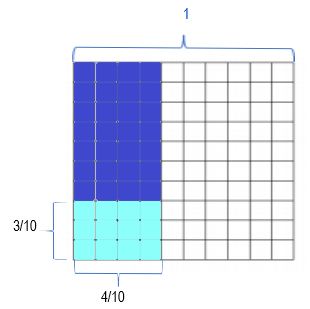
b. \(\frac{4}{10}\) × \(\frac{3}{10}\)
Eureka Math Grade 5 Module 4 Lesson 17 Problem Set Answer Key 2

Answer:

Explanation:
Given that \(\frac{4}{10}\) × \(\frac{3}{10}\)
= \(\frac{4 × 3}{10 × 10}\)
= \(\frac{12}{100}\)
= 0.12.
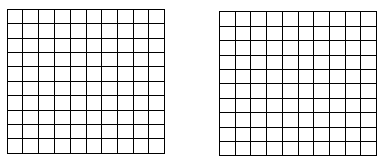
Eureka Math Grade 5 Module 4 Lesson 17 Problem Set Answer Key 1-1

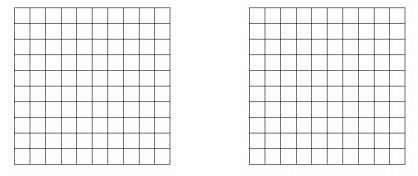
c. \(\frac{1}{10}\) × 1.4
Eureka Math Grade 5 Module 4 Lesson 17 Problem Set Answer Key 3

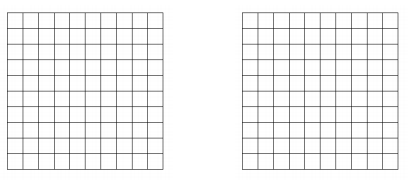
d. \(\frac{6}{10}\) × 1.7
Eureka Math Grade 5 Module 4 Lesson 17 Problem Set Answer Key 4

Question 2.
Multiply. The first few are started for you.
a. 5 × 0.7 = _______
= 5 × \(\frac{7}{10}\)
= \(\frac{5 × 7}{10}\)
= \(\frac{35}{10}\)
= 3.5

b. 0.5 × 0.7 = ___
= \(\frac{5}{10}\) × \(\frac{7}{10}\)
= \(\frac{5 × 7}{10 × 10}\)
= \(\frac{35}{100}\)
= 0.35

c. 0.05 × 0.7 = __
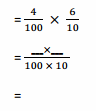
= \(\frac{5}{100}\) × \(\frac{7}{10}\)
Eureka Math Grade 5 Module 4 Lesson 17 Problem Set Answer Key 25

= \(\frac{5}{7}\) × \(\frac{10}{100}\)
= \(\frac{35}{1000}\)
= 0.035

d. 6 × 0.3 = _______
= 6 × \(\frac{3}{10}\)
= \(\frac{6 × 3}{10}\)
= \(\frac{18}{10}\)
= 1.8

e. 0.6 × 0.3 = _______
= \(\frac{6}{10}\) × \(\frac{3}{10}\)
= \(\frac{6 × 3}{10 × 10}\)
= \(\frac{18}{100}\)
= 0.18

f. 0.06 × 0.3 = _______
= \(\frac{6}{100}\) × \(\frac{3}{10}\)
= \(\frac{6 × 3}{100 × 10}\)
= \(\frac{18}{1000}\)
= 0.018

g. 1.2 × 4 = _______
= \(\frac{12}{10}\) × 4
= \(\frac{12 × 4}{10}\)
= \(\frac{48}{10}\)
= 4.8.

h. 1.2 × 0.4 = _______
= \(\frac{12}{10}\) × \(\frac{4}{10}\)
= \(\frac{12 × 4}{10 × 10}\)
= \(\frac{48}{100}\)
= 0.48.

i. 0.12 × 0.4 = _______
= \(\frac{12}{100}\) × \(\frac{4}{10}\)
= \(\frac{12 × 4}{100 × 10}\)
= \(\frac{48}{1000}\)
= 0.048.

Question 3.
A Boy Scout has a length of rope measuring 0.7 meter. He uses 2 tenths of the rope to tie a knot at one end. How many meters of rope are in the knot?

Question 4.
After just 4 tenths of a 2.5-mile race was completed, Lenox took the lead and remained there until the end of the race.

a. How many miles did Lenox lead the race?

b. Reid, the second-place finisher, developed a cramp with 3 tenths of the race remaining. How many miles did Reid run without a cramp?

Eureka Math Grade 5 Module 4 Lesson 17 Exit Ticket Answer Key

Question 1.
Multiply and model. Rewrite the expression as a number sentence with decimal factors.
\(\frac{1}{10}\) × 1.2
Engage NY Math 5th Grade Module 4 Lesson 17 Exit Ticket Answer Key 26

Question 2.
Multiply.

a. 1.5 × 3 = _______

b. 1.5 × 0.3 = _______

c. 0.15 × 0.3 = _______

Eureka Math Grade 5 Module 4 Lesson 17 Homework Answer Key

Question 1.
Multiply and model. Rewrite each expression as a number sentence with decimal factors. The first one is done for you.
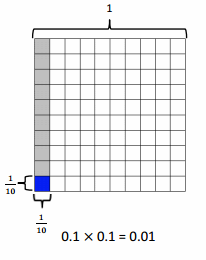
a. \(\frac{1}{10}\) × \(\frac{1}{10}\)
= \(\frac{1 × 1}{10 × 10}\)
= \(\frac{1}{100}\)
0.1 × 0.1 = 0.01
Eureka Math 5th Grade Module 4 Lesson 17 Homework Answer Key 50

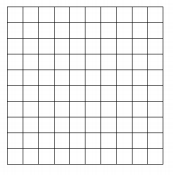
b. \(\frac{6}{10}\) × \(\frac{2}{10}\)
Eureka Math 5th Grade Module 4 Lesson 17 Homework Answer Key 51

c. \(\frac{1}{10}\) × 1.6
Eureka Math 5th Grade Module 4 Lesson 17 Homework Answer Key 52

d. \(\frac{6}{10}\) × 1.9
Eureka Math 5th Grade Module 4 Lesson 17 Homework Answer Key 53

Question 2.
Multiply. The first few are started for you.
a. 4 × 0.6 = _______
= 4 × \(\frac{6}{10}\)
= \(\frac{4 × 6}{10}\)
= \(\frac{24}{10}\)
= 2.4

b. 0.4 × 0.6 = _______
= \(\frac{4}{10}\) × \(\frac{6}{10}\)
= \(\frac{4 × 6}{10 × 10}\)
=

c. 0.04 × 0.6 = _______
Eureka Math 5th Grade Module 4 Lesson 17 Homework Answer Key 58

d. 7 × 0.3 = _______

e. 0.7 × 0.3 = _______

f. 0.07 × 0.3 = _______

g. 1.3 × 5 = _______

h. 1.3 × 0.5 = _______

i. 0.13 × 0.5 = _______

Question 3.
Jennifer makes 1.7 liters of lemonade. If she pours 3 tenths of the lemonade in the glass, how many liters of lemonade are in the glass?

Question 4.
Cassius walked 6 tenths of a 3.6-mile trail.
a. How many miles did Cassius have left to hike?

b. Cameron was 1.3 miles ahead of Cassius. How many miles did Cameron hike already?

Eureka Math Grade 5 Module 4 Lesson 15 Answer Key

Engage NY Eureka Math 5th Grade Module 4 Lesson 15 Answer Key

Eureka Math Grade 5 Module 4 Lesson 15 Problem Set Answer Key

Question 1.
Solve. Draw a rectangular fraction model to explain your thinking. Then, write a multiplication sentence. The first one is done for you.

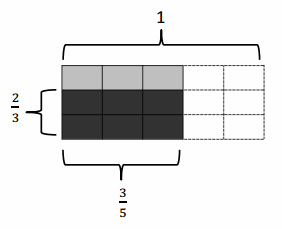
a. \(\frac{2}{3}\) of \(\frac{3}{5}\)
\(\frac{2}{3}\) × \(\frac{3}{5}\) = \(\frac{6}{15}\) = \(\frac{2}{5}\)
Eureka Math Grade 5 Module 4 Lesson 15 Problem Set Answer Key 1

b. \(\frac{3}{4}\) of \(\frac{4}{5}\) =

Answer:
latex]\frac{3}{4}[/latex] of \(\frac{4}{5}\) = \(\frac{3}{5}\).

Explanation:
Given that \(\frac{3}{4}\) of \(\frac{4}{5}\) which is
\(\frac{3}{4}\) × \(\frac{4}{5}\) = \(\frac{3}{5}\)

c. \(\frac{2}{5}\) of \(\frac{2}{3}\)=

Answer:
latex]\frac{2}{5}[/latex] of \(\frac{2}{3}\) = \(\frac{4}{15}\).

Explanation:
Given that \(\frac{2}{5}\) of \(\frac{2}{3}\) which is
\(\frac{2}{5}\) × \(\frac{2}{3}\) = \(\frac{4}{15}\)

d. \(\frac{4}{5}\) × \(\frac{2}{3}\) =

Answer:
latex]\frac{4}{5}[/latex] of \(\frac{2}{3}\) = \(\frac{8}{15}\).

Explanation:
Given that \(\frac{4}{5}\) of \(\frac{2}{3}\) which is
\(\frac{4}{5}\) × \(\frac{2}{3}\) = \(\frac{8}{15}\)

e. \(\frac{3}{4}\) × \(\frac{2}{3}\)=

Answer:
latex]\frac{3}{4}[/latex] of \(\frac{2}{3}\) = \(\frac{1}{2}\).

Explanation:
Given that \(\frac{3}{4}\) of \(\frac{2}{3}\) which is
\(\frac{3}{4}\) × \(\frac{2}{3}\) = \(\frac{1}{2}\)

Question 2.
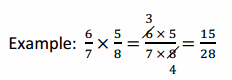
Multiply. Draw a rectangular fraction model if it helps you, or use the method in the example.

Eureka Math Grade 5 Module 4 Lesson 15 Problem Set Answer Key 25

a. \(\frac{3}{4}\) × \(\frac{5}{6}\)

Answer:
latex]\frac{3}{4}[/latex] of \(\frac{5}{6}\) = \(\frac{5}{8}\).

Explanation:
Given that \(\frac{3}{4}\) of \(\frac{5}{6}\) which is
\(\frac{3}{4}\) × \(\frac{5}{6}\) = \(\frac{5}{8}\).

b. \(\frac{4}{5}\) × \(\frac{5}{8}\)

Answer:
latex]\frac{4}{5}[/latex] of \(\frac{5}{8}\) = \(\frac{1}{2}\).

Explanation:
Given that \(\frac{4}{5}\) of \(\frac{5}{8}\) which is
\(\frac{4}{5}\) × \(\frac{5}{8}\) = \(\frac{1}{2}\)

c. \(\frac{2}{3}\) × \(\frac{6}{7}\)

Answer:
latex]\frac{2}{3}[/latex] of \(\frac{6}{7}\) = \(\frac{1}{7}\).

Explanation:
Given that \(\frac{2}{3}\) of \(\frac{6}{7}\) which is
\(\frac{2}{3}\) × \(\frac{6}{7}\) = \(\frac{1}{7}\)

d. \(\frac{4}{9}\) × \(\frac{3}{10}\)

Answer:
latex]\frac{4}{9}[/latex] of \(\frac{3}{10}\) = \(\frac{2}{15}\).

Explanation:
Given that \(\frac{4}{9}\) of \(\frac{3}{10}\) which is
\(\frac{4}{9}\) × \(\frac{3}{10}\) = \(\frac{2}{15}\).

Question 3.
Phillip’s family traveled \(\frac{3}{10}\) of the distance to his grandmother’s house on Saturday. They traveled \(\frac{4}{7}\) of the remaining distance on Sunday. What fraction of the total distance to his grandmother’s house was traveled on Sunday?

Answer:
Philip’s family traveled on Sunday is \(\frac{2}{5}\).

Explanation:
Given that Phillip’s family traveled \(\frac{3}{10}\) of the distance to his grandmother’s house on Saturday, so the remaining is 1 – \(\frac{3}{10}\) which is \(\frac{7}{10}\). So Philip’s family traveled on Sunday is \(\frac{4}{7}\) × \(\frac{7}{10}\) which is \(\frac{2}{5}\).

Question 4.
Santino bought a \(\frac{3}{4}\)-pound bag of chocolate chips. He used \(\frac{2}{3}\) of the bag while baking. How many pounds of chocolate chips did he use while baking?

Answer:
The number of pounds of chocolate chips did he use while baking is \(\frac{1}{2}\) lb.

Explanation:
Given that Santino bought a \(\frac{3}{4}\)-pound bag of chocolate chips and he used \(\frac{2}{3}\) of the bag while baking. So the number of pounds of chocolate chips did he use while baking is \(\frac{3}{4}\) × \(\frac{2}{3}\) which is \(\frac{1}{2}\) lb.

Question 5.
Farmer Dave harvested his corn. He stored \(\frac{5}{9}\) of his corn in one large silo and \(\frac{3}{4}\) of the remaining corn in a small silo. The rest was taken to market to be sold.
a. What fraction of the corn was stored in the small silo?

Answer:
The fraction of the corn was stored in the small silo \(\frac{1}{3}\).

Explanation:
Given that Dave has stored \(\frac{5}{9}\) of his corn in one large silo. Let the total corn be ‘X’, and the amount of corn stored in the silo is \(\frac{5}{9}\)X. The amount of corn remaining is X – \(\frac{5}{9}\)X which is \(\frac{9X – 5X}{9}\) = \(\frac{4X}{9}\). Thus the amount of corn stored in the small silo is \(\frac{3}{4}\) × \(\frac{4}{9}\)X which is \(\frac{1}{3}\)X. Thus the fraction of the corn was stored in the small silo \(\frac{1}{3}\).

b. If he harvested 18 tons of corn, how many tons did he take to market?

Answer:
The amount of corn taken to market is 9 tonnes.

Explanation:
The amount of corn solid in the market is \(\frac{4X}{9}\) – \(\frac{X}{3}\) which is \(\frac{X}{9}\). Thus the amount of corn taken to market is 18 × \(\frac{1}{9}\) which is 9 tonnes.

Eureka Math Grade 5 Module 4 Lesson 15 Exit Ticket Answer Key

Question 1.
Solve. Draw a rectangular fraction model to explain your thinking. Then, write a multiplication sentence.

a. \(\frac{2}{3}\) of \(\frac{3}{5}\) =

Answer:
latex]\frac{2}{3}[/latex] of \(\frac{3}{5}\) = \(\frac{2}{5}\).

Explanation:
Given that \(\frac{2}{3}\) of \(\frac{3}{5}\) which is
\(\frac{2}{3}\) × \(\frac{3}{5}\) = \(\frac{2}{5}\).

b. \(\frac{4}{9}\) × \(\frac{3}{8}\) =

Answer:
latex]\frac{4}{9}[/latex] of \(\frac{3}{8}\) = \(\frac{1}{6}\).

Explanation:
Given that \(\frac{4}{9}\) of \(\frac{3}{8}\) which is
\(\frac{4}{9}\) × \(\frac{3}{8}\) = \(\frac{1}{6}\).

Question 2.
A newspaper’s cover page is \(\frac{3}{8}\) text, and photographs fill the rest. If \(\frac{2}{5}\) of the text is an article about endangered species, what fraction of the cover page is the article about endangered species?

Answer:
The fraction of the cover page is the article about endangered species \(\frac{3}{20}\).

Explanation:
Given that a newspaper’s cover page is \(\frac{3}{8}\) text, and photographs fill the rest, and if \(\frac{2}{5}\) of the text is an article about endangered species. So the fraction of the cover page is the article about endangered species \(\frac{3}{8}\) × \(\frac{2}{5}\) which is \(\frac{3}{20}\).

Eureka Math Grade 5 Module 4 Lesson 15 Homework Answer Key

Question 1.
Solve. Draw a rectangular fraction model to explain your thinking. Then, write a multiplication sentence.
a. \(\frac{2}{3}\) of \(\frac{3}{4}\) =

Answer:
latex]\frac{2}{3}[/latex] of \(\frac{3}{4}\) = \(\frac{1}{2}\).

Explanation:
Given that \(\frac{2}{3}\) of \(\frac{3}{4}\) which is
\(\frac{2}{3}\) × \(\frac{3}{4}\) = \(\frac{1}{2}\).

b. \(\frac{2}{5}\) of \(\frac{3}{4}\) =

Answer:
latex]\frac{2}{5}[/latex] of \(\frac{3}{4}\) = \(\frac{3}{10}\).

Explanation:
Given that \(\frac{2}{5}\) of \(\frac{3}{4}\) which is
\(\frac{2}{5}\) × \(\frac{3}{4}\) = \(\frac{3}{10}\).

c. \(\frac{2}{5}\) of \(\frac{4}{5}\) =

Answer:
latex]\frac{2}{5}[/latex] of \(\frac{4}{5}\) = \(\frac{8}{25}\).

Explanation:
Given that \(\frac{2}{5}\) of \(\frac{4}{5}\) which is
\(\frac{2}{5}\) × \(\frac{4}{5}\) = \(\frac{8}{25}\).

d. \(\frac{4}{5}\) of \(\frac{3}{4}\) =

Answer:
latex]\frac{4}{5}[/latex] of \(\frac{3}{4}\) = \(\frac{3}{5}\).

Explanation:
Given that \(\frac{4}{5}\) of \(\frac{3}{4}\) which is
\(\frac{4}{5}\) × \(\frac{3}{4}\) = \(\frac{3}{5}\).

Question 2.
Multiply. Draw a rectangular fraction model if it helps you.
a. \(\frac{5}{6}\) × \(\frac{3}{10}\)

Answer:
latex]\frac{5}{6}[/latex] of \(\frac{3}{10}\) = \(\frac{1}{4}\).

Explanation:
Given that \(\frac{5}{6}\) of \(\frac{3}{10}\) which is
\(\frac{5}{6}\) × \(\frac{3}{10}\) = \(\frac{1}{4}\).

b. \(\frac{3}{4}\) × \(\frac{4}{5}\)

Answer:
latex]\frac{3}{4}[/latex] of \(\frac{4}{5}\) = \(\frac{3}{5}\).

Explanation:
Given that \(\frac{3}{4}\) of \(\frac{4}{5}\) which is
\(\frac{3}{4}\) × \(\frac{4}{5}\) = \(\frac{3}{5}\).

c. \(\frac{5}{6}\) × \(\frac{5}{8}\)

Answer:
latex]\frac{4}{9}[/latex] of \(\frac{3}{8}\) = \(\frac{1}{6}\).

Explanation:
Given that \(\frac{4}{9}\) of \(\frac{3}{8}\) which is
\(\frac{4}{9}\) × \(\frac{3}{8}\) = \(\frac{1}{6}\).

d. \(\frac{3}{4}\) × \(\frac{5}{12}\)

Answer:
latex]\frac{4}{9}[/latex] of \(\frac{3}{8}\) = \(\frac{1}{6}\).

Explanation:
Given that \(\frac{4}{9}\) of \(\frac{3}{8}\) which is
\(\frac{4}{9}\) × \(\frac{3}{8}\) = \(\frac{1}{6}\).

e. \(\frac{8}{9}\) × \(\frac{2}{3}\)

Answer:
latex]\frac{8}{9}[/latex] of \(\frac{2}{3}\) = \(\frac{16}{27}\).

Explanation:
Given that \(\frac{8}{9}\) of \(\frac{2}{3}\) which is
\(\frac{8}{9}\) × \(\frac{2}{3}\) = \(\frac{16}{27}\).

f. \(\frac{3}{7}\) × \(\frac{2}{9}\)

Answer:
latex]\frac{3}{7}[/latex] of \(\frac{2}{9}\) = \(\frac{2}{21}\).

Explanation:
Given that \(\frac{3}{7}\) of \(\frac{2}{9}\) which is
\(\frac{3}{7}\) × \(\frac{2}{9}\) = \(\frac{2}{21}\).

Question 3.
Every morning, Halle goes to school with a 1-liter bottle of water. She drinks \(\frac{1}{4}\) of the bottle before school starts and \(\frac{2}{3}\) of the rest before lunch.
a. What fraction of the bottle does Halle drink after school starts but before lunch?

Answer:
The fraction of the bottle does Halle drinks after school starts but before lunch is \(\frac{1}{2}\).

Explanation:
Given that Halle goes to school with a 1-liter bottle of water and she drinks \(\frac{1}{4}\) of the bottle before school starts and \(\frac{2}{3}\) of the rest before lunch and the amount left after drinking before school starts are 1 – \(\frac{1}{4}\) which is \(\frac{3}{4}\) and the fraction of the bottle does Halle drinks after school starts but before lunch is \(\frac{2}{3}\) of Amount left
= \(\frac{2}{3}\) × \(\frac{3}{4}\)
= \(\frac{1}{2}\).

b. How many milliliters are left in the bottle at lunch?

Answer:
The amount that left in the bottle at lunch is 250 milliliters.

Explanation:
The amount that left in the bottle at lunch is 1 – (\(\frac{3}{4}\) + \(\frac{1}{2}\))
= \(\frac{1}{4}\), as we know that 1 litre is 1000 milliliters, so \(\frac{1}{4}\) litre is \(\frac{1}{4}\) × 1000 which is 250 milliliters.

Question 4.
Moussa delivered \(\frac{3}{8}\) of the newspapers on his route in the first hour and \(\frac{4}{5}\) of the rest in the second hour. What fraction of the newspapers did Moussa deliver in the second hour?

Question 5.
Rose bought some spinach. She used \(\frac{3}{5}\) of the spinach on a pan of spinach pie for a party and \(\frac{3}{4}\) of the remaining spinach for a pan for her family. She used the rest of the spinach to make a salad.
a. What fraction of the spinach did she use to make the salad?

b. If Rose used 3 pounds of spinach to make the pan of spinach pie for the party, how many pounds of spinach did Rose use to make the salad?

Eureka Math Grade 5 Module 4 Lesson 8 Answer Key

Engage NY Eureka Math 5th Grade Module 4 Lesson 8 Answer Key

Eureka Math Grade 5 Module 4 Lesson 8 Problem Set Answer Key

Question 1.
Laura and Sean find the product of \(\frac{2}{3}\) × 4 using different methods.
Laura: It’s 2 thirds of 4.
\(\frac{2}{3}\) × 4 = \(\frac{4}{3}\) + \(\frac{4}{3}\) = 2 × \(\frac{4}{3}\) = \(\frac{8}{3}\)

Sean: It’s 4 groups of 2 thirds.
\(\frac{2}{3}\) + \(\frac{2}{3}\) + \(\frac{2}{3}\) + \(\frac{2}{3}\) = 4 × \(\frac{2}{3}\) = \(\frac{8}{3}\)
Use words, pictures, or numbers to compare their methods in the space below.
Answer:
Laura:
2/3 * 4 = 4/3 + 4/3 = 2*4/3 = 8/3
Sean:
2/3 + 2/3 + 2/3 + 2/3 = 4 * 2/3 = 8/3
Both methods are correct. 2/3 *4 is 2 thirds of 4, and it will also have the same product as the 4 groups of 2 thirds.

Question 2.
Rewrite the following addition expressions as fractions as shown in the example.
Example: \(\frac{2}{3}\) + \(\frac{2}{3}\) + \(\frac{2}{3}\) + \(\frac{2}{3}\) = (\(\frac{4 × 2}{3}\)) = \(\frac{8}{3}\)
a. \(\frac{7}{4}\) + \(\frac{7}{4}\) + \(\frac{7}{4}\) =
Answer:
21/4

Explanation:
The addition expression for the fraction given is :
7/4 + 7/4 + 7/4 = (3 × 7)/4 = 21/4

b. \(\frac{14}{5}\) + \(\frac{14}{5}\) =
Answer:
28/5

Explanation:
The addition expression for the fraction given is :
14/5 + 14/5 = (2×14)/5 = 28/5

c. \(\frac{4}{7}\) + \(\frac{4}{7}\) + \(\frac{4}{7}\) =
Answer:
12/7

Explanation:
4/7 +4/7 +4/7 = (3×4)/7 = 12/7

Question 3.
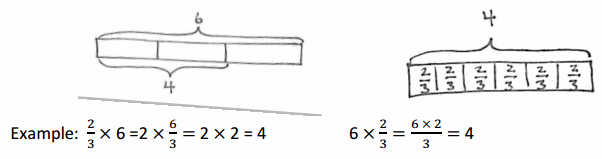
Solve and model each problem as a fraction of a set and as repeated addition.
Eureka Math Grade 5 Module 4 Lesson 8 Problem Set Answer Key 1
a. \(\frac{1}{2}\) × 8 8 × \(\frac{1}{2}\)
Answer:
1 ×8/2 = 1×4 = 4
8 × 1/2 = (8×1)/2
= 8/2
= 4

b. \(\frac{3}{5}\) × 10 10 × \(\frac{3}{5}\)
Answer:
6

Explanation:
3 ×10/5 = 3 × 2 = 6
10 × 3/5 = (10×3)/5 = 30/5 = 6

Question 4.
Solve each problem in two different ways as modeled in the example.
Eureka Math Grade 5 Module 4 Lesson 8 Problem Set Answer Key 2

a. 14 × \(\frac{3}{7}\) 14 × \(\frac{3}{7}\)
Answer:
6

Explanation:
(14×3)/7 = (7×2×3)/7 = (7×6)/7 = 6
(14 × 3)/7 = (2×3)/1 = 6

b. \(\frac{3}{4}\) × 36 \(\frac{3}{4}\) ×36
Answer:
27

Explanation:
(3×36)/4 = (3×4×9)/4 = (4×27)/4 = 27
(3×36)/4 = (3×9) = (3×9) = 27

c. 30 × \(\frac{13}{10}\) 30 × \(\frac{13}{10}\)
Answer:
39

Explanation:
(30×13)/10 = (10×3×13)/10 = (10×39)/10 = 39
(30 ×13)/10 = (3×13)/1 = 39

d. \(\frac{9}{8}\) ×32 \(\frac{9}{8}\) × 32
Answer:
36

Explanation:
(9×32)/8 = (9×4×8)/8 = (36×8)/8 = 36
(9×32)/8 = (9×32)/8 = (9×4)/1 = 36

Question 5.
Solve each problem any way you choose.
a. \(\frac{1}{2}\) × 60 \(\frac{1}{2}\) minute = __________ seconds
Answer:
30seconds

Explanation:
The answer and the procedure are explained clearly in the below steps.
1 minute = 60 seconds
(1×60)/2 = (1×30)/1 = 30

b. \(\frac{3}{4}\) × 60 \(\frac{3}{4}\) hour = __________ minutes
Answer:
45 minutes

Explanation:
The answer and the procedure are explained clearly in the below steps.
1 hour = 60 minutes
(3×60)/4 = (3×15)/1 = 45

c. \(\frac{3}{10}\) × 1,000 \(\frac{3}{10}\) kilogram = __________ grams”
Answer:
300 grams

Explanation:
The answer and the procedure are explained clearly in the below steps.
1 kilogram = 1000 grams
(3×1000)/1 = 300

d. \(\frac{4}{5}\) × 100 \(\frac{4}{5}\) meter = __________ centimeters
Answer:
80 centimeters

Explanation:
The answer and the procedure are explained clearly in the below steps.
1 meter
(4×100)/5 = (4×20)/1 = 80

Eureka Math Grade 5 Module 4 Lesson 8 Exit Ticket Answer Key

Solve each problem in two different ways as modeled in the example.
Engage NY Math 5th Grade Module 4 Lesson 7 Exit Ticket Answer Key 20

a. \(\frac{2}{3}\) × 15 \(\frac{2}{3}\) × 15
Answer:
10

Explanation:
By solving the given question in two methods we could get the same answer i.e 10. The Explanation is given below.
2/3 × 15 = (2 ×15)/3 = 30/3 = 10
2/3 ×15 = (2×15)/3 = (2×5) = 10

b. \(\frac{5}{4}\) × 12 \(\frac{5}{4}\) × 12
Answer:
15

Explanation:
By solving the given question in two methods we could get the same answer i.e 15. The process for the question is done below.
5/4 × 12 = (5×12)/4 = (60)/4 =15
5/4 ×12 = ( 5×12)/4 = (5×3) =15

Eureka Math Grade 5 Module 4 Lesson 8 Homework Answer Key

Question 1.
Rewrite the following expressions as shown in the example.
Example: \(\frac{2}{3}\) + \(\frac{2}{3}\) + \(\frac{2}{3}\) + \(\frac{2}{3}\) = (\(\frac{4 × 2}{3}\)) = \(\frac{8}{3}\)

a. \(\frac{5}{3}\) + \(\frac{5}{3}\) + \(\frac{5}{3}\)
Answer:
5

Explanation:
(\(\frac{3 × 5}{3}\)) = \(\frac{15}{3}\) =5

b. \(\frac{13}{5}\) + \(\frac{13}{5}\)
Answer:
\(\frac{26}{5}\)

Explanation:
(\(\frac{2 × 13}{5}\)) = \(\frac{26}{5}\)

c. \(\frac{9}{4}\) + \(\frac{9}{4}\) + \(\frac{9}{4}\)
Answer:
\(\frac{27}{4}\)

Expalanation:
(\(\frac{3 × 9}{4}\)) = \(\frac{27}{4}\)

Question 2.
Solve each problem in two different ways as modeled in the example.
Eureka Math 5th Grade Module 4 Lesson 8 Homework Answer Key 30

a. \(\frac{3}{4}\) × 16 \(\frac{3}{4}\) × 16
Answer:
12

Explanation:
(\(\frac{3 × 16}{4}\)) = \(\frac{48}{4}\) = 12
(\(\frac{3 × 16}{4}\)) = \(\frac{3 × 4}{1}\) = 12

b. \(\frac{4}{3}\) × 12 \(\frac{4}{3}\) × 12
Answer:
16

Explanation:
(\(\frac{4 × 12}{3}\)) = \(\frac{48}{3}\) = 16
(\(\frac{4 × 12}{3}\)) = \(\frac{4 × 12}{1}\) = 16

c. 40 × \(\frac{11}{10}\) 40 × \(\frac{11}{10}\)
Answer:
44

Explanation:
(\(\frac{40 × 11}{10}\)) = \(\frac{440}{10}\) = 44
(\(\frac{40× 11}{10}\)) = \(\frac{4 × 11}{1}\) = \(\frac{44}{1}\) = 44

d. \(\frac{7}{6}\) × 36 \(\frac{7}{6}\)× 36
Answer:
42

Explanation:
(\(\frac{7 × 36}{6}\)) = \(\frac{252}{6}\) = 42
(\(\frac{7 × 36}{6}\)) = \(\frac{7 × 6}{1}\) = 42

e. 24 × \(\frac{5}{8}\) 24 × \(\frac{5}{8}\)
Answer:
15

Explanation:
(\(\frac{24 × 5}{8}\)) = \(\frac{126}{8}\) = 15
(\(\frac{24 × 5}{8}\)) = \(\frac{3 × 5}{1}\) = 15

f. 18 × \(\frac{5}{12}\) 18 × \(\frac{5}{12}\)
Answer:
7 1/2

Explanation:
(\(\frac{18 × 5}{12}\)) = \(\frac{90}{12}\) = 7 6/12 = 7 1/2
(\(\frac{18 × 5}{12}\)) = \(\frac{3 × 5 }{2}\) = \(\frac{15}{2}\)= 7 1/2

g. \(\frac{10}{9}\) × 21 \(\frac{10}{9}\) × 21
Answer:
23 3/9 = 23 1/3

Explanation:
(\(\frac{10 × 21}{9}\)) = \(\frac{210}{9}\) = 23 3/9 = 23 1/3
(\(\frac{10 × 21}{9}\)) = \(\frac{10 × 7}{3}\) = \(\frac{70}{3}\)  = 23 1/3

Question 3.
Solve each problem any way you choose.

a. \(\frac{1}{3}\) × 60 \(\frac{1}{3}\) minute = _________ seconds
Answer:
20 seconds

Explanation:
(\(\frac{1 × 60}{3}\)) = \(\frac{60}{3\) = 20

b. \(\frac{4}{5}\) × 60 \(\frac{4}{5}\) hour = _________ minutes
Answer:
48 minutes

Explanation:
(\(\frac{4 × 60}{5}\)) = \(\frac{48}{1\) = 48

c. \(\frac{7}{10}\) × 1000 \(\frac{7}{10}\) kilogram = _________ grams
Answer:
700 grams

Explanation:
(\(\frac{7 × 1000}{10}\)) = \(\frac{700}{1\) = 700

d. \(\frac{3}{5}\)× 100 \(\frac{3}{5}\) meter = _________ centimeters
Answer:
60 centimeres

Explanation:
(\(\frac{3 × 100}{5}\)) = \(\frac{60}{1\) = 60

Eureka Math Grade 5 Module 4 Lesson 7 Answer Key

Engage NY Eureka Math 5th Grade Module 4 Lesson 7 Answer Key

Eureka Math Grade 5 Module 4 Lesson 7 Problem Set Answer Key

Solve using a tape diagram.
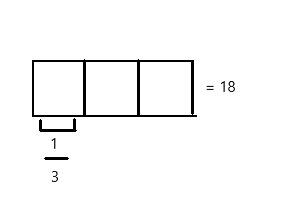
a. \(\frac{1}{3}\) of 18
Answer:
6

Explanation:
Eureka-Math-Grade-5-Module-4-Lesson-7-Problem-Set-Answer-Key-1

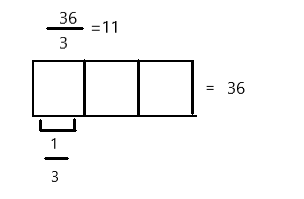
b. \(\frac{1}{3}\) of 36
Answer:
11

Explanation:
Eureka-Math-Grade-5-Module-4-Lesson-7-Problem-Set-Answer-Key-2

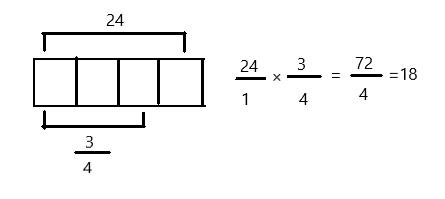
c. \(\frac{3}{4}\) × 24
Answer:
18

Explanation:
Eureka-Math-Grade-5-Module-4-Lesson-7-Problem-Set-Answer-Key-3

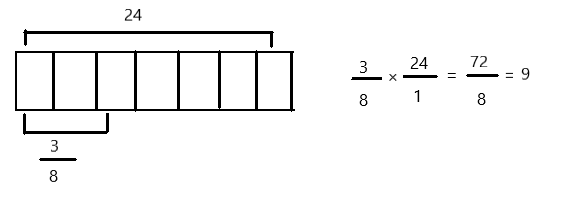
d. \(\frac{3}{8}\) × 24
Answer:
9

Explanation:
Eureka-Math-Grade-5-Module-4-Lesson-7-Problem-Set-Answer-Key-4

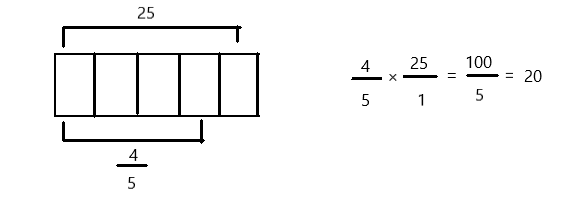
e. \(\frac{4}{5}\) × 25
Answer:
20

Explanation:
Eureka-Math-Grade-5-Module-4-Lesson-7-Problem-Set-Answer-Key-5

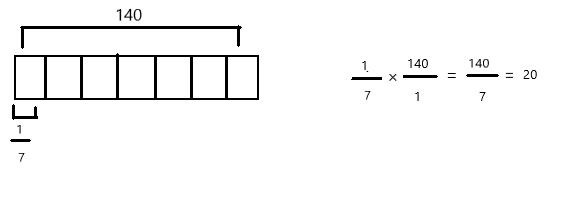
f. \(\frac{1}{7}\) × 140
Answer:
20

Explanation:
Eureka-Math-Grade-5-Module-4-Lesson-7-Problem-Set-Answer-Key-6

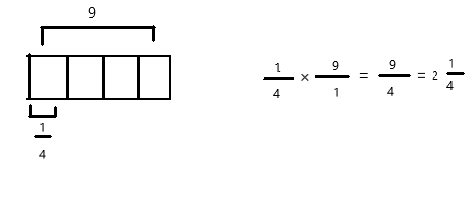
g. \(\frac{1}{4}\) × 9
Answer:
2 1/4

Explanation:
Eureka-Math-Grade-5-Module-4-Lesson-7-Problem-Set-Answer-Key-7

h. \(\frac{2}{5}\) × 12

i. \(\frac{2}{3}\) of a number is 10. What’s the number?

j. \(\frac{3}{4}\) of a number is 24. What’s the number?

Question 2.
Solve using tape diagrams.
a. There are 48 students going on a field trip. One-fourth are girls. How many boys are going on the trip?
Answer:
36 boys are going on the field trip.

Explanation:
As 48 students are going on a field trip in this \(\frac{1}{4}\) are girls. Hence 36 boys are going on the field trip.
\(\frac{1}{4}\) × 48 = \(\frac{48}{4}\) = 12
12 × 3 = 36

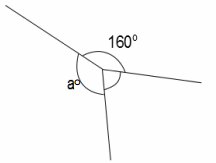
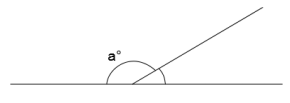
b. Three angles are labeled below with arcs. The smallest angle is \(\frac{3}{8}\) as large as the 160° angle. Find the value of angle a.
Eureka Math Grade 5 Module 4 Lesson 7 Problem Set Answer Key 20
Answer:
Angle a is 140°

Explanation:
The smallest angle given is \(\frac{3}{8}\) and the largest angle is 160°.
160 × \(\frac{3}{8}\) = \(\frac{480}{8}\) = 60
160 + 60 = 220
360-220= 140
Hence the value of angle a is 140°

c. Abbie spent \(\frac{5}{8}\) of her money and saved the rest. If she spent $45, how much money did she have at first?
Answer:
Abbie had $72.

Explanation:
45 ÷ \(\frac{5}{8}\) = 45 × \(\frac{8}{5}\) = \(\frac{360}{5}\) =72

d. Mrs. Harrison used 16 ounces of dark chocolate while baking. She used \(\frac{2}{5}\) of the chocolate to make some frosting and used the rest to make brownies. How much more chocolate did Mrs. Harrison use in the brownies than in the frosting?
Answer:
Mrs. Harrison use 3 × \(\frac{1}{5}\) chocolate for the brownie

Explanation:
Harrison used 16 ounces of dark chocolate. She used \(\frac{2}{5}\) of the chocolate to make some frosting and the remaining to make brownies.
16 × \(\frac{1}{5}\) = \(\frac{16}{5}\) = 3 × \(\frac{1}{5}\)
Hence, Mrs. Harrison use 3 × \(\frac{1}{5}\) chocolate for the brownie.

Eureka Math Grade 5 Module 4 Lesson 7 Exit Ticket Answer Key

Solve using a tape diagram.

a. \(\frac{3}{5}\) of 30

b. \(\frac{3}{5}\) of a number is 30. What’s the number?

c. Mrs. Johnson baked 2 dozen cookies. Two-thirds of the cookies were oatmeal. How many oatmeal cookies did Mrs. Johnson bake?

Eureka Math Grade 5 Module 4 Lesson 7 Homework Answer Key

Question 1.
Solve using a tape diagram.
a. \(\frac{1}{4}\) of 24

b. \(\frac{1}{4}\) of 48

c. \(\frac{2}{3}\) × 18

d. \(\frac{2}{6}\) × 18

e. \(\frac{3}{7}\) × 49

f. \(\frac{3}{10}\) × 120

g. \(\frac{1}{3}\) × 31

h. \(\frac{2}{5}\) × 20

i. \(\frac{1}{4}\) × 25

j. \(\frac{3}{4}\) × 25

k. \(\frac{3}{4}\) of a number is 27. What’s the number?

i. \(\frac{2}{5}\) of a number is 14. What’s the number?

Question 2.
Solve using tape diagrams.
a. A skating rink sold 66 tickets. Of these, \(\frac{2}{3}\) were children’s tickets, and the rest were adult tickets. What total number of adult tickets were sold?

b. A straight angle is split into two smaller angles as shown. The smaller angle’s measure is \(\frac{1}{6}\) that of a straight angle. What is the value of angle a?
Eureka Math Grade 5 Module 4 Lesson 7 Homework Answer Key 31

c. Annabel and Eric made 17 ounces of pizza dough. They used \(\frac{5}{8}\) of the dough to make a pizza and used the rest to make calzones. What is the difference between the amount of dough they used to make pizza and the amount of dough they used to make calzones?

d. The New York Rangers hockey team won \(\frac{3}{4}\) of their games last season. If they lost 21 games, how many games did they play in the entire season?

Divisible by 3

Divisible by 3 | Divisibility Test for 3 | Divisibility Rule of 3 with Examples

Divisible by 3 is possible when the sum of the given digits is divisible by 3. Check out how a number is divisible by 3 in this article. We have given different examples along with a clear explanation here. Also, we have included some of the tricks to find out the process to find a number that is divisible by 3. Improve your math solving skills by learning the different tricks in Divisibility Rules. Verify all the articles on our website and make your real-life happy with the best math learning process.

Also, See:

How to Test if a Number is Divisible by 3 or Not?

Follow the below procedure to find out the numbers either are divisible by 3 or not.

  1. Note down the given number.
  2. Add all the digits of a given number.
  3. Check out the output of addition is divisible by 3 or not.
  4. If the output is divisible is 3, the given number is divided by 3. If not the given number is not divisible by 3.

Divisibility Test of 3 Examples

(i) 60
Solution:
The given number is 60.
Add the digits of the given number.
Add 6 and 0.
6 + 0 = 6.
The number 6 is divisible by 3.
Hence, 60 is divisible by 3.

(ii) 74
Solution:
The given number is 74.
Add the digits of the given number.
Add 7 and 4.
7 + 4 = 11.
The number 11 is not divisible by 3.
Hence, 74 is not divisible by 3.

(iii) 139
Solution:
The given number is 139.
Add the digits of the given number.
Add 1, 3, and 9.
1 + 3 + 9 = 13.
The number 13 is not divisible by 3.
Hence, 139 is not divisible by 3.

(iv) 234
Solution:
The given number is 234.
Add the digits of the given number.
Add 2, 3, and 4.
2 + 3 + 4 = 9.
The number 9 is divisible by 3.
Hence, 234 is divisible by 3.

(v) 196
Solution:
The given number is 196.
Add the digits of the given number.
Add 1, 9, and 6.
1 + 9 + 6 = 16.
The number 16 is not divisible by 3.
Hence, 196 is not divisible by 3.

(vi) 156
Solution:
The given number is 156.
Add the digits of the given number.
Add 1, 5, and 6.
1 + 5 + 6 = 12.
The number 12 is divisible by 3.
Hence, 156 is divisible by 3.

(vii) 174
Solution:
The given number is 174.
Add the digits of the given number.
Add 1, 7, and 4.
1 + 7 + 4 = 12.
The number 12 is divisible by 3.
Hence, 174 is divisible by 3.

(viii) 278
Solution:
The given number is 278.
Add the digits of the given number.
Add 2, 7, and 8.
2 + 7 + 8 = 17.
The number 17 is not divisible by 3.

Hence, 278 is not divisible by 3.

(ix) 279
Solution:
The given number is 279.
Add the digits of the given number.
Add 2, 7, and 9.
2 + 7 + 9 = 18.
The number 18 is divisible by 3.
Hence, 279 is divisible by 3.

(x) 181
Solution:
The given number is 181.
Add the digits of the given number.
Add 1, 8, and 1.
1 + 8 + 1 = 10.
The number 10 is not divisible by 3.
Hence, 181 is not divisible by 3.

Solved Problems on Rules of Divisibility by 3

Fill the correct lowest possible digit in the blank space to make the number divisible by 3.

(i) 15335_
The given number is 15335_.
Add the digits of the given number.
Add 1, 5, 3, 3, and 5.
1 + 5 + 3 + 3 + 5 = 17.
By adding 1 to the number 17, it becomes 18. The number 18 is divisible by 3.
The lowest possible digit in the blank space to make the number divisible by 3 is 1.
Hence, 153351 is the required digit of a given number.

(ii) 20_987
The given number is 20_987.
Add the digits of the given number.
Add 2, 0, 9, 8, and 7.
2 + 0 + 9 + 8 + 7 = 26.
By adding 1 to the number 26, it becomes 27. The number 27 is divisible by 3.
The lowest possible digit in the blank space to make the number divisible by 3 is 1.
Hence, 201987 is the required digit of a given number.

(iii) 8420_1
The given number is 8420_1.
Add the digits of the given number.
Add 8, 4, 2, 0, and 1.
8 + 4 + 2 + 0 + 1 = 15.
By adding 0 to the number 15, it becomes 15. The number 15 is divisible by 3.
The lowest possible digit in the blank space to make the number divisible by 3 is 0.
Hence, 842001 is the required digit of a given number.

(iv) 749_262
The given number is 749_262.
Add the digits of the given number.
Add 7, 4, 9, 2, 6, and 2.
7 + 4 + 9 + 2 + 6 + 2 = 30.
By adding 0 to the number 30, it becomes 30. The number 30is divisible by 3.
The lowest possible digit in the blank space to make the number divisible by 3 is 0.

Hence, 7490262 is the required digit of a given number.

(v) 998_32
The given number is 998_32.
Add the digits of the given number.
Add 9, 9, 8, 3, and 2.
9 + 9 + 8 + 3 + 2 = 31.
By adding 2 to the number 31, it becomes 33. The number 33 is divisible by 3.
The lowest possible digit in the blank space to make the number divisible by 3 is 2.

Hence, 998232 is the required digit of a given number.

(vi) 1_7072
The given number is 1_7072.
Add the digits of the given number.
Add 1, 7, 0, 7, and 2.
1 + 7 + 0 + 7 + 2 = 17.
By adding 1 to the number 17, it becomes 18. The number 18 is divisible by 3.
The lowest possible digit in the blank space to make the number divisible by 3 is 1.
Hence, 117072 is the required digit of a given number.

See More Divisibility Tests:

Divisible by 2Divisible by 4Divisible by 5
Divisible by 6Divisible by 7Divisible by 8
Divisible by 9Divisible by 10
Divisible by 6

Divisible by 6 | Divisibility Rules of 6 | How to test if a number is divisible by 6 or not?

Have you ever wondered why certain numbers divide evenly into a number while others will not? Divisibility Rules or Tests will help you determine whether the given number actually divides the other number without actually dividing. Maths may not be easy for some of us and to help you we have listed the guidelines on whether a Number is Divisible by 6 or not. Check out Solved Examples for testing whether a number is divisible by 6 or not.

Also, Refer:

Divisibility Rule of 6 – Definition

A number is divisible by 6 if it is divisible by both 2 and 3. To know whether a number is divisible by 6 one needs to know both the Divisibility Rules of 2 and 3 in advance.

How to Check whether a Number is Divisible by 6 or not?

Go through the below Divisibility Guidelines of 6 to know whether a number is divisible by 6 or not. To know if a number is divisible by 6 it has to meet two conditions in prior and they are along the lines

  • It has to be divisible by 2 i.e. the last digit in the number should be even.
  • It has to be divisible by  3 i.e. the sum of digits must be a multiple of 3.

If both the conditions are met then the given number is also a multiple of 6 and divisible by 6.

Solved Examples on Divisibility Tests for 6

Find whether the following numbers are divisible by 6 or not

Example 1.
48
Solution:
Given Number is 48
To check whether it is divisible by 6 or not it has to meet two conditions
48 is divisible by 2 since the units digit of the number i.e. 8 is divisible by 2
48 is divisible by 3 since the sum of digits is a multiple of 3 i.e. 4+8 = 12 is divisible by 3
Therefore, 48 is divisible by both 2 and 3
Thus, 48 is divisible by 6.

Example 2.
258
Solution:
Given Number is 258
258 is divisible by 2 since the units digit of the number i.e. 6 is divisible by 2
258 is divisible by 3 since the sum of digits is divisible by 3 i.e. 2+5+8 = 15 is divisible by 3
Since 258 is divisible by both 2, 3 it is also divisible by 6

Example 3.
154
Solution:
Given Number is 154
154 is divisible by 2 since the units digit of the number i.e. 4 is divisible by 2
154 is not divisible by 3 as the sum of the digits is not divisible by 3 i.e. 1+5+4 = 10
10 is not divisible by 3
Since the given number is not divisible by 3 the given number is not divisible by 6.

Example 4.
243
Solution:
Given Number is 243
243 is not divisible by 2 since the units digit of the number is not divisible by 2 i.e. 3 is not divisible by 2
243 is divisible by 3 since the sum of digits is a multiple of 3 i.e. 2+4+3 = 9 and 9 is divisible by 3
Since the given number is not divisible by 2 it is not divisible by 6
Therefore, 243 is not divisible by 6.

Read More Divisibility Tests:

Divisible by 2Divisible by 3Divisible by 4
Divisible by 5Divisible by 7Divisible by 8
Divisible by 9Divisible by 10
Decimals

Decimals – Definition, Types, Properties, Conversions, Arithmetic Operations, Examples

In Maths Numbers are Classified into Various Types like Real Numbers, Whole Numbers, Natural Numbers, Rational Numbers, etc. Decimal Numbers is a Standard form among them used to represent integers and non-integer numbers. By going through this article, you will learn all about the Definition of Decimals, Types, Properties, Conversions, Examples, etc. in the later modules.

What are Decimals?

Decimals are one type of numbers that has a whole number and fractional part separated by a  decimal point. The Dot present between the whole number part and fractional part is called the decimal point.

For instance, 23.4 is a decimal number in which 23 is a whole number and 4 is called the fractional part.

“.” is called the decimal point.

List of Decimal Concepts

Below is the list of Decimal Topics for your reference. You can access them by simply clicking on the quick links available. Once you click on them you will be redirected to a new page having the entire concept explained with examples. Try solving as much as possible to get a good grip on the concept.

Types of Decimal Numbers

Decimal Numbers are classified into two types namely

  • Recurring Decimal Numbers
  • Non-Recurring Decimal Numbers
  • Decimal Fraction

Recurring Decimal Numbers: These are also called Repeating or Non-Terminating Decimals. These Recurring Decimals are further classified into Finite and Infinite.

Example:

3.2525(Finite)

4.12121212……(Infinite)

Non-Recurring Decimal Numbers: These are also called Non-Repeating or Terminating Decimals. They are further classified into finite and infinite non-recurring decimal numbers.

Example:

5.2475 (Finite)

4.1367254….(Infinite)

Decimal Fraction: It Represents the fraction whose denominator is in powers of ten.

31.75 = 3175/100

22.415 = 22415/1000

In Order to Change the Decimal Number to Decimal Fraction firstly place 1 in the denominator and remove the decimal point. “1” is followed by zeros that are equal to the number of digits following the decimal point.

For Example to convert 2.345 to decimal fraction we get

22.345 = 2345/1000

2 represents the power of 101 that is the tenths position.

2 represents the power of 100 that is the unit’s position.

3 represents the power of 10-1 that is the one-tenth position.

4 represents the power of 10-2 that is the one-hundredths position.

5 represents the power of 10-3 that is the one-thousandths position

This is how each digit is represented to the power of a decimal number.

Place Value in Decimals

Place Value System defines the position of a digit in a number that helps to determine its value. When we write Numbers Position of each digit is important.

Decimal Example

The position of “7” is in One’s place, which means 7 ones (i.e. 6).
The position of “2” is in the Ten’s place, which means 2 tens (i.e. twenty).
The position of “3” is in the Hundred’s place, which means 3 hundred.
As we go left, each position becomes ten times greater.

Therefore, we read it as Three Hundred Twenty-Seven

On Moving towards the left each position becomes 10 times bigger and

Tens are 10 times bigger than ones and similarly, Hundreds are 10 times bigger than Tens.

Decimal Place Value Towards Right

Moving towards the right each position becomes 10 times smaller from Hundreds to Tens to Ones. If we continue further the process after ones \(\frac { 1 }{ 10 } \)ths are smaller. Before doing so, you need to place a decimal point.

Decimal Point Example

Place Value Chart

For a better understanding of the concept of place value check out the Place Value Chart below.

Place Value Chart

Digits to the left of the decimal point are multiplied with positive powers of 10 in increasing order from right to left.  In the same way, digits to the right of the decimal point are multiplied with negative powers of 10 in increasing order from left to right.

Example:

71.325

Decimal Expansion of the number is expressed as follows

{(7*10)+(1*1)} + {(3*0.1)+(2*0.01)+(5*0.001)}

Here, each number is multiplied with associated power of 10.

Decimals Properties

Below is the list of important properties of decimal numbers under both multiplication and division operations. They are as follows

  • Irrespective of the decimal numbers multiplied in any order the product remains unchanged.
  • On multiplying a whole number and decimal number in any order the product remains the same.
  • If a decimal fraction is multiplied by 1 product is the decimal fraction itself.
  • If you multiply a decimal fraction with zero the product is zero(0).
  • On dividing a decimal number with 1, the quotient is the decimal number itself.
  • If you divide a decimal number with the same number the quotient is 1.
  • If you divide 0 with any decimal the quotient becomes zero.
  • Division of a Decimal Number with 0 isn’t possible since the reciprocal of 0 doesn’t exist.

Arithmetic Operations on Decimals

Similar to performing Arithmetic Operations on Integers you can do the same with Decimals. Let us discuss important tips while performing arithmetic operations.

Addition: In Decimal Numbers Addition, line up the decimal points of given numbers and then add the numbers. If you don’t find the decimal point, the decimal is behind the number.

Subtraction: Decimal Subtraction is also similar to Decimal Addition. Just like Decimal Addition line up the decimal point of given numbers and subtract the values. To do the arithmetic operation use place holding zeros for your reference.

Multiplication: While Performing Multiplication of Decimal Numbers multiply similar to integers as if the decimal point is not present. Find the product and count the number of digits next to the decimal point in both the numbers. Count indicates how many numbers are needed after the decimal point in the product value.

Division: In Order to divide decimal numbers firstly move the digits so that the number becomes whole numbers. Perform Division Operation similar to Integers Division.

Decimal to Fraction Conversions

Conversion of Fraction to Decimal or Decimal to Fraction is quite simple. We have explained both the methods by even taking few examples. They are as follows

Decimal to Fraction Conversion

Numbers after the decimal points denotes tenths, hundredths, thousandths, and so on. While converting from decimal to fraction note down the decimal numbers in expanded form and then simplify the values.

Example 0.45

Expanded form of 0.45 is 45*(\(\frac { 1 }{ 100 } \)) = \(\frac { 45 }{ 100 } \) = \(\frac { 9 }{ 20 } \)

Fraction to Decimal Conversion

In order to change from fraction to decimal simply divide the numerator with the denominator

For example, \(\frac { 9 }{ 2 } \) is a fraction. If it’s divided, we get 4.5

Problems on Decimals

Question 1.

Convert \(\frac { 15 }{ 10 } \) to decimal?

Solution:

To change from fraction to decimal you just need to divide the numerator with the denominator

On dividing, we get the decimal value as 1.5

Question 2.

Express 3.35 in fraction form?

Solution:

The given decimal number is 3.35

The expanded form of 3.35 is

= 335 x (\(\frac { 1 }{ 100 } \))

= \(\frac { 335 }{ 100 } \)

=\(\frac { 67 }{ 20 } \)

Hence, the equivalent fraction for 3.35is \(\frac { 67 }{ 20 } \).

1st Grade Math

1st Grade Math Curriculum, Worksheets, Word Problems, Games, Practice Tests

Children in Grade K are comfortable with counting and writing numbers from 1 to 20. Kids of Grade 1 will learn 3 digit numbers up to 120. Learn new concepts such as Adding, Subtracting Numbers. Concepts existing will lay a strong foundation of math basics that are useful for higher grades. Make your math learning fun and enjoyable by availing the Grade 1 Math Topics existing.

1st Grade Math Concepts will improve the child’s understanding of number values, arithmetic, linear measurements, and shape compositions. Appealing Visuals make the concepts much fun and enjoyable. Practicing from the Grade 1 Math Concepts helps you to become proficient in Math as well as be thorough with the concepts. Engaging Printable Grade 1 Worksheets present enthralls the kids to have a new learning experience. Solving the 1st Grade Math Concepts one can see a significant improvement in their performance.

First Grade Math Topics, Textbook Solutions

We have curated unique activities and alluring characters for kids in grade 1.  Grade 1 students will get to see identifying patterns, sorting, telling time, measuring time & distances, and many more. Rather than mugging up concepts, one can understand the concept behind them. Simply tap on the quick links available to learn the related concept in a matter of seconds.

Place Value

Numbers – Worksheet

Addition

Subtraction

Adding 0 to 9

Subtracting 0 to 9

Money Names and Values

Why refer to 1st Grade Math Curriculum?

Go through the advantages listed below by accessing our Grade 1 Math Curriculum. They are along the lines

  • No matter the topic you can always count on Grade 1 Math Topics to improve your child’s proficiency.
  • From Basic Addition and Subtraction to Measurement there is a number of ways you can get a good hold of them.
  • If your child is struggling with telling time or reading a clock you can always seek help from us.
  • All the Grade 1 Concepts are explained in detail adhering to the Latest 1st Grade Curriculum.
  • You will discover the joy of learning math that you have never thought of as a kid.

Summary

Hope the knowledge shared about Grade 1 Math has helped you to a possible extent. If you need any assistance on the 1st Grade Math Topics please do drop us your suggestions so that we can revert back to you at the possible extent. Stay in touch with our site to avail latest updates on Grade Wise Math Topics, Word Problems, etc. at your fingertips.

Finding Equivalent Fractions

Finding Equivalent Fractions – Methods, Examples | How to find Equivalent Fractions?

Two or more fractions are said to be equivalent if they result in the same value on simplification. Let us consider two fractions \(\frac { u }{ v } \), \(\frac { w }{ x } \) they are said to be equivalent if they result in same value \(\frac { y }{ z } \) on simplification.

Usually, Equivalent Fractions denote the same portion on a whole. Find details like equivalent fractions definition, how to find equivalent fractions using different methods like multiplication, division with the same numbers. Check out few solved examples on finding the equivalent fractions explained step by step in the later sections.

More Articles:

Equivalent Fractions – Definition

Equivalent Fractions are the fractions having the same value irrespective of the numerators and denominators they have. All Equivalent Fractions on reducing will result in the same value after simplification. For Example: \(\frac {3 }{ 4 } \), \(\frac { 6}{ 8 } \), \(\frac { 9 }{ 12 } \), \(\frac { 12 }{ 16 } \), etc. are all equivalent fractions.

How to Find Equivalent Fractions?

There are two different ways to find the Equivalent Fractions and they are explained in detail below. They are as follows

  • Multiply both the numerator and denominator of the fraction with the same number.
  • Divide both the numerator and denominator of the fraction with the same number.

Multiplying Numerator and Denominator of the Fraction with the Same Number

To get the Equivalent Fraction of any number simply multiply both the numerator and denominator with the same number.
Example:
Find Equivalent Fractions of the Fraction \(\frac { 1 }{ 2 } \)?
Solution:
Equivalent fraction of \(\frac { 1 }{ 2 } \) can be obtained by multiplying with non-zero numbers.
\(\frac { 1 }{ 2 } \)*2 = \(\frac { 2 }{ 4 } \)
\(\frac { 1 }{ 2 } \)*3 = \(\frac { 3 }{ 6 } \)
\(\frac { 1 }{ 2 } \)*4 = \(\frac { 4 }{ 8 } \), etc.

Therefore, \(\frac { 2 }{ 4 } \), \(\frac { 3 }{ 6 } \), \(\frac { 4 }{ 8 } \) are all equivalent fractions of \(\frac { 1 }{ 2 } \).

Dividing Numerator and Denominator of the Fraction with the Same Number

To get an Equivalent Fraction of a Number simply divide both the numerator and denominator with the same value other than zero.  To divide the fraction with the same number we need to evaluate the common factors that both the denominator and numerator share and then divide with them.

Example:
Find the equivalent fractions of the fraction \(\frac { 16 }{ 24 } \)?
Solution:
To obtain the equivalent fractions of \(\frac { 16 }{ 24 } \) we will first find the common factors that both 16, 24 share.
Common Factors of 16, 24 are 1,2,4,8
Dividing with common factors we have
\(\frac { 16 }{ 24 } \) = \(\frac { 16÷2 }{ 24÷2 } \)
= \(\frac { 8 }{ 12 } \)
\(\frac { 16 }{ 24 } \) = \(\frac { 16÷4 }{ 24÷4 } \)
= \(\frac { 4 }{ 6 } \)
\(\frac { 16 }{ 24 } \) = \(\frac { 16÷8 }{ 24÷8 } \)
= \(\frac { 2 }{ 3 } \)
Therefore, equivalent fractions of \(\frac { 16 }{ 24 } \) are \(\frac { 8 }{ 12 } \), \(\frac { 4 }{ 6 } \), \(\frac { 2 }{ 3 } \), etc. and so on.

Equivalent Fractions Examples

Example 1. Check if the following fractions are equivalent or not?

Representation of Fraction 1÷2

Representation of Fraction 4÷8

Representation of Fraction 5÷10

Solution:

The first figure is shaded half so representing in the fraction we have \(\frac { 1 }{ 2 } \)
In the same way, the second and third figures are given by \(\frac { 4 }{ 8 } \) and \(\frac { 5 }{ 10 } \)
As all the figures are shaded half they are said to be equivalent fractions.
We can write \(\frac { 4 }{ 8 } \) = \(\frac { 1 }{ 2 } \) * 2
\(\frac { 5 }{ 10 } \) = \(\frac { 1 }{ 2 } \) * 5
Thus, equivalent fractions are obtained by multiplying numerators and denominators with non-zero numbers.

Example 2.
Find the Equivalent Fractions of the fraction \(\frac { 8 }{ 24 } \)?
Solution:
We can find the Equivalent Fractions of a fraction by either multiplying or dividing the fraction with the same number.
Let us find the equivalent fractions of the fraction \(\frac { 8 }{ 24 } \) by applying division method.
\(\frac { 8 }{ 24 } \) = \(\frac { 8÷2 }{ 24÷2 } \)
= \(\frac { 4 }{ 12 } \)
\(\frac { 8 }{ 24 } \) = \(\frac { 8÷4 }{ 24÷4 } \)
= \(\frac { 2 }{ 6 } \)
\(\frac { 8 }{ 24 } \) = \(\frac { 8÷8 }{ 24÷8 } \)
= \(\frac { 1 }{ 3 } \)

Therefore, Equivalent Fractions of fraction \(\frac { 8 }{ 24 } \) are \(\frac { 4 }{ 12 } \), \(\frac { 2 }{ 6 } \), \(\frac { 1 }{ 3 } \)