Everyday Math Grade 6 Answers Unit 7 Variables and Algebraic Relationships

Everyday Mathematics 6th Grade Answer Key Unit 7 Variables and Algebraic Relationships

Everyday Mathematics Grade 6 Home Link 7.1 Answers

Mystery Numbers
Question 1.
Gabe and Aurelia play Number Squeeze.
Gabe represents his mystery number with the variable f.
a. Represent each of the two Number Squeeze clues with an inequality. Describe the solution sets to the inequalities.
Everyday Mathematics Grade 6 Home Link Unit 7 Answers 1
Answer:
The given clues are:
a) Subtract 5 from f and the answer is greater than 7
So,
The representation of inequality and the solution set for the given clue is:
Inequality:
f – 5 > 7
Solution set:
Add 5 on both sides
f – 5 + 5 > 7 + 5
f > 12
So,
The solution set is: {All the numbers greater than 12}
b) The number f is less than 13
So,
The representation of inequality and the solution set for the given clue is:
Inequality:
f < 13
Solution set:
The solution set is: {All the numbers less than 13}
Hence, from the above,
The completed table is:

b. Graph the solution set that makes both inequalities true.
Everyday Mathematics Grade 6 Home Link Unit 7 Answers 2
Answer:
From part (a),
The inequalities are:
f > 12 and f < 13
Hence,
The graph of the  solution set that makes both inequalities true is:


c. List three numbers that could be the mystery number.
Check that they are in the solution sets for both inequalities.
Possible numbers f could be: ____________
Answer:
From part (b),
We know that,
When we observe the graph of both the inequalities, the mystery numbers for both lie between 12 and 13 only
Hence, from the above,
We can conclude that
The possible numbers of f could be 12.1, 12.2,……………… 12.9

Question 2.
a. Write two inequalities that could be clues for the following graph:
Everyday Mathematics Grade 6 Home Link Unit 7 Answers 3
Inequality A: ____________
Inequality B: ____________
Answer:“
The given graph is:
Everyday Mathematics Grade 6 Home Link Unit 7 Answers 3
From the given graph,
We can observe that the numbers are between 3 and 7 with both  and 7 excluded
So,
The inequalities must be:
x > 3 and x < 7
Hence, from the above,
We can conclude that
Inequality A: x > 3
Inequality B: x < 7

b. Write a different set of inequalities that could also represent the graph in Problem 2a.
Inequality C: ____________
Inequality D: ____________
Answer:
From part (a),
Inequality A: x > 3
Inequality B: x < 7
So,
The representation of inequality A and B in a different set of inequalities are:
Inequality C: Different set inequality of Inequality A
Inequality D: Different set Inequality of Inequality B
So,
Inequality C: x + 5 > 8
Inequality D: x – 4 < 3

Practice Evaluate.
Question 3.
|-4| = ________
Answer:
We know that,
| x| = x for x > 0
| x| = -x for x < 0
Hence, from the above,
We can conclude that
| -4| = 4 or -4

Question 4.
|-0.5| = _____
Answer:
We know that,
| x| = x for x > 0
| x| = -x for x < 0
Hence, from the above,
We can conclude that
| -0.5| = 0.5 or -0.5

Question 5.
|z| = 6; z = ______
Answer:
The given expression is:
| z | = 6
We know that,
| x| = x for x > 0
| x| = -x for x < 0
Hence, from the above,
We can conclude that
z = 6 or -6

Everyday Math Grade 6 Home Link 7.2 Answer Key

Solving Problems with Inequalities
Fast and Healthy sells bags of trail mix. Customers choose the ingredients to put in their trail mix. The bag is weighed at the checkout counter to determine the cost.
Fast and Healthy charges $5 per pound. They also sell granola bars for $1.50 each.
Question 1.
Li has $9 to spend on trail mix. How many pounds of trail mix can she buy?
Let y be the number of pounds of trail mix.
a. Inequality for the situation: ___________
Answer:
It is given that
Fast and Healthy charges $5 per pound and they also sell granola bars for $1.50 each
It is also given that
Li has $9 to spend on trail mix
Now,
Let y be the number of pounds of trail mix
So,
The total money charged by Fast and Healthy is: $5y pounds
But,
Li can only buy the trail mix that is less than or equal to $9
Hence, from the above,
We can conclude that the inequality for the above situation is:
5y ≤ 9

b. Solution set for y using set notation: ____________
Answer:
From part (a),
The inequality for the given situation is:
5y ≤ 9
y ≤ \(\frac{9}{5}\)
y ≤ 1.8
We know that,
The money will not be negative
Hence, from the above,
We can conclude that the solution set for the given inequality is:
{All numbers should be greater than 0 and less than or equal to 1.8}

c. Inequalities for the values of y: _____________
Answer:
From part (b),
The inequality for the given situation is:
y ≤ 1.8
We know that,
The money will not be negative
Hence, from the above,
We can conclude that the inequalities for the value of y are:
y > 0 and y ≤ 1.8

d. Graph the solution set for y that makes both inequalities true.
Everyday Mathematics Grade 6 Home Link Unit 7 Answers 4
Answer:
From part (c),
The set of inequalities for the values of y are:
y > 0 and y ≤ 1.8
Hence, from the above,
We can conclude that the graph for the solution set for the given values of y is:

Question 2.
The price for a plain smoothie is $2.00. Each additional ingredient costs $0.75. Li has $5. Let m be the number of ingredients.
How many ingredients can Li add to a plain smoothie?
a. Inequality for the situation: __________
Answer:
It is given that the price for a plain smoothie is $2 and each additional ingredient costs $0.75
It is also given that Li has only $5
Now,
Let m be the number of additional ingredients
So,
The total cost of additional ingredients is: $0.75m
So,
The number of ingredients that Li can add to a plain smoothie is: 2 + 0.75m
But,
We know that Li can only spend $5
So,
2 + 0.75m ≤ 5
Subtract with 2 on both sides
2 + 0.75m – 2 ≤ 5 – 2
0.75m ≤ 3
Hence, from the above,
We can conclude that
The inequality for the given situation is:
0.75m ≤ 3

b. Solution set for ‘m’ using set notation: __________
Answer:
From part (a),
The inequality for the given situation is:
0.75m ≤ 3
m ≤ \(\frac{3}{0.75}\)
m ≤ 4
We know that,
The number of ingredients will not be negative
Hence, from the above,
We can conclude that
The solution set for the given inequality is:
{All numbers greater than or equal to 0 and less than or equal to 4}

c. Inequalities for the whole number values of m: __________
Answer:
From part (b),
The inequality for the given situation is:
m ≤ 4
We know that,
The “Whole numbers” are the numbers that start from 0
Hence, from the above,
We can conclude that
The whole number set for the inequality in the given situation is:
{0, 1, 2, 3, 4}

d. Graph the solution set for ‘m’ that makes both inequalities true.
Everyday Mathematics Grade 6 Home Link Unit 7 Answers 5
Answer:
From part (c),
The inequality for the given situation is:
m ≤ 4
Hence, from the above,
We can conclude that the graph for the solution set for ‘m’ that makes both inequalities true is:

Question 3.
Describe how the graph in Problem 2d represents the solution to the problem.
Answer:
We know that,
The ingredients will not be the decimal numbers like 1.5, 2.5, etc
So,
Only the whole numbers will be the solution set for the problem 2d
Hence, from the graph present in problem 2d,
The solution set of the problem 2d is: {0, 1, 2, 3, 4}

Practice
Solve.
Question 4.
\(\frac{2}{3}\) × _____ = 1
Answer:
Let the missing number be x
So,
\(\frac{2}{3}\) × x = 1
Multiply by \(\frac{3}{2}\) on both sides
So,
\(\frac{2}{3}\) × \(\frac{3}{2}\) × x = 1 × \(\frac{3}{2}\)
x = \(\frac{3}{2}\)
Hence, from the above,
We can conclude that the value of x from the given expression is: \(\frac{3}{2}\)

Question 5.
______ × 5 = 1
Answer:
Let the missing number be x
So,
x × 5 = 1
Divide by 5 on both sides
So,
x × \(\frac{5}{5}\) = \(\frac{1}{5}\)
x = \(\frac{1}{5}\)
Hence, from the above,
We can conclude that the value of x from the given expression is: \(\frac{1}{5}\)

Question 6.
3 \(\frac{3}{4}\) × ______ = 1
Answer:
Let the missing number be x
So,
3\(\frac{3}{4}\) × x = 1
We know that,
3\(\frac{3}{4}\) = \(\frac{15}{4}\)
So,
\(\frac{15}{4}\) × x = 1
Multiply by \(\frac{4}{15}\) on both sides
So,
\(\frac{15}{4}\) × \(\frac{4}{15}\) × x = 1 × \(\frac{4}{15}\)
x = \(\frac{4}{15}\)
Hence, from the above,
We can conclude that the value of x from the given expression is: \(\frac{4}{15}\)

Everyday Mathematics Grade 6 Home Link 7.3 Answers

Using Spreadsheets
Question 1.
Complete the spreadsheet on the right. If you have a spreadsheet program at home, write formulas and use the “fill down” feature to do the calculations. If not, do the calculations yourself with a calculator.
Everyday Mathematics Grade 6 Home Link Unit 7.3 Answers 6
Answer:
The completed spreadsheet is:

Question 2.
Use the data in the spreadsheet to graph the number pairs for x and 2x on the first grid. Then graph the number pairs for x and 24 ⁄ x on the second grid. Connect the plotted points.
Everyday Mathematics Grade 6 Home Link Unit 7.3 Answers 7
Answer:
From part (a),
The completed spreadsheet is:

So,
For the 1st graph,
The ordered pairs (x, 2x) are:
(1, 2), (2, 4), (3, 6), (4, 8), (6, 12), (8, 16), (12, 24), (1.2, 2.4), (3.2, 6.4), (5, 10)
For the 2nd graph,
The ordered pairs (x, \(\frac{24}{x}\)) are:
(1, 12), (2, 6), (3,4), (4, 3), (6, 2), (8, 1.5), (12, 1), (1.2, 10), (3.2, 3.75), (5, 2.4)
Hence from the above,
We can conclude that the graphs are:

Question 4.
Describe two differences between the two graphs in Problem 2.
Answer:
In Problem 2,
From the 1st graph,
We can observe that the graph is a straight line that increases as x increases
From the 2nd graph,
We can observe that the graph is a curve that is decreasing as x decreases

Practice
Find the GCF.
Question 4.
GCF (34, 42) = _______
Answer:
We know that,
“GCF” is defined as the greatest common factor of the 2 numbers
So,
Factors of 42 and 34 are:
42 = 7 × 2 × 3
34 = 2 × 17
Hence, from the above,
We can conclude that
GCF (34, 42) = 2

Question 5.
GCF (49, 560) = ________
Answer:
We know that,
“GCF” is defined as the greatest common factor of the 2 numbers
So,
Factors of 49 and 560 are:
49 = 7 × 7
560 = 7 × 5 × 4 × 4
Hence, from the above,
We can conclude that
GCF (49, 560) = 7

Question 6.
GCF (30, 75) = _______
Answer:
We know that,
“GCF” is defined as the greatest common factor of the 2 numbers
So,
Factors of 30 and 75 are:
30 = 15 × 2
75 = 15 × 5
Hence, from the above,
We can conclude that
GCF (30, 75) = 15

Everyday Math Grade 6 Home Link 7.4 Answer Key

Using a Spreadsheet
Use a spreadsheet program or your calculator to complete the page.
Question 1.
Jenna has a large jar full of pennies, nickels, and dimes. She has 100 coins. She has 20 more nickels than pennies and half as many dimes as nickels. Enter formulas in the spreadsheet to calculate the number of coins and their value.
Everyday Math Grade 6 Home Link 7.4 Answer Key 1
a. Coins: _________
b. Value of coins: _________
Answer:
a)
It is given that Jenna has a large jar full of pennies, nickels, and dimes.
It is given that
The total number of coins that Jenna possessed = 100
So,
pennies + nickels + dimes = 100
It is also given that
She has 20 more nickels than pennies
So,
nickels – pennies = 20
It is also given that
Half as many dimes as nickels
So,
dimes = \(\frac{nickels}{2}\)
Now,
Let the number of dimes be: x
So,
2 dimes + dimes + 2 dimes – 20 = 100
5 dimes – 20 = 100
5 dimes = 100 + 20
5 dimes = 120
1 dime = \(\frac{120}{5}\)
1 dime = 24
We know that,
nickels = 2 (dimes)
= 2 (24)
= 48
pennies = nickels – 20
= 48 – 20
= 28
Hence, from the above,
We can conclude that
The number of coins are:
Nickels: 48
Dimes: 24
Pennies: 28
b)
We know that,
1 nickel = $0.05
1 dime = $0.10
1 penny = $0.01
So,
The total value of the coins = 48 (0.05) + 24 (0.10) + 28 (0.01)
= $5.08
Hence, from the above,
We can conclude that the total value of the coins is: $5.08

Question 2.
To solve Problem 1a, why might you start with an even number of pennies?
Answer:
To solve problem 1a,
We might have to start with an even number of pennies because you will divide by 2 for the number of dimes, which only come in whole quantities

Question 3.
What formula would you use to find the total value of the coins?
Answer:
The formula used to find the total number of coins is:
The total number of coins = $0.05 (Number of nickels) + $0.10 (Number of dimes) + $0.01 (Number of pennies)

Question 4.
Use formulas to find the greatest four consecutive numbers whose sum is less than 1,000.
Everyday Math Grade 6 Home Link 7.4 Answer Key 2
Answer:

Practice
Divide.
Question 5.
\(\frac{7}{8}\) ÷ \(\frac{1}{8}\) = ______
Answer:
The given expression is:
\(\frac{7}{8}\) ÷ \(\frac{1}{8}\)
So,
\(\frac{7}{8}\) ÷ \(\frac{1}{8}\)
= \(\frac{7}{8}\) × \(\frac{8}{1}\)
= \(\frac{7 × 8}{8 × 1}\)
= \(\frac{7}{1}\)
= 7
Hence, from the above,
We can conclude that the value of the given expression is: 7

Question 6.
2 \(\frac{1}{4}\) ÷ \(\frac{7}{8}\) = ______
Answer:
The given expression is:
2 \(\frac{1}{4}\) ÷ \(\frac{7}{8}\)
We know that,
2\(\frac{1}{4}\) = \(\frac{9}{4}\)
So,
\(\frac{9}{4}\) ÷ \(\frac{7}{8}\)
=  \(\frac{9}{4}\) × \(\frac{8}{7}\)
= \(\frac{9 × 8}{4 × 7}\)
= \(\frac{18}{7}\)
Hence, from the above,
We can conclude that the value of the given expression is: \(\frac{18}{7}\)

Question 7.
_____ = 1 \(\frac{2}{3}\) ÷ 3
Answer:
The given expression is:
1 \(\frac{2}{3}\) ÷ 3
We know that,
1\(\frac{2}{3}\) = \(\frac{5}{3}\)
So,
\(\frac{5}{3}\) ÷ 3
=  \(\frac{5}{3}\) × \(\frac{1}{3}\)
= \(\frac{5 × 1}{3 × 3}\)
= \(\frac{5}{9}\)
Hence, from the above,
We can conclude that the value of the given expression is: \(\frac{5}{9}\)

Everyday Mathematics Grade 6 Home Link 7.5 Answers

Which Activity Burns the Most Calories?
Question 1.
The amount of energy food will produce when it is digested by the body is measured in a unit called the calorie.
The table shows the number of calories used per minute and per hour by the average sixth-grader in Oakwood Junior High for various everyday activities. Complete the table. Use the information for Problems 2–3.
Everyday Mathematics Grade 6 Home Link Unit 7.5 Answers 1
Answer:
We know that,
1 hour = 60 minutes
So,
Calories/ Hour = (Calories / Minute) × 60
Calories / Minute = \(\frac{Calories / Hour}{60}\)
Hence,
The completed table for calorie usage by the sixth-grader is:

Question 2.
Kori spent 2 hours and 25 minutes doing one of the listed activities. He burned 145 calories. Which activity was he doing?
Answer:

It is given that Kori spent 2 hours and 25 minutes doing one of the listed activities from the above table
So,
Now,
2 hours 25 minutes = 2 hours + 25 minutes
= 2 (60 minutes) + 25 minutes
= 120 minutes + 25 minutes
= 145 minutes
Now,
Divide 145 minutes by using the Calories / Minute values in the above table
The value for which we will get the whole number when we divide 145 by Calories / Minute, will be the activity
Hence, from the above,
We can conclude that the activity doing by Kori is: Watching TV

Question 3.
Kori sleeps about 8 \(\frac{1}{2}\) hours per night and spends about 7 hours each school day eating, talking, and sitting. Does he burn more calories sleeping or at school? Explain.
Answer:

It is given that,
Kori sleeps about 8\(\frac{1}{2}\) hours per night and spends about 7 hours each school day eating
Now,
We know that,
8\(\frac{1}{2}\) = \(\frac{17}{2}\) hours
Now,
Calories / Hour obtained for sleeping for \(\frac{17}{2}\) hours = \(\frac{17}{2}\) × 42
= 357 Calories / Hour
Calories / Hour obtained for eating in school each day for 7 hours = 7 × 72
= 504 Calories / Hour
Hence, from the above,
We can conclude that Kori spends more calories at school

Question 4.
On Monday Edgar ran for 29 minutes and burned 270 calories. On Wednesday he biked for 25 minutes and burned 207 calories. On Friday he played soccer for 13 minutes and burned 124 calories. Which activity burns the most calories per minute? Explain how you know.
Answer:
It is given that
On Monday Edgar ran for 29 minutes and burned 270 calories. On Wednesday he biked for 25 minutes and burned 207 calories. On Friday he played soccer for 13 minutes and burned 124 calories.
So,
The Calories / Minute burn by Edgar on Monday = \(\frac{Number of calories}{Number of Minutes}\)
= \(\frac{270}{29}\)
= 9.31 Calories / Minute
The Calories / Minute burn by Edgar on Wednesday = \(\frac{Number of calories}{Number of Minutes}\)
= \(\frac{207}{25}\)
= 8.28 Calories / Minute
The Calories / Minute burn by Edgar on Friday = \(\frac{Number of calories}{Number of Minutes}\)
= \(\frac{124}{13}\)
= 9.53 Calories / Minute
Hence, from the above,
We can conclude that soccer activity burns the most Calorie / Minute

Practice
Find the LCM.
Question 5.
LCM (12, 48) = _______
Answer:
We know that,
“LCM” is the lowest common divisor of the 2 numbers that are evenly divisible by  both the numbers
Now,
The multiples of 12 are:
12 = 12, 24, 36, 48, 60
The multiples of 48 are:
48 = 48, 128, 144, 192, 240
Hence, from the above,
We can conclude that
LCM (12, 48) = 48

Question 6.
LCM (14, 21) = _________
Answer:
We know that,
“LCM” is the lowest common divisor of the 2 numbers that are evenly divisible by  both the numbers
Now,
The multiples of 14 are:
14 = 14, 28, 42, 56, 70
The multiples of 21 are:
21 = 21, 42, 63, 84, 105
Hence, from the above,
We can conclude that
LCM (14, 21) = 42

Question 7.
LCM (8, 25) = _______
Answer:
We know that,
“LCM” is the lowest common divisor of the 2 numbers that are evenly divisible by  both the numbers
Now,
The multiples of 8 are:
8 = 8, 16, 24, 32 …………. 200
The multiples of 25 are:
25 = 25, 50, 75, 100 …….. 200
Hence, from the above,
We can conclude that
LCM (8, 25) = 200

Everyday Math Grade 6 Home Link 7.6 Answer Key

Marathon Mathematics
In 2006, Deena Kastpor set the U.S. women’s record for both the half marathon (13.1 miles) and the full marathon (26.2 miles). Her time for the half marathon was 1 hour 7 minutes 34 seconds. Her time for the full marathon was 2 hours 19 minutes 36 seconds.
Question 1.
Compare her rates (seconds per mile) for the two races.
a. Which rate was faster?
Answer:
It is given that
Deena Kastpor set the U.S. women’s record for both the half marathon (13.1 miles) and the full marathon (26.2 miles). Her time for the half marathon was 1 hour 7 minutes 34 seconds. Her time for the full marathon was 2 hours 19 minutes 36 seconds.
Now,
We have to convert the given time into seconds
We know that,
1 hour = 3600 seconds
1 minute = 60 seconds
So,
1 hour 7 minutes and 34 seconds = 1 (3600 seconds) + 7 (60 seconds) + 34 seconds
= 3600 seconds + 420 seconds + 34 seconds
= 4,054 seconds
2 hours 19 minutes and 36 seconds = 2 (3600 seconds) + 19 (60 seconds) + 36 seconds
= 7,200 seconds + 1140 seconds + 36 seconds
= 8,376 seconds
The rate at which half marathon completed (Seconds per Mile) = \(\frac{The time taken to complete half marathon in seconds}{The distance record for half marathon in miles}\)
= \(\frac{4,054}{13.1}\)
= 309 miles per second
The rate at which full marathon completed (Seconds per Mile) = \(\frac{The time taken to complete a full marathon in seconds}{The distance record for a full marathon in miles}\)
= \(\frac{8,376}{26.2}\)
= 319 miles per second
Hence, from the above,
We can conclude that the rate is faster for the “half marathon”

b. How much faster is her rate for that race?
Answer:
From part (a),
The rate at which the half marathon completed is: 309 miles per second
The rate at which the full marathon completed is: 319 miles per second
So,
The amount of faster rate = 319 – 309
= 10 seconds per mile
Hence, from the above,
We can conclude that she ran about 10 seconds per mile faster in the half marathon

Question 2.
If Deena could run a full marathon at her half-marathon pace, how long would it take her to run the full marathon?
Answer:

Question 3.
Which record do you think would be easier to break: half marathon or full marathon? Explain.
Answer:
The half marathon record would be easier to break because it is more likely that you could increase speed for a short distance

Practice
Find the value of x that makes each number sentence true.
Question 4.
6x = 54 _______
Answer:
The given expression is:
6x = 54
Divide by 6 on both sides
So,
\(\frac{6x}{6}\) = \(\frac{54}{6}\)
x = 9
Hence, from the above,
We can conclude that the value of x for the given expresion is: 9

Question 5.
x – 14 = 152 _____
Answer:
The given expression is:
x – 14 = 152
Add with 14 on both sides
So,
x – 14 + 14 = 152 + 14
x = 166
Hence, from the above,
We can conclude that the value of x for the given expression is: 166

Question 6.
300 = x + 199 ________
Answer:
The given expression is:
300 = x + 199
Subtract with 199 on both sides
So,
300 – 199 = x + 199 – 199
x = 101
Hnece, from the above,
We can conclude that the value of x for the given expression is: 101

Everyday Mathematics Grade 6 Home Link 7.7 Answers

Doing the Dishes
Question 1.
Ronald’s family washes dishes by hand. Hand washing the dinner dishes takes about 10 minutes, and the faucet is running the whole time. The kitchen faucet runs at about 2.2 gallons per minute.
a. In one evening, about how much water does Ronald’s family use to wash dinner dishes?
Answer:
It is given that
Ronald’s family washes dishes by hand. Hand washing the dinner dishes takes about 10 minutes, and the faucet is running the whole time. The kitchen faucet runs at about 2.2 gallons per minute.
So,
In one evening,
The dinner dishes washing only takes about 10 minutes
So,
The amount of water Ronald’s family used to wash dishes in one evening = (The time taken for hand washing the dishes by Ronald’s family) × ( The rate at which the kitchen faucet runs)
= 10 minutes × 2.2 gallons per minute
= 22 gallons
Hence, from the above,
We can conclude that
The amount of water used by Ronald’s family to wash dishes in one evening is: 22 gallons

b. In seven evenings, how much water does the family use to wash dishes?
Answer:
From part (a),
We know that,
The amount of water used by Ronald’s family to wash dishes in 1 evening is: 22 gallons
So,
The amount of water used by Ronald’s family to wash dishes in seven evenings) = ( The amount of water used by Ronald’s family to wash dishes in 1 evening) × 7
= 22 × 7
= 154 gallons
Hence, from the above,
We can conclude that
The amount of water used by Ronald’s family to wash dishes in seven evenings is: 154 gallons

Question 2.
A high-efficiency faucet runs at about 1.5 gallons per minute.
a. About how much water would the family save each time they wash their dinner dishes if they replace their old faucet with a high-efficiency faucet?
Answer:
The amount of water Ronald’s family used to wash dishes in one evening by using a high-efficiency faucet = (The time taken for hand washing the dishes by Ronald’s family) × ( The rate at which the  high-efficiency kitchen faucet runs)
= 10 minutes × 1.5 gallons per minute
= 15 gallons
Now,
The amount of water Ronald’s family used to wash dishes in one evening = (The time taken for hand washing the dishes by Ronald’s family) × ( The rate at which the kitchen faucet runs)
= 10 minutes × 2.2 gallons per minute
= 22 gallons
So,
The amount of water the family would save each time they wash their dinner dishes = 22 – 15
= 7 gallons
Hence, from the above,
We can conclude that
The amount of water the family would save each time they wash their dishes is: 7 gallons

b. About how much water would they save washing dinner dishes in a year (365 days)?
Answer:
From part (a),
We know that,
The amount of water the family would save each time they wash their dishes is: 7 gallons
So,
The amount of water saved by the family they wash their dishes in 365 days
= 365 × 7
= 2.555 gallons
Hence, from the above,
We can conclude that
The amount of water saved by the family they wash their dishes in 365 days is: 2,555 gallons

Question 3.
A high-efficiency dishwasher uses about 4 gallons of water per load. The family would run the dishwasher 4 times per week to do their dinner dishes. Should they install a high-efficiency faucet (see Problem 2) or use the dishwasher to save water? Explain.
Answer:
The amount of water Ronald’s family used to wash dishes in 7 days by using a high-efficiency faucet = (The time taken for hand washing the dishes by Ronald’s family) × ( The rate at which the  high-efficiency kitchen faucet runs)
= 10 minutes × 1.5 gallons per minute × 7
= 15 gallons × 7
= 105 gallons
The amount of water used by a high-efficiency dishwasher = (The amount of water used per load by a high-efficiency dishwasher) × ( The number of times the family would run dishwasher per week)
= 4 × 4
= 16 gallons
Hence, from the above,
We can conclude that we will use the dishwasher to save the water

Try This
Question 4.
A typical circular pool that is 18 feet across and 4 feet deep requires about 3,800 gallons of water. Ronald’s parents agree to get this pool if they cut their water usage enough to fill the pool. If they use the dishwasher, can Ronald’s family save enough water during the year to justify getting the pool? Explain.
Answer:

Practice
Write whether each number sentence is true or false.
Question 5.
4 × 7 > 6 × 3 + 4 ______
Answer:
The given sentence is:
4 × 7 > 6 × 3 + 4
28 > 18 + 4
28 > 22
Hence, from the above,
We can conclude that the given sentence is: True

Question 6.
15 + 9 ≤ 6 × 4 _______
Answer:
The given sentence is:
15 + 9 ≤ 6 × 4
24 ≤ 24
Hence, from the above,
We can conclude that the given sentence is: True

Everyday Math Grade 6 Home Link 7.8 Answer Key

Representing Patterns Home Link 7-8 in Different Ways
Use the pattern below to answer the questions.
Hint: The perimeter of one trapezoid is 5, not 4.
Everyday Math Grade 6 Home Link 7.8 Answer Key 1
Question 1.
In the space below, sketch and label Step 4 and Step 5 of the sequence
Answer:
The given sequence is:
Everyday Math Grade 6 Home Link 7.8 Answer Key 1
Hence,
Step – 4 and step – 5 of the given sequence is:

Question 2.
Complete the table, and record an equation to represent the rule for finding the perimeter.
Rule: __________
Everyday Math Grade 6 Home Link 7.8 Answer Key 2
Answer:
Rule:
The perimeter can be found by using:
The perimeter of Stepn  = Step n – 1 × The step number
We know that,
The perimeter of a trapezium = The sum of all of the sides of a trapezium
So,
The perimeter of a trapezium in Step 1 = 1 + 1 + 1 + 2
= 5 units
The perimeter of the trapezium in step 2 = (The perimeter of the trapezium in step 1) × (The step number)
= 5 units × 2
= 10 units
Hence,
The completed table of the perimeter of the trapezium is:

Question 3.
Use the values in the table from Problem 2 as the x- and y-coordinates for points. Graph the points on the coordinate grid.
Everyday Math Grade 6 Home Link 7.8 Answer Key 3
Answer:
From problem 2,

Now,
The ordered pairs for the graph o the coordinate grid are:
(1, 5), (2, 10), (3, 15), (4, 20), (5, 25), (10, 50)
Hence,
The graph of the ordered pairs in the coordinate grid is:

Practice
Evaluate.
Question 4.
15% of 80 = ______
Answer:
The given expression is:
15% of 80
So,
15% of 80
= \(\frac{15}{100}\) × 80
= 0.15 × 80
= 12
Hence, from the above,
We can conclude that the value of the given expression is: 12

Question 5.
45% of 200 = _______
Answer:
The given expression is:
45% of 200
So,
45% of 200
= \(\frac{45}{100}\) × 200
= 90
Hence, from the above,
We can conclude that the value of the given expression is: 90

Question 6.
85% of 2,200 = ________
Answer:
The given expression is:
85% of 2,200
So,
85% of 2,200
= \(\frac{85}{100}\) × 2,200
= 0.85 × 2,200
= 1,870
Hence, from the above,
We can conclude that the value of the given expression is: 1,870

Everyday Mathematics Grade 6 Home Link 7.9 Answers

Maximum Heart Rate
One way you can tell whether you are exercising too much, too little, or just the right amount is to check your heart rate. Calculate the number of beats per minute. The ideal average maximum heart rate is calculated by subtracting your age from 220.
Everyday Mathematics Grade 6 Home Link Unit 7.9 Answers 1
Question 1.
Write an equation that represents the rule for calculating your ideal maximum heart rate. Rule: _____________
Answer:
It is given that
The ideal average maximum heart rate is calculated by subtracting your age from 220
Now,
Let the age be x
Let the ideal maximum heart rate be y
So,
y = 220 – x
Hence, from the above,
We can conclude that the equation that represents the rule for calculating your ideal maximum heart rate is:
y = 220 – x

Question 2.
Use your rule to complete the table at the right with the beats per minute.

Answer:
From Question 1,
The equation that represents the rule for calculating your ideal maximum heart rate is:
y = 220 – x
Hence,
The completed table is:

Question 3.
Explain how you know which variable is independent and which is dependent.
Answer:
From Question 1,
The equation that represents the rule for calculating your ideal maximum heart rate is:
y = 220 – x
So,
From the equation,
We can observe that the maximum ideal heart rate is dependent on age and the age is independent
Hence, from the above,
We can conclude that
Independent variable: Age (x)
Dependent variable: Maximum ideal heart rate (y)

Question 4.
Graph the values in the table from Problem 2 as the x- and y-coordinates for points.
Everyday Mathematics Grade 6 Home Link Unit 7.9 Answers 2
Answer:
From problem 2,
The completed table is:

So,
The ordered pairs for the graph is:
(5, 215), (12, 208), (20, 200), (45, 175), (60, 160)
Hence,
The representation of the ordered pairs in the graph is:

Practice
Evaluate.
Question 5.
-(4) = _______
Answer:
We know that,
– * + = –
+ * + = +
+ * – = –
– * – = +
So,
-(4) = – (+4)
= -4

Question 6.
-(-9) = ______
Answer:
We know that,
– * + = –
+ * + = +
+ * – = –
– * – = +
So,
– (-9) = +9
= 9

Question 7.
-(-1.5) = ______
Answer:
We know that,
– * + = –
+ * + = +
+ * – = –
– * – = +
So,
– (-1.5) = +1.5
= 1.5

Everyday Math Grade 6 Home Link 7.10 Answer Key

Comparing Tables Home Link 7-10 and Graphs
Question 1.
Complete the tables for squares with the given side lengths
Everyday Math Grade 6 Home Link 7.10 Answer Key 1
Answer:
We know that,
The perimeter of the square = 4 × Side Length
The area of the square = Side²
Hence,
The completed tables of perimeters and areas for squares with the given side lengths is:

Question 2.
Use the values in the tables in Problem 1 to make graphs for perimeter and area.
Everyday Math Grade 6 Home Link 7.10 Answer Key 2
Answer:
From problem 1,
The completed table of the perimeter and area for the squares with the given side lengths is:

Now,
For the graph of the perimeter of the square,
The ordered pairs are:
(1, 4), (2, 8), (3, 12), (4, 16), (5, 20)
For the graph of the area of the square,
The ordered pairs are:
(1, 1), (2, 4), (3, 9), (4, 16), (5, 25)
Hence,
The graphs for the perimeter and area of the square are:
The perimeter of the square:

The area of the square:

Question 3.
Explain why the graphs look different.
Answer:
The area grows faster when compared to the perimeter
The change in perimeter remains constant whereas the change in the area changes every time
Hence,
The graphs of the perimeter and the area look different

Practice
Find each number based on the given percents.
Question 4.
10% of n is 4; n = ________
Answer:
It is given that
10% of n is 4
So,
10% of n = 4
We know that,
1% = 0.01
So,
10% = 0.10
So,
0.10 of n = 4
0.10 × n = 4
Divide by 0.10 on both sides
So,
\(\frac{0.10}{0.10}\) × n = \(\frac{4}{0.10}\)
n = 4 ×10
n = 40
Hence, from the above,
We can conclude that the value of n is: 40

Question 5.
30% of n is 18; n = __________
Answer:
It is given that
30% of n is 18
So,
30% of n = 18
We know that,
1% = 0.01
So,
30% = 0.30
So,
0.30 of n = 18
0.30 × n = 18
Divide by 0.30 on both sides
So,
\(\frac{0.30}{0.30}\) × n = \(\frac{18}{0.30}\)
n = 6 ×10
n = 60
Hence, from the above,
We can conclude that the value of n is: 60

Everyday Mathematics Grade 6 Home Link 7.11 Answers

Mystery Graphs
Question 1.
Create a mystery graph on the grid below. Be sure to label the horizontal and vertical axes. Describe the situation that goes with your graph on the lines provided.
Everyday Mathematics Grade 6 Home Link Unit 7.11 Answers 1
Answer:
For the mystery graph,
Let the horizontal axis be: x
Let the vertical axis be: y
Let the ordered pairs for the mystery graph be:
(1, 2), (2, 5), (3, 7), (4, 9), (5, 12), (6, 15), (7, 18), (8, 22), (9, 25), (10, 30)
Hence,
The representation of the mystery graph with the above-ordered pairs is:

Now,
From the above graph,
The situation is:
When the value of x increases, the value of y also increases and the rate of change is not constant
So,
The shape of the mystery graph looks like a curve

Practice
Compute. Use the back of the page to do the computation.
Question 2.
432 ÷ 3
Answer:
The given expression is:
432 ÷ 3
So,

Hence, from the above,
We can conclude that
432 ÷ 3 = 144

Question 3.
2,412 ÷ 2
Answer:
The given expression is:
2,412 ÷ 2
So,

Hence, from the above,
We can conclude that
2,412 ÷ 2 = 201

Question 4.
1,325 ÷ 5
Answer:
The given expression is:
1,325 ÷ 5
So,

Hence, from the above,
We can conclude that
1,325 ÷ 5 = 265

Everyday Math Grade 4 Answers Unit 4 Multidigit Multiplication

Everyday Mathematics 4th Grade Answer Key Unit 4 Multidigit Multiplication

Everyday Math Grade 4 Home Link 4.1 Answer Key

Multiplication Puzzles

Solve the multiplication puzzles mentally. Fill in the blank boxes.

Examples:

Everyday Math Grade 4 Home Link 4.1 Answer Key 1

Question 1.
Everyday Math Grade 4 Home Link 4.1 Answer Key 2
Answer:

Explanation:
First multiply 8 with 70 and 400 and write in boxes in the first row and multiply 9 with 70 and 400 and write in boxes in the second row.

Question 2.
Everyday Math Grade 4 Home Link 4.1 Answer Key 3
Answer:

Explanation:
First multiply 80 with 5 and 7 and write in boxes in the first row and multiply 600 with 5 and 7 and write in boxes in the second row.

Question 3.
Everyday Math Grade 4 Home Link 4.1 Answer Key 4
Answer:

Explanation:
First multiply 50 with 9 and 4 and write in boxes in the first row and multiply 7000 with 9 and 4 and write in boxes in the second row.

Question 4.
Everyday Math Grade 4 Home Link 4.1 Answer Key 5
Answer:

Explanation:
First multiply 7 with 500 and 600 and write in boxes in the first row and multiply 4 with 500 and 600 and write in boxes in the second row.

Question 5.
Everyday Math Grade 4 Home Link 4.1 Answer Key 6
Answer:

Explanation:
First multiply 30 with 9 and 8 and write in boxes in the first row and multiply 700 with 9 and 8 and write in boxes in the second row.

Question 6.
Everyday Math Grade 4 Home Link 4.1 Answer Key 7
Answer:

Explanation:
First multiply 9 with 400 and 500 and write in boxes in the first row and multiply 20 with 400 and 500 and write in boxes in the second row.

Make up and solve some puzzles of your own.

Question 7.
Everyday Math Grade 4 Home Link 4.1 Answer Key 8
Answer:

Explanation:
First multiply 5 with 20 and 30 and write in boxes in the first row and multiply 7 with 20 and 30 and write in boxes in the second row.

Question 8.
Everyday Math Grade 4 Home Link 4.1 Answer Key 9
Answer:

Explanation:
First multiply 200 with 8 and 9 and write in boxes in the first row and multiply 400 with 8 and 9 and write in boxes in the second row.

Practice

Solve using U.S. traditional addition or subtraction.

Question 9.
321 + 869 = ___
Answer:

Explanation:
The sum of 321 and 869 is 1190.

Question 10.
5,401 – 752 = ___
Answer:

Explanation:
The difference of 5401 and 752 is 4649.

Question 11.
4,568 + 8,735 = ___
Answer:

Explanation:
The sum of 4568 and 8735 is 13303.

Question 12.
9,156 – 4,584 = ___
Answer:

Explanation:
The difference of 9156 and 4584 is 4572.

Everyday Math Grade 4 Home Link 4.2 Answer Key

Finding Estimates and Evaluating Answers

Write an estimate and show your thinking. Solve using a calculator. Check to see that your answer is reasonable.

Question 1.
Alice sleeps an average of 9 hours per night. A cat can sleep up to 20 hours per day. About how many more hours does a cat sleep in 1 month than Alice? ___________
Estimate: _________
Answer: About _____ more hours per month
Is your answer reasonable? ______ How do you know? ________
Answer: Cat sleeps 420 hours than Alice in a month

Explanation:
Given:
Number of hours Alice sleeps per night = 9 hours
Number of hours Cat sleeps per night = 20 hours
Let
The total number of hours for which Alice Sleeps in one month be x
The total number of hours for which Cat sleeps in one month be y
Number of hours for which Alice Sleeps in one month
X = number of days in a month × Number of hours Alice sleeps per night
X = 30 × 9
X = 180 Hours
Number of hours for which Cat Sleeps in one month
y= number of days in a month × Number of hours cat sleeps per night
y = 30 × 20
y = 600 Hours
Now,
= y – x
=600 – 180
=420 hours

Question 2.
Koalas sleep about 22 hours a day. Pandas sleep about 10 hours a day. About how many more hours does a typical koala sleep in 1 year than a typical panda?
Estimate: ______
Answer: ____ About more hours per year
Is your answer reasonable? ___ How do you know? ____
Answer:
Given,
Koalas sleep about 22 hours a day. Pandas sleep about 10 hours a day.
Estimate: (20 × 400) – (10 × 400) = 8000 – 4000 = 4000
Answer:
(22 × 365) – (10 × 365) = 8030- 3650= 4380 more hours per year

Question 3.
There are 30 Major League Baseball (MLB) teams and 32 National Football League (NFL) teams. The expanded roster for MLB teams is 40 players and it is 53 for NFL teams. How many more players are in the NFL than in the MLB?
Estimate: ______
Answer: _____ more players
Is your answer reasonable? _____ How do you know? _____
Answer:
Given that,
There are 30 Major League Baseball (MLB) teams and 32 National Football League (NFL) teams.
The expanded roster for MLB teams is 40 players and it is 53 for NFL teams.
30 × 50 = 1500
30 × 40 = 1200
1500 – 1200 = 300
32 × 53 = 1696 – 1200 = 496 more players

Practice

Round to the nearest thousand.

Question 4.
45,493 ________
Answer:
45,000

Explanation:
Compare the last 3 digits.493 is less than 500.So, 45,493 is rounded to the previous thousand that is 45,000.

Question 5.
1,409,836 ________
Answer:
1,410,000

Explanation:
Compare the last 3 digits.836 is more than 500. So, 1,409,836 is rounded to the next thousand that is 1,410,000.

Everyday Math Grade 4 Home Link 4.3 Answer Key

Partitioning Rectangles

Solve the multiplication problems by partitioning a rectangle. Then add each part of the rectangle to get the product.
Everyday Math Grade 4 Home Link 4.3 Answer Key 30.1

Question 1.
4 ∗ 35 = ___
Answer:

Explanation:
I solved the multiplication problems by partitioning a rectangle. Then adding each part of the rectangle to get the product.

Question 2.
6 ∗ 83 = ___
Answer:

Explanation:
I solved the multiplication problems by partitioning a rectangle. Then adding each part of the rectangle to get the product.

Question 3.
9 ∗ 49 = ___
Answer:

Explanation:
I solved the multiplication problems by partitioning a rectangle. Then adding each part of the rectangle to get the product.

Practice

Solve using U.S. traditional addition or subtraction.

Question 4.
9,289 + 1,476 = ___
Answer:

Explanation:
The sum of 9289 and 1476 is 10765.

Question 5.
6,503 – 3,547 = ___
Answer:

Explanation:
The difference of 6503 and 3547 is 2956.

Question 6.
5,619 + 5,999 = ____
Answer:

Explanation:
The sum of 5619 and 5999 is 11618.

Question 7.
5,005 – 2,446 = _____
Answer:

Explanation:
The difference of 5005 and 2446 is 2559.

Everyday Math Grade 4 Home Link 4.4 Answer Key

Converting Liquid Measures

Complete the table.

Question 1.
Everyday Math Grade 4 Home Link 4.4 Answer Key 300
Answer:

Explanation:
As we know 1 liter is equal to 1000 milliliters so 8l is 8000ml, 15l is 15000ml, 20l is 20000ml and 25l is 25000ml.

Question 2.
Mrs. Wong’s students kept track of how much water they used to water the classroom plants. The first week they used 24 liters, and the second week they used 17 liters. How many more milliliters did they use the first week than the second?
Answer: ___ mL
Answer: 7000ml

Explanation:
Mrs. Wong’s students kept track of how much water they used to water the classroom plants.
The first week they used 24 liters, and the second week they used 17 liters.
24 – 17 = 7 liters
Now convert from liters to milliliters
1 liter = 1000 ml
7 liters = 7 × 1000 = 7000ml

Question 3.
My fish tank holds 64 liters of water. My neighbor’s tank holds 58 liters of water. How many milliliters is that combined?
Answer: __ mL
Answer: 122,000 ml

Explanation:
Given,
My fish tank holds 64 liters of water. My neighbor’s tank holds 58 liters of water.
64 + 58 = 122 liters
Now convert from liters to milliliters
1 liter = 1000 ml
122 liters = 122 × 1000 = 122000ml

Question 4.
Mrs. Reyes filled her kiddie pool with 83 liters of water. Her children added 2,000 mL of water to the pool. How many liters of water are in the pool now?
Answer: ___ L
Answer: 85L

Explanation:
Given,
Mrs. Reyes filled her kiddie pool with 83 liters of water.
Her children added 2,000 mL of water to the pool.
Now convert from liters to milliliters
1 liter = 1000 ml
2 liters = 2 × 1000 = 2000ml
83 + 2 = 85 liters
Thus there are 85 liters of water are in the pool now.

Practice

Solve using U.S. traditional addition or subtraction.

Question 5.
4,638 + 9,807 = ___
Answer:

Explanation:
The sum of 4638 and 9807 is 14445.

Question 6.
7,322 – 3,741 = ____
Answer:

Explanation:
The difference of 7322 and 3741 is 3581.

Question 7.
55,812 + 6,529 = ___
Answer:

Explanation:
The sum of 55812 and 6529 is 62341.

Question 8.
98,001 – 7,443 = ____
Answer:

Explanation:
The difference of 98001 and 7443 is 90558.

Everyday Math Grade 4 Home Link 4.5 Answer Key

Using Multiplication

Ms. Patel wants to keep her classroom calculators in a box that is 25 centimeters long, 15 centimeters wide, and 5 centimeters tall. The calculators measure 12 centimeters long, 7 centimeters wide, and 1 centimeter tall. How many calculators can Ms. Patel fit in the box?
Everyday Math Grade 4 Home Link 4.5 Answer Key 10.6

Question 1.
Solve this problem. Show or explain how you solved the problem.
Answer:
Everyday Mathematics 4th Grade Answer Key Unit 4 Multidigit Multiplication img_1
Four calculators fit in a layer.
The box is 5 cm tall, so there are 5 layers of calculators.
The box fits 4 containers × 5 = 20 calculators in all

Question 2.
Show or explain how you know your answer makes sense.
Answer:
I drew a picture of the bottom layer. I made sure that all of the numbers in the problem and the parts of the picture were labelled to show what is meant in the problem
The height of the box is 5 cm and there are 4 stacks
4 × 5 = 20
So, my answer make sense..

Practice

Sketch a rectangle or use partial products to solve.

Question 3.
27 ∗ 4 = ____
Answer:

Explanation:
The product of 27 and 4 is 108.

Question 4.
48 ∗ 9 = ____
Answer:

Explanation:
The product of 48 and 9 is 432.

Question 5.
43 ∗ 3 = ___
Answer:

Explanation:
The product of 43 and 3 is 129.

Question 6.
81 ∗ 5 = ___
Answer:

Explanation:
The product of 81 and 5 is 405.

Everyday Math Grade 4 Home Link 4.6 Answer Key

Multiplying in Parts

In the example, a rectangle was drawn to represent the problem. Then partial-products multiplication was used to record the work in a simpler way. Use partial-products multiplication to solve Problems 1 and 2.

Example:
Everyday Math Grade 4 Home Link 4.6 Answer Key 40.6

Question 1.
Everyday Math Grade 4 Home Link 4.6 Answer Key 40.7
Answer:

Explanation:
The product of 48 and 3 is 144.

Question 2.
Everyday Math Grade 4 Home Link 4.6 Answer Key 40.8
Answer:

Explanation:
The product of 653 and 8 is 5224.

Practice

Write the numbers in expanded form.

Question 3.
905,603 _____________
Answer:
9(100,000s)+5(1000s)+6(100s)+3(1s).

Explanation:
I wrote the expanded form of the above number 905,603.

Question 4.
589,043 _________
Answer:
5(100,000s)+8(10,000s)+9(1000s)+4(10s)+3(1s).

Explanation:
I wrote the expanded form of the above number 589,043.

Question 5.
2,599,002 ________
Answer:
2(1,000,000s)+5(100,000s)+9(10,000s)+9(1,000s)+2(1s).

Explanation:
I wrote the expanded form of the above number 2,599,002.

Question 6.
8,003,952 _________
Answer:
8(1,000,000s)+3(1,000s)+9(100s)+5(10s)+2(1s).

Explanation:
I wrote the expanded form of the above number 8,003,952.

Everyday Math Grade 4 Home Link 4.7 Answer Key

Using a Measurement Scale

Question 1.
Fill in the blanks on the measurement scale.
Everyday Math Grade 4 Home Link 4.7 Answer Key 50.6

Complete the two-column tables.

Answer:

Explanation:
I filled the blanks on the measurement scale in kilograms and grams.
25kg is equals to 25000g, 50kg is 50000g, 75kg is 75000g and 100kg is 100000g.

Question 2.
Everyday Math Grade 4 Home Link 4.7 Answer Key 50.7
Answer:

Explanation:
I filled the blanks in the above table with their equal amounts of grams and kilograms.
k kg is 6000g, 14kg is 14000g, 27kg is 27000g and 101kg is 101000g.

Question 3.
Everyday Math Grade 4 Home Link 4.7 Answer Key 50.8
Answer:

Explanation:
I filled the blanks in the above table with their equal amounts of grams and kilograms.
237kg is 237000g, 98kg is 98000g, 485kg is 485000g and 920kg is 920000g.

Question 4.
Find three items in your home that have the mass listed in grams or kilograms. Be sure to tell whether the mass is kilograms or grams.
Everyday Math Grade 4 Home Link 4.7 Answer Key 50.9
Answer:

Explanation:
I selected three items which i see in my house they are sugar, bread and butter and i filled the table with the names of the items and their weights in grams and kilograms.

Question 5.
Among other foods, a giraffe in a zoo eats 4 kg of plant pellets and 5 kg of hay each day. How many grams of these foods does a giraffe eat in one week?
Answer: 63,00 grams

Explanation:
The giraffe in zoo eats 4 kg of plant pellets and 5 kg of hay each day.
1 kg is equal to 1000g.
It means 4000g of plant pellets and 5000g of hay in a day so multiply the number of grams with 7 that is number of days in a week.
4000×7=28000, 5000×7=35000
Add the products 28000 and 35000 = 63000
Therefore 63000 grams of these foods a giraffe eat in one week.

Practice

Question 6.
52 ∗ 7 = ___
Answer:

Explanation:
The product of 52 and 7 is 364.

Question 7.
99 ∗ 4 = ___
Answer:

Explanation:
The product of 99 and 4 is 396.

Question 8.
61 ∗ 8 = ___
Answer:

Explanation:
The product of 61 and 8 is 488.

Question 9.
49 ∗ 6 = ____
Answer:

Explanation:
The product of 49 and 6 is 294.

Everyday Math Grade 4 Home Link 4.8 Answer Key

Money Number Stories

Family Note Today your child solved multistep number stories involving multiplication, addition, and subtraction of money amounts. Have your child explain a plan for solving each of the following problems and then solve it.

Mr. Russo is buying equipment for his baseball team. Use the table to the right to answer questions about his purchases.

Question 1.
Mr. Russo needs 9 helmets and 8 gloves. How much will they cost in all?
Answer: $ ____
Answer:

Everyday Math Grade 4 Home Link 4.8 Answer Key 60.3

Question 2.
Mr. Russo wants to buy 6 bats for his team. How much more would it cost for him to buy 6 metal bats than 6 wooden bats?
Answer:
Mr. Russo wants to buy 6 bats for his team.
The cost of wooden bat is $49
The cost of metal bat is $74
49 × 6 = 294
74 × 6 = 444
444 – 294 = 150
It would cost $150 for him to buy 6 metal bats than 6 wooden bats.

Question 3.
Mr. Russo buys 5 wooden bats and gives the cashier $300. How much change does he get?
Answer: $55

Explanation:
The cost of wooden bat is $49
49 × 5 = 245
300 – 245 = 55

Question 4.
If the cashier only has $10 and $1 bills, what are two ways he could make Mr. Russo’s change?
Answer: 5 $10 and 5 $1 or he can give $60 and take $5 from Russo.

Practice

List the factors for the following numbers:

Question 5.
21 ___ ___ __ ___
Answer:
1,3,7,21 are the factors of 21.

Question 6.
40 __ ___ __ ___
Answer:
1,2,4,5,8,10,20,40 are the factors of 40.

Question 7.
36 __ __ __ ___
Answer:
1,2.3,4,6,9,12,18,36 are the factors of 36.

Question 8.
45 __ __ __ __
Answer:
1,5,9,45 are the factors of 45.

Everyday Math Grade 4 Home Link 4.9 Answer Key

Practicing Partial-Products Multiplication

Solve using partial-products multiplication.

Question 1.
46 ∗ 38 = ____
Answer:

Explanation:
The product of 46 and 38 is 1748.

Question 2.
Everyday Math Grade 4 Home Link 4.9 Answer Key 60.4
Answer:

Explanation:
The product of 65 and 32 is 2080.

Question 3.
Donnie and Raj went apple picking at an orchard that had 65 rows of trees. Each row had 22 trees in it. How many trees were in the orchard?
Number model with unknown: _____
Answer: 1430 trees

Explanation:
Donnie and Raj went apple picking at an orchard that had 65 rows of trees. Each row had 22 trees in it, Multiply 65 and 22 to find the number of tress.
The product of 65 and 22 is 1430.
There are 1430 trees in the orchard.

Question 4.
A new apartment building has 33 floors, with 24 apartments on each floor. How many apartments are in the building?
Number model with unknown:
Answer: 792 apartments

Explanation:
A new apartment building has 33 floors, with 24 apartments on each floor, Multiply 33 and 24 to find the number of apartments in the buliding.
The product of 33 and 24 is 792.
There are 792 apartments in the building.

Practice

Question 5.
37 ∗ 5 = ___
Answer:

Explanation:
The product of 37 and 5 is 185.

Question 6.
27 ∗ 6 = ___
Answer:

Explanation:
The product of 27 and 6 is 162.

Question 7.
332 ∗ 6 = ____
Answer:

Explanation:
The product of 332 and 6 is 1992.

Question 8.
2,958 ∗ 7 = ____
Answer:

Explanation:
The product of 2958 and 7 is 20706.

Everyday Math Grade 4 Home Link 4.10 Answer Key

Extended Multiplication Facts

Solve mentally.

Question 1.
6 ∗ 7 = ___
Answer:
6 * 7 = 42

Explanation:
The product of 6 and 7 is 42.

6 ∗ 70 = ___
Answer:
6 * 70 = 420

Explanation:
The product of 6 and 70 is 420.

60 ∗ 7 = ___
Answer:
60 * 7 = 420

Explanation:
The product of 60 and 7 is 420.

60 ∗ 70 = ___
Answer:
60 * 70 = 4200

Explanation:
The product of 60 and 70 is 4200.

600 ∗ 7 = ___
Answer:
600 * 7 = 4200

Explanation:
The product of 600 and 7 is 4200.

60 ∗ 700 = ___
Answer:
60 * 700 = 42000

Explanation:
The product of 60 and 700 is 42000.

Question 2.
5 ∗ 6 = ___
Answer:
5 * 6 = 30

Explanation:
The product of 5 and 6 is 30.

5 ∗ 60 = ___
Answer:
5 * 60 = 300

Explanation:
The product of 5 and 60 is 300.

50 ∗ 6 = ___
Answer:
50 * 6 = 300

Explanation:
The product of 50 and 6 is 300.

50 ∗ 60 = ___
Answer:
50 * 60 = 3000

Explanation:
The product of 50 and 60 is 3000.

500 ∗ 6 = ___
Answer:
500 * 6 = 3000

Explanation:
The product of 500 and 6 is 3000.

50 ∗ 600 = ___
Answer:
50 * 600 = 30000

Explanation:
The product of 50 and 600 is 30000.

Question 3.
4 ∗ 8 = ___
Answer:
4 * 8 = 32

Explanation:
The product of 4 and 8 is 32.

4 ∗ 80 = ___
Answer:
4 * 80 = 320

Explanation:
The product of 4 and 80 is 320.

40 ∗ 8 = ___
Answer:
40 * 8 = 32

Explanation:
The product of 40 and 8 is 320.

40 ∗ 80 = ___
Answer:
40 * 80 = 3200

Explanation:
The product of 40 and 80 is 3200.

400 ∗ 8 = ___
Answer:
400 * 8 = 3200

Explanation:
The product of 400 and 8 is 3200.

40 ∗ 800 = ___
Answer:
40 * 800 = 32000

Explanation:
The product of 40 and 800 is 32000.

Question 4.
5 ∗ ___ = 15
Answer:
5 * 3 = 15

Explanation:
The product of 5 and 3 is 15.

30 ∗ ___ = 150
Answer:
30 * 5 = 150

Explanation:
The product of 30 and 5 is 150.

30 ∗ ___ = 1,500
Answer:
30 * 50 = 1500

Explanation:
The product of 30 and 50 is 1500.

___ ∗ 50 = 150
Answer:
3 * 50 = 150

Explanation:
The product of 3 and 50 is 150.

___ ∗ 500 = 1,500
Answer:
3 * 500 = 1500

Explanation:
The product of 3 and 500 is 1500.

30 ∗ ___ = 15,000
Answer:
30 * 500 = 15000

Explanation:
The product of 30 and 500 is 15000.

Question 5.
54 ___ is times as many as 9.
Answer:
6

Explanation:
54 is 6 times as many as 9.

540 is ___ times as many as 90.
Answer:
6

Explanation:
540 is 6 times as many as 90.

5,400 is ___ times as many as 90.
Answer:
60

Explanation:
5400 is 60 times as many as 90.

540 is 60 times as many as ___.
Answer:
9

Explanation:
540 is 60 times as many as 9.

5,400 is 6 times as many as ___.
Answer:
900

Explanation:
5400 is 6 times as many as 900.

54,000 is 6 times as many as ___.
Answer:
9000

Explanation:
54000 is 6 times as many as 9000.

Practice

Solve using U.S. traditional addition or subtraction.

Question 6.
6,419 + 7,809 = ___
Answer:

Explanation:
The sum of 6419 and 7809 is 14228.

Question 7.
8,045 – 5,906 = ____
Answer:

Explanation:
The difference of 8045 and 5906 is 2139.

Question 8.
76,543 + 84,086 = ___
Answer:

Explanation:
The sum of 76543 and 84086 is 160629.

Question 9.
65,409 – 32,777 = ___
Answer:

Explanation:
The difference of 65409 and 32777 is 32632.

Everyday Math Grade 4 Home Link 4.11 Answer Key

Finding the Area

Question 1.
Find the area.
Equation: _____
Answer: ____ square units
Everyday Math Grade 4 Home Link 4.11 Answer Key 80.1
Answer:

Explanation:
Multiply 27 and 18 to find the area of the given rectangle
Equation:27 * 18 = 486
Answer:486 square units

Question 2.
A tool bench is 35 inches long and 19 inches wide. How many square inches of the basement floor does it cover?
Equation: ___
Answer: ___ square inches
Answer:

Explanation:
Multiply 35 and 19 to find the number of square inches that the basement floor covers
Equation:35 * 19 = 665
Answer:665 square inches

Question 3.
Find the area.
Everyday Math Grade 4 Home Link 4.11 Answer Key 80.2
Equations: _________
Answer: ___ square inches
Answer:

Explanation:
Multiply 30 and 100, 20 and 20 and both the products found to know the area of the given shape.
Equations:30 * 100 = 3000, 20 * 20 = 400, 3000+400=3400.
Answer:3400 square inches

Practice

List all of the factors for the numbers below.

Question 4.
48 ________
Answer:
1,2,4,6,8,12,24,48 are the factors of 48.

Question 5.
62 _________
Answer:
1,2,31,62 are the factors of 62.

Question 6.
63 ______
Answer:
1,7,9,63 are the factors of 63.

Question 7.
55 ______
Answer:
1,5,11,55 are the factors of 55.

Everyday Math Grade 4 Home Link 4.12 Answer Key

Multistep Multiplication Number Stories

Write estimates and number models for each problem. Then solve.

Question 1.
Rosalie is collecting stickers for a scrapbook. She collected 8 stickers per day for 2 weeks and then collected 5 stickers per day for 2 weeks.
How many stickers has Rosalie collected?
Estimate: _____
Number models with unknowns:
Answer: ___ stickers

Estimate:
(10 × 7) × 2 = 140
(5 × 7) × 2 = 70
140 + 70 = 210 stickers
Answer:
(8 × 7) × 2 = x
(5 × 7) × 2 = y
112 + 70 = s
s = 182

Question 2.
Rashaad’s sister gives him 2 packs of baseball cards per month. Each pack has 11 cards. She gives him 3 extra packs for his birthday. How many cards does Rashaad get in a year?
Estimate: ______
Number models with unknowns:
Answer: ___ cards
Does your answer make sense? Explain. _____
Answer:

Estimate:
2 × 10 × 12 = 240
3 × 10 = 30
240 + 30 = 270 cards

Answers:
2 × 11 × 12 = a
3 × 11 = b
264 + 33 = c
c = 297 cards

Answer: Yes, my estimate is less than my actual answer because I rounded down from 11 to 10 cards.

Practice

Name all the factor pairs.

Question 3.
50 ______
Answer:
1 and 50, 2 and 25, 50 and 10 are the pair factors of 50.

Question 4.
72 ______
Answer:
1 and 72, 2 and 36, 3 and 24, 4 and 18, 6 and 12, 8 and 9 are the pair factors of 72.

Question 5.
85 _____
Answer:
1 and 85, 5 and 17 are the pair factors of 85.

Question 6.
90 ______
Answer:
1 and 90, 2 and 45, 3 and 30, 5 and 18, 6 and 15, 9 and 10 are the pair factors of 90.

Everyday Math Grade 4 Home Link 4.13 Answer Key

Lattice Multiplication

Use the lattice method to find the products.

Everyday Math Grade 4 Home Link 4.13 Answer Key 70.3


Question 1.
8 ∗ 67 = ___
Everyday Math Grade 4 Home Link 4.13 Answer Key 70.4
Answer:

Explanation:
The product of 5 and 67 is 536.

Question 2.
7 ∗ 836 = __
Everyday Math Grade 4 Home Link 4.13 Answer Key 70.5
Answer:

Explanation:
The product of 836 and 7 is 5852.

Question 3.
6 ∗ 531 = __
Everyday Math Grade 4 Home Link 4.13 Answer Key 70.6
Answer:

Explanation:
The product of 531 and 6 is 3186.

Question 4.
44 ∗ 58 = ___
Everyday Math Grade 4 Home Link 4.13 Answer Key 70.7
Answer:

Explanation:
The product of 44 and 58 is 2552.

Question 5.
84 ∗ 78 = __
Everyday Math Grade 4 Home Link 4.13 Answer Key 70.8
Answer:

Explanation:
The product of 84 and 78 is 6552.

Practice

Question 6.
77 ∗ 8 = __
Answer:

Explanation:
The product of 77 and 8 is 66.

Question 7.1
49 ∗ 2 = __
Answer:

Explanation:
The product of 49 and 2 is 98.

Question 8.
89 ∗ 4 = __
Answer:

Explanation:
The product of 89 and 4 is 356.

Question 9.
183 ∗ 5 = ____
Answer:

Explanation:
The product of 183 and 5 is 915.

Everyday Math Grade 4 Answers Unit 3 Fractions and Decimals

Everyday Mathematics 4th Grade Answer Key Unit 3 Fractions and Decimals

Everyday Math Grade 4 Home Link 3.1 Answer Key

Sharing Equally

Use drawings to help you solve the problems. Solve each problem in more than one way. Show your work.

Question 1.
Four friends shared 5 pizzas equally. How much pizza did each friend get?
____ pizzas
One way:

Another way:
Answer:
Everyday-Mathematics-4th-Grade-Answer-Key-Unit-3-Fractions-and-Decimals-Everyday-Math-Grade-4-Home-Link-3.1-Answer-Key-Sharing-Equally-Question-1-a
Explanation :
First Way :
Number of Pizzas = 5
Number of people = 4
Each Person take a pizza, number of pizzas taken = 4 pizzas
Number of pizzas left = 1
Fraction of pizza each person get = \(\frac{1}{4}\).
Fraction of pizza each person get = 1 + \(\frac{1}{4}\) = \(\frac{5}{4}\) .

Second Way :
Number of Pizzas = 5
Number of people = 4
Each pizza is divided into 4 parts .
Each person takes 1 pizza slice .
Fraction of each pizza slice = \(\frac{1}{4}\)
Total Fraction of 5 pizza slices = 5 × \(\frac{1}{4}\) = \(\frac{5}{4}\)
Therefore , Each person gets \(\frac{5}{4}\) fraction of pizza that means each person gets 1 slice from 5 pizzas .
it is represented in above figure with different colors .

Question 2.
Five kittens are sharing 6 cups of milk equally. How much milk does each kitten get?
____ cups of milk
One way:

Another way:
Answer:
One Way :
Number of Kittens = 5
Number of cups of milk = 6
Each kittens gets 1 cup that means 5 cups of milk is given to 5 kittens .
1 cup of milk is left which is shared by 5 kittens .
Fraction of milk given to each kitten in 1 cup = number of cups  ÷ number of kittens = 1 ÷ 5 =
Total cups of milk given each kitten = 1 + \(\frac{1}{5}\) = \(\frac{5}{5}\) + \(\frac{1}{5}\) = \(\frac{6}{5}\) cups .
Another Way :
Number of Kittens = 5
Number of cups of milk = 6
Each cup of milk is divided into 5 parts .
Each kitten is given \(\frac{1}{5}\)  cup of milk
As there are 6 cups Each kitten gets 6 × \(\frac{1}{5}\)  cup of milk = \(\frac{6}{5}\) cups of milk .
Therefore each kitten gets \(\frac{6}{5}\) cups of milk .

Practice

Question 3.
Name the next 4 multiples of 7. 7, ___, ___, ___, ___
Answer:
The next 4 multiples of 7 are :
7, 14, 21, 28 .

Question 4.
List all the factors of 18. ____
Answer:
All factors of 18 are : 1, 2, 3, 6, 9 , 18 .

Question 5.
List all the factors of 18 that are prime.
Answer:
All factors of 18 are : 1, 2, 3, 6, 9 , 18 .
All factors of 18 that are prime  : 1, 2, 3 .
Explanation :
A number that is divisible only by itself and 1 (e.g. 2, 3, 5, 7, 11).

Question 6.
List all the factor pairs of 40.
___ and ___; ___ and ; ___
Answer:
The  pair factors of 40 are (1, 40), (2, 20), (4, 10), and (5, 8).

Everyday Math Grade 4 Home Link 3.2 Answer Key

Fraction Circles

Question 1.
Divide into 4 equal parts. Shade \(\frac{1}{4}\).
Everyday Math Grade 4 Home Link 3.2 Answer Key 10.1
Answer:
Everyday-Mathematics-4th-Grade-Answer-Key-Unit-3-Fractions-and-Decimals-Everyday-Math-Grade-4-Home-Link-3.2-Answer-Key-Fraction-Circles-Question-1
Explanation :
Circle is divided into 4 parts . Each part is a fraction of \(\frac{1}{4}\) and and 1 part is shaded .

Question 2.
Divide into 8 equal parts. Shade \(\frac{2}{8}\).
Everyday Math Grade 4 Home Link 3.2 Answer Key 20.2
Answer:
Everyday-Mathematics-4th-Grade-Answer-Key-Unit-3-Fractions-and-Decimals-Everyday-Math-Grade-4-Home-Link-3.2-Answer-Key-Fraction-Circles-Question-2
Explanation :
Circle is divided into 8 parts . Each part is a fraction of \(\frac{1}{8}\) and and 2 parts are shaded .

Question 3.
Divide into 12 equal parts. Shade \(\frac{3}{12}\).
Everyday Math Grade 4 Home Link 3.2 Answer Key 20.3
Answer:
Everyday-Mathematics-4th-Grade-Answer-Key-Unit-3-Fractions-and-Decimals-Everyday-Math-Grade-4-Home-Link-3.2-Answer-Key-Fraction-Circles-Question-3
Explanation :
Circle is divided into 12 parts . Each part is a fraction of \(\frac{1}{12}\) and and 3 parts are shaded .

Question 4.
Create your own. Divide into equal parts and shade a portion. Record the amount you shaded.
Everyday Math Grade 4 Home Link 3.2 Answer Key 20.4
Answer:
Everyday-Mathematics-4th-Grade-Answer-Key-Unit-3-Fractions-and-Decimals-Everyday-Math-Grade-4-Home-Link-3.2-Answer-Key-Fraction-Circles-Question-4
Explanation :
Circle is divided into 2 parts . Each part is a fraction of \(\frac{1}{2}\) and 1 part is shaded which is a fraction of \(\frac{1}{2}\)  .

Question 5.
What patterns do you notice in Problems 1 through 3?
Answer:
The pattern we notice in problem 1 through 3 is equivalent fraction .
\(\frac{1}{4}\) = \(\frac{2}{8}\) = \(\frac{3}{12}\) .

Practice

Question 6.
List the next 4 multiples of 5. 20, __, ___, ___, ___
Answer:
4 multiples of 5 are from 20 , 25, 30, 35, 40 .

Question 7.
List all the factors of 48. __________
Answer:
All Factors of 48 are : 1, 2, 3, 4, 6, 8, 12, 16, 24 and 48.

Question 8.
List the factors of 48 that are composite. __________
Answer:
All Factors of 48 are : 1, 2, 3, 4, 6, 8, 12, 16, 24 and 48.
composite numbers are :  4, 6, 8, 12, 16, 24 and 48.
Explanation :
A composite number is a natural number or a positive integer which has more than two factors. For example, 15 has factors 1, 3, 5 .

Everyday Math Grade 4 Home Link 3.3 Answer Key

Finding Equivalent Fractions

Use the number lines to help you answer the following questions

1 . Fill in the blank with = or ≠ .
a. \(\frac{2}{3}\) __ \(\frac{1}{3}\)
Answer:
\(\frac{2}{3}\) > \(\frac{1}{3}\)
Everyday-Mathematics-4th-Grade-Answer-Key-Unit-3-Fractions-and-Decimals-Everyday-Math-Grade-4-Home-Link-3.3-Answer-Key-Finding-Equivalent-Fractions-Circles-Question-1-a
Explanation :
1. A fraction is larger if it’s farther from 0 on the number line.
2. A fraction is smaller if it’s closer to 0 on the number line.
\(\frac{2}{3}\) is farther from 0 so, it is greater number .
Therefore, \(\frac{2}{3}\) > \(\frac{1}{3}\) .

b. \(\frac{2}{6}\) ____ \(\frac{1}{3}\)
Answer:
\(\frac{2}{6}\) =  \(\frac{1}{3}\)
Everyday-Mathematics-4th-Grade-Answer-Key-Unit-3-Fractions-and-Decimals-Everyday-Math-Grade-4-Home-Link-3.3-Answer-Key-Finding-Equivalent-Fractions-Circles-Question-1-b
Explanation :
\(\frac{2}{6}\) = \(\frac{1}{3}\) as both locate at the same point as shown in above figure .

c. \(\frac{2}{6}\) __ \(\frac{2}{5}\)
Answer:
\(\frac{2}{5}\) > \(\frac{2}{6}\)
Everyday-Mathematics-4th-Grade-Answer-Key-Unit-3-Fractions-and-Decimals-Everyday-Math-Grade-4-Home-Link-3.3-Answer-Key-Finding-Equivalent-Fractions-Circles-Question-1-c
Explanation :
1. A fraction is larger if it’s farther from 0 on the number line.
2. A fraction is smaller if it’s closer to 0 on the number line.
\(\frac{2}{5}\) is farther from 0 than \(\frac{2}{6}\) so, it is a greater number
Therefore, \(\frac{2}{5}\) > \(\frac{2}{6}\) .

d. \(\frac{1}{5}\) ___ \(\frac{2}{10}\)
Answer:
Everyday-Mathematics-4th-Grade-Answer-Key-Unit-3-Fractions-and-Decimals-Everyday-Math-Grade-4-Home-Link-3.3-Answer-Key-Finding-Equivalent-Fractions-Circles-Question-1-d
Explanation :
\(\frac{2}{6}\) = \(\frac{1}{3}\) as both locate at the same point as shown in above figure .

Everyday Math Grade 4 Home Link 3.3 Answer Key 10.2

Question 2.
Fill in the missing numbers.
a. Everyday Math Grade 4 Home Link 3.3 Answer Key 10.3
Answer:
\(\frac{1}{5}\) = \(\frac{2}{10}\)
Explanation :
The fraction \(\frac{1}{5}\) can be renamed as an infinite number of equivalent fractions.
When you multiply the numerator 1 by 2, the result is 2. When you multiply the denominator 5 by 2, the result is 10.
\(\frac{1 \times 2}{5 \times 2}\) = \(\frac{2}{10}\)
This results in the number sentence \(\frac{1}{5}\) = \(\frac{2}{10}\).

b. Everyday Math Grade 4 Home Link 3.3 Answer Key 10.4
Answer:
\(\frac{4}{12}\) = \(\frac{1}{3}\)
Explanation :
The fraction \(\frac{4}{12}\) can be renamed as an infinite number of equivalent fractions.
When you divide the numerator 4 by 4, the result is 1. When you divide the denominator 12 by 4, the result is 3.
\(\frac{4  ÷ 4 }{12 ÷ 4 }\)= \(\frac{1}{3}\)
This results in the number sentence \(\frac{4}{12}\) = \(\frac{1}{3}\).

c. Everyday Math Grade 4 Home Link 3.3 Answer Key 10.5
Answer:
\(\frac{5}{10}\) = \(\frac{1}{2}\)
Explanation :
The fraction \(\frac{5}{10}\) can be renamed as an infinite number of equivalent fractions.
When you divide the numerator 5 by 5, the result is 1. When you divide the denominator 10 by 5, the result is 2.
\(\frac{5  ÷ 5 }{10 ÷ 5 }\)= \(\frac{1}{2}\)
This results in the number sentence \(\frac{5}{10}\) = \(\frac{1}{2}\).

d. Everyday Math Grade 4 Home Link 3.3 Answer Key 10.6
Answer:
\(\frac{3}{6}\) = \(\frac{6}{12}\)
Explanation :
The fraction \(\frac{3}{6}\) can be renamed as an infinite number of equivalent fractions.
When you multiply the numerator 3 by 2, the result is 6. When you multiply the denominator 6 by 2, the result is 12.
\(\frac{3 \times 2}{6 \times 2}\) = \(\frac{6}{12}\)
This results in the number sentence \(\frac{3}{6}\) = \(\frac{6}{12}\).

e. Everyday Math Grade 4 Home Link 3.3 Answer Key 10.7
Answer:
\(\frac{4}{6}\) = \(\frac{2}{3}\)
Explanation :
The fraction \(\frac{4}{6}\) can be renamed as an infinite number of equivalent fractions.
When you divide the numerator 4 by 2, the result is 2. When you divide the denominator 6 by 2, the result is 3.
\(\frac{4  ÷ 2 }{6 ÷ 2 }\)= \(\frac{2}{3}\)
This results in the number sentence \(\frac{4}{6}\) = \(\frac{2}{3}\).

Question 3.
Circle the number sentences that are NOT true.
a. \(\frac{3}{12}\) = \(\frac{1}{4}\)
Answer:
Yes, it is true
\(\frac{3}{12}\) = \(\frac{1}{4}\)
Explanation :
The fraction \(\frac{3}{12}\) can be renamed as an infinite number of equivalent fractions.
When you divide the numerator 3 by 3, the result is 1. When you divide the denominator 12 by 3, the result is 4.
\(\frac{3  ÷ 3 }{12 ÷ 3 }\)= \(\frac{1}{4}\)
This results in the number sentence \(\frac{3}{12}\) = \(\frac{1}{4}\).

b. \(\frac{1}{2}\) = \(\frac{5}{10}\)
Answer:
Yes, it is true
\(\frac{1}{2}\) = \(\frac{5}{10}\)
Explanation :
The fraction \(\frac{1}{2}\) can be renamed as an infinite number of equivalent fractions.
When you multiply the numerator 1 by 5, the result is 5. When you multiply the denominator 2 by 5, the result is 10.
\(\frac{1 \times 5}{2 \times 5}\) = \(\frac{5}{10}\)
This results in the number sentence \(\frac{1}{2}\) = \(\frac{5}{10}\).

c. \(\frac{2}{6}\) = \(\frac{2}{5}\)
Answer:
No it is not true \(\frac{2}{6}\) can’t be equal to  \(\frac{2}{5}\)

d. \(\frac{7}{10}\) = \(\frac{4}{6}\)
Answer:
No it is not true \(\frac{7}{10}\) can’t be equal to  \(\frac{4}{6}\)

e. \(\frac{9}{10}\) = \(\frac{11}{12}\)
Answer:
No it is not true \(\frac{9}{10}\) can’t be equal to  \(\frac{11}{12}\)

Practice

Solve using U.S. traditional addition or subtraction.

Question 4.
____ = 989 + 657
Answer:
1646 = 989 + 657
Everyday-Mathematics-4th-Grade-Answer-Key-Unit-3-Fractions-and-Decimals-Everyday-Math-Grade-4-Home-Link-3.3-Answer-Key-Finding-Practice-Question-4
Explanation :

Step 1
Add the 1s: 9 + 7 = 16.
16 ones = 1 ten and 6 ones
Write 1 in the 6s place below the line.
Write 1 above the digits in the 10s place.

Step 2
Add the 10s: 8 + 5 + 1 = 14
14 tens = 1 hundred + 4 tens
Write 4 in the 10s place below the line.
Write 1 above the digits in the 100s place.

Step 3
Add the 100s: 9 + 6 + 1 = 16
16 hundreds = 1 thousand + 6 hundred
Write 6 in the 100s place below the line.
Write 1 above the digits in the 1000s place.
No values to add in the thousand’s place so write 1 below the line in 1000s place .

Question 5.
3,314 + 4,719 = ____
Answer:
3,314 + 4,719 = 8033
Everyday-Mathematics-4th-Grade-Answer-Key-Unit-3-Fractions-and-Decimals-Everyday-Math-Grade-4-Home-Link-3.3-Answer-Key-Finding-Practice-Question-5
Explanation :

Step 1
Add the 1s: 4 + 9 = 13.
13 ones = 1 ten and 3 ones
Write 3 in the 1s place below the line.
Write 1 above the digits in the 10s place.

Step 2
Add the 10s: 1 + 1 + 1 = 3
Write 3 in the 10s place below the line.

Step 3
Add the 100s: 3 + 7  = 10
10 hundreds = 1 thousand + 0 hundred
Write 0 in the 100s place below the line.
Write 1 above the digits in the 1000s place.

Step 4
Add the 1000s: 3 + 4 + 1 = 8
Write 8 in the 1000s place below the line.

Question 6.
5,887 – 3,598 = ___
Answer:
5,887 – 3,598 = 2289
Everyday-Mathematics-4th-Grade-Answer-Key-Unit-3-Fractions-and-Decimals-Everyday-Math-Grade-4-Home-Link-3.3-Answer-Key-Finding-Practice-Question-6

Question 7.
____ = 2,004 – 1,716
Answer:
288= 2,004 – 1,716

Everyday-Mathematics-4th-Grade-Answer-Key-Unit-3-Fractions-and-Decimals-Everyday-Math-Grade-4-Home-Link-3.3-Answer-Key-Finding-Practice-Question-7

Everyday Math Grade 4 Home Link 3.4 Answer Key

Finding Equivalent Fractions

Family Note Today students learned about an Equivalent Fractions Rule, which can be used to rename any fraction as an equivalent fraction. The rule for multiplication states that if the numerator and denominator are multiplied by the same nonzero number, the result is a fraction that is equivalent to the original fraction.
For example, the fraction \(\frac{1}{2}\) can be renamed as an infinite number of equivalent fractions.
When you multiply the numerator 1 by 5, the result is 5. When you multiply the denominator 2 by 5, the result is 10.
\(\frac{1 \times 5}{2 \times 5}\) = \(\frac{5}{10}\)
This results in the number sentence \(\frac{1}{2}\) = \(\frac{5}{10}\). If you multiplied both the numerator and denominator in \(\frac{1}{2}\) by 3, the result would be \(\frac{3}{6}\), which is also equal to \(\frac{1}{2}\).

Fill in the boxes to complete the equivalent fractions.

Example: Everyday Math Grade 4 Home Link 3.4 Answer Key 20.1

Question 1.
Everyday Math Grade 4 Home Link 3.4 Answer Key 20.2
Answer:
\(\frac{1}{2}\) = \(\frac{6}{12}\)
Explanation :
The fraction \(\frac{1}{2}\) can be renamed as an infinite number of equivalent fractions.
When you multiply the numerator 1 by 6, the result is 6. When you multiply the denominator 2 by 6, the result is 12.
\(\frac{1 \times 6}{2 \times 6}\) = \(\frac{6}{12}\)
This results in the number sentence \(\frac{1}{2}\) = \(\frac{6}{12}\).

Question 2.
Everyday Math Grade 4 Home Link 3.4 Answer Key 20.3
Answer:
\(\frac{1}{4}\) = \(\frac{3}{12}\)
Explanation :
The fraction \(\frac{1}{4}\) can be renamed as an infinite number of equivalent fractions.
When you multiply the numerator 1 by 3, the result is 3. When you multiply the denominator 4 by 3, the result is 12.
\(\frac{1 \times 3}{4 \times 3}\) = \(\frac{3}{12}\)
This results in the number sentence \(\frac{1}{4}\) = \(\frac{3}{12}\).

Question 3.
Everyday Math Grade 4 Home Link 3.4 Answer Key 20.4
Answer:
\(\frac{1}{3}\) = \(\frac{2}{6}\)
Explanation :
The fraction \(\frac{1}{3}\) can be renamed as an infinite number of equivalent fractions.
When you multiply the numerator 1 by 2, the result is 2. When you multiply the denominator 3 by 2, the result is 6.
\(\frac{1 \times 2}{3 \times 2}\) = \(\frac{2}{6}\)
This results in the number sentence \(\frac{1}{3}\) = \(\frac{2}{6}\).

Question 4.
Everyday Math Grade 4 Home Link 3.4 Answer Key 20.5
Answer:
\(\frac{2}{3}\) = \(\frac{8}{12}\)
Explanation :
The fraction \(\frac{2}{3}\) can be renamed as an infinite number of equivalent fractions.
When you multiply the numerator 2 by 4, the result is 8. When you multiply the denominator 3 by 4, the result is 12.
\(\frac{2 \times 4}{3 \times 4}\) = \(\frac{8}{12}\)
This results in the number sentence \(\frac{2}{3}\) = \(\frac{8}{12}\).

Question 5.
Everyday Math Grade 4 Home Link 3.4 Answer Key 20.6
Answer:
\(\frac{1}{5}\) = \(\frac{2}{10}\)
Explanation :
The fraction \(\frac{1}{5}\) can be renamed as an infinite number of equivalent fractions.
When you multiply the numerator 1 by 2, the result is 2. When you multiply the denominator 5 by 2, the result is 10.
\(\frac{1 \times 2}{5 \times 2}\) = \(\frac{2}{10}\)
This results in the number sentence \(\frac{1}{5}\) = \(\frac{2}{10}\).

Question 6.
Everyday Math Grade 4 Home Link 3.4 Answer Key 20.7
Answer:
\(\frac{2}{5}\) = \(\frac{4}{10}\)
Explanation :
The fraction \(\frac{2}{5}\) can be renamed as an infinite number of equivalent fractions.
When you multiply the numerator 2 by 2, the result is 4. When you multiply the denominator 5 by 2, the result is 10.
\(\frac{2 \times 2}{5 \times 2}\) = \(\frac{4}{10}\)
This results in the number sentence \(\frac{2}{5}\) = \(\frac{4}{10}\).

Question 7.
Everyday Math Grade 4 Home Link 3.4 Answer Key 20.8
Answer:
\(\frac{3}{4}\) = \(\frac{9}{12}\)
Explanation :
The fraction \(\frac{3}{4}\) can be renamed as an infinite number of equivalent fractions.
When you multiply the numerator 3 by 3, the result is 9. When you multiply the denominator 4 by 3, the result is 12.
\(\frac{3 \times 3}{4 \times 3}\) = \(\frac{9}{12}\)
This results in the number sentence \(\frac{3}{4}\) = \(\frac{9}{12}\).

Question 8.
Everyday Math Grade 4 Home Link 3.4 Answer Key 20.9
Answer:
\(\frac{5}{6}\) = \(\frac{10}{12}\)
Explanation :
The fraction \(\frac{5}{6}\) can be renamed as an infinite number of equivalent fractions.
When you multiply the numerator 5 by 2, the result is 10. When you multiply the denominator 6 by 2, the result is 12.
\(\frac{5 \times 2}{6 \times 2}\) = \(\frac{10}{12}\)
This results in the number sentence \(\frac{5}{6}\) = \(\frac{10}{12}\).

Question 9.
Everyday Math Grade 4 Home Link 3.4 Answer Key 20.10
Answer:
\(\frac{6}{9}\) = \(\frac{2}{3}\)
Explanation :
The fraction \(\frac{6}{9}\) can be renamed as an infinite number of equivalent fractions.
When you divide the numerator 6 by 3, the result is 2. When you divide the denominator 9 by 3, the result is 3.
\(\frac{6  ÷ 3 }{9 ÷ 3 }\)= \(\frac{2}{3}\)
This results in the number sentence \(\frac{2}{3}\) = \(\frac{6}{9}\).

Question 10.
Everyday Math Grade 4 Home Link 3.4 Answer Key 20.11
Answer:
\(\frac{4}{6}\) = \(\frac{8}{12}\)
Explanation :
The fraction \(\frac{8}{12}\) can be renamed as an infinite number of equivalent fractions.
When you divide the numerator 8 by 2, the result is 4. When you divide the denominator 12 by 2, the result is 6.
\(\frac{8  ÷ 2 }{12 ÷ 2 }\)= \(\frac{4}{6}\)
This results in the number sentence \(\frac{4}{6}\) = \(\frac{8}{12}\).

Question 11.
Name 3 equivalent fractions for \(\frac{1}{2}\). ___
Answer:
The fraction \(\frac{8}{12}\) can be renamed as an infinite number of equivalent fractions.
The 3 equivalent fractions for \(\frac{1}{2}\) = \(\frac{2}{4}\) = \(\frac{3}{6}\) = \(\frac{4}{8}\) .

Practice

Question 12.
List all the factors of 56.
Answer:
Factors of 56: 1, 2, 4, 7, 8, 14, 28 and 56

Question 13.
Write the factor pairs for 30.
___ and ___, ____ and ___, ___ and, ___.
___ and ____
Answer:
The factor pairs for 30 are 2 and 15, 3 and 10, 5 and 6 , 1 and 30 .

Question 14.
Is 30 prime or composite? ____
Answer:
30 is a Composite .
Explanation :
A composite number is a number that can be divided evenly by more numbers than 1 and itself. It is the opposite of a prime number. The number 30 can be evenly divided by 1 2 3 5 6 10 15 and 30, with no remainder. Since 30 cannot be divided by just 1 and 30, it is a composite number.

Everyday Math Grade 4 Home Link 3.5 Answer Key

Sharing Veggie Pizza

Question 1.
Karen and her 3 friends want to share 3 small veggie pizzas equally. Karen tried to figure out how much pizza each of the 4 children would get. She drew this picture and wrote two answers.
a. Which of Karen’s answers is correct? ___
b. Draw on Karen’s diagram to make it clear how the pizza should be distributed among the 4 children.
Everyday Math Grade 4 Home Link 3.5 Answer Key 20.12
Answer:
a. \(\frac{3}{4}\) is the correct answer .
b.
Number of children = 4
Number of pizzas = 3
Each Pizza is divided into 4 parts. Each children get \(\frac{1}{4}\) part of pizza .
Fraction of pizza received by each children from 3 pizzas= 3 × \(\frac{1}{4}\) part of pizza . = \(\frac{3}{4}\)
Each children get respective number written on pizzas as shown in below diagram .

Everyday-Mathematics-4th-Grade-Answer-Key-Unit-3-Fractions-and-Decimals-Everyday-Math-Grade-4-Home-Link-3.5-Answer-Key-Finding-Sharing-Veggie-Pizza-Question-1-b

Question 2.
Erin and her 7 friends want to share 6 small veggie pizzas equally. How much pizza will each of the 8 children get ? ___
Answer:
Erin and here 7 friends are sharing pizza
⇒8 people are sharing pizza.
6 pizzas divided among 8 people:
Fraction of pizza each children get = \(\frac{6 pizzas }{8 people}\) = \(\frac{6}{8}\) = \(\frac{3}{4}\) .
That means 4 children share 3 pizzas .
Each Pizza is divided into 4 parts. Each children get \(\frac{1}{4}\) part of pizza .
Fraction of pizza received by each children from 3 pizzas= 3 × \(\frac{1}{4}\) part of pizza . = \(\frac{3}{4}\)
Each children get respective number written on pizzas as shown in below diagram .
Everyday-Mathematics-4th-Grade-Answer-Key-Unit-3-Fractions-and-Decimals-Everyday-Math-Grade-4-Home-Link-3.5-Answer-Key-Finding-Sharing-Veggie-Pizza-Question-1-b

Question 3.
Who will get more pizza, Karen or Erin? ____ Explain or show how you know.
Answer :
Both Karen and Erin gets same amount of Pizza that is \(\frac{3}{4}\) of the pizza .

Practice

Question 4.
List all the factors of 50. __________
Answer:
Factors of 50 : 1, 2, 5, 10 and 50 .

Question 5.
Is 50 prime or composite? __________
Answer:
50 is a composite number .
Explanation :
A composite number is a number that can be divided evenly by more numbers than 1 and itself. … The number 50 can be evenly divided by 1, 2, 5, 10, 25 and 50, with no remainder. Since 50 cannot be divided by just 1 and 50, it is a composite number

Question 6.
Write the factor pairs for 75.
___ and ___
___ and ___
___ and ___
Answer :
The factor pairs for 75 are
3 and 25.
5 and 15.
1 and 75 .

Everyday Math Grade 4 Home Link 3.6 Answer Key

Solving Fraction Comparison Number Stories

Solve the problems below.

Question 1.
Tenisha and Christa were each reading the same book. Tenisha said she was \(\frac{3}{4}\) of the way done with it, and Christa said she was \(\frac{6}{8}\) of the way finished. Who has read more, or have they read the same amount? Ho w do you know?
Answer:
Fraction of book read by Tenisha = \(\frac{3}{4}\)
Fraction of book read by christa = \(\frac{6}{8}\) = \(\frac{3}{4}\) .
\(\frac{3}{4}\) = \(\frac{6}{8}\)
Explanation :
The fraction \(\frac{6}{9}\) can be renamed as an infinite number of equivalent fractions.
When you divide the numerator 6 by 2, the result is 3. When you divide the denominator 8 by 2, the result is 4.
\(\frac{6  ÷ 2 }{8 ÷ 2 }\)= \(\frac{3}{4}\)
This results in the number sentence \(\frac{3}{4}\) = \(\frac{6}{8}\).

Question 2.
Heather and Jerry each bought an ice cream bar. Although the bars were the same size, they were different flavors. Heather ate \(\frac{5}{8}\) of her ice cream bar, and Jerry ate \(\frac{5}{10}\) of his.
Who ate more, or did they eat the same amount? ___
Write a number sentence to show this. ___
Answer :
Everyday-Mathematics-4th-Grade-Answer-Key-Unit-3-Fractions-and-Decimals-Everyday-Math-Grade-4-Home-Link-3.6-Answer-Key-Finding-Sharing-Veggie-Pizza-Question-2
Explanation :
Fraction of ice cream ate by Heather = \(\frac{5}{8}\)
Fraction of ice cream ate by Jerry = \(\frac{5}{10}\)
Both the ice creams bar are represented in the above figure .
from the above figure we notice that \(\frac{5}{8}\) > \(\frac{5}{10}\) that means Jerry ate more ice cream bar than Heather .

Question 3.
Howard’s baseball team won \(\frac{7}{10}\) of its games. Jermaine’s team won \(\frac{2}{5}\) of its games. They both played the same number of games.
Whose team won more games, or did they win the same amount? ___
How do you know? __________
Answer:
Everyday-Mathematics-4th-Grade-Answer-Key-Unit-3-Fractions-and-Decimals-Everyday-Math-Grade-4-Home-Link-3.6-Answer-Key-Finding-Sharing-Veggie-Pizza-Question-3Everyday-Mathematics-4th-Grade-Answer-Key-Unit-3-Fractions-and-Decimals-Everyday-Math-Grade-4-Home-Link-3.6-Answer-Key-Finding-Sharing-Veggie-Pizza-Question-3
Fraction of games won by Howard’s = \(\frac{7}{10}\)
Fraction of games won by Jermaine’s = \(\frac{2}{5}\)
\(\frac{7}{10}\)  >\(\frac{2}{5}\)  that means Howard won more games than Jermaine as it shown in the above figure .

Question 4.
Write your own fraction number story. Ask someone at home to solve it.
Answer:
Cristine had 4/5 m of cloth. She used 3/4 of it to make handkerchiefs. How much cloth had she left?
Explanation :
Fraction of total cloth with Cristine = \(\frac{4}{5}\) m
Fraction of cloth used = \(\frac{3}{4}\) m
Fraction of cloth left = \(\frac{4}{5}\)  – \(\frac{3}{4}\) m = \(\frac{16}{20}\)  – \(\frac{15}{20}\) = \(\frac{1}{20}\) m .
Therefore, Fraction of cloth left = \(\frac{1}{20}\) m .

Practice

Write T for true or F for false.

Question 5.
1,286 + 2,286 = 3,752 ___
Answer:
1,286 + 2,286 = 3,752 is not true as
Explanation :
1,286 + 2,286 = 3,572
Everyday-Mathematics-4th-Grade-Answer-Key-Unit-3-Fractions-and-Decimals-Everyday-Math-Grade-4-Home-Link-3.6-Answer-Key-Finding-Practice-Question-5

Question 6.
9,907 – 9,709 = 200 ___
Answer:
9,907 – 9,709 = 200 is not true as 9,907 – 9,709 = 198 .
Explanation :
Everyday-Mathematics-4th-Grade-Answer-Key-Unit-3-Fractions-and-Decimals-Everyday-Math-Grade-4-Home-Link-3.6-Answer-Key-Finding-Practice-Question-6

Question 7.
2,641 + 4,359 = 2,359 + 4,641 ___
Answer:
2,641 + 4,359 = 2,359 + 4,641 yes, it is true .
Explanation :
Everyday-Mathematics-4th-Grade-Answer-Key-Unit-3-Fractions-and-Decimals-Everyday-Math-Grade-4-Home-Link-3.6-Answer-Key-Finding-Practice-Question-7

Question 8.
2,345 – 198 = 2,969 – 822 ____
Answer:
2,345 – 198 = 2,969 – 822 Yes, it is true .
Explanation :
Everyday-Mathematics-4th-Grade-Answer-Key-Unit-3-Fractions-and-Decimals-Everyday-Math-Grade-4-Home-Link-3.6-Answer-Key-Finding-Practice-Question-8

Everyday Math Grade 4 Home Link 3.7 Answer Key

Comparing and Ordering Fractions

Write the fractions from smallest to largest, and then justify your conclusions by placing the numbers in the correct places on the number lines.

Question 1.
Everyday Math Grade 4 Home Link 3.7 Answer Key 60.1
Answer:
Everyday-Mathematics-4th-Grade-Answer-Key-Unit-3-Fractions-and-Decimals-Everyday-Math-Grade-4-Home-Link-3.7-Answer-Key-Finding-Comparing-and-Ordering Fractions-Question-1
Explanation :
1. A fraction is larger if it’s farther from 0 on the number line.
2. A fraction is smaller if it’s closer to 0 on the number line.
\(\frac{5}{6}\) is farther from 0 so, it is greater number .
\(\frac{2}{6}\) is closer to 0 so, it is smaller number .
Therefore, \(\frac{2}{6}\) < \(\frac{4}{6}\)  < \(\frac{5}{6}\) .

Question 2.
Everyday Math Grade 4 Home Link 3.7 Answer Key 60.2

Answer:
Everyday-Mathematics-4th-Grade-Answer-Key-Unit-3-Fractions-and-Decimals-Everyday-Math-Grade-4-Home-Link-3.7-Answer-Key-Finding-Comparing-and-Ordering Fractions-Question-2
Explanation :
1. A fraction is larger if it’s farther from 0 on the number line.
2. A fraction is smaller if it’s closer to 0 on the number line.
\(\frac{9}{10}\) is farther from 0 so, it is greater number .
\(\frac{1}{4}\) is closer to 0 so, it is smaller number .
Therefore, \(\frac{1}{4}\) < \(\frac{5}{12}\)  < \(\frac{3}{5}\) < \(\frac{9}{10}\) .

Question 3.
Everyday Math Grade 4 Home Link 3.7 Answer Key 60.3
Answer:
Everyday-Mathematics-4th-Grade-Answer-Key-Unit-3-Fractions-and-Decimals-Everyday-Math-Grade-4-Home-Link-3.7-Answer-Key-Finding-Comparing-and-Ordering Fractions-Question-3
Explanation :
1. A fraction is larger if it’s farther from 0 on the number line.
2. A fraction is smaller if it’s closer to 0 on the number line.
\(\frac{2}{3}\) is farther from 0 so, it is greater number .
\(\frac{1}{6}\) is closer to 0 so, it is smaller number .
Therefore, \(\frac{1}{6}\) < \(\frac{4}{10}\)  < \(\frac{1}{2}\) < \(\frac{7}{12}\) < \(\frac{2}{3}\) .

Practice

Question 4.
___ = 5,494 + 3,769
Answer:
9263 = 5,494 + 3,769
Explanation :
Everyday-Mathematics-4th-Grade-Answer-Key-Unit-3-Fractions-and-Decimals-Everyday-Math-Grade-4-Home-Link-3.7-Answer-Key-Finding-Practice-Question-4

Question 5.
5,853 + 4,268 = ___
Answer:
5,853 + 4,268 = 10,121
Explanation :
Everyday-Mathematics-4th-Grade-Answer-Key-Unit-3-Fractions-and-Decimals-Everyday-Math-Grade-4-Home-Link-3.7-Answer-Key-Finding-Practice-Question-5

Question 6.
__ = 8,210 – 6,654
Answer:
1556 = 8,210 – 6,654
Explanation :
Everyday-Mathematics-4th-Grade-Answer-Key-Unit-3-Fractions-and-Decimals-Everyday-Math-Grade-4-Home-Link-3.7-Answer-Key-Finding-Practice-Question-6

Question 7.
7,235 – 5,906 = ___
Answer:
7,235 – 5,906 = 1329
Explanation :
Everyday-Mathematics-4th-Grade-Answer-Key-Unit-3-Fractions-and-Decimals-Everyday-Math-Grade-4-Home-Link-3.7-Answer-Key-Finding-Practice-Question-7

Everyday Math Grade 4 Home Link 3.8 Answer Key

Names for Fractions and Decimals

Question 1.
Fill in the blanks in the table below.
Everyday Math Grade 4 Home Link 3.8 Answer Key 30.1
Answer:
Everyday-Mathematics-4th-Grade-Answer-Key-Unit-3-Fractions-and-Decimals-Everyday-Math-Grade-4-Home-Link-3.8-Answer-Key-Names-for-Fractions-and-Decimals-Question-1

Question 2.
Name two ways you might see decimals used outside of school.
Everyday Math Grade 4 Home Link 3.8 Answer Key 30.2
Answer:
The Two ways we see decimals used outside of school are Money and to represent Weight .

Question 3.
What decimal is represented by the tick mark labeled M?
Answer:
Everyday-Mathematics-4th-Grade-Answer-Key-Unit-3-Fractions-and-Decimals-Everyday-Math-Grade-4-Home-Link-3.8-Answer-Key-Names-for-Fractions-and-Decimals-Question-2
The M and P are marked as per given table which in the fractions of 10 .
The fraction of tick Mark labeled M =  \(\frac{5}{10}\)  = 0.5

Question 4.
What fraction is represented by the tick mark labeled M?
Answer:
The fraction of tick Mark labeled M =  \(\frac{5}{10}\)

Question 5.
What decimal is represented by the tick mark labeled P?
Answer:
The M and P are marked as per given table which in the fractions of 10 .
The fraction of tick Mark labeled P =  \(\frac{9}{10}\)  = 0.9

Question 6.
What fraction is represented by the tick mark labeled P?
Answer:
The fraction of tick Mark labeled P =  \(\frac{9}{10}\)

Practice

Question 7.
List all the factors of 100.
Answer:
The Factors of 100 : 1, 2, 4, 5, 10, 20, 25, 50, and 100

Question 8.
List the factors of 100 that are prime.
Answer:
The Factors of 100 : 1, 2, 4, 5, 10, 20, 25, 50, and 100
where 2 and 5 are the prime numbers.
Explanation :
Prime numbers are special numbers, greater than 1, that have exactly two factors, themselves and 1.

Question 9.
Write the factor pairs for 42.
___ and ___ ___and ___
Answer :
The factor pairs for 42 are
2 and 21.
3 and 14 .
6 and 7 .

Everyday Math Grade 4 Home Link 3.9 Answer Key

Representing Fractions and Decimals

If the grid is the whole, then what part of each grid is shaded?
Write a fraction and a decimal below each grid.

Question 1.
Everyday Math Grade 4 Home Link 3.9 Answer Key 40.1
fraction: __________
decimal: __________
Answer:
Total Number of boxes = 100
Number of boxes shaded = 30 .
Fraction = Number of boxes shaded by Total Number of boxes in a grid .
fraction: \(\frac{30}{100}\)
decimal: 0.30
Explanation :
Division by 10, 100 ,1000, etc. Shift the decimal point to the left by as many digits as there are zeroes in the divisor.

Question 2.
Everyday Math Grade 4 Home Link 3.9 Answer Key 40.2
fraction: __________
decimal: __________
Answer:
Total Number of boxes = 100
Number of boxes shaded = 9 .
Fraction = Number of boxes shaded by Total Number of boxes in a grid .
fraction: \(\frac{9}{100}\)
decimal: 0.09
Explanation :
Division by 10, 100 ,1000, etc. Shift the decimal point to the left by as many digits as there are zeroes in the divisor.

Question 3.
Everyday Math Grade 4 Home Link 3.9 Answer Key 40.3
fraction: __________
decimal: __________
Answer:
Total Number of boxes = 100
Number of boxes shaded = 65 .
Fraction = Number of boxes shaded by Total Number of boxes in a grid .
fraction: \(\frac{65}{100}\)
decimal: 0.65
Explanation :
Division by 10, 100 ,1000, etc. Shift the decimal point to the left by as many digits as there are zeroes in the divisor.

Question 4.
Color 0.8 of the grid.
Everyday Math Grade 4 Home Link 3.9 Answer Key 40.4
Answer:
Everyday-Mathematics-4th-Grade-Answer-Key-Unit-3-Fractions-and-Decimals-Everyday-Math-Grade-4-Home-Link-3.9-Answer-Key-Finding-Practice-Question-4
Explanation :
decimal: 0.8
Multiplying by 100 to numerator and denominator we get fraction as \(\frac{80}{100}\)
Total Number of boxes = 100
Number of boxes shaded = 80 .
Fraction = Number of boxes shaded by Total Number of boxes in a grid .
fraction: \(\frac{80}{100}\)

Question 5.
Color 0.04 of the grid.
Everyday Math Grade 4 Home Link 3.9 Answer Key 40.5
Answer:
Everyday-Mathematics-4th-Grade-Answer-Key-Unit-3-Fractions-and-Decimals-Everyday-Math-Grade-4-Home-Link-3.9-Answer-Key-Finding-Practice-Question-5
Explanation :
0.04
Multiplying by 100 to numerator and denominator we get fraction as \(\frac{80}{100}\)
Total Number of boxes = 100
Number of boxes shaded = 4 .
Fraction = Number of boxes shaded by Total Number of boxes in a grid .
fraction: \(\frac{4}{100}\)

Question 6.
Color 0.53 of the grid.
Everyday Math Grade 4 Home Link 3.9 Answer Key 40.6
Answer:
Everyday-Mathematics-4th-Grade-Answer-Key-Unit-3-Fractions-and-Decimals-Everyday-Math-Grade-4-Home-Link-3.9-Answer-Key-Finding-Practice-Question-6
Explanation :
decimal: 0.53
Multiplying by 100 to numerator and denominator we get fraction as \(\frac{80}{100}\)
Total Number of boxes = 100
Number of boxes shaded = 53 .
Fraction = Number of boxes shaded by Total Number of boxes in a grid .
fraction: \(\frac{53}{100}\)

Practice

Question 7.
The numbers 81, 27, and 45 are all multiples of 1, ___, and ___.
Answer:
The numbers 81, 27, and 45 are all multiples of 1, 3, and 9 .

Question 8.
List the first ten multiples of 6.
___, ___, ___, ___, ___, ___, ___, ___, ___, ___.
Answer :
The first ten multiples of 6 are 6, 12, 18, 24, 30, 36, 42, 48, 54, 60 , 66 .

Everyday Math Grade 4 Home Link 3.10 Answer Key

Tenths and Hundredths

Family Note Your child continues to work with decimals. Encourage him or her to think about ways to write money amounts. This is called dollars-and-cents notation. For example, $0.07 (7 cents), $0.09 (9 cents), and so on.

Write the decimal numbers that represent the shaded part in each diagram .

Question 1.
Everyday Math Grade 4 Home Link 3.10 Answer Key 50.1
__ hundredths
__ tenths __ hundredths
Answer:
Total Number of boxes = 100
Number of boxes shaded = 57 .
Fraction = Number of boxes shaded by Total Number of boxes in a grid .
fraction: \(\frac{57}{100}\)
decimal = 0.53 .
5 tenths 7 hundredths.
57 hundredths
Explanation :
To the right of the decimal point are the tenths and hundredths, where you put digits that represent numbers that are fractional parts of one, numbers that are more than zero and less than one

Question 2.
Everyday Math Grade 4 Home Link 3.10 Answer Key 50.2
__ hundredths
__ tenths __ hundredths
Answer:
Total Number of boxes = 100
Number of boxes shaded = 70 .
Fraction = Number of boxes shaded by Total Number of boxes in a grid .
fraction: \(\frac{70}{100}\)
decimal = 0.70 .
7 tenths 0 hundredths.
0 hundredths
Explanation :
To the right of the decimal point are the tenths and hundredths, where you put digits that represent numbers that are fractional parts of one, numbers that are more than zero and less than one

Question 3.
Everyday Math Grade 4 Home Link 3.10 Answer Key 50.3
__ hundredths
__ tenths __ hundredths
Answer:
Total Number of boxes = 100
Number of boxes shaded = 4 .
Fraction = Number of boxes shaded by Total Number of boxes in a grid .
fraction: \(\frac{4}{100}\)
decimal = 0.04 .
0 tenths 4 hundredths.
4 hundredths .
Explanation :
To the right of the decimal point are the tenths and hundredths, where you put digits that represent numbers that are fractional parts of one, numbers that are more than zero and less than one

Write the words as decimal numbers.

Question 4.
twenty-three hundredths ___
Answer:
twenty-three hundredths = 0.23
Explanation :
23 hundredths would be written as . 23 as a decimal. 23 hundredths is the same as the fraction 23/100, or 23 out of 100 parts.

Question 5.
eight and four-tenths
______
Answer:
eight and four-tenths = 8.4

Question 6.
thirty and twenty-hundredths
____
Answer:
thirty and twenty-hundredths = 30.20

Question 7.
five-hundredths
______
Answer :
five-hundredths = 0.05

Continue each pattern.

Question 8.
0.1, 0.2, 0.3, ____, ___, ___, ___, ____, ___
Answer:
0.1, 0.2, 0.3, 0.4, 0.5, 0.6, 0.7, 0.8, 0.9

Question 9.
0.01, 0.02, 0.03, ____, ___, ___, ___, ____, ___
Answer:
0.01, 0.02, 0.03, 0.04, 0.05, 0.06, 0.07, 0.08, 0.09

Practice

Question 10.
Round 7,604 to the nearest thousand. ______
Answer:
7,604 to the nearest thousand is 8000 .

Question 11.
Round 46,099 to the nearest thousand. ____
Answer:
46,099 to the nearest thousand is 46,000

Question 12.
Round 8,500,976 three ways: nearest thousand, hundred-thousand, and million.
_____ ____ ____
Answer:
8,500,976 three ways: nearest
thousand = 8,501,000
hundred-thousand = 8,500,000
million = 9,000,000

Everyday Math Grade 4 Home Link 3.11 Answer Key

Practice with Decimals

Fill in the missing numbers.

Question 1.
Everyday Math Grade 4 Home Link 3.11 Answer Key 60.1
Answer:
Everyday-Mathematics-4th-Grade-Answer-Key-Unit-3-Fractions-and-Decimals-Everyday-Math-Grade-4-Home-Link-3.11-Answer-Key-Practice-with-Decimals-Question-1

Question 2.
Everyday Math Grade 4 Home Link 3.11 Answer Key 60.2
Answer:
Everyday-Mathematics-4th-Grade-Answer-Key-Unit-3-Fractions-and-Decimals-Everyday-Math-Grade-4-Home-Link-3.11-Answer-Key-Practice-with-Decimals-Question-2

Follow these directions on the ruler below.

Question 3.
Make a dot at 7 cm and label it with the letter A.
Answer:
Everyday-Mathematics-4th-Grade-Answer-Key-Unit-3-Fractions-and-Decimals-Everyday-Math-Grade-4-Home-Link-3.11-Answer-Key-Practice-with-Decimals-Question-3

Question 4.
Make a dot at 90 mm and label it with the letter B.
Answer:
Everyday-Mathematics-4th-Grade-Answer-Key-Unit-3-Fractions-and-Decimals-Everyday-Math-Grade-4-Home-Link-3.11-Answer-Key-Practice-with-Decimals-Question-4
Explanation :
1cm = 10mm
9 cm = 90 mm

Question 5.
Make a dot at 0.13 m and label it with the letter C.
Answer:
Everyday-Mathematics-4th-Grade-Answer-Key-Unit-3-Fractions-and-Decimals-Everyday-Math-Grade-4-Home-Link-3.11-Answer-Key-Practice-with-Decimals-Question-5
Explanation :
1m = 100 cm
0.13 m = 13 cm

Question 6.
Make a dot at 0.06 m and label it with the letter D.
Everyday Math Grade 4 Home Link 3.11 Answer Key 60.3
Answer:
Everyday-Mathematics-4th-Grade-Answer-Key-Unit-3-Fractions-and-Decimals-Everyday-Math-Grade-4-Home-Link-3.11-Answer-Key-Practice-with-Decimals-Question-5
Explanation :
1m = 100 cm
0.06 m = 6 cm

Question 7.
Write <, >, or =.
a. 1.2 ___ 0.12
Answer:
1.2 > 0.12
Explanation :
when decimals are compared start with tenths place and then hundredths place, etc. If one decimal has a higher number in the tenths place then it is larger than a decimal with fewer tenths. If the tenths are equal compare the hundredths, then the thousandths etc. until one decimal is larger or there are no more places to compare. If each decimal place value is the same then the decimals are equal.

b. 0.3 __ 0.38
Answer:
0.3 < 0.38
Explanation :
when decimals are compared start with tenths place and then hundredths place, etc. If one decimal has a higher number in the tenths place then it is larger than a decimal with fewer tenths. If the tenths are equal compare the hundredths, then the thousandths etc. until one decimal is larger or there are no more places to compare. If each decimal place value is the same then the decimals are equal.

c. 0.80 __ 0.08
Answer:
0.80 >  0.08
Explanation :
when decimals are compared start with tenths place and then hundredths place, etc. If one decimal has a higher number in the tenths place then it is larger than a decimal with fewer tenths. If the tenths are equal compare the hundredths, then the thousandths etc. until one decimal is larger or there are no more places to compare. If each decimal place value is the same then the decimals are equal.

Question 8.
Complete.
Everyday Math Grade 4 Home Link 3.11 Answer Key 60.4
Answer :
Everyday-Mathematics-4th-Grade-Answer-Key-Unit-3-Fractions-and-Decimals-Everyday-Math-Grade-4-Home-Link-3.11-Answer-Key-Practice-Question-8

Practice

Question 9.
6,366 + 7,565 = ____
Answer:
6,366 + 7,565 = 13,931
Everyday-Mathematics-4th-Grade-Answer-Key-Unit-3-Fractions-and-Decimals-Everyday-Math-Grade-4-Home-Link-3.11-Answer-Key-Practice-Question-9

Question 10.
3,238 + 29,784 = ___
Answer:
3,238 + 29,784 = 33022
Everyday-Mathematics-4th-Grade-Answer-Key-Unit-3-Fractions-and-Decimals-Everyday-Math-Grade-4-Home-Link-3.11-Answer-Key-Practice-Question-10

Question 11.
9,325 – 7,756 = ___
Answer:
9,325 – 7,756 = 1569
Explanation :
Everyday-Mathematics-4th-Grade-Answer-Key-Unit-3-Fractions-and-Decimals-Everyday-Math-Grade-4-Home-Link-3.11-Answer-Key-Practice-Question-11

Question 12.
14,805 – 2,927 = ___
Answer:
14,805 – 2,927 = 11878
Everyday-Mathematics-4th-Grade-Answer-Key-Unit-3-Fractions-and-Decimals-Everyday-Math-Grade-4-Home-Link-3.11-Answer-Key-Practice-Question-12

Everyday Math Grade 4 Home Link 3.12 Answer Key

Measuring Centimeters and Millimeters

Question 1.
Find 6 objects in your home to measure. Use the ruler from the bottom of the page to measure them, first in centimeters and then in millimeters. Record your objects and their measurements.
Everyday Math Grade 4 Home Link 3.12 Answer Key 70.3
Answer :
Everyday-Mathematics-4th-Grade-Answer-Key-Unit-3-Fractions-and-Decimals-Everyday-Math-Grade-4-Home-Link-3.12-Answer-Key-Measuring-Centimeters-and-Millimeters-Question-1

Fill in the tables.

Question 2.
Everyday Math Grade 4 Home Link 3.12 Answer Key 70.4
Answer:
Everyday-Mathematics-4th-Grade-Answer-Key-Unit-3-Fractions-and-Decimals-Everyday-Math-Grade-4-Home-Link-3.12-Answer-Key-Measuring-Centimeters-and-Millimeters-Question-2
Explanation :
1 cm is 10 mm
multiply the given cm value with 10 to get the value in mm .
Respective given values are converted into mm and written in the above tabular column .

Question 3.
Everyday Math Grade 4 Home Link 3.12 Answer Key 70.5
Answer:
Everyday-Mathematics-4th-Grade-Answer-Key-Unit-3-Fractions-and-Decimals-Everyday-Math-Grade-4-Home-Link-3.12-Answer-Key-Measuring-Centimeters-and-Millimeters-Question-3
Explanation :
1 cm is 10 mm
multiply the given cm value with 10 to get the value in mm .
divide the given mm value with 10 to get the value in cm .
Respective given values are converted into mm and cm , written in the above tabular column .

Practice

Question 4.
List the factors for 63. ________
Answer:
The factors of 63 are 1, 3, 7, 9, 21 and 63

Question 5.
Write the factor pairs for 60.
Everyday Math Grade 4 Home Link 3.12 Answer Key 70.6
Answer:
The factor pairs for 60 are
1 and 60
2 and 30
3 and 20
4 and 15
5 and 12
6 and 10

Everyday Math Grade 4 Home Link 3.13 Answer Key

Comparing Decimals

Family Note Ask your child to read the decimal numerals aloud. Encourage your child to use the following method:

  1. Read the whole-number part.
  2. Say and for the decimal point.
  3. Read the digits after the decimal point as though they form their own number.
  4. Say tenths or hundredths, depending on the placement of the right-hand digit. Encourage your child to exaggerate the -ths sound. For example, 2.37 is read as “two and thirty-seven hundredths.”

Write >, <, or =.

Question 1.
2.35 ___ 2.57
Answer:
2.35 < 2.57
Explanation :
when decimals are compared start with tenths place and then hundredths place, etc. If one decimal has a higher number in the tenths place then it is larger than a decimal with fewer tenths. If the tenths are equal compare the hundredths, then the thousandths etc. until one decimal is larger or there are no more places to compare. If each decimal place value is the same then the decimals are equal.

Question 2.
1.08 __ 1.8
Answer:
1.08 < 1.8
Explanation :
when decimals are compared start with tenths place and then hundredths place, etc. If one decimal has a higher number in the tenths place then it is larger than a decimal with fewer tenths. If the tenths are equal compare the hundredths, then the thousandths etc. until one decimal is larger or there are no more places to compare. If each decimal place value is the same then the decimals are equal.

Question 3.
0.64 __ 0.46
Answer:
0.64 > 0.46
Explanation :
when decimals are compared start with tenths place and then hundredths place, etc. If one decimal has a higher number in the tenths place then it is larger than a decimal with fewer tenths. If the tenths are equal compare the hundredths, then the thousandths etc. until one decimal is larger or there are no more places to compare. If each decimal place value is the same then the decimals are equal.

Question 4.
0.90 ___ 0.9
Answer:
0.90 = 0.9
Explanation :
when decimals are compared start with tenths place and then hundredths place, etc. If one decimal has a higher number in the tenths place then it is larger than a decimal with fewer tenths. If the tenths are equal compare the hundredths, then the thousandths etc. until one decimal is larger or there are no more places to compare. If each decimal place value is the same then the decimals are equal.

Question 5.
42.1 ___ 42.09
Answer:
42.1 > 42.09
Explanation :
when decimals are compared start with tenths place and then hundredths place, etc. If one decimal has a higher number in the tenths place then it is larger than a decimal with fewer tenths. If the tenths are equal compare the hundredths, then the thousandths etc. until one decimal is larger or there are no more places to compare. If each decimal place value is the same then the decimals are equal.

Question 6.
7.09 __ 7.54
Answer:
7.09 < 7.54
Explanation :
when decimals are compared start with tenths place and then hundredths place, etc. If one decimal has a higher number in the tenths place then it is larger than a decimal with fewer tenths. If the tenths are equal compare the hundredths, then the thousandths etc. until one decimal is larger or there are no more places to compare. If each decimal place value is the same then the decimals are equal.

Question 7.
0.4 __ 0.40
Answer:
0.4 = 0.40
Explanation :
when decimals are compared start with tenths place and then hundredths place, etc. If one decimal has a higher number in the tenths place then it is larger than a decimal with fewer tenths. If the tenths are equal compare the hundredths, then the thousandths etc. until one decimal is larger or there are no more places to compare. If each decimal place value is the same then the decimals are equal.

Question 8.
0.26 __ 0.21
Answer:
0.26 > 0.21
Explanation :
when decimals are compared start with tenths place and then hundredths place, etc. If one decimal has a higher number in the tenths place then it is larger than a decimal with fewer tenths. If the tenths are equal compare the hundredths, then the thousandths etc. until one decimal is larger or there are no more places to compare. If each decimal place value is the same then the decimals are equal.

Everyday Math Grade 4 Home Link 3.13 Answer Key 90.1

Question 9.
The 9 in 4.59 stands for 9 ___ or ____.
Answer:
The 9 in 4.59 stands for 9 Hundredths or 0.09 .

Question 10.
The 3 in 3.62 stands for 3 ___ or ___.
Answer :
The 3 in 3.62 stands for 3  Ones or 3 .

Continue each number pattern.

Question 11.
6.56, 6.57, 6.58, ___, ___, ___
Answer:
6.56, 6.57, 6.58, 6.59, 6.60, 6.61
Explanation :
0.01 more

Question 12.
0.73, 0.83, 0.93, __, ___, ___
Answer :
0.73, 0.83, 0.93, 1.03, 1.13, 1.23
Explanation :
0.10 more

Write the number that is 0.1 more.

Question 13.
4.3 ___
Answer:
4.3 + 0.1 = 4.4

Question 14.
4.07 ___
Answer:
4.07 + 0.1 = 4.17

Write the number that is 0.1 less.

Question 15.
8.2 ___
Answer:
8.2 – 0.1 = 8.1

Question 16.
5.63 ___
Answer :
5.63 – 0.1 =5.53

Practice

Question 17.
43,589 + 12,641 = ____
Answer:
43,589 + 12,641 = 56230
Explanation :
Everyday-Mathematics-4th-Grade-Answer-Key-Unit-3-Fractions-and-Decimals-Everyday-Math-Grade-4-Home-Link-3.13-Answer-Key-Practice-Question-17

Question 18.
63,274 + 97,047 = ____
Answer:
63,274 + 97,047 = 1,60,321
Explanation :
Everyday-Mathematics-4th-Grade-Answer-Key-Unit-3-Fractions-and-Decimals-Everyday-Math-Grade-4-Home-Link-3.13-Answer-Key-Practice-Question-18

Question 19.
41,805 – 26,426 = ____
Answer:
41,805 – 26,426 = 15379
Explanation :
Everyday-Mathematics-4th-Grade-Answer-Key-Unit-3-Fractions-and-Decimals-Everyday-Math-Grade-4-Home-Link-3.13-Answer-Key-Practice-Question-19

Question 20.
82,004 – 11,534 = ___
Answer:
82,004 – 11,534 = 70,470
Explanation :
Everyday-Mathematics-4th-Grade-Answer-Key-Unit-3-Fractions-and-Decimals-Everyday-Math-Grade-4-Home-Link-3.13-Answer-Key-Practice-Question-20

Everyday Math Grade 3 Answers Unit 8 Multiplication and Division

Everyday Mathematics 3rd Grade Answer Key Unit 8 Multiplication and Division

Everyday Mathematics Grade 3 Home Link 8.1 Answers

Measuring Fingers

Family Note Today your child measured objects to the nearest \(\frac{1}{4}\) inch by using \(\frac{1}{8}\) -inch markings on a ruler to determine which \(\frac{1}{4}\) -inch mark was closer to the end of the object. When measuring an item, if one end is lined up with the 0 mark and the other end is to the right of the \(\frac{1}{8}\) -inch mark, the measure is rounded to the next larger \(\frac{1}{4}\) inch. If the end of the item is to the left of the \(\frac{1}{8}\) -inch mark, the measure is rounded to the next smaller \(\frac{1}{4}\) inch. Help your child trace his or her hand and use the \(\frac{1}{8}\) -inch marks on the ruler to measure finger lengths to the nearest \(\frac{1}{4}\) inch.

Question 1.
Cut out the ruler below. Carefully trace around one of your hands in the space below. Measure the length of each traced finger to the nearest \(\frac{1}{4}\) inch. Write the measurement on each finger. Remember to record the unit.

Answer:

Question 2.
Have someone at home trace his or her hand on the back of this page. Measure the lengths of the traced fingers to the nearest \(\frac{1}{4}\) inch. Write the measurements above each finger.
Everyday Mathematics Grade 3 Home Link 8.1 Answers 1
Answer:

Everyday Math Grade 3 Home Link 8.2 Answer Key

Extended Facts: Multiplication and Division

Family Note Today your child learned to use basic multiplication facts, such as 4 × 6 = 24, to solve extended multiplication facts, such as 4 × 60, by thinking of groups of ten. For example, 4 × 60 can be thought of as 4 × 6 [10s]. If you know that 4 × 6 = 24, then you also know that 4 × 6 [10s] = 24 [10s] or 240. The same approach works for extended division facts like 120 ÷ 3 = 40. If you know that 12 ÷ 3 = 4, then you also know that 12 [10s] ÷ 3 = 4 [10s] or 40. The extended Fact Triangles below work the same way as the basic Fact Triangles.

Fill in the extended Fact Triangles. Write the extended fact families .
Question 1.
Everyday Math Grade 3 Home Link 8.2 Answer Key 1
________ × ________ = ________
________ × ________ = ________
________ ÷ ________ = ________
________ ÷ ________ = ________

Answer:
20 x 8 = 160.
8 x 20 = 160.
160 ÷ 8 = 20.
160 ÷  80 = 2.

Explanation:
In the above-given question,
given that,
160 and 8.
I used basic multiplication facts to solve extended multiplication facts.
20 x 8 = 160.
8 x 20 = 160.
160 ÷ 8 = 20.
160 ÷  80 = 2.
 Everyday-Mathematics-Grade-3-Answer-Key-Chapter-8-Multiplication and Division-2

Question 2.
Everyday Math Grade 3 Home Link 8.2 Answer Key 2
________ × ________ = ________
________ × ________ = ________
________ ÷ ________ = ________
________ ÷ ________ = ________

Answer:
9 x 30 = 270.
30 x 9 = 270.
270 ÷ 9 = 30.
270 ÷  30 = 9.

Explanation:
In the above-given question,
given that,
30 and 9.
I used basic multiplication facts to solve extended multiplication facts.
9 x 30 = 270.
30 x 9 = 270.
270 ÷ 9 = 30.
270 ÷  30 = 9.
 Everyday-Mathematics-Grade-3-Answer-Key-Chapter-8-Multiplication and Division-3

Question 3.
Everyday Math Grade 3 Home Link 8.2 Answer Key 3
________ × ________ = ________
________ × ________ = ________
________ ÷ ________ = ________
________ ÷ ________ = ________

Answer:
6 x 40 = 240.
40 x 6 = 240.
240 ÷ 6 = 40.
240/40 = 6.

Explanation:
In the above-given question,
given that,
240 and 6.
I used basic multiplication facts to solve extended multiplication facts.
6 x 40 = 240.
40 x 6 = 240.
240 ÷ 6 = 40.
240/40 = 6.
 Everyday-Mathematics-Grade-3-Answer-Key-Chapter-8-Multiplication and Division-4

Question 4.
Write your own.
Everyday Math Grade 3 Home Link 8.2 Answer Key 4
________ × ________ = ________
________ × ________ = ________
________ ÷ ________ = ________
________ ÷ ________ = ________

Answer:
9 x 30 = 270.
30 x 9 = 270.
270 ÷ 9 = 30.
270 ÷  30 = 9.

Explanation:
In the above-given question,
given that,
30 and 9.
I used basic multiplication facts to solve extended multiplication facts.
9 x 30 = 270.
30 x 9 = 270.
270 ÷ 9 = 30.
270 ÷  30 = 9.
 Everyday-Mathematics-Grade-3-Answer-Key-Chapter-8-Multiplication and Division-3

Everyday Mathematics Grade 3 Home Link 8.3 Answers

Factor Pairs

Family Note Today your child found factor pairs for numbers by using basic facts, pictures, and arrays. For example, 2 and 8 are a factor pair for 16 because 2 × 8 = 16.

Use facts, counters, or drawings to help you solve the problems.
Question 1.
The third-grade class is putting on a play. They have 18 chairs for the audience. Jayla and Kevin are in charge of arranging the chairs in equal rows with no chairs left over.
Describe ways that Jayla and Kevin can arrange the chairs.
___________________________
Listtwo factor pairs for 18:
________ × ________ = 18
________ × ________ = 18
How does knowing ways to arrange 18 chairs in equal rows help you find factors of 18?

Answer:
3 x 6 = 18.
6 x 3 = 18.

Explanation:
In the above-given question,
given that,
The third-grade class is putting on a play.
They have 18 chairs for the audience.
6 rows and 3 columns.
6 x 3 = 18.
3 rows and 6 columns.
3 x 6 = 18.
The factors of 18 = 1, 2, 9, 3, 6, 18.

Question 2.
40 = ________ × ________
40 = ________ × ________

Answer:
5 x 8 = 40.
8 x 5 = 40.
2 x 20 = 40.
20 x 2 = 40.

Explanation:
In the above-given question,
given that,
the number is 40.
so i used basic multiplication facts to solve the extended multiplication facts.
5 x 8 = 40.
8 x 5 = 40.
2 x 20 = 40.
20 x 2 = 40.

Question 3.
72 = ________ × ________
72 = ________ × ________

Answer:
1 x 72 = 72.
72 x 1 = 72.
8 x 9 = 72.
9 x 8 = 72.

Explanation:
In the above-given question,
given that,
the number is 72.
so i used basic multiplication facts to solve the extended multiplication facts.
1 x 72 = 72.
72 x 1 = 72.
8 x 9 = 72.
9 x 8 = 72.

Try This
Question 4.
150 = ________ × ________
150 = ________ × ________

Answer:
3 x 50 = 150.
50 x 3 = 150.
150 x 1 = 150.
1 x 150 = 150.

Explanation:
In the above-given question,
given that,
the number is 150.
so i used basic multiplication facts to solve the extended multiplication facts.
3 x 50 = 150.
50 x 3 = 150.
150 x 1 = 150.
1 x 150 = 150.

Everyday Math Grade 3 Home Link 8.4 Answer Key

Making Conjectures and Arguments

Family Note Today your child learned how conjectures and arguments are related. In mathematics, a conjecture is a statement that is thought to be true, and an argument is the mathematical reasoning used to show whether a conjecture is true or false. In the problem below, children are asked to find two different ways band members can be arranged for marching. Then they are asked to choose which arrangement they think is better. When children are asked to explain the reasoning for their choice, they are being asked to make an argument. Encourage your child to show the mathematical reasoning he or she used in the explanation for which arrangement is better.

Question 1.
There are 24 members in the school band. The band director wants them to march in rows with the same number of band members in each row. Find two different ways that the band members can be arranged. Draw a sketch that shows each arrangement.

Answer:
The two different ways are 6 x 4 = 24.
4 x 6 = 24.

Explanation:
In the above-given question,
given that,
There are 24 members in the school band.
The band director wants them to march in rows with the same number of band members in each row.
so the two different ways are 6 x 4 = 24.
4 x 6 = 24.
 Everyday-Mathematics-Grade-3-Answer-Key-Chapter-8-Multiplication and Division-5

Question 2.
Which way do you think is better? Explain your reasoning.

Answer:
I think the two ways are better.

Explanation:
In the above-given question,
given that,
There are 24 members in the school band.
The band director wants them to march in rows with the same number of band members in each row.
so the two different ways are 6 x 4 = 24.
4 x 6 = 24.

Everyday Mathematics Grade 3 Home Link 8.5 Answers

Factor Bingo

Family Note Today your child learned to play Factor Bingo to practice identifying factors of products. When the circled products on the game mat form a row, column, or diagonal, your child can call Bingo!

Look for a product for each factor in the table below on the Factor Bingo game mat. Circle the product on the game mat and record it next to the factor in the table. You can only use each product on the game mat one time. Explain to someone at home how you chose that product. For example, 2 is a factor of 6 because 2 × 3 equals 6. Call out Bingo! if you get five products in a row, column, or diagonal.
Question 1.
Everyday Mathematics Grade 3 Home Link 8.5 Answers 1

Answer:
Factors of 5 = 10, 3 = 9, 10 = 60, 4 = 8, 7 = 21, 3 = 12, 2 = 16, 9 = 18, 5 = 15, 4 = 20, 8 = 24.

Explanation:
In the above-given question,
given that,
2 is a factor of 6.
2 x 3 = 6.
5 x 2 = 10.
3 x 3 = 9.
10 x 6 = 60.
4 x 2 = 8.
7 x 3 = 21.
3 x 4 = 12.
2 x 8 = 16.
9 x 2 = 18.
5 x 3 = 15.
4 x 5 = 20.
8 x 3 = 24.
Everyday-Mathematics-Grade-3-Answer-Key-Chapter-8-Multiplication and and Division-6

Everyday Math Grade 3 Home Link 8.6 Answer Key

Sharing Money with Friends

Family Note Today your child modeled equal sharing by distributing money amounts into equal groups. Equal sharing is one way to think about division. Work with more formal division algorithms will begin in Fourth Grade Everyday Mathematics. In the meantime, encourage your child to solve the following problems in his or her own way and to explain the strategy to you. Have your child model these problems with play money or with slips of paper labeled $10 and $1.

Question 1.
Four friends share $76. They have seven $10 bills and six $1 bills. They can go to the bank to get smaller bills .
The letter ___________ represents ___________
Everyday Math Grade 3 Home Link 8.6 Answer Key 1
Use numbers or pictures to show how you solved the problem:
Each friend gets a total of $ ___________.

Answer:
The number of dollars each friend gets = $19.

Explanation:
In the above-given question,
given that,
Four friends share $76.
They have seven $10 bills and six $1 bills.
76 / 4 = 19.
so the number of dollars each friend gets = $19.

Model each sharing problem below. Record your answer.
Question 2.
$48 ÷ 3 = $ _________

Answer:
$48 / 3 = $16.

Explanation:
In the above-given question,
given that,
divide.
48 / 3 = $16.

Question 3.
$56 ÷ 4 = $ __________

Answer:
$56 / 4 = $14.

Explanation:
In the above-given question,
given that,
divide.
56 / 4 = $14.

Try This
Question 4.
Without calculating, explain how you know that $90 ÷ 5 would be larger than $90 ÷ 6.

Answer:
Yes, $90/5 is larger than $90/6.

Explanation:
In the above-given question,
given that,
divide.
90 / 5 = $18.
90/6 = $15.

Everyday Mathematics Grade 3 Home Link 8.7 Answers

Locating Fractions

Family Note Today your child located and plotted fractions on a number line. To plot fractions accurately, children applied their understanding of fraction locations as a distance from 0 to an end point. They also made comparisons to 0, \(\frac{1}{2}\), and 1 and used equivalence to place fractions. Ask your child to explain how he or she placed the fractions below on the number line.

Question 1.
Fill in the missing fractions on the number line. Choose from the fractions in the box below.
Everyday Mathematics Grade 3 Home Link 8.7 Answers 1

Answer:
The missing fractions are 1/4 and 7/8.

Explanation:
In the above-given question,
given that,
the fractions in the box below.
the missing fractions are 1/4 and 7/8.
they are in order.
The distance from each and every fraction is the same.
 Everyday-Mathematics-Grade-3-Answer-Key-Chapter-8-Multiplication and Division-7

Question 2.
Explain how you placed fraction A on the number line.

Answer:
The distance from the fraction is the same.

Explanation:
In the above-given question,
given that,
the distance from fraction A to 1 was about the same distance as 0 to 1/8.
so I knew fraction A was 7/8.
I know that 3/4 is equivalent to 6/8.
so the next point is 7/8.

Practice
Question 3.
4 × 7 = _______

Answer:
4 x 7 = 28.

Explanation:
In the above-given question,
given that,
multiply.
4 x 7 = 28.

Question 4.
________ = 6 × 8

Answer:
6 x 8 = 48.

Explanation:
In the above-given question,
given that,
multiply.
6 x 8 = 48.

Question 5.
49 ÷ 7 = ________

Answer:
49 ÷ 7 = 7.

Explanation:
In the above-given question,
given that,
Divide.
49 ÷ 7 = 7.

Question 6.
________ = 56 ÷ 7

Answer:
56 ÷ 7 = 8.

Explanation:
In the above-given question,
given that,
Divide.
56 ÷ 7 = 8.

Everyday Math Grade 3 Home Link 8.8 Answer Key

Making a Prism

Family Note Today your child explored attributes of prisms. The pattern on this page can be used to make a prism. Prisms are named for the shape of their bases.

Cut on the dashed lines. Fold on the dotted lines. Tape or paste each TAB inside or outside the shape.
Discuss the following questions with someone at home.
Question 1.
What shapes are the bases?

Answer:
The bases are triangles.

Explanation:
In the above-given question,
given that,
cut on the dashed lines.
Fold on the dotted lines.
Tape or paste each tab inside or outside the shape.
so the shape formed on bases is triangles.

Question 2.
What shapes are the other faces?

Answer:

The other faces are Rectangles.

Explanation:
In the above-given question,
given that,
cut on the dashed lines.
Fold on the dotted lines.
Tape or paste each tab inside or outside the shape.
so the shape formed on faces is rectangles.

Question 3.
How many faces are there that are not bases?

Answer:
The faces that are not bases = 3.

The bases are triangles.

Explanation:
In the above-given question,
given that,
cut on the dashed lines.
Fold on the dotted lines.
Tape or paste each tab inside or outside the shape.
there are 3 faces that are not forming the bases.

Question 4.
What is this 3-dimensional shape called? Remember that prisms are named for the shape of their bases. ___________
Everyday Math Grade 3 Home Link 8.8 Answer Key 1

Answer:
The 3-dimensional shape is called a triangular prism.

Explanation:
In the above-given question,
given that,
cut on the dashed lines.
Fold on the dotted lines.
Tape or paste each tab inside or outside the shape.
The 3-dimensional shape is called a triangular prism.

Everyday Math Grade 3 Answers Unit 9 Multidigit Operations

Everyday Mathematics 3rd Grade Answer Key Unit 9 Multidigit Operations

Everyday Mathematics Grade 3 Home Link 9.1 Answers

Comparing Products

Family Note Today your child learned a game that involves finding a multiplication product greater than the one just played. The activity below provides practice with this skill. Have your child start at the picture of the Minotaur and use a pencil so that he or she can erase wrong turns.

Question 1.
According to Greek mythology, there was a monster called the Minotaur that was half bull and half human. The king had a special mazelike dwelling built, from which the Minotaur could not escape. The dwelling, called a labyrinth (la buh rinth), had many rooms and passageways that formed a puzzle. No one who went in could find their way out without help. One day, a Greek hero named Theseus decided to slay the monster. To find his way out of the labyrinth, Theseus’s friend Ariadne gave him a very, very long ball of string to unwind as he walked through the passageways. After Theseus slew the Minotaur, he followed the string to escape.
Everyday Mathematics Grade 3 Home Link 9.1 Answers 1
Pretend you are Theseus. To find your way out of the maze, each room you enter must have a product greater than the product in the room you are leaving. Start at the Minotaur’s chambers in the middle and draw a path to the exit.
Answer:

Explanation:
Route I.
2 x 4 = 8
2 x 8 = 16
9 x 6 = 54
7 x 8 = 56
7 x 9 = 63
8 x 8 = 64
9 x 8 = 72
9 x 9 = 81
10 x 10 = 100

Route II.
2 x 4 = 8
2 x 8 = 16
2 x 9 = 18
7 x 4 = 28
4 x 8 = 32
4 x 9 = 36
5 x 8 = 40
6 x 7 = 42
9 x 5 = 45
7 x 7 = 49
9 x 6 = 54
7 x 8 = 56
7 x 9 = 63
8 x 8 = 64
9 x 8 = 72
9 x 9 = 81
10 x 10 = 100

Route III.
2 x 4 = 8
5 x 2 = 10
4 x 4 = 16
5 x 4 = 20
8 x 3 = 24
4 x 7 = 28
6 x 6 = 36
8 x 5 = 40
7 x 6 = 42
5 x 9 = 45
8 x 6 = 48
8 x 7 = 56
9 x 8 = 72
9 x 9 = 81
10 x 10 = 100

The products of the numbers in the rooms must be in an increasing order

Everyday Math Grade 3 Home Link 9.2 Answer Key

Multiplication and Division Number Stories

Family Note Today your child solved number stories involving multiples of 10. The class examined a map displaying the masses of adult North American birds to make sense of the stories and used multiplication/division diagrams to organize information. For the problems below, encourage your child to use a known basic fact to help solve the number models with extended facts involving multiples of 10.

Write a number model. Then solve each number story. You may draw a picture or use the multiplication/division diagram.
Question 1.
One American flamingo has a mass of about 2 kg. What is the mass of 40 American flamingos that each have a mass of about 2 kg?
Everyday Math Grade 3 Home Link 9.2 Answer Key 1
Everyday Math Grade 3 Home Link 9.2 Answer Key 2
Answer:

Explanation:
No. of flamingos : 40
Mass of  flamingo : 2 kg
Total mass of flamingos in kg : 40 x 20 = 80 kg

Question 2.
There are 9 bluebirds that each have about the same mass. Together they have a mass of about 270 g. What is the mass of one bluebird?
Everyday Math Grade 3 Home Link 9.2 Answer Key 1
Everyday Math Grade 3 Home Link 9.2 Answer Key 3
One bluebird has a mass of about _________ g.
Answer:

Explanation:
No. of blue birds : 9
total mass of blue birds in kg : 270
mass of 1 blue bird : ?
total mass of blue bird : No. of blue birds x mass of 1 blue bird
9 x ? = 270
taking 9 to the right side of the equation, we get :
270 ÷ 9 = 30
dividing 270 with 9 we get 30

Question 3.
Explain to someone at home how you can use a basic fact to help you solve Problem 2.
Answer:
I though 9 x what number is 270
as 9 x 3 = 27
9 x 30 = 270
by using simple facts i could knw that :
9 x 30 = 270

Everyday Mathematics Grade 3 Home Link 9.3 Answers

Using Mental Math to Multiply

Family Note Today your child practiced applying efficient fact strategies to solve multiplication problems with larger factors. Your child broke apart factors into easier numbers to mentally solve problems involving masses of North American birds.

Solve each problem in your head. Use number models and words to show your thinking.
Question 1.
The mass of one California condor is 9 kilograms. What is the mass of twelve 9-kilogram California condors?
My thinking:
Everyday Mathematics Grade 3 Home Link 9.3 Answers 1
Answer:
108 kg
Explanation :
I know 12 = 6 + 6
So 6 x 9 = 54
We get 12 x 9 = 54 + 54 = 108
So 12 x 9 = 108

Question 2.
The mass of one mountain bluebird is 25 grams. What is the mass of seven 25-gram bluebirds?
My thinking:
Everyday Mathematics Grade 3 Home Link 9.3 Answers 1
Answer:
175 grams
Explanation :
I broke apart 7 into 4 and 3
I know 25 x 4 = 100
25 x 3 = 75
so 7 x 25 = 200 + 75 = 175
I used the break apart strategy and thought :
25 x 7 = 20 x 7 + 5 x 7
= 140 + 35
= 175
so 25 x 7 = 175
= 175 grams

Question 3.
Explain to someone at home how you can use the break-apart and doubling strategies to solve problems with larger factors.
Answer:

Everyday Math Grade 3 Home Link 9.4 Answer Key

Measuring the Lengths of Activities

Family Note Today your child practiced measuring time intervals by planning a schedule for a field trip. After completing Problem 1, have your child explain how he or she figured out the length of each activity.

Question 1.
Isabella wants to know how long each camp activity lasts. Use the table below to find the length of each activity. You may use open number lines, clocks, or another strategy.
Everyday Math Grade 3 Home Link 9.4 Answer Key 1
Answer:

Explanation:

Practice
Solve.
Question 2.
4 × 60 = ________
Answer:
4 x 60 = 240
Explanation:
we know 6 x 4 = 24
this helps us know 4 x 60
4 x 60 = 240

Question 3.
70 × 3 = __________
Answer:
70 x 3 = 210
Explanation:
we know that 7 x 3 = 21
this helps us know 3 x 70
3 x 70 = 210

Question 4.
________ = 60 × 8
Answer:
480 = 60 x 8
Explanation:
we know that 6 x 8 = 48
this helps us know 60 x 8
60 x 8 = 480

Question 5.
_________ = 80 × 9
Answer:
80 x 9 = 720
Explanation:
we know that 8 x 9 = 72
this helps us know 80 x 9
80 x 9 = 720

Everyday Mathematics Grade 3 Home Link 9.5 Answers

Multidigit Multiplication

Family Note Today your child multiplied 2-digit numbers by 1-digit numbers using area models. Children drew a rectangle to represent the multiplication problem and then broke apart the larger factor into smaller, easier-to-multiply numbers.

Use the break-apart strategy to solve the multiplication problems. Draw and partition a rectangle. Then record number sentences to show how you broke apart the factor.

Example:
3 × 28 = 84
Everyday Mathematics Grade 3 Home Link 9.5 Answers 1
Two ways to break apart 28 to help solve 3 × 28.

Question 1.
5 × 42 = _________
Answer:
5 x 42 = 210
Explanation:

we broke 42 apart into 40 and 2 for easier multiplication
5 x 40 = 200
5 x 2 = 10
200 + 10 = 210
so we know that 5 x 42 = 210

Question 2.
6 × 54 = _________
Answer:
6 x 54 = 324
Explanation:

we broke apart 54 into 50 and 4
50 x 6 = 300
4 x 6 = 24
300 + 24 = 324
so we know that 54 x 6 = 324

Question 3.
Explain to someone at home how you broke apart the larger factors.
Answer:
I broke apart the larger factors into the nearest 10’s and the remaining number
Explanation:
Ex: 67
67 is divided into its nearest 10’s : 60
the remaining number is 67 – 60 = 7
so we divided 67 into 60 and 7

Everyday Math Grade 3 Home Link 9.6 Answer Key

Using Tools Effectively

Family Note Today your child pretended to use a calculator with a broken division key to solve a number story. In the problem below, your child is asked to solve a similar problem with a broken calculator. Ask your child to explain why both strategies work and how they are different.

Ask someone at home for a calculator you can use to solve this problem.

A third-grade class is planning to buy eggs for the school’s pancake breakfast. They need 180 eggs for the breakfast. The teacher reminded the class that eggs come in cartons of 12 and asked them to figure out how many cartons they need. Lucy wants to use her calculator to solve the problem, but the Everyday Math Grade 3 Home Link 9.6 Answer Key 1 and Everyday Math Grade 3 Home Link 9.6 Answer Key 2 keys are both broken. Help Lucy find a way to use her broken calculator to solve the problem.
Question 1.
Show or tell how to use Lucy’s broken calculator to find the number of cartons of eggs the class needs to buy.
The class needs to buy _________ cartons of eggs.
Answer:
15 cartoons
Explanation:
I knew that the number of cartoons had to be more than 10
because 10 x 12 = 120 and the class needed 180 eggs
so I tried 12 x 12 on the calculator but it was only 144
so I tried 12 x 13, 12 x 14 and 12 x 15
12 x 15 = 180
so 15 is the number of cartoons needed for the class

Question 2.
Show or tell another way for Lucy to use her broken calculator to solve the problem.
Answer:
as we know that only – and x keys are working we can
180 – 12 = 168
if we do it over and over again after subtracting 12 15 times the answer will become 0
180 – 12 = 168       (1)
168 – 12 = 156       (2)
156 – 12 = 144       (3)
144 – 12 = 132       (4)
132 – 12 = 121       (5)
120 – 12 = 108       (6)
108 – 12 = 96         (7)
96   – 12 = 84         (8)
84   – 12 = 72         (9)
72   – 12 = 60         (10)
60   – 12 = 48         (11)
48   – 12 = 36         (12)
36   – 12 = 24         (13)
24   – 12 = 12         (14)
12   – 12 = 0           (15)

by subtracting 12 from 180 over and over again after subtracting 15 times the answer will become 0

Everyday Mathematics Grade 3 Home Link 9.7 Answers

Calculating Elapsed Time

Family Note Throughout the year, your child has practiced calculating the length of day (hours of sunlight) using sunrise and sunset data. Children have used clocks and open number lines to figure out the total minutes and hours that pass from a start time to an end time. Today children analyzed graphs showing the length-of-day data for our location and for other locations around the world.

Question 1.
On the map below, look at the sunrise and sunset times for December 21, 2016. On the back of this page, calculate the length of day for all three cities. Record the times next to each city on the map.
Everyday Mathematics Grade 3 Home Link 9.7 Answers 1
Answer:

Explanation:
San Francisco :

9 hours 33 minutes
Minneapolis :

8 hours 46 minutes
Miami :

10 hours 32 minutes

Question 2.
Which city has the most hours of sunlight?
Answer:
Miami
Explanation :
Miami has day light for 10 hours 32 minutes

Question 3.
Which city has the least hours of sunlight?
Answer:
Minneapolis
Explanation :
Minneapolis has day light for 8 hours 46 minutes

Everyday Math Grade 3 Answers Unit 7 Fractions

Everyday Mathematics 3rd Grade Answer Key Unit 7 Fractions

Everyday Mathematics Grade 3 Home Link 7.1 Answers

Liquid Volume Hunt

Family Note Today your child used a set of benchmark beakers to estimate and measure liquid volume in liters (L) and milliliters (mL). Liquid volume is a measure of how much liquid a container can hold. Help your child look at labels to find containers of liquids that are measured in milliliters and liters. Have your child record the items in the table below.
Please send clean, empty, unbreakable containers to school for our next lesson.

Question 1.
Examine labels on items for liquid volume measured in liters or milliliters. Record your findings in the table below.
Everyday Mathematics Grade 3 Home Link 7.1 Answers 1

Answer:
Flavored water bottle = 530ml.
non-flavored water bottle = 1 liter.
orange color bottle = 500 ml.
green color bottle = 250 ml.
yellow color bottle = 750 ml.

Explanation:
In the above-given question,
given that,
Liquid volume is a measure of how much liquid a container can hold.
containers of liquids that are measured in milliliters and liters.
I am assuming the bottles with liquids.
Flavored water bottle = 530ml.
non-flavored water bottle = 1 liter.
orange color bottle = 500 ml.
green color bottle = 250 ml.
yellow color bottle = 750 ml.
 Everyday-Mathematics-Grade-3-Answer-Key-Chapter-7-Fractions-1

Question 2.
Circle an item that you can use as a benchmark for 1 liter.

Answer:
The item is non-flavored water bottle.

Explanation:
In the above-given question,
given that,
Liquid volume is a measure of how much liquid a container can hold.
containers of liquids that are measured in milliliters and liters.
I am assuming the bottles with liquids.
The item is non-flavored water bottle.
 Everyday-Mathematics-Grade-3-Answer-Key-Chapter-7-Fractions-2

Question 3.
Put a star next to an item that you can use as a benchmark for 500 milliliters.

Answer:
The item is orange color bottle.

Explanation:
In the above-given question,
given that,
Liquid volume is a measure of how much liquid a container can hold.
containers of liquids that are measured in milliliters and liters.
I am assuming the bottles with liquids.
so the 500 ml contains orange color bottle.

Try This
Question 4.
Estimate the liquid volume of a clean dinner plate: about _________ mL
If you have a measuring tool marked with milliliters, find the liquid volume of your dinner plate by measuring how much water it holds before spilling over the edges.
about _________ mL
On the back of this page, explain how you found the liquid volume of the dinner plate.

Answer:
The dinner plate holds 500 ml of water before it spilling over the edges.

Explanation:
In the above-given question,
given that,
The clean dinner plate is about 500 ml.

Everyday Math Grade 3 Home Link 7.2 Answer Key

Exploring Equivalent Fractions

Family Note Today your child explored different representations of equal shares and played Fraction Memory. Help your child make sense of the Fraction Memory round below.

Question 1.
Nash chose these two cards in a round of Fraction Memory:
Everyday Math Grade 3 Home Link 7.2 Answer Key 1
Nash says that these cards show equivalent fractions. Do you agree or disagree? Explain.

Answer:
No.

Explanation:
In the above-given question,
given that,
in 1st circle is shaded with 5/6 portion.
2nd circle is shaded with 6/8.
so both of the circles are not equal.
so disagree.

Practice
Solve.
Question 2.
6 × 9 = _________

Answer:
6 x 9 = 54.

Explanation:
In the above-given question,
given that,
Multiply.
6 x 9 = 54.

Question 3.
9 × 8 = _________

Answer:
9 x 8 = 72.

Explanation:
In the above-given question,
given that,
Multiply.
8 x 9 = 72.
9 x 8 = 72.

Question 4.
_________ = 7 × 8

Answer:
7 x 8 = 56.

Explanation:
In the above-given question,
given that,
Multiply.
7 x 8 = 56.

Everyday Mathematics Grade 3 Home Link 7.3 Answers

Number Stories with Measures

Family Note Today your child solved number stories involving time, volume, mass, and length. Help your child make sense of the stories below. Problems 1 and 2 are similar to those we solved in class. For the Try This problem, you may wish to remind your child that 2 halves make 1 whole.

Solve. Use drawings or number models to show your work.
Question 1.
The liquid volume of 1 juice box is about 150 mL. What is the liquid volume of 3 juice boxes?
about Everyday Mathematics Grade 3 Home Link 7.3 Answers 1

Answer:
The liquid volume of 3 juice boxes = 450 ml.

Explanation:
In the above-given question,
given that,
The liquid volume of 1 juice box is about 150 ml.
150 + 150 = 300.
300 + 150 = 450.
150 x 3 = 450.
so the liquid volume of 3 juice boxes = 450 ml.
 Everyday-Mathematics-Grade-3-Answer-Key-Chapter-7-Fractions-3

Question 2.
Art club ends at 3:30 P.M. Your mom arrives to pick you up at 3:10 P.M. If the teacher lets you out 5 minutes late, about how long does your mom have to wait?
about Everyday Mathematics Grade 3 Home Link 7.3 Answers 1
Answer:
The number of minutes mom have to wait = 25 minutes.

Explanation:
In the above-given question,
given that,
Art club ends at 3:30 P.M.
Mom arrives to pick up at 3:10 P.M.
If the teacher lets you out 5 minutes late.
3:30 + 5 = 3:35.
3:35 – 3:10 = 3:25.
so the mom have to wait for 25 minutes.
 Everyday-Mathematics-Grade-3-Answer-Key-Chapter-7-Fractions-4

Try This
Question 3.
Anastasia’s water bottle has a liquid volume of about 1 liter. She drinks about 1 \(\frac{1}{2}\) bottles of water every day.
About how many liters of water does Anastasia drink in 5 days? You may draw a picture.
about Everyday Mathematics Grade 3 Home Link 7.3 Answers 1

Answer:
The number of liters of water does Anastasia drink in 5 days = 7.5 liters.

Explanation:
In the above-given question,
given that,
Anastasia’s water bottle has a liquid volume of about 1 liter.
She drinks about 1 \(\frac{1}{2}\) bottles of water every day.
1 day = 1.5.
5 x 1.5 = 7.5.
so the number of liters of water does Anastasia drink in 5 days = 7.5 liters.
Everyday-Mathematics-Grade-3-Answer-Key-Chapter-7-Fractions-5

Everyday Math Grade 3 Home Link 7.4 Answer Key

Fraction Strips

Family Note Today your child made a set of fraction strips. Fraction strips are equal-length strips folded into equal parts. Each equal part is labeled with the appropriate unit fraction, such as \(\frac{1}{2}\) and \(\frac{1}{4}\). The strips can be used to compare fractions.
Help your child shade rectangles to show each fraction and write fractions that match the shaded parts.

Shade each rectangle to match the fraction below it.
Example: Everyday Math Grade 3 Home Link 7.4 Answer Key 1

Question 1.
Everyday Math Grade 3 Home Link 7.4 Answer Key 2

Answer:
2 boxes are filled out of 3 boxes.

Explanation:
In the above-given question,
given that,
there are 3 boxes.
out of 3 boxes,2 are filled.
2/3.
 Everyday-Mathematics-Grade-3-Answer-Key-Chapter-7-Fractions-6

Question 2.
Everyday Math Grade 3 Home Link 7.4 Answer Key 3

Answer:
3 boxes are filled out of 8 boxes.

Explanation:
In the above-given question,
given that,
there are 8 boxes.
out of 8 boxes,3 are filled.
3/8.
 Everyday-Mathematics-Grade-3-Answer-Key-Chapter-7-Fractions-7

Question 3.
Everyday Math Grade 3 Home Link 7.4 Answer Key 4

Answer:
3 boxes are filled out of 6 boxes.

Explanation:
In the above-given question,
given that,
there are 6 boxes.
out of 6 boxes,3 are filled.
3/6.
 Everyday-Mathematics-Grade-3-Answer-Key-Chapter-7-Fractions-7

Question 4.
Everyday Math Grade 3 Home Link 7.4 Answer Key 5

Answer:
1 box is filled out of 4 boxes.

Explanation:
In the above-given question,
given that,
there are 4 boxes.
out of 4 boxes,1 are filled.
1/4.
 Everyday-Mathematics-Grade-3-Answer-Key-Chapter-7-Fractions-8

Compare the shaded parts of the fraction strips. Write >, <, or = to make the number sentence true
Everyday Math Grade 3 Home Link 7.4 Answer Key 6

Question 5.
Everyday Math Grade 3 Home Link 7.4 Answer Key 7
\(\frac{1}{4}\) ________ \(\frac{1}{3}\)

Answer:
1/4 < 1/3.

Explanation:
In the above-given question,
given that,
the numbers are 1/4 and 1/3.
1/4 = 0.25.
1/3 = 0.3.
0.25 < 0.3.
1/4 < 1/3.

Question 6.
Everyday Math Grade 3 Home Link 7.4 Answer Key 8
\(\frac{4}{6}\) __________ \(\frac{2}{6}\)

Answer:
4/6 > 2/6.

Explanation:
In the above-given question,
given that,
the numbers are 4/6 and 2/6.
4/6 = 0.6.
2/6 = 0.3.
0.6 > 0.3.
4/6 > 2/6.

Practice
Make an estimate. Then show how you solve each problem on the back of this page. Explain to someone how you can use your estimate to check whether your answer makes sense.
Question 7.
963 – 548 = __________
My estimate: __________

Answer:
963 – 548 = 415.

Explanation:
In the above-given question,
given that,
difference.
963 – 548 = 415.
950 – 550 = 400.

Question 8.
412 + 298 = __________
My estimate: __________

Answer:
412 + 298 = 710.

Explanation:
In the above-given question,
given that,
Addition.
412 + 298 = 710.
400 + 300 = 700.

Everyday Mathematics Grade 3 Home Link 7.5 Answers

Fractions on Number Lines

Family Note Today your child learned about fractions as numbers on a number line. Children made their own Fraction Number-Line Posters by dividing number lines from 0 to 1 into equal-size parts, or distances. They labeled the tick marks with the appropriate fractions. Support your child in locating fractions on the number lines below.

Question 1.
Write the fraction that represents the distance the triangle moved.
Everyday Mathematics Grade 3 Home Link 7.5 Answers 1

Answer:
The missing fractions are 1/2 and 3/8.

Explanation:
In the above-given question,
given that,
some of the fractions are missing.
the missing fractions are 1/2 and 3/8.
 Everyday-Mathematics-Grade-3-Answer-Key-Chapter-7-Fractions-9

Question 2.
Write the missing fractions.
Everyday Mathematics Grade 3 Home Link 7.5 Answers 2

Answer:
The missing fractions are 1/3, 2/3, 0/4, 1/4, and 4/4.

Explanation:
In the above-given question,
given that,
the number lines.
some of the fractions are missing.
the missing fractions are 1/3.
1/3 + 1/3 = 2/3.
1/3 and 2/3.
0/4 + 1 = 1/4.
1/4 + 3 = 4/4.
 Everyday-Mathematics-Grade-3-Answer-Key-Chapter-7-Fractions-10

Practice
Fill in the unit. Solve. Show your work.
Everyday Mathematics Grade 3 Home Link 7.5 Answers 3
Question 3.
333 + 492 = _________

Answer:
333 + 492 = 825.

Explanation:
In the above-given question,
given that,
Addition.
333 + 492 = 825.

Question 4.
_______ = 888 – 678

Answer:
888 – 678 = 210.

Explanation:
In the above-given question,
given that,
Subtraction.
888 – 678 = 210.

Everyday Math Grade 3 Home Link 7.6 Answer Key

More Fractions on Number Lines

Family Note Today your child identified fractions that are less than or greater than 1 on number lines. Help your child count the number of equal parts or distances between 0 and 1 and label each tick mark with a fraction.

For each number line, fill in the missing numbers. Then name the fraction at each point.
Question 1.
Everyday Math Grade 3 Home Link 7.6 Answer Key 1
_________ names the point on the number line.

Answer:
The missing fractions are 1/3, 2/3.

Explanation:
In the above-given question,
given that,
the numbers on the number line.
0/3 + 1 = 1/3.
1/3 + 1 = 2/3.
so the missing numbers are 1/3, 2/3.
 Everyday-Mathematics-Grade-3-Answer-Key-Chapter-7-Fractions-11

Question 2.
Everyday Math Grade 3 Home Link 7.6 Answer Key 2
_________ names the point on the number line.

Answer:
The missing fractions are 1/3, 3/3, 5/3.

Explanation:
In the above-given question,
given that,
the numbers on the number line.
1/3 + 1 = 2/3.
2/3 + 1 = 3/3.
4/3 + 1 = 5/3.
so the missing numbers are 1/3, 3/3, 5/3.
Everyday-Mathematics-Grade-3-Answer-Key-Chapter-7-Fractions-12

Question 3.
Everyday Math Grade 3 Home Link 7.6 Answer Key 3
_________ names the point on the number line.

Answer:
The missing fractions are 1/6, 2/6, 3/6, 4/6, 5/6, 7/6, 8/6, 9/6, 10/6, 11/6.

Explanation:
In the above-given question,
given that,
the numbers on the number line.
0/6 + 1 = 1/6.
1/6 + 1 = 2/6.
2/6 + 1 = 3/6.
3/6 + 1 = 4/6.
4/6 + 1 = 5/6.
6/6 + 1 = 7/6.
7/6 + 1 = 8/6.
8/6 + 1 = 9/6.
9/6 + 1 = 10/6.
10/6 + 1 = 11/6.
so the missing numbers are 1/6, 2/6,3/6, 4/6, 5/6, 7/6, 8/6, 9/6, 10/6, 11/6.
 Everyday-Mathematics-Grade-3-Answer-Key-Chapter-7-Fractions-13

Question 4.
Look at the point on each number line. Which point names a fraction greater than 1?

Answer:
The fraction greater than 1 is 9/6.

Explanation:
In the above-given question,
given that,
the fraction greater than 1.
6/6 = 1.

Practice
Fill in the unit. Solve. Show your workon the back of this page.
Everyday Math Grade 3 Home Link 7.6 Answer Key 4
Question 5.
549 – 289 = ________

Answer:
549 – 289 = 260.

Explanation:
In the above-given question,
given that,
Subtraction.
549 – 289 = 260.

Question 6.
739 + 261 = _________

Answer:
739 + 261 = 1000.

Explanation:
In the above-given question,
given that,
Addition.
739 + 261 = 1000.

Everyday Mathematics Grade 3 Home Link 7.7 Answers

Comparing Fractions to \(\frac{1}{2}\)

Family Note Today your child wrote number sentences comparing fractions shown with fraction circles and number lines. Ask your child to explain whether the fractions represented below are greater than (>), less than (<), or equal to (=) \(\frac{1}{2}\)

Shade each circle to match the fraction below it.
Example:
Everyday Mathematics Grade 3 Home Link 7.7 Answers 1

Question 1.
Everyday Mathematics Grade 3 Home Link 7.7 Answers 2

Answer:
2 boxes are filled out of 3 boxes.

Explanation:
In the above-given question,
given that,
the circle is divided into 3 parts.
out of 3 parts 2 parts are filled.
2/3.
 Everyday-Mathematics-Grade-3-Answer-Key-Chapter-7-Fractions-14

Question 2.
Everyday Mathematics Grade 3 Home Link 7.7 Answers 3

Answer:
3 boxes are filled out of 6 boxes.

Explanation:
In the above-given question,
given that,
the circle is divided into 6 parts.
out of 6 parts 3 parts are filled.
3/6.
 Everyday-Mathematics-Grade-3-Answer-Key-Chapter-7-Fractions-15

Question 3.
Everyday Mathematics Grade 3 Home Link 7.7 Answers 4

Answer:
1 box are filled out of 4 boxes.

Explanation:
In the above-given question,
given that,
the circle is divided into 4 parts.
out of 4 parts 1 part are filled.
1/4.
 Everyday-Mathematics-Grade-3-Answer-Key-Chapter-7-Fractions-16

Look at the shaded parts of the circles.
Question 4.
Write the fraction above that is less than \(\frac{1}{2}\).

Answer:
1/4.

2 boxes are filled out of 3 boxes.

Explanation:
In the above-given question,
given that,
1/2 = 0.5.
1/4 = 0.25.
1/4 < 1/2.

Question 5.
Write the fraction above that is equal to \(\frac{1}{2}\).

Answer:
3/6.

Explanation:
In the above-given question,
given that,
3/6 = 0.5.
1/2 = 0.5.

Question 6.
Write the fraction above that is greater than \(\frac{1}{2}\).

Answer:
2/3.

Explanation:
In the above-given question,
given that,
2/3 = 0.6.
1/2 = 0.5.

Question 7.
Write <, >, or = to make the sentence true. You may draw a picture to help.
\(\frac{3}{4}\) __________ \(\frac{1}{4}\)

Answer:
3/4 > 1/4.

Explanation:
In the above-given question,
given that,
the numbers are 3/4 and 1/4.
3/4 = 0.75.
1/4 = 0.25.
0.75 > 0.25.

Everyday Math Grade 3 Home Link 7.8 Answer Key

Sorting Fractions

Family Note Today your child looked for patterns to help order fractions with the same numerator. Children recognized that as a fraction’s denominator gets larger the fraction gets smaller. They were able to write this as a rule for ordering fractions with the same numerator. For Problem 1, your child will sort a set of fractions into two groups: fractions greater than 1 and fractions less than 1. In Problem 2, your child will look for patterns to help sort any set of fractions into these two groups.

Question 1.
Look at the fractions below and sort them into two groups: fractions less than 1 and fractions greater than 1. Use the number lines on the following page to help you.
\(\frac{1}{2}, \frac{2}{3}, \frac{6}{4}, \frac{3}{2}, \frac{7}{8}, \frac{5}{3}, \frac{6}{8}, \frac{7}{6}\)
Everyday Math Grade 3 Home Link 7.8 Answer Key 1

Answer:
The fraction less than 1 = 1/2, 2/3, 7/8, 6/8.
The fraction greater than 1 = 6/4, 3/2, 5/3, 7/6.

Explanation:
In the above-given question,
given that,
the fractions are 1/2, 2/3, 7/8, 6/8, 6/4, 3/2, 5/3, 7/6.
the fractions less than 1 = 1/2, 2/3, 7/8, 6/8.
the fraction greater than 1 = 6/4, 3/2, 5/3, 7/6.
 Everyday-Mathematics-Grade-3-Answer-Key-Chapter-7-Fractions-17

Question 2.
Look for a pattern in the fractions you sorted. Describe a pattern that can help you decide whether a fraction is less than 1 or greater than 1.
Fraction Number Lines
Everyday Math Grade 3 Home Link 7.8 Answer Key 2

Answer:
The fractions that are less than 1 is the numerator is less than the denominator.
the fractions that are greater than 1 is the numerator is greater than the denominator.

Explanation:
In the above-given question,
given that,
the fractions less than 1 are 1/2, 1/3, 1/4, 2/3, 3/4.
the fraction greater than 1 are 16/8, 15/8, 14/8, 13/8, 12/8 ….

Everyday Mathematics Grade 3 Home Link 7.9 Answers

Locating Fractions on Number Lines

Family Note Today your child learned to partition, or divide, number lines into equal parts and then locate and label fractions between whole numbers. The denominator of the given fraction describes the number and size of the equal parts. A whole on each number line below is equal to the distance between 0 and 1.

Partition the wholes on each number line. Then locate and label the given fractions. Tell someone at home how you partitioned your number lines.
Question 1.
\(\frac{1}{2}\)
Everyday Mathematics Grade 3 Home Link 7.9 Answers 1

Answer:
The missing fractions are 1/2.

Explanation:
In the above-given question,
given that,
the fraction is 1/2.
1/2 is located in the middle of the number line.
 Everyday-Mathematics-Grade-3-Answer-Key-Chapter-7-Fractions-18

Question 2.
\(\frac{1}{4}\)
Everyday Mathematics Grade 3 Home Link 7.9 Answers 1

Answer:
The missing fractions are 1/4.

Explanation:
In the above-given question,
given that,
the fraction is 1/4.
1/4 is located in the middle of the number line.
 Everyday-Mathematics-Grade-3-Answer-Key-Chapter-7-Fractions-19

Question 3.
\(\frac{2}{3}\)
Everyday Mathematics Grade 3 Home Link 7.9 Answers 1

Answer:
The missing fractions are 2/3.

Explanation:
In the above-given question,
given that,
the fraction is 2/3.
2/3 is located in the right side of the number line.

Question 4.
\(\frac{5}{6}\)
Everyday Mathematics Grade 3 Home Link 7.9 Answers 1

Answer:
The missing fractions are 5/6.

Explanation:
In the above-given question,
given that,
the fraction is 5/6.
5/6 is located in the right side of the number line.
 Everyday-Mathematics-Grade-3-Answer-Key-Chapter-7-Fractions-20

Try This
Question 5.
\(\frac{3}{2}\)
Everyday Mathematics Grade 3 Home Link 7.9 Answers 2

Answer:
The missing fractions are 3/2.

Explanation:
In the above-given question,
given that,
the fraction is 3/2.
3/2 is located in the right side of the number line.
 Everyday-Mathematics-Grade-3-Answer-Key-Chapter-7-Fractions-21

Everyday Math Grade 3 Home Link 7.10 Answer Key

Matching Fraction Tools

Family Note Your child has been using number lines, fraction circles, and fraction strips to learn about and represent fractions. Today your child used these tools to make and justify fraction comparisons. Encourage your child to explain how he or she matched each number sentence with a picture that represents the fraction comparison.

Draw a line from each number sentence to the picture that represents it.
Everyday Math Grade 3 Home Link 7.10 Answer Key 1
On the back of this page, write one of the above fraction number sentences. Sketch a different fraction tool that shows the same comparison.

Answer:
1/2 > 1/8.

Explanation:
In the above-given question,
given that,
2/6 < 5/6 is matched with circles.
 Everyday-Mathematics-Grade-3-Answer-Key-Chapter-7-Fractions-22

Everyday Mathematics Grade 3 Home Link 7.11 Answers

Fraction Number Stories

Family Note Today your child solved fraction number stories using a variety of fraction models, including pictures. Encourage your child to sketch a picture to represent each story.

Solve these number stories. Show your answer as a fraction. You may draw pictures to show your work.
Question 1.
Ralph read \(\frac{1}{8}\) of his book. What fraction of the book does he still have left to read?
My sketch:
____________ of his book

Answer:
The fraction of the book does he still has left to read = 7/8.

Explanation:
In the above-given question,
given that,
Ralph read 1/8 of his book.
1/8 + 7/8 = 8/8.
8/8 = 1.
so the fraction of the book does he still have left to read = 7/8.

Question 2.
Four friends equally share two bottles of juice. How much juice will each friend get?
My sketch:
____________ of a bottle of juice

Answer:
The fraction of juice will each friend gets = 1/2.

Explanation:
In the above-given question,
given that,
Four friends equally share two bottles of juice.
1/4 + 1/4 = 2/4.
2/4 = 1/2.
so the fraction of juice will each friend gets = 1/2.

Question 3.
Nora rode her bike \(\frac{2}{2}\) of a block. Brady rode his bike \(\frac{4}{4}\) of the same block. Compare the distances each child rode. What do you notice?
Explain your answer.
My sketch:

Answer:
They both rode the same distance.

Explanation:
In the above-given question,
given that,
Nora rode her bike 2/2 = 1 of a block.
Brady rode his bike 4/4 = 1 of the same block.
so they both rode the same distance.

Everyday Math Grade 3 Home Link 7.12 Answer Key

Fractions of Collections

Family Note Today your child used fractions to name parts of collections of objects. As you help your child, encourage him or her to use sketches, pennies, or other tools to solve the number stories.

Solve. Explain to someone at home how you figured out the numerator and the denominator for each fraction in Problems 1–3.
Question 1.
12 dogs are in the park. 2 of them are chasing a ball.
What fraction of the dogs are chasing a ball? ________

Answer:
The fraction of the dogs are chasing a ball = 2/12.

Explanation:
In the above-given question,
given that,
12 dogs are in the park.
2 of them are chasing a ball.
2/12 = 1/6.
so the fraction of the dogs are chasing a ball = 2/12.

Question 2.
7 children are waiting for the school bus. 4 of them are girls.
What fraction of the children are girls? ________

Answer:
The fraction of the children are girls = 4/7.

Explanation:
In the above-given question,
given that,
7 children are waiting for the school bus.
4 of them are girls.
4/7.
so the fraction of the children are girls = 4/7.

Question 3.
There are 16 tulips in the garden. 4 of them are red.
What fraction of the tulips are not red? ________

Answer:
The fraction of the tulips are not red = 12/16.

Explanation:
In the above-given question,
given that,
There are 16 tulips in the garden.
4 of them are red.
16 – 4 = 12.
12/16.

Question 4.
Lisa and Carlie each have 6 cups. \(\frac{2}{6}\) of Lisa’s cups are yellow. \(\frac{4}{6}\) of Carlie’s cups are yellow. Who has more yellow cups?
Draw a picture to show your thinking.
________ has more yellow cups.

Answer:
Carlie has more yellow cups.

Explanation:
In the above-given question,
given that,
Lisa and Carlie each have 6 cups.
2/6 of Lisa’s cups are yellow.
4/6 of Carlie’s cups are yellow.
2/6 = 0.33.
4/6 = 0.6.
so Carlie has more yellow cups.

Practice
Fill in the un it. Solve. Show your work on the back of this page.
Everyday Math Grade 3 Home Link 7.12 Answer Key 1
Question 5.
476 = 741 – ________

Answer:
741 – 265 = 476.

Explanation:
In the above-given question,
given that,
Subtraction.
265 + 476 = 741.
741 – 265 = 476.

Question 6.
558 = ________ – 328

Answer:
886 – 328 = 558.

Explanation:
In the above-given question,
given that,
subtraction.
558 + 328 = 886.
886 – 328 = 558.

Everyday Math Grade 3 Answers Unit 3 Operations

Everyday Mathematics 3rd Grade Answer Key Unit 3 Operations

Everyday Mathematics Grade 3 Home Link 3.1 Answers

“ What’s My Rule? ”

Family Note Today your child practiced adding, subtracting, multiplying, and dividing in “What’s My Rule?” problems. Children were introduced to the “What’s My Rule?” routine in Kindergarten Everyday Mathematics. In First and Second Grade Everyday Mathematics, they continued to use the routine to practice addition and subtraction. You can find an explanation of function machines and “What’s My Rule?” tables on pages 74-75 in the Student Reference Book. Ask your child to explain how they work. Help your child fill in all the missing parts for these problems.

Complete the “What’s My Rule?”problems. Make up problems of your own for the last table. Explain to someone how you figured out the in and out numbers.
Question 1.
Everyday Mathematics Grade 3 Home Link 3.1 Answers 1
Answer:
Everyday Math Grade 3 Answers Unit 3 Operations-1

Explanation:
Rule : Subtract 7 so
in – 14 , out – 14 -7 = 7,
in -7, out – 7 – 0 = 7,
in – 12, out – 12 – 7 = 5,
in – 15, out – 15 – 7 = 8,
in – 10, out – 10 – 7 = 3,
in – 21, out – 21 – 7 = 14 as shown above.

Question 2.
Everyday Mathematics Grade 3 Home Link 3.1 Answers 2
Answer:
Everyday Math Grade 3 Answers Unit 3 Operations-2
Explanation:
Rule : Multiply by 5 so
in – 1 , out – 1 X 5 = 5,
in -5, out – 5 X 5 = 25, (25/5 = 5),
in – 4, out – 4 X 5 = 20,(20/5 = 4),
in – 6, out – 6 X 5 = 30, (30/5 = 6),
in – 2, out – 2 X 5 = 10 as shown above.

Question 3.
Everyday Mathematics Grade 3 Home Link 3.1 Answers 3
Answer:
Everyday Math Grade 3 Answers Unit 3 Operations-3
Explanation:
Rule : Adding 30 so
in – 70 , out – 70 + 30 = 100,
in -20, out – 20 + 30 = 50,
in – 30, out – 30 + 30 = 60, (60 – 30 = 30),
in – 90, out – 90 + 30 = 120,
in – 50, out – 50 + 30= 80,
in – 60, out – 60 + 30 = 90, (90 – 30 = 60)  as shown above.

Question 4.
Everyday Mathematics Grade 3 Home Link 3.1 Answers 4
Answer:
Everyday Math Grade 3 Answers Unit 3 Operations-4
Explanation:
Rule : Dividing by 2 so
in – 8 , out – 8/2 = 4,
in -6, out – 6/2 = 3,
in – 20, out – 20/2 = 10,
in – 12, out – 12/2 = 6,
in – 30, out – 30/2= 15 as shown above.

Everyday Math Grade 3 Home Link 3.2 Answer Key

Solving Problems Home Link 3-2 with Estimation

Family Note Today your child used close-but-easier numbers and estimation to solve problems. Ask your child to explain what a close-but-easier number is and when it might make sense to use an estimate rather than an exact answer. Using mental math in making estimates is important in everyday life and in Everyday Mathematics.

Question 1.
Use close-but-easier numbers to estimate the answer to this problem.
78 + 43 = ?
My close-but-easier numbers are _____120________
My estimate is ___121_______
Answer:
My close-but-easier numbers are 120,
My estimate is 121,

Explanation:
Used close-but-easier numbers to estimate
the answer to this problem 78 + 43 =
My close-but-easier numbers are 120,
My estimate is 121.

Question 2.
At their October meeting, the school’s book club set a goal for its members to read 1,000 books before the end of the year. In October the book club read 221 books, and in November they read 387 books. Without using a pencil and paper, use close-but-easier numbers to make an estimate of about how many books the club will need to read in December to reach its goal.
My close-but-easier numbers are _____400________.
The club needs to read about _____392________ books in December.
Answer:
My close-but-easier numbers are _____400________.
The club needs to read about _______392______ books in December,

Explanation:
Given at their October meeting, the school’s book club
set a goal for its members to read 1,000 books before
the end of the year.
In October the book club read 221 books, and in
November they read 387 books. Without using
a pencil and paper, used close-but-easier numbers
to make an estimate of about how many books the
club will need to read in December to reach its goal
as (1,000 – (221 + 387)) = 1,000 – 608 = 392 books,
Therefore, my close-but-easier numbers are 400.
The club needs to read about 392 books in December.

Everyday Mathematics Grade 3 Home Link 3.3 Answers

Partial-Sums Addition

Family Note Today your child learned about adding 3-digit numbers using partial-sums addition. Your child may choose to use partial-sums addition or may prefer a different method.

Solve each addition problem. You may want to use partial-sums addition. Use an estimate to check that your answer makes sense. Write a number model to show your estimate
Question 1.
Estimate: ____340_____
Everyday Mathematics Grade 3 Home Link 3.3 Answers 1
Answer:
Everyday Math Grade 3 Answers Unit 3 Operations-5
Explanation:
Solvedaddition problem used partial-sums addition.
Used an estimate to check that myour answer makes sense.
Wrote a number model to show my estimate as 340.

Question 2.
Estimate: _340________
Everyday Mathematics Grade 3 Home Link 3.3 Answers 2
Answer:

Everyday Math Grade 3 Answers Unit 3 Operations-6

Explanation:
Solvedaddition problem used partial-sums addition.
Used an estimate to check that myour answer makes sense.
Wrote a number model to show my estimate as 340.

Question 3.
Estimate: __560_______
Everyday Mathematics Grade 3 Home Link 3.3 Answers 3
Answer:

Everyday Math Grade 3 Answers Unit 3 Operations-7
Explanation:
Solvedaddition problem used partial-sums addition.
Used an estimate to check that myour answer makes sense.
Wrote a number model to show my estimate as 560.

Question 4.
Estimate: __570_______
Everyday Mathematics Grade 3 Home Link 3.3 Answers 4
Answer:

Everyday Math Grade 3 Answers Unit 3 Operations-8

Explanation:
Solvedaddition problem used partial-sums addition.
Used an estimate to check that myour answer makes sense.
Wrote a number model to show my estimate as 570.

Everyday Math Grade 3 Home Link 3.4 Answer Key

Multidigit Addition

Family Note Today your child learned column addition, a strategy for adding multidigit numbers. Discuss the example with your child.

Tell someone about column addition.
Example: 248 + 79 = ?
Estimate: 200 + 100 = 300
Everyday Math Grade 3 Home Link 3.4 Answer Key 1
Add each column of numbers.
There are two digits in the ones column, so trade 10 ones for 1 ten,
then move 1 ten to the tens column.
There are two digits in the tens column, 2 12 7 so trade 10 tens for 1 hundred, then move 1 hundred to the hundreds column.
248 + 79 = 327.

Question 1.
For the problem below, estimate the sum. Then use column addition to solve. Show your work. Use your estimate to check whether your answer makes
sense.
89 + 26 = ?
Estimate: _____90 + 30 = 120______
89 + 26 = _____115______
Answer:
Everyday Math Grade 3 Answers Unit 3 Operations-9
Explanation:
Adding each column of numbers.
There are two digits in the ones column,
so trade 10 ones for 1 ten,
then move 1 ten to the tens column.
There are two digits in the tens column,
1 1 so trade 10 tens for 1 hundred, then
move 1 hundred to the hundreds column.
89 + 26 = 115.

Everyday Mathematics Grade 3 Home Link 3.5 Answers

Counting-Up Subtraction

Family Note Today your child reviewed the counting-up method for subtraction. Discuss the example problem with your child.

Explain counting-up subtraction to someone at home. Use it to solve Problems 1 and 2. Show what you did on an open number line or with number sentences. Compare your answers to your estimates to check whether your answers make sense.
Example: 468 – 274 = ?
Estimate: 500 – 300 = 200
Everyday Mathematics Grade 3 Home Link 3.5 Answers 1
468 – 274 = 194

Question 1.
531 – 329 = ?
Estimate: ___500 – 300 = 200________
531 – 329 = ____202_______
Answer:
Everyday Math Grade 3 Answers Unit 3 Operations-10
531 – 329 = 202,

Explanation:
Given to solve 531 – 329 =
So estimate is 500 – 200 = 200 and on number line
as shown above we get 531 – 329 = 202 which is near
to my estimate as 500 – 300 = 200, So 202 ≈ 200.

Question 2.
331 – 209 = ?
Estimate: __300 –  200 = 100___
331 – 209 = ____122_____
Answer:
Everyday Math Grade 3 Answers Unit 3 Operations-11
Explanation:
Given to solve 331 – 209 =
So estimate is 300 – 200 = 100 and on number line
as shown above we get 331 – 209 = 122 which is near
to my estimate as 300 – 200 = 100, So  122 ≈ 100.

Everyday Math Grade 3 Home Link 3.6 Answer Key

Expand-and-Trade Subtraction

Family Note Today your child used expand-and-trade subtraction to find differences between 3-digit numbers. This method reinforces children’s understanding of place value. Learning different strategies helps children think flexibly and apply strategies that make sense to them.

Fill in the unit. Estimate and then solve the problems. You may use any strategy you like. Use your estimates to check that your answers make sense. On the back of this Home Link, explain how you solved one of the problems.
Question 1.
Estimate: ____500 – 300 = 200___
Everyday Math Grade 3 Home Link 3.6 Answer Key 1
Answer:
Estimate : 500 – 300 = 200,
Everyday Math Grade 3 Answers Unit 3 Operations-12

Explanation:
Given to solve 468 – 274,
As per estimate it is 500 – 300 = 200 and
solving we get 468 – 274 = 194, So 200 ≈ 194.

Question 2.
Estimate: ___500 – 300 = 200____
Everyday Math Grade 3 Home Link 3.6 Answer Key 2
Answer:
Estimate : 500 – 300 = 200,
Everyday Math Grade 3 Answers Unit 3 Operations-13

Explanation:
Given to solve 531 – 329,
As per estimate it is 500 – 300 = 200 and
solving we get 531 – 329 = 202, So 200 ≈ 202.

Question 3.
Estimate: ____300 – 200 = 100___
Everyday Math Grade 3 Home Link 3.6 Answer Key 3
Answer:
Estimate : 300 – 200 = 100,
Everyday Math Grade 3 Answers Unit 3 Operations-14

Explanation:
Given to solve 331 – 209,
As per estimate it is 300 – 200 = 100 and
solving we get 331 – 209 = 122, So 100 ≈ 122.

Question 4.
Estimate: ___600 – 400 = 200___
Everyday Math Grade 3 Home Link 3.6 Answer Key 4
Answer:
Estimate :  600 – 400 = 200,
Everyday Math Grade 3 Answers Unit 3 Operations-15

Explanation:
Given to solve 653 – 447,
As per estimate it is 600 – 400 = 200 and
solving we get 653 – 447 = 206, So 200 ≈ 206.

Everyday Mathematics Grade 3 Home Link 3.7 Answers

Scaled Bar Graph

Family Note Today your child sorted pattern blocks and created a bar graph with a scale of more than 1 to represent the data. Scales on bar graphs should have equally spaced intervals to represent data, such as below, where the scale is marked in intervals of 2.

Talk to someone at home about the data shown on the bar graph below. Then use the information shown on the graph to answer the questions.
Everyday Mathematics Grade 3 Home Link 3.7 Answers 1
Question 1.
How many more children chose Shuffle to 100 than Multiplication Draw?
Answer:
2 more children chose Shuffle to 100 than Multiplication Draw,

Explanation:
As per data shown on the bar graph above
Shuffle to 100 have 9 number of children and
Multiplication Draw have 7 number of children so
number of  more children chose Shuffle to 100 than
Multiplication Draw is 9 – 7 = 2.

Question 2.
How many more children chose Roll to 1,000 than Spin and Round?
Answer:
2 more children chose Roll to 1,000 than Spin and Round,

Explanation:
As per data shown on the bar graph above
Roll to 1000 have 6 number of children and
Spin and Round have 4 number of children
More children chose Roll to 1,000 than Spin and Round is
6 – 4 = 2,

Question 3.
How many fewer children chose Shuffle to 100 than the
combined total of children who chose Roll to 1,000 and
Multiplication Draw?
Answer:
4 fewer children chose Shuffle to 100 than the
combined total of children who chose Roll to 1,000 and
Multiplication Draw,

Explanation:
As per data shown on the bar graph above
Shuffle to 100 have 9 children, Roll to 1,000
have 6 children and Multiplication Draw have
7 children, So combined total of children who
chose Roll to 1,000 and Multiplication Draw are
6 + 7 = 13, Now fewer children chose Shuffle to 100
than the combined total of children who chose Roll
to 1,000 and Multiplication Draw are 13 – 9 = 4.

Question 4.
Write your own question about the graph. Then write the answer.
Answer:
The graph is about favourite math games,

Explanation:
On X-axis we have games names as Spin and Round,
Shuffle to 100, Multiplication Draw and Roll to 1,000
and on Y-axis we have number of children
from zero(0) to ten(10) as shown above.

Everyday Math Grade 3 Home Link 3.8 Answer Key

Interpreting a Picture Graph

Family Note Today your child learned to read and draw picture graphs with a scale of more than one. The key on a picture graph shows a symbol that represents the scale.

The picture graph shows how many fish each child caught on a fishing trip.
Everyday Math Grade 3 Home Link 3.8 Answer Key 1
Use the graph to answer the questions.
Question 1.
How many fish did Amy catch? ____2____ fish
Answer:
2 fish Amy catch,

Explanation:
As shown in the picture graph Amy catch 2 fish,

Question 2.
How many fish did Chen catch? ___8_____ fish
Answer:
Chen catch 8 fish,

Explanation:
As shown in the picture graph Chen catch 8 fish,

Question 3.
How many more fish did Bill catch than Maria? ____6____ fish
Answer:
Bill catch 6 fish more than Maria,

Explanation:
As shown in the picture graph Bill catch 10 fish and
Maria has catched 4 fish, So more fish did Bill catch
than Maria is 10 – 4 = 6 fish.

Question 4.
Maria catches 3 more fish. Now how many has she caught in all? ____7____ fish
Answer:
Maria catches 7 fish in all,

Explanation:
As shown in the picture graph Maria has catch 4 fish,
if Maria catches 3 more fish then in all Maria catches
4 + 3 = 7 fish.

Revise the picture graph to show the number of fish Maria caught in all.
Question 5.
Did Chen and Max or Beth and Bill catch more fish? How many more? Explain your answer.
Answer:
Beth and Bill caught more fish than Chen and Max,
Beth and Bill caught 6 more fish,

Explanation:
As shown in the picture graph Beth catch
11 fish, Bill catch 10 fish so Beth and Bill caught
11 + 10 = 21 fish, Now Chen catch 8 fish and
Max catch 7 fish so Chen and Max catch 8 + 7 = 15 fish,
So more fish are catched by Beth and Bill than by
Chen and Max by 21 – 15 = 6 more fish.

Everyday Mathematics Grade 3 Home Link 3.9 Answers

Multiplication Squares

Family Note Today your child learned about multiplication squares,
such as 3 × 3 = 9 and 7 × 7 = 49.
Help your child practice multiplication squares by
completing the Rolling and Recording Squares activity below.
If you don’t have a 10-sided die, you will need a
set of cards numbered 1 through 10,
preferably two or more of each.
You can use a regular deck of playing cards 2–10,
using the aces as 1s.
Continue to help your child practice multiplication
with the included Fact Triangles.

Rolling and Recording Square s
Directions
1 Work with a family member.
2 Roll a 10-sided die (or draw a card) and make a
multiplication square using that number as both factors.
3 Figure out the product. Shade the first open box above that product.
4 Take turns until one column is filled. (If drawing cards, reuse them.)
Everyday Mathematics Grade 3 Home Link 3.9 Answers 1

Practice
Fill in the unit box. Write these problems on the back of this page and
show your work there. Write a number sentence for your estimate.
Use any method you wish to solve each problem.
Everyday Mathematics Grade 3 Home Link 3.9 Answers 2
12 = 1, Number sentence : 1 X 1 = 1,
22 = 4, Number sentence : 2 X 2 = 4,
32 = 9, Number sentence : 3 X 3 = 9,
42 = 16, Number sentence : 4 X 4 = 16,
52 = 25, Number sentence : 5 X 5 = 25,
62 = 36, Number sentence : 6 X 6 = 36,
72 = 49, Number sentence : 7 X 7 = 49,
82 = 64, Number sentence : 8 X 8 = 64,
92 = 81, Number sentence : 9 X 9 = 81,
102 = 100, Number sentence : 10 X 10 = 100.

Question 5.
Estimate: ___50 + 770 = 820_____
49 + 768 = ___817_____
Answer:
Estimate: 50 + 770 = 820,
49 + 768 = 817,

Explanation:
Given to solve 49 + 768 =,
Estimate is 50 + 770 = 820 and
49 + 768 = 817.

Question 6.
Estimate: ____360 + 600  = 960______
356 + 598 = ____954______
Answer:
Estimate: 360 + 600 = 960,
356 + 598 = 954,

Explanation:
Given to solve 356 + 598 =,
Estimate is 360 + 600 = 960 and
356 + 598 = 954.

×, ÷ Fact
Triangles: Multiplication Squares
Everyday Mathematics Grade 3 Home Link 3.9 Answers 3
Explanation:
As shown above in the triangle : Multiplication Squares
3 X 3 = 9, 9 ÷ 3 = 3,
4 X 4 = 16, 16 ÷ 4 = 4,
6 X 6 = 36, 36 ÷ 6 = 6,
7 X 7 = 49, 49 ÷ 7 = 7,
8 X 8 = 64, 64 ÷ 8 = 8,
9 X 9 = 81, 81 ÷ 9 = 9.

Everyday Math Grade 3 Home Link 3.10 Answer Key

The Turn-Around Rule for Multiplication

Family Note Today your child explored the turn-around rule for multiplication, which says two numbers may be multiplied in either order and the product will remain the same.
For example: 2 × 5 = 10 and 5 × 2 = 10.
Knowing this rule can help children multiply more easily.
Children also took inventory of the facts they can solve quickly and
easily and those they still need to practice.

Sketch an array to match each fact. Then sketch that array turned around. Record a number sentence to match the second array.
Question 1.
Everyday Math Grade 3 Home Link 3.10 Answer Key 1
Answer:
Everyday Math Grade 3 Answers Unit 3 Operations-16Explanation:
Sketched an array to match each fact as 2 X 6 = 12,
Then sketched that array turned around as 6 X 2 = 12.
Recorded a number sentence to match the second array as
6 X 2 = 12 as shown above.

Question 2.
Everyday Math Grade 3 Home Link 3.10 Answer Key 2
Answer:
Everyday Math Grade 3 Answers Unit 3 Operations-17
Explanation:
Sketched an array to match each fact as 5 X 3 = 15,
Then sketched that array turned around as 3 X 5 = 15.
Recorded a number sentence to match the second array as
3 X 5 = 15 as shown above.

Question 3.
Use Problems 1 and 2 to tell someone why the turn-around rule works.
Answer:
The turn-around rule works and gets the same results,

Explanation:
Each array shows the same number of dots,
but the rows and columns are switched,
I can also switch the numbers around when I multiply
so the turn-around rule works and gets the same results.

Question 4.
Choose a multiplication fact you need to practice.
Write a strategy you can use to figure it out.
My fact: ______2____ × _____3_____ = ____6______
Strategy: ___3 + 3 = 6_______
Answer:
My fact : 3 X 2 = 6,
Strategy = 3 + 3 = 6,

Explanation:
My fact is 3 X 2 = 6 and applying strategy is
the repeated addition of the same number is
expressed by multiplication in short, hence
repeated addition of 3 two times is equal to
3 multiplied by 2, So 3 x 2 = 3 + 3 = 6, the result is same.

Everyday Mathematics Grade 3 Home Link 3.11 Answers

Adding a Group

Family Note Today your child learned another strategy for solving multiplication facts. Children used familiar facts, or helper facts, including the 2s, 5s, and 10s facts, to figure out facts they didn’t know. Today your child learned the adding-a-group strategy. Children added a group to helper 2s and 5s facts to solve other facts. Eventually children will know all their multiplication facts, but in the meantime, practicing strategies such as adding a group helps them figure out facts they do not know and also supports their understanding of multiplication and its properties.

Solve.
Question 1.
Jamila has 5 shelves of books with 7 books on each shelf.
How many books does she have?
Draw an array to show Jamila’s books.
5 × 7 = _____35_____
Answer:
Everyday Math Grade 3 Answers Unit 3 Operations-18

Explanation:
Given Jamila has 5 shelves of books with
7 books on each shelf, So number of books
does she have are 5 X 7 = 35,
Drawn an array to show Jamila’s books above.

Question 2.
Jamila’s sister gives her 7 more books to fill a new shelf.
Now she has 6 rows of 7 books. Add a row of books to
your array above. Then figure out how many books Jamila has now.
6 × 7 = ____42____
Answer:
Everyday Math Grade 3 Answers Unit 3 Operations-19

Explanation:
Given Jamila’s sister gives her 7 more books to fill a new shelf.
Now she has 6 rows of 7 books. Added a row of books to
my array above. Number of books Jamila has now are
6 X 7 = 42 books.

Question 3.
How did 5 × 7 help you figure out 6 × 7?
Answer:
5 X 7 helped to figure out 6 X 7 by adding
1 X 7 one more time to result of 5 X 7,

Explanation:
5 X 7 helped to figure out 6 X 7 as we get
5 X 7 = 35 to this result we add one more time 1 X 7
and get results of 6 X 7= 35 + 7 = 42,
therefore 5 X 7 helped to figure out 6 X 7.

Everyday Math Grade 3 Home Link 3.12 Answer Key

Subtracting a Group

Family Note Today your child learned the subtracting-a-group
strategy for solving multiplication facts.
Children subtracted groups from 5s and 10s helper facts
to solve other facts.
For example, to solve 4 × 6,
they might start with 5 × 6 = 30 and
subtract a group of 6: 30 – 6 = 24, so 4 × 6 = 24.
Continue to help your child practice multiplication
with the included Fact Triangles.

Question 1.
Use 10 × 4 and the array below to help figure out 9 × 4.
9 × 4 = ?
Helper fact: 10 × 4 = 40
Everyday Math Grade 3 Home Link 3.12 Answer Key 1
a. Draw on the array above to show how to use
10 × 4 to figure out 9 × 4.
Answer:
Everyday Math Grade 3 Answers Unit 3 Operations-20

Explanation:
Drawn on the array above to show how to use
10 × 4 to figure out 9 × 4 respectively.

b. Solve. 9 × 4 = ____36______
Answer:
9 X 4 = 36,

Explanation:
Solved 9 X 4 as 9 times 4 we get 36.

c. How did knowing 10 × 4 help you figure out 9 × 4?
Answer:
By subtracting 1 from 10 = 9 and multiplying with 4,
or as 10 X 4 = 40 and subtracting 1 group of 4 as
40 – 4 = 36,

Explanation:
10 X 4 helped out to figure out 9 X 4 by
subtracting 1 from 10 = 9 and then multiplying it
with 4 helped to solve 9 X 4 or multiplying 10 to 4
we get 40 to it subtracting 1 group of 4 we get
40 – 4 = 36 also.

Practice
Question 2.
9 × 10 =
Answer:
9 X 10 = 90,

Explanation:
To solve 9 X 10 we multiply 9 by 10 we get 90.

Question 3.
9 × 5 =
Answer:
9 X 5 = 45,

Explanation:
To solve 9 X 5 we multiply 9 by 5 we get 45.

Question 4.
__________ = 8 × 5
Answer:
40 = 8 X 5,

Explanation:
To solve 8 X 5 we multiply 8 by 5 we get 40.

Question 5.
____80______ = 8 × 10
Answer:
80 = 8 X 10,

Explanation:
To solve 8 X 10 we multiply 8 by 10 we get 80.

Everyday Mathematics Grade 3 Home Link 3.13 Answers

Name-Collection Boxes

Family Note Today your child discussed and wrote equivalent names for numbers in name collection boxes. You can find an explanation of name-collection boxes on pages 96-97 in the Student Reference Book.

Question 1.
Write at least 10 names for the number 18 in the name-collection box.
Then explain to someone at home how the box works.
Have that person add another name for 18.
Everyday Mathematics Grade 3 Home Link 3.13 Answers 1
Answer:
Everyday Math Grade 3 Answers Unit 3 Operations-21
Explanation:
Wrote at least 10 names for the number 18 in the
name-collection box above as
1. 9 + 9, adding 9 to 9 we get 18,
2. 2 X 9, multiplying 2 by 9 we get 18,
3. Number of days in 2 weeks + 4 days means
14 + 4 = 18,
4. 36 ÷ 2 =18, Dividing 36 by 2 we get 18,
5. One and half dozen means 12 + 6 = 18,
6. By using tally numbers as shown above,
7. Adding 6 to 6 and 6 we get 18,
8. Subtracting 2 from 20 we get 18,
9. Writing 18 in words as Eighteen,
10. Adding 8 to 10 we get 18,
Now adding one more name for 18 as
multiplying 3 with 6 we get 18.

Question 2.
Three of the names do not belong in this box. Cross them out.
Then write the name of the box on the tag.
Everyday Mathematics Grade 3 Home Link 3.13 Answers 2
Answer:
Everyday Math Grade 3 Answers Unit 3 Operations-22

Explanation:
Wrote three of the names do not belong in this box as
1. Tally number,
2. 18 – 4,
3. 9 – 3 crossed them out as shown above,
rest all names are 12 so wrote the name of
the box on the tag as 12.

Question 3.
Make up a problem like Problem 2. Do not write
the name of the box on the tag. Write 4 names for
the number and 2 names that are not names for the number.
To check whether the problem makes sense, ask someone
at home to tell you which 2 names do not belong.
Then have that person write the name of the box on the tag.
Answer:
Names are 1. 10 + 6,  2. 4 X 4,
3. 2 dozen,  4. 32 ÷ 2, 5. 24 – 4 and 6. 8 + 8,
Now 2 names that are not names for the number are
2 dozen and 24 -4, The name of the box on the tag is 16,

Explanation:
Wrote 4 names for the number and 2 names that
are not names for the number as
1. 10 + 6, adding 6 to 10 we get 16,
2. 4 X 4, multipling 4 by 4 we get 16,
3. 2 dozen,  two dozens = 12 + 12 we get 24,
4. 32 ÷ 2, 32 divided by 2 we get 12,
5. 24 – 4, subtracting 4 from 24 we get 20 and
6. 8 + 8, adding 8 to 8 we get 16,
Now 2 names that are not names for the number are
3. 2 dozen and 5. 24 -4, therefore the name of the box
on the tag is 16.

Everyday Math Grade 3 Answers Unit 4 Measurement and Geometry

Everyday Mathematics 3rd Grade Answer Key Unit 4 Measurement and Geometry

Everyday Mathematics Grade 3 Home Link 4.1 Answers

Body Measures

Family Note Today your child measured to the nearest half inch. Help your child measure an adult at home. Use a tape measure if available, or mark lengths on a piece of string and then measure the string with a ruler.

Measure an adult at home to the nearest \(\frac{1}{2}\) inch. Fill in the information below:
Name of adult: ___________
Height: about ___________ inches
Length of shoe: about ___________ inches
Around neck: about ___________ inches
Around wrist: about ___________ inches
Distance from waist to floor:
about ___________ inches
Everyday Mathematics Grade 3 Home Link 4.1 Answers 1

Practice
Fill in the unit box. Solve. Show your work in the space below.
Everyday Mathematics Grade 3 Home Link 4.1 Answers 2
Question 1.
_______ = 293 + 145
Answer:

Explanation:
The sum of 293 and 145 is 438.

Question 2.
326 – 158 = ________
Answer:

Explanation:
The difference between 326 and 158 is 168.

Everyday Math Grade 3 Home Link 4.2 Answer Key

Describing Data

Family Note Today your child represented shoe-length measures on a line plot. Help your child answer questions about the line plot below.

Children in the Science Club collected pill bugs. The tally chart shows how many they collected. Use the data from the tally chart to complete the line plot.
Everyday Math Grade 3 Home Link 4.2 Answer Key 1
Use the information in the line plot to answer the questions.
Question 1.
What is the greatest (maximum) number of pill bugs found? ________
Answer:
6

Explanation:
The number of pills are given on the left side of the above table, the greatest(maximum) number of pillbugs found by children in science lab are 6.

Question 2.
What is the least (minimum) number of pill bugs found? _________
Answer:
2

Explanation:
The number of pills are given on the left side of the above table, the least(minimum) number of pillbugs found by children in science lab are 2.

Question 3.
How many pill bugs were collected all together? _________
Answer:

Explanation:
3 students collected 2 pill bugs, 3 x 2 = 6
5 students collected 3 pill bugs, 5 x 3 = 15
2 students collected 5 pill bugs, 2 x 5 = 10 and
2 students collected 6 pill bugs 2 x 6 = 12.
Add 6, 15, 10 and 12.
Therefore 6+15+10+12=43

Practice
Think how the first fact can help you solve the second. Draw an array to show your strategy. Then solve.
Question 4.
2 × 7 = _________
3 × 7 = _________
Answer:

Explanation:
There are 7 cross marks in 2 rows, first fact is 7+7=14, and there are 7 o’s in the third row so, second fact is 7+7+7=21.

Question 5.
5 × 6 = _________
4 × 6 = _________
Answer:
5 x 6 = 30
4 x 6 = 24

Explanation:
There are 6 cross marks in 5 rows, first fact is 6+6+6+6+6=30, and if we remove a row,we are left with 6 cross marks in 4 rows

Everyday Mathematics Grade 3 Home Link 4.3 Answers

Measuring Distances Around Objects

Family Note Today your child measured the distance around his or her head and wrist, as well as around different objects in the classroom. Finding the distance around objects helps children understand perimeter, which is formally introduced in Lesson 4-6. It is also good practice for measuring to the nearest \(\frac{1}{2}\) inch.

Talk to someone at home about finding the distances around objects.
Question 1.
What tools can be used to measure the distance around an object?
Answer: Tape measure, toolkit ruler, 12 inch ruler, string and yardstick

Question 2.
Choose two objects in your home, such as a small picture frame and a book. Choose a measuring tool and use it to measure the distance around each object to the nearest \(\frac{1}{2}\) inch.
Object: _________ Measurement: about _________ inches
What measuring tool did you use? ________________
Answer:
Object: Book Measurement: about 11 inches
Object: Photo frame Measurement: about 6 inches
What measuring tool did you use? Ruler

Practice
Think of how the first fact can help you solve the second. Then solve both. You may draw arrays to help.
Question 3.
5 × 7 = _________
6 × 7 = _________
Answer:
The product of two numbers 5 and 7 is
5 × 7 = 35
The product of two numbers 6 and 7 is
6 × 7 = 42

Question 4.
10 × 6 = _________
9 × 6 = _________
Answer:
The product of two numbers 10 and 6 is
10 × 6 = 60
The product of two numbers 9 and 6 is
9 × 6 = 54

Question 5.
5 × 8 = _________
6 × 8 = _________
Answer:
The product of two numbers 5 and 8 is
5 × 8 = 40
The product of two numbers 6 and 8 is
6 × 8 = 48

Question 6.
10 × 7 = _________
9 × 7 = _________
Answer:
The product of two numbers 10 and 7 is
10 × 7 = 70
The product of two numbers 9 and 7 is
9 × 7 = 63

Everyday Math Grade 3 Home Link 4.4 Answer Key

Polygons

Family Note Today your child learned the names of different polygons. A polygon is a 2-dimensional shape with only straight sides that meet end to end to make one closed path. The sides may not cross one another. Polygons are named by the number of sides they have. Polygons are all around us. For example, a stop sign is an octagon, an 8-sided polygon, and this Home Link page is a rectangle, a 4-sided polygon with 4 right angles (square corners).

Question 1.
Cross out the shapes that are not polygons.
Everyday Math Grade 3 Home Link 4.4 Answer Key 1
How do you know which shapes are not polygons?
Answer:
The third and fifth shapes should be crossed out,
Polygons have straight sides that do not cross.
The shapes I crossed out have curved sides or sides that cross

Question 2.
Cut out pictures of shapes from newspapers and magazines to match each of the descriptions below. Tape or glue your pictures on the front or back of this page .
Everyday Math Grade 3 Home Link 4.4 Answer Key 2
Answer:
Everyday-Math-Grade-3-Home-Link-4.4-Answer-Key-2

Everyday Mathematics Grade 3 Home Link 4.5 Answers

Special Quadrilaterals

Family Note Today your child learned about six different categories of quadrilaterals, which are polygons that have four sides: squares, rectangles, rhombuses, parallelograms, trapezoids, and kites. Although these categories have specific definitions, a particular shape may fall into more than one category.

Question 1.
Name the two special quadrilaterals below.
Everyday Mathematics Grade 3 Home Link 4.5 Answers 1
How are these two shapes alike? _____________
How are they different? _____________
Answer:
Square, Rhombus, Both shapes have 4 same length sides.
A square has to have 4 right angles.
A rhombus does not have to have all 4 right angles.

Question 2.
Name the two special quadrilaterals below.
Everyday Mathematics Grade 3 Home Link 4.5 Answers 2
How are these two shapes alike? _____________
How are they different? _____________
Answer:
Rhombus, rectangle both shapes have 2 pairs of equal opposite sides.
A rhombus has all 4 equal-length sides.
A rectangle has 4 right angles.

Everyday Math Grade 3 Home Link 4.6 Answer Key

Perimeter

Family Note Today your child found the perimeters of several polygons. Perimeter is the distance around a 2-dimensional shape. Finding perimeters gives your child practice measuring to the nearest \(\frac{1}{2}\) inch and the nearest whole centimeter.

If you do not have a ruler at home, cut out and use the 6-inch ruler on the next page. Measure the sides of each polygon to the nearest \(\frac{1}{2}\) inch. Use the side lengths to find the perimeter of each polygon. Write a number sentence to show how you found the perimeter.
Question 1.
Everyday Math Grade 3 Home Link 4.6 Answer Key 1
Number sentence: _____________
Perimeter: about _____________ inches
Answer:
Let the base = 2 inches
Height = 1 in
2 + 2 + 1 + 1 = 6
Perimeter is about 6 inches

Question 2.
Everyday Math Grade 3 Home Link 4.6 Answer Key 2
Number sentence: _____________
Perimeter: about _____________ inches
Answer:
l1 = 2 \(\frac{1}{2}\) in
l2 = 1 in
w = 1 in
Perimeter: 2 \(\frac{1}{2}\) + 1 + 1 + 1 = 5 \(\frac{1}{2}\) inches

Find the perimeters of the square and the rectangle below.
Question 3.
Everyday Math Grade 3 Home Link 4.6 Answer Key 3
Number sentence: _____________
Perimeter: _____________ meters (m)
Answer:
The above figure is a square. All the sides of a square is equal.
Perimeter of a square = 4s
P = 4 × 5 m = 20 meter

Question 4.
Everyday Math Grade 3 Home Link 4.6 Answer Key 4
Number sentence: _____________
Perimeter: _____________ centimeters (cm)
Answer:
L = 12 cm
W = 5 cm
Area = L.W
= 12 × 5 = 60 sq. cm
Perimeter = 12 + 12 + 5 + 5 = 34 centimeters

Question 5.
Draw a quadrilateral below. Find the perimeter to the nearest \(\frac{1}{2}\) inch.
Answer:

Everyday Mathematics Grade 3 Home Link 4.7 Answers

Perimeter and Area

Family Note Today your child compared measuring perimeter to measuring area using 1-foot squares. Perimeter is the distance around a shape. It can be measured in units of length, such as centimeters, inches, feet, and so on. Area is the measure of surface space inside the boundary of a shape. It can be measured in square units, such as square centimeters, square inches, square feet, and so on. To measure perimeter, children used the edges of 1-foot squares as their units. To measure area, they used the area of 1-foot squares as their units.

Trace the boundary of the rectangle with a crayon to show where you measure the perimeter.
With a different colored crayon, shade the surface inside the rectangle to show where you measure area.
Question 1.
Everyday Mathematics Grade 3 Home Link 4.7 Answers 1
Dale said the perimeter of this rectangle is 16 feet and the area is 12 square feet. Do you agree? Explain.
Answer:
I agree. The perimeter is the total length of sides,
2 + 2 + 6 + 6 = 16.
The area is the number of squares inside the rectangle.

Your pace is the length of one of your steps.
Everyday Mathematics Grade 3 Home Link 4.7 Answers 2
Question 2.
Find the perimeter, in paces, of your bedroom. Walk along each side and count the number of paces.
The perimeter of my bedroom is about _____________ paces.
Answer: The perimeter of my bedroom is about 7 paces.

Question 3.
Which room in your home has the largest perimeter? Use your estimating skills to help you decide.
The _____________ has the largest perimeter.
Its perimeter is about _____________ paces.
Answer: The living room has the largest perimeter.
Its perimeter is about 25 paces.

Everyday Math Grade 3 Home Link 4.8 Answer Key

Areas of Rectangles

Family Note Today your child found areas of rectangles using composite units. Composite units are made up of two or more square units. Using composite units to find area helps children see a rectangle as having a row-by-column structure, and it helps them measure area more efficiently.

Question 1.
Sarah tiled her floor with square tiles. This is a drawing of her floor:
Shade a composite unit made of 10 squares. Use the composite unit to figure out the number of tiles Sarah needs.
Sarah needs _____________ tiles.
Everyday Math Grade 3 Home Link 4.8 Answer Key 1
Answer:
Given,
Shade a composite unit made of 10 squares.
6 × 10 = 60 tiles
Thus Sarah needs 60 tiles.

Question 2.
Alejandro painted a wall that is 3 yards tall and 7 yards long. This is a drawing of the wall:
Everyday Math Grade 3 Home Link 4.8 Answer Key 2
Partition the rectangle to show 3 rows with 7 squares in each row. Shade a composite unit made of 3 squares. Then figure out the area of the wall.
How many square yards did Alejandro paint? _____________ square yards
Answer:
Partition the rectangle to show 3 rows with 7 squares in each row
3 × 7 = 21 square yards

Question 3.
Explain how you found the area of the wall in Problem 2.
Answer:
I made a composite unit of a column of 3 squares and counted by 3s seven times to get 21.

Everyday Mathematics Grade 3 Home Link 4.9 Answers

Arrays, Side Lengths, and Area

Family Note Today your child learned that side lengths of rectangles correspond to the number of square units in the rectangles’ rows and columns. Just as rows and columns in arrays can be multiplied to find total numbers of objects, side lengths can be multiplied to find areas of rectangles.

Make a dot inside each small square in one row. Then fill in the blanks.
Question 1.
Number of rows: _____________
Number of squares in a row: _____________
Number sentence: _____________ × _____________ = _____________
Area: _____________ square units
Everyday Mathematics Grade 3 Home Link 4.9 Answers 1
Answer:
Number of rows: 7
Number of squares in a row: 5
Number sentence: Seven × Five = Thirty Five
7 × 5 = 35 sq. units
Area: 35 square units

Question 2.
Number of rows: _____________
Number of squares in a row: _____________
Number sentence: _____________ × _____________ = _____________
Area: _____________ square units
Everyday Mathematics Grade 3 Home Link 4.9 Answers 2
Answer:
Number of rows: 6
Number of squares in a row: 7
Number sentence: 6 × 7 = 42
Area: 42 square units

Mark the dots to show each array. Then fill in the blanks.
Question 3.
Everyday Mathematics Grade 3 Home Link 4.9 Answers 3
Make a 4-by-8 array.
Number sentence: _____________ × _____________ = _____________
Answer:
4 × 8 = 32

Question 4.
Everyday Mathematics Grade 3 Home Link 4.9 Answers 4
Make a 9-by-5 array.
Number sentence: _____________ × _____________ = _____________
Answer: 9 × 5 = 45

Everyday Math Grade 3 Home Link 4.10 Answer Key

Area and Perimeter

Family Note Today your child learned how to play The Area and Perimeter Game to practice finding the areas and the perimeters of rectangles.

Find the area and the perimeter of each rectangle.
Question 1.
Everyday Math Grade 3 Home Link 4.10 Answer Key 1
This is a 2-by-8 rectangle.
Area: _______ square units
Perimeter: ________ units
Answer:
Area:
2 × 8 = 16 square units
Perimeter = 2 + 2 + 8 + 8 = 20 units

Question 2.
Everyday Math Grade 3 Home Link 4.10 Answer Key 2
This is a 3-by-4 rectangle.
Area: _______ square units
Perimeter: ________ units
Answer:
Area:
3 × 4 = 12 sq. units
Perimeter:
3 + 3 + 4 + 4 = 14 units

Question 3.
What strategies did you use to solve Problem 2?
Answer:
I multiplied two side lengths to find the area:
3 × 4 = 12.
I added the side lengths to find the perimeter: 3 + 3 + 4 + 4 = 14 units

Try This
Question 4.
Everyday Math Grade 3 Home Link 4.10 Answer Key 3
This is a 5-by-6 rectangle.
Area: ________ square units
Perimeter: ________ units
What strategies did you use?
Answer:
Area: 5 × 6 = 30 sq. units
Perimeter : 5 + 5 + 6 + 6 = 22 units
We can find the area by multiplying 5 with 6 we get 30.
Next we have to add the side lengths and double the total to find the perimeter:
5 + 6 = 11 and 11 × 2 = 22

Everyday Mathematics Grade 3 Home Link 4.11 Answers

Working with Perimeter and Area

Family Note Today your child solved problems involving perimeter, the distance around a shape, and area, the amount of surface inside a shape. Ask your child to explain how area and perimeter are used in solving the two problems below.

Question 1.
All of the sides of the two figures below are 2 feet long. Find the perimeter of each figure. Remember to write the units with your answers.
Everyday Mathematics Grade 3 Home Link 4.11 Answers 1
Answer: Perimeter: 2 + 2 + 2 = 6 units
Perimeter: 4 × 6 = 24 units

Question 2.
Sue wants to paint the longest wall in her bedroom pink. She measured the wall and found that it is 10 feet long and 8 feet tall. When she went to the hardware store to buy paint, Sue learned that 1 quart of paint can cover 50 square feet.
Sue should buy Everyday Mathematics Grade 3 Home Link 4.11 Answers 2 of paint.
Show how you figured out how much paint Sue will need.
Answer: 2 quarts

Everyday Math Grade 3 Home Link 4.12 Answer Key

Finding the Area of Rectilinear Figures

Family Note Today your child learned how to find the area of a rectilinear figure (a polygon whose sides all meet to make right angles) by decomposing, or separating, it into smaller rectangles. Help your child follow the steps to find the area of the rectilinear figure below.

Everyday Math Grade 3 Home Link 4.12 Answer Key 1
Question 1.
Partition the shape into 2 or 3 rectangles.
Answer:
Everyday-Math-Grade-3-Home-Link-4.12-Answer-Key-1

Question 2.
Find the area of each rectangle.
Answer:
Area of rectangle 1:
A = 5 × 10 = 50 sq. units
Area of rectangle 2:
A = 6 × 3 = 18 sq. units

Question 3.
Add the areas of the rectangles to find the area of the whole shape.
Answer:
area of the whole shape = 50 + 18 = 68 sq. units

Question 4.
Everyday Math Grade 3 Home Link 4.12 Answer Key 2
Area of whole shape: ___________ square units
Answer:
Sample:
5 × 10 = 50
6 × 3 = 18
50 + 18 = 68
Thus the area is 68 sq. units

Question 5.
How can the area of each rectangle help you find the area of the whole shape?
Answer: I can find the area of each rectangle and then add the two together to get the area of the whole shape.

Everyday Math Grade 3 Answers Unit 2 Number Stories and Arrays

Everyday Mathematics 3rd Grade Answer Key Unit 2 Number Stories and Arrays

Everyday Mathematics Grade 3 Home Link 2.1 Answers

Fact Extensions

Family Note Today your child used basic facts to solve similar problems with larger numbers. These similar problems are known as fact extensions. For example, the basic fact 6 + 7 = 13 helps solve the fact extension 60 + 70 = 130 . Talk to your child about the patterns in each set of problems. Help your child think of more fact extensions to complete this Home Link.

Write the answer for each problem.
Question 1.
I know: Everyday Mathematics Grade 3 Home Link 2.1 Answers 1 This helps me know: Everyday Mathematics Grade 3 Home Link 2.1 Answers 2
Answer:Everyday Mathematics 3rd Grade Answer Key Unit 2 Number
Explanation:
As we know 9 + 7 = 16
So we divide 19 into 1 and 9 like in the picture below
Everyday Mathematics 3rd Grade Answer Key Unit 2 Number
So 9 + 7 = 16
Now add 10 to 16 as we have 1 in tens place
16 + 10 = 26
So we get 19 + 7 = 26

As we know 9 + 7 = 16
So we divide 69 into 6 and 9 like in the picture below
Everyday Mathematics 3rd Grade Answer Key Unit 2 Number
So 9 + 7 = 16
Now add 60 to 16 as we have 6 in tens place
16 + 60 = 76
So we get 69 + 7 = 76

As we know 9 + 7 = 16
So we divide 99 into 9 and 9 like in the picture below:
Everyday Mathematics 3rd Grade Answer Key Unit 2 Number
So 9 + 7 = 16
Now add 90 to 16 as we have 9 in tens place
16 + 90 = 106
So we get 99 + 7 = 106

Question 2.
I know: Everyday Mathematics Grade 3 Home Link 2.1 Answers 3 This helps me know: Everyday Mathematics Grade 3 Home Link 2.1 Answers 4
Answer:
Everyday Mathematics 3rd Grade Answer Key Unit 2 Number
Explanation:
As we know 8 + 4 = 12
So we divide 18 into 1 and 8 like in the picture below
Everyday Mathematics 3rd Grade Answer Key Unit 2 Number
So 8 + 4 = 12
Now we add 10 to12 as we have 1 in tens place
10 + 12 = 22
So we get 18 + 4 = 22

As we know 8 + 4 = 12
So we divide 58 into 5 and 8 like in the picture belo
Everyday Mathematics 3rd Grade Answer Key Unit 2 Number
So 8 + 4 = 12
Now we add 50 to 12 as we have 5 in tens place
50 + 12 = 62
So we get 58 + 4 = 62

As we know 8 + 4 = 12
So we divide 278 into 27 and 8 like in the picture below:
Everyday Mathematics 3rd Grade Answer Key Unit 2 Number
As 8 + 4 = 12
Now we add 270 to 12 as we have 27 before 8
270 + 12 = 282
So we get 278 + 4 = 282

Question 3.
I know: Everyday Mathematics Grade 3 Home Link 2.1 Answers 5 This helps me know: Everyday Mathematics Grade 3 Home Link 2.1 Answers 6
Answer:

Explanation:
As we know 15 – 7 = 8
we divide the 3 and 5 as 3 is before 5 like in the picture below

As we know 15 – 7 = 8
Now to make 5 into 15 we have to remove 1 from 3
3 – 1 = 2
Then we have to add 1o 2 times
2 x 10 = 20
Then add 20 to 8
20 + 8 = 28
So we get 35 – 7 = 28

As we know 15 – 7 = 8
we divide 65 into 6 and 5 as 6 is before 5 like in the picture below

As we know 15 – 7 = 8
Now to make 5 into 15 we have to remove 1 from 6
6 – 1 = 5
Then we have to add 10, 5 times
5 x 10 = 50
Then add 50 to 8
50 + 8 = 58
So we get 65 – 7 = 58

As we know 15 – 7 = 8
we divide 105 into 10 and 5 as 10 is before 5 like in the picture below


As we know 15 – 7 = 8
Now to make 5 into 15 we have to remove 1 from 10
10 – 1 = 9
Then we have to add 10, 9 times
9 x 10 = 90
Then add 90 to 8
90 + 8 = 98
So we get 105 – 7 = 98

Question 4.
I know: Everyday Mathematics Grade 3 Home Link 2.1 Answers 7 This helps me know: Everyday Mathematics Grade 3 Home Link 2.1 Answers 8
Answer:

Explanation:

As we know 13 – 8 = 5
we divide 23 into 2 and 3 as 2 is before 3 like in the picture below

As we know 13 – 8 = 5
Now to make 3 into 13 we have to remove 1 from 2
2 – 1 = 1
Then we have to add 10, 1 times
1 x 10 = 10
Then add 10 to 5
10 + 5 = 15
So we get 23 – 8 = 15

As we know 13 – 8 = 5
we divide 123 into 12 and 3 as 12 is before 3 like in the picture below

As we know 13 – 8 = 5
Now to make 3 into 13 we have to remove 1 from 12
12 – 1 = 11
Then we have to add 10, 11 times
11 x 10 = 110
Then add 110 to 5
110 + 5 = 115
So we get 123 – 8 = 115

As we know 13 – 8 = 5
we divide 483 into 48 and 3 as 48 is before 3 like in the picture below

As we know 13 – 8 = 5
Now to make 3 into 13 we have to remove 1 from 48
48 – 1 = 47
Then we have to add 10, 47 times
47 x 10 = 470
Then add 470 to 5
470 + 5 = 475
So we get 483 – 8 = 15

Question 5.
I know: Everyday Mathematics Grade 3 Home Link 2.1 Answers 9 This helps me know: Everyday Mathematics Grade 3 Home Link 2.1 Answers 10
Answer:

Explanation:
As we know 6 + 7 = 13
we will first add 6 and 7 like in the picture below:

So we get 6 + 7 = 13
In 60 we divide it into 6 an 10 as 6 x 10 = 60
So 6 + 7 = 13
Now multiply 13 with 10 as we have 1 zero in the units place
13 x 10 = 1300, So 600 + 700 = 1300

As we know 6 + 7 = 13
we will first add 6 and 7 like in the picture below:

So we get 6 + 7 = 13
In 600 we divide it into 6 and 100 as 6 x 100 = 60
So 6 + 7 = 13
Now multiply 13 with 10 as we have 2 zero in the units place
13 x 100 = 1300
So 6000 + 7000 = 13000

As we know 6 + 7 = 13
we will first add 6 and 7 like in the picture below:

So we get 6 + 7 = 13
In 6000 we divide it into 6 an 10 as 6 x 1000 = 6000
So 6 + 7 = 13
Now multiply 13 with 1000 as we have 1 zero in the units place
13 x 1000 = 13000
So 6000 + 7000 = 1300

Make up another set of fact extensions.
Question 6.
I know: Everyday Mathematics Grade 3 Home Link 2.1 Answers 11 This helps me know: Everyday Mathematics Grade 3 Home Link 2.1 Answers 12
Answer:
I
Explanation:
By using fact extensions we can make our own facts and perform calculations like addition and subtracting

Everyday Math Grade 3 Home Link 2.2 Answer Key

Number Stories

Family Note Today your child reviewed parts-and-total, change, and comparison diagrams. These diagrams help organize the information in a number story. For more information, see Student Reference Book, page 76. Remind your child to write the unit with the answer. For example, the problem below asks about the number of cans, so the answer should include cans as the unit.

For the problem below:

  • Write a number model. Use ? for the unknown.
  • You may draw adiagram like the ones shown below or a picture to help.
    Everyday Math Grade 3 Home Link 2.2 Answer Key 1
  • Solve the problem and write your answer.
  • Explain how you know your answer makes sense.

Question 1.
The second- and third-grade classes collected 750 cans to recycle. The second graders collected 300 cans. How many cans did the third graders collect?
Number model: ____________
_____________ (unit)
Check: How do you know your answer makes sense?
Answer: 450 cans
Explanation:
Number model: 750 – 300 = 450 cans
300 cans +  ______________ = 750  cans

The unknown has to be smaller then 750

I know 3+4=7, so ..
3 (100)+4 (100)=7(100)+50 = 750
300 + 450 = 750
The answer makes my number model True

Everyday Mathematics Grade 3 Home Link 2.3 Answers

More Number Stories

Family Note Today your child solved more number stories using diagrams or pictures to help organize the information in the problems. Remind your child to write the unit with the answer. For example, the unit in the problem below is dollars, which can be represented by the dollar sign ($). Talk with your child about how he or she knows an answer makes sense.

For the number story below:

  • Write a number model. Use a ? for the unknown.
  • You may draw adiagram like those shown below or a picture to help.
    Everyday Mathematics Grade 3 Home Link 2.3 Answers 1
  • Solve and write your answer with the unit.
  • Explain how you know your answer makes sense.

Question 1.
Jasmine had $35. She earned some money helping her neighbors. Now she has $52. How much money did she earn?
Number model: _________________________ (unit)
Check: How do you know your answer makes sense?
Answer:
Number model: $35 + $17 = $52
Explanation:
35 +____ = 52
52 – 35 = 17

The answer has to be less than 35 and 52 because she started with  $35 and ended with $52.
The answer makes my number model True

Everyday Math Grade 3 Home Link 2.4 Answer Key

Multistep Number Stories, Part 1

Family Note Today your child practiced solving number stories with two or more steps. These solution strategies often combine at least two different operations (addition, subtraction, multiplication, or division). Children used drawings, words, and number models to help keep track of their thinking. Encourage your child to draw pictures or use objects to act out the stories below. Help your child make sense of each story by asking questions such as: What do you know from the story? What do you want to find out? What is your plan? What will you do first? Next? Does your answer make sense?

Solve each problem. Draw pictures or use words or number models to help keep track of your thinking. Remember to write the unit.
Question 1.
1 You have 12 red balloons and 13 blue balloons. Then 5 balloons pop. How many balloons do you have left?
_____________ (unit)
Answer:
No. of balloons left : 20
Explanation:
No. of red balloons : 12
No. of blue balloons : 13
Total number of balloons : 12 + 13 = 25
No. of balloons popped : 5
Number of balloons remaining : 25 – 5 = 20

Question 2.
You have 3 bags of marbles with 6 marbles in each bag. Then you find 8 more marbles. How many marbles do you have now?
_____________ (unit)
Answer:
total no. of marbles : 26
Explanation :
No. of marbles in each bag : 6
No. of bags : 3
total no. of marbles : 3 x 6 = 18
No. of marbles found : 8
total no. of marbles : 18 + 8 = 26

Everyday Mathematics Grade 3 Home Link 2.5 Answers

Multistep Number Stories, Part 2

Family Note Today your child practiced solving additional number stories with two or more steps and writing number models for each step. Help your child make sense of the stories below by asking: What do you know from the story? What do you want to find out? What is your plan? What will you do first? Next? Have you answered the question? Does your answer make sense?

Solve each problem. Show your work with pictures, words, or numbers. Write number models to keep track of your thinking. Remember to write the unit.
Question 1.
Each basket in basketball is worth 2 points. Cathy makes 5 baskets and scores 6 more points with free throws. How many points did she score in all?
Number models: _____________
_____________ (unit)
Answer:
number models:

Total no. of points = 16 points
Explanation:
No. of points for each basket : 2 points
No. of baskets Cathy makes  : 5 baskets
No. of points Cathy makes by free throws : 6 points
Total no. of points = No. of points Cathy makes by free throws + No. of points Cathy makes by baskets.
No. of points Cathy makes by baskets = No. of points for each basket x No. of baskets Cathy makes.
= 2 points x 5 points      [2 x 5 = adding 2 5 times]
= 10 points                     [ 2 + 2 + 2 + 2 + 2 = 10 ]
Total no. of points = No. of points Cathy makes by free throws + No. of points Cathy makes by baskets.
= 6 points + 10 points
Total no. of points = 16 points

Question 2.
Elias reads 4 chapters. Each chapter has 10 pages. Then he reads 8 more pages. How many pages does Elias read in all?
Number models: _____________
_____________ (unit)
Answer:
Number models: 48 pages

Total no. of pages Elias read = 48 pages
Explanation:
No. of chapters read by Elias = 4 chapters
No. of pages in each chapter = 10 pages
No. of extra pages read by Elias = 8 pages
Total no. of pages read by Elias = No. of pages read by Elias in 4 chapters + No. of extra pages read by Elias
No. of pages read by Elias in 4 chapters = No. of chapters read by Elias x No. of pages in each chapter
= 4 x 10 pages                     [4 x 10 = 10 added 4 times]
= 40 pages                           [10 + 10 + 10 + 10 = 40]
Total no. of pages read by Elias = No. of pages read by Elias in 4 chapters + No. of extra pages read by Elias
= 40 pages + 8 pages
= 48 pages

Everyday Math Grade 3 Home Link 2.6 Answer Key

Equal-Groups Number Stories

Family Note Today your child practiced using efficient ways to solve equal-groups number stories, such as using repeated addition, skip counting, or using facts he or she knows. Children also talked about what multiplying by 0 or 1 means. Encourage your child to use the number stories to explain why multiplying by 0 equals 0 and multiplying by 1 equals the number in one group.

Solve. Show your thinking using drawings, words, or number models.
Question 1.
A pack of Brilliant Color Markers contains 5 markers. Each pack costs $2.
If you buy 6 packs, how many markers will you have?
_____________ (unit)
Answer:
Total no. of markers : 30 markers
Explanation:

Total no. of markers : 30 markers
Explanation:
No. of makers each pack has : 5 markers
Each pack costs : $2.
No. of packs bought : 6 packs
Total no. of markers : No. of packs bought x No. of makers each pack has
: 6 x 5 markers            [6 x 5 = 6 added 5 times]
: 30 markers                [6 + 6 + 6 + 6 + 6 = 30 ]
Total no. of markers : 30 markers

Question 2.
How much do 0 packs of Brilliant Color Markers cost?
_____________ (unit)
Explain your answer.
Answer:
Cost of 0 packs : $0
Explanation:
Each pack costs : $2.
No. of packs bought : 0 packs
Cost of 0 packs : No. of packs bought x Cost of each pack
: 0 x $2            [2 x 0 = 0 added 2 times]
: $0                  [0 + 0 = 0]
Cost of 0 packs : $0

Question 3.
Make up a number story to match the number sentence below:
1 × 5 = 5
Answer:
A toy box costs $5 . If you buy 1 toy box , How much do you need to pay to the shopkeeper?

Everyday Mathematics Grade 3 Home Link 2.7 Answers

Representing Situations with Arrays

Family Note Today your child practiced drawing arrays to represent number stories. Your child also played Array Bingo to practice multiplication facts with arrays and equal groups.

Question 1.
There are 12 trombone players in a parade. Show at least 3 different ways they can be arranged into arrays. Show your work on the dot grids below. Write a number model for each array.
Everyday Mathematics Grade 3 Home Link 2.7 Answers 1
Answer:

Explanation:
1) array : 1 x 12 = 12
2) array : 2 x 6  = 12
3) array : 3 x 4 = 12
4) array : 4 x 3 = 12

Question 2.
Can you make an array with 5 rows for the 12 players? Explain.
Answer:
No
Explanation:
As an array of 5 x 2 will be 10
An array of 5 x 3 will be 15
we will not get an array for 5 rows
So when I make an array of 5 rows I will have 2 less.

Everyday Math Grade 3 Home Link 2.8 Answer Key

Creating Mathematical Representations

Family Note Your child is learning how to create mathematical representations, such as drawings, words, and number models, to help solve division problems. In this lesson we solved division problems with and without remainders. Talk to your child about the representations he or she can use to help solve Problems 1 and 2 and how to handle the remainder in Problem 2.

Solve. Show your thinking in a drawing or number model.
Question 1.
Amit won a pack of 24 stickers in a school contest. He put the stickers into 3 equal piles, one for himself and one each for his friends, Danny and Sue. How many stickers will each get?
Each gets __8_____ stickers.
Answer:
Total 24 Stickers
Explanation:

Amit put stickers into 3 equal piles of each 8 stickers
8 + 8 + 8 = 24 stickers
Danny :8 Stickers
Sue      :8 Stickers
Amit    : 8 stickers (for him self)

Question 2.
Parents are organizing a field trip to the zoo for Amit’s class. They want to take the 23 children in their cars. If each car can carry 5 children, how many cars are needed?
__________ cars are needed for the field trip.
Answer:
5 cars are needed for the field trip.
Explanation:
No. of children in Amit’s class : 23
Parents : 2    [Mom and Dad]
Total no. of persons going to the Zoo : No. of children in Amit’s class + Parents
: 23 + 2 = 5
1 car can carry : 5 persons
No of cars needed : Total no. of persons going to the Zoo ÷ No. of persons 1 car can carry
: 25 ÷ 5
: 5
So 5 cars are needed for the field trip.

Everyday Mathematics Grade 3 Home Link 2.9 Answers

Modeling with Division

Family Note Today your child solved equal-sharing number stories. Sometimes when we share or divide a quantity, there are parts left over, or remainders. Your child practiced recording division number models with remainders. For example, 10 marbles shared 3 ways could be recorded as 10 ÷ 3 → 3 R 1, which can be read as “10 divided by 3 gives us 3 with a remainder of 1.” Help your child solve the problems below. You may want to use counters, such as coins or dry pasta, to act out each story.

Draw pictures to show someone at home how you can use division to solve number stories. Write a number model for each story.
Question 1.
Jamal gives 24 marbles to 4 friends. Each friend gets the same number of marbles. How many marbles does each friend get?
____________ (unit)
How many marbles are left over? ____________ (unit)
Number model: ____________
Answer:
Each friend gets 6 marbles
Marbles left : 0 marbles
Number model :

Explanation :
No. of marbles Jamal has : 24 marbles
No. of friends Jamal has : 4
To divide 24 marbles equally among Jamal’s friends
We have to : No. of marbles Jamal has ÷ No. of friends Jamal has
: 24 ÷ 4
: 6 marbles
Each friend gets 6 marbles
Since there is no remainder left
No. of marbles left : 0 marbles

Question 2.
Eliza has 29 flowers to arrange in 5 vases. She puts the same number of flowers in each vase. How many flowers does she put in each vase? ____________ (unit)
How many flowers are left over? ____________ (unit)
Number model: ____________
Answer:
Eliza puts 5 flowers in each vase
There are 4 flowers left over
Number model:

Explanation:
No. of flowers Eliza  has : 29 flowers
No. of flowers Eliza : 5 vases
To find out how many flowers each vase has we need to :
No. of flowers Eliza ÷ No. of flowers Eliza
29 ÷ 5 = 5
remainder : 4
So Eliza puts 5 flowers in each vase
Since there are 4 flowers left over
There are 4 flowers left over

Question 3.
A sheet of stamps has 46 stamps. A complete row has 10 stamps. How many complete rows are there? ____________ (unit)
How many stamps are left over? ____________ (unit)
Number model: ____________
Answer:
No. of complete rows of stamps : 4 rows
No. of stamps left : 6 stamps
Number model :

Explanation:
No. of stamps in a sheet : 46 stamps
No. of stamps in each row : 10
No. of rows : No. of stamps in a sheet ÷ No. of stamps in each row
: 46 ÷ 10
: 4
reminder : 6
So No. of complete rows of stamps : 4 rows
As remainder is 6
No. of stamps left : 6 stamps

Everyday Math Grade 3 Home Link 2.10 Answer Key

Division with Arrays

Family Note Today your child practiced using arrays to model problems and show division with and without remainders. Children also learned a new game called Division Arrays.

Use arrays to represent each division problem. If there is a remainder, show it in the Leftovers column.
Everyday Math Grade 3 Home Link 2.10 Answer Key 1
Answer:

Explanation:
1) 15 ÷ 3 = 5
As 15 ÷ 3 means dividing 15 into 3 parts
So 15 ÷ 3 = 5
we have drawn a 3 x 5 array
as there is no remainder we have not drawn anything in the leftovers column
2) 32 ÷ 5 = 6
As 32 ÷ 5 means dividing 32 into 5 parts
S o 32 ÷ 5 = 6
we have draw a 6 x 5 array
as there is no remainder we have not drawn anything in the leftovers column.

Question 3.
List household items you could share with your family members that might have leftovers, for example, spoons, plates, and cups.
Answer:
A pack of markers
pillows in the house

Practice
Question 4.
5 × 5 = _______
Answer:
5 x 5 = 25
Explanation:
5 x 5 = adding 5, 5 times
5 + 5 + 5 + 5 + 5 = 25

Question 5.
40 = 5 × _______
Answer:
40 = 5 x 8
Explanation:
by taking 5 to the left side of the equation we get:
40 ÷ 5 = ___
so now 40 ÷ 5 = 8  [dividing 40 into 5 parts]

Question 6.
20 ÷ 5 = _______
Answer:
20 ÷ 5 = 4
Explanation:
20 ÷ 5 = __
dividing 20 with 5  we will get 4
so,
20 ÷ 5 = 4

Question 7.
45 ÷ _______ = 5
Answer:
45 ÷ 9 = 5
Explanation:
45 ÷ _______ = 5
if we take 5 to the left side of the equation we will get:
45 ÷ 5 = ___
dividing 45 with 5 we get 9
so,
45 ÷ 9 = 5

Everyday Mathematics Grade 3 Home Link 2.11 Answers

Frames and Arrows

Family Note Today your child reviewed Frames and Arrows, which provide opportunities to look for addition, subtraction, multiplication, or division patterns. Your child used the patterns to fill in missing rules and blank frames.

Show someone at home how to complete these Frames-and-Arrows diagrams.
Question 1.
Everyday Mathematics Grade 3 Home Link 2.11 Answers 1
Answer:

Explanation:
Using +3 rule we get
12 + 3 = 15
15 + 3 = 18
18 + 3 = 21
21 + 3 = 24
24 + 3 = 27

Question 2.
Everyday Mathematics Grade 3 Home Link 2.11 Answers 2
Answer:

Explanation:
Using – 100 rule we get
1000 – 100 = 900
900 – 100 = 800
800 – 100 = 700
700 – 100 = 600
600 – 100 = 500

Question 3.
Everyday Mathematics Grade 3 Home Link 2.11 Answers 3
Answer:

Explanation:
Rule = 6
We can find the rule by :
48 – 42 = 6
24 + 6 = 30
30 + 6 = 36
36 + 6 = 42
42 + 6 = 48
48 + 6 = 54

Practice
Solve.
Question 4.
_______ = 6 × 5
Answer:
30 = 5 x 6
Explanation:
5 x 6 means adding 6 five times
6 + 6 + 6 + 6 + 6 = 30
So we get 6 x 5 = 30

Question 5.
_______ = 6 × 10
Answer:
6 x 10 = 60
Explanation:
6 x 10 means adding 10 6 times
10 + 10 +10 + 10 + 10 + 10 = 60

Question 6.
5 × _______ = 20
Answer:
5 x 4 = 20
Explanation:
5 x __ = 20
if we take 5 to the right side of the equation
we get:    20 ÷ 5 = __
20 ÷ 5 = 4   [dividing 20 with 5 we get 4]

Question 7.
10 × _______ = 40
Answer:
10 x 4 = 40
Explanation:
10 x ___ = 40
if we take 10 to the right side of the equation
we get:    40 ÷ 10 = __
40 ÷ 10 = 4   [dividing 40 with 10 we get 4]


Everyday Math Grade 3 Home Link 2.12 Answer Key

Liquid Volume and Area

Family Note Today your child explored the ideas of liquid volume and area. Before your child is exposed to formal work with these measures (such as equivalent units of liquid volume or formulas for finding area), it is important to have concrete, exploratory experiences with these measures.

In Problem 1, help your child see that although the glasses may have different dimensions, they can still hold about the same amount of water. In Problem 2, the number of squares that your child counts is the area measurement in square centimeters.
Question 1.
Pour some water into a cup at home. Pour all the water from the cup into a bowl. Does the volume or amount of liquid change when you pour it from one container to the other? Explain your thinking.
Answer:
No the volume of the water does not change when I pour it from one container to the other.
Explanation:

Question 2.
Count squares to find the area of each figure.
Everyday Math Grade 3 Home Link 2.12 Answer Key 1
Answer:

Explanation:
first count the no. of squares in the given first shape
then write the number of squares in the blank
in figure 1:
No. of squares : 15
in figure 2:
No. of squares : 8

Practice
Question 3.
6 × 2 = _______
Answer:
6 x 2 = 12
Explanation:
by multiplying 6 with 2 we get
6 x 2 = [adding 6 two times]
6 + 6 = 12
So, 6 x 2 = 12

Question 4.
14 = 2 × _______
Answer:
14 = 2 x 7
Explanation:
14 = 2 x __
by taking 2 to the right side of the equation, We get
14 ÷ 2 = 7 [dividing 14 with 2 we get 7]

Question 5.
_______ = 18 ÷ 2
Answer:
9 = 18 ÷ 2
Explanation:
18 ÷ 2 = 9        [by dividing 18 with 2 we get 9]

Question 6.
16 ÷ _______ = 8
Answer:
16 ÷ 2 = 8
Explanation:
16 ÷ ___ = 8
by taking 16 to the right side of the equation we get:
16 ÷  8 = 2 [dividing 16 with 8 we get 2]

Everyday Math Grade 2 Answers Unit 7 Whole Number Operations and Measurement and Data

Everyday Mathematics 2nd Grade Answer Key Unit 7 Whole Number Operations and Measurement and Data

Everyday Math Grade 2 Home Link 7.1 Answer Key

Missing Addends

Family Note
In this lesson your child used mental strategies to find differences between 2-digit numbers and larger multiples of 10. For example, your child found what number added to 44 equals 50. (The answer is 6.) In Problems 1–2 your child will find the difference between a number and the next larger multiple of 10. In Problem 3 your child will find different combinations of numbers that add to 70. If your child has difficulty with this problem, suggest first adding 1s to the first number in each combination to find the next-larger multiple of 10. For example, add 2 to 48 to make 50. Then add 20 (or two 10s) to 50 to make 70. Finally, add 2 + 20 to find the answer, 22. So 48 + 22 = 70.
Please return this Home Link to school tomorrow.

Question 1.
4 + __ = 10
10 = 3 + __
__ + 5 = 10
10 = __ + 1
8 + __ = 10
Answer:
4 + 6 = 10
10 = 3 + 7
5 + 5 = 10
10 = 9 + 1
8 + 2 = 10
Explanation:
An addition sentence is a mathematical expression that shows two or more values added together.
ADD four with six then we got the sum ten.
ADD three with seven then we got the sum ten.
ADD five with five then we got the sum ten.
ADD one with nine then we got the sum ten.
ADD eight with two then we got the sum ten.

Question 2.
54 + __ = 60
90 = 83 + __
75 + __ = 80
40 = 31 + __
__ + 42 = 50
Answer:
54 + 6 = 60
90 = 83 + 7
75 + 5 = 80
40 = 31 + 9
8 + 42 = 50
Explanation:
An addition sentence is a mathematical expression that shows two or more values added together.
ADD 54 with 6 then we got the sum 60.
ADD 83 with 7 then we got the sum 90.
ADD 75 with 5 then we got the sum 80.
ADD 31 with 9 then we got the sum 40.
ADD 42 with 8 then we got the sum 50.

Question 3.
Make 70s. Show someone at home how you did it.
Everyday Math Grade 2 Home Link 7.1 Answer Key 1
Answer:
Everyday-Math-Grade-2-Home-Link-7.1-Answer-Key-1
Explanation:
An addition sentence is a mathematical expression that shows two or more values added together. By adding 1s to the first number in each combination is used to find the next-larger multiple of 10.
Add 2 to 48 to make 50. Then add 20 (or two 10s) to 50 to make 70. Finally, add 2 + 20 to find the answer, 22. So 48 + 22 = 70.
Add 8 to 32 to make 40. Then add 30 (or three 10s) to 40 to make 70. Finally, add 8 + 30 to find the answer, 38. So 32 + 38 = 70.
Add 5 to 65 to make 70. So 65 +5 = 70.
Add 60 to 10 to make 70. So 10 + 60 = 70.
Add 7 to 43 to make 50. Then add 20 (or two 10s) to 50 to make 70. Finally, add 7 + 20 to find the answer, 27. So 43 + 27 = 70.
Add 1 to 19 to make 20. Then add 50 (or five 10s) to 20 to make 70. Finally, add 1 + 50 to find the answer, 51. So 19 + 51 = 70.
Add 9 to 51 to make 60. Then add 10 (or one 10) to 60 to make 70. Finally, add 9 + 10 to find the answer, 19. So 51 + 19 = 70.
Add 3 to 27 to make 30. Then add 40 (or four 10s) to 30 to make 70. Finally, add 3 + 40 to find the answer, 43. So 27 + 43 = 70.
Everyday Math Grade 2 Home Link 7.2 Answer Key

Adding Three or More Numbers

Family Note
Today your child added more than 2 addends. Changing the order of the addends can make it easier to find the sum. For example, when adding 17, 19, and 23, some people may first calculate 17 + 23, which equals 40, and then add 19 (40 + 19 = 59). For Problems 1–4, help your child look for easy combinations. Before working on Problems 5–10, you might go over the example with your child.
Please return this Home Link to school tomorrow.

For each problem:

  • Think about an easy way to add the numbers.
  • Write a number model to show the order in which you are adding the numbers.
  • Find each sum. Tell someone at home why you added the numbers in that order.

Question 1.
Everyday Math Grade 2 Home Link 7.2 Answer Key 2
Answer:
Everyday-Math-Grade-2-Home-Link-7.2-Answer-Key-2
20 + 6 = 26
Explanation:
An addition sentence is a mathematical expression that shows two or more values added together. Here we are Changing the order of the addends to find the sum in easy way. We are adding the numbers in a order so we have to write the number model first. The number model for above image is 13 + 7 + 6= 26. First add thirteen and seven then we got twenty, then add twenty with six then we got 26.

Question 2.
Everyday Math Grade 2 Home Link 7.2 Answer Key 3
Answer:
Everyday-Math-Grade-2-Home-Link-7.2-Answer-Key-3
30 + 5 = 35
Explanation:
An addition sentence is a mathematical expression that shows two or more values added together. Here we are Changing the order of the addends to find the sum in easy way. We are adding the numbers in a order so we have to write the number model first. The number model for above image is 22 + 8 + 5= 35. First add 22 and 8 then we got 30, then add 30 with 5 then we got 35.

Question 3.
Everyday Math Grade 2 Home Link 7.2 Answer Key 4
Answer:
Everyday-Math-Grade-2-Home-Link-7.2-Answer-Key-4
40 + 9 = 49
Explanation:
An addition sentence is a mathematical expression that shows two or more values added together. Here we are Changing the order of the addends to find the sum in easy way. We are adding the numbers in a order so we have to write the number model first. The number model for above image is 25 + 15 + 9= 49. First add 25 and 15 then we got 40, then add 40 with 9 then we got 49.

Question 4.
Everyday Math Grade 2 Home Link 7.2 Answer Key 5
Answer:
Everyday-Math-Grade-2-Home-Link-7.2-Answer-Key-5
40 + 10 = 50
Explanation:
An addition sentence is a mathematical expression that shows two or more values added together. Here we are Changing the order of the addends to find the sum in easy way. We are adding the numbers in a order so we have to write the number model first. The number model for above image is 29 + 11 + 6 + 4 = 50. First add 29 and 11 then we got 40, then add 6 and 4 then we got 10. ADD 40 with 10 then we got 50.

Add. Use the partial-sums method.
Example:
Everyday Math Grade 2 Home Link 7.2 Answer Key 6

Practice

Question 5.
Everyday Math Grade 2 Home Link 7.2 Answer Key 7
Answer:
Everyday-Math-Grade-2-Home-Link-7.2-Answer-Key-7
Explanation:
An addition sentence is a mathematical expression that shows two or more values added together. In the above image we can observe three numbers 23,32 and 14. First add the tens (20 + 30 + 10 ). Next add the ones (3 + 2 + 4 ). By adding the tens we got 60 and adding the ones we got 9. By adding the partial sums we got 69 (60 + 9).

Question 6.
Everyday Math Grade 2 Home Link 7.2 Answer Key 8
Answer:
Everyday-Math-Grade-2-Home-Link-7.2-Answer-Key-8
Explanation:
An addition sentence is a mathematical expression that shows two or more values added together. In the above image we can observe three numbers 14, 29 and 27. First add the tens (10 + 20 + 20 ). Next add the ones (4 + 9 + 7 ). By adding the tens we got 50 and adding the ones we got 20. By adding the partial sums we got 70 (50 + 20).

Question 7.
Everyday Math Grade 2 Home Link 7.2 Answer Key 9
Answer:
Everyday-Math-Grade-2-Home-Link-7.2-Answer-Key-9
Explanation:
An addition sentence is a mathematical expression that shows two or more values added together. In the above image we can observe three numbers 8, 19 and 35. First add the tens (10+ 30 ). Next add the ones (8 + 9+ 5 ). By adding the tens we got 40 and adding the ones results 22. By adding the partial sums we got 62 (40 + 22).

Question 8.
Everyday Math Grade 2 Home Link 7.2 Answer Key 10
Answer:
Everyday-Math-Grade-2-Home-Link-7.2-Answer-Key-10
Answer:
An addition sentence is a mathematical expression that shows two or more values added together. In the above image we can observe three numbers 46, 25 and 12. First add the tens (40 + 20 + 10 ). Next add the ones (6 + 5 + 2 ). By adding the tens we got 70 and adding the ones results 13. By adding the partial sums we got 83 (70 + 13).

Question 9.
Everyday Math Grade 2 Home Link 7.2 Answer Key 11
Answer:
Everyday-Math-Grade-2-Home-Link-7.2-Answer-Key-11
Explanation:
An addition sentence is a mathematical expression that shows two or more values added together. In the above image we can observe three numbers 21, 40, 45 and 14. First add the tens (20 + 40 + 40 + 60 ). Next add the ones (1 + 0 + 5 + 3 ). By adding the tens we got 160 and adding the ones results 9. By adding the partial sums we got 169 (160 + 9).

Question 10.
Everyday Math Grade 2 Home Link 7.2 Answer Key 12
Answer:
Everyday-Math-Grade-2-Home-Link-7.2-Answer-Key-12
Explanation:
An addition sentence is a mathematical expression that shows two or more values added together. In the above image we can observe three numbers14, 9, 85, 96. First add the tens (10 + 80 + 90 ). Next add the ones (4 + 9 + 5 +6 ). By adding the tens we got 180 and adding the ones results 24. By adding the partial sums we got 204 (180 + 24).

Everyday Math Grade 2 Home Link 7.3 Answer Key

Who Scored More Points?

Family Note
In this lesson your child added three or more 1-digit and 2-digit numbers. As your child completes the problems below, encourage him or her to share the different ways in which the points can be added. Your child might add all the 10s first and then add all the 1s. For example, 20 + 5 + 4 + 6 = 20 + 15 = 35. Your child may also look for combinations of numbers that are easier to add. In Game 1, for example, first add 14 and 6 to get 20 and then add 15 to get 35.
Please return this Home Link to school tomorrow.

Do the following for each problem:

  • Add the points for each team.
  • Decide which team scored more points.

The team with more points wins the game.
• Circle your answer.

Question 1.
Game 1
Team A:
15 + 1 4 + 6 = __
Team B:
5 + 13 + 7 = __
Who won? A or B
Answer:
Everyday-Math-Grade-2-Home-Link-7.3-Answer-Key-1
Team A scored more points. So Team A won the game.
Explanation:
An addition sentence is a mathematical expression that shows two or more values added together. In the above image we can observe two teams Team A and Team B.
Team A having 15, 14, 6 points. First add 14 with 6 then we got 20. ADD 15 with 20 then we got 35.
Team B having 5, 13, 7 points. First add 13 with 7 then we got 20. ADD 5 with 20 then we got 25.
Team A scored more points. So Team A won the game. Draw a circle for 35.

Question 2.
Game 2
Team A:
12 + 6 + 4 + 8 = ___
Team B:
5 + 10 + 19 + 1 = __
Who won? A or B
Answer:
Everyday-Math-Grade-2-Home-Link-7.3-Answer-Key-2
Team B scored more points. So Team B won the game.
Explanation:
An addition sentence is a mathematical expression that shows two or more values added together. In the above image we can observe two teams Team A and Team B.
Team A having 12, 6, 4, 8 points. First add 12 with 8 then we got 20, next add 6 with 4 then we got 10. Add 20 with 10 then we got 30.
Team B having 5, 10, 19, 1 points. First add 19 with 1 then we got 20. ADD 10 with 20 then we got 30. ADD 5 with 30 then we got 35
Team B scored more points. So Team B won the game. Draw a circle for 35.

Question 3.
Game 3
Team A:
17 + 4 + 5 + 3 = __
Team B:
2 + 1 1 + 9 + 18 = __
Who won? A or B
Answer:
Everyday-Math-Grade-2-Home-Link-7.3-Answer-Key-3
Team B scored more points. So Team B won the game.
Explanation:
An addition sentence is a mathematical expression that shows two or more values added together. In the above image we can observe two teams Team A and Team B.
Team A having 17, 4, 5, 3 points. First add 17 with 3 then we got 20, next add 4 with 5 then we got 9. Add 20 with 9 then we got 29.
Team B having 2, 11, 9, 18, 2 points. First add 11 with 9 then we got 20. ADD 18 with 2 then we got 20. ADD 20 with 20 then we got 40
Team B scored more points. So Team B won the game. Draw a circle for 40.

Question 4.
Game 4
Team A:
7 + 4 + 1 6 + 13 + 5 = ___
Team B:
22 + 9 + 8 + 3 + 1 7 = __
Who won? A or B
Answer:
Everyday-Math-Grade-2-Home-Link-7.3-Answer-Key-4
Team B scored more points. So Team B won the game.
Explanation:
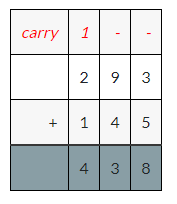
An addition sentence is a mathematical expression that shows two or more values added together. In the above image we can observe two teams Team A and Team B.
Team A having 7, 4, 16, 13, 5 points. First add 7 with 13 then we got 20, next add 4 with 16 then we got 20. Add 20 with 20 and 5 then we got 45.
Team B having 22, 9, 8, 3, 17 points. First add 22 with 8 then we got 30. ADD 3 with 17 then we got 20. ADD 30 with 20 and 9 then we got 59
Team B scored more points. So Team B won the game. Draw a circle for 59.

Everyday Math Grade 2 Home Link 7.4 Answer Key

Using Measurement

Family Note

In class today your child measured distances with a yardstick. Talk with your child about measurements you use at your job, around the house, in sports, or in other activities. If you don’t have measuring tools to show your child, you might find pictures of measuring tools online or in a catalog, magazine, or book. Discuss with your child how these tools are used.
Please return this Home Link to school tomorrow.

Question 1.
Talk with people at home about how they use measurements at home, at their jobs, or in other activities.
Answer: The people at my home use measurements for a wide range of activities such as

  • Measuring length of a cloth for tailoring
  • Measuring level of fuel in tank for continuous running
  • Measuring the amount of water used to cook food
  • Measuring the length of wall for holding nails or to fix something on it.

Question 2.
Ask people at home to show you the tools they use for measuring. Write the names of some of these tools. Be ready to talk about your list in class.
___ ___
___ ___
___ ___
Answer:
Tailor Measuring Tool
Everyday-Math-Grade-2-Home-Link-7.4-Answer-Key-1
Ruler
Everyday-Math-Grade-2-Home-Link-7.4-Answer-Key-2 Measuring jar:
Everyday-Math-Grade-2-Home-Link-7.4-Answer-Key-3

Explanation:
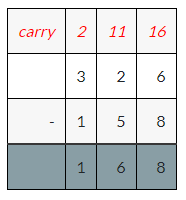
In the above images we can observe three types of measuring tools. one is tailor measuring tape second one is ruler and third one is measuring jar.
Tailors measuring tape is made for cloth and are used to take measurements of the person for whom the clothing is being made. As such, these tape measures are used to measure around a person’s waist, chest, and hips.
A ruler is an instrument used to measure distances, degrees and determine straight lines. There are many different types of measuring rulers, available in different shapes, sizes and materials. These rulers are used in various occupations and fields of study, such as geometry, printing, technical drawing, building and engineering.
Plastic Measuring Jar 25ml. Measuring Jar is designed to give approximate measurement of ml, in general day to day cooking Preparations of Rice, Sugar, Chana. It Is one of the basic requirements of every kitchen to get the exact taste of every meal.

Question 3.
Look for measurements in pictures, in newspapers, or magazines. For example, an ad might tell the height of a bookcase or how much a container holds. Ask an adult if you may bring the pictures to school for our Measures
All Around Museum. Circle the measurements.
Answer:
Everyday-Math-Grade-2-Home-Link-7.4-Answer-Key-4
Explanation:
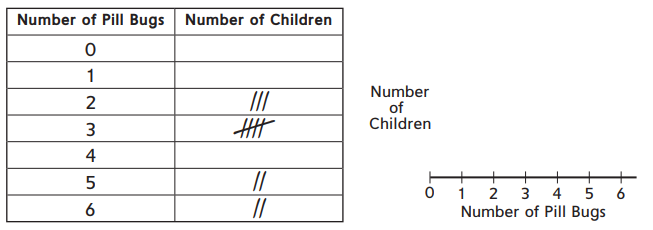
Attach a piece of tape from the bottom to the top of an empty half-gallon container. Fill a measuring cup with a half-cup of water.
Pour the water into the container. Do all of our pouring on a tray to catch the drips. Mark the tape to show how high the water is inside the container. Write 1/2 c next to the mark. Pour another half-cup of water into the container. Mark the tape and write 1 c next to the mark. Mark the tape 1 1/2 c to show 3 half-cups, 2 c for 4 half-cups, 4c for 8 half-cups. Fill the container. Pour the water back into the pitcher.

Practice

Solve.

Question 4.
93 + 1 = __
Answer:
93 + 1 = 94
Explanation:
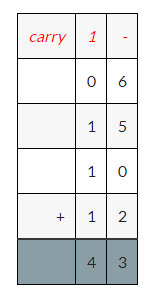
An addition sentence is a mathematical expression that shows two or more values added together. In the above expression we can observe two numbers 93 and 1. First add three and one in one’s place right side then we got four. Keep four in one’s place and then add zero to nine in ten’s place, left side then we got nine write nine in ten’s place. By adding these two numbers 93 and 1 we got 94.

Question 5.
__ = 6 + 61
Answer:
67 = 6 + 61
Explanation:
An addition sentence is a mathematical expression that shows two or more values added together. In the above expression we can observe two numbers 6 and 61. First add six and one in one’s place right side then we got seven. Keep seven in one’s place and then add zero to six in ten’s place, left side then we got six write six in ten’s place. By adding these two numbers 6 and 61 we got 67.

Question 6.
__ = 26 + 8
Answer:
34 = 26 + 8
Explanation:
An addition sentence is a mathematical expression that shows two or more values added together. In the above expression we can observe two numbers 26 and 8. First add six and eight in one’s place right side then we got fourteen. Keep four in one’s place and then add one to two in ten’s place, left side then we got three write three in ten’s place. By adding these two numbers 26 and 8 we got 34.

Question 7.
5 + 49 = __
Answer:
5 + 49 = 54
Explanation:

An addition sentence is a mathematical expression that shows two or more values added together. In the above expression we can observe two numbers 5 and 49. First add five and nine in one’s place right side then we got fourteen. Keep four in one’s place and then add one to four in ten’s place, left side then we got five write five in ten’s place. By adding these two numbers 5 and 49 we got 54.

Everyday Math Grade 2 Home Link 7.5 Answer Key

Measuring Height

Family Note
In this lesson your child was introduced to a metric unit of length called the meter. One meter is equal to 100 centimeters. We compared metersticks to yardsticks and noticed that 1 meter is a little longer than 1 yard. Then we used tools such as rulers, yardsticks, metersticks, and tape measures to measure lengths. Your child may wonder why there are two standard units—yards and meters—that
are nearly the same size. You may want to explore this issue by searching online for information about the metric and U.S. customary systems of measurement.
If you don’t have tools to measure length with metric units at home, you and your child can cut
pieces of string or strips of paper to match the heights of a table and an adult. Your child can bring
the string or strips to school to measure.
Please return this Home Link to school tomorrow

Question 1.
Work with someone at home to measure the height of a table.
The table is about __ centimeters high.
The table is about __ meters high.
Answer:
The table is about 200 centimeters high.
The table is about 2 meters high.
Explanation:
Centimeter is a metric unit of length, equal to one hundredth of a meter. The table is measured with tape and the table is about 200 centimeters high. In meters the table is about 2 meters high.

Question 2.
Measure the height of an adult.
The adult is about __ centimeters tall.
The adult is about __ meters tall.
Answer:
The adult is about 150 centimeters tall.
The adult is about 1.5 meters tall.
Explanation:
Centimeter is a metric unit of length, equal to one hundredth of a meter. The table is measured with tape and the adult is about 150 centimeters tall. In meters the adult is about 1.5 meters tall.

Question 3.
Are there more centimeters or more meters in your measurements? __ Explain.
Answer:
More centimeters, centimeters are shorter, so it takes more of them to measure the same height.
Explanation:
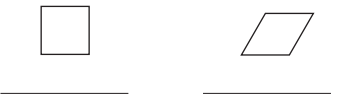
Centimeter is a metric unit of length, equal to one hundredth of a meter. There are more centimeters in my measurements because centimeters are shorter, so it takes more of them to measure the same height.

Practice

Question 4.
18 + __ = 20
Answer:
18 + 2 = 20
Explanation:
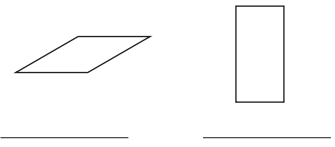
An addition sentence is a mathematical expression that shows two or more values added together. In the above expression we can observe two numbers 18 and 2. First add eight and two in one’s place right side then we got ten. Keep zero in one’s place and then add one to one in ten’s place, left side then we got two write two in ten’s place. By adding these two numbers 18 and 2 we got 20.

Question 5.
__ + 3 = 53
Answer:
50 + 3 = 53
Explanation:
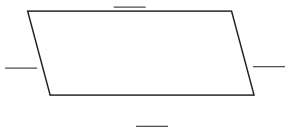
An addition sentence is a mathematical expression that shows two or more values added together. In the above expression we can observe two numbers 50 and 3. First add zero and three in one’s place right side then we got three. Keep three in one’s place and then add zero to five in ten’s place, left side then we got five write five in ten’s place. By adding these two numbers 50 and 3 we got 53.

Question 6.
__ = 86 + 7
Answer:
93 = 86 + 7
Explanation:
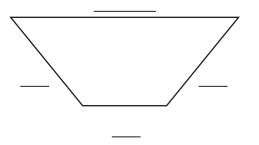
An addition sentence is a mathematical expression that shows two or more values added together. In the above expression we can observe two numbers 86 and 7. First add six and seven in one’s place right side then we got thirteen. Keep three in one’s place and then add one to eight in ten’s place, left side then we got nine write nine in ten’s place. By adding these two numbers 86 and 7 we got 93.

Question 7.
8 + 33 = __
Answer:
8 + 33 = 41
Explanation:
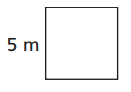
An addition sentence is a mathematical expression that shows two or more values added together. In the above expression we can observe two numbers 8 and 33. First add eight and three in one’s place right side then we got eleven. Keep one in one’s place and then add one to three in ten’s place, left side then we got four write four in ten’s place. By adding these two numbers 8 and 33 we got 41.

Everyday Math Grade 2 Home Link 7.6 Answer Key

Comparing Arm Spans

Family Note
In today’s lesson your child measured his or her standing jump and arm span in both centimeters and inches. Help your child compare his or her arm span to someone else’s arm span at home. Also help your child find objects around the house that are about the same length as his or her arm span.
Please return this Home Link to school tomorrow.

My arm span is about __ inches long.

Question 1.
Tell someone at home about how long your arm span is in inches.
Answer: I’ve measured and my arm span is about 36 inches.
Explanation:
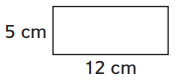
An inch is an imperial unit of length, approximately equal to 2.54 centimeters. We can measure arm span in both centimeters and inches. I have measured and my arm span  is about 36 inches.

Question 2.
Compare your arm span to the arm span of someone at home. Can you find someone who has a longer arm span than you do? Is there someone at home who has a shorter arm span?
_____ has a longer arm span than I have.
____ has a shorter arm span than I have.
Answer:  My father has a longer arm span than I have.
My sister has a shorter arm span than I have.
Explanation:

An inch is an imperial unit of length, approximately equal to 2.54 centimeters. We can measure arm span in both centimeters and inches. I have measured my arm span, My father arm span and My sister arm span. My father has a longer arm span than I have.
My sister has a shorter arm span than I have.

Question 3.
List some objects that are about the same length as your arm span.
Answer: My wardrobe, our mini-fridge, our dining table, our cot have the same length as my arm span.
Explanation:
An inch is an imperial unit of length, approximately equal to 2.54 centimeters. We can measure arm span in both centimeters and inches. Some objects are about the same length of my arm span. My wardrobe, our mini-fridge, our dining table, our cot have the same length as my arm span.

Question 4.
Explain how you know the objects you listed in Problem 3 are about the same length as your arm span.
Answer: I’ve measured with tape and the length of all those objects are nearly of same length as y arm span. Also, when I check with my arm span, they almost match to my arm span length.
Explanation:
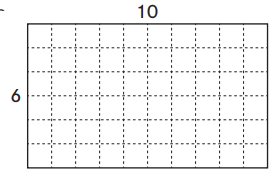
An inch is an imperial unit of length, approximately equal to 2.54 centimeters. We can measure arm span in both centimeters and inches. I’ve measured with tape and the length of all those objects are nearly of same length as my arm span. Also, when I check with my arm span, they almost match to my arm span length.

Practice

Solve.

Question 5.
57 + 3 = ___
Answer:
57 + 3 = 60
Explanation:
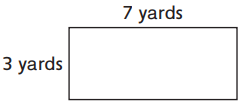
An addition sentence is a mathematical expression that shows two or more values added together. In the above expression we can observe two numbers 57 and 3. First add seven and three in one’s place right side then we got ten. Keep zero in one’s place and then add one to five in ten’s place, left side then we got six write six in ten’s place. By adding these two numbers 57 and 3 we got 60.

Question 6.
4 + 71 = __
Answer:
4 + 71 = 75
Explanation:
An addition sentence is a mathematical expression that shows two or more values added together. In the above expression we can observe two numbers 4 and 71. First add four and one in one’s place right side then we got five. Keep five in one’s place and then add zero to seven in ten’s place, left side then we got seven write seven in ten’s place. By adding these two numbers 4 and 71 we got 75.

Question 7.
__ = 34 + 9
Answer:
43 = 34 + 9
Explanation:
An addition sentence is a mathematical expression that shows two or more values added together. In the above expression we can observe two numbers 34 and 9. First add four and nine in one’s place right side then we got thirteen. Keep three in one’s place and then add one to three in ten’s place, left side then we got four write four in ten’s place. By adding these two numbers 34 and 9we got 43.

Question 8.
48 + __ = 56
Answer:
48 + 8 = 56
Explanation:

An addition sentence is a mathematical expression that shows two or more values added together. In the above expression we can observe two numbers 48 and 8. First add eight and eight in one’s place right side then we got sixteen. Keep six in one’s place and then add one to four in ten’s place, left side then we got five write five in ten’s place. By adding these two numbers 48 and 8 we got 56.

Everyday Math Grade 2 Home Link 7.7 Answer Key

Interpreting Data

Family Note

In this lesson your child examined classroom data on the length of classmates’ standing jumps. The class found the shortest jump length and the longest jump length and calculated the difference between the lengths. They also made a line plot based on the data.
Please return this Home Link to school tomorrow.

The track team collected these standing-jump data:
Everyday Math Grade 2 Home Link 7.7 Answer Key 30.9

List the inches for each jump in order from shortest to longest.
___, ___, ___, ___, ___, ___, ___, ___
Answer:
The inches for each jump from shortest to longest is 57, 60, 62, 64, 64, 68, 71, 72.
Explanation:

In the above image we can observe jumper name and standing jump length. The data is in the form of inches. An inch is an imperial unit of length, approximately equal to 2.54 centimeters. The inches for each jump from shortest to longest is 57, 60, 62, 64, 64, 68, 71, 72.

Question 2.
What is the shortest jump length? ___ inches
Answer:
57 inches is the shortest jump length.
Explanation:
In the above image we can observe jumper name and standing jump length. The data is in the form of inches. An inch is an imperial unit of length, approximately equal to 2.54 centimeters. In the above table we can observe 57 inches is the shortest jump length by comparing with other standing jump lengths.

Question 3.
What is the longest jump length? __ inches
Answer:
72 inches is the longest jump length.
Explanation:
In the above image we can observe jumper name and standing jump length. The data is in the form of inches. An inch is an imperial unit of length, approximately equal to 2.54 centimeters. In the above table we can observe 72 inches is the longest jump length by comparing with other standing jump lengths.

Question 4.
What is the difference between the longest jump length and the shortest jump length? __ inches
Answer:
72 inches is the longest jump length.
57 inches is the shortest jump length.
The difference between the longest jump length and the shortest jump length is 15 inches.
72 – 57 = 15
Explanation:
In the above image we can observe jumper name and standing jump length. The data is in the form of inches. An inch is an imperial unit of length, approximately equal to 2.54 centimeters. In the above table we can observe 72 inches is the longest jump length and 57 inches is the shortest jump length by comparing with other standing jump lengths. Subtraction is an arithmetic operation that represents the operation of removing objects from a collection. The result of a subtraction is called a difference. The difference between the longest jump length and the shortest jump length is 15 inches.
72 – 57 = 15

Practice

Question 5.
__ = 1 + 97
Answer:
98 = 1 + 97
Explanation:
An addition sentence is a mathematical expression that shows two or more values added together. In the above expression we can observe two numbers 1 and 97. First add one and seven in one’s place right side then we got eight. Keep eight in one’s place and then add zero to nine in ten’s place, left side then we got nine write nine in ten’s place. By adding these two numbers 1 and 97 we got 98.

Question 6.
23 + 6 = __
Answer:
23 + 6 = 29
Explanation:
An addition sentence is a mathematical expression that shows two or more values added together. In the above expression we can observe two numbers 23 and 6. First add three and six in one’s place right side then we got nine. Keep nine in one’s place and then add zero to two in ten’s place, left side then we got two write two in ten’s place. By adding these two numbers 23 and 6 we got 29.

Everyday Math Grade 2 Home Link 7.8 Answer Key

Interpreting Data

Family Note

Today your child represented class arm span data in a frequency table and on a line plot. Line plots like the one below help us organize and display data. Each X in this line plot represents one basketball player. Help your child use the data in the line plot to answer the questions.
Please return this Home Link to school tomorrow.

Ms. Ortiz is a basketball coach. She measured the height of each player on the team. Then she made this line plot.
Everyday Math Grade 2 Home Link 7.8 Answer Key 30.12

Question 1.
How many players are 61 inches tall? __ players
Answer:
Each X in this line plot represents one basketball player. 2 players are 61 inches tall.
Explanation:
Line plots like the one above help us organize and display data. Each X in this line plot represents one basketball player. The data height is in the form of inches. In the above image we can observe basket players and their height. In this line plot we can see 61 inches in that we can observe two X’s. So two players are 61 inches tall.

Question 2.
How many players are 58 inches tall? __ players
Answer:
Each X in this line plot represents one basketball player. 0 players are 58 inches tall.
Explanation:
Line plots like the one above help us organize and display data. Each X in this line plot represents one basketball player. The data height is in the form of inches. In the above image we can observe basket players and their height. In this line plot we can see 58 inches in that we can observe zero X’s. So zero players are 58 inches tall.

Question 3.
The shortest player is __ inches tall.
Answer:
The shortest player is 57 inches tall.
Explanation:
Line plots like the one above help us organize and display data. Each X in this line plot represents one basketball player. The data height is in the form of inches. In the above image we can observe basket players and their height. The shortest player is 57 inches tall.

Question 4.
The tallest player is __ inches tall.
Answer:
The tallest player is 63 inches tall.
Explanation:
Line plots like the one above help us organize and display data. Each X in this line plot represents one basketball player. The data height is in the form of inches. In the above image we can observe basket players and their height. The tallest player is 63 inches tall.

Question 5.
How many players did Ms. Ortiz measure? __ players
Answer:
Ms. Ortiz  measured 9 players.
Explanation:
Line plots like the one above help us organize and display data. Each X in this line plot represents one basketball player. The data height is in the form of inches. In the above image we can observe basket players and their height. Ms. Ortiz  measured nine players.

Question 6.
Which height occurs most often? __ inches
Answer:
The height occurs most often is 59 inches.
Explanation:
Line plots like the one above help us organize and display data. Each X in this line plot represents one basketball player. The data height is in the form of inches. In the above image we can observe basket players and their height. The height occurs most often is 59 inches.

Practice

Question 7.
33 + 6 = __
Answer:
33 + 6 = 39
Explanation:
An addition sentence is a mathematical expression that shows two or more values added together. In the above expression we can observe two numbers 33 and 6. First add three and six in one’s place right side then we got nine. Keep nine in one’s place and then add zero to three in ten’s place, left side then we got three write three in ten’s place. By adding these two numbers 33 and 6 we got 39.

Question 8.
__ = 65 + 2
Answer:
67 = 65 + 2
Explanation:
An addition sentence is a mathematical expression that shows two or more values added together. In the above expression we can observe two numbers 65 and 2. First add five and two in one’s place right side then we got seven. Keep seven in one’s place and then add zero to six in ten’s place, left side then we got six write six in ten’s place. By adding these two numbers 65 and 2 we got 67.

Question 9.
__ + 3 = 22
Answer:
19 + 3 = 22
Explanation:
An addition sentence is a mathematical expression that shows two or more values added together. In the above expression we can observe two numbers 19 and 3. First add nine and three in one’s place right side then we got twelve. Keep two in one’s place and then add one to one in ten’s place, left side then we got two write two in ten’s place. By adding these two numbers 19 and 3 we got 22.

Question 10.
9 + 52 = __
Answer:
9 + 52 = 61
Explanation:
An addition sentence is a mathematical expression that shows two or more values added together. In the above expression we can observe two numbers 9 and 52. First add nine and two in one’s place right side then we got eleven. Keep one in one’s place and then add one to five in ten’s place, left side then we got six write six in ten’s place. By adding these two numbers 9 and 52 we got 61.

Everyday Math Grade 2 Home Link 7.9 Answer Key

Vegetable Picture Graph

Family Note
Today your child drew a picture graph, which uses pictures or symbols to show data. The key on a picture graph tells what each picture is for. Have your child use the data table to draw the graph.
Please return this Home Link to school tomorrow.

Everyday Math Grade 2 Home Link 7.9 Answer Key 50.2
Answer:
Everyday-Math-Grade-2-Home-Link-7.9-Answer-Key-50.2
Explanation:
In the above image we can observe favorite vegetables with name of vegetable and number of people. In favorite vegetables picture graph one smiley represents one child. Four people like Carrots and five people like peas, three people like corn and other vegetables like six people.

Practice

Question 1.
__ = 21 + 5
Answer:
26 = 21 + 5
Explanation:
An addition sentence is a mathematical expression that shows two or more values added together. In the above expression we can observe two numbers 21 and 5. First add one and five in one’s place right side then we got six. Keep six in one’s place and then add zero to two in ten’s place, left side then we got two write two in ten’s place. By adding these two numbers 21 and 5 we got 26.

Question 2.
63 + 4 = __
Answer:
63 + 4 = 67
Explanation:
An addition sentence is a mathematical expression that shows two or more values added together. In the above expression we can observe two numbers 63 and 4. First add three and four in one’s place right side then we got seven. Keep seven in one’s place and then add zero to six in ten’s place, left side then we got six write six in ten’s place. By adding these two numbers 63 and 4 we got 67.

Question 3.
__ + 88 = 90
Answer:
2 + 88 = 90
Explanation:
An addition sentence is a mathematical expression that shows two or more values added together. In the above expression we can observe two numbers 2 and 88. First add two and eight in one’s place right side then we got ten. Keep zero in one’s place and then add one to eight in ten’s place, left side then we got nine write nine in ten’s place. By adding these two numbers 2 and 88 we got 90.

Question 4.
7 + 35 = __
Answer:
7 + 35 = 42
Explanation:
An addition sentence is a mathematical expression that shows two or more values added together. In the above expression we can observe two numbers 7 and 35. First add seven and five in one’s place right side then we got twelve. Keep two in one’s place and then add one to three in ten’s place, left side then we got four write four in ten’s place. By adding these two numbers 7 and 35 we got 42.