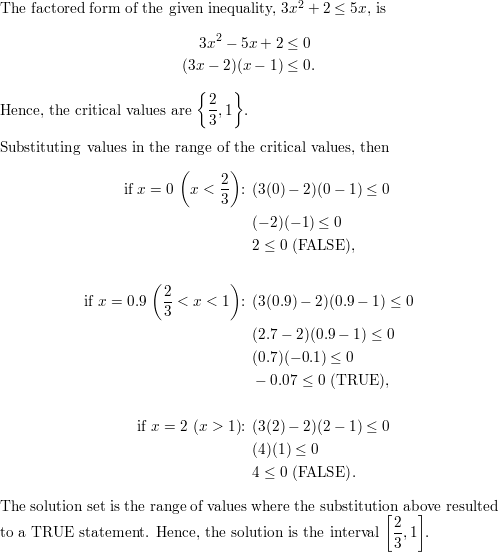
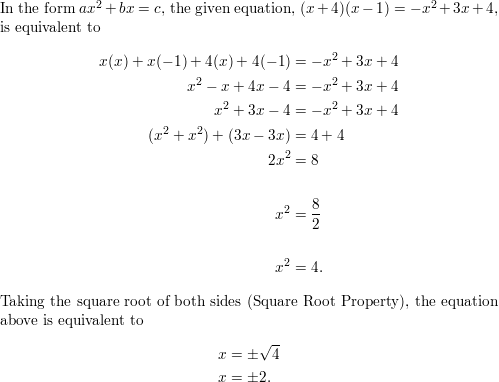
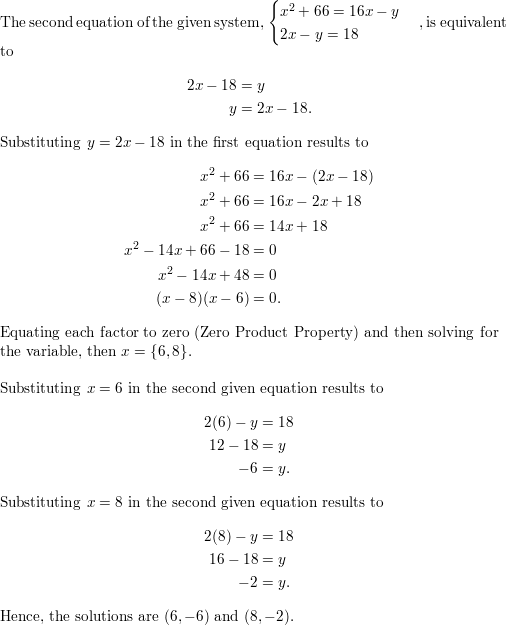
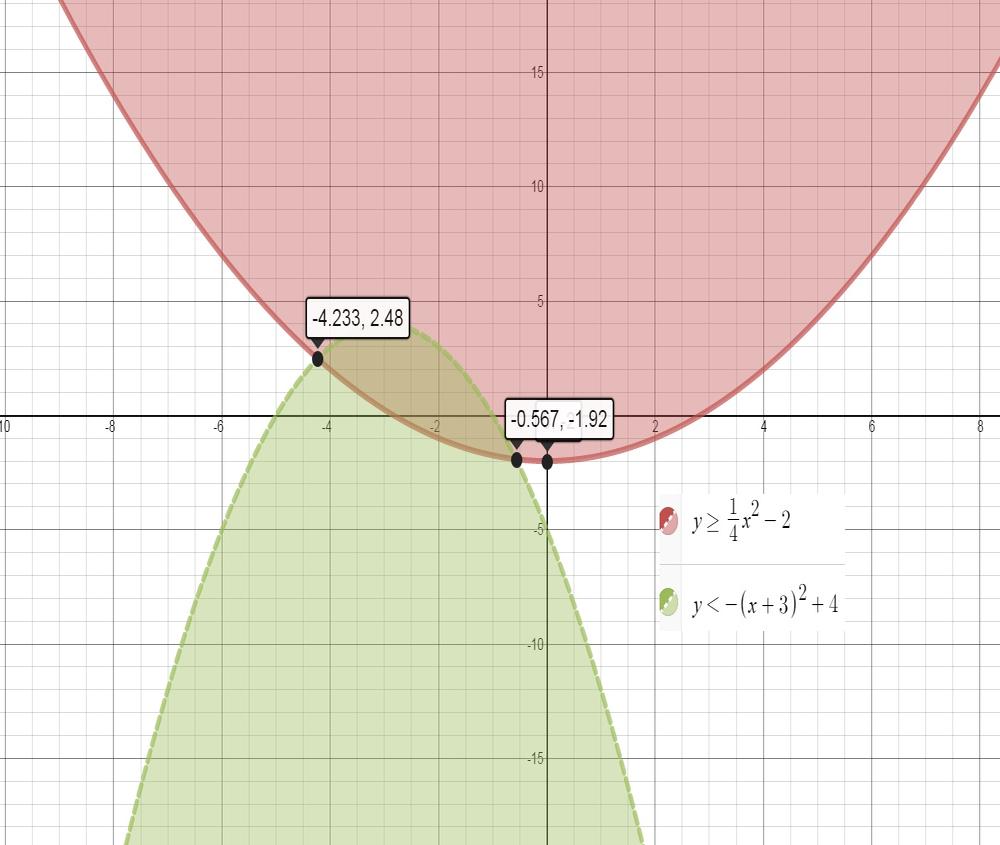
Big Ideas Math Algebra 2 Answers Chapter 4 Polynomial Functions

Big Ideas Math Algebra 2 Answers Chapter 4 Polynomial Functions aid your preparation & make you hold a good grip on the easy to the complex level of topics covered in the chapter. You can easily & instantly get help in your homework and assignment questions by referring to this Ch 4 Polynomial Functions BIM Algebra 2 Textbook Answers. Make the most out of these Big Ideas Math book algebra 2 solution key of ch 4 polynomial functions and score maximum marks in all the examinations.

Big Ideas Math Book Algebra 2 Answer Key Chapter 4 Polynomial Functions

Enhancing your subject knowledge is even more important than scoring good marks. So, preparaing the ch 4 concepts from the subject experts provided Big Ideas Math Textbook Algebra 2 Answers Chapter 4 Polynomial Functions is even more essential. Both students and teachers can learn the math concepts in a simple and fun learning way by taking the help of BIM Algebra Textbook Answers. So, click on the links available below and practice answers covered in Questions from Chapter Tests, Review Tests, Cumulative Practice, Cumulative Assessments, Exercise Questions, etc.

Polynomial Functions Maintaining Mathematical Proficiency

Simplify the expression.

Question 1.
6x − 4x=2x
Explanation:
Terms can be combined only if they have the exact same variable portion and combining like terms.

Question 2.
12m − m − 7m + 3

Answer:
Terms can be combined only if they have the exact same variable portion and combining like terms.
12m-m-7m+3
=4m+3

Question 3.
3(y + 2) − 4y
Answer:
Terms can be combined only if they have the exact same variable portion and combining like terms.
3(y+2)-4y
3y+6-4y
-y+6

Question 4.
9x − 4(2x − 1)
Answer:
9x-4(2x-1)
=9x-8x+4
=x+4
Question 5.
−(z + 2) − 2(1 − z)
Answer:-
= -z-2-2+z
=-4

Question 6.
−x2 + 5x + x2
Answer:
Terms can be combined only if they have the exact same variable portion and combining like terms.
5x

Find the volume of the solid.

Question 7.
cube with side length 4 inches

solution: 

Volume of cube=side x side x side
=4x4x4=64inches
sphere with radius 2 feet

Question 9.
rectangular prism with length 4 feet, width 2 feet, and height 6 feet

Solution:
Given that
length= 4 feet
width=2 feet
height= 6 feet
volume of rectangular prism= length x width x height
substitute the values in  formula
volume of rectangular prism= 4 x 2 x 6= 48 cubic feet

Question 10.

right cylinder with radius 3 centimeters and height 5 centimeters

Solution:
Given that
radius=3centimeters
height =5centimeter
Volume of a cylinder = area of base × height = π × r2× h and you can use 3.14 for π.
substitute the values in formula
3.14 x 3 x 3 x 5=141.3cubic centimeter

Question 11.
ABSTRACT REASONING Does doubling the volume of a cube have the same effect on the side length? Explain your reasoning

Solution:
If the side of the cube id doubled. the volume is 8 times larger  .
example: let’s use a cube that has side length of 2 as an  example. the volume of that cube would be length x and width x height
2 x 2 x  2 =8. if we double the edges to 4 . it would be 4 x 4 x 4, which is 64. to find how many times increases take the 64 and divide by 8 . 64/8=8 The volume increases by 8 times.

Polynomial Functions Mathematical Practices

Monitoring Progress

Use a graphing calculator to determine whether the function is continuous. Explain your reasoning.

Question 1.
f(x) = \(\frac{x^{2}-x}{x}\)

Question 2.
f(x) = x3 − 3

Question 3.
f(x) = \(\sqrt{x^{2}+1}\)

Question 4.
f(x) = | x + 2 |

Question 5.
f(x) = \(\frac{1}{x}\)

Question 6.
f(x) = \(\frac{1}{\sqrt{x^{2}-1}}\)

Question 7.
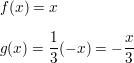
f(x) = x

Question 8.
f(x) = 2x − 3

Question 9.
f(x) = \(\frac{x}{x}\)

Lesson 4.1 Graphing Polynomial Functions

Essential Question
What are some common characteristics of the graphs of cubic and quartic polynomial functions?
A polynomial function of the form
f(x) = anxn + an – 1xn– 1 +. . .+ a1x + a0
where an ≠ 0, is cubic when n = 3 and quartic when n = 4.

EXPLORATION 1
Identifying Graphs of Polynomial Functions
Work with a partner.
Match each polynomial function with its graph. Explain your reasoning. Use a graphing calculator to verify your answers.
a. f(x) = x3 − x
b. f(x) = −x3 + x
c. f(x) = −x4 + 1
d. f(x) = x4
e. f(x) = x3
f. f(x) = x4 − x2

EXPLORATION 2
Identifying x-Intercepts of Polynomial Graphs
Work with a partner.
Each of the polynomial graphs in Exploration 1 has x-intercept(s) of −1, 0, or 1. Identify the x-intercept(s) of each graph. Explain how you can verify your answers.

Communicate Your Answer

Question 3.
What are some common characteristics of the graphs of cubic and quartic polynomial functions?

Question 4.
Big Ideas Math Algebra 2 Answers Chapter 4 Polynomial Functions 1
Determine whether each statement is true or false. Justify your answer.
a. When the graph of a cubic polynomial function rises to the left, it falls to the right.
b. When the graph of a quartic polynomial function falls to the left, it rises to the right.

4.1 Lesson

Monitoring Progress

Decide whether the function is a polynomial function. If so, write it in standard form and state its degree, type, and leading coefficient.

Question 1.
f(x) = 7 − 1.6x2 − 5x

Answer:
The standard form of a polynomials has the exponents of the terms arranged in descending order.
The  degree of a polynomial is the highest The type of a polynomial depends on the degree.
The leading coefficient is the numerical factor of the terms with highest degree.
Hence the given function f(x) = 7 − 1.6x2 − 5x has the  following characteristic
Standard form f (x) = -1.6x2 -5x +7
Degree: 2
Type: quadratic
Leading coefficient: -1.6

Question 2.
p(x) =x+ 2x-2 + 9.5
Answer:
The function is not a polynomial function because the term 2x-2 has an exponent  that is not a whole number

Question 3.
q(x) = x3 − 6x + 3x4
Answer: The standard form of a polynomials has the exponents of the terms arranged in descending order.
The  degree of a polynomial is the highest exponent of a term.
The type of a polynomial depends on the degree.
The leading coefficient is the numerical factor of the terms with highest degree.
Hence the given function q(x) = x3 − 6x + 3x4  has the  following characteristic
Standard form : q(x) = 3x4 + x3 – 6x
Degree: 4
Type: quadratic
Leading coefficient: 3

Evaluate the function for the given value of x.

Question 4.
f(x) = −x3 + 3x2 + 9; x = 4

Answer:
f(x) = −x3 + 3x2 + 9                         Write Original equation
f(4) =−x3 + 3x2 + 9                        substitute for x
=-(4)3+ 3(4)2 +9                  Evaluate powers and multiply

=-(64)+ 3(16) +9                          Simplify
=-64 + 48 + 9
=-7

Question 5.
f(x) = 3x5 − x4 − 6x + 10; x = −2
Answer:
f(x) = 3x5 − x4 − 6x + 10                Write Original equation
f(-2)=3(-2)5-(-2)4-6(-2)+10             Substitute for X
=3(-32)-16+12+10                         Evaluate powers and multiply
= -96 -16 +12 +10                         Simplify
=-90

Question 6.
Describe the end behavior of the graph of f(x) = 0.25x3 − x2 − 1.
Answer:
https://eurekamathanswerkeys.com/wp-content/uploads/2021/02/Big-ideas-math-algerbra-2-chapter-4.-Polynomials-Monitoring-progress-exercise-4.1-Answer-6.jpg

Graph the polynomial Function

Question 7.
f(x) = x4 + x2 − 3
Answer:
https://eurekamathanswerkeys.com/wp-content/uploads/2021/02/Big-ideas-math-algerbra-2-chapter-4.-Polynomials-Monitoring-progress-exercise-4.1-Answer7.jpg

Question 8.
f(x) = 4 − x3
Answer:
https://eurekamathanswerkeys.com/wp-content/uploads/2021/02/Big-ideas-math-algerbra-2-chapter-4.-Polynomials-Monitoring-progress-exercise-4.1-Answer-8JPG.jpg

Question 9.
f(x) = x3 − x2 + x − 1
Answer:
https://eurekamathanswerkeys.com/wp-content/uploads/2021/02/Big-ideas-math-algerbra-2-chapter-4.-Polynomials-Monitoring-progress-exercise-4.1-Answer-9.jpg

Question 10.
Sketch a graph of the polynomial function f having these characteristics.

  • f is decreasing when x < −1.5 and x > 2.5; f is increasing when −1.5 < x < 2.5.
  • f(x) > 0 when x < −3 and 1 < x < 4; f(x) < 0 when −3 < x < 1 and x > 4.
    Answer:
    https://eurekamathanswerkeys.com/wp-content/uploads/2021/02/Big-ideas-math-algerbra-2-chapter-4.-Polynomials-Monitoring-progress-exercise-4.1-Answer-10JPG.jpg

Use the graph to describe the degree and leading coefficient of f.

Question 11.
WHAT IF? Repeat Example 6 using the alternative model for electric vehicles of
V(t) = −0.0290900t4 + 0.791260t3 − 7.96583t2 + 36.5561t − 12.025.
https://eurekamathanswerkeys.com/wp-content/uploads/2021/02/Big-ideas-math-algerbra-2-chapter-4.-Polynomials-Monitoring-progress-exercise-4.1-Answer-11.jpg

Graphing Polynomial Functions 4.1 Exercises

Vocabulary and Core Concept Check

Question 1.
WRITING Explain what is meant by the end behavior of a polynomial function.
Answer:
Big Ideas Math Algebra 2 Answers Chapter 4 Polynomial Functions 4.1 Question 1

Question 2.
WHICH ONE DOESN’T BELONG? Which function does not belong with the other three? Explain your reasoning.
Answer:
Big Ideas Math Algebra 2 Answers Chapter 4 Polynomial Functions 2

https://eurekamathanswerkeys.com/wp-content/uploads/2021/02/Big-ideas-math-algerbra-2-chapter-4.-Polynomials-exercise-4.1-Answer-2JPG.jpg

Monitoring Progress and Modeling with Mathematics

In Exercises 3–8, decide whether the function is a polynomial function. If so, write it in standard form and state its degree, type, and leading coefficient.

Question 3.
f(x) = −3x + 5x3 − 6x2 + 2
Answer:
Big Ideas Math Algebra 2 Answers Chapter 4 Polynomial Functions 4.1 Question 3

Question 4.
p(x) = \(\frac{1}{2}\)x2 + 3x − 4x3 + 6x4 − 1
Answer:
https://eurekamathanswerkeys.com/wp-content/uploads/2021/02/Big-ideas-math-algerbra-2-chapter-4.-Polynomials-exercise-4.1-Answer-4.jpg

Question 5.
f(x) = 9x4 + 8x3 − 6x-2 + 2x
Answer:
Big Ideas Math Algebra 2 Answers Chapter 4 Polynomial Functions 4.1 Question 5

Question 6.
g(x) = \(\sqrt{3}\) − 12x + 13x2
Answer:

Degree: 2
Type: Quartic
leading coefficient: 13

Question 7.
h(x) = \(\frac{5}{3}\)x2 − \(\sqrt{7}\)x4 + 8x3 − \(\frac{1}{2}\) + x
Answer:
Big Ideas Math Algebra 2 Answers Chapter 4 Polynomial Functions 4.1 Question 7

Question 8.
h(x) = 3x4 + 2x − \(\frac{5}{x}\) + 9x3 − 7
Answer:
No, it is not polynomial since it has an exponent that is not a whole number.

ERROR ANALYSIS In Exercises 9 and 10, describe and correct the error in analyzing the function.

Question 9.
f(x) = 8x3 − 7x4 − 9x − 3x2 + 11
Big Ideas Math Algebra 2 Answers Chapter 4 Polynomial Functions 3
Answer:
Big Ideas Math Algebra 2 Answers Chapter 4 Polynomial Functions 4.1 Question 9

Question 10.
f(x) = 2x4 + 4x – 9\(\sqrt{x}\) + 3x2 – 8
Big Ideas Math Algebra 2 Answers Chapter 4 Polynomial Functions 4
Answer:

In Exercises 11–16, evaluate the function for the given value of x.

Question 11.
h(x) = −3x4 + 2x3 − 12x − 6; x = −2
Answer:
Big Ideas Math Algebra 2 Answers Chapter 4 Polynomial Functions 4.1 Question 11

Question 12.
f(x) = 7x4 − 10x2 + 14x − 26; x = −7

Answer:

f(x) = 7x4 − 10x2 + 14x − 26            Write Original equation
f(-7)     =  7(-7)4– 10(-7)2+14(-7)-26                   substitute for x
= 7(2401)- 10(49)- 98-26                          Evaluate powers and multiply
= 16807- 490- 98- 26                                           Simplify
= 16,193

Question 13.
g(x) = x6 − 64x4 + x2 − 7x − 51; x = 8
Answer:
Big Ideas Math Algebra 2 Answers Chapter 4 Polynomial Functions 4.1 Question 13

Question 14.
g(x) = −x3 + 3x2 + 5x + 1; x = −12

Answer:
g(x) = −x3 + 3x2 + 5x + 1          Write Original equation
g(-12) =(-12 )3+ 3(-12) 2+ 5(-12 )+1          substitute for x
=1728 + 3(144) – 60 +1                         Evaluate powers and multiply
=1728 + 432 – 60 +1                                    Simplify
=2101

Question 15.
p(x) = 2x3 + 4x2 + 6x + 7; x = \(\frac{1}{2}\)
Answer:
Big Ideas Math Algebra 2 Answers Chapter 4 Polynomial Functions 4.1 Question 15

Question 16.

h(x) = 5x3 − 3x2 + 2x + 4; x = −12

Answer:
h(x) = 5x3 − 3x2 + 2x + 4                      Write Original equation
h(-12)    =5(-12)3-3(-12)2+2(-12)+4          substitute for x
=5(-1728)-3(144)-24+4         Evaluate powers and multiply
=-8640-432-24+4                            Simplify
=-9092

In Exercises 17–20, describe the end behavior of the graph of the function.

Question 17.
h(x) = −5x4 + 7x3 − 6x2 + 9x + 2
Answer:
Big Ideas Math Algebra 2 Answers Chapter 4 Polynomial Functions 4.1 Question 17

Question 18.
g(x) = 7x7 + 12x5 − 6x3 − 2x − 18

Answer:
The function as degree 7 and leading coefficient 7 . Because the  degree is odd and leading coefficient  is positive g(x)->-∞ as x ->-∞  and  g(x)->+∞ as x->+∞

Question 19.
f(x) = −2x4 + 12x8 + 17 + 15x2
Answer:
Big Ideas Math Algebra 2 Answers Chapter 4 Polynomial Functions 4.1 Question 19

Question 20.
f(x) = 11 − 18x2 − 5x5 − 12x4 − 2x
Answer:

f(x)= − 5x5 − 12x4− 18x2− 2x + 11
with the highest exponent is equal to 5, then the polynomial is of odd degree.
Hence the end behaviors are opposite. With the negative leading coefficient
Then   f(x) ─> ∞ as x ─>-∞
f(x)─>-∞ as  x ─>+∞

In Exercises 21 and 22, describe the degree and leading coefficient of the polynomial function using the graph.

Question 21.
Big Ideas Math Algebra 2 Answers Chapter 4 Polynomial Functions 5
Answer:
Big Ideas Math Algebra 2 Answers Chapter 4 Polynomial Functions 4.1 Question 21

Question 22.
Big Ideas Math Algebra 2 Answers Chapter 4 Polynomial Functions 6
Answer:
The degree of the polynomial is even since one side goes up and other goes up; the leading coefficient is positive  since the left side goes up and the right side goes up.

Question 23.
USING STRUCTURE Determine whether the function is a polynomial function. If so, write it in standard form and state its degree, type, and leading coefficient.
f(x) = 5x3x + \(\frac{5}{2}\)x3 − 9x4 + \(\sqrt{2}\)x2 + 4x − 1 − x-5x5 − 4
Answer:
Big Ideas Math Algebra 2 Answers Chapter 4 Polynomial Functions 4.1 Question 23

Question 24.
WRITING Let f(x) = 13. State the degree, type, and leading coefficient. Describe the end behavior of the function. Explain your reasoning.
Answer:
https://eurekamathanswerkeys.com/wp-content/uploads/2021/02/Big-ideas-math-algerbra-2-chapter-4.-Polynomials-exercise-4.1-Answer-24.jpg
In Exercises 25–32, graph the polynomial function.

Question 25.
p(x) = 3 − x4
Answer:
Big Ideas Math Algebra 2 Answers Chapter 4 Polynomial Functions 4.1 Question 25

Question 26.
g(x) = x3 + x + 3
Answer:
https://eurekamathanswerkeys.com/wp-content/uploads/2021/02/Big-ideas-math-algerbra-2-chapter-4.-Polynomials-exercise-4.1-Answer-26.jpg

Question 27.
f(x) = 4x − 9 − x3
Answer:
Big Ideas Math Algebra 2 Answers Chapter 4 Polynomial Functions 4.1 Question 27

Question 28.
p(x) = x5 − 3x3 + 2
Answer:
https://eurekamathanswerkeys.com/wp-content/uploads/2021/02/Big-ideas-math-algerbra-2-chapter-4.-Polynomials-exercise-4.1-Answer-28.jpg

Question 29.
h(x) = x4 − 2x3 + 3x
Answer:
Big Ideas Math Algebra 2 Answers Chapter 4 Polynomial Functions 4.1 Question 29

Question 30.
h(x) = 5 + 3x2 − x4
Answer:
https://eurekamathanswerkeys.com/wp-content/uploads/2021/02/Big-ideas-math-algerbra-2-chapter-4.-Polynomials-exercise-4.1-Answer-30.jpg

Question 31.
g(x) = x5 − 3x4 + 2x − 4
Answer:
Big Ideas Math Algebra 2 Answers Chapter 4 Polynomial Functions 4.1 Question 31

Question 32.
p(x) = x6 − 2x5 − 2x3 + x + 5
Answer:
https://eurekamathanswerkeys.com/wp-content/uploads/2021/02/Big-ideas-math-algerbra-2-chapter-4.-Polynomials-exercise-4.1-Answer-32JPG.jpg

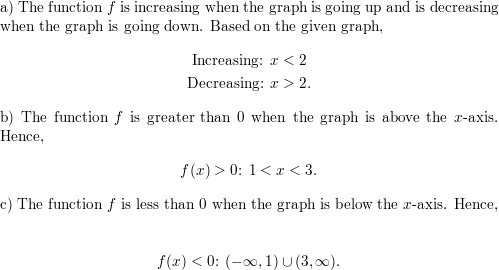
ANALYZING RELATIONSHIPS In Exercises 33–36, describe the x-values for which
(a) f is increasing or decreasing,
(b) f(x) > 0, and
(c) f(x) < 0.

Answer:

Question 33.
Big Ideas Math Algebra 2 Answers Chapter 4 Polynomial Functions 7
Answer:
Big Ideas Math Algebra 2 Answers Chapter 4 Polynomial Functions 4.1 Question 33

Question 34.
Big Ideas Math Algebra 2 Answers Chapter 4 Polynomial Functions 8
Answer:

https://eurekamathanswerkeys.com/wp-content/uploads/2021/02/Big-ideas-math-algerbra-2-chapter-4.-Polynomials-exercise-4.1-Answer-34.jpg

Question 35.
Big Ideas Math Algebra 2 Answers Chapter 4 Polynomial Functions 9
Answer:
Big Ideas Math Algebra 2 Answers Chapter 4 Polynomial Functions 4.1 Question 35

Question 36.
Big Ideas Math Algebra 2 Answers Chapter 4 Polynomial Functions 10
Answer:
https://eurekamathanswerkeys.com/wp-content/uploads/2021/02/Big-ideas-math-algerbra-2-chapter-4.-Polynomials-exercise-4.1-Answer-36.jpg

In Exercises 37–40, sketch a graph of the polynomial function f having the given characteristics. Use the graph to describe the degree and leading coefficient of the function f.

Question 37.

  • f is increasing when x > 0.5; f is decreasing when x < 0.5.
  • f(x) > 0 when x < −2 and x > 3; f(x) < 0 when −2 < x < 3.

Answer:
Big Ideas Math Algebra 2 Answers Chapter 4 Polynomial Functions 4.1 Question 37

Question 38.

  • f is increasing when −2 < x < 3;f is decreasing when x < −2 and x > 3.
  • f(x) > 0 when x < −4 and 1 < x < 5; f(x) < 0 when −4 < x < 1 and x > 5.

Answer:
https://eurekamathanswerkeys.com/wp-content/uploads/2021/02/Big-ideas-math-algerbra-2-chapter-4.-Polynomials-exercise-4.1-Answer-38.jpg
Question 39.

  • f is increasing when −2 < x < 0 and x > 2;f is decreasing when x < −2 and 0 < x < 2.
  • f(x) > 0 when x < −3, −1 < x < 1, and x > 3; f(x) < 0 when −3 < x < −1 and 1 < x < 3.

Answer:
Big Ideas Math Algebra 2 Answers Chapter 4 Polynomial Functions 4.1 Question 39

Question 40.

  • f is increasing when x < −1 and x > 1;f is decreasing when −1 < x < 1.
  • f(x) > 0 when −1.5 < x < 0 and x > 1.5; f(x) < 0 when x < −1.5 and 0 < x < 1.5.

Answer:
https://eurekamathanswerkeys.com/wp-content/uploads/2021/02/Big-ideas-math-algerbra-2-chapter-4.-Polynomials-exercise-4.1-Answer-40.jpg
Question 41.
MODELING WITH MATHEMATICS From 1980 to 2007 the number of drive-in theaters in the United States can be modeled by the function
d(t) = −0.141t3 + 9.64t2 − 232.5t + 2421
where d(t) is the number of open theaters and t is the number of years after 1980.
a. Use a graphing calculator to graph the function for the interval 0 ≤ t ≤ 27. Describe the behavior of the graph on this interval.
b. What is the average rate of change in the number of drive-in movie theaters from 1980 to 1995 and from 1995 to 2007? Interpret the average rates of change.
c. Do you think this model can be used for years before 1980 or after 2007? Explain.
Big Ideas Math Algebra 2 Answers Chapter 4 Polynomial Functions 11
Answer:
Big Ideas Math Algebra 2 Answers Chapter 4 Polynomial Functions 4.1 Question 41.1
Big Ideas Math Algebra 2 Answers Chapter 4 Polynomial Functions 4.1 Question 41.2

Question 42.
PROBLEM SOLVING The weight of an ideal round-cut diamond can be modeled by
w = 0.00583d3 − 0.0125d2 + 0.022d − 0.01
where w is the weight of the diamond (in carats) and d is the diameter (in millimeters). According to the model, what is the weight of a diamond with a diameter of 12 millimeters?
Big Ideas Math Algebra 2 Answers Chapter 4 Polynomial Functions 12
Answer:

Question 43.
ABSTRACT REASONING Suppose f(x) → ∞ as x → −∞ and f(x) →−∞ as x → ∞. Describe the end behavior of g(x) = −f(x). Justify your answer.
Answer:
Big Ideas Math Algebra 2 Answers Chapter 4 Polynomial Functions 4.1 Question 43

Question 44.
THOUGHT PROVOKING Write an even degree polynomial function such that the end behavior of f is given by f(x) → −∞ as x → −∞ and f(x) → −∞ as x → ∞. Justify your answer by drawing the graph of your function.
Answer:
https://eurekamathanswerkeys.com/wp-content/uploads/2021/02/Big-ideas-math-algerbra-2-chapter-4.-Polynomials-exercise-4.1-Answer-44.jpg

Question 45.
USING TOOLS When using a graphing calculator to graph a polynomial function, explain how you know when the viewing window is appropriate.
Answer:
Big Ideas Math Algebra 2 Answers Chapter 4 Polynomial Functions 4.1 Question 45

Question 46.
MAKING AN ARGUMENT Your friend uses the table to speculate that the function f is an even degree polynomial and the function g is an odd degree polynomial. Is your friend correct? Explain your reasoning.
Big Ideas Math Algebra 2 Answers Chapter 4 Polynomial Functions 13
Answer:
https://eurekamathanswerkeys.com/wp-content/uploads/2021/02/Big-ideas-math-algerbra-2-chapter-4.-Polynomials-exercise-4.1-Answer-46.jpg

Question 47.
DRAWING CONCLUSIONS The graph of a function is symmetric with respect to the y-axis if for each point (a, b) on the graph, (−a, b) is also a point on the graph. The graph of a function is symmetric with respect to the origin if for each point (a, b) on the graph, (−a, −b) is also a point on the graph.
a. Use a graphing calculator to graph the function y = xn when n = 1, 2, 3, 4, 5, and 6. In each case, identify the symmetry of the graph.
b. Predict what symmetry the graphs of y = x10 and y = x11 each have. Explain your reasoning and then confirm your predictions by graphing.
Answer:
Big Ideas Math Algebra 2 Answers Chapter 4 Polynomial Functions 4.1 Question 47.1
Big Ideas Math Algebra 2 Answers Chapter 4 Polynomial Functions 4.1 Question 47.2

Question 48.
HOW DO YOU SEE IT? The graph of a polynomial function is shown.
Big Ideas Math Algebra 2 Answers Chapter 4 Polynomial Functions 14
a. Describe the degree and leading coefficient of f.
b. Describe the intervals where the function is increasing and decreasing.
c. What is the constant term of the polynomial function?
Answer:
https://eurekamathanswerkeys.com/wp-content/uploads/2021/02/Big-ideas-math-algerbra-2-chapter-4.-Polynomials-exercise-4.1-Answer-48.jpg

Question 49.
REASONING A cubic polynomial function f has a leading coefficient of 2 and a constant term of −5. When f(1) = 0 and f(2) = 3, what is f(−5)? Explain your reasoning.
Answer:
Big Ideas Math Algebra 2 Answers Chapter 4 Polynomial Functions 4.1 Question 49

Question 50.
CRITICAL THINKING The weight y (in pounds) of a rainbow trout can be modeled by y = 0.000304x3, where x is the length (in inches) of the trout.
a. Write a function that relates the weight y and length x of a rainbow trout when y is measured in kilograms and x is measured in centimeters. Use the fact that 1 kilogram ≈ 2.20 pounds and 1 centimeter ≈ 0.394 inch.
b. Graph the original function and the function from part (a) in the same coordinate plane. What type of transformation can you apply to the graph of y = 0.000304x3 to produce the graph from part (a)?
Big Ideas Math Algebra 2 Answers Chapter 4 Polynomial Functions 15
Answer:
https://eurekamathanswerkeys.com/wp-content/uploads/2021/02/Big-ideas-math-algerbra-2-chapter-4.-Polynomials-exercise-4.1-Answer-50.jpg

Maintaining Mathematical Proficiency

Simplify the expression. (Skills Review Handbook)

Question 51.
xy + x2 + 2xy + y2 − 3x2
Answer:
Big Ideas Math Algebra 2 Answers Chapter 4 Polynomial Functions 4.1 Question 51

Question 52.
2h3g + 3hg3 + 7h2g2 + 5h3g+ 2hg3
Answer:

Question 53.
−wk + 3kz − 2kw + 9zk − kw
Answer:
Big Ideas Math Algebra 2 Answers Chapter 4 Polynomial Functions 4.1 Question 53

Question 54.
a2(m − 7a3) − m(a2 − 10)
Answer:
Step by Step Solution
Reformatting the input:
Changes made to your input should not affect the solution:
(1): “a2”   was replaced by   “a^2”.  2 more similar replacement(s).

STEP 1:
Trying to factor as a Difference of Squares:
1.1      Factoring:  a2-10
Theory: A difference of two perfect squares, A2 – B2 can be factored into (A+B) • (A-B)
Proof:   (A+B) • (A-B) =
A2 – AB + BA – B2 =
A2 – AB + AB – B2 =
A2 – B2
Note:  AB = BA is the commutative property of multiplication.
Note:  – AB + AB equals zero and is therefore eliminated from the expression.
Check: 10 is not a square !
Ruling : Binomial cannot be factored as the difference of two perfect squares.

Equation at the end of step 1:
((a2) •(m-(7•(a3))))-m•(a2-10)

STEP 2:
Equation at the end of step 2:
((a2) • (m – 7a3)) – m • (a2 – 10)

STEP 3:
Trying to factor as a Difference of Cubes:

3.1      Factoring:  m-7a3

Theory: A difference of two perfect cubes, a3 – b3 can be factored into
(a-b) • (a2 +ab +b2)
Proof :  (a-b)•(a2+ab+b2) =
a3+a2b+ab2-ba2-b2a-b3 =
a3+(a2b-ba2)+(ab2-b2a)-b3 =
a3+0+0-b3 =
a3-b3
Check : 7 is not a cube !
Ruling: Binomial cannot be factored as the difference of two perfect cubes

Equation at the end of step 3:
a2 • (m – 7a3) –  m • (a2 – 10)

STEP 4:
Final result:  10m – 7a5

Question 55.
3x(xy − 4) + 3(4xy + 3) − xy(x2y − 1)
Answer:
Big Ideas Math Algebra 2 Answers Chapter 4 Polynomial Functions 4.1 Question 55

Question 56.
cv(9 − 3c) + 2c(v − 4c) + 6c
Answer:

Lesson 4.2 Adding, Subtracting, and Multiplying Polynomials

Essential Question
How can you cube a binomial?

EXPLORATION 1
Cubing Binomials
Work with a partner.
Find each product. Show your steps.
Big Ideas Math Algebra 2 Answers Chapter 4 Polynomial Functions 16

EXPLORATION 2
Generalizing Patterns for Cubing a Binomial
Work with a partner.

Big Ideas Math Algebra 2 Answers Chapter 4 Polynomial Functions 17
a. Use the results of Exploration 1 to describe a pattern for the coefficients of the terms when you expand the cube of a binomial. How is your pattern related to Pascal’s Triangle, shown at the right?
b. Use the results of Exploration 1 to describe a pattern for the exponents of the terms in the expansion of a cube of a binomial.
Big Ideas Math Algebra 2 Answers Chapter 4 Polynomial Functions 18
c. Explain how you can use the patterns you described in parts (a) and (b) to find the product (2x − 3)3. Then find this product.

Communicate Your Answer

Question 3.
How can you cube a binomial?

Question 4.
Find each product.
a. (x + 2)3
b. (x − 2)3
c. (2x − 3)3
d. (x − 3)3
e. (−2x + 3)3
f. (3x − 5)3

4.2 Lesson

Monitoring Progress

Find the sum or difference.

Question 1.
(2x2 − 6x + 5) + (7x2 − x − 9)

Answer:
Removing the  grouping symbols and combining the like terms, the given expression is
(2x2 − 6x + 5) + (7x2 − x − 9), is equivalent to
=      2x2 − 6x + 5 + 7x2 − x − 9
=   (2x2+7x2)+( − 6x− x)+( 5-9)
=   9x2-7x-4

Question 2.
(3t3 + 8t2 − t − 4) − (5t3 − t2 + 17)

Answer:

(3t3 + 8t2 − t − 4) − (5t3 − t2 + 17)
=3t3 +8t2 -t- 4- 5t3 + t2 -17     (write the opposite of the subtracted polynomial, then add like terms)
=  -2t3+ 9t2 -t -21

Find the product.

Question 3.
(4x2 + x − 5)(2x + 1)
Answer:

(4x2 + x − 5)(2x + 1)
=4x2(2x+1) + x(2x+1) – 5(2x+1)   (we multiply the polynomials in horizontal format)
=8x3+ 4x2+ 2x2+ x- 10x –
=8x3+ 6x2– 9x -x

Question 4.
(y − 2)(5y2 + 3y − 1)

Answer:
(y − 2)(5y2 + 3y − 1)
=(y-2)5y2+ (y-2)3y – (y-2)    (we multiply the polynomials in horizontal format)
=5y3-10y2+3y3-6y-y+2
=5y3-7y2-7y+2

Question 5.
(m − 2)(m − 1)(m + 3)

Answer:
(m − 2)(m − 1)(m + 3)
=(m2-m-2m+2)(m+3)         (we multiply the first two polynomial in horizontal format , then the result
=(m2-3m+2)(m+3)                       by the last polynomial )
=(m2-3m+2)m+(m2-3m+2)3
=m3-3m2+2m+3m2-9m+6
=m3-7m+6

Question 6.
(3t − 2)(3t + 2)

Answer:

(3t − 2)(3t + 2)
we can use the formula: a2-b2= (a+ b) (a-b)
=(3t)2-22
=9t2-4

Question 7.
(5a + 2)2

Answer:
(5a + 2)2
=(5a)2+2. 5a .2+22       ( we can use the formula : (a+ b)2 = a2+2ab+b2)
=25a2+20a+4

Question 8.
(x y − 3)3
Answer:
(xy-3)3
=(x y)3-3(x y)2.3+3. xy.32-33                ( we can use the formula:(a-b)3=a3-3a2 b +3a b 2-b3
=x3y3– 9x 2y2+27xy-27

Question 9.
(a) Prove the polynomial identity for the cube of a binomial representing a difference: (a − b)3 = a3 − 3a2b + 3ab2 − b3.
(b) Use the cube of a binomial in part (a) to calculate 93.

Answer:
(a) . (a-b)3 =a3– 3a 2b+3ab2-b3               We have to prove the identity:
=   (a-b)3 =(a-b)(a-b)(a-b)                               We start from left side:
=     (a2-2ab+b2)(a-b)
=    a3-a 2b-2a 2b+2ab2 +ab 2-b3
=    a 3-3a 2b+3ab 2– b3
(b). 93=(10-1)3=103-3.102.1+3.10.12-13
= 1000-300+30-1                         We use the above identity to compute 93
= 729

Question 10.
Use Pascal’s Triangle to expand
(a) (z + 3)4 and
(b) (2t − 1)5

Adding, Subtracting, and Multiplying Polynomials 4.2 Exercises

Vocabulary and Core Concept Check

Question 1.
WRITING Describe three different methods to expand (x + 3)3.
Answer:
Big Ideas Math Algebra 2 Answers Chapter 4 Polynomial Functions 4.2 Question 1

Question 2.
WRITING Is (a + b)(a − b) = a2 − b2 an identity? Explain your reasoning.
Answer:

Monitoring Progress and Modeling with Mathematics

In Exercises 3–8, find the sum.

Question 3.
(3x2 + 4x − 1) + (−2x2 − 3x + 2)
Answer:
Big Ideas Math Algebra 2 Answers Chapter 4 Polynomial Functions 4.2 Question 3

Question 4.
(−5x2 + 4x − 2) + (−8x2 + 2x + 1)
Answer:

Question 5.
(12x5 − 3x4 + 2x − 5) + (8x4 − 3x3 + 4x + 1)
Answer:
Big Ideas Math Algebra 2 Answers Chapter 4 Polynomial Functions 4.2 Question 5

Question 6.
(8x4 + 2x2 − 1) + (3x3 − 5x2 + 7x + 1)
Answer:

Question 7.
(7x6 + 2x5 − 3x2 + 9x) + (5x5 + 8x3 − 6x2 + 2x − 5)
Answer:
Big Ideas Math Algebra 2 Answers Chapter 4 Polynomial Functions 4.2 Question 7

Question 8.
(9x4 − 3x3 + 4x2 + 5x + 7) + (11x4 − 4x2 − 11x − 9)
Answer:
https://eurekamathanswerkeys.com/wp-content/uploads/2021/02/Big-Ideas-Math-Algebra-2-Answers-Chapter-4-Polynomial-Functions-4.2-Question-8.jpg

In Exercises 9–14, find the difference.

Question 9.
(3x3 − 2x2 + 4x − 8) − (5x3 + 12x2 − 3x − 4)
Answer:
Big Ideas Math Algebra 2 Answers Chapter 4 Polynomial Functions 4.2 Question 9

Question 10.
(7x4 − 9x3 − 4x2 + 5x + 6) − (2x4 + 3x3 − x2 + x − 4)
Answer:

Question 11.
(5x6 − 2x4 + 9x3 + 2x − 4) − (7x5 − 8x4 + 2x− 11)
Answer:
Big Ideas Math Algebra 2 Answers Chapter 4 Polynomial Functions 4.2 Question 11

Question 12.
(4x5 − 7x3 − 9x2 + 18) − (14x5 − 8x4 + 11x2 + x)
Answer:

Question 13.
(8x5 + 6x3 − 2x2 + 10x) − (9x5 − x3 − 13x2 + 4)
Answer:
Big Ideas Math Algebra 2 Answers Chapter 4 Polynomial Functions 4.2 Question 13

Question 14.
(11x4 − 9x2 + 3x + 11) − (2x4 + 6x3 + 2x − 9)
Answer:

Question 15.
MODELING WITH MATHEMATICS During a recent period of time, the numbers (in thousands) of males Mand females F that attend degree-granting institutions in the United States can be modeled by
M = 19.7t2 + 310.5t + 7539.6
F = 28t2 + 368t + 10127.8
Big Ideas Math Algebra 2 Answers Chapter 4 Polynomial Functions 19
where t is time in years. Write a polynomial to model the total number of people attending degree-granting institutions. Interpret its constant term.
Answer:
Big Ideas Math Algebra 2 Answers Chapter 4 Polynomial Functions 4.2 Question 15

Question 16.
MODELING WITH MATHEMATICS A farmer plants a garden that contains corn and pumpkins. The total area (in square feet) of the garden is modeled by the expression 2x2 + 5x + 4. The area of the corn is modeled by the expression x2 − 3x + 2. Write an expression that models the area of the pumpkins.
Answer:
https://eurekamathanswerkeys.com/wp-content/uploads/2021/02/Big-Ideas-Math-Algebra-2-Answers-Chapter-4-Polynomial-Functions-4.2-Question-16.jpg

In Exercises 17–24, find the product.

Question 17.
7x3(5x2 + 3x + 1)
Answer:
Big Ideas Math Algebra 2 Answers Chapter 4 Polynomial Functions 4.2 Question 17

Question 18.
−4x5(11x3 + 2x2 + 9x + 1)
Answer:

Question 19.
(5x2 − 4x + 6)(−2x + 3)
Answer:
Big Ideas Math Algebra 2 Answers Chapter 4 Polynomial Functions 4.2 Question 19

Question 20.
(−x − 3)(2x2 + 5x + 8)
Answer:

Question 21.
(x2 − 2x − 4)(x2 − 3x − 5)
Answer:
Big Ideas Math Algebra 2 Answers Chapter 4 Polynomial Functions 4.2 Question 21

Question 22.
(3x2 + x − 2)(−4x2 − 2x − 1)
Answer:

Question 23.
(3x3 − 9x + 7)(x2 − 2x + 1)
Answer:
Big Ideas Math Algebra 2 Answers Chapter 4 Polynomial Functions 4.2 Question 23

Question 24.
(4x2 − 8x − 2)(x4 + 3x2 + 4x)
Answer:
https://eurekamathanswerkeys.com/wp-content/uploads/2021/02/Big-Ideas-Math-Algebra-2-Answers-Chapter-4-Polynomial-Functions-4.2-Question-24.jpg

ERROR ANALYSIS In Exercises 25 and 26, describe and correct the error in performing the operation.

Question 25.
Big Ideas Math Algebra 2 Answers Chapter 4 Polynomial Functions 20
Answer:
Big Ideas Math Algebra 2 Answers Chapter 4 Polynomial Functions 4.2 Question 25

Question 26.
Big Ideas Math Algebra 2 Answers Chapter 4 Polynomial Functions 21
Answer:
https://eurekamathanswerkeys.com/wp-content/uploads/2021/02/Big-Ideas-Math-Algebra-2-Answers-Chapter-4-Polynomial-Functions-4.7-Questionn-26.jpg

In Exercises 27–32, find the product of the binomials.

Question 27.
(x − 3)(x + 2)(x + 4)
Answer:
Big Ideas Math Algebra 2 Answers Chapter 4 Polynomial Functions 4.2 Question 27

Question 28.
(x − 5)(x + 2)(x − 6)
Answer:
https://eurekamathanswerkeys.com/wp-content/uploads/2021/02/Big-Ideas-Math-Algebra-2-Answers-Chapter-4-Polynomial-Functions-4.2-Question-28.jpg

Question 29.
(x − 2)(3x + 1)(4x − 3)
Answer:
Big Ideas Math Algebra 2 Answers Chapter 4 Polynomial Functions 4.2 Question 29

Question 30.
(2x + 5)(x − 2)(3x + 4)
Answer:

Question 31.
(3x − 4)(5 − 2x)(4x + 1)
Answer:
Big Ideas Math Algebra 2 Answers Chapter 4 Polynomial Functions 4.2 Question 31

Question 32.
(4 − 5x)(1 − 2x)(3x + 2)
Answer:
https://eurekamathanswerkeys.com/wp-content/uploads/2021/02/Big-Ideas-Math-Algebra-2-Answers-Chapter-4-Polynomial-Functions-4.2-Question-32.jpg

Question 33.
REASONING Prove the polynomial identity (a + b)(a − b) = a2 − b2. Then give an example of two whole numbers greater than 10 that can be multiplied using mental math and the given identity. Justify your answers.
Answer:
Big Ideas Math Algebra 2 Answers Chapter 4 Polynomial Functions 4.2 Question 33

Question 34.
NUMBER SENSE You have been asked to order textbooks for your class. You need to order 29 textbooks that cost $31 each. Explain how you can use the polynomial identity (a + b)(a − b) = a2 − b2 and mental math to find the total cost of the textbooks.
Big Ideas Math Algebra 2 Answers Chapter 4 Polynomial Functions 22
Answer:
https://eurekamathanswerkeys.com/wp-content/uploads/2021/02/Big-Ideas-Math-Algebra-2-Answers-Chapter-4-Polynomial-Functions-4.2-Question-34.jpg

In Exercises 35–42, find the product.

Question 35.
(x − 9)(x + 9)
Answer:
Big Ideas Math Algebra 2 Answers Chapter 4 Polynomial Functions 4.2 Question 35

Question 36.
(m + 6)2
Answer:
https://eurekamathanswerkeys.com/wp-content/uploads/2021/02/Big-Ideas-Math-Algebra-2-Answers-Chapter-4-Polynomial-Functions-4.2-Question-36.jpg

Question 37.
(3c − 5)2
Answer:
Big Ideas Math Algebra 2 Answers Chapter 4 Polynomial Functions 4.2 Question 37

Question 38.
(2y − 5)(2y + 5)
Answer:
https://eurekamathanswerkeys.com/wp-content/uploads/2021/02/Big-Ideas-Math-Algebra-2-Answers-Chapter-4-Polynomial-Functions-4.2-Question-38.jpg

Question 39.
(7h + 4)2
Answer:
Big Ideas Math Algebra 2 Answers Chapter 4 Polynomial Functions 4.2 Question 39

Question 40.
(9g − 4)2
Answer:
https://eurekamathanswerkeys.com/wp-content/uploads/2021/02/Big-Ideas-Math-Algebra-2-Answers-Chapter-4-Polynomial-Functions-4.2-Question-40.jpg
Question 41.
(2k + 6)3
Answer:
Big Ideas Math Algebra 2 Answers Chapter 4 Polynomial Functions 4.2 Question 41

Question 42.
(4n − 3)3
Answer:
https://eurekamathanswerkeys.com/wp-content/uploads/2021/02/Big-Ideas-Math-Algebra-2-Answers-Chapter-4-Polynomial-Functions-4.2-Question-42.jpg

In Exercises 43–48, use Pascal’s Triangle to expand the binomial.

Question 43.
(2t + 4)3
Answer:
Big Ideas Math Algebra 2 Answers Chapter 4 Polynomial Functions 4.2 Question 43

Question 44.
(6m + 2)2
Answer:
Big-Ideas-Math-Algebra-2-Answers-Chapter-4-Polynomial-Functions-4.2-Question-44

Question 45.
(2q − 3)4
Answer:
Big Ideas Math Algebra 2 Answers Chapter 4 Polynomial Functions 4.2 Question 45

Question 46.
(g + 2)5
Answer:
https://eurekamathanswerkeys.com/wp-content/uploads/2021/02/Big-Ideas-Math-Algebra-2-Answers-Chapter-4-Polynomial-Functions-4.2-Question-46.jpg

Question 47.
(yz + 1)5
Answer:
Big Ideas Math Algebra 2 Answers Chapter 4 Polynomial Functions 4.2 Question 47

Question 48.
(np − 1)4
Answer:
https://eurekamathanswerkeys.com/wp-content/uploads/2021/02/Big-Ideas-Math-Algebra-2-Answers-Chapter-4-Polynomial-Functions-4.2-Question-48.jpg

Question 49.
COMPARING METHODS Find the product of the expression (a2 + 4b2)2(3a2 − b2)2 using two different methods. Which method do you prefer? Explain.
Answer:
Big Ideas Math Algebra 2 Answers Chapter 4 Polynomial Functions 4.2 Question 49

Question 50.
THOUGHT PROVOKING Adjoin one or more polygons to the rectangle to form a single new polygon whose perimeter is double that of the rectangle. Find the perimeter of the new polygon.
Big Ideas Math Algebra 2 Answers Chapter 4 Polynomial Functions 23
Answer:
https://eurekamathanswerkeys.com/wp-content/uploads/2021/02/CaptureBig-Ideas-Math-Algebra-2-Answers-Chapter-4-Polynomial-Functions-4.2-Question-50.jpg

MATHEMATICAL CONNECTIONS In Exercises 51 and 52, write an expression for the volume of the figure as a polynomial in standard form.

Question 51.
Big Ideas Math Algebra 2 Answers Chapter 4 Polynomial Functions 24
Answer:
Big Ideas Math Algebra 2 Answers Chapter 4 Polynomial Functions 4.2 Question 51

Question 52.
Big Ideas Math Algebra 2 Answers Chapter 4 Polynomial Functions 25
Answer:
https://eurekamathanswerkeys.com/wp-content/uploads/2021/02/CaptureBig-Ideas-Math-Algebra-2-Answers-Chapter-4-Polynomial-Functions-4.2-Question-52.jpg

Question 53.
MODELING WITH MATHEMATICS Two people make three deposits into their bank accounts earning the same simple interest rate r.
Big Ideas Math Algebra 2 Answers Chapter 4 Polynomial Functions 26
Person A’s account is worth 2000(1 + r)3 + 3000(1 + r)2 + 1000(1 + r) on January 1, 2015.
a. Write a polynomial for the value of Person B’s account on January 1, 2015.
b. Write the total value of the two accounts as a polynomial in standard form. Then interpret the coefficients of the polynomial.
c. Suppose their interest rate is 0.05. What is the total value of the two accounts on January 1, 2015?
Answer:
Big Ideas Math Algebra 2 Answers Chapter 4 Polynomial Functions 4.2 Question 53.1
Big Ideas Math Algebra 2 Answers Chapter 4 Polynomial Functions 4.2 Question 53.2

Question 54.
PROBLEM SOLVING
The sphere is centered in the cube. Find an expression for the volume of the cube outside the sphere.
Big Ideas Math Algebra 2 Answers Chapter 4 Polynomial Functions 27
Answer:
https://eurekamathanswerkeys.com/wp-content/uploads/2021/02/Big-Ideas-Math-Algebra-2-Answers-Chapter-4-Polynomial-Functions-4.2-Question-54.jpg

Question 55.
MAKING AN ARGUMENT Your friend claims the sum of two binomials is always a binomial and the product of two binomials is always a trinomial. Is your friend correct? Explain your reasoning.
Answer:
Big Ideas Math Algebra 2 Answers Chapter 4 Polynomial Functions 4.2 Question 55

Question 56.
HOW DO YOU SEE IT? You make a tin box by cutting x-inch-by-x-inch pieces of tin off the corners of a rectangle and folding up each side. The plan for your box is shown.
Big Ideas Math Algebra 2 Answers Chapter 4 Polynomial Functions 28
a. What are the dimensions of the original piece of tin?
b. Write a function that represents the volume of the box. Without multiplying, determine its degree.
Answer:

USING TOOLS In Exercises 57–60, use a graphing calculator to make a conjecture about whether the two functions are equivalent. Explain your reasoning.

Question 57.
f(x) = (2x − 3)3; g(x) = 8x3 − 36x2 + 54x − 27
Answer:
Big Ideas Math Algebra 2 Answers Chapter 4 Polynomial Functions 4.2 Question 57

Question 58.
f(x) = (x + 2)5;
g(x) = x5 + 10x4 + 40x3 + 80x2 + 64x
Answer:
Two Functions are not equal.
https://eurekamathanswerkeys.com/wp-content/uploads/2021/02/Big-Ideas-Math-Algebra-2-Answers-Chapter-4-Polynomial-Functions-4.2-Questionn-58.png

Question 59.
f(x) = (−x − 3)4;
g(x) = x4 + 12x3 + 54x2 + 108x + 80
Answer:
Big Ideas Math Algebra 2 Answers Chapter 4 Polynomial Functions 4.2 Question 59

Question 60.
f(x) = (−x + 5)3; g(x) = −x3 + 15x2 − 75x + 125
Answer:
They are Equal
https://eurekamathanswerkeys.com/wp-content/uploads/2021/02/Big-Ideas-Math-Algebra-2-Answers-Chapter-4-Polynomial-Functions-4.2-Question-60.png

Question 61.
REASONING Copy Pascal’s Triangle and add rows for n = 6, 7, 8, 9, and 10. Use the new rows to expand (x + 3)7 and (x − 5)9.
Answer:
Big Ideas Math Algebra 2 Answers Chapter 4 Polynomial Functions 4.2 Question 61.1
Big Ideas Math Algebra 2 Answers Chapter 4 Polynomial Functions 4.2 Question 61.2

Question 62.
ABSTRACT REASONING You are given the function f(x) = (x + a)(x + b)(x + c)(x + d). When f(x) is written in standard form, show that the coefficient of x3 is the sum of a, b, c, and d, and the constant term is the product of a, b, c, and d.
Answer:
https://eurekamathanswerkeys.com/wp-content/uploads/2021/02/Big-Ideas-Math-Algebra-2-Answers-Chapter-4-Polynomial-Functions-4.2-Question-62.jpg

Question 63.
DRAWING CONCLUSIONS Let g(x) = 12x4 + 8x + 9 and h(x) = 3x5 + 2x3 − 7x + 4.
a. What is the degree of the polynomial g(x) + h(x)?
b. What is the degree of the polynomial g(x) − h(x)?
c. What is the degree of the polynomial g(x) • h(x)?
d. In general, if g(x) and h(x) are polynomials such that g(x) has degree m and h(x) has degree n, and m > n, what are the degrees of g(x) + h(x), g(x) − h(x), and g(x) • h(x)?
Answer:
Big Ideas Math Algebra 2 Answers Chapter 4 Polynomial Functions 4.2 Question 63.1

Question 64.
FINDING A PATTERN In this exercise, you will explore the sequence of square numbers. The first four square numbers are represented below.
Big Ideas Math Algebra 2 Answers Chapter 4 Polynomial Functions 29
a. Find the differences between consecutive square numbers. Explain what you notice.
b. Show how the polynomial identity (n + 1)2 − n2 = 2n + 1 models the differences between square numbers.
c. Prove the polynomial identity in part (b).
Answer:
https://eurekamathanswerkeys.com/wp-content/uploads/2021/02/Big-Ideas-Math-Algebra-2-Answers-Chapter-4-Polynomial-Functions-4.2-Question-64.jpg

Question 65.
CRITICAL THINKING Recall that a Pythagorean triple is a set of positive integers a, b, and c such that a2 + b2 = c2. The numbers 3, 4, and 5 form a Pythagorean triple because 32 + 42 = 52. You can use the polynomial identity (x2 − y2)2 + (2xy)2 = (x2 + y2)2 to generate other Pythagorean triples.
a. Prove the polynomial identity is true by showing that the simplified expressions for the left and right sides are the same. b. Use the identity to generate the Pythagorean triple when x = 6 and y = 5.
c. Verify that your answer in part (b) satisfies a2 + b2 = c2.
Answer:
Big Ideas Math Algebra 2 Answers Chapter 4 Polynomial Functions 4.2 Question 65.1
Big Ideas Math Algebra 2 Answers Chapter 4 Polynomial Functions 4.2 Question 65.2

Maintaining Mathematical Proficiency

Perform the operation. Write the answer in standard form. (Section 3.2)

Question 66.
(3 − 2i) + (5 + 9i)
Answer:
https://eurekamathanswerkeys.com/wp-content/uploads/2021/02/Big-Ideas-Math-Algebra-2-Answers-Chapter-4-Polynomial-Functions-4.2-Question-66.jpg

Question 67.
(12 + 3i) − (7 − 8i)
Answer:
Big Ideas Math Algebra 2 Answers Chapter 4 Polynomial Functions 4.2 Question 67

Question 68.
(7i)(−3i)
Answer:
https://eurekamathanswerkeys.com/wp-content/uploads/2021/02/Big-Ideas-Math-Algebra-2-Answers-Chapter-4-Polynomial-Functions-4.2-Question-68.jpg

Question 69.
(4 + i)(2 − i)
Answer:
Big Ideas Math Algebra 2 Answers Chapter 4 Polynomial Functions 4.2 Question 69

Lesson 4.3 Dividing Polynomials

Essential Question
How can you use the factors of a cubic polynomial to solve a division problem involving the polynomial?

EXPLORATION 1
Dividing Polynomials
Work with a partner.
Match each division statement with the graph of the related cubic polynomial f(x). Explain your reasoning. Use a graphing calculator to verify your answers.
a. \(\frac{f(x)}{x}\) = (x − 1)(x + 2)
b. \(\frac{f(x)}{x-1}\) = (x − 1)(x + 2)
c. \(\frac{f(x)}{x+1}\) = (x − 1)(x + 2)
d. \(\frac{f(x)}{x-2}\) = (x− 1)(x+ 2)
e. \(\frac{f(x)}{x+2}\) = (x− 1)(x+ 2)
f. \(\frac{f(x)}{x-3}\) = (x− 1)(x+ 2)
Big Ideas Math Algebra 2 Answers Chapter 4 Polynomial Functions 29.1

EXPLORATION 2
Dividing Polynomials

Big Ideas Math Algebra 2 Answers Chapter 4 Polynomial Functions 30
Work with a partner. Use the results of Exploration 1 to find each quotient. Write your answers in standard form. Check your answers by multiplying.
a. (x3 + x2 − 2x) ÷ x
b. (x3 − 3x + 2) ÷ (x − 1)
c. (x3 + 2x2 − x − 2) ÷ (x + 1)
d. (x3 − x2 − 4x + 4) ÷ (x − 2)
e. (x3 + 3x2 − 4) ÷ (x + 2)
f. (x3 − 2x2 − 5x + 6) ÷ (x − 3)

Communicate Your Answer

Question 3.
How can you use the factors of a cubic polynomial to solve a division problem involving the polynomial?

4.3 Lesson

Monitoring Progress

Divide using polynomial long division.

Question 1.
(x3 − x2 − 2x + 8) ÷ (x − 1)
Answer:
https://eurekamathanswerkeys.com/wp-content/uploads/2021/02/Big-Ideas-Math-Algebra-2-Answers-Chapter-4-Polynomial-Functions-4.3-Question-1.jpg

Question 2.
(x4 + 2x2 − x + 5) ÷ (x2 − x + 1)
Answer:
https://eurekamathanswerkeys.com/wp-content/uploads/2021/02/Big-Ideas-Math-Algebra-2-Answers-Chapter-4-Polynomial-Functions-4.3-Question-2.jpg

Divide using synthetic division.

Question 3.
(x3 − 3x2 − 7x + 6) ÷ (x − 2)
Answer:
https://eurekamathanswerkeys.com/wp-content/uploads/2021/02/Big-Ideas-Math-Algebra-2-Answers-Chapter-4-Polynomial-Functions-4.2-Question-3.jpg

Question 4.
(2x3 − x − 7) ÷ (x + 3)
Answer:
https://eurekamathanswerkeys.com/wp-content/uploads/2021/02/Big-Ideas-Math-Algebra-2-Answers-Chapter-4-Polynomial-Functions-4.3-Question-4.jpg

Use synthetic division to evaluate the function for the indicated value of x.

Question 5.
f(x) = 4x2 − 10x − 21; x = 5
Answer:
https://eurekamathanswerkeys.com/wp-content/uploads/2021/02/Big-Ideas-Math-Algebra-2-Answers-Chapter-4-Polynomial-Functions-4.3-Question-5.jpg

Question 6.
f(x) = 5x4 + 2x3 − 20x − 6; x = 2
Answer:
https://eurekamathanswerkeys.com/wp-content/uploads/2021/02/Big-Ideas-Math-Algebra-2-Answers-Chapter-4-Polynomial-Functions-4.3-Question-6.jpg

Dividing Polynomials 4.3 Exercises

Monitoring Progress and Modeling with Mathematics

Question 1.
WRITING Explain the Remainder Theorem in your own words. Use an example in your explanation.
Answer:
Big Ideas Math Algebra 2 Answers Chapter 4 Polynomial Functions 4.3 Question 1

Question 2.
VOCABULARY What form must the divisor have to make synthetic division an appropriate method for dividing a polynomial? Provide examples to support your claim.
Answer:
https://eurekamathanswerkeys.com/wp-content/uploads/2021/02/Big-Ideas-Math-Algebra-2-Answers-Chapter-4-Polynomial-Functions-4.3-Questionn-2.jpg

Question 3.
VOCABULARY Write the polynomial divisor, dividend, and quotient functions represented by the synthetic division shown at the right.
Big Ideas Math Algebra 2 Answers Chapter 4 Polynomial Functions 31
Answer:
Big Ideas Math Algebra 2 Answers Chapter 4 Polynomial Functions 4.3 Question 3

Question 4.
WRITING Explain what the colored numbers represent in the synthetic division in Exercise 3.
Answer:
Red colors are Quotient
Blue colors are Remainder

Vocabulary and Core Concept Check

In Exercises 5–10, divide using polynomial long division.

Question 5.
(x2 + x − 17 ) ÷ (x − 4)
Answer:
Big Ideas Math Algebra 2 Answers Chapter 4 Polynomial Functions 4.3 Question 5

Question 6.
(3x2 − 14x − 5) ÷ (x − 5)
Answer:

Question 7.
(x3 + x2 + x + 2 ) ÷ (x2 − 1)
Answer:
Big Ideas Math Algebra 2 Answers Chapter 4 Polynomial Functions 4.3 Question 7

Question 8.
(7x3 + x2 + x ) ÷ (x2 + 1)

Answer:

Question 9.
(5x4 − 2x3 − 7x2 − 39) ÷ (x2 + 2x − 4)
Answer:
Big Ideas Math Algebra 2 Answers Chapter 4 Polynomial Functions 4.3 Question 9

Question 10.
(4x4 + 5x − 4) ÷ (x2 − 3x − 2)
Answer:

In Exercises 11–18, divide using synthetic division.

Question 11.
(x2 + 8x + 1) ÷ (x − 4)
Answer:
Big Ideas Math Algebra 2 Answers Chapter 4 Polynomial Functions 4.3 Question 11

Question 12.
(4x2 − 13x − 5) ÷ (x − 2)
Answer:
(4x2 − 13x − 5) ÷ (x − 2)
use synthetic division. Because the divisor is x-2 , k=2

Question 13.
(2x2 − x + 7) ÷ (x + 5)
Answer:
Big Ideas Math Algebra 2 Answers Chapter 4 Polynomial Functions 4.3 Question 13

Question 14.
(x3 − 4x + 6) ÷ (x + 3)
Answer:

Question 15.
(x2 + 9) ÷ (x − 3)
Answer:
Big Ideas Math Algebra 2 Answers Chapter 4 Polynomial Functions 4.3 Question 15

Question 16.
(3x3 − 5x2 − 2) ÷ (x − 1)
Answer:
https://eurekamathanswerkeys.com/wp-content/uploads/2021/02/Big-Ideas-Math-Algebra-2-Answers-Chapter-4-Polynomial-Functions-4.3-Questionn-16.jpg

Question 17.
(x4 − 5x3 − 8x2 + 13x − 12) ÷ (x − 6)
Answer:
Big Ideas Math Algebra 2 Answers Chapter 4 Polynomial Functions 4.3 Question 17

Question 18.
(x4 + 4x3 + 16x − 35) ÷ (x + 5 )
Answer:
https://eurekamathanswerkeys.com/wp-content/uploads/2021/02/Big-Ideas-Math-Algebra-2-Answers-Chapter-4-Polynomial-Functions-4.3-Questionn-18.jpg

ANALYZING RELATIONSHIPS In Exercises 19–22, match the equivalent expressions. Justify your answers.

Question 19.
(x2 + x − 3) ÷ (x − 2)
Answer:
Big Ideas Math Algebra 2 Answers Chapter 4 Polynomial Functions 4.3 Question 19

Question 20.
(x2 − x − 3) ÷ (x − 2)
Answer:
https://eurekamathanswerkeys.com/wp-content/uploads/2021/02/Big-Ideas-Math-Algebra-2-Answers-Chapter-4-Polynomial-Functions-4.3-Questionn-20.jpg

Question 21.
(x2 − x + 3) ÷ (x − 2)
Answer:
Big Ideas Math Algebra 2 Answers Chapter 4 Polynomial Functions 4.3 Question 21

Question 22.
(x2 + x + 3) ÷ (x − 2)
Big Ideas Math Algebra 2 Answers Chapter 4 Polynomial Functions 32
Answer:
https://eurekamathanswerkeys.com/wp-content/uploads/2021/02/Big-Ideas-Math-Algebra-2-Answers-Chapter-4-Polynomial-Functions-4.3-Questionn-22.jpg

ERROR ANALYSIS In Exercises 23 and 24, describe and correct the error in using synthetic division to divide x3 – 5x + 3 by x – 2.

Question 23.
Big Ideas Math Algebra 2 Answers Chapter 4 Polynomial Functions 33
Answer:
Big Ideas Math Algebra 2 Answers Chapter 4 Polynomial Functions 4.3 Question 23

Question 24.
Big Ideas Math Algebra 2 Answers Chapter 4 Polynomial Functions 34
Answer:
https://eurekamathanswerkeys.com/wp-content/uploads/2021/02/Big-Ideas-Math-Algebra-2-Answers-Chapter-4-Polynomial-Functions-4.3-Questionn-24.jpg

In Exercises 25–32, use synthetic division to evaluate the function for the indicated value of x.

Question 25.
f(x) = −x2 − 8x + 30; x = −1
Answer:
Big Ideas Math Algebra 2 Answers Chapter 4 Polynomial Functions 4.3 Question 25

Question 26.
f(x) = 3x2 + 2x − 20; x = 3
Answer:
https://eurekamathanswerkeys.com/wp-content/uploads/2021/02/Big-Ideas-Math-Algebra-2-Answers-Chapter-4-Polynomial-Functions-4.3-Questionn-26.jpg

Question 27.
f(x) = x3 − 2x2 + 4x + 3; x = 2
Answer:
Big Ideas Math Algebra 2 Answers Chapter 4 Polynomial Functions 4.3 Question 27

Question 28.
f(x) = x3 + x2 − 3x + 9; x = −4
Answer:
https://eurekamathanswerkeys.com/wp-content/uploads/2021/02/Big-Ideas-Math-Algebra-2-Answers-Chapter-4-Polynomial-Functions-4.3-Questionn-28.jpg

Question 29.
f(x) = x3 − 6x + 1; x = 6
Answer:
Big Ideas Math Algebra 2 Answers Chapter 4 Polynomial Functions 4.3 Question 29

Question 30.
f(x) = x3 − 9x − 7; x = 10
Answer:
https://eurekamathanswerkeys.com/wp-content/uploads/2021/02/Big-Ideas-Math-Algebra-2-Answers-Chapter-4-Polynomial-Functions-4.3-Questionn-30.jpg

Question 31.
f(x) = x4 + 6x2 − 7x + 1; x = 3
Answer:
Big Ideas Math Algebra 2 Answers Chapter 4 Polynomial Functions 4.3 Question 31

Question 32.
f(x) = −x4 − x3 − 2; x = 5
Answer:
https://eurekamathanswerkeys.com/wp-content/uploads/2021/02/Big-Ideas-Math-Algebra-2-Answers-Chapter-4-Polynomial-Functions-4.3-Questionn-32.jpg

Question 33.
MAKING AN ARGUMENT You use synthetic division to divide f(x) by (x − a) and find that the remainder equals 15. Your friend concludes that f(15) = a. Is your friend correct? Explain your reasoning.
Answer:
Big Ideas Math Algebra 2 Answers Chapter 4 Polynomial Functions 4.3 Question 33

Question 34.
THOUGHT PROVOKING A polygon has an area represented by A = 4x2 + 8x + 4. The figure has at least one dimension equal to 2x + 2. Draw the figure and label its dimensions.
Answer:
https://eurekamathanswerkeys.com/wp-content/uploads/2021/02/Big-Ideas-Math-Algebra-2-Answers-Chapter-4-Polynomial-Functions-4.3-Questionn-34.jpg

Question 35.
USING TOOLS The total attendance A (in thousands) at NCAA women’s basketball games and the number T of NCAA women’s basketball teams over a period of time can be modeled by
A = −1.95x3 + 70.1x2 − 188x + 2150
T = 14.8x + 725
where x is in years and 0 < x < 18. Write a function for the average attendance per team over this period of time.
Big Ideas Math Algebra 2 Answers Chapter 4 Polynomial Functions 35
Answer:
Big Ideas Math Algebra 2 Answers Chapter 4 Polynomial Functions 4.3 Question 35

Question 36.
COMPARING METHODS The profit P (in millions of dollars) for a DVD manufacturer can be modeled by P = −6x3 + 72x, where x is the number (in millions) of DVDs produced. Use synthetic division to show that the company yields a profit of $96 million when 2 million DVDs are produced. Is there an easier method? Explain.
Answer:
https://eurekamathanswerkeys.com/wp-content/uploads/2021/02/Big-Ideas-Math-Algebra-2-Answers-Chapter-4-Polynomial-Functions-4.3-Questionn-36.jpg

Question 37.
CRITICAL THINKING What is the value of k such that (x3 − x2 + kx − 30) ÷ (x − 5) has a remainder of zero?
A. −14
B. −2
C. 26
D. 32
Answer:
Big Ideas Math Algebra 2 Answers Chapter 4 Polynomial Functions 4.3 Question 37

Question 38.
HOW DO YOU SEE IT? The graph represents the polynomial function f(x) = x3 + 3x2 − x − 3.
Big Ideas Math Algebra 2 Answers Chapter 4 Polynomial Functions 36
a. The expression f(x) ÷ (x − k) has a remainder of −15. What is the value of k?
b. Use the graph to compare the remainders of (x3 + 3x2 − x − 3) ÷ (x + 3) and (x3 + 3x2 − x − 3) ÷ (x + 1).
Answer:
https://eurekamathanswerkeys.com/wp-content/uploads/2021/02/Big-Ideas-Math-Algebra-2-Answers-Chapter-4-Polynomial-Functions-4.3-Questionn-38.jpg

Question 39.
MATHEMATICAL CONNECTIONS The volume V of the rectangular prism is given by V = 2x3 + 17x2 + 46x + 40. Find an expression for the missing dimension.
Big Ideas Math Algebra 2 Answers Chapter 4 Polynomial Functions 37
Answer:
Big Ideas Math Algebra 2 Answers Chapter 4 Polynomial Functions 4.3 Question 39

Question 40.
USING STRUCTURE You divide two polynomials and obtain the result 5x2 − 13x + 47 − \(\frac{102}{x+2}\). What is the dividend? How did you find it?
Answer:
https://eurekamathanswerkeys.com/wp-content/uploads/2021/02/Big-Ideas-Math-Algebra-2-Answers-Chapter-4-Polynomial-Functions-4.3-Questionn-40.jpg

Maintaining Mathematical Proficiency

Find the zero(s) of the function. (Sections 3.1and 3.2)

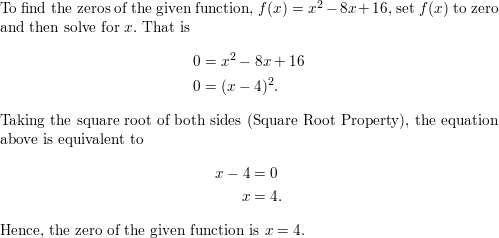
Question 41.
f(x) = x2 − 6x + 9
Answer:
Big Ideas Math Algebra 2 Answers Chapter 4 Polynomial Functions 4.3 Question 41

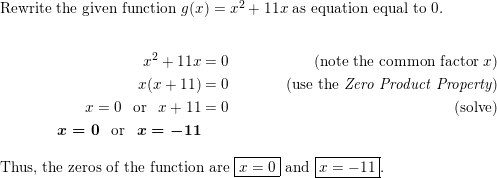
Question 42.
g(x) = 3(x + 6)(x − 2)
Answer:

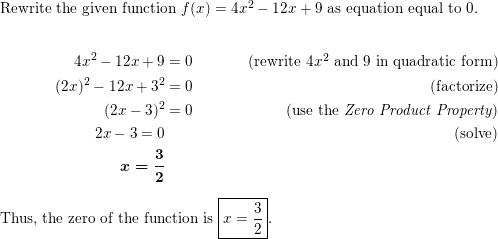
Question 43.
g(x) = x2 + 14x + 49
Answer:
Big Ideas Math Algebra 2 Answers Chapter 4 Polynomial Functions 4.3 Question 43

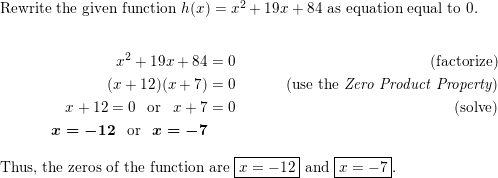
Question 44.
h(x) = 4x2 + 36

Lesson 4.4 Factoring Polynomials

Essential Question
How can you factor a polynomial?

EXPLORATION 1
Factoring Polynomials
Work with a partner.
Match each polynomial equation with the graph of its related polynomial function. Use the x-intercepts of the graph to write each polynomial in factored form. Explain your reasoning.
a. x2 + 5x + 4 = 0
b. x3 − 2x2 − x + 2 = 0
c. x3 + x2 − 2x = 0
d. x3 − x = 0
e. x4 − 5x2 + 4 = 0
f. x4 − 2x3 − x2 + 2x = 0
Big Ideas Math Algebra 2 Answers Chapter 4 Polynomial Functions 38

EXPLORATION 2
Factoring Polynomials

Big Ideas Math Algebra 2 Answers Chapter 4 Polynomial Functions 39
Work with a partner. Use the x-intercepts of the graph of the polynomial function to write each polynomial in factored form. Explain your reasoning. Check your answers by multiplying.
a. f(x) = x2 − x − 2
b. f(x) = x3 − x2 − 2x
c. f(x) = x3 − 2x2 − 3x
d. f(x) = x3 − 3x2 − x + 3
e. f(x) = x4 + 2x3 − x2 − 2x
f. f(x) = x4 − 10x2 + 9

Communicate Your Answer

Question 3.
How can you factor a polynomial?

Question 4.
What information can you obtain about the graph of a polynomial function written in factored form?

4.4 Lesson

Monitoring Progress

Question 1.
x3 − 7x2 + 10x
Answer:
https://eurekamathanswerkeys.com/wp-content/uploads/2021/02/Big-Ideas-Math-Algebra-2-Answers-Chapter-4-Polynomial-Functions-4.4-Questionn-1.jpg

Question 2.
3n7 − 75n5

Answer:
https://eurekamathanswerkeys.com/wp-content/uploads/2021/02/Big-Ideas-Math-Algebra-2-Answers-Chapter-4-Polynomial-Functions-4.4-Questionn-2.jpg

Question 3.
8m5 − 16m4 + 8m3
Answer:
https://eurekamathanswerkeys.com/wp-content/uploads/2021/02/Big-Ideas-Math-Algebra-2-Answers-Chapter-4-Polynomial-Functions-4.4-Questionn-3.jpg

Factor the polynomial completely

Question 4.
a3 + 27
Answer:
https://eurekamathanswerkeys.com/wp-content/uploads/2021/02/Big-Ideas-Math-Algebra-2-Answers-Chapter-4-Polynomial-Functions-4.4-Questionn-4.jpg

Question 5.
6z5 − 750z2

Answer:
https://eurekamathanswerkeys.com/wp-content/uploads/2021/02/Big-Ideas-Math-Algebra-2-Answers-Chapter-4-Polynomial-Functions-4.4-Questionn-5.jpg
Question 6.
x3 + 4x2 − x − 4
Answer:
https://eurekamathanswerkeys.com/wp-content/uploads/2021/02/Big-Ideas-Math-Algebra-2-Answers-Chapter-4-Polynomial-Functions-4.4-Questionn-6.jpg

Question 7.
3y3 + y2 + 9y + 3
Answer:
https://eurekamathanswerkeys.com/wp-content/uploads/2021/02/Big-Ideas-Math-Algebra-2-Answers-Chapter-4-Polynomial-Functions-4.4-Questionn-7.jpg

Question 8.
−16n4 + 625
Answer:
https://eurekamathanswerkeys.com/wp-content/uploads/2021/02/Big-Ideas-Math-Algebra-2-Answers-Chapter-4-Polynomial-Functions-4.4-Questionn-8.jpg

Question 9.
5w6 − 25w4 + 30w2

Answer:
https://eurekamathanswerkeys.com/wp-content/uploads/2021/02/Big-Ideas-Math-Algebra-2-Answers-Chapter-4-Polynomial-Functions-4.4-Questionn-9.jpg

Question 10.
Determine whether x− 4 is a factor of f(x) = 2x2 + 5x − 12.
Answer:
https://eurekamathanswerkeys.com/wp-content/uploads/2021/02/Big-Ideas-Math-Algebra-2-Answers-Chapter-4-Polynomial-Functions-4.4-Questionn-10.jpg

Question 11.
Show that x − 6 is a factor of f(x) = x3 − 5x2 − 6x. Then factor f(x) completely.
Answer:
https://eurekamathanswerkeys.com/wp-content/uploads/2021/02/Big-Ideas-Math-Algebra-2-Answers-Chapter-4-Polynomial-Functions-4.4-Questionn-11.jpg

Question 12.
In Example 7, does your answer change when you first determine whether 2 is a zero and then whether −1 is a zero? Justify your answer.
Answer:
https://eurekamathanswerkeys.com/wp-content/uploads/2021/02/Big-Ideas-Math-Algebra-2-Answers-Chapter-4-Polynomial-Functions-4.4-Questionn-12.jpg

Factoring Polynomials 4.4 Exercises

Vocabulary and Core Concept Check

Question 1.
COMPLETE THE SENTENCE The expression 9x4 − 49 is in _________ form because it can be written as u2 − 49 where u = _____.
Answer:
Big Ideas Math Algebra 2 Answers Chapter 4 Polynomial Functions 4.4 Question 1

Question 2.
VOCABULARY Explain when you should try factoring a polynomial by grouping.
Answer:
https://eurekamathanswerkeys.com/wp-content/uploads/2021/02/Big-Ideas-Math-Algebra-2-Answers-Chapter-4-Polynomial-Functions-4.4-Questioon-2.jpg

Question 3.
WRITING How do you know when a polynomial is factored completely?
Answer:
Big Ideas Math Algebra 2 Answers Chapter 4 Polynomial Functions 4.4 Question 3

Question 4.
WRITING Explain the Factor Theorem and why it is useful.
Answer:
https://eurekamathanswerkeys.com/wp-content/uploads/2021/02/Big-Ideas-Math-Algebra-2-Answers-Chapter-4-Polynomial-Functions-4.4-Questioon-4.jpg

Monitoring Progress and Modeling with Mathematics

In Exercises 5–12, factor the polynomial completely.

Question 5.
x3 − 2x2 − 24x
Answer:
Big Ideas Math Algebra 2 Answers Chapter 4 Polynomial Functions 4.4 Question 5

Question 6.
4k5 − 100k3
Answer:
https://eurekamathanswerkeys.com/wp-content/uploads/2021/02/Big-Ideas-Math-Algebra-2-Answers-Chapter-4-Polynomial-Functions-4.4-Questioon-6.jpg

Question 7.
3p5 − 192p3
Answer:
Big Ideas Math Algebra 2 Answers Chapter 4 Polynomial Functions 4.4 Question 7

Question 8.
2m6 − 24m5 + 64m4
Answer:
https://eurekamathanswerkeys.com/wp-content/uploads/2021/02/Big-Ideas-Math-Algebra-2-Answers-Chapter-4-Polynomial-Functions-4.4-Questioon-8.jpg

Question 9.
2q4 + 9q3 − 18q2
Answer:
Big Ideas Math Algebra 2 Answers Chapter 4 Polynomial Functions 4.4 Question 9

Question 10.
3r6 − 11r5 − 20r4
Answer:
https://eurekamathanswerkeys.com/wp-content/uploads/2021/02/Big-Ideas-Math-Algebra-2-Answers-Chapter-4-Polynomial-Functions-4.4-Questioon-10.jpg
Question 11.
10w10 − 19w9 + 6w8
Answer:
Big Ideas Math Algebra 2 Answers Chapter 4 Polynomial Functions 4.4 Question 11

Question 12.
18v9 + 33v8 + 14v7
Answer:
https://eurekamathanswerkeys.com/wp-content/uploads/2021/02/Big-Ideas-Math-Algebra-2-Answers-Chapter-4-Polynomial-Functions-4.4-Questioon-12.jpg

In Exercises 13–20, factor the polynomial completely.

Question 13.
x3 + 64
Answer:
Big Ideas Math Algebra 2 Answers Chapter 4 Polynomial Functions 4.4 Question 13

Question 14.
y3 + 512
Answer:
https://eurekamathanswerkeys.com/wp-content/uploads/2021/02/Big-Ideas-Math-Algebra-2-Answers-Chapter-4-Polynomial-Functions-4.4-Questioon-14.jpg

Question 15.
g3 − 343
Answer:
Big Ideas Math Algebra 2 Answers Chapter 4 Polynomial Functions 4.4 Question 15

Question 16.
c3 − 27
Answer:
https://eurekamathanswerkeys.com/wp-content/uploads/2021/02/Big-Ideas-Math-Algebra-2-Answers-Chapter-4-Polynomial-Functions-4.4-Questioon-16.jpg

Question 17.
3h9 − 192h6
Answer:
Big Ideas Math Algebra 2 Answers Chapter 4 Polynomial Functions 4.4 Question 17

Question 18.
9n6 − 6561n3
Answer:
https://eurekamathanswerkeys.com/wp-content/uploads/2021/02/Big-Ideas-Math-Algebra-2-Answers-Chapter-4-Polynomial-Functions-4.4-Questioon-18.jpg

Question 19.
16t7 + 250t4
Answer:
Big Ideas Math Algebra 2 Answers Chapter 4 Polynomial Functions 4.4 Question 19

Question 20.
135z11 − 1080z8
Answer:
https://eurekamathanswerkeys.com/wp-content/uploads/2021/02/Big-Ideas-Math-Algebra-2-Answers-Chapter-4-Polynomial-Functions-4.4-Questioon-20.jpg

ERROR ANALYSIS In Exercises 21 and 22, describe and correct the error in factoring the polynomial.

Question 21.
Big Ideas Math Algebra 2 Answers Chapter 4 Polynomial Functions 40
Answer:
Big Ideas Math Algebra 2 Answers Chapter 4 Polynomial Functions 4.4 Question 21

Question 22.
Big Ideas Math Algebra 2 Answers Chapter 4 Polynomial Functions 41
Answer:
https://eurekamathanswerkeys.com/wp-content/uploads/2021/02/Big-Ideas-Math-Algebra-2-Answers-Chapter-4-Polynomial-Functions-4.4-Questioon-22.jpg

In Exercises 23–30, factor the polynomial completely.

Question 23.
y3 − 5y2 + 6y − 30
Answer:
Big Ideas Math Algebra 2 Answers Chapter 4 Polynomial Functions 4.4 Question 23

Question 24.
m3 − m2 + 7m − 72
Answer:
https://eurekamathanswerkeys.com/wp-content/uploads/2021/02/Big-Ideas-Math-Algebra-2-Answers-Chapter-4-Polynomial-Functions-4.4-Questioon-24.jpg

Question 25.
3a3 + 18a2 + 8a + 48
Answer:
Big Ideas Math Algebra 2 Answers Chapter 4 Polynomial Functions 4.4 Question 25

Question 26.
2k3 − 20k2 + 5k − 50
Answer:
https://eurekamathanswerkeys.com/wp-content/uploads/2021/02/Big-Ideas-Math-Algebra-2-Answers-Chapter-4-Polynomial-Functions-4.4-Questioon-26.jpg

Question 27.
x3 − 8x2 − 4x + 32
Answer:
Big Ideas Math Algebra 2 Answers Chapter 4 Polynomial Functions 4.4 Question 27

Question 28.
z3 − 5z2 − 9z + 45
Answer:
https://eurekamathanswerkeys.com/wp-content/uploads/2021/02/Big-Ideas-Math-Algebra-2-Answers-Chapter-4-Polynomial-Functions-4.4-Questioon-28.jpg

Question 29.
4q3 − 16q7 − 9q + 36
Answer:
Big Ideas Math Algebra 2 Answers Chapter 4 Polynomial Functions 4.4 Question 29

Question 30.
16n3 + 32n7 − n − 2
Answer:
https://eurekamathanswerkeys.com/wp-content/uploads/2021/02/Big-Ideas-Math-Algebra-2-Answers-Chapter-4-Polynomial-Functions-4.4-Questioon-30.jpg

In Exercises 31–38, factor the polynomial completely.

Question 31.
49k4 − 9
Answer:
Big Ideas Math Algebra 2 Answers Chapter 4 Polynomial Functions 4.4 Question 31

Question 32.
4m4 − 25
Answer:
https://eurekamathanswerkeys.com/wp-content/uploads/2021/02/Big-Ideas-Math-Algebra-2-Answers-Chapter-4-Polynomial-Functions-4.4-Questioon-32.jpg

Question 33.
c4 + 9c2 + 20
Answer:
Big Ideas Math Algebra 2 Answers Chapter 4 Polynomial Functions 4.4 Question 33

Question 34.
y4 − 3y2 − 28
Answer:
https://eurekamathanswerkeys.com/wp-content/uploads/2021/02/Big-Ideas-Math-Algebra-2-Answers-Chapter-4-Polynomial-Functions-4.4-Questioon-34.jpg

Question 35.
16z4 − 81
Answer:
Big Ideas Math Algebra 2 Answers Chapter 4 Polynomial Functions 4.4 Question 35

Question 36.
81a4 − 256
Answer:
https://eurekamathanswerkeys.com/wp-content/uploads/2021/02/Big-Ideas-Math-Algebra-2-Answers-Chapter-4-Polynomial-Functions-4.4-Questioon-36.jpg

Question 37.
3r8 + 3r5 − 60r2
Answer:
Big Ideas Math Algebra 2 Answers Chapter 4 Polynomial Functions 4.4 Question 37

Question 38.
4n12 − 32n7 + 48n2
Answer:
https://eurekamathanswerkeys.com/wp-content/uploads/2021/02/Big-Ideas-Math-Algebra-2-Answers-Chapter-4-Polynomial-Functions-4.4-Questioon-38.jpg

In Exercises 39–44, determine whether the binomial is a factor of the polynomial.

Question 39.
f(x) = 2x3 + 5x2 − 37x − 60; x − 4
Answer:
Big Ideas Math Algebra 2 Answers Chapter 4 Polynomial Functions 4.4 Question 39

Question 40.
g(x) = 3x3 − 28x2 + 29x + 140; x + 7
Answer:
https://eurekamathanswerkeys.com/wp-content/uploads/2021/02/Big-Ideas-Math-Algebra-2-Answers-Chapter-4-Polynomial-Functions-4.4-Questioon-40.jpg

Question 41.
h(x) = 6x5 − 15x4 − 9x3; x + 3
Answer:
Big Ideas Math Algebra 2 Answers Chapter 4 Polynomial Functions 4.4 Question 41

Question 42.
g(x) = 8x5 − 58x4 + 60x3 + 140; x − 6
Answer:
https://eurekamathanswerkeys.com/wp-content/uploads/2021/02/Big-Ideas-Math-Algebra-2-Answers-Chapter-4-Polynomial-Functions-4.4-Questioon-42.jpg

Question 43.
h(x) = 6x4 − 6x3 − 84x2 + 144x; x + 4
Answer:
Big Ideas Math Algebra 2 Answers Chapter 4 Polynomial Functions 4.4 Question 43

Question 44.
t(x) = 48x4 + 36x3 − 138x2 − 36x; x + 2
Answer:
https://eurekamathanswerkeys.com/wp-content/uploads/2021/02/Big-Ideas-Math-Algebra-2-Answers-Chapter-4-Polynomial-Functions-4.4-Questioon-44.jpg

In Exercises 45–50, show that the binomial is a factor of the polynomial. Then factor the polynomial completely.

Question 45.
g(x) = x3 − x2 − 20x; x + 4
Answer:
Big Ideas Math Algebra 2 Answers Chapter 4 Polynomial Functions 4.4 Question 45

Question 46.
t(x) = x3 − 5x2 − 9x + 45; x − 5
Answer:
https://eurekamathanswerkeys.com/wp-content/uploads/2021/02/Big-Ideas-Math-Algebra-2-Answers-Chapter-4-Polynomial-Functions-4.4-Questioon-46.jpg

Question 47.
f(x) = x4 − 6x3 − 8x + 48; x − 6
Answer:
Big Ideas Math Algebra 2 Answers Chapter 4 Polynomial Functions 4.4 Question 47

Question 48.
s(x) = x4 + 4x3 − 64x − 256; x + 4
Answer:
https://eurekamathanswerkeys.com/wp-content/uploads/2021/02/Big-Ideas-Math-Algebra-2-Answers-Chapter-4-Polynomial-Functions-4.4-Questioon-48.jpg

Question 49.
r(x) = x3 − 37x + 84; x + 7
Answer:
Big Ideas Math Algebra 2 Answers Chapter 4 Polynomial Functions 4.4 Question 49

Question 50.
h(x) = x3 − x2 − 24x − 36; x + 2
Answer:
https://eurekamathanswerkeys.com/wp-content/uploads/2021/02/Big-Ideas-Math-Algebra-2-Answers-Chapter-4-Polynomial-Functions-4.4-Questioon-50.jpg

ANALYZING RELATIONSHIPS In Exercises 51–54, match the function with the correct graph. Explain your reasoning.

Question 51.
f(x) = (x − 2)(x − 3)(x + 1)
Answer:
Big Ideas Math Algebra 2 Answers Chapter 4 Polynomial Functions 4.4 Question 51

Question 52.
g(x) = x(x + 2)(x + 1)(x − 2)
Answer:
To easily determine the zeroes of the graph, set each factor equal to zero.
Zeroes: 0, -2, -1,2
Based on the zeroes, match them with the graph that has the same number of zeroes at the same location.

Question 53.
h(x) = (x + 2)(x + 3)(x − 1)
Answer:
Big Ideas Math Algebra 2 Answers Chapter 4 Polynomial Functions 4.4 Question 53

Question 54.
k(x) = x(x − 2)(x − 1)(x + 2)
Big Ideas Math Algebra 2 Answers Chapter 4 Polynomial Functions 42
Answer:
To easily determine the zeroes of the graph, set each factor equal to zero.
Zeroes: 0, 2, 1, -2
Based on the zeroes, match them with the graph that has the same number of zeroes at the same location.

Question 55.
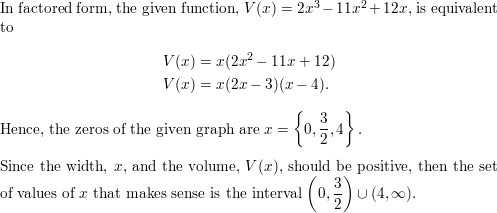
MODELING WITH MATHEMATICS The volume (in cubic inches) of a shipping box is modeled by V = 2x3 − 19x2 + 39x, where x is the length (in inches). Determine the values of x for which the model makes sense. Explain your reasoning.
Big Ideas Math Algebra 2 Answers Chapter 4 Polynomial Functions 43
Answer:
Big Ideas Math Algebra 2 Answers Chapter 4 Polynomial Functions 4.4 Question 55

Question 56.
MODELING WITH MATHEMATICS The volume (in cubic inches) of a rectangular birdcage can be modeled by V = 3x3 − 17x2 + 29x − 15, where x is the length (in inches). Determine the values of x for which the model makes sense. Explain your reasoning.
Big Ideas Math Algebra 2 Answers Chapter 4 Polynomial Functions 44
Answer:
https://eurekamathanswerkeys.com/wp-content/uploads/2021/02/Big-Ideas-Math-Algebra-2-Answers-Chapter-4-Polynomial-Functions-4.4-Questioon-56.jpg

USING STRUCTURE In Exercises 57–64, use the method of your choice to factor the polynomial completely. Explain your reasoning.

Question 57.
a6 + a5 − 30a4
Answer:
Big Ideas Math Algebra 2 Answers Chapter 4 Polynomial Functions 4.4 Question 57

Question 58.
8m3 − 343
Answer:
https://eurekamathanswerkeys.com/wp-content/uploads/2021/02/Big-Ideas-Math-Algebra-2-Answers-Chapter-4-Polynomial-Functions-4.4-Questioon-58.jpg

Question 59.
z3 − 7z2 − 9z + 63
Answer:
Big Ideas Math Algebra 2 Answers Chapter 4 Polynomial Functions 4.4 Question 59

Question 60.
2p8 − 12p5 + 16p2
Answer:
https://eurekamathanswerkeys.com/wp-content/uploads/2021/02/Big-Ideas-Math-Algebra-2-Answers-Chapter-4-Polynomial-Functions-4.4-Questioon-60.jpg

Question 61.
64r3 + 729
Answer:
Big Ideas Math Algebra 2 Answers Chapter 4 Polynomial Functions 4.4 Question 61

Question 62.
5x5 − 10x4 − 40x3
Answer:
https://eurekamathanswerkeys.com/wp-content/uploads/2021/02/Big-Ideas-Math-Algebra-2-Answers-Chapter-4-Polynomial-Functions-4.4-Questioon-62.jpg

Question 63.
16n4 − 1
Answer:
Big Ideas Math Algebra 2 Answers Chapter 4 Polynomial Functions 4.4 Question 63

Question 64.
9k3 − 24k2 + 3k − 8
Answer:
https://eurekamathanswerkeys.com/wp-content/uploads/2021/02/Big-Ideas-Math-Algebra-2-Answers-Chapter-4-Polynomial-Functions-4.4-Questioon-64.jpg

Question 65.
REASONING Determine whether each polynomial is factored completely. If not, factor completely.
a. 7z4(2z2 − z − 6)
b. (2 − n)(n2 + 6n)(3n − 11)
c. 3(4y − 5)(9y2 − 6y − 4)
Answer:
Big Ideas Math Algebra 2 Answers Chapter 4 Polynomial Functions 4.4 Question 65

Question 66.
PROBLEM SOLVING The profit P (in millions of dollars) for a T-shirt manufacturer can be modeled by P = −x3 + 4x2 + x, where x is the number (in millions) of T-shirts produced. Currently the company produces 4 million T-shirts and makes a profit of $4 million. What lesser number of T-shirts could the company produce and still make the same profit?
Big Ideas Math Algebra 2 Answers Chapter 4 Polynomial Functions 44.1
Answer:
https://eurekamathanswerkeys.com/wp-content/uploads/2021/02/Big-Ideas-Math-Algebra-2-Answers-Chapter-4-Polynomial-Functions-4.4-Questioon-66.jpg

Question 67.
PROBLEM SOLVING The profit P (in millions of dollars) for a shoe manufacturer can be modeled by P = −21x3 + 46x, where x is the number (in millions) of shoes produced. The company now produces 1 million shoes and makes a profit of $25 million, but it would like to cut back production. What lesser number of shoes could the company produce and still make the same profit?
Answer:
Big Ideas Math Algebra 2 Answers Chapter 4 Polynomial Functions 4.4 Question 67

Question 68.
THOUGHT PROVOKING Find a value of k such that \(\frac{f(x)}{x-k}\) has a remainder of 0. Justify your answer.
Answer:
https://eurekamathanswerkeys.com/wp-content/uploads/2021/02/Big-Ideas-Math-Algebra-2-Answers-Chapter-4-Polynomial-Functions-4.4-Questioon-68.jpg

Question 69.
COMPARING METHODS You are taking a test where calculators are not permitted. One question asks you to evaluate g(7) for the function g(x) = x3 − 7x2 − 4x + 28. You use the Factor Theorem and synthetic division and your friend uses direct substitution. Whose method do you prefer? Explain your reasoning.
Answer:
Big Ideas Math Algebra 2 Answers Chapter 4 Polynomial Functions 4.4 Question 69

Question 70.
MAKING AN ARGUMENT You divide f(x) by (x−a) and find that the remainder does not equal 0. Your friend concludes that f(x) cannot be factored. Is your friend correct? Explain your reasoning.
Answer:
https://eurekamathanswerkeys.com/wp-content/uploads/2021/02/Big-Ideas-Math-Algebra-2-Answers-Chapter-4-Polynomial-Functions-4.4-Questioon-70.jpg

Question 71.
CRITICAL THINKING What is the value of k such that x− 7 is a factor of h(x) = 2x3 − 13x2 − kx + 105? Justify your answer.
Answer:
Big Ideas Math Algebra 2 Answers Chapter 4 Polynomial Functions 4.4 Question 71

Question 72.
HOW DO YOU SEE IT? Use the graph to write an equation of the cubic function in factored form. Explain your reasoning.
Big Ideas Math Algebra 2 Answers Chapter 4 Polynomial Functions 45
Answer:
https://eurekamathanswerkeys.com/wp-content/uploads/2021/02/Big-Ideas-Math-Algebra-2-Answers-Chapter-4-Polynomial-Functions-4.4-Questioon-72.jpg

Question 73.
ABSTRACT REASONING Factor each polynomial completely.
a. 7ac2 + bc2 − 7ad2 − bd2
b. x2n − 2xn + 1
c. a5b2 − a2b4 + 2a4b − 2ab3 + a3 − b2
Answer:
Big Ideas Math Algebra 2 Answers Chapter 4 Polynomial Functions 4.4 Question 73

Question 74.
REASONING The graph of the function f(x) = x4 + 3x3 + 2x2 + x + 3 is shown. Can you use the Factor Theorem to factor f(x)? Explain.
Answer:
https://eurekamathanswerkeys.com/wp-content/uploads/2021/02/Big-Ideas-Math-Algebra-2-Answers-Chapter-4-Polynomial-Functions-4.4-Questioon-74.jpg

Question 75.
MATHEMATICAL CONNECTIONS The standard equation of a circle with radius r and center (h, k) is (x − h)2 + (y − k)2 = r2. Rewrite each equation of a circle in standard form. Identify the center and radius of the circle. Then graph the circle.
Big Ideas Math Algebra 2 Answers Chapter 4 Polynomial Functions 46
a. x2 + 6x + 9 + y2 = 25
b. x2 − 4x + 4 + y2 = 9
c. x2 − 8x + 16 + y2 + 2y + 1 = 36
Answer:
Big Ideas Math Algebra 2 Answers Chapter 4 Polynomial Functions 4.4 Question 75.1
Big Ideas Math Algebra 2 Answers Chapter 4 Polynomial Functions 4.4 Question 75.2
Big Ideas Math Algebra 2 Answers Chapter 4 Polynomial Functions 4.4 Question 75.3

Question 76.
CRITICAL THINKING Use the diagram to complete parts (a)–(c).
a. Explain why a3 − b3 is equal to the sum of the volumes of the solids I, II, and III.
b. Write an algebraic expression for the volume of each of the three solids. Leave your expressions in factored form.
c. Use the results from part (a) and part (b) to derive the factoring pattern a3 − b3.
Big Ideas Math Algebra 2 Answers Chapter 4 Polynomial Functions 47
Answer:
https://eurekamathanswerkeys.com/wp-content/uploads/2021/02/Big-Ideas-Math-Algebra-2-Answers-Chapter-4-Polynomial-Functions-4.4-Questioon-76.jpg

Maintaining Mathematical Proficiency

Solve the quadratic equation by factoring.(Section 3.1)

Question 77.
x2 − x − 30 = 0
Answer:
Big Ideas Math Algebra 2 Answers Chapter 4 Polynomial Functions 4.4 Question 77

Question 78.
2x2 − 10x − 72 = 0
Answer:
https://eurekamathanswerkeys.com/wp-content/uploads/2021/02/Big-Ideas-Math-Algebra-2-Answers-Chapter-4-Polynomial-Functions-4.4-Questioon-78.jpg

Question 79.
3x2 − 11x + 10 = 0
Answer:
Big Ideas Math Algebra 2 Answers Chapter 4 Polynomial Functions 4.4 Question 79

Question 80.
9x2 − 28x + 3 = 0
Answer:
https://eurekamathanswerkeys.com/wp-content/uploads/2021/02/Big-Ideas-Math-Algebra-2-Answers-Chapter-4-Polynomial-Functions-4.4-Questioon-80.jpg

Solve the quadratic equation by completing the square.(Section 3.3)

Question 81.
x2 − 12x + 36 = 144
Answer:
Big Ideas Math Algebra 2 Answers Chapter 4 Polynomial Functions 4.4 Question 81

Question 82.
x2 − 8x − 11 = 0
Answer:
https://eurekamathanswerkeys.com/wp-content/uploads/2021/02/Big-Ideas-Math-Algebra-2-Answers-Chapter-4-Polynomial-Functions-4.4-Questioon-82.jpg


Question 83.
3x2 + 30x + 63 = 0
Answer:
Big Ideas Math Algebra 2 Answers Chapter 4 Polynomial Functions 4.4 Question 83

Question 84.
4x2 + 36x − 4 = 0
Answer:
https://eurekamathanswerkeys.com/wp-content/uploads/2021/02/Big-Ideas-Math-Algebra-2-Answers-Chapter-4-Polynomial-Functions-4.4-Questioon-84.jpg

Polynomial Functions Study Skills : Keeping Your Mind Focused

4.1–4.4 What Did You Learn?

Core Vocabulary
Big Ideas Math Algebra 2 Answers Chapter 4 Polynomial Functions 48

Core Concepts
Section 4.1
Big Ideas Math Algebra 2 Answers Chapter 4 Polynomial Functions 49

Section 4.2
Big Ideas Math Algebra 2 Answers Chapter 4 Polynomial Functions 50

Section 4.3
Big Ideas Math Algebra 2 Answers Chapter 4 Polynomial Functions 51

Section 4.4
Big Ideas Math Algebra 2 Answers Chapter 4 Polynomial Functions 52

Mathematical Practices

Question 1.
Describe the entry points you used to analyze the function in Exercise 43 on page 164.

Question 2.
Describe how you maintained oversight in the process of factoring the polynomial in Exercise 49 on page 185.

Study Skills
Keeping Your Mind Focused

  • When you sit down at your desk, review your notes from the last class.
  • Repeat in your mind what you are writing in your notes.
  • When a mathematical concept is particularly difficult, ask your teacher for another example.

Big Ideas Math Algebra 2 Answers Chapter 4 Polynomial Functions 52.1

Polynomial Functions 4.1 – 4.4 Quiz

Decide whether the function is a polynomial function. If so, write it in standard form and state its degree, type, and leading coefficient.(Section 4.1)

Question 1.
f(x) = 5 + 2x2 − 3x4 − 2x − x3

Question 2.
g(x) = \(\frac{1}{4}\)x3 + 2x − 3x2 + 1

Question 3.
h(x) = 3 − 6x3 + 4x − 2 + 6x

Question 4.
Describe the x-values for which
(a) f is increasing or decreasing,
(b) f(x) > 0, and
(c) f(x) < 0. (Section 4.1)
Answer:


Question 5.
Write an expression for the arend perimeter for the figure shown.(Section 4.2)


P oerform the indicatedperatino.(Section 4.2)Big Ideas Math Algebra 2 Answers Chapter 4 Polynomial Functions 54

Question 6.
(7x2 − 4) − (3x2 − 5x + 1)
https://eurekamathanswerkeys.com/wp-content/uploads/2021/02/Big-ideas-math-Algebra-2-Chapter.-4-Polynomials-quiz-Exercise-Answer-6.jpg

Question 7.
(x2 − 3x + 2)(3x − 1)
https://eurekamathanswerkeys.com/wp-content/uploads/2021/02/Big-ideas-math-Algebra-2-Chapter.-4-Polynomials-quiz-Exercise-Answer-7.jpg

Question 8.
(x − 1)(x + 3)(x − 4)
https://eurekamathanswerkeys.com/wp-content/uploads/2021/02/Big-ideas-math-Algebra-2-Chapter.-4-Polynomials-quiz-Exercise-Answer-8.jpg

Question 9.
Use Pascal’s Triangle to expand (x + 2)5. (Section 4.2)

Question 10.
Divide 4x4 − 2x3 + x2 − 5x + 8 by x2 − 2x − 1. (Section 4.3)

Factor the polynomial completely.(Section 4.4)

Question 11.
a3 − 2a2 − 8a
https://eurekamathanswerkeys.com/wp-content/uploads/2021/02/Big-ideas-math-Algebra-2-Chapter.-4-Polynomials-quiz-Exercise-Answer-11.jpg

Question 12.
8m3 + 27
https://eurekamathanswerkeys.com/wp-content/uploads/2021/02/Big-ideas-math-Algebra-2-Chapter.-4-Polynomials-quiz-Exercise-Answer-12.jpg

Question 13.
z3 + z2 − 4z − 4
https://eurekamathanswerkeys.com/wp-content/uploads/2021/02/Big-ideas-math-Algebra-2-Chapter.-4-Polynomials-quiz-Exercise-Answer-13.jpg

Question 14.
49b4 − 64
https://eurekamathanswerkeys.com/wp-content/uploads/2021/02/Big-ideas-math-Algebra-2-Chapter.-4-Polynomials-quiz-Exercise-Answer-14.jpg

Question 15.
Show that x + 5 is a factor of f(x) = x3 − 2x2 − 23x + 60. Then factor f(x) completely. (Section 4.4)
https://eurekamathanswerkeys.com/wp-content/uploads/2021/02/Big-ideas-math-Algebra-2-Chapter.-4-Polynomials-quiz-Exercise-Answer-15.jpg

Question 16.
The estimated price P (in cents) of stamps in the United States can be modeled by the polynomial function P(t)= 0.007t3 − 0.16t2 + 1t + 17, where t represents the number of years since 1990. (Section 4.1)
a. Use a graphing calculator to graph the function for the interval 0 ≤ t ≤ 20. Describe the behavior of the graph on this interval.
b. What was the average rate of change in the price of stamps from 1990 to 2010?
https://eurekamathanswerkeys.com/wp-content/uploads/2021/02/Big-ideas-math-Algebra-2-Chapter.-4-Polynomials-quiz-Exercise-Answer-16.jpg

Question 17.
The volume V (in cubic feet) of a rectangular wooden crate is modeled by the function V(x) = 2x3 − 11x2 + 12x, where x is the width (in feet) of the crate. Determine the values of x for which the model makes sense. Explain your reasoning. (Section 4.4)
Big Ideas Math Answers Algebra 2 Chapter 4 Polynomial Functions 55

Lesson 4.5 Solving Polynomial Equations

Essential Question
How can you determine whether a polynomial equation has a repeated solution?

EXPLORATION 1
Cubic Equations and Repeated Solutions
Work with a partner.
Some cubic equations have three distinct solutions. Others have repeated solutions. Match each cubic polynomial equation with the graph of its related polynomial function. Then solve each equation. For those equations that have repeated solutions, describe the behavior of the related function near the repeated zero using the graph or a table of values.
Big Ideas Math Answers Algebra 2 Chapter 4 Polynomial Functions 56
a. x3 − 6x2 + 12x − 8 = 0
b. x3 + 3x2 + 3x + 1 = 0
c. x3− 3x + 2 = 0
d. x3 + x2 − 2x = 0
e. x3 − 3x − 2 = 0
f. x3 − 3x2 + 2x = 0
Big Ideas Math Answers Algebra 2 Chapter 4 Polynomial Functions 57

EXPLORATION 2
Quartic Equations and Repeated Solutions
Work with a partner.
Determine whether each quartic equation has repeated solutions using the graph of the related quartic function or a table of values. Explain your reasoning. Then solve each equation.
a. x4 − 4x3 + 5x2 − 2x = 0
b. x4 − 2x3 − x2 + 2x = 0
c. x4 − 4x3 + 4x2 = 0
d. x4 + 3x3 = 0

Communicate Your Answer

Question 3.
How can you determine whether a polynomial equation has a repeated solution?

Question 4.
Write a cubic or a quartic polynomial equation that is different from the equations in Explorations 1 and 2 and has a repeated solution.

4.5 Lesson

Monitoring Progress

Solve the equation.

Question 1.
4x4 − 40x2 + 36 = 0
https://eurekamathanswerkeys.com/wp-content/uploads/2021/02/Big-ideas-math-algerbra-2-chapter-4.-Polynomials-Monitoring-progress-exercise-4.5-Answer-1.jpg
Question 2.
2x5 + 24x = 14x3
https://eurekamathanswerkeys.com/wp-content/uploads/2021/02/Big-ideas-math-algerbra-2-chapter-4.-Polynomials-Monitoring-progress-exercise-4.5-Answer-2.jpg

Find the zeros of the function. Then sketch a graph of the function.

Question 3.
f(x) = 3x4 − 6x2 + 3
https://eurekamathanswerkeys.com/wp-content/uploads/2021/02/Big-ideas-math-algerbra-2-chapter-4.-Polynomials-Monitoring-progress-exercise-4.5-Answer-3.jpg

Question 4.
f(x) = x3 + x2 − 6x
https://eurekamathanswerkeys.com/wp-content/uploads/2021/02/Big-ideas-math-algerbra-2-chapter-4.-Polynomials-Monitoring-progress-exercise-4.5-Answer-4.jpg

Question 5.
Find all real solutions of x3 − 5x2 − 2x + 24 = 0.
https://eurekamathanswerkeys.com/wp-content/uploads/2021/02/Big-ideas-math-algerbra-2-chapter-4.-Polynomials-Monitoring-progress-exercise-4.5-Answer-5.jpg
Question 6.
Find all real zeros of f(x) = 3x4 − 2x3 − 37x2 + 24x + 12.
https://eurekamathanswerkeys.com/wp-content/uploads/2021/02/Big-ideas-math-algerbra-2-chapter-4.-Polynomials-Monitoring-progress-exercise-4.5-Answer-6.jpg

Question 7.
Write a polynomial function f of least degree that has rational coefficients, aleading coefficient of 1, and the zeros 4 and 1 − \(\sqrt{5}\).
https://eurekamathanswerkeys.com/wp-content/uploads/2021/02/Big-ideas-math-algerbra-2-chapter-4.-Polynomials-Monitoring-progress-exercise-4.5-Answer-7.jpg

Solving Polynomial Equations 4.5 Exercises

Vocabulary and Core Concept Check

Question 1.
COMPLETE THE SENTENCE If a polynomial function f has integer coefficients, then every rational solution of f(x) = 0 has the form \(\frac{p}{q}\), where p is a factor of the _____________ and q is a factor of the _____________.
Answer:
Big Ideas Math Algebra 2 Answers Chapter 4 Polynomial Functions 4.5 Question 1

Question 2.
DIFFERENT WORDS, SAME QUESTION Which is different? Find “both” answers.
Big Ideas Math Answers Algebra 2 Chapter 4 Polynomial Functions 58
Answer:

Monitoring Progress and Modeling with Mathematics

In Exercises 3–12, solve the equation.

Question 3.
z3 − z2 − 12z = 0
Answer:
Big Ideas Math Algebra 2 Answers Chapter 4 Polynomial Functions 4.5 Question 3

Question 4.
a3 − 4a2 + 4a = 0
Answer:

Question 5.
2x4 − 4x3 = −2x2
Answer:
Big Ideas Math Algebra 2 Answers Chapter 4 Polynomial Functions 4.5 Question 5

Question 6.
v3 − 2v2 − 16v = − 32
Answer:
https://eurekamathanswerkeys.com/wp-content/uploads/2021/02/Big-ideas-math-algerbra-2-chapter-4.-Polynomials-exercise-4.5-Answer-6.jpg

Question 7.
5w3 = 50w
Answer:
Big Ideas Math Algebra 2 Answers Chapter 4 Polynomial Functions 4.5 Question 7

Question 8.
9m5 = 27m3
Answer:

Question 9.
2c4 − 6c3 = 12c2 − 36c
Answer:
Big Ideas Math Algebra 2 Answers Chapter 4 Polynomial Functions 4.5 Question 9

Question 10.
p4 + 40 = 14p2
Answer:
https://eurekamathanswerkeys.com/wp-content/uploads/2021/02/Big-ideas-math-algerbra-2-chapter-4.-Polynomials-exercise-4.5-Answer-10.jpg

Question 11.
12n2 + 48n = −n3 − 64
Answer:
Big Ideas Math Algebra 2 Answers Chapter 4 Polynomial Functions 4.5 Question 11

Question 12.
y3 − 27 = 9y2 − 27y
Answer:
(y – 3)(y^2 + 3y + 9) = 9y(y – 3)
(y – 3)(y^2 + 3y + 9) – 9y(y – 3) = 0
(y – 3)(y^2 + 3y + 9 – 9y) = 0
(y – 3)(y^2 – 6y + 9) = 0
(y – 3)(y – 3)(y – 3) = 0
(y – 3)^3 = 0
y – 3 = 0
y = 3

In Exercises 13–20, find the zeros of the function. Then sketch a graph of the function.

Question 13.
h(x) = x4 + x3 − 6x2
Answer:
Big Ideas Math Algebra 2 Answers Chapter 4 Polynomial Functions 4.5 Question 13

Question 14.
f(x) = x4 − 18x2 + 81
Answer:
https://eurekamathanswerkeys.com/wp-content/uploads/2021/02/Big-ideas-math-algerbra-2-chapter-4.-Polynomials-exercise-4.5-Answer-14.jpg

Question 15.
p(x) = x6 − 11x5 + 30x4
Answer:
Big Ideas Math Algebra 2 Answers Chapter 4 Polynomial Functions 4.5 Question 15

Question 16.
g(x) = −2x5 + 2x4 + 40x3
Answer:
https://eurekamathanswerkeys.com/wp-content/uploads/2021/02/Big-ideas-math-algerbra-2-chapter-4.-Polynomials-exercise-4.5-Answer-16.jpg

Question 17.
g(x) = −4x4 + 8x3 + 60x2
Answer:
Big Ideas Math Algebra 2 Answers Chapter 4 Polynomial Functions 4.5 Question 17

Question 18.
h(x) = −x3 − 2x2 + 15x
Answer:
https://eurekamathanswerkeys.com/wp-content/uploads/2021/02/Big-ideas-math-algerbra-2-chapter-4.-Polynomials-exercise-4.5-Answer-18.jpg

Question 19.
h(x) = −x3 − x2 + 9x + 9
Answer:
Big Ideas Math Algebra 2 Answers Chapter 4 Polynomial Functions 4.5 Question 19

Question 20.
p(x) = x3 − 5x2 − 4x + 20
Answer:
https://eurekamathanswerkeys.com/wp-content/uploads/2021/02/Big-ideas-math-algerbra-2-chapter-4.-Polynomials-exercise-4.5-Answer-20.jpg

Question 21.
USING EQUATIONS According to the Rational Root Theorem, which is not a possible solution of the equation 2x4 − 5x3 + 10x2 − 9 = 0?
A. −9
B. −\([\frac{1}{2}/latex]
C. [latex][\frac{5}{2}/latex]
D. 3
Answer:
https://eurekamathanswerkeys.com/wp-content/uploads/2021/02/Big-ideas-math-algerbra-2-chapter-4.-Polynomials-exercise-4.5-Answer-.21JPG.jpg
Big Ideas Math Algebra 2 Answers Chapter 4 Polynomial Functions 4.5 Question 21

Question 22.
USING EQUATIONS According to the Rational Root Theorem, which is not a possible zero of the function f(x) = 40x5 − 42x4 − 107x3 + 107x2 + 33x − 36?
A. −[latex][\frac{2}{3}/latex]
B. − [latex][\frac{3}{8}/latex]
C. [latex][\frac{3}{4}/latex]
D. [latex][\frac{4}{5}/latex]
Answer: A

ERROR ANALYSIS In Exercises 23 and 24, describe and correct the error in listing the possible rational zeros of the function.

Question 23.
Big Ideas Math Answers Algebra 2 Chapter 4 Polynomial Functions 59
Answer:
Big Ideas Math Algebra 2 Answers Chapter 4 Polynomial Functions 4.5 Question 23

Question 24.
Big Ideas Math Answers Algebra 2 Chapter 4 Polynomial Functions 60
Answer:

In Exercises 25–32, find all the real solutions of the equation.

Question 25.
x3 + x2 − 17x + 15 = 0
Answer:
Big Ideas Math Algebra 2 Answers Chapter 4 Polynomial Functions 4.5 Question 25

Question 26.
x3 − 2x2 − 5x + 6 = 0
Answer:
https://eurekamathanswerkeys.com/wp-content/uploads/2021/02/Big-ideas-math-Algebra-2-Chapter.4-Polynomials-Exercise-7.5-Answer-26.jpg

Question 27.
x3 − 10x2 + 19x + 30 = 0
Answer:
Big Ideas Math Algebra 2 Answers Chapter 4 Polynomial Functions 4.5 Question 27

Question 28.
x3 + 4x2 − 11x − 30 = 0
Answer:
https://eurekamathanswerkeys.com/wp-content/uploads/2021/02/Big-ideas-math-Algebra-2-Chapter.4-Polynomials-Exercise-7.5-Answer-28.jpg

Question 29.
x3 − 6x2 − 7x + 60 = 0
Answer:
Big Ideas Math Algebra 2 Answers Chapter 4 Polynomial Functions 4.5 Question 29

Question 30.
x3 − 16x2 + 55x + 72 = 0
Answer:

Question 31.
2x3 − 3x2 − 50x − 24 = 0
Answer:
Big Ideas Math Algebra 2 Answers Chapter 4 Polynomial Functions 4.5 Question 31

Question 32.
3x3 + x2 − 38x + 24 = 0
Answer:
https://eurekamathanswerkeys.com/wp-content/uploads/2021/02/Big-ideas-math-Algebra-2-Chapter.4-Polynomials-Exercise-7.5-Answer-32JPG.jpg

In Exercises 33–38, find all the real zeros of the function.

Question 33.
f(x) = x3 − 2x2 − 23x + 60
Answer:
Big Ideas Math Algebra 2 Answers Chapter 4 Polynomial Functions 4.5 Question 33

Question 34.
g(x) = x3 − 28x − 48
Answer:
https://eurekamathanswerkeys.com/wp-content/uploads/2021/02/Big-ideas-math-Algebra-2-Chapter.4-Polynomials-Exercise-7.5-Answer-34.jpg

Question 35.
h(x) = x3 + 10x2 + 31x + 30
Answer:
Big Ideas Math Algebra 2 Answers Chapter 4 Polynomial Functions 4.5 Question 35

Question 36.
f(x) = x3 − 14x2 + 55x − 42
Answer:
https://eurekamathanswerkeys.com/wp-content/uploads/2021/02/Big-ideas-math-Algebra-2-Chapter.4-Polynomials-Exercise-7.5-Answer-36.jpg

Question 37.
p(x) = 2x3 −x2 − 27x + 36
Answer:
Big Ideas Math Algebra 2 Answers Chapter 4 Polynomial Functions 4.5 Question 37

Question 38.
g(x) = 3x3 − 25x2 + 58x − 40
Answer:

USING TOOLS In Exercises 39 and 40, use the graph to shorten the list of possible rational zeros of the function. Then find all real zeros of the function.

Question 39.
f(x) = 4x3 − 20x + 16
Big Ideas Math Answers Algebra 2 Chapter 4 Polynomial Functions 61
Answer:
Big Ideas Math Algebra 2 Answers Chapter 4 Polynomial Functions 4.5 Question 39

Question 40.
f(x) = 4x3 − 49x − 60
Big Ideas Math Answers Algebra 2 Chapter 4 Polynomial Functions 62
Answer:
https://eurekamathanswerkeys.com/wp-content/uploads/2021/02/Big-ideas-math-Algebra-2-Chapter.4-Polynomials-Exercise-7.5-Answer-40.jpg

In Exercises 41–46, write a polynomial function f of least degree that has a leading coefficient of 1 and the given zeros.

Question 41.
−2, 3, 6
Answer:
Big Ideas Math Algebra 2 Answers Chapter 4 Polynomial Functions 4.5 Question 41

Question 42.
−4, −2, 5
Answer:

Question 43.
−2, 1 + [latex]\sqrt{7}\)
Answer:
Big Ideas Math Algebra 2 Answers Chapter 4 Polynomial Functions 4.5 Question 43

Question 44.
4, 6 − \(\sqrt{7}\)
Answer:

Question 45.
−6, 0, 3 −\(\sqrt{5}\)
Answer:
Big Ideas Math Algebra 2 Answers Chapter 4 Polynomial Functions 4.5 Question 45

Question 46.
0, 5, −5 + \(\sqrt{8}\)
Answer:

Question 47.
COMPARING METHODS Solve the equation x3 − 4x2 − 9x + 36 = 0 using two different methods. Which method do you prefer? Explain your reasoning.
Answer:
Big Ideas Math Algebra 2 Answers Chapter 4 Polynomial Functions 4.5 Question 47.1
Big Ideas Math Algebra 2 Answers Chapter 4 Polynomial Functions 4.5 Question 47.2

Question 48.
REASONING Is it possible for a cubic function to have more than three real zeros? Explain.
Answer:

Question 49.
PROBLEM SOLVING At a factory, molten glass is poured into molds to make paperweights. Each mold is a rectangular prism with a height 3 centimeters greater than the length of each side of its square base. Each mold holds 112 cubic centimeters of glass. What are the dimensions of the mold?
Answer:
Big Ideas Math Algebra 2 Answers Chapter 4 Polynomial Functions 4.5 Question 49

Question 50.
MATHEMATICAL CONNECTIONS The volume of the cube shown is 8 cubic centimeters.
a. Write a polynomial equation that you can use to find the value of x.
b. Identify the possible rational solutions of the equation in part (a).
c. Use synthetic division to find a rational solution of the equation. Show that no other real solutions exist.
d. What are the dimensions of the cube?
Big Ideas Math Answers Algebra 2 Chapter 4 Polynomial Functions 63
Answer:
https://eurekamathanswerkeys.com/wp-content/uploads/2021/02/Big-ideas-math-Algebra-2-Chapter.4-Polynomials-Exercise-7.5-Answer-50JPG.jpg

Question 51.
PROBLEM SOLVING Archaeologists discovered a huge hydraulic concrete block at the ruins of Caesarea with a volume of 945 cubic meters. The block is x meters high by 12x − 15 meters long by 12x − 21 meters wide. What are the dimensions of the block?
Big Ideas Math Answers Algebra 2 Chapter 4 Polynomial Functions 64
Answer:
Big Ideas Math Algebra 2 Answers Chapter 4 Polynomial Functions 4.5 Question 51

Question 52.
MAKING AN ARGUMENT Your friend claims that when a polynomial function has a leading coefficient of 1 and the coefficients are all integers, every possible rational zero is an integer. Is your friend correct? Explain your reasoning.
Answer:

Question 53.
MODELING WITH MATHEMATICS During a 10-year period, the amount (in millions of dollars) of athletic equipment Esold domestically can be modeled by E(t) = −20t3 + 252t2 − 280t + 21,614, where t is in years.
a. Write a polynomial equation to find the year when about $24,014,000,000 of athletic equipment is sold.
b. List the possible whole-number solutions of the equation in part (a). Consider the domain when making your list of possible solutions.
c. Use synthetic division to find when $24,014,000,000 of athletic equipment is sold.
Answer:
Big Ideas Math Algebra 2 Answers Chapter 4 Polynomial Functions 4.5 Question 53

Question 54.
THOUGHT PROVOKING Write a third or fourth degree polynomial function that has zeros at ± \(\frac{3}{4}\). Justify your answer.
Answer:

Question 55.
MODELING WITH MATHEMATICS You are designing a marble basin that will hold a fountain for a city park. The sides and bottom of the basin should be 1 foot thick. Its outer length should be twice its outer width and outer height. What should the outer dimensions of the basin be if it is to hold 36 cubic feet of water?
Big Ideas Math Answers Algebra 2 Chapter 4 Polynomial Functions 65
Answer:
Big Ideas Math Algebra 2 Answers Chapter 4 Polynomial Functions 4.5 Question 55

Question 56.
HOW DO YOU SEE IT? Use the information in the graph to answer the questions.
Big Ideas Math Answers Algebra 2 Chapter 4 Polynomial Functions 66
a. What are the real zeros of the function f ?
b. Write an equation of the quartic function in factored form.
Answer:

Question 57.
REASONING Determine the value of k for each equation so that the given x-value is a solution.
a. x3 − 6x2 − 7x + k = 0; x = 4
b. 2x3 + 7x2 − kx − 18 = 0; x = −6
c. kx3 − 35x2 + 19x + 30 = 0; x = 5
Answer:
Big Ideas Math Algebra 2 Answers Chapter 4 Polynomial Functions 4.5 Question 57

Question 58.
WRITING EQUATIONS Write a polynomial function gof least degree that has rational coefficients, a leading coefficient of 1, and the zeros −2 + \(\sqrt{7}\) and 3 + \(\sqrt{2}\).
Answer:

In Exercises 59–62, solve f(x) = g(x) by graphing and algebraic methods.

Question 59.
f(x) = x3 + x2 − x − 1; g(x) = −x + 1
Answer:
Big Ideas Math Algebra 2 Answers Chapter 4 Polynomial Functions 4.5 Question 59

Question 60.
f(x) = x4 − 5x3 + 2x2 + 8x; g(x) = −x2 + 6x − 8
Answer:
https://eurekamathanswerkeys.com/wp-content/uploads/2021/02/Big-ideas-math-Algebra-2-Chapter.4-Polynomials-Exercise-7.5-Answer-60.jpg
https://eurekamathanswerkeys.com/wp-content/uploads/2021/02/Big-ideas-math-Algebra-2-Chapter.4-Polynomials-Exercise-7.5-Answer-60.aJPG_.jpg

Question 61.
f(x) = x3 − 4x2 + 4x; g(x) = −2x + 4
Answer:
Big Ideas Math Algebra 2 Answers Chapter 4 Polynomial Functions 4.5 Question 61

Question 62.
f(x) = x4 + 2x3 − 11x2 − 12x + 36;
g(x) = −x2 − 6x − 9
Answer:
https://eurekamathanswerkeys.com/wp-content/uploads/2021/02/Big-ideas-math-Algebra-2-Chapter.4-Polynomials-Exercise-7.5-Answer-62.jpg
https://eurekamathanswerkeys.com/wp-content/uploads/2021/02/Big-ideas-math-Algebra-2-Chapter.4-Polynomials-Exercise-7.5-Answer-62a.jpg

Question 63.
MODELING WITH MATHEMATICS You are building a pair of ramps for a loading platform. The left ramp is twice as long as the right ramp. If 150 cubic feet of concrete are used to build the ramps, what are the dimensions of each ramp?
Big Ideas Math Answers Algebra 2 Chapter 4 Polynomial Functions 67
Answer:
Big Ideas Math Algebra 2 Answers Chapter 4 Polynomial Functions 4.5 Question 63

Question 64.
MODELING WITH MATHEMATICS Some ice sculptures are made by filling a mold and then freezing it. You are making an ice mold for a school dance. It is to be shaped like a pyramid with a height 1 foot greater than the length of each side of its square base. The volume of the ice sculpture is 4 cubic feet. What are the dimensions of the mold?
Big Ideas Math Answers Algebra 2 Chapter 4 Polynomial Functions 68
Answer:

Question 65.
ABSTRACT REASONING Let an be the leading coefficient of a polynomial function f and a0 be the constant term. If an has r factors and a0 has s factors, what is the greatest number of possible rational zeros of f that can be generated by the Rational Zero Theorem? Explain your reasoning.
Answer:
Big Ideas Math Algebra 2 Answers Chapter 4 Polynomial Functions 4.5 Question 65

Maintaining Mathematical Proficiency

Decide whether the function is a polynomial function. If so, write it in standard form and state its degree, type, and leading coefficient.(Section 4.1)

Question 66.
h(x) = −3x2 + 2x − 9 + \(\sqrt{4}\)x3
Answer:
h(x)=-3x^2+2x-9+(sqrt4)x^3
h(x)=2x^3-3x^2+2x-9
Degree: 3
Type: Cubic
Leading Coefficient: 2

Question 67.
g(x) = 2x3 − 7x2 − 3x − 1 + x
Answer:
Big Ideas Math Algebra 2 Answers Chapter 4 Polynomial Functions 4.5 Question 67

Question 68.
f(x) = \(\frac{1}{3}\)x2 + 2x3 − 4x4 − \(\sqrt{3}\)
Answer:
https://eurekamathanswerkeys.com/wp-content/uploads/2021/02/Big-ideas-math-Algebra-2-Chapter.4-Polynomials-Exercise-7.5-Answer-68.jpg
Question 69.
p(x) = 2x − 5x3 + 9x2 + \(\sqrt[4]{x}\) + 1
Answer:
Big Ideas Math Algebra 2 Answers Chapter 4 Polynomial Functions 4.5 Question 69

Find the zeros of the function.(Section 3.2)

Question 70.
f(x) = 7x2 + 42
Answer:

Question 71.
g(x) = 9x2 + 81
Answer:
Big Ideas Math Algebra 2 Answers Chapter 4 Polynomial Functions 4.5 Question 71

Question 72.
h(x) = 5x2 + 40
Answer:

Question 73.
f(x) = 8x2 − 1
Answer:
Big Ideas Math Algebra 2 Answers Chapter 4 Polynomial Functions 4.5 Question 73

Lesson 4.6 The Fundamental Theorem of Algebra

Essential Question

How can you determine whether a polynomial equation has imaginary solutions?

EXPLORATION 1
Cubic Equations and Imaginary Solutions
Work with a partner.
Match each cubic polynomial equation with the graph of its related polynomial function. Then find all solutions. Make a conjecture about how you can use a graph or table of values to determine the number and types of solutions of a cubic polynomial equation.
a. x3 − 3x2 + x + 5 = 0
b. x3 − 2x2 − x + 2 = 0
c. x3 − x2 − 4x + 4 = 0
d. x3 + 5x2 + 8x + 6 = 0
e. x3 − 3x2 + x − 3 = 0
f. x3 − 3x2 + 2x = 0
Big Ideas Math Answers Algebra 2 Chapter 4 Polynomial Functions 69

EXPLORATION 2
Quartic Equations and Imaginary Solutions
Work with a partner.
Use the graph of the related quartic function, or a table of values, to determine whether each quartic equation has imaginary solutions. Explain your reasoning. Then find all solutions.
Big Ideas Math Answers Algebra 2 Chapter 4 Polynomial Functions 70
a. x4 − 2x3 − x2 + 2x = 0
b. x4 − 1 = 0
c. x4 + x3 − x − 1 = 0
d. x4 − 3x3 + x2 + 3x − 2 = 0

Communicate Your Answer

Question 3.
How can you determine whether a polynomial equation has imaginary solutions?
Imaginary roots appear in a quadratic equation when the discriminant of the quadratic equation — the part under the square root sign (b2 – 4ac) — is negative.

Question 4.
Is it possible for a cubic equation to have three imaginary solutions? Explain your reasoning.
Since the equation has at most three distinct roots, it follows that it cannot have three distinct complex nonreal roots. Your argument is an almost correct proof of the fact that a cubic equation cannot have three complex (non-real) roots.

4.6 Lesson

Monitoring Progress

Question 1.
How many solutions does the equation x4 + 7x2 − 144 = 0 have?
Answer:
https://eurekamathanswerkeys.com/wp-content/uploads/2021/02/Big-Ideas-Math-Algebra-2-Answers-Chapter-4-Polynomial-Functions-4.6-Questioon-1.jpg

Question 2.
How many zeros does the function f(x) = x3 − 5x2 − 8x + 48 have? Find all zeros of the polynomial function.
Answer:
https://eurekamathanswerkeys.com/wp-content/uploads/2021/02/Big-Ideas-Math-Algebra-2-Answers-Chapter-4-Polynomial-Functions-4.6-Questioon-2.jpg

Question 3.
f(x) = x3 + 7x2 + 16x + 12
Answer:
https://eurekamathanswerkeys.com/wp-content/uploads/2021/02/Big-Ideas-Math-Algebra-2-Answers-Chapter-4-Polynomial-Functions-4.6-Questioon-3.jpg

Question 4.
f(x) = x5 − 3x4 + 5x3 − x2 − 6x + 4
Answer:
https://eurekamathanswerkeys.com/wp-content/uploads/2021/02/Big-Ideas-Math-Algebra-2-Answers-Chapter-4-Polynomial-Functions-4.6-Questioon-4.jpg

Write a polynomial function f of least degree that has rational coefficients, a leading coefficient of 1, and the given zeros.

Question 5.
−1, 4i
Answer:
https://eurekamathanswerkeys.com/wp-content/uploads/2021/02/Big-Ideas-Math-Algebra-2-Answers-Chapter-4-Polynomial-Functions-4.6-Questioon-5.jpg

Question 6.
3, 1 + i\(\sqrt{5}\)
Answer:
https://eurekamathanswerkeys.com/wp-content/uploads/2021/02/Big-Ideas-Math-Algebra-2-Answers-Chapter-4-Polynomial-Functions-4.6-Questioon-6.jpg

Question 7.
\(\sqrt{2}\), 1 − 3i
Answer:
https://eurekamathanswerkeys.com/wp-content/uploads/2021/02/Big-Ideas-Math-Algebra-2-Answers-Chapter-4-Polynomial-Functions-4.6-Questioon-7.jpg

Question 8.
2, 2i, 4 − \(\sqrt{6}\)
Answer:
https://eurekamathanswerkeys.com/wp-content/uploads/2021/02/Big-Ideas-Math-Algebra-2-Answers-Chapter-4-Polynomial-Functions-4.6-Questioon-8.jpg

Determine the possible numbers of positive real zeros, negative real zeros, and imaginary zeros for the function.

Question 9.
f(x) = x3 + 9x − 25
Answer:
https://eurekamathanswerkeys.com/wp-content/uploads/2021/02/Big-Ideas-Math-Algebra-2-Answers-Chapter-4-Polynomial-Functions-4.6-Questioon-9.jpg

Question 10.
f(x) = 3x4 − 7x3 + x2 − 13x + 8
Answer:
https://eurekamathanswerkeys.com/wp-content/uploads/2021/02/Big-Ideas-Math-Algebra-2-Answers-Chapter-4-Polynomial-Functions-4.6-Questioon-10.jpg

Question 11.
WHAT IF? In Example 5, what is the tachometer reading when the boat travels 20 miles per hour?
Answer:
https://eurekamathanswerkeys.com/wp-content/uploads/2021/02/Big-Ideas-Math-Algebra-2-Answers-Chapter-4-Polynomial-Functions-4.6-Questioon-11.jpg

The Fundamental Theorem of Algebra 4.6 Exercises

Vocabulary and Core Concept Check

Question 1.
COMPLETE THE SENTENCE The expressions 5 + i and 5 − i are _____________.
Answer:
Big Ideas Math Algebra 2 Answers Chapter 4 Polynomial Functions 4.6 Question 1

Question 2.
WRITING How many solutions does the polynomial equation (x + 8)3(x − 1) = 0 have? Explain.
Answer:
https://eurekamathanswerkeys.com/wp-content/uploads/2021/02/Big-Ideas-Math-Algebra-2-Answers-Chapter-4-Polynomial-Functions-4.6-Question-2.jpg

Monitoring Progress and Modeling with Mathematics

Question 3.
x4 + 2x3 − 4x2 + x = 0
Answer:
Big Ideas Math Algebra 2 Answers Chapter 4 Polynomial Functions 4.6 Question 3

Question 4.
5y3 − 3y2 + 8y = 0
Answer:
Because 5y3 − 3y2 + 8y = 0 this is a polynomial equation of degree 3, it has three solutions.

Question 5.
9t6 − 14t3 + 4t − 1 = 0
Answer:
Big Ideas Math Algebra 2 Answers Chapter 4 Polynomial Functions 4.6 Question 5

Question 6.
f(z) = −7z4 + z2 − 25
Answer:
Because −7z4 + z2 − 25 =0 this is a polynomial equation of degree 4, it has four solutions.

Question 7.
g(s) = 4s5 − s3 + 2s7 − 2
Answer:
Big Ideas Math Algebra 2 Answers Chapter 4 Polynomial Functions 4.6 Question 7

Question 8.
h(x) = 5x4 + 7x8 − x12
Answer:
Because 5x4 + 7x8 − x12 is a polynomial equation of degree 12, it has twelve solutions.
In Exercises 9–16, find all zeros of the polynomial function.

Question 9.
f(x) = x4 − 6x3 + 7x2 + 6x − 8
Answer:
Big Ideas Math Algebra 2 Answers Chapter 4 Polynomial Functions 4.6 Question 9

Question 10.
f(x) = x4 + 5x3 − 7x2 − 29x + 30
Answer:
https://eurekamathanswerkeys.com/wp-content/uploads/2021/02/Big-Ideas-Math-Algebra-2-Answers-Chapter-4-Polynomial-Functions-4.6-Question-10.jpg
Question 11.
g(x) = x4 − 9x2 − 4x + 12
Answer:
Big Ideas Math Algebra 2 Answers Chapter 4 Polynomial Functions 4.6 Question 11

Question 12.
h(x) = x3 + 5x2 − 4x − 20
Answer:
https://eurekamathanswerkeys.com/wp-content/uploads/2021/02/Big-Ideas-Math-Algebra-2-Answers-Chapter-4-Polynomial-Functions-4.6-Question-12.jpg

Question 13.
g(x) = x4 + 4x3 + 7x2 + 16x + 12
Answer:
Big Ideas Math Algebra 2 Answers Chapter 4 Polynomial Functions 4.6 Question 13

Question 14.
h(x) = x4 − x3 + 7x2 − 9x − 18
Answer:
https://eurekamathanswerkeys.com/wp-content/uploads/2021/02/Big-Ideas-Math-Algebra-2-Answers-Chapter-4-Polynomial-Functions-4.6-Question-14.jpg

Question 15.
g(x) = x5 + 3x4 − 4x3 − 2x2 − 12x − 16
Answer:
Big Ideas Math Algebra 2 Answers Chapter 4 Polynomial Functions 4.6 Question 15

Question 16.
f(x) = x5 − 20x3 + 20x2 − 21x + 20
Answer:
https://eurekamathanswerkeys.com/wp-content/uploads/2021/02/Big-Ideas-Math-Algebra-2-Answers-Chapter-4-Polynomial-Functions-4.6-Question-16.jpg

ANALYZING RELATIONSHIPS In Exercises 17–20, determine the number of imaginary zeros for the function with the given degree and graph. Explain your reasoning.

Question 17.
Degree: 4
Big Ideas Math Answers Algebra 2 Chapter 4 Polynomial Functions 70.1
Answer:
Big Ideas Math Algebra 2 Answers Chapter 4 Polynomial Functions 4.6 Question 17

Question 18.
Degree: 5
Big Ideas Math Answers Algebra 2 Chapter 4 Polynomial Functions 71
Answer:
Since the graph only displays 1 real roots, that means there are 4 imaginary roots.

Question 19.
Degree: 2
Big Ideas Math Answers Algebra 2 Chapter 4 Polynomial Functions 72
Answer:
Big Ideas Math Algebra 2 Answers Chapter 4 Polynomial Functions 4.6 Question 19

Question 20.
Degree: 3
Big Ideas Math Answers Algebra 2 Chapter 4 Polynomial Functions 73
Answer:
Since the graph displays all three real roots, that means there are no imaginary roots.

In Exercises 21–28, write a polynomial function f of least degree that has rational coefficients, a leading coefficient of 1, and the given zeros.

Question 21.
−5, −1, 2
Answer:
Big Ideas Math Algebra 2 Answers Chapter 4 Polynomial Functions 4.6 Question 21

Question 22.
−2, 1, 3
Answer:
https://eurekamathanswerkeys.com/wp-content/uploads/2021/02/Big-ideas-math-Algebra-2-Chapter.-4-Polynomials-Exercise-4.6Answer-22.jpg

Question 23.
3, 4 + i
Answer:
Big Ideas Math Algebra 2 Answers Chapter 4 Polynomial Functions 4.6 Question 23

Question 24.
2, 5 − i
Answer:

Question 25.
4, −\(\sqrt{5}\)
Answer:
Big Ideas Math Algebra 2 Answers Chapter 4 Polynomial Functions 4.6 Question 25

Question 26.
3i, 2 − i
Answer:

Question 27.
2, 1 + i, 2 −\(\sqrt{3}\)
Answer:
Big Ideas Math Algebra 2 Answers Chapter 4 Polynomial Functions 4.6 Question 27

Question 28.
3, 4 + 2i, 1 + \(\sqrt{7}\)
Answer:
https://eurekamathanswerkeys.com/wp-content/uploads/2021/02/Big-ideas-math-Algebra-2-Chapter.-4-Polynomials-Exercise-4.8-Answer-28.jpg

ERROR ANALYSIS In Exercises 29 and 30, describe and correct the error in writing a polynomial function with rational coefficients and the given zero(s).

Question 29.
Zeros: 2, 1 + i
Big Ideas Math Answers Algebra 2 Chapter 4 Polynomial Functions 74
Answer:
Big Ideas Math Algebra 2 Answers Chapter 4 Polynomial Functions 4.6 Question 29

Question 30.
Zero: 2 +i
Big Ideas Math Answers Algebra 2 Chapter 4 Polynomial Functions 75
Answer:

Question 31.
OPEN-ENDED Write a polynomial function of degree 6 with zeros 1, 2, and −i. Justify your answer.
Answer:
Big Ideas Math Algebra 2 Answers Chapter 4 Polynomial Functions 4.6 Question 31

Question 32.
REASONING Two zeros of f(x) = x3 − 6x2 − 16x + 96 are 4 and −4. Explain why the third zero must also be a real number.
Answer:

In Exercises 33–40, determine the possible numbers of positive real zeros, negative real zeros, and imaginary zeros for the function.

Question 33.
g(x) = x4 − x2 − 6
Answer:
Big Ideas Math Algebra 2 Answers Chapter 4 Polynomial Functions 4.6 Question 33

Question 34.
g(x) = −x3 + 5x2 + 12
Answer:

Question 35.
g(x) = x3 − 4x2 + 8x + 7
Answer:
Big Ideas Math Algebra 2 Answers Chapter 4 Polynomial Functions 4.6 Question 35

Question 36.
g(x) = x5 − 2x3 − x2 + 6
Answer:

Question 37.
g(x) = x5 − 3x3 + 8x − 10
Answer:
Big Ideas Math Algebra 2 Answers Chapter 4 Polynomial Functions 4.6 Question 37

Question 38.
g(x) = x5 + 7x4 − 4x3 − 3x2 + 9x − 15
Answer:

Question 39.
g(x) = x6 + x5 − 3x4 + x3 + 5x2 + 9x − 18
Answer:
Big Ideas Math Algebra 2 Answers Chapter 4 Polynomial Functions 4.6 Question 39

Question 40.
g(x) = x7 + 4x4 − 10x + 25
Answer:

Question 41.
REASONING Which is not a possible classification of zeros for f(x) = x5 − 4x3 + 6x2 + 2x − 6? Explain.
A. three positive real zeros, two negative real zeros, and zero imaginary zeros
B. three positive real zeros, zero negative real zeros, and two imaginary zeros
C. one positive real zero, four negative real zeros, and zero imaginary zeros
D. one positive real zero, two negative real zeros, and two imaginary zeros
Answer:
Big Ideas Math Algebra 2 Answers Chapter 4 Polynomial Functions 4.6 Question 41

Question 42.
USING STRUCTURE Use Descartes’s Rule of Signs to determine which function has at least 1 positive real zero.
A. f(x) = x4 + 2x3 − 9x2 − 2x – 8
B. f(x) = x4 + 4x3 + 8x2 + 16x + 16
C. f(x) = −x4 − 5x2 − 4
D. f(x) = x4 + 4x3 + 7x2 + 12x + 12
Answer:

Question 43.
MODELING WITH MATHEMATICS From 1890 to 2000, the American Indian, Eskimo, and Aleut population P (in thousands) can be modeled by the function P = 0.004t3 − 0.24t2 + 4.9t + 243, where t is the number of years since 1890. In which year did the population first reach 722,000?
Answer:
Big Ideas Math Algebra 2 Answers Chapter 4 Polynomial Functions 4.6 Question 43

Question 44.
MODELING WITH MATHEMATICS Over a period of 14 years, the number N of inland lakes infested with zebra mussels in a certain state can be modeled by
N = −0.0284t4 + 0.5937t3 − 2.464t2 + 8.33t − 2.5
where t is time (in years). In which year did the number of infested inland lakes first reach 120?
Big Ideas Math Answers Algebra 2 Chapter 4 Polynomial Functions 76
Answer:

Question 45.
MODELING WITH MATHEMATICS For the 12 years that a grocery store has been open, its annual revenue R (in millions of dollars) can be modeled by the function
R = 0.0001(−t4 + 12t3 − 77t2 + 600t + 13,650)where t is the number of years since the store opened. In which year(s) was the revenue $1.5 million?
Big Ideas Math Answers Algebra 2 Chapter 4 Polynomial Functions 77
Answer:
Big Ideas Math Algebra 2 Answers Chapter 4 Polynomial Functions 4.6 Question 45

Question 46.
MAKING AN ARGUMENT Your friend claims that 2 − i is a complex zero of the polynomial function f(x) = x3 − 2x2 + 2x + 5i, but that its conjugate is not a zero. You claim that both 2 − i and its conjugate must be zeros by the Complex Conjugates Theorem. Who is correct? Justify your answer.
Answer:

Question 47.
MATHEMATICAL CONNECTIONS A solid monument with the dimensions shown is to be built using 1000 cubic feet of marble. What is the value of x?
Big Ideas Math Answers Algebra 2 Chapter 4 Polynomial Functions 78
Answer:
Big Ideas Math Algebra 2 Answers Chapter 4 Polynomial Functions 4.6 Question 47

Question 48.
THOUGHT PROVOKING Write and graph a polynomial function of degree 5 that has all positive or negative real zeros. Label each x-intercept. Then write the function in standard form.
Answer:

Question 49.
WRITING The graph of the constant polynomial function f(x) = 2 is a line that does not have any x-intercepts. Does the function contradict the Fundamental Theorem of Algebra? Explain.
Answer:
Big Ideas Math Algebra 2 Answers Chapter 4 Polynomial Functions 4.6 Question 49

Question 50.
HOW DO YOU SEE IT? The graph represents a polynomial function of degree 6.
Big Ideas Math Answers Algebra 2 Chapter 4 Polynomial Functions 79
a. How many positive real zeros does the function have? negative real zeros? imaginary zeros?
b. Use Descartes’s Rule of Signs and your answers in part (a) to describe the possible sign changes in the coefficients of f(x).
Answer:

Question 51.
FINDING A PATTERN Use a graphing calculator to graph the function f(x) = (x + 3)n for n = 2, 3, 4, 5, 6, and 7.
a. Compare the graphs when n is even and n is odd.
b. Describe the behavior of the graph near the zero x = −3 as n increases.
c. Use your results from parts (a) and (b) to describe the behavior of the graph of g(x) = (x − 4)20 near x = 4.
Answer:
Big Ideas Math Algebra 2 Answers Chapter 4 Polynomial Functions 4.6 Question 51.1
Big Ideas Math Algebra 2 Answers Chapter 4 Polynomial Functions 4.6 Question 51.2

Question 52.
DRAWING CONCLUSIONS Find the zeros of each function.
f(x) = x5 − 5x + 6
g(x) = x3 − 7x + 6
h(x) = x4 + 2x3 + x2 + 8x − 12
k(x) = x5 − 3x4 − 9x3 + 25x2 − 6x
a. Describe the relationship between the sum of the zeros of a polynomial function and the coefficients of the polynomial function.
b. Describe the relationship between the product of the zeros of a polynomial function and the coefficients of the polynomial function.
Answer:

https://eurekamathanswerkeys.com/wp-content/uploads/2021/02/Big-ideas-math-Algebra-2-Chapter.-4-Polynomials-Exercise-4.6Answer-52.aJPG_.jpg
https://eurekamathanswerkeys.com/wp-content/uploads/2021/02/Big-ideas-math-Algebra-2-Chapter.-4-Polynomials-Exercise-4.8-Answer-52b.jpg

Question 53.
PROBLEM SOLVING You want to save money so you can buy a used car in four years. At the end of each summer, you deposit $1000 earned from summer jobs into your bank account. The table shows the value of your deposits over the four-year period. In the table, g is the growth factor 1 + r, where r is the annual interest rate expressed as a decimal.
Big Ideas Math Answers Algebra 2 Chapter 4 Polynomial Functions 80
a. Copy and complete the table.
b. Write a polynomial function that gives the value v of your account at the end of the fourth summer in terms of g.
c. You want to buy a car that costs about $4300. What growth factor do you need to obtain this amount? What annual interest rate do you need?
Answer:
Big Ideas Math Algebra 2 Answers Chapter 4 Polynomial Functions 4.6 Question 53.1

Maintaining Mathematical Proficiency

Describe the transformation of f(x) = x2 represented by g. Then graph each function. (Section 2.1)

Question 54.
g(x) = −3x2
Answer:
https://eurekamathanswerkeys.com/wp-content/uploads/2021/02/Big-ideas-math-Algebra-2-Chapter.-4-Polynomials-Exercise-4.6Answer-54.jpg

Question 55.
g(x) = (x − 4)2 + 6
Answer:
Big Ideas Math Algebra 2 Answers Chapter 4 Polynomial Functions 4.6 Question 55

Question 56.
g(x) = −(x − 1)2
Answer:
https://eurekamathanswerkeys.com/wp-content/uploads/2021/02/Big-ideas-math-Algebra-2-Chapter.-4-Polynomials-Exercise-4.6Answer-56.jpg

Question 57.
g(x) = 5(x + 4)2
Answer:
Big Ideas Math Algebra 2 Answers Chapter 4 Polynomial Functions 4.6 Question 57

Write a function g whose graph represents the indicated transformation of the graph of f.(Sections 1.2and 2.1)

Question 58.
f(x) = x; vertical shrink by a factor of \(\frac{1}{3}\) and a reflection in the y-axis
Answer:

Question 59.
f(x) = | x + 1 ∣− 3; horizontal stretch by a factor of 9
Answer:
Big Ideas Math Algebra 2 Answers Chapter 4 Polynomial Functions 4.6 Question 59

Question 60.
f(x) = x2; reflection in the x-axis, followed by a translation 2 units right and 7 units up
Answer:

Lesson 4.7 Tranformations of Polynomial Functions

Essential Question
How can you transform the graph of a polynomial function?

EXPLORATION 1
Transforming the Graph of a Cubic Function
Work with a partner.
The graph of the cubic function f(x) = x3 is shown. The graph of each cubic function g represents a transformation of the graph of f. Write a rule for g. Use a graphing calculator to verify your answers.
Big Ideas Math Answers Algebra 2 Chapter 4 Polynomial Functions 81
Big Ideas Math Answers Algebra 2 Chapter 4 Polynomial Functions 81.1

EXPLORATION 2
Transforming the Graph of a Quartic Function
Work with a partner.
The graph of the quartic function f(x) = x4 is shown. The graph of each quartic function g represents a transformation of the graph of f. Write a rule for g. Use a graphing calculator to verify your answers.
Big Ideas Math Answers Algebra 2 Chapter 4 Polynomial Functions 82
Big Ideas Math Answers Algebra 2 Chapter 4 Polynomial Functions 82.1

Communicate Your Answer

Question 3.
How can you transform the graph of a polynomial function?

Big Ideas Math Answers Algebra 2 Chapter 4 Polynomial Functions 83
Question 4.

Describe the transformation of f(x) = x4 represented by g(x) = (x + 1)4 + 3. Then graph g.

4.7 Lesson

Monitoring Progress

Question 1.
Describe the transformation of f(x) = x4 represented by g(x) = (x − 3)4 − 1. Then graph each function.
Answer:
https://eurekamathanswerkeys.com/wp-content/uploads/2021/02/Big-ideas-math-Algebra-2-chapter-4-polynomial-exercise-4.7-Answer-no-1.jpg

Question 2.
Describe the transformation of f(x) = x3 represented by g(x) = 4(x + 2)3. Then graph each function.
Answer:
https://eurekamathanswerkeys.com/wp-content/uploads/2021/02/Big-ideas-math-Algebra-2-chapter-4-polynomial-exercise-4.7-Answer-no-2-1.jpg

Question 3.
Let f(x) = x5 − 4x + 6 and g(x) = −f(x). Write a rule for g and then graph each function. Describe the graph of g as a transformation of the graph of f.
Answer:
https://eurekamathanswerkeys.com/wp-content/uploads/2021/02/Big-ideas-math-Algebra-2-chapter-4-polynomial-exercise-4.7-Answer-no-3.jpg

Question 4.
Let the graph of g be a horizontal stretch by a factor of 2, followed by a translation 3 units to the right of the graph of f(x) = 8x3 + 3. Write a rule for g.
Answer:
https://eurekamathanswerkeys.com/wp-content/uploads/2021/02/Big-ideas-math-Algebra-2-chapter-4-polynomial-exercise-4.7-Answer-no-4.jpg

Question 5.
WHAT IF? In Example 5, the height of the pyramid is 6x, and the volume (in cubic feet) is represented by V(x) = 2x3. Write a rule for W. Find and interpret W(7).
Answer:
https://eurekamathanswerkeys.com/wp-content/uploads/2021/02/Big-ideas-math-Algebra-2-chapter-4-polynomial-exercise-4.7-Answer-no-5.jpg

Tranformations of Polynomial Functions 4.7 Exercises

Question 1.
COMPLETE THE SENTENCE The graph of f(x) = (x + 2)3 is a ____________ translation of the graph of f(x) = x3.
Answer:
Big Ideas Math Algebra 2 Answers Chapter 4 Polynomial Functions 4.7 Question 1

Question 2.
VOCABULARY Describe how the vertex form of quadratic functions is similar to the form f(x) = a(x − h)3 + k for cubic functions.
Answer:
In Exercises 3–6, describe the transformation of f represented by g. Then graph each function.
Question 3.
f(x) = x4, g(x) = x4 + 3
Answer:
Big Ideas Math Algebra 2 Answers Chapter 4 Polynomial Functions 4.7 Question 3

Question 4.
f(x) = x4, g(x) = (x − 5)4
Answer:
https://eurekamathanswerkeys.com/wp-content/uploads/2021/02/Big-Ideas-Math-Algebra-2-Answers-Chapter-4-Polynomial-Functions-4.7-Question-4.jpg

Question 5.
f(x) = x5, g(x) = (x − 2)5 − 1
Answer:
Big Ideas Math Algebra 2 Answers Chapter 4 Polynomial Functions 4.7 Question 5

Question 6.
f(x) = x6, g(x) = (x + 1)6 − 4
Answer:

ANALYZING RELATIONSHIPS In Exercises 7–10, match the function with the correct transformation of the graph of f. Explain your reasoning.
Big Ideas Math Algebra 2 Answer Key Chapter 4 Polynomial Functions 84

Question 7.
y = f(x − 2)
Answer:
Big Ideas Math Algebra 2 Answers Chapter 4 Polynomial Functions 4.7 Question 7

Question 8.
y = f(x + 2) + 2
Answer:
C; The graph of f is 2 units left  and 2 units up

Question 9.
y = f(x − 2) + 2
Answer:
Big Ideas Math Algebra 2 Answers Chapter 4 Polynomial Functions 4.7 Question 9

Question 10.
y = f(x) − 2
Answer:

Big Ideas Math Algebra 2 Answer Key Chapter 4 Polynomial Functions 85

In Exercises 11–16, describe the transformation of f represented by g. Then graph each function.

Question 11.
f(x) = x4, g(x) = −2x4
Answer:
Big Ideas Math Algebra 2 Answers Chapter 4 Polynomial Functions 4.7 Question 11

Question 12.
f(x) = x6, g(x) = −3x6
Answer:
https://eurekamathanswerkeys.com/wp-content/uploads/2021/02/Big-Ideas-Math-Algebra-2-Answers-Chapter-4-Polynomial-Functions-4.7-Question-12.jpg

Question 13.
f(x) = x3, g(x) = 5x3 + 1
Answer:
Big Ideas Math Algebra 2 Answers Chapter 4 Polynomial Functions 4.7 Question 13

Question 14.
f(x) = x4, g(x) = \(\frac{1}{2}\)x4 + 1
Answer:
https://eurekamathanswerkeys.com/wp-content/uploads/2021/02/Big-Ideas-Math-Algebra-2-Answers-Chapter-4-Polynomial-Functions-4.7-Question-14.jpg

Question 15.
f(x) = x5, g(x) = \(\frac{3}{4}\)(x + 4)5
Answer:
Big Ideas Math Algebra 2 Answers Chapter 4 Polynomial Functions 4.7 Question 15

Question 16.
f(x) = x4, g(x) = (2x)4− 3
Answer:
https://eurekamathanswerkeys.com/wp-content/uploads/2021/02/Big-Ideas-Math-Algebra-2-Answers-Chapter-4-Polynomial-Functions-4.7-Question-16.jpg

In Exercises 17–20, write a rule for g and then graph each function. Describe the graph of g as a transformation of the graph of f.

Question 17.
f(x) = x4 + 1, g(x) = f(x + 2)
Answer:
Big Ideas Math Algebra 2 Answers Chapter 4 Polynomial Functions 4.7 Question 17

Question 18.
f(x) = x5 − 2x + 3, g(x) = 3f(x)
Answer:
https://eurekamathanswerkeys.com/wp-content/uploads/2021/02/Big-Ideas-Math-Algebra-2-Answers-Chapter-4-Polynomial-Functions-4.7-Question-18.jpg

Question 19.
f(x) = 2x3 − 2x2 + 6, g(x) = − \(\frac{1}{2}\)f(x)
Answer:
Big Ideas Math Algebra 2 Answers Chapter 4 Polynomial Functions 4.7 Question 19

Question 20.
f(x) = x4 + x3 − 1, g(x) = f(−x) − 5
Answer:
https://eurekamathanswerkeys.com/wp-content/uploads/2021/02/Big-Ideas-Math-Algebra-2-Answers-Chapter-4-Polynomial-Functions-4.7-Question-20.jpg

Question 21.
ERROR ANALYSIS Describe and correct the error in graphing the function g(x) = (x + 2)4 − 6
Big Ideas Math Algebra 2 Answer Key Chapter 4 Polynomial Functions 86
Answer:
Big Ideas Math Algebra 2 Answers Chapter 4 Polynomial Functions 4.7 Question 21

Question 22.
ERROR ANALYSIS Describe and correct the error in describing the transformation of the graph of f(x) = x5 represented by the graph of g(x) = (3x)5− 4.
Big Ideas Math Algebra 2 Answer Key Chapter 4 Polynomial Functions 87
Answer:
The graph of g is a horizontal shrink by a factor of 1/3,followed by a translation 4 units down of the graph of f.

Question 23.
f(x) = x3 − 6; translation 3 units left, followed by a reflection in the y-axis
Answer:
Big Ideas Math Algebra 2 Answers Chapter 4 Polynomial Functions 4.7 Question 23

Question 24.
f(x) = x4 + 2x + 6; vertical stretch by a factor of 2, followed by a translation 4 units right
Answer:
https://eurekamathanswerkeys.com/wp-content/uploads/2021/02/Big-Ideas-Math-Algebra-2-Answers-Chapter-4-Polynomial-Functions-4.7-Question-24.jpg

Question 25.
f(x) = x3 + 2x2 − 9; horizontal shrink by a factor of \(\frac{1}{3}\) and a translation 2 units up, followed by a reflection in the x-axis
Answer:
Big Ideas Math Algebra 2 Answers Chapter 4 Polynomial Functions 4.7 Question 25

Question 26.
f(x) = 2x5 − x3 + x2 + 4; reflection in the y-axis and a vertical stretch by a factor of 3, followed by a translation 1 unit down
Answer:
https://eurekamathanswerkeys.com/wp-content/uploads/2021/02/Big-Ideas-Math-Algebra-2-Answers-Chapter-4-Polynomial-Functions-4.7-Question-26.jpg

Question 27.
MODELING WITH MATHEMATICS The volume V(in cubic feet) of the pyramid is given by V(x) = x3 − 4x. The function W(x) = V(3x) gives the volume (in cubic feet) of the pyramid when x is measured in yards. Write a rule for W. Find and interpret W(5).
Big Ideas Math Algebra 2 Answer Key Chapter 4 Polynomial Functions 88
Answer:
Big Ideas Math Algebra 2 Answers Chapter 4 Polynomial Functions 4.7 Question 27

Question 28.
MAKING AN ARGUMENT The volume of a cube with side length x is given by V(x) = x3. Your friend claims that when you divide the volume in half, the volume decreases by a greater amount than when you divide each side length in half. Is your friend correct? Justify your answer.
Answer:
https://eurekamathanswerkeys.com/wp-content/uploads/2021/02/Big-Ideas-Math-Algebra-2-Answers-Chapter-4-Polynomial-Functions-4.7-Question-28.jpg

Question 29.
OPEN-ENDED Describe two transformations of the graph of f(x) = x5 where the order in which the transformations are performed is important. Then describe two transformations where the order is not important. Explain your reasoning.
Answer:
Big Ideas Math Algebra 2 Answers Chapter 4 Polynomial Functions 4.7 Question 29

Question 30.
THOUGHT PROVOKING Write and graph a transformation of the graph of f(x) = x5 − 3x4 + 2x − 4 that results in a graph with a y-intercept of −2.
Answer:
https://eurekamathanswerkeys.com/wp-content/uploads/2021/02/Big-Ideas-Math-Algebra-2-Answers-Chapter-4-Polynomial-Functions-4.7-Question-30.jpg

Question 31.
PROBLEM SOLVING A portion of the path that a hummingbird flies while feeding can be modeled by the function
f(x) = −\(\frac{1}{5}\)x(x − 4)2(x − 7), 0 ≤ x ≤ 7 w
here x is the horizontal distance (in meters) and f(x) is the height (in meters). The hummingbird feeds each time it is at ground level.
a. At what distances does the hummingbird feed?
b. A second hummingbird feeds 2 meters farther away than the first hummingbird and flies twice as high. Write a function to model the path of the second hummingbird.
Big Ideas Math Algebra 2 Answer Key Chapter 4 Polynomial Functions 89
Answer:
Big Ideas Math Algebra 2 Answers Chapter 4 Polynomial Functions 4.7 Question 31

Question 32.
HOW DO YOU SEE IT? Determine the real zeros of each function. Then describe the transformation of the graph of f that results in the graph of g.
Big Ideas Math Algebra 2 Answer Key Chapter 4 Polynomial Functions 90
Answer:
Real Zeroes of F is : -2, 0, 2
Real Zeroes of g is : 0, 2, 2
g(x) = f( x- 2).
Question 33.
MATHEMATICAL CONNECTIONS Write a function V for the volume (in cubic yards) of the right circular cone shown. Then write a function W that gives the volume (in cubic yards) of the cone when x is measured in feet. Find and interpret W(3).
Big Ideas Math Algebra 2 Answer Key Chapter 4 Polynomial Functions 91
Answer:
Big Ideas Math Algebra 2 Answers Chapter 4 Polynomial Functions 4.7 Question 33

Maintaining Mathematical Proficiency

Find the minimum value or maximum value of the function. Describe the domain and range of the function, and where the function is increasing and decreasing.(Section 2.2)

Question 34.
h(x) = (x + 5)2 − 7
Answer:
https://eurekamathanswerkeys.com/wp-content/uploads/2021/02/Big-Ideas-Math-Algebra-2-Answers-Chapter-4-Polynomial-Functions-4.7-Question-34.jpg

Question 35.
f(x) = 4 − x2
Answer:
Big Ideas Math Algebra 2 Answers Chapter 4 Polynomial Functions 4.7 Question 35

Question 36.
f(x) = 3(x − 10)(x + 4)
Answer:
https://eurekamathanswerkeys.com/wp-content/uploads/2021/02/Big-Ideas-Math-Algebra-2-Answers-Chapter-4-Polynomial-Functions-4.7-Question-36.jpg

Question 37.
g(x) = −(x + 2)(x + 8)
Answer:
Big Ideas Math Algebra 2 Answers Chapter 4 Polynomial Functions 4.7 Question 37

Question 38.
h(x) = \(\frac{1}{2}\)(x − 1)2 − 3
Answer:
https://eurekamathanswerkeys.com/wp-content/uploads/2021/02/Big-Ideas-Math-Algebra-2-Answers-Chapter-4-Polynomial-Functions-4.7-Question-38.jpg

Question 39.
f(x) = −2x2 + 4x − 1
Answer:
Big Ideas Math Algebra 2 Answers Chapter 4 Polynomial Functions 4.7 Question 39

Lesson 4.8 Analyzing Graphs of Polynomial Functions

Essential Question
How many turning points can the graph of a polynomial function have?
Big Ideas Math Algebra 2 Answer Key Chapter 4 Polynomial Functions 92
A turning point of the graph of a polynomial function is a point on the graph at which the function changes from

  • increasing to decreasing, or
  • decreasing to increasing.

EXPLORATION 1
Approximating Turning Points
Work with a partner.
Match each polynomial function with its graph. Explain your reasoning. Then use a graphing calculator to approximate the coordinates of the turning points of the graph of the function. Round your answers to the nearest hundredth.
a. f(x) = 2x2 + 3x − 4
b. f(x) = x2 + 3x + 2
c. f(x) = x3 − 2x2 − x + 1
d. f(x) = −x3 + 5x − 2
e. f(x) = x4 − 3x2 + 2x − 1
f. f(x) = −2x5 − x2 + 5x + 3
Big Ideas Math Algebra 2 Answer Key Chapter 4 Polynomial Functions 93
Big Ideas Math Algebra 2 Answer Key Chapter 4 Polynomial Functions 94

Communicate Your Answer

Question 2.
How many turning points can the graph of a polynomial function have?
The maximum number of turning points of a polynomial function is always one less than the degree of the function.

Question 3.
Is it possible to sketch the graph of a cubic polynomial function that has no turning points? Justify your answer.
The maximum number of turning points of a polynomial function is always one less than the degree of the function.
Understand the relationship between degree and turning points | College Algebra

Monitoring Progress

Graph the function.

Question 1.
f(x) = \(\frac{1}{2}\)(x + 1)(x − 4)

Question 2.
f(x) = \(\frac{1}{4}\)(x + 2)(x − 1)(x − 3)

Question 3.
Find all real zeros of f(x) = 18x3 + 21x2 − 13x − 6.

Question 4.
Graph f(x) = 0.5x3 + x2 − x + 2. Identify the x-intercepts and the points where the local maximums and local minimums occur. Determine the intervals for which the function is increasing or decreasing.

Determine whether the function is even, odd, or neither.

Question 5.
f(x) = −x2 + 5

Question 6.
f(x) = x4 − 5x3

Question 7.
f(x) = 2x5

Analyzing Graphs of Polynomial Functions 4.8 Exercises

Vocabulary and Core Concept Check

Question 1.
COMPLETE THE SENTENCE A local maximum or local minimum of a polynomial function occurs at a ______________ point of the graph of the function.
Answer:
Big Ideas Math Algebra 2 Answer Key Chapter 4 Polynomial Functions 4.8 a 1

Question 2.
WRITING Explain what a local maximum of a function is and how it may be different from the maximum value of the function.
Answer:

ANALYZING RELATIONSHIPS In Exercises 3–6, match the function with its graph.

Question 3.
f(x) = (x − 1)(x − 2)(x + 2)
Answer:
Big Ideas Math Algebra 2 Answer Key Chapter 4 Polynomial Functions 4.8 a 3

Question 4.
h(x) = (x + 2)2(x + 1)
Answer:
https://eurekamathanswerkeys.com/wp-content/uploads/2021/02/Big-ideas-math-Algebra-2-Chapter.-4-Polynomials-Exercise-4.8-Answer-4.jpg
Question 5.
g(x) = (x + 1)(x − 1)(x + 2
Answer:
Big Ideas Math Algebra 2 Answer Key Chapter 4 Polynomial Functions 4.8 a 5

Question 6.
f(x) = (x − 1)2(x + 2)
Answer:
https://eurekamathanswerkeys.com/wp-content/uploads/2021/02/Big-ideas-math-Algebra-2-Chapter.-4-Polynomials-Exercise-4.8-Answer6-.jpg
In Exercises 7–14, graph the function.

Question 7.
f(x) = (x − 2)2(x + 1)
Answer:
Big Ideas Math Algebra 2 Answer Key Chapter 4 Polynomial Functions 4.8 a 7

Question 8.
f(x) = (x + 2)2(x + 4)2
Answer:
https://eurekamathanswerkeys.com/wp-content/uploads/2021/02/Big-ideas-math-Algebra-2-Chapter.-4-Polynomials-Exercise-4.8-Answer8.jpg

Question 9.
h(x) = (x + 1)2(x − 1)(x − 3)
Answer:
Big Ideas Math Algebra 2 Answer Key Chapter 4 Polynomial Functions 4.8 a 9

Question 10.
g(x) = 4(x + 1)(x + 2)(x − 1)
Answer:
https://eurekamathanswerkeys.com/wp-content/uploads/2021/02/Big-ideas-math-Algebra-2-Chapter.-4-Polynomials-Exercise-4.8-Answer-10.jpg

Question 11.
h(x) = \(\frac{1}{3}\)(x − 5)(x + 2)(x − 3)
Answer:
Big Ideas Math Algebra 2 Answer Key Chapter 4 Polynomial Functions 4.8 a 11

Question 12.
g(x) = \(\frac{1}{12}\)(x + 4)(x + 8)(x − 1)
Answer:
https://eurekamathanswerkeys.com/wp-content/uploads/2021/02/Big-ideas-math-Algebra-2-Chapter.-4-Polynomials-Exercise-4.8-Answer-12.jpg

Question 13.
h(x) = (x− 3)(x2 + x + 1)
Answer:
Big Ideas Math Algebra 2 Answer Key Chapter 4 Polynomial Functions 4.8 a 13

Question 14.
f(x) = (x − 4)(2x2 − 2x + 1)
Answer:
https://eurekamathanswerkeys.com/wp-content/uploads/2021/02/Big-ideas-math-Algebra-2-Chapter.-4-Polynomials-Exercise-4.8-Answer-14.jpg

ERROR ANALYSIS In Exercises 15 and 16, describe and correct the error in using factors to graph f.

Question 15.
f(x) = (x + 2)(x − 1)2
Big Ideas Math Algebra 2 Answer Key Chapter 4 Polynomial Functions 96
Answer:
Big Ideas Math Algebra 2 Answer Key Chapter 4 Polynomial Functions 4.8 a 15

Question 16.
f(x) = x2(x − 3)
Big Ideas Math Algebra 2 Answer Key Chapter 4 Polynomial Functions 97
Answer:

In Exercises 17–22, find all real zeros of the function.

Question 17.
f(x) = x3 − 4x2 − x + 4
Answer:
Big Ideas Math Algebra 2 Answer Key Chapter 4 Polynomial Functions 4.8 a 17

Question 18.
f(x) = x3 − 3x2 − 4x + 12
Answer:
https://eurekamathanswerkeys.com/wp-content/uploads/2021/02/Big-ideas-math-Algebra-2-Chapter.-4-Polynomials-Exercise-4.8-Answer-18.jpg

Question 19.
h(x) = 2x3 + 7x2 − 5x − 4
Answer:
Big Ideas Math Algebra 2 Answer Key Chapter 4 Polynomial Functions 4.8 a 19

Question 20.
h(x) = 4x3 − 2x2 − 24x − 18
Answer:

Question 21.
g(x) = 4x3 + x2 − 51x + 36
Answer:
Big Ideas Math Algebra 2 Answer Key Chapter 4 Polynomial Functions 4.8 a 21

Question 22.
f(x) = 2x3 − 3x2 − 32x − 15
Answer:

In Exercises 23–30, graph the function. Identify the x-intercepts and the points where the local maximums and local minimums occur. Determine the intervals for which the function is increasing or decreasing.

Question 23.
g(x) = 2x3 + 8x2 − 3
Answer:
Big Ideas Math Algebra 2 Answer Key Chapter 4 Polynomial Functions 4.8 a 23

Question 24.
g(x) = −x4 + 3x
Answer:
https://eurekamathanswerkeys.com/wp-content/uploads/2021/02/Big-ideas-math-Algebra-2-Chapter.-4-Polynomials-Exercise-4.8-Answer-24.jpg

Question 25.
h(x) = x4 − 3x2 + x
Answer:
Big Ideas Math Algebra 2 Answer Key Chapter 4 Polynomial Functions 4.8 a 25

Question 26.
f(x) = x5 − 4x3 + x2 + 2
Answer:
https://eurekamathanswerkeys.com/wp-content/uploads/2021/02/Big-ideas-math-Algebra-2-Chapter.-4-Polynomials-Exercise-4.8-Answer-26.jpg

Question 27.
f(x) = 0.5x3 − 2x + 2.5
Answer:
Big Ideas Math Algebra 2 Answer Key Chapter 4 Polynomial Functions 4.8 a 27

Question 28.
f(x) = 0.7x4 − 3x3 + 5x
Answer:
https://eurekamathanswerkeys.com/wp-content/uploads/2021/02/Big-ideas-math-Algebra-2-Chapter.-4-Polynomials-Exercise-4.8-Answer-28.jpg

Question 29.
h(x) = x5 + 2x2 − 17x − 4
Answer:
Big Ideas Math Algebra 2 Answer Key Chapter 4 Polynomial Functions 4.8 a 29

Question 30.
g(x) = x4 − 5x3 + 2x2 + x − 3
Answer:
https://eurekamathanswerkeys.com/wp-content/uploads/2021/02/Big-ideas-math-Algebra-2-Chapter.-4-Polynomials-Exercise-4.8-Answer-30.jpg

In Exercises 31–36, estimate the coordinates of each turning point. State whether each corresponds to a local maximum or a local minimum. Then estimate the real zeros and find the least possible degree of the function.

Question 31.
Big Ideas Math Algebra 2 Answer Key Chapter 4 Polynomial Functions 98
Answer:
Big Ideas Math Algebra 2 Answer Key Chapter 4 Polynomial Functions 4.8 a 31

Question 32.
Big Ideas Math Algebra 2 Answer Key Chapter 4 Polynomial Functions 99
Answer:

Question 33.
Big Ideas Math Algebra 2 Answer Key Chapter 4 Polynomial Functions 100
Answer:
Big Ideas Math Algebra 2 Answer Key Chapter 4 Polynomial Functions 4.8 a 33

Question 34.
Big Ideas Math Algebra 2 Answer Key Chapter 4 Polynomial Functions 101
Answer:

Question 35.
Big Ideas Math Algebra 2 Answer Key Chapter 4 Polynomial Functions 102
Answer:
Big Ideas Math Algebra 2 Answer Key Chapter 4 Polynomial Functions 4.8 a 35

Question 36.
Big Ideas Math Algebra 2 Answer Key Chapter 4 Polynomial Functions 103
Answer:

OPEN-ENDED In Exercises 37 and 38, sketch a graph of a polynomial function f having the given characteristics.

Question 37.

  • The graph of f has x-intercepts at x = −4, x = 0, and x = 2.
  • f has a local maximum value when x = 1.
  • f has a local minimum value when x = −2.

Answer:
Big Ideas Math Algebra 2 Answer Key Chapter 4 Polynomial Functions 4.8 a 37

Question 38.

  • The graph of f has x-intercepts at x = −3, x = 1, and x = 5.
  • f has a local maximum value when x = 1.
  • f has a local minimum value when x = −2 and when x = 4.

Answer:
https://eurekamathanswerkeys.com/wp-content/uploads/2021/02/Big-ideas-math-Algebra-2-Chapter.-4-Polynomials-Exercise-4.8-Answer-38.jpg

In Exercises 39–46, determine whether the function is even, odd, or neither.

Question 39.
h(x) = 4x7
Answer:
Big Ideas Math Algebra 2 Answer Key Chapter 4 Polynomial Functions 4.8 a 39

Question 40.
g(x) = −2x6 + x2
Answer:

Question 41.
f(x) = x4 + 3x2 − 2
Answer:
Big Ideas Math Algebra 2 Answer Key Chapter 4 Polynomial Functions 4.8 a 41

Question 42.
f(x) = x5 + 3x3 − x
Answer:

Question 43.
g(x) = x2 + 5x + 1
Answer:
Big Ideas Math Algebra 2 Answer Key Chapter 4 Polynomial Functions 4.8 a 43

Question 44.
f(x) = −x3 + 2x − 9
Answer:
https://eurekamathanswerkeys.com/wp-content/uploads/2021/02/Big-ideas-math-Algebra-2-Chapter.-4-Polynomials-Exercise-4.8-Answer-44.jpg

Question 45.
f(x) = x4 − 12x2
Answer:
Big Ideas Math Algebra 2 Answer Key Chapter 4 Polynomial Functions 4.8 a 45

Question 46.
h(x) = x5 + 3x4
Answer:

Question 47.
USING TOOLS When a swimmer does the breaststroke, the function
S = −241t7 + 1060t6 − 1870t5 + 1650t4 − 737t3 + 144t2 − 2.43t
models the speed S (in meters per second) of the swimmer during one complete stroke, where t is the number of seconds since the start of the stroke and 0 ≤ t ≤ 1.22. Use a graphing calculator to graph the function. At what time during the stroke is the swimmer traveling the fastest?
Big Ideas Math Algebra 2 Answer Key Chapter 4 Polynomial Functions 104
Answer:
Big Ideas Math Algebra 2 Answer Key Chapter 4 Polynomial Functions 4.8 a 47

Question 48.
USING TOOLS During a recent period of time, the number S (in thousands) of students enrolled in public schools in a certain country can be modeled by S = 1.64x3 − 102x2 + 1710x + 36,300, where x is time (in years). Use a graphing calculator to graph the function for the interval 0 ≤ x ≤ 41. Then describe how the public school enrollment changes over this period of time.
Answer:
https://eurekamathanswerkeys.com/wp-content/uploads/2021/02/Big-ideas-math-Algebra-2-Chapter.-4-Polynomials-Exercise-4.8-Answer-48.jpg

Question 49.
WRITING Why is the adjective local, used to describe the maximums and minimums of cubic functions, sometimes not required for quadratic functions?
Answer:
Big Ideas Math Algebra 2 Answer Key Chapter 4 Polynomial Functions 4.8 a 49

Question 50.
HOW DO YOU SEE IT? The graph of a polynomial function is shown.
Big Ideas Math Algebra 2 Answer Key Chapter 4 Polynomial Functions 105
a. Find the zeros, local maximum, and local minimum values of the function.
b. Compare the x-intercepts of the graphs of y = f(x) and y = −f(x).
c. Compare the maximum and minimum values of the functions y = f(x) and y = −f(x).
Answer:
https://eurekamathanswerkeys.com/wp-content/uploads/2021/02/Big-ideas-math-Algebra-2-Chapter.-4-Polynomials-Exercise-4.8-Answer-50JPG.jpg

Question 51.
MAKING AN ARGUMENT Your friend claims that the product of two odd functions is an odd function. Is your friend correct? Explain your reasoning.
Answer:
Big Ideas Math Algebra 2 Answer Key Chapter 4 Polynomial Functions 4.8 a 51

Question 52.
MODELING WITH MATHEMATICS You are making a rectangular box out of a 16-inch-by-20-inch piece of cardboard. The box will be formed by making the cuts shown in the diagram and folding up the sides. You want the box to have the greatest volume possible.
Big Ideas Math Algebra 2 Answer Key Chapter 4 Polynomial Functions 106
a. How long should you make the cuts?
b. What is the maximum volume?
c. What are the dimensions of the finished box?
Answer:
https://eurekamathanswerkeys.com/wp-content/uploads/2021/02/Big-ideas-math-Algebra-2-Chapter.-4-Polynomials-Exercise-4.8-Answer-52.jpg

Question 53.
PROBLEM SOLVING Quonset huts are temporary, all-purpose structures shaped like half-cylinders. You have 1100 square feet of material to build a quonset hut.
a. The surface area S of a quonset hut is given by S = πr2 + πrℓ. Substitute 1100 for S and then write an expression for ℓ in terms of r.
b. The volume V of a quonset hut is given by V = 1 — 2πr2ℓ. Write an equation that gives V as a function in terms of r only.c. Find the value of r that maximizes the volume of the hut.
Big Ideas Math Algebra 2 Answer Key Chapter 4 Polynomial Functions 107
Answer:
Big Ideas Math Algebra 2 Answer Key Chapter 4 Polynomial Functions 4.8 a 53

Question 54.
THOUGHT PROVOKING Write and graph a polynomial function that has one real zero in each of the intervals −2 < x < −1, 0 < x < 1, and 4 < x < 5. Is there a maximum degree that such a polynomial function can have? Justify your answer.
Answer:
As it is seen below example, it is possible.

Question 55.
MATHEMATICAL CONNECTIONS A cylinder is inscribed in a sphere of radius 8 inches. Write an equation for the volume of the cylinder as a function of h. Find the value of h that maximizes the volume of the inscribed cylinder. What is the maximum volume of the cylinder?
Big Ideas Math Algebra 2 Answer Key Chapter 4 Polynomial Functions 108
Answer:
Big Ideas Math Algebra 2 Answer Key Chapter 4 Polynomial Functions 4.8 a 55.1
Big Ideas Math Algebra 2 Answer Key Chapter 4 Polynomial Functions 4.8 a 55.2

Maintaining Mathematical Proficiency

State whether the table displays linear data, quadratic data, or neither. Explain

Question 56.
Big Ideas Math Algebra 2 Answer Key Chapter 4 Polynomial Functions 109
Answer:

Question 57.
Big Ideas Math Algebra 2 Answer Key Chapter 4 Polynomial Functions 110
Answer:
Big Ideas Math Algebra 2 Answer Key Chapter 4 Polynomial Functions 4.8 a 57

Lesson 4.9 Modeling with Polynomial Functions

Essential Question
How can you find a polynomial model for real-life data?

EXPLORATION 1
Modeling Real-Life Data
Work with a partner.
The distance a baseball travels after it is hit depends on the angle at which it was hit and the initial speed. The table shows the distances a baseball hit at an angle of 35° travels at various initial speeds.
Big Ideas Math Algebra 2 Solutions Chapter 4 Polynomial Functions 111
a. Recall that when data have equally-spaced x-values, you can analyze patterns in the differences of the y-values to determine what type of function can be used to model the data. If the first differences are constant, then the set of data fits a linear model. If the second differences are constant, then the set of data fits a quadratic model.Find the first and second differences of the data. Are the data linear or quadratic? Explain your reasoning.
Big Ideas Math Algebra 2 Solutions Chapter 4 Polynomial Functions 112
Big Ideas Math Algebra 2 Solutions Chapter 4 Polynomial Functions 113
b. Use a graphing calculator to draw a scatter plot of the data. Do the data appear linear or quadratic? Use the regression feature of the graphing calculator to find a linear or quadratic model that best fits the data.12019075400
Big Ideas Math Algebra 2 Solutions Chapter 4 Polynomial Functions 113.1
c. Use the model you found in part (b) to find the distance a baseball travels when it is hit at an angle of 35° and travels at an initial speed of 120 miles per hour.
d. According to the Baseball Almanac, “Any drive over400 feet is noteworthy. A blow of 450 feet shows exceptional power, as the majority of major league players are unable to hit a ball that far. Anything in the 500-foot range is genuinely historic.” Estimate the initial speed of a baseball that travels a distance of 500 feet.

Communicate Your Answer

Question 2.
How can you find a polynomial model for real-life data?
People use polynomials for modeling of various buildings and objects , used in industries , used in construction . They are even used in marketing , finance , stocks . .

Question 3.
How well does the model you found in Exploration 1(b) fit the data? Do you think the model is valid for any initial speed? Explain your reasoning.

4.9 Lesson

Monitoring Progress

write a cubic function whose graph passes through the given points. 

Question 1.
(−4, 0), (0, 10), (2, 0), (5, 0)
https://eurekamathanswerkeys.com/wp-content/uploads/2021/02/Big-ideas-math-Algebra-2-Chapter.-4-Polynomials-Exercise-4.9Answer-1.jpg

Question 2.
(−1, 0), (0, −12), (2, 0), (3, 0)
https://eurekamathanswerkeys.com/wp-content/uploads/2021/02/Big-ideas-math-Algebra-2-Chapter.-4-Polynomials-Monitoring-Exercise-4.9Answer-2.jpg

Question 3.
Use finite differences to determine the degree of the polynomial function that fits the data. Then use technology to find the polynomial function.
Big Ideas Math Algebra 2 Solutions Chapter 4 Polynomial Functions 118

Use a graphing calculator to find a polynomial function that fits the data.

Question 4.
Big Ideas Math Algebra 2 Solutions Chapter 4 Polynomial Functions 119

https://eurekamathanswerkeys.com/wp-content/uploads/2021/02/Big-ideas-math-Algebra-2-Chapter.-4-Polynomials-Monitoring-progress-Exercise-4.9-Answer-4.jpg

Question 5.
Big Ideas Math Algebra 2 Solutions Chapter 4 Polynomial Functions 120

https://eurekamathanswerkeys.com/wp-content/uploads/2021/02/Big-ideas-math-Algebra-2-Chapter.-4-Polynomials-Monitoring-progress-Exercise-4.9-Answer-5.jpg

Modeling with polynomial Functions 4.9 Exercises

Vocabulary and Core Concept Check

Question 1.
COMPLETE THE SENTENCE When the x-values in a set of data are equally spaced, the differences of consecutive y-values are called ________________.
Answer:
Big Ideas Math Algebra 2 Answers Chapter 4 Polynomial Functions 4.9 a 1

Question 2.
WRITING Explain how you know when a set of data could be modeled by a cubic function.
Answer:
Using finite differences to determine the degree of the polynomial function that fits the data, you know when a set of data could be modeled by a cubic function if you obtain a third difference that is nonzero and constant.

Monitoring Progress and Modeling with Mathematics

In Exercises 3–6, write a cubic function whose graph is shown.

Question 3.
Big Ideas Math Algebra 2 Solutions Chapter 4 Polynomial Functions 121
Answer:
Big Ideas Math Algebra 2 Answers Chapter 4 Polynomial Functions 4.9 a 3

Question 4.
Big Ideas Math Algebra 2 Solutions Chapter 4 Polynomial Functions 122
Answer:
https://eurekamathanswerkeys.com/wp-content/uploads/2021/05/Big-ideas-math-Algebra-2-Chapter.-4-Polynomials-Exercise-4.9-Answer-16.jpg

Question 5.
Big Ideas Math Algebra 2 Solutions Chapter 4 Polynomial Functions 123
Answer:
Big Ideas Math Algebra 2 Answers Chapter 4 Polynomial Functions 4.9 a 5

Question 6.
Big Ideas Math Algebra 2 Solutions Chapter 4 Polynomial Functions 124
Answer:
y=a(x+6)(x+3)(x-3)
-9=a(0+6)(0+3)(0-3)
-9=-54a
1=6a
a=1/6
y=1/6(x+6)(x+3)(x-3)

In Exercises 7–12, use finite differences to determine the degree of the polynomial function that fits the data. Then use technology to find the polynomial function.

Question 7.
Big Ideas Math Algebra 2 Solutions Chapter 4 Polynomial Functions 125
Answer:
Big Ideas Math Algebra 2 Answers Chapter 4 Polynomial Functions 4.9 a 7

Question 8.
Big Ideas Math Algebra 2 Solutions Chapter 4 Polynomial Functions 126
Answer:
https://eurekamathanswerkeys.com/wp-content/uploads/2021/02/Big-ideas-math-Algebra-2-Chapter.-4-Polynomials-Exercise-4.9-Answer-8.jpg

Question 9.
(−4, −317), (−3, −37), (−2, 21), (−1, 7), (0, −1), (1, 3), (2, −47), (3, −289), (4, −933)
Answer:
Big Ideas Math Algebra 2 Answers Chapter 4 Polynomial Functions 4.9 a 9

Question 10.
(−6, 744), (−4, 154), (−2, 4), (0, −6), (2, 16), (4, 154), (6, 684), (8, 2074), (10, 4984)
Answer:

Question 11.
(−2, 968), (−1, 422), (0, 142), (1, 26), (2, −4), (3, −2), (4, 2), (5, 2), (6, 16)
Answer:
Big Ideas Math Algebra 2 Answers Chapter 4 Polynomial Functions 4.9 a 11

Question 12.
(1, 0), (2, 6), (3, 2), (4, 6), (5, 12), (6, −10), (7, −114), (8, −378), (9, −904)
Answer:
https://eurekamathanswerkeys.com/wp-content/uploads/2021/02/Big-ideas-math-Algebra-2-Chapter.-4-Polynomials-Exercise-4.9-Answer-12.jpg

Question 13.
ERROR ANALYSIS Describe and correct the error in writing a cubic function whose graph passes through the given points.
Big Ideas Math Algebra 2 Solutions Chapter 4 Polynomial Functions 127
Answer:
Big Ideas Math Algebra 2 Answers Chapter 4 Polynomial Functions 4.9 a 13

Question 14.
MODELING WITH MATHEMATICS The dot patterns show pentagonal numbers. The number of dots in the nth pentagonal number is given by f(n) = \(\frac{1}{2}\)n(3n − 1). Show that this function has constant second-order differences.
Big Ideas Math Algebra 2 Solutions Chapter 4 Polynomial Functions 128
Answer:
https://eurekamathanswerkeys.com/wp-content/uploads/2021/02/Big-ideas-math-Algebra-2-Chapter.-4-Polynomials-Exercise-4.9-Answer-14.jpg

Question 15.
OPEN-ENDED Write three different cubic functions that pass through the points (3, 0), (4, 0), and (2, 6). Justify your answers.
Answer:
Big Ideas Math Algebra 2 Answers Chapter 4 Polynomial Functions 4.9 a 15

Question 16.
MODELING WITH MATHEMATICS The table shows the ages of cats and their corresponding ages in human years. Find a polynomial model for the data for the first 8 years of a cat’s life. Use the model to estimate the age (in human years) of a cat that is 3 years old.
Big Ideas Math Algebra 2 Solutions Chapter 4 Polynomial Functions 129
Answer:
https://eurekamathanswerkeys.com/wp-content/uploads/2021/05/Big-ideas-math-Algebra-2-Chapter.-4-Polynomials-Exercise-4.9-Answer-16.jpg

Question 17.
MODELING WITH MATHEMATICS The data in the table show the average speeds y (in miles per hour) of a pontoon boat for several different engine speeds x (in hundreds of revolutions per minute, or RPMs). Find a polynomial model for the data. Estimate the average speed of the pontoon boat when the engine speed is 2800 RPMs.
Big Ideas Math Algebra 2 Solutions Chapter 4 Polynomial Functions 130
Answer:
Big Ideas Math Algebra 2 Answers Chapter 4 Polynomial Functions 4.9 a 17

Question 18.
HOW DO YOU SEE IT? The graph shows typical speeds y (in feet per second) of a space shuttle x seconds after it is launched.
Big Ideas Math Algebra 2 Solutions Chapter 4 Polynomial Functions 131
a. What type of polynomial function models the data? Explain.
b. Which nth-order finite difference should be constant for the function in part (a)? Explain.
Answer:
a) The given graph suggests a cubic model as it has the shape of a cubic polynomial’s graph.

Question 19.
MATHEMATICAL CONNECTIONS The table shows the number of diagonals for polygons with n sides. Find a polynomial function that fits the data. Determine the total number of diagonals in the decagon shown.
Big Ideas Math Algebra 2 Solutions Chapter 4 Polynomial Functions 132
Big Ideas Math Algebra 2 Solutions Chapter 4 Polynomial Functions 133
Answer:
Big Ideas Math Algebra 2 Answers Chapter 4 Polynomial Functions 4.9 a 19

Question 20.
MAKING AN ARGUMENT Your friend states that it is not possible to determine the degree of a function given the first-order differences. Is your friend correct? Explain your reasoning.
Answer:

Question 21.
WRITING Explain why you cannot always use finite differences to find a model for real-life data sets.
Answer:
Big Ideas Math Algebra 2 Answers Chapter 4 Polynomial Functions 4.9 a 21

Question 22.
THOUGHT PROVOKING A, B, and C are zeros of a cubic polynomial function. Choose values for A, B, and C such that the distance from A to B is less than or equal to the distance from A to C. Then write the function using the A, B, and C values you chose.
Answer:
https://eurekamathanswerkeys.com/wp-content/uploads/2021/02/Big-ideas-math-Algebra-2-Chapter.-4-Polynomials-Monitoring-progress-Exercise-4.9-Answer-5.jpg

Question 23.
MULTIPLE REPRESENTATIONS Order the polynomial functions according to their degree, from least to greatest.
A.f(x) = −3x + 2x2 + 1
Big Ideas Math Algebra 2 Solutions Chapter 4 Polynomial Functions 134
Answer:
Big Ideas Math Algebra 2 Answers Chapter 4 Polynomial Functions 4.9 a 23

Question 24.
ABSTRACT REASONING Substitute the expressions z, z + 1, z + 2, …….. , z + 5 for x in the function f(x) = ax3 + bx2 + cx + d to generate six equally-spaced ordered pairs. Then show that the third-order differences are constant.
Answer:
https://eurekamathanswerkeys.com/wp-content/uploads/2021/02/Big-ideas-math-Algebra-2-Chapter.-4-Polynomials-Exercise-4.9-Answer-24.jpg

Maintaining Mathematical Proficiency

Solve the equation using square roots.(Section 3.1)

Question 25.
x2 − 6 = 30
Answer:
Big Ideas Math Algebra 2 Answers Chapter 4 Polynomial Functions 4.9 a 25

Question 26.
5x2 − 38 = 187
Answer:
https://eurekamathanswerkeys.com/wp-content/uploads/2021/02/Big-ideas-math-Algebra-2-Chapter.-4-Polynomials-Exercise-4.9-Answer-26.jpg

Question 27.
2(x − 3)2 = 24
Answer:
Big Ideas Math Algebra 2 Answers Chapter 4 Polynomial Functions 4.9 a 27

Question 28.
\(\frac{4}{3}\)(x + 5)2 = 4
Answer:
https://eurekamathanswerkeys.com/wp-content/uploads/2021/02/Big-ideas-math-Algebra-2-Chapter.-4-Polynomials-Exercise-4.9-Answer-28.jpg

Solve the equation using the Quadratic Formula.(Section 3.4)

Question 29.
2x2 + 3x = 5
Answer:
Big Ideas Math Algebra 2 Answers Chapter 4 Polynomial Functions 4.9 a 29

Question 30.
2x2 + \(\frac{1}{2}\) = 2x
Answer:
https://eurekamathanswerkeys.com/wp-content/uploads/2021/02/Big-ideas-math-Algebra-2-Chapter.-4-Polynomials-Exercise-4.9-Answer-30JPG.jpg

Question 31.
2x2 + 3x =−3x2 + 1
Answer:
Big Ideas Math Algebra 2 Answers Chapter 4 Polynomial Functions 4.9 a 31

Question 32.
4x − 20 = x2
Answer:
https://eurekamathanswerkeys.com/wp-content/uploads/2021/02/Big-ideas-math-Algebra-2-Chapter.-4-Polynomials-Exercise-4.9-Answer-32.jpg

Polynomial Functions Performance Task: For the Birds-Wildlife Management

Core Vocabulary
Big Ideas Math Algebra 2 Solutions Chapter 4 Polynomial Functions 135

Core Concepts
Section 4.5
Big Ideas Math Answer Key Algebra 2 Chapter 4 Polynomial Functions 136

Section 4.6
Big Ideas Math Answer Key Algebra 2 Chapter 4 Polynomial Functions 137

Section 4.7

Big Ideas Math Answer Key Algebra 2 Chapter 4 Polynomial Functions 138

Section 4.8
Big Ideas Math Answer Key Algebra 2 Chapter 4 Polynomial Functions 139

Section 4.9
Big Ideas Math Answer Key Algebra 2 Chapter 4 Polynomial Functions 140

Mathematical Practices

Question 1.
Explain how understanding the Complex Conjugates Theorem allows you to construct your argument in Exercise 46 on page 203.

Question 2.
Describe how you use structure to accurately match each graph with its transformation in Exercises 7–10 on page 209.

Performance Task
For the Birds -Wildlife Management
How does the presence of humans affect the population of sparrows in a park? Do more humans mean fewer sparrows? Or does the presence of humans increase the number of sparrows up to a point? Are there a minimum number of sparrows that can be found in a park, regardless of how many humans there are? What can a mathematical model tell you?
Big Ideas Math Algebra 2 Solutions Chapter 4 Polynomial Functions 204
To explore the answers to these questions and more, go to BigIdeasMath.com.

Polynomial Functions Chapter Review

Decide whether the function is a polynomial function. If so, write it in standard form and state its degree, type, and leading coefficient.

Question 1.
h(x) = −x3 + 2x2 − 15x7

Question 2.
p(x) = x3 − 5x0.5 + 13x2 + 8

p(x)is not a polynomial function

Graph the polynomial function.

Question 3.
h(x) = x2 + 6x5 − 5
https://eurekamathanswerkeys.com/wp-content/uploads/2021/02/Big-ideas-math-Algebra-2-Chapter.-4-Polynomials-Chapter-review-Answer-3.jpg

Question 4.
f(x) = 3x4 − 5x2 + 1
https://eurekamathanswerkeys.com/wp-content/uploads/2021/02/Big-ideas-math-Algebra-2-Chapter.-4-Polynomials-Chapter-review-Answer-4.jpg

Question 5.
g(x) = −x4 + x + 2
https://eurekamathanswerkeys.com/wp-content/uploads/2021/02/Big-ideas-math-Algebra-2-Chapter.-4-Polynomials-Chapter-review-Answer-5.jpg

Find the sum or difference.

Question 6.
(4x3 − 12x2 − 5) − (−8x2 + 4x + 3)

Question 7.
(x4 + 3x3 − x2 + 6) + (2x4 − 3x + 9)

Question 8.
(3x2 + 9x + 13) − (x2 − 2x + 12)

Find the product.

Question 9.
(2y2 + 4y − 7)(y + 3)

Question 10.
(2m + n)3

Question 11.
(s + 2)(s + 4)(s − 3)

Use Pascal’s Triangle to expand the binomial.

Question 12.
(m + 4)4

Question 13.
(3s + 2)5

Question 14.
(z + 1)6

Divide using polynomial long division or synthetic division.

Question 15.
(x3 + x2 + 3x − 4) ÷ (x2 + 2x + 1)
https://eurekamathanswerkeys.com/wp-content/uploads/2021/02/Big-ideas-math-Algebra-2-Chapter.-4-Polynomials-Chapter-review-Answer-15.jpg

Question 16.
(x4 + 3x3 − 4x2 + 5x + 3) ÷ (x2 + x + 4)
https://eurekamathanswerkeys.com/wp-content/uploads/2021/02/Big-ideas-math-Algebra-2-Chapter.-4-Polynomials-Chapter-review-Answer-16.jpg

Question 17.
(x4 − x2 − 7) ÷ (x + 4)

Question 18.
Use synthetic division to evaluate g(x) = 4x3 + 2x2 − 4 when x = 5.
https://eurekamathanswerkeys.com/wp-content/uploads/2021/02/Big-ideas-math-Algebra-2-Chapter.-4-Polynomials-Chapter-review-Answer-18.jpg

Factor the polynomial completely.

Question 19.
64x3 − 8
https://eurekamathanswerkeys.com/wp-content/uploads/2021/02/Big-ideas-math-Algebra-2-Chapter.-4-Polynomials-Chapter-review-Answer-19.jpg

Question 20.
2z5 − 12z3 + 10z

Question 21.
2a3 − 7a2 − 8a + 28

Question 22.
Show that x + 2 is a factor of f(x) = x4 + 2x3 − 27x − 54. Then factor f(x) completely.
https://eurekamathanswerkeys.com/wp-content/uploads/2021/02/Big-ideas-math-Algebra-2-Chapter.-4-Polynomials-Chapter-review-Answer-22JPG.jpg

Find all real solutions of the equation.

Question 23.
x3 + 3x2 − 10x − 24 = 0

Question 24.
x3 + 5x2 − 2x − 24 = 0

Write a polynomial function f of least degree that has rational coefficients, a leading coefficient of 1, and the given zeros.

Question 25.
1, 2 − \(\sqrt{3}\)
https://eurekamathanswerkeys.com/wp-content/uploads/2021/02/Big-ideas-math-Algebra-2-Chapter.-4-Polynomials-Chapter-review-Answer-25.jpg

Question 26.
2, 3, \(\sqrt{5}\)
https://eurekamathanswerkeys.com/wp-content/uploads/2021/02/Big-ideas-math-Algebra-2-Chapter.-4-Polynomials-Chapter-review-Answer-26.jpg

Question 27.
−2, 5, 3 + \(\sqrt{6}\)
https://eurekamathanswerkeys.com/wp-content/uploads/2021/02/Big-ideas-math-Algebra-2-Chapter.-4-Polynomials-Chapter-review-Answer-27.jpg

Question 28.
You use 240 cubic inches of clay to make a sculpture shaped as a rectangular prism. The width is 4 inches less than the length and the height is 2 inches more than three times the length. What are the dimensions of the sculpture? Justify your answer.

Write a polynomial function f of least degree that has rational coefficients, a leading coefficient of 1, and the given zeros.

Question 29.
3, 1 + 2i

Question 30.
−1, 2, 4i

Question 31.
−5, −4, 1 −i\(\sqrt{3}\)

Determine the possible numbers of positive real zeros, negative real zeros, and imaginary zeros for the function.

Question 32.
f(x) = x4 − 10x + 8
https://eurekamathanswerkeys.com/wp-content/uploads/2021/02/Big-ideas-math-Algebra-2-Chapter.-4-Polynomials-Chapter-review-Answer-32.jpg

Question 33.
f(x) = −6x4 − x3 + 3x2 + 2x + 18
https://eurekamathanswerkeys.com/wp-content/uploads/2021/02/Big-ideas-math-Algebra-2-Chapter.-4-Polynomials-Chapter-review-Answer-33.jpg

Describe the transformation of f represented by g. Then graph each function.

Question 34.
f(x) = x3, g(x) = (−x)3 + 2
https://eurekamathanswerkeys.com/wp-content/uploads/2021/02/Big-ideas-math-Algebra-2-Chapter.-4-Polynomials-Chapter-review-Answer-34.jpg

Question 35.
f(x) = x4, g(x) = −(x + 9)4

Write a rule for g.

Question 36.
Let the graph of g be a horizontal stretch by a factor of 4, followed by a translation 3 units right and 5 units down of the graph of f(x) = x5 + 3x.

Question 37.
Let the graph of g be a translation 5 units up, followed by a reflection in the y-axis of the graph of f(x) = x4 − 2x3 − 12.

Graph the function. Identify the x-intercepts and the points where the local maximums and local minimums occur. Determine the intervals for which the function is increasing or decreasing.

Question 38.
f(x) = −2x3 − 3x2 − 1
https://eurekamathanswerkeys.com/wp-content/uploads/2021/02/Big-ideas-math-Algebra-2-Chapter.-4-Polynomials-Chapter-review-Answer-38.jpg

Question 39.
f(x) = x4 + 3x3 − x2 − 8x + 2
https://eurekamathanswerkeys.com/wp-content/uploads/2021/02/Big-ideas-math-Algebra-2-Chapter.-4-Polynomials-Chapter-review-Answer-39.jpg

Determine whether the function is even, odd, or neither.

Question 40.
f(x) = 2x3 + 3x

Question 41.
g(x) = 3x2 − 7

Question 42.
h(x) = x6 + 3x5
Question 43.
Write a cubic function whose graph passes through the points (−4, 0), (4, 0), (0, 6), and (2, 0).

Question 44.
Use finite differences to determine the degree of the polynomial function that fits the data. Then use technology to find the polynomial function.
Big Ideas Math Algebra 2 Solutions Chapter 4 Polynomial Functions 206

Polynomial Functions Chapter Test

Write a polynomial function f of least degree that has rational coefficients, a leading coefficient of 1, and the given zeros.

Question 1.
3, 1 − \(\sqrt{2}\)

Question 2.
−2, 4, 3i

Find the product or quotient.

Question 3.
(x6 − 4)(x2 − 7x + 5)

Question 4.
(3x4 − 2x3 − x − 1) ÷ (x2 − 2x + 1)

Question 5.
(2x3 − 3x2 + 5x − 1) ÷ (x + 2)

Question 6.
(2x + 3)3


Question 7.
The graphs of f(x) = x4 and g(x) = (x − 3)4 are shown.
a. How many zeros does each function have? Explain.
b. Describe the transformation of f represented by g.
c. Determine the intervals for which the function g is increasing or decreasing.
Big Ideas Math Algebra 2 Solutions Chapter 4 Polynomial Functions 207

Question 8.
The volume V (in cubic feet) of an aquarium is modeled by the polynomial function V(x) = x3 + 2x2 − 13x + 10, where x is the length of the tank.
a. Explain how you know x = 4 is not a possible rational zero.
b. Show that x − 1 is a factor of V(x). Then factor V(x) completely.
c. Find the dimensions of the aquarium shown.
Big Ideas Math Algebra 2 Solutions Chapter 4 Polynomial Functions 208

https://eurekamathanswerkeys.com/wp-content/uploads/2021/02/Big-ideas-math-Algebra-2-Chapter.-4-Polynomials-Chapter-test-Answer-8.jpg

Question 9:
One special product pattern is (a − b)2 = a2 − 2ab + b2. Using Pascal’s Triangle to expand (a − b)2 gives 1a2 + 2a(−b) + 1(−b)2. Are the two expressions equivalent? Explain.

Question 10.
Can you use the synthetic division procedure that you learned in this chapter to divide any two polynomials? Explain.

Question 11.
Let T be the number (in thousands) of new truck sales. Let C be the number (in thousands) of new car sales. During a 10-year period, T and C can be modeled by the following equations where t is time (in years).
T = 23t4 − 330t3 + 3500t2 − 7500t + 9000
C = 14t4 − 330t3 + 2400t2 − 5900t + 8900
a. Find a new model S for the total number of new vehicle sales.
b. Is the function S even, odd, or neither? Explain your reasoning.

Question 12.
Your friend has started a golf caddy business. The table shows the profits p (in dollars) of the business in the first 5 months. Use finite differences to find a polynomial model for the data. Then use the model to predict the profit after 7 months.
Big Ideas Math Algebra 2 Solutions Chapter 4 Polynomial Functions 209

https://eurekamathanswerkeys.com/wp-content/uploads/2021/02/Big-ideas-math-Algebra-2-Chapter.-4-Polynomials-Chapter-test-12Answer-.jpg

Polynomial Functions Cumulative Assessment

Question 1.
The synthetic division below represents f(x) ÷ (x− 3). Choose a value for m so that x − 3 is a factor of f(x). Justify your answer.
Big Ideas Math Algebra 2 Solutions Chapter 4 Polynomial Functions 210

Question 2.
Analyze the graph of the polynomial function to determine the sign of the leading coefficient, the degree of the function, and the number of real zeros. Explain.
Big Ideas Math Algebra 2 Solutions Chapter 4 Polynomial Functions 211

Question 3.
Which statement about the graph of the equation 12(x− 6) = −( y + 4)2 is not true?
A. The vertex is (6, −4).
B. The axis of symmetry is y = −4.
C. The focus is (3, −4).
D. The graph represents a function.

Qu


Question :4

A parabola passes through the point shown in the graph. The equation of the axis of symmetry is x = −a. Which of the given points could lie on the parabola? If the axis of symmetry was x = a, then which points could lie on the parabola? Explain your reasoning.
Big Ideas Math Algebra 2 Solutions Chapter 4 Polynomial Functions 212

Question 5.
Select values for the function to model each transformation of the graph of f(x) = x.
Big Ideas Math Algebra 2 Solutions Chapter 4 Polynomial Functions 213
a. The graph is a translation 2 units up and 3 units left.
b. The graph is a translation 2 units right and 3 units down.
c. The graph is a vertical stretch by a factor of 2, followed by a translation 2 units up.
d. The graph is a translation 3 units right and a vertical shrink by a factor of \(\frac{1}{2}\), followed by a translation 4 units down.

Question 6.
The diagram shows a circle inscribed in a square. The area of the shaded region is21.5 square meters. To the nearest tenth of a meter, how long is each side of the square?
Big Ideas Math Algebra 2 Solutions Chapter 4 Polynomial Functions 214
A. 4.6 meters
B. 8.7 meters
C. 9.7 meters
D. 10.0 meters

Question 7.
Classify each function as even, odd, or neither. Justify your answer.
a. f(x) = 3x5
b. f(x) = 4x3 + 8x
c. f(x) = 3x5 + 12x2+ 1
d. f(x) = 2x4
e. f(x) = x11 − x7
f. f(x) = 2x8 + 4x4 + x2 − 5
https://eurekamathanswerkeys.com/wp-content/uploads/2021/02/Big-ideas-math-Algebra-2-Chapter.-4-Polynomials-Chapter-assissment-Answer-7.jpg

Question 8.
The volume of the rectangular prism shown is given by V = 2x3 + 7x2 − 18x − 63. Which polynomial represents the area of the base of the prism?
A. 2x2 + x − 21
B. 2x2 + 21 − x
C. 13x + 21 + 2x2
D. 2x2 − 21 − 13x
Big Ideas Math Algebra 2 Solutions Chapter 4 Polynomial Functions 215

Question 9.
The number R (in tens of thousands) of retirees receiving Social Security benefits is represented by the function R = 0.286t3 − 4.68t2 + 8.8t + 403, 0 ≤ t ≤ 10
where t represents the number of years since 2000. Identify any turning points on the given interval. What does a turning point represent in this situation?
https://eurekamathanswerkeys.com/wp-content/uploads/2021/02/Big-ideas-math-Algebra-2-Chapter.-4-Polynomials-Chapter-assissment-Answer-9.jpg

Big Ideas Math Algebra 2 Answers Chapter 3 Quadratic Equations and Complex Numbers

Big Ideas Math Algebra 2 Answers Chapter 3 Quadratic Equations and Complex Numbers

Have you worried about the practice sessions and scores of the upcoming exams? Then, to eliminate your worries and show you the success path here comes the perfect study guide ie., Big Ideas Math Algebra 2 Answers Chapter 3 Quadratic Equations and Complex Numbers. Take the homework help from this BIM Algebra 2 Answers materials and secure the highest marks in the exams.

Ch 3 Quadratic Equations and Complex Numbers Big Ideas Math Textbook Algebra 2 Answer Key cover topic-wise exercise questions, tests, review, a performance task, quiz, assessments, etc. You can learn and gain more subject knowledge with the help of BIM Book Algebra 2 Answer Key Chapter 3 Quadratic Equations and Complex Numbers. So, check out the below modules and study well.

Big Ideas Math Book Algebra 2 Answer Key Chapter 3 Quadratic Equations and Complex Numbers

Topic-wise Big Ideas Math Textbook Algebra 2 Ch 3 Quadratic Equations and Complex Numbers Solution Key is listed here in the form of links. Click on the links and prepare well for the exams with the help of subject experts provided BIM Algebra 2 Solutions. This Big Ideas Math Book Algebra 2 Ch 3 Answers Key is prepared as per the guidelines of the Common core curriculum and explained in a simple manner. So, have a glance at these exercise questions and get an in-depth knowledge of the subject & perform all the exam with full confidence.

Quadratic Equations and Complex Numbers Maintaining Mathematical Proficiency

Simplify the expression.
Question 1.
\(\sqrt{27}\)
Answer:
https://eurekamathanswerkeys.com/wp-content/uploads/2021/02/Big-idea-math-algerbra-2-chapter-3-Quadratic-Equations-and-Complex-Numbers-1.jpg

Question 2.
–\(\sqrt{112}\)
Answer:
https://eurekamathanswerkeys.com/wp-content/uploads/2021/02/Big-idea-math-algerbra-2-chapter-3-Quadratic-Equations-and-Complex-Numbers-2.jpg

Question 3.
\(\sqrt{\frac{11}{64}}\)
Answer:
https://eurekamathanswerkeys.com/wp-content/uploads/2021/02/Big-idea-math-algerbra-2-chapter-3-Quadratic-Equations-and-Complex-Numbers-3.jpg

Question 4.
\(\sqrt{\frac{147}{100}}\)
Answer:
https://eurekamathanswerkeys.com/wp-content/uploads/2021/02/Big-idea-math-algerbra-2-chapter-3-Quadratic-Equations-and-Complex-Numbers-4.jpg

Question 5.
\(\sqrt{\frac{18}{49}}\)
Answer:
https://eurekamathanswerkeys.com/wp-content/uploads/2021/02/Big-idea-math-algerbra-2-chapter-3-Quadratic-Equations-and-Complex-Numbers-5.jpg

Question 6.
–\(\sqrt{\frac{65}{121}}\)
Answer:
https://eurekamathanswerkeys.com/wp-content/uploads/2021/02/Big-idea-math-algerbra-2-chapter-3-Quadratic-Equations-and-Complex-Numbers-6.jpg

Question 7.
\(\sqrt{80}\)
Answer:
https://eurekamathanswerkeys.com/wp-content/uploads/2021/02/Big-idea-math-algerbra-2-chapter-3-Quadratic-Equations-and-Complex-Numbers-7.jpg

Question 8.
\(\sqrt{32}\)
Answer:
https://eurekamathanswerkeys.com/wp-content/uploads/2021/02/Big-idea-math-algerbra-2-chapter-3-Quadratic-Equations-and-Complex-Numbers-8.jpg

Factor the polynomial.
Question 9.
x2 − 36
Answer:

X2 – 36
x2 – 62
(x +6) (x- 6)


Question 10.
x2 − 9
Answer:

x2 – 9
x2 – 32
(x-3) ( x+3)

Question 11.
4x2 − 25
Answer:
4x2 – 25
2x2  –  5
(2x +5) ( 2x – 5)

Question 12.
x2 − 22x + 121
Answer:

X2– 22x +121
x2 – 11x -11x +121
x(x-11)-11(x-11)
(x-11)(x-11)

Question 13.
x2 + 28x + 196
Answer:

X2 + 28x +196x
x2+14x+14x+196
x(x+14)+14(x+14)
(x+14)(x+14)

Question 14.
49x2 + 210x + 225
Answer:

Question 15.
ABSTRACT REASONING
Determine the possible integer values of a and c for which the trinomial ax2+ 8x+c is factorable using the Perfect Square Trinomial Pattern. Explain your reasoning.
Answer:
The term ‘a’ is referred to as the leading coefficient, while ‘c‘ is the absolute term of f (x). Every quadratic equation has two values of the unknown variable,

Quadratic Equations and Complex Numbers Mathematical Practices

Mathematically proficient students recognize the limitations of technology

Monitoring Progress

Question 1.
Explain why the second viewing window in Example 1 shows gaps between the upper and lower semicircles, but the third viewing window does not show gaps.
Answer:

Use a graphing calculator to draw an accurate graph of the equation. Explain your choice of viewing window.
Question 2.
y = \(\sqrt{x^{2}-1.5}\)
Answer:

Question 3.
y = \(\sqrt{x-2.5}\)
Answer:

Question 4.
x2 + y2= 12.25
Answer:

Question 5.
x2 + y2 = 20.25
Answer:

Question 6.
x2 + 4y2 = 12.25
Answer:

Question 7.
4x2 + y2 = 20.25
Answer:

Lesson 3.1 Solving Quadratic Equations

Essential Question How can you use the graph of a quadratic equation to determine the number of real solutions of the equation?

EXPLORATION 1

Matching a Quadratic Function with Its Graph
Work with a partner. Match each quadratic function with its graph. Explain your reasoning. Determine the number of x-intercepts of the graph.
a. f(x) = x2 − 2x
b. f(x) = x2 − 2x + 1
c. f(x) = x2 − 2x + 2
d. f(x) = −x2 + 2x
e. f(x) = −x2 + 2x − 1
f. f(x) = −x2 + 2x − 2
Big Ideas Math Algebra 2 Answer Key Chapter 3 Quadratic Equations and Complex Numbers 3.1 1

EXPLORATION 2

Solving Quadratic Equations
Work with a partner. Use the results of Exploration 1 to find the real solutions (if any) of each quadratic equation.
a. x2 − 2x = 0
b. x2 − 2x + 1 = 0
c. x2 − 2x + 2 = 0
d. −x2 + 2x = 0
e. −x2 + 2x − 1 = 0
f. −x2 + 2x − 2 = 0

Communicate Your Answer

Question 3.
How can you use the graph of a quadratic equation to determine the number of real solutions of the equation?
Big Ideas Math Algebra 2 Answer Key Chapter 3 Quadratic Equations and Complex Numbers 3.1 2.1
Answer:

Question 4.
How many real solutions does the quadratic equation x2 + 3x + 2 = 0 have? How do you know? What are the solutions?
Answer:
Parabolas have a highest or a lowest point called the Vertex

Monitoring Progress

Solve the equation by graphing.
Question 1.
x2 − 8x + 12 = 0
Answer:
https://eurekamathanswerkeys.com/wp-content/uploads/2021/02/Big-idea-math-algerbra-3-chapter-Quadratic-Equations-and-Complex-Numbers-MonitoringProgress-ex-1-1.jpg
Question 2.
4x2 − 12x + 9 = 0
Answer:
https://eurekamathanswerkeys.com/wp-content/uploads/2021/02/Big-idea-math-algerbra-3-chapter-Quadratic-Equations-and-Complex-Numbers-MonitoringProgress-ex-1-2.jpg
Question 3.
\(\frac{1}{2}\)x2 = 6x − 20
Answer:
https://eurekamathanswerkeys.com/wp-content/uploads/2021/02/Big-idea-math-algerbra-3-chapter-Quadratic-Equations-and-Complex-Numbers-MonitoringProgress-ex-1-3.jpg

Solve the equation using square roots.
Question 4.
\(\frac{2}{3}\)x2 + 14 = 20
Answer:
https://eurekamathanswerkeys.com/wp-content/uploads/2021/02/Big-idea-math-algerbra-3-chapter-Quadratic-Equations-and-Complex-Numbers-MonitoringProgress-ex-1-4.jpg

Question 5.
−2x2 + 1 = −6
Answer:
https://eurekamathanswerkeys.com/wp-content/uploads/2021/02/Big-idea-math-algerbra-3-chapter-Quadratic-Equations-and-Complex-Numbers-MonitoringProgress-ex-1-5.jpg

Question 6.
2(x − 4)2 = −5
Answer:
https://eurekamathanswerkeys.com/wp-content/uploads/2021/02/Big-idea-math-algerbra-3-chapter-Quadratic-Equations-and-Complex-Numbers-MonitoringProgress-ex-1-6.jpg

Solve the equation by factoring.
Question 7.
x2 + 12x + 35 = 0
Answer:

Question 8.
3x2 − 5x = 2
Answer:

Find the zero(s) of the function.
Question 9.
f(x) = x2 − 8x
Answer:

Question 10.
f(x) = 4x2 + 28x + 49
Answer:
https://eurekamathanswerkeys.com/wp-content/uploads/2021/02/Big-idea-math-algerbra-3-chapter-Quadratic-Equations-and-Complex-Numbers-MonitoringProgress-ex-1-10.jpg

Question 11.
WHAT IF?
The magazine initially charges $21 per annual subscription. How much should the magazine charge to maximize annual revenue? What is the maximum annual revenue?
Answer:

Question 12.
WHAT IF?
The egg container is dropped from a height of 80 feet. How does this change your answers in parts (a) and (b)?
Answer:

Solving Quadratic Equations 3.1 Exercises

Vocabulary and Core Concept Check
Question 1.
WRITING
Explain how to use graphing to find the roots of the equation ax2 + bx + c = 0.
Answer:
Big Ideas Math Algebra 2 Answer Key Chapter 3 Quadratic Equations and Complex Numbers 3.1 a 1

Question 2.
DIFFERENT WORDS, SAME QUESTION
Which is different? Find “both” answers.
Big Ideas Math Algebra 2 Answer Key Chapter 3 Quadratic Equations and Complex Numbers 3.1 2

Monitoring Progress and Modeling with Mathematics

In Exercises 3–12, solve the equation by graphing.
Question 3.
x2 + 3x + 2 = 0
Answer:
Big Ideas Math Algebra 2 Answer Key Chapter 3 Quadratic Equations and Complex Numbers 3.1 a 3

Question 4.
−x2 + 2x + 3 = 0
Answer:
https://eurekamathanswerkeys.com/wp-content/uploads/2021/02/Big-idea-math-algerbra-3-chapter-Quadratic-Equations-and-Complex-Numbers-ex-1-4.jpg

Question 5.
y = x2 − 9
Answer:
Big Ideas Math Algebra 2 Answer Key Chapter 3 Quadratic Equations and Complex Numbers 3.1 a 5

Question 6.
−8 = −x2 − 4
Answer:
https://eurekamathanswerkeys.com/wp-content/uploads/2021/02/Big-idea-math-algerbra-3-chapter-Quadratic-Equations-and-Complex-Numbers-MonitoringProgress-ex-1-6-1.jpg

Question 7.
8x = −4 − 4x2
Answer:
Big Ideas Math Algebra 2 Answer Key Chapter 3 Quadratic Equations and Complex Numbers 3.1 a 7

Question 8.
3x2 = 6x − 3
Answer:
https://eurekamathanswerkeys.com/wp-content/uploads/2021/02/Big-idea-math-algerbra-3-chapter-Quadratic-Equations-and-Complex-Numbers-MonitoringProgress-ex-1-8.jpg

Question 9.
7 = −x2 − 4x
Answer:
Big Ideas Math Algebra 2 Answer Key Chapter 3 Quadratic Equations and Complex Numbers 3.1 a 9

Question 10.
2x = x2 + 2
Answer:

Question 11.
\(\frac{1}{5}\)x2 + 6 = 2x
Answer:
Big Ideas Math Algebra 2 Answer Key Chapter 3 Quadratic Equations and Complex Numbers 3.1 a 11

Question 12.
3x = \(\frac{1}{4}\)x2 + 5
Answer:
https://eurekamathanswerkeys.com/wp-content/uploads/2021/02/Big-idea-math-algerbra-3-chapter-Quadratic-Equations-and-Complex-Numbers-MonitoringProgress-ex-1-12.jpg

In Exercises 13–20, solve the equation using square roots.
Question 13.
s2 = 144
Answer:
Big Ideas Math Algebra 2 Answer Key Chapter 3 Quadratic Equations and Complex Numbers 3.1 a 13

Question 14.
a2 = 81
Answer:

Question 15.
(z − 6)2 = 25
Answer:
Big Ideas Math Algebra 2 Answer Key Chapter 3 Quadratic Equations and Complex Numbers 3.1 a 15

Question 16.
(p − 4)2 = 49
Answer:

Question 17.
4(x − 1)2 + 2 = 10
Answer:
Big Ideas Math Algebra 2 Answer Key Chapter 3 Quadratic Equations and Complex Numbers 3.1 a 17

Question 18.
2(x + 2)2 − 5 = 8
Answer:
https://eurekamathanswerkeys.com/wp-content/uploads/2021/02/Big-idea-math-algerbra-3-chapter-Quadratic-Equations-and-Complex-Numbers-ex-1-18.jpg

Question 19.
\(\frac{1}{2}\)r2 − 10 = \(\frac{3}{2}\)r2
Answer:
Big Ideas Math Algebra 2 Answer Key Chapter 3 Quadratic Equations and Complex Numbers 3.1 a 19

Question 20.
\(\frac{1}{5}\)x2 + 2 = \(\frac{3}{5}\)x2
Answer:

Question 21.
ANALYZING RELATIONSHIPS
Which equations have roots that are equivalent to the x-intercepts of the graph shown?
Big Ideas Math Algebra 2 Answer Key Chapter 3 Quadratic Equations and Complex Numbers 3.1 3
A. −x2 − 6x − 8 = 0
B. 0 = (x + 2)(x + 4)
C. 0 = −(x + 2)2 + 4
D. 2x2 − 4x − 6 = 0
E. 4(x + 3)2 − 4 = 0
Answer:
Big Ideas Math Algebra 2 Answer Key Chapter 3 Quadratic Equations and Complex Numbers 3.1 a 21

Question 22.
ANALYZING RELATIONSHIPS
Which graph has x-intercepts that are equivalent to the roots of the equation (x − \(\frac{3}{2}\))2 = \(\frac{25}{4}\)? Explain your reasoning.
Big Ideas Math Algebra 2 Answer Key Chapter 3 Quadratic Equations and Complex Numbers 3.1 4
Answer:

ERROR ANALYSIS In Exercises 23 and 24, describe and correct the error in solving the equation.
Question 23.
Big Ideas Math Algebra 2 Answer Key Chapter 3 Quadratic Equations and Complex Numbers 3.1 5
Answer:
Big Ideas Math Algebra 2 Answer Key Chapter 3 Quadratic Equations and Complex Numbers 3.1 a 23

Question 24.
Big Ideas Math Algebra 2 Answer Key Chapter 3 Quadratic Equations and Complex Numbers 3.1 6
Answer:

Question 25.
OPEN-ENDED
Write an equation of the form x2 = d that has (a) two real solutions, (b) one real solution, and (c) no real solution.
Answer:
Big Ideas Math Algebra 2 Answer Key Chapter 3 Quadratic Equations and Complex Numbers 3.1 a 25

Question 26.
ANALYZING EQUATIONS
Which equation has one real solution? Explain.
A. 3x2 + 4 = −2(x2 + 8)
B. 5x2 − 4 = x2 − 4
C. 2(x + 3)2 = 18
D. \(\frac{3}{2}\)x2 − 5 = 19
Answer:
https://eurekamathanswerkeys.com/wp-content/uploads/2021/02/Big-idea-math-algerbra-3-chapter-Quadratic-Equations-and-Complex-Numbers-ex-1-26.jpg

In Exercises 27–34, solve the equation by factoring.
Question 27.
0 = x2 + 6x + 9
Answer:
Big Ideas Math Algebra 2 Answer Key Chapter 3 Quadratic Equations and Complex Numbers 3.1 a 27

Question 28.
0 = z2 − 10z + 25
Answer:

Question 29.
x2 − 8x = −12
Answer:
Big Ideas Math Algebra 2 Answer Key Chapter 3 Quadratic Equations and Complex Numbers 3.1 a 29

Question 30.
x2 − 11x = −30
Answer:

Question 31.
n2 − 6n = 0
Answer:
Big Ideas Math Algebra 2 Answer Key Chapter 3 Quadratic Equations and Complex Numbers 3.1 a 31

Question 32.
a2 − 49 = 0
Answer:

Question 33.
2w2 − 16w = 12w − 48
Answer:
Big Ideas Math Algebra 2 Answer Key Chapter 3 Quadratic Equations and Complex Numbers 3.1 a 33

Question 34.
−y + 28 + y2 = 2y + 2y2
Answer:

MATHEMATICAL CONNECTIONS In Exercises 35–38, find the value of x.
Question 35.
Area of rectangle = 36
Big Ideas Math Algebra 2 Answer Key Chapter 3 Quadratic Equations and Complex Numbers 3.1 7
Answer:
Big Ideas Math Algebra 2 Answer Key Chapter 3 Quadratic Equations and Complex Numbers 3.1 a 35

Question 36.
Area of circle = 25π
Big Ideas Math Algebra 2 Answer Key Chapter 3 Quadratic Equations and Complex Numbers 3.1 8
Answer:

Question 37.
Area of triangle = 42
Big Ideas Math Algebra 2 Answer Key Chapter 3 Quadratic Equations and Complex Numbers 3.1 9
Answer:
Big Ideas Math Algebra 2 Answer Key Chapter 3 Quadratic Equations and Complex Numbers 3.1 a 37

Question 38.
Area of trapezoid = 32
Big Ideas Math Algebra 2 Answer Key Chapter 3 Quadratic Equations and Complex Numbers 3.1 10
Answer:

In Exercises 39–46, solve the equation using any method. Explain your reasoning.
Question 39.
u2 = −9u
Answer:
Big Ideas Math Algebra 2 Answer Key Chapter 3 Quadratic Equations and Complex Numbers 3.1 a 39

Question 40.
\(\frac{t^{2}}{20}\) + 8 = 15
Answer:

Question 41.
−(x + 9)2 = 64
Answer:
Big Ideas Math Algebra 2 Answer Key Chapter 3 Quadratic Equations and Complex Numbers 3.1 a 41

Question 42.
−2(x + 2)2 = 5
Answer:

Question 43.
7(x − 4)2 − 18 = 10
Answer:
Big Ideas Math Algebra 2 Answer Key Chapter 3 Quadratic Equations and Complex Numbers 3.1 a 43

Question 44.
t2 + 8t + 16 = 0
Answer:

Question 45.
x2 + 3x + \(\frac{5}{4}\) = 0
Answer:
Big Ideas Math Algebra 2 Answer Key Chapter 3 Quadratic Equations and Complex Numbers 3.1 a 45

Question 46.
x2 − 1.75 = 0.5
Answer:

In Exercises 47–54, find the zero(s) of the function.
Question 47.
g(x) = x2 + 6x + 8
Answer:
Big Ideas Math Algebra 2 Answer Key Chapter 3 Quadratic Equations and Complex Numbers 3.1 a 47

Question 48.
f(x) = x2 − 8x + 16
Answer:

Question 49.
h(x) = x2 + 7x − 30
Answer:
Big Ideas Math Algebra 2 Answer Key Chapter 3 Quadratic Equations and Complex Numbers 3.1 a 49

Question 50.
g(x) = x2 + 11x
Answer:

Question 51.
f(x) = 2x2 − 2x − 12
Answer:
Big Ideas Math Algebra 2 Answer Key Chapter 3 Quadratic Equations and Complex Numbers 3.1 a 51

Question 52.
f(x) = 4x2 − 12x + 9
Answer:

Question 53.
g(x) = x2 + 22x + 121
Answer:
Big Ideas Math Algebra 2 Answer Key Chapter 3 Quadratic Equations and Complex Numbers 3.1 a 53

Question 54.
h(x) = x2 + 19x + 84
Answer:

Question 55.
REASONING
Write a quadratic function in the form f(x) = x2 + bx + c that has zeros 8 and 11.
Answer:
Big Ideas Math Algebra 2 Answer Key Chapter 3 Quadratic Equations and Complex Numbers 3.1 a 55

Question 56.
NUMBER SENSE
Write a quadratic equation in standard form that has roots equidistant from 10 on the number line.
Answer:
https://eurekamathanswerkeys.com/wp-content/uploads/2021/02/Big-idea-math-algerbra-3-chapter-Quadratic-Equations-and-Complex-Numbers-ex-1-56.jpg

Question 57.
PROBLEM SOLVING
A restaurant sells 330 sandwiches each day. For each $0.25 decrease in price, the restaurant sells about 15 more sandwiches. How much should the restaurant charge to maximize daily revenue? What is the maximum daily revenue?
Big Ideas Math Algebra 2 Answer Key Chapter 3 Quadratic Equations and Complex Numbers 3.1 11
Answer:
Big Ideas Math Algebra 2 Answer Key Chapter 3 Quadratic Equations and Complex Numbers 3.1 a 57

Question 58.
PROBLEM SOLVING
An athletic store sells about 200 pairs of basketball shoes per month when it charges $120 per pair. For each $2 increase in price, the store sells two fewer pairs of shoes. How much should the store charge to maximize monthly revenue? What is the maximum monthly revenue?
Answer:
Revenue = (120+2x)(200-2x)
Revenue formula
Set 120+2x = 0
and 200-2x = 0
Find the zeros of the equation 3
p = -60
and q = 100
f(x) = (x-p)(x-q) = 0
maximum at x = 20

Charge = $160
Charge = 120+2(20) = $160
Maximum Revenue = $25,600
Revenue = 160(200-2*20)= 160*160 = $25,600

Question 59.
MODELING WITH MATHEMATICS
Niagara Falls is made up of three waterfalls. The height of the Canadian Horseshoe Falls is about 188 feet above the lower Niagara River. A log falls from the top of Horseshoe Falls.
a. Write a function that gives the height h (in feet) of the log after t seconds. How long does the log take to reach the river?
b. Find and interpret h(2) − h(3).
Answer:
Big Ideas Math Algebra 2 Answer Key Chapter 3 Quadratic Equations and Complex Numbers 3.1 a 59

Question 60.
MODELING WITH MATHEMATICS
According to legend, in 1589, the Italian scientist Galileo Galilei dropped rocks of different weights from the top of the Leaning Tower of Pisa to prove his conjecture that the rocks would hit the ground at the same time. The height h (in feet) of a rock after t seconds can be modeled by h(t) = 196 − 16t2.
Big Ideas Math Algebra 2 Answer Key Chapter 3 Quadratic Equations and Complex Numbers 3.1 12
a. Find and interpret the zeros of the function. Then use the zeros to sketch the graph.
b. What do the domain and range of the function represent in this situation?
Answer:
https://eurekamathanswerkeys.com/wp-content/uploads/2021/02/Big-idea-math-algerbra-3-chapter-Quadratic-Equations-and-Complex-Numbers-ex-1-60.jpg

Question 61.
PROBLEM SOLVING
You make a rectangular quilt that is 5 feet by 4 feet. You use the remaining 10 square feet of fabric to add a border of uniform width to the quilt. What is the width of the border?
Big Ideas Math Algebra 2 Answer Key Chapter 3 Quadratic Equations and Complex Numbers 3.1 13
Answer:
Big Ideas Math Algebra 2 Answer Key Chapter 3 Quadratic Equations and Complex Numbers 3.1 a 61

Question 62.
MODELING WITH MATHEMATICS
You drop a seashell into the ocean from a height of 40 feet. Write an equation that models the height h (in feet) of the seashell above the water after t seconds. How long is the seashell in the air?
Answer:
https://eurekamathanswerkeys.com/wp-content/uploads/2021/02/Big-idea-math-algerbra-3-chapter-Quadratic-Equations-and-Complex-Numbers-ex-1-62.jpg

Question 63.
WRITING
The equation h = 0.019s2 models the height h (in feet) of the largest ocean waves when the wind speed is s knots. Compare the wind speeds required to generate 5-foot waves and 20-foot waves.
Big Ideas Math Algebra 2 Answer Key Chapter 3 Quadratic Equations and Complex Numbers 3.1 14
Answer:
Big Ideas Math Algebra 2 Answer Key Chapter 3 Quadratic Equations and Complex Numbers 3.1 a 63

Question 64.
CRITICAL THINKING
Write and solve an equation to find two consecutive odd integers whose product is 143.
Answer:

Question 65.
MATHEMATICAL CONNECTIONS
A quadrilateral is divided into two right triangles as shown in the figure. What is the length of each side of the quadrilateral?
Big Ideas Math Algebra 2 Answer Key Chapter 3 Quadratic Equations and Complex Numbers 3.1 15
Answer:
Big Ideas Math Algebra 2 Answer Key Chapter 3 Quadratic Equations and Complex Numbers 3.1 a 65

Question 66.
ABSTRACT REASONING
Suppose the equation ax2 + bx + c = 0 has no real solution and a graph of the related function has a vertex that lies in the second quadrant.
a. Is the value of a positive or negative? Explain your reasoning.
b. Suppose the graph is translated so the vertex is in the fourth quadrant. Does the graph have any x-intercepts? Explain.
Answer:
https://eurekamathanswerkeys.com/wp-content/uploads/2021/02/Big-idea-math-algerbra-3-chapter-Quadratic-Equations-and-Complex-Numbers-ex-1-66.jpg

Question 67.
REASONING
When an object is dropped on any planet, its height h (in feet) after t seconds can be modeled by the function h = −\(\frac{g}{2}\)t2 + h0, where h0 is the object’s initial height and g is the planet’s acceleration due to gravity. Suppose a rock is dropped from the same initial height on the three planets shown. Make a conjecture about which rock will hit the ground first. Justify your answer.
Big Ideas Math Algebra 2 Answer Key Chapter 3 Quadratic Equations and Complex Numbers 3.1 16
Answer:
Big Ideas Math Algebra 2 Answer Key Chapter 3 Quadratic Equations and Complex Numbers 3.1 a 67

Question 68.
PROBLEM SOLVING
A café has an outdoor, rectangular patio. The owner wants to add 329 square feet to the area of the patio by expanding the existing patio as shown. Write and solve an equation to find the value of x. By what distance should the patio be extended?
Big Ideas Math Algebra 2 Answer Key Chapter 3 Quadratic Equations and Complex Numbers 3.1 17
Answer:

Question 69.
PROBLEM SOLVING
A flea can jump very long distances. The path of the jump of a flea can be modeled by the graph of the function y = −0.189x2 + 2.462x, where x is the horizontal distance (in inches) and y is the vertical distance (in inches). Graph the function. Identify the vertex and zeros and interpret their meanings in this situation.
Answer:
Big Ideas Math Algebra 2 Answer Key Chapter 3 Quadratic Equations and Complex Numbers 3.1 a 69.1
Big Ideas Math Algebra 2 Answer Key Chapter 3 Quadratic Equations and Complex Numbers 3.1 a 69.2

Question 70.
HOW DO YOU SEE IT?
An artist is painting a mural and drops a paintbrush. The graph represents the height h (in feet) of the paintbrush after t seconds.
Big Ideas Math Algebra 2 Answer Key Chapter 3 Quadratic Equations and Complex Numbers 3.1 18
a. What is the initial height of the paintbrush?
b. How long does it take the paintbrush to reach the ground? Explain.
Answer:

Question 71.
MAKING AN ARGUMENT
Your friend claims the equation x2 + 7x =−49 can be solved by factoring and has a solution of x = 7. You solve the equation by graphing the related function and claim there is no solution. Who is correct? Explain.
Answer:
Big Ideas Math Algebra 2 Answer Key Chapter 3 Quadratic Equations and Complex Numbers 3.1 a 71

Question 72.
ABSTRACT REASONING
Factor the expressions x2 − 4 and x2 − 9. Recall that an expression in this form is called a difference of two squares. Use your answers to factor the expression x2 − a2. Graph the related function y = x2 − a2. Label the vertex, x-intercepts, and axis of symmetry.
Answer:
https://eurekamathanswerkeys.com/wp-content/uploads/2021/02/Big-idea-math-algerbra-3-chapter-Quadratic-Equations-and-Complex-Numbers-ex-1-72.jpg

Question 73.
DRAWING CONCLUSIONS
Consider the expression x2 + a2, where a > 0.
a. You want to rewrite the expression as (x + m)(x + n). Write two equations that m and n must satisfy.
b. Use the equations you wrote in part (a) to solve for m and n. What can you conclude?
Answer:
Big Ideas Math Algebra 2 Answer Key Chapter 3 Quadratic Equations and Complex Numbers 3.1 a 73

Question 74.
THOUGHT PROVOKING
You are redesigning a rectangular raft. The raft is 6 feet long and 4 feet wide. You want to double the area of the raft by adding to the existing design. Draw a diagram of the new raft. Write and solve an equation you can use to find the dimensions of the new raft.
Big Ideas Math Algebra 2 Answer Key Chapter 3 Quadratic Equations and Complex Numbers 3.1 19
Answer:

Question 75.
MODELING WITH MATHEMATICS
A high school wants to double the size of its parking lot by expanding the existing lot as shown. By what distance x should the lot be expanded?
Big Ideas Math Algebra 2 Answer Key Chapter 3 Quadratic Equations and Complex Numbers 3.1 20
Answer:
Big Ideas Math Algebra 2 Answer Key Chapter 3 Quadratic Equations and Complex Numbers 3.1 a 75

Maintaining Mathematical Proficiency

Find the sum or difference.
Question 76.
(x2 + 2) + (2x2 − x)
Answer:

Question 77.
(x3 + x2 − 4) + (3x2 + 10)
Answer:
Big Ideas Math Algebra 2 Answer Key Chapter 3 Quadratic Equations and Complex Numbers 3.1 a 77

Question 78.
(−2x + 1) − (−3x2 + x)
Answer:

Question 79.
(−3x3 + x2 − 12x) − (−6x2 + 3x − 9)
Answer:
Big Ideas Math Algebra 2 Answer Key Chapter 3 Quadratic Equations and Complex Numbers 3.1 a 79

Find the product.
Question 80.
(x + 2)(x − 2)
Answer:

Question 81.
2x(3 − x + 5x2)
Answer:
Big Ideas Math Algebra 2 Answer Key Chapter 3 Quadratic Equations and Complex Numbers 3.1 a 81

Question 82.
(7 − x)(x − 1)
Answer:
(7−x)(x−1)​=7x+7(−1)+(−x)x+(−x)(−1)=7x−7−x2+x=−x2+(7x+x)−7=−x2+8x−7​​Use (1)SimplifyGroup like terms Reduce like terms​
Question 83.
11x(−4x2 + 3x + 8)

Answer:
Big Ideas Math Algebra 2 Answer Key Chapter 3 Quadratic Equations and Complex Numbers 3.1 a 83

Lesson 3.2 Complex Numbers

Essential Question What are the subsets of the set of complex numbers?
In your study of mathematics, you have probably worked with only real numbers, which can be represented graphically on the real number line. In this lesson, the system of numbers is expanded to include imaginary numbers. The real numbers and imaginary numbers compose the set of complex numbers.
Big Ideas Math Algebra 2 Answers Chapter 3 Quadratic Equations and Complex Numbers 3.2 1

EXPLORATION 1

Classifying Numbers
Work with a partner. Determine which subsets of the set of complex numbers contain each number.
a. \(\sqrt{9}\)
b. \(\sqrt{0}\)
c. −\(\sqrt{4}\)
d. \(\sqrt{\frac{4}{9}}\)
e. \(\sqrt{2}\)
f. \(\sqrt{-1}\)

EXPLORATION 2

Complex Solutions of Quadratic Equations
Big Ideas Math Algebra 2 Answers Chapter 3 Quadratic Equations and Complex Numbers 3.2 2
Work with a partner. Use the definition of the imaginary unit i to match each quadratic equation with its complex solution. Justify your answers.
a. x2 − 4 = 0
b. x2 + 1 = 0
c. x2 − 1 = 0
d. x2 + 4 = 0
e. x2 − 9 = 0
f. x2 + 9 = 0
A. i
B. 3i
C. 3
D. 2i
E. 1
F. 2

Communicate Your Answer

Question 3.
What are the subsets of the set of complex numbers? Give an example of a number in each subset.
Answer:

Question 4.
Is it possible for a number to be both whole and natural? natural and rational? rational and irrational? real and imaginary? Explain your reasoning.
Answer:

Monitoring Progress

Find the square root of the number.
Question 1.
\(\sqrt{-4}\)
Answer:

Question 2.
\(\sqrt{-12}\)
Answer:

Question 3.
−\(\sqrt{-36}\)
Answer:

Question 4.
2\(\sqrt{-54}\)
Answer:

Find the values of x and y that satisfy the equation.
Question 5.
x + 3i = 9 − yi
Answer:

Question 6.
9 + 4yi = −2x + 3i
Answer:

Question 7.
WHAT IF?
In Example 4, what is the impedance of the circuit when the capacitor is replaced with one having a reactance of 7 ohms?
Answer:

Perform the operation. Write the answer in standard form.
Question 8.
(9 − i ) + (−6 + 7i )
Answer:

Question 9.
(3 + 7i ) − (8 − 2i )
Answer:

Question 10.
−4 − (1 + i) − (5 + 9i)
Answer:

Question 11.
(−3i)(10i)
Answer:

Question 12.
i(8 − i)
Answer:

Question 13.
(3 + i)(5 −i)
Answer:

Solve the equation.
Question 14.
x2 = −13
Answer:

Question 15.
x2= −38
Answer:

Question 16.
x2 + 11 = 3
Answer:

Question 17.
x2 − 8 = −36
Answer:

Question 18.
3x2 − 7 = −31
Answer:

Question 19.
5x2 + 33 = 3
Answer:

Find the zeros of the function.
Question 20.
f(x) = x2 + 7
Answer:

Question 21.
f(x) = −x2 − 4
Answer:

Question 22.
f(x) = 9x2 + 1
Answer:

Complex Numbers 3.2 Exercises

Vocabulary and Core Concept Check
Question 1.
VOCABULARY
What is the imaginary unit i defined as and how can you use i?
Answer:
Big Ideas Math Algebra 2 Answers Chapter 3 Quadratic Equations and Complex Numbers 3.2 a 1

Question 2.
COMPLETE THE SENTENCE
For the complex number 5 + 2i, the imaginary part is ____ and the real part is ____.
Answer:

Question 3.
WRITING
Describe how to add complex numbers.
Answer:
Big Ideas Math Algebra 2 Answers Chapter 3 Quadratic Equations and Complex Numbers 3.2 a 3

Question 4.
WHICH ONE DOESN’T BELONG?
Which number does not belong with the other three? Explain your reasoning.
Big Ideas Math Algebra 2 Answers Chapter 3 Quadratic Equations and Complex Numbers 3.2 3
Answer:

Monitoring Progress and Modeling with Mathematics

In Exercises 5–12, find the square root of the number.
Question 5.
\(\sqrt{-36}\)
Answer:
Big Ideas Math Algebra 2 Answers Chapter 3 Quadratic Equations and Complex Numbers 3.2 a 5

Question 6.
\(\sqrt{-64}\)
Answer:

Question 7.
\(\sqrt{-18}\)
Answer:
Big Ideas Math Algebra 2 Answers Chapter 3 Quadratic Equations and Complex Numbers 3.2 a 7

Question 8.
\(\sqrt{-24}\)
Answer:

Question 9.
2\(\sqrt{-16}\)
Answer:
Big Ideas Math Algebra 2 Answers Chapter 3 Quadratic Equations and Complex Numbers 3.2 a 9

Question 10.
−3\(\sqrt{-49}\)
Answer:

Question 11.
−4\(\sqrt{-32}\)
Answer:
Big Ideas Math Algebra 2 Answers Chapter 3 Quadratic Equations and Complex Numbers 3.2 a 11

Question 12.
6\(\sqrt{-63}\)
Answer:

In Exercises 13–20, find the values of x and y that satisfy the equation.
Question 13.
4x + 2i = 8 + yi
Answer:
Big Ideas Math Algebra 2 Answers Chapter 3 Quadratic Equations and Complex Numbers 3.2 a 13

Question 14.
3x + 6i = 27 + yi
Answer:

Question 15.
−10x + 12i = 20 + 3yi
Answer:
Big Ideas Math Algebra 2 Answers Chapter 3 Quadratic Equations and Complex Numbers 3.2 a 15

Question 16.
9x − 18i = −36 + 6yi
Answer:

Question 17.
2x − yi = 14 + 12i
Answer:
Big Ideas Math Algebra 2 Answers Chapter 3 Quadratic Equations and Complex Numbers 3.2 a 17

Question 18.
−12x + yi = 60 − 13i
Answer:

Question 19.
54 − \(\frac{1}{7}\)yi = 9x− 4i
Answer:
Big Ideas Math Algebra 2 Answers Chapter 3 Quadratic Equations and Complex Numbers 3.2 a 19

Question 20.
15 − 3yi = \(\frac{1}{2}\)x + 2i
Answer:

In Exercises 21–30, add or subtract. Write the answer in standard form.
Question 21.
(6 − i) + (7 + 3i)
Answer:
Big Ideas Math Algebra 2 Answers Chapter 3 Quadratic Equations and Complex Numbers 3.2 a 21

Question 22.
(9 + 5i) + (11 + 2i )
Answer:

Question 23.
(12 + 4i) − (3 − 7i)
Answer:
Big Ideas Math Algebra 2 Answers Chapter 3 Quadratic Equations and Complex Numbers 3.2 a 23

Question 24.
(2 − 15i) − (4 + 5i)
Answer:

Question 25.
(12 − 3i) + (7 + 3i)
Answer:
Big Ideas Math Algebra 2 Answers Chapter 3 Quadratic Equations and Complex Numbers 3.2 a 25

Question 26.
(16 − 9i) − (2 − 9i)
Answer:

Question 27.
7 − (3 + 4i) + 6i
Answer:
Big Ideas Math Algebra 2 Answers Chapter 3 Quadratic Equations and Complex Numbers 3.2 a 27

Question 28.
16 − (2 − 3i) − i
Answer:

Question 29.
−10 + (6 − 5i) − 9i
Answer:
Big Ideas Math Algebra 2 Answers Chapter 3 Quadratic Equations and Complex Numbers 3.2 a 29

Question 30.
−3 + (8 + 2i) + 7i
Answer:

Question 31.
USING STRUCTURE
Write each expression as a complex number in standard form.
a. \(\sqrt{-9}+\sqrt{-4}-\sqrt{16}\)
b. \(\sqrt{-16}+\sqrt{8}+\sqrt{-36}\)
Answer:
Big Ideas Math Algebra 2 Answers Chapter 3 Quadratic Equations and Complex Numbers 3.2 a 31

Question 32.
REASONING
The additive inverse of a complex number z is a complex number za such that z + za = 0. Find the additive inverse of each complex number.
a. z = 1 + i
b. z = 3 − i
c. z = −2 + 8i
Answer:

In Exercises 33–36, find the impedance of the series circuit.
Question 33.
Big Ideas Math Algebra 2 Answers Chapter 3 Quadratic Equations and Complex Numbers 3.2 4
Answer:
Big Ideas Math Algebra 2 Answers Chapter 3 Quadratic Equations and Complex Numbers 3.2 a 33

Question 35.
Big Ideas Math Algebra 2 Answers Chapter 3 Quadratic Equations and Complex Numbers 3.2 5
Answer:
Big Ideas Math Algebra 2 Answers Chapter 3 Quadratic Equations and Complex Numbers 3.2 a 35

In Exercises 37–44, multiply. Write the answer in standard form.
Question 37.
3i(−5 + i)
Answer:
Big Ideas Math Algebra 2 Answers Chapter 3 Quadratic Equations and Complex Numbers 3.2 a 37

Question 38.
2i(7 − i)
Answer:

Question 39.
(3 − 2i)(4 + i)
Answer:
Big Ideas Math Algebra 2 Answers Chapter 3 Quadratic Equations and Complex Numbers 3.2 a 39

Question 40.
(7 + 5i)(8 − 6i)
Answer:

Question 41.
(4 − 2i)(4 + 2i)
Answer:
Big Ideas Math Algebra 2 Answers Chapter 3 Quadratic Equations and Complex Numbers 3.2 a 41

Question 42.
(9 + 5i)(9 − 5i)
Answer:

Question 43.
(3 − 6i)2
Answer:
Big Ideas Math Algebra 2 Answers Chapter 3 Quadratic Equations and Complex Numbers 3.2 a 43

Question 44.
(8 + 3i)2
Answer:

JUSTIFYING STEPS In Exercises 45 and 46, justify each step in performing the operation.
Question 45.
11 − (4 + 3i) + 5i
Big Ideas Math Algebra 2 Answers Chapter 3 Quadratic Equations and Complex Numbers 3.2 6
Answer:
Big Ideas Math Algebra 2 Answers Chapter 3 Quadratic Equations and Complex Numbers 3.2 a 45

Question 46.
(3 + 2i)(7 − 4i)
Big Ideas Math Algebra 2 Answers Chapter 3 Quadratic Equations and Complex Numbers 3.2 7
Answer:

REASONING In Exercises 47 and 48, place the tiles in the expression to make a true statement.
Question 47.
(____ − ____i) – (____ − ____i ) = 2 − 4i
Big Ideas Math Algebra 2 Answers Chapter 3 Quadratic Equations and Complex Numbers 3.2 8
Answer:
Big Ideas Math Algebra 2 Answers Chapter 3 Quadratic Equations and Complex Numbers 3.2 a 47

Question 48.
____i(____ + ____i ) = −18 − 10i
Big Ideas Math Algebra 2 Answers Chapter 3 Quadratic Equations and Complex Numbers 3.2 9
Answer:

In Exercises 49–54, solve the equation. Check your solution(s).
Question 49.
x2 + 9 = 0
Answer:
Big Ideas Math Algebra 2 Answers Chapter 3 Quadratic Equations and Complex Numbers 3.2 a 49

Question 50.
x2 + 49 = 0
Answer:

Question 51.
x2 − 4 = −11
Answer:
Big Ideas Math Algebra 2 Answers Chapter 3 Quadratic Equations and Complex Numbers 3.2 a 51

Question 52.
x2 − 9 = −15
Answer:

Question 53.
2x2 + 6 = −34
Answer:
Big Ideas Math Algebra 2 Answers Chapter 3 Quadratic Equations and Complex Numbers 3.2 a 53

Question 54.
x2 + 7 = −47
Answer:

In Exercises 55–62, find the zeros of the function.
Question 55.
f(x) = 3x2 + 6
Answer:
Big Ideas Math Algebra 2 Answers Chapter 3 Quadratic Equations and Complex Numbers 3.2 a 55

Question 56.
g(x) = 7x2 + 21
Answer:

Question 57.
h(x) = 2x2 + 72
Answer:
Big Ideas Math Algebra 2 Answers Chapter 3 Quadratic Equations and Complex Numbers 3.2 a 57

Question 58.
k(x) = −5x2 − 125
Answer:

Question 59.
m(x) = −x2 − 27
Answer:
Big Ideas Math Algebra 2 Answers Chapter 3 Quadratic Equations and Complex Numbers 3.2 a 59

Question 60.
p(x) = x2 + 98
Answer:

Question 61.
r(x) = − \(\frac{1}{2}\)x2 − 24
Answer:
Big Ideas Math Algebra 2 Answers Chapter 3 Quadratic Equations and Complex Numbers 3.2 a 61

Question 62.
f(x) = −\(\frac{1}{5}\)x2 − 10
Answer:

ERROR ANALYSIS In Exercises 63 and 64, describe and correct the error in performing the operation and writing the answer in standard form.
Question 63.
Big Ideas Math Algebra 2 Answers Chapter 3 Quadratic Equations and Complex Numbers 3.2 10
Answer:
Big Ideas Math Algebra 2 Answers Chapter 3 Quadratic Equations and Complex Numbers 3.2 a 63

Question 64.
Big Ideas Math Algebra 2 Answers Chapter 3 Quadratic Equations and Complex Numbers 3.2 11
Answer:

Question 65.
NUMBER SENSE
Simplify each expression. Then classify your results in the table below.
a. (−4 + 7i) + (−4 − 7i)
b. (2 − 6i) − (−10 + 4i)
c. (25 + 15i) − (25 − 6i)
d. (5 + i)(8 − i)
e. (17 − 3i) + (−17 − 6i)
f. (−1 + 2i)(11 − i)
g. (7 + 5i) + (7 − 5i)
h. (−3 + 6i) − (−3 − 8i)
Big Ideas Math Algebra 2 Answers Chapter 3 Quadratic Equations and Complex Numbers 3.2 12
Answer:
Big Ideas Math Algebra 2 Answers Chapter 3 Quadratic Equations and Complex Numbers 3.2 a 65

Question 66.
MAKING AN ARGUMENT
The Product Property ofSquare Roots states \(\sqrt{a}\) • \(\sqrt{b}\) = \(\sqrt{ab}\) . Your friend concludes \(\sqrt{-4}\) • \(\sqrt{-9}\) = \(\sqrt{36}\) = 6. Is your friend correct? Explain.
Answer:

Question 67.
FINDING A PATTERN
Make a table that shows the powers of i from i1 to i8 in the first row and the simplified forms of these powers in the second row. Describe the pattern you observe in the table. Verify the pattern continues by evaluating the next four powers of i.
Answer:
Big Ideas Math Algebra 2 Answers Chapter 3 Quadratic Equations and Complex Numbers 3.2 a 67

Question 68.
HOW DO YOU SEE IT?
The graphs of three functions are shown. Which function(s) has real zeros? imaginary zeros? Explain your reasoning.
Big Ideas Math Algebra 2 Answers Chapter 3 Quadratic Equations and Complex Numbers 3.2 13
Answer:

In Exercises 69–74, write the expression as a complex number in standard form.
Question 69.
(3 + 4i) − (7 − 5i) + 2i(9 + 12i)
Answer:
Big Ideas Math Algebra 2 Answers Chapter 3 Quadratic Equations and Complex Numbers 3.2 a 69

Question 70.
3i(2 + 5i) + (6 − 7i) − (9 + i)
Answer:

Question 71.
(3 + 5i)(2 − 7i4)
Answer:
Big Ideas Math Algebra 2 Answers Chapter 3 Quadratic Equations and Complex Numbers 3.2 a 71

Question 72.
2i3(5 − 12i )
Answer:

Question 73.
(2 + 4i5) + (1 − 9i6) − (3 +i7)
Answer:
Big Ideas Math Algebra 2 Answers Chapter 3 Quadratic Equations and Complex Numbers 3.2 a 73

Question 74.
(8 − 2i4) + (3 − 7i8) − (4 + i9)
Answer:

Question 75.
OPEN-ENDED
Find two imaginary numbers whose sum and product are real numbers. How are the imaginary numbers related?
Answer:
Big Ideas Math Algebra 2 Answers Chapter 3 Quadratic Equations and Complex Numbers 3.2 a 75

Question 76.
COMPARING METHODS
Describe the two different methods shown for writing the complex expression in standard form. Which method do you prefer? Explain.
Big Ideas Math Algebra 2 Answers Chapter 3 Quadratic Equations and Complex Numbers 3.2 14
Answer:

Question 77.
CRITICAL THINKING
Determine whether each statement is true or false. If it is true, give an example. If it is false, give a counterexample.
a. The sum of two imaginary numbers is an imaginary number.
b. The product of two pure imaginary numbers is a real number.
c. A pure imaginary number is an imaginary number.
d. A complex number is a real number.
Answer:
Big Ideas Math Algebra 2 Answers Chapter 3 Quadratic Equations and Complex Numbers 3.2 a 77

Question 78.
THOUGHT PROVOKING
Create a circuit that has an impedance of 14 − 3i.
Answer:

Maintaining Mathematical Proficiency

Determine whether the given value of x is a solution to the equation.
Question 79.
3(x − 2) + 4x − 1 = x − 1; x = 1
Answer:
Big Ideas Math Algebra 2 Answers Chapter 3 Quadratic Equations and Complex Numbers 3.2 a 79

Question 80.
x3 − 6 = 2x2 + 9 − 3x; x = −5
Answer:

Question 81.
−x2 + 4x = 19 — 3x2; x = −\(\frac{3}{4}\)
Answer:
Big Ideas Math Algebra 2 Answers Chapter 3 Quadratic Equations and Complex Numbers 3.2 a 81

Write a quadratic function in vertex form whose graph is shown.
Question 82.
Big Ideas Math Algebra 2 Answers Chapter 3 Quadratic Equations and Complex Numbers 3.2 15
Answer:

Question 83.
Big Ideas Math Algebra 2 Answers Chapter 3 Quadratic Equations and Complex Numbers 3.2 16
Answer:
Big Ideas Math Algebra 2 Answers Chapter 3 Quadratic Equations and Complex Numbers 3.2 a 83

Question 84.
Big Ideas Math Algebra 2 Answers Chapter 3 Quadratic Equations and Complex Numbers 3.2 17
Answer:

Lesson 3.3 Completing the Square

Essential Question How can you complete the square for a quadratic expression?

EXPLORATION 1

Using Algebra Tiles to Complete the Square
Work with a partner. Use algebra tiles to complete the square for the expression x2 + 6x.
Big Ideas Math Algebra 2 Solutions Chapter 3 Quadratic Equations and Complex Numbers 3.3 1
a. You can model x2 + 6x using one x2-tile and six x-tiles. Arrange the tiles in a square. Your arrangement will be incomplete in one of the corners.
b. How many 1-tiles do you need to complete the square?
c. Find the value of c so that the expression x2 + 6x + c is a perfect square trinomial.
d. Write the expression in part (c) as the square of a binomial.

EXPLORATION 2

Drawing Conclusions
Work with a partner.
a. Use the method outlined in Exploration 1 to complete the table.
Big Ideas Math Algebra 2 Solutions Chapter 3 Quadratic Equations and Complex Numbers 3.3 2
b. Look for patterns in the last column of the table. Consider the general statement x2 + bx + c = (x + d)2. How are d and b related in each case? How are c and d related in each case?
c. How can you obtain the values in the second column directly from the coefficients of x in the first column?

Communicate Your Answer

Question 3.
How can you complete the square for a quadratic expression?
Answer:

Question 4.
Describe how you can solve the quadratic equation x2 + 6x = 1 by completing the square.
Answer:

Monitoring Progress

Solve the equation using square roots. Check your solution(s).
Question 1.
x2 + 4x + 4 = 36
Answer:

Question 2.
x2 − 6x + 9 = 1
Answer:

Question 3.
x2 − 22x + 121 = 81
Answer:

Find the value of c that makes the expression a perfect square trinomial. Then write the expression as the square of a binomial.
Question 4.
x2 + 8x + c
Answer:

Question 5.
x2 − 2x + c
Answer:
https://eurekamathanswerkeys.com/wp-content/uploads/2021/02/Big-idea-math-algerbra-3-chapter-Quadratic-Equations-and-Complex-Numbers-Monitoring-progress-ex-3.3-5-1.jpg

Question 6.
x2 − 9x + c
Answer:
https://eurekamathanswerkeys.com/wp-content/uploads/2021/02/Big-idea-math-algerbra-3-chapter-Quadratic-Equations-and-Complex-Numbers-Monitoring-progress-ex-3.3-5-1.jpg

Solve the equation by completing the square.
Question 7.
x2 − 4x + 8 = 0
Answer:
https://eurekamathanswerkeys.com/wp-content/uploads/2021/02/Big-idea-math-algerbra-3-chapter-Quadratic-Equations-and-Complex-Numbers-Monitoring-progress-ex-3.3-7-1.jpg

Question 8.
x2 + 8x − 5 = 0
Answer:
https://eurekamathanswerkeys.com/wp-content/uploads/2021/02/Big-idea-math-algerbra-3-chapter-Quadratic-Equations-and-Complex-Numbers-Monitoring-progress-ex-3.3-8.jpg

Question 9.
−3x2 − 18x − 6 = 0
Answer:
https://eurekamathanswerkeys.com/wp-content/uploads/2021/02/Big-idea-math-algerbra-3-chapter-Quadratic-Equations-and-Complex-Numbers-Monitoring-progress-ex-3.3-9.jpg

Question 10.
4x2 + 32x = −68
Answer:
https://eurekamathanswerkeys.com/wp-content/uploads/2021/02/Big-idea-math-algerbra-3-chapter-Quadratic-Equations-and-Complex-Numbers-Monitoring-progress-ex-3.3-10.jpg

Question 11.
6x(x + 2) = −42
Answer:
https://eurekamathanswerkeys.com/wp-content/uploads/2021/02/Big-idea-math-algerbra-3-chapter-Quadratic-Equations-and-Complex-Numbers-Monitoring-progress-ex-3.3-11.jpg

Question 12.
2x(x − 2) = 200
Answer:
https://eurekamathanswerkeys.com/wp-content/uploads/2021/02/Big-idea-math-algerbra-3-chapter-Quadratic-Equations-and-Complex-Numbers-Monitoring-progress-ex-3.3-12.jpg

Write the quadratic function in vertex form. Then identify the vertex.
Question 13.
y = x2 − 8x + 18
Answer:

Question 14.
y = x2 + 6x + 4
Answer:

Question 15.
y = x2 − 2x − 6
Answer:

Question 16.
WHAT IF?
The height of the baseball can be modeled by y = −16t2 + 80t + 2. Find the maximum height of the baseball. How long does the ball take to hit the ground?
Answer:
https://eurekamathanswerkeys.com/wp-content/uploads/2021/02/Big-idea-math-algerbra-3-chapter-Quadratic-Equations-and-Complex-Numbers-Monitoring-progress-ex-3.3-16.jpg

Completing the Square 3.3 Exercises

Vocabulary and Core Concept Check
Question 1.
VOCABULARY
What must you add to the expression x2 + bx to complete the square?
Answer:
Big Ideas Math Algebra 2 Solutions Chapter 3 Quadratic Equations and Complex Numbers 3.3 a 1

Question 2.
COMPLETE THE SENTENCE
The trinomial x2 − 6x + 9 is a ____ because it equals ____.
Answer:

Monitoring Progress and Modeling with Mathematics

In Exercises 3–10, solve the equation using square roots. Check your solution(s).
Question 3.
x2 − 8x + 16 = 25
Answer:
Big Ideas Math Algebra 2 Solutions Chapter 3 Quadratic Equations and Complex Numbers 3.3 a 3

Question 4.
r2 − 10r + 25 = 1
Answer:
https://eurekamathanswerkeys.com/wp-content/uploads/2021/02/Big-idea-math-algerbra-3-chapter-Quadratic-Equations-and-Complex-Numbers-ex-3.3-1.jpg

Question 5.
x2 − 18x + 81 = 5
Answer:
Big Ideas Math Algebra 2 Solutions Chapter 3 Quadratic Equations and Complex Numbers 3.3 a 5

Question 6.
m2 + 8m + 16 = 45
Answer:
https://eurekamathanswerkeys.com/wp-content/uploads/2021/02/Big-idea-math-algerbra-3-chapter-Quadratic-Equations-and-Complex-Numbers-ex-3.3-6.jpg

Question 7.
y2 − 24y + 144 = −100
Answer:
Big Ideas Math Algebra 2 Solutions Chapter 3 Quadratic Equations and Complex Numbers 3.3 a 7

Question 8.
x2 − 26x + 169 = −13
Answer:
https://eurekamathanswerkeys.com/wp-content/uploads/2021/02/Big-idea-math-algerbra-3-chapter-Quadratic-Equations-and-Complex-Numbers-ex-3.3-8.jpg

Question 9.
4w2 + 4w + 1 = 75
Answer:
Big Ideas Math Algebra 2 Solutions Chapter 3 Quadratic Equations and Complex Numbers 3.3 a 9

Question 10.
4x2 − 8x + 4 = 1
Answer:
https://eurekamathanswerkeys.com/wp-content/uploads/2021/02/Big-idea-math-algerbra-3-chapter-Quadratic-Equations-and-Complex-Numbers-ex-3.3-10.jpg

In Exercises 11–20, find the value of c that makes the expression a perfect square trinomial. Then write the expression as the square of a binomial.
Question 11.
x2 + 10x + c
Answer:
Big Ideas Math Algebra 2 Solutions Chapter 3 Quadratic Equations and Complex Numbers 3.3 a 11

Question 12.
x2 + 20x + c
Answer:
https://eurekamathanswerkeys.com/wp-content/uploads/2021/02/Big-idea-math-algerbra-3-chapter-Quadratic-Equations-and-Complex-Numbers-ex-3.3-10-1.jpg

Question 13.
y2 − 12y + c
Answer:
Big Ideas Math Algebra 2 Solutions Chapter 3 Quadratic Equations and Complex Numbers 3.3 a 13

Question 14.
t2 − 22t + c
Answer:
https://eurekamathanswerkeys.com/wp-content/uploads/2021/02/Big-idea-math-algerbra-3-chapter-Quadratic-Equations-and-Complex-Numbers-ex-3.3-14.jpg

Question 15.
x2 − 6x + c
Answer:
Big Ideas Math Algebra 2 Solutions Chapter 3 Quadratic Equations and Complex Numbers 3.3 a 15

Question 16.
x2 + 24x + c
Answer:
https://eurekamathanswerkeys.com/wp-content/uploads/2021/02/Big-idea-math-algerbra-3-chapter-Quadratic-Equations-and-Complex-Numbers-ex-3.3-16.jpg

Question 17.
z2 − 5z + c
Answer:
Big Ideas Math Algebra 2 Solutions Chapter 3 Quadratic Equations and Complex Numbers 3.3 a 17

Question 18.
x2 + 9x + c
Answer:
https://eurekamathanswerkeys.com/wp-content/uploads/2021/02/Big-idea-math-algerbra-3-chapter-Quadratic-Equations-and-Complex-Numbers-ex-3.3-18.jpg

Question 19.
w2 + 13w + c
Answer:
Big Ideas Math Algebra 2 Solutions Chapter 3 Quadratic Equations and Complex Numbers 3.3 a 19

Question 20.
s2 − 26s + c
Answer:
https://eurekamathanswerkeys.com/wp-content/uploads/2021/02/Big-idea-math-algerbra-3-chapter-Quadratic-Equations-and-Complex-Numbers-ex-3.3-20.jpg

In Exercises 21–24, find the value of c. Then write an expression represented by the diagram.
Question 21.
Big Ideas Math Algebra 2 Solutions Chapter 3 Quadratic Equations and Complex Numbers 3.3 3
Answer:
Big Ideas Math Algebra 2 Solutions Chapter 3 Quadratic Equations and Complex Numbers 3.3 a 21

Question 22.
Big Ideas Math Algebra 2 Solutions Chapter 3 Quadratic Equations and Complex Numbers 3.3 4
Answer:
https://eurekamathanswerkeys.com/wp-content/uploads/2021/02/Big-idea-math-algerbra-3-chapter-Quadratic-Equations-and-Complex-Numbers-ex-3.3-22.jpg

Question 23.
Big Ideas Math Algebra 2 Solutions Chapter 3 Quadratic Equations and Complex Numbers 3.3 5
Answer:
Big Ideas Math Algebra 2 Solutions Chapter 3 Quadratic Equations and Complex Numbers 3.3 a 23

Question 24.
Big Ideas Math Algebra 2 Solutions Chapter 3 Quadratic Equations and Complex Numbers 3.3 6
Answer:
https://eurekamathanswerkeys.com/wp-content/uploads/2021/02/Big-idea-math-algerbra-3-chapter-Quadratic-Equations-and-Complex-Numbers-ex-3.3-24.jpg

In Exercises 25–36, solve the equation by completing the square.
Question 25.
x2 + 6x + 3 = 0
Answer:
Big Ideas Math Algebra 2 Solutions Chapter 3 Quadratic Equations and Complex Numbers 3.3 a 25

Question 26.
s2 + 2s − 6 = 0
Answer:

Question 27.
x2 + 4x − 2 = 0
Answer:
Big Ideas Math Algebra 2 Solutions Chapter 3 Quadratic Equations and Complex Numbers 3.3 a 27

Question 28.
t2 − 8t − 5 = 0
Answer:

Question 29.
z(z + 9) = 1
Answer:
Big Ideas Math Algebra 2 Solutions Chapter 3 Quadratic Equations and Complex Numbers 3.3 a 29

Question 30.
x(x + 8) = −20
Answer:

Question 31.
7t2 + 28t + 56 = 0
Answer:
Big Ideas Math Algebra 2 Solutions Chapter 3 Quadratic Equations and Complex Numbers 3.3 a 31

Question 32.
6r2 + 6r + 12 = 0
Answer:
https://eurekamathanswerkeys.com/wp-content/uploads/2021/02/Big-idea-math-algerbra-3-chapter-Quadratic-Equations-and-Complex-Numbers-ex-3.3-32.jpg

Question 33.
5x(x + 6) = −50
Answer:
Big Ideas Math Algebra 2 Solutions Chapter 3 Quadratic Equations and Complex Numbers 3.3 a 33

Question 34.
4w(w − 3) = 24
Answer:
https://eurekamathanswerkeys.com/wp-content/uploads/2021/02/Big-idea-math-algerbra-3-chapter-Quadratic-Equations-and-Complex-Numbers-ex-3.3-34.jpg

Question 35.
4x2 − 30x = 12 + 10x
Answer:
Big Ideas Math Algebra 2 Solutions Chapter 3 Quadratic Equations and Complex Numbers 3.3 a 35

Question 36.
3s2 + 8s = 2s − 9
Answer:

Question 37.
ERROR ANALYSIS
Describe and correct the error in solving the equation.
Big Ideas Math Algebra 2 Solutions Chapter 3 Quadratic Equations and Complex Numbers 3.3 7
Answer:
Big Ideas Math Algebra 2 Solutions Chapter 3 Quadratic Equations and Complex Numbers 3.3 a 37

Question 38.
ERROR ANALYSIS
Describe and correct the error in finding the value of c that makes the expression a perfect square trinomial.
Big Ideas Math Algebra 2 Solutions Chapter 3 Quadratic Equations and Complex Numbers 3.3 8
Answer:

Question 39.
WRITING
Can you solve an equation by completing the square when the equation has two imaginary solutions? Explain.
Answer:
Big Ideas Math Algebra 2 Solutions Chapter 3 Quadratic Equations and Complex Numbers 3.3 a 39

Question 40.
ABSTRACT REASONING
Which of the following are solutions of the equation x2 − 2ax + a2 = b2? Justify your answers.
A. ab
B. −a − b
C. b
D. a
E. a − b
F. a + b
Answer:

USING STRUCTURE In Exercises 41–50, determine whether you would use factoring, square roots, or completing the square to solve the equation. Explain your reasoning. Then solve the equation.
Question 41.
x2 − 4x − 21 = 0
Answer:
Big Ideas Math Algebra 2 Solutions Chapter 3 Quadratic Equations and Complex Numbers 3.3 a 41

Question 42.
x2 + 13x + 22 = 0
Answer:

Question 43.
(x + 4)2 = 16
Answer:
Big Ideas Math Algebra 2 Solutions Chapter 3 Quadratic Equations and Complex Numbers 3.3 a 43

Question 44.
(x − 7)2 = 9
Answer:

Question 45.
x2 + 12x + 36 = 0
Answer:
Big Ideas Math Algebra 2 Solutions Chapter 3 Quadratic Equations and Complex Numbers 3.3 a 45

Question 46.
x2 − 16x + 64 = 0
Answer:

Question 47.
2x2 + 4x − 3 = 0
Answer:
Big Ideas Math Algebra 2 Solutions Chapter 3 Quadratic Equations and Complex Numbers 3.3 a 47

Question 48.
3x2 + 12x + 1 = 0
Answer:
https://eurekamathanswerkeys.com/wp-content/uploads/2021/02/Big-idea-math-algerbra-3-chapter-Quadratic-Equations-and-Complex-Numbers-ex-3.3-48.jpg

Question 49.
x2 − 100 = 0
Answer:
Big Ideas Math Algebra 2 Solutions Chapter 3 Quadratic Equations and Complex Numbers 3.3 a 49

Question 50.
4x2 − 20 = 0
Answer:

MATHEMATICAL CONNECTIONS In Exercises 51–54, find the value of x.
Question 51.
Area of rectangle = 50
Big Ideas Math Algebra 2 Solutions Chapter 3 Quadratic Equations and Complex Numbers 3.3 9
Answer:
Big Ideas Math Algebra 2 Solutions Chapter 3 Quadratic Equations and Complex Numbers 3.3 a 51

Question 52.
Area of parallelogram = 48
Big Ideas Math Algebra 2 Solutions Chapter 3 Quadratic Equations and Complex Numbers 3.3 10
Answer:

Question 53.
Area of triangle = 40
Big Ideas Math Algebra 2 Solutions Chapter 3 Quadratic Equations and Complex Numbers 3.3 11
Answer:
Big Ideas Math Algebra 2 Solutions Chapter 3 Quadratic Equations and Complex Numbers 3.3 a 53

Question 54.
Area of trapezoid = 20
Big Ideas Math Algebra 2 Solutions Chapter 3 Quadratic Equations and Complex Numbers 3.3 12
Answer:

In Exercises 55–62, write the quadratic function in vertex form. Then identify the vertex.
Question 55.
f(x) = x2 − 8x + 19
Answer:
Big Ideas Math Algebra 2 Solutions Chapter 3 Quadratic Equations and Complex Numbers 3.3 a 55

Question 56.
g(x) = x2 − 4x − 1
Answer:

Question 57.
g(x) = x2 + 12x + 37
Answer:
Big Ideas Math Algebra 2 Solutions Chapter 3 Quadratic Equations and Complex Numbers 3.3 a 57

Question 58.
h(x) = x2 + 20x + 90
Answer:

Question 59.
h(x) = x2 + 2x − 48
Answer:
Big Ideas Math Algebra 2 Solutions Chapter 3 Quadratic Equations and Complex Numbers 3.3 a 59

Question 60.
f(x) = x2 + 6x − 16
Answer:

Question 61.
f(x) = x2 − 3x + 4
Answer:
Big Ideas Math Algebra 2 Solutions Chapter 3 Quadratic Equations and Complex Numbers 3.3 a 61

Question 62.
g(x) = x2 + 7x + 2
Answer:

Question 63.
MODELING WITH MATHEMATICS
While marching, a drum major tosses a baton into the air and catches it. The height h (in feet) of the baton t seconds after it is thrown can be modeled by the function h = −16t2 + 32t + 6.
a. Find the maximum height of the baton.
b. The drum major catches the baton when it is 4 feet above the ground. How long is the baton in the air?
Answer:
Big Ideas Math Algebra 2 Solutions Chapter 3 Quadratic Equations and Complex Numbers 3.3 a 63

Question 64.
MODELING WITH MATHEMATICS
A firework explodes when it reaches its maximum height. The height h (in feet) of the firework t seconds after it is launched can be modeled by h = \(-\frac{500}{9} t^{2}+\frac{1000}{3} t\) + 10. What is the maximum height of the firework? How long is the firework in the air before it explodes?
Big Ideas Math Algebra 2 Solutions Chapter 3 Quadratic Equations and Complex Numbers 3.3 13
Answer:

Question 65.
COMPARING METHODS
A skateboard shop sells about 50 skateboards per week when the advertised price is charged. For each $1 decrease in price, one additional skateboard per week is sold. The shop’s revenue can be modeled by y = (70 − x)(50 + x).
Big Ideas Math Algebra 2 Solutions Chapter 3 Quadratic Equations and Complex Numbers 3.3 14
a. Use the intercept form of the function to find the maximum weekly revenue.
b. Write the function in vertex form to find the maximum weekly revenue.
c. Which way do you prefer? Explain your reasoning.
Answer:
Big Ideas Math Algebra 2 Solutions Chapter 3 Quadratic Equations and Complex Numbers 3.3 a 65

Question 66.
HOW DO YOU SEE IT?
The graph of the function f(x) = (x − h)2 is shown. What is the x-intercept? Explain your reasoning.
Big Ideas Math Algebra 2 Solutions Chapter 3 Quadratic Equations and Complex Numbers 3.3 15
Answer:

Question 67.
WRITING
At Buckingham Fountain in Chicago, the height h (in feet) of the water above the main nozzle can be modeled by h = −162 + 89.6t, where t is the time (in seconds) since the water has left the nozzle. Describe three different ways you could find the maximum height the water reaches. Then choose a method and find the maximum height of the water.
Answer:
Big Ideas Math Algebra 2 Solutions Chapter 3 Quadratic Equations and Complex Numbers 3.3 a 67

Question 68.
PROBLEM SOLVING
A farmer is building a rectangular pen along the side of a barn for animals. The barn will serve as one side of the pen. The farmer has 120 feet of fence to enclose an area of 1512 square feet and wants each side of the pen to be at least 20 feet long.
a. Write an equation that represents the area of the pen.
b. Solve the equation in part (a) to find the dimensions of the pen.
Big Ideas Math Algebra 2 Solutions Chapter 3 Quadratic Equations and Complex Numbers 3.3 16
Answer:
https://eurekamathanswerkeys.com/wp-content/uploads/2021/02/Big-idea-math-algerbra-3-chapter-Quadratic-Equations-and-Complex-Numbers-ex-3.3-68.jpg

Question 69.
MAKING AN ARGUMENT
Your friend says the equation x2 + 10x = −20 can be solved by either completing the square or factoring. Is your friend correct? Explain.
Answer:
Big Ideas Math Algebra 2 Solutions Chapter 3 Quadratic Equations and Complex Numbers 3.3 a 69

Question 70.
THOUGHT PROVOKING
Write a function g in standard form whose graph has the same x-intercepts as the graph of f(x) = 2x2 + 8x + 2. Find the zeros of each function by completing the square. Graph each function.
Answer:
https://eurekamathanswerkeys.com/wp-content/uploads/2021/02/Big-idea-math-algerbra-3-chapter-Quadratic-Equations-and-Complex-Numbers-ex-3.3-70.jpg

Question 71.
CRITICAL THINKING
Solve x2 + bx + c = 0 by completing the square. Your answer will be an expression for x in terms of b and c.
Answer:
Big Ideas Math Algebra 2 Solutions Chapter 3 Quadratic Equations and Complex Numbers 3.3 a 71

Question 72.
DRAWING CONCLUSIONS
In this exercise, you will investigate the graphical effect of completing the square.
a. Graph each pair of functions in the same coordinate plane.
y = x2 + 2x y = x2 − 6x
y = (x + 1)2 y = (x − 3)2
b. Compare the graphs of y = x2 + bx and y = (x + \(\frac{b}{2}\))2. Describe what happens to the graph of y = x2 + bx when you complete the square.
Answer:
https://eurekamathanswerkeys.com/wp-content/uploads/2021/02/Big-idea-math-algerbra-3-chapter-Quadratic-Equations-and-Complex-Numbers-ex-3.3-72.jpg

Question 73.
MODELING WITH MATHEMATICS
In your pottery class, you are given a lump of clay with a volume of 200 cubic centimeters and are asked to make a cylindrical pencil holder. The pencil holder should be 9 centimeters high and have an inner radius of 3 centimeters. What thickness x should your pencil holder have if you want to use all of the clay?
Big Ideas Math Algebra 2 Solutions Chapter 3 Quadratic Equations and Complex Numbers 3.3 17
Answer:
Big Ideas Math Algebra 2 Solutions Chapter 3 Quadratic Equations and Complex Numbers 3.3 a 73

Maintaining Mathematical Proficiency

Solve the inequality. Graph the solution.
Question 74.
2x − 3 < 5
Answer:

Question 75.
4 − 8y ≥ 12
Answer:
Big Ideas Math Algebra 2 Solutions Chapter 3 Quadratic Equations and Complex Numbers 3.3 a 75

Question 76.
\(\frac{n}{3}\) + 6 > 1
Answer:

Question 77.
−\(\frac{2s}{5}\) ≤ 8
Answer:
Big Ideas Math Algebra 2 Solutions Chapter 3 Quadratic Equations and Complex Numbers 3.3 a 77

Graph the function. Label the vertex, axis of symmetry, and x-intercepts.
Question 78.
g(x) = 6(x − 4)2
Answer:
https://eurekamathanswerkeys.com/wp-content/uploads/2021/02/Big-idea-math-algerbra-3-chapter-Quadratic-Equations-and-Complex-Numbers-ex-3.3-78.jpg

Question 79.
h(x) = 2x(x − 3)
Answer:
Big Ideas Math Algebra 2 Solutions Chapter 3 Quadratic Equations and Complex Numbers 3.3 a 79

Question 80.
f(x) = x2 + 2x + 5
Answer:
https://eurekamathanswerkeys.com/wp-content/uploads/2021/02/Big-idea-math-algerbra-3-chapter-Quadratic-Equations-and-Complex-Numbers-ex-3.3-80.jpg

Question 81.
f(x) = 2(x + 10)(x − 12)
Answer:
Big Ideas Math Algebra 2 Solutions Chapter 3 Quadratic Equations and Complex Numbers 3.3 a 81

Quadratic Equations and Complex Numbers Study Skills: Creating a Positive Study Environment

3.1–3.3 What Did You Learn?

Core Vocabulary
Big Ideas Math Algebra 2 Solutions Chapter 3 Quadratic Equations and Complex Numbers 3.3 18

Core Concepts
Big Ideas Math Algebra 2 Solutions Chapter 3 Quadratic Equations and Complex Numbers 3.3 19

Mathematical Practices
Question 1.
Analyze the givens, constraints, relationships, and goals in Exercise 61 on page 101.
Answer:

Question 2.
Determine whether it would be easier to find the zeros of the function in Exercise 63 on page 117 or Exercise 67 on page 118.
Answer:

Study Skills: Creating a Positive Study Environment

  • Set aside an appropriate amount of time for reviewing your notes and the textbook, reworking your notes, and completing homework.
  • Set up a place for studying at home that is comfortable, but not too comfortable. The place needs to be away from all potential distractions.
  • Form a study group. Choose students who study well together, help out when someone misses school, and encourage positive attitudes.
    Big Ideas Math Algebra 2 Solutions Chapter 3 Quadratic Equations and Complex Numbers 3.3 20

Quadratic Equations and Complex Numbers 3.1–3.3 Quiz

Solve the equation by using the graph. Check your solution(s).
Question 1.
x2 − 10x + 25 = 0
Big Ideas Math Algebra 2 Solutions Chapter 3 Quadratic Equations and Complex Numbers q 1
Answer:

Question 2.
2x2 + 16 = 12x
Big Ideas Math Algebra 2 Solutions Chapter 3 Quadratic Equations and Complex Numbers q 2
Answer:

Question 3.
x2 = −2x + 8
Big Ideas Math Algebra 2 Solutions Chapter 3 Quadratic Equations and Complex Numbers q 3
Answer:

Solve the equation using square roots or by factoring. Explain the reason for your choice.
Question 4.
2x2 − 15 = 0
Answer:

Question 5.
3x2 − x − 2 = 0
Answer:

Question 6.
(x + 3)2 = 8
ans;

Question 7.
Find the values of x and y that satisfy the equation 7x − 6i = 14 + yi.
Answer:

Perform the operation. Write your answer in standard form
Question 8.
(2 + 5i) + (−4 + 3i)
Answer:

Question 9.
(3 + 9i) − (1 − 7i)
Answer:

Question 10.
(2 + 4i)(−3 − 5i)
Answer:

Question 11.
Find the zeros of the function f(x) = 9x2 + 2. Does the graph of the function intersect the x-axis? Explain your reasoning.
Answer:

Solve the equation by completing the square.
Question 12.
x2 − 6x + 10 = 0
Answer:

Question 13.
x2 + 12x + 4 = 0
Answer:

Question 14.
4x(x + 6) = −40
Answer:

Question 15.
Write y = x2 − 10x + 4 in vertex form. Then identify the vertex.
Answer:

Question 16.
A museum has a café with a rectangular patio. The museum wants to add 464 square feet to the area of the patio by expanding the existing patio as shown.
Big Ideas Math Algebra 2 Solutions Chapter 3 Quadratic Equations and Complex Numbers q 4
a. Find the area of the existing patio.
b. Write an equation to model the area of the new patio.
c. By what distance x should the length of the patio be expanded?
Answer:

Question 17.
Find the impedance of the series circuit.
Big Ideas Math Algebra 2 Solutions Chapter 3 Quadratic Equations and Complex Numbers q 5
Answer:

Question 18.
The height h (in feet) of a badminton birdie t seconds after it is hit can be modeled by the function h = −16t2 + 32t + 4.
a. Find the maximum height of the birdie.
b. How long is the birdie in the air?
Answer:

Lesson 3.4 Using the Quadratic Formula

Essential Question How can you derive a general formula for solving a quadratic equation?

EXPLORATION 1

Deriving the Quadratic Formula
Work with a partner. Analyze and describe what is done in each step in the development of the Quadratic Formula.
Big Ideas Math Answer Key Algebra 2 Chapter 3 Quadratic Equations and Complex Numbers 3.4 1

EXPLORATION 2

Using the Quadratic Formula
Work with a partner. Use the Quadratic Formula to solve each equation.
a. x2 − 4x + 3 = 0
b. x2 − 2x + 2 = 0
c. x2 + 2x − 3 = 0
d. x2 + 4x + 4 = 0
e. x2 − 6x + 10 = 0
f. x2 + 4x + 6 = 0

Communicate Your Answer

Question 3.
How can you derive a general formula for solving a quadratic equation?
Answer:

Question 4.
Summarize the following methods you have learned for solving quadratic equations: graphing, using square roots, factoring, completing the square, and using the Quadratic Formula.
Answer:

Monitoring Progress

Solve the equation using the Quadratic Formula.
Question 1.
x2 − 6x + 4 = 0
Answer:
https://eurekamathanswerkeys.com/wp-content/uploads/2021/02/Big-idea-math-algerbra-2-chapter-3-Quadratic-Equations-and-Complex-Numbers-Monitoring-3.4-1.jpg

Question 2.
2x2 + 4 = −7x
Answer:
https://eurekamathanswerkeys.com/wp-content/uploads/2021/02/Big-idea-math-algerbra-2-chapter-3-Quadratic-Equations-and-Complex-Numbers-Monitoring-3.4-2.jpg

Question 3.
5x2 = x + 8
Answer:
https://eurekamathanswerkeys.com/wp-content/uploads/2021/02/Big-idea-math-algerbra-2-chapter-3-Quadratic-Equations-and-Complex-Numbers-Monitoring-3.4-3.jpg

Solve the equation using the Quadratic Formula.
Question 4.
x2 + 41 = −8x
Answer:

Question 5.
−9x2 = 30x + 25
Answer:

Question 6.
5x − 7x2 = 3x + 4
Answer:

Find the discriminant of the quadratic equation and describe the number and type of solutions of the equation.
Question 7.
4x2 + 8x + 4 = 0
Answer:

qm 8.
\(\frac{1}{2}\)x2 + x − 1 = 0
Answer:

Question 9.
5x2 = 8x − 13
Answer:

Question 10.
7x2 − 3x = 6
Answer:

Question 11.
4x2 + 6x = −9
Answer:

Question 12.
−5x2 + 1 = 6 − 10x
Answer:

Question 13.
Find a possible pair of integer values for a and c so that the equation ax2 + 3x + c = 0 has two real solutions. Then write the equation.
Answer:

Question 14.
WHAT IF?
The ball leaves the juggler’s hand with an initial vertical velocity of 40 feet per second. How long is the ball in the air?
Answer:

Using the Quadratic Formula 3.4 Exercises

Vocabulary and Core Concept Check
Question 1.
COMPLETE THE SENTENCE
When a, b, and c are real numbers such that a ≠ 0, the solutions of the quadratic equation ax2 + bx + c = 0 are x= ____________.
Answer:
Big Ideas Math Algebra 2 Solutions Chapter 3 Quadratic Equations and Complex Numbers 3.3 a 81

Question 2.
COMPLETE THE SENTENCE
You can use the ____________ of a quadratic equation to determine the number and type of solutions of the equation.
Answer:

Question 3.
WRITING
Describe the number and type of solutions when the value of the discriminant is negative.
Answer:
Big Ideas Math Answer Key Algebra 2 Chapter 3 Quadratic Equations and Complex Numbers 3.4 a 3

Question 4.
WRITING
Which two methods can you use to solve any quadratic equation? Explain when you might prefer to use one method over the other.
Answer:

Monitoring Progress and Modeling with Mathematics

In Exercises 5–18, solve the equation using the Quadratic Formula. Use a graphing calculator to check your solution(s).
Question 5.
x2 − 4x + 3 = 0
Answer:
Big Ideas Math Answer Key Algebra 2 Chapter 3 Quadratic Equations and Complex Numbers 3.4 a 5

Question 6.
3x2 + 6x + 3 = 0
Answer:

Question 7.
x2 + 6x + 15 = 0
Answer:
Big Ideas Math Answer Key Algebra 2 Chapter 3 Quadratic Equations and Complex Numbers 3.4 a 7

Question 8.
6x2 − 2x + 1 = 0
Answer:

Question 9.
x2 − 14x = −49
Answer:
Big Ideas Math Answer Key Algebra 2 Chapter 3 Quadratic Equations and Complex Numbers 3.4 a 9

Question 10.
2x2 + 4x = 30
Answer:

Question 11.
3x2 + 5 = −2x
Answer:
Big Ideas Math Answer Key Algebra 2 Chapter 3 Quadratic Equations and Complex Numbers 3.4 a 11

Question 12.
−3x = 2x2 − 4
Answer:

Question 13.
−10x = −25 − x2
Answer:
Big Ideas Math Answer Key Algebra 2 Chapter 3 Quadratic Equations and Complex Numbers 3.4 a 13

Question 14.
−5x2 − 6 = −4x
Answer:

Question 15.
−4x2 + 3x = −5
Answer:
Big Ideas Math Answer Key Algebra 2 Chapter 3 Quadratic Equations and Complex Numbers 3.4 a 15

Question 16.
x2 + 121 = −22x
Answer:

Question 17.
−z2 = −12z + 6
Answer:
Big Ideas Math Answer Key Algebra 2 Chapter 3 Quadratic Equations and Complex Numbers 3.4 a 17

Question 18.
−7w + 6 = −4w2
Answer:

In Exercises 19–26, find the discriminant of the quadratic equation and describe the number and type of solutions of the equation.
Question 19.
x2 + 12x + 36 = 0
Answer:
Big Ideas Math Answer Key Algebra 2 Chapter 3 Quadratic Equations and Complex Numbers 3.4 a 19

Question 20.
x2 − x + 6 = 0
Answer:

Question 21.
4n2 − 4n − 24 = 0
Answer:
Big Ideas Math Answer Key Algebra 2 Chapter 3 Quadratic Equations and Complex Numbers 3.4 a 21

Question 22.
−x2 + 2x + 12 = 0
Answer:

Question 23.
4x2 = 5x − 10
Answer:
Big Ideas Math Answer Key Algebra 2 Chapter 3 Quadratic Equations and Complex Numbers 3.4 a 23

Question 24.
−18p = p2 + 81
Answer:

Question 25.
24x = −48 − 3x2
Answer:
Big Ideas Math Answer Key Algebra 2 Chapter 3 Quadratic Equations and Complex Numbers 3.4 a 25

Question 26.
−2x2 − 6 = x2
Answer:

Question 27.
USING EQUATIONS
What are the complex solutions of the equation 2x2− 16x+ 50 = 0?
A. 4 + 3i, 4 − 3i
B. 4 + 12i, 4 − 12i
C. 16 + 3i, 16 − 3i
D. 16 + 12i, 16 − 12i
Answer:
Big Ideas Math Answer Key Algebra 2 Chapter 3 Quadratic Equations and Complex Numbers 3.4 a 27

Question 28.
USING EQUATIONS
Determine the number and type of solutions to the equation x2 + 7x = −11.
A. two real solutions
B. one real solution
C. two imaginary solutions
D. one imaginary solution
Answer:

ANALYZING EQUATIONS In Exercises 29–32, use the discriminant to match each quadratic equation with the correct graph of the related function. Explain your reasoning.
Question 29.
x2 − 6x + 25 = 0
Answer:
Big Ideas Math Answer Key Algebra 2 Chapter 3 Quadratic Equations and Complex Numbers 3.4 a 29

Question 30.
2x2 − 20x + 50 = 0
Answer:

Question 31.
3x2 + 6x − 9 = 0
Answer:
Big Ideas Math Answer Key Algebra 2 Chapter 3 Quadratic Equations and Complex Numbers 3.4 a 31

Question 32.
5x2 − 10x − 35 = 0
Answer:

Big Ideas Math Answer Key Algebra 2 Chapter 3 Quadratic Equations and Complex Numbers 3.4 2

ERROR ANALYSIS In Exercises 33 and 34, describe and correct the error in solving the equation.
Question 33.
Big Ideas Math Answer Key Algebra 2 Chapter 3 Quadratic Equations and Complex Numbers 3.4 3
Answer:
Big Ideas Math Answer Key Algebra 2 Chapter 3 Quadratic Equations and Complex Numbers 3.4 a 33

Question 34.
Big Ideas Math Answer Key Algebra 2 Chapter 3 Quadratic Equations and Complex Numbers 3.4 4
Answer:

OPEN-ENDED In Exercises 35–40, find a possible pair of integer values for a and c so that the quadratic equation has the given solution(s). Then write the equation.
Question 35.
ax2 + 4x + c = 0; two imaginary solutions
Answer:
Big Ideas Math Answer Key Algebra 2 Chapter 3 Quadratic Equations and Complex Numbers 3.4 a 35

Question 36.
ax2 + 6x + c = 0; two real solutions
Answer:

Question 37.
ax2 − 8x + c = 0; two real solutions
Answer:
Big Ideas Math Answer Key Algebra 2 Chapter 3 Quadratic Equations and Complex Numbers 3.4 a 37

Question 38.
ax2 − 6x + c = 0; one real solution
Answer:

Question 39.
ax2 + 10x = c; one real solution
Answer:
Big Ideas Math Answer Key Algebra 2 Chapter 3 Quadratic Equations and Complex Numbers 3.4 a 39

Question 40.
−4x + c = −ax2; two imaginary solutions
Answer:

USING STRUCTURE In Exercises 41–46, use the Quadratic Formula to write a quadratic equation that has the given solutions.
Question 41.
x = \(\frac{-8 \pm \sqrt{-176}}{-10}\)
Answer:
Big Ideas Math Answer Key Algebra 2 Chapter 3 Quadratic Equations and Complex Numbers 3.4 a 41

Question 42.
x = \(\frac{15 \pm \sqrt{-215}}{22}\)
Answer:

Question 43.
x = \(\frac{-4 \pm \sqrt{-124}}{-14}\)
Answer:
Big Ideas Math Answer Key Algebra 2 Chapter 3 Quadratic Equations and Complex Numbers 3.4 a 43

Question 44.
x = \(\frac{-9 \pm \sqrt{137}}{4}\)
Answer:

Question 45.
x = \(\frac{-4 \pm 2}{6}\)
Answer:
Big Ideas Math Answer Key Algebra 2 Chapter 3 Quadratic Equations and Complex Numbers 3.4 a 45

Question 46.
x = \(\frac{2 \pm 4}{-2}\)
Answer:

COMPARING METHODS In Exercises 47–58, solve the quadratic equation using the Quadratic Formula. Then solve the equation using another method. Which method do you prefer? Explain.
Question 47.
3x2 − 21 = 3
Answer:
Big Ideas Math Answer Key Algebra 2 Chapter 3 Quadratic Equations and Complex Numbers 3.4 a 47

Question 48.
5x2 + 38 = 3
Answer:

Question 49.
2x2 − 54 = 12x
Answer:
Big Ideas Math Answer Key Algebra 2 Chapter 3 Quadratic Equations and Complex Numbers 3.4 a 49

Question 50.
x2 = 3x + 15
Answer:

Question 51.
x2 − 7x + 12 = 0
Answer:
Big Ideas Math Answer Key Algebra 2 Chapter 3 Quadratic Equations and Complex Numbers 3.4 a 51

Question 52.
x2 + 8x − 13 = 0
Answer:

Question 53.
5x2 − 50x = −135
Answer:
Big Ideas Math Answer Key Algebra 2 Chapter 3 Quadratic Equations and Complex Numbers 3.4 a 53

Question 54.
8x2 + 4x + 5 = 0
Answer:

Question 55.
−3 = 4x2 + 9x
Answer:
Big Ideas Math Answer Key Algebra 2 Chapter 3 Quadratic Equations and Complex Numbers 3.4 a 55.1
Big Ideas Math Answer Key Algebra 2 Chapter 3 Quadratic Equations and Complex Numbers 3.4 a 55.2

Question 56.
−31x + 56 = −x2
Answer:

Question 57.
x2 = 1 − x
Answer:
Big Ideas Math Answer Key Algebra 2 Chapter 3 Quadratic Equations and Complex Numbers 3.4 a 57

Question 58.
9x2 + 36x + 72 = 0
Answer:

MATHEMATICAL CONNECTIONS In Exercises 59 and 60, find the value for x.
Question 59.
Area of the rectangle = 24 m2
Big Ideas Math Answer Key Algebra 2 Chapter 3 Quadratic Equations and Complex Numbers 3.4 5
Answer:
Big Ideas Math Answer Key Algebra 2 Chapter 3 Quadratic Equations and Complex Numbers 3.4 a 59

Question 6.
Area of the triangle = 8ft2
Big Ideas Math Answer Key Algebra 2 Chapter 3 Quadratic Equations and Complex Numbers 3.4 6
Answer:

Question 61.
MODELING WITH MATHEMATICS
A lacrosse player throws a ball in the air from an initial height of 7 feet. The ball has an initial vertical velocity of 90 feet per second. Another player catches the ball when it is 3 feet above the ground. How long is the ball in the air?
Big Ideas Math Answer Key Algebra 2 Chapter 3 Quadratic Equations and Complex Numbers 3.4 7
Answer:
Big Ideas Math Answer Key Algebra 2 Chapter 3 Quadratic Equations and Complex Numbers 3.4 a 61

Question 62.
NUMBER SENSE
Suppose the quadratic equation ax2 + 5x + c = 0 has one real solution. Is it possible for a and c to be integers? rational numbers? Explain your reasoning. Then describe the possible values of a and c.
Answer:

Question 63.
MODELING WITH MATHEMATICS
In a volleyball game, a player on one team spikes the ball over the net when the ball is 10 feet above the court. The spike drives the ball downward with an initial vertical velocity of 55 feet per second. How much time does the opposing team have to return the ball before it touches the court?
Answer:
Big Ideas Math Answer Key Algebra 2 Chapter 3 Quadratic Equations and Complex Numbers 3.4 a 63

Question 64.
MODELING WITH MATHEMATICS
An archer is shooting at targets. The height of the arrow is 5 feet above the ground. Due to safety rules, the archer must aim the arrow parallel to the ground.
Big Ideas Math Answer Key Algebra 2 Chapter 3 Quadratic Equations and Complex Numbers 3.4 8
a. How long does it take for the arrow to hit a target that is 3 feet above the ground?
b. What method did you use to solve the quadratic equation? Explain.
Answer:

Question 65.
PROBLEM SOLVING
A rocketry club is launching model rockets. The launching pad is 30 feet above the ground. Your model rocket has an initial vertical velocity of 105 feet per second. Your friend’s model rocket has an initial vertical velocity of 100 feet per second.
a. Use a graphing calculator to graph the equations of both model rockets. Compare the paths.
b. After how many seconds is your rocket 119 feet above the ground? Explain the reasonableness of your answer(s).
Answer:
Big Ideas Math Answer Key Algebra 2 Chapter 3 Quadratic Equations and Complex Numbers 3.4 a 65

Question 66.
PROBLEM SOLVING
The number A of tablet computers sold (in millions) can be modeled by the function A = 4.5t2 + 43.5t + 17, where t represents the year after 2010.
Big Ideas Math Answer Key Algebra 2 Chapter 3 Quadratic Equations and Complex Numbers 3.4 9
a. In what year did the tablet computer sales reach 65 million?
b. Find the average rate of change from 2010 to 2012 and interpret the meaning in the context of the situation.
c. Do you think this model will be accurate after a new, innovative computer is developed? Explain.
Answer:

Question 67.
MODELING WITH MATHEMATICS
A gannet is a bird that feeds on fish by diving into the water. A gannet spots a fish on the surface of the water and dives 100 feet to catch it. The bird plunges toward the water with an initial vertical velocity of −88 feet per second.
Big Ideas Math Answer Key Algebra 2 Chapter 3 Quadratic Equations and Complex Numbers 3.4 10
a. How much time does the fish have to swim away?
b. Another gannet spots the same fish, and it is only 84 feet above the water and has an initial vertical velocity of −70 feet per second. Which bird will reach the fish first? Justify your answer.
Answer:
Big Ideas Math Answer Key Algebra 2 Chapter 3 Quadratic Equations and Complex Numbers 3.4 a 67.1
Big Ideas Math Answer Key Algebra 2 Chapter 3 Quadratic Equations and Complex Numbers 3.4 a 67.2

Question 68.
USING TOOLS
You are asked to find a possible pair of integer values for a and c so that the equation ax2 − 3x + c = 0 has two real solutions. When you solve the inequality for the discriminant, you obtain ac < 2.25. So, you choose the values a = 2 and c = 1. Your graphing calculator displays the graph of your equation in a standard viewing window. Is your solution correct? Explain.
Big Ideas Math Answer Key Algebra 2 Chapter 3 Quadratic Equations and Complex Numbers 3.4 11
Answer:

Question 69.
PROBLEM SOLVING
Your family has a rectangular pool that measures 18 feet by 9 feet. Your family wants to put a deck around the pool but is not sure how wide to make the deck. Determine how wide the deck should be when the total area of the pool and deck is 400 square feet. What is the width of the deck?
Big Ideas Math Answer Key Algebra 2 Chapter 3 Quadratic Equations and Complex Numbers 3.4 12
Answer:
Big Ideas Math Answer Key Algebra 2 Chapter 3 Quadratic Equations and Complex Numbers 3.4 a 69

Question 70.
HOW DO YOU SEE IT?
The graph of a quadratic function y = ax2 + bx + c is shown. Determine whether each discriminant of ax2 + bx + c = 0 is positive, negative, or zero. Then state the number and type of solutions for each graph. Explain your reasoning.
Big Ideas Math Answer Key Algebra 2 Chapter 3 Quadratic Equations and Complex Numbers 3.4 13
Answer:

Question 71.
CRITICAL THINKING
Solve each absolute value equation.
a. |x2 – 3x – 14| = 4
b. x2 = |x| + 6
Answer:
Big Ideas Math Answer Key Algebra 2 Chapter 3 Quadratic Equations and Complex Numbers 3.4 a 71.1
Big Ideas Math Answer Key Algebra 2 Chapter 3 Quadratic Equations and Complex Numbers 3.4 a 71.2

Question 72.
MAKING AN ARGUMENT
The class is asked to solve the equation 4x2 + 14x + 11 = 0. You decide to solve the equation by completing the square. Your friend decides to use the Quadratic Formula. Whose method is more efficient? Explain your reasoning.
Answer:

Question 73.
ABSTRACT REASONING
For a quadratic equation ax2 + bx + c = 0 with two real solutions, show that the mean of the solutions is \(\frac{b}{2a}\). How is this fact related to the symmetry of the graph of y = ax2 + bx + c?
Answer:
Big Ideas Math Answer Key Algebra 2 Chapter 3 Quadratic Equations and Complex Numbers 3.4 a 73

Question 74.
THOUGHT PROVOKING
Describe a real-life story that could be modeled by h = −16t2 + v0t + h0 . Write the height model for your story and determine how long your object is in the air.
Answer:

Question 75.
REASONING
Show there is no quadratic equation ax2+bx+c= 0 such that a, b, and c are real numbers and 3i and −2i are solutions.
Answer:
Big Ideas Math Answer Key Algebra 2 Chapter 3 Quadratic Equations and Complex Numbers 3.4 a 75

Question 76.
MODELING WITH MATHEMATICS
The Stratosphere Tower in Las Vegas is 921 feet tall and has a “needle” at its top that extends even higher into the air. A thrill ride called Big Shot catapults riders 160 feet up the needle and then lets them fall back to the launching pad.
Big Ideas Math Answer Key Algebra 2 Chapter 3 Quadratic Equations and Complex Numbers 3.4 14
a. The height h (in feet) of a rider on the Big Shot can be modeled by h = −16t2 + v0 t + 921, where t is the elapsed time (in seconds) after launch and v0 is the initial vertical velocity (in feet per second). Find v0 using the fact that the maximum value of h is 921 + 160 = 1081 feet.
b. A brochure for the Big Shot states that the ride up the needle takes 2 seconds. Compare this time to the time given by the model h = −16t2 + v0 t + 921, where v0 is the value you found in part (a). Discuss the accuracy of the model.
Answer:

Maintaining Mathematical Proficiency

Solve the system of linear equations by graphing.
Question 77.
−x + 2y = 6
x + 4y = 24
Answer:
Big Ideas Math Answer Key Algebra 2 Chapter 3 Quadratic Equations and Complex Numbers 3.4 a 77

Question 78.
y = 2x − 1
y = x + 1
Answer:

Question 79.
3x + y = 4
6x + 2y = −4
Answer:
Big Ideas Math Answer Key Algebra 2 Chapter 3 Quadratic Equations and Complex Numbers 3.4 a 79

Question 80.
y = −x + 2
−5x + 5y = 10
Answer:

Graph the quadratic equation. Label the vertex and axis of symmetry.
Question 81.
y = −x2 + 2x + 1
Answer:
Big Ideas Math Answer Key Algebra 2 Chapter 3 Quadratic Equations and Complex Numbers 3.4 a 81

Question 82.
y = 2x2 − x + 3
Answer:

Question 83.
y = 0.5x2 + 2x + 5
Answer:
Big Ideas Math Answer Key Algebra 2 Chapter 3 Quadratic Equations and Complex Numbers 3.4 a 83

Question 84.
y = −3x2 − 2
Answer:

Lesson 3.5 Solving Nonlinear Systems

Essential Question How can you solve a nonlinear system of equations?

EXPLORATION 1

Solving Nonlinear Systems of Equations
Work with a partner. Match each system with its graph. Explain your reasoning. Then solve each system using the graph.
Big Ideas Math Answers Algebra 2 Chapter 3 Quadratic Equations and Complex Numbers 3.5 1

EXPLORATION 2

Solving Nonlinear Systems of Equations
Work with a partner. Look back at the nonlinear system in Exploration 1(f). Suppose you want a more accurate way to solve the system than using a graphical approach.
a. Show how you could use a numerical approach by creating a table. For instance, you might use a spreadsheet to solve the system.
Big Ideas Math Answers Algebra 2 Chapter 3 Quadratic Equations and Complex Numbers 3.5 2
b. Show how you could use an analytical approach. For instance, you might try solving the system by substitution or elimination.

Communicate Your Answer

Question 3.
How can you solve a nonlinear system of equations?
Answer:

Question 4.
Would you prefer to use a graphical, numerical, or analytical approach to solve the given nonlinear system of equations? Explain your reasoning.
Answer:

Solve the system using any method. Explain your choice of method.
Question 1.
y = −x2 + 4
y = −4x + 8
Answer:
https://eurekamathanswerkeys.com/wp-content/uploads/2021/02/Big-idea-math-algerbra-2-chapter-3-Quadratic-Equations-and-Complex-Numbers-Monitoring-3.5-1.jpg

Question 2.
x2 + 3x + y = 0
2x + y = 5
Answer:
https://eurekamathanswerkeys.com/wp-content/uploads/2021/02/Big-idea-math-algerbra-2-chapter-3-Quadratic-Equations-and-Complex-Numbers-Monitoring-3.5-2.jpg

Question 3.
2x2 + 4x − y =−2
x2 + y = 2
Answer:
https://eurekamathanswerkeys.com/wp-content/uploads/2021/02/Big-idea-math-algerbra-2-chapter-3-Quadratic-Equations-and-Complex-Numbers-Monitoring-3.5-3.jpg

Solve the system.
Question 4.
x2 + y2 = 16
y = −x + 4
Answer:
https://eurekamathanswerkeys.com/wp-content/uploads/2021/02/Big-idea-math-algerbra-2-chapter-3-Quadratic-Equations-and-Complex-Numbers-Monitoring-3.5-4.jpg

Question 5.
x2 + y2 = 4
y = x + 4
Answer:
https://eurekamathanswerkeys.com/wp-content/uploads/2021/02/Big-idea-math-algerbra-2-chapter-3-Quadratic-Equations-and-Complex-Numbers-Monitoring-3.5-5.jpg

Question 6.
x2 + y2 = 1
y = \(\frac{1}{2}\)x + \(\frac{1}{2}\)
Answer:
https://eurekamathanswerkeys.com/wp-content/uploads/2021/02/Big-idea-math-algerbra-2-chapter-3-Quadratic-Equations-and-Complex-Numbers-Monitoring-3.5-6.jpg

Solve the equation by graphing.
Question 7.
x2 − 6x + 15 = −(x − 3)2 + 6
Answer:
https://eurekamathanswerkeys.com/wp-content/uploads/2021/02/Big-idea-math-algerbra-2-chapter-3-Quadratic-Equations-and-Complex-Numbers-Monitoring-3.5-7.jpg

Question 8.
(x + 4)(x − 1) = −x2 + 3x + 4
Answer:
https://eurekamathanswerkeys.com/wp-content/uploads/2021/02/Big-idea-math-algerbra-2-chapter-3-Quadratic-Equations-and-Complex-Numbers-Monitoring-3.5-8.jpg

Solving Nonlinear Systems 3.5 Exercises

Vocabulary and Core Concept Check
Question 1.
WRITING
Describe the possible solutions of a system consisting of two quadratic equations.
Answer:
Big Ideas Math Answers Algebra 2 Chapter 3 Quadratic Equations and Complex Numbers 3.5 a 1

Question 2.
WHICH ONE DOESN’T BELONG?
Which system does not belong with the other three? Explain your reasoning.
Big Ideas Math Answers Algebra 2 Chapter 3 Quadratic Equations and Complex Numbers 3.5 3
Answer:
https://eurekamathanswerkeys.com/wp-content/uploads/2021/02/Big-idea-math-algerbra-2-chapter-3-Quadratic-Equations-and-Complex-Numbers-3.5-2.jpg

Monitoring Progress and Modeling with Mathematics

In Exercises 3–10, solve the system by graphing. Check your solution(s).
Question 3.
y = x + 2
y = 0.5(x + 2)2
Answer:
Big Ideas Math Answers Algebra 2 Chapter 3 Quadratic Equations and Complex Numbers 3.5 a 3

Question 4.
y = (x − 3)2 + 5
y = 5
Answer:
https://eurekamathanswerkeys.com/wp-content/uploads/2021/02/Big-idea-math-algerbra-2-chapter-3-Quadratic-Equations-and-Complex-Numbers-3.5-4.jpg

Question 5.
y = \(\frac{1}{3}\)x + 2
y = −3x2 − 5x − 4
Answer:
Big Ideas Math Answers Algebra 2 Chapter 3 Quadratic Equations and Complex Numbers 3.5 a 5

Question 6.
y = −3x2 − 30x − 71
y = −3x − 17
Answer:
https://eurekamathanswerkeys.com/wp-content/uploads/2021/02/Big-idea-math-algerbra-2-chapter-3-Quadratic-Equations-and-Complex-Numbers-3.5-6.jpg

Question 7.
y = x2 + 8x + 18
y = −2x2 − 16x − 30
Answer:
Big Ideas Math Answers Algebra 2 Chapter 3 Quadratic Equations and Complex Numbers 3.5 a 7

Question 8.
y = −2x2 − 9
y = −4x − 1
Answer:
https://eurekamathanswerkeys.com/wp-content/uploads/2021/02/Big-idea-math-algerbra-2-chapter-3-Quadratic-Equations-and-Complex-Numbers-3.5-8.jpg

Question 9.
y = (x − 2)2
y = −x2 + 4x − 2
Answer:
Big Ideas Math Answers Algebra 2 Chapter 3 Quadratic Equations and Complex Numbers 3.5 a 9

Question 10.
y = \(\frac{1}{2}\)(x + 2)2
y = −\(\frac{1}{2}\)x2 + 2
Answer:
https://eurekamathanswerkeys.com/wp-content/uploads/2021/02/Big-idea-math-algerbra-2-chapter-3-Quadratic-Equations-and-Complex-Numbers-3.5-10.jpg

In Exercises 11–14, solve the system of nonlinear equations using the graph.
Question 11.
Big Ideas Math Answers Algebra 2 Chapter 3 Quadratic Equations and Complex Numbers 3.5 4
Answer:
Big Ideas Math Answers Algebra 2 Chapter 3 Quadratic Equations and Complex Numbers 3.5 a 11

Question 12.
Big Ideas Math Answers Algebra 2 Chapter 3 Quadratic Equations and Complex Numbers 3.5 5
Answer:
We watch the graphs of the two functions carefully. The two graphs represent two parabolas: one opens up and the other opens down. They do not intersect, so the system has no solution.

Question 13.
Big Ideas Math Answers Algebra 2 Chapter 3 Quadratic Equations and Complex Numbers 3.5 6
Answer:
Big Ideas Math Answers Algebra 2 Chapter 3 Quadratic Equations and Complex Numbers 3.5 a 13

Question 14.
Big Ideas Math Answers Algebra 2 Chapter 3 Quadratic Equations and Complex Numbers 3.5 7
Answer:

In Exercises 15–24, solve the system by substitution.
Question 15.
y = x + 5
y = x2 − x + 2
Answer:
Big Ideas Math Answers Algebra 2 Chapter 3 Quadratic Equations and Complex Numbers 3.5 a 15

Question 16.
x2 + y2 = 49
y = 7 − x
Answer:

Question 17.
x2 + y2 = 64
y = −8
Answer:
Big Ideas Math Answers Algebra 2 Chapter 3 Quadratic Equations and Complex Numbers 3.5 a 17

Question 18.
x = 3
−3x2 + 4x − y = 8
Answer:

Question 19.
2x2 + 4x − y = −3
−2x + y = −4
Answer:
Big Ideas Math Answers Algebra 2 Chapter 3 Quadratic Equations and Complex Numbers 3.5 a 19

Question 20.
2x − 3 = y + 5x2
y = −3x − 3
Answer:

Question 21.
y = x2 − 1
−7 = −x2 − y
Answer:
Big Ideas Math Answers Algebra 2 Chapter 3 Quadratic Equations and Complex Numbers 3.5 a 21

Question 22.
y + 16x − 22 = 4x2
4x2 − 24x + 26 + y = 0
Answer:

Question 23.
x2 + y2 = 7
x + 3y = 21
Answer:
Big Ideas Math Answers Algebra 2 Chapter 3 Quadratic Equations and Complex Numbers 3.5 a 23

Question 24.
x2 + y2 = 5
−x + y = −1
Answer:
https://eurekamathanswerkeys.com/wp-content/uploads/2021/02/Big-idea-math-algerbra-2-chapter-3-Quadratic-Equations-and-Complex-Numbers-3.5-24.jpg

Question 25.
USING EQUATIONS
Which ordered pairs are solutions of the nonlinear system?
y = \(\frac{1}{2}\)x2 − 5x + \(\frac{21}{2}\)
y = −\(\frac{1}{2}\)x + \(\frac{13}{2}\)
A. (1, 6)
B. (3, 0)
C. (8, 2.5)
D. (7, 0)
Answer:
Big Ideas Math Answers Algebra 2 Chapter 3 Quadratic Equations and Complex Numbers 3.5 a 25

Question 26.
USING EQUATIONS
How many solutions does the system have? Explain your reasoning.
y = 7x2 − 11x + 9
y = −7x2 + 5x − 3
A. 0
B. 1
C. 2
D. 4
Answer:
https://eurekamathanswerkeys.com/wp-content/uploads/2021/02/Big-idea-math-algerbra-2-chapter-3-Quadratic-Equations-and-Complex-Numbers-3.5-26.jpg

In Exercises 27–34, solve the system by elimination.
Question 27.
2x2 − 3x −y =−5
−x + y = 5
Answer:
Big Ideas Math Answers Algebra 2 Chapter 3 Quadratic Equations and Complex Numbers 3.5 a 27

Question 28.
−3x2 + 2x − 5 = y
−x + 2 = −y
Answer:

Question 29.
−3x2 + y = −18x + 29
−3x2 − y = 18x − 25
Answer:
Big Ideas Math Answers Algebra 2 Chapter 3 Quadratic Equations and Complex Numbers 3.5 a 29

Question 30.
y = −x2 − 6x 10
y = 3x2 + 18x + 22
Answer:
https://eurekamathanswerkeys.com/wp-content/uploads/2021/02/Big-idea-math-algerbra-2-chapter-3-Quadratic-Equations-and-Complex-Numbers-3.5-30.jpg

Question 31.
y + 2x = −14
−x2 − y − 6x = 11
Answer:
Big Ideas Math Answers Algebra 2 Chapter 3 Quadratic Equations and Complex Numbers 3.5 a 31

Question 32.
y = x2 + 4x + 7
−y = 4x + 7
Answer:

Question 33.
y = −3x2 − 30x − 76
y = 2x2 + 20x + 44
Answer:
Big Ideas Math Answers Algebra 2 Chapter 3 Quadratic Equations and Complex Numbers 3.5 a 33

Question 34.
−10x2 + y = −80x + 155
5x2 + y = 40x − 85
Answer:

Question 35.
ERROR ANALYSIS
Describe and correct the error in using elimination to solve a system.
Big Ideas Math Answers Algebra 2 Chapter 3 Quadratic Equations and Complex Numbers 3.5 8
Answer:
Big Ideas Math Answers Algebra 2 Chapter 3 Quadratic Equations and Complex Numbers 3.5 a 35

Question 36.
NUMBER SENSE
The table shows the inputs and outputs of two quadratic equations. Identify the solution(s) of the system. Explain your reasoning.
Big Ideas Math Answers Algebra 2 Chapter 3 Quadratic Equations and Complex Numbers 3.5 9
Answer:

In Exercises 37–42, solve the system using any method. Explain your choice of method.
Question 37.
y = x2 − 1
−y = 2x2 + 1
Answer:
Big Ideas Math Answers Algebra 2 Chapter 3 Quadratic Equations and Complex Numbers 3.5 a 37

Question 38.
y = −4x2 − 16x − 13
−3x2 + y + 12x = 17
Answer:

Question 39.
−2x + 10 + y = \(\frac{1}{3}\)x2
y = 10
Answer:
Big Ideas Math Answers Algebra 2 Chapter 3 Quadratic Equations and Complex Numbers 3.5 a 39

Question 40.
y = 0.5x2 − 10
y = −x2 + 14
Answer:

Question 41.
y = −3(x − 4)2 + 6
(x − 4)2 + 2 − y = 0
Answer:
Big Ideas Math Answers Algebra 2 Chapter 3 Quadratic Equations and Complex Numbers 3.5 a 41

Question 42.
−x2 + y2 = 100
y = −x + 14
Answer:

USING TOOLS In Exercises 43–48, solve the equation by graphing.
Question 43.
x2 + 2x = −\(\frac{1}{2}\)x2 + 2x
Answer:
Big Ideas Math Answers Algebra 2 Chapter 3 Quadratic Equations and Complex Numbers 3.5 a 43

Question 44.
2x2 − 12x − 16 = −6x2 + 60x − 144
Answer:

Question 45.
(x + 2)(x − 2) = −x2 + 6x − 7
Answer:
Big Ideas Math Answers Algebra 2 Chapter 3 Quadratic Equations and Complex Numbers 3.5 a 45

Question 46.
−2x2 − 16x − 25 = 6x2 + 48x + 95
Answer:
https://eurekamathanswerkeys.com/wp-content/uploads/2021/02/Big-idea-math-algerbra-2-chapter-3-Quadratic-Equations-and-Complex-Numbers-3.5-46.jpg

Question 47.
(x − 2)2 − 3 = (x + 3)(−x + 9) − 38
Answer:
Big Ideas Math Answers Algebra 2 Chapter 3 Quadratic Equations and Complex Numbers 3.5 a 47

Question 48.
(−x + 4)(x + 8) − 42 = (x + 3)(x + 1) − 1
Answer:

Question 49.
REASONING
A nonlinear system contains the equations of a constant function and a quadratic function. The system has one solution. Describe the relationship between the graphs.
Answer:
Big Ideas Math Answers Algebra 2 Chapter 3 Quadratic Equations and Complex Numbers 3.5 a 49

Question 50.
PROBLEM SOLVING
The range (in miles) of a broadcast signal from a radio tower is bounded by a circle given by the equation x2 + y2= 1620.
Big Ideas Math Answers Algebra 2 Chapter 3 Quadratic Equations and Complex Numbers 3.5 10
A straight highway can be modeled by the equation y = −\(\frac{1}{3}\)x + 30.
For what lengths of the highway are cars able to receive the broadcast signal?
Answer:
https://eurekamathanswerkeys.com/wp-content/uploads/2021/02/Big-idea-math-algerbra-2-chapter-3-Quadratic-Equations-and-Complex-Numbers-3.5-50.jpg

Question 51.
PROBLEM SOLVING
A car passes a parked police car and continues at a constant speed r. The police car begins accelerating at a constant rate when it is passed. The diagram indicates the distance d (in miles) the police car travels as a function of time t (in minutes) after being passed. Write and solve a system of equations to find how long it takes the police car to catch up to the other car.
Big Ideas Math Answers Algebra 2 Chapter 3 Quadratic Equations and Complex Numbers 3.5 11
Answer:
Big Ideas Math Answers Algebra 2 Chapter 3 Quadratic Equations and Complex Numbers 3.5 a 51

Question 52.
THOUGHT PROVOKING
Write a nonlinear system that has two different solutions with the same y-coordinate. Sketch a graph of your system. Then solve the system.
Answer:
https://eurekamathanswerkeys.com/wp-content/uploads/2021/02/Big-idea-math-algerbra-2-chapter-3-Quadratic-Equations-and-Complex-Numbers-3.5-52.jpg
Question 53.
OPEN-ENDED
Find three values for m so the system has no solution, one solution, and two solutions. Justify your answer using a graph.
3y = −x2 + 8x − 7
y = mx + 3
Answer:
Big Ideas Math Answers Algebra 2 Chapter 3 Quadratic Equations and Complex Numbers 3.5 a 53

Question 54.
MAKING AN ARGUMENT
You and a friend solve the system shown and determine that x = 3 and x = −3. You use Equation 1 to obtain the solutions (3, -3), (3, −3), (−3, 3), and (−3, −3). Your friend uses Equation 2 to obtain the solutions (3, 3) and (−3, −3). Who is correct? Explain your reasoning.
x2 + y2 = 18 Equation 1
x − y = 0 Equation 2
Answer:
https://eurekamathanswerkeys.com/wp-content/uploads/2021/02/Big-idea-math-algerbra-2-chapter-3-Quadratic-Equations-and-Complex-Numbers-3.5-54.jpg

Question 55.
COMPARING METHODS
Describe two different ways you could solve the quadratic equation. Which way do you prefer? Explain your reasoning.
−2x2 + 12x − 17 = 2x2 − 16x + 31
Answer:
Big Ideas Math Answers Algebra 2 Chapter 3 Quadratic Equations and Complex Numbers 3.5 a 55

Question 56.
ANALYZING RELATIONSHIPS
Suppose the graph of a line that passes through the origin intersects the graph of a circle with its center at the origin. When you know one of the points of intersection, explain how you can find the other point of intersection without performing any calculations.
Answer:
https://eurekamathanswerkeys.com/wp-content/uploads/2021/02/Big-idea-math-algerbra-2-chapter-3-Quadratic-Equations-and-Complex-Numbers-3.5-56.jpg

Question 57.
WRITING
Describe the possible solutions of a system that contains (a) one quadratic equation and one equation of a circle, and (b) two equations of circles. Sketch graphs to justify your answers.
Answer:
Big Ideas Math Answers Algebra 2 Chapter 3 Quadratic Equations and Complex Numbers 3.5 a 57.1
Big Ideas Math Answers Algebra 2 Chapter 3 Quadratic Equations and Complex Numbers 3.5 a 57.2
Big Ideas Math Answers Algebra 2 Chapter 3 Quadratic Equations and Complex Numbers 3.5 a 57.3

Question 58.
HOW DO YOU SEE IT?
The graph of a nonlinear system is shown. Estimate the solution(s). Then describe the transformation of the graph of the linear function that results in a system with no solution.
Big Ideas Math Answers Algebra 2 Chapter 3 Quadratic Equations and Complex Numbers 3.5 12
Answer:
https://eurekamathanswerkeys.com/wp-content/uploads/2021/02/Big-idea-math-algerbra-2-chapter-3-Quadratic-Equations-and-Complex-Numbers-3.5-58.jpg

Question 59.
MODELING WITH MATHEMATICS
To be eligible for a parking pass on a college campus, a student must live at least 1 mile from the campus center.
Big Ideas Math Answers Algebra 2 Chapter 3 Quadratic Equations and Complex Numbers 3.5 13
a. Write equations that represent the circle and Oak Lane.
b. Solve the system that consists of the equations in part (a).
c. For what length of Oak Lane are students not eligible for a parking pass?
Answer:
Big Ideas Math Answers Algebra 2 Chapter 3 Quadratic Equations and Complex Numbers 3.5 a 59.1
Big Ideas Math Answers Algebra 2 Chapter 3 Quadratic Equations and Complex Numbers 3.5 a 59.2

Question 60.
CRITICAL THINKING
Solve the system of three equations shown.
x2 + y2 = 4
2y = x2 − 2x + 4
y = −x + 2
Answer:
https://eurekamathanswerkeys.com/wp-content/uploads/2021/02/Big-idea-math-algerbra-2-chapter-3-Quadratic-Equations-and-Complex-Numbers-3.5-60.jpg

Maintaining Mathematical Proficiency

Solve the inequality. Graph the solution on a number line.
Question 61.
4x − 4 > 8
Answer:
Big Ideas Math Answers Algebra 2 Chapter 3 Quadratic Equations and Complex Numbers 3.5 a 61

Question 62.
−x + 7 ≤ 4 − 2x
Answer:

Question 63.
−3(x − 4) ≥ 24
Answer:
Big Ideas Math Answers Algebra 2 Chapter 3 Quadratic Equations and Complex Numbers 3.5 a 63

Write an inequality that represents the graph.
Question 64.
Big Ideas Math Answers Algebra 2 Chapter 3 Quadratic Equations and Complex Numbers 3.5 14
Answer:
https://eurekamathanswerkeys.com/wp-content/uploads/2021/02/Big-idea-math-algerbra-2-chapter-3-Quadratic-Equations-and-Complex-Numbers-3.5-64.jpg

Question 65.
Big Ideas Math Answers Algebra 2 Chapter 3 Quadratic Equations and Complex Numbers 3.5 15
Answer:
Big Ideas Math Answers Algebra 2 Chapter 3 Quadratic Equations and Complex Numbers 3.5 a 65

Question 66.
Big Ideas Math Answers Algebra 2 Chapter 3 Quadratic Equations and Complex Numbers 3.5 16
Answer:
https://eurekamathanswerkeys.com/wp-content/uploads/2021/02/Big-idea-math-algerbra-2-chapter-3-Quadratic-Equations-and-Complex-Numbers-3.5-66.jpg

Lesson 3.6 Quadratic Inequalities

Essential Question How can you solve a quadratic inequality?

EXPLORATION 1

Solving a Quadratic Inequality
Work with a partner. The graphing calculator screen shows the graph of f(x) = x2 + 2x − 3.
Big Ideas Math Algebra 2 Answer Key Chapter 3 Quadratic Equations and Complex Numbers 3.6 1
Explain how you can use the graph to solve the inequality x2 + 2x − 3 ≤ 0.
Then solve the inequality.

EXPLORATION 2

Solving Quadratic Inequalities
Work with a partner. Match each inequality with the graph of its related quadratic function. Then use the graph to solve the inequality.
a. x2 − 3x + 2 > 0
b. x2 − 4x + 3 ≤ 0
c. x2 − 2x − 3 < 0
d. x2 + x − 2 ≥ 0
e. x2 − x − 2 < 0
f. x2 − 4 > 0
Big Ideas Math Algebra 2 Answer Key Chapter 3 Quadratic Equations and Complex Numbers 3.6 2

Communicate Your Answer

Question 3.
How can you solve a quadratic inequality?
Answer:

Question 4.
Explain how you can use the graph in Exploration 1 to solve each inequality. Then solve each inequality.
Answer:

Monitoring Progress

Graph the inequality.
Question 1.
y ≥ x2 + 2x − 8
Answer:
https://eurekamathanswerkeys.com/wp-content/uploads/2021/02/Big-idea-math-algerbra-2-chapter-3-Quadratic-Equations-and-Complex-Numbers-Monitoring-3.6-1.jpg

Question 2.
y ≤ 2x2 −x − 1
Answer:
https://eurekamathanswerkeys.com/wp-content/uploads/2021/02/Big-idea-math-algerbra-2-chapter-3-Quadratic-Equations-and-Complex-Numbers-Monitoring-3.6-2.jpg

Question 3.
y > −x2 + 2x + 4
Answer:
https://eurekamathanswerkeys.com/wp-content/uploads/2021/02/Big-idea-math-algerbra-2-chapter-3-Quadratic-Equations-and-Complex-Numbers-Monitoring-3.6-3.jpg

Question 4.
Graph the system of inequalities consisting of y ≤ −x2 and y > x2 − 3.
Answer:
https://eurekamathanswerkeys.com/wp-content/uploads/2021/02/Big-idea-math-algerbra-2-chapter-3-Quadratic-Equations-and-Complex-Numbers-Monitoring-3.6-4.jpg

Solve the inequality.
Question 5.
2x2 + 3x ≤ 2
Answer:
https://eurekamathanswerkeys.com/wp-content/uploads/2021/02/Big-idea-math-algerbra-2-chapter-3-Quadratic-Equations-and-Complex-Numbers-Monitoring-3.6-5.jpg

Question 6.
−3x2 − 4x + 1 < 0
Answer:
https://eurekamathanswerkeys.com/wp-content/uploads/2021/02/Big-idea-math-algerbra-2-chapter-3-Quadratic-Equations-and-Complex-Numbers-Monitoring-3.6-6.jpg

Question 7.
2x2 + 2 > −5x
Answer:

Question 8.
WHAT IF?
In Example 6, the area must be at least 8500 square feet. Describe the possible lengths of the parking lot.
Answer:
https://eurekamathanswerkeys.com/wp-content/uploads/2021/02/Big-idea-math-algerbra-2-chapter-3-Quadratic-Equations-and-Complex-Numbers-3.6-8.jpg

Quadratic Inequalities 3.6 Exercises

Vocabulary and Core Concept Check
Question 1.
WRITING
Compare the graph of a quadratic inequality in one variable to the graph of a quadratic inequality in two variables.
Answer:
Big Ideas Math Algebra 2 Answer Key Chapter 3 Quadratic Equations and Complex Numbers 3.6 a 1

Question 2.
WRITING
Explain how to solve x2 + 6x − 8 < 0 using algebraic methods and using graphs.
Answer:

Monitoring Progress and Modeling with Mathematics

In Exercises 3–6, match the inequality with its graph. Explain your reasoning.
Question 3.
y ≤ x2 + 4x + 3
Answer:
Big Ideas Math Algebra 2 Answer Key Chapter 3 Quadratic Equations and Complex Numbers 3.6 a 3

Question 4.
y > −x2 + 4x − 3
Answer:
https://eurekamathanswerkeys.com/wp-content/uploads/2021/02/Big-idea-math-algerbra-2-chapter-3-Quadratic-Equations-and-Complex-Numbers-3.6-4.jpg

Question 5.
y < x2 − 4x + 3
Answer:
Big Ideas Math Algebra 2 Answer Key Chapter 3 Quadratic Equations and Complex Numbers 3.6 a 5

Question 6.
y ≥ x2 + 4x + 3
Answer:

Big Ideas Math Algebra 2 Answer Key Chapter 3 Quadratic Equations and Complex Numbers 3.6 3

In Exercises 7–14, graph the inequality.
Question 7.
y < −x2
Answer:
Big Ideas Math Algebra 2 Answer Key Chapter 3 Quadratic Equations and Complex Numbers 3.6 a 7

Question 8.
y ≥ 4x2
Answer:
https://eurekamathanswerkeys.com/wp-content/uploads/2021/02/Big-idea-math-algerbra-2-chapter-3-Quadratic-Equations-and-Complex-Numbers-3.6-8-1.jpg

Question 9.
y > x2 − 9
Answer:
Big Ideas Math Algebra 2 Answer Key Chapter 3 Quadratic Equations and Complex Numbers 3.6 a 9

Question 10.
y < x2 + 5
Answer:
https://eurekamathanswerkeys.com/wp-content/uploads/2021/02/Big-idea-math-algerbra-2-chapter-3-Quadratic-Equations-and-Complex-Numbers-3.6-10.jpg

Question 11.
y ≤ x2 + 5x
Answer:
Big Ideas Math Algebra 2 Answer Key Chapter 3 Quadratic Equations and Complex Numbers 3.6 a 11

Question 12.
y ≥ −2x2 + 9x − 4
Answer:
graph y≥-2x²+9x-4
X= – b/2a
X= – 9/-4 = 2.25
y = -2(2.25)² + 9(2.25) – 4
y = -2(5.0625)+20.25 – 4
y = -10.125 +20.25 – 4
y = 6.125 or 49/8
V(2.25,6.125)

Question 13.

y > 2(x + 3)2 − 1
Answer:
Big Ideas Math Algebra 2 Answer Key Chapter 3 Quadratic Equations and Complex Numbers 3.6 a 13

Question 14.
y ≤ (x − \(\frac{1}{2}\))2 + \(\frac{5}{2}\)
Answer:
https://eurekamathanswerkeys.com/wp-content/uploads/2021/02/Big-idea-math-algerbra-2-chapter-3-Quadratic-Equations-and-Complex-Numbers-3.6-14.jpg

ANALYZING RELATIONSHIPS In Exercises 15 and 16, use the graph to write an inequality in terms of f (x) so point P is a solution.
Question 15.
Big Ideas Math Algebra 2 Answer Key Chapter 3 Quadratic Equations and Complex Numbers 3.6 4
Answer:
Big Ideas Math Algebra 2 Answer Key Chapter 3 Quadratic Equations and Complex Numbers 3.6 a 15

Question 16.
Big Ideas Math Algebra 2 Answer Key Chapter 3 Quadratic Equations and Complex Numbers 3.6 5
Answer:

ERROR ANALYSIS In Exercises 17 and 18, describe and correct the error in graphing y ≥ x2 + 2.
Question 17.
Big Ideas Math Algebra 2 Answer Key Chapter 3 Quadratic Equations and Complex Numbers 3.6 6
Answer:
Big Ideas Math Algebra 2 Answer Key Chapter 3 Quadratic Equations and Complex Numbers 3.6 a 17

Question 18.
Big Ideas Math Algebra 2 Answer Key Chapter 3 Quadratic Equations and Complex Numbers 3.6 7
Answer:
https://eurekamathanswerkeys.com/wp-content/uploads/2021/02/Big-idea-math-algerbra-2-chapter-3-Quadratic-Equations-and-Complex-Numbers-3.6-18.jpg

Question 19.
MODELING WITH MATHEMATICS
A hardwood shelf in a wooden bookcase can safely support a weight W (in pounds) provided W ≤ 115x2, where x is the thickness (in inches) of the shelf. Graph the inequality and interpret the solution.
Answer:
Big Ideas Math Algebra 2 Answer Key Chapter 3 Quadratic Equations and Complex Numbers 3.6 a 19

Question 20.
MODELING WITH MATHEMATICS
A wire rope can safely support a weight W (in pounds) provided W ≤ 8000d2, where d is the diameter (in inches) of the rope. Graph the inequality and interpret the solution.
Answer:
https://eurekamathanswerkeys.com/wp-content/uploads/2021/02/Big-idea-math-algerbra-2-chapter-3-Quadratic-Equations-and-Complex-Numbers-3.6-20.jpg

In Exercises 21–26, graph the system of quadratic inequalities.
Question 21.
y ≥ 2x2
y < −x2 + 1
Answer:
Big Ideas Math Algebra 2 Answer Key Chapter 3 Quadratic Equations and Complex Numbers 3.6 a 21

Question 22.
y > −5x2
y > 3x2 − 2
Answer:
https://eurekamathanswerkeys.com/wp-content/uploads/2021/02/Big-idea-math-algerbra-2-chapter-3-Quadratic-Equations-and-Complex-Numbers-3.6-22.jpg

Question 23.
y ≤ −x2 + 4x − 4
y < x2 + 2x − 8
Answer:
Big Ideas Math Algebra 2 Answer Key Chapter 3 Quadratic Equations and Complex Numbers 3.6 a 23

Question 24.
y ≥ x2 − 4
y ≤ −2x2 + 7x + 4
Answer:
https://eurekamathanswerkeys.com/wp-content/uploads/2021/02/Big-idea-math-algerbra-2-chapter-3-Quadratic-Equations-and-Complex-Numbers-3.6-24.jpg

Question 25.
y ≥ 2x2 + x − 5
y < −x2 + 5x + 10
Answer:
Big Ideas Math Algebra 2 Answer Key Chapter 3 Quadratic Equations and Complex Numbers 3.6 a 25

Question 26.
y ≥ x2 − 3x − 6
y ≥ x2 + 7x + 6
Answer:
https://eurekamathanswerkeys.com/wp-content/uploads/2021/02/Big-idea-math-algerbra-2-chapter-3-Quadratic-Equations-and-Complex-Numbers-3.6-26.jpg

In Exercises 27–34, solve the inequality algebraically.
Question 27.
4x2 < 25
Answer:
Big Ideas Math Algebra 2 Answer Key Chapter 3 Quadratic Equations and Complex Numbers 3.6 a 27

Question 28.
x2 + 10x + 9 < 0
Answer:

Question 29.
x2 − 11x ≥ −28
Answer:
Big Ideas Math Algebra 2 Answer Key Chapter 3 Quadratic Equations and Complex Numbers 3.6 a 29

Question 30.
3x2 − 13x > −10
Answer:

Question 31.
2x2 − 5x − 3 ≤ 0
Answer:
Big Ideas Math Algebra 2 Answer Key Chapter 3 Quadratic Equations and Complex Numbers 3.6 a 31

Question 32.
4x2 + 8x − 21 ≥ 0
Answer:

Question 33.
\(\frac{1}{2}\)x2 − x > 4
Answer:
Big Ideas Math Algebra 2 Answer Key Chapter 3 Quadratic Equations and Complex Numbers 3.6 a 33.1
Big Ideas Math Algebra 2 Answer Key Chapter 3 Quadratic Equations and Complex Numbers 3.6 a 33.2

Question 34.
−\(\frac{1}{2}\)x2 + 4x ≤ 1
Answer:

In Exercises 35–42, solve the inequality by graphing.
Question 35.
x2 − 3x + 1 < 0
Answer:
Big Ideas Math Algebra 2 Answer Key Chapter 3 Quadratic Equations and Complex Numbers 3.6 a 35

Question 36.
x2 − 4x + 2 > 0
Answer:
https://eurekamathanswerkeys.com/wp-content/uploads/2021/02/Big-idea-math-algerbra-2-chapter-3-Quadratic-Equations-and-Complex-Numbers-3.6-36.jpg

Question 37.
x2 + 8x > −7
Answer:
Big Ideas Math Algebra 2 Answer Key Chapter 3 Quadratic Equations and Complex Numbers 3.6 a 37

Question 38.
x2 + 6x < −3
Answer:
https://eurekamathanswerkeys.com/wp-content/uploads/2021/02/Big-idea-math-algerbra-2-chapter-3-Quadratic-Equations-and-Complex-Numbers-3.6-38.jpg

Question 39.
3x2 − 8 ≤ − 2x
Answer:
Big Ideas Math Algebra 2 Answer Key Chapter 3 Quadratic Equations and Complex Numbers 3.6 a 39

Question 40.
3x2 + 5x − 3 < 1
Answer:
https://eurekamathanswerkeys.com/wp-content/uploads/2021/02/Big-idea-math-algerbra-2-chapter-3-Quadratic-Equations-and-Complex-Numbers-3.6-40.jpg

Question 41.
\(\frac{1}{3}\)x2 + 2x ≥ 2
Answer:
Big Ideas Math Algebra 2 Answer Key Chapter 3 Quadratic Equations and Complex Numbers 3.6 a 41

Question 42.
\(\frac{3}{4}\)x2 + 4x ≥ 3
Answer:
https://eurekamathanswerkeys.com/wp-content/uploads/2021/02/Big-idea-math-algerbra-2-chapter-3-Quadratic-Equations-and-Complex-Numbers-3.6-42.jpg

Question 43.
DRAWING CONCLUSIONS
Consider the graph of the function f(x) = ax2 + bx + c.
Big Ideas Math Algebra 2 Answer Key Chapter 3 Quadratic Equations and Complex Numbers 3.6 8
a. What are the solutions of ax2 + bx + c < 0?
b. What are the solutions of ax2 + bx + c > 0?
c. The graph of g represents a reflection in the x-axis of the graph of f. For which values of x is g(x) positive?
Answer:
Big Ideas Math Algebra 2 Answer Key Chapter 3 Quadratic Equations and Complex Numbers 3.6 a 43

Question 44.
MODELING WITH MATHEMATICS
A rectangular fountain display has a perimeter of 400 feet and an area of at least 9100 feet. Describe the possible widths of the fountain.
Big Ideas Math Algebra 2 Answer Key Chapter 3 Quadratic Equations and Complex Numbers 3.6 9
Answer:

Question 45.
MODELING WITH MATHEMATICS
The arch of the Sydney Harbor Bridge in Sydney, Australia, can be modeled by y = −0.00211x2 + 1.06x, where x is the distance (in meters) from the left pylons and y is the height (in meters) of the arch above the water. For what distances x is the arch above the road?
Big Ideas Math Algebra 2 Answer Key Chapter 3 Quadratic Equations and Complex Numbers 3.6 10
Answer:
Big Ideas Math Algebra 2 Answer Key Chapter 3 Quadratic Equations and Complex Numbers 3.6 a 45

Question 46.
PROBLEM SOLVING
The number T of teams that have participated in a robot-building competition for high-school students over a recent period of time x(in years) can be modeled by T(x) = 17.155x2 + 193.68x + 235.81, 0 ≤ x ≤ 6.
After how many years is the number of teams greater than 1000? Justify your answer.
Big Ideas Math Algebra 2 Answer Key Chapter 3 Quadratic Equations and Complex Numbers 3.6 11
Answer:
https://eurekamathanswerkeys.com/wp-content/uploads/2021/02/Big-idea-math-algerbra-2-chapter-3-Quadratic-Equations-and-Complex-Numbers-3.6-46.jpg

Question 47.
PROBLEM SOLVING
A study found that a driver’s reaction time A(x) to audio stimuli and his or her reaction time V(x) to visual stimuli (both in milliseconds) can be modeled by
A(x) = 0.0051x2 − 0.319x + 15, 16 ≤ x ≤ 70
V(x) = 0.005x2 − 0.23x + 22, 16 ≤ x ≤ 70
where x is the age (in years) of the driver.
a. Write an inequality that you can use to find the x-values for which A(x) is less than V(x).
b. Use a graphing calculator to solve the inequality A(x) < V(x). Describe how you used the domain 16 ≤ x ≤ 70 to determine a reasonable solution. c. Based on your results from parts (a) and (b), do you think a driver would react more quickly to a traffic light changing from green to yellow or to the siren of an approaching ambulance? Explain.
Answer:
Big Ideas Math Algebra 2 Answer Key Chapter 3 Quadratic Equations and Complex Numbers 3.6 a 47

Question 48.
HOW DO YOU SEE IT?
The graph shows a system of quadratic inequalities.
Big Ideas Math Algebra 2 Answer Key Chapter 3 Quadratic Equations and Complex Numbers 3.6 12
a. Identify two solutions of the system.
b. Are the points (1, −2) and (5, 6) solutions of the system? Explain.
c. Is it possible to change the inequality symbol(s) so that one, but not both of the points in part (b), is a solution of the system? Explain.
Answer:
https://eurekamathanswerkeys.com/wp-content/uploads/2021/02/Big-idea-math-algerbra-2-chapter-3-Quadratic-Equations-and-Complex-Numbers-3.6-48.jpg

Question 49.
MODELING WITH MATHEMATICS
The length L (in millimeters) of the larvae of the black porgy fish can be modeled by L(x) = 0.00170x2 + 0.145x + 2.35, 0 ≤ x ≤ 40 where x is the age (in days) of the larvae. Write and solve an inequality to find at what ages a larva’s length tends to be greater than 10 millimeters. Explain how the given domain affects the solution.
Big Ideas Math Algebra 2 Answer Key Chapter 3 Quadratic Equations and Complex Numbers 3.6 13
Answer:
Big Ideas Math Algebra 2 Answer Key Chapter 3 Quadratic Equations and Complex Numbers 3.6 a 49

Question 50.
MAKING AN ARGUMENT
You claim the system of inequalities below, where a and b are real numbers, has no solution. Your friend claims the system will always have at least one solution. Who is correct? Explain.
y < (x + a)2
y < (x + b)2
Answer:

Question 51.
MATHEMATICAL CONNECTIONS
The area A of the region bounded by a parabola and a horizontal line can be modeled by A= \(\frac{2}{3}\)bh, where b and h are as defined in the diagram. Find the area of the region determined by each pair of inequalities.
Big Ideas Math Algebra 2 Answer Key Chapter 3 Quadratic Equations and Complex Numbers 3.6 14
Answer:
Big Ideas Math Algebra 2 Answer Key Chapter 3 Quadratic Equations and Complex Numbers 3.6 a 51.1
Big Ideas Math Algebra 2 Answer Key Chapter 3 Quadratic Equations and Complex Numbers 3.6 a 51.2

Question 52.
THOUGHT PROVOKING
Draw a company logo that is created by the intersection of two quadratic inequalities. Justify your answer.
Answer:

Question 53.
REASONING
A truck that is 11 feet tall and 7 feet wide is traveling under an arch. The arch can be modeled by y = −0.0625x2 + 1.25x + 5.75, where x and y are measured in feet.
Big Ideas Math Algebra 2 Answer Key Chapter 3 Quadratic Equations and Complex Numbers 3.6 15
a. Will the truck fit under the arch? Explain.
b. What is the maximum width that a truck 11 feet tall can have and still make it under the arch?
c. What is the maximum height that a truck 7 feet wide can have and still make it under the arch?
Answer:
Big Ideas Math Algebra 2 Answer Key Chapter 3 Quadratic Equations and Complex Numbers 3.6 a 53.1
Big Ideas Math Algebra 2 Answer Key Chapter 3 Quadratic Equations and Complex Numbers 3.6 a 53.2

Maintaining Mathematical Proficiency

Graph the function. Label the x-intercept(s) and the y-intercept.
Question 54.
f(x) = (x + 7)(x − 9)
Answer:

Question 55.
g(x) = (x − 2)2 − 4
Answer:
Big Ideas Math Algebra 2 Answer Key Chapter 3 Quadratic Equations and Complex Numbers 3.6 a 55

Question 56.
h(x) = −x2 + 5x − 6
Answer:

Identify the 

x

-intercepts.

Rewrite the given function in Intercepts Form:

\begin{align*} h(x)&=a(x-p)(x-q)\\ h(x)&=-x^2+5x-6\\ &=-x^2+2x+3x-6\\ &=-x(x-2)+3(x-2)\\ &=-(x-2)(x-3)\\ \end{align*}

The

x

-intercepts are:

\begin{align*} p&=2\\ q&=3 \end{align*}

Therefore the parabola passes through the points

(2,0)

 and

(3,0)

.

Find the minimum value or maximum value of the function. Then describe where the function is increasing and decreasing.
Question 57.
f(x) = −x2 − 6x − 10
Answer:
Big Ideas Math Algebra 2 Answer Key Chapter 3 Quadratic Equations and Complex Numbers 3.6 a 57

Question 58.
h(x) = \(\frac{1}{2}\)(x + 2)2 − 1
Answer:

Question 59.
f(x) = −(x − 3)(x + 7)
Answer:
Big Ideas Math Algebra 2 Answer Key Chapter 3 Quadratic Equations and Complex Numbers 3.6 a 59

Question 60.
h(x) = x2 + 3x − 18
Answer:

Quadratic Equations and Complex Numbers Performance Task: Algebra in Genetics: The Hardy-Weinberg Law

3.4–3.6 What Did You Learn?

Core Vocabulary
Big Ideas Math Algebra 2 Answer Key Chapter 3 Quadratic Equations and Complex Numbers 3.6 16

Core Concepts
Section 3.4
Solving Equations Using the Quadratic Formula, p. 122
Analyzing the Discriminant of ax2+bx+c= 0, p. 124
Methods for Solving Quadratic Equations, p. 125
Modeling Launched Objects, p. 126

Section 3.5
Solving Systems of Nonlinear Equations, p. 132
Solving Equations by Graphing, p. 135

Section 3.6
Graphing a Quadratic Inequality in Two Variables, p. 140
Solving Quadratic Inequalities in One Variable, p. 142

Mathematical Practices
Question 1.
How can you use technology to determine whose rocket lands first in part (b) of Exercise 65 on page 129?
Answer:

Question 2.
What question can you ask to help the person avoid making the error in Exercise 54 on page 138?
Answer:

Question 3.
Explain your plan to find the possible widths of the fountain in Exercise 44 on page 145.
Answer:

Performance Task: Algebra in Genetics: The Hardy-Weinberg Law
Some people have attached earlobes, the recessive trait. Some people have free earlobes, the dominant trait. What percent of people carry both traits?
To explore the answers to this question and more, go to BigIdeasMath.com.
Big Ideas Math Algebra 2 Answer Key Chapter 3 Quadratic Equations and Complex Numbers 3.6 17

Quadratic Equations and Complex Numbers Chapter Review

3.1 Solving Quadratic Equations (pp. 93–102)

Question 1.
Solve x2 − 2x − 8 = 0 by graphing.
Answer:
https://eurekamathanswerkeys.com/wp-content/uploads/2021/02/Big-idea-math-algerbra-2-chapter-3-Quadratic-Equations-and-Complex-Numbers-chapter-reviw-1.jpg

Solve the equation using square roots or by factoring.
Question 2.
3x2 − 4 = 8
Answer:
https://eurekamathanswerkeys.com/wp-content/uploads/2021/02/Big-idea-math-algerbra-2-chapter-3-Quadratic-Equations-and-Complex-Numbers-chapter-reviw-2.jpg

Question 3.
x2 + 6x − 16 = 0
Answer:
https://eurekamathanswerkeys.com/wp-content/uploads/2021/02/Big-idea-math-algerbra-2-chapter-3-Quadratic-Equations-and-Complex-Numbers-chapter-reviw-.3JPG.jpg

Question 4.
2x2 − 17x = −30
Answer:
https://eurekamathanswerkeys.com/wp-content/uploads/2021/02/Big-idea-math-algerbra-2-chapter-3-Quadratic-Equations-and-Complex-Numbers-chapter-reviw-4.jpg

Question 5.
A rectangular enclosure at the zoo is 35 feet long by 18 feet wide. The zoo wants to double the area of the enclosure by adding the same distance x to the length and width. Write and solve an equation to find the value of x. What are the dimensions of the enclosure?
Answer:

3.2 Complex Numbers (pp. 103–110)

Question 6.
Find the values x and y that satisfy the equation 36 − yi = 4x + 3i.
Answer:

Perform the operation. Write the answer in standard form.
Question 7.
(−2 + 3i ) + (7 − 6i )
Answer:
https://eurekamathanswerkeys.com/wp-content/uploads/2021/02/Big-idea-math-algerbra-2-chapter-3-Quadratic-Equations-and-Complex-Numbers-chapter-reviw-7.jpg

Question 8.
(9 + 3i ) − (−2 − 7i )
Answer:
https://eurekamathanswerkeys.com/wp-content/uploads/2021/02/Big-idea-math-algerbra-2-chapter-3-Quadratic-Equations-and-Complex-Numbers-chapter-reviw-8.jpg

Question 9.
(5 + 6i )(−4 + 7i )
Answer:
https://eurekamathanswerkeys.com/wp-content/uploads/2021/02/Big-idea-math-algerbra-2-chapter-3-Quadratic-Equations-and-Complex-Numbers-chapter-reviw-9.jpg

Question 10.
Solve 7x2 + 21 = 0.
Answer:
https://eurekamathanswerkeys.com/wp-content/uploads/2021/02/Big-idea-math-algerbra-2-chapter-3-Quadratic-Equations-and-Complex-Numbers-chapter-reviw-10.jpg

Question 11.
Find the zeros of f(x) = 2x2 + 32.
Answer:
https://eurekamathanswerkeys.com/wp-content/uploads/2021/02/Big-idea-math-algerbra-2-chapter-3-Quadratic-Equations-and-Complex-Numbers-chapter-reviw-11.jpg

3.3 Completing the Square (pp. 111–118)

Question 12.
An employee at a local stadium is launching T-shirts from a T-shirt cannon into the crowd during an intermission of a football game. The height h (in feet) of the T-shirt after t seconds can be modeled by h = −16t2 + 96t + 4. Find the maximum height of the T-shirt.
Answer:

Solve the equation by completing the square.
Question 13.
x2 + 16x + 17 = 0
Answer:
https://eurekamathanswerkeys.com/wp-content/uploads/2021/02/Big-idea-math-algerbra-2-chapter-3-Quadratic-Equations-and-Complex-Numbers-chapter-reviw-13.jpg

Question 14.
4x2 + 16x + 25 = 0
Answer:
https://eurekamathanswerkeys.com/wp-content/uploads/2021/02/Big-idea-math-algerbra-2-chapter-3-Quadratic-Equations-and-Complex-Numbers-chapter-reviw-14.jpg

Question 15.
9x(x − 6) = 81
Answer:

Question 16.
Write y = x2 − 2x + 20 in vertex form. Then identify the vertex.
Answer:

3.4 Using the Quadratic Formula (pp. 121–130)

Solve the equation using the Quadratic Formula.
Question 17.
−x2 + 5x = 2
Answer:

Question 18.
2x2 + 5x = 3
Answer:

Question 19.
3x2 − 12x + 13 = 0
Answer:

Find the discriminant of the quadratic equation and describe the number and type of solutions of the equation.
Question 20.
−x2 − 6x − 9 = 0
Answer:
https://eurekamathanswerkeys.com/wp-content/uploads/2021/02/Big-idea-math-algerbra-2-chapter-3-Quadratic-Equations-and-Complex-Numbers-chapter-reviw-20.jpg

Question 21.
x2 − 2x − 9 = 0
Answer:

Question 22.
x2 + 6x + 5 = 0
Answer:
https://eurekamathanswerkeys.com/wp-content/uploads/2021/02/Big-idea-math-algerbra-2-chapter-3-Quadratic-Equations-and-Complex-Numbers-chapter-reviw-22.jpg

3.5 Solving Nonlinear Systems (pp. 131–138)

Solve the system by any method. Explain your choice of method.
Question 23.
2x2 − 2 = y
−2x + 2 = y
Answer:

Question 24.
x2 − 6x + 13 = y
−y = −2x + 3
Answer:

Question 25.
x2 + y2 = 4
−15x + 5 = 5y
Answer:
https://eurekamathanswerkeys.com/wp-content/uploads/2021/02/Big-idea-math-algerbra-2-chapter-3-Quadratic-Equations-and-Complex-Numbers-chapter-reviw-25.jpg

Question 26.
Solve −3x2 + 5x − 1 = 5x2 − 8x − 3 by graphing.
Answer:

3.6 Quadratic Inequalities (pp. 139–146)

Graph the inequality.
Question 27.
y > x2 + 8x + 16
Answer:
https://eurekamathanswerkeys.com/wp-content/uploads/2021/02/Big-idea-math-algerbra-2-chapter-3-Quadratic-Equations-and-Complex-Numbers-chapter-reviw-27.jpg

Question 28.
y ≥ x2 + 6x + 8
Answer:
https://eurekamathanswerkeys.com/wp-content/uploads/2021/02/Big-idea-math-algerbra-2-chapter-3-Quadratic-Equations-and-Complex-Numbers-chapter-reviw-28.jpg

Question 29.
x2 + y ≤ 7x − 12
Answer:
https://eurekamathanswerkeys.com/wp-content/uploads/2021/02/Big-idea-math-algerbra-2-chapter-3-Quadratic-Equations-and-Complex-Numbers-chapter-reviw-29.jpg

Graph the system of quadratic inequalities.
Question 30.
x2 − 4x + 8 > y
−x2 + 4x + 2 ≤ y
Answer:

Question 31.
2x2 − x ≥ y − 5
0.5x2> y − 2x− 1
Answer:
https://eurekamathanswerkeys.com/wp-content/uploads/2021/02/Big-idea-math-algerbra-2-chapter-3-Quadratic-Equations-and-Complex-Numbers-31.jpg

Question 32.
−3x2 − 2x ≤ y + 1
−2x2 + x − 5 > −y
Answer:
https://eurekamathanswerkeys.com/wp-content/uploads/2021/02/Big-idea-math-algerbra-2-chapter-3-Quadratic-Equations-and-Complex-Numbers-32.jpg

Solve the inequality.
Question 33.
3x2 + 3x − 60 ≥0
Answer:

Question 34.
−x2 − 10x < 21
Answer:

Question 35.
3x2 + 2 ≤ 5x
Answer:

Quadratic Equations and Complex Numbers Chapter Test

Solve the equation using any method. Provide a reason for your choice.
Question 1.
0 = x2 + 2x + 3
Answer:

Question 2.
6x = x2 + 7
Answer:

Question 3.
x2 + 49 = 85
Answer:

Question 4.
(x + 4)(x − 1) = −x2 + 3x + 4
Answer:

Explain how to use the graph to find the number and type of solutions of the quadratic equation. Justify your answer by using the discriminant.
Question 5.
\(\frac{1}{2}\)x2 + 3x + \(\frac{9}{2}\) = 0
Big Ideas Math Algebra 2 Answers Chapter 3 Quadratic Equations and Complex Numbers ct 5
Answer:
https://eurekamathanswerkeys.com/wp-content/uploads/2021/02/Big-idea-math-algerbra-2-chapter-3-Quadratic-Equations-and-Complex-Numbers-5-1.jpg

Question 6.
4x2 + 16x + 18 = 0
Big Ideas Math Algebra 2 Answers Chapter 3 Quadratic Equations and Complex Numbers ct 6
Answer:
https://eurekamathanswerkeys.com/wp-content/uploads/2021/02/Big-idea-math-algerbra-2-chapter-3-Quadratic-Equations-and-Complex-Numbers-6-1.jpg

Question 7.
−x2 + \(\frac{1}{2}\)x + \(\frac{3}{2}\) = 0
Big Ideas Math Algebra 2 Answers Chapter 3 Quadratic Equations and Complex Numbers ct 7
Answer:
https://eurekamathanswerkeys.com/wp-content/uploads/2021/02/Big-idea-math-algerbra-2-chapter-3-Quadratic-Equations-and-Complex-Numbers-7-1.jpg

Solve the system of equations or inequalities.
Question 8.
x2 + 66 = 16x − y
2x − y = 18
Answer:

Question 9.
y ≥ \(\frac{1}{4}\)x2 − 2
y < −(x + 3)2x − y = 18 + 4
Answer:

Question 10.
0 = x2 + y2 − 40
y = x + 4
Answer:
https://eurekamathanswerkeys.com/wp-content/uploads/2021/02/Big-idea-math-algerbra-2-chapter-3-Quadratic-Equations-and-Complex-Numbers-10.jpg

Question 11.
Write (3 + 4i )(4 − 6i ) as a complex number in standard form.
Answer:
https://eurekamathanswerkeys.com/wp-content/uploads/2021/02/Big-idea-math-algerbra-2-chapter-3-Quadratic-Equations-and-Complex-Numbers-11JPG.jpg

Question 12.
The aspect ratio of a widescreen TV is the ratio of the screen’s width to its height, or 16 : 9. What are the width and the height of a 32-inch widescreen TV? Justify your answer. (Hint: Use the Pythagorean Theorem and the fact that TV sizes refer to the diagonal length of the screen.)
Big Ideas Math Algebra 2 Answers Chapter 3 Quadratic Equations and Complex Numbers ct 12
Answer:

Question 13.
The shape of the Gateway Arch in St. Louis, Missouri, can be modeled by y = −0.0063x2 + 4x, where x is the distance (in feet) from the left foot of the arch and y is the height (in feet) of the arch above the ground. For what distances x is the arch more than 200 feet above the ground? Justify your answer.
Answer:
https://eurekamathanswerkeys.com/wp-content/uploads/2021/02/Big-idea-math-algerbra-2-chapter-3-Quadratic-Equations-and-Complex-Numbers-14.jpg

Question 14.
You are playing a game of horseshoes. One of your tosses is modeled in the diagram, where x is the horseshoe’s horizontal position (in feet) and y is the corresponding height (in feet). Find the maximum height of the horseshoe. Then find the distance the horseshoe travels. Justify your answer.
Big Ideas Math Algebra 2 Answers Chapter 3 Quadratic Equations and Complex Numbers ct 14
Answer:
https://eurekamathanswerkeys.com/wp-content/uploads/2021/02/Big-idea-math-algerbra-2-chapter-3-Quadratic-Equations-and-Complex-Numbers-14a.jpg

Quadratic Equations and Complex Numbers Cumulative Assessment

Question 1.
The graph of which inequality is shown?
Big Ideas Math Algebra 2 Solutions Chapter 3 Quadratic Equations and Complex Numbers ca 1
A. y2 > x2 + x – 6
B. y ≥ x2 + x – 6
C. y > x2 – x – 6
D. y ≥ x2 – x – 6
Answer:

Question 2.
Classify each function by its function family. Then describe the transformation of the parent function.
a. g(x) = x + 4
b. h(x) = 5
c. h(x) = x2 − 7
d. g(x) = −∣x + 3∣− 9
e. g(x) = \(\frac{1}{4}\)(x − 2)2 − 1
f. h(x) = 6x+ 11
Answer:

Question 3.
Two baseball players hit back-to-back home runs. The path of each home run is modeled by the parabolas below, where x is the horizontal distance (in feet) from home plate and y is the height (in feet) above the ground. Choose the correct symbol for each inequality to model the possible locations of the top of the outfield wall.(HSA-CED.A.3)
Big Ideas Math Algebra 2 Solutions Chapter 3 Quadratic Equations and Complex Numbers ca 3
Answer:

Question 4.
You claim it is possible to make a function from the given values that has an axis of symmetry at x = 2. Your friend claims it is possible to make a function that has an axis of symmetry at x = −2. What values can you use to support your claim? What values support your friend’s claim?(HSF-IF.B.4)
Big Ideas Math Algebra 2 Solutions Chapter 3 Quadratic Equations and Complex Numbers ca 4
Answer:

Question 5.
Which of the following values are x-coordinates of the solutions of the system?
y = x2 – 6x + 14
y = 2x + 7
Big Ideas Math Algebra 2 Solutions Chapter 3 Quadratic Equations and Complex Numbers ca 5
Answer:

Question 6.
The table shows the altitudes of a hang glider that descends at a constant rate. How long will it take for the hang glider to descend to an altitude of 100 feet? Justify your answer.
Big Ideas Math Algebra 2 Solutions Chapter 3 Quadratic Equations and Complex Numbers ca 6
A. 25 seconds
B. 35 seconds
C. 45 seconds
D. 55 seconds
Answer:
https://eurekamathanswerkeys.com/wp-content/uploads/2021/02/Big-idea-math-algerbra-2-chapter-3-Quadratic-Equations-and-Complex-Numbers-6a-.jpg

Question 7.
Use the numbers and symbols to write the expression x2 + 16 as the product of two binomials. Some may be used more than once. Justify your answer.
Big Ideas Math Algebra 2 Solutions Chapter 3 Quadratic Equations and Complex Numbers ca 7
Answer:

Question 8.
Choose values for the constants h and k in the equation x = \(\frac{1}{4}\)( y − k)2 + h so that each statement is true.(HSA-CED.A.2)
Big Ideas Math Algebra 2 Solutions Chapter 3 Quadratic Equations and Complex Numbers ca 8
Answer:
https://eurekamathanswerkeys.com/wp-content/uploads/2021/02/Big-idea-math-algerbra-2-chapter-3-Quadratic-Equations-and-Complex-Numbers-8-1.jpg

Question 9.
Which of the following graphs represents a perfect square trinomial? Write each function in vertex form by completing the square.
Big Ideas Math Algebra 2 Solutions Chapter 3 Quadratic Equations and Complex Numbers ca 9
Answer:
https://eurekamathanswerkeys.com/wp-content/uploads/2021/02/Big-idea-math-algerbra-2-chapter-3-Quadratic-Equations-and-Complex-Numbers-9.jpg

Big Ideas Math Algebra 2 Answers Chapter 2 Quadratic Functions

Big Ideas Math Algebra 2 Answers Chapter 2 Quadratic Functions

Are you looking for the best resources to seek homework help and practice well for the examinations? Then, this Big Ideas Math Algebra 2 Answers Chapter 2 Quadratic Functions guide is the best option for you all. In this article, you get to find topic-wise BIM Algebra 2 Ch 2 Quadratic Functions Exercise questions & answers, practices, quizzes, chapter review, chapter tests, cumulative assessments, etc. for better learnings. Do practice with the Big Ideas Math Algebra 2 Answers Guide and kickstart your preparation. Below you will find the quick links to refer exercise questions & other materials directly and prepare all the concepts thoroughly.

Big Ideas Math Book Algebra 2 Answer Key Chapter 2 Quadratic Functions

Solving all homework & assignments questions can be simple by referring to this BIM Book Algebra 2 Answer Key. Also, you can learn all the complex concepts of Chapter 2 Quadratic Functions with the help of the Big Ideas Math Algebra 2 Book Solution Key and can answer any type of questions related to Chapter 2 Quadratic Functions complex topics. Make use of these below available BIM Book Algebra 2 Answer Key Chapter 2 Quadratic Functions direct links and prepare well to score good results in any examinations.

Quadratic Functions Maintaining Mathematical Proficiency

Find the x-intercept of the graph of the linear equation.

Question 1.
y = 2x + 7

Question 1.
y = 2x + 7

Question 2.
y = -6x + 8

Question 3.
y = -10x – 36

Question 4.
y = 3(x – 5)

Question 5.
y = -4(x + 10)

Question 6.
3x + 6y = 24

Find the distance between the two points.

Question 7.
(2, 5), (-4, 7)

https://eurekamathanswerkeys.com/wp-content/uploads/2021/02/Big-idea-math-algerbra-2-chapter-2-quadratic-functions-2.1-7.jpg

Question 8.
(-1, 0), (-8, 4)

https://eurekamathanswerkeys.com/wp-content/uploads/2021/02/Big-idea-math-algerbra-2-chapter-2-quadratic-functions-2.1-8.jpg

Question 9.
(3, 10), (5, 9)

https://eurekamathanswerkeys.com/wp-content/uploads/2021/02/Big-idea-math-algerbra-2-chapter-2-quadratic-functions-2.1-9.jpg

Question 10.
(7, -4), (-5, 0)

https://eurekamathanswerkeys.com/wp-content/uploads/2021/02/Big-idea-math-algerbra-2-chapter-2-quadratic-functions-2.1-10.jpg

Question 11.
(4, -8), (4, 2)

https://eurekamathanswerkeys.com/wp-content/uploads/2021/02/Big-idea-math-algerbra-2-chapter-2-quadratic-functions-2.1-11.jpg

Question 12.
(0, 9), (-3, -6)

https://eurekamathanswerkeys.com/wp-content/uploads/2021/02/Big-idea-math-algerbra-2-chapter-2-quadratic-functions-2.1-12.jpg

Question 13.
ABSTRACT REASONING Use the Distance Formula to write an expression for the distance between the two points (a, c) and (b, c). Is there an easier way to find the distance when the x-coordinates are equal? Explain your reasoning

Quadratic Functions Mathematical Practices

Monitoring Progress

Decide whether the syllogism represents correct or flawed reasoning. If flawed, explain why the conclusion is not valid.

Question 1.
All mammals are warm-blooded.
All dogs are mammals.
Therefore, all dogs are warm-blooded.

Question 2.
All mammals are warm-blooded.
My pet is warm-blooded.
Therefore, my pet is a mammal.

Question 3.
If I am sick, then I will miss school.
I missed school.
Therefore, I am sick.

Question 4.
If I am sick, then I will miss school.
I did not miss school.
Therefore, I am not sick.

Lesson 2.1 Transformations of Quadratic Functions

Essential Question

How do the constants a, h, and k affect the graph of the quadratic function g(x) = a(x – h)2 + k?
The parent function of the quadratic family is f(x) = x2. A transformation of the graph of the parent function is represented by the function g(x) = a(x – h)2 + k, where a ≠ 0.

EXPLORATION 1
Identifying Graphs of Quadratic Functions
Work with a partner.
Match each quadratic function with its graph. Explain your reasoning. Then use a graphing calculator to verify that your answer is correct.
a. g(x) = -(x – 2)2
b. g(x) = (x – 2)2 + 2
c. g(x) = -(x + 2)2 – 2
d. g(x) = 0.5(x – 2)2 + 2
e. g(x) = 2(x – 2)2
f. g(x) = -(x + 2)2 + 2
Big Ideas Math Algebra 2 Answers Chapter 2 Quadratic Functions 1

Communicate Your Answer

Big Ideas Math Algebra 2 Answers Chapter 2 Quadratic Functions 2
Question 2.
How do the constants a, h, and k affect the graph of the quadratic function g(x) =a(x – h)2 + k?
Graphing Quadratic Functions

Question 3.
Write the equation of the quadratic function whose graph is shown at the right. Explain your reasoning. Then use a graphing calculator to verify that your equation is correct.
Big Ideas Math Algebra 2 Answers Chapter 2 Quadratic Functions 3

2.1 Lesson

Monitoring Progress

Describe the transformation of f(x) = x2 represented by g. Then graph each function.

Question 1.
g(x) = (x – 3)2
Answer:
https://eurekamathanswerkeys.com/wp-content/uploads/2021/02/Big-idea-math-algerbra-2-chapter-2-quadratic-functions-Monitoring-progress-2.1-1.jpg

Question 2.
g(x) = (x + 2)2 – 2
Answer:
https://eurekamathanswerkeys.com/wp-content/uploads/2021/02/Big-idea-math-algerbra-2-chapter-2-quadratic-functions-Monitoring-progress-2.1-2.jpg

Question 3.
g(x) = (x + 5)2 + 1
Answer:
https://eurekamathanswerkeys.com/wp-content/uploads/2021/02/Big-idea-math-algerbra-2-chapter-2-quadratic-functions-Monitoring-progress-2.1-3.jpg

Describe the transformation of f(x) = x2 represented by g. Then graph each function.

Question 4.
g(x) = (\(\frac{1}{3} x\))2
Answer:
https://eurekamathanswerkeys.com/wp-content/uploads/2021/02/Big-idea-math-algerbra-2-chapter-2-quadratic-functions-Monitoring-progress-2.1-4.jpg
Question 5.
g(x) = 3(x – 1)2
Answer:
https://eurekamathanswerkeys.com/wp-content/uploads/2021/02/Big-idea-math-algerbra-2-chapter-2-quadratic-functions-Monitoring-progress-2.1-5.jpg

Question 6.
g(x) = -(x + 3)2 + 2
Answer:
https://eurekamathanswerkeys.com/wp-content/uploads/2021/02/Big-idea-math-algerbra-2-chapter-2-quadratic-functions-Monitoring-progress-2.1-6.jpg

Question 7.
Let the graph of g be a vertical shrink by a factor of \(\frac{1}{2}\) followed by a translation 2 units up of the graph of f(x) = x2. Write a rule for g and identify the vertex.
https://eurekamathanswerkeys.com/wp-content/uploads/2021/02/Big-idea-math-algerbra-2-chapter-2-quadratic-functions-Monitoring-progress-2.1-7.jpg

Question 8.
Let the graph of g be a translation 4 units left followed by a horizontal shrink by a factor of \(\frac{1}{3}\) of the graph of f(x) = x2 + x. Write a rule for g.
https://eurekamathanswerkeys.com/wp-content/uploads/2021/02/Big-idea-math-algerbra-2-chapter-2-quadratic-functions-Monitoring-progress-2.1-8.jpg

Question 9.
WHAT IF? In Example 5, the water hits the ground 10 feet closer to the fire truck after lowering the ladder. Write a function that models the new path of the water.
https://eurekamathanswerkeys.com/wp-content/uploads/2021/02/Big-idea-math-algerbra-2-chapter-2-quadratic-functions-Monitoring-progress-2.1-9.jpg

https://eurekamathanswerkeys.com/wp-content/uploads/2021/02/Big-idea-math-algerbra-2-chapter-2-quadratic-functions-Monitoring-progress-2.1-9a.jpg

Transformations of Quadratic Functions 2.1 Exercises

Vocabulary and Core Concept Check

Question 1.
COMPLETE THE SENTENCE The graph of a quadratic function is called a(n) ________.
Answer:
Big Ideas Math Algebra 2 Answers Chapter 2 Quadratic Functions 2.1 Question 1

Question 2.
VOCABULARY Identify the vertex of the parabola given by f(x) = (x + 2)2 – 4.
Answer:

Monitoring Progress and Modeling with Mathematics

In Exercises 3–12, describe the transformation of f(x) = x2 represented by g. Then graph each function.

Question 3.
g(x) = x2 – 3
Answer:
Big Ideas Math Algebra 2 Answers Chapter 2 Quadratic Functions 2.1 Question 3

Question 4.
g(x) = x2 + 1
Answer:
https://eurekamathanswerkeys.com/wp-content/uploads/2021/02/Big-idea-math-algerbra-2-chapter-2-quadratic-functions-Exercise-2.1-4.jpg

Question 5.
g(x) = (x + 2)2

Answer:
Big Ideas Math Algebra 2 Answers Chapter 2 Quadratic Functions 2.1 Question 5

Question 6.
g(x) = (x – 4)2
Answer:
https://eurekamathanswerkeys.com/wp-content/uploads/2021/02/Big-idea-math-algerbra-2-chapter-2-quadratic-functions-Exercise-2.1-6.jpg

Question 7.
g(x) = (x – 1)2

Answer:
Big Ideas Math Algebra 2 Answers Chapter 2 Quadratic Functions 2.1 Question 7

Question 8.
g(x) = (x + 3)2

Answer:
https://eurekamathanswerkeys.com/wp-content/uploads/2021/02/Big-idea-math-algerbra-2-chapter-2-quadratic-functions-Exercise-2.1-8.jpg

Question 9.
g(x) = (x + 6)2 – 2
Answer:
Big Ideas Math Algebra 2 Answers Chapter 2 Quadratic Functions 2.1 Question 9

Question 10.
g(x) = (x – 9)2 + 5
Answer:
https://eurekamathanswerkeys.com/wp-content/uploads/2021/02/Big-idea-math-algerbra-2-chapter-2-quadratic-functions-Exercise-2.1-10.jpg

Question 11.
g(x) = (x – 7)2 + 1
Answer:
Big Ideas Math Algebra 2 Answers Chapter 2 Quadratic Functions 2.1 Question 11

Question 12.
g(x) = (x + 10)2 – 3
Answer:
https://eurekamathanswerkeys.com/wp-content/uploads/2021/02/Big-idea-math-algerbra-2-chapter-2-quadratic-functions-Exercise-2.1-12.jpg

ANALYZING RELATIONSHIPS In Exercises 13–16, match the function with the correct transformation of the graph of f. Explain your reasoning.
Big Ideas Math Algebra 2 Answers Chapter 2 Quadratic Functions 4

Question 13.
y = f(x – 1)
Answer:
Big Ideas Math Algebra 2 Answers Chapter 2 Quadratic Functions 2.1 Question 13

Question 14.
y = f(x) + 1
Answer:

Question 15.
y = f(x – 1) + 1
Answer:
Big Ideas Math Algebra 2 Answers Chapter 2 Quadratic Functions 2.1 Question 15

Question 16.
y = f(x + 1)
Answer:

Big Ideas Math Algebra 2 Answers Chapter 2 Quadratic Functions 5

In Exercises 17–24, describe the transformation of f(x) = x2 represented by g. Then graph each function.

Question 17.
g(x) = -x2

Answer:
Big Ideas Math Algebra 2 Answers Chapter 2 Quadratic Functions 2.1 Question 17

Question 18.
g(x) = (-x)2

Answer:
https://eurekamathanswerkeys.com/wp-content/uploads/2021/02/Big-idea-math-algerbra-2-chapter-2-quadratic-functions-Exercise-2.1-18.jpg

Question 19.
g(x) = 3x2

Answer:
Big Ideas Math Algebra 2 Answers Chapter 2 Quadratic Functions 2.1 Question 19

Question 20.
g(x) = \(\frac{1}{3}\)x2

Answer:
https://eurekamathanswerkeys.com/wp-content/uploads/2021/02/Big-idea-math-algerbra-2-chapter-2-quadratic-functions-Exercise-2.1-20.jpg

Question 21.
g(x) = (2x)2
Answer:
Big Ideas Math Algebra 2 Answers Chapter 2 Quadratic Functions 2.1 Question 21

Question 22.
g(x) = -(2x)2

Answer:

Question 23.
g(x) = \(\frac{1}{5}\)x2 – 4
Answer:
Big Ideas Math Algebra 2 Answers Chapter 2 Quadratic Functions 2.1 Question 23

Question 24.
g(x) = \(\frac{1}{2}\)(x – 1)2

Answer:
https://eurekamathanswerkeys.com/wp-content/uploads/2021/02/Big-idea-math-algerbra-2-chapter-2-quadratic-functions-Exercise-2.1-24.jpg

ERROR ANALYSIS In Exercises 25 and 26, describe and correct the error in analyzing the graph of f(x) = −6x2 + 4.

Question 25.
Big Ideas Math Algebra 2 Answers Chapter 2 Quadratic Functions 6
Answer:
Big Ideas Math Algebra 2 Answers Chapter 2 Quadratic Functions 2.1 Question 25

Question 26.
Big Ideas Math Algebra 2 Answers Chapter 2 Quadratic Functions 7
Answer:
https://eurekamathanswerkeys.com/wp-content/uploads/2021/02/Big-idea-math-algerbra-2-chapter-2-quadratic-functions-Exercise-2.1-26.jpg

USING STRUCTURE In Exercises 27–30, describe the transformation of the graph of the parent quadratic function. Then identify the vertex.

Question 27.
f(x) = 3(x + 2)2 + 1
Answer:
Big Ideas Math Algebra 2 Answers Chapter 2 Quadratic Functions 2.1 Question 27

Question 28.
f(x) = -4(x + 1)2 – 5
Answer:

Question 29.
f(x) = -2x2 + 5
Answer:
Big Ideas Math Algebra 2 Answers Chapter 2 Quadratic Functions 2.1 Question 29

Question 30.
f(x) = \(\frac{1}{2}\)(x – 1)2
Answer:


In Exercises 31–34, write a rule for g described by the transformations of the graph of f. Then identify the vertex.

Question 31.
f(x) = x2 vertical stretch by a factor of 4 and a reflection in the x-axis, followed by a translation 2 units up
Answer:
Big Ideas Math Algebra 2 Answers Chapter 2 Quadratic Functions 2.1 Question 31

Question 32.
f(x) = x2; vertical shrink by a factor of \(\frac{1}{3}\) and a reflection in the y-axis, followed by a translation 3 units right
Answer:

Question 33.
f(x) = 8x2 – 6; horizontal stretch by a factor of 2 and a translation 2 units up, followed by a reflection in the y-axis
Answer:
Big Ideas Math Algebra 2 Answers Chapter 2 Quadratic Functions 2.1 Question 33

Question 34.
f(x) = (x + 6)2 + 3; horizontal shrink by a factor of \(\frac{1}{2}\) and a translation 1 unit down, followed by a reflection in the x-axis
Answer:
https://eurekamathanswerkeys.com/wp-content/uploads/2021/02/Big-idea-math-algerbra-2-chapter-2-quadratic-functions-Exercise-2.1-34.jpg

USING TOOLS In Exercises 35–40, match the function with its graph. Explain your reasoning.

Question 35.
g(x) = 2(x – 1)2 – 2
Answer:
Big Ideas Math Algebra 2 Answers Chapter 2 Quadratic Functions 2.1 Question 35

Question 36.
g(x) = \(\frac{1}{2}\)(x + 1)2 – 2
Answer:

Question 37.
g(x) = -2(x – 1)2 + 2
Answer:
Big Ideas Math Algebra 2 Answers Chapter 2 Quadratic Functions 2.1 Question 37

Question 38.
g(x) = 2(x + 1)2 + 2
Answer:

Question 39.
g(x) = -2(x + 1)2 – 2
Answer:
Big Ideas Math Algebra 2 Answers Chapter 2 Quadratic Functions 2.1 Question 39

Question 40.
g(x) = 2(x – 1)2 + 2
Answer:
Big Ideas Math Algebra 2 Answers Chapter 2 Quadratic Functions 8

JUSTIFYING STEPS In Exercises 41 and 42, justify eachstep in writing a function g based on the transformationsof f(x) = 2x2 + 6x.

Question 41.
translation 6 units down followed by a reflection in the x-axis
Big Ideas Math Algebra 2 Answers Chapter 2 Quadratic Functions 9
Answer:
Big Ideas Math Algebra 2 Answers Chapter 2 Quadratic Functions 2.1 Question 41

Question 42.
reflection in the y-axis followed by a translation 4 units right
Big Ideas Math Algebra 2 Answers Chapter 2 Quadratic Functions 10
Answer:

Question 43.
MODELING WITH MATHEMATICS The function h(x) = -0.03(x – 14)2 + 6 models the jump of a red kangaroo, where x is the horizontal distance traveled (in feet) and h(x) is the height (in feet). When the kangaroo jumps from a higher location, it lands 5 feet farther away. Write a function that models the second jump.
Big Ideas Math Algebra 2 Answers Chapter 2 Quadratic Functions 11
Answer:
Big Ideas Math Algebra 2 Answers Chapter 2 Quadratic Functions 2.1 Question 43

Question 44.
MODELING WITH MATHEMATICS The function f(t) = -16t2 + 10 models the height (in feet) of an object t seconds after it is dropped from a height of 10 feet on Earth. The same object dropped from the same height on the moon is modeled by g(t) = –\(\frac{8}{3}\)t2 + 10. Describe the transformation of the graph of f to obtain g. From what height must the object be dropped on the moon so it hits the ground at the same time as on Earth?
Answer:
https://eurekamathanswerkeys.com/wp-content/uploads/2021/02/Big-idea-math-algerbra-2-chapter-2-quadratic-functions-Exercise-2.1-44.jpg

Question 45.
MODELING WITH MATHEMATICS Flying fish use their pectoral fins like airplane wings to glide through the air.
a. Write an equation of the form y = a(x – h)2 + k with vertex (33, 5) that models the flight path, assuming the fish leaves the water at (0, 0).
b. What are the domain and range of the function? What do they represent in this situation?
c. Does the value of a change when the flight path has vertex (30, 4)? Justify your answer.
Big Ideas Math Algebra 2 Answers Chapter 2 Quadratic Functions 12
Answer:
Big Ideas Math Algebra 2 Answers Chapter 2 Quadratic Functions 2.1 Question 45.1
Big Ideas Math Algebra 2 Answers Chapter 2 Quadratic Functions 2.1 Question 45.2
Big Ideas Math Algebra 2 Answers Chapter 2 Quadratic Functions 2.1 Question 45.3

Question 46.
HOW DO YOU SEE IT? Describe the graph of g as a transformation of the graph of f(x) = x2.
Big Ideas Math Algebra 2 Answers Chapter 2 Quadratic Functions 13
Answer:

Question 47.
COMPARING METHODS Let the graph of g be a translation 3 units up and 1 unit right followed by a vertical stretch by a factor of 2 of the graph of f(x) = x2.
a. Identify the values of a, h, and k and use vertex form to write the transformed function.
b. Use function notation to write the transformed function. Compare this function with your function in part (a).
c. Suppose the vertical stretch was performed first, followed by the translations. Repeat parts (a) and (b).
d. Which method do you prefer when writing a transformed function? Explain.
Answer:
Big Ideas Math Algebra 2 Answers Chapter 2 Quadratic Functions 2.1 Question 47.1
Big Ideas Math Algebra 2 Answers Chapter 2 Quadratic Functions 2.1 Question 47.2

Question 48.
THOUGHT PROVOKING A jump on a pogo stick with a conventional spring can be modeled by f(x) = -0.5(x – 6)2 + 18, where x is the horizontal distance (in inches) and f(x) is the vertical distance (in inches). Write at least one transformation of the function and provide a possible reason for your transformation.
Answer:

Question 49.
MATHEMATICAL CONNECTIONS The area of a circle depends on the radius, as shown in the graph. A circular earring with a radius of r millimeters has a circular hole with a radius of \(\frac{3 r}{4}\) millimeters. Describe a transformation of the graph below that models the area of the blue portion of the earring.
Big Ideas Math Algebra 2 Answers Chapter 2 Quadratic Functions 13.1
Answer:
Big Ideas Math Algebra 2 Answers Chapter 2 Quadratic Functions 2.1 Question 49

Maintaining Mathematical Proficiency
A line of symmetry for the figure is shown in red. Find the coordinates of point A. (Skills Review Handbook)

Question 50.
Big Ideas Math Algebra 2 Answers Chapter 2 Quadratic Functions 14
Answer:

Question 51.
Big Ideas Math Algebra 2 Answers Chapter 2 Quadratic Functions 15
Answer:
Big Ideas Math Algebra 2 Answers Chapter 2 Quadratic Functions 2.1 Question 51

Question 52.
Big Ideas Math Algebra 2 Answers Chapter 2 Quadratic Functions 16
Answer:

Lesson 2.2 Characteristics of Quadratic Functions

Essential Question
What type of symmetry does the graph of f(x) = a(x – h)2 + k have and how can you describe this symmetry?

EXPLORATION 1
Parabolas and Symmetry
Work with a partner.

a. Complete the table. Then use the values in the table to sketch the graph of the function
f(x) = \(\frac{1}{2}\)x2 – 2x – 2 on graph paper.
Big Ideas Math Algebra 2 Answers Chapter 2 Quadratic Functions 17
Big Ideas Math Algebra 2 Answers Chapter 2 Quadratic Functions 18
b. Use the results in part (a) to identify the vertex of the parabola.
c. Find a vertical line on your graph paper so that when you fold the paper, the left portion of the graph coincides with the right portion of the graph. What is the equation of this line? How does it relate to the vertex?
Big Ideas Math Algebra 2 Answers Chapter 2 Quadratic Functions 19
d. Show that the vertex form f(x) = \(\frac{1}{2}\)(x – 2)2 – 4 is equivalent to the function given in part (a).

EXPLORATION 2
Parabolas and Symmetry
Work with a partner.
Repeat Exploration 1 for the function given by f(x) = –\(\frac{1}{3}\)x2 + 2x + 3 = –\(\frac{1}{3}\)(x – 3),sup>2 + 6.

Communicate Your Answer

Question 3.
Big Ideas Math Algebra 2 Answers Chapter 2 Quadratic Functions 20
What type of symmetry does the graph of f(x) = a(x – h)2 + k have and how can you describe this symmetry?

Question 4.
Describe the symmetry of each graph. Then use a graphing calculator to verify your answer.
a. f(x) = -(x – 1)2 + 4
b. f(x) = (x + 1)2 – 2
c. f(x) = 2(x – 3)2 + 1
d. f(x) = \(\frac{1}{2}\)(x + 2)2
e. f(x) = -2x2 + 3
f. f(x) = 3(x – 5)2 + 2

2.2 Lesson

Monitoring Progress

Graph the function. Label the vertex and axis of symmetry.

Question 1.
f(x) = -3(x + 1)2


Question 2.
g(x) = 2(x – 2)2 + 5

Question 3.
h(x) = x2 + 2x – 1


Question 4.
p(x) = -2x2 – 8x + 1


Question 5.
Find the minimum value or maximum value of
(a) f(x) = 4x2 + 16x – 3 and
(b) h(x) = -x2 + 5x + 9. Describe the domain and range of each function, and where each function is increasing and decreasing.


https://eurekamathanswerkeys.com/wp-content/uploads/2021/02/Big-idea-math-algerbra-2-chapter-2-quadratic-functions-Monitoring-progress-2.2-5.jpg

https://eurekamathanswerkeys.com/wp-content/uploads/2021/02/Big-idea-math-algerbra-2-chapter-2-quadratic-functions-Monitoring-progress-2.2-5b.jpg


Graph the function. Label the x-intercepts, vertex, and axis of symmetry.

Question 6.
f(x) = -(x + 1)(x + 5)

Question 7.
g(x) = \(\frac{1}{4}\)(x – 6)(x – 2)

Question 8.
WHAT IF? The graph of your third shot is a parabola through the origin that reaches a maximum height of 28 yards when x = 45. Compare the distance it travels before it hits the ground with the distances of the first two shots.

Characteristics of Quadratic Functions 2.2 Exercises

Vocabulary and Core Concept and Check

Question 1.
WRITING Explain how to determine whether a quadratic function will have a minimum value or a maximum value.
Answer:
Big Ideas Math Algebra 2 Answers Chapter 2 Quadratic Functions 2.2 Question 1

Question 2.
WHICH ONE DOESN’T BELONG? The graph of which function does not belong with the other three? Explain.
Big Ideas Math Algebra 2 Answers Chapter 2 Quadratic Functions 21
Answer:

Question 3.
f(x) = (x – 3)2
Answer:
Big Ideas Math Algebra 2 Answers Chapter 2 Quadratic Functions 2.2 Question 3

Question 4.
h(x) = (x + 4)2
Answer:
https://eurekamathanswerkeys.com/wp-content/uploads/2021/02/Big-idea-math-algerbra-2-chapter-2-quadratic-functions-Exercise-2.2-4.jpg

Question 5.
g(x) = (x + 3)2 + 5
Answer:
Big Ideas Math Algebra 2 Answers Chapter 2 Quadratic Functions 2.2 Question 5

Question 6.
y = (x – 7)2 – 1
Answer:
https://eurekamathanswerkeys.com/wp-content/uploads/2021/02/Big-idea-math-algerbra-2-chapter-2-quadratic-functions-Exercise-2.2-6.jpg

Question 7.
y = -4(x – 2)2 + 4
Answer:
Big Ideas Math Algebra 2 Answers Chapter 2 Quadratic Functions 2.2 Question 7

Question 8.
g(x) = 2(x + 1)2 – 3
Answer:
https://eurekamathanswerkeys.com/wp-content/uploads/2021/02/Big-idea-math-algerbra-2-chapter-2-quadratic-functions-Exercise-2.2-8.jpg

Question 9.
f(x) = -2(x – 1)2 – 5
Answer:
Big Ideas Math Algebra 2 Answers Chapter 2 Quadratic Functions 2.2 Question 9

Question 10.
h(x) = 4(x + 4)2 + 6
Answer:
https://eurekamathanswerkeys.com/wp-content/uploads/2021/02/Big-idea-math-algerbra-2-chapter-2-quadratic-functions-Exercise-2.2-10.jpg

Question 11.
y = –\(\frac{1}{4}\)(x + 2)2 + 1
Answer:
Big Ideas Math Algebra 2 Answers Chapter 2 Quadratic Functions 2.2 Question 11

Question 12.
y = \(\frac{1}{2}\)(x – 3)2 + 2
Answer:
https://eurekamathanswerkeys.com/wp-content/uploads/2021/02/Big-idea-math-algerbra-2-chapter-2-quadratic-functions-Exercise-2.2-12.jpg

Question 13.
f(x) = 0.4(x – 1)2
Answer:
Big Ideas Math Algebra 2 Answers Chapter 2 Quadratic Functions 2.2 Question 13

Question 14.
g(x) = 0.75x2 – 5
Answer:
https://eurekamathanswerkeys.com/wp-content/uploads/2021/02/Big-idea-math-algerbra-2-chapter-2-quadratic-functions-Exercise-2.2-14.jpg

ANALYZING RELATIONSHIPS In Exercises 15–18, use the axis of symmetry to match the equation with its graph.

Question 15.
y = 2(x – 3)2 + 1
Answer:
Big Ideas Math Algebra 2 Answers Chapter 2 Quadratic Functions 2.2 Question 15

Question 16.
y = (x + 4)2 – 2
Answer:

Question 17.
y = \(\frac{1}{2}\)(x + 1)2 + 3
Answer:
Big Ideas Math Algebra 2 Answers Chapter 2 Quadratic Functions 2.2 Question 17

Question 18.
y = (x – 2)2 – 1
Big Ideas Math Algebra 2 Answers Chapter 2 Quadratic Functions 22
Answer:

REASONING In Exercises 19 and 20, use the axis of symmetry to plot the reflection of each point and complete the parabola.

Question 19.
Big Ideas Math Algebra 2 Answers Chapter 2 Quadratic Functions 23
Answer:
Big Ideas Math Algebra 2 Answers Chapter 2 Quadratic Functions 2.2 Question 19

Question 20.
Big Ideas Math Algebra 2 Answers Chapter 2 Quadratic Functions 24
Answer:

In Exercises 21–30, graph the function. Label the vertex and axis of symmetry.

Question 21.
y = x2 + 2x + 1
Answer:
Big Ideas Math Algebra 2 Answers Chapter 2 Quadratic Functions 2.2 Question 21.1
Big Ideas Math Algebra 2 Answers Chapter 2 Quadratic Functions 2.2 Question 21.2

Question 22.
y = 3x2 – 6x + 4
Answer:
https://eurekamathanswerkeys.com/wp-content/uploads/2021/02/Big-idea-math-algerbra-2-chapter-2-quadratic-functions-Exercise-2.2-22.jpg

https://eurekamathanswerkeys.com/wp-content/uploads/2021/02/Big-idea-math-algerbra-2-chapter-2-quadratic-functions-Exercise-2.2-22a-1.jpg

Question 23.
y = -4x2 + 8x + 2
Answer:
Big Ideas Math Algebra 2 Answers Chapter 2 Quadratic Functions 2.2 Question 23.1
Big Ideas Math Algebra 2 Answers Chapter 2 Quadratic Functions 2.2 Question 23.2

Question 24.
f(x) = -x2 – 6x + 3
Answer:
https://eurekamathanswerkeys.com/wp-content/uploads/2021/02/Big-idea-math-algerbra-2-chapter-2-quadratic-functions-Exercise-2.2-24.jpg
https://eurekamathanswerkeys.com/wp-content/uploads/2021/02/Big-idea-math-algerbra-2-chapter-2-quadratic-functions-Exercise-2.2-24a.jpg

Question 25.
g(x) = -x2 – 1
Answer:
Big Ideas Math Algebra 2 Answers Chapter 2 Quadratic Functions 2.2 Question 25.1
Big Ideas Math Algebra 2 Answers Chapter 2 Quadratic Functions 2.2 Question 25.2

Question 26.
f(x) = 6x2 – 5
Answer:
https://eurekamathanswerkeys.com/wp-content/uploads/2021/02/Big-idea-math-algerbra-2-chapter-2-quadratic-functions-Exercise-2.2-26.jpg

Question 27.
g(x) = -1.5x2 + 3x + 2
Answer:
Big Ideas Math Algebra 2 Answers Chapter 2 Quadratic Functions 2.2 Question 27.1
Big Ideas Math Algebra 2 Answers Chapter 2 Quadratic Functions 2.2 Question 27.2

Question 28.
f(x) = 0.5x2 + x – 3
Answer:
https://eurekamathanswerkeys.com/wp-content/uploads/2021/02/Big-idea-math-algerbra-2-chapter-2-quadratic-functions-Exercise-2.2-28.jpg

Question 29.
y = \(\frac{3}{2}\)x2 – 3x + 6
Answer:
Big Ideas Math Algebra 2 Answers Chapter 2 Quadratic Functions 2.2 Question 29.1
Big Ideas Math Algebra 2 Answers Chapter 2 Quadratic Functions 2.2 Question 29.2

Question 30.
y = –\(\frac{5}{2}\)x2 – 4x – 1
Answer:
https://eurekamathanswerkeys.com/wp-content/uploads/2021/02/Big-idea-math-algerbra-2-chapter-2-quadratic-functions-Exercise-2.2-30.jpg

https://eurekamathanswerkeys.com/wp-content/uploads/2021/02/Big-idea-math-algerbra-2-chapter-2-quadratic-functions-Exercise-2.2-30a.jpg

Question 31.
WRITING Two quadratic functions have graphs with vertices (2, 4) and (2, -3). Explain why you can not use the axes of symmetry to distinguish between the two functions.
Answer:
Big Ideas Math Algebra 2 Answers Chapter 2 Quadratic Functions 2.2 Question 31

Question 32.
WRITING A quadratic function is increasing to the left of x = 2 and decreasing to the right of x = 2. Will the vertex be the highest or lowest point on the graph of the parabola? Explain.
Answer:

ERROR ANALYSIS In Exercises 33 and 34, describe and correct the error in analyzing the graph of y = 4x2 + 24x − 7.

Question 33.
Big Ideas Math Algebra 2 Answers Chapter 2 Quadratic Functions 25
Answer:
Big Ideas Math Algebra 2 Answers Chapter 2 Quadratic Functions 2.2 Question 33

Question 34.
Big Ideas Math Algebra 2 Answers Chapter 2 Quadratic Functions 26
Answer:

MODELING WITH MATHEMATICS In Exercises 35 and 36, x is the horizontal distance (in feet) and y is the vertical distance (in feet). Find and interpret the coordinates of the vertex.

Question 35.
The path of a basketball thrown at an angle of 45° can be modeled by y = -0.02x2 + x + 6.
Answer:
Big Ideas Math Algebra 2 Answers Chapter 2 Quadratic Functions 2.2 Question 35

Question 36.
The path of a shot put released at an angle of 35° can be modeled by y = -0.01x2 + 0.7x + 6.
Big Ideas Math Algebra 2 Answers Chapter 2 Quadratic Functions 27
Answer:

Question 37.
ANALYZING EQUATIONS The graph of which function has the same axis of symmetry as the graph of y = x2 + 2x + 2?
A. y = 2x2 + 2x + 2
B. y = -3x2 – 6x + 2
C. y = x2 – 2x + 2
D. y = -5x2 + 10x + 23
Answer:
Big Ideas Math Algebra 2 Answers Chapter 2 Quadratic Functions 2.2 Question 37

Question 38.
USING STRUCTURE Which function represents the widest parabola? Explain your reasoning.
A. y = 2(x + 3)2
B. y = x2 – 5
C. y = 0.5(x – 1)2 + 1
D. y = -x2 + 6
Answer:

In Exercises 39–48, find the minimum or maximum value of the function. Describe the domain and range of the function, and where the function is increasing and decreasing.

Question 39.
y = 6x2 – 1
Answer:
Big Ideas Math Algebra 2 Answers Chapter 2 Quadratic Functions 2.2 Question 39

Question 40.
y = 9x2 + 7
Answer:

Question 41.
y = -x2 – 4x – 2
Answer:
Big Ideas Math Algebra 2 Answers Chapter 2 Quadratic Functions 2.2 Question 41

Question 42.
g(x) = -3x2 – 6x + 5
Answer:

Question 43.
f(x) = -2x2 + 8x + 7
Answer:
Big Ideas Math Algebra 2 Answers Chapter 2 Quadratic Functions 2.2 Question 43

Question 44.
g(x) = 3x2 + 18x – 5
Answer:

Question 45.
h(x) = 2x2 – 12x
Answer:
Big Ideas Math Algebra 2 Answers Chapter 2 Quadratic Functions 2.2 Question 45

Question 46.
h(x) = x2 – 4x
Answer:

Question 47.
y = \(\frac{1}{4}\)x2 – 3x + 2
Answer:
Big Ideas Math Algebra 2 Answers Chapter 2 Quadratic Functions 2.2 Question 47

Question 48.
f(x) = \(\frac{3}{2}\)x2 + 6x + 4
Answer:

Question 49.
PROBLEM SOLVING The path of a diver is modeled by the function f(x) = -9x2 + 9x + 1, where f(x) is the height of the diver (in meters) above the water and x is the horizontal distance (in meters) from the end of the diving board.
a. What is the height of the diving board?
b. What is the maximum height of the diver?
c. Describe where the diver is ascending and where the diver is descending.
Big Ideas Math Algebra 2 Answers Chapter 2 Quadratic Functions 28
Answer:
Big Ideas Math Algebra 2 Answers Chapter 2 Quadratic Functions 2.2 Question 49

Question 50.
PROBLEM SOLVING The engine torque y (in foot-pounds) of one model of car is given by y = -3.75x2 + 23.2x + 38.8, where x is the speed (in thousands of revolutions per minute) of the engine.
a. Find the engine speed that maximizes torque. What is the maximum torque?
b. Explain what happens to the engine torque as the speed of the engine increases.
Answer:
https://eurekamathanswerkeys.com/wp-content/uploads/2021/02/Big-idea-math-algerbra-2-chapter-2-quadratic-functions-Exercise-2.2-50.jpg

MATHEMATICAL CONNECTIONS In Exercises 51 and 52, write an equation for the area of the figure. Then determine the maximum possible area of the figure.

Question 51.
Big Ideas Math Algebra 2 Answers Chapter 2 Quadratic Functions 29
Answer:
Big Ideas Math Algebra 2 Answers Chapter 2 Quadratic Functions 2.2 Question 51

Question 52.
Big Ideas Math Algebra 2 Answers Chapter 2 Quadratic Functions 30
Answer:

In Exercises 53–60, graph the function. Label the x-intercept(s), vertex, and axis of symmetry.

Question 53.
y = (x + 3)(x – 3)
Answer:
Big Ideas Math Algebra 2 Answers Chapter 2 Quadratic Functions 2.2 Question 53.1
Big Ideas Math Algebra 2 Answers Chapter 2 Quadratic Functions 2.2 Question 53.2

Question 54.
y = (x + 1)(x – 3)
Answer:
https://eurekamathanswerkeys.com/wp-content/uploads/2021/02/Big-idea-math-algerbra-2-chapter-2-quadratic-functions-Exercise-2.2-54.jpg

Question 55.
y = 3(x + 2)(x + 6)
Answer:
Big Ideas Math Algebra 2 Answers Chapter 2 Quadratic Functions 2.2 Question 55.1
Big Ideas Math Algebra 2 Answers Chapter 2 Quadratic Functions 2.2 Question 55.2

Question 56.
f(x) = 2(x – 5)(x – 1)
Answer:
https://eurekamathanswerkeys.com/wp-content/uploads/2021/02/Big-idea-math-algerbra-2-chapter-2-quadratic-functions-Exercise-2.2-56.jpg

Question 57.
g(x) = -x(x + 6)
Answer:
Big Ideas Math Algebra 2 Answers Chapter 2 Quadratic Functions 2.2 Question 57.1
Big Ideas Math Algebra 2 Answers Chapter 2 Quadratic Functions 2.2 Question 57.2

Question 58.
y = -4x(x + 7)
Answer:
https://eurekamathanswerkeys.com/wp-content/uploads/2021/02/Big-idea-math-algerbra-2-chapter-2-quadratic-functions-Exercise-2.2-58.jpg

Question 59.
f(x) = -2(x – 3)2
Answer:
Big Ideas Math Algebra 2 Answers Chapter 2 Quadratic Functions 2.2 Question 59.1

Question 60.
y = 4(x – 7)2
Answer:
https://eurekamathanswerkeys.com/wp-content/uploads/2021/02/Big-idea-math-algerbra-2-chapter-2-quadratic-functions-Exercise-2.2-60.jpg

USING TOOLS In Exercises 61–64, identify the x-intercepts of the function and describe where the graph is increasing and decreasing. Use a graphing calculator to verify your answer.

Question 61.
f(x) = \(\frac{1}{2}\)(x – 2)(x + 6)
Answer:
Big Ideas Math Algebra 2 Answers Chapter 2 Quadratic Functions 2.2 Question 61

Question 62.
y = \(\frac{3}{4}\)(x + 1)(x – 3)
Answer:
https://eurekamathanswerkeys.com/wp-content/uploads/2021/02/Big-idea-math-algerbra-2-chapter-2-quadratic-functions-Exercise-2.2-62.jpg

Question 63.
g(x) = -4(x – 4)(x – 2)
Answer:
Big Ideas Math Algebra 2 Answers Chapter 2 Quadratic Functions 2.2 Question 63.1

Question 64.
h(x) = -5(x + 5)(x + 1)
Answer:
https://eurekamathanswerkeys.com/wp-content/uploads/2021/02/Big-idea-math-algerbra-2-chapter-2-quadratic-functions-Exercise-2.2-64.jpg

Question 65.
MODELING WITH MATHEMATICS A soccer player kicks a ball downfield. The height of the ball increases until it reaches a maximum height of 8 yards, 20 yards away from the player. A second kick is modeled by y = x(0.4 – 0.008x). Which kick travels farther before hitting the ground? Which kick travels higher?
Big Ideas Math Algebra 2 Answers Chapter 2 Quadratic Functions 31
Answer:
Big Ideas Math Algebra 2 Answers Chapter 2 Quadratic Functions 2.2 Question 65.1

Question 66.
MODELING WITH MATHEMATICS Although a football field appears to be flat, some are actually shaped like a parabola so that rain runs off to both sides. The cross section of a field can be modeled by y = -0.000234x(x – 160), where x and y are measured in feet. What is the width of the field? What is the maximum height of the surface of the field?
Big Ideas Math Algebra 2 Answers Chapter 2 Quadratic Functions 32
Answer:
https://eurekamathanswerkeys.com/wp-content/uploads/2021/02/Big-idea-math-algerbra-2-chapter-2-quadratic-functions-Exercise-2.2-66.jpg

Question 67.
REASONING The points (2, 3) and (-4, 2) lie on the graph of a quadratic function. Determine whether you can use these points to find the axis of symmetry. If not, explain. If so, write the equation of the axis of symmetry.
Answer:
Big Ideas Math Algebra 2 Answers Chapter 2 Quadratic Functions 2.2 Question 67

Question 68.
OPEN-ENDED Write two different quadratic functions in intercept form whose graphs have the axis of symmetry x= 3.
Answer:

Question 69.
PROBLEM SOLVING An online music store sells about 4000 songs each day when it charges $1 per song. For each $0.05 increase in price, about 80 fewer songs per day are sold. Use the verbal model and quadratic function to determine how much the store should charge per song to maximize daily revenue.
Big Ideas Math Algebra 2 Answers Chapter 2 Quadratic Functions 33
Answer:
Big Ideas Math Algebra 2 Answers Chapter 2 Quadratic Functions 2.2 Question 69

Question 70.
PROBLEM SOLVING An electronics store sells 70 digital cameras per month at a price of $320 each. For each $20 decrease in price, about 5 more cameras per month are sold. Use the verbal model and quadratic function to determine how much the store should charge per camera to maximize monthly revenue.
Big Ideas Math Algebra 2 Answers Chapter 2 Quadratic Functions 34
Answer:
https://eurekamathanswerkeys.com/wp-content/uploads/2021/02/Big-idea-math-algerbra-2-chapter-2-quadratic-functions-Exercise-2.2-70.jpg

Question 71.
DRAWING CONCLUSIONS Compare the graphs of the three quadratic functions. What do you notice? Rewrite the functions f and g in standard form to justify your answer.
f(x) = (x + 3)(x + 1)
g(x) = (x + 2)2 – 1
h(x) = x2 + 4x + 3
Answer:
Big Ideas Math Algebra 2 Answers Chapter 2 Quadratic Functions 2.2 Question 71

Question 72.
USING STRUCTURE Write the quadratic function f(x) = x2 + x – 12 in intercept form. Graph the function. Label the x-intercepts, y-intercept, vertex, and axis of symmetry.
Answer:

https://eurekamathanswerkeys.com/wp-content/uploads/2021/02/Big-idea-math-algerbra-2-chapter-2-quadratic-functions-Exercise-2.2-72a.jpg

Question 73.
PROBLEM SOLVING A woodland jumping mouse hops along a parabolic path given by y = -0.2x2 + 1.3x, where x is the mouse’s horizontal distance traveled (in feet) and y is the corresponding height (in feet). Can the mouse jump over a fence that is 3 feet high? Justify your answer.
Big Ideas Math Algebra 2 Answers Chapter 2 Quadratic Functions 35
Answer:
Big Ideas Math Algebra 2 Answers Chapter 2 Quadratic Functions 2.2 Question 73

Question 74.
HOW DO YOU SEE IT? Consider the graph of the function f(x) = a(x – p)(x – q).
Big Ideas Math Algebra 2 Answers Chapter 2 Quadratic Functions 36
a. What does f(\(\frac{p+q}{2}\)) represent in the graph?
b. If a < 0, how does your answer in part (a) change? Explain.
Answer:

Question 75.
MODELING WITH MATHEMATICS The Gateshead Millennium Bridge spans the River Tyne. The arch of the bridge can be modeled by a parabola. The arch reaches a maximum height of 50 meters at a point roughly 63 meters across the river. Graph the curve of the arch. What are the domain and range? What do they represent in this situation?
Big Ideas Math Algebra 2 Answers Chapter 2 Quadratic Functions 37
Answer:
Big Ideas Math Algebra 2 Answers Chapter 2 Quadratic Functions 2.2 Question 75

Quadratic 76.
THOUGHT PROVOKING
You have 100 feet of fencing to enclose a rectangular garden. Draw three possible designs for the garden. Of these, which has the greatest area? Make a conjecture about the dimensions of the rectangular garden with the greatest possible area. Explain your reasoning.
Answer:
https://eurekamathanswerkeys.com/wp-content/uploads/2021/02/Big-idea-math-algerbra-2-chapter-2-quadratic-functions-Exercise-2.2-76.jpg

Question 77.
MAKING AN ARGUMENT The point (1, 5) lies on the graph of a quadratic function with axis of symmetry x = -1. Your friend says the vertex could be the point (0, 5). Is your friend correct? Explain.
Answer:
Big Ideas Math Algebra 2 Answers Chapter 2 Quadratic Functions 2.2 Question 77

Question 78.
CRITICAL THINKING Find the y-intercept in terms of a, p, and q for the quadratic function f(x) = a(x – p)(x – q).
Answer:

Question 79.
MODELING WITH MATHEMATICS A kernel of popcorn contains water that expands when the kernel is heated, causing it to pop. The equations below represent the “popping volume” y (in cubic centimeters per gram) of popcorn with moisture content x (as a percent of the popcorn’s weight).
Hot-air popping: y = -0.761(x – 5.52)(x – 22.6)
Hot-oil popping:y = -0.652(x – 5.35)(x – 21.8)
Big Ideas Math Algebra 2 Answers Chapter 2 Quadratic Functions 38
a. For hot-air popping, what moisture content maximizes popping volume? What is the maximum volume?
b. For hot-oil popping, what moisture content maximizes popping volume? What is the maximum volume?
c. Use a graphing calculator to graph both functions in the same coordinate plane. What are the domain and range of each function in this situation? Explain.
Answer:
Big Ideas Math Algebra 2 Answers Chapter 2 Quadratic Functions 2.2 Question 79.1
Big Ideas Math Algebra 2 Answers Chapter 2 Quadratic Functions 2.2 Question 79.2

Question 80.
ABSTRACT REASONING A function is written in intercept form with a > 0. What happens to the vertex of the graph as a increases? as a approaches 0?
Answer:
https://eurekamathanswerkeys.com/wp-content/uploads/2021/02/Big-idea-math-algerbra-2-chapter-2-quadratic-functions-Exercise-2.2-80.jpg

Maintaining Mathematical Proficiency

Solve the equation. Check for extraneous solutions. (Skills Review Handbook)

Question 81.
3\(\sqrt{x}\) – 6 = 0
Answer:
Big Ideas Math Algebra 2 Answers Chapter 2 Quadratic Functions 2.2 Question 81

Question 82.
2\(\sqrt{x-4}\) – 2 = 2
Answer:
https://eurekamathanswerkeys.com/wp-content/uploads/2021/02/Big-idea-math-algerbra-2-chapter-2-quadratic-functions-Exercise-2.2-82.jpg

Question 83.
\(\sqrt{5x}\) + 5 = 0
Answer:
Big Ideas Math Algebra 2 Answers Chapter 2 Quadratic Functions 2.2 Question 83

Question 84.
\(\sqrt{3x+8}\) = \(\sqrt{x+4}\)
Answer:
https://eurekamathanswerkeys.com/wp-content/uploads/2021/02/Big-idea-math-algerbra-2-chapter-2-quadratic-functions-Exercise-2.2-84.jpg

Solve the proportion. (Skills Review Handbook)

Question 85.
\(\frac{1}{2}\) = \(\frac{x}{4}\)
Answer:
Big Ideas Math Algebra 2 Answers Chapter 2 Quadratic Functions 2.2 Question 85

Question 86.
\(\frac{2}{3}\) = \(\frac{x}{9}\)
Answer:
https://eurekamathanswerkeys.com/wp-content/uploads/2021/02/Big-idea-math-algerbra-2-chapter-2-quadratic-functions-Exercise-2.2-86.jpg

Question 87.
\(\frac{-1}{4}\) = \(\frac{3}{x}\)
Answer:
Big Ideas Math Algebra 2 Answers Chapter 2 Quadratic Functions 2.2 Question 87

Question 88.
\(\frac{5}{2}\) =-\(\frac{20}{x}\)
Answer:
https://eurekamathanswerkeys.com/wp-content/uploads/2021/02/Big-idea-math-algerbra-2-chapter-2-quadratic-functions-Exercise-2.2-88.jpg

Quadratic Functions Study Skills Using the Features of Your Textbook to Prepare for Quizzes and Tests

Core Vocabulary
Big Ideas Math Algebra 2 Answers Chapter 2 Quadratic Functions 39

Core Concepts

Section 2.1
Big Ideas Math Algebra 2 Answers Chapter 2 Quadratic Functions 40
Section 2.2
Big Ideas Math Algebra 2 Answers Chapter 2 Quadratic Functions 40.1

Mathematical Practices

Question 1.
Why does the height you found in Exercise 44 on page 53 make sense in the context of the situation?

Question 2.
How can you effectively communicate your preference in methods to others in Exercise 47 on page 54?

Question 3.
How can you use technology to deepen your understanding of the concepts in Exercise 79 on page 64?

Study Skills
Using the Features of Your Textbook to Prepare for Quizzes and Tests

  • Read and understand the core vocabulary and the contents of the Core Concept boxes.
  • Review the Examples and the Monitoring Progress questions. Use the tutorials at BigIdeasMath.com for additional help.
  • Review previously completed homework assignments.

Big Ideas Math Algebra 2 Answers Chapter 2 Quadratic Functions 41

Quadratic Functions 2.1 – 2.2 Quiz

2.1 – 2.2 Quiz

Describe the transformation of f(x) = x2 represented by g. (Section 2.1)

Question 1.
Big Ideas Math Algebra 2 Answers Chapter 2 Quadratic Functions 42

Question 2.
Big Ideas Math Algebra 2 Answers Chapter 2 Quadratic Functions 43

Question 3.
Big Ideas Math Algebra 2 Answers Chapter 2 Quadratic Functions 44

Write a rule for g and identify the vertex. (Section 2.1)

Question 4.
Let g be a translation 2 units up followed by a reflection in the x-axis and a vertical stretch by a factor of 6 of the graph of f(x) = x2.

Question 5.
Let g be a translation 1 unit left and 6 units down, followed by a vertical shrink by a factor of \(\frac{1}{2}\) of the graph of f(x) = 3(x + 2)2.

https://eurekamathanswerkeys.com/wp-content/uploads/2021/02/Big-idea-math-algerbra-2-chapter-2-quadratic-functions-Exercise-quiz-2.1-2.2-5.jpg

Question 6.
Let g be a horizontal shrink by a factor of \(\frac{1}{4}\), followed by a translation 1 unit up and 3 units right of the graph of f(x) = (2x + 1)2 – 11.

https://eurekamathanswerkeys.com/wp-content/uploads/2021/02/Big-idea-math-algerbra-2-chapter-2-quadratic-functions-Exercise-quiz-2.1-2.2-6.jpg

Graph the function. Label the vertex and axis of symmetry. (Section 2.2)

Question 7.
f(x) = 2(x – 1)2 – 5

https://eurekamathanswerkeys.com/wp-content/uploads/2021/02/Big-idea-math-algerbra-2-chapter-2-quadratic-functions-Exercise-quiz-2.1-2.2-7.jpg

Question 8.
h(x) = 3x2 + 6x – 2

https://eurekamathanswerkeys.com/wp-content/uploads/2021/02/Big-idea-math-algerbra-2-chapter-2-quadratic-functions-Exercise-quiz-2.1-2.2-8.jpg

Question 9.
f(x) = 7 – 8x – x2

https://eurekamathanswerkeys.com/wp-content/uploads/2021/02/Big-idea-math-algerbra-2-chapter-2-quadratic-functions-Exercise-quiz-2.1-2.2-9.jpg

Find the x-intercepts of the graph of the function. Then describe where the function is increasing and decreasing.(Section 2.2)

Question 10.
g(x) = -3(x + 2)(x + 4)

https://eurekamathanswerkeys.com/wp-content/uploads/2021/02/Big-idea-math-algerbra-2-chapter-2-quadratic-functions-Exercise-quiz-2.1-2.2-10.jpg

Question 11.
g(x) = \(\frac{1}{2}\)(x – 5)(x + 1)

Question 12.
f(x) = 0.4x(x – 6)

https://eurekamathanswerkeys.com/wp-content/uploads/2021/02/Big-idea-math-algerbra-2-chapter-2-quadratic-functions-Exercise-quiz-2.1-2.2-12.jpg

Question 13.
A grasshopper can jump incredible distances, up to 20 times its length. The height (in inches) of the jump above the ground of a 1-inch-long grasshopper is given by h(x) = –\(\frac{1}{20}\)x2 + x, where x is the horizontal distance (in inches) of the jump. When the grasshopper jumps off a rock, it lands on the ground 2 inches farther. Write a function that models the new path of the jump. (Section 2.1)
Big Ideas Math Algebra 2 Answers Chapter 2 Quadratic Functions 45

https://eurekamathanswerkeys.com/wp-content/uploads/2021/02/Big-idea-math-algerbra-2-chapter-2-quadratic-functions-Exercise-quiz-2.1-2.2-13.jpg

Question 14.
A passenger on a stranded lifeboat shoots a distress flare into the air. The height (in feet) of the flare above the water is given by f(t) = -16t(t – 8), where t is time (in seconds) since the flare was shot. The passenger shoots a second flare, whose path is modeled in the graph. Which flare travels higher? Which remains in the air longer? Justify your answer. (Section 2.2)
Big Ideas Math Algebra 2 Answers Chapter 2 Quadratic Functions 46

https://eurekamathanswerkeys.com/wp-content/uploads/2021/02/Big-idea-math-algerbra-2-chapter-2-quadratic-functions-Exercise-quiz-2.1-2.2-14.jpg

Lesson 2.3 Focus of a Parabola

Essential Question
What is the focus of a parabola?
EXPLORATION 1
Analyzing Satellite Dishes
Work with a partner
. Vertical rays enter a satellite dish whose cross section is a parabola. When the rays hit the parabola, they reflect at the same angle at which they entered. (See Ray 1 in the figure.)
a. Draw the reflected rays so that they intersect the y-axis.
b. What do the reflected rays have in common?
c. The optimal location for the receiver of the satellite dish is at a point called the focus of the parabola. Determine the location of the focus. Explain why this makes sense in this situation.
Big Ideas Math Algebra 2 Answers Chapter 2 Quadratic Functions 47

EXPLORATION 2
Analyzing Spotlights

Big Ideas Math Algebra 2 Answers Chapter 2 Quadratic Functions 48
Work with a partner. Beams of light are coming from the bulb in a spotlight, located at the focus of the parabola. When the beams hit the parabola, they reflect at the same angle at which they hit. (See Beam 1 in the figure.) Draw the reflected beams. What do they have in common? Would you consider this to be the optimal result? Explain.
Big Ideas Math Algebra 2 Answers Chapter 2 Quadratic Functions 49

Communicate Your Answer

Question 3.
What is the focus of a parabola?
A parabola is set of all points in a plane which are an equal distance away from a given point and given line.

Question 4.
Describe some of the properties of the focus of a parabola.
The focus does not lie on the directrix. The parabola is the locus of points in that plane that are equidistant from both the directrix and the focus.

2.3 Lesson

Monitoring Progress

Question 1.
Use the Distance Formula to write an equation of the parabola with focus F(0, -3) and directrix y = 3.
Big Ideas Math Algebra 2 Answers Chapter 2 Quadratic Functions 50

Identify the focus, directrix, and axis of symmetry of the parabola. Then graph the equation.

Question 2.
y = 0.5x2

https://eurekamathanswerkeys.com/wp-content/uploads/2021/02/Big-idea-math-algerbra-2-chapter-2-quadratic-functions-Monitoring-progress-2.3-2.jpg

Question 3.
-y = x2

https://eurekamathanswerkeys.com/wp-content/uploads/2021/02/Big-idea-math-algerbra-2-chapter-2-quadratic-functions-Monitoring-progress-2.3-3.jpg

Question 4.
y2 = 6x

https://eurekamathanswerkeys.com/wp-content/uploads/2021/02/Big-idea-math-algerbra-2-chapter-2-quadratic-functions-Monitoring-progress-2.3-4.jpg

Write an equation of the parabola with vertex at (0, 0) and the given directrix or focus.

Question 5.
directrix: x = -3


Question 6.
focus: (-2, 0)
https://eurekamathanswerkeys.com/wp-content/uploads/2021/02/Big-idea-math-algerbra-2-chapter-2-quadratic-functions-Monitoring-progress-2.3-6.jpg

Question 7.
focus: (0, \(\frac{3}{2}\))

Monitoring Progress

Question 8.
Write an equation of a parabola with vertex (-1, 4) and focus (-1, 2).

https://eurekamathanswerkeys.com/wp-content/uploads/2021/02/Big-idea-math-algerbra-2-chapter-2-quadratic-functions-Monitoring-progress-2.3-8.jpg

Question 9.
A parabolic microwave antenna is 16 feet in diameter. Write an equation that represents the cross section of the antenna with its vertex at (0, 0) and its focus 10 feet to the right of the vertex. What is the depth of the antenna?

https://eurekamathanswerkeys.com/wp-content/uploads/2021/02/Big-idea-math-algerbra-2-chapter-2-quadratic-functions-Monitoring-progress-2.3-9.jpg

Focus of a Parabola 2.3 Exercises

Vocabulary and Core Concept Check

Question 1.
COMPLETE THE SENTENCE A parabola is the set of all points in a plane equidistant from a fixed point called the ______ and a fixed line called the __________ .
Answer:
Big Ideas Math Algebra 2 Answers Chapter 2 Quadratic Functions 2.3 Question 1

Question 2.
WRITING Explain how to find the coordinates of the focus of a parabola with vertex (0, 0)and directrix y = 5.
Answer:
https://eurekamathanswerkeys.com/wp-content/uploads/2021/02/Big-idea-math-algerbra-2-chapter-2-quadratic-functions-Exercise-2.3-2.jpg

Monitoring Progress and Modeling with Mathematics

In Exercises 3–10, use the Distance Formula to write an equation of the parabola.

Question 3.
Big Ideas Math Algebra 2 Answers Chapter 2 Quadratic Functions 51
Answer:
Big Ideas Math Algebra 2 Answers Chapter 2 Quadratic Functions 2.3 Question 3

Question 4.
Big Ideas Math Answer Key Algebra 2 Chapter 2 Quadratic Functions 52
Answer:

Question 5.
focus: (0, -2)
directrix: y = 2
Answer:
Big Ideas Math Algebra 2 Answers Chapter 2 Quadratic Functions 2.3 Question 5

Question 6.
directrix: y = 7
focus: (0, -7)
Answer:
https://eurekamathanswerkeys.com/wp-content/uploads/2021/02/Big-idea-math-algerbra-2-chapter-2-quadratic-functions-Monitoring-progress-2.3-6-1.jpg

Question 7.
vertex: (0, 0)
directrix: y = -6
Answer:
Big Ideas Math Algebra 2 Answers Chapter 2 Quadratic Functions 2.3 Question 7

Question 8.
vertex: (0, 0)
focus: (0, 5)
Answer:
https://eurekamathanswerkeys.com/wp-content/uploads/2021/02/Big-idea-math-algerbra-2-chapter-2-quadratic-functions-Monitoring-progress-2.3-8-1.jpg

Question 9.
vertex: (0, 0)
focus: (0, -10)
Answer:
Big Ideas Math Algebra 2 Answers Chapter 2 Quadratic Functions 2.3 Question 9

Question 10.
vertex: (0, 0)
directrix: y = -9
Answer:
https://eurekamathanswerkeys.com/wp-content/uploads/2021/02/Big-idea-math-algerbra-2-chapter-2-quadratic-functions-Monitoring-progress-2.3-10.jpg

Question 11.
ANALYZING RELATIONSHIPS Which of the given characteristics describe parabolas that open down? Explain your reasoning.
A. focus: (0, -6)
directrix: y = 6
B. focus: (0, -2)
directrix: y = 2
C.focus: (0, 6)
directrix: y = -6
D. focus: (0, -1)
directrix: y = 1
Answer:
Big Ideas Math Algebra 2 Answers Chapter 2 Quadratic Functions 2.3 Question 11

Question 12.
REASONING Which of the following are possible coordinates of the point P in the graph shown? Explain.
Big Ideas Math Algebra 2 Answers Chapter 2 Quadratic Functions 53
A. (-6, -1)
B. (3, –\(\frac{1}{4}\))
C. (4, –\(\frac{4}{9}\))
D. (1, –\(\frac{1}{36}\))
E. (6, -1)
F. (2, –\(\frac{1}{18}\))
Answer:

https://eurekamathanswerkeys.com/wp-content/uploads/2021/02/Big-idea-math-algerbra-2-chapter-2-quadratic-functions-Exercise-2.3-12.jpg

In Exercises 13–20, identify the focus, directrix, and axis of symmetry of the parabola. Graph the equation.

Question 13.
y = \(\frac{1}{8}\)x2
Answer:
Big Ideas Math Algebra 2 Answers Chapter 2 Quadratic Functions 2.3 Question 13

Question 14.
y = –\(\frac{1}{12}\)x2
Answer:
https://eurekamathanswerkeys.com/wp-content/uploads/2021/02/Big-idea-math-algerbra-2-chapter-2-quadratic-functions-Exercise-2.3-14.jpg

Question 15.
x = –\(\frac{1}{20}\)y2
Answer:
Big Ideas Math Algebra 2 Answers Chapter 2 Quadratic Functions 2.3 Question 15

Question 16.
x= \(\frac{1}{24}\)y2
Answer:
https://eurekamathanswerkeys.com/wp-content/uploads/2021/02/Big-idea-math-algerbra-2-chapter-2-quadratic-functions-Exercise-2.3-16.jpg

Question 17.
y2 = 16x
Answer:
Big Ideas Math Algebra 2 Answers Chapter 2 Quadratic Functions 2.3 Question 17.1
Big Ideas Math Algebra 2 Answers Chapter 2 Quadratic Functions 2.3 Question 17.2

Question 18.
-x2 = 48y
Answer:
https://eurekamathanswerkeys.com/wp-content/uploads/2021/02/Big-idea-math-algerbra-2-chapter-2-quadratic-functions-Exercise-2.3-18.jpg

Question 19.
6x2 + 3y = 0
Answer:
Big Ideas Math Algebra 2 Answers Chapter 2 Quadratic Functions 2.3 Question 19.1
Big Ideas Math Algebra 2 Answers Chapter 2 Quadratic Functions 2.3 Question 19.2

Question 20.
8x2 – y = 0
Answer:
https://eurekamathanswerkeys.com/wp-content/uploads/2021/02/Big-idea-math-algerbra-2-chapter-2-quadratic-functions-Exercise-2.3-20.jpg

ERROR ANALYSIS In Exercises 21 and 22, describe and correct the error in graphing the parabola.

Question 21.
Big Ideas Math Answer Key Algebra 2 Chapter 2 Quadratic Functions 54
Answer:
Big Ideas Math Algebra 2 Answers Chapter 2 Quadratic Functions 2.3 Question 21

Question 22.
Big Ideas Math Answer Key Algebra 2 Chapter 2 Quadratic Functions 55
Answer:

Question 23.
ANALYZING EQUATIONS The cross section (with units in inches) of a parabolic satellite dish can be modeled by the equation y = \(\frac{1}{38}\)x2. How far is the receiver from the vertex of the cross section? Explain.
Answer:
Big Ideas Math Algebra 2 Answers Chapter 2 Quadratic Functions 2.3 Question 23

Question 24.
ANALYZING EQUATIONS The cross section (with units in inches) of a parabolic spotlight can be modeled by the equation x = \(\frac{1}{20}\)y2. How far is the bulb from the vertex of the cross section? Explain.
Big Ideas Math Answer Key Algebra 2 Chapter 2 Quadratic Functions 56
Answer:

In Exercises 25–28, write an equation of the parabola shown.

Question 25.
Big Ideas Math Answer Key Algebra 2 Chapter 2 Quadratic Functions 57
Answer:
Big Ideas Math Algebra 2 Answers Chapter 2 Quadratic Functions 2.3 Question 25

Question 26.
Big Ideas Math Answer Key Algebra 2 Chapter 2 Quadratic Functions 58
Answer:

Question 27.
Big Ideas Math Answer Key Algebra 2 Chapter 2 Quadratic Functions 59
Answer:
Big Ideas Math Algebra 2 Answers Chapter 2 Quadratic Functions 2.3 Question 27

Question 28.
Big Ideas Math Answer Key Algebra 2 Chapter 2 Quadratic Functions 60
Answer:

In Exercises 29–36, write an equation of the parabola with the given characteristics.

Question 29.
focus: (3, 0)
directrix: x = -3
Answer:
Big Ideas Math Algebra 2 Answers Chapter 2 Quadratic Functions 2.3 Question 29

Questio
30.
focus: (\(\frac{2}{3}\), 0)
directrix: x = –\(\frac{2}{3}\)
Answer:

Question 31.
directrix: x = -10
vertex: (0, 0)
Answer:
Big Ideas Math Algebra 2 Answers Chapter 2 Quadratic Functions 2.3 Question 31

Question 32.
directrix: y = \(\frac{8}{3}\)
vertex: (0, 0)
Answer:

Question 33.
focus: (0, –\(\frac{5}{3}\))
directrix: y = \(\frac{5}{3}\)
Answer:
Big Ideas Math Algebra 2 Answers Chapter 2 Quadratic Functions 2.3 Question 33

Question 34.
focus: (0, \(\frac{5}{4}\))
directrix: y = –\(\frac{5}{4}\)
Answer:

Question 35.
focus: (0, \(\frac{6}{7}\))
vertex: (0, 0)
Answer:
Big Ideas Math Algebra 2 Answers Chapter 2 Quadratic Functions 2.3 Question 35

Question 36.
focus: (-\(\frac{4}{5}\), 0)
vertex: (0, 0)
Answer:

In Exercises 37–40, write an equation of the parabola shown.

Question 37.
Big Ideas Math Answer Key Algebra 2 Chapter 2 Quadratic Functions 61
Answer:
Big Ideas Math Algebra 2 Answers Chapter 2 Quadratic Functions 2.3 Question 37

Question 38.
Big Ideas Math Answer Key Algebra 2 Chapter 2 Quadratic Functions 62
Answer:
https://eurekamathanswerkeys.com/wp-content/uploads/2021/02/Big-idea-math-algerbra-2-chapter-2-quadratic-functions-Exercise-2.3-38.jpg

Question 39.
Big Ideas Math Answer Key Algebra 2 Chapter 2 Quadratic Functions 63
Answer:
Big Ideas Math Algebra 2 Answers Chapter 2 Quadratic Functions 2.3 Question 39

Question 40.
Big Ideas Math Answer Key Algebra 2 Chapter 2 Quadratic Functions 64
Answer:
https://eurekamathanswerkeys.com/wp-content/uploads/2021/02/Big-idea-math-algerbra-2-chapter-2-quadratic-functions-Exercise-2.3-40.jpg

In Exercises 41–46, identify the vertex, focus, directrix, and axis of symmetry of the parabola. Describe the transformations of the graph of the standard equation with p = 1 and vertex (0, 0).

Question 41.
y = \(\frac{1}{8}\)(x – 3)2 + 2
Answer:
Big Ideas Math Algebra 2 Answers Chapter 2 Quadratic Functions 2.3 Question 41

Question 42.
y = –\(\frac{1}{4}\)(x + 2)2 + 1
Answer:
https://eurekamathanswerkeys.com/wp-content/uploads/2021/02/Big-idea-math-algerbra-2-chapter-2-quadratic-functions-Exercise-2.3-42.jpg

Question 43.
x = \(\frac{1}{16}\)(y – 3)2 + 1
Answer:
Big Ideas Math Algebra 2 Answers Chapter 2 Quadratic Functions 2.3 Question 43

Question 44.
y = (x + 3)2 – 5
Answer:

Question 45.
x = -3(y + 4)2 + 2
Answer:
Big Ideas Math Algebra 2 Answers Chapter 2 Quadratic Functions 2.3 Question 45

Question 46.
x = 4(y + 5)2 – 1
Answer:

Question 47.
MODELING WITH MATHEMATICS Scientists studying dolphin echolocation simulate the projection of a bottlenose dolphin’s clicking sounds using computer models. The models originate the sounds at the focus of a parabolic reflector. The parabola in the graph shows the cross section of the reflector with focal length of 1.3 inches and aperture width of 8 inches. Write an equation to represent the cross section of the reflector. What is the depth of the reflector?
Big Ideas Math Answer Key Algebra 2 Chapter 2 Quadratic Functions 65
Answer:
Big Ideas Math Algebra 2 Answers Chapter 2 Quadratic Functions 2.3 Question 47

Question 48.
MODELING WITH MATHEMATICS Solar energy can be concentrated using long troughs that have a parabolic cross section as shown in the figure. Write an equation to represent the cross section of the trough. What are the domain and range in this situation? What do they represent?
Big Ideas Math Answer Key Algebra 2 Chapter 2 Quadratic Functions 66
Answer:
https://eurekamathanswerkeys.com/wp-content/uploads/2021/02/Big-idea-math-algerbra-2-chapter-2-quadratic-functions-Exercise-2.3-48.jpg

Question 49.
ABSTRACT REASONING As | p | increases, how does the width of the graph of the equation y = \(\frac{1}{4 p}\)x2 change? Explain your reasoning.
Answer:
Big Ideas Math Algebra 2 Answers Chapter 2 Quadratic Functions 2.3 Question 49

Question 50.
HOW DO YOU SEE IT? The graph shows the path of a volleyball served from an initial height of 6 feet as it travels over a net.
Big Ideas Math Answer Key Algebra 2 Chapter 2 Quadratic Functions 67
a. Label the vertex, focus, and a point on the directrix.
b. An underhand serve follows the same parabolic path but is hit from a height of 3 feet. How does this affect the focus? the directrix?
Answer:
https://eurekamathanswerkeys.com/wp-content/uploads/2021/02/Big-idea-math-algerbra-2-chapter-2-quadratic-functions-Exercise-2.3-50.jpg

Question 51.
CRITICAL THINKING The distance from point P to the directrix is 2 units. Write an equation of the parabola.
Big Ideas Math Answer Key Algebra 2 Chapter 2 Quadratic Functions 68
Answer:
Big Ideas Math Algebra 2 Answers Chapter 2 Quadratic Functions 2.3 Question 51

Question 52.
THOUGHT PROVOKING Two parabolas have the same focus (a, b) and focal length of 2 units. Write an equation of each parabola. Identify the directrix of each parabola.
Answer:
https://eurekamathanswerkeys.com/wp-content/uploads/2021/02/Big-idea-math-algerbra-2-chapter-2-quadratic-functions-Exercise-2.3-52.jpg

Question 53.
REPEATED REASONING Use the Distance Formula to derive the equation of a parabola that opens to the right with vertex (0, 0), focus (p, 0), and directrix x = -p.
Big Ideas Math Answer Key Algebra 2 Chapter 2 Quadratic Functions 69
Answer:
Big Ideas Math Algebra 2 Answers Chapter 2 Quadratic Functions 2.3 Question 53

Question 54.
PROBLEM SOLVING The latus rectum of a parabola is the line segment that is parallel to the directrix, passes through the focus, and has endpoints that lie on the parabola. Find the length of the latus rectum of the parabola shown.
Big Ideas Math Answer Key Algebra 2 Chapter 2 Quadratic Functions 70
Answer:

Maintaining Mathematical Proficiency

Write an equation of the line that passes through the points.(Section 1.3)

Question 55.
(1, -4), (2, -1)
Answer:
Big Ideas Math Algebra 2 Answers Chapter 2 Quadratic Functions 2.3 Question 55

Question 56.
(-3, 12), (0, 6)
Answer:

Question 57.
(3, 1), (-5, 5)
Answer:
Big Ideas Math Algebra 2 Answers Chapter 2 Quadratic Functions 2.3 Question 57

Question 58.
(2, -1), (0, 1)
Answer:

Use a graphing calculator to find an equation for the line of best fit.

Question 59.
Big Ideas Math Answer Key Algebra 2 Chapter 2 Quadratic Functions 71
Answer:
Big Ideas Math Algebra 2 Answers Chapter 2 Quadratic Functions 2.3 Question 59

Question 60.
Big Ideas Math Answer Key Algebra 2 Chapter 2 Quadratic Functions 72
Answer:

Lesson 2.4 Modeling with Quadratic Functions

Essential Question
How can you use a quadratic function to model a real-life situation?

EXPLORATION 1
Modeling with a Quadratic Function

Work with a partner. The graph shows a quadratic function of the form
P(t) = at2 + bt + c
Big Ideas Math Answer Key Algebra 2 Chapter 2 Quadratic Functions 73
which approximates the yearly profits for a company, where P(t) is the profit in year t.
a. Is the value of a positive, negative, or zero? Explain.
b. Write an expression in terms of a and b that represents the year t when the company made the least profit.
c. The company made the same yearly profits in 2004 and 2012. Estimate the year in which the company made the least profit.
d. Assume that the model is still valid today. Are the yearly profits currently increasing, decreasing, or constant? Explain.

EXPLORATION 2
Modeling with a Graphing Calculator
Work with a partner.
The table shows the heights h (in feet) of a wrench t seconds after it has been dropped from a building under construction.
Big Ideas Math Answer Key Algebra 2 Chapter 2 Quadratic Functions 74
a. Use a graphing calculator to create a scatter plot of the data, as shown at the right. Explain why the data appear to fit a quadratic model.
b. Use the quadratic regression feature to find a quadratic model for the data.
c. Graph the quadratic function on the same screen as the scatter plot to verify that it fits the data.
Big Ideas Math Answer Key Algebra 2 Chapter 2 Quadratic Functions 75
Big Ideas Math Answer Key Algebra 2 Chapter 2 Quadratic Functions 76
d. When does the wrench hit the ground? Explain.

Communicate Your Answer

Question 3.
How can you use a quadratic function to model a real-life situation?

Question 4.
Use the Internet or some other reference to find examples of real-life situations that can be modeled by quadratic functions.
When you throw a ball (or shoot an arrow, fire a missile or throw a stone) it goes up into the air, slowing as it travels, then comes down again faster and faster .ball throw

2.4 Lesson

Monitoring Progress

Question 1.
WHAT IF? The vertex of the parabola is (50, 37.5). What is the height of the net?

Question 2.
Write an equation of the parabola that passes through the point (-1, 2) and has vertex (4, -9).

Question 3.
WHAT IF? The y-intercept is 4.8. How does this change your answers in parts (a) and (b)?

Question 4.
Write an equation of the parabola that passes through the point (2, 5) and has x-intercepts -2 and 4.

Question 5.
Write an equation of the parabola that passes through the points (-1, 4), (0, 1), and (2, 7).

Question 6.
The table shows the estimated profits y (in dollars) for a concert when the charge is x dollars per ticket. Write and evaluate a function to determine what the charge per ticket should be to maximize the profit.
Big Ideas Math Answer Key Algebra 2 Chapter 2 Quadratic Functions 77

Question 7.
The table shows the results of an experiment testing the maximum weights y (in tons) supported by ice x inches thick. Write a function that models the data. How much weight can be supported by ice that is 22 inches thick?
Big Ideas Math Answer Key Algebra 2 Chapter 2 Quadratic Functions 78

Modeling with Quadratic Functions 2.4 Exercises

Vocabulary and Core Concept Check

Question 1.
WRITING Explain when it is appropriate to use a quadratic model for a set of data.
Answer:
Big Ideas Math Algebra 2 Answers Chapter 2 Quadratic Functions 2.4 Question 1

Question 2.
DIFFERENT WORDS, SAME QUESTION
Which is different? Find “both” answers.
Big Ideas Math Answer Key Algebra 2 Chapter 2 Quadratic Functions 79
Answer:
https://eurekamathanswerkeys.com/wp-content/uploads/2021/02/Big-idea-math-algerbra-2-chapter-2-quadratic-functions-Exercise-2.4-2.jpg

Monitoring Progress and Modeling with Mathematics

In Exercises 3–8, write an equation of the parabola in vertex form.

Question 3.
Big Ideas Math Answer Key Algebra 2 Chapter 2 Quadratic Functions 80
Answer:
Big Ideas Math Algebra 2 Answers Chapter 2 Quadratic Functions 2.4 Question 3

Question 4.
Big Ideas Math Answer Key Algebra 2 Chapter 2 Quadratic Functions 81
Answer:

Question 5.
passes through (13, 8) and has vertex (3, 2)
Answer:
Big Ideas Math Algebra 2 Answers Chapter 2 Quadratic Functions 2.4 Question 5

Question 6.
passes through (-7, -15) and has vertex (-5, 9)
Answer:

Question 7.
passes through (0, -24) and has vertex (-6, -12)
Answer:
Big Ideas Math Algebra 2 Answers Chapter 2 Quadratic Functions 2.4 Question 7

Question 8.
passes through (6, 35) and has vertex (-1, 14)
Answer:

In Exercises 9–14, write an equation of the parabola in intercept form.

Question 9.
Big Ideas Math Answer Key Algebra 2 Chapter 2 Quadratic Functions 82
Answer:
Big Ideas Math Algebra 2 Answers Chapter 2 Quadratic Functions 2.4 Question 9.1

Question 10.
Big Ideas Math Answer Key Algebra 2 Chapter 2 Quadratic Functions 83
Answer:

Question 11.
x-intercepts of 12 and -6; passes through (14, 4)
Answer:
Big Ideas Math Algebra 2 Answers Chapter 2 Quadratic Functions 2.4 Question 11

Question 12.
x-intercepts of 9 and 1; passes through (0, -18)
Answer:

Question 13.
x-intercepts of -16 and -2; passes through (-18, 72)
Answer:
Big Ideas Math Algebra 2 Answers Chapter 2 Quadratic Functions 2.4 Question 13

Question 14.
x-intercepts of -7 and -3; passes through (-2, 0.05)
Answer:

Question 15.
WRITING Explain when to use intercept form and when to use vertex form when writing an equation of a parabola.
Answer:
Big Ideas Math Algebra 2 Answers Chapter 2 Quadratic Functions 2.4 Question 15

Question 16.
ANALYZING EQUATIONS Which of the following equations represent the parabola?
Big Ideas Math Answer Key Algebra 2 Chapter 2 Quadratic Functions 84
A. y = 2(x – 2)(x + 1)
B. y = 2(x + 0.5)2 – 4.5
C. y = 2(x – 0.5)2 – 4.5
D. y = 2(x + 2)(x – 1)
Answer:
https://eurekamathanswerkeys.com/wp-content/uploads/2021/02/Big-idea-math-algerbra-2-chapter-2-quadratic-functions-Exercise-2.4-16.jpg

In Exercises 17–20, write an equation of the parabola in vertex form or intercept form.

Question 17.
Big Ideas Math Answer Key Algebra 2 Chapter 2 Quadratic Functions 85
Answer:
Big Ideas Math Algebra 2 Answers Chapter 2 Quadratic Functions 2.4 Question 17

Question 18.
Big Ideas Math Answer Key Algebra 2 Chapter 2 Quadratic Functions 86
Answer:
https://eurekamathanswerkeys.com/wp-content/uploads/2021/02/Big-idea-math-algerbra-2-chapter-2-quadratic-functions-Exercise-2.4-18.jpg

Question 19.
Big Ideas Math Answer Key Algebra 2 Chapter 2 Quadratic Functions 87
Answer:
Big Ideas Math Algebra 2 Answers Chapter 2 Quadratic Functions 2.4 Question 19

Question 20.
Big Ideas Math Algebra 2 Solutions Chapter 2 Quadratic Functions 88
Answer:

Question 21.
ERROR ANALYSIS Describe and correct the error in writing an equation of the parabola.
Big Ideas Math Algebra 2 Solutions Chapter 2 Quadratic Functions 89
Answer:
Big Ideas Math Algebra 2 Answers Chapter 2 Quadratic Functions 2.4 Question 21

Question 22.
MATHEMATICAL CONNECTIONS The area of a rectangle is modeled by the graph where y is the area (in square meters) and x is the width (in meters). Write an equation of the parabola. Find the dimensions and corresponding area of one possible rectangle. What dimensions result in the maximum area?
Big Ideas Math Algebra 2 Solutions Chapter 2 Quadratic Functions 90
Answer:
https://eurekamathanswerkeys.com/wp-content/uploads/2021/02/Big-idea-math-algerbra-2-chapter-2-quadratic-functions-Exercise-2.4-22.jpg

Question 23.
MODELING WITH MATHEMATICS Every rope has a safe working load. A rope should not be used to lift a weight greater than its safe working load. The table shows the safe working loads S (in pounds) for ropes with circumference C (in inches). Write an equation for the safe working load for a rope. Find the safe working load for a rope that has a circumference of 10 inches.
Big Ideas Math Algebra 2 Solutions Chapter 2 Quadratic Functions 91
Answer:
Big Ideas Math Algebra 2 Answers Chapter 2 Quadratic Functions 2.4 Question 23.1
Big Ideas Math Algebra 2 Answers Chapter 2 Quadratic Functions 2.4 Question 23.2

Question 24.
MODELING WITH MATHEMATICS A baseball is thrown up in the air. The table shows the heights y (in feet) of the baseball after x seconds. Write an equation for the path of the baseball. Find the height of the baseball after 1.7 seconds.
Big Ideas Math Algebra 2 Solutions Chapter 2 Quadratic Functions 92
Answer:
https://eurekamathanswerkeys.com/wp-content/uploads/2021/02/Big-idea-math-algerbra-2-chapter-2-quadratic-functions-Exercise-2.4-24.jpg

Question 25.
COMPARING METHODS You use a system with three variables to find the equation of a parabola that passes through the points (−8, 0), (2, −20), and (1, 0). Your friend uses intercept form to find the equation. Whose method is easier? Justify your answer.
Answer:
Big Ideas Math Algebra 2 Answers Chapter 2 Quadratic Functions 2.4 Question 25

Question 26.
MODELING WITH MATHEMATICS The table shows the distances y a motorcyclist is from home after x hours.
Big Ideas Math Algebra 2 Solutions Chapter 2 Quadratic Functions 93
a. Determine what type of function you can use to model the data. Explain your reasoning.
b. Write and evaluate a function to determine the distance the motorcyclist is from home after 6 hours.
Answer:
https://eurekamathanswerkeys.com/wp-content/uploads/2021/02/Big-idea-math-algerbra-2-chapter-2-quadratic-functions-Exercise-2.4-26.jpg

Question 27.
USING TOOLS The table shows the heights h (in feet) of a sponge t seconds after it was dropped by a window cleaner on top of a skyscraper.
Big Ideas Math Algebra 2 Solutions Chapter 2 Quadratic Functions 94
a. Use a graphing calculator to create a scatter plot. Which better represents the data, a line or a parabola? Explain.
b. Use the regression feature of your calculator to find the model that best fits the data.
c. Use the model in part (b) to predict when the sponge will hit the ground.
d. Identify and interpret the domain and range in this situation.
Answer:
Big Ideas Math Algebra 2 Answers Chapter 2 Quadratic Functions 2.4 Question 27

Question 28.
MAKING AN ARGUMENT Your friend states that quadratic functions with the same x-intercepts have the same equations, vertex, and axis of symmetry. Is your friend correct? Explain your reasoning.
Answer:
https://eurekamathanswerkeys.com/wp-content/uploads/2021/02/Big-idea-math-algerbra-2-chapter-2-quadratic-functions-Exercise-2.4-28.jpg

In Exercises 29–32, analyze the differences in the outputs to determine whether the data are linear, quadratic, or neither. Explain. If linear or quadratic, write an equation that fits the data.

Question 29.
Big Ideas Math Algebra 2 Answer Key Chapter 2 Quadratic Functions 95
Answer:
Big Ideas Math Algebra 2 Answers Chapter 2 Quadratic Functions 2.4 Question 29.1
Big Ideas Math Algebra 2 Answers Chapter 2 Quadratic Functions 2.4 Question 29.2

Question 30.
Big Ideas Math Algebra 2 Answer Key Chapter 2 Quadratic Functions 96
Answer:
https://eurekamathanswerkeys.com/wp-content/uploads/2021/02/Big-idea-math-algerbra-2-chapter-2-quadratic-functions-Exercise-2.4-30.jpg

Question 31.
Big Ideas Math Algebra 2 Answer Key Chapter 2 Quadratic Functions 97
Answer:
Big Ideas Math Algebra 2 Answers Chapter 2 Quadratic Functions 2.4 Question 31

Question 32.
Big Ideas Math Algebra 2 Answer Key Chapter 2 Quadratic Functions 98
Answer:
https://eurekamathanswerkeys.com/wp-content/uploads/2021/02/Big-idea-math-algerbra-2-chapter-2-quadratic-functions-Exercise-2.4-32.jpg

Question 33.
PROBLEM SOLVING The graph shows the number y of students absent from school due to the flu each day x.
Big Ideas Math Algebra 2 Answer Key Chapter 2 Quadratic Functions 99
a. Interpret the meaning of the vertex in this situation.
b. Write an equation for the parabola to predict the number of students absent on day 10.
c. Compare the average rates of change in the students with the flu from 0 to 6 days and 6 to 11 days.
Answer:
Big Ideas Math Algebra 2 Answers Chapter 2 Quadratic Functions 2.4 Question 33.1
Big Ideas Math Algebra 2 Answers Chapter 2 Quadratic Functions 2.4 Question 33.2

Question 34.
THOUGHT PROVOKING Describe a real-life situation that can be modeled by a quadratic equation. Justify your answer.
Answer:

Question 35.
PROBLEM SOLVING The table shows the heights y of a competitive water-skier x seconds after jumping off a ramp. Write a function that models the height of the water-skier over time. When is the water-skier 5 feet above the water? How long is the skier in the air?
Big Ideas Math Algebra 2 Answer Key Chapter 2 Quadratic Functions 100
Answer:
Big Ideas Math Algebra 2 Answers Chapter 2 Quadratic Functions 2.4 Question 35.1

Question 36.
HOW DO YOU SEE IT? Use the graph to determine whether the average rate of change over each interval is positive, negative, or zero.
Big Ideas Math Algebra 2 Answer Key Chapter 2 Quadratic Functions 101
a. 0 ≤ x ≤ 2
b. 2 ≤ x ≤ 5
c. 2 ≤ x ≤ 4
d. 0 ≤ x ≤ 4
Answer:
https://eurekamathanswerkeys.com/wp-content/uploads/2021/02/Big-idea-math-algerbra-2-chapter-2-quadratic-functions-Exercise-2.4-36.jpg

Question 37.
REPEATED REASONING The table shows the number of tiles in each figure. Verify that the data show a quadratic relationship. Predict the number of tiles in the 12th figure.
Big Ideas Math Algebra 2 Answer Key Chapter 2 Quadratic Functions 102
Answer:
Big Ideas Math Algebra 2 Answers Chapter 2 Quadratic Functions 2.4 Question 37.1
Big Ideas Math Algebra 2 Answers Chapter 2 Quadratic Functions 2.4 Question 37.2

Maintaining Mathematical Proficiency

Factor the trinomial. (Skills Review Handbook)

Question 38.
x2 + 4x + 3
Answer:

Question 39.
x2 – 3x + 2
Answer:
Big Ideas Math Algebra 2 Answers Chapter 2 Quadratic Functions 2.4 Question 39

Question 40.
3x2 – 15x + 12
Answer:

Question 41.
5x2 + 5x – 30
Answer:
Big Ideas Math Algebra 2 Answers Chapter 2 Quadratic Functions 2.4 Question 41

Quadratic Functions Performance Task: Accident Reconstruction

2.3–2.4 What Did You Learn?

Core Vocabulary
focus, p. 68
directrix, p. 68

Core Concepts

Section 2.3
Standard Equations of a Parabola with Vertex at the Origin, p. 69
Standard Equations of a Parabola with Vertex at (h, k), p. 70

Section 2.4
Writing Quadratic Equations, p. 76
Writing Quadratic Equations to Model Data, p. 78

Mathematical Practices

Question 1.
Explain the solution pathway you used to solve Exercise 47 on page 73.

Question 2.
Explain how you used definitions to derive the equation in Exercise 53 on page 74.

Question 3.
Explain the shortcut you found to write the equation in Exercise 25 on page 81.

Question 4.
Describe how you were able to construct a viable argument in Exercise 28 on page 81.

Performance Task

Accident Reconstruction

Was the driver of a car speeding when the brakes were applied? What do skid marks at the scene of an accident reveal about the moments before the collision?
Big Ideas Math Algebra 2 Answer Key Chapter 2 Quadratic Functions 103
To explore the answers to these questions and more, go to BigIdeasMath.com.

Quadratic Functions Chapter Review

Describe the transformation of f(x) = x2 represented by g. Then graph each function.

Question 1.
g(x) = (x + 4)2

Question 2.
g(x) = (x – 7)2 + 2

https://eurekamathanswerkeys.com/wp-content/uploads/2021/02/Big-idea-math-algerbra-2-chapter-2-quadratic-functions-chapter-review-Exercise-2.jpg

Question 3.
g(x) = -3(x + 2)2 – 1

https://eurekamathanswerkeys.com/wp-content/uploads/2021/02/Big-idea-math-algerbra-2-chapter-2-quadratic-functions-chapter-review-Exercise-3.jpg

Question 4.
Let the graph of g be a horizontal shrink by a factor of \(\frac{2}{3}\), followed by a translation 5 units left and 2 units down of the graph of f(x) = x2.

https://eurekamathanswerkeys.com/wp-content/uploads/2021/02/Big-idea-math-algerbra-2-chapter-2-quadratic-functions-chapter-review-Exercise-4.jpg

Question 5.
Let the graph of g be a translation 2 units left and 3 units up, followed by a reflection in the y-axis of the graph of f(x) = x2 – 2x.

https://eurekamathanswerkeys.com/wp-content/uploads/2021/02/Big-idea-math-algerbra-2-chapter-2-quadratic-functions-chapter-review-Exercise-5.jpg

Graph the function. Label the vertex and axis of symmetry. Find the minimum or maximum value of f. Describe where the function is increasing and decreasing.

Question 6.
f(x) = 3(x – 1)2 – 4

https://eurekamathanswerkeys.com/wp-content/uploads/2021/02/Big-idea-math-algerbra-2-chapter-2-quadratic-functions-chapter-review-Exercise-6.jpg

Question 7.
g(x) = -2x2 + 16x + 3

https://eurekamathanswerkeys.com/wp-content/uploads/2021/02/Big-idea-math-algerbra-2-chapter-2-quadratic-functions-chapter-review-Exercise-7.jpg

Question 8.
h(x) = (x – 3)(x + 7)

https://eurekamathanswerkeys.com/wp-content/uploads/2021/02/Big-idea-math-algerbra-2-chapter-2-quadratic-functions-chapter-review-Exercise-8.jpg

Question 9.
You can make a solar hot-dog cooker by shaping foil-lined cardboard into a parabolic trough and passing a wire through the focus of each end piece. For the trough shown, how far from the bottom should the wire be placed?
Big Ideas Math Answers Algebra 2 Chapter 2 Quadratic Functions 105


https://eurekamathanswerkeys.com/wp-content/uploads/2021/02/Big-idea-math-algerbra-2-chapter-2-quadratic-functions-chapter-review-Exercise-9.jpg

Question 10:

Graph the equation 36y = x2. Identify the focus, directrix, and axis of symmetry.

Write an equation of the parabola with the given characteristics.

Question 11.
vertex: (0, 0)
directrix: x = 2

Question 12.
focus: (2, 2)
vertex: (2, 6)

Write an equation for the parabola with the given characteristics.

Question 13.
passes through (1, 12) and has vertex (10, -4)


https://eurekamathanswerkeys.com/wp-content/uploads/2021/02/Big-idea-math-algerbra-2-chapter-2-quadratic-functions-chapter-review-Exercise-13.jpg

Question 14.
passes through (4, 3) and has x-intercepts of -1 and 5

Question 15.
passes through (-2, 7), (1, 10), and (2, 27)

Question 16.
The table shows the heights y of a dropped object after x seconds. Verify that the data show a quadratic relationship. Write a function that models the data. How long is the object in the air?
Big Ideas Math Answers Algebra 2 Chapter 2 Quadratic Functions 106

https://eurekamathanswerkeys.com/wp-content/uploads/2021/02/Big-idea-math-algerbra-2-chapter-2-quadratic-functions-chapter-review-Exercise-16.jpg

Quadratic Functions Chapter Test

Question 1.
A parabola has an axis of symmetry y= 3 and passes through the point (2, 1). Find another point that lies on the graph of the parabola. Explain your reasoning.

Question 2.
Let the graph of g be a translation 2 units left and 1 unit down, followed by a reflection in the y-axis of the graph of f(x) = (2x + 1)2 – 4. Write a rule for g.

Question 3.
Identify the focus, directrix, and axis of symmetry of x = 2y2. Graph the equation.

Question 4.
Explain why a quadratic function models the data. Then use a linear system to find the model.
Big Ideas Math Answers Algebra 2 Chapter 2 Quadratic Functions 107

Write an equation of the parabola. Justify your answer.

Question 5.
Big Ideas Math Answers Algebra 2 Chapter 2 Quadratic Functions 108

Question 6.
Big Ideas Math Answers Algebra 2 Chapter 2 Quadratic Functions 109

Question 7.
Big Ideas Math Answers Algebra 2 Chapter 2 Quadratic Functions 110

Question 8.
A surfboard shop sells 40 surfboards per month when it charges $500 per surfboard. Each time the shop decreases the price by $10, it sells 1 additional surfboard per month. How much should the shop charge per surfboard to maximize the amount of money earned? What is the maximum amount the shop can earn per month? Explain.

Question 9.
Graph f(x) = 8x2 – 4x+ 3. Label the vertex and axis of symmetry. Describe where the function is increasing and decreasing.

Question 10.
Sunfire is a machine with a parabolic cross section used to collect solar energy. The Sun’s rays are reflected from the mirrors toward two boilers located at the focus of the parabola. The boilers produce steam that powers an alternator to produce electricity.
a. Write an equation that represents the cross section of the dish shown with its vertex at (0, 0).
b. What is the depth of Sunfire? Justify your answer.
Big Ideas Math Answers Algebra 2 Chapter 2 Quadratic Functions 111

Question 11.
In 2011, the price of gold reached an all-time high. The table shows the prices (in dollars per troy ounce) of gold each year since 2006 (t = 0 represents 2006). Find a quadratic function that best models the data. Use the model to predict the price of gold in the year 2016.
Big Ideas Math Answers Algebra 2 Chapter 2 Quadratic Functions 112

Quadratic Functions Cumulative Assessment

Question 1.
You and your friend are throwing a football. The parabola shows the path of your friend’s throw, where x is the horizontal distance (in feet) and y is the corresponding height (in feet). The path of your throw can be modeled by h(x) = −16x2 + 65x + 5. Choose the correct inequality symbol to indicate whose throw travels higher. Explain your reasoning.
Big Ideas Math Answers Algebra 2 Chapter 2 Quadratic Functions 113

Question 2.
The function g(x) = \(\frac{1}{2}\)∣x − 4 ∣ + 4 is a combination of transformations of f(x) = | x|. Which combinations describe the transformation from the graph of f to the graph of g?
A. translation 4 units right and vertical shrink by a factor of \(\frac{1}{2}\), followed by a translation 4 units up
B. translation 4 units right and 4 units up, followed by a vertical shrink by a factor of \(\frac{1}{2}\)
C. vertical shrink by a factor of \(\frac{1}{2}\) , followed by a translation 4 units up and 4 units right
D. translation 4 units right and 8 units up, followed by a vertical shrink by a factor of \(\frac{1}{2}\)

Question 3.
Your school decides to sell tickets to a dance in the school cafeteria to raise money. There is no fee to use the cafeteria, but the DJ charges a fee of $750. The table shows the profits (in dollars) when x students attend the dance.
Big Ideas Math Answers Algebra 2 Chapter 2 Quadratic Functions 114
a. What is the cost of a ticket?
b. Your school expects 400 students to attend and finds another DJ who only charges $650. How much should your school charge per ticket to still make the same profit?
c. Your school decides to charge the amount in part (a) and use the less expensive DJ. How much more money will the school raise?

Question 4.
Order the following parabolas from widest to narrowest.
A. focus: (0, −3); directrix: y = 3
B. y = \(\frac{1}{16}\)x2 + 4
C. x = \(\frac{1}{8}\)y2
D. y = \(\frac{1}{4}\)(x − 2)2 + 3

Question 5.
Your friend claims that for g(x) = b, where b is a real number, there is a transformation in the graph that is impossible to notice. Is your friend correct? Explain your reasoning.

Question 6.
Let the graph of g represent a vertical stretch and a reflection in the x-axis, followed by a translation left and down of the graph of f(x) = x2. Use the tiles to write a rule for g.
Big Ideas Math Answers Algebra 2 Chapter 2 Quadratic Functions 115

Question 7.
Two balls are thrown in the air. The path of the first ball is represented in the graph. The second ball is released 1.5 feet higher than the first ball and after 3 seconds reaches its maximum height 5 feet lower than the first ball.
Big Ideas Math Answers Algebra 2 Chapter 2 Quadratic Functions 116
a. Write an equation for the path of the second ball.
b. Do the balls hit the ground at the same time? If so, how long are the balls in the air? If not, which ball hits the ground first? Explain your reasoning.

Question 8.
Let the graph of g be a translation 3 units right of the graph of f. The points (−1, 6), (3, 14), and (6, 41) lie on the graph of f. Which points lie on the graph of g?
A. (2, 6)
B. (2, 11)
C. (6, 14)
D. (6, 19)
E. (9, 41)
F. (9, 46)

Question 9.
Gym A charges $10 per month plus an initiation fee of $100. Gym B charges $30 per month, but due to a special promotion, is not currently charging an initiation fee.
a. Write an equation for each gym modeling the total cost y for a membership lasting x months.
b. When is it more economical for a person to choose Gym A over Gym B?
c. Gym A lowers its initiation fee to $25. Describe the transformation this change represents and how it affects your decision in part (b).

Cube of a Binomial

Cube of a Binomial | Formulas for Sum and Difference of Cubes | How to Expand a Cubic Binomial?

A cube of a binomial can be defined by multiplying itself three times. You can also check both the sum of cubes and the difference of cubes formulas in this article. Find out different problems on a cube of a binomial, procedure to find a cube of a binomial along with detailed steps. Learn How to Expand a Cubic Binomial in Algebraic Expressions and solve the related problems easily. Check out the solved examples on How to Cube Binomials and get to know the concept involved behind them.

Sum of Cubes Formula

The sum of a cubes of two binomials is represented as (a + b)³ = a³ + 3a²b + 3ab² + b³. Add the cube of the first term, three times the square of the first term by the second term, three times the first term by the square of the second term, and also the cube of the second term. By adding these terms you can get the Sum of cubes.

(a + b)³ = a³ + 3a²b + 3ab² + b³
= a³ + 3ab (a + b) + b³

Difference of Cubes Formula

The difference of cubes of two binomials is represented as (a – b)³ = a³ – 3a²b + 3ab² – b³. Subtract the cube of the first term and three times the square of the first term by the second term. Then, add three times the first term by the square of the second term, then subtract the cube of the second term from it.

(a – b)³ = a³ – 3a²b + 3ab² – b³
= a³ – 3ab (a – b) – b³

Solved Problems on Expansion of Cubic Binomial

Simplify the following by cubing
1. (a + 5b)3 + (a – 5b)3

Solution:
Given expression is (a + 5b)3 + (a – 5b)3
In the given expression, the first term is in the form of (a + b)3  and the second term is in the form of (a – b)3 
Compare the first term (a + 5b)3 with (a + b)3  and expand it.
We know that (a + b)3 = a3 + 3a2b + 3ab2 + b3 where a = a, b = 5b
(a + 5b)3 = a3 + 3 . a2 . 5b + 3 . a . (5b)2 + (5b)3
Compare the second term (a – 5b)3 with (a – b)3  and expand it.
We know that (a – b)3 = a3 – 3a2b + 3ab2 – b3 where a = a, b = 5b
(a – 5b)3 = a3 – 3 . a2 . 5b + 3 . a . (5b)2 – (5b)3
Now, write (a + 5b)3 + (a – 5b)3 = a3 + 3 . a2 . 5b + 3 . a . (5b)2 + (5b)3 + a3 – 3 . a2 . 5b + 3 . a . (5b)2 – (5b)3
= a3 + 15a2b + 75ab2 + 125 b3 + a3 – 15a2b + 75ab2 – 125 b3
= 2a3 + 150ab2
The final answer is 2a3 + 150ab2

Therefore, (a + 5b)3 + (a – 5b)3 = 2a3 + 150ab2

2. (2x + 3y)3 + (2x – 3y)3

Solution:
Given expression is (2x + 3y)3 + (2x – 3y)3
In the given expression, the first term is in the form of (a + b)3  and the second term is in the form of (a – b)3 
Compare the first term (2x + 3y)3 with (a + b)3  and expand it.
We know that (a + b)3 = a3 + 3a2b + 3ab2 + b3 where a = 2x, b = 3y
(2x + 3y)3 = (2x)3 + 3 . (2x)2 . (3y) + 3 . (2x) . (3y)2 + (3y)3
Compare the second term (2x – 3y)3 with (a – b)3  and expand it.
We know that (a – b)3 = a3 – 3a2b + 3ab2 – b3 where a = 2x, b = 3y
(2x – 3y)3 = (2x)3 – 3 . (2x)2 . (3y) + 3 . (2x) . (3y)2 – (3y)3
Now, write (2x + 3y)3 + (2x – 3y)3 = (2x)3 + 3 . (2x)2 . (3y) + 3 . (2x) . (3y)2 + (3y)3 + (2x)3 – 3 . (2x)2 . (3y) + 3 . (2x) . (3y)2 – (3y)3
= 8x3 + 36x2y + 54xy2 + 27y3 + 8x3 – 36x2y + 54xy2 – 27y3
= 16x3 + 108xy2
The final answer is 16x3 + 108xy2

Therefore, (2x + 3y)3 + (2x – 3y)3 = 16x3 + 108xy2

3. (2 – 3a)3 – (5 + 3a)3

Solution:
Given expression is (2 – 3a)3 – (5 + 3a)3
In the given expression, the first term is in the form of (a – b)3 and the second term is in the form of (a + b)3
Compare the first term (2 – 3a)3 with (a – b)3  and expand it.
We know that (a – b)3 = a3 – 3a2b + 3ab2 – b3 where a = 2, b = 3a
(2 – 3a)3 = (2)3 – 3 . (2)2 . (3a) + 3 . (2) . (3a)2 – (3a)3
Compare the second term (5 + 3a)3 with (a + b)3  and expand it.
We know that (a + b)3 = a3 + 3a2b + 3ab2 + b3 where a = 5, b = 3a
(5 + 3a)3 = (5)3 + 3 . (5)2 . (3a) + 3 . (5) . (3a)2 + (3a)3
Now, write (2 – 3a)3 – (5 + 3a)3 = (2)3 – 3 . (2)2 . (3a) + 3 . (2) . (3a)2 – (3a)3 + (5)3 + 3 . (5)2 . (3a) + 3 . (5) . (3a)2 + (3a)3
= {8 – 36a + 54 a2 – 27 a3} – {125 + 225a + 135a2 + 27 a3}
=  8 – 36a + 54 a2 – 27 a3 – 125 – 225a – 135a2 – 27 a3
= 8 – 125 – 36a – 225a + 54 a2 – 135a2 – 27 a3 – 27 a3
= -117 – 261a – 81 a2 – 54 a3
The final answer is -117 – 261a – 81 a2 – 54 a3

Therefore, (2 – 3a)3 – (5 + 3a)3 = -117 – 261a – 81 a2 – 54 a3

4. (5x + 2y)3 – (5x – 2y)3

Solution:
Given expression is (5x + 2y)3 – (5x – 2y)3
In the given expression, the first term is in the form of (a + b)3  and the second term is in the form of (a – b)3 
Compare the first term (5x + 2y)3 with (a + b)3  and expand it.
We know that (a + b)3 = a3 + 3a2b + 3ab2 + b3 where a = 5x, b = 2y
(5x + 2y)3 = (5x)3 + 3 . (5x)2 . (2y) + 3 . (5x) . (2y)2 + (2y)3
Compare the second term (5x – 2y)3 with (a – b)3  and expand it.
We know that (a – b)3 = a3 – 3a2b + 3ab2 – b3 where a = 2x, b = 3y
(5x – 2y)3 = (5x)3 – 3 . (5x)2 . (2y) + 3 . (5x) . (2y)2 – (2y)3
Now, write (5x + 2y)3 – (5x – 2y)3 = (5x)3 + 3 . (5x)2 . (2y) + 3 . (5x) . (2y)2 + (2y)3 + (5x)3 – 3 . (5x)2 . (2y) + 3 . (5x) . (2y)2 – (2y)3
= {125 x3 + 150 x2 y + 60 xy2 + 8 y3} – {125 x3 – 150 x2 y + 60 xy2 – 8 y3}
= 125 x3 + 150 x2 y + 60 xy2 + 8 y3 – 125 x3 + 150 x2 y – 60 xy2 + 8 y3
= 125 x3 – 125 x3 + 150 x2 y + 150 x2 y + 60 xy2 – 60 xy2 + 8 y3 + 8 y3
= 300 x2 y + 16 y3
The final answer is 300 x2 y + 16 y3

Therefore, (5x + 2y)3 – (5x – 2y)3 = 300 x2 y + 16 y3

Big Ideas Math Algebra 2 Answers Chapter 11

Big Ideas Math Algebra 2 Answers Chapter 11 Data Analysis and Statistics

Redefine your true self by practicing from the Big Ideas Math Algebra 2 Answer Key Ch 11 Data Analysis and Statistics. Shed the Societal Narratives holding you back and let the Big Ideas Math Algebra 2 Chapter 11 Data Analysis and Statistics bridge the Success. Seek the homework help you might need as a part of the preparation and score better grades in exams taking the help of the Big Ideas Math Algebra 2 Answers Chapter 11 Data Analysis and Statistics.

The Big Ideas Math Book Algebra 1 Answer Key Ch 11 Data Analysis and Statistics includes questions belonging to Exercises, Chapter Tests, Review Tests, Cumulative Assessments, Practice Tests, etc. Step by Step Solutions provided for all the Big Ideas Math Algebra 2 Chapter 11 Data Analysis and Statistics Questions ensures you understand the concepts easily.

Big Ideas Math Book Algebra 2 Answer Key Chapter 11 Data Analysis and Statistics

Below is the list of Topicwise Big Ideas Math Textbook Algebra 2 Chapter 11 Data Analysis and Statistics Answers. All of them are sequenced as per the BIM Textbooks and are as per the latest Common Core Curriculum. All you have to do is simply tap on the quick links available to learn the respective topics. Have an indepth understanding of concepts from easy to complex ones by solving the Big Ideas Math Answer Key Ch 11 Data Analysis and Statistics on a regular basis.

Data Analysis and Statistics Maintaining Mathematical Proficiency

Find the mean, median, and mode of the data set. Then determine which measure of center best represents the data. Explain.
Question 1.
36, 82, 94, 83, 86, 82

Answer:
Mean = 77.16
Median = 82.5
Mode = 82
Median best represents the data.

Explanation:
Mean = \(\frac { 36 + 82 + 94 + 83 + 86 + 82 }{ 6 } \)
= 77.16
Arrange the data
36, 82, 82, 83, 86, 94
Median = \(\frac { 82 + 83 }{ 2 } \)
= 82.5
Mode = 82

Question 2.
74, 89, 71, 70, 68, 70

Answer:
Mean = 73.6
Median = 70.5
Mode = 70
Median best represents the data.

Explanation:
Mean = \(\frac {74 + 89 + 71 + 70 + 68 + 70  }{ 6 } \)
= 73.6
Arrange the data
68, 70, 70, 71, 74, 89
Median = \(\frac { 70 + 71 }{ 2 } \)
= 70.5
Mode = 70

Question 3.
1, 18, 12, 16, 11, 15, 17, 44, 44

Answer:
Mean = 19.7
Median = 16
Mode = 44
Median best represents the data.

Explanation:
Mean = \(\frac { 1 + 18 + 12 + 16 + 11 + 15 + 17 + 44 + 44 }{ 9} \)
= 19.7
Arrange the data
1, 11, 12, 15, 16, 17, 18, 44, 44
Median = 16
Mode = 44

Find and interpret the standard deviation of the data set.
Question 4.
43, 48, 41, 51, 42

Answer:
Standard deviation = 3.84

Explanation:
Mean = \(\frac { 43 + 48 + 41 + 51 + 42 }{ 5} \)
= 45

xμ(x – μ)(x – μ)²
4345-24
484539
4145-416
5145636
4245-39

Variance = \(\frac { 4 + 9 + 16 + 36 + 9 }{ 5 } \)
= 14.8
Standard deviation = √(14.8) = 3.84

Question 5.
28, 26, 21, 44, 29, 32

Answer:
Standard deviation = 7.09

Explanation:
Mean = \(\frac { 28 + 26 + 21 + 44 + 29 + 32 }{ 6} \)
= 30

xμ(x – μ)(x – μ)²
2830-24
2630-416
2130-981
443014196
2930-11
323024

Variance = \(\frac { 4 + 16 + 81 + 196 + 1 + 4 }{ 6 } \)
= 50.3
Standard deviation = √(50.3) = 7.09

Question 6.
65, 56, 49, 66, 62, 52, 53, 49

Answer:
Standard deviation = 6.5

Explanation:
Mean = \(\frac { 65+ 56+ 49+ 66+ 62+ 52+ 53+ 49 }{ 8} \)
= 56.5

xμ(x – μ)(x – μ)²
6556.58.572.25
5656.5-0.50.25
4956.5-7.556.25
6656.59.590.25
6256.55.530.25
5256.5-4.520.25
5356.5-3.512.25
4956.5-7.556.25

Variance = \(\frac { 72.25 + 0.25 + 56.25 + 90.25 + 30.25 + 20.25 + 12.25 + 56.25 }{ 8 } \)
= 42.25
Standard deviation = √(42.25) = 6.5

Question 7.
ABSTRACT REASONING
Describe a data set that has a standard deviation of zero. Can a standard deviation be negative? Explain your reasoning.
Answer:

Data Analysis and Statistics Mathematical Practices

Mathematically proficient students use diagrams and graphs to show relationships between data. They also analyze data to draw conclusions.

Monitoring Progress

Use the Internet or some other reference to determine which age pyramid is that of Canada, Japan, and Mexico. Compare the mean, median, and mode of the three age pyramids.
Question 1.
Big Ideas Math Algebra 2 Answer Key Chapter 11 Data Analysis and Statistics 1
Answer:

Question 2.
Big Ideas Math Algebra 2 Answer Key Chapter 11 Data Analysis and Statistics 2
Answer:

Question 3.
Big Ideas Math Algebra 2 Answer Key Chapter 11 Data Analysis and Statistics 3
Answer:

Lesson 11.1 Using Normal Distributions

Essential Question In a normal distribution, about what percent of the data lies within one, two, and three standard deviations of the mean?
Recall that the standard deviation σ of a numerical data set is given by
σ = \(\sqrt{\frac{\left(x_{1}-\mu\right)^{2}+\left(x_{2}-\mu\right)^{2}+\cdots+\left(x_{n}-\mu\right)^{2}}{n}}\)
where n is the number of values in the data set and μ is the mean of the data set.

EXPLORATION 1

Analyzing a Normal Distribution
Work with a partner. In many naturally occurring data sets, the histogram of the data is bell-shaped. In statistics, such data sets are said to have a normal distribution. For the normal distribution shown below, estimate the percent of the data that lies within one, two, and three standard deviations of the mean. Each square on the grid represents 1%.
Big Ideas Math Algebra 2 Answer Key Chapter 11 Data Analysis and Statistics 11.1 1

EXPLORATION 2

Analyzing a Data Set
Work with a partner. A famous data set was collected in Scotland in the mid-1800s. It contains the chest sizes (in inches) of 5738 men in the Scottish Militia. Do the data fit a normal distribution? Explain.
Big Ideas Math Algebra 2 Answer Key Chapter 11 Data Analysis and Statistics 11.1 2

Communicate Your Answer

Question 3.
In a normal distribution, about what percent of the data lies within one, two, and three standard deviations of the mean?
Answer:

Question 4.
Use the Internet or some other reference to find another data set that is normally distributed. Display your data in a histogram.
Answer:

A normal distribution has mean μ and standard deviation σ. Find the indicated probability for a randomly selected x-value from the distribution.
Question 1.
P(x ≤ μ)

Answer:
P(x ≤ μ)= 0.5

Explanation:
Because of the symmetry of the normal curve, half of the values are on each side of the mean μ.
so, P(x ≤ μ)= 0.5

Question 2.
P(x ≥ μ)

Answer:
P(x ≥ μ) = 0.5

Explanation:
Because of the symmetry of the normal curve, half of the values are on each side of the mean μ.
P(x ≥ μ) = 0.5

Question 3.
P(μ ≤ x ≤ μ + 2σ)

Answer:
P(μ ≤ x ≤ μ + 2σ) = 0.475

Explanation:
The probability that a randomly selected x-value lies between μ and μ + 2σ is the marked area under the normal curve.
P(μ ≤ x ≤ μ + 2σ) = 0.34 + 0.135 = 0.475
Big Ideas Math Algebra 2 Answer Key Chapter 11 Data Analysis and Statistics 11.1 1

Question 4.
P(μ − σ ≤ x ≤ μ)

Answer:
P(μ − σ ≤ x ≤ μ) = 0.34

Explanation:
The total area under the related normal curve is 1
About 68% of the area lies within μ ± σ
About 95% of the area lies within μ ± 2σ
About 99.7% of the area lies within μ ± 3σ
compute the area under the curve bounded from the left with μ − σ and from the right with μ. thus, using the properties of distribution
P(μ − σ ≤ x ≤ μ) = \(\frac { 0.68 }{ 2 } \)
= 0.34

Question 5.
P(x ≤ μ − 3σ)

Answer:
P(x ≤ μ − 3σ) = 0.0015

Explanation:
The probability that randomly selected x-value lies between μ and μ + 2σ is the marked area under the normal curve
P(x ≤ μ − 3σ) = 0.0015
Big Ideas Math Algebra 2 Answer Key Chapter 11 Data Analysis and Statistics 11.1 2

Question 6.
P(x ≥ μ + σ)

Answer:
P(x ≥ μ + σ) = 0.16

Explanation:
The probability that randomly selected x-value lies between μ – σ and μ is the marked area under the normal curve
Big Ideas Math Algebra 2 Answer Key Chapter 11 Data Analysis and Statistics 11.1 3
P(x ≥ μ + σ) = 0.135 + 0.0235 + 0.0015 = 0.16

Question 7.
WHAT IF?
In Example 2, about what percent of the people taking the test have scores between 43 and 79?

Answer:
P(43 ≤ x ≤ 79) = 0.815

Explanation:
Lets suppose that a normal distribution has a mean μ = 55 and standard deviation σ = 12. Compute
P(43 ≤ x ≤ 79)
consider the following
μ – 43 = 55 – 43 = 12 = σ
25 = μ – σ
79 – μ = 79 – 55 = 24 = 2 . 12 = 2σ
7 = μ + 2σ
P(43 ≤ x ≤ 79) = P(μ – σ ≤ x ≤ μ + 2σ)
= P(μ – σ ≤ x ≤ μ) + P(μ ≤ x ≤ μ + 2σ)
= \(\frac { .68 }{ 2 } \) + \(\frac { 0.95 }{ 2 } \)
= 0.34 + 0.475
= 0.815

Question 8.
WHAT IF?
In Example 3, what is the probability that the infant weighs 3990 grams or more?

Answer:
The probability that the infant weighs 3990 grams or more is 0.1151

Explanation:
Lets suppose that a normal distribution has a mean μ = 3270 and standard deviation σ = 600. Compute
P(x ≥ 3990)
z = \(\frac { x – μ }{ σ } \)
The z value for a particular x-value is called the z score for the x-value and is the number of standard deviations the x-value lies above or below the mean μ. The z-scores will be read directly from the table.
P(x ≥ 3990) = P(\(\frac { x – 3270 }{ 600 } \) ≥\(\frac { 3990 – 3270 }{ 600 } \)) = P(z ≥ 1.2) = 1 – P(z<1.2)
P(z<1.2) = 0.8849
P(x ≥ 3990) = 1 – 0.8849 = 0.1151
The probability that the infant weighs 3990 grams or more is 0.1151

Question 9.
Explain why it makes sense that P(z ≤ 0) = 0.5.

Answer:
We know that the area under the curve of the normal distribution is 1. Thus, there are left of the mean will be half of it i.e 0.5. Compute this probability by using the z-values
z = \(\frac { x – μ }{ σ } \)
The z value for a particular x-value is called the z score for the x-value and is the number of standard deviations the x-value lies above or below the mean μ. The z-scores will be read directly from the table.
P(x≤μ) = P(\(\frac { x – μ }{ σ } \)<\(\frac { μ – μ }{ σ } \)) = P(z≤0)
P(x≤μ) = P(z≤0)
Since P(x≤μ) = 0.5
P(z≤0) = 0.5

Question 10.
Determine whether the histogram has a normal distribution.
Big Ideas Math Algebra 2 Answer Key Chapter 11 Data Analysis and Statistics 11.1 3

Answer:
The histogram doesn’t have a normal distribution.

Explanation:
The histogram is skewed left. So, the histogram does not have a normal distribution and you cannot use the normal distribution to interpret the histogram.

Using Normal Distributions 11.1 Exercises

Vocabulary and Core Concept Check
Question 1.
WRITING
Describe how to use the standard normal table to find P(z ≤ 1.4).
Answer:
Big Ideas Math Algebra 2 Answer Key Chapter 11 Data Analysis and Statistics 11.1 a 1

Question 2.
WHICH ONE DOESN’T BELONG?
Which histogram does not belong with the other three? Explain your reasoning.
Big Ideas Math Algebra 2 Answer Key Chapter 11 Data Analysis and Statistics 11.1 4

Answer:
The first diagram doesn’t belong to the remaining. It is because the remaining diagrams are symmetric in the bell-shaped curve and the first diagram is not.

Monitoring Progress and Modeling with Mathematics

ATTENDING TO PRECISION In Exercises 3–6, give the percent of the area under the normal curve represented by the shaded region(s).
Question 3.
Big Ideas Math Algebra 2 Answer Key Chapter 11 Data Analysis and Statistics 11.1 5
Answer:
Big Ideas Math Algebra 2 Answer Key Chapter 11 Data Analysis and Statistics 11.1 a 3

Question 4.
Big Ideas Math Algebra 2 Answer Key Chapter 11 Data Analysis and Statistics 11.1 6

Answer:
The area under the curve is 15.85%

Explanation:
The total area under the related normal curve is 1
About 68% of the area lies within μ ± σ
About 95% of the area lies within μ ± 2σ
About 99.7% of the area lies within μ ± 3σ
compute the area under the curve bounded from the left with μ − σ and from the right with μ. thus, using the properties of the distribution
\(\frac { (μ – 3σ) – (μ – σ) }{ 2 } \) = \(\frac { 99.7 – 68 }{ 2 } \) = 15.85%

Question 5.
Big Ideas Math Algebra 2 Answer Key Chapter 11 Data Analysis and Statistics 11.1 7
Answer:
Big Ideas Math Algebra 2 Answer Key Chapter 11 Data Analysis and Statistics 11.1 a 5

Question 6.
Big Ideas Math Algebra 2 Answer Key Chapter 11 Data Analysis and Statistics 11.1 8

Answer:
The area under the curve is 27%

Explanation:
The total area under the related normal curve is 1
About 68% of the area lies within μ ± σ
About 95% of the area lies within μ ± 2σ
About 99.7% of the area lies within μ ± 3σ
compute the area under the curve bounded from the left with μ − σ and from the right with μ. thus, using the properties of distribution
(μ – 2σ) – (μ – σ) = 95 – 68 = 27%

In Exercises 7–12, a normal distribution has mean μ and standard deviation σ. Find the indicated probability for a randomly selected x-value from the distribution.
Question 7.
P(x ≤ μ − σ)
Answer:
Big Ideas Math Algebra 2 Answer Key Chapter 11 Data Analysis and Statistics 11.1 a 7

Question 8.
P(x ≥ μ − σ)

Answer:
P(x ≥ μ − σ) = 0.84

Explanation:
The total area under the related normal curve is 1
About 68% of the area lies within μ ± σ
About 95% of the area lies within μ ± 2σ
About 99.7% of the area lies within μ ± 3σ
P(x ≥ μ − σ) = 1 – P(x < μ − σ)
= 1 – P(x ≤ μ − σ)
= 1 – 0.16
= 0.84

Question 9.
P(x ≥ μ + 2σ)
Answer:
Big Ideas Math Algebra 2 Answer Key Chapter 11 Data Analysis and Statistics 11.1 a 9

Question 10.
P(x ≤ μ + σ)

Answer:
P(x ≤ μ + σ) = 0.84

Explanation:
The total area under the related normal curve is 1
About 68% of the area lies within μ ± σ
About 95% of the area lies within μ ± 2σ
About 99.7% of the area lies within μ ± 3σ
\(\frac { 1 + μ + σ }{ 2 } \) = \(\frac { 1 + 0.68 }{ 2 } \) = 0.84
P(x ≤ μ + σ) = 0.84

Question 11.
P(μ − σ ≤ x ≤ μ + σ)
Answer:
Big Ideas Math Algebra 2 Answer Key Chapter 11 Data Analysis and Statistics 11.1 a 11

Question 12.
P(μ − 3σ ≤ x ≤ μ)

Answer:
P(μ − 3σ ≤ x ≤ μ) = 0.4985

Explanation:
The total area under the related normal curve is 1
About 68% of the area lies within μ ± σ
About 95% of the area lies within μ ± 2σ
About 99.7% of the area lies within μ ± 3σ
P(μ − 3σ ≤ x ≤ μ) = \(\frac { 0.997 }{ 2 } \)
= 0.4985

In Exercises 13–18, a normal distribution has a mean of 33 and a standard deviation of 4. Find the probability that a randomly selected x-value from the distribution is in the given interval.
Question 13.
between 29 and 37
Answer:
Big Ideas Math Algebra 2 Answer Key Chapter 11 Data Analysis and Statistics 11.1 a 13

Question 14.
between 33 and 45

Answer:
P(33 ≤ x ≤ 45) = 0.4985

Explanation:
Lets suppose that a normal distribution has a mean μ = 33 and standard deviation σ = 4. Compute
P(33 ≤ x ≤ 45)
μ – 33 = 33 – 33 = 0
So, 33 = μ
45 – μ = 45 – 33 = 12 = 3 . 4 = 3σ
So, 45 = μ + 3σ
P(33 ≤ x ≤ 45) = P(3μ ≤ x ≤ μ + 3σ) = \(\frac { 0.997 }{ 2 } \) = 0.4985

Question 15.
at least 25
Answer:
Big Ideas Math Algebra 2 Answer Key Chapter 11 Data Analysis and Statistics 11.1 a 15

Question 16.
at least 29

Answer:
P(x ≥ 29) = 0.84

Explanation:
Lets suppose that a normal distribution has a mean μ = 33 and standard deviation σ = 4. Compute
P(x ≥ 29)
μ – 29 = 33 – 29 = 4 = σ
So, 29 = μ – σ
P(x ≥ 29) = P(x ≥ μ – σ) = 0.5 + \(\frac { 0.68 }{ 2 } \) = 0.5 + 0.34
= 0.84

Question 17.
at most 37
Answer:
Big Ideas Math Algebra 2 Answer Key Chapter 11 Data Analysis and Statistics 11.1 a 17

Question 18.
at most 21

Answer:
P(x ≤ 21) = 0.0015

Explanation:
Lets suppose that a normal distribution has a mean μ = 33 and standard deviation σ = 4. Compute
P(x ≤ 21)
μ – 21 = 33 – 21 = 12 = 3 . 4 = 3σ
So, 21 = μ + 3σ
P(x ≤ 21) = P(x ≤ μ – 3σ) = \(\frac { 1 – 0.997 }{ 2 } \) = 0.0015

Question 19.
PROBLEM SOLVING
The wing lengths of houseflies are normally distributed with a mean of 4.6 millimeters and a standard deviation of 0.4 millimeter.
Big Ideas Math Algebra 2 Answer Key Chapter 11 Data Analysis and Statistics 11.1 9
a. About what percent of houseflies have wing lengths between 3.8 millimeters and 5.0 millimeters?
b. About what percent of houseflies have wing lengths longer than 5.8 millimeters?
Answer:
Big Ideas Math Algebra 2 Answer Key Chapter 11 Data Analysis and Statistics 11.1 a 19

Question 20.
PROBLEM SOLVING
The times a fire department takes to arrive at the scene of an emergency are normally distributed with a mean of 6 minutes and a standard deviation of 1 minute.
a. For about what percent of emergencies does the fire department arrive at the scene in 8 minutes or less?
b. The goal of the fire department is to reach the scene of an emergency in 5 minutes or less. About what percent of the time does the fire department achieve its goal?

Answer:
a. About 97.5% fire department arrives at the scene in 8 minutes or less
b. About 16% fire department reaches the goal.

Explanation:
a. The time of a fire department takes to arrive at the scene of an emergency are normally distributed with mean of 6 minutes, σ = 1 min. Compute what percent of emergencies does the fire department arrive at the scene in 8 minutes or less
P(x≤8)
8 – μ = 8 – 6 = 2 = 2 . 1 = 2σ
So, 8 = μ + 2σ
P(x≤8) = P(x≤μ + 2σ) = 0.5 + \(\frac { 0.95 }{ 2 } \)
= 0.5 + 0.475 = 0.975
About 97.5% fire department arrives at the scene in 8 minutes or less
b. Compute what percent of the time does the fire department achieve its goal
P((x≤5)
μ – 5 = 6 – 5 = 1 = σ
So, 5 = μ – σ
P((x≤5) = P((x≤μ – σ) = \(\frac {1 – 0.68 }{ 2 } \)
= 0.16
About 16% fire department reaches the goal.

ERROR ANALYSIS In Exercises 21 and 22, a normal distribution has a mean of 25 and a standard deviation of 2. Describe and correct the error in finding the probability that a randomly selected x-value is in the given interval.
Question 21.
between 23 and 27
Big Ideas Math Algebra 2 Answer Key Chapter 11 Data Analysis and Statistics 11.1 10
Answer:
Big Ideas Math Algebra 2 Answer Key Chapter 11 Data Analysis and Statistics 11.1 a 21

Question 22.
at least 21
Big Ideas Math Algebra 2 Answer Key Chapter 11 Data Analysis and Statistics 11.1 11
Answer:
P(x ≥21) = P(x ≥ μ − 2σ) = 0.475 + 0.5
= 0.975

Question 23.
PROBLEM SOLVING
A busy time to visit a bank is during its Friday evening rush hours. For these hours, the waiting times at the drive-through window are normally distributed with a mean of 8 minutes and a standard deviation of 2 minutes. You have no more than 11 minutes to do your banking and still make it to your meeting on time. What is the probability that you will be late for the meeting?
Answer:
Big Ideas Math Algebra 2 Answer Key Chapter 11 Data Analysis and Statistics 11.1 a 23

Question 24.
PROBLEM SOLVING
Scientists conducted aerial surveys of a seal sanctuary and recorded the number x of seals they observed during each survey. The numbers of seals observed were normally distributed with a mean of 73 seals and a standard deviation of 14.1 seals. Find the probability that at most 50 seals were observed during a randomly chosen survey.
Big Ideas Math Algebra 2 Answer Key Chapter 11 Data Analysis and Statistics 11.1 12

Answer:
The probability that at most 50 seals were observed during a randomly chosen survey is 0.0548

Explanation:
The number of seals observed were normally distributed with μ = 73 seals, σ = 14.1 seal
z = \(\frac { x – μ }{ σ } \)
P(x≤50) = P(\(\frac { x – 73 }{ 14.1 } \)≤\(\frac { 50 – 73 }{ 14.1 } \)) = P(z≤-1.6)
P(x≤50) = P(z≤-1.6) = 0.0548

In Exercises 25 and 26, determine whether the histogram has a normal distribution.
Question 25.
Big Ideas Math Algebra 2 Answer Key Chapter 11 Data Analysis and Statistics 11.1 13
Answer:
Big Ideas Math Algebra 2 Answer Key Chapter 11 Data Analysis and Statistics 11.1 a 25

Question 26.
Big Ideas Math Algebra 2 Answer Key Chapter 11 Data Analysis and Statistics 11.1 14

Answer:
The histogram is bell shaped and fairly symmetric. So, the histogram has an approximately normal distribution.

Question 27.
ANALYZING RELATIONSHIPS
The table shows the numbers of tickets that are sold for various baseball games in a league over an entire season. Display the data in a histogram. Do the data fit a normal distribution? Explain.
Big Ideas Math Algebra 2 Answer Key Chapter 11 Data Analysis and Statistics 11.1 15
Answer:
Big Ideas Math Algebra 2 Answer Key Chapter 11 Data Analysis and Statistics 11.1 a 27

Question 28.
PROBLEM SOLVING
The guayule plant, which grows in the southwestern United States and in Mexico, is one of several plants that can be used as a source of rubber. In a large group of guayule plants, the heights of the plants are normally distributed with a mean of 12 inches and a standard deviation of 2 inches.
Big Ideas Math Algebra 2 Answer Key Chapter 11 Data Analysis and Statistics 11.1 16
a. What percent of the plants are taller than 16 inches?
b. What percent of the plants are at most 13 inches?
c. What percent of the plants are between 7 inches and 14 inches?
d. What percent of the plants are at least 3 inches taller than or at least 3 inches shorter than the mean height?

Answer:
a. The percent of plants that are taller than 16 inches is about 2.28%
b. The percent of plants that are at most 13 inches is about 69.15%
c. The percent of plants between 7 and 14 inches is about 83.51%
d. The percent of plants that are at least 3 inches taller than or at least 3 inches shorter than the mean height is about 13.36%

Explanation:
a. The heights of the plants are normally distributed with μ = 12 in, σ = 2 in
z = \(\frac { x – μ }{ σ } \)
P(x≥16) = P(\(\frac { x – 12 }{ 2 } \)≥\(\frac { 16 – 12 }{ 2 } \)) = P(z≥2)
= 1 – P(z<2)
P(x≥16)= 1 – P(z<2) = 1 – 0.9772 = 0.0228
The percent of plants that are taller than 16 inches is about 2.28%
b. What percent of plants are at mos 13 inches = P(x≤13)
z = \(\frac { x – μ }{ σ } \)
P(x≤13) = P(\(\frac { x – 12 }{ 2 } \)≥\(\frac { 13 – 12 }{ 2 } \)) = P(z≤0.5)
P(x≤13) = P(z≤0.5) = 0.6915
The percent of plants that are at most 13 inches is about 69.15%
c. What percent of plants are between 7 and 14 inches = P(7≤x≤14)
P(7≤x≤14) = P(\(\frac { 7 – 12 }{ 2 } \) ≤ \(\frac { x – 12 }{ 2 } \) ≤ \(\frac { 14 – 12 }{ 2 } \))
= P(-2.5≤z≤1)
= P(z≤1) – P(z≤-2.5)
= 0.8413 – 0.0062 = 0.8351
The percent of plants between 7 and 14 inches is about 83.51%
d. What percent of plants are at least 3 inches taller than or at least 3 inches shorter than the mean weight
P(μ – 3 ≥ x ≥ μ + 3) = P(12 – 3 ≥ x ≥ 12 + 3)
= P(9 ≥ x ≥ 15)
= 1 – P(9≤x≤15)
P(9≤x≤15) = P(\(\frac { 9 – 12 }{ 2 } \) ≤ \(\frac { x – 12 }{ 2 } \) ≤ \(\frac { 15 – 12 }{ 2 } \))
= P(-1.5≤z≤1.5)
= P(z≤1.5) – P(z≤-1.5)
P(9 ≥ x ≥ 15) = 1 – P(z≤1.5) + P(z≤-1.5)
= 1 – 0.9332 + 0.0668
= 0.1336
The percent of plants that are at least 3 inches taller than or at least 3 inches shorter than the mean height is about 13.36%

Question 29.
REASONING
Boxes of cereal are filled by a machine. Tests show that the amount of cereal in each box varies. The weights are normally distributed with a mean of 20 ounces and a standard deviation of 0.25 ounce. Four boxes of cereal are randomly chosen.
a. What is the probability that all four boxes contain no more than 19.4 ounces of cereal?
b. Do you think the machine is functioning properly? Explain.
Answer:
Big Ideas Math Algebra 2 Answer Key Chapter 11 Data Analysis and Statistics 11.1 a 29

Question 30.
THOUGHT PROVOKING
Sketch the graph of the standard normal distribution function, given by
f (x) = \(\frac{1}{\sqrt{2} \pi}\)e−x2/2.
Estimate the area of the region bounded by the x-axis, the graph of f, and the vertical lines x =−3 and x = 3.

Answer:
P(-3≤z≤3) = 0.997

Explanation:
Big Ideas Math Algebra 2 Answer Key Chapter 11 Data Analysis and Statistics 11.1 4
P(-3≤z≤3) = P(z≤3) – P(z≤-3)
P(z≤3) = 0.9987
P(z≤-3) = 0.0013
P(-3≤z≤3) = P(z≤3) – P(z≤-3)
= 0.9987 – 0.0013 = 0.997

Question 31.
REASONING
For normally distributed data, describe the value that represents the 84th percentile in terms of the mean and standard deviation.
Answer:
Big Ideas Math Algebra 2 Answer Key Chapter 11 Data Analysis and Statistics 11.1 a 31

Question 32.
HOW DO YOU SEE IT?
In the figure, the shaded region represents 47.5% of the area under a normal curve. What are the mean and standard deviation of the normal distribution?
Big Ideas Math Algebra 2 Answer Key Chapter 11 Data Analysis and Statistics 11.1 17

Answer:
Mean = 10
Standard deviation = 3

Explanation:
The shaded area represents 47.5% and since about 95% of the area lies within 2 standard deviations of the mean
47.5% = \(\frac { 95% }{ 2 } \)
μ + 2σ= 16
μ + σ = 13
Subtrcat both equations
μ + 2σ – μ – σ = 16 – 13
σ = 3
Substitute σ = 3 in one equation
μ + 3 = 13
μ = 10

Question 33.
DRAWING CONCLUSIONS
You take both the SAT (Scholastic Aptitude Test) and the ACT (American College Test). You score 650 on the mathematics section of the SAT and 29 on the mathematics section of the ACT. The SAT test scores and the ACT test scores are each normally distributed. For the SAT, the mean is 514 and the standard deviation is 118. For the ACT, the mean is 21.0 and the standard deviation is 5.3.
a. What percentile is your SAT math score?
b. What percentile is your ACT math score?c. On which test did you perform better? Explain your reasoning.
Answer:
Big Ideas Math Algebra 2 Answer Key Chapter 11 Data Analysis and Statistics 11.1 a 33

Question 34.
WRITING
Explain how you can convert ACT scores into corresponding SAT scores when you know the mean and standard deviation of each distribution.

Answer:
If we know the ACt z-score and change it into the z-formula for SAT test, we can obtain an equivalent score by solving the equation we get.

Explanation:
Let’s suppose that SAT and ACT test scores are normally distributed with mean μs, μa and standard deviations σs, σa. Let’s convert the ACT scores into corresponding SAT scores when you know mean, SD of each distribution.
z-score of ACT is z<act>
P(xa < a) = P(\(\frac { xa – μa }{ σa } \) ≤ \(\frac { a – μa }{ σa } \)) = z<act>
P(xs < x) = z<act>
P(\(\frac { xs – μs }{ σs } \) ≤ \(\frac { X – μs }{ σs } \)) = z<act>
By solving the equation for x, we get the equivalent SAT score

Question 35.
MAKING AN ARGUMENT
A data set has a median of 80 and a mean of 90. Your friend claims that the distribution of the data is skewed left. Is your friend correct? Explain your reasoning.
Answer:
Big Ideas Math Algebra 2 Answer Key Chapter 11 Data Analysis and Statistics 11.1 a 35

Question 36.
CRITICAL THINKING
The average scores on a statistics test are normally distributed with a mean of 75 and a standard deviation of 10. You randomly select a test score x. Find P (∣x−μ∣≥ 15 ).

Answer:
P(|x – μ| ≥ 15) = 0.1336

Explanation:
Lets suppose that statistical tests are normally distributed with μ = 75, σ = 101
P(|x – μ| ≥ 15) = 1 – P(|x – μ| ≤ 15)
= 1 – P(-15 ≤ x – μ ≤ 15)
= 1 – P(μ – 15 ≤ x ≤ μ + 15)
= 1 – P(x≤ μ + 15) – P(x≤ μ – 15)
= 1 – P(x≤ 75 + 15) – P(x≤ 75 – 15)
= 1 – P(x≤90) + P(x≤60)
z = \(\frac { x – μ }{ σ } \)
P(x≤90) = P(\(\frac { x – 75 }{ 10 } \) ≤\(\frac { 90 – 75 }{ 10 } \))
= P(z≤1.5)
= 0.9332
P(x≤60) = P(\(\frac { x – 75 }{ 10 } \) ≤\(\frac { 60 – 75 }{ 10 } \))
= P(z≤-1.5)
= 0.0668
P(|x – μ| ≥ 15) = 1 – P(x≤90) + P(x≤60)
= 1 – 0.9332 + 0.0668
= 0.1336

Maintaining Mathematical Proficiency

Graph the function. Identify the x-intercepts and the points where the local maximums and local minimums occur. Determine the intervals for which the function is increasing or decreasing.
Question 37.
f(x) = x3 − 4x2+ 5
Answer:
Big Ideas Math Algebra 2 Answer Key Chapter 11 Data Analysis and Statistics 11.1 a 37

Question 38.
g(x) = \(\frac{1}{4}\)x4 − 2x2−x − 3

Answer:
Big Ideas Math Algebra 2 Answer Key Chapter 11 Data Analysis and Statistics 11.1 5
The x-intercepts are x = -2.8, x = 3.2
The local maximum value is -2.87, -5.07
The local minimum values are -1.86, -9.06
x∈(-∞, -1.86) U (-0.25, 2.11) function decreases
x ∈ (-1.86, -0.25) U(2.11, ∞) function increases.

Question 39.
h(x) = −0.5x2+ 3x + 7
Answer:
Big Ideas Math Algebra 2 Answer Key Chapter 11 Data Analysis and Statistics 11.1 a 39

Question 40.
f(x) = −x4 + 6x2 − 13

Answer:
Big Ideas Math Algebra 2 Answer Key Chapter 11 Data Analysis and Statistics 11.1 6
There are no x-intercepts
The local maximum values are -4, 4
The local minimum values are -173, 1.73
x∈(-∞, -1.73) U (0, 1.73) function increases
x ∈ (-1.73, 0) U(1.73, ∞) function decreases

Lesson 11.2 Populations, Samples, and Hypotheses

Essential Question How can you test theoretical probability using sample data?

EXPLORATION 1

Using Sample Data
Work with a partner.
a. When two six-sided dice are rolled, what is the theoretical probability that you roll the same number on both dice?
Big Ideas Math Algebra 2 Answers Chapter 11 Data Analysis and Statistics 11.2 1
b. Conduct an experiment to check your answer in part (a). What sample size did you use? Explain your reasoning.
c. Use the dice rolling simulator at BigIdeasMath.com to complete the table. Do your experimental data check the theoretical probability you found in part (a)? Explain. What happens as you increase the sample size?
Big Ideas Math Algebra 2 Answers Chapter 11 Data Analysis and Statistics 11.2 2

EXPLORATION 2

Using Sample Data
Work with a partner.
a. When three six-sided dice are rolled, what is the theoretical probability that you roll the same number on all three dice?
Big Ideas Math Algebra 2 Answers Chapter 11 Data Analysis and Statistics 11.2 3
b. Compare the theoretical probability you found in part (a) with the theoretical probability you found in Exploration 1(a).
c. Conduct an experiment to check your answer in part (a). How does adding a die affect the sample size that you use? Explain your reasoning.
d. Use the dice rolling simulator at BigIdeasMath.com to check your answer to part (a). What happens as you increase the sample size?

Communicate Your Answer

Question 3.
How can you test theoretical probability using sample data?
Answer:

Question 4.
Conduct an experiment to determine the probability of rolling a sum of 7 when two six-sided dice are rolled. Then find the theoretical probability and compare your answers.
Answer:

Monitoring Progress

In Monitoring Progress Questions 1 and 2, identify the population and the sample.
Question 1.
To estimate the retail prices for three grades of gasoline sold in the United States, the Energy Information Association calls 800 retail gasoline outlets, records the prices, and then determines the average price for each grade.

Answer:
In the population of all retail gasoline outlets, a sample of 800 retail gasoline outlets are chosen to participate in the survey.

Question 2.
A survey of 4464 shoppers in the United States found that they spent an average of $407.02 from Thursday through Sunday during a recent Thanksgiving holiday.

Answer:
In the population of all shoppers in the United States, a sample of 4464 shoppers are chosen to participate in the survey.

Question 3.
A survey found that the median salary of 1068 statisticians is about $72,800. Is the median salary a parameter or a statistic? Explain your reasoning.

Answer:
The median salary is a statistic.

Explanation:
Since the median salary is calculated for a sample of 1068 statisticians, not the entire population, this median salary cannot represent the whole population. Thus, it is a statistic.

Question 4.
The mean age of U.S. representatives at the start of the 113th Congress was about 57 years. Is the mean age a parameter or a statistic? Explain your reasoning.

Answer:
The average age is a parameter.

Explanation:
Since the average age is computed for all representatives, this average represents a parameter.

Question 5.
WHAT IF?
In Example 3, what should you conclude when you roll the actual die 50 times and get (a) 24 odd numbers and (b) 31 odd numbers?

Answer:
a. The makers claim is most likely true
b. The makers claim is most likely false.

Explanation:
a. Getting 24 odd numbers in 50 rolls corresponds to a proportion of \(\frac { 24 }{ 50 } \) = 0.48. In the simulation, this result has a relative frequency of 0.12. Most of the results are close to 0.50. Because this result can easily occur by chance, you can conclude that the makers claim is most likely true.
b. Getting 35 odd numbers in 50 rolls corresponds to a proportion of \(\frac { 31 }{ 50 } \) = 0.62. In the simulation, this result occurs with a small frequency which is about 0.02. Because getting 31 odd numbers is highly unlikely to occur by chance, you can conclude that the makers claim is most likely false.

Populations, Samples, and Hypotheses 11.2 Exercises

Vocabulary and Core Concept Check
Question 1.
COMPLETE THE SENTENCE
A portion of a population that can be studied in order to make predictions about the entire population is a(n) ___________.
Answer:
Big Ideas Math Algebra 2 Answers Chapter 11 Data Analysis and Statistics 11.2 a 1

Question 2.
WRITING
Describe the difference between a parameter and a statistic. Give an example of each.

Answer:
Parameters are numbers that describe data for an entire population. Statistics are numbers that describe data from a sample i.e some subset of the entire population.

Question 3.
VOCABULARY
What is a hypothesis in statistics?
Answer:
Big Ideas Math Algebra 2 Answers Chapter 11 Data Analysis and Statistics 11.2 a 3

Question 4.
WRITING
Describe two ways you can make an incorrect decision when analyzing a hypothesis.

Answer:
We have two types of errors. A type I error occurs if an investigator rejects a null hypothesis that is actually true in the population. A type II error occurs if the investigator fails to reject a null hypothesis that is actually false in the population.

Monitoring Progress and Modeling with Mathematics

In Exercises 5–8, determine whether the data are collected from a population or a sample. Explain your reasoning.
Question 5.
the number of high school students in the United States
Answer:
Big Ideas Math Algebra 2 Answers Chapter 11 Data Analysis and Statistics 11.2 a 5

Question 6.
the color of every third car that passes your house

Answer:
It is a sample because it was counted as a subset of the entire population.

Question 7.
a survey of 100 spectators at a sporting event with 1800 spectators
Answer:
Big Ideas Math Algebra 2 Answers Chapter 11 Data Analysis and Statistics 11.2 a 7

Question 8.
the age of each dentist in the United States

Answer:
It is a population because it’s counted the age of each dentist in the United States.

In Exercises 9–12, identify the population and sample. Describe the sample.
Question 9.
In the United States, a survey of 1152 adults ages 18 and over found that 403 of them pretend to use their smartphones to avoid talking to someone.
Big Ideas Math Algebra 2 Answers Chapter 11 Data Analysis and Statistics 11.2 4
Answer:
Big Ideas Math Algebra 2 Answers Chapter 11 Data Analysis and Statistics 11.2 a 9

Question 10.
In the United States, a survey of 1777 adults ages 18 and over found that 1279 of them do some kind of spring cleaning every year.

Answer:
In the population of all adults ages 18 and over in the United States, a sample of 1777 adults is surveyed.

Explanation:
In the population of all adults ages 18 and over in the United States, a sample of 1777 adults is surveyed. In the survey, 1279 of them do some kind of spring cleaning every year and 1777 – 1279 = 489 do not.

Question 11.
In a school district, a survey of 1300 high school students found that 1001 of them like the new, healthy cafeteria food choices.
Answer:
Big Ideas Math Algebra 2 Answers Chapter 11 Data Analysis and Statistics 11.2 a 11

Question 12.
In the United States, a survey of 2000 households with at least one child found that 1280 of them eat dinner together every night.
Big Ideas Math Algebra 2 Answers Chapter 11 Data Analysis and Statistics 11.2 5

Answer:
In the population of all households with at least one child in the United States, a sample of 2000 households is surveyed.

In Exercises 13–16, determine whether the numerical value is a parameter or a statistic. Explain your reasoning.
Question 13.
The average annual salary of some physical therapists in a state is $76,210.
Big Ideas Math Algebra 2 Answers Chapter 11 Data Analysis and Statistics 11.2 6
Answer:
Big Ideas Math Algebra 2 Answers Chapter 11 Data Analysis and Statistics 11.2 a 13

Question 14.
In a recent year, 53% of the senators in the United States Senate were Democrats.

Answer:
Since we have that 57 percent of all senators in the United States senate were Democrats, it represents a parameter.

Question 15.
Seventy-three percent of all the students in a school would prefer to have school dances on Saturday.
Answer:
Big Ideas Math Algebra 2 Answers Chapter 11 Data Analysis and Statistics 11.2 a 15

Question 16.
A survey of U.S. adults found that 10% believe a cleaning product they use is not safe for the environment.

Answer:
since we have a survey where it’s found that 10% of some adults, not the entire population, believe that a cleaning product they use is not safe for the environment. Hence it is a statistic.

Question 17.
ERROR ANALYSIS
A survey of 1270 high school students found that 965 students felt added stress because of their workload. Describe and correct the error in identifying the population and the sample.
Big Ideas Math Algebra 2 Answers Chapter 11 Data Analysis and Statistics 11.2 7
Answer:
Big Ideas Math Algebra 2 Answers Chapter 11 Data Analysis and Statistics 11.2 a 17

Question 18.
ERROR ANALYSIS
Of all the players on a National Football League team, the mean age is 26 years. Describe and correct the error in determining whether the mean age represents a parameter or statistic. Because the mean age of 26 is based only on one football team, it is a statistic.
Big Ideas Math Algebra 2 Answers Chapter 11 Data Analysis and Statistics 11.2 8
Answer:
Since we have that the mean age of all the players on a National Football League team is 26, the mean age represents a parameter not statistic.

Question 19.
MODELING WITH MATHEMATICS
You flip a coin 4 times and do not get a tails. You suspect this coin favors heads. The coin maker claims that the coin doesnot favor heads or tails. You simulate flipping the coin 50 times by repeatedly drawing 200 random samples of size 50. The histogram shows the results. What should you conclude when you flip the actual coin 50 times and get (a) 27 heads and (b) 33 heads?
Big Ideas Math Algebra 2 Answers Chapter 11 Data Analysis and Statistics 11.2 9
Answer:
Big Ideas Math Algebra 2 Answers Chapter 11 Data Analysis and Statistics 11.2 a 19

Question 20.
MODELING WITH MATHEMATICS
Use the histogram in Exercise 19 to determine what you should conclude when you flip the actual coin 50 times and get (a) 17 heads and (b) 23 heads.

Answer:
a. the makers claim is most likely false.
b. The makers claim is most likely true.

Explanation:
a. Let’s suppose that we are flip the actual coin 50 times and get 17 heads. Getting 17 heads in 50 flipping corresponds to a proportion of \(\frac { 17 }{ 50 } \) = 0.34. In the simulation, this result occurs with a small frequency. Because getting 17 heads in highly unlikely to occur by chance, you can conclude that the makers claim is most likely false.
b. Let’s suppose that we are flip the actual coin 50 times and get 23 heads. Getting 23 heads in 50 flipping corresponds to a proportion of \(\frac { 23 }{ 50 } \) = 0.46. In the simulation, this result had a relative frequency of 0.10. In fact, most of the results are close to 0.50. Because getting this result can easily occur by chance, you can conclude that the makers claim is most likely true.

Question 21.
MAKING AN ARGUMENT
A random sample of five people at a movie theater from a population of 200 people gave the film 4 out of 4 stars. Your friend concludes that everyone in the movie theater would give the film 4 stars. Is your friend correct? Explain your reasoning.
Answer:
Big Ideas Math Algebra 2 Answers Chapter 11 Data Analysis and Statistics 11.2 a 21

Question 22.
HOW DO YOU SEE IT?
Use the Venn diagram to identify the population and sample. Explain your reasoning.
Big Ideas Math Algebra 2 Answers Chapter 11 Data Analysis and Statistics 11.2 10
Answer:
A population will be a major of students at a university and the sample is the majors of students at a university that takes a chemistry.

Question 23.
OPEN-ENDED
Find a newspaper or magazine article that describes a survey. Identify the population and sample. Describe the sample.
Answer:
Big Ideas Math Algebra 2 Answers Chapter 11 Data Analysis and Statistics 11.2 a 23

Question 24.
THOUGHT PROVOKING
You choose a random sample of 200 from a population of 2000. Each person in the sample is asked how many hours of sleep he or she gets each night. The mean of your sample is 8 hours. Is it possible that the mean of the entire population is only 7.5 hours of sleep each night? Explain.

Answer:
Yes, it is possible because the mean of your sample is 8 hours, which is very close to 7.5 hours. Also, the random sample of 200 people is enough big size of the sample to estimate the mean of the population.

Question 25.
DRAWING CONCLUSIONS
You perform two simulations of repeatedly selecting a marble out of a bag with replacement that contains three red marbles and three blue marbles. The first simulation uses 20 random samples of size 10, and the second uses 400 random samples of size 10. The histograms show the results. Which simulation should you use to accurately analyze a hypothesis? Explain.
Big Ideas Math Algebra 2 Answers Chapter 11 Data Analysis and Statistics 11.2 11
Answer:
Big Ideas Math Algebra 2 Answers Chapter 11 Data Analysis and Statistics 11.2 a 25

Question 26.
PROBLEM SOLVING
You roll an eight-sided die five times and get a four every time. You suspect that the die favors the number four. The die maker claims that the die does not favor any number.
a. Perform a simulation involving 50 trials of rolling the actual die and getting a four to test the die maker’s claim. Display the results in a histogram.
b. What should you conclude when you roll the actual die 50 times and get 20 fours? 7 fours?

Answer:
Big Ideas Math Algebra 2 Answer Key Chapter 11 Data Analysis and Statistics 11.2 1
b. 20 fours: Makers claim is most likely false
7 fours: Makers claim is most likely true.

Explanation:
Let’s suppose that we are rolling the eight side die 50 times and get 20 fours. Getting 20 fours in 50 rollings corresponds to a proportion of \(\frac { 20 }{ 50 } \) = 0.4. In the simulation, this result does not occur. Because getting 20 fours is highly unlikely to occur by chance, you can conclude that the makers claim is most likely false.
Let’s suppose that we are rolling the eight side die 50 times and get 7 fours. Getting 7 fours in 50 rollings corresponds to a proportion of \(\frac { 7 }{ 50 } \) = 0.14. In the simulation, this result had a relative frequency of 0.16. Because this result can easily occur by chance, you can conclude that the makers claim is most likely true

Maintaining Mathematical Proficiency

Solve the equation by completing the square.
Question 27.
x2− 10x − 4 = 0
Answer:
Big Ideas Math Algebra 2 Answers Chapter 11 Data Analysis and Statistics 11.2 a 27

Question 28.
3t2 + 6t = 18

Answer:
The solutions are -1 + √7, √7 + 1

Explanation:
3t² + 6t = 18
3t² + 6t – 180 = 0
3(t² + 2t) – 18 = 0
3(t² + 2t) – 18 + 3 – 3 = 0
3(t² + 2t + 1) – 21 = 0
3(t + 1)² – 21 = 0
3(t + 1)² = 21
(t + 1)² = 7
t + 1 = ±√7
t = ±√7 – 1

Question 29.
s2 + 10s + 8 = 0
Answer:
Big Ideas Math Algebra 2 Answers Chapter 11 Data Analysis and Statistics 11.2 a 29

Solve the equation using the Quadratic Formula.
Question 30.
n2+ 2n + 2 = 0

Answer:
The solutions are -1 + i, -1 – i

Explanation:
n2+ 2n + 2 = 0
n² + 2n + 1 + 1 = 0
(n + 1)² + 1 = 0
(n + 1)²= -1
n + 1 = ±i
n = ±i – 1

Question 31.
4z2 + 28z = 15
Answer:
Big Ideas Math Algebra 2 Answers Chapter 11 Data Analysis and Statistics 11.2 a 31

Question 32.
5w − w2 = −11

Answer:
The solutions of the equations are \(\frac { -5 + √69 }{ -2 } \), \(\frac { -5 – √69 }{ -2 } \)

Explanation:
w = \(\frac { -5 ± √(5² – 4(-1)(11)) }{ 2(-1) } \)
= \(\frac { -5 ± √(25 + 44) }{ -2 } \)
= \(\frac { -5 ± √69 }{ -2 } \)
The solutions of the equations are \(\frac { -5 + √69 }{ -2 } \), \(\frac { -5 – √69 }{ -2 } \)

Lesson 11.3 Collecting Data

Essential Question What are some considerations when undertaking a statistical study? The goal of any statistical study is to collect data and then use the data to make a decision. Any decision you make using the results of a statistical study is only as reliable as the process used to obtain the data. If the process is flawed, then the resulting decision is questionable.

EXPLORATION 1

Analyzing Sampling Techniques
Work with a partner. Determine whether each sample is representative of the population. Explain your reasoning.
Big Ideas Math Algebra 2 Solutions Chapter 11 Data Analysis and Statistics 11.3 1
a. To determine the number of hours people exercise during a week, researchers use random-digit dialing and call 1500 people.
b. To determine how many text messages high school students send in a week, researchers post a survey on a website and receive 750 responses.
c. To determine how much money college students spend on clothes each semester,a researcher surveys 450 college students as they leave the university library.
d. To determine the quality of service customers receive, an airline sends an e-mail survey to each customer after the completion of a flight.

EXPLORATION 2

Analyzing Survey Questions
Work with a partner. Determine whether each survey question is biased. Explain your reasoning. If so, suggest an unbiased rewording of the question.
a. Does eating nutritious, whole-grain foods improve your health?
b. Do you ever attempt the dangerous activity of texting while driving?
c. How many hours do you sleep each night?
d. How can the mayor of your city improve his or her public image?

EXPLORATION 3

Analyzing Survey Randomness and Truthfulness
Work with a partner. Discuss each potential problem in obtaining a random survey of a population. Include suggestions for overcoming the problem.
a. The people selected might not be a random sample of the population.
b. The people selected might not be willing to participate in the survey.
c. The people selected might not be truthful when answering the question.
d. The people selected might not understand the survey question.

Communicate Your Answer

Question 4.
What are some considerations when undertaking a statistical study?
Answer:

Question 5.
Find a real-life example of a biased survey question. Then suggest an unbiased rewording of the question.
Answer:

Monitoring Progress

Question 1.
WHAT IF?
In Example 1, you divide the students in your school according to their zip codes, then select all of the students that live in one zip code. What type of sample are you using?

Answer:
A cluster sample.

Explanation:
We divide the students in our school according to their zip codes, then select all of the students that live in one zip code. Thus, we have a cluster sample.

Question 2.
Describe another method you can use to obtain a stratified sample in Example 1.

Answer:
Students can be divided into several groups so that the grade point average of students among the groups is similiar. Then, we can randomly select 3 students from each group and thus form a sample.

Question 3.
The manager of a concert hall wants to know how often people in the community attend concerts. The manager asks 45 people standing in line for a rock concert how many concerts they attend per year. Identify the type of sample the manager is using and explain why the sample is biased.

Answer:
A convenience sample.

Explanation:
Since the manager asks 45 people which stand in line for a rock concert it is a convenience sample because only members of a population who are easy to reach are asked. The sample is biased because the people asked intended to go to a concert.

Question 4.
In Example 3, what is another method you can use to generate a random sample of 50 students? Explain why your sampling method is random.

Answer:
We can write the names of all the students on paper and put them in a hat. Then we can take 50 papers out of the hat and form a pattern. It’s a random sample because we don’t know which piece of paper we are going to pull out of the hat.

Explanation:
We have 246 seniors and we have to randomly select 50 students. For example, we can write the names of all the students on paper and put them in a hat. Then we can take 50 papers out of the hat and form a pattern. It’s a random sample because we don’t know which piece of paper we are going to pull out of the hat.

Identify the method of data collection the situation describes.
Question 5.
Members of a student council at your school ask every eighth student who enters the cafeteria whether they like the snacks in the school’s vending machines.

Answer:
Since every eighth student who enters the cafeteria is asked for an opinion, we have a survey.

Question 6.
A park ranger measures and records the heights of trees in a park as they grow.

Answer:
Since we have a park ranger that measures and record the heights of trees in a park as they grow, we have an observational study.

Question 7.
A researcher uses a computer program to help determine how fast an influenza virus might spread within a city.

Answer:
Since we have that researcher collecting data by using the computer, we have a simulation.

Question 8.
Explain why the survey question below may be biased or otherwise introduce bias into the survey. Then describe a way to correct the flaw.
“Do you agree that our school cafeteria should switch to a healthier menu?”

Answer:
The question is biased because it encourages the answer yes.

Collecting Data 11.3 Exercises

Vocabulary and Core Concept Check
Question 1.
VOCABULARY
Describe the difference between a stratified sample and a cluster sample.
Answer:
Big Ideas Math Algebra 2 Solutions Chapter 11 Data Analysis and Statistics 11.3 a 1

Question 2.
COMPLETE THE SENTENCE
A sample for which each member of a population has an equal chance of being selected is a(n) __________ sample.

Answer:
A sample for which each member of a population has an equal chance of being selected is random sample.

Question 3.
WRITING
Describe a situation in which you would use a simulation to collect data.
Answer:
Big Ideas Math Algebra 2 Solutions Chapter 11 Data Analysis and Statistics 11.3 a 3

Question 4.
WRITING
Describe the difference between an unbiased sample and a biased sample. Give one example of each.

Answer:
The difference between an unbiased sample and a biased sample is that an unbiased sample is collecting the data from a population that you want information about, the biased sample is a non-random sample of a population in which all individuals, or instances were not equally likely to have been selected.

Monitoring Progress and Modeling with Mathematics

In Exercises 5–8, identify the type of sample described.
Question 5.
The owners of a chain of 260 retail stores want to assess employee job satisfaction. Employees from 12 stores near the headquarters are surveyed.
Answer:
Big Ideas Math Algebra 2 Solutions Chapter 11 Data Analysis and Statistics 11.3 a 5

Question 6.
Each employee in a company writes their name on a card and places it in a hat. The employees whose names are on the first two cards drawn each win a gift card.

Answer:
Since each of the employees in a company has the same chances to be drawn, we have the random sample.

Question 7.
A taxicab company wants to know whether its customers are satisfied with the service. Drivers survey every tenth customer during the day.
Answer:
Big Ideas Math Algebra 2 Solutions Chapter 11 Data Analysis and Statistics 11.3 a 7

Question 8.
The owner of a community pool wants to ask patrons whether they think the water should be colder. Patrons are divided into four age groups, and a sample is randomly surveyed from each age group.

Answer:
Since the patrons are divided into four age groups and a sample is randomly surveyed from each age group, we have a stratified sample.

In Exercises 9–12, identify the type of sample and explain why the sample is biased.
Question 9.
A town council wants to know whether residents support having an off-leash area for dogs in the town park. Eighty dog owners are surveyed at the park.
Big Ideas Math Algebra 2 Solutions Chapter 11 Data Analysis and Statistics 11.3 2
Answer:
Big Ideas Math Algebra 2 Solutions Chapter 11 Data Analysis and Statistics 11.3 a 9

Question 10.
A sportswriter wants to determine whether baseball coaches think wooden bats should be mandatory in collegiate baseball. The sportswriter mails surveys to all collegiate coaches and uses the surveys that are returned.

Answer:
Since the participants in the survey are collegiate coaches and use the surveys that are returned, we have the self-selected sample.

Question 11.
You want to find out whether booth holders at a convention were pleased with their booth locations. You divide the convention center into six sections and survey every booth holder in the fifth section.
Answer:
Big Ideas Math Algebra 2 Solutions Chapter 11 Data Analysis and Statistics 11.3 a 11

Question 12.
Every tenth employee who arrives at a company health fair answers a survey that asks for opinions about new health-related programs.

Answer:
Since every tenth employee who arrives at a company health fair answers a survey, it is a ssystematic sample.

Question 13.
ERROR ANALYSIS
Surveys are mailed to every other household in a neighborhood. Each survey that is returned is used. Describe and correct the error in identifying the type of sample that is used.
Big Ideas Math Algebra 2 Solutions Chapter 11 Data Analysis and Statistics 11.3 3
Answer:
Big Ideas Math Algebra 2 Solutions Chapter 11 Data Analysis and Statistics 11.3 a 13

Question 14.
ERROR ANALYSIS
A researcher wants to know whether the U.S. workforce supports raising the minimum wage. Fifty high school students chosen at random are surveyed. Describe and correct the error in determining whether the sample is biased.
Big Ideas Math Algebra 2 Solutions Chapter 11 Data Analysis and Statistics 11.3 4

Answer:
we have that fifty high school students chosen at random are surveyed. Since the sample is not chosen from the entire population it cannot be a non-biased sample. Thus, a sample is biased.

In Exercises 15–18, determine whether the sample is biased. Explain your reasoning.
Question 15.
Every third person who enters an athletic event is asked whether he or she supports the use of instant replay in officiating the event.
Answer:
Big Ideas Math Algebra 2 Solutions Chapter 11 Data Analysis and Statistics 11.3 a 15

Question 16.
A governor wants to know whether voters in the state support building a highway that will pass through a state forest. Business owners in a town near the proposed highway are randomly surveyed.

Answer:
Participants in the survey are only randomly business owners in a town near the proposed highway and they cannot represent the whole population of the town, so it is a biased sample.

Question 17.
To assess customers’ experiences making purchases online, a rating company e-mails purchasers and asks that they click on a link and complete a survey.
Answer:
Big Ideas Math Algebra 2 Solutions Chapter 11 Data Analysis and Statistics 11.3 a 17

Question 18.
Your school principal randomly selects five students from each grade to complete a survey about classroom participation.

Answer:
Since we chooe 5 students from each grade to complete a survey about classroom participation, the sample represents the whole population. Thus, the sample is not biased.

Question 19.
WRITING
The staff of a student newsletter wants to conduct a survey of the students’ favorite television shows. There are 1225 students in the school. Describe a method for selecting a random sample of 250 students to survey.
Big Ideas Math Algebra 2 Solutions Chapter 11 Data Analysis and Statistics 11.3 5
Answer:
Big Ideas Math Algebra 2 Solutions Chapter 11 Data Analysis and Statistics 11.3 a 19

Question 20.
WRITING
A national collegiate athletic association wants to survey 15 of the 120 head football coaches in a division about a proposed rules change. Describe a method for selecting a random sample of coaches to survey.

Answer:
We can divide 120 coaches into three groups with the 40 coaches, and from each group choose 5 coaches. Now, for example we can denote each coach from the group by some integer number from 1 to 40, and by using the random integer generator chooses 5 coaches. On the described way, from all 3 groups we can choose 15 coaches.

In Exercises 21–24, identify the method of data collection the situation describes.
Question 21.
A researcher uses technology to estimate the damage that will be done if a volcano erupts.
Big Ideas Math Algebra 2 Solutions Chapter 11 Data Analysis and Statistics 11.3 6
Answer:
Big Ideas Math Algebra 2 Solutions Chapter 11 Data Analysis and Statistics 11.3 a 21

Question 22.
The owner of a restaurant asks 20 customers whether they are satisfied with the quality of their meals.

Answer:
The owner of a restaurent asks 20 customers whether they are satisfied with the quality of their meals which is an investigation of one or more charecteristics of a population. Thus, we have a survey.

Question 23.
A researcher compares incomes of people who live in rural areas with those who live in large urban areas.
Answer:
Big Ideas Math Algebra 2 Solutions Chapter 11 Data Analysis and Statistics 11.3 a 23

Question 24.
A researcher places bacteria samples in two different climates. The researcher then measures the bacteria growth in each sample after 3 days.

Answer:
A researcher places bacteria samples in two different climates. The researcher then measures the bacteria growth in each sample after 3 days. Thus, we have a treatment on individuals in order to collect data on their respone to the treatment. Thus, we have an experiment.

In Exercises 25–28, explain why the survey question may be biased or otherwise introduce bias into the survey. Then describe a way to correct the flaw.
Question 25.
“Do you agree that the budget of our city should be cut?”
Answer:
Big Ideas Math Algebra 2 Solutions Chapter 11 Data Analysis and Statistics 11.3 a 25

Question 26.
“Would you rather watch the latest award-winning movie or just read some book?”

Answer:
The question favors the answer that you rather watch the movie.

Question 27.
“The tap water coming from our western water supply contains twice the level of arsenic of water from our eastern supply. Do you think the government should address this health problem?”
Answer:
Big Ideas Math Algebra 2 Solutions Chapter 11 Data Analysis and Statistics 11.3 a 27

Question 28.
A child asks, “Do you support the construction of a new children’s hospital?”

Answer:
The question favors the answer yes (plus you are asked by the child about the children’s hospital).

In Exercises 29–32, determine whether the survey question may be biased or otherwise introduce bias into the survey. Explain your reasoning.
Question 29.
“Do you favor government funding to help prevent acid rain?”
Answer:
Big Ideas Math Algebra 2 Solutions Chapter 11 Data Analysis and Statistics 11.3 a 29

Question 30.
“Do you think that renovating the old town hall would be a mistake?”

Answer:
The question is biased because it is si set that encourages the answer yes.

Question 31.
A police officer asks mall visitors, “Do you wear your seat belt regularly?”
Answer:
Big Ideas Math Algebra 2 Solutions Chapter 11 Data Analysis and Statistics 11.3 a 31

Question 32.
“Do you agree with the amendments to the Clean Air Act?”

Answer:
The question is not biased because it is asked without much information in it so that the right opinion of the survey participants can be obtained.

Question 33.
REASONING
A researcher studies the effect of fiber supplements on heart disease. The researcher identified 175 people who take fiber supplements and 175 people who do not take fiber supplements. The study found that those who took the supplements had 19.6% fewer heart attacks. The researcher concludes that taking fiber supplements reduces the chance of heart attacks.
Big Ideas Math Algebra 2 Solutions Chapter 11 Data Analysis and Statistics 11.3 7
a. Explain why the researcher’s conclusion may not be valid.
b. Describe how the researcher could have conducted the study differently to produce valid results.
Answer:
Big Ideas Math Algebra 2 Solutions Chapter 11 Data Analysis and Statistics 11.3 a 33

Question 34.
HOW DO YOU SEE IT?
A poll is conducted to predict the results of a statewide election in New Mexico before all the votes are counted. Fifty voters in each of the state’s 33 counties are asked how they voted as they leave the polls.
a. Identify the type of sample described.
b. Explain how the diagram shows that the polling method could result in a biased sample.
Big Ideas Math Algebra 2 Solutions Chapter 11 Data Analysis and Statistics 11.3 8

Answer:
a. Stratified sample
b. With the date of the damp, we can notice that different countries have different populations. The sample consists of an equal number of respondents from each country and the number of respondents from the country is not proporional to the size of the country. Therefore, a small sample from a country with a large population cannot be considered credible.

Question 35.
WRITING
Consider each type of sample listed on page 610. Which of the samples are most likely to lead to biased results? Explain.
Answer:
Big Ideas Math Algebra 2 Solutions Chapter 11 Data Analysis and Statistics 11.3 a 35

Question 36.
THOUGHT PROVOKING
What is the difference between a “blind experiment” and a “double-blind experiment?” Describe a possible advantage of the second type of experiment over the first.

Answer:
Double blind experiments are particularly useful for preventing bias due to demand characteristics or the placebo effect which represent a possible advantage of double blind experiments.

Explanation:
In a blind or blind experiment, information that may influence the participants of the experiment is withheld until after the experiment is complete. A double blind experiment is one in which neither the participant nor the experimenters know who is receiving a particular treatment. this procedure is utilized to prevent bias in research results. double blind experiments are particularly useful for preventing bias due to demand characteristics or the placebo effect which represent a possible advantage of double blind experiments.

Question 37.
WRITING
A college wants to survey its graduating seniors to find out how many have already found jobs in their field of study after graduation.
a. What is the objective of the survey?
b. Describe the population for the survey.
c. Write two unbiased questions for the survey.
Answer:
Big Ideas Math Algebra 2 Solutions Chapter 11 Data Analysis and Statistics 11.3 a 37

Question 38.
REASONING
About 3.2% of U.S. adults follow a vegetarian-based diet. Two randomly selected groups of people were asked whether they follow such a diet. The first sample consists of 20 people and the second sample consists of 200 people. Which sample proportion is more likely to be representative of the national percentage? Explain.

Answer:
The larger sample (second sample) will better represent the whole population because some unusual responses will not affect the results much as with the smaller sample (first sample).

Question 39.
MAKING AN ARGUMENT
The U.S. Census is taken every10 years to gather data from the population. Your friend claims that the sample cannot be biased. Is your friend correct? Explain.
Answer:
Big Ideas Math Algebra 2 Solutions Chapter 11 Data Analysis and Statistics 11.3 a 39

Question 40.
OPEN-ENDED
An airline wants to know whether travelers have enough leg room on its planes.
Big Ideas Math Algebra 2 Solutions Chapter 11 Data Analysis and Statistics 11.3 9
a. What method of data collection is appropriate for this situation?
b. Describe a sampling method that is likely to give biased results. Explain.
c. Describe a sampling method that is not likely to give biased results. Explain.
d. Write one biased question and one unbiased question for this situation.

Answer:
a. Survey
b. Description of an biased method
c. Description of an not biased method
d. Biased question: “Do you agree that legroom is too small?”
Non biased question: “Do you have enough legroom?”

Explanation:
a. In this situation, a survey is an excellent method for collecting the data.
b. We can conduct the survey by mail. Only people with strong opinions about the legroom on its planers will take part in that survey and return the survey by mail.
c. For example, in order to obtan a not-biased in a survey, an airline may grant a certain discount on tickets if it participates in the survey in all class seats. That way more people will take part in the survey and we will get an unbiased sample.
d. Biased question: “Do you agree that legroom is too small?”
Non biased question: “Do you have enough legroom?”

Question 41.
REASONING
A website contains a link to a survey that asks how much time each person spends on the Internet each week.
a. What type of sampling method is used in this situation?
b. Which population is likely to respond to the survey? What can you conclude?
Answer:
Big Ideas Math Algebra 2 Solutions Chapter 11 Data Analysis and Statistics 11.3 a 41

Maintaining Mathematical Proficiency

Evaluate the expression without using a calculator.
Question 42.
45/2

Answer:
45/2 = 32

Explanation:
45/2 = (22)\(\frac { 5 }{ 2 } \)
= 2 2 . \(\frac { 5 }{ 2 } \)
= 25
= 32

Question 43.
272/3
Answer:
Big Ideas Math Algebra 2 Solutions Chapter 11 Data Analysis and Statistics 11.3 a 43

Question 44.
−641/3

Answer:
−641/3 = -4

Explanation:
−641/3 = -((4)3)1/3
= -43 . 1/3
= -4

Question 45.
8-2/3
Answer:
Big Ideas Math Algebra 2 Solutions Chapter 11 Data Analysis and Statistics 11.3 a 45

Simplify the expression.
Question 46.
(43/2 • 41/4)4

Answer:
(43/2 • 41/4)4 = 16384

Explanation:
(43/2 • 41/4)4 = (43/2 + 1/4)4
= (47/4>/sup>)4
= 47/4 . 4
= 47
= 16384

Question 47.
(61/3 • 31/3)-2
Answer:
Big Ideas Math Algebra 2 Solutions Chapter 11 Data Analysis and Statistics 11.3 a 47

Question 48.
\(\sqrt [ 3 ]{ 4 }\) • \(\sqrt [ 3 ]{ 16 }\)

Answer:
\(\sqrt [ 3 ]{ 4 }\) • \(\sqrt [ 3 ]{ 16 }\) = 4

Explanation:
\(\sqrt [ 3 ]{ 4 }\) • \(\sqrt [ 3 ]{ 16 }\) = \(\sqrt [ 3 ]{ 4 }\) • \(\sqrt [ 3 ]{ 4² }\)
= 41/3 + 42/3
= 41/3 + 2/3
= 4

Question 49.
\(\frac{\sqrt[4]{405}}{\sqrt[4]{5}}\)
Answer:
Big Ideas Math Algebra 2 Solutions Chapter 11 Data Analysis and Statistics 11.3 a 49

Data Analysis and Statistics Study Skills: Reworking Your Notes

11.1–11.3 What Did You Learn?

Core Vocabulary
Big Ideas Math Algebra 2 Solutions Chapter 11 Data Analysis and Statistics 11.3 10

Core Concepts
Big Ideas Math Algebra 2 Solutions Chapter 11 Data Analysis and Statistics 11.3 11

Mathematical Practices

Question 1.
What previously established results, if any, did you use to solve Exercise 31 on page 602?

Answer:

Question 2.
What external resources, if any, did you use to answer Exercise 36 on page 616?
Answer:

Study Skills: Reworking Your Notes

It’s almost impossible to write down in your notes all the detailed information you are taught in class. A good way to reinforce the concepts and put them into your long-term memory is to rework your notes. When you take notes, leave extra space on the pages. You can go back after class and fill in:

  • important definitions and rules
  • additional examples
  • questions you have about the material
    Big Ideas Math Algebra 2 Solutions Chapter 11 Data Analysis and Statistics 11.3 12

Data Analysis and Statistics 11.1–11.3 Quiz

A normal distribution has a mean of 32 and a standard deviation of 4. Find the probability that a randomly selected x-value from the distribution is in the given interval.
Question 1.
at least 28

Answer:
P(x > 28) = 84%

Explanation:
Mean μ = 32
σ = 4
We have to determine P(x > 28)
28 is one standard deviation to the left of the mean
Big Ideas Math Algebra 2 Answer Key Chapter 11 Data Analysis and Statistics 1
P(x > 28) = P(x > μ – σ)
= 34% + 34% + 13.5% + 2.35% + 0.015%
= 84%

Question 2.
between 20 and 32

Answer:
The probability is 0.4985

Explanation:
Let’s suppose that a normal distribution has a mean of μ = 32, σ = 4
Consider the following
μ – 20 = 32 – 20 = 12 = 3 . 4 = 3σ
20 = μ – 3σ
32 – μ = 32 – 32 = 0
32 = μ
P(20≤x≤32) = P(μ – 3σ≤x≤μ)
= P(x≤μ) – P(x≤μ – 3σ)
= 0.5 – 0.0015
= 0.4985

Question 3.
at most 26

Answer:
The probability is 0.0668. (6.68%)

Explanation:
Let’s suppose that a normal distribution has a mean of μ = 32, σ = 4
Now compute P(x≤26)
z = \(\frac { x – μ }{ σ } \)
P(x≤26) = P(\(\frac { x – 32 }{ 4 } \)≤ \(\frac { 26 – 32 }{ 4 } \))
= P(z≤-1.5)
= 0.0668

Question 4.
at most 35

Answer:
The probability is 0.7881

Explanation:
Let’s suppose that a normal distribution has a mean of μ = 32, σ = 4
Now compute P(x≤35)
z = \(\frac { x – μ }{ σ } \)
P(x≤35) = P(\(\frac { x – 32 }{ 4 } \)≤ \(\frac { 35 – 32 }{ 4 } \))
= P(z≤0.8)
= 0.7881

Determine whether the histogram has a normal distribution.
Question 5.
Big Ideas Math Algebra 2 Solutions Chapter 11 Data Analysis and Statistics q 1

Answer:
Yes

Question 6.
Big Ideas Math Algebra 2 Solutions Chapter 11 Data Analysis and Statistics q 2

Answer:
No

Question 7.
A survey of 1654 high school seniors determined that 1125 plan to attend college. Identify the population and the sample. Describe the sample.

Answer:
Population: Al high school students

Explanation:
Sample: The 1654 high school seniors surveyed. The sample consists of 1125 high school seniors who plan to attend college and 529 high school seniors who do not.

Question 8.
A survey of all employees at a company found that the mean one-way daily commute to work of the employees is 25.5 minutes. Is the mean time a parameter or a statistic? Explain your reasoning.

Answer:
Parameter

Explanation:
The entire population was surveyed.

Question 9.
A researcher records the number of bacteria present in several samples in a laboratory. Identify the method of data collection.

Answer:
Observational study

Question 10.
You spin a five-color spinner, which is divided into equal parts, five times and every time the spinner lands on red. You suspect the spinner favors red. The maker of the spinner claims that the spinner does not favor any color. You simulate spinning the spinner 50 times by repeatedly drawing 200 random samples of size 50. The histogram shows the results. Use the histogram to determine what you should conclude when you spin the actual spinner 50 times and the spinner lands on red (a) 9 times and (b) 19 times.
Big Ideas Math Algebra 2 Solutions Chapter 11 Data Analysis and Statistics q 3

Answer:
a) The marker’s claim is most likely true
b) The marker’s claim is most likely fasle

Question 11.
A local television station wants to find the number of hours per week people in the viewing area watch sporting events on television. The station surveys people at a nearby sports stadium.
a. Identify the type of sample described.
b. Is the sample biased? Explain your reasoning.
c. Describe a method for selecting a random sample of 200 people to survey.

Answer:
a) Convenience sample
b) Yes, people at a sports stadium are more likely to watch more sports on television than people who never go to a sports stadium.
c) Randomly pick 200 members from the seating area by placing all seat numbers in a hat.

Lesson 11.4 Experimental Design

Essential Question How can you use an experiment to test a conjecture?

EXPLORATION 1

Using an Experiment
Work with a partner. Standard white playing dice are manufactured with black dots that are indentations, as shown. So, the side with six indentations is the lightest side and the side with one indentation is the heaviest side.
Big Ideas Math Answer Key Algebra 2 Chapter 11 Data Analysis and Statistics 11.4 1
You make a conjecture that when you roll a standard playing die, the number 6 will come up more often than the number 1 because 6 is the lightest side. To test your conjecture, roll a standard playing die 25 times. Record the results in the table. Does the experiment confirm your conjecture? Explain your reasoning.
Big Ideas Math Answer Key Algebra 2 Chapter 11 Data Analysis and Statistics 11.4 2

EXPLORATION 2

Analyzing an Experiment
Work with a partner. To overcome the imbalance of standard playing dice, one of the authors of this book invented and patented 12-sided dice, on which each number from 1 through 6 appears twice (on opposing sides). See BigIdeasMath.com.
As part of the patent process, a standard playing die was rolled 27,090 times. The results are shown below.
Big Ideas Math Answer Key Algebra 2 Chapter 11 Data Analysis and Statistics 11.4 3
What can you conclude from the results of this experiment? Explain your reasoning.

Communicate Your Answer

Question 3.
How can you use an experiment to test a conjecture?
Answer:

Question 4.
Exploration 2 shows the results of rolling a standard playing die 27,090 times to test the conjecture in Exploration 1. Why do you think the number of trials was so large?
Answer:

Question 5.
Make a conjecture about the outcomes of rolling the 12-sided die in Exploration 2. Then use the Internet to find a 12-sided die rolling simulator. Use the simulator to complete a table similar to the one shown below. How many times did you simulate rolling the die? Explain your reasoning.
Big Ideas Math Answer Key Algebra 2 Chapter 11 Data Analysis and Statistics 11.4 4
Answer:

Monitoring Progress
Question 1.
Determine whether the study is a randomized comparative experiment. If it is, describe the treatment, the treatment group, and the control group. If it is not, explain why not and discuss whether the conclusions drawn from the study are valid.
Big Ideas Math Answer Key Algebra 2 Chapter 11 Data Analysis and Statistics 11.4 5

Answer:
The study is a randomized comparative experiment.

Explanation:
The study is a randomized comparative experiment because we have a treatment that is accident reduction, the treatment group are people who got up before 6:30, and the control group are people who never wake up before 6:30.

Question 2.
Determine whether the following research topic is best investigated through an experiment or an observational study. Then describe the design of the experiment or observational study.
You want to know whether flowers sprayed twice per day with a mist of water stay fresh longer than flowers that are not sprayed.

Answer:
Experimental study

Explanation:
It is better to use an experimental study. The treatment will be, spraying twice per day with a mist of water, the control group will be flowers that don’t sprayed, the treatment group will be flowers that will be sprayed.

Question 3.
In Example 3, the company identifies 250 people who are overweight. The subjects are randomly assigned to a treatment group or a control group. In addition, each subject is given a DVD that documents the dangers of obesity. After 3 months, most of the subjects placed in the treatment group have lost weight. Identify a potential problem with the experimental design. Then describe how you can improve it.

Answer:
A potential problem is that each subject is given a DVD documenting the dangers of obesity because in that case, we have no difference between the control and treatment group. To improve the experiment, A DVD documenting the dangers of obesity should only be given to obese people in the treatment group.

Question 4.
You design an experiment to test the effectiveness of a vaccine against a strain of influenza. In the experiment, 100,000 people receive the vaccine and another 100,000 people receive a placebo. Identify a potential problem with the experimental design. Then describe how you can improve it.

Answer:
A potential problem is in choosing people who have been vaccinated.

Explanation:
A potential problem is in choosing people who have been vaccinated. for example, some people who may have a stronger immune system and who will not need the vaccine or have a weak immune system and get sick more easily. We can improve the experiment by randomly selecting 200,000 people with similar immune systems and forming two groups of them one of which will be vaccinated and the other will receive a placebo.

Experimental Design 11.4 Exercises

Vocabulary and Core Concept Check
Question 1.
COMPLETE THE SENTENCE
Repetition of an experiment under the same or similar conditions is called _________.
Answer:
Big Ideas Math Answer Key Algebra 2 Chapter 11 Data Analysis and Statistics 11.4 a 1

Question 2.
WRITING
Describe the difference between the control group and the treatment group in a controlled experiment.

Answer:
Let’s give an example to see the difference. The experimental group, also known as the treatment group, receives treatment whose effect the researchers want to study, while the control group does not. You should include in the experiment a control group that is identical to the group that treats in every way, except that it does not receive experimental treatment.

Monitoring Progress and Modeling with Mathematics

In Exercises 3 and 4, determine whether the study is a randomized comparative experiment. If it is, describe the treatment, the treatment group, and the control group. If it is not, explain why not and discuss whether the conclusions drawn from the study are valid.
Question 3.
Big Ideas Math Answer Key Algebra 2 Chapter 11 Data Analysis and Statistics 11.4 6
Answer:
Big Ideas Math Answer Key Algebra 2 Chapter 11 Data Analysis and Statistics 11.4 a 3

Question 4.
Big Ideas Math Answer Key Algebra 2 Chapter 11 Data Analysis and Statistics 11.4 7

Answer:
The study is not a randomized comparative experiment because the students were not randomly assigned to the control group and treatment group. The conclusion may or may not be valid because there may be other reasons students have fewer cavities, such as better oral health practices.

ERROR ANALYSIS In Exercises 5 and 6, describe and correct the error in describing the study.

A company’s researchers want to study the effects of adding shea butter to their existing hair conditioner. They monitor the hair quality of 30 randomly selected customers using the regular conditioner and 30 randomly selected customers using the new shea butter conditioner.
Question 5.
Big Ideas Math Answer Key Algebra 2 Chapter 11 Data Analysis and Statistics 11.4 8
Answer:
Big Ideas Math Answer Key Algebra 2 Chapter 11 Data Analysis and Statistics 11.4 a 5

Question 6.
Big Ideas Math Answer Key Algebra 2 Chapter 11 Data Analysis and Statistics 11.4 9

Answer:
The study cannot be an observational study because the variable is controlled (we have a control group). Thus, it is a randomized comparative experiment.

In Exercises 7–10, explain whether the research topic is best investigated through an experiment or an observational study. Then describe the design of the experiment or observational study.
Question 7.
A researcher wants to compare the body mass index of smokers and nonsmokers.
Answer:
Big Ideas Math Answer Key Algebra 2 Chapter 11 Data Analysis and Statistics 11.4 a 7

Question 8.
A restaurant chef wants to know which pasta sauce recipe is preferred by more diners.

Answer:
Experiment

Explanation:
Since a restaurant chef wants to know which pasta sauce recipe is preferred by more diners, he can randomly choose two groups, the control and the treatment group. So, use an experiment. Hence, a restaurant chef can randomly choose guests and form two groups. Then, to one group chef can serve a new asta sauce from one recipe, and for another group, he can serve a pasta sauce made by suing some other recipe. After that, he can survey guests from both groups to see which recipe is more likely.

Question 9.
A farmer wants to know whether a new fertilizer affects the weight of the fruit produced by strawberry plants.
Answer:
Big Ideas Math Answer Key Algebra 2 Chapter 11 Data Analysis and Statistics 11.4 a 9

Question 10.
You want to know whether homes that are close to parks or schools have higher property values.

Answer:
An observational study.

Explanation:
We have homes that are close to parks and schools that are not. Thus, we cannot randomly form two groups and because of that, we will use an observational study. First, we can randomly choose homes close to the park and school and form one group and the other group will be randomly selected homes that are not close to the park and school. Find the property values for each home in both groups.

Question 11.
DRAWING CONCLUSIONS
A company wants to test whether a nutritional supplement has an adverse effect on an athlete’s heart rate while exercising. Identify a potential problem, if any, with each experimental design. Then describe how you can improve it.
a. The company randomly selects 250 athletes. Half of the athletes receive the supplement and their heart rates are monitored while they run on a treadmill. The other half of the athletes are given a placebo and their heart rates are monitored while they lift weights. The heart rates of the athletes who took the supplement significantly increased while exercising.

b. The company selects 1000 athletes. The athletes are divided into two groups based on age. Within each age group, the athletes are randomly assigned to receive the supplement or the placebo. The athletes’ heart rates are monitored while they run on a treadmill. There was no significant difference in the increases in heart rates between the two groups.
Answer:
Big Ideas Math Answer Key Algebra 2 Chapter 11 Data Analysis and Statistics 11.4 a 11

Question 12.
DRAWING CONCLUSIONS
A researcher wants to test the effectiveness of reading novels on raising intelligence quotient (IQ) scores. Identify a potential problem, if any, with each experimental design. Then describe how you can improve it.
a. The researcher selects 500 adults and randomly divides them into two groups. One group reads novels daily and one group does not read novels. At the end of 1 year, each adult is evaluated and it is determined that neither group had an increase in IQ scores.

b. Fifty adults volunteer to spend time reading novels every day for 1 year. Fifty other adults volunteer to refrain from reading novels for 1 year. Each adult is evaluated and it is determined that the adults who read novels raised their IQ scores by 3 points more than the other group.
Big Ideas Math Answer Key Algebra 2 Chapter 11 Data Analysis and Statistics 11.4 10

Answer:
a. No potential problem
b. Has a potential problem

Explanation:
a. Since a researcher selects 500 adults and randomly divides them into two groups. One group reads novels and the other doesn’t, we do not have a potential problem.
b. From the given, we can note that the groups are not similar. One group is formed by the people who volunteer to read a novel and the other one doesn’t. Also, there are other habits that increase IQ scores which may have one of the volunteers. Hence, groups must be formed randomly because in that way groups will be similar and then compare the IQ scores between the groups.

Question 13.
DRAWING CONCLUSIONS
A fitness company claims that its workout program will increase vertical jump heights in 6 weeks. To test the workout program, 10 athletes are divided into two groups. The double bar graph shows the results of the experiment. Identify the potential problems with the experimental design. Then describe how you can improve it.
Big Ideas Math Answer Key Algebra 2 Chapter 11 Data Analysis and Statistics 11.4 11
Answer:
Big Ideas Math Answer Key Algebra 2 Chapter 11 Data Analysis and Statistics 11.4 a 13

Question 14.
WRITING
Explain why observational studies, rather than experiments, are usually used in astronomy.

Answer:
The universe is still unexplored and cannot be controlled by objects or generally, in most cases, we cannot create controlled conditions, so they rather use an observational study than experiments.

Question 15.
MAKING AN ARGUMENT
Your friend wants to determine whether the number of siblings has an effect on a student’s grades. Your friend claims to be able to show causality between the number of siblings and grades. Is your friend correct? Explain.
Answer:
Big Ideas Math Answer Key Algebra 2 Chapter 11 Data Analysis and Statistics 11.4 a 15

Question 16.
HOW DO YOU SEE IT?
To test the effect political advertisements have on voter preferences, a researcher selects 400 potential voters and randomly divides them into two groups. The circle graphs show the results of the study.
Big Ideas Math Answer Key Algebra 2 Chapter 11 Data Analysis and Statistics 11.4 12
a. Is the study a randomized comparative experiment? Explain.
b. Describe the treatment.
c. Can you conclude that the political advertisements were effective? Explain.

Answer:
a. A randomized comparative experiment.
b. The treatmeny was the ads for Candidate B.
c. Not effective

Explanation:
a. Since the voters are randomly divided into two groups, none of the groups is formed based on bias and we have a control and treatment group, it is a randomized comparative treatment.
b. The treatment was the ads for Candidate B.
c. Since there are significantly fewer differences between the graphs, we can conclude that there is no important change for candidate B.

Question 17.
WRITING
Describe the placebo effect and how it affects the results of an experiment. Explain how a researcher can minimize the placebo effect.
Answer:
Big Ideas Math Answer Key Algebra 2 Chapter 11 Data Analysis and Statistics 11.4 a 17

Question 18.
THOUGHT PROVOKING
Make a hypothesis about something that interests you. Design an experiment that could show that your hypothesis is probably true.

Answer:
Corn treated with the supplement is higher than corn that is not. By random selection, we form two groups with small corn plants. One group is treated with a supplement and the other is not. Keppal the other variables constant and compare the results after measure.

Question 19.
REASONING
Will replicating an experiment on many individuals produce data that are more likely to accurately represent a population than performing the experiment only once? Explain.
Answer:
Big Ideas Math Answer Key Algebra 2 Chapter 11 Data Analysis and Statistics 11.4 a 19

Maintaining Mathematical Proficiency

Draw a dot plot that represents the data. Identify the shape of the distribution.
Question 20.
Ages: 24, 21, 22, 26, 22, 23, 25, 23, 23, 24, 20, 25

Answer:
Big Ideas Math Algebra 2 Answer Key Chapter 11 Data Analysis and Statistics 11.4 1
The shape of a distribution is symmetric.

Question 21.
Golf strokes: 4, 3, 4, 3, 3, 2, 7, 5, 3, 4
Answer:
Big Ideas Math Answer Key Algebra 2 Chapter 11 Data Analysis and Statistics 11.4 a 21

Tell whether the function represents exponential growth or exponential decay. Then graph the function.
Question 22.
y = 4x

Answer:
Identify the value of the base. The base 4 is greater than 1 so the function represents exponential growth. Now, let’s make a table of values

x-2-10123
y1/161/4141664

Plot the points from the table. Draw from left to right, a smooth curve that begins just above the x-axis, passes through the plotted points, and moves up to the right.
Big Ideas Math Algebra 2 Answer Key Chapter 11 Data Analysis and Statistics 11.4 2

Question 23.
y = (0.95)x
Answer:
Big Ideas Math Answer Key Algebra 2 Chapter 11 Data Analysis and Statistics 11.4 a 23

Question 24.
y = (0.2)x

Answer:
Identify the value of the base. The base 0.2 is less than 1 so the function represents exponential decay.

x-2-10123
y25510.20.040.008

Plot the points from the table. Draw from right to left, a smooth curve that begins just above the x-axis, passes through the plotted points and moves up to the left.
Big Ideas Math Algebra 2 Answer Key Chapter 11 Data Analysis and Statistics 11.4 3

Question 25.
y = (1.25)x
Answer:
Big Ideas Math Answer Key Algebra 2 Chapter 11 Data Analysis and Statistics 11.4 a 25

Lesson 11.5 Making Inferences from Sample Surveys

Essential Question How can you use a sample survey to infer a conclusion about a population?

EXPLORATION 1

Making an Inference from a Sample
Work with a partner. You conduct a study to determine what percent of the high school students in your city would prefer an upgraded model of their current cell phone. Based on your intuition and talking with a few acquaintances, you think that 50% of high school students would prefer an upgrade. You survey50 randomly chosen high school students and find that 20 of them prefer an upgraded model.
Big Ideas Math Algebra 2 Answer Key Chapter 11 Data Analysis and Statistics 11.5 1
a. Based on your sample survey, what percent of the high school students in your city would prefer an upgraded model? Explain your reasoning.
b. In spite of your sample survey, is it still possible that 50% of the high school students in your city prefer an upgraded model? Explain your reasoning.
Big Ideas Math Algebra 2 Answer Key Chapter 11 Data Analysis and Statistics 11.5 2
c. To investigate the likelihood that you could have selected a sample of 50 from a population in which 50% of the population does prefer an upgraded model, you create a binomial distribution as shown below. From the distribution, estimate the probability that exactly 20 students surveyed prefer an upgraded model. Is this event likely to occur? Explain your reasoning.
Big Ideas Math Algebra 2 Answer Key Chapter 11 Data Analysis and Statistics 11.5 3
d. When making inferences from sample surveys, the sample must be random. In the situation described above, describe how you could design and conduct a survey using a random sample of 50 high school students who live in a large city.

Communicate Your Answer

Question 2.
How can you use a sample survey to infer a conclusion about a population?
Answer:

Question 3.
In Exploration 1(c), what is the probability that exactly 25 students you survey prefer an upgraded model?
Answer:

Monitoring Progress

Question 1.
The data from another random sample of 30 teen users of the social networking website are shown in the table. Estimate the population mean μ.
Big Ideas Math Algebra 2 Answer Key Chapter 11 Data Analysis and Statistics 11.5 4

Answer:
μ = 294

Explanation:
To estimate the mean, we will sum all values from the table and then divide with the count of members that participate in the sum
μ = \(\frac { 1 }{ 30 } \)(305 + 237 + . . . + 287) = \(\frac { 1 }{ 30 } \) . 8820 = 294

Question 2.
Two candidates are running for class president. The table shows the results of four surveys of random students in the class. The students were asked whether they will vote for the incumbent. Do you think the incumbent will be reelected? Explain.
Big Ideas Math Algebra 2 Answer Key Chapter 11 Data Analysis and Statistics 11.5 5

Answer:
The circumbent will not be rejected.

Explanation:
As a sample size increases, we can notice that percentage of the percent of voters for incumbents decreases. Thus, since for the sample size of 40, we see that support is less than 50%, we can conclude that the circumbent will not be rejected.

Question 3.
WHAT IF?
In Example 3, what can you conclude about the accuracy of the claim that the population proportion is 0.34 when 21 adults in your random sample say mathematics is the most valuable subject?

Answer:
The company claim is probably not accurate.

Explanation:
Note that 21 out of 50 corresponds to a sample proportion of \(\frac { 21 }{ 50 } \) = 0.42. In the simulation, this result occured in 5 of the 80 random samples. It is unlikely that 21 adults out of 50 would say math is the most valuable subject when the true population percentage is 34%. So, you can conclude the company claim is probably not accurate.

Question 4.
In a survey of 1028 people in the U.S., 87% reported using the Internet. Give an interval that is likely to contain the exact percent of all people in the U.S. who use the Internet.

Answer:
The interval between 83.9% to 90.1%

Explanation:
Since in the survey participiate n = 1028 people from the U.S, the marigin error will be
±\(\frac { 1 }{ √n } \) = ±\(\frac { 1 }{ √1028 } \) = ±0.031
Thus, the interval that is likely to contain the exact percent of all people in the U.S who use the internet will be
(87% – 31%, 87% – 31%) = (83.9%, 90.1%)
Thus, the interval between 83.9% to 90.1%

Making Inferences from Sample Surveys 11.5 Exercises

Vocabulary and Core Concept Check
Question 1.
COMPLETE THE SENTENCE
The ___________ gives a limit on how much the responses of the sample would differ from the responses of the population.
Answer:
Big Ideas Math Answers Algebra 2 Chapter 11 Data Analysis and Statistics 11.5 a 1

Question 2.
WRITING
What is the difference between descriptive and inferential statistics?

Answer:
Descriptive statistics summarize the characteristics of a data set. Inferential statistics allow you to test a hypothesis or assess whether your data is generalizable to the broader population.

Monitoring Progress and Modeling with Mathematics

Question 3.
PROBLEM SOLVING
The numbers of text messages sent each day by a random sample of 30 teen cellphone users are shown in the table. Estimate the population mean μ.
Big Ideas Math Algebra 2 Answer Key Chapter 11 Data Analysis and Statistics 11.5 6
Answer:
Big Ideas Math Answers Algebra 2 Chapter 11 Data Analysis and Statistics 11.5 a 3

Question 4.
PROBLEM SOLVING
The incomes for a random sample of 35 U.S. households are shown in the table. Estimate the population mean μ.
Big Ideas Math Algebra 2 Answer Key Chapter 11 Data Analysis and Statistics 11.5 7

Answer:
μ = 51029

Explanation:
The mean will be estimated as a sum of elements from the table divided with the 5. Hence
μ = \(\frac { 1 }{ 35 } \)(14300 + 72800 + . . + 63100) = $51029

Question 5.
PROBLEM SOLVING
Use the data in Exercise 3 to answer each question.
a. Estimate the population proportion ρ of teen cellphone users who send more than 70 text messages each day.
b. Estimate the population proportion ρ of teen cellphone users who send fewer than 50 text messages each day.
Answer:
Big Ideas Math Answers Algebra 2 Chapter 11 Data Analysis and Statistics 11.5 a 5

Question 6.
WRITING
A survey asks a random sample of U.S. teenagers how many hours of television they watch each night. The survey reveals that the sample mean is 3 hours per night. How condent are you that the average of all U.S. teenagers is exactly 3 hours per night? Explain your reasoning.
Big Ideas Math Algebra 2 Answer Key Chapter 11 Data Analysis and Statistics 11.5 8

Answer:
Not at all confident

Explanation:
Not at all confident. Why? We have that the sample mean is 3 hours per night and we cannot expect that the average of all US teenagers is exactly 3 hours per night, maybe the result can be close to 3 but not exactly 3.

Question 7.
DRAWING CONCLUSIONS
When the President of the United States vetoes a bill, the Congress can override the veto by a two-thirds majority vote in each House. Five news organizations conduct individual random surveys of U.S. Senators. The senators are asked whether they will vote to override the veto. The results are shown in the table.
Big Ideas Math Algebra 2 Answer Key Chapter 11 Data Analysis and Statistics 11.5 9
a. Based on the results of the first two surveys, do you think the Senate will vote to override the veto? Explain.
b. Based on the results in the table, do you think the Senate will vote to override the veto? Explain.
Answer:
Big Ideas Math Answers Algebra 2 Chapter 11 Data Analysis and Statistics 11.5 a 7

Question 8.
DRAWING CONCLUSIONS
Your teacher lets the students decide whether to have their test on Friday or Monday. The table shows the results from four surveys of randomly selected students in your grade who are taking the same class. The students are asked whether they want to have the test on Friday.
Big Ideas Math Algebra 2 Answer Key Chapter 11 Data Analysis and Statistics 11.5 10
a. Based on the results of the first two surveys, do you think the test will be on Friday? Explain.
b. Based on the results in the table, do you think the test will be on Friday? Explain.

Answer:
a. Test will be in Friday
b. Test will be in Monday

Explanation:
a. Based on the results of the first two surveys, the test will be on friday because there we have more than half the majority.
b. From the table, as the sample size increases, the percentage of voters for test on Friday decreases, and in the last survey, we have 45% which is not enough.

Question 9.
MODELING WITH MATHEMATICS
A national polling company claims that 54% of U.S. adults are married. You survey a random sample of 50 adults.
a. What can you conclude about the accuracy of the claim that the population proportion is 0.54 when 31 adults in your survey are married?
b. What can you conclude about the accuracy of the claim that the population proportion is 0.54 when 19 adults in your survey are married?
c. Assume that the true population proportion is 0.54. Estimate the variation among sample proportions for samples of size 50.
Answer:
Big Ideas Math Answers Algebra 2 Chapter 11 Data Analysis and Statistics 11.5 a 9

Question 10.
MODELING WITH MATHEMATICS
Employee engagement is the level of commitment and involvement an employee has toward the company and its values. A national polling company claims that only 29% of U.S. employees feel engaged at work. You survey a random sample of 50 U.S. employees.
a. What can you conclude about the accuracy of the claim that the population proportion is 0.29 when 16 employees feel engaged at work?
b. What can you conclude about the accuracy of the claim that the population proportion is 0.29 when 23 employees feel engaged at work?
c. Assume that the true population proportion is 0.29. Estimate the variation among sample proportions for samples of size 50.

Answer:
a. The company’s claim is probably correct
b. The company’s claim is probably incorrect
c. 0.15 to 0.43

In Exercises 11–16, find the margin of error for a survey that has the given sample size. Round your answer to the nearest tenth of a percent.
Question 11.
260
Answer:
Big Ideas Math Answers Algebra 2 Chapter 11 Data Analysis and Statistics 11.5 a 11

Question 12.
1000

Answer:
The margin of error = ±\(\frac { 1 }{ n } \) = ±\(\frac { 1 }{ √1000 } \) = ±0.031
The margin of error for the survey is about ±3.1%.

Question 13.
2024
Answer:
Big Ideas Math Answers Algebra 2 Chapter 11 Data Analysis and Statistics 11.5 a 13

Question 14.
6400

Answer:
The margin of error = ±\(\frac { 1 }{ n } \) = ±\(\frac { 1 }{√6400 } \) = ±0.0125
The margin of error for the survey is about ±1.25%.

Question 15.
3275
Answer:
Big Ideas Math Answers Algebra 2 Chapter 11 Data Analysis and Statistics 11.5 a 15

Question 16.
750

Answer:
The margin of error = ±\(\frac { 1 }{ n } \) = ±\(\frac { 1 }{√750} \) = ±0.036
The margin of error for the survey is about ±3.6%

Question 17.
ATTENDING TO PRECISION
In a survey of 1020 U.S. adults, 41% said that their top priority for saving is retirement.
a. What is the margin of error for the survey?
b. Give an interval that is likely to contain the exact percent of all U.S. adults whose top priority for saving is retirement.
Answer:
Big Ideas Math Answers Algebra 2 Chapter 11 Data Analysis and Statistics 11.5 a 17

Question 18.
ATTENDING TO PRECISION
In a survey of 1022 U.S. adults, 76% said that more emphasis should be placed on producing domestic energy from solar power.
Big Ideas Math Algebra 2 Answer Key Chapter 11 Data Analysis and Statistics 11.5 11
a. What is the margin of error for the survey?
b. Give an interval that is likely to contain the exact percent of all U.S. adults who think more emphasis should be placed on producing domestic energy from solar power.

Answer:
a. The margin error for the survey is about ±3.1%
b. Between 72.9% and 79.1%

Explanation:
a. The margin error of the sample size n = 1020 will be ±\(\frac { 1 }{ √n } \) = ±\(\frac { 1 }{ √1020 } \) = 0.031
The margin error for the survey is about ±3.1%
b. To find the interval, subtract and add 3.1% to the percent of people surveyed who said that more emphasis should be placed on producing domestic energy from solar power (76%)
76% – 3.1% = 72.9%
76% + 3.1% = 79.1%
It is likely that the exact percent of all people in the U.S who said that is likely to contain the exact percent of all U.S adults whose top priority for saving is retirement is between 72.9% and 79.1%

Question 19.
ERROR ANALYSIS
In a survey, 8% of adult Internet users said they participate in sports fantasy leagues online. The margin of error is ±4%. Describe and correct the error in calculating the sample size.
Big Ideas Math Algebra 2 Answer Key Chapter 11 Data Analysis and Statistics 11.5 12
Answer:
Big Ideas Math Answers Algebra 2 Chapter 11 Data Analysis and Statistics 11.5 a 19

Question 20.
ERROR ANALYSIS
In a random sample of 2500 consumers, 61% prefer Game A over Game B. Describe and correct the error in giving an interval that is likely to contain the exact percent of all consumers who prefer Game A over Game B.
Big Ideas Math Algebra 2 Answer Key Chapter 11 Data Analysis and Statistics 11.5 13

Answer:
To find, the interval subtract and add margin error to the percent of people surveyed who prefer Game A over Game B (61%). Thus since the margin error is 2%, the interval is 61% – 2% = 59%
61% + 2% = 63%
hence, it is likely that the exact percent of all consumers who prefer Game A over Game B is between 59% and 63%.

Question 21.
MAKING AN ARGUMENT
Your friend states that it is possible to have a margin of error between 0 and 100 percent, not including 0 or 100 percent. Is your friend correct? Explain your reasoning.
Answer:
Big Ideas Math Answers Algebra 2 Chapter 11 Data Analysis and Statistics 11.5 a 21

Question 22.
HOW DO YOU SEE IT?
The figure shows the distribution of the sample proportions from three simulations using different sample sizes. Which simulation has the least margin of error? the greatest? Explain your reasoning.
Big Ideas Math Algebra 2 Answer Key Chapter 11 Data Analysis and Statistics 11.5 14

Answer:
The laest margin of error has simulation a. The greatest margin of error has simulation c.

Explanation:
The margin error is proportional to the standard deviation. Thus, from the graph, we can conclude that simulation a has the least standard deviation which implies a has the least marginal error. The greatest standard deviation has simulation c which implies that simulation c has the greatest marginal error.

Question 23.
REASONING
A developer claims that the percent of city residents who favor building a new football stadium is likely between 52.3% and 61.7%. How many residents were surveyed?
Big Ideas Math Algebra 2 Answer Key Chapter 11 Data Analysis and Statistics 11.5 15
Answer:
Big Ideas Math Answers Algebra 2 Chapter 11 Data Analysis and Statistics 11.5 a 23

Question 24.
ABSTRACT REASONING
Suppose a random sample of size n is required to produce a margin of error of ±E. Write an expression in terms of n for the sample size needed to reduce the margin of error to ±1—2E. How many times must the sample size be increased to cut the margin of error in half? Explain.

Answer:
The sample must be four times greater than the size of the sample n with the margin error E.

Explanation:
E = ±\(\frac { 1 }{ √n } \)
To compute how many times must the sample size be increased to cut the margin of error in half let’s set the following
\(\frac { 1 }{ 2 } \)E = ±\(\frac { 1 }{ √x } \)
\(\frac { 1 }{ 2 } \) . (±\(\frac { 1 }{ √n } \)) = ±\(\frac { 1 }{ √x } \)
(±\(\frac { 1 }{ 2√n } \))² = (±\(\frac { 1 }{ √x } \))²
\(\frac { 1 }{ 4n } \) = \(\frac { 1 }{ x } \)
x = 4n
The sample must be four times greater than the size of the sample n with the margin error E.

Question 25.
PROBLEM SOLVING
A survey reported that 47% of the voters surveyed, or about 235 voters, said they voted for Candidate A and the remainder said they voted for Candidate B.
a. How many voters were surveyed?
b. What is the margin of error for the survey?
c. For each candidate, find an interval that is likely to contain the exact percent of all voters who voted for the candidate.
d. Based on your intervals in part (c), can you be confident that Candidate B won? If not, how many people in the sample would need to vote for Candidate B for you to be condent that Candidate B won? (Hint: Find the least number of voters for Candidate B so that the intervals do not overlap.)
Answer:
Big Ideas Math Answers Algebra 2 Chapter 11 Data Analysis and Statistics 11.5 a 25

Question 26.
THOUGHT PROVOKING
Consider a large population in which ρ percent (in decimal form) have a certain characteristic. To be reasonably sure that you are choosing a sample that is representative of a population, you should choose a random sample of n people where n > 9\(\left(\frac{1-\rho}{\rho}\right)\) .
a. Suppose ρ= 0.5. How large does n need to be?
b. Suppose ρ= 0.01. How large does n need to be?
c. What can you conclude from parts (a) and (b)?

Answer:
a. n > 9
b. n > 981
c. The smaller percentage of people with a certain characteristic, the larger the sample size is neccessary for appropriate representation of the poulation.

Explanation:
a. If proportion population is p = 0.5, let’s compute the size of the population
n > 9(\(\frac { 1 – p }{ p } \)
For p = 0.5
n > 9(\(\frac { 1 – 0.5 }{ 0.5 } \)
n > 9(0.5/0.5)
n > 9
b. If proportion population p = 0.01
n > 9(\(\frac { 1 – 0.01 }{ 0.01 } \)
n > 9 . (\(\frac { 0.99 }{ 0.01 } \))
n > 9 . 99
n > 891
c. From parts a and b, you can conclude that the smaller percentage of people with a certain characteristic, the larger the sample size is neccessary for appropriate representation of the poulation.

Question 27.
CRITICAL THINKING
In a survey, 52% of the respondents said they prefer sports drink X and 48% said they prefer sports drink Y. How many people would have to be surveyed for you to be confident that sports drink X is truly preferred by more than half the population? Explain.
Answer:
Big Ideas Math Answers Algebra 2 Chapter 11 Data Analysis and Statistics 11.5 a 27

Maintaining Mathematical Proficiency

Find the inverse of the function.
Question 28.
y= 10x-3

Answer:
The inverse of the function is y = logx + 3

Explanation:
y= 10x-3
To find the inverse function, interchange x and y
x = 10y-3
logx = log10y-3
logx = y – 3
y = logx + 3

Question 29.
y= 2x – 5
Answer:
Big Ideas Math Answers Algebra 2 Chapter 11 Data Analysis and Statistics 11.5 a 29

Question 30.
y= ln (x+ 5)

Answer:
The inverse of the function is y = ex – 5

Explanation:
y= ln (x+ 5)
To find the inverse function, interchange x and y
x = ln(y + 5)
ex = eln(y+5)
ex = y + 5
y = ex – 5
Question 31.
y= log6x− 1
Answer:
Big Ideas Math Answers Algebra 2 Chapter 11 Data Analysis and Statistics 11.5 a 31

Determine whether the graph represents an arithmetic sequence or a geometric sequence. Then write a rule for the nth term.
Question 32.
Big Ideas Math Algebra 2 Answer Key Chapter 11 Data Analysis and Statistics 11.5 16

Answer:
The arithmetic sequence an = 20 – 3n

Explanation:
From the graph, we have the following points (1, 17), (2, 14), (3, 11), (4, 8)
Now, let’s denote the following participants of the sequence
a1 = 17
a2 = 14
a3 = 11
a4 = 8
Now, to decide to do is an arithmetic or geometric sequence, let’s consider the following terms
d = a<n-1> – a<n-2> = a<k-1> – a<k-2>
q = \(\frac { a<n> }{ a<n-1> } \) = \(\frac { a<k> }{ a<k-1> } \)
a2 – a1 = a3 – a2 = a3 – a4 = -3
a<n> = a<1> + (n – 1)d
Hence, by using the formula, the form of sequence is a<n> = 17 + (n – 1)(-3)
= 17 – 3n + 3
= 20 – 3n

Question 33.
Big Ideas Math Algebra 2 Answer Key Chapter 11 Data Analysis and Statistics 11.5 17
Answer:
Big Ideas Math Answers Algebra 2 Chapter 11 Data Analysis and Statistics 11.5 a 33

Question 34.
Big Ideas Math Algebra 2 Answer Key Chapter 11 Data Analysis and Statistics 11.5 18

Answer:
A geometric sequence form of a<n> = 24 . \(\frac { 1 }{ 2^(n-1) } \)

Explanation:
From the graph, we have the following points (1, 32), (2, 16), (3, 8), (4, 4)
Now, let’s denote the following participants of the sequence
a1 = 32
a2 = 16
a3 = 8
a4 = 4
Now, to decide to do is an arithmetic or geometric sequence, let’s consider the following terms
d = a<n-1> – a<n-2> = a<k-1> – a<k-2>
r = \(\frac { an }{ a(n – 1) } \)
\(\frac { a2 }{ a1 } \) = \(\frac { 1 }{ 2 } \)
a<n> = a1 . r^(n-1)
Hence, by using the formula, the form of sequence is a<n> = 24 . (\(\frac { 1 }{ 2 } \))^(n-1)
= 24 . \(\frac { 1 }{ 2^(n-1) } \)

Lesson 11.6 Making Inferences from Experiments

Essential Question How can you test a hypothesis about an experiment?

EXPLORATION 1

Resampling Data
Work with a partner. A randomized comparative experiment tests whether water with dissolved calcium affects the yields of yellow squash plants. The table shows the results.
Big Ideas Math Algebra 2 Answer Key Chapter 11 Data Analysis and Statistics 11.6 1
a. Find the mean yield of the control group and the mean yield of the treatment group. Then find the difference of the two means. Record the results.
b. Write each yield measurement from the table on an equal-sized piece of paper. Place the pieces of paper in a bag, shake, and randomly choose 10 pieces of paper. Call this the “control” group, and call the 10 pieces in the bag the “treatment” group. Then repeat part (a) and return the pieces to the bag. Perform this resampling experiment five times.
c. How does the difference in the means of the control and treatment groups compare with the differences resulting from chance?

EXPLORATION 2

Evaluating Results
Work as a class. To conclude that the treatment is responsible for the difference in yield, you need strong evidence to reject the hypothesis:
Water dissolved in calcium has no effect on the yields of yellow squash plants.
To evaluate this hypothesis, compare the experimental difference of means with the resampling differences.
a. Collect all the resampling differences of means found in Exploration 1(b) for the whole class and display these values in a histogram.
b. Draw a vertical line on your class histogram to represent the experimental difference of means found in Exploration 1(a).
c. Where on the histogram should the experimental difference of means lie to give evidence for rejecting the hypothesis?
d. Is your class able to reject the hypothesis? Explain your reasoning.
Big Ideas Math Algebra 2 Answer Key Chapter 11 Data Analysis and Statistics 11.6 2

Communicate Your Answer

Question 3.
How can you test a hypothesis about an experiment?
Answer:

Question 4.
The randomized comparative experiment described in Exploration 1 is replicated and the results are shown in the table. Repeat Explorations 1 and 2 using this data set. Explain any differences in your answers.
Big Ideas Math Algebra 2 Answer Key Chapter 11 Data Analysis and Statistics 11.6 3
Answer:

Monitoring Progress

Question 1.
In Example 1, interpret the meaning of \(\bar{x}_{\text {treatment }}\) \(\bar{x}_{\text {control }}\) control when the difference is (a) negative, (b) zero, and (c) positive.

Answer:
a. Positive means the treatment (soil supplement) increases the total yield (in kilograms) of cherry tomato plants.
b. Negative means the treatment (soil supplement) decreases the total yield (in kilograms) of cherry tomato plants.
c. Zero means the treatment made no difference.

Question 2.
In Example 3, what are the consequences of concluding that the hypothesis is false when it is actually true?

Answer:
a. 46
b. 35.13
d. double dot plot of the data
e. We can conclude that music therapy may be effective to college students with depression.

Explanation:
a. The mean score of the control group = \(\frac { 49 + 45 + 43 + 47 + 46 + 45 + 47 + 46 }{ 8 } \)
= \(\frac { 368 }{ 8 } \)
= 46
b. The mean score of the treatment group = \(\frac { 39 + 40 + 39 + 37 + 41 + 40 + 42 + 43 }{ 8 } \)
= \(\frac { 281 }{ 8 } \)
= 35.13
c. The experimental difference of the means = 35.13 – 46
= -10.87
d. The double data plot of the data is
Big Ideas Math Algebra 2 Answer Key Chapter 11 Data Analysis and Statistics 11.6 1
e. The data shows that the treatment groups shows lowest scores compared to the control group. We can conclude that music therapy may be effective to college students with depression.

Making Inferences from Experiments 11.6 Exercises

Vocabulary and Core Concept Check
Question 1.
COMPLETE THE SENTENCE
A method in which new samples are repeatedly drawn from the data set is called ____________.
Answer:
Big Ideas Math Algebra 2 Answer Key Chapter 11 Data Analysis and Statistics 11.6 a 1

Question 2.
DIFFERENT WORDS, SAME QUESTION
Which is different? Find “both” answers.
Big Ideas Math Algebra 2 Answer Key Chapter 11 Data Analysis and Statistics 11.6 4

Answer:
What is the square root of the average of the squared differences from 2.85. The same answer is -2.85, different answer is 5.03.

Explanation:
The experimental difference of the means between the averages of the experimental (treatment) group and control groups, which can be written as μ<treatment> – μ<control>
So, the different question is the third question which asks to determine the square root of the average of the sqaured differences from 2.85.
μ<treatment> = \(\frac { 1 }{ 6 } \)(0.4 + 0.6 + 0.5 + 0.6 + 0.7+ 0.5)
= 0.55
μ<control> = \(\frac { 1 }{ 6 } \)(3.3 + 3.2 + 3.7 + 3.5 + 3.3 + 3.4) = 3.4
μ<treatment> – μ<control> = 0.55 – 3.4 = -2.85
The same answer is -2.85
the answer to the different question is
= √(\(\frac { 1 }{ 12 } \)((3.3 – (-2.85))² + (3.2 – (-2.85))² + . . . +(0.5 – (-2.85))²))
= √(\(\frac { 1 }{ 12 } \)(303.95))
= √(25.32)
= 5.03

Monitoring Progress and Modeling with Mathematics

Question 3.
PROBLEM SOLVING
A randomized comparative experiment tests whether music therapy affects the depression scores of college students. The depression scores range from 20 to 80, with scores greater than 50 being associated with depression. The control group has eight students and the treatment group, which receives the music therapy, has eight students. The table shows the results.
Big Ideas Math Algebra 2 Answer Key Chapter 11 Data Analysis and Statistics 11.6 5
a. Find the mean score of the control group.
b. Find the mean score of the treatment group.
c. Find the experimental difference of the means.
d. Display the data in a double dot plot.
e. What can you conclude?
Big Ideas Math Algebra 2 Answer Key Chapter 11 Data Analysis and Statistics 11.6 6
Answer:
Big Ideas Math Algebra 2 Answer Key Chapter 11 Data Analysis and Statistics 11.6 a 3

Question 4.
PROBLEM SOLVING
A randomized comparative experiment tests whether low-level laser therapy affects the waist circumference of adults. The control group has eight adults and the treatment group, which receives the low-level laser therapy, has eight adults. The table shows the results.
Big Ideas Math Algebra 2 Answer Key Chapter 11 Data Analysis and Statistics 11.6 7
a. Find the mean circumference of the control group.
b. Find the mean circumference of the treatment group.
c. Find the experimental difference of the means.
d. Display the data in a double dot plot.
e. What can you conclude?

Answer:
a. 34.9
b. 33
c. -1.9
d. dot plots
e. We can conclude that low-level laser therapy has little effect in reducing waist circumference in adults.

Explanation:
a. By using the given data, let’s find the mean circumference of the control group.
μ<control> = \(\frac { 1 }{ 8 } \)(34.6 + 35.4 + 33 + 34.6 + 35.2 + 35.2 + 36.2 + 35) = \(\frac { 1 }{ 8 } \)(279.2) = 34.9
b. The mean of the treatment group
μ<treatment> = \(\frac { 1 }{ 8 } \)(31.4 + 33 + 32.4 + 32.6 + 33.4 + 33.4 + 33) = \(\frac { 1 }{ 8 } \)(264) = 33
c. The experimental maen is
μ<treatment> – μ<control> = 33 – 34.9 = -1.9
d. The dot plot of the control and treatment groups
Big Ideas Math Algebra 2 Answer Key Chapter 11 Data Analysis and Statistics 11.6 2
e. We can conclude that low-level laser therapy has little effect in reducing waist circumference in adults.

Question 5.
ERROR ANALYSIS
In a randomized comparative experiment, the mean score of the treatment group is 11 and the mean score of the control group is 16. Describe and correct the error in interpreting the experimental difference of the means.
Big Ideas Math Algebra 2 Answer Key Chapter 11 Data Analysis and Statistics 11.6 8
Answer:
Big Ideas Math Algebra 2 Answer Key Chapter 11 Data Analysis and Statistics 11.6 a 5

Question 6.
REASONING
In Exercise 4, interpret the meaning of \(\bar{x}_{\text {treatment }}-\bar{x}_{\text {control }}\) when the difference is positive, negative, and zero.

Answer:
Positive = treatment made waist bigger
Negative = treatment made waist smaller
Zero = no difference

Explanation:
The mean waist circumference of the treatment group is greater than the mean waist circumference of the control group.
Positive means the treatment made the waist circumference larger.
The mean waist circumference of the treatment group is less than the mean waist circumference of the control group.
Negative means the treatment made the waist circumference smaller.
The mean waist circumference of the treatment group is the same as the mean waist circumference of the control group.
Zero means the treatment made no difference.

Question 7.
MODELING WITH MATHEMATICS
Resample the data in Exercise 3 using a simulation. Use the means of the new control and treatment groups to calculate the difference of the means.
Answer:
Big Ideas Math Algebra 2 Answer Key Chapter 11 Data Analysis and Statistics 11.6 a 7

Question 8.
MODELING WITH MATHEMATICS
Resample the data in Exercise 4 using a simulation. Use the means of the new control and treatment groups to calculate the difference of the means.

Answer:
μ<new control> = 34.4
μ<new treatment> = 33.6
μ<new treatment> – μ<new control> = -0.8

Explanation:
First, combine the measurements from both groups and assign a number to each value. Let the numbers 1 through 8 represent the data in the original control group, and let the numbers 9 through 16 represent the data in the original treatment group

Original control group34.635.43334.635.235.236.235
assigned number12345678
Original treatment group31.43332.432.633.433.433.833
assigned number910111213141516

Use a random generator. Randomly generate 16 numbers from 1 through 16 without repeating a number.

85157121133
144169111026

Use the first 8 numbers to make the new control group, and the next 8 to make the new treatment group.

New control group3535.234.836.232.634.633.433
New treatment group33.434.63331.432.43335.435.2

Mean of the new control and new treatment groups are
μ<new control> = \(\frac { 1 }{ 8 } \)(35 + 35.2 + 34.8 + 36.2 + 32.6 + 34.6 + 33.4 + 33)
= 34.4
μ<new treatment> = \(\frac { 1 }{ 8 } \)(33.4 + 34.6 + 33 + 31.4 + 32.4 + 33 + 35.4 + 35.2)
= 33.6
The experimental difference = μ<new treatment> – μ<new control> = 33.6 – 34.4 = -0.8
This is greater than the experimental difference found in example 4.

Question 9.
DRAWING CONCLUSIONS
To analyze the hypothesis below, use the histogram which shows the results from 200 resamplings of the data in Exercise 3.
Music therapy has no effect on the depression score.
Compare the experimental difference in Exercise 3 with the resampling differences. What can you conclude about the hypothesis? Does music therapy have an effect on the depression score?
Big Ideas Math Algebra 2 Answer Key Chapter 11 Data Analysis and Statistics 11.6 9
Answer:
Big Ideas Math Algebra 2 Answer Key Chapter 11 Data Analysis and Statistics 11.6 a 9

Question 10.
DRAWING CONCLUSIONS
Suppose the experimental difference of the means in Exercise 3 had been −0.75. Compare this experimental difference of means with the resampling differences in the histogram in Exercise 9. What can you conclude about the hypothesis? Does music therapy have an effect on the depression score?

Answer:
You can conclude that the hypothesis is most likely true. So, music therapy has no effect on depression scores.

Explanation:
The histogram shows the results of the simulation. The histogram is approximately bell shaped and fairly symmetric, so the differences have an approximate normal distribution. Note that the hypothesis assumes that the difference of the mean yields iis 0. The experimental difference of -0.75, however lies close to the left tail.
From the graph, there are about 106 to 113 values out of 200 that are greater than -0.75 which is more than 50% of the values. Also, the experimental difference falls inside the middle 90% of the resampling differences. It is likely to get a difference this large when you assume that the difference is 0, suggesting the control group and the treatment group are not different.
You can conclude that the hypothesis is most likely true. So, music therapy has no effect on depression scores.

Question 11.
WRITING
Compare the histogram in Exercise 9 to the histogram below. Determine which one provides stronger evidence against the hypothesis, Music therapy has no effect on the depression score. Explain.
Big Ideas Math Algebra 2 Answer Key Chapter 11 Data Analysis and Statistics 11.6 10
Answer:
Big Ideas Math Algebra 2 Answer Key Chapter 11 Data Analysis and Statistics 11.6 a 11

Question 12.
HOW DO YOU SEE IT?
Without calculating, determine whether the experimental difference, \(\bar{x}_{\text {treatment }}-\bar{x}_{\text {control }}\), is positive, negative, or zero. What can you conclude about the effect of the treatment? Explain.
Big Ideas Math Algebra 2 Answer Key Chapter 11 Data Analysis and Statistics 11.6 11

Answer:
The experimental difference is negative.

Explanation:
Most of the control values are greater than the treatment values which implies that the mean of the control group values will be greater than the mean of the treatment group values. The experimental difference is μ<treatment> – μ<control>
The experimental difference is negative. Also, by using the given graph, since the difference between the control values are treatment values is little, we can conclude that we have a slight effect.

Question 13.
MAKING AN ARGUMENT
Your friend states that the mean of the resampling differences of the means should be close to 0 as the number of resamplings increase. Is your friend correct? Explain your reasoning.
Answer:
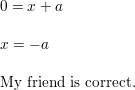
Big Ideas Math Algebra 2 Answer Key Chapter 11 Data Analysis and Statistics 11.6 a 13

Question 14.
THOUGHT PROVOKING
Describe an example of an observation that can be made from an experiment. Then give four possible inferences that could be made from the observation.

Answer:
Let’s consider the mean increase in the growth of a hair given by using hair growth shampoo. Consider the 4 possible inferences:
1. The hair growth shampoo has no effect on the growth of hair.
2. The hair growth shampoo causes decreases in the growth of hair.
3. The hair growth shampoo causes a slight increase in the growth of hair
4. The hair growth shampoo causes a significant increase in the growth of hair.

Question 15.
CRITICAL THINKING
In Exercise 4, how many resamplings of the treatment and control groups are theoretically possible? Explain.
Answer:
Big Ideas Math Algebra 2 Answer Key Chapter 11 Data Analysis and Statistics 11.6 a 15

Maintaining Mathematical Proficiency

Factor the polynomial completely.
Question 16.
5x3 − 15x2

Answer:
5x3 − 15x2  = 5x²(x – 3)

Explanation:
5x3 − 15x2  = 5. x² . x – 5. x² . 3
= 5x²(x – 3)

Question 17.
y3 − 8
Answer:
Big Ideas Math Algebra 2 Answer Key Chapter 11 Data Analysis and Statistics 11.6 a 17

Question 18.
z3 + 5z2 − 9z − 45

Answer:
z3 + 5z2 − 9z − 45 = (z+3)(z – 3)(z + 5)

Explanation:
z3 + 5z2 − 9z − 45 = z³ + 5z² – 9z – 45 + 6z – 6z
= z³ + 5z² + 6z – 15z – 45
= z(z² + 5z + 6) – 15(z + 3)
z² + 5z + 6 = 0
Using the quadratic formula
z₁,₂ = \(\frac { -5 ± √(25 – 4 . 6)}{ 2 . 1 } \)
= \(\frac { -5 ± √(25 – 24)}{ 2} \)
= \(\frac { -5 ± 1}{ 2 } \)
The solutions are \(\frac { -5 + 1 }{ 2 } \) = -2, \(\frac { -5 – 1 }{ 2 } \) = -3
The fcators are
z² + 5z + 6 = (z + 2)(z + 3)
z3 + 5z2 − 9z − 45 = z(z² + 5z + 6) – 15(z + 3)
= z(z + 2)(z + 3) – 15(z + 3)
= (z +3)(z² + 2z – 15)
z² + 2z – 15 = 0
Using the quadratic formula
z₁,₂ = \(\frac { -2 ± √(4 – 4 . (-15))}{ 2 . 1 } \)
= \(\frac { -2 ± √(4 + 60)}{ 2 } \)
= \(\frac { -2 ± 8}{ 2} \)
Thus, the solutions are \(\frac { -2 + 8}{ 2} \) = 3, \(\frac { -2 – 8}{ 2} \) = -5
z² + 2z – 15 = (z – 3)(z + 5)
(z +3)(z² + 2z – 15) = (z+3)(z – 3)(z + 5)

Question 19.
81w4 − 16
Answer:
Big Ideas Math Algebra 2 Answer Key Chapter 11 Data Analysis and Statistics 11.6 a 19

Determine whether the inverse of f is a function. Then find the inverse.
Question 20.
f(x) = \(\frac{3}{x+5}\)

Answer:
The inverse of function is g(x) = \(\frac { 3 }{ x } \) – 5

Explanation:
Big Ideas Math Algebra 2 Answer Key Chapter 11 Data Analysis and Statistics 11.6 3
From the graph
y = \(\frac { 3 }{ x + 5 } \)
x = \(\frac { 3 }{ y + 5 } \)
x(y + 5) = 3
y + 5 = \(\frac { 3 }{ x } \)
y = \(\frac { 3 }{ x } \) – 5

Question 21.
f(x) = \(\frac{1}{2x-1}\)
Answer:
Big Ideas Math Algebra 2 Answer Key Chapter 11 Data Analysis and Statistics 11.6 a 21

Question 22.
f(x) = \(\frac{2}{x}\) − 4

Answer:
The inverse of f(x) is g(x) = \(\frac { 2 }{ x + 4 } \)

Explanation:
Big Ideas Math Algebra 2 Answer Key Chapter 11 Data Analysis and Statistics 11.6 4
From the graph
y = \(\frac { 2 }{ x } \) – 4
x = \(\frac { 2 }{ y } \) – 4
x + 4 = \(\frac { 2 }{ y } \)
y(x + 4) = 2
y = \(\frac { 2 }{ x + 4 } \)

Question 23.
f(x) = \(\frac{3}{x^{2}}\) + 1
Answer:
Big Ideas Math Algebra 2 Answer Key Chapter 11 Data Analysis and Statistics 11.6 a 23

Data Analysis and Statistics Performance Task: Curving the Test

11.4–11.6 What Did You Learn?

Core Vocabulary
Big Ideas Math Algebra 2 Answer Key Chapter 11 Data Analysis and Statistics 11.6 12

Core Concepts
Section 11.4
Randomization in Experiments and Observational Studies, p. 621
Comparative Studies and Causality, p. 621
Analyzing Experimental Designs, p. 622

Section 11.5
Estimating Population Parameters, p. 626
Analyzing Estimated Population Parameters, p. 628

Section 11.6
Experiments with Two Samples, p. 634
Resampling Data Using Simulations, p. 635
Making Inferences About Treatments, p. 636

Mathematical Practices
Question 1.
In Exercise 7 on page 623, find a partner and discuss your answers. What questions should you ask your partner to determine whether an observational study or an experiment is more appropriate?
Answer:

Question 2.
In Exercise 23 on page 632, how did you use the given interval to find the sample size?
Answer:

Performance Task: Curving the Test
Test scores are sometimes curved for different reasons using different techniques. Curving began with the assumption that a good test would result in scores that were normally distributed about a C average. Is this assumption valid? Are test scores in your class normally distributed? If not, how are they distributed? Which curving algorithms preserve the distribution and which algorithms change it?
To explore the answers to these questions and more, go to BigIdeasMath.com.
Big Ideas Math Algebra 2 Answer Key Chapter 11 Data Analysis and Statistics 11.6 13

Data Analysis and Statistics Chapter Review

11.1 Using Normal Distributions (pp. 595–602)

Question 1.
A normal distribution has mean μ and standard deviation σ. An x-value is randomly selected from the distribution. Find P(x ≤ μ − 3σ).

Answer:
P(x ≤ μ – 3σ) = 0.0015

Explanation:
Find the probability P(x ≤ μ – 3σ)
P(x ≤ μ – 3σ) = \(\frac { 1 – 0.997 }{ 2 } \) = \(\frac { 0.003 }{ 2 } \)
= 0.0015
The probability is 0.0015

Question 2.
The scores received by juniors on the math portion of the PSAT are normally distributed with a mean of 48.6 and a standard deviation of 11.4. What is the probability that a randomly selected score is at least 76?

Answer:
P(x ≥76) = 0.0082

Explanation:
The scores received by juniors on the math portion of the PSAT are normally distributed with μ = 48.6, σ = 11.4
z = \(\frac { x – μ }{ σ } \)
P(x ≥76) = P(\(\frac { x – 48.6 }{ 11.4 } \)≥\(\frac { 76 – 48.6 }{ 11.4 } \))
= P(z≥2.4) = 1 – P(z≤2.4)
= 1 – 0.9918
= 0.0082

11.2 Populations, Samples, and Hypotheses (pp. 603−608)

Question 3.
To estimate the average number of miles driven by U.S. motorists each year, a researcher conducts a survey of 1000 drivers, records the number of miles they drive in a year, and then determines the average. Identify the population and the sample.

Answer:
In population of all motorist drivers in the US, a sample of 1000 drivers are surveyed.

Explanation:
Since the survey does not participate in all motorists from the US, we can conclude that in population of all motorist drivers in the US, a sample of 1000 drivers are surveyed.

Question 4.
A pitcher throws 40 fastballs in a game. A baseball analyst records the speeds of 10 fastballs and finds that the mean speed is 92.4 miles per hour. Is the mean speed a parameter or a statistic? Explain.

Answer:
Since we have an average speed of 10 fastballs of some pitcher, the mean value is calculated from a sample, not from the entire population. Thus, this average represents statistics.

Question 5.
A prize on a game show is placed behind either Door A or Door B. You suspect the prize is more often behind Door A. The show host claims the prize is randomly placed behind either door. What should you conclude when the prize is behind Door A for 32 out of 50 contestants?

Answer:
Since more than half of prizes for the customers are behind door A, the hosts claim that the prize is randomly placed behind either door is most likely false.

11.3 Collecting Data (pp. 609−616)

Question 6.
A researcher wants to determine how many people in a city support the construction of a new road connecting the high school to the north side of the city. Fifty residents from each side of the city are surveyed. Identify the type of sample described and determine whether the sample is biased.

Answer:
A stratified sample.

Explanation:
Fifty residents from each side of the city are surveyed to determine how many people in a city support the construction of a new road connecting the high school to the north side of the city. Thus, it is a stratified sample.

Question 7.
A researcher records the number of people who use a coupon when they dine at a certain restaurant. Identify the method of data collection.

Answer:
An observational study

Explanation:
It is an observational study because the researcher simply observes the subjects without interferin.

Question 8.
Explain why the survey question below may be biased or otherwise introduce bias into the survey. Then describe a way to correct the flaw.
“Do you think the city should replace the outdated police cars it is using?”

Answer:
The answer is biased. “Do you think the police should replace cars?”

Explanation:
The answer is biased because it is set in a way so that encourages the answer yes. The question can be set as “Do you think the police should replace cars?”

11.4 Experimental Design (pp. 619–624)

Question 9.
A restaurant manager wants to know which type of sandwich bread attracts the most repeat customers. Is the topic best investigated through an experiment or an observational study? Describe how you would design the experiment or observational study.

Answer:
An experimental study

Explanation:
We can do an experimental study for this problem. For example, suppose we have 5 types of sandwich bread available. Then we can make 5 randomly selected groups with the same number of people and sell each group a sandwich with a certain type of bread. Thus, for each group, note how many people came again to buy the same sandwich.

Question 10.
A researcher wants to test the effectiveness of a sleeping pill. Identify a potential problem, if any, with the experimental design below. Then describe how you can improve it.
The researcher asks for 16 volunteers who have insomnia. Eight volunteers are given the sleeping pill and the other 8 volunteers are given a placebo. Results are recorded for 1 month.

Answer:
Since the participants in the study are not randomly selected, they cannot represent the whole population. Thus, we must randomly select the members of the population for the study.

Question 11.
Determine whether the study is a randomized comparative experiment. If it is, describe the treatment, the treatment group, and the control group. If it is not, explain why not and discuss whether the conclusions drawn from the study are valid.
Big Ideas Math Algebra 2 Answers Chapter 11 Data Analysis and Statistics cr 1

Answer:
It is a randomized comparative experiment.

Explanation:
It is a randomized comparative experiment because customers are randomly assigned to the control group or the treatment group. The treatment is a new design of a car wash. the treatment group is the group that using the new design to wash their cars and the control group will be a group that using the old design to wash their cars.

11.5 Making Inferences from Sample Surveys (pp. 625−632)

Question 12.
In a survey of 1017 U.S. adults, 62% said that they prefer saving money over spending it. Give an interval that is likely to contain the exact percent of all U.S. adults who prefer saving money over spending it.

Answer:
Between 65.1% t0 58.9%

Explanation:
Since in the survey participate n = 1017 U.S adults, the margin error will be
±\(\frac { 1 }{ √n } \) = ±\(\frac { 1 }{ √1017 } \) = ±0.031
Thus, the interval that is likely to contain the exact percentage of all adults from the U.S who prefer saving money over spending it will be
(62% + 3.1%, 62% – 3.1%) = (65.1%, 58.9%)
Thus, the interval is between 65.1% t0 58.9%

Question 13.
There are two candidates for homecoming king. The table shows the results from four random surveys of the students in the school. The students were asked whether they will vote for Candidate A.Do you think Candidate A will be the homecoming king? Explain.
Big Ideas Math Algebra 2 Answers Chapter 11 Data Analysis and Statistics cr 2

Answer:
When the sample size increases, it approaches 46.8%. Since that is less than 50% it is not as likely as the probability of candidate B winning homecoming king.

Explanation:
Sample size of 62 has 46.8% of voters saying yes. As the sample size increases, the percentage decreases.

11.6 Making Inferences from Experiments (pp. 633−638)

Question 14.
Describe how to use a simulation to resample the data in the example above. Explain how this allows you to make inferences about the data when the sample size is small.

Answer:
When the sample size is small, we can repeat this process more times and makes new control and new treatment groups, and see how often you get differences between the new groups that are at least as large as the one you measured.

Explanation:
Combine the measurements from both groups and assign a number to each value. Let the numbers 1 through 10 represent the data in the original control group, and let the numbers 11 through 20 represent the data in the original treatment group

Control group4.54.54.84.44.44.74.34.54.14.2
Assigned number12345678910
Treatment group4.64.85.04.84.74.64.94.94.84.4
Assigned number11121314151617181920

Use a random generator. Randomly generate 20 numbers from 1 through 20 without repeating a number.

5115131817420108
921216619113714

Use the first 10 numbers to make the new control group, and the next 10 to make the new treatment group.

New control group4.44.54.75.04.94.94.44.44.24.5
New treatment group4.14.54.84.64.74.84.64.84.34.8

Now let’s find the mean yields of the new control and treatment groups
μ<new control> = \(\frac { 1 }{ 10 } \)(4.4 + 4.5 + 4.7 + 5.0 + 4.9 + 4.9 + 4.4 + 4.4 + 4.2 + 4.5)
= 4.59
μ<new treatment> = \(\frac { 1 }{ 10 } \)(4.1 + 4.5 + 4.8 + 4.6 + 4.7 + 4.8 + 4.6 + 4.8 + 4.3 + 4.8)
= 4.6
So, μ<new treatment> – μ<new control> = 4.6 – 4.59 = 0.01
This is less than the experimental difference in the given example
When the sample size is small, we can repeat this process more times and makes new control and new treatment groups, and see how often you get differences between the new groups that are at leat as large as the one you measured.

Data Analysis and Statistics Chapter Test

Question 1.
Market researchers want to know whether more men or women buy their product. Explain whether this research topic is best investigated through an experiment or an observational study. Then describe the design of the experiment or observational study.

Answer:
An observational study.

Explanation:
For the researcher, it is best investigated through an observational study because random samples of customers can be selected for the groups being studied. For example, we can record every th customer who buys the product and record if he was a women or men.

Question 2.

You want to survey 100 of the 2774 four-year colleges in the United States about their tuition cost. Describe a method for selecting a random sample of colleges to survey.

Answer:
We assign one integer from  to  to each college. Now, using a random integer generator, we can select  numbers from  to  and make a random sample of 100 colleges that match a random sample of  numbers.

Explanation:
Of the  four year colleges in the United States, we must randomly select  colleges. Therefore, we assign one integer from  to  to each college. Now, using a random integer generator, we can select  numbers from  to  and make a random sample of 100 colleges that match a random sample of  numbers.

Question 3.
The grade point averages of all the students in a high school are normally distributed with a mean of 2.95 and a standard deviation of 0.72. Are these numerical values parameters or statistics? Explain.

Answer:
Parameters.

Explanation:
Since these values represent the mean and standard deviation of all the students in a high school, these values represent paramenters because they are calculated from the entire population.

A normal distribution has a mean of 72 and a standard deviation of 5. Find the probability that a randomly selected x-value from the distribution is in the given interval.
Question 4.
between 67 and 77

Answer:
The probability is 0.68

Explanation:
Let’s suppose that a normal distribution has a mean of 72 and a standard deviation of 5.
z = \(\frac { x – μ }{ σ } \)
P(67≤x≤77) = P(\(\frac { 67 – 72 }{ 5 } \)≤ \(\frac { x – 72 }{ 5 } \) ≤\(\frac { 77 – 72 }{ 5 } \))
= P(-1≤z≤1) = P(z<1) – P(z<-1)
= 0.8413 – 0.1587 = 0.6826
The probability is 0.68

Question 5.
at least 75

Answer:
The probability is 0.975

Explanation:
Let’s suppose that a normal distribution has a mean of 72 and a standard deviation of 5.
82 – μ = 82 – 72 = 10 = 2 . 5 = 2σ
10 = μ – 2σ
P(x≤82) = P(x≤μ – 2σ) = 0.5 + \(\frac { 0.95 }{ 2 } \)
= 0.5 + 0.475 = 0.975
The probability is 0.975

Question 6.
at most 82

Answer:
The probability is 0.2743

Explanation:
Let’s suppose that a normal distribution has a mean of 72 and a standard deviation of 5.
z = \(\frac { x – μ }{ σ } \)
P(x≥75) = P(\(\frac { x – 72 }{ 5 } \)≥ \(\frac { 75 – 72 }{ 5 } \))
= P(z≥0.6) = 1 – P(z< 0.6)
= 1 – 0.7257
= 0.2743
The probability is 0.2743

Question 7.
A researcher wants to test the effectiveness of a new medication designed to lower blood pressure. Identify a potential problem, if any, with the experimental design. Then describe how you can improve it.
The researcher identifies 30 people with high blood pressure. Fifteen people with the highest blood pressures are given the medication and the other 15 are given a placebo. After 1 month, the subjects are evaluated.

Answer:
Since 15 people with thw highest blood pressures are assigned into one group, we can notice that people are not randomly assigned. Thus, to fix this problem, we can randomly form two groups of 15 people, and then one group will take the medicine and another one will take placebo.

Question 8.
A randomized comparative experiment tests whether a vitamin supplement increases human bone density (in grams per square centimeter). The control group has eight people and the treatment group, which receives the vitamin supplement, has eight people. The table shows the results.
Big Ideas Math Algebra 2 Answers Chapter 11 Data Analysis and Statistics ct 1
a. Find the mean yields of the control group, \(\bar{x}_{\text {control }}\), and the treatment group, \(\bar{x}_{\text {treatment }}\).
b. Find the experimental difference of the means, \(\bar{x}_{\text {treatment }}-\bar{x}_{\text {control }}\).
c. Display the data in a double dot plot. What can you conclude?
d. Five hundred resamplings of the data are simulated. Out of the 500 resampling differences, 231 are greater than the experimental difference in part (b). What can you conclude about the hypothesis, The vitamin supplement has no effect on human bone density? Explain your reasoning.

Answer:
a. μ<control> = 1.025
μ<treatment> = 1.125
b. μ<treatment> – μ<control> = 0.1
d. The hypothesis is probably true.

Explanation:
a. μ<control> = \(\frac { 1 }{ 8 } \)(0.9 + 1.2 + 1.0 + 0.8 + 1.3 + 1.1 + 0.9 + 1.0)
= 1.025
μ<treatment> = \(\frac { 1 }{ 8 } \)(1.2 + 1.0 + 0.9 + 1.3 + 1.2 + 0.9 + 1.3 + 1.2)
= 1.125
b. μ<treatment> – μ<control> = 1.125 – 1.025 = 0.1
c. The double dot plot is
Big Ideas Math Algebra 2 Answer Key Chapter 11 Data Analysis and Statistics 1
d. The hypothesis which claims that vitamin supplement has no effect on human bone density assumes that the difference of the means is equal to 0. Now, from 500 resampling differences, 231 are greater than the experimental differences in part b, which is 0.1. Now this implies that more than half of the resamplings are less than 0.1, which is less than one SD. So, the hypothesis is probably true.

Question 9.
In a recent survey of 1600 randomly selected U.S. adults, 81% said they have purchased a product online.
Big Ideas Math Algebra 2 Answers Chapter 11 Data Analysis and Statistics ct 2
a. Identify the population and the sample. Describe the sample.
b. Find the margin of error for the survey.
c. Give an interval that is likely to contain the exact percent of all U.S. adults who have purchased a product online.
d. You survey 75 teachers at your school. The results are shown in the graph. Would you use the recent survey or your survey to estimate the percent of U.S. adults who have purchased a product online? Explain.

Answer:
a. Population represent all U.S adults. A sample is 1600 adults that participate in the survey
b. The margin error will be ±2.5%
c. The interval is between 78.5% to 83.5%.
d. A recent survey.

Explanation:
a. In the population of all U.S adults a sample of 1600 randomly selected adults have participated in the survey
b. Since in the survey participate n = 1600 U.S adults, the margin error will be
±\(\frac { 1 }{ √n } \) = ±\(\frac { 1 }{ √1600 } \) = ±0.025
The margin error will be ±2.5%
c. Thus the interval that is likely to contain the exact percentage of all adults from the U.S who said that they have purchased a product online will be
(81% – 2.5%, 81% + 2.5%) = (78.5%, 83.5%)
The interval is between 78.5% to 83.5%.
d. Since, we are surveyed only the teachers from one school we cannot use this survey because it cannot represent the entire population. So, we will use a recent survey.

Data Analysis and Statistics Cumulative Assessment

Question 1.
Your friend claims any system formed by three of the following equations will have exactly one solution.
Big Ideas Math Algebra 2 Solutions Chapter 11 Data Analysis and Statistics ca 1
a. Write a linear system that would support your friend’s claim.
b. Write a linear system that shows your friend’s claim is incorrect.

Answer:
a. Each of the given equations represent a plane equation. A system of 3 equation will have one solution if these planes intersect at one point.
3x + y + 3z = 6 — (i)
x + y + z = 2 — (ii)
3x + y + 9z = 12 — (iii)
We can write 2nd equation as y = 2 – x – z
Change the first & third equations
3x + 2 – x – z + 3z = 6
2x + 2z = 4 — (iv)
3x + 2 – x – z +9z = 12
2x + 8z = 10 — (v)
Subtrcat (iv) & (v)
2x + 8z – 2x – 2z = 10 – 4
6z = 6
z = 1
Put z = 1 in (iv)
2x + 2 = 4
x = 1
Put x, z values in y = 2 – x – z
y = 2 – 1 – 1
y = 0
Hence, the solution of the system is (x, y, z) = (1, 0, 1) and the friend’s calim is correct. There is only one solution to the system.
b. To prove thae claim is incorrect, take the following equations
3x + y + 3z = 6 — (i)
x + y + z = 2 — (ii)
4x – 2y + 4z = 8 — (iii)
We can write 2nd equation as y = 2 – x – z
Change the first & third equations
3x + 2 – x – z + 3z = 6
2x + 2z = 4
x + z = 2— (iv)
4x – 2(2 – x – z) + 4z = 8
4x – 4 + 2x + 2z + 4z = 8
6x + 6z = 12
x + z = 2 — (v)
As both (iv), v are same, the equation has many solutions
y = 2 – 2
y = 0
Hence, the system has infinately many solutions (x, y , z) = (2 – z, 0, z) and the friend’s claim is incorrect.

Question 2.
Which of the following samples are biased? If the sample is biased, explain why it is biased.
A. A restaurant asks customers to participate in a survey about the food sold at the restaurant. The restaurant uses the surveys that are returned.
B. You want to know the favorite sport of students at your school. You randomly select athletes to survey at the winter sports banquet.
C. The owner of a store wants to know whether the store should stay open 1 hour later each night. Each cashier surveys every fifth customer.
D. The owner of a movie theater wants to know whether the volume of its movies is too loud. Patrons under the age of 18 are randomly surveyed.

Answer:
a. Biased
b. Biased
c. NonBiased
d. Biased

Explanation:
a. The sample is biased because only customers with strong opinions will return the survey
b. The sample is biased because the survey doesn’t participate randomly selected students.
c. The sample is nonbiased because in the survey participates randomly selected customers.
d. The sample is biased because only patrobs under the age of 18 participate in the survey.

Question 3.
A survey asks adults about their favorite way to eat ice cream. The results of the survey are displayed in the table shown.
Big Ideas Math Algebra 2 Solutions Chapter 11 Data Analysis and Statistics ca 3
a. How many people were surveyed?
b. Why might the conclusion, “Adults generally do not prefer to eat their ice cream in a cone” be inaccurate to draw from this data?
c. You decide to test the results of the poll by surveying adults chosen at random. What is the probability that at least three out of the six people you survey prefer to eat ice cream in a cone?
d. Four of the six respondents in your study said they prefer to eat their ice cream in a cone. You conclude that the other survey is inaccurate. Why might this conclusion be incorrect?
e. What is the margin of error for your survey?

Answer:
a. 2246
b. The conclusion is inaccurate
c. 0.2374
d. Conclusion is wrong
e. ±40.82

Explanation:
a. Given that,
Margin error = ±2.11
±0.0211 = ±\(\frac { 1 }{ √n } \)
(±0.0211)² = (±\(\frac { 1 }{ √n } \))²
0.000445 = \(\frac { 1 }{ n } \)
n = 2246
b. From the result if the survey we see that people prefer different types of ice cream with different percentages and as 2915 of people prefer ice cream in a cone, we cannot conclude that in general people donot eat ice cream in a cone.
c. from the result of the survey we see that 29%of people prefer ice cream in  acone. So we can compute the probability that a person chooses ice cream in the cone and the probability that doesn’t choose ice cream in the cone
A: “A person prefer to eat ice cream in a cone”
B: “A person doesn’t prefer to eat ice cream in a cone”
P(A) = \(\frac { 29 }{ 100 } \) = 0.291
P(B) = 1 – P(A) = 1 – 0.29 = 0.71
P(X≥3) = 1 – P(X<3)
= 1 – P(X = 2) – P(x = 1) – P(X = 0)
P(X = 2) = 0.3206
P(X = 1) = 0.3139
P(X = 0) = 0.1281
P(X≥3) = 1 – 0.3206 – 0.3139 – 0.1281
= 0.2374
d. The conclusion might wrong, because in your survey, we have only 6 persons that participte and since the sample size is too samll, we cannot conclude that the other survey is inaccurate.
e. The sample size of our survey is 6
The margin error = ±\(\frac { 1 }{ √n } \)
= ±\(\frac { 1 }{ √6 } \)
= ±0.4082
The margin error is ±40.82%

Question 4.
You are making a lampshade out of fabric for the lamp shown. The pattern for the lampshade is shown in the diagram on the left.
a. Use the smaller sector to write an equation that relates θ and x.
b. Use the larger sector to write an equation that relates θ and x+ 10.
c. Solve the system of equations from parts (a) and (b) for x and θ.
d. Find the amount of fabric (in square inches) that you will use to make the lampshade.
Big Ideas Math Algebra 2 Solutions Chapter 11 Data Analysis and Statistics ca 4

Answer:
a. θ = \(\frac { 5π }{ x } \)
b. θ = \(\frac { 14π }{ x + 10} \)
c. x = 5.56, θ = 2.82
d. 298.17

Explanation:
a. r = x, s = 5π
Arc length s = rθ
5π = x . θ
θ = \(\frac { 5π }{ x } \)
b. r = x + 10, s = 14π
Arc length s = rθ
14π = (x + 10)θ
θ = \(\frac { 14π }{ x + 10 } \)
c. From a and b
θ = \(\frac { 5π }{ x } \)
θ = \(\frac { 14π }{ x + 10 } \)
\(\frac { 5π }{ x } \) = \(\frac { 14π }{ x + 10 } \)
5(x + 10) = 14
5x + 50 = 14
x = 5.56
θ = \(\frac { 5π }{ 5.56 } \)
= 2.82 radians
d. Area = \(\frac { 1 }{ 2 } \)r²θ
A<G> = \(\frac { 1 }{ 2 } \)(5.56 + 10)² . 2.82
= \(\frac { 1 }{ 2 } \) . 242.11 . 2.82
= 341.76
A<S> = \(\frac { 1 }{ 2 } \)r²θ
= \(\frac { 1 }{ 2 } \) . (5.56)² . 2.82
= \(\frac { 1 }{ 2 } \) . 30.91 . 2.82
= 43.59
A = A<G> – A<S>
= 341.76 – 43.59
= 298.17

Question 5.
For all students taking the Medical College Admission Test over a period of 3 years, the mean score was 25.1. During the same 3 years, a group of 1000 students who took the test had a mean score of 25.3. Classify each mean as a parameter or a statistic. Explain.

Answer:
25.1 Parameter
25.3 statistic

Explanation:
The mean score of 25.1 is computed from the all students from the college. So, it is a parameter and the mean score of 25.3 is computed from a sample of 1000 students. So, it is a statistic.

Question 6.
Complete the table for the four equations. Explain your reasoning.
Big Ideas Math Algebra 2 Solutions Chapter 11 Data Analysis and Statistics ca 6

Answer:

Question 7.
The normal distribution shown has mean 63 and standard deviation 8. Find the percent of the area under the normal curve that is represented by the shaded region. Then describe another interval underthe normal curve that has the same area.
Big Ideas Math Algebra 2 Solutions Chapter 11 Data Analysis and Statistics ca 7

Answer:
The probability is 0.84.

Explanation:
P(55≤x≤83) = P(\(\frac { 55 – 63 }{ 8 } \) ≤\(\frac { x – 63 }{ 8 } \) ≤\(\frac { 83 – 63 }{ 8 } \))
= P(-1 ≤z≤2.5) = P(z<2.5) – P(z<-1)
= 0.9938 – 0.1587 = 0.84

Question 8.
Which of the rational expressions cannot be simplified? (HSA-APR.D.6)
Big Ideas Math Algebra 2 Solutions Chapter 11 Data Analysis and Statistics ca 8

Answer:
We can’t simplify the expressions.

Explanation:
A. Factors of 2x² + 5x – 3 = 0
= \(\frac { -5  ± √(25 – 4 . 2 . (-3))}{ 2 . 2 } \)
= \(\frac { -5  ± √(25 + 24)}{ 4 } \)
= \(\frac { -5  ± 7}{ 4 } \)
The solutions are \(\frac { 1 }{ 2 } \), -3
2x² + 5x – 3 = 2(x – \(\frac { 1 }{ 2 } \)) (x + 3)
Factors of x² – 7x + 12 = 0
= \(\frac { -(-7)  ± √(49 – 4 . 1 . 12)}{ 2 . 1 } \)
= \(\frac { 7  ± √(49 – 48)}{ 2 } \)
= \(\frac { 7 ± 1}{ 2 } \)
The solutions are 4, 3
x² – 7x + 12 = (x – 4)(x – 3)
\(\frac { 2x² + 5x – 3 }{ x² – 7x + 12 } \)= \(\frac { 2(x – 1/2)(x + 3) }{ (x – 4)(x – 3) } \)

Big Ideas Math Algebra 2 Answers Chapter 1 Linear Functions

Big Ideas Math Algebra 2 Answers Chapter 1 Linear Functions

Require any homework help to solve the linear functions questions? If yes, then refer to this article thoroughly. Here, we have made available a preparation guide ie., Big Ideas Math Algebra 2 Answers Chapter 1 Linear Functions which helps you improve your math proficiency. Answer all your questions and clear your complex queries regarding BIM Alegra 2 Answer Key Chapter 1 Linear Functions topics. Ace up your preparation by taking help from Big Ideas Math Algebra 2 Answers and learn the concepts from Exercises Questions, Review Tests, Chapter Tests, Cumulative Assessments, etc.

Big Ideas Math Book Algebra 2 Answer Key Chapter 1 Linear Functions

Scoring good grades in any of your exams can make you achieve what you are looking for but improving your subject knowledge make you invent a new thing that you dreamt of. So, learn and practice all the concepts covered in BIM Algebra 2 Answer Key Ch 1 Linear Functions to enhance subject knowledge and increase your math skills. Big Ideas Math Book Algebra 2 Chapter 1 Solutions is the best material for you all to prepare & score well in the exams. Therefore, click on the links and kickstart your preparation.

Linear Functions Maintaining Mathematical Proficiency

Evaluate.

Question 1.
5 • 23 + 7

5 • 23 + 7
5.8+7
40+7
47

Question 2.
4 – 2(3 + 2)2

4 – 2(3 + 2)2
4 – 2 (25)
4  – 2 (25)
4 – 50
= – 46

Question 3.
48 ÷ 42 + \(\frac{3}{5}\)

Question 4.
50 ÷ 52 • 2

50 ÷ 52 • 2
50 ÷ 25 . 2
2 .2
4

Question 5.
\(\frac{1}{2}\)(22+ 22)

Question 6.
\(\frac{1}{6}\)(6 + 18) – 22

Graph the transformation of the figure.

Question 7.
Translate the rectangle 1 unit right and 4 units up.
Big Ideas Math Algebra 2 Answers Chapter 1 Linear Functions 1

Question 8.
Reflect the triangle in the y-axis. Then translate 2 units left.
Big Ideas Math Algebra 2 Answers Chapter 1 Linear Functions 2

Question 9.
Translate the trapezoid 3 units down. Then reflect in the x-axis.
Big Ideas Math Algebra 2 Answers Chapter 1 Linear Functions 3

Question 10.
ABSTRACT REASONING Give an example to show why the order of operations is important when evaluating a numerical expression. Is the order of transformations of figures important? Justify your answer.

The order of operations tells us the order to solve steps in expressions with more than one operation. First, we solve any operations inside of parentheses or brackets.

Linear Functions Maintaining Mathematical Practices

Monitoring Progress

Use a graphing calculator to graph the equation using the standard viewing window and a square viewing window. Describe any differences in the graphs.

Question 1.
y = 2x – 3


Question 2.
y = | x + 2 |

Question 3.
y = -x2 + 1

Question 4.
y = \(\sqrt{x-1}\)

Question 5.
y = x3 – 2

Question 6.
y = 0.25x3

Determine whether the viewing window is square. Explain.

Question 7.
-8 ≤ x ≤ 8, -2 ≤ y ≤ 8

Question 8.
-7 ≤ x ≤ 8, -2 ≤ y ≤ 8

Question 9.
-6 ≤ x ≤ 9, -2 ≤ y ≤ 8

Question 10.
-2 ≤ x≤ 2, -3 ≤ y ≤ 3

Question 11.
-4 ≤ x ≤ 5, -3 ≤ y ≤ 3

Question 12.
-4 ≤ x ≤ 4, -3 ≤ y ≤ 3

Lesson 1.1 Parent Functions and Transformations

Essential Question

What are the characteristics of some of the basic parent functions?
Odd. End behavior go in different directions. If a function is positive, the left side of the graph will point down and the right side will point up (increasing from left to right).

EXPLORATION 1
Identifying Basic Parent Functions
Work with a partner.
Graphs of eight basic parent functions are shown below. Classify each function as constant, linear, absolute value, quadratic, square root, cubic, reciprocal, or exponential. Justify your reasoning.
Big Ideas Math Algebra 2 Answers Chapter 1 Linear Functions 4

Communicate Your Answer

Question 2.
What are the characteristics of some of the basic parent functions?
Key common points of linear parent functions include the fact that the: Equation is y = x. Domain and range are real numbers. Slope, or rate of change, is constant.

Question 3.
Write an equation for each function whose graph is shown in Exploration 1. Then use a graphing calculator to verify that your equations are correct.

1.1 Lesson

Monitoring Progress

Question 1.
Identify the function family to which g belongs. Compare the graph of g to the graph of its parent function.
Big Ideas Math Algebra 2 Answers Chapter 1 Linear Functions 5

Graph the function and its parent function. Then describe the transformation.

Question 2.
g(x) = x + 3
https://eurekamathanswerkeys.com/wp-content/uploads/2021/02/Big-idea-math-algerbra-2-chapter-1-linear-functions-Monitoring-progress-1.1-2.jpg

Question 3.
h(x) = (x – 2)2

https://eurekamathanswerkeys.com/wp-content/uploads/2021/02/Big-idea-math-algerbra-2-chapter-1-linear-functions-Monitoring-progress-1.1-3.jpg

Question 4.
n(x) = – | x |
https://eurekamathanswerkeys.com/wp-content/uploads/2021/02/Big-idea-math-algerbra-2-chapter-1-linear-functions-Monitoring-progress-1.1-4.jpg

Graph the function and its parent function. Then describe the transformation.

Question 5.
g(x) = 3x
https://eurekamathanswerkeys.com/wp-content/uploads/2021/02/Big-idea-math-algerbra-2-chapter-1-linear-functions-Monitoring-progress-1.1-5.jpg

Question 6.
h(x) = \(\frac{3}{2}\)x2

https://eurekamathanswerkeys.com/wp-content/uploads/2021/02/Big-idea-math-algerbra-2-chapter-1-linear-functions-Monitoring-progress-1.1-6.jpg

Question 7.
c(x) = 0.2|x|

https://eurekamathanswerkeys.com/wp-content/uploads/2021/02/Big-idea-math-algerbra-2-chapter-1-linear-functions-Monitoring-progress-1.1-7JPG.jpg

Use a graphing calculator to graph the function and its parent function. Then describe the transformations

Question 8.
h(x) = –\(\frac{1}{4}\)x + 5

https://eurekamathanswerkeys.com/wp-content/uploads/2021/02/Big-idea-math-algerbra-2-chapter-1-linear-functions-Monitoring-progress-1.1-8.jpg

Question 9.
d(x) = 3(x – 5)2 – 1
https://eurekamathanswerkeys.com/wp-content/uploads/2021/02/Big-idea-math-algerbra-2-chapter-1-linear-functions-Monitoring-progress-1.1-9.jpg

Question 10.
The table shows the amount of fuel in a chainsaw over time. What type of function can you use to model the data? When will the tank be empty?
Big Ideas Math Algebra 2 Answers Chapter 1 Linear Functions 6

https://eurekamathanswerkeys.com/wp-content/uploads/2021/02/Big-idea-math-algerbra-2-chapter-1-linear-functions-Monitoring-progress-1.1-10.jpg

Parent Functions and Transformations 1.1 Exercises

Vocabulary and Core Concept Check

Question 1.
COMPLETE THE SENTENCE
The function f(x) = x2 is the ______ of f(x) = 2x2 – 3.
Answer:
Big Ideas Math Algebra 2 Answers Chapter 1 Linear Functions 1.1 Question 1

Question 2.
DIFFERENT WORDS, SAME QUESTION Which is different? Find “both” answers.
Big Ideas Math Algebra 2 Answers Chapter 1 Linear Functions 7
Answer:
https://eurekamathanswerkeys.com/wp-content/uploads/2021/02/Big-idea-math-algerbra-2-chapter-1-linear-functions-Exercise-1.1-1.jpg
https://eurekamathanswerkeys.com/wp-content/uploads/2021/02/Big-idea-math-algerbra-2-chapter-1-linear-functions-Exercise-1.1-1a.jpg
https://eurekamathanswerkeys.com/wp-content/uploads/2021/02/Big-idea-math-algerbra-2-chapter-1-linear-functions-Exercise-1.1-1b.jpg

Monitoring Progress and Modeling with Mathematics

In Exercises 3–6, identify the function family to which f belongs. Compare the graph of f to the graph of its parent function.

Question 3.
Big Ideas Math Algebra 2 Answers Chapter 1 Linear Functions 8
Answer:
Big Ideas Math Algebra 2 Answers Chapter 1 Linear Functions 1.1 Question 3

Question 4.
Big Ideas Math Algebra 2 Answers Chapter 1 Linear Functions 9
Answer:

Question 5.
Big Ideas Math Algebra 2 Answers Chapter 1 Linear Functions 10
Answer:
Big Ideas Math Algebra 2 Answers Chapter 1 Linear Functions 1.1 Question 5

Question 6.
Big Ideas Math Algebra 2 Answers Chapter 1 Linear Functions 11
Answer:

Question 7.
MODELING WITH MATHEMATICS
At 8:00 A.M., the temperature is 43°F. The temperature increases 2°F each hour for the next 7 hours. Graph the temperatures over time t (t = 0 represents 8:00 A.M.). What type of function can you use to model the data? Explain.
Answer:
Big Ideas Math Algebra 2 Answers Chapter 1 Linear Functions 1.1 Question 7

Question 8.
MODELING WITH MATHEMATICS
You purchase a car from a dealership for $10,000. The trade-in value of the car each year after the purchase is given by the function f(x) = 10,000 – 250x2. What type of function models the trade-in value?
Answer:
https://eurekamathanswerkeys.com/wp-content/uploads/2021/02/Big-idea-math-algerbra-2-chapter-1-linear-functions-Exercise-1.1-8JPG.jpg

In Exercises 9–18, graph the function and its parent function. Then describe the transformation.

Question 9.
g(x) = x + 4
Answer:
Big Ideas Math Algebra 2 Answers Chapter 1 Linear Functions 1.1 Question 9

Question 10.
f(x) = x – 6
Answer:
https://eurekamathanswerkeys.com/wp-content/uploads/2021/02/Big-idea-math-algerbra-2-chapter-1-linear-functions-Exercise-1.1-10.jpg

Question 11.
f(x) = x2 – 1
Answer:
Big Ideas Math Algebra 2 Answers Chapter 1 Linear Functions 1.1 Question 11

Question 12.
h(x) = (x+ 4)2
Answer:
https://eurekamathanswerkeys.com/wp-content/uploads/2021/02/Big-idea-math-algerbra-2-chapter-1-linear-functions-Exercise-1.1-12.jpg


Question 13.
g(x) = | x – 5 |
Answer:
Big Ideas Math Algebra 2 Answers Chapter 1 Linear Functions 1.1 Question 13

Question 14.
f(x) = 4 + | x |
Answer:
https://eurekamathanswerkeys.com/wp-content/uploads/2021/02/Big-idea-math-algerbra-2-chapter-1-linear-functions-Exercise-1.1-14.jpg

Question 15.
h(x) = -x2
Big Ideas Math Algebra 2 Answers Chapter 1 Linear Functions 1.1 Question 15
Answer:

Question 16.
g(x) = -x
Answer:
https://eurekamathanswerkeys.com/wp-content/uploads/2021/02/Big-idea-math-algerbra-2-chapter-1-linear-functions-Exercise-1.1-16.jpg

Question 17.
f(x) = 3
Answer:
Big Ideas Math Algebra 2 Answers Chapter 1 Linear Functions 1.1 Question 17

Question 18.
f(x) = -2
Answer:
https://eurekamathanswerkeys.com/wp-content/uploads/2021/02/Big-idea-math-algerbra-2-chapter-1-linear-functions-Exercise-1.1-18.jpg

In Exercises 19–26, graph the function and its parent function. Then describe the transformation.

Question 19.
f(x) = \(\frac{1}{3}\)x
Answer:
Big Ideas Math Algebra 2 Answers Chapter 1 Linear Functions 1.1 Question 19

Question 20.
g(x) = 4x
Answer:
https://eurekamathanswerkeys.com/wp-content/uploads/2021/02/Big-idea-math-algerbra-2-chapter-1-linear-functions-Exercise-1.1-20.jpg

Question 21.
f(x) = 2x2

Answer:
Big Ideas Math Algebra 2 Answers Chapter 1 Linear Functions 1.1 Question 21

Question 22.
h(x) = \(\frac{1}{3}\)x2

Answer:
https://eurekamathanswerkeys.com/wp-content/uploads/2021/02/Big-idea-math-algerbra-2-chapter-1-linear-functions-Exercise-1.1-22.jpg

Question 23.
h(x) = \(\frac{3}{4}\)x
Answer:
Big Ideas Math Algebra 2 Answers Chapter 1 Linear Functions 1.1 Question 23

Question 24.
g(x) = \(\frac{4}{3}\)x
Answer:
https://eurekamathanswerkeys.com/wp-content/uploads/2021/02/Big-idea-math-algerbra-2-chapter-1-linear-functions-Exercise-1.1-24.jpg

Question 25.
h(x) = 3 | x |
Answer:
Big Ideas Math Algebra 2 Answers Chapter 1 Linear Functions 1.1 Question 25

Question 26.
f(x) = \(\frac{1}{2}\) | x |
Answer:
https://eurekamathanswerkeys.com/wp-content/uploads/2021/02/Big-idea-math-algerbra-2-chapter-1-linear-functions-Exercise-1.1-26.jpg

In Exercises 27–34, use a graphing calculator to graph the function and its parent function. Then describe the transformations.

Question 27.
f(x) = 3x + 2
Answer:
Big Ideas Math Algebra 2 Answers Chapter 1 Linear Functions 1.1 Question 27

Question 28.
h(x) = -x + 5
Answer:
https://eurekamathanswerkeys.com/wp-content/uploads/2021/02/Big-idea-math-algerbra-2-chapter-1-linear-functions-Exercise-1.1-28.jpg

Question 29.
h(x) = -3 | x | – 1
Answer:
Big Ideas Math Algebra 2 Answers Chapter 1 Linear Functions 1.1 Question 29

Question 30.
f(x) = \(\frac{3}{4}\) | x | + 1
Answer:
https://eurekamathanswerkeys.com/wp-content/uploads/2021/02/Big-idea-math-algerbra-2-chapter-1-linear-functions-Exercise-1.1-30.jpg

Question 31.
g(x) = \(\frac{1}{2}\)x2 – 6
Answer:
Big Ideas Math Algebra 2 Answers Chapter 1 Linear Functions 1.1 Question 31

Question 32.
f(x) = 4x2 – 3
Answer:
https://eurekamathanswerkeys.com/wp-content/uploads/2021/02/Big-idea-math-algerbra-2-chapter-1-linear-functions-Exercise-1.1-32.jpg

Question 33.
f(x) = -(x + 3)2 + \(\frac{1}{4}\)
Answer:
Big Ideas Math Algebra 2 Answers Chapter 1 Linear Functions 1.1 Question 33

Question 34.
g(x) = – | x – 1 | – \(\frac{1}{2}\)
Answer:
https://eurekamathanswerkeys.com/wp-content/uploads/2021/02/Big-idea-math-algerbra-2-chapter-1-linear-functions-Exercise-1.1-34.jpg

ERROR ANALYSIS In Exercises 35 and 36, identify and correct the error in describing the transformation of the parent function.

Question 35.
Big Ideas Math Algebra 2 Answers Chapter 1 Linear Functions 12
Answer:
Big Ideas Math Algebra 2 Answers Chapter 1 Linear Functions 1.1 Question 35

Question 36.
Big Ideas Math Algebra 2 Answers Chapter 1 Linear Functions 13
Answer:

MATHEMATICAL CONNECTIONS In Exercises 37 and 38, find the coordinates of the figure after the transformation.

Question 37.
Translate 2 units down.
Big Ideas Math Algebra 2 Answers Chapter 1 Linear Functions 13.1
Answer:
Big Ideas Math Algebra 2 Answers Chapter 1 Linear Functions 1.1 Question 37

Question 38.
Reflect in the x-axis.
Big Ideas Math Algebra 2 Answers Chapter 1 Linear Functions 15
Answer:

USING TOOLS In Exercises 39–44, identify the function family and describe the domain and range. Use a graphing calculator to verify your answer.

Question 39.
g(x) = | x + 2 | – 1
Answer:
Big Ideas Math Algebra 2 Answers Chapter 1 Linear Functions 1.1 Question 39

Question 40.
h(x) = | x – 3 | + 2
Answer:

Question 41.
g(x) = 3x + 4
Answer:
Big Ideas Math Algebra 2 Answers Chapter 1 Linear Functions 1.1 Question 41

Question 42.
f(x) = -4x + 11
Answer:
https://eurekamathanswerkeys.com/wp-content/uploads/2021/02/Big-idea-math-algerbra-2-chapter-1-linear-functions-Exercise-1.1-42.jpg

Question 43.
f(x) = 5x2 – 2
Answer:
Big Ideas Math Algebra 2 Answers Chapter 1 Linear Functions 1.1 Question 43

Question 44.
f(x) = -2x2 + 6
Answer:
https://eurekamathanswerkeys.com/wp-content/uploads/2021/02/Big-idea-math-algerbra-2-chapter-1-linear-functions-Exercise-1.1-44.jpg

Question 45.
MODELING WITH MATHEMATICS The table shows the speeds of a car as it travels through an intersection with a stop sign. What type of function can you use to model the data? Estimate the speed of the car when it is 20 yards past the intersection.
Big Ideas Math Algebra 2 Answers Chapter 1 Linear Functions 16
Answer:
Big Ideas Math Algebra 2 Answers Chapter 1 Linear Functions 1.1 Question 45

Question 46.
THOUGHT PROVOKING In the same coordinate plane, sketch the graph of the parent quadratic function and the graph of a quadratic function that has no x-intercepts. Describe the transformation(s) of the parent function.
Answer:
https://eurekamathanswerkeys.com/wp-content/uploads/2021/02/Big-idea-math-algerbra-2-chapter-1-linear-functions-Exercise-1.1-46.jpg

Question 47.
USING STRUCTURE Graph the functions f(x) = | x – 4 | and g(x) = | x | – 4. Are they equivalent? Explain.
Answer:
Big Ideas Math Algebra 2 Answers Chapter 1 Linear Functions 1.1 Question 47

Question 48.
HOW DO YOU SEE IT? Consider the graphs of f, g, and h.
Big Ideas Math Algebra 2 Answers Chapter 1 Linear Functions 17
a. Does the graph of g represent a vertical stretch or a vertical shrink of the graph of f? Explain your reasoning.
b. Describe how to transform the graph of f to obtain the graph of h.
Answer:
https://eurekamathanswerkeys.com/wp-content/uploads/2021/02/Big-idea-math-algerbra-2-chapter-1-linear-functions-Exercise-1.1-48.jpg

Question 49.
MAKING AN ARGUMENT Your friend says two different translations of the graph of the parent linear function can result in the graph of f(x) = x – 2. Is your friend correct? Explain.
Answer:
Big Ideas Math Algebra 2 Answers Chapter 1 Linear Functions 1.1 Question 49

Question 50.
DRAWING CONCLUSIONS A person swims at a constant speed of 1 meter per second. What type of function can be used to model the distance the swimmer travels? If the person has a 10-meter head start, what type of transformation does this represent? Explain.
Big Ideas Math Algebra 2 Answers Chapter 1 Linear Functions 17.1
Answer:

Question 51.
PROBLEM SOLVING You are playing basketball with your friends. The height (in feet) of the ball above the ground t seconds after a shot is released from your hand is modeled by the function f(t) = -16t2 + 32t + 5.2.
a. Without graphing, identify the type of function that models the height of the basketball.
b. What is the value of t when the ball is released from your hand? Explain your reasoning.
c. How many feet above the ground is the ball when it is released from your hand? Explain.
Answer:
Big Ideas Math Algebra 2 Answers Chapter 1 Linear Functions 1.1 Question 51

Question 52.
MODELING WITH MATHEMATICS The table shows the battery lives of a computer over time. What type of function can you use to model the data? Interpret the meaning of the x-intercept in this situation.
Big Ideas Math Algebra 2 Answers Chapter 1 Linear Functions 18
Answer:

Question 53.
REASONING Compare each function with its parent function. State whether it contains a horizontal translation, vertical translation, both, or neither. Explain your reasoning.
a. f(x) = 2 | x | – 3
b. f(x) = (x – 8)2
c. f(x) = | x + 2 | + 4
d. f(x) = 4x2

Answer:
Big Ideas Math Algebra 2 Answers Chapter 1 Linear Functions 1.1 Question 53

Question 54.
CRITICAL THINKING
Use the values -1, 0, 1, and 2 in the correct box so the graph of each function intersects the x-axis. Explain your reasoning.
Big Ideas Math Algebra 2 Answers Chapter 1 Linear Functions 19
Answer:
https://eurekamathanswerkeys.com/wp-content/uploads/2021/02/Big-idea-math-algerbra-2-chapter-1-linear-functions-Exercise-1.1-54-.jpg

Maintaining Mathematical Proficiency

Determine whether the ordered pair is a solution of the equation. (Skills Review Handbook)

Question 55.
f(x) = | x + 2 |; (1, -3)
Answer:
Big Ideas Math Algebra 2 Answers Chapter 1 Linear Functions 1.1 Question 55

Question 56.
f(x) = | x | – 3; (-2, -5)
Answer:

Question 57.
f(x) = x – 3; (5, 2)
Answer:
Big Ideas Math Algebra 2 Answers Chapter 1 Linear Functions 1.1 Question 57

Question 58.
f(x) = x – 4; (12, 8)
Answer:

Find the x-intercept and the y-intercept of the graph of the equation. (Skills Review Handbook)

Question 59.
y = x
Answer:
Big Ideas Math Algebra 2 Answers Chapter 1 Linear Functions 1.1 Question 59

Question 60.
y = x + 2
Answer:

Question 61.
3x + y = 1
Answer:
Big Ideas Math Algebra 2 Answers Chapter 1 Linear Functions 1.1 Question 61

Question 62.
x – 2y = 8
Answer:
https://eurekamathanswerkeys.com/wp-content/uploads/2021/02/Big-idea-math-algerbra-2-chapter-1-linear-functions-Exercise-1.1-62.jpg

Lesson 1.2 Transformations of Linear and Absolute Value Functions

Essential Question

How do the graphs of y = f(x) + k, y = f(x – h), and y = -f(x) compare to the graph of the parent function f?

EXPLORATION 1
Transformations of the Parent Absolute Value Function
Work with a partner.
Compare the graph of the function
Big Ideas Math Algebra 2 Answers Chapter 1 Linear Functions 20
y = | x | + k Transformation
Big Ideas Math Algebra 2 Answers Chapter 1 Linear Functions 20.1
to the graph of the parent function
f(x) = | x |.

EXPLORATION 2
Transformations of the Parent Absolute Value Function
Work with a partner.
Compare the graph of the function
y = | x – h | Transformation
to the graph of the parent function
f(x) = | x |. Parent function
Big Ideas Math Algebra 2 Answers Chapter 1 Linear Functions 22

EXPLORATION 3
Transformation of the Parent Absolute Value Function
Work with a partner.
Compare the graph of the function
y = – | x | Transformation
to the graph of the parent function
f(x) = | x | Parent function
Big Ideas Math Algebra 2 Answers Chapter 1 Linear Functions 23

Communicate Your Answer

Question 4.
Transformation How do the graphs of y = f (x) + k, y = f(x – h), and y = -f(x) compare to the graph of the parent function f?

Question 5.
Compare the graph of each function to the graph of its parent function f. Use a graphing calculator to verify your answers are correct.
a. y = \([\sqrt{x}/latex] – 4
b. y = [latex][\sqrt{x + 4}/latex]
c. y = –[latex][\sqrt{x}/latex]
d. y = x2 + 1
e. y = (x – 1)2
f. y = -x2

1.2 Lesson

Monitoring Progress

Write a function g whose graph represents the indicated transformation of the graph of f. Use a graphing calculator to check your answer.

Question 1.
f(x) = 3x; translation 5 units up
https://eurekamathanswerkeys.com/wp-content/uploads/2021/02/Big-idea-math-algerbra-2-chapter-1-linear-functions-Monitoring-progress-1.2-1.jpg

Question 2.
f(x) = | x | – 3; translation 4 units to the right
https://eurekamathanswerkeys.com/wp-content/uploads/2021/02/Big-idea-math-algerbra-2-chapter-1-linear-functions-Monitoring-progress-1.2-2.jpg

Question 3.
f(x) = – | x + 2 | – 1; reflection in the x-axis
https://eurekamathanswerkeys.com/wp-content/uploads/2021/02/Big-idea-math-algerbra-2-chapter-1-linear-functions-Monitoring-progress-1.2-3.jpg

Question 4.
f(x) = [latex]\frac{1}{2}\)x+ 1; reflection in the y-axis
https://eurekamathanswerkeys.com/wp-content/uploads/2021/02/Big-idea-math-algerbra-2-chapter-1-linear-functions-Monitoring-progress-1.2-4.jpg

Write a function g whose graph represents the indicated transformation of the graph of f. Use a graphing calculator to check your answer.

Question 5.
f(x) = 4x+ 2; horizontal stretch by a factor of 2

https://eurekamathanswerkeys.com/wp-content/uploads/2021/02/Big-idea-math-algerbra-2-chapter-1-linear-functions-Monitoring-progress-1.2-5.jpg

Question 6.
f(x) = | x | – 3; vertical shrink by a factor of \(\frac{1}{3}\)
https://eurekamathanswerkeys.com/wp-content/uploads/2021/02/Big-idea-math-algerbra-2-chapter-1-linear-functions-Monitoring-progress-1.2-6.jpg

Question 7.
Let the graph of g be a translation 6 units down followed by a reflection in the x-axis of the graph of f(x) = | x |. Write a rule for g. Use a graphing calculator to check your answer.

https://eurekamathanswerkeys.com/wp-content/uploads/2021/02/Big-idea-math-algerbra-2-chapter-1-linear-functions-Monitoring-progress-1.2-7.jpg

Question 8.
WHAT IF? In Example 5, your revenue function is f(x) = 3x. How does this affect your profit for 100 downloads?

Transformations of Linear and Absolute Value Functions 1.2 Exercises

Vocabulary and Core Concept Check

Question 1.
COMPLETE THE SENTENCE
The function g(x) = | 5x |- 4 is a horizontal ___________ of the function f(x) = | x | – 4.
Answer:
Big Ideas Math Algebra 2 Answers Chapter 1 Linear Functions 1.2 Question 1

Question 2.
WHICH ONE DOESN’T BELONG? Which transformation does not belong with the other three? Explain your reasoning.
Big Ideas Math Algebra 2 Answers Chapter 1 Linear Functions 24
Answer:

Monitoring Progress and Modeling with Mathematics

In Exercises 3–8, write a function g whose graph represents the indicated transformation of the graph of f. Use a graphing calculator to check your answer.

Question 3.
f(x) = x – 5; translation 4 units to the left
Answer:
Big Ideas Math Algebra 2 Answers Chapter 1 Linear Functions 1.2 Question 3

Question 4.
f(x) = x + 2; translation 2 units to the right
Answer:
https://eurekamathanswerkeys.com/wp-content/uploads/2021/02/Big-idea-math-algerbra-2-chapter-1-linear-functions-Exercise-1.2-4.jpg

Question 5.
f(x) = | 4x + 3 | + 2; translation 2 units down
Answer:
Big Ideas Math Algebra 2 Answers Chapter 1 Linear Functions 1.2 Question 5

Question 6.
f(x) = 2x – 9; translation 6 units up
Answer:
https://eurekamathanswerkeys.com/wp-content/uploads/2021/02/Big-idea-math-algerbra-2-chapter-1-linear-functions-Exercise-1.2-6.jpg

Question 7.
f(x) = 4 – | x + 1 |
Big Ideas Math Algebra 2 Answers Chapter 1 Linear Functions 25
Answer:
Big Ideas Math Algebra 2 Answers Chapter 1 Linear Functions 1.2 Question 7

Question 8.
f(x) = | 4x | + 5
Big Ideas Math Algebra 2 Answers Chapter 1 Linear Functions 26
Answer:

Question 9.
WRITING Describe two different translations of the graph of f that result in the graph of g.
Big Ideas Math Algebra 2 Answers Chapter 1 Linear Functions 27
Answer:
Big Ideas Math Algebra 2 Answers Chapter 1 Linear Functions 1.2 Question 9

Question 10.
PROBLEM SOLVING You open a café. The function f(x) = 4000x represents your expected net income (in dollars) after being open x weeks. Before you open, you incur an extra expense of $12,000. What transformation of f is necessary to model this situation? How many weeks will it take to pay off the extra expense?
Big Ideas Math Algebra 2 Answers Chapter 1 Linear Functions 28
Answer:

In Exercises 11–16, write a function g whose graph represents the indicated transformation of the graph of f. Use a graphing calculator to check your answer.

Question 11.
f(x) = -5x+ 2; reflection in the x-axis
Answer:
Big Ideas Math Algebra 2 Answers Chapter 1 Linear Functions 1.2 Question 11

Question 12.
f(x) = \(\frac{1}{2}\)x – 3; reflection in the x-axis
Answer:
https://eurekamathanswerkeys.com/wp-content/uploads/2021/02/Big-idea-math-algerbra-2-chapter-1-linear-functions-Monitoring-progress-1.2-12.jpg

Question 13.
f(x) = | 6x | – 2; reflection in the y-axis
Answer:
Big Ideas Math Algebra 2 Answers Chapter 1 Linear Functions 1.2 Question 13

Question 14.
f(x) = | 2x – 1 | + 3; reflection in the y-axis
Answer:
https://eurekamathanswerkeys.com/wp-content/uploads/2021/02/Big-idea-math-algerbra-2-chapter-1-linear-functions-Exercise-1.2-14.jpg

Question 15.
f(x) = -3 + | x – 11 |; reflection in the y-axis
Answer:
Big Ideas Math Algebra 2 Answers Chapter 1 Linear Functions 1.2 Question 15

Question 16.
f(x) = -x+ 1; reflection in the y-axis
https://eurekamathanswerkeys.com/wp-content/uploads/2021/02/Big-idea-math-algerbra-2-chapter-1-linear-functions-Exercise-1.2-16.jpg

In Exercises 17–22, write a function g whose graph represents the indicated transformation of the graph of f. Use a graphing calculator to check your answer.

Question 17.
f(x) = x + 2; vertical stretch by a factor of 5
Answer:
Big Ideas Math Algebra 2 Answers Chapter 1 Linear Functions 1.2 Question 17

Question 18.
f(x) = 2x+ 6; vertical shrink by a factor of \(\frac{1}{2}\)
Answer:
https://eurekamathanswerkeys.com/wp-content/uploads/2021/02/Big-idea-math-algerbra-2-chapter-1-linear-functions-Exercise-1.2-18.jpg

Question 19.
f(x) = | 2x | + 4; horizontal shrink by a factor of \(\frac{1}{2}\)
Answer:
Big Ideas Math Algebra 2 Answers Chapter 1 Linear Functions 1.2 Question 19

Question 20.
f(x) = | x+ 3 | ; horizontal stretch by a factor of 4
Answer:
https://eurekamathanswerkeys.com/wp-content/uploads/2021/02/Big-idea-math-algerbra-2-chapter-1-linear-functions-Exercise-1.2-20.jpg

Question 21.
f(x) = -2 | x – 4 | + 2
Big Ideas Math Algebra 2 Answers Chapter 1 Linear Functions 29
Answer:
Big Ideas Math Algebra 2 Answers Chapter 1 Linear Functions 1.2 Question 21

Question 22.
f(x) = 6 – x
Big Ideas Math Algebra 2 Answers Chapter 1 Linear Functions 30
Answer:

ANALYZING RELATIONSHIPS In Exercises 23–26, match the graph of the transformation of f with the correct equation shown. Explain your reasoning.
Big Ideas Math Algebra 2 Answers Chapter 1 Linear Functions 31

Question 23.
Big Ideas Math Algebra 2 Answers Chapter 1 Linear Functions 32
Answer:
Big Ideas Math Algebra 2 Answers Chapter 1 Linear Functions 1.2 Question 23

Question 24.
Big Ideas Math Algebra 2 Answers Chapter 1 Linear Functions 33
Answer:

Question 25.
Big Ideas Math Algebra 2 Answers Chapter 1 Linear Functions 34
Answer:
Big Ideas Math Algebra 2 Answers Chapter 1 Linear Functions 1.2 Question 25

Question 26.
Big Ideas Math Algebra 2 Answers Chapter 1 Linear Functions 35
Answer:
A. y = 2f(x)
B. y = f(2x)
C. y = f(x + 2)
D. y = f(x) + 2

In Exercises 27–32, write a function g whose graph represents the indicated transformations of the graph of f.

Question 27.
f(x) = x; vertical stretch by a factor of 2 followed by a translation 1 unit up
Answer:
Big Ideas Math Algebra 2 Answers Chapter 1 Linear Functions 1.2 Question 27

Question 28.
f(x) = x; translation 3 units down followed by a vertical shrink by a factor of \(\frac{1}{3}\)
Answer:
https://eurekamathanswerkeys.com/wp-content/uploads/2021/02/Big-idea-math-algerbra-2-chapter-1-linear-functions-Exercise-1.2-28.jpg

Question 29.
f(x) = | x | ; translation 2 units to the right followed by a horizontal stretch by a factor of 2
Answer:
Big Ideas Math Algebra 2 Answers Chapter 1 Linear Functions 1.2 Question 29

Question 30.
f(x) = | x |; reflection in the y-axis followed by a translation 3 units to the right
Answer:
https://eurekamathanswerkeys.com/wp-content/uploads/2021/02/Big-idea-math-algerbra-2-chapter-1-linear-functions-Exercise-1.2-30.jpg

Question 31.
f(x) = | x |
Big Ideas Math Algebra 2 Answers Chapter 1 Linear Functions 36
Answer:
Big Ideas Math Algebra 2 Answers Chapter 1 Linear Functions 1.2 Question 31

Question 32.
f(x) = | x |
Big Ideas Math Algebra 2 Answers Chapter 1 Linear Functions 37
Answer:
https://eurekamathanswerkeys.com/wp-content/uploads/2021/02/Big-idea-math-algerbra-2-chapter-1-linear-functions-Exercise-1.2-32.jpg

ERROR ANALYSIS In Exercises 33 and 34, identify and correct the error in writing the function g whose graph represents the indicated transformations of the graph of f.

Question 33.
Big Ideas Math Algebra 2 Answers Chapter 1 Linear Functions 38
Answer:
Big Ideas Math Algebra 2 Answers Chapter 1 Linear Functions 1.2 Question 33

Question 34.
Big Ideas Math Algebra 2 Answers Chapter 1 Linear Functions 39
Answer:

Question 35.
MAKING AN ARGUMENT Your friend claims that when writing a function whose graph represents a combination of transformations, the order is not important. Is your friend correct? Justify your answer.
Answer:
Big Ideas Math Algebra 2 Answers Chapter 1 Linear Functions 1.2 Question 35

Question 36.
MODELING WITH MATHEMATICS During a recent period of time, bookstore sales have been declining. The sales (in billions of dollars) can be modeled by the function f(t) = –\(\frac{7}{5}\)t + 17.2, where t is the number of years since 2006. Suppose sales decreased at twice the rate. How can you transform the graph of f to model the sales? Explain how the sales in 2010 are affected by this change.
Answer:
https://eurekamathanswerkeys.com/wp-content/uploads/2021/02/Big-idea-math-algerbra-2-chapter-1-linear-functions-Exercise-1.2-36.jpg
https://eurekamathanswerkeys.com/wp-content/uploads/2021/02/Big-idea-math-algerbra-2-chapter-1-linear-functions-Exercise-1.2-36.aJPG_.jpg

MATHEMATICAL CONNECTIONS For Exercises 37–40, describe the transformation of the graph of f to the graph of g. Then find the area of the shaded triangle.

Question 37.
f(x) = | x – 3 |
Big Ideas Math Algebra 2 Answers Chapter 1 Linear Functions 40
Answer:
Big Ideas Math Algebra 2 Answers Chapter 1 Linear Functions 1.2 Question 37

Question 38.
f(x) = – | x | – 2
Big Ideas Math Algebra 2 Answers Chapter 1 Linear Functions 41
Answer:

Question 39.
f(x) = -x + 4
Big Ideas Math Algebra 2 Answers Chapter 1 Linear Functions 42
Answer:
Big Ideas Math Algebra 2 Answers Chapter 1 Linear Functions 1.2 Question 39

Question 40.
f(x) = x – 5
Big Ideas Math Algebra 2 Answers Chapter 1 Linear Functions 43
Answer:

Question 41.
ABSTRACT REASONING The functions f(x) = mx + b and g(x) = mx + c represent two parallel lines.
a. Write an expression for the vertical translation of the graph of f to the graph of g.
b. Use the definition of slope to write an expression for the horizontal translation of the graph of f to the graph of g.
Answer:
Big Ideas Math Algebra 2 Answers Chapter 1 Linear Functions 1.2 Question 41

Question 42.
HOW DO YOU SEE IT? Consider the graph of f(x) = mx + b. Describe the effect each transformation has on the slope of the line and the intercepts of the graph.
Big Ideas Math Algebra 2 Answers Chapter 1 Linear Functions 44
a. Reflect the graph of f in the y-axis.
b. Shrink the graph of f vertically by a factor of \(\frac{1}{3}\).
c. Stretch the graph of f horizontally by a factor of 2.
Answer:
https://eurekamathanswerkeys.com/wp-content/uploads/2021/02/Big-idea-math-algerbra-2-chapter-1-linear-functions-Exercise-1.2-42.jpg
https://eurekamathanswerkeys.com/wp-content/uploads/2021/02/Big-idea-math-algerbra-2-chapter-1-linear-functions-Exercise-1.2-42a.jpg

Question 43.
REASONING The graph of g(x) = -4 |x | + 2 is a reflection in the x-axis, vertical stretch by a factor of 4, and a translation 2 units down of the graph of its parent function. Choose the correct order for the transformations of the graph of the parent function to obtain the graph of g. Explain your reasoning.
Answer:
Big Ideas Math Algebra 2 Answers Chapter 1 Linear Functions 1.2 Question 43

Question 44.
THOUGHT PROVOKING You are planning a cross-country bicycle trip of 4320 miles. Your distance d (in miles) from the halfway point can be modeled by d = 72 |x – 30 |, where x is the time (in days) and x = 0 represents June 1. Your plans are altered so that the model is now a right shift of the original model. Give an example of how this can happen. Sketch both the original model and the shifted model.
Answer:
https://eurekamathanswerkeys.com/wp-content/uploads/2021/02/Big-idea-math-algerbra-2-chapter-1-linear-functions-Exercise-1.2-44.jpg
https://eurekamathanswerkeys.com/wp-content/uploads/2021/02/Big-idea-math-algerbra-2-chapter-1-linear-functions-Exercise-1.2-44a.jpg

Question 45.
CRITICAL THINKING Use the correct value 0, -2, or 1 with a, b, and c so the graph of g(x) = a|x – b | + c is a reflection in the x-axis followed by a translation one unit to the left and one unit up of the graph of f(x) = 2 |x – 2 | + 1. Explain your reasoning.
Answer:
Big Ideas Math Algebra 2 Answers Chapter 1 Linear Functions 1.2 Question 45

Maintaining Mathematical Proficiency

Evaluate the function for the given value of x. (Skills Review Handbook)

Question 46.
f(x) = x + 4; x = 3
Answer:

Question 47.
f(x) = 4x – 1; x = -1
Answer:
Big Ideas Math Algebra 2 Answers Chapter 1 Linear Functions 1.2 Question 47

Question 48.
f(x) = -x + 3; x = 5
Answer:

Question 49.
f(x) = -2x – 2; x = -1
Answer:
Big Ideas Math Algebra 2 Answers Chapter 1 Linear Functions 1.2 Question 49

Create a scatter plot of the data. (Skills Review Handbook)

Question 50.
Big Ideas Math Algebra 2 Answers Chapter 1 Linear Functions 45
Answer:

Question 51.
Big Ideas Math Algebra 2 Answers Chapter 1 Linear Functions 46
Answer:
Big Ideas Math Algebra 2 Answers Chapter 1 Linear Functions 1.2 Question 51

Linear Functions Study Skills Taking Control of Your Class Time

1.1 – 1.2 What Did You Learn?

Core Vocabulary
Big Ideas Math Algebra 2 Answers Chapter 1 Linear Functions 47

Core Concepts

Section 1.1
Big Ideas Math Algebra 2 Answers Chapter 1 Linear Functions 48

Section 1.2
Big Ideas Math Algebra 2 Answers Chapter 1 Linear Functions 49

Mathematical Practices

Question 1.
How can you analyze the values given in the table in Exercise 45 on page 9 to help you determine what type of function models the data?

Question 2.
Explain how you would round your answer in Exercise 10 on page 16 if the extra expense is $13,500.

Study Skills

Taking Control of Your Class Time

Question 1.
Sit where you can easily see and hear the teacher, and the teacher can see you.

Question 2.
Pay attention to what the teacher says about math, not just what is written on the board.

Question 3.
Ask a question if the teacher is moving through the material too fast.

Question 4.
Try to memorize new information while learning it.

Big Ideas Math Algebra 2 Answers Chapter 1 Linear Functions 50

Question 5.
Ask for clarification if you do not understand something.

Question 6.
Think as intensely as if you were going to take a quiz on the material at the end of class.

Question 7.
Volunteer when the teacher asks for someone to go up to the board.

Question 8.
At the end of class, identify concepts or problems for which you still need clarification.

Question 9.
Use the tutorials at BigIdeasMath.com for additional help.

Linear Functions 1.1-1.2 Quiz

Identify the function family to which g belongs. Compare the graph of the function to the graph of its parent function. (Section 1.1)

Question 1.
Big Ideas Math Algebra 2 Answers Chapter 1 Linear Functions 51

Question 2.
Big Ideas Math Algebra 2 Answers Chapter 1 Linear Functions 52

Question 3.
Big Ideas Math Algebra 2 Answers Chapter 1 Linear Functions 53

Graph the function and its parent function. Then describe the transformation. (Section 1.1)

Question 4.
f(x) = \(\frac{3}{2}\)
https://eurekamathanswerkeys.com/wp-content/uploads/2021/02/Big-idea-math-algerbra-2-chapter-1-linear-functions-quiz-Exercise-1.11.2-4JPG.jpg

Question 5.
f(x) = 3x

Question 6.
f(x) = 2(x – 1)2

Question 7.
f(x) = – | x + 2 | – 7

Question 8.
f(x) = \(\frac{1}{4}\)x2 + 1

Question 9.
f(x) = –\(\frac{1}{2}\)x – 4

Write a function g whose graph represents the indicated transformation of the graph of f. (Section 1.2)

Question 10.
f(x) = 2x + 1; translation 3 units up

Question 11.
f(x) = -3 | x – 4 | ; vertical shrink by a factor of \(\frac{1}{2}\)

Question 12.
f(x) = 3 | x + 5 |; reflection in the x-axis

Question 13.
f(x) = \(\frac{1}{3}\)x – \(\frac{2}{3}\) ; translation 4 units left

Write a function g whose graph represents the indicated transformations of the graph of f. (Section 1.2)

Question 14.
Let g be a translation 2 units down and a horizontal shrink by a factor of \(\frac{2}{3}\) of the graph of f(x) =x.

Question 15.
Let g be a translation 9 units down followed by a reflection in the y-axis of the graph of f(x) = x.

Question 16.
Let g be a reflection in the x-axis and a vertical stretch by a factor of 4 followed by a translation 7 units down and 1 unit right of the graph of f(x) = | x |.

Question 17.
Let g be a translation 1 unit down and 2 units left followed by a vertical shrink by a factor of \(\frac{1}{2}\) of the graph of f(x) = | x |.

Question 18.
The table shows the total distance a new car travels each month after it is purchased. What type of function can you use to model the data? Estimate the mileage after 1 year. (Section 1.1)
Big Ideas Math Algebra 2 Answers Chapter 1 Linear Functions 54

Question 19.
The total cost of an annual pass plus camping for x days in a National Park can be modeled by the function f(x) = 20x+ 80. Senior citizens pay half of this price and receive an additional $30 discount. Describe how to transform the graph of f to model the total cost for a senior citizen. What is the total cost for a senior citizen to go camping for three days? (Section 1.2)

Lesson 1.3 Modeling with Linear Functions

Essential Question
How can you use a linear function to model and analyze a real-life situation?

EXPLORATION 1
Modeling with a Linear Function
Work with a partner.
A company purchases a copier for $12,000. The spreadsheet shows how the copier depreciates over an 8-year period.
a. Write a linear function to represent the value V of the copier as a function of the number t of years.
b. Sketch a graph of the function. Explain why this type of depreciation is called straight line depreciation.
c. Interpret the slope of the graph in the context of the problem.
Big Ideas Math Answers Algebra 2 Chapter 1 Linear Functions 55

EXPLORATION 2
Modeling with Linear Functions
Big Ideas Math Answers Algebra 2 Chapter 1 Linear Functions 56
Work with a partner. Match each description of the situation with its corresponding graph. Explain your reasoning.
a. A person gives $20 per week to a friend to repay a $200 loan.
b. An employee receives $12.50 per hour plus $2 for each unit produced per hour.
c. A sales representative receives $30 per day for food plus $0.565 for each mile driven.
d. A computer that was purchased for $750 depreciates $100 per year.
Big Ideas Math Answers Algebra 2 Chapter 1 Linear Functions 56.1

Communicate Your Answer

Question 3.
How can you use a linear function to model and analyze a real-life situation?

Question 4.
Use the Internet or some other reference to find a real-life example of straight line depreciation.
a. Use a spreadsheet to show the depreciation.
b. Write a function that models the depreciation.
c. Sketch a graph of the function.

1.3 Lesson

Monitoring Progress

Question 1.
The graph shows the remaining balance y on a car loan after making x monthly payments. Write an equation of the line and interpret the slope and y-intercept. What is the remaining balance after 36 payments?
Big Ideas Math Answers Algebra 2 Chapter 1 Linear Functions 57

https://eurekamathanswerkeys.com/wp-content/uploads/2021/02/Big-idea-math-algerbra-2-chapter-1-linear-functions-Monitoring-Progress-Exercise-1.3-1.jpg
Question 2.
WHAT IF? Maple Ridge charges a rental fee plus a $10 fee per student. The total cost is $1900 for 140 students. Describe the number of students that must attend for the total cost at Maple Ridge to be less than the total costs at the other two venues. Use a graph to justify your answer.
https://eurekamathanswerkeys.com/wp-content/uploads/2021/02/Big-idea-math-algerbra-2-chapter-1-linear-functions-Monitoring-Progress-Exercise-1.3-2.jpg

Question 3.
The table shows the humerus lengths (in centimeters) and heights (in centimeters) of several females.
Big Ideas Math Answers Algebra 2 Chapter 1 Linear Functions 58
a. Do the data show a linear relationship? If so, write an equation of a line of fit and use it to estimate the height of a female whose humerus is 40 centimeters long.
b. Use the linear regression feature on a graphing calculator to find an equation of the line of best fit for the data. Estimate the height of a female whose humerus is 40 centimeters long. Compare this height to your estimate in part (a).
https://eurekamathanswerkeys.com/wp-content/uploads/2021/02/Big-idea-math-algerbra-2-chapter-1-linear-functions-Monitoring-Progress-Exercise-1.3-3-1.jpg
https://eurekamathanswerkeys.com/wp-content/uploads/2021/02/Big-idea-math-algerbra-2-chapter-1-linear-functions-Monitoring-Progress-Exercise-1.3-3a.jpg

Modeling with Linear Functions 1.3 Exercises

Question 1.
COMPLETE THE SENTENCE The linear equation y = \(\frac{1}{2}\)x + 3 is written in ____________ form.
Answer:
Big Ideas Math Algebra 2 Answers Chapter 1 Linear Functions 1.3 Question 1

Question 2.
VOCABULARY A line of best fit has a correlation coefficient of -0.98. What can you conclude about the slope of the line?
Answer:

Monitoring Progress and Modeling with Mathematics

In Exercises 3–8, use the graph to write an equation of the line and interpret the slope.

Question 3.
Big Ideas Math Answers Algebra 2 Chapter 1 Linear Functions 59
Answer:
Big Ideas Math Algebra 2 Answers Chapter 1 Linear Functions 1.3 Question 3

Question 4.
Big Ideas Math Answers Algebra 2 Chapter 1 Linear Functions 60
Answer:
https://eurekamathanswerkeys.com/wp-content/uploads/2021/02/Big-idea-math-algerbra-2-chapter-1-linear-functions-Exercise-1.3-4.jpg

Question 5.
Big Ideas Math Answers Algebra 2 Chapter 1 Linear Functions 61
Answer:
Big Ideas Math Algebra 2 Answers Chapter 1 Linear Functions 1.3 Question 5

Question 6.
Big Ideas Math Answers Algebra 2 Chapter 1 Linear Functions 62
Answer:
https://eurekamathanswerkeys.com/wp-content/uploads/2021/02/Big-idea-math-algerbra-2-chapter-1-linear-functions-Exercise-1.3-6.jpg

Question 7.
Big Ideas Math Answers Algebra 2 Chapter 1 Linear Functions 63
Answer:
Big Ideas Math Algebra 2 Answers Chapter 1 Linear Functions 1.3 Question 7

Question 8.
Big Ideas Math Answers Algebra 2 Chapter 1 Linear Functions 64
Answer:
https://eurekamathanswerkeys.com/wp-content/uploads/2021/02/Big-idea-math-algerbra-2-chapter-1-linear-functions-Exercise-1.3-8.jpg

Question 9.
MODELING WITH MATHEMATICS Two newspapers charge a fee for placing an advertisement in their paper plus a fee based on the number of lines in the advertisement. The table shows the total costs for different length advertisements at the Daily Times. The total cost y (in dollars) for an advertisement that is x lines long at the Greenville Journal is represented by the equation y = 2x + 20. Which newspaper charges less per line? How many lines must be in an advertisement for the total costs to be the same?
Big Ideas Math Answers Algebra 2 Chapter 1 Linear Functions 65
Answer:
Big Ideas Math Algebra 2 Answers Chapter 1 Linear Functions 1.3 Question 9.1
Big Ideas Math Algebra 2 Answers Chapter 1 Linear Functions 1.3 Question 9.2

Question 10.
PROBLEM SOLVING While on vacation in Canada, you notice that temperatures are reported in degrees Celsius. You know there is a linear relationship between Fahrenheit and Celsius, but you forget the formula. From science class, you remember the freezing point of water is 0°C or 32°F, and its boiling point is 100°C or 212°F.
a. Write an equation that represents degrees Fahrenheit in terms of degrees Celsius.
b. The temperature outside is 22°C. What is this temperature in degrees Fahrenheit?
c. Rewrite your equation in part (a) to represent degrees Celsius in terms of degrees Fahrenheit.
d. The temperature of the hotel pool water is 83°F. What is this temperature in degrees Celsius?
Answer:
https://eurekamathanswerkeys.com/wp-content/uploads/2021/02/Big-idea-math-algerbra-2-chapter-1-linear-functions-Exercise-1.3-10.jpg

ERROR ANALYSIS In Exercises 11 and 12, describe and correct the error in interpreting the slope in the context of the situation.

Question 11.
Big Ideas Math Answers Algebra 2 Chapter 1 Linear Functions 66
Answer:
Big Ideas Math Algebra 2 Answers Chapter 1 Linear Functions 1.3 Question 11

Question 12.
Big Ideas Math Answers Algebra 2 Chapter 1 Linear Functions 67
Answer:
https://eurekamathanswerkeys.com/wp-content/uploads/2021/02/Big-idea-math-algerbra-2-chapter-1-linear-functions-Exercise-1.3-12.jpg

In Exercises 13–16, determine whether the data show a linear relationship. If so, write an equation of a line of fit. Estimate y when x = 15 and explain its meaning in the context of the situation.

Question 13.
Big Ideas Math Answers Algebra 2 Chapter 1 Linear Functions 68
Answer:
Big Ideas Math Algebra 2 Answers Chapter 1 Linear Functions 1.3 Question 13.1
Big Ideas Math Algebra 2 Answers Chapter 1 Linear Functions 1.3 Question 13.2

Question 14.

Answer:
https://eurekamathanswerkeys.com/wp-content/uploads/2021/02/Big-idea-math-algerbra-2-chapter-1-linear-functions-Exercise-1.3-14.jpg

Question 15.
Big Ideas Math Answers Algebra 2 Chapter 1 Linear Functions 70
Answer:
Big Ideas Math Algebra 2 Answers Chapter 1 Linear Functions 1.3 Question 15.1

Question 16.
Big Ideas Math Answers Algebra 2 Chapter 1 Linear Functions 71
Answer:
https://eurekamathanswerkeys.com/wp-content/uploads/2021/02/Big-idea-math-algerbra-2-chapter-1-linear-functions-Exercise-1.3-16.jpg

Question 17.
MODELING WITH MATHEMATICS The data pairs (x, y) represent the average annual tuition y (in dollars) for public colleges in the United States x years after 2005. Use the linear regression feature on a graphing calculator to find an equation of the line of best fit. Estimate the average annual tuition in 2020. Interpret the slope and y-intercept in this situation.
Big Ideas Math Answers Algebra 2 Chapter 1 Linear Functions 72
Answer:
Big Ideas Math Algebra 2 Answers Chapter 1 Linear Functions 1.3 Question 17

Question 18.
MODELING WITH MATHEMATICS The table shows the numbers of tickets sold for a concert when different prices are charged. Write an equation of a line of fit for the data. Does it seem reasonable to use your model to predict the number of tickets sold when the ticket price is $85? Explain.
Big Ideas Math Answers Algebra 2 Chapter 1 Linear Functions 73
Answer:

https://eurekamathanswerkeys.com/wp-content/uploads/2021/02/Big-idea-math-algerbra-2-chapter-1-linear-functions-Exercise-1.3-18a.jpg

USING TOOLS In Exercises 19–24, use the linear regression feature on a graphing calculator to find an equation of the line of best fit for the data. Find and interpret the correlation coefficient.

Question 19.
Big Ideas Math Answers Algebra 2 Chapter 1 Linear Functions 74
Answer:
Big Ideas Math Algebra 2 Answers Chapter 1 Linear Functions 1.3 Question 19

Question 20.
Big Ideas Math Answers Algebra 2 Chapter 1 Linear Functions 75
Answer:
https://eurekamathanswerkeys.com/wp-content/uploads/2021/02/Big-idea-math-algerbra-2-chapter-1-linear-functions-Exercise-1.3-20.jpg

Question 21.
Big Ideas Math Answers Algebra 2 Chapter 1 Linear Functions 76
Answer:
Big Ideas Math Algebra 2 Answers Chapter 1 Linear Functions 1.3 Question 21

Question 22.
Big Ideas Math Answers Algebra 2 Chapter 1 Linear Functions 77
Answer:
https://eurekamathanswerkeys.com/wp-content/uploads/2021/02/Big-idea-math-algerbra-2-chapter-1-linear-functions-Exercise-1.3-22.jpg

Question 23.
Big Ideas Math Answers Algebra 2 Chapter 1 Linear Functions 78
Answer:
Big Ideas Math Algebra 2 Answers Chapter 1 Linear Functions 1.3 Question 23

Question 24.
Big Ideas Math Answers Algebra 2 Chapter 1 Linear Functions 79
Answer:
https://eurekamathanswerkeys.com/wp-content/uploads/2021/02/Big-idea-math-algerbra-2-chapter-1-linear-functions-Exercise-1.3-24.jpg

Question 25.
OPEN-ENDED Give two real-life quantities that have
(a) a positive correlation,
(b) a negative correlation, and
(c) approximately no correlation. Explain.
Answer:
Big Ideas Math Algebra 2 Answers Chapter 1 Linear Functions 1.3 Question 25

Question 26.
HOW DO YOU SEE IT? You secure an interest-free loan to purchase a boat. You agree to make equal monthly payments for the next two years. The graph shows the amount of money you still owe.
Big Ideas Math Answers Algebra 2 Chapter 1 Linear Functions 80
a. What is the slope of the line? What does the slope represent?
b. What is the domain and range of the function? What does each represent?
c. How much do you still owe after making payments for 12 months?
Answer:

Question 27.
MAKING AN ARGUMENT A set of data pairs has a correlation coefficient r = 0.3. Your friend says that because the correlation coefficient is positive, it is logical to use the line of best fit to make predictions. Is your friend correct? Explain your reasoning.
Answer:

Big Ideas Math Algebra 2 Answers Chapter 1 Linear Functions 1.3 Question 27
Question 28.
THOUGHT PROVOKING Points A and B lie on the line y = -x + 4. Choose coordinates for points A, B, and C where point C is the same distance from point A as it is from point B. Write equations for the lines connecting points A and C and points B and C.
Answer:
https://eurekamathanswerkeys.com/wp-content/uploads/2021/02/Big-idea-math-algerbra-2-chapter-1-linear-functions-Exercise-1.3-28.jpg

Question 29.
ABSTRACT REASONING If x and y have a positive correlation, and y and z have a negative correlation, then what can you conclude about the correlation between x and z? Explain.
Answer:
Big Ideas Math Algebra 2 Answers Chapter 1 Linear Functions 1.3 Question 29

Question 30.
MATHEMATICAL CONNECTIONS Which equation has a graph that is a line passing through the point (8, -5) and is perpendicular to the graph of y = -4x + 1?
A. y = \(\frac{1}{4}\)x – 5
B. y = -4x + 27
C. y = –\(\frac{1}{4}\)x – 7
D. y = \(\frac{1}{4}\)x – 7
Answer:

Question 31.
PROBLEM SOLVING You are participating in an orienteering competition. The diagram shows the position of a river that cuts through the woods. You are currently 2 miles east and 1 mile north of your starting point, the origin. What is the shortest distance you must travel to reach the river?
Big Ideas Math Answers Algebra 2 Chapter 1 Linear Functions 81
Answer:
Big Ideas Math Algebra 2 Answers Chapter 1 Linear Functions 1.3 Question 31.1
Big Ideas Math Algebra 2 Answers Chapter 1 Linear Functions 1.3 Question 31.2

Question 32.
ANALYZING RELATIONSHIPS Data from North American countries show a positive correlation between the number of personal computers per capita and the average life expectancy in the country.
a. Does a positive correlation make sense in this situation? Explain.
b. Is it reasonable to conclude that giving residents of a country personal computers will lengthen their lives? Explain.
Big Ideas Math Answers Algebra 2 Chapter 1 Linear Functions 82
Answer:

Maintaining Mathematical Proficiency

Solve the system of linear equations in two variables by elimination or substitution. (Skills Review Handbook)

Question 33.
3x + y = 7
-2x – y = 9
Answer:
Big Ideas Math Algebra 2 Answers Chapter 1 Linear Functions 1.3 Question 33

Question 34.
4x + 3y = 2
2x – 3y = 1
Answer:

Question 35.
2x + 2y = 3
x = 4y – 1
Answer:
Big Ideas Math Algebra 2 Answers Chapter 1 Linear Functions 1.3 Question 35

Question 36.
y = 1 + x
2x + y = -2
Answer:

Question 37.
\(\frac{1}{2}\)x + 4y = 4
2x – y = 1
Answer:
Big Ideas Math Algebra 2 Answers Chapter 1 Linear Functions 1.3 Question 37.1
Big Ideas Math Algebra 2 Answers Chapter 1 Linear Functions 1.3 Question 37.2

Question 38.
y = x – 4
4x + y = 26
Answer:

Lesson 1.4 Solving Linear Systems

Essential Question
How can you determine the number of solutions of a linear system?
A linear system is consistent when it has at least one solution. A linear system is inconsistent when it has no solution.

EXPLORATION 1
Recognizing Graphs of Linear Systems
Work with a partner.
Match each linear system with its corresponding graph. Explain your reasoning. Then classify the system as consistent or inconsistent.
a. 2x – 3y = 3
-4x + 6y = 6
Big Ideas Math Algebra 2 Answer Key Chapter 1 Linear Functions 83

b. 2x – 3y = 3
x + 2y = 5
Big Ideas Math Algebra 2 Answer Key Chapter 1 Linear Functions 84

c. 2x – 3y = 3
-4x + 6y = 6
Big Ideas Math Algebra 2 Answer Key Chapter 1 Linear Functions 85

EXPLORATION 2
Solving Systems of Linear Equations
Work with a partner.
Solve each linear system by substitution or elimination. Then use the graph of the system below to check your solution.
a. 2x + y = 5
x – y = 1
Big Ideas Math Algebra 2 Answer Key Chapter 1 Linear Functions 86

b. x+ 3y = 1
-x + 2y = 4
Big Ideas Math Algebra 2 Answer Key Chapter 1 Linear Functions 87

c. x + y = 0
3x + 2y = 1
Big Ideas Math Algebra 2 Answer Key Chapter 1 Linear Functions 88

Communicate Your Answer

Question 3.
How can you determine the number of solutions of a linear system?

Big Ideas Math Algebra 2 Answer Key Chapter 1 Linear Functions 89
Question 4.
Suppose you were given a system of three linear equations in three variables. Explain how you would approach solving such a system.

Question 5.
Apply your strategy in Question 4 to solve the linear system.
Big Ideas Math Algebra 2 Answer Key Chapter 1 Linear Functions 90

1.4 Lesson

Monitoring Progress

Question 1.
x – 2y + z = -11
3x + 2y – z = 7
-x + 2y + 4z = -9
https://eurekamathanswerkeys.com/wp-content/uploads/2021/02/Big-ideas-math-Algebra-2-chapter-10-probability-exercise-10.2-Answer-no-8.jpghttps://eurekamathanswerkeys.com/wp-content/uploads/2021/02/Big-idea-math-algerbra-2-chapter-1-linear-functions-Monitoring-progress-Exercise-1.4-1.jpg

Question 2.
x + y – z = -1
4x + 4y – 4z = -2
3x + 2y + z = 0
https://eurekamathanswerkeys.com/wp-content/uploads/2021/02/Big-idea-math-algerbra-2-chapter-1-linear-functions-Monitoring-progress-Exercise-1.4-2.jpg

Question 3.
x + y + z = 8
x – y + z = 8
2x + y + 2z = 16
https://eurekamathanswerkeys.com/wp-content/uploads/2021/02/Big-idea-math-algerbra-2-chapter-1-linear-functions-Monitoring-progress-Exercise-1.4-3.jpg

Question 4.
In Example 3, describe the solutions of the system using an ordered triple in terms of y.
https://eurekamathanswerkeys.com/wp-content/uploads/2021/02/Big-idea-math-algerbra-2-chapter-1-linear-functions-Monitoring-progress-Exercise-1.4-4.jpg

Question 5.
WHAT IF? On the first day, 10,000 tickets sold, generating $356,000 in revenue. The number of seats sold in Sections A and B are the same. How many lawn seats are still available?
https://eurekamathanswerkeys.com/wp-content/uploads/2021/02/Big-idea-math-algerbra-2-chapter-1-linear-functions-Monitoring-progress-Exercise-1.4-5.jpg

Solving Linear Systems 1.4 Exercises

Vocabulary and Core Concept Check

Question 1.
VOCABULARY The solution of a system of three linear equations is expressed as a(n)__________.
Answer:
Big Ideas Math Algebra 2 Answers Chapter 1 Linear Functions 1.4 Question 1

Question 2.
WRITING Explain how you know when a linear system in three variables has infinitely many solutions.
Answer:

Monitoring Progress and Modeling with Mathematics

In Exercises 3–8, solve the system using the elimination method.

Question 3.
x + y – 2z = 5
-x + 2y + z = 2
2x + 3y – z = 9
Answer:
Big Ideas Math Algebra 2 Answers Chapter 1 Linear Functions 1.4 Question 3.1
Big Ideas Math Algebra 2 Answers Chapter 1 Linear Functions 1.4 Question 3.2

Question 4.
x + 4y – 6z = -1
2x – y + 2z = -7
-x + 2y – 4z = 5
Answer:

Question 5.
2x + y – z = 9
-x + 6y + 2z = -17
5x + 7y + z = 4
Answer:
Big Ideas Math Algebra 2 Answers Chapter 1 Linear Functions 1.4 Question 5.1
Big Ideas Math Algebra 2 Answers Chapter 1 Linear Functions 1.4 Question 5.2

Question 6.
3x + 2y – z = 8
-3x + 4y + 5z = -14
x – 3y + 4z = -14

Answer:
https://eurekamathanswerkeys.com/wp-content/uploads/2021/02/Big-idea-math-algerbra-2-chapter-1-linear-functions-Exercise-1.4-6.jpg

Question 7.
2x + 2y + 5z = -1
2x – y + z = 2
2x + 4y – 3z = 14
Answer:
Big Ideas Math Algebra 2 Answers Chapter 1 Linear Functions 1.4 Question 7.1
Big Ideas Math Algebra 2 Answers Chapter 1 Linear Functions 1.4 Question 7.2

Question 8.
3x + 2y – 3z = -2
7x – 2y + 5z = -14
2x + 4y + z = 6
Answer:
https://eurekamathanswerkeys.com/wp-content/uploads/2021/02/Big-idea-math-algerbra-2-chapter-1-linear-functions-Exercise-1.3-8-1.jpg
https://eurekamathanswerkeys.com/wp-content/uploads/2021/02/Big-idea-math-algerbra-2-chapter-1-linear-functions-Exercise-1.4-8a.jpg

ERROR ANALYSIS In Exercises 9 and 10, describe and correct the error in the first step of solving the system of linear equations.

Big Ideas Math Algebra 2 Answer Key Chapter 1 Linear Functions 90.1

Question 9.
Big Ideas Math Algebra 2 Answer Key Chapter 1 Linear Functions 91
Answer:
Big Ideas Math Algebra 2 Answers Chapter 1 Linear Functions 1.4 Question 9

Question 10.
Big Ideas Math Algebra 2 Answer Key Chapter 1 Linear Functions 92
Answer:

In Exercises 11–16, solve the system using the elimination method.

Question 11.
3x – y + 2z = 4
6x – 2y + 4z = -8
2x – y + 3z = 10
Answer:
Big Ideas Math Algebra 2 Answers Chapter 1 Linear Functions 1.4 Question 11

Question 12.
5x + y – z = 6
x + y + z = 2
12x + 4y = 10
Answer:
https://eurekamathanswerkeys.com/wp-content/uploads/2021/02/Big-idea-math-algerbra-2-chapter-1-linear-functions-Exercise-1.4-12.jpg

Question 13.
x + 3y – z = 2
x + y – z = 0
3x + 2y – 3z = -1
Answer:
Big Ideas Math Algebra 2 Answers Chapter 1 Linear Functions 1.4 Question 13.1

Question 14.
x + 2y – z = 3
-2x – y + z = -1
6x – 3y – z = -7
Answer:
https://eurekamathanswerkeys.com/wp-content/uploads/2021/02/Big-idea-math-algerbra-2-chapter-1-linear-functions-Exercise-1.4-14.jpg

Question 15.
x + 2y + 3z = 4
-3x + 2y – z = 12
-2x – 2y – 4z = -14
Answer:
Big Ideas Math Algebra 2 Answers Chapter 1 Linear Functions 1.4 Question 15.1

Question 16.
-2x – 3y + z = -6
x + y – z = 5
7x + 8y – 6z = 31
Answer:
https://eurekamathanswerkeys.com/wp-content/uploads/2021/02/Big-idea-math-algerbra-2-chapter-1-linear-functions-Exercise-1.4-16.jpg

Question 17.
MODELING WITH MATHEMATICS Three orders are placed at a pizza shop. Two small pizzas, a liter of soda, and a salad cost $14; one small pizza, a liter of soda, and three salads cost $15; and three small pizzas, a liter of soda, and two salads cost $22. How much does each item cost?
Big Ideas Math Algebra 2 Answer Key Chapter 1 Linear Functions 93
Answer:
Big Ideas Math Algebra 2 Answers Chapter 1 Linear Functions 1.4 Question 17.1
Big Ideas Math Algebra 2 Answers Chapter 1 Linear Functions 1.4 Question 17.2
Big Ideas Math Algebra 2 Answers Chapter 1 Linear Functions 1.4 Question 17.3

Question 18.
MODELING WITH MATHEMATICS Sam’s Furniture Store places the following advertisement in the local newspaper. Write a system of equations for the three combinations of furniture. What is the price of each piece of furniture? Explain.
Big Ideas Math Algebra 2 Answer Key Chapter 1 Linear Functions 94
Answer:
https://eurekamathanswerkeys.com/wp-content/uploads/2021/02/Big-idea-math-algerbra-2-chapter-1-linear-functions-Exercise-1.4-18.jpg
https://eurekamathanswerkeys.com/wp-content/uploads/2021/02/Big-idea-math-algerbra-2-chapter-1-linear-functions-Exercise-1.4-18a.jpg

In Exercises 19–28, solve the system of linear equations using the substitution method.

Question 19.
-2x + y + 6z = 1
3x + 2y + 5z = 16
7x + 3y – 4z = 11
Answer:
Big Ideas Math Algebra 2 Answers Chapter 1 Linear Functions 1.4 Question 19.1
Big Ideas Math Algebra 2 Answers Chapter 1 Linear Functions 1.4 Question 19.2

Question 20.
x – 6y – 2z = -8
-x + 5y + 3z = 2
3x – 2y – 4z = 18
Answer:

Question 21.
x + y + z = 4
5x + 5y + 5z = 12
x – 4y + z = 9
Answer:
Big Ideas Math Algebra 2 Answers Chapter 1 Linear Functions 1.4 Question 21.1

Question 22.
x + 2y = -1
-x + 3y + 2z = -4
-x + y – 4z = 10
Answer:
https://eurekamathanswerkeys.com/wp-content/uploads/2021/02/Big-idea-math-algerbra-2-chapter-1-linear-functions-Exercise-1.4-22.jpg

Question 23.
2x – 3y + z = 10
y + 2z = 13
z = 5
Answer:
Big Ideas Math Algebra 2 Answers Chapter 1 Linear Functions 1.4 Question 23.1

Question 24.
x = 4
x + y = -6
4x – 3y + 2z = 26
Answer:

Question 25.
x + y – z = 4
3x + 2y + 4z = 17
-x + 5y + z = 8
Answer:
Big Ideas Math Algebra 2 Answers Chapter 1 Linear Functions 1.4 Question 25.1
Big Ideas Math Algebra 2 Answers Chapter 1 Linear Functions 1.4 Question 25.2

Question 26.
2x – y – z = 15
4x + 5y + 2z = 10
-x – 4y + 3z = -20
Answer:

Question 27.
4x + y + 5z = 5
8x + 2y + 10z = 10
x – y – 2z = -2
Answer:
Big Ideas Math Algebra 2 Answers Chapter 1 Linear Functions 1.4 Question 27.1
Big Ideas Math Algebra 2 Answers Chapter 1 Linear Functions 1.4 Question 27.2

Question 28.
x + 2y – z = 3
2x + 4y – 2z = 6
-x – 2y + z = -6
Answer:
https://eurekamathanswerkeys.com/wp-content/uploads/2021/02/Big-idea-math-algerbra-2-chapter-1-linear-functions-Exercise-1.4-28.jpg

Question 29.
PROBLEM SOLVING The number of left-handed people in the world is one-tenth the number of right-handed people. The percent of right-handed people is nine times the percent of left-handed people and ambidextrous people combined. What percent of people are ambidextrous?
Big Ideas Math Algebra 2 Answer Key Chapter 1 Linear Functions 95
Answer:
Big Ideas Math Algebra 2 Answers Chapter 1 Linear Functions 1.4 Question 29.1
Big Ideas Math Algebra 2 Answers Chapter 1 Linear Functions 1.4 Question 29.2
Big Ideas Math Algebra 2 Answers Chapter 1 Linear Functions 1.4 Question 29.3

Question 30.
MODELING WITH MATHEMATICS Use a system of linear equations to model the data in the following newspaper article. Solve the system to find how many athletes finished in each place.
Big Ideas Math Algebra 2 Answer Key Chapter 1 Linear Functions 96
Answer:
https://eurekamathanswerkeys.com/wp-content/uploads/2021/02/Big-idea-math-algerbra-2-chapter-1-linear-functions-Exercise-1.4-30.jpg

Question 31.
WRITING Explain when it might be more convenient to use the elimination method than the substitution method to solve a linear system. Give an example to support your claim.
Answer:
Big Ideas Math Algebra 2 Answers Chapter 1 Linear Functions 1.4 Question 31

Question 32.
REPEATED REASONING Using what you know about solving linear systems in two and three variables, plan a strategy for how you would solve a system that has four linear equations in four variables.
Answer:

MATHEMATICAL CONNECTIONS In Exercises 33 and 34, write and use a linear system to answer the question.

Question 33.
The triangle has a perimeter of 65 feet. What are the lengths of sides ℓ, m, and n?
Big Ideas Math Algebra 2 Answer Key Chapter 1 Linear Functions 97
Answer:
Big Ideas Math Algebra 2 Answers Chapter 1 Linear Functions 1.4 Question 33.1
Big Ideas Math Algebra 2 Answers Chapter 1 Linear Functions 1.4 Question 33.2

Question 34.
What are the measures of angles A, B, and C?
Big Ideas Math Algebra 2 Answer Key Chapter 1 Linear Functions 97.1
Answer:
https://eurekamathanswerkeys.com/wp-content/uploads/2021/02/Big-idea-math-algerbra-2-chapter-1-linear-functions-Exercise-1.4-34.jpg

Question 35.
OPEN-ENDED Consider the system of linear equations below. Choose nonzero values for a, b, and c so the system satisfies the given condition. Explain your reasoning.
x + y + z = 2
ax + by + cz = 10
x – 2y + z = 4
a. The system has no solution.
b. The system has exactly one solution.
c. The system has infinitely many solutions.
Answer:
Big Ideas Math Algebra 2 Answers Chapter 1 Linear Functions 1.4 Question 35

Question 36.
MAKING AN ARGUMENT A linear system in three variables has no solution. Your friend concludes that it is not possible for two of the three equations to have any points in common. Is your friend correct? Explain your reasoning.
Answer:

Question 37.
PROBLEM SOLVING A contractor is hired to build an apartment complex. Each 840-square-foot unit has a bedroom, kitchen, and bathroom. The bedroom will be the same size as the kitchen. The owner orders 980 square feet of tile to completely cover the floors of two kitchens and two bathrooms. Determine how many square feet of carpet is needed for each bedroom.
Big Ideas Math Algebra 2 Answer Key Chapter 1 Linear Functions 98
Answer:
Big Ideas Math Algebra 2 Answers Chapter 1 Linear Functions 1.4 Question 37.1
Big Ideas Math Algebra 2 Answers Chapter 1 Linear Functions 1.4 Question 37.2

Question 38.
THOUGHT PROVOKING Does the system of linear equations have more than one solution? Justify your answer.
4x + y + z = 0
2x + \(\frac{1}{2}\)y – 3z = 0
-x – \(\frac{1}{4}\)y – z = 0
Answer:
https://eurekamathanswerkeys.com/wp-content/uploads/2021/02/Big-idea-math-algerbra-2-chapter-1-linear-functions-Exercise-1.4-38.jpg

Question 39.
PROBLEM SOLVING A florist must make 5 identical bridesmaid bouquets for a wedding. The budget is $160, and each bouquet must have 12 flowers. Roses cost $2.50 each, lilies cost $4 each, and irises cost $2 each. The florist wants twice as many roses as the other two types of flowers combined.
a. Write a system of equations to represent this situation, assuming the florist plans to use the maximum budget.
b. Solve the system to find how many of each type of flower should be in each bouquet.
c. Suppose there is no limitation on the total cost of the bouquets. Does the problem still have exactly one solution? If so, find the solution. If not, give three possible solutions.
Answer:
Big Ideas Math Algebra 2 Answers Chapter 1 Linear Functions 1.4 Question 39.1
Big Ideas Math Algebra 2 Answers Chapter 1 Linear Functions 1.4 Question 39.2
Big Ideas Math Algebra 2 Answers Chapter 1 Linear Functions 1.4 Question 39.3

Question 40.
HOW DO YOU SEE IT? Determine whether the system of equations that represents the circles has no solution, one solution, or infinitely many solutions. Explain your reasoning.
Big Ideas Math Algebra 2 Answer Key Chapter 1 Linear Functions 99
Answer:

Question 41.
CRITICAL THINKING Find the values of a, b, and c so that the linear system shown has (-1, 2, -3) as its only solution. Explain your reasoning.
x + 2y – 3z = a
– x – y + z = b
2x + 3y – 2z = c
Answer:
Big Ideas Math Algebra 2 Answers Chapter 1 Linear Functions 1.4 Question 41

Question 42.
ANALYZING RELATIONSHIPS Determine which arrangement(s) of the integers -5, 2, and 3 produce a solution of the linear system that consist of only integers. Justify your answer.
x – 3y + 6z = 21
_x + _y + _z = -30
2x – 5y + 2z = -6
Answer:

Question 43.
ABSTRACT REASONING Write a linear system to represent the first three pictures below. Use the system to determine how many tangerines are required to balance the apple in the fourth picture. Note:The first picture shows that one tangerine and one apple balance one grapefruit.
Big Ideas Math Algebra 2 Answer Key Chapter 1 Linear Functions 100
Answer:
Big Ideas Math Algebra 2 Answers Chapter 1 Linear Functions 1.4 Question 43

Maintaining Mathematical Proficiency

Simplify. (Skills Review Handbook)

Question 44.
(x – 2)2

Answer:

Question 45.
(3m + 1)2

Answer:
Big Ideas Math Algebra 2 Answers Chapter 1 Linear Functions 1.4 Question 45

Question 46.
(2z – 5)2

Answer:

Question 47.
(4 – y)2

Answer:
Big Ideas Math Algebra 2 Answers Chapter 1 Linear Functions 1.4 Question 47

Write a function g described by the given transformation of f(x) =∣x∣− 5.(Section 1.2)

Question 48.
translation 2 units to the left
Answer:

Question 49.
reflection in the x-axis
Answer:
Big Ideas Math Algebra 2 Answers Chapter 1 Linear Functions 1.4 Question 49

Question 50.
translation 4 units up
Answer:

Question 51.
vertical stretch by a factor of 3
Answer:
Big Ideas Math Algebra 2 Answers Chapter 1 Linear Functions 1.4 Question 51

Linear Functions Performance Task: Secret of the Hanging Baskets

1.3–1.4 What Did You Learn?

Core Vocabulary
Big Ideas Math Algebra 2 Answer Key Chapter 1 Linear Functions 101

Core Concepts
Section 1.3
Writing an Equation of a Line, p. 22
Finding a Line of Fit, p. 24
Section 1.4
Solving a Three-Variable System, p. 31
Solving Real-Life Problems, p. 33

Mathematical Practices

Question 1.
Describe how you can write the equation of the line in Exercise 7 on page 26 using only one of the labeled points.

Question 2.
How did you use the information in the newspaper article in Exercise 30 on page 35 to write a system of three linear equations?

Question 3.
Explain the strategy you used to choose the values for a, b, and c in Exercise 35 part (a) on page 35.

Performance Task

Secret of the Hanging Baskets
A carnival game uses two baskets hanging from springs at different heights. Next to the higher basket is a pile of baseballs. Next to the lower basket is a pile of golf balls. The object of the game is to add the same number of balls to each basket so that the baskets have the same height. But there is a catch—you only get one chance. What is the secret to winning the game?
Big Ideas Math Algebra 2 Solutions Chapter 1 Linear Functions 102
To explore the answers to this question and more, go to BigIdeasMath.com.
Big Ideas Math Algebra 2 Solutions Chapter 1 Linear Functions 103

Linear Functions Chapter Review

Graph the function and its parent function. Then describe the transformation.

Question 1.
f(x) = x + 3
https://eurekamathanswerkeys.com/wp-content/uploads/2021/02/Big-idea-math-algerbra-2-chapter-1-linear-functions-chapter-review-1.jpg

Question 2.
g(x) = | x | – 1
https://eurekamathanswerkeys.com/wp-content/uploads/2021/02/Big-idea-math-algerbra-2-chapter-1-linear-functions-chapter-review-2.jpg

Question 3.
h(x) = \(\frac{1}{2}\)x2

https://eurekamathanswerkeys.com/wp-content/uploads/2021/02/Big-idea-math-algerbra-2-chapter-1-linear-functions-chapter-review-3.jpg

Question 4.
h(x) = 4

https://eurekamathanswerkeys.com/wp-content/uploads/2021/02/Big-idea-math-algerbra-2-chapter-1-linear-functions-chapter-review-4.jpg

Question 5.
f(x) = -| x | – 3

https://eurekamathanswerkeys.com/wp-content/uploads/2021/02/Big-idea-math-algerbra-2-chapter-1-linear-functions-chapter-review-5.jpg

Question 6.
g(x) = -3(x + 3)2

https://eurekamathanswerkeys.com/wp-content/uploads/2021/02/Big-idea-math-algerbra-2-chapter-1-linear-functions-chapter-review-6.jpg

Write a function g whose graph represents the indicated transformations of the graph of f. Use a graphing calculator to check your answer.

Question 7.
f(x) = | x |; reflection in the x-axis followed by a translation 4 units to the left

https://eurekamathanswerkeys.com/wp-content/uploads/2021/02/Big-idea-math-algerbra-2-chapter-1-linear-functions-chapter-review-7.jpg

Question 8.
f(x) = | x | ; vertical shrink by a factor of \(\frac{1}{2}\) followed by a translation 2 units up

https://eurekamathanswerkeys.com/wp-content/uploads/2021/02/Big-idea-math-algerbra-2-chapter-1-linear-functions-chapter-review-8.jpg

Question 9.
f(x) = x; translation 3 units down followed by a reflection in the y-axis

https://eurekamathanswerkeys.com/wp-content/uploads/2021/02/Big-idea-math-algerbra-2-chapter-1-linear-functions-chapter-review-9.jpg

Question 10.
The table shows the total number y (in billions) of U.S. movie admissions each year for x years. Use a graphing calculator to find an equation of the line of best fit for the data.
Big Ideas Math Algebra 2 Solutions Chapter 1 Linear Functions 103.1

https://eurekamathanswerkeys.com/wp-content/uploads/2021/02/Big-idea-math-algerbra-2-chapter-1-linear-functions-chapter-review-10.jpg

Question 11.
You ride your bike and measure how far you travel. After 10 minutes, you travel 3.5 miles. After 30 minutes, you travel 10.5 miles. Write an equation to model your distance. How far can you ride your bike in 45 minutes?

Question 12.
x + y + z = 3
-x + 3y + 2z = -8
x = 4z

https://eurekamathanswerkeys.com/wp-content/uploads/2021/02/Big-idea-math-algerbra-2-chapter-1-linear-functions-chapter-review-12.jpg

Question 13.
2x – 5y – z = 17
x + y + 3z = 19
-4x + 6y + z = -20

https://eurekamathanswerkeys.com/wp-content/uploads/2021/02/Big-idea-math-algerbra-2-chapter-1-linear-functions-chapter-review-13.jpg
https://eurekamathanswerkeys.com/wp-content/uploads/2021/02/Big-idea-math-algerbra-2-chapter-1-linear-functions-chapter-review-13a.jpg

Question 14.
x + y + z = 2
2x – 3y + z = 11
-3x + 2y – 2z = -13

https://eurekamathanswerkeys.com/wp-content/uploads/2021/02/Big-idea-math-algerbra-2-chapter-1-linear-functions-chapter-review-14.jpg

Question 15.
x + 4y – 2z = 3
x + 3y + 7z = 1
2x + 9y – 13z = 2

Question 16.
x – y + 3z = 6
x – 2y = 5
2x – 2y + 5z = 9

https://eurekamathanswerkeys.com/wp-content/uploads/2021/02/Big-idea-math-algerbra-2-chapter-1-linear-functions-chapter-review-16.jpg

Question 17.
x + 2y = 4
x + y + z = 6
3x + 3y + 4z = 28

https://eurekamathanswerkeys.com/wp-content/uploads/2021/02/Big-idea-math-algerbra-2-chapter-1-linear-functions-chapter-review-17.jpg

https://eurekamathanswerkeys.com/wp-content/uploads/2021/02/Big-idea-math-algerbra-2-chapter-1-linear-functions-chapter-review-17.jpg

Question 18.
A school band performs a spring concert for a crowd of 600 people. The revenue for the concert is $3150. There are 150 more adults at the concert than students. How many of each type of ticket are sold?
Big Ideas Math Algebra 2 Solutions Chapter 1 Linear Functions 104

https://eurekamathanswerkeys.com/wp-content/uploads/2021/02/Big-idea-math-algerbra-2-chapter-1-linear-functions-chapter-review-18.jpg

Linear Functions Chapter Test

Write an equation of the line and interpret the slope and y-intercept.

Question 1.
Big Ideas Math Algebra 2 Solutions Chapter 1 Linear Functions 105

https://eurekamathanswerkeys.com/wp-content/uploads/2021/02/Big-idea-math-algerbra-2-chapter-1-linear-functions-chapter-test-1.jpg

Question 2.
Big Ideas Math Algebra 2 Solutions Chapter 1 Linear Functions 106

Solve the system. Check your solution, if possible.

Question 3.
-2x + y + 4z = 5
x + 3y – z = 2
4x + y – 6z = 11

https://eurekamathanswerkeys.com/wp-content/uploads/2021/02/Big-idea-math-algerbra-2-chapter-1-linear-functions-chapter-test-3.jpg

https://eurekamathanswerkeys.com/wp-content/uploads/2021/02/Big-idea-math-algerbra-2-chapter-1-linear-functions-chapter-test-3a.jpg

Question 4.
y = \(\frac{1}{2}\)z
x + 2y + 5z = 2
3x + 6y – 3z = 9

https://eurekamathanswerkeys.com/wp-content/uploads/2021/02/Big-idea-math-algerbra-2-chapter-1-linear-functions-chapter-test-4.jpg

https://eurekamathanswerkeys.com/wp-content/uploads/2021/02/Big-idea-math-algerbra-2-chapter-1-linear-functions-chapter-test-4a.jpg
Question 5.
x – y + 5z = 3
2x + 3y – z = 2
-4x – y – 9z = -8
https://eurekamathanswerkeys.com/wp-content/uploads/2021/02/Big-idea-math-algerbra-2-chapter-1-linear-functions-chapter-test-5.jpg
https://eurekamathanswerkeys.com/wp-content/uploads/2021/02/Big-idea-math-algerbra-2-chapter-1-linear-functions-chapter-test-5a.jpg

Graph the function and its parent function. Then describe the transformation.

Question 6.

https://eurekamathanswerkeys.com/wp-content/uploads/2021/02/Big-idea-math-algerbra-2-chapter-1-linear-functions-chapter-test-6.jpg

Question 8.
f(x) = 4
https://eurekamathanswerkeys.com/wp-content/uploads/2021/02/Big-idea-math-algerbra-2-chapter-1-linear-functions-chapter-test-8.jpg

Match the transformation of f(x) = x with its graph. Then write a rule for g.

Question 9.
g(x) = 2f(x) + 3
Big Ideas Math Algebra 2 Solutions Chapter 1 Linear Functions 107

https://eurekamathanswerkeys.com/wp-content/uploads/2021/02/Big-idea-math-algerbra-2-chapter-1-linear-functions-chapter-test-9.jpg

Question 10.
g(x) = 3f(x) – 2
Big Ideas Math Answer Key Algebra 2 Chapter 1 Linear Functions 108

https://eurekamathanswerkeys.com/wp-content/uploads/2021/02/Big-idea-math-algerbra-2-chapter-1-linear-functions-chapter-test-.10JPG.jpg

Question 11.
g(x) = -2f(x) – 3
Big Ideas Math Answer Key Algebra 2 Chapter 1 Linear Functions 109

https://eurekamathanswerkeys.com/wp-content/uploads/2021/02/Big-idea-math-algerbra-2-chapter-1-linear-functions-chapter-test-11.jpg

Question 12.
A bakery sells doughnuts, muffins, and bagels. The bakery makes three times as many doughnuts as bagels. The bakery earns a total of $150 when all 130 baked items in stock are sold. How many of each item are in stock? Justify your answer.
Big Ideas Math Answer Key Algebra 2 Chapter 1 Linear Functions 110

https://eurekamathanswerkeys.com/wp-content/uploads/2021/02/Big-idea-math-algerbra-2-chapter-1-linear-functions-chapter-test-12.jpg

Question 13.
A fountain with a depth of 5 feet is drained and then refilled. The water level (in feet) after t minutes can be modeled by f(t) = \(\frac{1}{4}\)|t – 20 |. A second fountain with the same depth is drained and filled twice as quickly as the first fountain. Describe how to transform the graph of f to model the water level in the second fountain after t minutes. Find the depth of each fountain after 4 minutes. Justify your answers.
https://eurekamathanswerkeys.com/wp-content/uploads/2021/02/Big-idea-math-algerbra-2-chapter-1-linear-functions-chapter-test-13.jpg

Linear Functions Cumulative Assessment

Question 1.
Describe the transformation of the graph of f(x) = 2x – 4 represented in each graph.
Big Ideas Math Answer Key Algebra 2 Chapter 1 Linear Functions 111

https://eurekamathanswerkeys.com/wp-content/uploads/2021/02/Big-idea-math-algerbra-2-chapter-1-linear-functions-assessments-1.jpg
https://eurekamathanswerkeys.com/wp-content/uploads/2021/02/Big-idea-math-algerbra-2-chapter-1-linear-functions-assessments-1a.jpg
Question 2.
The table shows the tuition costs for a private school between the years 2010 and 2013.
Big Ideas Math Answer Key Algebra 2 Chapter 1 Linear Functions 112
a. Verify that the data show a linear relationship. Then write an equation of a line of fit.
b. Interpret the slope and y-intercept in this situation.
c. Predict the cost of tuition in 2015.
https://eurekamathanswerkeys.com/wp-content/uploads/2021/02/Big-idea-math-algerbra-2-chapter-1-linear-functions-assessments-2.jpg
https://eurekamathanswerkeys.com/wp-content/uploads/2021/02/Big-idea-math-algerbra-2-chapter-1-linear-functionhttps://eurekamathanswerkeys.com/wp-content/uploads/2021/02/Big-idea-math-algerbra-2-chapter-1-linear-functions-assessments-2a.jpgs-assessments-2a.jpg

Question 3.
Your friend claims the line of best fit for the data shown in the scatter plot has a correlation coefficient close to 1. Is your friend correct? Explain your reasoning.
Big Ideas Math Answer Key Algebra 2 Chapter 1 Linear Functions 113

Question 4.
Order the following linear systems from least to greatest according to the number of solutions.
A. 2x + 4y – z = 7
14x + 28y – 7z = 49
-x + 6y + 12z = 13
B. 3x – 3y + 3z = 5
-x + y – z = 5
-x + y – z = 8
14x – 3y + 12z = 108
C. 4x – y + 2z = 18
-x + 2y + z = 11
3x + 3y – 4z = 44
https://eurekamathanswerkeys.com/wp-content/uploads/2021/02/Big-idea-math-algerbra-2-chapter-1-linear-functions-assessments-4.jpg
https://eurekamathanswerkeys.com/wp-content/uploads/2021/02/Big-idea-math-algerbra-2-chapter-1-linear-functions-assessments-4a.jpg

https://eurekamathanswerkeys.com/wp-content/uploads/2021/02/Big-idea-math-algerbra-2-chapter-1-linear-functions-assessments-4b.jpg

Question 5.
You make a DVD of three types of shows: comedy, drama, and reality-based. An episode of a comedy lasts 30 minutes, while a drama and a reality-based episode each last 60 minutes. The DVDs can hold 360 minutes of programming.
a. You completely fill a DVD with seven episodes and include twice as many episodes of a drama as a comedy. Create a system of equations that models the situation.
b. How many episodes of each type of show are on the DVD in part (a)?
c. You completely fill a second DVD with only six episodes. Do the two DVDs have a different number of comedies? dramas? reality-based episodes? Explain.
https://eurekamathanswerkeys.com/wp-content/uploads/2021/02/Big-idea-math-algerbra-2-chapter-1-linear-functions-assessments-5.jpg

Question 6.
The graph shows the height of a hang glider over time. Which equation models the situation?
A. y + 450 = 10x
B. 10y = -x+ 450
C. \(\frac{1}{10}\)y = -x + 450
D. 10x + y = 450
Big Ideas Math Answer Key Algebra 2 Chapter 1 Linear Functions 114

Question 7.
Let f(x) = x and g(x) = -3x – 4. Select the possible transformations (in order) of the graph of f represented by the function g.
A. reflection in the x-axis
B. reflection in the y-axis
C. vertical translation 4 units down
D. horizontal translation 4 units right
E. horizontal shrink by a factor of \(\frac{1}{3}\)
F. vertical stretch by a factor of 3

Question 8.
Choose the correct equality or inequality symbol which completes the statement below about the linear functions f and g. Explain your reasoning.
Big Ideas Math Answer Key Algebra 2 Chapter 1 Linear Functions 115

https://eurekamathanswerkeys.com/wp-content/uploads/2021/02/Big-idea-math-algerbra-2-chapter-1-linear-functions-assessments-8.jpg

Big Ideas Math Geometry Answers Chapter 8 Similarity

Big Ideas Math Geometry Answers Chapter 8 Similarity

Studying & Practicing Math Geometry would be done in a fun learning process for a better understanding of the concepts. So, the best guide to prepare math in a fun learning way is our provided Big Ideas Math Geometry Answers Chapter 8 Similarity Guide. In this study guide, you will discover various exercise questions, chapter reviews, tests, chapter practices, cumulative assessment, etc. to learn all topics of chapter 8 similarity. These questions and answers are explained by the subject experts in a simple manner to make students learn so easily & score maximum marks in the exams.

Big Ideas Math Book Geometry Answer Key Chapter 8 Similarity

BIM Geometry Book Solutions are available for all chapters along with Chapter 8 Similarity on our website. So, make sure to check all the chapters of Big Ideas Math Book Geometry Answer Key and learn the subject thoroughly. Based on the common core 2019 curriculum, these Big Ideas Math Geometry Answers Chapter 8 Similarity are prepared. So, students can instantly take homework help from BIM Geometry Ch 8 Similarity Answers. Simply tap on the below direct links and refer to the solutions covered in the Big Ideas Math Book Geometry Answer Key Chapter 8 Similarity Guide.

Similarity Maintaining Mathematical Proficiency

Tell whether the ratios form a proportion.

Question 1.
\(\frac{5}{3}, \frac{35}{21}\)

Answer:
Yes, the ratios \(\frac{5}{3}, \frac{35}{21}\) form a proportion.

Explanation:
A proportion means two ratios are equal.
So, cross product of \(\frac{5}{3}, \frac{35}{21}\) is 21 x 5 = 105 = 35 x 3
Therefore, \(\frac{5}{3}, \frac{35}{21}\) form a proportion.

Question 2.
\(\frac{9}{24}, \frac{24}{64}\)

Answer:
Yes, the ratios \(\frac{9}{24}, \frac{24}{64}\) form a proportion.

Explanation:
If the cross product of two ratios is equal, then it forms a proportion.
So, 24 x 24 = 576 = 64 x 9
Therefore, the ratios \(\frac{9}{24}, \frac{24}{64}\) form a proportion.

Question 3.
\(\frac{8}{56}, \frac{6}{28}\)

Answer:
The ratios \(\frac{8}{56}, \frac{6}{28}\) do not form a proportion.

Explanation:
If the cross product of two ratios is equal, then it forms a proportion.
So, 56 x 6 = 336, 28 x 8 = 224
Therefore, the ratios \(\frac{8}{56}, \frac{6}{28}\) do not form a proportion.

Question 4.
\(\frac{18}{4}, \frac{27}{9}\)

Answer:
The ratios \(\frac{18}{4}, \frac{27}{9}\) do not form a proportion.

Explanation:
If the cross product of two ratios is equal, then it forms a proportion.
So, 9 x 18 = 162, 27 x 4 = 108
Therefore, the ratios \(\frac{18}{4}, \frac{27}{9}\) do not form a proportion.

Question 5.
\(\frac{15}{21}, \frac{55}{77}\)

Answer:
The ratios \(\frac{15}{21}, \frac{55}{77}\) form a proportion.

Explanation:
If the cross product of two ratios is equal, then it forms a proportion.
So, 15 x 77 = 1155, 55 x 21 = 1155
Therefore, the ratios \(\frac{15}{21}, \frac{55}{77}\) form a proportion.

Question 6.
\(\frac{26}{8}, \frac{39}{12}\)

Answer:
The ratios \(\frac{26}{8}, \frac{39}{12}\) form a proportion.

Explanation:
If the cross product of two ratios is equal, then it forms a proportion.
So, 26 x 12 = 312, 39 x 8 = 312
Therefore, the ratios \(\frac{26}{8}, \frac{39}{12}\) form a proportion.

Find the scale factor of the dilation.

Question 7.
Big Ideas Math Geometry Answers Chapter 8 Similarity 1

Answer:
k = \(\frac { 3 }{ 7 } \)

Explanation:
The scale factor k = \(\frac { CP’ }{ CP } \)
= \(\frac { 6 }{ 14 } \)
= \(\frac { 3 }{ 7 } \)

Question 8.
Big Ideas Math Geometry Answers Chapter 8 Similarity 2

Answer:
k = \(\frac { 3 }{ 8 } \)

Explanation:
The scale factor k = \(\frac { CP }{ CP’ } \)
= \(\frac { 9 }{ 24 } \)
= \(\frac { 3 }{ 8 } \)

Question 9.
Big Ideas Math Geometry Answers Chapter 8 Similarity 3

Answer:
k = \(\frac { 1 }{ 2 } \)

Explanation:
The scale factor k = \(\frac { MK }{ M’K’ } \)
= \(\frac { 14 }{ 28 } \)
= \(\frac { 1 }{ 2 } \)

Question 10.
ABSTRACT REASONING
If ratio X and ratio Y form a proportion and ratio Y and ratio Z form a proportion, do ratio X and ratio Z form a proportion? Explain our reasoning.

Answer:
Yes, ratio X and ratio Z form a proportion.

Explanation:
If ratios are proportional means they are equal.
So, ratio X and ratio Y form a proportion that means X = Y
ratio Y and ratio Z form a proportion that means Y = Z
From the above two equations, we can say that X = Z
So, ratio X and ratio Z also form a proportion.

Similarity Mathematical Practices

Monitoring Progress

Question 1.
Find the perimeter and area of the image when the trapezoid is dilated by a scale factor of
(a) 2, (b) 3, and (c) 4.
Big Ideas Math Geometry Answers Chapter 8 Similarity 4

Answer:
(a) Perimeter is 32 cm, area is 48 sq cm.
(b) Perimeter is 48 cm, the area is 108 sq cm.
(c) Perimeter is 64 cm, the area is 192 sq cm.

Explanation:
The perimeter of trapezoid P = 2 + 5 + 6 + 3 = 16 cm
Area of trapezoid A = \(\frac { (2 + 6)3 }{ 2 } \)
= \(\frac { 3(8) }{ 2 } \)
= \(\frac { 24 }{ 2 } \)
= 12 sq cm
(a) If scale factor k = 2, then
Perimeter = kP
= 2 x 16 = 32
Area = k²A
= 2² x 12
= 4 x 12
= 48
(b) If scale factor k = 3, then,
Perimeter = kP
= 3 x 16 = 48 cm
Area = k²A
= 3² x 12 = 9 x 12 = 108
(c) If scale factor k = 4, then
Perimeter = kP
= 4 x 16 = 64
Area = k²A
= 4² x 12 = 16 x 12 = 192

Question 2.
Find the perimeter and area of the image when the parallelogram is dilated by a scale factor of
(a) 2, (b) 3, and (c) \(\frac{1}{2}\)
Big Ideas Math Geometry Answers Chapter 8 Similarity 5

Answer:
(a) Perimeter is 28 ft, area is 32 sq ft
(b) Perimeter is 42 ft, area is 72 sq ft
(c) Perimeter is 7 ft, area is 2 sq ft

Explanation:
Perimeter of parallelogram P = 2(2 + 5) = 7 x 2 = 14 ft
Area of the parallelogram = 2 x 4 = 8 sq ft
(a) If scale factor k = 2, then
Perimeter = kP
= 2 x 14 = 28
Area = k²A
= 2² x 8 = 4 x 8 = 32
(b) If scale factor k = 3, then
Perimeter = kP
= 3 x 14 = 42
Area = k²A
= 3² x 8 = 72
(c) If scale factor k = \(\frac{1}{2}\), then
Perimeter = kP
= \(\frac{1}{2}\) x 14 = 7
Area = k²A
= \(\frac{1}{2²}\) x 8 = \(\frac{1}{4}\) x 8 = 2

Question 3.
A rectangular prism is 3 inches wide, 4 inches long, and 5 inches tall. Find the surface area and volume of the image of the prism when it is dilated by a scale factor of
(a) 2, (b) 3, and (c) 4.

Answer:
(a) Surface area is 376 sq in, volume is 480 cubic in
(b) Surface area is 846 sq in, volume is 1620 cubic in
(c) Surface area is 1504 sq in, volume is 3840 cubic in

Explanation:
The surface area of the rectangular prism A = 2(3 x 4 + 4 x 5 + 5 x 3)
= 2(12 + 20 + 15) = 2(47) = 94 in
Volume of the rectangular prism V = 3 x 4 x 5 = 60 in³
(a) If the scale factor k = 2, then
Surface Area = k²A
= 2² x 94 = 4 x 94 = 376 sq in
Volume = k³V
= 2³ x 60 = 8 x 60 = 480 cubic in
(b) If the scale factor k = 3, then
Surface Area = k²A
= 3² x 94 = 9 x 94 = 846
Volume = k³V
= 3³ x 60 = 27 x 60 = 1620
(c) If the scale factor k = 4, then
Surface Area = k²A
= 4² x 94 = 16 x 94 = 1504
Volume = k³V
= 4³ x 60 = 64 x 60 = 3840

8.1 Similar Polygons

Exploration 1

Comparing Triangles after a Dilation

Work with a partner: Use dynamic geometry software to draw any ∆ABC. Dilate ∆ABC to form a similar ∆A’B’C’ using an scale factor k and an center of dilation.

Big Ideas Math Geometry Answers Chapter 8 Similarity 6

a. Compare the corresponding angles of ∆A’B’C and ∆ABC.
Answer:

b. Find the ratios of the lengths of the sides of ∆A’B’C’ to the lengths of the corresponding sides of ∆ABC. What do you observe?
Answer:

c. Repeat parts (a) and (b) for several other triangles, scale factors, and centers of dilation. Do you obtain similar results?
Answer:

Exploration 2

Comparing Triangles after a Dilation

Work with a partner: Use dynamic geometry Software to draw any ∆ABC. Dilate ∆ABC to form a similar ∆A’B’C’ using any scale factor k and any center of dilation.

Big Ideas Math Geometry Answers Chapter 8 Similarity 7

a. Compare the perimeters of ∆A’B’C and ∆ABC. What do you observe?
Answer:

b. Compare the areas of ∆A’B’C’ and ∆ABC. What do you observe?
Answer:

c. Repeat parts (a) and (b) for several other triangles, scale factors, and centers of dilation. Do you obtain similar results?
LOOKING FOR STRUCTURE
To be proficient in math, you need to look closely to discern a pattern or structure.
Answer:

Communicate Your Answer

Question 3.
How are similar polygons related?

Answer:
if two polygons are similar means they have the same shape, corresponding angles are congruent and the ratios of lengths of their corresponding sides are equal. The common ratio is called the scale factor.

Question 4.
A ∆RST is dilated by a scale factor of 3 to form ∆R’S’T’. The area of ∆RST is 1 square inch. What is the area of ∆R’S’T’?

Answer:
Area of ∆R’S’T’ = 9 sq in

Explanation:
Given that,
Area of ∆RST = 1 sq inch
Scale factor k = 3
Area of ∆R’S’T’ = k² x Area of ∆RST
= 3² x 1 = 9 x 1 = 9

Lesson 8.1 Similar Polygons

Monitoring Progress

Question 1.
In the diagram, ∆JKL ~ ∆PQR. Find the scale factor from ∆JKL to ∆PQR. Then list all pairs of congruent angles and write the ratios of the corresponding side lengths in a statement of proportionality.
Big Ideas Math Geometry Answers Chapter 8 Similarity 8

Answer:
The pairs of congruent angles are ∠K = ∠Q, ∠J = ∠P, ∠ L = ∠R
The scale factor is \(\frac { 3 }{ 2 } \)
The ratios of the corresponding side lengths in a statement of proportionality are \(\frac { PQ }{ JK } = \frac { PR }{ JL } = \frac { QR }{ LK } \)

Explanation:
Given that,
∆JKL ~ ∆PQR
The pairs of congruent angles are ∠K = ∠Q, ∠J = ∠P, ∠ L = ∠R
To find the scale factor,
\(\frac { PQ }{ JK } = \frac { 9 }{ 6 } \) = \(\frac { 3 }{ 2 } \), \(\frac { PR }{ JL } = \frac { 12 }{ 8 } \) = \(\frac { 3 }{ 2 } \), \(\frac { QR }{ LK } = \frac { 6 }{ 4 } \) = \(\frac { 3 }{ 2 } \)
So, the scale factor is \(\frac { 3 }{ 2 } \)

Question 2.
Find the value of x.
Big Ideas Math Geometry Answers Chapter 8 Similarity 9
ABCD ~ QRST

Answer:
x = 2

Explanation:
The triangles are similar, so corresponding side lengths are proportional.
\(\frac { RS }{ BC } \) = \(\frac { AB }{ QR } \)
\(\frac { 4 }{ x } \) = \(\frac { 12 }{ 6 } \)
\(\frac { 4 }{ x } \) = 2
4 = 2x
x = 2

Question 3.
Find KM
Big Ideas Math Geometry Answers Chapter 8 Similarity 10
∆JKL ~ ∆EFG

Answer:
KM = 42

Explanation:
Scale factor = \(\frac { JM }{ GH } \)
= \(\frac { 48 }{ 40 } \)
= \(\frac { 6 }{ 5 } \)
Because the ratio of the lengths of the altitudes in similar triangles is equal to the scale factor, you can write the following proportion
\(\frac { KM }{ HF } \) = \(\frac { 6 }{ 5 } \)
\(\frac { KM }{ 35 } \) = \(\frac { 6 }{ 5 } \)
KM = \(\frac { 6 }{ 5 } \) x 35
KM = 42

Question 4.
The two gazebos shown are similar pentagons. Find the perimeter of Gazebo A.
Big Ideas Math Geometry Answers Chapter 8 Similarity 11

Answer:
Perimeter of Gazebo A = 46 m

Explanation:
Scale factor = \(\frac { AB }{ FG } \)
= \(\frac { 10 }{ 15 } \)
= \(\frac { 2 }{ 3 } \)
So, \(\frac { AE }{ FK } \) = \(\frac { 2 }{ 3 } \)
\(\frac { x }{ 18 } \) = \(\frac { 2 }{ 3 } \)
x = 12
\(\frac { ED }{ KJ } \) = \(\frac { 2 }{ 3 } \)
\(\frac { ED }{ 15 } \) = \(\frac { 2 }{ 3 } \)
ED = 10
\(\frac { DC }{ JH } \) = \(\frac { 2 }{ 3 } \)
\(\frac { DC }{ 12 } \) = \(\frac { 2 }{ 3 } \)
DC = 8
\(\frac { BC }{ GH } \) = \(\frac { 2 }{ 3 } \)
\(\frac { BC }{ 9 } \) = \(\frac { 2 }{ 3 } \)
BC = 6
Therefore, perimeter = 6 + 8 + 10 + 12 + 10 = 46

Question 5.
In the diagram, GHJK ~ LMNP. Find the area of LMNP.
Big Ideas Math Geometry Answers Chapter 8 Similarity 12
Area of GHJK = 84m2

Answer:
Area of LMNP = 756 m2

Explanation:
As shapes are similar, their corresponding side lengths are proportional.
Scale Factor k = \(\frac { NP }{ JK } \)
= \(\frac { 21 }{ 7 } \)
= 3
Area of LMNP = k² x Area of GHJK
= 3² x 84
= 756 m2

Question 6.
Decide whether the hexagons in Tile Design 1 are similar. Explain.
Big Ideas Math Geometry Answers Chapter 8 Similarity 13

Answer:

Question 7.
Decide whether the hexagons in Tile Design 2 are similar. Explain.
Big Ideas Math Geometry Answers Chapter 8 Similarity 14

Answer:

Exercise 8.1 Similar Polygons

Vocabulary and Core Concept Check

Question 1.
COMPLETE THE SENTENCE
For two figures to be similar, the corresponding angles must be ____________ . and the corresponding side lengths must be _____________ .

Answer:
Big Ideas Math Geometry Answers Chapter 8 Similarity 8.1 Answ 1

Question 2.
DIFFERENT WORDS, SAME QUESTION
Which is different? Find “both” answers.
Big Ideas Math Geometry Answers Chapter 8 Similarity 15
What is the scale factor?
Answer:
Scale Factor = \(\frac{image-length}{actual-length}\)
= \(\frac{3}{12}\)= \(\frac{4}{16}\)= \(\frac{5}{20}\)
= \(\frac{1}{4}\)

What is the ratio of their areas?

Answer:
Big Ideas Math Geometry Answers Exercise 8.1 Similar Polygons 1

What is the ratio of their corresponding side lengths?
Answer:
Big Ideas Math Geometry Answers Exercise 8.1 Similar Polygons 2

What is the ratio of their perimeters?
Answer:
Big Ideas Math Geometry Answers Exercise 8.1 Similar Polygons 3

Monitoring Progress and Modeling with Mathematics

In Exercises 3 and 4, find the scale factor. Then list all pairs of congruent angles and write the ratios of the corresponding side lengths in a statement of proportionality.

Question 3.
∆ABC ~ ∆LMN
Big Ideas Math Geometry Answers Chapter 8 Similarity 16
Answer:
Big Ideas Math Geometry Answers Chapter 8 Similarity 8.1 Answ 3

Question 4.
DEFG ~ PQRS
Big Ideas Math Geometry Answers Chapter 8 Similarity 17
Answer:
Big Ideas Math Geometry Answers Exercise 8.1 Similar Polygons 5

In Exercises 5-8, the polygons are similar. Find the value of x.

Question 5.
Big Ideas Math Geometry Answers Chapter 8 Similarity 18
Answer:
Big Ideas Math Geometry Answers Chapter 8 Similarity 8.1 Answ 5

Question 6.
Big Ideas Math Geometry Answers Chapter 8 Similarity 19

Answer:
x = 20

Explanation:
\(\frac { DF }{ GJ } \) = \(\frac { DE }{ GH } \)
\(\frac { 16 }{ 12 } \) = \(\frac { x }{ 15 } \)
x = \(\frac { 16 x 15 }{ 12 } \) = \(\frac { 240 }{ 12 } \)
x = 20

Question 7.
Big Ideas Math Geometry Answers Chapter 8 Similarity 20
Answer:
Big Ideas Math Geometry Answers Chapter 8 Similarity 8.1 Answ 7

Question 8.
Big Ideas Math Geometry Answers Chapter 8 Similarity 21

Answer:
x = 12

Explanation:
\(\frac { PN }{ KJ } \) = \(\frac { MN }{ JH } \)
\(\frac { x }{ 8 } \) = \(\frac { 9 }{ 6 } \)
x = \(\frac { 9 x 8 }{ 6 } \) = \(\frac { 72 }{ 6 } \)
x = 12

In Exercises 9 and 10, the black triangles are similar. Identify the type of segment shown in blue and find the value of the variab1e.

Question 9.
Big Ideas Math Geometry Answers Chapter 8 Similarity 22
Answer:
Big Ideas Math Geometry Answers Chapter 8 Similarity 8.1 Answ 9

Question 10.
Big Ideas Math Geometry Answers Chapter 8 Similarity 23

Answer:

Explanation:
\(\frac { y }{ 18 } \) = \(\frac { y – 1 }{ 16 } \)
18(y – 1) = 16y
18y – 18 = 16y
18y – 16y = 18
2y = 18
y = 9

In Exercises 11 and 12, RSTU ~ ABCD. Find the ratio of their perimeters.

Question 11.
Big Ideas Math Geometry Answers Chapter 8 Similarity 24
Answer:
Big Ideas Math Geometry Answers Chapter 8 Similarity 8.1 Answ 11

Question 12.
Big Ideas Math Geometry Answers Chapter 8 Similarity 25
Answer:
\(\frac { RS + ST + TU + UR }{ AB + BC + CD + DA } \) = \(\frac { RS }{ AB } \) = \(\frac { 18 }{ 24 } \)
The ratio of perimeter is \(\frac { 3 }{ 4 } \).

In Exercises 13-16, two polygons are similar. The perimeter of one polygon and the ratio of the corresponding side lengths are given. Find the perimeter of the other polygon.

Question 13.
perimeter of smaller polygon: 48 cm: ratio: \(\frac{2}{3}\)
Answer:
Big Ideas Math Geometry Answers Chapter 8 Similarity 8.1 Answ 13

Question 14.
perimeter of smaller polygon: 66 ft: ratio: \(\frac{3}{4}\)

Answer:
The perimeter of larger polygon is 88 ft.

Explanation:
\(\frac { smaller }{ larger } \) = \(\frac { 66 }{ x } \) = \(\frac{3}{4}\)
66 x 4 = 3x
3x = 264
x = \(\frac { 264 }{ 3 } \) = 88

Question 15.
perimeter of larger polygon: 120 yd: rttio: \(\frac{1}{6}\)
Answer:
Big Ideas Math Geometry Answers Chapter 8 Similarity 8.1 Answ 15

Question 16.
perimeter of larger polygon: 85 m; ratio: \(\frac{2}{5}\)

Answer:
The perimeter of smaller polygon is 34 m.

Explanation:
\(\frac { smaller }{ larger } \) = \(\frac { x }{ 85 } \) = \(\frac{2}{5}\)
85 x 2 = 5x
5x = 170
x = \(\frac { 170 }{ 5 } \) = 34

Question 17.
MODELING WITH MATHEMATICS
A school gymnasium is being remodeled. The basketball court will be similar to an NCAA basketball court, which has a length of 94 feet and a width of 50 feet. The school plans to make the width of the new court 45 feet. Find the perimeters of ail NCAA court and of the new court in the school.
Answer:
Big Ideas Math Geometry Answers Chapter 8 Similarity 8.1 Answ 17

Question 18.
MODELING WITH MATHEMATICS
Your family has decided to put a rectangular patio in your backyard. similar to the shape of your backyard. Your backyard has a length of 45 feet and a width of 20 feet. The length of your new patio is 18 feet. Find the perimeters of your backyard and of the patio.

Answer:
The perimeter of the backyard is 130 ft.
Perimeter of patio is 52 ft

Explanation:
Draw a rectangle to represent the patio and a larger rectangle to represent our backyard and its going to similar figures
Big Ideas Math Geometry Answers Chapter 8 1
Perimeter of backyard = 2(45 + 20) = 2(65)
= 130 ft
Scale factor = \(\frac { 18 }{ 45 } \) = \(\frac { 2 }{ 5 } \)
So, \(\frac { perimeter of patio }{ perimeter of backyard } \) = \(\frac { 2 }{ 5 } \)
\(\frac { perimeter of patio }{ 130 } \) = \(\frac { 2 }{ 5 } \)
Perimeter of patio = \(\frac { 260 }{ 5 } \) = 52 ft

In Exercises 19-22, the polygons are similar. The area of one polygon is given. Find the area of the other polygon.

Question 19.
Big Ideas Math Geometry Answers Chapter 8 Similarity 26
Answer:
Big Ideas Math Geometry Answers Chapter 8 Similarity 8.1 Answ 19

Question 20.
Big Ideas Math Geometry Answers Chapter 8 Similarity 27

Answer:
Area of the larger triangle is 90 cm²

Explanation:
\(\frac { 10 }{ A } \) = (\(\frac { 4 }{ 12 } \))²
\(\frac { 10 }{ A } \) = \(\frac { 1 }{ 9 } \)
A = 10 x 9
A = 90

Question 21.
Big Ideas Math Geometry Answers Chapter 8 Similarity 28
Answer:
Big Ideas Math Geometry Answers Chapter 8 Similarity 8.1 Answ 21

Question 22.
Big Ideas Math Geometry Answers Chapter 8 Similarity 29

Answer:
Area of smaller triangle = 6 sq cm

Explanation:
\(\frac { A }{ 96 } \) = (\(\frac { 3 }{ 12 } \))²
\(\frac { A }{ 96 } \) = \(\frac { 1 }{ 16 } \)
16A = 96
A = \(\frac { 96 }{ 16 } \)
A = 6

Question 23.
ERROR ANALYSIS
Describe and correct the error in finding the perimeter of triangle B. The triangles are similar.
Big Ideas Math Geometry Answers Chapter 8 Similarity 30
Answer:
Big Ideas Math Geometry Answers Chapter 8 Similarity 8.1 Answ 23

Question 24.
ERROR ANALYSIS
Describe and correct the error in finding the area of triangle B. The triangles are similar.
Big Ideas Math Geometry Answers Chapter 8 Similarity 31

Answer:
Because the first ratio has a side of A over the side length of B, the square of the second ratio should have the area of B over the area of A.
\(\frac { 24 }{ x } \) = (\(\frac { 6 }{ 18 } \))²
\(\frac { 24 }{ x } \) = \(\frac { 1 }{ 9 } \)
x = 24 x 9
x = 216

In Exercises 25 and 26, decide whether the red and blue polygons are similar.

Question 25.
Big Ideas Math Geometry Answers Chapter 8 Similarity 32
Answer:
Big Ideas Math Geometry Answers Chapter 8 Similarity 8.1 Answ 25

Question 26.
Big Ideas Math Geometry Answers Chapter 8 Similarity 33

Answer:
Yes
Because both shapes are apparent and their side lengths are proportional and their corresponding angles are congruent.

Question 27.
REASONING
Triangles ABC and DEF are similar. Which statement is correct? Select all that apply.
(A) \(\frac{B C}{E F}=\frac{A C}{D F}\)
(B) \(\frac{A B}{D E}=\frac{C A}{F E}\)
(C) \(\frac{A B}{E F}=\frac{B C}{D E}\)
(D) \(\frac{C A}{F D}=\frac{B C}{E F}\)
Answer:
Big Ideas Math Geometry Answers Chapter 8 Similarity 8.1 Answ 27

ANALYZING RELATIONSHIPS
In Exercises 28 – 34, JKLM ~ EFGH.

Big Ideas Math Geometry Answers Chapter 8 Similarity 45

Question 28.
Find the scale factor of JKLM to EFGH.

Answer:
scale factor = \(\frac { EF }{ JK } \) =\(\frac { 8 }{ 20 } \)
k = \(\frac { 2 }{ 5 } \)

Question 29.
Find the scale factor of EFGH to JKLM.
Answer:
Big Ideas Math Geometry Answers Chapter 8 Similarity 8.1 Answ 29

Question 30.
Find the values of x, y, and z.

Answer:
x = \(\frac { 55 }{ 2 } \)
y = 12
z = 65°

Explanation:
\(\frac { KL }{ GF } \) = \(\frac { x }{ 11 } \) = \(\frac { 5 }{ 2 } \)
2x = 55
x = \(\frac { 55 }{ 2 } \)
\(\frac { MJ }{ HE } \) = \(\frac { 30 }{ y } \) = \(\frac { 5 }{ 2 } \)
5y = 60
y = 12

Question 31.
Find the perimeter of each polygon.
Answer:
Big Ideas Math Geometry Answers Chapter 8 Similarity 8.1 Answ 31

Question 32.
Find the ratio of the perimeters of JKLM to EFGH.

Answer:
The perimeter of JKLM : Perimeter of EFGH = 85 : 34

Question 33.
Find the area of each polygon.
Answer:
Big Ideas Math Geometry Answers Chapter 8 Similarity 8.1 Answ 33

Question 34.
Find the ratio of the areas of JKLM to EFGH.

Answer:
Area of JKLM : Area of EFGH = 378.125 : 60.5 = 25 : 4

Question 35.
USING STRUCTURE
Rectangle A is similar to rectangle B. Rectangle A has side lengths of 6 and 12. Rectangle B has a side length of 18. What are the possible values for the length of the other side of rectangle B? Select all that apply.
(A) 6
(B) 9
(C) 24
(D) 36
Answer:
Big Ideas Math Geometry Answers Chapter 8 Similarity 8.1 Answ 35

Question 36.
DRAWING CONCLUSIONS
In table tennis, the table is a rectangle 9 feet long and 5 feet wide. A tennis Court is a rectangle 78 feet long and 36 feet wide. Are the two surfaces similar? Explain. If so, find the scale factor of the tennis court to the table.
Big Ideas Math Geometry Answers Chapter 8 Similarity 34

Answer:
The tennis table and court are not similar

Explanation:
If two figures are similar then their angles are congruent and sides are proportional.
If the tennis court and table are similar, then
\(\frac { length of table }{ length of court } \) = \(\frac { width of table }{ width of court } \)
\(\frac { 9 }{ 78 } \) = \(\frac { 5 }{ 36 } \)
9 • 36 = 5 • 78
324 = 390
So, Table and court are not similar.

MATHEMATICAL CONNECTIONS
In Exercises 37 and 38, the two polygons are similar. Find the values of x and y.

Question 37.
Big Ideas Math Geometry Answers Chapter 8 Similarity 35
Answer:
Big Ideas Math Geometry Answers Chapter 8 Similarity 8.1 Answ 37

Question 38.
Big Ideas Math Geometry Answers Chapter 8 Similarity 36

Answer:
x = 7.5

Explanation:
\(\frac { x }{ 5 } \) = \(\frac { 6 }{ 4 } \)
x = \(\frac { 15 }{ 2 } \)

ATTENDING TO PRECISION
In Exercises 39 – 42. the figures are similar. Find the missing corresponding side length.

Question 39.
Figure A has a pen meter of 72 meters and one of the side lengths is 18 meters. Figure B has a perimeter of 120 meters.
Answer:
Big Ideas Math Geometry Answers Chapter 8 Similarity 8.1 Answ 39

Question 40.
Figure A has a perimeter of 24 inches. Figure B has a perimeter of 36 inches and one of the side lengths is 12 inches.

Answer:
The corresponding side length of figure A is 8 in

Explanation:
\(\frac { Perimeter of A }{ Perimeter of B } \) = \(\frac { Side length of A }{ Side length of B } \)
\(\frac { 24 }{ 36 } \) = \(\frac { x }{ 12 } \)
\(\frac { 2 }{ 3 } \) = \(\frac { x }{ 12 } \)
12 • 2 = 3x
x = 8

Question 41.
Figure A has an area of 48 square feet and one of the side lengths is 6 feet. Figure B has an area of 75 square feet.
Answer:
Big Ideas Math Geometry Answers Chapter 8 Similarity 8.1 Answ 41

Question 42.
Figure A has an area of 18 square feet. Figure B has an area of 98 square feet and one of the side lengths is 14 feet.

Answer:
The corresponding side length of figure A is 6 ft.

Explanation:
\(\frac { Area of A }{ Area of B } \) = (\(\frac { Side length of A }{ Side length of B } \))²
\(\frac { 18 }{ 98 } \) = (\(\frac { x }{ 14 } \))²
\(\frac { 9 }{ 49 } \) = \(\frac { x² }{ 196 } \)
x² = 36
x = 6

CRITICAL THINKING
In Exercises 43-48, tell whether the polygons are always, sometimes, or never similar.

Question 43.
two isosceles triangles
Answer:
Big Ideas Math Geometry Answers Chapter 8 Similarity 8.1 Answ 43

Question 44.
two isosceles trapezoids

Answer:
Two isosceles trapezoids are sometimes similar.

Question 45.
two rhombuses
Answer:
Big Ideas Math Geometry Answers Chapter 8 Similarity 8.1 Answ 45

Question 46.
two squares

Answer:
Two squares are always similar.

Question 47.
two regular polygons
Answer:
Big Ideas Math Geometry Answers Chapter 8 Similarity 8.1 Answ 47

Question 48.
a right triangle and an equilateral triangle

Answer:
A right triangle and an equilateral triangle are never similar.

Question 49.
MAKING AN ARGUMENT
Your sister claims that when the side lengths of two rectangles are proportional, the two rectangles must be similar. Is she correct? Explain your reasoning.
Answer:
Big Ideas Math Geometry Answers Chapter 8 Similarity 8.1 Answ 49

Question 50.
HOW DO YOU SEE IT?
You shine a flashlight directly on an object to project its image onto a parallel screen. Will the object and the image be similar? Explain your reasoning.
Big Ideas Math Geometry Answers Chapter 8 Similarity 37
Answer:
The object and image are similar.

Question 51.
MODELING WITH MATHEMATICS
During a total eclipse of the Sun, the moon is directly in line with the Sun and blocks the Sun’s rays. The distance DA between Earth and the Sun is 93,00,000 miles. the distance DE between Earth and the moon is 2,40,000 miles, and the radius AB of the Sun is 432,5000 miles. Use the diagram and the given measurements to estimate the radius EC of the moon.
Big Ideas Math Geometry Answers Chapter 8 Similarity 38
Answer:
Big Ideas Math Geometry Answers Chapter 8 Similarity 8.1 Answ 51

Question 52.
PROVING A THEOREM
Prove the Perimeters of Similar Polygons Theorem (Theorem 8.1) for similar rectangles. Include a diagram in your proof.

Answer:
Big Ideas Math Geometry Answers Chapter 8 2
\(\frac { PQ + QR + RS + SP }{ KL + LM + MN + NK } \) = \(\frac { PQ }{ KL } \) = \(\frac { QR }{ LM } \) = \(\frac { RS }{ MN } \) = \(\frac { SP }{ NK } \)

Question 53.
PROVING A THEOREM
Prove the Areas of Similar Polygons Theorem (Theorem 8.2) for similar rectangles. Include a diagram in our proof.
Answer:
Big Ideas Math Geometry Answers Chapter 8 Similarity 8.1 Answ 53

Question 54.
THOUGHT PROVOKING
The postulates and theorems in this book represent Euclidean geometry. In spherical geometry. all points are points on the surface of a sphere. A line is a circle on the sphere whose diameter is equal to the diameter of the sphere. A plane is the surface of the sphere. In spherical geometry, is it possible that two triangles are similar but not congruent? Explain your reasoning.
Answer:

Question 55.
CRITICAL THINKING
In the diagram, PQRS is a square, and PLMS ~ LMRQ. Find the exact value of x. This value is called the golden ratio. Golden rectangles have their length and width in this ratio. Show that the similar rectangles in the diagram are golden rectangles.
Big Ideas Math Geometry Answers Chapter 8 Similarity 39
Answer:
Big Ideas Math Geometry Answers Chapter 8 Similarity 8.1 Answ 55

Question 56.
MATHEMATICAL CONNECTIONS
The equations of the lines shown are y = \(\frac{4}{3}\)x + 4 and y = \(\frac{4}{3}\)x – 8. Show that ∆AOB ~ ∆COD.
Big Ideas Math Geometry Answers Chapter 8 Similarity 40
Answer:
The two lines slopes are equal and triangles angles are congruent and side lengths are proportional. So, triangles are similar.

Maintaining Mathematical proficiency

Find the value of x.

Question 57.
Big Ideas Math Geometry Answers Chapter 8 Similarity 41
Answer:
Big Ideas Math Geometry Answers Chapter 8 Similarity 8.1 Answ 57

Question 58.
Big Ideas Math Geometry Answers Chapter 8 Similarity 42

Answer:
x = 66°

Explanation:
x + 24 + 90 = 180
x + 114 = 180
x = 180 – 114
x = 66

Question 59.
Big Ideas Math Geometry Answers Chapter 8 Similarity 43
Answer:
Big Ideas Math Geometry Answers Chapter 8 Similarity 8.1 Answ 59

Question 60.
Big Ideas Math Geometry Answers Chapter 8 Similarity 44

Answer:
x = 60°

Explanation:
x + x + x = 180
3x = 180
x = 60

8.2 Proving Triangle Similarity by AA

Exploration 1

Comparing Triangles

Work with a partner. Use dynamic geometry software.

a. Construct ∆ABC and ∆DEF So that m∠A = m∠D = 106°, m∠B = m∠E = 31°, and ∆DEF is not congruent to ∆ABC.
Big Ideas Math Answers Geometry Chapter 8 Similarity 46
Answer:
m∠C ≠ m∠F

b. Find the third angle measure and the side lengths of each triangle. Copy the table below and record our results in column 1.
Big Ideas Math Answers Geometry Chapter 8 Similarity 47
Answer:

c. Are the two triangles similar? Explain.
CONSTRUCTING VIABLE ARGUMENTS
To be proficient in math, you need to understand and use stated assumptions, definitions, and previously established results in constructing arguments.
Answer:

d. Repeat parts (a) – (c) to complete columns 2 and 3 of the table for the given angle measures.
Answer:

e. Complete each remaining column of the table using your own choice of two pairs of equal corresponding angle measures. Can you construct two triangles in this way that are not similar?
Answer:

f. Make a conjecture about any two triangles with two pairs of congruent corresponding angles.
Answer:

Communicate Your Answer

Big Ideas Math Answers Geometry Chapter 8 Similarity 48

Question 2.
What can you conclude about two triangles when you know that two pairs of corresponding angles are congruent?
Answer:

Question 3.
Find RS in the figure at the left.
Answer:

Lesson 8.2 Proving Triangle Similarity by AA

Monitoring Progress

Show that the triangles are similar. Write a similarity statement.

Question 1.
∆FGH and ∆RQS
Big Ideas Math Answers Geometry Chapter 8 Similarity 49
Answer:
∆FGH and ∆RQS are similar by the AA similarity theorem.

Question 2.
∆CDF and ∆DEF
Big Ideas Math Answers Geometry Chapter 8 Similarity 50

Answer:

Question 3.
WHAT IF?
Suppose that \(\overline{S R}\) Big Ideas Math Answers Geometry Chapter 8 Similarity 51 \(\overline{T U}\) in Example 2 part (b). Could the triangles still be similar? Explain.
Answer:

Question 4.
WHAT IF?
A child who is 58 inches tall is standing next to the woman in Example 3. How long is the child’s shadow’?
Answer:

Question 5.
You are standing outside, and you measure the lengths 0f the shadows cast by both you and a tree. Write a proportion showing how you could find the height of the tree.
Answer:

Exercise 8.2 Proving Triangle Similarity by AA

Vocabulary and Core Concept Check

Question 1.
COMPLETE THE SENTENCE
If two angles of one triangle are congruent to two angles of another triangle. then the triangles are __________ .
Answer:
Big Ideas Math Geometry Answers Chapter 8 Similarity 8.2 Answ 1

Question 2.
WRITING
Can you assume that corresponding sides and corresponding angles of any two similar triangles are congruent? Explain.
Answer:

Monitoring Progress and Modeling with Mathematics

In Exercises 3 – 6. determine whether the triangles are similar. If they are, write a similarity statement. Explain your reasoning.

Question 3.
Big Ideas Math Answers Geometry Chapter 8 Similarity 52
Answer:
Big Ideas Math Geometry Answers Chapter 8 Similarity 8.2 Answ 3

Question 4.
Big Ideas Math Answers Geometry Chapter 8 Similarity 53
Answer:

Question 5.
Big Ideas Math Answers Geometry Chapter 8 Similarity 54
Answer:
Big Ideas Math Geometry Answers Chapter 8 Similarity 8.2 Answ 5

Question 6.
Big Ideas Math Answers Geometry Chapter 8 Similarity 55
Answer:

In Exercises 7 – 10. show that the two triangles are similar.

Question 7.
Big Ideas Math Answers Geometry Chapter 8 Similarity 56
Answer:
Big Ideas Math Geometry Answers Chapter 8 Similarity 8.2 Answ 7

Question 8.
Big Ideas Math Answers Geometry Chapter 8 Similarity 57
Answer:

Question 9.
Big Ideas Math Answers Geometry Chapter 8 Similarity 58
Answer:
Big Ideas Math Geometry Answers Chapter 8 Similarity 8.2 Answ 9

Question 10.
Big Ideas Math Answers Geometry Chapter 8 Similarity 59
Answer:

In Exercises 11 – 18, use the diagram to copy and complete the statement.

Big Ideas Math Answers Geometry Chapter 8 Similarity 60

Question 11.
∆CAG ~ _________
Answer:
Big Ideas Math Geometry Answers Chapter 8 Similarity 8.2 Answ 11

Question 12.
∆DCF ~ _________
Answer:

Question 13.
∆ACB ~ _________
Answer:
Big Ideas Math Geometry Answers Chapter 8 Similarity 8.2 Answ 13

Question 14.
m∠ECF = _________
Answer:

Question 15.
m∠ECD = _________
Answer:
Big Ideas Math Geometry Answers Chapter 8 Similarity 8.2 Answ 15

Question 16.
CF = _________
Answer:

Question 17.
BC = _________
Answer:
Big Ideas Math Geometry Answers Chapter 8 Similarity 8.2 Answ 17

Question 18.
DE = _________
Answer:

Question 19.
ERROR ANALYSIS
Describe and correct the error in using the AA Similarity Theorem (Theorem 8.3).
Big Ideas Math Answers Geometry Chapter 8 Similarity 61
Answer:
Big Ideas Math Geometry Answers Chapter 8 Similarity 8.2 Answ 19

Question 20.
ERROR ANALYSIS
Describe and correct the error in finding the value of x.
Big Ideas Math Answers Geometry Chapter 8 Similarity 62
Answer:

Question 21.
MODELING WITH MATHEMATICS
You can measure the width of the lake using a surveying technique, as shown in the diagram. Find the width of the lake, WX. Justify your answer.
Big Ideas Math Answers Geometry Chapter 8 Similarity 63
Answer:
Big Ideas Math Geometry Answers Chapter 8 Similarity 8.2 Answ 21

Question 22.
MAKING AN ARGUMENT
You and your cousin are trying to determine the height of a telephone pole. Your cousin tells you to stand in the pole’s shadow so that the tip of your shadow coincides with the tip of the pole’s shadow. Your Cousin claims to be able to use the distance between the tips of the shadows and you, the distance between you and the pole, and your height to estimate the height of the telephone pole. Is this possible? Explain. Include a diagram in your answer.
Answer:

REASONING
In Exercises 23 – 26, is it possible for ∆JKL and ∆XYZ to be similar? Explain your reasoning.

Question 23.
m∠J = 71°, m∠K = 52°, m∠X = 71°, and m∠Z = 57°
Answer:
Big Ideas Math Geometry Answers Chapter 8 Similarity 8.2 Answ 23

Question 24.
∆JKL is a right triangle and m∠X + m∠Y= 150°.
Answer:

Question 25.
m∠L = 87° and m∠Y = 94°
Answer:
Big Ideas Math Geometry Answers Chapter 8 Similarity 8.2 Answ 25

Question 26.
m∠J + m∠K = 85° and m∠Y + m∠Z = 80°
Answer:

Question 27.
MATHEMATICAL CONNECTIONS
Explain how you can use similar triangles to show that any two points on a line can be used to find its slope.
Big Ideas Math Answers Geometry Chapter 8 Similarity 64
Answer:
Big Ideas Math Geometry Answers Chapter 8 Similarity 8.2 Answ 27

Question 28.
HOW DO YOU SEE IT?
In the diagram, which triangles would you use to find the distance x between the shoreline and the buoy? Explain your reasoning.
Big Ideas Math Answers Geometry Chapter 8 Similarity 65
Answer:

Question 29.
WRITING
Explain why all equilateral triangles are similar.
Answer:
Big Ideas Math Geometry Answers Chapter 8 Similarity 8.2 Answ 29

Question 30.
THOUGHT PROVOKING
Decide whether each is a valid method of showing that two quadrilaterals are similar. Justify your answer.
a. AAA
Answer:

b. AAAA
Answer:

Question 31.
PROOF
Without using corresponding lengths in similar polygons. prove that the ratio of two corresponding angle bisectors in similar triangles is equal to the scale factor.
Answer:
Big Ideas Math Geometry Answers Chapter 8 Similarity 8.2 Answ 31

Question 32.
PROOF
Prove that if the lengths of two sides of a triangle are a and b, respectively, then the lengths of the corresponding altitudes to those sides are in the ratio \(\frac{b}{a}\).
Answer:

Question 33.
MODELING WITH MATHEMATICS
A portion of an amusement park ride is shown. Find EF. Justify your answer.
Big Ideas Math Answers Geometry Chapter 8 Similarity 66
Answer:
Big Ideas Math Geometry Answers Chapter 8 Similarity 8.2 Answ 33.1
Big Ideas Math Geometry Answers Chapter 8 Similarity 8.2 Answ 33.2

Maintaining Mathematical Practices

Determine whether there is enough information to prove that the triangles are congruent. Explain your reasoning.

Question 34.
Big Ideas Math Answers Geometry Chapter 8 Similarity 67
Answer:

Question 35.
Big Ideas Math Answers Geometry Chapter 8 Similarity 68
Answer:
Big Ideas Math Geometry Answers Chapter 8 Similarity 8.2 Answ 35

Question 36.
Big Ideas Math Answers Geometry Chapter 8 Similarity 69
Answer:

8.1 & 8.2 Quiz

List all pairs of congruent angles. Then write the ratios of the corresponding side lengths in a statement of proportionality.

Question 1.
∆BDG ~ ∆MPQ
Big Ideas Math Answers Geometry Chapter 8 Similarity 70
Answer:

Question 2.
DEFG ~ HJKL
Big Ideas Math Answers Geometry Chapter 8 Similarity 71
Answer:

The polygons are similar. Find the value of x.

Question 3.
Big Ideas Math Answers Geometry Chapter 8 Similarity 72
Answer:

Question 4.
Big Ideas Math Answers Geometry Chapter 8 Similarity 73
Answer:

Determine whether the polygons are similar. If they are, write a similarity statement. Explain your reasoning. (Section 8.1 and Section 8.2)

Question 5.
Big Ideas Math Answers Geometry Chapter 8 Similarity 74
Answer:

Question 6.
Big Ideas Math Answers Geometry Chapter 8 Similarity 75
Answer:

Question 7.
Big Ideas Math Answers Geometry Chapter 8 Similarity 76
Answer:

Show that the two triangles are similar.

Question 8.
Big Ideas Math Answers Geometry Chapter 8 Similarity 77
Answer:

Question 9.
Big Ideas Math Answers Geometry Chapter 8 Similarity 78
Answer:

Question 10.
Big Ideas Math Answers Geometry Chapter 8 Similarity 79
Answer:

Question 11.
The dimensions of an official hockey rink used by the National Hockey League (NHL) are 200 feet by 85 feet. The dimensions of an air hockey table are 96 inches by 408 inches. Assume corresponding angles are congruent. (Section 8.1)
a. Determine whether the two surfaces are similar.
Answer:

b. If the surfaces are similar, find the ratio of their perimeters and the ratio ol their areas. If not, find the dimensions of an air hockey table that are similar to an NHL hockey rink.
Answer:

Question 12.
you and a friend buy camping tents made by the same company but in different sizes and colors. Use the information given in the diagram to decide whether the triangular faces of the tents are similar. Explain your reasoning. (Section 8.2)
Big Ideas Math Answers Geometry Chapter 8 Similarity 80
Answer:

8.3 Proving Triangle Similarity by SSS and SAS

Exploration 1

Deciding Whether Triangles Are Similar

Work with a partner: Use dynamic geometry software.

a. Construct ∆ABC and ∆DEF with the side lengths given in column 1 of the table below.
Big Ideas Math Geometry Answer Key Chapter 8 Similarity 81
Answer:

b. Copy the table and complete column 1.
Answer:

c. Are the triangles similar? Explain your reasoning.
Answer:

d. Repeat parts (a) – (c) for columns 2 – 6 in the table.
Answer:

e. How are the corresponding side lengths related in each pair of triangles that are similar? Is this true for each pair of triangles that are not similar?
Answer:

f. Make a conjecture about the similarity of two triangles based on their corresponding side lengths.
CONSTRUCTING VIABLE ARGUMENTS
To be proficient in math, you need to analyze situations by breaking them into cases and recognize and use counter examples.
Answer:

g. Use your conjecture to write another set of side lengths of two similar triangles. Use the side lengths to complete column 7 of the table.
Answer:

Exploration 2

Deciding Whether Triangles Are Similar

Work with a partner: Use dynamic geometry software. Construct any ∆ABC.
a. Find AB, AC, and m∠A. Choose any positive rational number k and construct ∆DEF so that DE = k • AB, DF = k • AC, and m∠D = m∠A.
Answer:

b. Is ∆DEF similar to ∆ABC? Explain your reasoning.
Answer:

c. Repeat parts (a) and (b) several times by changing ∆ABC and k. Describe your results.
Answer:

Communicate Your Answer

Question 3.
What are two ways to use corresponding sides of two triangles to determine that the triangles are similar?
Answer:

Lesson 8.3 Proving Triangle Similarity by SSS and SAS

Monitoring progress

Use the diagram.

Big Ideas Math Geometry Answer Key Chapter 8 Similarity 82

Question 1.
Which of the three triangles are similar? Write a similarity statement.

Answer:
The ratios are equal. So, △LMN, △XYZ are similar.
The ratios are not equal. So △LMN, △RST are not similar.

Explanation:
Compare △LMN, △XYZ by finding the ratios of corresponding side lengths
Shortest sides: \(\frac { LM }{ YZ } \) = \(\frac { 20 }{ 30 } \) = \(\frac { 2 }{ 3 } \)
Longest sides: \(\frac { LN }{ XY } \) = \(\frac { 26 }{ 39 } \) = \(\frac { 2 }{ 3 } \)
Remaining sides: \(\frac { MN }{ ZX } \) = \(\frac { 24 }{ 36 } \) = \(\frac { 2 }{ 3 } \)
The ratios are equal. So, △LMN, △XYZ are similar.
Compare △LMN, △RST by finding the ratios of corresponding side lengths
Shortest sides: \(\frac { LM }{ RS } \) = \(\frac { 20 }{ 24 } \) = \(\frac { 5 }{ 6 } \)
Longest sides: \(\frac { LN }{ ST } \) = \(\frac { 26 }{ 33 } \)
Remaining sides: \(\frac { MN }{ RT } \) = \(\frac { 24 }{ 30 } \) = \(\frac { 4 }{ 5 } \)
The ratios are not equal. So △LMN, △RST are not similar.

Question 2.
The shortest side of a triangle similar to ∆RST is 12 units long. Find the other side 1enths of the triangle.

Answer:
The other side lengths of the triangle are 15 units, 16.5 units.

Explanation:
The shortest side of a triangle similar to ∆RST is 12 units
Scale factor = \(\frac { 12 }{ 24 } \) = \(\frac { 1 }{ 2 } \)
So, other sides are 33 x \(\frac { 12 }{ 2 } \) = 16.5, 30 x \(\frac { 12 }{ 2 } \) = 15.

Explain how to show that the indicated triangles are similar.

Question 3.
∆SRT ~ ∆PNQ
Big Ideas Math Geometry Answer Key Chapter 8 Similarity 83

Answer:
The shorter sides: \(\frac { 18 }{ 24 } \) = \(\frac { 3 }{ 4 } \)
Longer sides: \(\frac { 21 }{ 28 } \) = \(\frac { 3 }{ 4 } \)
The side lengths are proportional. So ∆SRT ~ ∆PNQ

Question 4.
∆XZW ~ ∆YZX
Big Ideas Math Geometry Answer Key Chapter 8 Similarity 84

Answer:
∆XZW and ∆YZX are not proportional.

Explanation:
The shorter sides: \(\frac { 9 }{ 16 } \)
Longer sides: \(\frac { 15 }{ 20 } \) = \(\frac { 3 }{ 4 } \)
The side lengths are not proportional. So ∆XZW and ∆YZX are not proportional.

Exercise 8.3 Proving Triangle Similarity by SSS and SAS

Vocabulary and Core Concept Check

Question 1.
COMPLETE THE SENTENCE
You plan to show that ∆QRS is similar to ∆XYZ by the SSS Similarity Theorem (Theorem 8.4). Copy and complete the proportion that you will use:
Big Ideas Math Geometry Answer Key Chapter 8 Similarity 85
Answer:
Big Ideas Math Geometry Answers Chapter 8 Similarity 8.3 Answ 1

Question 2.
WHICH ONE DOESN’T BELONG?
Which triangle does not belong with the other three? Explain your reasoning.
Big Ideas Math Geometry Answer Key Chapter 8 Similarity 86
Answer:

Monitoring progress and Modeling with Mathematics

In Exercises 3 and 4, determine whether ∆JKL or ∆RST is similar to ∆ABC.

Question 3.
Big Ideas Math Geometry Answer Key Chapter 8 Similarity 87
Answer:
Big Ideas Math Geometry Answers Chapter 8 Similarity 8.3 Answ 3

Question 4.
Big Ideas Math Geometry Answer Key Chapter 8 Similarity 88
Answer:

In Exercises 5 and 6, find the value of x that makes ∆DEF ~ ∆XYZ.

Question 5.
Big Ideas Math Geometry Answer Key Chapter 8 Similarity 89
Answer:
Big Ideas Math Geometry Answers Chapter 8 Similarity 8.3 Answ 5

Question 6.
Big Ideas Math Geometry Answer Key Chapter 8 Similarity 90
Answer:

In Exercises 7 and 8, verify that ∆ABC ~ ∆DEF Find the scale factor of ∆ABC to ∆DEF

Question 7.
∆ABC: BC = 18, AB = 15, AC = 12
∆DEF: EF = 12, DE = 10, DF = 8
Answer:
Big Ideas Math Geometry Answers Chapter 8 Similarity 8.3 Answ 7

Question 8.
∆ABC: AB = 10, BC = 16, CA = 20
∆DEF: DE = 25, EF = 40, FD =50
Answer:

In Exercises 9 and 10. determine whether the two triangles are similar. If they are similar, write a similarity statement and find the scale factor of triangle B to triangle A.

Question 9.
Big Ideas Math Geometry Answer Key Chapter 8 Similarity 91
Answer:
Big Ideas Math Geometry Answers Chapter 8 Similarity 8.3 Answ 9

Question 10.
Big Ideas Math Geometry Answer Key Chapter 8 Similarity 92
Answer:

In Exercises 11 and 12, sketch the triangles using the given description. Then determine whether the two triangles can be similar.

Question 11.
In ∆RST, RS = 20, ST = 32, and m∠S = 16°. In ∆FGH, GH = 30, HF = 48, and m∠H = 24°.
Answer:
Big Ideas Math Geometry Answers Chapter 8 Similarity 8.3 Answ 11

Question 12.
The side lengths of ∆ABC are 24, 8x, and 48, and the side lengths of ∆DEF are 15, 25, and 6x.

Answer:
\(\frac { AB }{ DE } \) = \(\frac { AC }{ DF } \) = \(\frac { BC }{ EF } \)
\(\frac { 24 }{ 15 } \) = \(\frac { 8x }{ 25 } \)
x = 5

In Exercises 13 – 16. show that the triangles are similar and write a similarity statement. Explain your reasoning.

Question 13.
Big Ideas Math Geometry Answer Key Chapter 8 Similarity 93
Answer:
Big Ideas Math Geometry Answers Chapter 8 Similarity 8.3 Answ 13

Question 14.
Big Ideas Math Geometry Answer Key Chapter 8 Similarity 94
Answer:

Question 15.
Big Ideas Math Geometry Answer Key Chapter 8 Similarity 95
Answer:
Big Ideas Math Geometry Answers Chapter 8 Similarity 8.3 Answ 15

Question 16.
Big Ideas Math Geometry Answer Key Chapter 8 Similarity 96
Answer:

In Exercises 17 and 18, use ∆XYZ.

Big Ideas Math Geometry Answer Key Chapter 8 Similarity 97

Question 17.
The shortest side of a triangle similar to ∆XYZ is 20 units long. Find the other side lengths of the triangle.
Answer:
Big Ideas Math Geometry Answers Chapter 8 Similarity 8.3 Answ 17

Question 18.
The longest side of a triangle similar to ∆XYZ is 39 units long. Find the other side lengths of the triangle.
Answer:

Question 19.
ERROR ANALYSIS
Describe and correct the error in writing a similarity statement.
Big Ideas Math Geometry Answer Key Chapter 8 Similarity 98
Answer:
Big Ideas Math Geometry Answers Chapter 8 Similarity 8.3 Answ 19

Question 20.
MATHEMATICAL CONNECTIONS
Find the value of n that makes ∆DEF ~ ∆XYZ when DE = 4, EF = 5, XY = 4(n + 1), YZ = 7n – 1, and ∠E ≅ ∠Y. Include a sketch.

Answer:
\(\frac { DE }{ XY } \) = \(\frac { EF }{ YZ } \)
\(\frac { 4 }{ 4(n + 1) } \) = \(\frac { 5 }{ 7n – 1 } \)
cross multiply the fractions
4(7n – 1) = 20(n + 1)
28n – 4 = 20n + 20
28n – 20n = 20 + 4
8n = 24
n = \(\frac { 24 }{ 8 } \)
n = 3

ATTENDING TO PRECISION
In Exercises 21 – 26, use the diagram to copy and complete the statement.

Big Ideas Math Geometry Answer Key Chapter 8 Similarity 99

Question 21.
m∠LNS = ___________
Answer:
Big Ideas Math Geometry Answers Chapter 8 Similarity 8.3 Answ 21

Question 22.
m∠NRQ = ___________
Answer:
m∠NRQ = m∠NRP = 91° by the vertical congruence

Question 23.
m∠NQR = ___________
Answer:
Big Ideas Math Geometry Answers Chapter 8 Similarity 8.3 Answ 23

Question 24.
RQ = ___________

Answer:
RQ = 4√3

Explanation:
Using the pythogrean theorem
NQ² = NR² + RQ²
8² = 4² + RQ²
64 = 16 + RQ²
64 – 16 = RQ²
48 = RQ²
RQ = 4√3

Question 25.
m∠NSM = ___________
Answer:
Big Ideas Math Geometry Answers Chapter 8 Similarity 8.3 Answ 25

Question 26.
m∠NPR = ___________

Answer:
m∠NPR = 28°

Explanation:
m∠NPR + m∠NRP + m∠RNP = 180°
m∠NPR + 91° + 61° = 180°
m∠NPR + 152° = 180°
m∠NPR = 180° – 152°
m∠NPR = 28°

Question 27.
MAKING AN ARGUMENT
Your friend claims that ∆JKL ~ ∆MNO by the SAS Similarity Theorem (Theorem 8.5) when JK = 18, m∠K = 130° KL = 16, MN = 9, m∠N = 65°, and NO = 8, Do you support your friend’s claim? Explain your reasoning.
Answer:
Big Ideas Math Geometry Answers Chapter 8 Similarity 8.3 Answ 27

Question 28.
ANALYZING RELATIONSHIPS
Certain sections of stained glass are sold in triangular, beveled pieces. Which of the three beveled pieces, if any, are similar?
Big Ideas Math Geometry Answer Key Chapter 8 Similarity 100
Answer:
Out of three triangles, violet and blue triangles are similar.

Explanation:
Check the similarity of maroon and violet triangles.
longest sides: \(\frac { 5 }{ 7 } \)
shortest sides: \(\frac { 3 }{ 4 } \)
remaining sides: \(\frac { 3 }{ 4 } \)
The ratios are not equal. So those traingles are not similar.
Check the similarity of blue and violet triangles.
longest sides: \(\frac { 5 }{ 5.25 } \) = 1
shortest sides: \(\frac { 3 }{ 3 } \) = 1
remaining sides: \(\frac { 3 }{ 3 } \) = 1
The ratios are equal. So those traingles are similar.

Question 29.
ATTENDING TO PRECISION
In the diagram, \(\frac{M N}{M R}=\frac{M P}{M Q}\) Which of the statements must be true?
Select all that apply. Explain your reasoning.
Big Ideas Math Geometry Answer Key Chapter 8 Similarity 101
(A) ∠1 ≅∠2
(B) \(\overline{Q R}\) || \(\overline{N P}\)
(C)∠1 ≅ ∠4
(D) ∆MNP ~ ∆MRQ
Answer:
Big Ideas Math Geometry Answers Chapter 8 Similarity 8.3 Answ 29

Question 30.
WRITING
Are any two right triangles similar? Explain.

Answer:
Yes, any two right triangles can be similar. If two right triangles are similar, then the ratio of their longest, smallest and remaining side lengths must be equal and their angles must be congruent.

Question 31.
MODELING WITH MATHEMATICS
In the portion of the shuffleboard court shown, \(\frac{B C}{A C}=\frac{B D}{A E}\)
Big Ideas Math Geometry Answer Key Chapter 8 Similarity 102
a. What additional information do you need to show that ∆BED ~ ∆ACE using the SSS Similarity Theorem (Theorem 8.4)?
b. What additional information do, you need to show that ∆BCD ~ ∆ACE using the SAS Similarity Theorem (Theorem 8.5)?
Answer:
Big Ideas Math Geometry Answers Chapter 8 Similarity 8.3 Answ 31

Question 32.
PROOF
Given that ∆BAC is a right triangle and D, E, and F are midpoints. prove that m∠DEF = 90°.
Big Ideas Math Geometry Answer Key Chapter 8 Similarity 103

Answer:
By observing the triangle ABC, m∠BAC = 90°
Join the midpoints of the sides of the triangle.
m∠DEF = 90°

Question 33.
PROVING A THEOREM
Write a two-column proof of the SAS Similarity Theorem (Theorem 8.5).
Given ∠A ≅ ∠D, \(\frac{A B}{D E}=\frac{A C}{D F}\)
Prove ∆ABC ~ ∆DEF
Big Ideas Math Geometry Answer Key Chapter 8 Similarity 104
Answer:
Big Ideas Math Geometry Answers Chapter 8 Similarity 8.3 Answ 33.1
Big Ideas Math Geometry Answers Chapter 8 Similarity 8.3 Answ 33.2
Big Ideas Math Geometry Answers Chapter 8 Similarity 8.3 Answ 33.3

Question 34.
CRITICAL THINKING
You are given two right triangles with one pair of corresponding legs and the pair of hypotenuses having the same length ratios.
a. The lengths of the given pair of corresponding legs are 6 and 18, and the lengths of the hypotenuses are 10 and 30. Use the Pythagorean Theorem to find the lengths of the other pair of corresponding legs. Draw a diagram.
Answer:
Big Ideas Math Geometry Answers Chapter 8 Similarity 3

b. Write the ratio of the lengths of the second pair of corresponding legs.
Answer:
First find the length of AC using pythagorean theorem
AC² + AB² = BC²
AC² + 36 = 100
AC² = 64
AC = 8
Find the length of DF using pythagorean theorem
DF² + DE² = EF²
DF² + 18² = 30²
DF² = 900 – 324
DF² = 576
DF= 24

c. Are these triangles similar? Does this suggest a Hypotenuse-Leg Similarity Theorem for right triangles? Explain.
Answer:
k = \(\frac { AC }{ DF } \) = \(\frac { 8 }{ 24 } \) = \(\frac { 1 }{ 3 } \)
k = \(\frac { AB }{ DE } \) = \(\frac { 6 }{ 18 } \) = \(\frac { 1 }{ 3 } \)
So, triangles are similar.

Question 35.
WRITING
Can two triangles have all three ratios of corresponding angle measures equal to a value greater than 1 ? less than 1 ? Explain.
Answer:
Big Ideas Math Geometry Answers Chapter 8 Similarity 8.3 Answ 35

Question 36.
HOW DO YOU SEE IT?
Which theorem could you use to show that ∆OPQ ~ ∆OMN in the portion of the Ferris wheel shown when PM = QN = 5 feet and MO = NO = 10 feet?
Big Ideas Math Geometry Answer Key Chapter 8 Similarity 105
Answer:
The corresponding angle theorem states that ∆OPQ is similar to ∆OMN.

Question 37.
DRAWING CONCLUSIONS
Explain why it is not necessary to have an Angle-Side-Angle Similarity Theorem.
Answer:
Big Ideas Math Geometry Answers Chapter 8 Similarity 8.3 Answ 37

Question 38.
THOUGHT PROVOKING
Decide whether each is a valid method of showing that two quadrilaterals are similar. Justify your answer.
a. SASA
Answer:
If an angle of one triangle is congruent to an angle of a second triangle and the lengths of the sides including these angles are proportional, then the triangles are similar.

b. SASAS
Answer:
If two sides and the included angle of one triangle are equal to the corresponding sides and angle of another triangle, the triangles are congruent.

c. SSSS
Answer:
If the corresponding side lengths of two triangles are proportional, then the triangles are similar.

d. SASSS
Answer:
If two sides in one triangle are proportional to two sides in another triangle and the included angle in both are congruent, then those two triangles are similar.

Question 39.
MULTIPLE REPRESENTATIONS
Use a diagram to show why there is no Side-Side-Angle Similarity Theorem.
Answer:
Big Ideas Math Geometry Answers Chapter 8 Similarity 8.3 Answ 39

Question 40.
MODELING WITH MATHEMATICS
The dimensions of an actual swing set are shown. You want to create a scale model of the swing set for a dollhouse using similar triangles. Sketch a drawing of your swing set and label each side length. Write a similarity statement for each pair of similar triangles. State the scale factor you used to create the scale model.
Big Ideas Math Geometry Answer Key Chapter 8 Similarity 106
Answer:
Here we have to check the similarity statement for △ABC, △DEF.
The scale factor k = \(\frac { AB }{ DE } \) = \(\frac { 8 }{ 6 } \) = \(\frac { 4 }{ 3 } \)

Question 41.
PROVING A THEOREM
Copy and complete the paragraph proot of the second part of the Slopes of Parallel Lines Theorem (Theorern 3. 13) from page 439.
Given ml = mn, l and n are nonvertical.
Prove l || n
You are given that ml = mn. By the definition of slope. ml = \(\frac{B C}{A C}\) and mn = \(\frac{E F}{D F}\) By ____________, \(\frac{B C}{A C}=\frac{E F}{D F}\). Rewriting this proportion yields ___________,

By the Right Angles Congruence Theorem (Thin. 2.3), ___________, So. ∆ABC ~ ∆DEF by ___________ . Because corresponding angles of similar triangles are congruent, ∠BAC ≅∠EDF. By ___________, l || n.
Big Ideas Math Geometry Answer Key Chapter 8 Similarity 107
Answer:
Big Ideas Math Geometry Answers Chapter 8 Similarity 8.3 Answ 41

Question 42.
PROVING A THEOREM
Copy and complete the two-column proof 0f the second part of the Slopes of Perpendicular Lines Theorem (Theorem 3.14)
Given ml mn = – 1, l and n are nonvertical.
Prove l ⊥ n
Big Ideas Math Geometry Answer Key Chapter 8 Similarity 108

StatementsReasons
1. mlmn = – 11. Given
2. ml = \(\frac{D E}{A D}\), mn = \(\frac{A B}{B C}\)2. Definition of slope
3. \(\frac{D E}{A D} \cdot-\frac{A B}{B C}\) = – 13. ________________________________
4. \(\frac{D E}{A D}=\frac{B C}{A B}\)4. Multiply each side of statement 3 by –\(\frac{B C}{A B}\).
5. \(\frac{D E}{B C}\) = ____________5. Rewrite proportion.
6. ________________________________6. Right Angles Congruence Theorem (Thm. 2.3)
7. ∆ABC ~ ∆ADE7. ________________________________
8. ∠BAC ≅ ∠DAE8. Corresponding angles of similar figures are congruent.
9. ∠BCA ≅ ∠CAD9. Alternate Interior Angles Theorem (Thm. 3.2)
10. m∠BAC = m∠DAE, m∠BCA = m∠CAD10. ________________________________
11. m∠BAC + m∠BCA + 90° = 180°11. ________________________________
12. ________________________________12. Subtraction Property of Equality
13. m∠CAD + m∠DAE = 90°13. Substitution Property of Equality
14. m∠CAE = m∠DAE + m∠CAD14. Angle Addition Postulate (Post. 1.4)
15. m∠CAE = 90°15. ________________________________
16. ________________________________16. Definition of perpendicular lines

Answer:

StatementsReasons
1. mlmn = – 11. Given
2. ml = \(\frac{D E}{A D}\), mn = \(\frac{A B}{B C}\)2. Definition of slope
3. \(\frac{D E}{A D} \cdot-\frac{A B}{B C}\) = – 13. Correspomsding sides are opposite
4. \(\frac{D E}{A D}=\frac{B C}{A B}\)4. Multiply each side of statement 3 by –\(\frac{B C}{A B}\).
5. \(\frac{D E}{B C}\) = \(\frac { AB }{ AD } \)5. Rewrite proportion.
6. Two right-angled triangles are said to be congruent to each other if the hypotenuse and one side of the right triangle are equal to the hypotenuse and the corresponding side of the other right-angled triangle.6. Right Angles Congruence Theorem (Thm. 2.3)
7. ∆ABC ~ ∆ADE7. According to the side angle side theorem.
8. ∠BAC ≅ ∠DAE8. Corresponding angles of similar figures are congruent.
9. ∠BCA ≅ ∠CAD9. Alternate Interior Angles Theorem (Thm. 3.2)
10. m∠BAC = m∠DAE, m∠BCA = m∠CAD10. Congruent angles
11. m∠BAC + m∠BCA + 90° = 180°11. △ABC is a right-angled triangle
12. m∠CAD + m∠DAE = 90°12. Subtraction Property of Equality
13. m∠CAD + m∠DAE = 90°13. Substitution Property of Equality
14. m∠CAE = m∠DAE + m∠CAD14. Angle Addition Postulate (Post. 1.4)
15. m∠CAE = 90°15. Right Angle
16. If two lines meet each other a an angle of 90°, then they are called the perpendicular lines.16. Definition of perpendicular lines

Maintaining Mathematical proficiency

Find the coordinates of point P along the directed line segment AB so that AP to PB is the given ratio.

Question 43.
A(- 3, 6), B(2, 1); 3 to 2
Answer:
Big Ideas Math Geometry Answers Chapter 8 Similarity 8.3 Answ 43

Question 44.
A(- 3, – 5), B(9, – 1); 1 to 3
Answer:

Question 45.
A(1, – 2), B(8, 12); 4 to 3
Answer:
Big Ideas Math Geometry Answers Chapter 8 Similarity 8.3 Answ 45

8.4 Proportionality Theorems

Exploration 1

Discovering a Proportionality Relationship

Work with a partner. Use dynamic geometry software to draw any ∆ABC.
a. Construct \(\overline{D E}\) parallel to \(\overline{B C}\) with endpoints on \(\overline{A B}\) and \(\overline{A C}\), respectively.
Big Ideas Math Geometry Solutions Chapter 8 Similarity 109
Answer:

b. Compare the ratios of AD to BD and AE to CE.
Answer:

c. Move \(\overline{D E}\) to other locations Parallel to \(\overline{B C}\) with endpoints on \(\overline{A B}\) and \(\overline{A C}\), and repeat part (b).
Answer:

d. Change ∆ABC and repeat parts (a) – (c) several times. Write a conjecture that summarizes your results.
LOOKING FOR STRUCTURE
To be proficient in math, you need to look closely to discern a pattern or structure.
Answer:

Exploration 2

Discovering a Proportionality Relationship

Work with a partner. Use dynamic geometry software to draw any AABC.

Big Ideas Math Geometry Solutions Chapter 8 Similarity 110

a. Bisect ∆B and plot point D at the intersection of the angle bisector and \(\overline{A C}\).
Answer:

b. Compare the ratios of AD to DC and BA to BC.
Answer:

c. Change ∆ABC and repeat parts (a) and (b) several times. Write a conjecture that summarizes your results.
Answer:

Communicate Your Answer

Question 3.
What proportionality relationships exist in a triangle intersected by an angle bisector or by a line parallel to one of the sides?
Big Ideas Math Geometry Solutions Chapter 8 Similarity 111
Answer:

Question 4.
Use the figure at the right to write a proportion.
Big Ideas Math Geometry Solutions Chapter 8 Similarity 111
Answer:

Lesson 8.4 Proportionality Theorems

Monitoring Progress

Question 1.
Find the length of \(\overline{Y Z}\).
Big Ideas Math Geometry Solutions Chapter 8 Similarity 112
Answer:
YZ = \(\frac { 315 }{ 11 } \)

Explanation:
Triangle property thorem is \(\frac { XW }{ WV } \) = \(\frac { XY }{ YZ } \)
\(\frac { 44 }{ 35 } \) = \(\frac { 36 }{ YZ } \)
cross multiply the fractions
44 • YZ = 36 • 35
44 • YZ = 1260
YZ = \(\frac { 1260 }{ 44 } \)
YZ = \(\frac { 315 }{ 11 } \)

Question 2.
Determine whether \(\overline{P S}\) || \(\overline{Q R}\)
Big Ideas Math Geometry Solutions Chapter 8 Similarity 113
Answer:
\(\frac { PQ }{ PN } \) = \(\frac { 50 }{ 90 } \) = \(\frac { 5 }{ 9 } \)
\(\frac { SR }{ SN } \) = \(\frac { 40 }{ 72 } \) = \(\frac { 5 }{ 9 } \)
\(\frac { PQ }{ PN } \) = \(\frac { SR }{ SN } \) so PS is parallel to QR

Find the length of the given line segment.

Question 3.
\(\overline{B D}\)
Big Ideas Math Geometry Solutions Chapter 8 Similarity 114

Answer:
\(\overline{B D}\) = 12

Explanation:
All the angles are congruent. So, \(\overline{A B}\), \(\overline{C D}\), \(\overline{E F}\) are parallel.
using the three parallel lines theorem
\(\frac { BD }{ DF } \) = \(\frac { AC }{ CE } \)
\(\frac { [latex]\overline{B D}\) }{ 30 } [/latex] = \(\frac { 16 }{ 40 } \)
\(\overline{B D}\) = \(\frac { 16 }{ 40 } \) • 30
\(\overline{B D}\) = 12

Question 4.
\(\overline{J M}\)
Big Ideas Math Geometry Solutions Chapter 8 Similarity 115

Answer:
\(\overline{J M}\) = \(\frac { 96 }{ 5 } \)

Explanation:
All the angles are congruent. So, \(\overline{G H}\), \(\overline{J K}\), \(\overline{M N}\) are parallel.
using the three parallel lines theorem
\(\frac { HK }{ KN } \) = \(\frac { GJ }{ JM } \)
\(\frac { 15 }{ 18 } \) = \(\frac { 16 }{ [latex]\overline{J M}\) } [/latex]
Cross multiply
15 • \(\overline{J M}\) = 16 • 18 = 288
\(\overline{J M}\) = \(\frac { 288 }{ 15 } \)
\(\overline{J M}\) = \(\frac { 96 }{ 5 } \)

Find the value of the variable.

Question 5.
Big Ideas Math Geometry Solutions Chapter 8 Similarity 116

Answer:
x = 28

Explanation:
\(\overline{T V}\) is the angle bisector
So, \(\frac { ST }{ TU } \) = \(\frac { SV }{ VU } \)
\(\frac { 14 }{ x } \) = \(\frac { 24 }{ 48 } \)
cross multiply
24x = 14 • 48 = 672
x = \(\frac { 672 }{ 24 } \)
x = 28

Question 6.
Big Ideas Math Geometry Solutions Chapter 8 Similarity 117

Answer:
x = 4√2

Explanation:
\(\overline{W Z}\) is the angle bisector
So, \(\frac { YZ }{ ZX } \) = \(\frac { YW }{ WX } \)
\(\frac { 4 }{ 4 } \) = \(\frac { 4√2 }{ x } \)
cross multiply
4x = 4 • 4√2 = 16√2
x = 4√2

Exercise 8.4 Proportionality Theorems

Vocabulary and Core Concept Check

Question 1.
COMPLETE THE STATEMENT
If a line divides two sides of a triangle proportionally, then it is ____________ to the third side. This theorem is knon as the ____________ .
Answer:
Big Ideas Math Geometry Answers Chapter 8 Similarity 8.4 Answ 1

Question 2.
VOCABULARY
In ∆ABC, point R lies on \(\overline{B C}\) and \(\vec{A}\)R bisects ∆CAB. Write the proportionality statement for the triangle that is based on the Triangle Angle Bisector Theorem (Theorem 8.9).

Answer:
According to the triangle angle bisector theorem \(\frac { CR }{ BR } \) = \(\frac { AC }{ AB } \)

Monitoring Progress and Modeling with Mathematics

In Exercises 3 and 4, find the length of \(\overline{A B}\) .

Question 3.
Big Ideas Math Geometry Solutions Chapter 8 Similarity 118
Answer:
Big Ideas Math Geometry Answers Chapter 8 Similarity 8.4 Answ 3

Question 4.
Big Ideas Math Geometry Solutions Chapter 8 Similarity 119

Answer:
\(\frac { AE }{ ED } \) = \(\frac { AB }{ BC } \)
\(\frac { 14 }{ 12 } \) = \(\frac { AB }{ 18 } \)
AB = \(\frac { 14 }{ 12 } \) • 18
AB = 21 units.

In Exercises 5 – 8, determine whether \(\overline{K M}\) || \(\overline{J N}\).

Question 5.
Big Ideas Math Geometry Solutions Chapter 8 Similarity 120
Answer:
Big Ideas Math Geometry Answers Chapter 8 Similarity 8.4 Answ 5

Question 6.
Big Ideas Math Geometry Solutions Chapter 8 Similarity 121
Answer:
If \(\frac { JK }{ KL } \) = \(\frac { NM }{ ML } \), then KM || JN
\(\frac { JK }{ KL } \) = latex]\frac { 22.5 }{ 25 } [/latex] = latex]\frac { 9 }{ 10 } [/latex]
\(\frac { NM }{ ML } \) = \(\frac { 18 }{ 20 } \) = latex]\frac { 9 }{ 10 } [/latex]
\(\frac { JK }{ KL } \) = \(\frac { NM }{ ML } \)
Hence KM || JN

Question 7.
Big Ideas Math Geometry Solutions Chapter 8 Similarity 122
Answer:
Big Ideas Math Geometry Answers Chapter 8 Similarity 8.4 Answ 7

Question 8.
Big Ideas Math Geometry Solutions Chapter 8 Similarity 123
Answer:
If \(\frac { JK }{ KL } \) = \(\frac { NM }{ ML } \), then KM || JN
\(\frac { JK }{ KL } \) = latex]\frac {35 }{ 16 } [/latex]
\(\frac { NM }{ ML } \) = \(\frac { 34 }{ 15 } \)
\(\frac { JK }{ KL } \) ≠ \(\frac { NM }{ ML } \)
So, KM is not parallel to JN

CONSTRUCTION
In Exercises 9 – 12, draw a segment with the given length. Construct the point that divides the segment in the given ratio.
Question 9.
3 in.; 1 to 4
Answer:
Big Ideas Math Geometry Answers Chapter 8 Similarity 8.4 Answ 9

Question 10.
2 in.; 2 to 3

Answer:
Construct a 2 inch segment and divide the segment into 2 + 3 or 5 congruent pieces. Point P is the point that is \(\frac { 1 }{ 5 } \) of the way from point A to point B.

Question 11.
12 cm; 1 to 3
Answer:
Big Ideas Math Geometry Answers Chapter 8 Similarity 8.4 Answ 11

Question 12.
9 cm ; 2 to 5
Answer:
Construct a 9 cm segment and divide the segment into 2 + 5 or 7 congruent pieces. Point p is the point that is \(\frac { 1 }{ 7 } \) of the way from point A to point B.

In Exercises 13 – 16, use the diagram to complete the proportion.

Big Ideas Math Geometry Solutions Chapter 8 Similarity 124

Question 13.
Big Ideas Math Geometry Solutions Chapter 8 Similarity 125
Answer:
Big Ideas Math Geometry Answers Chapter 8 Similarity 8.4 Answ 13

Question 14.
Big Ideas Math Geometry Solutions Chapter 8 Similarity 126
Answer:
\(\frac { CG }{ EG } \) = \(\frac { BF }{ DF } \)

Question 15.
Big Ideas Math Geometry Solutions Chapter 8 Similarity 127
Answer:
Big Ideas Math Geometry Answers Chapter 8 Similarity 8.4 Answ 15

Question 16.
Big Ideas Math Geometry Solutions Chapter 8 Similarity 128
Answer:
\(\frac { BF }{ BD } \) = \(\frac { CG }{ CE } \)

In Exercises 17 and 18, find the length of the indicated line segment.

Question 17.
\(\overline{V X}\)
Big Ideas Math Geometry Solutions Chapter 8 Similarity 129
Answer:
Big Ideas Math Geometry Answers Chapter 8 Similarity 8.4 Answ 17

Question 18.
\(\overline{S U}\)
Big Ideas Math Geometry Solutions Chapter 8 Similarity 130
Answer:
\(\frac { SU }{ NS } \) = \(\frac { RT }{ PR } \)
\(\frac { SU }{ 10 } \) = \(\frac { 12 }{ 8 } \)
SU = \(\frac { 12 }{ 8 } \) • 10
SU = 10

In Exercises 19 – 22, find the value of the variable.

Question 19.
Big Ideas Math Geometry Solutions Chapter 8 Similarity 131
Answer:
Big Ideas Math Geometry Answers Chapter 8 Similarity 8.4 Answ 19

Question 20.
Big Ideas Math Geometry Solutions Chapter 8 Similarity 132
Answer:
\(\frac { z }{ 1.5 } \) = \(\frac { 3 }{ 4.5 } \)
z = \(\frac { 3 }{ 4.5 } \) • 1.5
z = 1

Question 21.
Big Ideas Math Geometry Solutions Chapter 8 Similarity 133
Answer:
Big Ideas Math Geometry Answers Chapter 8 Similarity 8.4 Answ 21

Question 22.
Big Ideas Math Geometry Solutions Chapter 8 Similarity 134
Answer:
\(\frac { q }{ 16 – q } \) = \(\frac { 36 }{ 28 } \)
28q = 36 (16 – q)
28q = 576 – 36q
28q + 36q = 576
64q = 576
q = 9

Question 23.
ERROR ANALYSIS
Describe and correct the error in solving for x.
Big Ideas Math Geometry Solutions Chapter 8 Similarity 135
Answer:
Big Ideas Math Geometry Answers Chapter 8 Similarity 8.4 Answ 23

Question 24.
ERROR ANALYSIS
Describe and correct the error in the students reasoning.
Big Ideas Math Geometry Solutions Chapter 8 Similarity 136
Answer:
\(\frac { BD }{ CD } \) = \(\frac { AB }{ AC } \)
BD = CD
So, 1 = \(\frac { AB }{ AC } \)
AC = AB

MATHEMATICAL CONNECTIONS
In Exercises 25 and 26, find the value of x for which \(\overline{P Q}\) || \(\overline{R S}\).

Question 25.
Big Ideas Math Geometry Solutions Chapter 8 Similarity 137
Answer:
Big Ideas Math Geometry Answers Chapter 8 Similarity 8.4 Answ 25

Question 26.
Big Ideas Math Geometry Solutions Chapter 8 Similarity 138
Answer:
\(\frac { PR }{ RT } \) = \(\frac { QS }{ ST } \)
\(\frac { 12 }{ 2x – 2 } \) = \(\frac { 21 }{ 3x – 1 } \)
12(3x – 1) = 21(2x – 2)
36x – 12 = 42x – 42
42x – 36x = 42 – 12
6x = 30
x = 5

Question 27.
PROVING A THEOREM
Prove the Triangle Proportionality Theorem (Theorem 8.6).
Big Ideas Math Geometry Solutions Chapter 8 Similarity 139
Given \(\overline{Q S}\) || \(\overline{T U}\)
Prove \(\frac{Q T}{T R}=\frac{S U}{U R}\)
Answer:
Big Ideas Math Geometry Answers Chapter 8 Similarity 8.4 Answ 27.1
Big Ideas Math Geometry Answers Chapter 8 Similarity 8.4 Answ 27.2

Question 28.
PROVING A THEOREM
Prove the Converse of the Triangle Proportionality Theorem (Theorem 8.7).
Big Ideas Math Geometry Solutions Chapter 8 Similarity 140
Given \(\frac{Z Y}{Y W}=\frac{Z X}{X V}\)
Prove \(\overline{Y X}\) || \(\overline{W V}\)
Answer:

Question 29.
MODELING WITH MATHEMATICS
The real estate term lake frontage refers to the distance along the edge of a piece of property that touches a lake.
Big Ideas Math Geometry Solutions Chapter 8 Similarity 141
a. Find the lake frontage (to the nearest tenth) of each lot shown.
b. In general, the more lake frontage a lot has, the higher its selling price. Which lot(s) should be listed for the highest price?
c. Suppose that low prices are in the same ratio as lake frontages. If the least expensive lot is $250,000, what are the prices of the other lots? Explain your reasoning.
Answer:
Big Ideas Math Geometry Answers Chapter 8 Similarity 8.4 Answ 29.1
Big Ideas Math Geometry Answers Chapter 8 Similarity 8.4 Answ 29.2

Question 30.
USING STRUCTURE
Use the diagram to find the values of x and y.
Big Ideas Math Geometry Solutions Chapter 8 Similarity 142
Answer:
\(\frac { 5 }{ 2 } \) = \(\frac { x }{ 1.5 } \)
x = \(\frac { 5 }{ 2 } \) • 1.5
x = 3.75
\(\frac { 3 }{ 7 } \) = \(\frac { y }{ 5.25 } \)
y = \(\frac { 3 }{ 7 } \) • 5.25
y = 2.25

Question 31.
REASONING
In the construction on page 447, explain why you can apply the Triangle Proportionality Theorem (Theorem 86) in Step 3.
Answer:
Big Ideas Math Geometry Answers Chapter 8 Similarity 8.4 Answ 31

Question 32.
PROVING A THEOREM
Use the diagram with the auxiliary line drawn to write a paragraph proof of the Three Parallel Lines Theorem (Theorem 8.8).
Given K1 || K2 || K3
Prove \(\frac{C B}{B A}=\frac{D E}{E F}\)
Big Ideas Math Geometry Solutions Chapter 8 Similarity 143
Answer:
From the diagram, we can see that K₁ || K₂ || K₃
Those three parallel lines interest two traversals t₁, t₂
So, \(\frac{C B}{B A}=\frac{D E}{E F}\)

Question 33.
CRITICAL THINKING
In ∆LMN, the angle bisector of ∠M also bisects \(\overline{L N}\). Classify ∆LMN as specifically as possible. Justify your answer.
Answer:
Big Ideas Math Geometry Answers Chapter 8 Similarity 8.4 Answ 33

Question 34.
HOW DO YOU SEE IT?
During a football game, the quarterback throws the ball to the receiver. The receiver is between two defensive players, as shown. If Player 1 is closer to the quarterback when the ball is thrown and both defensive players move at the same speed, which player will reach the receiver first? Explain your reasoning.
Big Ideas Math Geometry Solutions Chapter 8 Similarity 144
Answer:
As per the image, player 1 is closer to the receiver. So, player 1 will reach the receiver first.

Question 35.
PROVING A THEOREM
Use the diagram with the auxiliary lines drawn to write a paragraph proof of the Triangle Angle Bisector Theorem (Theorem 8.9).
Given ∠YXW ≅ ∠WXZ
prove \(\frac{Y W}{W Z}=\frac{X Y}{X Z}\)
Big Ideas Math Geometry Solutions Chapter 8 Similarity 145
Answer:
Big Ideas Math Geometry Answers Chapter 8 Similarity 8.4 Answ 35

Question 36.
THOUGHT PROVOKING
Write the converse of the Triangle Angle Bisector Theorem (Theorem 8.9). Is the converse true? Justify your answer.
Answer:

Question 37.
REASONING
How is the Triangle Midsegment Theorem (Theorem 6.8) related to the Triangle Proportionality Theorem (Theorem 8.6)? Explain your reasoning.
Answer:
Big Ideas Math Geometry Answers Chapter 8 Similarity 8.4 Answ 37

Question 38.
MAKING AN ARGUMENT
Two people leave points A and B at the same time. They intend to meet at point C at the same time. The person who leaves point A walks at a speed of 3 miles per hour. You and a friend are trying to determine how fast the person who leaves point B must walk. Your friend claims you need to know the length of \(\overline{A C}\). Is your friend correct? Explain your reasoning.
Big Ideas Math Geometry Solutions Chapter 8 Similarity 146
Answer:
My self starts walking from point A with a speed of 3 miles per hour and reaches point C.
My friend starts walking from point B with x speed and reaches point C.
\(\frac { AD }{ DC } \) = \(\frac { BE }{ CE } \)
I have to travel from A to C. So, I need to know distance between AC.
Therefore, my friend is correct.

Question 39.
CONSTRUCTION
Given segments with lengths r, s, and t, construct a segment of length x, such that \(\frac{r}{s}=\frac{t}{x}\)
Big Ideas Math Geometry Solutions Chapter 8 Similarity 147
Answer:
Big Ideas Math Geometry Answers Chapter 8 Similarity 8.4 Answ 39

Question 40.
PROOF
Prove Ceva’s Theorem: If P is any point inside ∆ABC, then \(\frac{A Y}{Y C} \cdot \frac{C X}{X B} \cdot \frac{B Z}{Z A}\) = 1
Big Ideas Math Geometry Solutions Chapter 8 Similarity 148
(Hint: Draw segments parallel to \(\overline{B Y}\) through A and C, as shown. Apply the Triangle Proportionality Theorem (Theorem 8.6) to ∆ACM. Show that ∆APN ~ ∆MPC, ∆CXM ~ ∆BXP, and ∆BZP ~ ∆AZN.)
Answer:

Maintaining Mathematical Proficiency

Use the triangle.

Big Ideas Math Geometry Solutions Chapter 8 Similarity 149

Question 41.
Which sides are the legs?
Answer:
Big Ideas Math Geometry Answers Chapter 8 Similarity 8.4 Answ 41

Question 42.
Which side is the hypotenuse?
Answer:
The leg c is the hypotenuse.

Solve the equation.

Question 43.
x2 = 121
Answer:
Big Ideas Math Geometry Answers Chapter 8 Similarity 8.4 Answ 43

Question 44.
x2 + 16 = 25
Answer:
x² + 16 = 25
x² = 25 – 16
x² = 9
x = ∓3

Question 45.
36 + x2 = 85
Answer:
Big Ideas Math Geometry Answers Chapter 8 Similarity 8.4 Answ 45

Similarity Review

8.1 Similar Polygons

Find the scale factor. Then list all pairs of congruent angles and write the ratios of the corresponding side lengths in a statement of proportionality.

Question 1.
ABCD ~ EFGH
Big Ideas Math Answer Key Geometry Chapter 8 Similarity 150
Answer:
\(\frac { BC }{ CD } \) = \(\frac { 8 }{ 12 } \) = \(\frac { 2 }{ 3 } \)
\(\frac { EH }{ GH } \) = \(\frac { 6 }{ 9 } \) = \(\frac { 2 }{ 3 } \)
So, scale factor = \(\frac { 2 }{ 3 } \)

Question 2.
∆XYZ ~ ∆RPQ
Big Ideas Math Answer Key Geometry Chapter 8 Similarity 151
Answer:
longer sides: \(\frac { 10 }{ 25 } \) = \(\frac { 2 }{ 5 } \)
shorter sides: \(\frac { 6 }{ 15 } \) = \(\frac { 2 }{ 5 } \)
remaining sides: \(\frac { 8 }{ 20 } \) = \(\frac { 2 }{ 5 } \)
So, scale factor = \(\frac { 2 }{ 5 } \)

Question 3.
Two similar triangles have a scale factor of 3 : 5. The altitude of the larger triangle is 24 inches. What is the altitude of the smaller triangle?
Answer:
Scale factor of smaller triangle to larger traingle is \(\frac { 3 }{ 5 } \) and larger traingle altitude is 24 inches
Let x be the smaller triangle altitude
\(\frac { altitude of smaller triangle }{ altitude of larger traingle } \) = scale factor
\(\frac { x }{ 24 } \) = \(\frac { 3 }{ 5 } \)
x = \(\frac { 3 }{ 5 } \) • 24
x = 14.4

Question 4.
Two similar triangles have a pair of corresponding sides of length 12 meters and 8 meters. The larger triangle has a perimeter of 48 meters and an area of 180 square meters. Find the perimeter and area of the smaller triangle.
Answer:
Scale factor = \(\frac { 2 }{ 3 } \)
perimeter of smaller triangle = 32
Area of smaller triangle = 80

Explanation:
The scale factor of smaller to larger traingle = \(\frac { 8 }{ 12 } \) = \(\frac { 2 }{ 3 } \)
\(\frac { perimeter of smaller triangle }{ perimeter of larger triangle } \) = scale factor\(\frac { perimeter of smaller triangle }{ 48 } \) = \(\frac { 2 }{ 3 } \)
perimeter of smaller triangle = \(\frac { 2 }{ 3 } \) • 48
perimeter of smaller triangle = 32
\(\frac { Area of smaller triangle }{ Area of larger triangle } \) = (scale factor)²
\(\frac { Area of smaller triangle }{ 180 } \) = ( \(\frac { 2 }{ 3 } \))²
Area of smaller triangle = \(\frac { 4 }{ 9 } \) • 180
= 80

8.2 Proving Triangle Similarity by AA

Show that the triangles are similar. Write a similarity statement.

Question 5.
Big Ideas Math Answer Key Geometry Chapter 8 Similarity 152
Answer:
m∠RQS = m∠UTS = 30°.
△QRS and △STU are similar as per the AA similarity theorem.

Question 6.
Big Ideas Math Answer Key Geometry Chapter 8 Similarity 153
Answer:
m∠CAB = 60°, m∠DEF = 30°
△ABC and △DEF are not similar as per the AA similarity theorem.

Question 7.
A cellular telephone tower casts a shadow that is 72 feet long, while a nearby tree that is 27 feet tall casts a shadow that is 6 feet long. How tall is the tower?
Answer:
\(\frac { shadow of tree }{ shadow of tower } \) = \(\frac { height of tree }{ height of tower } \)
\(\frac { 6 }{ 72 } \) = \(\frac { 27 }{ x } \)
6x = 1944
x = 324 ft
The height of the tower is 324 ft.

8.3 Proving Triangle Similarity by SSS and SAS

Use the SSS Similarity Theorem (Theorem 8.4) or the SAS Similarity Theorem (Theorem 8.5) to show that the triangles are similar.

Question 8.
Big Ideas Math Answer Key Geometry Chapter 8 Similarity 154
Answer:
\(\frac { DE }{ CD } \) = \(\frac { 7 }{ 3.5 } \) = 2
\(\frac { AB }{ BC } \) = \(\frac { 8 }{ 4 } \) = 2
\(\frac { DE }{ CD } \) = \(\frac { AB }{ BC } \)
So, BD is parallel to AE.

Question 9.
Big Ideas Math Answer Key Geometry Chapter 8 Similarity 155
Answer:
\(\frac { QU }{ TU } \) = \(\frac { 9 }{ 4.5 } \) = 2
\(\frac { QR }{ SR } \) = \(\frac { 14 }{ 7 } \) = 2
\(\frac { QU }{ TU } \) = \(\frac { QR }{ SR } \)
So, ST is parallel to RU.

Question 10.
Find the value of x that makes ∆ABC ~ ∆DEF
Big Ideas Math Answer Key Geometry Chapter 8 Similarity 156

Answer:
\(\frac { 24 }{ 6 } \) = 4
\(\frac { 32 }{ 2x } \) = 4
32 = 8x
x = \(\frac { 32 }{ 8 } \)
x = 4

8.4 Proportionality Theorems

Determine whether \(\overline{A B}\) || \(\overline{C D}\)

Question 11.
Big Ideas Math Answer Key Geometry Chapter 8 Similarity 157

Answer:
\(\frac { DB }{ BE } \) = \(\frac { 10 }{ 16 } \) = \(\frac { 5 }{ 8 } \)
\(\frac { CA }{ AE } \) = \(\frac { 20 }{ 28 } \) = \(\frac { 5 }{ 7 } \)
\(\frac { DB }{ BE } \) ≠ \(\frac { CA }{ AE } \)
So, CD and AB are not parallel.

Question 12.
Big Ideas Math Answer Key Geometry Chapter 8 Similarity 158

Answer:
\(\frac { DB }{ BE } \) = \(\frac { 12 }{ 20 } \) = \(\frac { 3 }{ 5 } \)
\(\frac { CA }{ AE } \) = \(\frac { 13.5 }{ 22.5 } \) = \(\frac { 3 }{ 5 } \)
\(\frac { DB }{ BE } \) = \(\frac { CA }{ AE } \)
So, AB and CD are parallel.

Question 13.
Find the length of \(\overline{Y B}\).
Big Ideas Math Answer Key Geometry Chapter 8 Similarity 159

Answer:
\(\frac { ZC }{ AZ } \) = \(\frac { 24 }{ 15 } \) = \(\frac { 8 }{ 5 } \)
\(\frac { YB }{ AY } \) = \(\frac { ZC }{ AZ } \)
\(\frac { YB }{ 7 } \) = \(\frac { 8 }{ 5 } \)
YB = \(\frac { 8 }{ 5 } \) • 7
YB = \(\frac { 56 }{ 5 } \)
The length of \(\overline{Y B}\) is \(\frac { 56 }{ 5 } \)

Find the length of \(\overline{A B}\).

Question 14.
Big Ideas Math Answer Key Geometry Chapter 8 Similarity 160

Answer:
\(\frac { AB }{ 7 } \) = \(\frac { 6 }{ 4 } \)
\(\overline{A B}\) = \(\frac { 6 }{ 4 } \) • 7
\(\overline{A B}\) = \(\frac { 42 }{ 4 } \)
\(\overline{A B}\) = \(\frac { 21 }{ 2 } \)
The length of \(\overline{A B}\) is \(\frac { 21 }{ 2 } \).

Question 15.
Big Ideas Math Answer Key Geometry Chapter 8 Similarity 161

Answer:
\(\frac { DB }{ CD } \) = \(\frac { AB }{ AC } \)
\(\frac { 4 }{ 10 } \) = \(\frac { AB }{ 18 } \)
\(\frac { 2 }{ 5 } \) = \(\frac { AB }{ 18 } \)
AB = \(\frac { 36 }{ 5 } \)

Similarity Test

Determine whether the triangles are similar. If they are, write a similarity statement. Explain your reasoning.

Question 1.
Big Ideas Math Answer Key Geometry Chapter 8 Similarity 162

Answer:
Longer sides: \(\frac { 32 }{ 24 } \) = \(\frac { 4 }{ 3 } \)
shorter sides: \(\frac { 18 }{ 14 } \) = \(\frac { 9 }{ 7 } \)
remaining sides: \(\frac { 20 }{ 15 } \) = \(\frac { 4 }{ 3 } \)
Those are not equal.
So, triangles are not similar.

Question 2.
Big Ideas Math Answer Key Geometry Chapter 8 Similarity 163

Answer:
\(\frac { AC }{ KJ } \) = \(\frac { 6 }{ 8 } \) = \(\frac { 3 }{ 4 } \)
\(\frac { BC }{ JL } \) = \(\frac { 8 }{ [latex]\frac { 32 }{ 3 } \) } [/latex] = \(\frac { 3 }{ 4 } \)
\(\frac { AC }{ KJ } \) = \(\frac { BC }{ JL } \)
∠C = ∠J
So, △ABC and △JLK are similar.

Question 3.
Big Ideas Math Answer Key Geometry Chapter 8 Similarity 164

Answer:
\(\frac { XY }{ XW } \) = \(\frac { PZ }{ PW } \)

Find the value of the variable.

Question 4.
Big Ideas Math Answer Key Geometry Chapter 8 Similarity 165

Answer:
\(\frac { 9 }{ w } \) = \(\frac { 15 }{ 5 } \)
\(\frac { 9 }{ w } \) = 3
9 = 3w
w = 3

Question 5.
Big Ideas Math Answer Key Geometry Chapter 8 Similarity 166

Answer:
\(\frac { 17.5 }{ 21 } \) = \(\frac { q }{ 33 } \)
q = \(\frac { 17.5 }{ 21 } \) • 33
q = \(\frac { 55 }{ 2 } \)

Question 6.
Big Ideas Math Answer Key Geometry Chapter 8 Similarity 167

Answer:
\(\frac { 21 – p }{ p } \) = \(\frac { 12 }{ 24 } \)
\(\frac { 21 – p }{ p } \) = \(\frac { 1 }{ 2 } \)
cross multiply
2(21 – p) = p
42 – 2p = p
42 = p + 2p
42 = 3p
p = 14

Question 7.
Given ∆QRS ~ ∆MNP, list all pairs of congruent angles, Then write the ratios of the corresponding side lengths in a statement of proportionality.

Answer:
The pairs of congruent anglres are m∠QRS, m∠RSQ, m∠SQR, m∠MNP, m∠NPM, m∠PMN.
The ratios of side lengths are \(\frac { RQ }{ MN } \), \(\frac { QS }{ MP } \), \(\frac { RS }{ NP } \)

Use the diagram.

Big Ideas Math Answer Key Geometry Chapter 8 Similarity 168

Question 8.
Find the length of \(\overline{E F}\).

Answer:
\(\frac { DE }{ EF } \) = \(\frac { CD }{ BC } \)
\(\frac { 3.2 }{ EF } \) = \(\frac { 2.8 }{ 1.4 } \)
EF = 1.6
The length of \(\overline{E F}\) is 1.6

Question 9.
Find the length of \(\overline{F G}\).

Answer:
\(\frac { EF }{ FG } \) = \(\frac { BC }{ AB } \)
\(\frac { 1.6 }{ FG } \) = \(\frac { 1.4 }{ 4.2 } \)
FG = 4.8
The length of \(\overline{F G}\) is 4.8

Question 10.
Is quadrilateral FECB similar to quadrilateral GFBA? If so, what is the scale factor of the dilation that maps quadrilateral FECB to quadrilateral GFBA?

Answer:
The scale factor of dilation from quadrilateral FECB to quadrilateral GFBA is \(\frac { GF }{ FE } \)

Question 11.
You are visiting the Unisphere at Flushing Meadows Corona Park in New York. To estimate the height of the stainless steel model of Earth. you place a mirror on the ground and stand where you can see the top of the model in the mirror. Use the diagram to estimate the height of the model. Explain why this method works.

Answer:

Question 12.
You are making a scale model of a rectangular park for a school project. Your model has a length of 2 feet and a width of 1.4 feet. The actual park is 800 yards long. What are the perimeter and area of the actual park?
Big Ideas Math Answer Key Geometry Chapter 8 Similarity 169

Answer:
we know that 1 yard = ft
As per the similarity theorem
\(\frac { AD }{ EH } \) = \(\frac { AB }{ EF } \)
\(\frac { 2 }{ 800.3 } \) = \(\frac { 1.4 }{ EF } \)
EF = 1200 • 1 • 4
EF = 1680
Perimete of the park P = 2(1680 + 2400)
= 2(4080) = 8160 ft
Area of the actual park = 1680 • 2400 = 4,032,000 sq ft
Therefore, perimeter of the actual park = 8160 ft
area of the actual park is 4,032,000 sq ft.

Question 13.
In a Perspective drawing, lines that are parallel in real life must meet at a vanishing point on the horizon. To make the train cars in the drawing appear equal in length, they are drawn so that the lines connecting the opposite corners of each car are parallel. Use the dimensions given and the yellow parallel lines to find the length of the bottom edge of the drawing of Car 2.
Big Ideas Math Answer Key Geometry Chapter 8 Similarity 170
Answer:
\(\frac { 5.4 }{ 10.6 } \) = \(\frac { 5.4 + C }{ 19 } \)
C = \(\frac { 45.36 }{ 10.6 } \)
\(\frac { (19 – x – 8.4) }{ (19 – 8.4) } \) = \(\frac { 5.4 }{ 5.4 + c } \)
\(\frac { 19 – 8.4 }{ 19 } \) = \(\frac { c2 + 5.4 }{ c1 + c2 + 5.4 } \)
\(\frac { 19 – 8.4 }{ 19 } \) = \(\frac { 5.4 }{ 5.4 + c2 } \)
c1 = 7.6, c2 = 4.2, x = 4.6
The length of car 2 is 4.2 cm.

Similarity Cumulative Assessment

Question 1.
Use the graph of quadrilaterals ABCD and QRST.
Big Ideas Math Geometry Answers Chapter 8 Similarity 171
a. Write a composition of transformations that maps quadrilateral ABCD to quadrilateral QRST.
Answer:
The scale factor = \(\frac { AD }{ QT } \) = \(\frac { 2 }{ 1.5 } \)

b. Are the quadrilaterals similar? Explain your reasoning.
Answer:
No.
\(\frac { AD }{ QT } \) = \(\frac { 2 }{ 1.5 } \)
\(\frac { CD }{ TS } \) = \(\frac { 2.8 }{ 1.4 } \) = 2
So, quadrilaterals are not similar.

Question 2.
In the diagram. ABCD is a parallelogram. Which congruence theorem(s) could you Use to show that ∆AED ≅ ∆CEB? Select all that apply.
Big Ideas Math Geometry Answers Chapter 8 Similarity 172
SAS Congruence Theorem (Theorem 5.5)
Answer:
It states that if two sides and the included angle of one triangle are congruent to two sides and the included angle of another triangle, then these two triangles are congruent.

SSS Congruence Theorem (Theorem 5.8)
Answer:
If all the three sides of one triangle are equivalent to the corresponding three sides of the second triangle, then the two triangles are said to be congruent by SSS rule.

HL Congruence Theorem (Theorem 5.9)
Answer:
A given set of triangles are congruent if the corresponding lengths of their hypotenuse and one leg are equal.

ASA Congruence Theorem (Theorem 5. 10)
Answer:
If any two angles and the side included between the angles of one triangle are equivalent to the corresponding two angles and side included between the angles of the second triangle, then the two triangles are said to be congruent by ASA rule

AAS Congruence Theorem (Theorem 5. 11)
Answer:
AAS stands for Angle-angle-side. When two angles and a non-included side of a triangle are equal to the corresponding angles and sides of another triangle, then the triangles are said to be congruent.

Question 3.
By the Triangle Proportionality Theorem (Theorem 8.6), \(\frac{V W}{W Y}=\frac{V X}{X Z}\) In the diagram, VX > VW and XZ > WY. List three possible values for VX and XZ.
Big Ideas Math Geometry Answers Chapter 8 Similarity 173
Answer:
\(\frac{V W}{W Y}=\frac{V X}{X Z}\)
\(\frac{ 4 }{6}=\frac{V X}{X Z}\)
The possible values of VX are greater than 4 means 5, 6, 7, . . .
The possible values of XZ are greater than 6 means 7, 8, 9, . .

Question 4.
The slope of line l is – \(\frac{3}{4}\). The slope of line n is \(\frac{4}{3}\) What must be true about lines l and n ?
(A) Lines l and n are parallel.
(B) Lines l and n arc perpendicular.
(C) Lines l and n are skew.
(D) Lines l and n are the same line.
Answer:
The slope of l = – \(\frac{3}{4}\)
Slope of n = \(\frac{4}{3}\)
lines slopes are reciprocal and opposite. So, they are perpendicular.

Question 5.
Enter a statement or reason in each blank to complete the two-column proof.
Big Ideas Math Geometry Answers Chapter 8 Similarity 174
Given \(\frac{K J}{K L}=\frac{K H}{K M}\)
Prove ∠LMN ≅ ∠JHG

StatementsReasons
1. \(\frac{K J}{K L}=\frac{K H}{K M}\)1. Given
2. ∠JKH ≅ ∠LKM2. ________________________
3. ∆JKH ~ ∆LKM3. ________________________
4. ∠KHJ ≅∠KML4. ________________________
5. _______________________5. Definition of congruent angles
6. m∠KHJ + m∠JHG = 180°6. Linear Pair Postulate (Post. 18)
7. m∠JHG = 180° – m∠KHJ7. ________________________
8. m∠KML + m∠LMN = 180°8. ________________________
9. ________________________9. Subtraction Property of Equality
10. m∠LMN = 180° – m∠KHJ10. ________________________
11. ________________________11. Transitive Property of Equality
12. ∠LMN ≅ ∠JHG12. ________________________

Answer:

Question 6.
The coordinates of the vertices of ∆DEF are D(- 8, 5), E(- 5, 8), and F(- 1, 4), The coordinates of the vertices of ∆JKL are J(16, – 10), K(10, – 16), and L(2, – 8), ∠D ≅ ∠J. Can you show that ∆DEF ∆JKL by using the AA Similarity Theorem (Theorem 8.3)? If so, do so by listing the congruent corresponding angles and writing a similarity transformation that maps ∆DEF to ∆JKL. If not, explain why not.
Answer:
AA similarity theorem states that ∠D = ∠J. So, ∆DEF and ∆JKL are similar.

Question 7.
Classify the quadrilateral using the most specific name.
Big Ideas Math Geometry Answers Chapter 8 Similarity 175
rectangle     square    parallelogram    rhombus
Answer:

Question 8.
‘Your friend makes the statement “Quadrilateral PQRS is similar to quadrilateral WXYZ.” Describe the relationships between corresponding angles and between corresponding sides that make this statement true.

Answer:
When 2 figures are similar, then their corresponding angles are congruent and their corresponding lengths are proportional. hence if PQRS is similar to wxyZ, then the following statements are true.
∠P = ∠W, ∠Q = ∠X, ∠R = ∠Y and ∠S = ∠Z and
\(\frac { PQ }{ WX } \) = \(\frac { QR }{ XY } \) = \(\frac { RS }{ YZ } \) = \(\frac { PS }{ WZ } \) = k
Here is a constant of proportionality.

Big Ideas Math Algebra 2 Answers Chapter 10 Probability

Big Ideas Math Algebra 2 Answers Chapter 10 Probability

Looking for an engaging way to help your kid learn Big Ideas Math Algebra 2? Keep yourself on the right track and master the concepts of Big Ideas Math Algebra 2 Chapter 10 Probability by availing the Solutions from here. You can utilize the Big Ideas Math Algebra 2 Answers Chapter 10 Probability prepared by subject experts adhering to the latest Common Core Curriculum.

Solve the BIM Book Algebra 2 Chapter 10 Probability Questions available here and improve your conceptual knowledge. To make it simple for you we have sequenced the Big Ideas Math Algebra 2 Chapter 10 Probability Answer Key as per the BIM Algebra 2 Textbooks. Have a sneak peek into the Topicwise Big Ideas Math Algebra 2 Answers Ch 10 Probability through the quick links available.

Big Ideas Math Book Algebra 2 Answer Key Chapter 10 Probability

Refer to the Big Ideas Math Book Algebra 2 Ch 10 Probability Solutions prepared keeping in mind student’s level of understanding. All of them are given by subject expertise after ample research. So you don’t have to worry about their accuracy. Assess your preparation standard using the Chapter 10 Probability Big Ideas Math Answer Key and work on the areas you are lagging by allotting time accordingly. Prepare whichever topic you face difficulty and practice them on a regular basis so that you no longer feel them difficult.

Probability Maintaining Mathematical Proficiency

Write and solve a proportion to answer the question.
Question 1.
What percent of 30 is 6?
Answer:
Given that
6 is what percent of 30 =20%
Explanation :Step 1:We make the assumption that 30 is 100%since it is our output value
Step 2: We next  represent the value we seek with X.
step 3 :From step 1, it follows that 100%=30
Step 4: In the same vein , x%=6
Step 5 : This gives us a pair of simple equations:
100%=30(1)
x%=6(2)
Step 6 :By simple dividing equation 1 by equation 2 and taking note of the fact
that both the LHS of both equation have the same unit (%); we have
100%/x%=30/6
Step 7 : Taking the inverse of both sides yields
100%/x%=6/30
x=20%
Question 2.
What number is 68% of 25?
Answer:
Given that 68% of 25=17
Explanation:(68:100)*25
(68*25):100
=1700:100=17

Question 3.
34.4 is what percent of 86?
Answer:

34.4:86*100 =

(34.4*100):86 =

3440:86 = 40

Display the data in a histogram.
Question 4.

Answer:

Question 5.
ABSTRACT REASONING
You want to purchase either a sofa or an arm chair at a furniture store. Each item has the same retail price. The sofa is 20% off. The arm chair is 10% off, and you have a coupon to get an additional 10% off the discounted price of the chair. Are the items equally priced after the discounts are applied? Explain.
Answer:

Probability Mathematical Practices

Mathematically proficient students apply the mathematics they know to solve real-life problems.

Monitoring Progress

In Exercises 1 and 2, describe the event as unlikely, equally likely to happen or not happen, or likely. Explain your reasoning.
Question 1.
The oldest child in a family is a girl.
Answer:

Question 2.
The two oldest children in a family with three children are girls.
Answer:

Question 3.
Give an example of an event that is certain to occur.
Answer:
An event that is certain to happen has a probability of 1. … Examples of Events: tossing a coin and it landing on heads. tossing a coin and it landing on tails.

Lesson 10.1 Sample Spaces and Probability

Essential Question How can you list the possible outcomes in the sample space of an experiment?
The sample space of an experiment is the set of all possible outcomes for that experiment.

EXPLORATION 1

Finding the Sample Space of an Experiment
Work with a partner. In an experiment, three coins are flipped. List the possible outcomes in the sample space of the experiment.
Big Ideas Math Algebra 2 Answer Key Chapter 10 Probability 10.1 1

The sample space of a fair coin flip is {H, T}. The sample space of a sequence of three fair coin flips is all 23 possible sequences of outcomes: {HHH,HHT,HTH,HTT,THH,THT,TTH,TTT}. The sample space of a sequence of five fair coin flips in which at least four flips are heads is {HHHHH,HHHHT,HHHTH,HHTHH,HTHHH,THHHH}.

EXPLORATION 2

Finding the Sample Space of an Experiment
Work with a partner. List the possible outcomes in the sample space of the experiment.
Big Ideas Math Algebra 2 Answer Key Chapter 10 Probability 10.1 2

a)1,2,3,4,5,6

b) Total 36
two dice are thrown and it is known that the first die shows a 6 find the probability that the - Maths - Probability - 9301857 | Meritnation.com

EXPLORATION 3

Finding the Sample Space of an Experiment
Work with a partner. In an experiment, a spinner is spun.
Big Ideas Math Algebra 2 Answer Key Chapter 10 Probability 10.1 3
a. How many ways can you spin a 1? 2? 3? 4? 5?
b. List the sample space.
c. What is the total number of outcomes?

EXPLORATION 4

Finding the Sample Space of an Experiment
Work with a partner. In an experiment, a bag contains 2 blue marbles and 5 red marbles. Two marbles are drawn from the bag.
Big Ideas Math Algebra 2 Answer Key Chapter 10 Probability 10.1 4
a. How many ways can you choose two blue? a red then blue? a blue then red? two red?
b. List the sample space.
c. What is the total number of outcomes?

Communicate Your Answer

Question 5.
How can you list the possible outcomes in the sample space of an experiment?
Answer:
There are four possible outcomes for each spin: red, blue, yellow, green. Then, multiply the number of outcomes by the number of spins. June flipped the coin three times. The answer is there are 12 outcomes in the sample space

Question 6.
For Exploration 3, find the ratio of the number of each possible outcome to the total number of outcomes. Then find the sum of these ratios. Repeat for Exploration 4. What do you observe?
Big Ideas Math Algebra 2 Answer Key Chapter 10 Probability 10.1 5
Answer:

Monitoring Progress

Find the number of possible outcomes in the sample space. Then list the possible outcomes.
Question 1.
You flip two coins.
Answer:
Give that flipping two coins, there are four possible outcomes
Explanation: All of the outcomes of this experiment are shown below pictorially.
Toss a quarter and a penny - All outcomes
-All  of the outcomes of this experiment are shown below as a list .
if “H” represent getting a head , and “T” represents getting a tail ;
the following represent  all of outcomes:
(HH,HT,TH,TT)

Question 2.
You flip two coins and roll a six-sided die.
Answer:

Question 3.
You flip a coin and roll a six-sided die. What is the probability that the coin shows tails and the die shows 4?
Answer:

Find P(\(\bar{A}\)).
Question 4.
P(A) = 0.455.
Answer:

Question 5.
P(A) = \(\frac{1}{4}\)
Answer:

Question 6.
P(A) = 1
Answer:

Question 7.
P(A) = 0.03
Answer:

Question 8.
In Example 4, are you more likely to get 10 points or 5 points?
Answer:

Question 9.
In Example 4, are you more likely to score points (10, 5, or 2) or get 0 points?
Answer:

Question 10.
In Example 5, for which color is the experimental probability of stopping on the color greater than the theoretical probability?
Answer:

Question 11.
In Example 6, what is the probability that a pet-owning adult chosen at random owns a fish?
Answer:

Sample Spaces and Probability 10.1 Exercises

Vocabulary and Core Concept Check
Question 1.
COMPLETE THE SENTENCE
A number that describes the likelihood of an event is the __________ of the event.
Answer:
Big Ideas Math Algebra 2 Answer Key Chapter 10 Probability 10.1 a 1

Question 2.
WRITING
Describe the difference between theoretical probability and experimental probability.
Answer:
Theoretical probability is when the outcomes are equally likely and can be found using a formula. Experimental probability is found with repeated trials of an experiment.

Theoretical probability is when the outcomes are equally likely and can be found using a formula.
Experimental probability is found with repeated trials of an experiment.

Monitoring Progress and Modeling with Mathematics

In Exercises 3–6, find the number of possible outcomes in the sample space. Then list the possible outcomes.
Question 3.
You roll a die and flip three coins.
Answer:
Big Ideas Math Algebra 2 Answer Key Chapter 10 Probability 10.1 a 3.1
Big Ideas Math Algebra 2 Answer Key Chapter 10 Probability 10.1 a 3.2

Question 4.
You flip a coin and draw a marble at random from a bag containing two purple marbles and one white marble.
Answer:

Question 5.
A bag contains four red cards numbered 1 through 4, four white cards numbered 1 through 4, and four black cards numbered 1 through 4. You choose a card at random.
Answer:
Big Ideas Math Algebra 2 Answer Key Chapter 10 Probability 10.1 a 5

Question 6.
You draw two marbles without replacement from a bag containing three green marbles and four black marbles.
Answer:
There possibilities add up to four.
Explanation:
If you draw different colored marbles. there are two possibilities. You either draw green first and black second , or the other way around.
If you  draw same colored marbles, there are two more possibilities. They are either both green or both black . There possibilities add up to four .

Question 7.
PROBLEM SOLVING
A game show airs on television five days per week. Each day, a prize is randomly placed behind one of two doors. The contestant wins the prize by selecting the correct door. What is the probability that exactly two of the five contestants win a prize during a week?
Big Ideas Math Algebra 2 Answer Key Chapter 10 Probability 10.1 6
Answer:
Big Ideas Math Algebra 2 Answer Key Chapter 10 Probability 10.1 a 7.1
Big Ideas Math Algebra 2 Answer Key Chapter 10 Probability 10.1 a 7.2

Question 8.
PROBLEM SOLVING
Your friend has two standard decks of 52 playing cards and asks you to randomly draw one card from each deck. What is the probability that you will draw two spades?
Answer:
The probability  is 1/16.
Explanation:
To get the possibility we need to calculate the possibility of drawing a spade from each deck, then we need to multiply those two possibilities .
There are 13 spades in a standard deck , so the possibility of drawing a spade is 13/52.
This is the possibility of drawing a spade from the first deck and the second deck individually . We multiply these possibilities to get the possibility of drawing spades from both decks after each others.
13/52 . 13/52 = 1/16.
The probability is 1/16.

Question 9.
PROBLEM SOLVING
When two six-sided dice are rolled, there are 36 possible outcomes. Find the probability that (a) the sum is not 4 and (b) the sum is greater than 5.
Answer:
Big Ideas Math Algebra 2 Answer Key Chapter 10 Probability 10.1 a 9

Question 10.
PROBLEM SOLVING
The age distribution of a population is shown. Find the probability of each event.
Big Ideas Math Algebra 2 Answer Key Chapter 10 Probability 10.1 7
a. A person chosen at random is at least 15 years old.
b. A person chosen at random is from 25 to 44 years old.
Answer:
a)For this we will calculate the complementary probability. The probability of someone being under 5 is 0.07.
The probability of someone being between 5 and 14 is 0.13. To get the probability of a random person being over 15 we will
add these probabilities up and substract them from 1.
1-(0.07+0.13)=0.8
The probability of a random person being at least 15 is 0.8.
b) To calculate this probability we add up the probability of someone being between 25 and  34, and 35 and 44 . Both possibilities are 0.13.
0.13+0.13=0.26
The probability  of someone being between 25 and 44 is 0.26.

Question 11.
ERROR ANALYSIS
A student randomly guesses the answers to two true-false questions. Describe and correct the error in finding the probability of the student guessing both answers correctly.
Big Ideas Math Algebra 2 Answer Key Chapter 10 Probability 10.1 8
Answer:
Big Ideas Math Algebra 2 Answer Key Chapter 10 Probability 10.1 a 11

Question 12.
ERROR ANALYSIS
A student randomly draws a number between 1 and 30. Describe and correct the error in finding the probability that the number drawn is greater than 4.
Big Ideas Math Algebra 2 Answer Key Chapter 10 Probability 10.1 9
Answer:
The probability is 13/15.
Explanation:
To calculate the complementary probability we are looking for the probability of a number being less or equal to 4.
The probability of this is 4/30. Now we can substract this value from 1
1-4/30=   13/15.

Question 13.
MATHEMATICAL CONNECTIONS
You throw a dart at the board shown. Your dart is equally likely to hit any point inside the square board. What is the probability your dart lands in the yellow region?
Big Ideas Math Algebra 2 Answer Key Chapter 10 Probability 10.1 10
Answer:
Big Ideas Math Algebra 2 Answer Key Chapter 10 Probability 10.1 a 13

Question 14.
MATHEMATICAL CONNECTIONS
The map shows the length (in miles) of shoreline along the Gulf of Mexico for each state that borders the body of water. What is the probability that a ship coming ashore at a random point in the Gulf of Mexico lands in the given state?
Big Ideas Math Algebra 2 Answer Key Chapter 10 Probability 10.1 11
a. Texas
b. Alabama
c. Florida
d. Louisiana
Answer:
First , from the given image. let’s define the length of shoreline for each state:
Texas=367mi
Louisiana= 397mi
Alabama=53mi
Florida=770mi
Mississippi=44mi
Explanation:
Total length of shoreline =367+397+56+770+44=1631mi
By using formula
P(The ship land in three state)= shoreline length of the state/Total length of shoreline
We can determine the probability that a ship coming ashore at a random point in the gulf of Mexico lands   in the given state.
2)
a)P(The ship lands in Texas )=shoreline length of the Texas/Total length of shoreline=367/1631 =0.23 =23%
b)P(The ship lands in Alabama)=shoreline length of the Alabama/Total length of shoreline =53/1631=0.03=3%
c)P(The ship lands in Florida )  = shore length of the Florida /Total length  of shoreline =770/1631=0.47=47%
d)P(The ship lands in Louisiana)= shore length of the Louisiana/Total length of shoreline=397/1631=0.24=24%

Question 15.
DRAWING CONCLUSIONS
You roll a six-sided die 60 times. The table shows the results. For which number is the experimental probability of rolling the number the same as the theoretical probability?
Big Ideas Math Algebra 2 Answer Key Chapter 10 Probability 10.1 12
Answer:
Big Ideas Math Algebra 2 Answer Key Chapter 10 Probability 10.1 a 15

Question 16.
DRAWING CONCLUSIONS
A bag contains 5 marbles that are each a different color. A marble is drawn, its color is recorded, and then the marble is placed back in the bag. This process is repeated until 30 marbles have been drawn. The table shows the results. For which marble is the experimental probability of drawing the marble the same as the theoretical probability?
Big Ideas Math Algebra 2 Answer Key Chapter 10 Probability 10.1 13
Answer: Black

Explanation:
Each draw , every color has a 1/5 probability of being drawn. We expand this number , so the denominator is 30 , since this is the number of total draws, 6/30, which tells us that theoretically a color should be draw six times, to the color black therefore that is the one that has the same experimental probability as theoretical probability .The only color that was drawn six times is the color , therefore that is the one that has the same experimental probability as theoretical probability

Question 17.
REASONING
Refer to the spinner shown. The spinner is divided into sections with the same area.
Big Ideas Math Algebra 2 Answer Key Chapter 10 Probability 10.1 14
a. What is the theoretical probability that the spinner stops on a multiple of 3?
b. You spin the spinner 30 times. It stops on a multiple of 3 twenty times. What is the experimental probability of stopping on a multiple of 3?
c. Explain why the probability you found in part (b) is different than the probability you found in part (a).
Answer:
Big Ideas Math Algebra 2 Answer Key Chapter 10 Probability 10.1 a 17

Question 18.
OPEN-ENDED
Describe a real-life event that has a probability of 0. Then describe a real-life event that has a probability of 1.
Answer:
The probability of rolling a 7 with a standard 6-sided die =0.
The probability of rolling a natural number with a standard 6 – sided die =1

Question 19.
DRAWING CONCLUSIONS
A survey of 2237 adults ages 18 and over asked which sport is their favorite. The results are shown in the figure. What is the probability that an adult chosen at random prefers auto racing?
Big Ideas Math Algebra 2 Answer Key Chapter 10 Probability 10.1 15
Answer:
Big Ideas Math Algebra 2 Answer Key Chapter 10 Probability 10.1 a 19

Question 20.
DRAWING CONCLUSIONS
A survey of 2392 adults ages 18 and over asked what type of food they would be most likely to choose at a restaurant. The results are shown in the figure. What is the probability that an adult chosen at random prefers Italian food?
Big Ideas Math Algebra 2 Answer Key Chapter 10 Probability 10.1 16
Answer:
Italian = 526
Explanation:
To get the probability of this happening , we need to divide the number of events that satisfy this event by the number of total events
526/2392=0.22

Question 21.
ANALYZING RELATIONSHIPS
Refer to the board in Exercise 13. Order the likelihoods that the dart lands in the given region from least likely to most likely.
A. green
B. not blue
C. red
D. not yellow
Answer:
Big Ideas Math Algebra 2 Answer Key Chapter 10 Probability 10.1 a 21

Question 22.
ANALYZING RELATIONSHIPS
Refer to the chart below. Order the following events from least likely to most likely.
Big Ideas Math Algebra 2 Answer Key Chapter 10 Probability 10.1 17
A. It rains on Sunday.
B. It does not rain on Saturday.
C. It rains on Monday.
D. It does not rain on Friday.
Answer:
P(B)<P(A)<P(C)<P(D)
Explanation:
A. The probability it rains on  Sunday  is 80%= 0.8 ;P(a)=0.8
B. The probability it rains on Saturday is 30%=0.3,so the probability that it doesn’t rain on Saturday is 1- 0.3=0.7 ;P(B)=0.7.
C. The probability it rains on Monday is 90 %=0.9; P (c)=0.9
D. The probability it rains on Friday is 5% =0.05 So, the probability that it doesn’t rain on Saturday is  1-0.05= 0.95 ; P(D)=0.95
Question 23.
USING TOOLS
Use the figure in Example 3 to answer each question.
a. List the possible sums that result from rolling two six-sided dice.
b. Find the theoretical probability of rolling each sum.
c. The table below shows a simulation of rolling two six-sided dice three times. Use a random number generator to simulate rolling two six-sided dice 50 times. Compare the experimental probabilities of rolling each sum with the theoretical probabilities.
Big Ideas Math Algebra 2 Answer Key Chapter 10 Probability 10.1 18
Answer:
Big Ideas Math Algebra 2 Answer Key Chapter 10 Probability 10.1 a 23

Question 24.
MAKING AN ARGUMENT
You flip a coin three times. It lands on heads twice and on tails once. Your friend concludes that the theoretical probability of the coin landing heads up is P(heads up) = \(\frac{2}{3}\). Is your friend correct? Explain your reasoning.
Answer:
The friend is wrong.
Explanation:
The theoretical probability that a coin lands on heads is 1/2 . What the friend computed is the experimental probability , thus he is not correct.

Question 25.
MATHEMATICAL CONNECTIONS
A sphere fits inside a cube so that it touches each side, as shown. What is the probability a point chosen at random inside the cube is also inside the sphere?
Big Ideas Math Algebra 2 Answer Key Chapter 10 Probability 10.1 19
Answer:
Big Ideas Math Algebra 2 Answer Key Chapter 10 Probability 10.1 a 25

Question 26.
HOW DO YOU SEE IT?
Consider the graph of f shown. What is the probability that the graph of y = f (x) +c intersects the x-axis when c is a randomly chosen integer from 1 to 6? Explain.
Big Ideas Math Algebra 2 Answer Key Chapter 10 Probability 10.1 20
Answer:

Given that y=f(x)+c intersect x- axis
Explanation
The graph will intersect the x-axis if c is either 1,2,3, or 4, These are 4 events out of six, therefore the possible is 4/6 = 2/3

Question 27.
DRAWING CONCLUSIONS
A manufacturer tests 1200 computers and finds that 9 of them have defects. Find the probability that a computer chosen at random has a defect. Predict the number of computers with defects in a shipment of 15,000 computers. Explain your reasoning.
Answer:
Big Ideas Math Algebra 2 Answer Key Chapter 10 Probability 10.1 a 27

Question 28.
THOUGHT PROVOKING
The tree diagram shows a sample space. Write a probability problem that can be represented by the sample space. Then write the answer(s) to the problem.
Big Ideas Math Algebra 2 Answer Key Chapter 10 Probability 10.1 21
Answer:

Maintaining Mathematical Proficiency

Find the product or quotient.
Question 29.
\(\frac{3 x}{y} \cdot \frac{2 x^{3}}{y^{2}}\)
Answer:
Big Ideas Math Algebra 2 Answer Key Chapter 10 Probability 10.1 a 29

Question 30.
\(\frac{4 x^{9} y}{3 x^{3}} \cdot \frac{2 x y}{8 y^{2}}\)
Answer:

Question 31.
\(\frac{x+3}{x^{4}-2}\) • (x2 − 7x + 6)
Answer:
Big Ideas Math Algebra 2 Answer Key Chapter 10 Probability 10.1 a 31

Question 32.
\(\frac{2 y}{5 x} \div \frac{y}{6 x}\)
Answer:

Question 33.
\(\frac{3 x}{12 x-11} \div \frac{x+1}{5 x}\)
Answer:
Big Ideas Math Algebra 2 Answer Key Chapter 10 Probability 10.1 a 33

Question 34.
\(\frac{3 x^{2}+2 x-13}{x^{4}}\) ÷ (x2 + 9)
Answer:

Lesson 10.2 Independent and Dependent Events

Essential Question How can you determine whether two events are independent or dependent?
Two events are independent events when the occurrence of one event does not affect the occurrence of the other event. Two events are dependent events when the occurrence of one event does affect the occurrence of the other event.

EXPLORATION 1

Identifying Independent and Dependent Events
Work with a partner. Determine whether the events are independent or dependent. Explain your reasoning.
Big Ideas Math Algebra 2 Answers Chapter 10 Probability 10.2 1
a. Two six-sided dice are rolled.
b. Six pieces of paper, numbered 1 through 6, are in a bag. Two pieces of paper are selected one at a time without replacement.
Big Ideas Math Algebra 2 Answers Chapter 10 Probability 10.2 2

EXPLORATION 2

Finding Experimental Probabilities
Work with a partner.
a. In Exploration 1(a), experimentally estimate the probability that the sum of the two numbers rolled is 7. Describe your experiment.
b. In Exploration 1(b), experimentally estimate the probability that the sum of the two numbers selected is 7. Describe your experiment.

EXPLORATION 3

Finding Theoretical Probabilities
Work with a partner.
a. In Exploration 1(a), find the theoretical probability that the sum of the two numbers rolled is 7. Then compare your answer with the experimental probability you found in Exploration 2(a).
b. In Exploration 1(b), find the theoretical probability that the sum of the two numbers selected is 7. Then compare your answer with the experimental probability you found in Exploration 2(b).
c. Compare the probabilities you obtained in parts (a) and (b).

Communicate Your Answer

Question 4.
How can you determine whether two events are independent or dependent?
Answer:

Question 5.
Determine whether the events are independent or dependent. Explain your reasoning.
a. You roll a 4 on a six-sided die and spin red on a spinner.
b. Your teacher chooses a student to lead a group, chooses another student to lead a second group, and chooses a third student to lead a third group.
Answer:

Monitoring Progress

Question 1.
In Example 1, determine whether guessing Question 1 incorrectly and guessing Question 2 correctly are independent events.
Answer:

Question 2.
In Example 2, determine whether randomly selecting a girl first and randomly selecting a boy second are independent events.
Answer:
https://eurekamathanswerkeys.com/wp-content/uploads/2021/02/Big-ideas-math-Algebra-2-Chapter-10-Probability-Monitoring-progress-10.1-Answer-2.jpg

Question 3.
In Example 3, what is the probability that you spin an even number and then an odd number?
Answer:
https://eurekamathanswerkeys.com/wp-content/uploads/2021/02/Big-ideas-math-Algebra-2-chapter-10-probability-exercise-10.2-Answer-no-8.jpghttps://eurekamathanswerkeys.com/wp-content/uploads/2021/02/Big-ideas-math-Algebra-2-Chapter-10-Probability-Monitoring-progress-10.1-Answer-3.jpg

Question 4.
In Example 4, what is the probability that both bills are $1 bills?
Answer:
https://eurekamathanswerkeys.com/wp-content/uploads/2021/02/Big-ideas-math-Algebra-2-Chapter-10-Probability-Monitoring-progress-10.1-Answer-4.jpg

Question 5.
In Example 5, what is the probability that none of the cards drawn are hearts when (a) you replace each card, and (b) you do not replace each card? Compare the probabilities.
Answer:

https://eurekamathanswerkeys.com/wp-content/uploads/2021/02/Big-ideas-math-Algebra-2-chapter-10-probability-exercise-10.2-Answer-no-8.jpghttps://eurekamathanswerkeys.com/wp-content/uploads/2021/02/Big-ideas-math-Algebra-2-Chapter-10-Probability-Monitoring-progress-10.1-Answer-3.jpg

Question 6.
In Example 6, find (a) the probability that a non-defective part “passes,” and (b) the probability that a defective part “fails.”
Answer:
https://eurekamathanswerkeys.com/wp-content/uploads/2021/02/Big-ideas-math-Algebra-2-Chapter-10-Probability-Monitoring-progress-10.1-Answer-6.jpg

Question 7.
At a coffee shop, 80% of customers order coffee. Only 15% of customers order coffee and a bagel. What is the probability that a customer who orders coffee also orders a bagel?
Answer:
https://eurekamathanswerkeys.com/wp-content/uploads/2021/02/Big-ideas-math-Algebra-2-Chapter-10-Probability-Monitoring-progress-10.1-Answer-7.jpg

Independent and Dependent Events 10.2 Exercises

Vocabulary and Core Concept Check
Question 1.
WRITING
Explain the difference between dependent events and independent events, and give an example of each.
Answer:
Big Ideas Math Algebra 2 Answers Chapter 10 Probability 10.2 a 1

Question 2.
COMPLETE THE SENTENCE
The probability that event B will occur given that event A has occurred is called the __Conditional  probability________ of B given A and is written as _P(B/A)________
Answer: P(B/A)
Conditional probability  refers to the chances that some outcome occurs  given that another event has also occurred .
it is often stated as the probability of B given A and is written  as P(B/A).

Monitoring Progress and Modeling with Mathematics

In Exercises 3–6, tell whether the events are independent or dependent. Explain your reasoning.
Question 3.
A box of granola bars contains an assortment of flavors. You randomly choose a granola bar and eat it. Then you randomly choose another bar.
Event A: You choose a coconut almond bar first.
Event B: You choose a cranberry almond bar second.
Answer:
Big Ideas Math Algebra 2 Answers Chapter 10 Probability 10.2 a 3

Question 4.
You roll a six-sided die and flip a coin.
Event A: You get a 4 when rolling the die.
Event B: You get tails when flipping the coin.
Big Ideas Math Algebra 2 Answers Chapter 10 Probability 10.2 3
Answer:
The two event that considered in this experiment are on example of independent events.
The occurrence of the four in the throwing of the die does not influence the out come of
Tails in tossing of the coin.
The Two events that considered in this experiment are Independent Events.

Question 5.
Your MP3 player contains hip-hop and rock songs. You randomly choose a song. Then you randomly choose another song without repeating song choices.
Event A: You choose a hip-hop song first.
Event B: You choose a rock song second.
Big Ideas Math Algebra 2 Answers Chapter 10 Probability 10.2 4
Answer:
Big Ideas Math Algebra 2 Answers Chapter 10 Probability 10.2 a 5

Question 6.
There are 22 novels of various genres on a shelf. You randomly choose a novel and put it back. Then you randomly choose another novel.
Event A: You choose a mystery novel.
Event B: You choose a science fiction novel.
Answer:
Probability of event B is not affected by probability of event A.
The 1st book chosen is put back so the second book picked has the same probability of being chosen As if the 1st book was never chosen to begin with.
The Events are Independent.

In Exercises 7–10, determine whether the events are independent.
Question 7.
You play a game that involves spinning a wheel. Each section of the wheel shown has the same area. Use a sample space to determine whether randomly spinning blue and then green are independent events.
Big Ideas Math Algebra 2 Answers Chapter 10 Probability 10.2 5
Answer:
Big Ideas Math Algebra 2 Answers Chapter 10 Probability 10.2 a 7

Question 8.
You have one red apple and three green apples in a bowl. You randomly select one apple to eat now and another apple for your lunch. Use a sample space to determine whether randomly selecting a green apple first and randomly selecting a green apple second are independent events.
Answer:
https://eurekamathanswerkeys.com/wp-content/uploads/2021/02/Big-ideas-math-Algebra-2-chapter-10-probability-exercise-10.2-Answer-no-8.jpg

Question 9.
A student is taking a multiple-choice test where each question has four choices. The student randomly guesses the answers to the five-question test. Use a sample space to determine whether guessing Question 1 correctly and Question 2 correctly are independent events.
Answer:
Big Ideas Math Algebra 2 Answers Chapter 10 Probability 10.2 a 9

Question 10.
A vase contains four white roses and one red rose. You randomly select two roses to take home. Use a sample space to determine whether randomly selecting a white rose first and randomly selecting a white rose second are independent events.
Answer:
https://eurekamathanswerkeys.com/wp-content/uploads/2021/02/Big-ideas-math-Algebra-2-chapter-10-probability-exercise-10.2-Answer-no-10.jpg

Question 11.
PROBLEM SOLVING
You play a game that involves spinning the money wheel shown. You spin the wheel twice. Find the probability that you get more than $500 on your first spin and then go bankrupt on your second spin.
Big Ideas Math Algebra 2 Answers Chapter 10 Probability 10.2 6
Answer:
Big Ideas Math Algebra 2 Answers Chapter 10 Probability 10.2 a 11

Question 12.
PROBLEM SOLVING
You play a game that involves drawing two numbers from a hat. There are 25 pieces of paper numbered from 1 to 25 in the hat. Each number is replaced after it is drawn. Find the probability that you will draw the 3 on your first draw and a number greater than 10 on your second draw.
Answer:
https://eurekamathanswerkeys.com/wp-content/uploads/2021/02/Big-ideas-math-Algebra-2-chapter-10-probability-exercise-10.2-Answer-no-12.jpg

Question 13.
PROBLEM SOLVING
A drawer contains 12 white socks and 8 black socks. You randomly choose 1 sock and do not replace it. Then you randomly choose another sock. Find the probability that both events A and B will occur.
Event A: The first sock is white.
Event B: The second sock is white.
Answer:
Big Ideas Math Algebra 2 Answers Chapter 10 Probability 10.2 a 13

Question 14.
PROBLEM SOLVING
A word game has 100 tiles, 98 of which are letters and 2 of which are blank. The numbers of tiles of each letter are shown. Yourandomly draw 1 tile, set it aside, and then randomly draw another tile. Find the probability that both events A and B will occur.
Big Ideas Math Algebra 2 Answers Chapter 10 Probability 10.2 7
Answer:
Consonants (A) = 56
Vowels (B) = 42
Blank = 2
Total letters = 100
Two letters are drawn with replacement.
P(A) = 56/100 = 0.56
P(B) = 42/(100-1) = 0.424
P(A).P(B) = 0.56*0.424 = 0.2376

Question 15.
ERROR ANALYSIS
Events A and B are independent. Describe and correct the error in finding P(A and B).
Big Ideas Math Algebra 2 Answers Chapter 10 Probability 10.2 8
Answer:
Big Ideas Math Algebra 2 Answers Chapter 10 Probability 10.2 a 15

Question 16.
ERROR ANALYSIS
A shelf contains 3 fashion magazines and 4 health magazines. You randomly choose one to read, set it aside, and randomly choose another for your friend to read. Describe and correct the error in finding the probability that both events A and B occur.
Event A: The first magazine is fashion.
Event B: The second magazine is health.
Big Ideas Math Algebra 2 Answers Chapter 10 Probability 10.2 9
Answer:
https://eurekamathanswerkeys.com/wp-content/uploads/2021/02/CaptureBig-ideas-math-Algebra-2-chapter-10-probability-exercise-10.2-Answer-no-16.jpg

Question 17.
NUMBER SENSE
Events A and B are independent. Suppose P(B) = 0.4 and P(A and B) = 0.13. Find P(A).
Answer:
Big Ideas Math Algebra 2 Answers Chapter 10 Probability 10.2 a 17

Question 18.
NUMBER SENSE
Events A and B are dependent. Suppose P(B | A) = 0.6 and P(A and B) = 0.15. Find P(A).
Answer:
https://eurekamathanswerkeys.com/wp-content/uploads/2021/02/Big-ideas-math-Algebra-2-chapter-10-probability-exercise-10.2-Answer-no-18.jpg

Question 19.
ANALYZING RELATIONSHIPS
You randomly select three cards from a standard deck of 52 playing cards. What is the probability that all three cards are face cards when (a) you replace each card before selecting the next card, and (b) you do not replace each card before selecting the next card? Compare the probabilities.
Answer:
Big Ideas Math Algebra 2 Answers Chapter 10 Probability 10.2 a 19

Question 20.
ANALYZING RELATIONSHIPS
A bag contains 9 red marbles, 4 blue marbles, and 7 yellow marbles. You randomly select three marbles from the bag. What is the probability that all three marbles are red when (a) you replace each marble before selecting the next marble, and (b) you do not replace each marble before selecting the next marble? Compare the probabilities.
Answer:
https://eurekamathanswerkeys.com/wp-content/uploads/2021/02/Big-ideas-math-Algebra-2-chapter-10-probability-exercise-10.2-Answer-no-20.jpg

Question 21.
ATTEND TO PRECISION
The table shows the number of species in the United States listed as endangered and threatened. Find (a) the probability that a randomly selected endangered species is a bird, and (b) the probability that a randomly selected mammal is endangered.
Big Ideas Math Algebra 2 Answers Chapter 10 Probability 10.2 10
Answer:
Big Ideas Math Algebra 2 Answers Chapter 10 Probability 10.2 a 21

Question 22.
ATTEND TO PRECISION
The table shows the number of tropical cyclones that formed during the hurricane seasons over a 12-year period. Find (a) the probability to predict whether a future tropical cyclone in the Northern Hemisphere is a hurricane, and (b) the probability to predict whether a hurricane is in the Southern Hemisphere.
Big Ideas Math Algebra 2 Answers Chapter 10 Probability 10.2 11
Answer:

Question 23.
PROBLEM SOLVING
At a school, 43% of students attend the homecoming football game. Only 23% of students go to the game and the homecoming dance. What is the probability that a student who attends thefootball game also attends the dance?
Answer:
Big Ideas Math Algebra 2 Answers Chapter 10 Probability 10.2 a 23

Question 24.
PROBLEM SOLVING
At a gas station, 84% of customers buy gasoline. Only 5% of customers buy gasoline and a beverage. What is the probability that a customer who buys gasoline also buys a beverage?
Answer:
https://eurekamathanswerkeys.com/wp-content/uploads/2021/02/Big-ideas-math-Algebra-2-chapter-10-probability-exercise-10.2-Answer-no-24.jpg

Question 25.
PROBLEM SOLVING
You and 19 other students volunteer to present the “Best Teacher” award at a school banquet. One student volunteer will be chosen to present the award. Each student worked at least 1 hour in preparation for the banquet. You worked for 4 hours, and the group worked a combined total of 45 hours. For each situation, describe a process that gives you a “fair” chance to be chosen, and find the probability that you are chosen.
a. “Fair” means equally likely.
b. “Fair” means proportional to the number of hours each student worked in preparation.
Answer:
Big Ideas Math Algebra 2 Answers Chapter 10 Probability 10.2 a 25

Question 26.
HOW DO YOU SEE IT?
A bag contains one red marble and one blue marble. The diagrams show the possible outcomes of randomly choosing two marbles using different methods. For each method, determine whether the marbles were selected with or without replacement.
Big Ideas Math Algebra 2 Answers Chapter 10 Probability 10.2 12
Answer:

Question 27.
MAKING AN ARGUMENT
A meteorologist claims that there is a 70% chance of rain. When it rains, there is a 75% chance that your softball game will be rescheduled. Your friend believes the game is more likely to be rescheduled than played. Is your friend correct? Explain your reasoning.
Answer:
Big Ideas Math Algebra 2 Answers Chapter 10 Probability 10.2 a 27

Question 28.
THOUGHT PROVOKING
Two six-sided dice are rolled once. Events A and B are represented by the diagram. Describe each event. Are the two events dependent or independent? Justify your reasoning.
Big Ideas Math Algebra 2 Answers Chapter 10 Probability 10.2 13
Answer:

Question 29.
MODELING WITH MATHEMATICS
A football team is losing by 14 points near the end of a game. The team scores two touchdowns (worth 6 points each) before the end of the game. After each touchdown, the coach must decide whether to go for 1 point with a kick (which is successful 99% of the time) or 2 points with a run or pass (which is successful 45% of the time).
Big Ideas Math Algebra 2 Answers Chapter 10 Probability 10.2 14
a. If the team goes for 1 point after each touchdown, what is the probability that the team wins? loses? ties?
b. If the team goes for 2 points after each touchdown, what is the probability that the team wins? loses? ties?
c. Can you develop a strategy so that the coach’s team has a probability of winning the game that is greater than the probability of losing? If so, explain your strategy and calculate the probabilities of winning and losing the game.
Answer:
Big Ideas Math Algebra 2 Answers Chapter 10 Probability 10.2 a 29

Question 30.
ABSTRACT REASONING
Assume that A and B are independent events.
a. Explain why P(B) = P(B|A) and P(A) =P(A|B).
b. Can P(A and B) also be defined as P(B) • P(A|B)? Justify your reasoning.
Answer:

Maintaining Mathematical Proficiency

Solve the equation. Check your solution.
Question 31.
\(\frac{9}{10}\)x = 0.18
Answer:
Big Ideas Math Algebra 2 Answers Chapter 10 Probability 10.2 a 31

Question 32.
\(\frac{1}{4}\)x + 0.5x = 1.5
Answer:

Question 33.
0.3x − \(\frac{3}{5}\)x + 1.6 = 1.555
Answer:
Big Ideas Math Algebra 2 Answers Chapter 10 Probability 10.2 a 33

Lesson 10.3 Two-Way Tables and Probability

Essential Question How can you construct and interpret a two-way table?

EXPLORATION 1

Completing and Using a Two-Way Table
Work with a partner. A two-way table displays the same information as a Venn diagram. In a two-way table, one category is represented by the rows and the other category is represented by the columns.
The Venn diagram shows the results of a survey in which 80 students were asked whether they play a musical instrument and whether they speak a foreign language. Use the Venn diagram to complete the two-way table. Then use the two-way table to answer each question.
Big Ideas Math Algebra 2 Solutions Chapter 10 Probability 10.3 1
a. How many students play an instrument?
b. How many students speak a foreign language?
c. How many students play an instrument and speak a foreign language?
d. How many students do not play an instrument and do not speak a foreign language?
e. How many students play an instrument and do not speak a foreign language?

EXPLORATION 2

Two-Way Tables and Probability
Work with a partner. In Exploration 1, one student is selected at random from the 80 students who took the survey. Find the probability that the student
a. plays an instrument.
b. speaks a foreign language.
c. plays an instrument and speaks a foreign language.
d. does not play an instrument and does not speak a foreign language.
e. plays an instrument and does not speak a foreign language.

EXPLORATION 3

Conducting a Survey
Work with your class. Conduct a survey of the students in your class. Choose two categories that are different from those given in Explorations 1 and 2. Then summarize the results in both a Venn diagram and a two-way table. Discuss the results.
Big Ideas Math Algebra 2 Solutions Chapter 10 Probability 10.3 2

Communicate Your Answer

Question 4.
How can you construct and interpret a two-way table?
Answer:

Question 5.
How can you use a two-way table to determine probabilities?
Answer:

Monitoring Progress

Question 1.
You randomly survey students about whether they are in favor of planting a community garden at school. Of 96 boys surveyed, 61 are in favor. Of 88 girls surveyed, 17 are against. Organize the results in a two-way table. Then find and interpret the marginal frequencies.
Answer:
https://eurekamathanswerkeys.com/wp-content/uploads/2021/02/Big-ideas-math-Algebra-2-Chapter-10-Probability-Monitoring-progress-10.3-Answer-1.jpg

Question 2.
Use the survey results in Monitoring Progress Question 1 to make a two-way table that shows the joint and marginal relative frequencies.
Answer:

Question 3.
Use the survey results in Example 1 to make a two-way table that shows the conditional relative frequencies based on the column totals. Interpret the conditional relative frequencies in the context of the problem.
Answer:

Question 4.
Use the survey results in Monitoring Progress Question 1 to make a two-way table that shows the conditional relative frequencies based on the row totals. Interpret the conditional relative frequencies in the context of the problem.
Answer:

Question 5.
In Example 4, what is the probability that a randomly selected customer who is located in Santa Monica will not recommend the provider to a friend?
Answer:

Question 6.
In Example 4, determine whether recommending the provider to a friend and living in Santa Monica are independent events. Explain your reasoning.
Answer:
https://eurekamathanswerkeys.com/wp-content/uploads/2021/02/Big-ideas-math-Algebra-2-Chapter-10-Probability-Monitoring-progress-10.3-Answer-6.jpg

Question 7.
A manager is assessing three employees in order to offer one of them a promotion. Over a period of time, the manager records whether the employees meet or exceed expectations on their assigned tasks. The table shows the manager’s results. Which employee should be offered the promotion? Explain.
Big Ideas Math Algebra 2 Solutions Chapter 10 Probability 10.3 3
Answer:
https://eurekamathanswerkeys.com/wp-content/uploads/2021/02/Big-ideas-math-Algebra-2-Chapter-10-Probability-Monitoring-progress-10.3-Answer-7.jpg

Two-Way Tables and Probability 10.3 Exercises

Vocabulary and Core Concept Check
Question 1.
COMPLETE THE SENTENCE
A(n) ___two way__________ displays data collected from the same source that belongs to two different categories.
Answer:
Big Ideas Math Algebra 2 Solutions Chapter 10 Probability 10.3 a 1

Question 2.
WRITING
Compare the definitions of joint relative frequency, marginal relative frequency, and conditional relative frequency.
Answer:
1.A joint relative  frequency is the ratio of an entry in the table ( that is not a total)to the survey total .
2. A Marginal relative frequency is the sum of the joint relative frequency in row or column.
3.A Conditional relative frequency is the ration relative frequency to  marginal relative frequency .

Monitoring Progress and Modeling with Mathematics

In Exercises 3 and 4, complete the two-way table.
Question 3.
Big Ideas Math Algebra 2 Solutions Chapter 10 Probability 10.3 4
Answer:
Big Ideas Math Algebra 2 Solutions Chapter 10 Probability 10.3 a 3

Question 4.
Big Ideas Math Algebra 2 Solutions Chapter 10 Probability 10.3 5
Answer:

Question 5.
MODELING WITH MATHEMATICS
You survey 171 males and 180 females at Grand Central Station in New York City. Of those, 132 males and 151 females wash their hands after using the public rest rooms. Organize these results in a two-way table. Then find and interpret the marginal frequencies.
Big Ideas Math Algebra 2 Solutions Chapter 10 Probability 10.3 6
Answer:
Big Ideas Math Algebra 2 Solutions Chapter 10 Probability 10.3 a 5

Question 6.
MODELING WITH MATHEMATICS
A survey asks 60 teachers and 48 parents whether school uniforms reduce distractions in school. Of those, 49 teachers and 18 parents say uniforms reduce distractions in school. Organize these results in a two-way table. Then find and interpret the marginal frequencies.
Answer:
https://eurekamathanswerkeys.com/wp-content/uploads/2021/02/Big-ideas-math-Algebra-2-Chapter-10-Probability-Exercise-10.3-Answer-6.jpg

USING STRUCTURE In Exercises 7 and 8, use the two-way table to create a two-way table that shows the joint and marginal relative frequencies.
Question 7.
Big Ideas Math Algebra 2 Solutions Chapter 10 Probability 10.3 7
Answer:
Big Ideas Math Algebra 2 Solutions Chapter 10 Probability 10.3 a 7

Question 8.
Big Ideas Math Algebra 2 Solutions Chapter 10 Probability 10.3 8
Answer:

Question 9.
MODELING WITH MATHEMATICS
Use the survey results from Exercise 5 to make a two-way table that shows the joint and marginal relative frequencies.
Answer:
Big Ideas Math Algebra 2 Solutions Chapter 10 Probability 10.3 a 9

Question 10.
MODELING WITH MATHEMATICS
In a survey, 49 people received a flu vaccine before the flu season and 63 people did not receive the vaccine. Of those who receive the flu vaccine, 16 people got the flu. Of those who did not receive the vaccine, 17 got the flu. Make a two-way table that shows the joint and marginal relative frequencies.
Big Ideas Math Algebra 2 Solutions Chapter 10 Probability 10.3 9
Answer:
https://eurekamathanswerkeys.com/wp-content/uploads/2021/02/Big-ideas-math-Algebra-2-Chapter-10-Probability-Exercise-10.3-Answer-10.jpg

Question 11.
MODELING WITH MATHEMATICS
A survey finds that 110 people ate breakfast and 30 people skipped breakfast. Of those who ate breakfast, 10 people felt tired. Of those who skipped breakfast, 10 people felt tired. Make a two-way table that shows the conditional relative frequencies based on the breakfast totals.
Answer:
Big Ideas Math Algebra 2 Solutions Chapter 10 Probability 10.3 a 11

Question 12.
MODELING WITH MATHEMATICS
Use the survey results from Exercise 10 to make a two-way table that shows the conditional relative frequencies based on the flu vaccine totals.
Answer:

Question 13.
PROBLEM SOLVING
Three different local hospitals in New York surveyed their patients. The survey asked whether the patient’s physician communicated efficiently. The results, given as joint relative frequencies, are shown in the two-way table.
Big Ideas Math Algebra 2 Solutions Chapter 10 Probability 10.3 10
a. What is the probability that a randomly selected patient located in Saratoga was satisfied with the communication of the physician?
b. What is the probability that a randomly selected patient who was not satisfied with the physician’s communication is located in Glens Falls?
c. Determine whether being satisfied with the communication of the physician and living in Saratoga are independent events.
Answer:
Big Ideas Math Algebra 2 Solutions Chapter 10 Probability 10.3 a 13

Question 14.
PROBLEM SOLVING
A researcher surveys a random sample of high school students in seven states. The survey asks whether students plan to stay in their home state after graduation. The results, given as joint relative frequencies, are shown in the two-way table.
Big Ideas Math Algebra 2 Solutions Chapter 10 Probability 10.3 11
a. What is the probability that a randomly selected student who lives in Nebraska plans to stay in his or her home state after graduation?
b. What is the probability that a randomly selected student who does not plan to stay in his or her home state after graduation lives in North Carolina?
c. Determine whether planning to stay in their home state and living in Nebraska are independent events.
Answer:

ERROR ANALYSIS In Exercises 15 and 16, describe and correct the error in finding the given conditional probability.
Big Ideas Math Algebra 2 Solutions Chapter 10 Probability 10.3 12

Question 15.
P(yes|Tokyo)
Big Ideas Math Algebra 2 Solutions Chapter 10 Probability 10.3 13
Answer:
Big Ideas Math Algebra 2 Solutions Chapter 10 Probability 10.3 a 15

Question 16.
P(London|no)
Big Ideas Math Algebra 2 Solutions Chapter 10 Probability 10.3 14
Answer:

Question 17.
PROBLEM SOLVING
You want to find the quickest route to school. You map out three routes. Before school, you randomly select a route and record whether you are late or on time. The table shows your findings. Assuming you leave at the same time each morning, which route should you use? Explain.
Big Ideas Math Algebra 2 Solutions Chapter 10 Probability 10.3 15
Answer:
Big Ideas Math Algebra 2 Solutions Chapter 10 Probability 10.3 a 17.1
Big Ideas Math Algebra 2 Solutions Chapter 10 Probability 10.3 a 17.2

Question 18.
PROBLEM SOLVING
A teacher is assessing three groups of students in order to offer one group a prize. Over a period of time, the teacher records whether the groups meet or exceed expectations on their assigned tasks. The table shows the teacher’s results. Which group should be awarded the prize? Explain.
Big Ideas Math Algebra 2 Solutions Chapter 10 Probability 10.3 16
Answer:

Question 19.
OPEN-ENDED
Create and conduct a survey in your class. Organize the results in a two-way table. Then create a two-way table that shows the joint and marginal frequencies.
Answer:
Big Ideas Math Algebra 2 Solutions Chapter 10 Probability 10.3 a 19

Question 20.
HOW DO YOU SEE IT?
A research group surveys parents and coaches of high school students about whether competitive sports are important in school. The two-way table shows the results of the survey.
Big Ideas Math Algebra 2 Solutions Chapter 10 Probability 10.3 17
a. What does 120 represent?
b. What does 1336 represent?
c. What does 1501 represent?
Answer:

Question 21.
MAKING AN ARGUMENT
Your friend uses the table below to determine which workout routine is the best. Your friend decides that Routine B is the best option because it has the fewest tally marks in the “Does Not Reach Goal” column. Is your friend correct? Explain your reasoning.
Big Ideas Math Algebra 2 Solutions Chapter 10 Probability 10.3 18
Answer:
Big Ideas Math Algebra 2 Solutions Chapter 10 Probability 10.3 a 21

Question 22.
MODELING WITH MATHEMATICS
A survey asks students whether they prefer math class or science class. Of the 150 male students surveyed, 62% prefer math class over science class. Of the female students surveyed,74% prefer math. Construct a two-way table to show the number of students in each category if 350 students were surveyed.
Answer:

Question 23.
MULTIPLE REPRESENTATIONS
Use the Venn diagram to construct a two-way table. Then use your table to answer the questions.
Big Ideas Math Algebra 2 Solutions Chapter 10 Probability 10.3 19
a.What is the probability that a randomly selected person does not own either pet?
b. What is the probability that a randomly selected person who owns a dog also owns a cat?
Answer:
Big Ideas Math Algebra 2 Solutions Chapter 10 Probability 10.3 a 23

Question 24.
WRITING
Compare two-way tables and Venn diagrams. Then describe the advantages and disadvantages of each.
Answer:

Question 25.
PROBLEM SOLVING
A company creates a new snack, N,and tests it against its current leader, L. The table shows the results.
Big Ideas Math Algebra 2 Solutions Chapter 10 Probability 10.3 20
The company is deciding whether it should try to improve the snack before marketing it, and to whom the snack should be marketed. Use probability to explain the decisions the company should make when the total size of the snack’s market is expected to (a) change very little, and (b) expand very rapidly.
Answer:
Big Ideas Math Algebra 2 Solutions Chapter 10 Probability 10.3 a 25

Question 26.
THOUGHT PROVOKING
Bayes’ Theorem is given by
P(A|B) = \(\frac{P(B \mid A) \cdot P(A)}{P(B)}\).
Use a two-way table to write an example of Bayes’ Theorem.
Answer:

Maintaining Mathematical Proficiency

Draw a Venn diagram of the sets described.
Question 27.
Of the positive integers less than 15, set A consists of the factors of 15 and set B consists of all odd numbers.
Answer:
Big Ideas Math Algebra 2 Solutions Chapter 10 Probability 10.3 a 27

Question 28.
Of the positive integers less than 14, set A consists of all prime numbers and set B consists of all even numbers.
Answer:
https://eurekamathanswerkeys.com/wp-content/uploads/2021/02/Big-ideas-math-Algebra-2-Chapter-10-Probability-Exercise-10.3-Answer-28.jpg

Question 29.
Of the positive integers less than 24, set A consists of the multiples of 2 and set B consists of all the multiples of 3.
Answer:
Big Ideas Math Algebra 2 Solutions Chapter 10 Probability 10.3 a 29

Probability Study Skills: Making a Mental Cheat Sheet

10.1–10.3 What Did You Learn?

Core Vocabulary
Big Ideas Math Algebra 2 Solutions Chapter 10 Probability 10.3 21

Core Concepts
Section 10.1
Theoretical Probabilities, p. 538
Probability of the Complement of an Event, p. 539
Experimental Probabilities, p. 541

Section 10.2
Probability of Independent Events, p. 546
Probability of Dependent Events, p. 547
Finding Conditional Probabilities, p. 549

Section 10.3
Making Two-Way Tables, p. 554
Relative and Conditional Relative Frequencies, p. 555

Mathematical Practices
Question 1.
How can you use a number line to analyze the error in Exercise 12 on page 542?
Answer:

Question 2.
Explain how you used probability to correct the flawed logic of your friend in Exercise 21 on page 560.
Answer:

Study Skills: Making a Mental Cheat Sheet

  • Write down important information on note cards.
  • Memorize the information on the note cards, placing the ones containing information you know in one stack and the ones containing information you do not know in another stack. Keep working on the information you do not know.
    Big Ideas Math Algebra 2 Solutions Chapter 10 Probability 10.3 22

Probability 10.1–10.3 Quiz

Question 1.
You randomly draw a marble out of a bag containing 8 green marbles, 4 blue marbles, 12 yellow marbles, and 10 red marbles. Find the probability of drawing a marble that is not yellow.
Answer:

Find P(\(\bar{A}\)).
Question 2.
P(A) = 0.32
Answer:

Question 3.
P(A) = \(\frac{8}{9}\)
Answer:

Question 4.
P(A) = 0.01
Answer:

Question 5.
You roll a six-sided die 30 times. A 5 is rolled 8 times. What is the theoretical probability of rolling a 5? What is the experimental probability of rolling a 5?
Answer:

Question 6.
Events A and B are independent. Find the missing probability.
P(A) = 0.25
P(B) = _____
P(A and B) = 0.05
Answer:

Question 7.
Events A and B are dependent. Find the missing probability.
P(A) = 0.6
P(B|A) = 0.2
P(A and B) = _____
Answer:

Question 8.
Find the probability that a dart thrown at the circular target shown will hit the given region. Assume the dart is equally likely to hit any point inside the target.
Big Ideas Math Algebra 2 Solutions Chapter 10 Probability q 1
a. the center circle
b. outside the square
c. inside the square but outside the center circle
Answer:

Question 9.
A survey asks 13-year-old and 15-year-old students about their eating habits. Four hundred students are surveyed, 100 male students and 100 female students from each age group. The bar graph shows the number of students who said they eat fruit every day.
Big Ideas Math Algebra 2 Solutions Chapter 10 Probability q 2
a. Find the probability that a female student, chosen at random from the students surveyed, eats fruit every day.
b. Find the probability that a 15-year-old student, chosen at random from the students surveyed, eats fruit every day.
Answer:

Question 10.
There are 14 boys and 18 girls in a class. The teacher allows the students to vote whether they want to take a test on Friday or on Monday. A total of 6 boys and 10 girls vote to take the test on Friday. Organize the information in a two-way table. Then find and interpret the marginal frequencies.
Answer:

Question 11.
Three schools compete in a cross country invitational. Of the 15 athletes on your team, 9 achieve their goal times. Of the 20 athletes on the home team, 6 achieve their goal times. On your rival’s team, 8 of the 13 athletes achieve their goal times. Organize the information in a two-way table. Then determine the probability that a randomly selected runner who achieves his or her goal time is from your school.
Answer:

Lesson 10.4 Probability of Disjoint and Overlapping Events

Essential Question How can you find probabilities of disjoint and overlapping events?
Two events are disjoint, or mutually exclusive, when they have no outcomes in common. Two events are overlapping when they have one or more outcomes in common.

EXPLORATION 1

Disjoint Events and Overlapping Events
Work with a partner. A six-sided die is rolled. Draw a Venn diagram that relates the two events. Then decide whether the events are disjoint or overlapping.
Big Ideas Math Answer Key Algebra 2 Chapter 10 Probability 10.4 1
a. Event A: The result is an even number.
Event B: The result is a prime number.

b. Event A: The result is 2 or 4.
Event B: The result is an odd number.
Big Ideas Math Answer Key Algebra 2 Chapter 10 Probability 10.4 2

EXPLORATION 2

Finding the Probability that Two Events Occur
Work with a partner. A six-sided die is rolled. For each pair of events, find (a) P(A), (b) P(B), (c) P(A and B), and (d) P(A or B).
a. Event A: The result is an even number.
Event B: The result is a prime number.

b. Event A: The result is 2 or 4.
Event B: The result is an odd number.
Big Ideas Math Answer Key Algebra 2 Chapter 10 Probability 10.4 3

EXPLORATION 3

Discovering Probability Formulas
Work with a partner.
a. In general, if event A and event B are disjoint, then what is the probability that event A or event B will occur? Use a Venn diagram to justify your conclusion.
b. In general, if event A and event B are overlapping, then what is the probability that event A or event B will occur? Use a Venn diagram to justify your conclusion.
c. Conduct an experiment using a six-sided die. Roll the die 50 times and record the results. Then use the results to find the probabilities described in Exploration 2. How closely do your experimental probabilities compare to the theoretical probabilities you found in Exploration 2?

Communicate Your Answer

Question 4.
How can you find probabilities of disjoint and overlapping events?
Answer:

Question 5.
Give examples of disjoint events and overlapping events that do not involve dice.
Answer:

Monitoring Progress

A card is randomly selected from a standard deck of 52 playing cards. Find the probability of the event.
Question 1.
selecting an ace or an 8
Answer:

Question 2.
selecting a 10 or a diamond
Answer:

Question 3.
WHAT IF?
In Example 3, suppose 32 seniors are in the band and 64 seniors are in the band or on the honor roll. What is the probability that a randomly selected senior is both in the band and on the honor roll?
Answer:

Question 4.
In Example 4, what is the probability that the diagnosis is incorrect?
Answer:

Question 5.
A high school basketball team leads at halftime in 60% of the games in a season. The team wins 80% of the time when they have the halftime lead, but only 10% of the time when they do not. What is the probability that the team wins a particular game during the season?
Answer:

Probability of Disjoint and Overlapping Events 10.4 Exercises

Vocabulary and Core Concept Check
Question 1.
WRITING
Are the events A and \(\bar{A}\) disjoint? Explain. Then give an example of a real-life event and its complement.
Answer:
Big Ideas Math Answer Key Algebra 2 Chapter 10 Probability 10.4 a 1

Question 2.
DIFFERENT WORDS, SAME QUESTION
Which is different? Find “both” answers.
Big Ideas Math Answer Key Algebra 2 Chapter 10 Probability 10.4 4
Answer:
The union of events A and B , denoted by AUB, consists of all outcomes that are in A or in B or in both A and B .
so, there are 4+2+3=9 outcomes in the union of A and B.
Outcomes in intersection of A and B =Outcomes shared by both A and B = Outcomes in B also  in A =2
Outcomes in union of A nd B =9.

Monitoring Progress and Modeling with Mathematics

In Exercises 3–6, events A and B are disjoint. Find P(A or B).
Question 3.
P(A) = 0.3, P(B) = 0.1
Answer:
Big Ideas Math Answer Key Algebra 2 Chapter 10 Probability 10.4 a 3

Question 4.
P(A) = 0.55, P(B) = 0.2
Answer:
P(A or B)=P(A)+P(B)
=0.55+0.2
=0.75

Question 5.
P(A) = \(\frac{1}{3}\), P(B) = \(\frac{1}{4}\)
Answer:
Big Ideas Math Answer Key Algebra 2 Chapter 10 Probability 10.4 a 5

Question 6.
P(A) = \(\frac{2}{3}\), P(B) = \(\frac{1}{5}\)
Answer:

Question 7.
PROBLEM SOLVING
Your dart is equally likely to hit any point inside the board shown. You throw a dart and pop a balloon. What is the probability that the balloon is red or blue?
Big Ideas Math Answer Key Algebra 2 Chapter 10 Probability 10.4 5
Answer:
Big Ideas Math Answer Key Algebra 2 Chapter 10 Probability 10.4 a 7

Question 8.
PROBLEM SOLVING
You and your friend are among several candidates running for class president. You estimate that there is a 45% chance you will win and a 25% chance your friend will win. What is the probability that you or your friend win the election?
Answer:

Question 9.
PROBLEM SOLVING
You are performing an experiment to determine how well plants grow under different light sources. Of the 30 plants in the experiment, 12 receive visible light, 15 receive ultraviolet light, and 6 receive both visible and ultraviolet light. What is the probability that a plant in the experiment receives visible or ultraviolet light?
Answer:
Big Ideas Math Answer Key Algebra 2 Chapter 10 Probability 10.4 a 9

Question 10.
PROBLEM SOLVING
Total of 162 students honored at an academic awards banquet, 48 won awards for mathematics and 78 won awards for English. There are 14 students who won awards for both mathematics and English. A newspaper chooses a student at random for an interview. What is the probability that the student interviewed won an award for English or mathematics?
Answer:

ERROR ANALYSIS In Exercises 11 and 12, describe and correct the error in finding the probability of randomly drawing the given card from a standard deck of 52 playing cards.
Question 11.
Big Ideas Math Answer Key Algebra 2 Chapter 10 Probability 10.4 6
Answer:
Big Ideas Math Answer Key Algebra 2 Chapter 10 Probability 10.4 a 11

Question 12.
Big Ideas Math Answer Key Algebra 2 Chapter 10 Probability 10.4 7

In Exercises 13 and 14, you roll a six-sided die. Find P(A or B).
Question 13.
Event A: Roll a 6.
Event B: Roll a prime number.
Answer:
Big Ideas Math Answer Key Algebra 2 Chapter 10 Probability 10.4 a 13

Question 14.
Event A: Roll an odd number.
Event B: Roll a number less than 5.
Answer:

Question 15.
DRAWING CONCLUSIONS
A group of 40 trees in a forest are not growing properly. A botanist determines that 34 of the trees have a disease or are being damaged by insects, with 18 trees having a disease and 20 being damaged by insects. What is the probability that a randomly selected tree has both a disease and is being damaged by insects?
Big Ideas Math Answer Key Algebra 2 Chapter 10 Probability 10.4 8
Answer:
Big Ideas Math Answer Key Algebra 2 Chapter 10 Probability 10.4 a 15

Question 16.
DRAWING CONCLUSIONS
A company paid overtime wages or hired temporary help during 9 months of the year. Overtime wages were paid during 7 months, and temporary help was hired during 4 months. At the end of the year, an auditor examines the accounting records and randomly selects one month to check the payroll. What is the probability that the auditor will select a month in which the company paid overtime wages and hired temporary help?
Answer:

Question 17.
DRAWING CONCLUSIONS
A company is focus testing a new type of fruit drink. The focus group is 47% male. Of the responses, 40% of the males and 54% of the females said they would buy the fruit drink. What is the probability that a randomly selected person would buy the fruit drink?
Answer:
Big Ideas Math Answer Key Algebra 2 Chapter 10 Probability 10.4 a 17

Question 18.
DRAWING CONCLUSIONS
The Redbirds trail the Bluebirds by one goal with 1 minute left in the hockey game. The Redbirds’ coach must decide whether to remove the goalie and add a frontline player. The probabilities of each team scoring are shown in the table.
Big Ideas Math Answer Key Algebra 2 Chapter 10 Probability 10.4 9
a. Find the probability that the Redbirds score and the Bluebirds do not score when the coach leaves the goalie in.
b. Find the probability that the Redbirds score and the Bluebirds do not score when the coach takes the goalie out.
c. Based on parts (a) and (b), what should the coach do?
Answer:

Question 19.
PROBLEM SOLVING
You can win concert tickets from a radio station if you are the first person to call when the song of the day is played, or if you are the first person to correctly answer the trivia question. The song of the day is announced at a random time between 7:00 and 7:30 A.M. The trivia question is asked at a random time between 7:15 and 7:45 A.M. You begin listening to the radio station at 7:20. Find the probability that you miss the announcement of the song of the day or the trivia question.
Answer:
Big Ideas Math Answer Key Algebra 2 Chapter 10 Probability 10.4 a 19

Question 20.
HOW DO YOU SEE IT?
Are events A and B disjoint events? Explain your reasoning.
Big Ideas Math Answer Key Algebra 2 Chapter 10 Probability 10.4 10
Answer:
No; The intersection of A and B is not empty.

Question 21.
PROBLEM SOLVING
You take a bus from your neighborhood to your school. The express bus arrives at your neighborhood at a random time between 7:30 and 7:36 A.M. The local bus arrives at your neighborhood at a random time between 7:30 and 7:40 A.M. You arrive at the bus stop at 7:33 A.M. Find the probability that you missed both the express bus and the local bus.
Big Ideas Math Answer Key Algebra 2 Chapter 10 Probability 10.4 11
Answer:
Big Ideas Math Answer Key Algebra 2 Chapter 10 Probability 10.4 a 21

Question 22.
THOUGHT PROVOKING
Write a general rule for finding P(A or B or C) for (a) disjoint and (b) overlapping events A, B, and C.
Answer:

Question 23.
MAKING AN ARGUMENT
A bag contains 40 cards numbered 1 through 40 that are either red or blue. A card is drawn at random and placed back in the bag. This is done four times. Two red cards are drawn, numbered 31 and 19, and two blue cards are drawn, numbered 22 and 7. Your friend concludes that red cards and even numbers must be mutually exclusive. Is your friend correct? Explain.
Answer:
Big Ideas Math Answer Key Algebra 2 Chapter 10 Probability 10.4 a 23

Maintaining Mathematical Proficiency

Write the first six terms of the sequence.
Question 24.
a1 = 4, an = 2an-1 + 3
Answer:

Question 25.
a1 = 1, an = \(\frac{n(n-1)}{a_{n-1}}\)
Answer:
Big Ideas Math Answer Key Algebra 2 Chapter 10 Probability 10.4 a 25

Question 26.
a1 = 2, a2 = 6, an = \(\frac{(n+1) a_{n-1}}{a_{n-2}}\)
Answer:

Lesson 10.5 Permutations and Combinations

Essential Question How can a tree diagram help you visualize the number of ways in which two or more events can occur?

EXPLORATION 1

Reading a Tree Diagram
Work with a partner. Two coins are flipped and the spinner is spun. The tree diagram shows the possible outcomes.
Big Ideas Math Answers Algebra 2 Chapter 10 Probability 10.5 1
a. How many outcomes are possible?
b. List the possible outcomes.

EXPLORATION 2

Reading a Tree Diagram
Work with a partner. Consider the tree diagram below.
Big Ideas Math Answers Algebra 2 Chapter 10 Probability 10.5 2
a. How many events are shown?
b. What outcomes are possible for each event?
c. How many outcomes are possible?
d. List the possible outcomes.

EXPLORATION 3

Writing a Conjecture
Work with a partner.
Big Ideas Math Answers Algebra 2 Chapter 10 Probability 10.5 3
a. Consider the following general problem: Event 1 can occur in m ways and event 2 can occur in n ways. Write a conjecture about the number of ways the two events can occur. Explain your reasoning.
b. Use the conjecture you wrote in part (a) to write a conjecture about the number of ways more than two events can occur. Explain your reasoning.
c. Use the results of Explorations 1(a) and 2(c) to verify your conjectures.

Communicate Your Answer

Question 4.
How can a tree diagram help you visualize the number of ways in which two or more events can occur?
Answer:

Question 5.
In Exploration 1, the spinner is spun a second time. How many outcomes are possible?
Answer:

Monitoring Progress

Question 1.
In how many ways can you arrange the letters in the word HOUSE?
Answer:
https://eurekamathanswerkeys.com/wp-content/uploads/2021/02/Big-ideas-math-Algebra-2-chapter-10-Permutations-and-Combinations-exercise-10.5-Answer-no-1.jpg
Question 2.
In how many ways can you arrange 3 of the letters in the word MARCH?
Answer:

Question 3.
WHAT IF?
In Example 2, suppose there are 8 horses in the race. In how many different ways can the horses finish first, second, and third? (Assume there are no ties.)
Answer:

Question 4.
WHAT IF?
In Example 3, suppose there are 14 floats in the parade. Find the probability that the soccer team is first and the chorus is second.
Answer
https://eurekamathanswerkeys.com/wp-content/uploads/2021/02/Big-ideas-math-Algebra-2-Chapter-10-Probability-Monitoring-progressExercise-10.5-Answer-4.jpg

Question 5.
Count the possible combinations of 3 letters chosen from the list A, B, C, D, E.
Answer:
https://eurekamathanswerkeys.com/wp-content/uploads/2021/02/Big-ideas-math-Algebra-2-Chapter-10-Probability-Monitoring-progressExercise-10.5-Answer-5.jpg

Question 6.
WHAT IF?
In Example 5, suppose you can choose 3 side dishes out of the list of 8 side dishes. How many combinations are possible?
Answer:

Question 7.
WHAT IF?
In Example 6, suppose there are 20 photos in the collage. Find the probability that your photo and your friend’s photo are the 2 placed at the top of the page.
Answer:
https://eurekamathanswerkeys.com/wp-content/uploads/2021/02/Big-ideas-math-Algebra-2-Chapter-10-Probability-Monitoring-progressExercise-10.5-Answer-7.jpg

Question 8.
Use the Binomial Theorem to write the expansion of (a) (x + 3)5 and (b) (2p − q)4.
Answer:
https://eurekamathanswerkeys.com/wp-content/uploads/2021/02/Big-ideas-math-Algebra-2-Chapter-10-Probability-Monitoring-progressExercise-10.5-Answer-8.jpg

Question 9.
Find the coefficient of x5 in the expansion of (x − 3)7.
Answer:
https://eurekamathanswerkeys.com/wp-content/uploads/2021/02/Big-ideas-math-Algebra-2-Chapter-10-Probability-Monitoring-progressExercise-10.5-Answer-9.jpg

Question 10.
Find the coefficient of x3 in the expansion of (2x + 5)8.
Answer:
https://eurekamathanswerkeys.com/wp-content/uploads/2021/02/Big-ideas-math-Algebra-2-Chapter-10-Probability-Monitoring-progressExercise-10.5-Answer-10.jpg

Permutations and Combinations 10.5 Exercises

Vocabulary and Core Concept Check
Question 1.
COMPLETE THE SENTENCE
An arrangement of objects in which order is important is called a(n)  permutation__________.
Answer:
Big Ideas Math Answers Algebra 2 Chapter 10 Probability 10.5 a 1

Question 2.
WHICH ONE DOESN’T BELONG?
Which expression does not belong with the other three? Explain your reasoning.

Big Ideas Math Answers Algebra 2 Chapter 10 Probability 10.5 4
Answer:
7!/2!.5
This option is the only one that is not a form of a combination

Monitoring Progress and Modeling with Mathematics

In Exercises 3–8, find the number of ways you can arrange (a) all of the letters and (b) 2 of the letters in the given word.
Question 3.
AT
Answer:
Big Ideas Math Answers Algebra 2 Chapter 10 Probability 10.5 a 3

Question 4.
TRY
Answer:
https://eurekamathanswerkeys.com/wp-content/uploads/2021/02/Big-ideas-math-Algebra-2-Chapter-10-Probability-Exercise-10.5-Answer-4.jpg

Question 5.
ROCK
Answer:
Big Ideas Math Answers Algebra 2 Chapter 10 Probability 10.5 a 5

Question 6.
WATER
Answer:
https://eurekamathanswerkeys.com/wp-content/uploads/2021/02/Big-ideas-math-Algebra-2-Chapter-10-Probability-Exercise-10.5-Answer-6.jpg

Question 7.
FAMILY
Answer:
Big Ideas Math Answers Algebra 2 Chapter 10 Probability 10.5 a 7

Question 8.
FLOWERS
Answer:

In Exercises 9–16, evaluate the expression.
Question 9.
5P2
Answer:
Big Ideas Math Answers Algebra 2 Chapter 10 Probability 10.5 a 9

Question 10.
7P3
Answer:

Question 11.
9P1
Answer:
Big Ideas Math Answers Algebra 2 Chapter 10 Probability 10.5 a 11

Question 12.
6P5
Answer:

Question 13.
8P6
Answer:
Big Ideas Math Answers Algebra 2 Chapter 10 Probability 10.5 a 13

Question 14.
12P0
Answer:

Question 15.
30P2
Answer:
Big Ideas Math Answers Algebra 2 Chapter 10 Probability 10.5 a 15

Question 16.
25P5
Answer:

Question 17.
PROBLEM SOLVING
Eleven students are competing in an art contest. In how many different ways can the students finish first, second, and third?
Answer:
Big Ideas Math Answers Algebra 2 Chapter 10 Probability 10.5 a 17

Question 18.
PROBLEM SOLVING
Six friends go to a movie theater. In how many different ways can they sit together in a row of 6 empty seats?
Big Ideas Math Answers Algebra 2 Chapter 10 Probability 10.5 5
Answer:

Question 19.
PROBLEM SOLVING
You and your friend are 2 of 8 servers working a shift in a restaurant. At the beginning of the shift, the manager randomly assigns one section to each server. Find the probability that you are assigned Section 1 and your friend is assigned Section 2.
Answer:
Big Ideas Math Answers Algebra 2 Chapter 10 Probability 10.5 a 19

Question 20.
PROBLEM SOLVING
You make 6 posters to hold up at a basketball game. Each poster has a letter of the word TIGERS. You and 5 friends sit next to each other in a row. The posters are distributed at random. Find the probability that TIGERS is spelled correctly when you hold up the posters.
Big Ideas Math Answers Algebra 2 Chapter 10 Probability 10.5 6
Answer:
https://eurekamathanswerkeys.com/wp-content/uploads/2021/02/Big-ideas-math-Algebra-2-chapter-10-probability-exercise-10.5-Answer-no-20.jpg

In Exercises 21–24, count the possible combinations of r letters chosen from the given list.
Question 21.
A, B, C, D; r = 3
Answer:
Big Ideas Math Answers Algebra 2 Chapter 10 Probability 10.5 a 21

Question 22.
L, M, N, O; r = 2
Answer:

Question 23.
U, V, W, X, Y, Z; r = 3
Answer:
Big Ideas Math Answers Algebra 2 Chapter 10 Probability 10.5 a 23.1
Big Ideas Math Answers Algebra 2 Chapter 10 Probability 10.5 a 23.2

Question 24.
D, E, F, G, H; r = 4
Answer:
https://eurekamathanswerkeys.com/wp-content/uploads/2021/02/Big-ideas-math-Algebra-2-Chapter-10-Probability-Exercise-10.5-Answer-24.jpg

In Exercises 25–32, evaluate the expression.
Question 25.
5C1
Answer:
Big Ideas Math Answers Algebra 2 Chapter 10 Probability 10.5 a 25

Question 26.
8C5
Answer:
https://eurekamathanswerkeys.com/wp-content/uploads/2021/02/Big-ideas-math-Algebra-2-chapter-10-probability-exercise-10.5-Answer-no-26.jpg

Question 27.
9C9
Answer:
Big Ideas Math Answers Algebra 2 Chapter 10 Probability 10.5 a 27

Question 28.
8C6
Answer:
https://eurekamathanswerkeys.com/wp-content/uploads/2021/02/Big-ideas-math-Algebra-2-chapter-10-probability-exercise-10.5-Answer-no-28.jpg

Question 29.
12C3
Answer:
Big Ideas Math Answers Algebra 2 Chapter 10 Probability 10.5 a 29

Question 30.
11C4
Answer:
https://eurekamathanswerkeys.com/wp-content/uploads/2021/02/Big-ideas-math-Algebra-2-chapter-10-probability-exercise-10.5-Answer-no-30.jpg

Question 31.
15C8
Answer:
Big Ideas Math Answers Algebra 2 Chapter 10 Probability 10.5 a 31

Question 32.
20C5
Answer:
https://eurekamathanswerkeys.com/wp-content/uploads/2021/02/Big-ideas-math-Algebra-2-chapter-10-probability-exercise-10.5-Answer-no-32.jpg
Question 33.
PROBLEM SOLVING
Each year, 64 golfers participate in a golf tournament. The golfers play in groups of 4.How many groups of 4 golfers are possible?
Big Ideas Math Answers Algebra 2 Chapter 10 Probability 10.5 7
Answer:
Big Ideas Math Answers Algebra 2 Chapter 10 Probability 10.5 a 33

Question 34.
PROBLEM SOLVING
You want to purchase vegetable dip for a party. A grocery store sells 7 different flavors of vegetable dip. You have enough money to purchase 2 flavors. How many combinations of 2 flavors of vegetable dip are possible?
Answer:

ERROR ANALYSIS In Exercises 35 and 36, describe and correct the error in evaluating the expression.
Question 35.
Big Ideas Math Answers Algebra 2 Chapter 10 Probability 10.5 8
Answer:
Big Ideas Math Answers Algebra 2 Chapter 10 Probability 10.5 a 35

Question 36.
Big Ideas Math Answers Algebra 2 Chapter 10 Probability 10.5 9
Answer:

REASONING In Exercises 37–40, tell whether the question can be answered using permutations or combinations. Explain your reasoning. Then answer the question.
Question 37.
To complete an exam, you must answer 8 questions from a list of 10 questions. In how many ways can you complete the exam?
Answer:
Big Ideas Math Answers Algebra 2 Chapter 10 Probability 10.5 a 37

Question 38.
Ten students are auditioning for 3 different roles in aplay. In how many ways can the 3 roles be filled?
Answer:

Question 39.
Fifty-two athletes are competing in a bicycle race. In how many orders can the bicyclists finish first, second, and third? (Assume there are no ties.)
Answer:
Big Ideas Math Answers Algebra 2 Chapter 10 Probability 10.5 a 39

Question 40.
An employee at a pet store needs to catch 5 tetras in an aquarium containing 27 tetras. In how many groupings can the employee capture 5 tetras?
Answer:

Question 41.
CRITICAL THINKING
Compare the quantities 50C9 and 50C41 without performing any calculations. Explain your reasoning.
Answer:
Big Ideas Math Answers Algebra 2 Chapter 10 Probability 10.5 a 41

Question 42.
CRITICAL THINKING
Show that each identity is true for any whole numbers r and n, where 0 ≤ r ≤ n.
a. nCn = 1
b. nCr = nCn-r − r
c. n+1Cr = nCr + nCr-1
Answer:
https://eurekamathanswerkeys.com/wp-content/uploads/2021/02/Big-ideas-math-Algebra-2-Chapter-10-Probability-Exercise-10.5-Answer-42.jpg

https://eurekamathanswerkeys.com/wp-content/uploads/2021/02/Big-ideas-math-Algebra-2-Chapter-10-Probability-Exercise-10.5-Answer-42a.jpg

Question 43.
REASONING
Consider a set of 4 objects.
a. Are there more permutations of all 4 of the objects or of 3 of the objects? Explain your reasoning.
b. Are there more combinations of all 4 of the objects or of 3 of the objects? Explain your reasoning.
c. Compare your answers to parts (a) and (b).
Answer:
Big Ideas Math Answers Algebra 2 Chapter 10 Probability 10.5 a 43

Question 44.
OPEN-ENDED
Describe a real-life situation where the number of possibilities is given by 5P2. Then describe a real-life situation that can be modeled by 5C2.
Answer:
5P2
The permutation is the one with president and vice president.
5C2
Combination is the one with only choosing 2 our of 5.

Question 45.
REASONING
Complete the table for each given value of r. Then write an inequality relating nPr and nCr. Explain your reasoning.
Big Ideas Math Answers Algebra 2 Chapter 10 Probability 10.5 10
Answer:
Big Ideas Math Answers Algebra 2 Chapter 10 Probability 10.5 a 45

Question 46.
REASONING
Write an equation that relates nPr and nCr. Then use your equation to find and interpret the value of \(\frac{182^{P_{4}}}{182^{C_{4}}}\).
Answer:
https://eurekamathanswerkeys.com/wp-content/uploads/2021/02/Big-ideas-math-Algebra-2-Chapter-10-Probability-Exercise-10.5-Answer-46.jpg

Question 47.
PROBLEM SOLVING
You and your friend are in the studio audience on a television game show. From an audience of 300 people, 2 people are randomly selected as contestants. What is the probability that you and your friend are chosen?
Big Ideas Math Answers Algebra 2 Chapter 10 Probability 10.5 11
Answer:
Big Ideas Math Answers Algebra 2 Chapter 10 Probability 10.5 a 47

Question 48.
PROBLEM SOLVING
You work 5 evenings each week at a bookstore. Your supervisor assigns you 5 evenings at random from the 7 possibilities. What is the probability that your schedule does not include working on the weekend?
Answer:
https://eurekamathanswerkeys.com/wp-content/uploads/2021/02/Big-ideas-math-Algebra-2-Chapter-10-Probability-Exercise-10.5-Answer-48.jpg

REASONING In Exercises 49 and 50, find the probability of winning a lottery using the given rules. Assume that lottery numbers are selected at random.
Question 49.
You must correctly select 6 numbers, each an integer from 0 to 49. The order is not important.
Answer:
Big Ideas Math Answers Algebra 2 Chapter 10 Probability 10.5 a 49

Question 50.
You must correctly select 4 numbers, each an integer from 0 to 9. The order is important.’
Answer:
https://eurekamathanswerkeys.com/wp-content/uploads/2021/02/Big-ideas-math-Algebra-2-Chapter-10-Probability-Exercise-10.5-Answer-50.jpg

In Exercises 51–58, use the Binomial Theorem to write the binomial expansion.
Question 51.
(x + 2)3
Answer:
Big Ideas Math Answers Algebra 2 Chapter 10 Probability 10.5 a 51

Question 52.
(c − 4)5
Answer:
https://eurekamathanswerkeys.com/wp-content/uploads/2021/02/Big-ideas-math-Algebra-2-Chapter-10-Probability-Exercise-10.5-Answer-52.jpg

Question 53.
(a + 3b)4
Answer:
Big Ideas Math Answers Algebra 2 Chapter 10 Probability 10.5 a 53

Question 54.
(4p − q)6
Answer:
https://eurekamathanswerkeys.com/wp-content/uploads/2021/02/Big-ideas-math-Algebra-2-Chapter-10-Probability-Exercise-10.5-Answer-54.jpg

Question 55.
(w3 − 3)4
Answer:
Big Ideas Math Answers Algebra 2 Chapter 10 Probability 10.5 a 55

Question 56.
(2s4 + 5)5
Answer:
https://eurekamathanswerkeys.com/wp-content/uploads/2021/02/Big-ideas-math-Algebra-2-Chapter-10-Probability-Exercise-10.5-Answer-56.jpg

Question 57.
(3u + v2)6
Answer:
Big Ideas Math Answers Algebra 2 Chapter 10 Probability 10.5 a 57

Question 58.
(x3 − y2)4
Answer:
https://eurekamathanswerkeys.com/wp-content/uploads/2021/02/Big-ideas-math-Algebra-2-Chapter-10-Probability-Exercise-10.5-Answer-58.jpg

In Exercises 59–66, use the given value of n to find the coefficient of xn in the expansion of the binomial.
Question 59.
(x − 2)10, n = 5
Answer:
Big Ideas Math Answers Algebra 2 Chapter 10 Probability 10.5 a 59

Question 60.
(x − 3)7, n = 4
Answer:
https://eurekamathanswerkeys.com/wp-content/uploads/2021/02/Big-ideas-math-Algebra-2-Chapter-10-Probability-Exercise-10.5-Answer-60.jpg

Question 61.
(x2 − 3)8, n = 6
Answer:
Big Ideas Math Answers Algebra 2 Chapter 10 Probability 10.5 a 61

Question 62.
(3x + 2)5, n = 3
Answer:
https://eurekamathanswerkeys.com/wp-content/uploads/2021/02/Big-ideas-math-Algebra-2-Chapter-10-Probability-Exercise-10.5-Answer-62.jpg

Question 63.
(2x + 5)12, n = 7
Answer:
Big Ideas Math Answers Algebra 2 Chapter 10 Probability 10.5 a 63

Question 64.
(3x − 1)9, n = 2
Answer:
https://eurekamathanswerkeys.com/wp-content/uploads/2021/02/Big-ideas-math-Algebra-2-Chapter-10-Probability-Exercise-10.5-Answer-64.jpg

Question 65.
(\(\frac{1}{2}\)x − 4 )11, n = 4
Answer:
Big Ideas Math Answers Algebra 2 Chapter 10 Probability 10.5 a 65

Question 66.
(\(\frac{1}{4}\)x + 6 )6, n = 3
Answer:
https://eurekamathanswerkeys.com/wp-content/uploads/2021/02/Big-ideas-math-Algebra-2-Chapter-10-Probability-Exercise-10.5-Answer-66.jpg

Question 67.
REASONING
Write the eighth row of Pascal’s Triangle as combinations and as numbers.
Answer:
Big Ideas Math Answers Algebra 2 Chapter 10 Probability 10.5 a 67

Question 68.
PROBLEM SOLVING
The first four triangular numbers are 1, 3, 6, and 10.
a. Use Pascal’s Triangle to write the first four triangular numbers as combinations.
Big Ideas Math Answers Algebra 2 Chapter 10 Probability 10.5 12
b. Use your result from part (a) to write an explicit rule for the nth triangular number Tn.
Answer:
https://eurekamathanswerkeys.com/wp-content/uploads/2021/02/Big-ideas-math-Algebra-2-Chapter-10-Probability-Exercise-10.5-Answer-68.jpg

Question 69.
MATHEMATICAL CONNECTIONS
A polygon is convex when no line that contains a side of the polygon contains a point in the interior of the polygon. Consider a convex polygon with n sides.
Big Ideas Math Answers Algebra 2 Chapter 10 Probability 10.5 13
a. Use the combinations formula to write an expression for the number of diagonals in an n-sided polygon.
b. Use your result from part (a) to write a formula for the number of diagonals of an n-sided convex polygon.
Answer:
Big Ideas Math Answers Algebra 2 Chapter 10 Probability 10.5 a 69

Question 70.
PROBLEM SOLVING
You are ordering a burrito with 2 main ingredients and 3 toppings. The menu below shows the possible choices. How many different burritos are possible?
Big Ideas Math Answers Algebra 2 Chapter 10 Probability 10.5 14
Answer:

Question 71.
PROBLEM SOLVING
You want to purchase 2 different types of contemporary music CDs and 1 classical music CD from the music collection shown. How many different sets of music types can you choose for your purchase?
Big Ideas Math Answers Algebra 2 Chapter 10 Probability 10.5 15
Answer:
Big Ideas Math Answers Algebra 2 Chapter 10 Probability 10.5 a 71

Question 72.
PROBLEM SOLVING
Every student in your history class is required to present a project in front of the class. Each day, 4 students make their presentations in an order chosen at random by the teacher. You make your presentation on the first day.
a. What is the probability that you are chosen to be the first or second presenter on the first day?
b. What is the probability that you are chosen to be the second or third presenter on the first day? Compare your answer with that in part (a).
Answer:
https://eurekamathanswerkeys.com/wp-content/uploads/2021/02/Big-ideas-math-Algebra-2-Chapter-10-Probability-Exercise-10.5-Answer-72.jpg

Question 73.
PROBLEM SOLVING
The organizer of a cast party for a drama club asks each of the 6 cast members to bring 1 food item from a list of 10 items. Assuming each member randomly chooses a food item to bring, what is the probability that at least 2 of the 6 cast members bring the same item?
Answer:
Big Ideas Math Answers Algebra 2 Chapter 10 Probability 10.5 a 73

Question 74.
HOW DO YOU SEE IT?
A bag contains one green marble, one red marble, and one blue marble. The diagram shows the possible outcomes of randomly drawing three marbles from the bag without replacement.
Big Ideas Math Answers Algebra 2 Chapter 10 Probability 10.5 16
a. How many combinations of three marbles can be drawn from the bag? Explain.
b. How many permutations of three marbles can be drawn from the bag? Explain.
Answer:

Question 75.
PROBLEM SOLVING
You are one of 10 students performing in a school talent show. The order of the performances is determined at random. The first 5 performers go on stage before the intermission.
a. What is the probability that you are the last performer before the intermission and your rival performs immediately before you?
b. What is the probability that you are not the first performer?
Answer:
Big Ideas Math Answers Algebra 2 Chapter 10 Probability 10.5 a 75

Question 76.
THOUGHT PROVOKING
How many integers, greater than 999 but not greater than 4000, can be formed with the digits 0, 1, 2, 3, and 4? Repetition of digits is allowed.
Answer:

Question 77.
PROBLEM SOLVING
Consider a standard deck of 52 playing cards. The order in which the cards are dealt for a “hand” does not matter.
a. How many different 5-card hands are possible?
b. How many different 5-card hands have all 5 cards of a single suit?
Big Ideas Math Answers Algebra 2 Chapter 10 Probability 10.5 17
Answer:
Big Ideas Math Answers Algebra 2 Chapter 10 Probability 10.5 a 77

Question 78.
PROBLEM SOLVING
There are 30 students in your class. Your science teacher chooses 5 students at random to complete a group project. Find the probability that you and your 2 best friends in the science class are chosen to work in the group. Explain how you found your answer.
Answer:

Question 79.
PROBLEM SOLVING
Follow the steps below to explore a famous probability problem called the birthday problem. (Assume there are 365 equally likely birthdays possible.)
a. What is the probability that at least 2 people share the same birthday in a group of 6 randomly chosen people? in a group of 10 randomly chosen people?
b. Generalize the results from part (a) by writing a formula for the probability P(n) that at least 2 people in a group of n people share the same birthday. (Hint: Use nPr notation in your formula.)
c. Enter the formula from part (b) into a graphing calculator. Use the table feature to make a table of values. For what group size does the probability that at least 2 people share the same birthday first exceed 50%?
Answer:
Big Ideas Math Answers Algebra 2 Chapter 10 Probability 10.5 a 79.1
Big Ideas Math Answers Algebra 2 Chapter 10 Probability 10.5 a 79.2

Maintaining Mathematical Proficiency

Question 80.
A bag contains 12 white marbles and 3 black marbles. You pick 1 marble at random. What is the probability that you pick a black marble?
Answer:

Question 81.
The table shows the result of flipping two coins 12 times. For what outcome is the experimental probability the same as the theoretical probability?
Big Ideas Math Answers Algebra 2 Chapter 10 Probability 10.5 18
Answer:
Big Ideas Math Answers Algebra 2 Chapter 10 Probability 10.5 a 81

Lesson 10.6 Binomial Distributions

Essential Question How can you determine the frequency of each outcome of an event?

EXPLORATION 1

Analyzing Histograms
Work with a partner. The histograms show the results when n coins are flipped.
Big Ideas Math Algebra 2 Answer Key Chapter 10 Probability 10.6 1
a. In how many ways can 3 heads occur when 5 coins are flipped?
b. Draw a histogram that shows the numbers of heads that can occur when 6 coins are flipped.
c. In how many ways can 3 heads occur when 6 coins are flipped?

EXPLORATION 2

Determining the Number of Occurrences
Work with a partner.
a. Complete the table showing the numbers of ways in which 2 heads can occur when n coins are flipped.
Big Ideas Math Algebra 2 Answer Key Chapter 10 Probability 10.6 2
b. Determine the pattern shown in the table. Use your result to find the number of ways in which 2 heads can occur when 8 coins are flipped.

Communicate Your Answer

Question 3.
How can you determine the frequency of each outcome of an event?
Answer:

Question 4.
How can you use a histogram to find the probability of an event?
Answer:

Monitoring Progress

An octahedral die has eight sides numbered 1 through 8. Let x be a random variable that represents the sum when two such dice are rolled.
Big Ideas Math Algebra 2 Answer Key Chapter 10 Probability 10.6 3
Question 1.
Make a table and draw a histogram showing the probability distribution for x.
Answer:
https://eurekamathanswerkeys.com/wp-content/uploads/2021/02/Big-ideas-math-Algebra-2-Chapter-10-Probability-Monitoring-progress-Exercise-10.6-Answer-1.jpg

Question 2.
What is the most likely sum when rolling the two dice?
Answer:
https://eurekamathanswerkeys.com/wp-content/uploads/2021/02/Big-ideas-math-Algebra-2-Chapter-10-Probability-Monitoring-progress-Exercise-10.6-Answer-2.jpg
Question 3.
What is the probability that the sum of the two dice is at most 3?
Answer:

According to a survey, about 85% of people ages 18 and older in the U.S. use the Internet or e-mail. You ask 4 randomly chosen people (ages 18 and older) whether they use the Internet or e-mail.
Question 4.
Draw a histogram of the binomial distribution for your survey.
Answer:
https://eurekamathanswerkeys.com/wp-content/uploads/2021/02/Big-ideas-math-Algebra-2-Chapter-10-Probability-Monitoring-progress-Exercise-10.6-Answer-4.jpg

Question 5.
What is the most likely outcome of your survey?
Answer:

Question 6.
What is the probability that at most 2 people you survey use the Internet or e-mail?
Answer:

Binomial Distributions 10.6 Exercises

Vocabulary and Core Concept Check
Question 1.
VOCABULARY
What is a random variable?
Answer:
Big Ideas Math Algebra 2 Answer Key Chapter 10 Probability 10.6 a 1

Question 2.
WRITING
Give an example of a binomial experiment and describe how it meets the conditions of a binomial experiment.
Answer:
https://eurekamathanswerkeys.com/wp-content/uploads/2021/02/Big-ideas-math-Algebra-2-Chapter-10-Probability-Exercise-10.6-Answer-2.jpg

Monitoring Progress and Modeling with Mathematics

In Exercises 3–6, make a table and draw a histogram showing the probability distribution for the random variable.
Question 3.
x = the number on a table tennis ball randomly chosen from a bag that contains 5 balls labeled “1,” 3 balls labeled “2,” and 2 balls labeled “3.”
Answer:
Big Ideas Math Algebra 2 Answer Key Chapter 10 Probability 10.6 a 3

Question 4.
c = 1 when a randomly chosen card out of a standard deck of 52 playing cards is a heart and c = 2 otherwise.
Answer:
https://eurekamathanswerkeys.com/wp-content/uploads/2021/02/Big-ideas-math-Algebra-2-Chapter-10-Probability-Exercise-10.6-Answer-2.jpg


w = 1 when a randomly chosen letter from the English alphabet is a vowel and w = 2 otherwise.
Answer:
Big Ideas Math Algebra 2 Answer Key Chapter 10 Probability 10.6 a 5

Question 6.
n = the number of digits in a random integer from 0 through 999.
Answer:
https://eurekamathanswerkeys.com/wp-content/uploads/2021/02/Big-ideas-math-Algebra-2-Chapter-10-Probability-Exercise-10.6-Answer-6.jpg

In Exercises 7 and 8, use the probability distribution to determine (a) the number that is most likely to be spun on a spinner, and (b) the probability of spinning an even number.
Question 7.
Big Ideas Math Algebra 2 Answer Key Chapter 10 Probability 10.6 4
Answer:
Big Ideas Math Algebra 2 Answer Key Chapter 10 Probability 10.6 a 7

Question 8.
Big Ideas Math Algebra 2 Answer Key Chapter 10 Probability 10.6 5
Answer:
https://eurekamathanswerkeys.com/wp-content/uploads/2021/02/Big-ideas-math-Algebra-2-Chapter-10-Probability-Exercise-10.6-Answer-8.jpg

USING EQUATIONS In Exercises 9–12, calculate the probability of flipping a coin 20 times and getting the given number of heads.
Question 9.
1
Answer:
Big Ideas Math Algebra 2 Answer Key Chapter 10 Probability 10.6 a 9

Question 10.
4
Answer:
https://eurekamathanswerkeys.com/wp-content/uploads/2021/02/Big-ideas-math-Algebra-2-Chapter-10-Probability-Exercise-10.6-Answer-10.jpg

Question 11.
18
Answer:
Big Ideas Math Algebra 2 Answer Key Chapter 10 Probability 10.6 a 11

Question 12.
20
Answer:

Question 13.
MODELING WITH MATHEMATICS
According to a survey, 27% of high school students in the United States buy a class ring. You ask 6 randomly chosen high school students whether they own a class ring.
Big Ideas Math Algebra 2 Answer Key Chapter 10 Probability 10.6 6
a. Draw a histogram of the binomial distribution for your survey.
b. What is the most likely outcome of your survey?
c. What is the probability that at most 2 people have a class ring?
Answer:
Big Ideas Math Algebra 2 Answer Key Chapter 10 Probability 10.6 a 13.1
Big Ideas Math Algebra 2 Answer Key Chapter 10 Probability 10.6 a 13.2

Question 14.
MODELING WITH MATHEMATICS
According to a survey, 48% of adults in the United States believe that Unidentified Flying Objects (UFOs) are observing our planet. You ask 8 randomly chosen adults whether they believe UFOs are watching Earth.
a. Draw a histogram of the binomial distribution for your survey.
b. What is the most likely outcome of your survey?
c. What is the probability that at most 3 people believe UFOs are watching Earth?
Answer:
https://eurekamathanswerkeys.com/wp-content/uploads/2021/02/Big-ideas-math-Algebra-2-Chapter-10-Probability-Exercise-10.6-Answer-14.jpg

ERROR ANALYSIS In Exercises 15 and 16, describe and correct the error in calculating the probability of rolling a 1 exactly 3 times in 5 rolls of a six-sided die.
Question 15.
Big Ideas Math Algebra 2 Answer Key Chapter 10 Probability 10.6 7
Answer:
Big Ideas Math Algebra 2 Answer Key Chapter 10 Probability 10.6 a 15

Question 16.
Big Ideas Math Algebra 2 Answer Key Chapter 10 Probability 10.6 8
Answer:
https://eurekamathanswerkeys.com/wp-content/uploads/2021/02/Big-ideas-math-Algebra-2-Chapter-10-Probability-Exercise-10.6-Answer-16.jpg

Question 17.
MATHEMATICAL CONNECTIONS
At most 7 gopher holes appear each week on the farm shown. Let x represent how many of the gopher holes appear in the carrot patch. Assume that a gopher hole has an equal chance of appearing at any point on the farm.
Big Ideas Math Algebra 2 Answer Key Chapter 10 Probability 10.6 9
a. Find P(x) for x= 0, 1, 2, . . . , 7.
b. Make a table showing the probability distribution for x.
c. Make a histogram showing the probability distribution for x.
Answer:
Big Ideas Math Algebra 2 Answer Key Chapter 10 Probability 10.6 a 17.1
Big Ideas Math Algebra 2 Answer Key Chapter 10 Probability 10.6 a 17.2

Question 18.
HOW DO YOU SEE IT?
Complete the probability distribution for the random variable x. What is the probability the value of x is greater than 2?
Big Ideas Math Algebra 2 Answer Key Chapter 10 Probability 10.6 10
Answer:

Question 19.
MAKING AN ARGUMENT
The binomial distribution shows the results of a binomial experiment. Your friend claims that the probability p of a success must be greater than the probability 1 −p of a failure. Is your friend correct? Explain your reasoning.
Big Ideas Math Algebra 2 Answer Key Chapter 10 Probability 10.6 11
Answer:
Big Ideas Math Algebra 2 Answer Key Chapter 10 Probability 10.6 a 19

Question 20.
THOUGHT PROVOKING
There are 100 coins in a bag. Only one of them has a date of 2010. You choose a coin at random, check the date, and then put the coin back in the bag. You repeat this 100 times. Are you certain of choosing the 2010 coin at least once? Explain your reasoning.
Answer:

Question 21.
MODELING WITH MATHEMATICS
Assume that having a male and having a female child are independent events, and that the probability of each is 0.5.
a. A couple has 4 male children. Evaluate the validity of this statement: “The first 4 kids were all boys, so the next one will probably be a girl.”
b. What is the probability of having 4 male children and then a female child?
c. Let x be a random variable that represents the number of children a couple already has when they have their first female child. Draw a histogram of the distribution of P(x) for 0 ≤ x ≤ 10. Describe the shape of the histogram.
Answer:
Big Ideas Math Algebra 2 Answer Key Chapter 10 Probability 10.6 a 21

Question 22.
CRITICAL THINKING
An entertainment system has n speakers. Each speaker will function properly with probability p, independent of whether the other speakers are functioning. The system will operate effectively when at least 50% of its speakers are functioning. For what values of p is a 5-speaker system more likely to operate than a 3-speaker system?
Answer:
https://eurekamathanswerkeys.com/wp-content/uploads/2021/02/Big-ideas-math-Algebra-2-Chapter-10-Probability-Exercise-10.6-Answer-22.jpg

Maintaining Mathematical Proficiency

List the possible outcomes for the situation.
Question 23.
guessing the gender of three children
Answer:
Big Ideas Math Algebra 2 Answer Key Chapter 10 Probability 10.6 a 23

Question 24.
picking one of two doors and one of three curtains
Answer:

Probability Performance Task: A New Dartboard

10.4–10.6 What Did You Learn?

Core Vocabulary
Big Ideas Math Algebra 2 Answer Key Chapter 10 Probability 10.6 12

Core Concepts
Section 10.4
Probability of Compound Events, p. 564
Section 10.5Permutations, p. 571Combinations, p. 572
The Binomial Theorem, p. 574

Section 10.6
Probability Distributions, p. 580
Binomial Experiments, p. 581

Mathematical Practices
Question 1.
How can you use diagrams to understand the situation in Exercise 22 on page 568?
Answer:

Question 2.
Describe a relationship between the results in part (a) and part (b) in Exercise 74 on page 578.
Answer:

Question 3.
Explain how you were able to break the situation into cases to evaluate the validity of the statement in part (a) of Exercise 21 on page 584.
Answer:

Performance Task A New Dartboard

You are a graphic artist working for a company on a new design for the board in the game of darts. You are eager to begin the project, but the team cannot decide on the terms of the game. Everyone agrees that the board should have four colors. But some want the probabilities of hitting each color to be equal, while others want them to be different. You offer to design two boards, one for each group. How do you get started? How creative can you be with your designs?
To explore the answers to these questions and more, go to BigIdeasMath.com.
Big Ideas Math Algebra 2 Answer Key Chapter 10 Probability 10.6 13

Probability Chapter Review

10.1 Sample Spaces and Probability (pp. 537–544)

Question 1.
A bag contains 9 tiles, one for each letter in the word HAPPINESS. You choose a tile at random. What is the probability that you choose a tile with the letter S? What is the probability that you choose a tile with a letter other than P?
Answer:
https://eurekamathanswerkeys.com/wp-content/uploads/2021/02/Big-ideas-math-Algebra-2-Chapter-10-Probability-Exercise-10.6-chapter-review-Answer-1.jpg

Question 2.
You throw a dart at the board shown. Your dart is equally likely to hit any point inside the square board. Are you most likely to get 5 points, 10 points, or 20 points?
Big Ideas Math Algebra 2 Answers Chapter 10 Probability cr 1
Answer:
https://eurekamathanswerkeys.com/wp-content/uploads/2021/02/Big-ideas-math-Algebra-2-Chapter-10-Probability-Exercise-10.6-chapter-review-Answer-2.jpg

10.2 Independent and Dependent Events (pp. 545–552)

Find the probability of randomly selecting the given marbles from a bag of 5 red, 8 green, and 3 blue marbles when (a) you replace the first marble before drawing the second, and (b) you do not replace the first marble. Compare the probabilities.
Question 3.
red, then green
Answer:
https://eurekamathanswerkeys.com/wp-content/uploads/2021/02/Big-ideas-math-Algebra-2-Chapter-10-Probability-Exercise-10.6-chapter-review-Answer-3.jpg

Question 4.
blue, then red
Answer:
https://eurekamathanswerkeys.com/wp-content/uploads/2021/02/Big-ideas-math-Algebra-2-Chapter-10-Probability-Exercise-10.6-chapter-review-Answer-4.jpg

Question 5.
green, then green
Answer:
https://eurekamathanswerkeys.com/wp-content/uploads/2021/02/Big-ideas-math-Algebra-2-Chapter-10-Probability-Exercise-10.6-chapter-review-Answer-5.jpg

10.3 Two-Way Tables and Probability (pp. 553–560)

Question 6.
What is the probability that a randomly selected resident who does not support the project in the example above is from the west side?
Answer:

Question 7.
After a conference, 220 men and 270 women respond to a survey. Of those, 200 men and 230 women say the conference was impactful. Organize these results in a two-way table. Then find and interpret the marginal frequencies.
Answer:

10.4 Probability of Disjoint and Overlapping Events (pp. 563–568)

Question 8.
Let A and B be events such that P(A) = 0.32, P(B) = 0.48, and P(A and B) = 0.12. Find P(A or B).
Answer:

Question 9.
Out of 100 employees at a company, 92 employees either work part time or work 5 days each week. There are 14 employees who work part time and 80 employees who work 5 days each week. What is the probability that a randomly selected employee works both part time and 5 days each week?
Answer:
P(A or B) = P(A) + P(B) – P(A and B)

92/100 = 14/100 + 80/100 – P(A and B)
P(A and B) = 14/100 + 80/100 – 92/100
P(A and B) = 2/100

10.5 Permutations and Combinations (pp. 569–578)

Evaluate the expression.
Question 10.
7P6
Answer:

Question 11.
13P10
Answer:

Question 12.
6C2
Answer:

Question 13.
8C4
Answer:

Question 14.
Use the Binomial Theorem to write the expansion of (2x + y2)4.
Answer:
https://eurekamathanswerkeys.com/wp-content/uploads/2021/02/Big-ideas-math-Algebra-2-Chapter-10-Probability-Exercise-10.6-chapter-review-Answer-14.jpg

Question 15.
A random drawing will determine which 3 people in a group of 9 will win concert tickets. What is the probability that you and your 2 friends will win the tickets?
Answer:

10.6 Binomial Distributions (pp. 579–584)

Question 16.
Find the probability of flipping a coin 12 times and getting exactly 4 heads.
Answer:

Question 17.
A basketball player makes a free throw 82.6% of the time. The player attempts 5 free throws. Draw a histogram of the binomial distribution of the number of successful free throws. What is the most likely outcome?
Answer:
https://eurekamathanswerkeys.com/wp-content/uploads/2021/02/Big-ideas-math-Algebra-2-Chapter-10-Probability-Exercise-10.6-chapter-review-Answer-17.jpg

Probability Chapter Test

You roll a six-sided die. Find the probability of the event described. Explain your reasoning.
Question 1.
You roll a number less than 5.
Answer:

Question 2.
You roll a multiple of 3.
Answer:

Evaluate the expression.
Question 3.
7P2
Answer:
https://eurekamathanswerkeys.com/wp-content/uploads/2021/02/Big-ideas-math-Algebra-2-Chapter-10-Probability-Exercise-10.6-chapter-test-Answer-2.jpg

Question 4.
8P3
Answer:
https://eurekamathanswerkeys.com/wp-content/uploads/2021/02/Big-ideas-math-Algebra-2-Chapter-10-Probability-Exercise-10.6-chapter-test-Answer-4JPG.jpg

Question 5.
6C3
Answer:
https://eurekamathanswerkeys.com/wp-content/uploads/2021/02/Big-ideas-math-Algebra-2-Chapter-10-Probability-Exercise-10.6-chapter-test-Answer-5JPG..jpg

Question 6.
12C7
Answer:
https://eurekamathanswerkeys.com/wp-content/uploads/2021/02/Big-ideas-math-Algebra-2-Chapter-10-Probability-Exercise-10.6-chapter-test-Answer-6.jpg

Question 7.
Use the Binomial Theorem to write the binomial expansion of (x + y2)5.
Answer:
https://eurekamathanswerkeys.com/wp-content/uploads/2021/02/Big-ideas-math-Algebra-2-Chapter-10-Probability-Exercise-10.6-chapter-test-Answer-7.jpg

Question 8.
You find the probability P(A or B) by using the equation P(A or B) = P(A) + P(B) − P(A and B). Describe why it is necessary to subtract P(A and B) when the events A and B are overlapping. Then describe why it is not necessary to subtract P(A and B) when the events A and B are disjoint.
Answer:

Question 9.
Is it possible to use the formula P(A and B) =P(A) • P(B|A) when events A and B are independent? Explain your reasoning.
Answer:
https://eurekamathanswerkeys.com/wp-content/uploads/2021/02/Big-ideas-math-Algebra-2-Chapter-10-Probability-Exercise-10.6-chapter-test-Answer-9.jpg

Question 10.
According to a survey, about 58% of families sit down for a family dinner at least four times per week. You ask 5 randomly chosen families whether they have a family dinner at least four times per week.
a. Draw a histogram of the binomial distribution for the survey.
b. What is the most likely outcome of the survey?
c. What is the probability that at least 3 families have a family dinner four times per week?
Answer:
https://eurekamathanswerkeys.com/wp-content/uploads/2021/02/Big-ideas-math-Algebra-2-Chapter-10-Probability-Exercise-10.6-chapter-test-Answer-10.jpg

Question 11.
You are choosing a cell phone company to sign with for the next 2 years. The three plans you consider are equally priced. You ask several of your neighbors whether they are satisfied with their current cell phone company. The table shows the results. According to this survey, which company should you choose?
Big Ideas Math Algebra 2 Answers Chapter 10 Probability ct 11
Answer:

Question 12.
The surface area of Earth is about 196.9 million square miles. The land area is about 57.5 million square miles and the rest is water. What is the probability that a meteorite that reaches the surface of Earth will hit land? What is the probability that it will hit water?
Answer:
https://eurekamathanswerkeys.com/wp-content/uploads/2021/02/Big-ideas-math-Algebra-2-Chapter-10-Probability-Exercise-10.6-chapter-test-Answer-12.jpg

Question 13.
Consider a bag that contains all the chess pieces in a set, as shown in the diagram.
Big Ideas Math Algebra 2 Answers Chapter 10 Probability ct 13
a. You choose one piece at random. Find the probability that you choose a black piece or a queen.
b. You choose one piece at random, do not replace it, then choose a second piece at random. Find the probability that you choose a king, then a pawn.
Answer:
https://eurekamathanswerkeys.com/wp-content/uploads/2021/02/Big-ideas-math-Algebra-2-Chapter-10-Probability-Exercise-10.6-chapter-test-Answer-13.jpg

Question 14.
Three volunteers are chosen at random from a group of 12 to help at a summer camp.
a. What is the probability that you, your brother, and your friend are chosen?
b. The first person chosen will be a counselor, the second will be a lifeguard, and the third will be a cook. What is the probability that you are the cook, your brother is the lifeguard, and your friend is the counselor?
Answer:
https://eurekamathanswerkeys.com/wp-content/uploads/2021/02/Big-ideas-math-Algebra-2-Chapter-10-Probability-Exercise-10.6-chapter-test-Answer-14.jpg

Probability Cumulative Assessment

Question 1.
According to a survey, 63% of Americans consider themselves sports fans. You randomly select 14 Americans to survey.
a. Draw a histogram of the binomial distribution of your survey.
b. What is the most likely number of Americans who consider themselves sports fans?
c. What is the probability at least 7 Americans consider themselves sports fans?
Answer:
https://eurekamathanswerkeys.com/wp-content/uploads/2021/02/Big-ideas-math-Algebra-2-Chapter-10-Probability-Exercise-10.6-standard-assessments-Answer-1.jpg

Question 2.
Order the acute angles from smallest to largest. Explain your reasoning.
Big Ideas Math Algebra 2 Solutions Chapter 10 Probability ca 1
Answer:
https://eurekamathanswerkeys.com/wp-content/uploads/2021/02/Big-ideas-math-Algebra-2-Chapter-10-Probability-Exercise-10.6-standard-assessments-Answer-2.jpg

Question 3.
You order a fruit smoothie made with 2 liquid ingredients and 3 fruit ingredients from the menu shown. How many different fruit smoothies can you order?
Big Ideas Math Algebra 2 Solutions Chapter 10 Probability ca 2
Answer:
https://eurekamathanswerkeys.com/wp-content/uploads/2021/02/Big-ideas-math-Algebra-2-Chapter-10-Probability-Exercise-10.6-standard-assessments-Answer-3.jpg

Question 4.
Which statements describe the transformation of the graph of f(x) = x3 − x represented by g(x) = 4(x − 2)3 − 4(x − 2)?
A. a vertical stretch by a factor of 4
B. a vertical shrink by a factor of \(\frac{1}{4}\)
C. a horizontal shrink by a factor of \(\frac{1}{4}\)
D. a horizontal stretch by a factor of 4
E. a horizontal translation 2 units to the right
F. a horizontal translation 2 units to the left
Answer:
https://eurekamathanswerkeys.com/wp-content/uploads/2021/02/Big-ideas-math-Algebra-2-Chapter-10-Probability-Exercise-10.6-standard-assessments-Answer-4.jpg

Question 5.
Use the diagram to explain why the equation is true. P(A) + P(B) = P(A or B) + P(A and B)
Big Ideas Math Algebra 2 Solutions Chapter 10 Probability ca 5
Answer:

Question 6.
For the sequence \(-\frac{1}{2},-\frac{1}{4},-\frac{1}{6},-\frac{1}{8}, \ldots\) describe the pattern, write the next term, graph the first five terms, and write a rule for the nth term.
Answer:
https://eurekamathanswerkeys.com/wp-content/uploads/2021/02/Big-ideas-math-Algebra-2-Chapter-10-Probability-Exercise-10.6-standard-assessments-Answer-6.jpg

Question 7.
A survey asked male and female students about whether they prefer to take gym class or choir. The table shows the results of the survey.
Big Ideas Math Algebra 2 Solutions Chapter 10 Probability ca 7
a. Complete the two-way table.
b. What is the probability that a randomly selected student is female and prefers choir?
c. What is the probability that a randomly selected male student prefers gym class?
Answer:
https://eurekamathanswerkeys.com/wp-content/uploads/2021/02/Big-ideas-math-Algebra-2-Chapter-10-Probability-Exercise-10.6-standard-assessments-Answer-7.jpg

Question 8.
The owner of a lawn-mowing business has three mowers. As long as one of the mowers is working, the owner can stay productive. One of the mowers is unusable 10% of the time, one is unusable 8% of the time, and one is unusable 18% of the time.
a. Find the probability that all three mowers are unusable on a given day.
b. Find the probability that at least one of the mowers is unusable on a given day.
c. Suppose the least-reliable mower stops working completely. How does this affect the probability that the lawn-mowing business can be productive on a given day?
Answer:

Question 9.
Write a system of quadratic inequalities whose solution is represented in the graph.
Big Ideas Math Algebra 2 Solutions Chapter 10 Probability ca 8
Answer:

Big Ideas Math Algebra 2 Answers Chapter 9

Big Ideas Math Algebra 2 Answers Chapter 9 Trigonometric Ratios and Functions

Looking for online help regarding the concepts of Big Ideas Math Algebra 2 Chapter 9 Trigonometric Ratios and Functions? Don’t Panic and we are with you in this and created Trigonometric Ratios and Functions Big Ideas Math Book Algebra 2 Ch 9 Solution Key aligned as per the BIM Algebra 2 Textbooks. Practice the Questions available here from Exercises, Chapter Tests, Cumulative Assessments, Review Tests, etc., and become pro in the subject.

Trigonometric Ratios and Functions Big Ideas Math Algebra 2 Answers for Ch 9 available helps you to be prepared for the exam. Solving the Big Ideas Math Algebra 2 Chapter 9 Answer Key regularly improves your level of understanding of the related concepts. In fact, your speed and accuracy will be improvised which in turn helps you to stand out from the crowd and clear the final exams with higher scores.

Big Ideas Math Book Algebra 2 Answer Key Chapter 9 Trigonometric Ratios and Functions

Improve your subject knowledge that you have always dreamt of by referring to our Big Ideas Math Book Algebra 2 Ch 9 Trigonometric Ratios and Functions Answers. Enhance your math proficiency by taking the help of the BIM Algebra 2 Chapter 9 Trigonometric Ratios and Functions Solution Key. Kick start your preparation using the preparation guide BIM Algebra 2 Chapter 9 Answers and improve your overall knowledge. You can access the Topicwise Big Ideas Math Algebra 2 Chapter 9 Solutions without paying a single penny through the below available quick links. All you have to do is tap on them to learn about the respective topic in detail.

Trigonometric Ratios and Functions Maintaining Mathematical Proficiency

Order the expressions by value from least to greatest.
Question 1.
∣4∣, |2 − 9∣, ∣6 + 4∣, − ∣7∣

Answer:
− ∣7∣, ∣4∣, |2 − 9∣, ∣6 + 4∣

Explanation:
∣4∣ = 4
|2 − 9∣ = |-7| = 7
∣6 + 4∣ = 10
− ∣7∣ = -7

Question 2.
∣9 − 3∣, ∣0∣, ∣−4∣, \(\frac{|-5|}{|2|}\)

Answer:
∣0∣, \(\frac{|-5|}{|2|}\), ∣−4∣, ∣9 − 3∣

Explanation:
∣9 − 3∣ = 6
∣0∣ = 0
∣−4∣ = 4
\(\frac{|-5|}{|2|}\) = 2.5

Question 3.
∣−83∣,∣−2 • 8 ∣, ∣9 − 1∣, ∣9∣ + ∣−2∣ − ∣1 ∣

Answer:
∣9 − 1∣, ∣9∣ + ∣−2∣ − ∣1 ∣, ∣−2 • 8 ∣, ∣−83∣

Explanation:
∣−83∣ = 512
∣−2 • 8 ∣ = 16
∣9 − 1∣ = 8
∣9∣ + ∣−2∣ − ∣1 ∣ = 9 + 2 – 1 = 10

Question 4.
∣−4 + 20∣, −∣42∣, ∣5∣−∣3 • 2 ∣, ∣−15∣

Answer:
−∣42∣, ∣5∣−∣3 • 2 ∣ , ∣−15∣, ∣−4 + 20∣

Explanation:
∣−4 + 20∣ = 16
−∣42∣ = -16
∣5∣−∣3 • 2 ∣ = 5 – 6 = -1
∣−15∣ = 15

Find the missing side length of the triangle.
Question 5.
Big Ideas Math Algebra 2 Answer Key Chapter 9 Trigonometric Ratios and Functions 1

Answer:
c = 13

Explanation:
c² = 5² + 12²
c² = 25 + 144
c = 13

Question 6.
Big Ideas Math Algebra 2 Answer Key Chapter 9 Trigonometric Ratios and Functions 2

Answer:
b = 24

Explanation:
25² = b² + 7²
625 – 49 = b²
b = 24

Question 7.
Big Ideas Math Algebra 2 Answer Key Chapter 9 Trigonometric Ratios and Functions 3

Answer:
c = 12

Explanation:
c² = 7.2² + 9.6²
c² = 51.84 + 92.16
c = 12

Question 8.
Big Ideas Math Algebra 2 Answer Key Chapter 9 Trigonometric Ratios and Functions 4

Answer:
a = 28

Explanation:
35² = a² + 21²
a² = 1225 – 441
a = 28

Question 9.
Big Ideas Math Algebra 2 Answer Key Chapter 9 Trigonometric Ratios and Functions 5

Answer:
a = 11.66

Explanation:
(12.3)² = a² + 4²
a² = 136.11
a = 11.66

Question 10.
Big Ideas Math Algebra 2 Answer Key Chapter 9 Trigonometric Ratios and Functions 6

Answer:
b = 0.4

Explanation:
0.5² = 0.3² +b²
b² = 0.25 – 0.09
b = 0.4

Question 11.
ABSTRACT REASONING
The line segments connecting the points (x1, y1), (x2, y1), and (x2, y2) form a triangle. Is the triangle a right triangle? Justify your answer.

Answer:
AB = (x₂ – x₁)
BC = (y₂ – y₁)
AC = √(x₂ – x₁)² + (y₂ – y₁)²
AC² = (x₂ – x₁)² + (y₂ – y₁)² = AB² + BC²
So the points form a right triangle.

Trigonometric Ratios and Functions Mathematical Practices

Mathematically proficient students reason quantitatively by creating valid representations of problems.

Monitoring Progress

Find the exact coordinates of the point (x, y) on the unit circle.
Question 1.
Big Ideas Math Algebra 2 Answer Key Chapter 9 Trigonometric Ratios and Functions 7.1 1

Answer:
(x, y) = (-0.707, 0.707)

Explanation:
A = 135
(x, y) = (cos A, sin A)
= (cos 135, sin 135)
= (-0.707, 0.707)

Question 2.
Big Ideas Math Algebra 2 Answer Key Chapter 9 Trigonometric Ratios and Functions 7.1 2

Answer:
(x, y) = (0.707, -0.707)

Explanation:
A = 315
(x, y) = (cos A, sin A)
= (cos 315, sin 315)
= (0.707, -0.707)

Question 3.
Big Ideas Math Algebra 2 Answer Key Chapter 9 Trigonometric Ratios and Functions 7.1 3

Answer:
(x, y) = (-0.707, 0.707)

Explanation:
A = 225
(x, y) = (cos A, sin A)
= (cos 225, sin 225)
= (-0.707, 0.707)

Lesson 9.1 Right Triangle Trigonometry

Essential Question How can you find a trigonometric function of an acute angle θ?
Consider one of the acute angles θ of a right triangle. Ratios of a right triangle’s side lengths are used to define the six trigonometric functions, as shown.
Big Ideas Math Algebra 2 Answer Key Chapter 9 Trigonometric Ratios and Functions 9.1 1

EXPLORATION 1

Trigonometric Functions of Special Angles
Work with a partner. Find the exact values of the sine, cosine, and tangent functions for the angles 30°, 45°, and 60° in the right triangles shown.
Big Ideas Math Algebra 2 Answer Key Chapter 9 Trigonometric Ratios and Functions 9.1 2

EXPLORATION 2

Exploring Trigonometric Identities
Work with a partner.
Big Ideas Math Algebra 2 Answer Key Chapter 9 Trigonometric Ratios and Functions 9.1 3
Use the definitions of the trigonometric functions to explain why each trigonometric identity is true.
a. sin θ = cos(90° − θ)
b. cos θ = sin(90° − θ)
c. sin θ =\(\frac{1}{\csc \theta}\)
d. tan θ = \(\frac{1}{\cot \theta}\)
Use the definitions of the trigonometric functions to complete each trigonometric identity.
Big Ideas Math Algebra 2 Answer Key Chapter 9 Trigonometric Ratios and Functions 9.1 4

Communicate Your Answer

Question 3.
How can you find a trigonometric function of an acute angle θ?
Answer:

Question 4.
Use a calculator to find the lengths x and y of the legs of the right triangle shown.
Big Ideas Math Algebra 2 Answer Key Chapter 9 Trigonometric Ratios and Functions 9.1 5

Answer:
sin 25 = y
y = 0.422
cos 25 = x
x = 0.906

Monitoring Progress

Evaluate the six trigonometric functions of the angle θ.
Question 1.
Big Ideas Math Algebra 2 Answer Key Chapter 9 Trigonometric Ratios and Functions 9.1 6

Answer:
sin θ = \(\frac { 3 }{ 5 } \)
cos θ = \(\frac { 4 }{ 5 } \)
tan θ = \(\frac { 3 }{ 4 } \)
cot θ = \(\frac { 4 }{ 3 } \)
sec θ = \(\frac { 5 }{ 3 } \)
csc θ = \(\frac { 5 }{ 4 } \)

Explanation:
hypotenuse = √4² + 3² = 5
opposite side = 3
adjacent side = 4
sin θ = \(\frac { opposite side }{ hypotenuse } \) = \(\frac { 3 }{ 5 } \)
cos θ = \(\frac { adjacent side }{ hypotenuse } \) = \(\frac { 4 }{ 5 } \)
tan θ = \(\frac { opposite side }{ adjacent side } \) = \(\frac { 3 }{ 4 } \)
cot θ = \(\frac { adjacent side }{ opposite side } \) = \(\frac { 4 }{ 3 } \)
sec θ = \(\frac { hypotenuse }{ adjacent side } \) = \(\frac { 5 }{ 3 } \)
csc θ = \(\frac { hypotenuse }{ opposite side } \) = \(\frac { 5 }{ 4 } \)

Question 2.
Big Ideas Math Algebra 2 Answer Key Chapter 9 Trigonometric Ratios and Functions 9.1 7

Answer:
sin θ = \(\frac { 15 }{ 17 } \)
cos θ = \(\frac { 8 }{ 17 } \)
tan θ = \(\frac { 15 }{ 8 } \)
cot θ = \(\frac { 8 }{ 15 } \)
sec θ = \(\frac { 17 }{ 8 } \)
csc θ = \(\frac { 17 }{ 15 } \)

Explanation:
hypotenuse = 17
opposite side = 15
17² = 15² + x²
x = 8
adjacent side = 8
sin θ = \(\frac { opposite side }{ hypotenuse } \) = \(\frac { 15 }{ 17 } \)
cos θ = \(\frac { adjacent side }{ hypotenuse } \) = \(\frac { 8 }{ 17 } \)
tan θ = \(\frac { opposite side }{ adjacent side } \) = \(\frac { 15 }{ 8 } \)
cot θ = \(\frac { adjacent side }{ opposite side } \) = \(\frac { 8 }{ 15 } \)
sec θ = \(\frac { hypotenuse }{ adjacent side } \) = \(\frac { 17 }{ 8 } \)
csc θ = \(\frac { hypotenuse }{ opposite side } \) = \(\frac { 17 }{ 15 } \)

Question 3.
Big Ideas Math Algebra 2 Answer Key Chapter 9 Trigonometric Ratios and Functions 9.1 8

Answer:
sin θ = \(\frac { 1 }{ √2 } \)
cos θ = \(\frac { 1 }{ √2 } \)
tan θ = 1
cot θ = 1
sec θ = √2
csc θ = √2

Explanation:
hypotenuse = 5√2
opposite side = 5
adjacent side = 5
50 = x² + 25
x = 5
sin θ = \(\frac { opposite side }{ hypotenuse } \) = \(\frac { 5 }{ 5√2 } \)
= \(\frac { 1 }{ √2 } \)
cos θ = \(\frac { adjacent side }{ hypotenuse } \) = \(\frac { 5 }{ 5√2 } \)
= \(\frac { 1 }{ √2 } \)
tan θ = \(\frac { opposite side }{ adjacent side } \) = \(\frac { 5 }{ 5 } \) = 1
cot θ = \(\frac { adjacent side }{ opposite side } \) = \(\frac { 5 }{ 5 } \) = 1
sec θ = \(\frac { hypotenuse }{ adjacent side } \) = \(\frac { 5√2 }{ 5 } \) = √2
csc θ = \(\frac { hypotenuse }{ opposite side } \) = \(\frac { 5√2 }{ 5 } \) = √2

Question 4.
In a right triangle, θ is an acute angle and cos θ = \(\frac{7}{10}\). Evaluate the other five trigonometric functions of θ.

Answer:
sin θ = \(\frac { √51 }{ 10 } \)
tan θ = \(\frac { √51 }{ 7 } \)
cot θ = \(\frac { 7 }{ √51 } \)
sec θ = \(\frac { 10 }{ 7 } \)
csc θ = \(\frac { 10 }{ √51 } \)

Explanation:
Big Ideas Math Algebra 2 Answer Key Chapter 9 Trigonometric Ratios and Functions 9.1 1
10² = 7² + x²
x² = 100 – 49 = 51
x = √51
adjacent side = 7
hypotenuse = 10
opposite side = √51
cos θ = \(\frac{7}{10}\)
So, sec θ = \(\frac { hypotenuse }{ adjacent side } \) = \(\frac{10}{7}\)
sin θ = \(\frac { opposite side }{ hypotenuse } \) = \(\frac { √51 }{ 10 } \)
tan θ = \(\frac { opposite side }{ adjacent side } \) = \(\frac { √51 }{ 7 } \)
cot θ = \(\frac { adjacent side }{ opposite side } \) = \(\frac { 7 }{ √51 } \)
csc θ = \(\frac { hypotenuse }{ opposite side } \) = \(\frac { 10 }{ √51 } \)

Question 5.
Find the value of x for the right triangle shown.
Big Ideas Math Algebra 2 Answer Key Chapter 9 Trigonometric Ratios and Functions 9.1 9
Answer:
x = 3√2

Explanation:
cos 45° = \(\frac { x }{ 6 } \)
\(\frac { √2 }{ 2 } \) = \(\frac { x }{ 6 } \)
x = 3√2

Solve △ABC using the diagram at the left and the given measurements.
Big Ideas Math Algebra 2 Answer Key Chapter 9 Trigonometric Ratios and Functions 9.1 10
Question 6.
B = 45°, c = 5

Answer:
b = \(\frac { 5√2 }{ 2 } \), a = \(\frac { 5√2 }{ 2 } \), A = 45°

Explanation:
sin 45° = \(\frac { b }{ c } \)
\(\frac { √2 }{ 2 } \) = \(\frac { b }{ 5 } \)
b = \(\frac { 5√2 }{ 2 } \)
cos 45° = \(\frac { a }{ c } \)
\(\frac { √2 }{ 2 } \) = \(\frac { a }{ 5 } \)
a = \(\frac { 5√2 }{ 2 } \)
A = 180 – (90 + 45)
A = 45

Question 7.
A = 32°, b = 10

Answer:
a = 6.23, c = 11.79, B = 58°

Explanation:
cos 32° = \(\frac { b }{ c } \)
0.848 = \(\frac { 10 }{ c } \)
c = 11.79
sin 32° = \(\frac { a }{ c } \)
0.529 = \(\frac { a }{ 11.79 } \)
a = 6.23
B = 180 – (90 + 32)
B = 58

Question 8.
A = 71°, c = 20

Answer:
a = 6.5, B = 19°, b = 18.9

Explanation:
B = 180 – (90 + 71)
= 19°
sin 19° = \(\frac { a }{ c } \)
0.325 = \(\frac { a }{ 20 } \)
a = 6.5
cos 19° = \(\frac { b }{ c } \)
0.945 = \(\frac { b }{ 20 } \)
b = 18.9

Question 9.
B = 60°, a = 7

Answer:
A = 30°, b = 4.04, c = 8.08

Explanation:
A  = 180 – (90 + 60)
A = 30°
sin 60° = \(\frac { a }{ c } \)
0.866 = \(\frac { 7 }{ c } \)
c = 8.08
cos 60° = \(\frac { b }{ c } \)
0.5 = \(\frac { b }{ 8.08 } \)
b = 4.04

Question 10.
In Example 5, find the distance between B and C.

Answer:
BC = 2√17

Explanation:
Given that
AB = 2 mi
AC = 8 mi
BC² = AB² + AC²
= 2² + 8² = 4 + 64
BC = 2√17

Question 11.
WHAT IF?
In Example 6, estimate the height of the parasailer above the boat when the angle of elevation is 38°.

Answer:
The height of the parasailer is 44.28 ft.

Explanation:
sin 38° = \(\frac { h }{ 72 } \)
0.615 = \(\frac { h }{ 72 } \)
h = 44.28

Right Triangle Trigonometry 9.1 Exercises

Vocabulary and Core Concept Check
Question 1.
COMPLETE THE SENTENCE
In a right triangle, the two trigonometric functions of θ that are defined using the lengths of the hypotenuse and the side adjacent to θ are __________ and __________.
Answer:
Big Ideas Math Algebra 2 Answer Key Chapter 9 Trigonometric Ratios and Functions 9.1 a 1

Question 2.
VOCABULARY
Compare an angle of elevation to an angle of depression.

Answer:
An angle of elevation is the angle between the horizontal line of sight and the object. Angle of depression is the angle between the horizontal line of sight and the object.

Question 3.
WRITING
Explain what it means to solve a right triangle.
Answer:
Big Ideas Math Algebra 2 Answer Key Chapter 9 Trigonometric Ratios and Functions 9.1 a 3

Question 4.
DIFFERENT WORDS, SAME QUESTION
Which is different? Find “both” answers.
Big Ideas Math Algebra 2 Answer Key Chapter 9 Trigonometric Ratios and Functions 9.1 11

Answer:
What is the ratio of the side opposite θ to the hypotenuse?

Explanation:
csc θ = \(\frac { hypotenuse }{ opposite side } \) = \(\frac { 6 }{ 4 } \)
sin θ = \(\frac { Opposite side }{ hypotenuse } \) = \(\frac { 4 }{ 6 } \)
\(\frac { 1 }{ sin θ} \) = \(\frac { 3}{ 2 } \)
The ratio of side opposite θ to hypotenuse is sinθ
the ratio of hypotenuse to the side opposite θ is cscθ

Monitoring Progress and Modeling with Mathematics

In Exercises 5–10, evaluate the six trigonometric functions of the angle θ.
Question 5.
Big Ideas Math Algebra 2 Answer Key Chapter 9 Trigonometric Ratios and Functions 9.1 12
Answer:
Big Ideas Math Algebra 2 Answer Key Chapter 9 Trigonometric Ratios and Functions 9.1 a 5

Question 6.
Big Ideas Math Algebra 2 Answer Key Chapter 9 Trigonometric Ratios and Functions 9.1 13

Answer:
sin θ = \(\frac { 3 }{ 5 } \)
cos θ = \(\frac { 4 }{ 5 } \)
tan θ = \(\frac { 3 }{ 4 } \)
cot θ = \(\frac { 4 }{ 3 } \)
sec θ = \(\frac { 5 }{ 4 } \)
csc θ = \(\frac { 5 }{ 3 } \)

Explanation:
x² = 8² + 6²
x = 10
hypotenuse = 10
opposite side = 6
adjacent side = 8
sin θ = \(\frac { opposite side }{ hypotenuse } \) = \(\frac { 6 }{ 10 } \)
cos θ = \(\frac { adjacent side }{ hypotenuse } \) = \(\frac { 8 }{ 10 } \)
tan θ = \(\frac { opposite side }{ adjacent side } \) = \(\frac { 6 }{ 8 } \)
cot θ = \(\frac { adjacent side }{ opposite side } \) = \(\frac { 8 }{ 6 } \)
sec θ = \(\frac { hypotenuse }{ adjacent side } \) = \(\frac { 10 }{ 8 } \)
csc θ = \(\frac { hypotenuse }{ opposite side } \) = \(\frac { 10 }{ 6 } \)

Question 7.
Big Ideas Math Algebra 2 Answer Key Chapter 9 Trigonometric Ratios and Functions 9.1 14
Answer:
Big Ideas Math Algebra 2 Answer Key Chapter 9 Trigonometric Ratios and Functions 9.1 a 7

Question 8.
Big Ideas Math Algebra 2 Answer Key Chapter 9 Trigonometric Ratios and Functions 9.1 15

Answer:
sin θ = \(\frac { 1 }{ 3 } \)
cos θ = \(\frac { 2√2 }{ 3 } \)
tan θ = \(\frac { √2 }{ 4 } \)
cot θ = \(\frac { 4 }{ √2 } \)
sec θ = \(\frac { 3 }{ 2√2 } \)
csc θ = 3

Explanation:
hypotenuse = 9
opposite side = 3
9² = 3² + x²
x = 6√2
adjacent side = 6√2
sin θ = \(\frac { opposite side }{ hypotenuse } \) = \(\frac { 3 }{ 9 } \)
cos θ = \(\frac { adjacent side }{ hypotenuse } \) = \(\frac { 6√2 }{ 9 } \)
tan θ = \(\frac { opposite side }{ adjacent side } \) = \(\frac { 3 }{ 6√2 } \)
cot θ = \(\frac { adjacent side }{ opposite side } \) = \(\frac { 6√2 }{ 3 } \)
sec θ = \(\frac { hypotenuse }{ adjacent side } \) = \(\frac { 9 }{ 6√2 } \)
csc θ = \(\frac { hypotenuse }{ opposite side } \) = \(\frac { 9 }{ 3 } \)

Question 9.
Big Ideas Math Algebra 2 Answer Key Chapter 9 Trigonometric Ratios and Functions 9.1 16
Answer:
Big Ideas Math Algebra 2 Answer Key Chapter 9 Trigonometric Ratios and Functions 9.1 a 9

Question 10.
Big Ideas Math Algebra 2 Answer Key Chapter 9 Trigonometric Ratios and Functions 9.1 17

Answer:
sin θ = \(\frac { 2√30 }{ 13 } \)
cos θ = \(\frac { 7 }{ 13 } \)
tan θ = \(\frac { 2√30 }{ 7 } \)
cot θ = \(\frac { 7 }{ 2√30 } \)
sec θ = \(\frac { 13 }{ 7 } \)
csc θ = \(\frac { 13 }{ 2√30 } \)

Explanation:
hypotenuse = 26
26² = 14² + x²
x = 4√30
adjacent side = 14
opposite side = 4√30
sin θ = \(\frac { opposite side }{ hypotenuse } \) = \(\frac { 4√30 }{ 26 } \)
cos θ = \(\frac { adjacent side }{ hypotenuse } \) = \(\frac { 14 }{ 26 } \)
tan θ = \(\frac { opposite side }{ adjacent side } \) = \(\frac { 4√30 }{ 14 } \)
cot θ = \(\frac { adjacent side }{ opposite side } \) = \(\frac { 14 }{ 4√30 } \)
sec θ = \(\frac { hypotenuse }{ adjacent side } \) = \(\frac { 26 }{ 14 } \)
csc θ = \(\frac { hypotenuse }{ opposite side } \) = \(\frac { 26 }{ 4√30 } \)

Question 11.
REASONING
Let θ be an acute angle of a right triangle. Use the two trigonometric functions tan θ = \(\frac{4}{9}\) and sec θ = \(\frac{\sqrt{97}}{9}\) to sketch and label the right triangle. Then evaluate the other four trigonometric functions of θ.
Answer:
Big Ideas Math Algebra 2 Answer Key Chapter 9 Trigonometric Ratios and Functions 9.1 a 11

Question 12.
ANALYZING RELATIONSHIPS
Evaluate the six trigonometric functions of the 90° − θ angle in Exercises 5–10. Describe the relationships you notice.

Answer:
sin( 90° − θ) = cosθ
cos( 90° − θ) = sinθ
tan( 90° − θ) = cotθ
cot( 90° − θ) = tanθ
sec( 90° − θ) = cscθ
csc( 90° − θ) = secθ

In Exercises 13–18, let θ be an acute angle of a right triangle. Evaluate the other five trigonometric functions of θ.
Question 13.
sin θ = \(\frac{7}{11}\)
Answer:
Big Ideas Math Algebra 2 Answer Key Chapter 9 Trigonometric Ratios and Functions 9.1 a 13.1
Big Ideas Math Algebra 2 Answer Key Chapter 9 Trigonometric Ratios and Functions 9.1 a 13.2

Question 14.
cos θ = \(\frac{5}{12}\)

Answer:
sin θ = \(\frac{√119}{12}\)
tan θ = \(\frac{√119}{5}\)
cot θ = \(\frac{5}{√119}\)
sec θ = \(\frac{12}{5}\)
csc θ = \(\frac{12}{√119}\)

Explanation:
cos θ = \(\frac{5}{12}\)
sec θ = \(\frac{12}{5}\)
hypotenuse = 12, adjacent side = 5
12² = 5² + x²
x = √119
opposite side = √119
sin θ = \(\frac{√119}{12}\)
tan θ = \(\frac{√119}{5}\)
cot θ = \(\frac{5}{√119}\)
csc θ = \(\frac{12}{√119}\)

Question 15.
tan θ = \(\frac{7}{6}\)
Answer:
Big Ideas Math Algebra 2 Answer Key Chapter 9 Trigonometric Ratios and Functions 9.1 a 15.1
Big Ideas Math Algebra 2 Answer Key Chapter 9 Trigonometric Ratios and Functions 9.1 a 15.2

Question 16.
csc θ = \(\frac{15}{8}\)

Answer:
sin θ = \(\frac{8}{15}\)
cos θ = \(\frac{√161}{15}\)
tan θ = \(\frac{8}{√161}\)
cot θ = \(\frac{√161}{8}\)
sec θ = \(\frac{15}{√161}\)

Explanation:
csc θ = \(\frac{15}{8}\)
sin θ = \(\frac{8}{15}\)
hypotenuse = 15, opposite side = 8
x² = 15² – 8²
x = √161
cos θ = \(\frac{√161}{15}\)
tan θ = \(\frac{8}{√161}\)
cot θ = \(\frac{√161}{8}\)
sec θ = \(\frac{15}{√161}\)

Question 17.
sec θ = \(\frac{14}{9}\)
Answer:
Big Ideas Math Algebra 2 Answer Key Chapter 9 Trigonometric Ratios and Functions 9.1 a 17.1
Big Ideas Math Algebra 2 Answer Key Chapter 9 Trigonometric Ratios and Functions 9.1 a 17.2

Question 18.
cot θ = \(\frac{16}{11}\)

Answer:
sin θ = \(\frac{11}{√377}\)
cos θ = \(\frac{16}{√377}\)
sec θ = \(\frac{√377}{16}\)
csc θ = \(\frac{√377}{11}\)
tan θ = \(\frac{11}{16}\)

Explanation:
cot θ = \(\frac{16}{11}\)
tan θ = \(\frac{11}{16}\)
Opposite side = 11, adjacent side = 16
x² = 11² + 16²
x = √377
hypotenuse = √377
sin θ = \(\frac{11}{√377}\)
cos θ = \(\frac{16}{√377}\)
sec θ = \(\frac{√377}{16}\)
csc θ = \(\frac{√377}{11}\)

Question 19.
ERROR ANALYSIS
Describe and correct the error in finding sin θ of the triangle below.
Big Ideas Math Algebra 2 Answer Key Chapter 9 Trigonometric Ratios and Functions 9.1 18
Answer:
Big Ideas Math Algebra 2 Answer Key Chapter 9 Trigonometric Ratios and Functions 9.1 a 19

Question 20.
ERROR ANALYSIS
Describe and correct the error in finding csc θ, given that θ is an acute angle of a right triangle and cos θ = \(\frac{7}{11}\).
Big Ideas Math Algebra 2 Answer Key Chapter 9 Trigonometric Ratios and Functions 9.1 19

Answer:
adjacent side = 7, hypotenuse = 11
opposite side = √(11² – 7²) = 6√2
sin θ = \(\frac{6√2}{11}[/latex
csc θ = [latex]\frac{1}{sin θ}\)
= \(\frac{11}{6√2}\)

In Exercises 21–26, find the value of x for the right triangle.
Question 21.
Big Ideas Math Algebra 2 Answer Key Chapter 9 Trigonometric Ratios and Functions 9.1 20
Answer:
Big Ideas Math Algebra 2 Answer Key Chapter 9 Trigonometric Ratios and Functions 9.1 a 21

Question 22.
Big Ideas Math Algebra 2 Answer Key Chapter 9 Trigonometric Ratios and Functions 9.1 21
Answer:
x = 3

Explanation:
cos 60° = \(\frac{x}{6}\)
0.5 = \(\frac{x}{6}\)
x = 3

Question 23.
Big Ideas Math Algebra 2 Answer Key Chapter 9 Trigonometric Ratios and Functions 9.1 22
Answer:
Big Ideas Math Algebra 2 Answer Key Chapter 9 Trigonometric Ratios and Functions 9.1 a 23

Question 24.
Big Ideas Math Algebra 2 Answer Key Chapter 9 Trigonometric Ratios and Functions 9.1 23
Answer:
x = 6.5

Explanation:
sin 30° = \(\frac{x}{13}\)
0.5 = \(\frac{x}{13}\)
x = 6.5

Question 25.
Big Ideas Math Algebra 2 Answer Key Chapter 9 Trigonometric Ratios and Functions 9.1 24
Answer:
Big Ideas Math Algebra 2 Answer Key Chapter 9 Trigonometric Ratios and Functions 9.1 a 25

Question 26.
Big Ideas Math Algebra 2 Answer Key Chapter 9 Trigonometric Ratios and Functions 9.1 25
Answer:
x = 7

Explanation:
tan 45° = \(\frac{7}{x}\)
1 = \(\frac{7}{x}\)
x = 7

USING TOOLS In Exercises 27–32, evaluate the trigonometric function using a calculator. Round your answer to four decimal places.
Question 27.
cos 14°
Answer:
Big Ideas Math Algebra 2 Answer Key Chapter 9 Trigonometric Ratios and Functions 9.1 a 27

Question 28.
tan 31°

Answer:
tan 31° = 0.6008

Question 29.
csc 59°
Answer:
Big Ideas Math Algebra 2 Answer Key Chapter 9 Trigonometric Ratios and Functions 9.1 a 29

Question 30.
sin 23°

Answer:
sin 23° = 0.3907

Question 31.
cot 6°
Answer:
Big Ideas Math Algebra 2 Answer Key Chapter 9 Trigonometric Ratios and Functions 9.1 a 31

Question 32.
sec 11°

Answer:
sec 11° = 1.0187

In Exercises 33–40, solve △ABC using the diagram and the given measurements.
Big Ideas Math Algebra 2 Answer Key Chapter 9 Trigonometric Ratios and Functions 9.1 26.1
Question 33.
B = 36°, a = 23
Answer:
Big Ideas Math Algebra 2 Answer Key Chapter 9 Trigonometric Ratios and Functions 9.1 a 33

Question 34.
A = 27°, b = 9

Answer:
B = 63°, a = 4.59, c = 10.11

Explanation:
B = 180 – (90 + 27) = 63
tan 63° = \(\frac { 9 }{ a } \)
1.96 = \(\frac { 9 }{ a } \)
a = 4.59
sec 63° = \(\frac { c }{ 4.59 } \)
2.203 = \(\frac { c }{ 4.59 } \)
c = 10.11

Question 35.
A = 55°, a = 17
Answer:
Big Ideas Math Algebra 2 Answer Key Chapter 9 Trigonometric Ratios and Functions 9.1 a 35

Question 36.
B = 16°, b = 14

Answer:
A = 74°, a = 48.95, c = 50.93

Explanation:
A = 180 – (90 + 16) = 74
tan 16° = \(\frac { b }{ a } \)
0.286 = \(\frac { 14 }{ a } \)
a = 48.95
sec 16° = \(\frac { c }{ a} \)
1.04 = \(\frac { c }{ 48.95 } \)
c = 50.93

Question 37.
A = 43°, b = 31
Answer:
Big Ideas Math Algebra 2 Answer Key Chapter 9 Trigonometric Ratios and Functions 9.1 a 37

Question 38.
B = 31°, a = 23

Answer:
b = 13.8, c = 26.83, A = 59°

Explanation:
A = 180 – (90 + 31) = 59
tan 31° = \(\frac { b }{ a } \)
0.6 = \(\frac { b }{ 23 } \)
b = 13.8
sec 31° = \(\frac { c }{ a} \)
1.166 = \(\frac { c }{ 23 } \)
c = 26.83

Question 39.
B = 72°, c = 12.8
Answer:
Big Ideas Math Algebra 2 Answer Key Chapter 9 Trigonometric Ratios and Functions 9.1 a 39

Question 40.
A = 64°, a = 7.4

Answer:
B = 26°, c = 8.24, b = 3.552

Explanation:
B = 180 – (90 + 64) = 26
sec 26° = \(\frac { c }{ a} \)
sec 26° = \(\frac { c }{ 7.4} \)
1.11 = \(\frac { c }{ 7.4} \)
c = 8.24
tan 26° = \(\frac { b }{ a } \)
0.48 = \(\frac { b }{ 7.4 } \)
b = 3.552

Question 41.
MODELING WITH MATHEMATICS
To measure the width of a river, you plant a stake on one side of the river, directly across from a boulder. You then walk 100 meters to the right of the stake and measure a 79° angle between the stake and the boulder. What is the width w of the river?
Big Ideas Math Algebra 2 Answer Key Chapter 9 Trigonometric Ratios and Functions 9.1 26
Answer:
Big Ideas Math Algebra 2 Answer Key Chapter 9 Trigonometric Ratios and Functions 9.1 a 41

Question 42.
MODELING WITH MATHEMATICS
Katoomba Scenic Railway in Australia is the steepest railway in the world. The railway makes an angle of about 52° with the ground. The railway extends horizontally about 458 feet. What is the height of the railway?

Answer:
The height of the railway is 581.66 ft

Explanation:
Big Ideas Math Algebra 2 Answer Key Chapter 9 Trigonometric Ratios and Functions 9.1 2
tan 52 = \(\frac { h }{ 458 } \)
1.27 = \(\frac { h }{ 458 } \)
h = 581.66
The height of the railway is 581.66 ft

Question 43.
MODELING WITH MATHEMATICS
A person whose eye level is 1.5 meters above the ground is standing 75 meters from the base of the Jin Mao Building in Shanghai, China. The person estimates the angle of elevation to the top of the building is about 80°. What is the approximate height of the building?
Answer:
Big Ideas Math Algebra 2 Answer Key Chapter 9 Trigonometric Ratios and Functions 9.1 a 43

Question 44.
MODELING WITH MATHEMATICS
The Duquesne Incline in Pittsburgh, Pennsylvania, has an angle of elevation of 30°. The track has a length of about 800 feet. Find the height of the incline.

Answer:
The height of the incline is 400 ft.

Explanation:
Big Ideas Math Algebra 2 Answer Key Chapter 9 Trigonometric Ratios and Functions 9.1 3
sin 30° = \(\frac { h }{ 800 } \)
0.5 = \(\frac { h }{ 800 } \)
h = 400

Question 45.
MODELING WITH MATHEMATICS
You are standing on the Grand View Terrace viewing platform at Mount Rushmore, 1000 feet from the base of the monument.
Big Ideas Math Algebra 2 Answer Key Chapter 9 Trigonometric Ratios and Functions 9.1 27
a. You look up at the top of Mount Rushmore at an angle of 24°. How high is the top of the monument from where you are standing? Assume your eye level is 5.5 feet above the platform.
b. The elevation of the Grand View Terrace is 5280 feet. Use your answer in part (a) to find the elevation of the top of Mount Rushmore.
Answer:
Big Ideas Math Algebra 2 Answer Key Chapter 9 Trigonometric Ratios and Functions 9.1 a 45

Question 46.
WRITING
Write a real-life problem that can be solved using a right triangle. Then solve your problem.
Answer:

Question 47.
MATHEMATICAL CONNECTIONS
The Tropic of Cancer is the circle of latitude farthest north of the equator where the Sun can appear directly overhead. It lies 23.5° north of the equator, as shown.
Big Ideas Math Algebra 2 Answer Key Chapter 9 Trigonometric Ratios and Functions 9.1 28
a. Find the circumference of the Tropic of Cancer using 3960 miles as the approximate radius of Earth.
b. What is the distance between two points on the Tropic of Cancer that lie directly across from each other?
Answer:
Big Ideas Math Algebra 2 Answer Key Chapter 9 Trigonometric Ratios and Functions 9.1 a 47

Question 48.
HOW DO YOU SEE IT?
Use the figure to answer each question.
Big Ideas Math Algebra 2 Answer Key Chapter 9 Trigonometric Ratios and Functions 9.1 29
a. Which side is adjacent to θ?
b. Which side is opposite of θ?
c. Does cos θ = sin(90° − θ)? Explain.

Answer:
a. The side adjacent to θ is x
b. The side opposite to θ is y
c. Yes, cos θ = sin(90° − θ)
Because cos θ = \(\frac { x }{ h } \)
sin(90° − θ) = \(\frac { x }{ h } \)

Question 49.
PROBLEM SOLVING
A passenger in an airplane sees two towns directly to the left of the plane.
Big Ideas Math Algebra 2 Answer Key Chapter 9 Trigonometric Ratios and Functions 9.1 30
a. What is the distance d from the airplane to the first town?
b. What is the horizontal distance x from the airplane to the first town?
c. What is the distance y between the two towns? Explain the process you used to find your answer.
Answer:
Big Ideas Math Algebra 2 Answer Key Chapter 9 Trigonometric Ratios and Functions 9.1 a 49

Question 50.
PROBLEM SOLVING
You measure the angle of elevation from the ground to the top of a building as 32°. When you move 50 meters closer to the building, the angle of elevation is 53°. What is the height of the building?

Answer:
The height of the building is 59 m

Explanation:
Big Ideas Math Algebra 2 Answer Key Chapter 9 Trigonometric Ratios and Functions 9.1 4
tan 32° = \(\frac { h }{ x + 50 } \) — (1)
tan 53° =
\(\frac { h }{ x } \)
1.327 = \(\frac { h }{ x } \)
1.327x = h
Substitute 1.327x = h in (1)
0.624 = \(\frac { 1.327x }{ x + 50 } \)
(x + 50) x 0.624 = 1.327x
x = 44.49
h = 1.327 x 44.49 = 59.04
The height of the building is 59 m

Question 51.
MAKING AN ARGUMENT
Your friend claims it is possible to draw a right triangle so the values of the cosine function of the acute angles are equal. Is your friend correct? Explain your reasoning.
Answer:
Big Ideas Math Algebra 2 Answer Key Chapter 9 Trigonometric Ratios and Functions 9.1 a 51

Question 52.
THOUGHT PROVOKING
Consider a semicircle with a radius of 1 unit, as shown below. Write the values of the six trigonometric functions of the angle θ. Explain your reasoning.
Big Ideas Math Algebra 2 Answer Key Chapter 9 Trigonometric Ratios and Functions 9.1 31
Answer:

Question 53.
CRITICAL THINKING
A procedure for approximating π based on the work of Archimedes is to inscribe a regular hexagon in a circle.
Big Ideas Math Algebra 2 Answer Key Chapter 9 Trigonometric Ratios and Functions 9.1 32
a. Use the diagram to solve for x. What is the perimeter of the hexagon?
b. Show that a regular n-sided polygon inscribed in acircle of radius 1 has a perimeter of 2n • sin (\(\frac{180}{n}\))°.
c. Use the result from part (b) to find an expression in terms of n that approximates π. Then evaluate the expression when n= 50.
Answer:
Big Ideas Math Algebra 2 Answer Key Chapter 9 Trigonometric Ratios and Functions 9.1 a 53

Maintaining Mathematical Proficiency.

Perform the indicated conversion.
Question 54.
5 years to seconds

Answer:
5 years = 5 x 365 x 24 x 60 x 60 = 157680000 seconds

Question 55.
12 pints to gallons
Answer:
Big Ideas Math Algebra 2 Answer Key Chapter 9 Trigonometric Ratios and Functions 9.1 a 55

Question 56.
5.6 meters to millimeters

Answer:
5.6 x 1000 = 5600 millimeters

Find the circumference and area of the circle with the given radius or diameter.
Question 57.
r = 6 centimeters
Answer:
Big Ideas Math Algebra 2 Answer Key Chapter 9 Trigonometric Ratios and Functions 9.1 a 57

Question 58.
r = 11 inches

Answer:
Circumference is 69.11 in
Area is 380.132 in²

Explanation:
r = 11
C = 2π(11) = 69.11
A = π(11)² = 380.132

Question 59.
d = 14 feet
Answer:
Big Ideas Math Algebra 2 Answer Key Chapter 9 Trigonometric Ratios and Functions 9.1 a 59

Lesson 9.2 Angles and Radian Measure

Essential Question How can you find the measure of an angle in radians?
Let the vertex of an angle be at the origin, with one side of the angle on the positive x-axis. The radian measure of the angle is a measure of the intercepted arc length on a circle of radius 1. To convert between degree and radian measure, use the fact that \(\frac{\pi \text { radians }}{180^{\circ}}\) = 1.

EXPLORATION 1

Writing Radian Measures of Angles
Work with a partner. Write the radian measure of each angle with the given degree measure. Explain your reasoning.
Big Ideas Math Algebra 2 Answers Chapter 9 Trigonometric Ratios and Functions 9.2 1

EXPLORATION 2

Writing Degree Measures of Angles
Work with a partner. Write the degree measure of each angle with the given radian measure. Explain your reasoning.
Big Ideas Math Algebra 2 Answers Chapter 9 Trigonometric Ratios and Functions 9.2 2

Communicate Your Answer

Question 3.
How can you find the measure of an angle in radians?
Answer:

Question 4.
The figure shows an angle whose measure is 30 radians. What is the measure of the angle in degrees? How many times greater is 30 radians than 30 degrees? Justify your answers.
Big Ideas Math Algebra 2 Answers Chapter 9 Trigonometric Ratios and Functions 9.2 3
Answer:

Monitoring Progress

Draw an angle with the given measure in standard position.
Question 1.
65°

Answer:
Big Ideas Math Algebra 2 Answer Key Chapter 9 Trigonometric Ratios and Functions 9.2 1

Question 2.
300°

Answer:
Big Ideas Math Algebra 2 Answer Key Chapter 9 Trigonometric Ratios and Functions 9.2 2

Question 3.
−120°

Answer:
Big Ideas Math Algebra 2 Answer Key Chapter 9 Trigonometric Ratios and Functions 9.2 3

Question 4.
−450°

Answer:
Big Ideas Math Algebra 2 Answer Key Chapter 9 Trigonometric Ratios and Functions 9.2 4

Find one positive angle and one negative angle that are coterminal with the given angle.
Question 5.
80°

Answer:
positive angle = 80 + 360 = 440°
80 – 360 = -280°

Question 6.
230°

Answer:
230 + 360 = 590°
230 – 360 = -130°

Question 7.
740°

Answer:
740 + 360 = 1100°
740 – 360 = 380°

Question 8.
−135°

Answer:
-135 + 360 = -225°
-135 – 360 = 495°

Convert the degree measure to radians or the radian measure to degrees.
Question 9.
135°

Answer:
135° = 135 x \(\frac { π }{ 180° } \)
= \(\frac { 3π }{ 4 } \)

Question 10.
−40°

Answer:
−40° = -40 x \(\frac { π }{ 180° } \)
= \(\frac { -2π }{ 9 } \)

Question 11.
\(\frac{5 \pi}{4}\)

Answer:
\(\frac{5 \pi}{4}\) = \(\frac{5 \pi}{4}\) x \(\frac { 180° }{ π } \)
= 225°

Question 12.
−6.28

Answer:
−6.28 = −6.28 x \(\frac { 180° }{ π } \)
= -359.81°

Question 13.
WHAT IF?
In Example 4, the outfield fence is 220 feet from home plate. Estimate the length of the outfield fence and the area of the field.

Answer:
The length of outfield fence is 140.05 ft
The area of the field is 15406.19 ft²

Explanation:
θ = \(\frac { π }{ 2 } \)
s = 220
Arc lenth s = rθ
220 = r x \(\frac { π }{ 2 } \)
r = 140.05
Area A = 0.5r²θ
A = 0.5 x (140.05)² x \(\frac { π }{ 2 } \)
A = 15406.19

Angles and Radian Measure 9.2 Exercises

Vocabulary and Core Concept Check
Question 1.
COMPLETE THE SENTENCE
An angle is in standard position when its vertex is at the __________ and its __________ lies on the positive x-axis.
Answer:
Big Ideas Math Algebra 2 Answers Chapter 9 Trigonometric Ratios and Functions 9.2 a 1

Question 2.
WRITING
Explain how the sign of an angle measure determines its direction of rotation.

Answer:
If the sign of an angle’s measure is positive, the direction of rotation of its terminal side will be counter clock wise from the positive x-axis.
If the sign of angle’s measure is negative, the direction of rotation of its terminal side will be clockwise from the positive x-axis.

Question 3.
VOCABULARY
In your own words, define a radian.
Answer:
Big Ideas Math Algebra 2 Answers Chapter 9 Trigonometric Ratios and Functions 9.2 a 3

Question 4.
WHICH ONE DOESN’T BELONG?
Which angle does not belong with the other three? Explain your reasoning.
Big Ideas Math Algebra 2 Answers Chapter 9 Trigonometric Ratios and Functions 9.2 4

Answer:
450° does not belong with other three. Because it is beyond 360°.

Monitoring Progress and Modeling with Mathematics

In Exercises 5–8, draw an angle with the given measure in standard position.
Question 5.
110°
Answer:
Big Ideas Math Algebra 2 Answers Chapter 9 Trigonometric Ratios and Functions 9.2 a 5

Question 6.
450°

Answer:
Big Ideas Math Algebra 2 Answer Key Chapter 9 Trigonometric Ratios and Functions 9.2 5

Question 7.
−900°
Answer:
Big Ideas Math Algebra 2 Answers Chapter 9 Trigonometric Ratios and Functions 9.2 a 7

Question 8.
−10°

Answer:
Big Ideas Math Algebra 2 Answer Key Chapter 9 Trigonometric Ratios and Functions 9.2 6

In Exercises 9–12, find one positive angle and one negative angle that are coterminal with the given angle.
Question 9.
70°
Answer:
Big Ideas Math Algebra 2 Answers Chapter 9 Trigonometric Ratios and Functions 9.2 a 9

Question 10.
255°

Answer:
225 + 360 = 585°
225 – 360 = -135°

Question 11.
−125°
Answer:
Big Ideas Math Algebra 2 Answers Chapter 9 Trigonometric Ratios and Functions 9.2 a 11

Question 12.
−800°

Answer:
-800 + 360 = -440°
-800 – 360 = -1160°

In Exercises 13–20, convert the degree measure to radians or the radian measure to degrees.
Question 13.
40°
Answer:
Big Ideas Math Algebra 2 Answers Chapter 9 Trigonometric Ratios and Functions 9.2 a 13

Question 14.
315°

Answer:
315° = 315° x \(\frac { π }{ 180° } \)
= \(\frac { 7π }{ 4 } \)

Question 15.
−260°
Answer:
Big Ideas Math Algebra 2 Answers Chapter 9 Trigonometric Ratios and Functions 9.2 a 15

Question 16.
−500°

Answer:
-500° = -500° x \(\frac { π }{ 180° } \)
= \(\frac { 25π }{ 9 } \)

Question 17.
\(\frac{\pi}{9}\)
Answer:
Big Ideas Math Algebra 2 Answers Chapter 9 Trigonometric Ratios and Functions 9.2 a 17

Question 18.
\(\frac{3 \pi}{4}\)

Answer:
\(\frac{3 \pi}{4}\) = \(\frac{3 \pi}{4}\) x \(\frac { 180° }{ π } \)
= 135°

Question 19.
−5
Answer:
Big Ideas Math Algebra 2 Answers Chapter 9 Trigonometric Ratios and Functions 9.2 a 19

Question 20.
12

Answer:
12 = 12 x \(\frac { 180° }{ π } \)
= 687.54

Question 21.
WRITING
The terminal side of an angle in standard position rotates one-sixth of a revolution counterclockwise from the positive x-axis. Describe how to find the measure of the angle in both degree and radian measures.
Answer:
Big Ideas Math Algebra 2 Answers Chapter 9 Trigonometric Ratios and Functions 9.2 a 21

Question 22.
OPEN-ENDED
Using radian measure, give one positive angle and one negative angle that are coterminal with the angle shown. Justify your answers.
Big Ideas Math Algebra 2 Answers Chapter 9 Trigonometric Ratios and Functions 9.2 5
Answer:
315 + 360 = 675°
315 – 360 = -45°

ANALYZING RELATIONSHIPS In Exercises 23–26, match the angle measure with the angle.
Question 23.
600°
Answer:
Big Ideas Math Algebra 2 Answers Chapter 9 Trigonometric Ratios and Functions 9.2 a 23

Question 24.
\(-\frac{9 \pi}{4}\)

Answer:
\(-\frac{9 \pi}{4}\) = \(-\frac{9 \pi}{4}\) x \(\frac { 180° }{ π } \) = -405° is 45° more than -360°. The terminal side is 45° anticlockwise past to y-axis.

Question 25.
\(\frac{5 \pi}{6}\)
Answer:
Big Ideas Math Algebra 2 Answers Chapter 9 Trigonometric Ratios and Functions 9.2 a 25

Question 26.
−240°
Answer:

Big Ideas Math Algebra 2 Answers Chapter 9 Trigonometric Ratios and Functions 9.2 6

Question 27.
MODELING WITH MATHEMATICS
The observation deck of a building forms a sector with the dimensions shown. Find the length of the safety rail and the area of the deck.
Big Ideas Math Algebra 2 Answers Chapter 9 Trigonometric Ratios and Functions 9.2 7
Answer:
Big Ideas Math Algebra 2 Answers Chapter 9 Trigonometric Ratios and Functions 9.2 a 27

Question 28.
MODELING WITH MATHEMATICS
In the men’s shot put event at the 2012 Summer Olympic Games, the length of the winning shot was 21.89 meters. A shot put must land within a sector having a central angle of 34.92° to be considered fair.
Big Ideas Math Algebra 2 Answers Chapter 9 Trigonometric Ratios and Functions 9.2 8
a. The officials draw an arc across the fair landing area, marking the farthest throw. Find the length of the arc.
b. All fair throws in the 2012 Olympics landed within a sector bounded by the arc in part (a). What is the area of this sector?
Answer:

Question 29.
ERROR ANALYSIS
Describe and correct the error in converting the degree measure to radians.
Big Ideas Math Algebra 2 Answers Chapter 9 Trigonometric Ratios and Functions 9.2 9
Answer:
Big Ideas Math Algebra 2 Answers Chapter 9 Trigonometric Ratios and Functions 9.2 a 29

Question 30.
ERROR ANALYSIS
Describe and correct the error in finding the area of a sector with a radius of 6 centimeters and a central angle of 40°.
Big Ideas Math Algebra 2 Answers Chapter 9 Trigonometric Ratios and Functions 9.2 10
Answer:
A = 0.5 x 6² x \(\frac { 40 }{ 360 } \)
A = 2

Question 31.
PROBLEM SOLVING
When a CD player reads information from the outer edge of a CD, the CD spins about 200 revolutions per minute. At that speed, through what angle does a point on the CD spin in oneminute? Give your answer in both degree and radian measures.
Answer:
Big Ideas Math Algebra 2 Answers Chapter 9 Trigonometric Ratios and Functions 9.2 a 31

Question 32.
PROBLEM SOLVING
You work every Saturday from 9:00 A.M. to 5:00 P.M. Draw a diagram that shows the rotation completed by the hour hand of a clock during this time. Find the measure of the angle generated by the hour hand in both degrees and radians. Compare this angle with the angle generated by the minute hand from 9:00 A.M. to 5:00 P.M.

Answer:
The angle that makes hour hand is 240° = \(\frac { 4π }{ 3 } \)
The angle that makes minute hand is 2880° = 16π

Explanation:
Big Ideas Math Algebra 2 Answer Key Chapter 9 Trigonometric Ratios and Functions 9.2 7
1 hour = \(\frac { 360 }{ 12 } \) = 30 degrees
1 hour = \(\frac { 2π }{ 12 } \) = \(\frac { π }{ 6 } \)
Thus, the 8 hours which represents the length of working time, in the radians and degrees are
8 hour = 8 x 30 = 240
8 hour = 8 x \(\frac { π }{ 6 } \) = \(\frac { 4π }{ 3 } \)
By using the part above and by using the hour has 60 minutes the angle generated by the minute hand
8 x 360 = 2880
8 x 2π = 16π

USING TOOLS In Exercises 33–38, use a calculator to evaluate the trigonometric function.
Question 33.
cos \(\frac{4 \pi}{3}\)
Answer:
Big Ideas Math Algebra 2 Answers Chapter 9 Trigonometric Ratios and Functions 9.2 a 33

Question 34.
sin \(\frac{7 \pi}{8}\)

Answer:
sin \(\frac{7 \pi}{8}\) = 0.656

Question 35.
csc \(\frac{10 \pi}{11}\)
Answer:
Big Ideas Math Algebra 2 Answers Chapter 9 Trigonometric Ratios and Functions 9.2 a 35

Question 36.
cot (− \(\frac{6 \pi}{5}\))

Answer:
cot (− \(\frac{6 \pi}{5}\)) = 3.43

Question 37.
cot(−14)
Answer:
Big Ideas Math Algebra 2 Answers Chapter 9 Trigonometric Ratios and Functions 9.2 a 37

Question 38.
cos 6

Answer:
cos 6 = 0.96

Question 39.
MODELING WITH MATHEMATICS
The rear windshield wiper of a car rotates 120°, as shown. Find the area cleared by the wiper.
Big Ideas Math Algebra 2 Answers Chapter 9 Trigonometric Ratios and Functions 9.2 11
Answer:
Big Ideas Math Algebra 2 Answers Chapter 9 Trigonometric Ratios and Functions 9.2 a 39

Question 40.
MODELING WITH MATHEMATICS
A scientist performed an experiment to study the effects of gravitational force on humans. In order for humans to experience twice Earth’s gravity, they were placed in a centrifuge 58 feet long and spun at a rate of about 15 revolutions per minute.
Big Ideas Math Algebra 2 Answers Chapter 9 Trigonometric Ratios and Functions 9.2 12
a. Through how many radians did the people rotate each second?
b. Find the length of the arc through which the people rotated each second.

Answer:
a. The people are rotated each second for \(\frac { π }{ 2 } \) radians
b. The arc length is 45.6 ft.

Explanation:
a. From the given data, the centrifuge has a length of 58 ft and spins at a rate of about 15 revolutions per minute. Thus the radius of the centrifuge will be
r = \(\frac { 58 }{ 2 } \) – 29
Now, since the minute has 60 seconds, then we have
\(\frac { 15 }{ 60 } \) = \(\frac { 1 }{ 4 } \)
which implies that we have \(\frac { 1 }{ 4 } \) revolution per second. Now, since the revolution has 2π radians, humans are rotated per second for the following angle θ
θ = \(\frac { 1 }{ 4 } \) x 2π = \(\frac { π }{ 2 } \)
b. Arc length s = rθ
r = 29 and θ = \(\frac { π }{ 2 } \)
s = 29 x \(\frac { π }{ 2 } \)
= 45.6

Question 41.
REASONING
In astronomy, the terminator is the day-night line on a planet that divides the planet into daytime and nighttime regions. The terminator moves across the surface of a planet as the planet rotates. It takes about 4 hours for Earth’s terminator to move across the continental United States. Through what angle has Earth rotated during this time? Give your answer in both degree and radian measures.
Big Ideas Math Algebra 2 Answers Chapter 9 Trigonometric Ratios and Functions 9.2 13
Answer:
Big Ideas Math Algebra 2 Answers Chapter 9 Trigonometric Ratios and Functions 9.2 a 41

Question 42.
HOW DO YOU SEE IT?
Use the graph to find the measure of θ. Explain your reasoning.
Big Ideas Math Algebra 2 Answers Chapter 9 Trigonometric Ratios and Functions 9.2 14

Answer:

Question 43.
MODELING WITH MATHEMATICS
A dartboard is divided into 20 sectors. Each sector is worth a point value from 1 to 20 and has shaded regions that double or triple this value. A sector is shown below. Find the areas of the entire sector, the double region, and the triple region.
Big Ideas Math Algebra 2 Answers Chapter 9 Trigonometric Ratios and Functions 9.2 15
Answer:
Big Ideas Math Algebra 2 Answers Chapter 9 Trigonometric Ratios and Functions 9.2 a 43

Question 44.
THOUGHT PROVOKING
π is an irrational number, which means that it cannot be written as the ratio of two whole numbers. π can, however, be written exactly as a continued fraction, as follows.
Big Ideas Math Algebra 2 Answers Chapter 9 Trigonometric Ratios and Functions 9.2 16

Answer:
Continued fraction converges to π.

Explanation:
Now let’s prove that last continued fraction converges to π = 3.14159
By direct calculation, we get
3 + \(\frac { 1 }{ 7 } \) = 3 + 0.1428 = 3.1428
3 + \(\frac { 1 }{ 7 + 1/15 } \) = 3 + \(\frac { 1 }{ 7 + 0.066 } \) = 3 + 0.141 = 3.141
3 + \(\frac { 1 }{ 7 + 1/15 + 1 } \) = 3 + \(\frac { 1 }{ 7.0625 } \) = 3 + 0.14159
= 3.14159
From the following above, when we continue with the last computation, we can notice that in each row we estimate the number π with greater precision each time. Thus, we can claim that the continued fraction converges to the number π.

Question 45.
MAKING AN ARGUMENT
Your friend claims that when the arc length of a sector equals the radius, the area can be given by A = \(\frac{s^{2}}{2}\). Is your friend correct? Explain.
Answer:
Big Ideas Math Algebra 2 Answers Chapter 9 Trigonometric Ratios and Functions 9.2 a 45

Question 46.
PROBLEM SOLVING
A spiral staircase has 15 steps. Each step is a sector with a radius of 42 inches and a central angle of \(\frac{\pi}{8}\).
a. What is the length of the arc formed by the outer edge of a step?
b. Through what angle would you rotate by climbing the stairs?
c. How many square inches of carpeting would you need to cover the 15 steps?

Answer:
a. Arc length s = 16.49
b. Angle of rotation is \(\frac { 15π }{ 8 } \)
c. Area A = 5195.4

Explanation:
a. Arc length s = rθ
r = 42 and θ = \(\frac { π }{ 8 } \)
s = 42 x \(\frac { π }{ 8 } \) = 16.49
b. A spiral staircase that has 15 steps and in each step has an angle of rotation of \(\frac { π }{ 8 } \). Thus by climbing the stairs we rotatte for angle
15 x \(\frac { π }{ 8 } \) = \(\frac { 15π }{ 8 } \)
c. A = 0.5 x r²θ
A1 = 0.5 x 42θ x \(\frac { π }{ 8 } \) = 346.361
Hence, the area of the 15 stairs will be A = 15 x A1 = 15 x 346.36 = 5195.4

Question 47.
MULTIPLE REPRESENTATIONS
There are 60 minutes in 1 degree of arc, and 60 seconds in 1 minute of arc. The notation 50° 30′ 10″ represents an angle with a measure of 50 degrees, 30 minutes, and 10 seconds.
a. Write the angle measure 70.55° using the notation above.
b. Write the angle measure 110° 45′ 30″ to the nearest hundredth of a degree. Justify your answer.
Answer:
Big Ideas Math Algebra 2 Answers Chapter 9 Trigonometric Ratios and Functions 9.2 a 47

Maintaining Mathematical Proficiency

Find the distance between the two points.
Question 48.
(1, 4), (3, 6)

Answer:
The distance is 2.828

Explanation:
d = √(3 – 1)² + (6 – 4)²
= √4+ 4 = √8
= 2.828

Question 49.
(−7, −13), (10, 8)
Answer:
Big Ideas Math Algebra 2 Answers Chapter 9 Trigonometric Ratios and Functions 9.2 a 49

Question 50.
(−3, 9), (−3, 16)

Answer:
The distance is 5

Explanation:
d = √(-3 + 3)² + (16 – 9)²
= √0+ 25 = 5

Question 51.
(2, 12), (8, −5)
Answer:
Big Ideas Math Algebra 2 Answers Chapter 9 Trigonometric Ratios and Functions 9.2 a 51

Question 52.
(−14, −22), (−20, −32)

Answer:
The distance is 11.66

Explanation:
d = √(-20 + 14)² + (-32 + 22)²
= √36+ 100 = √136
= 11.66

Question 53.
(4, 16), (−1, 34)
Answer:
Big Ideas Math Algebra 2 Answers Chapter 9 Trigonometric Ratios and Functions 9.2 a 53

Lesson 9.3 Trigonometric Functions of Any Angle

Essential Question How can you use the unit circle to define the trigonometric functions of any angle?
Let θ be an angle in standard position with (x, y) a point on the terminal side of θ and r = \(\sqrt{x^{2}+y^{2}}\) ≠ 0. The six trigonometric functions of θ are defined as shown.
Big Ideas Math Algebra 2 Solutions Chapter 9 Trigonometric Ratios and Functions 9.3 1

EXPLORATION 1

Writing Trigonometric Functions
Work with a partner. Find the sine, cosine, and tangent of the angle θ in standard position whose terminal side intersects the unit circle at the point (x, y) shown.
Big Ideas Math Algebra 2 Solutions Chapter 9 Trigonometric Ratios and Functions 9.3 2

Communicate Your Answer

Question 2.
How can you use the unit circle to define the trigonometric functions of any angle?
Answer:

Question 3.
For which angles are each function undefined? Explain your reasoning.
Big Ideas Math Algebra 2 Solutions Chapter 9 Trigonometric Ratios and Functions 9.3 3.1
a. tangent
b. cotangent
c. secant
d. cosecant
Answer:

Monitoring Progress

Evaluate the six trigonometric functions of θ.
Question 1.
Big Ideas Math Algebra 2 Solutions Chapter 9 Trigonometric Ratios and Functions 9.3 3

Answer:
sin θ = \(\frac { -1 }{ √2 } \)
cos θ = \(\frac { 1 }{ √2 } \)
tan θ = -1
cot θ = -1
sec θ = √2
csc θ = -√2

Explanation:
r = √3² + (-3)² = 3√2
x = 3, y = -3
sin θ = \(\frac { y }{ r } \) = \(\frac { -3 }{ 3√2 } \)
cos θ = \(\frac { x }{ r } \) = \(\frac { 3 }{ 3√2 } \)
tan θ = \(\frac { y }{ x } \) = \(\frac { -3 }{ 3 } \)
cot θ = \(\frac { x }{ y } \) = \(\frac { 3 }{ -3 } \)
sec θ = \(\frac { r }{ x } \) = \(\frac { 3√2 }{ 3 } \)
csc θ = \(\frac { r }{ y } \) = \(\frac { 3√2 }{ -3 } \)

Question 2.
Big Ideas Math Algebra 2 Solutions Chapter 9 Trigonometric Ratios and Functions 9.3 4

Answer:
sin θ = \(\frac { -1 }{ √2 } \)
cos θ = \(\frac { 1 }{ √2 } \)
tan θ = -1
cot θ = -1
sec θ = √2
csc θ = -√2

Explanation:
r = √3² + (-3)² = 3√2
x = 3, y = -3
sin θ = \(\frac { y }{ r } \) = \(\frac { -3 }{ 3√2 } \)
cos θ = \(\frac { x }{ r } \) = \(\frac { 3 }{ 3√2 } \)
tan θ = \(\frac { y }{ x } \) = \(\frac { -3 }{ 3 } \)
cot θ = \(\frac { x }{ y } \) = \(\frac { 3 }{ -3 } \)
sec θ = \(\frac { r }{ x } \) = \(\frac { 3√2 }{ 3 } \)
csc θ = \(\frac { r }{ y } \) = \(\frac { 3√2 }{ -3 } \)

Question 3.
Big Ideas Math Algebra 2 Solutions Chapter 9 Trigonometric Ratios and Functions 9.3 5

Answer:
sin θ = \(\frac { -12 }{ 13 } \)
cos θ = \(\frac { -5 }{ 13 } \)
tan θ = \(\frac { 12 }{ 5 } \)
cot θ = \(\frac { 5 }{ 12 } \)
sec θ = \(\frac { -13 }{ 5 } \)
csc θ = \(\frac { -13 }{ 12 } \)

Explanation:
r = √(-5)² + (-12)² = 13
x = -5, y = -12
sin θ = \(\frac { y }{ r } \) = \(\frac { -12 }{ 13 } \)
cos θ = \(\frac { x }{ r } \) = \(\frac { -5 }{ 13 } \)
tan θ = \(\frac { y }{ x } \) = \(\frac { 12 }{ 5 } \)
cot θ = \(\frac { x }{ y } \) = \(\frac { 5 }{ 12 } \)
sec θ = \(\frac { r }{ x } \) = \(\frac { -13 }{ 5 } \)
csc θ = \(\frac { r }{ y } \) = \(\frac { -13}{ 12 } \)

Question 4.
Use the unit circle to evaluate the six trigonometric functions of θ = 180º.

Answer:
sin θ = 0
cos θ = -1
tan θ = 0
cot θ = undefined
sec θ = -1
csc θ = undefined

Explanation:
Big Ideas Math Algebra 2 Answer Key Chapter 9 Trigonometric Ratios and Functions 9.3 1
r = 1
x = -1, y = 0
sin θ = \(\frac { y }{ r } \) = \(\frac { 0 }{ 1 } \) = 0
cos θ = \(\frac { x }{ r } \) = \(\frac { -1 }{ 1 } \) = -1
tan θ = \(\frac { y }{ x } \) = \(\frac { 0 }{ -1 } \) = 0
cot θ = \(\frac { x }{ y } \) = \(\frac { -1 }{ 0 } \) = undefined
sec θ = \(\frac { r }{ x } \) = \(\frac { 1 }{ -1 } \) = -1
csc θ = \(\frac { r }{ y } \) = \(\frac { 1}{ 0 } \) = undefined

Sketch the angle. Then find its reference angle.
Question 5.
210°

Answer:
Big Ideas Math Algebra 2 Answer Key Chapter 9 Trigonometric Ratios and Functions 9.3 2
Reference angle = 30°

Question 6.
−260°

Answer:
Big Ideas Math Algebra 2 Answer Key Chapter 9 Trigonometric Ratios and Functions 9.3 3
Reference angle = 10°

Question 7.
\(\frac{-7 \pi}{9}\)

Answer:
\(\frac{-7 \pi}{9}\) = \(\frac{-7 \pi}{9}\) x \(\frac { 180 }{ π } \)
= -140°
Big Ideas Math Algebra 2 Answer Key Chapter 9 Trigonometric Ratios and Functions 9.3 4
Reference angle = 40°

Question 8.
\(\frac{15 \pi}{4}\)

Answer:
\(\frac{15 \pi}{4}\) = \(\frac{15 \pi}{4}\) x \(\frac { 180 }{ π } \)
= 675°
Big Ideas Math Algebra 2 Answer Key Chapter 9 Trigonometric Ratios and Functions 9.3 5
Reference angle = 45°

Evaluate the function without using a calculator.
Question 9.
cos(−210º)

Answer:
cos(−210º) = –\(\frac { √3 }{ 2 } \)

Explanation:
cos(−210º) = cos(210º)
cos(180º + θ) = – cosθ
cos(180º + 30º) = – cos 30º
= –\(\frac { √3 }{ 2 } \)

Question 10.
sec \(\frac{11 \pi}{4}\)

Answer:
sec \(\frac{11 \pi}{4}\) = -√2

Explanation:
sec \(\frac{11 \pi}{4}\) = sec \(\frac{3 \pi}{4}\)
= – sec \(\frac{\pi}{4}\) = -√2

Question 11.
Use the model given in Example 5 to estimate the horizontal distance traveled by a track and field long jumper who jumps at an angle of 20° and with an initial speed of 27 feet per second.

Answer:
The horizontal distance traveled by a track and field longer jumper is 14.62 sq ft

Explanation:
d = \(\frac { v² }{ 32 } \) sin 2θ
θ = 20°, v = 27
d = \(\frac { 27² }{ 32 } \) sin 2(20°)
= 22.78 x sin 40°
= 14.62

Trigonometric Functions of Any Angle 9.3 Exercises

Vocabulary and Core Concept Check
Question 1.
COMPLETE THE SENTENCE
A(n) ___________ is an angle in standard position whose terminal side lies on an axis.
Answer:
Big Ideas Math Algebra 2 Solutions Chapter 9 Trigonometric Ratios and Functions 9.3 a 1

Question 2.
WRITING
Given an angle θ in standard position with its terminal side in Quadrant III, explain how you can use a reference angle to find cos θ.

Answer:
cos θ = – cos θ’

Monitoring Progress and Modeling with Mathematics

In Exercises 3–8, evaluate the six trigonometric functions of θ.
Question 3.
Big Ideas Math Algebra 2 Solutions Chapter 9 Trigonometric Ratios and Functions 9.3 6
Answer:
Big Ideas Math Algebra 2 Solutions Chapter 9 Trigonometric Ratios and Functions 9.3 a 3

Question 4.
Big Ideas Math Algebra 2 Solutions Chapter 9 Trigonometric Ratios and Functions 9.3 7

Answer:
sin θ = \(\frac { -12 }{ 13 } \)
cos θ = \(\frac { 5 }{ 13 } \)
tan θ = \(\frac { -12 }{ 5 } \)
cot θ = \(\frac { -5 }{ 12 } \)
sec θ = \(\frac { 13 }{ 5 } \)
csc θ = \(\frac { -13 }{ 12 } \)

Explanation:
r = √(5)² + (-12)² = 13
x = 5, y = -12
sin θ = \(\frac { y }{ r } \) = \(\frac { -12 }{ 13 } \)
cos θ = \(\frac { x }{ r } \) = \(\frac { 5 }{ 13 } \)
tan θ = \(\frac { y }{ x } \) = \(\frac { -12 }{ 5 } \)
cot θ = \(\frac { x }{ y } \) = \(\frac { 5 }{ -12 } \)
sec θ = \(\frac { r }{ x } \) = \(\frac { 13 }{ 5 } \)
csc θ = \(\frac { r }{ y } \) = \(\frac { -13}{ 12 } \)

Question 5.
Big Ideas Math Algebra 2 Solutions Chapter 9 Trigonometric Ratios and Functions 9.3 8
Answer:
Big Ideas Math Algebra 2 Solutions Chapter 9 Trigonometric Ratios and Functions 9.3 a 5

Question 6.
Big Ideas Math Algebra 2 Solutions Chapter 9 Trigonometric Ratios and Functions 9.3 9

Answer:
sin θ = \(\frac { 1 }{ √10 } \)
cos θ = \(\frac { 3 }{ √10 } \)
tan θ = \(\frac { 1 }{ 3 } \)
cot θ = 3
sec θ = \(\frac { √10 }{ 3 } \)
csc θ = √10

Explanation:
r = √3² + 1² = √10
x = 3, y = 1
sin θ = \(\frac { y }{ r } \) = \(\frac { 1 }{ √10 } \)
cos θ = \(\frac { x }{ r } \) = \(\frac { 3 }{ √10 } \)
tan θ = \(\frac { y }{ x } \) = \(\frac { 1 }{ 3 } \)
cot θ = \(\frac { x }{ y } \) = \(\frac { 3 }{ 1 } \)
sec θ = \(\frac { r }{ x } \) = \(\frac { √10 }{ 3 } \)
csc θ = \(\frac { r }{ y } \) = \(\frac { √10}{ 1 } \)

Question 7.
Big Ideas Math Algebra 2 Solutions Chapter 9 Trigonometric Ratios and Functions 9.3 10
Answer:
Big Ideas Math Algebra 2 Solutions Chapter 9 Trigonometric Ratios and Functions 9.3 a 7

Question 8.
Big Ideas Math Algebra 2 Solutions Chapter 9 Trigonometric Ratios and Functions 9.3 11

Answer:
sin θ = \(\frac { -2 }{ √5 } \)
cos θ = \(\frac { 1 }{ √5 } \)
tan θ =-2
cot θ = \(\frac { -1 }{ 2 } \)
sec θ = √5
csc θ = \(\frac { -√5 }{ 2 } \)

Explanation:
r = √(1)² + (-2)² = √5
x = 1, y = -2
sin θ = \(\frac { y }{ r } \) = \(\frac { -2 }{ √5 } \)
cos θ = \(\frac { x }{ r } \) = \(\frac { 1 }{√5 } \)
tan θ = \(\frac { y }{ x } \) = \(\frac { -2 }{ 1 } \)
cot θ = \(\frac { x }{ y } \) = \(\frac { 1 }{ -2 } \)
sec θ = \(\frac { r }{ x } \) = \(\frac { √5 }{ 1 } \)
csc θ = \(\frac { r }{ y } \) = \(\frac { -√5 }{ 2 } \)

In Exercises 9–14, use the unit circle to evaluate the six trigonometric functions of θ.
Question 9.
θ = 0°
Answer:
Big Ideas Math Algebra 2 Solutions Chapter 9 Trigonometric Ratios and Functions 9.3 a 9

Question 10.
θ = 540°

Answer:
sin θ = 0
cos θ = -1
tan θ = 0
cot θ = undefined
sec θ = -1
csc θ = undefined

Explanation:
θ = 540° = 180°
The point A = (-1, 0)
x = -1, y = 0 and r = 1
sin θ = \(\frac { y }{ r } \) = \(\frac { 0 }{ 1 } \)
cos θ = \(\frac { x }{ r } \) = \(\frac { -1 }{1 } \)
tan θ = \(\frac { y }{ x } \) = \(\frac { 0 }{ -1 } \)
cot θ = \(\frac { x }{ y } \) = \(\frac { -1 }{ 0 } \)
sec θ = \(\frac { r }{ x } \) = \(\frac { 1 }{ -1 } \)
csc θ = \(\frac { r }{ y } \) = \(\frac { 1 }{ 0 } \)

Question 11.
θ = \(\frac{\pi}{2}\)
Answer:
Big Ideas Math Algebra 2 Solutions Chapter 9 Trigonometric Ratios and Functions 9.3 a 11

Question 12.
θ = \(\frac{7 \pi}{2}\)

Answer:
sin θ = -1
cos θ = 0
tan θ = undefined
cot θ = 0
sec θ = undefined
csc θ = -1

Explanation:
θ = \(\frac{7 \pi}{2}\)
The point A = (0, -1)
x = 0, y = -1 and r = 1
sin θ = \(\frac { y }{ r } \) = \(\frac { -1 }{ 1 } \)
cos θ = \(\frac { x }{ r } \) = \(\frac { 0 }{1 } \)
tan θ = \(\frac { y }{ x } \) = \(\frac { -1 }{ 0 } \)
cot θ = \(\frac { x }{ y } \) = \(\frac { 0 }{ -1 } \)
sec θ = \(\frac { r }{ x } \) = \(\frac { 1 }{ 0 } \)
csc θ = \(\frac { r }{ y } \) = \(\frac { 1 }{ -1 } \)

Question 13.
θ = −270°
Answer:
Big Ideas Math Algebra 2 Solutions Chapter 9 Trigonometric Ratios and Functions 9.3 a 13

Question 14.
θ = −2π

Answer:
sin θ = 0
cos θ = 1
tan θ = 0
cot θ = undefined
sec θ = 1
csc θ = undefined

Explanation:
θ = −2π
The point A = (1, 0)
x = 1, y = 0 and r = 1
sin θ = \(\frac { y }{ r } \) = \(\frac { 0 }{ 1 } \)
cos θ = \(\frac { x }{ r } \) = \(\frac { 1 }{1 } \)
tan θ = \(\frac { y }{ x } \) = \(\frac { 0 }{ 1 } \)
cot θ = \(\frac { x }{ y } \) = \(\frac { 1 }{ 0 } \)
sec θ = \(\frac { r }{ x } \) = \(\frac { 1 }{ 1 } \)
csc θ = \(\frac { r }{ y } \) = \(\frac { 1 }{ 0 } \)

In Exercises 15–22, sketch the angle. Then find its reference angle.
Question 15.
−100°
Answer:
Big Ideas Math Algebra 2 Solutions Chapter 9 Trigonometric Ratios and Functions 9.3 a 15

Question 16.
150°

Answer:
Big Ideas Math Algebra 2 Answer Key Chapter 9 Trigonometric Ratios and Functions 9.3 6
The teriminal side lies in Q2. So the reference angle is 180 – 150 = 30°

Question 17.
320°
Answer:
Big Ideas Math Algebra 2 Solutions Chapter 9 Trigonometric Ratios and Functions 9.3 a 17

Question 18.
−370°

Answer:
Big Ideas Math Algebra 2 Answer Key Chapter 9 Trigonometric Ratios and Functions 9.3 7
Reference angle = 10°

Question 19.
\(\frac{15 \pi}{4}\)
Answer:
Big Ideas Math Algebra 2 Solutions Chapter 9 Trigonometric Ratios and Functions 9.3 a 19

Question 20.
\(\frac{8 \pi}{3}\)

Answer:

Question 21.
−\(\frac{5 \pi}{6}\)
Answer:
Big Ideas Math Algebra 2 Solutions Chapter 9 Trigonometric Ratios and Functions 9.3 a 21

Question 22.
−\(\frac{13 \pi}{6}\)

Answer:

Question 23.
ERROR ANALYSIS
Let (−3, 2) be a point on the terminal side of an angle θ in standard position. Describe and correct the error in finding tan θ.
Big Ideas Math Algebra 2 Solutions Chapter 9 Trigonometric Ratios and Functions 9.3 12
Answer:
Big Ideas Math Algebra 2 Solutions Chapter 9 Trigonometric Ratios and Functions 9.3 a 23

Question 24.
ERROR ANALYSIS
Describe and correct the error in finding a reference angle θ′ for θ = 650°.
Big Ideas Math Algebra 2 Solutions Chapter 9 Trigonometric Ratios and Functions 9.3 13
Answer:

In Exercises 25–32, evaluate the function without using a calculator.
Question 25.
sec 135°
Answer:
Big Ideas Math Algebra 2 Solutions Chapter 9 Trigonometric Ratios and Functions 9.3 a 25

Question 26.
tan 240°

Answer:
The angle 240° has the refence angle 270 – 240 = 30°. The tan function is positive in QIII.
So, tan 240° = tan 30° = 0.577

Question 27.
sin(−150°)
Answer:
Big Ideas Math Algebra 2 Solutions Chapter 9 Trigonometric Ratios and Functions 9.3 a 27

Question 28.
csc(−420°)

Answer:
The angle −420° is coterminal with -60°.
The cosec(-420°) = cosec(-60°) = -1.154

Question 29.
tan (−\(\frac{3 \pi}{4}\))
Answer:
Big Ideas Math Algebra 2 Solutions Chapter 9 Trigonometric Ratios and Functions 9.3 a 29

Question 30.
cot (\(\frac{-8 \pi}{3}\))

Answer:
The angle \(\frac{-8 \pi}{3}\) is coterminal with \(\frac{4 \pi}{3}\). The reference angle is \(\frac{4 \pi}{3}\) – π = π/4
Cot function is positive in QIII. So, cot (\(\frac{-8 \pi}{3}\)) = cot (\(\frac{ \pi}{4}\)) = 1

Question 31.
cos \(\frac{7 \pi}{4}\)
Answer:
Big Ideas Math Algebra 2 Solutions Chapter 9 Trigonometric Ratios and Functions 9.3 a 31

Question 32.
sec \(\frac{11 \pi}{6}\)

Answer:

In Exercises 33–36, use the model for horizontal distance given in Example 5.
Question 33.
You kick a football at an angle of 60° with an initial speed of 49 feet per second. Estimate the horizontal distance traveled by the football.
Answer:
Big Ideas Math Algebra 2 Solutions Chapter 9 Trigonometric Ratios and Functions 9.3 a 33

Question 34.
The “frogbot” is a robot designed for exploring rough terrain on other planets. It can jump at a 45° angle with an initial speed of 14 feet per second. Estimate the horizontal distance the frogbot can jump on Earth.
Big Ideas Math Algebra 2 Solutions Chapter 9 Trigonometric Ratios and Functions 9.3 14
Answer:

Question 35.
At what speed must the in-line skater launch himself off the ramp in order to land on the other side of the ramp?
Big Ideas Math Algebra 2 Solutions Chapter 9 Trigonometric Ratios and Functions 9.3 15
Answer:
Big Ideas Math Algebra 2 Solutions Chapter 9 Trigonometric Ratios and Functions 9.3 a 35

Question 36.
To win a javelin throwing competition, your last throw must travel a horizontal distance of at least 100 feet. You release the javelin at a 40° angle with an initial speed of 71 feet per second. Do you win the competition? Justify your answer.
Answer:

Question 37.
MODELING WITH MATHEMATICS
A rock climber is using a rock climbing treadmill that is 10 feet long. The climber begins by lying horizontally on the treadmill, which is then rotated about its midpoint by 110° so that the rock climber is climbing toward the top. If the midpoint of the treadmill is 6 feet above the ground, how high above the ground is the top of the treadmill?
Big Ideas Math Algebra 2 Solutions Chapter 9 Trigonometric Ratios and Functions 9.3 16
Answer:
Big Ideas Math Algebra 2 Solutions Chapter 9 Trigonometric Ratios and Functions 9.3 a 37

Question 38.
REASONING
A Ferris wheel has a radius of 75 feet. You board a car at the bottom of the Ferris wheel, which is 10 feet above the ground, and rotate 255°counterclockwise before the ride temporarily stops. How high above the ground are you when the ride stops? If the radius of the Ferris wheel is doubled, is your height above the ground doubled? Explain your reasoning.

Answer:
104.41 ft

Explanation:
Big Ideas Math Algebra 2 Answer Key Chapter 9 Trigonometric Ratios and Functions 9.3 8
AC’ = A’O + OB + BC = A’O + 75 + 10 = A’O + 85
So we need to calculate A’O
sin (A’AO) = \(\frac { A’O }{ AO } \) = \(\frac { A’O }{ R } \)
A’O = Rsin(A’AO)
∠A’AO = 360 – 225 – 90 = 15
A’O = Rsin(A’AO) = 75 sin(15) = 19.41
A’C = A’O + 85
= 19.41 + 85 = 104.41
If the radius doubled, then
A’C = A’O + OB + BC
= Rsin(A’AO) + R + Bc = 2 x 75 sin(15) + 2 x 75 + 10 = 198.82
So we conclude the height won’t double.

Question 39.
DRAWING CONCLUSIONS
A sprinkler at ground level is used to water a garden. The water leaving the sprinkler has an initial speed of 25 feet per second.
a. Use the model for horizontal distance given in Example 5 to complete the table.
Big Ideas Math Algebra 2 Solutions Chapter 9 Trigonometric Ratios and Functions 9.3 17
b. Which value of θ appears to maximize the horizontal distance traveled by the water? Use the model for horizontal distance and the unit circle to explain why your answer makes sense.
c. Compare the horizontal distance traveled by the water when θ = (45 − k)° with the distance when θ = (45 + k)°, for 0 < k < 45.
Answer:
Big Ideas Math Algebra 2 Solutions Chapter 9 Trigonometric Ratios and Functions 9.3 a 39

Question 40.
MODELING WITH MATHEMATICS
Your school’s marching band is performing at halftime during a football game. In the last formation, the band members form a circle 100 feet wide in the center of the field. You start at a point on the circle 100 feet from the goal line, march 300° around the circle, and then walk toward the goal line to exit the field. How far from the goal line are you at the point where you leave the circle?
Big Ideas Math Algebra 2 Solutions Chapter 9 Trigonometric Ratios and Functions 9.3 18
Answer:

Question 41.
ANALYZING RELATIONSHIPS
Use symmetry and the given information to label the coordinates of the other points corresponding to special angles on the unit circle.
Big Ideas Math Algebra 2 Solutions Chapter 9 Trigonometric Ratios and Functions 9.3 19
Answer:
Big Ideas Math Algebra 2 Solutions Chapter 9 Trigonometric Ratios and Functions 9.3 a 41

Question 42.
THOUGHT PROVOKING
Use the interactive unit circle tool at BigIdeasMath.com to describe all values of θ for each situation.
a. sin θ > 0, cos θ < 0, and tan θ > 0
b. sin θ > 0, cos θ < 0, and tan θ < 0

Answer:
a) Not possible
b) The angle θ must be from the second quadrant, 90° < θ < 180°

Explanation:
a) If we consider that funtion sin θ is positive and the funtion cos θ is negative implies that the angle θ belongs to the second quadrant. Thus, in the second quadrant, tan θ is negative which implies that the following situation
sin θ > 0, cos θ < 0, tan θ > 0 is not possible
b. Now by using the part a), in the second quadrant, for θ belongs to (90, 180) the functions are
sin θ > 0, cos θ < 0, tan θ < 0
From the above, the angle θ must stand 90 < θ < 180

Question 43.
CRITICAL THINKING
Write tan θ as the ratio of two other trigonometric functions. Use this ratio to explain why tan 90° is undefined but cot 90° = 0.
Answer:
Big Ideas Math Algebra 2 Solutions Chapter 9 Trigonometric Ratios and Functions 9.3 a 43

Question 44.
HOW DO YOU SEE IT?
Determine whether each of the six trigonometric functions of θ is positive, negative, or zero. Explain your reasoning.
Big Ideas Math Algebra 2 Solutions Chapter 9 Trigonometric Ratios and Functions 9.3 20
Answer:

Question 45.
USING STRUCTURE
A line with slope m passes through the origin. An angle θ in standard position has a terminal side that coincides with the line. Use a trigonometric function to relate the slope of the line to the angle.
Answer:
Big Ideas Math Algebra 2 Solutions Chapter 9 Trigonometric Ratios and Functions 9.3 a 45

Question 46.
MAKING AN ARGUMENT
Your friend claims that the only solution to the trigonometric equation tan θ = \(\sqrt{3}\) is θ= 60°. Is your friend correct? Explain your reasoning.

Answer:
Friend is not correct.

Explanation:
No, he is not correct. Any angle which is coterminal with the angle θ = 60° is the solution for the equation.

Question 47.
PROBLEM SOLVING
When two atoms in a molecule are bonded to a common atom, chemists are interested in both the bond angle and the lengths of the bonds. An ozone molecule is made up of two oxygen atoms bonded to a third oxygen atom, as shown.
Big Ideas Math Algebra 2 Solutions Chapter 9 Trigonometric Ratios and Functions 9.3 21
a. In the diagram, coordinates are given in picometers (pm). (Note: 1 pm = 10−12 m) Find the coordinates (x, y) of the center of the oxygen atom in Quadrant II.
b. Find the distance d (in picometers) between the centers of the two unbonded oxygen atoms.
Answer:
Big Ideas Math Algebra 2 Solutions Chapter 9 Trigonometric Ratios and Functions 9.3 a 47

Question 48.
MATHEMATICAL CONNECTIONS
The latitude of a point on Earth is the degree measure of the shortest arc from that point to the equator. For example, the latitude of point P in the diagram equals the degree measure of arc PE. At what latitude θ is the circumference of the circle of latitude at P half the distance around the equator?
Big Ideas Math Algebra 2 Solutions Chapter 9 Trigonometric Ratios and Functions 9.3 22
Answer:

Maintaining Mathematical Proficiency

Find all real zeros of the polynomial function.
Question 49.
f (x) = x4 + 2x3 + x2 + 8x − 12
Answer:
Big Ideas Math Algebra 2 Solutions Chapter 9 Trigonometric Ratios and Functions 9.3 a 49

Question 50.
f(x) = x5 + 4x4 − 14x3 − 14x2 − 15x− 18

Answer:

Graph the function.
Question 51.
f(x) = 2(x+ 3)2 (x − 1)
Answer:
Big Ideas Math Algebra 2 Solutions Chapter 9 Trigonometric Ratios and Functions 9.3 a 51.1
Big Ideas Math Algebra 2 Solutions Chapter 9 Trigonometric Ratios and Functions 9.3 a 51.2

Question 52.
f(x) = \(\frac{1}{2}\) (x − 4)(x + 5)(x + 9)

Answer:
 Big Ideas Math Algebra 2 Answer Key Chapter 9 Trigonometric Ratios and Functions 9.3 9

Question 53.
f(x) = x2(x + 1)3 (x − 2)
Answer:
Big Ideas Math Algebra 2 Solutions Chapter 9 Trigonometric Ratios and Functions 9.3 a 53.1
Big Ideas Math Algebra 2 Solutions Chapter 9 Trigonometric Ratios and Functions 9.3 a 53.2

Lesson 9.4 Graphing Sine and Cosine Functions

Essential Question What are the characteristics of the graphs of the sine and cosine functions?

EXPLORATION 1

Graphing the Sine FunctionWork with a partner.
a. Complete the table for y= sin x, where x is an angle measure in radians.
Big Ideas Math Answer Key Algebra 2 Chapter 9 Trigonometric Ratios and Functions 9.4 1
b. Plot the points (x, y) from part (a). Draw a smooth curve through the points to sketch the graph of y = sin x.
Big Ideas Math Answer Key Algebra 2 Chapter 9 Trigonometric Ratios and Functions 9.4 2
c. Use the graph to identify the x-intercepts, the x-values where the local maximums and minimums occur, and the intervals for which the function is increasing or decreasing over −2π ≤ x ≤ 2π. Is the sine function even, odd, or neither?

EXPLORATION 2

Graphing the Cosine Function
Work with a partner.
a. Complete a table for y= cos x using the same values of x as those used in Exploration 1.
b. Plot the points (x, y) from part (a) and sketch the graph of y= cos x.
c. Use the graph to identify the x-intercepts, the x-values where the local maximums and minimums occur, and the intervals for which the function is increasing or decreasing over −2π ≤ x ≤ 2π. Is the cosine function even, odd, or neither?

Communicate Your Answer

Question 3.
What are the characteristics of the graphs of the sine and cosine functions?
Answer:

Question 4.
Describe the end behavior of the graph of y = sin x
Big Ideas Math Answer Key Algebra 2 Chapter 9 Trigonometric Ratios and Functions 9.4 3
Answer:

Monitoring Progress

Identify the amplitude and period of the function. Then graph the function and describe the graph of g as a transformation of the graph of its parent function.
Question 1.
g(x) = \(\frac{1}{4}\)sin x

Answer:
Amplitude = \(\frac{1}{4}\)
Period = 2π

Explanation:
The function is in the form of y = a sinbx
So, a = \(\frac{1}{4}\), b = 1
Ampliute = |a| = | \(\frac{1}{4}\)| = \(\frac{1}{4}\)
Period = \(\frac{2π}{b}\) = 2π
Big Ideas Math Algebra 2 Answer Key Chapter 9 Trigonometric Ratios and Functions 9.4 2

Question 2.
g(x) = cos 2x

Answer:
Amplitude = 1
Period = π

Explanation:
The function is in the form of y = a cosbx
So, a = 1, b = 2
Ampliute = |a| = 1
Period = \(\frac{2π}{b}\) = \(\frac{2π}{2}\) = π
Big Ideas Math Algebra 2 Answer Key Chapter 9 Trigonometric Ratios and Functions 9.4 3

Question 3.
g(x) = 2 sin πx

Answer:
Amplitude = 2
Period = 2

Explanation:
The function is in the form of y = a sinbx
So, a = 2, b = π
Ampliute = |a| = 2
Period = \(\frac{2π}{b}\) = \(\frac{2π}{π}\) = 2
Big Ideas Math Algebra 2 Answer Key Chapter 9 Trigonometric Ratios and Functions 9.4 2

Question 4.
g(x) = \(\frac{1}{3}\) cos \(\frac{1}{2}\)x

Answer:
Amplitude = \(\frac{1}{3}\)
Period = 4π

Explanation:
The function is in the form of y = a cosbx
So, a = \(\frac{1}{3}\), b = \(\frac{1}{2}\)
Ampliute = |a| = \(\frac{1}{3}\)
Period = \(\frac{2π}{b}\) = \(\frac{2π}{[latex]\frac{1}{2}\)}[/latex] = 4π
Big Ideas Math Algebra 2 Answer Key Chapter 9 Trigonometric Ratios and Functions 9.4 3

Graph the function.
Question 5.
g(x) = cos x+ 4

Answer:
Big Ideas Math Algebra 2 Answer Key Chapter 9 Trigonometric Ratios and Functions 9.4 4

Explanation:
amplitude = 1

Question 6.
g(x) = \(\frac{1}{2}\)sin (x − \(\left.\frac{\pi}{2}\right\))

Answer:
Big Ideas Math Algebra 2 Answer Key Chapter 9 Trigonometric Ratios and Functions 9.4 5

Explanation:
amplitude = 1/2

Question 7.
g(x) = sin(x + π) − 1

Answer:
Big Ideas Math Algebra 2 Answer Key Chapter 9 Trigonometric Ratios and Functions 9.4 6

Explanation:
amplitude = -1
Period = 2π
Midline y = -1
Horizontal shift = π
Vertical shift = -1
Midline intercepts (0 – π, -1) = (-π, -1)
Maximum = (\(\frac { 1 }{ 4 } \) . \(\frac { 2π }{ b } \) – π, k + a) = (\(\frac { -π }{ 2 } \), 0)
Minimum = (\(\frac { 3 }{ 4 } \) . \(\frac { 2π }{ b } \) = (\(\frac { 3π }{ 2 } \), -2)

Graph the function.
Question 8.
g(x) = −cos (x + \(\left.\frac{\pi}{2}\right\))

Answer:
Big Ideas Math Algebra 2 Answer Key Chapter 9 Trigonometric Ratios and Functions 9.4 7

Question 9.
g(x) = −3 sin \(\frac{1}{2}\)x + 2

Answer:
Big Ideas Math Algebra 2 Answer Key Chapter 9 Trigonometric Ratios and Functions 9.4 8

Explanation:
Given that,
g(x) = −3 sin \(\frac{1}{2}\)x + 2
a = -3, b = \(\frac { 1 }{ 2 } \), h = 0, k = 2
Amplitude = |a| = |-3| = 3
Period = \(\frac { 2π }{ b } \) = \(\frac { 2π }{ 0.5 } \) = 4π
midline y = 2
vertical shift = 2
horizontal shift = 0
midline intercepts (\(\frac { π }{ b } \), k) = (\(\frac { π }{ 2 . 0.5 } \), 2 + 3) = (π, 5)
Maximum = (\(\frac { 1 }{ 4 } \) . \(\frac { 2π }{ b } \), k + a) = (\(\frac { π }{ 2 . 0.5 } \), 2 + 3) = (π, 5)
Minimum = (\(\frac { 3 }{ 4 } \) . \(\frac { 2π }{ b } \), k – a) = (\(\frac { 3π }{ 2 . 0.5 } [/latex } , 2 – 3) = (3π, -1)

Question 10.
g(x) = −2 cos 4x − 1

Answer:
Big Ideas Math Algebra 2 Answer Key Chapter 9 Trigonometric Ratios and Functions 9.4 9

Explanation:
Given that,
g(x) = −2 cos 4x − 1
a = -2, b = 4, h = 0, k = -1
Amplitude = |a| = |-2| = 2
Period = [latex]\frac { 2π }{ b } \) = \(\frac { 2π }{ 4 } \) = \(\frac { π }{ 2 } \)
midline y = -1
vertical shift = -1
horizontal shift = 0
x intercepts = (\(\frac { π }{ 2b } \), k) = (\(\frac { π }{ 2 . 4 } \), -1) = (\(\frac { π }{ 8 } \), -1)
Maximum = (\(\frac { 2π }{ b } \), k + a) = (\(\frac { 2π }{ 4 } \), -1 + 2) = (\(\frac { π }{ 2 } \), 1)
Minimum = (\(\frac { 1 }{ 2 } \) . \(\frac { 2π }{ b } \), k – a) = (\(\frac { π }{ 4 } \), -3)

Graphing Sine and Cosine Functions 9.4 Exercises

Vocabulary and Core Concept Check
Question 1.
COMPLETE THE SENTENCE
The shortest repeating portion of the graph of a periodic function is called a(n) _________.
Answer:
Big Ideas Math Answer Key Algebra 2 Chapter 9 Trigonometric Ratios and Functions 9.4 a 1

Question 2.
WRITING
Compare the amplitudes and periods of the functions y = \(\frac{1}{2}\)cos x and y = 3 cos 2x.

Answer:
amplitude of y = \(\frac{1}{2}\)cos x is \(\frac{1}{2}\)
Amplitude of y = 3 cos 2x is 3
period of y = \(\frac{1}{2}\)cos x is 2π
Period of y = 3 cos 2x is π

Question 3.
VOCABULARY
What is a phase shift? Give an example of a sine function that has a phase shift.
Answer:
Big Ideas Math Answer Key Algebra 2 Chapter 9 Trigonometric Ratios and Functions 9.4 a 3

Question 4.
VOCABULARY
What is the midline of the graph of the function y = 2 sin 3(x + 1) − 2?

Answer:
x-axis is the midline of the graph of the function y = 2 sin 3(x + 1) − 2
Big Ideas Math Algebra 2 Answer Key Chapter 9 Trigonometric Ratios and Functions 9.4 9

Monitoring Progress and Modeling with Mathematics

USING STRUCTURE In Exercises 5–8, determine whether the graph represents a periodic function. If so, identify the period.
Question 5.
Big Ideas Math Answer Key Algebra 2 Chapter 9 Trigonometric Ratios and Functions 9.4 4
Answer:
Big Ideas Math Answer Key Algebra 2 Chapter 9 Trigonometric Ratios and Functions 9.4 a 5

Question 6.
Big Ideas Math Answer Key Algebra 2 Chapter 9 Trigonometric Ratios and Functions 9.4 5
Answer:
The function is a periodic function with a period of \(\frac { π }{ 2 } \)

Question 7.
Big Ideas Math Answer Key Algebra 2 Chapter 9 Trigonometric Ratios and Functions 9.4 6
Answer:
Big Ideas Math Answer Key Algebra 2 Chapter 9 Trigonometric Ratios and Functions 9.4 a 7

Question 8.
Big Ideas Math Answer Key Algebra 2 Chapter 9 Trigonometric Ratios and Functions 9.4 7
Answer:
The function is a periodic function with a period of 2.

In Exercises 9–12, identify the amplitude and period of the graph of the function.
Question 9.
Big Ideas Math Answer Key Algebra 2 Chapter 9 Trigonometric Ratios and Functions 9.4 8
Answer:
Big Ideas Math Answer Key Algebra 2 Chapter 9 Trigonometric Ratios and Functions 9.4 a 9

Question 10.
Big Ideas Math Answer Key Algebra 2 Chapter 9 Trigonometric Ratios and Functions 9.4 9
Answer:
The amplitude is 0.5 and the period is 1.

Question 11.
Big Ideas Math Answer Key Algebra 2 Chapter 9 Trigonometric Ratios and Functions 9.4 10
Answer:
Big Ideas Math Answer Key Algebra 2 Chapter 9 Trigonometric Ratios and Functions 9.4 a 11

Question 12.
Big Ideas Math Answer Key Algebra 2 Chapter 9 Trigonometric Ratios and Functions 9.4 11
Answer:
The amplitude is 3.5 and the period is 2π.

In Exercises 13–20, identify the amplitude and period of the function. Then graph the function and describe the graph of g as a transformation of the graph of its parent function.
Question 13.
g(x) = 3 sin x
Answer:
Big Ideas Math Answer Key Algebra 2 Chapter 9 Trigonometric Ratios and Functions 9.4 a 13

Question 14.
g(x) = 2 sin x

Answer:
Big Ideas Math Algebra 2 Answer Key Chapter 9 Trigonometric Ratios and Functions 9.4 10

Explnaation:
Amplitude = 2
Period = 3
Minimum = (4.7, -2)
Maximum = (1.5, 2)
Midline = x-axis

Question 15.
g(x) = cos 3x
Answer:
Big Ideas Math Answer Key Algebra 2 Chapter 9 Trigonometric Ratios and Functions 9.4 a 15

Question 16.
g(x) = cos 4x

Answer:
Big Ideas Math Algebra 2 Answer Key Chapter 9 Trigonometric Ratios and Functions 9.4 11

Explanation:
Amplitude = 1
Period = 1.5
Minimum = (0, -1)
Maximum = (0, 1)

Question 17.
g(x) = sin 2πx
Answer:
Big Ideas Math Answer Key Algebra 2 Chapter 9 Trigonometric Ratios and Functions 9.4 a 17

Question 18.
g(x) = 3 sin 2x

Answer:
Big Ideas Math Algebra 2 Answer Key Chapter 9 Trigonometric Ratios and Functions 9.4 12

Explanation:
Amplitude = 3
Period = 3
Maximum = (0.78, 3)
Minimum = (2.35, -3)

Question 19.
g(x) = \(\frac{1}{3}\)cos 4x
Answer:
Big Ideas Math Answer Key Algebra 2 Chapter 9 Trigonometric Ratios and Functions 9.4 a 19

Question 20.
g(x) = \(\frac{1}{2}\)cos 4πx

Answer:
Big Ideas Math Algebra 2 Answer Key Chapter 9 Trigonometric Ratios and Functions 9.4 13

Explanation:
Amplitude = 0.5
Period = 0.25
Minimum = (0.25, -0.5)
Maximum = (0.5, 0.5)

Question 21.
ANALYZING EQUATIONS
Which functions have an amplitude of 4 and a period of 2?
A. y = 4 cos 2x
B. y = −4 sin πx
C. y = 2 sin 4x
D. y = 4 cos πx
Answer:
Big Ideas Math Answer Key Algebra 2 Chapter 9 Trigonometric Ratios and Functions 9.4 a 21

Question 22.
WRITING EQUATIONS
Write an equation of the form y = a sin bx, where a > 0 and b > 0, so that the graph has the given amplitude and period.
a. amplitude: 1
period: 5
b. amplitude: 10
period: 4
c. amplitude: 2
period: 2π
d. amplitude: \(\frac{1}{2}\)
period: 3π

Answer:
a. y = sin (\(\frac { 2πx }{ 5 } \))
b. y = 10 sin (\(\frac { πx }{ 2 } \))
c. y = 2 sinx
y = 0.5 sin (\(\frac { 2x }{ 3 } \))

Explanation:
a. Let’s find the function form of y = a sin(bx), a > 0, b > 0 so that y has an amplitude 1 and period 5.
Amplitude = |a| = 1
So, a = 1 (a > 0)
Period = \(\frac { 2π }{ b } \) = 5
b = \(\frac { 2π }{ 5 } \)
Now the function y is y = sin(\(\frac { 2πx }{ 5 } \))
b. Let’s find the function form of y = a sin(bx), a > 0, b > 0 so that y has an amplitude 10 and period 4
Amplitude = |a| = 10
So, a = 10 (a > 0)
Period = \(\frac { 2π }{ b } \) = 4
b = \(\frac { π }{ 2 } \)
Now the function y is y = 10sin(\(\frac { πx }{ 2 } \))
c. Let’s find the function form of y = a sin(bx), a > 0, b > 0 so that y has an amplitude 2 and period 2π
Amplitude = |a| = 2
So, a = 2 (a > 0)
Period = \(\frac { 2π }{ b } \) = 2π
b = 1
Now the function y is y = 2sin(x)
d. Let’s find the function form of y = a sin(bx), a > 0, b > 0 so that y has an amplitude \(\frac { 1 }{ 2 } \) and period 3π
Amplitude = |a| = \(\frac { 1 }{ 2 } \)
So, a = \(\frac { 1 }{ 2 } \) (a > 0)
Period = \(\frac { 2π }{ b } \) = 3π
b = \(\frac { 2 }{ 3 } \)
Now the function y is y = \(\frac { 1 }{ 2 } \)sin(\(\frac { 2x }{ 3 } \))

Question 23.
MODELING WITH MATHEMATICS
The motion of a pendulum can be modeled by the function d = 4 cos 8πt, where d is the horizontal displacement (in inches) of the pendulum relative to its position at rest and t is the time (in seconds). Find and interpret the period and amplitude in the context of this situation. Then graph the function.
Answer:
Big Ideas Math Answer Key Algebra 2 Chapter 9 Trigonometric Ratios and Functions 9.4 a 23

Question 24.
MODELING WITH MATHEMATICS
A buoy bobs up and down as waves go past. The vertical displacement y (in feet) of the buoy with respect to sea level can be modeled by y = 1.75 cos \(\frac{\pi}{3}\)t, where t is the time (in seconds). Find and interpret the period and amplitude in the context of the problem. Then graph the function.
Big Ideas Math Answer Key Algebra 2 Chapter 9 Trigonometric Ratios and Functions 9.4 12

Answer:
The amplitude is 1.75 and the period is 6.

Explanation:
The amplitude and period of the graphs of y = a sin(bx), y = a cos(bx), where a, b are nonzero real numbers, are as follows:
Amplitude : |a|
Period: \(\frac { 2π }{b } \)
The vertical displacement y of the buoy with respect to sea level can be modelled with the following function
y = 1.75 cos (\(\frac { πt }{3 } \))
From the function d, we have that a = 1.75, b = \(\frac { π }{3 } \)a| = |1.75| = 1.75
Period: \(\frac { 2π }{ π/3} \) = 6
Before we graph the function, let’s find the important points. For the intersect points with the x-axis, let’s see the following equation
1.75 cos(\(\frac { πt }{3 } \)) = 0
\(\frac { πt }{3 } \) = \(\frac { π }{2 } \)
So, t = \(\frac { 3 }{2 } \)
xk = \(\frac { 3 }{2 } \) + k
Period = \(\frac { 3 }{2 } \) + 6k
From the minimum and maximum of the function d
1.75 cos(\(\frac { πt }{3 } \)) = 1.75
\(\frac { πt }{3 } \) = 0
tmax = 0
1.75 cos(\(\frac { πt }{3 } \)) = -1.75
\(\frac { πt }{3 } \) = π
tmin = 3
thus, the minimum and maximum points are
tmax = 0 + 6k = 6k
tmin = 3 + 6k
The graph for the function y = 1.75 cos(\(\frac { πt }{3 } \))
Big Ideas Math Algebra 2 Answer Key Chapter 9 Trigonometric Ratios and Functions 9.4 1
The amplitude is 1.75 ft and means that the buoy climbs to 1.75 ft above the sea level and then falls to 1.75 ft below sea level. The period is 6 means it takes 6 seconds from the moment the buoy is at its highest point.

In Exercises 25–34, graph the function.
Question 25.
g(x) = sin x + 2
Answer:
Big Ideas Math Answer Key Algebra 2 Chapter 9 Trigonometric Ratios and Functions 9.4 a 25

Question 26.
g(x) = cos x − 4

Answer:
Big Ideas Math Algebra 2 Answer Key Chapter 9 Trigonometric Ratios and Functions 9.4 14

Explanation:
Given function is g(x) = cos x − 4
Here a = 1, b = 1, k = -4
Amplitude = |a| = 1
Period = \(\frac { 2π }{ 1 } \) = 2π
Midline y = -4
Vertical shift = -4
horizontal shift = 0
For the intersect points with the x-axis
cosx – 4 = 0
cos x = 4
Since the equation has no solution for each x we do not have to intersect points with the x-axis
To find minimum amd maximum
cosx – 4 = 3
cos x = 1
xmax = 0
cosx – 4 = -5
cosx = -1
xmin = π
xmax = 0 + 2kπ = 2kπ
xmin = π + 2kπ = (2k + 1)π

Question 27.
g(x) = cos (x − \(\frac{\pi}{2}\))
Answer:
Big Ideas Math Answer Key Algebra 2 Chapter 9 Trigonometric Ratios and Functions 9.4 a 27

Question 28.
g(x) = sin (x + \(\frac{\pi}{4}\))

Answer:
Big Ideas Math Algebra 2 Answer Key Chapter 9 Trigonometric Ratios and Functions 9.4 15

Explanation:
Given function is g(x) = sin (x + \(\frac{\pi}{4}\))
Here a = 1, b = 1, k = 0, h = \(\frac { -π }{ 4 } \)
Amplitude = |a| = 1
Period = \(\frac { 2π }{ 1 } \) = 2π
Midline y = 2
Vertical shift = 0
horizontal shift = \(\frac { -π }{ 4 } \)
For the intersect points with the x-axis
sin(x + \(\frac { π }{ 4 } \)) = 0
x – \(\frac { π }{ 4 } \) = 0
x = \(\frac { π }{ 4 } \)
Thus, the interseting points of the function with the graph will be xk = \(\frac { π }{ 4 } \) + 2kπ
To find minimum amd maximum
sin(x + \(\frac { π }{ 4 } \)) = 1
x + \(\frac { π }{ 4 } \) = \(\frac { π }{ 2 } \)
xmax = \(\frac { π }{ 4 } \)
sin(x + \(\frac { π }{ 4 } \)) = -1
x + \(\frac { π }{ 4 } \) = \(\frac { 3π }{ 2 } \)
xmin = \(\frac { 5π }{ 4 } \)
Thus, minimum and maximum points are
xmax = \(\frac { π }{ 4 } \) + 2kπ
xmin = \(\frac { 5π }{ 4 } \) + 2kπ

Question 29.
g(x) = 2 cos x − 1
Answer:
Big Ideas Math Answer Key Algebra 2 Chapter 9 Trigonometric Ratios and Functions 9.4 a 29

Question 30.
g(x) = 3 sin x + 1

Answer:
Big Ideas Math Algebra 2 Answer Key Chapter 9 Trigonometric Ratios and Functions 9.4 16

Explanation:
Given function is g(x) = 3 sin x + 1
Here a = 3, b = 1, k = 1, h = 0
Amplitude = |a| = 3
Period = \(\frac { 2π }{ 1 } \) = 2π
Midline y = 1
Vertical shift = 1
horizontal shift = 0
For the intersect points with the x-axis
3 sin x + 1 = 0
3 sin x = -1
sin x = \(\frac { -1 }{ 3 } \)
x = -0.34 radians
Thus, the interseting points of the function with the graph will be xk = -0.34 + 2kπ
To find minimum amd maximum
3 sin x + 1 = 4
3 sinx = 3
xmax = \(\frac { π }{ 2 } \)
3 sin x + 1 = -2
3 sin x = -3
xmin = \(\frac {3π }{ 2 } \)
Thus, minimum and maximum points are
xmax = \(\frac { π }{ 2 } \) + 2kπ
xmin = \(\frac { 3π }{ 2 } \) + 2kπ

Question 31.
g(x) = sin 2(x + π)
Answer:
Big Ideas Math Answer Key Algebra 2 Chapter 9 Trigonometric Ratios and Functions 9.4 a 31

Question 32.
g(x) = cos 2(x − π)

Answer:
Big Ideas Math Algebra 2 Answer Key Chapter 9 Trigonometric Ratios and Functions 9.4 17

Explanation:
Given function is g(x) = cos 2(x − π)
Here a = 1, b = 2, k = 0, h = π
Amplitude = |a| = 1
Period = \(\frac { 2π }{ 2 } \) = π
Midline y = 0
Vertical shift = 0
horizontal shift = π
For the intersect points with the x-axis
cos 2(x − π) = 0
2(x – π) = \(\frac { π }{ 2 } \)
x – π = \(\frac { π }{ 4 } \)
x = \(\frac { 5π }{ 4 } \)
Thus, the interseting points of the function with the graph will be xk = \(\frac { 5π }{ 4 } \) + 2kπ
To find minimum amd maximum
cos 2(x − π) = 1
2(x − π) = 0
xmax = π
cos 2(x − π) = -1
2(x − π) = π
xmin = \(\frac {3π }{ 2 } \)
Thus, minimum and maximum points are
xmax = π + 2kπ
xmin = \(\frac { 3π }{ 2 } \) + 2kπ

Question 33.
g(x) = sin \(\frac{1}{2}\)(x + 2π) + 3
Answer:
Big Ideas Math Answer Key Algebra 2 Chapter 9 Trigonometric Ratios and Functions 9.4 a 33

Question 34.
g(x) = cos \(\frac{1}{2}\)(x − 3π) − 5

Answer:
Big Ideas Math Algebra 2 Answer Key Chapter 9 Trigonometric Ratios and Functions 9.4 18

Explanation:
Given function is g(x) = cos \(\frac{1}{2}\)(x − 3π) − 5
Here a = 1, b = 0.5, k = -5, h = 3π
Amplitude = |a| = 1
Period = \(\frac { 2π }{ 0.5 } \) = 4π
Midline y = -5
Vertical shift = -5
horizontal shift = 3π
For the intersect points with the x-axis
cos \(\frac{1}{2}\)(x − 3π) − 5 = 0
cos \(\frac{1}{2}\)(x − 3π) = 5
Since the equation has no solution for each x, we do not have to intersect points with the x-axis.
To find minimum amd maximum
cos \(\frac{1}{2}\)(x − 3π) − 5 = -4
cos \(\frac{1}{2}\)(x − 3π) = 1
\(\frac{1}{2}\)(x − 3π) = 0
xmax = 3π
cos \(\frac{1}{2}\)(x − 3π) − 5 = -6
cos \(\frac{1}{2}\)(x − 3π) = -1
\(\frac{1}{2}\)(x − 3π) = π
xmin = 5π
Thus, minimum and maximum points are
xmax = 3π + 2kπ
xmin = 5π + 2kπ

Question 35.
ERROR ANALYSIS
Describe and correct the error in finding the period of the function y = sin \(\frac{2}{3}\)x.
Big Ideas Math Answer Key Algebra 2 Chapter 9 Trigonometric Ratios and Functions 9.4 13
Answer:
Big Ideas Math Answer Key Algebra 2 Chapter 9 Trigonometric Ratios and Functions 9.4 a 35

Question 36.
ERROR ANALYSIS
Describe and correct the error in determining the point where the maximum value of the function y = 2 sin (x − \(\frac{\pi}{4}\)) occurs.
Big Ideas Math Answer Key Algebra 2 Chapter 9 Trigonometric Ratios and Functions 9.4 14
Answer:
In the given formula we have that \(\frac { π }{ 2 } \) is subtracted from the x-coordinate of the maximum point but it should be added. Hence the right formula is
Maximum = ((\(\frac { 1 }{ 4 } \) . 2π) + \(\frac { π }{ 2 } \), 2) = (π, 2)

USING STRUCTURE In Exercises 37–40, describe the transformation of the graph of f represented by the function g
Question 37.
f(x) = cos x, g(x) = 2 cos (x − \(\frac{\pi}{2}\)) + 1
Answer:
Big Ideas Math Answer Key Algebra 2 Chapter 9 Trigonometric Ratios and Functions 9.4 a 37

Question 38.
f(x) = sin x, g(x) = 3 sin (x + \(\frac{\pi}{4}\)) − 2

Answer:
The function f(x) is a parent function of the g(x). Hence, the graph of the function g(x) will be vertical stretched by a fator 3, followed by translation \(\frac { π }{ 4 } \) uits left and 2 units down of the graph of f(x).

Question 39.
f(x) = sin x, g(x) = sin 3(x + 3π) − 5
Answer:
Big Ideas Math Answer Key Algebra 2 Chapter 9 Trigonometric Ratios and Functions 9.4 a 39

Question 40.
f(x) = cos x, g(x) = cos 6(x − π) + 9

Answer:
The function f(x) is a parent function of the g(x). Hence, the graph of the function g(x) will be horizontally shrink by a factor \(\frac { 1 }{ 6 } \), followed by translation π uits right and 9 units up of the graph of f(x).

In Exercises 41–48, graph the function.
Question 41.
g(x) = −cos x + 3
Answer:
Big Ideas Math Answer Key Algebra 2 Chapter 9 Trigonometric Ratios and Functions 9.4 a 41

Question 42.
g(x) = −sin x − 5

Answer:
Big Ideas Math Algebra 2 Answer Key Chapter 9 Trigonometric Ratios and Functions 9.4 19

Explanation:
Given function is g(x) = −sin x − 5
Here a = -1, b = 1, k = -5, h = 0
Amplitude = |a| = |-1| = 1
Period = \(\frac { 2π }{ 1 } \) = 2π
Midline y = -5
Vertical shift = -5
horizontal shift = 0
Draw the midline y = -5. The intersect points of g(x) with the midline will be (π, -5), (2π, -5)
Since the midline of g(x) is y = -5, the upper limit of the function is k + |a| = -5 + 1 = -4 and the lower limit is k – |a| = -5 – 1 = -6
Hence, the minimum and maximum will be
Maximum = (\(\frac { π }{ 2 } \), -4)
minimum = (\(\frac { 3π }{ 2 } \), -6)
Because a = -1 < 0 the graph is reflected in the midline y = -5
We have
(\(\frac { π }{ 2 } \), -4) becomes ((\(\frac { π }{ 2 } \), -6) (minimum)
(\(\frac { 3π }{ 2 } \), -6) becomes (\(\frac { 3π }{ 2 } \), -4) (maximum)

Question 43.
g(x) = −sin \(\frac{1}{2}\)x − 2
Answer:
Big Ideas Math Answer Key Algebra 2 Chapter 9 Trigonometric Ratios and Functions 9.4 a 43

Question 44.
g(x) = −cos 2x + 1

Answer:
Big Ideas Math Algebra 2 Answer Key Chapter 9 Trigonometric Ratios and Functions 9.4 20

Explanation:
Given function is g(x) = −cos 2x + 1
Here a = -1, b = 2, k = 1, h = 0
Amplitude = |a| = |-1| = 1
Period = \(\frac { 2π }{ 2 } \) = π
Midline y = 1
Vertical shift = 1
horizontal shift = 0
Draw the midline y = 1. The intersect points of g(x) with the midline will be (\(\frac { π }{ 4 } \), 1), (\(\frac { 3π }{ 4 } \), 1)
Since the period is π, we will draw the following points
(\(\frac { π }{ 4 } \) +kπ, 1), (\(\frac { 3π }{ 4 } \)+kπ, 1)
the minimum and maximum will be
Maximum = (\(\frac { 2π }{ 2 } \), 1 + 1) = (π, 2)
minimum = (\(\frac { 2π }{ 4 } \), 1 – 1) = (\(\frac { π }{ 2 } \), 0)
Because a = -1 < 0 the graph is reflected in the midline y = 1
We have
(\(\frac { π }{ 2 } \), 0) becomes ((\(\frac { π }{ 2 } \), 2) (maximum)
(π, 2) becomes (π, 0) (minimum)
Since the period is π, we will draw the following points
(π +kπ, 0), (\(\frac { π }{ 2 } \)+kπ, 2)

Question 45.
g(x) = −sin(x − π) + 4
Answer:
Big Ideas Math Answer Key Algebra 2 Chapter 9 Trigonometric Ratios and Functions 9.4 a 45

Question 46.
g(x) = −cos(x + π) − 2

Answer:
Big Ideas Math Algebra 2 Answer Key Chapter 9 Trigonometric Ratios and Functions 9.4 21

Explanation:
Given function is g(x) = −cos(x + π) − 2
Here a = -1, b = 1, k = -2, h = -π
Amplitude = |a| = |-1| = 1
Period = \(\frac { 2π }{ 1 } \) = 2π
Midline y = -2
Vertical shift = -2
horizontal shift = -π
Draw the midline y = -2. The intersect points of g(x) with the midline will be (\(\frac { -π }{ 2 } \), -2), (\(\frac { π }{ 2 } \), -2)
Since the period is 2π, we will draw the following points
(\(\frac { -π }{ 2 } \) +2kπ, -2), (\(\frac { π }{ 2 } \)+2kπ, -2)
Since the midline of g(x) is y = -2, the upper limirt is 2 + 1 = -1 and lower limit is -2 – 1 = -3
the minimum and maximum will be
Maximum = (\(\frac { 2π }{ 1 } \), -2 – 1) = (2π, -3)
minimum = (\(\frac { 2π }{ 2 } \), -2 + 1) = (π, -1)
Because a = -1 < 0 the graph is reflected in the midline y = 3
We have
(2π, -3) becomes (2π, -1)
(π, -1) becomes (π, -3)
Since the period is 2π, we will draw the following points
(2π +2kπ, 2), (π+2kπ, 4)

Question 47.
g(x) = −4 cos (x + \(\frac{\pi}{4}\)) − 1
Answer:
Big Ideas Math Answer Key Algebra 2 Chapter 9 Trigonometric Ratios and Functions 9.4 a 47

Question 48.
g(x) = −5 sin (x − \(\frac{\pi}{2}\)) + 3

Answer:
Big Ideas Math Answer Key Algebra 2 Chapter 9 Trigonometric Ratios and Functions 9.4 22

Explanation:
Given function is g(x) = −5 sin (x − \(\frac{\pi}{2}\)) + 3
Here a = -5, b = 1, k = 3, h = \(\frac { π }{ 2 } \)
Amplitude = |a| = |-5| = 5
Period = \(\frac { 2π }{ 1 } \) = 2π
Midline y = 3
Vertical shift = 3
horizontal shift = \(\frac { π }{ 2 } \)
Draw the midline y = 3. The intersect points of g(x) with the midline will be (\(\frac { π }{ 2 } \), 3), (\(\frac { 3π }{ 2 } \), 3)
Since the period is 2π, we will draw the following points
(\(\frac { π }{ 2 } \) +2kπ, 3), (\(\frac { 3π }{ 2 } \)+2kπ, 3)
Since the midline of g(x) is y = 3, the upper limirt is 3 + 5 = 8 and lower limit is 3 – 5 = -2
the minimum and maximum will be
Maximum = (π, 8)
minimum = (2π, -2)
Because a = -5 < 0 the graph is reflected in the midline y = 3
We have
(π, 8) becomes (π, -2)
(2π, -2) becomes (2π, 8)
Since the period is 2π, we will draw the following points
(2π +2kπ, -2), (2π+2kπ, 8)

Question 49.
USING EQUATIONS
Which of the following is a point where the maximum value of the graph of y =−4 cos (x − \(\frac{\pi}{2}\))occurs?
A. (−\(\frac{\pi}{2}\), 4 )
B. (\(\frac{\pi}{2}\), 4 )
C. (0, 4)
D. (π, 4)
Answer:
Big Ideas Math Answer Key Algebra 2 Chapter 9 Trigonometric Ratios and Functions 9.4 a 49

Question 50.
ANALYZING RELATIONSHIPS
Match each function with its graph. Explain your reasoning.
a. y = 3 + sin x
b. y = −3 + cos x
c. y = sin 2(x − \(\frac{\pi}{2}\))
d. y = cos 2 (x − \(\frac{\pi}{2}\))
Big Ideas Math Answer Key Algebra 2 Chapter 9 Trigonometric Ratios and Functions 9.4 15

Answer:
a – B
b – C
c – A
d – D

Explanation:
a. The function y = 3 + sin x, represents the graph of the sin x translated 3 units up. Hence the function matches with graph B.
b. The function y = −3 + cos x, represent the graph of the cos x translated 3 units down. Hence the function matches with graph C.
c. The function y = sin 2(x − \(\frac{\pi}{2}\)), represent the graph of the sin x which is horizontally shrink by a fcator 0.5 and horizontally shifted by \(\frac { π }{ 2 } \) units right. Hence the function matches with the graph A.
d. The function y = cos 2 (x − \(\frac{\pi}{2}\)), represent the graph of the cos x which is horizontally shrink by a fcator 0.5 and horizontally shifted by \(\frac { π }{ 2 } \) units right. Hence the function matches with the graph D.

WRITING EQUATIONS In Exercises 51–54, write a rule for g that represents the indicated transformations of the graph of f.
Question 51.
f(x) = 3 sin x; translation 2 units up and π units right
Answer:
Big Ideas Math Answer Key Algebra 2 Chapter 9 Trigonometric Ratios and Functions 9.4 a 51

Question 52.
f(x) = cos 2πx; translation 4 units down and 3 units left

Answer:
The transformation is f(x) = cos (2π(x + 3)) – 4

Question 53.
f(x) = \(\frac{1}{3}\)cos πx; translation 1 unit down, followed by a reflection in the line y =−1
Answer:
Big Ideas Math Answer Key Algebra 2 Chapter 9 Trigonometric Ratios and Functions 9.4 a 53

Question 54.
f(x) = \(\frac{1}{2}\) sin 6x; translation \(\frac{3}{2}\) units down and 1 unit right, followed by a reflection in the line y = −\(\frac{3}{2}\)

Answer:
The transformation is f(x) = \(\frac{1}{2}\) sin(6(xx – 1)) – \(\frac { 3 }{ 2 } \)

Question 55.
MODELING WITH MATHEMATICS
The height h(in feet) of a swing above the ground can be modeled by the function h = −8 cos θ+ 10, where the pivot is 10 feet above the ground, the rope is 8 feet long, and θ is the angle that the rope makes with the vertical. Graph the function. What is the height of the swing when θ is 45°?
Big Ideas Math Answer Key Algebra 2 Chapter 9 Trigonometric Ratios and Functions 9.4 16
Answer:
Big Ideas Math Answer Key Algebra 2 Chapter 9 Trigonometric Ratios and Functions 9.4 a 55

Question 56.
DRAWING A CONCLUSION
In a particular region, the population L (in thousands) of lynx (the predator) and the population H (in thousands) of hares (the prey) can be modeled by the equations
L = 11.5 + 6.5 sin\(\frac{\pi}{5}\)t
H = 27.5 + 17.5 cos \(\frac{\pi}{5}\)t
where t is the time in years.
a. Determine the ratio of hares to lynx when t = 0, 2.5, 5, and 7.5 years.
b. Use the figure to explain how the changes in the two populations appear to be related.
Big Ideas Math Answer Key Algebra 2 Chapter 9 Trigonometric Ratios and Functions 9.4 17

Answer:
a. \(\frac { 45 }{ 11.5 } \), \(\frac { 27.5 }{ 18 } \), \(\frac { 10 }{ 11.5 } \), \(\frac { 27.5 }{ 5 } \)
b. When the number of lines reaches a maximum and starts to decreases, the number of hares decreases to a minimum. At this point, the number of hares begins to grow to its midline, and the number of lynx reduces until it reaches its minimum. the number of lynx then begins to grow as the number of hares reaches a maximum.

Explanation:
Given that
L(t) = 11.5 + 6.5 sin\(\frac{\pi}{5}\)t
H(t) = 27.5 + 17.5 cos \(\frac{\pi}{5}\)t
\(\frac { H(0) }{ L(0) } \) = \(\frac { 27.5 + 17.5 cos(0) }{ 11.5 + 6.5 sin(0) } \)
= \(\frac { 27.5 + 17.5 x 1 }{ 11.5 + 6.5 x 0 } \)
= \(\frac { 45 }{ 11.5 } \)
The ratio of hares to lynx when t = 2.5 = \(\frac { 5 }{ 2 } \)
H(\(\frac { 5 }{ 2 } \)) : L(\(\frac { 5 }{ 2 } \)) = 27.5 + 17.5 cos (\(\frac{\pi}{5}\) . \(\frac { 5 }{ 2 } \)) : 11.5 + 6.5 sin(\(\frac{\pi}{5}\) . \(\frac { 5 }{ 2 } \))
= 27.5 + 17.5 x 0 : 11.5 + 6.5 x 1
= 27.5 : 18
If t = 5
\(\frac { H(5) }{ L(5) } \) = \(\frac { 27.5 + 17.5 cos π }{ 11.5 + 6.5 sin π } \)
= \(\frac { 27.5 + 17.5 (-1) }{ 11.5 + 6.5 (0)} \)
= \(\frac { 10 }{ 11.5 } \)
When t = 7.5
\(\frac { H(7.55) }{ L(7.55) } \) = \(\frac { 27.5 + 17.5 (0) }{ 11.5 + 6.5 (-1)} \)
= \(\frac { 27.5 }{ 5 } \)
b. Let’s consider the given image that contains the graphs of the functions H and L. We can see that, when the number of lynx is in the middle abd increases, the number of hares decreases. Now, when the no of lynx reaches a maximum it’s starting to decreases, the number of hares decreases to a minimum.

Question 57.
USING TOOLS
The average wind speed s (in miles per hour) in the Boston Harbor can be approximated by s = 3.38 sin\(\frac{\pi}{180}\)(t + 3) + 11.6 where t is the time in days and t = 0 represents January 1. Use a graphing calculator to graph the function. On which days of the year is the average wind speed 10 miles per hour? Explain your reasoning.
Answer:
Big Ideas Math Answer Key Algebra 2 Chapter 9 Trigonometric Ratios and Functions 9.4 a 57

Question 58.
USING TOOLS
The water depth d (in feet) for the Bay of Fundy can be modeled by d = 35 − 28 cos \(\frac{\pi}{6.2}\)t, where t is the time in hours and t = 0 represents midnight. Use a graphing calculator to graph the function. At what time(s) is the water depth 7 feet? Explain.
Big Ideas Math Answer Key Algebra 2 Chapter 9 Trigonometric Ratios and Functions 9.4 18

Answer:
The graph of the function d(t) = 35 – 28 cos(\(\frac { π }{ 6.2 } \))t
The depth of the water is in the coordinates (0, 7) and (12.4, 7)

Explanation:
the water depth d (in feet) is modeled by the following function
d(t) = 35 – 28 cos(\(\frac { π }{ 6.2 } \))t
By using the graphic calculator, lets sketch the graph of the function d(t)
Big Ideas Math Algebra 2 Answer Key Chapter 9 Trigonometric Ratios and Functions 9.4 8
Since d(t) represents the water depth of the wind at the moment t, thus to find the moment when the depth is equal to 7 ft, we draw the line y = 7 and function d(t). Hence by using the graphic calculator, we obtain that the intersect points are (0, 7) and (12.4, 7)

Question 59.
MULTIPLE REPRESENTATIONS
Find the average rate of change of each function over the interval 0 < x < π.
a. y = 2 cos x
Big Ideas Math Answer Key Algebra 2 Chapter 9 Trigonometric Ratios and Functions 9.4 19
Answer:
Big Ideas Math Answer Key Algebra 2 Chapter 9 Trigonometric Ratios and Functions 9.4 a 59

Question 60.
REASONING
Consider the functions y = sin(−x) and y = cos(−x).
a. Construct a table of values for each equation using the quadrantal angles in the interval −2π ≤ x ≤ 2π.
b. Graph each function.
c. Describe the transformations of the graphs of the parent functions.

Answer:
The cosine is an even function and the sine is an odd function.

Explanation:
a. draw a table for f(x) = sin(-x), g(x) = cos(-x) in the interval [-2π, 2π]
Big Ideas Math Answer Key Algebra 2 Chapter 9 Trigonometric Ratios and Functions 9.4 a 61
b.Big Ideas Math Algebra 2 Answer Key Chapter 9 Trigonometric Ratios and Functions 9.4 24
c. From the graphs, we can see that graph for y = cos(-x) matches the graph for y = cos x which implies that stand cosx = cos(-x). For graph y = sin(-x) we can notice that stands sin(-x) = -sinx which implies that functions reflect above the graph of sin(-x) reflect about the midline.

Question 61.
MODELING WITH MATHEMATICS
You are riding a Ferris wheel that turns for 180 seconds. Your height h (in feet) above the ground at any time t (in seconds) can be modeled by the equation h = 85 sin\(\frac{\pi}{20}\)(t − 10) + 90.
Big Ideas Math Answer Key Algebra 2 Chapter 9 Trigonometric Ratios and Functions 9.4 20
a. Graph the function.
b. How many cycles does the Ferris wheel make in 180 seconds?
c. What are your maximum and minimum heights?
Answer:
Big Ideas Math Answer Key Algebra 2 Chapter 9 Trigonometric Ratios and Functions 9.4 a 61

Question 62.
HOW DO YOU SEE IT?
Use the graph to answer each question.
Big Ideas Math Answer Key Algebra 2 Chapter 9 Trigonometric Ratios and Functions 9.4 21
a. Does the graph represent a function of the form f(x) = a sin bx or f(x) =a cos bx? Explain.
b. Identify the maximum value, minimum value, period, and amplitude of the function.

Answer:
a. f(x) = 5 cos(2x)
b. Amplitude is 5, the period is π, minimum is -5 and maximum is 5.

Explanation:
a. From the graph x = 0
f(x) = a sin(0) = 0
a cos(b . 0) = 5
a cos 0 = 5
a x 1 = 5
a = 5
We notice that the period of function is π
\(\frac { 2π }{ b } \) = π
b = 2
the function is f(x) = 5 cos 2x
b. the amplitude and period of f(x) are 5, π. The midline of function is x-axis, the minimum value is -5 and maximum is 5

Question 63.
FINDING A PATTERN
Write an expression in terms of the integer n that represents all the x-intercepts of the graph of the function y = cos 2x. Justify your answer.
Answer:
Big Ideas Math Answer Key Algebra 2 Chapter 9 Trigonometric Ratios and Functions 9.4 a 63

Question 64.
MAKING AN ARGUMENT
Your friend states that for functions of the form y = a sin bx and y = a cos bx, the values of a and b affect the x-intercepts of the graph of the function. Is your friend correct? Explain.

Answer:
My friend is not correct.
a does not affect the x-intercepts, b affect the x-intercepts.

Question 65.
CRITICAL THINKING
Describe a transformation of the graph of f(x) = sin x that results in the graph of g(x) = cos x.
Answer:
Big Ideas Math Answer Key Algebra 2 Chapter 9 Trigonometric Ratios and Functions 9.4 a 65

Question 66.
THOUGHT PROVOKING
Use a graphing calculator to find a function of the form y = sin b1x + cos b2xwhose graph matches that shown below.
Big Ideas Math Answer Key Algebra 2 Chapter 9 Trigonometric Ratios and Functions 9.4 22

Answer:
y = sinx + cos2x

Question 67.
PROBLEM SOLVING
For a person at rest, the blood pressure P (in millimeters of mercury) at time t (in seconds) is given by the function
P = 100 − 20 cos \(\frac{8 \pi}{3}\)t.
Graph the function. One cycle is equivalent to one heartbeat. What is the pulse rate (in heartbeats per minute) of the person?
Big Ideas Math Answer Key Algebra 2 Chapter 9 Trigonometric Ratios and Functions 9.4 23
Answer:
Big Ideas Math Answer Key Algebra 2 Chapter 9 Trigonometric Ratios and Functions 9.4 a 67

Question 68.
PROBLEM SOLVING
The motion of a spring can be modeled by y = A cos kt, where y is the vertical displacement (in feet) of the spring relative to its position at rest, A is the initial displacement (in feet), k is a constant that measures the elasticity of the spring, and t is the time (in seconds).
a. You have a spring whose motion can be modeled by the function y= 0.2 cos 6t. Find the initial displacement and the period of the spring. Then graph the function.
b. When a damping force is applied to the spring, the motion of the spring can be modeled by the function y = 0.2e−4.5t cos 4t. Graph this function. What effect does damping have on the motion?

Answer:
a. The initial displacement is 0.2 nad period is \(\frac { π }{3 } \)
b. The motion is imperceptible as the displacement decreases to zero.

Explanation:
a. The motion of the spring can be modeled by the following function
y = 0.2 cos(6t)
From the given model, y = Acos(kt), A = 0.2, k = 6. The initial displaceent is 0.2 ft.
Period = \(\frac { 2π }{ 6 } \) = \(\frac { π }{ 3 } \)
The graph for y = 0.2cos(6t)
Big Ideas Math Algebra 2 Answer Key Chapter 9 Trigonometric Ratios and Functions 9.4 25
b. When a damping force is applied to the spring, the motion of the spring can be modeled with y = 0.2 e^-4.5t cos(4t)
The graph is
Big Ideas Math Algebra 2 Answer Key Chapter 9 Trigonometric Ratios and Functions 9.4 26

Maintaining Mathematical Proficiency

Simplify the rational expression, if possible.
Question 69.
\(\frac{x^{2}+x-6}{x+3}\)
Answer:
Big Ideas Math Answer Key Algebra 2 Chapter 9 Trigonometric Ratios and Functions 9.4 a 69

Question 70.
\(\frac{x^{3}-2 x^{2}-24 x}{x^{2}-2 x-24}\)

Answer:
x^{3}-2 x^{2}-24 x = x(x² – 2x – 24)
\(\frac{x^{3}-2 x^{2}-24 x}{x^{2}-2 x-24}\) = \(\frac{x(x – 4)(x + 6)}{(x – 4)(x + 6)}\)
= x

Question 71.
\(\frac{x^{2}-4 x-5}{x^{2}+4 x-5}\)
Answer:
Big Ideas Math Answer Key Algebra 2 Chapter 9 Trigonometric Ratios and Functions 9.4 a 71

Question 72.
\(\frac{x^{2}-16}{x^{2}+x-20}\)

Answer:

Find the least common multiple of the expressions.
Question 73.
2x, 2(x − 5)
Answer:
Big Ideas Math Answer Key Algebra 2 Chapter 9 Trigonometric Ratios and Functions 9.4 a 73

Question 74.
x2 − 4, x + 2

Answer:
x2 − 4 = (x + 2)(x – 2)
The least common multiple of x2 − 4, x + 2 is (x + 2)(x – 2)

Question 75.
x2 + 8x + 12, x + 6
Answer:
Big Ideas Math Answer Key Algebra 2 Chapter 9 Trigonometric Ratios and Functions 9.4 a 75

Trigonometric Ratios and Functions Study Skills: Form a Final Exam Study Group

9.1–9.4 What Did You Learn?

Core Vocabulary
Big Ideas Math Answer Key Algebra 2 Chapter 9 Trigonometric Ratios and Functions 9.4 24

Core Concepts
Big Ideas Math Answer Key Algebra 2 Chapter 9 Trigonometric Ratios and Functions 9.4 25

Mathematical Practices
Question 1.
Make a conjecture about the horizontal distances traveled in part (c) of Exercise 39 on page 483.
Answer:

Question 2.
Explain why the quantities in part (a) of Exercise 56 on page 493 make sense in the context of the situation.
Answer:

Study Skills: Form a Final Exam Study Group

Form a study group several weeks before the final exam. The intent of this group is to review what you have already learned while continuing to learn new material.
Big Ideas Math Answer Key Algebra 2 Chapter 9 Trigonometric Ratios and Functions 9.4 26

Trigonometric Ratios and Functions 9.1–9.4 Quiz

Question 1.
In a right triangle, θ is an acute angle and sin θ = \(\frac{1}{2}\). Evaluate the other five trigonometric functions of θ.
Answer:

Find the value of x for the right triangle.
Question 2.
Big Ideas Math Answer Key Algebra 2 Chapter 9 Trigonometric Ratios and Functions q 1

Answer:
x = 16

Explanation:
cos 60 = \(\frac { 8 }{ x } \)
0.5 = \(\frac { 8 }{ x } \)
x = 16

Question 3.
Big Ideas Math Answer Key Algebra 2 Chapter 9 Trigonometric Ratios and Functions q 2

Answer:
x = 6.92

Explanation:
tan 30 = \(\frac { x }{ 12 } \)
0.577 = \(\frac { x }{ 12 } \)
x = 6.92

Question 4.
Big Ideas Math Answer Key Algebra 2 Chapter 9 Trigonometric Ratios and Functions q 3

Answer:
x = 17.55

Explanation:
cos 49 = \(\frac { x }{ 27 } \)
0.65 = \(\frac { x }{ 27 } \)
x = 17.55

Draw an angle with the given measure in standard position. Then find one positive angle and one negative angle that are coterminal with the given angle.
Question 5.
40°

Answer:
Big Ideas Math Algebra 2 Answer Key Chapter 9 Trigonometric Ratios and Functions 9.4 27
Positive angle = 40 + 360 = 400°
negative angle = 40 – 360 = -320°

Question 6.
\(\frac{5 \pi}{6}\)

Answer:
Positive angle = \(\frac{5 \pi}{6}\) + 2π = \(\frac{17 \pi}{6}\)
Negative angle = \(\frac{5 \pi}{6}\)  – 2π = \(\frac{-7 \pi}{6}\)

Question 7.
−960°

Answer:
Positive angle = -960 + 360 = -600°
Negative angle = -960 – 360 = -1320°

Convert the degree measure to radians or the radian measure to degrees.
Question 8.
\(\frac{3 \pi}{10}\)

Answer:
\(\frac{3 \pi}{10}\) = \(\frac{3 \pi}{10}\) x \(\frac { 180 }{ π } \)
= 54°

Question 9.
−60°

Answer:
−60° = −60° x \(\frac { π }{ 180 } \)
= \(\frac { -π }{ 3 } \)

Question 10.
72°

Answer:
72° = 72° x \(\frac { π }{ 180 } \)
= \(\frac { 2π }{ 5 } \)

Evaluate the six trigonometric functions of θ.
Question 11.
Big Ideas Math Answer Key Algebra 2 Chapter 9 Trigonometric Ratios and Functions q 4

Answer:
sin θ = \(\frac { 3 }{ √10 } \)
cos θ = \(\frac { -1 }{ √10 } \)
tan θ = -3
cot θ = \(\frac { -1 }{ 3 } \)
sec θ = -√10
csc θ = \(\frac { √10}{ 3 } \)

Explanation:
r = √(-2)² + (-6)² = 2√10
x = -2, y = -6
sin (360 – θ) = \(\frac { y }{ r } \) = \(\frac { -6 }{ 2√10 } \)
cos (360 – θ) = \(\frac { x }{ r } \) = \(\frac { -2 }{ 2√10} \)
tan (360 – θ) = \(\frac { y }{ x } \) = \(\frac { -6 }{ -2 } \)
cot (360 – θ) = \(\frac { x }{ y } \) = \(\frac { -2 }{ -6 } \)
sec (360 – θ) = \(\frac { r }{ x } \) = \(\frac { 2√10 }{ -2 } \)
csc (360 – θ) = \(\frac { r }{ y } \) = \(\frac { 2√10}{ -6 } \)

Question 12.
Big Ideas Math Answer Key Algebra 2 Chapter 9 Trigonometric Ratios and Functions q 5

Answer:
Sin \(\frac { π }{ 2 } \) = 1
cos \(\frac { π }{ 2 } \) = 0
tan \(\frac { π }{ 2 } \) = 1.633
cot \(\frac { π }{ 2 } \) = 0
sec \(\frac { π }{ 2 } \) = undefined
csc \(\frac { π }{ 2 } \) = 1

Question 13.
Big Ideas Math Answer Key Algebra 2 Chapter 9 Trigonometric Ratios and Functions q 6
Answer:
Sin \(\frac { 2π }{ 3 } \) = 0.866
cos \(\frac { 2π }{ 3 } \) = -0.5
tan \(\frac { 2π }{ 3 } \) = -1.73
cot \(\frac { 2π }{ 3 } \) = \(\frac { -√3 }{ 3 } \)
sec \(\frac { 2π }{ 3 } \) = -2
csc \(\frac { 2π }{ 3 } \) = \(\frac { 2√3 }{ 3 } \)

Question 14.
Identify the amplitude and period of g(x) = 3 sin x. Then graph the function and describe the graph of g as a transformation of the graph of f (x) = sin x.

Answer:
The period is 2π, the amplitude is 3
Big Ideas Math Algebra 2 Answer Key Chapter 9 Trigonometric Ratios and Functions 9.4 28

Explanation:
g(x) = 3 sin x
a = 3, b = 1
Amplitude = 3
Period = \(\frac { 2π }{ b } \) = \(\frac { 2π }{ 1 } \) = 2π

Question 15.
Identify the amplitude and period of g(x) = cos 5πx + 3. Then graph the function and describe the graph of g as a transformation of the graph of f(x) = cos x.

Answer:
Big Ideas Math Algebra 2 Answer Key Chapter 9 Trigonometric Ratios and Functions 9.4 29
Amplitude = 1
Period = \(\frac { 2π }{ 5π } \) = \(\frac { 2 }{ 5 } \)

Question 16.
You are flying a kite at an angle of 70°. You have let out a total of 400 feet of string and are holding the reel steady 4 feet above the ground.
Big Ideas Math Answer Key Algebra 2 Chapter 9 Trigonometric Ratios and Functions q 7
a. How high above the ground is the kite?
b. A friend watching the kite estimates that the angle of elevation to the kite is 85°. How far from your friend are you standing?

Answer:
a. 375.88 ft high above the ground is the kite.
b. 170 ft

Explanation:
a. h + 4 = 400 sin 70
h + 4 = 379.88
h = 375.88
b. d = 400 cos 70
= 136.8
The distance of my friend from me D = 136.8 + 379.87 tan 85
= 170 ft

Question 17.
The top of the Space Needle in Seattle, Washington, is a revolving, circular restaurant. The restaurant has a radius of 47.25 feet and makes one complete revolution in about an hour. You have dinner at a window table from 7:00 P.M. to 8:55 P.M. Compare the distance you revolve with the distance of a person seated 5 feet away from the windows.

Answer:
No distance is less

Explanation:
Points closer to the center of the rotation do not need to travel as far to complete one revolution.
\(\frac { 23 }{ 12 } \) x 2π(47.25) = 569 ft
And reduce r by 5 ft
\(\frac { 23 }{ 12 } \) x 2π(47.25 – 5) = 5.9 ft
It is clearly less

Lesson 9.5 Graphing Other Trigonometric Functions

Essential Question What are the characteristics of the graph of the tangent function?

EXPLORATION 1

Graphing the Tangent Function
Work with a partner. a. Complete the table for y = tan x, where x is an angle measure in radians.
Big Ideas Math Answers Algebra 2 Chapter 9 Trigonometric Ratios and Functions 9.5 1
b. The graph of y = tan x has vertical asymptotes at x-values where tan x is undefined. Plot the points (x, y) from part (a). Then use the asymptotes to sketch the graph of y = tan x.
Big Ideas Math Answers Algebra 2 Chapter 9 Trigonometric Ratios and Functions 9.5 2
c. For the graph of y = tan x, identify the asymptotes, the x-intercepts, and the intervals for which the function is increasing or decreasing over −\(\frac{\pi}{2}\) ≤ x ≤ \(\frac{3 \pi}{2}\). Is the tangent function even, odd, or neither?

Communicate Your Answer

Question 2.
What are the characteristics of the graph of the tangent function?
Answer:

Question 3.
Describe the asymptotes of the graph of y = cot x on the interval −\(\frac{\pi}{2}\) < x < \(\frac{3 \pi}{2}\).
Big Ideas Math Answers Algebra 2 Chapter 9 Trigonometric Ratios and Functions 9.5 3
Answer:

Monitoring Progress

Graph one period of the function. Describe the graph of g as a transformation of the graph of its parent function.
Question 1.
g(x) = tan 2x

Answer:
Big Ideas Math Algebra 2 Answer Key Chapter 9 Trigonometric Ratios and Functions 9.5 1

Explanation:
Given that,
g(x) = tan 2x
The function is in the form of g(x) = atan(bx)
a = 1, b = 2
Period = \(\frac { π }{ b } \) = \(\frac { π }{ 2 } \)
The x-intercepts are (0 + \(\frac { kπ }{ 2 } \), 0) = \(\frac { kπ }{ 2 } \), 0)
The halfway points are
(\(\frac { π }{ 4b } \), a) = (\(\frac { π }{ 8 } \), 1)
(\(\frac { -π }{ 4b } \), -a) = (\(\frac { -π }{ 8 } \), -1)
The vertical asymptotes are odd multiples of \(\frac { π }{ 2|b| } \)
x = \(\frac { π }{ 4 } \)
x = \(\frac { -π }{ 4 } \)
The graph of g(x) is a horizontal shrink by a factor of 0.5 of the graph of the function f(x) = tan x

Question 2.
g(x) = \(\frac{1}{3}\)cot x

Answer:
Big Ideas Math Algebra 2 Answer Key Chapter 9 Trigonometric Ratios and Functions 9.5 2

Explanation:
Given that,
g(x) = \(\frac{1}{3}\)cot x
The function is in the form of g(x) = acot(bx)
a = \(\frac{1}{3}\), b = 1
Period = \(\frac { π }{ b } \) = \(\frac { π }{ 1 } \) = π
The x-intercepts point of the general function is (\(\frac { π }{ 2b } \), 0) = (\(\frac { π }{ 2 } \), 0) and since the period is 3π, the x-intercepts are (\(\frac { π }{ 2 } \) + 3π, 0)
The halfway points are
(\(\frac { π }{ 4b } \), a) = (\(\frac { π }{ 4 } \), \(\frac{1}{3}\))
(\(\frac { -π }{ 4b } \), -a) = (\(\frac { -π }{ 4 } \), –\(\frac{1}{3}\))
The vertical asymptotes are at a multiples of \(\frac { π }{ 2|b| } \)
x = 0
x = π
The graph of g(x) is a horizontal shrink by a factor of \(\frac{1}{3}\) of the graph of the function f(x) = cot x

Question 3.
g(x) = 2 cot 4x

Answer:
Big Ideas Math Algebra 2 Answer Key Chapter 9 Trigonometric Ratios and Functions 9.5 3

Explanation:
Given that,
g(x) = 2 cot 4x
The function is in the form of g(x) = acot(bx)
a = 2, b = 4
Period = \(\frac { π }{ b } \) = \(\frac { π }{ 4 } \)
The x-intercepts point of the general function is (\(\frac { π }{ 2b } \), 0) = (\(\frac { π }{ 8 } \), 0) and since the period is \(\frac { π }{ 4 } \), the x-intercepts are (\(\frac { π }{ 8 } \) + \(\frac { πk }{ 4 } \), 0)
The halfway points are
(\(\frac { π }{ 4b } \), a) = (\(\frac { π }{ 8 } \), 2)
(\(\frac { -π }{ 4b } \), -a) = (\(\frac { -π }{ 8 } \), -2)
The vertical asymptotes are at a multiples of \(\frac { π }{ |b| } \)
x = \(\frac { -π }{ 4 } \)
x = 0
x = \(\frac { π }{ 4 } \)
The graph of g(x) is a horizontal shrink by a factor of \(\frac{1}{4}\) followed by a vertically strech of the graph of the function f(x) = cot x

Question 4.
g(x) = 5 tan πx

Answer:
Big Ideas Math Algebra 2 Answer Key Chapter 9 Trigonometric Ratios and Functions 9.5 4

Explanation:
Given that,
g(x) = 5 tan πx
The function is in the form of g(x) = atan(bx)
a = 5, b = π
Period = \(\frac { π }{ b } \) = \(\frac { π }{ π } \) = 1
The x-intercepts point of the general function is (0, 0) and since the period is π,
The x-intercepts are (0 + k, 0 + k) = (kπ, kπ)
The halfway points are
(\(\frac { π }{ 4b } \), a) = (\(\frac { 1 }{ 4 } \), 5)
(\(\frac { -π }{ 4b } \), -a) = (\(\frac { -1 }{ 4 } \), -5)
The vertical asymptotes are at a multiples of \(\frac { π }{ 2|b| } \)
x = \(\frac { 1 }{ 2 } \)
x = \(\frac { -1 }{ 2 } \)
The graph of g(x) is a vertical stretch by a factor of 5 followed by a horizontally stretch of the graph of the function f(x) = tan x

Graph one period of the function. Describe the graph of g as a transformation of the graph of its parent function.
Question 5.
g(x) = csc 3x

Answer:
Big Ideas Math Algebra 2 Answer Key Chapter 9 Trigonometric Ratios and Functions 9.5 6

Explanation:
Given that
g(x) = csc 3x
Let’s graph the function f(x) = sin3x
Period is \(\frac { 2π }{ 3 } \), amplitude is 1, midline is x-axis
The x-intercepts are xk = \(\frac { kπ }{ 3 } \)
Maximum = (\(\frac { π }{ 6 } \) + \(\frac { 2π }{ 3 } \), 1)
Minimum = (\(\frac { -π }{ 6 } \) + \(\frac { 2π }{ 3 } \), -1)
The graph of f(x) is
Big Ideas Math Algebra 2 Answer Key Chapter 9 Trigonometric Ratios and Functions 9.5 5
the asymptotes of g(x) are
x = 0
x = \(\frac { π }{ 3 } \)
x = \(\frac { -π }{ 3 } \)
Now let’s plot the points where f(x) = sin3x reaches maximum and minimum value
these points are (\(\frac { π }{ 6 } \), 1), \(\frac { -π }{ 6 } \), -1)

Question 6.
g(x) = \(\frac{1}{2}\)sec x

Answer:
Big Ideas Math Algebra 2 Answer Key Chapter 9 Trigonometric Ratios and Functions 9.5 7

Explanation:
Given that
g(x) = \(\frac{1}{2}\)sec x
Let’s graph the function f(x) = \(\frac{1}{2}\)cosx
Period is π, amplitude is 0.5, midline is x-axis
The x-intercepts are xk = \(\frac { π }{ 2 } \) + 2k
Maximum = (0, \(\frac { 1 }{ 2 } \))
Minimum = (π, –\(\frac { 1 }{ 2 } \))
The graph of f(x) is
Big Ideas Math Algebra 2 Answer Key Chapter 9 Trigonometric Ratios and Functions 9.5 8
the asymptotes of g(x) are
x = \(\frac { π }{ 2 } \)
x = \(\frac { -π }{ 2 } \)
Now let’s plot the points where f(x) = \(\frac{1}{2}\)cosx reaches maximum and minimum value
these points are (0, \(\frac { 1 }{ 2 } \)), (π, –\(\frac { 1 }{ 2 } \))

Question 7.
g(x) = 2 csc 2x

Answer:
Big Ideas Math Algebra 2 Answer Key Chapter 9 Trigonometric Ratios and Functions 9.5 10

Explanation:
Given that
g(x) = 2 csc 2x
Let’s graph the function f(x) = 2sin2x
Period is π amplitude is 2, midline is x-axis
The x-intercepts are xk = \(\frac { kπ}{ 2 } \), k
Maximum = (\(\frac { π }{ 4 } \) + \(\frac { 2π }{ 3 } \), 2)
Minimum = (-\(\frac { π }{ 4 } \) + \(\frac { 2π }{ 3 } \), -2)
the asymptotes of g(x) are
x = 0
x = \(\frac { π }{ 2 } \)
x = \(\frac { -π }{ 2 } \)
Now let’s plot the points where f(x) = 2sin2x reaches maximum and minimum value
these points are (\(\frac { π }{ 4 } \), 1), (-\(\frac { π }{ 4 } \), -1)

Question 8.
g(x) = 2 sec πx

Answer:
Big Ideas Math Algebra 2 Answer Key Chapter 9 Trigonometric Ratios and Functions 9.5 9

Explanation:
Given that
g(x) = 2 sec πx
Let’s graph the function f(x) = 2cosπx
Period is 2, amplitude is 2, midline is x-axis
The x-intercepts are xk = \(\frac { π1}{ 2 } \) + k
Maximum = (0, 2)
Minimum = (1, -2)
the asymptotes of g(x) are
x = \(\frac { 1 }{ 2 } \)
x = \(\frac { -1 }{ 2 } \)
Now let’s plot the points where f(x) = 2cosπx reaches maximum and minimum value
these points are (0, 2), (1, -2)

Graphing Other Trigonometric Functions 9.5 Exercises

Vocabulary and Core Concept Check
Question 1.
WRITING
Explain why the graphs of the tangent, cotangent, secant, and cosecant functions do not have an amplitude.
Answer:
Big Ideas Math Answers Algebra 2 Chapter 9 Trigonometric Ratios and Functions 9.5 a 1

Question 2.
COMPLETE THE SENTENCE
The _______ and _______ functions are undefined for x-values at which sin x = 0.

Answer:
The cosecant and cotangent functions are undefined for x-values at which sin x = 0.

Question 3.
COMPLETE THE SENTENCE
The period of the function y = sec x is _____, and the period of y = cot x is _____.
Answer:
Big Ideas Math Answers Algebra 2 Chapter 9 Trigonometric Ratios and Functions 9.5 a 3

Question 4.
WRITING
Explain how to graph a function of the form y = a sec bx.

Answer:
The period of the function y = secx is 2π and period of y = cotx is π

Monitoring Progress and Modeling with Mathematics

In Exercises 5–12, graph one period of the function. Describe the graph of gas a transformation of the graph of its parent function.
Question 5.
g(x) = 2 tan x
Answer:
Big Ideas Math Answers Algebra 2 Chapter 9 Trigonometric Ratios and Functions 9.5 a 5

Question 6.
g(x) = 3 tan x

Answer:
Big Ideas Math Algebra 2 Answer Key Chapter 9 Trigonometric Ratios and Functions 9.5 11

Explanation:
Given that
g(x) = 3 tan x
a = 3, b = 1
Period is π, amplitude is 3
The x-intercepts are (kπ, 0)
The halfway points are (\(\frac { π }{ 4 } \), 3) and (-\(\frac { π }{ 4 } \), -3)
The vertical asymptotoes are
x = \(\frac { π }{ 2 } \)
x = –\(\frac { π }{ 2 } \)
The graph is a vertical strech by a factor of 3 of the graph of f(x) = tanx

Question 7.
g(x) = cot 3x
Answer:
Big Ideas Math Answers Algebra 2 Chapter 9 Trigonometric Ratios and Functions 9.5 a 7

Question 8.
g(x) = cot 2x

Answer:
Big Ideas Math Algebra 2 Answer Key Chapter 9 Trigonometric Ratios and Functions 9.5 12

Explanation:
Given that
g(x) = cot 2x
a = 1, b = 2
Period is \(\frac { π }{ 2 } \), amplitude is 1
The x-intercepts are (\(\frac { π }{ 4 } \) + \(\frac { kπ }{ 2 } \), 0)
The halfway points are (\(\frac { π }{ 8 } \), 1) and (\(\frac { 3π }{ 8 } \), -1)
The vertical asymptotoes are
x = 0
x = \(\frac { π }{ 2 } \)
The graph is a vertical strech by a factor of 0.5 of the graph of f(x) = cotx

Question 9.
g(x) = 3 cot \(\frac{1}{4}\)x
Answer:
Big Ideas Math Answers Algebra 2 Chapter 9 Trigonometric Ratios and Functions 9.5 a 9.1
Big Ideas Math Answers Algebra 2 Chapter 9 Trigonometric Ratios and Functions 9.5 a 9.2

Question 10.
g(x) = 4 cot\(\frac{1}{2}\)x

Answer:
Big Ideas Math Algebra 2 Answer Key Chapter 9 Trigonometric Ratios and Functions 9.5 13

Explanation:
Given that
g(x) = 4 cot\(\frac{1}{2}\)x
a = 4, b = 0.5
Period is 22, amplitude is 4
The x-intercepts are (π + 2kπ, 0)
The halfway points are (\(\frac { π }{ 2 } \), 4) and (\(\frac { 3π }{ 2 } \), -4)
The vertical asymptotoes are
x = 0
x = 2π
The graph is a vertical strech by a factor of 2 of the graph of f(x) = cotx

Question 11.
g(x) = \(\frac{1}{2}\)tan πx
Answer:
Big Ideas Math Answers Algebra 2 Chapter 9 Trigonometric Ratios and Functions 9.5 a 11

Question 12.
g(x) = \(\frac{1}{3}\) tan 2πx

Answer:
Big Ideas Math Algebra 2 Answer Key Chapter 9 Trigonometric Ratios and Functions 9.5 14

Explanation:
Given that
g(x) = \(\frac{1}{3}\) tan 2πx
a = 1/3, b = 2π
Period is 0.5, amplitude is 1/3
The x-intercepts are (\(\frac { kπ }{ 2 } \), 0)
The halfway points are (\(\frac { 1 }{ 8 } \), \(\frac { 1 }{ 3 } \)) and (-\(\frac { 1 }{ 8 } \), –\(\frac { 1 }{ 3 } \))
The vertical asymptotoes are
x = 0.25
x = -0.25
The graph is a vertical strech by a factor of 1/3 of the graph of f(x) = tanx

Question 13.
ERROR ANALYSIS
Describe and correct the error in finding the period of the function y = cot 3x.
Big Ideas Math Answers Algebra 2 Chapter 9 Trigonometric Ratios and Functions 9.5 4
Answer:
Big Ideas Math Answers Algebra 2 Chapter 9 Trigonometric Ratios and Functions 9.5 a 13

Question 14.
ERROR ANALYSIS
Describe and correct the error in describing the transformation of f(x) = tan x represented by g(x) = 2 tan 5x.
Big Ideas Math Answers Algebra 2 Chapter 9 Trigonometric Ratios and Functions 9.5 5

Answer:
The graph of g(x) = 2tan(5x) is a vertical strech by a factor of 2 and horizontally shrink by a factor 1/5 of the graph of f(x) = tan x

Question 15.
ANALYZING RELATIONSHIPS
Use the given graph to graph each function.
Big Ideas Math Answers Algebra 2 Chapter 9 Trigonometric Ratios and Functions 9.5 6
Answer:
Big Ideas Math Answers Algebra 2 Chapter 9 Trigonometric Ratios and Functions 9.5 a 15

Question 16.
USING EQUATIONS
Which of the following are asymptotes of the graph of y = 3 tan 4x?
A. x = \(\frac{\pi}{8}\)
B. x = \(\frac{\pi}{4}\)
C. x = 0
D. x = −\(\frac{5 \pi}{8}\)

Answer:
x = \(\frac { π }{ 8 } \)

Explanation:
g(x) = 3tan(4x)
The vertical asymptotoes
x = \(\frac { π }{ 8 } \)
xk = \(\frac { π }{ 8 } \) + \(\frac { kπ }{ 4 } \)

In Exercises 17–24, graph one period of the function. Describe the graph of gas a transformation of the graph of its parent function.
Question 17.
g(x) = 3 csc x
Answer:
Big Ideas Math Answers Algebra 2 Chapter 9 Trigonometric Ratios and Functions 9.5 a 17

Question 18.
g(x) = 2 csc x

Answer:
Big Ideas Math Algebra 2 Answer Key Chapter 9 Trigonometric Ratios and Functions 9.5 15

Explanation:
g(x) = 2 csc x
Let’s graph the function f(x) = 2sinx
Period is 2π, amplitude is 2, midline is x-axis
The x-intercepts are xk = \(\frac { kπ}{ 2 } \), k
Maximum = (\(\frac { π }{ 2 } \) + 2kπ, 2)
Minimum = (\(\frac { 3π }{ 2 } \) + 2kπ, -2)
the asymptotes of g(x) are
x = 0
x = π
x = -π
Now let’s plot the points where f(x) = 2sinx reaches maximum and minimum value
these points are (\(\frac { π }{ 2 } \), 2), (-\(\frac { π }{ 2 } \), -2)

Question 19.
g(x) = sec 4x
Answer:
Big Ideas Math Answers Algebra 2 Chapter 9 Trigonometric Ratios and Functions 9.5 a 19

Question 20.
g(x) = sec 3x

Answer:
Big Ideas Math Algebra 2 Answer Key Chapter 9 Trigonometric Ratios and Functions 9.5 16

Explanation:
g(x) = sec 3x
Let’s graph the function f(x) = cos(3x)
Period is \(\frac { 2π }{ 3 } \), amplitude is 1, midline is x-axis
The x-intercepts are xk = \(\frac { π }{ 6 } \) + \(\frac { 2kπ }{ 3 } \)
Maximum = (0, 1)
Minimum = (\(\frac { π }{ 3 } \), -1)
the asymptotes of g(x) are
x = \(\frac { -π }{ 6 } \)
x = \(\frac { π }{ 6 } \)
Now let’s plot the points where f(x) = cos(3x) reaches maximum and minimum value
these points are (0, 1), (\(\frac { π }{ 6 } \), -1)

Question 21.
g(x) = \(\frac{1}{2}\)sec πx
Answer:
Big Ideas Math Answers Algebra 2 Chapter 9 Trigonometric Ratios and Functions 9.5 a 21

Question 22.
g(x) = \(\frac{1}{4}\) sec 2πx

Answer:
Big Ideas Math Algebra 2 Answer Key Chapter 9 Trigonometric Ratios and Functions 9.5 17

Explanation:
g(x) = \(\frac{1}{4}\) sec 2πx
Let’s graph the function f(x) = \(\frac{1}{4}\) cos 2πx. The graph of the function f(x) represent a vertically shrink by a factor 0.25 followed by a horizontally shrink by a fcator \(\frac { 1 }{ 2π } \) of the function cosx.
Period is 1, amplitude is \(\frac { 1 }{ 4 } \), midline is x-axis
The x-intercepts are xk = \(\frac { 1 }{ 4 } \) + k
Maximum = (0, \(\frac { 1 }{ 4 } \))
Minimum = (\(\frac { 1 }{ 2 } \), –\(\frac { 1 }{ 4 } \))
the asymptotes of g(x) are
x = \(\frac { 1 }{ 4 } \)
x = –\(\frac { 1 }{ 4 } \)
Now let’s plot the points where f(x) = \(\frac{1}{4}\) cos 2πx reaches maximum and minimum value
these points are (0, \(\frac { 1 }{ 4 } \)), (\(\frac { 1 }{ 2 } \), –\(\frac { 1 }{ 4 } \))

Question 23.
g(x) = csc \(\frac{\pi}{2}\)x
Answer:
Big Ideas Math Answers Algebra 2 Chapter 9 Trigonometric Ratios and Functions 9.5 a 23

Question 24.
g(x) = csc \(\frac{\pi}{4}\)x

Answer:
Big Ideas Math Algebra 2 Answer Key Chapter 9 Trigonometric Ratios and Functions 9.5 18Big Ideas Math Algebra 2 Answer Key Chapter 9 Trigonometric Ratios and Functions 9.5 18

Explanation:
g(x) = csc \(\frac{\pi}{4}\)x
Let’s graph the function f(x) = sin\(\frac{\pi}{4}\)x. The graph of the function f(x) represent a horizontaly stretch shrink by a factor \(\frac { 4 }{ π } \) of the function sinx.
Period is 8, amplitude is 1, midline is x-axis
The x-intercepts are xk = 4k
Maximum = (2, 1)
Minimum = (6, -1)
the asymptotes of g(x) are
x = 0
x = 4
x = -4
Now let’s plot the points where f(x) = sin\(\frac{\pi}{4}\)x reaches maximum and minimum value
these points are (2, 1), (6, -1)

ATTENDING TO PRECISION In Exercises 25–28, use the graph to write a function of the form y = a tan bx.
Question 25.
Big Ideas Math Answers Algebra 2 Chapter 9 Trigonometric Ratios and Functions 9.5 7
Answer:
Big Ideas Math Answers Algebra 2 Chapter 9 Trigonometric Ratios and Functions 9.5 a 25

Question 26.
Big Ideas Math Answers Algebra 2 Chapter 9 Trigonometric Ratios and Functions 9.5 8

Answer:
Amplitude a = \(\frac { 1 }{ 2 } \), b = 1
So, the function y = \(\frac { 1 }{ 2 } \) tanx has a given graph.

Question 27.
Big Ideas Math Answers Algebra 2 Chapter 9 Trigonometric Ratios and Functions 9.5 9
Answer:
Big Ideas Math Answers Algebra 2 Chapter 9 Trigonometric Ratios and Functions 9.5 a 27

Question 28.
Big Ideas Math Answers Algebra 2 Chapter 9 Trigonometric Ratios and Functions 9.5 10
Answer:
Amplitude a = 5, b = 2
So, the function y = 5tan(2x) has a given graph.

USING STRUCTURE In Exercises 29–34, match the equation with the correct graph. Explain your reasoning.
Question 29.
g(x) = 4 tan x
Answer:
Big Ideas Math Answers Algebra 2 Chapter 9 Trigonometric Ratios and Functions 9.5 a 29

Question 30.
g(x) = 4 cot x

Answer:
The graph of the function g(x) matches the graph denoted with C.

Explanation:
Let’s consider the function g(x) = 4 cotx
The graph of the function g(x) will have asymptotoes x = 0, x = π, x-intersect is in the point (\(\frac { π }{ 2 } \), 0) and the graph will represent vertically strech by a factor 4 of its parent function f(x) = cotx. The graph of the function g(x) matches with the graph denoted with C.

Question 31.
g(x) = 4 csc πx
Answer:
Big Ideas Math Answers Algebra 2 Chapter 9 Trigonometric Ratios and Functions 9.5 a 31

Question 32.
g(x) = 4 sec πx

Answer:
The graph of the function g(x) matches the graph denoted with F.

Question 33.
g(x) = sec 2x
Answer:
Big Ideas Math Answers Algebra 2 Chapter 9 Trigonometric Ratios and Functions 9.5 a 33

Question 34.
g(x) = csc 2x
Answer:
The graph of the function g(x) matches with the graph denoted with E.

Big Ideas Math Answers Algebra 2 Chapter 9 Trigonometric Ratios and Functions 9.5 11

Question 35.
WRITING
Explain why there is more than one tangent function whose graph passes through the origin and has asymptotes at x = −π and x = π.
Answer:
Big Ideas Math Answers Algebra 2 Chapter 9 Trigonometric Ratios and Functions 9.5 a 35

Question 36.
USING EQUATIONS
Graph one period of each function. Describe the transformation of the graph of its parent function.
a. g(x) = sec x + 3
b. g(x) = csc x − 2
c. g(x) = cot(x − π)
d. g(x) = −tan x

Answer:
a. The graph of function secx + 3
b. The graph of the function cosecx – 2
c. The graph of the function cot(x – π)
d. The graph of the function -tanx

Explanation:
a. Let’s consider g(x) = secx + 3
The graph of the function g(x) will represent the graph of sec x moved 3 units up. Hence, the period will be the same as the period of the function sec x which is 2π.
Big Ideas Math Algebra 2 Answer Key Chapter 9 Trigonometric Ratios and Functions 9.5 19
b. Let’s consider g(x) = cosecx – 2
The graph of the function g(x) will represent the graph of cosec x moved 2 units up. Hence, the period will be the same as the period of the function sec x which is 2π.
Big Ideas Math Algebra 2 Answer Key Chapter 9 Trigonometric Ratios and Functions 9.5 20
c. Let’s consider g(x) = cot(x – π)
The graph of the function g(x) will represent the graph of cot x horizontally moved π units right. Hence, the period will be the same as a period of the function cot x which is π.
Big Ideas Math Algebra 2 Answer Key Chapter 9 Trigonometric Ratios and Functions 9.5 21
d. Let’s consider g(x) = -tanx
The graph of the function g(x) will represent the graph of tan x reflected about the x-axis. Hence, the period will be the same as a period of the function tan x which is π.
Big Ideas Math Algebra 2 Answer Key Chapter 9 Trigonometric Ratios and Functions 9.5 22

WRITING EQUATIONS In Exercises 37–40, write a rule for g that represents the indicated transformation of the graph of f.
Question 37.
f(x) = cot 2x; translation 3 units up and \(\frac{\pi}{2}\) units left
Answer:
Big Ideas Math Answers Algebra 2 Chapter 9 Trigonometric Ratios and Functions 9.5 a 37

Question 38.
f(x) = 2 tan x; translation π units right, followed by a horizontal shrink by a factor of \(\frac{1}{3}\)

Answer:
The rule for the transformation is g(x) = 2tan(3x – π)

Question 39.
f(x) = 5 sec (x − π); translation 2 units down, followed by a reflection in the x-axis
Answer:
Big Ideas Math Answers Algebra 2 Chapter 9 Trigonometric Ratios and Functions 9.5 a 39

Question 40.
f(x) = 4 csc x; vertical stretch by a factor of 2 and a reflection in the x-axis

Answer:
The rule for the transformation is g(x) = -8 cscx

Question 41.
MULTIPLE REPRESENTATIONS
Which function has a greater local maximum value? Which has a greater local minimum value? Explain.
Big Ideas Math Answers Algebra 2 Chapter 9 Trigonometric Ratios and Functions 9.5 12
Answer:
Big Ideas Math Answers Algebra 2 Chapter 9 Trigonometric Ratios and Functions 9.5 a 41

Question 42.
ANALYZING RELATIONSHIPS
Order the functions from the least average rate of change to the greatest average rate of change over the interval −\(\frac{\pi}{4}\) < x < \(\frac{\pi}{4}\).
Big Ideas Math Answers Algebra 2 Chapter 9 Trigonometric Ratios and Functions 9.5 13
Answer:
rD < rB < rC < rA

Explanation:
The average rate r = \(\frac { f(b) – f(a) }{ b – a } \)
A. x = ±\(\frac { π }{ 4 } \)
f(\(\frac { π }{ 4 } \)) = 2
f(-\(\frac { π }{ 4 } \)) = -2
The avergae rate on the interval (-\(\frac { π }{ 4 } \), \(\frac { π }{ 4 } \)) is
rA = \(\frac { f(π/4) – f(-π/4) }{ π/4 + π/4 } \)
= 2.546
B. x = ±\(\frac { π }{ 4 } \)
f(\(\frac { π }{ 4 } \)) = -1
f(-\(\frac { π }{ 4 } \)) = 1
The avergae rate on the interval (-latex]\frac { π }{ 4 } [/latex], latex]\frac { π }{ 4 } [/latex]) is
rB = \(\frac { f(π/4) – f(-π/4 }{ π/4 + π/4 } \)
= -1.27
C. x = ±\(\frac { π }{ 4 } \)
f(\(\frac { π }{ 4 } \)) = 0.5
f(-\(\frac { π }{ 4 } \)) = -0.5
The avergae rate on the interval (-latex]\frac { π }{ 4 } [/latex], latex]\frac { π }{ 4 } [/latex]) is
rC = \(\frac { f(π/4) – f(-π/4 }{ π/4 + π/4 } \)
= 0.637
D. x = ±\(\frac { π }{ 4 } \)
f(\(\frac { π }{ 4 } \)) = -2
f(-\(\frac { π }{ 4 } \)) = 2
The avergae rate on the interval (-latex]\frac { π }{ 4 } [/latex], latex]\frac { π }{ 4 } [/latex]) is
rD = \(\frac { f(π/4) – f(-π/4 }{ π/4 + π/4 } \)
= -2.546
From the results rD < rB < rC < rA

Question 43.
REASONING
You are standing on a bridge 140 feet above the ground. You look down at a car traveling away from the underpass. The distance d (in feet) the car is from the base of the bridge can be modeled by d= 140 tan θ. Graph the function. Describe what happens to θ as d increases
Big Ideas Math Answers Algebra 2 Chapter 9 Trigonometric Ratios and Functions 9.5 14
Answer:
Big Ideas Math Answers Algebra 2 Chapter 9 Trigonometric Ratios and Functions 9.5 a 43

Question 44.
USING TOOLS
You use a video camera to pan up the Statue of Liberty. The height h (in feet) of the part of the Statue of Liberty that can be seen through your video camera after time t (in seconds) can be modeled by h= 100 tan \(\frac{\pi}{36}\)t. Graph the function using a graphing calculator. What viewing window did you use? Explain.

Answer:
It would take around 15 seconds to span the statue of liberty.

Explanation:
h(t) = 100 tan \(\frac{\pi}{36}\)t
The graph of h(t) represent a vertical strech by a factor of 2, followed by a horizontal stretch by a factor \(\frac { 36 }{ π } \) of the graph of its parent function f(t) = tan t. The graph of h(t) is
Big Ideas Math Algebra 2 Answer Key Chapter 9 Trigonometric Ratios and Functions 9.5 23
The statue of liberty is about 305 ft tall. From the graph, we can say that it would take around 15 seconds to span the statue of liberty, because in 15 seconds we already can span around 373 ft

Question 45.
MODELING WITH MATHEMATICS
You are standing 120 feet from the base of a 260-foot building. You watch your friend go down the side of the building in a glass elevator.
Big Ideas Math Answers Algebra 2 Chapter 9 Trigonometric Ratios and Functions 9.5 15
a. Write an equation that gives the distance d (in feet) your friend is from the top of the building as a function of the angle of elevation θ.
b. Graph the function found in part (a). Explain how the graph relates to this situation.
Answer:
Big Ideas Math Answers Algebra 2 Chapter 9 Trigonometric Ratios and Functions 9.5 a 45

Question 46.
MODELING WITH MATHEMATICS
You are standing 300 feet from the base of a 200-foot cliff. Your friend is rappelling down the cliff.
a. Write an equation that gives the distance d(in feet) your friend is from the top of the cliff as a function of the angle of elevation θ.
b. Graph the function found in part (a).
c. Use a graphing calculator to determine the angle of elevation when your friend has rappelled halfway down the cliff.
Big Ideas Math Answers Algebra 2 Chapter 9 Trigonometric Ratios and Functions 9.5 16

Answer:
a. The function for the distance d(θ) = 200 – 300 tanθ
b. Big Ideas Math Algebra 2 Answer Key Chapter 9 Trigonometric Ratios and Functions 9.5 24
c. θ = 18.4°

Explanation:
a. tan θ = \(\frac { 200 – d }{ 300 } \)
300 tanθ = 200 – d
d = 200 – 300 tanθ
d(θ) = 200 – 300 tanθ
c. From the graph, when your friend has reppelled halfway down the cliff, the angle of elevation is θ = 0.32 radians or θ = 18.4°

Question 47.
MAKING AN ARGUMENT
Your friend states that it is not possible to write a cosecant function that has the same graph as y = sec x. Is your friend correct? Explain your reasoning.
Answer:
Big Ideas Math Answers Algebra 2 Chapter 9 Trigonometric Ratios and Functions 9.5 a 47

Question 48.
HOW DO YOU SEE IT?
Use the graph to answer each question.
Big Ideas Math Answers Algebra 2 Chapter 9 Trigonometric Ratios and Functions 9.5 17
a. What is the period of the graph?
b. What is the range of the function?
c. Is the function of the form f(x) = a csc bx or f(x) = a sec bx? Explain.

Answer:
a. The period = 2(-2) = 4
b. The range of the function is (-∞, -2] U [2, ∞)
c. f(x) = a cosbx

Question 49.
ABSTRACT REASONING
Rewrite a sec bx in terms of cos bx. Use your results to explain the relationship between the local maximums and minimums of the cosine and secant functions.
Answer:
Big Ideas Math Answers Algebra 2 Chapter 9 Trigonometric Ratios and Functions 9.5 a 49

Question 50.
THOUGHT PROVOKING
A trigonometric equation that is true for all values of the variable for which both sides of the equation are defined is called a trigonometric identity.Use a graphing calculator to graph the function
y = \(\frac{1}{2}\)(tan \(\frac{x}{2}\) + cot \(\frac{x}{2}\)) .
Use your graph to write a trigonometric identity involving this function. Explain your reasoning.

Answer:
\(\frac { 1 }{ 2 } \)(cot \(\frac { x }{ 2 } \) + tan \(\frac { x }{ 2 } \)) = cosec x

Explanation:
The graph of the function y = \(\frac{1}{2}\)(tan \(\frac{x}{2}\) + cot \(\frac{x}{2}\)) is
Big Ideas Math Algebra 2 Answer Key Chapter 9 Trigonometric Ratios and Functions 9.5 25
\(\frac{1}{2}\)(tan \(\frac{x}{2}\) + cot \(\frac{x}{2}\)) = cosecx

Question 51.
CRITICAL THINKING
Find a tangent function whose graph intersects the graph of y = 2 + 2 sin x only at minimum points of the sine function.
Answer:
Big Ideas Math Answers Algebra 2 Chapter 9 Trigonometric Ratios and Functions 9.5 a 51

Maintaining Mathematical Proficiency

Write a cubic function whose graph passes through the given points.
Question 52.
(−1, 0), (1, 0), (3, 0), (0, 3)

Answer:
The cubic function is f(x) = x³ – 3x² – x + 3

Explanation:
Let’s find the cubic function f(x) that passes through the points (-1, 0), (1, 0), (3, 0), (0, 3)
The point where y-coordinate is equal to 0 means that x-coordinate is 0 of the cubic function. Since 1, -1, 3 will be zeros of f(x)
f(x) = a(x – 1)(x + 1)(x – 3)
Now, from the point (0, 3)
f(0) = 3
a(0 – 1)(0 + 1)(0 – 3) = 3
3a = 3
a = 1
Hence the cubic function is (x – 1)(x + 1)(x – 3)

Question 53.
(−2, 0), (1, 0), (3, 0), (0, −6)
Answer:
Big Ideas Math Answers Algebra 2 Chapter 9 Trigonometric Ratios and Functions 9.5 a 53

Question 54.
(−1, 0), (2, 0), (3, 0), (1, −2)

Answer:
The cubic function is f(x) = –\(\frac { 1 }{ 2 } \)x³ + 2x² – \(\frac { 1 }{ 2 } \)x – 3

Explanation:
Let’s find the cubic function f(x) that passes through the points (−1, 0), (2, 0), (3, 0), (1, −2)
The point where y-coordinate is equal to 0 means that x-coordinate is 0 of the cubic function. Since -1, 2, 3 will be zeros of f(x)
f(x) = a(x – 1)(x + 1)(x – 3)
Now, from the point (1, -2)
f(1) = -2
a(1 + 1)(1 – 2)(1 – 3) = -2
4a = -2
a = -0.5
Hence the cubic function is -0.5(x – 1)(x + 1)(x – 3)

Question 55.
(−3, 0), (−1, 0), (3, 0), (−2, 1)
Answer:
Big Ideas Math Answers Algebra 2 Chapter 9 Trigonometric Ratios and Functions 9.5 a 55

Find the amplitude and period of the graph of the function.
Question 56.
Big Ideas Math Answers Algebra 2 Chapter 9 Trigonometric Ratios and Functions 9.5 18
Answer:
The period is 2π, the amplitude is 5

Question 57.
Big Ideas Math Answers Algebra 2 Chapter 9 Trigonometric Ratios and Functions 9.5 19
Answer:
Big Ideas Math Answers Algebra 2 Chapter 9 Trigonometric Ratios and Functions 9.5 a 57

Question 58.
Big Ideas Math Answers Algebra 2 Chapter 9 Trigonometric Ratios and Functions 9.5 20
Answer:
The period is 8π, the amplitude is 1

Lesson 9.6 Modeling with Trigonometric Functions

Essential Question What are the characteristics of the real-life problems that can be modeled by trigonometric functions?

EXPLORATION 1

Modeling Electric Currents
Work with a partner. Find a sine function that models the electric current shown in each oscilloscope screen. State the amplitude and period of the graph.
Big Ideas Math Algebra 2 Answer Key Chapter 9 Trigonometric Ratios and Functions 9.6 1

Communicate Your Answer

Question 2.
What are the characteristics of the real-life problems that can be modeled by trigonometric functions?
Answer:

Question 3.
Use the Internet or some other reference to find examples of real-life situations that can be modeled by trigonometric functions.
Answer:

Monitoring Progress

Question 1.
WHAT IF?
In Example 1, how would the function change when the audiometer produced a pure tone with a frequency of 1000 hertz?

Answer:
Big Ideas Math Algebra 2 Answer Key Chapter 9 Trigonometric Ratios and Functions 9.5 26

Explanation:
Let’s suppose that the audiometer produced a pure tone with a frequency of 100 hz. The maximum pressure is 2. so a = 2
f = \(\frac { 1 }{ T } \)
1000 = \(\frac { 1 }{ T } \)
T = \(\frac { 1 }{ 1000 } \)
From the formula
\(\frac { 1 }{ 1000 } \) = \(\frac { 2π }{ b } \)
b = 2000π
The pressure P(x) = 2sin2000πx
x-intercepts (\(\frac { 1 }{ 2000 } \), 0)
Maximum = (\(\frac { 1 }{ 4000 } \), 2)
Minimum = (\(\frac { 3 }{ 1000 } \), -2)

Write a function for the sinusoid.
Question 2.
Big Ideas Math Algebra 2 Answer Key Chapter 9 Trigonometric Ratios and Functions 9.6 2

Answer:
y = 2 cos 3x

Explanation:
Let’s determine the form of f(x)
y = asin(b(x – h)) + k, y = a cos(b(x-h)) + k
The maximum and minimum values are fmax = 2, fmin = -2
k = 0
period = \(\frac { 2π }{ 3 } \)
Amplitude |a| = 2
So, y = 2cos(3(x-0)) + 0 = 2cos3x

Question 3.
Big Ideas Math Algebra 2 Answer Key Chapter 9 Trigonometric Ratios and Functions 9.6 3

Answer:
y = 2sinπx – 1

Explanation:
Let’s determine the form of f(x)
y = asin(b(x – h)) + k, y = a cos(b(x-h)) + k
The maximum and minimum values are fmax = 1, fmin = -3
k = -1
period = \(\frac { 2π }{ π } \) = 2
Amplitude |a| = 2
So, y = 2sin(π(x-0)) + (-1) = 2sinπx – 1

Question 4.
WHAT IF?
Describe how the model in Example 3 changes when the lowest point of a rope is 5 inches above the ground and the highest point is 70 inches above the ground.

Answer:
y = 32.5sin4πt + 37.5

Explanation:
Let’s determine the form of f(x)
y = asin(b(x – h)) + k, y = a cos(b(x-h)) + k
The maximum and minimum values are fmax = 70, fmin = 5
k = 37.5
period = 0.5
Amplitude |a| = 32.5
So, y = -32.5sin(4π(t-0)) + 37.5 = 32.5sin4πt + 37.5

Question 5.
The table shows the average daily temperature T (in degrees Fahrenheit) for a city each month, where m = 1 represents January. Write a model that gives T as a function of m and interpret the period of its graph.
Big Ideas Math Algebra 2 Answer Key Chapter 9 Trigonometric Ratios and Functions 9.6 4

Answer:
The model is N(t) = 21.63 sin(0.524x – 2.248) + 51.667

Explanation:
The scatter plot of the data is
Big Ideas Math Algebra 2 Answer Key Chapter 9 Trigonometric Ratios and Functions 9.6 1
The scatter plot appears sinusoidal. So perform a sinusoidal regression.
The regression gives
SinReg
D = a sin(ax + b) + d
a = 21.63
b = 0.524
c = -2.248
d = 51.667
The model is N(t) = 21.63 sin(0.524x – 2.248) + 51.667
Period T = 12
The period of the model represents the amount of time to repeat its cycles which is 12 months. Plot the function N(t) on the scatter plot
Big Ideas Math Algebra 2 Answer Key Chapter 9 Trigonometric Ratios and Functions 9.6 2

Modeling with Trigonometric Functions 9.6 Exercises

Vocabulary and Core Concept Check
Question 1.
COMPLETE THE SENTENCE
Graphs of sine and cosine functions are called __________.
Answer:
Big Ideas Math Algebra 2 Answer Key Chapter 9 Trigonometric Ratios and Functions 9.6 a 1

Question 2.
WRITING
Describe how to find the frequency of the function whose graph is shown.
Big Ideas Math Algebra 2 Answer Key Chapter 9 Trigonometric Ratios and Functions 9.6 5

Answer:
Frequency = \(\frac { 1 }{ Period } \) = 3

Explanation:
Frequency = \(\frac { 1 }{ Period } \)
Period = \(\frac { 1 }{ 3 } \)
Frequency = \(\frac { 1 }{ [latex]\frac { 1 }{ 3 } \) } [/latex]
= 3

Monitoring Progress and Modeling with Mathematics

In Exercises 3–10, find the frequency of the function.
Question 3.
y = sin x
Answer:
Big Ideas Math Algebra 2 Answer Key Chapter 9 Trigonometric Ratios and Functions 9.6 a 3

Question 4.
y = sin 3x

Answer:
Period is \(\frac { 2π }{ 3 } \)
Freuency = \(\frac { 1 }{ 2π/3 } \)
= \(\frac { 3 }{ 2π } \)

Question 5.
y = cos 4x + 2
Answer:
Big Ideas Math Algebra 2 Answer Key Chapter 9 Trigonometric Ratios and Functions 9.6 a 5

Question 6.
y =−cos 2x

Answer:
Period = π
Frequency = \(\frac { 1 }{ π } \)

Question 7.
y = sin 3πx
Answer:
Big Ideas Math Algebra 2 Answer Key Chapter 9 Trigonometric Ratios and Functions 9.6 a 7

Question 8.
y = cos \(\frac{\pi x}{4}\)

Answer:
Period is 8
Frequency = \(\frac { 1 }{ 8 } \)

Question 9.
y = \(\frac{1}{2}\) cos 0.75x − 8
Answer:
Big Ideas Math Algebra 2 Answer Key Chapter 9 Trigonometric Ratios and Functions 9.6 a 9

Question 10.
y = 3 sin 0.2x + 6

Answer:
Period = 10π
Frequency = \(\frac { 1 }{ 10π } \)

Question 11.
MODELING WITH MATHEMATICS
The lowest frequency of sounds that can be heard by humans is 20 hertz. The maximum pressure P produced from a sound with a frequency of 20 hertz is 0.02 millipascal. Write and graph a sine model that gives the pressure P as a function of the time t(in seconds).
Answer:
Big Ideas Math Algebra 2 Answer Key Chapter 9 Trigonometric Ratios and Functions 9.6 a 11.1
Big Ideas Math Algebra 2 Answer Key Chapter 9 Trigonometric Ratios and Functions 9.6 a 11.2

Question 12.
MODELING WITH MATHEMATICS
A middle-A tuning fork vibrates with a frequency f of 440 hertz (cycles per second). You strike a middle-A tuning fork with a force that produces a maximum pressure of 5 pascals. Write and graph a sine model that gives the pressure Pas a function of the time t (in seconds).
Big Ideas Math Algebra 2 Answer Key Chapter 9 Trigonometric Ratios and Functions 9.6 6

Answer:
The sine model is P(t) = 5 sin(880πt)

Explanation:
From the given data, a middle A tuning fork is vibrates with a frequency of 440 hz. You strike a middle A tuning fork with a force that produces a maximum pressure of 5 pascals, so a = 5
440 = \(\frac { 1 }{ Period } \)
Period = \(\frac { 1 }{ 440} \)
\(\frac { 1 }{ 440} \) = \(\frac { 2π }{ b } \)
b = 880π
the sine model is P(t) = 5 sin(880πt)
Big Ideas Math Algebra 2 Answer Key Chapter 9 Trigonometric Ratios and Functions 9.6 3

In Exercises 13–16, write a function for the sinusoid.
Question 13.
Big Ideas Math Algebra 2 Answer Key Chapter 9 Trigonometric Ratios and Functions 9.6 7
Answer:
Big Ideas Math Algebra 2 Answer Key Chapter 9 Trigonometric Ratios and Functions 9.6 a 13

Question 14.
Big Ideas Math Algebra 2 Answer Key Chapter 9 Trigonometric Ratios and Functions 9.6 8

Answer:
y = 5 cos4x

Explanation:
Let’s determine the form of f(x)
y = asin(b(x – h)) + k, y = a cos(b(x-h)) + k
The maximum and minimum values are fmax = 5, fmin = -5
k = 0
period = \(\frac { π }{ 2 } \)
Amplitude |a| = 5
So, y = 5 cos(4(x – 0)) + 0 = 5 cos4x

Question 15.
Big Ideas Math Algebra 2 Answer Key Chapter 9 Trigonometric Ratios and Functions 9.6 9
Answer:
Big Ideas Math Algebra 2 Answer Key Chapter 9 Trigonometric Ratios and Functions 9.6 a 15

Question 16.
Big Ideas Math Algebra 2 Answer Key Chapter 9 Trigonometric Ratios and Functions 9.6 10

Answer:
y = -sin πx – 2

Explanation:
Let’s determine the form of f(x)
y = asin(b(x – h)) + k, y = a cos(b(x-h)) + k
The maximum and minimum values are fmax = -1, fmin = -3
k = -2
period = 2
Amplitude |a| = 1
So, y = -sin(π(x – 0)) + (-2) = -sin πx – 2

Question 17.
ERROR ANALYSIS
Describe and correct the error in finding the amplitude of a sinusoid with a maximum point at (2, 10) and a minimum point at (4, −6).
Big Ideas Math Algebra 2 Answer Key Chapter 9 Trigonometric Ratios and Functions 9.6 11
Answer:
Big Ideas Math Algebra 2 Answer Key Chapter 9 Trigonometric Ratios and Functions 9.6 a 17

Question 18.
ERROR ANALYSIS
Describe and correct the error in finding the vertical shift of a sinusoid with a maximum point at (3, −2) and a minimum point at (7, −8).
Big Ideas Math Algebra 2 Answer Key Chapter 9 Trigonometric Ratios and Functions 9.6 12
Answer:
k = \(\frac { minimum value + maximum value }{ 2 } \)
= \(\frac { -2 + (-8) }{ 2 } \)
= -5

Question 19.
MODELING WITH MATHEMATICS
One of the largest sewing machines in the world has a flywheel (which turns as the machine sews) that is 5 feet in diameter. The highest point of the handle at the edge of the flywheel is 9 feet above the ground, and the lowest point is 4 feet. The wheel makes a complete turn every 2 seconds. Write a model for the height h(in feet) of the handle as a function of the time t(in seconds) given that the handle is at its lowest point when t = 0.
Answer:
Big Ideas Math Algebra 2 Answer Key Chapter 9 Trigonometric Ratios and Functions 9.6 a 19

Question 20.
MODELING WITH MATHEMATICS
The Great LaxeyWheel, located on the Isle of Man, is the largest working water wheel in the world. The highest point of a bucket on the wheel is 70.5 feet above the viewing platform, and the lowest point is 2 feet below the viewing platform. The wheel makes a complete turn every 24 seconds. Write a model for the height h(in feet) of the bucket as a function of time t (in seconds) given that the bucket is at its lowest point when t = 0.
Big Ideas Math Algebra 2 Answer Key Chapter 9 Trigonometric Ratios and Functions 9.6 13

Answer:
y = –\(\frac { 72.5 }{ 2 } \)cos(\(\frac { π }{ 12 } \)t) + 34.25

Explanation:
Let’s determine the form of f(x)
y = asin(b(x – h)) + k, y = a cos(b(x-h)) + k
The maximum and minimum values are fmax = 70.5, fmin = -2
k = \(\frac { 68.5 }{ 2 } \)
period = 24
Amplitude |a| = \(\frac { 72.5 }{ 2 } \)
So, y = –\(\frac { 72.5 }{ 2 } \)cos(\(\frac { π }{ 12 } \)(t – 0)) + \(\frac { 68.5 }{ 2 } \) = –\(\frac { 72.5 }{ 2 } \)cos(\(\frac { π }{ 12 } \)t) + 34.25

USING TOOLS In Exercises 21 and 22, the time t is measured in months, where t = 1 represents January. Write a model that gives the average monthly high temperature D as a function of t and interpret the period of the graph.
Question 21.
Big Ideas Math Algebra 2 Answer Key Chapter 9 Trigonometric Ratios and Functions 9.6 14
Answer:
Big Ideas Math Algebra 2 Answer Key Chapter 9 Trigonometric Ratios and Functions 9.6 a 21

Question 22.
Big Ideas Math Algebra 2 Answer Key Chapter 9 Trigonometric Ratios and Functions 9.6 15

Answer:
The model is D(t) = 7.380 sin(0.498x – 2.052) + 78.640

Explanation:
The scatter plot of the data is
Big Ideas Math Algebra 2 Answer Key Chapter 9 Trigonometric Ratios and Functions 9.6 4
The scatter plot appears sinusoidal. So perform a sinusoidal regression.
The regression gives
SinReg
D = a sin(ax + b) + d
a = 7.380
b = 0.498
c = -2.052
d = 78.640
The model is D(t) = 7.380 sin(0.498x – 2.052) + 78.640
Period T = 12.6
The period of the model represents the amount of time to repeat its cycles which is 12.6 months. Plot the function D(t) on the scatter plot
Big Ideas Math Algebra 2 Answer Key Chapter 9 Trigonometric Ratios and Functions 9.6 5

Question 23.
MODELING WITH MATHEMATICS
A circuit has an alternating voltage of 100 volts that peaks every 0.5 second. Write a sinusoidal model for the voltage Vas a function of the time t (in seconds).
Big Ideas Math Algebra 2 Answer Key Chapter 9 Trigonometric Ratios and Functions 9.6 16
Answer:
Big Ideas Math Algebra 2 Answer Key Chapter 9 Trigonometric Ratios and Functions 9.6 a 23

Question 24.
MULTIPLE REPRESENTATIONS
The graph shows the average daily temperature of Lexington, Kentucky. The average daily temperature of Louisville, Kentucky, is modeled by y =−22 cos \(\frac{\pi}{6}\)t + 57, where y is the temperature (in degrees Fahrenheit) and t is the number of months since January 1. Which city has the greater average daily temperature? Explain.
Big Ideas Math Algebra 2 Answer Key Chapter 9 Trigonometric Ratios and Functions 9.6 17

Answer:
Louisville

Explanation:
The average daily temperature in Louisville
Big Ideas Math Algebra 2 Answer Key Chapter 9 Trigonometric Ratios and Functions 9.6 6
The two functions have the same period and horizontal shift, but different amplitudes and vertical shift. The city with greater average daily temperature is Louisville.

Question 25.
USING TOOLS
The table shows the numbers of employees N (in thousands) at a sporting goods company each year for 11 years. The time t is measured in years, with t = 1 representing the first year.
Big Ideas Math Algebra 2 Answer Key Chapter 9 Trigonometric Ratios and Functions 9.6 18
a. Use sinusoidal regression to find a model that gives N as a function of t.
b. Predict the number of employees at the company in the 12th year.
Answer:
Big Ideas Math Algebra 2 Answer Key Chapter 9 Trigonometric Ratios and Functions 9.6 a 25

Question 26.
THOUGHT PROVOKING
The figure shows a tangent line drawn to the graph of the function y = sin x. At several points on the graph, draw a tangent line to the graph and estimate its slope. Then plot the points (x, m), where m is the slope of the tangent line. What can you conclude?
Big Ideas Math Algebra 2 Answer Key Chapter 9 Trigonometric Ratios and Functions 9.6 19

Answer:
The slope of the graph of the function y = sinx can be represented with the function cosx.

Explanation:
The tangent line in the point (0, 0) of the function y = sinx is y = x and the slope is 1. Now, the tangent line of the function y = sinx in the point (\(\frac { π }{ 2 } \), 1) will be
y = 1 with slope equal to 0.
In point (π, 0), the tangent line is
y = -x + π, with slope equal to -1.
In the point (\(\frac { 3π }{ 2 } \), 0), the tangent line is
y = -1 with slope equal to 0
In the point (2π, 0), the tangent line is
y = x + 2π with slope equal to 1
In the point (\(\frac { -π }{ 2 } \), 1), the tangent line is
y = -1 with slope equal to 0
In the point (-π, 0), the tangent line is
y = -x – 2π with slope equal to -1
In the point (\(\frac { -3π }{ 2 } \), 0), the tangent line is
y = 1 with slope equal to 0
In the point (-2π, 0), the tangent line is
y = x – 2π with slope equal to 1

Question 27.
REASONING
Determine whether you would use a sine or cosine function to model each sinusoid with the y-intercept described. Explain your reasoning.
a. The y-intercept occurs at the maximum value of the function.
b. The y-intercept occurs at the minimum value of the function.
c. The y-intercept occurs halfway between the maximum and minimum values of the function.
Answer:
Big Ideas Math Algebra 2 Answer Key Chapter 9 Trigonometric Ratios and Functions 9.6 a 27

Question 28.
HOW DO YOU SEE IT?
What is the frequency of the function whose graph is shown? Explain.
Big Ideas Math Algebra 2 Answer Key Chapter 9 Trigonometric Ratios and Functions 9.6 20

Answer:
Frequency = \(\frac { 1 }{ Period } \)
Period = 0.5
Frequency = \(\frac { 1 }{ 0.5 } \) = 2

Question 29.
USING STRUCTURE
During one cycle, a sinusoid has a minimum at (\(\frac{\pi}{2}\), 3 ) and a maximum at (\(\frac{\pi}{4}\), 8 ). Write a sine function and a cosine function for the sinusoid. Use a graphing calculator to verify that your answers are correct.
Answer:
Big Ideas Math Algebra 2 Answer Key Chapter 9 Trigonometric Ratios and Functions 9.6 a 29

Question 30.
MAKING AN ARGUMENT
Your friend claims that a function with a frequency of 2 has a greater period than a function with a frequency of \(\frac{1}{2}\). Is your friend correct? Explain your reasoning.

Answer:
My friend is not correct

Explanation:
Frequency of f(x) = \(\frac { 1 }{ Period of f(x) } \)
2 = \(\frac { 1 }{ Tf } \)
Tf = 0.5
Frequency of g(x) = \(\frac { 1 }{ Period of g(x) } \)
0.5 = \(\frac { 1 }{ Tg } \)
Tg = 2
The function with frequency 2 has a smaller period than the function with frequency 1/2.

Question 31.
PROBLEM SOLVING
The low tide at a port is 3.5 feet and occurs at midnight. After 6 hours, the port is at high tide, which is 16.5 feet.
Big Ideas Math Algebra 2 Answer Key Chapter 9 Trigonometric Ratios and Functions 9.6 21
a. Write a sinusoidal model that gives the tide depth d(in feet) as a function of the time t(in hours). Let t = 0 represent midnight.
b. Find all the times when low and high tides occur in a 24-hour period.
c. Explain how the graph of the function you wrote in part (a) is related to a graph that shows the tide depth d at the port t hours after 3:00 A.M.
Answer:
Big Ideas Math Algebra 2 Answer Key Chapter 9 Trigonometric Ratios and Functions 9.6 a 31

Maintaining Mathematical Proficiency

Simplify the expression.
Question 32.
\(\frac{17}{\sqrt{2}}\)

Answer:
\(\frac{17}{\sqrt{2}}\) = \(\frac { 17√2 }{ 2 } \)

Explanation:
\(\frac{17}{\sqrt{2}}\) = \(\frac{17}{\sqrt{2}}\) x \(\frac { √2 }{ √2 } \)
= \(\frac { 17√2 }{ 2 } \)

Question 33.
\(\frac{3}{\sqrt{6}-2}\)
Answer:
Big Ideas Math Algebra 2 Answer Key Chapter 9 Trigonometric Ratios and Functions 9.6 a 33

Question 34.
\(\frac{8}{\sqrt{10}+3}\)

Answer:
\(\frac{8}{\sqrt{10}+3}\) = 8√10 – 24

Explanation:
\(\frac{8}{\sqrt{10}+3}\) = \(\frac{8}{\sqrt{10}+3}\) x \(\frac { √10 – 3 }{ √10 – 3 } \)
= \(\frac { 8(√10 – 3) }{ 10 – 9 } \)
= 8√10 – 24

Question 35.
\(\frac{13}{\sqrt{3}+\sqrt{11}}\)
Answer:
Big Ideas Math Algebra 2 Answer Key Chapter 9 Trigonometric Ratios and Functions 9.6 a 35

Expand the logarithmic expression.
Question 36.
log8\(\frac{x}{7}\)

Answer:
log8\(\frac{x}{7}\) = log8x – log87

Question 37.
ln 2x
Answer:
Big Ideas Math Algebra 2 Answer Key Chapter 9 Trigonometric Ratios and Functions 9.6 a 37

Question 38.
log3 5x3

Answer:
log3 5x3  = log3 5 + 3log3 x

Question 39.
ln \(\frac{4 x^{6}}{y}\)
Answer:
Big Ideas Math Algebra 2 Answer Key Chapter 9 Trigonometric Ratios and Functions 9.6 a 39

Lesson 9.7 Using Trigonometric Identities

Essential Question How can you verify a trigonometric identity?

EXPLORATION 1

Writing a Trigonometric Identity
Work with a partner. In the figure, the point (x, y) is on a circle of radius c with center at the origin.
Big Ideas Math Algebra 2 Answers Chapter 9 Trigonometric Ratios and Functions 9.7 1
a. Write an equation that relates a, b, and c.
b. Write expressions for the sine and cosine ratios of angle θ.
c. Use the results from parts (a) and (b) to find the sum of sin2θ and cos2θ. What do you observe?
d. Complete the table to verify that the identity you wrote in part (c) is valid for angles (of your choice) in each of the four quadrants.
Big Ideas Math Algebra 2 Answers Chapter 9 Trigonometric Ratios and Functions 9.7 2

EXPLORATION 2

Writing Other Trigonometric Identities
Work with a partner. The trigonometric identity you derived in Exploration 1 is called a Pythagorean identity. There are two other Pythagorean identities. To derive them, recall the four relationships:
Big Ideas Math Algebra 2 Answers Chapter 9 Trigonometric Ratios and Functions 9.7 3
a. Divide each side of the Pythagorean identity you derived in Exploration 1 by cos2θ and simplify. What do you observe?
b. Divide each side of the Pythagorean identity you derived in Exploration 1 by sin2θ and simplify. What do you observe?

Communicate Your Answer

Question 3.
How can you verify a trigonometric identity?
Answer:

Question 4.
Is sin θ = cos θ a trigonometric identity? Explain your reasoning.
Answer:

Question 5.
Give some examples of trigonometric identities that are different than those in Explorations 1 and 2.
Answer:

Monitoring Progress

Question 1.
Given that cos θ = \(\frac{1}{6}\) and 0 < θ < \(\frac{\pi}{2}\), find the values of the other five trigonometric functions of θ.

Answer:
sin θ = \(\frac { √35 }{ 6 } \)
tan θ = √35
cot θ = \(\frac { 1 }{ √35 } \)
sec θ = 6
csc θ = \(\frac { 6 }{ √35 } \)

Explanation:
cos θ = \(\frac{1}{6}\)
adjacent side = 1
hypotenuse = 6
opposite side = √6² – 1²
= √35
sin θ = \(\frac { opposite side }{ hypotenuse } \) = \(\frac { √35 }{ 6 } \)
tan θ = \(\frac { opposite side }{ adjacent side } \) = \(\frac { √35 }{ 1 } \)
cot θ = \(\frac { adjacent side }{ opposite side } \) = \(\frac { 1 }{ √35 } \)
sec θ = \(\frac { hypotenuse }{ adjacent side } \) = \(\frac { 6 }{ 1 } \)
csc θ = \(\frac { hypotenuse }{ opposite side } \) = \(\frac { 6 }{ √35 } \)

Simplify the expression.
Question 2.
sin x cot x sec x

Answer:
sin x cot x sec x = 1

Explanation:
cot x = \(\frac { cos x }{ sin x } \)
sec x = \(\frac { 1 }{ cos x } \)
sin x cot x sec x = sin x . \(\frac { cos x }{ sin x } \) . \(\frac { 1 }{ cos x } \)
= 1

Question 3.
cos θ − cos θ sin2θ

Answer:
cos θ − cos θ sin2θ = cos³θ

Explanation:
cos θ − cos θ sin²θ = cos θ(1 – sin²θ)
= cos θ . cos²θ
= cos³θ

Question 4.
\(\frac{\tan x \csc x}{\sec x}\)

Answer:
\(\frac{\tan x \csc x}{\sec x}\) = 1

Explanation:
tan x = \(\frac { sin x }{ cos x } \)
cosec x = \(\frac { 1 }{ sin x } \)
sec x = \(\frac { 1 }{ cos x } \)
\(\frac{\tan x \csc x}{\sec x}\) = \(\frac { [latex]\frac { sin x }{ cos x } \) . \(\frac { 1 }{ sin x } \) }{ \(\frac { 1 }{ cos x } \) } [/latex]
= 1

Verify the identity.
Question 5.
cot(−θ) =−cot θ

Answer:
cot θ = \(\frac { cos θ }{ sin θ } \)
sin(−θ) =−sin θ
cos(−θ) = cos θ
cot(−θ) = \(\frac { sin(−θ) }{ cos(−θ) } \)
= \(\frac { -sin θ }{ cos θ } \) = – cot θ

Question 6.
csc2x(1 − sin2x) = cot2x

Answer:
cot²x = \(\frac { cos²x }{ sin²x } \)
csc²x = \(\frac { 1 }{ sin²x } \)
1 − sin²x = cos²x
csc²x(1 − sin²x) = \(\frac { 1 }{ sin²x } \) . cos²x
= \(\frac { cos²x }{ sin²x } \)
= cot²x

Question 7.
cos x csc x tan x = 1

Answer:
csc x = \(\frac { 1 }{ sin x } \)
tan x = \(\frac { sin x }{ cos x } \)
cos x csc x tan x = cos x . \(\frac { 1 }{ sin x } \) .\(\frac { sin x }{ cos x } \)
= 1

Question 8.
(tan2x + 1)(cos2x− 1) = −tan2x

Answer:
tan²x = \(\frac { sin²x }{ cos²x } \)
cos²x + sin²x = 1
1 – cos²x = sin²x
(tan²x + 1)(cos²x− 1) = (\(\frac { sin²x }{ cos²x } \) + 1) . (cos²x− 1)
= \(\frac { sin²x + cos²x }{ cos²x } \) . (-(1 – cos²x))
= \(\frac { 1 }{ cos²x } \) . (-sin²x)
= \(\frac { -sin²x }{ cos²x } \)
= −tan²x

Using Trigonometric Identities 9.7 Exercises

Vocabulary and Core Concept Check
Question 1.
WRITING
Describe the difference between a trigonometric identity and a trigonometric equation.
Answer:
Big Ideas Math Algebra 2 Answers Chapter 9 Trigonometric Ratios and Functions 9.7 a 1

Question 2.
WRITING
Explain how to use trigonometric identities to determine whether sec(−θ) = sec θ or sec(−θ) = −sec θ.

Answer:
sec(−θ) = sec θ

Explanation:
sec θ = \(\frac { 1 }{ cos θ } \)
cos(-θ) = cosθ
sec(-θ) = \(\frac { 1 }{ cos(-θ) } \) = \(\frac { 1 }{ cos θ } \) = sec θ

Monitoring Progress and Modeling with Mathematics

In Exercises 3–10, find the values of the other five trigonometric functions of θ.
Question 3.
sinθ = \(\frac{1}{3}\), 0 < θ < \(\frac{\pi}{2}\)
Answer:
Big Ideas Math Algebra 2 Answers Chapter 9 Trigonometric Ratios and Functions 9.7 a 3

Question 4.
sin θ = −\(\frac{7}{10}\), π < θ < \(\frac{3 \pi}{2}\)

Answer:
cos θ = \(\frac { √51 }{ 10 } \)
tan θ = \(\frac { 7√51 }{ 51 } \)
cot θ = \(\frac{√51}{7}\)
sec θ = –\(\frac { 10√51 }{ 51 } \)
csc θ = −\(\frac{10}{7}\)

Explanation:
sin θ = −\(\frac{7}{10}\)
cos² θ = 1 – sin²θ
= 1 – (−\(\frac{7}{10}\))²
= \(\frac { 51 }{ 100 } \)
cos θ = \(\frac { √51 }{ 10 } \)
tan θ = \(\frac { sin θ }{ cos θ } \) = \(\frac { -7/10 }{ √51/10 } \) = \(\frac { 7√51 }{ 51 } \)
cot θ = \(\frac { cos θ }{ sin θ } \) = \(\frac { √51/10 }{ −7/10 } \) = \(\frac{√51}{7}\)
sec θ = \(\frac { 1 }{ cos θ } \) = –\(\frac { 10√51 }{ 51 } \)
csc θ = \(\frac { 1 }{ sin θ } \) = −\(\frac{10}{7}\)

Question 5.
tanθ = −\(\frac{3}{7}\), \(\frac{\pi}{2}\) < θ < π
Answer:
Big Ideas Math Algebra 2 Answers Chapter 9 Trigonometric Ratios and Functions 9.7 a 5.1
Big Ideas Math Algebra 2 Answers Chapter 9 Trigonometric Ratios and Functions 9.7 a 5.2

Question 6.
cot θ = −\(\frac{2}{5}\), \(\frac{\pi}{2}\) < θ < π

Answer:
sin θ = \(\frac{5√29}{29}\)
cos θ = \(\frac{-2√29}{29}\)
tan θ = \(\frac { 5 }{ 2 } \)
sec θ = –\(\frac { √29 }{ 2 } \)
csc θ = \(\frac{√29}{5}\)

Explanation:
cot θ = −\(\frac{2}{5}\)
\(\frac { cos θ }{ sin θ } \) = −\(\frac{2}{5}\)
cos θ = −\(\frac{2}{5}\)sin θ
cos² θ + sin²θ = 1
\(\frac{4}{25}\)sin² θ + sin² θ = 1
sin² θ = \(\frac { 25 }{ 29 } \)
sin θ = \(\frac{5√29}{29}\)
cos θ = −\(\frac{2}{5}\) . \(\frac{5√29}{29}\)
= \(\frac{-2√29}{29}\)
tan θ = \(\frac { sin θ }{ cos θ } \) = \(\frac { 5√29/29 }{ -2√29/29 } \) = \(\frac { 5 }{ 2 } \)
sec θ = \(\frac { 1 }{ cos θ } \) = –\(\frac { √29 }{ 2 } \)
csc θ = \(\frac { 1 }{ sin θ } \) = \(\frac{√29}{5}\)

Question 7.
cos θ = −\(\frac{5}{6}\), π < θ < \(\frac{3 \pi}{2}\)
Answer:
Big Ideas Math Algebra 2 Answers Chapter 9 Trigonometric Ratios and Functions 9.7 a 7.1
Big Ideas Math Algebra 2 Answers Chapter 9 Trigonometric Ratios and Functions 9.7 a 7.2

Question 8.
sec θ = \(\frac{9}{4}\), \(\frac{3 \pi}{2}\) < θ < 2π

Answer:
sin θ = –\(\frac{√65}{9}\)
cos θ = \(\frac{4}{9}\)
tan θ = \(\frac { -√65 }{ 4 } \)
cot θ = –\(\frac { 4√65 }{ 65 } \)
csc θ = \(\frac{-9√65}{65}\)

Explanation:
sec θ = \(\frac{9}{4}\)
\(\frac { 1 }{ cos θ } \) = \(\frac{9}{4}\)
cos θ = \(\frac{4}{9}\)
cos² θ + sin²θ = 1
sin²θ = 1 – cos² θ
= 1 – (\(\frac{16}{81}\))
= \(\frac{65}{81}\)
sin θ = –\(\frac{√65}{9}\)
tan θ = \(\frac { sin θ }{ cos θ } \) = \(\frac { -√65/9 }{ 4/9 } \) = \(\frac { -√65 }{ 4 } \)
cot θ = \(\frac { cos θ }{ sin θ } \) = \(\frac { 4/9 }{ -√65/9 } \) = \(\frac { -4√65 }{ 65 } \)
csc θ = \(\frac { 1 }{ sin θ } \) = \(\frac{-9√65}{65}\)

Question 9.
cot θ = −3, \(\frac{3 \pi}{2}\) < θ < 2π
Answer:
Big Ideas Math Algebra 2 Answers Chapter 9 Trigonometric Ratios and Functions 9.7 a 9

Question 10.
csc θ = −\(\frac{5}{3}\), π < θ < \(\frac{3 \pi}{2}\)

Answer:
sin θ = −\(\frac{3}{5}\)
cos θ = –\(\frac{4}{5}\)
tan θ = \(\frac { 3 }{ 4 } \)
cot θ = –\(\frac { 4}{ 3 } \)
sec θ = \(\frac{-5}{4}\)

Explanation:
csc θ = −\(\frac{5}{3}\)
\(\frac { 1 }{ sin θ } \) = −\(\frac{5}{3}\)
sin θ = −\(\frac{3}{5}\)
cos² θ + sin²θ = 1
cos²θ = 1 – sin² θ
= 1 – (\(\frac{9}{25}\))
= \(\frac{16}{25}\)
cos θ = –\(\frac{4}{5}\)
tan θ = \(\frac { sin θ }{ cos θ } \) = \(\frac { −3/5 }{ -4/5 } \) = \(\frac { 3 }{ 4 } \)
cot θ = \(\frac { cos θ }{ sin θ } \) = \(\frac { -4/5 }{ −3/5 } \) = \(\frac { 4 }{ 3 } \)
sec θ = \(\frac { 1 }{ cos θ } \) = \(\frac{-5}{4}\)

In Exercises 11–20, simplify the expression.
Question 11.
sin x cot x
Answer:
Big Ideas Math Algebra 2 Answers Chapter 9 Trigonometric Ratios and Functions 9.7 a 11

Question 12.
cos θ (1 + tan2θ)

Answer:
cos θ (1 + tan2θ) = sec θ

Explanation:
cos θ (1 + tan²θ) = cos θ (1 + \(\frac { sin² θ }{ cos² θ } \))
= cos θ(\(\frac { cos² θ + sin² θ }{ cos² θ } \)
= cos θ(\(\frac { 1 }{ cos² θ } \))
= \(\frac { 1 }{ cos θ } \)
= sec θ

Question 13.
\(\frac{\sin (-\theta)}{\cos (-\theta)}\)
Answer:
Big Ideas Math Algebra 2 Answers Chapter 9 Trigonometric Ratios and Functions 9.7 a 13

Question 14.
\(\frac{\cos ^{2} x}{\cot ^{2} x}\)

Answer:
\(\frac{\cos ^{2} x}{\cot ^{2} x}\) = sin² x

Explanation:
cot θ = \(\frac { cos θ }{ sin θ } \)
\(\frac{\cos ^{2} x}{\cot ^{2} x}\) = \(\frac { cos² x }{  cos² x/sin² x } \)
= \(\frac { sin² x . cos² x}{ cos² x } \)
= sin² x

Question 15.
\(\frac{\cos \left(\frac{\pi}{2}-x\right)}{\csc x} \)
Answer:
Big Ideas Math Algebra 2 Answers Chapter 9 Trigonometric Ratios and Functions 9.7 a 15

Question 16.
sin(\(\frac{\pi}{2}\) – θ) sec θ

Answer:
sin(\(\frac{\pi}{2}\) – θ) sec θ = 1

Explanation:
sin(\(\frac{\pi}{2}\) – θ) = cos θ
sec θ = \(\frac { 1 }{ cos θ } \)
sin(\(\frac{\pi}{2}\) – θ) sec θ = cos θ . \(\frac { 1 }{ cos θ } \)
= 1

Question 17.
\(\frac{\csc ^{2} x-\cot ^{2} x}{\sin (-x) \cot x}\)
Answer:
Big Ideas Math Algebra 2 Answers Chapter 9 Trigonometric Ratios and Functions 9.7 a 17

Question 18.
\(\frac{\cos ^{2} x \tan ^{2}(-x)-1}{\cos ^{2} x}\)

Answer:
\(\frac{\cos ^{2} x \tan ^{2}(-x)-1}{\cos ^{2} x}\) = -1

Explanation:
tan x = \(\frac { sin x }{ cos x } \)
tan(-x) = – tan x
sin²x – 1 = – cos² x
\(\frac{\cos ^{2} x \tan ^{2}(-x)-1}{\cos ^{2} x}\) = \(\frac {cos² x . sin² x / cos² x – 1 }{ cos² x } \)
= \(\frac { sin² x – 1 }{ cos² x } \)
= \(\frac { -cos² x }{ cos² x } \)
= -1

Question 19.
\(\frac{\cos \left(\frac{\pi}{2}-\theta\right)}{\csc \theta}\) + cos2 θ
Answer:
Big Ideas Math Algebra 2 Answers Chapter 9 Trigonometric Ratios and Functions 9.7 a 19

Question 20.
\(\frac{\sec x \sin x+\cos \left(\frac{\pi}{2}-x\right)}{1+\sec x}\)

Answer:
\(\frac{\sec x \sin x+\cos \left(\frac{\pi}{2}-x\right)}{1+\sec x}\) = sin x

Explanation:
cos(\(\frac { π }{ 2 } \) – x) = sin x
sec x = \(\frac { 1 }{ cos x } \)
\(\frac{\sec x \sin x+\cos \left(\frac{\pi}{2}-x\right)}{1+\sec x}\) = \(\frac { 1/cosx . sin x + sin x }{ 1 + 1/cosx } \)
= \(\frac { sinx/cosx + sin x }{ (cosx + 1)/ cosx } \)
= \(\frac { (sin x + sinx cosx) / cos x }{  (cos x + 1)/ cos x } \)
= \(\frac { sin x(1 + cos x) }{ cos x + 1 } \)
= sin x

ERROR ANALYSIS In Exercises 21 and 22, describe and correct the error in simplifying the expression.
Question 21.
Big Ideas Math Algebra 2 Answers Chapter 9 Trigonometric Ratios and Functions 9.7 4
Answer:
Big Ideas Math Algebra 2 Answers Chapter 9 Trigonometric Ratios and Functions 9.7 a 21

Question 22.
Big Ideas Math Algebra 2 Answers Chapter 9 Trigonometric Ratios and Functions 9.7 5
Answer:
tan x csc x = \(\frac { sin x }{ cos x } \) . \(\frac { 1 }{ sin x } \)
= \(\frac { 1 }{ cos x } \)
= sec x

In Exercises 23–30, verify the identity.
Question 23.
sin x csc x = 1
Answer:
Big Ideas Math Algebra 2 Answers Chapter 9 Trigonometric Ratios and Functions 9.7 a 23

Question 24.
tan θ csc θ cos θ = 1

Answer:
tan θ csc θ cos θ = \(\frac { sin θ }{ cos θ } \) . \(\frac { 1 }{ sin θ } \) cos θ
= 1

Question 25.
cos (\(\frac{3 \pi}{2}\) − x)cot x = cos x
Answer:
Big Ideas Math Algebra 2 Answers Chapter 9 Trigonometric Ratios and Functions 9.7 a 25

Question 26.
sin (\(\frac{ \pi}{2}\) − x)tan x = sin x

Answer:
sin (\(\frac{ \pi}{2}\) − x) = cos x
tan x = \(\frac { sin x }{ cos x } \)
sin (\(\frac{ \pi}{2}\) − x)tan x = cos x . \(\frac { sin x }{ cos x } \)
= sin x

Question 27.
\(\frac{\cos \left(\frac{\pi}{2}-\theta\right)+1}{1-\sin (-\theta)}\) = 1
Answer:
Big Ideas Math Algebra 2 Answers Chapter 9 Trigonometric Ratios and Functions 9.7 a 27

Question 28.
\(\frac{\sin ^{2}(-x)}{\tan ^{2} x}\) = cos2 x

Answer:
sin(-x) = -sin x
tan x = \(\frac { sin x }{ cos x } \)
\(\frac{\sin ^{2}(-x)}{\tan ^{2} x}\) = \(\frac { (-sin x)² }{ ( sin x /cos x )² } \)
= \(\frac { sin² x }{  sin² x /cos² x } \)
= \(\frac { sin² x cos² x}{ sin² x } \)
= cos² x

Question 29.
\(\frac{1+\cos x}{\sin x}+\frac{\sin x}{1+\cos x}\) = 2 csc x
Answer:
Big Ideas Math Algebra 2 Answers Chapter 9 Trigonometric Ratios and Functions 9.7 a 29

Question 30.
\(\frac{\sin x}{1-\cos (-x)}\) = csc x + cot x

Answer:
cos(-x) = cosx
\(\frac{\sin x}{1-\cos (-x)}\) = \(\frac { sin x }{ 1 – cos x } \) . \(\frac { 1 + cos x }{ 1 + cos x } \)
= \(\frac { sin x(1 + cos x) }{ (1 – cosx)(1 + cos x) } \)
= \(\frac { sin x(1 + cos x) }{ 1 – cos² x} \)
= \(\frac { sin x(1 + cos x) }{ sin² x} \)
= \(\frac { 1 + cos x }{ sin x } \)
= \(\frac { 1 }{ sin x } \) + \(\frac { cos x }{ sin x } \)
= cscx + cotx

Question 31.
USING STRUCTURE
A function f is odd when f(−x) = −f(x). A function f is even when (−x) = f (x). Which of the six trigonometric functions are odd? Which are even? Justify your answers using identities and graphs.
Answer:
Big Ideas Math Algebra 2 Answers Chapter 9 Trigonometric Ratios and Functions 9.7 a 31.1
Big Ideas Math Algebra 2 Answers Chapter 9 Trigonometric Ratios and Functions 9.7 a 31.2

Question 32.
ANALYZING RELATIONSHIPS
As the value of cos θ increases, what happens to the value of sec θ? Explain your reasoning.

Answer:
Since the functions cosine and secant are reciprocal, the increasing of the cosine implies decreasing the secant.

Question 33.
MAKING AN ARGUMENT
Your friend simplifies an expression and obtains sec x tan x− sin x. You simplify the same expression and obtain sin x tan2x. Are your answers equivalent? Justify your answer.
Answer:
Big Ideas Math Algebra 2 Answers Chapter 9 Trigonometric Ratios and Functions 9.7 a 33

Question 34.
HOW DO YOU SEE IT?
The figure shows the unit circle and the angle θ.
a. Is sin θ positive or negative? cos θ? tan θ?
b. In what quadrant does the terminal side of −θ lie?
c. Is sin(−θ) positive or negative? cos(−θ)? tan(−θ)?
Big Ideas Math Algebra 2 Answers Chapter 9 Trigonometric Ratios and Functions 9.7 6

Answer:
a. sin θ > 0, cos θ < 0, tan θ < 0
b. The angle θ iis from the third quadrant
c. sin θ < 0, cos θ < 0, tan θ > 0

Explanation:
a. The angle is in the second quadrant. The value of sine in Q2 is +ve and cosine is -ve. So, tan θ is -ve
b. The angle -θ represents the angle θ measured clockwise. So, the angle -θ will be in Q3.
c. cos(-θ) = cos θ < 0
sin(-θ) = -sinθ < 0
tan(-θ) = -tanθ > 0

Question 35.
MODELING WITH MATHEMATICS
A vertical gnomon(the part of a sundial that projects a shadow) has height h. The length s of the shadow cast by the gnomon when the angle of the Sun above the horizon is θ can be modeled by the equation below. Show that the equation below is equivalent to s = h cot θ.
Big Ideas Math Algebra 2 Answers Chapter 9 Trigonometric Ratios and Functions 9.7 7
Answer:
Big Ideas Math Algebra 2 Answers Chapter 9 Trigonometric Ratios and Functions 9.7 a 35

Question 36.
THOUGHT PROVOKING
Explain how you can use a trigonometric identity to find all the values of x for which sin x = cos x.

Answer:
The equation has a solution if the equation 90° – x = x has a solution

Explanation:
Lets consider cos x = sin x
sin (90 – x) = cos x
sin (90 – x) = sin x
so, 90 – x = x
90 = 2x
x = 45°

Question 37.
DRAWING CONCLUSIONS
Static friction is the amount of force necessary to keep a stationary object on a flat surface from moving. Suppose a book weighing W pounds is lying on a ramp inclined at an angle θ. The coefficient of static friction u for the book can be found using the equation uW cos θ = W sin θ.
a. Solve the equation for u and simplify the result.
b. Use the equation from part (a) to determine what happens to the value of u as the angle θ increases from 0° to 90°.
Answer:
Big Ideas Math Algebra 2 Answers Chapter 9 Trigonometric Ratios and Functions 9.7 a 37

Question 38.
PROBLEM SOLVING
When light traveling in a medium (such as air) strikes the surface of a second medium (such as water) at an angle θ1, the light begins to travel at a different angle θ2. This change of direction is defined by Snell’s law, n1 sin θ1 = n2 sin θ2, where n1 and n2 are the indices of refraction for the two mediums. Snell’s law can be derived from the equation.
Big Ideas Math Algebra 2 Answers Chapter 9 Trigonometric Ratios and Functions 9.7 8
a. Simplify the equation to derive Snell’s law.
b. What is the value of n1 when θ1 = 55°, θ2 = 35°, and n2 = 2?
c. If θ1 = θ2, then what must be true about the values of n1 and n2? Explain when this situation would occur.

Answer:
a) n1 . sin θ1 = 2 . sin θ2
b) n1 = 1.5
c) If the angles θ1 and θ2 are equal implies that n1 = n2

Explanation:
b. n1 . sin 55 = 2 . sin 35
n1 = 1.4
c. n1 . sin θ = n2 . sin θ
n1 = n2

Question 39.
WRITING
Explain how transformations of the graph of the parent function f(x) = sin x support the cofunction identity sin (\(\frac{\pi}{2}\) − θ) = cos θ.
Answer:
Big Ideas Math Algebra 2 Answers Chapter 9 Trigonometric Ratios and Functions 9.7 a 39

Question 40.
USING STRUCTURE
Verify each identity.
a. ln ∣sec θ∣= −ln ∣cos θ∣
b. ln ∣tan θ∣= ln ∣sin θ∣− ln ∣cos θ∣

Answer:
a) To prove the equality
log (\(\frac { a }{ b } \)) = log a – log b
log |sec θ| = log |\(\frac { 1 }{ cos θ } \)|
= log \(\frac { 1 }{ |cos θ| } \)
= log 1 – log|cos θ|
= 0 – log|cos θ|
= -log|cos θ|
b) To prove the equality
log|tan θ| = log|\(\frac { sin θ }{ cos θ } \)|
= log |sin θ| – log |cos θ|

Maintaining Mathematical Proficiency

Find the value of x for the right triangle.
Question 41.
Big Ideas Math Algebra 2 Answers Chapter 9 Trigonometric Ratios and Functions 9.7 9
Answer:
Big Ideas Math Algebra 2 Answers Chapter 9 Trigonometric Ratios and Functions 9.7 a 41

Question 42.
Big Ideas Math Algebra 2 Answers Chapter 9 Trigonometric Ratios and Functions 9.7 10

Answer:
x = 13.5

Explanation:
cos 60 = \(\frac { x }{ 13 } \)
0.5 = \(\frac { x }{ 13 } \)
x = 13.5

Question 43.
Big Ideas Math Algebra 2 Answers Chapter 9 Trigonometric Ratios and Functions 9.7 11
Answer:
Big Ideas Math Algebra 2 Answers Chapter 9 Trigonometric Ratios and Functions 9.7 a 43

Lesson 9.8 Using Sum and Difference Formulas

Essential Question How can you evaluate trigonometric functions of the sum or difference of two angles?

EXPLORATION 1

Deriving a Difference Formula
Work with a partner.
a. Explain why the two triangles shown are congruent.
Big Ideas Math Algebra 2 Solutions Chapter 9 Trigonometric Ratios and Functions 9.8 1
b. Use the Distance Formula to write an expression for d in the first unit circle.
c. Use the Distance Formula to write an expression for d in the second unit circle.
d. Write an equation that relates the expressions in parts (b) and (c). Then simplify this equation to obtain a formula for cos(a − b).

EXPLORATION 2

Deriving a Sum Formula
Big Ideas Math Algebra 2 Solutions Chapter 9 Trigonometric Ratios and Functions 9.8 2
Work with a partner. Use the difference formula you derived in Exploration 1 to write a formula for cos(a+b) in terms of sine and cosine of a and b. Hint: Use the fact that cos(a+b) = cos[a − (−b)].

EXPLORATION 3

Deriving Difference and Sum Formulas
Work with a partner. Use the formulas you derived in Explorations 1 and 2 to write formulas for sin(a − b) and sin(a + b) in terms of sine and cosine of a and b. Hint: Use the cofunction identities sin (\(\frac{\pi}{2}\) − a)= cos a and cos (\(\frac{\pi}{2}\) − a)= sin a and the fact that
cos [(\(\frac{\pi}{2}\) − a) + b ]= sin(a − b) and sin(a+b) = sin[a − (−b)].

Communicate Your Answer

Question 4.
How can you evaluate trigonometric functions of the sum or difference of two angles?
Answer:

Question 5.
a. Find the exact values of sin 75° and cos 75° using sum formulas. Explain your reasoning.
b. Find the exact values of sin 75° and cos 75° using difference formulas. Compare your answers to those in part (a).
Answer:

Monitoring Progress

Find the exact value of the expression.
Question 1.
sin 105°

Answer:
sin 105° = \(\frac { √6 + √4 }{ 4 } \)

Explanation:
sin 105° = sin (45 + 60)
= sin 45° cos 60° + sin 60° cos 45°
= \(\frac { √2 }{ 2 } \) . \(\frac { √3 }{ 2 } \) + \(\frac { √3 }{ 2 } \) . \(\frac { 1 }{ 2 } \)
= \(\frac { √6 }{ 4 } \) + \(\frac { √2 }{ 4 } \)
= \(\frac { √6 + √4 }{ 4 } \)

Question 2.
cos 15°

Answer:
cos 15° = \(\frac { √6 + √2 }{ 4 } \)

Explanation:
cos 15° = cos(60° – 45°)
= cos 60° cos 45° + sin 60° sin 45°
= \(\frac { 1 }{ 2 } \) . \(\frac { √2 }{ 2 } \) + \(\frac { √3 }{ 2 } \) . \(\frac { √2 }{ 2 } \)
= \(\frac { √2 }{ 4 } \) + \(\frac { √6 }{ 4 } \)
= \(\frac { √6 + √2 }{ 4 } \)

Question 3.
tan \(\frac{5 \pi}{2}\)

Answer:
tan \(\frac{5 \pi}{2}\) = 2 + √3

Explanation:
tan \(\frac{5 \pi}{2}\) = tan(\(\frac { π }{ 4 } \) + \(\frac { π }{ 6 } \))
= \(\frac { tanπ/4 + tanπ/6 }{ 1 – tanπ/4 . tanπ/6} \)
= \(\frac { 1 + √3/3 }{ 1 – 1 . √3/3 } \)
= \(\frac { 3 + √3 }{ 3 – √3 } \)
= \(\frac { 3 + √3 }{ 3 – √3 } . \frac { 3 + √3 }{ 3 + √3 } \)
= \(\frac { (3 + √3)² }{ 9 – 3 } \)
= \(\frac { 9 + 6√3 + 3 }{ 6 } \)
= \(\frac { 6(2 + √3) }{ 6 } \)
= 2 + √3

Question 4.
cos \(\frac{\pi}{12}\)

Answer:
cos \(\frac{\pi}{12}\) = \(\frac { √6 + √2 }{ 4 } \)

Explanation:
cos \(\frac{\pi}{12}\) = cos(\(\frac { π }{ 3 } \) – \(\frac { π }{ 4 } \))
= cos\(\frac { π }{ 3 } \) cos \(\frac { π }{ 4 } \) + sin\(\frac { π }{ 3 } \) sin \(\frac { π }{ 4 } \)
= \(\frac { 1 }{ 2 } \) . \(\frac { √2 }{ 2 } \) + \(\frac { √3 }{ 2 } \) . \(\frac { √2 }{ 2 } \)
= \(\frac { √2 }{ 4 } \) + \(\frac { √6 }{ 4 } \)
= \(\frac { √6 + √2 }{ 4 } \)

Question 5.
Find sin(a−b) given that sin a = \(\frac{8}{17}\) with 0 < a < \(\frac{\pi}{2}\) and cos b = −\(\frac{24}{25}\) with π < b < \(\frac{3 \pi}{2}\) .

Answer:
sin(a – b) = –\(\frac { 87 }{ 425 } \)

Explanation:
sin a = \(\frac{8}{17}\)
cos b = −\(\frac{24}{25}\)
cos² a = 1 – sin² a
= 1 – (\(\frac{8}{17}\))²
= 1 – \(\frac{64}{289}\)
= \(\frac{289 – 64}{289}\)
= \(\frac{225}{289}\)
cos a = ±\(\frac{15}{17}\)
Since the angle is in the first quadrant, the value of cos is +ve
So, cos a = \(\frac{15}{17}\)
sin² b = 1 – cos² b
= 1 – (−\(\frac{24}{25}\))²
= 1 – \(\frac{576}{625}\)
= \(\frac{625 – 576}{625}\)
= \(\frac{49}{625}\)
sin b = ±\(\frac{7}{25}\)
Since the angle b is in Q3, the value of sin is -ve
so, sin b = –\(\frac{7}{25}\)
sin(a – b) = sin a cos b – cos a sin b
= \(\frac{8}{17}\) . \(\frac{-24}{25}\) – \(\frac{15}{17}\) . \(\frac{-7}{25}\)
= \(\frac{-192}{425}\) + \(\frac{105}{425}\)
= \(\frac{-192 + 105}{425}\)
= \(\frac{-87}{425}\)

Simplify the expression.
Question 6.
sin(x + π)

Answer:
sin(x + π) = sinx cosπ + cosx sinπ
= sinx(-) + cosx()
= -sinx

Question 7.
cos(x − 2π)

Answer:
cos(x − 2π) = cosx cos2π + sinx sin2π
= cosx (1) + sinx (0)
= cosx

Question 8.
tan(x − π)

Answer:
tan(x − π) = \(\frac { tan x – tan π }{ 1 + tan x tan π } \)
= \(\frac { tan x – 0 }{ 1 + tan x . 0 } \)
= tan x

Question 9.
Solve sin (\(\frac{\pi}{4}\) − x)− sin (x + \(\frac{\pi}{4}\))= 1 for 0 ≤ x < 2π.

Answer:
The solutions of the equations are x = \(\frac { π }{ 4 } \) & x = \(\frac { 7π }{ 4 } \)

Explanation:
sin (x + \(\frac{\pi}{4}\)) = sin x cos\(\frac { π }{ 4 } \) + cos x sin\(\frac { π }{ 4 } \)
= sinx . \(\frac { √2 }{ 2 } \) + cosx . \(\frac { √2 }{ 2 } \)
= \(\frac { √2 }{ 2 } \)cos x + \(\frac { √2 }{ 2 } \)sin x
sin (x – \(\frac{\pi}{4}\)) = sin x cos\(\frac { π }{ 4 } \) – cos x sin\(\frac { π }{ 4 } \)
= sinx . \(\frac { √2 }{ 2 } \) – cosx . \(\frac { √2 }{ 2 } \)
= \(\frac { √2 }{ 2 } \)(sin x – cos x)
sin (\(\frac{\pi}{4}\) − x)− sin (x + \(\frac{\pi}{4}\))= 1
– \(\frac { √2 }{ 2 } \)cos x + \(\frac { √2 }{ 2 } \)sin x  – \(\frac { √2 }{ 2 } \)cos x – \(\frac { √2 }{ 2 } \)sin x = 1
√2 sinx = 1
sin x = \(\frac { 1 }{ √2 } \)
= \(\frac { √2 }{ 2 } \)
x = \(\frac { π }{ 4 } \)
the sine is also positive in 4th qudrant.
So, x = 2π – \(\frac { π }{ 4 } \) = \(\frac { 7π }{ 4 } \)

Using Sum and Difference Formulas 9.8 Exercises

Vocabulary and Core Concept Check
Question 1.
COMPLETE THE SENTENCE
Write the expression cos 130° cos 40°− sin 130° sin 40° as the cosine of an angle.
Answer:
Big Ideas Math Algebra 2 Solutions Chapter 9 Trigonometric Ratios and Functions 9.8 a 1

Question 2.
WRITING
Explain how to evaluate tan 75° using either the sum or difference formula for tangent.

Answer:
tan 75° = 3.728

Explanation:
tan 75° = tan(45° + 30°)
= \(\frac { tan 45° + tan 30° }{ 1 – tan 45° tan 30° } \)
= \(\frac { 1 + 1/√3 }{ 1 – 1 . 1/√3 } \)
= \(\frac { 1.577 }{ 0.423 } \)
= 3.728

Monitoring Progress and Modeling with Mathematics

In Exercises 3–10, find the exact value of the expression.
Question 3.
tan(−15°)
Answer:
Big Ideas Math Algebra 2 Solutions Chapter 9 Trigonometric Ratios and Functions 9.8 a 3

Question 4.
tan 195°

Answer:
tan 195° = 2 – √3

Explanation:
tan 195° = tan(225° – 30°)
= \(\frac { tan 225° – tan 30° }{ 1 + tan 225° tan 30° } \)
= \(\frac { 1 – 1/√3 }{ 1 + 1 . 1/√3 } \)
= \(\frac { 3 – √3 }{ 3 + √3 }  . \frac { 3 – √3 }{ 3 – √3 } \)
= \(\frac { 9 – 6√3 + 3 }{ 9 – 3 } \)
= \(\frac { 12 – 6√3 }{ 6 } \)
= 2 – √3

Question 5.
sin \(\frac{23 \pi}{12}\)
Answer:
Big Ideas Math Algebra 2 Solutions Chapter 9 Trigonometric Ratios and Functions 9.8 a 5

Question 6.
sin(−165°)

Answer:
sin(−165°) = \(\frac { √2 – √6 }{ 4 } \)

Explanation:
sin(−165°) = – sin 165°
sin 165° = sin(120° + 45°)
= sin 120° cos 45° + cos 120° sin 45°
= \(\frac { √3 }{ 2 } \) . \(\frac { √2 }{ 2 } \) + (\(\frac { -1 }{ 2 } \)). \(\frac { √2 }{ 2 } \)
= \(\frac { √6 – √2 }{ 4 } \)
sin(−165°) = – sin 165° = \(\frac { √2 – √6 }{ 4 } \)

Question 7.
cos 105°
Answer:
Big Ideas Math Algebra 2 Solutions Chapter 9 Trigonometric Ratios and Functions 9.8 a 7

Question 8.
cos \(\frac{11 \pi}{12}\)

Answer:
cos \(\frac{11 \pi}{12}\) = -(\(\frac { √2 + √6 }{ 4 } \)

Explanation:
cos \(\frac{\pi}{12}\) = cos(\(\frac { π }{ 3 } \) – \(\frac { π }{ 4 } \))
= cos\(\frac { π }{ 3 } \)cos\(\frac { π }{ 4 } \) + sin\(\frac { π }{ 3 } \)sin\(\frac { π }{ 4 } \)
= \(\frac { 1 }{ 2 } \) . \(\frac { √2 }{ 2 } \) + \(\frac { √3 }{ 2 } \) . \(\frac { √2 }{ 2 } \)
= \(\frac { √2 + √6 }{ 4 } \)
cos \(\frac{11 \pi}{12}\) = cos (π – \(\frac{\pi}{12}\)) = – cos\(\frac{\pi}{12}\) = -(\(\frac { √2 + √6 }{ 4 } \)

Question 9.
tan \(\frac{17 \pi}{12}\)
Answer:
Big Ideas Math Algebra 2 Solutions Chapter 9 Trigonometric Ratios and Functions 9.8 a 9

Question 10.
sin (−\(\frac{7 \pi}{12}\))

Answer:
sin (−\(\frac{7 \pi}{12}\)) = \(\frac { -√2 – √6 }{ 4 } \)

Explanation:
sin (−\(\frac{7 \pi}{12}\)) = – sin\(\frac{7 \pi}{12}\)
sin\(\frac{7 \pi}{12}\) = sin(\(\frac { π }{ 2 } \) + \(\frac { π }{ 12 } \)) = cos \(\frac { π }{ 12 } \)
cos \(\frac { π }{ 12 } \) = cos(\(\frac { π }{ 3 } \) – \(\frac { π }{ 4 } \))
= cos\(\frac { π }{ 3 } \)cos\(\frac { π }{ 4 } \) + sin\(\frac { π }{ 3 } \)sin\(\frac { π }{ 4 } \)
= \(\frac { 1 }{ 2 } \) . \(\frac { √2 }{ 2 } \) + \(\frac { √3 }{ 2 } \) . \(\frac { √2 }{ 2 } \)
= \(\frac { √2 + √6 }{ 4 } \)
sin (−\(\frac{7 \pi}{12}\)) = -sin\(\frac{7 \pi}{12}\) = \(\frac { -√2 – √6 }{ 4 } \)

In Exercises 11–16, evaluate the expression given that cos a = \(\frac{4}{5}\) with 0 < a < \(\frac{\pi}{2}\) and sin b = –\(\frac{15}{17}\) with \(\frac{3 \pi}{2}\) < b < 2π.
Question 11.
sin(a + b)
Answer:
Big Ideas Math Algebra 2 Solutions Chapter 9 Trigonometric Ratios and Functions 9.8 a 11.1
Big Ideas Math Algebra 2 Solutions Chapter 9 Trigonometric Ratios and Functions 9.8 a 11.2

Question 12.
sin(a − b)

Answer:
sin(a − b) = \(\frac { 84 }{ 85 } \)

Explanation:
sin a = \(\frac { 3 }{ 5 } \)
cos a = \(\frac { 4 }{ 5 } \)
sin b = –\(\frac { 15 }{ 17 } \)
cos b = \(\frac { 8 }{ 17 } \)
sin(a – b) = sin a cos b – cos a sin b
= \(\frac { 3 }{ 5 } \) . \(\frac { 8 }{ 17 } \) – \(\frac { 4 }{ 5 } \) . (-\(\frac { 15 }{ 17 } \))
= \(\frac { 24 }{ 85 } \) + \(\frac { 60 }{ 85 } \)
= \(\frac { 84 }{ 85 } \)

Question 13.
cos(a − b)
Answer:
Big Ideas Math Algebra 2 Solutions Chapter 9 Trigonometric Ratios and Functions 9.8 a 13.1
Big Ideas Math Algebra 2 Solutions Chapter 9 Trigonometric Ratios and Functions 9.8 a 13.2

Question 14.
cos(a + b)

Answer:
cos(a + b) = \(\frac { 77 }{ 85 } \)

Explanation:
sin a = \(\frac { 3 }{ 5 } \)
cos a = \(\frac { 4 }{ 5 } \)
sin b = –\(\frac { 15 }{ 17 } \)
cos b = \(\frac { 8 }{ 17 } \)
cos(a – b) = cos a cos b – sin a sin b
= \(\frac { 4 }{ 5 } \) . \(\frac { 8 }{ 17 } \) – \(\frac { 3 }{ 5 } \) . (-\(\frac { 15 }{ 17 } \))
= \(\frac { 35 }{ 85 } \) + \(\frac { 45 }{ 85 } \)
= \(\frac { 77 }{ 85 } \)

Question 15.
tan(a + b)
Answer:
Big Ideas Math Algebra 2 Solutions Chapter 9 Trigonometric Ratios and Functions 9.8 a 15.1
Big Ideas Math Algebra 2 Solutions Chapter 9 Trigonometric Ratios and Functions 9.8 a 15.2

Question 16.
tan(a − b)

Answer:
tan(a − b) = \(\frac { -84 }{ 13 } \)

Explanation:
sin a = \(\frac { 3 }{ 5 } \)
cos a = \(\frac { 4 }{ 5 } \)
sin b = –\(\frac { 15 }{ 17 } \)
cos b = \(\frac { 8 }{ 17 } \)
tan a = \(\frac { 3 }{ 4 } \)
tan b = \(\frac { -15 }{ 8 } \)
tan (a – b) = \(\frac { tan a – tan b }{ 1 + tan a tan b } \)
= \(\frac { 3/4] + 15/8 }{ 1 – 3/4 . 15/8 } \)
= \(\frac { -84 }{ 13 } \)

In Exercises 17–22, simplify the expression.
Question 17.
tan(x + π)
Answer:
Big Ideas Math Algebra 2 Solutions Chapter 9 Trigonometric Ratios and Functions 9.8 a 17

Question 18.
cos (x − \(\frac{\pi}{2}\))

Answer:
cos (x − \(\frac{\pi}{2}\)) = sin x

Explanation:
cos (x − \(\frac{\pi}{2}\)) = cosx . cos (\(\frac{\pi}{2}\)) + sin x . sin \(\frac{\pi}{2}\)
= cos x . 0 + sin x . 1
= sin x

Question 19.
cos(x + 2π)
Answer:
Big Ideas Math Algebra 2 Solutions Chapter 9 Trigonometric Ratios and Functions 9.8 a 19

Question 20.
tan(x − 2π)

Answer:
tan(x − 2π) = tan x

Explanation:
tan(x − 2π) = \(\frac { tan x + tan 2π }{ 1 – tan x tan 2π } \)
= \(\frac { tan x + 0 }{ 1 – tan x . 0} \)
= tan x

Question 21.
sin (x − \(\frac{3 \pi}{2}\))
Answer:
Big Ideas Math Algebra 2 Solutions Chapter 9 Trigonometric Ratios and Functions 9.8 a 21

Question 22.
tan (x + \(\frac{\pi}{2}\))

Answer:
tan (x + \(\frac{\pi}{2}\)) = – cotx

Explanation:
tan (x + \(\frac{\pi}{2}\)) = \(\frac { tanx + tanπ/2 }{ 1 – tanx tanπ/2 } \)
= \(\frac { sinx/cosx+ sinπ/2/cosπ/2 }{ 1 – sinx/cosx . sinπ/2/cosπ/2 } \)
= \(\frac { sin x . 0 + 1 . cos x }{ cos x . 0 – sin x . 1 } \)
= \(\frac { -cosx }{ sinx } \)
= -cotx

ERROR ANALYSIS In Exercises 23 and 24, describe and correct the error in simplifying the expression.
Question 23.
Big Ideas Math Algebra 2 Solutions Chapter 9 Trigonometric Ratios and Functions 9.8 3
Answer:
Big Ideas Math Algebra 2 Solutions Chapter 9 Trigonometric Ratios and Functions 9.8 a 23

Question 24.
Big Ideas Math Algebra 2 Solutions Chapter 9 Trigonometric Ratios and Functions 9.8 4
Answer:
sin (x – \(\frac { π }{ 4 } \)) = sinx cos\(\frac { π }{ 4 } \) – cosx sin\(\frac { π }{ 4 } \)
= sinx . \(\frac { √2 }{ 2 } \) – cosx . \(\frac { √2 }{ 2 } \)
= \(\frac { √2 }{ 2 } \)(sin x – cos x)

Question 25.
What are the solutions of the equation 2 sin x − 1 = 0 for 0 ≤ x < 2π?
A. \(\frac{\pi}{3}\)
B. \(\frac{\pi}{6}\)
C. \(\frac{2 \pi}{3}\)
D. \(\frac{5 \pi}{6}\)
Answer:
Big Ideas Math Algebra 2 Solutions Chapter 9 Trigonometric Ratios and Functions 9.8 a 25

Question 26.
What are the solutions of the equation tan x + 1 = 0 for 0 ≤ x < 2π?
A. \(\frac{\pi}{4}\)
B. \(\frac{3 \pi}{4}\)
C. \(\frac{5 \pi}{4}\)
D. \(\frac{7 \pi}{4}\)

Answer:
B, D

Explanation:
Solve the equation on the interval 0 ≤ x ≤ 2π
tanx + 1 = 0
tanx = -1
tan\(\frac { π }{ 4 } \) = – tanx
x = π – \(\frac { π }{ 4 } \) = \(\frac { 3π }{ 4 } \)
Thus, x = \(\frac { 3π }{ 4 } \) is one solution of the equation
tan(2π – x) = – tanx
x = 2π – \(\frac { π }{ 4 } \) = \(\frac { 7π }{ 4 } \)
Hence, the second solution is x = \(\frac { 7π }{ 4 } \)

In Exercises 27–32, solve the equation for 0 ≤ x < 2π.
Question 27.
sin (x + \(\frac{\pi}{2}\)) = \(\frac{1}{2}\)
Answer:
Big Ideas Math Algebra 2 Solutions Chapter 9 Trigonometric Ratios and Functions 9.8 a 27

Question 28.
tan (x − \(\frac{\pi}{4}\)) = 0

Answer:
x = \(\frac { π }{ 4 } \) and x = \(\frac { 5π }{ 4 } \)

Explanation:
tan(x – \(\frac { π }{ 4 } \)) = 0
\(\frac { tanx – tanπ/4 }{ 1 + tanx tanπ/4 } \) = 0
\(\frac { tanx – 1 }{ 1 + tanx } \) = 0
tanx – 1 = 0
tanx = 1
x = \(\frac { π }{ 4 } \)
Thus, x = \(\frac { π }{ 4 } \) is one solution
tan(π + x) = tanx
x = π + \(\frac { π }{ 4 } \) = \(\frac { 5π }{ 4 } \)
Hence, x = \(\frac { 5π }{ 4 } \) is the second solution

Question 29.
cos (x +\(\frac{\pi}{6}\)) − cos (x −\(\frac{\pi}{6}\)) = 1
Answer:
Big Ideas Math Algebra 2 Solutions Chapter 9 Trigonometric Ratios and Functions 9.8 a 29

Question 30.
sin (x + \(\frac{\pi}{4}\)) + sin (x − \(\frac{\pi}{4}\)) = 0

Answer:
The solutions of the equation are x = 0, x = π

Explanation:
sin (x + \(\frac{\pi}{4}\)) + sin (x − \(\frac{\pi}{4}\)) = 0
sinx cos\(\frac { π }{ 4 } \) + cosx sin\(\frac { π }{ 4 } \) + sinx cos\(\frac { π }{ 4 } \) – cosx sin\(\frac { π }{ 4 } \) = 0
2sinx cos\(\frac { π }{ 4 } \) = 0
2 sinx . \(\frac { √2 }{ 2 } \) = 0
sin x = 0
So, x = 0, x = π

Question 31.
tan(x + π) − tan(π − x) = 0
Answer:
Big Ideas Math Algebra 2 Solutions Chapter 9 Trigonometric Ratios and Functions 9.8 a 31

Question 32.
sin(x + π) + cos(x + π) = 0

Answer:
The solutions of the equation are x = \(\frac { 3π }{ 4 } \), x = \(\frac { 7π }{ 4 } \)

Explanation:
sin(x + π) + cos(x + π) = 0
sinx cosπ + cosx sinπ + cosx cosπ + sinx sinπ = 0
sinx (-1) + cosx . 0 + cosx (-1) – sinx . 0 = 0
-sinx – cosx = 0
-sinx = cosx
tanx = -1
tan\(\frac { π }{ 4 } \) = 1
tan(π – x) = -tanx
x = π – \(\frac { π }{ 4 } \) = \(\frac { 3π }{ 4 } \)
tan(2π – x) = -tanx
x = 2π – \(\frac { π }{ 4 } \) = \(\frac { 7π }{ 4 } \)

Question 33.
USING EQUATIONS
Derive the cofunction identity sin (\(\frac{\pi}{2}\) − θ)= cos θ using the difference formula for sine.
Answer:
Big Ideas Math Algebra 2 Solutions Chapter 9 Trigonometric Ratios and Functions 9.8 a 33

Question 34.
MAKING AN ARGUMENT
Your friend claims it is possible to use the difference formula for tangent to derive the cofunction identity tan (\(\frac{\pi}{2}\) − θ) = cot θ. Is your friend correct? Explain your reasoning.

Answer:
My friend is not correct

Explanation:
Given that
tan(\(\frac { π }{ 2 } \) – θ) = cotθ
tan(\(\frac { π }{ 2 } \) – θ) = \(\frac{ tan π/2 – tan θ }{ 1+tan π/2tanθ } \)
So, my friend is not correct.

Question 35.
MODELING WITH MATHEMATICS
A photographer is at a height h taking aerial photographs with a 35-millimeter camera. The ratio of the image length WQ to the length NA of the actual object is given by the formula
Big Ideas Math Algebra 2 Solutions Chapter 9 Trigonometric Ratios and Functions 9.8 5
where θ is the angle between the vertical line perpendicular to the ground and the line from the camera to point A and t is the tilt angle of the film. When t = 45°, show that the formula can be rewritten as \(\frac{W Q}{N A}=\frac{70}{h(1+\tan \theta)}\).
Answer:
Big Ideas Math Algebra 2 Solutions Chapter 9 Trigonometric Ratios and Functions 9.8 a 35

Question 36.
MODELING WITH MATHEMATICS
When a wave travels through a taut string, the displacement y of each point on the string depends on the time t and the point’s position x. The equation of a standing wave can be obtained by adding the displacements of two waves traveling in opposite directions. Suppose a standing wave can be modeled by the formula
y = A cos (\(\frac{2 \pi t}{3}-\frac{2 \pi x}{5}\)) + A cos (\(\frac{2 \pi t}{3}+\frac{2 \pi x}{5}\)) .When t= 1, show that the formula can be rewritten as y = −A cos \(\frac{2 \pi x}{5}\).

Answer:
A cos (\(\frac{2 \pi t}{3}-\frac{2 \pi x}{5}\)) + A cos (\(\frac{2 \pi t}{3}+\frac{2 \pi x}{5}\)) = -A cos\(\frac { 2πx }{ 5 } \)

Explanation:
A standing wave can be modeled by the formula
y = A cos (\(\frac{2 \pi t}{3}-\frac{2 \pi x}{5}\)) + A cos (\(\frac{2 \pi t}{3}+\frac{2 \pi x}{5}\))
Let’s verify for t = 1
A cos (\(\frac{2 \pi}{3}-\frac{2 \pi x}{5}\)) + A cos (\(\frac{2 \pi}{3}+\frac{2 \pi x}{5}\)) = -Acos\(\frac { 2πx }{ 5 } \)
A cos (\(\frac{2 \pi}{3}-\frac{2 \pi x}{5}\)) = A. (cos\(\frac{2 \pi}{3}\) cos\(\frac { 2πx }{ 5 } \) + sin\(\frac{2 \pi}{3}\) sin\(\frac { 2πx }{ 5 } \))
= A . ((\(\frac { -1 }{ 2 } \)) . cos\(\frac { 2πx }{ 5 } \) + \(\frac { √3 }{ 2 } \) . sin\(\frac { 2πx }{ 5 } \))
= \(\frac { -1 }{ 2 } \)A cos\(\frac { 2πx }{ 5 } \) + \(\frac { √3 }{ 2 } \) A sin\(\frac { 2πx }{ 5 } \)
A cos(\(\frac { 2π }{ 5 } \) + \(\frac { 2πx }{ 3 } \)) = A(cos \(\frac { 2π }{ 5 } \) cos\(\frac { 2πx }{ 3 } \) – sin\(\frac { 2π }{ 5 } \) sin\(\frac { 2πx }{ 3 } \)
= A(-0.5 cos\(\frac { 2πx }{ 3 } \) – \(\frac { √3 }{ 2 } \) sin \(\frac { 2πx }{ 3 } \)
= –\(\frac { 1 }{ 2 } \)Acos\(\frac { 2πx }{ 3 } \) – \(\frac { √3 }{ 2 } \) A sin \(\frac { 2πx }{ 3 } \)
A cos (\(\frac{2 \pi t}{3}-\frac{2 \pi x}{5}\)) + A cos (\(\frac{2 \pi t}{3}+\frac{2 \pi x}{5}\)) = \(\frac { -1 }{ 2 } \)A cos\(\frac { 2πx }{ 5 } \) + \(\frac { √3 }{ 2 } \) A sin\(\frac { 2πx }{ 5 } \) – \(\frac { 1 }{ 2 } \)Acos\(\frac { 2πx }{ 3 } \) – \(\frac { √3 }{ 2 } \) A sin \(\frac { 2πx }{ 3 } \)
= -A cos\(\frac { 2πx }{ 5 } \)

Question 37.
MODELING WITH MATHEMATICS
The busy signal on a touch-tone phone is a combination of two tones with frequencies of 480 hertz and 620 hertz. The individual tones can be modeled by the equations:
480 hertz: y1 = cos 960πt
620 hertz: y2 = cos 1240πt
The sound of the busy signal can be modeled by y1 + y2. Show that y1 + y2 = 2 cos 1100πt cos 140πt.
Answer:
Big Ideas Math Algebra 2 Solutions Chapter 9 Trigonometric Ratios and Functions 9.8 a 37

Question 38.
HOW DO YOU SEE IT?
Explain how to use the figure to solve the equation sin (x + \(\frac{\pi}{4}\)) − sin (\(\frac{\pi}{4}\) − x) = 0 for 0 ≤ x < 2π.
Big Ideas Math Algebra 2 Solutions Chapter 9 Trigonometric Ratios and Functions 9.8 6

Answer:
The solutions of the equation are intersects points of the functions f(x) and g(x).

Explanation:
f(x) – g(x) = 0
From the graph, the points of intersection represent the points on the axis k where the functions f(k) and g(k) have the same values, f(x) = g(x), which means that these points will be solutions of our equation. From the graph, the intersects points and solutions of the equation on the interval 0 ≤ x ≤ 2π are
x = 0, x = π

Question 39.
MATHEMATICAL CONNECTIONS
The figure shows the acute angle of intersection, θ2 − θ1, of two lines with slopes m1 and m2.
Big Ideas Math Algebra 2 Solutions Chapter 9 Trigonometric Ratios and Functions 9.8 7
a. Use the difference formula for tangent to write an equation for tan (θ2 − θ1) in terms of m1 and m2.
b. Use the equation from part (a) to find the acute angle of intersection of the lines y = x− 1 and y = \(\left(\frac{1}{\sqrt{3}-2}\right)\)x + \(\frac{4-\sqrt{3}}{2-\sqrt{3}}\).
Answer:
Big Ideas Math Algebra 2 Solutions Chapter 9 Trigonometric Ratios and Functions 9.8 a 39.1
Big Ideas Math Algebra 2 Solutions Chapter 9 Trigonometric Ratios and Functions 9.8 a 39.2

Question 40.
THOUGHT PROVOKING
Rewrite each function. Justify your answers.
a. Write sin 3x as a function of sin x.
b. Write cos 3x as a function of cos x.
c. Write tan 3x as a function of tan x.

Answer:
a. sin3x = 3sinx – 4sin³x
b. cos3x = 4cos³x – 3cosx
c. tan3x = \(\frac { 3tanx – tan³x }{ 1 – 3tan²x } \)

Explanation:
a. Sin 3x = sin(x + 2x)
= sinx cos2x + sin2x cosx
cos2x = cos(x +x)
= cosx . cosx – sinx . sinx
= cos²x – sin²x
sin2x = sin(x + x)
= sinx cosx + cosx sinx
= 2sinxcosx
sin3x = sinx cos2x + sin2x cosx
= sinx(cos²x – sin²x) + 2sinxcosx . cosx
= sinx(1 – sin²x – sin²x) + 2sinx cos²x
= sinx – 2sin³x + 2sinx . (1 – sin²x)
= sinx – 2sin³x + 2sinx – 2sin³x
= 3sinx – 4sin³x
b. y = cos3x
cos3x = cos(x + 2x)
= cosx cos2x + sin2x sinx
cos2x = cos(x +x)
= cosx . cosx – sinx . sinx
= cos²x – sin²x
sin2x = sin(x + x)
= sinx cosx + cosx sinx
= 2sinxcosx
cos3x = cosx cos2x – sin2x sinx
= cosx (cos²x – sin²x) – 2sinxcosx . sinx
= cosx (cos²x – 1 + cos²x) – 2cosx(1 – cos²x)
= 2cos³x – cosx – 2cosx + 2cos³x
= 4cos³x – 3cosx
c. y = tan3x
tan3x = tan(x + 2x)
= \(\frac { tanx + tan2x }{ 1 – tanx tan2x } \)
tan2x = \(\frac { tanx + tanx }{ 1 – tan²x } \)
= \(\frac { 2tanx }{ 1 – tan²x } \)
tanx = \(\frac { tanx + (2tanx / (1 – tan²x)) }{ 1 – tanx (2tanx / (1 – tan²x) } \)
= \(\frac { 3tanx – tan³x }{ 1 – 3tan²x } \)

Maintaining Mathematical Proficiency

Solve the equation. Check your solution(s).
Question 41.
1 − \(\frac{9}{x-2}\) = −\(\frac{7}{2}\)
Answer:
Big Ideas Math Algebra 2 Solutions Chapter 9 Trigonometric Ratios and Functions 9.8 a 41

Question 42.
\(\frac{12}{x}\) + \(\frac{3}{4}\) = \(\frac{8}{x}\)

Answer:
The solution of the equation is x = \(\frac { -16 }{ 3 } \)

Explanation:
\(\frac { 12 }{ x } \) + \(\frac { 3 }{ 4 } \) = \(\frac { 8 }{ x } \)
\(\frac { 12 }{ x } \) – \(\frac { 8 }{ x } \) = –\(\frac { 3 }{ 4 } \)
\(\frac { 12 – 8 }{ x } \) = –\(\frac { 3 }{ 4 } \)
\(\frac { 4 }{ x } \) = –\(\frac { 3 }{ 4 } \)
16 = -3x
x = \(\frac { -16 }{ 3 } \)

Question 43.
\(\frac{2 x-3}{x+1}\) = \(\frac{10}{x^{2}-1}\) + 5
Answer:
Big Ideas Math Algebra 2 Solutions Chapter 9 Trigonometric Ratios and Functions 9.8 a 43.1
Big Ideas Math Algebra 2 Solutions Chapter 9 Trigonometric Ratios and Functions 9.8 a 43.2

Trigonometric Ratios and Functions Performance Task: Lightening the Load

9.5–9.8 What Did You Learn?

Core Vocabulary
frequency, p. 506
sinusoid, p. 507
trigonometric identity, p. 514

Core Concepts
Section 9.5
Characteristics of y = tan x and y = cot x, p. 498
Period and Vertical Asymptotes of y = a tan bx and y = a cot bx, p. 499
Characteristics of y = sec x and y = csc x, p. 500

Section 9.6
Frequency, p. 506
Writing Trigonometric Functions, p. 507
Using Technology to Find Trigonometric Models, p. 509

Section 9.7
Fundamental Trigonometric Identities, p. 514

Section 9.8
Sum and Difference Formulas, p. 520
Trigonometric Equations and Real-Life Formulas, p. 522

Mathematical Practices
Question 1.
Explain why the relationship between θ and d makes sense in the context of the situation in Exercise 43 on page 503.
Answer:

Question 2.
How can you use definitions to relate the slope of a line with the tangent of an angle in Exercise 39 on page 524?
Answer:

Performance Task: Lightening the Load

You need to move a heavy table across the room. What is the easiest way to move it? Should you push it? Should you tie a rope around one leg of the table and pull it? How can trigonometry help you make the right decision?
To explore the answers to these questions and more, go to BigIdeasMath.com.
Big Ideas Math Algebra 2 Solutions Chapter 9 Trigonometric Ratios and Functions 9.8 8

Trigonometric Ratios and Functions Chapter Review

9.1 Right Triangle Trigonometry (pp. 461−468)

Question 1.
In a right triangle, θ is an acute angle and cos θ = \(\frac{6}{11}\). Evaluate the other five trigonometric functions of θ.

Answer:
sin θ = \(\frac { √85 }{ 11 } \)
tan θ = \(\frac { √85 }{ 6 } \)
cot θ = \(\frac { 6}{ √85 } \)
sec θ = \(\frac { 11 }{ 6 } \)
csc θ =\(\frac { 11 }{ √85 } \)

Explanation:
cos θ = \(\frac{6}{11}\)
adj side = 6, hypotenuse = 11
opposite side = √85
sin θ = \(\frac { opposite side }{ hypotenuse } \) = \(\frac { √85 }{ 11 } \)
tan θ = \(\frac { opp side }{ adj side } \) = \(\frac { √85 }{ 6 } \)
cot θ = \(\frac { adj side }{ opp side} \) = \(\frac { 6}{ √85 } \)
sec θ = \(\frac { hypotenuse }{ adj side } \) = \(\frac { 11 }{ 6 } \)
csc θ = \(\frac { hyp }{ opp side } \) = \(\frac { 11 }{ √85 } \)

Question 2.
The shadow of a tree measures 25 feet from its base. The angle of elevation to the Sun is 31°. How tall is the tree?
Big Ideas Math Algebra 2 Solutions Chapter 9 Trigonometric Ratios and Functions cr 2

Answer:
The height of the tree is 15 ft

Explanation:
tan 31° = \(\frac { h }{ 25 } \)
0.6 = \(\frac { h }{ 25 } \)
h = 25 x 0.6
h = 15

9.2 Angles and Radian Measure (pp. 469−476)

Question 3.
Find one positive angle and one negative angle that are coterminal with 382°.

Answer:
382 – 360 = 22
22 – 360 = -338
The coterminal angles are -338°, 22°

Convert the degree measure to radians or the radian measure to degrees.
Question 4.
30°

Answer:
30° = 30° x \(\frac { π }{ 180° } \)
= \(\frac { π }{ 6 } \)

Question 5.
225°

Answer:
225° = 225° x \(\frac { π }{ 180° } \)
= \(\frac { 5π }{ 4 } \)

Question 6.
\(\frac{3 \pi}{4}\)

Answer:
\(\frac{3 \pi}{4}\) = \(\frac{3 \pi}{4}\) x \(\frac {180° }{ π } \)
= 135°

Question 7.
\(\frac{5 \pi}{3}\)

Answer:
\(\frac{5 \pi}{3}\) = \(\frac{5 \pi}{3}\) x \(\frac {180° }{ π } \)
= 300°

Question 8.
A sprinkler system on a farm rotates 140°and sprays water up to 35 meters. Draw a diagram that shows the region that can be irrigated with the sprinkler. Then find the area of the region.

Answer:
The area of the region is 1497 m²

Explanation:
140° = 140° x \(\frac { π }{ 180° } \)
= \(\frac { 7π }{ 9 } \)
Area = 0.5r²θ
r = 35
A = 0.5 x 35² x \(\frac { 7π }{ 9 } \)
= 1497

9.3 Trigonometric Functions of Any Angle (pp. 477−484)

Evaluate the six trigonometric functions of θ.
Question 9.
Big Ideas Math Algebra 2 Solutions Chapter 9 Trigonometric Ratios and Functions cr 9

Answer:
sin θ = 1
cos θ = 0
tan θ = undefined
cot θ = 0
sec θ = undefined
csc θ = 1

Explanation:
sin θ = \(\frac { y }{ r } \) = \(\frac { 1 }{ 1 } \)
cos θ = = \(\frac { x }{ r } \) = \(\frac { 0 }{ 1 } \) = 0
tan θ = \(\frac { y }{ x } \) = \(\frac { 1 }{ 0 } \) = undefined
cot θ = = \(\frac { x }{ y } \) = \(\frac { 0 }{ 1 } \) = 0
sec θ = \(\frac { r }{ x } \) = \(\frac { 1 }{ 0 } \) = undefined
csc θ = \(\frac { r }{ y } \) = \(\frac { 1 }{ 1 } \) = 1

Question 10.
Big Ideas Math Algebra 2 Solutions Chapter 9 Trigonometric Ratios and Functions cr 10

Answer:
sin θ = \(\frac { -7 }{ 25 } \)
cos θ = \(\frac { 24 }{ 25 } \)
tan θ = \(\frac { -7 }{ 24 } \)
cot θ = \(\frac { -24 }{ 7 } \)
sec θ =\(\frac { 25 }{ 24 } \)
csc θ = \(\frac { -25 }{ 7 } \)

Explanation:
sin θ = \(\frac { y }{ r } \) = \(\frac { -7 }{ 25 } \)
cos θ = = \(\frac { x }{ r } \) = \(\frac { 24 }{ 25 } \)
tan θ = \(\frac { y }{ x } \) = \(\frac { -7 }{ 24 } \)
cot θ = = \(\frac { x }{ y } \) = \(\frac { -24 }{ 7 } \)
sec θ = \(\frac { r }{ x } \) = \(\frac { 25 }{ 24 } \)
csc θ = \(\frac { r }{ y } \) = \(\frac { -25 }{ 7 } \)

Question 11.
Big Ideas Math Algebra 2 Solutions Chapter 9 Trigonometric Ratios and Functions cr 11

Answer:
sin θ = \(\frac { 3 }{ √13 } \)
cos θ = \(\frac { -2 }{ √13 } \)
tan θ = \(\frac { -3 }{ 2 } \)
cot θ = \(\frac { -2 }{ 3 } \)
sec θ =\(\frac { -√13 }{ 2 } \)
csc θ = \(\frac { √13 }{ 3 } \)

Explanation:
sin θ = \(\frac { y }{ r } \) = \(\frac { 6 }{ 2√13 } \)
cos θ = = \(\frac { x }{ r } \) = \(\frac { -4 }{ 2√13 } \)
tan θ = \(\frac { y }{ x } \) = \(\frac { 6 }{ -4 } \)
cot θ = = \(\frac { x }{ y } \) = \(\frac { -4 }{ 6 } \)
sec θ = \(\frac { r }{ x } \) = \(\frac { 2√13 }{ -4 } \)
csc θ = \(\frac { r }{ y } \) = \(\frac { 2√13}{ 6 } \)

Evaluate the function without using a calculator.
Question 12.
tan 330°

Answer:
tan 330° = \(\frac { -√3 }{ 3 } \)

Explanation:
θ = 330
θ’ = 360 – 330 = 30
tan 330° = -tan30 = \(\frac { -√3 }{ 3 } \)

Question 13.
sec(−405°)

Answer:
sec(−405°) = √2

Explanation:
θ = -405
720 – 405 = 315
θ’ = 360 – 315 = 45
sec(-405) = sec 45 = √2

Question 14.
sin \(\frac{13 \pi}{6}\)

Answer:
sin \(\frac{13 \pi}{6}\) = \(\frac { 1 }{ 2 } \)

Explanation:
θ = \(\frac{13 \pi}{6}\)
θ’ = \(\frac{13 \pi}{6}\) – 2π = \(\frac { π }{ 6 } \)
sin \(\frac{13 \pi}{6}\) = sin\(\frac { π }{ 6 } \) = \(\frac { 1 }{ 2 } \)

Question 15.
sec \(\frac{11 \pi}{3}\)

Answer:
sec \(\frac{11 \pi}{3}\) = 2

Explanation:
θ = \(\frac{11 \pi}{3}\)
θ’ = 4π – \(\frac{11 \pi}{3}\) = \(\frac { π }{ 3 } \)
sec \(\frac{11 \pi}{3}\) = sec\(\frac { π }{ 3 } \) = 2

9.4 Graphing Sine and Cosine Functions (pp. 485−494)

Identify the amplitude and period of the function. Then graph the function and describe the graph of g as a transformation of the graph of the parent function.
Question 16.
g(x) = 8 cos x

Answer:
Amplitude = 8, period is 2π

Explanation:
g(x) = 8 cos x
Amplitude = |8| = 8
Period = \(\frac { 2π }{ 1 } \) = 2π

Question 17.
g(x) = 6 sin πx

Answer:
Amplitude = 6, period is 2

Explanation:
g(x) = 6 sin πx
Amplitude = |6| = 6
Period = \(\frac { 2π }{ π } \) = 2

Question 18.
g(x) = \(\frac{1}{4}\) cos 4x

Answer:
Amplitude = \(\frac{1}{4}\), period is \(\frac { π }{ 2 } \)

Explanation:
g(x) = \(\frac{1}{4}\) cos 4x
Amplitude = |\(\frac{1}{4}\)| = \(\frac{1}{4}\)
Period = \(\frac { 2π }{ 4 } \) = \(\frac { π }{ 2 } \)

Graph the function.
Question 19.
g(x) = cos(x + π) + 2

Answer:
Big Ideas Math Algebra 2 Answer Key Chapter 9 Trigonometric Ratios and Functions 1

Explanation:
g(x) = cos(x + π) + 2
a = 1, b = 1, h = -π, k = 2
amplitude = 1
Period = 2π
Midline: y = 2
Vertical shift = 2
Horizontal shift = -π
the intersect points of the function with midline is (\(\frac { π }{ 2 } \) – π, 2) = (\(\frac { -π }{ 2 } \), 3)
since the period is 2π, we will draw the points (\(\frac { -π }{ 2 } \) + kπ, 2)
maximum = (π, 3)
minimum = (0, 1)

Question 20.
g(x) = −sin x − 4

Answer:
Big Ideas Math Algebra 2 Answer Key Chapter 9 Trigonometric Ratios and Functions 2

Explanation:
g(x) = −sin x − 4
a = -1, b = 1, h = 0, k = -4
amplitude = |-1| = 1
Period = 2π
Midline: y = -4
Vertical shift = -4
Horizontal shift = 0
−sin x − 4 = 0
sinx = -4
So, the equation has no solution
the intersect points of the function with midline is (0, -4), (π, -4)
maximum = (\(\frac { π }{ 8 } \), -3)
minimum = (\(\frac { 3π }{ 8 } \), -1)

Question 21.
g(x) = 2 sin (x + \(\frac{\pi}{2}\))

Answer:
Big Ideas Math Algebra 2 Answer Key Chapter 9 Trigonometric Ratios and Functions 3

Explanation:
g(x) = 2 sin (x + \(\frac{\pi}{2}\))
a = 2, b = 1, h = –\(\frac { π }{ 2 } \), k = 0
amplitude = |2| = 1
Period = 2π
Midline: y = 0
Vertical shift = 0
Horizontal shift = –\(\frac { π }{ 2 } \)
the intersect points of the function with midline is (-\(\frac { π }{ 2 } \), 0), (\(\frac { π }{ 2 } \), 0)
maximum = (0, 2)
minimum = (π, -2)

9.5 Graphing Other Trigonometric Functions (pp. 497−504)

Graph one period of the function. Describe the graph of g as a transformation of the graph of its parent function.
Question 22.
g(x) = tan \(\frac{1}{2}\)x

Answer:
Big Ideas Math Algebra 2 Answer Key Chapter 9 Trigonometric Ratios and Functions 4

Explanation:
g(x) = tan \(\frac{1}{2}\)x
a = 2, b = 0.5
Period = 2π
The x-intercepts are (2kπ, 2kπ)
the halfway points are (\(\frac { π }{ 2 } \), 1) and (-\(\frac { π }{ 2 } \), -1)
The vertical asymptotes are x = π, x = -π

Question 23.
g(x) = 2 cot x

Answer:
Big Ideas Math Algebra 2 Answer Key Chapter 9 Trigonometric Ratios and Functions 5

Explanation:
g(x) = 2 cot x
a = 2, b = 1
Period = π
The x-intercepts are (\(\frac { π }{ 2 } \) + 2kπ, 0)
the halfway points are (\(\frac { π }{ 4 } \), 2) and (-\(\frac { 3π }{ 4 } \), -2)
The vertical asymptotes are x = 0, x = -π

Question 24.
g(x) = 4 tan 3πx

Answer:
Big Ideas Math Algebra 2 Answer Key Chapter 9 Trigonometric Ratios and Functions 6

Explanation:
g(x) = 4 tan 3πx
a = 4, b = 3π
Period = \(\frac { 1 }{ 3 } \)
The x-intercepts are (\(\frac { 1 }{ 3 } \), \(\frac { 1 }{ 3 } \))
the halfway points are (\(\frac { 1 }{ 12 } \), 4) and (-\(\frac { 1 }{ 3 } \), -4)
The vertical asymptotes are x = \(\frac { 1 }{ 6 } \), x = –\(\frac { 1 }{ 6 } \)

Graph the function.
Question 25.
g(x) = 5 csc x

Answer:
Big Ideas Math Algebra 2 Answer Key Chapter 9 Trigonometric Ratios and Functions 7

Explanation:
g(x) = 5 csc x
First, let’s graph the function f(x) = 5sinx. The graph of f(x) represent a vertically strech by a factor 5 of function sinx. The period is 2π, amplitude is 5, midline is x-axis. The x-intercepts are points form of xk = kπ
Maximum = (\(\frac { π }{ 2 } \) + 2kπ, 5)
Minimum = (\(\frac { 3π }{ 2 } \) + 2kπ, -5)
Let’s graph the asymptotes of the function g(x). Because the asymptotes of g(x) occur when 5sinx = 0
x = 0, x = π, x = -π
Now, let’s plot the points where f(x) = 5sinx reaches maximum & minimum value. These points are (\(\frac { π }{ 2 } \), 5), (-\(\frac { π }{ 2 } \), -5)

Question 26.
g(x) = sec \(\frac{1}{2}\)x

Answer:
Big Ideas Math Algebra 2 Answer Key Chapter 9 Trigonometric Ratios and Functions 8

Explanation:
g(x) = sec \(\frac{1}{2}\)x
First, let’s graph the function f(x) = cos\(\frac{1}{2}\)x. The graph of f(x) represent a horizontally strech by a factor 2 of function cosx. The period is 4π, amplitude is 1, midline is x-axis. The x-intercepts are points form of xk = π + 2kπ
Maximum = (0, 1)
Minimum = (2π, -1)
Let’s graph the asymptotes of the function g(x). Because the asymptotes of g(x) occur when cos\(\frac{1}{2}\)x = 0
x = π, x = 3π
Now, let’s plot the points where f(x) = cos\(\frac{1}{2}\)x reaches maximum & minimum value. These points are (0, 1), (2π, -1)

Question 27.
g(x) = 5 sec πx

Answer:
Big Ideas Math Algebra 2 Answer Key Chapter 9 Trigonometric Ratios and Functions 9

Explanation:
g(x) = 5 sec πx
First, let’s graph the function f(x) = 5cosπx. The graph of f(x) represent a vertically shrink by a factor 5 of function cosx. The period is 2, amplitude is 0.5, midline is x-axis. The x-intercepts are points form of xk = 0.5 + 2k
Maximum = (0, 5)
Minimum = (1, -5)
Let’s graph the asymptotes of the function g(x). Because the asymptotes of g(x) occur when 5cosπx = 0
x = 0.5, x = -0.5
Now, let’s plot the points where f(x) = 5cosπx reaches maximum & minimum value. These points are (0, 5), (1, -5)

Question 28.
g(x) = \(\frac{1}{2}\) csc \(\frac{\pi}{4}\)x

Answer:
Big Ideas Math Algebra 2 Answer Key Chapter 9 Trigonometric Ratios and Functions 10

Explanation:
g(x) = \(\frac{1}{2}\) csc \(\frac{\pi}{4}\)x
First, let’s graph the function f(x) = \(\frac{1}{2}\) sin \(\frac{\pi}{4}\)x. The graph of f(x) represent a vertically shrink by a factor 0.5 of function sinx. The period is 8, amplitude is 0.5, midline is x-axis. The x-intercepts are points form of xk = 4k
Maximum = (2 + 8k, \(\frac{1}{2}\))
Minimum = (-2 + 8k, –\(\frac{1}{2}\))
Let’s graph the asymptotes of the function g(x). Because the asymptotes of g(x) occur when \(\frac{1}{2}\) sin \(\frac{\pi}{4}\)x = 0
x = 0, x = 4, x = -4
Now, let’s plot the points where f(x) = \(\frac{1}{2}\) sin \(\frac{\pi}{4}\)x reaches maximum & minimum value. These points are (2, 0.5), (-2, -0.5)

9.6 Modeling with Trigonometric Functions (pp. 505−512)

Write a function for the sinusoid.
Question 29.
Big Ideas Math Algebra 2 Solutions Chapter 9 Trigonometric Ratios and Functions cr 29

Answer:
g(x) = -sin\(\frac{1}{2}\)x

Question 30.
Big Ideas Math Algebra 2 Solutions Chapter 9 Trigonometric Ratios and Functions cr 30

Answer:
g(x) = cosπx – 2

Question 31.
You put a reflector on a spoke of your bicycle wheel. The highest point of the reflector is 25 inches above the ground, and the lowest point is 2 inches. The reflector makes 1 revolution per second. Write a model for the height h (in inches) of a reflector as a function of time t (in seconds) given that the reflector is at its lowest point when t = 0.

Answer:
y = -11.5 cos2πx + 13.5

Explanation:
fmax = 25, fmin = 2
k = \(\frac { 25 + 2 }{ 2 } \)
= 13.5
b = 2π
|a| = \(\frac { 25 – 2 }{ 2 } \)
= 11.5
y = -11.5cos2π(x – 0) + 13.5 = -11.5 cos2πx + 13.5

Question 32.
The table shows the monthly precipitation P (in inches) for Bismarck, North Dakota, where t = 1 represents January. Write a model that gives P as a function of t and interpret the period of its graph.
Big Ideas Math Algebra 2 Solutions Chapter 9 Trigonometric Ratios and Functions cr 32

Answer:
p(t) = 1.0764 sin(0.585t + 3.954) + 1.528

Explanation:
Make a scatter plot of the data
Big Ideas Math Algebra 2 Answer Key Chapter 9 Trigonometric Ratios and Functions 11
The curve seems sinusoidal, so we perform sinusoidal regression
Big Ideas Math Algebra 2 Answer Key Chapter 9 Trigonometric Ratios and Functions 12
y = 1.0764 sin(0.585t + 3.954) + 1.528
The period = 12

9.7 Using Trigonometric Identities (pp. 513−518)

Simplify the expression.
Question 33.
cot2x − cot2x cos2x

Answer:
cot2x − cot2x cos2x = cos²x

Explanation:
cot2x − cot2x cos2x = cot²x – cot²x(1 – sin²x)
= cot²x – cot²x + cot²x . sin²x
= \(\frac { cos²x }{ sin²x } \) . sin²x
= cos²x

Question 34.
\(\frac{(\sec x+1)(\sec x-1)}{\tan x}\)

Answer:
\(\frac{(\sec x+1)(\sec x-1)}{\tan x}\) = tanx

Explanation:
\(\frac{(\sec x+1)(\sec x-1)}{\tan x}\) = \(\frac { (1/cosx + 1)(1/cosx – 1) }{ sinx/cosx } \)
= \(\frac { (1 + cosx)/cosx . (1 – cosx)/cosx }{ sinx/cosx } \)
= \(\frac { (1 – cos²x)/cos²x }{ sinx/cosx } \)
= \(\frac { sin²x/cos²x }{ sinx/cosx } \)
= \(\frac { sin²x . cosx }{ cos²x . sinx } \)
= \(\frac { sin x }{ cos x } \)
= tanx

Question 35.
sin (\(\frac{\pi}{2}\) − x)tan x

Answer:
sin (\(\frac{\pi}{2}\) − x)tan x = sinx

Explanation:
sin (\(\frac{\pi}{2}\) − x) = cosx
tanx = \(\frac { sin x }{ cos x } \)
sin (\(\frac{\pi}{2}\) − x)tan x = cosx. \(\frac { sin x }{ cos x } \)
= sinx

Verify the identity.
Question 36.
\(\frac{\cos x \sec x}{1+\tan ^{2} x}\) = cos2x

Answer:
\(\frac{\cos x \sec x}{1+\tan ^{2} x}\) = \(\frac { cosx . (1/cosx) }{ 1 + sinx/cosx } \)
= \(\frac { 1 }{ (cos²x + sin²x)/cos²x } \)
= \(\frac { 1 }{ 1/cos²x } \)
= cos²x

Question 37.
tan (\(\frac{\pi}{2}\) − x)cot x = csc2x − 1

Answer:
tan (\(\frac{\pi}{2}\) − x) = cotx
tan (\(\frac{\pi}{2}\) − x)cot x = cotx . cotx
= cot²x
= \(\frac { cos²x }{ sin²x } \)
= \(\frac { 1 – sin²x }{ sin²x } \)
= \(\frac { 1 }{ sin²x } \) – \(\frac { sin²x }{ sin²x } \)
= csc²x – 1

9.8 Using Sum and Difference Formulas (pp. 519−524)

Find the exact value of the expression.
Question 38.
sin 75°

Answer:
sin 75° = \(\frac { √6 + √2 }{ 4 } \)

Explanation:
sin 75° = sin(45 + 30)
= sin45 cos30 + sin30 cos45
= \(\frac { √2 }{ 2 } \) . \(\frac { √3 }{ 2 } \) + \(\frac { 1 }{ 2 } \) . \(\frac { √2 }{ 2 } \)
= \(\frac { √6 }{ 4 } \) + \(\frac { √2 }{ 4 } \)
= \(\frac { √6 + √2 }{ 4 } \)

Question 39.
tan(−15°)

Answer:
tan(−15°) = -2 + √3

Explanation:
tan(−15°) = tan(30 – 45)
= \(\frac { tan30 – tan45 }{ 1 + tan30 tan45 } \)
= \(\frac { √3/3 – 1 }{ 1 + √3/3 . 1 } \)
= \(\frac { (√3 – 3)/3 }{ (3 + √3)/3 } \)
= \(\frac { √3 – 3 }{ √3 + 3 } \)
= \(\frac { ( √3 – 3)(√3 – 3) }{ (√3 + 3)(√3 – 3) } \)
= \(\frac { 3 – 6√3 + 9 }{ -6 } \)
= \(\frac { 12 – 6√3 }{ 6 } \)
= -2 + √3

Question 40.
cos \(\frac{\pi}{12}\)

Answer:
cos \(\frac{\pi}{12}\) = \(\frac { √2 + √6 }{ 4 } \)

Explanation:
cos \(\frac{\pi}{12}\) = cos(\(\frac { π }{ 3 } \) – \(\frac { π }{ 4 } \))
= cos\(\frac { π }{ 3 } \)cos\(\frac { π }{ 4 } \) + sin\(\frac { π }{ 3 } \)sin\(\frac { π }{ 4 } \)
= \(\frac { 1 }{ 2 } \) . \(\frac { √2 }{ 2 } \) + \(\frac { √2 }{ 2 } \) . \(\frac { √3 }{ 2 } \)
= \(\frac { √2 + √6 }{ 4 } \)

Question 41.
Find tan(a + b), given that tan a = \(\frac{1}{4}\) with π < a < \(\frac{3 \pi}{2}\) and tan b = \(\frac{3}{7}\) with 0 < b < \(\frac{\pi}{2}\) .

Answer:
tan(a + b) = \(\frac { 19 }{ 25 } \)

Explanation:
tan a = \(\frac { 1 }{ 4 } \)
tan b = \(\frac { 3 }{ 7 } \)
tan(a + b) = \(\frac { 1/4 + 3/7 }{ 1 – (1/4 . 3/7) } \)
= \(\frac { 7/28 + 12/28 }{ 1 – 3/28 } \)
= \(\frac { 19/28 }{ 25/28 } \)
= \(\frac { 19 }{ 25 } \)

Solve the equation for 0 ≤ x < 2π.
Question 42.
cos (x + \(\frac{3 \pi}{4}\)) + cos (x − \(\frac{3 \pi}{4}\)) = 1

Answer:
The solutions of the equation are x = \(\frac { 3π }{ 4 } \), x = \(\frac { 5π }{ 4 } \)

Explanation:
The interval is 0 < x < 2π
cos (x + \(\frac{3 \pi}{4}\)) + cos (x − \(\frac{3 \pi}{4}\)) = 1
cos (x + \(\frac{3 \pi}{4}\)) = cosx . cos\(\frac{3 \pi}{4}\) – sinx . sin\(\frac{3 \pi}{4}\)
= cosx . \(\frac { -√2 }{ 2 } \) – sinx . \(\frac { √2 }{ 2 } \)
= –\(\frac { √2 }{ 2 } \)cosx – \(\frac { √2 }{ 2 } \)sinx
cos (x − \(\frac{3 \pi}{4}\)) = cosx cos\(\frac{3 \pi}{4}\) + sinx sin\(\frac{3 \pi}{4}\)
= cosx . \(\frac { -√2 }{ 2 } \) + sinx. \(\frac { √2 }{ 2 } \)
= \(\frac { -√2 }{ 2 } \)cosx + \(\frac { √2 }{ 2 } \)sinx
–\(\frac { √2 }{ 2 } \)cosx – \(\frac { √2 }{ 2 } \)sinx – \(\frac { √2 }{ 2 } \)cosx + \(\frac { √2 }{ 2 } \)sinx = 1
-2 . \(\frac { √2 }{ 2 } \)cosx = 1
cosx = –\(\frac { √2 }{ 2 } \)cosx
cos\(\frac { π }{ 4 } \) = \(\frac { √2 }{ 2 } \)
cos(π – x) = -cosx
cos(π + x) = -cosx
The solutions of the equation are
x = π – \(\frac { π }{ 4 } \) = \(\frac { 3π }{ 4 } \)
x = π + \(\frac { π }{ 4 } \) = \(\frac { 5π }{ 4 } \)

Question 43.
tan(x + π) + cos (x + \(\frac{\pi}{2}\))= 0

Answer:
The solutions of the equations are x = 0 , x = π

Explanation:
tan(x + π) + cos (x + \(\frac{\pi}{2}\))= 0
tan(x + π) = \(\frac { tanx + tanπ }{ 1 – tanx tanπ } \)
= \(\frac { tanx + 0 }{ 1 – tanx . 0 } \)
= tanx
cos (x + \(\frac{\pi}{2}\)) = cosx cos\(\frac{\pi}{2}\) – sinx sin\(\frac{\pi}{2}\)
= cosx . 0 – sinx. 1
= -sinx
tan(x + π) + cos (x + \(\frac{\pi}{2}\)) = 0
tanx – sinx = 0
tanx = sinx
\(\frac { sinx }{ cosx } \) = sinx
The solutions of the equations are x = 0 , x = π

Trigonometric Ratios and Functions Chapter Test

Verify the identity.
Question 1.
\(\frac{\cos ^{2} x+\sin ^{2} x}{1+\tan ^{2} x}\) = cos2x

Answer:
\(\frac{\cos ^{2} x+\sin ^{2} x}{1+\tan ^{2} x}\) = \(\frac { 1 }{ 1 + sin²x/cos²x } \)
= \(\frac { 1 }{ (cos²x + sin²x) / cos²x } \)
= \(\frac { cos²x }{ 1 } \)
= cos²x

Question 2.
\(\frac{1+\sin x}{\cos x}+\frac{\cos x}{1+\sin x}\) = 2 sec x

Answer:
\(\frac{1+\sin x}{\cos x}+\frac{\cos x}{1+\sin x}\) = \(\frac { (1 + sinx)² }{ cosx(1 + sinx) } \) + \(\frac { cos²x }{ (1 + sinx)cosx } \)
= \(\frac { 1 + 2sinx + sin²x }{ cosx(1 + sinx) } \) + \(\frac { cos²x }{ cosx(1 + sinx) } \)
= \(\frac { 1 + 2sinx + sin²x + cos²x }{ (1 + sinx)cosx } \)
= \(\frac { 2 + 2sinx }{ (1 + sinx)cosx } \)
= \(\frac { 2(1 + sinx) }{ (1 + sinx)cosx } \)
= 2 . \(\frac { 1 }{ cosx } \)
= 2 secx

Question 3.
cos (x + \(\frac{3 \pi}{2}\)) = sin x

Answer:
cos (x + \(\frac{3 \pi}{2}\)) = cosx cos\(\frac{3 \pi}{2}\) – sinx sin\(\frac{3 \pi}{2}\)
= cosx . 0 – sinx (-1)
= sinx

Question 4.
Evaluate sec(−300°) without using a calculator.

Answer:
sec(−300°) = 2

Explanation:
θ = -300
θ’ = 360 – 300 = 60
sec(−300°) = sec60 = \(\frac { 1 }{ cos60 } \)
= \(\frac { 1 }{ 0.5 } \) = 2

Write a function for the sinusoid.
Question 5.
Big Ideas Math Algebra 2 Solutions Chapter 9 Trigonometric Ratios and Functions ct 5

Answer:
y = 3cosπx + 2

Explanation:
fmax = 5, fmin = -1
k = \(\frac { 5 – 1 }{ 2 } \) = 2
by using the period, b = π
|a| = \(\frac { 5 – (-1) }{ 2 } \) = 3
y = 3cos(π(x – 0)) + 2 = 3cosπx + 2

Question 6.
Big Ideas Math Algebra 2 Solutions Chapter 9 Trigonometric Ratios and Functions ct 6

Answer:
y = -3sin\(\frac { 4 }{ 3 } \)x – 2

Explanation:
fmax = 1, fmin = -1
k = \(\frac { 1 + 1 }{ 2 } \) = 1
by using the period, b = \(\frac { 4 }{ 3 } \)
|a| = \(\frac { 1 + 1 }{ 2 } \) = 1
y = -3sin\(\frac { 4 }{ 3 } \)x – 2

Graph the function. Then describe the graph of g as a transformation of the graph of its parent function.
Question 7.
g(x) = −4 tan 2x

Answer:
Big Ideas Math Algebra 2 Answer Key Chapter 9 Trigonometric Ratios and Functions 13

Explanation:
g(x) = −4 tan 2x
a = -4, b = 2
period = \(\frac { π }{ b } \) = \(\frac { π }{ 2 } \)
The x-intercepts are (0 + \(\frac { kπ }{ 2 } \), 0 + \(\frac { kπ }{ 2 } \)) = (\(\frac { kπ }{ 2 } \), \(\frac { kπ }{ 2 } \))
The halfway points are
(\(\frac { π }{b } \), -a) = (\(\frac { π }{8 } \), -4)
(-\(\frac { π }{b } \), a) = (-\(\frac { π }{8} \), 4)
The vertical asymptotoes are x = \(\frac { π }{ 4} \)
x = \(\frac { -π }{ 4} \)

Question 8.
g(x) = −2 cos \(\frac{1}{3}\)x + 3

Answer:
Big Ideas Math Algebra 2 Answer Key Chapter 9 Trigonometric Ratios and Functions 14

Explanation:
g(x) = −2 cos \(\frac{1}{3}\)x + 3
a = -2, b = 1/3, h = 0, k = 3
amplitude = |-2| = 2
Period = \(\frac { 2π }{ b } \) = 6π
Midline y = 3
Vertical shift = 3
Horizontal shift = 0
The intersect points of the midline is \(\frac { 2π }{ b } \), 3) = (\(\frac { 3π }{ 2 } \), 3)
Maximum = (\(\frac { 2π }{ b } \), k + a) = (6π, 5)
Minimum = (\(\frac { π }{ b } \), k – a) = (3π, 1)
Because a = -2 < 0, the graph is reflected in the midline y = 3
(6π, 5) becomes (6π, 1) (minimum)
(3π, 1) becomes (3π, 5) (maximum

Question 9.
g(x) = 3 csc πx

Answer:
Big Ideas Math Algebra 2 Answer Key Chapter 9 Trigonometric Ratios and Functions 15

Explanation:
g(x) = 3 csc πx
The period is 2, amplitude = 3, midline is x-axis
The x-intercepts are xk = k
Maximum = (\(\frac { 1 }{ 2 } \) + 2k, 3)
Minimum = (\(\frac { 3 }{ 2 } \) + 2k, -3)
The asymptotoes of the function g(x) are x = 0, x = 1, x = 2
Plot the points f(x) = 3 sinπx reaches maximum and minimum value
(0.5, 3), (1.5, -3)

Convert the degree measure to radians or the radian measure to degrees. Then find one positive angle and one negative angle that are coterminal with the given angle.
Question 10.
−50°

Answer:
−50° = \(\frac { -5π }{ 18 } \)

Explanation:
−50° = -50 x \(\frac { π }{ 180 } \)
= \(\frac { -5π }{ 18 } \)

Question 11.
\(\frac{4 \pi}{5}\)

Answer:
\(\frac{4 \pi}{5}\) = 144°

Explanation:
\(\frac{4 \pi}{5}\) = \(\frac{4 \pi}{5}\) x \(\frac { 180 }{ π } \)
= 144°

Question 12.
\(\frac{8 \pi}{3}\)

Answer:
\(\frac{8 \pi}{3}\) = 480°

Explanation:
\(\frac{8 \pi}{3}\) = \(\frac{8 \pi}{3}\) x \(\frac { 180 }{ π } \)
= 480°

Question 13.
Find the arc length and area of a sector with radius r = 13 inches and central angle θ = 40°.

Answer:
The length of the sector is 9.08 in, area is 59 sq in

Explanation:
40 = 40 x \(\frac { π }{ 180 } \)
= \(\frac { 2π }{ 9 } \)
r = 13
Arc length = rθ
= 13 x \(\frac { 2π }{ 9 } \)
= 9.08
Area = 0.5r²θ
= 0.5 x 13² x \(\frac { 2π }{ 9 } \)
= 59

Evaluate the six trigonometric functions of the angle θ.
Question 14.
Big Ideas Math Algebra 2 Solutions Chapter 9 Trigonometric Ratios and Functions ct 14

Answer:
sin θ = \(\frac { -9 }{ √85 } \)
cos θ = \(\frac { 2 }{ √85 } \)
tan θ = \(\frac { -9 }{ 2 } \)
cot θ = \(\frac { -2 }{ 9 } \)
sec θ = \(\frac { √85 }{ 2 } \)
csc θ = \(\frac { -√85}{ 9 } \)

Explanation:
x = 2, y= -9
r = √85
sin θ = \(\frac { y }{ r } \) = \(\frac { -9 }{ √85 } \)
cos θ = = \(\frac { x }{ r } \) = \(\frac { 2 }{ √85 } \)
tan θ = \(\frac { y }{ x } \) = \(\frac { -9 }{ 2 } \)
cot θ = = \(\frac { x }{ y } \) = \(\frac { -2 }{ 9 } \)
sec θ = \(\frac { r }{ x } \) = \(\frac { √85 }{ 2 } \)
csc θ = \(\frac { r }{ y } \) = \(\frac { -√85}{ 9 } \)

Question 15.
Big Ideas Math Algebra 2 Solutions Chapter 9 Trigonometric Ratios and Functions ct 15

Answer:
sin θ = 0
cos θ = -1
tan θ = 0
cot θ =undefined
sec θ = -1
csc θ = undefined

Explanation:
x = -1, y= 0
r = 1
sin θ = \(\frac { y }{ r } \) = \(\frac { 0 }{ 1 } \) = 0
cos θ = = \(\frac { x}{ r } \) = \(\frac { -1 }{ 1 } \) = -1
tan θ = \(\frac { y }{ x } \) = \(\frac { 0 }{ -1 } \) = 0
cot θ = = \(\frac { x }{ y } \) = \(\frac { -1 }{ 0 } \) = undefined
sec θ = \(\frac { r }{ x } \) = \(\frac { 1 }{ -1 } \) = -1
csc θ = \(\frac { r }{ y } \) = \(\frac { 1}{ 0 } \) = undefined

Question 16.
In which quadrant does the terminal side of θ lie when cos θ < 0 and tan θ > 0? Explain.

Answer:
The angle θ lies in the third quadrant

Question 17.
How tall is the building? Justify your answer.
Big Ideas Math Algebra 2 Solutions Chapter 9 Trigonometric Ratios and Functions ct 17

Answer:
The height of the building is 178 ft

Explanation:
sin 60° = \(\frac { H }{ 200 } \)
\(\frac { √3 }{ 2 } \) = \(\frac { H }{ 200 } \)
H = 173.2
The height of the building H = h – 5
173.2 + 5 = h
h =178

Question 18.
The table shows the average daily high temperatures T (in degrees Fahrenheit) in Baltimore, Maryland, where m= 1 represents January. Write a model that gives T as a function of m and interpret the period of its graph.
Big Ideas Math Algebra 2 Solutions Chapter 9 Trigonometric Ratios and Functions ct 18

Answer:
The model is N(t) = 23.14sin(0.495x – 1.95) + 63.7

Explanation:
Big Ideas Math Algebra 2 Answer Key Chapter 9 Trigonometric Ratios and Functions 16
SinReg
a = 23.14, b = 0.495, c = -1.95, d = 63.7
N(t) = 23.14sin(0.495x – 1.95) + 63.7
T = 127
Big Ideas Math Algebra 2 Answer Key Chapter 9 Trigonometric Ratios and Functions 17
The period of the model is 12.7 months

Trigonometric Ratios and Functions Cumulative Assessment

Question 1.
Which expressions are equivalent to 1?
Big Ideas Math Answers Algebra 2 Chapter 9 Trigonometric Ratios and Functions ca 1

Answer:
cos²x + sin²x = 1
\(\frac { cos²(-x)tan²x }{ sin²(-x) } \) = 1
cos(\(\frac { π }{ 2 } \) -x)cscx = 1

Explanation:
sin(-x) = -sinx
cos(-x) = cosx
tanx = \(\frac { sinx }{ cosx } \)
cotx = \(\frac { cosx }{ sinx } \)
csc x = \(\frac { 1 }{ sinx } \)
secx = \(\frac { 1 }{ cosx } \)
cos(\(\frac { π }{ 2 } \) -x) = sinx
tanxsecxcosx = tanx . \(\frac { 1 }{ cosx } \) . cosx = tanx
which is not equal to 1
cos²x + sin²x = 1

Question 2.
Which rational expression represents the ratio of the perimeter to the area of the playground shown in the diagram?
Big Ideas Math Answers Algebra 2 Chapter 9 Trigonometric Ratios and Functions ca 2

Answer:
A

Explanation:
Perimeter = 2x + 6x + 3x + 2x + x + 4x = 18x
Area = 2x . 6x + 2x. x = 12x² + 12x² = 14x²
\(\frac { Perimeter }{ are } \) = \(\frac { 8x }{ 14x² } \) = \(\frac { 9 }{ 7x } \)

Question 3.
The chart shows the average monthly temperatures (in degrees Fahrenheit) and the gas usages (in cubic feet) of a household for 12 months.
Big Ideas Math Answers Algebra 2 Chapter 9 Trigonometric Ratios and Functions ca 3
a. Use a graphing calculator to find trigonometric models for the average temperature y1 as a function of time and the gas usage y2 (in thousands of cubic feet) as a function of time. Let t = 1 represent January.
b. Graph the two regression equations in the same coordinate plane on your graphing calculator. Describe the relationship between the graphs.

Answer:
y = 28.5 cos(0.54x + 120.9) + 45.7
y = 7802.9 sin(0.58x + 138.34) + 17323
Big Ideas Math Algebra 2 Answer Key Chapter 9 Trigonometric Ratios and Functions 18 Big Ideas Math Algebra 2 Answer Key Chapter 9 Trigonometric Ratios and Functions 19

Question 4.
Evaluate each logarithm using log2 5 ≈ 2.322 and log2 3 ≈ 1.585, if necessary. Then order the logarithms by value from least to greatest.
a. log 1000
b. log2 15
c. ln e
d. log2 9
e. log2\(\frac{5}{3}\)
f. log2 1

Answer:
a. 3
b. 3.9
c. 1
d. 0.3
e. 0.7
f. 0

Explanation:
a. log 1000 = log 10³
= 3 log 10
= 3 . 1 = 3
b. log₂ 15 = log₂(3 . 5)
= log₂3 + log₂5
= 3.97
c. loge = 1
d. log₂9 = log₂ 3²
= 2 log₂ 3
= 3.17
e. log₂(5/3) = log₂5 – log₂3
= 0.7
f. log₂1 = 0

Question 5.
Which function is not represented by the graph?
Big Ideas Math Answers Algebra 2 Chapter 9 Trigonometric Ratios and Functions ca 5

Answer:
A, B, D

Explanation:
A
y = 5sinx
B. y = 5cos(\(\frac { π }{ 2 } \) – x) = 5inx
C. y = 5cos(\(\frac { π }{ 2 } \) + x) = -5sinx
D. y = -5sin(π + x) = 5sinx

Question 6.
Complete each statement with < or > so that each statement is true.
Big Ideas Math Answers Algebra 2 Chapter 9 Trigonometric Ratios and Functions ca 6

Answer:
a. 0 < 3
b.tanθ < 0
c. θ > 45

Question 7.
Use the Rational Root Theorem and the graph to find all the real zeros of the function f(x) = 2x3 − x2 − 13x− 6. (HSA-APR.B.3)
Big Ideas Math Answers Algebra 2 Chapter 9 Trigonometric Ratios and Functions ca 7

Answer:
-2, -0.5, 3

Explanation:

Question 8.
Your friend claims −210° is coterminal with the angle \(\frac{5 \pi}{6}\). Is your friend correct? Explain your reasoning.

Answer:
Friend is wrong.

Question 9.
Company A and Company B offer the same starting annual salary of $20,000. Company A gives a $1000 raise each year. Company B gives a 4% raise each year.
a. Write rules giving the salaries an and bn for your nth year of employment at Company A and Company B, respectively. Tell whether the sequence represented by each rule is arithmetic, geometric, or neither.
b. Graph each sequence in the same coordinate plane.
c. Under what conditions would you choose to work for Company B?
d. After 20 years of employment, compare your total earnings.

Answer:
b. Big Ideas Math Algebra 2 Answer Key Chapter 9 Trigonometric Ratios and Functions 20

Big Ideas Math Algebra 2 Answers Chapter 8

Big Ideas Math Algebra 2 Answers Chapter 8 Sequences and Series

Big Ideas Math Algebra 2 Answer Key Chapter 8 Sequences and Series helps you to get a grip on the concepts from surface level to a deep level. Finish your homework or assignments in time by solving questions from B  ig Ideas Math Book Algebra 2 Ch 8 Sequences and Series here. Access the user-friendly solutions provided for all the concepts of Chapter 8 Sequences and Series from Big Ideas Math Algebra 2 Textbooks here for free of cost.

Improve your performance in the final exams by practicing the Big Ideas Math Algebra 2 Answers Ch 8 Sequences and Series on a daily basis. BIM Algebra 2 Chapter 8 Sequences and Series Solution Key is given by subject experts adhering to the Latest Common Core Curriculum. Sequences and Series Big Ideas Math Algebra 2 Chapter 8 Answer Key encourages students and teachers to learn math in a simple and fun learning way.

Big Ideas Math Book Algebra 2 Answer Key Chapter 8 Sequences and Series

Check out Big Ideas Math Algebra 2 Answers Chapter 8 Sequences and Series aligned as per the Big Ideas Math Textbooks. Use the below available links for learning the Topics of BIM Algebra 2 Chapter 8 Sequences and Series easily and quickly. You just need to tap on them and avail the underlying concepts in it and score better grades in your exams. The Solutions covered here include Questions from Chapter Tests, Review Tests, Cumulative Practice, Cumulative Assessments, Exercise Questions, etc.

Sequences and Series Maintaining Mathematical Proficiency

Copy and complete the table to evaluate the function.
Question 1.
y = 3 − 2x
Big Ideas Math Algebra 2 Answer Key Chapter 8 Sequences and Series 1.1
Answer:
https://eurekamathanswerkeys.com/wp-content/uploads/2021/02/Big-ideas-math-Algebra-2-Chapter-8-Sequences-and-series-Answer1.jpg

Question 2.
y = 5x2 + 1
Big Ideas Math Algebra 2 Answer Key Chapter 8 Sequences and Series 1.2
Answer:
https://eurekamathanswerkeys.com/wp-content/uploads/2021/02/Big-ideas-math-Algebra-2-Chapter-8-Sequences-and-series-Answer-2.jpg

Question 3.
y = −4x + 24
Big Ideas Math Algebra 2 Answer Key Chapter 8 Sequences and Series 1.3
Answer:
https://eurekamathanswerkeys.com/wp-content/uploads/2021/02/Big-ideas-math-Algebra-2-Chapter-8-Sequences-and-series-Answer-3-1.jpg

Solve the equation. Check your solution(s).
Question 4.
7x + 3 = 31
Answer:
7x+3=31
7x=31-3
7x=28
x=28/7
x=4

Question 5.
\(\frac{1}{16}\) = 4 (\(\frac{1}{2}\)x
Answer:
https://eurekamathanswerkeys.com/wp-content/uploads/2021/02/Big-ideas-math-Algebra-2-Chapter-8-Sequences-and-series-Answer-5.jpg
Question 6.
216 = 3(x + 6)
Answer:
216=3(x+6)
216=3x+18
3x=216-18
3x=198
x=198/3
x=66

Question 7.
2x + 16 = 144
ans;
https://eurekamathanswerkeys.com/wp-content/uploads/2021/02/Big-ideas-math-Algebra-2-Chapter-8-Sequences-and-series-Answer-7JPG.jpg

Question 8.
\(\frac{1}{4}\)x − 8 = 17
Answer:
https://eurekamathanswerkeys.com/wp-content/uploads/2021/02/Big-ideas-math-Algebra-2-Chapter-8-Sequences-and-series-Answer-8.jpg
Question 9.
8(\(\frac{3}{4}\))x = \(\frac{27}{8}\)
Answer:
https://eurekamathanswerkeys.com/wp-content/uploads/2021/02/Big-ideas-math-Algebra-2-Chapter-8-Sequences-and-series-Answer-9.jpg
Question 10.
ABSTRACT REASONING
The graph of the exponential decay function f(x) = bx has an asymptote y = 0. How is the graph of f different from a scatter plot consisting of the points (1, b1), (2, b21 + b2), (3, b1 + b2 + b3), . . .? How is the graph of f similar?
Answer:

Sequences and Series Mathematical Practices

Mathematically proficient students consider the available tools when solving a mathematical problem.

Monitoring Progress

Use a spreadsheet to help you answer the question.
Question 1.
A pilot flies a plane at a speed of 500 miles per hour for 4 hours. Find the total distance flown at 30-minute intervals. Describe the pattern.
Answer:

Question 2.
A population of 60 rabbits increases by 25% each year for 8 years. Find the population at the end of each year. Describe the type of growth.
Answer:

Question 3.
An endangered population has 500 members. The population declines by 10% each decade for 80 years. Find the population at the end of each decade. Describe the type of decline.
Answer:

Question 4.
The top eight runners finishing a race receive cash prizes. First place receives $200, second place receives $175, third place receives $150, and so on. Find the fifth through eighth place prizes. Describe the type of decline.
Answer:

Lesson 8.1 Defining and Using Sequences and Series

Essential Question How can you write a rule for the nth term of a sequence?
A sequence is an ordered list of numbers. There can be a limited number or an infinite number of terms of a sequence.
a1, a2, a3, a4, . . . , an, . . .Terms of a sequence
Here is an example. 1, 4, 7, 10, . . . , 3n-2, . . .

EXPLORATION 1

Writing Rules for Sequences
Big Ideas Math Algebra 2 Answer Key Chapter 8 Sequences and Series 8.1 1
Work with a partner. Match each sequence with its graph. The horizontal axes represent n, the position of each term in the sequence. Then write a rule for the nth term of the sequence, and use the rule to find a10.
a. 1, 2.5, 4, 5.5, 7, . . .
b. 8, 6.5, 5, 3.5, 2, . . .
c. \(\frac{1}{4}, \frac{4}{4}, \frac{9}{4}, \frac{16}{4}, \frac{25}{4}, \ldots\)
d. \(\frac{25}{4}, \frac{16}{4}, \frac{9}{4}, \frac{4}{4}, \frac{1}{4}, \ldots\)
e. \(\frac{1}{2}\), 1, 2, 4, 8, . . .
f. 8, 4, 2, 1, \(\frac{1}{2}\), . . .
Big Ideas Math Algebra 2 Answer Key Chapter 8 Sequences and Series 8.1 2

Communicate Your Answer

Question 2.
How can you write a rule for the nth term of a sequence?
Answer:
nth term of a sequence
an = a1 + (n-1)(d)
Question 3.
What do you notice about the relationship between the terms in (a) an arithmetic sequence and (b) a geometric sequence? Justify your
Answer:
An arithmetic sequence has a constant difference between each consecutive pair of terms. This is similar to the linear functions that have the form y=mx +b. A geometric sequence has a constant ratio between each pair of consecutive terms.

Monitoring Progress

Write the first six terms of the sequence.
Question 1.
an = n + 4
Answer
https://eurekamathanswerkeys.com/wp-content/uploads/2021/02/Big-ideas-math-Algebra-2-Chapter-8-Sequences-and-series-monitoring-progress-8.1-Answer-1.jpg

Question 2.
f(n) = (−2)n-1
Answer:
https://eurekamathanswerkeys.com/wp-content/uploads/2021/02/Big-ideas-math-Algebra-2-Chapter-8-Sequences-and-series-monitoring-progress-8.1-Answer-2.jpg

Question 3.
an = \(\frac{n}{n+1}\)
Answer:
https://eurekamathanswerkeys.com/wp-content/uploads/2021/02/Big-ideas-math-Algebra-2-Chapter-8-Sequences-and-series-monitoring-progress-8.1-Answer-3.jpg

Describe the pattern, write the next term, graph the first five terms, and write a rule for the nth term of the sequence.
Question 4.
3, 5, 7, 9, . . .
Answer:
https://eurekamathanswerkeys.com/wp-content/uploads/2021/02/Big-ideas-math-Algebra-2-Chapter-8-Sequences-and-series-monitoring-progress-8.1-Answer-4.jpg

Question 5.
3, 8, 15, 24, . . .
Answer:
https://eurekamathanswerkeys.com/wp-content/uploads/2021/02/Big-ideas-math-Algebra-2-Chapter-8-Sequences-and-series-monitoring-progress-8.1-Answer-5.jpg

Question 6.
1, −2, 4, −8, . . .
Answer:
https://eurekamathanswerkeys.com/wp-content/uploads/2021/02/Big-ideas-math-Algebra-2-Chapter-8-Sequences-and-series-monitoring-progress-8.1-Answer-6.jpg

Question 7.
2, 5, 10, 17, . . .
Answer:
https://eurekamathanswerkeys.com/wp-content/uploads/2021/02/Big-ideas-math-Algebra-2-Chapter-8-Sequences-and-series-Monitoring-progress-exercise-8.1-Answer-7.jpg

Question 8.
WHAT IF?
In Example 3, suppose there are nine layers of apples. How many apples are in the ninth layer?
Answer:
https://eurekamathanswerkeys.com/wp-content/uploads/2021/02/Big-ideas-math-Algebra-2-Chapter-8-Sequences-and-series-Monitoring-progress-exercise-8.1-Answer-8.jpg

Write the series using summation notation.
Question 9.
5 + 10 + 15 +. . .+ 100
Answer:
https://eurekamathanswerkeys.com/wp-content/uploads/2021/02/Big-ideas-math-Algebra-2-Chapter-8-Sequences-and-series-Monitoring-progress-exercise-8.1-Answer-9.jpg

Question 10.
\(\frac{1}{2}+\frac{4}{5}+\frac{9}{10}+\frac{16}{17}+\cdots\)
Answer:
https://eurekamathanswerkeys.com/wp-content/uploads/2021/02/Big-ideas-math-Algebra-2-Chapter-8-Sequences-and-series-Monitoring-progress-exercise-8.1-Answer-10.jpg

Question 11.
6 + 36 + 216 + 1296 + . . .
Answer:
https://eurekamathanswerkeys.com/wp-content/uploads/2021/02/Big-ideas-math-Algebra-2-Chapter-8-Sequences-and-series-Monitoring-progress-exercise-8.1-Answer-11.jpg

Question 12.
5 + 6 + 7 +. . .+ 12
Answer:
https://eurekamathanswerkeys.com/wp-content/uploads/2021/02/Big-ideas-math-Algebra-2-Chapter-8-Sequences-and-series-Monitoring-progress-exercise-8.1-Answer-12.jpg

Find the sum.
Question 13.
\(\sum_{i=1}^{5}\) 8i
Answer:
https://eurekamathanswerkeys.com/wp-content/uploads/2021/02/Big-ideas-math-Algebra-2-Chapter-8-Sequences-and-series-Monitoring-progress-exercise-8.1-Answer-13.jpg

Question 14.
\(\sum_{k=3}^{7}\)(k2 − 1)
Answer:

Question 15.
\(\sum_{i=1}^{34}\)1
Answer:
https://eurekamathanswerkeys.com/wp-content/uploads/2021/02/Big-ideas-math-Algebra-2-Chapter-8-Sequences-and-series-Monitoring-progress-exercise-8.1-Answer-15.jpg

Question 16.
\(\sum_{k=1}^{6}\)k
Answer:
https://eurekamathanswerkeys.com/wp-content/uploads/2021/02/Big-ideas-math-Algebra-2-Chapter-8-Sequences-and-series-Monitoring-progress-exercise-8.1-Answer-16.jpg

Question 17.
WHAT IF?
Suppose there are nine layers in the apple stack in Example 3. How many apples are in the stack?
Answer:

Defining and Using Sequences and Series 8.1 Exercises

Vocabulary and Core Concept Check
Question 1.
VOCABULARY
What is another name for summation notation?
Answer:
Big Ideas Math Algebra 2 Answer Key Chapter 8 Sequences and Series 8.1 a 1

Question 2.
COMPLETE THE SENTENCE
In a sequence, the numbers are called __________ of the sequence.
Answer:
In a sequence, the numbers are called the terms of the sequence.

Question 3.
WRITING
Compare sequences and series.
Answer:
Big Ideas Math Algebra 2 Answer Key Chapter 8 Sequences and Series 8.1 a 3

Question 4.
WHICH ONE DOESN’T BELONG?
Which does not belong with the other three? Explain your reasoning.
Big Ideas Math Algebra 2 Answer Key Chapter 8 Sequences and Series 8.1 3
Answer:

Monitoring Progress and Modeling with Mathematics

In Exercises 5–14, write the first six terms of the sequence.
Question 5.
an = n + 2
Answer:

Question 6.
an = 6 − n
Answer:

Question 7.
an = n2
Answer:
Big Ideas Math Algebra 2 Answer Key Chapter 8 Sequences and Series 8.1 a 7

Question 8.
f(n) = n3 + 2
Answer:

Question 9.
f(n) = 4n-1
Answer:
Big Ideas Math Algebra 2 Answer Key Chapter 8 Sequences and Series 8.1 a 9

Question 10.
an = −n2
Answer:

Question 11.
an = n2 − 5
Answer:
Big Ideas Math Algebra 2 Answer Key Chapter 8 Sequences and Series 8.1 a 11

Question 12.
an = (n + 3)2
Answer:

Question 13.
f(n) = \(\frac{2n}{n+2}\)
Answer:
Big Ideas Math Algebra 2 Answer Key Chapter 8 Sequences and Series 8.1 a 13

Question 14.
f(n) = \(\frac{n}{2n-1}\)
Answer:

In Exercises 15–26, describe the pattern, write the next term, and write a rule for the nth term of the sequence.
Question 15.
1, 6, 11, 16, . . .
Answer:
Big Ideas Math Algebra 2 Answer Key Chapter 8 Sequences and Series 8.1 a 15

Question 16.
1, 2, 4, 8, . . .
Answer:

Question 17.
3.1, 3.8, 4.5, 5.2, . . .
Answer:
Big Ideas Math Algebra 2 Answer Key Chapter 8 Sequences and Series 8.1 a 17

Question 18.
9, 16.8, 24.6, 32.4, . . .
Answer:

Question 19.
5.8, 4.2, 2.6, 1, −0.6 . . .
Answer:
Big Ideas Math Algebra 2 Answer Key Chapter 8 Sequences and Series 8.1 a 19

Question 20.
−4, 8, −12, 16, . . .
Answer:

Question 21.
\(\frac{1}{4}, \frac{2}{4}, \frac{3}{4}, \frac{4}{4}, \ldots\)
Answer:
Big Ideas Math Algebra 2 Answer Key Chapter 8 Sequences and Series 8.1 a 21

Question 22.
\(\frac{1}{10}, \frac{3}{20}, \frac{5}{30}, \frac{7}{40}, \ldots\)
Answer:

Question 23.
\(\frac{2}{3}, \frac{2}{6}, \frac{2}{9}, \frac{2}{12}, \ldots\)
Answer:
Big Ideas Math Algebra 2 Answer Key Chapter 8 Sequences and Series 8.1 a 23

Question 24.
\(\frac{2}{3}, \frac{4}{4}, \frac{6}{5}, \frac{8}{6}, \ldots\)
Answer:

Question 25.
2, 9, 28, 65, . . .
Answer:
Big Ideas Math Algebra 2 Answer Key Chapter 8 Sequences and Series 8.1 a 25

Question 26.
1.2, 4.2, 9.2, 16.2, . . .
Answer:

Question 27.
FINDING A PATTERN
Which rule gives the total number of squares in the nth figure of the pattern shown? Justify your answer.
Big Ideas Math Algebra 2 Answer Key Chapter 8 Sequences and Series 8.1 4
Answer:
Big Ideas Math Algebra 2 Answer Key Chapter 8 Sequences and Series 8.1 a 27

Question 28.
FINDING A PATTERN
Which rule gives the total number of green squares in the nth figure of the pattern shown? Justify your answer.
Big Ideas Math Algebra 2 Answer Key Chapter 8 Sequences and Series 8.1 5
Answer:

Question 29.
MODELING WITH MATHEMATICS
Rectangular tables are placed together along their short edges, as shown in the diagram. Write a rule for the number of people that can be seated around n tables arranged in this manner. Then graph the sequence.
Big Ideas Math Algebra 2 Answer Key Chapter 8 Sequences and Series 8.1 6
Answer:
Big Ideas Math Algebra 2 Answer Key Chapter 8 Sequences and Series 8.1 a 29

Question 30.
MODELING WITH MATHEMATICS
An employee at a construction company earns $33,000 for the first year of employment. Employees at the company receive raises of $2400 each year. Write a rule for the salary of the employee each year. Then graph the sequence.
Answer:

In Exercises 31–38, write the series using summation notation.
Question 31.
7 + 10 + 13 + 16 + 19
Answer:
Big Ideas Math Algebra 2 Answer Key Chapter 8 Sequences and Series 8.1 a 31

Question 32.
5 + 11 + 17 + 23 + 29
Answer:
https://eurekamathanswerkeys.com/wp-content/uploads/2021/02/Big-ideas-math-Algebra-2-Chapter-8-Sequences-and-series-exercise-8.1-Answer-32.jpg

Question 33.
4 + 7 + 12 + 19 + . . .
Answer:
Big Ideas Math Algebra 2 Answer Key Chapter 8 Sequences and Series 8.1 a 33

Question 34.
-1 + 2 + 7 + 14 + …..
Answer:

Question 35.
\(\frac{1}{3}+\frac{1}{9}+\frac{1}{27}+\frac{1}{81}+\cdots\)
Answer:
Big Ideas Math Algebra 2 Answer Key Chapter 8 Sequences and Series 8.1 a 35

Question 36.
\(\frac{1}{4}+\frac{2}{5}+\frac{3}{6}+\frac{4}{7}+\cdots\)
Answer:

Question 37.
−3 + 4 − 5 + 6 − 7
Answer:
https://eurekamathanswerkeys.com/wp-content/uploads/2021/02/Big-ideas-math-Algebra-2-Chapter-8-Sequences-and-series-exercise-8.1-Answer-37.jpg
Question 38.
−2 + 4 − 8 + 16 − 32
Answer:
https://eurekamathanswerkeys.com/wp-content/uploads/2021/02/Big-ideas-math-Algebra-2-Chapter-8-Sequences-and-series-exercise-8.1-Answer-38JPG..jpg

In Exercises 39–50, find the sum.
Question 39.
\(\sum_{i=1}^{6}\)2i
Answer:
Big Ideas Math Algebra 2 Answer Key Chapter 8 Sequences and Series 8.1 a 39

Question 40.
\(\sum_{i=1}^{5}\)7i
Answer:

Question 41.
\(\sum_{n=0}^{4}\)n3
Answer:
Big Ideas Math Algebra 2 Answer Key Chapter 8 Sequences and Series 8.1 a 41

Question 42.
\(\sum_{k=1}^{4}\)3k2
Answer:

Question 43.
\(\sum_{k=3}^{6}\)(5k − 2)
Answer:
Big Ideas Math Algebra 2 Answer Key Chapter 8 Sequences and Series 8.1 a 43

Question 44.
\(\sum_{n=1}^{5}\)(n2 − 1)
Answer:

Question 45.
\(\sum_{i=2}^{8} \frac{2}{i}\)
Answer:
Big Ideas Math Algebra 2 Answer Key Chapter 8 Sequences and Series 8.1 a 45

Question 46.
\(\sum_{k=4}^{6} \frac{k}{k+1}\)
Answer:

Question 47.
\(\sum_{i=1}^{35}\)1
Answer:
Big Ideas Math Algebra 2 Answer Key Chapter 8 Sequences and Series 8.1 a 47

Question 48.
\(\sum_{n=1}^{16}\)n
Answer:

Question 49.
\(\sum_{i=10}^{25}\)i
Answer:
Big Ideas Math Algebra 2 Answer Key Chapter 8 Sequences and Series 8.1 a 49

Question 50.
\(\sum_{n=1}^{18}\)n2
Answer:

ERROR ANALYSIS In Exercises 51 and 52, describe and correct the error in finding the sum of the series.
Question 51.
Big Ideas Math Algebra 2 Answer Key Chapter 8 Sequences and Series 8.1 7
Answer:
Big Ideas Math Algebra 2 Answer Key Chapter 8 Sequences and Series 8.1 a 51

Question 52.
Big Ideas Math Algebra 2 Answer Key Chapter 8 Sequences and Series 8.1 8
Answer:

Question 53.
PROBLEM SOLVING
You want to save $500 for a school trip. You begin by saving a penny on the first day. You save an additional penny each day after that. For example, you will save two pennies on the second day, three pennies on the third day, and so on.
a. How much money will you have saved after 100 days?
b. Use a series to determine how many days it takes you to save $500.
Answer:
Big Ideas Math Algebra 2 Answer Key Chapter 8 Sequences and Series 8.1 a 53

Question 54.
MODELING WITH MATHEMATICS
You begin an exercise program. The first week you do 25 push-ups. Each week you do 10 more push-ups than the previous week. How many push-ups will you do in the ninth week? Justify your answer.
Big Ideas Math Algebra 2 Answer Key Chapter 8 Sequences and Series 8.1 9
Answer:
https://eurekamathanswerkeys.com/wp-content/uploads/2021/02/Big-ideas-math-Algebra-2-Chapter-8-Sequences-and-series-exercise-8.1-Answer-54JPG.jpg

Question 55.
MODELING WITH MATHEMATICS
For a display at a sports store, you are stacking soccer balls in a pyramid whose base is an equilateral triangle with five layers. Write a rule for the number of soccer balls in each layer. Then graph the sequence.
Big Ideas Math Algebra 2 Answer Key Chapter 8 Sequences and Series 8.1 10
Answer:
Big Ideas Math Algebra 2 Answer Key Chapter 8 Sequences and Series 8.1 a 55

Question 56.
HOW DO YOU SEE IT?
Use the diagram to determine the sum of the series. Explain your reasoning.
Big Ideas Math Algebra 2 Answer Key Chapter 8 Sequences and Series 8.1 11
Answer:

Question 57.
MAKING AN ARGUMENT
You use a calculator to evaluate \(\sum_{i=3}^{1659}\)i because the lower limit of summation is 3, not 1. Your friend claims there is a way to use the formula for the sum of the first n positive integers. Is your friend correct? Explain.
Answer:
Big Ideas Math Algebra 2 Answer Key Chapter 8 Sequences and Series 8.1 a 57

Question 58.
MATHEMATICAL CONNECTIONS
A regular polygon has equal angle measures and equal side lengths. For a regular n-sided polygon (n ≥ 3), the measure an of an interior angle is given by an = \(\frac{180(n-2)}{n}\)
a. Write the first five terms of the sequence.
b. Write a rule for the sequence giving the sum Tn of the measures of the interior angles in each regular n-sided polygon.
c. Use your rule in part (b) to find the sum of the interior angle measures in the Guggenheim Museum skylight, which is a regular dodecagon.
Big Ideas Math Algebra 2 Answer Key Chapter 8 Sequences and Series 8.1 12
Answer:

Question 59.
USING STRUCTURE
Determine whether each statement is true. If so, provide a proof. If not, provide a counterexample.
Answer:
Big Ideas Math Algebra 2 Answer Key Chapter 8 Sequences and Series 8.1 a 59.1
Big Ideas Math Algebra 2 Answer Key Chapter 8 Sequences and Series 8.1 a 59.2

Question 60.
THOUGHT PROVOKING
In this section, you learned the following formulas.
\(\sum_{i=1}^{n}\)1 = n
\(\sum_{i=1}^{n}\)i = \(\frac{n(n+1)}{2}\)
\(\sum_{i=1}^{n}\)i2 = \(\frac{n(n+1)(2 n+1)}{6}\)
Write a formula for the sum of the cubes of the first n positive integers.
Answer:

Question 61.
MODELING WITH MATHEMATICS
In the puzzle called the Tower of Hanoi, the object is to use a series of moves to take the rings from one peg and stack them in order on another peg. A move consists of moving exactly one ring, and no ring may be placed on top of a smaller ring. The minimum number an of moves required to move n rings is 1 for 1 ring, 3 for 2 rings, 7 for 3 rings, 15 for 4 rings, and 31 for 5 rings.
Big Ideas Math Algebra 2 Answer Key Chapter 8 Sequences and Series 8.1 14
a. Write a rule for the sequence.
b. What is the minimum number of moves required to move 6 rings? 7 rings? 8 rings?
Answer:
Big Ideas Math Algebra 2 Answer Key Chapter 8 Sequences and Series 8.1 a 61

Maintaining Mathematical Proficiency

Solve the system. Check your solution.
Question 62.
2x −y − 3z = 6
x + y + 4z =−1
3x − 2z = 8
Answer:

Question 63.
2x − 2y + z = 5
−2x + 3y + 2z = −1
x − 4y + 5z = 4
Answer:
Big Ideas Math Algebra 2 Answer Key Chapter 8 Sequences and Series 8.1 a 63.1
Big Ideas Math Algebra 2 Answer Key Chapter 8 Sequences and Series 8.1 a 63.2

Question 64.
2x − 3y + z = 4
x − 2z = 1
y + z = 2
Answer:

Lesson 8.2 Analyzing Arithmetic Sequences and Series

Essential Question How can you recognize an arithmetic sequence from its graph?
In an arithmetic sequence, the difference of consecutive terms, called the common difference, is constant. For example, in the arithmetic sequence 1, 4, 7, 10, . . . , the common difference is 3.

EXPLORATION 1

Recognizing Graphs of Arithmetic Sequences
Work with a partner. Determine whether each graph shows an arithmetic sequence. If it does, then write a rule for the nth term of the sequence, and use a spreadsheet to fond the sum of the first 20 terms. What do you notice about the graph of an arithmetic sequence?
Big Ideas Math Algebra 2 Answers Chapter 8 Sequences and Series 8.2 1

EXPLORATION 2

Finding the Sum of an Arithmetic Sequence
Work with a partner. A teacher of German mathematician Carl Friedrich Gauss (1777–1855) asked him to find the sum of all the whole numbers from 1 through 100. To the astonishment of his teacher, Gauss came up with the answer after only a few moments. Here is what Gauss did:
Big Ideas Math Algebra 2 Answers Chapter 8 Sequences and Series 8.2 2
Explain Gauss’s thought process. Then write a formula for the sum Sn of the first n terms of an arithmetic sequence. Verify your formula by finding the sums of the first 20 terms of the arithmetic sequences in Exploration 1. Compare your answers to those you obtained using a spreadsheet.

Communicate Your Answer

Question 3.
How can you recognize an arithmetic sequence from its graph?
Answer:

Question 4.
Find the sum of the terms of each arithmetic sequence.
a. 1, 4, 7, 10, . . . , 301
b. 1, 2, 3, 4, . . . , 1000
c. 2, 4, 6, 8, . . . , 800
Answer:

Monitoring Progress

Tell whether the sequence is arithmetic. Explain your reasoning.
Question 1.
2, 5, 8, 11, 14, . . .
Answer:
https://eurekamathanswerkeys.com/wp-content/uploads/2021/02/Big-ideas-math-Algebra-2-Chapter-8-Sequences-and-series-monitoring-progress-8.2-Answer-1.jpg
Question 2.
15, 9, 3, −3, −9, . . .
Answer:
https://eurekamathanswerkeys.com/wp-content/uploads/2021/02/Big-ideas-math-Algebra-2-Chapter-8-Sequences-and-series-monitoring-progress-8.2-Answer-2.jpg
Question 3.
8, 4, 2, 1, \(\frac{1}{2}\), . . .
Answer:
https://eurekamathanswerkeys.com/wp-content/uploads/2021/02/Big-ideas-math-Algebra-2-Chapter-8-Sequences-and-series-monitoring-progress-8.2-Answer-3.jpg

Question 4.
Write a rule for the nth term of the sequence 7, 11, 15, 19, . . .. Then find a15.
Answer:
https://eurekamathanswerkeys.com/wp-content/uploads/2021/02/Big-ideas-math-Algebra-2-Chapter-8-Sequences-and-series-monitoring-progress-8.2-Answer-4.jpg

Write a rule for the nth term of the sequence. Then graph the first six terms of the sequence.
Question 5.
a11 = 50, d = 7
Answer:
https://eurekamathanswerkeys.com/wp-content/uploads/2021/02/Big-ideas-math-Algebra-2-Chapter-8-Sequences-and-series-monitoring-progress-8.2-Answer-5.jpg

Question 6.
a7 = 71, a16 = 26
Answer:
https://eurekamathanswerkeys.com/wp-content/uploads/2021/02/Big-ideas-math-Algebra-2-Chapter-8-Sequences-and-series-monitoring-progress-8.2-Answer-6.jpg

Find the sum.
Question 7.
\(\sum_{i=1}^{10}\)9i
Answer:
https://eurekamathanswerkeys.com/wp-content/uploads/2021/02/Big-ideas-math-Algebra-2-Chapter-8-Sequences-and-series-monitoring-progress-8.2-Answer-7.jpg

Question 8.
\(\sum_{k=1}^{12}\)(7k + 2)
Answer:
https://eurekamathanswerkeys.com/wp-content/uploads/2021/02/Big-ideas-math-Algebra-2-Chapter-8-Sequences-and-series-monitoring-progress-8.2-Answer-9.jpg

Question 9.
\(\sum_{n=1}^{20}\)(−4n + 6)
Answer:

Question 10.
WHAT IF?
In Example 6, how many cards do you need to make a house of cards with eight rows?
Answer:
https://eurekamathanswerkeys.com/wp-content/uploads/2021/02/Big-ideas-math-Algebra-2-Chapter-8-Sequences-and-series-monitoring-progress-8.2-Answer-10.jpg

Analyzing Arithmetic Sequences and Series 8.2 Exercises

Vocabulary and Core Concept Check
Question 1.
COMPLETE THE SENTENCE
The constant difference between consecutive terms of an arithmetic sequence is called the _______________.
Answer:
Big Ideas Math Algebra 2 Answers Chapter 8 Sequences and Series 8.2 a 1

Question 2.
DIFFERENT WORDS, SAME QUESTION
Which is different? Find “both” answers.
Big Ideas Math Algebra 2 Answers Chapter 8 Sequences and Series 8.2 3
Answer:

Monitoring Progress and Modeling with Mathematics

In Exercises 3–10, tell whether the sequence is arithmetic. Explain your reasoning.
Question 3.
1, −1, −3, −5, −7, . . .
Answer:

Big Ideas Math Algebra 2 Answers Chapter 8 Sequences and Series 8.2 a 3

Question 4.
12, 6, 0, −6, −12, . . .
Answer:

Question 5.
5, 8, 13, 20, 29, . . .
Answer:
Big Ideas Math Algebra 2 Answers Chapter 8 Sequences and Series 8.2 a 5

Question 6.
3, 5, 9, 15, 23, . . .
Answer:

Question 7.
36, 18, 9, \(\frac{9}{2}\), \(\frac{9}{4}\), . . .
Answer:
Big Ideas Math Algebra 2 Answers Chapter 8 Sequences and Series 8.2 a 7

Question 8.
81, 27, 9, 3, 1, . . .
Answer:

Question 9.
\(\frac{1}{2}, \frac{3}{4}, 1, \frac{5}{4}, \frac{3}{2}, \ldots\)
Answer:
Big Ideas Math Algebra 2 Answers Chapter 8 Sequences and Series 8.2 a 9

Question 10.
\(\frac{1}{6}, \frac{1}{2}, \frac{5}{6}, \frac{7}{6}, \frac{3}{2}, \ldots\)
Answer:

Question 11.
WRITING EQUATIONS
Write a rule for the arithmetic sequence with the given description.
a. The first term is −3 and each term is 6 less than the previous term.
b. The first term is 7 and each term is 5 more than the previous term.
Answer:
Big Ideas Math Algebra 2 Answers Chapter 8 Sequences and Series 8.2 a 11

Question 12.
WRITING
Compare the terms of an arithmetic sequence when d > 0 to when d < 0.
Answer:

In Exercises 13–20, write a rule for the nth term of the sequence. Then find a20.
Question 13.
12, 20, 28, 36, . . .
Answer:
Big Ideas Math Algebra 2 Answers Chapter 8 Sequences and Series 8.2 a 13

Question 14.
7, 12, 17, 22, . . .
Answer:

Question 15.
51, 48, 45, 42, . . .
Answer:
Big Ideas Math Algebra 2 Answers Chapter 8 Sequences and Series 8.2 a 15

Question 16.
86, 79, 72, 65, . . .
Answer:

Question 17.
−1, −\(\frac{1}{3}\), \(\frac{1}{3}\), 1, . . .
Answer:
Big Ideas Math Algebra 2 Answers Chapter 8 Sequences and Series 8.2 a 17

Question 18.
−2, −\(\frac{5}{4}\), −\(\frac{1}{2}\), \(\frac{1}{4}\), . . .
Answer:

Question 19.
2.3, 1.5, 0.7, −0.1, . . .
Answer:
Big Ideas Math Algebra 2 Answers Chapter 8 Sequences and Series 8.2 a 19

Question 20.
11.7, 10.8, 9.9, 9, . . .
Answer:

ERROR ANALYSIS In Exercises 21 and 22, describe and correct the error in writing a rule for the nth term of the arithmetic sequence 22, 9, -4, -17, -30, . . ..
Question 21.
Big Ideas Math Algebra 2 Answers Chapter 8 Sequences and Series 8.2 4
Answer:
Big Ideas Math Algebra 2 Answers Chapter 8 Sequences and Series 8.2 a 21

Question 22.
Big Ideas Math Algebra 2 Answers Chapter 8 Sequences and Series 8.2 5
Answer:

In Exercises 23–28, write a rule for the nth term of the sequence. Then graph the first six terms of the sequence.
Question 23.
a11 = 43, d = 5
Answer:
Big Ideas Math Algebra 2 Answers Chapter 8 Sequences and Series 8.2 a 23

Question 24.
a13 = 42, d = 4
Answer:
https://eurekamathanswerkeys.com/wp-content/uploads/2021/02/Big-ideas-math-Algebra-2-Chapter-8-Sequences-and-series-Exercise-8.2-Answer-24.jpg

Question 25.
a20 = −27, d =−2
Answer:
Big Ideas Math Algebra 2 Answers Chapter 8 Sequences and Series 8.2 a 25

Question 26.
a15 = −35, d =−3
Answer:
https://eurekamathanswerkeys.com/wp-content/uploads/2021/02/Big-ideas-math-Algebra-2-Chapter-8-Sequences-and-series-Exercise-8.2-Answer-26.jpg

Question 27.
a17 = −5, d = −\(\frac{1}{2}\)
Answer:
Big Ideas Math Algebra 2 Answers Chapter 8 Sequences and Series 8.2 a 27

Question 28.
a21 = −25, d = −\(\frac{3}{2}\)
Answer:
https://eurekamathanswerkeys.com/wp-content/uploads/2021/02/Big-ideas-math-Algebra-2-Chapter-8-Sequences-and-series-Exercise-8.2-Answer-28.jpg

Question 29.
USING EQUATIONS
One term of an arithmetic sequence is a8 = −13. The common difference is −8. What is a rule for the nth term of the sequence?
A. an = 51 + 8n
B. an = 35 + 8n
C. an = 51 − 8n
D. an = 35 − 8n
Answer:
Big Ideas Math Algebra 2 Answers Chapter 8 Sequences and Series 8.2 a 29

Question 30.
FINDING A PATTERN
One term of an arithmetic sequence is a12 = 43. The common difference is 6. What is another term of the sequence?
A. a3 = −11
B. a4 = −53
C. a5 = 13
D. a6 = −47
Answer:
https://eurekamathanswerkeys.com/wp-content/uploads/2021/02/Big-ideas-math-Algebra-2-Chapter-8-Sequences-and-series-Exercise-8.2-Answer-30.jpg

In Exercises 31–38, write a rule for the nth term of the arithmetic sequence.
Question 31.
a5 = 41, a10 = 96
Answer:
Big Ideas Math Algebra 2 Answers Chapter 8 Sequences and Series 8.2 a 31

Question 32.
a7 = 58, a11 = 94
Answer:
https://eurekamathanswerkeys.com/wp-content/uploads/2021/02/Big-ideas-math-Algebra-2-Chapter-8-Sequences-and-series-Exercise-8.2-Answer-32.jpg

Question 33.
a6 =−8, a15 = −62
Answer:
Big Ideas Math Algebra 2 Answers Chapter 8 Sequences and Series 8.2 a 33

Question 34.
a8 = −15, a17 = −78
Answer:

Question 35.
a18 = −59, a21 = −71
Answer:
Big Ideas Math Algebra 2 Answers Chapter 8 Sequences and Series 8.2 a 35

Question 36.
a12 = −38, a19 = −73
Answer:

Question 37.
a8 = 12, a16 = 22
Answer:
Big Ideas Math Algebra 2 Answers Chapter 8 Sequences and Series 8.2 a 37

Question 38.
a12 = 9, a27 = 15
Answer:

WRITING EQUATIONS In Exercises 39–44, write a rule for the sequence with the given terms.
Question 39.
Big Ideas Math Algebra 2 Answers Chapter 8 Sequences and Series 8.2 6
Answer:
Big Ideas Math Algebra 2 Answers Chapter 8 Sequences and Series 8.2 a 39

Question 40.
Big Ideas Math Algebra 2 Answers Chapter 8 Sequences and Series 8.2 7
Answer:

Question 41.
Big Ideas Math Algebra 2 Answers Chapter 8 Sequences and Series 8.2 8
Answer:
Big Ideas Math Algebra 2 Answers Chapter 8 Sequences and Series 8.2 a 41

Question 42.
Big Ideas Math Algebra 2 Answers Chapter 8 Sequences and Series 8.2 9
Answer:

Question 43.
Big Ideas Math Algebra 2 Answers Chapter 8 Sequences and Series 8.2 10
Answer:
Big Ideas Math Algebra 2 Answers Chapter 8 Sequences and Series 8.2 a 43

Question 44.
Big Ideas Math Algebra 2 Answers Chapter 8 Sequences and Series 8.2 11
Answer:

Question 45.
WRITING
Compare the graph of an = 3n + 1, where n is a positive integer, with the graph of f(x) = 3x+ 1, where x is a real number.
Answer:
Big Ideas Math Algebra 2 Answers Chapter 8 Sequences and Series 8.2 a 45

Question 46.
DRAWING CONCLUSIONS
Describe how doubling each term in an arithmetic sequence changes the common difference of the sequence. Justify your answer.
Answer:

In Exercises 47–52, find the sum.
Question 47.
\(\sum_{i=1}^{20}\)(2i − 3)
Answer:
Big Ideas Math Algebra 2 Answers Chapter 8 Sequences and Series 8.2 a 47

Question 48.
\(\sum_{i=1}^{26}\)(4i + 7)
Answer:

Question 49.
\(\sum_{i=1}^{33}\)(6 − 2i )
Answer:
Big Ideas Math Algebra 2 Answers Chapter 8 Sequences and Series 8.2 a 49

Question 50.
\(\sum_{i=1}^{31}\)(−3 − 4i )
Answer:
https://eurekamathanswerkeys.com/wp-content/uploads/2021/02/Big-ideas-math-Algebra-2-Chapter-8-Sequences-and-series-Exercise-8.2-Answer-50.jpg

Question 51.
\(\sum_{i=1}^{41}\)(−2.3 + 0.1i )
Answer:
Big Ideas Math Algebra 2 Answers Chapter 8 Sequences and Series 8.2 a 51

Question 52.
\(\sum_{i=1}^{39}\)(−4.1 + 0.4i )
Answer:

NUMBER SENSE In Exercises 53 and 54, find the sum of the arithmetic sequence.
Question 53.
The first 19 terms of the sequence 9, 2, −5, −12, . . ..
Answer:
Big Ideas Math Algebra 2 Answers Chapter 8 Sequences and Series 8.2 a 53

Question 54.
The first 22 terms of the sequence 17, 9, 1, −7, . . ..
Answer:
https://eurekamathanswerkeys.com/wp-content/uploads/2021/02/Big-ideas-math-Algebra-2-Chapter-8-Sequences-and-series-Exercise-8.2-Answer-54.jpg

Question 55.
MODELING WITH MATHEMATICS
A marching band is arranged in rows. The first row has three band members, and each row after the first has two more band members than the row before it.
a. Write a rule for the number of band members in the nth row.
b. How many band members are in a formation with seven rows?
Big Ideas Math Algebra 2 Answers Chapter 8 Sequences and Series 8.2 12
Answer:
Big Ideas Math Algebra 2 Answers Chapter 8 Sequences and Series 8.2 a 55

Question 56.
MODELING WITH MATHEMATICS
Domestic bees make their honeycomb by starting with a single hexagonal cell, then forming ring after ring of hexagonal cells around the initial cell, as shown. The number of cells in successive rings forms an arithmetic sequence.
Big Ideas Math Algebra 2 Answers Chapter 8 Sequences and Series 8.2 13
a. Write a rule for the number of cells in the nth ring.
b. How many cells are in the honeycomb after the ninth ring is formed?
Answer:
https://eurekamathanswerkeys.com/wp-content/uploads/2021/02/Big-ideas-math-Algebra-2-Chapter-8-Sequences-and-series-Exercise-8.2-Answer-56.jpg

Question 57.
MATHEMATICAL CONNECTIONS
A quilt is made up of strips of cloth, starting with an inner square surrounded by rectangles to form successively larger squares. The inner square and all rectangles have a width of 1 foot. Write an expression using summation notation that gives the sum of the areas of all the strips of cloth used to make the quilt shown. Then evaluate the expression.
Big Ideas Math Algebra 2 Answers Chapter 8 Sequences and Series 8.2 14
Answer:
Big Ideas Math Algebra 2 Answers Chapter 8 Sequences and Series 8.2 a 57

Question 58.
HOW DO YOU SEE IT?
Which graph(s) represents an arithmetic sequence? Explain your reasoning.
Big Ideas Math Algebra 2 Answers Chapter 8 Sequences and Series 8.2 15
Answer:

Question 59.
MAKING AN ARGUMENT
Your friend believes the sum of a series doubles when the common difference of an arithmetic series is doubled and the first term and number of terms in the series remain unchanged. Is your friend correct? Explain your reasoning.
Answer:
Big Ideas Math Algebra 2 Answers Chapter 8 Sequences and Series 8.2 a 59

Question 60.
THOUGHT PROVOKING
In number theory, the Dirichlet Prime Number Theorem states that if a and bare relatively prime, then the arithmetic sequence
a, a + b, a + 2b, a + 3b, . . . contains infinitely many prime numbers. Find the first 10 primes in the sequence when a = 3 and b = 4.
Answer:
https://eurekamathanswerkeys.com/wp-content/uploads/2021/02/Big-ideas-math-Algebra-2-Chapter-8-Sequences-and-series-Exercise-8.2-Answer-60.jpg

Question 61.
REASONING
Find the sum of the positive odd integers less than 300. Explain your reasoning.
Answer:
Big Ideas Math Algebra 2 Answers Chapter 8 Sequences and Series 8.2 a 61

Question 62.
USING EQUATIONS
Find the value of n.
a. \(\sum_{i=1}^{n}\)(3i + 5) = 544
b. \(\sum_{i=1}^{n}\)(−4i − 1) = −1127
c. \(\sum_{i=5}^{n}\)(7 + 12i) = 455
d. \(\sum_{i=3}^{n}\)(−3 − 4i) = −507
Answer:

Question 63.
ABSTRACT REASONING
A theater has n rows of seats, and each row has d more seats than the row in front of it. There are x seats in the last (nth) row and a total of y seats in the entire theater. How many seats are in the front row of the theater? Write your answer in terms of n, x, and y.
Answer:
Big Ideas Math Algebra 2 Answers Chapter 8 Sequences and Series 8.2 a 63

Question 64.
CRITICAL THINKING
The expressions 3 −x, x, and 1 − 3x are the first three terms in an arithmetic sequence. Find the value of x and the next term in the sequence.
Answer:

Question 65.
CRITICAL THINKING
One of the major sources of our knowledge of Egyptian mathematics is the Ahmes papyrus, which is a scroll copied in 1650 B.C. by an Egyptian scribe. The following problem is from the Ahmes papyrus.
Divide 10 hekats of barley among 10 men so that the common difference is \(\frac{1}{8}\) of a hekat of barley.
Use what you know about arithmetic sequences and series to determine what portion of a hekat each man should receive.
Answer:
Big Ideas Math Algebra 2 Answers Chapter 8 Sequences and Series 8.2 a 65

Maintaining Mathematical Proficiency

Simplify the expression.
Question 66.
\(\frac{7}{7^{1 / 3}}\)
Answer:

Question 67.
\(\frac{3^{-2}}{3^{-4}}\)
Answer:
Big Ideas Math Algebra 2 Answers Chapter 8 Sequences and Series 8.2 a 67

Question 68.
\(\left(\frac{9}{49}\right)^{1 / 2}\)
Answer:

Question 69.
(51/2 • 51/4)
Answer:
Big Ideas Math Algebra 2 Answers Chapter 8 Sequences and Series 8.2 a 69

Tell whether the function represents exponential growth or exponential decay. Then graph the function.
Question 70.
y= 2ex
Answer:

Question 71.
y = e-3x
Answer:
Big Ideas Math Algebra 2 Answers Chapter 8 Sequences and Series 8.2 a 71

Question 72.
y = 3e-x
Answer:

Question 73.
y = e0.25x
Answer:
Big Ideas Math Algebra 2 Answers Chapter 8 Sequences and Series 8.2 a 73

Lesson 8.3 Analyzing Geometric Sequences and Series

Essential Question How can you recognize a geometric sequence from its graph?
In a geometric sequence, the ratio of any term to the previous term, called the common ratio, is constant. For example, in the geometric sequence 1, 2, 4, 8, . . . , the common ratio is 2.

EXPLORATION 1

Recognizing Graphs of Geometric Sequences
Work with a partner. Determine whether each graph shows a geometric sequence. If it does, then write a rule for the nth term of the sequence and use a spreadsheet to find the sum of the first 20 terms. What do you notice about the graph of a geometric sequence?
Big Ideas Math Algebra 2 Solutions Chapter 8 Sequences and Series 8.3 1

EXPLORATION 2

Finding the Sum of a Geometric Sequence
Work with a partner. You can write the nth term of a geometric sequence with first term a1 and common ratio r as
an = a1rn-1.
So, you can write the sum Sn of the first n terms of a geometric sequence as
Sn = a1 + a1r + a1r2 + a1r3 + . . . +a1rn-1.
Big Ideas Math Algebra 2 Solutions Chapter 8 Sequences and Series 8.3 2
Rewrite this formula by finding the difference Sn − rSn and solve for Sn. Then verify your rewritten formula by funding the sums of the first 20 terms of the geometric sequences inExploration 1. Compare your answers to those you obtained using a spreadsheet.

Communicate Your Answer

Question 3.
How can you recognize a geometric sequence from its graph?
Answer:

Question 4.
Find the sum of the terms of each geometric sequence.
a. 1, 2, 4, 8, . . . , 8192
b. 0.1, 0.01, 0.001, 0.0001, . . . , 10-10
Answer:

Monitoring Progress

Tell whether the sequence is geometric. Explain your reasoning.
Question 1.
27, 9, 3, 1, \(\frac{1}{3}\), . . .
Answer:
https://eurekamathanswerkeys.com/wp-content/uploads/2021/02/Big-ideas-math-Algebra-2-Chapter-8-Sequences-and-series-monitoring-progress-8.3-Answer-1.jpg

Question 2.
2, 6, 24, 120, 720, . . .
Answer:
https://eurekamathanswerkeys.com/wp-content/uploads/2021/02/Big-ideas-math-Algebra-2-Chapter-8-Sequences-and-series-monitoring-progress-8.3-Answer-1.jpg

Question 3.
−1, 2, −4, 8, −16, . . .
Answer:
https://eurekamathanswerkeys.com/wp-content/uploads/2021/02/Big-ideas-math-Algebra-2-Chapter-8-Sequences-and-series-monitoring-progress-8.3-Answer-1.jpg

Question 4.
Write a rule for the nth term of the sequence 3, 15, 75, 375, . . .. Then find a9.
Answer:
https://eurekamathanswerkeys.com/wp-content/uploads/2021/02/Big-ideas-math-Algebra-2-Chapter-8-Sequences-and-series-monitoring-progress-8.3-Answer-4.jpg

Write a rule for the nth term of the sequence. Then graph the first six terms of the sequence.
Question 5.
a6 = −96, r = −2
Answer:
https://eurekamathanswerkeys.com/wp-content/uploads/2021/02/Big-ideas-math-Algebra-2-Chapter-8-Sequences-and-series-monitoring-progress-8.3-Answer-5.jpg

Question 6.
a2 = 12, a4 = 3
Answer:
https://eurekamathanswerkeys.com/wp-content/uploads/2021/02/Big-ideas-math-Algebra-2-Chapter-8-Sequences-and-series-monitoring-progress-8.3-Answer-6.jpg

Find the sum.
Question 7.
\(\sum_{k=1}^{8}\)5k−1
Answer:
https://eurekamathanswerkeys.com/wp-content/uploads/2021/02/Big-ideas-math-Algebra-2-Chapter-8-Sequences-and-series-monitoring-progress-8.3-Answer-7JPG.jpg

Question 8.
\(\sum_{i=1}^{12}\)6(−2)i−1
Answer:

Question 9.
\(\sum_{i=1}^{7}\)−16(0.5)t−1
Answer:
https://eurekamathanswerkeys.com/wp-content/uploads/2021/02/Big-ideas-math-Algebra-2-Chapter-8-Sequences-and-series-monitoring-progress-8.3-Answer-9.jpg

Question 10.
WHAT IF?
In Example 6, how does the monthly payment change when the annual interest rate is 5%?
Answer:
https://eurekamathanswerkeys.com/wp-content/uploads/2021/02/Big-ideas-math-Algebra-2-Chapter-8-Sequences-and-series-monitoring-progress-8.3-Answer-10.jpg

Analyzing Geometric Sequences and Series 8.3 Exercises

Vocabulary and Core Concept Check
Question 1.
COMPLETE THE SENTENCE
The constant ratio of consecutive terms in a geometric sequence is called the __________.
Answer:
Big Ideas Math Algebra 2 Solutions Chapter 8 Sequences and Series 8.3 a 1

Question 2.
WRITING
How can you determine whether a sequence is geometric from its graph?
Answer:
Graph of a geometric sequence behaves like graph of exponential function.

Question 3.
COMPLETE THE SENTENCE
The nth term of a geometric sequence has the form an = ___________.
Answer:
Big Ideas Math Algebra 2 Solutions Chapter 8 Sequences and Series 8.3 a 3

Question 4.
VOCABULARY
State the rule for the sum of the first n terms of a geometric series.
Answer:

Monitoring Progress and Modeling with Mathematics

In Exercises 5–12, tell whether the sequence is geometric. Explain your reasoning.
Question 5.
96, 48, 24, 12, 6, . . .
Answer:
Big Ideas Math Algebra 2 Solutions Chapter 8 Sequences and Series 8.3 a 5

Question 6.
729, 243, 81, 27, 9, . . .
Answer:

Question 7.
2, 4, 6, 8, 10, . . .
Answer:
Big Ideas Math Algebra 2 Solutions Chapter 8 Sequences and Series 8.3 a 7

Question 8.
5, 20, 35, 50, 65, . . .
Answer:

Question 9.
0.2, 3.2, −12.8, 51.2, −204.8, . . .
Answer:
Big Ideas Math Algebra 2 Solutions Chapter 8 Sequences and Series 8.3 a 9

Question 10.
0.3, −1.5, 7.5, −37.5, 187.5, . . .
Answer:

Question 11.
\(\frac{1}{2}, \frac{1}{6}, \frac{1}{18}, \frac{1}{54}, \frac{1}{162}, \ldots\)
Answer:
Big Ideas Math Algebra 2 Solutions Chapter 8 Sequences and Series 8.3 a 11

Question 12.
\(\frac{1}{4}, \frac{1}{16}, \frac{1}{64}, \frac{1}{256}, \frac{1}{1024}, \ldots\)
Answer:

Question 13.
WRITING EQUATIONS
Write a rule for the geometric sequence with the given description.
a. The first term is −3, and each term is 5 times the previous term.
b. The first term is 72, and each term is \(\frac{1}{3}\) times the previous term.
Answer:
Big Ideas Math Algebra 2 Solutions Chapter 8 Sequences and Series 8.3 a 13

Question 14.
WRITING
Compare the terms of a geometric sequence when r > 1 to when 0 < r < 1.
Answer:

In Exercises 15–22, write a rule for the nth term of the sequence. Then find a7.
Question 15.
4, 20, 100, 500, . . .
Answer:
Big Ideas Math Algebra 2 Solutions Chapter 8 Sequences and Series 8.3 a 15

Question 16.
6, 24, 96, 384, . . .
Answer:

Question 17.
112, 56, 28, 14, . . .
Answer:
Big Ideas Math Algebra 2 Solutions Chapter 8 Sequences and Series 8.3 a 17

Question 18.
375, 75, 15, 3, . . .
Answer:

Question 19.
4, 6, 9, \(\frac{27}{2}\), . . .
Answer:
Big Ideas Math Algebra 2 Solutions Chapter 8 Sequences and Series 8.3 a 19

Question 20.
2, \(\frac{3}{2}\), \(\frac{9}{8}\), \(\frac{27}{32}\), . . .
Answer:

Question 21.
1.3, −3.9, 11.7, −35.1, . . .
Answer:
Big Ideas Math Algebra 2 Solutions Chapter 8 Sequences and Series 8.3 a 21

Question 22.
1.5, −7.5, 37.5, −187.5, . . .
Answer:

In Exercises 23–30, write a rule for the nth term of the sequence. Then graph the first six terms of the sequence.
Question 23.
a3 = 4, r = 2
Answer:
Big Ideas Math Algebra 2 Solutions Chapter 8 Sequences and Series 8.3 a 23

Question 24.
a3 = 27, r = 3
Answer:
https://eurekamathanswerkeys.com/wp-content/uploads/2021/02/Big-ideas-math-Algebra-2-Chapter-8-Sequences-and-series-exercise-8.3-Answer-24.jpg

Question 25.
a2 = 30, r = \(\frac{1}{2}\)
Answer:
Big Ideas Math Algebra 2 Solutions Chapter 8 Sequences and Series 8.3 a 25

Question 26.
a2 = 64, r = \(\frac{1}{4}\)
Answer:
https://eurekamathanswerkeys.com/wp-content/uploads/2021/02/Big-ideas-math-Algebra-2-Chapter-8-Sequences-and-series-exercise-8.3-Answer-26.jpg

Question 27.
a4 = −192, r = 4
Answer:
Big Ideas Math Algebra 2 Solutions Chapter 8 Sequences and Series 8.3 a 27

Question 28.
a4 = −500, r = 5
Answer:
https://eurekamathanswerkeys.com/wp-content/uploads/2021/02/Big-ideas-math-Algebra-2-Chapter-8-Sequences-and-series-exercise-8.3-Answer-28.jpg

Question 29.
a5 = 3, r =− \(\frac{1}{3}\)
Answer:
Big Ideas Math Algebra 2 Solutions Chapter 8 Sequences and Series 8.3 a 29

Question 30.
a5 = 1, r = −\(\frac{1}{5}\)
Answer:

ERROR ANALYSIS In Exercises 31 and 32, describe and correct the error in writing a rule for the nth term of the geometric sequence for which a2 = 48 and r = 6.
Question 31.
Big Ideas Math Algebra 2 Solutions Chapter 8 Sequences and Series 8.3 3
Answer:
Big Ideas Math Algebra 2 Solutions Chapter 8 Sequences and Series 8.3 a 31

Question 32.
Big Ideas Math Algebra 2 Solutions Chapter 8 Sequences and Series 8.3 4
Answer:

In Exercises 33–40, write a rule for the nth term of the geometric sequence.
Question 33.
a2 = 28, a5 = 1792
Answer:
Big Ideas Math Algebra 2 Solutions Chapter 8 Sequences and Series 8.3 a 33

Question 34.
a1 = 11, a4 = 88
Answer:

Question 35.
a1 =−6, a5 = −486
Answer:
Big Ideas Math Algebra 2 Solutions Chapter 8 Sequences and Series 8.3 a 35

Question 36.
a2 = −10, a6 =−6250
Answer:

Question 37.
a2 = 64, a4 = 1
Answer:
Big Ideas Math Algebra 2 Solutions Chapter 8 Sequences and Series 8.3 a 37

Question 38.
a1 = 1, a2 = 49
Answer:

Question 39.
a2 =−72, a6 = −\(\frac{1}{18}\)
Answer:
Big Ideas Math Algebra 2 Solutions Chapter 8 Sequences and Series 8.3 a 39

Question 40.
a2 =−48, a5 = \(\frac{3}{4}\)
Answer:

WRITING EQUATIONS In Exercises 41–46, write a rule for the sequence with the given terms.
Question 41.
Big Ideas Math Algebra 2 Solutions Chapter 8 Sequences and Series 8.3 5
Answer:
Big Ideas Math Algebra 2 Solutions Chapter 8 Sequences and Series 8.3 a 41

Question 42.
Big Ideas Math Algebra 2 Solutions Chapter 8 Sequences and Series 8.3 6
Answer:

Question 43.
Big Ideas Math Algebra 2 Solutions Chapter 8 Sequences and Series 8.3 7
Answer:
Big Ideas Math Algebra 2 Solutions Chapter 8 Sequences and Series 8.3 a 43

Question 44.
Big Ideas Math Algebra 2 Solutions Chapter 8 Sequences and Series 8.3 8
Answer:

Question 45.
Big Ideas Math Algebra 2 Solutions Chapter 8 Sequences and Series 8.3 9
Answer:
Big Ideas Math Algebra 2 Solutions Chapter 8 Sequences and Series 8.3 a 45

Question 46.
Big Ideas Math Algebra 2 Solutions Chapter 8 Sequences and Series 8.3 10
Answer:

In Exercises 47–52, find the sum.
Question 47.
\(\sum_{i=1}^{9}\)6(7)i−1
Answer:
Big Ideas Math Algebra 2 Solutions Chapter 8 Sequences and Series 8.3 a 47

Question 48.
\(\sum_{i=1}^{10}\)7(4)i−1
Answer:

Question 49.
\(\sum_{i=1}^{10}\)4(\(\frac{3}{4}\))i−1
Answer:
Big Ideas Math Algebra 2 Solutions Chapter 8 Sequences and Series 8.3 a 49

Question 50.
\(\sum_{i=1}^{8}\)5(\(\frac{1}{3}\))i−1
Answer:

Question 51.
\(\sum_{i=0}^{8}\)8(−\(\frac{2}{3}\))i
Answer:
Big Ideas Math Algebra 2 Solutions Chapter 8 Sequences and Series 8.3 a 51

Question 52.
\(\sum_{i=0}^{0}\)9(−\(\frac{3}{4}\))i
Answer:

NUMBER SENSE In Exercises 53 and 54, find the sum.
Question 53.
The first 8 terms of the geometric sequence −12, −48, −192, −768, . . ..
Answer:
Big Ideas Math Algebra 2 Solutions Chapter 8 Sequences and Series 8.3 a 53

Question 54.
The first 9 terms of the geometric sequence −14, −42, −126, −378, . . ..
Answer:

Question 55.
WRITING
Compare the graph of an = 5(3)n−1, where n is a positive integer, to the graph of f(x) = 5 • 3x−1, where x is a real number.
Answer:
Big Ideas Math Algebra 2 Solutions Chapter 8 Sequences and Series 8.3 a 55

Question 56.
ABSTRACT REASONING
Use the rule for the sum of a finite geometric series to write each polynomial as a rational expression.
a. 1 + x + x2 + x3 + x4
b. 3x + 6x3 + 12x5 + 24x7
Answer:
https://eurekamathanswerkeys.com/wp-content/uploads/2021/02/Big-ideas-math-Algebra-2-Chapter-8-Sequences-and-series-exercise-8.3-Answer-56.jpg

MODELING WITH MATHEMATICS In Exercises 57 and 58, use the monthly payment formula given in Example 6.
Question 57.
You are buying a new car. You take out a 5-year loan for $15,000. The annual interest rate of the loan is 4%. Calculate the monthly payment.
Answer:
Big Ideas Math Algebra 2 Solutions Chapter 8 Sequences and Series 8.3 a 57

Question 58.
You are buying a new house. You take out a 30-year mortgage for $200,000. The annual interest rate of the loan is 4.5%. Calculate the monthly payment.
Big Ideas Math Algebra 2 Solutions Chapter 8 Sequences and Series 8.3 11
Answer:

Question 59.
MODELING WITH MATHEMATICS
A regional soccer tournament has 64 participating teams. In the first round of the tournament, 32 games are played. In each successive round, the number of games decreases by a factor of \(\frac{1}{2}\).
a. Write a rule for the number of games played in the nth round. For what values of n does the rule make sense? Explain.
b. Find the total number of games played in the regional soccer tournament.
Answer:
Big Ideas Math Algebra 2 Solutions Chapter 8 Sequences and Series 8.3 a 59

Question 60.
MODELING WITH MATHEMATICS
In a skydiving formation with R rings, each ring after the first has twice as many skydivers as the preceding ring. The formation for R = 2 is shown.
Big Ideas Math Algebra 2 Solutions Chapter 8 Sequences and Series 8.3 12
a. Let an be the number of skydivers in the nth ring. Write a rule for an.
b. Find the total number of skydivers when there are four rings.
Answer:
https://eurekamathanswerkeys.com/wp-content/uploads/2021/02/Big-ideas-math-Algebra-2-Chapter-8-Sequences-and-series-exercise-8.3-Answer-60.jpg

Question 61.
PROBLEM SOLVING
The Sierpinski carpet is a fractal created using squares. The process involves removing smaller squares from larger squares. First, divide a large square into nine congruent squares. Then remove the center square. Repeat these steps for each smaller square, as shown below. Assume that each side of the initial square is 1 unit long.
Big Ideas Math Algebra 2 Solutions Chapter 8 Sequences and Series 8.3 13
a. Let an be the total number of squares removed at the nth stage. Write a rule for an. Then find the total number of squares removed through Stage 8.
b. Let bn be the remaining area of the original square after the nth stage. Write a rule for bn. Then find the remaining area of the original square after Stage 12.
Answer:
Big Ideas Math Algebra 2 Solutions Chapter 8 Sequences and Series 8.3 a 61

Question 62.
HOW DO YOU SEE IT?
Match each sequence with its graph. Explain your reasoning.
Big Ideas Math Algebra 2 Solutions Chapter 8 Sequences and Series 8.3 14
Answer:
https://eurekamathanswerkeys.com/wp-content/uploads/2021/02/Big-ideas-math-Algebra-2-Chapter-8-Sequences-and-series-exercise-8.3-Answer-62.jpg

Question 63.
CRITICAL THINKING
On January 1, you deposit $2000 in a retirement account that pays 5% annual interest. You make this deposit each January 1 for the next 30 years. How much money do you have in your account immediately after you make your last deposit?
Answer:
Big Ideas Math Algebra 2 Solutions Chapter 8 Sequences and Series 8.3 a 63

Question 64.
THOUGHT PROVOKING
The first four iterations of the fractal called the Koch snowflake are shown below. Find the perimeter and area of each iteration. Do the perimeters and areas form geometric sequences? Explain your reasoning.
Big Ideas Math Algebra 2 Solutions Chapter 8 Sequences and Series 8.3 15
Answer:
https://eurekamathanswerkeys.com/wp-content/uploads/2021/02/Big-ideas-math-Algebra-2-Chapter-8-Sequences-and-series-exercise-8.3-Answer-64.jpg

Question 65.
MAKING AN ARGUMENT
You and your friend are comparing two loan options for a $165,000 house. Loan 1 is a 15-year loan with an annual interest rate of 3%. Loan 2 is a 30-year loan with an annual interest rate of 4%. Your friend claims the total amount repaid over the loan will be less for Loan 2. Is your friend correct? Justify your answer.
Answer:
Big Ideas Math Algebra 2 Solutions Chapter 8 Sequences and Series 8.3 a 65

Question 66.
CRITICAL THINKING
Let L be the amount of a loan (in dollars), i be the monthly interest rate (in decimal form), t be the term (in months), and M be the monthly payment (in dollars).
a. When making monthly payments, you are paying the loan amount plus the interest the loan gathers each month. For a 1-month loan, t= 1, the equation for repayment is L(1 +i) −M= 0. For a 2-month loan, t= 2, the equation is [L(1 + i) −M](1 + i) −M = 0. Solve both of these repayment equations for L.
b. Use the pattern in the equations you solved in part (a) to write a repayment equation for a t-month loan. (Hint: L is equal to M times a geometric series.) Then solve the equation for M.
c. Use the rule for the sum of a finite geometric series to show that the formula in part (b) is equivalent to
M = L\(\left(\frac{i}{1-(1+i)^{-t}}\right)\).
Use this formula to check your answers in Exercises 57 and 58.
Answer:

Maintaining Mathematical Proficiency

Graph the function. State the domain and range.
Question 67.
f(x) = \(\frac{1}{x-3}\)
Answer:
Big Ideas Math Algebra 2 Solutions Chapter 8 Sequences and Series 8.3 a 67

Question 68.
g(x) = \(\frac{2}{x}\) + 3
Answer:
https://eurekamathanswerkeys.com/wp-content/uploads/2021/02/Big-ideas-math-Algebra-2-Chapter-8-Sequences-and-series-exercise-8.3-Answer-68.jpg

Question 69.
h(x) = \(\frac{1}{x-2}\) + 1
Answer:
Big Ideas Math Algebra 2 Solutions Chapter 8 Sequences and Series 8.3 a 69

Question 70.
p(x) = \(\frac{3}{x+1}\) − 2
Answer:
https://eurekamathanswerkeys.com/wp-content/uploads/2021/02/Big-ideas-math-Algebra-2-Chapter-8-Sequences-and-series-exercise-8.3-Answer-70.jpg

Sequences and Series Study Skills: Keeping Your Mind Focused

8.1–8.3 What Did You Learn?

Core Vocabulary
Big Ideas Math Algebra 2 Solutions Chapter 8 Sequences and Series 8.3 16

Core Concepts
Section 8.1Sequences, p. 410
Series and Summation Notation, p. 412
Formulas for Special Series, p. 413

Section 8.2
Rule for an Arithmetic Sequence, p. 418
The Sum of a Finite Arithmetic Series, p. 420

Section 8.3
Rule for a Geometric Sequence, p. 426
The Sum of a Finite Geometric Series, p. 428

Mathematical Practices
Question 1.
Explain how viewing each arrangement as individual tables can be helpful in Exercise 29 on page 415.
Answer:

Question 2.
How can you use tools to find the sum of the arithmetic series in Exercises 53 and 54 on page 423?
Answer:

Question 3.
How did understanding the domain of each function help you to compare the graphs in Exercise 55 on page 431?
Answer:

Study Skills: Keeping Your Mind Focused

• Before doing homework, review the concept boxes and examples. Talk through the examples out loud.
• Complete homework as though you were also preparing for a quiz. Memorize the different types of problems, formulas, rules, and so on.
Big Ideas Math Algebra 2 Solutions Chapter 8 Sequences and Series 8.3 17

Sequences and Series 8.1 – 8.3 Quiz

Describe the pattern, write the next term, and write a rule for the nth term of the sequence.
Question 1.
1, 7, 13, 19, . . .
Answer:

Question 2.
−5, 10, −15, 20, . . .
Answer:

Question 3.
\(\frac{1}{20}, \frac{2}{30}, \frac{3}{40}, \frac{4}{50}, \ldots\)
Answer:

Write the series using summation notation. Then find the sum of the series.
Question 4.
1 + 2 + 3 + 4 +. . .+ 15
Answer:

Question 5.
\(0+\frac{1}{2}+\frac{2}{3}+\frac{3}{4}+\cdots+\frac{7}{8}\)
Answer:

Question 6.
9 + 16 + 25 + . . .+ 100
Answer:

Write a rule for the nth term of the sequence.
Question 7.
Big Ideas Math Algebra 2 Solutions Chapter 8 Sequences and Series q 1
Answer:

Question 8.
Big Ideas Math Algebra 2 Solutions Chapter 8 Sequences and Series q 2
Answer:

Question 9.
Big Ideas Math Algebra 2 Solutions Chapter 8 Sequences and Series q 3
Answer:

Tell whether the sequence is arithmetic, geometric, or neither. Write a rule for the nth term of the sequence. Then find a9.
Question 10.
13, 6, −1, −8, . . .
Answer:

Question 11.
\(\frac{1}{2}, \frac{1}{3}, \frac{1}{4}, \frac{1}{5}, \ldots\)
Answer:
https://eurekamathanswerkeys.com/wp-content/uploads/2021/02/Big-ideas-math-Algebra-2-Chapter-8-Sequences-and-series-quiz-exercise-8.1-8.3-Answer-.11JPG.jpg

Question 12.
1, −3, 9, −27, . . .
Answer:
https://eurekamathanswerkeys.com/wp-content/uploads/2021/02/Big-ideas-math-Algebra-2-Chapter-8-Sequences-and-series-quiz-exercise-8.1-8.3-Answer-.12JPG.jpg

Question 13.
One term of an arithmetic sequence is a12 = 19. The common difference is d = 7. Write a rule for the nth term. Then graph the first six terms of the sequence.
Answer:
https://eurekamathanswerkeys.com/wp-content/uploads/2021/02/Big-ideas-math-Algebra-2-Chapter-8-Sequences-and-series-quiz-exercise-8.1-8.3-Answer-.13JPG.jpg

Question 14.
Two terms of a geometric sequence are a6 = −50 and a9 = −6250. Write a rule for the nth term.
Answer:
https://eurekamathanswerkeys.com/wp-content/uploads/2021/02/Big-ideas-math-Algebra-2-Chapter-8-Sequences-and-series-quiz-exercise-8.1-8.3-Answer-.14JPG.jpg

Find the sum.
Question 15.
\(\sum_{n=1}^{9}\)(3n + 5)
Answer:

Question 16.
\(\sum_{k=1}^{5}\)11(−3)k−2
Answer:

Question 17.
\(\sum_{i=1}^{12}\)−4 (\(\frac{1}{2}\))i+3
Answer:

Question 18.
Pieces of chalk are stacked in a pile. Part of the pile is shown. The bottom row has 15 pieces of chalk, and the top row has 6 pieces of chalk. Each row has one less piece of chalk than the row below it. How many pieces of chalk are in the pile?
Big Ideas Math Algebra 2 Solutions Chapter 8 Sequences and Series q 4
Answer:

Question 19.
You accept a job as an environmental engineer that pays a salary of $45,000 in the first year. After the first year, your salary increases by 3.5% per year.
a. Write a rule giving your salary an for your nth year of employment.
b. What will your salary be during your fifth year of employment?
c. You work 10 years for the company. What are your total earnings? Justify your answer.
Answer:
https://eurekamathanswerkeys.com/wp-content/uploads/2021/02/Big-ideas-math-Algebra-2-Chapter-8-Sequences-and-series-quiz-exercise-8.1-8.3-Answer-.19JPG.jpg

Lesson 8.4 Finding Sums of Infinite Geometric Series

Essential Question How can you find the sum of an infinite geometric series?

EXPLORATION 1

Finding Sums of Infinite Geometric Series
Big Ideas Math Answer Key Algebra 2 Chapter 8 Sequences and Series 8.4 1
Work with a partner. Enter each geometric series in a spreadsheet. Then use the spreadsheet to determine whether the infinite geometric series has a finite sum. If it does, find the sum. Explain your reasoning. (The figure shows a partially completed spreadsheet for part (a).)
Big Ideas Math Answer Key Algebra 2 Chapter 8 Sequences and Series 8.4 2

EXPLORATION 2

Writing a Conjecture
Work with a partner. Look back at the infinite geometric series in Exploration 1. Write a conjecture about how you can determine whether the infinite geometric series
a1 + a1r + a1r2 + a1r3 +. . .has a finite sum.

EXPLORATION 3

Writing a Formula
Work with a partner. In Lesson 8.3, you learned that the sum of the first n terms of a geometric series with first term a1 and common ratio r≠ 1 is
Sn = a1\(\left(\frac{1-r^{n}}{1-r}\right)\)
When an infinite geometric series has a finite sum, what happens to r n as n increases? Explain your reasoning. Write a formula to find the sum of an infinite geometric series. Then verify your formula by checking the sums you obtained in Exploration 1.

Communicate Your Answer

Question 4.
How can you find the sum of an infinite geometric series?
Answer:

Question 5.
Find the sum of each infinite geometric series, if it exists.
a. 1 + 0.1 + 0.01 + 0.001 + 0.0001 +. . .
b. \(2+\frac{4}{3}+\frac{8}{9}+\frac{16}{27}+\frac{32}{81}+\cdots\)
Answer:

Monitoring Progress

Question 1.
Consider the infinite geometric series
\(\frac{2}{5}+\frac{4}{25}+\frac{8}{125}+\frac{16}{1625}+\frac{32}{3125}+\cdots\)
Find and graph the partial sums Sn for n = 1, 2, 3, 4, and 5. Then describe what happens to Sn as n increases.
Answer:
https://eurekamathanswerkeys.com/wp-content/uploads/2021/02/Big-ideas-math-Algebra-2-Chapter-8-Sequences-and-series-Monitoring-progress-exercise-8.4-Answer-1.jpg

Find the sum of the infinite geometric series, if it exists.
Question 2.
\(\sum_{n=1}^{\infty}\left(-\frac{1}{2}\right)^{n-1}\)
Answer:
https://eurekamathanswerkeys.com/wp-content/uploads/2021/02/Big-ideas-math-Algebra-2-Chapter-8-Sequences-and-series-Monitoring-progress-exercise-8.4-Answer-2.jpg

Question 3.
\(\sum_{n=1}^{\infty} 3\left(\frac{5}{4}\right)^{n-1}\)
Answer:
https://eurekamathanswerkeys.com/wp-content/uploads/2021/02/Big-ideas-math-Algebra-2-Chapter-8-Sequences-and-series-Monitoring-progress-exercise-8.4-Answer-3.jpg

Question 4.
\(3+\frac{3}{4}+\frac{3}{16}+\frac{3}{64}+\cdots\)
Answer:
https://eurekamathanswerkeys.com/wp-content/uploads/2021/02/Big-ideas-math-Algebra-2-Chapter-8-Sequences-and-series-Monitoring-progress-exercise-8.4-Answer-4.jpg

Question 5.
WHAT IF?
In Example 3, suppose the pendulum travels 10 inches on its first swing. What is the total distance the pendulum swings?
Answer:
https://eurekamathanswerkeys.com/wp-content/uploads/2021/02/Big-ideas-math-Algebra-2-Chapter-8-Sequences-and-series-Monitoring-progress-exercise-8.4-Answer-5.jpg

Write the repeating decimal as a fraction in simplest form.
Question 6.
0.555 . . . .
Answer:
https://eurekamathanswerkeys.com/wp-content/uploads/2021/02/Big-ideas-math-Algebra-2-Chapter-8-Sequences-and-series-Monitoring-progress-exercise-8.4-Answer-6.jpg

Question 7.
0.727272 . . . .
Answer:
https://eurekamathanswerkeys.com/wp-content/uploads/2021/02/Big-ideas-math-Algebra-2-Chapter-8-Sequences-and-series-Monitoring-progress-exercise-8.4-Answer-7.jpg

Question 8.
0.131313 . . . .
Answer:
https://eurekamathanswerkeys.com/wp-content/uploads/2021/02/Big-ideas-math-Algebra-2-Chapter-8-Sequences-and-series-Monitoring-progress-exercise-8.4-Answer-8.jpg

Finding Sums of Infinite Geometric Series 8.4 Exercises

Vocabulary and Core Concept Check
Question 1.
COMPLETE THE SENTENCE
The sum Sn of the first n terms of an infinite series is called a(n) ________.
Answer:

Big Ideas Math Answer Key Algebra 2 Chapter 8 Sequences and Series 8.4 a 1

Question 2.
WRITING
Explain how to tell whether the series \(\sum_{i=1}^{\infty}\)a1ri−1 has a sum.
Answer:

Monitoring Progress and Modeling with Mathematics

In Exercises 3–6, consider the infinite geometric series. Find and graph the partial sums Sn for n= 1, 2, 3, 4, and 5. Then describe what happens to Sn as n increases.
Question 3.
\(\frac{1}{2}+\frac{1}{6}+\frac{1}{18}+\frac{1}{54}+\frac{1}{162}+\cdots\)
Answer:
Big Ideas Math Answer Key Algebra 2 Chapter 8 Sequences and Series 8.4 a 3

Question 4.
\(\frac{2}{3}+\frac{1}{3}+\frac{1}{6}+\frac{1}{12}+\frac{1}{24}+\cdots\)
Answer:
https://eurekamathanswerkeys.com/wp-content/uploads/2021/02/Big-ideas-math-Algebra-2-Chapter-8-Sequences-and-series-exercise-8.4-Answer-4.jpg

Question 5.
4 + \(\frac{12}{5}+\frac{36}{25}+\frac{108}{125}+\frac{324}{625}+\cdots\)
Answer:
Big Ideas Math Answer Key Algebra 2 Chapter 8 Sequences and Series 8.4 a 5

Question 6.
2 + \(\frac{2}{6}+\frac{2}{36}+\frac{2}{216}+\frac{2}{1296}+\cdots\)
Answer:
https://eurekamathanswerkeys.com/wp-content/uploads/2021/02/Big-ideas-math-Algebra-2-Chapter-8-Sequences-and-series-exercise-8.4-Answer-6.jpg

In Exercises 7–14, find the sum of the infinite geometric series, if it exists.
Question 7.
\(\sum_{n=1}^{\infty} 8\left(\frac{1}{5}\right)^{n-1}\)
Answer:
Big Ideas Math Answer Key Algebra 2 Chapter 8 Sequences and Series 8.4 a 7

Question 8.
\(\sum_{k=1}^{\infty}-6\left(\frac{3}{2}\right)^{k-1}\)
Answer:

Question 9.
\(\sum_{k=1}^{\infty} \frac{11}{3}\left(\frac{3}{8}\right)^{k-1}\)
Answer:
Big Ideas Math Answer Key Algebra 2 Chapter 8 Sequences and Series 8.4 a 9

Question 10.
\(\sum_{i=1}^{\infty} \frac{2}{5}\left(\frac{5}{3}\right)^{i-1}\)
Answer:

Question 11.
2 + \(\frac{6}{4}+\frac{18}{16}+\frac{54}{64}+\cdots\)
Answer:
Big Ideas Math Answer Key Algebra 2 Chapter 8 Sequences and Series 8.4 a 11

Question 12.
-5 – 2 – \(\frac{4}{5}-\frac{8}{25}-\cdots\)
Answer:

Question 13.
3 + \(\frac{5}{2}+\frac{25}{12}+\frac{125}{72}+\cdots\)
Answer:
Big Ideas Math Answer Key Algebra 2 Chapter 8 Sequences and Series 8.4 a 13

Question 14.
\(\frac{1}{2}-\frac{5}{3}+\frac{50}{9}-\frac{500}{27}+\cdots\)
Answer:

ERROR ANALYSIS In Exercises 15 and 16, describe and correct the error in finding the sum of the infinite geometric series.
Question 15.
Big Ideas Math Answer Key Algebra 2 Chapter 8 Sequences and Series 8.4 3
Answer:
Big Ideas Math Answer Key Algebra 2 Chapter 8 Sequences and Series 8.4 a 15

Question 16.
Big Ideas Math Answer Key Algebra 2 Chapter 8 Sequences and Series 8.4 4
Answer:

Question 17.
MODELING WITH MATHEMATICS
You push your younger cousin on a tire swing one time and then allow your cousin to swing freely. On the first swing, your cousin travels a distance of 14 feet. On each successive swing, your cousin travels 75% of the distance of the previous swing. What is the total distance your cousin swings?
Big Ideas Math Answer Key Algebra 2 Chapter 8 Sequences and Series 8.4 5
Answer:
Big Ideas Math Answer Key Algebra 2 Chapter 8 Sequences and Series 8.4 a 17

Question 18.
MODELING WITH MATHEMATICS
A company had a profit of $350,000 in its first year. Since then, the company’s profit has decreased by 12% per year. Assuming this trend continues, what is the total profit the company can make over the course of its lifetime? Justify your answer.
Answer:

In Exercises 19–24, write the repeating decimal as a fraction in simplest form.
Question 19.
0.222 . . .
Answer:
Big Ideas Math Answer Key Algebra 2 Chapter 8 Sequences and Series 8.4 a 19

Question 20.
0.444 . . .
Answer:

Question 21.
0.161616 . . .
Answer:
Big Ideas Math Answer Key Algebra 2 Chapter 8 Sequences and Series 8.4 a 21

Question 22.
0.625625625 . . .
Answer:

Question 23.
32.323232 . . .
Answer:
Big Ideas Math Answer Key Algebra 2 Chapter 8 Sequences and Series 8.4 a 23

Question 24.
130.130130130 . . .
Answer:

Question 25.
PROBLEM SOLVING
Find two infinite geometric series whose sums are each 6. Justify your answers.
Answer:
Big Ideas Math Answer Key Algebra 2 Chapter 8 Sequences and Series 8.4 a 25

Question 26.
HOW DO YOU SEE IT?
The graph shows the partial sums of the geometric series a1 + a2 + a3 + a4+. . . .What is the value of \(\sum_{n=1}^{\infty}\)an ? Explain.
Big Ideas Math Answer Key Algebra 2 Chapter 8 Sequences and Series 8.4 6
Answer:

Question 27.
MODELING WITH MATHEMATICS
A radio station has a daily contest in which a random listener is asked a trivia question. On the first day, the station gives $500 to the first listener who answers correctly. On each successive day, the winner receives 90% of the winnings from the previous day. What is the total amount of prize money the radio station gives away during the contest?
Answer:
Big Ideas Math Answer Key Algebra 2 Chapter 8 Sequences and Series 8.4 a 27

Question 28.
THOUGHT PROVOKING
Archimedes used the sum of a geometric series to compute the area enclosed by a parabola and a straight line. In “Quadrature of the Parabola,” he proved that the area of the region is \(\frac{4}{3}\) the area of the inscribed triangle. The first term of the series for the parabola below is represented by the area of the blue triangle and the second term is represented by the area of the red triangles. Use Archimedes’ result to find the area of the region. Then write the area as the sum of an infinite geometric series.
Big Ideas Math Answer Key Algebra 2 Chapter 8 Sequences and Series 8.4 7
Answer:
https://eurekamathanswerkeys.com/wp-content/uploads/2021/02/Big-ideas-math-Algebra-2-Chapter-8-Sequences-and-series-exercise-8.4-Answer-28.jpg

Question 29.
DRAWING CONCLUSIONS
Can a person running at 20 feet per second ever catch up to a tortoise that runs 10 feet per second when the tortoise has a 20-foot head start? The Greek mathematician Zeno said no. He reasoned as follows:
Big Ideas Math Answer Key Algebra 2 Chapter 8 Sequences and Series 8.4 8
Looking at the race as Zeno did, the distances and the times it takes the person to run those distances both form infinite geometric series. Using the table, show that both series have finite sums. Does the person catch up to the tortoise? Justify your answer.
Big Ideas Math Answer Key Algebra 2 Chapter 8 Sequences and Series 8.4 9
Answer:
Big Ideas Math Answer Key Algebra 2 Chapter 8 Sequences and Series 8.4 a 29

Question 30.
MAKING AN ARGUMENT
Your friend claims that 0.999 . . . is equal to 1. Is your friend correct? Justify your answer.
Answer:

Question 31.
CRITICAL THINKING
The Sierpinski triangle is a fractal created using equilateral triangles. The process involves removing smaller triangles from larger triangles by joining the midpoints of the sides of the larger triangles as shown. Assume that the initial triangle has an area of 1 square foot.
Big Ideas Math Answer Key Algebra 2 Chapter 8 Sequences and Series 8.4 10
a. Let an be the total area of all the triangles that are removed at Stage n. Write a rule for an.
b. Find \(\sum_{n=1}^{\infty}\)an. Interpret your answer in the context of this situation.
Answer:
Big Ideas Math Answer Key Algebra 2 Chapter 8 Sequences and Series 8.4 a 31

Maintaining Mathematical Proficiency

Determine the type of function represented by the table.
Question 32.
Big Ideas Math Answer Key Algebra 2 Chapter 8 Sequences and Series 8.4 11
Answer:
https://eurekamathanswerkeys.com/wp-content/uploads/2021/02/Big-ideas-math-Algebra-2-Chapter-8-Sequences-and-series-exercise-8.4-Answer-32.jpg

Question 33.
Big Ideas Math Answer Key Algebra 2 Chapter 8 Sequences and Series 8.4 12
Answer:
Big Ideas Math Answer Key Algebra 2 Chapter 8 Sequences and Series 8.4 a 33

Determine whether the sequence is arithmetic, geometric, or neither.
Question 34.
−7, −1, 5, 11, 17, . . .
Answer:

Question 35.
0, −1, −3, −7, −15, . . .
Answer:
Big Ideas Math Answer Key Algebra 2 Chapter 8 Sequences and Series 8.4 a 35

Question 36.
13.5, 40.5, 121.5, 364.5, . .
Answer:

Lesson 8.5 Using Recursive Rules with Sequences

Essential Question How can you define a sequence recursively?A recursive rule gives the beginning term(s) of a sequence and a recursive equation that tells how an is related to one or more preceding terms.

EXPLORATION 1

Evaluating a Recursive Rule
Work with a partner. Use each recursive rule and a spreadsheet to write the first six terms of the sequence. Classify the sequence as arithmetic, geometric, or neither. Explain your reasoning. (The figure shows a partially completed spreadsheet for part (a).)
Big Ideas Math Answers Algebra 2 Chapter 8 Sequences and Series 8.5 1

EXPLORATION 2

Writing a Recursive Rule
Big Ideas Math Answers Algebra 2 Chapter 8 Sequences and Series 8.5 2
Work with a partner. Write a recursive rule for the sequence. Explain your reasoning.
a. 3, 6, 9, 12, 15, 18, . . .
b. 18, 14, 10, 6, 2, −2, . . .
c. 3, 6, 12, 24, 48, 96, . . .
d. 128, 64, 32, 16, 8, 4, . . .
e. 5, 5, 5, 5, 5, 5, . . .
f. 1, 1, 2, 3, 5, 8, . . .

EXPLORATION 3

Writing a Recursive RuleWork with a partner. Write a recursive rule for the sequence whose graph is shown.
Big Ideas Math Answers Algebra 2 Chapter 8 Sequences and Series 8.5 3

Communicate Your Answer

Question 4.
How can you define a sequence recursively?
Answer:

Question 5.
Write a recursive rule that is different from those in Explorations 1–3. Write the first six terms of the sequence. Then graph the sequence and classify it as arithmetic, geometric, or neither.
Answer:

Monitoring Progress

Write the first six terms of the sequence.
Question 1.
a1 = 3, an = an-1 − 7
Answer:
https://eurekamathanswerkeys.com/wp-content/uploads/2021/02/Big-ideas-math-Algebra-2-Chapter-8-Sequences-and-series-Monitoring-progress-exercise-8.5-Answer-1.jpg

Question 2.
a0 = 162, an = 0.5an-1
Answer:
https://eurekamathanswerkeys.com/wp-content/uploads/2021/02/Big-ideas-math-Algebra-2-Chapter-8-Sequences-and-series-Monitoring-progress-exercise-8.5-Answer-2.jpg

Question 3.
f(0) = 1, f(n) = f(n− 1) + n
Answer:
https://eurekamathanswerkeys.com/wp-content/uploads/2021/02/Big-ideas-math-Algebra-2-Chapter-8-Sequences-and-series-Monitoring-progress-exercise-8.5-Answer-3.jpg

Question 4.
a1 = 4, an = 2an-1 − 1
Answer:
https://eurekamathanswerkeys.com/wp-content/uploads/2021/02/Big-ideas-math-Algebra-2-Chapter-8-Sequences-and-series-Monitoring-progress-exercise-8.5-Answer-4.jpg

Write a recursive rule for the sequence.
Question 5.
2, 14, 98, 686, 4802, . . .
Answer:
https://eurekamathanswerkeys.com/wp-content/uploads/2021/02/Big-ideas-math-Algebra-2-Chapter-8-Sequences-and-series-Monitoring-progress-exercise-8.5-Answer-5.jpg

Question 6.
19, 13, 7, 1, −5, . . .
Answer:
https://eurekamathanswerkeys.com/wp-content/uploads/2021/02/Big-ideas-math-Algebra-2-Chapter-8-Sequences-and-series-Monitoring-progress-exercise-8.5-Answer-6.jpg

Question 7.
11, 22, 33, 44, 55, . . .
Answer:
https://eurekamathanswerkeys.com/wp-content/uploads/2021/02/Big-ideas-math-Algebra-2-Chapter-8-Sequences-and-series-Monitoring-progress-exercise-8.5-Answer-7.jpg

Question 8.
1, 2, 2, 4, 8, 32, . . .
Answer:
https://eurekamathanswerkeys.com/wp-content/uploads/2021/02/Big-ideas-math-Algebra-2-Chapter-8-Sequences-and-series-Monitoring-progress-exercise-8.5-Answer-8.jpg

Write a recursive rule for the sequence.
Question 9.
an = 17 − 4n
Answer:
https://eurekamathanswerkeys.com/wp-content/uploads/2021/02/Big-ideas-math-Algebra-2-Chapter-8-Sequences-and-series-Monitoring-progress-exercise-8.5-Answer-9.jpg

Question 10.
an = 16(3)n-1
Answer:
https://eurekamathanswerkeys.com/wp-content/uploads/2021/02/Big-ideas-math-Algebra-2-Chapter-8-Sequences-and-series-Monitoring-progress-exercise-8.5-Answer-10.jpg

Write an explicit rule for the sequence.
Question 11.
a1 = −12, an = an-1 + 16
Answer:
https://eurekamathanswerkeys.com/wp-content/uploads/2021/02/Big-ideas-math-Algebra-2-Chapter-8-Sequences-and-series-Monitoring-progress-exercise-8.5-Answer-11.jpg

Question 12.
a1 = 2, an = −6an-1
Answer:
https://eurekamathanswerkeys.com/wp-content/uploads/2021/02/Big-ideas-math-Algebra-2-Chapter-8-Sequences-and-series-Monitoring-progress-exercise-8.5-Answer-12.jpg

Question 13.
WHAT IF?
In Example 6, suppose 75% of the fish remain each year. What happens to the population of fish over time?
Answer:
https://eurekamathanswerkeys.com/wp-content/uploads/2021/02/Big-ideas-math-Algebra-2-Chapter-8-Sequences-and-series-Monitoring-progress-exercise-8.5-Answer-13.jpg

Question 14.
WHAT IF?
How do the answers in Example 7 change when the annual interest rate is 7.5% and the monthly payment is $1048.82?
Answer:
https://eurekamathanswerkeys.com/wp-content/uploads/2021/02/Big-ideas-math-Algebra-2-Chapter-8-Sequences-and-series-Monitoring-progress-exercise-8.5-Answer-14.jpg

Using Recursive Rules with Sequences 8.5 Exercises

Vocabulary and Core Concept Check
Question 1.
COMPLETE THE SENTENCE
A recursive _________ tells how the nth term of a sequence is related to one or more preceding terms.
Answer:
Big Ideas Math Answers Algebra 2 Chapter 8 Sequences and Series 8.5 a 1

Question 2.
WRITING
Explain the difference between an explicit rule and a recursive rule for a sequence.
Answer:

Monitoring Progress and Modeling with Mathematics

In Exercises 3–10, write the first six terms of the sequence.
Question 3.
a1 = 1
an = an-1 + 3
Answer:
Big Ideas Math Answers Algebra 2 Chapter 8 Sequences and Series 8.5 a 3

Question 4.
a1 = 1
an = an-1 − 5
Answer:

Question 5.
f(0) = 4
f(n) = 2f (n− 1)
Answer:
Big Ideas Math Answers Algebra 2 Chapter 8 Sequences and Series 8.5 a 5

Question 6.
f(0) = 10
f(n) = \(\frac{1}{2}\)f(n− 1)
Answer:

Question 7.
a1 = 2
an = (an-1)2 + 1
Answer:
Big Ideas Math Answers Algebra 2 Chapter 8 Sequences and Series 8.5 a 7

Question 8.
a1 = 1
an = (an-1)2 − 10
Answer:

Question 9.
f(0) = 2, f (1) = 4
f(n) = f(n − 1) − f(n − 2)
Answer:
Big Ideas Math Answers Algebra 2 Chapter 8 Sequences and Series 8.5 a 9

Question 10.
f(1) = 2, f(2) = 3
f(n) = f(n − 1) • f(n − 2)
Answer:

In Exercises 11–22, write a recursive rule for the sequence.
Question 11.
21, 14, 7, 0, −7, . . .
Answer:
Big Ideas Math Answers Algebra 2 Chapter 8 Sequences and Series 8.5 a 11

Question 12.
54, 43, 32, 21, 10, . . .
Answer:

Question 13.
3, 12, 48, 192, 768, . . .
Answer:
Big Ideas Math Answers Algebra 2 Chapter 8 Sequences and Series 8.5 a 13

Question 14.
4, −12, 36, −108, . . .
Answer:

Question 15.
44, 11, \(\frac{11}{4}\), \(\frac{11}{16}\), \(\frac{11}{64}\), . . .
Answer:
Big Ideas Math Answers Algebra 2 Chapter 8 Sequences and Series 8.5 a 15

Question 16.
1, 8, 15, 22, 29, . . .
Answer:

Question 17.
2, 5, 10, 50, 500, . . .
Answer:
Big Ideas Math Answers Algebra 2 Chapter 8 Sequences and Series 8.5 a 17

Question 18.
3, 5, 15, 75, 1125, . . .
Answer:

Question 19.
1, 4, 5, 9, 14, . . .
Answer:
Big Ideas Math Answers Algebra 2 Chapter 8 Sequences and Series 8.5 a 19

Question 20.
16, 9, 7, 2, 5, . . .
Answer:

Question 21.
6, 12, 36, 144, 720, . . .
Answer:
Big Ideas Math Answers Algebra 2 Chapter 8 Sequences and Series 8.5 a 21

Question 22.
−3, −1, 2, 6, 11, . . .
Answer:

In Exercises 23–26, write a recursive rule for the sequence shown in the graph.
Question 23.
Big Ideas Math Answers Algebra 2 Chapter 8 Sequences and Series 8.5 4
Answer:
Big Ideas Math Answers Algebra 2 Chapter 8 Sequences and Series 8.5 a 23

Question 24.
Big Ideas Math Answers Algebra 2 Chapter 8 Sequences and Series 8.5 5
Answer:

Question 25.
Big Ideas Math Answers Algebra 2 Chapter 8 Sequences and Series 8.5 6
Answer:
Big Ideas Math Answers Algebra 2 Chapter 8 Sequences and Series 8.5 a 25

Question 26.
Big Ideas Math Answers Algebra 2 Chapter 8 Sequences and Series 8.5 7
Answer:

ERROR ANALYSIS In Exercises 27 and 28, describe and correct the error in writing a recursive rule for the sequence 5, 2, 3, -1, 4, . . ..
Question 27.
Big Ideas Math Answers Algebra 2 Chapter 8 Sequences and Series 8.5 8
Answer:
Big Ideas Math Answers Algebra 2 Chapter 8 Sequences and Series 8.5 a 27

Question 28.
Big Ideas Math Answers Algebra 2 Chapter 8 Sequences and Series 8.5 9
Answer:

In Exercises 29–38, write a recursive rule for the sequence.
Question 29.
an = 3 + 4n
Answer:
Big Ideas Math Answers Algebra 2 Chapter 8 Sequences and Series 8.5 a 29

Question 30.
an =−2 − 8n
Answer:

Question 31.
an = 12 − 10n
Answer:
Big Ideas Math Answers Algebra 2 Chapter 8 Sequences and Series 8.5 a 31

Question 32.
an = 9 − 5n
Answer:

Question 33.
an = 12(11)n-1
Answer:
Big Ideas Math Answers Algebra 2 Chapter 8 Sequences and Series 8.5 a 33

Question 34.
an = −7(6)n-1
Answer:

Question 35.
an = 2.5 − 0.6n
Answer:
Big Ideas Math Answers Algebra 2 Chapter 8 Sequences and Series 8.5 a 35

Question 36.
an = −1.4 + 0.5n
Answer:

Question 37.
an= −\(\frac{1}{2}\left(\frac{1}{4}\right)^{n-1}\)
Answer:
Big Ideas Math Answers Algebra 2 Chapter 8 Sequences and Series 8.5 a 37

Question 38.
an = \(\frac{1}{4}\)(5)n-1
Answer:

Question 39.
REWRITING A FORMULA
You have saved $82 to buy a bicycle. You save an additional $30 each month. The explicit rule an= 30n+ 82 gives the amount saved after n months. Write are cursive rule for the amount you have saved n months from now.
Big Ideas Math Answers Algebra 2 Chapter 8 Sequences and Series 8.5 10
Answer:
Big Ideas Math Answers Algebra 2 Chapter 8 Sequences and Series 8.5 a 39

Question 40.
REWRITING A FORMULA
Your salary is given by the explicit rule an = 35,000(1.04)n-1, where n is the number of years you have worked. Write a recursive rule for your salary.
Answer:

In Exercises 41–48, write an explicit rule for the sequence.
Question 41.
a1 = 3, an = an-1 − 6
Answer:
Big Ideas Math Answers Algebra 2 Chapter 8 Sequences and Series 8.5 a 41

Question 42.
a1 = 16, an = an-1 + 7
Answer:

Question 43.
a1 = −2, an = 3an-1
Answer:
Big Ideas Math Answers Algebra 2 Chapter 8 Sequences and Series 8.5 a 43

Question 44.
a1 = 13, an = 4an-1
Answer:

Question 45.
a1 = −12, an = an-1 + 9.1
Answer:
Big Ideas Math Answers Algebra 2 Chapter 8 Sequences and Series 8.5 a 45

Question 46.
a1 = −4, an = 0.65an-1
Answer:

Question 47.
an = 5, an = an-1 − \(\frac{1}{3}\)
Answer:
Big Ideas Math Answers Algebra 2 Chapter 8 Sequences and Series 8.5 a 47

Question 48.
a1 = −5, an = \(\frac{1}{4}\)an-1
Answer:

Question 49.
REWRITING A FORMULA
A grocery store arranges cans in a pyramid-shaped display with 20 cans in the bottom row and two fewer cans in each subsequent row going up. The number of cans in each row is represented by the recursive rule a1 = 20, an = an-1 − 2. Write an explicit rule for the number of cans in row n.
Answer:
Big Ideas Math Answers Algebra 2 Chapter 8 Sequences and Series 8.5 a 49

Question 50.
REWRITING A FORMULA
The value of a car is given by the recursive rule a1 = 25,600, an = 0.86an-1, where n is the number of years since the car was new. Write an explicit rule for the value of the car after n years.
Answer:

Question 51.
USING STRUCTURE
What is the 1000th term of the sequence whose first term is a1 = 4 and whose nth term is an = an-1 + 6? Justify your answer.
A. 4006
B. 5998
C. 1010
D. 10,000
Answer:
Big Ideas Math Answers Algebra 2 Chapter 8 Sequences and Series 8.5 a 51

Question 52.
USING STRUCTURE
What is the 873rd term of the sequence whose first term is a1 = 0.01 and whose nth term is an = 1.01an-1? Justify your answer.
A. 58.65
B. 8.73
C. 1.08
D. 586,459.38
Answer:

Question 53.
PROBLEM SOLVING
An online music service initially has 50,000 members. Each year, the company loses 20% of its current members and gains 5000 new members.
Big Ideas Math Answers Algebra 2 Chapter 8 Sequences and Series 8.5 11
a. Write a recursive rule for the number an of members at the start of the nth year.
b. Find the number of members at the start of the fifth year.
c. Describe what happens to the number of members over time.
Answer:
Big Ideas Math Answers Algebra 2 Chapter 8 Sequences and Series 8.5 a 53

Question 54.
PROBLEM SOLVING
You add chlorine to a swimming pool. You add 34 ounces of chlorine the first week and 16 ounces every week thereafter. Each week, 40% of the chlorine in the pool evaporates.
Big Ideas Math Answers Algebra 2 Chapter 8 Sequences and Series 8.5 12
a. Write a recursive rule for the amount of chlorine in the pool at the start of the nth week.
b. Find the amount of chlorine in the pool at the start of the third week.
c. Describe what happens to the amount of chlorine in the pool over time.
Answer:

Question 55.
OPEN-ENDED
Give an example of a real-life situation which you can represent with a recursive rule that does not approach a limit. Write a recursive rule that represents the situation.
Answer:
Big Ideas Math Answers Algebra 2 Chapter 8 Sequences and Series 8.5 a 55

Question 56.
OPEN-ENDED
Give an example of a sequence in which each term after the third term is a function of the three terms preceding it. Write a recursive rule for the sequence and find its first eight terms.
Answer:

Question 57.
MODELING WITH MATHEMATICS
You borrow $2000 at 9% annual interest compounded monthly for 2 years. The monthly payment is $91.37.
a. Find the balance after the fifth payment.
b. Find the amount of the last payment.
Answer:
Big Ideas Math Answers Algebra 2 Chapter 8 Sequences and Series 8.5 a 57.1
Big Ideas Math Answers Algebra 2 Chapter 8 Sequences and Series 8.5 a 57.2

Question 58.
MODELING WITH MATHEMATICS
You borrow $10,000 to build an extra bedroom onto your house. The loan is secured for 7 years at an annual interest rate of 11.5%. The monthly payment is $173.86.
a. Find the balance after the fourth payment.
b. Find the amount of the last payment.
Answer:

Question 59.
COMPARING METHODS
In 1202, the mathematician Leonardo Fibonacci wrote Liber Abaci, in which he proposed the following rabbit problem:
Begin with a pair of newborn rabbits. When a pair of rabbits is two months old, the rabbits begin producing a new pair of rabbits each month. Assume none of the rabbits die.
Big Ideas Math Answers Algebra 2 Chapter 8 Sequences and Series 8.5 13
This problem produces a sequence called the Fibonacci sequence, which has both a recursive formula and an explicit formula as follows.
Recursive: a1 = 1, a2 = 1, an = an-2 + an-1
Explicit: fn = \(\frac{1}{\sqrt{5}}\left(\frac{1+\sqrt{5}}{2}\right)^{n}-\frac{1}{\sqrt{5}}\left(\frac{1-\sqrt{5}}{2}\right)^{n}\), n ≥ 1
Use each formula to determine how many rabbits there will be after one year. Justify your answers.
Answer:
Big Ideas Math Answers Algebra 2 Chapter 8 Sequences and Series 8.5 a 59

Question 60.
USING TOOLS
A town library initially has 54,000 books in its collection. Each year, 2% of the books are lost or discarded. The library can afford to purchase 1150 new books each year.
a. Write a recursive rule for the number an of books in the library at the beginning of the nth year.
b. Use the sequence mode and the dot mode of a graphing calculator to graph the sequence. What happens to the number of books in the library over time? Explain.
Answer:

Question 61.
DRAWING CONCLUSIONS
A tree farm initially has 9000 trees. Each year, 10% of the trees are harvested and 800 seedlings are planted.
a. Write a recursive rule for the number of trees on the tree farm at the beginning of the nth year.
b. What happens to the number of trees after an extended period of time?
Big Ideas Math Answers Algebra 2 Chapter 8 Sequences and Series 8.5 14
Answer:
Big Ideas Math Answers Algebra 2 Chapter 8 Sequences and Series 8.5 a 61

Question 62.
DRAWING CONCLUSIONS
You sprain your ankle and your doctor prescribes 325 milligrams of an anti-in ammatory drug every 8 hours for 10 days. Sixty percent of the drug is removed from the bloodstream every 8 hours.
a. Write a recursive rule for the amount of the drug in the bloodstream after n doses.
b. The value that a drug level approaches after an extended period of time is called the maintenance level. What is the maintenance level of this drug given the prescribed dosage?
c. How does doubling the dosage affect the maintenance level of the drug? Justify your answer.
Answer:

Question 63.
FINDING A PATTERN
A fractal tree starts with a single branch (the trunk). At each stage, each new branch from the previous stage grows two more branches, as shown.
Big Ideas Math Answers Algebra 2 Chapter 8 Sequences and Series 8.5 15
a. List the number of new branches in each of the first seven stages. What type of sequence do these numbers form?
b. Write an explicit rule and a recursive rule for the sequence in part (a).
Answer:
Big Ideas Math Answers Algebra 2 Chapter 8 Sequences and Series 8.5 a 63

Question 64.
THOUGHT PROVOKING
Let a1 = 34. Then write the terms of the sequence until you discover a pattern.
Big Ideas Math Answers Algebra 2 Chapter 8 Sequences and Series 8.5 16
Do the same for a1 = 25. What can you conclude?
Answer:

Question 65.
MODELING WITH MATHEMATICS
You make a $500 down payment on a $3500 diamond ring. You borrow the remaining balance at 10% annual interest compounded monthly. The monthly payment is $213.59. How long does it take to pay back the loan? What is the amount of the last payment? Justify your answers.
Answer:
Big Ideas Math Answers Algebra 2 Chapter 8 Sequences and Series 8.5 a 65

Question 66.
HOW DO YOU SEE IT?
The graph shows the first six terms of the sequence a1 = p, an = ran-1.
Big Ideas Math Answers Algebra 2 Chapter 8 Sequences and Series 8.5 17
a. Describe what happens to the values in the sequence as n increases.
b. Describe the set of possible values for r. Explain your reasoning.
Answer:

Question 67.
REASONING
The rule for a recursive sequence is as follows.
f(1) = 3, f(2) = 10
f(n) = 4 + 2f(n − 1) −f (n − 2)
a. Write the first five terms of the sequence.
b. Use finite differences to find a pattern. What type of relationship do the terms of the sequence show?
c. Write an explicit rule for the sequence.
Answer:
Big Ideas Math Answers Algebra 2 Chapter 8 Sequences and Series 8.5 a 67

Question 68.
MAKING AN ARGUMENT
Your friend says it is impossible to write a recursive rule for a sequence that is neither arithmetic nor geometric. Is your friend correct? Justify your answer.
Answer:

Question 69.
CRITICAL THINKING
The first four triangular numbers Tn and the first four square numbers Sn are represented by the points in each diagram.
Big Ideas Math Answers Algebra 2 Chapter 8 Sequences and Series 8.5 18
a. Write an explicit rule for each sequence.
b. Write a recursive rule for each sequence.
c. Write a rule for the square numbers in terms of the triangular numbers. Draw diagrams to explain why this rule is true.
Answer:
Big Ideas Math Answers Algebra 2 Chapter 8 Sequences and Series 8.5 a 69.1
Big Ideas Math Answers Algebra 2 Chapter 8 Sequences and Series 8.5 a 69.2

Question 70.
CRITICAL THINKING
You are saving money for retirement. You plan to withdraw $30,000 at the beginning of each year for 20 years after you retire. Based on the type of investment you are making, you can expect to earn an annual return of 8% on your savings after you retire.
a. Let an be your balance n years after retiring. Write a recursive equation that shows how an is related to an-1.
b. Solve the equation from part (a) for an-1. Find a0, the minimum amount of money you should have in your account when you retire. (Hint: Let a20 = 0.)
Answer:

Maintaining Mathematical Proficiency

Solve the equation. Check your solution.
Question 71.
\(\sqrt{x}\) + 2 = 7
Answer:
Big Ideas Math Answers Algebra 2 Chapter 8 Sequences and Series 8.5 a 71

Question 72.
2\(\sqrt{52}\) − 5 = 15
Answer:

Question 73.
\(\sqrt [ 3 ]{ x }\) + 16 = 19
Answer:
Big Ideas Math Answers Algebra 2 Chapter 8 Sequences and Series 8.5 a 73

Question 74.
2\(\sqrt [ 3 ]{ x }\) − 13 = −5
ans;

The variables x and y vary inversely. Use the given values to write an equation relating x and y. Then find y when x = 4.
Question 75.
x = 2, y = 9
Answer:
Big Ideas Math Answers Algebra 2 Chapter 8 Sequences and Series 8.5 a 75

Question 76.
x =−4, y = 3
Answer:

Question 77.
x = 10, y = 32
Answer:
Big Ideas Math Answers Algebra 2 Chapter 8 Sequences and Series 8.5 a 77

Sequences and Series Performance Task: Integrated Circuits and Moore s Law

8.4–8.5What Did You Learn?

Core Vocabulary
partial sum, p. 436
explicit rule, p. 442
recursive rule, p. 442

Core Concepts
Section 8.4
Partial Sums of Infinite Geometric Series, p. 436
The Sum of an Infinite Geometric Series, p. 437

Section 8.5
Evaluating Recursive Rules, p. 442
Recursive Equations for Arithmetic and Geometric Sequences, p. 442
Translating Between Recursive and Explicit Rules, p. 444

Mathematical Practices
Question 1.
Describe how labeling the axes in Exercises 3–6 on page 439 clarifies the relationship between the quantities in the problems.
Answer:

Question 2.
What logical progression of arguments can you use to determine whether the statement in Exercise 30 on page 440 is true?
Answer:

Question 3.
Describe how the structure of the equation presented in Exercise 40 on page 448 allows you to determine the starting salary and the raise you receive each year.
Answer:

Question 4.
Does the recursive rule in Exercise 61 on page 449 make sense when n= 5? Explain your reasoning.
Answer:

Performance Task: Integrated Circuits and Moore s Law

In April of 1965, an engineer named Gordon Moore noticed how quickly the size of electronics was shrinking. He predicted how the number of transistors that could fit on a 1-inch diameter circuit would increase over time. In 1965, only 50 transistors fit on the circuit. A decade later, about 65,000 transistors could fit on the circuit. Moore’s prediction was accurate and is now known as Moore’s Law. What was his prediction? How many transistors will be able to fit on a 1-inch circuit when you graduate from high school?
To explore the answers to this question and more, go to BigIdeasMath.com.
Big Ideas Math Answers Algebra 2 Chapter 8 Sequences and Series 8.5 19

Sequences and Series Chapter Review

8.1 Defining and Using Sequences and Series (pp. 409–416)

Question 1.
Describe the pattern shown in the figure. Then write a rule for the nth layer of the figure, where n = 1 represents the top layer.
Big Ideas Math Algebra 2 Answer Key Chapter 8 Sequences and Series cr 1
Answer:
https://eurekamathanswerkeys.com/wp-content/uploads/2021/02/Big-ideas-math-Algebra-2-Chapter-8-Sequences-and-series-Chapter-review-Answer-1JPG.jpg

Write the series using summation notation.
Question 2.
7 + 10 + 13 +. . .+ 40
Answer:

Question 3.
0 + 2 + 6 + 12 +. . . .
Answer:

Find the sum
Question 4.
\(\sum_{i=2}^{7}\)(9 – i3)
Answer:

Question 5.
\(\sum_{i=1}^{46}\)i
Answer:

Question 6.
\(\sum_{i=1}^{12}\)i2
Answer:

Question 7.
\(\sum_{i=1}^{5} \frac{3+i}{2}\)
Answer:

8.2 Analyzing Arithmetic Sequences and Series (pp. 417–424)

Question 8.
Tell whether the sequence 12, 4, −4, −12, −20, . . . is arithmetic. Explain your reasoning.
Answer:

Write a rule for the nth term of the arithmetic sequence. Then graph the first six terms of the sequence.
Question 9.
2, 8, 14, 20, . . .
Answer:
https://eurekamathanswerkeys.com/wp-content/uploads/2021/02/Big-ideas-math-Algebra-2-Chapter-8-Sequences-and-series-Chapter-review-Answer-9.jpg

Question 10.
a14 = 42, d = 3
Answer:
https://eurekamathanswerkeys.com/wp-content/uploads/2021/02/Big-ideas-math-Algebra-2-Chapter-8-Sequences-and-series-Chapter-review-Answer-10.jpg

https://eurekamathanswerkeys.com/wp-content/uploads/2021/02/Big-ideas-math-Algebra-2-Chapter-8-Sequences-and-series-Chapter-review-Answer-10.jpg

Question 11.
a6 = −12, a12 = −36
Answer:

Question 12.
Find the sum [la

You take a job with a starting salary of $37,000. Your employer offers you an annual raise of $1500 for the next 6 years. Write a rule for your salary in the nth year. What are your total earnings in 6 years?
Answer:

8.3 Analyzing Geometric Sequences and Series (pp. 425–432)

Question 14.
Tell whether the sequence 7, 14, 28, 56, 112, . . . is geometric. Explain your reasoning.
Answer:
https://eurekamathanswerkeys.com/wp-content/uploads/2021/02/Big-ideas-math-Algebra-2-Chapter-8-Sequences-and-series-Chapter-review-Answer-14.jpg

Write a rule for the nth term of the geometric sequence. Then graph the first six terms of the sequence.
Question 15.
25, 10, 4, \(\frac{8}{5}\) , . . .
Answer:
https://eurekamathanswerkeys.com/wp-content/uploads/2021/02/Big-ideas-math-Algebra-2-Chapter-8-Sequences-and-series-Chapter-review-Answer-15.jpg

Question 16.
a5 = 162, r =−3
Answer:
https://eurekamathanswerkeys.com/wp-content/uploads/2021/02/Big-ideas-math-Algebra-2-Chapter-8-Sequences-and-series-Chapter-review-Answer-16.jpg

Question 17.
a3 = 16, a5 = 256
Answer:
https://eurekamathanswerkeys.com/wp-content/uploads/2021/02/Big-ideas-math-Algebra-2-Chapter-8-Sequences-and-series-Chapter-review-Answer-17.jpg

https://eurekamathanswerkeys.com/wp-content/uploads/2021/02/Big-ideas-math-Algebra-2-Chapter-8-Sequences-and-series-Chapter-review-Answer-17a.jpg

Question 18.
Find the sum \(\sum_{i=1}^{9}\)5(−2)i−1 .
Answer:

8.4 Finding Sums of Infinite Geometric Series (pp. 435–440)

Question 19.
Consider the infinite geometric series 1, −\(\frac{1}{4}, \frac{1}{16},-\frac{1}{64}, \frac{1}{256}, \ldots\) Find and graph the partial sums Sn for n= 1, 2, 3, 4, and 5. Then describe what happens to Sn as n increases.
Answer:
https://eurekamathanswerkeys.com/wp-content/uploads/2021/02/Big-ideas-math-Algebra-2-Chapter-8-Sequences-and-series-Chapter-review-Answer-19.jpg

https://eurekamathanswerkeys.com/wp-content/uploads/2021/02/Big-ideas-math-Algebra-2-Chapter-8-Sequences-and-series-Chapter-review-Answer-19.jpg

Question 20.
Find the sum of the infinite geometric series −2 + \(\frac{1}{2}-\frac{1}{8}+\frac{1}{32}+\cdots\), if it exists.
Answer:

Question 21.
Write the repeating decimal 0.1212 . . . as a fraction in simplest form.
Answer:

8.5 Using Recursive Rules with Sequences (pp. 441–450)

Write the first six terms of the sequence.
Question 22.
a1 = 7, an = an-1 + 11
Answer:

https://eurekamathanswerkeys.com/wp-content/uploads/2021/02/Big-ideas-math-Algebra-2-Chapter-8-Sequences-and-series-Chapter-review-Answer-22.jpg

Question 23.
a1 = 6, an = 4an-1
Answer:

Question 24.
f(0) = 4, f(n) = f(n − 1) + 2n
Answer:

Write a recursive rule for the sequence.
Question 25.
9, 6, 4, \(\frac{8}{3}\), \(\frac{16}{9}\), . . .
Answer:

Question 26.
2, 2, 4, 12, 48, . . .
Answer:

Question 27.
7, 3, 4, −1, 5, . . .
Answer:

Question 28.
Write a recursive rule for an = 105 (\(\frac{3}{5}\))n−1 .
Answer:

Write an explicit rule for the sequence.
Question 29.
a1 = −4, an = an-1 + 26
Answer:

Question 30.
a1 = 8, an = −5an-1
Answer:

Question 31.
a1 = 26, an = \(\frac{2}{5}\)an-1.
Answer:

Question 32.
A town’s population increases at a rate of about 4% per year. In 2010, the town had a population of 11,120. Write a recursive rule for the population Pn of the town in year n. Let n = 1 represent 2010.
Answer:

Question 33.
The numbers 1, 6, 15, 28, . . . are called hexagonal numbers because they represent the number of dots used to make hexagons, as shown. Write a recursive rule for the nth hexagonal number.
Big Ideas Math Algebra 2 Answer Key Chapter 8 Sequences and Series cr 33
Answer:

Sequences and Series Chapter Test

Find the sum.
Question 1.
\(\sum_{i=1}^{24}\)(6i− 13)
Answer:

Question 2.
\(\sum_{n=1}^{16}\)n2
Answer:

Question 3.
\(\sum_{k=1}^{\infty}\)2(0.8)k−1
Answer:

Question 4.
\(\sum_{i=1}^{6}\)4(−3)i−1
Answer:

Determine whether the graph represents an arithmetic sequence, geometric sequence, or neither. Explain your reasoning. Then write a rule for the nth term.
Question 5.
Big Ideas Math Algebra 2 Answer Key Chapter 8 Sequences and Series ct 5
Answer:

Question 6.
Big Ideas Math Algebra 2 Answer Key Chapter 8 Sequences and Series ct 6
Answer:

Question 7.
Big Ideas Math Algebra 2 Answer Key Chapter 8 Sequences and Series ct 7
Answer:
https://eurekamathanswerkeys.com/wp-content/uploads/2021/02/Big-ideas-math-Algebra-2-Chapter-8-Sequences-and-series-Chapter-tes-Answer-7.jpg

Write a recursive rule for the sequence. Then find a9.
Question 8.
a1 = 32, r = \(\frac{1}{2}\)
Answer:

Question 9.
an = 2 + 7n
Answer:

Question 10.
2, 0, −3, −7, −12, . . .
Answer:

Question 11.
Write a recursive rule for the sequence 5, −20, 80, −320, 1280, . . .. Then write an explicit rule for the sequence using your recursive rule.
Answer:

Question 12.
The numbers a, b, and c are the first three terms of an arithmetic sequence. Is b half of the sum of a and c? Explain your reasoning.
Answer:

Question 13.
Use the pattern of checkerboard quilts shown.
Big Ideas Math Algebra 2 Answer Key Chapter 8 Sequences and Series ct 8
a. What does n represent for each quilt? What does an represent?
b. Make a table that shows n and an for n= 1, 2, 3, 4, 5, 6, 7, and 8.
c. Use the rule an = \(\frac{n^{2}}{2}+\frac{1}{4}\)[1 − (−1)n] to find an for n = 1, 2, 3, 4, 5, 6, 7, and 8.
Compare these values to those in your table in part (b). What can you conclude? Explain.
Answer:
https://eurekamathanswerkeys.com/wp-content/uploads/2021/02/Big-ideas-math-Algebra-2-Chapter-8-Sequences-and-series-Chapter-tes-Answer-13.jpg

Question 14.
During a baseball season, a company pledges to donate $5000 to a charity plus $100 for each home run hit by the local team. Does this situation represent a sequence or a series? Explain your reasoning.
Answer:

Question 15.
The lengthℓ1 of the first loop of a spring is 16 inches. The lengthℓ2 of the second loop is 0.9 times the length of the first loop. The lengthℓ3 of the third loop is 0.9 times the length of the second loop, and so on. Suppose the spring has infinitely many loops, would its length be finite or infinite? Explain. Find the length of the spring, if possible.
Big Ideas Math Algebra 2 Answer Key Chapter 8 Sequences and Series ct 15
Answer:

Sequences and Series Cumulative Assessment

Question 1.
The frequencies (in hertz) of the notes on a piano form a geometric sequence. The frequencies of G (labeled 8) and A (labeled 10) are shown in the diagram. What is the approximate frequency of E at (labeled 4)?
Big Ideas Math Algebra 2 Answers Chapter 8 Sequences and Series ca 1
Answer:

Question 2.
You take out a loan for $16,000 with an interest rate of 0.75% per month. At the end of each month, you make a payment of $300.
a. Write a recursive rule for the balance an of the loan at the beginning of the nth month.
b. How much do you owe at the beginning of the 18th month?
c. How long will it take to pay off the loan?
d. If you pay $350 instead of $300 each month, how long will it take to pay off the loan? How much money will you save? Explain.
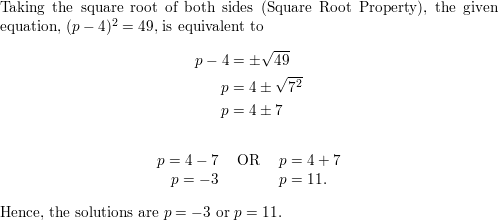
Answer:

Question 3.
The table shows that the force F (in pounds) needed to loosen a certain bolt with a wrench depends on the length ℓ (in inches) of the wrench’s handle. Write an equation that relates ℓ and F. Describe the relationship.
Big Ideas Math Algebra 2 Answers Chapter 8 Sequences and Series ca 3
Answer:

Question 4.
Order the functions from the least average rate of change to the greatest average rate of change on the interval 1 ≤ x ≤ 4. Justify your answers.
Big Ideas Math Algebra 2 Answers Chapter 8 Sequences and Series ca 4
Answer:

Question 5.
A running track is shaped like a rectangle with two semicircular ends, as shown. The track has 8 lanes that are each 1.22 meters wide. The lanes are numbered from 1 to 8 starting from the inside lane. The distance from the center of a semicircle to the inside of a lane is called the curve radius of that lane. The curve radius of lane 1 is 36.5 meters, as shown in the figure.
Big Ideas Math Algebra 2 Answers Chapter 8 Sequences and Series ca 5
a. Is the sequence formed by the curve radii arithmetic, geometric, or neither? Explain.
b. Write a rule for the sequence formed by the curve radii.
c. World records must be set on tracks that have a curve radius of at most 50 meters in the outside lane. Does the track shown meet the requirement? Explain.
Answer:

Question 6.
The diagram shows the bounce heights of a basketball and a baseball dropped from a height of 10 feet. On each bounce, the basketball bounces to 36% of its previous height, and the baseball bounces to 30% of its previous height. About how much greater is the total distance traveled by the basketball than the total distance traveled by the baseball?
Big Ideas Math Algebra 2 Answers Chapter 8 Sequences and Series ca 6
A. 1.34 feet
B. 2.00 feet
C. 2.68 feet
D. 5.63 feet
Answer:

Question 7.
Classify the solution(s) of each equation as real numbers, imaginary numbers, or pure imaginary numbers. Justify your answers.
a. x + \(\sqrt{-16}\) = 0
b. (11 – 2i) – (-3i + 6) = 8 + x
c. 3x2 – 14 = -20
d. x2 + 2x = -3
e. x2 = 16
f. x2 – 5x – 8 = 0
Answer: