Big Ideas Math Answers Grade 5 Chapter 5 Multiply Decimals

Big Ideas Math Answers Grade 5 Chapter 5 Multiply Decimals includes topics like Multiplication Patterns with Decimals, Multiply with Money, etc. that aid students to solve the homework and chapter practice. This will be the best and ultimate guide for exam preparation. You will find every question was explained in a simplistic way so that you are able to understand the concepts easily. Big Ideas Math Answers Grade 5 Chapter 5 Multiply Decimals pdf links are available here for each and every lesson. So, kickstart your preparation and secure the highest marks in the exams.

Big Ideas Math Book 5th Grade Answer Key Chapter 5 Multiply Decimals

Improve your Problem-Solving Skills utilizing the Big Ideas Math Book 5th Grade Answer Key Chapter 5 Multiply Decimals. Start practicing the question covered in the Big Ideas Math Answers Grade 5 Chapter 5 Multiply Decimals and Cross Check the Solutions of Chapter 5 Multiply Decimals from here. So that you can easily rectify your mistakes and fill up the knowledge gap.

Lesson: 1 Multiplication Patterns with Decimals

Lesson: 2 Estimate Products of Decimals and Whole Numbers

Lesson: 3 Use Models to Multiply Decimals and Whole Numbers

Lesson: 4 Multiply Decimals and Whole Numbers

Lesson 5.5 Use Models to Multiply Decimals

Lesson: 6 Use Partial Products to Multiply Decimals

Lesson: 7 Use Strategies to Multiply Decimals

Lesson: 8 Multiply Decimals

Lesson: 9 Problem Solving: Multiply with Money

Chapter: 5 – Multiply Decimals

Lesson 5.1 Multiplication Patterns with Decimals

Explore and Grow

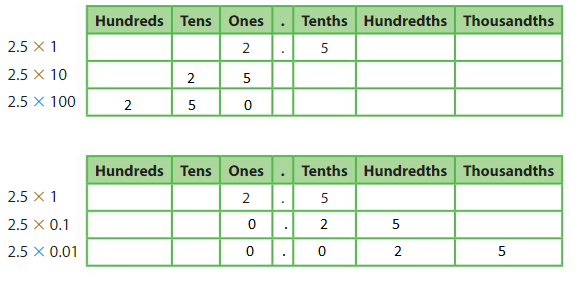
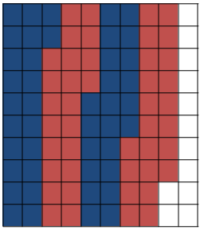
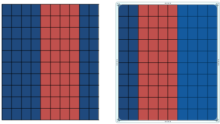
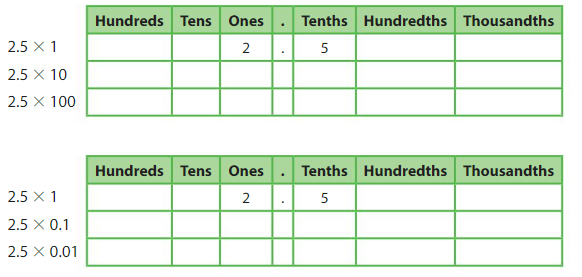
Use the relationship between positions in a place value chart to find each product.
Big Ideas Math Answer Key Grade 5 Chapter 5 Multiply Decimals 5.1 1
What patterns do you notice?
Answer:

I notice that in first value chart the decimal point  shifts one place to the right and in the second value chart the decimal point shifts one place to the left.

Structure
Describe the placement of the decimal point when multiplying a decimal by 10, 100, 0.1, and 0.01.
Answer:
When we multiply 0.01with 10 the decimal point shifts one place to the right(10×0.01=0.1)
When we multiply 0.01with 100 the decimal point shifts two places to the right(100×0.01=1)
When we multiply 0.01 with 0.1 the decimal point shifts one place to the left(0.1×0.01=0.001).

Think and Grow: Use Patterns to Find Products

Example
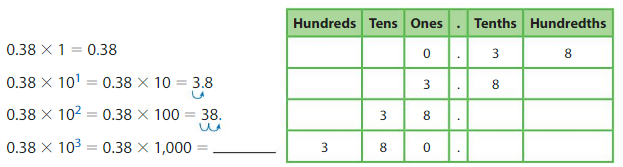
Find 0.38 × 10³.
Use place value concepts. Every time you multiply a number by 10, each digit in the number shifts one position to the left in a place value chart.
Big Ideas Math Answer Key Grade 5 Chapter 5 Multiply Decimals 5.1 2
So, 0.38 × 103 = ______.
Notice the pattern: In each product, the number of places the decimal point moves to the right is the same as the exponent.

Example
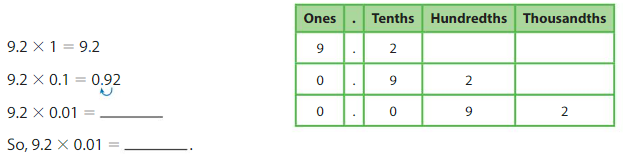
Find 9.2 × 0.01.
Use place value concepts. Every time you multiply a number by \(\frac{1}{10}\) = 0.1, 10each digit in the number shifts one position to the right in a place value chart.
Big Ideas Math Answer Key Grade 5 Chapter 5 Multiply Decimals 5.1 3
Notice the pattern: When you multiply by0.1, the decimal point moves one place to the left. When you multiply by 0.01, the decimal point moves two places to the left.

Show and Grow

Find the product.
Question 1.
2.51 × 104 = _______
Answer:
2.51×10000=25,100

Explanation:
2.51×1=2.51
2.51x 101 =2.51×10=25.1
2.51x 102 =2.51×100=251
2.51x 103 =2.51×1000=2510
2.51x 104 =2.51×10000=25100
So, 2.51x 104 =25100
When we multiply 2.51 by 104 the number of places the decimal point moves to the right is the same as the exponent ie 4 places.

Question 2.
0.7 × 0.01 = ______
Answer:
0.7 × 0.01 = 0.007

Explanation:
0.7×1=0.7
0.7×0.1=0.07
0.7×0.01=0.007
So, 0.7×0.01=0.007
When you multiply 0.7 by 0.1, the decimal point moves one place to the left. When you multiply 0.7 by 0.01, the decimal point moves two places to the left.

Apply and Grow: Practice

Find the product.
Question 3.
4.1 × 102 = _______
Answer:
4.1×100=410

Explanation:
4.1×1=4.1
4.1x 101 =4.1×10=41
4.1x 102 =4.1×100=410
So, 4.1×102 =410
When we multiply 4.1 by 102 the number of places the decimal point moves to the right is the same as the exponent ie 2.

Question 4.
7.03 × 0.1 = _______
Answer:
7.03×0.1=0.703

Explanation:
7.03×1=7.03
7.03×0.1=0.703
So, 7.03×0.1=0.703
When you multiply 7.03 by 0.1, the decimal point moves one place to the left.

Question 5.

16.579 × 104 = _______
Answer:
16.579×10000=1,65,790

Explanation:
16.579×1=16.579
16.579x 101 =16.579×10=165.79
16.579x 102 =16.579×100=1657.9
16.579x 103 =16.579×1000=16,579
16.579x 104 =16.579×10000=1,65,790
So, 16.579x 104 =1,65,790
When we multiply 16.579 by 104 the number of places the decimal point moves to the right is the same as the exponent ie 4.

Question 6.
843.7 × 0.01 = _______
Answer:
843.7×0.01=8.437

Explanation:
843.7×1=843.7
843.7×0.1=84.37
843.7×0.01=8.437
So, 843.7×0.01=8.437
When we multiply 843.7 by 0.1, the decimal point moves one place to the left.When you multiply 843.7 by 0.01, the decimal point moves two placs to the left.

Question 7.
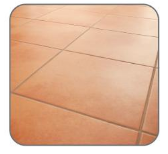
A contractor installs a new floor of a room using 1,000 square tiles. Each tile has an area of 1.25 square feet. What is the area of the floor?
Big Ideas Math Answer Key Grade 5 Chapter 5 Multiply Decimals 5.1 4
Answer:
There are 1,000 square tiles in a room, Area of each tile is 1.25 square feet
Find the area of the floor by multiplying Area of tile by Number of tiles.
Multiplying 1.25 by 1000, shifts the digits 3 positions to the left in a place value chart.So, the decimal point moves 3 places to the right.
=1.25×1000=1,250 square feet
Therefore Area of floor is 1,250 square feet.

Reasoning
complete the equation

Question 9.
_____ × 103 = 6,209
Answer:
6.209×1000=6,209

Explanation:
Multiplying something by 1000, shifts the digits 3 positions to the left in a place value chart.So, the decimal point moves 3 places to the right.As the number 6,209 is already multiplyed by 1000 now to know the missing factor shift the decimal point 3 places to the left.
So, the number is 6.209

Question 10.
_____ × 0.01 = 1.879
Answer:
187.9=0.01=1.879

Explanation:
When you multiply by 0.1, the decimal point moves one place to the left.When you multiply by 0.01, the decimal point moves two places to the left.As the number 1.879 is already multiplied by 0.01 now to know the missing factor shift the decimal point two places to the right.
So, the number is 187.9

Question 11.
0.045 × _____ = 45
Answer:
0.045×1000=45

Explanation:
0.045×1=0.045
0.045×10=0.45
0.045×100=4.5
0.045×1000=45
When we multiply 0.045 by 1000 the decimal point moves 3 placed to the right.

Think and Grow: Modeling Real Life

Example
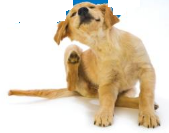
A flea is 1.5 millimeters long. A magnified image of the flea is 100 times as long as its actual length. How much longer is the flea in the image than its actual length?
Big Ideas Math Answer Key Grade 5 Chapter 5 Multiply Decimals 5.1 5
Find the length of the flea in the image by multiplying the length of the flea by 100.
Multiplying 1.5 by 100, or 102, shifts the digits _____ positions to the left in a place value chart. So, the decimal point moves ____ places to the right.
1.5 × 100 = 1.5 × 102 = ______
The length of the flea in the image is _______ millimeters.
Subtract the length of the flea from the length of the flea in the image.
Big Ideas Math Answer Key Grade 5 Chapter 5 Multiply Decimals 5.1 6
The flea in the image is ________ millimeters longer than its actual length.

Answer:
Multiplying 1.5 by 100, or 102, shifts the digits right positions to the left in a place value chart. So, the decimal point moves left places to the right.
1.5 × 100 = 1.5 × 102 = 150
The length of the flea in the image is 150 millimeters.
150 – 1.5 = 148.5
The flea in the image is 148.5 millimeters longer than its actual length.

Show and Grow

Question 12.
The London Eye is a 443-foot-tall Ferris wheel. A model is 0.01 times as tall as the actual Ferris wheel. How much taller is the actual London Eye than the model?
Answer:
The London Eye is 443 feet tall Ferris, a model is 0.01 times tall as actual Ferris.
When we multiply 443 by 0.01 the decimal point moves 2 places to the left
443×0.01=4.43. So, the area of the model is 4.43 feet.
Subtract the area of the model from the actual area of the Ferris.
443.00‐ 4.43=438.57
The actual London Eye ferris wheel is 438.57 feet taller than a model ferris wheel.

Question 13.
Each day,you ride your bike from home to school and back. Your school is 0.9 mile from home. How far do you ride your bike in 10 days?
Answer:
My school is 0.9 mile from my home.If I ride bike from home to school and back every day then I ride 1.8(0.9×2) miles every day.
If each day I ride 1.8 miles then for 10 days i ride 1.8×10=18 miles.
When we multiply 1.8 by 10 and the decimal point moves 1 places to the right.
Therefore I ride 18 miles in 10 days.

Question 14.
DIG DEEPER!
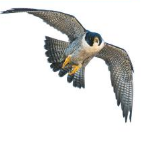
An eel travels at a speed of 2 miles per hour. A starfish travels one hundredth the speed of the eel. A falcon travels 10,000 times as fast as the starfish. How many more miles per hour can the falcon travel than the eel?
Big Ideas Math Answer Key Grade 5 Chapter 5 Multiply Decimals 5.1 7
Answer:
An eel travels at a speed of 2 miles per hour.A starfish and travels one hundredth the speed of the eel.
Speed of starfish is 2×0.01(one hundredth)=0.02miles per hour.
When we multiply 2 by 0.01 the decimal point moves 2 places to the left
A falcon travels 10,000 times as fast as the starfish.
Speed of falcon is 10,000×0.02(speed of starfish)=200 miles per hour.
When we multiply 0.02 by 10000 the decimal point moves 4 places to the right
A falcon can travel 200 miles more miles per hour than the eel.

Multiplication Patterns with Decimals Homework & Practice 5.1

Find the product.
Question 1.
5.201 × 10 = ______
Answer:
5.201 × 10 =52.01

Explanation:
5.201×1=5.201
5.201×10=52.01
So, 5.201×10=52.01
When we multiply 5.201 by 10 the decimal point moves one place to the right.

Question 2.
26.7 × 0.01 = _____
Answer:
26.7 × 0.01 =0.267

Explanation:
26.7×1=26.7
26.7×0.1=2.67
26.7×0.01=0.267
So, 26.7 × 0.01 =0.267
When we multiply 26.7 by 0.1, the decimal point moves one place to the left. When you multiply 26.7 by 0.01, the decimal point moves two places to the left.

Question 3.
0.095 × 103 = ______
Answer:
0.095 × 103 =0.095×1000=95

Explanation:
0.095×1=0.095
0.095x 101 =0.095×10=0.95
0.095x 102 =0.095×100=9.5
0.095x 103 =0.095×1000=95
So, 0.095 × 103 =95
When we multiply 0.095 by 103 the number of places the decimal point moves to the right is the same as the exponent ie 3 places.

Question 4.
37.84 × 0.1 = ______
Answer:
37.84 × 0.1 =3.784

Explanation:
37.84×1=37.84
37.84×0.1=3.784
So, 37.84×0.1=3.784
When we multiply 37.84 by 0.1, the decimal point moves one place to the left.

Question 5.
0.26 × 104 = ______
Answer:
0.26 × 104 =0.26×10000=2600

Explanation:
0.26×1=0.26
0.26x 101 =0.26×10=2.6
0.26x 102 =0.26×100=26
0.26x 103 =0.26×1000=260
0.26x 104 =0.26×10000=2600
So, 0.26x 104 =2600
When we multiply 0.26 by 104 the number of places the decimal point moves to the right is the same as the exponent ie 4 places.

Question 6.
15.9 × 0.01 = ______
Answer:
15.9 × 0.01 =0.159

Explanation:
15.9×1=15.9
15.9×0.1=1.59
15.9×0.01=0.159
So, 15.9×0.01=0.159
when we multiply 15.9 by 0.01 the decimal point moves two places to the left.

Find the product.
Question 7.
0.8 × 0.01 = ______
Answer:
0.8 × 0.01 =0.008

Explanation:
0.8×1=0.8
0.8×0.1=0.08
0.8×0.01=0.008
So, 0.8×0.01=0.008
When we multiply 0.8 by 0.1, the decimal point moves one place to the left. When you multiply 0.8 by 0.01, the decimal point moves two places to the left.

Question 8.
3.1 × 104 = ______
Answer:
3.1 × 104 =3.1×10000=31000

Explanation:
3.1×1=3.1
3.1x 101 =3.1×10=31
3.1x 102 =3.1×100=310
3.1x 103 =3.1×1000=3100
3.1x 104 =3.1×10000=31000
So, 3.1x 104 =31000
When we multiply 3.1 by 104 the number of places the decimal point moves to the right is the same as the exponent ie 4 places.

Question 9.
Writing
Explain how you can use mental math to find 5.4 × 10³ and 5.4 × 0.01.
Answer:
5.4 × 10³ and 5.4 × 0.01
5.4 × 10³
5.4 × 10 × 10 × 10
= 54 × 100
= 5400
5.4 × 0.01 = 0.054

Question 10.
DIG DEEPER!
What is Newton’s number?
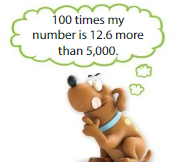
Big Ideas Math Answer Key Grade 5 Chapter 5 Multiply Decimals 5.1 8
Answer:
Newton’s number is 49.874

Explanation:
Subtract 12.6 from 5000
5000‐12.6=4987.4
Divide the balance with 100 to find Newton’s number.
4987.4×0.01=49.874
When you multiply 4987.4 by 0.01, the decimal point moves two places to the left.
Newton’s number is 49.874

Question 11.
Modeling Real Life
A house cat weighs 9.22 pounds. Hercules the liger is the world’s largest cat, and weighs 100 times the weight of the house cat. How much more does Hercules weigh than the house cat?
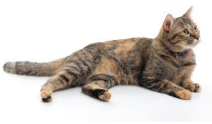
Big Ideas Math Answer Key Grade 5 Chapter 5 Multiply Decimals 5.1 9
Answer:
Hercules weigh  912.7 pounds more than the house cat.

Explanation:
A house cat weighs 9.22 pounds, Hercules the liger is the world’s largest cat and weighs 100 times more than a house cat.
The weight of Hercules is 9.22×100=922 pounds
When we multiply 9.22 by 100 the decimal point moves 2 places to the right.
Subtract weight of house cat from the weight of Hercules =922‐9.22=912.7
Hercules weigh  912.7 pounds more than the house cat.

Question 12.
DIG DEEPER!
A Tyrannosaurus rex weighed about 1.4 tons more than one-tenth the weight of a Patagotitan. About how much did the mayorumTyrannosaurus rex weigh?
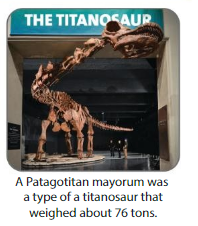
Big Ideas Math Answer Key Grade 5 Chapter 5 Multiply Decimals 5.1 10
Answer:
MayorumTyrannosaurus rex weigh=9 tons.

Explanation:
Weight of patagotitan mayorum is 76 tons and One‐tenth of patagotitan is 76×0.1=7.6 tons.
When you multiply 76.0 by 0.1 , the decimal point moves one places to the left.
A Tyrannosaurus rex weighed about 1.4 tons more than one-tenth the weight of a Patagotitan
Weight of Tyrannosaurus rex=1.4 tons + 7.6 tons= 9 tons
MayorumTyrannosaurus rex weigh=9 tons.

Review & Refresh

Question 13.
Newton and Descartes have a $50.00 gift card to a pet store. Newton’s total is $18.95 and Descartes’s total is $24.38. How much money do they have left on their gift card?
Answer:
Newton’s total is $18.95 and Descartes’s total is $24.38.
Total money they spent in a pet store =$18.95+$24.38 =$43.33
Newton and Descartes have a $50.00 gift card to a pet store
Subtract the money they spent in a pet store from the gift card money
$50.00‐$43.33=$6.67
Therefore , $6.67 is the amount they have left on their gift card.

Lesson 5.2 Estimate Products of Decimals and Whole Numbers

Explore and Grow

Choose an expression to estimate each product. Write the expression. You may use an expression more than once.
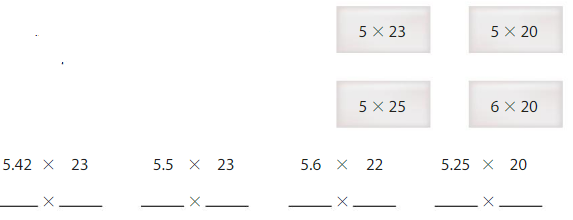
Big Ideas Math Answers 5th Grade Chapter 5 Multiply Decimals 5.2 1
Compare your answers with a partner. Did you choose the same expressions?
Answer:
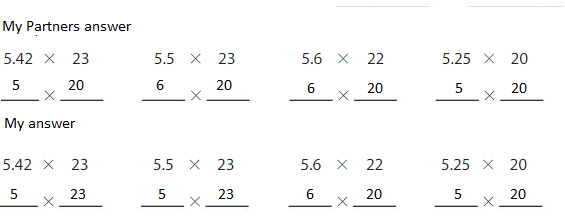
when i compared my answers with my partners answers i found that we didnot choose the same expressions.

Construct Arguments
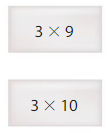
Which estimated product do you think will be closer to the product of 2.7 and 9? Explain your reasoning.
Big Ideas Math Answers 5th Grade Chapter 5 Multiply Decimals 5.2 2
Answer:
The estimated product of 3 and 9 is closer to the product of 2.7 and 9.

Explanation:
The product of 2.7 and 9 is 2.7×9=24.3
The product of 3 and 9 is 3×9=27
The product of 3 and 10 is 3×10=30
24.3 is closer to 27
Therefore the estimated product of 3 and 9 is closer to the product of 2.7 and 9.

Think and Grow: Estimate Products

Example
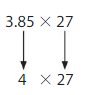
Estimate 3.85 × 27.
One Way: Use rounding. Round 3.85 to the nearest whole number. Then multiply.
Big Ideas Math Answers 5th Grade Chapter 5 Multiply Decimals 5.2 3
4 × 27 = ______
So, 3.85 × 27 is about = ______

Answer:
4 × 27 = 108
So, 3.85 × 27 is about = 104

Another Way: Use compatible numbers.
Big Ideas Math Answers 5th Grade Chapter 5 Multiply Decimals 5.2 4
4 × 25 = ______
So, 3.85 × 27 is about = ______.

Answer:
4 × 25 = 100
So, 3.85 × 27 is about = 100.

Example
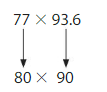
Estimate 77 × 93.6.
One Way: Use rounding. Round to the nearest ten. Then multiply.
Big Ideas Math Answers 5th Grade Chapter 5 Multiply Decimals 5.2 5
80 × 90 = _____
So, 77 × 93.6 is about = ______

Answer:
80 × 90 = 7200
So, 77 × 93.6 is about = 7200

Another Way: Use compatible numbers.
Big Ideas Math Answers 5th Grade Chapter 5 Multiply Decimals 5.2 6
75 × 100 = _______
So, 77 × 93.6 is about = ______.

Answer:
75 × 100 = 7500
So, 77 × 93.6 is about = 7207.

Show and Grow

Estimate the product.
Question 1.
11.6 × 9

Answer:
Use rounding. Round 11.6 to the nearest whole number. Then multiply.
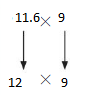
12×9=108
So, 11.6×9 is about =108
Another Way: Use compatible numbers
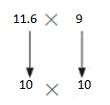
10×10=100
So, 11.6× 9 is about =100

Question 2.
159.81 × 17
Answer:
One Way: Use rounding. Round 159.81 to the nearest whole number. Then multiply.
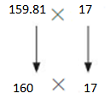
160×17=2720
So, 159.81×17 is about =2720
Another Way: Use compatible numbers
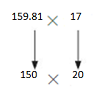
150×20=3000
So, 159.81×17 is about =3000

Apply and Grow: Practice

Estimate the product.
Question 3.
72 × 0.76
Answer:
Use rounding. Round 0.76 to the nearest whole number. Then multiply.
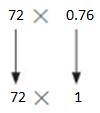
72×1 =72
So, 72×0.76 is about =72

Question 4.
6.1 × 4
Answer:
Use rounding. Round 6.1 to the nearest whole number. Then multiply.
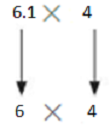
6×4=24
So, 6.1×4 is about =24

Question 5.
1.54 × 12
Answer:
Use rounding. Round 1.54 to the nearest whole number. Then multiply.
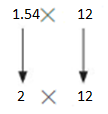
2×12=24
So, 1.54×12 is about =24

Question 6.
22 × 8.02
Answer:
Use rounding. Round 8.02 to the nearest whole number. Then multiply.
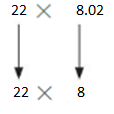
22×8=176
So, 22 × 8.02 is about = 176

Question 7.
147 × 11.6
Answer:
Use compatible numbers
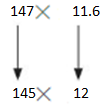
145×12=1740
So, 147×11.6 is about =1740

Question 8.
217 × 13.42
Answer:
Use compatible numbers
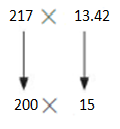
200×15=3000
So, 217×13,42 is about =3000

Question 9.
There are 1.36 liters of pineapple juice in 1 can. You buy a case of 8 cans. About how many liters of pineapple juice do you buy?
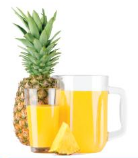
Big Ideas Math Answers 5th Grade Chapter 5 Multiply Decimals 5.2 7
Answer:
There are 1.36 liters of pineapple juice in 1 can, there are 8 cans in a case.
Number of liters of pineapple juice in a case is about 1.36×8
Use rounding. Round 1.36 to the nearest whole number. Then multiply.
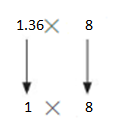
1×8=8 liters
About 8 liters of pineapple juice i shall buy.

Question 10.
Open-Ended
Write a decimal and a whole number that have an estimated product of 16.
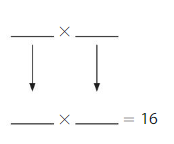
Big Ideas Math Answers 5th Grade Chapter 5 Multiply Decimals 5.2 8
Answer:
Imagine the numbers as 1.9 and 8
1.9 × 8
Use rounding.Round 1.9 to the nearest whole number. Then multiply
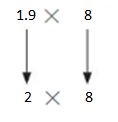
2×8=16
So, 1.9×8 is about =16.

Question 11.
Number Sense
You use 50 × 4 to estimate 45 × 3.56. Is your estimate an overestimate or an underestimate? Explain.
Answer:
My estimate is an overestimate.

Explanation:
50×4=200
45×3.56=160.2
As the product of 50 and 4 is more than the product of 45 and 3.56 so mu estimate is over estimate.

Question 12.
DIG DEEPER!
Describe a situation in which an estimate of the product of a whole number and a decimal is suffcient.
Answer:
A biscuit packet costs 4.83 rupees for a vendor and he sells 15 packets of biscuits he will earn an amount of 75 rupees(15 × 4.83=72.45).

Think and Grow: Modeling Real Life

Example
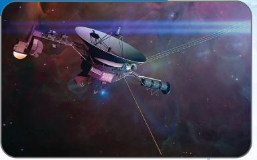
A space probe is 756,600 miles from Earth. The probe travels 9.7 miles farther from Earth each second. About how far is the space probe from Earth after 60 seconds?
Big Ideas Math Answers 5th Grade Chapter 5 Multiply Decimals 5.2 9
Find the distance the probe travels in 60 seconds by multiplying the distance the probe travels in 1 second by60. Round 9.7 to the nearest whole number because you do not need a precise answer.
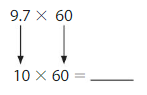
Big Ideas Math Answers 5th Grade Chapter 5 Multiply Decimals 5.2 10
The probe travels about ______ miles in 60 seconds.
Add the distance the probe is from Earth to the distance it travels in 60 seconds.
Big Ideas Math Answers 5th Grade Chapter 5 Multiply Decimals 5.2 11
The probe is about ______ miles from Earth after 60 seconds.

Answer:
10 × 60 = 600
The probe travels about 600 miles in 60 seconds.
Add the distance the probe is from Earth to the distance it travels in 60 seconds.
756,600 + 600 = 757200
The probe is about 757200 miles from Earth after 60 seconds.

Show and Grow

Question 13.
A bucket weighs 1.4 pounds. One gallon of sand weighs 13.4 pounds. About how much does the bucket and 4 gallons of sand weigh in all?
Answer:
A bucket weighs 1.4 pounds, A gallon of sand weighs 13.4 pounds.
Use rounding. Round 1.4 and 13.4 to the nearest whole number
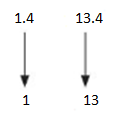
Weight of 4 gallons = 4 × weight of gallon= 4 × 13=52
The bucket and 4 gallons of sand weight=1+52=53 pounds

Question 14.
An 8.2-centimeter-tall plant grows 2.9 centimeters each month for 1 year. About how tall is the plant at the end of 1 year?
Answer:
Length of the plant now is 8.2 centimeters. If it grows about 2.9 centimeter for each month the length of the plant increased is product of 12months and the length of plant that grows each month.
Round of 8.2 and 2.9 to the nearest whole numbers
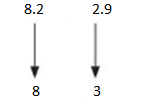
The length of the plant increased is product of 12months and the length of plant that grows each month
12×3=36
Total length= length of plant + increased length after a year=8+36 =44 centimeters
About 44 centimeters tall is the plant at the end of 1 year.

Question 15.
DIG DEEPER!
A motorcycle travels 52.3 miles using 1 gallon of gasoline. A car travels 29.8 miles using 1 gallon of gasoline. About how much farther does the motorcycle travel using 6 gallons of gasoline than the car?
Answer:
A motorcycle travels 52.3 miles using 1 gallon of gasoline and a car travels 29.8 miles using 1 gallon of gasoline
Round of 52.3 and 29.8 sto the nearest whole number.
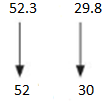
For 6 gallons of gasoline motorcycle travels    30× 6=180 miles
For 6 gallons of gasoline car travels                 52× 6=312 miles
312‐180=132 miles
About 132 miles farther the motorcycle travel using 6 gallons of gasoline than the car.

Estimate Products of Decimals and Whole Numbers Homework & Practice 5.2

Estimate the product.
Question 1.
0.8 × 36
Answer:
Use rounding. Round of 0.8 to nearest whole number. And multiply
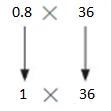
1×36=36
So, 0.8×36=36

Question 2.
2.34 × 16
Answer:
Use rounding. Round of 2.34 to the nearest whole number. And multiply
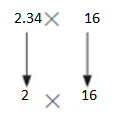
2×16=32
So, 2.34×16 is about =32

Question 3.
9 × 1.67
Answer:
Use rounding. Round of 1.67 to the nearest whole number. And multiply
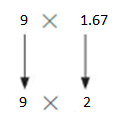
9×2=18
So, 9×1.67 is about = 18

Question 4.
105 × 4.6
Answer:
Use rounding. Round of 4.6 to the nearest whole number. And multiply
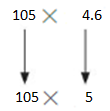
105×5=525
So, 105×4.6 is about =525

Question 5.
88 × 0.9
Answer:
Use rounding. Round of 0.9 to the nearest whole number. And multiply
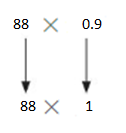
88×1=88
So, 88×0.9 is about =8

Question 6.
5.5 × 131
Answer:
Use rounding. Round of 5.5 to the nearest whole number. And multiply
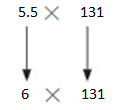
6×131=786
So, 5.5×131 is about =786

Question 7.
An athlete runs 6.23 miles in 1 hour. At this pace, about how far does the athlete run in 4 hours?
Answer:
An athlete runs 6.23 miles in 1 hour.
Use rounding.
Round of 6.23 to the nearest whole number.
6.23——6
Number of miles athlete run in 4 hours
=4× Number of miles athlete run in 1 hour
=4×6=24
About 24 miles the athlete run in 4 hours.

Question 8.
Number Sense
Which expressions are underestimates of 26.5 × 91?
20 × 90
30 × 100
30 × 90
25 × 90
Answer:
20×90 and 25×90 are the underestimates of 26.5×91 as both the estimated numbers in these expressions are less than original numbers.

Question 9.
Writing
Which strategy can you use to estimate the product of 8.02 and 106? Explain.
Answer:
I use compatible numbers strategy because numbers are near to round figures.

Question 10.
YOU BE THE TEACHER
Your friend finds the product. Is her answer reasonable? Estimate to check.?
Big Ideas Math Answers 5th Grade Chapter 5 Multiply Decimals 5.2 12
Answer:
1.06 × 103 = 109.18
Use rounding.Round 1.06 to the nearest whole number. And multiply.
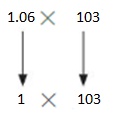
1×103 =103
So, my friend’s answer is reasonable.

Question 11.
Modeling Real Life
Newton pays for 5 pounds of pears that cost $3.75 per pound. Descartes pays$15 for 5 pounds of apples. About how much more do the 5 pounds of pears cost than the 5 pounds of apples?
Answer:
Cost of 5 pounds of pears 5×$3.75
Round 3.75 to the nearest whole number. And multiply
5×$4=$20
Descartes pays$15 for 5 pounds of apples
Subtract cost of apples from pears $20‐$15=$5
About $5 more the 5 pounds of pears cost than the 5 pounds of apples.

Question 12.
Modeling Real Life
A hospital employee works 3 days each week. The route from her house to the hospital is 9.9 miles and the route back to her house is 10.5 miles. About how many miles does she travel for work each week?
Answer:
Use rounding.Round 9.9 and 10.5 to the nearest whole numbers.
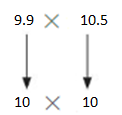
A hospital employee works 3 days each week.
So, as the route from her house to the hospital is 9.9 miles per day for 3 days it is 10×3= 30 miles
As the route back to her house is 10.5 miles per day for 3 days it is 10×3=30 miles
Total number of miles =30+30=60
Therefore About 60 miles she travel for work each week.

Review & Refresh

Question 13.
Write the number in two other forms.
Standard form:
Word form: four and twenty-six thousandths
Expanded form:
Answer:
4.26000

Lesson 5.3 Use Models to Multiply Decimals and Whole Numbers

Explore and Grow

Complete the table.
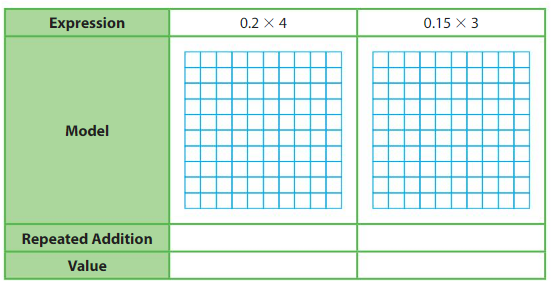
Big Ideas Math Answers Grade 5 Chapter 5 Multiply Decimals 5.3 1
Answer:

Structure
How does the relationship between addition and multiplication help you find each product?
Answer:
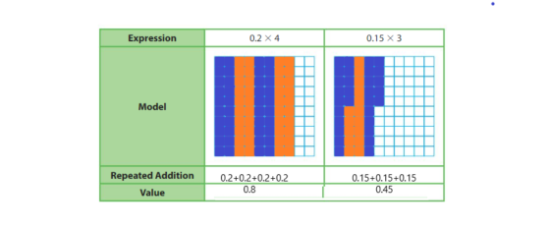
Addition is the process of combining a number of individual items together to form a new total.Multiplication, however, is the process of using repeated addition and combining the total number of items that make up equal-sized groups.

Think and Grow: Use Models to Multiply Decimals and Whole Numbers

Example
Find 0.23 × 3.
Use a model. Shade 3 groups of 0.23.
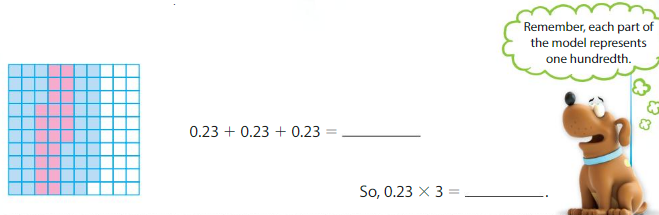
Big Ideas Math Answers Grade 5 Chapter 5 Multiply Decimals 5.3 2

Example
Find 0.48 × 4.
Use a model. Shade 4 groups of 0.48.
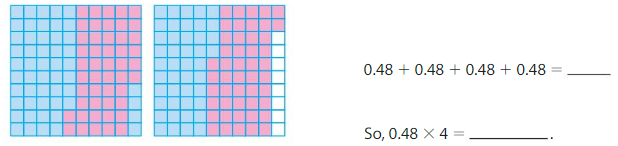
Big Ideas Math Answers Grade 5 Chapter 5 Multiply Decimals 5.3 3

Show and Grow

Find the product.
Question 1.
0.19 × 3 = _____
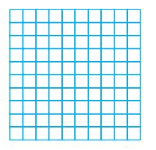
Big Ideas Math Answers Grade 5 Chapter 5 Multiply Decimals 5.3 4
Answer:


0.19+0.19+0.19=0.57
So, 0.19×3=0.57

Question 2.
0.37 × 5 = ______
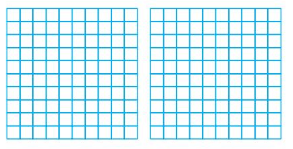
Big Ideas Math Answers Grade 5 Chapter 5 Multiply Decimals 5.3 5
Answer:


0.37+0.37+0.37+0.37+0.37=1.85
S0, 0.37×5=1.85

Apply and Grow: Practice

Find the product.
Question 3.
0.09 × 5 = _____
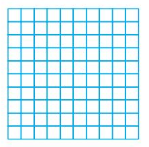
Big Ideas Math Answers Grade 5 Chapter 5 Multiply Decimals 5.3 6
Answer:


0.09+0.09+0.09+0.09+0.09=0.45
So, 0.09×5=0.45

Question 4.
8 × 0.2 = _____
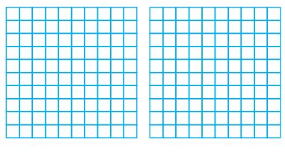
Big Ideas Math Answers Grade 5 Chapter 5 Multiply Decimals 5.3 7
Answer:


0.2+0.2+0.2+0.2+0.2+0.2+0.2=1.6
So, 8×0.2=1.6

Question 5.
7 × 0.14 = _____
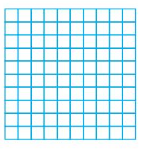
Big Ideas Math Answers Grade 5 Chapter 5 Multiply Decimals 5.3 8
Answer:


0.14+0.14+0.14+0.14+0.14+0.14+0.14=0.98
So, 7×0.14=0.98

Question 6.
0.96 × 2 = _____
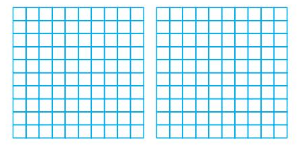
Big Ideas Math Answers Grade 5 Chapter 5 Multiply Decimals 5.3 9
Answer:

0.96+0.96=1.92
So, 0.96×2=1.92

Question 7.
A hummingbird’s heart beats once every 0.05 second. How long does it take for its heart to beat 7 times?
Big Ideas Math Answers Grade 5 Chapter 5 Multiply Decimals 5.3 10
Answer:
Given,
A hummingbird’s heart beats once every 0.05 second.
0.005 × 7 = 0.035 seconds

Question 8.
Precision
When multiplying a decimal less than one by a whole number, how does the product compare to the whole number? Is this true when multiplying two whole numbers?
Answer:
When we multiply a decimal less than one by a whole number the product will be a decimal or a whole number but when we multiply two whole numbers the product will be only a whole number.

Question 9.
DIG DEEPER!
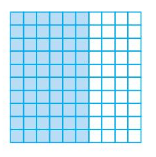
Write two multiplication equations involving a decimal and a whole number whose product is shown.
Big Ideas Math Answers Grade 5 Chapter 5 Multiply Decimals 5.3 11
Answer:
0.2×3=0.6 and 0.3×2=0.6

Think and Grow: Modeling Real Life

Example
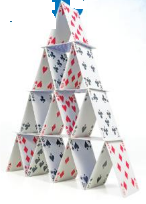
You build the card tower shown. Each row is 0.08 meter tall. Your friend’s card tower is 0.3 meter tall. Whose tower is taller?
Big Ideas Math Answers Grade 5 Chapter 5 Multiply Decimals 5.3 12
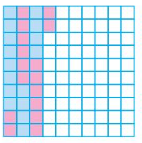
Because your card tower has 4 rows, multiply 4 by0.08 to find the height of your tower.
Use a model. Shade 4 groups of 0.08.
Big Ideas Math Answers Grade 5 Chapter 5 Multiply Decimals 5.3 13
0.08 + 0.08 + 0.08 + 0.08 = ______
Compare the height of your tower to the height of your friend’s tower.
So, ______ tower is taller.

Answer:
0.08 + 0.08 + 0.08 + 0.08 = 0.32
Compare the height of your tower to the height of your friend’s tower.
So, 0.32tower is taller.

Show and Grow

Question 10.
You have 1 meter of ribbon. Do you have enough ribbon to border the outside of the square picture frame?
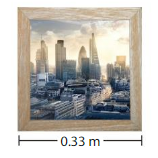
Big Ideas Math Answers Grade 5 Chapter 5 Multiply Decimals 5.3 14
Answer:
No

Explanation:
Length of side of the square picture is 0.33m.
Border of the square picture is 4 × length of side=4×0.33m=1.32m
I have 1 meter of ribbon 1.32>1
So, i don’t have enough ribbon to border the square picture.

Question 11.
Organic shaved coconut originally costs $0.34 per ounce. A baker buys 8 ounces on sale for $0.27 per ounce.How much money does the baker save?
Big Ideas Math Answers Grade 5 Chapter 5 Multiply Decimals 5.3 15
Answer:
Money the baker save is 0$2.72‐$2.16=$0.56

Explanation:
Original cost of organic shaved coconut is $0.34 per ounce
Then for 8 ounces it will be 8×$0.34=$2.72
Cost of the baker is $0.27 per ounce
Then for 8 ounces it will be 8×$0.27=$2.16
Money the baker save is 0$2.72‐$2.16=$0.56

Question 12.
DIG DEEPER!
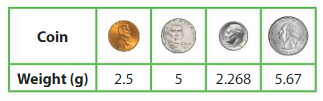
You have 4 pennies, 3 nickels, and 2 quarters. Find the total weight and the total value of your coins.
Big Ideas Math Answers Grade 5 Chapter 5 Multiply Decimals 5.3 16
Answer:
4 × 2.5 = 10
3 × 5 = 15
2 × 5.67 = 11.34
10 + 15 + 11.34 = 36.34

Use Models to Multiply Decimals and Whole Numbers Homework & Practice 5.3

Find the product.
Question 1.
0.4 × 2 = _____
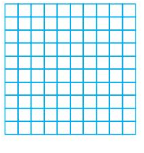
Big Ideas Math Answers Grade 5 Chapter 5 Multiply Decimals 5.3 17
Answer:


0.4+0.4=0.8
So, 0.4×2=0.84

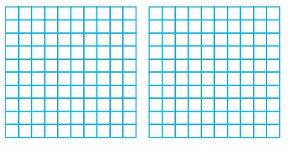
Question 2.
6 × 0.31 = _____
Big Ideas Math Answers Grade 5 Chapter 5 Multiply Decimals 5.3 18
Answer:


0.31+0.31+0.31+0.31+0.31+0.31=1.86
So, 6×0.31=1.86

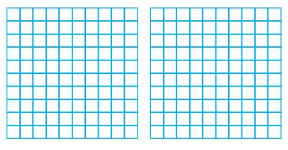
Question 3.
0.54 × 3 = _____
Big Ideas Math Answers Grade 5 Chapter 5 Multiply Decimals 5.3 19
Answer:


0.54+0.54+0.54=1.62
So, 0.54×3=1.62

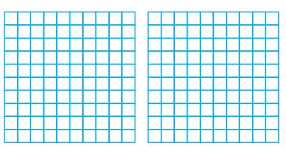
Question 4.
0.25 × 7 = _____
Big Ideas Math Answers Grade 5 Chapter 5 Multiply Decimals 5.3 20
Answer:


0.25+0.25+0.25+0.25+0.25+0.25+0.25=1.75
So, 0.25×7=1.75

Find the product
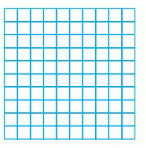
Question 5.
0.22 × 4 = _____
Big Ideas Math Answers Grade 5 Chapter 5 Multiply Decimals 5.3 21
Answer:


0.22+0.22+0.22+0.22=0.88
So, 0.22×4=0.88

Question 6.
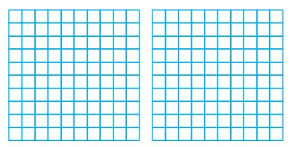
5 × 0.4 = _____
Big Ideas Math Answers Grade 5 Chapter 5 Multiply Decimals 5.3 22
Answer:


0.4+0.4+0.4+0.4+0.4=2
So, 5×0.4=2

Question 7.
A city mayor plans to build two new parks. Each park will cover 1.45 acres. How many acres will the new parks cover altogether? Explain.
Answer:
2.9 Acers

Explanation:
Acres covered by one park is 1.45 acres, A city mayor plans to build two new parks.
Acres covered by two new parks is 2×1.45=2.9acers.

Question 8.
Structure
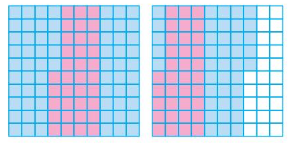
Write an equation represented by the model.
Big Ideas Math Answers Grade 5 Chapter 5 Multiply Decimals 5.3 23
Answer:
0.35+0.35+0.35+0.35+0.35=1.75
So, 0.35×5=1.75

Question 9.
DIG DEEPER!
Find the product of 0.03 and 4. How does the product change when you replace 4 with 0.4? Explain.
Answer:
The product of 0.03 and 4 is 0.03×4=0.12
The product of 0.03 and 0.4 is 0.03×0.4=0.012
When we replace the 4 with 0.4 then the product will become very small.

Question 10.
Modeling Real Life
In 1 year, you spend $1.50 on electricity to charge your tablet. In 1 month, you spend $0.02 on electricity to charge your smart phone. Which device costs more to charge in 1 year?
Answer:
In 1 year, i spend $1.50 on electricity to charge my tablet
If In 1 month, i spend $0.02 on electricity to charge my smart phone in a year i spend = 12months × electricity charge per month
=12×0.02=$0.24
$0.24<$1.50
Therefore Tablet costs more to charge in 1 year.

Question 11.
DIG DEEPER!
You have a 2-pound carton of blueberries. You eat 0.2 of the carton on Monday and 0.35 of the carton on Tuesday. How many pounds of blueberries are left?
Answer:
Weight of carton of blueberries is 2 pounds
I ate 0.2 of carton on Monday 0.2×2=0.4 pounds
I ate 0.35 of carton on Tuesday 0.35×2=0.7
Total of berries i ate is 0.4+0.7=1.1
pounds of blueberries are left=2‐1.1=0.9
Therefore 0.9 pounds of blueberries are left in the carton.

Review & Refresh

Evaluate the expression.
Question 12.
(12 ÷ 4) × 30 – 15
Answer:
(12 ÷ 4) × 30 – 15=75

Explanation:
(12 ÷ 4) × 30 – 15
=(3)×30‐15
=90‐15
=75
S0, (12 ÷ 4) × 30 – 15=75

Question 13.
(11 + 7) ÷ (3 + 5 + 1)
Answer:
(11 + 7) ÷ (3 + 5 + 1)=2

Explanation:
(11 + 7) ÷ (3 + 5 + 1)
=(18)÷(9)
=2
So, (11 + 7) ÷ (3 + 5 + 1)=2

Question 14.
35 ÷ [(153 – 139) ÷ 2]
Answer:
35 ÷ [(153 – 139) ÷ 2]=5

Explanation:
35 ÷ [(153 – 139) ÷ 2]
=35÷[(14÷2)]
=35÷7
=5
So, 35 ÷ [(153 – 139) ÷ 2]=5

Lesson 5.4 Multiply Decimals and Whole Numbers

Explore and Grow

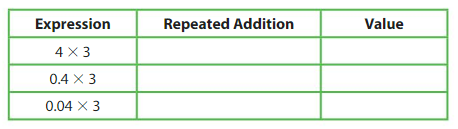
Complete the table.
Big Ideas Math Solutions Grade 5 Chapter 5 Multiply Decimals 5.4 1
What pattern do you notice in the placement of the decimal point?
Answer:
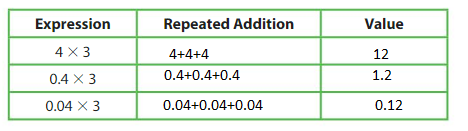

We can notice that the decimal point moves one place to the left.

Structure
How is multiplying decimals similar to multiplying whole numbers?
Answer:
Decimal multiplication is similar to the multiplication of whole numbers after decimal point the product of the numbers is the same.

Think and Grow: Multiply a Decimals and a Whole Numbers

Example
Find 5.8 × 4. Estimate ________
One Way: Multiply as you do with whole numbers. Then place the decimal point.
Find 58 × 4.
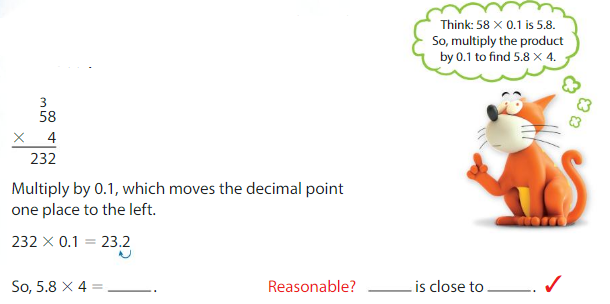
Big Ideas Math Solutions Grade 5 Chapter 5 Multiply Decimals 5.4 2

Another Way: Use place value and partial products.
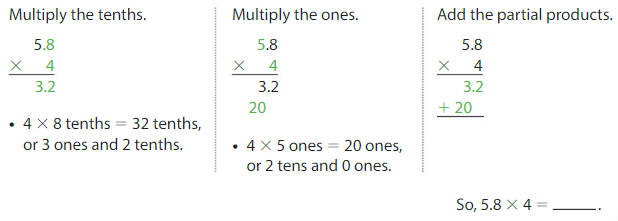
Big Ideas Math Solutions Grade 5 Chapter 5 Multiply Decimals 5.4 3
So, 5.8 × 4 = ______.

Show and Grow

Find the product. Check whether your answer is reasonable.
Question 1.
2.4 × 7 = ______
Answer:
2.4 × 7 =16.8

Explanation:
2.4 × 7
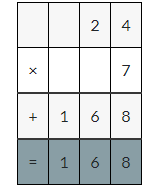
Multiply 24 with 7
24×7=168
Multiply 168 with 0.1
168×0.1=16.8 decimal point moves one place to the left.
So, 2.4 × 7 =16.8

Question 2.
8.15 × 3 = ______
Answer:
8.15 × 3 =24.45

Explanation:
8.15 × 3
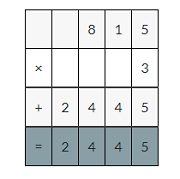
Multiply 8.15 with 3
815×4=2445
Multiply 2445 with 0.01
2445×0.01=24.45 decimal point moves two places to the left.
So, 8.15 × 3 =24.45

Apply and Grow: Practice

Find the product.
Question 3.
6 × 5.3 = _____
Answer:
6×5.3=31.8

Explanation:
6×5.3=
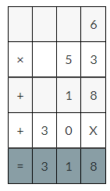
6×53=318
318 ×0.1=31.8decimal point moves one place to the left.
So,6 ×5.3=31.8

Question 4.
4.68 × 4 = ______
Answer:
4.68×4=18.72

Explanation:
4.68×4
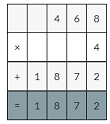
468×4=1872
1872×0.01=18.72decimal point moves two places to the left.
So, 4.68 × 4 =18.72

Question 5.
7 × 0.81 = ______
Answer:
7×0.81=5.56

Explanation:
7×0.81
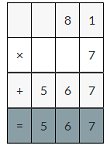
7×81=567
567×0.01=5.67decimal point moves two places to the left.
So, 7 × 0.81 =5.67

Question 6.
1.45 × 5 = _____
Answer:
1.45 × 5=7.25

Explanation:
1.45 × 5
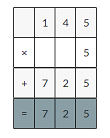
145×5=725
725×0.01=7.25decimal point moves two places to the left.
So, 1.45 × 5 =7.25

Question 7.
34 × 7.2 = _____
Answer:
34 × 7.2=244.8

Explanation:
34 × 7.2
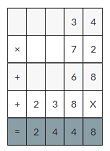
34×72=2448
2448×0.1=244.8decimal point moves one place to the left.
So, 34 × 7.2=244.8

Question 8.
23.66 × 19 = ______
Answer:
23.66 × 19=499.54

Explanation:
23.66 × 19
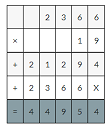
2366×19=44954
44954×0.01=449.54decimal point moves two places to the left.
So, 23.66 × 19 =449.54

Question 9.
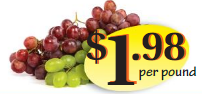
How much do you pay for 3 pounds of grapes?
Big Ideas Math Solutions Grade 5 Chapter 5 Multiply Decimals 5.4 4
Answer:
One pound of grapes costs $1.98
3 pounds of grapes cost is 3×$1.98
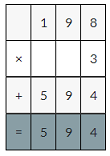
=3×198=598
598×0.01=5.98decimal point moves two places to the left.
Therefore cost of 3 pounds of grapes is 5.98

Question 10.
Which One Doesn’t Belong?
Which equation is not true?
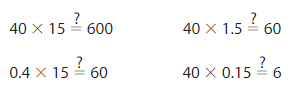
Big Ideas Math Solutions Grade 5 Chapter 5 Multiply Decimals 5.4 5
Answer:
0.4×15=60 is not correct

Explanation:
0.4×15
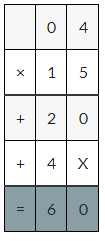
4×15=60
60×0.1=6decimal point moves one place to the left.
0.4×15=6
Therefore it is a wrong equation.

Question 11.
Number Sense
Without calculating, determine whether the product of 0.67 and 8 is greater than or less than 8. Explain.
Answer:
The product of 0.67 and 8 is less than 8.

Explanation:
We know that 0.67 is less than 1 so 0.67 when multiplied with 8 will be less than 8.

Question 12.
DIG DEEPER!
Find the missing digits. Then find the product.
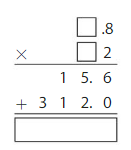
Big Ideas Math Solutions Grade 5 Chapter 5 Multiply Decimals 5.4 6
Answer:

Think and Grow: Modeling Real Life

Example
You buy a 40-pack of bottled water. Each bottle contains 16.9 fluid ounces of water. You drink 10 bottles. How many total fluid ounces of water do you have left?

Big Ideas Math Solutions Grade 5 Chapter 5 Multiply Decimals 5.4 7
Subtract 10 from the number of bottles you buy to find the number of bottles you have left.
40 – 10 = 30
To find how much water you have left, multiply the number of bottles you have left by16.9. Multiply as you do with whole numbers. Then place the decimal point.
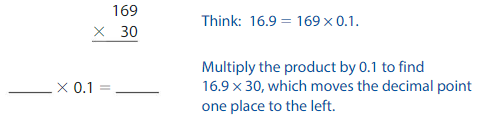
Big Ideas Math Solutions Grade 5 Chapter 5 Multiply Decimals 5.4 8
You have _______ total fluid ounces of water left.

Show and Grow

Question 13.
The stories of a residential building are 3.2 meters tall. The stories of an office building are 0.4 meter taller than the stories in the residential building. The office building has 12 stories. How tall is the office building?
Answer:
The stories of a residential building are 3.2 meters tall.The stories of an office building are 0.4 meter taller than the stories in the residential building
So stories of office building is 3.2+0.4=3.6 meter tall
Office building has 12 stories and each storey is 3.6 meters tall
So, 12×3.6=
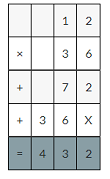
12×36=432
432×0.1=43.2decimal point moves one place to the left.
Therefore the office building is 43.2 meters tall.

Question 14.
You have3 strands of lights that are each 10.8 feet long. You buy 5 strands of lights that are each 16.25 feet long. How many feet of lights do you have in all?
Answer:
If i have3 strands of lights that are each 10.8 feet long
The length of 3 strands is 3×10.8
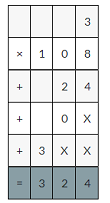
3×10.8=324×0.1 = 32.4 feet decimal point moves one place to the left.
If i buy 5 strands of lights that are each 16.25 feet long
The length of 5 strands is 5×16.25
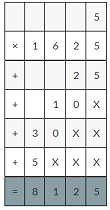
5×1625=8125
1825×0.01=81.25decimal point moves two places to the left.
Feet of lights i have in all is32.4+81.25=133.65 feet.

Question 15.
DIG DEEPER!
You stack $1 in dimes and you stack $1 in quarters. Which stack is taller? How much taller?
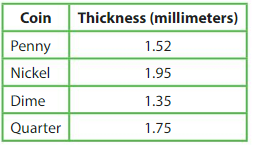
Big Ideas Math Solutions Grade 5 Chapter 5 Multiply Decimals 5.4 9
Answer:
1.35 × 1 = 1.35
1.75 × 1 = 1.75

Multiply Decimals and Whole Numbers Homework & Practice 5.4

Find the product.
Question 1.
9.8 × 2 = _____
Answer:
9.8×2=19.6

Explanation:
9.8×2
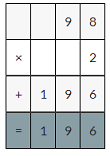
98×2=196
196×0.1=19.6 decimal point moves one place to the left.
So, 9.8×2=19.6

Question 2.
0.61 × 8 = ______
Answer:
0.61 × 8 =4.88

Explanation:
0.61×8
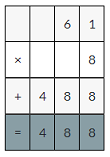
61×8=488
488×0.01=4.88decimal point moves two places to the left.
So, 0.61 × 8 =4.88

Question 3.
82 × 1.1 = ______
Answer:
82×1.1=90.2

Explanation:
82×1.1
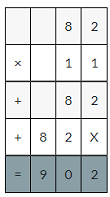
82×11=902
902×0.1=90.2decimal point moves one place to the left.
So, 82×1.1=90.2

Question 4.
43 × 0.6 = ______
Answer:
43×0.6=25.8

Explanation:
43×0.6
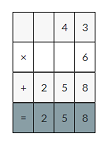
43×6=258
258×0.1=25.8decimal point moves one place to the left.
So, 43×0.6=25.8

Question 5.
2.39 × 57 = _______
Answer:
2.39×57=136.23

Explanation:
2.39×57
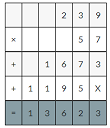
239×57=13623
13623×0.01=136.23decimal point moves two places to the left.
So, 2.39×57=136.23

Question 6.
10.75 × 24 = ______
Answer:
10.75×24=258

Explanation:
10.75×24
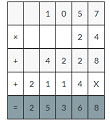
1075×24=25800
25800×0.01=258.00=258decimal point moves two places to the left.
So, 10.75×24=258

Question 7.
There are 6.3 grams of protein in a boiled egg. You eat 3 boiled eggs. How many grams of protein do you consume?
Answer:
There are 6.3 grams of protein in a boiled egg
I eat 3 boiled eggs and grams of protein i consumed=3×6.3
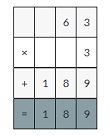
3×63=189
189×0.1=18.9decimal point moves one place to the left.
Therefore 18.9 grams of protein i consumed.

Question 8.
Reasoning
Newton says the product of 7.55 and 8 is 60.40. Descartes says the product is 60.4.Who is correct? Explain.
Answer:
Both Newton’s and Descartes answers are correct as zero at the end of a number after decimal point does not change the value of the number 60.40 and 60.4 is same.

Question 9.
Patterns
Describe and complete the pattern.
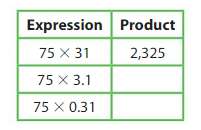
Big Ideas Math Solutions Grade 5 Chapter 5 Multiply Decimals 5.4 10
Answer


In the above table the decimal point is shifting one place to the left in each expression respectively.

Question 10.
YOU BE THE TEACHER
Your friend finds 14 × 0.82. Is your friend correct? Explain.
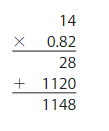
Big Ideas Math Solutions Grade 5 Chapter 5 Multiply Decimals 5.4 11
Answer:
My friend is incorrect.

Explanation:
14×0.82
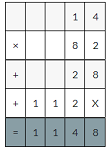
14×82=1148
1148×0.01=11.48decimal point moves two places to the left.
14×0.82=11.48.
so, my friends answer is correct.

Question 11.
Modeling Real Life
A person weighs 2.34 times as much on Jupiter as on Earth. An 85-pound student would weigh 90.1 pounds less on Saturn than on Jupiter. How much would he weigh on Saturn?
Answer:
85 pounds student weighs 2.34 times as much on Jupiter as on Earth.So, weight on jupiter is 85×2.34
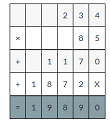
85×234=19890
19890×0.01=198.90decimal point moves two places to the left.
Weight on jupiter is 198.9
student would weigh 90.1 pounds less on Saturn than on Jupiter
So, weight on saturn = weight on Jupiter ‐ 90.1=198.9‐90.1=108.8
Therefore An 85-pound student would weigh 108.8 on saturn.

Question 12.
DIG DEEPER!
A landscaper digs a rectangular region for a garden. The length is a one-digit whole number of meters. What is the least possible area? What is the greatest possible area?
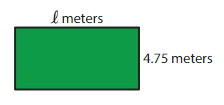
Big Ideas Math Solutions Grade 5 Chapter 5 Multiply Decimals 5.4 12
Answer:
If length of rectangular region is a one-digit whole number of meters and breadth is 4.75 meters.
Smallest 1 digit whole number is 1
The least possible area is 1×4.75 =4.75 squaremeters
Largest 1 digit whole number is 9
The greatest possible area is 9×4.75
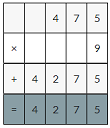
9×475=4275
4275×0.01=42.75 square meters decimal point moves two places to the left.
Therefore The least possible area and the greatest possible area is 4.75 and 42.75 square meters respectively.

Review & Refresh

Find the sum or difference.
Question 13.
0.83 – 0.14 = ______
Answer:
0.83 – 0.14=0.96

Explanation:
0.83‐0.14=
83‐14=69
69×0.01=0.69decimal point moves two places to the left.
So, 0.83 – 0.14=0.96

Question 14.
1.34 + 1.35 = _______
Answer:
1.34 + 1.35 =2.69

Explanation:
1.34 + 1.35
134+135=269
269×0.01=2.69decimal point moves two places to the left.
So, 1.34 + 1.35 =2.69

Lesson 5.5 Use Models to Multiply Decimals

Explore and Grow

A rectangle is 0.8 meter long and 0.7 meter wide.
Use a model to find the area of the rectangle.
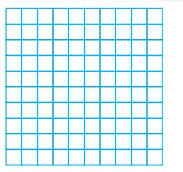
Big Ideas Math Answer Key Grade 5 Chapter 5 Multiply Decimals 5.5 1.1

Answer:

Use a model to find 0.8 × 0.7
Use a model. Shade 8 rows to represent 0.8 and shade 7 columns to represent 0.7
56 squares are shaded twice
So, 0.8 × 0.7=0.56

Use a model to find 0.8 × 1.7.
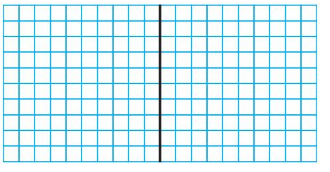
Big Ideas Math Answer Key Grade 5 Chapter 5 Multiply Decimals 5.5 1
Answer:

Use a model to find 0.8 × 1.7
Use a model. Shade 8 rows to represent 0.8 and shade 17 columns to represent 1.7
136 squares are shaded twice
So, 0.8 × 1.7 =1.36

Reasoning
When using a model to multiply decimals, how do you determine the number of rows and columns to shade?
Answer:
For a given multiplication of decimals. The multiplyer is used to determine the number of rows and the multiplicand is used to determine the number of columns.

Think and Grow: Use Models to Multiply Decimals

Example
Use a model to find 0.4 × 0.6
Use a model. Shade 4 rows to represent 0.4 and shade 6 columns to represent 0.6.
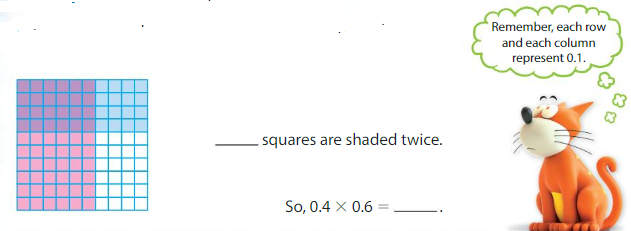
Big Ideas Math Answer Key Grade 5 Chapter 5 Multiply Decimals 5.5 2

Example
Use a model to find 0.7 × 1.4.
Use a model. Shade 7 rows to represent 0.7 and shade 14 columns to represent 1.4.
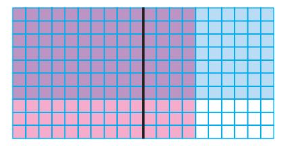
Big Ideas Math Answer Key Grade 5 Chapter 5 Multiply Decimals 5.5 3
_____ squares are shaded twice.
So, 0.7 × 1.4 = ______.

Show and Grow

Use the model to find the product.
Question 1.
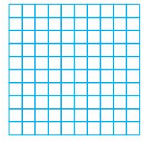
0.9 × 0.2 = _____
Big Ideas Math Answer Key Grade 5 Chapter 5 Multiply Decimals 5.5 4
Answer:


Use a model to find 0.9 × 0.2
Use a model. Shade 9 rows to represent 0.9 and shade 2 columns to represent 0.2
18 squares are shaded twice
So, 0.9 × 0.2 =0.18

Question 2.
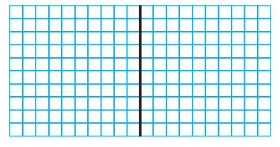
0.8 × 1.5 = ______
Big Ideas Math Answer Key Grade 5 Chapter 5 Multiply Decimals 5.5 5
Answer:


Use a model to find 0.8 × 1.5
Use a model. Shade 8 rows to represent 0.8 and shade 15 columns to represent 1.5
120 squares are shaded twice
So, 0.8 × 1.5 =1.2

Apply and Grow: Practice

Use the model to find the product.
Question 3.
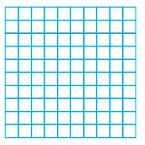
0.4 × 0.4 = ______
Big Ideas Math Answer Key Grade 5 Chapter 5 Multiply Decimals 5.5 6
Answer:

Use a model to find 0.4 × 0.4
Use a model. Shade 4 rows to represent 0.4 and shade 4 columns to represent 0.4
16 squares are shaded twice
So, 0.4 × 0.4 =0.16

Question 4.
0.9 × 0.9 = _______
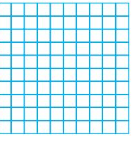
Big Ideas Math Answer Key Grade 5 Chapter 5 Multiply Decimals 5.5 7
Answer:


Use a model to find 0.9 × 0.9
Use a model. Shade 9 rows to represent 0.9 and shade 9 columns to represent 0.9
81 squares are shaded twice
So, 0.9 × 0.9 =0.81

Question 5.
0.2 × 1.7 = ____
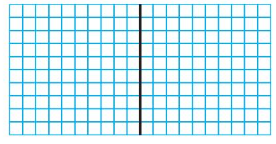
Big Ideas Math Answer Key Grade 5 Chapter 5 Multiply Decimals 5.5 8
Answer:

Use a model to find 0.2 × 1.7
Use a model. Shade 2 rows to represent 0.2 and shade 17 columns to represent 1.7
34 squares are shaded twice
So, 0.2 × 1.7 =0.34

Question 6.
0.6 × 1.6 = _______
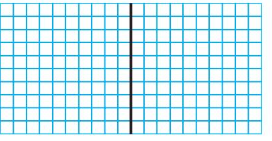
Big Ideas Math Answer Key Grade 5 Chapter 5 Multiply Decimals 5.5 9
Answer:

Use a model to find 0.6 × 1.6
Use a model. Shade 6 rows to represent 0.6 and shade 16 columns to represent 1.6
96 squares are shaded twice
So, 0.6× 1.6 =0.96

Question 7.
On Saturday, you ride your bike 1.5 miles. On Sunday, you ride your bike 0.7 times as far as you did on Saturday. How far do you ride your bike on Sunday?
Answer:
On saturday i rode my bike for 1.5 miles
On sunday i rode 0.7 times as far as i did on saturday
miles i rode bike on sunday =0.7×1.5=1.05
Therefore, 1.05miles far i rode my bike on sunday.

Question 8.
Reasoning
When multiplying 0.4 × 0.3, why is the product less than each of the factors?
Answer:
When we multiply 0.4 with 0.3 the product is less than each of their factors this is because we are finding a fractional amount of a quantity.

Question 9.
DIG DEEPER!
Shade the model to represent the product of 0.6 and 0. What is the product? Explain.
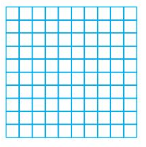
Big Ideas Math Answer Key Grade 5 Chapter 5 Multiply Decimals 5.5 11
Answer:


Use a model to find 0.6 × 0
Use a model. Shade 6 rows to represent 0.6 and shade 0 columns to represent 0
No squares are shaded twice
So, 0.6× 0=0

Think and Grow: Modeling Real Life

Example
A donkey is 0.9 meter tall. A horse is 1.7 times as tall as the donkey. How much taller is the horse than the donkey?
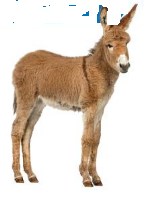
Big Ideas Math Answer Key Grade 5 Chapter 5 Multiply Decimals 5.5 12
Multiply 0.9 by 1.7 to find the height of the horse.
Use a model. Shade 9 rows to represent 0.9 and shade 17 columns to represent 1.7.
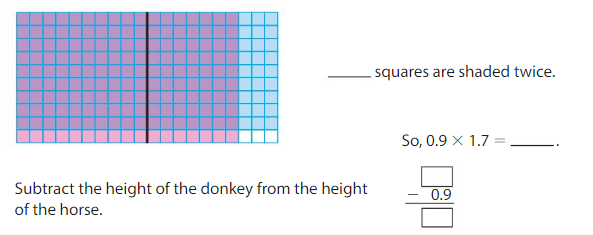
Big Ideas Math Answer Key Grade 5 Chapter 5 Multiply Decimals 5.5 13
So, the horse is ______ meter taller than the donkey.

Answer:
0.9 × 1.7 = 1.53
1.53 squares are shaded twice.
1.53 – 0.9 = 0.63
So, the horse is 0.63 meter taller than the donkey.

Show and Grow

Question 10.
On Sunday, you run 0.6 mile. On Monday, you run 1.3 times as far as you run on Sunday. How many more miles do you run on Monday than on Sunday?
Answer:
Multiply 0.6 by 1.3 to find the number of miles i run on monday.
usinga model. Shade 6 rows to represent 0.6 and shade 13 columns to represent 1.3.
78 squares are shaded twice.
So, i ran 0.78 miles on monday.
Subtract the number of miles i ran on monday from the miles i ran on sunday.
0.78‐0.6=0.72
Therefore 0.72miles i ran on Monday than on Sunday

Question 11.
A candle burns 0.2 ounce of wax each hour. A candle with 14.5 ounces of wax burns for 2.5 hours. How much wax is left?
Answer:
A candle with 14.5 ounces of wax burns for 2.5 hours and a candle burns 0.2 ounce of wax each hour.
Ounces of wax burnt in 2.5 hours is
2.5 hours × ounces of wax burns in each hour.
2.5×0.2=0.5 ounces
Ounced of Wax left=14.5‐0.5=14 ounces.

Question 12.
DIG DEEPER!
You have a bottle that contains 1.5 liters of apple juice. You drink 0.2 of the bottle on Friday, and 0.3 of the juice remaining in the bottle on Saturday. How much apple juice do you have left?
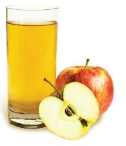
Big Ideas Math Answer Key Grade 5 Chapter 5 Multiply Decimals 5.5 14
Answer:
A bottle contains 1.5 liters of apple juice.
If i  drink 0.2 of the bottle on Friday the amount of juice left is 1.5‐(1.5×0.2)=1.5 ‐ 0.3= 1.2
If i drink 0.3 of the juice remaining in the bottle on Saturday the amount of juice left is
=1.2‐(1.2×0.3)=1.2 ‐ 0.36= 0.84
Apple juice i have left id 0.84 liters.

Use Models to Multiply Decimals Homework & Practice 5.5

Use the model to find the product.
Question 1.
0.8 × 0.9 = ______
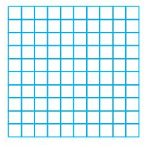
Big Ideas Math Answer Key Grade 5 Chapter 5 Multiply Decimals 5.5 15
Answer:


Use a model to find 0.8 × 0.9
Use a model. Shade 8 rows to represent 0.8 and shade 9 columns to represent 0.9
72 squares are shaded twice
So, 0.8 × 0.9 =0.72

Question 2.
0.4 × 0.2 = _____
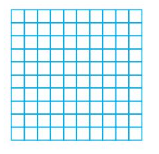
Big Ideas Math Answer Key Grade 5 Chapter 5 Multiply Decimals 5.5 16
Answer:


Use a model to find 0.4 × 0.2
Use a model. Shade 4 rows to represent 0.4 and shade 2 columns to represent 0.2
8 squares are shaded twice
So, 0.4 × 0.2 =0.08

Question 3.
0.6 × 1.9 = ______
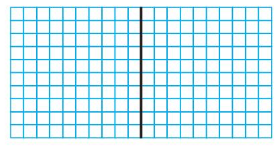
Big Ideas Math Answer Key Grade 5 Chapter 5 Multiply Decimals 5.5 17
Answer:


Use a model to find 0.6 × 1.9
Use a model. Shade 6 rows to represent 0.6 and shade 19 columns to represent 1.9
114 squares are shaded twice
So, 0.6 × 1.9 =1.14

Question 4.
0.7 × 1.2 = ______
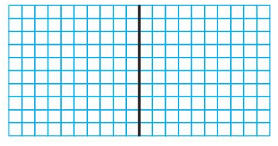
Big Ideas Math Answer Key Grade 5 Chapter 5 Multiply Decimals 5.5 18
Answer:


Use a model to find 0.7 × 1.2
Use a model. Shade 7 rows to represent 0.7 and shade 12 columns to represent 1.2
84 squares are shaded twice
So, 0.7 × 1.2 =0.84

Question 5.
One banana contains 1.3 grams of protein. How much protein is in 0.5 of a banana?
Answer:
One banana contains 1.3 grams of protein
0.5 of a banana contains 1.3×0.5=0.65 grans of proteins.

Question 6.
Reasoning
When multiplying 0.6 and 1.2, why is the product less than only one of the factors?
Answer:
When multiplying 0.6 and 1.2, the product less than only one of the factors because we are finding a fractional amount of a quantity a part of the number.

Question 7.
YOU BE THE TEACHER
Newton says that 0.2 × 0.2 = 0.36, because there are 36 squares shaded. Is he correct? Explain.
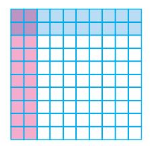
Big Ideas Math Answer Key Grade 5 Chapter 5 Multiply Decimals 5.5 19
Answer:
No

Explanation:
No, Newton’s answer is not correct as the number of squares shaded twice are 4 so, the product will be 0.4 not 0.36.

Question 8.
Structure
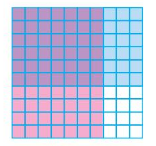
Write a multiplication equation that is represented by the model.
Big Ideas Math Answer Key Grade 5 Chapter 5 Multiply Decimals 5.5 20
Answer:
Number of rows shaded are 6 so, the decimal is 0.6
Number of columns shaded are 7 so, the decimal is 0.7
Number of squares shaded twice are 42 so, the product is 0.42
Therefore multiplication equation is 0.6×0.7=0.42.

Question 9.
Modeling Real Life
A pancake batter recipe calls for 0.5 cup of water. The recipe calls for 1.5 times as much pancake mix as water.How much more pancake mix is needed than water?

Big Ideas Math Answer Key Grade 5 Chapter 5 Multiply Decimals 5.5 21
Answer:
A pancake batter recipe calls for 0.5 cup of water.
The recipe calls for 1.5 times as much pancake mix as water
Amount of pancake mix is 0.5×1.5=0.75 cups
Subtract the amount of pancake mix from the amount of water
0.75‐0.5=0.70 cups
Therefore 0.70 cups more pancake mix is needed than water.

Question 10.
DIG DEEPER!
To make crafts, you buy colored paper for $1.90. You buy a pack of googly eyes that costs 0.4 times as much as the colored paper. How much money do you spend in all?

Big Ideas Math Answer Key Grade 5 Chapter 5 Multiply Decimals 5.5 22
Answer:
Cost of colored paper is $1.90
Cost of a pack of googly eyes is 0.4 times as much as the colored paper=0.4×1.90=$0.76
Add the money spent on colored paper and on googly eyes=$1.90+$0.76=$2.66
The money i spent in all is $2.66.

Review & Refresh

Write the value of the underlined digit.
Question 11.
5,120,379
Answer:
5,120,379
Value of 1 in the above number is 1 Hundred Thousands

Question 12.
400,681
Answer:
400,681
Value of 6 in the above number is 6 hundred.

Question 13.
7,245,819
Answer:
7,245,819
Value of 7 in the above number is 7 million.

Question 14.
23, 504
Answer:
23, 504
Value of  2 in the above number is 2 Ten Thousands

Lesson 5.6 Use Partial Products to Multiply Decimals

Explore and Grow

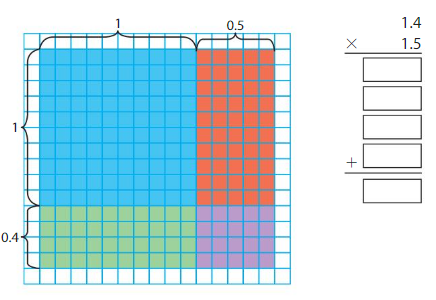
Use the area model and partial products to find 1.4 × 1.5.
Big Ideas Math Answers 5th Grade Chapter 5 Multiply Decimals 5.6 1
Answer:
From the above grid we can note down the following expressions
1×1
1×0.4
1×0.5
0.4×0.5
Find the product of the four equations and then add their products to find the area of the model
1×1=1
1×0.4=0.4
1×0.5=0.5
0.4×0.5=0.2
Add the products of the above four equations
1+0.4+0.5+0.2=2.1

Structure
How can you use partial products to multiply decimals?
Answer:
Breaking up the number to multiply into parts, multiplying the parts separately, and then adding is called partial product.we can use partial product strategy to find the product of decimals by breaking them into parts.

Think and Grow: Use Partial Products toMultiply

Example
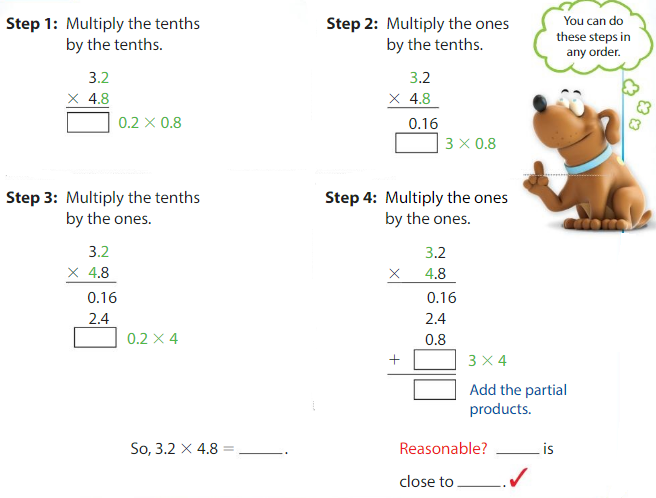
Use partial products to find 3.2 × 4.8. Estimate ________
Big Ideas Math Answers 5th Grade Chapter 5 Multiply Decimals 5.6 2

Show and Grow

Find the product. Check whether your answer is reasonable.
Question 1.
Big Ideas Math Answers 5th Grade Chapter 5 Multiply Decimals 5.6 3
Answer:
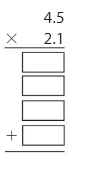
4.5×2.1
1.Multiply the tenths by tenths =0.5×0.1=0.05
2.Multiply the ones by tenths = 0.5×2=1
3.Multiply the tenths by ones = 4×0.1=0.4
4.Multiply the ones by ones =4×2=8
Add all the partial products =0.05+1+0.4+8=9.45
Therefore 4.5×2.1=9.45

Question 2.
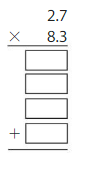
Big Ideas Math Answers 5th Grade Chapter 5 Multiply Decimals 5.6 4
Answer:
2.7×5.3
1.Multiply the tenths by tenths =0.7×0.3=0.21
2.Multiply the ones by tenths = 0.3×2=0.6
3.Multiply the tenths by ones = 5×0.7=3.5
4.Multiply the ones by ones =5×2=10
Add all the partial products =0.21+0.6+3.5+10=14.31
Therefore  2.7×5.3=14.31

Question 3.
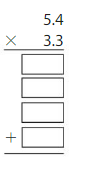
Big Ideas Math Answers 5th Grade Chapter 5 Multiply Decimals 5.6 5
Answer:
5.4×3.3
1.Multiply the tenths by tenths =0.3×0.4=0.12
2.Multiply the ones by tenths = 0.3×5=1.5
3.Multiply the tenths by ones = 4×0.3=1.2
4.Multiply the ones by ones =5×3=15
Add all the partial products=0.12+1.5+1.2+15=17.82
Therefore 5.4×3.3=17.82

Apply and Grow: Practice

Find the product. Check whether your answer is reasonable.
Question 4.
Big Ideas Math Answers 5th Grade Chapter 5 Multiply Decimals 5.6 6
Answer:
4.1×2.3
1.Multiply the tenths by tenths =0.1×0.3=0.03
2.Multiply the ones by tenths = 0.1×2=0.2
3.Multiply the tenths by ones = 4×0.3=1.2
4.Multiply the ones by ones =4×2=8
Add all the partial products=0.03+0.2+1.2+8=9.43
Therefore 4.1×2.3=9.43

Question 5.
Big Ideas Math Answers 5th Grade Chapter 5 Multiply Decimals 5.6 7
Answer:
16.7×0.4
1.Multiply the tenths by tenths =0.7×0.4=0.28
2.Multiply the ones by tenths = 0.7×0=0
3.Multiply the tenths by ones = 16×0.4=6.4
4.Multiply the ones by ones =16×0=0
Add all the partial products=0.28+6.4=6.68
Therefore 16.7×0.4=6.68

Question 6.
Big Ideas Math Answers 5th Grade Chapter 5 Multiply Decimals 5.6 8
Answer:
5.9×8.6
1.Multiply the tenths by tenths =0.9×0.6=0.54
2.Multiply the ones by tenths = 0.9×8=7.23.
Multiply the tenths by ones = 5×0.6=3
4.Multiply the ones by ones =5×8=40
Add all the partial products=0.54+7.2+3+40=50.74
Therefore 5.9×8.6=50.74

Question 7.
23.7 × 3.5 = ______
Answer:
23.7×3.5
1.Multiply the tenths by tenths =0.7×0.5=0.35
2.Multiply the ones by tenths = 0.7×3=2.1
3.Multiply the tenths by ones = 23×0.5=11.5
4.Multiply the ones by ones =23×3=69
Add all the partial products=0.35+2.1+11.5+69=82.95
Therefore 23.7×3.5=82.95

Question 8.
10.6 × 14.7 = ______
Answer:
10.6×14.7
1.Multiply the tenths by tenths =0.6×0.7=0.42
2.Multiply the ones by tenths = 0.6×14=8.4
3.Multiply the tenths by ones = 10×0.7=7
4.Multiply the ones by ones =10×14=140
Add all the partial products=0.42+8.4+9.8+140=155.82
Therefore 10.6×14.7=155.82

Question 9.
1.2 × 3.71 = ______
Answer:
1.2×3.71
1.Multiply the tenths by tenths =0.2×0.71=0.142
2.Multiply the ones by tenths = 0.2×3=0.6
3.Multiply the tenths by ones = 1×0.71=0.71
4.Multiply the ones by ones =1×3=3
Add all the partial products=0.142+0.6+0.71+3=4.452
Therefore 1.2×3.71=4.452

Question 10.
A space probe travels 643.5 miles every minute. How far does it travel in 1.5 minutes?
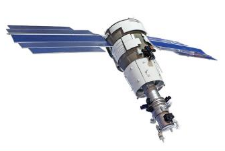
Big Ideas Math Answers 5th Grade Chapter 5 Multiply Decimals 5.6 9
Answer:
A space probe travels 643.5 miles every minute.
The distance it travel in 1.5 minutes is 643.5×1.5
643.5×1.5
1.Multiply the tenths by tenths =0.5×0.5=0.25
2.Multiply the ones by tenths = 0.5×1=0.5
3.Multiply the tenths by ones = 643×0.5=321.5
4.Multiply the ones by ones =643×1=643
Add all the partial products is=0.25+0.5+321.5+643=965.25
Therefore 643.5×1.5=965.25

Question 11.
Number Sense
Which products are greater than 20.4?
3.4 × 7.2
2.5 × 4.8
3.2 × 6.3
8.6 × 2.4
Answer:
3.4 × 7.2=24.48>20.4
2.5 × 4.8=12<20.4
3.2 × 6.3=20.16<20.4
8.6 × 2.4=2.64>20.4
The products of 3.4×7.2 and 8.6×2.4 are greater than 20.4.

Question 12.
Precision
How can you use estimation to help you place the decimal point in a product? Explain.
Answer:
You will need to multiply and then estimate the solution. Start by multiplying just as if you are multiplying whole numbers. Because the original numbers have 4 digits total after their decimal points , insert a decimal point into your answer so that it has 4 digits to its right.

Question 13.
DIG DEEPER!
Write a multiplication equation shown by the partial products.
0.14 + 0.2 + 2.1 + 3
Answer:
0.14 + 0.2 + 2.1 + 3 = 5.44

Think and Grow: Modeling Real Life

Example
A geologist has a blue geode that weighs 2.5 pounds. The geologist has a purple geode that weighs 1.6 times as much as the blue geode. What is the total weight of the geodes?
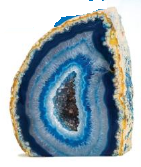
Big Ideas Math Answers 5th Grade Chapter 5 Multiply Decimals 5.6 10
Find the weight of the purple geode by multiplying the weight of the blue geode by 1.6
Big Ideas Math Answers 5th Grade Chapter 5 Multiply Decimals 5.6 11
The weight of the purple geode is ______ pounds.
Add the weights of the blue geode and the purple geode.
Big Ideas Math Answers 5th Grade Chapter 5 Multiply Decimals 5.6 12
The total weight of the geodes is ______ pounds.

Show and Grow

Question 14.
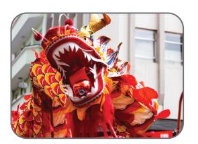
You buy 3.5 yards of yellow fabric to make a Chinese dragon. You buy 2.5 times as much red fabric as yellow fabric. How many yards of fabric do you buy in all?
Big Ideas Math Answers 5th Grade Chapter 5 Multiply Decimals 5.6 13
Answer:
Find the yards of red fabric by multiplying the yards of yellow fabric by 2.5
3.5×2.5=8.75(0.25+1.5+1+6)
8.75 yards of red fabric is required to make a dragon.
Add the yards of yellow and red fabric
3.5+8.75=12.25
Total fabric i need to buy to make a dragon is 12.25 yards.

Question 15.
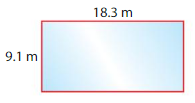
An employee cleans the surface of the rectangular ice rink. What is the area of the ice rink?
Big Ideas Math Answers 5th Grade Chapter 5 Multiply Decimals 5.6 14
Answer:
Ice rink here is in rectangular shape.
Area of a rectangle is length × breadth
Length of ice rink is 18.3 m, breadth of ice rink is 9.1 m
18.3×9.1=0.03+2.7+1.8+162
Area of ice rink is 166.53 square meters

Question 16.
There are 89.1 milligrams of Vitamin C in 1 cup of strawberries. There are 83.2 milligrams of Vitamin C in 1 cup of orange slices. You eat2.5 cups of strawberries and 1.5 cups of orange slices. How much Vitamin C do you consume?
Answer:
Multiply vitamin C in 1 cup of strawberries with 2.5
89.1×2.5=222.75
Multiply vitamin C in 1 cup of orange slices with 1.5
83.2×1.5=124.8
Add both the quantities 222.75+124.8=347.55
Total vitamin c consumed by me is 347.55 milligrams.

Use Partial Products to Multiply Decimals Homework & Practice 5.6

Find the product. Check whether your answer is reasonable.
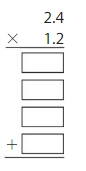
Question 1.
Big Ideas Math Answers 5th Grade Chapter 5 Multiply Decimals 5.6 15
Answer:
2.4×1.2=
1.Multiply the tenths by tenths =0.4×0.2=0.08
2.Multiply the ones by tenths = 0.4×1=0.4
3.Multiply the tenths by ones = 2×0.2=0.4
4.Multiply the ones by ones =2×1=2
Add all the partial products =0.08+0.4+0.4+2=2.88
Therefore 2.4×1.2=2.88

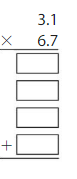
Question 2.
Big Ideas Math Answers 5th Grade Chapter 5 Multiply Decimals 5.6 16
Answer:
3.1×6.7
1.Multiply the tenths by tenths =0.1×0.7=0.07
2.Multiply the ones by tenths = 0.1×6=0.6
3.Multiply the tenths by ones = 3×0.7=2.1
4.Multiply the ones by ones =3×6=18
Add all the partial products =0.07+0.6+2.1+18=20.77
Therefore 3.1×6.7=20.77

Question 3.
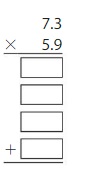
Big Ideas Math Answers 5th Grade Chapter 5 Multiply Decimals 5.6 17
Answer:
7.3×5.9=
1.Multiply the tenths by tenths =0.3×0.9=0.27
2.Multiply the ones by tenths = 0.3×5=1.5
3.Multiply the tenths by ones = 7×0.9=6.3
4.Multiply the ones by ones =7×5=35
Add all the partial products =0.27+1.5+6.3+35=42.07
Therefore 7.3×5.9=43.07

Find the product. Check whether your answer is reasonable.
Question 4.
Big Ideas Math Answers 5th Grade Chapter 5 Multiply Decimals 5.6 18
Answer:
2.8×3.7
1.Multiply the tenths by tenths =0.8×0.7=0.56
2.Multiply the ones by tenths = 0.8×3=2.4
3.Multiply the tenths by ones = 2×0.7=1.4
4.Multiply the ones by ones =2×3=6
Add all the partial products =0.56+2.4+1.4+6=10.36
Therefore 2.8×3.7=10.36

Question 5.
Big Ideas Math Answers 5th Grade Chapter 5 Multiply Decimals 5.6 19
Answer:
5.6×4.6
1.Multiply the tenths by tenths =0.6×0.6=0.36
2.Multiply the ones by tenths =0.6×4=2.4
3.Multiply the tenths by ones =0.6×5=3
4.Multiply the ones by ones =5×4=20
Add all the partial products =0.36+2.4+3+20=25.76
Therefore 5.6×4.6=25.76

Question 6.
Big Ideas Math Answers 5th Grade Chapter 5 Multiply Decimals 5.6 20
Answer:
14.5×7.8=
1.Multiply the tenths by tenths =0.5×0.8=0.4
2.Multiply the ones by tenths = 0.5×7=3.5
3.Multiply the tenths by ones = 14×0.8=11.2
4.Multiply the ones by ones =14×7=98
Add all the partial products =0.4+3.5+11.2+98=133.1
Therefore  14.5×7.8=113.1

Question 7.
21.4 × 9.3 = ______
Answer:
21.4×9.3=
1.Multiply the tenths by tenths =0.4×0.3=0.12
2.Multiply the ones by tenths = 0.4×9=3.6
3.Multiply the tenths by ones = 21×0.3=6.3
4.Multiply the ones by ones =21×9=189
Add all the partial products =0.12+3.6+6.3+189=199.02
Therefore  21.4×9.3=199.02

Question 8.
58.1 × 8.6 = ______
Answer:
58.1×8.6=
1.Multiply the tenths by tenths =0.1×0.6=0.06
2.Multiply the ones by tenths = 0.1×8=0.8
3.Multiply the tenths by ones = 58×0.6=34.8
4.Multiply the ones by ones =58×8=464
Add all the partial products =0.06+0.8+34.8+464=499.66
Therefore  58.1×8.6=499.66

Question 9.
0.6 × 1.45 = ______
Answer:
0.6×1.45=
1.Multiply the tenths by tenths =0.6×0.45=0.27
2.Multiply the ones by tenths = 0.6×1=0.6
3.Multiply the tenths by ones = 0×0.45=0
4.Multiply the ones by ones =0×1=0
Add all the partial products =0.27+0.6+0+0=0.87
Therefore  0.6×1.45=0.87

Question 10.
Writing
How is multiplying two decimals different than multiplying a whole number and a decimal?
Answer:
You have to line up the decimals in the two numbers with decimals, but the decimal and the whole numbers you don’t have to line up the decimals because there is only one number with a decimal.

Question 11.
DIG DEEPER!
Two numbers each have one decimal place. Is it possible for their product to be a whole number? Explain.
Answer:
No. When you multiply something by a decimal, you make it smaller. Since you’ve started with something smaller than a whole number, and then you make it smaller, the answer will always be less than a whole number, and thus never a whole number

Question 12.
Modeling Real Life
A red-bellied snake is 11.5 inches long. A ring-necked snake is 1.4 times as long as the red-bellied snake. How much longer is the ring-necked snake than the red-bellied snake?
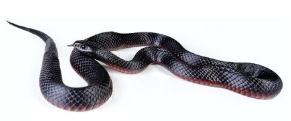
Big Ideas Math Answers 5th Grade Chapter 5 Multiply Decimals 5.6 21
Answer:
To find the length of a ring‐necked snake multiply the length of red‐bellied snake by 1.4
11.5×1.4=16.1
Length of ring‐necked snake is 16.1 inches.
Subtract 11.5 from 16.1=4.6 inches.
4.6 inches much longer is the ring-necked snake than the red-bellied snake.

Question 13.
Modeling Real Life
You use 2 cans of tomato sauce with mushrooms and 1.5 cans of plain tomato sauce to make lasagna. Each can contains 10.5 ounces. How many ounces of tomato sauce are in the lasagna?
Answer:
Each can contains 10.5 ounces of tomato sauce
2 cans contains 2×10.5=21 ounces
1.5 cans of plain sauce contains
1.5×10.5=15.75 ounces of sauce
Add 21 and 15.75 to find ounces of tomato sauce in the lasagna
21+15.75=36.75 ounces.
36.75 ounces of tomato sauce are in the lasagna.

Review & Refresh

Find the product.
Question 14.
24 × 104 = ______
Answer:
24×10000=240000

Question 15.
700 × 30 = ______
Answer:
700×30=21000

Question 16.
200 × 600 = _______
Answer:
200×600=120000

Lesson 5.7 Use Strategies to Multiply Decimals

Explore and Grow

Without multiplying, determine the pairs of expressions that have the same value. Explain your reasoning.
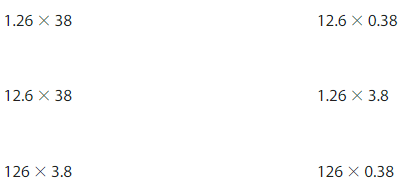
Big Ideas Math Answers 5th Grade Chapter 5 Multiply Decimals 5.7 1
Answer:

Reasoning
How do you know how many decimal places are in each product? Explain.
Answer:
The number of decimal places in each product is the sum of decimal places in the multiplyer and the multiplicand.

Think and Grow: Use Strategies to Multiply

You can use estimation and place value, or multiplication properties to multiply.

Example
Find 3.84 × 2.1. Estimate _______
Multiply 384 by21. Then place the decimal point.
Because the product should be close to your estimate, place the decimal point after the ______.
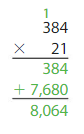
Big Ideas Math Answers Grade 5 Chapter 5 Multiply Decimals 5.7 2
So, 3.84 × 2.1 = _____.

Example
Find 0.3 × 0.7.
You can use properties to multiply.
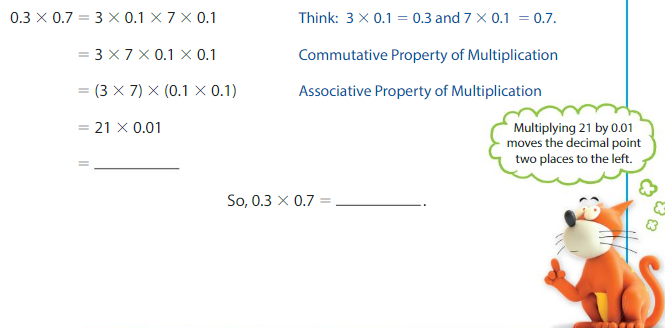
Big Ideas Math Answers Grade 5 Chapter 5 Multiply Decimals 5.7 3

Show and Grow

Find the product. Explain the strategy you used.
Question 1.
4.91 × 0.8 = _____
Answer:
Estimate:4×1=4
Multiply 491×8=3928
Then place the decimal point.
Because the product should be close to your estimate, place the decimal point after one digit ie thousands place.
3.928

Question 2.
10.2 × 5.6 = ______
Answer
Estimate:10×6=60
Multiply 102×56=5712
Then place the decimal point.
Because the product should be close to your estimate, place the decimal point after one digit ie thousands place.
57.12

Question 3.
12.03 × 4.2 = ______
Answer:
Estimate:12×4=48
Multiply 1203×43=51729
Then place the decimal point.
Because the product should be close to your estimate, place the decimal point after two digits ie thousands place.
51.729

Apply and Grow: Practice

Find the product. Explain the strategy you used.
Question 4.
0.9 × 3.2 = _____
Answer:
Estimate:1×3=3
Multiply 9×32=288
Then place the decimal point.
Because the product should be close to your estimate, place the decimal point after one digit ie hundreds place.
2.88

Question 5.
1.7 × 0.84 = ______
Answer:
Estimate:2×1=2
Multiply 17×84=1428
Then place the decimal point.
Because the product should be close to your estimate, place the decimal point after one digit ie thousands place.
1.428

Question 6.
2.4 × 2.4 = ______
Answer:
Estimate:2×3=6
Multiply 24×24=576
Then place the decimal point.
Because the product should be close to your estimate, place the decimal point after one digit ie hundreds place.
5.76

Question 7.
12.1 × 0.8 = ______
Answer:
Estimate:12×1=12
Multiply 121×8=968
Then place the decimal point.
Because the product should be close to your estimate, place the decimal point after one digit ie hundreds place.
9.68

Question 8.
0.05 × 0.9 = ______
Answer:
Think: 0.05=5×0.01 and 0.9=9×0.1
Use properties to multiply (commutative property of multiplication and associative property of multiplication)
0.05×0.9=5×0.01×9×0.1
=(5×9)×(0.1×0.01)
=45(0.001)
=0.045
Multiplying 45 by 0.001 moves the decimal point three places to  the left.
Therefore 0.05×0.9=0.045.

Question 9.
7.4 × 8.6 = ______
Answer:
Estimate:7×9=63
Multiply 74×86=6364
Then place the decimal point.
Because the product should be close to your estimate, place the decimal point after two digits ie hundreds place.
63.64

Question 10.
A newly hatched fish is 0.25 inch long. An adult fish is 7.6 times as long as the newly hatched fish. How long is the adult fish?
Big Ideas Math Answers Grade 5 Chapter 5 Multiply Decimals 5.7 4
Answer:
A newly hatched fish is 0.25 inch long, An adult fish is 7.6 times as long as the newly hatched fish.
Multiply 7.6 by 0.25
7.6×0.25=(76×25)×(0.1×0.01)=1900×0.001=1.9Therefore the adult fish is 1.9 inches long.

Question 11.
Writing

Which strategy do you prefer to use to multiply decimals? Explain.
Answer:
I prefer estimate strategy as it is very easy find the product of decimals by estimating the product of their whole numbers and placing the decimal point.

Question 12.
Structure
Your friend multiplies two decimals by rewriting the product as (56 × 3) × (0.01 ×0.1). What two decimals could she be multiplying?
Answer:
My friend multiplies two decimals by rewriting the product as (56 × 3) × (0.01 ×0.1)
Use multiplication properties.
(56 × 3) × (0.01 ×0.1)=(56×0.01)×(3×0.1)=0.56×0.3
Therefore my friend multiplied 0.56 by 0.3.

Question 13.
Precision
How many decimal places are in the unknown factor? Explain
_____ × 2.8 = 4.48
Answer:
_____ × 2.8 = 4.48
In the above equation the multiplicand in the equation has one decimal place after decimal point.
As the product has two decimal places after the decimal point the multiplyer will also have 1 digit after decimal point.
Therefore there is one decimal place is in the unknown factor.

Think and Grow: Modeling Real Life

Example
You measure the distance between Los Angeles and Anaheim on a map. Each centimeter represents 2.5 kilometers. What is the actual distance between the cities?
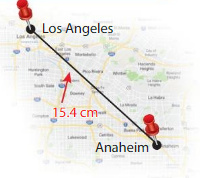
Big Ideas Math Answers Grade 5 Chapter 5 Multiply Decimals 5.7 5
Because each centimeter represents 2.5 kilometers, multiply 15.4 and 2.5 to find the actual distance.
Multiply 154 by 25. Then place the decimal point. Estimate ______
Because the product should be close to your estimate, place the decimal point after the ______
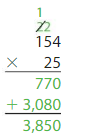
Big Ideas Math Answers Grade 5 Chapter 5 Multiply Decimals 5.7 6
15.4 × 2.5 = _______
So, the actual distance between the cities is _________ kilometers.

Show and Grow

Question 14.
You measure the height of the replica of the Lincoln statue. Each centimeter represents 2.5 meters. What is the actual height of the Lincoln statue?
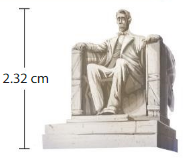
Big Ideas Math Answers Grade 5 Chapter 5 Multiply Decimals 5.7 7
Answer:
Because each centimeter represents 2.5 meters, multiply 2.32 and 2.5 to find the actual height.
Multiply 232 by 25. Then place the decimal point. Estimate 232×25
Because the product should be close to your estimate, place the decimal point after the one digit ie 3 places from the left.
232×25=5800
2.32 × 2.5 = 5.800=5.8
So, the actual height is 5.8 meters
Therefore the actual height of the Lincoln statue is 5.8 meters.

Question 15.
DIG DEEPER!
How much does the bunch of bananas cost? Explain.
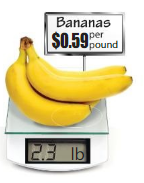
Big Ideas Math Answers Grade 5 Chapter 5 Multiply Decimals 5.7 8
Answer:
The above picture tells us that there are 2.3 pounds of bananas.
Each pound of banana costs $0.59
To find the cost of 2.3 pounds of bananas
Multiply 2.3×0.59=
Estimate
Because the product should be close to your estimate, place the decimal point after the one digit ie 3 places from the left
23×59=1357
Therefore 2.3×0.59=1.357

Question 16.
DIG DEEPER!
Your friend has a digital photograph file that is 0.25 mega byte larger than 7.5 times the file size of your photograph. What is the file size of your friend’s photograph?
Big Ideas Math Answers Grade 5 Chapter 5 Multiply Decimals 5.7 9
Answer:
File size of my photograph is 0.5 MB
My friend has a digital photograph file that is 0.25 mega byte larger than 7.5 times the file size of my photograph.
Estimate
Multiply 0.5×7.5
(5×75)×(0.1×0.1)=375×0.01=3.75 MB
Because the product should be close to your estimate, place the decimal point after the one digit ie 2 places from the left
Add 0.25 MB to 3.75 MB
=3.75+0.25=4 MB
The file size of my friend’s photograph is 4 MB.

Use Strategies to Multiply Decimals Homework & Practice 5.7

Find the product. Explain the strategy you used.
Question 1.
0.8 × 1.4 = ______
Answer:
Estimate:1×1=1
Multiply 8×14=112
Then place the decimal point.
Because the product should be close to your estimate, place the decimal point after one digit ie hundreds place.
1.12

Question 2.

1.3 × 2.9 = ______
Answer:
Estimate:1×3=3
Multiply 13×29=377
Then place the decimal point.
Because the product should be close to your estimate, place the decimal point after one digit ie hundreds place.
3.77

Question 3.
1.7 × 0.6 = ______
Answer:
Estimate:1×1=1
Multiply 17×6=102
Then place the decimal point.
Because the product should be close to your estimate, place the decimal point after one digit ie hundreds place.
1.02

Question 4.
3.86 × 2.8 = ______
Answer:
Estimate:3×3=9
Multiply 386×28=10808
Then place the decimal point.
Because the product should be close to your estimate, place the decimal point after two digits ie hundreds place.
10.808

Question 5.
0.07 × 4.5 = _______
Answer:
Estimate:0x4=0
Multiply 7×45=315
Then place the decimal point.
Because the product should be close to your estimate, place the decimal point before three digits ie hundreds
place.
0.315

Question 6.
2.56 × 6.25 = ______
Answer:
Estimate:3×6=18
Multiply 256×625=160000
Then place the decimal point.
Because the product should be close to your estimate, place the decimal point after two digits ie ten thousands place.
16.0000=16

Question 7.
1.18 × 0.8 = ______
Answer:
Estimate:1×1=1
Multiply 118×8=944
Then place the decimal point.
Because the product should be close to your estimate, place the decimal point before three digits ie hundreds place.
0.944

Question 8.
18.2 × 0.9 = ______
Answer:
Estimate:18×1=18
Multiply 182×9=1638
Then place the decimal point.
Because the product should be close to your estimate, place the decimal point after two digits ie hundreds place.
16.38

Question 9.
6.7 × 5.2 = ______
Answer:
Estimate:7×5=35
Multiply 67×52=3484
Then place the decimal point.
Because the product should be close to your estimate, place the decimal point after two digits ie hundreds place.
34.84

Question 10.
A beaker contains 0.75 liter of a solution. You use 0.1 of the solution for an experiment. How much of the solution do you use?
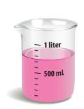
Big Ideas Math Answers Grade 5 Chapter 5 Multiply Decimals 5.7 10
Answer:
To find the amount of solution used multiply 0.75 by 0.1
0.75×0.1=0.075
0.075 litrrs of solution is used.

Question 11.
Structure
Which expressions are equivalent to 0.6 × 0.3?
(6 × 3) × (0.1 × 0.1)
(6 × 3) × (0.01 × 0.01)
(6 × 3) × (\(\frac{1}{10}\) × \(\frac{1}{10}\))
(6 × 0.1) × (3× 0.1)
Answer:
(6 × 3) × (0.1 × 0.1), (6 × 0.1) × (3× 0.1) are equivalent to 0.6×0.3 as their product is equal to the product of 0.6×0.3.

Question 12.
Number Sense
Your friend finds 0.92 × 0.3 by multiplying 92 and 3. Explain how your friend will know where to place the decimal point in the product.
Answer:
My friend finds 0.92×0.3 by multiplying 92 and 3
In 0.92 there are two digits after decimal point and in 0.3 there are three digits after decimal point so the product should have 3 digits after decimal point.
When we multiply 92 by 3 the product is 276
Therefore the decimal  point is placed before 3 digits from the left 0.276 will be the product.

Question 13.
Number Sense
When finding 75 × 0.01, where will the decimal point be placed? Explain.
Answer:
While finding the product of 75 and 0.01 the decimal point will be placed before two digits as the decimal point in 0.01 has two places after decimal.
Therefore 0.75 is the product and decimal point is placed two places from the left.

Question 14.
Modeling Real Life
A toy car designer measures the length of the actual car shown. A toy car is 0.05 times as long as the actual car. How long is the toy car?
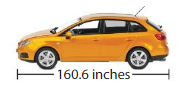
Big Ideas Math Answers Grade 5 Chapter 5 Multiply Decimals 5.7 11
Answer:
A toy car designer measures the length of the actual car shown.
Length of the actual car is 160.6 inches
A toy car is 0.05 times as long as the actual car
Multiply 160.6×0.05=8.03
Therefore Toy car is 8.03 inches long.

Question 15.
Modeling Real Life
A carpet installer measures 3 rectangular bedrooms for new carpeting. Which bedroom needs the most carpeting?
Bedroom A: 3.1 meters by3.1 meters
Bedroom B: 2.9 meters by3.2 meters
Bedroom C: 2.5 meters by3.4 meters160.6 inches
Answer:
Bedroom A: 3.1×3.1= (31×31)×(0.1×0.1)=961×0.01=9.61
Bedroom B: 2.9×3.2=(29×32)×(0.1×0.1)=928×0.01=9.28
Bedroom C: 2.5×3.4=(25×34)×(0.1×0.1)=850×0.01=8.50
Bedroom A needs the most carpeting.

Review & Refresh
Question 16.
Round 4.163
Nearest whole number: ______
Nearest tenth: ______
Nearest hundredth: ______
Answer:
Nearest whole number: 4
Nearest tenth: 4.2
Nearest hundredth: 4.16

Question 17.
Round 10.187.
Nearest whole number: ______
Nearest tenth: ______
Nearest hundredth: ______
Answer:
Nearest whole number:10
Nearest tenth: 10.2
Nearest hundredth: 10.19

Lesson 5.8 Multiply Decimals

Explore and Grow

Choose any strategy to find each product.
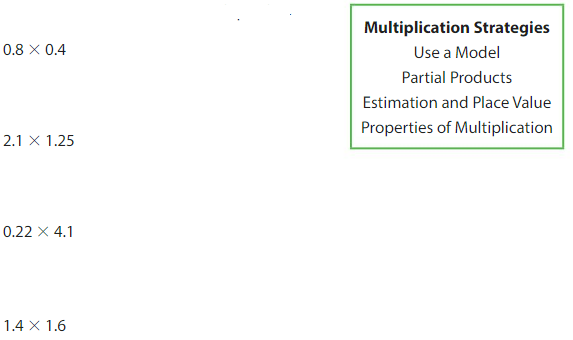
Big Ideas Math Solutions Grade 5 Chapter 5 Multiply Decimals 5.8 1
Answer:

0.8×0.4=
Estimate
=(8×4)×(0.1×0.1)
=32(0.01)
= 0.32
0.8×0.4=0.32

2.1×1.25=
Use partial products
2.1×1.25=
0 .1×0.25=0.025
0 .1×1=0.1
0 .25×2=0.5
2×1=2
2.1×1.25=0.025+0.1+0.5+2=2.625

0.22×4.5
Estimate and place value

22×45=990
There are 3 decimal places in the factors so place the decimal point before three digits ie hundreds place.
0.990=0.99
0.22×4.5=0.99

1.4×1.6
Think: 1.4=14×0.1 and 1.6=16×0.1
Use properties to multiply (commutative property of multiplication and associative property of multiplication
=1.4×1.6
=14×0.1×16×0.1
=(14×16)×(0.1×0.1)
=224(0.01)
= 2.24

Reasoning
How can you determine the number of decimal places a product will have before multiplying?
Answer:
The decimal places of the product is the sum of the decimal places of the factors.

Think and Grow: Multiply Decimals

Key Idea
To multiply decimals, multiply as you do with whole numbers. The number of decimal places in the product is equal to the sum of the number of decimal places in the factors.
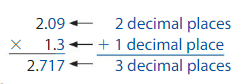
Big Ideas Math Solutions Grade 5 Chapter 5 Multiply Decimals 5.8 2
Big Ideas Math Solutions Grade 5 Chapter 5 Multiply Decimals 5.8 3

Show and Grow

Find the product.
Question 1.
Big Ideas Math Solutions Grade 5 Chapter 5 Multiply Decimals 5.8 4
Answer:
1.8×7.3
Multiply the whole numbers first and place the decimal points
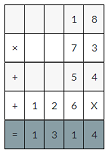
18×73=1314
There are 1 decimal place each in both the factors so the product will have 2 decimal places
Place the decimal point before 2 digits feom the left 13.14
Therefore 1.8×7.3=13.14

Question 2.
Big Ideas Math Solutions Grade 5 Chapter 5 Multiply Decimals 5.8 5
Answer:
12.41×62
Multiply the whole numbers first and place the decimal points
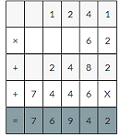
1241×62=76942
There are 2 decimal places and 1 decimal each in both the factors so the product will have 3 decimal
places
Place the decimal point before three digits from the left 76.942

Therefore 12.41×62=76.942

Question 3.
Big Ideas Math Solutions Grade 5 Chapter 5 Multiply Decimals 5.8 6
Answer:
0.14×0.7
Multiply the whole numbers first and place the decimal points
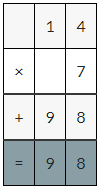
14×7=98
There are 2 decimal places and 1 decimal place each in both the factors so the product will have 3 decimal
places
Place the decimal point before three digits from the left 0.098
Therefore 0.14×0.7=0.098

Apply and Grow: Practice

Find the product.
Question 4.
Big Ideas Math Solutions Grade 5 Chapter 5 Multiply Decimals 5.8 7
Answer:
2.4×8.9
Multiply the whole numbers first and place the decimal points
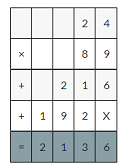
24×89=2136
There are 1 decimal places each in both the factors so the product will have 2 decimal places
Place the decimal point before two digits from the left 21.36
Therefore 2.4×8.9=21.36

Question 5.
Big Ideas Math Solutions Grade 5 Chapter 5 Multiply Decimals 5.8 8
Answer:
0.17×0.3
Multiply the whole numbers first and place the decimal points
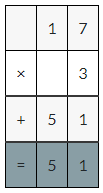
17×3=51
There are 2 decimal places and 1 decimal each in both the factors so the product will have 3 decimal
places
Place the decimal point before three digits from the left 0.051
Therefore 0.17×0.3=0.051

Question 6.

Big Ideas Math Solutions Grade 5 Chapter 5 Multiply Decimals 5.8 9
Answer:
35.4×6.2
Multiply the whole numbers first and place the decimal points
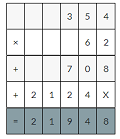
354×62=21948
There are 1 decimal place each in both the factors so the product will have 2 decimal places
Place the decimal point before two digits from the left 219.48
Therefore 35.4×62=219.48

Question 7.
Big Ideas Math Solutions Grade 5 Chapter 5 Multiply Decimals 5.8 10
Answer:
9.87×23.6
Multiply the whole numbers first and place the decimal points
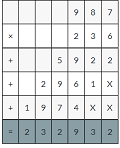
987×236=232932
There are 2 decimal places and 1 decimal each in both the factors so the product will have 3 decimal
places
Place the decimal point before three digits from the left 232.932
Therefore 9.87×23.6=232.932

Question 8.
Big Ideas Math Solutions Grade 5 Chapter 5 Multiply Decimals 5.8 11
Answer:
16.4×7.95
Multiply the whole numbers first and place the decimal points
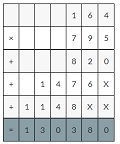
164×795=130380
There are 2 decimal places and 1 decimal each in both the factors so the product will have 3 decimal
places
Place the decimal point before three digits from the left 130.380
Therefore 16.4×79.5=130.380

Question 9.
Big Ideas Math Solutions Grade 5 Chapter 5 Multiply Decimals 5.8 12
Answer:
0.8×0.9
Multiply the whole numbers first and place the decimal points
8×9=72
There are 1 decimal place  each in both the factors so the product will have 2 decimal places
Place the decimal point before two digits from the left 0.72
Therefore 0.8×0.9=0.72

Question 10.
46.5 × 0.73 = ______
Answer:
46.5×0.73
Multiply the whole numbers first and place the decimal point
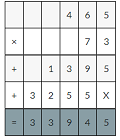
465×73=33945
There are 2 decimal places and 1 decimal each in both the factors so the product will have 3 decimal
places
Place the decimal point before three digits from the left 33.945
Therefore 46.5×0.73=33.945

Question 11.
14.8 × 9.3 = ________
Answer:
14.8×9.3
Multiply the whole numbers first and place the decimal points
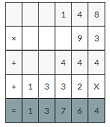
148×93=13764
There are 1 decimal place  each in both the factors so the product will have 2 decimal places
Place the decimal point before two digits from the left 137.64
Therefore 14.8×9.3×=137.64

Question 12.
1.54 × 2.6 = ______
Answer:
1.54×2.6
Multiply the whole numbers first and place the decimal points
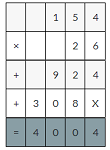
154×26=4004
There are 2 decimal places and 1 decimal each in both the factors so the product will have 3 decimal
places
Place the decimal point before three digits from the left4.004
Therefore 1.54×2.6=4.004

Question 13.
A sugar glider weighs 0.35 times the weight of the pygmy slow loris. How much does the sugar glider weigh?
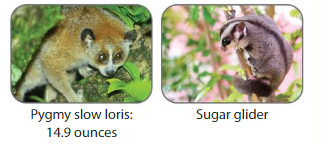
Big Ideas Math Solutions Grade 5 Chapter 5 Multiply Decimals 5.8 13
Answer:
A sugar glider weighs 0.35 times the weight of the pygmy slow loris
Weight of pygmy slow loris is 14.9 ounces
Multiply 14.9 by 0.35 to find the weight of sugar glider 14.9×0.35=
149×35
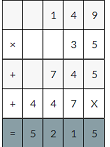
5215
There are 3 decimal places in the factors so the product will have 3 decimal places
Place the decimal point before 3 digits from the left. 5.215
Therefore 14.9×0.35=5.215

Question 14.
Structure
Use the equation to write two different multiplication expressions that have products of 28.34.
109 × 26 = 2,834
Answer:
Equation 1:10.9×2.6=28.34
Equation 2:109×26×0.1×0.1=28.34

Question 15.
DIG DEEPER!
Without calculating, explain how many decimal places are in the product 0.6 0.4 1.9. Rewrite the expression as the product of two decimals to support your answer.
Answer:
0.6 × 0.4 × 1.9
= 0.456

Think and Grow: Modeling Real Life

Example
Nutritionists recommend that fifth-graders should consume about 28 grams of fiber each day. One serving of broccoli contains 3.8 grams of fiber. You eat 4.5 servings of broccoli in 1 day. Do you consume enough fiber for the day by eating broccoli? Explain.
Big Ideas Math Solutions Grade 5 Chapter 5 Multiply Decimals 5.8 14
Multiply 3.8 by4.5 to find how many grams of fiber you consume by eating broccoli.
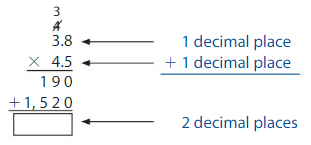
Big Ideas Math Solutions Grade 5 Chapter 5 Multiply Decimals 5.8 15
Compare the product to 28.
So, you ______ consume enough fiber for the day by eating broccoli.

Show and Grow

Question 16.
Your aunt drives a car from Cincinnati to Nashville. The car travels 30.4 miles using 1 gallon of gasoline. There are 6.5 gallons of gasoline in the tank. Can she drive the entire distance without adding more gas to the 6.5 gallons already in the tank? Explain.
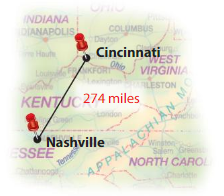
Big Ideas Math Solutions Grade 5 Chapter 5 Multiply Decimals 5.8 16
Answer:
My aunt drives a car from Cincinnati to Nashville.
The distance from cincinnati to Nashville is 274 miles
The car travels 30.4 miles using 1 gallon of gasoline, There are 6.5 gallons of gasoline in the tank.
To find the total distance that my aunt can travel by using 6.5 gallons of gasoline
Multiply 6.5×30.4=65×304
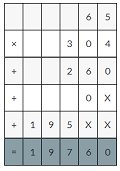
65×304=19760
Place the decimal point before 2 digits from the left 197.60 miles
197.6<274 miles
So, my aunt cannot drive the entire distance without adding more gas to the 6.5 gallons already in the tank.

Question 17.
DIG DEEPER!
The equation shows how to convert a temperature C in degrees Celsius to a temperature F in degrees Fahrenheit. Convert the temperature shown to Fahrenheit.
1.8 × C + 32 = F

Big Ideas Math Solutions Grade 5 Chapter 5 Multiply Decimals 5.8 17
Answer:
Given 1.8×C+32=F
In the above picture the temperature is 37.1°C
To find degrees in Farenheit
Multiply 1.8 by 37.1 and add 32 to the product.
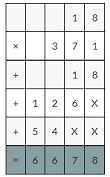
1.8×37.1=66.78+32=98.78°F
Therefore the temperature is 98.78°Farenheit.

Question 18.
DIG DEEPER!
Pennies dated 1982 or later contain about 0.06 gram of copper. Pennies dated prior to 1982 contain about 49.2 times as much copper as newer pennies. How many total grams of copper are in the pennies shown?
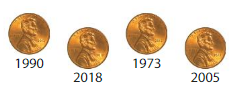
Big Ideas Math Solutions Grade 5 Chapter 5 Multiply Decimals 5.8 18
Answer:
Pennies dated 1982 or later contain about 0.06 gram of copper
There is 3 pennies which are dated after 1983
Multiply 3×0.06=0.18
Pennies dated prior to 1982 contain about 49.2 times as much copper as newer pennies
Multiply 49.2 by the copper in penny dated after 1982 ie 0.06
49.2×0.06=2.952
Multiply 49 by 6 and place the decimal point before 3 digits from the left
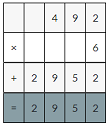
Add 0.18 to 2.952 to find the total amount of copper in all the coins
2.952+0.18=3.132 grams
The total amount of copper in all the coins is 3.132 grams.

Multiply Decimals Homework & Practice 5.8

Find the product.
Question 1.
Big Ideas Math Solutions Grade 5 Chapter 5 Multiply Decimals 5.8 19
Answer:
12.8×0.4
Multiply the whole numbers first and place the decimal points
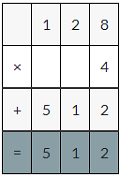

128×4=512
There are 1 decimal place  each in both the factors so the product will have 2 decimal places
Place the decimal point before two digits from the left 5.12
Therefore 12.8×0.4=512

Question 2.
Big Ideas Math Solutions Grade 5 Chapter 5 Multiply Decimals 5.8 20
Answer:
3.97×62.4
Multiply the whole numbers first and place the decimal point
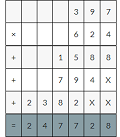
397×624=247728
There are 2 decimal places and 1 decimal each in both the factors so the product will have 3 decimal
places
Place the decimal point before three digits from the left 247.728
Therefore 3.97×62.4=247.728

Question 3.
Big Ideas Math Solutions Grade 5 Chapter 5 Multiply Decimals 5.8 21
Answer:
5.2×0.9
Multiply the whole numbers first and place the decimal points
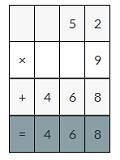
52×9=468
There are 1 decimal place  each in both the factors so the product will have 2 decimal places
Place the decimal point before two digits from the left 4.68
Therefore 5.2×0.9=4.68

Question 4.
Big Ideas Math Solutions Grade 5 Chapter 5 Multiply Decimals 5.8 22
Answer:
18.3×9.27
Multiply the whole numbers first and place the decimal point
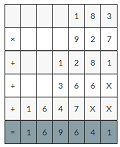
183×927=169641
There are 2 decimal places and 1 decimal each in both the factors so the product will have 3 decimal places
Place the decimal point before three digits from the left 169.641
Therefore 18.3×9.27=169.641

Question 5.
Big Ideas Math Solutions Grade 5 Chapter 5 Multiply Decimals 5.8 23
Answer:
2.57×4.6
Multiply the whole numbers first and place the decimal point
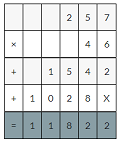
257×46=11822
There are 2 decimal places and 1 decimal each in both the factors so the product will have 3 decimal places
Place the decimal point before three digits from the left 11.822
Therefore 2.57×4.6=11.822

Question 6.
Big Ideas Math Solutions Grade 5 Chapter 5 Multiply Decimals 5.8 24
Answer:
22.5×3.7
Multiply the whole numbers first and place the decimal point
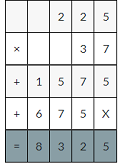
225×37=8325
There are 1 decimal place each in both the factors so the product will have 2 decimal places
Place the decimal point before 2 digits from the left 83.25
Therefore 22.5×3.7=83.25

Question 7.
0.89 × 0.3 = ______
Answer:
0.89×0.3
Multiply the whole numbers first and place the decimal point
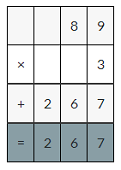
89×3=267
There are 2 decimal places and 1 decimal each in both the factors so the product will have 3 decimal
places
Place the decimal point before three digits from the left 0.269
Therefore 0.89×0.3=0.269

Question 8.
7.1 × 5.6 = ______
Answer:
7.1×5.6
Multiply the whole numbers first and place the decimal points
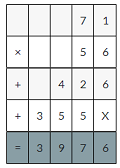
71×56=3976
There are 1 decimal place  each in both the factors so the product will have 2 decimal places
Place the decimal point before two digits from the left 39.76
Therefore 7.1×5.6=39.76

Question 9.
13.63 × 9.2 = ______
Answer:
13.63×9.2
Multiply the whole numbers first and place the decimal point
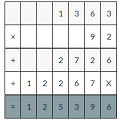
1363×92=125396
There are 2 decimal places and 1 decimal each in both the factors so the product will have 3 decimal
places
Place the decimal point before three digits from the left 125.396
Therefore 13.63×9.2=125.396

Question 10.
The Miniature pinscher weighs 0.12 times the weight of the Doberman pinscher. How much does the Miniature pinscher weigh?
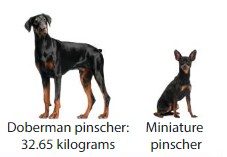
Big Ideas Math Solutions Grade 5 Chapter 5 Multiply Decimals 5.8 25
Answer:
The Miniature pinscher weighs 0.12 times the weight of the Doberman pinscher
Weight of Doberman pinscher is 32.65 kilograms
Multiply 3265 by 12 and place the decimal point before 4 digits from the left.
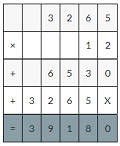
Weight of miniature pinscher is 32.65×0.12=3.918
Miniature pinscher weigh is 3.918 kilograms.

Question 11.
Reasoning
Explain how you can tell which product is greater without multiplying or estimating.
3.75 × 922 or  37.5 × 9.22
Answer:
Product of 3.75 × 922 is greater because the number contains bigger whole number when compared to the other product.

Question 12.
Modeling Real Life
Nutritionists recommend that fifth-graders should consume about 5 ounces of protein each day. One serving of yogurt contains 0.6 ounce of protein. You eat 2.5 servings of yogurt in 1 day. Do you consume enough protein for the day by eating yogurt? Explain.

Big Ideas Math Solutions Grade 5 Chapter 5 Multiply Decimals 5.8 26
Answer:
Nutritionists recommend that fifth-graders should consume about 5 ounces of protein each day.
One serving of yogurt contains 0.6 ounce of protein.
If i eat 2.5 servings of yogurt in 1 day then i consume 2.5×0.6 ounce sof protein per day
Multiply 25 by 6 and place the decimal point 2before 2 digitd from the left
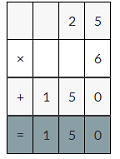
2.5×0.6=1.5 ounces of protein
Compare 1.5 with 5
1.5<5
So, i cannot consume enough protein for the day by eating yogurt.

Question 13.
DIG DEEPER!
Each 18-karat gold ring shown is a mixture of gold and other metals. One gram of 18-karat gold contains 0.75 gram of gold. How many total grams of gold are in the rings shown?
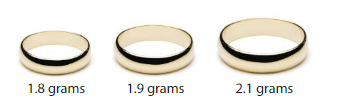
Big Ideas Math Solutions Grade 5 Chapter 5 Multiply Decimals 5.8 27
Answer:
Each 18-karat gold ring shown is a mixture of gold and other metals.
If one gram of 18-karat gold contains 0.75 gram of gold then
Multiply 18 by 75 and place the decimal point before 3 digits from the left
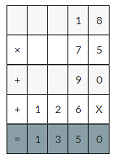
1.8 grams ring contains 1.8×0.75 grams of gold 1.8×0.75=1.35 grams of gold.
Multiply 19 by 75 and place the decimal point before 3 digits from the left
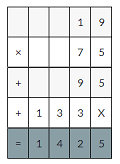
1.9 grams ring contains 1.9×0.75 grams of gold 1.9×0.75=1.425 grams of gold
Multiply 21 by 75 and place the decimal point before 3 digits from the left
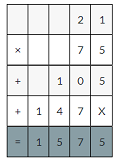
2.1 grams ring contains 2.1×0.75 grams of gold 2.1×0.75=1.575 grams of gold
Add 1.35 , 1.425 and 1.575 to find the total grams of gold 1.35+1.425+1.575=4.35
Total 4.35 grams of gold are in the rings shown.

Review & Refresh

Write the words as an expression. Then interpret the expression.
Question 14.
Subtract 10 from 50, then divide by 5
Answer:
8

Explanation:
Subtract 10 from 50=50‐10=40
divide by 5=40÷5=8

Question 15.
Add the product of 12 and 6 to the product of 6 and 8.
Answer:
120

Explanation:
product of 12 and 6=12×6=72
product of 6 and 8=6×8=48
Add the product of 12 and 6 to the product of 6 and 8=72+48=120

Lesson 5.9 Problem Solving: Multiply with Money

Explore and Grow

Explain how you would estimate the cost of 1.9 pounds of ham, 0.8 pound of turkey, and 1 pound of cheese.
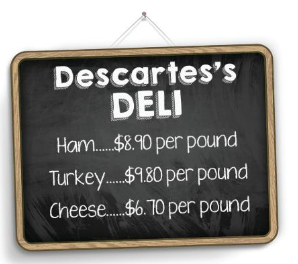
Big Ideas Math Answer Key Grade 5 Chapter 5 Multiply Decimals 5.9 1
Answer:

At Descartes’s Deli the Ham costs $8.90;per pound , Turkey costs $9.80 per pound and Cheese costs $6.70 per pound
Estimated solution
Use rounding
Cost of ham is 9, cost of turkey is 10 and cost of cheese is 7 per pound
By using rounding to find
Cost of 2 pounds of ham=2×9=18
Cost of 1 pound of turkey=10
Cost of 1 pound of cheese=7
Total =18+10+7=35
Original solution
To find the cost of
1.9 pounds of ham, Multiply 1.9×$8.9=$16.91
0.8 pound of turkey, Multiply 0.8×$9.8=$7.84
1 pound of cheese , Multiply 1×$6.7=$6.7
Therefore Total cost is $16.91+$7.84+$6.7=$31.45.

Reasoning
Is your answer an overestimate or an underestimate? Explain.
Answer:
My answer is an overestimate as it is more than the actual cost.

Think and Grow: Problem Solving: Multiply with Money

Example
Carrots cost $0.90 per pound. You buy 2.6 pounds of carrots and give the cashier $5. How much change do you receive?
Big Ideas Math Answer Key Grade 5 Chapter 5 Multiply Decimals 5.9 2
Understand the Problem
What do you know?
• Carrots cost $0.90 per pound.
• You buy 2.6 pounds of carrots.
• You pay with $5.

What do you need to find?
• You need to find the amount of change you receive.

Make a Plan
How will you solve?
Write and solve an equation: Multiply the number of pounds by the cost per pound, and subtract from $5.

Solve
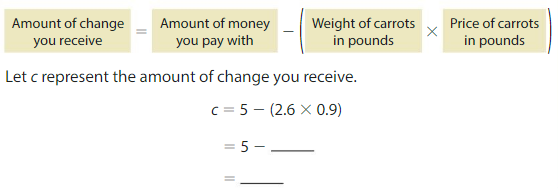
Big Ideas Math Answer Key Grade 5 Chapter 5 Multiply Decimals 5.9 3
So, you receive $ ______ in change.

Show and Grow

Question 1.
Landscaping rocks cost $0.35 per pound. A landscaper buys 86.4 pounds of rocks with $40. How much change does she receive?
Answer:
What i know is
Cost of landscaping rocks per pound is $0.35
A landscaper buys 86.4 pounds of rocks with $40
What i need to find is the change landscaper receives.
The amount of change landscaper receives =Amount spent ‐cost of rock per pound × 86.4 pounds of rock
=($40)‐($0.35×86.4)=$40‐$30.24=$9.76
$9.76 is the change landscaper receives.

Apply and Grow: Practice

Understand the problem. What do you know? What do you need to find? Explain.
Question 2.
A gallon of milk cost $0.82 in 1960. In2015, it cost $0.03 more than 4 times the cost in 1960. How much did a gallon of milk cost in 2015?
Big Ideas Math Answer Key Grade 5 Chapter 5 Multiply Decimals 5.9 4
Answer:
What we know is
The cost of gallon of milk in 1960 is $0.82
What we have find is
The Cost of gallon of milk in 2015 is
(4×$0.82)+$0.03=$3.28+$0.03=$3.31
A gallon of milk cost in 2015 is $3.31

Question 3.
A secretary earns $10.75 each hour. He works 8 hours each day,5 days each week. How much money does he earn in 1 week?
Answer:
What we know is
A secretary earns $10.75 each hour, he works 8 hours each day,5 days each week
What we have to find is
The amount he earns in a weekIf he works 8 hours each day and 5 days a week then he works for 40 hours in a week
The amount he earns in a week =Amount he earns per hour × Number of hours he work in a week.
=$10.75×40=$430
The money he earn in 1 week is $430.

Understand the problem. Then make a plan. How will you solve? Explain.
Question 4.
You download 8 songs for $1.29 each and 1 song for $0.99. How much do you pay for all of the songs?
Answer:
If i download 8 songs for $1.29 each then the money for 8 songs is number of songs multiplied by charges per
song
Ie 8×$1.29=$10.32
If i download another song for $0.99 then total charges i spent is charges of 8 songs plus charges of 1 song
$10.32+$0.99=$11.31
Therefore i pay $11.31 for all the songs.

Question 5.
Your friend buys a snack for $2.75, and a book that costs 5 times as much as the snack. He also buys a poster that costs $3.50 less than the book. How much does the poster cost?
Answer:
Cost of snack is $2.75
Book costs 5 times as much as the snack
The cost of book = 5×cost of snack
=5×$2.75=13.75
poster costs $3.50 less than the book
The cost of the poster = cost of book‐$3.50
=$13.75‐3.50=$10.25
Therefore cost of the poster is $10.25

Question 6.

A pair of shoes costs $35. Newton has a coupon topay 0.8 of the price.Descartes has a $10 off coupon. Who will pay more for the shoes?
Answer:
A pair of shoes costs $35
Newton has a coupon topay 0.8 of the price
=0.8×$35=28
Newton pays $28
Descartes has a $10 off coupon
=$35‐$10=$25
Descartes pay $25
28>25 so, Newton pays more for the pair of shoes.

Question 7.
Two friends eat at a restaurant for $34. They calculate the tip by multiplying $34 by 0.18. How much do they pay for the meal, including the tip?
Big Ideas Math Answer Key Grade 5 Chapter 5 Multiply Decimals 5.9 5
Answer:
Two friends eat at a restaurant for $34
If they calculate the tip by multiplying $34 by 0.18
Amount of tip =0.18×$34=$6.12
The money they pay for the meal, including the tip =$34+$6.12=$40.12
Therefore the money they paid is $40.12.

Think and Grow: Modeling Real Life

Example
A traveler gives a cashier 100 U.S. dollars to exchange for European euros. A $7.50 service fee is deducted from the amount given. How many European euros does the traveler receive?
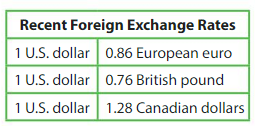
Big Ideas Math Answer Key Grade 5 Chapter 5 Multiply Decimals 5.9 6
Think: What do you know? What do you need to find? How will you solve?
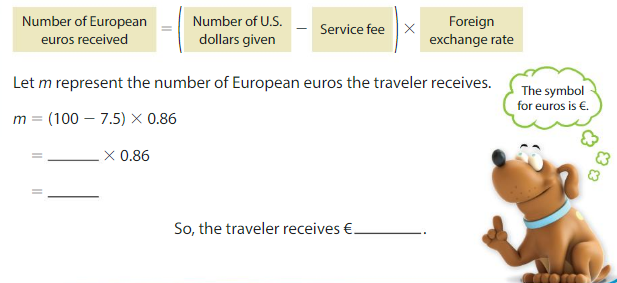
Big Ideas Math Answer Key Grade 5 Chapter 5 Multiply Decimals 5.9 7

Answer:
m = (100 – 7.5) × 0.86
92.5 × 0.86
= 79.55

Show and Grow

Use the table above.
Question 8.
DIG DEEPER!
You need 50 Canadian dollars. You give a cashier 50 U.S. dollars to exchange for Canadian dollars. A $9.50 service fee is deducted from the amount given. Do you have enough Canadian dollars? Explain.
Answer:
I need 50 canadian dollars
I gave 50 U.S. dollars for exchange and the service fee is $9.50
Exchange rate for US dollar to canadian dollar is 1.28
So, 50 US dollars ×1.28=64 canadian dollars
64>50
Therefore i have enough Canadian dollars.

Question 9.
DIG DEEPER!
In the example, the traveler decides to exchange the same number of U.S. dollars for British pounds. Without calculating, determine whether the traveler receives more European euros or British pounds. Explain.
Answer:
The traveler receives more European euros because the exchange rate of European euros ia more than the
exchange rate of British pounds.

Problem Solving: Multiply with Money Homework & Practice 5.9

Understand the problem. Then make a plan. How will you solve? Explain.
Question 1.
One gallon of gasoline costs $2.75. Your cousin fills his car with 10 gallons of gasoline each week. How much money does he spend on gasoline in 1 year?
Answer:
One gallon of gasoline costs $2.75
My friend fills his car with 10 gallons of gasoline each week
We have to find the money he spend on gasoline for a year.
An year consists of 52 weeks
So, multiply 52 by 10 to find number of gallons used in a year
52×10=520
If Cost of a gallon of gasoline is $2.75 then cost of 52p gallons is $2.75×520=$1430
$1430 is the money spend by my cousin on gasoline in 1 year.

Question 2.
Newton buys a guitar for $46 and a guitar amplifier. The amplifier costs $1.54 more than 1.26 times the cost of the guitar. How much does the amplifier cost?
Answer:
Cost of guitar is $46
The amplifier costs $1.54 more than 1.26 times the cost of the guitar
Cost of amplifier = ($46×1.26)+$1.54
=$57.96+$1.54
$59.5
Therefore the amplifier costs $59.5.

Question 3.
One pound of cheese costs $3.98. You buy a box of crackers for $3.37 and 2.5 pounds of cheese. How much do you spend in all?
Answer:
One pound of cheese costs $3.98
Cost of 2.5 pounds of cheese =2.25×$3.98=$8.955
If i  buy a box of crackers for $3.37 and 2.5 pounds of cheese
The money is spent =$3.37+$8.955=$12.325
$12.325 is the money i spend in all.
Question 4.

Writing
Write and solve a two-step word problem involving money.
Answer:
A boy buys a toy car for $3 and also a toy bike for 2.4 times as much as the cost of the toy car. Find the money spend by the boy in all.
Solution:
The cost of toy car is $3
Cost of toy bike is 2.4 × cost of toy car
=2.4×$3=$7.2
Add cost of toy car and toy bike =$3+$7.2=$10.2
The money spent by the boy in all is $10.2

Question 5.Modeling Real Life
You buy 2.75 pounds of pistachios and 2 pounds of cashews. Do you pay more for the pistachios or for the cashews? How much more?
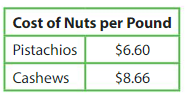
Big Ideas Math Answer Key Grade 5 Chapter 5 Multiply Decimals 5.9 8
Answer:
Cost of pistachios per pound is $6.60
If i buy 2.75 pounds of pistachios then the money spend is 2.75×$6.60=$18.15
Cost of cashews per pound is $8.66
If i buy 2 pounds of cashews then the money spend is 2×$8.66=$17.32
18.15>17.32
So, i pay more for the pistachios.

Question 6.
Modeling Real Life
You, Newton, and Descartes sell items at a craft show. You earn $34.50. Newton earns 5 times as much as you do. Descartes earns 0.1 times as much as Newton does. How much do the three of you earn in all?
Answer:
You, Newton, and Descartes sell items at a craft show
Money i earned is $34.50
Newton earns 5 times as much as i do
Money earned by Newton is 5×$34.50=$172.5
Descartes earns 0.1 times as much as Newton does
Money earned by descartes is 0.1×$172.5=$17.25
Sum of $34.5, $172.5 and $17.25 is 224.25.
$22425 is the money the three earn in all.

Question 7.
DIG DEEPER!
A daycare employee earns $10.90 per hour for the first works in 1 week. He is paid 1.5 times that rate for each additional hour that he works. How much money does he earn working for 43 hours in 1 week?
Answer:
Given,
A daycare employee earns $10.90 per hour for the first works in 1 week.
He is paid 1.5 times that rate for each additional hour that he works.
10.90 × 1.5 = 16.35
16.35 × 43 = 703.05

Review & Refresh

Find the sum. Check whether your answer is reasonable.
Question 8.
24.93 + 3.86 = ______
Answer:
24.93 + 3.86 = 28.79
Explanation:
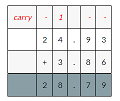
Question 9.
105.6 + 37.1 = _____
Answer:
105.6 + 37.1 = 142.7
Explanation:
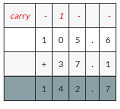
Multiply Decimals Performance Task

You study the different parts of a corn plant in science class.
Question 1.
You have a corn root sample and a corn stem sample on microscope slides. When you view the samples through a microscope, the magnification number tells you how many times larger the image will be than the actual size.You see only a portion of the enlarged image.
Big Ideas Math Answers 5th Grade Chapter 5 Multiply Decimals 1
a. The corn root sample is 0.6 millimeter wide. You magnify the image by400. What is the width of the magnifiedCorn root corn root image?

b. You magnify the corn root sample by1,200. How much wider is the image when magnified by 1,200 than by 400?

c. You have a sample of a corn stem. The corn stem sample is 9.6 times wider than the corn root sample. What is the width of the corn stem sample?
Big Ideas Math Answers 5th Grade Chapter 5 Multiply Decimals 2
Answer:

a.The corn root sample is 0.6 millimeter wide
If i  magnify the image by 400 then the magnifird width =0.6×400=240 millimeters.

b.The corn root sample is 0.6 millimeter wide
If i  magnify the image by 1200 then the magnifird width =0.6×1200=720 millimeters
Subtract 240 millimeters from 720 millimeters
480 millimeters wider is the image when magnified by 1,200 than by 400.

c.Given that the corn stem sample is 9.6 times wider than the corn root sample
The corn root sample is 0.6 millimeter wide
Width of corn stem =9.6 × width of corn root
=9.6×0.6=5.76 millimeters.

Question 3.
An ear of corn has about 16 rows of kernels. Each row has about 50 kernels of corn.
a. About 0.2 of the kernels are white and the rest are yellow. How many kernels are yellow?
Big Ideas Math Answers 5th Grade Chapter 5 Multiply Decimals 3
b. Each ear of corn has about 0.25 pound of corn kernels. How many pounds of kernels are in a dozen ears of corn?
Answer:

a.An ear of corn contains 16×50=800kernels of corn
0.2 of corn are white 0.2×800=160
Subtract 160 from total number  of kernels of corn =800‐160=640
Therefore number of yellow kernels of corn are 640.

b.Each ear of corn has about 0.25 pound of corn kernels.
Dozen corn ears contains 12×0.25 =3 pounds of corn kernels
3 pounds of kernels are in a dozen ears of corn.

Question 3.
You measure the growth of a corn stalk. The corn stalk grows about 1.75 inches each day.About how many inches does the plant growin 1 month? Justify your answer.
Answer:
The corn stalk grows about 1.75 inches each day.
If there are 30 days in a month then the length of corn stalk after month is 1.75 inches ×30=52.5 inches
Therefore, the plant grow 52.5 inches in 1 month.

Multiply Decimals Activity

Race Around the world: Multiplication
Directions:
1. Players take turns.
2. On your turn, flip a RaceAround the World: Multiplication Card and find the product.
3. Move your piece to the next number on the board that is highlighted in the product.
4. The first player to make it back to North America wins!
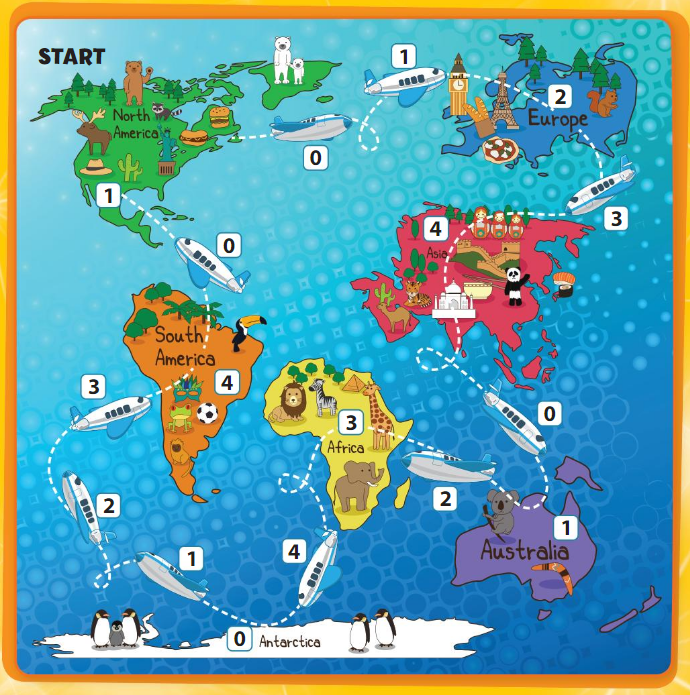
Big Ideas Math Answers 5th Grade Chapter 5 Multiply Decimals 4

Multiply Decimals Chapter Practice

5.1 Multiplication Patterns with Decimals

Find the product.
Question 1.
0.9 ×103 = ______
Answer:
0.9×103 =900

Explanation:
0.9×1=0.9
0.9×10=9
0.9×100=90
0.9×1000=900
So, 0.9×103 =900
When we multiply 0.9 by 1000 the number of places of decimal point moves to the right is same as the exponent ie 3.

Question 2.
612.5 × 0.1 2 = ______
Answer:
612.5 × 0.1 2 =73.5
Multiply 6125 by 12 and place the decimal places before three places from the left.
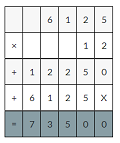
So, 612.5×0.12=73.5

Question 3.
30.1 × 102 = _____
Answer:
30.1×100=3010

Explanation:
30.1×1=30.1
30.1×10=301
30.1×100=3010
When we multiply 30.1 by 100 the number of places of decimal point moves to the right is same as the exponent ie 2.
So, 30.1×100=3010.

Question 4.
45.7 × 0.01 = ______
Answer:
45.7×0.01=0.457

Explanation:
45.7×1=45.7
45.7×0.1=4.57
45.7×0.01=0.457
When we multiply 45.7 by 0.01 the decimal point moves two places to the left
So, 45.7×0.01=0.457

Question 5.
8.6 × 10 = ______
Answer:
8.6×10=86

Explanation:
8.6×1=8.6
8.6×10=86
When we multiply 8.6 by 10 the decimal point moves 1 place to the right.
So, 8.6×10=86

Question 6.
5.24 × 0.1 = _______
Answer:
5.24×0.1=0.524

Explanation:
5.24×1=5.24
5.24×0.1=0.524
When we multiply 5.24 by 0.1 the decimal point moves one places to the left
So, 5.24×0.1=0.524

5.2 Estimate Products of Decimals and Whole Numbers

Estimate the product.
Question 7
0.99 × 45
Answer:
Use Rounding
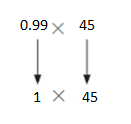
1×45=45
0.99×45 is about 45

Question 8.
3.15 × 8
Answer:
Use Rounding
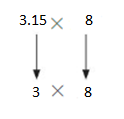
3×8=24
3.15×8 is about 24

Question 9.
17 × 1.68
Answer:
Use Rounding
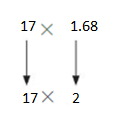
17×2=34
17×1.68 is about 34

Question 10.
95 × 5.02
Answer:
Use Rounding
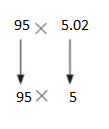
95×5=475
95×5.02  is about 475

5.3 Use Models to Multiply Decimals and Whole Numbers

Find the product.
Question 11.
0.3 × 3 = _____
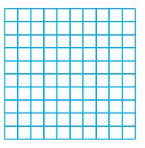
Big Ideas Math Answers 5th Grade Chapter 5 Multiply Decimals chp 11
Answer:


0.3+0.3+0.3 =0.9
Therefore 0.3×3=0.9

Question 12..
0.17 × 8 = _____
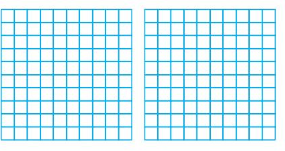
Big Ideas Math Answers 5th Grade Chapter 5 Multiply Decimals chp 12
Answer:


0.17+0.17+0.17+0.17+0.17+0.17+0.17+0.17=1.36
Question 13.
Structure
Write an equation represented by the model.
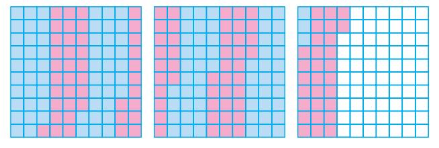
Big Ideas Math Answers 5th Grade Chapter 5 Multiply Decimals chp 13
Answer:
0.29×8=2.32

5.4 Multiply Decimals and Whole Numbers

Find the product.
Question 14.
3 × 1.64 = ______
Answer:
3×1.64=3×164
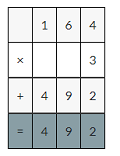
=492
Place the decimal point before 2 places from the left
4.92
Therefore 3 × 1.64 =4.92

Question 15.

2.3 × 8 = ______
Answer:
2.3×8=23×8
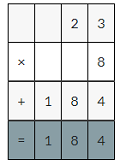
=184
Place the decimal point before 1 place from the left
18.4
Therefore 2.3×8=18.4

Question 16.
9 × 10.7 = ______
Answer:
9×10.7=9×107
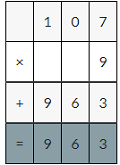
=963
Place the decimal point before 1 place from the left
96.3
Therefore 9×10.7=96.3

Question 17.
18.65 × 6 = _____
Answer:
18.65×6=1865×6
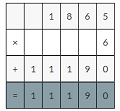
=11190
Place the decimal point before 2 places from the left
111.90
Therefore 18.65×6=111.90

5.5 Use Models to Multiply Decimals

Use the Models to find the product.
Question 18.
0.5 × 0.6 = ______
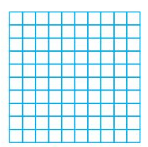
Big Ideas Math Answers 5th Grade Chapter 5 Multiply Decimals chp 18
Answer:


Shade 5 rows to represent 0.5 and 6 column to represent 0.6
30 squares are shaded twice
So, 0.5×0.6=0.30

Question 19.
1.8 × 0.9 = _____
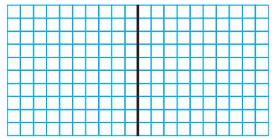
Big Ideas Math Answers 5th Grade Chapter 5 Multiply Decimals chp 19
Answer:


Shade 9 rows to represent 0.9 and 18 columns to represent 1.8
162 squares are shaded twice
So, 1.8 × 0.9= 1.62

5.6 Use Partial Products to Multiply Decimals

Find the product. Check whether your answer is reasonable.
Question 20.
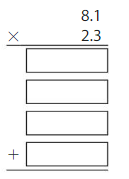
Big Ideas Math Answers 5th Grade Chapter 5 Multiply Decimals chp 20
Answer:
Step 1:0.1×0.3=0.03
Step 2:0.1×2=0.2
Step 3:8×0.3=2.4
Step 4:8×2=16
Add 0.03+0.2+2.4+16=18.63

Question 21.
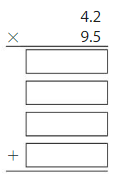
Big Ideas Math Answers 5th Grade Chapter 5 Multiply Decimals chp 21
Answer:Step 1:0.2×0.5=0.10

Step 2:
.2×9=1.8
Step 3:4×0.5=2
Step 4:4×9=36
Add 0.10+1.8+2+36=39.9

Question 22.
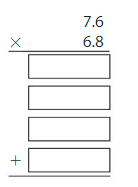
Big Ideas Math Answers 5th Grade Chapter 5 Multiply Decimals chp 22
Answer:
Step1:0.6×0.8=0.48
Step2:0.6×6=3.6
Step3:7×0.8=5.6
Step4:7×6=42
Add 0.48+3.6+5.6+42=51.68

7.6×6.8=51.68

Question 23.
0.7 × 6.5 = ______
Answer:
Step1:0.7×0.5=0.35
Step2:0.7×6=4.2
Step3:0×0.5=0
Step4:0×6=0
Add 0.35+4.2=4.55

Therefore 0.7×6.5=4.55

Question 24.
25.6 × 16.9 = ______
Answer:
Step1:0.6×0.9=0.54
step2:0.6×16=9.6
Step3:25×0.9=22.5
Step4:25×16=400
Add 0.54+9.6+22.5+400=432.64
Therefore 25.6×16.9=432.64

Question 25.
2.5 × 6.81 = _____
Answer:
Step1:0.5×0.81=0.405
Step2:0.5×6=3
Step3:2×0.81=1.62
Step4:2×6=12
Add 0.405+3+1.62+12=17.025
Therefore 2.5×6.81=17.025

5.7 Use Strategies to Multiply Decimals

Find the product. Explain the strategy you used.
Question 26.
0.4 × 0.16 = ______
Answer:
Estimate
4×16
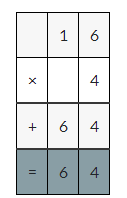
=64 place the decimal point before three places from the left
0.064
Therefore 0.4×0.16=0.064

Question 27.
0.2 × 0.8 = _______
Answer:
Estimate
2×8=16 and place the decimal point before two places from the left
0.16
Therefore 0.2×0.6=0.16

Question 28.
2.5 × 0.3 = ______
Answer:
Estimate
25×3
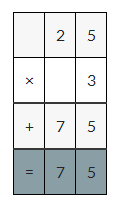
=74 and place the decimal point before two places from the left
0.74
Therefore 2.5×0.3=0.74

Question 29.
Structure
Your friend multiplies two decimals by rewriting the product as (8 × 3) × (0.1 × 0.1). What two decimals is she multiplying?
Answer:
(8×3)×(0.1×0.1)
(8×0.1)×(3×0.1)
0.8×0.3
The two decimals she is multiplying are 0.8 and 0.3

5.8 Multiply Decimals

Find the product.
Question 30.
Big Ideas Math Answers 5th Grade Chapter 5 Multiply Decimals chp 30
Answer:
Multiply 58 by 3 and place the decimal point
58×3
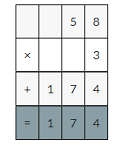
=174
Place the decimal point before two places from the left.
1.74
Therefore 5.8×0.3=1.74

Question 31.
Big Ideas Math Answers 5th Grade Chapter 5 Multiply Decimals chp 31
Answer:
Multiply 722 by 16 and place the decimal point
722×16
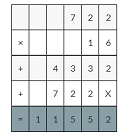
=11552
Place the decimal point before three places from the left
11.552
Therefore 7.22×1.6=11.552

Question 32.
Big Ideas Math Answers 5th Grade Chapter 5 Multiply Decimals chp 32
Answer:
Multiply 408 by 95 and place the decimal point
408×95
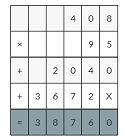
=38760
Place the decimal point before two places from the left
387.60
Therefore 40.8×9.5=387.60

5.9 Problem Solving: Multiply with Money

Question 33.
Your friend buys 4 glow sticks for $0.99 each. She pays with a $10 bill. How much change does she receive?
Answer:
My friend buys 4 glow sticks for $0.99 each
Total cost =4×$0.99=$3.96
Subtract cost from $10
$10‐$3.96=$6.04
change she receives is $6.04

Question 34.
Modeling Real Life
Descartes parks in the parking garage for 3 hours on Monday, 5 hours on Tuesday, and 10 hours on Wednesday. How much does he pay altogether?
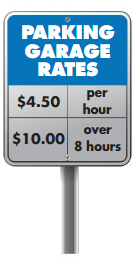
Big Ideas Math Answers 5th Grade Chapter 5 Multiply Decimals chp 34
Answer:
Descartes parks in the parking garage for 3 hours on Monday, 5 hours on Tuesday, and 10 hours on Wednesday.
parking garage rates are $4.50 per hour and $10.00 for more than 8 hours
charges on monday =3hoursx$4.50=$13.5
charges on tuesday =5hoursx$4.5=$22.5
on wednesday deacartes parks his car for more than 8 hours so, charges on wednesday are $10
Add 13.5+22.5+10=$46
Therefore Descartes pay $46 altogether.

Conclusion:

Take the help from the direct links available below and solve the problems covered in Big Ideas Math Answers Grade 5 Chapter 5 Multiply Decimals. Test your knowledge by solving the questions given at the end of the chapter. If you have any doubts regarding the concepts post the comments in the below attached comment box.

Big Ideas Math Answers Grade 5 Chapter 12 Patterns in the Coordinate Plane

In Order to attempt the 5th Grade Exam, you need to have strong fundamentals. Download Big Ideas Math Answers Grade 5 Chapter 12 Patterns in the Coordinate Plane free of cost and get the homework help you need. Attempt the chapter practice to know your preparation level within the Chapter. Practice as much as you can using the Big Ideas Math Answers Grade 5 Chapter 12 Patterns in the Coordinate Plane and clear the exam with better grades.

Big Ideas Math Book 5th Grade Answer Key Chapter 12 Patterns in the Coordinate Plane

You will not feel the Concept of Patterns in the Coordinate Plane difficult anymore with our Big Ideas Math Book 5th Grade Answer Key Chapter 12 Patterns in the Coordinate Plane. Make the most out of the Big Ideas Math Answers Grade 5 Chapter 12 Patterns in the Coordinate Plane and solve various questions in it and master the subject. Hit the below links and start practicing from now itself.

Lesson: 1 Plot Points in a Coordinate Plane

Lesson: 2 Relate Points in a Coordinate Plane

Lesson: 3 Draw polygons in a Coordinate Plane

Lesson: 4 Graph Data

Lesson: 5 Make and Interpret Line Graphs

Lesson: 6 Numerical Patterns

Lesson: 7 Graph and Analyze Relationships

Chapter: 12 – Patterns in the Coordinate Plane

Lesson 12.1 Plot Points in a Coordinate Plane

Explore and Grow

Choose a location for your buried treasure on the grid. Choose a point where two grid lines My Treasure intersect. An example is shown.
Big Ideas Math Answers Grade 5 Chapter 12 Patterns in the Coordinate Plane 1
Take turns with a partner guessing the location of each other’s buried treasure. Keep track of your guesses on the grid. After each guess, give a clue to help yourMy Guessespartner, such as “my treasure is northwest of your guess.”This is an image Continue to guess until a treasure is located.
Big Ideas Math Answers Grade 5 Chapter 12 Patterns in the Coordinate Plane 2
Reasoning
The point where the horizontal number line and the vertical number line intersect is called the origin. Why do you think it is called that?

Think and Grow: The Coordinate Plane

Key Idea
A coordinate plane is formed by the intersection of a horizontal number line and a vertical number line. An ordered pair is a pair of numbers that is used to locate a point in a coordinate plane.
Big Ideas Math Answers Grade 5 Chapter 12 Patterns in the Coordinate Plane 3
Example
Write the ordered pair that corresponds to point M.
Big Ideas Math Solutions Grade 5 Chapter 12 Patterns in the Coordinate Plane 4
Big Ideas Math Solutions Grade 5 Chapter 12 Patterns in the Coordinate Plane 5
The horizontal distance from the origin to point M is __ units. So, the x-coordinate is __.
The vertical distance from the origin to point M is ___ units. So, the y-coordinate is ___. The ordered pair is __.

Answer:
The horizontal distance from the origin to point M is 5 units. So, the x-coordinate is 5.
The vertical distance from the origin to point M is 5units. So, the y-coordinate is 3. The ordered pair is (5, 3).

Show and Grow

Write the ordered pair corresponding to the point.

Question 1.
Point B
Answer:(4,2)
Big-Ideas-Math-Solutions-Grade-5-Chapter-12-Patterns-in-the-Coordinate-Plane-6 12.1-1
Explanation:
The horizontal distance from the origin to point B is _4_ units.
So, the x-coordinate is _4_.
The vertical distance from the origin to point B is __2_ units.
So, the y-coordinate is _2__. The ordered pair is _(4,2)_.

Question 2.
Point S

Big Ideas Math Solutions Grade 5 Chapter 12 Patterns in the Coordinate Plane 6
Answer:(0,4)
Explanation:
The horizontal distance from the origin to point S is 0  units.
So, the x-coordinate is _0_.
The vertical distance from the origin to point S is __4_ units.
So, the y-coordinate is _4__.
The ordered pair is _(0,4)_.

Plot and label the point in the coordinate plane.

Question 3.
F(5, 4)
Answer:(5,4)
Explanation:
Big-Ideas-Math-Solutions-Grade-5-Chapter-12-Patterns-in-the-Coordinate-Plane-18 3
Start the Origin. Move  5  Units right and  4 units up. Then plot and label the point.
The point can be labeled as Y,(5,4)

Question 4.
P(3, 0)
Answer:(3,0)
Explanation:
Big-Ideas-Math-Solutions-Grade-5-Chapter-12-Patterns-in-the-Coordinate-Plane-18 4
Start the Origin. Move  3  Units right and  0 units up. Then plot and label the point.
The point can be labeled as Y,(3,0)

Apply and Grow: Practice

Use the coordinate plane to write the ordered pair corresponding to the point.

Big Ideas Math Solutions Grade 5 Chapter 12 Patterns in the Coordinate Plane 6.1

Question 5.
Point M
Answer:(8,8)
Explanation:
Big Ideas Math Solutions Grade 5 Chapter 12 Patterns in the Coordinate Plane 6.1
The horizontal distance from the origin to point M is 8  units.
So, the x-coordinate is _8_.
The vertical distance from the origin to point M is __8 units.
So, the y-coordinate is 8_.
The ordered pair is _(8,8)_.

Question 6.
Point Q
Answer:(2,7)
Explanation:
Big Ideas Math Solutions Grade 5 Chapter 12 Patterns in the Coordinate Plane 6.1
The horizontal distance from the origin to point Q is 2  units.
So, the x-coordinate is _2_.
The vertical distance from the origin to point Q is __7_ units.
So, the y-coordinate is _7__.
The ordered pair is _(2,7)_.

Question 7.
Point N
Answer: (7,6)
Explanation:
Big Ideas Math Solutions Grade 5 Chapter 12 Patterns in the Coordinate Plane 6.1
The horizontal distance from the origin to point N is 7 units.
So, the x-coordinate is _7_.
The vertical distance from the origin to point N is _6_ units.
So, the y-coordinate is _6__.
The ordered pair is _(7,6)_.

Question 8.
Point R
Answer:(2,0)
Explanation:
Big Ideas Math Solutions Grade 5 Chapter 12 Patterns in the Coordinate Plane 6.1
The horizontal distance from the origin to point R is 2  units.
So, the x-coordinate is _2_.
The vertical distance from the origin to point R is __0_ units.
So, the y-coordinate is _0_.
The ordered pair is _(2,0)_.

Question 9.
Point P
Answer:(6,1)
Explanation:
Big Ideas Math Solutions Grade 5 Chapter 12 Patterns in the Coordinate Plane 6.1
The horizontal distance from the origin to point P is 6  units.
So, the x-coordinate is _6_.
The vertical distance from the origin to point P is __1_ units.
So, the y-coordinate is _4__.
The ordered pair is _(6,1)_.

Question 10.
Point T
Answer: (0,5)
Explanation:
Big Ideas Math Solutions Grade 5 Chapter 12 Patterns in the Coordinate Plane 6.1
The horizontal distance from the origin to point T is 0  units.
So, the x-coordinate is _0_.
The vertical distance from the origin to point P is __5_ units.
So, the y-coordinate is _5__.
The ordered pair is _(0,5)_.

Plot and label the point in the coordinate plane above.

Question 11.
S(0, 3)
Answer: The Point can be labeled as (0,3)
Explanation:
Big-Ideas-Math-Solutions-Grade-5-Chapter-12-Patterns-in-the-Coordinate-Plane-18 11
Start the Origin. Move 0  Units right and  3 units up then plot and label the point.
The point can be labeled as Y,(0,3)

Question 12.
F(2, 5)
Answer: (2,5)
Explanation:
Big-Ideas-Math-Solutions-Grade-5-Chapter-12-Patterns-in-the-Coordinate-Plane-18 12
Start the Origin. Move 2  Units right and  5 units up then plot and label the point.
The point can be labeled as Y,(2,5)

Question 13.
W(0, 0)
Answer:(0,0)
Explanation:
Big-Ideas-Math-Solutions-Grade-5-Chapter-12-Patterns-in-the-Coordinate-Plane-18 13
Start the Origin. Move 0  Units right and  0 units up then plot and label the point.
The point can be labeled as Y,(0,0)

Name the point for the ordered pair.

Question 14.
(5, 2)
Answer: D(5,2)
Explanation:
Start the Origin. Move 5  Units right and  2 units up then label the point.
The point can be Named as D(5,2)

Big Ideas Math Solutions Grade 5 Chapter 12 Patterns in the Coordinate Plane 7.1

Question 15.
(8, 4)
Answer: E(8,4)
Explanation:
Big Ideas Math Solutions Grade 5 Chapter 12 Patterns in the Coordinate Plane 7.1
Start the Origin. Move 8  Units right and  4 units up then label the point.
The point can be Named as E(8,4)

Question 16.
(0, 3)
Answer: F(0,3)
Explanation:
Big Ideas Math Solutions Grade 5 Chapter 12 Patterns in the Coordinate Plane 7.1
Start the Origin. Move 0  Units right and  3 units up then label the point.
The point can be Named as D(5,2)

Question 17.
Reasoning
How are the locations of the points A(0, 4) and B(4, 0) different in a coordinate plane?
Answer: A(0,4) is in Y axis as x is 0 and y is 4. B(4,0) is in X axis as x is 4 and y is 0.

Question 18.
DIG DEEPER!
Newton buries a bone in a park at the location shown. How can he use a coordinate plane to describe its location?
Big Ideas Math Solutions Grade 5 Chapter 12 Patterns in the Coordinate Plane 8

Answer:
He can use the x-coordinate and y-coordinate to describe the location.

Think and Grow: Modeling Real Life

Example
In a video game, you move an aircraft carrier and a tugboat away from your base. Use the directions to plot and label the locations of the aircraft carrier and the tugboat.
Big Ideas Math Solutions Grade 5 Chapter 12 Patterns in the Coordinate Plane 9
• Aircraft carrier: Located 3 miles east and 4 miles north of your base.
• Tugboat: Located 8 miles east and twice as many miles north of your base as the aircraft carrier.
To find the location of the aircraft carrier, start at your base, which is at the origin.

Move __ units east, or right, and ___ units north, or up.
Plot and label the point as A(___, ___ ).
To find the location of the tugboat, start at your base, which is at the origin.
Move ___ units east, or right, and ___ × __ = ___ units north, or up.
Plot the label the point as T(__, ___).
Answer: Mov

Show and Grow

Question 19.
A guidebook describes how to get to various statues in Chicago, Illinois, from Willis Tower. Plot and label the location of each statue on the map.
Dubuffet’s Monument with Standing Beast: Walk 2 blocks east and 5 blocks north.
• Miró’s Sun, Moon, and One Star: Walk twice as many blocks east as you do to get to the Standing Beast, and 3 blocks north.
Big Ideas Math Solutions Grade 5 Chapter 12 Patterns in the Coordinate Plane 10

Answer:
Big-Ideas-Math-Solutions-Grade-5-Chapter-12-Patterns-in-the-Coordinate-Plane-10

Question 20.
DIG DEEPER!
Which statue is closer to Moon, and One Star, Cloud Gate or Flamingo? Explain.

Plot Points in a Coordinate Plane Homework & practice 12.1

Use the coordinate plane to write the ordered pair corresponding to the point.

Big Ideas Math Solutions Grade 5 Chapter 12 Patterns in the Coordinate Plane 11

Question 1.
Point E
Answer: (5,7)
Explanation:
Big Ideas Math Solutions Grade 5 Chapter 12 Patterns in the Coordinate Plane 11
The horizontal distance from the origin to point E is 5  units.
So, the x-coordinate is _5_.
The vertical distance from the origin to point E is __7_ units.
So, the y-coordinate is _7__.
The ordered pair is _(5,7)_.

Question 2.
Point H
Answer: (0,7)
Explanation:
Big Ideas Math Solutions Grade 5 Chapter 12 Patterns in the Coordinate Plane 11
The horizontal distance from the origin to point H is 0  units.
So, the x-coordinate is _0_.
The vertical distance from the origin to point H is __7_ units.
So, the y-coordinate is _7__.
The ordered pair is _(0,7)_.

Question 3.
Point F
Answer: (3,3)
Explanation:
Big Ideas Math Solutions Grade 5 Chapter 12 Patterns in the Coordinate Plane 11
The horizontal distance from the origin to point F is 3  units.
So, the x-coordinate is _3_.
The vertical distance from the origin to point F is __3 units.
So, the y-coordinate is _3__.
The ordered pair is _(3,3)_

Question 4.
Point J
Answer: (1,0)
Explanation:
Big Ideas Math Solutions Grade 5 Chapter 12 Patterns in the Coordinate Plane 11
The horizontal distance from the origin to point J is 1  units.
So, the x-coordinate is _1_.
The vertical distance from the origin to point J is __0_ units.
So, the y-coordinate is _0__.
The ordered pair is _(1,0)_.

Question 5.
Point G
Answer: (7,2)
Explanation:
Big Ideas Math Solutions Grade 5 Chapter 12 Patterns in the Coordinate Plane 11
The horizontal distance from the origin to point G is 7  units.
So, the x-coordinate is _7_.
The vertical distance from the origin to point G is __2_ units.
So, the y-coordinate is _2__.
The ordered pair is _(7,2)_.

Question 6.
Point K
Answer: (8,5)
Explanation:
Big Ideas Math Solutions Grade 5 Chapter 12 Patterns in the Coordinate Plane 11
The horizontal distance from the origin to point K is 8  units.
So, the x-coordinate is _8_.
The vertical distance from the origin to point K is __5_ units.
So, the y-coordinate is _5_.
The ordered pair is _(8,5)_.

Plot and label the point in the coordinate plane above.

Question 7.
Z(8, 0)
Answer: The Point can be labeled as (8,0)
Explanation:
Big-Ideas-Math-Solutions-Grade-5-Chapter-12-Patterns-in-the-Coordinate-Plane-18 E 7
Start the Origin. Move 8  Units right and  0 units up then plot and label the point.
The point can be labeled as Y,(8,0)

Question 8.
B(5, 5)
Answer: The Point can be labeled as (5,5)
Explanation:
Big-Ideas-Math-Solutions-Grade-5-Chapter-12-Patterns-in-the-Coordinate-Plane-18 E 8
Start the Origin. Move 5  Units right and  5 units up then plot and label the point.
The point can be labeled as Y,(5,5)

Question 9.
M(1, 2)
Answer: The Point can be labeled as (1,2)
Explanation:
Big-Ideas-Math-Solutions-Grade-5-Chapter-12-Patterns-in-the-Coordinate-Plane-18 E 9
Start the Origin. Move 1  Units right and  2 units up then plot and label the point.
The point can be labeled as Y,(1,2)

Name the point for the ordered pair.

Big Ideas Math Solutions Grade 5 Chapter 12 Patterns in the Coordinate Plane 12

Question 10.
(5, 4)
Answer: Q(5,2)
Explanation:
Big Ideas Math Solutions Grade 5 Chapter 12 Patterns in the Coordinate Plane 12
Start the Origin. Move 5  Units right and  4 units up then label the point.
The point can be Named as Q(5,4)

Question 11.
(0, 8)
Answer: P(0,8)
Explanation:
Big Ideas Math Solutions Grade 5 Chapter 12 Patterns in the Coordinate Plane 12
Start the Origin. Move 0  Units right and  8units up then label the point.
The point can be Named as P(0,8)

Question 12.
(3, 1)
Answer: N(5,2)
Explanation:
Big Ideas Math Solutions Grade 5 Chapter 12 Patterns in the Coordinate Plane 12
Start the Origin. Move 3  Units right and  1 units up then label the point.
The point can be Named as N(3,1)

Question 13.
Open-Ended
Use the coordinate plane above. Point T is 3 units from point M. Name two possible ordered pairs for point T.
Answer: T(7,8), (7,0)&(0,8)
Explanation:
Big-Ideas-Math-Solutions-Grade-5-Chapter-12-Patterns-in-the-Coordinate-Plane-18 Q13
The horizontal distance from the origin to point M is 4  units.
So, the x-coordinate is _4_.
The vertical distance from the origin to point M is _5_ units.
So, the y-coordinate is _5_.
The ordered pair is _(4,5)_.
Point T is 3 units from point M
The horizontal distance from  point M is 4  units to add 3 
So, the x-coordinate is _4+3=7_.
The vertical distance from the point M is 5  units to add 3 units.
So, the y-coordinate is _5+3=8_.
The ordered pair is _(7,8)_.
The two possible ordered pairs for point T is (0,7)& (8,0).

Question 14.
Writing
Explain why the order of the x- and y-coordinates is important when identifying or plotting points in a coordinate plane.
Answer: Locations on the coordinate plane are described as ordered pairs. An ordered pair tells you the location of a point by relating the point’s location along the x-axis (the first value of the ordered pair) and along the y-axis (the second value of the ordered pair).

Question 15.
To get from the school to the arcade, you walk 4 blocks east and 3 blocks north. To get from the school to the skate park, your friend walks 2 blocks east and twice as many blocks north as you. Plot and label the locations of the arcade and the skate park.
Big Ideas Math Solutions Grade 5 Chapter 12 Patterns in the Coordinate Plane 13

Question 16.
DIG DEEPER!
Which building is closer to the bus station, the library or the post office? Explain.

Review & Refresh

Multiply.

Question 17.
Big Ideas Math Solutions Grade 5 Chapter 12 Patterns in the Coordinate Plane 14
Answer: 5/3=1 2/3

Explanation: First Multiply with the whole number(1) with the denominator(4) then add numerator (4+1=5)
and denominator is same as original. i.e, 5/4
then same as next mixed fraction Multiply with the whole number(1) with the denominator(3) then add numerator (3+1=4)
and denominator is same as original. i.e, 4/3
Multiply 5/4*4/3=20/12
This fraction can be reduced by dividing both the numerator and denominator by the Greatest Common Factor of 20 and 12 using 4 i.e, 5/3=1 2/3

Question 18.
Big Ideas Math Solutions Grade 5 Chapter 12 Patterns in the Coordinate Plane 15

Answer: 7/2= 3 1/2

Explanation: First Multiply with the whole number(1) with the denominator(5) then add numerator (5+2=7)
and denominator is same as original. i.e, 7/5
then same as next mixed fraction Multiply with the whole number(2) with the denominator(2) then add numerator (4+1=5)
and denominator is same as original. i.e, 5/2
Multiply 7/5*5/2=35/10
This fraction can be reduced by dividing both the numerator and denominator by the Greatest Common Factor of 35 and 10 using 5 i.e, 7/2=3 1/2

Question 19.
Big Ideas Math Solutions Grade 5 Chapter 12 Patterns in the Coordinate Plane 16

Answer: 527/48=10 47/48

Explanation: First Multiply with the whole number(2) with the denominator(6) then add numerator (12+5=17)
and denominator is same as original. i.e, 17/6
then same as next mixed fraction Multiply with the whole number(3) with the denominator(8) then add numerator (24+7=31)
and denominator is same as original. i.e, 31/8
Multiply 17/6*31/8= 527/48.
therefore we can write it as 10 47/48.

Lesson 12.2 Relate Points in a Coordinate Plane

Plot and label the points in the coordinate plane.
Big Ideas Math Solutions Grade 5 Chapter 12 Patterns in the Coordinate Plane 17
Draw a line segment to connect each pair of points.
Big Ideas Math Solutions Grade 5 Chapter 12 Patterns in the Coordinate Plane 18
Big Ideas Math Solutions Grade 5 Chapter 12 Patterns in the Coordinate Plane 19
Plot and label more points that lie on the line segments you drew. What do you notice about the coordinates?
A and C
Explanation:
Big-Ideas-Math-Solutions-Grade-5-Chapter-12-Patterns-in-the-Coordinate-Plane-18 12-2 01
In A and C line segment we observed that the y- Coordinate of A and C is same.

B and G
Explanation:
Big-Ideas-Math-Solutions-Grade-5-Chapter-12-Patterns-in-the-Coordinate-Plane-18 12-2 0
In B and G line segment we observed that the X- Coordinate of B and G is same.
D and E
Explanation:
Big-Ideas-Math-Solutions-Grade-5-Chapter-12-Patterns-in-the-Coordinate-Plane-18 12-2 03
In D and E line segment we observed that the Y- Coordinate of D and E is same.
F and H
Explanation:
Big-Ideas-Math-Solutions-Grade-5-Chapter-12-Patterns-in-the-Coordinate-Plane-18 12-2 04
In F and H line segment we observed that the X- Coordinate of F and H is same.

Construct Arguments
How can you find the distance between each pair of points? Explain your reasoning.

Think and Grow: Relate Points in a Coordinate Plane

Key Idea
Points on a horizontal line have the same-coordinates. Points on a vertical line have the same x-coordinates.
Big Ideas Math Solutions Grade 5 Chapter 12 Patterns in the Coordinate Plane 20
You can count units or use subtraction to find the distance between two points when they lie on the same horizontal line or vertical line.

Example
Find the distance between points G and H.
Big Ideas Math Solutions Grade 5 Chapter 12 Patterns in the Coordinate Plane 21
One Way: Count units.
Step 1: Identify the locations of the points: Point G is located at (2, 3). Point H is located at (8, 3).
Step 2: Draw a line segment to connect the points.
Step 3: Count horizontal units: There are __ units between points G and H.
So, the distance between points G and H is ___.

Another Way: Use subtraction

Points G and H have the same y-coordinates. They lie on a horizontal line. Subtract the x-coordinates to find the distance.
8 – 2 = _6__
So, the distance between points G and H is 6___.

Show and Grow

Find the distance between the points in the coordinate plane above.

Question 1.
E and F
Answer: 4 Units
Explanation
Big-Ideas-Math-Solutions-Grade-5-Chapter-12-Patterns-in-the-Coordinate-Plane-21 12.2 -1A
Points E and F have the same X-coordinates. They lie on a Vertical line. Subtract the Y-coordinates to find the distance.
5 – 1 = __4_
So, the distance between points E and F is _4__ units

Question 2.
P and Q
Answer: 3 Units
Explanation:
Big-Ideas-Math-Solutions-Grade-5-Chapter-12-Patterns-in-the-Coordinate-Plane-21 12.2 -1B
Points P and Q have the same Y-coordinates. They lie on a Vertical line. Subtract the X-coordinates to find the distance.
3 – 0 = __3_
So, the distance between points P and Q is _3__ units.

Question 3.
S and T
Answer: 7 Units
Explanation:
Big-Ideas-Math-Solutions-Grade-5-Chapter-12-Patterns-in-the-Coordinate-Plane-21 12.2 -1C
Points S and T have the same y-coordinates. They lie on a horizontal line. Subtract the x-coordinates to find the distance.
7 – 0 = __7_
So, the distance between points S and T is _7_ Units.

Apply and Grow: Practice

Find the distance between the points in the coordinate plane.

Question 4.
E and F
Answer: 7 Units
Explanation:
Big-Ideas-Math-Solutions-Grade-5-Chapter-12-Patterns-in-the-Coordinate-Plane-21 12.2 -1 4
Points E and F have the same X-coordinates. They lie on a Vertical line. Subtract the Y-coordinates to find the distance.
8 – 3 = __5
So, the distance between points E and F is _5_ units

Question 5.
J and G
Answer: 7 Units
Explanation:
Big-Ideas-Math-Solutions-Grade-5-Chapter-12-Patterns-in-the-Coordinate-Plane-21 12.2 -1 4 B
Points J and G have the same y-coordinates. They lie on a horizontal line. Subtract the x-coordinates to find the distance.
8 – 0 = __8_
So, the distance between points J and G is _8_ Units.

Question 6.
F and K
Answer: 7 Units
Explanation:

Points F and K have the same y-coordinates. They lie on a horizontal line. Subtract the x-coordinates to find the distance.
8 – 5 = __3_
So, the distance between points F and K is _3_ Units.

Big Ideas Math Solutions Grade 5 Chapter 12 Patterns in the Coordinate Plane 23

Question 7.
Which is longer, \(\overline{J M}\) or \(\overline{H R}\)?

Find the distance between the points.

Question 8.
(1, 7) and (7, 7)
Answer: 6 Units
Explanation:
Big-Ideas-Math-Solutions-Grade-5-Chapter-12-Patterns-in-the-Coordinate-Plane-18 12-2 08A
Lets take point A is (1,7) and Point B is (7,7)
Points A and B have the same y-coordinates. They lie on a horizontal line. Subtract the x-coordinates to find the distance.
7 – 1 = __6_
So, the distance between points A and B is _6_ Units.

Question 9.
(0, 1) and (3, 1)
Answer: 3 Units
Explanation:

Lets take point C is (0,1) and Point D is (3,1)
Points C and D have the same y-coordinates. They lie on a horizontal line. Subtract the x-coordinates to find the distance.
3 – 0 = __3_
So, the distance between points C and D is _3_ Units.

Question 10.
(0, 0) and (6, 0)
Answer: 7 Units
Explanation:

Lets take point E is (0,0) and Point F is (6,0)
Points E and F have the same y-coordinates. They lie on a horizontal line. Subtract the x-coordinates to find the distance.
6 – 0 = __6_
So, the distance between points E and F is _6_ Units.

A line passes through the given points. Name two other points that lie on the line.

Question 11.
(0, 6) and (5, 6)
Answer: (1,6),(2,6),(3,6),(4,6)
Explanation:
Lets take point A is (0,6) and Point B is (5,6)
Points A and B have the same y-coordinates. They lie on a horizontal line.
So the other points lie on the line are (1,6),(2,6),(3,6),(4,6)

Question 12.
(4, 2) and (4, 8)
Answer: (4,3),(4,4),(4,5),(4,6)
Explanation:
Lets take point C is (4,2) and Point D is (4,8)
Points C and D have the same X-coordinates. They lie on a Vertical line.
So the other points lie on the line are (4,3),(4,4),(4,5),(4,6) etc

Question 13.
(3, 3) and (3, 6)
Answer: (3,4),(3,5)
Explanation:
Lets take point E is (3,3) and Point F is (3,6)
Points E and F have the same X-coordinates. They lie on a Vertical line.
So the other points lie on the line are (3,4),(3,5)

Question 14.
YOU BE THE TEACHER
Newton plots the points (2, 7) and (6, 7) and connects them with a line segment. Descartes says that (10, 7) also lies on the line segment. Is he correct? Explain.
Answer: Yes
Explanation:
Points on a Vertical line have the same-coordinates. They lie on a horizontal line.

Question 15.
DIG DEEPER!
Which pair of points does not lie on a line that is parallel to x-axis? Explain.
Big Ideas Math Solutions Grade 5 Chapter 12 Patterns in the Coordinate Plane 23.1
Answer:  (1,2) and (1,6)
Explanation:
Points on a Vertical line have the same-coordinates. They lie on a horizontal line. Except (1,2) and (1,6) , these two
Points on a horizontal line have the same-coordinates. They lie on a Vertical line.

Think and Grow: Modeling Real Life

Example
An archaeologist uses rope to section off a rectangular dig site. How many meters of rope does the archaeologist use?
Big Ideas Math Solutions Grade 5 Chapter 12 Patterns in the Coordinate Plane 24
To find how many meters of rope the archaeologist uses, find the perimeter of the rectangular dig site.
Big Ideas Math Solutions Grade 5 Chapter 12 Patterns in the Coordinate Plane 25
Big Ideas Math Solutions Grade 5 Chapter 12 Patterns in the Coordinate Plane 26
Use a formula to find the perimeter of the site.
Big Ideas Math Solutions Grade 5 Chapter 12 Patterns in the Coordinate Plane 27
So, the archaeologist uses __ meters of rope.

Show and Grow

Question 16.
The owner of an animal shelter uses fencing to create a rectangular dog pen. How many yards of fencing does the owner use?
Big Ideas Math Solutions Grade 5 Chapter 12 Patterns in the Coordinate Plane 28
Answer:
yards of fencing the owner use
To find how many yards of fencing the owner use, to find the perimeter of the rectangular dog pen.

Question 17.
DIG DEEPER!
You run 5 laps around the edges of the volleyball court. How far do you run in feet? in yards?
Big Ideas Math Solutions Grade 5 Chapter 12 Patterns in the Coordinate Plane 29

Answer:
10 × 6 = 60 feet
Convert from foot to yards
1 feet = 0.33 yards
60 feet = 20 yards

Relate Points in a Coordinate Plane Homework & Practice 12.2

Find the distance between the points in the coordinate plane.

Question 1.
P and M
Answer: 6 Units
Explanation:
Big-Ideas-Math-Solutions-Grade-5-Chapter-12-Patterns-in-the-Coordinate-Plane-21 12.2 -P1 A
Points P and M have the same y-coordinates. They lie on a horizontal line. Subtract the x-coordinates to find the distance.
7 – 1 = __6_
So, the distance between points P and M is _6_ Units.

Question 2.
B and Z
Answer: 3 Units
Explanation:

Points B and Z have the same X-coordinates. They lie on a Vertical line. Subtract the Y-coordinates to find the distance.
3 – 0 = _0 
So, the distance between points B and Z is _0_ units

Question 3.
K and T
Answer: 5 Units
Explanation:

Points K and T have the same y-coordinates. They lie on a horizontal line. Subtract the x-coordinates to find the distance.
6 – 1 = __5_
So, the distance between points K and T is _5_ Units.

Big Ideas Math Solutions Grade 5 Chapter 12 Patterns in the Coordinate Plane 30

Question 4.
Which is longer, \(\overline{C D}\) or \(\overline{K P}\)?

Answer: \(\overline{C D}\) longer than \(\overline{K P}\)

Find the distance between the points.

Question 5.
(1, 5) and (6, 5)
Answer: 5 Units
Explanation:

Lets take point A is (1,5) and Point B is (6,5)
Points A and B have the same y-coordinates. They lie on a horizontal line. Subtract the x-coordinates to find the distance.
6 – 1 = _5_
So, the distance between points A and B is _5_ Units.

Question 6.
(3, 4) and (3, 6)
Answer: 2 Units
Explanation:

Lets take point C is (3,4) and Point D is (3,6)
Points C and D have the same X-coordinates. They lie on a Vertical line. Subtract the Y-coordinates to find the distance.
6 – 4 = _2 
So, the distance between points C and D is _2_ Units.

Question 7.
(0, 2) and (0, 9)
Answer: 7 Units
Explanation:

Lets take point E is (0,2) and Point F is (0,9)
Points E and F have the same X-coordinates. They lie on a Vertical line. Subtract the Y-coordinates to find the distance.
9 – 2 = _7 
So, the distance between points E and F is _7_ Units.

A line passes through the given points. Name two other points that lie on the line.

Question 8.
(6, 0) and (6, 7)
Answer: (6,1),(6,2),6,3)
Explanation:
Lets take point A is (6,0) and Point B is (6,7)
Points A and B have the same X-coordinates. They lie on a Vertical line.
So the other points lie on the line are (6,1),(6,2),(6,3)

Question 9.
(5, 3) and (1, 3)
Answer: (2,3),(3,3)(4,3)
Explanation:
Lets take point C is (5,3) and Point D is (1,3)
Points C and D have the same y-coordinates. They lie on a horizontal line.
So the other points lie on the line are (2,3),(3,3)(4,3)

Question 10.
(2, 2) and (2, 9)
Answer: (2,3),(2,4),(2,5)
Explanation:
Lets take point E is (2,2) and Point F is (2,9)
Points E and F have the same X-coordinates. They lie on a Vertical line.
So the other points lie on the line are (2,3),(2,4),(2,5)

Question 11.
Structure
Name four different points that are 3 units away from (5, 4).

Answer:
A distance of 5 units from the origin represents the hypotenuse of a right triangle with sides 3- 4 – 5
If the x-coordinate is 4 then the y-coordinate is | 3 | = ± 3
the coordinates are (4, 3 ) and (4, – 3 )

Question 12.
Number Sense
Which point is farther from (3, 4)? Explain.
Big Ideas Math Solutions Grade 5 Chapter 12 Patterns in the Coordinate Plane 31

Answer: K(9, 4)

Question 13.
Modeling Real Life
A farmer builds a coop for his chickens. He uses poultry netting to enclose the coop. How many feet of netting does he use?
Big Ideas Math Solutions Grade 5 Chapter 12 Patterns in the Coordinate Plane 32

Answer: 6 feet

Question 14.
Modeling Real Life
A giant chessboard is painted on the ground in a park. How many square yards of space does the chessboard occupy?
Big Ideas Math Solutions Grade 5 Chapter 12 Patterns in the Coordinate Plane 33

Answer: 81 yards

Review & Refresh

Find the quotient. Then check your answer.

Question 15.
23.6 ÷ 4 = ___

Answer:
Divide 23.6 by 4
We get
23.6/4 = 5.9
Thus the quotient is 5.9

Question 16.
36.9 ÷ 3 = ___

Answer:
Divide the two numbers 36.9 and 3.
36.9 ÷ 3 = 12.3

Question 17.
114.87 ÷ 7 = ___

Answer:
Divide the two numbers 114.87 and 7
114.87 ÷ 7 = 16.41

Lesson 12.3 Draw polygons in a Coordinate Plane

Explore and Grow

Plot and label three points in which two of the ordered pairs have the same x-coordinates and two of the ordered pairs have the same y-coordinates.
Big Ideas Math Solutions Grade 5 Chapter 12 Patterns in the Coordinate Plane 34
The points represent the vertices of a polygon. Describe the polygon.

Structure
Explain how you can plot another point above to form a rectangle.

Think and Grow: Draw Polygons in a Coordinate Plane

Key Idea
You can use ordered pairs to represent vertices of polygons. To draw a polygon in a coordinate plane, plot and connect the vertices.
Example
The vertices of a polygon are A (2, 2), B(3, 5), C(6, 6), and D(6, 2). Draw the polygon in a coordinate plane. Then identify it.
Step 1: Plot and label the vertices.
Step 2: Draw line segments to connect the points. Be sure to connect the points in order to draw the polygon.
Big Ideas Math Solutions Grade 5 Chapter 12 Patterns in the Coordinate Plane 35
Big Ideas Math Solutions Grade 5 Chapter 12 Patterns in the Coordinate Plane 352

Show and Grow

Draw the polygon with the given vertices in a coordinate plane. Then identify it.

Question 1.
J(0, 8), K(4, 7), L(5, 0)
Big Ideas Math Solutions Grade 5 Chapter 12 Patterns in the Coordinate Plane 36
Answer: Triangle
Explanation:
Big-Ideas-Math-Solutions-Grade-5-Chapter-12-Patterns-in-the-Coordinate-Plane-6 12.3-1A
Step 1: Plot and label the vertices.
Step 2: Draw line segments to connect the points. Be sure to connect the points in order to draw the polygon.
Polygon J,K,L is a Triangle.

Question 2.
P(1, 4), Q(2, 7), R(6, 7), S(7, 4), T(4, 1)
Big Ideas Math Solutions Grade 5 Chapter 12 Patterns in the Coordinate Plane 37
Answer: Pentagon.
Explanation:

Step 1: Plot and label the vertices.
Step 2: Draw line segments to connect the points. Be sure to connect the points in order to draw the polygon.
Polygon P,Q,R,S,T is a Pentagon.

Apply and Grow: Practice

Draw the polygon with the given vertices in a coordinate plane. Then identify it.

Question 3.
C(1, 6), D(4, 6), E(4, 1), F(1, 1)
Big Ideas Math Solutions Grade 5 Chapter 12 Patterns in the Coordinate Plane 37.1
Answer: Rectangle.
Explanation:
Big-Ideas-Math-Solutions-Grade-5-Chapter-12-Patterns-in-the-Coordinate-Plane-6 12.3-1D
Step 1: Plot and label the vertices.
Step 2: Draw line segments to connect the points. Be sure to connect the points in order to draw the polygon.
Polygon C,D,E,F is a Rectangle.

Question 4.
J(2, 2), K(2, 4), L(4, 6), M(6, 4), N(6, 2), P(4, 1)
Big Ideas Math Solutions Grade 5 Chapter 12 Patterns in the Coordinate Plane 38
Answer: Hexagon.
Explanation:

Step 1: Plot and label the vertices.
Step 2: Draw line segments to connect the points. Be sure to connect the points in order to draw the polygon.
Polygon J,K,L,M,N,P is a Hexagon. 

Identify the polygon with the given vertices.

Question 5.
A(2, 6), B(6, 2), C(3, 2)
Answer: Triangle.
Explanation:

Step 1: Plot and label the vertices.
Step 2: Draw line segments to connect the points. Be sure to connect the points in order to draw the polygon.
Polygon A ,B , C is a  Tringle.

Question 6.
G(0, 3), H(6, 3), I(4, 1), J(2, 1)
Answer: Isosceles Trapezoid
Explanation:

Step 1: Plot and label the vertices.
Step 2: Draw line segments to connect the points. Be sure to connect the points in order to draw the polygon.
Polygon G,H,I,J is a Isosceles Trapezoid .

Question 7.
P(1, 1), Q(1, 6), R(6, 6), S(6, 1)
Answer: Square
Explanation:
Big-Ideas-Math-Solutions-Grade-5-Chapter-12-Patterns-in-the-Coordinate-Plane-6 12.3- 7
Step 1: Plot and label the vertices.
Step 2: Draw line segments to connect the points. Be sure to connect the points in order to draw the polygon.
Polygon P, Q ,R, S is a Rectangle.

Question 8.
X(0, 0), Y(0, 7), Z(2, 0)
Answer: Triangle.
Explanation:

Step 1: Plot and label the vertices.
Step 2: Draw line segments to connect the points. Be sure to connect the points in order to draw the polygon.
Polygon X ,Y, Z is a Triangle. 

Plot (6, 3), (6, 8), and (9, 3) in a coordinate plane. Plot another point to form the given quadrilateral. Name the point.

Question 9.
rectangle
Answer:
Explanation:
Big-Ideas-Math-Solutions-Grade-5-Chapter-12-Patterns-in-the-Coordinate-Plane-6 12.3-9

Question 10.
trapezoid
Answer:
Explanation:

Question 11.
Open-Ended
Write four ordered pairs that represent the vertices of a square

Answer:
(2, 2), (4, 2), (2, 4), (4, 4)

Question 12.
YOU BE THE TEACHER
Your friend draws the polygon shown. She names the polygon. Is your friend correct? Explain.
Big Ideas Math Solutions Grade 5 Chapter 12 Patterns in the Coordinate Plane 39

Answer:
No your friend is incorrect because the given figure has 4 sides so it is a quadrilateral not a polygon.

Think and Grow: Modeling Real Life

Example
You and a friend use computer software to create a symmetric company logo using a coordinate plane. Your friend completes one half of the logo as shown. Draw the other half. Then list the vertices of the logo.
Big Ideas Math Solutions Grade 5 Chapter 12 Patterns in the Coordinate Plane 40
Step 1: Plot the vertices for the other half of the logo on the opposite side of the line of symmetry.
Step 2: Draw line segments to connect the points.
Big Ideas Math Solutions Grade 5 Chapter 12 Patterns in the Coordinate Plane 41

Answer:

Big-Ideas-Math-Solutions-Grade-5-Chapter-12-Patterns-in-the-Coordinate-Plane-40

Show and Grow

Draw the other half of the symmetric logo. Then list its vertices.

Question 13.
Big Ideas Math Solutions Grade 5 Chapter 12 Patterns in the Coordinate Plane 42

Answer:
Big-Ideas-Math-Solutions-Grade-5-Chapter-12-Patterns-in-the-Coordinate-Plane-42

Question 14.
Big Ideas Math Solutions Grade 5 Chapter 12 Patterns in the Coordinate Plane 43

Answer:
Big-Ideas-Math-Solutions-Grade-5-Chapter-12-Patterns-in-the-Coordinate-Plane-43

Question 15.
DIG DEEPER!
One half of the design for a symmetric flower garden is shown in the coordinate plane. The line of symmetry is represented by the walkway. Draw the other half of the design for the flower garden. Then list its vertices.
Big Ideas Math Solutions Grade 5 Chapter 12 Patterns in the Coordinate Plane 44

Answer:
Big-Ideas-Math-Solutions-Grade-5-Chapter-12-Patterns-in-the-Coordinate-Plane-44

Draw polygons in a Coordinate Plane Homework & Practice 12.3

Draw the polygon with the given vertices in a coordinate plane. Then identify it.

Question 1.
A(2, 3), B(2, 6), C(5, 6), D(5, 3)
Big Ideas Math Answers Grade 5 Chapter 12 Patterns in the Coordinate Plane 45
Answer:
Big-Ideas-Math-Solutions-Grade-5-Chapter-12-Patterns-in-the-Coordinate-Plane-6 12.3-1 A

Step 1: Plot and label the vertices.
Step 2: Draw line segments to connect the points. Be sure to connect the points in order to draw the polygon.
Polygon A, B, C, D is a Trapezoid..

Question 2.
J(3, 2), K(3, 5), L(6, 5)
Big Ideas Math Answers Grade 5 Chapter 12 Patterns in the Coordinate Plane 46
Answer: Triangle
Explanation:

Step 1: Plot and label the vertices.
Step 2: Draw line segments to connect the points. Be sure to connect the points in order to draw the polygon.
Polygon J, K, L is a Triangle.

Identify the polygon with the given vertices.

Question 3.
M(2, 6), N(4, 4), P(4, 0), Q(2, 2)
Answer:
Explanation:
Big-Ideas-Math-Solutions-Grade-5-Chapter-12-Patterns-in-the-Coordinate-Plane-6 12.3-1 A3

Question 4.
A(1, 2), B(1, 6), C(4, 6), D(6, 4), E(4, 2)
Answer:
Explanation:

Question 5.
P(4, 1), Q(0, 1), R(1, 4), S(5, 5)
Answer:
Explanation:

Question 6.
E(1, 2), F(1, 3), G(6, 3), H(6, 2)

Plot (1, 2), (4, 2), and (3, 4) in a coordinate plane. Plot another point to form the given quadrilateral. Name the point.

Question 7.
trapezoid

Question 8.
parallelogram

Question 9.
Open-Ended
Write the coordinates of the vertices of a rectangle that has a perimeter of 12 units and an area of 5 square units.

Question 10.
Reasoning
Five ordered pairs represent the vertices of a polygon. Will the polygon always be a pentagon?

Question 11.
Modeling Real Life
Draw the other half of the symmetric logo. Then list its vertices.
Big Ideas Math Answers Grade 5 Chapter 12 Patterns in the Coordinate Plane 47

Question 12.
DIG DEEPER!
You complete one fourth of an image with graphic design software. The computer generates the rest of the image with the two lines of symmetry. Draw the rest of the image.
Big Ideas Math Answers Grade 5 Chapter 12 Patterns in the Coordinate Plane 48

Review & Refresh

Estimate the sum or difference.

Question 13.
Big Ideas Math Answers Grade 5 Chapter 12 Patterns in the Coordinate Plane 49
Answer: 1/4

Question 14.
Big Ideas Math Answers Grade 5 Chapter 12 Patterns in the Coordinate Plane 50

Answer:
The fractions have, unlike denominators. First, find the Least Common Denominator and rewrite the fractions with the common denominator.
77/80

Question 15.
Big Ideas Math Answers Grade 5 Chapter 12 Patterns in the Coordinate Plane 51

Answer:
The fractions have, unlike denominators. First, find the Least Common Denominator and rewrite the fractions with the common denominator.
= 3/40

Lesson 12.4 Graph Data

Explore and Grow

The table shows the amount of snow that falls each day for 7 days. Show how you can use ordered pairs in the coordinate plane to represent this information. Explain.
Big Ideas Math Answers Grade 5 Chapter 12 Patterns in the Coordinate Plane 52
What conclusions can you make from your data display?
Big Ideas Math Answers Grade 5 Chapter 12 Patterns in the Coordinate Plane 53
Answer:(1,2), (2,4), (3,6),(4,6),(,5,8),(6,10),(7,14)
Explanation:
Big-Ideas-Math-Answers-Grade-5-Chapter-12-Patterns-in-the-Coordinate-Plane-59 12.4.00 A
Lets take A(1,2), B(2,4), C(3,6), D(4,6), E(,5,8), F(6,10), G(7,14)
The horizontal distance from the origin to points A.B.C.D.E.F.G.H  are 1,2,3,4,5,6,7_ units respectively. So, the x-coordinates are 1,2,3,4,5,6,7 .
The vertical distance from the origin to points  A.B.C.D.E.F.G.H are 2,4,6,6,8,10,14 _ units. So, the y-coordinate are __2,4,6,6,8,10,14_. The ordered pair is _A(1,2), B(2,4), C(3,6), D(4,6), E(,5,8), F(6,10), G(7,14)_.
Reasoning
On Day 8, 1 inch of snow falls. How can you represent this information in the coordinate plane?
https://eurekamathanswerkeys.com/wp-content/uploads/2020/12/Big-Ideas-Math-Answers-Grade-5-Chapter-12-Patterns-in-the-Coordinate-Plane-59-12.4.00-A1-1.png

Answer: (8,16)
Explanation:
Start the Origin. Move  8  Units right and  16 units up. label the point.
The point can be labeled as H,(8,16).

Think and Grow: Graph Data

Key Idea
Data are values collected from observations or measurements. You can use a coordinate plane to graph and interpret two categories of related data.
Example
The table shows how many gold bars you collect at each level of a video game. Graph the data in a coordinate plane. In how many levels do you collect more than 30 gold bars?
Big Ideas Math Answers Grade 5 Chapter 12 Patterns in the Coordinate Plane 54
Step 1: Write the ordered pairs from the table.
Big Ideas Math Answers Grade 5 Chapter 12 Patterns in the Coordinate Plane 55
Step 2: For each axis, choose appropriate numbers to represent the data in the table.
Step 3: Write a title for the graph and label each axis.
Step 4: Plot a point for each ordered pair.
Three points are above the grid line that represents 30 bars. So, you collect more than 30 gold bars in __ levels.

Show and Grow

Question 1.
The table shows the water levels of a portion of a river during a flood. Graph the data.
Big Ideas Math Answers Grade 5 Chapter 12 Patterns in the Coordinate Plane 57
What does the point (5, 7) represent?
Answer: In 5 hours time span 7 feet water level during flood.
Explanation:
https://eurekamathanswerkeys.com/wp-content/uploads/2020/12/Big-Ideas-Math-Answers-Grade-5-Chapter-12-Patterns-in-the-Coordinate-Plane-59-12.4.1A.png

Apply and Grow: Practice

Question 2.
The table shows how many cars a salesman sells in each of 6 months. Graph the data.
Big Ideas Math Answers Grade 5 Chapter 12 Patterns in the Coordinate Plane 58
What does the point (1, 7) represent?
Big Ideas Math Answers Grade 5 Chapter 12 Patterns in the Coordinate Plane 59
What is the difference of the greatest number of cars sold and the least number of cars sold? Explain.

Use the graph.
Answer: in month of span salesman sells 7 cars.
Explanation:
Big-Ideas-Math-Answers-Grade-5-Chapter-12-Patterns-in-the-Coordinate-Plane-59 12.4.2A

Question 3.
The graph shows how many receiving yards a football player has in each of seven games. How many receiving yards does he have in Game 3?
Big Ideas Math Answers Grade 5 Chapter 12 Patterns in the Coordinate Plane 60
How many times as many receiving yards does he have in Game 4 as in Game 2?
In how many games does he have more than 40 receiving yards?
Answer:
Explanation:
In each game receiving yards are lets label it as A,B,C,D,E,F,G.
A(1,30), B(2,20), C(3,50), D(4,80), E(5,60), F(6,40), G(7,100).
receiving yards a football player has in each of game 30,20,50,80,60,40,100.
In Game 3Receiving yards are 50
So, the distance between points Game 4 and game 2 is 80-60=60
60 times as many receiving yards does he have in Game 4 as in Game 2.
There are 4 games more than 40 receiving yards.

Question 4.
DIG DEEPER!
The player has 75 receiving yards in Game 8. The player has \(\frac{1}{5}\) of this number of receiving yards in Game 9. Graph the data in the coordinate plane above.

Think and Grow: Modeling Real Life

Example
The table shows the ages of eight students and the time they spend on the Internet for 1 week. Graph the data. Of the students who spend more than 15 hours on the Internet, how many are older than 10?
Big Ideas Math Answers Grade 5 Chapter 12 Patterns in the Coordinate Plane 61
Step 1: Write the ordered pairs from the table.
Big Ideas Math Answers Grade 5 Chapter 12 Patterns in the Coordinate Plane 62
Step 2: For each axis, choose appropriate numbers to represent the data in the table.
Big Ideas Math Answers Grade 5 Chapter 12 Patterns in the Coordinate Plane 63
Step 3: Write a title for the graph and label each axis.
Step 4: Plot a point for each ordered pair.
Five points are above the grid line that represents points represents 15 hours. Of those, ___ points represents students older than 10.
So, __ students older than 10 spend more than 15 hours on the Internet.

Show and Grow

Question 5.
The table show much five students sleep the night before a quiz and their quiz scores. Graph the data. Of the students who sleep more than 7 hours, how many score higher than 8 points?
Big Ideas Math Answers 5th Grade Chapter 12 Patterns in the Coordinate Plane 64
Big Ideas Math Answers 5th Grade Chapter 12 Patterns in the Coordinate Plane 65
Answer:
Explanation:
Big-Ideas-Math-Answers-Grade-5-Chapter-12-Patterns-in-the-Coordinate-Plane-59 12.4.5A
The students who sleep more than 7 hours are 3(B,C,D)
3 members score higher than 8 points

Graph Data Homework & Practice 12.4

Question 1.
The table shows how many students are in a choir club in each of 6 years. Graph the data.
Big Ideas Math Answers 5th Grade Chapter 12 Patterns in the Coordinate Plane 66
Big Ideas Math Answers 5th Grade Chapter 12 Patterns in the Coordinate Plane 67
What does the point (2, 20) represent?

What is the difference of the greatest number of students and least number of students? Explain.
Answer: In 2 years 20 students are joined in a choir club
Explanation:
Big-Ideas-Math-Answers-5th-Grade-Chapter-12-Patterns-in-the-Coordinate-Plane-67 12.4.Paractice1 A
What is the difference of the greatest number of students and least number of students
Grates number of students joined in the year of 6th that is 35 members
least number of students joined in the year of 1st that is 15 members
The difference of the greatest number(6,65) of students and least number of students(1,15) is 35-15=20

Use the graph.

Question 2.
The graph shows how many students earn an A on each of seven tests. How many students earn an A on Test 4?
Big Ideas Math Answers 5th Grade Chapter 12 Patterns in the Coordinate Plane 68
How many times as many students earn an A on Test 6 as on Test 2?
On how many tests do fewer than 20 students earn an A? more than 20 students?

Answer: students earn an A on Test 4 is 18 students
students earn an A on Test 6 as on Test 2 is 10
5 students  are fewer than 20students earn an A
1 test only More than 20 students earn A.

Question 3.
DIG DEEPER!
Twenty-five students take Test 1. How many students do not earn an A on the test?
Answer:
25 – 12 = 13

Question 4.
Modeling Real Life
The table shows the ages of five students and how many baby teeth each of them has lost. Graph the data. Of the students who are older than 10 years, how many lost more than 18 baby teeth?
Big Ideas Math Answers 5th Grade Chapter 12 Patterns in the Coordinate Plane 69
Big Ideas Math Answers 5th Grade Chapter 12 Patterns in the Coordinate Plane 70
Answer:
Big-Ideas-Math-Answers-5th-Grade-Chapter-12-Patterns-in-the-Coordinate-Plane-67 12.4.Paractice4 AAA
Baby teeth lost from each team A,B ,C,D.E respectively 18,20,18,14,20
B,C,E are older than 10 years
2 (B&E) students are lost more than 18 baby teeth.

Review & Refresh

Find the quotient. Then check your answer.

Question 5.
5 ÷ 0.8 = ___

Answer:
Divide two numbers 5 and 0.8
5 ÷ 0.8 = 6.25

Question 6.
91.2 ÷ 15 = __

Answer:
Divide two numbers 91.2 and 15
91.2 ÷ 15 = 6.08

Question 7.
14.4 ÷ 3.2 = ___

Answer:
Divide two numbers 14.4 and 3.2
14.4 ÷ 3.2 = 4.5

Lesson 12.5 Make and Interpret Line Graphs

Explore and Grow

The table shows the heights of a bamboo plant over several days. Show how you can use a coordinate plane to represent this information. Explain.
Big Ideas Math Answers 5th Grade Chapter 12 Patterns in the Coordinate Plane 71
Big Ideas Math Answers 5th Grade Chapter 12 Patterns in the Coordinate Plane 72
How can you use your graph to estimate the height of the plant on Day 4? Explain.
Big Ideas Math Answers 5th Grade Chapter 12 Patterns in the Coordinate Plane 73

Reasoning
What could the height of the bamboo plant be on Day 10? Explain your reasoning.

Answer 42 on day 10

Think and Grow: Make and Interpret Line Graphs

Key Idea
A line graph is a graph that uses line segments to show how data values change over time.
Example
The table shows the weights of a dog over 6 months. Make a line graph of the data. Between which two months of age does the dog gain the most weight?
Big Ideas Math Answers 5th Grade Chapter 12 Patterns in the Coordinate Plane 74
Step 1: Write the ordered pairs from the table.
(1, 10), (2, 20), (3, 30), (4, 50), (5, 55), (6, 58)
Step 2: For each axis, choose appropriate numbers to represent the data in the table.
Step 3: Write a title for the graph and label each axis.
Step 4: Plot a point for each ordered pair. Then connect the points with line segments.
Big Ideas Math Answers 5th Grade Chapter 12 Patterns in the Coordinate Plane 75
The greatest difference in weights occurs between the points (___, ___ ) and (___, ___ ).
So, the dog gains the most weight between ___ and ___ months of age.
Answer: 3&4 months age
Explanation:
Big-Ideas-Math-Answers-5th-Grade-Chapter-12-Patterns-in-the-Coordinate-Plane-75 12.5 KA
The greatest difference in weights occurs between the points (_3__, __30_ ) and (__4_, __50_ ).
So, the dog gains the most weight between __3_ and _4__ months of age.

Show and Grow

Use the graph above.

Question 1.
Between which two months of age does the dog gain the least amount of weight? Explain.
Answer: 55 & 58
Explanation:
The Least difference in weights occurs between the points (5__, __55_ ) and (__6_,  _58_ ).
So, the dog gains the least amount of weight __5 and _6_ months of age.

Question 2.
How much do you think the dog weighs when it is 7 months of age? Explain your reasoning.
Answer: 60

Apply and Grow: Practice

Use the graph.

Question 3.
The table shows the height of a seedling over 7 days. Make a line graph of the data.
Big Ideas Math Answers 5th Grade Chapter 12 Patterns in the Coordinate Plane 76
Between which two days did the seedling grow the most? Explain.
Big Ideas Math Answers 5th Grade Chapter 12 Patterns in the Coordinate Plane 77
How tall do you think the seedling will be after 8 days? Explain.
Answer: 3& 4 days,
Explanation
Big-Ideas-Math-Answers-5th-Grade-Chapter-12-Patterns-in-the-Coordinate-Plane-75 12.5-3 A
The greatest difference in seedling grow occurs between the points (_3__, __8_ ) and (__4_, _18_ ).
So, the Seeding grow between __3_ and _4__ days.
After 8 days Seeding may decrease.

Question 4.
Reasoning
Interpret the point (0, 0) in the context of the situation.

Use the graph.

Question 5.
The graph shows the total numbers of likes a social media page has over 8 days. How many likes does the page have after 4 days?
Big Ideas Math Answers 5th Grade Chapter 12 Patterns in the Coordinate Plane 78
What is the difference of likes on Day 7 and Day 3?
Answer: After 4 days Social media likes are 225.
Difference between 7th day Social media likes and 3rd day Social media likes are=175.
Explanation:
Given that 8th day Social media likes are 300
4th day Social media likes are 75
Difference between 8th day Social media likes and 4th day Social media likes =300-75=225
After 4 days Social media likes are 225.
Given that 7th day Social media likes are 225
3rd day Social media likes are 50
Difference between 7th day Social media likes and 3rd day Social media likes are =225-50=175.

Question 6.
DIG DEEPER!
You track the likes between Days 7 and 8 by each hour. Does the total number of likes at every hour fall between 225 and 300? Explain.
Answer: Yes:
Explanation:
The graph shows between 7th and 8th day the social media likes are increased 225 to 300.
So, the total number of likes at every hour fall between 225 and 300.

Think and Grow: Modeling Real Life

Example
The table shows your heart rate during an exercise routine. Make a line graph of the data. Use the graph to estimate your heart rate after exercising for 15 minutes.
Big Ideas Math Answers 5th Grade Chapter 12 Patterns in the Coordinate Plane 80
Big Ideas Math Answers 5th Grade Chapter 12 Patterns in the Coordinate Plane 81
Step 1: Write the ordered pairs from the table.
(0, 80), (10, 110), (20, 140), (30, 148), (35, 135)
Step 2: For each axis, choose appropriate numbers to represent the data in the table. You can show a break in the vertical axis between 0 and 80 because there are no data values between 0 and 80.
Big Ideas Math Answers 5th Grade Chapter 12 Patterns in the Coordinate Plane 81.1
Step 3: Write a title for the graph and label each axis.
Step 4: Plot a point for each ordered pair. Then connect the points with line segments. Use the line segment that connects (10, 110) and (20, 140) to estimate your heart rate after exercising for 15 minutes.
After exercising for 15 minutes, your heart rate is about __ beats per minute.

Show and Grow

Question 7.
The table shows how many views a video has over several hours. Make a line graph of the data. Use the graph to estimate the total number of views the video has after 2 hours.
Big Ideas Math Answers 5th Grade Chapter 12 Patterns in the Coordinate Plane 82
Big Ideas Math Answers 5th Grade Chapter 12 Patterns in the Coordinate Plane 83

Answer:
Big-Ideas-Math-Answers-5th-Grade-Chapter-12-Patterns-in-the-Coordinate-Plane-83

Make and Interpret Line Graphs Homework & Practice 12.5

Example
The table shows the temperatures of a city over several hours during a snowstorm. Make a line graph of the data.
Big Ideas Math Answers 5th Grade Chapter 12 Patterns in the Coordinate Plane 84
Between which two hours does the temperature decrease the most? Explain.
Big Ideas Math Answers 5th Grade Chapter 12 Patterns in the Coordinate Plane 85
The greatest difference in temperatures occurs between the points (2, 28) and (3, 24). So, the temperature decreases the most between Hours 2 and 3.
Estimate the temperature at 4 hours and 30 minutes.
23 degrees Fahrenheit

Question 1.
The table shows the total number of pieces of beach glass you find during an hour at the beach. Make a line graph of the data.
Big Ideas Math Answers 5th Grade Chapter 12 Patterns in the Coordinate Plane 86
Between which two times did you find the most pieces of beach glass? Explain.
Big Ideas Math Answers 5th Grade Chapter 12 Patterns in the Coordinate Plane 87
Estimate how many pieces you had after 25 minutes.

Use the graph.

Question 2.
The graph shows the total amounts of money your class raises over 8 days. How much money does your class raise after 6 days?
How much money does your class raise between Days 2 and 7?
Big Ideas Math Answer Key Grade 5 Chapter 12 Patterns in the Coordinate Plane 88

Answer:
120 – 30 = 90

Question 3.
Logic
Your friend says that your class raises $115 after 9 days. Explain why your friend’s statement does not make sense.

Answer Your friend’s statement makes sense.

Use the graph.

Question 4.
Modeling Real Life
The table shows a bald eagle’s heights above the ground after several seconds. Make a line graph of the data. Use the graph to estimate the eagle’s height above the ground after 6 seconds.
Big Ideas Math Answer Key Grade 5 Chapter 12 Patterns in the Coordinate Plane 89
Big Ideas Math Answer Key Grade 5 Chapter 12 Patterns in the Coordinate Plane 90

Question 5.
DIG DEEPER!
The eagle flies past her nest, which is 120 feet above the ground. After how many seconds do you think the eagle flies past her nest? Explain.

Review & Refresh

Question 6.
Big Ideas Math Answer Key Grade 5 Chapter 12 Patterns in the Coordinate Plane 91

Answer: 8

Question 7.
Big Ideas Math Answers 5th Grade Chapter 12 Patterns in the Coordinate Plane 92

Answer: 12

Question 8.
Big Ideas Math Answers 5th Grade Chapter 12 Patterns in the Coordinate Plane 93

Answer: 50

Lesson 12.6 Numerical Paterns

Explore and Grow

Newton saves $10 each month. Descartes saves $30 each month. Complete each table. What patterns do you notice?
Newton:
Big Ideas Math Answer Key Grade 5 Chapter 12 Patterns in the Coordinate Plane 94

Answer:
Big-Ideas-Math-Answer-Key-Grade-5-Chapter-12-Patterns-in-the-Coordinate-Plane-94
Descartes:
Big Ideas Math Answer Key Grade 5 Chapter 12 Patterns in the Coordinate Plane 95

Answer:
Big-Ideas-Math-Answer-Key-Grade-5-Chapter-12-Patterns-in-the-Coordinate-Plane-95

Repeated Reasoning
How much will Newton have saved when Descartes has saved $300? Explain your reasoning.

Answer: 10 months

Think and Grow: Numerical Paterns

Example
You use 2 pounds of beef to make a batch of empanadas. Each batch makes eight servings. Complete the rule that relates the number of servings to the number of pounds of beef.
Big Ideas Math Answer Key Grade 5 Chapter 12 Patterns in the Coordinate Plane 96
Big Ideas Math Answer Key Grade 5 Chapter 12 Patterns in the Coordinate Plane 97
Step 1: Create each pattern and complete the table.
Use the rule “Add __” to find the number of pounds of beef.
0, 2, 4, ___, ___, ___
Use the rule “Add __” to find the number of servings.
0, 8, 16, ___, ___, ___
Step 2: Write ordered pairs that relate the number of servings to the number of pounds of beef.
(0, 0), (8, 2), (16, 4), ___, ___, ___
Step 3: Write a rule. As you make each batch, the number of pounds of beef is always __ as much as the number of servings.
Big Ideas Math Answer Key Grade 5 Chapter 12 Patterns in the Coordinate Plane 97.1
So, divide the number of servings by __ to find the number of pounds of beef.

Answer:
Step 1: Create each pattern and complete the table.
Use the rule “Add __” to find the number of pounds of beef.
0, 2, 4, 6, 8, 10
Use the rule “Add __” to find the number of servings.
0, 8, 16, 24, 32, 40
Step 2: Write ordered pairs that relate the number of servings to the number of pounds of beef.
(0, 0), (8, 2), (16, 4), (24, 6), (32, 8), (40, 10)
Step 3: Write a rule. As you make each batch, the number of pounds of beef is always __ as much as the number of servings.

Show and Grow

Question 1.
Use the given rules to complete the table. Then complete the rule that relates the number of hours worked to the amount earned.
Big Ideas Math Answer Key Grade 5 Chapter 12 Patterns in the Coordinate Plane 98
Multiply the number of hours worked by __ to find the amount earned.

Answer:
Big-Ideas-Math-Answer-Key-Grade-5-Chapter-12-Patterns-in-the-Coordinate-Plane-98 (1)
Multiply the number of hours worked by 8 to find the amount earned.

Apply and Grow: Practice

Use the given rules to complete the table. Then complete the rule.

Question 2.
Big Ideas Math Answer Key Grade 5 Chapter 12 Patterns in the Coordinate Plane 99
Divide the number of cups of water __ by to find the number of cups of lemon juice.

Answer:
Big-Ideas-Math-Answer-Key-Grade-5-Chapter-12-Patterns-in-the-Coordinate-Plane-99
Divide the number of cups of water 7 by to find the number of cups of lemon juice.

Question 3.
Big Ideas Math Answer Key Grade 5 Chapter 12 Patterns in the Coordinate Plane 100
Multiply the number of push-ups by __ to find the number of sit-ups.

Answer:
Big-Ideas-Math-Answer-Key-Grade-5-Chapter-12-Patterns-in-the-Coordinate-Plane-100
Multiply the number of push-ups by 2 to find the number of sit-ups.

Question 4.
Complete the rule. Then use the rule to complete the table.
Multiply the amount of money that Newton saves by __ to find the amount of money that Descartes saves.
Big Ideas Math Answer Key Grade 5 Chapter 12 Patterns in the Coordinate Plane 101

Answer:
Multiply the amount of money that Newton saves by 3 to find the amount of money that Descartes saves.

Question 5.
Structure
The ordered pairs (3, 2), (6, 4), and (9, 6) relate the number of avocados to the number of plum tomatoes in a guacamole recipe. Use the relationship to complete the table.
Big Ideas Math Answer Key Grade 5 Chapter 12 Patterns in the Coordinate Plane 102

Answer:
Big-Ideas-Math-Answer-Key-Grade-5-Chapter-12-Patterns-in-the-Coordinate-Plane-102

Think and Grow: Modeling Real Life

Example
For each $1 bill you pay, you get 4 tokens and can play 2 games. You have 60 tokens. How many games can you play?
Big Ideas Math Answer Key Grade 5 Chapter 12 Patterns in the Coordinate Plane 103
Think: What do you know? What do you need to find? How will you solve?
Use a rule to create each pattern. Use a table to organize the information.
Big Ideas Math Answer Key Grade 5 Chapter 12 Patterns in the Coordinate Plane 104
Write ordered pairs that relate the number of tokens to the number of games you can play.
(4, 2), ___, ___, ___
Write a rule. The number of games you can play is always ___ as much as the number of tokens.
So, divide the number of tokens by __ to find the number of games you can play.
60 ÷ __ = ___
So, you can play games.

Answer:
Big-Ideas-Math-Answer-Key-Grade-5-Chapter-12-Patterns-in-the-Coordinate-Plane-104
(4, 2), (8,2), (12,6), (16,8)
Write a rule. The number of games you can play is always half as much as the number of tokens.
So, divide the number of tokens by 2 to find the number of games you can play.
60 ÷ 2= 30
So, you can play 30 games.

Show and Grow

Question 6.
Each day, you read 33 pages and your friend reads 11 pages. How many pages does your friend read when you read 396 pages?

Answer: 132 pages

Explanation:
Given that,
Each day, you read 33 pages and your friend reads 11 pages.
33/11 = 3
396/3 = 132
Thus your friend read 132 pages when you read 396 pages.

Question 7.
DIG DEEPER!
Each pack of trading cards has 1 hero card, 5 combination cards, and 30 action cards. You buy packs of trading cards and get 35 combination cards. How many hero cards and action cards do you get?

Answer: 7 hero cards

Numerical Paterns Homework & Practice 12.6

Question 1.
Use the given rules to complete the table. Then complete the rule.
Big Ideas Math Answer Key Grade 5 Chapter 12 Patterns in the Coordinate Plane 105
Multiply the number of candles sold by __ to find the amount of money raised.

Answer:
Big-Ideas-Math-Answer-Key-Grade-5-Chapter-12-Patterns-in-the-Coordinate-Plane-105
Multiply the number of candles sold by 8 to find the amount of money raised.

Question 2.
Big Ideas Math Answer Key Grade 5 Chapter 12 Patterns in the Coordinate Plane 106
Multiply the number of servings by __ to find the number of pretzels.

Answer:
Big-Ideas-Math-Answer-Key-Grade-5-Chapter-12-Patterns-in-the-Coordinate-Plane-106
Multiply the number of servings by 20 to find the number of pretzels.

Question 3.
Complete the rule. Then use the rule to complete the table.
Divide the number of contestants by __ to find the number of winners.
Big Ideas Math Answer Key Grade 5 Chapter 12 Patterns in the Coordinate Plane 107

Answer:
Divide the number of contestants by 4 to find the number of winners.

Question 4.
DIG DEEPER!
Draw Figure 4. How many red squares are in Figure 8? How many yellow squares are in Figure 8? Explain your reasoning.
Big Ideas Math Answer Key Grade 5 Chapter 12 Patterns in the Coordinate Plane 108

Answer:
Big-Ideas-Math-Answer-Key-Grade-5-Chapter-12-Patterns-in-the-Coordinate-Plane-108

Question 5.
Modeling Real Life
Each person at a baseball game receives 3 raffle tickets and a $2 certificate for the team store. A group of people receives 39 raffle tickets. How much money in certificates does the group receive?

Answer:
Given,
Each person at a baseball game receives 3 raffle tickets and a $2 certificate for the team store. A group of people receives 39 raffle tickets.
39 × 2 = $78

Question 6.
DIG DEEPER!
Write a rule that relates the number of months to the cost of a gym membership. What is the cost of a 1-year membership?
Big Ideas Math Answer Key Grade 5 Chapter 12 Patterns in the Coordinate Plane 109

Answer:
Given,
1 month $15
12 months = 15 × 12
= $180

Review & Refresh

Convert the mass.

Question 7.
7 g = __ mg

Answer:

Question 8.
92 g = ___ kg

Answer:
convert from grams to kgs.
92 grams = 0.92 kg

Convert the capacity

Question 9.
800 mL = __ L

Answer:
Convert from ml to l
1 ml = 0.001
800 ml = 0.8 liters

Question 10.
3 L = __ mL

Answer:
Convert from liters to ml
1 liter = 1000 ml
3 liter = 3 × 1000 ml = 3000 ml

Lesson 12.7 Graph and Analyze Relationships

Explore and Grow

Complete each table and graph the data in the coordinate plane. What do you notice about the points?
Big Ideas Math Answer Key Grade 5 Chapter 12 Patterns in the Coordinate Plane 110
Structure
How can you use the graphs to find the number of feet in 7 yards and the number of pints in 6 gallons? Explain your reasoning.

Think and Grow: Graph and Analyze Relationships

Example
For each glass of iced tea Newton makes, he uses 2 spoonfuls of iced-tea mix and 10 fluid ounces of water. Newton uses 16 spoonfuls of iced-tea mix. How many fluid ounces of water does he use?
Step 1: Find the first several numbers in the numerical patterns for the amounts of iced-tea mix and water.
Big Ideas Math Answer Key Grade 5 Chapter 12 Patterns in the Coordinate Plane 112
Step 2: Write the ordered pairs from the table.
Big Ideas Math Answer Key Grade 5 Chapter 12 Patterns in the Coordinate Plane 113
Big Ideas Math Answer Key Grade 5 Chapter 12 Patterns in the Coordinate Plane 114
Step 3: Plot the ordered pairs. Connect the points with line segments.
Big Ideas Math Answer Key Grade 5 Chapter 12 Patterns in the Coordinate Plane 115
Because the ordered pairs follow a pattern, you can extend the line to the point where the x-coordinateis 16.
When the x-coordinate is 16, the y-coordinate is ___
So, Newton uses __ fluid ounces of water.

Answer:
Big-Ideas-Math-Answer-Key-Grade-5-Chapter-12-Patterns-in-the-Coordinate-Plane-112
Big Ideas Math Answer Key Grade 5 Chapter 12 Patterns in the Coordinate Plane 113
(2, 10), (4, 20), (6, 30), (8, 40), (10, 50), (12, 60), (14, 70), (16, 80)
Because the ordered pairs follow a pattern, you can extend the line to the point where the x-coordinate is 16.
When the x-coordinate is 16, the y-coordinate is 80
So, Newton uses 80 fluid ounces of water.

Show and Use

Question 1.
Use the graph above. Newton uses 18 spoonfuls of iced-tea mix. How many fluid ounces of water does he use? Explain your reasoning

Answer: 100
When the x-coordinate is 18, the y-coordinate is 100
So, Newton uses 100 fluid ounces of water.

Apply and Grow: Practice

Use the given information to complete the table. Describe the relationship between the two numerical patterns and plot the points.

Question 2.
A slime recipes calls for 120 milliliters of vegetable oil and 30 grams of cornstarch. You measure 600 milliliters of vegetable oil. How many grams of cornstarch do you need?
Big Ideas Math Answer Key Grade 5 Chapter 12 Patterns in the Coordinate Plane 116
Big Ideas Math Answer Key Grade 5 Chapter 12 Patterns in the Coordinate Plane 117

Answer:
Big-Ideas-Math-Answer-Key-Grade-5-Chapter-12-Patterns-in-the-Coordinate-Plane-116
Big-Ideas-Math-Answer-Key-Grade-5-Chapter-12-Patterns-in-the-Coordinate-Plane-117

Question 3.
A sponsor donates $5 for every 4 laps walked around a track. How much money does the sponsor donate for 28 laps walked?
Big Ideas Math Answer Key Grade 5 Chapter 12 Patterns in the Coordinate Plane 118
Big Ideas Math Answer Key Grade 5 Chapter 12 Patterns in the Coordinate Plane 119

Answer:
Big-Ideas-Math-Answer-Key-Grade-5-Chapter-12-Patterns-in-the-Coordinate-Plane-118
Big-Ideas-Math-Answer-Key-Grade-5-Chapter-12-Patterns-in-the-Coordinate-Plane-119

Question 4.
Writing
How can you use the graph to determine the number of cups in 4 gallons?
Big Ideas Math Answer Key Grade 5 Chapter 12 Patterns in the Coordinate Plane 120

Answer: (4, 64)

Question 5.
Number Sense
What does the ordered pair (0, 0) represent in the graph?

Answer: Origin

Question 6.
DIG DEEPER!
Use the graph to determine the number of cups in 2\(\frac{1}{2}\) gallons.

Answer: 40 cups

Think and Grow: Modeling Real Life

Example
Some friends plan to go to a trampoline park for 2 hours. They want to go to the park that costs less money. Which park should they choose? What is the cost for each person?
Big Ideas Math Answer Key Grade 5 Chapter 12 Patterns in the Coordinate Plane 121
Graph the relationship between time and cost at both parks. Park A has been done for you.
Step 1: Make a table for time and cost at Park B.
Big Ideas Math Answer Key Grade 5 Chapter 12 Patterns in the Coordinate Plane 122
Big Ideas Math Answer Key Grade 5 Chapter 12 Patterns in the Coordinate Plane 123
Step 2: Write the ordered pairs from the table.
Big Ideas Math Answer Key Grade 5 Chapter 12 Patterns in the Coordinate Plane 124
Step 3: Plot the ordered pairs. Connect the points with line segments.

Use the graph to compare the costs for 2 hours at the parks.
Big Ideas Math Answer Key Grade 5 Chapter 12 Patterns in the Coordinate Plane 125
So, the group of friends should choose Trampoline Park __
The cost for each person is $ ___.

Answer:
Big-Ideas-Math-Answer-Key-Grade-5-Chapter-12-Patterns-in-the-Coordinate-Plane-122
So, the group of friends should choose Trampoline Park A.
The cost for each person is $ 15.

Show and Grow

Question 7.
On your map, every centimeter represents 20 kilometers. On your friend’s map, every 2 centimeters represents 50 kilometers. On whose map does 6 centimeters represent a greater distance? How much greater? Explain.
Answer:
Given that,
On your map, every centimeter represents 20 kilometers.
On your friend’s map, every 2 centimeters represents 50 kilometers.
4 cm = 100 kilometers
6 cm = 150 kilometers

Graph and Analyze Relationships Homework & Practice 12.7

Question 1.
Use the graph above. You plan to park your car for 140 minutes. How much money do you put into the meter?

Answer: $35 for 140 minutes

Question 2.
A boxer exercises by jumping rope. He completes 150 repetitions every minute. He completes 750 repetitions. For how many minutes does he jump rope?
Big Ideas Math Answer Key Grade 5 Chapter 12 Patterns in the Coordinate Plane 126

Answer:
Big-Ideas-Math-Answer-Key-Grade-5-Chapter-12-Patterns-in-the-Coordinate-Plane-126

Question 3.
YOU BE THE TEACHER
Your friend says a baker makes 60 plain bagels in 5 hours. Is your friend correct? Explain.
Big Ideas Math Answer Key Grade 5 Chapter 12 Patterns in the Coordinate Plane 127
Big Ideas Math Answer Key Grade 5 Chapter 12 Patterns in the Coordinate Plane 128

Answer: Yes, your friend is correct

Question 4.
Modeling Real Life
Some friends plan to rent bicycles for 6 hours. They want to choose the option that costs less money. Which option should they choose? What is the cost for each person?
Big Ideas Math Answer Key Grade 5 Chapter 12 Patterns in the Coordinate Plane 129
Big Ideas Math Answer Key Grade 5 Chapter 12 Patterns in the Coordinate Plane 129.1

Answer: They should choose option B.
Big-Ideas-Math-Answer-Key-Grade-5-Chapter-12-Patterns-in-the-Coordinate-Plane-129.1

Review & Refresh

Convert the length.

Question 5.
Big Ideas Math Answer Key Grade 5 Chapter 12 Patterns in the Coordinate Plane 130

Answer:
Convert from feet to inches
3.3 feet = 39.6 inches

Question 6.
6 mi = __ yd

Answer:
Convert from miles to yards
1 mile = 1760 yards
6 miles = 10560 yards

Patterns in the Coordinate Plane Performance Task 12

You use a series of commands on an app to create an animation of Descartes dancing and jumping.

Question 1.
a. Complete the animation commands to moveDescartes. Plot the points to show his movement.
Big Ideas Math Answer Key Grade 5 Chapter 12 Patterns in the Coordinate Plane 131
b. Connect the points. Describe the animation in your own words.

Question 2.
You play the animation commands to make Descartes dance.
a. It takes 4 seconds for Descartes to move through the animation commands 1 time. Complete the table and graph the data in the coordinate plane.
Big Ideas Math Answer Key Grade 5 Chapter 12 Patterns in the Coordinate Plane 132
Big Ideas Math Answer Key Grade 5 Chapter 12 Patterns in the Coordinate Plane 133
b. You want Descartes to dance for an exact number of seconds. How can you find the number of times to play the animation commands? Use an example to justify your reasoning.

Answer:
Big-Ideas-Math-Answer-Key-Grade-5-Chapter-12-Patterns-in-the-Coordinate-Plane-132
Big-Ideas-Math-Answer-Key-Grade-5-Chapter-12-Patterns-in-the-Coordinate-Plane-133

Patterns in the Coordinate Plane Treasure Hunt

Directions:

  1. Each player arranges four Treasure Hunt Gold Bars on the My Treasure coordinate plane, horizontally or vertically.
  2. On your turn, name an ordered pair in the coordinate plane. If your partner says you found part of a gold bar, then plot the ordered pair in red. Otherwise, plot the ordered pair in black. Your turn is over.
  3. On your partner’s turn, if your partner finds part of a gold bar, then plot a red on the ordered X pair in the coordinate plane. Tell your partner when all parts of a gold bar have been found.
  4. The first player to find all parts of the partner’s gold bars wins!

Big Ideas Math Answer Key Grade 5 Chapter 12 Patterns in the Coordinate Plane 134

Patterns in the Coordinate Plane Chapter Practice 12

12.1 Plot Points in a Coordinate Plane

Use the coordinate plane to write the ordered pair corresponding to the point.

Question 1.
Point A

Answer: The ordered pair of Point A is (4, 6)

Question 2.
Point D

Answer: The ordered pair of Point B is (0, 0)

Question 3.
Point B

Big Ideas Math Answer Key Grade 5 Chapter 12 Patterns in the Coordinate Plane 135

Answer: The ordered pair of Point B is (2, 3)

Question 4.
Point E

Answer: The ordered pair of Point E is (2, 0)

Question 5.
Point C

Answer: The ordered pair of Point C is (8, 3)

Question 6.
Point F

Answer: The ordered pair of Point F is (8, 7)

Plot and label the point in the coordinate plane above.

Question 7.
N(3, 0)

Answer:
Big-Ideas-Math-Answer-Key-Grade-5-Chapter-12

Question 8.
P(1, 5)

Answer:
Big-Ideas-Math-Answer-Key-Grade-5-Chapter-12 img_2

Question 9.
R(2, 1)

Answer:
Big-Ideas-Math-Answer-Key-Grade-5-Chapter-12 img_3

Name the point for the ordered pair.

Question 10.
(0, 8)

Big Ideas Math Answer Key Grade 5 Chapter 12 Patterns in the Coordinate Plane 136

Answer: G is the point for the ordered pair (0, 8)

Question 11.
(5, 6)

Answer: J is the point for the ordered pair (5, 6)

Question 12.
(4, 2)

Answer: H is the point for the ordered pair (4, 2)

Question 13.
Open-Ended
Use the coordinate plane above. Point S is 2 units from point J. Name two possible ordered pairs for point S.

Answer: The two possible ordered pairs for point S are (6, 2) or (4, 4)

12.2 Relate Points in a Cooordinate Plane

Find the distance between the points in the coordinate grid.

Big Ideas Math Answer Key Grade 5 Chapter 12 Patterns in the Coordinate Plane 136.1

Question 14.
A and B

Answer:
The distance between the two points A and B is 2 units.

Question 15.
E and F

Answer: The distance between the two points E and F is 3 units.

Question 16.
C and D

Answer: The distance between the two points C and D is 7 units.

Question 17.
Which is longer, \(\overline{A C}\) or \(\overline{G E}\) ?

Answer: \(\overline{A C}\) is longer than \(\overline{G E}\).

Find the distance between the points.

Question 18.
(0, 0) and (0, 4)

Answer:
The formula for distance between the points is √(x2 – x1)² + (y2 – y1)²
= √(0 – 0)² + (4 – 0)²
= √16
= 4
Thus the distance between the points is 4.

Question 19.
(3, 2) and (3, 9)

Answer:
The formula for distance between the points is √(x2 – x1)² + (y2 – y1)²
= √(3 – 3)² + (9 – 2)²
= √49
= 7
Thus the distance between the points is 7.

Question 20.
(0, 5) and (7, 5)

Answer:
The formula for distance between the points is √(x2 – x1)² + (y2 – y1)²
= √(7 – 0)² + (5 – 5)²
= √49
= 7
Thus the distance between the points is 7.

A line passes through the given points. Name two other points that lie on the line.

Question 21.
(0, 1) and (0, 7)

Answer: (0, 5) and (0, 6) these two points lie on the same line.

Question 22.
(5, 2) and (5, 8)

Answer: (5, 3) and (5, 7) these two points lie on the same line.

Question 23.
(6, 3) and (0, 3)

Answer: (4, 3) and (3, 3) these two points lie on the same line.

12.3 Draw Polygons in a Coordinate Plane

Draw the polygon with the given vertices in a coordinate plane. Then identify it.

Question 24.
A(2, 5), B(5, 5), C(5, 0), D(2, 0)
Big Ideas Math Answer Key Grade 5 Chapter 12 Patterns in the Coordinate Plane 137

Answer:
Big-Ideas-Math-Answer-Key-Grade-5-Chapter-12-Patterns-in-the-Coordinate-Plane-137

Question 25.
D(1, 3), E(1, 5), F(3, 6), G(5, 5), H(5, 3), J(3, 2)
Big Ideas Math Answer Key Grade 5 Chapter 12 Patterns in the Coordinate Plane 138

Answer:
Big-Ideas-Math-Answer-Key-Grade-5-Chapter-12-Patterns-in-the-Coordinate-Plane-137

12.4 Graph Data

Question 26.
The table shows how many home runs your team scores in each of six kickball games. Graph the data.
Big Ideas Math Answer Key Grade 5 Chapter 12 Patterns in the Coordinate Plane 139
What does the point (6, 3) represent? What is the difference of the greatest number of home runs and the least number of home runs? Explain.

Answer:
Big-Ideas-Math-Answer-Key-Grade-5-Chapter-12-Patterns-in-the-Coordinate-Plane-139
(2, 1) is the least number of home runs.

12.5 Make an Interpret Line Graphs

Question 27.
The table shows the total numbers of coupon books you sell over 7 days. Make a line graph of the data.
Big Ideas Math Answer Key Grade 5 Chapter 12 Patterns in the Coordinate Plane 140
Big Ideas Math Answer Key Grade 5 Chapter 12 Patterns in the Coordinate Plane 141
On which day do you sell the most books? Explain.

Answer: 7th day
How many books do you think you sell after 9 days? Explain.

Answer: 29 books

12.7 Numerical Patterns

Question 28.
Use the given rules to complete the table. Then complete the rule.
Big Ideas Math Answer Key Grade 5 Chapter 12 Patterns in the Coordinate Plane 142
Multiply the number of ounces of pudding mix by __ to find the number of ounces of pumpkin.

Answer:
Big-Ideas-Math-Answer-Key-Grade-5-Chapter-12-Patterns-in-the-Coordinate-Plane-142

12.7 Graph and Analyze Relationships

Question 29.
An employee earns $80 every 8 hours. How much money does she earn after 40 hours?
Big Ideas Math Answer Key Grade 5 Chapter 12 Patterns in the Coordinate Plane 143
Big Ideas Math Answer Key Grade 5 Chapter 12 Patterns in the Coordinate Plane 144

Answer:
Big-Ideas-Math-Answer-Key-Grade-5-Chapter-12-Patterns-in-the-Coordinate-Plane-143
Big-Ideas-Math-Answer-Key-Grade-5-Chapter-12-Patterns-in-the-Coordinate-Plane-144

Question 30.
Modeling Real Life
A group of friends wants to play laser tag for 60 minutes. They want to go to the facility that costs less money. Which facility should they choose? What is the cost for each person?
Big Ideas Math Answer Key Grade 5 Chapter 12 Patterns in the Coordinate Plane 145
Big Ideas Math Answer Key Grade 5 Chapter 12 Patterns in the Coordinate Plane 146

Answer: They need to choose Facility B.

Final Words:

Learn the Big Ideas Math Book 5th Grade Solution Key Chapter 12 Patterns in the Coordinate Plane provided and improve your math as well as problem-solving skills. You can achieve greater heights and fall in love with Math with our Big Ideas Math Answers Grade 5 Chapter 12 Patterns in the Coordinate Plane. Bookmark our eurekamathanswerkeys.com to get the solutions of Big Ideas Math Grade 5 Chapters from 1 to 13.

Big Ideas Math Answers Grade 5 Chapter 3 Add and Subtract Decimals

Clearing all math exams can be tough for students who are pursuing 5th grade but with Big Ideas Math Answers Grade 5 Chapter 3 Add and Subtract Decimals it can be easy. Because this solutions key is prepared by our highly-experienced subject experts after ample research and easy to understand the concepts too. So, students are implied to answer all the questions while practicing and cross-check the solutions through Big Ideas Math Answers Grade 5 Chapter 3 Add and Subtract Decimals.

Big Ideas Math Book 5th Grade Answer Key Chapter 3 Add and Subtract Decimals

You just need to tap on the quick links available in order to access them and learn all the topics. Bridge the Knowledge Gap taking the help of the Big Ideas Math Answers Grade 5 Chapter 3 Add and Subtract Decimals. Kick start your preparation using these resources and clear the exams with flying colors. Solutions provided in the Big Ideas Math Book 5th Grade Answer Key Chapter 3 Add and Subtract Decimals cover questions from all the Exercises, Cumulative Practice, etc.

Lesson: 1 Estimate Sum and Differences

Lesson: 2 Use Models to Add or Subtract Decimals

Lesson: 3 Add Decimals

Lesson: 4 Subtract Decimals

Lesson: 5 Add and Subtract Decimals

Lesson: 6 Use Mental Maths to Add or Subtract Decimals

Lesson: 7 Problem Solving: Money

Chapter: 3 – Add and Subtract Decimals

Lesson 3.1 Estimate Sum and Differences

Explore and Grow

Estimate each sum or difference.
Big Ideas Math Answer Key Grade 5 Chapter 3 Add and Subtract Decimals 3.1 1
Answer:
Big-Ideas-Math-Answers-Grade-5-Chapter-3-Add-and-Subtract-Decimals-Lesson 3.1 Estimate Sum and Differences

Construct Arguments
Compare your answers to your partner’s answers. Explain why they are the same or why they are different.

Answer:
My Friend and My answers are the same in the process of addition and subtraction.

Think and Grow: Estimate Sums and Differences

You can use rounding or compatible numbers to estimate sums and differences of decimals.+
Example
Estimate 27.21 + 48.73.
One Way: Use rounding. Round each addend to the nearest whole number. Then find the sum of the rounded numbers.
Big Ideas Math Answer Key Grade 5 Chapter 3 Add and Subtract Decimals 3.1 2
So, 27.21 + 48.73 is about _____.
Answer:
So, 27.21 + 48.73 is about 76.

Explanation:
Big-Ideas-Math-Answers-Grade-5-Chapter-3-Add-and-Subtract-Decimals-Lesson 3.1-Think and Grow-Estimate Sums and Differences-example

Another Way: Use compatible numbers.
Big Ideas Math Answer Key Grade 5 Chapter 3 Add and Subtract Decimals 3.1 3
So, 27.21 + 48.73 is about _______.
Answer:
So, 27.21 + 48.73 is about 80.

Explanation:
Big-Ideas-Math-Answers-Grade-5-Chapter-3-Add-and-Subtract-Decimals-Lesson 3.1-Think and Grow-Estimate Sums and Differences-example.

Example
Estimate 388.5 + 103.2.
One Way: Use rounding. Round each number to the nearest ten. Then find the difference of the rounded numbers.
Big Ideas Math Answer Key Grade 5 Chapter 3 Add and Subtract Decimals 3.1 4
So, 388.5 – 103.2 is about ______.
Answer:
So, 388.5 – 103.2 is about 492.

Explanation:
Big-Ideas-Math-Answers-Grade-5-Chapter-3-Add-and-Subtract-Decimals-Lesson 3.1-Think and Grow-Estimate Sums and Differences-Example..

Another Way: Use compatible numbers.
Big Ideas Math Answer Key Grade 5 Chapter 3 Add and Subtract Decimals 3.1 5
So, 388.5 – 103.2 is about ______.
Answer:
So, 388.5 – 103.2 is about  505.

Explanation:
Big-Ideas-Math-Answers-Grade-5-Chapter-3-Add-and-Subtract-Decimals-Lesson 3.1-Think and Grow-Estimate Sums and Differences-Example....

Show and Grow

Estimate the sum or difference.
Question 1.
Big Ideas Math Answer Key Grade 5 Chapter 3 Add and Subtract Decimals 3.1 6
Answer:
Big-Ideas-Math-Answers-Grade-5-Chapter-3-Add-and-Subtract-Decimals-Lesson 3.1-Think and Grow-Estimate Sums and Differences-Show and Grow1
Sum of 112.18 + 47.99 = 160.17

Question 2.
Big Ideas Math Answer Key Grade 5 Chapter 3 Add and Subtract Decimals 3.1 7
Answer:
Big-Ideas-Math-Answers-Grade-5-Chapter-3-Add-and-Subtract-Decimals-Lesson 3.1-Think and Grow-Estimate Sums and Differences-Show and Grow2

Difference of 68.8 – 29.7 = 39.1.

Apply and Grow: Practice

Estimate the sum or difference.
Question 3.
Big Ideas Math Answer Key Grade 5 Chapter 3 Add and Subtract Decimals 3.1 8
Answer:
Big-Ideas-Math-Answers-Grade-5-Chapter-3-Add-and-Subtract-Decimals-Lesson 3.1-Think and Grow-Apply and Grow-Practice1
Difference of 7.95 – 1.72 = 6.23.

Question 4.
Big Ideas Math Answer Key Grade 5 Chapter 3 Add and Subtract Decimals 3.1 9
Answer:
Big-Ideas-Math-Answers-Grade-5-Chapter-3-Add-and-Subtract-Decimals-Lesson 3.1-Think and Grow-Apply and Grow-Practice4
Sum of 237.5 + 345.1 = 582.6.

Question 5.
67.5 + 15.1
Answer:
Sum of 67.5 + 15.1 = 82.6
Big-Ideas-Math-Answers-Grade-5-Chapter-3-Add-and-Subtract-Decimals-Lesson 3.1-Think and Grow-Apply and Grow-Practice5

Question 6.
418.9 – 14.7
Answer:
Difference of 418.9 – 14.7 = 404.2.
Big-Ideas-Math-Answers-Grade-5-Chapter-3-Add-and-Subtract-Decimals-Lesson 3.1-Think and Grow-Apply and Grow-Practice6

Question 7.
13.9 – 8.21
Answer:
Difference of 13.9 – 8.21 = 5.69.
Big-Ideas-Math-Answers-Grade-5-Chapter-3-Add-and-Subtract-Decimals-Lesson 3.1-Think and Grow-Apply and Grow-Practice7

Question 8.
208.6 + 56.9
Answer:
Sum of 208.6 + 56.9 = 265.5.
Big-Ideas-Math-Answers-Grade-5-Chapter-3-Add-and-Subtract-Decimals-Lesson 3.1-Think and Grow-Apply and Grow-Practice8

Question 9.
Number Sense
Descartes estimates a sum by rounding each number to the nearest ten. His estimate is 140. Which sums could he have estimated?
83.6 + 59.8
106.92 + 44.68
130.8 + 4.68
73.5 + 67.4
Answer:
Descartes estimates a sum of 73.5 + 67.4 = 140.9 to be 140 by rounding each number to the nearest ten.

Explanation:
First, we need to calculate the sum by rounding each number to the nearest ten:
83.6 + 59.8 = 143.4
106.92 + 44.68 = 151.6
130.8 + 4.68 = 135.48
73.5 + 67.4 = 140.9

Question 10.
Precision
Does rounding 209.11 – 104.53 to the nearest ten or to the nearest hundred give an estimate that is closer to the actual difference? Explain.
Answer:
Estimation to  the difference by rounding to nearest ten ( 209 – 105 = 104 )is closer to the actual difference ( 209.11 – 104.53 = 104.58 ).

Explanation:
First, Estimate the actual difference:
209.11 – 104.53 = 104.58
Second, Estimate the difference by rounding to nearest ten:
209 – 105 = 104
Third, Estimate the difference by rounding to nearest hundred:
200 – 100 = 100

Question 11.
DIG DEEPER!
Newton packs a suitcase to fly on a plane. His suitcase needs to weigh less than 50.0 pounds. Should Newton overestimate or underestimate the weight of his suitcase? Explain.
Answer: Newton should overestimate the weight of his suitcase because the weigh should not be more than 50.0 pounds.

Think and Grow: Modeling Real Life

Example
About how many feet taller is One World Trade Center than the Empire State Building?
Big Ideas Math Answer Key Grade 5 Chapter 3 Add and Subtract Decimals 3.1 10
Round the height of each building to the nearest hundred because you do not need a precise answer.
One World Trade Center: 1,800 feet
Empire State Building: 1,500 feet
Subtract the estimated height of the Empire State Building from the estimated height of One World Trade Center.
Big Ideas Math Answer Key Grade 5 Chapter 3 Add and Subtract Decimals 3.1 11
One World Trade Center is about ______ feet taller than the Empire State Building.
Answer:
One World Trade Center is about  300 feet taller than the Empire State Building.

Explanation:
One World Trade Center: 1,800 feet
Empire State Building: 1,500 feet
Subtract the estimated height of the Empire State Building from the estimated height of One World Trade Center.
Big-Ideas-Math-Answers-Grade-5-Chapter-3-Add-and-Subtract-Decimals-Lesson 3.1-Think and Grow-Modeling Real Life –
Difference of 1800 – 1500 = 300 feet.

Show and Grow

Question 12.
About how many more tons does the African elephant weigh than the hippopotamus?
Big Ideas Math Answer Key Grade 5 Chapter 3 Add and Subtract Decimals 3.1 12
Answer:
Weight of African Elephant is 3.4 Tons more than the Weight of Hippopotamus.

Explanation:
Weight of African Elephant = 5.7 Tons
Weight of Hippopotamus = 2.3 Tons
Difference:
Weight of African Elephant – Weight of Hippopotamus = 5.7 – 2.3 = 3.4 Tons


Question 13.
One cup of wild rice has 6.5 grams of protein. One cup of shredded chicken has 36.9 more grams of protein than 1 cup of wild rice. About how many grams of protein are in 1 cup of chicken?
Answer:
1 cup of chicken = 43.4 grams of protein.

Explanation:
One cup of wild rice = 6.5 grams
One cup of shredded chicken has 36.9 more grams of protein than 1 cup of wild rice
=> 1 cup of chicken = 36.9 grams + 6.5 grams
=> 1 cup of chicken = 43.4 grams of protein.

Question 14.
The speed Earth orbits the Sun is 18.5 miles per second. This speed is 3.3 miles per second slower than the speed Venus orbits the Sun. About how fast does Venus orbit the Sun?
Answer:
Speed of Venus orbit the Sun is 15.2 miles fast than the Earth orbit per second.

Explanation:
Speed of Earth orbits the Sun = 18.5 miles
This speed is 3.3 miles per second slower than the speed Venus orbits the Sun
=> Speed of  Venus orbit the Sun = 18.5 – 3.3 miles = 15.2 miles

Estimate Sum and Differences Homework & Practice 3.1

Estimate the sum or difference.
Question 1.
Big Ideas Math Answer Key Grade 5 Chapter 3 Add and Subtract Decimals 3.1 13
Answer:
Sum of 76.81 + 2.17 =78.98.
Big-Ideas-Math-Answers-Grade-5-Chapter-3-Add-and-Subtract-Decimals-Lesson 3.1-Estimate Sum and Differences Homework & Practice 3.1.1

Question 2.
Big Ideas Math Answer Key Grade 5 Chapter 3 Add and Subtract Decimals 3.1 14
Answer:
Difference of 79.1 – 32.8 = 46.3
Big-Ideas-Math-Answers-Grade-5-Chapter-3-Add-and-Subtract-Decimals-Lesson 3.1-Estimate Sum and Differences Homework & Practice 3.1.2

Question 3.
418.44 – 23.61
Answer:
Difference of 418.44 – 23.61 = 442.05
Big-Ideas-Math-Answers-Grade-5-Chapter-3-Add-and-Subtract-Decimals-Lesson 3.1-Estimate Sum and Differences Homework & Practice 3.1.3

Question 4.
90.7 + 2.3
Answer:
Sum of 90.7 + 2.3 = 93
Big-Ideas-Math-Answers-Grade-5-Chapter-3-Add-and-Subtract-Decimals-Lesson 3.1-Estimate Sum and Differences Homework & Practice 3.1.4

Question 5.
6.24 – 3.8
Answer:
Difference of 6.24 – 3.8 = 2.44
Big-Ideas-Math-Answers-Grade-5-Chapter-3-Add-and-Subtract-Decimals-Lesson 3.1-Estimate Sum and Differences Homework & Practice 3.1.5...

Question 6.
837.51 + 149.27
Answer:
Sum of 837.51 + 149.27 = 986.78
Big-Ideas-Math-Answers-Grade-5-Chapter-3-Add-and-Subtract-Decimals-Lesson 3.1-Estimate Sum and Differences Homework & Practice 3.1.6

Question 7.
Open-Ended
Write a decimal addition problem that has an estimated sum of 35.
Answer:
Sum of 16.3+18.7 = 35

Explanation:
16.3+18.7 =??
Big-Ideas-Math-Answers-Grade-5-Chapter-3-Add-and-Subtract-Decimals-Lesson 3.1-Estimate Sum and Differences Homework & Practice 3.1.7-Open-Ended

Question 8.
Reasoning
Describe a situation when you would estimate the difference of 25.4 and 19.8 to the nearest whole number.
Answer:
Estimate the difference between 25.4  and  19.8 by to round each number to the nearest whole number and then subtract the rounded numbers.

Explanation:
Rounding number to nearest whole number of 25.4 = 25
Rounding number to nearest whole number of 19.8 = 20
Difference = Rounding number to nearest whole number of 25.4 – Rounding number to nearest whole number of 19.8
= 25 – 20
= 5

Question 9.
Modeling Real Life
Your friend participates in a 3.1-mile race. She walks for 1.4 miles of the race and runs the rest. About how many miles does your friend run?
Answer:
Number of miles my Friend runs = 1.7 miles.

Explanation:
Number of miles the race is my Friend participates  = 3.1 mils
Number of miles my Friend walks = 1.4 miles
Number of miles my Friend runs = Number of miles the race is my Friend participates  – Number of miles my Friend walks
=>  3.1 – 1.4
=> 1.7 miles.

Question 10.
DIG DEEPER!
Your phone has 16,000 megabytes of total storage space. About how much storage space is free?
Big Ideas Math Answer Key Grade 5 Chapter 3 Add and Subtract Decimals 3.1 15
Answer:
Free Storage space left in Phone = 2944.8 megabytes

Explanation:
Total storage space of Phone = 16000 megabytes
Memory Storage for Photos = 3111.1 megabytes
Memory Storage for Applications = 5345.3 megabytes
Memory Storage for Music = 4598.8 megabytes
Free Storage space = Total storage space of Phone – ( Memory Storage for Photos + Memory Storage for Applications +
Memory Storage for Music)
=> 16000 – ( 3111.1 + 5345.3 + 4598.8 )
=> 16000 – 13055.2
=> 2944.8 megabytes

Review & Refresh

Find the sum.
Question 11.
\(\frac{2}{8}+\frac{4}{8}\) = ______
Answer:
\(\frac{2}{8}+\frac{4}{8}\) = \(\frac{3}{4}\) .

Explanation:
\(\frac{2}{8}+\frac{4}{8}\) = \(\frac{2+4}{8}\) = \(\frac{6}{8}\) = \(\frac{3}{4}\)

Question 12.
\(\frac{1}{2}+\frac{5}{2}\) = ______
Answer:
\(\frac{1}{2}+\frac{5}{2}\) = \({3}\) .

Explanation:
\(\frac{1}{2}+\frac{5}{2}\) = \(\frac{1+5}{2}\) = \(\frac{6}{2}\) = \({3}\)

Question 13.
1 + \(\frac{1}{4}\) = ______
Answer:
1 + \(\frac{1}{4}\) = \(\frac{5}{4}\) .

Explanation:
1 + \(\frac{1}{4}\) = \(\frac{4+1}{4}\) = \(\frac{5}{4}\)

Lesson 3.2 Use Models to Add or Subtract Decimals

Explore and Grow

Use base ten blocks to find 1.4 + 0.7.
Big Ideas Math Answers 5th Grade Chapter 3 Add and Subtract Decimals 3.2 1

Use base ten blocks to find 1.16 – 0.89.
Answer:
So, 1.16 – 0.89 = 0.27

Explanation:
1.16 – 0.89 = Big-Ideas-Math-Answers-Grade-5-Chapter-3-Add-and-Subtract-Decimals-Lesson 3.2 Use Models to Add or Subtract Decimals. – Big-Ideas-Math-Answers-Grade-5-Chapter-3-Add-and-Subtract-Decimals-Lesson 3.2 Use Models to Add or Subtract Decimals...= Big-Ideas-Math-Answers-Grade-5-Chapter-3-Add-and-Subtract-Decimals-Lesson 3.2 Use Models to Add or Subtract Decimals.....

Repeated Reasoning
Why can you use base ten blocks to model ones, tenths, and hundredths?
Answer:
Yes, we can use base ten blocks to model ones, tenths, and hundredths because they represent the numeral values in blocks which helps is east calculation and understanding.

Think and Grow: Use Models to Add or Subtract Decimals

You have used models to add or subtract whole numbers. You can use similar models to add or subtract decimals.
Example
Find 1.5 + 2.7.
Make a quick sketch. Add the tenths, then the ones.
Regroup 10 tenths as 1 one.
Big Ideas Math Answers 5th Grade Chapter 3 Add and Subtract Decimals 3.2 2
So, 1.5 + 2.7 = _____.
Answer:
So, 1.5 + 2.7 = 3.2

Explanation:
Big Ideas Math Answers 5th Grade Chapter 3 Add and Subtract Decimals 3.2 2

Example
Find 2.42 – 1.24.

So, 2.42 – 1.24 = _____.
Answer:
So, 2.42 – 1.24 = 1.18

Explanation:
Big-Ideas-Math-Answers-Grade-5-Chapter-3-Add-and-Subtract-Decimals-Lesson 3.2-Think and Grow-Use Models to Add or Subtract Decimals-Example

Show and Grow

Make a quick sketch to find the sum or difference.
Question 1.
3.15 + 0.92 = _____
Big Ideas Math Answers 5th Grade Chapter 3 Add and Subtract Decimals 3.2 4
Answer:
3.15 + 0.92 = 4.07

Explanation:
Big-Ideas-Math-Answers-Grade-5-Chapter-3-Add-and-Subtract-Decimals-Lesson 3.2-Show and Grow1

Question 2.
1.26 – 0.83 = _____
Big Ideas Math Answers 5th Grade Chapter 3 Add and Subtract Decimals 3.2 5
Answer:
1.26 – 0.83 = 0.43

Explanation:
Big-Ideas-Math-Answers-Grade-5-Chapter-3-Add-and-Subtract-Decimals-Lesson 3.2-Show and Grow2

Apply and Grow: Practice

Make a quick sketch to find the sum or difference.
Question 3.
1.61 + 0.22 = _____
Answer:
1.61 + 0.22 = 1.83

Explanation:
Big-Ideas-Math-Answers-Grade-5-Chapter-3-Add-and-Subtract-Decimals-Lesson 3.2-Apply and Grow-Practice3

Question 4.
2.4 – 1.3 = _____
Answer:
2.4 – 1.3 = 1.1

Explanation:
Big-Ideas-Math-Answers-Grade-5-Chapter-3-Add-and-Subtract-Decimals-Lesson 3.2-Apply and Grow-Practice4

Question 5.
2.2 + 0.9 = _______
Answer:
2.2 + 0.9 = 3.1

Explanation:
Big-Ideas-Math-Answers-Grade-5-Chapter-3-Add-and-Subtract-Decimals-Lesson 3.2-Apply and Grow-Practice5

Question 6.
1.56 – 1.08 = ______
Answer:
1.56 – 1.08 = 0.48

Explanation:
Big-Ideas-Math-Answers-Grade-5-Chapter-3-Add-and-Subtract-Decimals-Lesson 3.2-Apply and Grow-Practice6

Question 7.
Number Sense
Newton adds two decimals that are each greater than 0.5. What can you conclude about the sum?
Answer:
If Newton’s adds two decimals that are each greater than 0.5 then the Sum of the decimal numbers is going to be more than 0.5.

Explanation:
First Decimal Number= 1.2
Second Decimal Number = 0.8
Sum = First Decimal Number + Second Decimal Number
= 1.2 + 0.8 = 2.0

Question 8.
Structure
Write an equation represented by the quick sketch.
Big Ideas Math Answers 5th Grade Chapter 3 Add and Subtract Decimals 3.2 6
Answer:
The Equation for the given quick Sketch :
3.54 + 1.63 = 5.17

Question 9.
DIG DEEPER!
Use a model to find 1.31 – 0.4.
Answer:
1.31 – 0.4 = 0.91.54

Explanation:
1.31 – 0.4 = ???
Big-Ideas-Math-Answers-Grade-5-Chapter-3-Add-and-Subtract-Decimals-Lesson 3.2-Apply and Grow-Practice6-DIG DEEPER!-9

Think and Grow: Modeling Real Life

Example
How much longer is the duration of the wooden roller-coaster ride than the duration of the steel roller-coaster ride?
Big Ideas Math Answers 5th Grade Chapter 3 Add and Subtract Decimals 3.2 7
Find the difference of the durations: 4.25 – 1.50.
Make a quick sketch of 4.25.
Big Ideas Math Answers 5th Grade Chapter 3 Add and Subtract Decimals 3.2 8
So, 4.25 – 1.50
Answer:
So, 4.25 – 1.50 = 2.75.

Explanation:
Big-Ideas-Math-Answers-Grade-5-Chapter-3-Add-and-Subtract-Decimals-Lesson 3.2-Think and Grow-Modeling Real Life.
So, 4.25 – 1.50 = ???
Big-Ideas-Math-Answers-Grade-5-Chapter-3-Add-and-Subtract-Decimals-Lesson 3.2-Think and Grow-Modeling Real Life...

Show and Grow

Question 10.
A football player completes a 40-yard dash in 5.84 seconds. Another player completes it in 4.56 seconds. How much longer does it take the first player to complete the 40-yard dash than the second player?
Answer:
Time taken by the the first player to complete the 40-yard dash 1.28 seconds more than the second player.

Explanation:
Time taken by the First player to complete the 40-yard dash = 5.84 seconds
Time taken by the Second player to complete the 40-yard dash = 4.56 seconds
Time taken by the the first player to complete the 40-yard dash than the second player = Time taken by the First player to complete the 40-yard dash – Time taken by the Second player to complete the 40-yard dash
= 5.84 seconds – 4.56 seconds
= 1.28 seconds.

Question 11.
What is the total length of the narwhal?
Big Ideas Math Answers 5th Grade Chapter 3 Add and Subtract Decimals 3.2 9
Answer:
Total Length of whole body Narwhal = 16.40 feet.

Explanation:
Length of Narwhal tusk = 4.92 feet
Length of Narwhal Body = 11.48 feet
Total Length of whole body Narwhal = Length of Narwhal tusk + Length of Narwhal Body
= 4.92 feet + 11.48 feet
= 16.40 feet.

Question 12.
DIG DEEPER!
An Olympic gymnast scores 6.6 points for skill. She starts with 10.0 points for execution, then loses 0.4 point for execution errors. What is the gymnast’s final score?
Answer:
Final score points of Olympic gymnast = 16.2.

Explanation:
Score points of Olympic gymnast for skill = 6.6
Score points of Olympic gymnast for execution = 10.0
Score points lost of Olympic gymnast for execution errors = 0.4
Final score points of Olympic gymnast = Score points of Olympic gymnast for skill + Score points of Olympic gymnast for execution – Score points lost of Olympic gymnast for execution errors
= 6.6 + 10.0 – 0.4
= 16.6 – 0.4
= 16.2

Use Models to Add or Subtract Decimals Homework & Practice 3.2

Make a quick sketch to find the sum or difference.
Question 1.
2.6 + 1.3 = ______
Big Ideas Math Answers 5th Grade Chapter 3 Add and Subtract Decimals 3.2 10
Answer:
2.6 + 1.3 = 3.9.

Explanation:
Big-Ideas-Math-Answers-Grade-5-Chapter-3-Add-and-Subtract-Decimals-Lesson 3.2-Use Models to Add or Subtract Decimals Homework & Practice 3.2.1

Question 2.
1.36 – 0.25 = _____
Big Ideas Math Answers 5th Grade Chapter 3 Add and Subtract Decimals 3.2 11
Answer:
1.36 – 0.25 = 1.11

Explanation:
Big-Ideas-Math-Answers-Grade-5-Chapter-3-Add-and-Subtract-Decimals-Lesson 3.2-Use Models to Add or Subtract Decimals Homework & Practice 3.2.2

Question 3.
0.84 – 0.17 = _____
Answer:
0.84 – 0.17 = 0.67.

Explanation:
Big-Ideas-Math-Answers-Grade-5-Chapter-3-Add-and-Subtract-Decimals-Lesson 3.2-Use Models to Add or Subtract Decimals Homework & Practice 3.2.3

Question 4.
1.25 + 1.55 = _____
Answer:
1.25 + 1.55 = 2.80.

Explanation:
Big-Ideas-Math-Answers-Grade-5-Chapter-3-Add-and-Subtract-Decimals-Lesson 3.2-Use Models to Add or Subtract Decimals Homework & Practice 3.2.4

Question 5.
2.6 – 1.9 = ______
Answer:
2.6 – 1.9 = 0.7.

Explanation:
Big-Ideas-Math-Answers-Grade-5-Chapter-3-Add-and-Subtract-Decimals-Lesson 3.2-Use Models to Add or Subtract Decimals Homework & Practice 3.2.5

Question 6.
3.9 + 0.6 = ______
Answer:
3.9 + 0.6 = 4.5.

Explanation:
Big-Ideas-Math-Answers-Grade-5-Chapter-3-Add-and-Subtract-Decimals-Lesson 3.2-Use Models to Add or Subtract Decimals Homework & Practice 3.2.6

Question 7.
Structure
Write an equation represented by the quick sketch.
Big Ideas Math Answers 5th Grade Chapter 3 Add and Subtract Decimals 3.2 12
Answer:

Question 8.
Number Sense
What is the greatest possible difference of two decimals to the hundredths place that are between 0 and 1?
Answer:
0.01 is the greatest possible difference of two decimals to the hundredths place that are between 0 and 1.

Question 9.
DIG DEEPER!
Write a decimal addition equation that requires regrouping the tenths. Explain how you know you need to regroup to add.
Answer:
Find the Sum of 1.5 +2.7 = 4.2

Explanation:

Big-Ideas-Math-Answers-Grade-5-Chapter-3-Add-and-Subtract-Decimals-Lesson 3.2-DIG DEEPER-9.

Question 10.
Modeling Real Life
The fastest 1-mile sack race was completed in 16.68 minutes. The fastest 1-mile piggyback race was completed in 11.18 minutes. How much longer did it take to complete the sack race than the piggyback race?
Answer:
Time taken to complete the sack race than the piggyback race = 5.5 minutes.

Explanation:
Time taken to complete fastest 1-mile sack race = 16.68 minutes
Time taken to complete fastest 1-mile piggyback race  = 11.18 minutes
Time taken to complete the sack race than the piggyback race = Time taken to complete fastest 1-mile sack race – Time taken to complete fastest 1-mile piggyback race
= 16.68  – 11.18
= 5.5 minutes

Question 11
Modeling Real Life
How many pounds of honey do the hives produce in all?
Big Ideas Math Answers 5th Grade Chapter 3 Add and Subtract Decimals 3.2 13
Answer:
Total number of pounds of Honey produced by Hive A  and Hive B = 36.23 lb.

Explanation:
Number of pounds of Honey Hive A  produce = 15.25 lb.
Number of pounds of Honey Hive B  produce = 20.98 lb.
Total number of pounds of Honey produced Hive A and Hive B = Number of pounds of Honey Hive A  produce + Number of pounds of Honey Hive B  produce
= 15.25 + 20.98
= 36.23 lb.

Review & Refresh

Find the perimeter of the rectangle.
Question 12.
Big Ideas Math Answers 5th Grade Chapter 3 Add and Subtract Decimals 3.2 14
Answer:
Perimeter of Rectangle = 102 yards.

Explanation:
Length of Rectangle = 32 yards.
Width of Rectangle = 19 yards
Perimeter of Rectangle = 2 (l + w)
= 2( 32 + 19 )
= 2 × 51
= 102 yards.

Question 13.
Big Ideas Math Answers 5th Grade Chapter 3 Add and Subtract Decimals 3.2 15
Answer:
Perimeter of Rectangle = 114 mm.

Explanation:
Length of Rectangle = 36 mm
Width of Rectangle = 21 mm
Perimeter of Rectangle = 2 (l + w)
= 2 ( 36 + 21 )
= 2 × 57
= 114 mm.

Lesson 3.3 Add Decimals

Explore and Grow

Find the sum.
Big Ideas Math Answers Grade 5 Chapter 3 Add and Subtract Decimals 3.3 1
Big Ideas Math Answers Grade 5 Chapter 3 Add and Subtract Decimals 3.3 2

Use a model to find the sum. Draw your model.
Big Ideas Math Answers Grade 5 Chapter 3 Add and Subtract Decimals 3.3 3
Answer:
Big-Ideas-Math-Answers-Grade-5-Chapter-3-Add-and-Subtract-Decimals-Lesson 3.3 Add DecimalsBig-Ideas-Math-Answers-Grade-5-Chapter-3-Add-and-Subtract-Decimals-Lesson 3.3 Add Decimals..
Explanation:
Big-Ideas-Math-Answers-Grade-5-Chapter-3-Add-and-Subtract-Decimals-Lesson 3.3 Add Decimals..

Construct Arguments
+-?
Answer:
The adding of decimals is same as to that of adding of whole numbers because here the process we do is adding the numbers in both.

Think and Grow: Add Decimals

To add decimals, add like place values.
Example
Add: 52.76 + 38.18. Estimate ______
Big Ideas Math Answers Grade 5 Chapter 3 Add and Subtract Decimals 3.3 4
Answer:
Sum of 52.76  +38.18 = 90.94
90.94 is close to 91.

Show and Grow

Find the sum. Check whether your answer is reasonable.
Question 1.
Big Ideas Math Answers Grade 5 Chapter 3 Add and Subtract Decimals 3.3 5
Answer:
Big-Ideas-Math-Answers-Grade-5-Chapter-3-Add-and-Subtract-Decimals-Lesson 3.3 Add Decimals-Show and Grow1..
5.6 is close to 6.

Explanation:
Big-Ideas-Math-Answers-Grade-5-Chapter-3-Add-and-Subtract-Decimals-Lesson 3.3 Add Decimals-Show and Grow1

Question 2.
Big Ideas Math Answers Grade 5 Chapter 3 Add and Subtract Decimals 3.3 6
Answer:
Big-Ideas-Math-Answers-Grade-5-Chapter-3-Add-and-Subtract-Decimals-Lesson 3.3 Add Decimals-Show and Grow2
1.76 is close to 2.

Explanation:
Big-Ideas-Math-Answers-Grade-5-Chapter-3-Add-and-Subtract-Decimals-Lesson 3.3 Add Decimals-Show and Grow2

Question 3.
Big Ideas Math Answers Grade 5 Chapter 3 Add and Subtract Decimals 3.3 7
Answer:
Big-Ideas-Math-Answers-Grade-5-Chapter-3-Add-and-Subtract-Decimals-Lesson 3.3 Add Decimals-Show and Grow3.
93.7 is close to 94.

Explanation:
Big-Ideas-Math-Answers-Grade-5-Chapter-3-Add-and-Subtract-Decimals-Lesson 3.3 Add Decimals-Show and Grow3.

Question 4.
Big Ideas Math Answers Grade 5 Chapter 3 Add and Subtract Decimals 3.3 7
Answer:
Big-Ideas-Math-Answers-Grade-5-Chapter-3-Add-and-Subtract-Decimals-Lesson 3.3 Add Decimals-Show and Grow4...
16.51 is close to 17.

Explanation:
Big-Ideas-Math-Answers-Grade-5-Chapter-3-Add-and-Subtract-Decimals-Lesson 3.3 Add Decimals-Show and Grow4

Apply and Grow: Practice

Find the sum. Check whether your answer is reasonable.
Question 5.
Big Ideas Math Answers Grade 5 Chapter 3 Add and Subtract Decimals 3.3 9
Answer:
Big-Ideas-Math-Answers-Grade-5-Chapter-3-Add-and-Subtract-Decimals-Lesson 3.3 Add Decimals-Show and Grow3...
8.89 is close to 9.

Explanation:
Big-Ideas-Math-Answers-Grade-5-Chapter-3-Add-and-Subtract-Decimals-Lesson 3.3 Add Decimals-Apply and Grow-Practice1
Check:
8.89 – 1.07
= 7.82.

Question 6.
Big Ideas Math Answers Grade 5 Chapter 3 Add and Subtract Decimals 3.3 10
Answer:
Big-Ideas-Math-Answers-Grade-5-Chapter-3-Add-and-Subtract-Decimals-Lesson 3.3 Add Decimals-Show and Grow6...
38.7 is close to 39.

Explanation:
Big-Ideas-Math-Answers-Grade-5-Chapter-3-Add-and-Subtract-Decimals-Lesson 3.3 Add Decimals-Apply and Grow-Practice6
Check:
38.7 – 15.1
= 23.6.

Question 7.
Big Ideas Math Answers Grade 5 Chapter 3 Add and Subtract Decimals 3.3 11
Answer:
Big-Ideas-Math-Answers-Grade-5-Chapter-3-Add-and-Subtract-Decimals-Lesson 3.3 Add Decimals-Show and Grow7....
640.89 is close to 641.

Explanation:
Big-Ideas-Math-Answers-Grade-5-Chapter-3-Add-and-Subtract-Decimals-Lesson 3.3 Add Decimals-Show and Grow7

Check:
640.89 – 78.04
= 562.65.

Question 8.
2.5 + 4.6 = _____
Answer:
Big-Ideas-Math-Answers-Grade-5-Chapter-3-Add-and-Subtract-Decimals-Lesson 3.3 Add Decimals-Show and Grow8..
7.1 is close to 7.

Explanation:
Big-Ideas-Math-Answers-Grade-5-Chapter-3-Add-and-Subtract-Decimals-Lesson 3.3 Add Decimals-Show and Grow8

Check:
7.1 – 4.6
= 2.5.

Question 9.
107.5 + 63.5 = _____
Answer:
Big-Ideas-Math-Answers-Grade-5-Chapter-3-Add-and-Subtract-Decimals-Lesson 3.3 Add Decimals-Show and Grow9..
171.0 is close to 171.

Explanation:
Big-Ideas-Math-Answers-Grade-5-Chapter-3-Add-and-Subtract-Decimals-Lesson 3.3 Add Decimals-Show and Grow9
Check:
171.0 – 63.5
= 107.5.

Question 10.
49.87 + 32.53 = ______
Answer:
Big-Ideas-Math-Answers-Grade-5-Chapter-3-Add-and-Subtract-Decimals-Lesson 3.3 Add Decimals-Show and Grow10..
82.40 is close to 82.

Explanation:
Big-Ideas-Math-Answers-Grade-5-Chapter-3-Add-and-Subtract-Decimals-Lesson 3.3 Add Decimals-Show and Grow10
Check:
82.40 – 32.53
= 49.87.

Question 11.
96.5 + 4.1 = _____
Answer:
Big-Ideas-Math-Answers-Grade-5-Chapter-3-Add-and-Subtract-Decimals-Lesson 3.3 Add Decimals-Show and Grow11..
100.6 is close to 101.

Explanation:
Big-Ideas-Math-Answers-Grade-5-Chapter-3-Add-and-Subtract-Decimals-Lesson 3.3 Add Decimals-Show and Grow11
Check:
100.6 – 4.1
= 96.5.

Question 12.
Number Sense
Which expressions have a sum greater than 24.7?
20.9 + 3.8
15.96 + 9.51
14.23 + 9.85
10.62 + 14.11
Answer:
The Sum of 15.96 + 9.51= 25.74 which is  greater than 24.7.

Explanation:
First, find the sum:
20.9 + 3.8 = 24.7
15.96 + 9.51 = 25.47
14.23 + 9.85 = 24.08
10.62 + 14.11 = 24.73

Question 13.
YOU BE THE TEACHER
Your friend finds 34.5 + 6.8 and gets a sum of 413. Without adding, explain how you know your friend’s answer is correct.
Answer:
My Friend’s answer is incorrect because he did not add the digits correctly .

Explanation:
Find the Sum :
34.5 + 6.8 = 41.3
Big-Ideas-Math-Answers-Grade-5-Chapter-3-Add-and-Subtract-Decimals-Lesson 3.3 Add Decimals-YOU BE THE TEACHER13

Think and Grow: Modeling Real Life

Example
You have 6.5 megabytes of storage space left on your tablet. Do you have enough space to download both of the ebooks?
Add the ebook file sizes.
Big Ideas Math Answers Grade 5 Chapter 3 Add and Subtract Decimals 3.3 12
Compare the sum of the file sizes to the available space on your tablet.
You ______ have enough room to download both ebooks.
Answer:
I  have enough space to download both ebooks.

Explanation:
Storage space for tale of the Monster = 3.8 megabytes
Storage space for In the Game = 2.5 megabytes
Total storage for tale of the Monster and In the Game = 3.8 + 2.5 = 6.3 megabytes
Storage space left on the Tablet = 6.5 megabytes
Storage space left after downloading the eBooks = Storage space left on the Tablet  – Total storage for tale of the Monster and In the Game
= 6.5 – 6.3
= 0.2 megabytes

Show and Grow

Question 14.
A chef needs 3.75 pounds of fish for a dinner party. She catches a fish that is 2.50 pounds and another fish that is 1.75 pounds. Does she catch enough fish for her dinner party?
Answer:
She catches enough fish for her dinner party in fact 0.5 pounds more weight fish she catches.

Explanation:
Weight of first fish = 2.50 pounds
Weight of Second Fish = 1.75 pounds
Weight of both Fishes = 2.50 + 1.75 = 4.25 pounds
Weight of the fish needed for a dinner party = 3.75 pounds
Difference:
Weight of fishes caught – Weight of the fish needed for a dinner party
= 4.25 – 3.75
= 0.5 pounds

Question 15.
Your school’s long jump record is 5.51 meters. You jump 3.38 meters on your first attempt. Your second attempt is 1.56 meters longer than your first. Do you break your school’s record?
Answer:
I have broke the school record by jumping more 2.81 meters than the record distance.

Explanation:
Distance long jump record in the school = 5.51 meters
Distance jumped on my first attempt = 3.38 meters
Your second attempt is 1.56 meters longer than your first.
=> Distance jumped on my second attempt = 1.56+ 3.38 meters = 4.94 meters
Total distance jumped by me = Distance jumped on my first attempt + Distance jumped on my second attempt
= 3.38 + 4.94
= 8.32 meters
Difference:
Total distance jumped by me – Distance long jump record in the school
= 8.32 – 5.51
= 2.81 meters

Question 16.
The melting point of aluminum is 403.86 degrees Celsius cooler than the melting point of gold. What is the melting point of gold?
Big Ideas Math Answers Grade 5 Chapter 3 Add and Subtract Decimals 3.3 13
Answer:
The melting point of Gold = 1063.32  degrees Celsius.

Explanation:
The melting point of aluminum = 660.32 degrees Celsius
The melting point of aluminum is 403.86 degrees Celsius cooler than the melting point of gold.
=> Let the melting point of Gold be X
=> X- 403.86 = 660.32
=> X = 660.32 + 403
=> X = 1063.32  degrees Celsius.

Add Decimals Homework & Practice 3.3

Find the sum. Check whether your answer is reasonable.
Question 1.
Big Ideas Math Answers Grade 5 Chapter 3 Add and Subtract Decimals 3.3 14
Answer:
Big-Ideas-Math-Answers-Grade-5-Chapter-3-Add-and-Subtract-Decimals-Lesson 3.3 Add Decimals-Add Decimals Homework & Practice 3.3.1..
8.8 is close to 9.

Explanation:
Big-Ideas-Math-Answers-Grade-5-Chapter-3-Add-and-Subtract-Decimals-Lesson 3.3 Add Decimals-Add Decimals Homework & Practice 3.3.1
Check:
8.8 – 1.3 = 7.5.

Question 2.
Big Ideas Math Answers Grade 5 Chapter 3 Add and Subtract Decimals 3.3 15
Answer:
Big-Ideas-Math-Answers-Grade-5-Chapter-3-Add-and-Subtract-Decimals-Lesson 3.3 Add Decimals-Add Decimals Homework & Practice 3.3.2..
683.89 is close to 684.

Explanation:
Big-Ideas-Math-Answers-Grade-5-Chapter-3-Add-and-Subtract-Decimals-Lesson 3.3 Add Decimals-Add Decimals Homework & Practice 3.3.2
Check:
683.89 – 82.31 = 601.58.

Question 3.
19.73 + 7.16 = _____
Answer:
Big-Ideas-Math-Answers-Grade-5-Chapter-3-Add-and-Subtract-Decimals-Lesson 3.3 Add Decimals-Add Decimals Homework & Practice 3.3.3..
26.89 is close to 27.

Explanation:
Big-Ideas-Math-Answers-Grade-5-Chapter-3-Add-and-Subtract-Decimals-Lesson 3.3 Add Decimals-Add Decimals Homework & Practice 3.3.3
Check:
26.89 – 7.16 = 19.73.

Question 4.
84.6 + 44.7 = ______
Answer:
Big-Ideas-Math-Answers-Grade-5-Chapter-3-Add-and-Subtract-Decimals-Lesson 3.3 Add Decimals-Add Decimals Homework & Practice 3.3.4..
129.3 is close to 129.

Explanation:
Big-Ideas-Math-Answers-Grade-5-Chapter-3-Add-and-Subtract-Decimals-Lesson 3.3-Add Decimals Homework & Practice 3.3.4
Check:
129.3 – 44.7 = 84.6.

Find the sum. Check whether your answer is reasonable.
Question 5.
123.98 + 47.65 = _____
Answer:
123.98 + 47.65 = 171.63.
171.63 is close to 172.

Explanation:
Big-Ideas-Math-Answers-Grade-5-Chapter-3-Add-and-Subtract-Decimals-Lesson 3.3 Add Decimals-Add Decimals Homework & Practice 3.3.5
Check:
171.63 – 47.65
= 123.98.

Question 6.
427.8 + 13.2 = _____
Answer:
427.8 + 13.2 = 441.0
441 is close to 441.

Explanation:
Big-Ideas-Math-Answers-Grade-5-Chapter-3-Add-and-Subtract-Decimals-Lesson 3.3 Add Decimals-Add Decimals Homework & Practice 3.3.6
Check:
441.0 – 13.2 = 427.8.

Question 7.
Reasoning
Your friend adds 46.7 and 5.4. Without calculating, is the sum greater than or less than 51? Explain.
Answer:
Answer is greater than 51 because the Sum of 46.7 + 5.4 = 52.1.

Explanation:
First Find the Sum:
46.7 + 5.4 = 52.1.
Big-Ideas-Math-Answers-Grade-5-Chapter-3-Add-and-Subtract-Decimals-Lesson 3.3 Add Decimals-Add Decimals Homework & Practice 3.3.7

Question 8.
Writing
Explain why it is important to use place value to line up the numbers when adding decimals.
Answer:
When we add whole numbers,  in the Value (cents) column above, you line up the numbers so that the digits in the ones place-value column are aligned. In order to keep the numbers in the proper place-value column when adding decimals, align the decimal points.

Question 9.
Modeling Real Life
You need 10.5 pounds of fruit for a fruit salad. You buy 3.8 pounds of apples and 6.7 pounds of pears. Do you buy enough fruit?
Big Ideas Math Answers Grade 5 Chapter 3 Add and Subtract Decimals 3.3 16
Answer:
Yes, there are enough fruits for a fruit salad.

Explanation:
Weight of fruits for a fruit salad needed = 10.5 pounds
Weight of Apples purchased = 3.8 pounds
Weight of pears purchased = 6.7 pounds
Total Weight of apples And Pears purchased = Weight of Apples purchased + Weight of pears purchased
= 3.8  + 6.7
= 10.5 pounds
=> Compare:
Weight of fruits for a fruit salad needed : Total Weight of apples And Pears purchased
= 10.5 pounds :10.5 pounds

Question 10.
Modeling Real Life
A scientist has 200.59 grams of mercury. She has 135.23 fewer grams of zinc. How many grams of zinc does she have?
Answer:
Zinc she has is 65.36 grams.

Explanation:
Mercury a Scientist has = 200.59 grams
She has 135.23 fewer grams of zinc
=> Let the Zinc be X
=> X + 135.23 = 200.59
=> X = 200.59 – 135.23
=> X = 65.36 grams.

Review & Refresh

Find the factor pairs for the number.
Question 11.
24
Answer:
Factor pairs of 24 :
1 × 24
2 × 12
3 × 8
4 × 6

Question 12.
36
Answer:
Factor pairs of 36 :
1 × 36
2 × 18
3 × 12
4 × 9
6 × 6

Question 13.
17
Answer:
Factor pairs of 17 :
1 × 17
17 is a prime number so it has 1 and itself as factors.

Lesson 3.4 Subtract Decimals

Explore and Grow

Find the difference.
Big Ideas Math Solutions Grade 5 Chapter 3 Add and Subtract Decimals 3.4 1
Big Ideas Math Solutions Grade 5 Chapter 3 Add and Subtract Decimals 3.4 2
Use a model to find the difference. Draw your model.
Big Ideas Math Solutions Grade 5 Chapter 3 Add and Subtract Decimals 3.4 3
Answer:
Big-Ideas-Math-Answers-Grade-5-Chapter-3-Add-and-Subtract-Decimals-Lesson 3.4 Subtract DecimalsBig-Ideas-Math-Answers-Grade-5-Chapter-3-Add-and-Subtract-Decimals-Lesson 3.4 Subtract Decimals..

Explanation:
Big-Ideas-Math-Answers-Grade-5-Chapter-3-Add-and-Subtract-Decimals-Lesson 3.4 Subtract Decimals-

Construct Arguments
How is subtracting decimals similar to subtracting whole numbers?
Answer:
Subtracting decimals is similar to subtracting whole numbers because the process is same for both kind of numbers that is subtracting.

Think and Grow: Subtract Decimals

To subtract decimals, subtract like place values.

Example
Subtract: 18.93 – 7.66.
Big Ideas Math Solutions Grade 5 Chapter 3 Add and Subtract Decimals 3.4 4

Show and Grow

Find the difference. Then check your answer.
Question 1.
Big Ideas Math Solutions Grade 5 Chapter 3 Add and Subtract Decimals 3.4 5
Answer:
Big-Ideas-Math-Answers-Grade-5-Chapter-3-Add-and-Subtract-Decimals-Lesson 3.4 Subtract Decimals-Show and Grow1..

Explanation:
Big-Ideas-Math-Answers-Grade-5-Chapter-3-Add-and-Subtract-Decimals-Lesson 3.4 Subtract Decimals-Show and Grow1

Check:
36.3 + 35.3 = 71.6

Question 2.
Big Ideas Math Solutions Grade 5 Chapter 3 Add and Subtract Decimals 3.4 6
Answer:
Big-Ideas-Math-Answers-Grade-5-Chapter-3-Add-and-Subtract-Decimals-Lesson 3.4 Subtract Decimals-Show and Grow2..

Explanation:
Big-Ideas-Math-Answers-Grade-5-Chapter-3-Add-and-Subtract-Decimals-Lesson 3.4 Subtract Decimals-Show and Grow2
Check:
52.43 + 10.65 = 63.08.

Question 3.
Big Ideas Math Solutions Grade 5 Chapter 3 Add and Subtract Decimals 3.4 7
Answer:
Big-Ideas-Math-Answers-Grade-5-Chapter-3-Add-and-Subtract-Decimals-Lesson 3.4 Subtract Decimals-Show and Grow3..

Explanation:
Big-Ideas-Math-Answers-Grade-5-Chapter-3-Add-and-Subtract-Decimals-Lesson 3.4 Subtract Decimals-Show and Grow3
Check:
15.56 + 9.19 = 24.75.

Apply and Grow: Practice

Find the difference. Then check your answer.
Question 4.
Big Ideas Math Solutions Grade 5 Chapter 3 Add and Subtract Decimals 3.4 8
Answer:
Big-Ideas-Math-Answers-Grade-5-Chapter-3-Add-and-Subtract-Decimals-Lesson 3.4 Subtract Decimals-Apply and Grow-Practice4..

Explanation:
Big-Ideas-Math-Answers-Grade-5-Chapter-3-Add-and-Subtract-Decimals-Lesson 3.4 Subtract Decimals-Apply and Grow-Practice4
Check:
5.7 + 1.8 = 7.5.

Question 5.
Big Ideas Math Solutions Grade 5 Chapter 3 Add and Subtract Decimals 3.4 9
Answer:
Big-Ideas-Math-Answers-Grade-5-Chapter-3-Add-and-Subtract-Decimals-Lesson 3.4 Subtract Decimals-Apply and Grow-Practice5..

Explanation:
Big-Ideas-Math-Answers-Grade-5-Chapter-3-Add-and-Subtract-Decimals-Lesson 3.4 Subtract Decimals-Apply and Grow-Practice5
Check:
2.81 + 81.11 = 83.92.

Question 6.
Big Ideas Math Solutions Grade 5 Chapter 3 Add and Subtract Decimals 3.4 10
Answer:
Big-Ideas-Math-Answers-Grade-5-Chapter-3-Add-and-Subtract-Decimals-Lesson 3.4 Subtract Decimals-Apply and Grow-Practice6..

Explanation:
Big-Ideas-Math-Answers-Grade-5-Chapter-3-Add-and-Subtract-Decimals-Lesson 3.4 Subtract Decimals-Apply and Grow-Practice6
Check:
8.9 + 5.7 = 14.6.

Question 7.
856.02 – 48.12 = _______
Answer:
856.02 – 48.12 = 807.90.

Explanation:
Big-Ideas-Math-Answers-Grade-5-Chapter-3-Add-and-Subtract-Decimals-Lesson 3.4 Subtract Decimals-Apply and Grow-Practice7
Check:
48.12 + 807.90 = 856.02.

Question 8.
3.76 – 0.53 = _____
Answer:
3.76 – 0.53 = 3.23.

Explanation:
Big-Ideas-Math-Answers-Grade-5-Chapter-3-Add-and-Subtract-Decimals-Lesson 3.4 Subtract Decimals-Apply and Grow-Practice8
Check:
0.53 + 3.23 = 3.76.

Question 9.
27.5 – 21.7 = ______
Answer:
27.5 – 21.7 = 5.8.

Explanation:
Big-Ideas-Math-Answers-Grade-5-Chapter-3-Add-and-Subtract-Decimals-Lesson 3.4 Subtract Decimals-Apply and Grow-Practice9
Check:
21.7 + 5.8 = 27.5.

Question 10.
737.2 – 2.8 = _____
Answer:
737.2 – 2.8 = 734.4.

Explanation:
Big-Ideas-Math-Answers-Grade-5-Chapter-3-Add-and-Subtract-Decimals-Lesson 3.4 Subtract Decimals-Apply and Grow-Practice10
Check:
2.8 + 734.4 = 737.2.

Question 11.
YOU BE THE TEACHER
Your friend finds 534.8 – 23.9. Is your friend correct? Explain.
Big Ideas Math Solutions Grade 5 Chapter 3 Add and Subtract Decimals 3.4 11
Answer:
My Friend’s answer is incorrect because he misplaced the digits and then did their difference.

Explanation:
First find the Difference:
Big-Ideas-Math-Answers-Grade-5-Chapter-3-Add-and-Subtract-Decimals-Lesson 3.4 Add Decimals-YOU BE THE TEACHER11

Question 12.
DIG DEEPER!
Find y.
Big Ideas Math Solutions Grade 5 Chapter 3 Add and Subtract Decimals 3.4 12
Answer:
y = 2.2

Explanation:
d + 26.4 = 38.7
=> d = 38.7 – 26.4
=> d = 12.3
d = y + 10.1
Substitute d = 12.3 in d = y + 10.1
=> d = y + 10.1
=> 12.3 = y + 10.1
=> y = 12.3 – 10.1
=> y = 2.2

Think and Grow: Modeling Real Life

Example
The world record for the longest dog tongue is 18.58 centimeters. The previous record was 11.43 centimeters. By how many centimeters was the record broken?
Big Ideas Math Solutions Grade 5 Chapter 3 Add and Subtract Decimals 3.4 13
Subtract the previous record,11.43 centimeters, from the current record,18.58 centimeters.
Big Ideas Math Solutions Grade 5 Chapter 3 Add and Subtract Decimals 3.4 14
So, the record was broken by ________ centimeters.

Answer:
Length of the record was broken by 7.15 centimeters.
Big Ideas Math Solutions Grade 5 Chapter 3 Add and Subtract Decimals 3.4 14

Explanation:
Length of world record for the longest dog tongue = 18.58 centimeters
Length of previous world record for the longest dog tongue = 11.43 centimeters
Length of the record was broken = Length of world record for the longest dog tongue – Length of previous world record for the longest dog tongue
= 18.58 centimeters – 11.43 centimeters
= 7.15 centimeters.

Show and Grow

Question 13.
The average high summer temperature in Death Valley, California, is 46.7 degrees Celsius. The hottest temperature ever recorded is 56.7 degrees Celsius. How much greater is the hottest recorded temperature than the average high temperature?
Answer:
The hottest recorded temperature is greater by 10 degrees Celsius than the average high temperature.

Explanation:
The average high summer temperature in Death Valley, California = 46.7 degrees Celsius
The hottest temperature ever recorded = 56.7 degrees Celsius.
Difference:
=The hottest temperature ever recorded  – The average high summer temperature in Death Valley, California
= 56.7 – 46.7
= 10 degrees Celsius

Question 14.
An athlete’s fitness tracker reads 2.69 miles at noon. The figure shows the athlete’s fitness tracker before going to sleep that night. How many miles were recorded after noon?
Big Ideas Math Solutions Grade 5 Chapter 3 Add and Subtract Decimals 3.4 15
Answer:
Reading of an athlete’s fitness tracker recorded after noon = 3.65 miles.

Explanation:
Reading of an athlete’s fitness tracker  at noon = 2.69 miles
Reading of an athlete’s fitness tracker before going to sleep=6.34 miles
Reading of an athlete’s fitness tracker recorded after noon = Reading of an athlete’s fitness tracker before going to sleep – Reading of an athlete’s fitness tracker  at noon
= 6.34 – 2.69
= 3.65 miles.

Question 15.
DIG DEEPER!
Your friend is using a pattern to knit a 139.7-centimeter-long scarf. He has already knitted 61.8 centimeters. How many centimeters of scarf does he have left to knit? Write your answer as a mixed number.
Answer:
Length of scarf  left to knit = 77.9/100 centimeters

Explanation:
Length of long scarf pattern to knit = 139.7 centimeter
Length of scarf already knitted = 61.8 centimeters
Length of scarf  left to knit = Length of long scarf pattern to knit – Length of scarf already knitted
= 139.7 centimeter – 61.8 centimeters
= 77.9 centimeters

Subtract Decimals Homework & Practice 3.4

Find the difference. Then check your answer.
Question 1.
Big Ideas Math Solutions Grade 5 Chapter 3 Add and Subtract Decimals 3.4 16
Answer:
Big-Ideas-Math-Answers-Grade-5-Chapter-3-Add-and-Subtract-Decimals-Lesson 3.4 Subtract Decimals-Subtract Decimals Homework & Practice 3.4.1
Check:
21.5 + 13.0
= 34.5.

Question 2.
Big Ideas Math Solutions Grade 5 Chapter 3 Add and Subtract Decimals 3.4 17
Answer:
Big-Ideas-Math-Answers-Grade-5-Chapter-3-Add-and-Subtract-Decimals-Lesson 3.4 Subtract Decimals-Subtract Decimals Homework & Practice 3.4.2
Check:
38.51 + 958.23
= 996.74.

Question 3.
Big Ideas Math Solutions Grade 5 Chapter 3 Add and Subtract Decimals 3.4 18
Answer:
Big-Ideas-Math-Answers-Grade-5-Chapter-3-Add-and-Subtract-Decimals-Lesson 3.4 Subtract Decimals-Subtract Decimals Homework & Practice 3.4.3
Check:
3.8 + 19.7
= 23.5.

Find the difference. Then check your answer.
Question 4.
856.02 – 48.12 = ______
Answer:
856.02 – 48.12
= 807.90
Check:
48.12 + 807.90
= 856.02

Question 5.
3.76 – 0.53 = ______
Answer:
3.76 – 0.53
= 3.23
Check:
0.53 + 3.23
= 3.76.

Question 6.
27.5 – 21.7 = ______
Answer:
27.5 – 21.7
= 5.8
Check:
21.7 + 5.8
= 27.5.

Question 7.
737.2 – 2.8 = _______
Answer:
737.2 – 2.8
= 734.4.
Check:
2.8 + 734.4
= 737.2.

Question 8.
Number Sense
Which statements describe the difference of 134.6 and 78.9?
The difference is 55.7.
The difference is greater than 55.
The difference is less than 55.07.
Answer:
The difference is 55.7 is the correct statement.

Explanation:
First find the Difference:
Big-Ideas-Math-Answers-Grade-5-Chapter-3-Add-and-Subtract-Decimals-Lesson 3.4 Subtract Decimals-Subtract Decimals Homework & Practice 3.4-Number Sense
The difference is 55.7.
The difference is greater than 55.
The difference is less than 55.07.

Question 9.
DIG DEEPER!
Find the missing digits.
Big Ideas Math Solutions Grade 5 Chapter 3 Add and Subtract Decimals 3.4 19
Answer:
Big-Ideas-Math-Answers-Grade-5-Chapter-3-Add-and-Subtract-Decimals-Lesson 3.4 Subtract Decimals-Subtract Decimals Homework & Practice 3.4-DIG DEEPER-9
Explanation:
Missing digit in tenths place:
Add tenths place 3 + 8 =11, => 1
Subtract the tenths digits and ones digits to get the missing digit in tens place.

Big-Ideas-Math-Answers-Grade-5-Chapter-3-Add-and-Subtract-Decimals-Lesson 3.4 Subtract Decimals-Subtract Decimals Homework & Practice 3.4-DIG DEEPER-9

Question 10.
Modeling Real Life
The world record for the longest fingernails on a pair of female hands is 576.41 centimeters. The world record for the longest fingernails on a single hand is 909.60 centimeters. How much longer is the world record for the longest fingernails on a single hand than the world record for the longest fingernails on a pair of female hands?
Answer:
The world record for the longest fingernails on a single hand is 333.19 centimeters longer than the world record for the longest fingernails on a pair of female hands.

Explanation:
Length of the world record for the longest fingernails on a pair of female hands = 576.41 centimeters.
Length of the world record for the longest fingernails on a single hand = 909.60 centimeters.
Difference:
Length of the world record for the longest fingernails on a single hand – Length of the world record for the longest fingernails on a pair of female hands
= 909.60 –  576.41
= 333.19 centimeters.

Review & Refresh

Find the product.
Question 11.
80 × 10 = ______
Answer:
Multiplication:
80 × 10 = 800.

Question 12.
30 × 90 = _______
Answer:
Multiplication:
30 × 90 = 2700.

Question 13.
60 × 70 = _______
Answer:
Multiplication:
60 × 70 = 4200.

Lesson 3.5 Add and Subtract Decimals

Explore and Grow

Add the decimals.
Big Ideas Math Answer Key Grade 5 Chapter 3 Add and Subtract Decimals 3.5 1
Answer:
1.36 + 2.5 + 2.78
= 3.86 + 2.78
= 6.64.

Explanation:
Count the given values:
1.36 + 2.5 + 2.78 = ???
Add the decimal values:
Big-Ideas-Math-Answers-Grade-5-Chapter-3-Add-and-Subtract-Decimals-Lesson 3.5 Add and Subtract Decimals

Reasoning
How did you find the sum? What other ways can you find the sum?
Answer:
First count the figures given place values and later add the decimals values.
Other ways are like counting total figures n doing the addition of them.

Think and Grow: Add and Subtract Decimals

Example
Add: 7.39 + 4.16 + 9. Estimate ________
Use place value to line up the addends. Add the hundredths, then the tenths, and then the ones.
Big Ideas Math Answer Key Grade 5 Chapter 3 Add and Subtract Decimals 3.5 2

Answer:
7.39 + 4.16 + 9.00 = 20.55.
20.55 is close to 21.

Explanation:
Big-Ideas-Math-Answers-Grade-5-Chapter-3-Add-and-Subtract-Decimals-Lesson 3.5 Add and Subtract Decimals-Think and Grow-Add and Subtract Decimals

Example
Find 18.46 + 13.31 – 5.6. Estimate _______
Use order of operations.
Big Ideas Math Answer Key Grade 5 Chapter 3 Add and Subtract Decimals 3.5 3
Answer:
26.17 is close to 26.

Explanation:
Big-Ideas-Math-Answers-Grade-5-Chapter-3-Add-and-Subtract-Decimals-Lesson 3.5 Add and Subtract Decimals-Think and Grow-Add and Subtract Decimals-example

Show and Grow

Evaluate. Check whether your answer is reasonable.
Question 1.
6.84 + 2.9 + 5.22 = ______
Answer:
6.84 + 2.9 + 5.22 = 14.96
14.96 is close to 15.

Explanation:
Big-Ideas-Math-Answers-Grade-5-Chapter-3-Add-and-Subtract-Decimals-Lesson 3.5 Add and Subtract Decimals-Show and Grow1
Check:
14.96 – 5.22 – 2.9
= 9.74 – 2.9
=6.84.

Question 2.
41.55 – 14.09 + 42.4 = ______
Answer:
41.55 – 14.09 + 42.4 = 69.86.
69.86 is close to 70.

Explanation:
Big-Ideas-Math-Answers-Grade-5-Chapter-3-Add-and-Subtract-Decimals-Lesson 3.5 Add and Subtract Decimals-Show and Grow2
Check:
69.86 – 42.4 + 14.09
= 27.46 + 14.09
= 41.55.

Apply and Grow: Practice

Evaluate. Check whether your answer is reasonable.
Question 3.
5.3 – 1.7 – 2 = _____
Answer:
5.3 – 1.7 – 2 = 3.6 – 2 = 1.6
1.6 is close to 2.

Explanation:
Big-Ideas-Math-Answers-Grade-5-Chapter-3-Add-and-Subtract-Decimals-Lesson 3.5 Add and Subtract Decimals-Apply and Grow-Practice3
Check:
1.6 + 2 + 1.7
= 3.6 + 1.7
= 5.3.

Question 4.
14.08 + 6.15 – 9.3 = ______
Answer:
14.08 + 6.15 – 9.3 = 10.93
10.93 is close to 11.

Explanation:
Big-Ideas-Math-Answers-Grade-5-Chapter-3-Add-and-Subtract-Decimals-Lesson 3.5 Add and Subtract Decimals-Apply and Grow-Practice4
Check:
10.93 + 9.3 – 6.15
= 20.23 – 6.15
= 14.08.

Question 5.
24.7 – 5.1 + 3.75 = _____
Answer:
24.7 – 5.1 + 3.75 = 19.6 + 3.75 = 23.35
23.35 is close to 23.

Explanation:
Big-Ideas-Math-Answers-Grade-5-Chapter-3-Add-and-Subtract-Decimals-Lesson 3.5 Add and Subtract Decimals-Apply and Grow-Practice5
Check:
23.35 – 3.75 + 5.1
= 19.6 + 5.1
= 24.7.

Question 6.
32.6 + 6 + 15.1 = ______
Answer:
32.6 + 6 + 15.1 = 38.6 + 15.1 = 53.7.
53.7 is close to 54.

Explanation:
Big-Ideas-Math-Answers-Grade-5-Chapter-3-Add-and-Subtract-Decimals-Lesson 3.5 Add and Subtract Decimals-Apply and Grow-Practice6
Check:
53.7 – 15.1 – 6
= 38.6 – 6
= 32.6


Question 7.
You have $35.50. You buy a movie for $15.89 and music for $12.50. How much money do you have left?
Answer:
Amount left with me = $7.11.

Explanation:
Total money I have = $35.50
Cost of movie purchased = $15.89
Cost of music purchased = $12.50
Total amount spent on music and movie = $15.89 + $12.50 = $28.39
Amount left with me = Total money I have – Total amount spent on music and movie
= $35.50 – $28.39
= $7.11

Question 8.
You ride your bike each day over the weekend. How far do you ride your bike altogether?
Big Ideas Math Answer Key Grade 5 Chapter 3 Add and Subtract Decimals 3.5 4
Answer:
Total Distance covered over all travelled on bike = 7.55 miles.

Explanation:
Distance covered on Friday = 1.6 miles
Distance covered on Saturday = 2.85 miles
Distance covered on Sunday = 3.1 miles
Total Distance covered over all = Distance covered on Friday+ Distance covered on Saturday + Distance covered on Sunday
= 1.6 + 2.85 + 3.1
= 4.45 + 3.1
= 7.55 miles.

Question 9.
Logic
Your friend finds 5.31 + 2.8 – 1.27 and gets the answer 4.32. Is your friend’s answer reasonable? Explain.
Answer:
My friend answer is incorrect because the correct answer is 7 not 4.32.

Explanation:
First do the adding the equation:
5.31 + 2.8 – 1.27
= 8.11 – 1.27
= 6.84
6.84 is close to 7.

Question 10.
DIG DEEPER!
Find the missing digits.
Big Ideas Math Answer Key Grade 5 Chapter 3 Add and Subtract Decimals 3.5 5
Answer:
Big-Ideas-Math-Answers-Grade-5-Chapter-3-Add-and-Subtract-Decimals-Lesson 3.5 Add and Subtract Decimals-DIG DEEPER-10
Explanation:
First add hundredths place then tenths values.
Secondly add ones and tens values checking the sum and numbers given for adding.
Big-Ideas-Math-Answers-Grade-5-Chapter-3-Add-and-Subtract-Decimals-Lesson 3.5 Add and Subtract Decimals-DIG DEEPER-10

Think and Grow: Modeling Real Life

Example
A lifeguard walks around the perimeter of the lazy river ride. How far does the lifeguard walk?
Find the perimeter of the lazy river by adding all of the side lengths.
Big Ideas Math Answer Key Grade 5 Chapter 3 Add and Subtract Decimals 3.5 6
The lifeguard walks _______ feet.
Answer:
The lifeguard walks  637.50 feet.

Explanation:
Length of the side of the river = 216.75 feet
Length of the base of the river = 204 feet
Perimeter  of the river = Length of the side of the river + Length of the side of the river + Length of the base of the river
= 216.75 + 216.75  + 204
= 433.50 + 204
= 637.50 feet.

Show and Grow

Question 11.
You ride your skateboard around the perimeter of the park. How far do you ride your skateboard?
Big Ideas Math Answer Key Grade 5 Chapter 3 Add and Subtract Decimals 3.5 7
Answer:
Perimeter of the park = 184.8 m

Explanation:
Length of side of the park = 67.2 m
Length of the base of the park = 39.6 m
Length of the Height of the park = 78 m
Perimeter of the park = Length of side of the park + Length of the base of the park + Length of the Height of the park
= 67.2 + 39.6 + 78
= 106.8 + 78
= 184.8 m

Question 12.
A German shepherd weighs 24.75 pounds less than the Bernese mountain dog. A husky weighs 21.67 pounds less than the German shepherd. How much does the husky weigh?
Big Ideas Math Answer Key Grade 5 Chapter 3 Add and Subtract Decimals 3.5 8
Answer:
Weight of Husky dog = 56.91 lb.

Explanation:
Weight of Bernese mountain dog = 103.33 lb.
A German shepherd weighs 24.75 pounds less than the Bernese mountain dog.
=> 103.33 – 24.75
=.> 78.58 lb.
A husky weighs 21.67 pounds less than the German shepherd.
=> 78.58 – 21.67
=> 56.91 lb.

Question 13.
DIG DEEPER!
Your friend launches a water balloon 136.33 yards. Your cousin launches a balloon 15.67 yards farther than your friend and 8.33 yards farther than you. How much farther do you launch a balloon than your friend?
Answer:
I have launched 24 yards a balloon farther than my friend.

Explanation:
Length of my friend a water balloon = 136.33 yards
Your cousin launches a balloon 15.67 yards farther than your friend and 8.33 yards farther than you.
=>  136.33 + 15.67 = 152 + 8.33 = 160.33 yards
Difference:
Your cousin launches a balloon 15.67 yards farther than your friend and 8.33 yards farther than you – Length of my friend a water balloon
= 160.33 – 136.33
= 24 yards

Add and Subtract Decimals Homework & Practice 3.5

Evaluate. Check whether your answer is reasonable.
Question 1.
2.8 + 7 + 5.3 = _______
Answer:
2.8 + 7 + 5.3 = 9.8 + 5.3 = 15.1.
15.1 is close to 15.

Explanation:
Big-Ideas-Math-Answers-Grade-5-Chapter-3-Add-and-Subtract-Decimals-Lesson 3.5 Add and Subtract Decimals-Add and Subtract Decimals Homework & Practice 3.5.1
Check:
15.1 – 5.3 – 7
= 9.8 – 7
= 2.8.

Question 2.
14.86 + 5.72 – 3 = ______
Answer:
14.86 + 5.72 – 3 = 20.58 – 3 = 17.58.
17.58 is close to 18.

Explanation:
Big-Ideas-Math-Answers-Grade-5-Chapter-3-Add-and-Subtract-Decimals-Lesson 3.5 Add and Subtract Decimals-Add and Subtract Decimals Homework & Practice 3.5.2
Check:
17.58 + 3 – 5.72
= 20.58 – 5.72
= 14.86.

Question 3.
28.95 – 4.12 – 0.7 = ______
Answer:
28.95 – 4.12 – 0.7 = 24.83 – 0.7 = 24.13.
24.13 is close to 24.

Explanation:
Big-Ideas-Math-Answers-Grade-5-Chapter-3-Add-and-Subtract-Decimals-Lesson 3.5 Add and Subtract Decimals-Add and Subtract Decimals Homework & Practice 3.5.3
Check:
24.13 + 0.7 + 4.12
= 24.83 + 4.12
= 28.95.

Question 4.
10.6 – 10.35 + 34.27 = _____
Answer:
10.6 – 10.35 + 34.27 = 0.25 + 34.27 = 34.52.
34.52 is close to 35.

Explanation:
Big-Ideas-Math-Answers-Grade-5-Chapter-3-Add-and-Subtract-Decimals-Lesson 3.5 Add and Subtract Decimals-Add and Subtract Decimals Homework & Practice 3.5.4
Check:
34.52 – 34.27 + 10.35
= 0.25 + 10.35
= 10.60.

Question 5.
19.36 + 24 + 8.5 = ______
Answer:
19.36 + 24 + 8.5 = 43.36 + 8.5 = 51.86.
51.86 is close to 52.

Explanation:
Big-Ideas-Math-Answers-Grade-5-Chapter-3-Add-and-Subtract-Decimals-Lesson 3.5 Add and Subtract Decimals-Add and Subtract Decimals Homework & Practice 3.5.5
check:
51.86 – 8.5 -24
= 43.36 – 24
= 19.36.

Question 6.
5 – 0.2 – 1.37 = ______
Answer:
5 – 0.2 – 1.37 = 4.8 – 1.37 = 3.43.
3.43 is close to 3.

Explanation:
Big-Ideas-Math-Answers-Grade-5-Chapter-3-Add-and-Subtract-Decimals-Lesson 3.5 Add and Subtract Decimals-Add and Subtract Decimals Homework & Practice 3.5.6
Check:
3.43 + 1.37 + 0.2
= 4.8 + 0.2
= 5.

Question 7.
Which One Doesn’t Belong?
Which addition problem does not involve adding zeros to line up the place values?
5.39 + 1.76 + 40.9
25 + 1.8 + 6.3
18.5 + 6.2 + 0.7
12.49 + 10.8 + 0.13
Answer:
The equations 25 + 1.8 + 6.3, 18.5 + 6.2 + 0.7 and 12.49 + 10.8 + 0.13 does not involve adding of zeros to line up the place values.

Explanation:
First, find the sum:
5.39 + 1.76 + 40.9 = 7.15 + 40.9 = 48.05
25 + 1.8 + 6.3 = 26.8 + 6.3 =  33.1
18.5 + 6.2 + 0.7 = 24.7 + 0.7 = 25.4
12.49 + 10.8 + 0.13 = 23.29 + 0.13 = 23.42

Question 8.
Logic
Which expressions have an estimate greater than 10?
4.9 + 2.5 + 3.8
8.1 – 4.3 + 2.7
10.9 – 0.2 – 0.1
10.8 + 3.6 – 5.2
Answer:
The Equation 4.9 + 2.5 + 3.8 and 10.9 – 0.2 – 0.1 have an estimate greater than 10.

Explanation:
First, add and subtract the equation:
4.9 + 2.5 + 3.8 = 7.4 + 3.8 = 11.2
8.1 – 4.3 + 2.7 = 3.8 + 2.7 = 6.5
10.9 – 0.2 – 0.1 = 10.7 – 0.1 =10.6
10.8 + 3.6 – 5.2 = 14.4 – 5.2 = 9.2

Question 9.
Modeling Real Life
You run across the length of the soccer field until you reach the middle, and then run back. Then you run across the entire length of the field. How far do you run altogether?
Big Ideas Math Answer Key Grade 5 Chapter 3 Add and Subtract Decimals 3.5 9
Answer:
Length of the total run altogether = 137.16 m.

Explanation:
Length of the entire soccer field = 91.44 m
Length of the half soccer field = 45.72 m
Length of the total run altogether = Length of the entire soccer field + Length of the half soccer field
= 91.44  + 45.72
= 137.16 m

Question 10.
DIG DEEPER!
Three pumpkins are catapulted at a contest. How much farther does Pumpkin C travel than Pumpkin A?
• Pumpkin A travels 0.61 mile.
• Pumpkin B travels 0.28 mile farther than Pumpkin A.
• Pumpkin C travels 0.06 mile farther than Pumpkin B.
Big Ideas Math Answer Key Grade 5 Chapter 3 Add and Subtract Decimals 3.5 10
Answer:
Pumpkin C travel 0.34 miles longer than Pumpkin A.

Explanation:
Pumpkin A travels= 0.61 mile.
Pumpkin B travels 0.28 mile farther than Pumpkin A.
=> 0.61 + 0.28 = 0.89 miles
Pumpkin C travels 0.06 mile farther than Pumpkin B.
=> 0.89 + 0.06 = 0.95 miles
Difference between the Pumpkin C and Pumpkin A= Pumpkin C travels – Pumpkin A travels
= 0.95 – 0.61
= 0.34 miles

Review & Refresh

Determine whether the shape has line symmetry. Draw each line of symmetry.
Question 11.
Big Ideas Math Answer Key Grade 5 Chapter 3 Add and Subtract Decimals 3.5 11
Answer:
Big-Ideas-Math-Answers-Grade-5-Chapter-3-Add-and-Subtract-Decimals-Lesson 3.5 Add and Subtract Decimals-Review & Refresh-11

Explanation:
No, there is no line symmetry in the given shape.

Question 12.
Big Ideas Math Answer Key Grade 5 Chapter 3 Add and Subtract Decimals 3.5 12
Answer:
Big-Ideas-Math-Answers-Grade-5-Chapter-3-Add-and-Subtract-Decimals-Lesson 3.5 Add and Subtract Decimals-Review & Refresh-12

Explanation:
No, there is no line symmetry in the given shape.

Question 13.
Big Ideas Math Answer Key Grade 5 Chapter 3 Add and Subtract Decimals 3.5 13
Answer:
Big-Ideas-Math-Answers-Grade-5-Chapter-3-Add-and-Subtract-Decimals-Lesson 3.5 Add and Subtract Decimals-Review & Refresh-13

Explanation:
No, there is no line symmetry in the given shape.

Lesson 3.6 Use Mental Maths to Add or Subtract Decimals

Explore and Grow

Use mental math to find each sum.
6.5 + 3.1 + 3.5 = ______
10. 79 + 6.25 = ______
Answer:
6.5 + 3.1 + 3.5 = 13.1.
10. 79 + 6.25 = 17.04.

Explanation:
Given 6.5 + 3.1 + 3.5,
6.5 and 3.5 are compatible numbers. Use addition properties to rewrite the problem.
6.5 + 3.1 + 3.5 = 3.1 + (6.5 + 3.5) Associative Property
= 3.1 + 10
= 13.1

10. 79 + 6.25 = 17.04.

Reasoning
Explain how you used mental math to find each.
Answer:
For the first one, I have rearranged the numbers  to add compatibles numbers first. Later used Associative Property to add them.
Second equation directly I have added the given numbers.

Think and Grow: Use mental math to Add or Subtract Decimals

Example
find 12.4 + 3.9 + 7.6.
Notice that 12.4 and 7.6 are compatible numbers. Use addition properties to rewrite the problem.
12.4 + 3.9 + 7.6 = 3.9 + 12.4 + 7.6 Commutative Property
= 3.9 + (12.4 + 7.6) Associative Property
= 3.9 + 20
= _____
So, 12.4 + 3.9 + 7.6 = _______.

Answer:
So, 12.4 + 3.9 + 7.6 = 23.9.

Explanation:
Notice that 12.4 and 7.6 are compatible numbers. Use addition properties to rewrite the problem.
12.4 + 3.9 + 7.6 = 3.9 + 12.4 + 7.6 Commutative Property
= 3.9 + (12.4 + 7.6) Associative Property
= 3.9 + 20
= 23.9.

Example
Use mental math to find 6.75 – 4.46.
Use compensation.
Big Ideas Math Answers 5th Grade Chapter 3 Add and Subtract Decimals 3.6 1
You subtracted 0.04 more than 4.46, so you must add 0.04 to2.25 to find the answer.
Big Ideas Math Answers 5th Grade Chapter 3 Add and Subtract Decimals 3.6 2
So, 6.75 – 4.46 = _____.

Answer:
So, 6.75 – 4.46 = 2.29.

Explanation:
Big Ideas Math Answers 5th Grade Chapter 3 Add and Subtract Decimals 3.6 1
Subtract 0.04 more than 4.46, so you must add 0.04 to 2.25 to find the answer.
Big-Ideas-Math-Answers-Grade-5-Chapter-3-Add-and-Subtract-Decimals-Lesson 3.5 Add and Subtract Decimals-Think and Grow-Use mental math to Add or Subtract Decimals

Show and Grow

Use mental math to find the sum or difference.
Question 1.
4.25 + 1.36 + 2.75 = ______
Answer:
4.25 + 1.36 + 2.75 = 8.36.

Explanation:
4.25 + 1.36 + 2.75 = ????
Notice that 4.25 and 2.75 are compatible numbers. Use addition properties to rewrite the problem.
4.25 + 1.36 + 2.75 = 1.36 + 4.25 + 2.75 Commutative Property
= 1.36 + (4.25 + 2.75 )Associative Property
= 1.36 + 7.00
= 8.36

Question 2.
12.78 + 5.25 = _____
Answer:
12.78 + 5.25 = 18.03.

Explanation:
Big-Ideas-Math-Answers-Grade-5-Chapter-3-Add-and-Subtract-Decimals-3.6-Show and Grow2
Add 0.05 more than 5.25, so you must subtract 0.05 to 18.08 to find the answer.
Big-Ideas-Math-Answers-Grade-5-Chapter-3-Add-and-Subtract-Decimals-3.6-Show and Grow2..

Question 3.
17.4 – 13.6 = _____
Answer:
17.4 – 13.6 = 3.8.

Explanation:
Big-Ideas-Math-Answers-Grade-5-Chapter-3-Add-and-Subtract-Decimals-3.6-Show and Grow3
Subtract 0.4 more than 13.6, so you must add 0.4 to 3.4 to find the answer.
Big-Ideas-Math-Answers-Grade-5-Chapter-3-Add-and-Subtract-Decimals-3.6-Show and Grow3...

Question 4.
29.8 – 2.27 = _____
Answer:
29.8 – 2.27 = 27.53.

Explanation:
Big-Ideas-Math-Answers-Grade-5-Chapter-3-Add-and-Subtract-Decimals-3.6-Show and Grow4
Subtract 0.03 more than 2.27, so you must add 0.03 to 27.50 to find the answer.
Big-Ideas-Math-Answers-Grade-5-Chapter-3-Add-and-Subtract-Decimals-3.6-Show and Grow4..

Apply and Grow: Practice

Use mental math to find the sum or difference.
Question 5.
1.25 + 2.45 + 1.75 = _____
Answer:
So, 1.25 + 2.45 + 1.75 = 5.45.

Explanation:
1.25 + 2.45 + 1.75 = ???
Notice that 1.25 and 1.75 are compatible numbers. Use addition properties to rewrite the problem.
1.25 + 2.45 + 1.75 =  2.45 + 1.25 + 1.75 Commutative Property
= 2.45 + (1.25 + 1.75) Associative Property
= 2.45 + 3.00
= 5.45.

Question 6.
8.4 + 6.15 + 2.6 = ______
Answer:
So, 8.4 + 6.15 + 2.6 = 17.15.

Explanation:
8.4 + 6.15 + 2.6 = ???
Notice that 8.4 and 2.6 are compatible numbers. Use addition properties to rewrite the problem.
8.4 + 6.15 + 2.6 = 6.15 + 8.4 + 2.6 Commutative Property
= 6.15 + (8.4 + 2.6)  Associative Property
= 6.15 + 11.00
= 17.15

Question 7.
17.82 – 15.61 = _____
Answer:
17.82 – 15.61 = 2.21.

Explanation:
Big-Ideas-Math-Answers-Grade-5-Chapter-3-Add-and-Subtract-Decimals-3.6-Apply and Grow-Practice7
Subtract 0.09 more than 15.61, so you must add 0.09 to 2.12 to find the answer.
Big-Ideas-Math-Answers-Grade-5-Chapter-3-Add-and-Subtract-Decimals-3.6-Apply and Grow-Practice7..

Question 8.
35.7 – 13.8 = _____
Answer:
35.7 – 13.8 = 21.9.

Explanation:
Big-Ideas-Math-Answers-Grade-5-Chapter-3-Add-and-Subtract-Decimals-3.6-Apply and Grow-Practice8
Subtract 0.2 more than 13.8, so you must add 0.2 to 21.7 to find the answer.
Big-Ideas-Math-Answers-Grade-5-Chapter-3-Add-and-Subtract-Decimals-3.6-Apply and Grow-Practice8..

Question 9.
Two years ago, your friend was1.25 meters tall. Today, your friend is1.48 meters tall. How many meters did your friend grow?
Answer:
Height my friend grew = 0.23 meters.

Explanation:
Height of my Friend two years ago = 1.25 meters
Height of my Friend today = 1.48 meters
Height my friend grew = Height of my Friend today – Height of my Friend two years ago
= 1.48 – 1.25
= 0.23 meters

Question 10.
Clothing items are donated to an organization. How many pounds of clothing are donated altogether?
Big Ideas Math Answers 5th Grade Chapter 3 Add and Subtract Decimals 3.6 3
Answer:
Total weight of all clothing donated together = 134.8 pounds.

Explanation:
Weight of Shirts donated = 37.4 pounds.
Weight of Pants donated = 54.8 pounds.
Weight of Coats donated = 42.6 pounds.
Total weight of all clothing donated together = Weight of Shirts donated + Weight of Pants donated + Weight of Coats donated
= 37.4 +  54.8 + 42.6
= 134.8 pounds.

Question 11.
Reasoning
Can you use the Commutative Property to find the difference of two decimals? Explain.
Answer:
Yes, we can Commutative Property to find the difference of two decimals because the methodology we doing is subtraction in between the numerals. So, there wont be any difference expect the points.


Question 12.
DIG DEEPER!
Use each digit from 1 through 8 once to complete the problem.
Big Ideas Math Answers 5th Grade Chapter 3 Add and Subtract Decimals 3.6 4
Answer:

Explanation:
Big-Ideas-Math-Answers-Grade-5-Chapter-3-Add-and-Subtract-Decimals-3.6-DIG DEEPER-12

Think and Grow: Modeling Real Life

Example
A city receives 75.5 inches of snowfall and 45.27 inches of rainfall in 1 year. How much more snowfall does the city receive than rainfall?
Big Ideas Math Answers 5th Grade Chapter 3 Add and Subtract Decimals 3.6 5
Use compensation to find the difference between the amounts of snowfall and rainfall: 75.5 – 45.27.
Big Ideas Math Answers 5th Grade Chapter 3 Add and Subtract Decimals 3.6 6
So, the city receives _______ inches more snowfall than rainfall.
Answer:
So, the city receives 30.23 inches more snowfall than rainfall.

Explanation:
Big-Ideas-Math-Answers-Grade-5-Chapter-3-Add-and-Subtract-Decimals-3.6-Think and Grow-Modeling Real Life

Show and Grow

Question 13.
On average, a left-handed professional baseball player runs from home plate to first base in 4.2 seconds. The record is 3.1 seconds. How much faster is the record than the average time?
Big Ideas Math Answers 5th Grade Chapter 3 Add and Subtract Decimals 3.6 7
Answer:
1.1 seconds is faster the record than the average time.

Explanation:
Time taken on an average, a left-handed professional baseball player runs from home plate to first base = 4.2 seconds
Time of record = 3.1 seconds
Difference in the time = Time taken on an average, a left-handed professional baseball player runs from home plate to first base  – Time of record
= 4.2 – 3.1
= 1.1 seconds

Question 14.
DIG DEEPER!
The distances of each part of a triathlon are shown in the table. What is the total distance? How many more miles are traveled on land than in water?
Big Ideas Math Answers 5th Grade Chapter 3 Add and Subtract Decimals 3.6 8
Answer:
Total Distance travelled on land than in water = 30.07 miles.

Explanation:
Distance travelled to Swimming = 0.93 miles
Distance travelled on Bike = 24.8 miles
Distance travelled by Running = 6.2 miles
Total Distance travelled on land = Distance travelled on Bike – Distance travelled by Running
= 24.8  + 6.2
= 31 miles
Total Distance travelled on land than in water = Total Distance travelled on land  – Distance travelled to Swimming
= 31 – 0.93
= 30.07 miles

Question 15.
DIG DEEPER!
You paint a meter stick for a craft. You paint 30.7 centimeters blue and 67.9 centimeters green. How many millimeters are not painted?
Answer:
Length of meter stick not painted = 14 millimeters

Explanation:
Length of blue paint painted on meter stick = 30.7 centimeters
Length of green paint painted on meter stick = 67.9 centimeters
Total length of meter stick painted = Length of blue paint painted on meter stick  + Length of green paint painted on meter stick
= 30.7 + 67.9
= 98.6 centimeters
Conversion:
1 meter = 100 centimeters
Length of meter stick not painted = 100 centimeters – 98.6 centimeters = 1.4 centimeters.
1 centimeter = 10 millimeters
1.4 centimeter = ???
cross multiplication:
1.4 × 10 ÷ 1
= 14 ÷ 1
= 14 millimeters.

Use Mental Maths to Add or Subtract Decimals Homework & Practice 3.6

Use mental math to find the sum or difference
Question 1.
2.73 + 2.14 = ______
Answer:
2.73 + 2.14 = 4.87.

Explanation:
Big-Ideas-Math-Answers-Grade-5-Chapter-3-Add-and-Subtract-Decimals-3.6-Use Mental Maths to Add or Subtract Decimals Homework & Practice 3.6.1
Add 0.06 more than 2.14, so you must subtract 0.06 to 4.93 to find the answer.
Big-Ideas-Math-Answers-Grade-5-Chapter-3-Add-and-Subtract-Decimals-3.6-Use Mental Maths to Add or Subtract Decimals Homework & Practice 3.6.1..

Question 2.
54.3 + 14.1 = ______
Answer:
54.3 + 14.1 = 68.40

Explanation:
Big-Ideas-Math-Answers-Grade-5-Chapter-3-Add-and-Subtract-Decimals-3.6-Use Mental Maths to Add or Subtract Decimals Homework & Practice 3.6.2

Add 0.9 more than 14.1, so you must subtract 0.9 to 69.3 to find the answer.
Big-Ideas-Math-Answers-Grade-5-Chapter-3-Add-and-Subtract-Decimals-3.6-Use Mental Maths to Add or Subtract Decimals Homework & Practice 3.6.2..

Question 3.
19.86 – 7.2 = ______
Answer:

Explanation:
Big-Ideas-Math-Answers-Grade-5-Chapter-3-Add-and-Subtract-Decimals-3.6-Use Mental Maths to Add or Subtract Decimals Homework & Practice 3.6.3

Subtract 0.8 more than 7.2, so you must add 0.8 to 11.86 to find the answer.
Big-Ideas-Math-Answers-Grade-5-Chapter-3-Add-and-Subtract-Decimals-3.6-Use Mental Maths to Add or Subtract Decimals Homework & Practice 3.6.3..

Question 4.
41.19 – 0.58 = _______
Answer:
41.19 – 0.58 =

Explanation:
Big-Ideas-Math-Answers-Grade-5-Chapter-3-Add-and-Subtract-Decimals-3.6-Use Mental Maths to Add or Subtract Decimals Homework & Practice 3.6.4
Subtract 0.02 more than 0.58 , so you must add 0.02 to 40.59 to find the answer.
Big-Ideas-Math-Answers-Grade-5-Chapter-3-Add-and-Subtract-Decimals-3.6-Use Mental Maths to Add or Subtract Decimals Homework & Practice 3.6.4..

Question 5.
6.5 + 2.32 + 1.5 = _____
Answer:
6.5 + 2.32 + 1.5 = 10.32.

Explanation:
Notice that 6.5 and 1.5 are compatible numbers. Use addition properties to rewrite the problem.
6.5 + 2.32 + 1.5  = 2.32 + 6.5 + 1.5 Commutative Property
= 2.32 + (6.5 + 1.5)  Associative Property
= 2.32 + 8.0
= 10.32.

Explanation:

Question 6.
2.25 – 1.15 = ______
Answer:
2.25 – 1.15 = 1.10.

Explanation:
Big-Ideas-Math-Answers-Grade-5-Chapter-3-Add-and-Subtract-Decimals-3.6-Use Mental Maths to Add or Subtract Decimals Homework & Practice 3.6.6
Subtract 0.05 more than 1.15 , so you must add 0.05 to 1.05 to find the answer.
Big-Ideas-Math-Answers-Grade-5-Chapter-3-Add-and-Subtract-Decimals-3.6-Use Mental Maths to Add or Subtract Decimals Homework & Practice 3.6.6..

Question 7.
YOU BE THE TEACHER
Your friend finds 23.74 – 13.18. Is your friend correct? Explain.
Big Ideas Math Answers 5th Grade Chapter 3 Add and Subtract Decimals 3.6 9
Answer:
My Friend answer is correct because he used mental math to do the sum of the given numbers.

Explanation:
Big Ideas Math Answers 5th Grade Chapter 3 Add and Subtract Decimals 3.6 9

Question 8.
Writing
Describe a situation when you would use the Commutative Property to add decimals using mental math.
Answer:

The Commutative Property of Addition states that the order of the addends does not change the sum.
Let’s test the property using simple whole numbers.

4+5+9=18       4+9+5=18         5+4+9=18        5+9+4=18         9+5+4=18          9+4+5=18

As you can see, we can add the three addends (4, 5, and 9) in many different orders. The Commutative Property of Addition works also works for four, five, six addends, and it works for decimal addends, too.

Question 9.
DIG DEEPER!
Use mental math to find the missing number.
Answer:

Question 10.
Modeling Real Life
How much wider is the wingspan of the albatross than the length of an 8.89-foot-long alligator?
Big Ideas Math Answers 5th Grade Chapter 3 Add and Subtract Decimals 3.6 10
Answer:
2.06 feet wider is the wingspan of the albatross than the length of an 8.89-foot-long alligator.

Explanation:
Length of Albatross wingspan = 10.95 feet
Length of  long Alligator = 8.89 foot
Difference:
Length of Albatross wingspan – Length of  long Alligator
= 10.95 – 8.89
= 2.06 feet

Question 11.
Modeling Real Life
Your friend buys 3.5 meters of blue ribbon, 2.25 meters of red ribbon, and 3.75 meters of white ribbon. How much ribbon does she buy in all?
Answer:
Total Length of all ribbons = 9.50 meters.

Explanation:
Length of blue ribbon = 3.5 meters
Length of red ribbon = 2.25 meters
Length of white ribbon = 3.75 meters
Total Length of all ribbons = Length of blue ribbon + Length of red ribbon + Length of white ribbon
= 3.5 + 2.25 + 3.75
= 5.75 + 3.75
= 9.50 meters

Review & Refresh

Use the figure.
Big Ideas Math Answers 5th Grade Chapter 3 Add and Subtract Decimals 3.6 11
Question 12.
Name a line segment.
Answer:
Line segment = CD or DE or EF

Explanation:
In  geometry, a line segment is a part of a  line that is bounded by two distinct end  points , and contains every point on the line between its endpoints.

Question 13.
Name two different rays.
Answer:
EF and AB are two different Rays.

Explanation:
In geometry, a ray can be defined as a part of a  line that has a fixed starting point but no end point. It can extend infinitely in one direction.

Question 14.
Name two different lines.
Answer:
EA and DF are different lines.

Explanation:
In geometry, a line can be defined as a straight one- dimensional figure that has no thickness and extends endlessly in both directions. It is often described as the shortest distance between any two points.

Lesson 3.7 Problem Solving: Money

Explore and Grow

Use addition or subtraction to make several item Cost conclusions about the prices of the items in the table.
Big Ideas Math Answers Grade 5 Chapter 3 Add and Subtract Decimals 3.7 1
Answer:
Total cost of all items = $180.77.

Explanation:
Cost of Video game = $54.93
Cost of Selfie stick = $15.08
Cost of Power Bank = $27.36
Cost of Speaker = $83.40
Total cost of all items = Cost of Video game + Cost of Selfie stick + Cost of Power Bank + Cost of Speaker
= $54.93 + $15.08 + $27.36 + $83.40
= $70.01 + $27.36 + $83.40
= $97.37 + $83.40
= $180.77.

Precision
Switch papers with your partner. Check your partner’s work for reasonableness.
Answer: Both the answers are reasonableness because the answers procedure is same and answers match.

Think and Grow: Problem Solving: Money

Example
You have$11.83. You earn $13.75 more doing chores. Then you buy headphones for $12.39. How much money do you have left?
Understand the Problem
What do you know?
• You have $11.83.
• You earn $13.75 more.
• You buy headphones for $12.39.

What do you need to find?
• You need to find how much money you have left.

Make a Plan
How will you solve?
Write and solve an equation to find the amount of money you have left.

Solve
Big Ideas Math Answers Grade 5 Chapter 3 Add and Subtract Decimals 3.7 2
Let s represent the amount of money you have left.
s = 11.83 + 13.75 – 12.39
= ______ − 12.39
= ______
You have $ ______ left.
Answer:
Amount left out with me = $13.19.

Explanation:
Amount of money I have = $11.83
Amount of money I have earned = $13.75
Cost of Headphones = $12.39
Amount left out with me = Amount of money I have + Amount of money I have earned + Cost of Headphones
= $11.83 + $13.75 – $12.39
= $25.58 – $12.39
= $13.19.

Show and Grow

Question 1.
You have $32.63. You earn $28.42 more washing windows. Then you buy a video game for $35.95.How much money do you have left?
Big Ideas Math Answers Grade 5 Chapter 3 Add and Subtract Decimals 3.7 3
Answer:
Amount of money left with me = $25.1.

Explanation:
Amount of money I have = $32.63
Amount of money earned = $28.42
Cost of Video game = $35.95
Amount of money left with me = Amount of money I have + Amount of money earned + Cost of Video game
= $32.63 + $28.42 – $35.95
= $61.05 – $35.95
= $25.1.

Apply and Grow: Practice

Understand the problem. What do you know? What do you need to find? Explain.
Question 2.
You buy 3 cell phone games that cost $5 each and an in-game purchase for $1.69. How much money do you spend?
Answer:
Total Cost of money spent = $16.69

Explanation:
Cost of 3 cell phones games = 3 × $5 = $15
Cost of an in-game = $1.69
Total Cost of money spent = Cost of 3 cell phones games + Cost of an in-game
= $15 + $1.69
= $16.69.

Question 3.
Newton buys a movie ticket that costs $4.50, a drink that costs $2.25, and a bag of popcorn that costs $4.75. How much money does Newton spend?
Big Ideas Math Answers Grade 5 Chapter 3 Add and Subtract Decimals 3.7 4
Answer:
Total amount spent = $11.50.

Explanation:
Cost of movie ticket = $4.50
Cost of a drink = $2.25
Cost of a bag of popcorn = $4.75
Total amount spent = Cost of movie ticket + Cost of a drink + Cost of a bag of popcorn
= $4.50 + $2.25 + $4.75
= $6.75 + $4.75
= $11.50.

Understand the problem. Then make a plan. How will you solve? Explain.
Question 4.
Your friend buys a remote control car for$17.89 and some batteries for $5.49. He gives the cashier $25. How much change does he receive?
Answer:
Amount of change he receives = $1.62.

Explanation:
Cost of remote control car = $17.89
Cost of Some batteries = $5.49
Money given to cashier = $25
Amount of change he receives = Money given to cashier- Cost of remote control car + Cost of Some batteries –
= $25 – $17.89 + $5.49
= $25 – $23.38
= $1.62.

Question 5.
Your cousin has $156.34 in his bank account. He withdraws $15.50 one day and $6.75 the next day.  How much money is in his bank account now?
Answer:
Amount left in his bank account = $134.09.

Explanation:
Amount of money my cousin has in bank account = $156.34
Amount of money he withdraws one day = $15.50
Amount of money he withdraws next day = $6.75
Amount left in his bank account = Amount of money my cousin has in bank account – Amount of money he withdraws one day –
Amount of money he withdraws next day
= $156.34 – $15.50 – $6.75
= $156.34 – $22.25
= $134.09.

Question 6.
Adult admission to open skate night costs $5.75. Admission for children under 13 costs $1.50 less than adult admission. What is the total admission cost for two 12-year-olds?
Big Ideas Math Answers Grade 5 Chapter 3 Add and Subtract Decimals 3.7 5
Answer:
Total admission cost for two 12-year-olds = $10.

Explanation:
Cost of Adult admission to open skate night = $5.75
Cost of Admission for children under 13 costs $1.50 less than adult admission
=> $5.75 – $1.50
=> $4.25
Total admission cost for two 12-year-olds = Cost of Adult admission to open skate night  + Cost of Admission for children under 13
= $5.75 + $4.25
= $10.

Question 7.
Descartes buys a book for $14.99 and a bookmark. He pays with a $20 bill and receives $3.96 in change. How much does the bookmark cost?
Answer:
Cost of the book mark = $1.05.

Explanation:
Cost of the book and a bookmark = $14.99
Amount paid by a bill = $20
Amount of money received as change = $3.96
Cost of the book mark = Amount paid by a bill – Cost of the book and a bookmark – Amount of money received as change
= $20 – $14.99 – $3.96
= $5.01 – $3.96
= $1.05.

Think and Grow: Modeling Real Life

Example
You pay for colored pencils, a coloring book, and a pencil sharpener with two $20 bills. Your change is $17.42. How much does the pencil sharpener cost?
Big Ideas Math Answers Grade 5 Chapter 3 Add and Subtract Decimals 3.7 6
Think: What do you know? What do you need to find? How will you solve?
Write and solve an equation to find the cost of the pencil sharpener.
Big Ideas Math Answers Grade 5 Chapter 3 Add and Subtract Decimals 3.7 7
Let c represent the cost of the pencil sharpener.
c = 40 – (8.99 + 5.99) – 17.42
= 40 – ______ – 17.42
= ____ − 17.42
= _____
The pencil sharpener costs $ _____.
Answer:
Cost of the pencil sharpener costs = $7.6.

Explanation:
Cost of the coloring book = $5.99
Cost of the colored pencils = $8.99
Amount received as change = $17.42
Amount paid in two bills = $20 × 2 = $40
Cost of the pencil sharpener costs = Amount paid in two bills  – (Cost of the coloring book + Cost of the colored pencils) + Amount received as change
= $40 – ( $5.99 + $8.99 ) – $17.42
= $40 – $14.98 – $17.42
= $25.02 – $17.42
= $7.6.

Show and Grow

Question 8.
Newton pays for a new collar, a bag of dog food, and a box of bones with four $5 bills. His change is $4.02. How much does the box of bones cost?
Big Ideas Math Answers Grade 5 Chapter 3 Add and Subtract Decimals 3.7 8
Answer:
Cost of the box of bones = $3.39.

Explanation:
Cost of a bag of dog food = $5.49
Cost of a dog’s new collar = $7.10
Amount of change he receives = $4.02
Amount paid in four bills = $5 × 4 = $20.
Cost of the box of bones = Amount paid in four bills – (Cost of a bag of dog food – Cost of a dog’s new collar) – Amount of change he receives
= $20 – ($5.49 + $7.10) – $4.02
= $20 – $12.59 – $4.02
= $7.41 -$4.02
= $3.39.

Question 9.
DIG DEEPER!
Your friend buys the scooter and the helmet. Your friend has two gift cards that are worth the same amount. Your friend uses both gift cards and pays an additional $2.49. What is the amount on each gift card?
Big Ideas Math Answers Grade 5 Chapter 3 Add and Subtract Decimals 3.7 9
Answer:
Cost of the each gift cards = $75.

Explanation:
Cost of the Helmet = $27.50
Cost of the Scooter = $124.99
Amount of money paid additionally = $2.49
Let the gifts cards be X.
= 2Cost of the each gift cards + Amount of money paid additionally = (Cost of the Helmet + Cost of the Scooter)
=> 2X + $2.49 = $27.50 + $124.99
=> 2X + $2.49 = $152.49
=> 2X = $152.49 – $2.49
=> 2X = $150.00
=> X = $150.00 ÷ 2
=> X = $75.

Problem Solving: Money Homework & Practice 3.7

Understand the problem. What do you know? What do you need to find? Explain.
Question 1.
A musician buys an electronic keyboard for $89.94 and 2 books of sheet music for $7.99 each. How much does she spend in all?
Answer:
Total cost of money spent = $105.92.

Explanation:
Cost of an electronic keyboard = $89.94
Cost of two books of sheet music = $7.99 × 2 = $15.98
Total cost of money spent = Cost of an electronic keyboard + Cost of two books of sheet music
= $89.94 +  $15.98
= $105.92

Question 2.
You have$28.49. You spend $14.95 at a bowling alley. You win $35.00 for setting the record score for your age group. How much money do you have now?
Answer:
Amount of money I have now = $48.54.

Explanation:
Amount of money I have = $28.49
Amount spent at a bowling alley = $14.95
Amount of money won = $35.00
Amount of money I have now = Amount of money I have – Amount spent at a bowling alley  + Amount of money won
=> $28.49 – $14.95 + $35.00
=> $13.54 +  $35.00
=> $48.54.

Understand the problem. Then make a plan. How will you solve? Explain.
Question 3.
Newton wins a $50 gift card toa craft store. He uses the card to buy a scrapbook for $19.99 and a set of markers for $10.75. How much money is left on his gift card?
Answer:
Amount of money left on his gift card = $19.26.

Explanation:
Amount of money won for a gift card to a craft store = $50
Amount of money spent to buy a scrapbook by using card = $19.99
Amount of money spent to buy a set of markers by using card = $10.75
Amount of money left on his gift card = Amount of money won for a gift card to a craft store – (Amount of money spent to buy a scrapbook by using card  + Amount of money spent to buy a set of markers by using card)
= $50 – ($19.99 + $10.75)
= $ 50 – $30.74
= $19.26.

Question 4.
A dancer buys a tutu for $48.75 and the ballet shoes. She gives the cashier $80. How much change does she receive?
Big Ideas Math Answers Grade 5 Chapter 3 Add and Subtract Decimals 3.7 10
Answer:
Amount of change received = $4.76.

Explanation:
Cost of the  ballet shoes = $26.49
Cost of the tutu = $48.75
Amount given to cashier = $80
Amount of change received = Amount given to cashier – (Cost of the tutu + Cost of the ballet shoes )
= $80 – ( $ 26.49 + $48.75)
= $80 – $75.24
= $4.76

Question 5.
A theater director buys props for$116.20 and costumes for $494.85. He has $194.27 left. How much money did he have to start?
Answer:
Amount of money he  have started = $805.32.

Explanation:
Cost of props = $116.20
Cost of the costumes = $494.85
Amount left with him = $194.27
Amount of money he  have started = Cost of the costumes + Cost of props + Amount left with him
= $116.20 + $494.85 + $194.27
= $611.05 + $194.27
= $805.32

Question 6.
Descartes uses a metal detector at a beach. He finds 3 quarters, 6 dimes,2 nickels, and 5 pennies. He drops1 quarter and 2 pennies into the water. Then he finds 4 more dimes. How much money does Descartes have now?
Answer:
Total amount of money Descartes have now = 163 pennies.

Explanation:
Number of dimes found = 6
Number of quarters found = 3
Number of pennies found = 5
Number of nickels found = 2
Number of quarters dropped into water= 1
Number of pennies dropped into water = 2
Number of dimes found later = 4
Conversion:

Total number of quarters = Number of quarters found  – Number of quarters dropped into water
=> 3 – 1 = 2
Quarter into pennies
=> 1 Quarter = 25 pennies
=> 2 Quarter  = 25 × 2 = 50 pennies.

Total number of dimes = Number of dimes found  + Number of dimes found later
=> 6 +4 = 10
Dimes into pennies
=> 1 Dime = 10 pennies
=> 10 Dime = 10 × 10 = 100 pennies

Total number of Nickels = Number of nickels found
=> 2
Nickels into pennies
=> 1 Nickel = 5 pennies
=> 2 nickels = 2 × 5 = 10 pennies

Total Number of pennies = Number of pennies found – Number of pennies dropped into water
=> 5 – 2
=>3 pennies
Total amount of money Descartes have now = Total number of quarters  + Total number of dimes + Total number of Nickels + Total Number of pennies
= 50 pennies + 100 pennies + 10 pennies + 3pennies
= 163 pennies.

Question 7.
DIG DEEPER!
Descartes wants to buy a ball launcher for Newton for $12.50. He has one $10 bill, two $5 bills, three $1 bills, and two quarters. Make a table to find four ways Descartes could pay for the ball launcher.
Big Ideas Math Answers Grade 5 Chapter 3 Add and Subtract Decimals 3.7 11
Answer:
Amount of change Descartes receives = $11.00.

Explanation:
Cost of a ball launcher = $12.50
Number of bills he has worth $10 = 1
Number of bills he has worth $5 = 2
Number of bills he has worth $1 = 3
Number of quarters he has = 2
Conversion:
Quarter into Dollars
1 Quarter = $0.25
=>2 Quarter = 0.25 × 2 = $0.50.

Amount given to cashier =  Number of bills he has worth $10 + Number of bills he has worth $5 + Number of bills he has worth $1 +
Number of quarters he has
=> $10 + $5 + $5 + $1 + $1 + $1 + $0.50
=> $23.50

Amount of change Descartes receives = Amount given to cashier – Cost of a ball launcher
=> $23.50 – $12.50
= $11.00
Big-Ideas-Math-Answers-Grade-5-Chapter-3-Add-and-Subtract-Decimals-3.7-Problem Solving-Money Homework & Practice 3.7.7

Question 8.
Modeling Real Life
Your science teacher pays for an ultraviolet light, a beaker, and a glowing liquid kit with five $5 bills. The ultraviolet light costs $13.29. The beaker costs $7.99. Your teacher’s change is $0.77. What is the cost of the glowing liquid kit?
Big Ideas Math Answers Grade 5 Chapter 3 Add and Subtract Decimals 3.7 12
Answer:
Cost of the glowing liquid kit = $2.95

Explanation:
Cost of the ultraviolet light = $13.29
Cost of the beaker = $7.99
Amount of change teacher receives= $0.77

Your science teacher pays an ultraviolet light, a beaker, and a glowing liquid kit with five $5 bills
=> Cost of the ultraviolet light  + Cost of the beaker  + Cost of the glowing liquid kit + Amount of change teacher receives = 5 × $5
=> $13.29 + $7.99 + Cost of the glowing liquid kit + $0.77 = $25
=> $22.05 + Cost of the glowing liquid kit = $25
=> Cost of the glowing liquid kit = $25 – $22.05
=> Cost of the glowing liquid kit = $2.95

Review & Refresh

Find the equivalent length.
Question 9.
10 ft = _____ in.
Answer:
10 ft = 120 in.

Explanation:
Conversion:
1 feet = 12 inches
=> 10 feet = 10 × 12 =120 inches.

Question 10.
2 mi = ______ ft
Answer:
2 mi = 10560 ft

Explanation:
Conversion:
1 Mile = 5280 feet
2 mi = 5280 × 2 = 10560 ft

Question 11.
\(\frac{1}{3}\) yd = ______ ft
Answer:
\(\frac{1}{3}\) yd = \({1}\) feet.

Explanation:
Conversion:
1 Yard = 3 Feet
\(\frac{1}{3}\) yd = \(\frac{1}{3}\) yd  × \({3}\) = \({1}\) feet

Add and Subtract Decimals Performance Task

The table shows the average amount of rainfall each month Rainfall in Mobile, Alabama. Mobile, Alabama
Big Ideas Math Solutions Grade 5 Chapter 3 Add and Subtract Decimals 1
Question 1.
About how many inches of rainfall does the city get Average Month Rainfall during June, July, and August combined?
Answer:
Average rainfall during June, July, and August = 6.77 inches.

Explanation:
Rainfall rate in June month = 6.10 inches
Rainfall rate in July month = 7.24 inches
Rainfall rate in August month = 6.97 inches
Average rainfall during June, July, and August = Rainfall rate in June month + Rainfall rate in July month + Rainfall rate in August month ÷ 3
= 6.10 + 7.24  + 6.97  ÷ 3
= 20.31 ÷ 3
= 6.77 inches

Question 2.
How many more inches of rainfall does the city usually get in July than in October?
Answer:
3.54 inches. of Rainfall is more in the city in July  month than in October month.

Explanation:
Rainfall in July month = 7.24 inches
Rainfall in October month = 3.70 inches
Comparison:
= Rainfall in July month – Rainfall in October month
= 7.24  – 3.70
= 3.54 inches.

Question 3.
a. Round each rainfall amount to the nearest tenth. About how many inches of rainfall does Mobile get each year?
b. How can you check whether your answer is reasonable?
Answer:
a)  The total Rainfall Mobile gets each year = 66.22 inches.
b) We can check the answer is reasonable or not by rounding it to its nearest 10.

Explanation:
a) Round each rainfall amount to the nearest tenth.

Big-Ideas-Math-Answers-Grade-5-Chapter-3-Add-and-Subtract-Decimals-3.7-Add and Subtract Decimals Performance Task-3
5 and above rainfall rate is said to be rounded to its nearest 10 as 10.

Big-Ideas-Math-Answers-Grade-5-Chapter-3-Add-and-Subtract-Decimals-3.7-Add and Subtract Decimals Performance Task

b)
We can check the answer is reasonable or not by rounding it to its nearest 10.
63 is close reasonable to 66.22.


Question 4.
The average yearly amount of rainfall in Seattle, Washington, is about 3 feet.
a. Write an expression to find about how many more inches of rain Mobile, Alabama, usually gets than Seattle each year.
Big Ideas Math Solutions Grade 5 Chapter 3 Add and Subtract Decimals 2
b. Seattle is known for being one of the rainiest cities in the United States, even though it usually gets less rain than Mobile each year. Why do you think Seattle is known as the rainiest city?
Answer:
a) 30.22 inches of rain Mobile, Alabama, usually gets than Seattle each year.

b) Seattle is known for being one of the rainiest cities in the United States, even though it usually gets less rain than Mobile each year. This means that Seattle has more frequent rain, but the light rain results in low totals than compared to rainfall in Mobile, Alabama.

Explanation:
a)The average yearly amount of rainfall in Seattle, Washington, is about 3 feet.
=> Average Rainfall of Seattle, Washington  = 3 feet.
Total Average of  Rainfall in Mobile, Alabama = 66.22 inches
Difference :
1 feet = 12 inches
=> 3 feet = 12 × 3 = 36 inches
Total Average of  Rainfall in Mobile, Alabama – Average Rainfall of Seattle, Washington
= 66.22 – 36
= 30.22 inches

b)
Seattle is known for being one of the rainiest cities in the United States, even though it usually gets less rain than Mobile each year. This means that Seattle has more frequent rain, but the light rain results in low totals than compared to rainfall in Mobile, Alabama.

Add and Subtract Decimals Activity

Decimal Dots
Directions:
1. Players take turns connecting two dots, each using a different color.
2. On your turn, connect two dots, vertically or horizontally. If you close a square around an expression, then evaluate the expression. If you do not close a square, your turn is over.
3. Continue playing until all expressions are evaluated.
4. The player with the most evaluated expressions wins!
Big Ideas Math Solutions Grade 5 Chapter 3 Add and Subtract Decimals 3

Add and Subtract Decimals Chapter Practice

3.1 Estimate the Sum or Differences.

Estimate the sum or difference.
Question 1.
Big Ideas Math Solutions Grade 5 Chapter 3 Add and Subtract Decimals chp 1
Answer:
741.26 + 103.75 = 845.31.

Explanation:
Big-Ideas-Math-Answers-Grade-5-Chapter-3-Add-and-Subtract-Decimals-3.7-Add and Subtract Decimals Chapter Practice.1


Question 2.
Big Ideas Math Solutions Grade 5 Chapter 3 Add and Subtract Decimals chp 2
Answer:
89.5 – 41.8 = 47.7.

Explanation:
Big-Ideas-Math-Answers-Grade-5-Chapter-3-Add-and-Subtract-Decimals-3.7-Add and Subtract Decimals Chapter Practice.2

Question 3.
13.47 – 9.82
Answer:
13.47 – 9.82 = 3.65.

Explanation:
Big-Ideas-Math-Answers-Grade-5-Chapter-3-Add-and-Subtract-Decimals-3.7-Add and Subtract Decimals Chapter Practice.3

Question 4.
64.9 + 17.5
Answer:
64.9 + 17.5 = 82.4.

Explanation:
Big-Ideas-Math-Answers-Grade-5-Chapter-3-Add-and-Subtract-Decimals-3.7-Add and Subtract Decimals Chapter Practice.4

Question 5.
Number Sense
Descartes estimates a difference by rounding each number to the nearest whole number. His estimate is 6. Which problems could he have estimated?
97.5 – 91.8
10.3 – 4.6
23.7 – 18.1
7.2 – 0.8
Answer:
His Problems of estimation to 6 are 97.5 – 91.8 and 7.2 – 0.8.

Explanation:
First  round the numbers to nearest whole number later , find the difference:
97.5 – 91.8 = 98 – 92 = 6
10.3 – 4.6 = 10 – 5 = 5
23.7 – 18.1 = 23 – 18 = 5
7.2 – 0.8 = 7 – 1 = 6

3.2 Use Models to Add or Subtract Decimals

Make a quick sketch to find the sum or difference.
Question 6.
0.27 + 0.19
Answer:
0.27 + 0.19 = 0.46.

Explanation:
Big-Ideas-Math-Answers-Grade-5-Chapter-3-Add-and-Subtract-Decimals-3.7-Add and Subtract Decimals Chapter Practice-3.2 Use Models to Add or Subtract Decimals-6

Question 7.
2.52 – 1.36 = ______
Answer:
2.52 – 1.36 = 1.16.

Explanation:
Big-Ideas-Math-Answers-Grade-5-Chapter-3-Add-and-Subtract-Decimals-3.7-Add and Subtract Decimals Chapter Practice-3.2 Use Models to Add or Subtract Decimals-7

3.3 Add Decimals

Find the sum. Check whether your answer is reasonable.
Question 8.
Big Ideas Math Solutions Grade 5 Chapter 3 Add and Subtract Decimals chp 8
Answer:
10.36 + 0.29 = 10.65.
10.65 is reasonable.

Explanation:
Big-Ideas-Math-Answers-Grade-5-Chapter-3-Add-and-Subtract-Decimals-3.7-Add and Subtract Decimals Chapter Practice-3.3 Add Decimals.4
Check:
10.65 – 0.29
=10.36.

Question 9.
Big Ideas Math Solutions Grade 5 Chapter 3 Add and Subtract Decimals chp 9
Answer:
461.2 + 78.5 = 539.7
539.7 is reasonable.

Explanation:
Big-Ideas-Math-Answers-Grade-5-Chapter-3-Add-and-Subtract-Decimals-3.7-Add and Subtract Decimals Chapter Practice-3.3 Add Decimals.9
Check:
539.7 – 78.5
= 461.2.

Question 10.
97.65 + 23.08 = _____
Answer:
97.65 + 23.08 = 120.73.
120.73 is reasonable.

Explanation:
Big-Ideas-Math-Answers-Grade-5-Chapter-3-Add-and-Subtract-Decimals-3.7-Add and Subtract Decimals Chapter Practice-3.3 Add Decimals-10
Check:
120.73 – 23.08
= 97.65.

Question 11.
63.39 + 4.05 = _____
Answer:
63.39 + 4.05 = 67.44.
67.44 is a reasonable.

Explanation:
Big-Ideas-Math-Answers-Grade-5-Chapter-3-Add-and-Subtract-Decimals-3.7-Add and Subtract Decimals Chapter Practice-3.3 Add Decimals-11
Check:
67.44 – 4.05
=63.39.

Question 12.
Modeling Real Life
You want to conduct an experiment. You need 0.5 cup of water and the same amount of oil. How many cups of liquid do you need for the experiment?
Answer:
Total number of cups required of liquid = 1 cup.

Explanation:
Amount of water required = 0.5 cup
Amount of oil required = 0.5 cup
Total number of cups required of liquid = Amount of water required + Amount of oil required
= 0.5 + 0.5
= 1 cup

3.4 Subtract Decimals

Find the difference. Then check your answer.
Question 13.
Big Ideas Math Solutions Grade 5 Chapter 3 Add and Subtract Decimals chp 13
Answer:
86.5 – 49.4 = 37.1.

Explanation:
Big-Ideas-Math-Answers-Grade-5-Chapter-3-Add-and-Subtract-Decimals-3.7-Add and Subtract Decimals Chapter Practice-3.3 Add Decimals- 3.4 Subtract Decimals - 13
Check:
37.1 + 49.4
= 86.5

Question 14.
Big Ideas Math Solutions Grade 5 Chapter 3 Add and Subtract Decimals chp 14
Answer:
37.82 – 5.07 = 32.75.

Explanation:
Big-Ideas-Math-Answers-Grade-5-Chapter-3-Add-and-Subtract-Decimals-3.7-Add and Subtract Decimals Chapter Practice-3.3 Add Decimals- 3.4 Subtract Decimals - 14
Check :
32.75 + 5.07
= 37.82.

Question 15.
582.58 – 33.21 = _____
Answer:
582.58 – 33.21 = 549.37.

Explanation:
Big-Ideas-Math-Answers-Grade-5-Chapter-3-Add-and-Subtract-Decimals-3.7-Add and Subtract Decimals Chapter Practice-3.3 Add Decimals- 3.4 Subtract Decimals - 15
Check:
549.37 + 33.21
= 582.58.

Question 16.
99.2 – 8.6 = _____
Answer:
99.2 – 8.6 = 90.6.

Explanation:
Big-Ideas-Math-Answers-Grade-5-Chapter-3-Add-and-Subtract-Decimals-3.7-Add and Subtract Decimals Chapter Practice-3.3 Add Decimals- 3.4 Subtract Decimals - 16
Check:
90.6 + 8.6
= 99.2.

3.5 Add and Subtract Decimals

Evaluate. Check whether your answer is reasonable.
Question 17.
9.28 – 5.4 – 2.75 = _____
Answer:
9.28 – 5.4 – 2.75 = 1.13.
1.13 is reasonable.

Explanation:
9.28 – 5.4 – 2.75 =  ???
9.28 – 5.4 – 2.75 = 3.88 – 2.75 = 1.13.
Check:
1.13 + 2.75 + 5.4
= 3.88 + 5.4
= 9.28.

Question 18.
2 + 18.6 – 7.9 = ______
Answer:
2 + 18.6 – 7.9 = 12.7.
12.7 is reasonable.

Explanation:
2 + 18.6 – 7.9 = ???
2 + 18.6 – 7.9
= 20.6 – 7.9
= 12.7
Check:
12.7 + 7.9 – 18.6
= 20.6 – 18.6
= 2

Question 19.
26 – 0.8 + 13.1 = ______
Answer:
26 – 0.8 + 13.1 = 38.3
38.3 is reasonable.

Explanation:
26 – 0.8 + 13.1 = ???
26 – 0.8 + 13.1
= 25.2 + 13.1
= 38.3

Check:
38.3 – 13.1 + 0.8
= 25.2 + 0.8
= 26

Question 20.
1.72 + 4 + 35.68
Answer:
1.72 + 4 + 35.68 = 41.4
41.4 is reasonable.

Explanation:
1.72 + 4 + 35.68 = ???
1.72 + 4 + 35.68
= 5.72 + 35.68
= 41.4

Check:
41.4 – 35.68 -4
= 5.72 – 4
= 1.72

Question 21.
Modeling Real Life
How many inches of snowfall Month Snowfall (inches)are recorded altogether?
Big Ideas Math Solutions Grade 5 Chapter 3 Add and Subtract Decimals chp 21
Answer:
Total Snowfall in all three months = 70.50 inches.

Explanation:
Snowfall in the month of December = 27.5
Snowfall in the month of January = 30.75
Snowfall in the month of February = 12.25
Total Snowfall in all three months = Snowfall in the month of December – Snowfall in the month of January – Snowfall in the month of February
= 27.5 + 30.75 + 12.25
= 58.25 + 12.25
= 70.50 inches.

3.6 Use Mental Maths to Add or Subtract Decimals

Use mental math to find the sum or difference.
Question 22.
6.3 + 2.98 + 5.7 = ______
Answer:
6.3 + 2.98 + 5.7 = 14.98.

Explanation:
Given 6.3 + 2.98 + 5.7 =
6.3 and 5.7 are compatible numbers. Use addition properties to rewrite the problem.
6.3 + 2.98 + 5.7 = 2.98 + (6.3 + 5.7) Associative Property
= 2.98 + 12
= 14.98.

Question 23.
9.1 + 4.57 + 8.03 = _____
Answer:
9.1 + 4.57 + 8.03 = 21.7.

Explanation:
Given 9.1 + 4.57 + 8.03
4.57 and 8.03 are compatible numbers. Use addition properties to rewrite the problem.
9.1 + 4.57 + 8.03 = 9.1 + (4.57 + 8.03) Associative Property
= 9.1 + 12.6
= 21.7

Question 24.
25.7 – 14.9 = _____
Answer:
25.7 – 14.9 = 10.8.

Explanation:
Big-Ideas-Math-Answers-Grade-5-Chapter-3-Add-and-Subtract-Decimals-3.7-Add and Subtract Decimals Chapter Practice-3.6 Use Mental Maths to Add or Subtract Decimals-24
Subtract 0.1 more than 14.9 , so you must Add 0.1 to 10.7 to find the answer.
Big-Ideas-Math-Answers-Grade-5-Chapter-3-Add-and-Subtract-Decimals-3.7-Add and Subtract Decimals Chapter Practice-3.6 Use Mental Maths to Add or Subtract Decimals-24..

Question 25.
9.24 – 2.67 = _____
Answer:
9.24 – 2.67 = 6.57.

Explanation:
Big-Ideas-Math-Answers-Grade-5-Chapter-3-Add-and-Subtract-Decimals-3.7-Add and Subtract Decimals Chapter Practice-3.6 Use Mental Maths to Add or Subtract Decimals-25
Subtract 0.03 more than 2.67 , so you must Add 0.03 to 6.54 to find the answer.
Big-Ideas-Math-Answers-Grade-5-Chapter-3-Add-and-Subtract-Decimals-3.7-Add and Subtract Decimals Chapter Practice-3.6 Use Mental Maths to Add or Subtract Decimals-25..

Question 26.
Number Sense
Use mental math to find the missing number.
9.2 + n + 2.5 = 15.8
Answer:

Explanation:
Given 6.5 + 3.1 + 3.5,
6.5 and 3.5 are compatible numbers. Use addition properties to rewrite the problem.
6.5 + 3.1 + 3.5 = 3.1 + (6.5 + 3.5) Associative Property
= 3.1 + 10
= 13.1

3.7 Problem Solving: Money

Question 27.
Newton buys a board game for $9.99 and a pack of trading cards for $2.99. He gives the cashier a $20 bill. How much change does he receive?
Big Ideas Math Solutions Grade 5 Chapter 3 Add and Subtract Decimals chp 27
Answer:
Amount of money change received = $7.02.

Explanation:
Cost of a board game = $9.99
Cost of a pack of trading cards = $2.99
Amount of bills paid to cashier = $20
Amount of money change received = Amount of bills paid to cashier – ( Cost of a pack of trading cards + Cost of a board game  )
= $20 – ( $9.99 + $2.99 )
= $20 – $12.98
= $7.02.

Question 28.
Descartes has $378.97 in his bank account. He withdraws $59.50 one day and then deposits $20.44 the next day. How much money is in his bank account now?
Answer:
Amount of money left in the bank account = $339.91.

Explanation:
Amount of money Descartes has in his bank account= $378.97
Amount of money withdrawn = $59.50
Amount of money he deposited later = $20.44
Amount of money left in the bank account = Amount of money Descartes has in his bank account – Amount of money withdrawn +  Amount of money he deposited later
= $378.97 – $59.50 + $20.44
= $319.47 + $20.44
= $339.91

Question 29.
Modeling Real Life
A bowling alley charges $7.50 for each person to bowl and $2.25 to rent a pair of shoes. How much does it cost you and your friend to bowl and rent shoes?
Answer:
Amount of money charged  for me and my friend to bowl and rent shoes = $9.75.

Explanation:
Amount of money charged for each person to bowl = $7.50
Amount of money charged as rent for a pair of shoes = $2.25
Amount of money charged  for me and my friend to bowl and rent shoes = Amount of money charged for each person to bowl +
Amount of money charged as rent for a pair of shoes
= $7.50 + $2.25
= $9.75.

Question 30.
Reasoning
Your friend wants to buy a magic kit for $18.75. He has two $10 bills, one $5 bill, four $1 bills, and 3 quarters. Make a table to find three ways your friend could pay for the magic kit.
Big Ideas Math Solutions Grade 5 Chapter 3 Add and Subtract Decimals chp 30
Answer:
Big-Ideas-Math-Answers-Grade-5-Chapter-3-Add-and-Subtract-Decimals-3.7-Add and Subtract Decimals Chapter Practice-3.6 Use Mental Maths to Add or Subtract Decimals-Reasoning-30

Explanation:
Cost of the a magic kit = $18.75
Number of $10 bills my friend has = 2 = $10 × 2 = $ 20.
Number of $5 bills my friend has = 1 = $5 × 1 = $5.
Number of $1 bills my friend has = 4 = $ 1 × 4 = $ 4.
Number of Quarters my friend has = 3
Conversion:
1 Quarter = 0.25 dollar
=> 3 Quarter = 3 × 0.25 = $0.75.
Amount of money my friend has = Number of $10 bills my friend has + Number of $5 bills my friend has + Number of $1 bills my friend has + Number of Quarters my friend has
= $20 + $5 + $4 + $0.75
= $ 25 + $4 + $0.75
= $29 + $0.75
= $29.75.

Add and Subtract Decimals Cumulative Practice

Question 1.
Using the order of operations, which operation should you perform last to evaluate the expression?
(4 × 6) + (100 ÷ 10) – (3 + 4)
A. addition
B. subtraction
C. multiplication
D. division
Answer:
A. addition.

Explanation:
Given Equation:
According to DMAS rule:
First Division:
=> (4 × 6) + (100 ÷ 10) – (3 + 4)
=> (4 × 6) + 10 – (3 + 4)
Second Multiplication:
=> (4 × 6) + 10 – (3 + 4)
=> 24 + 10 – (3 + 4)
Third Addition:
=> 24 + 10 – (3 + 4)
=> 24 + 10 + 1
=> 34 +1
=> 35.

Question 2.
Which numbers round to 4 when rounded to the nearest whole number?
Big Ideas Math Solutions Grade 5 Chapter 3 Add and Subtract Decimals cp 2
Answer:
4.03, 3.98, 4.1 are the numbers round to 4 when rounded to the nearest whole number.

Explanation:
Round all options to nearest whole number:
4.03 –  4
4.5  – 5
44.2 – 44
3.98 – 4
3.46 – 3
4.1 – 4

Question 3.
Which bike trail does the figure show?
Big Ideas Math Solutions Grade 5 Chapter 3 Add and Subtract Decimals cp 3
A. River Run
B. Straight and Fast
C. Twist and Turn
D. Wood Way

Answer:
Total distance from A to E = 4.5 km
=> River Run bike trail the figure shows.

Explanation:
First add all the distances given in the map:
Big-Ideas-Math-Answers-Grade-5-Chapter-3-Add-and-Subtract-Decimals-3.7-Add and Subtract Decimals Chapter Practice-Add and Subtract Decimals Cumulative Practice-3
Distance from A to B = 1.75 km
Distance from B to C = 1.0 km
Distance from C to D = 0.5 km
Distance from D to E = 0.75 km
Distance from E to A = 0.5 km
Total distance from A to E = Distance from A to B + Distance from B to C + Distance from C to D + Distance from D to E
Distance from E to A
= 1.75 + 1.0  + 0.5  +  0.75  + 0.5
= 2.75 + + 0.5  +  0.75  + 0.5
= 3.0 +  0.75  + 0.5
= 3.75 + 0.5
= 4.25 km.

Question 4.
What is 0.045 written as a fraction?
A. \(\frac{45}{100}\)
B. \(\frac{1,000}{45}\)
C. \(\frac{45}{1,000}\)
D. \(\frac{450}{1,000}\)
Answer:
C. \(\frac{45}{1,000}\)

Explanation:
0.045 fraction= 45 ÷ 1000.

Question 5.
A recipe calls for 3 eggs. Newton makes 5 batches of the recipe, and Descartes makes 2 batches of the recipe. Which expressions can you use to determine how many eggs Newton and Descartes use in all?
Big Ideas Math Solutions Grade 5 Chapter 3 Add and Subtract Decimals cp 5
Answer:
The Expression used = (5 × 3) + ( 2 × 2 ).

Explanation:
A recipe calls for 3 eggs.
Number of recipe batches Newton makes = 5
=>Number of eggs used by Newton = 5 × 3
Number of recipe batches Descartes makes = 2
=>Number of eggs used by  Descartes = 2 × 2
Number of eggs both used = Number of eggs used by Newton + Number of eggs used by  Descartes
= (5 × 3) + ( 2 × 2 )
= 15 + 4
= 19.

Question 6.
What is the difference of 97.63 and 4.98?
Big Ideas Math Solutions Grade 5 Chapter 3 Add and Subtract Decimals cp 6
Answer:
97.63 -4.98 = 92.65.

Explanation:
Difference:
97.63 -4.98 =???
Big-Ideas-Math-Answers-Grade-5-Chapter-3-Add-and-Subtract-Decimals-3.7-Add and Subtract Decimals Chapter Practice-Add and Subtract Decimals Cumulative Practice-6

Question 7.
What is 60.25 written in word form?
A. sixty twenty-five
B. sixty and twenty-five tenths
C. sixty and twenty-five
D. sixty and twenty-five hundredths
Answer:
D. sixty and twenty-five hundredths

Explanation:
Number name of 60.25 = ????

Question 8.
Find 55.6 – 3.97.
A. 1.59
B. 51.63
C. 52.37
D. 59.57
Answer:
55.6 – 3.97 = 51.63.

Explanation:
55.6 – 3.97 = ???
Big-Ideas-Math-Answers-Grade-5-Chapter-3-Add-and-Subtract-Decimals-3.7-Add and Subtract Decimals Chapter Practice-Add and Subtract Decimals Cumulative Practice-8

Question 9.
What is the value of the expression?
[21 ÷ (3 + 4)] – 2
A. 9
B. 4 R1
C. 1
D. 2
Answer:
C. 1

Explanation:
[21 ÷ (3 + 4)] – 2
= [21 ÷ (7)] – 2
= 3 – 2
=1

Question 10.
Which statement correctly compares the decimals?
Big Ideas Math Solutions Grade 5 Chapter 3 Add and Subtract Decimals cp 10
Answer:
A. 0.1 > 0.111.

Explanation:
Big Ideas Math Solutions Grade 5 Chapter 3 Add and Subtract Decimals cp 10

Question 11.
What is the value of n?
n – 9.02 = 3.85
A. 12.87
B. 5.17
C. 3.87
D. 12
Answer:
n = 12.87.

Explanation:
n = ??
n – 9.02 = 3.85
n = 3.85 + 9.02
n = 12.87.

Question 12.
Which property is shown?
35 + (15 + 7) = (35 + 15) + 7
A. Associative Property of Addition
B. Commutative Property
C. Distributive Property
D. Associative Property of Multiplication
Answer:
A. Associative Property of Addition.

Explanation:
The associative property states that you can add or multiply regardless of how the numbers are grouped.
35 + (15 + 7) = (35 + 15) + 7

Question 13.
Newton estimates a sum by rounding each number to the nearest ten. His estimate is 140. Which problems could he have estimated?
Big Ideas Math Solutions Grade 5 Chapter 3 Add and Subtract Decimals cp 13
Answer:
123.5 + 19.6, 87.6 + 50.4, 65.43 + 71.59 problem he have estimated.

Explanation:
First, find all sums of given Equations:
123.5 + 19.6 = 124 + 20 = 144.
87.6 + 50.4  = 88 + 50 = 138.
65.43 + 71.59 = 65 + 72 = 137.
98.03 + 34.56 = 98 + 34 = 132.

Question 14.
What is five hundred four thousand, eleven written in standard form?
A. 54,011
B. 54,110
C. 504,110
D. 504,011
Answer:

Explanation:

Question 15.
Which expressions have a value of 8?
Big Ideas Math Solutions Grade 5 Chapter 3 Add and Subtract Decimals cp 15
Answer:
30 ÷ ( 5 × 2 ) + 5, 4 × ( 5 – 3 ) , (16 ÷ 8) + ( 3 × 2 )  are expressions having a value of 8.

Explanation:
First, solve the equations:
30 ÷ ( 5 × 2 ) + 5 = 30 ÷ 10 + 5 = 3 + 5 = 8.
55 – 7 ÷ 6 = 55  – 1.167 = 53.833.
4 × ( 5 – 3 ) = 4 × 2 = 8.
(16 ÷ 8) + ( 3 × 2 ) = 2 + 6 = 8.

Question 16.
Descartes wins a $50 gift card to a sporting goods store. He uses the card to buy two baseballs for $1.79 each, a baseball glove for $14.99, and a baseball bat for $12.25. About how much money is left on his gift card?
A. $21
B. $19
C. $31
D. $18
Answer:
Total amount left on his gift card= $19.18.

Explanation:
Amount of gift card won for a sporting goods store = $50
Cost of the two baseballs  = $1.79 each = > 2 × 1.79 = $3.58
Cost of a baseball glove = $14.99
Cost of a baseball bat = $12.25
Total amount left on his gift card= Amount of gift card won for a sporting goods store – (Cost of the two baseballs + Cost of a baseball glove + Cost of a baseball bat )
= $50 – ( $3.58 + $14.99 + $12.25)
= $50 – ( $18.57 + $12.25)
= $50 – $30.82
= $19.18.

Question 17.
What is the value of 4× 10⁵?
A. 45
B. 400,000
C. 40,000
D. 200
Answer:
4× 105   = B. 400,000.

Explanation:
4× 105
= 4 × 10 ×10 × 10 × 10 × 10
= 4 × 100000
= 400,000

Question 18.
The dimensions of two rectangles are shown.
Big Ideas Math Solutions Grade 5 Chapter 3 Add and Subtract Decimals cp 18
Part A Write an expression to determine how much greater the area of the green rectangle is than the area of the yellow rectangle.
Part B Evaluate the expression.
Part C Explain how you used order of operations to evaluate the expression.
Answer:
Part A : Area of the green rectangle  > Area of the yellow rectangle
9ft × 8ft >  7ft × 5ft

Part B: Evaluate the expression.
9ft × 8ft >  7ft × 5ft
=> 72ft > 35ft

Part C:
I used the order of DMAS rule.
Division, Multiplication, Addition and Subtraction order of operations to evaluate the expression

Explanation:
Part A:
Length of the green rectangle = 9ft
Width of the green rectangle = 8ft
Area of the green rectangle = Length of the green rectangle × Width of the green rectangle
= 9ft × 8ft
= 72 ft.
Length of the yellow rectangle = 7ft
Width of the yellow rectangle = 5ft
Area of the yellow rectangle = Length of the yellow rectangle × Width of the yellow rectangle
= 7ft × 5ft
= 35ft

Part C: Explain how you used order of operations to evaluate the expression.
I used the order of DMAS rule.
Division, Multiplication, Addition and Subtraction order of operations to evaluate the expression.

Add and Subtract Decimals STEAM Performance Task

Students can buy pencils, notebooks, and other supplies at your school’s student store. The table below shows the money in the student store account.
Big Ideas Math Solutions Grade 5 Chapter 3 Add and Subtract Decimals spt 1
Big Ideas Math Solutions Grade 5 Chapter 3 Add and Subtract Decimals spt 2

Question 1.
Line 1 shows how much money was in the account at the start of the school year. Line 2 shows a payment of $85.89 for supplies. Complete the account balance for Line 2.
Answer:
Amount of money left in the account = $14.11.
Big-Ideas-Math-Answers-Grade-5-Chapter-3-Add-and-Subtract-Decimals-3.7-Add and Subtract Decimals Chapter Practice- Add and Subtract Decimals STEAM Performance Task-1

Explanation:
Amount in the account at the start of the school year = $100.00
Amount in the account used for supplies = $85.89
Amount of money left in the account = Amount in the account at the start of the school year – Amount in the account used for supplies = $100.00 – $85.89
= $ 14.11

Question 2.
The store has forty-four dollars and thirty cents in sales for the first week and thirty-two dollars and twelve cents in sales for the second week. The sales each week are deposited into the student store account. Fill in the deposits and balances for Lines 3 and 4.
Answer:
Big-Ideas-Math-Answers-Grade-5-Chapter-3-Add-and-Subtract-Decimals-3.7-Add and Subtract Decimals Chapter Practice- Add and Subtract Decimals STEAM Performance Task-2

Explanation:
Amount of money received in sales for the first week = forty-four dollars and thirty cents = $44.30
Amount of money received in sales for the second week = thirty-two dollars and twelve cents = $ 32.12

Question 3.
The balance after the third week of sales is $115.68. How much money did the store have in sales during the third week? Fill in the deposit and balance for Line 5.
Answer:
Amount of money received in sales for the third week  = $25.15.
Big-Ideas-Math-Answers-Grade-5-Chapter-3-Add-and-Subtract-Decimals-3.7-Add and Subtract Decimals Chapter Practice- Add and Subtract Decimals STEAM Performance Task-3

Explanation:
Amount of money balance after the third week of sales = $115.68
Amount of money received in sales for the first week = forty-four dollars and thirty cents = $44.30
Amount of money received in sales for the second week = thirty-two dollars and twelve cents = $ 32.12
Amount of money left in the account = $14.11
Amount of money received in sales for the third week + Amount of money received in sales for the first week + Amount of money received in sales for the second week + Amount of money left in the account = Amount of money balance after the third week of sales
= Amount of money received in sales for the third week  + $44.30 + $32.12 + $14.11 = $115.68
=> Amount of money received in sales for the third week  + $76.42 + $14.11 = $115.68
=> Amount of money received in sales for the third week + $90.53 = $115.68
=> Amount of money received in sales for the third week  = $115.68 – $90.53
=>Amount of money received in sales for the third week  = $25.15.

You are in charge of purchasing supplies for the student store. All of the supplies for the student store are purchased and then sold at a higher price so the store can earn a profit.
Big Ideas Math Solutions Grade 5 Chapter 3 Add and Subtract Decimals spt 3
Question 4.
You want to buy 300 more pencils. You find two different quantities to buy.
a. Which pencils will you buy to get $35.99$19.99the best value? Justify your answer.
b. You pay about $0.24 for each pencil. How much do you think the store should charge for each pencil to earn a profit? Explain.
c. How much profit does the store earn from selling 100 pencils using your recommended price? Explain.
d. You want to buy some notebooks for a total of $25.24 and 300 pencils. You have a $5 coupon. How much do you spend on notebooks and pencils?
e. Write out the check to buy the supplies. What is the account balance now? Fill in the payment and balance for line 6.
Big Ideas Math Solutions Grade 5 Chapter 3 Add and Subtract Decimals spt 4
Answer:
a) I would like to purchase 300 pencils from Pencil assortment A because the cost of each pencil is lesser than Pencil assortment B.

b)Cost the pencil to be sold = $0.30 because 0.06 is the profit range of 4 % out of 0.24.

c) The profit store owns from selling 100 pencils using your recommended price is $30.

d) Cost of the Notebooks and pencils = $115.24

e) Big-Ideas-Math-Answers-Grade-5-Chapter-3-Add-and-Subtract-Decimals-3.7-Add and Subtract Decimals Chapter Practice- Add and Subtract Decimals STEAM Performance Task-4

Explanation:
a) Cost of 150pencil from Pencil assortment A = $ 35.99
=> Cost of each pencil from Pencil assortment A = $35.99 ÷ 150 = $ 0.2399
Cost of 75pencil from Pencil assortment B = $19.99
=> Cost of each pencil from Pencil assortment B = $19.99 ÷ 75 = $0.2665

b) Cost of pencil is purchased by me = $0.24
Cost the pencil to be sold = $0.24 + $0.06 = $0.30
Because 0.06 is the profit range of 4 % out of 0.24.

c) Cost of each pencils to be sold = $0.30
Cost of 100 pencils to be sold = $0.30 × 100 = $30.

d) Total Cost of the Notebooks = $25.24
Cost of 300 pencils = $0.30 ×300 = $90
Amount of coupon used to pay = $5
Cost of the Notebooks and pencils = Total Cost of the Notebooks + Cost of 300 pencils
= $25.24 + $90
= $115.24.

e) Current account balance = $115.68

Conclusion:

Hope the information provided in the above pdf is helpful for all the students in Grade 5. Download Big Ideas Math Answers Grade 5 Chapter 3 Add and Subtract Decimals for free of cost. Keep in touch with us to get the latest updates of all Grade 5 chapters.

Big Ideas Math Answers Grade 5 Chapter 10 Divide Fractions

Download the Big Ideas Math Book Answer Key Grade 5 Chapter 10 Divide Fractions free of cost and kick start your preparation immediately. You will get the necessary skill set needed to solve the problems related to fractions here. Access Detailed Solutions to all the problems and learn how to solve related problems when you encounter them during your exams. Seek Homework Help needed by accessing the Big Ideas Math Answers Grade 5 Chapter 10 Divide Fractions.

Big Ideas Math Book Answer Key Grade 5 Chapter 10 Divide Fractions

Cross Check the Solutions from our Big Ideas Math Answers Grade 5 Chapter 10 Divide Fractions and understand the areas you are facing difficulty. Score higher grades in your exams and refer to Big Ideas Math Book Solution Key Grade 5 Chapter 10 Divide Fractions to have strong command over fractions.

Lesson: 1 Interpret Fractions as Division

Lesson: 2 Mixed Numbers as Quotients

Lesson: 3 Divide Whole Numbers by Unit Fractions

Lesson: 4 Divide Unit Fractions by Whole Numbers

Lesson: 5 Problem Solving: Fraction Division

Chapter: 10 – Divide Fractions

Lesson 10.1 Interpret Fractions as Division

Explore and Grow`

You share 4 sheets of construction paper equally among 8 people. Write a division expression that represents the situation. What fraction of a sheet of paper does each person get? Use a model to support your answer?
Answer:
The division expression that represents the fraction of a sheet of paper does each person get is:
4 ÷ 8 = \(\frac{1}{2}\)

Explanation:
It is given that you have 4 sheets of construction paper equally among 8 people.
Hence,
The division expression that represents the fraction of a sheet of paper is:
( The number of sheets of construction paper ) ÷ ( The number of people )
= 4 ÷ 8
= \(\frac{1}{2}\)
Hence, from the above,
We can conclude that the fraction of a sheet of paper does each person get is: \(\frac{1}{2}\)

Structure
How can you check your answer using multiplication?
Answer: We can check the answer by using the partial products method or by using the simplification method.

Think and Grow: Divide Whole Numbers
You can use models to divide whole numbers that have a fraction as the quotient.
Answer: 
From the above model,
The number of colored parts is: 4
The total number of parts are: 8
So,
The fraction of the colored part out of the total number of parts = 4 ÷ 8
= \(\frac{4}{8}\) = \(\frac{1}{2}\)
In \(\frac{1}{2}\),
1 represents the quotient
2 represents the remainder
Example
Find 2 ÷ 3.
One Way: Use a tape diagram. Show 2 wholes. Divide each whole into 3 equal parts.

Another Way: Use an area model. Show 2 wholes. Divide each whole into 3 equal parts. Then separate the parts into 3 equal groups.

Show and Grow

Divide. Use a model to help

Question 1.
2 ÷ 4 =0.5
Answer:
From the above model,
The number of colored parts is: 2
The number of total parts is: 4
So,
The fraction of the colored parts out of the total number of parts = 2 ÷ 4
= \(\frac{2}{4}\)
= \(\frac{1}{2}\)
So,
The fraction of the colored parts out of the total number of parts in the decimal form is: 0.5

Question 2.
1 ÷ 3 = 0.33
Answer:

From the above model,
The number of colored parts is: 1
The number of total parts is: 3
So,
The fraction of the colored parts out of the total number of parts = 1 ÷ 3
= \(\frac{1}{3}\)
So,
The fraction of the colored parts out of the total number of parts in the decimal form is: 0.33

Apply and Grow: Practice

Divide. Use a model to help.

Question 3.
1 ÷ 8 =0.018
Answer:
From the above model,
The number of colored parts is: 1
The number of total parts is: 8
So,
The fraction of the colored parts out of the total number of parts = 1 ÷ 8
= \(\frac{1}{8}\)
So,
The fraction of the colored parts out of the total number of parts in the decimal form is: 0.018

Question 4.
1 ÷ 4 =0.25
Answer:
From the above model,
The number of colored parts is: 1
The number of total parts is: 4
So,
The fraction of the colored parts out of the total number of parts = 1 ÷ 4
= \(\frac{1}{4}\)
So,
The fraction of the colored parts out of the total number of parts in the decimal form is: 0.25

Question 5.
2 ÷ 6 =0.33
Answer:
From the above model,
The number of colored parts is: 2
The number of total parts is: 6
So,
The fraction of the colored parts out of the total number of parts = 2 ÷ 6
= \(\frac{2}{6}\)
= \(\frac{1}{3}\)
So,
The fraction of the colored parts out of the total number of parts in the decimal form is: 0.33

Question 6.
2 ÷ 5 = 0.4
Answer:
From the above model,
The number of colored parts is: 2
The number of total parts is: 5
So,
The fraction of the colored parts out of the total number of parts = 2 ÷ 5
= \(\frac{2}{5}\)
So,
The fraction of the colored parts out of the total number of parts in the decimal form is: 0.4

Question 7.
3 ÷ 7 = 0.42
Answer: 
From the above model,
The number of colored parts is: 3
The number of total parts is: 7
So,
The fraction of the colored parts out of the total number of parts = 3 ÷ 7
= \(\frac{3}{7}\)
So,
The fraction of the colored parts out of the total number of parts in the decimal form is: 0.42

Question 8.
5 ÷ 6 = 0.83
Answer:
From the above model,
The number of colored parts is: 5
The number of total parts is: 6
So,
The fraction of the colored parts out of the total number of parts = 5 ÷ 6
= \(\frac{5}{6}\)
So,
The fraction of the colored parts out of the total number of parts in the decimal form is: 0.83

Question 9.
How many 6s are in 1?
Answer: There are six \(\frac{1}{6}\)s in 1

Explanation:
The number of 6s in 1 can be obtained by dividing 1 into 6 equal parts.
So,
The figure obtained will be like;

From the above model,
The number of colored parts is: 1
The number of total parts is: 6
So,
The fraction of the colored parts out of the total number of parts = 1 ÷ 6
= \(\frac{1}{6}\)
Hence, from the above,
We can conclude that there are six 6s in 1

Question 10.
How many 10s are in 9?
Answer: There are 9 \(\frac{9}{10}\)s in 9

Explanation:
The model for the number of 10s in 9 are:

From the above model,
The number of colored parts is: 9
The number of total parts is: 10
So,
The fraction of the colored parts out of the total number of parts = 9 ÷ 10
= \(\frac{9}{10}\)
Hence, from the above,
We can conclude that there are nine 9s in 10

Question 11.
Number Sense
For which equations does k = 8?
Big Ideas Math Answer Key Grade 5 Chapter 10 Divide Fractions 3
Answer: Let the equations named A), B), C), and D)
So,
The four equations are:
Big Ideas Math Answer Key Grade 5 Chapter 10 Divide Fractions 3
From the above equations,
The value ‘k’ must be in the numerator.
So,
In A), the value of the numerator is: 3
In B), the value of the numerator is: k
In C), the value of the numerator is: 2
In D) the value of the numerator is: 8
So,
From the above numerator values,
We can say that “k=8” holds good for Equation B)

Question 12.
Writing
Write and solve a real-life problem for 7 ÷ 12.
Answer:
From the above model,
The number of colored parts is: 7
The number of total parts is: 12
So,
The fraction of the colored parts out of the total number of parts = 7 ÷ 12
= \(\frac{7}{12}\)
Hence,
The fraction of the colored parts out of the total number of parts in the decimal form is: 0.58

Think and Grow: Modeling Real Life

Example
Three fruit bars are shared equally among 4 friends. What fraction of a fruit bar does each friend get?
Big Ideas Math Answer Key Grade 5 Chapter 10 Divide Fractions 4
Divide 3 by 4 to find what fraction of a fruit bar each friend gets.
Use an area model to find 3 ÷ 4. Show 3 whole fruit bars. Divide each fruit bar into 4 equal parts. Then separate the parts into 4 equal groups.

Show and Grow

Question 13.
You cut a 5-foot streamer into 6 pieces of equal size. What is the length of each piece in feet? in inches?
Answer: The length of each piece in feet is: \(\frac{5}{6}\)

Explanation:
It is given that you cut a 5-foot streamer into 6 equal pieces of equal size.
So,
The model representing the 6 equal pieces of the 5-foot streamer is:

From the above model,
We can see that each part in the model represents \(\frac{5}{6}\) of each part.
Hence, from the above,
We can conclude that the length of each piece of a 5-foot streamer in feet is: \(\frac{5}{6}\)

Question 14.
Four circular lemon slices are shared equally among 8 glasses of water. What fraction of a lemon slice does each glass get?
Big Ideas Math Answer Key Grade 5 Chapter 10 Divide Fractions 7
Answer: The fraction of a lemon slice does each glass get is: \(\frac{1}{2}\)

Explanation:
It is given that the four circular lemon slices are shared equally among 8 glasses of water.
So,
The model representing the portion that each glass get is:

From the above model,
We can say that each part represents \(\frac{1}{2}\) part
Hence, from the above,
We can conclude that the portion of a lemon slice does glass get is: \(\frac{1}{2}\)

Question 15.
You cut a 5-foot streamer into 6 pieces of equal size. What is the length of each piece in feet? in inches?
Answer: The length of each piece in feet is: \(\frac{5}{6}\)

Explanation:
It is given that you cut a 5-foot streamer into 6 equal pieces of equal size.
So,
The model representing the 6 equal pieces of the 5-foot streamer is:

From the above model,
We can see that each part in the model represents \(\frac{5}{6}\) of each part.
Hence, from the above,
We can conclude that the length of each piece of a 5-foot streamer in feet is: \(\frac{5}{6}\)

Question 16.
DIG DEEPER!
A fruit drink is made using \(\frac{7}{4}\) quarts of orange juice and \(\frac{5}{4}\) quarts of pineapple juice. The drink is shared equally among 12 guests. What fraction of a quart does each guest get?
Answer: The fraction of a quart does each guest get is: \(\frac{1}{4}\)

Explanation:
It is given that a fruit drink is made using \(\frac{7}{4}\) quarts of orange juice and \(\frac{5}{4}\) quarts of pineapple juice.
So,
The total amount of fruit juice= \(\frac{7}{4}\) + \(\frac{5}{4}\)
= \(\frac{ 7 + 5}{4}\)
= \(\frac{12}{4}\)
It is also given that the drink is shared equally among 12 guests
So,
The fraction of a quart does each gust get = \(\frac{12}{4}\) ÷ 12
= \(\frac{12}{4}\) ÷ \(\frac{12}{1}\)
= \(\frac{12}{4}\) × \(\frac{1}{12}\)
= \(\frac{1}{4}\)
Hence, from the above,
We can conclude that the fraction of a quart does each person get is: \(\frac{1}{4}\)

Interpret Fractions as Division Homework & Practice 10.1

Divide. Use a model to help.

Question 1.
1 ÷ 6 =0.16
Answer:


From the above model,
The number of colored parts is: 1
The number of total parts is: 6
So,
The fraction of the colored parts out of the total number of parts = 1 ÷ 6
= \(\frac{1}{6}\)
So,
The fraction of the colored parts out of the total number of parts in the decimal form is: 0.16

Question 2.
1 ÷ 7 =0.14
Answer:
From the above model,
The number of colored parts is: 1
The number of total parts is: 7
So,
The fraction of the colored parts out of the total number of parts = 1 ÷ 7
= \(\frac{1}{7}\)
So,
The fraction of the colored parts out of the total number of parts in the decimal form is: 0.14

Question 3.
1 ÷ 5 = 0.20
Answer:
From the above model,
The number of colored parts is: 1
The number of total parts is: 5
So,
The fraction of the colored parts out of the total number of parts = 1 ÷ 5
= \(\frac{1}{5}\)
So,
The fraction of the colored parts out of the total number of parts in the decimal form is: 0.20

Question 4.
3 ÷ 4 = 0.75
Answer:
From the above model,
The number of colored parts is: 3
The number of total parts is: 4
So,
The fraction of the colored parts out of the total number of parts = 3 ÷ 4
= \(\frac{3}{4}\)
So,
The fraction of the colored parts out of the total number of parts in the decimal form is: 0.75

Question 5.
6 ÷ 7 = 0.85
Answer:
From the above model,
The number of colored parts is: 6
The number of total parts is: 7
So,
The fraction of the colored parts out of the total number of parts = 6 ÷ 7
= \(\frac{6}{7}\)
So,
The fraction of the colored parts out of the total number of parts in the decimal form is: 0.85

Question 6.
5 ÷ 9 = 0.55
Answer:
From the above model,
The number of colored parts is: 5
The number of total parts is: 9
So,
The fraction of the colored parts out of the total number of parts = 5 ÷ 9
= \(\frac{5}{9}\)
So,
The fraction of the colored parts out of the total number of parts in the decimal form is: 0.55

Question 7.
YOU BE THE TEACHER
Your friend says \(\frac{5}{12}\) is equivalent to 12 ÷ 5. Is your friend correct? Explain.
Answer: No, your friend s not correct.

Explanation:
The given fraction is: \(\frac{5}{12}\)
From the given fraction,
The numerator is: 5
The denominator is: 12
We can write a fraction in the following form:
Fraction = \(\frac{Numerator}{Denominator}\)
So,
\(\frac{5}{12}\) is equivalent to 5 ÷ 12
But, according to your friend,
\(\frac{5}{12}\) is equivalent to 12 ÷ 5
Hence, from the above,
we can conclude that your friend is not correct.

Question 8.
Writing
Explain how fractions and division are related.

Question 9.
Structure
Write a division equation represented by the model.
Big Ideas Math Answer Key Grade 5 Chapter 10 Divide Fractions 8
Answer:
The division equation represented by the model is: 1 ÷ 4

Explanation:
The given model is:
Big Ideas Math Answer Key Grade 5 Chapter 10 Divide Fractions 8
From the given model,
The number of shaded parts is: 1
The total number of parts are: 4
So,
The division equation can be represented as:
Division equation = (The number of shaded parts) ÷ ( The total number of parts )
= 1 ÷ 4
= \(\frac{1}{4}\)

Question 10.
Number Sense
Eight friends share multiple vegetable pizzas, and each gets \(\frac{3}{8}\) of a pizza. How many pizzas do they share?
Answer: The total number of pizzas the eight friends shared are: 3 pizzas

Explanation:
It is given that the eight friends share multiple vegetable pizzas and each gets \(\frac{3}{8}\) of a pizza.
So,
The total number of pizzas shared by the eight friends = \(\frac{3}{8}\) × 8
= \(\frac{3}{8}\) × \(\frac{8}{1}\)
= \(\frac{3 × 8}{8 × 1}\)
= \(\frac{3}{1}\)
= 3
Hence, from the above,
We can conclude that the total number of pizzas shared by the eight friends is: 3 pizzas

Question 11.
Modeling Real Life
Seven friends each run an equal part of a 5-kilometer relay race. What fraction of a kilometer does each friend complete?
Answer: The fraction of a kilometer does each friend complete is: \(\frac{5}{7}\) kilometer

Explanation:
It is given that there are seven friends each run an equal part of a 5-kilometer relay race.
So,
The fraction that each friend run = \(\frac{The total distance} {The number of friends}\)
= \(\frac{5}{7}\)
Hence, from the above,
We can conclude that the fraction of a kilometer does each friend complete is: \(\frac{5}{7}\) kilometer

Question 12.
Modeling Real Life
A group of friends equally share 3 bags of pretzels. Each friend gets \(\frac{3}{5}\) of a bag of pretzels. How many friends are in the group?
Answer: The total number of friends in the group are: 5

Explanation:
It is given that a group of friends equally share 3 bags of pretzels and each friend gets \(\frac{3}{5}\) of a bag of pretzels.
So,
The total number of friends = \(\frac{The total number of bags}{The amount each friend gets}\)
= \(\frac{3}{1}\) × \(\frac{5}{3}\)
= \(\frac{5}{1}\)
= 5
Hence, from the above,
We can conclude that the total number of friends are: 5

Review & Refresh

Multiply.

Question 13.
Big Ideas Math Answer Key Grade 5 Chapter 10 Divide Fractions 9
Answer: 9 × \(\frac{2}{3}\) = 6

Explanation:
The given fractions are: \(\frac{9}{1}\) and \(\frac{2}{3}\)
So,
\(\frac{9}{1}\) × \(\frac{2}{3}\)
= \(\frac{9 × 2}{1 × 3}\)
= \(\frac{6}{1}\)
= 6
Hence,
9 × \(\frac{2}{3}\) = 6

Question 14.
Big Ideas Math Answer Key Grade 5 Chapter 10 Divide Fractions 10
Answer: 5 × \(\frac{7}{10}\) = \(\frac{7}{2}\)

Explanation:
The given fractions are: \(\frac{5}{1}\) and \(\frac{7}{10}\)
So,
\(\frac{5}{1}\) × \(\frac{7}{10}\)
= \(\frac{5 × 7}{1 × 10}\)
= \(\frac{7}{2}\)
Hence,
5 × \(\frac{7}{10}\) = \(\frac{7}{2}\)

Question 15.
Big Ideas Math Answer Key Grade 5 Chapter 10 Divide Fractions 11
Answer: 3 × \(\frac{5}{12}\) = \(\frac{5}{4}\)

Explanation:
The given fractions are: \(\frac{3}{1}\) and \(\frac{5}{12}\)
So,
\(\frac{3}{1}\) × \(\frac{5}{12}\)
= \(\frac{3 × 5}{1 × 12}\)
= \(\frac{5}{4}\)
Hence,
3 × \(\frac{5}{12}\) = \(\frac{5}{4}\)

Lesson 10.2 Mixed Numbers as Quotients

Explore and Grow

You share 6 sheets of construction paper equally among 4 people. Write a division expression that represents the situation. How much paper does each person get? Use a model to support your answer.
Answer:
The division expression representing the situation is: 6 ÷ 4

Explanation:
It s given that you have shared 6 sheets of construction paper equally among 4 people
So,
The division equation representing the sharing of construction papers is: 6 ÷ 4
Now,
6 ÷ 4 = \(\frac{6}{4}\)
So,
The above equation represents that 4 is divided into 6 parts.
So,
The model representing the situation is:

From the above model,
We can say that the amount of does each person get is: 1\(\frac{1}{2}\) or 1.5 or \(\frac{3}{2}\)

Precision
Does each person get less than or more than 1 sheet of paper? Use the dividend and divisor to explain why your answer makes sense.
Answer:
From the above problem,
We can say that each person gets more than 1 paper.
So,
The division equation of the above problem is: 6 ÷ 4
The equivalent form of 6 ÷ 4 is: \(\frac{6}{4}\)
Now,
The simplest form of \(\frac{6}{4}\) is: \(\frac{3}{2}\) ( The simplest form is the division of the numerator and the denominator with the common multiple if we can divide)
The mixed form of \(\frac{3}{2}\) is: 1\(\frac{1}{2}\)

Think and Grow: Divide Whole Numbers

You can use models to divide whole numbers that have a mixed number as the quotient.
Example
Find 3 ÷ 2.
One Way:
Use a tape diagram. Show 3 wholes. Divide each whole into 2 equal parts.

Another Way: Use an area model. Show 3 wholes. Divide each whole into 2 equal parts. Then separate the parts into 2 equal groups.

Show and Grow

Divide. Use a model to help

Question 1.
5 ÷ 3 = ___
Answer: 5 ÷ 3 = 1\(\frac{2}{3}\)

Explanation;
The given division equation is: 5 ÷ 3
The model representing the division equation is:

From the above model,
5 ÷ 3 = 3 ÷ 3
= 1 R 2
Hence,
We can say that each part is divided into 1\(\frac{2}{3}\) or \(\frac{5}{3}\)

Question 2.
7 ÷ 2 = ___

Answer: 7 ÷ 2 = 3\(\frac{1}{2}\)

Explanation;
The given division equation is: 7 ÷ 2
The model representing the division equation is:

From the above model,
7 ÷ 2 = 6 ÷ 2
= 3 R 1
Hence,
We can say that each part is divided into 3\(\frac{1}{2}\) or \(\frac{7}{2}\) or 3.5

Apply and Grow: Practice

Divide. Use a model to help.

Question 3.
12 ÷ 7 = ___

Answer: 12 ÷ 7 = 1\(\frac{5}{7}\)

Explanation;
The given division equation is: 12 ÷ 7
The model representing the division equation is:

From the above model,
12 ÷ 7 = 7 ÷ 7
= 1 R 5
Hence,
We can say that each part is divided into 1\(\frac{5}{7}\) or \(\frac{12}{7}\)

Question 4.
25 ÷ 20 = ___

Answer: 25 ÷ 20 = 1\(\frac{5}{20}\) = \(\frac{5}{4}\)

Explanation;
The given division equation is: 25 ÷ 20
The model representing the division equation is:

From the above model,
25 ÷ 20 = 20 ÷ 20
= 1 R 5
Hence,
We can say that each part is divided into 1\(\frac{5}{20}\) or \(\frac{5}{4}\)

Question 5.
15 ÷ 4 = ___

Answer: 15 ÷ 4 = 3\(\frac{3}{4}\)

Explanation;
The given division equation is: 15 ÷ 4
The model representing the division equation is:

From the above model,
15 ÷ 4 = 12 ÷ 4
= 3 R 3
Hence,
We can say that each part is divided into 3\(\frac{3}{4}\) or \(\frac{15}{4}\)

Question 6.
13 ÷ 6 = ___

Answer: 13 ÷ 6 = 2\(\frac{1}{6}\)

Explanation;
The given division equation is: 13÷ 6
The model representing the division equation is:

From the above model,
13 ÷ 6 = 12 ÷ 6
= 2 R 1
Hence,
We can say that each part is divided into 2\(\frac{1}{6}\) or \(\frac{13}{6}\)

Question 7.
16 ÷ 8 = ___

Answer: 16 ÷ 8 = 2

Explanation;
The given division equation is: 16÷ 8
The model representing the division equation is:

From the above model,
16 ÷ 8
= 2 R 0
Hence,
We can say that each part is divided into 2 equal parts

Question 8.
92 ÷ 50 = ___

Answer: 92 ÷ 50 = 1\(\frac{21}{25}\)

Explanation;
The given division equation is: 92÷ 50
So,
92 ÷ 50 = 50 ÷ 50
= 1 R 42
Hence,
We can say that each part is divided into 1\(\frac{42}{50}\) or 1\(\frac{21}{25}\)

Question 9.
How many 3s are in 7?
Answer: The number of 3 in 7 are: \(\frac{7}{3}\) or 2\(\frac{1}{3}\)

Explanation:
The division equation is: 7 ÷ 3
So,
The model for the given division equation is:

From the above model,
7 ÷ 3 = 6 ÷ 3
= 2 R 1
Hence, from the above,
We can conclude that there are 2\(\frac{1}{3}\) 3s in 7

Question 10.
How many 6s are in 21?
Answer: The number of 6s in 21 are: \(\frac{21}{6}\) or 3\(\frac{3}{6}\)

Explanation:
The division equation is: 21 ÷ 6
So,
The model for the given division equation is:

From the above model,
21 ÷ 6 = 18 ÷ 6
= 3 R 3
Hence, from the above,
We can conclude that there are 3\(\frac{3}{6}\) 3s in 21

Question 11.
YOU BE THE TEACHER
Your friend says that \(\frac{35}{6}\) is equivalent to 35 ÷ 6. Is your friend correct? Explain.
Answer: Yes, your friend is correct

Explanation:
It is given that \(\frac{35}{6}\)
We know that,
The decimal equation can be converted into a fraction as \(\frac{Numerator}{Denominator}\)
So,
\(\frac{35}{6}\) = 35 ÷ 6
Hence, from the above,
We can conclude that your friend is correct

Question 12.
Writing
Write and solve a real-life problem for 24 ÷ 5.
Answer: 24 ÷ 5 = 4\(\frac{4}{5}\)

Explanation;
The given division equation is: 24÷ 5
The model for the above division equation is:

From the above model,
24 ÷ 5 = 20 ÷ 5
= 4 R 4
Hence,
We can say that each part is divided into 4\(\frac{4}{5}\)

Think and Grow: Modeling Real Life

Example
You share 7 bales of hay equally among 3 horse stalls. How many whole bales are in each stall? What fractional amount of a bale is in each stall?
Divide 7 by 3 to find how many bales of hay are in each stall. Use an area model to help.

Show and Grow

Question 13.
Six muffins are shared equally among 4 friends. How many whole muffins does each friend get? What fractional amount of a muffin does each friend get?
Answer: Each friend will get 1 muffin and 2 muffins are leftovers
The fractional part of a muffin does each friend get is: \(\frac{1}{2}\)

Explanation:
It is given that there are six muffins are shared equally among 4 friends.
So,
The number of muffins each friend get = 6 ÷ 4
= 4 ÷ 4
= 1 R 2
Hence, from the above,
We can conclude that each friend gets 1 muffin each and the fraction of each muffin get is: \(\frac{1}{2}\)

Question 14.
A cyclist bikes 44 miles in 5 days. She bikes the same distance each day. Does she bike more than 8\(\frac{1}{2}\) miles each day? Explain.
Answer: She bikes more than 8\(\frac{1}{2}\) miles each day.

Explanation:
It is given that a cyclist bikes 44 miles in 5 days.
So,
The distance that she bikes each day = 44 ÷ 5
So,
44 ÷ 5 = 40 ÷ 5
= 8 R 4
= 8\(\frac{4}{5}\) miles
But, it is given that she bikes 8\(\frac{1}{2}\) miles each day
Hence, from the above,
We can conclude that she bikes more than 8\(\frac{1}{2}\) miles each day.

Question 15.
DIG DEEPER!
At Table A, 4 students share 7 packs of clay equally. At Table B, 5 students share 8 packs of clay equally. At which table does each student get a greater amount of clay? Explain.
Big Ideas Math Answer Key Grade 5 Chapter 10 Divide Fractions 15
Answer: At Table A, each student gets a greater amount of clay.

Explanation:
It is given that at Table A, 4 students share 7 packs of clay equally.
So,
The representation of clay at table A is: \(\frac{7}{4}\)
It is also given that at Table B, 5 students share 8 packs of clay equally.
So,
The representation of clay at table B is: \(\frac{8}{5}\)
So,
For comparison, equate the denominators.
So,
Multiply the first fraction at table A by \(\frac{5}{5}\) and the fraction at table B by \(\frac{4}{4}\)
So,
\(\frac{7}{4}\) × \(\frac{5}{5}\)
= \(\frac{35}{20}\)
So,
\(\frac{8}{5}\) × \(\frac{4}{4}\)
= \(\frac{32}{20}\)
Hence, from the above,
We can conclude that at table A, the students will get more amount of clay.

Mixed Numbers as Quotients Homework & Practice 10.2

Divide. Use a model to help.

Question 1.
5 ÷ 2 = ___
Answer: 5 ÷ 2 = 2\(\frac{1}{2}\)

Explanation;
The given division equation is: 5 ÷ 2
The model representing the division equation is:

From the above model,
5 ÷ 2 = 4 ÷ 2
= 2 R 1
Hence,
We can say that 5 ÷ 2 = 2\(\frac{1}{2}\) or 2.5 or \(\frac{5}{2}\)

Question 2.
10 ÷ 7 = ___
Answer: 10 ÷ 7 = 1\(\frac{3}{7}\) = \(\frac{10}{7}\)

Explanation;
The given division equation is: 10 ÷ 7
The model representing the division equation is:

From the above model,
10 ÷ 7 = 7 ÷ 7
= 1 R 3
Hence,
We can say that 10 ÷ 7 = 1\(\frac{3}{7}\) or \(\frac{10}{7}\)

Question 3.
3 ÷ 9 = ___
Answer: 3 ÷ 9 = \(\frac{1}{3}\)

Explanation;
The given division equation is: 3 ÷ 9
The model representing the division equation is:

From the above model,
3 and 9 are the multiples of 3.
So,
3 ÷ 9 = \(\frac{1}{3}\)
Hence,
We can say that 3 ÷ 9 = \(\frac{1}{3}\)

Question 4.
11 ÷ 4 = ___
Answer: 11 ÷ 4 = 2\(\frac{3}{4}\)

Explanation;
The given division equation is: 11 ÷ 4
The model representing the division equation is:

From the above model,
11 ÷ 4 = 8 ÷ 4
= 2 R 3
Hence,
We can say that 11 ÷ 4 = \(\frac{11}{4}\) or 2\(\frac{3}{4}\)

Question 5.
13 ÷ 6 = ___
Answer: 13 ÷ 6 = 2\(\frac{1}{6}\)

Explanation;
The given division equation is: 13 ÷ 6
The model representing the division equation is:

From the above model,
13 ÷ 6 = 12 ÷ 6
= 2 R 1
Hence,
We can say that 13 ÷ 6 = \(\frac{13}{6}\) or 2\(\frac{1}{6}\)

Question 6.
45 ÷ 8 = ___
Answer: 45 ÷ 8 = 5\(\frac{5}{8}\)

Explanation;
The given division equation is: 45 ÷ 8
The model representing the division equation is:

From the above model,
45 ÷ 8 = 40 ÷ 8
= 5 R 5
Hence,
We can say that 45 ÷ 8 = \(\frac{45}{8}\) or 5\(\frac{5}{8}\)

Question 7.
Number Sense
Between which two whole numbers is the quotient of 74 and 9?
Answer: The quotient of 74 and 9 is between 8 and 9

Explanation:
The given two numbers are 7 and 9
So,
By using the partial quotients method,
74 ÷ 9= 72 ÷ 9
= 8 R 2
So,
74 ÷ 9 = \(\frac{74}{9}\) or 8\(\frac{2}{9}\) or 8.3
Hence, from the above,
We can conclude that the quotient of 74 and 9 is between 8 and 9

Question 8.
Reasoning
Three friends want to share 22 baseball cards. For this situation, why does the quotient 7 R1 make more sense than the quotient 7\(\frac{1}{3}\)?
Answer:
It is given that three friends want to share 22 baseball cards.
So,
We have to find the number of baseball cards each friend possesses.
So,
It is sufficient to write the number of baseball cards possessed by each friend in the remainder form rather than the fraction form.
So,
The number of baseball cards possessed by each friend = \(\frac{The total number of baseball cards}{The number of friends}\)
= 22 ÷ 3
= 21 ÷ 3
= 7 R 1
Hence, from the above,
We can conclude that the remainder form is sufficient to find the number of baseball cars possessed by each friend rather than the fraction form.

Question 9.
DIG DEEPER!
Is \(\frac{2}{5}\) × 3 equivalent to 2 × 3 ÷ 5? Explain.
Answer: Yes, \(\frac{2}{5}\) × 3 equivalent to 2 × 3 ÷ 5

Explanation:
The given fraction and the number is: \(\frac{2}{5}\) and 3
So,
\(\frac{2}{5}\) × 3 = \(\frac{2}{5}\) × \(\frac{3}{1}\)
= \(\frac{2 × 3}{5}\)
= 2 × 3 ÷ 5
Hence, from the above,
We can conclude that \(\frac{2}{5}\) × 3 equivalent to 2 × 3 ÷ 5

Question 10.
Modeling Real Life
A bag of 4 balls weighs 6 pounds. Each ball weighs the same amount. What is the weight of each ball?
Answer: The weight of each ball is: \(\frac{3}{2}\) pounds or 1.5 pounds

Explanation:
It is given that a bag of 4 balls weighs 6 pounds
So,
The weight of each ball = \(\frac{The total weight of the balls}{The number of balls}\)
= 6 ÷ 4
Since 6 and 4 are the multiples of 2, divide the two numbers by 2
So,
6 ÷ 4 = 3 ÷ 2
So,
3 ÷ 2 = 2 ÷ 2
= 1 R 1
= 1\(\frac{1}{2}\) pounds
Hence, from the above,
We can conclude that the weight of each ball is: 1\(\frac{1}{2}\) pounds or 1.5 pounds

Question 11.
Modeling Real Life
Zookeepers order 600 pounds of bamboo for the pandas. The bamboo lasts 7 days. How many whole pounds of bamboo do the pandas eat each day? What fractional amount of a pound do the pandas eat each day?
Big Ideas Math Answer Key Grade 5 Chapter 10 Divide Fractions 17
Answer:
The amount of bamboos the pandas eat each day is around 85 pounds
The amount of bamboos the pandas eat each day in the fraction form is: 85\(\frac{5}{7}\)

Explanation:
It is given that zookeepers order 600 pounds of bamboo for the pandas and the bamboos last 7 days for the pandas
So,
The number of bamboos the pandas eat each day = 600 ÷ 7
So,
By using the partial quotients method,
600 ÷ 7 = ( 560 + 35 ) ÷ 7
= ( 560 ÷ 7 ) + ( 35 ÷ 7 )
= 80 + 5
= 85 R 5
Hence, from the above,
We can conclude that
The amount of bamboos the pandas eat each day is around 85 pounds
The amount of bamboos the pandas eat each day in the fraction form is: 85\(\frac{5}{7}\)

Question 12.
Modeling Real Life
A plumber has 20 feet of piping. He cuts the piping into 6 equal pieces. Is each piece greater than, less than, or equal to 3\(\frac{1}{2}\) feet?
Answer: Each piece is less than 3\(\frac{1}{2}\) feet

Explanation:
It is given that a plumber has 20 feet of piping and he cuts the piping into 6 equal pieces.
So,
The length of each piece = 20 ÷ 6
By using the partial quotients method,
20 ÷ 6 = 18 ÷ 6
= 3 R 2
So,
20 ÷ 6 = 3\(\frac{2}{6}\)
Now,
3\(\frac{1}{2}\) = \(\frac{7}{2}\)
3\(\frac{2}{6}\) = \(\frac{20}{6}\)
For comparison, we have to equate whether the denominators or the numerators.
So,
Multiply 3\(\frac{1}{2}\) with \(\frac{3}{3}\)
So,
3\(\frac{1}{2}\) = \(\frac{21}{6}\)
Hence, from the above,
We can conclude that each piece is less than 3\(\frac{1}{2}\) feet

Review & Refresh

Add.

Question 13.
Big Ideas Math Answer Key Grade 5 Chapter 10 Divide Fractions 18
Answer: \(\frac{2}{9}\) + \(\frac{2}{3}\) = \(\frac{8}{9}\)

Explanation:
The two given fractions are: \(\frac{2}{9}\) and \(\frac{2}{3}\)
So, in addition, we have to make either the numerators or the denominators equal
So,
Multiply \(\frac{2}{3}\)  with \(\frac{3}{3}\)
So,
\(\frac{2}{3}\)  = \(\frac{6}{9}\)
Hence, from the above,
We can conclude that \(\frac{2}{9}\) + \(\frac{2}{3}\) = \(\frac{8}{9}\)

Question 14.
Big Ideas Math Answer Key Grade 5 Chapter 10 Divide Fractions 19
Answer: \(\frac{1}{10}\) + \(\frac{3}{4}\) = \(\frac{34}{40}\)

Explanation:
The two given fractions are: \(\frac{1}{10}\) and \(\frac{3}{4}\)
So, in addition, we have to make either the numerators or the denominators equal
So,
Multiply \(\frac{1}{10}\)  with \(\frac{4}{4}\)
Multiply \(\frac{3}{4}\)  with \(\frac{10}{10}\)
So,
\(\frac{1}{10}\)  = \(\frac{4}{40}\)
\(\frac{3}{4}\)  = \(\frac{30}{40}\)
Hence, from the above,
We can conclude that \(\frac{1}{10}\) + \(\frac{3}{4}\) = \(\frac{34}{40}\)

Question 15.
Big Ideas Math Answer Key Grade 5 Chapter 10 Divide Fractions 20
Answer: \(\frac{3}{5}\) + \(\frac{5}{6}\) + \(\frac{1}{5}\) = \(\frac{49}{30}\)

Explanation:
The three given fractions are: \(\frac{3}{5}\) , \(\frac{5}{6}\) and \(\frac{1}{5}\)
So, in addition, we have to make either the numerators or the denominators equal
So,
Multiply \(\frac{3}{5}\)  with \(\frac{6}{6}\)
Multiply \(\frac{5}{6}\)  with \(\frac{5}{5}\)
Multiply \(\frac{1}{5}\)  with \(\frac{6}{6}\)
So,
\(\frac{3}{5}\)  = \(\frac{18}{30}\)
\(\frac{5}{6}\)  = \(\frac{25}{30}\)
\(\frac{1}{5}\)  = \(\frac{6}{30}\)
Hence, from the above,
We can conclude that \(\frac{3}{5}\) + \(\frac{5}{6}\) +\(\frac{1}{5}\)  = \(\frac{49}{30}\)

Lesson 10.3 Divide Whole Numbers by Unit Fractions

Explore and Grow

Write a real-life problem that can be represented by 6 ÷ \(\frac{1}{2}\)?
Answer:
Suppose, we have an apple and there are 6 children and we are giving each child half of the piece.
So,
Each child receives 6 ÷ \(\frac{1}{2}\) piece of the apple

What is the solution to the problem? Use a model to support your answer?
Answer:
The above problem is the division of an apple among the six children
We know that,
a ÷ \(\frac{a}{b}\) = a × \(\frac{b}{a}\)
a= \(\frac{a}{1}\)
So,
The amount each child receive from an apple = 6 ÷ \(\frac{1}{2}\)
= 6 × \(\frac{2}{1}\)
= \(\frac{6}{1}\) × \(\frac{2}{1}\)
= \(\frac{ 6 × 2}{1 × 1}\)
= 12

Structure
How can you check your answer using multiplication?
Answer:
We can check the answer using multiplication by the two rules regarding division and multiplication. They are:
A) a ÷ \(\frac{a}{b}\) = a × \(\frac{b}{a}\)
B) a= \(\frac{a}{1}\)

Think and Grow: Divide Whole Numbers by Unit Fractions

You can use models to divide whole numbers by unit fractions.
Example
Find 4 ÷ \(\frac{1}{3}\)
One Way:
Use a tape diagram to find how many \(\frac{1}{3}\)s are in 4. There are 4 wholes.
Divide each whole into 3 equal parts. Each part is \(\frac{1}{3}\).
Big Ideas Math Answer Key Grade 5 Chapter 10 Divide Fractions 21
Because there are 3 one-thirds in 1 whole, there are
4 × 3 equal parts = 12 one-thirds in 4 wholes.

Show and Grow

Divide. Use a model to help

Question 1.
Big Ideas Math Answer Key Grade 5 Chapter 10 Divide Fractions 23
Answer: 3 ÷ \(\frac{1}{2}\) = 6

Explanation:
The given numbers are: 3 and \(\frac{1}{2}\)
We know that,
a ÷ \(\frac{a}{b}\) = a × \(\frac{b}{a}\)
a= \(\frac{a}{1}\)
So,
3 ÷ \(\frac{1}{2}\)  = 3 × \(\frac{2}{1}\)
= \(\frac{3}{1}\) × \(\frac{2}{1}\)
= \(\frac{ 3 × 2}{1 × 1}\)
= 6
Hence,
3÷ \(\frac{1}{2}\) = 6

Question 2.
Big Ideas Math Answer Key Grade 5 Chapter 10 Divide Fractions 24
Answer: 2 ÷ \(\frac{1}{5}\) = 10

Explanation:
The given numbers are: 2 and \(\frac{1}{5}\)
We know that,
a ÷ \(\frac{a}{b}\) = a × \(\frac{b}{a}\)
a= \(\frac{a}{1}\)
So,
2 ÷ \(\frac{1}{5}\)  = 2 × \(\frac{5}{1}\)
= \(\frac{5}{1}\) × \(\frac{2}{1}\)
= \(\frac{ 5 × 2}{1 × 1}\)
= 10
Hence,
2÷ \(\frac{1}{5}\) = 10

Apply and Grow: Practice

Divide. Use a model to help.

Question 3.

Big Ideas Math Answer Key Grade 5 Chapter 10 Divide Fractions 25
Answer: 1 ÷ \(\frac{1}{3}\) = 3

Explanation:
The given numbers are: 1 and \(\frac{1}{3}\)
We know that,
a ÷ \(\frac{a}{b}\) = a × \(\frac{b}{a}\)
a= \(\frac{a}{1}\)
So,
1 ÷ \(\frac{1}{3}\)  = 1 × \(\frac{3}{1}\)
= \(\frac{3}{1}\) × \(\frac{1}{1}\)
= \(\frac{ 3 × 1}{1 × 1}\)
= 3
Hence,
1÷ \(\frac{1}{3}\) = 3

Question 4.
Big Ideas Math Answer Key Grade 5 Chapter 10 Divide Fractions 26
Answer: 3 ÷ \(\frac{1}{5}\) = 15

Explanation:
The given numbers are: 3 and \(\frac{1}{5}\)
We know that,
a ÷ \(\frac{a}{b}\) = a × \(\frac{b}{a}\)
a= \(\frac{a}{1}\)
So,
3 ÷ \(\frac{1}{5}\)  = 3 × \(\frac{5}{1}\)
= \(\frac{3}{1}\) × \(\frac{5}{1}\)
= \(\frac{ 3 × 5}{1 × 1}\)
= 15
Hence,
3÷ \(\frac{1}{5}\) = 15

Question 5.
Big Ideas Math Answer Key Grade 5 Chapter 10 Divide Fractions 27
Answer: 5 ÷ \(\frac{1}{3}\) = 15

Explanation:
The given numbers are: 5 and \(\frac{1}{3}\)
We know that,
a ÷ \(\frac{a}{b}\) = a × \(\frac{b}{a}\)
a= \(\frac{a}{1}\)
So,
5 ÷ \(\frac{1}{3}\)  = 5 × \(\frac{3}{1}\)
= \(\frac{3}{1}\) × \(\frac{5}{1}\)
= \(\frac{ 3 × 5}{1 × 1}\)
= 15
Hence,
5÷ \(\frac{1}{3}\) = 15

Question 6.
Big Ideas Math Answer Key Grade 5 Chapter 10 Divide Fractions 28
Answer: 4 ÷ \(\frac{1}{4}\) = 16

Explanation:
The given numbers are: 4 and \(\frac{1}{4}\)
We know that,
a ÷ \(\frac{a}{b}\) = a × \(\frac{b}{a}\)
a= \(\frac{a}{1}\)
So,
4 ÷ \(\frac{1}{4}\)  = 4 × \(\frac{4}{1}\)
= \(\frac{4}{1}\) × \(\frac{4}{1}\)
= \(\frac{ 4 × 4}{1 × 1}\)
= 16
Hence,
4÷ \(\frac{1}{4}\) = 16

Question 7.
Big Ideas Math Answer Key Grade 5 Chapter 10 Divide Fractions 29
Answer: 7 ÷ \(\frac{1}{2}\) = 14

Explanation:
The given numbers are: 7 and \(\frac{1}{2}\)
We know that,
a ÷ \(\frac{a}{b}\) = a × \(\frac{b}{a}\)
a= \(\frac{a}{1}\)
So,
7 ÷ \(\frac{1}{2}\)  = 7 × \(\frac{2}{1}\)
= \(\frac{7}{1}\) × \(\frac{2}{1}\)
= \(\frac{ 7 × 2}{1 × 1}\)
= 14
Hence,
7÷ \(\frac{1}{2}\) = 14

Question 8.
Big Ideas Math Answer Key Grade 5 Chapter 10 Divide Fractions 30
Answer: 2 ÷ \(\frac{1}{7}\) = 14

Explanation:
The given numbers are: 2 and \(\frac{1}{7}\)
We know that,
a ÷ \(\frac{a}{b}\) = a × \(\frac{b}{a}\)
a= \(\frac{a}{1}\)
So,
2 ÷ \(\frac{1}{7}\)  = 2 × \(\frac{7}{1}\)
= \(\frac{2}{1}\) × \(\frac{7}{1}\)
= \(\frac{ 7 × 2}{1 × 1}\)
= 14
Hence,
2÷ \(\frac{1}{7}\) = 14

Question 9.
How many \(\frac{1}{4}\)s are in 5?
Answer: There are 20 \(\frac{1}{4}\)s in 5

Explanation:
We know that,
a ÷ \(\frac{a}{b}\) = a × \(\frac{b}{a}\)
a= \(\frac{a}{1}\)
Now,
We have to find the number of \(\frac{1}{4}\)s in 5
So,
5 ÷ \(\frac{1}{4}\)  = 5 × \(\frac{4}{1}\)
= \(\frac{5}{1}\) × \(\frac{4}{1}\)
= \(\frac{ 5 × 4}{1 × 1}\)
= 20
Hence, from the above,
We can conclude that there are 20 \(\frac{1}{4}\)s in 5.

Question 10.
How many \(\frac{1}{6}\)s are in 2?
Answer: There are 12 \(\frac{1}{6}\)s in 2

Explanation:
We know that,
a ÷ \(\frac{a}{b}\) = a × \(\frac{b}{a}\)
a= \(\frac{a}{1}\)
Now,
We have to find the number of \(\frac{1}{6}\)s in 2
So,
2 ÷ \(\frac{1}{6}\)  = 2 × \(\frac{6}{1}\)
= \(\frac{2}{1}\) × \(\frac{6}{1}\)
= \(\frac{ 2 × 6}{1 × 1}\)
= 12
Hence, from the above,
We can conclude that there are 12 \(\frac{1}{6}\)s in 2.

Question 11.
YOU BE THE TEACHER
Newton finds 6 ÷ \(\frac{1}{3}\). Is he correct? Explain.
Big Ideas Math Answer Key Grade 5 Chapter 10 Divide Fractions 31
Answer: No, Newton is not correct

Explanation:
The given division equation is: 6 ÷ \(\frac{1}{3}\)
We know that,
a ÷ \(\frac{a}{b}\) = a × \(\frac{b}{a}\)
a= \(\frac{a}{1}\)
So,
6 ÷ \(\frac{1}{3}\)  = 6 × \(\frac{3}{1}\)
= \(\frac{6}{1}\) × \(\frac{3}{1}\)
= \(\frac{ 3 × 6}{1 × 1}\)
= 18
But, according to Newton,
6 ÷ \(\frac{1}{3}\) = 2
Hence, from the above,
We can conclude that Newton is not correct.

Question 12.
Writing
Write and solve a real-life problem for 4 ÷ \(\frac{1}{2}\).
Answer:
Suppose we have 4 bags of wheat and we have to distribute the 4 bags by dividing each bag of wheat in half
So,
Each person receives 4 ÷ \(\frac{1}{2}\) bag of wheat
Now,
We know that,
a ÷ \(\frac{a}{b}\) = a × \(\frac{b}{a}\)
a= \(\frac{a}{1}\)
So,
4 ÷ \(\frac{1}{2}\)  = 4 × \(\frac{2}{1}\)
= \(\frac{4}{1}\) × \(\frac{2}{1}\)
= \(\frac{ 4 × 2}{1 × 1}\)
= 8
Hence, from the above,
We can conclude that there are 8 bags of wheat when divide the 4 bags of wheat in half.

Think and Grow: Modeling Real Life

Example
A chef makes 3 cups of salsa. A serving of salsa is \(\frac{1}{8}\) cup. How many servings does the chef make?
To find the number of servings, find the number of \(\frac{1}{8}\) cups in 3 cups.
Use an area model to find 3 ÷ \(\frac{1}{8}\). Divide each cup into 8 equal parts.
Big Ideas Math Answer Key Grade 5 Chapter 10 Divide Fractions 32

Show and Grow

Question 13.
A litter of kittens weighs a total of 2 pounds. Each newborn kitten weighs \(\frac{1}{4}\) pound. How many kittens are in the litter?
Answer: The number of kittens in the litter are: 8 kittens

Explanation:
It is given that a litter of kittens weighs a total of 2 pounds and each newborn kitten weighs \(\frac{1}{4}\) pound.
So,
The number of kittens in the litter = \(\frac{The total weight of litter}{The weight of each newborn kitten}\)
= 2 ÷ \(\frac{1}{4}\)
Now,
We know that,
a ÷ \(\frac{a}{b}\) = a × \(\frac{b}{a}\)
a= \(\frac{a}{1}\)
So,
2 ÷ \(\frac{1}{4}\)  = 2 × \(\frac{4}{1}\)
= \(\frac{4}{1}\) × \(\frac{2}{1}\)
= \(\frac{ 4 × 2}{1 × 1}\)
= 8
Hence, from the above,
We can conclude that the number of kittens in the litter are: 8 kittens

Question 14.
You put signs on a walking trail that is 7 miles long. You put a sign at the start and at the end of the trail. You also put a sign every \(\frac{1}{10}\) mile. How many signs do you put on the trail?
Answer: The total number of signs you put on the trail is: 72

Explanation:
It is given that you put signs on a walking trail that is 7 miles long and you put a sign at the start and at the end of the trail.
It is also given that you put a sign every \(\frac{1}{10}\) mile.
So,
The total number of signs you put on the trail = The sign at the start of the trail + The sign at the end of the trail + The total number of signs for \(\frac{1}{10}\) mile
Now,
The total number of signs for \(\frac{1}{10}\) mile = 7 ÷ \(\frac{1}{10}\)
We know that,
a ÷ \(\frac{a}{b}\) = a × \(\frac{b}{a}\)
a= \(\frac{a}{1}\)
So,
7 ÷ \(\frac{1}{10}\)  = 7 × \(\frac{10}{1}\)
= \(\frac{7}{1}\) × \(\frac{10}{1}\)
= \(\frac{ 7 × 10}{1 × 1}\)
= 70
So,
The total number of signs you put on the trail = 1 + 1 + 70
= 72
hence, from the above,
We can conclude that there are 72 signs that you put on the trail

Question 15.
DIG DEEPER!
You have 2 boards that are each 8 feet long. You cut \(\frac{1}{2}\)– foot pieces to make square picture frames. How many picture frames can you make?
Answer: The number of picture frames you can make is: 32

Explanation:
It is given that you have 2 boards that are each 8 feet long.
So,
The total length of 2 boards = 2 × 8 = 16 feet
It is also given that you cut \(\frac{1}{2}\)– foot pieces to make square picture frames.
So,
The total number of picture frames = \(\frac{The total length of 2 boards}{The length of each square frame}\)
= 16 ÷ \(\frac{1}{2}\)
We know that,
a ÷ \(\frac{a}{b}\) = a × \(\frac{b}{a}\)
a= \(\frac{a}{1}\)
So,
16 ÷ \(\frac{1}{2}\)  = 16 × \(\frac{2}{1}\)
= \(\frac{16}{1}\) × \(\frac{2}{1}\)
= \(\frac{ 16 × 2}{1 × 1}\)
= 32
Hence, from the above,
We can conclude that we can make 32 picture frames.

Divide Whole Numbers by Unit Fractions Homework & Practice 10.3

Divide. Use a model to help.

Question 1.
Big Ideas Math Answer Key Grade 5 Chapter 10 Divide Fractions 33
Answer: 1 ÷ \(\frac{1}{9}\) = 9

Explanation:
The given numbers are: 1 and \(\frac{1}{9}\)
We know that,
a ÷ \(\frac{a}{b}\) = a × \(\frac{b}{a}\)
a= \(\frac{a}{1}\)
So,
1 ÷ \(\frac{1}{9}\)  = 1 × \(\frac{9}{1}\)
= \(\frac{1}{1}\) × \(\frac{9}{1}\)
= \(\frac{ 1 × 9}{1 × 1}\)
= 9
Hence,
1÷ \(\frac{1}{9}\) = 9

Question 2.
Big Ideas Math Answer Key Grade 5 Chapter 10 Divide Fractions 34
Answer: 2 ÷ \(\frac{1}{3}\) = 6

Explanation:
The given numbers are: 2 and \(\frac{1}{3}\)
We know that,
a ÷ \(\frac{a}{b}\) = a × \(\frac{b}{a}\)
a= \(\frac{a}{1}\)
So,
2 ÷ \(\frac{1}{3}\)  = 2 × \(\frac{3}{1}\)
= \(\frac{3}{1}\) × \(\frac{2}{1}\)
= \(\frac{ 3 × 2}{1 × 1}\)
= 6
Hence,
2÷ \(\frac{1}{3}\) = 6

Question 3.
Big Ideas Math Answer Key Grade 5 Chapter 10 Divide Fractions 35
Answer: 5 ÷ \(\frac{1}{2}\) = 10

Explanation:
The given numbers are: 5 and \(\frac{1}{2}\)
We know that,
a ÷ \(\frac{a}{b}\) = a × \(\frac{b}{a}\)
a= \(\frac{a}{1}\)
So,
5 ÷ \(\frac{1}{2}\)  = 5 × \(\frac{2}{1}\)
= \(\frac{5}{1}\) × \(\frac{2}{1}\)
= \(\frac{ 5 × 2}{1 × 1}\)
= 10
Hence,
5÷ \(\frac{1}{2}\) = 10

Divide. Use a model to help.

Question 4.
Big Ideas Math Answer Key Grade 5 Chapter 10 Divide Fractions 36
Answer: 9 ÷ \(\frac{1}{4}\) = 36

Explanation:
The given numbers are: 9 and \(\frac{1}{4}\)
We know that,
a ÷ \(\frac{a}{b}\) = a × \(\frac{b}{a}\)
a= \(\frac{a}{1}\)
So,
9 ÷ \(\frac{1}{4}\)  = 9 × \(\frac{4}{1}\)
= \(\frac{9}{1}\) × \(\frac{4}{1}\)
= \(\frac{ 9 × 4}{1 × 1}\)
= 36
Hence,
9÷ \(\frac{1}{4}\) = 36

Question 5.
Big Ideas Math Answer Key Grade 5 Chapter 10 Divide Fractions 37
Answer: 7 ÷ \(\frac{1}{3}\) = 21

Explanation:
The given numbers are: 7 and \(\frac{1}{3}\)
We know that,
a ÷ \(\frac{a}{b}\) = a × \(\frac{b}{a}\)
a= \(\frac{a}{1}\)
So,
7 ÷ \(\frac{1}{3}\)  = 7 × \(\frac{3}{1}\)
= \(\frac{3}{1}\) × \(\frac{7}{1}\)
= \(\frac{ 3 × 7}{1 × 1}\)
= 21
Hence,
7÷ \(\frac{1}{3}\) = 21

Question 6.
Big Ideas Math Answer Key Grade 5 Chapter 10 Divide Fractions 38
Answer: 8 ÷ \(\frac{1}{5}\) = 40

Explanation:
The given numbers are: 8 and \(\frac{1}{5}\)
We know that,
a ÷ \(\frac{a}{b}\) = a × \(\frac{b}{a}\)
a= \(\frac{a}{1}\)
So,
8 ÷ \(\frac{1}{5}\)  = 8 × \(\frac{5}{1}\)
= \(\frac{8}{1}\) × \(\frac{5}{1}\)
= \(\frac{ 8 × 5}{1 × 1}\)
= 40
Hence,
8÷ \(\frac{1}{5}\) = 40

Question 7.
Number Sense
Explain how you can check your answer for Exercise 6.
Answer:
We can check the answer for exercise 6 by using the below model:

From the above model,
Each part represents \(\frac{8}{5}\)
So,
The total value of the 5 parts is: \(\frac{40}{5}\)
Hence,
In the above way, we can say that we check the answer

Question 8.
YOU BE THE TEACHER
Descartes finds 5 ÷ \(\frac{1}{4}\). Is he correct? Explain.
Big Ideas Math Answer Key Grade 5 Chapter 10 Divide Fractions 38.1
Answer: Yes, he is correct

Explanation:
We can write 5 as \(\frac{20}{4}\) or \(\frac{5}{1}\)
But, we only take \(\frac{20}{4}\) because the divided number given is 4
We know that,
a ÷ \(\frac{a}{b}\) = a × \(\frac{b}{a}\)
a= \(\frac{a}{1}\)
So,
\(\frac{20}{4}\) ÷ \(\frac{1}{4}\)
= \(\frac{20}{4}\) × \(\frac{4}{1}\)
= \(\frac{ 20 × 4}{4 × 1}\)
= 20
Hence, from the above,
We can conclude that Descartes is correct.

Question 9.
Modeling Real Life
You need \(\frac{1}{2}\) pound of clay to make a pinch pot. How many pinch pots can you make with 12 pounds of clay?
Big Ideas Math Answer Key Grade 5 Chapter 10 Divide Fractions 42
Answer: You can make 24 pinch pots with 12 pounds of clay

Explanation:
It is given that you need \(\frac{1}{2}\) pound of clay to make a pinch pot.
It is also given that you have 12 pounds of clay
So,
The number of pinch pots you can make by using 12 pounds of clay = \(\frac{The total amount of clay}{The amount of clay used to make each pinch pot}\)
= 12 ÷ \(\frac{1}{2}\)
Now,
We know that,
a ÷ \(\frac{a}{b}\) = a × \(\frac{b}{a}\)
a= \(\frac{a}{1}\)
So,
12 ÷ \(\frac{1}{2}\)
= \(\frac{12}{1}\) × \(\frac{2}{1}\)
= \(\frac{ 12 × 2}{4 × 1}\)
= 24
Hence, from the above,
We can conclude that we can make 24 pinch pots by using 12 pounds of clay.

Question 10.
Modeling Real Life
Your art teacher has 5 yards of yellow string and 4 yards of green string. She cuts both colors \(\frac{1}{3}\)-yard pieces to hang of string into student artwork. How many pieces of student artwork can she hang?
Answer: The number of pieces of student artwork she can hang is: 27

Explanation:
It is given that your art teacher has 5 yards of yellow string and 4 yards of green string.
So,
The total number of yards of string = 5 + 4 = 9 yards of string
It is also given that she cuts both colors \(\frac{1}{3}\)-yard pieces to hang of string into student artwork.
So,
The number of pieces of student artwork she can hang = \(\frac{The total number of yards of strings}{The length of each yard f string}\)
= 9 ÷ \(\frac{1}{3}\)
Now,
We know that,
a ÷ \(\frac{a}{b}\) = a × \(\frac{b}{a}\)
a= \(\frac{a}{1}\)
So,
9 ÷ \(\frac{1}{3}\)
= \(\frac{9}{1}\) × \(\frac{3}{1}\)
= \(\frac{ 9 × 3}{1 × 1}\)
= 27
Hence, from the above,
We can conclude that there are 27 pieces of student artwork that she can hang.

Review & Refresh

Question 11.
Big Ideas Math Answer Key Grade 5 Chapter 10 Divide Fractions 43
Answer: \(\frac{2}{5}\) × \(\frac{3}{4}\) = \(\frac{6}{20}\)

Explanation:
The given fractions are: \(\frac{3}{4}\) and \(\frac{2}{5}\)
So,
\(\frac{2}{5}\) × \(\frac{3}{4}\)
= \(\frac{2 × 3}{5 × 4}\)
= \(\frac{6}{20}\)
Hence,
\(\frac{2}{5}\) × \(\frac{3}{4}\) = \(\frac{6}{20}\)

Question 12.
Big Ideas Math Answer Key Grade 5 Chapter 10 Divide Fractions 44
Answer: \(\frac{1}{8}\) × \(\frac{5}{8}\) = \(\frac{5}{64}\)

Explanation:
The given fractions are: \(\frac{1}{8}\) and \(\frac{5}{8}\)
So,
\(\frac{1}{8}\) × \(\frac{5}{8}\)
= \(\frac{1 × 5}{8 × 8}\)
= \(\frac{5}{64}\)
Hence,
\(\frac{1}{8}\) × \(\frac{5}{8}\) = \(\frac{5}{64}\)

Question 13.
Big Ideas Math Answer Key Grade 5 Chapter 10 Divide Fractions 45
Answer: \(\frac{4}{9}\) × \(\frac{2}{7}\) = \(\frac{8}{63}\)

Explanation:
The given fractions are: \(\frac{4}{9}\) and \(\frac{2}{7}\)
So,
\(\frac{4}{9}\) × \(\frac{2}{7}\)
= \(\frac{2 × 4}{7 × 9}\)
= \(\frac{8}{63}\)
Hence,
\(\frac{4}{9}\) × \(\frac{2}{7}\) = \(\frac{8}{63}\)

Lesson 10.4 Divide Unit Fractions by Whole Numbers

Write a real-life problem that can be represented by \(\frac{1}{2}\) ÷ 3?
Answer:
Suppose we have 3 people and those 3 people each has to share \(\frac{1}{2}\) of the apple

What is the solution to the problem? Use a model to support your answer?
Answer:
The above problem is: We have to share \(\frac{1}{2}\) each for the 3 people
Now,
We know that,
\(\frac{a}{b}\) ÷ a  = \(\frac{a}{b}\) × \(\frac{1}{a}\)
a= \(\frac{a}{1}\)
So,
\(\frac{1}{2}\) ÷ 3
= \(\frac{1}{2}\) × \(\frac{1}{3}\)
= \(\frac{ 1 × 1}{2 × 3}\)
= \(\frac{1}{6}\)
Hence,
\(\frac{1}{6}\) is the solution to the above problem.

Precision
Is the answer greater than or less than 1? Explain?
Answer: The answer is less than 1

Explanation:
The answer for the problem is: \(\frac{1}{6}\)
So,
For the comparison of \(\frac{1}{6}\) with 1, we have to see whether the numerators or the denominators are equal or not
So, in this case, the numerators are equal
So, compare the denominators
So,
1 < 6
Hence, from the above,
We can conclude that \(\frac{1}{6}\) is less than 1

Think and Grow: Divide Unit Fractions by Whole Numbers

You can use models to divide unit fractions by whole numbers.

Show and Grow

Divide. Use a model to help.

Question 1.
Big Ideas Math Answer Key Grade 5 Chapter 10 Divide Fractions 48
Answer: \(\frac{1}{4}\) ÷ 2 = \(\frac{1}{8}\)

Explanation:
The given numbers are: \(\frac{1}{4}\) and 2
We know that,
\(\frac{a}{b}\) ÷ a  = \(\frac{a}{b}\) × \(\frac{1}{a}\)
a= \(\frac{a}{1}\)
So,
\(\frac{1}{4}\) ÷ 2
= \(\frac{1}{4}\) × \(\frac{1}{2}\)
= \(\frac{ 1 × 1}{2 × 4}\)
= \(\frac{1}{8}\)
Hence,
\(\frac{1}{4}\) ÷ 2 = \(\frac{1}{8}\)

Question 2.
Big Ideas Math Answer Key Grade 5 Chapter 10 Divide Fractions 49
Answer: \(\frac{1}{2}\) ÷ 5 = \(\frac{1}{10}\)

Explanation:
The given numbers are: \(\frac{1}{2}\) and 5
We know that,
\(\frac{a}{b}\) ÷ a  = \(\frac{a}{b}\) × \(\frac{1}{a}\)
a= \(\frac{a}{1}\)
So,
\(\frac{1}{2}\) ÷ 5
= \(\frac{1}{2}\) × \(\frac{1}{5}\)
= \(\frac{ 1 × 1}{2 × 5}\)
= \(\frac{1}{10}\)
Hence,
\(\frac{1}{2}\) ÷ 5 = \(\frac{1}{10}\)

Apply and Grow: Practice

Divide. Use a model to help.

Question 3.
Big Ideas Math Answer Key Grade 5 Chapter 10 Divide Fractions 50
Answer: \(\frac{1}{5}\) ÷ 3 = \(\frac{1}{15}\)

Explanation:
The given numbers are: \(\frac{1}{5}\) and 3
We know that,
\(\frac{a}{b}\) ÷ a  = \(\frac{a}{b}\) × \(\frac{1}{a}\)
a= \(\frac{a}{1}\)
So,
\(\frac{1}{5}\) ÷ 3
= \(\frac{1}{5}\) × \(\frac{1}{3}\)
= \(\frac{ 1 × 1}{5 × 3}\)
= \(\frac{1}{15}\)
Hence,
\(\frac{1}{5}\) ÷ 3 = \(\frac{1}{15}\)

Question 4.
Big Ideas Math Answer Key Grade 5 Chapter 10 Divide Fractions 51
Answer: \(\frac{1}{6}\) ÷ 2 = \(\frac{1}{12}\)

Explanation:
The given numbers are: \(\frac{1}{6}\) and 2
We know that,
\(\frac{a}{b}\) ÷ a  = \(\frac{a}{b}\) × \(\frac{1}{a}\)
a= \(\frac{a}{1}\)
So,
\(\frac{1}{6}\) ÷ 2
= \(\frac{1}{6}\) × \(\frac{1}{2}\)
= \(\frac{ 1 × 1}{2 × 6}\)
= \(\frac{1}{12}\)
Hence,
\(\frac{1}{6}\) ÷ 2 = \(\frac{1}{12}\)

Question 5.
Big Ideas Math Answer Key Grade 5 Chapter 10 Divide Fractions 52
Answer: \(\frac{1}{3}\) ÷ 5 = \(\frac{1}{15}\)

Explanation:
The given numbers are: \(\frac{1}{3}\) and 5
We know that,
\(\frac{a}{b}\) ÷ a  = \(\frac{a}{b}\) × \(\frac{1}{a}\)
a= \(\frac{a}{1}\)
So,
\(\frac{1}{3}\) ÷ 5
= \(\frac{1}{3}\) × \(\frac{1}{5}\)
= \(\frac{ 1 × 1}{3 × 5}\)
= \(\frac{1}{15}\)
Hence,
\(\frac{1}{3}\) ÷ 5 = \(\frac{1}{15}\)

Question 6.
Big Ideas Math Answers 5th Grade Chapter 10 Divide Fractions 53
Answer: \(\frac{1}{5}\) ÷ 4 = \(\frac{1}{20}\)

Explanation:
The given numbers are: \(\frac{1}{5}\) and 4
We know that,
\(\frac{a}{b}\) ÷ a  = \(\frac{a}{b}\) × \(\frac{1}{a}\)
a= \(\frac{a}{1}\)
So,
\(\frac{1}{5}\) ÷ 4
= \(\frac{1}{5}\) × \(\frac{1}{4}\)
= \(\frac{ 1 × 1}{5 × 4}\)
= \(\frac{1}{20}\)
Hence,
\(\frac{1}{5}\) ÷ 4 = \(\frac{1}{20}\)

Question 7.
Big Ideas Math Answers 5th Grade Chapter 10 Divide Fractions 54
Answer: \(\frac{1}{3}\) ÷ 3 = \(\frac{1}{9}\)

Explanation:
The given numbers are: \(\frac{1}{3}\) and 3
We know that,
\(\frac{a}{b}\) ÷ a  = \(\frac{a}{b}\) × \(\frac{1}{a}\)
a= \(\frac{a}{1}\)
So,
\(\frac{1}{3}\) ÷ 3
= \(\frac{1}{3}\) × \(\frac{1}{3}\)
= \(\frac{ 1 × 1}{3 × 3}\)
= \(\frac{1}{9}\)
Hence,
\(\frac{1}{3}\) ÷ 3 = \(\frac{1}{9}\)

Question 8.
Big Ideas Math Answers 5th Grade Chapter 10 Divide Fractions 55
Answer: \(\frac{1}{8}\) ÷ 2 = \(\frac{1}{16}\)

Explanation:
The given numbers are: \(\frac{1}{8}\) and 2
We know that,
\(\frac{a}{b}\) ÷ a  = \(\frac{a}{b}\) × \(\frac{1}{a}\)
a= \(\frac{a}{1}\)
So,
\(\frac{1}{8}\) ÷ 2
= \(\frac{1}{8}\) × \(\frac{1}{2}\)
= \(\frac{ 1 × 1}{2 × 8}\)
= \(\frac{1}{16}\)
Hence,
\(\frac{1}{8}\) ÷ 2 = \(\frac{1}{16}\)

Question 9.
How many 6s are in \(\frac{1}{2}\)?
Answer: There are \(\frac{1}{12}\) 6s in \(\frac{1}{2}\)

Explanation:
We know that,
\(\frac{a}{b}\) ÷ a  = \(\frac{a}{b}\) × \(\frac{1}{a}\)
a= \(\frac{a}{1}\)
Now,
We have to find the number of 6s in \(\frac{1}{2}\)
So,
\(\frac{1}{2}\) ÷ 6
= \(\frac{1}{2}\) × \(\frac{1}{6}\)
= \(\frac{ 1 × 1}{2 × 6}\)
= \(\frac{1}{12}\)
Hence, from the above,
We can conclude that there are \(\frac{1}{12}\) 6s in \(\frac{1}{2}\)

Question 10.
How many 2s are in \(\frac{1}{3}\) ?
Answer: There are \(\frac{1}{6}\) 2s in \(\frac{1}{3}\)

Explanation:
We know that,
\(\frac{a}{b}\) ÷ a  = \(\frac{a}{b}\) × \(\frac{1}{a}\)
a= \(\frac{a}{1}\)
Now,
We have to find the number of 2s in \(\frac{1}{3}\)
So,
\(\frac{1}{3}\) ÷ 2
= \(\frac{1}{3}\) × \(\frac{1}{2}\)
= \(\frac{ 1 × 1}{2 × 3}\)
= \(\frac{1}{6}\)
Hence, from the above,
We can conclude that there are \(\frac{1}{6}\) 2s in \(\frac{1}{2}\)

Question 11.
Writing
Write and solve a real-life problem for
Big Ideas Math Answers 5th Grade Chapter 10 Divide Fractions 56
Answer:
Suppose a box has 7 chocolates. We have to divide these seven chocolates into further \(\frac{1}{2}\) parts so that the chocolates can be distributed to more people
So,
The each part of chocolate we can get = \(\frac{1}{2}\) ÷ 7
Now,
We know that,
\(\frac{a}{b}\) ÷ a  = \(\frac{a}{b}\) × \(\frac{1}{a}\)
a= \(\frac{a}{1}\)
So,
\(\frac{1}{2}\) ÷ 7
= \(\frac{1}{2}\) × \(\frac{1}{7}\)
= \(\frac{ 1 × 1}{2 × 7}\)
= \(\frac{1}{14}\)
Hence, from the above,
We can conclude that we can get \(\frac{1}{14}\) part of each chocolate.

Question 12.
Reasoning
Complete the statements.

Think and Grow: Modeling Real Life

You melt \(\frac{1}{4}\) quart of soap. You pour the soap into 4 of the same-sized molds. What fraction of a quart of soap does each mold hold?
You are dividing \(\frac{1}{4}\) quart into 4 equal parts, so you need to find \(\frac{1}{4}\) ÷ 4.

Show and Grow

Question 13.
You buy \(\frac{1}{2}\) pound of grapes. You equally divide the grapes into 2 bags. What fraction of a pound of grapes do you put into each bag?
Answer: The fraction of a pound of grapes you put into each bag is: \(\frac{1}{8}\) pound

Explanation:
It is given that you buy \(\frac{1}{2}\) pound of grapes.
It is also given that you equally divide the grapes into 2 bags.
So,
The number of grapes in each bag = \(\frac{1}{2}\) ÷ 2
Now,
The fraction of pound of grapes you put into each bag = \(\frac{The number of grapes in each bag}{2}\)
=  ( \(\frac{1}{2}\) ÷ 2 ) ÷ 2
Now,
We know that,
\(\frac{a}{b}\) ÷ a  = \(\frac{a}{b}\) × \(\frac{1}{a}\)
a= \(\frac{a}{1}\)
So,
( \(\frac{1}{2}\) ÷ 2 ) ÷ 2
= ( \(\frac{1}{2}\) × \(\frac{1}{2}\) ) × \(\frac{1}{2}\)
= \(\frac{ 1 × 1}{2 × 2}\) × \(\frac{1}{2}\)
= \(\frac{1}{4}\) × \(\frac{1}{2}\)
= \(\frac{ 1 × 1}{2 × 4}\)
= \(\frac{1}{8}\)
Hence, from the above
We can conclude that the fraction of pound of grapes in each bag is: \(\frac{1}{8}\) pound

Question 14.
You have \(\frac{1}{8}\) cup of red sand, \(\frac{1}{4}\) cup of blue sand, and \(\frac{1}{2}\) cup of white sand. You equally divide the sand into 3 containers. What fraction of a cup of sand do you pour into each container?
Answer: The fraction of a cup of sand you pour into each container is: \(\frac{7}{24}\)

Explanation:
It is given that you have \(\frac{1}{8}\) cup of red sand, \(\frac{1}{4}\) cup of blue sand, and \(\frac{1}{2}\) cup of white sand.
So,
The total amount of sand = \(\frac{1}{8}\) cup of red sand + \(\frac{1}{4}\) cup of blue sand + \(\frac{1}{2}\) cup of white sand
In addition, we have to see either the numerators are equal or the denominators are equal.
If the numerators are equal we have to ake the denominators also equal.
So,
\(\frac{1}{4}\) is multplied by \(\frac{2}{2}\)
\(\frac{1}{2}\) is multiplied by \(\frac{4}{4}\)
So,
\(\frac{1}{4}\) = \(\frac{2}{8}\)
\(\frac{1}{2}\) = \(\frac{4}{8}\)
So,
\(\frac{1}{8}\) + \(\frac{2}{8}\) + \(\frac{4}{8}\) = \(\frac{7}{8}\)
It is also given that all the sand is equally distributed into 3 containers
So,
The amount of sand in each container = \(\frac{7}{8}\) ÷ 3
Now,
We know that,
\(\frac{a}{b}\) ÷ a  = \(\frac{a}{b}\) × \(\frac{1}{a}\)
a= \(\frac{a}{1}\)
So,
\(\frac{7}{8}\) ÷ 3
= \(\frac{7}{8}\) × \(\frac{1}{3}\)
= \(\frac{ 7 × 1}{8 × 3}\)
= \(\frac{7}{24}\)
Hence, from the above,
We can conclude that the amount of sand in each container is: \(\frac{7}{24}\) cup.

Question 15.
DIG DEEPER!
You, your friend, and your cousin share \(\frac{1}{2}\) of a vegetable pizza and \(\frac{1}{4}\) of a cheese share pizza. The pizzas are the same size. What fraction of a pizza do you get in all?
Big Ideas Math Answers 5th Grade Chapter 10 Divide Fractions 58

Divide. Use a model to help
Answer: The fraction of a pizza you got is: \(\frac{3}{12}\)

Explanation:
It is given that you, your friend, and your cousin share \(\frac{1}{2}\) of a vegetable pizza and \(\frac{1}{4}\) of a cheese share pizza.
So,
The total amount of pizza = \(\frac{1}{2}\) of a vegetable pizza + \(\frac{1}{4}\) of a cheese share pizza
In addition, we have to see either the numerators are equal or the denominators are equal.
If the numerators are equal we have to ake the denominators also equal.
So,
\(\frac{1}{2}\) is multplied by \(\frac{2}{2}\)
So,
\(\frac{1}{2}\) = \(\frac{2}{4}\)
So,
\(\frac{2}{4}\) + \(\frac{1}{4}\) = \(\frac{3}{4}\)
So,
The fraction of pizza each get = \(\frac{The total amount of pizza}{3}\)
= \(\frac{3}{4}\) ÷ 3
Now,
We know that,
\(\frac{a}{b}\) ÷ a  = \(\frac{a}{b}\) × \(\frac{1}{a}\)
a= \(\frac{a}{1}\)
So,
\(\frac{3}{4}\) ÷ 3
= \(\frac{3}{4}\) × \(\frac{1}{3}\)
= \(\frac{ 3 × 1}{4 × 3}\)
= \(\frac{3}{12}\)
Hence, from the above,
We can conclude that the fraction of pizza each get is: \(\frac{3}{12}\)

Divide Unit Fractions by Whole Numbers Homework & Practice 10.4

Question 1.
Big Ideas Math Answers 5th Grade Chapter 10 Divide Fractions 59
Answer: \(\frac{1}{3}\) ÷ 4 = \(\frac{1}{12}\)

Explanation:
The given numbers are: \(\frac{1}{3}\) and 4
We know that,
\(\frac{a}{b}\) ÷ a  = \(\frac{a}{b}\) × \(\frac{1}{a}\)
a= \(\frac{a}{1}\)
So,
\(\frac{1}{3}\) ÷ 4
= \(\frac{1}{3}\) × \(\frac{1}{4}\)
= \(\frac{ 1 × 1}{3 × 4}\)
= \(\frac{1}{12}\)
Hence,
\(\frac{1}{3}\) ÷ 4 = \(\frac{1}{12}\)

Question 2.
Big Ideas Math Answers 5th Grade Chapter 10 Divide Fractions 60
Answer: \(\frac{1}{6}\) ÷ 3 = \(\frac{1}{18}\)

Explanation:
The given numbers are: \(\frac{1}{6}\) and 3
We know that,
\(\frac{a}{b}\) ÷ a  = \(\frac{a}{b}\) × \(\frac{1}{a}\)
a= \(\frac{a}{1}\)
So,
\(\frac{1}{6}\) ÷ 3
= \(\frac{1}{6}\) × \(\frac{1}{3}\)
= \(\frac{ 1 × 1}{6 × 3}\)
= \(\frac{1}{18}\)
Hence,
\(\frac{1}{6}\) ÷ 3 = \(\frac{1}{18}\)

Question 3.
Big Ideas Math Answers 5th Grade Chapter 10 Divide Fractions 61
Answer: \(\frac{1}{4}\) ÷ 5 = \(\frac{1}{20}\)

Explanation:
The given numbers are: \(\frac{1}{4}\) and 5
We know that,
\(\frac{a}{b}\) ÷ a  = \(\frac{a}{b}\) × \(\frac{1}{a}\)
a= \(\frac{a}{1}\)
So,
\(\frac{1}{4}\) ÷ 5
= \(\frac{1}{4}\) × \(\frac{1}{5}\)
= \(\frac{ 1 × 1}{5 × 4}\)
= \(\frac{1}{20}\)
Hence,
\(\frac{1}{4}\) ÷ 5 = \(\frac{1}{20}\)

Divide. Use a model to help.

Question 4.
Big Ideas Math Answers 5th Grade Chapter 10 Divide Fractions 62
Answer: \(\frac{1}{5}\) ÷ 9 = \(\frac{1}{45}\)

Explanation:
The given numbers are: \(\frac{1}{5}\) and 9
We know that,
\(\frac{a}{b}\) ÷ a  = \(\frac{a}{b}\) × \(\frac{1}{a}\)
a= \(\frac{a}{1}\)
So,
\(\frac{1}{5}\) ÷ 9
= \(\frac{1}{5}\) × \(\frac{1}{9}\)
= \(\frac{ 1 × 1}{5 × 9}\)
= \(\frac{1}{45}\)
Hence,
\(\frac{1}{5}\) ÷ 9 = \(\frac{1}{45}\)

Question 5.
Big Ideas Math Answers 5th Grade Chapter 10 Divide Fractions 63
Answer: \(\frac{1}{8}\) ÷ 6 = \(\frac{1}{48}\)

Explanation:
The given numbers are: \(\frac{1}{8}\) and 6
We know that,
\(\frac{a}{b}\) ÷ a  = \(\frac{a}{b}\) × \(\frac{1}{a}\)
a= \(\frac{a}{1}\)
So,
\(\frac{1}{8}\) ÷ 6
= \(\frac{1}{8}\) × \(\frac{1}{6}\)
= \(\frac{ 1 × 1}{8 × 6}\)
= \(\frac{1}{48}\)
Hence,
\(\frac{1}{8}\) ÷ 6 = \(\frac{1}{48}\)

Question 6.
Big Ideas Math Answers 5th Grade Chapter 10 Divide Fractions 64
Answer: \(\frac{1}{7}\) ÷ 4 = \(\frac{1}{28}\)

Explanation:
The given numbers are: \(\frac{1}{7}\) and 4
We know that,
\(\frac{a}{b}\) ÷ a  = \(\frac{a}{b}\) × \(\frac{1}{a}\)
a= \(\frac{a}{1}\)
So,
\(\frac{1}{7}\) ÷ 4
= \(\frac{1}{7}\) × \(\frac{1}{4}\)
= \(\frac{ 1 × 1}{7 × 4}\)
= \(\frac{1}{28}\)
Hence,
\(\frac{1}{7}\) ÷ 4 = \(\frac{1}{28}\)

Question 7.
YOU BE THE TEACHER
Your friend divides \(\frac{1}{3}\) by 7 to get \(\frac{1}{21}\). He checks his answer by multiplying \(\frac{1}{21}\) × \(\frac{1}{3}\). Does your friend check his answer correctly? Explain.
Answer: No, your friend does not check his answer correctly

Explanation:
It is given that your friend divides \(\frac{1}{3}\) by 7 to get \(\frac{1}{21}\).
We know that,
\(\frac{a}{b}\) ÷ a  = \(\frac{a}{b}\) × \(\frac{1}{a}\)
a= \(\frac{a}{1}\)
So,
\(\frac{1}{3}\) ÷ 7
= \(\frac{1}{3}\) × \(\frac{1}{7}\)
= \(\frac{ 1 × 1}{7 × 3}\)
= \(\frac{1}{21}\)
It is also given that your friend checks his answer by multiplying \(\frac{1}{21}\) × \(\frac{1}{3}\).
Now,
\(\frac{1}{21}\) × \(\frac{1}{3}\)
= \(\frac{1 × 1}{21 × 3}\)
= \(\frac{1}{63}\)
But, your friend wanted to check whether \(\frac{1}{21}\) × \(\frac{1}{3}\) = \(\frac{1}{7}\)
But, the value becomes \(\frac{1}{63}\)
Hence, from the above,
We can conclude that your friend does not check the answer correctly.

Question 8.
Logic
Find the missing numbers.

Question 9.
Modeling Real Life
You win tickets that you can exchange for prizes. You exchange \(\frac{1}{5}\) of your tickets and then divide them equally among 3 prizes. What fraction of your tickets do you spend on each prize?
Answer: The fraction of your tickets you spend on each prize is: \(\frac{1}{15}\)

Explanation:
It is given that you win tickets that you can exchange for prizes.
It is also given that you exchange \(\frac{1}{5}\) of your tickets and then divide them equally among 3 prizes
So,
The fraction of the tickets spent on each prize = \(\frac{The value of Exchange}{The number of prizes}\)
= \(\frac{1}{5}\) ÷ 3
Now,
We know that,
\(\frac{a}{b}\) ÷ a  = \(\frac{a}{b}\) × \(\frac{1}{a}\)
a= \(\frac{a}{1}\)
So,
\(\frac{1}{5}\) ÷ 3
= \(\frac{1}{5}\) × \(\frac{1}{3}\)
= \(\frac{ 1 × 1}{5 × 3}\)
= \(\frac{1}{15}\)
Hence, from the above,
We can conlude that the fraction of tickets you spend on each prize is: \(\frac{1}{15}\)

Question 10.
DIG DEEPER!
You have \(\frac{1}{8}\) gallon of melted crayon wax. You pour the wax equally into 8 different molds to make new crayons. What fraction of a cup of melted wax is in each mold? Think: 1 gallon is 16 cups.
Big Ideas Math Answers 5th Grade Chapter 10 Divide Fractions 66
Answer: The fraction of a cup of melted wax in each mold is: \(\frac{1}{4}\)

Explanation:
It is given that you have \(\frac{1}{8}\) gallon of melted crayon wax.
It is also given that you pour the wax equally into 8 different molds to make new crayons.
So,
The fraction of melted crayon wax in each mold in gallons = \(\frac{The total amount of melted crayon wax }{The number of molds}\)
= \(\frac{1}{8}\) ÷ 8
Now,
We know that,
\(\frac{a}{b}\) ÷ a  = \(\frac{a}{b}\) × \(\frac{1}{a}\)
a= \(\frac{a}{1}\)
So,
\(\frac{1}{8}\) ÷ 8
= \(\frac{1}{8}\) × \(\frac{1}{8}\)
= \(\frac{ 1 × 1}{8 × 8}\)
= \(\frac{1}{64}\) gallons
But, it is given that
1 gallon = 16 cups
So,
The total number of cups that the melted crayon wax contained = \(\frac{1}{64}\) × \(\frac{16}{1}\)
= \(\frac{1 × 16 }{64 × 1}\)
= \(\frac{1}{4}\)
Hence, from the above,
We can conclude that there are \(\frac{1}{4}\) cups of melted crayon wax in each mold.

Review & Refresh

Question 11.
0.9 ÷ 0.1 = ___
Answer: 0.9 ÷ 0.1 = 9

Explanation:
The given decimal numbers are: 0.9 and 0.1
The representation of the decimal numbers in the fraction form is: \(\frac{9}{10}\) and \(\frac{1}{10}\)
Now,
We know that,
a ÷ \(\frac{a}{b}\) = a × \(\frac{b}{a}\)
a= \(\frac{a}{1}\)
So,
\(\frac{9}{10}\) ÷ \(\frac{1}{10}\)  = \(\frac{9}{10}\) × \(\frac{10}{1}\)
= \(\frac{ 9 × 10}{10 × 1}\)
= 9
Hence, 0.9 ÷ 0.1 = 9

Question 12.
38.6 ÷ 100 = ___

Answer: 38.6 ÷ 100 = 0.386

Explanation:
The given numbers are: 38.6 and 100
The representation of the numbers in the fraction form is: \(\frac{386}{10}\) and \(\frac{100}{1}\)
Now,
We know that,
a ÷ \(\frac{a}{b}\) = a × \(\frac{b}{a}\)
a= \(\frac{a}{1}\)
So,
\(\frac{386}{10}\) ÷ \(\frac{100}{1}\)  = \(\frac{386}{10}\) × \(\frac{1}{100}\)
= \(\frac{ 386 × 1}{100 × 10}\)
= \(\frac{386}{1000}\)
= 0.386
Hence, 38.6 ÷ 100 = 0.386

Question 13.
2.57 ÷ 0.01 = ___
Answer: 2.57 ÷ 0.01 = 257

Explanation:
The given decimal numbers are: 2.57 and 0.01
The representation of the decimal numbers in the fraction form is: \(\frac{257}{100}\) and \(\frac{1}{100}\)
Now,
We know that,
a ÷ \(\frac{a}{b}\) = a × \(\frac{b}{a}\)
a= \(\frac{a}{1}\)
So,
\(\frac{257}{100}\) ÷ \(\frac{1}{100}\)  = \(\frac{257}{100}\) × \(\frac{100}{1}\)
= \(\frac{ 257 × 100}{100 × 1}\)
= 257
Hence, 2.57 ÷ 0.01 = 257

Lesson 10.5 Problem Solving: Fraction Division

Explore and Grow

You want to make a \(\frac{1}{3}\) batch of the recipe. How you can use division to find the amount of each ingredient you need?
Answer:
It is given that you want to make a \(\frac{1}{3}\) batch of the recipe.
So,
From \(\frac{1}{3}\),
1 represents a batch of the recipe
3 represents the total number of ingredients in a batch
So,
The amount of each ingredient you need = \(\frac{The amount of the batch of the recipe }{The total number of ingredients}\)
= \(\frac{1}{3}\) ÷ 3
Now,
We know that,
\(\frac{a}{b}\) ÷ a  = \(\frac{a}{b}\) × \(\frac{1}{a}\)
a= \(\frac{a}{1}\)
So,
\(\frac{1}{3}\) ÷ 3
= \(\frac{1}{3}\) × \(\frac{1}{3}\)
= \(\frac{ 1 × 1}{3 × 3}\)
= \(\frac{1}{9}\)
Hence, from the above,
We can conclude that the amount of each ingredient you need is: \(\frac{1}{9}\)

Reasoning
Without calculating, explain how you can tell whether you need more than or less than 1 tablespoon of olive oil?
Answer: You need less than 1 tablespoon of olive oil

Explanation:
From the above problem,
The amount of each ingredient is: \(\frac{1}{9}\)
Since the amount of each ingredient is less than 1, you need less than 1 tablespoon of olive oil

Think and Grow: Problem Solving: Fraction Division

Example
You have 4 cups of yellow paint and 3 cups of blue paint. How many batches of green paint can you make?
Big Ideas Math Answers 5th Grade Chapter 10 Divide Fractions 67

Understand the Problem

What do you know?

  • You have 4 cups of yellow paint and 3 cups of blue paint.
  • One batch of green paint is made of \(\frac{1}{2}\) cup of yellow and \(\frac{1}{3}\) cup of blue.

What do you need to find?

  • You need to find how many batches of green paint you can make.

Make a Plan
How will you solve?

  • Find how many batches are possible from yellow, and how many from blue.
  • Choose the lesser number of batches.

Solve

So, you can make 8 batches of green paint.

Show and Grow

Question 1.
In the example, explain why you choose the fewer number of batches.
Answer: In the above example, the yellow paint has the less number of batches as the amount of each batch of yellow paint-filled is more than the batch of green paint
Hence,
We choose the fewer number of batches of yellow paint

Apply and Grow: Practice

Understand the problem. What do you know? What do you need to find? Explain.

Question 2.
A landowner donates 3 acres of land to a city. The mayor of the city uses 1 acre of the land for a playground and the rest of the land for community garden plots. Each garden plot is \(\frac{1}{3}\) acre. How many plots are there?
Understand the problem. Then make a plan. How will you solve it? Explain?
Answer: The number of plots in the community is: 6

Explanation:
It is given that a landowner donates 3 acres of land to a city and the mayor of the city uses 1 acre of the land for a playground and the rest of the land for community garden plots.
So,
The portion of the land used for community garden plots is: 2 acres
It is also given that each garden plot is \(\frac{1}{3}\) acre.
So,
The number of plots = \(\frac{The portion of the land used for community garden plots}{The area of each garden plot}\)
= 2 ÷ \(\frac{1}{3}\)
= 2 × \(\frac{3}{1}\)
= \(\frac{2}{1}\) × \(\frac{3}{1}\)
= 6
Hence, from the above,
We can conclude that there are 6 plots

Question 3.
A craftsman uses \(\frac{3}{4}\) gallon of paint to paint 4 identical dressers. He uses the same amount of paint on each dresser. How much paint does he use to paint 7 of the same dressers?
Big Ideas Math Answers 5th Grade Chapter 10 Divide Fractions 69
Answer: The paint used by the craftsman to paint 7 of the same dressers is: \(\frac{21}{16}\)

Explanation:
It is given that a craftsman uses \(\frac{3}{4}\) gallon of paint to paint 4 identical dressers.
So,
The paint used to paint each dresser = \(\frac{3}{4}\) ÷ 4
= \(\frac{3}{4}\) × \(\frac{1}{4}\)
= \(\frac{3}{16}\) gallon
So,
The amount of paint used to paint the 7 identical dressers = \(\frac{The paint used to paint each dresser}{1}\) × 7
= \(\frac{3}{16}\) × \(\frac{7}{1}\)
= \(\frac{3 × 7}{16 × 1}\)
= \(\frac{21}{16}\) gallon
Hence, from the above,
We can conclude that the paint used to paint 7 identical dressers is: \(\frac{21}{16}\) gallon

Question 4.
An airplane travels 125 miles in \(\frac{1}{4}\) hour. It travels the same number of miles each hour. How many miles does the plane travel in 5 hours?
Answer: The number of miles the plane travel in 5 hours is: 2,500 miles

Explanation:
It is given that an airplane travels 125 miles in \(\frac{1}{4}\) hour
So,
The number of miles traveled by plane in 1 hour = 125 ÷ \(\frac{1}{4}\)
= 125 × \(\frac{4}{1}\)
= 125 × 4
= 500 miles
So,
The number of miles traveled by plane in 5 hours = ( The number of miles traveled by plane in 1 hour ) × 5
= 500 × 5
= 2,500 miles
Hence, from the above,
We can conclude that the number of miles traveled by plane in 5 hours is: 2,500 miles

Question 5.
You make bows for gifts using \(\frac{2}{3}\) yard of ribbon for each bow. You have 4 feet of red ribbon and 5 feet of green ribbon. How many bows can you make?
Answer: The number of bows you can make is: 2 bows

Explanation:
It is given that you make bows for gifts using \(\frac{2}{3}\) yard of ribbon for each bow.
It is also given that you have 4 feet of red ribbon and 5 feet of green ribbon
So,
The total length of ribbon = 5 + 4 = 9 feet
we know that,
1 foot = \(\frac{1}{3}\) yards
So,
9 feet = 9 × \(\frac{1}{3}\) yards
= \(\frac{9}{1}\) yards × \(\frac{1}{3}\) yards
= 3 yards
So,
The number of bows you can make = \(\frac{2}{3}\) yards × 3
= 2 bows
Hence, from the above,
We can conclude that the number of bows we can make is: 2

Question 6.
A landscaper buys 1 gallon of plant fertilizer. He uses \(\frac{1}{5}\) of the fertilizer, and then divides the rest into 3 smaller bottles. How many gallons does he put into each bottle?
Answer: The number of gallons he put into each bottle is: \(\frac{4}{15}\)

Explanation:
It is given that a landscaper buys 1 gallon of plant fertilizer and he uses \(\frac{1}{5}\) of the fertilizer
So,
The remaining amount of the fertilizer = 1 – \(\frac{1}{5}\)
= \(\frac{4}{5}\) gallons
It is also given that he divided the remaining amount of fertilizer into 3 smaller bottles.
So,
The amount of fertilizer put into each bottle = \(\frac{The remaining amount of the fertilizer}{The total number of bottles}\)
= \(\frac{4}{5}\) ÷ 3
= \(\frac{4}{5}\) × \(\frac{1}{3}\)
= \(\frac{4 × 1}{5 × 3}\)
= \(\frac{4}{15}\) gallons
hence, from the above,
We can conclude that the amount of remaining fertilizer put into each bottle is: \(\frac{4}{15}\) gallons

Think and Grow: Modeling Real Life

Example
A sponsor donates $0.10 to a charity for every \(\frac{1}{4}\) kilometer of the triathlon an athlete completes. The athlete completes the entire triathlon. How much money does the sponsor donate?
Big Ideas Math Answers 5th Grade Chapter 10 Divide Fractions 70
Think: What do you know? What do you need to find? How will you solve?
Write and solve an equation.
Add 1.9, 90, and 21.1 to find how many kilometers the athlete completes.
Divide the sum by \(\frac{1}{4}\) to find how many \(\frac{1}{4}\) kilometers the athlete completes.
Multiply the quotient by $0.10 to find how much money the sponsor donates.
Big Ideas Math Answers 5th Grade Chapter 10 Divide Fractions 71
Let m represent the total amount of money donated.

Show and Grow

Question 7.
You earn $5 for every \(\frac{1}{2}\) hour you do yard work. How much money do you earn in 1 week?
Big Ideas Math Answers 5th Grade Chapter 10 Divide Fractions 73
Answer: The amount you earn in 1 week is: $700

Explanation:
The given table is:
Big Ideas Math Answers 5th Grade Chapter 10 Divide Fractions 73
From the above table,
The total amount of time = 5\(\frac{1}{2}\) + 3 + 1\(\frac{1}{2}\)
= \(\frac{11}{2}\) + 3 + \(\frac{3}{2}\)
= \(\frac{11 + 3}{2}\) + 3
= 7 + 3
= 10 hours
It is given that you earn $5 for every \(\frac{1}{2}\) hour you do yard work
So,
The amount earned in 10 hours in a day = 10 ÷\(\frac{1}{2}\) × 5 ( Since we have the time in hours but the money earned is given in half an hour basis )
= 20 × 5
= $100
We know that 1 week = 7 days
So,
The amount earned in 1 week = 100 × 7 = $700
hence, from the above,
We can conclude that we can earn $700 in a week

Problem Solving: Fraction Division Homework &  10.5

Understand the problem. Then make a plan. How will you solve? Explain.

Question 1.
A train travels 75 miles in \(\frac{1}{2}\) hour. How many miles does the train travel in 8 hours?
Answer: The number of miles the train travel in  hours is: 1,200 miles

Explanation:
It is given that a train travels 75 miles in \(\frac{1}{2}\) hour.
So,
The number of miles the train travel in 1 hour = 75 ÷ \(\frac{1}{2}\)
= 75 × 2
= 150 miles
So,
The number of miles the train travel in 8 hours = The number of miles traveled by train in 1 hour × 8
= 150 × 8
= 1,200 miles
Hence, from the above,
We can conclude that the train travels 1,200 miles in 8 hours.

Question 2.
You need \(\frac{2}{3}\) yard of fabric to create a headband. You have 12 feet of blue fabric and 4 feet of yellow fabric. How many headbands can you make with all of the fabric?
Answer: The number of headbands you can make with all of the fabric is: 8 headbands

Explanation:
It is given that you need \(\frac{2}{3}\) yard of fabric to create a headband.
It is also given that you have 12 feet of blue fabric and 4 feet of yellow fabric.
So,
The total length of the fabric = 12 + 4 = 16 feet
We know that
1 foot = \(\frac{1}{3}\) yards
So,
16 feet = \(\frac{16}{3}\) yards
So,
The number of headbands you can create with all the fabric = \(\frac{The total length of the fabric}{The length of each fabric}\)
= \(\frac{16}{3}\) ÷ \(\frac{2}{3}\)
= \(\frac{16}{3}\) × \(\frac{3}{2}\)
= \(\frac{16 × 3}{3 × 2}\)
= 8 headbands
Hence, from the above,
We can conclude that we can create 8 headbands with all the fabric.

Question 3.
An art teacher has 8 gallons of paint. Her class uses \(\frac{3}{4}\) of the paint. The teacher divides the rest of the paint into 4 bottles. How much paint is in each bottle?
Answer: The amount of paint in each bottle is: \(\frac{1}{2}\)

Explanation:
It is given that an art teacher has 8 gallons of paint and her class uses \(\frac{3}{4}\) of the paint.
So,
The remaining amount of paint = \(\frac{1}{4}\) × 8
= \(\frac{1}{4}\) × \(\frac{8}{1}\)
=\(\frac{1 × 8}{4 × 1}\)
= 2 gallons
It is also given that the remaining amount of the paint divided into 4 bottles by the teacher
So,
The amount of paint present in each bottle = 2 ÷ 4
= \(\frac{1}{2}\) gallons
Hence, from the above,
We can conclude that the amout of paint present in each bottle is: \(\frac{1}{2}\) gallons

Question 4.
You mix 3\(\frac{1}{4}\) cups of frozen strawberries and 4\(\frac{1}{2}\) cups of frozen blueberries in a bowl. A smoothie requires \(\frac{1}{2}\) cup of your berry mix. How many smoothies can you make?
Answer: The number of smoothies you can make is:

Explanation:
It is given that you mix 3\(\frac{1}{4}\) cups of frozen strawberries and 4\(\frac{1}{2}\) cups of frozen blueberries in a bowl.
So,
The amount of berry mix = 3\(\frac{1}{4}\) cups of frozen strawberries + 4\(\frac{1}{2}\) cups of frozen blueberries
= 3\(\frac{1}{4}\) + 4\(\frac{1}{2}\)
= \(\frac{13}{4}\) + \(\frac{9}{2}\)
In addition, equate the denominators
So,
Multiply \(\frac{9}{2}\) with \(\frac{2}{2}\)
So,
\(\frac{9}{2}\) = \(\frac{18}{4}\)
So,
The amount of berry mix = \(\frac{13}{4}\) + \(\frac{18}{4}\)
= \(\frac{31}{4}\)
Now,
It is also given that the smoothie requires \(\frac{1}{2}\) cup of your berry mix.
So,
The number of smoothies = \(\frac{31}{4}\) ÷ \(\frac{1}{2}\)
= \(\frac{31}{4}\) × \(\frac{2}{1}\)
= \(\frac{31 × 2}{4 × 1}\)
= \(\frac{31}{2}\)
Hence, from the above,
We can conclude that the number of smoothies we can make are: \(\frac{31}{2}\)

Question 5.
Modeling Real Life
A sponsor donates $0.10 for every \(\frac{1}{4}\) dollar donated at the locations shown. How much money does the sponsor donate?
Big Ideas Math Answers 5th Grade Chapter 10 Divide Fractions 74
Answer: The amount of money the sponsor donates is: $40.4

Explanation:
The given table is:
Big Ideas Math Answers 5th Grade Chapter 10 Divide Fractions 74
From the above table,
The total amount of money collected = 25.25 + 12.50 + 63.25
= $101
It is given that a sponsor donates $0.10 for every \(\frac{1}{4}\) dollar
So,
the total amount of donated = The total amount of money collected ÷ \(\frac{1}{4}\) × 0.10
= 101 ÷ \(\frac{1}{4}\) × 0.10
= 101 × 4 × 0.10
= 04 × 0.10
= $40.4
Hence, from the above,
We can conclude that the amount of money donated by a sponsor is: $40.4

Question 6.
DIG DEEPER!
A nurse earns $16 for every \(\frac{1}{2}\) hour at work. How much money does she earn in 5 days?
Big Ideas Math Answers 5th Grade Chapter 10 Divide Fractions 75
Answer: The money she earns in 5 days is: $1,280

Explanation:
The given table is:
Big Ideas Math Answers 5th Grade Chapter 10 Divide Fractions 75
From the above table,
The total amount of time = 6\(\frac{3}{4}\) + 1 + \(\frac{1}{4}\)
= \(\frac{27}{4}\) + 1 + \(\frac{1}{4}\)
= \(\frac{27 + 1}{4}\) + 1
= 7 + 1
= 8 hours
It is given that a nurse earns $16 for every \(\frac{1}{2}\) hour at work.
So,
The money she earned for 1 hour = 16 ÷ \(\frac{1}{2}\)
= 16 × 2 = $32
So,
The money earned for 8 hours = The money earned in 1 hour × 8
= 32 × 8 = $256
So,
The money earned in 5 days = The money earned in 1 day × 5
= 256 × 5 = $1,280
hence, from the above,
we can conclude that she can earn $1,280 in 5 days.

Review & Refresh

Find the quotient. Then check your answer.

Question 7.
Big Ideas Math Answers 5th Grade Chapter 10 Divide Fractions 76
Answer:  186 ÷ 12 = 1 R 4

Explanation:
Let 185.88 be rounded to 186
So,
By using the partial quotients method,
186 ÷ 12 = ( 120 + 36 + 24 ) ÷ 12
= ( 120 ÷ 12 ) + ( 36 ÷ 12 ) + ( 24 ÷ 12 )
= 10 + 3 + 2
= 17 R 4
Hence, 186 ÷ 12 = 17 R 4

Question 8.
Big Ideas Math Answers 5th Grade Chapter 10 Divide Fractions 77
Answer: 74 ÷ 24 = 3 R 2

Explanation:
Let 74.4 be rounded to 74
So,
By using the partial quotients method,
74 ÷ 24 = 72 ÷ 24
= 3 R 2
Hence, 74 ÷ 24 = 3 R 2

Question 9.
Big Ideas Math Answers 5th Grade Chapter 10 Divide Fractions 78
Answer: 42 ÷ 46 = 0.9

Explanation:
Let 42.32 be rounded to 42
So,
By using the partial quotients method,
42 ÷ 46 = 0.9
Hence,
42 ÷ 46 = 0.9

Divide Fractions Performance Task 10

Your city has a robotics competition. Each team makes a robot that travels through a maze. The time each robot spends in the maze is used to find the team’s score.
1. One-third of the students in your grade participate in the competition. The number of participating students is divided into 12 teams.
Big Ideas Math Answers 5th Grade Chapter 10 Divide Fractions 79
a. What fraction of the total number of students in your grade is on each team?
Answer: The fraction of the total number of students in your grade is: \(\frac{1}{36}\)

Explanation:
It is given that there are \(\frac{1}{3}\) of the students in your grade are participating in the competition.
It is also given that the participating students are divided into 12 teams.
So,
The fraction of the total number of students in each team = \(\frac{The number of participating students}{Th total number of teams}\)
= \(\frac{1}{3}\) ÷ 12
= \(\frac{1}{3}\) ÷ \(\frac{12}{1}\)
= \(\frac{1}{3}\) × \(\frac{1}{12}\)
= \(\frac{1 × 1}{12 × 3}\)
= \(\frac{1}{36}\)
Hence, from the above,
We can conclude that the fraction of students that are in each team is: \(\frac{1}{36}\)

b. There are 3 students on each team. How many students are in your grade?
Answer: The number of students in your grade is: 36

Explanation:
It is given that the number of students is divided into 12 teams
It is also given that there are 3 students on each team
So,
The total number of students = The number of teams × The number of students in each team
= 12 × 3 = 36 students
Hence, from the above,
We can conclude that there are 36 students in your grade

Question 2.
The maze for the competition is shown.
a. Write the length of the maze in feet.
Big Ideas Math Answers 5th Grade Chapter 10 Divide Fractions 80
Answer:
The given maze for the competition is:
Big Ideas Math Answers 5th Grade Chapter 10 Divide Fractions 80
From the above maze,
The total length of the maze is: 8 feet 6 inches
We know that,
1 foot = 12 inches
Hence,
1 inch = \(\frac{1}{12}\) feet
So,
6 inches = 6 × \(\frac{1}{12}\)
= \(\frac{1}{12}\) × \(\frac{6}{1}\)
= \(\frac{1}{2}\) feet
So,
The total length of the maze in feet = 8 feet + \(\frac{1}{2}\) feet
= 8.5 feet or 8\(\frac{1}{2}\) feet

b. The length of the maze is divided into 6 equal sections. What is the length of each section of the maze?
Answer: The length of each section of the maze is: \(\frac{17}{12}\) feet

Explanation:
From the above Exercise,
The total length of the maze in feet is: 8.5 feet or 8\(\frac{1}{2}\) feet
It is given that the length of the maze is divided into 6 equal sections
So,
The length of each section of the maze = 8\(\frac{1}{2}\) ÷ 6
= 8\(\frac{1}{2}\) ÷ \(\frac{6}{1}\)
= 8\(\frac{1}{2}\) × \(\frac{1}{6}\)
= \(\frac{17}{2}\) × \(\frac{1}{6}\)
= \(\frac{17}{12}\) feet
Hence, from the above,
We can conclude that the length of each section in a maze is: \(\frac{17}{12}\) feet

Question 3.
Each team has 200 seconds to complete the maze. The rules require judges to use the expression (200 – x) ÷ \(\frac{1}{5}\), where x is the total number of seconds, to find a team’s total score.
a. Your robot completes the maze in 3 minutes 5 seconds. How many points does your team earn?
Answer: The number of points your team earn is: 75 points

Explanation:
It is given that each team has 200 seconds to complete the maze and the rules require judges to use the expression (200 – x) ÷ \(\frac{1}{5}\) where x is the total number of seconds
It is also given that your robot completes the maze in 3 minutes 5 seconds
We know that,
1 minute = 60 seconds
So,
The time taken by the robot to complete the maze in seconds = ( 3 × 60 ) + 5
= 185 seconds
So,
x= 185
So,
200 – x = 200 – 185 = 15
So,
The number of points the team earned = ( 200 – x ) ÷ \(\frac{1}{5}\)
= 15 ÷ \(\frac{1}{5}\)
= 15 × 5
= 75 points
Hence, from the above,
We can conclude that the number of points earned by the team is: 75 points

b. Do you think the team with the most points or the fewest points wins? Use an example to justify your answer.
Answer: The team with the most points wins the competition because
Reason:
Suppose team A takes 2 minutes and team B takes 3 minutes to complete the competition
So,
The time is taken by team A in seconds = 120 seconds
So,
x= 120
So,
200 – x = 200 – 120 = 80
Now,
The time is taken by team B in seconds = 180 seconds
So,
x= 180
So,
200 – x = 200 – 180 = 20
Now,
The number of points earned by team A = 80 ÷ \(\frac{1}{5}\)
= 400 points
The number of points earned by team B = 20 ÷ \(\frac{1}{5}\)
= 100 points
Hence, from the above,
We can conclude that the team with more points wins the competition

Divide Fractions Activity

Fraction Connection: Division

Directions:

  1. Players take turns rolling three dice.
  2. On your turn, evaluate the expression indicated by your roll and cover the answer.
  3. The first player to get four in a row, horizontally, vertically, or diagonally, wins!

Big Ideas Math Answers 5th Grade Chapter 10 Divide Fractions 81
Big Ideas Math Answers 5th Grade Chapter 10 Divide Fractions 82

Divide Fractions Chapter Practice 10

10.1 Interpret Fractions as Division

Divide. Use a model to help.

Question 1.
1 ÷ 2 = ___
Answer: 1 ÷ 2 = \(\frac{1}{2}\)

Explanation:
We know that,
a ÷ b = \(\frac{a}{b}\)
Hence,
1 ÷ 2 = \(\frac{1}{2}\)

Question 2.
3 ÷ 10 = __
Answer: 3 ÷ 10 = \(\frac{3}{10}\)

Explanation:
We know that,
a ÷ b = \(\frac{a}{b}\)
Hence,
3 ÷ 10 = \(\frac{3}{10}\)

Question 3.
4 ÷ 7 = __
Answer: 4 ÷ 7 = \(\frac{4}{7}\)

Explanation:
We know that,
a ÷ b = \(\frac{a}{b}\)
Hence,
4 ÷ 7 = \(\frac{4}{7}\)

Question 4.
11 ÷ 15 = ___
Answer: 11 ÷ 15 = \(\frac{11}{15}\)

Explanation:
We know that,
a ÷ b = \(\frac{a}{b}\)
Hence,
11 ÷ 15 = \(\frac{11}{15}\)

Question 5.
8 ÷ 9 = ___
Answer: 8 ÷ 9 = \(\frac{8}{9}\)

Explanation:
We know that,
a ÷ b = \(\frac{a}{b}\)
Hence,
8 ÷ 9 = \(\frac{8}{9}\)

Question 6.
13 ÷ 20 = ___
Answer: 13 ÷ 20 = \(\frac{13}{20}\)

Explanation:
We know that,
a ÷ b = \(\frac{a}{b}\)
Hence,
13 ÷ 20 = \(\frac{13}{20}\)

Question 7.
Modeling Real Life
Nine friends equally share 12 apples. What fraction of an apple does each friend get?
Answer: The fraction of an apple each friend get is: \(\frac{9}{12}\)

Explanation:
It is given that nine friends equally share 12 apples.
So,
The fraction of an apple each friend get = \(\frac{The number of friends}{The number of apples}\)
= \(\frac{9}{12}\)
Hence, from the above,
We can conclude that the fraction of an apple each friend get is: \(\frac{9}{12}\)

10.2 Mixed Numbers as Quotients

Divide. Use a model to help

Question 8.
8 ÷ 3 = ___

Answer: 8 ÷ 3 = 2\(\frac{2}{3}\)

Explanation:
We know that,
a ÷ b = \(\frac{a}{b}\)
a\(\frac{b}{c}\) = \(\frac{ac + b}{c}\)
\(\frac{a}{b}\) = Remainder\(\frac{Quotient}{Divisor}\)
So,
8 ÷ 3 = \(\frac{8}{3}\)
By using the partial quotients method,
8 ÷ 3 = 6 ÷ 3
= 2 R 2
Hence,
8 ÷ 3 = 2\(\frac{2}{3}\)

Question 9.
6 ÷ 5 = ___
Answer: 6 ÷ 5 = 1\(\frac{1}{5}\)

Explanation:
We know that,
a ÷ b = \(\frac{a}{b}\)
a\(\frac{b}{c}\) = \(\frac{ac + b}{c}\)
\(\frac{a}{b}\) = Remainder\(\frac{Quotient}{Divisor}\)
So,
6 ÷ 5 = \(\frac{6}{5}\)
By using the partial quotients method,
6 ÷ 5 = 5 ÷ 5
= 1 R 1
Hence,
6 ÷ 5 = 1\(\frac{1}{5}\)

Question 10.

10 ÷ 4 = ___
Answer: 10 ÷ 4 = 2\(\frac{2}{4}\)

Explanation:
We know that,
a ÷ b = \(\frac{a}{b}\)
a\(\frac{b}{c}\) = \(\frac{ac + b}{c}\)
\(\frac{a}{b}\) = Remainder\(\frac{Quotient}{Divisor}\)
So,
10 ÷ 4 = \(\frac{10}{4}\)
By using the partial quotients method,
10 ÷ 4 = 8 ÷ 4
= 2 R 2
Hence,
10 ÷ 4 = 2\(\frac{2}{4}\)

Question 11.

20 ÷ 11 = __
Answer: 20 ÷ 11 = 1\(\frac{9}{11}\)

Explanation:
We know that,
a ÷ b = \(\frac{a}{b}\)
a\(\frac{b}{c}\) = \(\frac{ac + b}{c}\)
\(\frac{a}{b}\) = Remainder\(\frac{Quotient}{Divisor}\)
So,
20 ÷ 11 = \(\frac{20}{11}\)
By using the partial quotients method,
20 ÷ 11 = 11 ÷ 11
= 1 R 9
Hence,
20 ÷ 11 = 1\(\frac{9}{11}\)

Question 12.

25 ÷ 2 = ___
Answer: 25 ÷ 2 = 12\(\frac{1}{2}\)

Explanation:
We know that,
a ÷ b = \(\frac{a}{b}\)
a\(\frac{b}{c}\) = \(\frac{ac + b}{c}\)
\(\frac{a}{b}\) = Remainder\(\frac{Quotient}{Divisor}\)
So,
25 ÷ 2 = \(\frac{25}{2}\)
By using the partial quotients method,
25 ÷ 2 = 24 ÷ 2
= 12 R 1
Hence,
25 ÷ 2 = 12\(\frac{1}{2}\)

Question 13.

64 ÷ 9 = ___
Answer: 64 ÷ 9 = 7\(\frac{1}{9}\)

Explanation:
We know that,
a ÷ b = \(\frac{a}{b}\)
a\(\frac{b}{c}\) = \(\frac{ac + b}{c}\)
\(\frac{a}{b}\) = Remainder\(\frac{Quotient}{Divisor}\)
So,
64 ÷ 9 = \(\frac{64}{9}\)
By using the partial quotients method,
64 ÷ 9 = 63 ÷ 9
= 7 R 1
Hence,
64 ÷ 9 = 7\(\frac{1}{9}\)

10.3 Divide Whole Numbers by Unit Fractions

Divide. Use a model to help.

Question 14.
Big Ideas Math Answers Grade 5 Chapter 10 Divide Fractions 83
Answer: 4 ÷ \(\frac{1}{2}\) = 8

Explanation:
The given numbers are: 4 and \(\frac{1}{2}\)
We know that,
a ÷ \(\frac{a}{b}\) = a × \(\frac{b}{a}\)
a= \(\frac{a}{1}\)
So,
4 ÷ \(\frac{1}{2}\)  = 4 × \(\frac{2}{1}\)
= \(\frac{4}{1}\) × \(\frac{2}{1}\)
= \(\frac{ 2 × 4}{1 × 1}\)
= 8
Hence,
4÷ \(\frac{1}{2}\) = 8

Question 15.
Big Ideas Math Answers Grade 5 Chapter 10 Divide Fractions 84
Answer: 6 ÷ \(\frac{1}{5}\) = 30

Explanation:
The given numbers are: 6 and \(\frac{1}{5}\)
We know that,
a ÷ \(\frac{a}{b}\) = a × \(\frac{b}{a}\)
a= \(\frac{a}{1}\)
So,
6 ÷ \(\frac{1}{5}\)  = 6 × \(\frac{5}{1}\)
= \(\frac{6}{1}\) × \(\frac{5}{1}\)
= \(\frac{ 6 × 5}{1 × 1}\)
= 30
Hence,
6÷ \(\frac{1}{5}\) = 30

Question 16.
Big Ideas Math Answers Grade 5 Chapter 10 Divide Fractions 85
Answer: 7 ÷ \(\frac{1}{4}\) = 28

Explanation:
The given numbers are: 7 and \(\frac{1}{4}\)
We know that,
a ÷ \(\frac{a}{b}\) = a × \(\frac{b}{a}\)
a= \(\frac{a}{1}\)
So,
7 ÷ \(\frac{1}{4}\)  = 7 × \(\frac{4}{1}\)
= \(\frac{7}{1}\) × \(\frac{4}{1}\)
= \(\frac{ 7 × 4}{1 × 1}\)
= 28
Hence,
7÷ \(\frac{1}{4}\) = 36

Question 17.
Big Ideas Math Answers Grade 5 Chapter 10 Divide Fractions 86
Answer: 8 ÷ \(\frac{1}{3}\) = 24

Explanation:
The given numbers are: 8 and \(\frac{1}{3}\)
We know that,
a ÷ \(\frac{a}{b}\) = a × \(\frac{b}{a}\)
a= \(\frac{a}{1}\)
So,
8 ÷ \(\frac{1}{3}\)  = 8 × \(\frac{3}{1}\)
= \(\frac{8}{1}\) × \(\frac{3}{1}\)
= \(\frac{ 8 × 3}{1 × 1}\)
= 24
Hence,
8÷ \(\frac{1}{3}\) = 24

Question 18.
Big Ideas Math Answers Grade 5 Chapter 10 Divide Fractions 87
Answer: 9 ÷ \(\frac{1}{2}\) = 18

Explanation:
The given numbers are: 9 and \(\frac{1}{2}\)
We know that,
a ÷ \(\frac{a}{b}\) = a × \(\frac{b}{a}\)
a= \(\frac{a}{1}\)
So,
9 ÷ \(\frac{1}{2}\)  = 9 × \(\frac{2}{1}\)
= \(\frac{9}{1}\) × \(\frac{2}{1}\)
= \(\frac{ 9 × 2}{1 × 1}\)
= 18
Hence,
9÷ \(\frac{1}{2}\) = 18

Question 19.
Big Ideas Math Answers Grade 5 Chapter 10 Divide Fractions 88
Answer: 2 ÷ \(\frac{1}{10}\) = 20

Explanation:
The given numbers are: 2 and \(\frac{1}{10}\)
We know that,
a ÷ \(\frac{a}{b}\) = a × \(\frac{b}{a}\)
a= \(\frac{a}{1}\)
So,
2 ÷ \(\frac{1}{10}\)  = 2 × \(\frac{10}{1}\)
= \(\frac{2}{1}\) × \(\frac{10}{1}\)
= \(\frac{ 2 × 10}{1 × 1}\)
= 20
Hence,
2÷ \(\frac{1}{10}\) = 20

10.4 Divide Unit Fractions by Whole Numbers

Divide. Use a model to help.

Question 20.
Big Ideas Math Answers Grade 5 Chapter 10 Divide Fractions 89
Answer: \(\frac{1}{7}\) ÷ 2 = \(\frac{1}{14}\)

Explanation:
The given numbers are: \(\frac{1}{7}\) and 2
We know that,
\(\frac{a}{b}\) ÷ a  = \(\frac{a}{b}\) × \(\frac{1}{a}\)
a= \(\frac{a}{1}\)
So,
\(\frac{1}{7}\) ÷ 2
= \(\frac{1}{7}\) × \(\frac{1}{2}\)
= \(\frac{ 1 × 1}{7 × 2}\)
= \(\frac{1}{14}\)
Hence,
\(\frac{1}{7}\) ÷ 2 = \(\frac{1}{14}\)

Question 21.
Big Ideas Math Answers Grade 5 Chapter 10 Divide Fractions 90
Answer: \(\frac{1}{2}\) ÷ 9 = \(\frac{1}{18}\)

Explanation:
The given numbers are: \(\frac{1}{2}\) and 9
We know that,
\(\frac{a}{b}\) ÷ a  = \(\frac{a}{b}\) × \(\frac{1}{a}\)
a= \(\frac{a}{1}\)
So,
\(\frac{1}{2}\) ÷ 9
= \(\frac{1}{2}\) × \(\frac{1}{9}\)
= \(\frac{ 1 × 1}{2 × 9}\)
= \(\frac{1}{18}\)
Hence,
\(\frac{1}{2}\) ÷ 9 = \(\frac{1}{18}\)

Question 22.
Big Ideas Math Solutions Grade 5 Chapter 10 Divide Fractions 91
Answer: \(\frac{1}{3}\) ÷ 7 = \(\frac{1}{21}\)

Explanation:
The given numbers are: \(\frac{1}{3}\) and 7
We know that,
\(\frac{a}{b}\) ÷ a  = \(\frac{a}{b}\) × \(\frac{1}{a}\)
a= \(\frac{a}{1}\)
So,
\(\frac{1}{3}\) ÷ 7
= \(\frac{1}{3}\) × \(\frac{1}{7}\)
= \(\frac{ 1 × 1}{7 × 3}\)
= \(\frac{1}{21}\)
Hence,
\(\frac{1}{3}\) ÷ 7 = \(\frac{1}{21}\)

Question 23.
Big Ideas Math Solutions Grade 5 Chapter 10 Divide Fractions 92
Answer: \(\frac{1}{6}\) ÷ 5 = \(\frac{1}{30}\)

Explanation:
The given numbers are: \(\frac{1}{6}\) and 5
We know that,
\(\frac{a}{b}\) ÷ a  = \(\frac{a}{b}\) × \(\frac{1}{a}\)
a= \(\frac{a}{1}\)
So,
\(\frac{1}{6}\) ÷ 5
= \(\frac{1}{6}\) × \(\frac{1}{5}\)
= \(\frac{ 1 × 1}{6 × 5}\)
= \(\frac{1}{30}\)
Hence,
\(\frac{1}{6}\) ÷ 5 = \(\frac{1}{30}\)

Question 24.
Big Ideas Math Solutions Grade 5 Chapter 10 Divide Fractions 93
Answer: \(\frac{1}{7}\) ÷ 3 = \(\frac{1}{21}\)

Explanation:
The given numbers are: \(\frac{1}{7}\) and 3
We know that,
\(\frac{a}{b}\) ÷ a  = \(\frac{a}{b}\) × \(\frac{1}{a}\)
a= \(\frac{a}{1}\)
So,
\(\frac{1}{7}\) ÷ 3
= \(\frac{1}{7}\) × \(\frac{1}{3}\)
= \(\frac{ 1 × 1}{7 × 3}\)
= \(\frac{1}{21}\)
Hence,
\(\frac{1}{7}\) ÷ 3 = \(\frac{1}{21}\)

Question 25.
Big Ideas Math Solutions Grade 5 Chapter 10 Divide Fractions 94

Answer: \(\frac{1}{8}\) ÷ 4 = \(\frac{1}{32}\)

Explanation:
The given numbers are: \(\frac{1}{8}\) and 4
We know that,
\(\frac{a}{b}\) ÷ a  = \(\frac{a}{b}\) × \(\frac{1}{a}\)
a= \(\frac{a}{1}\)
So,
\(\frac{1}{8}\) ÷ 4
= \(\frac{1}{8}\) × \(\frac{1}{4}\)
= \(\frac{ 1 × 1}{8 × 4}\)
= \(\frac{1}{32}\)
Hence,
\(\frac{1}{8}\) ÷ 4 = \(\frac{1}{32}\)

10.5 Problem Solving: Fraction Division

Question 26.
A mechanic buys 1 gallon of oil. She uses \(\frac{1}{6}\) of the oil, and then divides the rest into 4 smaller bottles. How much does she put into each bottle?
Big Ideas Math Solutions Grade 5 Chapter 10 Divide Fractions 95
Answer: The amount of oil she put into each bottle is: \(\frac{5}{24}\)

Explanation:
It is given that a mechanic buys 1 gallon of oil and she uses \(\frac{1}{6}\) of the oil
So,
the remaining part of the oil = 1 –  \(\frac{1}{6}\)
= \(\frac{5}{6}\)
It is also given that she divides the rest of the oil into 4 smaller bottles.
So,
The amount of oil in each bottle = \(\frac{The remaining part of the oil}{The number of bottles}\)
= \(\frac{5}{6}\) ÷ 4
= \(\frac{5}{6}\) × \(\frac{1}{4}\)
= \(\frac{5 × 1}{6 × 4}\)
= \(\frac{5}{24}\)
Hence, from the above,
We can conclude that the amount of oil in each bottle is: \(\frac{5}{24}\)

Conclusion:

Make use of the quick links and try to solve the problems in a simple manner. Redefine your true self with the BIM Answer Key for Grade 5 curated by subject experts. Test your knowledge by solving the questions which are given at the end of the chapter.

Big Ideas Math Answers Grade 5 Chapter 6 Divide Whole Numbers

Solutions to Big Ideas Math 5th Grade Chapter 6 Divide Whole Numbers is available on this page. This answer key is helpful for the students who are studying grade 5 and preparing for the exams. They can download Big Ideas Math Answers Grade 3 Chapter 6 Divide Whole Numbers PDF for free of cost. Here, we are providing a detailed explanation for each and every question that information helps students to understand the concept easily. Big Ideas Math Answers Grade 5 Chapter 6 contains different types of questions on Divide Whole numbers.

Big Ideas Math Book 5th Grade Answer Key Chapter 6 Divide Whole Numbers

Download Topic wise Big Ideas Math Book 5th Grade Chapter 6 Divide Whole Numbers Answer Key PDF via quick links available below. You can learn fundamentals of the division of whole numbers like Relate Multiplication and Division, Division Patterns, Estimate Quotients, Divide by One-Digit Numbers, Use Partial Quotients to Divide by Two-Digit Numbers, Use Partial Quotients with a Remainder, Divide Three-Digit Numbers by Two-Digit Numbers, and Divide Four-Digit Numbers by Two-Digit Numbers on this page.

Lesson: 1 Relate Multiplication and Division

Lesson: 2 Division Patterns

Lesson: 3 Estimate Quotients

Lesson: 4 Divide by One-Digit Numbers

Lesson: 5 Use Partial Quotients to Divide by Two-Digit Numbers

Lesson: 6 Use Partial Quotients with a Remainder

Lesson: 7 Divide Three-Digit Numbers by Two-Digit Numbers

Lesson: 8 Divide Four-Digit Numbers by Two-Digit Numbers

Lesson: 9 Problem Solving: Division

Chapter: 6 – Divide Whole Numbers

Lesson 6.1 Relate Multiplication and Division

Explore and Grow

Use the area models to find 6 × 19 and 114 ÷ 6.
Big Ideas Math Answer Key Grade 5 Chapter 6 Divide Whole Numbers 6.1 1

Answer:
6 x 19 = 114
114 ÷ 6 = 19

Explanation:
First, multiply 6 and 19 to get the product 114. Here 6, 19 are the factors and 114 is the product. When you divide the product by anyone factor, you will automatically get the quotient as another factor. Here, 144 is the dividend, 6 is the divisor and 19 is the quotient.
114 = 60 + 54
= (6 x _) + (6 x _)
Find the sum of unknown factors of the smaller areas: 10 + 9 = 19.
The related multiplication equation is 6 x 19 = 114. So, 114 ÷ 6 = 19.

Reasoning
How do you think you can use multiplication to solve a division problem?
Answer:

Think and Grow: Relate Multiplication and Division

Key Idea
Inverse operations are operations that “undo” each other. Just as addition and subtraction are inverse operations, multiplication and division are also inverse operations.
Big Ideas Math Answer Key Grade 5 Chapter 6 Divide Whole Numbers 6.1 2
Find the sum of the unknown factors of the smaller areas: _____ + ______ = _______ .
The related multiplication equation is 8 × ______ = 96. So, 96 ÷ 8 = ______ .

Show and Grow

Use multiplication to find the quotient.
Question 1.
68 ÷ 4 = _____
Big Ideas Math Answer Key Grade 5 Chapter 6 Divide Whole Numbers 6.1 3

Answer:
17.

Explanation:
68 = 40 + 28
= (4 x _) + (4 x _)
Sum of unknown factors of the smallest areas: 10 + 7 = 17
The related multiplication equation is 4 x 17 = 68. So, 68 ÷ 4 = 17.

Question 2.
138 ÷ 6 = _____

Answer:
138 ÷ 6 = 23

Explanation:
138 = 60 + 78
= (6 x _) + 6 x _)
Sum of unknown factors of the smallest areas: 10 + 13 = 23
The related multiplication equation is 23 x 6 = 138. So, 138 ÷ 6 = 23.

Apply and Grow: Practice

Use multiplication to find the quotient.
Question 3.
24 ÷ 2 = _____

Answer:
24 ÷ 2 = 12

Explanation:
24 = 20 + 4
= (2 x _) + (2 x _)
Sum of unknown factors of the smallest areas: 10 + 2 = 12
The related multiplication equation is 2 x 12 = 24. So 24 ÷ 2 = 12.

Question 4.
48 ÷ 3 = _____

Answer:
48 ÷ 3 = 16.

Explanation:
48 = 30 + 18
= (3 x _) + (3 x _)
Sum of unknown factors of the smallest areas: 10 + 6 = 16
The related multiplication equation is 3 x 16 = 48. So, 48 ÷ 3 = 16.

Question 5.
98 ÷ 7 = _____

Answer:
14.

Explanation:
98 = 35 + 63
= (7 x _) + (7 x _)
The sum of unknown factors is 5 + 9 = 14.
The multiplication equation for 98 ÷ 7 is 7 x 14 = 98. So, 98 ÷ 7 = 14.

Question 6.
125 ÷ 5 = _____

Answer:
25.

Explanation:
125 = 100 + 25
= (5 x _) + (5 x _)
The sum of unknown factors of 5 is 20 + 5 = 25
The multiplication equation for 125 ÷ 5 is 25 x 5 = 125. So, 125 ÷ 5 = 25.

Question 7.
243 ÷ 9 = _____

Answer:
27.

Explanation:
243 = 162 + 81
= (9 x _) + (9 x _)
The sum of unknown factors of 9 is 18 + 9 = 27.
The related multiplication equation is 27 x 9 = 243. So, 243 ÷ 9 = 27.

Question 8.
132 ÷ 4 = _____

Answer:
33.

Explanation:
132 = 72 + 60
= (4 x _) + (4 x _)
The sum of unknown factors of 4 is 18 + 15 = 33
The related multiplication equation is 33 x 4 = 132. So, 132 ÷ 4 = 33.

Question 9.
Structure
Draw two different ways to divide the rectangle for 112 ÷ 8. Write each product using the Distributive Property.
Big Ideas Math Answer Key Grade 5 Chapter 6 Divide Whole Numbers 6.1 4

Answer:
112 ÷ 8 = 14.

Explanation:
Method 1 is to divide the 112 by 8 to get the quotient. Here dividend is 8 divisor is 8 and quotient is 14.
112 = 64 + 48
= (8 x _) + (8 x _)

The sum of unknown areas are 8 + 6 = 14.
The relative multiplication equation is 14 x 8 = 112. So, 112 ÷ 8 = 14.
Method 2 is by dividing the divisor into two parts. And dividing each part by divisor. Get the sum of quotients to get the result.

112 = 64 + 48
= (8 x _) + (8 x _)
= 8 x (_ + _)
The sum of unknown areas is 8 + 16 = 14.
The relative multiplication equation is 14 x 8 = 112. So, 112 ÷ 8 = 14.

Number Sense
Compare
Question 10.
Big Ideas Math Answer Key Grade 5 Chapter 6 Divide Whole Numbers 6.1 5

Answer:
90 ÷ 6 = 80 ÷ 5.

Explanation:
When you divide 90 with 6, you will get remainder 0 and quotient as 16.

In the same way, when you divide 80 with 5, you will also get the quotient is 16, and the remainder as 0. Therefore, both expressions are equal.

Question 11.
Big Ideas Math Answer Key Grade 5 Chapter 6 Divide Whole Numbers 6.1 6

Answer:
405 ÷ 9 = 315 ÷ 7

Explanation:
If you divide 405 with divisor 9, you can see quotient 45, remainder 0.

And when you divide divisor 315 by dividend 7, you can see remainder zero and quotient 45. Hence, both expressions are equal to one other.

Think and Grow: Modeling Real Life

Example
An employee has 4 boxes with 36 sticky hands in each box. He divides the sticky hands equally among 6 vending machines. How many sticky hands are in each vending machine?
Big Ideas Math Answer Key Grade 5 Chapter 6 Divide Whole Numbers 6.1 7
Multiply the number of boxes by the number of sticky hands in each box to find the total number of sticky hands.
Big Ideas Math Answer Key Grade 5 Chapter 6 Divide Whole Numbers 6.1 8
Divide the total number of sticky hands by the number of vending machines to find the number of sticky hands in each vending machine.
Big Ideas Math Answer Key Grade 5 Chapter 6 Divide Whole Numbers 6.1 9
Find the sum of the unknown factors of the smaller areas:
____ + ______ = ______
The related multiplication equation is 6 × _____ = 144.
So, 144 ÷ 6 = ______.
There are ________ sticky hands in each vending machine.

Show and Grow

Question 12.
There are 6 fifth-grade classes with 21 students in each class. The students are divided equally into 7 groups. How many students are in each group?

Answer:
18 students are there in each group.

Explanation:
Here, we need to multiply the number of students in each class to get the total number of students in the fifth-grade class. i.e 6 x 21 = 126.
Divide the total number of groups in the fifth grade by the total number of students in the fifth grade to find the number of students in each group.
126 ÷ 7 = ? Division Equation
7 x ? = 126 Related Multiplication Equation
Divide the rectangles into two parts.
126 = 70 + 56
126 = (7 x _) + (7 x _)
Find the sum of the unknown factors of the part: 10 + 8 = 18.
The related multiplication equation is 7 x 18 = 126. So, 126 ÷ 7 = 18.
There are 18 students in each group.

Question 13.
Newton makes 11 clay bowls each month for 1 year. He takes an equal number of bowls to each of the 3 craft fairs. How many bowls does Newton take to each craft fair?

Answer:
Newton can take 44 bowls to each craft fair.

Explanation:
Newton makes 11 clay bowls each month for 1 year means. He can make 11 x 12 = 132 clay bowls.
Divide the total clay bowls by the number of craft fairs to get the number of bowls to each craft fair.
132 ÷ 3 = ? Division Equation
3 x ? = 132 Related Multiplication Equation
Divide the rectangle into two smaller areas.
132 = 66 + 66
132 = (3 x _) + (3 x _)
The sum of unknown factors of 11 are 22 + 22 = 44.
The related multiplication equation for 132 ÷ 3 is 3 x 44 = 132. So, 132 ÷ 3 = 44.
Newton can take 44 bowls to each craft fair.

Relate Multiplication and Division Homework & Practice 6.1

Use multiplication to find the quotient.
Question 1.
36 ÷ 2 = ______
Big Ideas Math Answer Key Grade 5 Chapter 6 Divide Whole Numbers 6.1 10

Answer:
36 ÷ 2 = 18.

Explanation:
36 = 20 + 16
36 = (2 x 10) + (2 x 8)
The sum of factors of 2 are 10 + 8 = 18.
The related multiplication equation is 2 x 18 = 36.
So, 36 ÷ 2 = 18.

Question 2.
65 ÷ 5 = _____
Big Ideas Math Answer Key Grade 5 Chapter 6 Divide Whole Numbers 6.1 11

Answer:
65 ÷ 5 = 13.

Explanation:
65 can be written as the sum of 50 and 15.
65 = 50 + 15
65 = (5 x 10) + (5 x 3)
The sum of smallest areas is 10 + 3 = 13.
The related multiplication equation is 5 x 13 = 65.
So, 65 ÷ 5 = 13.

Use multiplication to find the quotient.
Question 3.
57 ÷ 3 = ______

Answer:
57 ÷ 3 = 19.

Explanation:
57 = 39 + 18
57 = (3 x 13) + (3 x 6)
The sum of smallest areas is 13 + 6 = 19.
The related multiplication equation is 19 x 3 = 57.
So, 57 ÷ 3 = 19.

Question 4.
64 ÷ 4 = ______

Answer:
64 ÷ 4 = 16.

Explanation:
64 = 40 + 24
64 = (4 x 10) + (4 x 6)
The sum of smallest areas is 10 + 6 = 16
The related multiplication equation is 16 x 4 = 64.
So, 64 ÷ 4 = 16.

Question 5.
207 ÷ 9 = _____

Answer:
207 ÷ 9 = 23.

Explanation:
207 = 108 + 99
207 = (9 x 12) + (9 x 11)
The sum of smallest areas of the rectangles is 12 + 11 = 23
The related multiplication equation is 23 x 9 = 207.
So, 207 ÷ 9 = 23.

Question 6.
147 ÷ 7 = _____

Answer:
147 ÷ 7 = 21.

Explanation:
147 = 105 + 42
147 = (7 x 15) + (7 x 6)
The sum of smallest areas of the rectangles is 15 + 6 = 21
The related multiplication equation is 21 x 7 = 147.
So, 147 ÷ 7 = 21.

Question 7.
YOU BE THE TEACHER
Your friend finds 192 ÷ 6 by writing (6 × 30) + (6 × 2). She says the quotient is 12. Is your friend correct? Explain.

Answer:
Wrong.

Explanation:
We can write 192 as the sum of 180 and 12.
192 = 180 + 12
192 = (6 x 30) + (6 x 2)
The sum of factors of 6 is 30 + 2 = 32
The related multiplication equation for 192 ÷ 6 is 32 x 6 = 192.
So, when you multiply 192 by 6, it leaves remainder 0 and quotient 32.
Therefore, 192 ÷ 6 = 32.

Question 8.
Writing
Explain how you can use multiplication to solve a division problem.

Answer:
The condition to use multiplication to solve the division problems is the division of numbers should leave the remainder 0. When you divide the divisor by dividend, you will get a quotient as the answer. The product of quotient and divisor gives the result as a dividend. So, here quotient, the divisor is called the factors, and the dividend is called the product. Here, you need to split the dividend into two sections using addition property and multiply each part by the divisor. Add those factors to get the quotient value.

Question 9.
Modeling Real Life
A music teacher has 6 fifth-grade classes with 16 students in each class. She places the students into 4 equal rows for a chorus concert. How many students are in each row?

Answer:
There are 24 students in each row at the chorus concert.

Explanation:
The total number students = 16 x 6 = 96
The number of fifth-grade classes = 6
The music teacher arranges students into 4 equal rows for a chorus concert.
The number of students in each row = 96 / 4 = 24.

Question 10.
Modeling Real Life
You win 50 tickets, 12 tickets, and 16 tickets at an arcade. You are able to buy 3 of the same item with no tickets left over. How many tickets does 1 item cost?
Big Ideas Math Answer Key Grade 5 Chapter 6 Divide Whole Numbers 6.1 12

Answer:
The cost of 1 item is 26 tickets.

Explanation:
The total number of tickets won at an arcade = 50 + 12 + 16 = 78 tickets
As given in the questions, you are able to buy 3 of the same item with no tickets left over. So, divide total tickets by the number of items to get one item cost.
The cost of 1 item = 78 / 3 = 26 tickets.

Review & Refresh

Find the product. Check whether your answer is reasonable.
Question 11.
31.4 × 9.2 = _____

Answer:
31.4 × 9.2 = 288.88

Explanation:

Add a dot to the second digit.
The product is reasonable.

Question 12.
67.3 × 4.2 = ______

Answer:
67.3 × 4.2 = 282.66
Explanation:

Add dot before two digits from the left side.
Product is reasonable.

Question 13.
0.8 × 5.98 = ______

Answer:
0.8 × 5.98 = 4.784

Explanation:

Add dot after 3 digits from the left side.
The Product is reasonable.

Lesson 6.2 Division Patterns

Explore and Grow

Use any strategy to find each missing factor. Then write a related division equation.
Big Ideas Math Answers 5th Grade Chapter 6 Divide Whole Numbers 6.2 1
What pattern do you notice?

Answer:

Explanation:
The factors of 15 which satisfy the condition are 5, 3. So, the missing factor is 5. The related multiplication equation is 5 x 3 = 15.
The factors of 150 that satisfy the condition are 50, 3. So, the missing factor is 50. The related multiplication equation is 50 x 3 = 150.
The factors of 1500 that satisfy the condition are 500, 3. So, the missing factor is 500. Related multiplication equation is 500 x 3 = 1500.
The factors of 150 that satisfy the condition are 5, 30. So, the missing factor is 5. Related multiplication equation is 5 x 30 = 150.
The factors of 1500 that satisfy the condition are 50, 30. So, the missing factor is 50. Related multiplication equation is 50 x 30 = 1500.
The factors of 15000 that satisfy the condition are 500, 30. So, the missing factor is 500. Related multiplication equation is 500 x 30 = 15000.

Repeated Reasoning
Explain how finding 35 ÷ 7 can help you find 350 ÷ 70.

Answer:
Canceling zeros in 350 ÷ 70 will get 35 ÷ 7.
35 ÷ 7 = 5.

Explanation:


Here both 35 ÷ 7, 350 ÷ 70 give the same answer 5.

Think and Grow: Division Patterns

You can use place value and basic division facts to divide tens, hundreds, or thousands by one-digit numbers or multiples of ten.
Example
Find 63,00 ÷ 7.
Big Ideas Math Answers 5th Grade Chapter 6 Divide Whole Numbers 6.2 2
So, 6,300 ÷ 7 = 900.

Example
Find 1,200 ÷ 40.
Big Ideas Math Answers 5th Grade Chapter 6 Divide Whole Numbers 6.2 3
So, 1,200 ÷ 40 = 30.

Show and Grow

Find the quotient.
Question 1.
2,500 ÷ 5 = ________
Think: _____ ÷ _____ = _____

Answer:
2,500 ÷ 5 = 500
Think: 25 hundreds ÷ 5 = (25 ÷ 5) hundreds = 5 hundreds.

Explanation:

Question 2.
420 ÷ 60 = ______
Think: _____ ÷ _____ = ______

Answer:
420 ÷ 60 = 7
Think: 420 ÷ 60 = 42 tens ÷ 6 tens = 42 ÷ 6 = 7

Explanation:

Question 3.
5,400 ÷ 90 = ______

Answer:
5,400 ÷ 90 = 60
5,400 ÷ 90 = 54 hundreds ÷ 9 tens = 54 tens ÷ 9 = (54 ÷ 9) tens = 6 tens

Explanation:

Question 4.
8,000 ÷ 20 = ______

Answer:
8,000 ÷ 20 = 400
8,000 ÷ 20 = 8 thousands ÷ 2 tens = 8 hundreds ÷ 2 = (8 ÷ 2) hundreds = 4 hundreds

Explanation:

Apply and Grow: Practice

Find the quotient.
Question 5.
800 ÷ 4 = ______

Answer:
800 ÷ 4 = 200
800 ÷ 4 = 8 hundreds ÷ 4 = (8 ÷ 4) hundreds = 2 hundreds

Explanation:

Question 6.
120 ÷ 60 = ______

Answer:
120 ÷ 60 = 2
120 ÷ 60 = 12 tens ÷ 6 tens = 12 ÷ 6 = 2

Explanation:

Question 7.
5,600 ÷ 7 = _____

Answer:
5,600 ÷ 7 = 800
5,600 ÷ 7 = 56 hundreds ÷ 7 = (56 ÷7) hundreds = 8 hundreds

Explanation:

Question 8.
300 ÷ 50 = _____

Answer:
300 ÷ 50 = 7
300 ÷ 50 = 3 hundreds ÷ 5 tens = 3 tens ÷ 5 = 30 ÷ 5 = 7

Explanation:

Question 9.
8,100 ÷ 90 = ______

Answer:
8,100 ÷ 90 = 90
8,100 ÷ 90 = 81 hundreds ÷ 9 tens = 81 tens ÷ 9 = (81 ÷ 9) tens = 9 tens

Explanation:

Question 10.
3,000 ÷ 30 = ______

Answer:
3,000 ÷ 30 = 100
3,000 ÷ 30 = 3 thousands ÷ 3 tens = 3 hundreds ÷ 3 = (3 ÷ 3) hundreds = 1 hundreds

Explanation:

Question 11.
1,000 divided by 20 is _____.

Answer:
1,000 divided by 20 is 50.

Explanation:
1 thousand divided by 2 tens = 1 hundred ÷ 2 = (10 ÷ 2) tens = 5 tens.

Question 12.
900 divided by 10 is ______.

Answer:
900 divided by 10 is 90.

Explanation:
9 hundred ÷ 1 ten = 9 tens ÷ 1 = 9 tens

Question 13.
1,800 divided by 60 is _____.

Answer:
1,800 divided by 60 is 30.

Explanation:
18 hundred ÷ 6 tens = 18 tens ÷ 6 = (18 ÷ 6) tens = 3 tens

Find the missing factor.
Question 14.
_____ ÷ 40 = 8

Answer:
320 ÷ 40 = 8

Explanation:
Take the unknown value as x tens because the denominator has tens and the quotient does not have tens. Find which number divides by 4 gives 8. So, 32 divided by 4 gives 8.

Question 15.
360 ÷ ____ = 6

Answer:
360 ÷ 60 = 6

Explanation:
We know that numerator number has tens so denominator number must also have tens to get the quotient in ones. Then, check 36 divided by which number gives the quotient 6. So, the answer is 6 tens.

Question 16.
7,200 ÷ _____ = 90

Answer:
7,200 ÷ 80 = 90

Explanation:
Here, the numerator has hundred and the quotient has tens. So, the denominator will have tens. Check 72 divided by which number gives 9. Hence, the denominator is 8 tens.

Compare
Question 17.
Big Ideas Math Answers 5th Grade Chapter 6 Divide Whole Numbers 6.2 4
Answer:
28 tens ÷ 7 tens = 28 ÷ 7

Explanation:


So, 28 tens ÷ 7 tens = 28 ÷ 7

Question 18.
Big Ideas Math Answers 5th Grade Chapter 6 Divide Whole Numbers 6.2 5

Answer:
2700 ÷ 90 ≠ 24 tens ÷ 8 tens

Explanation:

Question 19.
A jeweler has 600 rings. He displays 20 rings in each ring cushion. How many ring cushions does he use?

Answer:
A jeweler uses 30 ring cushions to display rings.

Explanation:
The number of rings = 600
Number of rings in each ring cushion = 20
Number of ring cushions required to display rings = 600 ÷ 20 = 6 hundred ÷ 2 tens = 6 tens ÷ 2 = 3 tens

Question 20.
Writing
Explain how to use 45 ÷ 9 to find 4,500 ÷ 90.

Answer:
45 ÷ 9 and 4500 ÷ 90 gives the same answer with different units. Because, in 4500 ÷ 90, we have 45 hundred ÷ 9 tens. We can write it as (45 ÷ 9) tens. So, solve 45 ÷ 9 and substitute the value in (45 ÷ 9) tens to get the answer. Actually, 45 ÷ 9 = 5, 4,500 ÷ 90 = (45 ÷ 9) tens = 5 tens

Question 21.
Number Sense
Which number cards have a quotient of 70?
Big Ideas Math Answers 5th Grade Chapter 6 Divide Whole Numbers 6.2 6

Answer:
2800 ÷ 40 have a quotient of 70.

Explanation:
From the given divisions we can say that the quotient should be 70. Out of all the above 4 questions, 2800 ÷ 40 only gives the quotient in tens and 28 ÷ 4 is 7. So, 2800 ÷ 40 has a quotient of 70.

Think and Grow: Modeling Real Life

Example
A blue whale’s heart beats once every 10 seconds. How many times does the blue whale’s heart beat in 1 hour?
Big Ideas Math Answers 5th Grade Chapter 6 Divide Whole Numbers 6.2 7
Think: How many seconds are in 1 hour? There are 60 seconds in 1 minute, and 60 minutes in 1 hour. So, multiply 60 by 60 to find how many seconds are in 1 hour.
60 × 60 = 3,600
Divide 3,600 by 10 to find how many times the blue whale’s heart beats in 1 hour.
Think: 36 ÷ 1 = _______ Division fact
360 ÷ 10 = 36 tens ÷ 1 ten = _________ Use place value.
3,600 ÷ 10 = 360 tens ÷ 1 ten = _____
So, the blue whale’s heart beats _______ times in 1 hour.

Show and Grow

Question 22.
A box of tennis balls weighs 3 kilograms. Each tennis ball weighs about 60 grams. How many tennis balls are in the box?
Big Ideas Math Answers 5th Grade Chapter 6 Divide Whole Numbers 6.2 8

Answer:
The number of tennis balls in the box is 3000 grams ÷ 60 grams = 50.

Explanation:
The weight of tennis balls box = 3 kilograms = 3000 grams
The weight of each tennis ball = 60 grams
The number of tennis balls in the box = 3000 grams ÷ 60 grams = 3 thousand ÷ 6 tens = 3 hundreds ÷ 6  = 30 tens ÷ 6 = 5 tens

Question 23.
DIG DEEPER!
An automated teller machine, or ATM, has only $20 bills. At the start of the day, it has $10,000. One hundred eighty $20 bills are withdrawn throughout the day. How many $20 bills does the ATM have left?
Big Ideas Math Answers 5th Grade Chapter 6 Divide Whole Numbers 6.2 9
Answer:
The ATM has 320 $20 bills left after counting the withdrawn amount.

Explanation:
The amount at the ATM at the start of the day = $10,000
The number of bills at the start of the day = $10,000 ÷ $20 = 10 thousand ÷ 2 tens = (10 ÷ 2) hundred = 5 hundred

The withdrawn amount throughout the day = One hundred eighty $20 bills
The left amount in the ATM = 500 bills – 180 bills = 320 $20 bills

Question 24.
DIG DEEPER!
A cargo van can hold up to 2 tons. The driver weighs 200 pounds. He needs to transport as many 50-pound bags of dog food as possible. How many bags of dog food can the van hold?
Big Ideas Math Answers 5th Grade Chapter 6 Divide Whole Numbers 6.2 10

Answer:
A cargo van can transport 76-pound bags of dog food.

Explanation:
The weight can hold by a cargo van = 2 tons = 2 x 2000 pounds = 4000 pounds
Driver weight = 200 pounds
Weight of each dog food bag = 50-pounds
The remaining weight can be left for the dog food bags = 4000 – 200 = 3800 pounds
The number of bags van can transport = 3800 ÷ 50 = 38 hundred ÷ 5 tens = (38 ÷ 5) ten = 7.6 ten = 76

Division Patterns Homework & Practice 6.2

Find the quotient.
Question 1.
180 ÷ 2 = ______
Think: ____ ÷ _____ = _______

Answer:
180 ÷ 2 = 90
Think: 18 tens ÷ 2 = 9 tens

Explanation:

Question 2.
4,200 ÷ 70 = _____
Think: _____ ÷ _____ = _____

Answer:
4,200 ÷ 70 = 60
Think: 42 hundred ÷ 7 tens = (42 ÷ 7) tens = 6 tens

Explanation:

Question 3.
4,000 ÷ 5 = _____

Answer:
4,000 ÷ 5 = 800.

Explanation:
4 thousands ÷ 5 = 40 hundreds ÷ 5 = 8 hundreds.

Question 4.
270 ÷ 30 = _______

Answer:
270 ÷ 30 = 9.

Explanation:
27 tens ÷ 3 tens = 27 ÷ 3 = 9.

Question 5.
2,400 ÷ 60 = ______

Answer:
2,400 ÷ 60 = 40.

Explanation:
24 hundreds ÷ 6 tens = 4 tens.

Question 6.
200 divided by 40 is ______.

Answer:
200 divided by 40 is 5.

Explanation:
2 hundreds ÷ 4 tens = 20 tens ÷ 4 tens = 20 ÷ 4 = 5

Question 7.
400 divided by 20 is ______.

Answer:
400 divided by 20 is 20.

Explanation:
4 hundreds ÷ 2 tens = 4 tens ÷ 2 = 2 tens.

Question 8.
2,100 divided by 70 is ______.

Answer:
2,100 divided by 70 is 30.

Explanation:
21 hundreds ÷ 7 tens = 21 tens ÷ 7 = 3 tens

Find the missing factor.
Question 9.
2,400 ÷ ____ = 30

Answer:
2,400 ÷ 80 = 30.

Explanation:
Check which number divided by 24 gives quotient 3. So, 24 ÷ 8 = 3. That means 24 hundreds ÷ tens = 3 tens
(24 ÷ _) tens = 3 tens
24 ÷ 8 tens = 3 tens

Question 10.
______ ÷ 60 = 50

Answer:
3,000 ÷ 60 = 50.

Explanation:
_ thousands ÷ 6 tens = 5 tens
_ ÷ 6 hundreds = 5 tens
So, 3,000 ÷ 60 = 50

Question 11.
700 ÷ ____ = 70

Answer:
700 ÷ 10 = 70.

Explanation:
7 hundreds ÷ ___ = 7 tens
So, 7 hundreds ÷ ten = 7 tens

Compare
Question 12.
Big Ideas Math Answers 5th Grade Chapter 6 Divide Whole Numbers 6.2 11

Answer:
45 hundreds ÷ 9 > 450 ÷ 90

Explanation:
45 hundreds ÷ 9 = 5 hundreds
450 ÷ 90 = 5
So, 45 hundreds ÷ 9 > 450 ÷ 90

Question 13.
Big Ideas Math Answers 5th Grade Chapter 6 Divide Whole Numbers 6.2 12

Answer:
3600 ÷ 60 < 140 ÷ 2

Explanation:
3600 ÷ 60 = 36 hundreds ÷ 6 tens = 36 ÷ 6 tens = 6 tens
140 ÷ 2 = 14 tens ÷ 2 = (14 ÷ 2) tens = 7 tens
So, 3600 ÷ 60 < 140 ÷ 2

Question 14.
The elevator to the Top of the Rock Observation Deck in New York City travels 1,200 feet each minute. How many feet does the elevator travel each second?
Big Ideas Math Answers 5th Grade Chapter 6 Divide Whole Numbers 6.2 13

Answer:
The elevator to the Top of the Rock Observation Deck in New York City travels 20 feet in each second.

Explanation:
The elevator to the Top of the Rock Observation Deck in New York City travels 1,200 feet each minute.
1 minute has 60 seconds.
So, the elevator travels 1200 feet ÷ 60 in each second.
= 12 hundreds feet ÷ 6 tens = 12 tens ÷ 6 = 2 tens feet.

Question 15.
Reasoning
Why is 640 ÷ 80 equal to 64 ÷ 8?

Answer:
640 ÷ 80 = 64 tens ÷ 8 tens = 64 ÷ 8.
We can say that in 640 ÷ 80 both numerator and denominator have tens. By canceling those tens, we will get 64 ÷ 8.
So, 640 ÷ 80 = 64 ÷ 8

Question 16.
Modeling Real Life
A black bear in a zoo eats 8 kilograms of food each day. He eats 4 equal-sized meals each day. How many grams of food are in each meal?

Answer:
A black bear in a zoo eats 2000 grand of food are in each meal.

Explanation:
The weight of food a black bear in a zoo eats a day = 8 kilograms = 8 x 1000 grams = 8000 grams
Number of meals in a day = 4 equal-sized meals
The weight of food black bear eat in each meal = 8000 ÷ 4 = 8 thousand ÷ 4 = (8 ÷ 4) thousand = 2 thound grams.

Question 17.
DIG DEEPER!
How many times faster does a grizzly bear’s heart beat each minute outside of hibernation than during hibernation?
Big Ideas Math Answers 5th Grade Chapter 6 Divide Whole Numbers 6.2 14

Answer:

Explanation:
1 Hour = 60 Minutes
So, outside of hibernation = 2400 ÷ 60 = 24 hundreds ÷ 6 tens = 24 ÷ 6 tens = 4 tens
During hibernation = 480 ÷ 60 = 48 tens ÷ 6 tens = 48 ÷ 6 = 8.

Review & Refresh

Compare.
Question 18.
Big Ideas Math Answers 5th Grade Chapter 6 Divide Whole Numbers 6.2 15

Answer:
7.829 > 7.851

Explanation:
7.829 is greater than 7.851. Because the digits after point will have lesser value.

Question 19.
Big Ideas Math Answers 5th Grade Chapter 6 Divide Whole Numbers 6.2 16

Answer:
0.65 = 0.650

Explanation:
In 0.650, 0 after 65 will have no value. So, 0.65 = 0.650.

Question 20.
Big Ideas Math Answers 5th Grade Chapter 6 Divide Whole Numbers 6.2 17

Answer:
2.816 < 2.814

Explanation:
2.816 is less than 2.814. Because the digits after point will have lesser value.

Lesson 6.3 Estimate Quotients

Explore and Grow

Complete the table. Explain how you can use the table to estimate 154 ÷ 20.
Big Ideas Math Answers Grade 5 Chapter 6 Divide Whole Numbers 6.3 1
154 ÷ 20 is about ______.

Answer:

154 ÷ 20 = 7

Explanation:
154 is greater than 160 and less than 140. So, the quotient lies between 7 and 8. Dividing 154 by 20 gives quotient 7, and remainder not zero.

Reasoning
Why did you choose your estimate? Compare your results with your partner’s.

Answer:
I have chosen estimate to get the result for division of two numbers. It may not give accurate result, but it gives appropriate value of quotient with easy and quick process. when compared with partners result, i will find the quotient fastly and appropriate answer.To estimate your result, you need to find the nearest numbers those are exactly divided by the divisor.

Think and Grow: Estimate Quotients

You can use division facts and compatible numbers to estimate a quotient.
Example
Estimate 4,139 ÷ 6.
Look at the first two digits of the dividend and use basic division facts.
Think: What numbers close to 4,139 are easily divided by 6?
Use 3,600. 36 ÷ 6 = 6, so 3,600 ÷ 6 = 600 .
Use 4,200. 42 ÷ 6 = 7, so 4,200 ÷ 6 = 700.
Choose 4,200 because 4,139 is closer to 4,200.
So, 4,139 ÷ 6 is about 700.
Big Ideas Math Answers Grade 5 Chapter 6 Divide Whole Numbers 6.3 2
Example
Estimate 2,805 ÷ 30.
Think: What numbers close to 2,805 are easily divided by 30?
Use 2,700. 27 ÷ 3 = 9
270 ÷ 30 = 9
2,700 ÷ 30 = 90

Use 3,000. 30 ÷ 3 = 10
300 ÷ 30 = 10
3,000 ÷ 30 = 100
Choose 2,700 because 2,805 is closer to 2,700.
So, 2,805 ÷ 30 is about 90.

Show and Grow

Find two numbers that the quotient is between.
Question 1.
5,482 ÷ 7
4,900 ÷ 7 = _____
5,600 ÷ 7 = ______

Answer:
5,482 ÷ 7 = 800
4,900 ÷ 7 = 49 hundreds ÷ 7 = 7 hundreds
5,600 ÷ 7 = 56 hundreds ÷ 7 = 8 hundreds

Explanation:
As the given dividend 5,482 is near to 5,600 and 5,600 ÷ 7 is 800. So, the answer is 800.

Question 2.
176 ÷ 52
150 ÷ 50 = ______
200 ÷ 50 = _______

Answer:
176 ÷ 52 is about 4.
150 ÷ 50 = 15 tens ÷ 5 tens = 3
200 ÷ 50 = 20 tens ÷ 5 tens = 4

Explanation:
Choose 200 because 176 is closer to 200.
So, 176 ÷ 52 is about 4

Question 3.
2,620 ÷ 67

Answer:
2,620 ÷ 67 is

Explanation:
What numbers close to 2,620 are easily divided by 67?
2620 ÷ 70 = 26 hundreds ÷ 7 tens = 26 tens ÷ 7 =
Use 3,600. 36 ÷ 6 = 6, so 3,600 ÷ 6 = 600 .
Use 4,200. 42 ÷ 6 = 7, so 4,200 ÷ 6 = 700.
Choose 4,200 because 4,139 is closer to 4,200.

Estimate the quotients
Question 4.
1,471 ÷ 5

Answer:
1,471 ÷ 5 is about 300.

Explanation:
Choose what numbers close to 1471 and easily divided by 5.
1500 ÷ 5 = 15 hundreds ÷ 5 = 3 hundreds = 300
1000 ÷ 5 = 10 hundreds ÷ 5 = 2 hundreds = 200
So, choose 1500 because 1471 is nearer to 1500.

Question 5.
280 ÷ 41

Answer:
280 ÷ 41 is about 7.

Explanation:
What numbers close to 280 and easily divisible by 40.
280 ÷ 40 = 28 tens ÷ 4 tens = 7
So, choose 280.

Question 6.
4,750 ÷ 88

Answer:
4,750 ÷ 88 is about 50.

Explanation:
Choose what numbers are closer to 4750 and divisible by 90.
4500 ÷ 90 = 45 hundreds ÷ 9 tens = 5 tens = 50
5400 ÷ 90 = 54 hundreds ÷ 9 tens = 6 tens = 60
So, choose 4500 which is the nearest number to 4750.

Apply and Grow: Practice

Estimate the quotients
Question 7.
557 ÷ 6

Answer:
557 ÷ 6 is about 90.

Explanation:
What numbers close to 557 and are easily divided by 6.
540 ÷ 6 = 54 tens ÷ 6 = 9 tens = 90
600 ÷ 6 = 60 tens ÷ 6 = 10 tens = 100
So, choose the number 540 is near to 557.

Question 8.
3,231 ÷ 5

Answer:
3,231 ÷ 5 is about 600.

Explanation:
What numbers close to 3231 and easily divided by 5.
3000 ÷ 5 = 30 hundreds ÷ 5 = 6 hundreds = 600
3500 ÷ 5 = 35 hundreds ÷ 5 = 7 hundreds = 700
So, choose 3000 which is near to 3231.

Question 9.
896 ÷ 11

Answer:
896 ÷ 11 is about 90.

Explanation:
Choose the numbers that are near to 896 and divisible by 11.
880 ÷ 11 = 88 tens ÷ 11 = 88
990 ÷ 11 = 99 tens ÷ 11 = 99
So, select 880 that is near to 896.

Question 10.
\(\sqrt [ 39 ]{ 7,610 } \)

Answer:
\(\sqrt [ 39 ]{ 7,610 } \) is about 200.

Explanation:
Choose the numbers that are near to 7610 and divisible by 40.
8000 ÷ 40 = 8 thousands ÷ 4 tens = 8 hundreds ÷ 4 = 2 hundreds = 200
4000 ÷ 40 = 4 thousands ÷ 4 tens = 1 hundred = 100
So, choose 8000 which is near to 7610 and divisible by 40 that is near to 39.

Question 11.
\(\sqrt [ 94 ]{ 6,287 } \)

Answer:
\(\sqrt [ 94 ]{ 6,287 } \) is about 70.

Explanation:
Choose the numbers those are close to 6287 and divisible by 90 that is near to 94.
6300 ÷ 90 = 63 hundreds ÷ 9 tens = 7 tens = 70
5400 ÷ 90 = 54 hundreds÷ 9 tens = 6 ten = 60
So, choose 6300 that is close to 6287 and divisible 90 that is near to 94.

Question 12.
\(\sqrt [ 79 ]{ 6,297 } \)

Answer:
\(\sqrt [ 79 ]{ 6,297 } \) is about

Explanation:
Choose the numbers those are close to 6297 and divisible by 80 that is near to 79.
6400 ÷ 80 = 64 hundreds ÷ 8 tens = 8 tens = 80
5600 ÷ 80 = 56 hundreds ÷ 8 tens = 7 tens = 70
So, choose 6400 that is close to 6297 and divisible 80 that is near to 79.

Question 13.
In 1 hour, toll bridge attendants collect $4,873 from cars. About how many cars cross the bridge that hour?
Big Ideas Math Answers Grade 5 Chapter 6 Divide Whole Numbers 6.3 3

Answer:
Number of cars cross the bridge in one hour is 500 approximately.

Explanation:
Toll bridge attendants collection from cars in 1 hour = $4,873
One car cost = $11
Choose the number that is near to $4,873 and divisible by 10 which is near to 11.
4000 ÷ 10 = 4 thousands ÷ ten = 4 hundreds
5000 ÷ 10 = 5 thousands ÷ ten = 5 hundreds
So, choose 5000 which is near to 4873.

Question 14.
Reasoning
Newton has $415 to spend during a 15-day trip. He does not want to run out of money, so he plans to spend about the same amount each day. He estimates that the amount he can spend each day is $450 ÷ 15 = $30 or $300 ÷ 15 = $20. Which estimate should he choose? Explain.

Answer:
Newton should choose $300 ÷ 15 = $20.

Explanation:
Newton is spending $415 each day on a 15-day trip.
He can’t choose $450 ÷ 15 = $30 plan, because here the amount spend on a day is more than 415 so if he follow this he will be run out of money at the ending days of the trip.
So, he must choose $300 ÷ 15 estimate to spend the money without issues.

Question 15.
Writing
Without calculating, explain how you know whether the quotient of 176 and 62 is closer to 2 or 3.

Answer:
We can easily say that the quotient of 176 and 62 is 3. The reason is for your easy calculation, make 62 as 60 and the multiple of 60 which is nearest to 176 is 180.

Think and Grow: Modeling Real Life

Example
The Eiffel Tower is about 2 times as tall as the Washington Monument. About how tall is the Washington Monument?
Big Ideas Math Answers Grade 5 Chapter 6 Divide Whole Numbers 6.3 4
Because the Eiffel Tower is about 2 times as tall as the Washington Monument, estimate 1,063 ÷ 2.
Think: What numbers close to 1,063 are easily divided by2?
Use 1,000. 10 ÷ 2 = 5, so 1,000 ÷ 2 = 500.
Use 1,200. 12 ÷ 2 = 6, so, 1,200 ÷ 2 = 600.
Choose 1,000 because 1,063 is closer to 1,000.
So, the Washington Monument is about 500 feet tall.

Show and Grow

Question 16.
The Pacific Crest Trail is 2,650 miles long. It is about 7 times as long as the Bigfoot Trail. About how long is the Bigfoot Trail?
Big Ideas Math Answers Grade 5 Chapter 6 Divide Whole Numbers 6.3 5

Answer:
The length of bigfoot trail is about 400 miles.

Explanation:
Pacific Crest Trail = 7 times Bigfoot trail
2650 miles = 7 Bigfoot tail
Bigfoot tail = 2650 ÷ 7
2800 ÷ 7 = 28 hundreds ÷ 7 = 4 hundreds
2100 ÷ 7 = 21 hundreds ÷ 7 = 3 hundreds
So, the length of bigfoot trail is 400 miles.

Question 17.
A family spends $2,473 each year for cell phone service. About how much does the family spend each month for cell phone service?

Answer:
The amount spend by a family for cell phone service in a month is 200.

Explanation:
The amount spend by a family for cell phone service in a year = $2,473
The amount spend by a family for cell phone service in a month = $2,473 ÷ 12
2400 ÷ 12 = 24 hundreds ÷ 12 = 2 hundreds
3600 ÷ 12 = 36 hundreds ÷ 12 = 3 hundreds
So, choose 2400 that is near to 2473.

Question 18.
DIG DEEPER!
You have 31 days to read a book with 138 pages and another book with 160 pages. You want to read an equal number of pages each day. About how many pages do you read each day?

Answer:
The number of pages read each day are 10.

Explanation:
The total number of pages in two books = 138 + 160 = 298
Number of days to read books = 31
If you read an equal number of pages each day, then number of pages read in a day = 298 ÷ 31
Choose the numbers near to 298 and divisible by 30 near to 31.
300 ÷ 30 = 3 hundreds ÷ 3 tens = 3 ÷ 3 tens = 1 ten
270 ÷ 30 = 27 tens ÷ 3 tens = 9

Estimate Quotients Homework & Practice 6.3

Find two numbers that the quotient is between.
Question 1.
1,306 ÷ 3
1,200 ÷ 3 = _____
1,500 ÷ 3 = _____

Answer:
1,306 ÷ 3 is about 400.
1,200 ÷ 3 = 12 hundreds ÷ 3 = 4 hundreds
1,500 ÷ 3 = 15 hundreds ÷ 3 = 5 hundreds

Explanation:
The number 1200 is near to 1306.

Question 2.
435 ÷ 80
400 ÷ 80 = ______
480 ÷ 80 = ______

Answer:
435 ÷ 80 is about 5.
400 ÷ 80 = 4 hundreds ÷ 8 tens = 40 tens ÷ 8 tens = 5
480 ÷ 80 = 48 tens ÷ 8 tens = 6

Explanation:
Number 400 is close to 435 and divisible by 80.

Question 3.
5,691 ÷ 68

Answer:
5,691 ÷ 68 is about 80.

Explanation:
What numbers are closer to 5691 and divisible by 70 which is near to 68.
5600 ÷ 70 = 56 hundreds ÷ 7 tens = 8 tens
4900 ÷ 70 = 49 hundreds ÷ 7 tens = 7 tens
So, choose 5600 which is near to 5691 and divisible by 70 which is near to 68.

Estimate the quotient.
Question 4.
2,506 ÷ 2

Answer:
2,506 ÷ 2 is about 1300

Explanation:
What numbers are near to 2506, divisible by 2.
2400 ÷ 2 = 24 hundreds ÷ 2 = 12 hundreds
2600 ÷ 2 = 26 hundreds ÷ 2 = 13 hundreds
So, choose 2600 which is near to 2506.

Question 5.
4,392 ÷ 88

Answer:
4,392 ÷ 88 is 50.

Explanation:
What numbers are near to 4392 and divided by 90 near to 88.
4500 ÷ 90 = 45 hundreds ÷ 9 tens = 5 tens
3600 ÷ 90 = 36 hundreds ÷ 9 tens = 4 tens
So, choose 4500 near to 4392.

Question 6.
2,416 ÷ 6

Answer:
2,416 ÷ 6 is 400.

Explanation:
What numbers are close to 2416 and divided by 6.
2400 ÷ 6 = 24 hundreds ÷ 6 = 4 hundreds
3000 ÷ 6 = 30 hundreds ÷ 6 = 5 hundreds
So, choose 2400 near to 2416.

Question 7.
\(\sqrt [ 52 ]{ 386 } \)

Answer:
\(\sqrt [ 52 ]{ 386 } \) is 8.

Explanation:
What numbers are near to 386 and divided by 50 which is near to 52.
350 ÷ 50 = 35 tens ÷ 5 tens = 7
400 ÷ 50 = 40 tens ÷ 5 tens = 8
So choose 400 near to 386.

Question 8.
\(\sqrt [ 21 ]{ 1,495 } \)

Answer:
\(\sqrt [ 21 ]{ 1,495 } \) is 70.

Explanation:
What numbers are close to 1495 and divided by 21 which is near to 20.
1400 ÷ 20 = 14 hundreds ÷ 2 tens = 7 tens
1600 ÷ 20 = 16 hundreds ÷ 2 tens = 8 tens
So, choose 1400 near to 1495.

Question 9.
\(\sqrt [ 43 ]{ 3,509 } \)

Answer:
\(\sqrt [ 43 ]{ 3,509 } \) is 90.

Explanation:
What numbers are near to 3509 and divisible by 40 near to 43.
3200 ÷ 40 = 32 hundreds ÷ 4 tens = 8 tens
3600 ÷ 40 = 36 hundreds ÷ 4 tens = 9 tens
So, choose 3600 close to 3509.

Question 10.
The length of 1 year on Uranus is a little more than 84 years on Earth. About how many Uranus years are equal to 175 Earth years?
Big Ideas Math Answers Grade 5 Chapter 6 Divide Whole Numbers 6.3 6

Answer:
2 Uranus years are equal to 175 earth years.

Explanation:
Given that,
The length of 1 year on Uranus is a little more than 84 years on Earth.
175 earth years = 175 ÷ 84 years
160 ÷ 80 = 16 tens ÷ 8 tens = 2
240 ÷ 80 = 24 tens ÷ 8 tens = 3
So, 160 is near to 175.

Question 11.
YOU BE THE TEACHER
Your friend finds a quotient. Estimate to check whether your friend’s answer is reasonable.
Big Ideas Math Answers Grade 5 Chapter 6 Divide Whole Numbers 6.3 7

Answer:
Yes, the answer is reasonable.

Explanation:
What numbers are close to 1444 and divided by 76 which is near to 80.
1600 ÷ 80 = 16 hundreds ÷ 8 tens = 2 tens
800 ÷ 80 = 8 hundreds ÷ 8 tens = 1 tens
So, choose 1600 near to 1444.

Question 12.
Reasoning
A florist has 336 roses and 28 vases. He wants to determine how many flowers he can put into each vase without any left over. Should he use an estimate or an exact answer? Explain.

Answer:
He will get an exact answer i.e in each vase there are 12 roses.

Explanation:
The florist has 336 roses and 28 vases.
The number of flowers in each vase = 336 ÷ 28 = 12

Question 13.
Modeling Real Life
A train ride from Chicago to Emeryville, California, is 2,438 miles. It is about 8 times as long as a train ride from Chicago to PortHuron, Michigan. About how long is the train ride from Chicago to Port Huron?

Answer:
The train ride from Chicago to Port Huron is about 300 miles long.

Explanation:
A train ride from Chicago to Emeryville, California = 8 x a train ride from Chicago to PortHuron, Michigan
2,438 = 8 x a train ride from Chicago to PortHuron, Michigan
A train ride from Chicago to PortHuron, Michigan = 2438 ÷ 8
Choose the numbers close to 2438, divided by 8.
2400 ÷ 8 = 24 hundreds ÷ 8 = 3 hundreds
3200 ÷ 8 = 32 hundreds ÷ 8 = 4 hundreds
So, choose 2400 is near to 2438.

Question 14.
Modeling Real Life
You are reading a book that has 784 pages. You have 18 days to read the entire book. About how many pages should you read each day?

Answer:
You can read 40 pages each day to complete the book in 18 days.

Explanation:
The number of pages of the book = 784
Number days to read book = 18
Number of pages should be read each day = 784 ÷ 18
Select the numbers which are near 784 and divided by 20 near 18.
600 ÷ 20 = 6 hundreds ÷ 2 tens = 3 tens
800 ÷ 20 = 8 hundreds ÷ 2 tens = 4 tens
So, choose 800 which is closer to 784 and divided by 20.

Review & Refresh

Write the decimal as a fraction.
Question 15.
0.61

Answer:
0.61 = (61 / 100)

Explanation:
Rewrite the decimal number as a fraction having a denominator 1.
0.61 = 0.61 / 1
Multiply the numerator and denominator of the fraction by 100 to remove 2 decimal places.
( 0.61 / 1) x (100 / 100) = 61 / 100

Question 16.
0.084

Answer:
0.084 = (84 / 1000)

Explanation:
Represent the given decimal number as a fraction with denominator 1.
0.084 = 0.084 / 1
Multiply the denominator and numerator of the fraction by the same number to remove 3 decimal places. Here, you can multiply by 10³ = 1000.
(0.084 / 1) x (1000 / 1000) = 84 / 1000

Question 17.
0.709

Answer:
0.709 = 709 / 1000

Explanation:
Mention the given decimal number as a fraction by keeping 1 in the denominator.
0.709 = 0.709 / 1
Multiply the fraction to eliminate 3 decimal places. Here, you can multiply both top and bottom by 10³ = 1000.
(0.709 / 1) x (1000 / 1000) = (709 / 1000)

Question 18.
0.5

Answer:
0.5 = 5 / 10

Explanation:
Keep 1 at the bottom and write the decimal number as a fraction.
0.5 = 0.5 / 1
Multiply both top and bottom by 10¹ = 10 to eliminate the decimal places.
(0.5 / 1) x (10 / 10) = 5 / 10

Lesson 6.4 Divide by One-Digit Numbers

Explore and Grow

Complete all three models to find 248 ÷ 8.
Big Ideas Math Solutions Grade 5 Chapter 6 Divide Whole Numbers 6.4 1
Answer:
248 ÷ 8 = 31.

Structure
How would the models be the same for 3,069 ÷ 5? How would they be different?

Answer:
By using the Estimate Quotients process, we can just find the nearest possible value of the quotient. But this model gives the exact quotient value along with the remainder.

Think and Grow: Divide by One-Digit Numbers

Example
Find 3,069 ÷ 5. Estimate _______
Big Ideas Math Solutions Grade 5 Chapter 6 Divide Whole Numbers 6.4 3
So, 3,069 ÷ 5 = 613 R 4
Check: Because 613 R 4 is close to the estimate, the answer is reasonable.

Show and Grow

Divide. Then check your answer.
Question 1.
\(\sqrt [ 7 ]{ 86 } \)

Answer:
\(\sqrt [ 7 ]{ 86 } \) = 12 R 2

Explanation:

Question 2.
\(\sqrt [ 4 ]{ 3,212 } \)

Answer:
\(\sqrt [ 4 ]{ 3,212 } \) = 803 R 0

Explanation:

Question 3.
\(\sqrt [ 6 ]{ 1,759 } \)

Answer:
\(\sqrt [ 6 ]{ 1,759 } \) = 293 R 1

Explanation:

Apply and Grow: Practice

Divide. Then check your answer.
Question 4.
\(\sqrt [ 3 ]{ 4,185 } \)

Answer:
\(\sqrt [ 3 ]{ 4,185 } \) = 1605 R 0

Explanation:

Question 5.
\(\sqrt [ 6 ]{ 730 } \)

Answer:
\(\sqrt [ 6 ]{ 730 } \) = 121 R 4

Explanation:

Question 6.
\(\sqrt [ 8 ]{ 7,106 } \)

Answer:
\(\sqrt [ 8 ]{ 7,106 } \) = 888 R 2

Explanation:

Question 7.
824 ÷ 4 = ______

Answer:
824 ÷ 4 = 206 R 0

Explanation:

Question 8.
4,526 ÷ 2 = ______

Answer:
4,526 ÷ 2 = 2263

Explanation:

Question 9.
9,364 ÷ 9 = _______

Answer:
9,364 ÷ 9 = 1040 R 9

Explanation:

Question 10.
Your cousin babysits for 5 days and earns a total of $375. How much money does your cousin earn each day?

Answer:
Your cousin earns $75 on babysits daily.

Explanation:
Cousin earnings on babysits = $375
Number of days cousin babysits = 5
Amount she earns each day = $375 ÷ 5 = $75

Question 11.
Number Sense
Without calculating, determine whether you place the first digit of the quotient in the hundreds place or the thousands place. Explain.
6,529 ÷ 8

Answer:
I will place the first digit of the quotient on the hundreds place.
6,529 ÷ 8 = 816 R 1

Explanation:
Generally, we place the quotients on the top of the dividend one by one. Here, we can easily say that we are putting the first digit of the quotient on hundreds of places by seeing the numbers. The strategy here is if the first digit of the divided is greater than the divisor, then the quotient will have (dividend – 1) numbers.

Question 12.
DIG DEEPER!
Complete the multiplication problem to check the division work. Then use the word cards to label each part of the multiplication problem.
Big Ideas Math Solutions Grade 5 Chapter 6 Divide Whole Numbers 6.4 4

Answer:
dividend = divisor × quotient + remainder
520 = 7 x 74 + 2
= 518 + 2

Explanation:

Think and Grow: Modeling Real Life

Example
There are 118 elements in the periodic table. There are 6 groups of students in a class. Each group is assigned about the same number of elements to study. How many elements does each group study?
Big Ideas Math Solutions Grade 5 Chapter 6 Divide Whole Numbers 6.4 5
Divide 118 by 6 to find how many elements each group studies.
Big Ideas Math Solutions Grade 5 Chapter 6 Divide Whole Numbers 6.4 6
Interpret the quotient and the remainder.
The quotient is 19. So, each group studies at least 19 elements.
The remainder is 4. There are 4 elements not assigned to a group.
So, 6 groups must study 1 more element.
Subtract to find how many groups study 19 elements. 6 − 2 = 4
So, 2 groups study 21 elements, and 4 groups study 19 elements.

Show and Grow

Question 13.
A total of 243 students take a field trip on 5 buses. Each bus must have about the same number of students. How many students must ride on each bus?

Answer:
At least 48 students must ride on each bus.

Explanation:
Divide 243 by 5 to get how many students must ride on each bus.

The quotient is 48. So, each bus has at least 48 students.
The remainder is 3. There are 3 students who are not on buses.
Subtract to find how many buses have 48 students. 5 – 3 = 2
So, 3 buses have 147, and 2 buses have 96 students.

Question 14.
DIG DEEPER!
The boiling point of tungsten is 5,660 degrees Celsius. This is 160 degrees hotter than 2 times the boiling point of iron. What is the boiling point of iron?
Big Ideas Math Solutions Grade 5 Chapter 6 Divide Whole Numbers 6.4 7
Answer:
The boiling point of iron is 2750 degrees Celsius.

Explanation:
The boiling point of tungsten = 5660 degrees Celsius
= 160 degrees + 2 times the boiling point of the iron.
2 times the boiling point of the iron = 5660 – 160 = 5500

Thus boiling point of the iron = 5500 ÷ 2

So, the boiling point of the iron = 2750 degrees Celsius.

Divide by One-Digit Numbers Homework & Practice 6.4

Divide. Then Check your answer.
Question 1.
\(\sqrt [ 6 ]{ 834 } \)

Answer:
\(\sqrt [ 6 ]{ 834 } \) = 139 R 0

Explanation:

Question 2.
\(\sqrt [ 4 ]{ 881 } \)

Answer:
\(\sqrt [ 4 ]{ 881 } \) = 220 R 1

Explanation:

Question 3.
\(\sqrt [ 2 ]{ 4,135 } \)

Answer:
\(\sqrt [ 2 ]{ 4,135 } \) = 2067 R 1

Explanation:

Question 4.
215 ÷ 7 = ______

Answer:
215 ÷ 7 = 30 R 5

Explanation:

Question 5.
6,517 ÷ 4 = _____

Answer:
6,517 ÷ 4 = 1629 R 1

Explanation:

Question 6.
3,155 ÷ 5 = _____

Answer:
3,155 ÷ 5 = 631

Explanation:

Question 7.
Your friend makes care packages with 9 items in each package. She has 1,350 items. How many care packages can she make?

Answer:
Your friend can make 150 care packages.

Explanation:
Divide 1350 by 9 to get the number of care packages made by your friend.

So, 150 care packages made by your friend.

Question 8.
Number Sense
What is the dividend when the divisor is 8 and the quotient is 96 with remainder 3? Explain how you found the dividend.

Answer:
The dividend is 771.

Explanation:
Dividend = Divisor × Quotient + Remainder
Dividend = 8 x 96 + 3
= 768 + 3 = 771

Question 9.
Reasoning
Your friend says the quotient of 3,627 and 9 is 43. Is your friend’s answer reasonable? Explain.

Answer:
Not reasonable. why because, when we divide 3627 by 9, we can see the quotient as 403 and the remainder 0.

Explanation:

We can see that the quotient of 3627 by 9 is 403. So, it is not reasonable.

Question 10.
DIG DEEPER!
Choose two numbers to write a division expression that has the greatest quotient. Then evaluate.
Big Ideas Math Solutions Grade 5 Chapter 6 Divide Whole Numbers 6.4 8

Answer:
5004 ÷ 2 = 2502 is the division expression that has the greatest quotient.

Explanation:
5004 ÷ 2 = 2502

2400 ÷ 6 = 400

6378 ÷ 3 = 2126

Out of all 5004 ÷ 2 has the greatest quotient.

Question 11.
Modeling Real Life
A principal invites 138 students to a reward breakfast. Nine students sit at each table. How many tables are there?

Answer:
There are 15 tables.

Explanation:
Divide 138 by 9 to find how many tables are there.

There are 15 tables.

Question 12.
Modeling Real Life
A class makes origami cubes. Each cube requires 6 sheets of paper. The class makes as many cubes as possible with 550 sheets of paper. How many more sheets of paper does the class need to make one more cube?
Big Ideas Math Solutions Grade 5 Chapter 6 Divide Whole Numbers 6.4 9

Answer:
2 more sheets are needed to make one more cube.

Explanation:
Divide 550 by 6 to get how many more sheets of paper does the class need to make one more cube.

The remainder is 4. So, 2 more sheets of paper are required to make one more cube.

Review & Refresh

Estimate the product.
Question 13.
0.9 × 82

Answer:
0.9 × 82 = 80

Explanation:
To multiply the numbers, round them to the nearest greatest value.
0.9 x 82 = 1 x 80
= 1 x 8 tens = 8 tens

Question 14.
36 × 2.71

Answer:
36 × 2.71 = 120

Explanation:
36 × 2.71 = 40 x 3 = 4 tens x 3
= 12 tens = 120

Lesson 6.5 Use Partial Quotients to Divide by Two-Digit Numbers

Explore and Grow

How can you use an area model to find 168 ÷ 14?
Big Ideas Math Answer Key Grade 5 Chapter 6 Divide Whole Numbers 6.5 1

Answer:
168 ÷ 14 = 12

Explanation:
168 = 140 + 28

Area = 168 sq units
so, 168 ÷ 14 = 12

Reasoning
Explain how your model shows the quotient.
Answer:

Think and Grow: Use Partial Quotients to Divide

Example
Use an area model and partial quotients to find 180÷ 12.
Big Ideas Math Answer Key Grade 5 Chapter 6 Divide Whole Numbers 6.5 2

Example
Use an area model and partial quotients to find 396 ÷ 18.
Big Ideas Math Answer Key Grade 5 Chapter 6 Divide Whole Numbers 6.5 3

Show and Grow

Use an area model and partial quotients to divide.
Question 1.
176 ÷ 16 = _____
Big Ideas Math Answer Key Grade 5 Chapter 6 Divide Whole Numbers 6.5 4

Answer:
176 ÷ 16 = 11

Explanation:

Partial quotients 10 + 1 = 11

Area = 160 + 16 = 176
So, 176 ÷ 16 = 11

Question 2.
182 ÷ 13 = _____
Big Ideas Math Answer Key Grade 5 Chapter 6 Divide Whole Numbers 6.5 5

Answer:
182 ÷ 13 = 14

Explanation:

Partial Quotients = 10 + 4 = 14

Area = 130 + 52 = 182
So, 182 ÷ 13 = 14

Apply and Grow: Practice

Use an area model and partial quotients to divide.
Question 3.
154 ÷ 14 = _____
Big Ideas Math Answer Key Grade 5 Chapter 6 Divide Whole Numbers 6.5 6

Answer:
154 ÷ 14 = 11

Explanation:

Partial Quotient = 10 + 1 = 11

Area = 140 + 14 = 154
So, 154 ÷ 14 = 11.

Question 4.
224 ÷ 16 = _____
Big Ideas Math Answer Key Grade 5 Chapter 6 Divide Whole Numbers 6.5 7

Answer:
224 ÷ 16 = 14

Explanation:

Partial quotients = 10 + 4 = 14

Area = 160 + 64 = 224
so, 224 ÷ 16 = 14.

Use partial quotients to divide.
Question 5.
204 ÷ 17

Answer:
204 ÷ 17 = 12

Explanation:

Area = 170 + 34 = 204
So, 204 ÷ 17 = 10 + 2 = 12

Question 6.
225 ÷ 15

Answer:
225 ÷ 15 = 15

Explanation:

Area = 150 + 75 = 225
So, 225 ÷ 15 = 10 + 5 = 15

Question 7.
Writing
Explain why there is more than one way to draw an area model to find a quotient.

Answer:
Area model or box model is a rectangular diagram used for division or multiplication problems. Here the quotient or factors and divisor define the length and width of the rectangle. You can break the area of a rectangle into several smaller boxes using number bonds to make calculations easier. So, there are several ways to draw an areal model to find the quotient.

Question 8.
A puma jumps 132 inches up onto a rock. How many feet does the puma jump?
Big Ideas Math Answer Key Grade 5 Chapter 6 Divide Whole Numbers 6.5 8

Answer:
11 foot the puma jumps up on the rock.

Explanation:
We already know that 1 foot = 12 inches
Divide 132 ÷ 12 to get how many feet does the puma jump.

Area = 120 + 12 = 132
So, 132 ÷ 12 = 10 + 1 = 11

Question 9.
DIG DEEPER!
Write two related division equations represented by the model.
Big Ideas Math Answer Key Grade 5 Chapter 6 Divide Whole Numbers 6.5 9

Answer:
160 ÷ 16, 112 ÷ 16.

Explanation:
Add the first column and second columns separately to get the dividends of the division equation. And the width of the rectangle is the divisor of the division equations.
So, first equation is (100 + 60) ÷ 16 = 160 ÷ 16
Second equation is (70 + 42) ÷ 16 = 112 ÷ 16

Think and Grow: Modeling Real Life

Example
A zookeeper cleans the rectangular floor of a baboon enclosure. The floor of the enclosure has an area of 156 square feet and a width of 12 feet. What is the length of the enclosure?
Big Ideas Math Answer Key Grade 5 Chapter 6 Divide Whole Numbers 6.5 10
Use the area of a rectangle formula. Write the related division equation to find the length of the enclosure.
ℓ × w = A Area formula
ℓ × 12 = 156
156 ÷ 12 = ℓ
Use an area model and partial quotients to find 156 ÷ 12.
Big Ideas Math Answer Key Grade 5 Chapter 6 Divide Whole Numbers 6.5 11.1
So, the length of the enclosure is 10 + 3 = 13.

Show and Grow

Question 10.
A bakery owner tiles the rectangular floor. What is the length of the floor?
Big Ideas Math Answer Key Grade 5 Chapter 6 Divide Whole Numbers 6.5 11

Answer:
The length of the rectangular floor is 18 feet.

Explanation:
Length x Width = Area
l x 16 = 288
l = 288 ÷ 16
Here, we are using partial quotients to find 288 ÷ 16

So, 288 ÷ 16 = 10 + 8 = 18

Question 11.
There are 176 fifth graders and 198 sixth graders signed up for soccer. Each soccer team has 11 players. How many more sixth-grade teams are there than fifth-grade teams?

Answer:
Number of fifth-grade teams = 16
Number of six-grade teams = 18
So, 18 – 16 = 2 sixth-grade teams are more than fifth-grade teams.

Explanation:
Number of fifth-grade teams = 176 ÷ 11
Using the area model to find 176 ÷ 11

Area = 110 + 66 = 176
So, 176 ÷ 11 = 10 + 6 = 16
Number of six-grade teams = 198 ÷ 11
Using partial quotients to find 198 ÷ 11

So, 198 ÷ 11 = 10 + 8 = 18
Therefore, 18 – 16 = 2 sixth-grade teams are more than fifth-grade teams.

Question 12.
DIG DEEPER!
Newton earns $195 for working 15 hours as a radio host. How much money does Newton earn in 3 hours?

Answer:
Newton can earn $39 in 3 hours for working as a radio host.

Explanation:
Divide 195 ÷ 15 to get how much money does newton earn in one hour.
Use the area model to find 195 ÷ 15.

Area = 150 + 45 = 195
So, 195 ÷ 15 = 10 + 3 = 13
Newton earns $13 in one hour.
So, the money earned in 3 hours = 13 x 3 = $39

Use Partial Quotients to Divide by Two-Digit Numbers Homework & Practice 6.5

Use an area model and partial quotients to divide.
Question 1.
165 ÷ 11 = ______
Big Ideas Math Answer Key Grade 5 Chapter 6 Divide Whole Numbers 6.5 12

Answer:
165 ÷ 11 = 55

Explanation:

Area = 110 + 55 = 165

Partial Quotients = 10 + 5 = 15
So, 165 ÷ 11 = 55

Question 2.
192 ÷ 12 = ______
Big Ideas Math Answer Key Grade 5 Chapter 6 Divide Whole Numbers 6.5 13

Answer:
192 ÷ 12 = 16

Explanation:

Area = 120 + 72 = 192

Partial Quotients = 10 + 6 = 16
So, 192 ÷ 12 = 16

Use partial products to divide.
Question 3.
156 ÷ 13

Answer:
156 ÷ 13 = 12

Explanation:

Partial Quotients = 10 + 2 = 12
So, 156 ÷ 13 = 12

Question 4.
121 ÷ 11

Answer:
121 ÷ 11 = 11

Explanation:

Partial Quotients = 10 + 1 = 11
So, 121 ÷ 11 = 11.

Question 5.
There are 143 players in a football league. The director divides the players into13 teams. How many players are on each team?

Answer:
There are 11 players on each team.

Explanation:
Divide 143 ÷ 13 to get the number of players on each team.

Partial Quotients = 10 + 1 = 11
So, 143 ÷ 13 = 11

Question 6.
Open-Ended
Write a division expression that has a 3-digit dividend, a divisor between 15 and 20, and no remainder. Use base ten blocks to find the quotient.

Answer:
112 ÷ 16 = 7.

Explanation:

The value of each block is written there.

Question 7.
Structure
Newton finds 506 ÷ 22. Explain how his steps change if he uses 20 as the first partial quotient.
Big Ideas Math Answer Key Grade 5 Chapter 6 Divide Whole Numbers 6.5 14

Answer:
If he uses 20 x 22 = 440 as the first partial quotient. Then 506 – 440 = 66. And the second partial quotient will be 22 x 3 = 66. Then 66 – 66 = 0. So the remainder is 0. Partial quotients = 20 + 3 = 23.

Question 8.
Modeling Real Life
A rectangular Olympic gymnastics floor has an area of 144 square meters. What is the length of the floor?
Big Ideas Math Answer Key Grade 5 Chapter 6 Divide Whole Numbers 6.5 15

Answer:
The length of the floor is 12 m.

Explanation:
l x w = A
l x 12 = 144
l = 144 ÷ 12
Using the area model, find 144 ÷ 12.

Area = 120 + 24 = 144
So, 144 ÷ 12 = 10 + 2 = 12.

Question 9.
Modeling Real Life
A vending machine worker has 78 bags of cherry fruit snacks and 91 bags of strawberry fruit snacks. Each row of the vending machine holds 13 items from front to back. How many rows does the worker fill with fruit snacks?

Answer:
The worker fills the fruit snacks on 13 rows.

Explanation:
The total number of fruit bags = 78 + 91 = 169
Divide 169 ÷ 13 to get how many rows does the worker fill with fruit snacks.
Use the area model to calculate 169 ÷ 13.

Area = 130 + 39 = 169
So, 169 ÷ 13 = 10 + 3 = 13
So, the worker fills the fruit snacks on 13 rows.

Review & Refresh

Evaluate the expression.

Question 10.
24 ÷ (6 + 2) + 14

Answer:
24 ÷ (6 + 2) + 14 = 17

Explanation:
24 ÷ (6 + 2) + 14 = 24 ÷ 8 + 14
24 ÷ 8 = 3
3 + 14 = 17

Question 11.
5 + 10 × 7 – 9

Answer:
5 + 10 × 7 – 9 = 66

Explanation:
Based on the arithmetical operator included between the numbers, it has given some preference to evaluate first.
5 + 10 × 7 – 9 = 5 + (10 x 7) – 9
= (5 + 70) – 9
= 75 – 9 = 66.

Question 12.
(135 + 96 + 165) × 10

Answer:
(135 + 96 + 165) × 10 = 3960

Explanation:
(135 + 96 + 165) × 10 = 396 x 10 = 3960

Lesson 6.6 Use Partial Quotients with a Remainder

Explore and Grow

Use an area model to find 240 ÷ 15.
Big Ideas Math Answers 5th Grade Chapter 6 Divide Whole Numbers 6.6 1

Answer:
240 ÷ 15 = 16.

Explanation:

Area = 150 + 90 = 240
So, 240 ÷ 15 = 10 + 6 = 16

Can you use an area model to find 190 ÷ 15? Explain your reasoning.
Big Ideas Math Answers 5th Grade Chapter 6 Divide Whole Numbers 6.6 2

Answer:
We can’t use the area model to find 190 ÷ 15. Why because 15 does not divide evenly into 190.

Construct Arguments
Explain to your partner how you know that 15 does not divide evenly into 190.

Answer:
First, we need to find the first partial quotient i.e 15 x 10 = 150. Then 190 – 150 = 40. 40 is not divisible by 15. So, we can say that 15 does not divide evenly into 190.

Think and Grow: Use Partial Quotients

Example
Use an area model and partial quotients to find 475 ÷ 19.
Big Ideas Math Answers 5th Grade Chapter 6 Divide Whole Numbers 6.6 3

Answer:
475 ÷ 19 = 10 + 10 + 5 = 25

Example
Use partial quotients to find 1,890 ÷ 52.
Big Ideas Math Answers 5th Grade Chapter 6 Divide Whole Numbers 6.6 4

Answer:

1,890 ÷ 52 = (20 + 10 + 6) R 18 = 36 R 18.

Show and Grow

Use partial quotients to divide.
Question 1.
523 ÷ 41 = _____ R ____
Big Ideas Math Answers 5th Grade Chapter 6 Divide Whole Numbers 6.6 5

Answer:
523 ÷ 41 = 12 R 31.

Explanation:

Partial quotient = 10 + 2 = 12
So, 523 ÷ 41 = 12 R 31

Question 2.
2,760 ÷ 87 = ____ R ____
Big Ideas Math Answers 5th Grade Chapter 6 Divide Whole Numbers 6.6 6

Answer:
2,760 ÷ 87 = 31 R 63

Explanation:

Partial quotient = 30 + 1 = 31
So, 2,760 ÷ 87 = 31 R 63

Apply and Grow: Practice

Use partial quotients to divide.
Question 3.
\(\sqrt [ 28 ]{ 476 } \)

Answer:
\(\sqrt [ 28 ]{ 476 } \) = 17 R 28

Explanation:

Partial quotient = 10 + 7 = 17
So, \(\sqrt [ 28 ]{ 476 } \) = 17 R 28

Question 4.
\(\sqrt [ 31 ]{ 605 } \)

Answer:
\(\sqrt [ 31 ]{ 605 } \) = 19 R 16

Explanation:

Partial quotient = 10 + 9 = 19
So, \(\sqrt [ 31 ]{ 605 } \) = 19 R 19

Question 5.
\(\sqrt [ 47 ]{ 1,833 } \)

Answer:
\(\sqrt [ 47 ]{ 1,833 } \) = 39

Explanation:

Partial quotient = 30 + 9 = 39
So, \(\sqrt [ 47 ]{ 1,833 } \) = 39 R 0

Question 6.
846 ÷ 93 = ______

Answer:
846 ÷ 93 = 9 R 9

Explanation:

Partial quotient = 9
So, 846 ÷ 93 = 9 R 9

Question 7.
6,305 ÷ 65 = _______

Answer:
6,305 ÷ 65 = 97 R 0

Explanation:

Partial quotient = 90 + 7 = 97
So, 6,305 ÷ 65 = 97 R 0

Question 8.
5,603 ÷ 72 = _____

Answer:
5,603 ÷ 72 = 77 R 59

Explanation:

Partial quotient = 70 + 7 = 77
So, 5,603 ÷ 72 = 77 R 59

Question 9.
A punching bag weighs 960 ounces. There are 16 ounces in 1 pound. What is the weight of the punching bag in pounds?
Big Ideas Math Answers 5th Grade Chapter 6 Divide Whole Numbers 6.6 7

Answer:
The weight of the punching bag in pounds is 60.

Explanation:
Divide 960 by 16 to get the weight of the punching bag in pounds.

Partial quotients = 60
So, 960 ÷ 16 = 60

Question 10.
Reasoning
Your friend wants to divide 2,561 by 34. She multiplies 34 by 100 for her first partial quotient. Is this reasonable? Explain.

Answer:
The first partial quotient is 34 x 70 = 2380. So, it is not reasonable.

Question 11.
DIG DEEPER!
A division problem has 56 as its divisor. The partial quotients are 10 and 8. The remainder is 2. What is the dividend?

Answer:
The dividend is 1010.

Explanation:
Partial Quotients = 10 + 8 = 18
Dividend = Divisor x Quotient + Remainder.
Dividend = 56 x 18 + 2
= 1008 + 2 = 1010.

Think and Grow: Modeling Real Life

Example
You have 214 seeds. You want to plant all of the seeds by putting 1 seed in each section of a 12-section egg carton. How many egg cartons do you need?
Big Ideas Math Answers 5th Grade Chapter 6 Divide Whole Numbers 6.6 8
Divide 214 by 12 to find how many egg cartons you need.
Use partial quotients.
Big Ideas Math Answers 5th Grade Chapter 6 Divide Whole Numbers 6.6 9
214 ÷ 12 = 17 R 10
Interpret the quotient and the remainder.
The quotient is 17. So, 17 cartons will be full.
The remainder is 10. So, 1 carton will have 10 seeds.
So, you need 18 egg cartons.

Show and Grow

Question 12.
A screen printing shop makes 736 T-shirts. A shipping box can hold 28 T-shirts. How many boxes are needed to ship all of the T-shirts?

Answer:
27 shipping boxes are required to ship all of the T-shirts.

Explanation:
Divide 736 by 28 to find how many boxes are needed to ship all of the T-shirts
Use partial quotients.

Interpret the quotient and the remainder.
The quotient is 26. So, 26 shipping boxes will be full.
The remainder is 8. So, 1 shipping box will have 8 T-shirts.
So, you need 27 shipping boxes.

Question 13.
The owner of a popcorn stand makes 2,568 ounces of popcorn in 1 day. How many 64-ounce bags of popcorn can the owner fill completely?

Answer:
The owner can fill 41, 64-ounce bags of popcorn.

Explanation:
Divide 2,568 by 64 to find how many 64-ounce bags of popcorn can the owner fill completely.
Use partial quotient.

Interpret the quotient and the remainder.
The quotient is 40. So, 40-ounce bags of popcorn are full.
The remainder is 8. So, 1 bag of popcorn will have 8-ounce.
So, the owner can fill 41, 64-ounce bags of popcorn.

Question 14.
DIG DEEPER!
A fruit bouquet worker needs 24 strawberries, 40 grapes, 16 raspberries, and 16 blackberries to make 1 fruit bouquet. How many fruit bouquets can the worker make with the amount of fruit in stock? Explain?
Big Ideas Math Answers 5th Grade Chapter 6 Divide Whole Numbers 6.6 10

Answer:
The worker can make 51 fruit bouquets with the amount of fruit in stock.

Explanation:
The total amount of fruits in stock = 1178 + 1685 + 992 + 956 = 4811

Number of fruits in the bouqet = 24 + 40 + 16 + 16 = 96
Divide 4811 by 96 to find how many fruit bouquets can the worker make with the amount of fruit in stock

Partial quotient = 50
So, 4811 ÷ 96 = 50 R 11.

Use Partial Quotients with a Remainder Homework & Practice 6.6

Use partial quotients to divide.
Question 1.
426 ÷ 21 = _____ R _____
Big Ideas Math Answers 5th Grade Chapter 6 Divide Whole Numbers 6.6 11

Answer:
426 ÷ 21 = 20 R 6

Explanation:

Partial quotient = 20
So, 426 ÷ 21 = 20 R 6

Question 2.
1,832 ÷ 32 = ______ R _____
Big Ideas Math Answers 5th Grade Chapter 6 Divide Whole Numbers 6.6 12

Answer:
1,832 ÷ 32 = 57 R 8

Explanation:

Partial quotient = 50 + 7 = 57
So, 1,832 ÷ 32 = 57 R 8

Question 3.
\(\sqrt [ 16 ]{ 279 } \)

Answer:
\(\sqrt [ 16 ]{ 279 } \) = 17 R 7

Explanation:

Partial quotient = 10 + 7 = 17
So, \(\sqrt [ 16 ]{ 279 } \) = 17 R 7

Question 4.
\(\sqrt [ 95 ]{ 970 } \)

Answer:
\(\sqrt [ 95 ]{ 970 } \) = 10 R 20

Explanation:

Partial quotient = 10
So, \(\sqrt [ 95 ]{ 970 } \) = 10 R 20

Question 5.
\(\sqrt [ 43 ]{ 2,451 } \)

Answer:
\(\sqrt [ 43 ]{ 2,451 } \) = 57

Explanation:

Partial quotient = 50 + 7 = 57
So, \(\sqrt [ 43 ]{ 2,451 } \) = 57

Use partial quotients to divide.
Question 6.
504 ÷ 18 = ______

Answer:
504 ÷ 18 = 28

Explanation:

Partial quotient = 20 + 8 = 28
So, 504 ÷ 18 = 28

Question 7.
3,740 ÷ 64 = _____

Answer:
3,740 ÷ 64 = 58 R 28

Explanation:

Partial quotient = 50 + 8 = 58
So, 3,740 ÷ 64 = 58 R 28

Question 8.
9,261 ÷ 57 = ______

Answer:
9,261 ÷ 57 = 162 R 27

Explanation:

Partial quotients = 100 + 60 + 2 = 162
So, 9,261 ÷ 57 = 162 R 27

Question 9.
A teacher has 1,025 books. She places an equal number of books into each of 30 bins. How many books are in each bin?
Big Ideas Math Answers 5th Grade Chapter 6 Divide Whole Numbers 6.6 13

Answer:
35 books are in each bin.

Explanation:
Divide 1025 by 30 to find how many books are in each bin.

Interpret the quotient and the remainder.
The quotient is 34. So, 34 bins are required to fill books.
The remainder is 5. So, 1 bin will have 5 books.
So, 35 books are there in each bin.

Question 10.
Number Sense
What is the greatest possible whole number remainder when you divide a number by 75? Explain.

Answer:
74 is the greatest possible whole number divided obtained after dividing a number by 75. This remainder is obtained by dividing 149 by 75.

Question 11.
Structure
Solve 4,123 ÷ 78 two different ways using partial quotients.

Answer:
4,123 ÷ 78 = 52 R 67

Explanation:
Method 1:

Partial Quotients = 50 + 2 = 52
Method 2:

Partial Quotients = 40 + 12 = 52
So, 4,123 ÷ 78 = 52 R 67

Question 12.
Modeling Real Life
One study shows that American adults eat about 31 pounds of cheese each year. How many years does it take for an adult to eat 1,500 pounds of cheese?

Answer:
It takes a total of 49 years for an adult to eat 1500 pounds of cheese.

Explanation:
Divide 1500 pounds by 31 pounds.

Interpret the quotient and the remainder.
The quotient is 48. So, it takes 48 years for an adult to eat cheese.
The remainder is 12. So, an adult will eat 12 pounds of cheese in 1 year.
So, it takes a total of 49 years for an adult to eat 1,500 pounds of cheese.

Question 13.
Modeling Real Life
There are 212 students and 89 teachers attending a leadership conference. One table can seat 16 people. How many tables are needed?

Answer:
A total of 19 tables are needed.

Explanation:
Number of people attending conference = 212 + 89 = 301
One can table can seat 16 people.
So, divide 301 by 16 to find how many tables are needed.

Partial quotients = 10 + 8
Interpret the quotient and the remainder.
The quotient is 18. So, 18 tables are required.
The remainder is 13. So, 1 more table having 13 people.
So, the number of tables required is 19.

Review & Refresh

Estimate the product.
Question 14.
487 × 92

Answer:
487 × 92 = 45000

Explanation:
Round up the given numbers to the nearest hundreds and tens.
487 can be rounded to 500 and 92 can be rounded to 90.
So, 500 x 90 = 5 hundreds x 9 tens = 45 thousands.

Question 15.
24 × 211

Answer:
24 × 211 = 4000

Explanation:
Round up the given numbers to the nearest hundreds and tens.
24 can be rounded to 20 and 211 can be rounded to 200.
So, 200 x 20 = 2 hundreds x 2 tens = 4 thousands.

Question 16.
49 × 657

Answer:
49 × 657 = 35000

Explanation:
Round up the given numbers to the nearest hundreds and tens.
49 can be rounded to 50 and 657 can be rounded to 700.
So, 50 x 700 = 5 tens x 7 hundreds = 35 thousands.

Lesson 6.7 Divide Three-Digit Numbers by Two-Digit Numbers

Explore and Grow

All of the division problems have no remainders. Which problems have one-digit quotients? Which problems have two-digit quotients? How do you know without calculating?
Big Ideas Math Answers Grade 5 Chapter 6 Divide Whole Numbers 6.7 1

Answer:
The division problems have one-digit quotients are 344 ÷ 43, 340 ÷ 68, 711 ÷ 79. And the division problems which have two-digit quotients are 312 ÷ 18, 840 ÷ 24, 407 ÷ 11.

Explanation:
All the divisors are two digits, so we can take the first two digits or three digits of the dividend for calculation. If the dividend starting digits are greater than divisor numbers, then it has a two-digit quotient. If the divided starting digits is less than the divisor, then it has a one-digit quotient.

Reasoning
Explain how estimation can help you determine the number of digits in a quotient.

Answer:
The simple strategy is, the starting digits of the dividend is greater than the divisor, then it has a one-digit quotient. And if the starting digits of the divisor is greater than the divisor, then it has the two-digit quotient.

Think and Grow: Divide Three-Digit Numbers by Two-DigitNumbers

Example
Find 368 ÷ 16. Estimate ______
Use the estimate to place the first digit in the quotient.
Big Ideas Math Answers Grade 5 Chapter 6 Divide Whole Numbers 6.7 2

Answer:
368 ÷ 16 = 23.

Show and Grow

Divide. Then check your answer.
Question 1.
\(\sqrt [ 18 ]{ 612 } \)

Answer:
\(\sqrt [ 18 ]{ 612 } \) = 34

Explanation:
The digit is in the hundreds place.
Divide the tens.
61 tens ÷ 18
3 tens x 18
61 tens – 54 tens
There are 7 tens left over.
Divide the ones.
72 ones ÷ 18
4 ones x 18
72 ones – 72 ones
There are 0 ones left over.
Regroup 3 tens and 4 ones.
So, 612 ÷ 18 = 34.
Use multiplication to check your answer.

Question 2.
\(\sqrt [ 42 ]{ 294 } \)

Answer:
\(\sqrt [ 42 ]{ 294 } \) = 7

Explanation:
The digit is in the hundreds place.
Divide the hundreds.
29 hundreds ÷ 42
7 ones x 42
294 – 294 = 0
So, \(\sqrt [ 42 ]{ 294 } \) = 7.
Use multiplication to check your answer.

Question 3.
\(\sqrt [ 30 ]{ 580 } \)

Answer:
\(\sqrt [ 30 ]{ 580 } \) = 19

Explanation:

Apply and Grow: Practice

Divide. Then check your answer.
Question 4.
\(\sqrt [ 16 ]{ 293 } \)

Answer:
\(\sqrt [ 16 ]{ 293 } \) = 18.

Explanation:
The first digit is in the hundreds place.
Divide the tens.
29 tens ÷ 16.
1 ten x 16
29 tens – 16 tens = 13 tens
divide the ones.
133 ÷ 16
16 x 8 ones = 128
133 – 128 = 5
Regroup 10 tens and 8 ones = 10 + 8 = 18.
So, \(\sqrt [ 16 ]{ 293 } \) = 18.
Use multiplication to check your answer.

Question 5.
\(\sqrt [ 35 ]{ 375 } \)

Answer:
\(\sqrt [ 35 ]{ 375 } \) = 10

Explanation:
The first digit is in the hundreds place.
Divide the tens.
37 tens ÷ 35
1 ten x 35 = 35 tens
37 tens – 35 tens = 2 tens
Divide the ones.
25 ÷ 35
So, \(\sqrt [ 35 ]{ 375 } \) = 10
Use multiplication to check your answer.

Question 6.
\(\sqrt [ 77 ]{ 847 } \)

Answer:
\(\sqrt [ 77 ]{ 847 } \) = 11

Explanation:
The first digit is in the hundreds place.
Divide the tens.
84 tens ÷ 77
1 ten x 77 = 770
84 tens – 77 tens = 7 tens
Divide the ones.
77 one ÷ 77 = 1
Regroup 1 ten and 1.
So, \(\sqrt [ 77 ]{ 847 } \) = 11.
Use multiplication to check your answer.

Question 7.
564 ÷ 94 = ______

Answer:
564 ÷ 94 = 6

Explanation:
The first digit is in the hundreds place.
564 ÷ 94 = 6

Use multiplication to check your answer.

Question 8.
998 ÷ 33 = _______

Answer:
998 ÷ 33 = 30

Explanation:
The first digit is in the hundreds place.
Divide the tens.
3 tens x 33 = 99 tens
99 tens – 99 tens = 0
So, 998 ÷ 33 = 30
Use multiplication to check your answer.

Question 9.
702 ÷ 54 = ________

Answer:
702 ÷ 54 = 13

Explanation:
The first digit is in the hundreds place.
Divide the tens.
70 tens ÷ 54
1 ten x 54 = 54 tens
70 tens – 54 tens = 16 tens
divide the ones.
162 ÷ 54
54 x 3 ones = 162
162 – 162 = 0
Regroup 1 ten and 3 ones.
So, 702 ÷ 54 = 13
Use multiplication to check your answer.

Question 10.
A period of 20 years is called a score. It takes about 460 years for a score plastic bottle to decompose in a landfill. How many scores does it take for a plastic bottle to decompose?
Big Ideas Math Answers Grade 5 Chapter 6 Divide Whole Numbers 6.7 3

Answer:
It requires 23 scores for a plastic bottle to decompose.

Explanation:
Divide 460 by 20 to get how many scores does it take for a plastic bottle to decompose.
Divide the ten.
46 tens ÷ 20
2 tens x 20 = 40 tens
46 tens – 40 tens = 6 tens
Divide the ones.
60 ÷ 20
20 x 3 ones = 60
60 – 60 = 0
Regroup 2 tens and 3 ones.
So, 460 ÷ 20 = 23
Therefore, 23 scores are required for a plastic bottle to decompose.

Question 11.
Number Sense
Can you have a remainder that is greater than the divisor?

Answer:
No, remainder of a division problem is not greater than the divisor.
Explanation:
If a remainder is greater than divisor, latter can go one more time and hence division is not complete. Even if remainder is equal to divisor, it can still go one more time. Hence remainder has to be less than the divisor.

Question 12.
Structure
Find 304 ÷ 16 using two different methods. Which method do you prefer? Why?

Answer:
I prefer to solve 304 ÷ 16 by using the actual division method. Because actual division method gives the exact answer easily.

So, 304 ÷ 16 = 19.

Think and Grow: Modeling Real Life

Example
Tours of a television studio have no more than 45 guests. There are 589 guests in line to tour the studio. How many tours are full?
Big Ideas Math Answers Grade 5 Chapter 6 Divide Whole Numbers 6.7 4
Divide the total number of guests by the number of guests in each tour to find how many tours are full.
Big Ideas Math Answers Grade 5 Chapter 6 Divide Whole Numbers 6.7 5
Divide the tens. Then divide the ones.
589 ÷ 45 = 13 R 4
Interpret the quotient and the remainder.
The quotient is 13. So, 13 tours are full with 45 guests each.
The remainder is 4. There are 4 guests left. So, the last tour is not full and has 4 guests.
So, 13 tours are full.

Show and Grow

Question 13.
A farmer has 918 eggs to sell at a farmer’s market. She packs 12 eggs in each carton. How many cartons are full?

Answer:
76 Cartons are full.

Explanation:
Divide the total number of eggs by number of eggs in each carton to get how many cartons are full.

Divide the tens. Then divide the ones.
918 ÷ 12 = 76 R 6
Interpret the quotient and the remainder.
The quotient is 76. So, 12 cartons are full with 12 eggs each.
The remainder is 6. There are 6 eggs left.
So the last carton is not fill and has 6 eggs.
So, 76 cartons are full.

Question 14.
Descartes makes 770 cups of apple cider. He pours 16 cups of cider into each container. How many containers does Descartes need?

Answer:
Descartes need 49 containers to fill 770 cups of apple cider.

Explanation:
Divide number of cups of aplicider by the number of cups of cider in each container to get how many containers are required.

Divide the tens. Then divide the ones.
770 ÷ 16 = 48 R 2
Interpret the quotient and the remainder.
The quotient is 48. So, 48 containers are full with 16 cups of apple cider.
The remainder is 2. There are 2 cups of cider is left.
So the last container is not full and has 2 cups of cider.
So, 49 containers are required.

Question 15.
DIG DEEPER!
Six teachers and 144 students attend a glassblowing demonstration. An auditorium has 10 rows with 23 seats in each row. Students begin filling in the front row and do not leave any empty seats. The remaining students and teachers sit in the last row. How many students sit with the teachers?
Big Ideas Math Answers Grade 5 Chapter 6 Divide Whole Numbers 6.7 6

Answer:
6 students sit with the teachers in the last row of the auditorium.

Explanation:
Divide 144 by 23.
1
144 ÷ 23 = 6 R 6
Interpret the quotient and the remainder.
The quotient is 6. So, 6 rows are filled with the students.
The remainder is 6. So, 6 more students are left to sit with teachers.

Divide Three-Digit Numbers by Two-Digit Numbers Homework & Practice 6.7

Divide. Then check your answer.
Question 1.
\(\sqrt [ 21 ]{ 735 } \)

Answer:
\(\sqrt [ 21 ]{ 735 } \) = 35

Explanation:
The first digit is in the hundreds place.
Divide the tens.
73 tens ÷ 21
3 tens x 21 = 63 tens
73 tens – 63 tens = 10 tens
Divide the ones.
105 one ÷ 21
21 x 5 one = 105 ones
105 ones – 105 ones = 0
Regroup 3 tens and 5 ones.
So, \(\sqrt [ 21 ]{ 735 } \) = 35
Use multiplication to check your answer.

Question 2.
\(\sqrt [ 64 ]{ 802 } \)

Answer:
\(\sqrt [ 64 ]{ 802 } \) = 12 R 34.

Explanation:
The first digit is in the hundreds place.
Divide the tens. Then divide the ones.
80 tens ÷ 64
64 x 1 ten = 64 tens
80 tens – 64 tens = 16 tens
162 ones ÷  64
64 x 2 ones = 128 ones
162 ones – 128 ones = 34 ones
Regroup 1 ten and 2 ones
So, \(\sqrt [ 64 ]{ 802 } \) = 12 R 34.
Use multiplication to check your answer.
64 x 12 = 768
786 + 34 = 802

Question 3.
\(\sqrt [ 40 ]{ 901 } \)

Answer:
\(\sqrt [ 40 ]{ 901 } \) = 22 R 21

Explanation:
Divide the tens. Then divide the ones.
90 tens ÷ 40
2 tens x 40 = 80 tens
90 tens – 80 tens = 10 tens
101 one ÷ 40
40 x 2 = 80 ones
101 one – 80 one = 21 one
Regroup 2 tens and 2 ones.
So, \(\sqrt [ 40 ]{ 901 } \) = 22 R 21
Use multiplication to check your answer.
22 x 40 = 880
880 + 21 = 101.

Question 4.
486 ÷ 18 = ______

Answer:
486 ÷ 18 = 24 R 14

Explanation:
Divide the tens. Then divide the ones.
48 tens ÷ 18
2 tens x 18 tens = 36 tens
48 tens – 36 tens = 8 tens
86 ones ÷ 18
18 x 4 ones = 72 ones
86 ones – 72 ones = 14 ones
Regroup  2 tens and 4 ones.
So, 486 ÷ 18 =  24 R 14
Use multiplication to check your answer.
24 x 18 = 432
432 + 14 = 486

Question 5.
266 ÷ 19 = ______

Answer:
266 ÷ 19 = 14

Explanation:
Divide the tens. Then divide the ones.
26 tens ÷ 19
1 ten x 19 = 19 tens
26 tens – 19 tens = 7 tens
76 ones ÷ 19
19 x 4 ones = 76 ones
76 ones – 76 ones = 0
Regroup 1 ten and 4 ones.
So, 266 ÷ 19 = 14.
Use multiplication to check your answer.

Question 6.
284 ÷ 37 = _______

Answer:
284 ÷ 37 = 8 R 12

Explanation:

Use multiplication to check your answer.
34 x 8 = 2872
284 – 272 = 12.

Question 7.
A factory packages identical bags of nails into a box and ships them to a store. The store receives 960 nails in the box. How many bags of nails does the store receive?
Big Ideas Math Answers Grade 5 Chapter 6 Divide Whole Numbers 6.7 7

Answer:
The store receives 40 nails of bags.

Explanation:
Divide 960 by 24 to get how many bags of nails does the store receive.
Divide the tens. Then divide the ones.
96 tens ÷ 24
24 x 4 tens = 96 tens
96 tens – 96 tens = 0
So, 960 ÷ 24 = 40
Therefore, store receives 40 nails of bags.

Question 8.
Logic
Find the missing digits.
Big Ideas Math Answers Grade 5 Chapter 6 Divide Whole Numbers 6.7 8

Answer:

The first missing digit is 0. Second missing digts are 98 = 49 x 2.

Question 9.
DIG DEEPER!
Change the dividend in the equation to another three-digit number so that there is no remainder.
893 ÷ 61 = 14 R 39

Answer:
854 ÷ 61 = 14

Explanation:
14 x 61 = 893

Question 10.
Modeling Real Life
An amusement park ride seats 12 people. There are 458 people in line. How many times does the ride run full?

Answer:
38 times the ride run full.

Explanation:
Divide 458 by 12 to get how many times does the ride run full.
Divide the tens. Then divide the ones.
45 tens ÷ 12
12 x 3 tens = 36 tens
45 tens – 36 tens = 9 tens
98 ones ÷ 12
12 x 8 ones = 69 ones
98 ones – 96 ines = 2 ones
Regroup 3 tens and 8 ones.
So, 458 ÷ 12 = 38 R 2.
Interpret the quotient and the remainder.
The quotient is 38. So, 38 times the ride is full.
The remainder is 2. There are 2 more people to ride.
So, the last ride run is not full and has 2 people.
So, 38 times the ride is full.

Question 11.
DIG DEEPER!
A city mayor receives 990 new garbage cans. She gives half of the garbage cans to the city’s residents. She divides the rest of the cans into 16 equal groups for the city’s parks and streets. How many garbage cans are left over?
Big Ideas Math Answers Grade 5 Chapter 6 Divide Whole Numbers 6.7 9

Answer:
15 more garbage cans are left over.

Explanation:
990 ÷ 2 = 495 garbage cans are handed over to city students
Divide 495 by 16.
Divide the tens. Then divide the ones.

495 ÷ 16 = 30 R 15.
Interpret the quotient and the remainder.
The quotient is 30. So, 30 groups of cans are given to parks.
the remainder is 15.. So, 15 more cans are remaining.

Review & Refresh

Question 12.
Round 18.692.
Nearest whole number: ________
Nearest tenth: _______
Nearest hundredth: _______

Answer:
Nearest whole number: 19
Nearest tenth: 18.7
Nearest hundredth: 18.69

Explanation:
In the number 18.692, digit at decimal place is 6. So, nearest tenths is 18.7, the digit at the units place is 8. So, the nearest whole number is 20. And the digit at hundredth place is 9 so, the nearest hundredth is 18.69.

Question 13.
Round 5.153.
Nearest whole number: ______
Nearest tenth: _______
Nearest hundredth: _______

Answer:
Nearest whole number: 5
Nearest tenth: 5.1
Nearest hundredth: 5.15

Explanation:
In the given number 5.153 the number at units place is 5 so nearest whole number is also 5. The number at tenths place is 1, so the nearest 10th is 5.1, The number at hundredth place is 5 so the nearest 100th is 5.15.

Lesson 6.8 Divide Four-Digit Numbers by Two-Digit Numbers

Explore and Grow

All of the division problems have no remainders. Which problems have two-digit quotients? Which problems have three-digit quotients? How do you know without calculating?
Big Ideas Math Solutions Grade 5 Chapter 6 Divide Whole Numbers 6.8 1

Answer:
The division problems which have two digit quotients are 4774 ÷ 62, 1050 ÷ 25, and 1995 ÷21. The problems that have three digit quotients are 1890 ÷18, 8200 ÷40, and 6138 ÷ 33.

Explanation:
We can simply say that in each problem the denominator is a two digit number and numerator is a four digit number. Here, if the first two digits of the numerator are greater than or equal to the denominator, then it has three digit quotient. If the first two digits of the numerator are less than the denominator, then it has two digit quotient.

Reasoning
Can a four-digit whole number divided by a two-digit whole number have a whole number quotient with four digits? Explain your reasoning.

Answer:
No, a four digit whole number divided by a two digit whole number have a whole number quotient with four digits. Because, the division process will reduce the number of digits of the dividend by at least 1.

Think and Grow: Divide Four-Digit Numbers by Two-Digit Numbers

Example
Find 3,290 ÷ 31.
Estimate _______
Use the estimate to place the first digit in the quotient.
\(\sqrt [ 31 ]{ 3,290 } \)
The first digit is in the ______ place.
Divide the hundreds.
Big Ideas Math Solutions Grade 5 Chapter 6 Divide Whole Numbers 6.8 2

Show and Grow

Divide. Then check your answer.
Question 1.
\(\sqrt [ 28 ]{ 1,148 } \)

Answer:
\(\sqrt [ 28 ]{ 1,148 } \) = 41

Explanation:
The first digit is in the thousands place.
Divide the hundreds.
11 hundreds ÷ 28
11 hundreds cannot be shared among 28 groups without regrouping.
So, add next number.
Divide the tens.
114 tens ÷ 28
28 x 4 tens = 112 tens
114 tens – 112 tens = 2 tens
There are 2 tens left over.
Divide thee ones.
28 ones ÷ 28
28 x 1 one = 28 ones
28 ones – 28 ones = 0
So, 1148 ÷ 28 = 41
Use multiplication to check your answer.

Question 2.
\(\sqrt [ 13 ]{ 1,596 } \)

Answer:
\(\sqrt [ 13 ]{ 1,596 } \) = 122 R 10

Explanation:
the first digit is in the thousands place.
divide the hundred.
15 hundreds ÷ 13
13 x 1 hundred = 13 hundreds
15 hundreds – 13 hundreds = 2 hundreds.
There are 2 hundreds left over.
Divide the tens
29 tens ÷ 13
13 x 2 tens = 26 tens
29 tens – 26 tens = 3 tens
Divide the ones.
36 ones ÷ 13
13 x 2 ones = 26 ones.
36 ones – 26 ones = 10
So, 1596 ÷ 13 = 122 R 10
Use multiplication to check your answer.

1586 + 10 = 1596.

Apply and Grow: Practice

Divide. Then check your answer.
Question 3.
\(\sqrt [ 16 ]{ 9,640 } \)

Answer:
\(\sqrt [ 16 ]{ 9,640 } \) = 602 R 8.

Explanation:
The first digit is in the thousands place.
divide the hundreds.
96 hundreds ÷ 16
16 x 6 hundreds = 96 hundreds.
96 hundreds – 96 hundreds = 0
Divide the tens.
4 tens ÷ 16
40 ÷ 16
16 x 2 = 32
40 – 32 = 8
So 9640 ÷ 16 = 602 R 8
Use multiplication to check your answer.

9632 + 8 = 9640

Question 4.
\(\sqrt [ 26 ]{ 5,460 } \)

Answer:
\(\sqrt [ 26 ]{ 5,460 } \) = 210

Explanation:
The first digit is in the thousands place.
Divide the hundreds.
54 hundreds ÷ 26
26 x 2 hundreds = 52 hundreds
54 hundreds – 52 hundreds = 2 hundreds
Divide the tens.
26 tens ÷ 26
26 x 1 ten = 26 tens
26 tens – 26 tens = 0
So, 5460 ÷ 26 = 210
Use multiplication to check your answer.

Question 5.
\(\sqrt [ 37 ]{ 3,885 } \)

Answer:
\(\sqrt [ 37 ]{ 3,885 } \) = 105

Explanation:
The first digit is in the thousands place.
Divide the hundreds.
38 hundreds ÷ 37
37 x 1 hundreds = 37 hundreds
38 hundreds – 37 hundreds = 1 hundred
Divide the tens.
18 tens ÷ 37
As 18 can’t be shared among 37 groups. So place 0 and add next number.
Divide ones.
185 ones ÷ 37
37 x 5 ones = 185 ones
185 ones – 185 ones = 0
So, \(\sqrt [ 37 ]{ 3,885 } \) = 105
Use multiplication to check your answer.

Question 6.
2,784 ÷ 72 = _______

Answer:
2,784 ÷ 72 = 38 R 48

Explanation:
The first digit is in the thousands place.
Divide the hundreds.
27 hundreds ÷ 72
As the 27 can’t be shared among 72 groups. add next number.
Divide the tens.
278 tens ÷ 72
72 x 3 tens = 216 tens
278 tens – 216 tens = 62 tens
Divide the ones
624 ones ÷ 72
72 x 8 ones = 576 ones
624 ones – 576 ones = 48 ones.
So, 2,784 ÷ 72 = 38 R 48
Use multiplication to check your answer.

2736 + 48 = 2784.

Question 7.
8,047 ÷ 83 = _______

Answer:
8,047 ÷ 83 = 96 R 79

Explanation:
The first digit is in the thousands place.
Divide the hundreds.
80 hundreds ÷ 83
As the 80 can’t be shared among 83 groups. add next number.
Divide the tens.
804 tens ÷ 83
83 x 9 tens = 747 tens
804 tens – 747 tens = 57 tens
Divide the ones
577 ones ÷ 83
83 x 6 ones = 498
577 ones – 498 ones = 79 ones.
So, 8,047 ÷ 83 = 96 R 79
Use multiplication to check your answer.

7968 + 79 = 8047

Question 8.
9,504 ÷ 96 = ________

Answer:
9,504 ÷ 96 = 99

Explanation:
The first digit is in the thousands place.
Divide the hundreds.
As the 95 can’t be shared among 96 groups. add next number.
Divide the tens.
950 tens ÷ 96
96 x 9 tens = 864 tens
950 tens – 864 tens = 86 tens
Divide the ones.
864 ones ÷ 96
96 x 9 ones = 864 ones
864 ones – 864 ones = 0
So, 9,504 ÷ 96 = 99
Use multiplication to check your answer.

Question 9.
A rectangular section of the flame trench on Launch Pad 39A at NASA’s Kennedy Space Center was damaged during the launch of the space shuttle. The area of the Discovery section damaged was 1,500 square feet. The section was 75 feet long. How wide was the section?
Big Ideas Math Solutions Grade 5 Chapter 6 Divide Whole Numbers 6.8 3

Answer:
The section was 20 feet wide.

Explanation:
Divide 1500 by 75 to get the section wide area.
75 x 2 tens = 150 tens
So, 1500 ÷ 75 = 20.

Question 10.
Reasoning
Your friend finds 6,408 ÷ 51 and gets an answer of 124 R 84. Explain your friend’s mistake.

Answer:
6,408 ÷ 51 = 125 R 33. My friend made mistake at the one’s division.

Explanation:
The first digit is in the thousands place.
Divide the hundreds.
64 hundreds ÷ 51
51 x 1 hundred = 51 hundreds
64 hundreds – 51 hundreds = 13 hundreds
Divide the tens
130 tens ÷ 51
51 x 2 tens = 102 tens
130 tens – 102 tens = 28 tens
Divide the ones.
288 ones ÷ 51
51 x 5 ones = 255 ones
288 ones – 255 ones = 33 ones
So, 6,408 ÷ 51 = 125 R 33

Question 11.
Writing
Explain why you can use multiplication to check your answer to a division problem.

Answer:
Multiplication and division are the inverse operations. For example when you divide 20 by 5, the quotient is 4. And multiply 4 x 5 = 20. So, it is proved that multiplication is helpful to check whether the division is correct or not.

Think and Grow: Modeling Real Life

Example
The Great Barrier Reef is 2,300 kilometers long. A marine biologist studies the entire reef. He can explore no more than 75 kilometers of the reef each week. How many kilometers of the reef does the biologist explore the last week?
Big Ideas Math Solutions Grade 5 Chapter 6 Divide Whole Numbers 6.8 4
Divide the total length by the length he can explore each week to find how many weeks he explores the reef.
Big Ideas Math Solutions Grade 5 Chapter 6 Divide Whole Numbers 6.8 5
Interpret the quotient and the remainder.
The quotient is ______. So, the biologist explores 75 kilometers of the reef each week for ______ weeks.
The remainder is ______. There are _____ kilometers left.
So, the biologist explores ______ kilometers of the reef the last week.

Show and Grow

Question 12.
A librarian has 1,048 books to shelve. Each shelf can hold 32 books. The librarian fills each shelf before moving to another shelf. How many books are on the last shelf?

Answer:
There are 24 books on the last shelf.

Explanation:
Divide 1048 by 32 to get how many books are there on the last shelf.

So, 1048 ÷ 32 = 32 R 24
Interpret the quotient and the remainder.
The quotient is 32. So, 32 shelfs are filled with books.
The remainder is 24. There are 24 books to be filled in the shelfs.
So, there are 4 books on the last shelf.

Question 13.
A banker receives 2,215 nickels. A standard roll of nickels contains 40 nickels. How many standard rolls of nickels can the banker make?

Answer:
The banker can make 55 standard rolls of nickels.

Explanation:
Divide 2215 by 40 to get how many standard rolls of nickels can the banker make.

2215 ÷ 40 = 55 R 15
Interpret the quotient and the remainder.
The quotient is 55. So, banker can make 55 standard roll of nickels.

Question 14.
DIG DEEPER!
A recreation director prepares the course of a 3-mile race by posting a motivational sign every 85 yards along the course. How many signs does the director use? Explain.
Big Ideas Math Solutions Grade 5 Chapter 6 Divide Whole Numbers 6.8 6

Answer:
The director uses 65 signs.

Explanation:
Divide 3 miles by 85 yards to get how many signs does the director use.
3 miles = 3 x 1760 = 5280 yards


The quotient is 65.
So, the director use 65 signs.

Divide Four-Digit Numbers by Two-Digit Numbers Homework & Practice 6.8

Divide. Then Check you answer.
Question 1.
\(\sqrt [ 13 ]{ 5,343 } \)

Answer:
\(\sqrt [ 13 ]{ 5,343 } \) = 411

Explanation:
The first digit is in the thousands place.
Divide the hundreds.
53 hundreds ÷ 13
13 x 4 hundreds = 52 hundreds
53 hundreds – 52 hundreds = 1 hundred
Divide the tens.
14 tens ÷ 13
13 x 1 ten = 13 tens
14 tens – 13 tens = 1 ten
divide the ones.
13 ones ÷ 13
13 x 1 = 13 one
13 ones – 13 ones = 0
So, \(\sqrt [ 13 ]{ 5,343 } \) = 411
Use multiplication to check your answer.

Question 2.
\(\sqrt [ 23 ]{ 32,96 } \)

Answer:
\(\sqrt [ 23 ]{ 32,96 } \) = 143 R 7

Explanation:
The first digit is in the thousands place.
Divide the hundreds.
32 hundreds ÷ 23
23 x 1 hundred = 23 hundreds
32 hundreds – 23 hundreds = 9 hundreds
Divide the tens
99 tens ÷ 23
23 x 4 tens = 92 tens
99 tens – 92 tens = 7 tens
Divide the ones
76 ones ÷ 23
76 ones – 69 ones = 7 ones.
So, \(\sqrt [ 23 ]{ 32,96 } \) = 143 R 7
Use multiplication to check your answer.

3289 + 7 = 3296

Question 3.
\(\sqrt [ 48 ]{ 1,414 } \)

Answer:
\(\sqrt [ 48 ]{ 1,414 } \) = 29 R 22

Explanation:
The first digit is in the thousands place.
Divide the hundreds.
14 hundreds ÷ 48
As 14 can’t be shared among 48 groups. Add next number.
Divide the tens.
141 tens ÷ 48
48 x 2 tens = 96 tens
141 tens – 96 tens = 45 tens
Divide the ones.
454 ones ÷ 48
48 x 9 ones = 432 ones
454 ones – 432 ones = 22 ones.
So, \(\sqrt [ 48 ]{ 1,414 } \) = 29 R 22
Use multiplication to check your answer.

1392 + 22 = 1414

Question 4.
3,300 ÷ 15 = _____

Answer:
3,300 ÷ 15 = 220

Explanation:
The first digit is in the thousands place.
Divide the hundreds.
33 hundreds ÷ 15
15 x 2 hundreds = 30 hundreds
33 hundreds – 30 hundreds = 3 hundreds
Divide the tens.
30 tens ÷ 15
15 x 2 tens = 30 tens
30 tens – 30 tens = 0
So, 3,300 ÷ 15 = 220
Use multiplication to check your answer.

Question 5.
4,592 ÷ 82 = _____

Answer:
4,592 ÷ 82 = 56

Explanation:
The first digit is in the thousands place.
Divide the hundreds.
45 ÷ 82
As, 45 can’t be shared among the 82 groups. So add next digit.
Divide the tens.
459 tens ÷ 82
82 x 5 tens = 410 tens
459 tens – 410 tens = 49 tens
Divide the ones.
492 ones ÷ 82
82 x 6 ones = 492 ones
492 ones – 492 ones = 0
So, 4,592 ÷ 82 = 56
Use multiplication to check your answer.

Question 6.
8,751 ÷ 64 = _______

Answer:
8,751 ÷ 64 = 136 R 47

Explanation:
The first digit is in the thousands place.
Divide the hundreds.
87 ÷ 64
64 x 1 hundred = 64 hundreds
87 hundreds – 64 hundreds = 23 hundreds
Divide the tens.
235 tens ÷ 64
64 x 3 tens = 192 tens
235 tens – 192 tens = 43 tens
Divide the ones.
431 ones ÷ 64
64 x 6 ones = 384 ones
431 ones – 384 ones = 47
so, 8,751 ÷ 64 = 136 R 47
Use multiplication to check your answer.

8704 + 47 = 8751

Question 7.
A hot-air balloon travels 2,016 miles in 96 hours. The balloon travels the same number of miles each hour. How many miles does the balloon travel in 1 hour?

Answer:
The balloon travels 21 miles in 1 hour.

Explanation:
Divide 2016 by 96 to get how many miles does the balloon travel in 1 hour.

So, the balloon travels 21 miles in 1 hour.

Question 8.
The area of the rectangle is 1,875 square feet. What is the width of the rectangle?
Big Ideas Math Solutions Grade 5 Chapter 6 Divide Whole Numbers 6.8 7

Answer:
The width of the rectangle is 25 feet.

Explanation:
Divide 1875 by 75 to get the width of the rectangle.

So, the rectangle width is 25 feet.

Question 9.
Which One Doesn’t Belong?
Which expression does not have a two-digit quotient?
1,955 ÷ 85
6,701 ÷ 36
1,699 ÷ 54
2,754 ÷ 71

Answer:
6701 ÷ 36 does not have a two-digit quotient.

Explanation:
The reason is The first two digit numbers of the dividend 67 is greater than the divisor 36.

Question 10.
YOU BE THE TEACHER
Is your friend correct? Explain. Show how to check your friend’s answer in two different ways.
Big Ideas Math Solutions Grade 5 Chapter 6 Divide Whole Numbers 6.8 8

Answer:
Yes, my friend is correct.
The method is just divide 4300 by 61.

Second method is using multiplication.

4270 + 30 = 4300.

Question 11.
Modeling Real Life
A recycling company has 2,609 pounds of materials to sort. For efficiency, it divides all of the materials into boxes that each hold 20 pounds of materials. How many pounds of materials are in the last box?

Answer:
The last box has 9 pounds of the material.

Explanation:
Divide 2609 by 20 to get how many pounds of materials are in the last box.

So, 2609 ÷ 20 = 130 R 9
Interpret the quotient and the remainder.
The quotient is 130. So, 130 boxes are full of the materials.
The remainder is 9. So the last box has 9 pounds of materials.

Question 12.
Modeling Real Life
An art museum has 1,025 paintings to divide equally among 20 rooms. How many more paintings does it need so that every room has the same number of paintings?

Answer:
15 more paintings are required so that all the rooms have same number of paintings.

Explanation:
Divide 1025 by 20.

Interpret the quotient and the remainder.
The quotient is 51. So, 51 rooms are full.
The remainder is 5.
So, you need 20 – 5 = 15 more paintings.

Review & Refresh

Find the difference. Then check your answer.
Question 14.
145.92 – 15.78 = _____

Answer:
145.92 – 15.78 = 130.14

Explanation:

Add 130.14 + 15.78 = 145.92

Question 15.
3.63 – 0.48 = ______

Answer:
3.63 – 0.48 = 3.15

Explanation:

3.15 + 0.48 = 3.63

Lesson 6.9 Problem Solving: Division

Explore and Grow

Make a plan to solve the problem.
A mother giraffe weighs 11 times as much as a new born giraffe. The combined weight of the giraffes is 1,800 pounds. What is the weight of each giraffe?
Big Ideas Math Answer Key Grade 5 Chapter 6 Divide Whole Numbers 6.9 1

Answer:
The weight of the mother giraffe is 1650 pounds and the weight of the newborn giraffe is 150 pounds.

Explanation:
The weight of mother giraffe = 11 x weight of a newborn giraffe
Mother giraffe weight + newborn giraffe weight = 1800 pounds
11 x weight of newborn giraffe + new born giraffe weight = 1800 pounds
12 weight of newborn giraffe = 1800
Weight of newborn giraffe = 1800 ÷ 12 = 150

The weight of mother giraffe = 11 x 150 = 1650

Make Sense of Problems
How does your plan change if the combined weight of the giraffes is 1,752 pounds? Explain.

Answer:
The weight of mother giraffe = 11 x weight of a newborn giraffe
Mother giraffe weight + newborn giraffe weight = 1752 pounds
11 x weight of newborn giraffe + new born giraffe weight = 1752 pounds
12 weight of newborn giraffe = 1752
Weight of newborn giraffe = 1752 ÷ 12 = 146

The weight of mother giraffe = 146 x 11 = 1606.
So, the weight of the newborn giraffe = 146 pounds, and the mother giraffe’s weight = 1606 pounds.

Think and Grow: Problem Solving: Division

Example
The length of an oil tanker is 15 times the length of a tugboat. The combined length of the boats is 304 meters. What is the length of each boat?
Understand the Problem
What do you know?
• You need to find the length of each boat.

What do you need to find?
• The length of the oil tanker is 15 times the length of the tugboat.
• The combined length of the boats is 304 meters.

Make a Plan
How will you solve?
• Draw and use tape diagrams to help write a division problem that gives the length of the tugboat.
• Multiply the length of the tugboat by 15 to find the length of the oil tanker.

Solve
Step 1:Draw ______ part for the length of the tugboat and _____ parts for the length of the oil tanker.
Big Ideas Math Answer Key Grade 5 Chapter 6 Divide Whole Numbers 6.9 2
The tugboat is _______ meters long, and the oil tanker is _____ meters long.

Show and Grow

Question 1.
Explain how you can check your answer above.

Answer:
The length of tugboat = 304 ÷ 16 = 19

Multiply to find the length of oil tanker.

285 + 19 = 304
The tugboat is 19 meters long, and the oil tanker is 304 meters long.

Apply and Grow: Practice

Understand the problem. What do you know? What do you need to find? Explain.
Question 2.
A lion weighs 7 times as much as a leopard. The combined weight of the cats is 480 pounds. What is the weight of each cat?

Answer:
The leopard weight is 68 pounds and the lion weight is 408 pounds.

Explanation:
Draw 1 part the weight of the leopard and 7 parts the weight of the lion.

Divide to find the weight of the leopard.

Multiply to get the weight of the lion.

The leopard weight is 68 pounds and the lion weight is 408 pounds.

Question 3.
A fifth-grade class raises $1,040 for a field trip to a museum. One admission ticket costs $8 and one lunch costs $5. How many people can attend the field trip?

Answer:
80 people can attend the trip.

Explanation:
The cost of trip for one person = 8 + 5 = 13
Divide 1040 by 13 to get how many people can attend the field trip.

A total of 80 people can attend the trip.

Understand the problem. Then make a plan. How will you solve? Explain.
Question 4.
A photo album has 15 pages. Each page can hold 6 photographs. How many of these albums do you need for 1,025 photographs?

Answer:
12 albums are needed for 1025 photographs.

Explanation:
Multiply 15 and 6 to get how many photos can hold an album.
Number of photos in the album = 15 x 6 = 90
Divide 1025 by 90 to get how many albums required.

Interpret the quotient and the remainder.
The quotient is 11. So, 11 albums have 90 photos.
The remainder is 35. So, the last album has 35 photos.
So, a total of 12 albums are required for 1025 photographs.

Question 5.
You, Newton, and Descartes play a video game. You have 5 times as many points as Newton. Descartes has 9 times as many points as Newton. You, Newton, and Descartes have 1,320 points in all. How many points do you have?

Answer:
You have 264 points.

Explanation:
Draw 1 part of newton, 5 parts of me, and 9 parts of Descartes.

Divide 1320 by 5 to get the points you have.

Question 6.
DIG DEEPER!
The Amazon River is 4,000 miles long. It is 1,688 miles shorter than 3 times the length of the Rio Grande. How long is the Rio Grande?
Big Ideas Math Answer Key Grade 5 Chapter 6 Divide Whole Numbers 6.9 3

Answer:
The length of the Rio Grande is 17064 miles.

Explanation:
The length of Amazon river = 4000 miles
The Rio Grande river length = 3 (4000 + 1688)
= 3 x 5688

So, the length of the Rio Grande is 17064 miles.

Think and Grow: Modeling Real Life

Example
A chemist mixes 1,530 milliliters of a solution. The solution must be divided equally among 12 beakers. How much solution should be poured into each beaker?
Big Ideas Math Answer Key Grade 5 Chapter 6 Divide Whole Numbers 6.9 4
Divide 1,530 by 12 to find how much can be poured into each beaker.
Big Ideas Math Answer Key Grade 5 Chapter 6 Divide Whole Numbers 6.9 5
Interpret the quotient and the remainder.
The quotient is ______. So, ______ milliliters of solution can be poured into each beaker.
The remainder is ______. So, ______ milliliters of solution are left over.
The leftover solution can also be divided equally among the 12 beakers. The number of milliliters of leftover solution poured into each beaker can be written as a fraction.
Big Ideas Math Answer Key Grade 5 Chapter 6 Divide Whole Numbers 6.9 6
So, ______ milliliters should be poured into each beaker.

Show and Grow

Question 7.
A great white shark migrates a total of 2,210 miles in 52 days. The shark travels the same number of miles each day. How many miles does the shark travel each day?

Answer:
The shark travels 42 (26 / 52) miles each day.

Explanation:
Divide 2210 by 52 to know how many miles does the shark travel each day.

Interpret the quotient and the remainder.
The quotient is 42. So, the shark travels 42 miles in each day.
The remainder is 26. So, the shark travels must travel 26 miles.
The leftover miles can also be divided equally among 52 days. It can be expressed as a fraction.
So, 42 (26 / 52) miles should be traveled in each day.

Question 8.
Newton has 2,480 baseball cards and 1,235 football cards in his collection. He wants to put all of the cards into an album. Each page holds 18 cards. How many pages does he need for all of his cards? Explain.

Answer:
The number of pages required for all cards is 206 (7/18)

Explanation:
The number of cards = 2480 + 1235 = 3715

Divide 3715 by 18 to get how many pages does he need for all of his cards.

Interpret the quotient and the remainder.
The quotient is 206. So, 206 pages are required for all his cards.
The remainder is 7. So, 7 more are leftover.
So, The number of pages required for all cards is 206 (7/18).

Question 9.
Descartes has 6 large boxes with 48 party favors in each box and 5 small boxes with 16 party favors in each box. He puts 15 favors in each gift basket. How many baskets does he make? Explain.

Answer:
The number of boxes made are 24 (8/15).

Explanation:
Multiply boxes and party favors to get the number of party favors.
48 x 6 = 288, 5 x 16 = 80
Party favors at Descartes = 288 + 80 = 368
Divide 368 by 15 to get how many baskets does he make.

Interpret the quotient and the remainder.
The quotient is 24. The remainder is 8.
So, the number of boxes made are 24 (8/15).

Question 10.
DIG DEEPER!
Write and solve a word problem involving division in which the remainder can be written as a fraction.

Answer:
The question is a person spends a total of $160 on his food for 30 days. The person spends the same amount each day. How much does the person spend money each day?

Explanation:
Divide 160 by 30.

Interpret the quotient and the remainder.
The quotient is 5 and the remainder is 10.
So, the person spends 5(10 / 30) = 5(1/3) on each day.

Problem Solving: Division Homework & Practice 6.9

Understand the problem. What do you know? What do you need to find? Explain.
Question 1.
A DVD storage tower has 8 shelves. Each shelf can display 12 DVDs. How many storage towers does a worker need to display 1,440 DVDs?

Answer:
15 storage towers are required to display 1,440 DVDs.

Explanation:
Number of DVDs at storage tower = 12 x 8 = 96
Divide 1440 by 96

So, 15 storage towers are required to display 1,440 DVDs.

Question 2.
The Eastern Continental Trail is 15 times longer than the Erie Canalway Trail. The combined length of the hiking trails is 5,760 miles. What is the length of each hiking trail?

Answer:
The length of Erie Canalway Trail is 360 and the length of Eastern Continental Trail is 5400.

Explanation:
Draw 15 parts for the length of Eastern Continental Trail and 1 part for Erie Canalway Trail.

Divide 5760 by 16 to find the length of Erie Canalway Trail

Multiply to find the length of the Eastern Continental Trail.

The length of the Erie Canalway Trail is 360 and the length of the Eastern Continental Trail is 5400.

Understand the problem. Then make a plan. How will you solve? Explain.
Question 3.
A runner finished a total of 1,500 kilometers in races before retiring. She finished thirty-two15-kilometer races. The rest of her races were10-kilometer races. How many of her races were10-kilometer races?

Answer:
Her 10-kilometer races are 102.

Explanation:
The total number of kilometers = 1500
15-kilometer races = 32
10-kilometer races = ?
Total number of kilometers of 15 kilometer races = 15 x 32 = 480
Total number of kilometers of 10-kilometer races = 1500 – 480 = 150 tens – 48 tens = 102 tens
10-kilometer races = 1020 ÷ 10
= 102 tens ÷ ten = 102.

Question 4.
You, Newton, and Descartes volunteer this summer. You have 2 times as many volunteer minutes as Newton. Descartes has 3 times as many volunteer minutes as Newton. You, Newton, and Descartes have 5,040 volunteer minutes altogether. How many minutes do you volunteer?

Answer:
I will volunteer for 1680 minutes.

Explanation:

Divide 5040 by 6 to know how many minutes do newton volunteer.

So, newton volunteer 840 minutes.
Multiply 840 x 2 to get how many minutes you volunteer.
I will volunteer for 1680 minutes.

Question 5.
A factory packs boxes with glitter pens. One box can hold 36 glitter pens. The factory produces 5,982 glitter pens. The factory fills as many boxes as possible. How many glitter pens will not fit into the boxes?

Answer:
30 glitter pens will not fit into the boxes.

Explanation:
Divide 5982 by 36

The remainder is 30. So, 30 glitter pens will not fit into the boxes.

Question 6.
DIG DEEPER!
The Burj Khalifa in Dubai is the tallest building in the world, at 2,717 feet. It is 217 feet taller than 5 times the height that the Dubai Fountain reaches. How high does the Dubai Fountain reach?
Big Ideas Math Answer Key Grade 5 Chapter 6 Divide Whole Numbers 6.9 7

Answer:
Dubai Fountain should reach 500 feet high.

Explanation:
The height of Burj Khalifa in Dubai = 2717 feet
2717 – 217 = 2500
Divide 2500 by 5 to get how high does the Dubai Fountain reach.
25 hundreds ÷ 5 = 5 hundreds.
So, Dubai Fountain should reach 500 feet high.

Question 7.
Modeling Real Life
A woodworker spends a total of 162 hours making 24 birdhouses. He spends the same amount of time on each birdhouse. How many hours does he spend on each birdhouse?

Answer:
He spends 6(3/4) hours on each birdhouse.

Explanation:
Divide 162 by 24.

The quotient is 6 and the remainder is 18.
So, he spends 6 (18/24) = 6(3/4) hours on each birdhouse.

Question 8.
Modeling Real Life
A truck driver drives 2,580 miles in 40 hours. He drives the same number of miles each hour. How many miles does he drive each hour?

Answer:
He drives 64 (/2) miles each hour.

Explanation:
Divide 2580 by 40 to find how many miles does he drive each hour.

Interpret the quotient and the remainder.
The quotient is 64. The remainder is 20
So, He drives 64 (20/40) = 64 (1/2) miles each hour.

Review & Refresh

Find the product.
Question 9.
Big Ideas Math Answer Key Grade 5 Chapter 6 Divide Whole Numbers 6.9 8

Answer:
4.71

Explanation:

Question 10.
Big Ideas Math Answer Key Grade 5 Chapter 6 Divide Whole Numbers 6.9 9

Answer:
111.696

Explanation:

Question 11.
Big Ideas Math Answer Key Grade 5 Chapter 6 Divide Whole Numbers 6.9 10

Answer:
0.368

Explanation:

Divide Whole Numbers Performance Task

You are planning a family road trip to see your cousin 448 miles away.
Big Ideas Math Answers 5th Grade Chapter 6 Divide Whole Numbers 1
Question 1.
Your family will drive about 55 miles each hour during the trip.
a.About how many hours will your family spend driving?
b.You plan to leave at 8:00 A.M. and make two equal-length stops. You want to reach your cousin’s home by 5:30 P.M. How many minutes can you spend at each stop?
c.The roads will be under construction on the return trip home, so you will travel fewer than 55 miles each hour. Will the driving time be longer than or shorter than 8 hours? Use an example to justify your answer.

Answer:
a. My family spends 8(8/55) on driving.
b. I can spend 90 minutes at each stop.
c. The driving times is longer than 8 hours.

Explanation:
a. Divide 448 by 55

The quotient is 8 and the remainder is 8.
So, my family spends 8(8/55) on driving.
b. As it takes 8 hours. Without taking any stops you will reach the destination by 4:00 PM. 5:30 – 4:00 = 1:30. So, 180 minutes / 2 = 90 minutes. So, i can spend 90 minutes at each stop.
c. As the driving time per one hour is more than 55 miles. So, the driving times is longer than 8 hours.

Question 2.
You want to estimate the amount of money your family will spend on gasoline during your road trip.
Big Ideas Math Answers 5th Grade Chapter 6 Divide Whole Numbers 2
a. On a previous road trip, your family drove 150 miles using about 5 gallons of gasoline. About how many miles did your family drive using 1 gallon of gasoline?
b. Research the price of 1 gallon of gasoline in your area. Estimate the amount of money your family will spend on gasoline to drive to your cousin’s home and back.
c. Your aunt offers to let your family borrow her hybrid car. Your aunt drives about 47 miles using 1 gallon of gasoline. About how much money will your family save on gasoline if they borrow your aunt’s hybrid car Most hybrid cars use gasoline and for the trip?

Answer:
a. My family drives 30 miles using 1 gallon of gasoline.
b. My family spends $10 on gasoline
c. you can save $28 on the trip.

Explanation:
a. Divide 150 by 5.
15 tens ÷ 5 = 3 tens = 30
So, My family drives 30 miles using 1 gallon of gasoline.
b. 1 gallon of gasoline = $2
Divide 896 by 150

The quantity of gasoline required = 5 (146/150)
Amount = 5 x 2= 10
c. Divide 896 by 47
896 ÷ 47 = 19
Amount = 19 x 2 = 38
38 – 10 = 28

Divide Whole Numbers Activity

Division Dot
Directions:
1. Players take turns connecting two dots, each using a different color.
2. On your turn, connect two dots, vertically or horizontally. If you close a square around a division problem, then find and write the quotient and the remainder. If you do not close a square,then your turn is over.
3. Continue playing until all division problems are solved.
4. The player with the most completed squares wins!
Big Ideas Math Answers 5th Grade Chapter 6 Divide Whole Numbers 3

Answer:
9623 ÷ 54 = 178 R 11
758 ÷ 11 = 68 R 10
8484 ÷ 21 = 404 R 0
945 ÷ 15 = 63 R 0
160 ÷ 38 = 4 R 8
4500 ÷ 20 = 225 R 0
548 ÷ 47 = 11 R 31
1344 ÷ 48 = 28 R 0
3947 ÷33 = 119 R 20
832 ÷ 64 = 13 R 0
7313 ÷71 = 103 R 0
394 ÷ 27 = 14 R 16
476 ÷53 = 8 R 52
5208 ÷ 93 = 56 R 0
216 ÷18 = 12 R 0
6378 ÷ 24 = 265 R 18

Divide Whole Numbers Chapter Practice

6.1 Relate Multiplication and Division

Use multiplication to find the quotient.
Question 1.
78 ÷ 6 = _____
Big Ideas Math Answers 5th Grade Chapter 6 Divide Whole Numbers chp 1

Answer:
78 ÷ 6 = 13.

Explanation:
78 = 60 + 18
78 = (6 x _) + (6 x _)
Sum of unknown factors of the smallest areas: 10 + 3 = 13
The related multiplication equation is 6 x 13 = 78. So, 78 ÷ 6 = 13.

Question 2.
76 ÷ 4 = ______
Big Ideas Math Answers 5th Grade Chapter 6 Divide Whole Numbers chp 2

Answer:
76 ÷ 4 = 19.

Explanation:
76 = 40 + 36
76 = (4 x _) + (4 x _)
Sum of unknown factors of the smallest areas: 10 + 9 = 19
The related multiplication equation is 4 x 19 = 76

Question 3.
105 ÷ 5 = _____

Answer:
105 ÷ 5 = 21.

Explanation:
105 = 50 + 55
105 = (5 x _) + (5 x _)
Sum of unknown factors of the smallest areas: 10 + 11 = 21
The related multiplication equation is 5 x 21 = 105

Question 4.
288 ÷ 8 = _____

Answer:
288 ÷ 8 = 36.

Explanation:
288 = 160 + 128
288 = (8 x _) + (8 x _)
Sum of unknown factors of the smallest areas: 20 + 16 = 36
The related multiplication equation is 8 x 36 = 288

6.2 Division Patterns

Find the quotient.
Question 5.
4,500 ÷ 5 = ______

Answer:
4,500 ÷ 5 = 900.

Explanation:
4,500 ÷ 5 = 45 hundreds ÷ 5
= 9 hundreds = 900.

Question 6.
140 ÷ 70 = _____

Answer:
140 ÷ 70 = 2.

Explanation:
140 ÷ 70 = 14 tens ÷ 7 tens
= 14 ÷ 7 = 2.

Question 7.
160 ÷ 20 = _____

Answer:
160 ÷ 20 = 8.

Explanation:
160 ÷ 20 = 16 tens ÷ 2 tens
= 16 ÷ 2 = 8

Question 8.
720 ÷ 9 = ______

Answer:
720 ÷ 9 = 80.

Explanation:
720 ÷ 9 = 72 tens ÷ 9
= 8 tens = 80.

Question 9.
4,900 ÷ 70 = ______

Answer:
4,900 ÷ 70 = 70.

Explanation:
4,900 ÷ 70 = 49 hundreds ÷ 7 tens
= 49 tens ÷ 7 = 7 tens = 70

Question 10.
10,000 ÷ 5 = ______

Answer:
10,000 ÷ 5 = 2000.

Explanation:
10,000 ÷ 5 = 10 thousands ÷ 5
= 2 thousands = 2000.

6.3 Estimate Quotients

Find two numbers that the quotient is between.
Question 11.
604 ÷ 19
600 ÷ 20 = _____
800 ÷ 20 = _____

Answer:
600 ÷ 20 = 30
800 ÷ 20 = 40

Explanation:
600 ÷ 20 = 6 hundreds ÷ 2 tens
= 6 tens ÷ 2 = 3 tens = 30
800 ÷ 20 = 8 hundreds ÷ 2 tens
= 8 tens ÷ 2 = 4 tens = 40

Question 12.
1,732 ÷ 40
1,600 ÷ 40 = ______
2,000 ÷ 40 = _______

Answer:
1,600 ÷ 40 = 40
2,000 ÷ 40 = 50

Explanation:
1,600 ÷ 40 = 16 hundreds ÷ 4 tens
= 16 tens ÷ 4 = 4 tens = 40
2,000 ÷ 40 = 20 hundreds ÷ 4 tens
= 20 tens ÷ 4 = 5 tens = 50

Question 13.
4,096 ÷ 61

Answer:
3600 ÷ 60 = 60
4200 ÷ 60 = 70.

Explanation:
Choose What numbers close to 4069 are easily divided by 60?
4200 ÷ 60 = 42 hundreds ÷ 6 tens
= 42 tens ÷ 6 = 7 tens = 70
3600 ÷ 60 = 36 hundreds ÷ 6 tens
= 36 tens ÷ 6 = 6 tens = 60

Estimate the quotient.
Question 14.
3,411 ÷ 53

Answer:
3,411 ÷ 53 = 70.

Explanation:
Choose What numbers close to 3411 are easily divided by 50?
3500 ÷ 50 = 35 hundreds ÷ 5 tens = 35 tens ÷ 5 = 7 tens
3000 ÷ 50 = 30 hundreds ÷ 5 tens = 30 tens ÷ 5 = 6 tens
So, choose 3500 is near to 3411 and divided by 50.

Question 15.
1,678 ÷ 92

Answer:
1,678 ÷ 92 = 20

Explanation:
Choose What numbers close to 1678 are easily divided by 90?
900 ÷ 90 = 9 hundreds ÷ 9 tens = 9 tens ÷ 9 = 1 ten
1800 ÷ 90 = 18 hundreds ÷ 9 tens = 18 tens ÷ 9 = 2 tens
So, select 1800 near to 1678 and divided by 90.

Question 16.
6,581 ÷ 77

Answer:
6,581 ÷ 77 = 80.

Explanation:
Choose what numbers are near to 581 and are easily divided by 80 near to 77.
6400 ÷ 80 = 64 hundreds ÷ 8 tens = 64 tens ÷ 8 = 8 tens
7200 ÷ 80 = 72 hundreds ÷ 8 tens = 72 tens ÷ 8 = 9 tens
So, choose 6400 close to 6581 which is divided by 80 close to 77.

Question 17.
YOU BE THE TEACHER
Your friend finds the quotient. Estimate to check whether your friend’s answer is reasonable?
Big Ideas Math Answers 5th Grade Chapter 6 Divide Whole Numbers chp 17

Answer:
Not reasonable.

Explanation:
Choose what numbers are close to 924 and divided by 20 near to 22.
800 ÷ 20 = 8 hundreds ÷ 2 tens = 8 tens ÷ 2 = 4 tens
1000 ÷ 20 = 10 hundreds ÷ 2 tens = 10 tens ÷ 2 = 5 tens
So, select 1000 near to 924 and divided by 20.

6.4 Divide by One-Digit Numbers

Divide. Then check your answer.
Question 18.
\(\sqrt [ 5 ]{ 415 } \)

Answer:
\(\sqrt [ 5 ]{ 415 } \) = 83.

Explanation:
Divide the tens
41 tens ÷ 5
8 tens x 5
41 tens – 40 tens
there is 1 ten leftover.
Divide the ones.
15 ones ÷ 5
3 ones x 5
15 ones – 15 ones
There are 0 ones left over.
So, 415 ÷ 5 = 83

Question 19.
\(\sqrt [ 6 ]{ 6,432 } \)

Answer:
\(\sqrt [ 6 ]{ 6,432 } \) = 1072

Explanation:
Divide the thousands.
6 thousands ÷ 6
6 x 1 thousand
6 thousands – 6 thousands
There is 0 thousand left over.
Divide the tens.
43 tens ÷ 6
6 x 7 tens
43 tens – 42 tens
There is 1 ten left over.
So, \(\sqrt [ 6 ]{ 6,432 } \) = 1072

Question 20.
\(\sqrt [ 9 ]{ 5,628 } \)

Answer:
\(\sqrt [ 9 ]{ 5,628 } \) = 625 R 3

Explanation:
Divide the hundreds.
56 hundreds ÷ 9
9 x 4 hundreds
56 hundreds – 54 hundreds
There are 2 hundreds left over
Divide the tens
22 tens ÷ 9
9 x 2 tens
22 tens – 18 tens
There are 4 tens left over
Divide the ones
48 ones ÷ 9
9 x 5 ones
48 ones – 45 ones
There are 3 ones left.
So, \(\sqrt [ 9 ]{ 5,628 } \) = 625 R 3

Question 21.
8,021 ÷ 7 = ______

Answer:
8,021 ÷ 7 = 1145 R 6

Explanation:
Divide the thousands
8 hundreds ÷ 7
7 x 10 hundreds
80 hundreds – 70 hundreds
There are 10 hundreds eft over.
divide the tens.
102 tens ÷ 7
7 x 14 tens
102 tens – 98 tens
There are 4 tens left over.
41 ones ÷ 7
7 x 5 ones
41 ones – 35 ones
There are 6 ones left over.
So, 8,021 ÷ 7 = 1145 R 6

Question 22.
817 ÷ 8 = ______

Answer:
817 ÷ 8 = 102 R 1

Explanation:
Divide the hundreds
8 hundreds ÷ 8
8 x 1 hundred
8 hundreds – 8 hundreds
There are 0 hundreds left over
Divide the ones.
17 ones ÷ 8
8 x 2 ones
17 ones – 16 ones
There are 1 one left over
So, 817 ÷ 8 = 102 R 1

Question 23.
3,007 ÷ 3 = ______

Answer:
3,007 ÷ 3 = 1002 R 1

Explanation:
Divide the thousand
3 thousand ÷ 3
3 thousand x 1
3 thousand – 3 thousand
there are 0 thousand left over.
Divide the ones.
7 ones ÷ 3
3 x 2 ones
7 ones – 6 ones
There are 1 one leftover.
So, 3,007 ÷ 3 = 1002 R 1

6.5 Use Partial Quotients to Divide by Two-Digit Numbers

Use partial quotients to divide.
Question 24.
156 ÷ 13

Answer:
156 ÷ 13 = 43

Explanation:

Partial quotients = 40 + 3 = 43

Question 25.
208 ÷ 16

Answer:
208 ÷ 16 = 13

Explanation:

Partial quotients = 10 + 3 = 13

6.6 Use Partial Quotients with a Remainder

Use partial quotients to divide.
Question 26.
\(\sqrt [ 50 ]{ 805 } \)

Answer:
\(\sqrt [ 50 ]{ 805 } \) = 53 R 10

Explanation:

Partial quotients = 50 + 3
So, \(\sqrt [ 50 ]{ 805 } \) = 53 R 10

Question 27.
\(\sqrt [ 18 ]{ 741 } \)

Answer:
\(\sqrt [ 18 ]{ 741 } \) = 41 R 3

Explanation:

Partial qo=uotients = 40 + 1 = 41
So, \(\sqrt [ 18 ]{ 741 } \) = 41 R 3.

Question 28.
\(\sqrt [ 48 ]{ 2,500 } \)

Answer:
\(\sqrt [ 48 ]{ 2,500 } \) = 52 R 4

Explanation:

Partial quotients = 50 + 2 = 52
So, \(\sqrt [ 48 ]{ 2,500 } \) = 52 R 4

Question 29.
792 ÷ 13 = ______

Answer:
792 ÷ 13 = 60 R 12

Explanation:

Partial quotients = 60
So, 792 ÷ 13 = 60 R 12

Question 30.
3,982 ÷ 25 = _____

Answer:
3,982 ÷ 25 = 159 R 7

Explanation:

Partial quotients = 100 + 50 + 9 = 159
So, 3,982 ÷ 25 = 159 R 7

Question 31.
6,927 ÷ 68 = ____

Answer:
6,927 ÷ 68 = 101 R 59

Explanation:

Partial quotients = 100 + 1 = 101
So, 6,927 ÷ 68 = 101 R 59

Question 32.
Modeling Real Life
There are 405 projects in a science fair. The coordinator displays the projects in rows of 42. How many rows have exactly 42 projects?

Answer:
9 rows have exactly 42 projects.

Explanation:
Divide 405 by 42.

9 rows have exactly 42 projects.

6.7 Divide Three-Digit Numbers by Two-Digit Numbers

Divide. Then check your answer.
Question 33.
\(\sqrt [ 31 ]{ 961 } \)

Answer:
\(\sqrt [ 31 ]{ 961 } \) = 31

Explanation:
The first digit is in the hundreds place.
Divide the tens.
96 tens ÷ 31
3 tens x 31 = 93 tens
96 tens – 93 tens = 3 tens
Divide the ones.
31 one ÷ 31
31 x 1 one = 31 ones
31 ones – 31 ones = 0
There are 0 ones leftover.
So, \(\sqrt [ 31 ]{ 961 } \) = 31
Use multiplication to check your answer.

Question 34.
\(\sqrt [ 27 ]{ 803 } \)

Answer:
\(\sqrt [ 27 ]{ 803 } \) = 28 R 47

Explanation:
The first digit is in the hundreds place.
Divide the tens.
80 tens ÷ 27
2 tens x 27 = 54 tens
80 tens – 54 tens = 26 tens
Divide the ones.
263 one ÷ 27
27 x 8 one = 216 ones
263 one – 216 ones = 47
Regroup 2 tens and 8 ones.
So, \(\sqrt [ 27 ]{ 803 } \) = 28 R 47
Use multiplication to check your answer.

756 + 47 = 803.

Question 35.
\(\sqrt [ 19 ]{ 245 } \)

Answer:
\(\sqrt [ 19 ]{ 245 } \) = 12 R 17

Explanation:
The first digit is in the hundreds place.
Divide the tens.
24 tens ÷ 19
1 ten x 19 = 19 tens
24 tens – 19 tens = 5 tens
Divide the ones.
55 one ÷ 19
19 x 2 one = 38 ones
55 one – 38 ones = 17 ones
Regroup 1 tens and 2 ones.
So, \(\sqrt [ 19 ]{ 245 } \) = 12 R 17
Use multiplication to check your answer.
12 x 19 = 228
228 + 17 = 245.

6.8 Divide Four-Digit Numbers by Two-Digit Numbers

Divide. Then check your answer.
Question 36.
6,636 ÷ 84 = _____

Answer:
6,636 ÷ 84 = 79

Explanation:
The first digit is in the thousands place.
Divide the hundreds.
66 hundreds ÷ 84
66 hundreds cannot be shared among 84 groups without regrouping.
So, add next number.
Divide the tens.
663 tens ÷ 84
84 x 7 tens = 588 tens
663 tens  – 588 tens = 75 tens
There are 75 tens left over.
Divide the ones.
756 ones ÷ 84
84 x 9 one = 756 ones
756 ones – 756 ones = 0
So, 6,636 ÷ 84 = 79
Use multiplication to check your answer.

Question 37.
2,418 ÷ 21 = ______

Answer:
2,418 ÷ 21 = 115 R 3

Explanation:
The first digit is in the thousands place.
Divide the hundreds.
24 hundreds ÷ 21
21 x 1 hundred
24 hundreds – 21 hundreds
There are 3 hundreds left over.
Divide the tens.
31 tens ÷ 21
21 x 1 tens = 21 tens
31 tens – 21 tens = 10 tens
There are 10 tens left over.
Divide the ones.
108 ones ÷ 21
21 x 5 one = 105 ones
108 ones – 105 ones = 3
So, 2,418 ÷ 21 = 115 R 3
Use multiplication to check your answer.
115 x 21 = 2415
2415 + 3 = 2418.

Question 38.
4,960 ÷ 62 = _____

Answer:
4,960 ÷ 62 = 80

Explanation:
The first digit is in the thousands place.
Divide the hundreds.
49 hundreds ÷ 62
49 hundreds cannot be shared among 62 groups without regrouping.
So, add next number.
Divide the tens.
496 tens ÷ 62
62 x 8 tens = 496 tens
496 tens – 496 tens = 0 tens
There are 0 tens left over.
So, 4,960 ÷ 62 = 80
Use multiplication to check your answer.
62 x 80 = 4960.

6.9 Problem Solving: Division

Question 39.
The weight of a giant panda is 10 times the weight of a red panda. The combined weight of the pandas is 220 pounds. What is the weight of each panda?
Big Ideas Math Answers 5th Grade Chapter 6 Divide Whole Numbers chp 39

Answer:
The weight of red panda is 20. The weight of gaint panda is 200.

Explanation:
The weight of giant panda = 10 x weight of red panda
The weight of giant panda + weight of red panda = 220
10 x weight of red panda + weight of red panda = 220
11 x weight of red panda = 220
divide 220 by 11
22 tens ÷ 11 = 2 tens
The weight of a red panda is 20.
The weight of gaint panda = 10 x 20 = 200.

Question 40.
A company fills claw arcade machines with stuffed animals. One machine can hold 50 stuffed animals. The company has 2,357 stuffed animals. The company fills as many machines as possible. How many stuffed animals do not fit into the machines?

Answer:
There are 25 stuffed animals do not fit into machines.

Explanation:
Divide 2375 by 50.

The quotient is 47 and the remainder is 25.
So there are 25 stuffed animals do not fit into machine.

Conclusion:

Before going to start the preparation learn the topics covered here and learn. We have also included a short and crisp explanation for the questions. Make use of Go Math Grade 5 Chapter 6 Solution Key and score better grades in your exams. Bookmark our site to get detailed solutions for all the Big Ideas Math Grade 5 Chapters.

Big Ideas Math Answers Grade 5 Chapter 11 Convert and Display Units of Measure

Hey guys!!! Are you looking for the Solution Key of Big Ideas Math Answers Grade 5 Chapter 11 Convert and Display Units of Measure? If our guess is correct then you are on the right platform. Yes, here you can get the solutions for all the questions in pdf format. All you have to do is to Download Big Ideas Math Answers Grade 5 Chapter 11 Convert and Display Units of Measure pdf and practice in a correct way. The topics covered in Convert and Display Measure are Length in Metric Units, Mass and Capacity in Metric Units, Length in Customary Units, Weight in Customary Units, Capacity in Customary Units, etc.

Big Ideas Math Book 5th Grade Answer Key Chapter 11 Convert and Display Units of Measure

The answers for Chapter 11 Convert and Display Units of Measure are prepared by the math professionals. So, don’t worry about the solutions just have a look at the Big Ideas Math Book 5th Grade Answer Key Chapter 11 Convert and Display Units of Measure by clicking on the below attached links. With the help of our BIM Grade 5 Chapter 11 Convert and Display Measure you can learn the concepts in depth and also score good marks in the exams.

Lesson: 1 Length in Metric Units

Lesson: 2 Mass and Capacity in Metric Units

Lesson: 3 Length in Customary Units

Lesson: 4 Weight in Customary Units

Lesson: 5 Capacity in Customary Units

Lesson: 6 Make and Interpret Line Plots

Lesson: 7 Problem Solving: Measurement

Chapter – 11: Convert and Display Units of Measure

Lesson 11.1 Length in Metric Units

Explore and Grow

Work with a partner. Find 3 objects in your classroom and use a meter stick to measure them. Record your measurements in the table.
Big Ideas Math Answers Grade 5 Chapter 11 Convert and Display Units of Measure 1
Answer:
1 centimeter is 0.1 times as long as 1 millimeter.
1 meter is 0.01 times as long as 1 centimeter.
1 meter is 0.001 times as long as 1 millimeter.

Structure
How can you convert a metric length from a larger unit to a smaller unit? How can you convert a metric length from a smaller unit to a larger unit?
Answer:
We can convert a metric length from a larger unit to a smaller unit by Multiplying.
Example: There are 1000 meters in one kilometer. Then the answer is  5km = 5000 meters. (5 × 1000)
We can convert a metric length from a smaller unit to a larger unit by Dividing.
Example: one meter is equal to 0.001 km.  1 meter = 0.001 km ( 1m/1000=0.001km)

Think and Grow: Convert Metric Lengths

You can use powers of 10 to find equivalent measures in the metric system.
Big Ideas Math Solutions Grade 5 Chapter 11 Convert and Display Units of Measure 2
Key Idea
When finding equivalent metric lengths, multiply to convert from a larger unit to a smaller unit. Divide to convert from a smaller unit to a larger unit.
Big Ideas Math Solutions Grade 5 Chapter 11 Convert and Display Units of Measure 3
Example
Convert 6 centimeters to millimeters.
Answer:
There are 10 millimeters in 1 centimeter.

Explanation:
Because you are converting from a larger unit to a smaller unit, multiply.
6 × 10 = 60
So, 6 centimeters is 60 millimeters.

Example
Convert 14,000 meters to kilometers.
Answer: There are 1,000 meters in 1 kilometer.

Explanation:
Because you are converting from a smaller unit to a larger unit, divide.
14,000 ÷ 1000 = 14.
So, 14,000 meters is 14 kilometers.

Show and Grow

Convert the length.

Question 1.
8.5 km = 8500 m.

Answer:
8.5 × 1000 = 8500.

Explanation:
Convert from kilometers to meters.
We know that,
1 km= 1000m
8.5 km = 8.5 × 1000 = 8500 m

Question 2.
180 cm = 1.8 m
Answer: 180/100 = 1.8 m

Explanation:
Convert from centimeters to meters.
1 m = 100 cm
1 cm = 1/100 m
180 cm = 180/100 = 1.8 m

Apply and Grow: Practice

Convert the length.

Question 3.
150 m = 0.15 km
Answer:
150 m = 0.15 km

Explanation:
Convert from meters to kilometers.
(Divide the meter value by 1000)
150m/1000 = 0.15 km

Question 4.
90 cm = 900 mm
Answer: 90 cm = 900 mm

Explanation:
Convert from centimeters to millimeters.
multiply the length value (i.e., cm value) by 10
90cm × 10 = 900 mm

Question 5.
0.03 m = 3 cm.
Answer: 0.03 m = 3 cm

Explanation:
Convert from meter to centimeter
Multiply the length value by (i.e., m value ) by 100
0.03 m × 100 = 3cm

Question 6.
0.6 km = 60,000 cm
Answer: 0.6 km = 60,000 cm

Explanation:
Convert from kilometers to centimeters
multiply the length value (i.e., km value by 100000)
0.6km × 100000 = 60,000 cm

Question 7.
800 mm = 0.8 m
Answer: 800 mm = 0.8 m

Explanation:
Convert from millimeters to meters
Divide the length value(i.e., mm value by 1000)
800/1000 = 0.8 m

Question 8.
700 cm = 0.007 km
Answer: 700 cm = 0.007 km

Explanation:
Convert from centimeters to meters
Divide the length value (i.e., cm value by 100000)
700/100000 = 0.007 km

Compare.

Question 9.
Big Ideas Math Solutions Grade 5 Chapter 11 Convert and Display Units of Measure 4


Answer:
0.02 m = 20 mm
multiply the length value (i.e., m value by 1000)
0.02 × 1000 = 20mm
3mm = 0.003 m
divide the length value(i.e., mm value by 1000)
3/1000 = 0.003 m
0.02 m < 3 mm
Question 10.
Big Ideas Math Solutions Grade 5 Chapter 11 Convert and Display Units of Measure 6
Answer:
0.025 km = 25000 mm
multiply the km value by 1e+6
3,500 mm = 0.0035 km
divide the length mm value by 1e+6

Question 12.

The giant anteater has the longest tongue in relation to its body size of any mammal. Its tongue is about 0.6 meter long. How many centimeters long is its tongue?

Answer:
The giant anteater has the longest tongue in relation to its body size of any mammal. Its tongue is about 0.6 meter long. Its tongue is about 60 centimeters long.

Explanation:
(0.6 meter = 60 centimeters) multiply the length value with 100.  i.e., (0.6 × 100 = 60)
Big Ideas Math Solutions Grade 5 Chapter 11 Convert and Display Units of Measure 7

Question 13.
Number Sense
The length of an object can be written as b millimeters or c kilometers. Compare the values of b and c. Explain your reasoning.
Answer:
The length of an object can be written as b millimeters or c kilometers
Let us assume that b = 2mm,  c = 2km
By comparing the b and c values
c value is greater than b
kilometers is greater than millimeters  ( 1km = 1000000 mm , 1mm = 1 × 10 ^ -6 km).

Question 14.
Writing
Why does the decimal point move to the left when converting from a smaller measure to a larger measure?

Answer:
As we move from a smaller unit to a larger unit, the number of larger units required will be less. Therefore the decimal point will always move to the left when you want to make a number smaller. Therefore the decimal point will always move to the right when you want to make the number Bigger.

Think and Grow: Modeling Real Life

Example
The base of Mauna Kea extends about 5.76 kilometers below sea level. What is the total height of the volcano in meters?
Big Ideas Math Solutions Grade 5 Chapter 11 Convert and Display Units of Measure 8
Convert the distance below sea level to meters.
Answer: There are 1000 meters in 1 kilometer.

Explanation:
Given,
The base of Mauna Kea extends about 5.76 kilometers below sea level.
5.76 × 1000 = 5,760
So, the volcano extends 5,760 meters below sea level.
Adding below sea level and above sea level
Given in question distance of above sea level = 4,200
The distance of below sea level = 5,760
Adding both values 4,200 + 5,760 = 9,960
So, the total height of the volcano is about 9,960 meters.
Big Ideas Math Solutions Grade 5 Chapter 11 Convert and Display Units of Measure 9

Show and Grow

Question 15.
A pool is 3.65 meters deep. A diving board is 100 centimeters above the surface of the water. What is the distance from the diving board to the bottom of the pool in centimeters?
Answer: Given pool depth = 3.65 meters
Explanation: The diving board is above the surface of water = 100 centimeters
Converting 3.65 meters into centimeters ( Since, 1m = 100 cm )
3.65 meters = 365 centimeters ( Multiply the meters value by 100 )
3.65 × 100 = 365 cm
The distance from the diving board to the bottom of the pool = 365 + 100 = 465 cm

Question 16.
You hike 1.6 kilometers from a cabin to a lookout. You plan to hike the same way back. On your way back, you stop after 1,050 meters to look at a map. How many meters have you hiked so far? How many kilometers are you from the cabin?
Answer: Given, that hike from a cabin toa lookout = 1.6 km

Explanation:
on the way you stopped after = 1,050 meters
so, 1.6 km = 1600 meters
1600 m + 1,050 m = 2,650 meters
Therefore, 2,650 meters have you hiked so far
Therefore , 550 meters from the cabin  ( 1600m – 1050m = 550m )
Converting 550 meters to kilometers = 0.55 km ( divide the meter value by 1000).
Therefore,0.55 km from the cabin.
Question 17.
DIG DEEPER!
You can take one of two routes to school. Which route is longer? How much longer? Write your answer two different ways.

Answer: Here, we are taking one route to school i.e., (Route A)

Explanation: From Route A and Route B the longer route is “Route A”.
So, we are taking “Route A” values.
Here 1.3km = 1300 meters (1.3km × 1000 = 1300 meters)
[Since we know that  1kilometer(km)  = 1000metres] 0.6 km = 600 meters (0.6km × 1000 = 600 meters)
So, we are adding1.3km + 0.6km
= 1300m + 600m
= 1900 meters
(OR)
Method (2): Here, we are having two routes:- Route A and Route B.
From the question, We observed that
We have to find out the longer route from Route A and Route B.
The value of Route A is 1.3km and 0.6km
The value of Route B is  625m and 800m
Now add both the routes A and B
We are converting the Route A value from “Kilometers to Meters”
Here (1.3km = 1300metres and 0.6km = 600metres)
By Adding we get 1300m+600m = 1900m
Now take Route B = 800m + 625m = 1425m
By comparing both Route A and Route B, “Route A is longer than Route B”.

Big Ideas Math Solutions Grade 5 Chapter 11 Convert and Display Units of Measure 10                          

Length in Metric Units Homework & Practice 11.1

Convert the length

Question 1.
0.8 cm = __ mm
Answer: 0.8 cm = 8 millimeters (mm)

Explanation:
We have to convert from centimeters to millimeters
1 mm = 0.1 cm
Multiply the 0.8 with 10  (0.8 × 10 =8)

Question 2.
7 m = _ km
Answer: 7 m =  0.007 km

Explanation:
Convert from meters to kilometers
1 km = 1000 m
Divide the length value by 1000 ( 7/1000 =  0.007)

Question 3.
6.4 km = ___ m
Answer: 6.4 km = 6400 m

Explanation:
Convert from kilometers to meters
1 km = 1000 m
Multiply the length value by 1000 (6.4 × 1000 = 6400)

Question 4.
1,300 mm = __ cm
Answer: 1,300 mm = 130 cm

Explanation:
Convert from millimeters to centimeters.
1 mm = 0.1 cm
Divide the length value by 10 ( 1300/10 = 130)

Question 5.
91,000 cm = ___ km
Answer: 91,000 cm = 0.91 km

Explanation:
Convert from centimeters to kilometers.
1 cm = 1e – 5
Divide the length value by 100000 ( 91000/100000 = 0.91)

Question 6.
20,000 mm = ___ km
Answer: 20,000 mm = 0.02 km

Explanation:
Convert from millimeters to kilometers
Multiply the value in mm by the conversion factor 1.0E-6.
So, 20000 mm times 1.0E-6 is equal to 0.02 km.

Compare

Question 7.
Big Ideas Math Solutions Grade 5 Chapter 11 Convert and Display Units of Measure 11
Answer: 1.6 m is greater than 16 cm

Explanation:
16cm = 0.16 m
16cm/100 = 0.16m
1.6 m = 1.6m × 100 = 160 cm

Question 8.
Big Ideas Math Solutions Grade 5 Chapter 11 Convert and Display Units of Measure 12
Answer:
300 mm = 0.3 m
1mm = 0.001 m ( divide the 300mm by 1000 )
0.3 m = 300 mm
1m = 1000mm ( multiply the 0.3m by 1000 )

Question 9.
Big Ideas Math Solutions Grade 5 Chapter 11 Convert and Display Units of Measure 13
Answer: 0.045 km = 45,000 mm

Explanation:
Convert from kiometers to millimeters
1km = 1000000 mm
45 mm = 4.5 × 10 ^ -5 km ( it is spelled as 10 to the power of -5)  (or)   4.5 e^-5

Question 10.
Dolphins can hear sounds underwater that are 24 kilometers away. How many meters away can dolphins hear sounds underwater?
Answer:
Given,
Dolphins can hear sounds underwater that are 24 kilometers away.
24000 meters away dolphins can hear sounds underwater.

Question 11.
Reasoning
How can you convert 7.8 meters to kilometers by moving the decimal point? Explain your reasoning.
Answer:
Converting 7.8 meters to kilometers
7.8 meters = 0.0078 kilometers.

Explanation:
7.8 m / 1000 = 0.0078 km ( Divide the meter value by 1000 ) ( 1km = 1000 m )
To convert from meters to kilometers, divide the meter value by 1000
since , 1km = 1000m
divide the whole meter value by 1000, put a decimal point at the end of the number and then move it three places to the left.
(But in question we have the decimal number that is 7.8  so, that is why we have moved the decimal point to the fourth number from left).

Question 12.
YOU BE THE TEACHER
Your friend divides by 100 to convert a length from meters to centimeters. Is your friend correct? Explain.
Answer:
No, it is not correct.

Explanation:
Converting a length from meters to centimeters, We have to multiply the length value by 100.

Question 13.
Which One Doesn’t Belong? Which measurement does not belong with the other three?
Big Ideas Math Solutions Grade 5 Chapter 11 Convert and Display Units of Measure 14

Answer:
5,000 cm measurement does not belong with the other three.

Explanation:
500,000 mm = 500 m
500 m = 0.5km
But, 5000 cm = 50m (Here the value 50 m is didn’t belong with given values in question)

Question 14.
Modeling Real Life
A small chunk of ice called a growler breaks away from an ice burg. The growler sticks out of the water 840 millimeters and is 3.5 meters deep in the water. What is the total height of the growler in meters?
Answer:
Converting 840 millimeters into meters

Explanation:
840 mm = 0.84 meter
( Divide the length value by 1000)
840/1000 = 0.84 meter
Total Height of the growler = 0.84 m × 3.5 m (Multiply 0.84m and 3.5m)
= 2.94 meters.

Question 15.
DIG DEEPER!
A spaceship’s route from Earth to the moon is 384,400 kilometers long. The spaceship travels 500,000 meters. How many kilometers does it have left to travel?
Answer:
The Spaceship has left to travel from Earth to the Moon = 500 kilometers.

Explanation:
According, to the question
We are converting 500,000 meters to Kilometers ( 500,000 meters = 500 kilometers)
So, the spaceship has left to travel is 500 kilometers.
Big Ideas Math Solutions Grade 5 Chapter 11 Convert and Display Units of Measure 15

Review & Refresh

Write the fraction in the simplest form.

Question 16.
\(\frac{2}{8}\)
Answer: \(\frac{2}{8}\) = \(\frac{1}{4}\)

Question 17.
\(\frac{10}{100}\)
Answer: \(\frac{10}{100}\) = \(\frac{1}{10}\)

Question 18.
\(\frac{24}{16}\)
Answer: \(\frac{24}{16}\) = \(\frac{3}{2}\)

Lesson 11.2 Mass and Capacity in Metric Units

Explore and Grow

Use a balance and weights to help you complete the statement.
Answer: 1 kilogram is 0.001 times as much as 1 gram.
Big Ideas Math Solutions Grade 5 Chapter 11 Convert and Display Units of Measure 16
Structure
How can you convert kilograms to grams? How can you convert grams to kilograms?

Use a 1-liter beaker to help you complete the statement.
Answer: 1 liter is 0.001 times as much as 1 milliliter.
Big Ideas Math Solutions Grade 5 Chapter 11 Convert and Display Units of Measure 17

Structure
How can you convert liters to milliliters? How can you convert milliliters to liters?
Answer: Converting liters to milliliters ( 1 liter = 1000 milliliters )

Explanation:
multiply the volume (i.e., liter value by 1000 )
For example :-  0.01 liter = 10 ml
0.1 liter = 100 ml
1 liter = 1000 ml
Converting milliliters to liters ( 1 milliliters = 0.001 liters)
Divide the volume value ( i.e., liter value by 1000)
1/1000 = 0.001 liter .

Think and Grow: Convert Metric Measures

Key Idea
When finding equivalent metric masses or capacities, multiply to convert from a larger unit to a smaller unit. Divide to convert from a smaller unit to a larger unit.
Big Ideas Math Solutions Grade 5 Chapter 11 Convert and Display Units of Measure 18
Example
Convert 12.4 grams to milligrams.
Answer: There are 1000 milligrams in 1 gram.

Explanation:
Because you are converting from a larger unit to a smaller unit, multiply.
12.4 × 1000 = 12400
So, 12.4 grams is 12400 milligrams.
Big Ideas Math Solutions Grade 5 Chapter 11 Convert and Display Units of Measure 19

Example
Convert 18,000 milliliters to liters.
Answer:
There are 1000 milliliters in 1 liter.
Because you are converting from a smaller unit to a larger unit, divide.
18,000 ÷ 1000 = 18 liters .
Big Ideas Math Solutions Grade 5 Chapter 11 Convert and Display Units of Measure 20
So, 18,000 milliliters is 18 liters.

Show and Grow

Convert the mass.

Question 1.
8 kg = ___ g
Answer: 8 kg = 8000 g (8 × 1000 = 8000g)

Explanation:
Convert from kilograms to grams
1 kg = 1000 g
8 kg = 8 × 1000 g = 8000 g

Question 2.
3,800 mg = __ g
Answer: 3,800 mg = 3.8 g
Explanation:
Convert from milligrams to grams
Divide the mass value ( mg value) by 1000
( 3800/1000 = 3.8 g )

Convert the capacity.

Question 3.
22,000 mL = __ L
Answer: 22,000 mL = 22 L
Explanation:
Convert from milliliters to liters.
Divide the volume value ( mL value) by 1000
( 22000/1000 = 22 L )

Question 4.
4.6 L = __ mL
Answer: 4.6 L = 4600 mL

Explanation:
Convert from liters to milliliters
Multiply the volume value ( L  value) by 1000
4.6 × 1000 = 4600 mL

Apply and Grow: Practice

Convert the mass.

Question 5.
5,000 g = ___ kg
Answer: 5,000 g = 5 kg

Explanation:
Convert from grams to kgs
Divide the mass value ( g value) by 1000
1000 grams = 1 kg
5000/1000 = 5kg

Question 6.
67 g = ___ mg
Answer: 67 g = 67000 mg

Explanation:
Convert from grams to milligrams
1 g = 1000 mg
Multiply the mass value ( g value ) by 1000
67 × 1000 = 67000 mg

Question 7.
0.2 kg = __ mg
Answer: 0.2 kg = 200000 mg

Explanation:
Multiply the mass value ( kg value) by 1e+6

Question 8.
30,000 mg = __ kg
Answer: 30,000 mg = 0.03 kg

Explanation:
Divide the mass value ( mg value ) by 1e+6

Convert the capacity.

Question 9.
8 L = ___ mL
Answer: 8 L = 8000 mL  ( 8 × 1000 = 8000 mL )

Explanation:
Convert from liters to milliliters
1L = 1000 mL
( Multiply the volume ( L ) value by 1000)
8 liters = 8 × 1000 ml = 8000 ml

Question 10.
70 mL = ___ L
Answer: 70 mL = 0.07 L

Explanation:
Convert from milliliters to liters
Divide the volume ( mL ) value by 1000
70/1000 = 0.07 L

Question 11.
1.200 mL = __ L
Answer: 1.200 mL = 0.0012 L

Explanation:
Convert from milliliters to liters
Divide the volume ( mL ) value by 1000
1.200/1000 = 0.0012 L

Question 12.
0.4 L = ___ mL
Answer: 0.4 L = 400 mL

Explanation:
Convert from milliliters to liters
Multiply the volume ( L ) value by 1000
( 0.4 × 1000 = 400 mL )

Question 13.
What is the mass of the pumpkin in kilograms?
Big Ideas Math Solutions Grade 5 Chapter 11 Convert and Display Units of Measure 21

Answer:
Given, the mass of the pumpkin = 6,000 grams
According to the question, we have to find out the mass of pumpkin in kilograms.
Converting the 6,000 grams into kilograms = 6 kilograms

Explanation:
Divide the mass ( grams ) value by 1000
[1 kilogram = 1000 grams] , [ 6 kilogram = 6,000 grams ]
(6000/1000 = 6 kilograms )
So, the mass of pumpkin in kilograms is 6 kilograms.

Question 14.
Which One Doesn’t Belong? Which one does not have the same capacity as the other three?
Big Ideas Math Solutions Grade 5 Chapter 11 Convert and Display Units of Measure 22
Answer:
Here , 2000 ml = 2L
2L = 2000 ml
2 × 10³ ml =2000 ml
But 2 ml = 0.002 L

Explanation:
So, the 2ml does not have the same capacity as the other three

Question 15.
DIG DEEPER!
Order the masses from least to greatest. Explain how you converted the masses.
Big Ideas Math Solutions Grade 5 Chapter 11 Convert and Display Units of Measure 23
Answer: Order the masses from least to greatest is
14000 mg , 0.039 kg  ,  56 g , 0.14 kg

Explanation:
0.039 kg = 39 grams
0.14 kg = 140 grams
56 g = 0.056 kg
14,000 mg = 14 grams.

Think and Grow: Modeling Real Life

Example
You have a 5-kilogram bag of dog food. You give your dog 50 grams of food each day. How many days does the bag of food last?
Big Ideas Math Solutions Grade 5 Chapter 11 Convert and Display Units of Measure 24
Answer: Convert the mass of the bag to grams.

Explanation:
There are 1000 grams in 1 kilogram.
5 × 1000 = 5000
So, the bag contains 5000 grams of dog food.
Divide the amount of dog food in the bag by the amount you give your dog each day.
5000 ÷ 50 =100
So, the bag lasts for 100 days.

Show and Grow

Question 16.
You have 6 liters of juice to make frozen treats. You pour 30 milliliters of juice into each treat mold. How many treats can you make?
Answer: We can make 200 treats.

Explanation:
We have 6 Liters of juice
6 Liters = 6000 milliliters
From the formula ( 1 liter = 1000 milliliter )
30 milliliters of juice is poured into each treat mold
so , 6000 / 30 = 200
so, we can make 200 treats.

Question 17.
Your goal is to eat no more than 2.3 grams of sodium each day. You record the amounts of sodium you eat. How many more milligrams of sodium can you eat and not exceed your limit?
Big Ideas Math Solutions Grade 5 Chapter 11 Convert and Display Units of Measure 25
Answer: Given 2.3 grams of sodium you have to eat each day

Explanation:
convert 2.3 grams into milligrams
2.3 grams = 2300 milligrams ( multiply the value of the gram by 1000 )
subtract the sodium you eat values
2300 – 210 – 250 – 690 = 1150
so, you can take 1150 more milligrams of sodium.

Question 18.
Which contains more juice, 3 of the bottles, or 32 of the juice boxes? How much more? Write your answer in milliliters.
Big Ideas Math Solutions Grade 5 Chapter 11 Convert and Display Units of Measure 26
Answer: 1 bottle of juice contains = 2 L
1 juice box contains = 200 mL

Explanation:
from the question, we have to find 3 juice bottles quantity and 32 juice boxes quantity in milliliters.
1 L = 1000 mL ( from formula )
2L = 2000 mL
for 3 juice bottles = 3 × 2000 = 6000 ml
for 32 juice boxes = 32 × 200 = 6400 ml
so, 6400 – 6000 = 400 ml
400 mL is more
Therefore, 32 juice boxes contain more juice than 3 juice bottles.

Mass and Capacity in Metric Units Homework & Practice 11.2

Convert the mass

Question 1.
9 g = 9000 mg
Answer: 9 g = 9000 mg

Explanation:
Convert from grams to milligrams
1 g = 1000 mg
9 g = 9000 mg ( multiply the g value by 1000 )

Question 2.
78 g = 0.078 kg
Answer: 78 g = 0.078 kg

Explanation:
Convert from grams to kilograms.
1 g = 0.001 kg
78 g = 0.078 kg ( divide the g value by 1000 )

Question 3.
260,000 mg = _0.26_ kg
Answer: 260,000 mg = 0.26 kg

Explanation:
Convert from milligrams to kilograms.
1 mg = 1e + 6
260,000 mg = 0.26 kg

Question 4.
0.148 kg = 148000 mg
Answer: 0.148 kg = 148000 mg

Explanation:
Convert from kilograms to milligrams
1kg = 1000000 mg
0.148 kg = 148000 mg

Convert the capacity

Question 5.
600 mL = 0.6 L
Answer: 600 mL = 0.6 L

Explanation:
Convert from milliliters to liters.
1mL = 0.001 L
600 mL = 0.6 L
divide the mL by 1000

Question 6.
3 L = 3000 mL
Answer: 3 L = 3000 mL

Explanation:
Convert from liters to milliliters.
1 L = 1000 mL
3 L = 3000 mL ( multiply the L value by 1000 )

Question 7.
0.21L = 210 mL
Answer: 0.21 L = 210 mL

Explanation:
Convert from liters to milliliters.
1 L = 1000 mL
0.21 L = 210 mL ( multiply the L value by 1000 )

Question 8.
35 mL = 0.035 L
Answer: 35 mL = 0.035 L

Explanation:
Convert from milliliters to liters.
1 mL = 0.001 L
35 mL = 0.035 L
divide the mL value by 1000

Question 9.
There are 3.2 liters of iced tea in a pitcher. How many milliliters of iced tea are in the pitcher?
Answer: Given that iced tea in a pitcher = 3.2 Liters
we have to find out iced tea in the pitcher in milliliters

Explanation:
Convert from liters to milliliters.
3.2 Liters = 3200 milliliters
1 Liter = 1000 milliliter
3.2 Liters = 3200 milliliters ( multiply the Liters value by 1000 )
so, therefore 3200 milliliters of iced tea are in the pitcher.

Question 10.
YOU BE THE TEACHER
Your friend says that 0.04 kilogram is less than 4 × 10⁵ milligrams. Is your friend correct? Explain.
Answer: 0.04 kilogram = 40,000 mg
4 × 10⁵ mg = 0.4 kg

Explanation:
yes, your friend is correct
0.04 kg is less than 4 × 10⁵ mg
Question 11.
Number Sense
How does the meaning of each prefix relate to the metric units of mass and capacity?
Big Ideas Math Solutions Grade 5 Chapter 11 Convert and Display Units of Measure 27
Answer: The metric system is the system of measurement primarily used in science and in countries outside of the united states.

Explanation:
The metric system includes units of length ( meters ), mass ( grams ), and capacity (liters).
from the given question we have to relate each prefix to the metric units of mass and capacity is:-
metric units of mass of prefix kilo are:-  kilo is the prefix of the kilogram(kg),  kilogram (kg)=1000 grams
Milli is the prefix of milligram(mg) , milligram(mg) = 0.001 gram
metric units of the capacity of prefix kilo is:- kilo is the prefix of Kiloliter(KL), Kiloliter (KL) = 1000 liters
Milli is the prefix of Milliliter(mL), Milliliter (mL) = 0.001 liters

Question 12.
Modeling Real Life
You have 9 kilograms of corn kernels. You put 450 grams of corn kernels in each bag. How many bags can you make?
Answer: we can make 20 bags.

Explanation:
Given that you have 9 kilograms of corn kernels
convert 9 kilograms to grams = 9 kilograms = 9000grams
you put 450 grams of corn kernels in each bag.
we have to find out the how many bags we can make
so, divide the 9000 grams by 450 grams = 9000/450 = 20
so, we can make 20 bags.

Big Ideas Math Solutions Grade 5 Chapter 11 Convert and Display Units of Measure 28

Question 13.
DIG DEEPER!
Your teacher has one of each of the beakers shown. You need to measure exactly 2 liters of liquid for an experiment. What are three different ways you can do this?
Big Ideas Math Solutions Grade 5 Chapter 11 Convert and Display Units of Measure 29
Answer: We have 3 beakers as shown in figure with 400ml , 600ml , 1L

Explanation:
We have to measure exactly 2 Liters of liquid for each beaker  ( 2L = 2000 ml )
The three different ways we can do this is :-
for first beaker = 400ml × 5 = 2000ml
for second beaker = 600ml × 2 + 400ml × 2
= 1200ml + 800ml = 2000ml
for third beaker = 1 L + 1 L = 2 L

Review & Refresh

Question 14.
Newton rides to the store in a taxi. He owes the driver $12. He calculates the driver’s tip by multiplying $12 by 0.15. How much money does he pay the driver, including the tip?
Answer:
Given that newton rides to the store in a taxi.
He owes the driver $12.
so, he multiplies the drivers tip by $12 by 0.15
$12 × 0.15 + $12 = 13.8
so, newton paid the driver including a tip is 13.8

Lesson 11.3 Length in Customary Units

Explore and Grow

Work with a partner. Use a yardstick to draw 3 lines on a whiteboard that are 1 yard, 2 yards, and 3 yards in length. Then measure the lengths of the lines in feet and in inches. Record your measurements in the table:-
Table values are:-
1  Length(yards) = 3 (feet) ,  36(inches)
2  Length(yards) = 6 (feet) , 72(inches)
3  Length(yards) = 9 (feet) , 108(inches)

Answer:
1 foot is 12 times as long as 1 inch.
1 yard is 3 times as long as 1 foot.
1 yard is 3 × 12 times as long as 1 inch.

Structure
How can you convert a customary length from a larger unit to a smaller unit? How can you convert a customary length from a smaller unit to a larger unit?
Answer:
When converting customary units of measure from a larger unit to a smaller unit, multiply the larger unit by its smaller equivalent unit.
when converting customary units of measure from a smaller unit to a larger unit, divide the smaller unit by its larger equivalent unit.

Think and Grow: Convert Customary Lengths

Key Idea
When finding equivalent customary lengths, multiply to convert from a larger unit to a smaller unit. Divide to convert from a smaller unit to a larger unit.
Big Ideas Math Solutions Grade 5 Chapter 11 Convert and Display Units of Measure 31
Example
Convert 3 miles to yards.
Answer: There are 1760 yards in 1 mile.

Explanation:
Because you are converting from a larger unit to a smaller unit, multiply.
3 × 1760 = 5280
So, 3 miles is 5280 yards.

Example
Convert 42 inches to feet and inches.
Answer: There are 12 inches in 1 foot.
Big Ideas Math Solutions Grade 5 Chapter 11 Convert and Display Units of Measure 32
Because you are converting from a smaller unit to a larger unit, divide.
Big Ideas Math Solutions Grade 5 Chapter 11 Convert and Display Units of Measure 33
Answer:
There are 12 inches in 1 foot
so, 42 inches is 3 feet 6 inches ( 42 / 12 = 3.5 )

Show and Grow

Convert the length.

Question 1.
Big Ideas Math Solutions Grade 5 Chapter 11 Convert and Display Units of Measure 34
Answer:
6 1/2 ft = 78 inches

Explanation:
Convert from feet to inches
1 foot = 12 inches
6 feet = 6 × 12 = 72 inches
1/2 ft = 6 inches
72 + 6 = 78 inches
multiply the ft value by 12
6 1/2 ft = 78 inches

Question 2.
94 in. = ft in.
Answer: 94 in = 7 ft 10 in

Explanation: divide the inch value by 12

Apply and Grow: Practice

Convert the length.

Question 3.
Big Ideas Math Solutions Grade 5 Chapter 11 Convert and Display Units of Measure 35
Answer:  3 × 3/4 ft = 45 in.

Explanation: multiply the ft value by 12

Question 4.
60 in. = _5_ ft
Answer:- 60 in = 5 f

Explanation:
divide the in value by 12

Question 5.
375 ft = __ yd
Answer: 375 ft = 125 yd

Explanation: divide the ft value by 3

Question 6.
Big Ideas Math Solutions Grade 5 Chapter 11 Convert and Display Units of Measure 36
Answer: 12 × 2/3 yd = 38 feet

Explanation:
Convert from yards to feet.
1 yard = 3 feet
multiply the yd value by 3

Question 7.
51 in. = __ ft___in.
Answer: 51 in = 4 feet 3 inches

Explanation:
Convert from inches to feet.
divide the 51-inch value by 12

Question 8.
5 yd = __ in.
Answer: 5 yd = 180 inches

Explanation:
Convert from yards to inches.
1 yard = 36 inches
multiply the yd value by 36
5 yards = 5 × 36 = 180 inches

Compare.

Question 9.
Big Ideas Math Solutions Grade 5 Chapter 11 Convert and Display Units of Measure 37
Answer: 7 × 1/3 yd = 22 ft

Explanation:
Convert from yards to feet.
multiply the yd value by 3
22 ft = 7.333 yd
divide the ft value by 3

Question 10.
Big Ideas Math Solutions Grade 5 Chapter 11 Convert and Display Units of Measure 38
Answer: 54 in = 4 feet 6 inches

Explanation:
Convert from inches to feet.
divide the inch value by 12
4 ft 8 in = 56 inches
multiply the length value by 12

Question 11.
Big Ideas Math Solutions Grade 5 Chapter 11 Convert and Display Units of Measure 39
Answer: 216 in = 6 yards

Explanation:
Convert from inches to yards.
divide the in value by 36
6 yd = 216 inches
multiply the  yd value by 36

Question 12.
A dugong is 8\(\frac{1}{3}\) feet long. How many inches long is the dugong?
Big Ideas Math Solutions Grade 5 Chapter 11 Convert and Display Units of Measure 40
Answer: A dugong is 8 × 1/3 feet long
8 × \(\frac{1}{3}\) feet = 32 inches

Explanation:
Therefore 32 inches long is the dugong.

Question 13.
DIG DEEPER!
Order the lengths from shortest to longest. Explain how you converted the lengths.
Big Ideas Math Solutions Grade 5 Chapter 11 Convert and Display Units of Measure 41

Answer:
1)  5 × \(\frac{1}{2}\) =\(\frac{5}{2}\) feet
5/2 feet = 30 inches
multiply the feet value by 12
2) 5 feet 3 inches = 63 inches
multiply the 5 feet 3 inches value by 12
3) 5 × \(\frac{2}{3}\) feet = 40 inches
multiply the feet value by 12
4)  5 × \(\frac{3}{4}\) feet = 45 inches
multiply the feet value by 12
So, order from shortest to longest = 5 × 1/2 , 5 × 2/3 , 5 × 3/4 , 5 feet 3 inches .

Think and Grow: Modeling Real Life

Example
A golfer uses a device to determine that his golf ball is 265 feet from a hole. After his next shot, his ball is 15 feet short of the hole. How many yards did the golfer hit his ball?
Big Ideas Math Solutions Grade 5 Chapter 11 Convert and Display Units of Measure 42
Because the golfer’s ball is 15 feet short of the hole after his next shot, subtract 265 from 15 to find how many feet the golfer hit his ball.
265 – 15 = _250_ feet
Big Ideas Math Solutions Grade 5 Chapter 11 Convert and Display Units of Measure 43
Answer: 265 – 15 = 250 feet

Explanation:
There are 3 feet in 1 yard.
250/3 = 83.33 yards
= 83 × \(\frac{1}{3}\) yards.

Show and Grow

Question 14.
A tree is 27 feet tall. After the tree is struck by lightning, it is 96 inches shorter. How many feet tall is the tree after it is struck by lightning?
Answer:
Given a tree is 27 feet tall. After the tree is struck by lightning, it is 96 inches shorter
we have to find the feet of the tree after it is struck by lightning.
27 feet = 324 inches
Subtract 324 – 96 = 228 inches
converting 228 inches to feet ( i.e., 228 inches = 19 feet )
So, therefore after the tree is struck by lightning its feet tall = 19 feet

Question 15.
DIG DEEPER!
The rope ladder is 2\(\frac{1}{2}\) yards tall. Each knot is made using 16 inches of rope. How many feet of rope are used to make the ladder? Explain.
Answer: 22 feet of rope are used to make the ladder.

Explanation:
2 yards = 6 feet
1 knot is 16 inches
Total 12 knots
12 × 16 = 16 feet ,  16 + 16 = 22 feet.
Big Ideas Math Solutions Grade 5 Chapter 11 Convert and Display Units of Measure 44

Question 16.
DIG DEEPER!
The Chesapeake Bay Bridge is 4\(\frac{3}{10}\) miles long. Road work begins 1,200 yards from one end of the bridge and ends 2 miles from the other end of the bridge. How many yards long is the road work?
Answer: 11760 yards

Explanation:
Given,
The Chesapeake Bay Bridge is 4\(\frac{3}{10}\) miles long.
Road work begins 1,200 yards from one end of the bridge and ends 2 miles from the other end of the bridge.
1760 × 4 = 7,040
1760 × 2 = 3,520
given 1200 yards
so, 7040 + 3520 + 1200 = 11760 yards  ( since 1 mile = 1760 yards )

Length in Customary Units Homework & Practice 11.3

Convert the length.

Question 1.
2\(\frac{1}{3}\) yd = __ in.
Answer:- 2 × \(\frac{1}{3}\) yd = 84 in

Explanation:-
Convert from yards to inches
1 yard = 36 inches
Multiply the yd value by 36

Question 2.
5 mi = __ yd.
Answer: 5 mi = 8800 yards

Explanation:
Convert from miles to yards
1 mile = 1760 yards
multiply  the mi value by 1760
5 miles = 5 × 1760 yards
5 mi = 8800 yards

Question 3.
3\(\frac{1}{3}\) yd = __ ft
Answer:
Convert from yards to feet.
multiply the yd value by 3
3 × 1/3 yd = 1 yd
1 yd = 3 feet

Question 4.
27 in. = __ ft __ in.
Answer: 27 in = 2 feet 3 inches

Explanation:
Convert from inches to feet.
divide the 27 inches value by 12

Question 5.
108 in. = __ yd
Answer: 108 in = 3 yards

Explanation:
Convert from inches to yards
1 yard = 36 inches
divide the in value by 36

Question 6.
34 in. = __ ft
Answer: 34 in = 2 feet 10 inches

Explanation:
Convert from inches to feet
1 foot = 12 inches
Divide the in value by 12

Compare.

Question 7.
Big Ideas Math Solutions Grade 5 Chapter 11 Convert and Display Units of Measure 45
Answer:
5 × 3/4 ft = 45 inches
65 in = 5 feet 5 inches ( divide the in value by 12 )

Question 8.
Big Ideas Math Solutions Grade 5 Chapter 11 Convert and Display Units of Measure 46
Answer:
19 in = 1 feet 7 inches
1 ft 5 in = 17 inches

Question 9.
Big Ideas Math Solutions Grade 5 Chapter 11 Convert and Display Units of Measure 47
Answer:
2 mi = 10560 feet
10,650 ft = 2.017 miles

Question 10.
A football player runs 93 yards. How many feet does he run?
Big Ideas Math Solutions Grade 5 Chapter 11 Convert and Display Units of Measure 48
Answer:
Given a football player runs 93 yards
we have to find how many feet does he run
convert 93 yards to feet
93 yards = 279 feet
So, therefore a football player runs 279 feet

Question 11.
Precision
Write whether you would use multiplication or division for each conversion.
Big Ideas Math Solutions Grade 5 Chapter 11 Convert and Display Units of Measure 49
Answer:
yards to feet:- 1 yard = 3 feet ( multiply the yard value by 3 )
miles to inches:- 1 mile = 63360 inches ( multiply the mile value by 63360 )
feet to miles:- 1 feet = 0.000189 mile ( divide the feet value by 5280 )
inches to feet :- 1 inch = 0.0833 feet ( divide the inch value by 12 )
miles to yards:- 1 mile = 1760 yards ( multiply the mile value by 1760 ).

Question 12.
Reasoning
Match each measurement with the best customary unit of measure.
Big Ideas Math Solutions Grade 5 Chapter 11 Convert and Display Units of Measure 50
Answer:
the height of jump = feet
length of a crayon = inches
length of river = miles
length of football field = yards.

Question 13.
Modeling Real Life
How long is the velociraptor in yards?
Big Ideas Math Solutions Grade 5 Chapter 11 Convert and Display Units of Measure 51
Answer: we have to find the value of velociraptor in yards

Explanation:
Given velociraptor in ft = 28 ft
Converting 28 ft into yards = 28 ft = 9.333 yards
Divide the ft value by 3.

Question 14.
DIG DEEPER!
You wrap a cube-shaped box with ribbon as shown. The ribbon is wrapped around all of the faces of the cube. You use 9 inches of ribbon for the bow. How many inches of ribbon do you use altogether? Explain.
Big Ideas Math Solutions Grade 5 Chapter 11 Convert and Display Units of Measure 52
Answer: Cube sides = 6

Explanation:
one side height = 1 feet 9 inches
so, 12 + 9 = 21 inches
6 × 21 inches = 126 inches
9 inches for the bow
so, 126 + 9 = 135 inches
Therefore 135 inches of ribbon is used altogether.

Review & Refresh

Find the quotient.

Question 15.
3,200 ÷ 40 = 80
Answer: 3,200 ÷ 40 = 80

Question 16.
5,400 ÷ 9 = _600__
Answer: 5,400 ÷ 9 = 600

Question 17.
600 ÷ 20 = _30_
Answer: 600 ÷ 20 = 30

Lesson 11.4 Weight in Customary Units

Explore and Grow

Work with a partner. Use the number line to help you complete each statement.
Big Ideas Math Solutions Grade 5 Chapter 11 Convert and Display Units of Measure 53
The vehicle weighs _2000_ pounds.
Answer: 2000 pounds

Explanation:
1 US ton = 2000 pounds
Big Ideas Math Solutions Grade 5 Chapter 11 Convert and Display Units of Measure 54
The whale shark weighs _15 US_ tons.
Answer: 15 US tons
Explanation: divide the 30,000 by 2000

Big Ideas Math Solutions Grade 5 Chapter 11 Convert and Display Units of Measure 55
Structure
How can you convert tons to pounds? How can you convert pounds to tons?
Answer:
we can convert tons to pounds by multiply the ton value by 2000 (i.e., 1 US ton = 2000)
we can convert pounds to tons by dividing the pound value by 2000 (i.e., 1 pound = 0.0005 us ton)

Think and Grow: Convert Customary Weights

Key Idea
When finding equivalent customary weights, multiply to convert from a larger unit to a smaller unit. Divide to convert from a smaller unit to a larger unit.
Big Ideas Math Solutions Grade 5 Chapter 11 Convert and Display Units of Measure 56
Big Ideas Math Solutions Grade 5 Chapter 11 Convert and Display Units of Measure 57A
Answer: 4 × 1/4 tons = 2000 pounds

Explanation:
There are 2000 pounds in 1 ton.
so, 4 × 1/4 tons = 2000 pounds.

Big Ideas Math Solutions Grade 5 Chapter 11 Convert and Display Units of Measure 58A
Answer: 40 ounces = 2.5 pounds

Explanation:
Convert from ounces to pounds
divide the ounces value by 16
40 / 16 = 2.5
so, 40 ounces is 2.5 pounds.

Show and Grow

Convert the weight.

Question 1.
9 T = __ lb
Answer: 9 T = 19841.604 lb

Explanation:
Convert from tonns to pounds.
multiply the T value by 2205.

Question 2.
6\(\frac{1}{2}\) lb = __ oz
Answer: 6 × \(\frac{1}{2}\) lb = \(\frac{6}{2}\) = 3

Explanation:
Convert from pounds to ounces
3 lb = 48 oz
multiply the lb value by 16

Question 3.
6,000 lb = __ T
Answer: 6,000 lb = 3 US tons

Explanation:
Convert from pounds to tonn
divide the lb value by 2000

Question 4.
80 oz = __ lb
Answer: 80 oz = 5 lb

Explanation:
Convert from ounces to pounds.
divide the oz value by 16

Apply and Grow: Practice

Convert the weight.

Question 5.
10,000 lb = __ T
Answer: 10,000 lb = 4.536 T

Explanation:
divide the lb value by 2205.

Question 6.
8 lb = __ oz
Answer: 8 lb = 128 oz

Explanation:
Convert from pounds to ounces.
multiply the lb value by 16

Question 7.
240 oz = __ lb
Answer: 240 oz = 15 lb

Explanation:
Convert from ounces to pounds
divide the oz value by 16

Question 8.
7\(\frac{1}{4}\) T = ___ lb
Answer: 7 × \(\frac{1}{4}\) = 1.75
1.75 T = 3858.09 lb

Explanation:
Convert from tonnes to pounds
multiply the T value by 2205.

Question 9.
150 oz = ___ lb __ oz
Answer: 150 oz = 9.375 lb  150 oz

Explanation:
Convert from pounds to ounces
divide the oz value by 16

Question 10.
32,000 oz = __ T
Answer: 32,000 oz = 1 US ton

Explanation:
Convert from pounds to tonn
divide the oz value by 32000

Compare.

Question 11.
Big Ideas Math Solutions Grade 5 Chapter 11 Convert and Display Units of Measure 59
Answer: 30 T = 60000 lb

Explanation:
multiply the T value by 2000
6,000 lb = 3 US tons
divide the lb value by 2000

Question 12.
Big Ideas Math Solutions Grade 5 Chapter 11 Convert and Display Units of Measure 60
Answer: 53 oz = 3.312 lb

Explanation:
divide the oz value by 16
3 × 1/2 lb = 1.5 lb
1.5 lb = 0.00068 t
divide the lb value by 2205

Question 13.
Big Ideas Math Solutions Grade 5 Chapter 11 Convert and Display Units of Measure 61
Answer:
8 T = 256000 oz

Explanation:
multiply the oz value by 32000
224,000 oz = 7 US tons
divide the oz value by 32000

Question 14.
What is the weight of the hippopotamus in tons?
Big Ideas Math Solutions Grade 5 Chapter 11 Convert and Display Units of Measure 62
Answer:
Given the weight of hippopotamus = 4000 pounds
convert 4000 pounds to tons
4000 pounds = 2 US tons
divide the pound’s value by 2000
so, the weight of hippopotamus in tons = 2 US tons

Question 15.
Reasoning
Compare 10 pounds and 165 ounces using mental math. Explain.

Answer:
0 pounds = 160 ounces
multiply the value of the pound by 16
165 ounces = 10.3125 pounds
divide the value of the ounce by 16
By comparing both the values 165 ounces is greater than 10 pounds.

Question 16.
Number Sense
Which measurements are equivalent to 60 ounces?
Big Ideas Math Solutions Grade 5 Chapter 11 Convert and Display Units of Measure 63
Answer:
3 × 3/4 lb = 36 oz
3 × 1/2 lb = 56 oz
3 lb 12 oz = 60 oz
3 lb 4 oz = 52 oz

Explanation:
3 lb 12 oz measurement is equivalent to 60 ounces (oz)

Think and Grow: Modeling Real Life

Example
A newborn baby boy weighs 122 ounces. A newborn baby girl weighs 6 pounds 4 ounces. Which baby weighs more? How much more?
Big Ideas Math Solutions Grade 5 Chapter 11 Convert and Display Units of Measure 64
Convert the weight of the boy to pounds and ounces.
Big Ideas Math Solutions Grade 5 Chapter 11 Convert and Display Units of Measure 65
Answer: There are 16 ounces in 1 pound.

Explanation:
Given boy weighs = 122 ounces
122 / 16 = 7.625
= 2 – 6 × 16 + 4 = 100 ounces
so, 122 >100
Boy weigh is more than girl weigh = 22 ounces more

Show and Grow

Question 17.
Which box of cereal weighs more? How much more?
Big Ideas Math Solutions Grade 5 Chapter 11 Convert and Display Units of Measure 66
Answer:
1/2 pounds = 8 ounces
17 ounces = 1.062 pounds

Explanation:
17 ounces box of cereal weighs more
0.562 much more

Question 18.
A male rhinoceros weighs 2\(\frac{1}{4}\) tons. Which rhinoceros weighs more? How much more? Write your answer as a fraction in simplest form.
Big Ideas Math Solutions Grade 5 Chapter 11 Convert and Display Units of Measure 67
Answer: male rhinoceros = 2 × 1/4 = 2/4 = 1/2 tons

Explanation:
1/2 tons = 1000 pounds ( converting tons to pounds)
Given in figure female rhinoceros = 3,500 lb
3,500 lb = 1.75 US tons ( converting pounds to tons )
Female rhinoceros weigh more than male rhinoceros
1.75 tons – 1/2 tons => 1.75 – 0.5 = 1.25 tons
1.25 tons weigh is more
we can write 1.25 in simplest form as, we have 2 digits after the decimal point so multiply both numerator and denominator by 100, so that there is no decimal point in the numerator.
1.25 × 1001 × 100 = 125100
125 / 25100 / 25 = 54
simplest form of 1.25 = 5/4

Question 19.
DIG DEEPER!
Can all of the passengers listed in the table ride the boat at once? Explain.
Big Ideas Math Solutions Grade 5 Chapter 11 Convert and Display Units of Measure 68

Answer: Yes, all passengers who are listed on the table can ride the boat at once.

Explanation:
Add all the passenger weights 91+184+150+248+170+215+132+145+265+126+259+175  = 2260 pounds
we have to convert 2260 pounds to tons
2260 pounds = 1.13 US tons  ( divide the pounds value by 2000 ).
Big Ideas Math Solutions Grade 5 Chapter 11 Convert and Display Units of Measure 69

Weight in Customary Units Homework & Practice 11.4

Convert the weight.

Question 1.
10 T = __ lb
Answer: 10 T = 20000 lb

Explanation:
Convert from tonn to pounds
1 tonn = 2000 pounds
multiply the T value by 2000

Question 2.
32 oz = ___ lb
Answer: 32 oz = 2 pounds

Explanation:
Convert from ounces to pounds
divide the oz value by 16

Question 3.
48,000 lb = __ T
Answer:  48,000 lb = 24 US tons

Explanation:
Convert from pounds to tons
divide the lb value by 2000

Question 4.
50 lb = __ oz
Answer: 50 lb = 800 oz

Explanation:
Convert from pounds to ounces.
multiply the mass value by 16

Question 5.
5\(\frac{3}{4}\)T = __ lb
Answer: 5 × \(\frac{3}{4}\) = 15/4 =3.75 T
3.75 t = 8267.1957671958 lb

Question 6.
8\(\frac{1}{2}\) lb = __ oz
Answer: 8 × \(\frac{1}{2}\) = 8/2 = 4 lb
4 lb = 64 ounces

Explanation:
Convert from pounds to ounces.
multiply the lb value by 16

Question 7.
168 oz = __ lb __ oz
Answer: 168 oz = 10.5 lb 168 oz

Explanation:
Convert from ounces to pounds.
divide the oz value by 16

Question 8.
96,000 oz = __ T
Answer: 96,000 0z = 2.7216 T

Explanation:
Convert from ounces to the ton.
96,000 0z = 2.7216 T

Compare

Question 9.
Big Ideas Math Solutions Grade 5 Chapter 11 Convert and Display Units of Measure 70
Answer: 16 lb = 0.01 T
32,000 T = 64000000 lb

Question 10.
Big Ideas Math Solutions Grade 5 Chapter 11 Convert and Display Units of Measure 71
Answer: 128 oz = 8 lb

Explanation:
divide the oz value by 16
8 × 1/4 lb = 8/4 = 2 lb
2 lb = 32 oz
multiply the lb value by 16

Question 11.
Big Ideas Math Solutions Grade 5 Chapter 11 Convert and Display Units of Measure 72
Answer:
11 T = 388013.581 oz
multiply the T value by 35274
384,000 oz = 10.886 T
divide the oz value by 35274

Question 12.
A newborn puppy weighs 3 pounds 5 ounces. What is the weight of the puppy in ounces?
Answer:
Given a new born puppy weighs 3 pounds 5 ounces
we have to find the weight of the puppy in ounces
3 pounds 5 ounces = 1500 grams
convert 1500 grams to ounces
1500 grams = 52.911 ounces
divide the value of the gram by 28.35
The weight of puppy in ounces = 28.35

Question 13.
Number Sense
How many tons are equal to 500 pounds? Write your answer as a fraction in simplest form.

Answer: 500 pounds = 0.25 US tons

Explanation:
divide the value of the pound by 2000
when 0.25 reduced to the simplest form is (25/25)(100/25) = 14

Open-Ended
Complete the statement.

Question 14.
__ pounds > 72 ounces

Answer: 4.6 pounds > 72 ounces

Explanation:
4.6 pounds = 73.6 ounces
multiply the pound’s value by 16

Question 15.
13 tons < __ pounds
Answer: 13 tons < 27000 pounds

Explanation:
Convert from tons to pounds
1 ton = 2000 pounds
divide the value of the pound by 2000.

Question 16.
Modeling Real Life
An employee at a juice cafe uses 10 ounces of kale and \(\frac{3}{4}\) pound of apples to make a drink. Does the employee use more kale or apples? How much more?
Answer: Given that an employee at a juice cafe uses of kale = 10 ounces
and he uses pound of apples to make a drink = 3/4 pounds

Explanation:
converting 10 ounces to pounds = 0.625 pound
divide the value of the ounce by 16
converting 3/4 pounds to ounces = 12 ounces
12 ounces  is greater than 0.625 pounds
The employee uses more apples than kale
0.125 is more.

Question 17.
Modeling Real Life
You have a 3-pound bag of clay. You use 8 ounces of clay to make an ornament. How many ornaments can you make using all of the clay?
Answer:
Given that you have a 3 pound bag of clay
you use 8 ounces of clay to make an ornament.
we have to find out the how many ornaments you can make using all of the clay
Converting 3 pounds to ounces is
3 pounds = 48 ounces ( multiply the pounds value by 16 )
you have used the 8 ounces of clay to make an ornament
so, divide the 48 / 8 = 6
Therefore, we can make 6 ornaments by using all of the clay.
Big Ideas Math Solutions Grade 5 Chapter 11 Convert and Display Units of Measure 73

Review & Refresh

Find the product. Check whether your answer is reasonable.

Question 18.
Big Ideas Math Answers 5th Grade Chapter 11 Convert and Display Units of Measure 74
Answer: Multiply the value 145 × 12 = 1740

Question 19.
Big Ideas Math Solutions Grade 5 Chapter 11 Convert and Display Units of Measure 75
Answer: multiply the value 561 × 87 = 48,807

Question 20.
Big Ideas Math Solutions Grade 5 Chapter 11 Convert and Display Units of Measure 76
Answer: multiply the value 823 × 65 = 53,495

Lesson 11.5 Capacity in Customary Units

Explore and Grow

Describe the relationship between cups and fluid ounces (fl oz). Then complete the table.
Big Ideas Math Solutions Grade 5 Chapter 11 Convert and Display Units of Measure 77
1 cup is _8 US_ times as much as 1 fluid ounce.
Answer:
Relationship between cups and fluid ounces is :-
A cup of water happens to equal both 8 fluid ounces ( in volume ) and 8 ounces( in weight) ,
so you might naturally assume that 1 cup equals to 8 ounces of weight universally in recipes.
Big Ideas Math Solutions Grade 5 Chapter 11 Convert and Display Units of Measure 78
Explanation:
About table values
1 capacity (cups ) = 8 US fluid ounces    ( multiply the cups value by 8 )
2 capacity ( cups ) = 16 US fluid ounces
3 capacity ( cups ) = 24 US fluid ounces
4 capacity ( cups ) = 32 US fluid ounces
Structure
How can you convert cups to fluid ounces? How can you convert fluid ounces to cups?

Answer:
We can convert cups to fluid ounces by multiplying the value of the cup by 8
1 cup = 8 fluid ounces
We can convert fluid ounces to cups by dividing the value of the fluid ounce by 8
1 fluid ounce = 0.125 US cup .

Think and Grow: Convert Customary Capacities

Key Idea
When finding equivalent customary capacities, multiply to convert from a larger unit to a smaller unit. Divide to convert from a smaller unit to a larger unit.
Big Ideas Math Solutions Grade 5 Chapter 11 Convert and Display Units of Measure 79
Big Ideas Math Solutions Grade 5 Chapter 11 Convert and Display Units of Measure 80Big Ideas Math Solutions Grade 5 Chapter 11 Convert and Display Units of Measure 81.1

Show and Grow

Convert the capacity

Question 1.
9 gal = __ qt
Answer: 9 gal = 36 Us liquid qt

Explanation:
Convert from gal to quart
1 gal = 4 quart
multiply the gal value by 4

Question 2.
20 pt = __ c.
Answer: 20 pt = 48.038 c

Explanation:
Convert from pints to cups
multiply the pt value by 2.402

Question 3.
42 pt = __ qt
Answer: 42 pt = 25.2199 qt

Explanation:
Convert from pints to quarts
divide the pt value by 1.665

Question 4.
68 qt = __ gal
Answer: 68 qt = 17 gal

Explanation:
Convert from quarts to gal
divide the qt value by 4

Apply and Grow: Practice

Convert the capacity.

Question 5.
7 c = fl oz
Answer: 7 c = 56 US fl oz

Explanation:
Convert from cups to fluid ounces
multiply the c value by 8

Question 6.
6 pt = __ qt
Answer: 6 pt = 3.60285 qt

Explanation:
Convert from pints to quarts
1 pint = 0.5 quart
divide the pt value by 1.665

Question 7.
16 qt = __ gal
Answer: 16 qt = 4 US liquid gal

Explanation:
Convert from quarts to gal
1 quart = 0.25 gal
divide the qt value by 4

Question 8.
15 pt = __ c
Answer: 15 pt = 36.0285 US c

Explanation:
Convert from pints to cups.
multiply the pt value by 2.402

Question 9.
Big Ideas Math Solutions Grade 5 Chapter 11 Convert and Display Units of Measure 82
Answer: 2 1/4 c = 2/4 = 1/2 c
1/2 c = 4 fl oz

Compare.

Question 11.
Big Ideas Math Solutions Grade 5 Chapter 11 Convert and Display Units of Measure 83
Answer:
14 c = 7 US liquid  pt
divide the c value by 2
10 pt = 24.019 US c
multiply the pt value by 2.402

Question 12.
Big Ideas Math Solutions Grade 5 Chapter 11 Convert and Display Units of Measure 84
Answer:
38 qt = 9.5 US liquid gal
divide the qt value by 4
8 × 1/2 = 8/2 = 4
4 gal = 16 US liquid qt
Multiply the gal value by 4

Question 13.
Big Ideas Math Solutions Grade 5 Chapter 11 Convert and Display Units of Measure 85
Answer:
4 gal = 26.6456pt
multiply the gal value by 6.661
32 pt = 4.8038 US liquid gal
divide the pt value by 6.661

Question 14.
You fill your turtle’s aquarium with 40 pints of water. How many gallons of water do you use?
Big Ideas Math Solutions Grade 5 Chapter 11 Convert and Display Units of Measure 86
Answer:
Given turtles, aquarium fill with water = 40 pints
we have to find the 40 pints of water into gallons
converting 40 pints to gallons
40 pints = 5 US liquid gallons
Divide the pints value by 8
so, therefore 5 gallons of water is used.

Question 15.
Number Sense
Newton’s water cooler contains 1\(\frac{1}{2}\) gallons of water. How many times can he fill his 16-fluid ounce canteen with water from the water cooler? Explain.
Answer:- Given newton’s water cooler contains 1 × 1/2 = 1/2 = 0.5 gallons
Explanation:-  converting 0.5 gallons = 64 US fluid ounces ( multiply the gallons value by 128 )
Given 16 fluid ounce
He can fill 4 times his 16 fluid ounce canteen with water from the water cooler
( i.e., 16 × 4 = 64 fluid ounce ) .

Question 16.
DIG DEEPER!
Order the capacities from least to greatest. Explain how you converted the capacities.
Big Ideas Math Solutions Grade 5 Chapter 11 Convert and Display Units of Measure 87
Answer:
i. 8 × 1/2 c => 8/2 = 4 c
4 c = 32 fl oz ( multiply the c value by 8 )
ii. 72 fl oz = 9 US c
divide the fl oz value by 8
iii. 7 × 3/4 c => 21/4 = 5.25 c
5.25 c = 42 fl oz
iv. 56 fl oz = 7 c
divide the fl oz value by 8
Order of capacities from least to greatest = 8 × 1/2 c , 7 × 3/4c , 56 fl oz , 72 fl oz .

Think and Grow: Modeling Real Life

Example
A car’s engine contains 4\(\frac{1}{2}\) quarts of oil. Can a mechanic use a 24-cup container to drain all of the oil?
Big Ideas Math Solutions Grade 5 Chapter 11 Convert and Display Units of Measure 88
First, convert the quarts of oil to pints.
There are __2pints in 1 quart.
Big Ideas Math Solutions Grade 5 Chapter 11 Convert and Display Units of Measure 89
Answer:
Given car engine contains = 4 × 1/2 quarts = 4/2 = 2 quarts

Explanation:
2 quarts = 4 pints
multiply the quarts value by 2
1 pint = 2 cups
converting 2 quarts to cups
2 quarts = 8 cups
multiply the quarts value by 4
So, a mechanic can use just 8 cups
8 cups are enough to drain engine oil.
Show and Grow

Question 17.
An adult has 192 fluid ounces of blood in his body. How many pints of blood are in his body?
Answer: Given an adult has 192 fluid ounces of blood in his body
we have to find the pints of blood in his body
Converting 192 fluid ounces to pints
192 fluid ounces = 12 US liquid pints
divide the value of the fluid ounce by 16
Therefore, 12 pints of blood are in his body.

Question 18.
DIG DEEPER!
You make 4\(\frac{1}{2}\) cups of soup. One serving is 12 fluid ounces. How many servings of soup do you make?
Answer:
Given 4 × 1/2 cups of soup
4 × 1/2 = 4/2 = 2 cups of soup
2 cups of soup converting to fluid ounces
2 US cups = 16 US fluid ounces
Given that serving = 12 fluid ounces
Subtract  16 fluid ounces – 12 fluid ounces = 4 fluid ounces
so, therefore you can make servings of soup in 4 fluid ounces.

Question 19.
DIG DEEPER!
A scientist has two beakers of a solution, one containing 5 cups and the other containing 1\(\frac{1}{2}\) pints. How many gallons of the solution does the scientist have? Write your answer as a fraction in simplest form.
Big Ideas Math Solutions Grade 5 Chapter 11 Convert and Display Units of Measure 90
Answer:
Given that scientist has two beakers of solution one contains 5 cups and other contains
1 × 1/2 pints.
we have to find gallons of solution
Converting 5 cups to gallons
5 cups = 0.312 US gallons
Converting 1 × 1/2 pints to gallons
1 × 1/2 => 1/2 = 0.5 pints
0.5 pints = 0.0625 US gallons
By adding both the solutions ( i.e., )
5 cups + 0.5 pints
0.312 gallons + 0.0625 gallons = 0.3745 gallons
So, the scientist has 0.3745 gallons of solution.
0.3745 in simplest form we can write as  749 / 2000.

Capacity in Customary Units Homework & Practice 11.5

Convert the capacity

Question 1.
9 pt = __ c
Answer: 9 pt = 18 c

Explanation: multiply the pt value by 2

Question 2.
72 fl oz = ___ c
Answer: 72 fl oz = 9 c

Explanation:
Convert from fluid ounces to cups.
1 fl oz = 0.125 c
divide the fl oz value by 8

Question 3.
6 c = __ fl oz
Answer: 6 c = 48 fl oz

Explanation:
Convert from cups to fluid ounces
1 cup = 6 fluid ounces
6 cups = 6 × 8 fluid ounces
multiply the c value by 8
Thus 6 c = 48 fl oz

Question 4.
Big Ideas Math Solutions Grade 5 Chapter 11 Convert and Display Units of Measure 91
Answer: 3 3/4 gal = 15 qt

Explanation:
Convert from gal to quart
1 gal = 4 quart
4  × 15/4 gal = 15 qt
multiply the gal value by 4

Question 5.
Big Ideas Math Solutions Grade 5 Chapter 11 Convert and Display Units of Measure 92
Answer: 5 1/2 qt = 11 pt

Explanation:
Convert from quarts to pints
1 quart = 2 pints

multiply the qt value by 2
5 1/2 = 11/2
11/2 × 2 = 11 pints

Question 6.
40 pt = __ gal
Answer: 40 pt = 5 gal

Explanation:
Convert from pints to gal
1 pint = 0.125 gal
40 pint = 40 × 0.125 = 5 gal
Thus 40 pt = 5 gal

Question 7.
64 qt = __ c
Answer: 64 qt = 256 c
Explanation:
Convert from quarts to cup
1 quart = 4 cups
multiply the qt value by 4

Question 8.
112 fl oz = __ pt
Answer: 112 fl oz = 7 US liquid pt
Explanation: divide the fl oz value by 16

Compare.

Question 9.
Big Ideas Math Solutions Grade 5 Chapter 11 Convert and Display Units of Measure 93
Answer:
48 qt = 12 gal
divide the qt value by 4
12 gal = 48 qt
multiply the gal value by 4
Therefore 48 qt = 12 gal

Question 10.
Big Ideas Math Solutions Grade 5 Chapter 11 Convert and Display Units of Measure 94
Answer: 24 fl oz = 3 c
divide the fl oz value by 8
3 × 1/4 c = 3/4 c = 6 fl oz
multiply the 3/4 c value by 8
Therefore 24 fl oz is greater than 3 × 1/4 c

Question 11.
Big Ideas Math Solutions Grade 5 Chapter 11 Convert and Display Units of Measure 95
Answer:
10 qt = 40 c
multiply the qt value by 4
24 c = 6 qt
divide the c value by 4
So, therefore 10 qt is greater than 24 c.

Question 12.
You buy 2 gallons of apple cider. How many cups of apple cider do you buy?

Answer:
Given that 2 gallons of apple cider
we have to find the cups of apple cider
Converting 2 gallons to Cups
2 gallons = 32 cups
multiply the gallons value by 16
So, you buy the 32 cups of apple cider.

Question 13.
Logic
Your friend makes a table of equivalent capacities. Write two pairs of customary units represented by the chart.
Big Ideas Math Solutions Grade 5 Chapter 11 Convert and Display Units of Measure 96
Answer:
We can relate the numbers as they are resembling quarts to cups relation and gallons to quarts relation.
Two pairs of the customary unit represented by the chart are :-
1 quart = 4 cups     1 gallon = 4 quarts
2 quart = 8 cups      2 gallon = 8 quarts
Question 14.
DIG DEEPER!
Which measurements are greater than 16 pints?
Big Ideas Math Solutions Grade 5 Chapter 11 Convert and Display Units of Measure 97
Answer:
Converting fluid ounces to pints
300 fluid ounces = 18.75  pints ( divide the value of the fluid ounce by 16 )
Converting cups to pints
28 cups = 14 pints ( divide the value of the cup by 2 )
Converting quarts to pints
10 quarts = 20 pints ( multiply the quarts value by 2 )
Converting gallon to pints
1 gallon = 8 pints ( multiply the gallon value by 8 )
Converting fluid ounces to pints
275 fluid ounces = 17.188 pints ( divide the value of the fluid ounce by 16 )
Converting cups to pints
35 cups = 17.5 pints ( divide the value of the cup by 2 )
Therefore, 300 fluid ounces, 10 quarts, 275 fluid ounces, 35 cups measurements are greater than 16 pints

Question 15.
Modeling Real Life
Your friend buys 8 quarts of frozen yogurt. How many cups of frozen yogurt does she buy?
Answer: Given that quart of frozen yogurt = 8

Explanation:
we have to find cups of frozen yogurt
converting 8 quarts to cups
8 quarts = 32 cups ( multiply the quarts value by 4 )
Therefore, she buys 32 cups of frozen yogurt

Question 16.
Modeling Real Life
A recipe calls for 2\(\frac{1}{4}\) cups of milk. You want to make 2 batches of the recipe. Should you buy a pint, quart, or half gallon of milk?
Answer: Given 2 × 1/4 => 2/4 = 1/2 cups of milk

Explanation: we want to make 2 batches of recipe (i.e., 2 × 1/2 = 1 cup )
1 pint = 2 cups
1 cup = 1/2 pint

Review & Refresh

Question 17.
0.5 × 0.7 = _0.35_
Answer:
multiply the 0.5 × 0.7 = 0.35

Question 18.
46.2 × 0.68 = _31.416_
Answer:
multiply the 46.2 × 0.68 = 31.416

Question 19.
1.4 × 0.3 = _0.42_
Answer:
multiply the 1.4 × 0.3 = 0.42

Lesson 11.6 Make and Interpret Line Plots

Explore and Grow
Measure and record your height to the nearest quarter of a foot. Collect the heights of all the students in your class and create a line plot of the results.
Big Ideas Math Solutions Grade 5 Chapter 11 Convert and Display Units of Measure 98
Big Ideas Math Solutions Grade 5 Chapter 11 Convert and Display Units of Measure 99
Construct Arguments
Make two conclusions from the line plot.

Think and Grow: Make Line Plots

Example
The table shows the amounts of water that 10 students use for a science experiment. Make a line plot to display the data. How many students use more than \(\frac{1}{2}\) cup?
Big Ideas Math Solutions Grade 5 Chapter 11 Convert and Display Units of Measure 100
Step 1: Write the data values as fractions with a common denominator.
The denominators of the data values are 2, 4, and 8. Because 2 and 4 are factors of 8, use a denominator of 8.
Big Ideas Math Solutions Grade 5 Chapter 11 Convert and Display Units of Measure 101
Step 2: Use a scale on a number line that shows all of the data values.
Step 3: Mark an X for each data value.
Big Ideas Math Solutions Grade 5 Chapter 11 Convert and Display Units of Measure 101.1

Show and Grow

Question 1.
The table shows the distance your friend swims each day for 10 days. Make a line plot to display the data.
Big Ideas Math Solutions Grade 5 Chapter 11 Convert and Display Units of Measure 102
How many days does your friend swim \(\frac{3}{4}\) mile or more?
Answer:- From the table we observed that your friend swim 3/4 miles or more than 3/4 miles in  6 days.

Apply and Grow: Practice

Question 2.
The table shows the amounts of mulch a landscaping company orders on 10 different days. Make a line plot to display the data.
Big Ideas Math Solutions Grade 5 Chapter 11 Convert and Display Units of Measure 103
What do you notice about the data?
Answer:
From the table we observed that except 1/4 and 1/2 the remaining days like 7/8 and 3/4 company use more than 1/2 ton of mulch .

Question 3.
DIG DEEPER!
Your teacher has the three packages of seeds shown. She divides the first package into bags weighing \(\frac{1}{2}\) ounce each. She divides the second package into bags weighing \(\frac{1}{4}\) ounce each. She divides the third package into bags weighing \(\frac{1}{8}\) ounce each. Find the total number of bags of seeds. Use a line plot to display the results.
Big Ideas Math Solutions Grade 5 Chapter 11 Convert and Display Units of Measure 104
Answer:
Given that we observed from figures each bag is 2 ounces
Explanation:
given 1st bag = 1/2 ounce each
2 ounces = 1/2 + 1/2 +1/2 + 1/2 = 4(1/2) = 2
4 bags
2nd bag = 1/4 ounce each
2 ounces = 1/4 + 1/4 +1/4 +1/4 + 1/4 + 1/4 + 1/4 + 1/4
= 8 (1/4) = 2
8 bags
3rd bag = 1/8 ounce each
2 ounces = 1/8 + 1/8 + 1/8 + 1/8 + 1/8 + 1/8 + 1/8 + 1/8 + 1/8 + 1/8 + 1/8 + 1/8 + 1/8 + 1/8 + 1/8 + 1/8
= 16 (1/8) = 2
16 bags
Total number of bags of seeds = 4 bags + 8 bags + 16 bags = 28 bags
Think and Grow: Modeling Real Life

Example
You record the amounts of time you skateboard each day for 8 days. Your friend skateboards the same total amount of time, but for an equal number of hours each day. How long does your friend skateboard each day?
Big Ideas Math Solutions Grade 5 Chapter 11 Convert and Display Units of Measure 105
Step 1: You and your friend skateboard the same total amount of time. Use the line graph to find the number of hours you each skateboard.
Big Ideas Math Solutions Grade 5 Chapter 11 Convert and Display Units of Measure 105.1
Step 2: Divide the number of hours by the number of days.
Big Ideas Math Solutions Grade 5 Chapter 11 Convert and Display Units of Measure 106

Show and Grow

Question 4.
You record the amounts of trail mix you pour into 12 bags. Your friend has the same total amount of trail mix, but equally divides it among 12 bags. How much trail mix does your friend pour into each bag?
Big Ideas Math Solutions Grade 5 Chapter 11 Convert and Display Units of Measure 107
Answer:- your friend pour trail mix into each bag is equal to the amount of trail mix you pour into the bag.

Make and Interpret Line Plots Homework & Practice 11.6

Question 1.
The table shows the amounts of time that 10 students take to land three balls in a row in a game. Make a line plot to display the data. How many pygmy marmosets weigh more than \(\frac{1}{2}\) ounce?
Big Ideas Math Solutions Grade 5 Chapter 11 Convert and Display Units of Measure 108
Answer: Here 1/2 = 0.5 ounce
Except 1/2 ounce
5/8 , 7/8 , 3/4 ounces pygmy weighs more than 1/2 ounce.

Use the table.

Question 2.
The table shows the amounts of berries required to make 10 different smoothie recipes. Make a line plot to display the data.
Big Ideas Math Solutions Grade 5 Chapter 11 Convert and Display Units of Measure 109
Big Ideas Math Solutions Grade 5 Chapter 11 Convert and Display Units of Measure 110
Answer: The most common amount of berries required is 3/4
Six times as many recipes use 3/4 cup of berries as 1/4 cup of berries
from table 4 × (3/4) = 12/4 = 3
2 × (1/4) = 2/4 = 1/2
= 3/(1/2) = 6

Question 3.
DIG DEEPER!
How many total cups of berries are needed to make one of each smoothie?
Answer: Total 2 to 3 cups of berries are needed to make one of each smoothie.

Use the line plot.

Question 4.
Modeling Real Life
The line plot shows the number of miles you run each day for 10 days. Your friend runs the same total number of miles, but runs an equal number of miles each day. How far does your friend run each day?
Big Ideas Math Solutions Grade 5 Chapter 11 Convert and Display Units of Measure 111
Answer: Your friend runs 4/5 miles each day for 10 days

Explanation: 0 + 0 + 0.5 + 0.5 + 0.5 + 1 + 1 + 1 + 1.5+ 2 = 8
He runs same miles each day = 8/10 = 0.8
0.8 = 4/5
Question 5.
DIG DEEPER!
Your cousin runs a total amount that is 6 times as far as your friend runs in one day. How far does your cousin run?
Answer: Let us assume that, If the friend runs 0.8 per day

Explanation: 0.8 = 4/5
so, cousin run 6 times more than a friend
so, 6 × 0.8 = 4.8 ( cousin runs per day is 4.8 )

Review & Refresh

Question 6.
561 ÷ 7 = 80.142
Answer: divide the 561 ÷ 7 = 80.142

Question 7.
3,029 ÷ 4 = 757.25
Answer: divide the 3,029 ÷ 4 = 757.25

Question 8.
2,814 ÷ 9 = 312.6
Answer: divide the 2,814 ÷ 9 = 312.6

Lesson 11.7 Problem Solving: Measurement

Explore and Grow

Make a plan to solve the problem.
A fruit vendor sells fruit by the pound. You have a tote that can hold up to 4 pounds. A bag of oranges weighs 2\(\frac{1}{4}\) pounds. A bag of apples weighs 28 ounces. Can your tote hold both bags of fruit? Explain.
Big Ideas Math Solutions Grade 5 Chapter 11 Convert and Display Units of Measure 112.1
Answer: Given that vendor sells fruit by the pound.

Explanation:
The tote can hold up to 4 pounds
A bag of oranges weighs = 2 × 1/4 = 2/4 = 1/2 pounds
A bag of apples weighs = 28 ounces
we have to find that can tote to hold both bags
Convert 28 ounces to pounds
28 ounces = 1.75 pounds ( divide the value of the ounce by 16 )
Given in question that tote can hold up to 4 pounds
so, adding 1/2 pounds and 1.75 pounds
= 1/2 pounds = 0.5
0.5 pounds + 1.75 pounds = 2.25 pounds
Therefore tote holds both the bags of fruit.

Precision
Which bag of fruit is heavier? Explain.
Answer: Bag of apple is heavier ( i.e., a bag of apple weighs 28 ounces )

Explanation:
28 ounces = 1.75 pounds
bag of orange is 0.5 pounds
1.74 > 0.5  (So, apple bag weigh is heavier)

Think and Grow: Problem Solving: Measurement

Example
A recipe calls for 2\(\frac{1}{4}\) cups of milk. You have \(\frac{1}{4}\) pint of whole milk and 1\(\frac{1}{2}\) cups of skim milk. Do you have enough milk for the recipe?
Big Ideas Math Solutions Grade 5 Chapter 11 Convert and Display Units of Measure 112.2
Answer: Given that , a recipe calls for 2 × 1/4 cups of milk
Explanation: 2 × 1/4 => 1/2 = 0.5 cups of milk
you have 1/4 pint of milk = 0.25 pints
0.25 pints = 0.5 cups
and 1 × 1/2 cups of skim milk => 1/2 = 0.5 cups
Recipe calls for 0.5 cups of milk
Yes, we have enough milk for the recipe.

Understand the Problem

What do you know?

  • The recipe calls for 2 cups of milk.
  • You have \(\frac{1}{4}\) pint of whole milk and 1\(\frac{1}{2}\) cups of skim milk.

What do you need to find?

You need to find whether you have enough milk for the recipe.
Answer: Given that recipe calls for 2 cups of milk
you have 1/4 pint of whole milk => 1/4 pint = 0.25 pint
0.25 pint = 0.5 cups
and 1 × 1/2 cups of skim milk => 1/2 cups = 0.5 cups
adding cups values => 0.5 + 0.5 = 1
So, you don’t have enough milk for the recipe .

Make a Plan
How will you solve?

  • Convert \(\frac{1}{4}\) pint of whole milk to cups.
  • Add the amounts of whole milk and skim milk.
  • Compare the amount of milk you have to the amount needed.

Solve
Step 1: Convert \(\frac{1}{4}\) pint to cups.
Big Ideas Math Solutions Grade 5 Chapter 11 Convert and Display Units of Measure 112.3
Step 2: Add the amounts of whole milk and skim milk.
Big Ideas Math Solutions Grade 5 Chapter 11 Convert and Display Units of Measure 113
Big Ideas Math Solutions Grade 5 Chapter 11 Convert and Display Units of Measure 114
Answer: So, you _1.5_cups have enough milk for the recipe.
2/4 cups = 1/2
1/2 = 0.5 cups

Show and Grow

Question 1.
Explain how you can check whether the answer above is reasonable.
Answer:  By calculating we get whole milk = 0.5 cups
By calculating we get skim milk =  0.5 cups
By adding whole milk and skim milk => 0.5 + 0.5 = 1 cup

Apply and Grow: Practice

Understand the problem. What do you know? What do you need to find? Explain.

Question 2.
Your friend buys 1 pound of walnuts, 16 ounces of peanuts, and \(\frac{1}{2}\) pound of cashews. How many ounces do the nuts weigh in all?
Answer: Given walnuts = 1 pounds
peanuts = 16 ounces
cashews = 1/2 pounds
we have to find weight of all nuts in ounces
Explanation: walnuts = 1pounds
converting pounds to ounces
1 pounds = 16 ounces
peanuts = 16 ounces
cashews = 1/2 pounds
converting pounds to ounces
1/2 pounds = 8 ounces
Adding peanuts , cashews , walnuts weight = 16 + 8 + 16 = 40 ounces
The nuts weigh in all = 40 ounces

Question 3.
A bottle of orange juice contains 64 fluid ounces. How many cups of orange juice are in 3 bottles?

Understand the problem. Then make a plan. How will you solve? Explain.
Answer:
Given that a bottle of orange juice contains = 64 fluid ounces.
Converting 64 fluid ounces to cups
64 fluid ounces = 8 cups
8cups × 3 bottles = 8 × 3 = 24 cups

Question 4.
Your friend wants to buy curtains that hang from the top of the window to the floor. Curtain lengths are typically measured in inches. What length curtains should he buy?
Big Ideas Math Solutions Grade 5 Chapter 11 Convert and Display Units of Measure 115
Answer:
Given the length ( ft ) values in figure
we have to measure ft value in inches
5 ft = 60 inches
3 ft = 36 inches  ( He should by 60 inches and 30 inches length curtains ).

Question 5.
Your friend runs a total distance of 1 kilometer at track practice by running 100-meter hurdles. How many times does he run the hurdles?
Answer: Given your friend runs a total distance = 1 km
Convert 1 km to meters
1 km = 1000 meters
your friend practice 100 meter hurdles by running
so 100 × 10 = 1000
so , 10 times he run the hurdles

Question 6.
A trailer can carry 13\(\frac{1}{2}\) tons. It has room to carry 6 cars at once. Can the trailer carry 6 cars that each weigh 3,800 pounds? Explain.

Answer: Convert tons to pounds
13 × 1/2 tons = 13000 pounds
Given total 6 cars
each car weigh 3,800 pounds
so, 6 cars × 3,800 pounds = 6 × 3,800 = 22,800 pounds
so, the trailer cannot carry 6 cars at once

Question 7.
DIG DEEPER!
You walk your dog 4 laps around the block each day. Each block is 400 meters. How many total kilometers do you walk your dog around the block after 35 weeks?
Answer: Given, you walk your dog around the block each day = 4 laps
Each block = 400 meters

Explanation: There are 7 days in a week
given 35 weeks
4 × 400 × 7 × 35 = 392000 meters
Convert 392000 meters to km
392000 meters = 392 km
Therefore, 392 km you walk your dog around the block after 35 weeks

Think and Grow: Modeling Real Life

Example
A crew member needs to put a temporary fence around the perimeter of the rectangular football field. How many feet of temporary fencing does the crew member need?
Think: What do you know? What do you need to find? How will you solve?
Big Ideas Math Solutions Grade 5 Chapter 11 Convert and Display Units of Measure 116
Step 1: Convert the length of the field to feet.
There are __ feet in 1 yard.
120 × __ = __
The length of the field is __ feet.
Step 2: Use a formula to find the perimeter of the field.
Big Ideas Math Solutions Grade 5 Chapter 11 Convert and Display Units of Measure 117

Show and Grow

Question 8.
An artist puts a wood border around the perimeter of the rectangular mural. How many feet of wood does the artist need?
Big Ideas Math Solutions Grade 5 Chapter 11 Convert and Display Units of Measure 118
Answer: 1 yard = 3 feet
Given 10/3 yd = 3.33 yd
3.33 yd × 3 = 9.99 feet
perimeter of rectangular mural
p = ( 2 × L ) + ( 2 × W )
=  2 ×  8 + 2 × 9.99
= 16 + 19.98
= 35 feet
Artist need 35 feet of wood .

Question 9.
DIG DEEPER!
The sports jug contains 5 gallons of water. The paper cup holds 8 fluid ounces of water. How many paper cups can 3 sports jugs fill? Justify your answer.
Big Ideas Math Solutions Grade 5 Chapter 11 Convert and Display Units of Measure 119
Answer: Convert 5 gallons of water to fluid ounces

Explanation:
5 gallons = 640 fluid ounces
Given paper, cup holds = 8 fluid ounces of water
1 sport jug = 5 gallons
3 sport jugs = 3 × 5 = 15 gallons
15 gallons = 1920 fluid ounces
8 × 240 = 1920
240 paper cups can fill 3 sports jug .

Problem Solving: Measurement Homework & Practice 11.7

Understand the problem. Then make a plan. How will you solve? Explain.

Question 1.
A robotic insect has a mass of 80 milligrams. The mass of a quarter is 5.67 grams. How many more grams is the mass of a quarter than the mass of the robotic insect?
Big Ideas Math Answers Grade 5 Chapter 11 Convert and Display Units of Measure 120
Answer: Given robotic insect mass = 80 milligrams
The mass of quarter = 5.67 grams
Convert 80 milligrams to grams
80 milligrams = 0.008 grams
subtract 5.67 grams – 0.008 grams = 5.662
Therefore the mass of quarter  5.662 grams is more than the mass of robotic insect

Question 2.
Newton pours water out of a filled 2-liter beaker. Now it only has 1,025 milliliters of water in it. How many milliliters of water did Newton pour out?
Answer: Given newton pours water out of a filled beaker = 2 Liters

Explanation:
Now it has water = 1,025 milliliters
Convert 2 Liters to millimeters
2 liters = 2000 milliliters
2000 – 975 = 1,025
Newton pour out  975 millimeters of water

Question 3.
You run 5 laps around a track. Each lap is 400 meters. How many total kilometers do you run?
Answer: Given you run 5 laps around a track
Each lap = 400 meters

Explanation:
5 × 400 = 2000 meters
convert meters to kilometers
2000 meters = 2 kilometers
Therefore you run 2 kilometers

Question 4.
Two hotel workers have a total of 30 bags of luggage each weighing 50 pounds. One worker weighs 150 pounds, and the other weighs 210 pounds. Can they transfer themselves and all of the bags in the elevator at once? Explain.
Big Ideas Math Answers Grade 5 Chapter 11 Convert and Display Units of Measure 120.1
Answer:
Given in figure elevator weight limits = 2.5 tons

Explanation:
Convert 2.5 tons to pounds
2.5 tons = 5000 pounds
Given works have total 30 bags
1 bag weight = 50 pounds
30 bags weight = 50 × 30 = 1500 pounds
Given one worker weight = 150 pounds
second worker weight = 210 pounds
By adding all the values 1500 + 150 + 210 = 1860 pounds
Yes, they can transfer themselves and all of the bags in the elevator once.
Question 5.
DIG DEEPER!
You have 84 feet of streamers. You cut 24 pieces that are \(\frac{1}{2}\) each yard long. How many feet of streamers do you have left?
Answer:
Given steamers = 84 feet
24 pieces are 1/2 = 0.5 each yard long
24 × 0.5 = 12 yard long
12 yards = 36 feet
84 – 36 = 48 feet of streamers you have left .

Question 6.
Writing
Write and solve a two-step word problem involving units of measure.

Question 7.
Modeling Real Life
You want to hang a wallpaper border around the perimeter of the rectangular bathroom shown. How many yards of wallpaper border do you need?
Big Ideas Math Answers Grade 5 Chapter 11 Convert and Display Units of Measure 121
Answer:
Given length = 6 ft , width = 1 y

Explanation:
Convert 6 ft to yd
6 ft = 2 yd
perimeter of rectangle = 2 (L + W)
= 2(2 + 1 )
= 2(3) = 6 yd
6 yd of wallpaper border you need

Question 8.
DIG DEEPER!
You need Big Ideas Math Answers Grade 5 Chapter 11 Convert and Display Units of Measure 122 gallon of fertilizer to cover a lawn. What is the least amount of money that you can pay and have enough fertilizer?
Big Ideas Math Answers Grade 5 Chapter 11 Convert and Display Units of Measure 122.1
Answer: Given one lawn fertilizer is 128 fluid ounces

Explanation:
Take 2 gallons = $ 40 × 2 = 80
Given another lawn fertilizer 16 fluid ounces
2 gallons = $ 11 × 16 = 176
80 is the least amount of money that you can pay and have enough fertilizer
128 fluid ounces is cheap when compared to 16 fluid ounces.

Review & Refresh

Divide. Then check your answer.

Question 9.
Big Ideas Math Answers Grade 5 Chapter 11 Convert and Display Units of Measure 123
Answer: 5,343 divide by 25
5,343 ÷ 25 = 213.72

Question 10.
Big Ideas Math Answers Grade 5 Chapter 11 Convert and Display Units of Measure 124
Answer: 2,064 divide by 24
2,064 / 24 = 86

Convert and Display Units of Measure Performance Task 11

Passenger airliners come in many different sizes. Plane A and Plane B are two different types of wide-body jet airliners.

Question 1.
The table shows some facts about Plane A.
a. The length of Plane B is 80 yards. Which is longer, Plane A or Plane B? How much longer?
Big Ideas Math Answers Grade 5 Chapter 11 Convert and Display Units of Measure 125
Answer:- Given, length of plane B = 80 yards
We observed from the table that the length of plane A = 250 ft 2 in
Convert 250 ft 2 into yards
250 ft 2 in = 83.389 yards
So, Length of plane A = 83.389 yards
Length of plane B = 80 yards
Plane A is longer than Plane B
3.389  is longer.
b. The wingspan of Plane B is 37\(\frac{1}{12}\) feet longer than the Wingspan of Plane A. What is the wingspan of Plane B?
Answer: The wingspan of plane B = 37 × 1/2 = 36.852  inches
Big Ideas Math Answers Grade 5 Chapter 11 Convert and Display Units of Measure 126

Question 2.
Before an airliner can take off, the pilot has to make sure it weighs less than the maximum takeoff weight.
a. Plane A weighs 404,600 pounds and can carry at most 422,000 pounds of fuel. How many pounds can the airliner hold in passengers and cargo?
b. The maximum landing weight of Plane A is 300,000 pounds less than the maximum takeoff weight. Why does an airliner weigh less at the end of a flight than at the beginning?
c. Plane A uses 20 quarts of fuel for each mile it flies. How many gallons of fuel does the plane use during a 3,200-mile flight?

Question 3.
Plane B can hold 544 passengers. Plane A can hold \(\frac{3}{4}\) of passengers that Plane B can hold.
a. How many passengers can Plane A hold?
Answer: Plane A hold 3/4 = 0.75 passengers
Big Ideas Math Answers Grade 5 Chapter 11 Convert and Display Units of Measure 127
b. An airline estimates that each passenger weighs about 200 pounds, including carry-on baggage. How much passenger and carry-on weight does the airline estimate for Plane B?
Answer: 408 passenger and carry on weight does the airline estimate for plane B

Convert and Display Units of Measure Activity

Directions:

  1. Players take turns.
  2. On your turn, place a counter on a yellow hexagon.
  3. Solve for the missing measurement and cover the answer with another counter. If you surround a monster, then put a counter on the monster. If you do not surround a monster, then your turn is over.
  4. Continue playing until all measurements are covered.
  5. The player who captures the most monsters wins!

Big Ideas Math Answers Grade 5 Chapter 11 Convert and Display Units of Measure 128

Convert and Display Units of Measure Chapter Practice

11.1 Length in Metric Units

Convert the length.

Question 1.
4 cm = __ mm
Answer: 4 cm = 40 mm

Explanation:
Convert from centimeter to millimeter
1 cm = 10 mm
4 cm = 4 × 10 mm = 40 mm
multiply the cm value by 10

Question 2.
81 m = _8100__ cm
Answer: 81 m = 8100 cm

Explanation:
Convert from meter to centimeter.
1 m = 100 cm
multiply the m value by 100
81 m = 81 × 100 cm = 8100 cm

Question 3.
0.56 km = _56000_ cm
Answer: 0.56 km = 56000 cm

Explanation:
Convert from kilometer to centimeter.
Multiply the km value by 100000

Question 4.
9 mm = 0.009__ m
Answer: 9 mm = 0.009 m
Explanation:-
Convert millimeter to meter.
divide the mm value by 1000

Compare.

Question 5.
Big Ideas Math Answers Grade 5 Chapter 11 Convert and Display Units of Measure 129
Answer:- 73 m = 0.073 kilometer
Explanation:- divide the m value by 1000
Answer:- 7.3 km = 7300 m
Explanation:- multiply the km value by 1000

Question 6.
Big Ideas Math Answers Grade 5 Chapter 11 Convert and Display Units of Measure 130
Answer:
0.6 cm = 0.006 m
divide the cm value by 100
0.06 m = 6 cm
multiply the m value by 100

Question 7.
Big Ideas Math Answers Grade 5 Chapter 11 Convert and Display Units of Measure 131
Answer:
2mm = 0.2 cm
divide the mm value by 10
0.2 cm = 2mm
multiply the cm value by 10

11.2 Mass and Capacity in Metric Units

Convert the mass.

Question 8.
3 kg = _3000__ g
Answer:
3 kg = 3000 g
Explanation:
Convert from kg to gram
1 kg = 1000 grams
multiply the kg value by 1000
3 kg = 3 × 1000 gram = 3000 gram

Question 9.
0.006g = _6__ mg
Answer: 0.006 g = 6 mg

Explanation:
Convert from grams to milligrams
multiply the g value by 1000

Question 10.
70 g = _0.07_ kg
Answer: 70 g = 0.07 kg

Explanation:
Convert from grams to kilograms
divide the g value by1000

Question 11.
29,000 mg = _0.029_ kg
Answer: 29,000 mg = 0.029 kg

Explanation:
Convert from milligrams to kilograms
divide the mg value by 1e + 6
29,000 mg = 0.029 kg

Convert the capacity.

Question 12.
400 mL = _0.4_ L
Answer: 400 mL = 0.4 L

Explanation:
Convert from milliliters to liters
divide the mL value by 1000

Question 13.
10 L = 10000 mL
Answer: 10 L = 10000 mL

Explanation:
Convert from liters to milliliters
1 L = 1000 ml
10 L = 10 × 1000 = 10000 mL
multiply the L value by 1000

Question 14.
7 mL =0.007 L
Answer: 7 mL = 0.007 L

Explanation:
Convert from milliliters to liters
divide the mL value by 1000
7 mL = 0.007 L

Question 15.
0.65 L = 650mL
Answer: 0.65 L = 650 mL

Explanation:
Convert from liters to milliliters
1 L = 1000 mL
multiply the L value by 1000
0.65 L = 0.65 × 1000 = 650 mL
So, 0.65 L = 650 mL

11.3 Length in Customary Units

Convert the length.

Question 16.
2 mi = ___ yd
Answer: 2 mi = 3520 yards

Explanation:
Convert from miles to yards
1 mi = 1760 yards
multiply the mi value by 1760
2 mi = 2 × 1760 yards = 3520 yards

Question 17.
14\(\frac{2}{3}\) yd = ___ ft
Answer: 14 × 2/3 yd = 28 ft

Question 18.
103 in. = __ ft __ in.
Answer: 103 in = 8 ft 7 in

Explanation:
Convert from inches from feet.
divide the 103 in value by 12

Question 19.
2,340 in. = yd
Answer: 2,340 in = 65 yd

Explanation:
Convert from inches to yards
divide the 2,340 in value by 36

Compare.

Question 20.
Big Ideas Math Answers Grade 5 Chapter 11 Convert and Display Units of Measure 132
Answer: 5 × 2/3 yd = 10 ft
17 ft = 5.667 yd

Explanation:
Convert yards to feet.
divide the 17 ft value by 3

Question 21.
Big Ideas Math Answers Grade 5 Chapter 11 Convert and Display Units of Measure 133
Answer: 67 in = 5 feet 7 inches

Explanation:
divide the in value by 12
5 ft 10 in = 70 in
multiply the 5 ft 10 in value by 12

Question 22.
Big Ideas Math Answers Grade 5 Chapter 11 Convert and Display Units of Measure 134
Answer:
16 mi = 84480 ft
multiply the mi value by 5280
84,000 ft = 15.909 mi
divide the ft value by 5280

Weight in Customary Units

Convert the weight.

Question 23.
Big Ideas Math Solutions Grade 5 Chapter 11 Convert and Display Units of Measure 135
Answer: 4/2 T = 2 (By solving 4/2 we get 2)
so we take 4/2 as 2
1 T = 2000 lb
2 T = 4000 lb

Question 24.
100,000 lb = ___ T
Answer: 100,000 lb = 45.359237 T

Explanation:
100,000 lb × 0.00045359237 = 45.359237 T

Convert the weight.

Question 25.
217 oz = __ lb __ oz
Answer: 217 oz = 13 lb 9 oz

Question 26.
956 oz = __ lb
Answer:  956 oz = 59 lb

Compare.

Question 27.
Big Ideas Math Answers Grade 5 Chapter 11 Convert and Display Units of Measure 136
Answer: 5×1/4 T = 2755 lb
15,000 lb = 6.696 T

Question 28.
Big Ideas Math Answers Grade 5 Chapter 11 Convert and Display Units of Measure 137
Answer: 258 oz = 16.125 lb
divide the oz value by 16
17 lb 12 oz = 284 oz
multiply the lb oz value by 16

Question 29.
Big Ideas Math Answers Grade 5 Chapter 11 Convert and Display Units of Measure 138
Answer: 192,000 oz = 6 T
7 T = 250,880 oz

Question 30.
Number Sense
Which measurements are equivalent to 52 ounces?
Big Ideas Math Answers Grade 5 Chapter 11 Convert and Display Units of Measure 139
Answer: 3 lb 4 oz measurement is equivalent to 52 ounces.

11.5 Capacity in Customary Units

Convert the capacity.

Question 31.
18 qt = __ pt
Answer: 18 qt = 29.9762706 pt

Explanation:
1qt equals to 1.6653484 pt
1.6653484 × 18pt = 29.9762706 pt

Question 32.
Big Ideas Math Answers Grade 5 Chapter 11 Convert and Display Units of Measure 140
Answer: 24 fl oz

Explanation:
4 × 3/4c , by solving this we get 12/4c=3c
from formula= 1c = 8 floz
3c = 8 fl oz × 3c = 24 floz

Question 33.
72 pt = __ gal
Answer: 72 pt = 9 gal

Explanation:
1 pt = 0.125 gal
72 pt = 0.125 × 72 = 9 gal

Question 34.
81 qt = __ gal
Answer: 81 qt = 20.25 gal

Explanation:
1 qt = 0.25 gallons
81 qt = 81 × 0.25 = 20.25 gal

Compare.

Question 35.
Big Ideas Math Answers Grade 5 Chapter 11 Convert and Display Units of Measure 140.1
Answer:
5/4 gal = 5 US qt
multiply the gal value by 4
21 qt = 5.25 US gal
divide the qt value by 4

Question 36.
Big Ideas Math Answers Grade 5 Chapter 11 Convert and Display Units of Measure 141
Answer:
Convert from pints to cups
7/2 pt = 7 c
9 c > 7 c
3 1/2 pt < 9 c

Question 37.
Big Ideas Math Answers Grade 5 Chapter 11 Convert and Display Units of Measure 142
Answer:–
Convert from quart to cups.
1 quart = 4 cups
4 qt = 16 c
4 qt < 20 c

Question 38.
Modeling Real Life
You have 2\(\frac{1}{4}\) gallons of apple juice. How many pints of apple juice do you have?
Big Ideas Math Answers Grade 5 Chapter 11 Convert and Display Units of Measure 143
Answer: Given 2 × 1/4 (gallons of apple juice)
By solving 2 × 1/4 we get 1/2=>0.5 gallons
so, we have 4 pints of apple juice

Explanation:
we have to find out pints of apple juice
0.5 gallons is equal to 4 pints
from the formula multiply the gallon value (i.e., 0.5 with 8 = 0.5 × 8 = 4 pints)
11.6 Make and Interpret Line Plots

Question 39.
The table shows the amounts of clay made by 10 students. Make a line plot to display the data.
Big Ideas Math Answers Grade 5 Chapter 11 Convert and Display Units of Measure 144
How many students made more than \(\frac{3}{4}\) cup of clay?
Answer:  3/4 = 0.75
only one student ( 7/8 )made more than 3/4 cup of clay ( i.e., 7/8 = 0.875 )

What is the most common amount of clay made?
Answer: The most common amount of clay made is 3/4

11.7 Problem Solving: Measurement

Question 40.
A recipe calls for 2\(\frac{3}{4}\) cups of fava beans. You have 1\(\frac{1}{4}\)– pint can of fava beans and \(\frac{1}{2}\) cup of cooked fava beans. Do you have enough fava beans for the recipe?
Big Ideas Math Answers Grade 5 Chapter 11 Convert and Display Units of Measure 145
Answer: Yes, you have enough fava beans for the recipe

Explanation:
Given that a recipe calls for 2 × 3/4 = 0.5 cups of fava beans
you have 1 × 1/4 pints = 0.5 cups of fava beans ( convert 1/4 pints to cups )
and 1/2 = 0.5 cups of cooked fava beans
So, the recipe calls 0.5 cups of fava beans are equal to you have 0.5 cups of fava beans.

Convert and Display Units of Measure Practice 1-11

Question 1.
Your friend estimates that a bookcase is 2\(\frac{1}{2}\) feet wide. The actual width is \(\frac{2}{3}\) foot longer. What is the width of the bookcase?
Answer: 2 × 1/2 = 1 estimation feet
2/3 = 0.667 actual width feet
1 – 0.667 = 0.34

Question 2.
What is the product of 845 and 237?
Big Ideas Math Answers Grade 5 Chapter 11 Convert and Display Units of Measure 147
Answer: Option C
product (Multiply) the 845 and 237 = 200,265

Explanation:  845 × 237 = 200,265

Question 3.
How many milliliters are equal to 0.6 liter?
Big Ideas Math Answers Grade 5 Chapter 11 Convert and Display Units of Measure 148
Answer:-  Option D  (600 mL)

Explanation: 1 liter = 1000 mL
0.6 liter = 0.6L × 1000mL
= 600mL

Question 4.
Which are equivalent to Big Ideas Math Answers 5th Grade Chapter 11 Convert and Display Units of Measure 149?
Big Ideas Math Answers 5th Grade Chapter 11 Convert and Display Units of Measure 149.1
Answer:  6 × 3/10  is equivalent to 18 × 1/10

Explanation:
6 × 3/10 = multiply 6 with 3 we  get 18, denominator remains same
so the answer is 18 × 1/10.

Question 5.
To find 34 + (16 + 23), your friend adds 34 and 16. Then she adds 23 to the sum. Which property did she use?
Big Ideas Math Answers 5th Grade Chapter 11 Convert and Display Units of Measure 150
Answer:-  Option B
She used the Associative property of addition.

Question 6.
An Eastern Hognose Snake is 2\(\frac{1}{2}\) feet long. It grows another foot. What is the new length of the snake in inches?
Big Ideas Math Answers 5th Grade Chapter 11 Convert and Display Units of Measure 151
Answer: 2 × 1/2 = 1 feet

Explanation:
It grows another foot = 1
so, 1 + 1 = 2 feet
convert 2 feet to inches
2 feet = 24 inches
So, the new length of the snake is 24 inches.

Question 7.
What common factor should you divide the numerator and denominator of \(\frac{16}{24}\) by so that it is in the simplest form?
Big Ideas Math Answers 5th Grade Chapter 11 Convert and Display Units of Measure 152
Answer: 8 is the common factor that divides the numerator and denominator of 16/24 in simplest form

Explanation:
The simplest form is nothing but if the top and bottom(i.e., numerator and denominator) have no common factors other than 1.
16/24 = solve it by 8
By solving we get 2/3.

Question 8.
A salesperson at a fabric store has 30 yards of fabric. He puts the same number of yards of fabric on each of 4 rolls for a display. How many yards of fabric does the salesperson put on each roll?
Big Ideas Math Answers 5th Grade Chapter 11 Convert and Display Units of Measure 153
Answer:
Option B
2/15 yard

Explanation:
Given 30 yards of fabric
rolls= 4
rolls/yards = 4/30 = 2/15yard

Question 9.
Descartes estimates 96.3 × 42 by rounding each number to the nearest ten. What is Descartes’s estimate?
Big Ideas Math Answers 5th Grade Chapter 11 Convert and Display Units of Measure 154
Answer: Option D (4,000)

Explanation: Here we have to multiply the given number 96.3 × 42
96.3 ~ 100 (96.3 is the nearest value to 100)
42~40 (42 is the nearest value to 40)
so, multiply both the values 100 × 40 = 4000

Question 10.
The fifth-grade classes are making a mural to hang in the front hallway of the school.
Big Ideas Math Answers 5th Grade Chapter 11 Convert and Display Units of Measure 155
Part A Each class creates a square for the mural that has side lengths of \(\frac{1}{2}\) meter. What is the area of each square?

Answer: area of square =s×s
1/2 × 1/2 = 0.5 × 0.5 = 0.25 meters
Part B
There are 12 classes. What is the area of the entire mural? Explain.
12 × 0.25 = 3 meters

Question 11.
Which expressions have a quotient of 4.6?
Big Ideas Math Answers 5th Grade Chapter 11 Convert and Display Units of Measure 156
Answer: All expressions have a quotient of 4.6 except 15.64÷34 does not have a quotient of 4.6

Explanation: we can find out the quotient value by this method
quotient = Dividend ÷ divisor  (i.e., from the above question we are taking one value                                                                                      124.2 ÷ 27 = 4.6)

Question 12.
What is the quotient of 5 and \(\frac{1}{8}\) ?
Big Ideas Math Answers 5th Grade Chapter 11 Convert and Display Units of Measure 157
Answer:- The quotient of 5 and 1/8 = 40
Explanation:- Divide the 5 and 1/8

Question 13.
You need thirty 5-foot pieces of string for a project. A store sells string by the yard. How many yards of string will you need to buy?
Answer:- 11.655

Explanation: Given foot pieces = 35
1 foot = 0.333 yard
1 yard = 3 foot or 3 feet
we have to find yards of string.
foot pieces × yards = 35 × 0.333
= 11.655

Big Ideas Math Answers 5th Grade Chapter 11 Convert and Display Units of Measure 158

Question 14.
In which equations does k = \(\frac{3}{4}\) ?
Big Ideas Math Answers 5th Grade Chapter 11 Convert and Display Units of Measure 159
Answer:  Option D
3/6 × 3/2 =k

Explanation:
we have equated k value as 3/4
so, by solving 3/6 × 3/2 we get 3/4

Question 15.
Newton brings 3 bags of popcorn that are all the same size to a club. There are 12 people at the club. Each person eats the same amount of popcorn and all of the popcorn is eaten. What fraction of a bag of popcorn does each person eat?
Big Ideas Math Answers 5th Grade Chapter 11 Convert and Display Units of Measure 160
Big Ideas Math Answers 5th Grade Chapter 11 Convert and Display Units of Measure 161
Answer: Bags = 3 ,  People = 12
so, divide 3/12 = 1/4
Option A is the answer

Question 16.
Evaluate
Big Ideas Math Answers 5th Grade Chapter 11 Convert and Display Units of Measure 162
Answer:
Convert the decimal values to fractions
4.5 = 9/2
13.68 = 342/25
13.70 = 137/10
15.70 = 157/10

Question 17.
What is the sum of \(\frac{5}{6}\) and \(\frac{1}{4}\) ? Big Ideas Math Answers 5th Grade Chapter 11 Convert and Display Units of Measure 163
Answer: Option D
5/6 + 1/4 = 13/12

Question 18.
What is 40,071 written in word form?
A. four thousand, seventy-one
B. four hundred, seventy-one
C. forty thousand, seventy-one
D. forty thousand, seven hundred ten
Answer: Option C

Forty thousand, seventy-one

Convert and Display Units of Measure STEAM Performance Task

Sound is created from vibrations in the air called sound waves. In music, when you hear different pitches, it is because the sound waves are traveling at different speeds. The frequency of a pitch measures the number of sound waves per second. Higher pitches have higher frequencies, and lower pitches have lower frequencies. Frequencies are measured in Hertz.
Big Ideas Math Answers 5th Grade Chapter 11 Convert and Display Units of Measure 164

Question 1.
A4 is the musical note commonly used to tune instruments. The frequency of A4 is 440 Hertz, because the sound vibrates 440 times per second.
a. The frequency of A3 is \(\frac{1}{2}\) the frequency of A4. The frequency of A2 is \(\frac{1}{2}\) the frequency of A3. What is the frequency of A2?
Answer: frequency of A2 = 110
b. Is the pitch of A2 higher or lower than the pitch of A4? Explain.
c. How can you use the frequency of A4 to find the frequency of A5? Explain.
d. The frequency of B4 is 493.88 Hertz. What is the frequency of B3?
e. A computer software program can correct the frequency of a sound so it has perfect pitch. A violin plays a note that has a frequency of 255.1 Hertz. Explain how to change the frequency so it has the pitch of B3.

Question 2.
Use the Internet or some other resource to learn about how audio processors can help to correct a singer’s pitch, or to alter the way a song sounds. Write one interesting thing you learn.
Answer:
Auto-Tune is an audio processor introduced in 1997 by and registered trademark of Antares Audio Technologies, which uses a proprietary device to measure and alter pitch in vocal and instrumental music recording and performances. It was originally intended to correct off-key inaccuracies, allowing vocal tracks to be perfectly tuned despite originally being slightly off-pitch.
Pitch correction is an electronic effects unit or audio software that changes the highness and lowness in pitch of an audio signal so that all pitches will be notes from the equally tempered system(i.e., like the pitches on a piano). Pitch correction first detects the pitch of an audio signal (using a live pitch detection algorithm), then calculates the desired change and modifies the audio signal accordingly. The widest use of pitch corrector devices is in western popular music on vocal lines.

Question 3.
You borrow a guitar to learn how to play. Use the Guitar table to decide which guitar you should borrow.
Big Ideas Math Answers 5th Grade Chapter 11 Convert and Display Units of Measure 165
a. Based on your height, you need a guitar that is close to 1 yard long. Which guitar is closer?
Answer: 1 yard = 36 inches
Guitar A is 37 inches
So, Guitar A is closer
b. You also need a guitar that is close to 8 pounds. Which guitar do you think you should borrow? Explain.
Answer: Guitar B you should borrow
176 ounces = 11 pounds which is closer to 8 pounds .
c. Guitar B is called a full-size guitar and Guitar A is called a \(\frac{7}{8}\)-size guitar. Is the length of Guitar A \(\frac{7}{8}\) the length of Guitar B? Explain
Answer: From the table Length of Guitar B = 40 inches
Given guitar A = 7/8 = 10.5 inches
No, the length of Guitar A is not equal to Guitar B
d. The scale length on a guitar affects the pitch. To find the scale length of a guitar, multiply the distance between the nut and the 12th fret by 2. On your guitar, that distance is 12\(\frac{3}{4}\) inches. What is the scale length of your guitar?
Answer: 9 × 12 × 2 = 216
The scale of the length of the guitar is 216
Big Ideas Math Answers 5th Grade Chapter 11 Convert and Display Units of Measure 166
e. The strings on your guitar are \(\frac{3}{8}\) inch longer than the scale length to allow you to tune the strings to correct pitch. What are the string lengths on your guitar?
Answer:- The string length on your guitar = 3/8
3/8 = 4.5 inches
f. When you tune a string, you adjust it tighter to make the pitch higher, or looser to make pitch lower. You use a tuning instrument to help you string has a tune your guitar. It says that your A4 string has a frequency of 436.2 Hertz. How should you adjust the string to get the pitch in tune?
Answer:- we have to adjust the string to get the pitch in tune = 440 Hertz
its  wavelength (cm) = 78.41

Conclusion:

I wish the information provided in the above article regarding the Big Ideas Math Answers Grade 5 Chapter 11 Convert and Display Units of Measure is helpful for all the students. For any queries, you can post your doubts in the below comment section. Keep in touch with us to get the latest updates of all Big Ideas Math Grade 5 Chapters.

Big Ideas Math Answers Grade 5 Chapter 4 Multiply Whole Numbers

Big Ideas Math Answers Grade 5 Chapter 4 Multiply Whole Numbers are provided in a comprehensive manner for better understanding. Solve as many questions as possible in the Big Ideas Math Book 5th Grade Answer Key Chapter 4 Multiply Whole Numbers and become pro in solving multiplications. Thus, you can answer any kind of question framed on the concept and clear your tests or assessments with higher scores. Hence Download Big Ideas Math Answers Grade 5 Chapter 4 Multiply Whole Numbers pdf and learn the fundamentals in an easy manner.

Big Ideas Math Book 5th Grade Answer Key Chapter 4 Multiply Whole Numbers

The list of topics in Multiply Whole Numbers are given in the below section. The solutions are prepared as per the list of the topics in Big Ideas Math Book 5th Grade Chapter 4 Multiply Whole Numbers. To help you out with chapter 4 Multiply Whole Numbers we have jotted down all the exercise problems in your Big Ideas Math Textbook. Just tap on the respective link you wish to prepare and learn the fundamentals included within it easily.

Lesson: 1 Multiplication Patterns

Lesson: 2 Estimate Products

Lesson: 3 Multiply by One-Digit Numbers

Lesson: 4 Multiply by Two-Digit Numbers

Lesson: 5 Multiply by Multi-Digit Whole Numbers

Performance Task

Lesson 4.1 Multiplication Patterns

Explore and Grow

Complete the table. Find the value of each expression.
Big Ideas Math Answer Key Grade 5 Chapter 4 Multiply Whole Numbers 4.1 1
What patterns do you notice?
Answer:

PowerExpressionValue
8 x 1018 x 1080
8 x 1028 x 100800
8 x 1038 x 1,0008,000
8 x 1048 x 10,00080,000

Explanation:

In each product, the number of zeros after 8 is the same as the exponent.

Patterns
Explain how to multiply any number by a power of 10.
Answer:
By multiplying the given number with the 10 as many times as to its the given power value.
Explanation :
Example  4 x 10²  we take as  4 x 10 x 10 means 10 is multiplied twice
means as the power of 10 is 2 so we  multiply the number 4 with 10 twice,
if it 4 x 10³ we take it as 4 x 10 x 10 x 10 means we take 10 by 3 times as power is 3

Think and Grow: Use Patterns to Find Products

Example
Find 46 × 103.
One Way:
Use powers and look for a pattern
Big Ideas Math Answer Key Grade 5 Chapter 4 Multiply Whole Numbers 4.1 2

46,000

Another Way:
Use place value.
46 × 103 = 46 × 1,000
= 46 thousands
= ___46,000___
Big Ideas Math Answer Key Grade 5 Chapter 4 Multiply Whole Numbers 4.1 3
So, 46 × 103.
Notice the pattern: In each product, the number of zeros after 46 is the same as the exponent.

Example
Find 40 × 600.
Use a multiplication fact and look for a pattern.
Big Ideas Math Answer Key Grade 5 Chapter 4 Multiply Whole Numbers 4.1 4
So, 40 × 600 = __24,000____.
Notice the pattern: In each product, the number of zeros after 24 is equal to the number of zeros in the factors.

Show and Grow

Find the product.
Question 1.
78 × 104
Answer:
The product of 78 × 104 = 78 x 10,000 = 780,000
Explanation: As 78 is multiplied by 104  we get the result as 780,000

Question 2.
20 × 400 = ______
Answer:
The product of 20 x 400 = 2x 10 x 4 x 100 = 2 x 4 x 10 x 100 = 8,000
Explanation:
As 20 X 400 has 3 zeros we have 20 x 400 as 8,000

Apply and Grow: Practice

Find the product
Question 3.
11 × 103 = _______
Answer:
The product of 11 × 103 = 11 x 1,000=11,000
Explanation :
The result of  11 × 103  is 11,000

Question 4.
40 × 70 = _______
Answer:
The product of 40 x 70 = 4 x 10 x 7 x 10 =4 x 7 x 10 x 10 = 2,800
Explanation :
When 40 is multiplied by  70 the result is 2,800

Question 5.
300 × 90 = ________
Answer:
The product of 300 x 90 = 3 x 100 x 9 x 10 = 3 x 9 x 100 x 10 = 27,000
Explanation :
When 300 is multiplied by  90 the result is 27,000

Question 6.
104 × 60 = _______
Answer:
The product of 104 × 60 = 10 x 10 x 10 x 10 x 60 = 6,00,000
Explanation :
When 104  is multiplied by 60 the result is 6,00,000

Question 7.
206 × 102 = _______
Answer:
The product of 206 × 102 = 206 x 10 x 10 = 20,600
Explanation :
When 206 is multiplied by 102 the result is 20,600

Question 8.
15 × 200 = _________
Answer:
The product of 15 x 200 = 15 x 2 x 10 x 10 = 3,000
Explanation :
When 15 is multiplied by 200 the result is 3,000

Find the missing factor.
Question 9.
30 × ______ = 15,000
Answer:
30 x ____= 15,000,15,000/30 = 500
Explanation:
So when 15,000 is divided by 30 we get 500 the missing factor is 500

Question 10.
_____ × 103 = 54,000
Answer:
_____ × 103 = 54,000
the missing factor is 54
Explanation :
When 54,000 is divided by 103 or 1000
we get 54,000 x 1/ 1000= 54

Question 11.
500 × ______ =40,000
Answer:
500 × ______ =40,000
the missing factor is 8,000
Explanation:
so when 40,000 is dived by 500 its is equal to
40,000 x 1/500=8,000

Question 12.
A heart pumps about 2,000 gallons of blood each day. How many gallons of blood does the heart pump in 7 days?
Answer:
Given that heart pumps about 2,000 gallons of blood each day and for 7 days it is
2,000 x 7 = 14,000 gallons
Explanation :
So we multiply 2000 by 7 for 7 days and the result is 14,000 gallons

Question 13.
Number Sense
Which expressions are equal to 24,000?
Big Ideas Math Answer Key Grade 5 Chapter 4 Multiply Whole Numbers 4.1 5
Answer:
240 x 100= 24 x 10 x 10 x 10  = 24,000 so it is equal
30 x 800 = 3 x 10 x 8 x 10 x 10 = 24,000 so this is also equal
400 x 600= 4 x 10 x 10 x 6 x 10 x 10 =24,000 so this also equal
and 24 x 1,000 = 24 x 10 x 10 x 10 = 24,000 which is also equal
so all the given expressions are equal to 24,000
Explanation :
When Big Ideas Math Answer Key Grade 5 Chapter 4 Multiply Whole Numbers 4.1 5

these numbers are multiplied all results are equal to 24,000

Question 14.
Logic
When you multiply any whole number by 100, what do you know about the digits in the product?
Answer:
When we multiply any whole number by 100, it becomes the digit with two zeros in the right , number x 100= number x 102 =number,00
or we get the whole number with additional 2 zeros in the right
Explanation:
For example if the number is 5 it becomes as 5 x 100 = 5 x 102= 500, 2 zeros after 5

Question 15.
DIG DEEPER!
Show how to find 20 × 103 using the Associative Property of Multiplication.
Answer:
The Associative Property of Multiplication of 20 × 103  is
(20 x 10) x 10 x 10 = 20 x ( 10 x 10 ) x 10
(200) x 10 x 10 = 20 x (100) x 10
20,000 = 20,000
Explanation:
Both sides are equal by using the Associative Property of Multiplication Law.

Think and Grow: Modeling Real Life

Example
A black bear consumes 12,000 calories each day for 30 days. A grizzly bear consumes 400,000 calories in 30 days. Which bear consumes more calories in 30 days?
Multiply 12,000 and 30 to find the number of calories the black bear consumes in 30 days. Use a multiplication fact and a pattern.
12 × 3 = ____36____ Multiplication fact
The multiplication fact is 12 × 3 = 36. The factors 12,000 and 30 have a total of _____4_ zeros. So, the product has __4___ zeros after 36.
12,000 × 30 = ___3,60,000______ calories
The black bear consumes 3,60,000 calories in 30 days. Compare the numbers of calories the bears consume in 30 days.
A grizzly bear consumes 4,00,000 x 30 = 120,00,000
So  grizzly bear consumes more calories than black bear
The ___grizzly ___ bear consumes more calories in 30 days.

Show and Grow

Question 16.
The attendance at a theme park is about 300,000 guests each month. The attendance at a water park is 2,280,000 guests in 1 year. Which park has a greater attendance in 1 year?
Answer:
The theme park has a greater attendance in 1 year.
Explanation:
The attendance at theme park is about 3,00,000 guests in one month so in a year it is 3,00,000 x 12 = 36,00,000 guests.
and given water park has 22,80,000 guests= 228 x 104  in 1 year
so as compared between the two parks 36,00,000 guests = 360 x104  is greater than 22,80,000 guests= 228 x 104  means the theme park has a greater attendance in 1 year.

Question 17.
Your heart beats 120,000 times each day. In 1 week, a professional athlete’s heart beats 607,000 times. How many more times does your heart beat in 1 week compared to the athlete?
Answer:
Our heart beats 233,000 times more compared to the athlete in 1 week
Explanation :
Each day our heart beats 120,000 times each day
so in 1 week it is 120,000 x 7 = 840,000 times our heart beats  in 1 week given  athlete’s heart beats in 1 week is 607,000 times so compared to both it is
840,000 – 607,000 = 233,000 times
So our heart beats 233,000 times more compared to the athlete in 1 week

Question 18.
A whale’s brain weighs 103 times as much as a platypus’s brain. The whale’s brain weighs 9,000 grams. How many grams does the platypus’s brain weigh?
Big Ideas Math Answer Key Grade 5 Chapter 4 Multiply Whole Numbers 4.1 6
Answer:
platypus’s brain weighs 9 grams
Explanation:
Given whale’ brain weighs 103 times  as much as a platypus’s brain and also given that whale’s brain weighs 9,000 grams
so platypus’s brain weighs 9,000 x 1/ 103 times = 9,000x 1/1000 = 9 grams.

Multiplication Patterns Homework & Practice 4.1

Find the product
Question 1.
37 × 104
Answer:
37 × 104 = 370,000
Explanation:
The product of 37 × 104 = 37 x 10 x 10 x 10 x 10= 370,000

Question 2.
400 × 90 = ______
Answer:
400 × 90 = 36,000
Explanation:
The product of 400 × 90 = 4 x 10 x 10 x 9 x 10 = 4 x 9 x 103 = 36,000

Question 3.
100 × 900 = _____

Answer:
100 x 900 = 90,000
Explanation:
The product of 100 x 900 = 10 x 10 x 9 x 10 x 10 = 9 x 104 = 90,000

Question 4.
800 × 700 = _____
Answer:
800 x 700 = 560,000
Explanation:
The product of 800 x 700 = 8 x 10 x 10 x 7 x 10 x 10 = 8 x 7 x 104 =560,000

Question 5.
867 × 103 = ______
Answer:
867 × 103 =867,000
Explanation:
The product of 867 × 103 = 867 x 10 x 10 x 10 = 867,000

Question 6.
12 × 6,000 = _______
Answer:
12 x 6,000 = 72,000
Explanation:
The product of 12 x 6,000 = 12 x 6 x 10 x 10 x 10= 12 x 6 x 103 = 72,000

Find the missing factor.
Question 7.
____ × 102 = 3,000
Answer:
30 x 102 = 3,000
Explanation:
The missing factor of  ____ × 102 = 3,000 is 3,000 x 1/100= 3 x 10³ / 102 =30

Question 8.
______ × 500 = 450,000
Answer:
900 x 500 = 450,000
Explanation:
The missing factor of ______ × 500 = 450,000 is 450,000 x 1/500= 450,000/500=
45 x 104  / 5 x 102 = 9 x 102 = 900

Question 9.
80 × _____ = 640,000
Answer:
80 x 8000 = 640,000
Explanation:
The missing factor of 80 × _____ = 640,000 is 640,000 x 1/80 = 64 x 104  / 8 x 10=
8 x 103 =8,000

Question 10.
Reasoning
Do 50 × 8,000 and 50 × 9,000 have the same number of zeros in their products? Explain.
Answer:
Yes, 50 × 8,000 and 50 × 9,000 have the same number of zeros in their products
Explanation:
Why because 50 x 8,000 = 5 x 10 x 8 x 10 x 10 x 10 = 5 x 8 x 104
and 50 x 9,000 = 5 x 10 x 9 x 10 x 10 x 10 = 5 x 9 x 104
so when compared between 5 x 8 x 104  and 5 x 9 x 104  we have 4 zeros in both the products.

Question 11.
DIG DEEPER!
The product of a number and twice that number is 180,000. Write the multiplication equation.
Answer:
2 n2 = 18 x 104
Explanation:
let the number be n and its twice is 2 n is 180,000
n x 2n = 18 x 10 x 10 x 10 x 10
2 n2 = 18 x (10 x 10) x (10 x 10)
so the multiplication equation is 2 n2 = 18 x 104 

Question 12.
Modeling Real Life
A hummingbird flutters its wings 80 times in 1 second. A bumblebee flutters its wings 7,800 times in 1 minute. Which animal flutters its wings more times in 1 minute?
Big Ideas Math Answer Key Grade 5 Chapter 4 Multiply Whole Numbers 4.1 7
Answer:
bumblebee flutters more

Explanation:
Given humming bird flutters its wings 80 times in 1 second equals to 8 x 10,
bumblebee flutters its wings 7,800 times in 1 second equals to 78 x 102
as 78 x 102 > 8 x 10 means bumblebee flutters its wings more than humming bird in 1 minute.

Question 13.
DIG DEEPER!
In 1 day, the blood in your body travels a total of 12,000 miles. This is about 4 times the distance across the United States from coast to coast. About how many miles is the distance across the United States?
Answer:
The distance across the United States is 3,000 miles.
Explanation:
Given in 1 day the blood in our body travels a total of 12,000 miles which is equal to 4 times the distance across the United States from coast to coast.
so the number of miles in the distance across the United States is
12,000 miles / 4=3,000 miles.

Review & Refresh

Classify the triangle by its sides.
Question 14.
Big Ideas Math Answer Key Grade 5 Chapter 4 Multiply Whole Numbers 4.1 8
Answer:
Equilateral Triangle
Explanation:
In the  given figure it is showing all the 3 sides are equal so we call  the triangle as Equilateral Triangle.

Question 15.
Big Ideas Math Answer Key Grade 5 Chapter 4 Multiply Whole Numbers 4.1 9
Answer:
Isosceles Triangle
Explanation:
In the above figure it is showing only 2 sides are equal so we call the given triangle as Isosceles Triangle.

Question 16.
Big Ideas Math Answer Key Grade 5 Chapter 4 Multiply Whole Numbers 4.1 10
Answer:
Scalene Triangle
Explanation:
In the above figure it is showing no side is equal so we call the given triangle as
Scalene Triangle.

Lesson 4.2 Estimate Products

Explore and Grow

Choose an expression to estimate each product. Write the expression. You may use an expression more than once.
Big Ideas Math Answers 5th Grade Chapter 4 Multiply Whole Numbers 4.2 1
Big Ideas Math Answers 5th Grade Chapter 4 Multiply Whole Numbers 4.2 2
Compare your answers with a partner’s. Did you choose the same expressions?
Answer:
29 x 26
30 x 25
Explanation:
so for 29 x 26 i am choosing the expression 30 x 25 as 29 is near to 30 and 26 is near to 26 i have selected the expression 30 x 25
21 x 24
20 x 25
Explanation :
for 21 x 24 i am choosing the expression 20 x 25 as 21 is near to 20 and 24 is near to 25 i have selected the expression 20 x 25
32 x 26
30 x 25
Explanation :
for 32 x 26 i am choosing the expression 30 x 25 as in the given expressions only 32 is near to 30 and 26 is near to 25 i have selected the expression 30 x 25
28 x 24
30 x 25
Explanation :
for 28 x 24 also i am choosing the expression 30 x 25 why because 28 is near to 30 and 24 is near to 25 so i am selecting the expression  30 x 25
Yes i have selected the same expression 30 x 25  for all the three products 29 x 26, 32 x 26,28 x 24 because for all the given three products the nearest expression we are getting is 30 x 25

Construct Arguments
You estimate the product of 23 and 26 using the expression 25 × 30. Without multiplying, determine whether the estimate is greater than or less than the actual product. Explain.
Answer:
Given the product 23 x 26 as 25 x 30
So the result of given estimate is greater than the actual value
Explanation:
Because as 25 is greater than 23 and 30 is greater than 26 so obviously the expression 25 x 30 has greater value than that of the product of 23 X 26

Think and Grow: Estimate Products

An overestimate is greater than the actual value, and an underestimate is less than the actual value. When you estimate a product, your answer will be an overestimate when both numbers are greater than the original factors. Your answer will be an underestimate when both numbers are less than the original factors.

Example
Use rounding to estimate 204 × 61. Explain whether your estimate is an overestimate or an underestimate.
Big Ideas Math Answers 5th Grade Chapter 4 Multiply Whole Numbers 4.2 3

12 x 1,000 = 12,000
So, 204 × 61 is about __12,444___. This is an __underestimate______ because about both rounded numbers are ___200___, __60____ the original factors.

Example
Use compatible numbers to estimate 23 × 194. Explain whether your estimate is an overestimate or an underestimate.
Choose compatible numbers. Then multiply.
Big Ideas Math Answers 5th Grade Chapter 4 Multiply Whole Numbers 4.2 4

50 x100 = 5,000
So, 23 × 194 is about __4,462____. This is an __overestimate_____ because both compatible numbers are __25____ __200____ the original factors.

Show and Grow

Estimate the product. Explain whether your estimate is an overestimate or an underestimate.
Question 1.
387 × 29
Answer:
387 x 29 =11,223
400  X 30 = 12,000 is overestimate
Explanation :
As our estimate after  rounding each factor becomes 387 as 400 nearest hundred  and 29 as 30 to nearest ten so it is 400 x 30 = 12 x 1,000=12,000 as 387 x 29 < 400 x 30 as the estimate result is greater than the given product results our estimate is an overestimate

Question 2.
52 × 913
Answer:
52 x 913 = 47,476
50 x 900 = 45,000 is underestimate

Explanation:
As our estimate after rounding each factor becomes 52 as 50 to nearest ten and 913 as 900 nearest hundred so it is 50 X 900 = 45,000
as 52 x 913 > 50 x 900 as the estimate result is less than the given product results
our estimate is an underestimate.

Apply and Grow: Practice

Estimate the product. Explain whether your estimate is an overestimate or an underestimate.
Question 3.
45 × 98
Answer:

45 x 98 = 4,410
50 x 100 = 5,000 is overestimate
Explanation:
As our estimate after rounding each factor becomes 45 as 50 to nearest ten and 98 as 100 to nearest hundred so it is 50 X 100 = 5,000
as 45 x 98 < 50 x 100 as the estimate result is greater than the given product results our estimate is an overestimate

Question 4.
21 × 404
Answer:
21 x 404 = 8,484
20 x 400 = 8,000 is underestimate

Explanation:
As our estimate after rounding each factor becomes 21 as 20 nearest ten and 404 as 400 to nearest hundred so it is 20 X 400 = 8,000
as 21 x 404 > 20 x 400 as the estimate result is less than the given product results our estimate is an underestimate.

Question 5.
394 × 285
Answer:
394 x 285 = 112,290
400 x 300 = 120,000 is overestimate
Explanation:
our estimate after rounding each factor becomes 394  as 400 to nearest hundred and 285 as 300 to nearest hundred so it is 400 X 300 = 120,000
as 394 x 285 < 400 x 300 as the estimate result is greater than the given product results our estimate is an overestimate

Question 6.
596 × 488
Answer:
596 x 488 = 290,848
600 x 500 = 300,000 is overestimate

Explanation:
As our estimate after rounding each factor becomes 596  as 600 to nearest hundred and 488 as 500 to nearest hundred so it is 600 X 500 = 300,000
as 596 x 488 < 600 x 500 as the estimate result is greater than the given product results our estimate is an overestimate

Question 7.
194 × 46
Answer:
194 x 46=8,924
200 x 50 = 10,000 overestimate

Explanation:
As our estimate after rounding each factor becomes 194  as 200 to nearest hundred and 46 as 50 to nearest ten so it is 200 X 50 = 10,000
as 194 x 46 < 600 x 500 as the estimate result is greater than the given product results our estimate is an overestimate

Question 8.
22 × 221
Answer:
22 x 221 =4,862
20 x 200 = 4,000 underestimate

Explanation :
As our estimate after rounding each factor becomes 22  as 20 to nearest ten and 221 as 200 to nearest hundred so it is 20 X 200 = 4,000
as 22 x 221 > 20 x 200 as the estimate result is less than the given product results our estimate is an underestimate.

Question 9.
Number Sense
You estimate 27 × 408 by rounding each number to the nearest ten. Your friend estimates the product using the compatible numbers 25 and 400. Without multiplying, determine which answer is an overestimate and which answer is an underestimate. Explain.
Answer:
27 x 408
30 x 410 Mine is overestimate and
27 x 408
25 x 400 Friend is underestimate
Explanation:
Given my estimate as 27 x 408 by rounding the number to the nearest ten it becomes 27 as 30 and 408 as 410 as 27 is less than 30 and 408 is also less than 410 so the product 27 x 408 is less than 30 x 410
27 x 408
30 x 410
as 27 x 408 < 30 x 410 mine is overestimate.
Now 27 x 408
as     25 x 400
my friend estimates the product using the compatible numbers 25 and 400 as 25 is less than 27 and 400 is less than 408 obviously the product results 25 X 400 <27 x 408 so my friend results are underestimate.
therefore mine is overestimate and friends is underestimate

Question 10.
Writing

Explain two different methods to estimate 49 × 305. Which do you prefer?
Answer:
I prefer 50 x 300
Explanation:
49 x 305 by rounding each number to the nearest ten it is 50 x 310 ,
49 x 305
50 x 310
49 x 305=14,945 and 50 x 310 = 15,500
49 as 50 and 305 as 310 product so 49 is less than 50 and 305 is also less than 310 so the product 49 x 305 is less than 50 x 310
49 x 305 <  50 x 310 which is overestimate
now 49 x 305
50 x 300
49 x 305 compatible numbers are 50 and 300 the results 49 x 305 = 14,945 and 50 x 300 = 15,000 means 49 x 305 < 50 x 300 which is also overestimate,
as both the results are overestimate but i prefer 50,300  compatible numbers only as these number results are very near to the given product 49 x 305 as compared to the rounding the numbers to nearest ten.
so i prefer 50 x 300
Question 11.
DIG DEEPER!
You estimate 9 × 26 using the compatible numbers 10 and 25. Is your estimate an overestimate or an underestimate? Explain.
Answer:
My estimate is underestimate.
Explanation:
My estimate is given as 9 x 26 = 234
and compatible numbers result is  10 x 25 = 250,
as 9 x26 < 10 x 25 as my estimate results is less than the compatible numbers result so my estimate is underestimate

Think and Grow: Modeling Real Life

Example
Earth travels about 1,118 miles in 1 minute. About how far does Earth travel in 1 hour?
Think: What do you know? What do you need to find? How will you solve?
Big Ideas Math Answers 5th Grade Chapter 4 Multiply Whole Numbers 4.2 5
There are 60 minutes in 1 hour, so multiply the distance by 60.
60 × 1,118 = ?
Use rounding to estimate the product.
Big Ideas Math Answers 5th Grade Chapter 4 Multiply Whole Numbers 4.2 6
So, Earth travels about _60,000_____ miles in 1 hour.

Show and Grow

Question 12.
Old Faithful erupts about 19 times in 1 day. Each eruption sprays about 6,050 gallons of water. About how many gallons of water does Old Faithful spray in 1 day?
Big Ideas Math Answers 5th Grade Chapter 4 Multiply Whole Numbers 4.2 7
Answer:
Old faithful spray in 1 day19 x 6,000= 114,000 gallons of water
Explanation :
Given Old Faithful erupts about 19 times in 1 day and each eruption sprays about 6,050 gallons of water, so Old faithful sprays about 19 x 6,050=114,950 gallons of water in 1 day.
Now using rounding to estimate the product it becomes 19 as 20 and 6,050 as 6,000
so Old faithful sprays about 19 x 6,000=114,000 gallons of water in 1 day.

Question 13.
Workers place a foam finger on every seat in a stadium for an upcoming football game. There are 29 sections in the stadium and about 245 seats in each section. About how many foam fingers are needed? Is it better to have an overestimate or an underestimate? Explain.
Big Ideas Math Answers 5th Grade Chapter 4 Multiply Whole Numbers 4.2 8
Answer:
Needed are 7,105 number of foam fingers and It is better to have overestimate
Explanation:
Given there are total 29 sections in the stadium
and 245 seats in each section.
The number of foam fingers needed would be 29 x 245 = 7,105 foam fingers
So we need 7,105 number of foam fingers
So now by using rounding 29 becomes 30 and 245 as 250 so it becomes
30 x 250=7,500 foam fingers.
Now on comparing 29 x 245 < 30 x 350 so the results is overestimate.
So it is better to have overestimate only

Question 14.
DIG DEEPER!
One acre of land is equal to the area of a rectangular piece of land that is 22 yards wide and 220 yards long. Central Park in New York City is 843 acres. What is the approximate area of Central Park in square yards?
Answer:
Central Park in New York City has 22 x 220 x 843 square yards
Explanation:
Given one acre of land is equal to 22 yards wide and 220 yards long
means one acre is 22 x 220 square yards
So Central Park in New York City has 22 x 220 x 843 square yards.

Estimate Products Homework & Practice 4.2

Use rounding to estimate the product. Explain whether your estimate is an overestimate or an underestimate.
Question 1.
85 × 96
Answer:
After rounding 90x 100= 9,000, overestimate
Explanation:
85 x 96=8,160  after rounding it becomes 90 x 100 =9,000
as 85 is less than 90 and 96 is less than 100 so it is overestimate

Question 2.
41 × 21
Answer:
After rounding 40 x 20=800, underestimate
Explanation:
41 x 21 = 861 after rounding it becomes 40 x 20 = 800
as 41 is greater than 40 and 21 is also greater than 20 so it becomes underestimate

Use compatible numbers to estimate the product. Explain whether your estimate is an overestimate or an underestimate.
Question 3.
56 × 106
Answer:
56 x 106 = 5,936 and 55 x 100 = 5,500
as 5,936 > 5,500 ,So my estimate is overestimate
Explanation:
For 56 x 106 compatible numbers are 55 and 100 and its product is 5,500,
56 is greater than 55 and 106 is greater than 100,so the product of given numbers is greater than the product of compatible numbers, so my estimate is overestimate

Question 4.
23 × 597
Answer:
23 x 597 = 13,731 and 25 x 600 = 15,000
as 13,731 < 15,000, So my estimate is underestimate
Explanation:
For 23 x 597 compatible numbers are 25 and 600
56 is greater than 55 and 106 is greater than 100,so the product of given numbers is lesser than the products of compatible numbers, so my estimate is underestimate

Estimate the product
Question 5.
203 × 85
Answer:
203 x 85 = 17,255 and 200 x 90 = 18,000
as 17,255 < 18,000 So my estimate is underestimate
Explanation:
For 203 x 85 compatible numbers are 200 and 90
203 is greater than 200 and 85 is lesser than 90,But the product of given numbers is lesser than the product of compatible numbers so my estimate is underestimate
Question 6.
67 × 405
Answer:
67 x 405 = 27,135 and 70 x 400 = 28,000
as 27,135 < 28,000 So my estimate is underestimate
Explanation:
For 67 x 405 compatible numbers are 70 and 400
As 67 is less than 70 and 405 is greater than 400,but the product of given numbers is lesser than the product of compatible numbers, so my estimate is underestimate

Question 7.
Number Sense
Estimate 426 × 2,045. Is your answer an overestimate or an underestimate? Explain.
Answer:
426 x 2,045=871,170 and 430 x 2,000= 860,000
as 871,170 > 860,000 so mine is overestimate
Explanation:
For 426 x 2,045 compatible numbers are 430 and 2000
As 426 is less than  and 430 and 2,045 is greater than 2,000 but the product of given numbers is greater than the product of compatible numbers, so my estimate is overestimate
Question 8.
Open-Ended
Write 2 three-digit numbers. Then estimate their product by rounding so that the answer is an underestimate.
Answer:
188 x 478 = 89,864
200 x 500 = 100,000
as 89,864 < 100,000 , so 188 x 478 is underestimate
Explanation:
To make the product as an underestimate let us take the 2 three-digit numbers as 188 and 478 and their compatible numbers 200 and 500,
As 188 is lesser than 200 and 478 is also less than 500 obviously the product becomes lesser than the product of compatible numbers and their product becomes underestimate.
Question 9.
Reasoning
Without multiplying, determine which estimate is closer to the actual product. Explain.
Big Ideas Math Answers 5th Grade Chapter 4 Multiply Whole Numbers 4.2 9
Answer:
The closer product to 21 x 372  is 20 x 400
Explanation :
If we compare 21 x 372 with 20 x 400 we see 20 is less than 21 which is very close and 372 is near to 400 and the result is much closer than when compared to the result of product of 25 x 400 as 25 is greater than to 21 and even 400 is greater than 372, so obviously the product is much far, So the closer product is 20 x 400

Question 10.
Modeling Real Life
Your cousin sells jars of jam at a farmers’ market. He sells 48 jars in 1 day for $12 each. About how much money does he earn in sales in 1 day?
Answer:
48 x $12 = $ 576 in 1 day
Explanation:
Given that cousin sells 48 jars in 1 day, each jar cost $12 , so the total cost per 1 day is product of number of jars X cost of 1 jar =48 x $12 = $ 576 in 1 day
So my cousin sells $ 576 in 1 day
Question 11.
DIG DEEPER!
SupersaurusA weighed 45 tons. About how many more pounds did an Argentinosaurus weigh than a Supersaurus?
Big Ideas Math Answers 5th Grade Chapter 4 Multiply Whole Numbers 4.2 10
Answer:
Argentinosaurus weighs 72,000 pounds more than a Supersaurus
Explanation:
As we know 1 ton = 2000 pounds, given Supersaurus weighed 45 tons = 45 x 2000=90,000 pounds and Argentinosaurus weighs 81 tons = 81 x 2000= 162,000 pounds, So 162,000 – 90,000= 72,000 means Argentinosaurus weigh 72,000 more than a Supersaurus

Review & Refresh

Use the figure.
Big Ideas Math Answers 5th Grade Chapter 4 Multiply Whole Numbers 4.2 11
Question 12.
Name a pair of lines that appear to be parallel.
Answer:
( A,G ) and ( C,J) appear as parallel
Explanation:
In geometry, parallel lines can be defined as two lines in the same plane that are at equal distance from each other and never meet so ( A,G ) and ( C,J) appear as parallel
Question 13.
Name two lines that are perpendicular.
Answer:
( D, F ) and ( B, H ) are perpendicular
Explanation:
In geometry,
Two distinct lines intersecting each other at 90° or a right angle are called perpendicular lines
Question 14.
Name two intersecting lines.
Answer:
(D,F) and (C,J) are two intersecting lines
Explanation:
As the line DF are CJ are intersecting at point F so DF,CJ are called as intersecting lines

Lesson 4.3 Multiply by One-Digit Numbers

Explore and Grow

Use the area model and partial products to find 1,985 × 4.
Big Ideas Math Answers Grade 5 Chapter 4 Multiply Whole Numbers 4.3 1
Answer:
1,985 x 4 = 7,940
Reasonable 7,940  is close to 8,000
Explanation :
Step 1: Multiply the ones. Regroup
4 x 5 ones = 20 ones, Regroup  20 ones as 2 tens and 0 ones
2
1985
x    4
      0
Step 2 : Multiply the tens. Regroup
4 x 8 tens  = 32 tens,  32 tens + 2 tens = 34 tens, Regroup 34 tens as
3 hundreds and 4 tens
3
1985
x    4 
40
Step 3 : Multiply the hundreds. Regroup hundreds
4 x 9 hundreds = 36 hundreds, 36 hundreds + 3 hundreds = 39 hundreds
Regroup 39 hundreds as 3 thousands and 9 hundred
3
1985
x    4 
940
Step 4 : Multiply the thousands. Add the regrouped thousands
4 x 1 thousands = 4 thousands,4 thousands +3 thousands=7 thousands
3
1985
x    4
7,940
1,985 x 4 = 7,940         Reasonable 7,940  is close to 8,000

Structure
Explain how you can use an area model and partial products to find 2,083 × 3.
Answer:
2,083 x 3 = 6,249
Reasonable 6,249  is close to 6,000 or 6,300
Explanation:

Step 1: Multiply the ones.
3 x 3 ones = 9 ones,
2083
x    3
     9
Step 2 : Multiply the tens. Regroup
3 x 8 tens  = 24 tens, Regroup 24 tens as 2 hundreds and 4 tens
2
2083
x    3
   49
Step 3 : Multiply the hundreds.
3 x 0 hundreds = 0 hundred, 0 hundred + 2 hundreds = 2 hundreds
2083
x    3
  249
Step 4 : Multiply the thousands.
3 x 2  thousands = 6 thousands
2083
x    3
6,249
2,083 x 3 = 6,249         Reasonable 6,249  is close to 6,000 or 6,300

Think and Grow: Multiply by One-Digit a Number

Example
Find 8,902 × 4. Estimate ___35,608___
Big Ideas Math Answers Grade 5 Chapter 4 Multiply Whole Numbers 4.3 2

So 8,902 x 4 = 35,608.                  Reasonable 35,608 is close to 35,600

Show and Grow

Find the product. Check whether your answer is reasonable.
Question 1.
Big Ideas Math Answers Grade 5 Chapter 4 Multiply Whole Numbers 4.3 3
Big Ideas Math Answers Grade 5 Chapter 4 Multiply Whole Numbers 4.3 4
Answer:
1. 7,346 x 2= 14,692               Reasonable 14,692 and  is close to 15,000
2. 12,053 x 3 = 36,159            Reasonable 36,159 and  is close to 36,000
Explanation:
1.7,346 x 2=14,692
Step 1: Multiply the ones. Regroup
2 x 6 ones = 12 ones, Regroup 12 ones as 1 tens and 2 ones
1
7,346
x    2
     2
Step 2 : Multiply the tens.
2 x 4 tens  = 8 tens,  8 tens + 1 tens = 9 tens
7,346
x    2
    92
Step 3 : Multiply the hundreds.
2 x 3 hundreds = 6 hundreds
7,346
x     2
   692
Step 4 : Multiply the thousands.
2 x 7 thousands = 14 thousands
7,346
x     2
14,692
So 7,346 x 2 = 14,692        Reasonable 14,692 and  is close to 15,000

2. 12,053 x 3 =36,159
Step 1: Multiply the ones.
3 x 3 ones = 9 ones
12,053
x      3
        9
Step 2 : Multiply the tens. Regroup
3 x 5 tens  = 15 tens, Regroup 15 tens as 1 hundred and 5 tens
1
12,053
x       3
       59
Step 3 : Multiply the hundreds. Regroup
3 x 0 hundreds = 0 hundreds, Regroup 0 hundred +1 hundred = 1 hundred
12,053
x      3
159
Step 4 : Multiply the thousands.
3 x 2 thousands = 6 thousands
12,053
x      3
  6,159
Step 5  : Multiply the ten thousands.
3 x 1 ten thousands = 3 ten thousands
12,053
x      3
36,159
12,053 x 3 = 36,159              Reasonable 36,159 is close to 36,000

Apply and Grow: Practice

Find the product. Check whether your answer is reasonable.
Question 3.
Big Ideas Math Answers Grade 5 Chapter 4 Multiply Whole Numbers 4.3 5
Answer:
503 x 5 = 2,515           Reasonable as 2,515 is close to 2,500
Explanation:
Step 1: Multiply the ones.
5 x 3 ones = 15 ones, Regroup 15 ones as 1 tens and 5 ones
1
503
x  5
    5
Step 2 : Multiply the tens. Regroup
5 x 0 tens  = 0 tens,  0 tens + 1 tens = 1 tens
503
x  5
  15
Step 3 : Multiply the hundreds.
5 x 5 hundreds = 25 hundreds
503
x  5
2,515
503 x 5 = 2,515        Reasonable 2,515 is close to 2,500

Question 4.
Big Ideas Math Answers Grade 5 Chapter 4 Multiply Whole Numbers 4.3 6
Answer:
5,295 x 9 = 47,655             Reasonable 47,655 is close to 48,000
Explanation:
Step 1: Multiply the ones. Regroup
9 x 5 ones = 45 ones, Regroup 45 ones as 4 tens and 5 ones
4
5,295
x     9
      5
Step 2 : Multiply the tens. Regroup
9 x 9 tens  = 81 tens, Regroup 81 tens+ 4 tens = 85 tens as 8 hundred and 5 tens
8
5,295
x     9
55
Step 3 : Multiply the hundreds. Regroup
9 x 2 hundreds = 18 hundreds, Regroup 18 hundred +8 hundred =
26 hundreds as 2 thousand and 6 hundreds
2
5,295
x     9
655
Step 4 : Multiply the thousands.
9 x 5 thousands = 45 thousands, Regroup 45 thousands+2 thousand=47 thousand
2
5,295
x     9 
47,655
5,295 x 9  =47,655          Reasonable 47,655 is close to 48,000

Question 5.
Big Ideas Big Ideas Math Answers Grade 5 Chapter 4 Multiply Whole Numbers 4.3 7
Answer:
87,294 x 3 = 2,61,882        Reasonable 2,61,888 is close to 2,60,000
Explanation:
Step 1: Multiply the ones. Regroup
3 x 4 ones = 12 ones, Regroup 12 ones as 1 ten and 2 ones
1
87,294
x      3
        2
Step 2 : Multiply the tens. Regroup
3 x 9 tens  = 27 tens, Regroup  27 tens + 1 ten = 28 tens as 2 hundred and 8 tens
2
87,294
x       3
82
Step 3 : Multiply the hundreds. Regroup
3 x 2 hundreds = 6 hundreds, Regroup 6 hundred +2 hundred = 8 hundreds
87,294
x      3
882
Step 4 : Multiply the thousands. Regroup
3 x 7 thousands = 21 thousands, Regroup as 2 ten thousands and 1 thousand
2
87,294
x      3
1882
Step 5  : Multiply the ten thousands.
3 x 8 ten thousands = 24 ten thousands,24 ten thousands+ 2 ten thousands
=26 ten thousands, regroup as 2 hundred thousand and 6 ten thousand
2
87,294
x      3
2,61,882
87,294 x 3 =2,61,882        Reasonable 2,61,888 is close to 2,60,000

Question 6.
399 × 2 = _____
Answer:
399 x 2 = 798        Reasonable 798 is close to 800
Explanation:
Step 1: Multiply the ones.
2 x 9 ones = 18 ones, Regroup 1 ones as 1 tens and 8 ones
1
399
x    2
      8
Step 2 : Multiply the tens. Regroup
2 x 9 tens  = 18 tens,  18 tens + 1 tens = 19 tens, Regroup 19 tens as 1 hundred  and 9 tens
1
399
x   2                            
   98
Step 3 : Multiply the hundreds.
2 x 3 hundreds = 6 hundreds, Regroup 6 hundreds+1 hundreds= 7 hundreds
399
x   2 
798
So 399 x 2 = 798       Reasonable 798 is close to 800

Question 7.
33,184 × 2 = _____
Answer:
33,184 x 2 =66,368  Reasonable 66,368 is close to 66,000
Explanation:
Step 1: Multiply the ones.
2 x 4 ones =8 ones
33,184
x      2
        8
Step 2 : Multiply the tens. Regroup
2 x 8 tens  = 16 tens, Regroup 16 tens as 1 hundred  and 6 tens
1
33,184
x      2
68
Step 3 : Multiply the hundreds. Regroup
2 x 1 hundreds = 2 hundreds, Regroup 2 hundreds +1 hundred =  3 hundreds
33,184
x      2
368
Step 4 : Multiply the thousands.
2 x 3 thousands = 6 thousands
33,184
x      2
  6368
Step 5  : Multiply the ten thousands.
2 x 3 ten thousands = 6 ten thousands
33184
x      2
66,368
66,368  x 2 = 66,368        Reasonable 66,368 is close to 66,000

Question 8.
60,759 × 4 = _______
Answer:
60,759 x 4 = 2,43,036        Reasonable 2,43,036 is close to 2,40,000
Explanation:
Step 1: Multiply the ones.
4 x 9 ones =36 ones, Regroup 36 ones as 3 tens and 6 ones
3
60759
x      4
        6
Step 2 : Multiply the tens. Regroup
4 x 5 tens  = 20 tens, Regroup 20 tens + 3 tens = 23 tens as 2 hundred and 3 tens
2
60759
x      4
36
Step 3 : Multiply the hundreds. Regroup
4 x 7 hundreds = 28 hundreds, Regroup 28 hundred +2 hundred =30 hundreds as 3 thousand and 0 hundreds
3
60759
x      4
036
Step 4 : Multiply the thousands.
4 x 0 thousands = 0 thousands , Regroup 0 thousands + 3 thousands=3 thousands
60759
x     4
3036
Step 5  : Multiply the ten thousands.
4 x 6 ten thousands =24 ten thousands
60759
x      4
243068
60,759 x 4 = 2,43,036        Reasonable 2,43,036 is close to 2,40,000

Question 9.
A multiplex has 9 different movie theaters. Each theater has 455 seats. How many seats are in the multiplex?
Answer:
9 x 455 = 4,095 seats
Explanation:
Given a multiplex has 9 different movie theaters, and each theater has 455 seats , so total number of seats in the multiplex is 9 x 455=4,095
there are total 4,095 seats available.

Question 10.
An interstellar object travels 85,700 miles in 1 hour. How far does the object travel in 5 hours?
Answer:
85,770 x 5 = 428,850 miles
Explanation:
Given interstellar object travels 85,700 miles in 1 hour, in 5 hours the interstellar object will travel 85,770 x 5 = 428,850 miles

Question 11.
Without multiplying, determine how much greater 4,395 × 7 is than 4,395 × 6. Explain.
Answer:
it is more by 4,395
Explanation:
Comparing the values both the sides 4,395 is same and as 7 is one time more than 6 we multiply the value by one more time,

so the value of 4,395 x 7 to 4,395 x 6 is one time greater by 4,395

Question 12.
DIG DEEPER!
Find the missing digits.
Big Ideas Math Answers Grade 5 Chapter 4 Multiply Whole Numbers 4.3 8
Answer:
40,716 ÷ 3 = 13572 , Missing digits are 1 , 5, 2
Explanation:
To get the missing digits we divide 40,716 by 3
3)40716(13572
3              3x 1=3
4-3 =1 , we take next digit 0 so it becomes10
——
10          3 x 3=9
09         10- 9=1 , we take next digit 7 becomes 17
——
17            3x 5 = 15
15           17-15=2, we take next digit 1 becomes 21
——
21           3 x 7 = 21
21           21-21 = 0,then we take next digit becomes 6
——–
06          3 x 2 =6
6            6-6=0 and we ends as next  no number
——
0

If 40,716 is divided  by 3 we will get results as 13572  and missing digits are 1 , 5, 2

Think and Grow: Modeling Real Life

Example
A Cuvier’s beaked whale can dive 1,324 feet deeper than 4 times the depth a beluga whale can dive. How deep can a Cuvier’s beaked whale dive?
Big Ideas Math Answers Grade 5 Chapter 4 Multiply Whole Numbers 4.3 9
Write and solve an equation to find the depth.
Big Ideas Math Answers Grade 5 Chapter 4 Multiply Whole Numbers 4.3 10
Let d represent the diving depth of a Cuvier’s beaked whale.
d = (4 × 2,123) + 1,324
= __8,492___ + 1,324
= __9,816___
A Cuvier’s beaked whale can dive   9,816 feet.

Show and Grow

Question 13.
The height of Chicago’s Willis Tower is 469 feet more than 2 times the height of the Gateway Arch. How tall is Willis Tower?
Big Ideas Math Answers Grade 5 Chapter 4 Multiply Whole Numbers 4.3 11
Answer:
The height of Chicago’s Willis Tower is 1,729 feet
Explanation:
Willis Tower = ( 2 X height of the Gateway Arch) +469 feet
Given the height of the Gateway Arch in  St.Louis as 630 feet
Willis Tower = ( 2 X 630 feet ) + 469 feet
Willis Tower = 1,260 + 469 = 1,729 feet

Question 14.
DIG DEEPER!
The Amazon River is 350 miles shorter than 3 times the length of the Colorado River. How much longer is the Amazon River than the Mississippi River?
Big Ideas Math Answers Grade 5 Chapter 4 Multiply Whole Numbers 4.3 12
Answer:
Amazon River is 1,660 miles longer than the Mississippi River
Explanation:
Given Amazon River is = ( 3 x Colorado River )- 350 miles
Amazon River = (3 x 1,450)-350 miles
Amazon River = 4,350 – 350 = 4,000 miles
Now comparing Amazon River with Mississippi River = Mississippi River – Amazon River = 4,000-2,340=1,660 miles
So Amazon River is 1,660 miles longer than the Mississippi River

Multiply by One-Digit Numbers Homework & Practice 4.3

Find the product. Check whether your answer is reasonable.
Question 1.
Big Ideas Math Answers Grade 5 Chapter 4 Multiply Whole Numbers 4.3 13
Answer:
814 x 2=1,628    Reasonable 1,624 is close to 1,600 or 2,000
Explanation:
Step 1: Multiply the ones.
2 x 4 ones = 8 ones.
814
x   2
     8
Step 2 : Multiply the tens.
2 x 1 tens  = 2 tens,
814
x   2                            
  28
Step 3 : Multiply the hundreds.
2 x 8 hundreds = 16 hundreds
814
x  2
1,628
814 x 2=1,628      Reasonable 1,624 is close to 2,000 or 1,600

Question 2.
Big Ideas Math Answers Grade 5 Chapter 4 Multiply Whole Numbers 4.3 14
Answer:
206 x 4 = 824             Reasonable 824 is close to 1,000
Step 1: Multiply the ones.
4 x 6 ones = 24 ones. Regroup 24 ones as 2 tens and 4 ones
2
206
x   4
     4
Step 2 : Multiply the tens. Regroup
4 x 0 tens  = 0 tens, Regroup 0 tens + 2 tens = 2 tens
206
x   4                            
   24
Step 3 : Multiply the hundreds.
4 x 2 hundreds = 8 hundreds
206
x  4
824
206 x 4=824      Reasonable 824 is close to 1,000

Question 3.
Big Ideas Math Answers Grade 5 Chapter 4 Multiply Whole Numbers 4.3 15
Answer:
2,425 x 6 = 14,550             Reasonable 14,550 is close to 14,500
Explanation:
Step 1: Multiply the ones. Regroup
6 x 5 ones = 30 ones, Regroup 30 ones as 3 tens and 0 ones
3
2,425
x     6
      0
Step 2 : Multiply the tens. Regroup
6 x 2 tens  = 12 tens, Regroup 12 tens+ 3 tens = 15 tens as 1 hundred  and 5 tens
1
2425
x    6
50
Step 3 : Multiply the hundreds. Regroup
6 x 4 hundreds = 24 hundreds, Regroup 24 hundred +1 hundred = 25 hundreds as 2 thousand and 5 hundreds
2
2425
x    6
550
Step 4 : Multiply the thousands.
6 x 2 thousands = 12 thousands, Regroup 12 thousands+2 thousands as
14 thousand
2425
x     6
14,550
2,425 x 6 = 14,550        Reasonable 14,550 is close to 14,500

Question 4.
Big Ideas Math Answers Grade 5 Chapter 4 Multiply Whole Numbers 4.3 16
Answer:
5,149 x 9 = 46,341      Reasonable 46,341 is close to 46,000
Explanation:
Step 1: Multiply the ones. Regroup
9 x 9 ones = 81 ones, Regroup 81 ones as 8 tens and 1 ones
8
5149
x     9
      1
Step 2 : Multiply the tens. Regroup
9 x 4 tens  = 36 tens, Regroup 36 tens+ 8 tens =44 tens as 4 hundred  and 4 tens
4
5149
x    9
41
Step 3 : Multiply the hundreds. Regroup
9 x 1 hundreds = 9 hundreds, Regroup 9 hundred +4 hundred =13 hundreds as
1 thousand and 3 hundreds
1
5149
x    9
341
Step 4 : Multiply the thousands.
9 x 5 thousands = 45 thousands, Regroup 45 thousands+1 thousand as 46 thousand
5149
x    9
46,341
5,149 x 9 = 46,341      Reasonable 46,341 is close to 46,000

Question 5.
Big Ideas Math Answers Grade 5 Chapter 4 Multiply Whole Numbers 4.3 17
Answer:
17,823 x 3 = 53,469        Reasonable 53,469 is close to 50,000 or 53,000
Explanation:
Step 1: Multiply the ones.
3 x 3 ones = 9 ones
17,823
x      3
        9
Step 2 : Multiply the tens.
3 x 2 tens  = 6 tens
17,823
x       3
69
Step 3 : Multiply the hundreds. Regroup
3 x 8 hundreds = 24 hundreds, Regroup as 2 thousands and 4 hundreds
2
17823
x      3
    469
Step 4 : Multiply the thousands. Regroup
3 x 7 thousands = 21 thousands, Regroup 21 thousands+ 2 thousands= 23 thousands as 2 ten thousands and 3 thousands
2
17823
x      3
3,469
Step 5  : Multiply the ten thousands.
3 x 1 ten thousands = 3 ten thousands ,Regroup 3 ten thousands + 2 ten thousands = 5 ten thousands
17823
x      3
53,469
17823 x 3 = 53,469      Reasonable 53,469 is close to 50,000 or 53,000

Question 6.
Big Ideas Math Answers Grade 5 Chapter 4 Multiply Whole Numbers 4.3 18
Answer:
61,837 x 8 = 494,696        Reasonable 494,696 is close to 500,000
Explanation:
Step 1: Multiply the ones.
8 x 7 ones =56 ones, Regroup 56 ones as 5 tens and 6 ones
5
61,837
x      8
        6
Step 2 : Multiply the tens. Regroup
8 x 3 tens  = 24 tens, Regroup 24 tens + 5 tens = 29 tens as 2 hundred and 9 tens
2
61,837
x      8
96
Step 3 : Multiply the hundreds. Regroup
8 x 8 hundreds = 64 hundreds, Regroup 64 hundred +2 hundred =66  hundreds as 6 thousand and 6 hundreds
6
61837
x      8
696
Step 4 : Multiply the thousands. Regroup
8 x 1 thousands = 8 thousands , Regroup 8 thousands + 6 thousands=
14 thousands as 1 ten thousand and 4 thousands
1
61837
x     8
4,696
Step 5  : Multiply the ten thousands. Regroup
8 x 6 ten thousands =48 ten thousands, Regroup 48 ten thousands +1 ten thousand = 49 ten thousands
61837
x      8
494,696
61,837 x 8 = 494,696        Reasonable 494,696 is close to 500,000

Find the product. Check whether your answer is reasonable.
Question 7.
4,257 × 5 = _______
Answer:
4,257 x 5 = 21,285                Reasonable 21,285 is close to 20,000
Explanation:
Step 1: Multiply the ones. Regroup
5 x 7 ones = 35 ones, Regroup  35 ones as 3 tens and 5 ones
3
4257
x    5
     5
Step 2 : Multiply the tens. Regroup
5 x 5 tens  = 25 tens, Regroup 25 tens+ 3 tens =28 tens as 2 hundreds and 8 tens
2
4257
x    5
85
Step 3 : Multiply the hundreds. Regroup
5 x 2 hundreds = 10 hundreds, Regroup 10 hundreds + 2 hundreds = 12 hundreds as 1 thousand and 2 hundreds
1
4257
x    5
285
Step 4 : Multiply the thousands.
5 x 4 thousands = 20 thousands, Regroup 20 thousands + 1 thousand =21 thousands
4257
x    5
21,285
4,257 x 5 = 21,285                Reasonable 21,285 is close to 20,000

Question 8.
6,702 × 6 = _____
Answer:
6,702 x 6 = 40,212                    Reasonable 40,212 is close to 40,000
Explanation:
Step 1: Multiply the ones. Regroup
6 x 2 ones = 12 ones, Regroup  12 ones as 1 ten and 2 ones
1
6702
x    6
     2
Step 2 : Multiply the tens. Regroup
6 x 0 tens  = 0 tens, Regroup  0 tens+ 1 tens =1 tens
6702
x    6
12
Step 3 : Multiply the hundreds. Regroup
6 x 7 hundreds = 42 hundreds, Regroup 42 hundreds as 4 thousands and 2 hundreds
4
6702
x    6
212
Step 4 : Multiply the thousands.
6 x 6 thousands = 36 thousands, Regroup 36 thousands+ 4 thousand = 40 thousands
6702
x    6
40,212
6,702 x 6 = 40,212                Reasonable 40,212 is close to 40,000
Question 9.
28,956 × 7 = ______
Answer:
28,956 x 7 = 2,02,692                 Reasonable 2,02,692 is close to 2,00,000
Explanation:
Step 1: Multiply the ones.
7 x 6 ones =42 ones, Regroup 42 ones as 4 tens and 2 ones
4
28,956
x       7
        2
Step 2 : Multiply the tens. Regroup
7 x 5 tens  = 35 tens, Regroup 35 tens + 4 tens = 39 tens as 3 hundreds and 9 tens
3
28956
x      7
92
Step 3 : Multiply the hundreds. Regroup
7 x 9 hundreds = 63 hundreds, Regroup 63 hundreds +3 hundred =
66  hundreds as 6 thousand and 6 hundreds
6
28956
x      7
692
Step 4 : Multiply the thousands. Regroup
7 x 8 thousands = 56 thousands , Regroup 56 thousands + 6 thousands=
62 thousands as 6 ten thousand and 2 thousands
6
28956
x      7
2692
Step 5  : Multiply the ten thousands. Regroup
7 x 2 ten thousands = 14  ten thousands, Regroup 14 ten thousands +
6 ten thousands = 20 ten thousands
28956
x      7
20,2692
28,956 x 7 = 2,02,692                 Reasonable 2,02,692 is close to 2,00,000

Question 10.
A parking garage has 8 levels. There are 194 parking spots on each level. How many parking spots does the garage have?
Answer:
194 x 8 =1,552 parking spots
Explanation:
Given a parking garage has 8 levels and each level has 194 parking spots so total number of parking spots are 194 is multiplied by 8 ,194 x 8 =1,552 , there are total
1,552 parking spots available in the garage.
Question 11.
YOU BE THE TEACHER
Newton finds 16,041 × 8. Is Newton correct? Explain.
Big Ideas Math Answers Grade 5 Chapter 4 Multiply Whole Numbers 4.3 19
Answer:
Yes, Newton is correct
Explanation:
Step 1: Multiply the ones.
8 x 1 ones = 8 ones
16,041
x       8
        8
Step 2 : Multiply the tens. Regroup
8 x 4 tens  = 32 tens, Regroup 3 hundreds and 2 tens
3
16,041
x      8
28
Step 3 : Multiply the hundreds. Regroup
8 x 0 hundreds = 0 hundreds, Regroup 0 hundreds +3 hundreds = 3 hundreds
16,041
x      8
328
Step 4 : Multiply the thousands. Regroup
8 x 6 thousands = 48 thousands , Regroup 48 thousands as 4 ten thousand and 8 thousands
4
16,041
x      8 
8328
Step 5  : Multiply the ten thousands. Regroup
8 x 1 ten thousands = 8 ten thousands, Regroup 8 ten thousands + 4 ten thousands = 12 ten thousands
16,041
x      8
128,328
As the value of 16,041 x 8 = 128,328, Yes Newton is correct
Question 12.
DIG DEEPER!
Write a different multiplication problem that has the same product as 726 × 5.
Answer:
726 x 5 =3,630
605 x 6 =3,630
Explanation:
we divide the product 3630 by 6


we get Quotient as 605 means  when we multiply 605 x 6 we get the  same product result 3,630 similarly when 726 x 5 is multiplied,
So 726 x 5 = 605 x 6

Question 13.
Modeling Real Life
The land area of Florida is 8,056 square miles more than 5 times the land area of Vermont. What is the land area of Florida?
Big Ideas Math Answers Grade 5 Chapter 4 Multiply Whole Numbers 4.3 20
Answer:
The land area of Florida is 49,496 square miles
Explanation:
Given land area of Florida is 8,056 square miles more than 5 times the land area of Vermont and land area of Vermont is 9,216 square miles
land area of Florida = ( 5 x land area of Vermont ) + 9,216 square miles
land area of Florida = ( 5 x 8056 ) + 9,216 square miles
land area of Florida =40280+9,216 = 49,496 square miles
So the land area of Florida is 49,496 square miles.

Question 14.
DIG DEEPER!
A solar farm has 6 rectangular arrays of solar panels. Each array has 105 rows with 8 panels in each row. How many solar panels are on the solar farm?
Answer:
6 x 105 x 8 = 5,040 panels
Explanation:
Given a solar farm has 6 rectangular arrays of solar panels and each array has 105 rows with 8 panels in each row so there are 105 x 8 = 840 panels and we have total 6 rectangular arrays
So total number of solar panels available are 6 x 840 =5,040 panels

Review & Refresh

Multiply.
Question 15.
2 × \(\frac{1}{4}\)
Answer:
2 x 1/4=1/2 or 1 by 2
Explanation:
When 2 is multiplied by fraction of 1,4 we get 2 x 1/4 as 1/2 or 1 by 2

Question 16.
3 × \(\frac{2}{6}\)
Answer:
3 x 2/6 = 6/6 =1
Explanation:
When 3 is multiplied by fraction of 2,6 we get 3 x 2/6 as 6/6 equals to 1

Question 17.
1 × \(\frac{7}{10}\)
Answer:
1 x 7/10 = 7/10 or 0.7
Explanation:
When 1 is multiplied by fraction of 7,10 we get 1 x 7/10 as 7/10 or 0.7

Lesson 4.4 Multiply by Two-Digit Numbers

Explore and Grow

Use the area model and partial products to find 28 × 13.
Big Ideas Math Solutions Grade 5 Chapter 4 Multiply Whole Numbers 4.4 1
Answer:
28 x 13 = 364            Reasonable 364 is close to 400
Explanation:
Step 1: Multiply 28 by 3 ones. Regroup
3 ones x 28 = 84 ones
2
28
x 13
  84
Step 2: Multiply 28 by 1 tens or 10, Regroup
1 tens x 28 =28 tens =280 ones
28
x 13
  84
280
Step 3 : Add the partial products.
28
x   13
    84
+280
364
28 x 13 =364            Reasonable 364 is close to 400

Repeated Reasoning
Explain how you can use an area model and partial products to find 128 × 13.
Answer:
128 x 13 =1,664           Reasonable 1,664 is close to 1,600
Explanation:

Step 1: Multiply 128 by 3 ones. Regroup
3 ones x 128 = 384 ones
2
128
x  13
 384
Step 2: Multiply 128 by 1 tens or 10, Regroup
1 tens x 128 =128 tens =1280 ones
128
    x 13
    384
1280
Step 3 : Add the partial products.
128
x     13
      384
+ 1280
1664
128 x 13 =1,664            Reasonable 1,664 is close to 1,600

Think and Grow: Multiply by a Two-Digit Number

Example
Find 312 × 82. Estimate _______
Big Ideas Math Solutions Grade 5 Chapter 4 Multiply Whole Numbers 4.4 2

So 312 x 82= 25,584                  Reasonable 25,584 is close to 25,500
Show and Grow

Find the product. Check whether your answer is reasonable.
Question 1.
Big Ideas Math Solutions Grade 5 Chapter 4 Multiply Whole Numbers 4.4 3
Answer:
184 x 23 = 4,232                      Reasonable 4,232 is close to 4,000

Explanation:
Step 1: Multiply 184 by 3 ones. Regroup
3 ones x 184 = 552 ones
21
184
x 23
552
Step 2: Multiply 184 by 2 tens or 20, Regroup
2 tens x 184 =368 tens =3680 ones
1
184
  x 23
  552
3680
Step 3 : Add the partial products.
184
x   23
     552
+3680
4232
184 x 23 =4,232            Reasonable 4,232 is close to 4,000

Question 2.
Big Ideas Math Solutions Grade 5 Chapter 4 Multiply Whole Numbers 4.4 4
Answer:
817 x 49 = 40,033           Reasonable 40,033 is close to 40,000
Explanation:
Step 1: Multiply 817 by 9 ones. Regroup
9 ones x 817 = 7353 ones
1 6
817
x 49
7353
Step 2: Multiply 817 by 4 tens or 40, Regroup
4 tens x 817 =3,268 tens =32680 ones
2
817
  x 49
  7353
32680
Step 3 : Add the partial products.
817
x   49
     7353
+32680
40033
817 x 49 =40,033            Reasonable 40,033 is close to 40,000

Question 3.
Big Ideas Math Solutions Grade 5 Chapter 4 Multiply Whole Numbers 4.4 5
Answer:
5046 x 91 = 4,59,186          Reasonable 4,59,186 is close to 4,60,000

Explanation:
Step 1: Multiply 5046 by 1 ones. Regroup
1 ones x  = 5046 ones
5046
x  91
5046
Step 2: Multiply 5046 by 9 tens or 90, Regroup
9 tens x 5046 =45,414 tens =45,4140 ones
45
5046
  x   91
    5046
454140
Step 3 : Add the partial products.
5046
x      91
        5046
+ 454140
4,59,186
5046 x 91 = 4,59,186        Reasonable 4,59,186 is close to 4,60,000

Apply and Grow: Practice

Find the product. Check whether your answer is reasonable.
Question 4.
Big Ideas Math Solutions Grade 5 Chapter 4 Multiply Whole Numbers 4.4 6
Answer:
96 x 24 = 2,304               Reasonable 2,304 is close to 2,300

Explanation:
Step 1: Multiply 96 by 4 ones. Regroup
4 ones x 96 =  ones
2
96
x 24
384
Step 2: Multiply 96 by 2 tens or 20, Regroup
2 tens x 96 =192 tens =1920 ones
1
96
 x 24
  384
1920
Step 3 : Add the partial products.
96
x   24
     384
+1920
2,304
96 x 24 = 2,304        Reasonable 2,304 is close to 2,300

Question 5.
Big Ideas Math Solutions Grade 5 Chapter 4 Multiply Whole Numbers 4.4 7
Answer:
108 x 19 = 2,052             Reasonable 2,052 is close to 2,000

Explanation:
Step 1: Multiply 108 by 9 ones. Regroup
9 ones x 108 = 972 ones
7
108
x 19
972
Step 2: Multiply 108 by 1 tens or 10, Regroup
1 tens x 108 =108 tens =1080 ones
108
  x 19
  972
1080
Step 3 : Add the partial products.
108
x  19
     972
+1080
2,052
108 x 19 = 2,052             Reasonable 2,052 is close to 2,000

Question 6.
Big Ideas Math Solutions Grade 5 Chapter 4 Multiply Whole Numbers 4.4 8
Answer:
6420 x 75 = 4,81,500           Reasonable 4,81,500 is close to 5,00,000
Explanation:
Step 1: Multiply 6420 by 5 ones. Regroup
5 ones x 6420 = 32100 ones
21
6420
x  75
32,100
Step 2: Multiply 6420 by 7 tens or 70, Regroup
7 tens x 6420 =44,940 tens =449400 ones
6420
  x 75
  32100
449400
Step 3 : Add the partial products.
6420
x   75
     32100
+449400
481500
6420 x 75 = 4,81,500           Reasonable 4,81,500 is close to 5,00,000

Question 7.
802 × 41 = ______
Answer:
802 x 41 = 32,882                  Reasonable 32,882 is close to 33,000

Explanation:
Step 1: Multiply 802 by 1 ones. Regroup
1 ones x 802 = 802 ones
802
x 41
802
Step 2: Multiply 802 by 4 tens or 40, Regroup
4 tens x 802 =3208 tens =32080 ones
802
  x 41
  802
32080
Step 3 : Add the partial products.
802
x       41
       802
+32080
32,882
802 x 41 = 32,882          Reasonable 32,882 is close to 33,000

Question 8.
577 × 86 = _____
Answer:
577 x 86 = 49,622                 Reasonable 49,622 is close to 50,000
Explanation:
Step 1: Multiply 577 by 6 ones. Regroup
6 ones x 577 =3,462 ones
4 4
577
x 86
3462
Step 2: Multiply 577 by 8 tens or 80, Regroup
8 tens x 577 =4616 tens =46160 ones
577
  x 86
  3462
46160
Step 3 : Add the partial products.
577
x      86
    3462
+46160
49622
577 x 86 = 49,622                 Reasonable 49,622 is close to 50,000

Question 9.
9,513 × 67 = _____
Answer:
9513 x 67 = 6,37,371             Reasonable  6,37,371   is close to 6,50,000
Explanation:
Step 1: Multiply 9513 by 7 ones. Regroup
7 ones x 9513 =66,591 ones
2
9513
x 67
66,591
Step 2: Multiply 9513 by 6 tens or 60, Regroup
6 tens x 9513 =57078 tens = 570780 ones
9513
  x 67
  66591
570780
Step 3 : Add the partial products.
9513
x      67
    66591
+570780
637371
9513 x 67 = 6,37,371             Reasonable  6,37,371   is close to 6,50,000

Question 10.
Is 6,364 a reasonable product for 706 × 45? Explain your reasoning.
Answer:
No 6,344 is not a reasonable product for 706 x 45 as 706 x 45 = 31,770
Explanation:
When we multiply 706 x 45 we get result as 31,770
as 6,364  is not at all close to 31,770, So 6,344 is not reasonable product for 706 x 45

Question 11.
DIG DEEPER!
Which two-digit number when multiplied by itself has a product of 625?
Answer:
25, because 25 x 25 = 625
Explanation:
Given that a two-digit number when multiplied by itself has a product of 625
lets take the two digit number as X and X x X = 625
X2=625 so X = square root of 625 = √625= √25 x 25, X = 25
So 25 when multiplied by itself we get 625

Think and Grow: Modeling Real Life

Example
A blood bank receives 58 donors in 1 day. Each person donates 1 pint, or about 473 milliliters of blood. About how many milliliters of blood are donated that day?
Big Ideas Math Solutions Grade 5 Chapter 4 Multiply Whole Numbers 4.4 9
Multiply the number of people by the amount of blood each person donates to find the total amount of blood donated.
Multiply 473 and 58.
Big Ideas Math Solutions Grade 5 Chapter 4 Multiply Whole Numbers 4.4 10
So, about _27,434_ milliliters of blood are donated that day.

Show and Grow

Question 12.
A store sells 15 drones. How much money does the store collect?
Big Ideas Math Solutions Grade 5 Chapter 4 Multiply Whole Numbers 4.4 11
Answer:
248 x 15 = $3,720
Explanation:
Given the cost of drone as $248 and the store sells 15 drones, total money collected in the store is $248 x 15=$3,720
Step 1: Multiply 248 by 5 ones. Regroup
5 ones x 248 = 1240 ones
4
248
x15
1240
Step 2: Multiply 248 by 1 tens or 10, Regroup
1 tens x 248 =248 tens = 2480 ones
248
  x 15
 1240
2480
Step 3 : Add the partial products.
248
x  15
  1240
+2480
3720
The store collected total amount is $3,720

Question 13.
What is the area of the soccer field?
Big Ideas Math Solutions Grade 5 Chapter 4 Multiply Whole Numbers 4.4 12
Answer:
The area of the soccer field is 120 x 80 =9,600 square yards
Explanation:
Step 1: Multiply 120 by 0 ones.
0 ones x 120 =120 ones
120
x 80
000
Step 2: Multiply 120 by 8 tens or 80, Regroup
8 tens x 120 =960 tens =  9600 ones
120
x 80
 000
9600
Step 3 : Add the partial products.
120
x 80
   000
+9600
9600
The total area of the soccer field is 120 x 80 =9,600 square yards

Question 14.
The Cassini spacecraft orbited Saturn for 13 years and 77 days. Three of those years were leap years. For how many days did the Cassini spacecraft orbit Saturn? Justify your answer.
Answer:
Cassini spacecraft orbited Saturn for total 4,825 days
Explanation:
Given the Cassini spacecraft orbited Saturn for 13 years and 77 days and three of those years were leap, First we need to convert years to days and add to 77 days, we know  each year has 365 days so first we multiply 365 with 13= 365 x 13 = 4,745 days,
365
x 13
4,745
And we know leap year has 366 days and in 13 years we have 3 leap years so we will add 3 more days to 4,745+3=4,748 days or
adding 3 days as it is saying in 13 years leap years 3 years are leap to 4,745 days=4,745+3=4,748 days
3 days as 3 are leap years
4745
+   3
4,748
Now adding 4,748 and 77 days
4,748
+   77
4,825
Cassini spacecraft orbited Saturn for total 4,825 days

Multiply by Two-Digit Numbers Homework & Practice 4.4

Find the product. Check whether your answer is reasonable.
Question 1.
Big Ideas Math Solutions Grade 5 Chapter 4 Multiply Whole Numbers 4.4 13
Answer:
107 x 11 =1,177     reasonable 1,177 is close to 1,000 or 12,00
Explanation:
Step 1: Multiply 107 by 1 ones.
1 ones x 107 =107 ones
107
x 11
107
Step 2: Multiply 107 by 1 tens or 10, Regroup
1 tens x 107 =107 tens =  1070 ones
107
x 11
 107
1070
Step 3 : Add the partial products.
107
x 11
    107
+1070
1,177
107 x 11 =1,177      reasonable 1,177 is close to 1,000 or 12,00

Question 2.
Big Ideas Math Solutions Grade 5 Chapter 4 Multiply Whole Numbers 4.4 14
Answer:
72 x 13 = 936       reasonable 936 is close to 1,000
Explanation:
Step 1: Multiply 72 by 3 ones.
3 ones x 72 =216 ones
72
x 13
216
Step 2: Multiply 72 by 1 tens or 10, Regroup
1 tens x 72 =72 tens =  720 ones
72
x 13
 216
 720
Step 3 : Add the partial products.
72
x 13
   216
+720
936
72 x 13 =936      reasonable 936 is close to 1,000

Question 3.
Big Ideas Math Solutions Grade 5 Chapter 4 Multiply Whole Numbers 4.4 15
Answer:
466 x 27 = 12,582       reasonable  12,582 is close to 13000 or 12,600
Explanation:
Step 1: Multiply 466 by 7 ones.
7 ones x 466 = 3262 ones
44
466
x 27
3262
Step 2: Multiply 466 by 2 tens or 20, Regroup
2 tens x 466 =932 tens = 9320 ones
466
x 27
 3262
 9320
Step 3 : Add the partial products.
466
x 27
  3262
+9320
12,582
466 x 27 = 12,582    reasonable   12,582 is close to 13000 or 12,600

Find the product. Check whether your answer is reasonable.
Question 4.
Big Ideas Math Solutions Grade 5 Chapter 4 Multiply Whole Numbers 4.4 16
Answer:
83 x 57 = 4,731             reasonable 4731 is close to 5,000
Explanation:
Step 1: Multiply 83 by 7 ones.
7 ones x 83 = 581 ones
2
83
x 57
581
Step 2: Multiply 83 by 5 tens or 50, Regroup
5 tens x 83 =415 tens =  4150 ones
83
x 57
  518
4150
Step 3 : Add the partial products.
83
x 57
     581
+4150
4731
83 x 57 = 4,731          reasonable 4731 is close to 5,000

Question 5.
Big Ideas Math Solutions Grade 5 Chapter 4 Multiply Whole Numbers 4.4 17
Answer:
893 x 44 = 39,292    reasonable 39,292 is close to 40,000
Explanation:
Step 1: Multiply 893 by 4 ones.
4 ones x 893 = 3,572 ones
3 1
893
x 44
3572
Step 2: Multiply 893 by 4 tens or 40, Regroup
4 tens x 893 =3572 tens = 35720 ones
893
x 44
  3572
35720
Step 3 : Add the partial products.
893
x 44
     3572
+35720
39292
893 x 44 = 39,292    reasonable 39,292 is close to 40,000

Question 6.
Big Ideas Math Solutions Grade 5 Chapter 4 Multiply Whole Numbers 4.4 18
Answer:
2079 x 82 = 170,478   reasonable 170,478 is close to 170,000
Explanation:
Step 1: Multiply 2079 by 2 ones.
2 ones x 2079 = 4,158 ones
11
2079
x  82
4158
Step 2: Multiply 2079 by 8 tens or 80, Regroup
8 tens x 2079 = 16,632 tens = 16,6320 ones
2079
x 82
    4158
16,6320
Step 3 : Add the partial products.
2079
x      82
       4158
+16,6320
170478
2079 x 82 = 170,478   reasonable 170,478 is close to 170,000

Question 7.
6,082 × 25 = ______
Answer:
6,082 x 25 = 152,050    reasonable 152,050 is close to 150,000
Explanation:
Step 1: Multiply  by 5 ones.
5 ones x 6082 = 30,410 ones
41
6082
x   25
30410
Step 2: Multiply 6082 by 2 tens or 20, Regroup
2 tens x 6082 = 12164 tens = 121640 ones
6082
x  25
  30410
12,1640
Step 3 : Add the partial products.
6082
x      25
     30410
+121640
15,2050
6,082 x 25 = 152,050    reasonable 152,050 is close to 150,000

Question 8.
158 × 96 = ______
Answer:
158 x 96 = 15,168         reasonable 15168 is close to 15,000
Explanation:
Step 1: Multiply 158 by 96 ones.
6 ones x 158 = 948 ones
34
158
x 96
948
Step 2: Multiply 158 by 9 tens or 90, Regroup
9 tens x 158 =1422 tens = 14220 ones
57
158
x 96
    948
14220
Step 3 : Add the partial products.
158
x 96
      948
+14220
15,168
158 x 96 = 15,168         reasonable 15168 is close to 15,000

Question 9.
98 × 74 = ______
Answer:
98 x 74 = 7252             reasonable 7252 is close to 7000
Explanation:
Step 1: Multiply 98 by 4 ones.
4 ones x 98 = 392 ones
3
98
x74
392
Step 2: Multiply 98 by 7 tens or 70, Regroup
7 tens x 98  = 686 tens = 6860 ones
98
x74
392
6860
Step 3 : Add the partial products.
98
x 74
     392
+6860
7252
98 x 74 = 7252             Reasonable 7252 is close to 7000

Question 10.
Writing
Why is one partial product always greater than the other partial product when multiplying by a two-digit number?
Answer:
The first partial product cannot have a multiplicand greater than 9.
The second partial product cannot have a multiplicand less than 10.
So one partial product is always greater than the other partial product when multiplying by a two-digit number
Explanation:
Lets multiply 315 with 26 a two digit number(26)
The multiplicand 26 can be decomposed to (20 + 6). The first partial product is the product of 315 x 6= 1890. The second partial product is the product of 315 x 20 = 6300.
Here the first partial product cannot have a multiplicand greater than 9  which is 6 and the second partial product cannot have a multiplicand less than 10 which is 20,therefore  one partial product always greater than the other partial product when multiplying by a two-digit number.

Question 11.
DIG DEEPER!
Use the numbers 2, 4, 6, and 8 once to form the greatest product.
Big Ideas Math Solutions Grade 5 Chapter 4 Multiply Whole Numbers 4.4 19
Answer:
The greatest product is 806 x 42 = 33,852
Explanation:
Given numbers are 2,4,6,8 , first greatest number among given numbers are  8 and next is 6 then 4 and then 2 we have the pattern  given as 3 digit number multiplied by  2 digit number, so first 3 great digits numbers are 8,6,0 in these the biggest is 8 then 6 but the middle digit is already given as 0 so the first three digits are 806,
Now the left two digits are 2,4 now to make the greatest 2 digit number we take from the combination of 2 and 4 ,in these the greatest number is 4 first then 2 making it as 42 as second greatest two digit number,
therefore the product is 806 X 42 =33,852 making it as the greatest product.
806
x    42
33,852

Question 12.
Modeling Real Life
A store sells 79 virtual reality headsets. How much money does the store collect?
Big Ideas Math Solutions Grade 5 Chapter 4 Multiply Whole Numbers 4.4 20
Answer:
$125 X 79 = $9,875
Explanation:
Given that the virtual reality headset cost as $ 79 and the store sells 79 virtual reality headsets, Total money collected by the store is $125 x 79=$9,875
125
x 79
9,875

Question 13.
Modeling Real Life
Your friend needs a trumpet for 12 months. She can rent a trumpet for $42 each month and pay a yearly fee of $25, or she can buy a trumpet for $550. Should she buy or rent the trumpet? Explain.
Answer:
Friend should take the trumpet for rent because it is costing less than buying it.
Rent for 12 months is $529
Buying costs to $550.
Explanation:
Friend needs a trumpet for 12 months and rent of trumpet is $42 for each month, so for 12 months it costs as $42 x 12=  $504 and also has to pay  a yearly fee of $25 means total cost for entire 12 months is $504+$25= $529.
Given that if she buys its cost to $550, now comparing between rent and buy as $529<$550 ,as rent is less than buying she has to take it for rent so that she can save $21
Review & Refresh

Use a place value chart to answer the question.
Question 14.
4,000 is 10 times as great as what number?
Answer:
4,000 is 10 times as great as 400
Explanation:
Lets us take the number as X,
Given 4,000 is 10 times as great as X means X  x 10= 4,000
the value of X equals to 4000 x 1/10= 4000/10=400
X=400 therefore 4,000 is 10 times as great as 400

Question 15.
50 is \(\frac{1}{10}\) of what number?
Answer:
50 is \(\frac{1}{10}\) of 500
Explanation:
Let the number be X and given 50 = 1/10 x X, so X = 50 x 10 = 500

Lesson 4.5 Multiply by Multi-Digit Whole Numbers

Explore and Grow

Use any strategy to find each product.
Big Ideas Math Answer Key Grade 5 Chapter 4 Multiply Whole Numbers 4.5 1.1
Answer:
425 x 2 = 850  , 425 x 12 =5,100  , 425 x 112 = 47,600
Explanation:
1) 425 x 2 =850, multiply 425 by 2 ones or 2
1
425
x  2
850
2) 425 x 12 = 51,00
Explanation:
Step 1 : Multiply 425 by 2 ones or 2
1
425
x 12
850
Step 2 : Multiply 425 by 1 tens or 10.
425
x 12
  850
4250
Step 3: Add the partial products.
425
x 12
    850
+4250
  5100
3) 425 x 112 = 47,600
Explanation:
Step 1 : Multiply 425 by 2 ones or 2
1
425
x112
850
Step 2 :Multiply 425 by 1 tens or 10.
425
x 112
  850
4250
Step 3 : Multiply 425 by 1 hundred or 100. Regroup
425
x 112
    850
4250
42500
Step 4: Add the partial products.
425
x 112
        850
4250
+ 42500
47,600 

Structure
How can you use the first product to find the second product? How can you use the second product to find the third product?
Answer:
Yes we can use the first product to find the second product and use the second product to find the third product.
Explanation:
For example let the numbers be 324 x 125 = 40,500
First product result will be product of 324 is first multiplied by last digit 5 at ones place as 324 x 5=1620
Second product result will be the first product results in addition to multiple of 324 with the second digit which is at tens place as 324 x 20 and add to first product results, so here we have used the first product result to find the second product results
324
x25
1620
6480
8100
Third product result will be the second product results and we add it to the multiple of product of third digit which is at hundreds place as  324 x 100 and add to second product results, so here we have used the second product result to find the third product results
324
x125
  8100
32400
40,500

Think and Grow: Multiply Multi-Digit Whole Numbers

Example
Find 2,043 × 132. Estimate __2,69,676_____
Big Ideas Math Answer Key Grade 5 Chapter 4 Multiply Whole Numbers 4.5 1

2,043 x 132 = 2,69,676    reasonable 2,69,676 is close to 2,70,000

Show and Grow

Find the product. Check whether your answer is reasonable.
Question 1.
Big Ideas Math Answer Key Grade 5 Chapter 4 Multiply Whole Numbers 4.5 2
Answer:
318 x 523 =166,314            reasonable 1,66,314 is close to 1,70,000
Explanation:
Step 1 : Multiply 318 by 3 ones or 3
2
318
x 523
  954
Step 2 :Multiply 318 by 2 tens or 20.
1
318
x 523
  954
6360
Step 3 : Multiply 318 by 5 hundred or 500. Regroup
318
x 523
      954
6360
159000
Step 4: Add the partial products.
318
x     523
        954
6360
+159000
166314
So 318 x 523 =166,314            reasonable 1,66,314 is close to 1,70,000

Question 2.
Big Ideas Math Answer Key Grade 5 Chapter 4 Multiply Whole Numbers 4.5 3
Answer:
7291 x 308 = 2,245,628  reasonable 2,245,628 is close to 2,300,000
Explanation:
Step 1 : Multiply 7291 by 8 ones or 8
27
7291
x 308
58328
Step 2 :Multiply 7219 by 0 tens .
7291
x 308
58328
00000
Step 3 : Multiply 7219 by 3 hundred or 300. Regroup
2
7291
x 308
   58328
00000
2187300
Step 4: Add the partial products.
7291
x 308__
     58328
00000
+2187300
2245628
7291 x 308 = 2,245,628     Reasonable 2,245,628 is close to 2,300,000

Apply and Grow: Practice

Find the product. Check whether your answer is reasonable.
Question 3.
Big Ideas Math Answer Key Grade 5 Chapter 4 Multiply Whole Numbers 4.5 4
Answer:
521 x 317 = 1,65,157    Reasonable 165,157  is close to 1,700,00
Explanation:
Step 1 : Multiply 521 by 7 ones or 7
1
521
x 317
3647
Step 2 :Multiply 521 by 1 tens or 10 .
521
x 317
3647
5210
Step 3 : Multiply  521 by 3 hundred or 300. Regroup
521
x 317
    3647
5210
156300
Step 4: Add the partial products.
 521
x 317
       3647
5210
+156300
165157
521 x 317 = 1,65,157    Reasonable 165,157  is close to 1,700,00

Question 4.
Big Ideas Math Answer Key Grade 5 Chapter 4 Multiply Whole Numbers 4.5 5
Answer:
631 x 574 = 3,62,194  Reasonable 3,62,194 is close to 3,60,000
Explanation:
Step 1 : Multiply 631 by 4 ones or 4
631
x 574
2524
Step 2 :Multiply 631 by 7 tens or 70 .
631
x 574
 2524
44170
Step 3 : Multiply 631 by 5 hundred or 500. Regroup
631
x 574
    2524
44170
315500
Step 4: Add the partial products.
631
x 574
     2524
44170
+315500
362194
        
631 x 574 = 3,62,194          Reasonable 3,62,194 is close to 3,60,000  

Question 5.
Big Ideas Math Answer Key Grade 5 Chapter 4 Multiply Whole Numbers 4.5 6
Answer:
2496 x 358 =8,93,568       Reasonable 8,93,568 is close to 9,00,000
Explanation:
Step 1 : Multiply 2496 by 8 ones or 8
374
2496
x 358
19,968
Step 2 :Multiply 2496 by 5 tens or 50 .
243
2496
x 358
 19968
124800
Step 3 : Multiply 2496 by 3 hundred or 300. Regroup
2496
x 358
 19968
124800
748800
Step 4: Add the partial products.
2496
x 358
  19968
124800
748800   
893568
2496 x 358 =8,93,568      Reasonable 8,93,568 is close to 9,00,000
Question 6.
155 × 956 = ______
Answer:
155 x 956 = 1,48,180      Reasonable 1,48,180 is close to 1,50,000
Explanation:
Step 1 : Multiply 155 by 6 ones or 6
33
155
x 956
  930
Step 2 :Multiply 155 by 5 tens or 50 .
22
155
x 956
  930
7750
Step 3 : Multiply 155 by 9 hundred or 900. Regroup
155
x 956
      930
7750
139500
Step 4: Add the partial products.
155
x 956
      930
7750
139500
148180
155 x 956 = 1,48,180      Reasonable 1,48,180 is close to 1,50,000

Question 7.
748 × 239 = ______
Answer:
748 x 239 = 1,78,772     Reasonable  1,78,772 is close to or 1,80,000 or  2,00,000
Explanation:
Step 1 : Multiply 748 by 9 ones or 9
47
748
x239
 6732
Step 2 :Multiply 748 by 3 tens or 30 .
12
748
x 239
  6732
22440
Step 3 : Multiply 748 by 2 hundred or 200. Regroup
1
748
x 239
   6732
22440
149600
Step 4: Add the partial products.
748
x 239___
       6732
22440
+149600
178772
748 x 239 = 1,78,772     Reasonable  1,78,772 is close to or 1,80,000 or  2,00,000

Question 8.
1,907 × 218 = ______
Answer:
1907 x 218 = 415,726  Reasonable 4,15,726 is close to 4,20,000
Explanation:
Step 1 : Multiply 1907 by 8 ones or 8
7 5
1907
x 218
15256
Step 2 :Multiply 1907 by 1 tens or 10 .
1907
x 218
 15256
19070
Step 3 : Multiply  1907 by 2 hundred or 200. Regroup
1  1
1907
x 218
  15256
19070
381400
Step 4 :Add the partial products.
1907
x 218
     15256
19070
+381400
415726
1907 x 218 = 415,726  Reasonable 4,15,726 is close to 4,20,000

Question 9.
The delta of the Nile River is about 150 miles wide. How many feet wide is the delta?
Big Ideas Math Answer Key Grade 5 Chapter 4 Multiply Whole Numbers 4.5 7
Answer:
5280 x 150 = 7,92,000 feet
Explanation:
Given the delta of the Nile River is about 150 miles wide and 1 mile is equal to 5,280 feet so total feet of Nile River is product of 5280 and 150 , 5280 x 150 = 7,92,000 feet

Question 10.
Reasoning
When you multiply a three-digit number by a four-digit number, what is the greatest number of digits the product can have? Explain.
Answer:
999 x 9999 = 9,989,001 the product will have 7 greatest number of digits.
Explanation:
We know 9 is the greatest digit, so the greatest three-digit number is 999 and the greatest four-digit number is 9999 when 999 x 9999 we get the results as 999 x 9999 = 9,989,001 which consists of total 7 digits in it, therefore when we multiply a three-digit number by a four-digit number, we get 7 greatest number of digits in the results.

Question 11.
DIG DEEPER!
Find the missing digit so that both products are the same.
Big Ideas Math Answer Key Grade 5 Chapter 4 Multiply Whole Numbers 4.5 8
Answer:
The missing digit is 0, as 850 x 150= 1,27,500 and 375 x 340 = 1,27,500 are same
Explanation:
To find the missing digit first we multiply 850 X 150 we get 1,27,500 and  it is mentioned that the products are same means
850 x 150= 1,27,500 = 375 x 34___. So to find the missing digit from 34___, we divide 1,27,500 by 375 and the result is 340. So obviously the missing  digit is 0.

Think and Grow: Modeling Real Life

Example
The employees at a baseball bat factory need to make 350,000 bats in 6 months. They make 2,750 bats each day and work 127 days in the 6 months. Do the employees make enough bats?
Big Ideas Math Answer Key Grade 5 Chapter 4 Multiply Whole Numbers 4.5 9
Multiply the number of bats produced each day by the number of days.
Big Ideas Math Answer Key Grade 5 Chapter 4 Multiply Whole Numbers 4.5 10

Compare the number of bats produced to the number of bats needed.
2750 x 127 = 3,49,250 bats as 3,49,250 < 3,50,000
The employees does not___ make enough bats.
Explanation:
Each day the employees make 2750 bats and has worked 127 days in 6 months , so in 6 months the employees have made
2750 x 127 =3,49,250 bats, given that the employees at a baseball bat factory need to make 350,000 bats in 6 months, now comparing  we are getting difference as the employees made to the required number of bats.
We are getting employees made is less when compared to the needed number of bats as 3,49,250 < 3,50,000. Both are not matching so employees have not made enough bats.

Show and Grow

Question 12.
The drivers at a warehouse need to deliver 40,000 packages each day. The warehouse has 128 trucks. Each truck has 350 packages. The drivers deliver all of the packages on the trucks. Do the warehouse drivers deliver enough packages?
Answer:
350 x 128= 44,800 and required is 40,000 as compared it is less,
Yes, the warehouse drivers can deliver enough packages each day.
Explanation:
Each truck has 350 packages and the ware house has 128 trucks, so the total number of packages in a day are 350 x 128 = 44,800 packages. Now comparing the drivers need only 40,000 packages each day as  44,800 is greater than 40,000, 44,800>40,000.Easily the drivers can deliver the packages each day.

Question 13.
A school buys 5 tablets and 5 laptops. Each tablet costs $379. Each laptop costs $449. How much more does the school pay for laptops than it pays for tablets?
Answer:
Tablets costs = $379 x 5=  $1,895
Laptop costs = $449 x 5 = $2,245, Laptop to Tablets = $ 2,245-$1,895=$350, School pays $350 more.
Explanation:
School buys 5 tablets and 5 laptops and each tablet costs $379 and laptop costs $449,the total amount for tablets costs = $379 x 5=  $1,895 and for laptop costs = $449 x 5 = $2,245,Now comparing the costs of laptops to tablets $2,245 to $1895 we are getting a difference of  $350 among them. So the school pays $379
Question 14.
DIG DEEPER!
A koala sleeps 18 hours each day. How many minutes does the koala sleep in 1 year?
Big Ideas Math Answer Key Grade 5 Chapter 4 Multiply Whole Numbers 4.5 11
Answer:
The koala sleeps 3,94,200 minutes in 1 year.
Explanation:
We know that in 1 hour equals to 60 minutes and in 1 year we have total 365 days a koala sleep 18 hours each day means
18 x 60 =1,080 minutes in each day, so in 1 year koala sleeps 1080 minutes x 365= 3,94,200 minutes in 1 year.

Multiply by Multi-Digit Whole Numbers Homework & Practice 4.5

Find the product. Check whether your answer is reasonable.
Question 1.
Big Ideas Math Answer Key Grade 5 Chapter 4 Multiply Whole Numbers 4.5 12
Answer:
102 x 104 =10,608     Reasonable 10,608  is close to 10,000
Explanation:
Step 1 : Multiply 102 by 4 ones or 4
102
x 104
  408
Step 2 : Multiply 102 by 0 tens .
102
x 104
408
000
Step 3 : Multiply 102 by 1 hundred or 100. Regroup
102
x 104
   408
000
10200
Step 4 : Add the partial products.
102
x 104
       408
000
+ 10200
10608
102 x 104 =10,608     Reasonable 10,608 is close to 10,000

Question 2.
Big Ideas Math Answer Key Grade 5 Chapter 4 Multiply Whole Numbers 4.5 13
Answer:
185 x 123 = 22,755  Reasonable 22,755 is close to 20,000
Explanation:
Step 1 : Multiply 18 by 3 ones or 3
21
185
x 123
  555
Step 2 : Multiply 185 by 2 tens or 20
11
185
x 123
  555
3700
Step 3 : Multiply 185 by 1 hundred or 100. Regroup
185
x 123
  555
3700
18500
Step 4 : Add the partial products.
185
x 123
       555
3700
+ 18500
22755

185 x 123 = 22,755  Reasonable 22,755 is close to 20,000
Question 3.
Big Ideas Math Answer Key Grade 5 Chapter 4 Multiply Whole Numbers 4.5 14
Answer:
3410 x 251 = 855,910    Reasonable 855,910 is close to 8,60,000
Explanation:
Step 1 : Multiply 3410 by 1 ones or 1
3410
x 251
3410
Step 2 : Multiply 3410 by 5 tens or 50
2
3410
x 251
    3410
170500
Step 3 : Multiply 3410 by 2 hundred or 200. Regroup
3410
x 251
    3410
170500
682000
Step 4 : Add the partial products.
3410
x 251
3410
170500
+682000
855910
3410 x 251 = 855,910    Reasonable 855,910 is close to 8,60,000

Find the product. Check whether your answer is reasonable.
Question 4.
Big Ideas Math Answer Key Grade 5 Chapter 4 Multiply Whole Numbers 4.5 15
Answer:
954 x 176 = 1,67,904      Reasonable 1,67,904 is close to 1,68,000 or 1,70,000
Explanation:
Step 1 : Multiply 954 by 6 ones or 6
32
954
x 176
5724
Step 2 : Multiply 954 by 7 tens or 70
32
954
x 176
   5724
66780
Step 3 : Multiply 954 by 1 hundred or 100. Regroup
954
x 176
   5724
66780
95400
Step 4 : Add the partial products.
954
x 176
    5724
66780
+95400
167904

954 x 176 = 1,67,904      Reasonable 1,67,904 is close to 1,68,000 or 1,70,000

Question 5.
Big Ideas Math Answer Key Grade 5 Chapter 4 Multiply Whole Numbers 4.5 16
Answer:
818 x 524 = 428,632    Reasonable 4,28,632 is close to 4,30,000 or 4,00,000
Explanation:
Step 1 : Multiply 818 by 4 ones or 4
3
818
x 524
3272
Step 2 : Multiply 818 by 2 tens or 20
1
818
x  524
   3272
16360
Step 3 : Multiply 818 by  5 hundred or 500. Regroup
4
818
x  524
   3272
16360
409000
Step 4 : Add the partial products.
818
x  524
       3272
16360
+ 409000
428632
818 x 524 = 428,632    Reasonable 4,28,632 is close to 4,30,000 or 4,00,000

Question 6.
Big Ideas Math Answer Key Grade 5 Chapter 4 Multiply Whole Numbers 4.5 17
Answer:
6301 x 472 =2,974,072   Reasonable 2,974,072 is close to 3,000,000
Explanation:
Step 1 : Multiply 6301 by 2 ones or 2
6301
x 472
12602
Step 2 :  Multiply 6301 by 7 tens or 70
2
6301
x 472
   12602
441070
Step 3 : Multiply 6301 by  4 hundred or 400. Regroup
6301
x 472
     12602
441070
2520400
Step 4 : Add the partial products.
6301
x 472
      12602
441070
+2520400
2974072
6301 x 472 =2,974,072   Reasonable 2,974,072 is close to 3,000,000

Question 7.
999 × 186 = ______
Answer:
999 x 186 = 185,814     Reasonable 185,814 is close to 2,00,000
Explanation:
Step 1 : Multiply 999 by 6 ones or 6
55
999
x 186
5994
Step 2 :  Multiply 999 by 8 tens or 80
77
999
x 186
  5994
79920
Step 3 : Multiply 999 by  1 hundred or 100. Regroup
999
x 186
    5994
79920
99900
Step 4 : Add the partial products.
999
x 186
    5994
79920
+99900
185814

999 x 186 = 185,814     Reasonable 185,814 is close to 2,00,000
Question 8.
2,445 × 356 = ______
Answer:
2445 x 356 = 870420     Reasonable 870420 is close to 8,70,000
Explanation:
Step 1 : Multiply 2445 by 6 ones or 6
223
2445
x 356
14670
Step 2 :  Multiply 2445 by 5 tens or 50
222
2445
x  356
  14670
122250
Step 3 : Multiply 2445 by  3 hundred or 300. Regroup
111
2445
x 356
  14670
122250
733500
Step 4 : Add the partial products.
2445
x 356
     14670
122250
+733500
  870420
2445 x 356 = 870420     Reasonable 870420 is close to 8,70,000

Question 9.
1,564 × 389 = ______
Answer:
1564 x 389 = 608396     Reasonable 6,08,396 is close to 6,00,000
Step 1 : Multiply 1564 by 9 ones or 9
553
1564
x 389
14076
Step 2 :  Multiply 1564 by 8 tens or 80
453
1564
x 389
  14076
125120
Step 3 : Multiply 1564 by  3 hundred or 300. Regroup
111
1564
x 389
  14076
125120
469200
Step 4 : Add the partial products.
1564
x 389
    14076
125120
+469200
608396 

1564 x 389 = 608396     Reasonable 6,08,396 is close to 6,00,000

Question 10.
Reasoning
Your friend says the product of 4,164 and 137 is 70,460. How will finding an estimate help your friend realize the answer is not reasonable?
Answer:
4164 X 137 = 570,468, 5,70,468 is not equal to 70,460.
Explanation:
Friend says product of 4,164 and 137 is 70,460 , Now finding the estimate the product of 4,164 x 137 = 5,70,468 but friend says it is 70,460. So after finding friend realize the answer is not reasonable and not even close.

Question 11.
YOU BE THE TEACHER
Your friend says that when multiplying 300 by 126, she can multiply 3 × 126 and write two zeros after the product. Is your friend correct? Explain.
Answer:
Yes, Friend is correct
Explanation:
When first we multiply 300 x 126 we get the product as 37,800 and when we multiply 3 x 126 we get result as 378 and if we write two zeros after the product it becomes 37800 which is similar to the result of 300 x 126, so friend is correct.
We can write 300 x 126 as 3 x 102 x 126=   (3 x 126 ) x 102 , We know that if any whole number is multiplied by 10 with powers  we get the product whole number with the  given number of power value additional number of  zeros in the right.
as (3 x 126 ) x 102   has 2 as power to 10 we write the result with 2 zeros after the product which is equal to 300 x 126,So friend is correct.

Question 12.
Modeling Real Life
Your friend starts a video channel and wants to have 50,000 subscribers by the end of 1 year. She gets 140 new subscribers each day for 365 days. Does she meet her goal?
Answer:
140 x 365 = 51,100 as 51,100 > 50,000, Yes friend meets her goal.
Explanation:
As friend starts a video channel and wants to have 50,000 subscribers by the end of 1 year, and each day friend gets 140 new subscribers for 365 days , So total number of subscribers for 365 days or 1 year is 140 x 365= 51,100.
As 51,100 is greater than 50,000 means friend can easily meets her goal.

Review & Refresh

Evaluate the expression.
Question 13.
(5 + 8) × 4
Answer:
(5+8) x 4 = 13 x 4 = 52
Explanation:
Expressions inside parentheses are evaluated first from left to right, i.e (5+8) and then we proceed with multiplication.
So first we add the values inside the parentheses or values of bracket (5+8) x 4 ,5+8=13 and multiply by 4= 13 x 4 = 52,
(5 + 8) × 4 = 52
Question 14.
16 + (9 ÷ 3)
Answer:
16 + (9 ÷ 3) = 16 + 3 = 19
Explanation:
First we take expressions inside parentheses (9 ÷ 3) and evaluate then we proceed with addition,
When  9 ÷ 3 we get  3 , Now we go with addition so 16 + 3 = 19.
16 + (9 ÷ 3) = 19

Question 15.
7 × (4 + 6)
Answer:
7 x (4 +6) = 7 x 10 = 70
Explanation:
First we take expressions inside parentheses ( 4 + 6)=10 and proceed with multiplication, 7 x 10 = 70,
7 x (4 +6) = 70

Multiply Whole Numbers Performance Task

The Grand Coulee Dam is located on the Columbia River in Washington. The dam is used to control flood waters, provide irrigation, and generate power.
Big Ideas Math Answers 5th Grade Chapter 4 Multiply Whole Numbers 1
Question 1.
The dam has 12 pumps that each transfer the same amount of water through pipes from Lake Roosevelt to Banks Lake. Together, the pumps can transfer about 12,000 gallons of water each second.
a. About how many gallons of water can each pump transfer in 1 second?
b. About how many gallons of water can each pump transfer in 1 hour? Explain.
Answer:
a. 12,000 ÷ 12 = 1,000 gallons of water can each pump transfer in 1 second.
b. 1000 x 3,600 seconds = 3,600,000 gallons of water can each pump transfer in 1 hour.
Explanation :
a. Given a dam has 12 pumps that each transfer the same amount of water through pipes from Lake Roosevelt to Banks Lake, and together, the pumps can transfer about 12,000 gallons of water each second.
12 pumps = 12,000 gallons of water each second, Each pump transfer in 1 second is equal to 12,000 divided by 12= 12,000 ÷ 12 =
1,000 gallons of water can each pump transfer in 1 second.
b. Now number of gallons of water can each pump transfer in 1 hour, we know in 1 hour we have 60 minutes and 1 minute has 60 seconds so making it as 3,600 seconds in an hour.1 hour equals to 3,600 seconds. If in 1 second each pump can transfer 1000 gallons of water then in hour it will transfer 1000 x 3,600= 3,600,000 gallons of water can each pump transfer in 1 hour.
Question 2.
The dam generates power Capacity of Power at the Grand Coulee Dam using 33 generators located in 4 different powerhouses.
Big Ideas Math Answers 5th Grade Chapter 4 Multiply Whole Numbers 2
a. What is the total Power for the Grand Coulee Dam?
b. Only about one-third of the capacity of power for each powerhouse is actually generated each year. About how many megawatts does the Third Powerhouse actually generate in 1 year?
c. There are 106 watts in 1 megawatt. Without calculating, how can you find about how many watts the Third Powerhouse actually generates in 1 year?
Answer:
a. The total Power for the Grand Coulee Dam is 6,701 megawatts.
b. The Third Powerhouse actually generates only 1/3 in 1 year is 1800 x 1/3 = 1800/3=1800 ÷ 1/3 = 600 megawatts
c. The number of watts the Third Powerhouse actually generates in 1 year =600 x 106 watts.
Explanation:
a. First we calculate the total capacity of the power house in each power house with the capacity of power from each generator with the number of generators as per the powerhouse, Total Capacity of the power house = capacity of powerhouse from each generator multiply by number of generators  separately. Then adding all capacities we get the total Power for the Grand Coulee Dam as shown in the below table, So total Power for the Grand Coulee Dam is 6,701 megawatts.

b. We have Third Powerhouse has total capacity as 1,800 megawatts as calculated in that only about one-third of the capacity of power for each powerhouse is actually generated each year means total capacity in third powerhouse multiply by 1/3=  1800 x 1/3 = 1800/3=1800 ÷ 1/3 = 600 megawatts.
Third Powerhouse actually generates 600 megawatts in 1 year.
c. Given 1 mega watt equals to 106 watts , We have Third Powerhouse generates 600 megawatts in 1 year, so to convert megawatts  into watts we multiply it by 106 watts =600 x 106 watts, Third Powerhouse actually generates 600 x 106 watts  in 1 year.

Multiply Whole Numbers Activity

Multiplication Adventure
Directions:
1. Players take turns rolling a die. Players solve problems on their boards to race the explorers to their destinations.
2. On your turn, solve the next multiplication problem in the row of your roll.
3. The first player to get an explorer to a destination wins!
Big Ideas Math Answers 5th Grade Chapter 4 Multiply Whole Numbers 3
Answer:

Multiply Whole Numbers Chapter Practice

4.1 Multiplication Patterns

Find the product.
Question 1.
72 × 103 = ______
Answer:
72 × 103 = 72,000
Explanation :
72 × 103 =  72 x 10 x 10 x 10 =72,000 , we multiply 72 with 10 three times as 10 power is 3.

Question 2.
30 × 900 = ______
Answer:
30 × 900 =27,000
Explanation:
When we multiply 30 by 900 we get 27,000 or 30 × 900 = 3 x 10 x 9 x 10 x 10 = 3 x 9 x 103= 27 x 103= 27,000
Question 3.
40 × 500 = ______
Answer:
40 × 500 = 20,000
Explanation:
When we multiply 40 by 500 we get 20,000 or 40 × 500 = 4 x 10 x 5 x 10 x 10 = 4 x 5 x 103= 20 x 103=20,000

Question 4.
60 × 800 = ______
Answer:
60 x 800 = 48,000
Explanation:
When we multiply 60 by 800 we get 48,000 or 60 × 800 = 6 x 10 x 8 x 10 x 10 = 6 x 8 x 103= 48 x 103=48,000

Question 5.
20 × 90 = ______
Answer:
20 x 90 = 1800
Explanation:
When we multiply 20 by 90 we get 1800 or 20 × 90 = 2 x 10 x 9 x 10 = 2 x 9 x 102= 18 x 102=1800

Question 6.
102 × 41 = _____
Answer:
102 × 41 =4100
Explanation:
When we multiply  102 × 41 =10 x 10 x 41 = 100 x 41 = 41,00

Find the missing factor.
Question 7.
_____ × 103 = 26,000
Answer:
The missing factor is 26
Explanation:
To get the missing factor, let us take it as X ,So  X x 103 = 26,000, therefore X = 26,000 / 103 =26,000/1000=26

Question 8.
600 × ____ = 24,000
Answer:
The missing factor is 40

Explanation:
To get the missing factor, let us take it as X , So 600 x X = 24,000, therefore X = 24,000/600 = 40

Question 9.
5,000 × _____ = 250,000
Answer:
The missing factor is 50

Explanation:
To get the missing factor, let us take it as X , So 5,000 x X = 250,000, therefore X = 250,000/5000 = 50

Question 10.
Logic
The product of a number and twice that number is 320,000. Write the multiplication equation.
Answer:
Let the number be X the multiplication equation is X x 2X =320,000
Explanation:
Let us take the number as X given the product of a number and twice that number equals to 320,000 so the equation becomes as x X x 2X = 320,000 means X multiplied by 2X result is 320,000.

4.2 Estimate Products

Estimate the product. Explain whether your estimate is an overestimate or an underestimate.
Question 11.
44 × 81
Answer:
44 x 81 = 3,564
50 x 80 = 4,000 is overestimate
Explanation :
As our estimate after rounding each factor becomes as 44 as 50 to nearest ten and 81 as 80 to nearest ten as 44 x 81 < 50 x 80 as the estimate result is greater than the given product results our estimate is an overestimate

Question 12.
29 × 67
Answer:
29 x 67 = 1,943
30 x 70 = 2,100 is overestimate
Explanation :
As our estimate after rounding each factor becomes 29 as 30  to nearest ten and 67 as 70 to nearest ten as 29 x 67 < 30 x 70 as the estimate result is greater than the given product results our estimate is an overestimate.

Question 13.
504 × 302
Answer:
504 x 302 = 152,208
500 x 300 = 150,000 is underestimate
Explanation :
As our estimate after rounding each factor becomes 504 as 500 to nearest hundred and 302 as 300 to nearest hundred as 504 x 302  > 500 x 300 as the estimate result is lesser than the given product results our estimate is an underestimate.

Question 14.
797 × 29
Answer:
792 x 29 = 22,968
800 x 30 = 24,000 is overestimate
Explanation :
As our estimate after rounding each factor becomes 792 as 800 to nearest hundred and 29 as 30 to nearest ten as 792 x 29 < 800 x 30 as the estimate result is greater than the given product results our estimate is an overestimate.

4.3 Multiply by One-Digit Numbers

Find the product. Check whether your answer is reasonable.
Question 15.
Big Ideas Math Answers 5th Grade Chapter 4 Multiply Whole Numbers chp 15
Answer:
663 x 5 = 3,315     Reasonable 3,315 is close to 3,300
Explanation:
Step 1: Multiply the ones. Regroup
5 x 3 ones = 15 ones, Regroup  15 ones as 1 tens and 5 ones
1
663
x   5
     5
Step 2 : Multiply the tens. Regroup
5 x 6 tens  = 30 tens,  30 tens + 1 tens = 31 tens, Regroup 31 tens as
3 hundreds and 1 tens
3
663
x    5 
15
Step 3 : Multiply the hundreds. Regroup hundreds
5 x 6 hundreds = 30 hundreds, 30 hundreds + 3 hundreds = 33 hundreds
Regroup 33 hundreds as 3 thousands and 3 hundred
663
x   5  
3315
663 x 5 = 3,315     Reasonable 3,315 is close to 3,300

Question 16.
Big Ideas Math Answers 5th Grade Chapter 4 Multiply Whole Numbers chp 16
Answer:
1973 x 7 = 13,811      Reasonable 13,811  is close to 14,000
Explanation:
Step 1: Multiply the ones. Regroup
7 x 3 ones = 21 ones, Regroup  21 ones as 2 tens and 1 ones
2
1973
x    7
     1
Step 2 : Multiply the tens. Regroup
7 x 7 tens  = 49 tens,  49 tens + 2 tens = 51 tens, Regroup 51 tens as
5 hundreds and 1 tens
5
1973
x    7 
11
Step 3 : Multiply the hundreds. Regroup hundreds
7 x 9 hundreds = 63 hundreds, 63 hundreds + 5 hundreds = 68 hundreds
Regroup 68 hundreds as 6 thousands and 8 hundreds
6
1973
x   7  
811
Step 4 : Multiply the thousands. Add the regrouped thousands
7 x 1 thousands = 7 thousands,7 thousands +6 thousands=13 thousands
1973
x    7
13811
1973 x 7 = 13,811      Reasonable 13,811  is close to 14,000

Question 17.
Big Ideas Math Answers 5th Grade Chapter 4 Multiply Whole Numbers chp 17
Answer:
75,028 x 6 = 450,168        Reasonable  4,50,168 is close to 4,50,000
Explanation:
Step 1: Multiply the ones. Regroup
6 x 8 ones = 48 ones, Regroup  48 ones as 4 tens and 8 ones
4
75028
x      6
       8
Step 2 : Multiply the tens. Regroup
6 x 2 tens  = 12 tens,  12 tens + 4 tens = 16 tens, Regroup 16 tens as
1 hundreds and 6 tens
1
75028
x      6 
68
Step 3 : Multiply the hundreds. Regroup hundreds
6 x 0 hundreds = 0 hundreds, 0 hundreds + 1 hundreds = 1 hundred
75028
x     6  
168
Step 4 : Multiply the thousands. Regroup
6 x 5 thousands = 30 thousands, Regroup 30 thousands as 3 ten thousands and 0 thousands
3
75028
x      6
   0168
Step 5  : Multiply the ten thousands.
6 x 7 ten thousands = 42 ten thousands,42 ten thousands+ 3 ten thousands
=45 ten thousands, regroup as 4 hundred thousand and 5 ten thousand
75028
x      6
450168
75,028 x 6 = 4,50,168     Reasonable 4,50,168 is close to 4,50,000

Question 18.
Modeling Real Life
The Great Western Trail is 355 miles longer than 4 times the length of the Iditarod Trail. The Iditarod Trail is 1,025 miles long. How long is the Great Western Trail?
Answer:
The Great Western Trail = 355 + ( 4 x 1,025)= 355 + 4,100 = 4,455 miles
Explanation :
Given that The Great Western Trail is 355 miles longer than 4 times the length of the Iditarod Trail,
The Great Western Trail= 355 + ( 4 x the Iditarod Trail),
and the Iditarod Trail is 1,025 miles ,
The Great Western Trail = 355 + ( 4 x 1025) = 355 + 4100 = 4,455 miles, The Great Western Trail is 4,455 miles long.
4.4 Multiply by Two-Digit Numbers

Find the product. Check whether your answer is reasonable.
Question 19.
Big Ideas Math Answers 5th Grade Chapter 4 Multiply Whole Numbers chp 19
Answer:
45 x 35 = 1575            Reasonable 1575 is close to 1500
Explanation:
Step 1: Multiply 45 by 5 ones. Regroup
5 ones x 45 = 225 ones
2
45
x 35
225
Step 2: Multiply 45 by 3 tens or 30, Regroup
3 tens x 45 =135 tens =1350 ones
45
x 35
  225
1350
Step 3 : Add the partial products.
45
x   35
     225
+1350
1575
45 x 35 = 1575            Reasonable 1575 is close to 1500

Question 20.
Big Ideas Math Answers 5th Grade Chapter 4 Multiply Whole Numbers chp 20
Answer:
206 x 74 = 15,244         Reasonable 15,244 is close to 15,000
Explanation:
Step 1: Multiply 206 by 4 ones. Regroup
4 ones x 206 = 824 ones
2
206
x 74
824
Step 2: Multiply 206 by 7 tens or by 70, Regroup
7 tens x 206 =1442 tens =14420 ones
206
x 74
    824
14420
Step 3 : Add the partial products.
206
x        74
        824
+ 14420
   15244
206 x 74 = 15,244         Reasonable 15,244 is close to 15,000

Question 21.
Big Ideas Math Answers 5th Grade Chapter 4 Multiply Whole Numbers chp 21
Answer:
5,082 x 69 =  350,658                Reasonable 3,50,658 is close to 3,50,000
Explanation:
Step 1: Multiply 5082 by 9 ones. Regroup
9 ones x 5082 = 45,738 ones
71
5082
x  69
45,738
Step 2: Multiply 5082 by 6 tens or 60, Regroup
6 tens x 5082 = 30492 tens =304920 ones
5082
x  69
  45738
304920
Step 3 : Add the partial products.
5082
x    69
    45738
+304920
350658
5,082 x 69 =  350,658                Reasonable 3,50,658 is close to 3,50,000

4.5 Multiply by Multi-Digit Whole Numbers

Find the product. Check whether your answer is reasonable.
Question 22.
Big Ideas Math Answers 5th Grade Chapter 4 Multiply Whole Numbers chp 22
Answer:
612 x 143 = 87,516      Reasonable 87,516 is close to 90,000
Explanation:
Step 1 : Multiply 612 by 3 ones or 3
612
x 143
1836
Step 2 :Multiply 612 by 4 tens or 40.
612
x 143
 1836
24480
Step 3 : Multiply 612 by 1 hundred or 100. Regroup
612
x 143
  1836
24480
61200
Step 4: Add the partial products.
 612
x 143
     1836
   24480
+61200
87516
612 x 143 = 87,516      Reasonable 87,516 is close to 90,000

Question 23.
Big Ideas Math Answers 5th Grade Chapter 4 Multiply Whole Numbers chp 23
Answer:
899 x 475 = 427,025    Reasonable 4,27,025 is close to 4,30,000
Explanation:
Step 1 : Multiply 899 by 5 ones or 5
44
899
x 475
 4495
Step 2 :Multiply 899 by 7 tens or 70.
66
899
x 475
 4495
62930
Step 3 : Multiply 899 by 4 hundred or 400. Regroup
33
899
x 475
 4495
62930
359600
Step 4: Add the partial products.
899
x 475
      4495
62930
+359600
427025
899 x 475 = 427,025    Reasonable 4,27,025 is close to 4,30,000

Question 24.
Big Ideas Math Answers 5th Grade Chapter 4 Multiply Whole Numbers chp 24
Answer:
6182 x 794 = 4,908,508   Reasonable 4,908,508  is close to 5,000,000
Explanation:
Step 1 : Multiply 6182 by 4 ones or 4
3
6182
x 794
24728
Step 2 :Multiply 6182 by 9 tens or 90.
71
6182
x 794
  24728
556380
Step 3 : Multiply 6182 by 7 hundred or 700. Regroup
51
6182
x 794
  24728
556380
4327400
Step 4: Add the partial products.
6182
x 794
    24728
556380
4327400
4908508
6182 x 794 = 4,908,508   Reasonable 4,908,508  is close to 5,000,000

Conclusion:

We wish the Big Ideas Math Grade 5 Answer Key Chapter 4 Multiply Whole Numbers is beneficial for you all. There are different methods to solve the problems in multiply whole numbers. Prepare the questions on your own and solve the problems. Students are notified to improve their math skills by referring to the Big Ideas Math Answers Grade 5 Chapter 4 Multiply Whole Numbers.

Big Ideas Math Answers Grade 5 Chapter 2 Numerical Expressions

Big Ideas Math Book 5th Grade Answer Key Chapter 2 Numerical Expressions helps the students who are willing to be perfect in their Math skills and also to helps the parents guiding their children to get a good score in examinations. In this chapter numerical expressions, one can download this pdf for free of cost. And in this chapter, each and every question was explained in detail which helps students to understand easily. Get started to stop those hurdling times to studying hard to grasping the solutions by learning these methods of solving modern math problems in an effective way. This chapter Big Ideas Math Answers Grade 5 Chapter 2 Numerical Expressions explains various types of questions.

Big Ideas Math Book 5th Grade Answer Key Chapter 2 Numerical Expressions

In this chapter, we can see different topics on Numerical Expressions, Number properties, Order of operations, Evaluating numerical expressions, and practice questions. Those topics were being set up by the mathematical professionals as indicated by the most recent release. Look down this page to get the answers to all the inquiries. Click on the links to look at the subjects shrouded in this chapter Numerical Expressions.

Lesson 1 Number Properties

Lesson 2 Order of Operations

Lesson 3 Write Numerical Expressions

Lesson 4 Evaluate Expressions with Grouping Symbols

Performance Task

Lesson 2.1 Number Properties

Explore and Grow

Use all four numbers on the game card below to write an expression that has a value of 24. You can use any number of the four operations: addition, subtraction, multiplication, and division.
Big Ideas Math Answer Key Grade 5 Chapter 2 Numerical Expressions 2.1 1

Answer:
We will use addition, multiplication, and division to get the value as 24.

Explanation:
In the game card, we can see that the four numbers are 2, 3, 9, 1. So to get the value as 24 we will add 9 + 3 which is 12 and then we will multiply the value 12 with 2  which is 12 × 2 = 24 and then we will divide the value with 1 which is 24 ÷ 1= 24. So here the operations used are addition, multiplication, and division to get the value 24.

Reasoning
Write another expression that has a value of 24 using the game card above.
Answer:
We will use addition and multiplication to get the value as 24.

Explanation:
In the game card, we can see that the four numbers are 2, 3, 9, 1. So to get the value as 24 we will add 9 + 3 which is 12 and then we will multiply the value 12 with 2  which is 12 × 2 = 24. So to use another expression we will multiply the value with 1 which is 24 × 1= 24. So here the operations used are addition and multiplication to get the value 24.

Think and Grow: Use Number Properties

Key Idea
Here are several number properties.
Commutative Properties: Changing the order of addends or factors does not change the sum or product.
3 + 5 = 5 + 3
3 × 5 = 5 × 3
Associative Properties: Changing the grouping of addends or factors does not change the sum or product.
(2 + 4) + 1 = 2 + (4 + 1)
(2 × 4) × 1 = 2 × (4 × 1)
Addition Property of Zero: The sum of any number and 0 is that number.
8 + 0 = 8
Multiplication Properties of Zero and One:
The product of any number and 0 is 0. 5 × 0 = 0
The product of any number and 1 is that number. 7 × 1 = 7
Distributive Property: Multiplying a sum (or difference) by a number is the same as multiplying each number in the sum (or difference) by the number and adding (or subtracting) the products.
Big Ideas Math Answer Key Grade 5 Chapter 2 Numerical Expressions 2.1 2
Example
Complete the equation. Identify the property shown.
32 + 29 + 8 = 29 + ______ + 8
_______ Property of Addition
Big Ideas Math Answer Key Grade 5 Chapter 2 Numerical Expressions 2.1 3

Show and Grow

Question 1.
Complete the equation. Identify the property shown.
9 × 15 = 15 × ______
Answer:
The equation is 9 × 15 = 15 × 9. And the property which is used is the Commutative property.

Explanation:
The equation is 9 × 15 = 15 × 9. And the property which is used is the Commutative property.
Commutative Properties means changing the order of addends or factors does not change the sum or product. So the equation is 9 × 15 = 15  × 9.

Question 2.
Use the Distributive Property to find 8 × 49.
Answer:
The equation is (8 × 40) + (8 × 9) and the property used is Distributive property.

Explanation:
Given that 8 × 49, by distributive property the equation will be
= 8 × (40 + 9)
= (8 × 40) + (8 × 9)
So, Distributive Property is a property that multiplying a sum (or difference) by a number is the same as multiplying each number in the sum (or difference) by the number and adding (or subtracting) the products.

Apply and Grow: Practice

Complete the equation. Identify the property shown.
Question 3.
1 × _____ = 17
Answer:
The equation is 1 × 17= 17 and the property used is Multiplication Properties of One.

Explanation:
The equation is 1 × 17 = 17.
The property used to complete this equation is Multiplication Properties of One which means the product of any number and 1 is that number. So the equation will be 1 × 17 = 17.

Question 4.
248 + 0 = ______
Answer:
The equation is 248 + 0= 248 and the property used is the Addition Property of Zero.

Explanation:
The equation is 248 + 0= 248.
The property used is the Addition Property of Zero which means the sum of any number and 0 is that number. So the equation will be 248 + 0= 248.

Question 5.
23 + 145 + 7 = 23 + 7 + _____
Answer:
The equation is 23 + 145 + 7= 23 + 7 + 145. And the property which is used is the Commutative property.

Explanation:
The equation is 23 + 145 + 7= 23 + 7 + 145. And the property which is used is the Commutative property.
Commutative Properties means changing the order of addends or factors does not change the sum or product. So the equation is 23 + 145 + 7= 23 + 7 + 145.

Question 6.
3 × (10 + 2) = (3 × 10) + (3 × ______)
Answer:
The equation is 3 × (10 + 2)= (3 × 10) + (3 × 2) and the property used is the Distributive Property.

Explanation:
The equation is 3 × (10 + 2)= (3 × 10) + (3 × 2)
The Distributive Property is a property in which Multiplying a sum (or difference) by a number is the same as multiplying each number in the sum (or difference) by the number and adding (or subtracting) the products. So the equation is 3 × (10 + 2)= (3 × 10) + (3 × 2).

Use the Distributive Property to find the product.
Question 7.
5 × 97
Answer:
The equation is
5 × 97 = 5 × (90 + 7)
= (5 × 90) + (5 × 7) and the property used is Distributive property.

Explanation:
Given that 5 × 97, by distributive property the equation will be
= 5 × (90 + 7)
= (5 × 90) + (5 × 7)
So, Distributive Property is a property that multiplying a sum (or difference) by a number is the same as multiplying each number in the sum (or difference) by the number and adding (or subtracting) the products. So the equation is
5 × 97 = 5 × (90 + 7)
= (5 × 90) + (5 × 7).

Question 8.
83 × 7
Answer:
The equation is
83 × 7 = 7 × (80 + 3)
= (7 × 80) + (7 × 3) and the property used is Distributive property.

Explanation:
Given that 7 × 83, by distributive property the equation will be
= 7 × (80 + 3)
= (7× 80) + (7 × 3)
So, Distributive Property is a property that multiplying a sum (or difference) by a number is the same as multiplying each number in the sum (or difference) by the number and adding (or subtracting) the products. So the equation is
7 × 83 = 7 × (80 + 3)
= (7 × 80) + (7 × 3)

Use a property to find the sum or product. Identify the property you used.
Question 9.
4 + (6 + 27)
Answer:
The sum of 4 + (6 + 27) is 37 and the property which is used is the Commutative property.

Explanation:
The sum of 4 + (6 + 27) is 37 and the property which is used is the Commutative property.
Commutative Properties means changing the order of addends or factors does not change the sum or product. So the sum is 37.

Question 10.
5 × 49 × 0
Answer:
The product of 5 × 49 × 0 is 0 and the property used is Multiplication Properties of Zero.

Explanation:
The product of 5 × 49 × 0 is 0 and the property used is Multiplication Properties of Zero.
Multiplication Properties of Zero is the product of any number and 0 is 0. So 5 × 49 × 0 is 0.

Question 11.
11 + 16 + 89
Answer:
The sum of 11 + 16 + 89 is 116 and the property which is used is the Commutative property.

Explanation:
The sum of 11 + 16 + 89 is 116 and the property which is used is the Commutative property.
Commutative Properties means changing the order of addends or factors does not change the sum or product. So the sum is 116.

Question 12.
YOU BE THE TEACHER
Your friend uses the Distributive Property to find 4 × 46. Is your friend correct? Explain.
4 × 46 = 4 × (50 – 4)
= (4 × 50) – (4 × 4)
= 200 – 16
= 184
Answer:
Yes, my friend is correct. He uses distributive property correctly.

Explanation:
Yes, my friend is correct. By distributive property, the equation will be
4 × 46 = 4 × (50 – 4)
= (4 × 50) – (4 × 4)
= 200 – 16
= 184.
So, Distributive Property is a property that multiplying a sum (or difference) by a number is the same as multiplying each number in the sum (or difference) by the number and adding (or subtracting) the products. So the equation is

Question 13.
Can you use the Associative Property with subtraction? Explain. Use an example to justify your answer.
Answer:
No, we cannot use the Associative Property with subtraction.

Explanation:
No, we cannot use the Associative Property with subtraction. As Associative property means changing the grouping of addends or factors does not change the sum or product. So Associative property can only be used for addition or multiplication. And the subtraction doesn’t have the associative property because for example if we take 20 and10 and subtract the first two numbers 20 minus 10 then the result will be 10. So changing the way of associating the numbers in subtraction can change the result. So the subtraction doesn’t have the associative property.

Think and Grow: Modeling Real Life

Example
There are three types of animals at a shelter. How many animals are there in all?
Big Ideas Math Answer Key Grade 5 Chapter 2 Numerical Expressions 2.1 4
Find the number of each type of animal at the shelter.
Big Ideas Math Answer Key Grade 5 Chapter 2 Numerical Expressions 2.1 5
Add the numbers of dogs, cats, and rabbits.
16 + 22 + 4 = ____ + ____ + ____ Commutative Property of Addition
= _____ + _____ Add.
= _____ Add.
There are _____ animals in all.

Answer:
The total number of animals in the shelter is 42 animals.
Add the numbers of dogs, cats, and rabbits.
16 + 22 + 4 = 4 + 22 + 16 Commutative Property of Addition
= 26 + 16 Add.
= 42 Add.
There are 42 animals in all.

Explanation:
Big-Ideas-Math-Answer-Key-Grade-5-Chapter-2-Numerical-Expressions-2.1-5
Given that each paw is equal to four pets. So the dog has four paws which means 4 × 4 = 16. The total number of dogs is 16 dogs. And cats have five paws and a half paw so the total number of cats is 5 × 4= 20 as one paw is equal to four so the half paw is two animals. So the total number of cats is 20 + 2= 22 cats. And rabbit has one paw so the total number of rabbits is 4 rabbits. So to find the total number of animals is we will add all the animals and add the numbers of dogs, cats, and rabbits. So
16 + 22 + 4 = 4 + 22 + 16 Commutative Property of Addition
= 26 + 16 Add.
= 42 Add.
There are 42 animals in all.

Show and Grow

Question 14.
You play three different video games in an evening. How many minutes do you play video games in all?
Big Ideas Math Answer Key Grade 5 Chapter 2 Numerical Expressions 2.1 6
Answer:
The total number of minutes the video game is playing is 66 minutes.

Explanation:
Given that each clock is six minutes. And given that dancing has three clocks and a half clock. So the total number of minutes in playing dancing is 3 × 6= 18 minutes, as each clock is 6 minutes, so the half clock will be 3 minutes. So the total number of minutes in playing dancing is 18 + 3= 21 minutes. And given that puzzle has two clocks and a half clock, so the total number of minutes in playing puzzle is 1 × 6= 6 as each clock is 6 minutes, so the half clock will be 3 minutes. So the total number of minutes in playing dancing is 6 + 3= 9 minutes. And given that racing has six clocks. So the total number of minutes in playing racing is 6 × 6= 36 minutes. So the total number of minutes in playing dancing is 18 + 3= 21 minutes. So the total number of minutes the video game is playing is
21 minutes + 9 minutes + 36 minutes which is 66 minutes.

Question 15.
DIG DEEPER!
Tickets for a school play are sold out. The auditorium has 4 sections. Each section has 25 rows with 15 seats in each row. Each ticket costs $2. How much money is raised in ticket sales?
Answer:
The total amount raised in the ticket sale is $3,000.

Explanation:
As there are four sections in the auditorium and each section has 25 rows with 15 seats in each row and each ticket costs $2. So first we need to find the total number of seats. For that, we should multiple numbers of rows and the seats which are 25 × 15= 375 seats. And there are four sections, so 4 × 375= 1,500. So there are 1500 total seats. And each ticket costs $2, for 1500 seats it will be 1500 × 2= 3,000. So the total amount raised in the ticket sale is $3,000.

Number Properties Homework & Practice 2.1

Complete the equation. Identify the property shown.
Question 1.
687 × ____ = 0
Answer:
The equation is 687 × 0 = 0 and the property used is Multiplication Properties of Zero.

Explanation:
The equation is 687 × 0 = 0 and the property used is Multiplication Properties of Zero.
As Multiplication Properties of Zero is the product of any number and 0 is 0. So 687 × 0 is 0.

Question 2.
15 + 13 = 13 + _____
Answer:
The equation is 15 + 13 = 13 + 15 and the property which is used is the Commutative property.

Explanation:
The equation is 15 + 13 = 13 + 15 and the property which is used is the Commutative property.
As the Commutative Properties means changing the order of addends or factors does not change the sum or product. So the equation will be 15 + 13 = 13 + 15.

Question 3.
4 × 7 × 25 = 4 × _____ × 7
Answer:
The equation is 4 × 7 × 25 = 4 × 25 × 7 and the property used is Associative Property.

Explanation:
The equation is 4 × 7 × 25 = 4 × 25 × 7 and the property used is Associative Property.
As Associative Property means changing the grouping of addends or factors does not change the sum or product.
4 × 7 × 25 = 4 × 25 × 7

Question 4.
6 × (20 – 3) = (6 × 20) – (6 × _____)
Answer:
The equation is 6 × (20 – 3) = (6 × 20) – (6 × 3) and the property used is Distributive property.

Explanation:
The equation is 6 × (20 – 3) = (6 × 20) – (6 × 3) and the property used is Distributive property.
Distributive Property is a property of Multiplying a sum (or difference) by a number is the same as multiplying each number in the sum (or difference) by the number and adding (or subtracting) the products.

Use the Distributive Property to find the product.
Question 5.
4 × 78
Answer:
The product is
4 × 78 = 4 × (70 + 8)
= (4 × 70) + (4 × 8)
= 280 + 32
= 312
and the property used is the Distributive Property.

Explanation:
The product is
4 × 78 = 4 × (70 + 8)
= (4 × 70) + (4 × 8)
= 280 + 32
= 312
The Distributive Property is a property in which Multiplying a sum (or difference) by a number is the same as multiplying each number in the sum (or difference) by the number and adding (or subtracting) the products. So the product of 4 × 78 is
= 4 × (70 + 8)
= (4 × 70) + (4 × 8)
= 280 + 32
= 312.

Question 6.
23 × 8
Answer:
The product is
23 × 8 = 8 × (20 + 3)
= (8 × 20) + (8 × 3)
= 160 + 24
= 184
and the property used is the Distributive Property.

Explanation:
The product is
23 × 8 = 8 × (20 + 3)
= (8 × 20) + (8 × 3)
= 160 + 24
= 184
The Distributive Property is a property in which Multiplying a sum (or difference) by a number is the same as multiplying each number in the sum (or difference) by the number and adding (or subtracting) the products. So the product of 23 × 8 is
= 8 × (20 + 3)
= (8 × 20) + (8 × 3)
= 160 + 24
= 184.

Use a property to find the sum or product. Identify the property you used.
Question 7.
6 × 43
Answer:
The product is
6 × 43 = 6 × (40 + 3)
= (6 × 40) + (6 × 3)
= 240 + 18
= 258.
and the property used is the Distributive Property.

Explanation:
The product is
6 × 43 = 6 × (40 + 3)
= (6 × 40) + (6 × 3)
= 240 + 18
= 258.
The Distributive Property is a property in which Multiplying a sum (or difference) by a number is the same as multiplying each number in the sum (or difference) by the number and adding (or subtracting) the products. So the product of 6 × 43 is
= 6 × (40 + 3)
= (6 × 40) + (6 × 3)
= 240 + 18
= 258.

Question 8.
339 + 0 + 54
Answer:
The equation is 23 + 145 + 7= 23 + 7 + 145. And the property which is used is the Commutative property.

Explanation:
The sum is 339 + 0 + 54 = 393. And the property which is used is the Commutative property.
Commutative Properties means changing the order of addends or factors does not change the sum or product. So the equation is 339 + 0 + 54 = 54 + 339 + 0.

Question 9.
25 × 8 × 2
Answer:
The equation is 25 × 8 × 2 = 400. And the property which is used is the Commutative property.

Explanation:
The product is 25 × 8 × 2 = 400. And the property which is used is the Commutative property.
Commutative Properties means changing the order of addends or factors does not change the sum or product. So the equation is 25 × 8 × 2 = 25 × 8 × 2.

Question 10.
Number Sense
To find 29 + (11 + 16), your friend adds 29 and 11. Then he adds 16 to the sum. Which property did he use and why?
Answer:
The property which is used is the Commutative property. And the equation can be written as
29 + 11 + 16 = 29 + 11 + 16.

Explanation:
Given equation is 29 + (11 + 16) and my friend adds 29 and 11 after that he adds 16 to find the sum. And the property which is used is the Commutative property. And Commutative Properties means changing the order of addends or factors does not change the sum or product. So the equation can be written as
29 + 11 + 16 = 29 + 11 + 16.

Question 11.
Writing
Explain how using properties can help you mentally find answers to problems.
Answer:
Using the properties like Commutative property, Distributive property, Associative Properties, Addition Property of Zero, Multiplication Properties of Zero & One helps us mentally in finding answers to problems by this process and we can solve the problems easily by these properties and everyone can identify this property. With these properties, we can write the equivalent expressions which help us to solve mental problems.

Question 12.
Number Sense
Newton uses two properties to rewrite the expression (4 × 23) × 25. Identify the properties he uses. Why would Newton use these properties?
Big Ideas Math Answer Key Grade 5 Chapter 2 Numerical Expressions 2.1 7
Answer:
The property Newton used is the Commutative property.

Explanation:
The property Newton used is the Commutative property. Newton uses Commutative Property because by Commutative property changing the order of addends or factors does not change the sum or product. So the equation can be written as 4 × 23 × 25. = 25 × 4 × 23.

Question 13.
Modeling Real Life
Before performing an experiment, students are asked to predict which substance will melt an ice cube the fastest. How many students make a prediction? Identify the property you used.
Big Ideas Math Answer Key Grade 5 Chapter 2 Numerical Expressions 2.1 8
Answer:
The total number of students who have participated in the prediction is 76 students and the property used is commutative property.

Explanation:
Given that each emoji is 8 students, so the salt has two emojis that mean 2 × 8= 16 students. So the students who have predicted the salt are 16 students. And the sugar has three emojis and a half emoji that means 3 × 8= 24 students and a half emoji means, as each emoji is 8 students, so half emoji is 4 students and the total number of students is 24 + 4= 28 students. So the students who have predicted the sugar are 28 students. And the water has four emojis that means 4 × 8= 32 students. So the students who have predicted the water are 32 students.
The total number of students who have participated in the prediction is
16 students + 28 students + 32 students = 76 students. So the total number of students who have participated in the prediction is 76 students. And the property used is commutative property. And Commutative Properties means changing the order of addends or factors does not change the sum or product. So the equation can be written as
16 + 28 + 32= 32 + 16 +28.

Question 14.
Modeling Real Life
An apartment building has 35 floors with 12 apartments on each floor. There are 300 apartments that have 2 bedrooms. The rest of the apartments have 1 bedroom. How many 1-bedroom apartments are in the building? How can you use the Distributive Property to help solve this problem mentally?
Answer:

Review & Refresh

Find the sum. Check whether your answer is reasonable.
Question 15.
Big Ideas Math Answer Key Grade 5 Chapter 2 Numerical Expressions 2.1 9
Answer:
By adding 8,968 and 4,683 we will get the sum of 13,651.

Explanation:
By adding 8,968 and 4,683 we will get the sum of 13,651. To check whether the answer is reasonable we will subtract 4,683 with 13,651 the difference will be 8,968. So the answer is reasonable.

Question 16.
Big Ideas Math Answer Key Grade 5 Chapter 2 Numerical Expressions 2.1 10
Answer:
By adding 75,310 and 8,596 we will get the sum of 83,906.

Explanation:
By adding 75,310 and 8,596 we will get the sum of 83,906. To check whether the answer is reasonable we will subtract8,596 with 83,906 the difference will be 75,310. So the answer is reasonable.

Question 17.
Big Ideas Math Answer Key Grade 5 Chapter 2 Numerical Expressions 2.1 11
Answer:
By adding 90,583 and 19,877 we will get the sum of 110,460.

Explanation:
By adding 90,583 and 19,877 we will get the sum of 110,460. To check whether the answer is reasonable we will subtract 19,877 with 110,460 the difference will be 90,583. So the answer is reasonable.

Lesson 2.2 Order of Operations

Explore and Grow

Two students were asked to find the value of the expression below and they got different answers. Only one student has the correct answer. The students did not make any mistakes in their calculations. How did they get different answers?
24 + 16 ÷ 4 – 2
Answer:
The other student did not use the BODMAS rule so the other student calculation is not correct.

Explanation:
To find the value of the expression 24 + 16 ÷ 4 – 2 first we will divide 16 by 4 then the result will be 4. Now we will add result 4 with the number 24 which is 24 + 4= 28. And now we will subtract the number 2 with 28 which is
28 – 2= 26. This expression was done by the BODMAS rule which stands for Bracket, Of, Division, Multiplication, Addition, and Subtraction. And this was done by one student. Now the other student has done the same expression in a different way. The expression is 24 + 16 ÷ 4 – 2, so the other student solves the expression by first adding 24 and 16 which is 24 + 16= 40, and then we will divide 40 by 4, so the result will be 10. And now we will subtract 2 with 10 and the result will be 10 – 2= 8. So the other student’s answer will be 8 which is not correct because the other student did not use the BODMAS rule so the other student’s calculation is not correct.

Structure
Why is it important to have rules when finding values of expressions that contain more than one operation?
Answer:
It is important to have the rules when finding the values of expressions that contain more than one operation because the rules tell that the right order in which we will solve different parts of a math problem. And the order of operations is very important because it guarantees that we can all read and solve the problem in the same way.

Think and Grow: Use Order of Operations

Key Idea
A numerical expression is an expression that contains numbers and operations. When you evaluate a numerical expression, you find the value of the expression.
When evaluating a numerical expression, use a set of rules called the order of operations. These rules tell you the order in which to perform the operations.
Big Ideas Math Answers 5th Grade Chapter 2 Numerical Expressions 2.2 1
Order of Operations
1. Perform operations in parentheses
2. Multiply and divide from left to right
3. Add and subtract from left to right

Example
Evaluate 19 – 18 ÷ 6.
Using the order of operations, divide first. Then subtract.
Big Ideas Math Answers 5th Grade Chapter 2 Numerical Expressions 2.2 2
So, 19 – 18 ÷ 6 = _______.

Example
Evaluate 30 ÷ (3 + 7) × 2.
Using the order of operations, perform the addition in the parentheses first. Then multiply and divide from left to right.
Big Ideas Math Answers 5th Grade Chapter 2 Numerical Expressions 2.2 3
So, 30 ÷ (3 + 7) × 2 = ______.

Show and Grow

Evaluate the expression.
Question 1.
24 + 4 ÷ 2
Answer:
The value of the expression 24 + 4 ÷ 2 is 26.

Explanation:
By the order of operations, we will perform the addition in the parentheses first and then multiply and divide from left to right.  And then we will add and subtract from left to right. So this is performed by the BODMAS rule which stands for Bracket, Of, Division, Multiplication, Addition, and Subtraction. So first we will solve the division part of the expression which is 4 ÷ 2 = 2 and the result will be 2. Now we solve the addition part, we will add the result with 24 which is 24 + 2 = 26. So the value of the expression is 26.

Question 2.
12 + (10 – 3) × 8
Answer:
The value of the expression 12 + (10 – 3) × 8 is 68.

Explanation:
By the order of operations, we will perform the addition in the parentheses first and then multiply and divide from left to right. And then we will add and subtract from left to right. So this is performed by the BODMAS rule which stands for Bracket, Of, Division, Multiplication, Addition, and Subtraction. So first we will solve the parentheses part which is (10 – 3)= 7 and the result will be 7. Now we will solve the multiplication part which is 7 × 8= 56 and the result will be 56. And now we will solve the addition part which is 12 + 56= 68. So the value of the expression is 68.

Apply and Grow: Practice

Evaluate the expression.
Question 3.
25 + (10 ÷ 5)
Answer:
The value of the expression is 27.

Explanation:
By the order of operations, we will perform the addition in the parentheses first and then multiply and divide from left to right. And then we will add and subtract from left to right. So this is performed by the BODMAS rule which stands for Bracket, Of, Division, Multiplication, Addition, and Subtraction. So first we will solve the parentheses part which is (10 ÷ 5)= 2 and the result will be 2. Now we will add the result with 25 which is 25 + 2= 27. So the value of the expression is 27.

Question 4.
10 + 10 + 7
Answer:
The sum of the expression 10 + 10 +7 is 27.

Explanation:
By the order of operations, we will perform the addition in the parentheses first and then multiply and divide from left to right. And then we will add and subtract from left to right. So this is performed by the BODMAS rule which stands for Bracket, Of, Division, Multiplication, Addition, and Subtraction. As there are no other expressions rather than addition we will perform addition to the given expression 10 + 10 + 7 and the sum of the expression
10 + 10 +7 is 27.

Question 5.
48 ÷ (8 – 2)
Answer:
The value of the expression 48 ÷ (8 – 2) is 8.

Explanation:
By the order of operations, we will perform the addition in the parentheses first and then multiply and divide from left to right. And then we will add and subtract from left to right. So this is performed by the BODMAS rule which stands for Bracket, Of, Division, Multiplication, Addition and Subtraction. So first we will solve the parentheses which is (8 – 2)= 6. Now we will perform division operation for 48 by 6 and the result will be 8. So the value of the expression 48 ÷ (8 – 2) is 8.

Question 6.
(45 + 25) ÷ 10
Answer:
The value of the expression (45 + 25) ÷ 10 is 7.

Explanation:
By the order of operations, we will perform the addition in the parentheses first and then multiply and divide from left to right. And then we will add and subtract from left to right. So this is performed by BODMAS rule which stands for Bracket, Of, Division, Multiplication, Addition and Subtraction. So first will solve the parentheses part which is (45 + 25)= 70 and now we will perform division 70 ÷ 10 and the result will be 7. So the value of the expression (45 + 25) ÷ 10 is 7.

Question 7.
63 – 54 ÷ 9
Answer:
The value of the expression 63 – 54 ÷ 9 is 57.

Explanation:
By the order of operations, we will perform the addition in the parentheses first and then multiply and divide from left to right. And then we will add and subtract from left to right. So this is performed by BODMAS rule which stands for Bracket, Of, Division, Multiplication, Addition and Subtraction. Now first we will solve the division part which is 54 ÷ 9= 6 and the result is 6. Now we will subtract the result with 63 which is 63 – 6= 57. So the value of the expression 63 – 54 ÷ 9 is 57.

Question 8.
\(\left(\frac{1}{2}+\frac{1}{2}\right) \times 5\)
Answer:
The value of the expression \(\left(\frac{1}{2}+\frac{1}{2}\right) \times 5\) is 5.

Explanation:
By the order of operations, we will perform the addition in the parentheses first and then multiply and divide from left to right. And then we will add and subtract from left to right. So this is performed by the BODMAS rule which stands for Bracket, Of, Division, Multiplication, Addition, and Subtraction. Now first we will solve the parentheses part which is \(\left(\frac{1}{2}+\frac{1}{2}\right) so the value will be 1. And now we will perform the multiplication part which is 1 × 5= 5. So the value of the expression [latex]\left(\frac{1}{2}+\frac{1}{2}\right) \times 5\) is 5.

Question 9.
15 + (16 – 6) × 1
Answer:
The value of the expression 15 + (16 – 6) × 1 is 25.

Explanation:
By the order of operations, we will perform the addition in the parentheses first and then multiply and divide from left to right. And we will add and subtract from left to right. So this is performed by the BODMAS rule which stands for Bracket, Of, Division, Multiplication, Addition, and Subtraction. Now first we will perform the parentheses part which is (16 – 6)= 10 and the result will be 6. Now we will perform the multiplication part which is 10 × 1= 10 and the result will be 10. And now we will perform the addition which is 15 + 10 then the result will be 25. So the value of the expression 15 + (16 – 6) × 1 is 25.

Question 10.
(18 + 23 + 22) ÷ 9
Answer:
The value of the expression (18 + 23 + 22) ÷ 9 is 7.

Explanation:
By the order of operations, we will perform the addition in the parentheses first and then multiply and divide from left to right. And then we will add and subtract from left to right. So this is performed by the BODMAS rule which stands for Bracket, Of, Division, Multiplication, Addition, and Subtraction. Now first we will perform the parentheses part which is (18 + 23 + 22)= 63 and the result will be 63. Now we will perform division which is
63 ÷ 9= 7. So the value of the expression (18 + 23 + 22) ÷ 9 is 7.

Question 11.
80 – 6 × 5 × 2
Answer:
The value of the expression 80 – 6 × 5 × 2 will be 20.

Explanation:
By the order of operations, we will perform the addition in the parentheses first and then multiply and divide from left to right. And then we will add and subtract from left to right. So this is performed by the BODMAS rule which stands for Bracket, Of, Division, Multiplication, Addition, and Subtraction. Now first we will solve the multiplication part which is 6 × 5 × 2= 60 and the result will be 60. Now we will solve the subtraction part which is 80 – 60= 20. So the value of the expression 80 – 6 × 5 × 2 will be 20.

Insert parentheses to make the statement true.
Question 12.
6 + 2 × 7 = 56
Answer:
The expression after inserting parentheses is (6 +2) × 7.

Explanation:
Given the expression is 6 + 2 × 7. So we will insert the parentheses for 6 + 2, then the expression will be
(6 +2) × 7. So we will solve the expression using the BODMAS rule, now first we will perform the parentheses part which is (6 +2)= 8. And now we will perform the multiplication part which is 8 × 7= 56. So the statement is true by inserting the parentheses for 6 + 2.

Question 13.
18 – 6 ÷ 2 + 5 = 11
Answer:
The expression after inserting parentheses is (18 – 6) ÷ 2 + 5.

Explanation:
Given the expression is 18 – 6 ÷ 2 + 5. So we will insert the parentheses for 18 – 6, then the expression will be
(18 – 6) ÷ 2 + 5. So we will solve the expression using the BODMAS rule, now first we will perform the parentheses part which is (18 – 6)= 12. And now we will perform division which is 12 ÷ 2= 6. Now we will perform the addition part which is 6 + 5= 11. So the statement is true by inserting the parentheses for 18 – 6.

Question 14.
10 + 2 × 4 – 1 = 16
Answer:
The statement is true by inserting parentheses for 4 – 1 and the expression is 10 + 2 ×(4 – 1).

Explanation:
Given the expression is 10 + 2 × 4 – 1. So we will insert the parentheses for 4 – 1, then the expression will be
10 + 2 ×(4 – 1). So we will solve the expression using the BODMAS rule, now first we will perform the parentheses part which is (4 – 1)= 3. And now we will perform the multiplication part which is 2 × 3= 6. And now we will add the result 6 with 10 which is 10 + 6= 16. So the statement is true by inserting parentheses for 4 – 1.

Question 15.
YOU BE THE TEACHER
Is Newton correct? Explain.
Big Ideas Math Answers 5th Grade Chapter 2 Numerical Expressions 2.2 4
Answer:
No, Newton is not correct.

Explanation:
No, Newton is not correct. Because Newton did not use the BODMAS rule to solve the expression. By using the BODMAS rule first Newton should solve the division part and then he should solve the addition part.

Question 16.
Writing
Describe how you can evaluate 9 × (40 + 5) two different ways.
Answer:
The expression 9 × (40 + 5) can be solved by the BODMAS way and the other way to solve the expression is by Distributive property.

Explanation:
Given the expression is 9 × (40 + 5), so to solve the expression we will use the BODMAS rule. So by the BODMAS rule first we will solve the parentheses part which is (40 + 5)= 45 and then we will solve the multiplication part which s 9 × 45= 405. This process is one way to solve the given expression. Another way to solve the expression is by Distributive property and the equation can be solved as
9 × (40 + 5) = (9 × 40) + (9 + 5)
= 360 + 451
= 405.
and this property is called as Distributive property which means Distributive Property is a property of Multiplying a sum (or difference) by a number is the same as multiplying each number in the sum (or difference) by the number and adding (or subtracting) the products.

Think and Grow: Modeling Real Life

Example
A robotics team orders 14 shirts. The order has a $9 shipping fee. Use the expression 14 × 12 + 9 to find how much the team spends on the order.
Big Ideas Math Answers 5th Grade Chapter 2 Numerical Expressions 2.2 5
Evaluate 14 × 12 + 9 using the order of operations.
Big Ideas Math Answers 5th Grade Chapter 2 Numerical Expressions 2.2 6
The team spends _____ on the order.

Answer:
The team spends $177 on the order.

Explanation:
As robotic team orders, 14 shirts and the order has a $9 shipping fee and the given expression is 14 × 12 + 9. We can solve this expression by the BODMAS rule in which BODMAS stands for Bracket, Of, Division, Multiplication, Addition, and Subtraction. Now first we will solve the multiplication part which is stands for Bracket, Of, Division, Multiplication, Addition, and Subtraction. Now first we will solve the multiplication part which is 14 × 12= 168 and then we will solve the addition part which is 168 + 9= 177. So the team spends $177 on the order.
Big-Ideas-Math-Answers-5th-Grade-Chapter-2-Numerical-Expressions-2.2-6

Show and Grow

Question 17.
A parking garage has 7 floors with 109 spaces on each floor. There are 486 spaces being used. Use the expression 7 × 10⁹ – 486 to find how many spaces are not being used.
Answer:
The number of spaces that are not being used is 1,367.

Explanation:
As a parking garage has 7 floors with 109 spaces on each floor and there are 486 spaces being used, so given expression is 7 × 10⁹ – 486. So the given expression first we will solve the multiplication part by the BODMAS rule in which BODMAS stands for Bracket, Of, Division, Multiplication, Addition, and Subtraction. So now first we will solve the multiplication part which is 7 × 109= 1,853 and then we will solve the subtraction part which is
1853 – 486= 1,367. So the number of spaces that are not being used is 1,367.

Question 18.
At a fair, you ride the swinging ship 3 times and the bumper cars 5 times. Use the expression (3 × 2) + (5 × 4) to find how many tickets you use in all.
Big Ideas Math Answers 5th Grade Chapter 2 Numerical Expressions 2.2 7
Answer:
The number of tickets I have used is 26 tickets.

Explanation:
As a fair has a swinging ship and a bumper car and I rode the swinging ship 3 times and the bumper cars 5 times, so the given expression is (3 × 2) + (5 × 4). By the BODMAS rule first, we will solve the parentheses part and in which BODMAS stands for Bracket, Of, Division, Multiplication, Addition, and Subtraction. So now first we will solve the parentheses part which is (3 × 2) + (5 × 4)= 6 + 20 and then we will solve the addition part which is 6 + 20= 26. So the number of tickets I have used is 26 tickets.

Question 19.
You download 128 songs and divide them into4 equal-sized playlists. You delete 1 playlist. Then you download 56 more songs. Use the expression 128 – (128 ÷ 4) + 56 to find how many songs you have now.
Answer:
The number of songs we had is 40 songs.

Explanation:
As I have downloaded 128 songs and divide them into 4 equal-sized playlists and then deleted 1 playlist. Then I have downloaded 56 more songs, so the given expression is 128 – (128 ÷ 4) + 56. By the BODMAS rule first we will solve the parentheses part and in which BODMAS stands for Bracket, Of, Division, Multiplication, Addition, and Subtraction. So now first we will solve the parentheses part which is (128 ÷ 4)= 32 and now we will solve the addition part which is 32 + 56= 88, and now we will solve the subtraction part which is 128 – 88= 40. So the number of songs we have is 40 songs.

Question 20.
DIG DEEPER!
A politician buys 3 boxes of campaign buttons. There are 60 buttons in each box. He divides the buttons into4 equal groups. How many buttons are in each group?
Answer:
There will be 45 buttons in each group.

Explanation:
As a politician buys 3 boxes of campaign buttons and there are 60 buttons in each box. So the total number of buttons is 3 × 60= 180 buttons and then he divides the buttons into four equal groups. So the number of buttons in each group is 180 ÷ 4= 45. So there will be 45 buttons in each group.

Order of Operations Homework & Practice 2.2

Evaluate the expression.
Question 1.
(8 – 2) × 4
Answer:
The value of the expression (8 – 2) × 4 will be 24.

Explanation:
By the order of operations, we will perform the addition in the parentheses first and then multiply and divide from left to right. And then we will add and subtract from left to right. So this is performed by the BODMAS rule which stands for Bracket, Of, Division, Multiplication, Addition, and Subtraction. Now first we will solve the parentheses part which is (8 – 2)= 6 and the result will be 6. Now we will solve the multiplication part which is 6 × 4= 24. So the value of the expression (8 – 2) × 4 will be 24.

Question 2.
7 + (6 ÷ 3)
Answer:
The value of the expression 7 + (6 ÷ 3) will be 10.

Explanation:
By the order of operations, we will perform the addition in the parentheses first and then multiply and divide from left to right. And then we will add and subtract from left to right. So this is performed by BODMAS rule which stands for Bracket, Of, Division, Multiplication, Addition, and Subtraction. Now first we will solve the parentheses part which is (6 ÷ 3)= 3 and the result will be 3. Now we will solve the addition part which is 7 + 3= 10. So the value of the expression 7 + (6 ÷ 3) will be 10.

Question 3.
5 × (6 + 2)
Answer:
The value of the expression 5 × (6 + 2) will be 40.

Explanation:
By the order of operations, we will perform the addition in the parentheses first and then multiply and divide from left to right. And then we will add and subtract from left to right. So this is performed by the BODMAS rule which stands for Bracket, Of, Division, Multiplication, Addition, and Subtraction. Now first we will solve the parentheses part which is (6 + 2)= 8 and the result will be 8. Now we will solve the multiplication part which is 5 × 8= 40. So the value of the expression 5 × (6 + 2) will be 40.

Question 4.
21 + 42 ÷ 7
Answer:
The value of the expression 21 + 42 ÷ 7 will be 27.

Explanation:
By the order of operations, we will perform the addition in the parentheses first and then multiply and divide from left to right. And then we will add and subtract from left to right. So this is performed by the BODMAS rule which stands for Bracket, Of, Division, Multiplication, Addition, and Subtraction. Now first we will solve the Division part which is 42 ÷ 7= 6 and the result will be 6. Now we will solve the addition part which is 21 + 6= 27. So the value of the expression 21 + 42 ÷ 7 will be 27.

Question 5.
\(\left(\frac{1}{4}+\frac{2}{4}+\frac{3}{4}\right)\) × 2
Answer:
The value of the expression \(\left(\frac{1}{4}+\frac{2}{4}+\frac{3}{4}\right)\) × 2 will be 3.

Explanation:
By the order of operations, we will perform the addition in the parentheses first and then multiply and divide from left to right. And then we will add and subtract from left to right. So this is performed by the BODMAS rule which stands for Bracket, Of, Division, Multiplication, Addition, and Subtraction. Now first we will solve parentheses part which is \(\left(\frac{1}{4}+\frac{2}{4}+\frac{3}{4}\right)\)= 6/4 and the result will be 3/2. Now we will solve the multiplication part which is 3/2 × 2= 3. So the value of the expression
\(\left(\frac{1}{4}+\frac{2}{4}+\frac{3}{4}\right)\) × 2 will be 3.

Question 6.
86 – 9 × 6
Answer:
The value of the expression 86 – 9 × 6 will be 32.

Explanation:
By the order of operations, we will perform the addition in the parentheses first and then multiply and divide from left to right. And then we will add and subtract from left to right. So this is performed by BODMAS rule which stands for Bracket, Of, Division, Multiplication, Addition, and Subtraction. Now first we will solve the multiplication part which is 9 × 6= 54 and the result will be 54. Now we will solve the subtraction part which is 86 – 54= 32. So the value of the expression 86 – 9 × 6 will be 32.

Question 7.
56 – 22 ÷ 2
Answer:
The value of the expression 56 – 22 ÷ 2 will be 45.

Explanation:
By the order of operations, we will perform the addition in the parentheses first and then multiply and divide from left to right. And then we will add and subtract from left to right. So this is performed by BODMAS rule which stands for Bracket, Of, Division, Multiplication, Addition, and Subtraction. Now first we will solve the division part which is 22 ÷ 2= 11 and the result will be 11. Now we will solve the subtraction part which is 56 – 11= 45. So the value of the expression 56 – 22 ÷ 2 will be 45.

Question 8.
27 + 11 × 4
Answer:
The value of the expression 27 + 11 × 4 will be 71.

Explanation:
By the order of operations, we will perform the addition in the parentheses first and then multiply and divide from left to right. And then we will add and subtract from left to right. So this is performed by BODMAS rule which stands for Bracket, Of, Division, Multiplication, Addition, and Subtraction. Now first we will solve the multiplication part which is 11 × 4= 44 and the result will be 44. Now we will solve the addition part which is 27 + 44= 71. So the value of the expression 27 + 11 × 4 will be 71.

Question 9.
21 – (12 + 6) ÷ 9
Answer:
The value of the expression 21 – (12 + 6) ÷ 9 will be 19.

Explanation:
By the order of operations, we will perform the addition in the parentheses first and then multiply and divide from left to right. And then we will add and subtract from left to right. So this is performed by BODMAS rule which stands for Bracket, Of, Division, Multiplication, Addition, and Subtraction. Now first we will solve the parentheses part which is (12 + 6)= 18 and the result will be 18. Now we will solve the division part which is 18 ÷ 9= 2 and now we will solve the subtraction part which is 21 – 2= 19. So the value of the expression 21 – (12 + 6) ÷ 9 will be 19.

Evaluate the expression.
Question 10.
9 × (5 + 15) – 42
Answer:
The value of the expression 9 × (5 + 15) – 42 will be 138.

Explanation:
By the order of operations, we will perform the addition in the parentheses first and then multiply and divide from left to right. And then we will add and subtract from left to right. So this is performed by BODMAS rule which stands for Bracket, Of, Division, Multiplication, Addition, and Subtraction. Now first we will solve the parentheses part which is (5 + 15)= 20 and the result will be 20. Now we will solve the multiplication part which is 9 × 20= 180 and now we will solve the subtraction part which is 180 – 42= 138. So the value of the expression 9 × (5 + 15) – 42 will be 138.

Question 11.
14 + 56 ÷ 7 – 6
Answer:
The value of the expression 14 + 56 ÷ 7 – 6 will be 16.

Explanation:
By the order of operations, we will perform the addition in the parentheses first and then multiply and divide from left to right. And then we will add and subtract from left to right. So this is performed by the BODMAS rule which stands for Bracket, Of, Division, Multiplication, Addition, and Subtraction. Now first we will solve the division part which is 56 ÷ 7= 8 and the result will be 8. Now we will solve the addition part which is 14 + 8= 22 and now we will solve the subtraction part which is 22- 6= 16. So the value of the expression 14 + 56 ÷ 7 – 6 will be 16.

Question 12.
(106 + 350 + 244) ÷ 10
Answer:
The value of the expression (106 + 350 + 244) ÷ 10 will be 70.

Explanation:
By the order of operations, we will perform the addition in the parentheses first and then multiply and divide from left to right. And then we will add and subtract from left to right. So this is performed by the BODMAS rule which stands for Bracket, Of, Division, Multiplication, Addition, and Subtraction. Now first we will solve the parentheses part which is (106 + 350 + 244) and the result will be 700. Now we will solve the division part which is 700 ÷ 10= 70. So the value of the expression (106 + 350 + 244) ÷ 10 will be 70.

Insert parentheses to make the statement true.
Question 13.
36 – 9 ÷ 9 = 3
Answer:
The statement is true by inserting parentheses for 36 – 9.

Explanation:
Given the expression is 36 – 9 ÷ 9 = 3. So we will insert the parentheses for 36 – 9, then the expression will be
(36 – 9) ÷ 9. So we will solve the expression using the BODMAS rule, now first we will perform the parentheses part which is (36 – 9)= 27. And now we will perform the division part which is 27 ÷ 9= 3. So the statement is true by inserting parentheses for 36 – 9.

Question 14.
12 + 8 ÷ 4 + 1 = 6
Answer:
The statement is true by inserting parentheses for 12 + 8.

Explanation:
Given the expression is 12 + 8 ÷ 4 + 1 = 6. So we will insert the parentheses for 12 + 8, then the expression will be
(12 + 8) ÷ 4 + 1. So we will solve the expression using the BODMAS rule, now first we will perform the parentheses part which is (12 + 8)= 20. And now we will perform the division part which is 20 ÷ 4= 5, now we will solve the addition part which is 5 + 1=6. So the statement is true by inserting parentheses for 12 + 8.

Question 15.
10 + 4 × 12 – 6 = 34
Answer:
The statement is true by inserting parentheses for 12 – 6.

Explanation:
Given the expression is 10 + 4 × 12 – 6 = 34. So we will insert the parentheses for 12 + 8, then the expression will be 10 + 4 × (12 – 6). So we will solve the expression using the BODMAS rule, now first we will perform the parentheses part which is (12 – 6)= 6. And now we will perform the multiplication part which is 4 × 6= 24, now we will solve the addition part which is 10 + 24=34. So the statement is true by inserting parentheses for 12 – 6.

Question 16.
YOU BE THE TEACHER
Your friend says that because of the order of operations, the expressions are equivalent. Is your friend correct? Explain.
10 – (5 × 2) + 7    10 – 5 × 2 + 7
Answer:
Yes, my friend is correct.

Explanation:
Yes, my friend is correct. The expressions are equivalent because of the order of operations. By the order of operations, we will perform the addition in the parentheses first and then multiply and divide from left to right. And then we will add and subtract from left to right. So this is performed by the BODMAS rule which stands for Bracket, Of, Division, Multiplication, Addition, and Subtraction. So if we solve the expression without parentheses we will get the same result. So my friend is correct.

Question 17.
Number Sense
Which expressions have a value of 9?
Big Ideas Math Answers 5th Grade Chapter 2 Numerical Expressions 2.2 8
Answer:
On solving all the expressions the expression 5 + 40 ÷ 5 – 4, 5 × (10 – 4) – 21 has got the value of 9.

Explanation:
To check which expression has a value of 9, we will follow the order of operations, we will perform the addition in the parentheses first and then multiply and divide from left to right. And then we will add and subtract from left to right. So this is performed by the BODMAS rule which stands for Bracket, Of, Division, Multiplication, Addition, and Subtraction. So the first expression is
2 + 1 × 3= 2 + 3, here first we will solve the multiplication part by the order of operations and then we will solve the addition part.
on solving we will get the result as 5.
So the first expression didn’t get the value as 9.
The second expression is
3 × 4 – 1= 12 – 1, here first we will solve the multiplication part by the order of operations and then we will solve the addition part.
on solving we will get the result as 11.
So the second expression didn’t get the value as 9.
The third expression is
5 + 40 ÷ 5 – 4 = 5 + 8 – 4
= 13 – 4, here first we will solve the division part by the order of operations then we will solve the addition part, and then the subtraction part.
On solving we will get the result as 9.
So the expression has the value 9.
The fourth expression is
40 – 30 ÷ 10 + 8 = 40 – 3 +8
= 40 – 11, here first we will solve the division part by the order of operations then we will solve the addition part, and then the subtraction part.
On solving we will get the result as 29.
So the expression didn’t get the value as 9.
The fifth expression is
18 ÷ (8+0+18) = 18 ÷ (26), here first we will solve the parentheses part by the order of operations then we will solve the division part. By seeing the solution we can say that the expression didn’t get the value 9.
The sixth expression is
5 × (10 – 4) – 21 = 5 × (6) – 21
= 30 – 21, here first we will solve the parentheses part by order of operations then we will solve the multiplication part, and then we will solve the subtraction part.
On solving we will get the result as 9.
So the expression has the value 9.
On solving all the expressions the expression 5 + 40 ÷ 5 – 4, 5 × (10 – 4) – 21 has got the value of 9.

Question 18.
Modeling Real Life
Fifth graders at a school write a paper about a historical person for a contest. There are 5 classes of 25 students and 1 class of 28 students participating in the contest. Use the expression 5 × 25 + 28 to find how many students participate in the contest.
Big Ideas Math Answers 5th Grade Chapter 2 Numerical Expressions 2.2 9
Answer:
The number of students who participated in the contest is 153.

Explanation:
As there are 5 classes of 25 students and 1 class of 28 students participating in the contest and the given expression is 5 × 25 + 28. So, here first we will solve the multiplication part by the order of operations then we will solve the addition part. So
5 × 25 + 28= 125 + 28
On solving the expression we will get the result as 153. So the number of students who participated in the contest is 153.

Review & Refresh

Divide. Then check your answer.
Question 19.
Big Ideas Math Answers 5th Grade Chapter 2 Numerical Expressions 2.2 10
Answer:
On dividing 832 ÷ 8 we will get the result as 104.

Explanation:
On dividing 832 ÷ 8 we will get the result as 104. To check the answer we will multiply the result 104 and 8 which is 104 × 8= 832.

Question 20.
Big Ideas Math Answers 5th Grade Chapter 2 Numerical Expressions 2.2 11
Answer:
On dividing 215 ÷ 7 we will get the result as 30.71.

Explanation:
On dividing 215 ÷ 7 we will get the result as 30.71. To check the answer we will multiply the result 30.71 and 7 which is 30.71 × 7= 214.97.

Question 21.
Big Ideas Math Answers 5th Grade Chapter 2 Numerical Expressions 2.2 12
Answer:
On dividing 5,078 ÷ 5 we will get the result as 1015.6.

Explanation:
On dividing 5,078 ÷ 5 we will get the result as 1015.6. To check the answer we will multiply the result 1015.6 and 5 which is 1015.6 × 7= 5,078.

Lesson 2.3 Write Numerical Expressions

Explore and Grow

Write a real-life problem that can be represented by one of the expressions below. Switch papers with your partner. Which expression represents your partner’s problem? Explain.
7 × (8 + 5)
(7 × 8) + 5
Answer:
The expression represented by the partner is (7 × 8) + 5.

Explanation:
Given that the expressions are 7 × (8 + 5) and (7 × 8) + 5. So the solution for my problem is
7 × (8 + 5)= 7 × (12), here first we will solve the parentheses part by the order of operations then we will solve the multiplication part. On solving we will get the result as 84. While checking my friend’s paper he solved the expression (7 × 8) + 5= 56 +5, here first we will solve the parentheses part by the order of operations then we will solve the addition part. On solving we will get the result as 61. AS the parentheses are different in the expression so the answer differs.

Make Sense of Problems
How can parentheses change the meaning of an expression? Explain.
Answer:
These parentheses in the expression represent that the expression or the equation should be solved first before any other calculation has done. The path between the parentheses represents as one number.

Think and Grow: Write an Interpret Expressions

Example
Write the words as an expression.
Big Ideas Math Answers Grade 5 Chapter 2 Numerical Expressions 2.3 1
Big Ideas Math Answers Grade 5 Chapter 2 Numerical Expressions 2.3 2
10 ÷ _______
The numerical expression is ______.

Answer:
The numerical expression is 10 ÷ (9 – 4).

Explanation:
The numerical expression using parenthesis is 10 ÷ (9 – 4). So, here first we will solve the parentheses part by the order of operations then we will solve the division part. So
10 ÷ (9 – 4) = 10 ÷ 5
on solving we will get the result as 5.

Example
Write the words as an expression. Then interpret the expression.
Big Ideas Math Answers Grade 5 Chapter 2 Numerical Expressions 2.3 3
The numerical expression is _____.
The value of the expression is _______ times the sum 54 + 97.

Answer:
The numerical expression is (54 + 97) × 2.
The value of the expression is 2 times the sum of 54 + 97.

Explanation:
The numerical expression using parenthesis is (54 + 97) × 2. So, here first we will solve the parentheses part by the order of operations then we will solve the multiplication part. So
(54 + 97) × 2 = 151 × 2
on solving we will get the result as 302.
The numerical expression is (54 + 97) × 2.
The value of the expression is 2 times the sum of 54 + 97.

Show and Grow

Write the words as an expression
Question 1.
Multiply 8 and 5, then divide by 4.
Answer:
The numerical expression using parenthesis is (8 × 5) ÷ 4.

Explanation:
The numerical expression using parenthesis is (8 × 5) ÷ 4. So, here first we will solve the parentheses part by the order of operations then we will solve the division part. So
(8 × 5) ÷ 4= 40 ÷ 4
on solving we will get the result as 10.

Question 2.
Multiply the sum of 14 and 18 by 4.
Answer:
The numerical expression using parenthesis is (14 + 18) × 4.

Explanation:
The numerical expression using parenthesis is (14 + 18) × 4. So, here first we will solve the parentheses part by the order of operations then we will solve the multiplication part. So
(14 + 18) × 4= 32 × 4
on solving we will get the result as 128.

Write the words as an expression. Then interpret the expression.
Question 3.
Multiply 3 by the sum of 12 and 3.
Answer:
The numerical expression using parenthesis is 3 × (12 + 3).

Explanation:
The numerical expression using parenthesis is 3 × (12 + 3). So, here first we will solve the parentheses part by the order of operations then we will solve the multiplication part. So
3 × (12 + 3)= 3 × 15
on solving we will get the result as 45.

Question 4.
Subtract 30 from 50, then divide by 10.
Answer:
The numerical expression using parenthesis is (50 – 30) ÷ 10.

Explanation:
The numerical expression using parenthesis is (50 – 30) ÷ 10. So, here first we will solve the parentheses part by the order of operations then we will solve the division part. So
(50 – 30) ÷ 10= 20 ÷ 10
on solving we will get the result as 2.

Apply and Grow: Practice

Write the words as an expression. Then interpret the expression.
Question 5.
Add 238 and 12, then multiply by 3.
Answer:
The numerical expression using parenthesis is (238 + 12) × 3.

Explanation:
The numerical expression using parenthesis is (238 + 12) × 3. So, here first we will solve the parentheses part by the order of operations then we will solve the multiplication part. So
(238 + 12) × 3= 250 × 3
on solving we will get the result as 750.

Question 6.
Subtract 15 from 60, then divide by 9.
Answer:
The numerical expression using parenthesis is (60 – 15) ÷ 9.

Explanation:
The numerical expression using parenthesis is (60 – 15) ÷ 9. So, here first we will solve the parentheses part by the order of operations then we will solve the division part. So
(60 – 15) ÷ 9= 45 ÷ 9
on solving we will get the result as 5.

Write the words as an expression. Then evaluate the expression.
Question 7.
Multiply 5 by the difference of 25 and 20.
Answer:
The numerical expression is 5 × (25 – 20) and on evaluating we will get the value as 25.

Explanation:
The numerical expression using parenthesis is 5 × (25 – 20). So, here first we will solve the parentheses part by the order of operations then we will solve the multiplication part. So
5 × (25 – 20)= 5 × 5
on solving we will get the result as 25.

Question 8.
Add the product of 60 and 4 to the product of 5 and 4.
Answer:
The numerical expression is (60 × 4) + (5 × 4) and on evaluating we will get the value as 260.

Explanation:
The numerical expression using parenthesis is (60 × 4) + (5 × 4). So, here first we will solve the parentheses part by the order of operations then we will solve the addition part. So
(60 × 4) + (5 × 4)= 240 + 20
on solving we will get the result as 260.

Write the expression in words.
Question 9.
13 + (4 × 6)
Answer:
Add 13 to the product of 4 and 6.

Explanation:
To expand the given expression 13 + (4 × 6) in words we will be written as
Add 13 to the product of 4 and 6.

Question 10.
(4 + 8) ÷ 2
Answer:
Add 4 and 8 and then divide by 2.

Explanation:
To expand the given expression 13 + (4 × 6) in words we will be written as
add 4 and 8 and then divide by 2.

Question 11.
Newton has $20. He spends $4 on lunch and $13 at the store. Write an expression to represent the situation.
Big Ideas Math Answers Grade 5 Chapter 2 Numerical Expressions 2.3 4
Answer:
The expression can be represented as
$20 – ($13 + $4)= $20 – ($17)

Explanation:
As Newton has $20 and he spends $4 on lunch and $13 at the store. So the expression can be represented as
$20 – ($13 + $4)= $20 – ($17)
here first we will solve the parentheses part by the order of operations then we will solve the subtraction part. On solving we will get $3.

Question 12.
Writing
Explain how you know which operation to use when writing words as an expression.
Answer:
The operation to use when writing words as expressions are
The sum is used as addition and the difference is used as subtraction and the product is used as the product and the quotient is used as the division.

Question 13.
Number Sense
Write the words as an expression. Then use a property of addition to write an equivalent expression.
Add 9 to the sum of 21 and 6.
Answer:
The numerical expression of the given expression is 9 + (21 + 6) and the property used to solve the expression is Distributive property.

Explanation:
Given that the expression in words is Add 9 to the sum of 21 and 6. The numerical expression of the given expression is 9 + (21 + 6). The property we can use to solve the expression is distributive property. By Distributive Property is a property in which Multiplying a sum (or difference) by a number is the same as multiplying each number in the sum (or difference) by the number and adding (or subtracting) the products. So by the distributive property, the expression will be solved as
9 + (21 + 6)= 9 + 27, here first we will solve the parentheses part by the order of operations then we will solve the addition part. On solving we will get the result as 36.

Think and Grow: Modeling Real Life

Example
On your turn of a word game, you draw the card shown and create the word MATH. Your word score is the sum of the points of the letters you use. How many points do you earn on your turn?
Big Ideas Math Solutions Grade 5 Chapter 2 Numerical Expressions 2.3 5
Write an expression.
Think: Add _____, _____, _____, and _____, then multiply by _____. (____ + ____ + _____ + _____) × _____
Interpret the expression.
You earn ____ times as many points as the value of your word score.

Answer:
Add 3 + 1 + 1 + 4, then multiply by 3. (3 + 1 + 1 + 4) × 3
You earn 3 times as many points as the value of your word score.

Explanation:
Given that the word M has a score of 3 and the word A has a score of 1 and the word T has a score of 1 and the word H has a score of 4. As word score is the sum of the points of the letters you use so we will add the total score which is 3 + 1 + 1 + 4= 9 and now we will multiply by 3 to triple the score. So the expression will be
(3 + 1 + 1 + 4) × 3= (9) × 3, here first we will solve the parentheses part by the order of operations then we will solve the multiplication part. On solving we will get the result as 27.

Evaluate the expression.
(3 + 1 + 1 + 4) × 3 = ______ × _____
= ____
So, you earn _____ points on your turn.

Answer:
The points that I have earned in my turn is 27.

Explanation:
Given the expression is (3 + 1 + 1 + 4) × 3= (9) × 3, here first we will solve the parentheses part by the order of operations then we will solve the multiplication part. On solving we will get the result as 27. So the points that I have earned in my turn are 27.

Show and Grow

Question 14.
You make 2 batches of fruit salad. How many cups of fruit do you use in all?
Big Ideas Math Answers Grade 5 Chapter 2 Numerical Expressions 2.3 6
Answer:
The number of cups of fruit does we use in all is 14 cups.

Explanation:
As there are two cups of strawberries, 1 1/2 cups blueberries, 2 1/2 cups grapes,1 cup pineapple and there are two batches of fruit salad. So the expression will be 2 × ( 2 + 1 1/2 + 2 1/2 + 1).
2 × ( 2 + 1 1/2 + 2 1/2 + 1)= 2 × ((4 + 3 + 5 + 2)/2)
= 2 × (14/2) here first we will solve the parentheses part by the order of operations then we will solve the multiplication part. On solving we will get the result as 14. So the number of cups of fruit do we use in all is 14 cups.

Question 15.
A customer places an online order for a video game that costs $49 and 3 books that each cost $12. Shipping costs $6. What is the total cost of the order?
Answer:
The numerical expression will be 49 + (3 × 12) + 6 on solving the result will be 91.

Explanation:
As the customer places an online order for a video game that costs $49 and 3 books and each book costs $12 and the shipping cost is $6. So the numerical expression will be 49 + (3 × 12) + 6.
49 + (3 × 12) + 6= 49 + 36 +6, here first we will solve the parentheses part by the order of operations then we will solve the addition part. On solving we will get the result as 91.

Question 16.
DIG DEEPER!
Eight students use2 sets of 52 cards to play a game. The cards are divided equally among the players. How many cards does each player get?
Answer:
The numerical expression is (2 × 52) ÷ 8 on solving the result will be 13.

Explanation:
As there are eight students and uses two sets of 52 cards to play a game, so the cards are equally divided among the players. So the numerical expression will be (2 × 52) ÷ 8.
(2 × 52) ÷ 8= 104 ÷ 8, here first we will solve the parentheses part by the order of operations then we will solve the division part. On solving we will get the result as 13.

Question 17.
DIG DEEPER!
How much more does it cost to rent 2 adult bikes for 4 hours than a tandem bike for 4 hours? Explain.
Big Ideas Math Answers Grade 5 Chapter 2 Numerical Expressions 2.3 7
Answer:
It costs four times more than the tandem bike.

Explanation:
To rent a two adult bike for four hours then a tandem bike for four hours.
So the numerical expression will be (2 × 4) – 4.
(2 × 4) – 4= 8 – 4, here first we will solve the parentheses part by the order of operations then we will solve the subtraction part. On solving we will get the result as 4.

Write Numerical Expressions Homework & Practice 2.3

Write the words as an expression.
Question 1.
Add 10 to the quotient of 72 and 8.
Answer:
The numerical expression is  (72 ÷ 8) + 10 and on evaluating we will get the value as 19.

Explanation:
The numerical expression using parenthesis is (72 ÷ 8) + 10. So, here first we will solve the parentheses part by the order of operations then we will solve the multiplication part. So
(72 ÷ 8) + 10= 9 + 10
on solving we will get the result as 19.

Question 2.
Subtract 55 from the sum of 124 and 56.
Answer:
The numerical expression is  (124 + 56) – 10 and on evaluating we will get the value as 170.

Explanation:
The numerical expression using parenthesis is (124 + 56) – 10. So, here first we will solve the parentheses part by the order of operations then we will solve the multiplication part. So
(124 + 56) – 10= 180 – 10
on solving we will get the result as 170.

Write the words as an expression. Then interpret the expression.
Question 3.
Add 14 and 13, then divide by 3.
Answer:
The numerical expression is  (14 + 13) ÷ 3 and on evaluating we will get the value as 9.

Explanation:
The numerical expression using parenthesis is (14 + 13) ÷ 3. So, here first we will solve the parentheses part by the order of operations then we will solve the multiplication part. So
(14 + 13) ÷ 3= 27 ÷ 3
on solving we will get the result as 9.

Question 4.
Subtract 29 from 39, then multiply by \(\frac{1}{2}\).
Answer:
The numerical expression is  (39 – 29) × 1/2 and on evaluating we will get the value as 5.

Explanation:
The numerical expression using parenthesis is (39 – 29) × 1/2. So, here first we will solve the parentheses part by the order of operations then we will solve the multiplication part. So
(39 – 29) × 1/2= 10 × 1/2
on solving we will get the result as 5.

Write the words as an expression. Then evaluate the expression.
Question 5.
Subtract the product of 5 and 8 from the product of 10 and 9.
Answer:
The numerical expression is (10 × 9) – (5 × 8) and on evaluating we will get the value as 50.

Explanation:
The numerical expression using parenthesis is (10 × 9) – (5 × 8). So, here first we will solve the parentheses part by the order of operations then we will solve the subtraction part. So
(10 × 9) – (5 × 8)= 90 – 40
on solving we will get the result as 50.

Question 6.
Add 15 to the quotient of 60 and 3.
Answer:
The numerical expression is 15 + (60 ÷ 3) and on evaluating we will get the value as 35.

Explanation:
The numerical expression using parenthesis is 15 + (60 ÷ 3). So, here first we will solve the parentheses part by the order of operations then we will solve the addition part. So
15 + (60 ÷ 3)= 15 + (20)
on solving we will get the result as 35.

Write the expression in words.
Question 7.
35 – (14 + 17)
Answer:
The expression in words is Subtract the sum of 14 and 17 with 35.

Explanation:
To expand the given expression 35 – (14 + 17) in words we will be written as
Subtract the sum of 14 and 17 with 35.

Question 8.
(30 – 20) × 10
Answer:
The expression in words is Subtract 30 and 20 and then multiply by 10.

Explanation:
To expand the given expression (30 – 20) × 10 in words we will be written as
Subtract 30 and 20 and then multiply by 10.

Question 9.
Descartes has $9. He works 5 hours and earns $8 each hour. Write an expression to represent the situation.
Answer:
The expression will be (5 × 8)+ 9 and on solving the expression we will get the result as 49.

Explanation:
As Descartes has $9 and he works 5 hours and earns $8 each hour, so the expression will be (5 × 8)+ 9.
(5 × 8)+ 9= 40 + 9, here first we will solve the parentheses part by the order of operations then we will solve the addition part. On solving the expression we will get the result as 49.

Question 10.
Open-Ended
Write a real-life problem that can be represented by the phrase “5 more than the sum of 15 and 7.”
Answer:
The numerical expression is (15 + 7) +5.

Explanation:
To represent the phrase 5 more than the sum of 15 and 7 in a numerical expression is (15 + 7) +5. As given that the 5 more than the sum of 15 and 7so we will add the number 5 to the sum of 15 and 7.

Question 11.
DIG DEEPER!
Write two different expressions that each represent the combined area of the rectangles. Then evaluate the expressions.
Big Ideas Math Answers Grade 5 Chapter 2 Numerical Expressions 2.3 8
Answer:

Explanation:

Question 12.
Modeling Real Life
A music teacher replaces the strings on 3 violins, 2 violas, 4 cellos, and 1 bass. There are 4 strings on each of the instruments. How many strings does the teacher replace?
Answer:
The total number of strings replaced by the teacher is 37.

Explanation:
As music teacher replaces the strings on 3 violins, 2 violas, 4 cellos, and 1 bass and there are 4 strings on each of the instruments. So the teacher replaces 3 × 4= 12 violins and 2 × 4= 8 violas and 4 × 4= 16 cellos and 1 × 4= 1 bass. So the total number of strings replaced by the teacher is 12 + 8 + 16 + 1= 37.

Question 13.
DIG DEEPER!
A customer buys 2 shirts that cost $10 each and a pair of jeans that costs $14. What is the customer’s total after using the coupon?
Big Ideas Math Answers Grade 5 Chapter 2 Numerical Expressions 2.3 9
Answer:
The customer’s total after using the coupon is $24.

Explanation:
As the customer buys 2 shirts that cost $10 each which is 2 × 10= 20 and a pair of jeans that costs $14 which is
2 × 14= 28. So the total purchase is 20 + 28= 48 and the coupon is 1/2 off on the entire purchase. This means
48 × 1/2= 24. So the customer’s total after using the coupon is $24.

Review & Refresh

Subtract.
Question 14.
9\(\frac{3}{4}\) – 5\(\frac{1}{4}\) = _____
Answer:
On subtracting 9\(\frac{3}{4}\) – 5\(\frac{1}{4}\) we will get the result as
4\(\frac{2}{4}\).

Explanation:
To subtract 9\(\frac{3}{4}\) – 5\(\frac{1}{4}\) first we need to convert mixed fraction into improper fraction. So the improper fraction will be \(\frac{39}{4}\) – \(\frac{21}{4}\). As the denominator is equal which is 4 so on subtracting \(\frac{39}{4}\) – \(\frac{21}{4}\) we will get the result as \(\frac{18}{4}\). So the mixed fraction of the result is 4\(\frac{2}{4}\).

Question 15.
6\(\frac{1}{3}\) – 3\(\frac{1}{3}\) = ______
Answer:
On subtracting 6\(\frac{1}{3}\) – 3\(\frac{1}{3}\) we will get the result as
\(\frac{3}\).

Explanation:
To subtract 6\(\frac{1}{3}\) – 3\(\frac{1}{3}\) first we need to convert mixed fraction into improper fraction. So the improper fraction will be \(\frac{19}{3}\) – \(\frac{10}{3}\). As the denominator is equal which is 3 so on subtracting \(\frac{19}{3}\) – \(\frac{10}{3}\) we will get the result as \(\frac{9}{3}\) which is \(\frac{3}\).

Question 16.
4\(\frac{7}{12}\) – 1\(\frac{11}{12}\) = ______
Answer:
On subtracting 4\(\frac{7}{12}\) – 1\(\frac{11}{12}\) we will get the result as
\(\frac{8}{3}\).

Explanation:
To subtract 4\(\frac{7}{12}\) – 1\(\frac{11}{12}\) first we need to convert mixed fraction into improper fraction. So the improper fraction will be \(\frac{55}{12}\) – \(\frac{23}{12}\). As the denominator is equal which is 12 so on subtracting \(\frac{55}{12}\) – \(\frac{23}{12}\) we will get the result as \(\frac{32}{12}\) which is \(\frac{8}{3}\).

Lesson 2.4 Evaluate Expressions with Grouping Symbols

Explore and Grow

Write the words as an expression. How is the expression different from the expressions you wrote in previous lessons?

Multiply the sum of 4 and 5 by the difference of 8 and 7.
Answer:
The numerical expression is ( 4 + 5 ) × (8 – 7 ) and on evaluating we will get the result as 9.

Explanation:
Given, Multiply the sum of 4 and 5 by the difference of 8 and 7.
the sum of 4 and 5 is ( 4 + 5 )
the difference between 8 and 7 is ( 8 – 7 )
And the Multiplication of these two is  ( 4 + 5 ) × (8 – 7 ) = 9 × 1 = 9 .
Here we used simple mathematic rules for the expression other than using any properties and methods. And here we have only one pair of grouping symbols.

Precision
How can you evaluate an expression that has more than one pair of parentheses?
Answer: The expressions having more than one parenthesis can be evaluated by performing grouping symbols and in the next step, multiply and divide from left to right, Add and subtract from left to write if there are any,
parentheses( ), brackets [ ], braces { } are very helpful in grouping the symbols and to evaluate the numerical expression by performing inside operations parentheses, inside brackets, or inside braces.

Think and Grow: Evaluate with Grouping Symbols

Key Idea
Parentheses ( ), brackets [ ], and braces { } are called grouping symbols. You can write and evaluate numerical expressions that have more than one pair of grouping symbols.
Big Ideas Math Solutions Grade 5 Chapter 2 Numerical Expressions 2.4 1
Order of Operations (with Grouping Symbols)
1. Perform operations in grouping symbols.
2. Multiply and divide from left to right.
3. Add and subtract from left to right.
Example
Evaluate (25 – 5) ÷ (3 + 1).
Big Ideas Math Solutions Grade 5 Chapter 2 Numerical Expressions 2.4 2
So, (25 – 5) ÷ (3 + 1) = ______ .

Example
Evaluate [60 – (3 + 7)] × 5.
Big Ideas Math Solutions Grade 5 Chapter 2 Numerical Expressions 2.4 3

Show and Grow

Evaluate the expression.
Question 1.
(18 – 12) × (8 ÷ 4)
Answer:
On evaluating we will get the result as 12

Explanation:
Given that the numerical expression is (18 – 12) × (8 ÷ 4)
Firstly perform the operations within the parentheses,
Then we have,(8 ÷ 4) = 2,
(18 – 12) = 6, and now we will perform the multiplication part.
To evaluate the expression, multiply the resulting output from the inside parentheses operations, then 6 × 2 = 12
So , (18 – 12) × (8 ÷ 4) = 12

Question 2.
35 – [6 × (1 + 4)]
Answer:
On evaluating we will get the result as 5.

Explanation:
Given that the numerical expression is 35 – [6 × (1 + 4)]
Firstly perform the operations within the parentheses,
we have , (1 + 4) = 5 ,
Now performing operation inside brackets we get, [6 × 5] = 30,
and now we will  perform the subtraction part
Next, apply the resulted output in the expression then we have, 35 – 30 = 5.
So,  35 – [6 × (1 + 4)] = 5.

Apply and Grow: Practice

Evaluate the expression.
Question 3.
(60 – 12) ÷ (3 + 5)
Answer:
On evaluating we will get the result as 6

Explanation:
Given that the numerical expression is  (60 – 12) ÷ (3 + 5)
Firstly perform the operations within the parentheses,
we have , (60 – 12) = 48 ,
(3 + 5) = 8, now we will perform the subtraction part
Next, Divide the resulted outputs, we get 48 ÷ 8 = 6.
So , (60 – 12) ÷ (3 + 5) = 6

Question 4.
95 – (26 + 14) × (4 ÷ 2)
Answer:
On evaluating we will get the result as 15

Explanation:
Given that the numerical expression is 95 – (26 + 14) × (4 ÷ 2)
Firstly perform the operations within the parentheses,
we have (26 + 14) = 40 ,
(4 ÷ 2) = 2, now we will perform the multiplication part and then we will perform the subtraction part.
Now we have the given expression as 95 – ( 40 × 2 ), And calculating the inside parentheses we get ( 40 × 2 )= 80
Then 95 – 80 = 15
So , 95 – (26 + 14) × (4 ÷ 2) = 15 .

Question 5.
(8 + 2) × (13 + 7 + 5)
Answer:
On evaluating we will get the result as 250

Explanation:
Given that the numerical expression is (8 + 2) × (13 + 7 + 5)
Firstly perform the operations within the parentheses,
we have (8 + 2)  = 10,
(13 + 7 + 5) = 20, and now we will perform the multiplication part.
To evaluate the given expression apply the resulted output as 10 × 25= 250
So, (8 + 2) × (13 + 7 + 5) = 250.

Question 6.
2 × [(96 – 72) ÷ 8]
Answer:
On evaluating the numerical expression the result is 72.

Explanation:
Given that the numerical expression is 2 × [(96 – 72) ÷ 8]
Firstly perform the operations within the parentheses,
we have (96 – 72)  = 24,
[24 ÷ 8]= 3, and now we will perform the multiplication part.
To evaluate the given expression apply the resulted output as 24 × 3= 72
So, 2 × [(96 – 72) ÷ 8]= 72.

Question 7.
[(4 – 9) – (30 ÷ 6)] × 4
Answer:
On evaluating the expression we will get the result as 40.

Explanation:
Given that the numerical expression is [(4 – 9) – (30 ÷ 6)] × 4
Firstly perform the operations within the parentheses,
we have (4 – 9)  = (-5),
(30 ÷ 6) =5 which is [-5 -5]= 10 and now we will perform the multiplication part.
To evaluate the given expression apply the resulted output as 10 × 4= 40
So, [(4 – 9) – (30 ÷ 6)] × 4 = 40.

Question 8.
36 + {[(7 + 5) ÷ 6 × 9] + 24}
Answer:

Write the words as an expression. Then evaluate the expression.
Question 9.
Divide the sum of 35 and 28 by the sum of 3 and 4.
Answer:
The numerical expression is (35 + 28) ÷ (3 + 4) and on evaluating we will get the value as 9.

Explanation:
The numerical expression using parenthesis is (35 + 28) ÷ (3 + 4). So, here first we will solve the parentheses part by the order of operations then we will solve the division part. So
(35 + 28) ÷ (3 + 4)= 63 ÷ 7
on solving we will get the result as 9.

Question 10.
Add 11 to the product of 4 and 6, then divide by 5.
Answer:
The numerical expression is [(4 × 6) + 11] ÷ 5 and on evaluating we will get the value as 9.

Explanation:
The numerical expression using parenthesis is [(4 × 6) + 11] ÷ 5. So, here first we will solve the parentheses part by the order of operations then we will solve the addition part after that we will solve the division part. So
(35 + 28) ÷ (3 + 4)= 63 ÷ 7
on solving we will get the result as 9.

Question 11.
Reasoning
Will the value of {3 + [(38 – 10) – 1]} ÷ 3 change when the braces are removed? Explain.
Answer: Yes, the value will be changed if we remove the braces.

Explanation:
Yes, the value will be changed if we remove the braces because if the expression with braces means first we will solve the part of the braces and then we will solve by the order of operations. So by that, the value of the expression will be changed when the braces are removed.

Question 12.
DIG DEEPER!
Use each symbol once to make the number sentence true.
Big Ideas Math Solutions Grade 5 Chapter 2 Numerical Expressions 2.4 4
Answer:
The numerical expression will be (8 + 2) × (20 ÷ 4) – 11.

Explanation:
The numerical expression will be (8 + 2) × (20 ÷ 4) – 11. Let’s solve the expression to check the answer.
(8 + 2) × (20 ÷ 4) – 11= (10) × (5) – 11
= 50 – 11, here first we will solve the parentheses part by the order of operations then we will solve the addition part after that we will solve the subtraction part. On solving we will get the result as 39.

Think and Grow: Modeling Real Life

Example
A woman walks 2 miles from her house to the lake, walks 3 laps on the sidewalk around the lake, then walks2 miles back to her house. She does this each day for 3 days. How many miles does the woman walk in all?
Big Ideas Math Solutions Grade 5 Chapter 2 Numerical Expressions 2.4 5
Think: How many laps does she walk around the lake? How far does she walk to and from her house?
Write an expression.
[____ + (_____ × _____) + _____] × _____
Evaluate the expression.
Big Ideas Math Solutions Grade 5 Chapter 2 Numerical Expressions 2.4 6
So, the woman walks ______ miles in all.

Show and Grow

Question 13.
You collect 12 coins and 4 gems, complete 2 missions, and fail to complete 1 mission. How many points do you earn?
Big Ideas Math Solutions Grade 5 Chapter 2 Numerical Expressions 2.4 7
Answer:
The total number of points earned is 175.

Explanation:
The number of coins collected is 12, so the number of points earned for one coin is 5 so for 12 coins it will be
12 × 5= 60 points and the number of gems collected is 4, so the number of points earned for each gem is 10 so for 4 gems it will be 4 × 10= 40 points. The completed missions is 2, so the number of points earned for completing one mission is 50 so for 2 missions it will be 2 × 50= 100 points and the missions failed is 1, so the number of points lost for failing one mission is -25 so for 1 failed mission it will be 1× -25= -25 points. So the total number of points earned is (60 + 40 + 100) – 25= 200 -25, here first we will solve the parentheses part by the order of operations then we will solve the addition part after that we will solve the subtraction part. On solving we will get the result as 175. So the total number of points earned is 175.

Question 14.
DIG DEEPER!
A book has 200 pages. You read 10 pages twice each day for 1 week. What fraction of the book, in tenths, do you have left to read?
Answer:
Th fraction in tenths is 3/10.

Explanation:
As the book has 200 pages and 10 pages were read twice a day for a week as a week means seven days and twice a day means 2 × 7= 14. So the number of pages were read is 14 × 10= 140 pages. And the number of pages left is 200 – 140= 60. So to represent this in a fraction it will be 60/200 which is 3/10.

Evaluate Expressions with Grouping Symbols Homework & Practice 2.4

Evaluate the expression.
Question 1.
15 ÷ (5 × 1) – (2 × 1)
Answer:
On evaluating the given expression result will be 5.

Explanation:
Given the numerical expression is 15 ÷ (5 × 1) – (2 × 1). By the order of operations, we will perform the addition in the parentheses first and then multiply and divide from left to right. And then we will add and subtract from left to right. So this is performed by the BODMAS rule which stands for Bracket, Of, Division, Multiplication, Addition, and Subtraction. Now first we will perform the parentheses part which is (5 × 1) – (2 × 1)= 5 – 2= 3 and the result will be 3. Now we will perform division which is
15 ÷ 3= 5. So the value of the expression 15 ÷ (5 × 1) – (2 × 1) is 5.

Question 2.
(7 + 9) ÷ (2 + 4 + 2)
Answer:
On evaluating the given expression we will get the result as 2.

Explanation:
Given the numerical expression is (7 + 9) ÷ (2 + 4 + 2). By the order of operations, we will perform the addition in the parentheses first and then multiply and divide from left to right. And then we will add and subtract from left to right. So this is performed by the BODMAS rule which stands for Bracket, Of, Division, Multiplication, Addition, and Subtraction. Now first we will perform the parentheses part which is (7 + 9) ÷ (2 + 4 + 2)= 16 ÷ 8 and the result will be 16 ÷ 8. Now we will perform division which is
16 ÷ 8= 2. So the value of the expression (7 + 9) ÷ (2 + 4 + 2) is 2.

Question 3.
(1 + 5) × (2 + 3)
Answer:
On evaluating the given expression result will be 25.

Explanation:
Given the numerical expression is (1 + 5) × (2 + 3). By the order of operations, we will perform the addition in the parentheses first and then multiply and divide from left to right. And then we will add and subtract from left to right. So this is performed by the BODMAS rule which stands for Bracket, Of, Division, Multiplication, Addition, and Subtraction. Now first we will perform the parentheses part which is (1 + 5) × (2 + 3)= 5 × 5 and the result will be 5 × 5. Now we will perform the multiplication part which is 5 × 5= 25. So the value of the expression
(1 + 5) × (2 + 3) is 25.

Question 4.
[(16 – 14) + (9 × 4)] ÷ 2
Answer:
On evaluating the given expression result will be 9.

Explanation:
Given the numerical expression is [(16 – 14) + (9 × 4)] ÷ 2. By the order of operations, we will perform the addition in the parentheses first and then multiply and divide from left to right. And then we will add and subtract from left to right. So this is performed by the BODMAS rule which stands for Bracket, Of, Division, Multiplication, Addition, and Subtraction. Now first we will perform the parentheses part which is (16 – 14) + (9 × 4)= 2 + 36 and the result will be 38. Now we will perform the division part which is 38 ÷ 2= 19. So the value of the expression
[(16 – 14) + (9 × 4)] ÷ 2 is 19.

Question 5.
70 ÷ [(463 – 443) ÷ 2]
Answer:
On evaluating the given expression result will be 7.

Explanation:
Given the numerical expression is 70 ÷ [(463 – 443) ÷ 2]. By the order of operations, we will perform the addition in the parentheses first and then multiply and divide from left to right. And then we will add and subtract from left to right. So this is performed by the BODMAS rule which stands for Bracket, Of, Division, Multiplication, Addition, and Subtraction. Now first we will perform the parentheses part which is (463 – 443)= 20 and the result will be 20. Now we will perform the division part which is 20 ÷ 2= 10. And there is another division part which is 70 ÷ 10= 70. So the value of the expression 70 ÷ [(463 – 443) ÷ 2] is 7.

Question 6.
9 × {[14 ÷ 2 + (4 – 1)] – 8}
Answer:
On evaluating the given expression result will be 18.

Explanation:
Given the numerical expression is 9 × {[14 ÷ 2 + (4 – 1)] – 8}. By the order of operations, we will perform the addition in the parentheses first and then multiply and divide from left to right. And then we will add and subtract from left to right. So this is performed by the BODMAS rule which stands for Bracket, Of, Division, Multiplication, Addition, and Subtraction. Now first we will perform the parentheses part which is (4 – 1)= 3 and the result will be 3. Now we will perform the other parentheses part which is [14 ÷ 2 + (3)] = 7 + 3 and the result will be 10. Now we will perform the other parentheses part which is {10 – 8}= 2. Now we will perform the multiplication part which is 9 × 2= 18. So the value of the expression 9 × {[14 ÷ 2 + (4 – 1)] – 8} is 18.

Write the words as an expression. Then evaluate the expression.
Question 7.
Multiply the sum of 4 and 5 by the difference of 14 and 8.
Answer:
The numerical expression is (4 + 5) × (14 – 8) on evaluating the numerical expression we will get the result as 54.

Explanation:
Given that Multiply the sum of 4 and 5 by the difference of 14 and 8, so to represent this in an expression it will be (4 + 5) × (14 – 8). Now we will solve the numerical expression which is (4 + 5) × (14 – 8) = 9 × 6
Now first we have solved the parentheses part which is (4 + 5) × (14 – 8) and the result will be 9 × 6. And then we will perform the multiplication part which is 9 × 6= 54. So on evaluating the numerical expression we will get the result as 54.

Question 8.
Add 23, 26, and 17, then divide by 7.
Answer:
The numerical expression is (23 +26 +17) ÷ 7 on evaluating the numerical expression we will get the result as 9.4.

Explanation:
Given that Add 23, 26, and 17, then divide by 7, so to represent this in an expression it will be (23 +26 +17) ÷ 7. Now we will solve the numerical expression which is (23 +26 +17) ÷ 7= 66 ÷ 7
Now first we have solved the parentheses part which is (23 +26 +17) and the result will be 66. And then we will perform the division part which is 66 ÷ 7= 9.4. So on evaluating the numerical expression we will get the result as 9.4.

Question 9.
Writing
Explain how to evaluate the expression.
8 × [(36 – 33) × 2]
Answer:
On evaluating the numerical expression we will get the result as 48.

Explanation:
Given that the numerical expression is 8 × [(36 – 33) × 2]= 8 × [3 × 2]
Now first we have solved the parentheses part which is (36 – 33) and the result will be 3 and then we will perform the other parentheses part which is [3 × 2]= 6. And then we will perform the multiplication part which is
8 × 6= 48. So on evaluating the numerical expression we will get the result as 48.

Question 10.
Open-Ended
Write and evaluate two equivalent numerical expressions that show the Distributive Property.
Answer:
The two numerical equations are 5 × (90 + 7) and 83 × 7.

Explanation:
Let the equation be 5 × 97, by distributive property the equation will be
= 5 × (90 + 7)
= (5 × 90) + (5 × 7)
So, Distributive Property is a property that multiplying a sum (or difference) by a number is the same as multiplying each number in the sum (or difference) by the number and adding (or subtracting) the products. So the equation is
5 × 97 = 5 × (90 + 7)
= (5 × 90) + (5 × 7).

Let the equation is 83 × 7, by distributive property the equation will be
= 7 × (80 + 3)
= (7× 80) + (7 × 3)
So, Distributive Property is a property that multiplying a sum (or difference) by a number is the same as multiplying each number in the sum (or difference) by the number and adding (or subtracting) the products. So the equation is
7 × 83 = 7 × (80 + 3)
= (7 × 80) + (7 × 3)

Question 11.
Modeling Real Life
Your friend has 3 California postcards, 2 Hawaii postcards, and 4 New York postcards. He gives 1 postcard away, then divides the rest equally among 4 pages of a scrapbook. How many postcards are on each page?
Answer:

Question 12.
Modeling Real Life
A nutritionist recommends that fifth graders should eat about 305 grams of fruit each day.You eat the apple shown. How many more grams of fruit should you eat today?
Big Ideas Math Solutions Grade 5 Chapter 2 Numerical Expressions 2.4 8
Answer:

Review & Refresh

Find the product. Check whether your answer is reasonable.
Question 13.
639 × 5 = _____
Answer:
The product of 639 × 5= 3195.

Explanation:
The product of 639 × 5 is 3,195. So to check the answer is reasonable we will divide the result by 5 which is
3195 ÷ 5= 639. So the answer is reasonable.

Question 14.
7 × 1,926 = _____
Answer:
The product of 7 × 1,926 is  13,482.

Explanation:
The product of 7 × 1,926 is 13,482. So to check the answer is reasonable we will divide the result by 7 which is
13,482 ÷ 7= 1,926. So the answer is reasonable.

Question 15.
507 × 3 = ______
Answer:
The product of 507 × 3 is 1,521.

Explanation:
The product of 507 × 3 is 1,521. So to check the answer is reasonable we will divide the result by 3 which is
1,521 ÷ 3= 507. So the answer is reasonable.

Numerical Expressions Performance Task

Atoms are the basic building blocks of matter. When two or more atoms bond together, they form a molecule or a compound.
• The chemical formula for a water molecule is H2O because it has 2 atoms of hydrogen (H) and 1 atom of oxygen (O).
• The chemical formula for the compound sodium chloride, also known as table salt, is NaCl because it has 1 atom of sodium (Na) and 1 atom of chlorine (Cl) in a repeating pattern.
Big Ideas Math Solutions Grade 5 Chapter 2 Numerical Expressions 1
Question 1.
How many atoms are in 52 molecules of water?
Answer:

Question 2.
You and your friend want to make models for a science fair.
Big Ideas Math Solutions Grade 5 Chapter 2 Numerical Expressions 2
a. Your friend wants to make a model of sodium chloride. The model has the same number of green and orange atoms. There are 4 × 4 × 4 atoms in all. How many orange atoms do you need?
b. You make a model of a salt-water mixture. You use 14 atoms of sodium, 14 atoms of chlorine, and 10 molecules of H2O. Write an expression that represents the number of atoms in your salt-water model. Use the Distributive Property to rewrite your expression. Find the number of atoms in your model.
c. You and your friend buy 3 boxes of foam balls to represent atoms. There are 45 foam balls in each box. How many foam balls are left after you and your friend make the models above?
Answer:

Numerical Expressions Activity

Expression Boss
Directions:
1. Each player rolls three dice to complete the numerical expression. Players can arrange the numbers however they choose.
2. Each player evaluates the numerical expression.
3. Players compare their values. The player with the greater value earns one point.
4. If the values are equal, each player earns one point.
5. The player with the most points at the end of the game wins!
Big Ideas Math Solutions Grade 5 Chapter 2 Numerical Expressions 3
Answer:

Numerical Expressions Chapter Practice

2.1 Number Properties

Complete the equation. Identify the property shown.
Question 1.
56 × _____ = 0
Answer:
The product of 56 × 0 is 0 and the property used is Multiplication Properties of Zero.

Explanation:
The product of 56 × 0 is 0 and the property used is Multiplication Properties of Zero.
As Multiplication Properties of Zero is the product of any number and 0 is 0. So 56 × 0 is 0.

Question 2.
8 + (242 + 32) = (8 + 242) + _____
Answer:
The sum of 8 + (242 + 32) = (8 + 242) + 32 and the property which is used is the Commutative property. And the sum of the given expression is 282.

Explanation:
Given the expression is 8 + (242 + 32) = (8 + 242) + 32 and the property which is used is the Commutative property. Commutative Properties means changing the order of addends or factors does not change the sum or product. And the sum of the given expression is 282.

Use the Distributive Property to find the product.
Question 3.
8 × 64
Answer:
The equation is 8 × 64= 8 × (60 + 4)
= (8 × 60) + (8 × 4) and the property used is Distributive property.
And the product of the given expression is 512.

Explanation:
Given that 8 × 64, by distributive property the equation will be
= 8 × (60 + 4)
= (8 × 60) + (8 × 4)
So, Distributive Property is a property that multiplying a sum (or difference) by a number is the same as multiplying each number in the sum (or difference) by the number and adding (or subtracting) the products. And the product of the given expression is 512.

Question 4.
57 × 9
Answer:
The equation is 57 × 9= 9 × (50 + 7)
= (9 × 50) + (9 × 7) and the property used is Distributive property.
And the product of the given expression is 513.

Explanation:
Given that 57 × 9, by distributive property the equation will be
= 9 × (50 + 7)
= (9 × 50) + (9 × 7)
So, Distributive Property is a property that multiplying a sum (or difference) by a number is the same as multiplying each number in the sum (or difference) by the number and adding (or subtracting) the products. And the product of the given expression is 513.

Use a property to find the sum or product. Identify the property you used.
Question 5.
3 × 92
Answer:
The equation is 3 × 92= 3 × (90 + 2)
= (3 × 90) + (3 × 2) and the property used is Distributive property.
And the product of the given expression is 276.

Explanation:
Given that 3 × 92, by distributive property the equation will be
= 3 × (90 + 2)
= (3 × 90) + (3 × 2)
So, Distributive Property is a property that multiplying a sum (or difference) by a number is the same as multiplying each number in the sum (or difference) by the number and adding (or subtracting) the products. And the product of the given expression is 276.

Question 6.
41 × 6 × 0
Answer:
The product of 41 × 6 × 0 is 0 and the property used is Multiplication Properties of Zero.

Explanation:
The product of 41 × 6 × 0 is 0 and the property used is Multiplication Properties of Zero.
As Multiplication Properties of Zero is the product of any number and 0 is 0. So 41 × 6 × 0 is 0.

Question 7.
13 + 24 + 57
Answer:
The sum of 13 + 24 + 57 = 24 + 57 + 13 and the property which is used is the Commutative property. And the sum of the given expression is 94.

Explanation:
Given the expression is 13 + 24 + 57 = 24 + 57 + 13 and the property which is used is the Commutative property. Commutative Properties means changing the order of addends or factors does not change the sum or product. And the sum of the given expression is 94.

Question 8.
Modeling Real Life
The graph shows the number Favorite Apple of votes each apple received. How many people were surveyed? Identify the property you used.
Big Ideas Math Solutions Grade 5 Chapter 2 Numerical Expressions chp 8
Answer:
The total number of people surveyed is 46. And the property which can be used is the Commutative property

Explanation:
As given that each apple image is equal to four votes, so to know how many people are surveyed let’s first find the count of the apples and then the count of the votes. So Fuji has four apple images and a half apple image, so the total number of votes for Fuji is 4×4= 16 and a half apple image means two votes. So the total number of votes is 16 + 2= 18 votes. So the total number of votes for Fuji is 18 votes. And Granny Smith has three apple images, so the total number of votes for Granny Smith is 3×4= 12. And Honeycrisp has four apple images, so the total number of votes for Granny Smith is 4×4= 16. So the total number of people surveyed is 18 + 12 + 16= 46.
And the property which can be used is the Commutative property, as the Commutative Properties means changing the order of addends or factors does not change the sum or product. So the expression can be written as 18 + 12 + 16= 16 + 18 +12.

2.2 Order of Operations

Evaluate the expression.
Question 9.
18 × (9 – 3) ÷ 2
Answer:
The value of the expression 18 × (9 – 3) ÷ 2 is 54.

Explanation:
By the order of operations, we will perform the addition in the parentheses first and then multiply and divide from left to right. And then we will add and subtract from left to right. So this is performed by the BODMAS rule which stands for Bracket, Of, Division, Multiplication, Addition, and Subtraction. So first we will solve the parentheses part which is (9 – 3)= 6 and the result will be 6. Now we will solve the division part which is 6 ÷ 2= 3 and the result will be 3. And now we will solve the multiplication part which is 18 × 3= 54. So the value of the expression is 54.

Question 10.
50 – 18 ÷ 3 × 7
Answer:
The value of the expression 50 – 18 ÷ 3 × 7 is 8.

Explanation:
By the order of operations, we will perform the addition in the parentheses first and then multiply and divide from left to right. And then we will add and subtract from left to right. So this is performed by the BODMAS rule which stands for Bracket, Of, Division, Multiplication, Addition, and Subtraction. So first we will solve the division part which is 18 ÷ 3= 6 and the result will be 6. Now we will solve the multiplication part which is 6 × 7= 42 and the result will be 42. And now we will solve the subtraction part which is 50 – 42= 8. So the value of the expression is 8.

Question 11.
(36 + 14) × 4 ÷ 5
Answer:
The value of the expression (36 + 14) × 4 ÷ 5 is 40.

Explanation:
By the order of operations, we will perform the addition in the parentheses first and then multiply and divide from left to right. And then we will add and subtract from left to right. So this is performed by the BODMAS rule which stands for Bracket, Of, Division, Multiplication, Addition, and Subtraction. So first we will solve the parentheses part which is (36 + 14)×4= 50 × 4  and the result will be 200. Now we will solve the division part which is
200 ÷ 5 = 40 and the result will be 40. So the value of the expression is 40.

Question 12.
Number Sense
Which expressions have a value of 6?
Big Ideas Math Solutions Grade 5 Chapter 2 Numerical Expressions chp 12
Answer:

2.3 Write Numerical Expressions

Write the words as an expression. Then interpret the expression.
Question 13.
Multiply 8 by the difference of 54 and 49.
Answer:
The numerical expression is (54 – 49) × 8 on evaluating the numerical expression we will get the result as 40.

Explanation:
Given that Multiply 8 by the difference of 54 and 49, so to represent this in an expression it will be (54 – 49) × 8. Now we will solve the numerical expression which is (54 – 49) × 8 = 5 × 8
Now first we have solved the parentheses part which is (54 – 49) and the result will be 5. And then we will perform the multiplication part which is 5 × 8= 40. So on evaluating the numerical expression we will get the result as 40.

Question 14.
Subtract 58 from 94, then divide by4.
Answer:
The numerical expression is (94 – 58) ÷ 4 on evaluating the numerical expression we will get the result as 9.

Explanation:
Given that Subtract 58 from 94, then divide by4, so to represent this in an expression it will be (94 – 58) ÷ 4. Now we will solve the numerical expression which is (94 – 58) ÷ 4= 36 ÷ 4
Now first we have solved the parentheses part which is (94 – 58) and the result will be 36. And then we will perform the division part which is 36 ÷ 4= 9. So on evaluating the numerical expression we will get the result as 9.

Question 15.
Your friend buys a bag of 24 party favors and a bag of 16 party favors. She shares them equally among 5 friends. Write an expression to represent the problem.
Answer:

Write the expression in words.
Question 16.
45 + (7 × 8)
Answer:
Add 45 to the product of 7 and 8

Explanation:
Given that the numerical expression is 45 + (7 × 8), so in words, it will be represented as add 45 to the product of 7 and 8

Question 17.
(18 ÷ 2) – 5
Answer:
Divide 18 by 2 and then subtract 5.

Explanation:
Given that the numerical expression is (18 ÷ 2) – 5 so in words, it will be represented as divide 18 by 2 and then subtract 5.

2.4 Evaluate Expressions with Grouping Symbols

Evaluate the expression.
Question 18.
(28 – 14) × (42 ÷ 6)
Answer:
The value of the expression (28 – 14) × (42 ÷ 6) is 98.

Explanation:
By the order of operations, we will perform the addition in the parentheses first and then multiply and divide from left to right. And then we will add and subtract from left to right. So this is performed by the BODMAS rule which stands for Bracket, Of, Division, Multiplication, Addition, and Subtraction. So first we will solve the parentheses part which is (28 – 14) × (42 ÷ 6)= 14 × 7. Now we will solve the multiplication part which is 14 × 7= 98 and the result will be 98. So the value of the expression is 98.

Question 19.
6 × [(21 – 9) ÷ 3]
Answer:
The value of the expression 6 × [(21 – 9) ÷ 3] is 24.

Explanation:
By the order of operations, we will perform the addition in the parentheses first and then multiply and divide from left to right. And then we will add and subtract from left to right. So this is performed by the BODMAS rule which stands for Bracket, Of, Division, Multiplication, Addition, and Subtraction. So first we will solve the parentheses part which is(21 – 9)= 12. Now we will solve the other parentheses part which is [12 ÷ 3]= 4 and the result will be 4. Now we will solve the multiplication part which is 6 × 4= 24. So the value of the expression is 24.

Question 20.
[(2 × 2) + (10 ÷ 5)] × 4
Answer:
The value of the expression [(2 × 2) + (10 ÷ 5)] × 4 is 32.

Explanation:
By the order of operations, we will perform the addition in the parentheses first and then multiply and divide from left to right. And then we will add and subtract from left to right. So this is performed by the BODMAS rule which stands for Bracket, Of, Division, Multiplication, Addition, and Subtraction. So first we will solve the parentheses part which is (2 × 2) + (10 ÷ 5)= 4 + 2 and the result will be 8. Now we will solve the multiplication part which is
8 × 4= 32. So the value of the expression is 32.

Big Ideas Math Answers Grade 5 Chapter 13 Understand Volume

Big Ideas Math Answers Grade 5 Chapter 13 Understand Volume: To those students who are looking for common core, BigIdeas Math Answers 5th Grade Answer Key Chapter 13 Understand Volume can check here. Get open access to Download Big Ideas Math Answers Grade 5 Chapter 13 Understand Volume from the below section. The Big Ideas Math Book 5th Grade Answer Key Chapter 13 Understand Volume helps the students to score good marks in the exams.

Big Ideas Math Book 5th Grade Answer Key Chapter 13 Understand Volume

By solving the Big Ideas Math Book Answers, Students can get a good grip on the subject and master mathematical concepts. Mathematics students can construct the meaning of core concepts and principles by addressing the Big ideas Math Answer Key Grade 5th students can get better problem-solving skills by preparing from Grade 5th.

Lesson: 1 Understand the Concept of Volume

Lesson: 2 Find Volumes of Right Rectangular Prisms

Lesson: 3 Apply the Volume Formula

Lesson: 4 Find Unknown Dimensions

Lesson: 5 Find Volumes of Composite Figures

Chapter: 13 – Understand Volume

Lesson 13.1 Understand the Concept of Volume

Explore and Grow

Use centimeter cubes to make each figure.
Big Ideas Math Answers Grade 5 Chapter 13 Understand Volume 1

Which figure takes up the most space? Which figure takes up the least space? How do you know?

Answer:
Figure-3 occupies more space.

Explanation:
figure-1
volume = length x width x height
where l = length, w = width and h = height
volume = 9 x 9 x 1
In the above-given figure l=9 ft, w =9 ft and h = 1ft
volume = 9 x 9 x 1
volume = 81x 1
volume = 81 cubic ft
figure-2
volume = length x width x height
where l = length, w = width and h = height
volume = 3 x 3 x 2
In the above-given figure l=3 ft, w =3 ft and h = 2 ft
volume = 3 x 3 x 2
volume = 9 x 2
volume = 18 cubic ft
figure-3
volume = length x width x height
where l = length, w = width and h = height
volume = 7 x 3 x 5
In the above-given figure l=7 ft, w =3 ft and h = 5 ft
volume = 7 x 3 x 5
volume = 21 x 5
volume = 105 cubic ft
figure-4
volume = length x width x height
where l = length, w = width and h = height
volume = 3 x 3 x 1
In the above-given figure l=3 ft, w =3 ft and h = 1 ft
volume = 3 x 3 x 1
volume = 9 x 1
volume = 9 cubic ft

Structure
Can two different figures take up the same amount of space? Explain.

Answer:
Yes.

Explanation:
Big Ideas Math Answers Grade 5 Chapter 13 Understand Volume 3
In example  1 :if we consider l= 3 cm and w = 2 cm and h = 2cm
v = l x w x h
volume = length x width x height
v = 3 x 2 x 2
v = 6 x 2
v = 12 cubic cm
In example 2 : if we consider l= 2 cm and w = 3 cm and h = 2cm.
v = l x w x h
volume = length x width x height
v = 2 x 3 x 2
v = 6 x 2
v = 12  cubic cm.
both the volumes are same.

Think and Grow: Use Unit Cubes to Find Volume

Key Idea
Volume is a measure of the amount of space that a solid figure occupies. The volume of a unit cube is 1 cubic unit. You can count unit cubes to find the volume of a solid figure.
Big Ideas Math Answers Grade 5 Chapter 13 Understand Volume 2
Example
Find the volume of the figure.
The figure is made of __ unit cubes.
So, the volume of the figure is _1_ cubic units.

Answer:
The volume of the figure = 12 cubic feet.
The figure is made up of 7 unit cubes.
So, the volume of the figure is 1 cubic units.

Explanation:
The volume of the figure = l x w x h
where l = length, w = width and h = height.
given that l = 4 , w= 3 and h = 1
v = 4 x 3 x 1
v = 12 x 1
v = 12 cubic feet.
The figure is made up of 7 unit cubes.
So, the volume of the figure is 1 cubic units.

Example
Find the volume of the figure.
Each unit cube has an edge length of ___
Big Ideas Math Answers Grade 5 Chapter 13 Understand Volume 3
So, each unit cube has a volume of ___.
The figure is made of ___ unit cubes.
So, the volume of the figure is ___.

Answer:
Each cube has an edge length of 1 unit
So, each cube has a volume of 1 cubic unit.
The figure is made of 12 unit cubes.
So, the volume of the figure is 12 cubic cm

Explanation:
Each cube has an edge length of 1 unit
So, each cube has a volume of 1 cubic unit.
v = l x w x h
v = 1 x 1 x 1
v = 1 cubic unit
volume of figure = l x w x h
v = 3 x 2 x 2
where l = 3 cm , w = 2 cm and h = 2 cm given.
v = 3 x 2 x 2
v = 6 x 2
v = 12 cubic cm.
Show and Grow

Find the volume of the figure.

Question 1.
Volume = 6 cubic units
Big Ideas Math Answers Grade 5 Chapter 13 Understand Volume 4

Answer:
The volume of the cube = 16 cubic feet.

Explanation:
volume = length x width x height
where l = length, w = width and h = height
volume = 4 x 1 x 4
In the above-given figure l=4 ft, w =1 ft and h = 4ft
volume = 4 x 1 x 4
volume = 4 x 4
volume = 16 cubic ft

Question 2.
Volume = ___
Answer :- 16
Explanation:-  width*length*height(w*l*h)
= 2*4*2
=16
Big Ideas Math Answers Grade 5 Chapter 13 Understand Volume 5                   


Answer:
The volume of cube = 16 cubic feet.

Explanation:
volume = length x width x height
where l = length, w = width and h = height
volume = 4 x 2 x 2
In the above-given figure l=4 ft, w = 2 ft and h = 2ft
volume = 4 x 2 x 2
volume = 8 x 12
volume = 16 cubic ft

Apply and  Grow: Practice

Find the volume of the figure.

Question 3.
Volume = ___
Big Ideas Math Answers Grade 5 Chapter 13 Understand Volume 6

Answer:
The volume of the figure = 9 cubic feet.

Explanation:
volume = length x width x height
where l = length, w = width and h = height
volume = 3 x 1 x 3
In the above-given figure l=3 ft, w = 1 ft and h = 3ft
volume = 3 x 3
volume = 9 cubic ft

Question 4.
Volume = ___
Big Ideas Math Answers Grade 5 Chapter 13 Understand Volume 7

Answer:
The volume of the figure = 18 cubic feet.

Explanation:
volume = length x width x height
where l = length, w = width and h = height
volume = 3 x 3 x 2
In the above-given figure l=3 ft, w = 3 ft and h = 2ft
volume = 3 x 3 x 2
volume = 9 x 2
volume = 18 cubic feet

Question 5.
Volume = ____
Big Ideas Math Solutions Grade 5 Chapter 13 Understand Volume 8

Answer:
The volume of the figure = 9 cubic feet.

Explanation:
volume = length x width x height
where l = length, w = width and h = height
volume = 3 x 1 x 3
In the above-given figure l=3 ft, w = 1 ft and h = 3 ft
volume = 3 x 1 x 3
volume = 3 x 3
volume = 9 cubic feet

Question 6.
Volume = ____
Big Ideas Math Solutions Grade 5 Chapter 13 Understand Volume 9

Answer:
The volume of the figure = 40 cubic feet.

Explanation:
volume = length x width x height
where l = length, w = width and h = height
volume = 4 x 2 x 5
In the above-given figure l=4 ft, w = 2 ft and h = 5 ft
volume = 4 x 2 x 5
volume = 8 x 5
volume = 40 cubic feet

Question 7.
Cube-shaped shipping boxes, like the one shown, are packed into a van. They form a solid without any gaps or overlaps that is 3 feet long, 2 feet wide, and 3 feet tall. What is the volume of the solid formed?
Big Ideas Math Solutions Grade 5 Chapter 13 Understand Volume 10

Answer:
The volume of the solid formed = 40 cubic feet.

Explanation:
volume = length x width x height
where l = length, w = width and h = height
volume = 3 x 2 x 3
In the above-given figure l=3 ft, w = 2 ft and h = 3 ft
volume = 3 x 2 x 3
volume = 6 x 3
volume = 18 cubic feet

Question 8.
YOU BE THE TEACHER
Your friend says the volume of the figure is 12 cubic centimeters. Is your friend correct? Explain.
Big Ideas Math Solutions Grade 5 Chapter 13 Understand Volume 11

Answer:
No my friend is not correct.
The volume of the figure = 24 cubic cm.

Explanation:
volume = length x width x height
where l = length, w = width and h = height
volume = 4 x 2 x 3
In the above-given figure l=4 ft, w = 2 ft and h = 3 ft
volume = 4 x 2 x 3
volume = 8 x 3
volume = 24 cubic feet

Question 9.
DIG DEEPER!
What is the volume of the figure formed by the missing cubes?
Big Ideas Math Solutions Grade 5 Chapter 13 Understand Volume 12

Answer:
The volume of the figure formed by the missing cubes = 32 cubic inches.

Explanation:
volume = length x width x height
where l = length, w = width and h = height
volume = 4 x 4 x 2
In the above-given figure l=4 ft, w = 4 ft and h = 2 ft
volume = 4 x 4 x 2
volume = 16 x 2
volume = 32 cubic feet

Think and Grow: Modeling Real Life

Example
The puzzle is made of unit cubes. A box can hold 20 of the puzzles without any gaps or overlaps. What is the volume of the box?
Big Ideas Math Solutions Grade 5 Chapter 13 Understand Volume 13
Find the volume of one puzzle.
The puzzle is made of unit cubes that each have an edge length of ___.
So, each unit cube has a volume of ___.
One puzzle is made of ___ unit cubes.
So, the volume of one puzzle is ___.

Answer:
The puzzle is made of unit cubes that each have an edge length of  3cm.
so, each unit cube has a volume of 1 cm.
one puzzle is made up of  3 cm
so, the volume of one puzzle is 27 cubic cm.

Explanation:
In the above-given figure,
length = 3 cm, width = 3 cm, height = 3cm
volume of the cube = l x w x h
where l = length, w = width and h = height
volume = 3 x 3 x 3
volume = 9 x 3
volume = 27 cubic cm

Big Ideas Math Solutions Grade 5 Chapter 13 Understand Volume 14
Multiply the volume of one puzzle by the number of puzzles
___ × ___ = ____
So, the volume of the box is ___.

Answer:
The volume of the box =

Show and Grow

Question 10.
A container holds 8 of the snowglobe boxes shown, without any gaps or overlaps. What is the volume of the container?
Big Ideas Math Solutions Grade 5 Chapter 13 Understand Volume 15

Answer:
The volume of the container = 36 cubic in.

Explanation:
volume = length x width x height
where l = length, w = width and h = height
volume = 4 x 3 x 3
In the above-given figure l=4 in, w = 3 in and h = 3 in
volume = 4 x 3 x 3
volume = 13 x 3
volume = 36 cubic in

Question 11.
The shelving unit is made of six small compartments, one medium compartment, and one large compartment. Each small compartment has a length, a width, and a height of 1 foot. What is the volume of the shelving unit?
Big Ideas Math Solutions Grade 5 Chapter 13 Understand Volume 16

Answer:
The volume of the shelving unit = 4 cubic feet.

Explanation:
In the above-given question the shelving unit is made of  six small compartments, one medium compartment, and one large compartment.
volume = length x width x height
where l = length, w = width and h = height
volume = 4 x 1 x 1
In the above-given figure l=4 ft, w = 1 ft and h = 1 ft
volume = 4 x 1 x 1
volume = 4 x 1
volume = 4 cubic feet.

Understand the Concept of Volume Homework & Practice 13.1

Find the volume of the figure.

Question 1.
Volume = ___
Big Ideas Math Solutions Grade 5 Chapter 13 Understand Volume 17

Answer:
The volume of the figure = 15 cubic feet.

Explanation:
volume = length x width x height
where l = length, w = width and h = height
volume = 5 x 1 x 3
In the above-given figure l=5 ft, w = 1 ft and h = 3 ft
volume = 5 x 1 x 3
volume = 5 x 3
volume = 15 cubic feet.

Question 2.
Volume = ___
Big Ideas Math Solutions Grade 5 Chapter 13 Understand Volume 18

Answer:
The volume of the figure = 27 cubic feet.

Explanation:
volume = length x width x height
where l = length, w = width and h = height
volume = 3 x 3 x 3
In the above-given figure l=3 ft, w = 3 ft and h = 3 ft
volume = 3 x 3 x 3
volume = 9 x 3
volume = 27 cubic feet.

Question 3.
Volume = ___
Big Ideas Math Solutions Grade 5 Chapter 13 Understand Volume 19

Answer:
The volume of the figure = 10 cubic feet.

Explanation:
volume = length x width x height
where l = length, w = width and h = height
volume = 2 x 1 x 5
In the above-given figure l=2 ft, w = 1 ft and h = 5 ft
volume = 2 x 1 x 5
volume = 2 x 5
volume = 10 cubic feet.

Question 4.
Volume = ___
Big Ideas Math Solutions Grade 5 Chapter 13 Understand Volume 20

Answer:
The volume of the figure = 8 cubic cm.

Explanation:
volume = length x width x height
where l = length, w = width and h = height
volume = 2 x 2 x 2
In the above-given figure l=2 cm, w = 2 cm and h = 2 cm
volume = 2 x 2 x 2
volume = 4 x 2
volume = 8 cubic cm.

Question 5.
Cube-shaped boxes, like the one shown, are placed together for a display at a store. They form a solid without any gaps or overlaps that is 5 feet long, 4 feet wide, and 1 foot tall. What is the volume of the solid formed?
Big Ideas Math Solutions Grade 5 Chapter 13 Understand Volume 21

Answer:
The volume of the solid formed = 20 cubic ft.

Explanation:
volume = length x width x height
where l = length, w = width and h = height
volume = 5 x 4 x 1
In the above-given figure l= 5 ft , w = 4 ft and h = 1 ft
volume = 5 x 4 x 1
volume = 20  x 1
volume = 20 cubic ft.

Question 6.
YOU BE THE TEACHER
Your friend says the figures have the same volume. Is your friend correct? Explain.
Big Ideas Math Solutions Grade 5 Chapter 13 Understand Volume 22

Answer:
Yes, my friend is correct.

Explanation:
In the 1st given figure l= 4 cm, w = 1cm h = 1 cm.
volume = l x w x h
volume = 4 x 1 x 1
volume = 4 x 1
volume = 4 cubic cm
In the 2nd given figure l=  2 in , w = 1 in h = 2 in .
volume = l x w x h
volume = 2 x 1 x 2
volume = 2 x 2
volume = 4 cubic in

Question 7.
DIG DEEPER!
Newton uses 32 centimeter cubes to build a solid. The base of the solid is shown. What is the height of the solid?
Big Ideas Math Solutions Grade 5 Chapter 13 Understand Volume 23

Answer:
The height of the solid = 24 cm

Explanation:
In the above-given figure, Newton uses 32-centimeter cubes to build a solid.
The number of cubes filled in the solid = 8 cm cubes.
The remaining cubes used to fill the solid is
32 – 8
24
The height of the solid = 24 cm

Question 8.
Modeling Real Life
A container holds 27 of the spring toy boxes shown, without any gaps or overlaps. What is the volume of the container?
Big Ideas Math Solutions Grade 5 Chapter 13 Understand Volume 23.1

Answer:
The volume of the container = 8 cubic in.

Explanation:
volume = length x width x height
where l = length, w = width and h = height
volume = 2 x 2 x 2
In the above-given figure l= 2 in , w = 2 in  and h = 2 in.
volume = 2 x 2 x 2
volume = 4  x 2
volume = 8 cubic in.

Question 9.
Modeling Real Life
A store stacks boxes in an organized display. Each shaded box has a length, a width, and a height of 1 foot. What is the volume of the display?
Big Ideas Math Solutions Grade 5 Chapter 13 Understand Volume 24

Answer:
The volume of the display = 28 cubic ft.

Explanation:
In the above-given figure,
the shaded box has a length, width, and height of 1 foot.
volume = length x width x height
where l = length, w = width and h = height
volume = 7 x 2 x 2
In the above-given figure l= 7 ft , w = 2 ft  and h = 2 ft.
volume = 7 x 2 x 2
volume = 14  x 2
volume = 28 cubic ft.

Review & Refresh

Divide.

Question 10.
3 ÷ 5 = ___

Answer:
Divisor = 3
dividend = 5
Quotient = 1.6

Explanation:

Question 11.
1 ÷ 4 = ___

Answer:
Divisor = 1
dividend = 4
Quotient = 4

Explanation:

Question 12.
7 ÷ 8 = ___

Answer:
Divisor = 7
dividend = 8
Quotient = 4

Explanation:

Lesson 13.2 Find Volumes of Right Rectangular Prisms

Explore and Grow

You can stack identical layers of unit cubes to build a rectangular prism.
Big Ideas Math Solutions Grade 5 Chapter 13 Understand Volume 25
Use centimeter cubes to make one layer of a rectangular prism. Then stack identical layers and complete the table.
Big Ideas Math Solutions Grade 5 Chapter 13 Understand Volume 26

Answer:
The volume of one layer = 9 cubic cm
volume of 2 layers = 216 cubic cm
volume of 3 layers = 729 cubic cm
volume of 4 layers = 1,728 cubic cm
the volume of prism for 1 layer = 9 cubic cm
the volume of prism for 2 layers = 72 cubic cm
the volume of prism for 3 layers = 729 cubic cm
volume of prism for  4 layers = 1,728 cubic cm

Explanation:
Given that,
the number of layers are 1, 2, 3, 4.
volume of 1 layer = l x w x h
l = 3, w = 1 , h = 3
volume = 3 x 1 x 3
v = 9 cubic cm
volume of 2nd layer = l x w x h
l = 6, w = 6 , h = 6
volume = 6 x 6 x 6
v = 9 cubic cm
volume of 3rd layer = l x w x h
l = 9, w = 9 , h = 9
volume = 9 x 9 x 9
v = 729 cubic cm
volume of 4th layer = l x w x h
l = 12, w = 12 , h = 12
volume = 12 x 12 x 12
v = 1,728 cubic cm
volume of rectangular prism = l x w x h
where l= length, w = width and h= height
volume of 1 layer = l x w x h
l = 3, w = 1 , h = 3
volume = 3 x 1 x 3
v = 9 cubic cm
volume of 2nd layer = l x w x h
l = 6, w = 6 , h = 6
volume = 6 x 6 x 6
v = 9 cubic cm
volume of 3rd layer = l x w x h
l = 9, w = 9 , h = 9
volume = 9 x 9 x 9
v = 729 cubic cm
volume of 4th layer = l x w x h
l = 12, w = 12 , h = 12
volume = 12 x 12 x 12
volume = 1,728 cubic cm

Precision
Explain the relationship among the values in each row of the table.

Think and Grow: Find Volumes of Right Rectangular Prisms

Key Idea
A right rectangular prism is a solid figure with six rectangular faces.
Big Ideas Math Solutions Grade 5 Chapter 13 Understand Volume 27
To find the volume of a right rectangular prism, multiply the number of unit cubes that cover the base by the number of layers of unit cubes.

Example
Find the volume of the rectangular prism.
Each unit cube has an edge length of ___
So, each unit cube has a volume of ___.

Big Ideas Math Solutions Grade 5 Chapter 13 Understand Volume 28

Answer:
The volume of the rectangular prism = 24 cubic in.
Each unit cube has an edge length  = 1 cm
so, each unit cube has a volume = 1 cubic cm

Explanation:
The volume of the rectangular prism = l x w x h
where l = length, w = width and h = height
In the above figure, given that l = 4 in, w = 3 in, and h = 2 in.
v= 4 x 3 x 2
v = 12 x 2
v = 24 cubic in.
each cube has an edge length of 1 cm
in the above-figure shown that each cube has a length of 1 cm.
each cube has a volume of 1 cubic cm.
v = 1 x 1 x 1
v = 1 x 1
v = 1 cubic cm

Find the number of unit cubes in a base layer. Then multiply by the number of layers to find the volume.
A base layer is made of ___ × ___ = ___ unit cubes.
The prism is made of _____ layers of unit cubes.
So, the prism is made of ___ × ___ = ___ unit cubes.
The volume of the prism is ___.

Answer:
A base layer is made up of 4 x 1 = 4 cm cubes.
The prism is made up of 2 layers of unit cubes.
So, the prism is made up of  8 x 1 = 8 unit cubes.
The volume of the prism = 24 cubic in

Explanation:
In the above-given figure,
the base layer is made up of 4 cubes and it has 1 unit
4 x 1 = 4 unit cubes.
In the above-given figure,
the prism is made up of 2 layers of unit cubes.
so the prism is made up of 8 unit cubes.
8 x 1 = 8 unit cubes.
volume of the prism = length x width x height
v = l x w x h
v = 4 x 3 x 2
v = 24 cubic in

Show and Grow

Find the volume of the rectangular prism.

Question 1.
Volume = ___
Big Ideas Math Solutions Grade 5 Chapter 13 Understand Volume 29

Answer:
The volume of rectangular prism = 20 cubic  cm.

Explanation:
volume of the rectangular prism = length x width x height
where l = length, w= width and h = height
In the above-given figure, l= 5 cm , w = 2 cm , h = 2 cm.
volume = l x w x h
v = 5 x 2 x 2
v = 10 x 2
v = 20 cubic cm.

Question 2.
Volume = ___
Big Ideas Math Solutions Grade 5 Chapter 13 Understand Volume 30

Answer:
The volume of rectangular prism = 18 cubic  ft.

Explanation:
volume of the rectangular prism = length x width x height
where l = length, w= width and h = height
In the above-given figure, l= 2 ft  , w = 3 ft  , h = 3 ft .
volume = l x w x h
v = 2 x 3 x 3
v = 6 x 3
v = 18 cubic ft .

Apply and Grow: Practice

Find the volume of the rectangular prism.

Question 3.
Volume = ___
Big Ideas Math Solutions Grade 5 Chapter 13 Understand Volume 31

Answer:
The volume of rectangular prism = 60 cubic ft.

Explanation:
volume of the rectangular prism = length x width x height
where l = length, w= width and h = height
In the above-given figure, l= 4 ft  , w = 3 ft  , h = 5 ft .
volume = l x w x h
v = 4 x 3 x 5
v = 12 x 5
v = 60 cubic ft .

Question 4.
Volume = ___
Big Ideas Math Solutions Grade 5 Chapter 13 Understand Volume 32

Answer:
The volume of rectangular prism = 36 cubic cm.

Explanation:
volume of the rectangular prism = length x width x height
where l = length, w= width and h = height
In the above-given figure, l= 6cm  , w = 2 cm  , h = 3 cm.
volume = l x w x h
v = 6 x 2 x 3
v = 12 x 3
v = 36 cubic cm .

Question 5.
Volume = ___
Big Ideas Math Solutions Grade 5 Chapter 13 Understand Volume 33

Answer:
The volume of rectangular prism = 108 cubic in.

Explanation:
volume of the rectangular prism = length x width x height
where l = length, w= width and h = height
In the above-given figure, l= 9 in  , w = 3 in  , h = 4 in.
volume = l x w x h
v = 9 x 3 x 4
v = 27 x 4
v = 108  cubic in .

Question 6.
Volume = ___
Big Ideas Math Solutions Grade 5 Chapter 13 Understand Volume 34

Answer:
The volume of rectangular prism = 80 cubic ft.

Explanation:
volume of the rectangular prism = length x width x height
where l = length, w= width and h = height
In the above-given figure, l= 5 ft  , w = 8 ft  , h = 2 ft.
volume = l x w x h
v = 5 x 8 x 2
v = 40 x 2
v = 80  cubic ft .

Question 7.
A rectangular prism is made of unit cubes, like the one shown. The prism is 6 centimeters long, 3 centimeters wide, and 4 centimeters tall. What is the volume of the prism?
Big Ideas Math Solutions Grade 5 Chapter 13 Understand Volume 35

Answer:
The volume of rectangular prism = 72 cubic cm.

Explanation:
volume of the rectangular prism = length x width x height
where l = length, w= width and h = height
In the above-given question, l= 6 cm  , w = 3 cm  , h = 4 cm.
volume = l x w x h
v = 6 x 3 x 4
v = 18 x 4
v = 72  cubic cm .

Question 8.
Structure
What happens to the volume of a rectangular prism when you double its height? Justify your answer by giving an example.

Answer:
The volume of the rectangular prism is increased.

Explanation:
For example, we are assuming l = 3 in , w = 2 in and h = 2 in.
volume of the rectangular prism = l x w x h
v = 3 x 2 x 2
In the above given question height is doubled.
h = 4
v = 3 x 2 x 4
v = 6 x 4
v = 24 cubic in

Question 9.
DIG DEEPER!
How many unit cubes can fit inside the rectangular prism? Explain.

Answer:
80 unit cubes can fit inside the rectangular prism.

Explanation:
For example, we are assuming l = 5 , w = 8 and h = 2 ft .
v = l x w x h
v = 5 x 8 x 2
v = 40  x 2
v = 80 cubiic feets.

Think and Grow: Modeling Real Life

Example
A package containing video games has a volume of 150 cubic inches. The diagram shows the number of packages that can fit in a shipping box. Estimate the volume of the shipping box.
Big Ideas Math Solutions Grade 5 Chapter 13 Understand Volume 36
Find the number of packages in a base layer of the shipping box. Then multiply by the number of layers to find the total number of packages.
A base layer of the shipping box can hold 2 × 3 = 6 packages. There are 4 layers. So, the shipping box holds 4 × 6 = 24 packages.
Multiply the volume of 1 package by the number of packages that fit in the shipping box.
24 × __ = __ cubic inches
So, the volume of the shipping box is about __ cubic inches.

Answer:
a. The number of packages in a base layer of the shipping box = 6 packages.
number of layers = 4 and total number of packages = 6
6 x 4 = 24
The number of packages that fit in the shipping box = 6 boxes
1 x  6 = 6
volume of 1 package = 1 cube.

Explanation:
a. The number of packages in a base layer of the shipping box = 6 packages.
6 x 4 = 24
number of layers = 4 and total number of packages = 6
6 x 4 = 24
The number of packages that fit in the shipping box = 6 boxes
1 x  6 = 6
volume of 1 package = 1 cube.

Show and Grow

Question 10.
A book has a volume of 91 cubic inches. The diagram shows the number of books that can fit in a container.
Big Ideas Math Solutions Grade 5 Chapter 13 Understand Volume 37
Estimate the volume of the container.

Answer:
The volume of the container = 819 in

Explanation:
In the above-given figure,
A book has a volume of 91 cubic inches.
9 books can fit in the container .
91 x 9 = 819 in.

Question 11.
DIG DEEPER!
Your teacher stores 12 of the crates in a supply closet. The closet is 3 feet long, 2 feet wide, and 7 feet tall. How much extra space is in the closet?
Big Ideas Math Solutions Grade 5 Chapter 13 Understand Volume 38

Answer:
The extra space in the closet = 43 cubic ft.

Explanation:
volume of closet = l x w x h
where l = length, w = width and h = height.
l = 3 ft , w = 2 ft and h = 7 ft.
v = 3 x 2 x 7
v = 6 x 7
v = 42 cubic feet
In the above given figure,
l = 1 ft , w = 1 ft, and h = 1 ft
v = 1 x 1 x 1
v = 1 cubic cm
The extra space = 42 + 1
43 cubic ft

Find Volumes of Right Rectangular Prisms Homework & Practice 13.2

Find the volume of the rectangular prism.

Question 1.
Volume = ___
Big Ideas Math Solutions Grade 5 Chapter 13 Understand Volume 39

Answer:
The volume of the right rectangular prism = 30 cubic cm.

Explanation:
volume of the rectangular prism = length x width x height
where l = length, w= width and h = height
In the above-given figure, l= 5 cm  , w = 2 cm  , h = 3 cm.
volume = l x w x h
v = 5 x 2 x 3
v = 10 x 3
v = 30  cubic cm.

Question 2.
Volume = ___
Big Ideas Math Answers Grade 5 Chapter 13 Understand Volume 40

Answer:
The volume of the right rectangular prism = 120 cubic in.

Explanation:
volume of the rectangular prism = length x width x height
where l = length, w= width and h = height
In the above-given figure, l= 4 in  , w = 3 in  , h = 3 in.
volume = l x w x h
v = 4 x 3 x 3
v = 40 x 3
v = 120 cubic in

Question 3.
Volume = ___
Big Ideas Math Solutions Grade 5 Chapter 13 Understand Volume 41

Answer:
The volume of the right rectangular prism = 50 cubic ft.

Explanation:
volume of the rectangular prism = length x width x height
where l = length, w= width and h = height
In the above-given figure, l= 5 ft  , w = 5 ft , h = 2 ft.
volume = l x w x h
v = 5 x 5 x 2
v = 25 x 2
v = 50 cubic ft.

Question 4.
Volume = ___
Big Ideas Math Solutions Grade 5 Chapter 13 Understand Volume 42

Answer:
The volume of the right rectangular prism = 120 cubic cm.

Explanation:
volume of the rectangular prism = length x width x height
where l = length, w= width and h = height
In the above-given figure, l=10 cm  , w = 3 cm , h = 4cm.
volume = l x w x h
v = 10 x 3 x 4
v = 30 x 4
v = 120 cubic cm.

Question 5.
A rectangular prism is made of unit cubes, like the one shown. The prism is 7 inches long, 2 inches wide, and 4 inches tall. What is the volume of the prism?
Big Ideas Math Solutions Grade 5 Chapter 13 Understand Volume 43

Answer:
The volume of the right rectangular prism = 120 cubic in.

Explanation:
volume of the rectangular prism = length x width x height
where l = length, w= width and h = height
In the above-given question , l=7 in  , w = 2 in , h = 4 in.
volume = l x w x h
v = 7 x 2 x 4
v = 14 x 4
v = 176 cubic in.

Question 6.
Reasoning
A cube has a volume of 27 cubic inches. What is the edge length of the cube?

Answer:
The edge length of the cube = 3 in

Explanation:
In the above-given question,
the volume of cube = 27 cubic inches.
v = l x w x h
v = 3 x 3 x 3
The edge length of the cube = 3 in

Question 7.
Reasoning
You, Newton, and Descartes each build the rectangular prism shown. You stack all three prisms on top of each other. What is the volume of the new prism? How many times greater is the volume of the new prism than the volume of your original prism?
Big Ideas Math Solutions Grade 5 Chapter 13 Understand Volume 44

Answer:
The volume of the new prism = 24 cubic cm

Explanation:
In the above-given figure,
l = 4 cm , w = 1 cm and h = 2 cm given.
v = l x w x h
v = 4 x 1 x 2
v = 4 x 2
v = 8 cubic cm
I stack all 3 prisms on top of each other.
The volume of the new prism = 12 x 1 x 2
v = 12 x 2
v = 24 cubic cm.

Question 8.
Modeling Real Life
A shoe box has a volume of 336 cubic inches. The diagram shows the number of shoe boxes that can fit in a shipping box. Estimate the volume of the shipping box.
Big Ideas Math Solutions Grade 5 Chapter 13 Understand Volume 45

Answer:
The volume of the shipping box = 3,024 cubic in.

Explanation:
Given that a shoebox has a volume of 336 cubic inches.
In the shipping box, we can fit 9 shoe boxes.
volume of the shipping box = 336 x 9
volume = 3,024 cubic in

Question 9.
Modeling Real Life
The wooden pallet can hold a maximum of 5 layers of boxes.A worker places 48 boxes, like the one shown, on to the pallet with no gaps. How many more boxes can fit?
Big Ideas Math Solutions Grade 5 Chapter 13 Understand Volume 46

Answer:
The more boxes can fit  = 3 boxes.

Explanation:
Given that the wooden pallet can hold a maximum of 5 layers of boxes.
A worker places 48 boxes
The more boxes can fit = 5 x 9
5 x 9 = 45 cubic ft
48 – 45 = 3 boxes.

Review & Refresh

Use a common denominator to write an equivalent fraction for each fraction.

Question 10.
Big Ideas Math Answers Grade 5 Chapter 13 Understand Volume 47

Answer:
(18/27) , (15/27)

Explanation:
Factors of 3 = 1, 3
factrs of 9 =  1, 3 , 9
from those the common are 1, 3.
1 x 3 = 3
3 x 3 = 9
2 x 9 = 18
5 x 3 = 15
(18/27) , (15/27)

Question 11.
Big Ideas Math Answers Grade 5 Chapter 13 Understand Volume 48

Answer:
(7/28) , (12/28)

Explanation:
Factors of 4 = 1, 4 and 2.
factrs of 7 =  1, 7
from those the common are 1
7 x 4 = 28
7 x 1 = 7
3 x 4 = 12
(7/28) , (12/28)

Lesson 13.3 Apply the Volume Formula

Explore and Grow

Work with a partner. Use centimeter cubes to create several different rectangular prisms, each with a volume of 12 cubic centimeters. Record your results in the table.
Big Ideas Math Answers Grade 5 Chapter 13 Understand Volume 49
Big Ideas Math Answers Grade 5 Chapter 13 Understand Volume 50
What do you notice about the dimensions of each prism?

Answer:
The dimensions of each prism = 2cm, 3 cm ,2cm.
length = 2 width = 3 and height = 2.
Base length, base width, and height
2, 3, 2.
3, 2, 2.
2, 2, 3.
4, 3, 1.

Explanation:
In the above-given question,
volume of each cube = 12 cubic cm.
we can assume length = 2cm width = 3cm and height = 2cm.
otherwise we can assume length = 3 cm width = 2 cm and height = 2cm.
length = 2 cm width = 2 cm and height = 3 cm.
length = 4 cm width = 3 cm and height = 1 cm.

Structure
How can you find the volume of a rectangular prism without using unit cubes?

Answer:
we can find the volume of a rectangular prism by using cm cubes.

Explanation:
volume of the rectangular prism = length x width x height
where l = length, w= width and h = height
Assume, l= 4 in  , w = 3 in  , h = 3 in.
volume = l x w x h
v = 4 x 3 x 3
v = 40 x 3
v = 120 cubic in

Think and Grow: Use a Formula to Find Volume

Key Idea
You can use the length, width, and height of a rectangular prism to find its volume.
Big Ideas Math Answers Grade 5 Chapter 13 Understand Volume 51
Volume of a Rectangular Prism

Example
Find the volume of the rectangular prism.
Big Ideas Math Answers Grade 5 Chapter 13 Understand Volume 52

Answer:
The volume of rectangular prism = 160 cubic feet.

Explanation:
volume of the rectangular prism = length x width x height
where l = length, w= width and h = height
Assume, l= 4 in  , w = 3 in  , h = 3 in.
volume = l x w x h
v = 4 x 3 x 3
v = 40 x 3
v = 120 cubic in

Show and Grow

Find the volume of the rectangular prism.

Question 1.
Big Ideas Math Answers Grade 5 Chapter 13 Understand Volume 55

Answer:
The Volume of rectangular prism = 125 cubic cm.

Explanation:
volume of the rectangular prism = length x width x height
where l = length, w= width and h = height
Assume, l= 5 cm  , w = 5 cm  , h = 5 cm.
volume = l x w x h
v = 5 x 5 x 5
v = 25 x 5
v = 125 cubic cm.

Question 2.
Big Ideas Math Answers Grade 5 Chapter 13 Understand Volume 56

Answer:
The Volume of rectangular prism = 540 cubic in.

Explanation:
volume of the rectangular prism = length x width x height
where l = length, w= width and h = height
Assume, l= 6 in  , w = 9 in  , h = 10 in.
volume = l x w x h
v = 6 x 9 x 10
v = 54 x 10
v = 540 cubic in.

Apply and Grow: Practice

Find the volume of the rectangular prism.

Question 3.
Big Ideas Math Answers Grade 5 Chapter 13 Understand Volume 57

Answer:
The Volume of rectangular prism = 60 cubic in.

Explanation:
volume of the rectangular prism = length x width x height
where l = length, w= width and h = height
Assume, l= 5 in  , w = 2 in  , h = 5 in.
volume = l x w x h
v = 5 x 2 x 6
v = 10 x 6
v = 60 cubic in.

Question 4.
Big Ideas Math Answers Grade 5 Chapter 13 Understand Volume 58

Answer:
The Volume of rectangular prism = 108 cubic cm.

Explanation:
volume of the rectangular prism = length x width x height
where l = length, w= width and h = height
Assume, l= 9 cm  , w = 4 cm  , h = 3 cm .
volume = l x w x h
v = 9 x 4 x 3
v = 36 x 3
v = 108 cubic cm.

Question 5.
Newton’s dog house is a rectangular prism. The house is 5 feet long, 4 feet wide, and 5 feet tall. What is the volume of the house?

Answer:
The Volume of house = 100 cubic ft.

Explanation:
volume of the rectangular prism = length x width x height
where l = length, w= width and h = height
Assume, l= 5 ft  , w = 4 ft  , h = 5 ft .
volume = l x w x h
v = 5 x 4 x 5
v = 20 x 5
v = 100 cubic ft.

Question 6.
A hole dug for an in-ground swimming pool is a rectangular prism. The hole is 20 feet long, 10 feet wide, and 6 feet tall. What is the volume of the hole?

Answer:
The Volume of the hole = 1200 cubic ft.

Explanation:
volume of the rectangular prism = length x width x height
where l = length, w= width and h = height
Assume, l= 20 ft  , w = 10 ft  , h = 6 ft .
volume = l x w x h
v = 20 x 10 x 6
v = 200 x 6
v = 1200 cubic ft.

Question 7.
Structure
Compare the dimensions and volumes of the three rectangular prisms. What do you notice?
Big Ideas Math Answers Grade 5 Chapter 13 Understand Volume 59

Answer:
The dimensions and volumes of the 3 rectangular prisms are equal volumes.

Explanation:
volume of the 1st rectangular prism = length x width x height
where l = length, w= width and h = height
Assume, l= 4 in  , w = 6 in  , h = 3 in .
volume = l x w x h
v = 4 x 6 x 3
v = 24 x 3
v = 72 cubic in.
volume of the 3rd rectangular prism = length x width x height
where l = length, w= width and h = height
Assume, l= 6 in  , w = 3 in  , h = 4 in .
volume = l x w x h
v = 6 x 3 x 4
v = 18 x 4
v = 72 cubic in.
volume of the 2nd rectangular prism = length x width x height
where l = length, w= width and h = height
Assume, l= 3 in  , w = 4 in  , h = 6 in .
volume = l x w x h
v = 3 x 4 x 6
v = 12 x 6
v = 72 cubic in.

Question 8.
DIG DEEPER!
What is the volume of Newton’s rectangular prism?
Big Ideas Math Answers Grade 5 Chapter 13 Understand Volume 60

Answer:
volume of the Newtons rectangular prism = 400 cubic cm

Explanation:
volume of the Newtons rectangular prism = length x width x height
where l = length, w= width and h = height
given, l= 2 cm , w = 6 in  , h = 3 in .
height = 5times of length = 5 x 2 = 10 cm
width = 2 times of height = 10 x 2 = 20 cm
volume = l x w x h
v = 2 x 20 x 10
v = 40 x 10
v = 400 cubic cm.

Think and Grow: Modeling Real Life

Example
The dump truck bed is a rectangular prism. The area of the base is 8 square yards.The height is 2 yards. The driver needs to transport 18 cubic yards of gravel. Can he transport all of the gravel at once?
Big Ideas Math Answers Grade 5 Chapter 13 Understand Volume 61
Use a formula to find the volume of the dump truck bed.
Big Ideas Math Answers Grade 5 Chapter 13 Understand Volume 62
The volume of the dump truck bed is ___.
Compare the volume of the bed to the amount of gravel.
Big Ideas Math Answers Grade 5 Chapter 13 Understand Volume 63
So, the driver __ transport all of the gravel at once.

Answer:
The volume of dump truck bed = 16 sq yards.
the volume of bed to the amount of gravel = 16: 18
so, the driver cannot transport all of the gravel at once.

Explanation:
The volume of dump truck bed  = base x height
v = b x h
where base = 8 yds and height = 2 yards.
v = 8 x 2
v = 16 sq yds.
volume of bed to the amount of gravel is 18 yards given.
16: 18
so, the driver cannot transport all of the gravel at once.

Show and Grow

Question 9.
The aquarium is a rectangular prism. The area of the base is 288 square inches. Can the aquarium hold 4,500 cubic inches of water? Explain.
Big Ideas Math Answers Grade 5 Chapter 13 Understand Volume 64

Answer:
Yes, the aquarium can hold 4,500 cubic inches of water.

Explanation:
the volume of rectangular prism = base x height
area = 288 sq inches given . height = 16 in
volume = 288 x 16
v = 4608 cubic in.
The aquarium can hold 4,500 cubic in of water.

Question 10.
DIG DEEPER!
A principal orders two types of lockers for the school. Which locker has a greater volume? How much greater?
Big Ideas Math Answers Grade 5 Chapter 13 Understand Volume 65

Answer:
Locker B has greater volume than Locker A.

Explanation:
volume of the Locker A = length x width x height
where l = length, w= width and h = height
Assume, l= 12 in  , w = 15 in  , h = 6 in .
volume = l x w x h
v = 12 x 15 x 6
v = 180 x 6
v = 1080 cubic in.
volume of the Locker B = length x width x height
where l = length, w= width and h = height
Assume, l= 15 in  , w = 15 in  , h = 5 in .
volume = l x w x h
v = 15 x 15 x 5
v = 225 x 5
v = 1125 cubic in.

Apply the Volume Formula Homework & Practice 13.3

Find the volume of the rectangular prism.

Question 1.
Big Ideas Math Answers Grade 5 Chapter 13 Understand Volume 66

Answer:
The Volume of the rectangular prism = 64 cubic in.

Explanation:
volume of the rectangular prism = length x width x height
where l = length, w= width and h = height
Assume, l= 4 in , w = 4 in , h = 4 in .
volume = l x w x h
v = 4 x 4 x 4
v = 16 x 4
v = 64 cubic in.

Question 2.
Big Ideas Math Answers Grade 5 Chapter 13 Understand Volume 67

Answer:
The Volume of the rectangular prism = 120 cubic ft.

Explanation:
volume of the rectangular prism = length x width x height
where l = length, w= width and h = height
Assume, l= 8 ft , w = 5 ft , h = 3 ft .
volume = l x w x h
v = 8 x 5 x 3
v = 40 x 3
v = 120 cubic ft.

Question 3.
Big Ideas Math Answers Grade 5 Chapter 13 Understand Volume 68

Answer:
The Volume of the rectangular prism = 56 cubic ft.

Explanation:
volume of the rectangular prism = length x width x height
where l = length, w= width and h = height
Assume, l= 4 ft , w = 2ft , h = 7 ft .
volume = l x w x h
v = 4 x 2 x 7
v = 8 x 7
v = 56 cubic ft.

Question 4.
Big Ideas Math Answers Grade 5 Chapter 13 Understand Volume 69

Answer:
The Volume of the rectangular prism = 120 cubic cm.

Explanation:
volume of the rectangular prism = length x width x height
where l = length, w= width and h = height
Assume, l= 6 cm , w = 5 cm , h = 4 cm .
volume = l x w x h
v = 6 x 5 x 4
v = 30 x 4
v = 120 cubic cm.

Question 5.
A toy chest is a rectangular prism. The chest is 4 feet long, 2 feet wide, and 2 feet tall. What is the volume of the chest?

Answer:
The Volume of the chest = 16 cubic ft.

Explanation:
volume of the rectangular prism = length x width x height
where l = length, w= width and h = height
Assume, l= 4 ft , w = 2 ft , h = 2 ft .
volume = l x w x h
v = 4 x 2 x 2
v = 8 x 2
v = 16 cubic ft.

Question 6.
YOU BE THE TEACHER
Your friend uses the formula V = B × h and finds V = 10 × 9 = 90 cubic inches. Is your friend correct? Explain.
Big Ideas Math Answers Grade 5 Chapter 13 Understand Volume 70

Answer:
No, my friend is not correct.

Explanation:
volume = base x height
v = 9 x 5
where base = 9 in, height = 5 in given.
v = 45 cubic in.

Question 7.
Number Sense
Find the volume of the rectangular prism. Then double the dimensions of the prism and find the new volume. How does the new volume compare to the original volume?
Big Ideas Math Answers Grade 5 Chapter 13 Understand Volume 71

Answer:
The new Volume of the prism= 3600 cubic ft.

Explanation:
volume of the rectangular prism = length x width x height
where l = length, w= width and h = height
Assume, l= 4 in , w = 3 in , h = 5 in .
volume = l x w x h
v = 4 x 3 x 5
v = 12  x 5
v =  60 cubic in.
Given that the dimensions are doubled.
4 x 4 = 16 , 3 x 3 = 9, 5 x 5 = 25
volume of the new rectangular prism = length x width x height
where l = length, w= width and h = height
Assume, l= 16 in , w = 9 in , h = 25 in .
volume = l x w x h
v = 16 x 9 x 25
v = 144  x 25
v =  3600 cubic in.

Question 8.
Modeling Real Life
A sandbox is a rectangular prism. The area of the base is 3,600 square inches. The height is 11 inches. You add 38,000 cubic inches of sand to the box. Do you fill the sandbox to the top? Explain.

Answer:
Yes, we can fill the sandbox to the top.

Explanation:
volume = base x height
v = 3600 x 11
v = 39,600 cubic in.
if  we add 38,000 cubic inches of sand to the box
39,600 + 38,000
77,600  inches.

Question 9.
DIG DEEPER!
Each piece of Descartes’s clubhouse is a cube. What is the volume of the clubhouse? Explain.
Big Ideas Math Answers Grade 5 Chapter 13 Understand Volume 72

Answer:
The volume of the clubhouse = 6 cubic feet.

Explanation:
volume of the cube = length x width x height
where l = length, w= width and h = height
Assume, l= 3 ft , w = 2 ft , h = 1 ft .
volume = l x w x h
v = 3 x 2 x 1
v = 6  x 1
v =  6 cubic ft.

Review & Refresh

Find the quotient. Then check your answer.

Question 10.
3.38 ÷ 2.6 = ___

Answer:
Quotient = 1.3

Explanation:

Question 11.
6.12 ÷ 1.53 = __

Answer:
Quotient = 4.0

Explanation:

Question 12.
0.63 ÷ 0.9 = ___

Answer:
Quotient = 0.7

Explanation:

Lesson 13.4 Find Unknown Dimensions

Explore and Grow

For each row of the table, use centimeter cubes to create the rectangular prism described. Then complete the table.
Big Ideas Math Answers Grade 5 Chapter 13 Understand Volume 73
Big Ideas Math Answers Grade 5 Chapter 13 Understand Volume 74

Construct Arguments
Explain how you determined the unknown dimension for each rectangular prism.

Answer:
volume = 8, length = 2cm, width = 2 cm, height = 2 cm.
volume = 15, length = 5cm, width = 3 cm, height = 1 cm.
volume = 24, length = 8cm, width = 2 cm, height = 4 cm.
volume = 36, length = 4cm, width = 3 cm, height = 3 cm.

Explanation:
Volume of rectangular prism = l x w x h
length = 2cm, width = 2cm given.
volume = 2 x 2 x 2
v = 8 cubic cm, h = 2 cm
Volume of rectangular prism = l x w x h
length = 5cm, height= 1cm given.
volume = 2 x 3 x 1
v = 15 cubic cm, w = 3 cm
Volume of rectangular prism = l x w x h
width = 2cm, height= 4cm given.
volume =3  x 2 x 4
v = 24 cubic cm, l = 3 cm
Volume of rectangular prism = l x w x h
length = 4cm, width= 3cm given.
volume =4 x 3 x 3
v = 36 cubic cm, h = 3 cm

Think and Grow: Find Unknown Dimensions

Example
The volume of the rectangular prism is 56 cubic feet. Find the height.
Big Ideas Math Answers Grade 5 Chapter 13 Understand Volume 75

Answer:
The height of the rectangular prism = cm

Explanation:
Given that volume of rectangular prism = 56 cubic feet.
volume = base x height
v = 56 given base = 8
56 = 8 x h
h = (56/8)
h = 7 cm

Example
The volume of the rectangular prism is 180 cubic centimeters. Find the length.
Big Ideas Math Answers Grade 5 Chapter 13 Understand Volume 76

Answer:
The length of prism = 9 cm

Explanation:
volume of the rectangular prism = length x width x height
where l = length, w= width and h = height
given , w = 5 cm , h = 4 cm .
volume = l x w x h
180 = l x 5 x 4
180 = l x 20
180 = 20 l
l = (180/20)
l = 9 cm.

Show and Grow

Find the unknown dimension of the rectangular prism.

Question 1.
Big Ideas Math Answers Grade 5 Chapter 13 Understand Volume 77

Answer:
The height of prism = 1 cm

Explanation:
volume of the rectangular prism = length x width x height
where l = length, w= width and h = height
given , l = 3 cm , w = 4 cm .
volume = l x w x h
12 = 3 x 4 x h
12 = l2 x h
12 = 12h
h= (20/20)
h = 1 cm.

Question 2.
Big Ideas Math Answers Grade 5 Chapter 13 Understand Volume 78

Answer:
The width of prism = 1 cm

Explanation:
volume of the rectangular prism = length x width x height
where l = length, w= width and h = height
given , l = 3 cm , h = 9 cm .
volume = l x w x h
27 = 3 x w x 9
27 = 27 w
w= (27/27)
w = 1 cm.

Apply and Grow: Practice

Find the unknown dimension of the rectangular prism.

Question 3.
Volume = 400 cubic inches
Big Ideas Math Answers Grade 5 Chapter 13 Understand Volume 79

Answer:
The height of the rectangular prism = 8 in

Explanation:
Given that volume of rectangular prism = 56 cubic feet.
volume = base x height
v = 400 given base = 50
400 = 50 x h
h = (400/50)
h = 8 in

Question 4.
Volume = 343 cubic centimeters
Big Ideas Math Answers Grade 5 Chapter 13 Understand Volume 80

Answer:
The length of the rectangular prism = 8 in

Explanation:
Given that volume of rectangular prism = 56 cubic feet.
volume = base x height
v = 343 given base = 49 sq cm
343 = 49 x l
l = (343/49)
l = 8 in

Question 5.
Volume = 132 cubic feet
Big Ideas Math Answers Grade 5 Chapter 13 Understand Volume 81

Answer:
The height of the rectangular prism = 11 ft

Explanation:
Given that volume of rectangular prism = 132cubic feet.
volume = base x height
v = 132 given base = 12 sq ft
132 = 12 x h
h = (132/12)
h = 11 ft

Question 6.
Volume = 512 cubic inches
Big Ideas Math Answers 5th Grade Chapter 13 Understand Volume 82

Answer:
The Width of the rectangular prism = 8 in.

Explanation:
volume of the rectangular prism = length x width x height
where l = length, w= width and h = height
Assume, l=16 in , v = 512 cubicin , h = 4 in.
volume = l x w x h
512 = 16 x w x 4
512 = w x 64
512 = 64 w
w = (512/64)
w = 8 in

Question 7.
Writing
Explain how to find an unknown dimension of a rectangular prism given its volume and the other two dimensions.

Answer:
The Width of the rectangular prism = 8 in.

Explanation:
We have to assume v = 512 cubic in, l= 16 and h= 4 in
volume of the rectangular prism = length x width x height
where l = length, w= width and h = height
Assume, l=16 in , v = 512 cubicin , h = 4 in.
volume = l x w x h
512 = 16 x w x 4
512 = w x 64
512 = 64 w
w = (512/64)
w = 8 in

Question 8.
DIG DEEPER!
A rectangular prism has a volume of 720 cubic centimeters. The height of the prism is 10 centimeters. The length is twice the width. What are the dimensions of the base?

Answer:
The dimensions of the base = 72 cm

Explanation:
Given that volume of rectangular prism = 720 cubic cm.
volume = base x height
v = 720 given h = 10
720 = b x 10
720 =10 b
b = (720/10)
b = 72 cm

Think and Grow: Modeling Real Life

Example
A traveler buys the painting shown. The volume of the suitcase is 1,820 cubic inches. Can the painting lie flat inside the suitcase?
Use a formula to find the length of the suitcase.
Big Ideas Math Answers 5th Grade Chapter 13 Understand Volume 83

Answer:
Yes, the painting lies flat inside the suitcase.

Explanation:
volume of the rectangular prism = length x width x height
where l = length, w= width and h = height.
given , v = 1,820 ,  h = 7 in, w = 13 in .
volume = l x w x h
1820 = l x 13x 7
1820 = l x 91
l = (1820/91)
l = 20 in
The area of the painting = l x w
painting is in the shape of a rectangle
area of rectangle = l x w
area = 14 x 11
area = 154

Show and Grow

Question 9.
The volume of the candle is 576 cubic centimeters. Will the candle fit completely inside the glass jar? Explain.
Big Ideas Math Answers 5th Grade Chapter 13 Understand Volume 85

Answer:
Yes, the candle will fit completely inside the glass jar.

Explanation:
Given that volume of candle = 576 cubic cm.
volume = base x height
v = 576 given b = 36 sq cm
576 = 36 x h
576= 36 h
h = (576/36)
h = 16 cm
Given that volume of glass jar = 576 cubic cm.
volume = base x height
given b = 64 sq cm h = 12 cm
v = 64 x 12
v= 768 cubic cm

Question 10.
DIG DEEPER!
The popcorn boxes have the same volume, but different dimensions. What is the width of Box B?
Big Ideas Math Answers 5th Grade Chapter 13 Understand Volume 86

Answer:
The Width of the Box B  = 3 in.

Explanation:
volume of the Box A = length x width x height
where l = length, w= width and h = height
given, l=5 in , w = 2 in , h = 9 in.
volume = l x w x h
v = 5 x 2 x 9
v = 10 x 9
v = 90 cubic in
volume of the Box B = length x width x height
where l = length, w= width and h = height
given, l=5 in , v = 90 cubic in , h = 6 in.
volume = l x w x h
90 = 5 x w x 6
90 = 30 x w
90 = 30 w
w = (90/30)
w = 3 in

Find Unknown Dimensions Homework & Practice 13.4

Question 1.
Big Ideas Math Answers 5th Grade Chapter 13 Understand Volume 87

Answer:
The unknown dimensions are l= 6in, w= 2 in,and h = 1 in.

Explanation:
given that area of the base = 12 sq in
area = l x w
12 = 6 x 2
v = l x w x h
12 = 6 x 2h
12 = 12 h
h = (12/12)
h = 1 in

Question 2.
Big Ideas Math Answers 5th Grade Chapter 13 Understand Volume 88

Answer:
length of the prism = 1 cm

Explanation:
Given that volume of prism = 30 cubic cm.
volume = length x base x height
given b = 6 cm h = 5 cm
30 =  l x 6 x 5
30= 30 l
l = (30/30)
l = 1 cm

Find the unknown dimension of the rectangular prism.

Question 3.
Volume = 480 cubic feet
Big Ideas Math Answers 5th Grade Chapter 13 Understand Volume 89

Answer:
The height of the rectangular prism = 2 ft

Explanation:
Given that volume of rectangular prism = 56 cubic feet.
volume = base x height
v = 480 cubic feet given base = 240 sq ft
480 = 240 x h
480 = 240 h
h = (480/240)
h = (48/24)
h = 2 ft

Question 4.
Volume = 351 cubic inches
Big Ideas Math Answers 5th Grade Chapter 13 Understand Volume 90

Answer:
The Width of the prism =7.3125 in

Explanation:
volume of the Box B = length x width x height
where l = length, w= width and h = height
given, l=3 in , v = 351 cubic in ,  h = 13 in.
volume = l x w x h
351 = 3 x w x 16
351 = 48 x w
351 = 48 w
w = (351/48)
w = 7.3125 in

Question 5.
Open-Ended
A rectangular prism has a volume of 144 cubic feet. The height of the prism is 6 feet. Give one possible pair of dimensions for the base.

Answer:
The base of the rectangular prism = 24 ft

Explanation:
Given that volume of rectangular prism = 144 cubic feet.
volume = base x height
v = 144 cubic feet given height = 6 ft
144 = b x 6
144 = 6b
b = (144/6)
b = 24 feet

Question 6.
DIG DEEPER!
The volume of the rectangular prism is 64 cubic centimeters. What is the value of y?
Big Ideas Math Answers 5th Grade Chapter 13 Understand Volume 91

Answer:
The value of y = 4 cm

Explanation:
Given that the volume of rectangular prism = 64 cubic in.
v = l x w x h
64 = lwh
64 = 4 x 4 x 4
64 = 16  x 4
64 = 64

Question 7.
Modeling Real Life
The volume of the gift is 900 cubic inches. Can the gift fit inside the shipping box? Explain.
Big Ideas Math Answers 5th Grade Chapter 13 Understand Volume 92

Answer:
Yes, the gift will fit  inside the shipping box.

Explanation:
Given that volume of gift = 900 cubic in.
volume = base x height
v = 900 given b = 100 sq in
900 = 100 x h
900= 100h
h = (900/100)
h = 9 in
Given that base of shipping box = 576 cubic cm.
volume = base x height
given b = 144 sq in h = 10 in
v = 144 x 10
v= 1440 cubic in.

Question 8.
DIG DEEPER!
You fill the entire fish tank with water. Then you dump out some of the water.The volume of the water in the tank decreases by 96 cubic inches. How deep is the water now?
Big Ideas Math Answers 5th Grade Chapter 13 Understand Volume 93

Answer:
The water in the tank  = 480 cubic in.

Explanation:
volume of the Box A = length x width x height
where l = length, w= width and h = height
given, l=8 in , w = 6 in , h = 12 in.
volume = l x w x h
v = 8 x 6 x 12
v = 48 x 12
v = 576 cubic in
given that volume of water in the tank is decreased by 96 cubic in.
v = 576 – 96
v = 480 cubic in.

Review & Refresh

Divide.

Question 9.
Big Ideas Math Answers 5th Grade Chapter 13 Understand Volume 94

Answer:
Divisor = 0.3
Dividend = 2
Remainder = 2
Quotient = 6.6

Explanation:
(1/3) = 0.33

Question 10.
Big Ideas Math Answers 5th Grade Chapter 13 Understand Volume 95

Answer:
Divisor = 0.1
Dividend = 6
Remainder = 0
Quotient = 60

Explanation:
(1/10) = 0.1

Question 11.
Big Ideas Math Answers 5th Grade Chapter 13 Understand Volume 96

Answer:
Divisor = 0.125
Dividend = 4
Remainder = 0
Quotient = 32

Explanation:
(1/10) = 0.125

Lesson 13.5 Find Volumes of Composite Figures

Explore and Grow

Use centimeter cubes to find the volume of the figure. Explain your method.
Answer:
volume of figure 1 = 60 cubic cm.
volume of figure 2 = 36 cubic cm.

Explanation:
volume of the figure 1( left side) = length x width x height
where l = length, w= width and h = height
given, l=6 cm , w = 2 cm , h = 5 cm.
volume = l x w x h
v = 6 x 2 x 5
v = 12 x 5
v = 60 cubic cm
volume of the figure 2 (right side) = length x width x height
where l = length, w= width and h = height
given, l=6 cm , v = 3 cm , h = 2 cm.
volume = l x w x h
v = 6 x 3 x 2
v = 18 x 2
v = 36 cubic cm.

Structure
Describe another way to find the volume of the figure

Think and Grow: Find the Volume of a Composite Figure

Key Idea

A composite figure is made of two or more composite figure solid figures. You can break apart a composite figure to find its volume.
Big Ideas Math Answers 5th Grade Chapter 13 Understand Volume 98

Example
Find the volume of the composite figure.

Break apart the figure into rectangular prisms. Find the dimensions of each prism.

Answer:
volume of figure 1 = 320 cubic ft.
volume of figure 2 = 1200 cubic ft.

Explanation:
volume of the figure 2( right side) = length x width x height
where l = length, w= width and h = height
given, l=10 ft , w = 4 ft , h = 3 ft.
volume = l x w x h
v = 10 x 4 x 3
v = 40 x 3
v = 1200 cubic ft.
volume of the figure 1 (left side) = length x width x height
where l = length, w= width and h = height
given, l=10 ft , w = 4 ft , h = 8 ft.
volume = l x w x h
v = 10 x 4 x 8
v = 40 x 8
v = 320 cubic feet.

Show and Grow

Question 1.
Find the volume of the composite figure.
Big Ideas Math Answers 5th Grade Chapter 13 Understand Volume 102

Answer:
volume of figure 1 = 60 cubic cm.
volume of figure 2 = 990 cubic cm.

Explanation:
volume of the figure 1( left side) = length x width x height
where l = length, w= width and h = height
given, l=10 cm , w = 2 cm , h = 3 cm.
volume = l x w x h
v = 10 x 2 x 3
v = 20 x 3
v = 60 cubic cm.
volume of the figure 2 (right side) = length x width x height
where l = length, w= width and h = height
given, l=10 cm , w = 11 cm , h = 9 cm.
volume = l x w x h
v = 10 x 11 x 9
v = 110 x 9
v = 990 cubic cm

Apply and Grow: Practice

Find the volume of the composite figure.

Question 2.
Big Ideas Math Answers 5th Grade Chapter 13 Understand Volume 103

Answer:
volume of figure 1 = 360 cubic in.
volume of figure 2 = 360 cubic in.

Explanation:
volume of the figure 1( left side) = length x width x height
where l = length, w= width and h = height
given, l=12 in , w = 3 in , h = 10 in.
volume = l x w x h
v = 12 x 3 x 10
v = 36 x 10
v = 360 cubic in.
volume of the figure 2 (right side) = length x width x height
where l = length, w= width and h = height
given, l=12 in , w = 5 in , h = 6 in.
volume = l x w x h
v = 12 x 5 x 6
v = 60 x 6
v = 360 cubic in .

Question 3.
Big Ideas Math Answers 5th Grade Chapter 13 Understand Volume 104

Answer:
volume of figure 1 = 720 cubic ft.
volume of figure 2 = 120 cubic ft.

Explanation:
volume of the figure 1( left side) = length x width x height
where l = length, w= width and h = height
given, l=15 ft , w = 6 ft , h = 8 ft.
volume = l x w x h
v = 15 x 6 x 8
v = 90 x 8
v = 720 cubic ft.
volume of the figure 2 (right side) = length x width x height
where l = length, w= width and h = height
given, l=10 ft , w = 4 ft , h = 3 ft.
volume = l x w x h
v = 10 x 4 x 3
v = 40 x 3
v = 120 cubic ft

Question 4.
Big Ideas Math Answers 5th Grade Chapter 13 Understand Volume 105

Answer:
volume of figure 1 = 720 cubic ft.
volume of figure 2 = 120 cubic ft.

Explanation:
volume of the figure 1( left side) = length x width x height
where l = length, w= width and h = height
given, l=20 cm , w = 5 cm , h = 1 cm.
volume = l x w x h
v = 20 x 5 x 1
v = 100 x 8
v = 720 cubic ft.
volume of the figure 2 (right side) = length x width x height
where l = length, w= width and h = height
given, l=10 ft , w = 4 ft , h = 3 ft.
volume = l x w x h
v = 10 x 4 x 3
v = 40 x 3
v = 120 cubic ft

Question 5.
Big Ideas Math Answers 5th Grade Chapter 13 Understand Volume 106

Answer:
volume of figure 1 = 132 cubic ft.
volume of figure 2 = 52 cubic ft.

Explanation:
volume of the figure 2( right side) = length x width x height
where l = length, w= width and h = height
given, l=9 ft , w = 3 ft , h = 2 ft.
volume = l x w x h
v = 9 x 3 x 2
v = 27 x 2
v = 52 cubic ft.
volume of the figure 1 (left side) = length x width x height
where l = length, w= width and h = height
given, l=11ft , w = 6 ft , h = 2 ft.
volume = l x w x h
v = 11 x 6 x 2
v = 66 x 2
v = 132 cubic ft.

Question 6.
Number Sense
Write one possible equation for the volume of the composite figure.
Big Ideas Math Answers 5th Grade Chapter 13 Understand Volume 107

Answer:
4 x + 6 y = 13
4 x + 2 y = 1

Question 7.
YOU BE THE TEACHER
Your friend finds the volume of the composite figure. Is your friend correct? Explain.
Big Ideas Math Answers 5th Grade Chapter 13 Understand Volume 108

Answer:
yes, my friend is correct.

Explanation:
volume = l x w x h
v = 12 x 2 x 3
v = 72 cubic ft
v = l x w x h
v = 5 x 2 x 5
v = 10 x 5
v = 50 cubic ft.
v = 72 + 50
v = 122 cubic ft.

Think and Grow: Modeling Real Life

Example
The depth of the swimming pool is 5 feet. How many cubic feet of water can the pool hold?
Big Ideas Math Answers 5th Grade Chapter 13 Understand Volume 109
Break apart the pool into rectangular prisms. Find the dimensions of each prism.
Big Ideas Math Answers 5th Grade Chapter 13 Understand Volume 110

Answer:
so, the cube can hold 1200 cubic feet of water.

Explanation:
volume of prism A = l x w x h
l = 12 , w = 5 , h = 20
v = 12 x 5 x 20
v = 60 x 20
v = 1200 cubic feet.
volume of prism B = l x w x h
l = 40 , w = 5 v = 1200
1200 = 40 x 5 x h
1200 = 200 x h
1200 = 200h
h = (1200/200)
h = 6 ft
volume of prism C = l x w x h
h = 6, w = 5 , v = 1200
1200 = l x 5 x 6
1200 = l x 30
1200 = 30 l
l = (1200/30)
l = 40 ft

Show and Grow

Question 8.
How many cubic centimeters of wood are needed to make the game piece?
Big Ideas Math Answers 5th Grade Chapter 13 Understand Volume 112

Answer:
The game needed to make the game piece = 90 cubic cm.

Explanation:

volume  of prism A= l x w x h
v = 9 x 2 x 3
v = 18 x 3
v = 54 cubic cm
volume of pridm B= l x w x h
v = 6 x 2 x 3
v = 12 x 3
v = 36 cubic cm.

Question 9.
DIG DEEPER!
What is the volume of the building surrounding the outdoor courtyard? Explain your method.
Big Ideas Math Answers 5th Grade Chapter 13 Understand Volume 113

Answer:
The building surrounding the outdoor courtyard = 1,008 cubic m

Explanation:
volume of building surrounding inside  = l x w x h
h = 6, w = 6 m , h = 14
v = 6 x 6 x 14
v = 36 x 14
v = 504 cubic m.
The outdoor courtyard is 2 times the inside courtyard.
v = 504 x 2
v = 1,008 cubic m

Find Volumes of Composite Figures Homework & Practice 13.5

Question 1.
Find the volume of the composite figure.
Big Ideas Math Answers 5th Grade Chapter 13 Understand Volume 114

Answer:
volume of figure 1 = 160 cubic ft.
volume of figure 2 = 12 cubic ft.

Explanation:
volume of the figure 1( left side) = length x width x height
where l = length, w= width and h = height
given, l=5 ft , w = 4 ft , h = 8 ft.
volume = l x w x h
v = 5 x 4 x 8
v = 20 x 8
v = 160 cubic ft.
volume of the figure 2 (right side) = length x width x height
where l = length, w= width and h = height
given, l= 3ft , w = 2 ft , h = 2 ft.
volume = l x w x h
v = 3 x 2 x 2
v = 6 x 2
v = 12 cubic ft.

Find the volume of the composite figure.

Question 2.
Big Ideas Math Answers 5th Grade Chapter 13 Understand Volume 115

Answer:
volume of figure 1 = 40 cubic in.
volume of figure 2 = 42 cubic in.

Explanation:
volume of the figure 1( left side) = length x width x height
where l = length, w= width and h = height
given, l=10 ft , w = 2 in , h = 2 in.
volume = l x w x h
v = 10 x 2 x 2
v = 20 x 2
v = 40 cubic in.
volume of the figure 2 (right side) = length x width x height
where l = length, w= width and h = height
given, l= 3in , w = 7 in , h = 2 in.
volume = l x w x h
v = 3 x 7 x 2
v = 21 x 2
v = 42 cubic in.

Question 3.
Big Ideas Math Answers 5th Grade Chapter 13 Understand Volume 116\

Answer:
volume of figure 1 = 25 cubic cm.
volume of figure 2 = 48 cubic cm.

Explanation:
volume of the figure 1( top ) = length x width x height
where l = length, w= width and h = height
given, l=5 cm , w = 1 cm , h = 5 cm.
volume = l x w x h
v = 5 x 1 x 5
v = 5 x 5
v = 25 cubic cm.
volume of the figure 2 (bottom ) = length x width x height
where l = length, w= width and h = height
given, l= 8 cm , w = 6 cm , h = 1 cm.
volume = l x w x h
v = 8 x 6 x 1
v = 48 x 1
v = 48 cubic cm.

Question 4.
Structure
Find the volume of the composite figure two different ways.
Big Ideas Math Answers 5th Grade Chapter 13 Understand Volume 117

Answer:
volume of figure 1 = 288 cubic ft.
volume of figure 2 = 60  cubic ft.

Explanation:
volume of the figure 1( bottom) = length x width x height
where l = length, w= width and h = height
given, l= 12 ft , w = 6 ft , h = 4 ft.
volume = l x w x h
v = 12 x 6 x 4
v = 72 x 4
v = 288 cubic ft.
volume of the figure 2 (top) = length x width x height
where l = length, w= width and h = height
given, l= 5 ft , w = 4 ft , h = 3 ft.
volume = l x w x h
v = 5 x 4 x 3
v = 20 x 3
v = 60 cubic ft.

Question 5.
Modeling Real Life
The height of the garden bed is 2 feet. How many cubic feet of soil are in the garden bed?
Big Ideas Math Answers 5th Grade Chapter 13 Understand Volume 118

Answer:
The soil in the garden bed= 48 cubic feet.

Explanation:
v = l x w x h
where l = 16 – 2 (5)
l = 16 -10 = 6 ft
w = 12 – 8
w = 4 ft
h = 2 ft given
v = 6 x 4 x 2
v = 24 x 2
v = 48 cubic ft

Question 6.
DIG DEEPER!
The dimensions of each step are the same. How many cubic inches of concrete does a worker need to make the staircase?
Big Ideas Math Answers 5th Grade Chapter 13 Understand Volume 119

Answer:
The concrete does a worker need to make the staircase = 10,368 cubic in.

Explanation:
volume of the figure = length x width x height
where l = length, w= width and h = height
given, l= 36 in , w = 9 in , h = 8 in.
volume = l x w x h
v = 36 x 9 x 8
v = 324 x 8
v = 2,592 cubic in.
In the above-given figure there are  4 steps.
v = 2592 x 4
v = 10,368 cubic in

Review & Refresh

Question 7.
Big Ideas Math Answers 5th Grade Chapter 13 Understand Volume 120

Answer: 4

Question 8.
Big Ideas Math Answers 5th Grade Chapter 13 Understand Volume 121

Answer: 3

Question 9.
Big Ideas Math Answers 5th Grade Chapter 13 Understand Volume 122

Answer: 21/8

Understand Volume Performance Task 13

Mechanical engineers follow guidelines when designing and installing elevators to make sure passengers are safe and the elevators are wheelchair accessible. Many elevators have heating and air conditioning units attached to them, so it is important to know the volume inside the elevator to keep the air a comfortable temperature.
Big Ideas Math Answers 5th Grade Chapter 13 Understand Volume 123

Question 1.
The inside of the elevator shown is in the shape of a rectangular prism.
a. What is the volume of the inside of the elevator?
b. Another elevator has the same height and width. The length of the inside is doubled. How does this affect the volume?
c. Five people ride with their luggage on the elevator. Each person weighs about 200 pounds. The total combined weight of their luggage is about 425 pounds. About how many more pounds can the elevator hold?

Answer:
a. The volume of the inside elevator = 240 cubic ft
b. The volume increases.
c.The more pounds the elevator can hold = 1,875 pounds.

Explanation:
a. The volume of the inside elevator = l x w x h
given that elevator is in the shape of a rectangular prism.
v = 5 x 6 x 8
where l = 5 , w = 6 and h = 8
v = 5 x 6 x 8
v = 30 x 8
v = 240 cubic ft.
b. given that if the length is doubled = 2 x 5
l = 10
v = 10 x 6 x 8
v = 60 x 8
v = 480 cubic ft
c. Five people ride with their luggage on the elevator. Each person weighs about 200 pounds. The total combined weight of their luggage is about 425 pounds.
425 + 200
625 pounds.
Maximum capacity = 2500 pounds
2500 – 625 = 1,875 pounds

Question 2.
The inside of all new elevators must be wheelchair accessible. The minimum requirements are shown. The inside volume of an older elevator is 144 cubic feet. The base is a square and the height is 9 feet.
a. Explain why the older elevator does not meet the wheelchair requirements.
Big Ideas Math Answers 5th Grade Chapter 13 Understand Volume 125
b. A new wheelchair-accessible elevator is added to the building. Its height is 9 feet. Find the minimum volume of the new elevator. How does this compare to the volume of the old elevator?

Answer:
a. The older elevator does not meet the wheelchair requirements because the elevator is added to the building.
b. The minimum volume of the new elevator = 30 cubic ft

Explanation:
a. The older elevator does not meet the wheelchair requirements because the elevator is added to the building.
b. The minimum volume of the new elevator = base x height
h = 6 x 2/3 = 20/3 = 6.66
6.66/2 = 3.33
v = 3.33 x 9
v = 30 cubic ft.

Understand Volume Activity

Directions:

  1. Players take turns rolling a die.
  2. On your turn, move your piece the number of spaces shown on the die.
  3. Find the volume of the rectangular prism.
  4. Cover the volume with a counter. Your turn is over.
  5. The first player to get three in a row, horizontally, vertically, or diagonally, wins!

Big Ideas Math Answers 5th Grade Chapter 13 Understand Volume 126

Understand Volume Chapter Practice

13.1 Understand the Concept of Volume

Find the volume of the figure.

Question 1.
Volume = ____
Big Ideas Math Answers 5th Grade Chapter 13 Understand Volume 127

Answer:
The volume of the cube = 28 cubic feet.

Explanation:
volume = length x width x height
where l = length, w = width and h = height
volume = 7 x 4 x 1
In the above-given figure l=7 ft, w =4 ft and h = 1ft
volume = 7 x 4 x 1
volume = 28 x 1
volume = 28 cubic ft

Question 2.
Volume = ____
Big Ideas Math Answers 5th Grade Chapter 13 Understand Volume 128

Answer:
The volume of the cube = 9 cubic feet.

Explanation:
volume = length x width x height
where l = length, w = width and h = height
volume = 3 x 1 x 3
In the above-given figure l=3 ft, w =1 ft and h = 3ft
volume = 3 x 1 x 3
volume = 3 x 3
volume = 9 cubic ft

Question 3.
Volume = ____
Big Ideas Math Answers 5th Grade Chapter 13 Understand Volume 129

Answer:
The volume of the cube = 8 cubic in.

Explanation:
volume = length x width x height
where l = length, w = width and h = height
volume = 2 x 1 x 4
In the above-given figure l=2 in, w =1 in and h = 4 in.
volume = 2 x 1 x 4
volume = 2 x 4
volume = 8 cubic in.

Question 4.
Volume = ____
Big Ideas Math Answers 5th Grade Chapter 13 Understand Volume 130

Answer:
The volume of the cube = 18 cubic cm.

Explanation:
volume = length x width x height
where l = length, w = width and h = height
volume = 3 x 3 x 2
In the above-given figure l= 3 cm, w =3cm and h = 2 cm.
volume = 3 x 3 x 2
volume = 9 x 2
volume = 18 cubic cm.

Question 5.
Volume = ____
Big Ideas Math Answers 5th Grade Chapter 13 Understand Volume 131

Answer:
The volume of the cube = 16 cubic ft.

Explanation:
volume = length x width x height
where l = length, w = width and h = height
volume = 4 x 1 x 4
In the above-given figure l= 4 ft, w = 1 ft and h = 4ft.
volume = 4 x 1 x 4
volume = 4 x 4
volume = 16 cubic ft.

Question 6.
Volume = ____
Big Ideas Math Answers 5th Grade Chapter 13 Understand Volume 132

Answer:
The volume of the cube = 16 cubic ft.

Explanation:
volume = length x width x height
where l = length, w = width and h = height
volume = 4 x 2 x 2
In the above-given figure l= 4 ft, w = 2 ft and h = 2ft.
volume = 4 x 2 x 2
volume = 8 x 2
volume = 16 cubic ft.

Question 7.
Modeling Real Life
A container holds 30 of the phone boxes shown, without any gaps or overlaps. What is the volume of the container?
Big Ideas Math Answers 5th Grade Chapter 13 Understand Volume 133

Answer:
The volume of the container = 36 cubic in.

Explanation:
volume = length x width x height
where l = length, w = width and h = height
volume = 6 x 3 x 2
In the above-given figure l= 6 in, w = 3 in and h = 2 in.
volume = 6 x 3 x 2
volume = 18 x 2
volume = 36 cubic in.

13.2 Find Volumes of Right Rectangular Prisms

Question 8.
Volume =

Question 9.
Volume =___
Big Ideas Math Answers 5th Grade Chapter 13 Understand Volume 135

Answer:
The Volume of the rectangular prism = 84 cubic ft.

Explanation:
volume of the rectangular prism = length x width x height
where l = length, w= width and h = height
given, l= 4 ft , w = 3 ft, h = 7 ft .
volume = l x w x h
v = 4 x 3 x 7
v = 12 x 7
v = 84 cubic ft.

Question 10.
A rectangular prism is made of unit cubes, like the one shown. The prism is 9 centimeters long, 3 centimeters wide, and 5 centimeters tall. What is the volume of the prism?
Big Ideas Math Answers 5th Grade Chapter 13 Understand Volume 136

Answer:
The Volume of the rectangular prism = 135 cubic cm.

Explanation:
volume of the rectangular prism = length x width x height
where l = length, w= width and h = height
given, l= 9 cm , w = 3 cm, h = 5 cm.
volume = l x w x h
v = 9 x 3 x 5
v = 27 x 5
v = 135 cubic cm.

13.3 Apply the Volume Formula

Find the volume of the rectangular prism.

Question 11.
Big Ideas Math Answers 5th Grade Chapter 13 Understand Volume 137

Answer:
The Volume of the rectangular prism = 48 cubic ft.

Explanation:
volume of the rectangular prism = length x width x height
where l = length, w= width and h = height
given, l= 6 ft , w = 2 ft, h = 4 ft .
volume = l x w x h
v = 6 x 2 x 4
v = 12 x 4
v = 48 cubic ft.

Question 12.
Big Ideas Math Answers 5th Grade Chapter 13 Understand Volume 138

Answer:
The Volume of the rectangular prism = 270 cubic cm.

Explanation:
volume of the rectangular prism = length x width x height
where l = length, w= width and h = height
given, l= 9 cm , w = 6 cm, h = 5 cm .
volume = l x w x h
v = 9 x 6 x 5
v = 54 x 5
v = 270 cubic cm.

Question 13.
Descartes’s cat cave is a rectangular prism. The cave is 14 inches long, 13 inches wide, and 12 inches tall. What is the volume of the cave?
Big Ideas Math Answers 5th Grade Chapter 13 Understand Volume 139

Answer:
The Volume of the cave = 2,184 cubic in.

Explanation:
volume of the rectangular prism = length x width x height
where l = length, w= width and h = height
given, l= 14 in , w = 13 in, h = 12 in .
volume = l x w x h
v = 14 x 13 x 12
v = 182 x 12
v = 2,184 cubic in.

13.4 Find Unknown Dimensions

Find the unknown dimension of the rectangular prism.

Question 14.
Big Ideas Math Answers 5th Grade Chapter 13 Understand Volume 140

Answer:
The unknown dimensions are l= 9 ft, w= 3 ft,and h = 1 ft.

Explanation:
given that area of the base = 27 sq ft
area = l x w
27 = 9 x 3
v = l x w x h
27 = 9 x 3 x h
27 = 27 h
h = (27/27)
h = 1 ft

Question 15.
Big Ideas Math Answers 5th Grade Chapter 13 Understand Volume 141

Answer:
The unknown dimensions are l= 6 cm, w= 1 cm,and h = 8 cm.

Explanation:
given that area of the base = 48 sq cm.
area = l x w x h
48 = 6 x w x 8
v = l x w x 8
48 = 48 x w
48 = 48 w
w = (48/48)
w = 1 cm

Question 16.
Big Ideas Math Answers 5th Grade Chapter 13 Understand Volume 142

Answer:
The unknown dimensions are l=9 in , w= 9 in,and h = 1 in.

Explanation:
given that area of the base = 81 sq in.
area = l x w x h
81 = 9 x 9 x h
v = l x w x h
81 = 81 x h
81 = 81 h
h = (81/81)
h = 1 in

Question 17.
Big Ideas Math Answers 5th Grade Chapter 13 Understand Volume 143

Answer:
The unknown dimensions are l=1 ft , w= 6 ft ,and h = 3 ft.

Explanation:
given that area of the base = 18 sq ft.
area = l x w x h
18 = l x 6 x 3
v = l x w x h
18 = l x 6 x 3
18 = 18 l
l = (18/18)
h = 1 ft

Question 18.
Open-Ended
A rectangular prism has a volume of 128 cubic feet. The height of the prism is 8 feet. Give one possible set of dimensions for the base.

Answer:
The dimensions of the base = 16 sq ft.

Explanation:
Given that volume of rectangular prism = 128 cubic feet.
volume = base x height
v = 128 given height = 8 ft
128 = b x 8
b = (128/8)
b = 16 sq ft.

Question 19.
Modeling Real Life
You buy the drawing pad shown. The volume of the drawer is 800 cubic inches. Can the drawing pad lie flat inside the drawer?
Big Ideas Math Answers 5th Grade Chapter 13 Understand Volume 144

Answer:
Yes, the  drawing pad will fit  inside the drawer.

Explanation:
Given that volume of drawer = 800 cubic in.
volume =length x  width x height
v = 800 given w = 10 inand h = 8in
800 = l x w x h
800= l x 10 x 8
800 = 80 l
l = (800/80)
l = 10 in
Given that base of  drawig pad = 10 in.
volume = base x height
given b = 10 in h = 12 in
v = 10 x 12
v= 120 cubic in.

13.5 Find Volumes of Composite Figures

Find the volume of the composite figure

Question 20.
Big Ideas Math Answers 5th Grade Chapter 13 Understand Volume 145

Answer:
volume of figure 1 = 300 cubic ft.
volume of figure 2 = 480 cubic ft.

Explanation:
volume of the figure 1( left side) = length x width x height
where l = length, w= width and h = height
given, l=15 ft , w = 10 ft , h = 2 ft.
volume = l x w x h
v = 15 x 10 x 2
v = 150 x 2
v = 300 cubic ft.
volume of the figure 2 (right side) = length x width x height
where l = length, w= width and h = height
given, l=6 ft , w = 10 ft , h = 8 ft.
volume = l x w x h
v = 6 x 10 x 8
v = 60 x 8
v = 480 cubic ft.

Question 21.
Big Ideas Math Answers 5th Grade Chapter 13 Understand Volume 146

Answer:
volume of figure 1 = 88 cubic cm.
volume of figure 2 = 12 cubic cm.

Explanation:
volume of the figure 1( top) = length x width x height
where l = length, w= width and h = height
given, l=11 cm , w = 8 cm , h = 1 cm.
volume = l x w x h
v = 11 x 8 x 1
v = 88 x 1
v = 88 cubic cm.
volume of the figure 2 (bottom) = length x width x height
where l = length, w= width and h = height
given, l=4 cm , w = 3 cm , h = 1 cm.
volume = l x w x h
v = 4 x 3 x 1
v = 12 x 1
v = 12 cubic cm.

Conclusion:

The question and answers seen in the above article are prepared as per the latest syllabus. So, the students of the 5th Class can make use of the links and kickstart your preparation. Clarify your doubts by posting the comments in the below comment box. Keep in touch with us to get the Answer Key for all Big Ideas Math Grade 5 Chapters.

Big Ideas Math Answers Grade 3 Chapter 4 Division Facts and Strategies

Hello students! Are you searching for the solutions to BIM 3rd Grade Chapter 4 Division Facts and Strategies? If my guess is correct, then you are in the right place. Get the pdf link for Big Ideas Math Answers Grade 3 Chapter 4 Division Facts and Strategies are available here. We have provided the solutions for all the question with step by step explanation here. Improve your performance in the assessments by practicing the problems from our Big Ideas Math Answers 3rd Grade Chapter 4 Division Facts and Strategies.

Big Ideas Math Book 3rd Grade Answer Key Chapter 4 Division Facts and Strategies

The Big Ideas Math Answers Grade 3 Chapter 4 Division Facts and Strategies helps the students to score good marks in the exams. In addition to the marks, you can also gain knowledge in depth. For perfect preparation, we suggest you to compare the questions in real-time so that you can remember the concepts. Tap the links and Download the Solution Key of BIM Grade 3 Chapter 4 Division Facts and Strategies.

Lesson – 1: Use Arrays to Divide

Lesson – 2: Relate Multiplication and Division

Lesson – 3: Divide by 2, 5, or 10

Lesson – 4: Divide by 3 or 4

Lesson – 5: Divide by 6 or 7

Lesson – 6: Divide by 8 or 9

Lesson – 7: Divide by 0 or 1

Lesson – 8: Practice Division Strategies

Lesson – 9: Problem Solving: Division

Performance Task

Lesson 4.1 Use Arrays to Divide

Explore and Grow

Build an array to model 12. Draw the array.
Number of rows: _______
Number in each row: ______
Answer:
Number of rows: 4
Number in each row: 3
Big Ideas Math Answers Grade 3 Chapter 4 Division Facts & Strategies img_1

Structure
Compare your array with your partner’s array. How are they the same? How are they different?
Answer: The number of counters is the same but the rows and columns are different.

Think and Grow: Division and Arrays

Example
There are 40 counters. The counters are in5 equal rows. How many counters are in each row?
Big Ideas Math Answer Key Grade 3 Chapter 4 Division Facts and Strategies 4.1 1
There are ______ counters in each row.

Answer: 8

Explanation:
Number of rows = 5
Total number of counters = 40
So, the division equation is 40 ÷ 5 = 8
There are 8 counters in each row.

Show and Grow

Find the quotient.
Question 1.
Big Ideas Math Answer Key Grade 3 Chapter 4 Division Facts and Strategies 4.1 2
14 ÷ 2 = _____
Answer: 7

Explanation:
Number of counters = 14
Number of rows = 2
To find the quotient you have to divide the number of counters by the number of rows.
14 ÷ 2 = 7
Thus the number of columns in each row = 7

Question 2.
Big Ideas Math Answer Key Grade 3 Chapter 4 Division Facts and Strategies 4.1 3
12 ÷ 3 = ______
Answer: 4

Explanation:
Number of counters = 12
Number of rows = 3
To find the quotient you have to divide the number of counters by the number of rows.
12 ÷ 3 = 4
Thus the number of columns in each row = 4

Question 3.
There are 20 counters. The counters are in 4 equal rows. How many counters are in each row?
4 rows of _____
20 ÷ 4 = _____
Answer: 5

Explanation:
Given,
There are 20 counters. The counters are in 4 equal rows.
To find the quotient you have to divide the number of counters by the number of rows.
20 ÷ 4 = 5
4 rows of 5
There are 5 counters in each row.

Question 4.
You have 21 counters. You arrange them with 7 counters in each row. How many rows of counters do you make?
____ rows of 7
21 ÷ 7 = _____
Answer: 3

Explanation:
Given,
You have 21 counters. You arrange them with 7 counters in each row.
21 ÷ 7 = 3
3 rows 7
Thus you make 3 rows of 7 counters.

Apply and Grow: Practice

Question 5.
There are 25 counters. The counters are in 5 equal rows. How many counters are in each row?
5 rows of _____
25 ÷ 5 = _____
Answer: 5

Explanation:
Given,
There are 25 counters.
The counters are in 5 equal rows.
To find the quotient you have to divide the number of counters by the number of rows.
25 ÷ 5 = 5
There are 5 counters in each row.

Question 6.
There are 48 counters. The counters are in 8 equal rows. How many counters are in each row?
8 rows of _____
48 ÷ 8 = _____
Answer: 6

Explanation:
Given,
There are 48 counters. The counters are in 8 equal rows.
To find the quotient you have to divide the number of counters by the number of rows.
48 ÷ 8 = 6
8 rows of 6 counters
There are 6 counters in each row.

Question 7.
You have 42 counters. You arrange them with 6 counters in each row. How many rows of counters do you make?
____ rows of 6
42 ÷ 6 = _____
Answer: 7

Explanation:
Given,
You have 42 counters. You arrange them with 6 counters in each row.
7 rows of 6
42 ÷ 6 = 7
There are 7 rows of counters.

Question 8.
You have 27 counters. You arrange them with 9 counters in each row. How many rows of counters do you make?
____ rows of 9
27 ÷ 9 = _____
Answer: 3

Explanation:
Given that,
You have 27 counters. You arrange them with 9 counters in each row.
27 ÷ 9 = 3
3 rows of 9.
There are 3 rows of counters.

Write a division equation for the array.
Question 9.
Big Ideas Math Answer Key Grade 3 Chapter 4 Division Facts and Strategies 4.1 4
_____ ÷ _____ = _____
Answer: 4 ÷ 2 = 2

Explanation:
There are 4 rows and 2 counters.
The division equation for the array is 4 ÷ 2 = 2

Question 10.
Big Ideas Math Answer Key Grade 3 Chapter 4 Division Facts and Strategies 4.1 5
____ ÷ _____ = _____
Answer: 40 ÷ 4 = 10

Explanation:
There are 4 rows and 40 counters.
The division equation for the array is 40 ÷ 4 = 10

Question 11.
YOU BE THE TEACHER
Your friend has 63 counters in 7 equal rows. Your friend says that finding 7 ÷ 63 will give the number of columns. Is your friend correct? Explain.
Answer: No your friend is incorrect.

Explanation:
Given,
Your friend has 63 counters in 7 equal rows.
Your friend says that finding 7 ÷ 63 will give the number of columns.
Your friend is incorrect because you have to divide the number of counters by a number of equal rows.
63 ÷ 7 = 9
There are 9 columns.

Think and Grow: Modeling Real Life

Two groups of students are playing a flip and find game. Your group arranges 48 cards in 8 equal rows. The other group arranges 28 cards in 4 equal rows. Which group has rows with more cards?
Draw:
Division equations:
_______ has rows with more cards.

Explanation:
Given,
Two groups of students are playing a flip and find game.
Your group arranges 48 cards in 8 equal rows.
48 ÷ 8 = 6 in each row
The other group arranges 28 cards in 4 equal rows.
28 ÷ 4 = 7 in each row.
The second group has 7 rows with more cards.

Show and Grow

Question 12.
Newton arranges 12 magnets in 6 equal rows. Descartes arranges 15 magnets in 3 equal rows. Who has rows with more magnets?
Big Ideas Math Answer Key Grade 3 Chapter 4 Division Facts and Strategies 4.1 6
Answer:
Given,
Newton arranges 12 magnets in 6 equal rows.
12 ÷ 6 = 2
Descartes arranges 15 magnets in 3 equal rows.
15 ÷ 3 = 5
Thus Descartes has 5 rows with more magnets.

Question 13.
You have 18 jars of green slime and 12 jars of purple slime at a party. Each guest takes 3 jars. There are none left. How many guests are at the party?
Big Ideas Math Answer Key Grade 3 Chapter 4 Division Facts and Strategies 4.1 7
Answer:
Given that,
You have 18 jars of green slime and 12 jars of purple slime at a party.
18 + 12 = 30 jars
Each guest takes 3 jars. There are none left.
30 ÷ 3 = 10
Thus there are 10 guests at the party.

Use Arrays to Divide Homework & Practice 4.1

Find the quotient.
Question 1.
Big Ideas Math Answer Key Grade 3 Chapter 4 Division Facts and Strategies 4.1 8
10 ÷ 2 = _____
Answer: 5

Explanation:
Number of counters = 10
Number of rows = 2
To find the quotient you have to divide the number of counters by the number of rows.
10 ÷ 2 = 5
Thus there are 5 counters in each row.

Question 2.
Big Ideas Math Answer Key Grade 3 Chapter 4 Division Facts and Strategies 4.1 9
35 ÷ 5 = _____
Answer: 7

Explanation:
Number of counters = 35
Number of rows = 5
To find the quotient you have to divide the number of counters by the number of rows.
35 ÷ 5 = 7
Thus there are 7 counters in each row.

Question 3.
There are 9 counters. The counters are in 3 equal rows. How many counters are in each row?
3 rows of ____
9 ÷ 3 = ____
Answer: 3

Explanation:
Given that,
There are 9 counters. The counters are in 3 equal rows.
To find the quotient you have to divide the number of counters by the number of rows.
9 ÷ 3 = 3
3 rows of 3
Thus there are 3 counters in each row.

Question 4.
There are 60 counters. The counters are in 6 equal rows. How many counters are in each row?
6 rows of _____
60 ÷ 6 = ____
Answer: 10.

Explanation:
Given,
There are 60 counters.
The counters are in 6 equal rows.
To find the number of counters in each row you have to divide the total number of counters by the number of rows.
60 ÷ 6 = 10
6 rows of 10 counters
Thus there are 10 counters in each row.

Question 5.
You have 72 counters. You arrange them with 8 counters in each row. How many rows of counters do you make?
____ rows of 8
72 ÷ 8 = ____
Answer: 9

Explanation:
Given,
You have 72 counters. You arrange them with 8 counters in each row.
To find the number of counters in each row you have to divide the total number of counters by the number of rows.
72 ÷ 8 = 9
9 rows of 8.
Thus there are 9 counters in each row.

Question 6.
You have 24 counters. You arrange them with 6 counters in each row. How many rows of counters do you make?
____ rows of 6
24 ÷ 6 = ____
Answer: 4

Explanation:
Given,
You have 24 counters. You arrange them with 6 counters in each row.
24 ÷ 6 = 4
4 rows of 6
Thus there are 4 counters in each row.

Question 7.
Writing
How can you use an array to find 35 ÷ 7?
Answer: 5

Explanation:
Number of counters = 35
Number of rows = 7
To find the number of counters in each row you have to divide the total number of counters by the number of rows.
35 ÷ 7 = 5

Question 8.
Precision
Label the parts of the division problem using quotient, dividend and divisor.
Big Ideas Math Answer Key Grade 3 Chapter 4 Division Facts and Strategies 4.1 10
Answer:
12 is dividend
6 is divisor and
2 is quotient

Question 9.
Modeling Real Life
Your apartment building has 40 mailboxes in 5 equal rows. Your friend’s apartment building has 40 mailboxes in 4 equal rows. Which apartment building has rows with more mailboxes?
Answer: Your friend’s apartment building 10 rows with more mailboxes

Explanation:
Given,
Your apartment building has 40 mailboxes in 5 equal rows.
40 ÷ 5 = 8
Your friend’s apartment building has 40 mailboxes in 4 equal rows.
40 ÷ 4 = 10
Thus Your friend’s apartment building 10 rows with more mailboxes.

Question 10.
Modeling Real Life
There are 8 snack bags of pretzels and 10 snack bags of popcorn. The bags are divided equally between 9 friends. How many snack bags does each friend get?
Big Ideas Math Answer Key Grade 3 Chapter 4 Division Facts and Strategies 4.1 11
Answer:
Given,
There are 8 snack bags of pretzels and 10 snack bags of popcorn.
8 + 10 = 18 snack bags
The bags are divided equally between 9 friends.
18 ÷ 9 = 2
Thus each friend gets 2 snack bags.

Review & Refresh

Find the missing factor
Question 11.
____ × 2 = 20
Answer: 10

Explanation:
Let the missing factor be a.
a × 2 = 20
a = 20/2
a = 10
Thus the missing factor is 10.

Question 12.
1 × ____ = 5
Answer: 5

Explanation:
Let the missing factor be b.
1 × b = 5
b = 5/1
b = 5
Thus the missing factor is 5.

Question 13.
____ × 6 = 0
Answer: 0

Explanation:
Let the missing factor be c.
c × 6 = 0
c = 0/6
c = 0
Thus the missing factor is 0.

Question 14.
1 × ___ = 0
Answer: 0

Explanation:
Let the missing factor be d.
1 × d = 0
d = 0/1
d = 0
Thus the missing factor is 0.

Question 15.
____ × 4 = 40
Answer: 10

Explanation:
Let the missing factor be e.
e × 4 = 40
e = 40/4
e = 10
Thus the missing factor is 10.

Question 16.
7 × ____ = 7
Answer: 1

Explanation:
Let the missing factor be f.
7 × f = 7
f = 7/7
f = 1
Thus the missing factor is 1.

Lesson 4.2 Relate Multiplication and Division

Explore and Grow

Use 24 counters to make an array. Draw the array. Write a multiplication equation and a division equation for the array.
____ × ____ = _____
_____ ÷ ____ = ____
Answer: 6 × 4 = 24
24 ÷ 6 = 4

Explanation:
Big Ideas Math Answers Grade 3 Chapter 4 Division Facts & Strategies img_2
The division equation is 24 ÷ 6 = 4 or 24 ÷ 4 = 6

Structure
Compare your equations to your partner’s equations. How are they the same? How are they different?
Answer:
Both the equations are the same but the rows and columns are different.

Think and Grow: Multiplication and Division

A fact family is a group of related facts that uses the same numbers.
Big Ideas Math Answers 3rd Grade Chapter 4 Division Facts and Strategies 4.2 1

Answer:
Multiplication:
5 rows of 6 counters
5 × 6 = 30
30 counters
Division:
30 counters in 5 equal rows
30 ÷ 5 = 6
60 counters in each row.
Fact family for 5, 6 and 30:
5 × 6 = 30
6 × 5 = 30
30 ÷ 5 = 6
30 ÷ 6 = 5

Show and Grow

Use the array to complete the equations.
Question 1.
Big Ideas Math Answers 3rd Grade Chapter 4 Division Facts and Strategies 4.2 2
3 × ____ = 24
24 ÷ 3 = ____
Answer: 8

Explanation:
Number of rows = 3
Number of counters = 24
To find the number of counters in each row you have to divide the total number of counters by the number of rows.
24 ÷ 3 = 8
3 × x = 24
x = 24/3
x = 8

Question 2.
Big Ideas Math Answers 3rd Grade Chapter 4 Division Facts and Strategies 4.2 3
4 × ____ = 20
20 ÷ 4 = _____
Answer: 5

Explanation:
Number of rows = 4
Number of counters = 20
To find the number of counters in each row you have to divide the total number of counters by the number of rows.
4 × x = 20
x = 20/4
x = 5
20 ÷ 4 = 5

Question 3.
Draw an array to find 2 × 7. Write the other facts in the fact family.
2 × 7 = _____
___________
___________
___________
Answer: 14

Explanation:
BIM 3rd Grade Answers Chapter 4 Division Facts & Strategies img_3
The fact family for the numbers 2, 7 and 14
2 × 7 = 14
7 × 2 = 14
14 ÷ 2 = 7
14 ÷ 7 = 2

Apply and Grow: Practice

Question 4.
Draw an array to find 3 × 6.
Write the other 3 facts in the fact family.
3 × 6 = ______
____________
_____________
____________
Answer: 18

Explanation:
Big Ideas Math Answer Key Grade 3 Chapter 4 Division Facts & Strategies img_4
The fact family for 3, 6 and 18 are
3 × 6 = 18
6 × 3 = 18
18 ÷ 3 = 6
18 ÷ 6 = 3

Complete the fact family.
Question 5.
7 × ____ = 70
____ × 7 = 70
70 ÷ 10 = ____
70 ÷ ___ = 10
Answer:
The fact family for 7, 10 and 70 are:
7 × 10 = 70
10 × 7 = 70
70 ÷ 10 = 7
70 ÷ 7 = 10

Question 6.
5 × ____ = 40
____ × 5 = 40
40 ÷ 8 = _____
40 ÷ ____ = 8
Answer:
The fact family for 5, 8 and 40 are:
5 × 8 = 40
8 × 5 = 40
40 ÷ 8 = 5
40 ÷ 5 = 8

Write the fact family for the numbers.
Question 7.
2, 5, 10
Answer:
The fact family for 2, 5 and 10 are:
2 × 5 = 10
5 × 2 = 10
10 ÷ 2 = 5
10 ÷ 5 = 2

Question 8.
4, 3, 12
Answer:
The fact family for 3, 4 and 12 are:
4 × 3 = 12
3 × 4 = 12
12 ÷ 3 = 4
12 ÷ 4 = 3

Question 9.
Structure
Find each product. Then match the multiplication fact with the related division fact.
Big Ideas Math Answers 3rd Grade Chapter 4 Division Facts and Strategies 4.2 4
Answer:
Big-Ideas-Math-Answers-3rd-Grade-Chapter-4-Division-Facts-and-Strategies-4.2-4

Question 10.
DIG DEEPER!
Is 4 × 6 = 24 part of the fact family for 3 × 8 = 24? Explain.
Answer: No. Because the rows and columns are different.

Think and Grow: Modeling Real Life

Your teacher divides the items shown equally among 9 students. Write two equations that you can use to show how many straws each student gets.
Big Ideas Math Answers 3rd Grade Chapter 4 Division Facts and Strategies 4.2 5
Division equation:
Multiplication equation:

Answer:
Your teacher divides the items shown equally among 9 students.
Straws – 54
54 ÷ 9 = 6
Thus each student gets 6 straws.
Division Equation is 54 ÷ 9 = 6
Multiplication equation 9 × 6 = 54

Show and Grow

Question 11.
Use the table above to write two equations that you can use to show how many containers of clay each student gets.
Answer:
Your teacher divides the items shown equally among 9 students.
Containers of the day – 27
27 ÷ 9 = 3
Division Equation is 27 ÷ 9 = 3
Multiplication equation is 3 × 9 = 27

Question 12.
Use the table above to find how many more toothpicks students will get than straws.
Big Ideas Math Answers 3rd Grade Chapter 4 Division Facts and Strategies 4.2 6
Answer:
Your teacher divides the items shown equally among 9 students.
Toothpicks – 72
72 ÷ 9 = 8
Each student gets 8 toothpicks
Straws – 54
54 ÷ 9 = 6
Thus each student gets 6 straws.
8 – 6 = 2
Thus Each student will get 2 toothpicks more than the straws.

Question 13.
Explain how a multiplication fact can help you solve 30 ÷ 3 = _____.
Answer: 10 × 3 = 30

Explanation:
The multiplication fact to help you to solve 30 ÷ 3 is 10 × 3.
By using the multiplication fact you can get the solution for 30 ÷ 3 = 10

Relate Multiplication and Division Homework & Practice 4.2

Use the array to complete the equations
Question 1.
Big Ideas Math Answers 3rd Grade Chapter 4 Division Facts and Strategies 4.2 7
2 × ___ = 8
8 ÷ 2 = _____
Answer: 4

Explanation:
Number of counters = 8
Number of rows = 2
8 ÷ 2 = 4
2 × x = 8
x = 8/2
x = 4

Question 2.
Big Ideas Math Answers 3rd Grade Chapter 4 Division Facts and Strategies 4.2 8
3 × ____ = 9
9 ÷ 3 = ____
Answer: 3

Explanation:
Number of counters = 9
Number of rows  = 3
3 × x = 9
x = 9/3
x = 3
9 ÷ 3 = 3

Question 3.
Draw an array to find 5 × 7. Write the other 3 facts in the fact family.
5 × 7 = _____
___________
___________
___________
Answer: 35

Explanation:
The other 3 facts are
5 × 7 = 35
7 × 5 = 35
35 ÷ 5 = 7
35 ÷ 7 = 5

Complete the fact family
Question 4.
Big Ideas Math Answers 3rd Grade Chapter 4 Division Facts and Strategies 4.2 9
Answer: 1, 9

Explanation:
9 × 1 = 9
9 ÷ 1 = 9
1 × 9 = 9
9 ÷ 9 = 1

Question 5.
Big Ideas Math Answers 3rd Grade Chapter 4 Division Facts and Strategies 4.2 10
Answer: 7, 6

Explanation:
6 × 7 = 42
42 ÷ 7 = 6
7 × 6 = 42
42 ÷ 6 = 7

Write the fact family for the numbers.
Question 6.
4, 8, 32
Answer: 8 × 4 = 32, 32 ÷ 4 = 8, 32 ÷ 8 = 4

Explanation:
The facts family for the numbers are
4 × 8 = 32
8 × 4 = 32
32 ÷ 8 = 4
32 ÷ 4 = 8

Question 7.
6, 7, 42
Answer: 6 × 7 = 42, 42 ÷ 6 = 7, 42 ÷ 7 = 6

Explanation:
The facts family for the numbers are
6 × 7 = 42
7 × 6 = 42
42 ÷ 7 = 6
42 ÷ 6 = 7

Question 8.
Which One Doesn’t Belong?
Which equation does not belong with the other three?
3 × 7 = 21
7 × 3 = 21
21 ÷ 7 = 3
7 + 3 = 10
Answer: 7 + 3 = 10

Explanation:
The equation that does not belong to other three equation is 7 + 3 = 10.

Question 9.
DIG DEEPER!
Newton has 16 pennies. He wants to put them in stacks that are the same height. How many stacks does he make?
Big Ideas Math Answers 3rd Grade Chapter 4 Division Facts and Strategies 4.2 11
Answer: 2

Explanation:
Given,
Newton has 16 pennies. He wants to put them in stacks that are the same height.
16 ÷ 8 = 2
Thus he makes 2 stacks.

Question 10.
Modeling Real Life
Your art teacher divides the items shown equally among 6 students. Write two equations that you can use to show how many pieces of paper each student gets.
Big Ideas Math Answers 3rd Grade Chapter 4 Division Facts and Strategies 4.2 12
Answer:
Given
Your art teacher divides the items shown equally among 6 students.
48 ÷ 6 = 8 paintbrushes
42 ÷ 6 = 7 pieces of paper
Thus each student gets 7 pieces of paper.

Question 11.
Modeling Real Life
Use the table above to find how many more paintbrushes students will get than paint trays.
Answer:
Your art teacher divides the items shown equally among 6 students.
18 ÷ 6 = 3 paint trays
48 ÷ 6 = 8 paintbrushes
8 – 3 = 5
Thus the students will get 5 more paintbrushes than paint trays.

Review & Refresh

Find the missing factor.
Question 12.
5 × ____ = 45
Answer: 9

Explanation:

Let the missing factor be g.
5 × g = 45
g = 45/5
g = 9
Thus the missing factor is 9.

Question 13.
2 × ____ = 16
Answer: 8

Explanation:
Let the missing factor be h.
2 × h = 16
h = 16/2
h = 8
Thus the missing factor is 8.

Question 14.
_____ × 2 = 4
Answer: 2

Explanation:
Let the missing factor be i.
i × 2 = 4
i = 4/2
i = 2
Thus the missing factor is 2.

Question 15.
____ × 3 = 15
Answer: 5

Explanation:
Let the missing factor be j.
j × 3 = 15
j = 15/3
j = 5
Thus the missing factor is 5.

Question 16.
5 × ____ = 10
Answer: 2

Explanation:
Let the missing factor be k.
5 × k = 10
k = 10/5
k = 2
Thus the missing factor is 2.

Question 17.
5 × ____ = 5
Answer: 1

Explanation:
Let the missing factor be l.
5 × l = 5
l = 5/5
l = 1
Thus the missing factor is 1.

Lesson 4.3 Divide by 2, 5, or 10

Explore and Grow

Use the number line to model 10 ÷ 2.
Big Ideas Math Answers Grade 3 Chapter 4 Division Facts and Strategies 4.3 1
10 ÷ 2 = _____
Answer: 5

Structure
In your number line model, does 2 represent the number of equal groups or the size of the groups? Explain.
Answer: Yes, the number line model 2 represents the number of equal groups or the size of the groups.

Think and Grow: Divide by 2, 5, or 10

Example
Find 16 ÷ 2.
Big Ideas Math Answers Grade 3 Chapter 4 Division Facts and Strategies 4.3 2

Answer:
Number of rows = 2
Number of counters = 16
Division equation is 16 ÷ 2 = 8
Multiplication equation is 2 × 8 = 16

Example
Find 20 ÷ 5.
Think: 5 times what number is 20?
5 × ____ = 20
Big Ideas Math Answers Grade 3 Chapter 4 Division Facts and Strategies 4.3 3

Answer:
Number of rows = 5
Number of counters = 20
Division equation is 20 ÷ 5 = 4
Multiplication equation is 5 × 4 = 20

Example
Find 30 ÷ 10.
Think: 10 times what number is 30?
10 × _____ = 30
Big Ideas Math Answers Grade 3 Chapter 4 Division Facts and Strategies 4.3 4

Answer:
Number of rows = 10
Number of counters = 30
Division equation is 30 ÷ 10 = 3
Multiplication equation is 10 × 3 = 30

Show and Grow

Write the related multiplication fact. Then find the quotient
Question 1.
Find 60 ÷ 10.
10 × ____ = 60
60 ÷ 10 = ____
Answer: 6, 6

Explanation:
The related multiplication fact for 60 and 10 is
10 × x = 60
x = 60/10
x = 6
60 ÷ 10 = 6
Thus the quotient is 6.

Question 2.
Find 14 ÷ 2
2 × ____ = 14
14 ÷ 2 = _____
Answer: 7, 7

Explanation:
The related multiplication fact for 14 and 2 is
2 × x = 14
x = 14/2
x = 7
14 ÷ 2 = 7
Thus the quotient is 7.

Question 3.
Find 35 ÷ 5
5 × ___ = 35
35 ÷ 5 = ____
Answer: 7, 7

Explanation:
The related multiplication fact for 5 and 35 is
5 × x = 35
x = 35/5
x = 7
35 ÷ 5 = 7
Thus the quotient is 7.

Write the related multiplication fact. Then find the quotient
Question 4.
Find 4 ÷ 2.
2 × ____ = 4
4 ÷ 2 = ____
Answer: 2, 2

Explanation:
The related multiplication fact for 2 and 4 is
2 × x = 4
x = 4/2
x = 2
4 ÷ 2 = 2
Thus the quotient is 2.

Question 5.
Find 15 ÷ 5.
5 × ____ = 15
15 ÷ 5 = ____
Answer: 3, 3

Explanation:
The related multiplication fact for 5 and 15 is
5 × x = 15
x = 15/5
x = 3
15 ÷ 5 = 3
Thus the quotient is 3.

Question 6.
Find 10 ÷ 10.
10 × ____ = 10
10 ÷ 10 = ____
Answer: 1, 1

Explanation:
The related multiplication fact for 10 and 10 is
10 × x = 10
x = 10/10
x = 1
10 ÷ 10 = 1
Thus the quotient is 1.

Find the quotient
Question 7.
70 ÷ 10 = _____
Answer: 7
Divide both the numbers 70 and 10
70/10 = 7
Thus 7 is the quotient.

Question 8.
25 ÷ 5 = _____
Answer: 5
Divide both the numbers 25 and 5.
25/5 = 5
Thus 5 is the quotient.

Question 9.
18 ÷ 2 = ____
Answer: 6
Divide both the numbers 18 and 2.
18/2 = 9
Thus 9 is the quotient.

Question 10.
Big Ideas Math Answers Grade 3 Chapter 4 Division Facts and Strategies 4.3 5
Answer: 6
Divide both the numbers 30 and 5.
30/5 = 6
Thus 6 is the quotient.

Question 11.
Big Ideas Math Answers Grade 3 Chapter 4 Division Facts and Strategies 4.3 6
Answer: 8
Divide both the numbers 16 and 2.
16/2 = 8
Thus 8 is the quotient.

Question 12.
Big Ideas Math Answers Grade 3 Chapter 4 Division Facts and Strategies 4.3 7
Answer: 9
Divide both the numbers 10 and 90.
90/10 = 9
Thus 9 is the quotient.

Question 13.
Divide 60 by 10.
Answer: 6
Divide both the numbers 60 and 10.
60/10 = 6
Thus 6 is the quotient.

Question 14.
Divide 14 by 2.
Answer: 7
Divide both the numbers 2 and 14.
14/2 = 7
Thus 7 is the quotient.

Question 15.
Divide 45 by 5.
Answer: 9
Divide both the numbers 45 and 5.
45/5 = 9
Thus 9 is the quotient.

Find the missing divisor.
Question 16.
12 ÷ ____ = 6
Answer: 2

Explanation:
Let the missing divisor is x
12 ÷ x = 6
12/x = 6
12 = 6 × x
x = 12/6
x = 2
Thus the missing divisor is 2.

Question 17.
10 ÷ ____ = 2
Answer: 5

Explanation:
Let the missing divisor is y
10 ÷ y = 2
10/y = 2
10 = 2 × y
y = 10/2
y = 5
Thus the missing divisor is 5.

Question 18.
50 ÷ ____ = 5
Answer: 10

Explanation:
Let the missing divisor is z.
50 ÷ z = 5
50/z = 5
50 = 5 × z
z = 50/5
z = 10
Thus the missing divisor is 10.

Question 19.
You make 2 batches of pancakes. You use 6 cups of flour. How many cups of flour are in 1 batch?
Big Ideas Math Answers Grade 3 Chapter 4 Division Facts and Strategies 4.3 8
Answer: 3

Explanation:
Given that,
You make 2 batches of pancakes.
You use 6 cups of flour.
6/2 = 3 cups of flour
There are 3 cups of flour in 1 batch.

Question 20.
DIG DEEPER!
I am an even number. If you multiply me by 5, then divide the product by 10, the quotient is 2. What number am I?
Answer: 20

Explanation:
I am an even number. If you multiply me by 5, then divide the product by 10, the quotient is 2.
Let 4 be the even number.
4 × 5 = 20
20/10 = 2
Thus the number is 4.

Think and Grow: Modeling Real Life

Fourteen students say a dog is their favorite pet. How many symbols should you draw to complete the picture graph?
Big Ideas Math Answers Grade 3 Chapter 4 Division Facts and Strategies 4.3 9
Division equation:
You should draw _____ symbols

Answer:
Given,
Fourteen students say a dog is their favorite pet.
Big-Ideas-Math-Answers-Grade-3-Chapter-4-Division-Facts-and-Strategies-4.3-9
🙂 = 2 students
14 ÷ 2 = 7 pictures

Show and Grow

Question 21.
Twenty-five students say riding a bike is their favorite summer activity. How many symbols should you draw to complete the picture graph?
Big Ideas Math Answers Grade 3 Chapter 4 Division Facts and Strategies 4.3 10
Answer:
Given,
Twenty-five students say riding a bike is their favorite summer activity.
🙂 = 5 students
25 = 🙂 🙂🙂🙂🙂
25 ÷ 5 = 5

Question 22.
Erasers cost 10¢ each. How many erasers can you buy with 70¢?
Answer:
Given that,
Erasers cost 10¢ each.
You need to buy with 70¢
10 × x = 70
x = 70/10
x = 7
Therefore you can buy 7 erasers for 70¢.

Question 23.
You have 26 red linking cubes and 24 blue linking cubes. You use all of the linking cubes to make towers with 10 linking cubes each. How many towers do you make?
Answer: 5

Explanation:
Given that,
You have 26 red linking cubes and 24 blue linking cubes.
26 + 24 = 50 linking cubes
You use all of the linking cubes to make towers with 10 linking cubes each.
50 ÷ 10 = 5 towers
Thus you can make 5 towers.

Divide by 2, 5, or 10 Homework & Practice 4.3

Write the related multiplication fact. Then find the quotient.
Question 1.
Find 20 ÷ 10
10 × ____ = 20
20 ÷ 10 = ____
Answer: 2, 2

Explanation:
Let x be the unknown factor.
10 × x  = 20
x = 20/10
x = 2
First, we need to check whether the divisor or dividend is the related multiplication fact or not.
Next check whether the divisor or the dividend the product in the related multiplication fact or not.
If both are the same then the quotient is the unknown factor.
20/10 = 2
Thus the quotient is 2.

Question 2.
Find 8 ÷ 2.
2 × ___ = 8
8 ÷ 2 = ____
Answer: 4, 4

Explanation:
Let y be the unknown factor.
First, we need to check whether the divisor or dividend is the related multiplication fact or not.
Next check whether the divisor or the dividend the product in the related multiplication fact or not.
If both are the same then the quotient is the unknown factor.
2 × y = 8
y = 8/2
y = 4
Thus the quotient is 4.

Question 3.
Find 50 ÷ 5
5 × ___ = 50
50 ÷ 5 = ____
Answer: 10, 10

Explanation:
Let z be the unknown factor.
First, we need to check whether the divisor or dividend is the related multiplication fact or not.
Next check whether the divisor or the dividend the product in the related multiplication fact or not.
If both are the same then the quotient is the unknown factor.
5 × z = 50
z = 50/5
z = 10
Thus the quotient is 10.

Find the quotient
Question 4.
100 ÷ 10 = _____
Answer: 10

Explanation:
100/10 = 10
The quotient is 10.

Question 5.
45 ÷ 5 = _____
Answer: 9

Explanation:
45/5 = 9
The quotient is 9.

Question 6.
14 ÷ 2 = _____
Answer: 7

Explanation:
14/2 = 7
The quotient is 7.

Question 7.
Big Ideas Math Answers Grade 3 Chapter 4 Division Facts and Strategies 4.3 11
Answer: 6

Explanation:
12/2 = 6
The quotient is 6.

Question 8.
Big Ideas Math Answers Grade 3 Chapter 4 Division Facts and Strategies 4.3 12
Answer: 6

Explanation:
60/10 = 6
The quotient is 6.

Question 9.
Big Ideas Math Answers Grade 3 Chapter 4 Division Facts and Strategies 4.3 13
Answer: 2

Explanation:
10/5 = 2
The quotient is 2.

Find the missing divisor
Question 10.
20 ÷ ___ = 5
Answer: 4

Explanation:
Let x be the missing divisor
20 ÷ x = 5
20/x = 5
20 = x × 5
x = 20/5
x = 4
Thus the missing divisor is 4.

Question 11.
40 ÷ ____ = 10
Answer: 4

Explanation:
Let x be the missing divisor.
40 ÷ x = 10
40/x = 10
40 = 10 × x
x = 40/10
x = 4
Thus the missing divisor is 4.

Question 12.
4 ÷ ____ = 2
Answer: 2

Explanation:
Let x be the missing divisor.
4 ÷ x = 2
4/x = 2
4 = 2 × x
x = 4/2
x = 2
Thus the missing divisor is 2.

Question 13.
Number Sense
The American flag has 50 stars. It has 10 times as many stars as the Chinese flag. How many stars are on the Chinese flag?
Answer:
Given,
The American flag has 50 stars. It has 10 times as many stars as the Chinese flag.
50/10 = 5
Thus there are 5 stars on the Chinese flag.

Question 14.
Open-Ended Write a division equation for each description.
Big Ideas Math Answers Grade 3 Chapter 4 Division Facts and Strategies 4.3 14
Answer: 10 ÷ 2 = 5
In this equation 2 is the divisor, 5 is the quotient and 10 is the dividend.

Question 15.
Repeated Reasoning
Complete the table.
Big Ideas Math Answers Grade 3 Chapter 4 Division Facts and Strategies 4.3 15
Answer:
Big-Ideas-Math-Answers-Grade-3-Chapter-4-Division-Facts-and-Strategies-4.3-15

Question 16.
You buy 20 flowers. You want an equal number of flowers in each of the 5 pots. How many flowers do you put in each pot?
Big Ideas Math Answers Grade 3 Chapter 4 Division Facts and Strategies 4.3 16
Answer:
Given,
You buy 20 flowers. You want an equal number of flowers in each of the 5 pots.
20/5 = 4
Thus there are 4 flowers in each pot.

Question 17.
Modeling Real Life
Fifty students say they have traveled on an airplane. How many symbols should you draw to complete the picture graph?
Big Ideas Math Answers Grade 3 Chapter 4 Division Facts and Strategies 4.3 17
Answer:
Given that,
Fifty students say they have traveled on an airplane.
🙂 = 10 students
50 = 10 × 5
= 🙂 × 5
Big-Ideas-Math-Answers-Grade-3-Chapter-4-Division-Facts-and-Strategies-4.3-17

Question 18.
Modeling Real Life
A jeweler has 17 gold rings and 18 silver rings. She puts them in a ring tray in 5 rows. How many rings are in each row?
Answer:  7 rings

Explanation:
Given that,
A jeweler has 17 gold rings and 18 silver rings.
17 + 18 = 35
She puts them in a ring tray in 5 rows.
35/5 = 7
Therefore there are 7 rings in each row.

Review & Refresh

Compare.
Question 19.
Big Ideas Math Answers Grade 3 Chapter 4 Division Facts and Strategies 4.3 18
Answer: >

Explanation:
8 × 3 = 24
7 × 3 = 21
24 > 21
So, 8 × 3 > 7 × 3

Question 20.
Big Ideas Math Answers Grade 3 Chapter 4 Division Facts and Strategies 4.3 19
Answer: =

Explanation:
5 × 3 = 15
15 = 15
So, 15 = 5 × 3

Question 21.
Big Ideas Math Answers Grade 3 Chapter 4 Division Facts and Strategies 4.3 20
Answer: <

Explanation:
3 × 3 = 9
4 × 3 = 12
9 < 12
So, 3 × 3 < 4 × 3

Lesson 4.4 Divide by 3 or 4

Explore and Grow

Put 12 counters into 3 equal groups. Draw to show your groups.
Use your equal groups to help you find the quotient.
12 ÷ 3 = ____
Answer: 4
BIM Grade 3 Chapter 4 Division Facts & Strategies img_4

Structure
Put 12 counters into 4 equal groups. Draw to show your groups. Write a division equation to match. What do you notice?
Answer: 3
Bigideas Math Answers Grade 3 Chapter 4 Division Facts & Strategies img_5

Think and Grow: Divide by 3 or 4

Example
Find 18 ÷ 3
Big Ideas Math Solutions Grade 3 Chapter 4 Division Facts and Strategies 4.4 1

Answer: 6

Explanation:
Let the unknown number be x.
18 ÷ 3 = x
18/3 = x
x = 6
Thus 18 is 3 times 6.

Example
Find 32 ÷ 4.
Big Ideas Math Solutions Grade 3 Chapter 4 Division Facts and Strategies 4.4 2

Answer: 8

Explanation:
Let the unknown number be x.
32 ÷ 4 = x
32/4 = x
x = 8
Thus 32 is 4 times 8.
4 × 8 = 32

Show and Grow

Complete the model and find the quotient.
Question 1.
Find 28 ÷ 4.
Big Ideas Math Solutions Grade 3 Chapter 4 Division Facts and Strategies 4.4 3
28 ÷ 4 = _____
Answer: 7

Explanation:
Number of rows = 4
Number of counters = 28
Divide the number of counters by the number of rows
28/4 = 7
Thus there are 7 columns in each row.

Question 2.
Find 9 ÷ 3.
Big Ideas Math Solutions Grade 3 Chapter 4 Division Facts and Strategies 4.4 4
9 ÷ 3 = _____
Answer: 3

Explanation:

Number of rows = 3
Number of counters = 9
Divide the number of counters by the number of rows
9/3 = 3
Thus there are 3 columns in each row.

Apply and Grow: Practice

Complete the model and find the quotient.
Question 3.
Find 8 ÷ 4.
Big Ideas Math Solutions Grade 3 Chapter 4 Division Facts and Strategies 4.4 5
8 ÷ 4 = _____
Answer: 2

Explanation:

Number of rows = 4
Number of counters = 8
Divide the number of counters by the number of rows
8/4 = 2
Thus there are 2 columns in each row.

Question 4.
Find 24 ÷ 3.
Big Ideas Math Solutions Grade 3 Chapter 4 Division Facts and Strategies 4.4 6
24 ÷ 3 = _____
Answer: 8

Explanation:

Number of rows = 3
Number of counters = 24
Divide the number of counters by the number of rows
24/3 = 8
Thus there are 8 columns in each row.

Find the quotient
Question 5.
12 ÷ 3 = _____
Answer: 4

Explanation:
Divide the two numbers 12 and 3.
12/3 =4
Thus the quotient is 4

Question 6.
20 ÷ 4 = _____
Answer: 5

Explanation:
Divide the two numbers 20 and 4.
20/4 = 5
Thus the quotient is 5.

Question 7.
15 ÷ 3 = _____
Answer: 5

Explanation:
Divide the two numbers 15 and 3
15/3 = 5
Thus the quotient is 5.

Question 8.
Big Ideas Math Solutions Grade 3 Chapter 4 Division Facts and Strategies 4.4 7
Answer: 8

Explanation:
Divide the two numbers 32 and 4
32/4 = 8
Thus the quotient is 8.

Question 9.
Big Ideas Math Solutions Grade 3 Chapter 4 Division Facts and Strategies 4.4 8
Answer: 6

Explanation:
Divide the two numbers 3 and 18
18/3 = 6
Thus the quotient is 6.

Question 10.
Big Ideas Math Solutions Grade 3 Chapter 4 Division Facts and Strategies 4.4 9
Answer: 9

Explanation:
Divide the two numbers 36 and 4
36/4 = 9
Thus the quotient is 9.

Question 11.
Divide 9 by 3.
Answer: 3

Explanation:
Divide the two numbers 3 and 9
9/3 = 3
Thus the quotient is 3.

Question 12.
Divide 12 by 4.
Answer: 3

Explanation:
Divide the two numbers 12 and 4.
12/4 = 3
Thus the quotient is 3.

Question 13.
Divide 21 by 3.
Answer: 7

Explanation:
Divide the two numbers 21 by 3
21/3 = 7
Thus the quotient is 7.

Compare
Question 14.
Big Ideas Math Solutions Grade 3 Chapter 4 Division Facts and Strategies 4.4 10
Answer: >

Explanation:
Divide the two numbers.
27 ÷ 3 = 9
28 ÷ 4 = 7
9 > 7
27 ÷ 3 > 28 ÷ 4

Question 15.
Big Ideas Math Solutions Grade 3 Chapter 4 Division Facts and Strategies 4.4 11
Answer: >

Explanation:
Divide the two numbers
30 ÷ 3 =10
24 ÷ 4 = 6
10 > 6
30 ÷ 3 > 24 ÷ 4

Question 16.
Big Ideas Math Solutions Grade 3 Chapter 4 Division Facts and Strategies 4.4 12
Answer: <

Explanation:
Divide the two numbers
6 ÷ 3 = 2
16 ÷ 4 = 4
2 < 4
6 ÷ 3 < 16 ÷ 4

Question 17.
There are 36 water bottles in a package. The bottles are in 4 rows. How many water bottles are in each row?
Answer: 9

Explanation:
Given,
There are 36 water bottles in a package.
The bottles are in 4 rows.
36/4 = 9
Thus 9 water bottles are in each row.

Question 18.
DIG DEEPER!
Can you divide 20 students into 3 equal groups? Explain.
Answer: No
20 is not the multiple of 3. So, 20 students cannot be divided into 3 equal groups.

Think and Grow: Modeling Real Life

You arrange 36 chairs in 4 equal rows. You arrange 21 music stands in 3 equal rows. How many more chairs are in each row than music stands?
Big Ideas Math Solutions Grade 3 Chapter 4 Division Facts and Strategies 4.4 13
Division equations:
There are ______ more chairs in each row.

Answer:
Given,
You arrange 36 chairs in 4 equal rows.
36/4 = 9 chairs in each row
You arrange 21 music stands in 3 equal rows.
21/3 = 7 chairs in each row
Thus there are 2 more chairs in each row.

Show and Grow

Question 19.
You arrange 30 cups of fruit punch in 3 equal rows. You arrange 24 cups of lemonade in 4 equal rows. How many more cups of fruit punch are in each row than cups of lemonade?
Answer:
Given,
You arrange 30 cups of fruit punch in 3 equal rows.
30/3 = 10 cups of fruit punch
You arrange 24 cups of lemonade in 4 equal rows.
24/4 = 6 cups of lemonade
10 > 6
Thus 4 more cups of fruit punch are in each row than cups of lemonade.

Question 20.
You have a bag of 25 carrot sticks. You eat 5 of them and equally share the rest with 4 friends. How many carrot sticks does each friend get?
Big Ideas Math Solutions Grade 3 Chapter 4 Division Facts and Strategies 4.4 14
Answer: 5

Explanation:
Given that,
You have a bag of 25 carrot sticks. You eat 5 of them and equally share the rest with 4 friends.
25 – 5 = 20 carrot sticks
20/4 = 5 carrot sticks
Thus each friend gets 5 carrot sticks.

Question 21.
Your teacher has 18 yellow pencils and 18 red pencils. She puts 3 pencils on each desk in the class. How many desks are in the class?
Answer: 12

Explanation:
Given that,
Your teacher has 18 yellow pencils and 18 red pencils.
18 + 18 = 36 pencils
She puts 3 pencils on each desk in the class.
36/3 = 12
Thus there are 12 desks in the class.

Divide by 3 or 4 Homework & Practice 4.4

Complete the model and find the quotient
Question 1.
Find 27 ÷ 3
Big Ideas Math Solutions Grade 3 Chapter 4 Division Facts and Strategies 4.4 15
27 ÷ 3 = ______
Answer: 9

Explanation:
Number of rows = 3
Number of counters = 27
Divide the number of counters by the number of rows
27/3 = 9
Thus there are 9 counters in each row.

Question 2.
Find 20 ÷ 4.
Big Ideas Math Solutions Grade 3 Chapter 4 Division Facts and Strategies 4.4 16
20 ÷ 4 _____
Answer: 5

Explanation:

Number of rows = 4
Number of counters = 20
Divide the number of counters by the number of rows
20/4 = 5
Thus there are 5 counters in each row.

Find the quotient
Question 3.
6 ÷ 3 = _____
Answer: 2

Explanation:
Divide the two numbers 3 and 6.
6/3 = 2
Thus the quotient is 2.

Question 4.
28 ÷ 4 = _____
Answer: 7

Explanation:
Divide the two numbers 28 and 4.
28/4 = 7
Thus the quotient is 7.

Question 5.
18 ÷ 3 = _____
Answer: 6

Explanation:
Divide the two numbers 18 and 3.
18/3 = 6
Thus the quotient is 6.

Question 6.
Big Ideas Math Solutions Grade 3 Chapter 4 Division Facts and Strategies 4.4 17
Answer: 2

Explanation:
Divide the two numbers 4 and 8.
8/4 = 2
Thus the quotient is 2.

Question 7.
Big Ideas Math Solutions Grade 3 Chapter 4 Division Facts and Strategies 4.4 18
Answer: 8

Explanation:
Divide the two numbers 24 and 3
24/3 = 8
Thus the quotient is 8.

Question 8.
Big Ideas Math Solutions Grade 3 Chapter 4 Division Facts and Strategies 4.4 19
Answer: 4

Explanation:
Divide the two numbers 16 and 4.
16/4 = 4
Thus the quotient is 4.

Compare
Question 9.
Big Ideas Math Solutions Grade 3 Chapter 4 Division Facts and Strategies 4.4 20
Answer: <

Explanation:
Divide the two numbers.
9 ÷ 3 = 3
15 ÷ 3 = 5
3 < 5
So, 9 ÷ 3 < 15 ÷ 3

Question 10.
Big Ideas Math Solutions Grade 3 Chapter 4 Division Facts and Strategies 4.4 21
Answer: <

Explanation:
Divide the two numbers.
12 ÷ 3 = 4
12 ÷ 4 = 3
4 > 3
12 ÷ 3 > 12 ÷ 4

Question 11.
Big Ideas Math Solutions Grade 3 Chapter 4 Division Facts and Strategies 4.4 22
Answer: <

Explanation:
Divide the two numbers.
32 ÷ 4 = 8
36 ÷ 4 = 9
8 < 9
32 ÷ 4 < 36 ÷ 4

Question 12.
Number Sense
Tissue boxes are sold in packs of 3. A doctor’s office needs 21 boxes. How many packs should the office buy?
Answer: 7

Explanation:
Given that,
Tissue boxes are sold in packs of 3.
A doctor’s office needs 21 boxes.
21/3 = 7 packs
Therefore the office should buy 7 packs.

Question 13.
Structure
Write the division equation represented by the number line.
Big Ideas Math Solutions Grade 3 Chapter 4 Division Facts and Strategies 4.4 23
Answer: 32 ÷ 4 = 8

Explanation:
The count starts from 0.
The count jumps for every 4s.
There are 8 jumps.
Thus the division equation is 32 ÷ 4 = 8

Question 14.
YOU BE THE TEACHER
Your friend says she can use 3 × 6 = 18 to help find 6 ÷ 3. Is your friend correct? Explain.
Answer: Your friend is incorrect

Explanation:
Your friend says she can use 3 × 6 = 18 to help find 6 ÷ 3.
6 ÷ 3 = 2
The multiplication equation is different from the division equation.
By this, you can say that your friend is incorrect.

Question 15.
Modeling Real Life
A food vending machine has 40 snacks in rows of 4. A drink vending machine has 21 drinks in rows of 3. How many more rows of snacks are there than rows of drinks?
Answer:
Given,
A food vending machine has 40 snacks in rows of 4.
40/4 = 10
A drink vending machine has 21 drinks in rows of 3.
21/3 = 7
10 – 7 = 3
Thus 3 more rows of snacks are there than rows of drinks.

Question 16.
Modeling Real Life
A delivery person has 13 large packages and 14 small packages. He delivers 3 packages to each house. There are none left. How many houses does he deliver to?
Big Ideas Math Solutions Grade 3 Chapter 4 Division Facts and Strategies 4.4 24
Answer: 9

Explanation:
Given,
A delivery person has 13 large packages and 14 small packages.
13 + 14 = 27
He delivers 3 packages to each house. There are none left.
27/3 = 9
Thus he delivers 9 houses.

Review & Refresh

Find the product
Question 17.
Big Ideas Math Solutions Grade 3 Chapter 4 Division Facts and Strategies 4.4 25
Answer: 48

Explanation:
Multiply the two numbers 8 and 6.
8 × 6 = 48

Question 18.
Big Ideas Math Solutions Grade 3 Chapter 4 Division Facts and Strategies 4.4 26
Answer: 0

Explanation:
Multiply the two numbers 6 and 0.
Any number multiplied by 0 will be always 0.
6 × 0 = 0

Question 19.
Big Ideas Math Solutions Grade 3 Chapter 4 Division Facts and Strategies 4.4 27
Answer: 12

Explanation:
Multiply the two numbers 6 and 2.
6 × 2 = 12

Question 20.
Big Ideas Math Solutions Grade 3 Chapter 4 Division Facts and Strategies 4.4 28
Answer: 60

Explanation:
Multiply the two numbers 10 and 6.
10 × 6 = 60

Question 21.
Big Ideas Math Solutions Grade 3 Chapter 4 Division Facts and Strategies 4.4 29
Answer: 42

Explanation:
Multiply the two numbers 7 and 6.
7 × 6 = 42

Lesson 4.5 Divide by 6 or 7

Explore and Grow

Complete the statements and the models.
Big Ideas Math Answer Key Grade 3 Chapter 4 Division Facts and Strategies 4.5 1
Answer: 42 ÷ 6 = 7
Big-Ideas-Math-Answer-Key-Grade-3-Chapter-4-Division-Facts-and-Strategies-4.5-1

Reasoning
Without solving, which quotient is greater? Explain how you know.
Answer: The second figure is having a greater quotient.
42 ÷ 6 = 7
42 ÷ 7 = 6

Think and Grow: Divide by 6 or 7

Example
Find 48 ÷ 6.
Think: 6 times what number is 48?
6 × _____ = 48
Big Ideas Math Answer Key Grade 3 Chapter 4 Division Facts and Strategies 4.5 2

Answer: 8

Explanation:
Number of rows = 6
Number of counters = 48
Divide the number of counters by the number of rows.
48/6 = 8
There are 8 columns.
6 × 8 = 48

Example
Find 49 ÷ 7.
Think: 7 times what number is 49?
7 × ____ = 49
Big Ideas Math Answer Key Grade 3 Chapter 4 Division Facts and Strategies 4.5 3

Answer: 7

Explanation:
Number of rows = 7
Number of counters = 49
Divide the number of counters by the number of rows
49/7 = 7
There are 7 columns.
7 × 7 = 49

Show and Grow

Complete the model and find the quotient
Question 1.
Find 28 ÷ 7.
Big Ideas Math Answer Key Grade 3 Chapter 4 Division Facts and Strategies 4.5 4
28 ÷ 7 = _____
Answer: 4

Explanation:
Number of rows = 7
Number of counters = 28
Divide the number of counters by the number of rows
28/7 = 4
There are 4 columns.

Question 2.
Find 54 ÷ 6.
Big Ideas Math Answer Key Grade 3 Chapter 4 Division Facts and Strategies 4.5 5
54 ÷ 6 = _____
Answer: 9

Explanation:
Number of rows = 6
Number of counters = 54
Divide the number of counters by the number of rows
54/6 = 9
There are 9 columns.

Apply and Grow: Practice

Complete the model and find the quotient
Question 3.
Find 36 ÷ 6.
Big Ideas Math Answer Key Grade 3 Chapter 4 Division Facts and Strategies 4.5 6
36 ÷ 6 = _____
Answer: 6

Explanation:
Number of rows = 6
Number of counters = 36
Divide the number of counters by the number of rows
36/6 = 6
There are 6 columns.

Question 4.
Find 14 ÷ 7.
Big Ideas Math Answer Key Grade 3 Chapter 4 Division Facts and Strategies 4.5 7
14 ÷ 7 = _____
Answer: 2

Explanation:
Number of rows = 7
Number of counters = 14
Divide the number of counters by the number of rows
14/7 = 2
There are 2 columns.

Find the quotient
Question 5.
60 ÷ 6 = _____
Answer: 10

Explanation:
Divide the two numbers 60 and 6.
60/6 = 10
Thus the quotient is 10.

Question 6.
35 ÷ 7 = _____
Answer: 5

Exp7lanation:
Divide the two numbers 35 and 7.
35/7 = 5
Thus the quotient is 5.

Question 7.
24 ÷ 6 = _____
Answer: 4

Explanation:
Divide the two numbers 24 and 6.
24/6 = 4
Thus the quotient is 4.

Question 8.
Big Ideas Math Answer Key Grade 3 Chapter 4 Division Facts and Strategies 4.5 8
Answer: 2

Explanation:
Divide the two numbers 12 and 6.
12/6 = 2
Thus the quotient is 2.

Question 9.
Big Ideas Math Answer Key Grade 3 Chapter 4 Division Facts and Strategies 4.5 9
Answer: 6

Explanation:
Divide the two numbers 42 and 7.
42/7 = 6
Thus the quotient is 6.

Question 10.
Big Ideas Math Answer Key Grade 3 Chapter 4 Division Facts and Strategies 4.5 10
Answer: 9

Explanation:
Divide the two numbers 63 and 7
63/7 = 9
Thus the quotient is 9.

Find the missing divisor
Question 11.
28 ÷ ____ = 7
Answer: 4

Explanation:
Let the missing divisor be a.
28 ÷ a = 7
28/a = 7
28 = 7a
a = 28/7
a = 4
Thus the missing divisor is 4.

Question 12.
30 ÷ ____ = 6
Answer: 5

Explanation:
Let the missing divisor be b.
30 ÷ b = 6
30/b = 6
30 = 6 × b
b = 30/6
b = 5
Thus the missing divisor is 5.

Question 13.
70 ÷ _____ = 7
Answer: 10

Explanation:
Let the missing divisor be c.
70 ÷ c = 7
70/c = 7
70 = 7 × c
c = 70/7
c = 10
Thus the missing divisor is 10.

Question 14.
You have 24 stones for the game mancala. There are 6 holes on the board. Each hole gets an equal number of stones. How many stones do you put in each hole?
Answer: 4

Explanation:
Given that,
You have 24 stones for the game mancala.
There are 6 holes on the board.
Each hole gets an equal number of stones.
24/6 = 4
Thus you put 4 stones in each hole.

Question 15.
Number Sense
Write the correct symbol to make each equation true
Big Ideas Math Answer Key Grade 3 Chapter 4 Division Facts and Strategies 4.5 11
Answer:
Big-Ideas-Math-Answer-Key-Grade-3-Chapter-4-Division-Facts-and-Strategies-4.5-11

Think and Grow: Modeling Real Life

You have 54 craft sticks. You use all of the sticks to make hexagons. How many hexagons can you make?
Big Ideas Math Answer Key Grade 3 Chapter 4 Division Facts and Strategies 4.5 12.1
Division equation:
You can make _____ hexagons.

Answer:
Given,
You have 54 craft sticks. You use all of the sticks to make hexagons.
hexagon – 6
54/6 = 9
You can make 9 hexagons.

Show and Grow

Question 16.
You use 35 craft sticks to make 7 polygons. You use the same number of craft sticks for each polygon. How many craft sticks do you use for each polygon?
Answer: 5

Explanation:
Given,
You use 35 craft sticks to make 7 polygons. You use the same number of craft sticks for each polygon.
35/7 = 5
Thus you use 5 craft sticks for each polygon.

Question 17.
There are 42 students in gym class. The teacher divides the students into 7 teams. How many more students would be on each team if the teacher divides the students into 6 teams?
Answer:
Given that,
There are 42 students in gym class. The teacher divides the students into 7 teams.
42/7 = 6 students
If the teacher divides the students into 6 teams then,
42/6 = 7 students

Question 18.
You have a tray of 12 oatmeal bars. You keep 6 of them. How many bars can you give to each of your 6 friends?
Answer:
Given that,
You have a tray of 12 oatmeal bars. You keep 6 of them.
12/6 = 2
Thus you can give 2 bars to each of your 6 friends.

Divide by 6 or 7 Homework & Practice 4.5

Complete the model and find the quotient
Question 1.
Find 18 ÷ 6
Big Ideas Math Answer Key Grade 3 Chapter 4 Division Facts and Strategies 4.5 12
18 ÷ 6 = _____
Answer: 3

Explanation:
Number of rows = 6
Number of counters = 18
Divide the number of counters by the number of rows
18/6 = 3
Thus there are 3 counters in each row

Question 2.
Find 35 ÷ 7
Big Ideas Math Answer Key Grade 3 Chapter 4 Division Facts and Strategies 4.5 13
35 ÷ 7 = _____
Answer: 5

Explanation:
Number of rows = 7
Number of counters = 35
Divide the number of counters by the number of rows
35/7 = 5
Thus there are 5 counters in each row

Find the quotient
Question 3.
42 ÷ 6 = _____
Answer: 7

Explanation:
Divide the two numbers 42 and 6.
42/6 = 7
Thus the quotient is 7.

Question 4.
28 ÷ 7 = _____
Answer: 4

Explanation:
Divide the two numbers 28 and 7
28/7 = 4
Thus the quotient is 4.

Question 5.
54 ÷ 6 = _____
Answer: 9

Explanation:
Divide the two numbers 54 and 6.
54/6 = 9
Thus the quotient is 9.

Question 6.
Big Ideas Math Answer Key Grade 3 Chapter 4 Division Facts and Strategies 4.5 14
Answer: 7

Explanation:
Divide the two numbers 49 and 7.
49/7 = 7
Thus the quotient is 7.

Question 7.
Big Ideas Math Answer Key Grade 3 Chapter 4 Division Facts and Strategies 4.5 15
Answer: 10

Explanation:
Divide the two numbers 7 and 70
70/7 = 10
Thus the quotient is 10.

Question 8.
Big Ideas Math Answer Key Grade 3 Chapter 4 Division Facts and Strategies 4.5 16
Answer: 5

Explanation:
Divide the two numbers 30 and 6.
30/6 = 5
Thus the quotient is 5.

Find the missing divisor.
Question 9.
36 ÷ ____ = 6
Answer: 9

Explanation:
Let the missing divisor be x.
36 ÷ x = 6
36/x = 6
36 = 6 × x
x = 36/6
x = 6
Thus the missing divisor is 6.

Question 10.
14 ÷ ____ = 7
Answer: 2

Explanation:
Let the missing divisor be y.
14 ÷ y = 7
14/y = 7
14 = 7 × y
y = 14/7
y = 2
Thus the missing divisor is 2.

Question 11.
60 ÷ _____ = 6
Answer: 10

Explanation:
Let the missing divisor be z.
60 ÷ z = 6
60/z = 6
60 = 6 × z
z = 60/6
z = 10
Thus the missing divisor is 10.

Question 12.
Number Sense
There are 7 continents. A scientist has 63 days to spend studying on all the continents. She wants to spend an equal number of days on each one. How many days can she spend on each continent?
Answer: 9

Explanation:
Given,
There are 7 continents. A scientist has 63 days to spend studying on all the continents.
She wants to spend an equal number of days on each one.
63/7 = 9 days
Thus she can spend 9 days on each continent.

Question 13.
Logic
I am an odd number. When you multiply me by 6, then divide the product by 3, the quotient is 10. What number am I?
Answer: 5

Explanation:
Let us consider 5 to be the odd number.
Now multiply by 6.
5 × 6 = 30
Now divide by 3.
30/3 = 10
So, the number is 5.

Question 14.
DIG DEEPER!
You deal 52 cards to 7 players. Does each player get the same number of cards? Explain.
Big Ideas Math Answer Key Grade 3 Chapter 4 Division Facts and Strategies 4.5 17
Answer: No. Because 52 is not the multiple of 7.
Thus each player will not get the same number of cards.

Question 15.
Modeling Real Life
There are 70 students at a summer camp. A counselor divides the students into teams of 10. How many more teams would the counselor make if he divides the students into teams of 7?
Answer:
Given,
There are 70 students at a summer camp. A counselor divides the students into teams of 10.
If he divides into 7 teams then there will be 10 students in each team.
70/7 = 10

Question 16.
Modeling Real Life
There are 31 students in your class. Seven students are called to the nurse’s office to get their hearing checked. Your teacher divides the rest of the students into groups of 6. How many groups are there?
Answer:
Given that,
There are 31 students in your class. Seven students are called to the nurse’s office to get their hearing checked.
31 – 7 = 24
Your teacher divides the rest of the students into groups of 6.
24/6 = 4 groups
Thus there are 4 groups.

Review & Refresh

Find the product
Question 17.
Big Ideas Math Answer Key Grade 3 Chapter 4 Division Facts and Strategies 4.5 18
Answer: 48

Explanation:
Multiply the two numbers 8 and 6.
8 × 6 = 48

Question 18.
Big Ideas Math Answer Key Grade 3 Chapter 4 Division Facts and Strategies 4.5 19
Answer: 72

Explanation:
Multiply the two numbers 9 and 8.
9 × 8 = 72

Question 19.
Big Ideas Math Answer Key Grade 3 Chapter 4 Division Facts and Strategies 4.5 20
Answer: 80

Explanation:
Multiply the two numbers 10 and 8.
10 × 8 = 80

Question 20.
Big Ideas Math Answer Key Grade 3 Chapter 4 Division Facts and Strategies 4.5 21
Answer: 0

Explanation:
Multiply the two numbers 0 and 8.
Any number multiplied by 0 will be always 0.
Thus 8 × 0 = 0

Question 21.
Big Ideas Math Answer Key Grade 3 Chapter 4 Division Facts and Strategies 4.5 22
Answer: 8

Explanation:
Multiply the two numbers 1 and 8.
Any number multiplied by 1 will be always the same number.
So, 1 × 8 = 8

Lesson 4.6 Divide by 8 or 9

Explore and Grow

Use repeated subtraction to find 48 ÷ 8.
Answer:
48 – 8 = 40
40 – 8 = 32
32 – 8 = 24
24 – 8 = 16
16 – 8 = 8
8 – 8 = 0
At sixth number we got 0.
So, 48/8 in repeated subtraction is 6.

Reasoning
How many times did you subtract 8 from 48? Does the quotient represent the number of groups or the size of the groups? Explain.
Answer: I subtracted 8 from 48 six times. Yes, the quotient represents the number of groups or size of the groups.

Think and Grow: Divide 8 or 9

Example
Find 40 ÷ 8.
Think: 8 times what number is 40?
8 × ____= 40
Big Ideas Math Answers 3rd Grade Chapter 4 Division Facts and Strategies 4.6 1

Answer: 5

Explanation:
Number of rows = 8
Number of counters = 40
Divide the number of counters by the number of rows
40/8 = 5
Thus there are 5 columns.
8 times 5 is 40.

Example
Find 54 ÷ 9.
Think: 9 times what number is 54?
9 × ____ = 54
Big Ideas Math Answers 3rd Grade Chapter 4 Division Facts and Strategies 4.6 2

Answer: 6

Explanation:
Number of rows = 9
Number of counters = 54
Divide the number of counters by the number of rows
54/9 = 6
Thus there are 6 columns.
9 times 6 is 54.

Show and Grow

Complete the model and find the quotient
Question 1.
24 ÷ 8 = ____
Big Ideas Math Answers 3rd Grade Chapter 4 Division Facts and Strategies 4.6 3
24 ÷ 8 = ____
Answer: 3

Explanation:
Number of rows = 8
Number of counters = 24
Divide the number of counters by the number of rows
24/8 = 3
There are 3 columns
8 times 3 is 24.

Question 2.
18 ÷ 9 = ____
Big Ideas Math Answers 3rd Grade Chapter 4 Division Facts and Strategies 4.6 4
18 ÷ 9 = ____
Answer: 2

Explanation:
Number of rows = 9
Number of counters = 18
Divide the number of counters by the number of rows
18/9 = 2
There are 2 columns
2 times 9 is 18.

Apply and Grow: Practice

Complete the model and find the quotient
Question 3.
Find 36 ÷ 9.
Big Ideas Math Answers 3rd Grade Chapter 4 Division Facts and Strategies 4.6 5
36 ÷ 9 = _____
Answer: 4

Explanation:
Number of rows = 9
Number of counters = 36
Divide the number of counters by the number of rows
36/9 = 4
There are 4 columns
4 times 9 is 36.

Question 4.
Find 32 ÷ 8.
Big Ideas Math Answers 3rd Grade Chapter 4 Division Facts and Strategies 4.6 6
32 ÷ 8 = ____
Answer: 4

Explanation:
Number of rows = 8
Number of counters = 32
Divide the number of counters by the number of rows
32/8 = 4
There are 4 columns
8 times 4 is 32.

Find the quotient
Question 5.
45 ÷ 9 = _____
Answer: 5

Explanation:
Divide the two numbers 45 and 9
45/9 = 5
Thus the quotient is 5.

Question 6.
56 ÷ 8 = _____
Answer: 7

Explanation:
Divide the two numbers 56 and 8.
56/8 = 7
Thus the quotient is 7.

Question 7.
90 ÷ 9 = ____
Answer: 10

Explanation:
Divide the two numbers 90 and 9.
90/9 = 10
Thus the quotient is 10.

Question 8.
Big Ideas Math Answers 3rd Grade Chapter 4 Division Facts and Strategies 4.6 7
Answer: 2

Explanation:
Divide the two numbers 9 and 18
18/9 = 2
Thus the quotient is 2.

Question 9.
Big Ideas Math Answers 3rd Grade Chapter 4 Division Facts and Strategies 4.6 8
Answer: 6

Explanation:
Divide the two numbers 8 and 48
48/8 = 6
Thus the quotient is 6.

Question 10.
Big Ideas Math Answers 3rd Grade Chapter 4 Division Facts and Strategies 4.6 9
Answer: 2

Explanation:
Divide the two numbers 16 and 8.
16/8 = 2
Thus the quotient is 2.

Question 11.
Divide 54 by 9.
Answer: 6

Explanation:
Divide the two numbers 54 and 9
54/9 = 6
Thus the quotient is 6.

Question 12.
Divide 64 by 8.
Answer: 8

Explanation:
Divide the two numbers 64 and 8.
64/8 = 8
Thus the quotient is 8.

Question 13.
Divide 63 by 9
Answer: 7

Explanation:
Divide the two numbers 63 and 9
63/9 = 7
Thus the quotient is 7.

Compare
Question 14.
Big Ideas Math Answers 3rd Grade Chapter 4 Division Facts and Strategies 4.6 10
Answer: =

Explanation:
Divide the two numbers
81 ÷ 9 = 9
72 ÷ 8 = 9
9 = 9
So, 81 ÷ 9 = 72 ­÷ 8

Question 15.
Big Ideas Math Answers 3rd Grade Chapter 4 Division Facts and Strategies 4.6 11
Answer: >

Explanation:
Divide the two numbers
72 ÷ 9 = 8
40 ÷ 8 = 5
8 > 5
So, 72 ÷ 9 > 40 ÷ 8

Question 16.
Big Ideas Math Answers 3rd Grade Chapter 4 Division Facts and Strategies 4.6 12
Answer: <

Explanation:
Divide the two numbers
16 ÷ 8 = 2
27 ÷ 9 = 3
2 < 3
So, 16 ÷ 8 < 27 ÷ 9

Question 17.
A comic book has 63 pages. You read 9 pages each night. How many nights will it take to read the entire book?
Answer: 7

Explanation:
Given that,
A comic book has 63 pages. You read 9 pages each night.
63/9 = 7
Thus it will take 7 nights to read the entire book.

Question 18.
Logic
Find the missing number.
Big Ideas Math Answers 3rd Grade Chapter 4 Division Facts and Strategies 4.6 13
Answer: 8

Explanation:
8 times 8 is 64.
Thus the missing number is 8.

Think and Grow: Modeling Real Life

There are 9 innings in a baseball game. The table shows how many innings Newton played each season. How many games has Newton played in all?
Big Ideas Math Answers 3rd Grade Chapter 4 Division Facts and Strategies 4.6 14
Division equation:
Newton played ______ games in all.

Answer:
Given,
There are 9 innings in a baseball game.
The table shows how many innings Newton played each season.
Season 1: 81/9 = 9 games
Season 2: 63/9 = 7 games
9 + 7 = 16 games
Therefore Newton played 16 games in all.

Show and Grow

Question 19.
The third-grade and fourth-grade classes are going on a field trip. A van can carry 8 students. How many vans are needed in all?
Big Ideas Math Answers 3rd Grade Chapter 4 Division Facts and Strategies 4.6 15
Answer:
Given that,
The third-grade and fourth-grade classes are going on a field trip.
A van can carry 8 students.
Grade 3 – 48 students
Grade 4 – 56 students
third grade – 48/8 = 6 vans
fourth grade – 56/8 = 7 vans
6 + 7 = 13 vans
Thus 13 vans are needed in all.

Question 20.
Seventy-two ballet dancers are arranged into an array with 9 columns. How many dancers are in each column?
Answer: 8 dancers

Explanation:
Given that,
Seventy-two ballet dancers are arranged into an array with 9 columns.
72/9 = 8
Thus 8 dancers are in each column.

Question 21
You make 15 paper elephants and 17 paper lions. You give all of the animals away to 8 friends. Each friend gets the same number of animals. How many animals does each friend get?
Big Ideas Math Answers 3rd Grade Chapter 4 Division Facts and Strategies 4.6 16
Answer: 4

Explanation:
Given that,
You make 15 paper elephants and 17 paper lions.
15 + 17 = 32
You give all of the animals away to 8 friends.
Each friend gets the same number of animals.
32/8 = 4
Thus each friend gets 4 animals.

Divide by 8 or 9 Homework & Practice 4.6

Complete the model and find the quotient
Question 1.
Find 16 ÷ 8.
Big Ideas Math Answers 3rd Grade Chapter 4 Division Facts and Strategies 4.6 17
16 ÷ 8 = ____
Answer: 2

Explanation:
Number of rows = 8
Number of counters = 16
Divide the number of counters by the number of rows
Division equation is 16 ÷ 8 = 2
Thus the number of columns is 2.

Question 2.
Find 45 ÷ 9.
Big Ideas Math Answers 3rd Grade Chapter 4 Division Facts and Strategies 4.6 18
45 ÷ 9 = _____
Answer: 5

Explanation:
Number of rows = 9
Number of counters = 45
Divide the number of counters by the number of rows
Division equation is 45 ÷ 9 = 5
Thus the number of columns is 5.

Find the quotient
Question 3.
48 ÷ 8. = _____
Answer: 6

Explanation:
Divide the two numbers 48 and 8.
48/8 = 6
Thus the quotient is 6.

Question 4.
63 ÷ 9 = ______
Answer: 7

Explanation:
Divide the two numbers 63 and 9.
63/9 = 7
Thus the quotient is 7.

Question 5.
54 ÷ 9 = _____
Answer: 6

Explanation:
Divide the two numbers 54 and 9.
54/9 = 6
Thus the quotient is 6.

Question 6.
Big Ideas Math Answers 3rd Grade Chapter 4 Division Facts and Strategies 4.6 19
Answer: 4

Explanation:
Divide the two numbers 32 and 8.
32/8 = 4
Thus the quotient is 4.

Question 7.
Big Ideas Math Answers 3rd Grade Chapter 4 Division Facts and Strategies 4.6 20
Answer: 9

Explanation:
Divide the two numbers 72 and 8.
72/8 = 9
Thus the quotient is 9.

Question 8.
Big Ideas Math Answers 3rd Grade Chapter 4 Division Facts and Strategies 4.6 21
Answer: 2

Explanation:
Divide the two numbers 18 and 9.
18/9 = 2
Thus the quotient is 2.

Compare
Question 9.
Big Ideas Math Answers 3rd Grade Chapter 4 Division Facts and Strategies 4.6 22
Answer: =

Explanation:
Divide the two numbers
90/9 = 10
80/8 = 10
10 = 10
90 ÷ 9 = 80 ÷ 8

Question 10.
Big Ideas Math Answers 3rd Grade Chapter 4 Division Facts and Strategies 4.6 23
Answer:  <

Explanation:
Divide the two numbers
27/9 = 3
56/8 = 7
3 < 7
27 ÷ 9 < 56 ÷ 8

Question 11.
Big Ideas Math Answers 3rd Grade Chapter 4 Division Facts and Strategies 4.6 24
Answer: >

Explanation:
Divide the two numbers
72 ÷ 9 = 8
40 ÷ 8 = 5
8 > 5
72 ÷ 9 > 40 ÷ 8

Question 12.
A food truck owner needs 64 whole wheat pitas. The pitas come in packages of 8. How many packages should she buy?
Answer: 8

Explanation:
Given that,
A food truck owner needs 64 whole-wheat pitas. The pitas come in packages of 8.
64 ÷ 8 = 8
Thus she should buy 8 packages.

Question 13.
Patterns
Complete the division tables.
Big Ideas Math Answers 3rd Grade Chapter 4 Division Facts and Strategies 4.6 25
Answer:
Big-Ideas-Math-Answers-3rd-Grade-Chapter-4-Division-Facts-and-Strategies-4.6-25

Question 14.
Structure
Describe two different ways to find 54 ÷ 9.
Answer: 6
The different ways to find 54 ÷ 9 is a division equation and multiplication equation.
54/9 = 6
6 × 9 = 54

Question 15.
Modeling Real Life
A youth group leader is preparing for a remote-control car race. Batteries are sold in packs of 8. How many packs of batteries should he buy?
Big Ideas Math Answers 3rd Grade Chapter 4 Division Facts and Strategies 4.6 26
Answer:
Given,
A youth group leader is preparing for a remote-control car race.
Batteries are sold in packs of 8.
cars – 48
48 ÷ 8 = 6 batteries for cars
24 ÷ 8 = 3 batteries for remote

Question 16.
Modeling Real Life
Newton divides 32 treats equally between 8 friends. Descartes divides 27 treats equally between 9 friends. Whose friends get more treats? Explain.
Answer:
Given that,
Newton divides 32 treats equally between 8 friends.
32 ÷ 8 = 4
Descartes divides 27 treats equally between 9 friends.
27 ÷ 9 = 3
Thus Newton’s friends get more treats.

Review & Refresh

Find the missing factor.
Question 17.
____ × 4 = 0
Answer: 0

Explanation:
Let the missing factor be x.
x × 4 = 0
x = 0/4
x = 0
Thus the missing factor is 0.

Question 18.
1 × ____ = 2
Answer: 2

Explanation:
Let the missing factor be y.
1 × y = 2
y = 2/1
y = 2
Thus the missing factor is 2.

Question 19.
9 × ____ = 9
Answer: 1

Explanation:
Let the missing factor be z.
9 × z = 9
z = 9/9
z = 1
Thus the missing factor is 1.

Lesson 4.7 Divide by 0 or 1

Explore and Grow

Find the quotients
Big Ideas Math Answers Grade 3 Chapter 4 Division Facts and Strategies 4.7 1
Answer:
Big-Ideas-Math-Answers-Grade-3-Chapter-4-Division-Facts-and-Strategies-4.7-1

Structure
What patterns do you notice? Use the patterns to find each quotient.
52 ÷ 52 = _____
0 ÷ 52 = _____
52 ÷ 1 = ______
Answer:
52 ÷ 52 = 1
Any number divided by the same number will be always 1.
0 ÷ 52 = 0
Any number divided by 0 will be always 0.
52 ÷ 1 = 52
Any number divided by 1 will be the same number.

Think and Grow: Divide by 0 or 1

Dividing a number by 1 or itself:
• Any number divided by1 is itself.
• Any number (except 0) divided by itself is 1.
Example
Find 7 ÷ 1.
Think: 1 time what number is 7?
1 × ____ = 7
Write: 7 × 1 = _____

Answer:
Any number divided by 1 will be the same number.
7 × 1 = 7

Example
Find 5 ÷ 5.
Think: 5 times what number is 5?
5 × ____ = 5
Write: 5 ÷ 5 = _____

Dividing with 0:
• 0 divided by any number (except 0) is 0.
• You cannot divide by 0.

Answer:
5 × 1 = 5
5 times 1 is 5.
5 ÷ 5 = 1

Example
Find 0 ÷ 8.
Think: 8 times what number is 0?
8 × ____ = 0
Write: 0 × 8 = _____

Answer:
0 times 8 is 0.
Any number multiplied by 0 is always 0.
0 × 8 = 0

Example
Find 9 ÷ 0.
Think: 0 times what number is 9?
There is no such number. So, you cannot divide by 0.

Show and Grow

Write the related multiplication fact. Then find the quotient.
Question 1.
2 ÷ 2 = _____
Answer: 1

Explanation:
The related multiplication fact for 2, 1 is
2 × 1 = 2
1 × 2 = 2
2 ÷ 2 = 1
Thus the quotient is 1.

Question 2.
0 ÷ 3 = _____
Answer: 0

Explanation:
The related multiplication fact for 0, 3 is
0 × 3 = 0
3 × 0 = 0
Thus the quotient is 0.

Question 3.
10 ÷ 1 =_____
Answer: 10

Explanation:
The related multiplication fact for 1, 10
1 × 10 = 10
10 × 1 = 10
10 ÷ 1 = 10
Thus the quotient is 10.

Question 4.
25 ÷ 25 = _____
Answer: 1

Explanation:
The related multiplication fact for 25, 1
1 × 25 = 25
25 × 1 = 25
25 ÷ 25 = 1
Thus the quotient is 1.

Apply and Grow: Practice

Write the related multiplication fact. Then find the quotient.
Question 5.
6 ÷ 1 = ______
Answer: 6

Explanation:
The related multiplication fact for 6,1
1 × 6 =6
6 × 1 = 6
6 ÷ 1 = 6
Thus the quotient is 6.

Question 6.
0 ÷ 2 = _____
Answer: 0

Explanation:
The related multiplication fact for 0,2
Any number divided by 0 will be always 0.
0 ÷ 2 = 0
Thus the quotient is 0.

Question 7.
9 ÷ 9 = ____
Answer: 1

Explanation:
The related multiplication fact for 1, 9
1 × 9 = 9
9 × 1 = 9
9 ÷ 9 = 1
Thus the quotient is 1.

Question 8.
8 ÷ 1 = _____
Answer: 8

Explanation:
The related multiplication fact for 1, 8
1 × 8 = 8
8 × 1 =8
8 ÷ 1 = 8
Thus the quotient is 8.

Find the quotient
Question 9.
5 ÷ 1 = _____
Answer: 5

Explanation:
Any number divided by 1 will be the same number.
5/1 = 5
Thus the quotient is 5

Question 10.
0 ÷ 7 = _____
Answer: 0

Explanation:
Any number divided by 0 will be always 0.
0/7 = 0
Thus the quotient is 0.

Question 11.
4 ÷ 4 = _____
Answer: 1

Explanation:
4/4 = 1
Thus the quotient is 1.

Question 12.
Big Ideas Math Answers Grade 3 Chapter 4 Division Facts and Strategies 4.7 2.1
Answer: 15

Explanation:
Any number divided by 1 will be the same number.
15/1 = 1
Thus the quotient is 15.

Question 13.
Big Ideas Math Answers Grade 3 Chapter 4 Division Facts and Strategies 4.7 2
Answer: 0

Explanation:
Any number divided by 0 will be always 0.
0/6 = 0
Thus the quotient is 0.

Question 14.
Big Ideas Math Answers Grade 3 Chapter 4 Division Facts and Strategies 4.7 3
Answer: 1

Explanation:
24/24 = 1
Thus the quotient is 1.

Find the missing dividend or divisor.
Question 15.
2 ÷ ____ = 2
Answer: 1

Explanation:
Let the missing divisor be x.
2 ÷ x = 2
2/x = 2
2 = 2 × x
x = 2/2
x = 1
Thus the missing divisor is 1.

Question 16.
____ ÷ 12 = 0
Answer: 0

Explanation:
Let the missing divisor be y.
y ÷ 12 = 0
y/12 = 0
y = 0 × 12
y = 0
Thus the missing divisor is 0.

Question 17.
8 ÷ ____ = 1
Answer: 8

Explanation:
Let the missing divisor be z.
8 ÷ z = 1
8/z = 1
8 = 1 × z
z = 8
Thus the missing divisor is 8.

Compare
Question 18.
Big Ideas Math Answers Grade 3 Chapter 4 Division Facts and Strategies 4.7 4
Answer: >

Explanation:
Divide the two numbers
4 ÷ 1 = 4
3 ÷ 1 = 3
4 > 3
So, 4 ÷ 1 > 3 ÷ 1

Question 19.
Big Ideas Math Answers Grade 3 Chapter 4 Division Facts and Strategies 4.7 5
Answer: =

Explanation:
Any number divided by 0 will be always 0.
0 ÷ 6 = 0
0 ÷ 9 = 0
So, 0 ÷ 6 = 0 ÷ 9

Question 20.
Big Ideas Math Answers Grade 3 Chapter 4 Division Facts and Strategies 4.7 6
Answer: <

Explanation:
Any number divided by 0 will be always 0.
0 ÷ 5 = 0
7 ÷ 1 = 7
0 < 7
0 ÷ 5 < 7 ÷ 1

Question 21.
There are 2 cheese blocks. Each mousetrap has 1 cheese block on it. How many mousetraps are there?
Big Ideas Math Answers Grade 3 Chapter 4 Division Facts and Strategies 4.7 7
Answer: 2

Explanation:
Given that,
There are 2 cheese blocks. Each mousetrap has 1 cheese block on it.
2 ÷ 1 = 2
Thus there are 2 mousetraps.

Question 22.
Reasoning
Your friend says 14 ÷ 0 and 0 ÷ 14 both equal 0. Is your friend correct? Explain.
Answer: Incorrect

Explanation:
Your friend is incorrect because 0 divided by any number except 0 will be always 0.
0/14 = 0
but
14/0 =  infinity

Think and Grow: Modeling Real Life

A clown shares 10 balloons equally with 10 children. How many balloons does each child receive?
Big Ideas Math Answers Grade 3 Chapter 4 Division Facts and Strategies 4.7 8
Division equation:
Each child receives a _____ balloon.

Answer: 1

Explanation:
Given that,
A clown shares 10 balloons equally with 10 children.
10/10 = 1
Therefore each child receives 1 balloon.

Show and Grow

Question 23.
You have 9 tokens. You need 1 token to play an arcade game. How many games can you play?
Answer: 9

Explanation:
Given that,
You have 9 tokens. You need 1 token to play an arcade game.
9/1 = 9
Thus you can play 9 games.

Question 24.
You have 9 quarters. You put 5 of them in your backpack. You divide the other quarters equally among 4 friends. How many quarters does each friend get?
Answer: 1

Explanation:
Given,
You have 9 quarters. You put 5 of them in your backpack.
9 – 5 = 4
You divide the other quarters equally among 4 friends.
4/4 = 1
Thus each friend gets 1 quarter.

Question 25.
You ask your friend the question below.
“What is 475 divided by475?”
Your friend immediately says 1. How does your friend solve the problem so quickly? Explain.
Answer:
475/475 = 1
Your friend solved the problem very quickly because he used the logic ” Any number divided by the same number will be always 1″.

Divide by 0 or 1 Homework & Practice 4.7

Write the related multiplication fact. Then find the quotient.
Question 1.
3 ÷ 1 = _____
Answer: 3

Explanation:
The related multiplication fact for 1,3
1 × 3 = 3
3 × 1 = 3
Divide the two numbers
3 ÷ 1 = 3
Thus the quotient is

Question 2.
0 ÷ 7 = _____
Answer: 0

Explanation:
The related multiplication fact for 0, 7
0 × 7 = 0
7 × 0 = 0
Divide the two numbers 0, 7
0/7 = 0
Thus the quotient is 0

Find the quotient.
Question 3.
8 ÷ 1 = _____
Answer: 8

Explanation:
The related multiplication fact for 1, 8
8 × 1 = 8
1 × 8 = 8
Divide the two numbers 8, 1
8/1 = 8
Thus the quotient is 8

Question 4.
0 ÷ 2 = _____
Answer: 0

Explanation:
The related multiplication fact for 0, 2
0 × 2 = 0
2 × 0 = 0
Divide the two numbers
0/2 = 0
Thus the quotient is 0

Question 5.
7 ÷ 7 = _____
Answer: 1

Explanation:
The related multiplication fact for 7, 1
1 × 7 = 7
7 × 1 = 7
Divide the two numbers
7/7 = 1
Thus the quotient is 1

Question 6.
Big Ideas Math Answers Grade 3 Chapter 4 Division Facts and Strategies 4.7 9
Answer: 1

Explanation:
The related multiplication fact for 1, 12
12 × 1 = 12
1 × 12 = 12
Divide the two numbers
12/12 = 1
Thus the quotient is 1

Question 7.
Big Ideas Math Answers Grade 3 Chapter 4 Division Facts and Strategies 4.7 10
Answer: 4

Explanation:
The related multiplication fact for 1, 4
1 × 4 = 4
4 × 1 = 4
Divide the two numbers
4/1 = 4
Thus the quotient is 4

Question 8.
Big Ideas Math Answers Grade 3 Chapter 4 Division Facts and Strategies 4.7 11
Answer: 0

Explanation:
The related multiplication fact for 0, 10
0 × 10 = 0
10 × 0 = 0
Divide the two numbers
0/10 = 0
Thus the quotient is 0

Find the missing dividend or divisor
Question 9.
____ ÷ 3 = 0
Answer: 0

Explanation:
Let the missing dividend be x
x ÷ 3 = 0
x/3 = 0
x = 0 × 3
x = 0
Thus the missing dividend is 0.

Question 10.
10 ÷ ____ = 10
Answer: 1

Explanation:
Let the missing divisor be y.
10 ÷ y = 10
10/y = 10
10 = y × 10
y = 10/10
y = 1
Thus the missing divisor is 1.

Question 11.
____ ÷ 4 = 0
Answer: 0

Explanation:
Let the missing dividend be z.
z ÷ 4 = 0
z/4 = 0
z = 0 × 4
z = 0
Thus the missing dividend is 0.

Compare
Question 12.
Big Ideas Math Answers Grade 3 Chapter 4 Division Facts and Strategies 4.7 12
Answer: =

Explanation:
Divide the two numbers
0 ÷ 7 = 0
0 ÷ 1 = 0
0 = 0
0 ÷ 7 = 0 ÷ 1

Question 13.
Big Ideas Math Answers Grade 3 Chapter 4 Division Facts and Strategies 4.7 13
Answer: <

Explanation:
Divide the two numbers
0 ÷ 9 = 0
2 ÷ 1 = 2
0 < 2
0 ÷ 9 < 2 ­÷ 1

Question 14.
Big Ideas Math Answers Grade 3 Chapter 4 Division Facts and Strategies 4.7 14
Answer: >

Explanation:
Divide the two numbers
6 ÷ 1 = 6
6 ÷ 6 = 1
6 > 1
6 ÷ 1 > 6 ÷ 6

Question 15.
Reasoning
How are the multiplication rules for 0 and 1 similar to the division rules for 0 and 1? How are they different?
Answer:
Multiplication and division are closely related, given that division is the inverse operation of multiplication. When we divide, we look to separate into equal groups, while multiplication involves joining equal groups.
multiplication rules for 0 and 1 are not similar to division rules for 0 and 1.
Any number multiplied by 0 will be zero.
But any number divided by 0 will be infinity.

Question 16.
Number Sense
Which has the greatest quotient?
6 ÷ 6
4 ÷ 1
0 ÷ 8
3 ÷ 1
Answer: 4 ÷ 1

Explanation:
6 ÷ 6 = 1
4 ÷ 1 = 4
0 ÷ 8 = 0
3 ÷ 1 = 3
Thus the correct answer is option b.

Question 17.
DIG DEEPER!
Use the numbers 0, 1, 5, and 10 to make the number sentence true.
____ ÷ _____ < _____ ÷ ______
Answer:
You need to write the equation by using the above numbers.
0 ÷ 1 < 5 ÷ 10

Question 18.
Modeling Real Life
There are 5 bird eggs. An equal number of eggs hatch each day for 5 days. How many eggs hatch each day?
Big Ideas Math Answers Grade 3 Chapter 4 Division Facts and Strategies 4.7 15
Answer:
Given that,
There are 5 bird eggs. An equal number of eggs hatch each day for 5 days.
5/5 = 1
Therefore 1 egg hatch each day.

Question 19.
Modeling Real Life
A hotel orders twenty-four 48-inch televisions and twenty-six 60-inch televisions. The hotel puts 1 television in each room. How many rooms can get a new television?
Answer:
Given,
A hotel orders twenty-four 48-inch televisions and twenty-six 60-inch televisions.
The hotel puts 1 television in each room.
24 + 26 = 50
Thus 50 rooms can get a new television.

Review & Refresh

Find the product.
Question 20.
2 × 4 × 1 = _____
Answer: 8

Explanation:
First multiply 2 × 4
2 × 4 = 8
8 × 1 = 8
So, 2 × 4 × 1 = 8

Question 21.
2 × 3 × 5 = _____
Answer: 30

Explanation:
Multiply 2 and 3
2 × 3 = 6
6 × 5 = 30
So, 2 × 3 × 5 = 30

Question 22.
2 × 3 × 7 = _____
Answer: 42

Explanation:
Multiply 2 and 3
2 × 3 = 6
6 × 7 = 42
So, 2 × 3 × 7 = 42

Question 23.
5 × (2 × 9) = _____
Answer: 90

Explanation:
First, multiply the numbers in the bracket.
2 × 9 = 18
18 × 5 = 90

Question 24.
2 × (3 × 3) = _____
Answer: 18

Explanation:
First, multiply the numbers in the bracket.
3 × 3 = 9
9 × 2 = 18

Question 25.
2 × (8 × 1) = _____
Answer: 16

Explanation:
First, multiply the numbers in the bracket.
8 × 1 = 8
2 × 8 = 16

Lesson 4.8 Practice Division Strategies

Explore and Grow

Use and Strategies to find the quotient
36 ÷ 4 = _____
Answer: 9

Explanation:
You can find the quotient by using the number line.

Construct Arguments
What other strategies can you use to solve? Explain the strategy to your partner.
Answer:
You can also find the quotient by using the repeated subtraction.
36 – 4 = 32
32 – 4 = 28
28 – 4 = 24
24 – 4 = 20
20 – 4 = 16
16 – 4 = 12
12 – 4 = 8
8 – 4 = 4
4 – 4 = 0
Count the number of times subtraction repeated.
The subtraction repeated 9 times.
Thus the quotient is 9.

Think and Grow: Practice Division Strategies

Example
Find 45 ÷ 5.
One Way:
Use a multiplication fact. Draw an array to help.
Big Ideas Math Solutions Grade 3 Chapter 4 Division Facts and Strategies 4.8 1

Another Way:
Use a number line. Start at 45. Count back by 5s until you reach 0.
Big Ideas Math Solutions Grade 3 Chapter 4 Division Facts and Strategies 4.8 2

Show and Grow

Use any strategy to find the quotient.
Question 1.
30 ÷ 6 = _____
Answer: 5

Explanation:

Big Ideas Math Answers 3rd Grade Chapter 4 Division Facts and Strategies 4.2 1

Multiplication:
5 rows of 6 counters
5 × 6 = 30
30 counters
Division:
30 counters in 5 equal rows
30 ÷ 5 = 6
60 counters in each row.
Fact family for 5, 6 and 30:
5 × 6 = 30
6 × 5 = 30
30 ÷ 5 = 6
30 ÷ 6 = 5

Question 2.
56 ÷ 8 = _____
Answer: 7

Explanation:
Number of rows = 8
Number of counters = 56
Divide the number of rows by the number of counters.
56/8 = 7
Thus the quotient is 7.

Apply and Grow: Practice

Use any strategy to find the quotient.
Question 3.
40 ÷ 10 = _____
Answer: 4

Explanation:
You can find the quotient by using the repeated subtraction.
40 – 10 = 30
30 – 10 = 20
20 – 10 = 10
10 – 10 = 0
Thus the quotient is 4.

Question 4.
18 ÷ 3 = _____
Answer: 6

Explanation:
You can find the quotient by using the repeated subtraction.
18 – 3 = 15
15 – 3 = 12
12 – 3 = 9
9 – 3 = 6
6 – 3 = 3
3 – 3 = 0
Thus the quotient is 6.

Question 5.
49 ÷ 7 = ____
Answer: 7

Explanation:
You can find the quotient by using the repeated subtraction.
49 – 7 = 42
42 – 7 = 35
35 – 7 = 28
28 – 7 = 21
21 – 7 = 14
14 – 7 = 7
7 – 7 = 0
Thus the quotient is 7.

Question 6.
____ = 36 ÷ 9
Answer: 4

Explanation:
You can find the quotient by using the repeated subtraction.
36 – 9 = 27
27 – 9 = 18
18 – 9 = 9
9 – 9 = 0
Thus the quotient is 4.

Question 7.
____ = 4 ÷ 4
Answer: 1

Explanation:
You can find the quotient by using the repeated subtraction.
4 – 4 = 0
Thus the quotient is 1.

Question 8.
______ = 18 ÷ 2
Answer: 9

Explanation:
You can find the quotient by using the repeated subtraction.
18 – 2 = 16
16 – 2 = 14
14 – 2 = 12
12 – 2 = 10
10 – 2 = 8
8 – 2 = 6
6 – 2 = 4
4 – 2 = 2
2 – 2 = 0
Thus the quotient is 0.

Question 9.
Big Ideas Math Solutions Grade 3 Chapter 4 Division Facts and Strategies 4.8 3
Answer: 12

Explanation:
You can find the quotient by using the repeated subtraction.
12 – 1 = 11
11 – 1 = 10
10 – 1 = 9
9 – 1 = 8
8 – 1 = 7
7 – 1 = 6
6 – 1 = 5
5 – 1 = 4
4 – 1 = 3
3 – 1 = 2
2 – 1 = 1
1 – 1 = 0
Thus the quotient is 12.

Question 10.
Big Ideas Math Solutions Grade 3 Chapter 4 Division Facts and Strategies 4.8 4
Answer: 8

Explanation:
Divide the two numbers 5 and 40
40/5 = 8
Thus the quotient is 8.

Question 11.
Big Ideas Math Solutions Grade 3 Chapter 4 Division Facts and Strategies 4.8 5
Answer: 6

Explanation:
Divide the two numbers 8 and 48
48/8 = 6
Thus the quotient is 6.

Question 12.
Big Ideas Math Solutions Grade 3 Chapter 4 Division Facts and Strategies 4.8 6
Answer: 4

Explanation:
Divide the two numbers 6 and 24
24/6 = 4
Thus the quotient is 4.

Question 13.
Big Ideas Math Solutions Grade 3 Chapter 4 Division Facts and Strategies 4.8 7
Answer: 5

Explanation:
Divide the two numbers 4 and 20.
20/4 = 5
Thus the quotient is 5.

Question 14.
Big Ideas Math Solutions Grade 3 Chapter 4 Division Facts and Strategies 4.8 8
Answer: 3

Explanation:
Divide the two numbers 7 and 21
21/7 = 3
Thus the quotient is 3.

Question 15.
Big Ideas Math Solutions Grade 3 Chapter 4 Division Facts and Strategies 4.8 9
Answer: 10

Explanation:
Divide the two numbers 2 and 20.
20/2 = 10
Thus the quotient is 10.

Question 16.
Big Ideas Math Solutions Grade 3 Chapter 4 Division Facts and Strategies 4.8 10
Answer: 0

Explanation:
Divide the two numbers 0 and 7
0/7 = 0
Thus the quotient is 0.

Question 17.
Divide 54 by 6.
Answer: 9

Explanation:
Divide the two numbers 54 and 6.
54/6 = 9
Thus the quotient is 9.

Question 18.
Divide 27 by 9.
Answer: 3

Explanation:
Divide the two numbers 9 and 27.
27/9 = 3
Thus the quotient is 3.

Question 19.
Divide 70 by 10.
Answer: 7

Explanation:
Divide the two numbers 10 and 70
70/10 = 7
Thus the quotient is 7.

Question 20.
A construction worker wants to build a 32-foot-long wall in 8 hours. How many feet should he complete each hour so that it is built on time?
Big Ideas Math Solutions Grade 3 Chapter 4 Division Facts and Strategies 4.8 11
Answer: 4

Explanation:
Given that,
A construction worker wants to build a 32-foot-long wall in 8 hours.
32/4 = 4
Thus he should complete 4 feet each hour.

Question 21.
Writing
How can you use multiplication to help find 42 ÷ 7? Explain.
Answer:
42 = x × 7
x = 42/7
x = 6
So, 42 ÷ 7 = 6

Question 22.
YOU BE THE TEACHER
Your friend says she only needs to write two equations for the 4, 4, 16 fact family. Is your friend correct? Explain.
Answer:
4 × 4 = 16
16 ÷ 4 = 4
Yes, your friend is correct.

Think and Grow: Modeling Real Life

There are 72 oranges at a grocery store arranged into an array with 9 columns. There are 80 lemons arranged into an array with 8 columns. Which fruits as more rows?
Big Ideas Math Solutions Grade 3 Chapter 4 Division Facts and Strategies 4.8 12
Models:
Division equations:
The ______ have more rows.

Answer:
Given that,
There are 72 oranges at a grocery store arranged into an array with 9 columns.
72 ÷ 9 = 8
There are 80 lemons arranged into an array with 8 columns.
80 ÷ 8 = 10
Thus lemons have more rows.

Show and Grow

Question 23.
There are 63 peaches arranged into an array with 7 rows. There are 70 pears arranged into an array with 10 rows. Which fruit has more columns?
Big Ideas Math Solutions Grade 3 Chapter 4 Division Facts and Strategies 4.8 13
Answer:
Given,
There are 63 peaches arranged into an array with 7 rows.
63 ÷ 7 = 9
There are 70 pears arranged into an array with 10 rows.
70 ÷ 10 = 7
Thus peaches have more columns.

Question 24.
Newton has 20 quarters. He wants to trade all of them for bills. How many $1 bills would he get? How many $5 bills would he get?
Answer:
Given that,
Newton has 20 quarters. He wants to trade all of them for bills
20/5 = 4
Thus he will get four $5 bills.

Question 25.
A box of fruit snacks costs $5. Each box has 8 bags. Descartes spends $20 on fruit snacks. How many bags of fruit snacks does he get?
Answer:
Given that,
A box of fruit snacks costs $5. Each box has 8 bags.
$5 × 8 = $40
Descartes spends $20 on fruit snacks.
40 – 20 = $20
Thus Descartes get 4 bags of fruit snacks.

Practice Division Strategies Homework & Practice 4.8

Use any strategy to find the quotient
Question 1.
8 ÷ 1 = ____
Answer: 8

Explanation:
Divide the two numbers 8 and 1.
8/1 = 8
Thus the quotient is 8.

Question 2.
25 ÷ 5 = _____
Answer: 5

Explanation:
Divide the two numbers 5 and 25.
25/5 = 5
Thus the quotient is 5.

Question 3.
72 ÷ 8 = _____
Answer: 9

Explanation:
Divide the two numbers 8 and 72.
72/8 = 9
Thus the quotient is 9.

Question 4.
____ = 45 ÷ 9
Answer: 5

Explanation:
Divide the two numbers 9 and 45
45/9 = 5
Thus the quotient is 5.

Question 5.
____ = 0 ÷ 3.
Answer: 0

Explanation:
Divide the two numbers 0 and 3.
0 divided by any number is zero.
0/3 = 0
Thus the quotient is 0.

Question 6.
____ = 18 ÷ 2
Answer: 9

Explanation:
Divide the two numbers 18 and 2.
18/2 = 9
Thus the quotient is 9.

Question 7.
Big Ideas Math Solutions Grade 3 Chapter 4 Division Facts and Strategies 4.8 14
Answer: 3

Explanation:
Divide the two numbers 9 and 27.
27/9 = 3
Thus the quotient is 3.

Question 8.
Big Ideas Math Solutions Grade 3 Chapter 4 Division Facts and Strategies 4.8 15
Answer: 2

Explanation:
Divide the two numbers 14 and 7.
14/7 = 2
Thus the quotient is 2.

Question 9.
Big Ideas Math Solutions Grade 3 Chapter 4 Division Facts and Strategies 4.8 16
Answer: 10

Explanation:
Divide the two numbers 2 and 20.
20/2 = 10
Thus the quotient is 10.

Question 10.
Big Ideas Math Solutions Grade 3 Chapter 4 Division Facts and Strategies 4.8 17
Answer: 4

Explanation:
Divide the two numbers 3 and 12
12/3 = 4
Thus the quotient is 4.

Question 11.
Big Ideas Math Solutions Grade 3 Chapter 4 Division Facts and Strategies 4.8 18
Answer: 1

Explanation:
Divide the two numbers 16 and 16
16/16 = 1
Thus the quotient is 1.

Question 12.
Big Ideas Math Solutions Grade 3 Chapter 4 Division Facts and Strategies 4.8 19
Answer: 7

Explanation:
Divide the two numbers 10 and 70.
70/10 = 7
Thus the quotient is 7.

Question 13.
Big Ideas Math Solutions Grade 3 Chapter 4 Division Facts and Strategies 4.8 20
Answer: 6

Explanation:
Divide the two numbers 5 and 30.
30/5 = 6
Thus the quotient is 6.

Question 14.
Big Ideas Math Solutions Grade 3 Chapter 4 Division Facts and Strategies 4.8 21
Answer: 8

Explanation:
Divide the two numbers 8 and 64.
64/8 = 8
Thus the quotient is 8.

Question 15.
Divide 60 by 6.
Answer: 10

Explanation:
Divide the two numbers 6 and 60
60/6 = 10
Thus the quotient is 10.

Question 16.
Divide 9 by 3.
Answer: 3

Explanation:
Divide the two numbers 3 and 9.
9/3 = 3
Thus the quotient is 3.

Question 17.
Divide 63 by 9.
Answer: 7

Explanation:
Divide the two numbers 9 and 63.
63/9 = 7
Thus the quotient is 7.

Question 18.
DIG DEEPER!
Without dividing, how can you tell which quotient is smaller, 30 ÷ 5 or 30 ÷ 6? Explain.
Answer: The quotient of 30 ÷ 6  is smaller.

Explanation:
The largest divisor will have the smallest quotient.
30 ÷ 5 = 6
30 ÷ 6 = 5

Question 19.
Number Sense
Which expressions have a quotient of 7?
Big Ideas Math Solutions Grade 3 Chapter 4 Division Facts and Strategies 4.8 23
Answer:
Big-Ideas-Math-Solutions-Grade-3-Chapter-4-Division-Facts-and-Strategies-4.8-23

Explanation:
70/10 = 7
64/8 = 8
35 ÷ 5 = 7
42 ÷ 7 = 6
21 ÷ 3 = 7
24 ÷ 8 = 3
7 ÷ 1 = 7

Question 20.
Reasoning
Use +, -, ×, or to complete the equations.
Big Ideas Math Solutions Grade 3 Chapter 4 Division Facts and Strategies 4.8 22
Answer:
Big-Ideas-Math-Answer-Key-Grade-3-Chapter-4-Division-Facts-and-Strategies-4.5-11

Question 21.
Modeling Real Life
Newton has 60 dimes. He trades all of them for $1 bills. How many bills does he get?
Big Ideas Math Solutions Grade 3 Chapter 4 Division Facts and Strategies 4.8 24
Answer: 6

Explanation:
Newton has 60 dimes. He trades all of them for $1 bills.
Convert from dime to dollar.
10 dime = 1 dollar
60 dimes = $6

Question 22.
Modeling Real Life
Two girls are getting braids in their hair. The first girl wants a total of 30 beads with 3 beads on each braid. The second girl wants a total of 45 beads with 5 beads on each braid. Which girl has more braids?
Answer:
Given that,
Two girls are getting braids in their hair.
The first girl wants a total of 30 beads with 3 beads on each braid.
30/3 = 10
The second girl wants a total of 45 beads with 5 beads on each braid.
45/5 = 9
The first girl has more braids.

Review & Refresh

Find the sum.
Question 23.
Big Ideas Math Solutions Grade 3 Chapter 4 Division Facts and Strategies 4.8 25
Answer: 597

460
+137
597

Question 24.
Big Ideas Math Solutions Grade 3 Chapter 4 Division Facts and Strategies 4.8 26
Answer: 932
625
+297
932

Question 25.
Big Ideas Math Solutions Grade 3 Chapter 4 Division Facts and Strategies 4.8 27
Answer: 750
386
+ 364
750

Lesson 4.9 Problem Solving: Division

Explore and Grow

Use any strategy to solve.
There are 27 cups for a cup-stacking game. There are 3 players. Each player gets an equal number of cups. How many cups does each player get?
Big Ideas Math Answer Key Grade 3 Chapter 4 Division Facts and Strategies 4.9 1
Answer:
Given,
There are 27 cups for a cup-stacking game.
There are 3 players.
27/3 = 9
Each player gets an equal number of cups.
Thus each player gets 9 cups.

Reasoning
Compare your strategy to your partner’s strategy. How are they the same? How are they different?

Think and Grow: Using the Problem-Solving Plan

Example
Newton buys a box of flower vases. The box has 2 rows with 4 vases in each row. The box costs $48. How much does each vase cost?
Understand the Problem
What do you need to find?
• You need to find how much each ______ costs.

Answer: You need to find each vase cost.

What do you know?
• The box has ______ rows of vases.
• Each row has ______ vases.
• The box costs _____.

Answer:
• The box has 2 rows of vases.
• Each row has 4 vases.
• The box costs $48.

Make a Plan

How will you solve?
• Multiply _____ by ______ to find how many _______ are in the box.
• Then divide _______ by the product.

Answer:
• Multiply 2 by 4 to find how many vases are in the box.
• Then divide cost by the product.

Solve
Big Ideas Math Answer Key Grade 3 Chapter 4 Division Facts and Strategies 4.9 2
Each vase costs _______.

Answer:
2 × 4 = 8
48/8 = 6
Thus each vase cost $6.

Show and Grow

Question 1.
Descartes buys 3 packs of colored pencils and a backpack. He spends $33. The backpack costs $12. Each pack of colored pencils costs the same amount. How much is each pack of colored pencils?
Answer:
Given,
Descartes buys 3 packs of colored pencils and a backpack.
He spends $33. The backpack costs $12.
33 – 12 = $21
Each pack of colored pencils costs the same amount.
21/3 = $7
Thus each pack of colored pencils is $7.

Apply and Grow: Practice

Question 2.
You have 4 pages of homework and 2 chores to complete before you get free time. Each task takes 7 minutes to complete. You have60 minutes until dinner. What information do you know that will help you find how much free time you will have before dinner?
Answer:
Given that,
You have 4 pages of homework and 2 chores to complete before you get free time.
Each task takes 7 minutes to complete.
4 + 2 = 6
6 × 7 = 42 minutes
You have 60 minutes until dinner.
60 – 42 = 18 minutes
You will have 18 minutes of free time before dinner.

Question 3.
You are using dots to create a picture. You use 99 dots in all. Forty-six are blue. Thirty-five are purple. You use an equal number of yellow and green dots for the rest of the picture. How many green dots are in your picture?
Big Ideas Math Answer Key Grade 3 Chapter 4 Division Facts and Strategies 4.9 3
Answer:
Given,
You are using dots to create a picture. You use 99 dots in all. Forty-six are blue.
Thirty-five are purple.
35 + 46 = 81
99 – 81 = 18
You use an equal number of yellow and green dots for the rest of the picture.
18/2 = 9
You use 9 yellow dots and 9 green dots.

Question 4.
You are making oatmeal for each of your 4 family members. You have 36 raisins and 20 blueberries. You want everyone to get an equal number of each. How many raisins and how many blueberries should you put in each bowl?
Big Ideas Math Answer Key Grade 3 Chapter 4 Division Facts and Strategies 4.9 4
Big Ideas Math Answer Key Grade 3 Chapter 4 Division Facts and Strategies 4.9 5
Answer:
Given that,
You are making oatmeal for each of your 4 family members.
You have 36 raisins and 20 blueberries.
36 + 20 = 56
You want everyone to get an equal number of each.
56/4 = 14
Therefore 14 raisins and blueberries should put in each bowl.

Think and Grow: Modeling Real Life

You have 2 boxes of crayons. One box has 24 crayons. The other box has 48 crayons. Eighteen of the crayons are broken. You put the crayons that are not broken, into 6 equal groups. How many crayons are in each group?
Big Ideas Math Answer Key Grade 3 Chapter 4 Division Facts and Strategies 4.9 6
Understand the problem:
Make a plan:
Solve:
There are _____ crayons in each group.

Answer:
You have 2 boxes of crayons. One box has 24 crayons. The other box has 48 crayons.
24 + 48 = 72 crayons
Eighteen of the crayons are broken.
72 – 18 = 54 crayons
You put the crayons that are not broken, into 6 equal groups.
54/6 = 9 crayons.
Therefore there are 9 crayons in each group.

Show and Grow

Question 5.
You have 2 bags of beach glass. One bag has 17 pieces. The other bag has 18 pieces. You give 5 pieces to your friend. You sort the rest of the pieces into 3 equal groups. How many pieces are in each group?
Big Ideas Math Answer Key Grade 3 Chapter 4 Division Facts and Strategies 4.9 7
Explain how you can check your answer.
Answer:
Given,
You have 2 bags of beach glass. One bag has 17 pieces. The other bag has 18 pieces.
17 + 18 = 35 pieces
You give 5 pieces to your friend.
35 – 5 = 30 pieces
You sort the rest of the pieces into 3 equal groups.
30/3 = 10
Thus there are 10 pieces in each group.

Problem Solving: Division Homework & Practice 4.9

Question 1.
A truck carries 4 chairs and a table. The table weighs 35 pounds. The total weight of the chairs and table is 63 pounds. How much does each chair weigh?
Answer: 7 pounds

Explanation:
Given that,
A truck carries 4 chairs and a table. The table weighs 35 pounds.
The total weight of the chairs and table is 63 pounds.
63 pounds – 35 pounds = 28 pounds
There are 4 chairs.
Divide 28 by 4 to find the weight of each chair.
28/4 = 7
Therefore each chair weighs 7 pounds.

Question 2.
You volunteer at a nursing home for 3 hours a day. You volunteered 6 hours last week and 12 hours this week. How many days did you volunteer?
Answer: 6 days

Explanation:
Given that,
You volunteer at a nursing home for 3 hours a day.
You volunteered 6 hours last week and 12 hours this week.
6 hours – 2 days
12 hours – 4 days
4 + 2 = 6 days
Thus you volunteer for 6 days.

Question 3.
Writing Write and solve your own word problem involving division.
Answer:
You work for 49 hours a week. How many hours do you work in a day?
Explanation:
You work for 49 hours a week.
Convert from weeks to days
1 week = 7 days
49/7 = 7 hours
Thus you work 7 hours a day.

Question 4.
Modeling Real Life
You have 2 trays of flavored ice cubes. One tray has 16 ice cubes. The other tray has 12 ice cubes. Eight of the ice cubes are not completely frozen yet. You divide the frozen ice cubes equally into 5 glasses. How many ice cubes are in each glass?
Answer:
Given that,
You have 2 trays of flavored ice cubes. One tray has 16 ice cubes.
16 × 2 = 32 ice cubes
The other tray has 12 ice cubes. Eight of the ice cubes are not completely frozen yet.
12 – 8 = 4
32 + 4 = 36 ice cubes
You divide the frozen ice cubes equally into 5 glasses.
36/5 = 7(approx)
Thus you divide 7 frozen ice cubes equally into 5 glasses.

Question 5.
Modeling Real Life
You have 2 bags of seashells. One bag has 13 seashells. The other bag has 25 seashells. You give6 seashells to your friend. You sort the rest of the seashells into 4 equal groups. How many seashells are in each group?
Big Ideas Math Answer Key Grade 3 Chapter 4 Division Facts and Strategies 4.9 8
Answer:
Given that,
You have 2 bags of seashells. One bag has 13 seashells.
2 × 13 = 26 seashells
The other bag has 25 seashells. You give 6 seashells to your friend.
25 – 6 = 19
You sort the rest of the seashells into 4 equal groups.
26 + 19 = 45 seashells
45/4 = 11 (approx)
Thus there are 11 seashells in 4 equal groups.

Review & Refresh

Question 6.
Big Ideas Math Answer Key Grade 3 Chapter 4 Division Facts and Strategies 4.9 9
Answer:
i. 5 sides
ii. 5 vertices
iii. pentagon

Explanation:
The above figure consists of 5 sides and 5 vertices. The polygon with 5 sides is called a pentagon.

Question 7.
Big Ideas Math Answer Key Grade 3 Chapter 4 Division Facts and Strategies 4.9 10
Answer:
i. 4 sides
ii. 4 vertices
iii. Quadrilateral

Explanation:
The above figure consists of 4 sides and 4 vertices. The polygon with 4 sides is called a Quadrilateral.

Division Facts and Strategies Performance Task

You, your friend, and your cousin run for class president. Three teachers and 60 students are gathered in the gym for the election.
Question 1.
There is one teacher in each row. Each row has the same number of students. Find the number of people sitting in each row.
Big Ideas Math Answers 3rd Grade Chapter 4 Division Facts and Strategies 1
Answer:
Given that,
You, your friend, and your cousin run for class president.
Three teachers and 60 students are gathered in the gym for the election.
There is one teacher in each row. Each row has the same number of students.
60/3 = 20 students
Thus 20 people are sitting in each row.

Question 2.
Sixty students vote in the election. Thirty students vote for you. Twenty students vote for your friend. Five students vote for your cousin.
a.How many students still need to vote?

Answer:
Sixty students vote in the election. Thirty students vote for you.
60 – 30 = 30
Twenty students vote for your friend.
30 – 20 = 10
Five students vote for your cousin.
10 – 5 = 5
Thus still 5 students need to vote.

b.The remaining students all vote for your cousin. Complete the picture graph.
Big Ideas Math Answers 3rd Grade Chapter 4 Division Facts and Strategies 2
Answer:
Big-Ideas-Math-Answers-3rd-Grade-Chapter-4-Division-Facts-and-Strategies-2

Question 3.
As class president, you raise $95 to buy new toys for the school playground. Each ball costs $8 and each flying disc costs $6. You want to buy some balls and 3 flying discs. How many balls can you buy? How much money do you have left?
Answer:
Given that,
As class president, you raise $95 to buy new toys for the school playground.
Each ball costs $8 and each flying disc costs $6.
You want to buy some balls and 3 flying discs.
3 × $6 = $18
$95 – $18 = $77
We need to how many balls can you buy for $77.
72/8 = 9
77 – 72 = 5
Thus $5 left.

Division Facts and Strategies Activity

Four in a Row Blastoff!
Directions:
1. Players take turns rolling the die.
2. On your turn, choose and solve any division expression in the row of your roll. If you find the correct answer, place a counter on the space.
3. The first player to create 4 counters in a row, horizontally, vertically, or diagonally, wins! A spaceship blasts off! Cross out one spaceship and play again until all spaceships have blasted off!
Big Ideas Math Answers 3rd Grade Chapter 4 Division Facts and Strategies 3

Answer:
I choose 3, 9 ÷ 3 = 3
I choose 4, 16 ÷ 4 = 4
I choose 5, 25 ÷ 5 = 5
I choose 6, 36 ÷ 6 = 6

Division Facts and Strategies Chapter Practice

4.1 Use Arrays to Divide

Question 1.
There are 20 counters. The counters are in 4 equal rows. How many counters are in each row?
4 rows of ____
20 ÷ 4 = _____
Answer:
Given that,
There are 20 counters. The counters are in 4 equal rows.
20/4 = 5
Thus there are 4 rows of 5 counters
20 ÷ 4 = 5
Thus there are 5 counters in each row.

Question 2.
You have 32 counters. You arrange them with 8 counters in each row. How many rows of counters do you make?
____ rows of 8
32 ÷ 8 = _____
Answer:
Given,
You have 32 counters. You arrange them with 8 counters in each row.
32/8 = 4
4 rows of 8.
32 ÷ 8 = 4
Thus there are 4 rows of counters.

Question 3.
Precision
Label the parts of the division problem using quotient, dividend, and divisor
Big Ideas Math Answers Grade 3 Chapter 4 Division Facts and Strategies chp 3
Answer:
The label for the above problem is
21 is dividend
3 is quotient
7 is divisor

4.2 Relate Multiplication and Division

Write the fact family for the numbers.
Question 4.
1, 5, 5
Answer:
The fact family for the numbers is
Multiplication Equation:
1 × 5 = 5
5 × 1 = 5
Division Equation:
5 ÷ 5 = 1
5 ÷ 1 = 5

Question 5.
2, 7, 14
Answer:
The fact family for the numbers is
Multiplication Equation:
2 × 7 = 14
7 × 2 = 14
Division Equation:
14 ÷ 2 = 7
14 ­÷ 7 = 2

Question 6.
9, 5, 45
Answer:
The fact family for the numbers is
Multiplication Equation:
9 × 5 = 45
5 × 9 = 45
Division Equation:
45 ÷ 5 = 9
45 ÷ 9 = 5

Question 7.
8, 6, 48
Answer:
The fact family for the numbers is
Multiplication Equation:
8 × 6 = 48
6 × 8 = 48
Division Equation:
48 ÷ 6 = 8
48 ÷ 8 = 6

4.3 Divide 2, 5, or 10

Write the related multiplication fact. The find the quotient.
Question 8.
Find 15 ÷ 5
5 × ____ = 15
15 ÷ 5 = ____
Answer:
Let the unknown number be x.
5 × x = 15
x = 15/5
x = 3
15 ÷ 5 = 3

Question 9.
Find 14 ÷ 2
2 × ____ = 14
14 ÷ 2 = ____
Answer:
Let the unknown number be x.
2 × x = 14
x = 14/2
x = 7
14 ÷ 2 = 7

Question 10.
Find 40 ÷ 10
10 × ____ = 40
40 ÷ 10 = ____
Answer:
Let the unknown number be x.
10 × x = 40
x = 40/10
x = 4
40 ÷ 10 = 4

Find the quotient.
Question 11.
60 ÷ 10 = _____
Answer: 6

Explanation:
Divide the two numbers 60 and 10.
60/10 = 6
Thus the quotient is 6.

Question 12.
20 ÷ 5 = _____
Answer: 4

Explanation:
Divide the two numbers 20 and 5.
20/5 = 4
Thus the quotient is 4.

Question 13.
20 ÷ 2 = _____
Answer: 10

Explanation:
Divide the two numbers 20 and 2.
20/2 = 10
Thus the quotient is 10.

Question 14.
Big Ideas Math Answers Grade 3 Chapter 4 Division Facts and Strategies chp 14
Answer: 5

Explanation:
Divide the two numbers 25 and 5.
25/5 = 5
Thus the quotient is 5.

Question 15.
Big Ideas Math Answers Grade 3 Chapter 4 Division Facts and Strategies chp 15
Answer: 9

Explanation:
Divide the two numbers 18 and 2.
18/2 = 9
Thus the quotient is 9.

Question 16.
Big Ideas Math Answers Grade 3 Chapter 4 Division Facts and Strategies chp 16

Answer: 3

Explanation:
Divide the two numbers 30 and 10.
30/10 = 3
Thus the quotient is 3.

4.4 Divide by 3 or 4

Find the quotient.
Question 17.
18 ÷ 3 = _____
Answer: 6

Explanation:
Divide the two numbers 18 and 3.
18/3 = 6
Thus the quotient is 6.

Question 18.
40 ÷ 4 = ____
Answer: 10

Explanation:
Divide the two numbers 40 and 4.
40/4 = 10
Thus the quotient is 10.

Question 19.
24 ÷ 4 = _____
Answer: 6

Explanation:
Divide the two numbers 24 and 4.
24/4 = 6
Thus the quotient is 6.

Question 20.
Big Ideas Math Answers Grade 3 Chapter 4 Division Facts and Strategies chp 20
Answer: 9

Explanation:
Divide the two numbers 3 and 27.
27/3 = 9
Thus the quotient is 9.

Question 21.
Big Ideas Math Answers Grade 3 Chapter 4 Division Facts and Strategies chp 21
Answer: 3

Explanation:
Divide the two numbers 12 and 4.
12/4 = 3
Thus the quotient is 3.

Question 22.
Big Ideas Math Answers Grade 3 Chapter 4 Division Facts and Strategies chp 22
Answer: 8

Explanation:
Divide the two numbers 24 and 3.
24/3 = 8
Thus the quotient is 8.

Question 23.
Structure
Write the division equation represented by the number line.
Big Ideas Math Answers Grade 3 Chapter 4 Division Facts and Strategies chp 23
____ ÷ ____ = ____
Answer: 21 ÷ 3 = 7
Explanation:
The count starts from 0.
The count jumps for every 3s.
The division equation is 21 ÷ 3 = 7

4.5 Divide by 6 or 7

Find the quotient
Question 24.
42 ÷ 6 = _____
Answer: 7

Explanation:
Divide the two numbers 42 and 6.
42/6 = 7
Thus the quotient is 7.

Question 25.
54 ÷ 6 = _____
Answer: 9

Explanation:
Divide the two numbers 54 and 6.
54/6 = 9
Thus the quotient is 9.

Question 26.
28 ÷ 7 = ____
Answer: 4

Explanation:
Divide the two numbers 28 and 7.
28/7 = 4
Thus the quotient is 4.

Question 27.
Big Ideas Math Answers Grade 3 Chapter 4 Division Facts and Strategies chp 27
Answer: 3

Explanation:
Divide the two numbers 21 and 7.
21/7 = 3
Thus the quotient is 3.

Question 28.
Big Ideas Math Answers Grade 3 Chapter 4 Division Facts and Strategies chp 28
Answer: 6

Explanation:
Divide the two numbers 7 and 42.
42/7 = 6
Thus the quotient is 6.

Question 29
Big Ideas Math Answers Grade 3 Chapter 4 Division Facts and Strategies chp 29
Answer: 5

Explanation:
Divide the two numbers 30 and 6.
30/6 = 5
Thus the quotient is 5.

Find the missing divisor
Question 30.
18 ÷ ____ = 6
Answer: 3

Explanation:
Let the missing divisor be u.
18 ÷ u = 6
18/u = 6
18 = 6 × u
u = 18/6
u = 3
Thus the missing divisor is 3.

Question 31.
35 ÷ ____ = 7
Answer: 5

Explanation:
Let the missing divisor be v.
35 ÷ v = 7
35/v = 7
35 = 7 × v
v = 35/7
v = 5
Thus the missing divisor is 5.

Question 32.
36 ÷ ____ = 6
Answer: 6

Explanation:
Let the missing divisor be w.
36 ÷ w = 6
36/w = 6
36 = 6 × w
w = 36/6
w = 6
Thus the missing divisor is 6.

4.6 Divide by 8 or 9

Find the quotient
Question 33.
36 ÷ 9 = _____
Answer: 4

Explanation:
Divide the two numbers 36 and 9
36/9 = 4
Thus the quotient is 4.

Question 34.
64 ÷ 8 = ____
Answer: 8

Explanation:
Divide the two numbers 8 and 64
64/8 = 8
Thus the quotient is 8.

Question 35.
90 ÷ 9 = _____
Answer: 10

Explanation:
Divide the two numbers 90 and 9.
90/9 = 10
Thus the quotient is 10.

Question 36.
Big Ideas Math Answers Grade 3 Chapter 4 Division Facts and Strategies chp 36
Answer: 4

Explanation:
Divide the two numbers 32 and 8.
32/8 = 4
Thus the quotient is 4.

Question 37.
Big Ideas Math Answers Grade 3 Chapter 4 Division Facts and Strategies chp 37
Answer: 5

Explanation:
Divide the two numbers 45 and 9.
45/9 = 5
Thus the quotient is 5.

Question 38.
Big Ideas Math Answers Grade 3 Chapter 4 Division Facts and Strategies chp 38
Answer: 7

Explanation:
Divide the two numbers 56 and 8
56/8 = 7
Thus the quotient is 7.

Compare
Question 39.
Big Ideas Math Answers Grade 3 Chapter 4 Division Facts and Strategies chp 39
Answer: >

Explanation:
Divide the two numbers.
63 ÷ 9 = 7
48 ÷ 8 = 6
7 > 6
So, 63 ÷ 9 > 48 ÷ 8

Question 40.
Big Ideas Math Answers Grade 3 Chapter 4 Division Facts and Strategies chp 40
Answer: =

Explanation:
Divide the two numbers
32 ÷ 8 = 4
36 ÷ 9 = 4
4 = 4
So, 32 ÷ 8 = 36 ÷ 9

Question 41.
Big Ideas Math Answers Grade 3 Chapter 4 Division Facts and Strategies chp 41
Answer: <

Explanation:
Divide the two numbers
54 ÷ 9 = 6
80 ÷ 8 = 10
6 < 10
So, 54 ÷ 9 < 80 ÷ 10

Question 42.
A crayon box has 48 crayons. There are 8 crayons in each row. How many rows of crayons are there?
Big Ideas Math Answers Grade 3 Chapter 4 Division Facts and Strategies chp 42
Answer: 6

Explanation:
Given,
A crayon box has 48 crayons. There are 8 crayons in each row.
48/8 = 6
Thus there are 6 rows of crayons.

4.7 Divide with 0 or 1

Find the quotient
Question 43.
13 ÷ 13 = _____
Answer: 1

Explanation:
Divide the two numbers 13 and 13.
13/13 = 1
Thus the quotient is 1.

Question 44.
0 ÷ 9 = _____
Answer: 0

Explanation:
Divide the two numbers 0 and 9
Any number divided by 0 will be always 0.
0/9 = 0
Thus the quotient is 0.

Question 45.
3 ÷ 1 = _____
Answer: 3

Explanation:
Divide the two numbers 3 and 1.
3/1 = 3
Thus the quotient is 3.

Question 46.
Big Ideas Math Answers Grade 3 Chapter 4 Division Facts and Strategies chp 46
Answer: 2

Explanation:
Divide the two numbers 1 and 2.
2/1 = 2
Thus the quotient is 2.

Question 47.
Big Ideas Math Answers Grade 3 Chapter 4 Division Facts and Strategies chp 47
Answer: 0

Explanation:
Divide the two numbers 0 and 5.
Any number divided by 0 will be always 0.
Thus the quotient is 0.

Question 48.
Big Ideas Math Answers Grade 3 Chapter 4 Division Facts and Strategies chp 48
Answer: 1

Explanation:
Divide the two numbers 10 and 10.
10/10 = 1
Thus the quotient is 1.

Question 49.
Number Sense
Which has the greatest quotient?
15 ÷ 15
0 ÷ 10
6 ÷ 1
8 ÷ 1
Answer: 8 ÷ 1

Explanation:
Check all the quotient
15 ÷ 15 = 1
0 ÷ 10 = 0
6 ÷ 1 = 6
8 ÷ 1 = 8
Thus the correct answer is option D.

4.8 Practice Division Strategies

Use any Strategy to find the quotient
Question 50.
16 ÷ 4 = _____
Answer: 4

Explanation:
Divide the two numbers 4 and 16.
16/4 = 4
Thus the quotient is 4.

Question 51.
72 ÷ 9 = ____
Answer: 8

Explanation:
Divide the two numbers 9 and 72.
72/9 = 8
Thus the quotient is 8.

Question 52.
20 ÷ 10 = _____
Answer: 2

Explanation:
Divide the two numbers 20 and 10.
20/10 = 2
Thus the quotient is 2.

Question 53.
Divide 18 by 6.
Answer: 3

Explanation:
Divide the two numbers 18 and 6.
18/6 = 3
Thus the quotient is 3.

Question 54.
Divide 49 by 7.
Answer: 7

Explanation:
Divide the two numbers 49 and 7.
49/7 = 7
Thus the quotient is 7.

Question 55.
Divide 30 by 6.
Answer: 5

Explanation:
Divide the two numbers 30 and 6.
30/6 = 5
Thus the quotient is 5.

4.9 Problem Solving: Division

Question 56.
Modeling Real Life
A group of 13 servicemen and 11 servicewomen are being honored at an event. They stand in 3 equal rows. How many servicemen and servicewomen are in each row?
Big Ideas Math Answers Grade 3 Chapter 4 Division Facts and Strategies chp 56
Answer: 9

Explanation:
Given,
A group of 13 servicemen and 11 servicewomen are being honored at an event.
13 + 14 = 27
They stand in 3 equal rows.
27/3 = 9
Thus there are 9 servicemen and servicewomen in each row.

Division Facts and Strategies Cumulative Practice

Question 1.
Which expression is the same as 6 × 3?
A. 3 × 6
B. 3 + 3 + 3 + 3 + 3 + 3
C. 6 + 6 + 6
D. 6 × 6 × 6
Answer: A. 3 × 6

Explanation:
Given the expression 6 × 3
By using the multiplication equation
we can say that 3 × 6 is the same as 6 × 3
Thus the correct answer is option A.

Question 2.
Use the clues to find the number.
• The number is more than 10.
• The number is less than 20.
• When the number is divided by 3, the quotient is even.
• When the number is divided by 4, the quotient is odd.
What is the number?
A. 15
B. 12
C. 24
D. 16
Answer: B. 12

Explanation:
Let the number be 12
12 ÷ 3 = 4 (even)
12 ÷ 4 = 3 (odd)
Thus the correct answer is option B.

Question 3.
Which expression is equal to 6 × 7?
A. (7 × 8) – 2
B. (5 × 7) + (1 × 7)
C. (5 × 1) + (5 × 2)
D. (5 × 1) × 7
Answer: B. (5 × 7) + (1 × 7)

Explanation:
A. (7 × 8) – 2
56 – 2 = 54
B. (5 × 7) + (1 × 7)
35 + 7 = 42
C. (5 × 1) + (5 × 2)
5 + 10 = 15
D. (5 × 1) × 7
5 × 7 = 35
6 × 7 = 42
Thus the correct answer is option B.

Question 4.
Which number makes the statement true?
Big Ideas Math Solutions Grade 3 Chapter 4 Division Facts and Strategies cp 4
A. 4
B. 8
C. 16
D. 2
Answer: A. 4

Explanation:
2 × 4 = x × 2
8 = 2x
x = 8/2
x = 4
Thus the correct answer is option A.

Question 5.
Which equation is true?
Big Ideas Math Solutions Grade 3 Chapter 4 Division Facts and Strategies cp 5
Answer: C

Explanation:
A. (5 × 4) × 1 = (5 × 4) + 1
20 ≠ 21
B. (5 × 4) + 1 = (5 × 4) × 1
21 ≠ 20
C. (5 × 4) × 1 = (5 × 4) × 1
20 = 20
D. (5 × 4) × 1 = 5 + (4 × 1)
20 ≠ 9
Thus the correct answer is option C.

Question 6.
You earn 10 points for each level you complete in a video game. When you have to restart a level, you lose 2 points. You complete 9 levels but have to restart 6 levels. How many points do you have?
Big Ideas Math Solutions Grade 3 Chapter 4 Division Facts and Strategies cp 6
A. 78 points
B. 102 points
C. 90 points
D. 42 points
Answer: 78 points

Explanation:
Given,
You earn 10 points for each level you complete in a video game.
When you have to restart a level, you lose 2 points.
You complete 9 levels but have to restart 6 levels.
9 × 10 = 90 points
6 × 2 = 12 points
90 – 12 = 78 points
Thus the correct answer is option A.

Question 7.
The table shows the numbers of items at the finish line of a race.
Big Ideas Math Solutions Grade 3 Chapter 4 Division Facts and Strategies cp 7
Part A How many medals are there?

Answer:
Medals:
Number of packages = 7
Number in each package = 9
7 × 9 = 63 medals

PartB Sixty students are running in the race. Is there enough of each item for all of the students? Explain.
Answer:
Given,
Sixty students are running in the race.
Water bottles:
Number of packages = 9
Number in each package = 8
9 × 8 = 72
Medals:
Number of packages = 7
Number in each package = 9
7 × 9 = 63 medals
Bananas:
Number of packages = 9
Number in each package = 6
9 × 6 = 54
Thus there are not enough bananas for all 60 students.

Question 8.
Which numbers are multiples of 2, 5, and 10?
Big Ideas Math Solutions Grade 3 Chapter 4 Division Facts and Strategies cp 8
Answer: 20

Explanation:
The fact family for 2, 5 and 10.
2 × 10 = 20
Thus the correct answer is option A.

Question 9.
Newton and Descartes share 18 toys equally. Which equation shows how many toys each has?
A. 18 ÷ 2 = 9
B. 18 – 2 = 16
C. 18 × 2 = 36
D. 18 ÷ 1 = 18
Answer: 18 ÷ 2 = 9

Explanation:
Given,
Newton and Descartes share 18 toys equally.
18/2 = 9
Thus the correct answer is option A.

Question 10.
Which multiplication fact can Newton use to check his answer?
72 ÷ 8 = 9
Big Ideas Math Solutions Grade 3 Chapter 4 Division Facts and Strategies cp 10
Answer: 9 × 8

Explanation:
72 ÷ 8 = 9
The multiplication fact for 9, 8 and 72 is
9 × 8 = 72
Thus the correct answer is option D.

Question 11.
Thirty dollars is divided evenly among 6 children. How much money (in dollars) does each child receive?
Big Ideas Math Solutions Grade 3 Chapter 4 Division Facts and Strategies cp 11
Answer:
Given,
Thirty dollars is divided evenly among 6 children
30/6 = 5
Thus each child receives 5 dollars.

Question 12.
Which expressions have a product of 16?
Big Ideas Math Solutions Grade 3 Chapter 4 Division Facts and Strategies cp 12
Answer: A. 4 × 4

Explanation:
The product of 16 is 4 × 4.
Thus the correct answer is option A.

Question 13.
Which equation shows the Multiplication Property of Zero?
A. 8 + 0 = 8
B. 8  – 0 = 8
C. 8 × 1 = 8
D. 8 × 0 = 0
Answer: D. 8 × 0 = 0

Explanation:
Any number multiplied by 0 is always 0.|
8 × 0 = 0
Thus the correct answer is option D.

Question 14.
One ticket to an amusement park costs $8. How much does it cost for a family of 4?
Big Ideas Math Solutions Grade 3 Chapter 4 Division Facts and Strategies cp 14.1
Big Ideas Math Solutions Grade 3 Chapter 4 Division Facts and Strategies cp 14.2
Answer: A. $32

Explanation:
Given,
One ticket to an amusement park costs $8.
8 × 4 = $32
Thus the correct answer is option A.

Question 15.
Which expression is represented by this number line?
Big Ideas Math Solutions Grade 3 Chapter 4 Division Facts and Strategies cp 15
A. 21 + 3
B. 3 × 7
C. 21 – 3
D. 7 + 3
Answer: B. 3 × 7

Explanation:
The count starts at 0.
It takes 3 jumps of 7.
3 × 7 = 21
Thus the correct answer is option B.

Question 16.
Which equations are in the fact family for 2, 10, and 20?
Big Ideas Math Solutions Grade 3 Chapter 4 Division Facts and Strategies cp 16
Answer: A, B, D, E

Explanation:
The fact family for 2, 10, 20 is:
2 × 10 = 20
10 × 2 = 20
20 ÷ 2 = 10
20 ÷ 10 = 2
Thus the correct answer is option A, B, D, E.

Division Facts and Strategies STEAM Performance Task

Big Ideas Math Solutions Grade 3 Chapter 4 Division Facts and Strategies sp 1

Dogs grow just like humans. They start as puppies, become adults, and then enter old age. But dogs age faster than humans. In general, to find the age of a small dog in dog years, multiply its age in human years by 5. To find the age of a large dog in dog years, multiply its age in human years by 7.

Question 1.
A small dog and a large dog are both 9 years old in human years. How old is each dog in dog years?
Answer:
Given,
A small dog and a large dog are both 9 years old in human years.
To find the age of a small dog in dog years, multiply its age in human years by 5.
5 × 9 = 45 years
Thus the age of a small dog is 45 years
To find the age of a large dog in dog years, multiply its age in human years by 7.
9 × 7 = 63 years
Thus the age of a large dog is 63 years.

Question 2.
The table shows the usual life spans of 6 dog breeds in dog years. Find each life span in human years. Organize the data in a bar graph.
Big Ideas Math Solutions Grade 3 Chapter 4 Division Facts and Strategies sp 2
Big Ideas Math Solutions Grade 3 Chapter 4 Division Facts and Strategies sp 3
Answer:
Big-Ideas-Math-Solutions-Grade-3-Chapter-4-Division-Facts-and-Strategies-sp-3

Question 3.
Write and answer a question about your graph.
Answer:
Draw the graph for the above table.
Bigideas math answers grade 3 chapter 4 division facts and strategies img_6

Question 4.
Cats also age faster than humans. The table shows the age of a cat for each human year.
Big Ideas Math Solutions Grade 3 Chapter 4 Division Facts and Strategies sp 4
a. A cat is 6 years old in human years. If the pattern in the table continues, how old is the cat in cat years?
Big Ideas Math Solutions Grade 3 Chapter 4 Division Facts and Strategies sp 5

Answer:
Given that,
A cat is 6 years old in human years.
By using the above table we can find the age of the cat in cat years.
6 years – 40 years

b. A cat is 10 years old in human years. How old is the cat in cat years?

Answer:
Given that,
A cat is 10 years old in human years.
By using the above table we can find the age of the cat in cat years.
1 year (human) = 4 years of cat
10 years = 56 years
Thus the age of cat in cat years is 56 years.

c. A small dog, a large dog, and a cat are each 6 years old (in human years). Order the animals by their ages (in animal years) from least to greatest.
Big Ideas Math Solutions Grade 3 Chapter 4 Division Facts and Strategies sp 6
Answer:
A small dog, a large dog, and a cat are each 6 years old (in human years).
Small dog in dog years, multiply its age in human years by 5.
6 × 5 = 30 years
To find the age of a large dog in dog years, multiply its age in human years by 7.
7 × 7 = 49 years
A cat is 6 years old in human years.
6 years – 40 years
Now arrange them from least to the greatest.
small dog, cat, and a large dog.

Question 5.
Use the Internet or another resource to answer each question.
a. What is another dog breed that is not listed in the table?

Answer: Bull Dog

b. About how long, how tall, and how heavy is one of these dogs?
Length: _____ inches
Height: _____ inches
Weight: ______ pounds

Answer:
The length, height, and weight of the bulldog is given below
length – 12 to 15 inches
height – 12 to 15 inches
weight – 40 to 43 pounds

c. What is one interesting fact about this dog breed?

Answer:
The interesting fact about bulldog is
1. These are independent
2. The dogs were bred for their wrinkles.

d. About how long would you expect this breed to live?
Answer: The life span of the bulldog is 8 to 10 years.

Conclusion:
To Download Big Ideas Math Answers Grade 3 Chapter 4 Division Facts and Strategies there is no need for registration, no need for passwords. You can download BIM Answer Key for 3rd Grade Chapter 4 Division Facts & Strategies pdf for free of cost. Stay with us to get the solutions for chapters in grade 3.