Big Ideas Math Answers Grade K Chapter 3 Count and Write Numbers 6 to 10

The textbook and its accompanying supplements were written in Big Ideas Math Answers Grade K Chapter 3 Count and Write Numbers 6 to 10 to provide materials to students to enhance their skills. You can find different ways to solve the problems on this page. Our goal is to provide quality education to the students. By using Big Ideas Math Grade K Answer Key you can score the highest marks in the exams.

Big Ideas Math Book Grade K Answer Key Chapter 3 Count and Write Numbers 6 to 10

Elementary School students can find the detailed explanations for all the questions in the Big Ideas Math Book Grade K Answer Key Chapter 3 Count and Write Numbers 6 to 10. Thus Download Big Ideas Math Answers Grade K Chapter 3 Count and Write Numbers 6 to 10 free pdf and start your preparation. All you have to do is to click on the links. The Count and Write Numbers 6 to 10 chapter includes Model and Count 6, Understand and Write 6, Model and Count 7, Understand and Write 7, and so on.

Vocabulary

Lesson: 1 Model and Count 6

Lesson: 2 Understand and Write 6

Lesson: 3 Model and Count 7

Lesson: 4 Understand and Write 7

Lesson: 5 Model and Count 8

Lesson: 6 Understand and Write 8

Lesson: 7 Model and Count 9

Lesson: 8 Understand and Write 9

Lesson: 9 Model and Count 10

Lesson: 10 Understand and Write 10

Lesson: 11 Count and Order Numbers to 10

Performance Tasks

Count and Write Numbers 6 to 10 Vocabulary

Big Ideas Math Answers Grade K Chapter 3 Count and Write Numbers 6 to 10 1
Big Ideas Math Answers Grade K Chapter 3 Count and Write Numbers 6 to 10 2

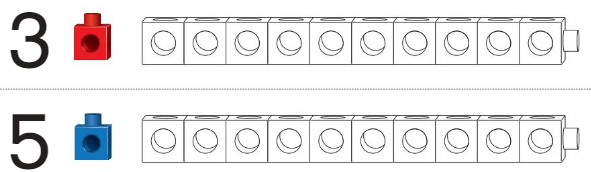
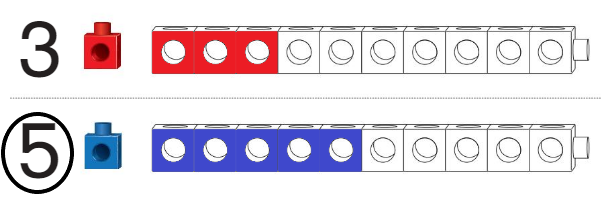
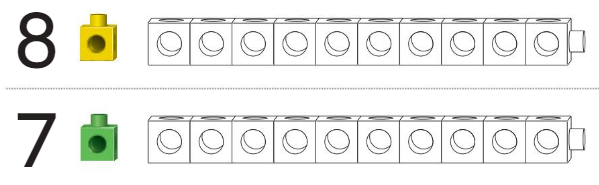
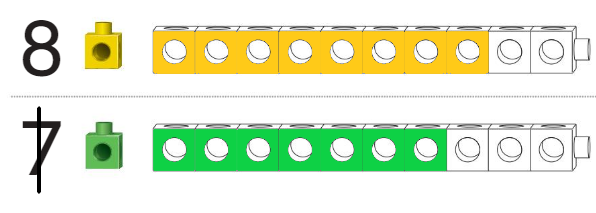
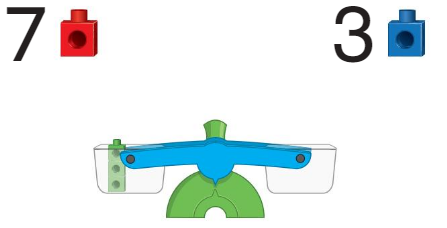
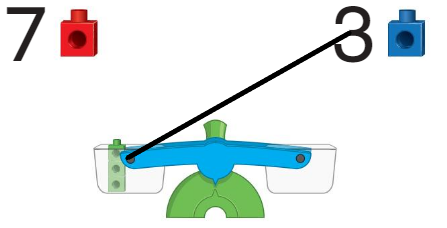
Directions:

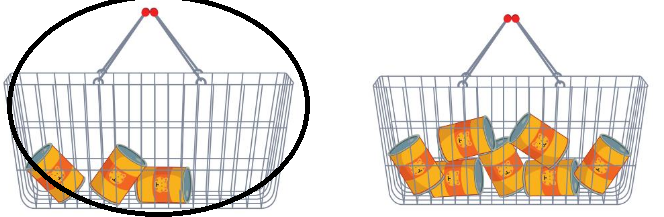
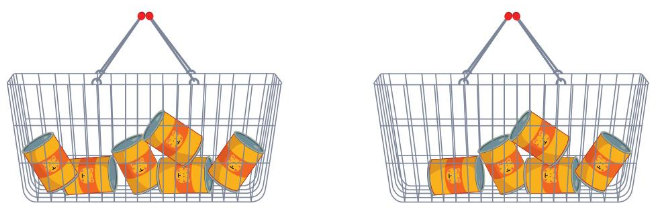
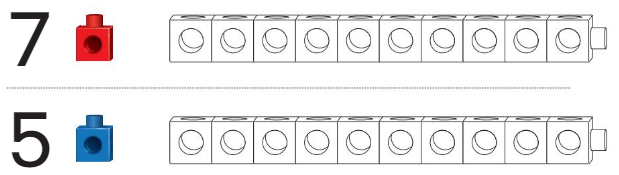
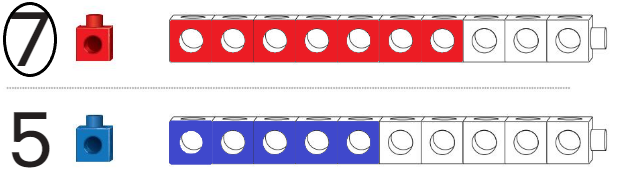
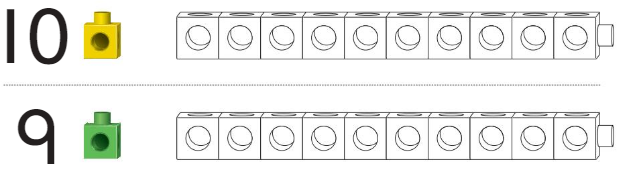
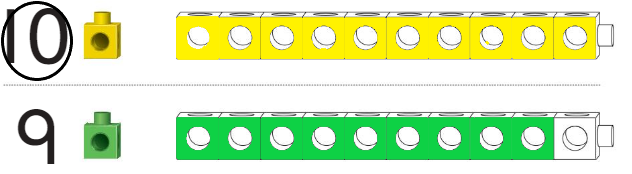
  • Count the objects. Say the number. Write the number.
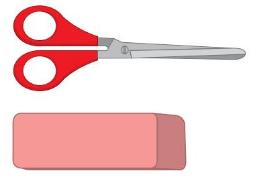
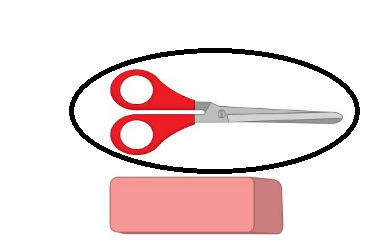
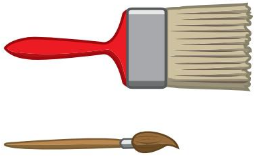
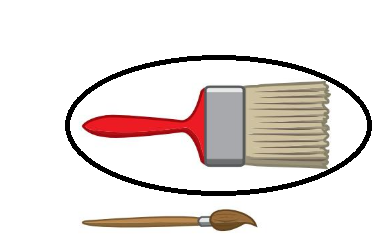
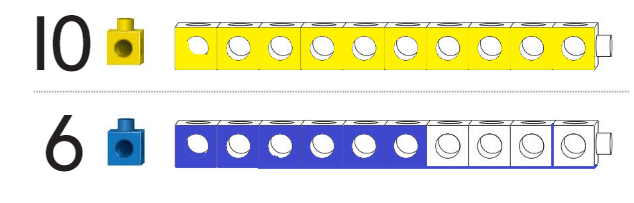
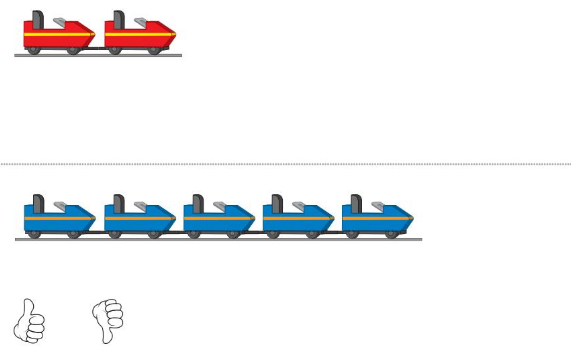
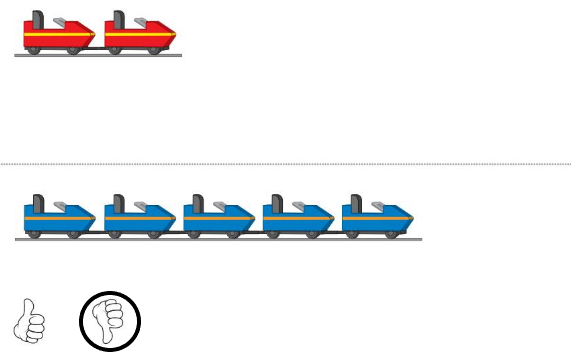
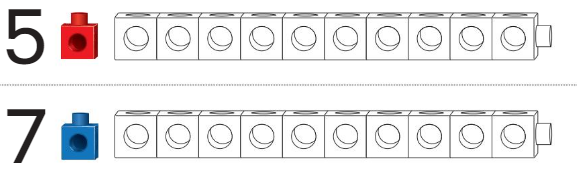
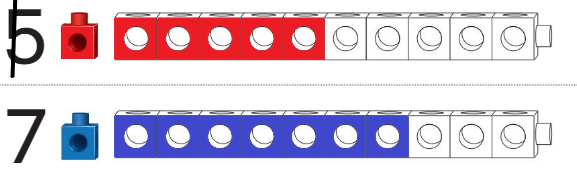
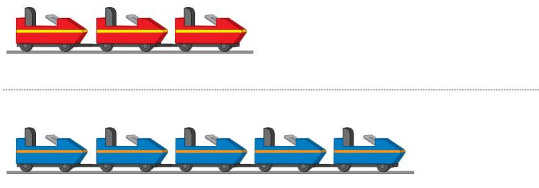
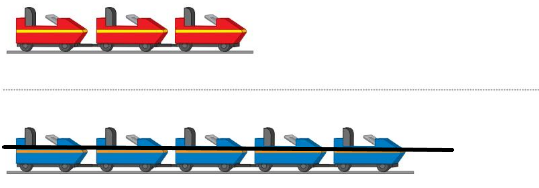
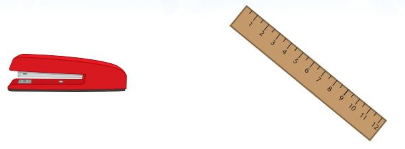
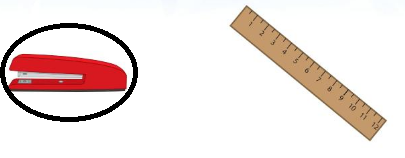
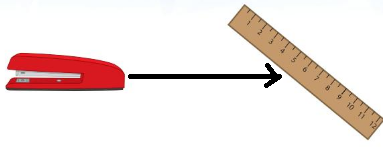
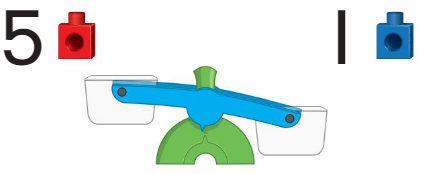
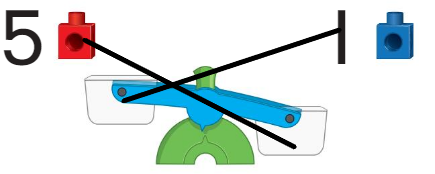
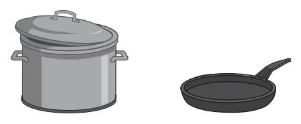
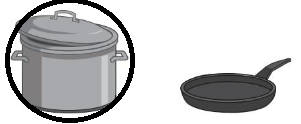
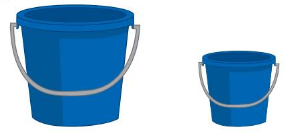
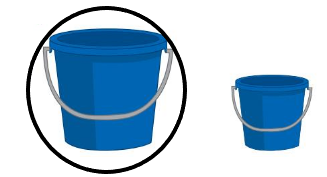
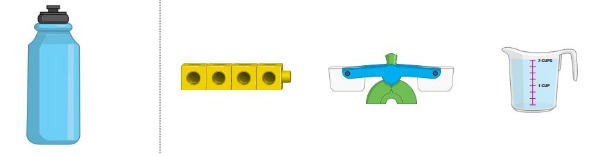
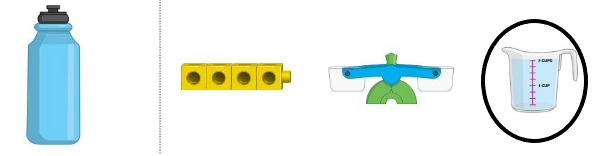
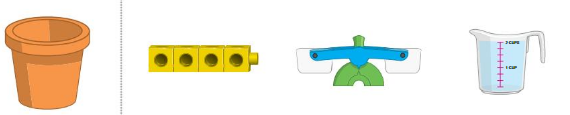
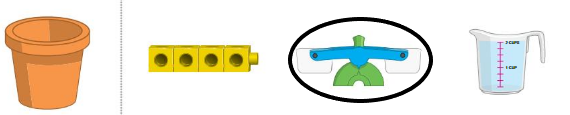
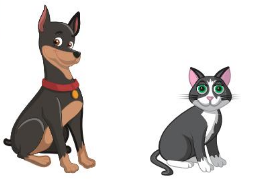
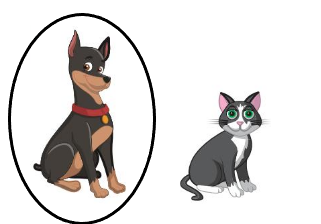
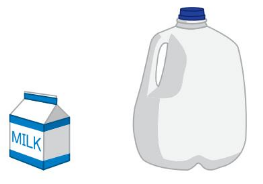
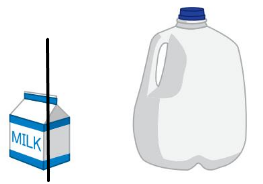
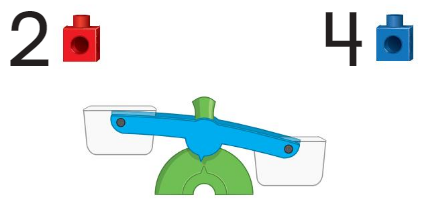
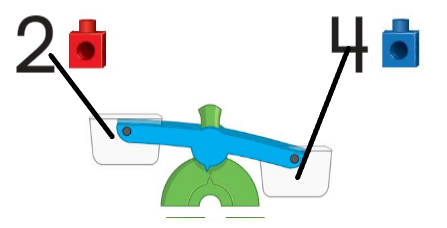
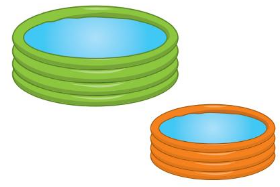
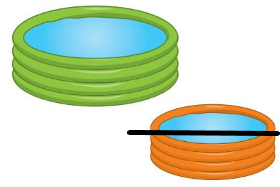
  • Compare the number of lions to the number of cars. Circle the number that is greater than the other number.
    Answer:
    Big-Ideas-Math-Book-Grade-K-Answer-Key-Chapter 3-Count-and-Write-Numbers-6 to 10

Chapter 3 Vocabulary Cards

Big Ideas Math Answers Grade K Chapter 3 Count and Write Numbers 6 to 10 3
Big Ideas Math Answers Grade K Chapter 3 Count and Write Numbers 6 to 10 4

Lesson 3.1 Model and Count 6

Explore and Grow

Big Ideas Math Answer Key Grade K Chapter 3 Count and Write Numbers 6 to 10 5
Directions:
Place 6 counters on the parking lot. Slide the counters to the frame.
Answer:
Big-Ideas-Math-Book-Grade-K-Answer-Key-Chapter 3-Count-and-Write-Numbers-6 to 10-Lesson 3.1 Model and Count 6

Think and Grow
Big Ideas Math Answer Key Grade K Chapter 3 Count and Write Numbers 6 to 10 6
Answer:
Big-Ideas-Math-Book-Grade-K-Answer-Key-Chapter 3-Count-and-Write-Numbers-6 to 10-Lesson 3.1 -Think and Grow

Directions:
Count the objects. Color the boxes to show how many.

Apply and Grow: Practice

Question 1.
Big Ideas Math Answer Key Grade K Chapter 3 Count and Write Numbers 6 to 10 7
Answer:
There are 6 objects
Big-Ideas-Math-Book-Grade-K-Answer-Key-Chapter 3-Count-and-Write-Numbers-6 to 10-Lesson 3.1 -Apply and Grow-Practice1.

Question 2.
Big Ideas Math Answer Key Grade K Chapter 3 Count and Write Numbers 6 to 10 8
Answer:
There are 5 objects
Big-Ideas-Math-Book-Grade-K-Answer-Key-Chapter 3-Count-and-Write-Numbers-6 to 10-Lesson 3.1 -Apply and Grow-Practice2.

Question 3.
Big Ideas Math Answer Key Grade K Chapter 3 Count and Write Numbers 6 to 10 9
Answer:
Big-Ideas-Math-Book-Grade-K-Answer-Key-Chapter 3-Count-and-Write-Numbers-6 to 10-Lesson 3.1 -Apply and Grow-Practice3.

Directions:
1 – 3 Count the objects. Color the boxes to show how many.

Think and Grow: Modeling Real Life

Big Ideas Math Answer Key Grade K Chapter 3 Count and Write Numbers 6 to 10 10
Big Ideas Math Answer Key Grade K Chapter 3 Count and Write Numbers 6 to 10 10.1
Directions:
Count the objects in the picture. Color the boxes to show how many.
Answer:
Big-Ideas-Math-Book-Grade-K-Answer-Key-Chapter 3-Count-and-Write-Numbers-6 to 10-Lesson 3.1 -Think and Grow-Modeling Real Life-1

Model and Count 6 Homework & Practice 3.1

Question 1.
Big Ideas Math Answer Key Grade K Chapter 3 Count and Write Numbers 6 to 10 12
Answer:
Big-Ideas-Math-Book-Grade-K-Answer-Key-Chapter 3-Count-and-Write-Numbers-6 to 10-Model and Count 6 Homework & Practice 3.1.1

Question 2.
Big Ideas Math Answer Key Grade K Chapter 3 Count and Write Numbers 6 to 10 13
Answer:
Big-Ideas-Math-Book-Grade-K-Answer-Key-Chapter 3-Count-and-Write-Numbers-6 to 10-Model and Count 6 Homework & Practice 3.1.2

Directions:
1 and 2 Count the objects. Color the boxes to show how many.

Question 3.
Big Ideas Math Answer Key Grade K Chapter 3 Count and Write Numbers 6 to 10 14
Answer:
Big-Ideas-Math-Book-Grade-K-Answer-Key-Chapter 3-Count-and-Write-Numbers-6 to 10-Model and Count 6 Homework & Practice 3.1.3

Question 4.
Big Ideas Math Answer Key Grade K Chapter 3 Count and Write Numbers 6 to 10 15
Answer:
Big-Ideas-Math-Book-Grade-K-Answer-Key-Chapter 3-Count-and-Write-Numbers-6 to 10-Model and Count 6 Homework & Practice 3.1.4

Question 5.
Big Ideas Math Answer Key Grade K Chapter 3 Count and Write Numbers 6 to 10 16
Answer:
Big-Ideas-Math-Book-Grade-K-Answer-Key-Chapter 3-Count-and-Write-Numbers-6 to 10-Model and Count 6 Homework & Practice 3.1.5

Directions:
3 and 4 Count the objects. Color the boxes to show how many. 5 Count the objects in the picture. Color the boxes to show how many.

Lesson 3.2 Understand and Write 6

Explore and Grow

Big Ideas Math Answer Key Grade K Chapter 3 Count and Write Numbers 6 to 10 17
Directions:
Use counters to show how many drums are in the story Music Class. Write how many drums are in the story.

Answer:
Number of Drums in the story = 2

Explanation:
blocks

Think and Grow

Big Ideas Math Answer Key Grade K Chapter 3 Count and Write Numbers 6 to 10 18
Big Ideas Math Answer Key Grade K Chapter 3 Count and Write Numbers 6 to 10 19

Directions:

  • Count the objects. Say the number. Trace and write the number.
  • Count the instruments. Say the number. Write the number.
    Answer:
    Big-Ideas-Math-Book-Grade-K-Answer-Key-Chapter 3-Count-and-Write-Numbers-6 to 10-Lesson 3.1 -Think and GrowBig-Ideas-Math-Book-Grade-K-Answer-Key-Chapter 3-Count-and-Write-Numbers-6 to 10-Lesson 3.1 -Think and Grow...

Apply and Grow: Practice

Question 1.
Big Ideas Math Answer Key Grade K Chapter 3 Count and Write Numbers 6 to 10 20
Answer:
Big-Ideas-Math-Book-Grade-K-Answer-Key-Chapter 3-Count-and-Write-Numbers-6 to 10-Lesson 3.1 -Apply and Grow-Practice.1

Question 2.
Big Ideas Math Answer Key Grade K Chapter 3 Count and Write Numbers 6 to 10 21

Answer:
Big-Ideas-Math-Book-Grade-K-Answer-Key-Chapter 3-Count-and-Write-Numbers-6 to 10-Lesson 3.1 -Apply and Grow-Practice.2

Question 3.
Big Ideas Math Answer Key Grade K Chapter 3 Count and Write Numbers 6 to 10 22

Answer:
Big-Ideas-Math-Book-Grade-K-Answer-Key-Chapter 3-Count-and-Write-Numbers-6 to 10-Lesson 3.1 -Apply and Grow-Practice.3

Directions:
1 – 4 Count the objects. Say the number. Write the number.

Think and Grow: Modeling Real Life

Big Ideas Math Answer Key Grade K Chapter 3 Count and Write Numbers 6 to 10 23
Answer:
Big-Ideas-Math-Book-Grade-K-Answer-Key-Chapter 3-Count-and-Write-Numbers-6 to 10-Lesson 3.1 -Think and Grow-Modeling Real Life

Directions:
Count the instruments in the picture. Say the number. Write the number.

Understand and Write 6 Homework & Practice 3.2

Question 1.
Big Ideas Math Answer Key Grade K Chapter 3 Count and Write Numbers 6 to 10 24
Answer:
Big-Ideas-Math-Book-Grade-K-Answer-Key-Chapter 3-Count-and-Write-Numbers-6 to 10-Lesson 3.1 -Understand and Write 6 Homework & Practice 3.2.1

Question 2.
Big Ideas Math Answer Key Grade K Chapter 3 Count and Write Numbers 6 to 10 25
Answer:
Big-Ideas-Math-Book-Grade-K-Answer-Key-Chapter 3-Count-and-Write-Numbers-6 to 10-Lesson 3.1 -Understand and Write 6 Homework & Practice 3.2.2

Directions:
1 and 2 Count the dots. Say the number. Write the number.

Question 3.
Big Ideas Math Answer Key Grade K Chapter 3 Count and Write Numbers 6 to 10 26
Answer:
Big-Ideas-Math-Book-Grade-K-Answer-Key-Chapter 3-Count-and-Write-Numbers-6 to 10-Lesson 3.1 -Understand and Write 6 Homework & Practice 3.2.3

Question 4.
Big Ideas Math Answer Key Grade K Chapter 3 Count and Write Numbers 6 to 10 27
Answer:
Big-Ideas-Math-Book-Grade-K-Answer-Key-Chapter 3-Count-and-Write-Numbers-6 to 10-Lesson 3.1 -Understand and Write 6 Homework & Practice 3.2.4

Question 5.
Big Ideas Math Answer Key Grade K Chapter 3 Count and Write Numbers 6 to 10 28
Answer:
Big-Ideas-Math-Book-Grade-K-Answer-Key-Chapter 3-Count-and-Write-Numbers-6 to 10-Lesson 3.1 -Understand and Write 6 Homework & Practice 3.2.5

Directions:
3 and 4 Count the objects. Say the number. Write the number. 5 Count the instruments in the picture. Say the number. Write the number.

Lesson 3.3 Model and Count 7

Explore and Grow
Big Ideas Math Answer Key Grade K Chapter 3 Count and Write Numbers 6 to 10 29
Directions:
Place 7 counters in the forest. Slide the counters to the frame.
Answer:
Big-Ideas-Math-Book-Grade-K-Answer-Key-Chapter 3-Count-and-Write-Numbers-6 to 10-Lesson 3.3 Model and Count 7

Think and Grow
Big Ideas Math Answer Key Grade K Chapter 3 Count and Write Numbers 6 to 10 70
Directions:
Count the objects. Color the boxes to show how many.
Answer:
Big-Ideas-Math-Book-Grade-K-Answer-Key-Chapter 3-Count-and-Write-Numbers-6 to 10-Lesson 3.3 Model and Count 7-Think and Grow

Apply and Grow: Practice

Question 1.
Big Ideas Math Answers Grade K Chapter 3 Count and Write Numbers 6 to 10 31
Answer:
Big-Ideas-Math-Book-Grade-K-Answer-Key-Chapter 3-Count-and-Write-Numbers-6 to 10-Lesson 3.3 Model and Count 7-Apply and Grow-Practice1

Question 2.
Big Ideas Math Answers Grade K Chapter 3 Count and Write Numbers 6 to 10 32
Answer:
Big-Ideas-Math-Book-Grade-K-Answer-Key-Chapter 3-Count-and-Write-Numbers-6 to 10-Lesson 3.3 Model and Count 7-Apply and Grow-Practice2

Question 3.
Big Ideas Math Answers Grade K Chapter 3 Count and Write Numbers 6 to 10 33
Answer:
Big-Ideas-Math-Book-Grade-K-Answer-Key-Chapter 3-Count-and-Write-Numbers-6 to 10-Lesson 3.3 Model and Count 7-Apply and Grow-Practice3

Directions:
1 – 3 Count the animals. Color the boxes to show how many.

Think and Grow: Modeling Real Life

Big Ideas Math Answers Grade K Chapter 3 Count and Write Numbers 6 to 10 34
Answer:
Big-Ideas-Math-Book-Grade-K-Answer-Key-Chapter 3-Count-and-Write-Numbers-6 to 10-Lesson 3.3 Model and Count 7-Think and Grow-Modeling Real Life

Directions:
Count the animals in the picture. Color the boxes to show how many.

Model and Count 7 Homework & Practice 3.3

Question 1.
Big Ideas Math Answers Grade K Chapter 3 Count and Write Numbers 6 to 10 36
Answer:
Big-Ideas-Math-Book-Grade-K-Answer-Key-Chapter 3-Count-and-Write-Numbers-6 to 10-Model and Count 7 Homework & Practice 3.3.1

Question 2.
Big Ideas Math Answers Grade K Chapter 3 Count and Write Numbers 6 to 10 37
Answer:
Big-Ideas-Math-Book-Grade-K-Answer-Key-Chapter 3-Count-and-Write-Numbers-6 to 10-Model and Count 7 Homework & Practice 3.3.2

Directions:
1 and 2 Count the animals. Color the boxes to show how many.

Question 3.
Big Ideas Math Answers Grade K Chapter 3 Count and Write Numbers 6 to 10 38
Answer:
Big-Ideas-Math-Book-Grade-K-Answer-Key-Chapter 3-Count-and-Write-Numbers-6 to 10-Model and Count 7 Homework & Practice 3.3.3

Question 4.
Big Ideas Math Answers Grade K Chapter 3 Count and Write Numbers 6 to 10 39
Answer:
Big-Ideas-Math-Book-Grade-K-Answer-Key-Chapter 3-Count-and-Write-Numbers-6 to 10-Model and Count 7 Homework & Practice 3.3.4

Question 5.
Big Ideas Math Answers Grade K Chapter 3 Count and Write Numbers 6 to 10 40
Answer:
Big-Ideas-Math-Book-Grade-K-Answer-Key-Chapter 3-Count-and-Write-Numbers-6 to 10-Model and Count 7 Homework & Practice 3.3.5

Directions:
3 and 4 Count the animals. Color the boxes to show how many. 5 Count the animals in the picture. Color the boxes to show how many.

Lesson 3.4 Understand and Write 7

Explore and Grow

Big Ideas Math Answers Grade K Chapter 3 Count and Write Numbers 6 to 10 41
Directions:
Use counters to show how many raindrops are in the story Rainy Day. Write how many raindrops are in the story.
Answer:
Number of Rain drops in the story = one or 1

Explanation:
Rain drops in the story =
Big-Ideas-Math-Book-Grade-K-Answer-Key-Chapter 3-Count-and-Write-Numbers-6 to 10-Lesson 3.4 Understand and Write 7

Think and Grow

Big Ideas Math Answers Grade K Chapter 3 Count and Write Numbers 6 to 10 42
Answer:
Big-Ideas-Math-Book-Grade-K-Answer-Key-Chapter 3-Count-and-Write-Numbers-6 to 10-Lesson 3.4 Understand and Write 7-Think and Grow
Directions:

  • Count the objects. Say the number. Trace and write the number.
  • Count the objects. Say the number. Write the number.

Apply and Grow: Practice

Question 1.
Big Ideas Math Answers Grade K Chapter 3 Count and Write Numbers 6 to 10 43
Answer:
Big-Ideas-Math-Book-Grade-K-Answer-Key-Chapter 3-Count-and-Write-Numbers-6 to 10-Lesson 3.4-Apply and Grow-Practice1

Question 2.
Big Ideas Math Answers Grade K Chapter 3 Count and Write Numbers 6 to 10 44
Answer:
Big-Ideas-Math-Book-Grade-K-Answer-Key-Chapter 3-Count-and-Write-Numbers-6 to 10-Lesson 3.4-Apply and Grow-Practice2

Question 3.
Big Ideas Math Answers Grade K Chapter 3 Count and Write Numbers 6 to 10 45
Answer:
Big-Ideas-Math-Book-Grade-K-Answer-Key-Chapter 3-Count-and-Write-Numbers-6 to 10-Lesson 3.4-Apply and Grow-Practice3

Question 4.
Big Ideas Math Answers Grade K Chapter 3 Count and Write Numbers 6 to 10 46
Answer:
Big-Ideas-Math-Book-Grade-K-Answer-Key-Chapter 3-Count-and-Write-Numbers-6 to 10-Lesson 3.4-Apply and Grow-Practice4

Directions:
1 – 4 Count the objects. Say the number. Write the number.

Think and Grow: Modeling Real Life

Big Ideas Math Answers Grade K Chapter 3 Count and Write Numbers 6 to 10 47
Answer:
Big-Ideas-Math-Book-Grade-K-Answer-Key-Chapter 3-Count-and-Write-Numbers-6 to 10-Lesson 3.4-Think and Grow-Modeling Real Life

Directions:
Count the objects in the picture. Say the number. Write the number.

Understand and Write 7 Homework & Practice 3.4

Question 1.
Big Ideas Math Answers Grade K Chapter 3 Count and Write Numbers 6 to 10 48
Answer:
Big-Ideas-Math-Book-Grade-K-Answer-Key-Chapter 3-Count-and-Write-Numbers-6 to 10-Lesson 3.4-Understand and Write 7 Homework & Practice 3.4.1

Question 2.
Big Ideas Math Answers Grade K Chapter 3 Count and Write Numbers 6 to 10 49
Answer:
Big-Ideas-Math-Book-Grade-K-Answer-Key-Chapter 3-Count-and-Write-Numbers-6 to 10-Lesson 3.4-Understand and Write 7 Homework & Practice 3.4.2

Directions:
1 and 2 Count the dots. Say the number. Write the number.

Question 3.
Big Ideas Math Answers Grade K Chapter 3 Count and Write Numbers 6 to 10 50
Answer:
Big-Ideas-Math-Book-Grade-K-Answer-Key-Chapter 3-Count-and-Write-Numbers-6 to 10-Lesson 3.4-Understand and Write 7 Homework & Practice 3.4.3

Question 4.
Big Ideas Math Answers Grade K Chapter 3 Count and Write Numbers 6 to 10 51
Answer:
Big-Ideas-Math-Book-Grade-K-Answer-Key-Chapter 3-Count-and-Write-Numbers-6 to 10-Lesson 3.4-Understand and Write 7 Homework & Practice 3.4.4

Question 5.
Big Ideas Math Answers Grade K Chapter 3 Count and Write Numbers 6 to 10 52
Answer:
Big-Ideas-Math-Book-Grade-K-Answer-Key-Chapter 3-Count-and-Write-Numbers-6 to 10-Lesson 3.4-Understand and Write 7 Homework & Practice 3.4.5

Directions:
3 and 4 Count the objects. Say the number. Write the number. 5 Count the objects in the picture. Say the number. Write the number.

Lesson 3.5 Model and Count 8

Explore and Grow

Big Ideas Math Answers Grade K Chapter 3 Count and Write Numbers 6 to 10 53
Answer:
Big-Ideas-Math-Book-Grade-K-Answer-Key-Chapter 3-Count-and-Write-Numbers-6 to 10-Lesson 3.4-Lesson 3.5 Model and Count 8

Directions:
Place 8 counters in the desert. Slide the counters to the frame.

Think and Grow

Big Ideas Math Answers Grade K Chapter 3 Count and Write Numbers 6 to 10 54

Big Ideas Math Answers Grade K Chapter 3 Count and Write Numbers 6 to 10 55
Answer:
Big-Ideas-Math-Book-Grade-K-Answer-Key-Chapter 3-Count-and-Write-Numbers-6 to 10-Lesson 3.5 Model and Count 8-Think and Grow

Directions:
Count the objects. Color the boxes to show how many.

Apply and Grow: Practice

Question 1.
Big Ideas Math Answers Grade K Chapter 3 Count and Write Numbers 6 to 10 57.1
Answer:
Big-Ideas-Math-Book-Grade-K-Answer-Key-Chapter 3-Count-and-Write-Numbers-6 to 10-Lesson 3.5 Model and Count 8-Apply and Grow-Practice1

Question 2.
Big Ideas Math Answers Grade K Chapter 3 Count and Write Numbers 6 to 10 57.2
Answer:
Big-Ideas-Math-Book-Grade-K-Answer-Key-Chapter 3-Count-and-Write-Numbers-6 to 10-Lesson 3.5 Model and Count 8-Apply and Grow-Practice2

Question 3.
Big Ideas Math Answers Grade K Chapter 3 Count and Write Numbers 6 to 10 57.3
Answer:
Big-Ideas-Math-Book-Grade-K-Answer-Key-Chapter 3-Count-and-Write-Numbers-6 to 10-Lesson 3.5 Model and Count 8-Apply and Grow-Practice3

Directions:
1 – 3 Count the objects. Color the boxes to show how many.

Think and Grow: Modeling Real Life

Big Ideas Math Answers Grade K Chapter 3 Count and Write Numbers 6 to 10 58
Answer:
Big-Ideas-Math-Book-Grade-K-Answer-Key-Chapter 3-Count-and-Write-Numbers-6 to 10-Lesson 3.5-Think and Grow-Modeling Real Life
Directions:
Count the objects in the picture. Color the boxes to show how many.

Model and Count 8 Homework & Practice 3.5

Question 1.
Big Ideas Math Answers Grade K Chapter 3 Count and Write Numbers 6 to 10 59
Answer:
Big-Ideas-Math-Book-Grade-K-Answer-Key-Chapter 3-Count-and-Write-Numbers-6 to 10-Lesson 3.5-Model and Count 8 Homework & Practice 3.5.1

Question 2.
Big Ideas Math Answers Grade K Chapter 3 Count and Write Numbers 6 to 10 60
Answer:
Big-Ideas-Math-Book-Grade-K-Answer-Key-Chapter 3-Count-and-Write-Numbers-6 to 10-Lesson 3.5-Model and Count 8 Homework & Practice 3.5.2

Directions:
1 and 2 Count the objects. Color the boxes to show how many.

Question 3.
Big Ideas Math Answer Key Grade K Chapter 3 Count and Write Numbers 6 to 10 61
Answer:
Big-Ideas-Math-Book-Grade-K-Answer-Key-Chapter 3-Count-and-Write-Numbers-6 to 10-Lesson 3.5-Model and Count 8 Homework & Practice 3.5.3

Question 4.
Big Ideas Math Answer Key Grade K Chapter 3 Count and Write Numbers 6 to 10 62
Answer:
Big-Ideas-Math-Book-Grade-K-Answer-Key-Chapter 3-Count-and-Write-Numbers-6 to 10-Lesson 3.5-Model and Count 8 Homework & Practice 3.5.4

Question 5.
Big Ideas Math Answer Key Grade K Chapter 3 Count and Write Numbers 6 to 10 63
Answer:
Big-Ideas-Math-Book-Grade-K-Answer-Key-Chapter 3-Count-and-Write-Numbers-6 to 10-Lesson 3.5-Model and Count 8 Homework & Practice 3.5.5

Directions:
3 and 4 Count the objects. Color the boxes to show how many. 5 Count the objects in the picture. Color the boxes to show how many.

Lesson 3.6 Understand and Write 8

Explore and Grow

Big Ideas Math Answer Key Grade K Chapter 3 Count and Write Numbers 6 to 10 65
Answer:
There are zero bugs on the Ladybug in the story….

Explanation:
Big-Ideas-Math-Book-Grade-K-Answer-Key-Chapter 3-Count-and-Write-Numbers-6 to 10-Lesson 3.6 Understand and Write 8
Directions:
Use counters to show how many spots are on the ladybug in the story Bugs, Bugs, Bugs. Write how many spots are on the ladybug.

Think and Grow

Big Ideas Math Answer Key Grade K Chapter 3 Count and Write Numbers 6 to 10 66

Big Ideas Math Answer Key Grade K Chapter 3 Count and Write Numbers 6 to 10 67
Answer:
Big-Ideas-Math-Book-Grade-K-Answer-Key-Chapter 3-Count-and-Write-Numbers-6 to 10-Lesson 3.6 -Think and Grow
Big-Ideas-Math-Book-Grade-K-Answer-Key-Chapter 3-Count-and-Write-Numbers-6 to 10-Lesson 3.6 -Think and Grow...

Directions:

  • Count the objects. Say the number. Trace and write the number.
  • Count the bugs. Say the number. Write the number.

Apply and Grow: Practice

Question 1.
Big Ideas Math Answer Key Grade K Chapter 3 Count and Write Numbers 6 to 10 69
Answer:
Big-Ideas-Math-Book-Grade-K-Answer-Key-Chapter 3-Count-and-Write-Numbers-6 to 10-Lesson 3.6 -Apply and Grow-Practice1

Question 2.
Big Ideas Math Answer Key Grade K Chapter 3 Count and Write Numbers 6 to 10 700
Answer:
Big-Ideas-Math-Book-Grade-K-Answer-Key-Chapter 3-Count-and-Write-Numbers-6 to 10-Lesson 3.6 -Apply and Grow-Practice2

Question 3.
Big Ideas Math Answer Key Grade K Chapter 3 Count and Write Numbers 6 to 10 71
Answer:
Big-Ideas-Math-Book-Grade-K-Answer-Key-Chapter 3-Count-and-Write-Numbers-6 to 10-Lesson 3.6 -Apply and Grow-Practice3

Question 4.
Big Ideas Math Answer Key Grade K Chapter 3 Count and Write Numbers 6 to 10 72
Answer:
Big-Ideas-Math-Book-Grade-K-Answer-Key-Chapter 3-Count-and-Write-Numbers-6 to 10-Lesson 3.6 -Apply and Grow-Practice4

Directions:
1 – 4 Count the objects. Say the number. Write the number.

Think and Grow: Modeling Real Life

Big Ideas Math Answer Key Grade K Chapter 3 Count and Write Numbers 6 to 10 73
Answer:
Big-Ideas-Math-Book-Grade-K-Answer-Key-Chapter 3-Count-and-Write-Numbers-6 to 10-Lesson 3.6 -Think and Grow-Modeling Real Life

Directions:
Count the objects in the picture. Say the number. Write the number.

Understand and Write 8 Homework & Practice 3.6

Question 1.
Big Ideas Math Answer Key Grade K Chapter 3 Count and Write Numbers 6 to 10 74
Answer:
Big-Ideas-Math-Book-Grade-K-Answer-Key-Chapter 3-Count-and-Write-Numbers-6 to 10-Lesson 3.6 -Understand and Write 8 Homework & Practice 3.6.1

Question 2.
Big Ideas Math Answer Key Grade K Chapter 3 Count and Write Numbers 6 to 10 75
Answer:
Big-Ideas-Math-Book-Grade-K-Answer-Key-Chapter 3-Count-and-Write-Numbers-6 to 10-Lesson 3.6 -Understand and Write 8 Homework & Practice 3.6.2

Directions:
1 and 2 Count the dots. Say the number. Write the number.

Question 3.
Big Ideas Math Answer Key Grade K Chapter 3 Count and Write Numbers 6 to 10 76
Answer:
Big-Ideas-Math-Book-Grade-K-Answer-Key-Chapter 3-Count-and-Write-Numbers-6 to 10-Lesson 3.6 -Understand and Write 8 Homework & Practice 3.6.3

Question 4.
Big Ideas Math Answer Key Grade K Chapter 3 Count and Write Numbers 6 to 10 77
Answer:
Big-Ideas-Math-Book-Grade-K-Answer-Key-Chapter 3-Count-and-Write-Numbers-6 to 10-Lesson 3.6 -Understand and Write 8 Homework & Practice 3.6.4

Question 5.
Big Ideas Math Answer Key Grade K Chapter 3 Count and Write Numbers 6 to 10 78
Answer:
Big-Ideas-Math-Book-Grade-K-Answer-Key-Chapter 3-Count-and-Write-Numbers-6 to 10-Lesson 3.6 -Understand and Write 8 Homework & Practice 3.6.5

Directions:
3 and 4 Count the objects. Say the number. Write the number. 5 Count the objects in the picture. Say the number. Write the number.

Lesson 3.7 Model and Count 9

Explore and Grow

Big Ideas Math Answer Key Grade K Chapter 3 Count and Write Numbers 6 to 10 79
Answer:
Big-Ideas-Math-Book-Grade-K-Answer-Key-Chapter 3-Count-and-Write-Numbers-6 to 10-Lesson 3.7 Model and Count 9

Directions:
Place 9 counters on the beach. Slide the counters to the frame.

Think and Grow

Big Ideas Math Answer Key Grade K Chapter 3 Count and Write Numbers 6 to 10 80
Answer:
Big-Ideas-Math-Book-Grade-K-Answer-Key-Chapter 3-Count-and-Write-Numbers-6 to 10-Lesson 3.7 Model and Count 9-Think and Grow

Directions:
Count the objects. Color the boxes to show how many.

Apply and Grow: Practice

Question 1.
Big Ideas Math Answer Key Grade K Chapter 3 Count and Write Numbers 6 to 10 83
Answer:
Big-Ideas-Math-Book-Grade-K-Answer-Key-Chapter 3-Count-and-Write-Numbers-6 to 10-Lesson 3.7 Model and Count 9-Apply and Grow-Practice1

Question 2.
Big Ideas Math Answer Key Grade K Chapter 3 Count and Write Numbers 6 to 10 84
Answer:
Big-Ideas-Math-Book-Grade-K-Answer-Key-Chapter 3-Count-and-Write-Numbers-6 to 10-Lesson 3.7 Model and Count 9-Apply and Grow-Practice2

Question 3.
Big Ideas Math Answer Key Grade K Chapter 3 Count and Write Numbers 6 to 10 85
Answer:
Big-Ideas-Math-Book-Grade-K-Answer-Key-Chapter 3-Count-and-Write-Numbers-6 to 10-Lesson 3.7 Model and Count 9-Apply and Grow-Practice3

Directions:
1 – 3 Count the objects. Color the boxes to show how many.

Think and Grow: Modeling Real Life

Big Ideas Math Answer Key Grade K Chapter 3 Count and Write Numbers 6 to 10 86
Big Ideas Math Answer Key Grade K Chapter 3 Count and Write Numbers 6 to 10 87
Answer:
Big-Ideas-Math-Book-Grade-K-Answer-Key-Chapter 3-Count-and-Write-Numbers-6 to 10-Lesson 3.7 Model and Count 9-Think and Grow-Modeling Real Life

Directions:
Count the objects in the picture. Color the boxes to show how many.

Model and Count 9 Homework & Practice 3.7

Question 1.
Big Ideas Math Answer Key Grade K Chapter 3 Count and Write Numbers 6 to 10 89
Answer:
Big-Ideas-Math-Book-Grade-K-Answer-Key-Chapter 3-Count-and-Write-Numbers-6 to 10-Lesson 3.7 Model and Count 9-Model and Count 9 Homework & Practice 3.7.1

Question 2.

Big Ideas Math Answer Key Grade K Chapter 3 Count and Write Numbers 6 to 10 90
Answer:
Big-Ideas-Math-Book-Grade-K-Answer-Key-Chapter 3-Count-and-Write-Numbers-6 to 10-Lesson 3.7 Model and Count 9-Model and Count 9 Homework & Practice 3.7.2

Directions:
1 and 2 Count the objects. Color the boxes to show how many.

Question 3.
Big Ideas Math Answer Key Grade K Chapter 3 Count and Write Numbers 6 to 10 91
Answer:
Big-Ideas-Math-Book-Grade-K-Answer-Key-Chapter 3-Count-and-Write-Numbers-6 to 10-Lesson 3.7 Model and Count 9-Model and Count 9 Homework & Practice 3.7.3

Question 4.
Big Ideas Math Answer Key Grade K Chapter 3 Count and Write Numbers 6 to 10 92
Answer:
Big-Ideas-Math-Book-Grade-K-Answer-Key-Chapter 3-Count-and-Write-Numbers-6 to 10-Lesson 3.7 Model and Count 9-Model and Count 9 Homework & Practice 3.7.4

Question 5.
Big Ideas Math Answer Key Grade K Chapter 3 Count and Write Numbers 6 to 10 93
Answer:
Big-Ideas-Math-Book-Grade-K-Answer-Key-Chapter 3-Count-and-Write-Numbers-6 to 10-Lesson 3.7 Model and Count 9-Model and Count 9 Homework & Practice 3.7.5

Directions:
3 and 4 Count the objects. Color the boxes to show how many. 5 Count the animals in the picture. Color the boxes to show how many.

Lesson 3.8 Understand and Write 9

Explore and Grow

Big Ideas Math Answer Key Grade K Chapter 3 Count and Write Numbers 6 to 10 94

Directions:
Use counters to show how many baseballs are in the story My Baseball Game. Write how many baseballs are in the story.
Answer:
Number of balls in the story My Baseball Game = One or 1.

Explanation:
Big-Ideas-Math-Book-Grade-K-Answer-Key-Chapter 3-Count-and-Write-Numbers-6 to 10-Lesson 3.7 Model and Count 9-Lesson 3.8 Understand and Write 9

Think and Grow

Big Ideas Math Answer Key Grade K Chapter 3 Count and Write Numbers 6 to 10 95

Big Ideas Math Answer Key Grade K Chapter 3 Count and Write Numbers 6 to 10 96
Answer:
Big-Ideas-Math-Book-Grade-K-Answer-Key-Chapter 3-Count-and-Write-Numbers-6 to 10-Lesson 3.7 Model and Count 9-Lesson 3.8 Understand and Write 9-Think and Grow

Big-Ideas-Math-Book-Grade-K-Answer-Key-Chapter 3-Count-and-Write-Numbers-6 to 10-Lesson 3.7 Model and Count 9-Lesson 3.8 Understand and Write 9-Think and Grow....

Directions:

  • Count the objects. Say the number. Trace and write the number.
  • Count the objects. Say the number. Write the number.

Apply and Grow: Practice

Question 1.
Big Ideas Math Answer Key Grade K Chapter 3 Count and Write Numbers 6 to 10 97
Answer:
Big-Ideas-Math-Book-Grade-K-Answer-Key-Chapter 3-Count-and-Write-Numbers-6 to 10-Lesson-Lesson 3.8 Understand and Write 9-Apply and Grow-Practice1

Question 2.
Big Ideas Math Answer Key Grade K Chapter 3 Count and Write Numbers 6 to 10 97.1
Answer:
Big-Ideas-Math-Book-Grade-K-Answer-Key-Chapter 3-Count-and-Write-Numbers-6 to 10-Lesson-Lesson 3.8 Understand and Write 9-Apply and Grow-Practice2

Question 3.
Big Ideas Math Answer Key Grade K Chapter 3 Count and Write Numbers 6 to 10 97.2
Answer:
Big-Ideas-Math-Book-Grade-K-Answer-Key-Chapter 3-Count-and-Write-Numbers-6 to 10-Lesson-Lesson 3.8 Understand and Write 9-Apply and Grow-Practice3

Question 4.
Big Ideas Math Answer Key Grade K Chapter 3 Count and Write Numbers 6 to 10 97.3
Answer:
Big-Ideas-Math-Book-Grade-K-Answer-Key-Chapter 3-Count-and-Write-Numbers-6 to 10-Lesson-Lesson 3.8 Understand and Write 9-Apply and Grow-Practice4

Directions:
1 – 4 Count the objects. Say the number. Write the number.

Think and Grow: Modeling Real Life
Big Ideas Math Answer Key Grade K Chapter 3 Count and Write Numbers 6 to 10 98
Answer:
Big-Ideas-Math-Book-Grade-K-Answer-Key-Chapter 3-Count-and-Write-Numbers-6 to 10-Lesson-Lesson 3.8 Understand and Write 9-Think and Grow-Modeling Real Life
Directions:
Count the balls in the picture. Say the number. Write the number.

Understand and Write 9 Homework & Practice 3.8

Question 1.
Big Ideas Math Answer Key Grade K Chapter 3 Count and Write Numbers 6 to 10 99
Answer:
Big-Ideas-Math-Book-Grade-K-Answer-Key-Chapter 3-Count-and-Write-Numbers-6 to 10-Lesson-Lesson 3.8 Understand and Write 9-Understand and Write 9 Homework & Practice 3.8.1

Question 2.
Big Ideas Math Answer Key Grade K Chapter 3 Count and Write Numbers 6 to 10 100
Answer:
Big-Ideas-Math-Book-Grade-K-Answer-Key-Chapter 3-Count-and-Write-Numbers-6 to 10-Lesson-Lesson 3.8 Understand and Write 9-Understand and Write 9 Homework & Practice 3.8.2

Directions:
1 and 2 Count the dots. Say the number. Write the number.

Question 3.
Big Ideas Math Answer Key Grade K Chapter 3 Count and Write Numbers 6 to 10 101
Answer:
Big-Ideas-Math-Book-Grade-K-Answer-Key-Chapter 3-Count-and-Write-Numbers-6 to 10-Lesson-Lesson 3.8 Understand and Write 9-Understand and Write 9 Homework & Practice 3.8.3

Question 4.
Big Ideas Math Answer Key Grade K Chapter 3 Count and Write Numbers 6 to 10 102
Answer:
Big-Ideas-Math-Book-Grade-K-Answer-Key-Chapter 3-Count-and-Write-Numbers-6 to 10-Lesson-Lesson 3.8 Understand and Write 9-Understand and Write 9 Homework & Practice 3.8.4

Question 5.
Big Ideas Math Answer Key Grade K Chapter 3 Count and Write Numbers 6 to 10 103
Answer:
Big-Ideas-Math-Book-Grade-K-Answer-Key-Chapter 3-Count-and-Write-Numbers-6 to 10-Lesson-Lesson 3.8 Understand and Write 9-Understand and Write 9 Homework & Practice 3.8.5

Directions:
3 and 4 Count the objects. Say the number. Write the number. 5 Count the bowling balls in the picture. Say the number. Write the number.

Lesson 3.9 Model and Count 10

Explore and Grow

Big Ideas Math Answer Key Grade K Chapter 3 Count and Write Numbers 6 to 10 104
Answer:
Big-Ideas-Math-Book-Grade-K-Answer-Key-Chapter 3-Count-and-Write-Numbers-6 to 10-Lesson-Lesson 3.9 Model and Count 10

Directions:
Place 10 counters in the soil. Slide the counters to the frame.

Think and Grow

Big Ideas Math Answer Key Grade K Chapter 3 Count and Write Numbers 6 to 10 105

Big Ideas Math Answer Key Grade K Chapter 3 Count and Write Numbers 6 to 10 106
Answer:
Big-Ideas-Math-Book-Grade-K-Answer-Key-Chapter 3-Count-and-Write-Numbers-6 to 10-Lesson-Lesson 3.9 Model and Count 10-Think and Grow

Directions:
Count the objects. Color the boxes to show how many.

Apply and Grow: Practice

Question 1.
Big Ideas Math Answer Key Grade K Chapter 3 Count and Write Numbers 6 to 10 107
Answer:
Big-Ideas-Math-Book-Grade-K-Answer-Key-Chapter 3-Count-and-Write-Numbers-6 to 10-Lesson-Lesson 3.9 Model and Count 10-Apply and Grow-Practice1

Question 2.
Big Ideas Math Answer Key Grade K Chapter 3 Count and Write Numbers 6 to 10 108
Answer:
Big-Ideas-Math-Book-Grade-K-Answer-Key-Chapter 3-Count-and-Write-Numbers-6 to 10-Lesson-Lesson 3.9 Model and Count 10-Apply and Grow-Practice2

Question 3.
Big Ideas Math Answer Key Grade K Chapter 3 Count and Write Numbers 6 to 10 109
Answer:
Big-Ideas-Math-Book-Grade-K-Answer-Key-Chapter 3-Count-and-Write-Numbers-6 to 10-Lesson-Lesson 3.9 Model and Count 10-Apply and Grow-Practice3

Directions:
1 – 3 Count the objects. Color the boxes to show how many.

Think and Grow: Modeling Real Life

Big Ideas Math Answer Key Grade K Chapter 3 Count and Write Numbers 6 to 10 110
Answer:
Big-Ideas-Math-Book-Grade-K-Answer-Key-Chapter 3-Count-and-Write-Numbers-6 to 10-Lesson-Lesson 3.9 Model and Count 10-Think and Grow-Modeling Real Life

Directions:
Count the objects in the picture. Color the boxes to show how many.

Model and Count 10 Homework & Practice 3.9

Question 1.
Big Ideas Math Answer Key Grade K Chapter 3 Count and Write Numbers 6 to 10 111
Answer:
Big-Ideas-Math-Book-Grade-K-Answer-Key-Chapter 3-Count-and-Write-Numbers-6 to 10-Lesson-Lesson 3.9 Model and Count 10-Model and Count 10 Homework & Practice 3.9.1

Question 2.
Big Ideas Math Answer Key Grade K Chapter 3 Count and Write Numbers 6 to 10 112
Answer:
Big-Ideas-Math-Book-Grade-K-Answer-Key-Chapter 3-Count-and-Write-Numbers-6 to 10-Lesson-Lesson 3.9 Model and Count 10-Model and Count 10-Homework & Practice 3.9.2

Directions:
1 and 2 Count the objects. Color the boxes to show how many.

Question 3.
Big Ideas Math Answer Key Grade K Chapter 3 Count and Write Numbers 6 to 10 113
Answer:
Big-Ideas-Math-Book-Grade-K-Answer-Key-Chapter 3-Count-and-Write-Numbers-6 to 10-Lesson-Lesson 3.9 Model and Count 10-Model and Count 10-Homework & Practice 3.9.3

Question 4.
Big Ideas Math Answer Key Grade K Chapter 3 Count and Write Numbers 6 to 10 114
Answer:
Big-Ideas-Math-Book-Grade-K-Answer-Key-Chapter 3-Count-and-Write-Numbers-6 to 10-Lesson-Lesson 3.9 Model and Count 10-Model and Count 10-Homework & Practice 3.9.4

Question 5.
Big Ideas Math Answer Key Grade K Chapter 3 Count and Write Numbers 6 to 10 115
Answer:
Big-Ideas-Math-Book-Grade-K-Answer-Key-Chapter 3-Count-and-Write-Numbers-6 to 10-Lesson-Lesson 3.9 Model and Count 10-Model and Count 10-Homework & Practice 3.9.5

Directions:
3 and 4 Count the objects. Color the boxes to show how many. 5 Count the objects in the picture. Color the boxes to show how many.

Lesson 3.10 Understand and Write 10

Explore and Grow
Big Ideas Math Answer Key Grade K Chapter 3 Count and Write Numbers 6 to 10 116
Answer:
Number of Star fishes in the story In the water = One or 1.

Explanation:
Big-Ideas-Math-Book-Grade-K-Answer-Key-Chapter 3-Count-and-Write-Numbers-6 to 10-Lesson-Lesson 3.10 Understand and Write 10
Directions:
Use counters to show how many starfish are in the story In the Water. Write how many starfish are in the story.

Think and Grow

Big Ideas Math Answer Key Grade K Chapter 3 Count and Write Numbers 6 to 10 117
Answer:
Big-Ideas-Math-Book-Grade-K-Answer-Key-Chapter 3-Count-and-Write-Numbers-6 to 10-Lesson-Lesson 3.10 Understand and Write 10-Think and Grow

Directions:

  • Count the objects. Say the number. Trace and write the number.
  • Count the sea creatures. Say the number. Write the number.

Apply and Grow: Practice

Question 1.
Big Ideas Math Answer Key Grade K Chapter 3 Count and Write Numbers 6 to 10 119
Answer:
Big-Ideas-Math-Book-Grade-K-Answer-Key-Chapter 3-Count-and-Write-Numbers-6 to 10-Lesson-Lesson 3.10 Understand and Write 10-Apply and Grow-Practice1

Question 2.
Big Ideas Math Answer Key Grade K Chapter 3 Count and Write Numbers 6 to 10 120
Answer:
Big-Ideas-Math-Book-Grade-K-Answer-Key-Chapter 3-Count-and-Write-Numbers-6 to 10-Lesson-Lesson 3.10 Understand and Write 10-Apply and Grow-Practice2

Question 3.
Big Ideas Math Answer Key Grade K Chapter 3 Count and Write Numbers 6 to 10 121
Answer:
Big-Ideas-Math-Book-Grade-K-Answer-Key-Chapter 3-Count-and-Write-Numbers-6 to 10-Lesson-Lesson 3.10 Understand and Write 10-Apply and Grow-Practice3

Question 4.
Big Ideas Math Answer Key Grade K Chapter 3 Count and Write Numbers 6 to 10 122
Answer:
Big-Ideas-Math-Book-Grade-K-Answer-Key-Chapter 3-Count-and-Write-Numbers-6 to 10-Lesson-Lesson 3.10 Understand and Write 10-Apply and Grow-Practice4

Directions:
1 – 4 Count the objects. Say the number. Write the number.

Think and Grow: Modeling Real Life

Big Ideas Math Answer Key Grade K Chapter 3 Count and Write Numbers 6 to 10 123
Answer:
Big-Ideas-Math-Book-Grade-K-Answer-Key-Chapter 3-Count-and-Write-Numbers-6 to 10-Lesson-Lesson 3.10 Understand and Write 10-Think and Grow-Modeling Real Life

Directions:
Count the sea creatures in the picture. Say the number. Write the number.

Understand and Write 10 Homework & Practice 3.10

Question 1.
Big Ideas Math Answer Key Grade K Chapter 3 Count and Write Numbers 6 to 10 124
Answer:
Big-Ideas-Math-Book-Grade-K-Answer-Key-Chapter 3-Count-and-Write-Numbers-6 to 10-Lesson-Lesson 3.10 Understand and Write 10-Understand and Write 10 Homework & Practice 3.10.1

Question 2.
Big Ideas Math Answer Key Grade K Chapter 3 Count and Write Numbers 6 to 10 125
Answer:
Big-Ideas-Math-Book-Grade-K-Answer-Key-Chapter 3-Count-and-Write-Numbers-6 to 10-Lesson-Lesson 3.10 Understand and Write 10-Understand and Write 10 Homework & Practice 3.10.2

Directions:
1 and 2 Count the dots. Say the number. Write the number.

Question 3.
Big Ideas Math Answer Key Grade K Chapter 3 Count and Write Numbers 6 to 10 126
Answer:
Big-Ideas-Math-Book-Grade-K-Answer-Key-Chapter 3-Count-and-Write-Numbers-6 to 10-Lesson-Lesson 3.10 Understand and Write 10-Understand and Write 10 Homework & Practice 3.10.3

Question 4.
Big Ideas Math Answer Key Grade K Chapter 3 Count and Write Numbers 6 to 10 127
Answer:
Big-Ideas-Math-Book-Grade-K-Answer-Key-Chapter 3-Count-and-Write-Numbers-6 to 10-Lesson-Lesson 3.10 Understand and Write 10-Understand and Write 10 Homework & Practice 3.10.4

Question 5.
Big Ideas Math Answer Key Grade K Chapter 3 Count and Write Numbers 6 to 10 128
Answer:
Big-Ideas-Math-Book-Grade-K-Answer-Key-Chapter 3-Count-and-Write-Numbers-6 to 10-Lesson-Lesson 3.10 Understand and Write 10-Understand and Write 10 Homework & Practice 3.10.5

Directions:
3 and 4 Count the objects. Say the number. Write the number. 5 Count the sea creatures in the picture. Say the number. Write the number.

Lesson 3.11 Count and Order Numbers to 10

Explore and Grow

Big Ideas Math Answer Key Grade K Chapter 3 Count and Write Numbers 6 to 10 129
Answer:
Big-Ideas-Math-Book-Grade-K-Answer-Key-Chapter 3-Count-and-Write-Numbers-6 to 10-Lesson-Lesson 3.10 Understand and Write 10-Lesson 3.11 Count and Order Numbers to 10

Directions:
Place counters in the ten frame as you count forward to 10. Trace and write the missing numbers.

Think and Grow

Big Ideas Math Answer Key Grade K Chapter 3 Count and Write Numbers 6 to 10 130
Answer:
Big-Ideas-Math-Book-Grade-K-Answer-Key-Chapter 3-Count-and-Write-Numbers-6 to 10-Lesson-Lesson 3.10 Understand and Write 10-Think and Grow

Directions:
Count the dots in each ten frame. Say the number. Write the number. Write the numbers in order. Start with the given number.

Apply and Grow: Practice

Question 1.
Big Ideas Math Answer Key Grade K Chapter 3 Count and Write Numbers 6 to 10 131
Answer:
Big-Ideas-Math-Book-Grade-K-Answer-Key-Chapter 3-Count-and-Write-Numbers-6 to 10-Lesson-Lesson 3.10 Understand and Write 10-Apply and Grow-Practice1

Question 2.
Big Ideas Math Answer Key Grade K Chapter 3 Count and Write Numbers 6 to 10 132
Answer:
Big-Ideas-Math-Book-Grade-K-Answer-Key-Chapter 3-Count-and-Write-Numbers-6 to 10-Lesson-Lesson 3.10 Understand and Write 10-Apply and Grow-Practice2

Directions:
1 and 2 Count the dots in each ten frame. Say the number. Write the number. Then write the numbers in order.

Think and Grow: Modeling Real Life

Big Ideas Math Answer Key Grade K Chapter 3 Count and Write Numbers 6 to 10 133
Answer:
Big-Ideas-Math-Book-Grade-K-Answer-Key-Chapter 3-Count-and-Write-Numbers-6 to 10-Lesson-Lesson 3.10 Understand and Write 10-Think and Grow-Modeling Real Life

Directions:
Count backward from the number on the timer. Write the numbers.

Count and Order Numbers to 10 Homework & Practice 3.11

Question 1.
Big Ideas Math Answer Key Grade K Chapter 3 Count and Write Numbers 6 to 10 134
Answer:
Big-Ideas-Math-Book-Grade-K-Answer-Key-Chapter 3-Count-and-Write-Numbers-6 to 10-Lesson-Lesson 3.10 Understand and Write 10-Count and Order Numbers to 10 Homework & Practice 3.11.1

Directions:
1 Count the dots. Say the number. Write the number. Then write the numbers in order.

Question 2.
Big Ideas Math Answer Key Grade K Chapter 3 Count and Write Numbers 6 to 10 135
Answer:
Big-Ideas-Math-Book-Grade-K-Answer-Key-Chapter 3-Count-and-Write-Numbers-6 to 10-Lesson-Lesson 3.10 Understand and Write 10-Count and Order Numbers to 10 Homework & Practice 3.11.2

Question 3.
Big Ideas Math Answer Key Grade K Chapter 3 Count and Write Numbers 6 to 10 136
Answer:
Big-Ideas-Math-Book-Grade-K-Answer-Key-Chapter 3-Count-and-Write-Numbers-6 to 10-Lesson-Lesson 3.10 Understand and Write 10-Count and Order Numbers to 10 Homework & Practice 3.11.3

Directions:
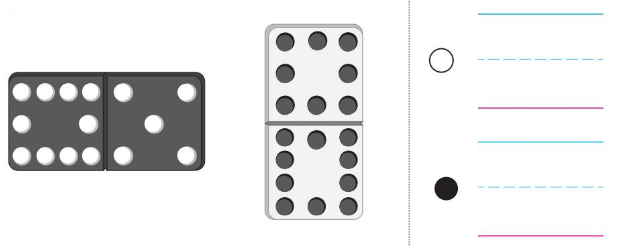
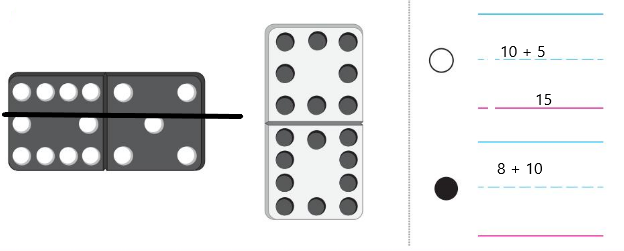
2 Count the dots on each domino. Say the number. Write the number. Write the numbers in order. Start with the number 7. 3 You are playing hide-and-seek. Count forward from 1. Write the numbers.

Count and Write Numbers 6 to 10 Performance Task

Big Ideas Math Answer Key Grade K Chapter 3 Count and Write Numbers 6 to 10 137

Question 1.
Big Ideas Math Answer Key Grade K Chapter 3 Count and Write Numbers 6 to 10 138
Answer:
Big-Ideas-Math-Book-Grade-K-Answer-Key-Chapter 3-Count-and-Write-Numbers-6 to 10-Lesson-Lesson 3.10 Understand and Write 10-Count and Write Numbers 6 to 10 Performance Task

Question 2.
Big Ideas Math Answer Key Grade K Chapter 3 Count and Write Numbers 6 to 10 139
Answer:
Big-Ideas-Math-Book-Grade-K-Answer-Key-Chapter 3-Count-and-Write-Numbers-6 to 10-Lesson-Lesson 3.10 Understand and Write 10-Count and Write Numbers 6 to 10 Performance Task2

Question 3.
Big Ideas Math Answer Key Grade K Chapter 3 Count and Write Numbers 6 to 10 140
Answer:
Big-Ideas-Math-Book-Grade-K-Answer-Key-Chapter 3-Count-and-Write-Numbers-6 to 10-Lesson-Lesson 3.10 Understand and Write 10-Count and Write Numbers 6 to 10 Performance Task3

Directions:
1 Count the animals in the picture. Say the number. Write the number. Then write the numbers in order. 2 Draw dots to show 10 birds in the tree. 3 Show how many birds in another way.

Count and Write Numbers 6 to 10 Activity

Number Land
Big Ideas Math Answer Key Grade K Chapter 3 Count and Write Numbers 6 to 10 141
Directions:
Put the Subitizing Cards 5–10 into a pile. Start at Descartes. Take turns drawing a card and moving your piece to that matching number. Repeat this process until you have gone around the board and back to Descartes.

Count and Write Numbers 6 to 10 Chapter Practice 3

3.1 Model and Count 6

Question 1.
Big Ideas Math Answer Key Grade K Chapter 3 Count and Write Numbers 6 to 10 142
Answer:
Big-Ideas-Math-Book-Grade-K-Answer-Key-Chapter 3-Count-and-Write-Numbers-6 to 10-Lesson-Lesson 3.10 Understand and Write 10-Count and Write Numbers 6 to 10 Chapter Practice 3.1

3.2 Understand and Write 6

Question 2.
Big Ideas Math Answer Key Grade K Chapter 3 Count and Write Numbers 6 to 10 143
Answer:
Big-Ideas-Math-Book-Grade-K-Answer-Key-Chapter 3-Count-and-Write-Numbers-6 to 10-Lesson-Lesson 3.10 Understand and Write 10-Count and Write Numbers 6 to 10 Chapter Practice 3.2

3.3 Model and Count 7

Question 3.
Big Ideas Math Answer Key Grade K Chapter 3 Count and Write Numbers 6 to 10 144
Answer:
Big-Ideas-Math-Book-Grade-K-Answer-Key-Chapter 3-Count-and-Write-Numbers-6 to 10-Lesson-Lesson 3.10 Understand and Write 10-Count and Write Numbers 6 to 10 Chapter Practice 3.3

Directions:
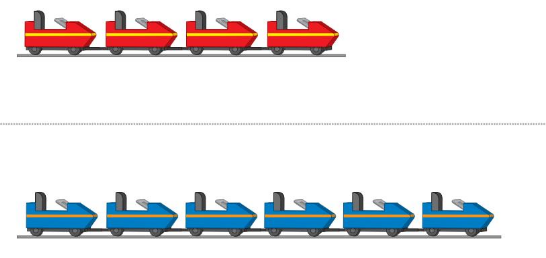
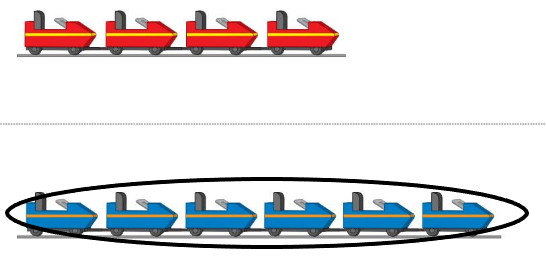
1 Count the train engines. Color the boxes to show how many. 2 Count the music notes. Say the number. Write the number. 3 Count the foxes. Color the boxes to show how many.

3.4 Understand and Write 7

Question 4.
Big Ideas Math Answer Key Grade K Chapter 3 Count and Write Numbers 6 to 10 145
Answer:
Big-Ideas-Math-Book-Grade-K-Answer-Key-Chapter 3-Count-and-Write-Numbers-6 to 10-Lesson-Lesson 3.10 Understand and Write 10-Count and Write Numbers 6 to 10 Chapter Practice 3.4

3.5 Model and Count 8

Question 5.
Big Ideas Math Answer Key Grade K Chapter 3 Count and Write Numbers 6 to 10 146
Answer:
Big-Ideas-Math-Book-Grade-K-Answer-Key-Chapter 3-Count-and-Write-Numbers-6 to 10-Lesson-Lesson 3.10 Understand and Write 10-Count and Write Numbers 6 to 10 Chapter Practice 3.5

3.6 Understand and Write 8

Question 6.
Big Ideas Math Answer Key Grade K Chapter 3 Count and Write Numbers 6 to 10 147
Answer:
Big-Ideas-Math-Book-Grade-K-Answer-Key-Chapter 3-Count-and-Write-Numbers-6 to 10-Lesson-Lesson 3.10 Understand and Write 10-Count and Write Numbers 6 to 10 Chapter Practice 3.6

Directions:
4 Count the lightning bolts. Say the number. Write the number.
5 Count the grapes. Color the boxes to show how many.
6 Count the grasshoppers. Say the number. Write the number.

3.7 Model and Count 9

Question 7.
Big Ideas Math Answer Key Grade K Chapter 3 Count and Write Numbers 6 to 10 148
Answer:
Big-Ideas-Math-Book-Grade-K-Answer-Key-Chapter 3-Count-and-Write-Numbers-6 to 10-Lesson-Lesson 3.10 Understand and Write 10-Count and Write Numbers 6 to 10 Chapter Practice 3.7

3.8 Understand and Write 9

Question 8.
Big Ideas Math Answer Key Grade K Chapter 3 Count and Write Numbers 6 to 10 149
Answer:
Big-Ideas-Math-Book-Grade-K-Answer-Key-Chapter 3-Count-and-Write-Numbers-6 to 10-Lesson-Lesson 3.10 Understand and Write 10-Count and Write Numbers 6 to 10 Chapter Practice 3.8

3.9 Model and Count 10

Question 9.
Big Ideas Math Answer Key Grade K Chapter 3 Count and Write Numbers 6 to 10 150
Answer:
Big-Ideas-Math-Book-Grade-K-Answer-Key-Chapter 3-Count-and-Write-Numbers-6 to 10-Lesson-Lesson 3.10 Understand and Write 10-Count and Write Numbers 6 to 10 Chapter Practice 3.9

Directions:
7 Count the shovels. Color the boxes to show how many.
8 Count the softballs. Say the number. Write the number.
9 Count the potatoes. Color the boxes to show how many.

3.10 Understand and Write 10

Question 10.
Big Ideas Math Answer Key Grade K Chapter 3 Count and Write Numbers 6 to 10 151
Answer:
Big-Ideas-Math-Book-Grade-K-Answer-Key-Chapter 3-Count-and-Write-Numbers-6 to 10-Lesson-Lesson 3.10 Understand and Write 10-Count and Write Numbers 6 to 10 Chapter Practice 3.10

3.11 Count and Order Numbers to 10

Question 11.
Big Ideas Math Answer Key Grade K Chapter 3 Count and Write Numbers 6 to 10 152
Answer:
Big-Ideas-Math-Book-Grade-K-Answer-Key-Chapter 3-Count-and-Write-Numbers-6 to 10-Lesson-Lesson 3.10 Understand and Write 10-Count and Write Numbers 6 to 10 Chapter Practice 3.11

Directions:
10 Count the shells. Say the number. Write the number. 11 Count the dots on each domino. Say the number. Write the number. Then write the numbers in order.

Conclusion:

The solutions given in the Big Ideas Math Answers Grade K Chapter 3 Count and Write Numbers 6 to 10 are prepared by the math professionals. So, the students of elementary school can make use of the above links and score good marks in the exams. Stay tuned to our page to get the latest updates and solutions for all Big Ideas Math Grade K Chapters from 1 to 13.

Big Ideas Math Answers Grade K Chapter 9 Count and Compare Numbers to 20

Children begin learning mathematics well before they enter elementary school. The mathematics of the elementary and middle school curriculum is not trivial. Starting from infancy and continuing throughout the preschool period, they develop a base of skills, concepts, and misconceptions about numbers and mathematics. Download Big Ideas Math Answers Grade K Chapter 9 Count and Compare Numbers to 20 pdf for free of cost.

Big Ideas Math Book Grade K Answer Key Chapter 9 Count and Compare Numbers to 20

Enhance your skills with the help of Big Ideas Math Book Grade K Answer Key Chapter 9 Count and Compare Numbers to 20. Make maths your favorite subject by learning the simple tricks from our Big Ideas Math Answers Grade K Chapter 9 Count and Compare Numbers to 20. Hit the below links to learn the chapter according to the list of the topics.

Vocabulary

Lesson: 1 Model and Count 20

Lesson: 2 Count and Write 20

Lesson: 3 Count to Find How Many

Lesson: 4 Count Forward from Any Number to 20

Lesson: 5 Order Numbers to 20

Lesson: 6 Compare Numbers to 20

Chapter: 9 – Count and Compare Numbers to 20

Count and Compare Numbers to 20 Vocabulary

Directions:
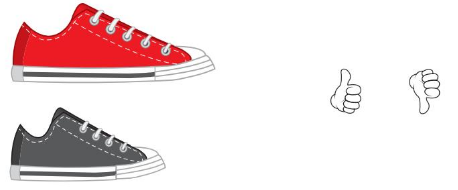
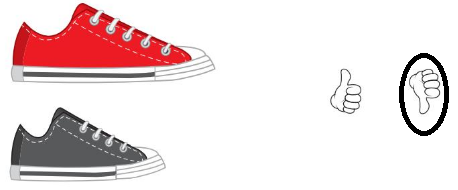
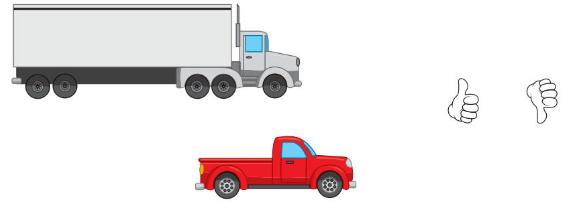
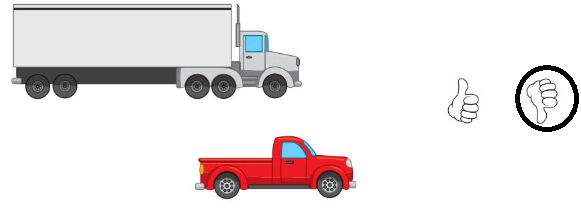
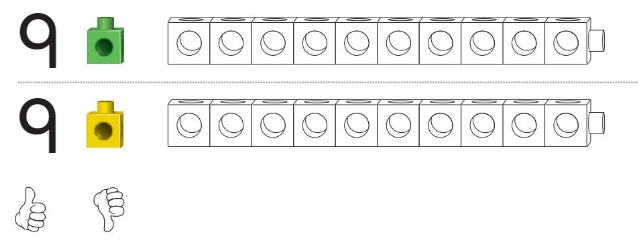
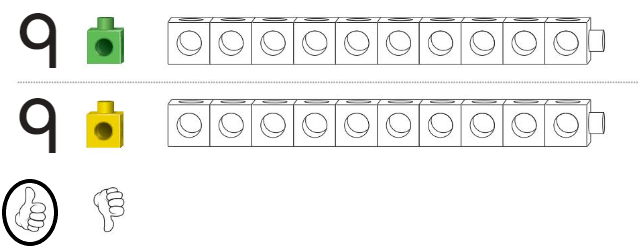
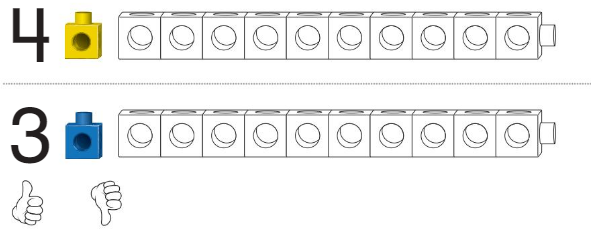
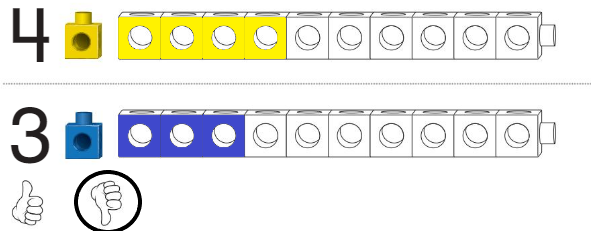
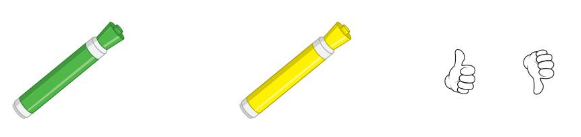
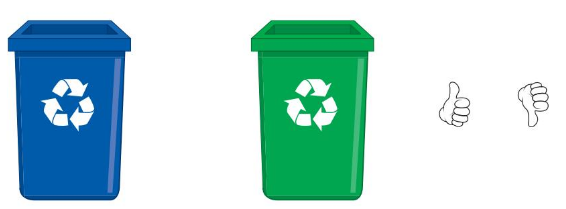
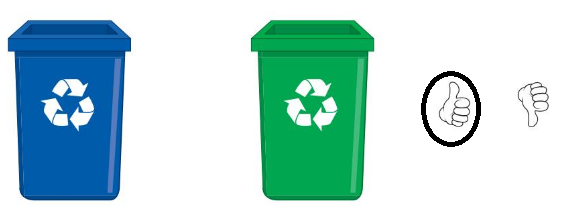
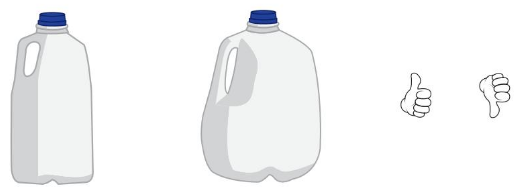
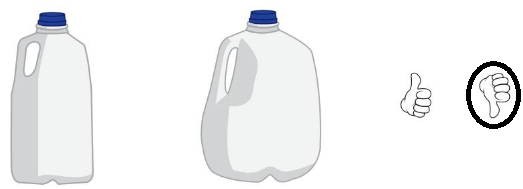
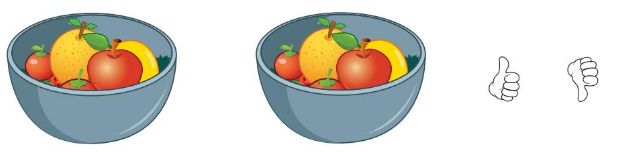
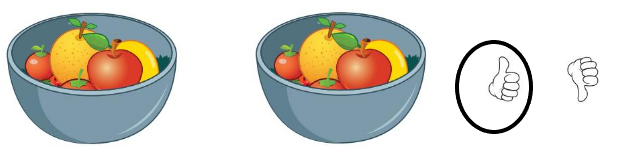
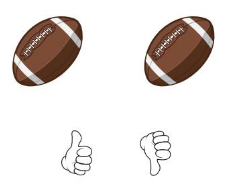
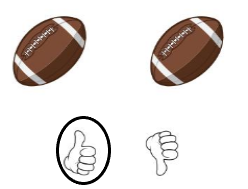
Count the fruit in each group. Write each number. Is the number of apples equal to the number of bananas? Circle the thumbs up for yes or the thumbs down for no. Circle the number that is greater than the other number.

Big Ideas Math Answer Key Grade K Chapter 9 Count and Compare Numbers to 20 v 1
Answer:
Big-Ideas-Math-Book-Grade-K-Answer-Key-Chapter-9-Count-and-Compare-Numbers-to-20-

Vocabulary Cards
Big Ideas Math Answer Key Grade K Chapter 9 Count and Compare Numbers to 20 v 2
Big Ideas Math Answer Key Grade K Chapter 9 Count and Compare Numbers to 20 v 3

Lesson 9.1 Model and Count 20

Explore and Grow

Directions:
Place 20 linking cubes on the carpet. Slide the cubes to the ten frames.

Big Ideas Math Answer Key Grade K Chapter 9 Count and Compare Numbers to 20 9.1 1
Answer:
Big-Ideas-Math-Book-Grade-K-Answer-Key-Chapter-9-Count-and-Compare-Numbers-to-20-Lesson 9.1 Model and Count 20

Think and Grow

Directions:
Count the objects. Color the boxes to show how many.

Big Ideas Math Answer Key Grade K Chapter 9 Count and Compare Numbers to 20 9.1 2
Answer:
Big-Ideas-Math-Book-Grade-K-Answer-Key-Chapter-9-Count-and-Compare-Numbers-to-20-Think and Grow

Apply and Grow: Practice

Directions:
1 – 3 Count the objects. Color the boxes to show how many.

Question 1.
Big Ideas Math Answer Key Grade K Chapter 9 Count and Compare Numbers to 20 9.1 3
Answer:
Big-Ideas-Math-Book-Grade-K-Answer-Key-Chapter-9-Count-and-Compare-Numbers-to-20-Apply-and-Grow-Practice1

Question 2.
Big Ideas Math Answer Key Grade K Chapter 9 Count and Compare Numbers to 20 9.1 4
Answer:
Big-Ideas-Math-Book-Grade-K-Answer-Key-Chapter-9-Count-and-Compare-Numbers-to-20-Apply-and-Grow-Practice2

Question 3.
Big Ideas Math Answer Key Grade K Chapter 9 Count and Compare Numbers to 20 9.1 5
Answer:
Big-Ideas-Math-Book-Grade-K-Answer-Key-Chapter-9-Count-and-Compare-Numbers-to-20-Apply-and-Grow-Practice3


Think and Grow: Modeling Real Life

Directions:
Count the objects in the picture. Color the boxes to show how many.

Big Ideas Math Answer Key Grade K Chapter 9 Count and Compare Numbers to 20 9.1 6
Answer:
Big-Ideas-Math-Book-Grade-K-Answer-Key-Chapter-9-Count-and-Compare-Numbers-to-20-Think and Grow-Modeling Real Life

Model and Count 20 Homework & Practice 9.1

Directions:
1 and 2 Count the objects. Color the boxes to show how many.

Question 1.
Big Ideas Math Answer Key Grade K Chapter 9 Count and Compare Numbers to 20 9.1 7
Answer:
Big-Ideas-Math-Book-Grade-K-Answer-Key-Chapter-9-Count-and-Compare-Numbers-to-20-Model and Count 20 Homework & Practice 9.1.1

Question 2.
Big Ideas Math Answer Key Grade K Chapter 9 Count and Compare Numbers to 20 9.1 8
Answer:
Big-Ideas-Math-Book-Grade-K-Answer-Key-Chapter-9-Count-and-Compare-Numbers-to-20-Model and Count 20 Homework & Practice 9.1.2

Directions:
3 and 4 Count the objects. Color the boxes to show how many. 5 Count the objects in the picture. Color the boxes to show how many.

Question 3.
Big Ideas Math Answer Key Grade K Chapter 9 Count and Compare Numbers to 20 9.1 9
Answer:
Big-Ideas-Math-Book-Grade-K-Answer-Key-Chapter-9-Count-and-Compare-Numbers-to-20-Model and Count 20 Homework & Practice 9.1.3

Question 4.
Big Ideas Math Answer Key Grade K Chapter 9 Count and Compare Numbers to 20 9.1 10
Answer:
Big-Ideas-Math-Book-Grade-K-Answer-Key-Chapter-9-Count-and-Compare-Numbers-to-20-Model and Count 20 Homework & Practice 9.1.4

Question 5.
Big Ideas Math Answer Key Grade K Chapter 9 Count and Compare Numbers to 20 9.1 11
Answer:
Big-Ideas-Math-Book-Grade-K-Answer-Key-Chapter-9-Count-and-Compare-Numbers-to-20-Model and Count 20 Homework & Practice 9.1.5

Lesson 9.2 Count and Write 20

Explore and Grow

Directions:
Use linking cubes to show how many ants are in the story Ants at the Picnic. Write how many ants are in the story.

Big Ideas Math Answers Grade K Chapter 9 Count and Compare Numbers to 20 9.2 1
Answer:

Think and Grow

Directions:

  • Count the grasshoppers. Say the number. Trace and write the number.
  • Count the insects. Say the number. Write the number.

Big Ideas Math Answers Grade K Chapter 9 Count and Compare Numbers to 20 9.2 2
Answer:
Big-Ideas-Math-Book-Grade-K-Answer-Key-Chapter-9-Count-and-Compare-Numbers-to-20-Think and Grow...

Big Ideas Math Answers Grade K Chapter 9 Count and Compare Numbers to 20 9.2 3
Answer:
Big-Ideas-Math-Book-Grade-K-Answer-Key-Chapter-9-Count-and-Compare-Numbers-to-20-Think and Grow-

Apply and Grow: Practice

Directions:
1 – 3 Count the insects. Say the number. Write the number.

Question 1.
Big Ideas Math Answers Grade K Chapter 9 Count and Compare Numbers to 20 9.2 4
Answer:
Big-Ideas-Math-Book-Grade-K-Answer-Key-Chapter-9-Count-and-Compare-Numbers-to-20-Apply-and-Grow-Practice1.

Question 2.
Big Ideas Math Answers Grade K Chapter 9 Count and Compare Numbers to 20 9.2 5
Answer:
Big-Ideas-Math-Book-Grade-K-Answer-Key-Chapter-9-Count-and-Compare-Numbers-to-20-Apply-and-Grow-Practice2.

Question 3.
Big Ideas Math Answers Grade K Chapter 9 Count and Compare Numbers to 20 9.2 6
Answer:
Big-Ideas-Math-Book-Grade-K-Answer-Key-Chapter-9-Count-and-Compare-Numbers-to-20-Apply-and-Grow-Practice3.

Think and Grow: Modeling Real Life

Directions:
Count the animals in the picture. Say the number. Write the number.

Big Ideas Math Answers Grade K Chapter 9 Count and Compare Numbers to 20 9.2 7
Answer:
Big-Ideas-Math-Book-Grade-K-Answer-Key-Chapter-9-Count-and-Compare-Numbers-to-20-Think and Grow-Modeling Real Life-

Count and Write 20 Homework & Practice 9.2

Directions:
1 and 2 Count the insects. Say the number. Write the number.

Question 1.
Big Ideas Math Answers Grade K Chapter 9 Count and Compare Numbers to 20 9.2 8
Answer:
Big-Ideas-Math-Book-Grade-K-Answer-Key-Chapter-9-Count-and-Compare-Numbers-to-20-Think and Grow-Count and Write 20 Homework & Practice 9.2.1

Question 2.
Big Ideas Math Answers Grade K Chapter 9 Count and Compare Numbers to 20 9.2 9
Answer:
Big-Ideas-Math-Book-Grade-K-Answer-Key-Chapter-9-Count-and-Compare-Numbers-to-20-Think and Grow-Count and Write 20 Homework & Practice 9.2.2

Directions:
3 and 4 Count the insects. Say the number. Write the number. 5 Count the insects in the picture. Say the number. Write the number.

Question 3.
Big Ideas Math Answers Grade K Chapter 9 Count and Compare Numbers to 20 9.2 10
Answer:
Big-Ideas-Math-Book-Grade-K-Answer-Key-Chapter-9-Count-and-Compare-Numbers-to-20-Think and Grow-Count and Write 20 Homework & Practice 9.2.3

Question 4.
Big Ideas Math Answers Grade K Chapter 9 Count and Compare Numbers to 20 9.2 11
Answer:
Big-Ideas-Math-Book-Grade-K-Answer-Key-Chapter-9-Count-and-Compare-Numbers-to-20-Think and Grow-Count and Write 20 Homework & Practice 9.2.4

Question 5.
Big Ideas Math Answers Grade K Chapter 9 Count and Compare Numbers to 20 9.2 12
Answer:
Big-Ideas-Math-Book-Grade-K-Answer-Key-Chapter-9-Count-and-Compare-Numbers-to-20-Think and Grow-Count and Write 20 Homework & Practice 9.2.5

Lesson 9.3 Count to Find How Many

Explore and Grow

Directions:
You have 14 crayons in your box. Your friend has 11 crayons in his box. Use linking cubes to show the crayons in each box.

Big Ideas Math Solutions Grade K Chapter 9 Count and Compare Numbers to 20 9.3 1
Answer:
Big-Ideas-Math-Book-Grade-K-Answer-Key-Chapter-9-Count-and-Compare-Numbers-to-20-Think and Grow-Lesson 9.3 Count to Find How Many..

Think and Grow

Directions:
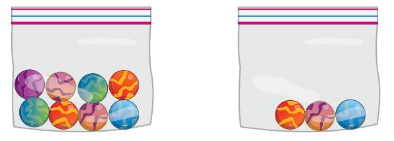
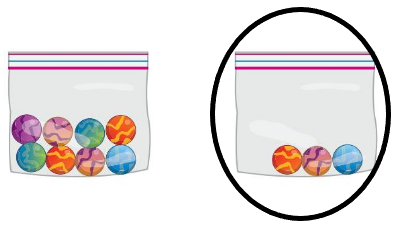
Circle the group that has the given number of objects.

Big Ideas Math Solutions Grade K Chapter 9 Count and Compare Numbers to 20 9.3 2
Answer:
Big-Ideas-Math-Book-Grade-K-Answer-Key-Chapter-9-Count-and-Compare-Numbers-to-20-Think and Grow-Lesson 9.3 Count to Find How Many-Think and Grow

Apply and Grow: Practice

Directions:
1 – 3 Circle any group that has the given number of objects.

Question 1.
Big Ideas Math Solutions Grade K Chapter 9 Count and Compare Numbers to 20 9.3 3
Answer:
Big-Ideas-Math-Book-Grade-K-Answer-Key-Chapter-9-Count-and-Compare-Numbers-to-20-Think and Grow-Lesson 9.3 Count to Find How Many-Apply and Grow-Practice1

Question 2.
Big Ideas Math Solutions Grade K Chapter 9 Count and Compare Numbers to 20 9.3 4
Answer:
Big-Ideas-Math-Book-Grade-K-Answer-Key-Chapter-9-Count-and-Compare-Numbers-to-20-Think and Grow-Lesson 9.3 Count to Find How Many-Apply and Grow-Practice2

Question 3.
Big Ideas Math Solutions Grade K Chapter 9 Count and Compare Numbers to 20 9.3 5
Answer:
Big-Ideas-Math-Book-Grade-K-Answer-Key-Chapter-9-Count-and-Compare-Numbers-to-20-Think and Grow-Lesson 9.3 Count to Find How Many-Apply and Grow-Practice3

Think and Grow: Modeling Real Life

Directions:
You have 20 coins in your piggy bank. You drop and break your piggy bank. Did you find all of your coins? Circle the thumbs up for yes or the thumbs down for no.

Big Ideas Math Solutions Grade K Chapter 9 Count and Compare Numbers to 20 9.3 6
Answer:
Big-Ideas-Math-Book-Grade-K-Answer-Key-Chapter-9-Count-and-Compare-Numbers-to-20-Think and Grow-Lesson 9.3 Count to Find How Many-Think and Grow- Modeling Real Life

Count to Find How Many Homework & Practice 9.3

Directions:
1 and 2 Circle the group that has the given number of objects.

Question 1.
Big Ideas Math Solutions Grade K Chapter 9 Count and Compare Numbers to 20 9.3 7
Answer:
Big-Ideas-Math-Book-Grade-K-Answer-Key-Chapter-9-Count-and-Compare-Numbers-to-20-Think and Grow-Lesson 9.3 Count to Find How Many-Count to Find How Many Homework & Practice 9.3.1

Question 2.
Big Ideas Math Solutions Grade K Chapter 9 Count and Compare Numbers to 20 9.3 8
Answer:
Big-Ideas-Math-Book-Grade-K-Answer-Key-Chapter-9-Count-and-Compare-Numbers-to-20-Think and Grow-Lesson 9.3 Count to Find How Many-Count to Find How Many Homework & Practice 9.3.2

Directions:
3 and 4 Circle any group that has the given number of objects. 5 You have 20 toys in your piñata. You break your piñata. Did you find all of your toys? Circle the thumbs up for yes or the thumbs down for no.

Question 3.
Big Ideas Math Solutions Grade K Chapter 9 Count and Compare Numbers to 20 9.3 9
Answer:

Question 4.
Big Ideas Math Solutions Grade K Chapter 9 Count and Compare Numbers to 20 9.3 10
Answer:
Big-Ideas-Math-Book-Grade-K-Answer-Key-Chapter-9-Count-and-Compare-Numbers-to-20-Think and Grow-Lesson 9.3 Count to Find How Many-Count to Find How Many Homework & Practice 9.3.4

Question 5.
Big Ideas Math Solutions Grade K Chapter 9 Count and Compare Numbers to 20 9.3 11
Answer:
Big-Ideas-Math-Book-Grade-K-Answer-Key-Chapter-9-Count-and-Compare-Numbers-to-20-Think and Grow-Lesson 9.3 Count to Find How Many-Count to Find How Many Homework & Practice 9.3.5

Lesson 9.4 Count Forward from Any Number to 20

Explore and Grow

Directions:

  • Place 11 linking cubes on the ten frames. Trace the number.
  • Place another cube on the ten frames. Write the number to tell how many.
  • Place 1 more cube on the ten frames. Write the number to tell how many.

Big Ideas Math Answer Key Grade K Chapter 9 Count and Compare Numbers to 20 9.4 1
Answer:
Big-Ideas-Math-Book-Grade-K-Answer-Key-Chapter-9-Count-and-Compare-Numbers-to-20-Think and Grow-Lesson 9.4 Count Forward from Any Number to 20

Think and Grow

Directions:
Count forward from the number in the blue circle to the number in the red circle. Write the numbers you count.

Big Ideas Math Answer Key Grade K Chapter 9 Count and Compare Numbers to 20 9.4 2
Answer:
Big-Ideas-Math-Book-Grade-K-Answer-Key-Chapter-9-Count-and-Compare-Numbers-to-20-Think and Grow-9.4-Think and Grow

Apply and Grow: Practice

Directions:
1 and 2 Count forward from the number in the blue circle to the number in the red circle. Write the numbers you count. 3 Count forward from 11and stop at 16. Write the numbers you count.

Question 1.
Big Ideas Math Answer Key Grade K Chapter 9 Count and Compare Numbers to 20 9.4 3
Answer:
Big-Ideas-Math-Book-Grade-K-Answer-Key-Chapter-9-Count-and-Compare-Numbers-to-20-9.4-Apply and Grow-Practice1.

Question 2.
Big Ideas Math Answer Key Grade K Chapter 9 Count and Compare Numbers to 20 9.4 4
Answer:
Big-Ideas-Math-Book-Grade-K-Answer-Key-Chapter-9-Count-and-Compare-Numbers-to-20-9.4-Apply and Grow-Practice2.

Question 3.
Big Ideas Math Answer Key Grade K Chapter 9 Count and Compare Numbers to 20 9.4 5
Answer:
Big-Ideas-Math-Book-Grade-K-Answer-Key-Chapter-9-Count-and-Compare-Numbers-to-20-9.4-Apply and Grow-Practice3.

Think and Grow: Modeling Real Life

Directions:

  • Your teacher labels the class cubbies and stops at 7. Count forward to finish labeling the cubbies. Write the numbers you count.
  • Label the first cubby with a number from 1 to 16. Count forward from your number to finish labeling the cubbies. Write the numbers you count.

Big Ideas Math Answer Key Grade K Chapter 9 Count and Compare Numbers to 20 9.4 6
Answer:
Big-Ideas-Math-Book-Grade-K-Answer-Key-Chapter-9-Count-and-Compare-Numbers-to-20-9.4-Think and Grow-Modeling Real Life

Count Forward from Any Number to 20 Homework & Practice 9.4

Directions:
1 and 2 Count forward from the number in the blue circle to the number in the red circle. Write the numbers you count.

Question 1.
Big Ideas Math Answer Key Grade K Chapter 9 Count and Compare Numbers to 20 9.4 7
Answer:
Big-Ideas-Math-Book-Grade-K-Answer-Key-Chapter-9-Count-and-Compare-Numbers-to-20-9.4-Count Forward from Any Number to 20 Homework & Practice 9.4.1

Question 2.
Big Ideas Math Answer Key Grade K Chapter 9 Count and Compare Numbers to 20 9.4 8
Answer:
Big-Ideas-Math-Book-Grade-K-Answer-Key-Chapter-9-Count-and-Compare-Numbers-to-20-9.4-Count Forward from Any Number to 20 Homework & Practice 9.4.2

Directions:
3 Count forward from the number in the blue circle to the number in the red circle. Write the numbers you count. 4 Count forward from 14 and stop at 19. Write the numbers you count. 5 Your teacher is numbering tags and stops at 12. Count forward to finish numbering the tags. Write the numbers you count. 6 Write a number from 1 to 16 on the first tag. Count forward from your number to finish numbering the tags. Write the numbers you count.

Question 3.
Big Ideas Math Answer Key Grade K Chapter 9 Count and Compare Numbers to 20 9.4 9
Answer:
Big-Ideas-Math-Book-Grade-K-Answer-Key-Chapter-9-Count-and-Compare-Numbers-to-20-9.4-Count Forward from Any Number to 20 Homework & Practice 9.4.3

Question 4.
Big Ideas Math Answer Key Grade K Chapter 9 Count and Compare Numbers to 20 9.4 10
Answer:
Big-Ideas-Math-Book-Grade-K-Answer-Key-Chapter-9-Count-and-Compare-Numbers-to-20-9.4-Count Forward from Any Number to 20 Homework & Practice 9.4.4

Question 5.
Big Ideas Math Answer Key Grade K Chapter 9 Count and Compare Numbers to 20 9.4 11
Answer:
Big-Ideas-Math-Book-Grade-K-Answer-Key-Chapter-9-Count-and-Compare-Numbers-to-20-9.4-Count Forward from Any Number to 20 Homework & Practice 9.4.5

Question 6.
Big Ideas Math Answer Key Grade K Chapter 9 Count and Compare Numbers to 20 9.4 12
Answer:
Big-Ideas-Math-Book-Grade-K-Answer-Key-Chapter-9-Count-and-Compare-Numbers-to-20-9.4-Count Forward from Any Number to 20 Homework & Practice 9.4.6

Lesson 9.5 Order Numbers to 20

Explore and Grow

Directions:
Place 11 linking cubes on the ten frames. Place more cubes on the ten frames as you count forward to 20. Trace or write the missing numbers.

Big Ideas Math Answers Grade K Chapter 9 Count and Compare Numbers to 20 9.5 1
Answer:
Big-Ideas-Math-Book-Grade-K-Answer-Key-Chapter-9-Count-and-Compare-Numbers-to-20-Lesson 9.5 Order Numbers to 20

Think and Grow

Directions:
Count the dots in each set of ten frames. Say each number. Write each number. Then write the numbers in order.

Big Ideas Math Answers Grade K Chapter 9 Count and Compare Numbers to 20 9.5 2
Answer:
Big-Ideas-Math-Book-Grade-K-Answer-Key-Chapter-9-Count-and-Compare-Numbers-to-20-Lesson 9.5 Order Numbers to 20-Think and Grow

Apply and Grow: Practice

Directions:
1 and 2 Count the dots in each set of ten frames. Say each number. Write each number. Then write the numbers in order.

Question 1.
Big Ideas Math Answers Grade K Chapter 9 Count and Compare Numbers to 20 9.5 3
Answer:
Big-Ideas-Math-Book-Grade-K-Answer-Key-Chapter-9-Count-and-Compare-Numbers-to-20-Lesson 9.5-Order Numbers to 20-Apply and Grow-Practice.1

Question 2.
Big Ideas Math Answers Grade K Chapter 9 Count and Compare Numbers to 20 9.5 4
Answer:
Big-Ideas-Math-Book-Grade-K-Answer-Key-Chapter-9-Count-and-Compare-Numbers-to-20-Lesson 9.5-Order Numbers to 20-Apply and Grow-Practice.2

Think and Grow: Modeling Real Life

Directions:
Line up the students for lunch by writing the numbers in order. Circle the student who is first. Underline the student who is last.

Big Ideas Math Answers Grade K Chapter 9 Count and Compare Numbers to 20 9.5 5
Answer:
Big-Ideas-Math-Book-Grade-K-Answer-Key-Chapter-9-Count-and-Compare-Numbers-to-20-Lesson 9.5-Order Numbers to 20-Think and Grow-Modeling Real Life

Order Numbers to 20 Homework & Practice 9.5

Directions:
1 Count the dots in each set of ten frames. Say each number. Write each number. Then write the numbers in order.

Question 1.
Big Ideas Math Answers Grade K Chapter 9 Count and Compare Numbers to 20 9.5 6
Answer:
Big-Ideas-Math-Book-Grade-K-Answer-Key-Chapter-9-Count-and-Compare-Numbers-to-20-Lesson 9.5-Order Numbers to 20-Order Numbers to 20 Homework & Practice 9.5.1

Directions:
2 Count the dots in each set of ten frames. Say each number. Write each number. Then write the numbers in order. 3 Line up the train cars by writing the numbers in order. Circle the train car that is first. Underline the train car that is last.

Question 2.
Big Ideas Math Answers Grade K Chapter 9 Count and Compare Numbers to 20 9.5 7
Answer:
Big-Ideas-Math-Book-Grade-K-Answer-Key-Chapter-9-Count-and-Compare-Numbers-to-20-Lesson 9.5-Order Numbers to 20-Order Numbers to 20 Homework & Practice 9.5.2

Question 3.
Big Ideas Math Answers Grade K Chapter 9 Count and Compare Numbers to 20 9.5 8
Answer:
Big-Ideas-Math-Book-Grade-K-Answer-Key-Chapter-9-Count-and-Compare-Numbers-to-20-Lesson 9.5-Order Numbers to 20-Order Numbers to 20 Homework & Practice 9.5.3

Lesson 9.6 Compare Numbers to 20

Explore and Grow

Directions:
Place linking cubes on the ten frames to show the numbers. Which number is greater than the other number? Which number is less than the other number?

Big Ideas Math Solutions Grade K Chapter 9 Count and Compare Numbers to 20 9.6 1
Answer:
Big-Ideas-Math-Book-Grade-K-Answer-Key-Chapter-9-Count-and-Compare-Numbers-to-20-Lesson 9.6 Compare Numbers to 20

Think and Grow

Directions:

  • Count the dots in each set of ten frames. Write each number.
  • Is the number of green dots equal to the number of yellow dots? Circle the thumbs up for yes or the thumbs down for no.
  • Compare the numbers of red dots and blue dots. Circle the number that is greater than the other number.
  • Compare the numbers of yellow dots and red dots. Draw a line through the number that is less than the other number.

Big Ideas Math Solutions Grade K Chapter 9 Count and Compare Numbers to 20 9.6 2
Answer:
Big-Ideas-Math-Book-Grade-K-Answer-Key-Chapter-9-Count-and-Compare-Numbers-to-20-Lesson 9.6 Compare Numbers to 20-Think and Grow

Apply and Grow: Practice

Directions:
Count the objects in each group. Write each number. 1 Is the number of blue bouncy balls equal to the number of green bouncy balls? Circle the thumbs up for yes or the thumbs down for no. 2 Circle the number that is greater than the other number. 3 Draw a line through the number that is less than the other number.

Question 1.
Big Ideas Math Solutions Grade K Chapter 9 Count and Compare Numbers to 20 9.6 3
Answer:
Big-Ideas-Math-Book-Grade-K-Answer-Key-Chapter-9-Count-and-Compare-Numbers-to-20-Lesson 9.6 Compare Numbers to 20-Apply and Grow-Practice

Question 2.
Big Ideas Math Solutions Grade K Chapter 9 Count and Compare Numbers to 20 9.6 4
Answer:
Big-Ideas-Math-Book-Grade-K-Answer-Key-Chapter-9-Count-and-Compare-Numbers-to-20-Lesson 9.6 Compare Numbers to 20-Apply and Grow-Practice2.

Question 3.
Big Ideas Math Solutions Grade K Chapter 9 Count and Compare Numbers to 20 9.6 5
Answer:
Big-Ideas-Math-Book-Grade-K-Answer-Key-Chapter-9-Count-and-Compare-Numbers-to-20-Lesson 9.6 Compare Numbers to 20-Apply and Grow-Practice3.

Think and Grow: Modeling Real Life

Directions:

  • You have 14 balls. Your friend has a number of balls that is 1 more than 12. Draw the balls. Write the numbers. Circle the number that is greater than the other number.
  • You have 18 balls. Your friend has a number of balls that is greater than 15 and less than 17. Draw the balls. Write the numbers. Draw a line through the number that is less than the other number.

Big Ideas Math Solutions Grade K Chapter 9 Count and Compare Numbers to 20 9.6 6
Answer:
I am having more balls than my Friend has in both the cases.
Big-Ideas-Math-Book-Grade-K-Answer-Key-Chapter-9-Count-and-Compare-Numbers-to-20-Lesson 9.6 -Think and Grow-Modeling Real Life

Compare Numbers to 20 Homework & Practice 9.6

Directions:
1 Count the dots in each set of ten frames. Write each number. Is the number of blue dots equal to the number of red dots? Circle the thumbs up for yes or the thumbs down for no.

Question 1.
Big Ideas Math Solutions Grade K Chapter 9 Count and Compare Numbers to 20 9.6 7
Answer:
Big-Ideas-Math-Book-Grade-K-Answer-Key-Chapter-9-Count-and-Compare-Numbers-to-20-Lesson 9.6 -Compare Numbers to 20 Homework & Practice 9.6.1

Directions:
2 Count the bouncy balls in each group. Write each number. Circle the number that is greater than the other number. 3 Count the dots on each domino. Write each number. Draw a line through the number that is less than the other number. 4 You have 13 balls. Your friend has a number of balls that is 1 more than 19. Draw the balls. Write the numbers. Draw a line through the number that is less than the other number.

Question 2.
Big Ideas Math Solutions Grade K Chapter 9 Count and Compare Numbers to 20 9.6 8
Answer:
Big-Ideas-Math-Book-Grade-K-Answer-Key-Chapter-9-Count-and-Compare-Numbers-to-20-Lesson 9.6 -Compare Numbers to 20 Homework & Practice 9.6.2

Question 3.
Big Ideas Math Solutions Grade K Chapter 9 Count and Compare Numbers to 20 9.6 9
Answer:
Big-Ideas-Math-Book-Grade-K-Answer-Key-Chapter-9-Count-and-Compare-Numbers-to-20-Lesson 9.6 -Compare Numbers to 20 Homework & Practice 9.6.3

Question 4.
Big Ideas Math Solutions Grade K Chapter 9 Count and Compare Numbers to 20 9.6 10
Answer:
I am having less Balls than my friend has.
Big-Ideas-Math-Book-Grade-K-Answer-Key-Chapter-9-Count-and-Compare-Numbers-to-20-Lesson 9.6 -Compare Numbers to 20 Homework & Practice 9.6.4.

Count and Compare Numbers to 20 Performance Task

Directions: 1 Use the clues to fond the number of fruit in each crate. Write each number.

  • The number of apples is more than 16 but less than 18.
  • The number of bananas is more than 15 but less than 17.
  • The number of oranges is more than 18 but less than 20.
  • The number of pears is 1 more than the number of oranges.
  • The number of pineapples is 1 less than the number of oranges.
  • Write the numbers in order.

Question 1.
Big Ideas Math Answer Key Grade K Chapter 9 Count and Compare Numbers to 20 1
Answer:
Big-Ideas-Math-Book-Grade-K-Answer-Key-Chapter-9-Count-and-Compare-Numbers-to-20-Lesson 9.6 -Count and Compare Numbers to 20 Performance Task.1

Number Boss
Directions:
Each player flips a card and places it on the page. Compare the numbers. The player with the greater number takes both cards. If the numbers are equal, flip the cards again. The player with the greater number takes all the cards. Repeat until all cards have been used.

Big Ideas Math Answer Key Grade K Chapter 9 Count and Compare Numbers to 20 2

Count and Compare Numbers to 20 Chapter Practice

Directions:
1 Count the paste jars. Color the boxes to show how many. 2 Count the insects in the picture. Say the number. Write the number.

9.1 Model and Count 20

Question 1.
Big Ideas Math Answer Key Grade K Chapter 9 Count and Compare Numbers to 20 chp 1
Answer:
Big-Ideas-Math-Book-Grade-K-Answer-Key-Chapter-9-Count-and-Compare-Numbers-to-20-Lesson 9.6 Count and Compare Numbers to 20 Chapter Practice-9.1 Model and Count 20.1

9.2 Count and Write 20

Question 2.
Big Ideas Math Answer Key Grade K Chapter 9 Count and Compare Numbers to 20 chp 2
Answer:
Big-Ideas-Math-Book-Grade-K-Answer-Key-Chapter-9-Count-and-Compare-Numbers-to-20-Lesson 9.6 Count and Compare Numbers to 20 -Chapter Practice-9.2 Count and Write 20.2

Directions:
3 Circle any group that has the given number of objects. 4 You have 20 erasers in your box. You drop your box. Did you find all of your erasers? Circle the thumbs up for yes or the thumbs down for no. 5 Count forward from the number in the blue circle to the number in the red circle. Write the numbers you count.

9.3 Count to Find How Many

Question 3.
Big Ideas Math Answer Key Grade K Chapter 9 Count and Compare Numbers to 20 chp 3
Answer:
Big-Ideas-Math-Book-Grade-K-Answer-Key-Chapter-9-Count-and-Compare-Numbers-to-20-Lesson 9.6 Count and Compare Numbers to 20 -Chapter Practice-9.3 Count to Find How Many.3

Question 4.
Big
Answer:
Big-Ideas-Math-Book-Grade-K-Answer-Key-Chapter-9-Count-and-Compare-Numbers-to-20-Lesson 9.6 Count and Compare Numbers to 20 -Chapter Practice-9.3 Count to Find How Many.4

9.4 Count Forward from Any Number to 20

Question 5.
Big Ideas Math Answer Key Grade K Chapter 9 Count and Compare Numbers to 20 chp 5
Answer:
Big-Ideas-Math-Book-Grade-K-Answer-Key-Chapter-9-Count-and-Compare-Numbers-to-20-Lesson 9.6 Count and Compare Numbers to 20 -Chapter-9.4 Count Forward from Any Number to 20-Count to Find How Many.5

Directions:
6 Count forward from the number in the blue circle to the number in the red circle. Write the numbers you count. 7 Line up the students for recess by writing the numbers in order. Circle the student who is first. Underline the student who is last.

Question 6.
Big Ideas Math Answer Key Grade K Chapter 9 Count and Compare Numbers to 20 chp 6
Answer:
Big-Ideas-Math-Book-Grade-K-Answer-Key-Chapter-9-Count-and-Compare-Numbers-to-20-Lesson 9.6 Count and Compare Numbers to 20 -Chapter-9.4 Count Forward from Any Number to 20-Count to Find How Many.6

9.5 Order Numbers to 20

Question 7.
Big Ideas Math Answer Key Grade K Chapter 9 Count and Compare Numbers to 20 chp 7
Answer:
Big-Ideas-Math-Book-Grade-K-Answer-Key-Chapter-9-Count-and-Compare-Numbers-to-20-Lesson 9.6 Count and Compare Numbers to 20 -9.5 Order Numbers to 20.7

Directions:
Count the objects in each group. Write each number. 8 Is the number of yellow dots equal to the number of blue dots? Circle the thumbs up for yes or the thumbs down for no. 9 Circle the number that is greater than the other number. 10 Draw a line through the number that is less than the other number.

9.6 Compare Numbers to 20

Question 8.
Big Ideas Math Answer Key Grade K Chapter 9 Count and Compare Numbers to 20 chp 8
Answer:
Big-Ideas-Math-Book-Grade-K-Answer-Key-Chapter-9-Count-and-Compare-Numbers-to-20-9.6 Compare Numbers to 20.8

Question 9.
Big Ideas Math Answer Key Grade K Chapter 9 Count and Compare Numbers to 20 chp 9
Answer:
Big-Ideas-Math-Book-Grade-K-Answer-Key-Chapter-9-Count-and-Compare-Numbers-to-20-9.6 Compare Numbers to 20.9

Question 10.
Big Ideas Math Answer Key Grade K Chapter 9 Count and Compare Numbers to 20 chp 10
Answer:
Big-Ideas-Math-Book-Grade-K-Answer-Key-Chapter-9-Count-and-Compare-Numbers-to-20-9.6 Compare Numbers to 20.10

Download Big Ideas Math Answers Grade K Chapter 9 Count and Compare Numbers to 20 pdf

Hope the details prevailed in Big Ideas Math Answers Grade K Chapter 9 Count and Compare Numbers to 20 has brought a smile to your face. The Answer Key for Big Ideas Math Grade K Chapter 9 Count and Compare Numbers to 20 is prepared as per the latest syllabus. Check out the topics given above before you start your preparation. Also, Bookmark our page to get the latest information regarding the Big Ideas Math Grade K Chapters that is from 1 to 13.

Big Ideas Math Answers Grade K Chapter 10 Count to 100

Big Ideas Math Answer Key helps the students of Grade K to overcome the difficulties in maths. Learn the basics of maths by using the Big Ideas Math Answers Grade K Chapter 10 Count to 100. Refer to Big Ideas Math Book Solution Key Grade K Chapter 10 Count to 100 to enhance your math skills and to score good marks in the exams.

Big Ideas Math Book Answers Grade K Chapter 10 Count to 100

Check out the topics covered in this chapter before your start practicing the problems. The topics included in this chapter are Count to 30 by Ones, Count to 50 by Ones, Count to 100 by Ones, Count by Tens and Ones, and so on. Think about the concept and learn how to solve the problems with the help of our Big Ideas Math Answers Grade K Chapter 10 Count to 100.

Vocabulary

Lesson: 1 Count to 30 by Ones

Lesson: 2 Count to 50 by Ones

Lesson: 3 Count to 100 by Ones

Lesson: 4 Count to 100 by Tens

Lesson: 5 Count by Tens and Ones

Lesson: 6 Count by Tens from a Number

Chapter: 10 – Count to 100

Count to 100 Vocabulary

Directions:
Circle 10 balloons. Then write an addition sentence to tell how many balloons there are in all.
Big Ideas Math Answer Key Grade K Chapter 10 Count to 100 v 1

Answer:


Explanation:
In the above picture 10 balloons are circled and the 5bvalloons without circle around them.If we add 10 with 5 we get 15.So, there are 15 balloons in all.

Vocabulary Cards

Big Ideas Math Answer Key Grade K Chapter 10 Count to 100 v 2
Big Ideas Math Answer Key Grade K Chapter 10 Count to 100 v 3

Lesson 10.1 Count to 30 by Ones

Explore and Grow

Directions:
Point to each number as you count to 30. Color the number 30

Big Ideas Math Answer Key Grade K Chapter 10 Count to 100 10.1 1

Answer:
color 30

Explanation:
I point to the 1 and is counted as 1, point to the 2 and is counted as  2, point to the 3 and is counted as 3 and so on till 30 and coloured the number 30.

Think and Grow

Directions:
Circle the missing number. Count to 30 starting with that number. Color the boxes as you count.

Big Ideas Math Answer Key Grade K Chapter 10 Count to 100 10.1 2
Answer:
circle and color

Explanation:
In the above question, the first grid has an empty box after 22. So, what comes after 22? -23 comes after 22. Therefore circle 23, color, and count the number boxes from 23 to 30.
The second grid has an empty box after 8. So, what comes after 8? -9 comes after 8. Therefore circle 8, color, and count the number boxes from 8 to 30.
The third grid has an empty box after 19. So, what comes after 19? -20 comes after 19. Therefore circle 20, color, and count the number boxes from 20 to 30

Apply and Grow: Practice

Directions:
1 Circle the missing number. Count to 30 starting with that number. Color the boxes as you count. 2 Circle the missing numbers. Tell how the missing numbers are alike. 3 Find and circle the number twenty-three.

Question 1.
Big Ideas Math Answer Key Grade K Chapter 10 Count to 100 10.1 3
Answer:
circle 14 and color from 14 to 30

Explanation:
The grid has an empty box after 13. So, what comes after 13? -14 comes after 13. Therefore circle 14, color and count the number boxes from 14 to 30

Question 2.
Big Ideas Math Answer Key Grade K Chapter 10 Count to 100 10.1 4

Answer:
circle 26,27,28.

Explanation:
The missing numbers are 26,27,28. The missing numbers are alike as they are in sequence.

Question 3.
Big Ideas Math Answer Key Grade K Chapter 10 Count to 100 10.1 5
Answer:
Find and circle 23

Explanation:
Count the numbers by pointing each number when you reach the number 23 circle it.

Think and Grow: Modeling Real Life

Directions:
Circle the missing date for each sticker on the calendar. Circle the sticker that covers the earliest missing date. Underline the sticker that covers the latest missing date.

Big Ideas Math Answer Key Grade K Chapter 10 Count to 100 10.1 6
Answer:

Explanation:
The missing date of each sticker are 14 in the flag sticker, 3 in the hat sticker and 29 in the balloons sticker.
The earliest missing date is 3 So, the hat sticker is circled and the latest missing date is 29 So, the balloons sticker is underlined.

Count to 30 by Ones Homework & Practice 10.1

Directions:
1 and 2 Circle the missing number. Count to 30 starting with that number. Color the boxes as you count.

Question 1.
Big Ideas Math Answer Key Grade K Chapter 10 Count to 100 10.1 7
Answer:
circle 28 and color number boxes from 28 to 30.

Explanation:
The grid has an empty box after 27. So, what comes after 27? -28 comes after 27. Therefore circle 28, color and count the number boxes from 28 to 30

Question 2.
Big Ideas Math Answer Key Grade K Chapter 10 Count to 100 10.1 8
Answer:
circle 13 and color number boxes from 13 to 30.

Explanation:
The grid has an empty box after 12.So, what comes after 12? -13 comes after 12. Therefore circle 13, color and count the number boxes from 13 to 30

Directions:
3 Circle the missing numbers. Tell how the missing numbers are alike. 4 Find and circle the number fourteen. 5 Circle the missing date for each sticker on the calendar. Circle the sticker that covers the earliest missing date. Underline sticker that covers the latest missing date.

Question 3.
Big Ideas Math Answer Key Grade K Chapter 10 Count to 100 10.1 9
Answer:
circle 17,18,19.

Explanation:
The missing numbers are 17,18,19.The missing numbers are alike as they are in sequence

Question 4.
Big Ideas Math Answer Key Grade K Chapter 10 Count to 100 10.1 10
Answer:
Find and circle 14

Explanation:
Count the numbers by pointing each number when you reach the number 14 circle it.

Question 5.
Big Ideas Math Answer Key Grade K Chapter 10 Count to 100 10.1 11
Answer:

Explanation:
The missing date of each sticker are 16 in the man sticker,13 in the balloons sticker.
The earliest missing date is 13 So, the balloons sticker is circled and the latest missing date is 16 So, the man sticker is underlined.

Lesson 10.2 Count to 50 by Ones

Explore and Grow

Directions:
Point to each number as you count to 50. Color the number 50.

Big Ideas Math Answers Grade K Chapter 10 Count to 100 10.2 1
Answer:
circle 50

Explanation:
I point at 1 and count it as 1, I point at and count it as 2, I point at 3 and count it as 3, so on till 50 and color the number 50.

Think and Grow

Directions:
Circle the missing number. Count to 50 starting with that number. Color the boxes as you count.

Big Ideas Math Answers Grade K Chapter 10 Count to 100 10.2 2
Answer:
circle and color

Explanation:
In the above question, the first grid has an empty box after 26.So, what comes after 26? -27 comes after 26. Therefore circle 27, color and count the number boxes from 27 to 50.
The second grid has an empty box after 43.So, what comes after 43? -44 comes after 43. Therefore circle 44, color and count the number boxes from 44 to 50.

Apply and Grow: Practice

Directions:
1 Circle the missing number. Count to 50 starting with that number. Color the boxes as you count. 2 Circle the missing numbers. Tell how the missing numbers are alike. 3 Find and circle the numbers thirty-two and forty-seven.

Question 1.
Big Ideas Math Answers Grade K Chapter 10 Count to 100 10.2 3
Answer:
circle 21 and color from 21 to 30.

Explanation:
The grid has an empty box after 20.So, what comes after 20? -21 comes after 20. Therefore circle 21, color and count the number boxes from 21 to 50.

Question 2.
Big Ideas Math Answers Grade K Chapter 10 Count to 100 10.2 4
Answer:
Circle 37,38,39.

Explanation:
The missing numbers are 37,38,39. The missing numbers are alike as they are in sequence.
Question 3.
Big Ideas Math Answers Grade K Chapter 10 Count to 100 10.2 5
Answer:
Find and circle 23 and 47.

Explanation:
Count the numbers by pointing each number when you reach the number 32 circle it and continue counting the numbers by pointing each number again when you reach number 47 circle it.

Think and Grow: Modeling Real Life

Directions:
Circle the missing floor number for each color on the elevator keypad. Circle the color that covers the lowest missing floor number. Underline the color that covers the highest missing floor number.

Big Ideas Math Answers Grade K Chapter 10 Count to 100 10.2 6
Answer:

Explanation:
The missing floor number for each color on the elevator keypad are 31 in blue color,18 in yellow color and 35 in green color. Circle the yellow color as it covers the lowest missing floor number. Underline the green color as it covers the highest missing floor number

Count to 50 by Ones Homework & Practice 10.2

Directions:
1 and 2 Circle the missing number. Count to 50 starting with that number. Color the boxes as you count.

Question 1.
Big Ideas Math Answers Grade K Chapter 10 Count to 100 10.2 7
Answer:
Circle 34 and color from 34 to 50.

Explanation:
The grid has an empty box after 33.So, what comes after 34? -34 comes after 33. Therefore circle 34, color, and count the number boxes from 34 to 50.

Question 2.
Big Ideas Math Answers Grade K Chapter 10 Count to 100 10.2 8
Answer:
circle 30 and color from 30 to 50.

Explanation:
The grid has an empty box after 29.So, what comes after 29? -30 comes after 29. Therefore circle 30, color, and count the number boxes from 30 to 50.

Directions:
3 Circle the missing numbers. Tell how the missing numbers are alike. 4 Find and circle the numbers twenty-six and forty-two. 5 Circle the missing floor number for each color on the elevator keypad. Circle the color that covers the lowest missing floor number. Underline the color that covers the highest missing floor number.

Question 3.
Big Ideas Math Answers Grade K Chapter 10 Count to 100 10.2 9
Answer:

Explanation:
The missing numbers are 41,42,43. The missing numbers are alike as they are in sequence.

Question 4.
Big Ideas Math Answers Grade K Chapter 10 Count to 100 10.2 10
Answer:
Find and circle 26 and 42.

Explanation:
Count the numbers by pointing each number when you reach the number 26 circle it and continue counting the numbers by pointing each number again when you reach the number 42 circle it also.

Question 5.
Big Ideas Math Answers Grade K Chapter 10 Count to 100 10.2 11
Answer:

Explanation:
Circle the missing floor number 40 for blue color on the elevator keypad and 41 for yellow color on the elevator keypad. Circle the blue color as it covers the lowest missing floor number 40. Underline the yellow color as it covers the highest missing floor number 41.

Lesson 10.3 Count to 100 by Ones

Explore and Grow

Directions:
Point to each number as you count to 100. Color the numbers30, 50, and 100.

Big Ideas Math Solutions Grade K Chapter 10 Count to 100 10.3 1
Answer:
count and color 30,50,100.

Explanation:

I point at 1 and is count as 1, point to the 2 and is count it as  2, the point at 3 and is count it as 3 and so on till 30 and colour the number 30.
I point at 31 and count it as 31, the point at 32 and count 32 and so on till 50 and color the number  50.
I point at 51 and count as 51, the point at 52 and count it as 52 and so on till 100 and color the number 100.

Think and Grow

Directions:
Circle the first missing number. Count to 100 starting with that number. Color the boxes as you count. Circle the other missing numbers as you count and color to 100.

Big Ideas Math Solutions Grade K Chapter 10 Count to 100 10.3 2
Answer:
Circle 36, 59,73 and color from 36 to 100.

Explanation:
In the above question, the first missing number is 36, circle the number 36, count and color till you find the second missing number  59, circle 59 and continue counting and coloring numbers until you find the number third missing number 73, circle 73, and count and color the numbers till 100.

Apply and Grow: Practice

Directions:
1 Circle the first missing number. Count to 100 starting with that number. Color the boxes as you count. Circle the other missing numbers as you count and color to 100.

Question 1.
Big Ideas Math Solutions Grade K Chapter 10 Count to 100 10.3 3
Answer:
Circle 47,61,93 and color from 47 to 100.

Explanation:
In the above question, the first missing number is 47 circle the number 47, count and color till you find the second missing number 61, circle 61 and continue counting and coloring numbers until you find the number third missing number 93, circle 93 and count and color the numbers till 100.

Think and Grow: Modeling Real Life

Directions: Your friend, Newton, and Descartes each have 10 prize tickets. They each lose 1 ticket.

  • Circle the owner of each lost ticket.
  • The winning ticket number is 1 more than 70. Circle the winning ticket number. Who is the winner? Circle the face of the winning ticket holder.

Big Ideas Math Solutions Grade K Chapter 10 Count to 100 10.3 4
Answer:

Explanation:
In the above question the circle the owner of the lost ticket.
The owner of ticket 78 is Newton, 67 is me and 86 is Descartes.
The winning ticket is 71 so, circle ticket 71, the winner is Newton, and circle the face of Newton.

Count to 100 by Ones Homework & Practice 10.3

Directions:
1 Circle the first missing number. Count to 100 starting with that number. Color the boxes as you count. Circle the other missing number as you count and color to 100.

Question 1.
Big Ideas Math Solutions Grade K Chapter 10 Count to 100 10.3 5
Answer:
Circle 53,83.

Explanation:

In the above question, the first missing number is 53 circle the number 53, count and color till you find the second missing number is 83, circle 83 and continue counting and coloring numbers until you reach 100.

Directions:
2 Circle the missing numbers. 3 Newton and Descartes both have 10 prize tickets. They both lose 1 ticket. Circle the owner of each lost ticket. The winning ticket number is 1 more than 50. Circle the winning ticket number. Who is the winner? Circle the face of the winning ticket holder.

Question 2.
Big Ideas Math Solutions Grade K Chapter 10 Count to 100 10.3 6
Answer:
Circle the missing numbers  79,80,81.

Explanation:
Find the missing numbers and choose the missing numbers from the options and circle them.

Question 3.
Big Ideas Math Solutions Grade K Chapter 10 Count to 100 10.3 7
Answer:

Explanation:
The missing numbers are 53 and 68.
The owner of lost ticket 53 is Newton and 68 is Descartes. circle the winning ticket number 51.
Newton is the winner and circle Newton.

Lesson 10.4 Count to 100 by Tens

Explore and Grow

Directions:
Count to 10. Circle the number. Count 10 more. Circle the number. Repeat this process until you reach 100.

Big Ideas Math Answer Key Grade K Chapter 10 Count to 100 10.4 1
Answer:
Count and circle 10,20,30,——100.

Explanation:
Count the numbers up to 10 and circle 10, count next up to 20 and circle 20, count again up to 30 and circle 30 and so on till you reach 100 and circle 100.

Think and Grow

Directions:

  • Count to 100 by tens. Color the boxes as you count. Circle the missing decade number.
  • Count the linking cubes. Circle the number that tells how many.

Big Ideas Math Answer Key Grade K Chapter 10 Count to 100 10.4 2
Answer:
Circle the missing decade number 90 and circle 70 after counting the linking cubes.

Explanation:
Count the decades 10,20,30,—- to find 90 and circle 90 and color the boxes you counted.
count the linking cubes and circle the number 70.

Apply and Grow: Practice

Directions:
1 and 2 Count the objects. Circle the number that tells how many. 3 Count to 100 by tens. Color the boxes as you count. Circle the missing decade numbers.

Question 1.
Big Ideas Math Answer Key Grade K Chapter 10 Count to 100 10.4 3
Answer:
Count and circle 30.

Explanation:
Count the objects there are 3 linking cubes of ten cubes each so, circle 30.

Question 2.
Big Ideas Math Answer Key Grade K Chapter 10 Count to 100 10.4 4
Answer:
Count and circle 80.

Explanation:
Count the grapes bunches, there are 8 bunches of grapes and each bunch has 10 grapes.So, circle 80.

Question 3.
Big Ideas Math Answer Key Grade K Chapter 10 Count to 100 10.4 5
Answer:
Count, color all the decade boxes and circle 20,30,40.

Explanation:
Count to 100 by tens. Color the boxes 10,20,30—-till 100 as you count. Circle the missing decade numbers 20,30,40.

Think and Grow: Modeling Real Life

Directions: Newton and Descartes each toss 6 balls. Each time a ball lands in their bucket, they earn 10 points. The player with the most points wins.

  • Newton gets 3 balls in his bucket. Circle the number of points Newton earns. Draw a picture to show how you found your answer.
  • Descartes gets 5 balls in his bucket. Circle the number of points Descartes earns. Draw a picture to show how you found your answer.
  • Who earns more points? Circle the face of the winning player.

Big Ideas Math Answer Key Grade K Chapter 10 Count to 100 10.4 6

Answer:
Descartes wins more points.

Explanation:
Newton gets 3 balls in his bucket. Circle the number of points 30. The picture is shown with 3 balls circled.
Descartes gets 5 balls in his bucket. Circle the number of 50. The picture is shown with 5 balls circled.
Descartes wins more points as he has more balls in his bucket and Descartes is the winner.

Count to 100 by Tens Homework & Practice 10.4

Directions:
1 and 2 Count the objects. Circle the number that tells how many.

Question 1.
Big Ideas Math Answer Key Grade K Chapter 10 Count to 100 10.4 7
Answer:
Circle 50.

Explanation:
Count the linking cubes of tens there are 5 lines of ten cubes each.So, circle the number 50.

Question 2.
Big Ideas Math Answer Key Grade K Chapter 10 Count to 100 10.4 8
Answer:
Circle 70

Explanation:
Count the balloons bunches by tens and as there are 10 balloons in each bunch circle the number 70.

Directions:
4 Count the bowling pins. Circle the number that tells how many. 5 Count to 100 by tens. Color the boxes as you count. Circle the missing decade numbers. 6 Each time a ball sticks to the wall you earn 10 points. Four of your balls stick to the wall. Circle the number of points you earn. Draw a picture to show how you found your answer.

Question 4.
Big Ideas Math Answer Key Grade K Chapter 10 Count to 100 10.4 9
Answer:
circle 100

Explanation:
There are 10 groups of bowling pins and each group has 10 bowling pins.So, there are 100 bowling pins in all and circle 100.

Question 5.
Big Ideas Math Answer Key Grade K Chapter 10 Count to 100 10.4 10
Answer:
Circle 70,80,90.

Explanation:
Count the numbers by tens and color all the decades up to 100 and circle the missing numbers 70,80,90.

Question 6.
Big Ideas Math Answer Key Grade K Chapter 10 Count to 100 10.4 11
Answer:
circle 40.

Explanation:
When a ball sticks to the wall I earn 10 points, there are 4 balls on the wall. So, I earned 40 points in all. I found this from the picture and circled the 4 balls and the number 40.

Lesson 10.5 Count by Tens and Ones

Explore and Grow

Directions:
Circle groups of 10 ladybugs. Count the ladybugs. Circle the number in the chart that tells how many. Color to show how you counted.

Big Ideas Math Answers Grade K Chapter 10 Count to 100 10.5 1
Answer:
Circle, count and color.

Explanation:
Count the ladybugs by tens, make 10 ladybugs as a group and circle them. There are 2 groups of ladybugs and there are 4 ladybugs left.Finally there are 24 ladybugs so, color 10,20,21,22,23 and 24.

Think and Grow

Directions:
Count the linking cubes. Find the number in the hundred chart that tells how many. Color the number. Tell how you counted.

Big Ideas Math Answers Grade K Chapter 10 Count to 100 10.5 2
Answer:
Color 47,68 and 72.

Explanation:
Count linking cubes count by tens and ones. There are 4 lines of ten red cubes and 7 cubes. So, there are 47 red linking cubes in all. Therefore color 47. There are 6 lines of ten blue cubes and 8 cubes. So, there are 68 red linking cubes in all. Therefore color 68. There are 7 lines of ten green cubes and 2 cubes. So, there are 72 red linking cubes in all. Therefore color 72.

Apply and Grow: Practice

Directions:
1 – 3 Count the objects. Circle the number that tells how many. Tell how you counted.

Question 1.
Big Ideas Math Answers Grade K Chapter 10 Count to 100 10.5 3
Answer:
Circle 53

Explanation:
Count the number by tens and ones. In the above set of cube, there are 5 lines of ten linking cubes and 3 cubes. There are 53 linking cubes in all. So, circle 53.

Question 2.
Big Ideas Math Answers Grade K Chapter 10 Count to 100 10.5 4
Answer:
Circle 29

Explanation:
Count the number by tens and ones. In the above set of crayons, there are 2 sets of ten crayons each and 9  crayons. There are 29 crayons in all. So, circle 29.

Question 3.
Big Ideas Math Answers Grade K Chapter 10 Count to 100 10.5 5
Answer:
Circle 84

Explanation:
Count the number by tens and ones. In the above picture, there are 8 flower vases with 10 flowers each and 4  flowers. There are 84 flowers in all. So, circle 84.

Think and Grow: Modeling Real Life

Directions: A toy store sells bouncy balls individually and in bags of 10.

  • Count the bouncy balls. Circle the number that tells how many.
  • The store orders 2 more bags of bouncy balls. Draw the new bags of balls.
  • Circle the number that tells how many bouncy balls the store has now.

Big Ideas Math Answers Grade K Chapter 10 Count to 100 10.5 6
Answer:

Explanation:
count by tens and ones
The toy store has 5 sets of 10 bouncy balls each and it has 9 individual bouncy balls. There are 59 balls in all. So, circle 59.
When the toy store orders 2 more bags of balls. The toy store now will have 20 more balls than 59. So, now the toy store has 79 bouncy balls in all. So, circle 79.

Count by Tens and Ones Homework & Practice 10.5

Directions:
1 and 2 Count the objects. Circle the number that tells how many. Tell how you counted.

Question 1.
Big Ideas Math Answers Grade K Chapter 10 Count to 100 10.5 7
Answer:
Circle 19

Explanation:
Count by tens and ones. There is a line of ten linking cubes and 9 individual cubes. There are 19 linking cubes in all. So, circle 19.

Big Ideas Math Answers Grade K Chapter 10 Count to 100 10.5 8
Answer:
Circle 47

Explanation:
Count by tens and ones. There are 4 packs of 10 ball each and there are 7 individual balls. There are 47 balls in all. So, circle 47.

Directions:
3 and 4 Count the objects. Circle the number that tells how many. Tell how you counted. 5 Count the bottles of bubbles. Circle the number that tells how many. Draw 3 more packs of bubbles. Circle the number that tells how many bottles of bubbles there are now.

Question 3.
Big Ideas Math Answers Grade K Chapter 10 Count to 100 10.5 9
Answer:
Circle 92

Explanation:
Count by tens and ones. There are 9 packs of ten markers each and 2 individual markers. There are 92 markers in all. So, circle 92.

Question 4.
Big Ideas Math Answers Grade K Chapter 10 Count to 100 10.5 10
Answer:
Circle 63

Explanation:
Count by tens and ones. There are 6 packs of 10 packs of clay each and 3 individual packs of clay. There are 63 packs of clay in all. So, circle 63.

Question 5.
Big Ideas Math Answers Grade K Chapter 10 Count to 100 10.5 11
Answer:
circle 36 and 66

Explanation:
Count by tens and ones. There are 3 packs of 10 bottles of bubbles and 6 individual bottles of bubbles. There are 36 bottles of bubbles in all. So, circle 36.
When I draw 3 more packs of bottles of bubbles we will have 30 bottles more than the first. So, we will have 36+30 =66 bottles in all. So, circle 66.

Lesson 10.6 Count by Tens from a Number

Explore and Grow

Directions:
Count each group of linking cubes. Circle the numbers in the chart that tell how many for each group. What is the same in each number? What is different in each number?

Big Ideas Math Solutions Grade K Chapter 10 Count to 100 10.6 1
Answer:
Circle 7,17,27.

Explanation:
Count by tens and ones. There are three groups of linking cubes.
In the first group, there are 7 linking cubes. So, circle 7.
In the second group, there is 1 line of 10 linking cubes and 1 line of 7 linking cubes. There are 17 cubes in all in the second group. So, circle 17.
In the second group, there are 2 lines of 10 linking cubes and 1 line of 7 linking cubes. There are 27 cubes in all in the third group. So, circle 27.
In the three numbers, the ones place is the same and the tens place is different.

Think and Grow

Directions:
Count by tens starting with the circled number. Circle the correct group of missing numbers.

Big Ideas Math Solutions Grade K Chapter 10 Count to 100 10.6 2
Answer:
Circle 14,24,34 and 58,68,78.

Explanation:
Count by tens from the number 4 then the next decades are 14,24,34.So, circle 14,24,34.
Count by tens from the number 48 then the next decades are 58,68,78.So, circle 58,68,78.

Apply and Grow: Practice

Directions:
1 – 3 Count by tens starting with the circled number. Circle the numbers that tell how you counted. 4 Circle the missing number. Tell how you counted.
Big Ideas Math Solutions Grade K Chapter 10 Count to 100 10.6 3

Question 1.
Big Ideas Math Solutions Grade K Chapter 10 Count to 100 10.6 4
Answer:
Circle 17.

Explanation:
Count by tens from the number 17 then the next decades are 27,37,47.So, circle 27,37,47.

Question 2.
Big Ideas Math Solutions Grade K Chapter 10 Count to 100 10.6 5
Answer:
Circle 34.

Explanation:
Count by tens from the number 34 then the next decades are 44,54,64.So, circle 44,54,64.

Question 3.
Big Ideas Math Solutions Grade K Chapter 10 Count to 100 10.6 6
Answer:
Circle  56,66,76.

Explanation:
Count by tens from the number 46 then the next decades are 56,66,76.So, circle 56,66,76.

Question 4.
Big Ideas Math Solutions Grade K Chapter 10 Count to 100 10.6 7
Answer:
Circle 69.

Explanation:
Count by tens from the number 59 then the next decade is 69.So, circle 69.

Think and Grow: Modeling Real Life

Directions:
A grocery store sells milk cartons individually and in boxes of 10.

  • Count the milk cartons. Circle the number that tells how many.
  • You need 75 milk cartons in all. Draw to show how many more boxes of milk cartons you need.

Big Ideas Math Solutions Grade K Chapter 10 Count to 100 10.6 8
Answer:
Circle 25

Explanation
Count by tens and ones. There are 2 boxes of 10 packs of milk and 5 individual milk packets in a grocery store. There are 25 milk packets in all. So, circle 25.
If we need 75 milk packets in all we have to draw 5 more boxes of 10 packs of milk each.

Count by Tens from a Number Homework & Practice 10.6

Directions:
1 Count by tens starting with the circled number. Circle the missing numbers.

Question 1.
Big Ideas Math Solutions Grade K Chapter 10 Count to 100 10.6 9
Answer:
Circle 21,31,41.

Explanation:
Count by tens from the number 11 then the next decades are 21,31,41.So, circle 21,31,41.

Directions:
2 – 4 Count by tens starting with the circled number. Circle the numbers that tell how you counted. 5 Circle the missing number. Tell how you counted. 6 Count the cups of applesauce. Circle the number that tells how many. You need 36 cups of applesauce in all. Draw to show how many more boxes you need.

Question 2.
Big Ideas Math Solutions Grade K Chapter 10 Count to 100 10.6 10
Answer:
Circle 72,82,92.

Explanation:
Count by tens from the number 62 then the next decades are 72,82,92.So, circle 72,82,92.

Question 3.
Big Ideas Math Solutions Grade K Chapter 10 Count to 100 10.6 11
Answer:
Circle 29,39,49.

Explanation:
Count by tens from the number 19 then the next decades are 29,39,49.So, circle 29,39,49.

Question 4.
Big Ideas Math Solutions Grade K Chapter 10 Count to 100 10.6 12
Answer:
Circle 63,73,83.

Explanation:
Count by tens from the number 53 then the next decades are 63,7,83.So, circle 63,73,83.

Question 5.
Big Ideas Math Solutions Grade K Chapter 10 Count to 100 10.6 13
Answer:
Circle 87.

Explanation:
Count by tens from the number 77 then the next decade is 87. So, circle 87.

Question 6.
Big Ideas Math Solutions Grade K Chapter 10 Count to 100 10.6 14
Answer:
circle 16

Explanation:
Count by tens and ones. There is a pack of 10 cups of apple sauce and there are 6 individual cups. There are 16 cups of apple sauce in all. So, circle 16.
If we need 36 cups we have to draw 2 more packs of 1o cups of sauce. Then the number of cups will be 36.

Count to 100 Performance Task

Directions:
A store sells gift bags and party blowers in packages of 10 and individually. 1 Count the gift bags. Circle the number that tells how many. 2 You buy an equal number of party blowers and gift bags. Draw more party blowers to complete the picture. 3 You buy 3 more packages of party blowers for the adults. Circle the number that tells how many party blowers there are in all. Circle the group of numbers that tells how you counted.

Question 1.
Big Ideas Math Answer Key Grade K Chapter 10 Count to 100 1
Answer:
Circle 56

Explanation:
Count by tens and ones. There are 5 boxes of 10 gift bags each and there are 6 individual bags. There are 56 gift bags in all. So, circle 56.

Question 2.
Big Ideas Math Answer Key Grade K Chapter 10 Count to 100 2
Answer:
24 more party blowers are needed.

Explanation:
Count by tens and ones. There are 32 party blowers in the above picture. We need 56 blowers. Subtract 32 from 56, we get 24. So, we need to draw 24 more party blowers so that they will be equal to the number of gift bags.

Question 3.
Big Ideas Math Answer Key Grade K Chapter 10 Count to 100 3
Answer:
Circle 66,76,86.

Explanation:
When I buy 3 more packages of party bombs count by tens. We already have 56 bombs so, count by tens ie 66,76,86.So, circle 66,76,86.

Count to 100 Activity

Hundred Chart Puzzle
Directions:
Cut out the Hundred Chart Puzzle Pieces. Put the pieces together to complete the hundred chart.

Big Ideas Math Answer Key Grade K Chapter 10 Count to 100 4

Count to 100 Chapter Practice

Directions:
1 Circle the missing number. Count to 30 starting with that number. Color the boxes as you count. 2 Find and circle the number twenty-nine. 3 Circle the missing numbers. Tell how the missing numbers are alike.

10.1 Count to 30 by Ones

Question 1.
Big Ideas Math Answer Key Grade K Chapter 10 Count to 100 chp 1
Answer:
Circle 17 and color from 17 to 30.
Th

Explanation:
The grid has an empty box after 16. What comes after 16? -17 comes after 16. Therefore circle 17 and count and color the number boxes from 17 to 30.

Question 2.
Big Ideas Math Answer Key Grade K Chapter 10 Count to 100 chp 2
Answer:
Circle 29

Explanation:
Count the numbers by pointing each number when you reach the number 29 circle it.

10.2 Count to 50 by Ones

Question 3.
Big Ideas Math Answer Key Grade K Chapter 10 Count to 100 chp 3
Answer:
Circle 21,22,23.

Explanation:
Count numbers by ones. The missing numbers are 21,22,23. The missing numbers are alike as they are in sequence.

Directions:
4 Circle the first missing number. Count to 100 starting with that number. Color the boxes as you count. Circle the other missing numbers as you count and color to 100.

10.3 Count to 100 by Ones

Question 4.
Big Ideas Math Answer Key Grade K Chapter 10 Count to 100 chp 4
Answer:
Circle 22,55,71,89

Explanation:
In the above question, the first missing number is 22, circle the number 22, count and color till you find the second missing number 55, circle 55 and continue counting and coloring numbers until you find the number third missing number 71, circle 71, and count and color the numbers till you find the last missing number 89, circle 89 and count and color the numbers again till 100.

Directions:
5 and 6 Count the objects. Circle the number that tells how many. 7 Count the crayons. Circle the number that tells how many. Tell how you counted.

10.4 Count to 100 by Tens

Question 5.
Big Ideas Math Answer Key Grade K Chapter 10 Count to 100 chp 5
Answer:
Circle 40

Explanation:
Count the numbers by tens. There are 4 groups of 10 balls each. So, circle 40.

Question 6.
Big Ideas Math Answer Key Grade K Chapter 10 Count to 100 chp 6
Answer:
Circle 60

Explanation:
Count by tens. There are 6 bunches of grapes of 10 grapes each. So, circle 60.

10.5 Count by Tens and Ones

Question 7.
Big Ideas Math Answer Key Grade K Chapter 10 Count to 100 chp 7
Answer:
circle 99

Explanation:
Count by tens and ones. There are 9 packs of crayons which contain 10 crayons in each pack and 9 individual crayons. So, circle 99.

Directions:
8 Count the apples. Circle the number that tells how many. Draw 2 more bags of apples. Circle the number that tells how many apples there are now. 9 and 10 Count by tens starting with the circled number. Circle the numbers that tell how you counted. 11 Count the water bottles. Circle the number that tells how many. You need 42 water bottles in all. Draw to show how many more cases you need.

Question 8.
Big Ideas Math Answer Key Grade K Chapter 10 Count to 100 chp 8
Answer:
Circle 34,54.

Explanation:
count by tens and ones. There are 3 packs of 10 apples and 4 individual apples. So, circle 34. If I draw 2 more packs of apples then I will have 54 apples.

10.6 Count by Tens from a Number

Question 9.
Big Ideas Math Answer Key Grade K Chapter 10 Count to 100 chp 9
Answer:
Circle 19,29,39.

Explanation:
Count by tens. After 9 the next tens is 19, after 19 the next tens is 29 and after 29 the next tens is 39.Circle 19,29,39.

Question 10.
Big Ideas Math Answer Key Grade K Chapter 10 Count to 100 chp 10
Answer:
Circle 56,66,76

Explanation:
Count by tens. After 46 the next tens is 56, after 56 the next tens is 66 and after 66 the next tens is 76.So, circle 56,66,76.

Question 11.
Big Ideas Math Answer Key Grade K Chapter 10 Count to 100 chp 11
Answer:
Circle 32

Explanation:
Count by tens and ones. There are 3 cases of 10 water bottles each and 2 separate water bottles. So, circle 32. If I need 42 water bottles I need to draw 1 more case of 10 water bottles.

Count to 100 Cumulative Practice

Directions:
Shade the circle next to the answer. 1 and 2 Which number tells how many? 3 Which number completes the addition sentence?

Question 1.
Big Ideas Math Answer Key Grade K Chapter 10 Count to 100 cp 1
Answer:

Explanation:
Count by ones. There are 20 markers in the above picture. So, shade the circle next to 20.

Question 2.
Big Ideas Math Answer Key Grade K Chapter 10 Count to 100 cp 2

Answer:

Explanation:
Count by tens. There are 9 lines of 10 linking cubes each. So, shade the circle next to 90.

Question 3.
Big Ideas Math Answer Key Grade K Chapter 10 Count to 100 cp 3
Answer:

Explanation:
Count by ones.After 3 comes 4 or 3+1=4.So, shade the circle next to 4.

Directions:
Shade the circle next to the answer. 4 Which number sentence does not tell how many flowers there are in all? 5 Which number is not greater than 7? 6 Which ten frame shows the number of tomatoes?

Question 4.
Big Ideas Math Answer Key Grade K Chapter 10 Count to 100 cp 4
Answer:

Explanation:
Count by ones. There are 10 flowers in the first box and 5 flowers in the second box. Add the flowers in both the boxes ie 10+5 or 5+10 =15. Therefore there are 15 flowers in all. The number sentence 15-10=5 is wrong. So, shade the circle next to the number sentence 15-10=5.

Question 5.
Big Ideas Math Answer Key Grade K Chapter 10 Count to 100 cp 5
Answer:

Explanation:
Count by ones. Number 9 is 2 more than number 7. Number 8 is 1 more than number 7.Number 10 is 3 more than number 7. Number 6 is one less than number 7.So, shade the circle next to 6.

Question 6.
Big Ideas Math Answer Key Grade K Chapter 10 Count to 100 cp 6
Answer:

Explanation:
Count by ones. In the above picture, there are 2 sets of 5 tomatoes each. There are 10 tomatoes in all. So, shade the circle next to option 10.

Directions:
7 Count the peaches. Say the number. Write the number. 8 Circle the missing number. Count to 100 starting with that number. Color boxes as you count. Then circle a number in the chart that is greater than the missing number. 9 Draw 19 leaves on the ground. Write the number.

Question 7.
Big Ideas Math Answer Key Grade K Chapter 10 Count to 100 cp 7
Answer:

Explanation:
Count the given peaches by ones. there are 11 peaches in all. So, write 11.

Question 8.
Big Ideas Math Answer Key Grade K Chapter 10 Count to 100 cp 8
Answer:
Circle 84 and 93.

Explanation:
There is an empty box after 83.84 comes after 83. So, circle 84 and count and color from 54 t0 100. As 93 is greater than 84 circle the number 93.

Question 9.
Big Ideas Math Answer Key Grade K Chapter 10 Count to 100 cp 9
Answer:

Explanation:
Count by ones and draw 19 leaves. So, write the number 19.

Directions:
10 Count forward from 9 and stop at 14. Write the numbers you count. 11 Take apart the linking cubes. Circle the parts. Then write a subtraction sentence by taking one of the parts from the whole. 12 Count the granola bars. Circle the number that tells how many. You need 48 granola bars in all. Draw to show how many more boxes you need.

Question 10.
Big Ideas Math Answer Key Grade K Chapter 10 Count to 100 cp 10
Answer:

Explanation:
Count by ones.After 9 comes 10,11,12,13.

Question 11.
Big Ideas Math Answer Key Grade K Chapter 10 Count to 100 cp 11
Answer:

Explanation:
Separate the linking cubes. Count by ones. There are 9 linking cubes in all. If we separate 1 cube from whole cubes the number sentence will be 9-1=8.

Question 12.
Big Ideas Math Answer Key Grade K Chapter 10 Count to 100 cp 12
Answer:
Circle 18

Explanation:
Count by tens and ones. There is 1 box of granola bars and 8 individual granola bars. So, there are 18 bars in all. Therefore circle 18. If I need 48 granola bars in all then I have to add 3 more boxes of bars. So, draw 3 boxes of granola bars.

Conclusion:

I hope the details mentioned in Big Ideas Math Answers Grade K Chapter 10 Count to 100 are beneficial for elementary school students. The concepts of maths are applicable in modeling Real life. Improve your knowledge by referring to BIM Grade K Answer Key Chapter 10 Count to 100. Keep in touch with our page to get the latest information regarding BIM Kth Grade Answer Key from Chapters 1 to 13.

Big Ideas Math Answers Grade K Chapter 2 Compare Numbers 0 to 5

Hello students! Are you looking for the Big Ideas math Grade K Answers Chapter 2 Compare Numbers 0 to 5? If yes, then you are on the right page. You can understand the concepts in-depth with the help of Big Ideas Math Book Answers K Grade Solution Key. In order to excel in the exam, we suggest the students of the K Grade standard refer to the Big Ideas Math Book K Grade Chapter 2 Compare Numbers 0 to 5 Answer key. Refer to our Big Ideas Math Answers Grade K Chapter 2 Compare Numbers 0 to 5 and solve the problems. Download BIM Kth Grade Answers Chapter 2 Compare Numbers 0 to 5 Pdf for free from here.

Big Ideas Math Book Grade K Answer Key Chapter 2 Compare Numbers 0 to 5

Students who feel difficulty in solving the problems can quickly understand the concepts with the help of our Big Ideas Math Book K Grad Answer Key for Chapter 2 Compare Numbers 0 to 5. We provide the step by step explanations for all the questions by using the figures. You can easily understand the concepts in-depth with the help of the Big Ideas Math Answer Grade K Chapter 2 Compare Numbers 0 to 5. Just click on the links given below and kickstart your preparation.

Vocabulary

Lesson: 1 Equal Groups

Lesson: 2 Greater Than

Lesson: 3 Less Than

Lesson: 4 Compare Groups to 5 by Counting

Lesson: 5 Compare Numbers to 5

Chapter 2 – Compare Numbers 0 to 5

Compare Numbers 0 to 5 Vocabulary

Big Ideas Math Answers Grade K Chapter 2 Compare Numbers 0 to 5 1
Big Ideas Math Answers Grade K Chapter 2 Compare Numbers 0 to 5 2

Answer:
The objects are:-
clouds = 3
toys = 5
slider = 1
cradle = 4

Explanation:
In the above-given figure,
given that count the objects. say the number. write the number.
clouds = 3
toys = 5
slider = 1
cradle = 4

Big-Ideas-Math-Solutions-Grade-K-Chapter-2-Compare Numbers 0 to 5-2-1
Directions:
Count the objects. Say the number. Write the number.

Chapter 2 Vocabulary Cards

Big Ideas Math Answer Key Grade K Chapter 2 Compare Numbers 0 to 5 3
Big Ideas Math Answer Key Grade K Chapter 2 Compare Numbers 0 to 5 4

Lesson 2.1 Equal Groups

Explore and Grow

Big Ideas Math Answer Key Grade K Chapter 2 Compare Numbers 0 to 5 5

Answer:
The number of paintbrushes = 3
The number of paint jars = 4

Explanation:
In the above-given figure,
the number of paintbrushes = 3
the numbers of paint jars = 4
No there are no paintbrushes for each paint jars.
There are only 3 paintbrushes.
the paintbrushes = 4
Big-Ideas-Math-Solutions-Grade-K-Chapter-2-Compare Numbers 0 to 5-2.1-1
Directions:
Use counters to show the number of paintbrushes. Use counters to show the number of paint jars. Is there a paint brush for each paint jar?

Think and Grow

Big Ideas Math Answer Key Grade K Chapter 2 Compare Numbers 0 to 5 6

Answer:
In Group A the number of objects is equal.
In Group B the number of objects is not equal.

Explanation:
In the above-given figure,
In group A the number of red pencils is equal to the number of blue pencils.
In group B the number of green pencils is not equal to the number of purple pencils.

Directions:
Draw lines between the objects in each group. Are the numbers of objects equal? Circle the thumbs up for yes or the thumbs down for no.

Apply and Grow: Practice

Question 1.
Big Ideas Math Answer Key Grade K Chapter 2 Compare Numbers 0 to 5 7

Answer:
The number of objects is not equal.

Explanation:
In the above-given figure,
the number of green pencils is not equal to the number of purple pencils.
so we have to circle down.

Big-Ideas-Math-Solutions-Grade-K-Chapter-2-Compare Numbers 0 to 5-2.1-2

Question 2.
Big Ideas Math Answer Key Grade K Chapter 2 Compare Numbers 0 to 5 8

Answer:
The number of objects is equal.

Explanation:
In the above-given figure,
the number of blue balls is equal to the number of red balls.
so we have to circle up.
Big-Ideas-Math-Solutions-Grade-K-Chapter-2-Compare Numbers 0 to 5-2.1-3

Question 3.
Big Ideas Math Answer Key Grade K Chapter 2 Compare Numbers 0 to 5 9

Answer:
The number of objects is not equal.

Explanation:
In the above-given figure,
the number of orange crayons is not equal to the number of pink crayons.
so we have to circle down.
Big-Ideas-Math-Solutions-Grade-K-Chapter-2-Compare Numbers 0 to 5-2.1-4

Question 4.
Big Ideas Math Answer Key Grade K Chapter 2 Compare Numbers 0 to 5 10

Answer:
The number of objects is equal.

Explanation:
In the above-given figure,
the number of blue balls is equal to the number of red balls.
so we have to circle up.
Big-Ideas-Math-Solutions-Grade-K-Chapter-2-Compare Numbers 0 to 5-2.1-5

Directions:
1 – 4 Draw lines between the objects in each group. Are the numbers of objects equal? Circle the thumbs up for yes or the thumbs down for no.

Think and Grow: Modeling Real Life
Big Ideas Math Answer Key Grade K Chapter 2 Compare Numbers 0 to 5 11
Big Ideas Math Answer Key Grade K Chapter 2 Compare Numbers 0 to 5 12

Answer:
In group A the number of paint tubes and the number of paint spots is equal.

Explanation:
In the above-given figure,
the number of paint tubes and the number of paint spots are equal.
so we have to circle the thumb up.
Big-Ideas-Math-Solutions-Grade-K-Chapter-2-Compare Numbers 0 to 5-2.1-6

Answer:
In group B the number of paint tubes and the number of paint spots is not equal.

Explanation:
In the above-given figure,
the number of paint tubes and the number of paint spots is not equal.
so we have to circle the thumb down.
Big-Ideas-Math-Solutions-Grade-K-Chapter-2-Compare Numbers 0 to 5-2.1-7

Directions:

  • Draw paint spots so that the numbers of paint tubes and paint spots are equal. Draw lines between the objects in each group to show that you are correct.
  • Draw paint spots so that the numbers of paint tubes and paint spots are not equal. Draw lines between the objects in each group to show that you are correct.

Equal Groups Homework & Practice 2.1

Question 1.
Big Ideas Math Answer Key Grade K Chapter 2 Compare Numbers 0 to 5 13

Answer:
The number of objects is equal.

Explanation:
In the above-given figure,
the number of blue bottles is equal to the number of yellow bottles.
so we have to circle up.
Big-Ideas-Math-Solutions-Grade-K-Chapter-2-Compare Numbers 0 to 5-2.1-8

Question 2.
Big Ideas Math Answer Key Grade K Chapter 2 Compare Numbers 0 to 5 14

Answer:
The number of objects is not equal.

Explanation:
In the above-given figure,
the number of purple pencils is not equal to the number of red pencils.
so we have to circle down
Big-Ideas-Math-Solutions-Grade-K-Chapter-2-Compare Numbers 0 to 5-2.1-9

Directions:
1 and 2 Draw lines between the counters in each group. Are the numbers of objects equal? Circle the thumbs up for yes or the thumbs down for no.

Question 3.
Big Ideas Math Answer Key Grade K Chapter 2 Compare Numbers 0 to 5 15

Answer:
The number of objects is not equal.

Explanation:
In the above-given figure,
the number of orange bottles is not equal to the number of yellow bottles.
so we have to circle down.
Big-Ideas-Math-Solutions-Grade-K-Chapter-2-Compare Numbers 0 to 5-2.1-10

Question 4.
Big Ideas Math Answer Key Grade K Chapter 2 Compare Numbers 0 to 5 16

Answer:
The number of objects is not equal.

Explanation:
In the above-given figure,
the number of blue brushes is not equal to the number of green brushes.
so we have to circle up.
Big-Ideas-Math-Solutions-Grade-K-Chapter-2-Compare Numbers 0 to 5-2.1-11

Question 5.
Big Ideas Math Answer Key Grade K Chapter 2 Compare Numbers 0 to 5 17

Answer:
the number of erasers is equal to the number of pencils.

Explanation:
In the above-given question,
we have to draw the pencils for the erasers.
so the number of erasers is equal to the number of pencils.
Big-Ideas-Math-Solutions-Grade-K-Chapter-2-Compare Numbers 0 to 5-2.1-12
Directions:
3 and 4 Draw lines between the objects in each group. Are the numbers of objects equal? Circle the thumbs up for yes or the thumbs down for no. 5 Draw pencils so that the numbers of erasers and pencils are equal. Draw lines between the objects in each group to show that you are correct.

Lesson 2.2 Greater Than

Explore and Grow

Big Ideas Math Answer Key Grade K Chapter 2 Compare Numbers 0 to 5 18

Answer:
The number of suitcases is more than the number of stuffed animals.

Explanation:
In the above-given figure,
The number of suitcases is more than the number of stuffed animals.
suitcases are greater than the stuffed animals.
Big-Ideas-Math-Solutions-Grade-K-Chapter-2-Compare Numbers 0 to 5-2.2-1

Directions:
Use counters to show the number of suitcases. Use counters to show the number of stuffed animals. Are there more suitcases or more stuffed animals?

Think and Grow
Big Ideas Math Answer Key Grade K Chapter 2 Compare Numbers 0 to 5 19

Answer:
The number of cars is more than the number of airplanes.
so we have to circle the cars.

Explanation:
In the above-given 1st figure,
given that circle, the group is greater than the number of the other group.
The number of cars is more than the number of airplanes.
so we have to circle the cars.

Answer:
The number of mobiles is more than the number of watches.
so we have to circle the mobiles.

Explanation:
In the above-given 2nt figure,
given that circle, the group is greater than the number of the other group.
The number of mobiles is more than the number of watches.
so we have to circle the mobiles.
Big-Ideas-Math-Solutions-Grade-K-Chapter-2-Compare Numbers 0 to 5-2.2-2

Directions:
Draw lines between the objects in each group. Circle the group that is greater in number than the other group.

Apply and Grow: Practice

Question 1.
Big Ideas Math Answer Key Grade K Chapter 2 Compare Numbers 0 to 5 20

Answer:
The number of pencils is more than the number of books.
so we have to circle the pencils.

Explanation:
In the above-given figure,
given that circle, the group is greater than the number of the other group.
The number of pencils is more than the number of books.
so we have to circle the pencils.
Big-Ideas-Math-Solutions-Grade-K-Chapter-2-Compare Numbers 0 to 5-2.2-3

Question 2.
Big Ideas Math Answer Key Grade K Chapter 2 Compare Numbers 0 to 5 21

Answer:
The number of bottles is more than the number of apples.
so we have to circle the bottles.

Explanation:
In the above-given figure,
given that circle, the group is greater than the number of the other group.
The number of bottles is more than the number of apples.
so we have to circle the bottles.
Big-Ideas-Math-Solutions-Grade-K-Chapter-2-Compare Numbers 0 to 5-2.2-4

Question 3.
Big Ideas Math Answer Key Grade K Chapter 2 Compare Numbers 0 to 5 22

Answer:
The number of shirts is more than the number of shorts.
so we have to circle the shirts.

Explanation:
In the above-given figure,
given that circle, the group is greater than the number of the other group.
The number of shirts is more than the number of shorts.
so we have to circle the shirts.
Big-Ideas-Math-Solutions-Grade-K-Chapter-2-Compare Numbers 0 to 5-2.2-5

Question 4.
Big Ideas Math Answer Key Grade K Chapter 2 Compare Numbers 0 to 5 23

Answer:
The number of toothbrushes is more than the number of toothpaste.
so we have to circle the brushes.

Explanation:
In the above-given figure,
given that circle, the group is greater than the number of the other group.
The number of toothbrushes is more than the number of paste.
so we have to circle the brushes.
Big-Ideas-Math-Solutions-Grade-K-Chapter-2-Compare Numbers 0 to 5-2.2-6

Directions:
1 – 4 Draw lines between the objects in each group. Circle the group that is greater in number than the other group.

Think and Grow: Modeling Real Life

Big Ideas Math Answer Key Grade K Chapter 2 Compare Numbers 0 to 5 24

Answer:
The number of photos is greater than the number of stickers.

Explanation:
In the above-given figure,
The number of photos is greater than the number of stickers.
given that draw lines between the object in each group.
Big-Ideas-Math-Solutions-Grade-K-Chapter-2-Compare Numbers 0 to 5-2.2-7

Directions:
Draw photos on the scrapbook so that the number of photos is greater than the number of stickers. Draw lines between the objects in each group to show that you are correct.

Greater Than Homework & Practice 2.2

Question 1.
Big Ideas Math Answer Key Grade K Chapter 2 Compare Numbers 0 to 5 25

Answer:
The number of grey color coins is more than the number of yellow color coins.
so we have to circle the grey color coins.

Explanation:
In the above-given figure,
given that circle, the group is greater than the number of the other group.
The number of grey color coins is more than the number of yellow color coins.
so we have to circle the grey color coins.
Big-Ideas-Math-Solutions-Grade-K-Chapter-2-Compare Numbers 0 to 5-2.2-8

Question 2.
Big Ideas Math Answer Key Grade K Chapter 2 Compare Numbers 0 to 5 26

Answer:
The number of spectacles is more than the number of toys.
so we have to circle the spectacles.

Explanation:
In the above-given figure,
given that circle, the group is greater than the number of the other group.
The number of spectacles is more than the number of toys.
so we have to circle the spectacles.
Big-Ideas-Math-Solutions-Grade-K-Chapter-2-Compare Numbers 0 to 5-2.2-9

Directions:
1 and 2 Draw lines between the counters in each group. Circle the group that is greater in number than the other group.

Question 3.
Big Ideas Math Answer Key Grade K Chapter 2 Compare Numbers 0 to 5 27

Answer:
The number of mats is more than the number of spectacles.
so we have to circle the mats.

Explanation:
In the above-given figure,
given that circle, the group is greater than the number of the other group.
The number of mats is more than the number of spectacles.
so we have to circle the mats.
Big-Ideas-Math-Solutions-Grade-K-Chapter-2-Compare Numbers 0 to 5-2.2-110

Question 4.
Big Ideas Math Answer Key Grade K Chapter 2 Compare Numbers 0 to 5 28

Answer:
The number of monitors is more than the number of pictures.
so we have to circle the monitors.

Explanation:
In the above-given figure,
given that circle, the group is greater than the number of the other group.
The number of monitors is more than the number of pictures.
so we have to circle the monitors.
Big-Ideas-Math-Solutions-Grade-K-Chapter-2-Compare Numbers 0 to 5-2.2-12

Question 5.
Big Ideas Math Answer Key Grade K Chapter 2 Compare Numbers 0 to 5 29

Answer:
The number of photos is more than the number of stickers.
so we have to draw the lines between the objects.

Explanation:
In the above-given figure,
given that circle, the group is greater than the number of the other group.
The number of photos is more than the number of stickers.
so we have to draw the lines between the objects.
Big-Ideas-Math-Solutions-Grade-K-Chapter-2-Compare Numbers 0 to 5-2.2-13

Directions:
3 and 4 Draw lines between the objects in each group. Circle the group that is greater in number than the other group. 5 Draw photos on the scrapbook so that the number of photos is greater than the number of stickers. Draw lines between the objects in each group to show that you are correct.

Lesson 2.3 Less Than

Explore and Grow

Big Ideas Math Answer Key Grade K Chapter 2 Compare Numbers 0 to 5 30

Answer:
The number of holes is less than the number of rabbits.
There are fewer holes.

Explanation:
In the above-given figure,
The number of holes is less than the number of rabbits.
There are fewer holes.
Big-Ideas-Math-Solutions-Grade-K-Chapter-2-Compare Numbers 0 to 5-2.3-1

Directions:
Use counters to show the number of rabbits. Use counters to show the number of holes. Are there fewer rabbits or fewer holes?

Think and Grow

Big Ideas Math Answer Key Grade K Chapter 2 Compare Numbers 0 to 5 31
Big Ideas Math Answer Key Grade K Chapter 2 Compare Numbers 0 to 5 32

Answer:
a.The number of pigeons is less than the number of clouds.
There are fewer pigeons.

Explanation:
In the above-given figure,
The number of pigeons is less than the number of clouds.
There are fewer pigeons.

Answer:
b.The number of aquariums is less than the number of fishes.
There are fewer aquariums.

Explanation:
In the above-given figure,
The number of aquariums is less than the number of fishes.
There are fewer aquariums.
Big-Ideas-Math-Solutions-Grade-K-Chapter-2-Compare Numbers 0 to 5-2.3-2

Directions:
Draw lines between the objects in each group. Draw a line through the group that is less in number than the other group.

Apply and Grow: Practice

Question 1.
Big Ideas Math Answer Key Grade K Chapter 2 Compare Numbers 0 to 5 33

Answer:
The number of rooms is less than the number of horses.
There are fewer rooms.

Explanation:
In the above-given figure,
The number of rooms is less than the number of horses.
There are fewer rooms.
Big-Ideas-Math-Solutions-Grade-K-Chapter-2-Compare Numbers 0 to 5-2.3-3

Question 2.
Big Ideas Math Answer Key Grade K Chapter 2 Compare Numbers 0 to 5 34

Answer:
The number of lands is less than the number of chicks.
There are fewer lands.

Explanation:
In the above-given figure,
The number of lands is less than the number of chicks.
There are fewer lands.
Big-Ideas-Math-Solutions-Grade-K-Chapter-2-Compare Numbers 0 to 5-2.3-4

Question 3.
Big Ideas Math Answers Grade K Chapter 2 Compare Numbers 0 to 5 35

Answer:
The number of spiders is less than the number of webs.
There are fewer webs.

Explanation:
In the above-given figure,
The number of spiders is less than the number of webs.
There are fewer webs.
Big-Ideas-Math-Solutions-Grade-K-Chapter-2-Compare Numbers 0 to 5-2.3-5

Question 4.
Big Ideas Math Answer Key Grade K Chapter 2 Compare Numbers 0 to 5 36

Answer:
The number of rabbits is less than the number of borrows.
There are fewer borrows.

Explanation:
In the above-given figure,
The number of rabbits is less than the number of borrows.
There are fewer borrows.
Big-Ideas-Math-Solutions-Grade-K-Chapter-2-Compare Numbers 0 to 5-2.3-6

Directions:
1 – 4 Draw lines between the objects in each group. Draw a line through the group that is less in number than the other group.

Think and Grow: Modeling Real Life

Big Ideas Math Answer Key Grade K Chapter 2 Compare Numbers 0 to 5 37

Answer:
The number of hummingbirds is less than the number of flowers.
There are fewer hummingbirds.

Explanation:
In the above-given figure,
The number of hummingbirds is less than the number of flowers.
There are fewer hummingbirds.
Big-Ideas-Math-Solutions-Grade-K-Chapter-2-Compare Numbers 0 to 5-2.3-7

Big Ideas Math Answer Key Grade K Chapter 2 Compare Numbers 0 to 5 38

Answer:
The number of flowers is less than the number of hummingbirds.
There are fewer flowers.

Explanation:
In the above-given figure,
The number of flowers is less than the number of hummingbirds.
There are fewer flowers.
Big-Ideas-Math-Solutions-Grade-K-Chapter-2-Compare Numbers 0 to 5-2.3-8

Directions

  • Draw flowers on the bush so that the number of hummingbirds is less than the number of flowers. Draw lines between the objects in each group to show that you are correct.
  • Draw flowers on the bush so that the number of owers is less than the number of hummingbirds. Draw lines between the objects in each group to show that you are correct.

Less Than Homework & Practice 2.3

Question 1.
Big Ideas Math Answer Key Grade K Chapter 2 Compare Numbers 0 to 5 39

Answer:
The number of holes is less than the number of ants.
There are fewer holes.

Explanation:
In the above-given figure,
The number of holes is less than the number of ants.
There are fewer holes.
Big-Ideas-Math-Solutions-Grade-K-Chapter-2-Compare Numbers 0 to 5-2.3-9

Question 2.
Big Ideas Math Answer Key Grade K Chapter 2 Compare Numbers 0 to 5 40

Answer:
The number of caterpillars is less than the number of leaves.
There are fewer caterpillars.

Explanation:
In the above-given figure,
The number of caterpillars is less than the number of leaves.
There are fewer caterpillars.
Big-Ideas-Math-Solutions-Grade-K-Chapter-2-Compare Numbers 0 to 5-2.3-10

Directions:
1 and 2 Draw lines between the objects in each group. Draw a line through the group that is less in number than the other group.

Question 3.
Big Ideas Math Answer Key Grade K Chapter 2 Compare Numbers 0 to 5 41

Answer:
The number of grass is less than the number of foxes.
There is fewer grass.

Explanation:
In the above-given figure,
The number of grass is less than the number of foxes.
There is fewer grass.
Big-Ideas-Math-Solutions-Grade-K-Chapter-2-Compare Numbers 0 to 5-2.3-11

Question 4.
Big Ideas Math Answer Key Grade K Chapter 2 Compare Numbers 0 to 5 42

Answer:
The number of snakes is less than the number of logs.
There are fewer logs.

Explanation:
In the above-given figure,
The number of snakes is less than the number of logs.
There are fewer logs.
Big-Ideas-Math-Solutions-Grade-K-Chapter-2-Compare Numbers 0 to 5-2.3-12

Question 5.
Big Ideas Math Answer Key Grade K Chapter 2 Compare Numbers 0 to 5 43

Answer:
The number of berries is less than the number of bears.
There is one berry and there are four bears.

Explanation:
In the above-given figure,
The number of berries is less than the number of bears.
There are fewer berries.
Big-Ideas-Math-Solutions-Grade-K-Chapter-2-Compare Numbers 0 to 5-2.3-13

Directions:
3 and 4 Draw lines between the objects in each group. Draw a line through the group that is less in number than the other group. 5 Draw berries on the bush so that the number of berries is less than the number of bears. Draw lines between the objects in each group to show that you are correct.

Lesson 2.4 Compare Groups to 5 by Counting

Explore and Grow
Big Ideas Math Answer Key Grade K Chapter 2 Compare Numbers 0 to 5 44

Answer:
Group A has more red jerseys.
Group B has fewer yellow jerseys.

Explanation:
In  the above-given figure,
There are yellow and red jerseys.
the yellow jerseys are less than the red jerseys.
Big-Ideas-Math-Solutions-Grade-K-Chapter-2-Compare Numbers 0 to 5-2.4-1
Directions:
Use counters to show the number of yellow jerseys. Use counters to show the number of red jerseys. Tell which group has more and which group has less.

Big Ideas Math Answer Key Grade K Chapter 2 Compare Numbers 0 to 5 45

Answer:
The number of bats = 3
The number of balls = 1

Explanation:
In the above-given figure,
the shuttle bats = 3
balls = 1

Answer:
The number of bats = 4
The number of balls = 3

Explanation:
In the above-given figure,
the hockey bats = 4
balls = 3
Big-Ideas-Math-Solutions-Grade-K-Chapter-2-Compare Numbers 0 to 5-2.4-2

Directions:
Count the objects in each group. Write each number.

  • Is the number of purple dots equal to the number of green dots? Circle the thumbs up for yes or the thumbs down for no.
  • Compare the numbers of tennis rackets and tennis balls. Circle the number that is greater than the other number.
  • Compare the numbers of hockey sticks and hockey pucks. Draw a line through the number that is less than the other number.

Apply and Grow: Practice

Question 1.
Big Ideas Math Answer Key Grade K Chapter 2 Compare Numbers 0 to 5 47

Answer:
The number of objects is not equal.

Explanation:
In the above-given figure,
the number of balls is not equal to the number of nets.
so we have to circle down.
Big-Ideas-Math-Solutions-Grade-K-Chapter-2-Compare Numbers 0 to 5-2.4-3

Question 2.
Big Ideas Math Answer Key Grade K Chapter 2 Compare Numbers 0 to 5 48

Answer:
The number of bubbles is greater than the number of stickers.

Explanation:
In the above-given figure,
The number of bubbles is greater than the number of stickers.
given that draw lines between the object in each group.
Big-Ideas-Math-Solutions-Grade-K-Chapter-2-Compare Numbers 0 to 5-2.4-4

Question 3.
Big Ideas Math Answer Key Grade K Chapter 2 Compare Numbers 0 to 5 49

Answer:
The number of balls is less than the number of hands.
There are fewer balls.

Explanation:
In the above-given figure,
The number of balls is less than the number of hands.
There are fewer balls.
Big-Ideas-Math-Solutions-Grade-K-Chapter-2-Compare Numbers 0 to 5-2.4-5

Directions:
Count the objects in each group. Write each number. 1 Is the number of soccer balls equal to the number of soccer goals? Circle the thumbs up for yes or the thumbs down for no. 2 Circle the number that is greater than the other number. 3 Draw a line through the number that is less than the other number.

Think and Grow: Modeling Real Life

Big Ideas Math Answer Key Grade K Chapter 2 Compare Numbers 0 to 5 50

Answer:
The number of golf balls is greater than the number of golf clubs.

Explanation:
In the above-given figure,
The number of balls is greater than the number of golf clubs.
given that draw lines between the object in each group.
Big-Ideas-Math-Solutions-Grade-K-Chapter-2-Compare Numbers 0 to 5-2.4-6

Big Ideas Math Answer Key Grade K Chapter 2 Compare Numbers 0 to 5 51

Answer:
The number of balls is less than the number of golf clubs.
There are fewer balls.

Explanation:
In the above-given figure,
The number of balls is less than the number of golf clubs.
There are fewer balls.
Big-Ideas-Math-Solutions-Grade-K-Chapter-2-Compare Numbers 0 to 5-2.4-7

Directions:

  • Draw golf balls on the ground so that the number of golf balls is greater than the number of golf clubs. Write the number of each object. Circle the number that is greater than the other number.
  • Draw golf balls on the ground so that the number of golf balls is less than the number of golf clubs. Write the number of each object. Draw a line through the number that is less than the other number.

Compare Groups to 5 by Counting Homework & Practice 2.4

Question 1.
Big Ideas Math Answer Key Grade K Chapter 2 Compare Numbers 0 to 5 52

Answer:
No.

Explanation:
In the above-given figure,
the number of basketball hoops is not equal to the number of basketballs.
Given that circle the thumbs up for yes or the thumbs down for no.
so we have to circle down.
Big-Ideas-Math-Solutions-Grade-K-Chapter-2-Compare Numbers 0 to 5-2.4-8

Directions:
1 Count the objects in each group. Write each number. Is the number of basketball hoops equal to the number of basketballs? Circle the thumbs up for yes or the thumbs down for no.

Question 2.
Big Ideas Math Answer Key Grade K Chapter 2 Compare Numbers 0 to 5 53

Answer:
The number of lamps is greater than the number of holes.

Explanation:
In the above-given figure,
The number of lamps is greater than the number of holes.
given that draw lines between the object in each group.

Big-Ideas-Math-Solutions-Grade-K-Chapter-2-Compare Numbers 0 to 5-2.4-9

Question 3.
Big Ideas Math Answer Key Grade K Chapter 2 Compare Numbers 0 to 5 54

Answer:
The number of pom-poms is less than the number of megaphones.
There is one pom-pom and there are three megaphones.

Explanation:
In the above-given figure,
The number of pom-poms is less than the number of megaphones.
There are fewer pom-poms.
Big-Ideas-Math-Solutions-Grade-K-Chapter-2-Compare Numbers 0 to 5-2.4-10

Directions:
2 Count the objects in each group. Write each number. Circle the number that is greater than the other number. 3 Draw pom-poms on the floor in the picture so that the number of pom-poms is less than the number of megaphones. Write the number of each object. Draw a line through the number that is less than the other number.

Lesson 2.5 Compare Numbers to 5

Explore and Grow

Big Ideas Math Answer Key Grade K Chapter 2 Compare Numbers 0 to 5 55

Answer:
5 is greater than the other number 3.
3 is less than the other number 5.

Explanation:
Given that the which number is greater than the other number.
given numbers are 3 and 5.
5 is greater than the other number 3.
3 is less than the other number 5.
Big-Ideas-Math-Solutions-Grade-K-Chapter-2-Compare Numbers 0 to 5-2.5-1

Directions:
Which number is greater than the other number? Which number is less than the other number? Use counters to show how you know.

Think and Grow

Big Ideas Math Answer Key Grade K Chapter 2 Compare Numbers 0 to 5 56

Answer:
Yes.
The numbers are equal.

Explanation:
Given that the numbers are equal.
yes, the numbers are equal.
so we have to circle up.
Big Ideas Math Answer Key Grade K Chapter 2 Compare Numbers 0 to 5 56.1

Answer:
5 is greater than the 1, 3, 4.

Explanation:
In the above-given figure,
given that circle the number that is greater the other number.
5 is greater than the 1, 3, 4.
Big-Ideas-Math-Solutions-Grade-K-Chapter-2-Compare Numbers 0 to 5-2.5-2

Answer:
1 is less than the other number.

Explanation:
In the above-given figure,
given that draw, a line through the number is less than the other number.
1, 3, 4 is less than 5.
Big-Ideas-Math-Solutions-Grade-K-Chapter-2-Compare Numbers 0 to 5-2.5-3

Directions:
Compare the numbers.

  • Are the numbers equal? Circle the thumbs up for yes or the thumbs down for no. Draw to show how you know.
  • Circle the number that is greater than the other number. Draw to show how you know.
  • Draw a line through the number that is less than the other number. Draw to show how you know.

Apply and Grow: Practice

Question 1.
Big Ideas Math Answer Key Grade K Chapter 2 Compare Numbers 0 to 5 57

Answer:
The numbers are not equal.

Explanation:
Given that the numbers are 3 and 2.
the numbers are not equal.
Big-Ideas-Math-Solutions-Grade-K-Chapter-2-Compare Numbers 0 to 5-2.5-4

Question 2.
Big Ideas Math Answer Key Grade K Chapter 2 Compare Numbers 0 to 5 58

Answer:
2 is greater than the other number.

Explanation:
In the above-given figure,
the number  2 is greater than the other number 1.
given that the numbers are 1 and 2.

Question 3.
Big Ideas Math Answer Key Grade K Chapter 2 Compare Numbers 0 to 5 59

Answer:
4 is less than 5.

Explanation:
In the above-given figure,
given that draw a line through the number that is less than the other number.
4 is less than 5.
the given numbers are 4 and 5.
Big-Ideas-Math-Solutions-Grade-K-Chapter-2-Compare Numbers 0 to 5-2.5-5

Directions:
Compare the numbers.
1 Are the numbers equal? Circle the thumbs up for yes or the thumbs down for no. Draw to show how you know. 2 Circle the number that is greater than the other number. Draw to show how you know. 3 Draw a line through the number that is less than the other number. Draw to show how you know.

Think and Grow: Modeling Real Life

Big Ideas Math Answer Key Grade K Chapter 2 Compare Numbers 0 to 5 60

Answer:
a.The number equals to the number on the car is 4.

Explanation:
In the above-given figure,
the number which equals the number on the car is 4.
given that the number on the car is 4.
Big-Ideas-Math-Solutions-Grade-K-Chapter-2-Compare Numbers 0 to 5-2.5-6

Answer:
b.The number greater than the number on the car is 2.

Explanation:
In the above-given figure,
the number greater than the number on the car is 2.
given that the number on the car is 1.
Big-Ideas-Math-Solutions-Grade-K-Chapter-2-Compare Numbers 0 to 5-2.5-7


Big Ideas Math Answer Key Grade K Chapter 2 Compare Numbers 0 to 5 61

Answer:
c.The number less than the number on the car is 4.

Explanation:
In the above-given figure,
the number less than the number on the car is 4.
given that the number on the car is 5.
Big-Ideas-Math-Solutions-Grade-K-Chapter-2-Compare Numbers 0 to 5-2.5-8

Directions:

  • Write the number that is equal to the number on the car. Draw to show how you know your number is correct.
  • Write a number that is greater than the number on the car. Draw to show how you know your number is correct.
  • Write a number that is less than the number on the car. Draw to show how you know your number is correct.

Compare Numbers to 5 Homework & Practice 2.5

Big Ideas Math Answers Grade K Chapter 2 Compare Numbers 0 to 5 61.1

Question 1.
Big Ideas Math Answer Key Grade K Chapter 2 Compare Numbers 0 to 5 62

Answer:
The number is equal.

Explanation:
In the above-given figure,
Given that the numbers are 1 and 1.
the numbers are equal.
so we have to circle up.
Big-Ideas-Math-Solutions-Grade-K-Chapter-2-Compare Numbers 0 to 5-2.5-9

Directions:
1 Compare the numbers. Are the numbers equal? Circle the thumbs up for yes or the thumbs down for no. Draw to show how you know.

Question 2.
Big Ideas Math Solutions Grade K Chapter 2 Compare Numbers 0 to 5 63

Answer:
The number are not equal.

Explanation:
In the above-given figure,
Given that the numbers are 4 and 2.
the numbers are not equal.
so we have to circle down.
Big-Ideas-Math-Solutions-Grade-K-Chapter-2-Compare Numbers 0 to 5-2.5-10

Question 3.
Big Ideas Math Solutions Grade K Chapter 2 Compare Numbers 0 to 5 64

Answer:
The number less than the number  5  is 2.

Explanation:
In the above-given figure,
the number less than the number 5 is 2.
given that the number are 2 and 5.
Big-Ideas-Math-Solutions-Grade-K-Chapter-2-Compare Numbers 0 to 5-2.5-11

Question 4.
Big Ideas Math Solutions Grade K Chapter 2 Compare Numbers 0 to 5 65

Answer:
c.The number greater than the number on the jersey is 4.

Explanation:
In the above-given figure,
the number greater than the number on the jersey is 4.
given that the number on the jersey is 3.
Big-Ideas-Math-Solutions-Grade-K-Chapter-2-Compare Numbers 0 to 5-2.5-12

Directions:
2 Compare the numbers. Are the numbers equal? Circle the thumbs up for yes or the thumbs down for no. Draw to show how you know. 3 Compare the numbers. Draw a line through the number that is less than the other number. Draw to show how you know. 4 Write a number that is greater than the number on the jersey. Draw to show how you know your number is correct.

Compare Numbers 0 to 5 Performance Task

Question 1.
Big Ideas Math Solutions Grade K Chapter 2 Compare Numbers 0 to 5 66

Answer:
The dots in each side of the domino = 5

Explanation:
In the above-given figure,
the dots on the left side = 1.
the dots on the right side = 4
the total number of dots on each side of the domino = 5
Big-Ideas-Math-Solutions-Grade-K-Chapter-2-Compare Numbers 0 to 5-2.5-13

Question 2.
Big Ideas Math Solutions Grade K Chapter 2 Compare Numbers 0 to 5 67

Answer:
The number of 0’s is greater than the number of x’s.

Explanation:
In the above-given figure,
we have to draw the 0’s on the game board.
The number of 0’s is greater than the number of x’s.
Big-Ideas-Math-Solutions-Grade-K-Chapter-2-Compare Numbers 0 to 5-2.5-14

Question 3.
Big Ideas Math Solutions Grade K Chapter 2 Compare Numbers 0 to 5 68

Answer:
The numbers equal are 3.

Explanation:
In the above-given figure,
the numbers not equal are 4.
the numbers equal are 3.
Big-Ideas-Math-Solutions-Grade-K-Chapter-2-Compare Numbers 0 to 5-2.5-15

Directions:
1 Count the dots on each side of the domino. Write the 2 numbers. Draw a line through the number that is less than the other number. 2 Draw O’s on the game board so that the number of O’s is greater than the number of X’s. Write each number. Circle the number that is greater than the other number. 3 Write each number. Circle the numbers that are equal.

Compare Numbers 0 to 5 Activity

Toss and Compare

Big Ideas Math Solutions Grade K Chapter 2 Compare Numbers 0 to 5 69

Directions:
Take turns tossing a counter onto the board. If the counter lands on Newton or Descartes, choose any number from 0 to 5. Write the numbers on your Toss and Compare Numbers from 0 to 5 Recording Sheet. Circle the number that is greater than the other number. Circle both numbers if they are equal. Repeat this process until you fill your sheet.

Compare Numbers 0 to 5 Chapter Practice

2.1 Equal Groups

Question 1.
Big Ideas Math Solutions Grade K Chapter 2 Compare Numbers 0 to 5 70

Answer:
The number of objects is equal.

Explanation:
In the above-given figure,
the number of blue balls is equal to the number of green balls.
so we have to circle up.
Big-Ideas-Math-Solutions-Grade-K-Chapter-2-Compare Numbers 0 to 5-2.5-16

Question 2.
Big Ideas Math Solutions Grade K Chapter 2 Compare Numbers 0 to 5 71

Answer:
The number of objects is not equal.

Explanation:
In the above-given figure,
the number of ants is not equal to the number of ant holes.
so we have to circle down.
Big-Ideas-Math-Solutions-Grade-K-Chapter-2-Compare Numbers 0 to 5-2.5-17

Question 3.
Big Ideas Math Solutions Grade K Chapter 2 Compare Numbers 0 to 5 72

Answer:
The number of objects is not equal.

Explanation:
In the above-given figure,
the number of pencils not equal to the number of crayons.
so we have to circle down.
Big-Ideas-Math-Solutions-Grade-K-Chapter-2-Compare Numbers 0 to 5-2.5-18

Directions:
1 and 2 Draw lines between the objects in each group. Are the numbers of objects equal? Circle the thumbs up for yes or the thumbs down for no. 3 Draw pencils so that the numbers of crayons and pencils are equal. Draw lines between the objects in each group to show that you are correct.

2.2 Greater Than

Question 4.
Big Ideas Math Solutions Grade K Chapter 2 Compare Numbers 0 to 5 73

Answer:
The number of houses is greater than the number of dogs.

Explanation:
In the above-given figure,
The number of houses is greater than the number of dogs.
given that draw lines between the object in each group
Big-Ideas-Math-Solutions-Grade-K-Chapter-2-Compare Numbers 0 to 5-2.5-19

2.3 Less Than

Question 5.
Big Ideas Math Solutions Grade K Chapter 2 Compare Numbers 0 to 5 74

Answer:
a.The number of logs is less than the number of dogs.
There are fewer logs.

Explanation:
In the above-given figure,
The number of logs is less than the number of dogs.
There are fewer logs.
Big-Ideas-Math-Solutions-Grade-K-Chapter-2-Compare Numbers 0 to 5-2.5-20

Directions:
Draw lines between the objects in each group.
4 Circle the group that is greater in number than the other group.
5 Draw a line through the group that is less in number than the other group

2.4 Compare Groups to 5 by Counting

Question 6.
Big Ideas Math Solutions Grade K Chapter 2 Compare Numbers 0 to 5 75

Answer:
The number of objects is not equal.

Explanation:
In the above-given figure,
the number of cycles is not equal to the number of helmets.
so we have to circle down.
Big-Ideas-Math-Solutions-Grade-K-Chapter-2-Compare Numbers 0 to 5-2.5-21

Question 7.
Big Ideas Math Solutions Grade K Chapter 2 Compare Numbers 0 to 5 76

The number of bottles is more than the number of balls.
so we have to circle the bottles.

Explanation:
In the above-given figure,
given that circle, the group is greater than the number of the other group.
The number of bottles is more than the number of balls.
so we have to circle the bottles.
Big-Ideas-Math-Solutions-Grade-K-Chapter-2-Compare Numbers 0 to 5-2.5-22

Question 8.
Big Ideas Math Solutions Grade K Chapter 2 Compare Numbers 0 to 5 77

Answer:
The number of tables is less than the number of golf.
There are fewer tables.

Explanation:
In the above-given figure,
The number of tables is less than the number of golf.
There are fewer tables.
Big-Ideas-Math-Solutions-Grade-K-Chapter-2-Compare Numbers 0 to 5-2.5-23

Directions:
Count the objects in each group. Write each number. 6 Is the number of helmets equal to the number of bikes? Circle the thumbs up for yes or the thumbs down for no. 7 Circle the number that is greater than the other number. 8 Draw a line through the number that is less than the other number.

2.5 Compare Numbers to 5

Question 9.
Big Ideas Math Solutions Grade K Chapter 2 Compare Numbers 0 to 5 78

Answer:
The number is equal.

Explanation:
In the above-given figure,
Given that the numbers are 5 and 5.
the numbers are equal.
so we have to circle up.
Big-Ideas-Math-Solutions-Grade-K-Chapter-2-Compare Numbers 0 to 5-2.5-24

Question 10.
Big Ideas Math Solutions Grade K Chapter 2 Compare Numbers 0 to 5 79

Answer:
The number greater than the number  3 is 4.

Explanation:
In the above-given figure,
the number greater than the number 3 is 4.
given that the number are 3 and 4.
Big-Ideas-Math-Solutions-Grade-K-Chapter-2-Compare Numbers 0 to 5-2.5-25

Question 11.
Big Ideas Math Solutions Grade K Chapter 2 Compare Numbers 0 to 5 80

Answer:
The number less than the number  4 is 2.

Explanation:
In the above-given figure,
the number less than the number 4 is 2.
given that the number are 2 and 4.
Big-Ideas-Math-Solutions-Grade-K-Chapter-2-Compare Numbers 0 to 5-2.5-26

Directions:
Compare the numbers.
9 Are the numbers equal? Circle the thumbs up for yes or the thumbs down for no. Draw to show how you know. 10 Circle the number that is greater than the other number. Draw to show how you know. 11 Draw a line through the number that is less than the other number. Draw to show how you know.

Conclusion:
Refer to the Big Ideas Math Answers Grade K Chapter 2 Compare Numbers 0 to 5 provided here while doing your homework. This the best platform for the students to learn the concepts quickly and easily. Get step by step explanation for all the problems from our Big Ideas Math Book Grade K Answer Key Chapter 2 Compare Numbers 0 to 5.

Big Ideas Math Answers Grade K Chapter 11 Identify Two-Dimensional Shapes

Hey guys! Are you looking for the Answer Key of Big Ideas Math Grade K Chapter 11 Identify Two-Dimensional Shapes? If our guess is correct, then you are on the right page. We provide a brief explanation with pictures for all the problems here. The solutions for the questions are prepared by the math professionals. Hence Download Big Ideas Math Answers Grade K Chapter 11 Identify Two-Dimensional Shapes pdf for free.

Big Ideas Math Book Grade K Answer Key Chapter 11 Identify Two-Dimensional Shapes

Start answering all the questions in Big Ideas Math Answers Grade K Chapter 11 Identify Two-Dimensional Shapes. You can make the most out of the Big Ideas Math Book Grade K Answer Key Chapter 11 Identify Two-Dimensional Shapes through the quick links available. Simply tap on the topic you want and learn various questions involved in it easily. We have listed all of them by considering enough examples and explained every problem step by step.

Vocabulary

Lesson: 1 Describe Two-Dimensional Shapes

Lesson: 2 Triangles

Lesson: 3 Rectangles

Lesson: 4 Squares

Lesson: 5 Hexagons and Circles

Lesson: 6 Join Two-Dimensional Shapes

Lesson: 7 Build Two-Dimensional Shapes

Chapter: 11 – Identify Two-Dimensional Shapes

Identify Two-Dimensional Shapes Vocabulary

Directions:
Classify the animals into the categories shown. Write the marks in the chart. Count the marks and write the numbers to tell how many animals are in each category. Draw a line through the number that is less than the other number.

Big Ideas Math Answer Key Grade K Chapter 11 Identify Two-Dimensional Shapes v 1

Answer:

Explanation:
In the above image their are 7 animals out of them 4 animals have spots and 3 animals do not have spots on their body.So, as 3 is lessthan 4 draw a line through 3.

Vocabulary Cards
Big Ideas Math Answer Key Grade K Chapter 11 Identify Two-Dimensional Shapes v 3

Vocabulary Cards
Big Ideas Math Answer Key Grade K Chapter 11 Identify Two-Dimensional Shapes v 4

Big Ideas Math Answer Key Grade K Chapter 11 Identify Two-Dimensional Shapes v 5

Lesson 11.1 Describe Two-Dimensional Shapes

Explore and Grow

Directions:
Cut out the Two-Dimensional Shape Cards. Sort the cards into the categories shown.

Big Ideas Math Answer Key Grade K Chapter 11 Identify Two-Dimensional Shapes 11.1 1

Answer:

Explanation:
In the above picture there is 1 shape that has curves and 4 shapes that have no curves.

Think and grow

Directions:

  • Color the shape that has a curve.
  • Color the shape that does not have any vertices.
  • Color the shape that has more than 4 vertices.
  • Color the shape that has only 3 sides.

Big Ideas Math Answer Key Grade K Chapter 11 Identify Two-Dimensional Shapes 11.1 2
Answer:

Explanation:
In the above shapes, the shape that has curves and a shape that do not have any vertices is a circle. So, color the circle.

Big Ideas Math Answer Key Grade K Chapter 11 Identify Two-Dimensional Shapes 11.1 3
Answer:

Explanation:
In the above shapes, the shape that has more than 4 vertices is a hexagon. So, color hexagon.

Big Ideas Math Answer Key Grade K Chapter 11 Identify Two-Dimensional Shapes 11.1 4
Answer:

Explanation:
In the above shapes, the shape that has only 3 sides is a triangle. So, color triangle.

Apply and Grow: Practice

Directions:
1 Color the shapes that have only 4 sides. 2 Color the shapes that have only 3 vertices. 3 Color the shapes that have 6 vertices. 4 Color the shapes that have curves.

Question 1.
Big Ideas Math Answer Key Grade K Chapter 11 Identify Two-Dimensional Shapes 11.1 5
Answer:

Explanation:
The shapes that have only 4 sides are square and rectangle. So, color square and rectangle.

Question 2.
Big Ideas Math Answer Key Grade K Chapter 11 Identify Two-Dimensional Shapes 11.1 6
Answer:

Explanation:
The shape that has only 3 vertices is the triangle. So, color the triangles.

Question 3.
Big Ideas Math Answer Key Grade K Chapter 11 Identify Two-Dimensional Shapes 11.1 7
Answer:

Explanation:
The shape that have 6 vertices is a hexagon. So, color the hexagons.

Question 4.
Answer:

Explanation:
The shape that has curves is a circle. So, color the circles.

Think and Grow: Modeling Real Life

Directions: Write the number that answers the question.

  • How many stickers in the picture have more than 4 vertices?
  • How many stickers in the picture have all straight sides?
  • How many stickers in the picture have both curves and straight sides?

Big Ideas Math Answer Key Grade K Chapter 11 Identify Two-Dimensional Shapes 11.1 9
Answer:

Explanation:
In the above picture, there are 2 stickers that have more than 4 vertices, 6 stickers that have all straight sides, and 4 stickers that have curves and straight sides.

Describe Two-Dimensional Shapes Homework & Practice 11.1

Directions:
1 Color the shape that has 6 sides. 2 Color the shape that has more than 3 straight sides.

Question 1.
Big Ideas Math Answer Key Grade K Chapter 11 Identify Two-Dimensional Shapes 11.1 10
Answer:

Explanation:
The shape that has 6bsides is a hexagon. So, color the hexagon.

Question 2.
Big Ideas Math Answer Key Grade K Chapter 11 Identify Two-Dimensional Shapes 11.1 11
Answer:

Explanation:
The shape that has more than 3 straight sides is a rectangle. So, color the rectangle.

Directions:
3 Color the shapes that have curves. 4 Color the shapes that have only 4 vertices. 5 How many stickers have less than 4 vertices? Write the number. How many stickers have more than 3 sides? Write the number.

Question 3.
Big Ideas Math Answer Key Grade K Chapter 11 Identify Two-Dimensional Shapes 11.1 12
Answer:

Explanation:
The shape that has curves is a circle. So, color the circles.

Question 4.
Big Ideas Math Answer Key Grade K Chapter 11 Identify Two-Dimensional Shapes 11.1 13
Answer:

explanation:
The shapes that have 4 vertices are rectangle and square. So, color the shapes rectangle and square.

Question 5.
Big Ideas Math Answer Key Grade K Chapter 11 Identify Two-Dimensional Shapes 11.1 14
Answer:

Explanation:
In the above picture, there are 3 stickers that have less than 4 vertices, 5 stickers that have more than 3 sides.

Lesson 11.2 Triangles

Explore and Grow

Directions:
Cut out the Triangle or Not a Triangle Sort Cards. Sort the cards into the categories shown.

Big Ideas Math Answers Grade K Chapter 11 Identify Two-Dimensional Shapes 11.2 1

Think and Grow

Directions:
Color any triangles. Tell why your answers are correct.

Big Ideas Math Answers Grade K Chapter 11 Identify Two-Dimensional Shapes 11.2 2
Answer:

Explanation:
In the above shapes, the triangles are colored as triangles has 3 sides and 3 vertices.

Apply and Grow: Practice

Directions:
1 and 2 Color any triangles. Tell why your answers are correct. 3 Trace the shapes that are triangles. Write the number of sides and the number of vertices of a triangle.

Question 1.
Big Ideas Math Answers Grade K Chapter 11 Identify Two-Dimensional Shapes 11.2 3
Answer:

Explanation:
In the above shapes, the triangle is colored as a triangle has 3 sides and 3 vertices.

Question 2.
Big Ideas Math Answers Grade K Chapter 11 Identify Two-Dimensional Shapes 11.2 4
Answer:

Explanation:
In the above shapes, the triangles are colored as a triangle has 3 sides and 3 vertices.

Question 3.
Big Ideas Math Answers Grade K Chapter 11 Identify Two-Dimensional Shapes 11.2 5
Answer:

Explanation:
In the above shapes, the shapes that have 3 sides and 3 vertices are triangles. So, trace the triangles.

Think and Grow: Modeling Real Life

Directions:
You use triangle-shaped flags to make two banners for a party. You use 10 flags in all.

  • Draw and color flags to make the banners.
  • Write an addition sentence to match your picture.

Big Ideas Math Answers Grade K Chapter 11 Identify Two-Dimensional Shapes 11.2 6
Answer:

Explanation:
In the above picture we have to draw and color 5 triangle-shaped flags in 2 banners. So, there will be 2 banners with 5 flags each. Therefore the addition sentence is 5+5=10.

Triangles Homework & Practice 11.2

Directions:
1 – 2 Color any triangles. Tell why your answers are correct.

Question 1.
Big Ideas Math Answers Grade K Chapter 11 Identify Two-Dimensional Shapes 11.2 7
Answer:

Explanation:
In the above shapes the triangle is colored as triangle has 3 sides and 3 vertices.

Question 2.
Big Ideas Math Answers Grade K Chapter 11 Identify Two-Dimensional Shapes 11.2 8
Answer:

Explanation:
In the above shapes the triangle is colored as triangle has 3 sides and 3 vertices.

Question 3.
Big Ideas Math Answers Grade K Chapter 11 Identify Two-Dimensional Shapes 11.2 9
Answer:

Explanation:
In the above shapes the triangles are colored as triangle has 3 sides and 3 vertices.
Directions:
4 Color any triangles. Tell why your answers are correct. 5 Trace the shapes that are triangles. Write the number of sides and the number of vertices of a triangle. 6 You use triangle-shaped flags to make two banners for a party. You use 8 flags in all. Draw and color flags to make the banners. Then write an addition sentence to match your picture.

Question 4.
Big Ideas Math Answers Grade K Chapter 11 Identify Two-Dimensional Shapes 11.2 10
Answer:

Explanation:
In the above shapes the triangles are colored as triangle has 3 sides and 3 vertices.

Question 5.
Big Ideas Math Answers Grade K Chapter 11 Identify Two-Dimensional Shapes 11.2 11
Answer:

Explanation:

In the above shapes the shapes that has 3 sides and 3 vertices are triangles. So, trace the triangles.

Question 6.
Big Ideas Math Answers Grade K Chapter 11 Identify Two-Dimensional Shapes 11.2 12
Answer:

Explanation:
In the above picture we have to draw and color 4 triangle shaped flags in 2 banners. So, there will be 2 banners with 4 flags each. Therefore the addition sentence is 4+4=8.

Lesson 11.3 Rectangles

Explore and Grow

Directions:
Cut out the Rectangle or Not a Rectangle Sort Cards. Sort the cards into the categories shown.

Big Ideas Math Solutions Grade K Chapter 11 Identify Two-Dimensional Shapes 11.3 1
Answer:

Think and Grow

Directions:
Color any rectangles. Tell why your answers are correct.

Big Ideas Math Solutions Grade K Chapter 11 Identify Two-Dimensional Shapes 11.3 2
Answer:

Explanation:
In the above shapes the rectangles are colored as rectangles have 4 sides and 4 vertices.

Apply and Grow: Practice

Directions:
1 and 2 Color any rectangles. Tell why your answers are correct. 3 Trace the shapes that are rectangles. Write the number of sides and the number of vertices of a rectangle.

Question 1.
Big Ideas Math Solutions Grade K Chapter 11 Identify Two-Dimensional Shapes 11.3 3
Answer:

Explanation:
In the above shapes the rectangle is colored as rectangles have 4 sides and 4 vertices.

Question 2.
Big Ideas Math Solutions Grade K Chapter 11 Identify Two-Dimensional Shapes 11.3 4
Answer:

Explanation:
In the above shapes the rectangle is colored as rectangles have 4 sides and 4 vertices.

Question 3.
Big Ideas Math Solutions Grade K Chapter 11 Identify Two-Dimensional Shapes 11.3 5
Answer:

Explanation:
In the above shapes the rectangles are traced and rectangles have 4 sides and 4 vertices.

Think and Grow: Modeling Real Life

Directions:

  • Trace and color 4 rectangular posters on the wall.
  • You put 3 more posters on another wall. Draw and color 3 rectangular posters on the wall.
  • Write an addition sentence to tell how many posters are on the walls in all.

Big Ideas Math Solutions Grade K Chapter 11 Identify Two-Dimensional Shapes 11.3 6
Answer:

Explanation:
In the above picture 4 rectangular posters are traced and colored and 3 extra rectangular posters are drawn and colored. When we add all the posters ie 4+3 we have 7 rectangular posters in all.

Rectangles Homework & Practice 11.3

Directions:
1 – 3 Color any rectangles. Tell why your answers are correct.

Question 1.
Big Ideas Math Solutions Grade K Chapter 11 Identify Two-Dimensional Shapes 11.3 7
Answer:

Explanation:
In the above shapes the rectangle is colored as rectangles have 4 sides and 4 vertices.

Question 2.
Big Ideas Math Solutions Grade K Chapter 11 Identify Two-Dimensional Shapes 11.3 8
Answer:

Explanation:
In the above shapes the rectangle is colored as rectangles have 4 sides and 4 vertices.

Question 3.
Big Ideas Math Solutions Grade K Chapter 11 Identify Two-Dimensional Shapes 11.3 9
Answer:

Explanation:
In the above shapes the rectangle is colored as rectangles have 4 sides and 4 vertices.

Directions:
4 Color any rectangles. Tell why your answers are correct. 5 Trace the shapes that are rectangles. Write the number of sides and the number of vertices of a rectangle. 6 You make rectangle.

Question 4.
Big Ideas Math Solutions Grade K Chapter 11 Identify Two-Dimensional Shapes 11.3 10
Answer:

Explanation:
In the above shapes the rectangle is colored as rectangles have 4 sides and 4 vertices.

Question 5.
Big Ideas Math Solutions Grade K Chapter 11 Identify Two-Dimensional Shapes 11.3 11
Answer:

Explanation:
In the above shapes the rectangles are traced as rectangles have 4 sides and 4 vertices.

Question 6.
Big Ideas Math Solutions Grade K Chapter 11 Identify Two-Dimensional Shapes 11.3 12
Answer:

Explanation:
In the above picture we have to draw 1 large rectangular picture frame and 4 small rectangular picture frames. Therefore the addition sentence is 1+4=5. So, there are 5 rectangular picture frames in all.

Lesson 11.4 Squares

Explore and Grow

Directions:
Cut out the Square or Not a Square Sort Cards. Sort the cards into the categories shown.

Big Ideas Math Answer Key Grade K Chapter 11 Identify Two-Dimensional Shapes 11.4 1
Answer:

Think and Grow

Directions:
Color any squares. Tell why your answers are correct.

Big Ideas Math Answer Key Grade K Chapter 11 Identify Two-Dimensional Shapes 11.4 2
Answer:

Explanation:
In the above shapes the square are colored as the squares have 4 sides of equal length and 4 vertices.

Apply and Grow: Practice

Directions:
1 and 2 Color any squares. Tell why your answers are correct. 3 Trace the shapes that are squares. Write the number of sides and the number of vertices of a square.

Question 1.
Big Ideas Math Answer Key Grade K Chapter 11 Identify Two-Dimensional Shapes 11.4 3
Answer:

Explanation:
In the above shapes the square are colored as the squares have 4 sides of equal length and 4 vertices.

Question 2.
Big Ideas Math Answer Key Grade K Chapter 11 Identify Two-Dimensional Shapes 11.4 4
Answer:

Explanation:
In the above shapes the square are colored as the squares have 4 sides of equal length and 4 vertices.

Question 3.
Big Ideas Math Answer Key Grade K Chapter 11 Identify Two-Dimensional Shapes 11.4 5
Answer:

Explanation:
In the above shapes the square are traced as the squares have 4 sides of equal length and 4 vertices.

Think and Grow: Modeling Real Life

Directions:

  • Use squares and rectangles to draw 6 windows and 1 door on the house. Color the house.
  • Write an addition sentence to tell how many squares and how many rectangles you draw in all.

Big Ideas Math Answer Key Grade K Chapter 11 Identify Two-Dimensional Shapes 11.4 6
Answer:

Explanation:
In the house picture given above draw 6 square shaped windows and 1 rectangular door.Color all the shapes and the house. The addition sentence for shapes in all is 6+1=7.

Squares Homework & Practice 11.4

Directions:
1 – 3 Color any squares. Tell why your answers are correct.

Question 1.
Big Ideas Math Answer Key Grade K Chapter 11 Identify Two-Dimensional Shapes 11.4 7
Answer:

Explanation:
In the above shapes the square is colored as the squares have 4 sides of equal length and 4 vertices.

Question 2.
Big Ideas Math Answer Key Grade K Chapter 11 Identify Two-Dimensional Shapes 11.4 8
Answer:

Explanation:
In the above shapes the square is colored as the squares have 4 sides of equal length and 4 vertices.

Question 3.
Big Ideas Math Answer Key Grade K Chapter 11 Identify Two-Dimensional Shapes 11.4 9
Answer:

Explanation:
In the above shapes the squares are colored as the squares have 4 sides of equal length and 4 vertices.

Directions:
4 Color any squares. Tell why your answers are correct. 5 Trace the shapes that are squares. Write the number of sides and the number of vertices of a square. 6 Use squares and rectangles to draw 4 windows and 1 door on the castle. Color the castle. Then write an addition sentence to tell how many squares and rectangles you draw in all.

Question 4.
Big Ideas Math Answer Key Grade K Chapter 11 Identify Two-Dimensional Shapes 11.4 10
Answer:

Explanation:
In the above shapes the squares are colored as the squares have 4 sides of equal length and 4 vertices.

Question 5.
Big Ideas Math Answer Key Grade K Chapter 11 Identify Two-Dimensional Shapes 11.4 11
Answer:

Explanation:
In the above shapes the squares are traced as the squares have 4 sides of equal length and 4 vertices.

Question 6.
Big Ideas Math Answer Key Grade K Chapter 11 Identify Two-Dimensional Shapes 11.4 12
Answer:

Explanation:

In the castle given above draw 4 square shaped windows and 1 rectangular door.Color all the shapes and the castle. The addition sentence for shapes in all is 4+1=5.

Lesson 11.5 Hexagons and Circles

Explore and Grow

Directions:

  • Use your finger to trace around the yellow hexagon. Trace and color the shapes that are hexagons.
  • Use your finger to trace around the blue circle. Use a different color to trace and color the shapes that are circles.

Big Ideas Math Answers Grade K Chapter 11 Identify Two-Dimensional Shapes 11.5 1
Answer:

Explanation:
In the above shapes the hexagons colored yellow and the circles are colored blue.

Think and Grow

Directions:
Color any hexagons red. Color any circles blue. Tell why your answers are correct.

Big Ideas Math Answers Grade K Chapter 11 Identify Two-Dimensional Shapes 11.5 2
Answer:

Explanation:
In the above shapes the hexagons are colored red and the circles are colored blue as hexagons have 6 sides and 6 vertices and the circle has curves.

Apply and Grow: Practice

Directions:
1 and 2 Color any hexagons red. Color any circles blue. Tell why your answers are correct. 3 Trace the shapes that are hexagons. Write the number of sides and the number of vertices of a hexagon.

Question 1.
Big Ideas Math Answers Grade K Chapter 11 Identify Two-Dimensional Shapes 11.5 3
Answer:

Explanation:
In the above shapes the hexagon is colored red and the circle is colored blue as hexagons have 6 sides and 6 vertices and the circle has curves.

Question 2.
Big Ideas Math Answers Grade K Chapter 11 Identify Two-Dimensional Shapes 11.5 4
Answer:

Explanation:
In the above shapes the hexagon is colored red and the circle is colored blue as hexagons have 6 sides and 6 vertices and the circle has curves.

Question 3.
Big Ideas Math Answers Grade K Chapter 11 Identify Two-Dimensional Shapes 11.5 5
Answer:

Explanation:
In the above shapes the hexagons are traced as hexagons have 6 sides and 6 vertices.

Think and Grow: Modeling Real Life

Directions: Follow the steps to complete the robot.

  • Draw 2 circles for the robot’s eyes, a triangle for the nose, and a rectangle for the mouth.
  • Draw a hexagon for each of the robot’s hands.
  • How many of each shape is used for the whole robot? Write the number next to each shape.
  • Color your robot.

Big Ideas Math Answers Grade K Chapter 11 Identify Two-Dimensional Shapes 11.5 6
Answer:

Explanation:
In the Robot picture given above draw 2 circles for the robot’s eyes, a triangle for the nose, a rectangle for the mouth and a hexagon for each of the robot’s hands. Color all the shapes. So, there are 2 circles, 3 hexagons, 3 triangles and 7 rectangles in all.

Hexagons and Circles Homework & Practice 11.5

Directions:
1 – 3 Color any hexagons red. Color any circles blue. Tell why your answers are correct.

Question 1.
Big Ideas Math Answers Grade K Chapter 11 Identify Two-Dimensional Shapes 11.5 7
Answer:

Explanation:
In the above shapes the hexagon is colored red and the circle is colored blue as hexagons have 6 sides and 6 vertices and the circle has curves.

Question 2.
Big Ideas Math Answers Grade K Chapter 11 Identify Two-Dimensional Shapes 11.5 8
Answer:

Explanation:
In the above shapes the hexagons are colored red and the circle is colored blue as hexagons have 6 sides and 6 vertices and the circle has curves.

Question 3.
Big Ideas Math Answers Grade K Chapter 11 Identify Two-Dimensional Shapes 11.5 9
Answer:

Explanation:
In the above shapes the hexagon is colored red and the circle is colored blue as hexagons have 6 sides and 6 vertices and the circle has curves.

Directions:
4 Color any hexagons red. Color any circles blue. Tell why your answers are correct. 5 Trace the shapes that are circles. Write the number of straight sides and the number of vertices of a circle. 6 Draw a hexagon at the end of the cat’s tail. Draw 2 circles for the eyes. How many of each shape is used for the cat? Write the numbers next to the shapes. Color your cat.

Question 4.
Big Ideas Math Answers Grade K Chapter 11 Identify Two-Dimensional Shapes 11.5 10
Answer:

Explanation:
In the above shapes the hexagon is colored red and the circle is colored blue as hexagons have 6 sides and 6 vertices and the circle has curves.

Question 5.

Answer:

Explanation:
In the above shapes the hexagons are traced as the circle has curves.

Question 6.
Big Ideas Math Answers Grade K Chapter 11 Identify Two-Dimensional Shapes 11.5 12
Answer:

Explanation:
in the cat picture given above draw 2 circles for eyes of cat, a hexagon at the end of the tail of the cat.Color all the shape.So, there are 5 circles, 2 hexagons, 5 triangles and 7 rectangles in all.

Lesson 11.6 Join Two-Dimensional Shapes

Explore and Grow

Directions:

  • Use 2 squares to make a rectangle. Trace your shape.
  • Add another square to make a larger rectangle. Trace your shape.
  • Add another square to make a larger square. Trace your shape.

Big Ideas Math Solutions Grade K Chapter 11 Identify Two-Dimensional Shapes 11.6 1
Answer:

Explanation:
In the above question the rectangle in first box is made by using 2 squares, the rectangle in second box is made by adding another square and the square in the third box is made by adding another square to it.Trace all the shapes.

Think and Grow

Directions:
Use the pattern block shown to form the shape. Count and write how many pattern blocks you use.

Big Ideas Math Solutions Grade K Chapter 11 Identify Two-Dimensional Shapes 11.6 2
Answer:

Explanation:
In the above shape 5 triangle pattern blocks are used to form the large triangle and 6 triangle pattern blocks are used to form a hexagon.

Apply and Grow: Practice

Directions:
1 and 2 Use the pattern blocks shown to form the shape. Count and write how many of each pattern block you use. 3 Draw a rectangle that can be formed by the 2 triangles shown.

Question 1.
Big Ideas Math Solutions Grade K Chapter 11 Identify Two-Dimensional Shapes 11.6 3
Answer:

Explanation:
In the above picture 3 triangle shape pattern blocks and 2 square shaped pattern blocks are used to form the given shape.

Question 2.
Big Ideas Math Solutions Grade K Chapter 11 Identify Two-Dimensional Shapes 11.6 4
Answer:

Explanation:
In the above picture 6 triangle shaped pattern blocks and 1 hexagon shaped pattern block are used to form the given shape.

Question 3.
Big Ideas Math Solutions Grade K Chapter 11 Identify Two-Dimensional Shapes 11.6 5
Answer:

Explanation:
The above picture the 2 triangle shaped pattern blocks are used to a rectangle.

Think and Grow: Modeling Real Life

Directions:
Use the pattern blocks shown to create the rocket ship. Count and write how many of each pattern block you use.

Big Ideas Math Solutions Grade K Chapter 11 Identify Two-Dimensional Shapes 11.6 6
Answer:

Explanation:
In the Rocket picture given above 3 triangle shaped pattern blocks, 2 square shaped pattern blocks and 1 hexagon pattern block are used to form the complex shape of a rocket.

Join Two-Dimensional Shapes Homework & Practice 11.6

Directions:
1 and 2 Use the pattern blocks shown to form the shape. Count and write how many of each pattern block you use.

Question 1.
Big Ideas Math Solutions Grade K Chapter 11 Identify Two-Dimensional Shapes 11.6 7
Answer:

Explanation:
In the above picture 4 square shaped pattern blocks are used to form the large square.

Question 2.
Big Ideas Math Solutions Grade K Chapter 11 Identify Two-Dimensional Shapes 11.6 8
Answer:

Explanation:
In the above picture 3 triangle shaped pattern blocks and 1 hexagon pattern blocks are used to form the large triangle shape .

Directions:
3 Draw a square that can be formed by the 2 triangles shown. 4 Use the pattern blocks shown to create the butterfly. Count and write how many of each pattern block you use.

Question 3.
Big Ideas Math Solutions Grade K Chapter 11 Identify Two-Dimensional Shapes 11.6 9
Answer:

Explanation:
In the above picture the 2 triangle shaped pattern blocks are used to form a square.

Question 4.
Big Ideas Math Solutions Grade K Chapter 11 Identify Two-Dimensional Shapes 11.6 10
Answer:

Explanation:
In the butterfly picture given above there are 6 triangle pattern blocks, 4 square pattern blocks and 1 hexagon pattern block. All these pattern blocks together form the shape of a butterfly.

Lesson 11.7 Build Two-Dimensional Shapes

Explore and Grow

Directions:
Use your materials to build one of the two-dimensional shapes shown. Circle the two-dimensional shape that you make.

Big Ideas Math Answer Key Grade K Chapter 11 Identify Two-Dimensional Shapes 11.7 1

Think and Grow

Directions:

  • Use your materials to build a triangle. Draw your triangle or attach it to the page.
  • Use your materials to build a rectangle. Draw your shape or attach it to the page.

Big Ideas Math Answer Key Grade K Chapter 11 Identify Two-Dimensional Shapes 11.7 2

Apply and Grow: Practice

Directions:
1 Use your materials to build a hexagon. Draw your hexagon or attach it to the page. 2 Use your materials to build a circle. Draw your circle or attach it to the page. 3 Use your materials to build a two-dimensional shape that has 4 vertices. Then build a different shape that has 4 vertices. Draw your shapes or attach them to the page.

Question 1.
Big Ideas Math Answer Key Grade K Chapter 11 Identify Two-Dimensional Shapes 11.7 3
Answer:

Question 2.
Big Ideas Math Answer Key Grade K Chapter 11 Identify Two-Dimensional Shapes 11.7 4
Answer:

Question 3.
Big Ideas Math Answer Key Grade K Chapter 11 Identify Two-Dimensional Shapes 11.7 5
Answer:

Think and Grow: Modeling Real Life

Directions:

  • Use your materials to build the front of the house in the picture. Draw your shape or attach it to the page.
  • Circle the shapes that you use to make the front of the house.

Big Ideas Math Answer Key Grade K Chapter 11 Identify Two-Dimensional Shapes 11.7 6
Answer:

Build Two-Dimensional Shapes Homework & Practice 11.7

Directions:
1 – 3 Use your materials to build the shape shown. Draw your shape or attach it to the page. 4 Use your materials to build a two-dimensional shape that has 6 vertices. Draw your shape or attach it to the page.

Question 1.
Big Ideas Math Answer Key Grade K Chapter 11 Identify Two-Dimensional Shapes 11.7 7
Answer:

Question 2.
Big Ideas Math Answer Key Grade K Chapter 11 Identify Two-Dimensional Shapes 11.7 8
Answer:

Question 3.
Big Ideas Math Answer Key Grade K Chapter 11 Identify Two-Dimensional Shapes 11.7 9
Answer:

Question 4.
Big Ideas Math Answer Key Grade K Chapter 11 Identify Two-Dimensional Shapes 11.7 10
Answer:

Directions:
5 Use your materials to build a two-dimensional shape that is not a rectangle. Then build a different two-dimensional shape that is not a rectangle. Draw your shapes or attach them to the page. 6 Use your materials to build the front of the sand castle tower in the picture. Draw your shape or attach it to the page. Circle the shapes that you use to make the front of the tower.

Question 5.
Big Ideas Math Answer Key Grade K Chapter 11 Identify Two-Dimensional Shapes 11.7 11
Answer:

Question 6.
Big Ideas Math Answer Key Grade K Chapter 11 Identify Two-Dimensional Shapes 11.7 12
Answer:

Identify Two-Dimensional Shapes Performance Task

Directions: 1 Use the clues to draw each two-dimensional shape to make an animal.

  • The face is a shape that has 1 more than 5 sides.
  • The eyes are shapes that are curved and have no vertices.
  • The nose and ears are shapes that have 1 more than 2 vertices.
  • The mouth, the body, and the tail are shapes that have more than 3 sides, but less than 5 sides and have L-shaped vertices.
  • The 4 legs are shapes that have 1 less than 5 sides and have all equal side lengths.

2 Count and write how many of each shape you draw.

Question 1.
Big Ideas Math Answers Grade K Chapter 11 Identify Two-Dimensional Shapes 1
Answer:

Explanation:
To form the above cat picture we need to draw 1 hexagon shape for face, 2 circles for eyes , 3 triangles for nose and ears,4 rectangles for body and tail of the cat and 2 squares for the legs.

Question 2.
Big Ideas Math Answers Grade K Chapter 11 Identify Two-Dimensional Shapes 2
Answer:

Explanation:
In the above cat picture there are 2 circles, 2 squares, 1 hexagon, 4 rectangles and 3 triangles.

Identify Two-Dimensional Shapes Activity

Shape Flip and Find

Directions:
Place the Shape Flip and Find Cards face down in the boxes. Take turns flipping 2 cards. If your cards show the same shape, keep the cards. If your cards show different shapes, flip the cards back over. Repeat until all cards have been used.

Big Ideas Math Answers Grade K Chapter 11 Identify Two-Dimensional Shapes 3
Answer:

Identify Two-Dimensional Shapes Chapter Practice

Directions:
1 Color the shape that has only 3 vertices. 2 Color the shape that has a curve. 3 Color the shapes that have 6 sides. 4 Color the shapes that have 4 vertices.

11.1 Describe Two-Dimensional Shapes

Question 1.
Big Ideas Math Answers Grade K Chapter 11 Identify Two-Dimensional Shapes chp 1
Answer:

Explanation:
In the above shapes color the triangle as the triangle has only 3 vertices.

Question 2.
Big Ideas Math Answers Grade K Chapter 11 Identify Two-Dimensional Shapes chp 2
Answer:

Explanation:
In the above shapes color the circle as circle has a curve.

Question 3.
Big Ideas Math Answers Grade K Chapter 11 Identify Two-Dimensional Shapes chp 3
Answer:

Explanation:
In the above shapes color the hexagons as the hexagons have 6 sides and 6 vertices.

Question 4.
Big Ideas Math Answers Grade K Chapter 11 Identify Two-Dimensional Shapes chp 4
Answer:

Explanation:
In the above shapes color the square and the rectangle as the square and fectangle has 4 sides and 4 vertices.

Directions:
5 and 6 Color the triangle. Tell why your answer is correct. 7 and 8 Color any rectangles. Tell why your answers are correct.

11.2 Triangles

Question 5.
Big Ideas Math Answers Grade K Chapter 11 Identify Two-Dimensional Shapes chp 5
Answer:

Explanation:
In the above shapes color the triangle as the triangle has 3 sides and 3 vertices.

Question 6.
Big Ideas Math Answers Grade K Chapter 11 Identify Two-Dimensional Shapes chp 6
Answer:

Explanation:
In the above shapes color the triangle as the triangle has 3 sides and 3 vertices.

11.3 Rectangles

Question 7.
Big Ideas Math Answers Grade K Chapter 11 Identify Two-Dimensional Shapes chp 7
Answer:

Explanation:
In the above shapes color the rectangle as the trectangle has 4 sides and 4 vertices.

Question 8.
Big Ideas Math Answers Grade K Chapter 11 Identify Two-Dimensional Shapes chp 8
Answer:

Explanation:
In the above shapes color the rectangle as the rectangle has 4 sides and 4 vertices.

Directions:
9 Use squares and rectangles to draw 5 windows and 1 door on the bus. Color the bus. Then write an addition sentence to tell how many squares and rectangles you draw in all. 10 Trace the shapes that are hexagons. Write the number of sides and the number of vertices of a hexagon.

11.4 Squares

Question 9.
Big Ideas Math Answers Grade K Chapter 11 Identify Two-Dimensional Shapes chp 9
Answer:

Explanation:
In the above bus picture given above draw 5 square shaped windows, 1 rectangular shaoed door and color all the shapes.Therefore the addition sentence of the shapes is 5+1=6.

11.5 Hexagons and Circles

Question 10.
Big Ideas Math Answers Grade K Chapter 11 Identify Two-Dimensional Shapes chp 10
Answer:

Explanation:
In the above shapes trace the hexagon as the hexagon has 6 sides and 6 vertices.

Directions:
11 Use the pattern block shown to form the shape. Count and write how many pattern blocks you use. 12 Draw a larger triangle that can be formed by the 2 triangles shown. 13 Use your materials to build the shape. Draw your shape or attach it to the page. 14 Use your materials to build a two-dimensional shape that has 4 sides of the same length. Draw your shape or attach it to the page. 15 Use your materials to build a two-dimensional shape that is not a hexagon. Draw your shape or attach it to the page.

11.6 Join Two-Dimensional Shapes

Question 11.
Big Ideas Math Answers Grade K Chapter 11 Identify Two-Dimensional Shapes chp 11
Answer:

Explanation:
In the above picture 4 triangle shaped pattern blocks are used to form the given shape.

Question 12.
Big Ideas Math Answers Grade K Chapter 11 Identify Two-Dimensional Shapes chp 12
Answer:

Explanation:
The above given 2 triangle shaped pattern blocks are used to form a large triangle.

11.7 Build Two-Dimensional Shapes

Question 13.
Big Ideas Math Answers Grade K Chapter 11 Identify Two-Dimensional Shapes chp 13
Answer:

Question 14.
Big Ideas Math Answers Grade K Chapter 11 Identify Two-Dimensional Shapes chp 14
Answer:

Question 15.
Big Ideas Math Answers Grade K Chapter 11 Identify Two-Dimensional Shapes chp 15
Answer:

Conclusion:
I wish the Big Ideas Math Answers Grade K Chapter 11 Identify Two-Dimensional Shapes pdf is helpful for all the elementary school students. Make use of the above links and start your preparation. Stay tuned to our site to get the solution key for all Big Ideas Math Grade K Chapters.

Big Ideas Math Answers Grade K Chapter 1 Count and Write Numbers Numbers 0 to 5

Students of Elementary School can get the BIM Grade K Chapter 1 Count and Write Numbers Numbers 0 to 5 on this page. Refer to our Big Ideas Math Book K Grade Answer Key Chapter 1 Count and Write Numbers 0 to 5 and solve the problems. You can understand the concepts in-depth with the help of the Big Ideas Math Book Answers Grade K. We provide the step by step explanations for all the questions by using the figures.

Big Ideas Math Book Grade K Answer Key Chapter 1 Count and Write Numbers Numbers 0 to 5

Students who feel difficulty in solving the problems can quickly understand the concepts with the help of our Big Ideas Math Book Grade K Answer Key for Chapter 1 Count and Write Numbers 0 to 5. In order to excel in the exam, we suggest the students of the K Grade standard refer to the Big Ideas Math Book K Grade Chapter 1  Answer Key. You can easily understand the concepts in-depth with the help of the Big Ideas Math Answer Grade K Chapter 1 Count and Write Numbers 0 to 5.

Vocabulary

Lesson: 1 Model and Count 1 and 2

Lesson: 2 Understand and Write 1 and 2

Lesson: 3 Model and Count 3 and 4

Lesson: 4 Understand and Write 3 and 4

Lesson: 5 Model and Count 5

Lesson: 6 Understand and Write 5

Lesson: 7 The Concept of Zero

Lesson: 8 Count and Order Numbers to 5

Chapter 1 – Count and Write Numbers 0 to 5

Count and Write Numbers Numbers 0 to 5 Vocabulary

Big Ideas Math Answers Grade K Chapter 1 Count and Write Numbers Numbers 0 to 5 1
Big Ideas Math Answer Key Grade K Chapter 1 Count and Write Numbers Numbers 0 to 5 2

Answer:
The ducks are two.

Explanation:
In the above-given figure,
In the pond, there are 2 ducks.
we have to color the ducks.
Big-Ideas-Math-Solutions-Grade-K-Chapter-1-Count and Write Numbers Numbers 0 to 5-1-1

Chapter 1 Vocabulary Cards

Big Ideas Math Answer Key Grade K Chapter 1 Count and Write Numbers Numbers 0 to 5 3
Big Ideas Math Answer Key Grade K Chapter 1 Count and Write Numbers Numbers 0 to 5 4
Big Ideas Math Answer Key Grade K Chapter 1 Count and Write Numbers Numbers 0 to 5 5
Big Ideas Math Answer Key Grade K Chapter 1 Count and Write Numbers Numbers 0 to 5 6

Lesson 1.1 Model and Count 1 and 2

Explore and Grow

Big Ideas Math Answer Key Grade K Chapter 1 Count and Write Numbers Numbers 0 to 5 7

Directions:

  • Place 1 counter on the blue sky. Decide which frame shows 1. Slide the counter to the frame.
  • Place 2 counters on the green grass. Decide which frame shows 2. Slide the counters to the frame.

Think and Grow

Big Ideas Math Answer Key Grade K Chapter 1 Count and Write Numbers Numbers 0 to 5 8
Big Ideas Math Answer Key Grade K Chapter 1 Count and Write Numbers Numbers 0 to 5 8.1

Answer:
The objects are 2.

Explanation:
In the above-given figure,
The given objects are 2.
so we have to fill the color for 2 boxes.
Big-Ideas-Math-Solutions-Grade-K-Chapter-1-Count and Write Numbers Numbers 0 to 5-1.1-1
Big Ideas Math Answer Key Grade K Chapter 1 Count and Write Numbers Numbers 0 to 5 8.2

Answer:
The object is one.

Explanation:
In the above-given figure,
The given object is 1.
so we have to fill the color for 1 box.
Big-Ideas-Math-Solutions-Grade-K-Chapter-1-Count and Write Numbers Numbers 0 to 5-1.1-2

Directions:
Count the objects. Color the boxes to show how many

Apply and Grow: Practice

Question 1.
Big Ideas Math Answer Key Grade K Chapter 1 Count and Write Numbers Numbers 0 to 5 9

Answer:
The objects are 2.

Explanation:
In the above-given figure,
The given objects are 2.
so we have to fill the color for 2 boxes.
Big-Ideas-Math-Solutions-Grade-K-Chapter-1-Count and Write Numbers Numbers 0 to 5-1.1-3
Question 2.
Big Ideas Math Answer Key Grade K Chapter 1 Count and Write Numbers Numbers 0 to 5 10

Answer:
The object is one.

Explanation:
In the above-given figure,
The given object is 1.
so we have to fill the color for 1 box.

Big-Ideas-Math-Solutions-Grade-K-Chapter-1-Count and Write Numbers Numbers 0 to 5-1.1-4

Question 3.
Big Ideas Math Answer Key Grade K Chapter 1 Count and Write Numbers Numbers 0 to 5 11

Answer:
The object is one.

Explanation:
In the above-given figure,
The given object is 1.
so we have to fill the color for 1 box.

Big-Ideas-Math-Solutions-Grade-K-Chapter-1-Count and Write Numbers Numbers 0 to 5-1.1-5

Question 4.
Big Ideas Math Answer Key Grade K Chapter 1 Count and Write Numbers Numbers 0 to 5 12

Answer:
The objects are 2.

Explanation:
In the above-given figure,
The given objects are 2.
so we have to fill the color for 2 boxes.
Big-Ideas-Math-Solutions-Grade-K-Chapter-1-Count and Write Numbers Numbers 0 to 5-1.1-6

Directions:
1 – 4 Count the objects. Color the boxes to show how many.

Think and Grow: Modeling Real Life

Big Ideas Math Answer Key Grade K Chapter 1 Count and Write Numbers Numbers 0 to 5 13

Answer:
a.The objects are 2.

Explanation:
In the above-given figure,
The given objects are 2.
so we have to fill the color for 2 boxes.

b.The object is one.

Explanation:
In the above-given figure,
The given object is 1.
so we have to fill the color for 1 box.
Big-Ideas-Math-Solutions-Grade-K-Chapter-1-Count and Write Numbers Numbers 0 to 5-1.1-7

Directions:
Count the objects in the picture. Color the boxes to show how many.

Model and Count 1 and 2 Homework & Practice 1.1

Big Ideas Math Answer Key Grade K Chapter 1 Count and Write Numbers Numbers 0 to 5 14

Answer:
a.The object is one.

Explanation:
In the above-given figure,
The given object is 1.
so we have to fill the color for 1 box.

Answer:
b.The objects are 2.

Explanation:
In the above-given figure,
The given objects are 2.
so we have to fill the color for 2 boxes.

Question 1.
Big Ideas Math Answer Key Grade K Chapter 1 Count and Write Numbers Numbers 0 to 5 15

Answer:
The object is one.

Explanation:
In the above-given figure,
The given object is 1.
so we have to fill the color for 1 box.
Big-Ideas-Math-Solutions-Grade-K-Chapter-1-Count and Write Numbers Numbers 0 to 5-1.1-9

Question 2.
Big Ideas Math Answer Key Grade K Chapter 1 Count and Write Numbers Numbers 0 to 5 16

Answer:
The objects are 2.

Explanation:
In the above-given figure,
The given objects are 2.
so we have to fill the color for 2 boxes.
Big-Ideas-Math-Solutions-Grade-K-Chapter-1-Count and Write Numbers Numbers 0 to 5-1.1-10
Question 3.
Big Ideas Math Answer Key Grade K Chapter 1 Count and Write Numbers Numbers 0 to 5 17

Answer:
The object is one.

Explanation:
In the above-given figure,
The given object is 1.
so we have to fill the color for 1 box.
Big-Ideas-Math-Solutions-Grade-K-Chapter-1-Count and Write Numbers Numbers 0 to 5-1.1-11

Question 4.
Big Ideas Math Answer Key Grade K Chapter 1 Count and Write Numbers Numbers 0 to 5 18

Answer:
The objects are 2.

Explanation:
In the above-given figure,
The given objects are 2.
so we have to fill the color for 2 boxes.
Big-Ideas-Math-Solutions-Grade-K-Chapter-1-Count and Write Numbers Numbers 0 to 5-1.1-12

Question 5.
Big Ideas Math Answer Key Grade K Chapter 1 Count and Write Numbers Numbers 0 to 5 19

Answer:
a.The object is one.

Explanation:
In the above-given figure,
The given object is 1.
so we have to fill the color for 1 box.

Answer:
b.The objects are 2.

Explanation:
In the above-given figure,
The given objects are 2.
so we have to fill the color for 2 boxes.

Big-Ideas-Math-Solutions-Grade-K-Chapter-1-Count and Write Numbers Numbers 0 to 5-1.1-13

Directions:
3 and 4. Count the objects. Color the boxes to show how many. 5 Count the objects in the picture. Color the boxes to show how many.

Lesson 1.2 Understand and Write 1 and 2

Explore and Grow

Big Ideas Math Answer Key Grade K Chapter 1 Count and Write Numbers Numbers 0 to 5 20
Directions:
Use counters to show how many dogs and how many fish are in the story My Pets. Write how many dogs and how many fish are in the story.

Think and Grow

Big Ideas Math Answer Key Grade K Chapter 1 Count and Write Numbers Numbers 0 to 5 21

Directions:
Count the objects. Say the number. Trace and write the number.

Apply and Grow: Practice

Question 1.
Big Ideas Math Answer Key Grade K Chapter 1 Count and Write Numbers Numbers 0 to 5 22

Answer:
The object is one.

Explanation:
In the above-given figure,
there is 1 object.
so, we have to count it and we have to write it.
Big-Ideas-Math-Solutions-Grade-K-Chapter-1-Count and Write Numbers Numbers 0 to 5-1.2-1

Question 2.
Big Ideas Math Answer Key Grade K Chapter 1 Count and Write Numbers Numbers 0 to 5 23

Answer:
The objects are two.

Explanation:
In the above-given figure,
there are 2 objects.
so, we have to count it and we have to write it.
Big-Ideas-Math-Solutions-Grade-K-Chapter-1-Count and Write Numbers Numbers 0 to 5-1.2-2

Question 3.
Big Ideas Math Answer Key Grade K Chapter 1 Count and Write Numbers Numbers 0 to 5 24

Answer:
The object is one.

Explanation:
In the above-given figure,
there is 1 object.
so, we have to count it and we have to write it.
Big-Ideas-Math-Solutions-Grade-K-Chapter-1-Count and Write Numbers Numbers 0 to 5-1.2-3

Question 4.
Big Ideas Math Answer Key Grade K Chapter 1 Count and Write Numbers Numbers 0 to 5 25

Answer:
The objects are two.

Explanation:
In the above-given figure,
there are 2 objects.
so, we have to count it and we have to write it.
Big-Ideas-Math-Solutions-Grade-K-Chapter-1-Count and Write Numbers Numbers 0 to 5-1.2-4

Question 5.
Big Ideas Math Answer Key Grade K Chapter 1 Count and Write Numbers Numbers 0 to 5 26

Answer:
The objects are two.

Explanation:
In the above-given figure,
there are 2 objects.
so, we have to count it and we have to write it.
Big-Ideas-Math-Solutions-Grade-K-Chapter-1-Count and Write Numbers Numbers 0 to 5-1.2-5

Question 6.
Big Ideas Math Answer Key Grade K Chapter 1 Count and Write Numbers Numbers 0 to 5 27

Answer:
The object is one.

Explanation:
In the above-given figure,
there is 1 object.
so, we have to count it and we have to write it.
Big-Ideas-Math-Solutions-Grade-K-Chapter-1-Count and Write Numbers Numbers 0 to 5-1.2-6

Question 7.
Big Ideas Math Answer Key Grade K Chapter 1 Count and Write Numbers Numbers 0 to 5 28

Answer:
The objects are two.

Explanation:
In the above-given figure,
there are 2 objects.
so, we have to count it and we have to write it.
Big-Ideas-Math-Solutions-Grade-K-Chapter-1-Count and Write Numbers Numbers 0 to 5-1.2-7

Question 8.
Big Ideas Math Answer Key Grade K Chapter 1 Count and Write Numbers Numbers 0 to 5 29

Answer:
The object is one.

Explanation:
In the above-given figure,
there is 1 object.
so, we have to count it and we have to write it.
Big-Ideas-Math-Solutions-Grade-K-Chapter-1-Count and Write Numbers Numbers 0 to 5-1.2-8

Directions:
1 – 8 Count the objects. Say the number. Write the number.

Think and Grow: Modeling Real Life

Big Ideas Math Answer Key Grade K Chapter 1 Count and Write Numbers Numbers 0 to 5 30

Answer:
Lizards = one.
birds = two.
tortoise = two.
snakes = two.

Explanation:
In the above-given figure,
The lizards are one.
birds = two.
tortoise = two.
snakes = two.
Big-Ideas-Math-Solutions-Grade-K-Chapter-1-Count and Write Numbers Numbers 0 to 5-1.2-9

Directions: Count the objects in the picture. Say the number. Write the number.

Understand and Write 1 and 2 Homework & Practice 1.2

Question 1.
Big Ideas Math Answer Key Grade K Chapter 1 Count and Write Numbers Numbers 0 to 5 31

Answer:
The objects are two.

Explanation:
In the above-given figure,
there are 2 objects.
so, we have to count it and we have to write it.
Big-Ideas-Math-Solutions-Grade-K-Chapter-1-Count and Write Numbers Numbers 0 to 5-1.2-10

Question 2.
Big Ideas Math Answer Key Grade K Chapter 1 Count and Write Numbers Numbers 0 to 5 32

Answer:
The object is one.

Explanation:
In the above-given figure,
there is 1 object.
so, we have to count it and we have to write it.
Big-Ideas-Math-Solutions-Grade-K-Chapter-1-Count and Write Numbers Numbers 0 to 5-1.2-11

Question 3.
Big Ideas Math Answer Key Grade K Chapter 1 Count and Write Numbers Numbers 0 to 5 33

Answer:
The object is one.

Explanation:
In the above-given figure,
there is 1 object.
so, we have to count it and we have to write it.
Big-Ideas-Math-Solutions-Grade-K-Chapter-1-Count and Write Numbers Numbers 0 to 5-1.2-12

Question 4.
Big Ideas Math Answer Key Grade K Chapter 1 Count and Write Numbers Numbers 0 to 5 34

Answer:
The objects are two.

Explanation:
In the above-given figure,
there are 2 objects.
so, we have to count it and we have to write it.
Big-Ideas-Math-Solutions-Grade-K-Chapter-1-Count and Write Numbers Numbers 0 to 5-1.2-13

Directions:
1 – 4 Count the linking cubes. Say the number. Write the number.

Question 5.
Big Ideas Math Answer Key Grade K Chapter 1 Count and Write Numbers Numbers 0 to 5 35

Answer:
The object is one.

Explanation:
In the above-given figure,
there is 1 object.
so, we have to count it and we have to write it.
Big-Ideas-Math-Solutions-Grade-K-Chapter-1-Count and Write Numbers Numbers 0 to 5-1.2-14

Question 6.
Big Ideas Math Answer Key Grade K Chapter 1 Count and Write Numbers Numbers 0 to 5 36

Answer:
The objects are two.

Explanation:
In the above-given figure,
there are 2 objects.
so, we have to count it and we have to write it.
Big-Ideas-Math-Solutions-Grade-K-Chapter-1-Count and Write Numbers Numbers 0 to 5-1.2-15

Question 7.
Big Ideas Math Answer Key Grade K Chapter 1 Count and Write Numbers Numbers 0 to 5 37

Answer:
The objects are two.

Explanation:
In the above-given figure,
there are 2 objects.
so, we have to count it and we have to write it.
Big-Ideas-Math-Solutions-Grade-K-Chapter-1-Count and Write Numbers Numbers 0 to 5-1.2-16

Question 8.
Big Ideas Math Answer Key Grade K Chapter 1 Count and Write Numbers Numbers 0 to 5 38

Answer:
The object is one.

Explanation:
In the above-given figure,
there is 1 object.
so, we have to count it and we have to write it.
Big-Ideas-Math-Solutions-Grade-K-Chapter-1-Count and Write Numbers Numbers 0 to 5-1.2-17

Question 9.
Big Ideas Math Answer Key Grade K Chapter 1 Count and Write Numbers Numbers 0 to 5 39

Answer:
snails = two.
tortoise = two.

Explanation:
In the above-given figure,
snails = two
tortoise = two.
Big-Ideas-Math-Solutions-Grade-K-Chapter-1-Count and Write Numbers Numbers 0 to 5-1.2-18

Directions:
5 – 8 Count the objects. Say the number. Write the number. 9 Count the objects in the picture. Say the number. Write the number.

Lesson 1.3 Model and Count 3 and 4

Explore and Grow
Big Ideas Math Answer Key Grade K Chapter 1 Count and Write Numbers Numbers 0 to 5 40
Directions:

  • Place 4 counters on top of the water. Decide which frame shows 4. Slide the counters to the frame.
  • Place 3 counters at the bottom of the bowl. Decide which frame shows 3. Slide the counters to the frame.

Think and Grow

Big Ideas Math Answer Key Grade K Chapter 1 Count and Write Numbers Numbers 0 to 5 41

Big Ideas Math Answer Key Grade K Chapter 1 Count and Write Numbers Numbers 0 to 5 42

Answer:
The objects are 4.

Explanation:
In the above-given figure,
The given objects are 4.
so we have to fill the color for 4 boxes.
Big-Ideas-Math-Solutions-Grade-K-Chapter-1-Count and Write Numbers Numbers 0 to 5-1.3-1

Big Ideas Math Answer Key Grade K Chapter 1 Count and Write Numbers Numbers 0 to 5 43

Answer:
The objects are 3.

Explanation:
In the above-given figure,
The given objects are 3.
so we have to fill the color for 3 boxes.
Big-Ideas-Math-Solutions-Grade-K-Chapter-1-Count and Write Numbers Numbers 0 to 5-1.3-1

Directions:
Count the objects. Color the boxes to show how many.

Apply and Grow: Practice

Question 1.
Big Ideas Math Answer Key Grade K Chapter 1 Count and Write Numbers Numbers 0 to 5 44

Answer:
The objects are 4.

Explanation:
In the above-given figure,
The given objects are 4.
so we have to fill the color for 4 boxes.
Big-Ideas-Math-Solutions-Grade-K-Chapter-1-Count and Write Numbers Numbers 0 to 5-1.3-2

Question 2.
Big Ideas Math Answer Key Grade K Chapter 1 Count and Write Numbers Numbers 0 to 5 45

Answer:
The objects are 3.

Explanation:
In the above-given figure,
The given objects are 3.
so we have to fill the color for 3 boxes.
Big-Ideas-Math-Solutions-Grade-K-Chapter-1-Count and Write Numbers Numbers 0 to 5-1.3-3

Question 3.
Big Ideas Math Answers Grade K Chapter 1 Count and Write Numbers Numbers 0 to 5 46

Answer:
The objects are 3.

Explanation:
In the above-given figure,
The given objects are 3.
so we have to fill the color for 3 boxes.
Big-Ideas-Math-Solutions-Grade-K-Chapter-1-Count and Write Numbers Numbers 0 to 5-1.3-4

Question 4.
Big Ideas Math Answers Grade K Chapter 1 Count and Write Numbers Numbers 0 to 5 47

Answer:
The objects are 4.

Explanation:
In the above-given figure,
The given objects are 4.
so we have to fill the color for 4 boxes.
Big-Ideas-Math-Solutions-Grade-K-Chapter-1-Count and Write Numbers Numbers 0 to 5-1.3-5

Directions:
1 – 4 Count the objects. Color the boxes to show how many.

Think and Grow: Modeling Real Life

Big Ideas Math Answers Grade K Chapter 1 Count and Write Numbers Numbers 0 to 5 48

Answer:
b.The objects are 4.

Explanation:
In the above-given figure,
The given objects are 4.
so we have to fill the color for 4 boxes.
Big-Ideas-Math-Solutions-Grade-K-Chapter-1-Count and Write Numbers Numbers 0 to 5-1.3-6

Answer:
a.The objects are 3.

Explanation:
In the above-given figure,
The given objects are 3.
so we have to fill the color for 3 boxes.

Directions:
Count the objects in the picture. Color the boxes to show how many.

Model and Count 3 and 4 Homework & Practice 1.3

Question 1.
Big Ideas Math Answers Grade K Chapter 1 Count and Write Numbers Numbers 0 to 5 49

Answer:
The objects are 3.

Explanation:
In the above-given figure,
The given objects are 3.
so we have to fill the color for 3 boxes.
Big-Ideas-Math-Solutions-Grade-K-Chapter-1-Count and Write Numbers Numbers 0 to 5-1.3-7

Question 2.
Big Ideas Math Answers Grade K Chapter 1 Count and Write Numbers Numbers 0 to 5 50

Answer:
The objects are 4.

Explanation:
In the above-given figure,
The given objects are 4.
so we have to fill the color for 4 boxes.

Directions:
1 and 2 Count the objects. Color the boxes to show how many.

Question 3.
Big Ideas Math Answers Grade K Chapter 1 Count and Write Numbers Numbers 0 to 5 51

Answer:
The objects are 3.

Explanation:
In the above-given figure,
The given objects are 3.
so we have to fill the color for 3 boxes.
Big-Ideas-Math-Solutions-Grade-K-Chapter-1-Count and Write Numbers Numbers 0 to 5-1.3-4

Question 4.
Big Ideas Math Answers Grade K Chapter 1 Count and Write Numbers Numbers 0 to 5 52

Answer:
The objects are 2.

Explanation:
In the above-given figure,
The given objects are 2.
so we have to fill the color for 2 boxes.
Big-Ideas-Math-Solutions-Grade-K-Chapter-1-Count and Write Numbers Numbers 0 to 5-1.3-9

Question 5.
Big Ideas Math Answers Grade K Chapter 1 Count and Write Numbers Numbers 0 to 5 53

Answer:
a.The objects are 3.

Explanation:
In the above-given figure,
The given objects are 3.
so we have to fill the color for 3 boxes.

Answer:
b.The objects are 4.

Explanation:
In the above-given figure,
The given objects are 4.
so we have to fill the color for 4 boxes.
Big-Ideas-Math-Solutions-Grade-K-Chapter-1-Count and Write Numbers Numbers 0 to 5-1.3-10

Directions:
3 and 4 Count the objects. Color the boxes to show how many. 5 Count the objects in the picture. Color the boxes to show how many.

Lesson 1.4 Understand and Write 3 and 4

Explore and Grow

Big Ideas Math Answers Grade K Chapter 1 Count and Write Numbers Numbers 0 to 5 54

Directions:
Use counters to show how many trees and how many birds are in the story We Go Camping. Write how many trees and how many birds are in the story.

Think and Grow

Big Ideas Math Answers Grade K Chapter 1 Count and Write Numbers Numbers 0 to 5 55

Directions: Count the objects. Say the number. Trace and write the number.

Apply and Grow: Practice

Question 1.
Big Ideas Math Answers Grade K Chapter 1 Count and Write Numbers Numbers 0 to 5 57

Answer:
The objects are three.

Explanation:
In the above-given figure,
there are 3 objects.
so, we have to count it and we have to write it.
Big-Ideas-Math-Solutions-Grade-K-Chapter-1-Count and Write Numbers Numbers 0 to 5-1.4-1

Question 2.
Big Ideas Math Answers Grade K Chapter 1 Count and Write Numbers Numbers 0 to 5 58

Answer:
The objects are four.

Explanation:
In the above-given figure,
there are 4 objects.
so, we have to count it and we have to write it.
Big-Ideas-Math-Solutions-Grade-K-Chapter-1-Count and Write Numbers Numbers 0 to 5-1.4-2

Question 3.
Big Ideas Math Answers Grade K Chapter 1 Count and Write Numbers Numbers 0 to 5 59

Answer:
The objects are four.

Explanation:
In the above-given figure,
there are 4 objects.
so, we have to count it and we have to write it.
Big-Ideas-Math-Solutions-Grade-K-Chapter-1-Count and Write Numbers Numbers 0 to 5-1.4-3

Question 4.
Big Ideas Math Answers Grade K Chapter 1 Count and Write Numbers Numbers 0 to 5 60

Answer:
The objects are three.

Explanation:
In the above-given figure,
there are 3 objects.
so, we have to count it and we have to write it.
Big-Ideas-Math-Solutions-Grade-K-Chapter-1-Count and Write Numbers Numbers 0 to 5-1.4-4

Question 5.
Big Ideas Math Answers Grade K Chapter 1 Count and Write Numbers Numbers 0 to 5 61

Answer:
The objects are three.

Explanation:
In the above-given figure,
there are 3 objects.
so, we have to count it and we have to write it.
Big-Ideas-Math-Solutions-Grade-K-Chapter-1-Count and Write Numbers Numbers 0 to 5-1.4-5

Question 6.
Big Ideas Math Answers Grade K Chapter 1 Count and Write Numbers Numbers 0 to 5 62

Answer:
The objects are four.

Explanation:
In the above-given figure,
there are 4 objects.
so, we have to count it and we have to write it.
Big-Ideas-Math-Solutions-Grade-K-Chapter-1-Count and Write Numbers Numbers 0 to 5-1.4-6

Directions:
1 – 6 Count the objects. Say the number. Write the number.

Think and Grow: Modeling Real Life

Big Ideas Math Answers Grade K Chapter 1 Count and Write Numbers Numbers 0 to 5 63

Answer:
a.The objects are four.

Explanation:
In the above-given figure,
there are 4 objects.
so, we have to count it and we have to write it.

Answer:
b.The objects are three.

Explanation:
In the above-given figure,
there are 3 objects.
so, we have to count it and we have to write it.

Answer:
c.The object is one.

Explanation:
In the above-given figure,
there is 1 object.
so, we have to count it and we have to write it.

Answer:
d.The objects are two.

Explanation:
In the above-given figure,
there are 2 objects.
so, we have to count it and we have to write it.
Big-Ideas-Math-Solutions-Grade-K-Chapter-1-Count and Write Numbers Numbers 0 to 5-1.4-7

Directions:
Count the objects in the picture. Say the number. Write the number.

Understand and Write 3 and 4 Homework & Practice 1.4

Question 1.
Big Ideas Math Answers Grade K Chapter 1 Count and Write Numbers Numbers 0 to 5 64

Answer:
The objects are four.

Explanation:
In the above-given figure,
there are 4 objects.
so, we have to count it and we have to write it.
Big-Ideas-Math-Solutions-Grade-K-Chapter-1-Count and Write Numbers Numbers 0 to 5-1.4-8

Question 2.
Big Ideas Math Answers Grade K Chapter 1 Count and Write Numbers Numbers 0 to 5 65

Answer:
The objects are three.

Explanation:
In the above-given figure,
there are 3 objects.
so, we have to count it and we have to write it.
Big-Ideas-Math-Solutions-Grade-K-Chapter-1-Count and Write Numbers Numbers 0 to 5-1.4-9

Question 3.
Big Ideas Math Answers Grade K Chapter 1 Count and Write Numbers Numbers 0 to 5 66

Answer:
The objects are three.

Explanation:
In the above-given figure,
there are 3 objects.
so, we have to count it and we have to write it.
Big-Ideas-Math-Solutions-Grade-K-Chapter-1-Count and Write Numbers Numbers 0 to 5-1.4-10

Question 4.
Big Ideas Math Answers Grade K Chapter 1 Count and Write Numbers Numbers 0 to 5 67

Answer:
The objects are four.

Explanation:
In the above-given figure,
there are 4 objects.
so, we have to count it and we have to write it.
Big-Ideas-Math-Solutions-Grade-K-Chapter-1-Count and Write Numbers Numbers 0 to 5-1.4-11

Directions:
1 – 4 Count the linking cubes. Say the number. Write the number.

Question 5.
Big Ideas Math Answers Grade K Chapter 1 Count and Write Numbers Numbers 0 to 5 68

Answer:
The objects are three.

Explanation:
In the above-given figure,
there are 3 objects.
so, we have to count it and we have to write it.
Big-Ideas-Math-Solutions-Grade-K-Chapter-1-Count and Write Numbers Numbers 0 to 5-1.4-12

Question 6.
Big Ideas Math Answers Grade K Chapter 1 Count and Write Numbers Numbers 0 to 5 69

Answer:
The objects are four.

Explanation:
In the above-given figure,
there are 4 objects.
so, we have to count it and we have to write it.
Big-Ideas-Math-Solutions-Grade-K-Chapter-1-Count and Write Numbers Numbers 0 to 5-1.4-13

Question 7.
Big Ideas Math Answers Grade K Chapter 1 Count and Write Numbers Numbers 0 to 5 70

Answer:
The objects are four.

Explanation:
In the above-given figure,
there are 4 objects.
so, we have to count it and we have to write it.
Big-Ideas-Math-Solutions-Grade-K-Chapter-1-Count and Write Numbers Numbers 0 to 5-1.4-14

Question 8.
Big Ideas Math Answers Grade K Chapter 1 Count and Write Numbers Numbers 0 to 5 71

Answer:
The objects are two.

Explanation:
In the above-given figure,
there are 2 objects.
so, we have to count it and we have to write it.
Big-Ideas-Math-Solutions-Grade-K-Chapter-1-Count and Write Numbers Numbers 0 to 5-1.4-15

Question 9.
Big Ideas Math Answers Grade K Chapter 1 Count and Write Numbers Numbers 0 to 5 72

Answer:
a.The objects are four.

Explanation:
In the above-given figure,
there are 4 objects.
so, we have to count it and we have to write it.

Answer:
b.The objects are three.

Explanation:
In the above-given figure,
there are 3 objects.
so, we have to count it and we have to write it.

Answer:
c.The objects are one.

Explanation:
In the above-given figure,
there is 1 object.
so, we have to count it and we have to write it.
Big-Ideas-Math-Solutions-Grade-K-Chapter-1-Count and Write Numbers Numbers 0 to 5-1.4-16

Directions:
5 – 8 Count the objects. Say the number. Write the number. 9 Count the objects in the picture. Say the number. Write the number.

Lesson 1.5 Model and Count 5

Explore and Grow

Big Ideas Math Answers Grade K Chapter 1 Count and Write Numbers Numbers 0 to 5 73

Directions:
Place 5 counters on the blanket. Slide the counters to the frame.

Think and Grow

Big Ideas Math Answers Grade K Chapter 1 Count and Write Numbers Numbers 0 to 5 74
Big Ideas Math Answers Grade K Chapter 1 Count and Write Numbers Numbers 0 to 5 74.1

Answer:
The objects are 5.

Explanation:
In the above-given figure,
The given objects are 5.
so we have to fill the color for 5 boxes.
Big-Ideas-Math-Solutions-Grade-K-Chapter-1-Count and Write Numbers Numbers 0 to 5-1.5-16

Big Ideas Math Answers Grade K Chapter 1 Count and Write Numbers Numbers 0 to 5 74.2

Answer:
The objects are 5.

Explanation:
In the above-given figure,
The given objects are 5.
so we have to fill the color for 5 boxes.
Big-Ideas-Math-Solutions-Grade-K-Chapter-1-Count and Write Numbers Numbers 0 to 5-1.5-17

Directions:
Count the objects. Color the boxes to show how many.

Apply and Grow: Practice

Question 1.
Big Ideas Math Answers Grade K Chapter 1 Count and Write Numbers Numbers 0 to 5 75

Answer:
The objects are 5.

Explanation:
In the above-given figure,
The given objects are 5.
so we have to fill the color for 5 boxes.
Big-Ideas-Math-Solutions-Grade-K-Chapter-1-Count and Write Numbers Numbers 0 to 5-1.5-18

Question 2.
Big Ideas Math Answers Grade K Chapter 1 Count and Write Numbers Numbers 0 to 5 76

Answer:
The objects are 4.

Explanation:
In the above-given figure,
The given objects are 4.
so we have to fill the color for 4 boxes.
Big-Ideas-Math-Solutions-Grade-K-Chapter-1-Count and Write Numbers Numbers 0 to 5-1.5-19

Question 3.
Big Ideas Math Answers Grade K Chapter 1 Count and Write Numbers Numbers 0 to 5 77

Answer:
The objects are 5.

Explanation:
In the above-given figure,
The given objects are 5.
so we have to fill the color for 5 boxes.
Big-Ideas-Math-Solutions-Grade-K-Chapter-1-Count and Write Numbers Numbers 0 to 5-1.5-020

Directions:
1 – 3 Count the objects. Color the boxes to show how many.

Think and Grow: Modeling Real Life
Big Ideas Math Answers Grade K Chapter 1 Count and Write Numbers Numbers 0 to 5 78

Answer:
a.The objects are 5.

Explanation:
In the above-given figure,
The given objects are 5.
so we have to fill the color for 5 boxes.

Answer:
b.The objects are 5.

Explanation:
In the above-given figure,
The given objects are 5.
so we have to fill the color for 5 boxes.
Big-Ideas-Math-Solutions-Grade-K-Chapter-1-Count and Write Numbers Numbers 0 to 5-1.5-021

Directions:
Count the objects in the picture. Color the boxes to show how many.

Model and Count 5 Homework & Practice 1.5

Big Ideas Math Answers Grade K Chapter 1 Count and Write Numbers Numbers 0 to 5 78.1

Question 1.
Big Ideas Math Answers Grade K Chapter 1 Count and Write Numbers Numbers 0 to 5 79

Answer:
The objects are 5.

Explanation:
In the above-given figure,
The given objects are 5.
so we have to fill the color for 5 boxes.
Big-Ideas-Math-Solutions-Grade-K-Chapter-1-Count and Write Numbers Numbers 0 to 5-1.5-022

Question 2.
Big Ideas Math Answers Grade K Chapter 1 Count and Write Numbers Numbers 0 to 5 80

Answer:
The objects are 3.

Explanation:
In the above-given figure,
The given objects are 3.
so we have to fill the color for 3 boxes.
Big-Ideas-Math-Solutions-Grade-K-Chapter-1-Count and Write Numbers Numbers 0 to 5-1.5-023

Directions:
1 and 2 Count the objects. Color the boxes to show how many.

Question 3.
Big Ideas Math Answer Key Grade K Chapter 1 Count and Write Numbers Numbers 0 to 5 81

Answer:
The objects are 5.

Explanation:
In the above-given figure,
The given objects are 5.
so we have to fill the color for 5 boxes.
Big-Ideas-Math-Solutions-Grade-K-Chapter-1-Count and Write Numbers Numbers 0 to 5-1.5-024

Question 4.
Big Ideas Math Answer Key Grade K Chapter 1 Count and Write Numbers Numbers 0 to 5 82

Answer:
b.The objects are 5.

Explanation:
In the above-given figure,
The given objects are 5.
so we have to fill the color for 5 boxes.

Answer:
a.The objects are 4.

Explanation:
In the above-given figure,
The given objects are 4.
so we have to fill the color for 4 boxes.
Big-Ideas-Math-Solutions-Grade-K-Chapter-1-Count and Write Numbers Numbers 0 to 5-1.5-025

Directions:
3 Count the watermelon slices. Color the boxes to show how many. 4 Count the objects in the picture. Color the boxes to show how many.

Lesson 1.6 Understand and Write 5

Explore and Grow

Big Ideas Math Answer Key Grade K Chapter 1 Count and Write Numbers Numbers 0 to 5 83
Directions:
Use counters to show how many turtles are in the story. Write how many turtles are in the story.

Think and Grow

Big Ideas Math Answer Key Grade K Chapter 1 Count and Write Numbers Numbers 0 to 5 84
Big Ideas Math Answer Key Grade K Chapter 1 Count and Write Numbers Numbers 0 to 5 84.1

Answer:
The objects are five.

Explanation:
In the above-given figure,
there are 5 objects.
so, we have to count it and we have to write it.

Big-Ideas-Math-Solutions-Grade-K-Chapter-1-Count and Write Numbers Numbers 0 to 5-1.6-1

Big Ideas Math Answer Key Grade K Chapter 1 Count and Write Numbers Numbers 0 to 5 84.2

Answer:
The objects are five.

Explanation:
In the above-given figure,
there are 5 objects.
so, we have to count it and we have to write it.
Big-Ideas-Math-Solutions-Grade-K-Chapter-1-Count and Write Numbers Numbers 0 to 5-1.6-2

Directions:

  • Count the objects. Say the number. Trace and write the number.
  • Count the objects. Say the number. Write the number.

Apply and Grow: Practice

Question 1.
Big Ideas Math Answer Key Grade K Chapter 1 Count and Write Numbers Numbers 0 to 5 85

Answer:
The objects are five.

Explanation:
In the above-given figure,
there are 5 objects.
so, we have to count it and we have to write it.
Big-Ideas-Math-Solutions-Grade-K-Chapter-1-Count and Write Numbers Numbers 0 to 5-1.6-3

Question 2.
Big Ideas Math Answer Key Grade K Chapter 1 Count and Write Numbers Numbers 0 to 5 86

Answer:
The objects are five.

Explanation:
In the above-given figure,
there are 5 objects.
so, we have to count it and we have to write it.
Big-Ideas-Math-Solutions-Grade-K-Chapter-1-Count and Write Numbers Numbers 0 to 5-1.6-4

Question 3.
Big Ideas Math Answer Key Grade K Chapter 1 Count and Write Numbers Numbers 0 to 5 87

Answer:
The objects are three.

Explanation:
In the above-given figure,
there are three objects.
so, we have to count it and we have to write it.
Big-Ideas-Math-Solutions-Grade-K-Chapter-1-Count and Write Numbers Numbers 0 to 5-1.6-5

Question 4.
Big Ideas Math Answer Key Grade K Chapter 1 Count and Write Numbers Numbers 0 to 5 88

Answer:
The objects are five.

Explanation:
In the above-given figure,
there are 5 objects.
so, we have to count it and we have to write it.
Big-Ideas-Math-Solutions-Grade-K-Chapter-1-Count and Write Numbers Numbers 0 to 5-1.6-6

Directions:
1 – 4 Count the objects. Say the number. Write the number.

Think and Grow: Modeling Real Life
Big Ideas Math Answers Grade K Chapter 1 Count and Write Numbers Numbers 0 to 5 89

Answer:
a.The objects are three.

Explanation:
In the above-given figure,
there are 3 objects.
so, we have to count it and we have to write it.

Answer:
b.The objects are five.

Explanation:
In the above-given figure,
there are 5 objects.
so, we have to count it and we have to write it.

Answer:
c.The objects are five.

Explanation:
In the above-given figure,
there are 5 objects.
so, we have to count it and we have to write it.

Answer:
d.The objects are two.

Explanation:
In the above-given figure,
there are 2 objects.
so, we have to count it and we have to write it.
Big-Ideas-Math-Solutions-Grade-K-Chapter-1-Count and Write Numbers Numbers 0 to 5-1.6-8

Directions: Count the objects in the picture. Say the number. Write the number.

Understand and Write 5 Homework & Practice 1.6

Question 1.
Big Ideas Math Answer Key Grade K Chapter 1 Count and Write Numbers Numbers 0 to 5 90

Answer:
The objects are five.

Explanation:
In the above-given figure,
there are 5 objects.
so, we have to count it and we have to write it.
Big-Ideas-Math-Solutions-Grade-K-Chapter-1-Count and Write Numbers Numbers 0 to 5-1.6-9

Question 2.
Big Ideas Math Answer Key Grade K Chapter 1 Count and Write Numbers Numbers 0 to 5 91

Answer:
The objects are five.

Explanation:
In the above-given figure,
there are 5 objects.
so, we have to count it and we have to write it.
Big-Ideas-Math-Solutions-Grade-K-Chapter-1-Count and Write Numbers Numbers 0 to 5-1.6-10

Question 3.
Big Ideas Math Answer Key Grade K Chapter 1 Count and Write Numbers Numbers 0 to 5 92

Answer:
The objects are three.

Explanation:
In the above-given figure,
there are 3 objects.
so, we have to count it and we have to write it.
Big-Ideas-Math-Solutions-Grade-K-Chapter-1-Count and Write Numbers Numbers 0 to 5-1.6-11

Question 4.
Big Ideas Math Answer Key Grade K Chapter 1 Count and Write Numbers Numbers 0 to 5 93

Answer:
The objects are five.

Explanation:
In the above-given figure,
there are 5 objects.
so, we have to count it and we have to write it.
Big-Ideas-Math-Solutions-Grade-K-Chapter-1-Count and Write Numbers Numbers 0 to 5-1.6-12

Directions: 1 – 4 Count the dots. Say the number. Write the number.

Question 5.
Big Ideas Math Answer Key Grade K Chapter 1 Count and Write Numbers Numbers 0 to 5 94

Answer:
The objects are five.

Explanation:
In the above-given figure,
there are 5 objects.
so, we have to count it and we have to write it.
Big-Ideas-Math-Solutions-Grade-K-Chapter-1-Count and Write Numbers Numbers 0 to 5-1.6-13

Question 6.
Big Ideas Math Answer Key Grade K Chapter 1 Count and Write Numbers Numbers 0 to 5 95

Answer:
The objects are four.

Explanation:
In the above-given figure,
there are 4 objects.
so, we have to count it and we have to write it.
Big-Ideas-Math-Solutions-Grade-K-Chapter-1-Count and Write Numbers Numbers 0 to 5-1.6-14

Question 7.
Big Ideas Math Answer Key Grade K Chapter 1 Count and Write Numbers Numbers 0 to 5 96

Answer:
a.The objects are five.

Explanation:
In the above-given figure,
there are 5 objects.
so, we have to count it and we have to write it.

Answer:
b.The objects are four.

Explanation:
In the above-given figure,
there are 4 objects.
so, we have to count it and we have to write it.

Answer:
c.The objects are two.

Explanation:
In the above-given figure,
there are 2 objects.
so, we have to count it and we have to write it.
Big-Ideas-Math-Solutions-Grade-K-Chapter-1-Count and Write Numbers Numbers 0 to 5-1.6-15

Directions:
5 and 6 Count the objects. Say the number. Write the number. 7 Count the objects in the picture. Say the number. Write the number.

Lesson 1.7 The Concept of Zero

Explore and Grow
Big Ideas Math Answer Key Grade K Chapter 1 Count and Write Numbers Numbers 0 to 5 97

Answer:
The box is empty.

Explanation:
In the above-given figure,
The given objects are 0.
so we have to fill the color for 0 boxes.
Big-Ideas-Math-Solutions-Grade-K-Chapter-1-Count and Write Numbers Numbers 0 to 5-1.6-16

Directions: The box is empty. Show the number of toys in the box. Write the number on a box flap.

Think and Grow

Big Ideas Math Answer Key Grade K Chapter 1 Count and Write Numbers Numbers 0 to 5 98

Answer:
a.The objects are 0.

Explanation:
In the above-given figure,
The given objects are 0.
so we have to fill the color for 0 boxes.

Answer:
1.a.The objects are 2.

Explanation:
In the above-given figure,
The given objects are 2.
so we have to fill the color for 2 boxes.

Answer:
1.b. The objects are 2.

Explanation:
In the above-given figure,
The given objects are 2.
so we have to fill the color for 2 boxes.
Big-Ideas-Math-Solutions-Grade-K-Chapter-1-Count and Write Numbers Numbers 0 to 5-1.7-1

Directions:

  • Count the leaves on the bottom branch. Say the number. Trace and write the number.
  • Count the sheep in each pen. Color the boxes to show how many.

Apply and Grow: Practice

Question 1.
Big Ideas Math Answer Key Grade K Chapter 1 Count and Write Numbers Numbers 0 to 5 99

Answer:
The objects are zero.

Explanation:
In the above-given figure,
there are 0 objects.
so, we have to count it and we have to write it
Big-Ideas-Math-Solutions-Grade-K-Chapter-1-Count and Write Numbers Numbers 0 to 5-1.7-2

Question 2.
Big Ideas Math Answer Key Grade K Chapter 1 Count and Write Numbers Numbers 0 to 5 100

Answer:
The objects are three.

Explanation:
In the above-given figure,
there are 3 objects.
so, we have to count it and we have to write it
Big-Ideas-Math-Solutions-Grade-K-Chapter-1-Count and Write Numbers Numbers 0 to 5-1.7-3

Question 3.
Big Ideas Math Solutions Grade K Chapter 1 Count and Write Numbers Numbers 0 to 5 101

Answer:
The objects are five.

Explanation:
In the above-given figure,
there are 5 objects.
so, we have to count it and we have to write it
Big-Ideas-Math-Solutions-Grade-K-Chapter-1-Count and Write Numbers Numbers 0 to 5-1.7-4

Question 4.
Big Ideas Math Solutions Grade K Chapter 1 Count and Write Numbers Numbers 0 to 5 102

Answer:
The objects are zero.

Explanation:
In the above-given figure,
there are 0 objects.
so, we have to count it and we have to write it
Big-Ideas-Math-Solutions-Grade-K-Chapter-1-Count and Write Numbers Numbers 0 to 5-1.7-5

Directions
1 – 4 Count the fireflies. Say the number. Write the number.

Think and Grow: Modeling Real Life
Big Ideas Math Answer Key Grade K Chapter 1 Count and Write Numbers Numbers 0 to 5 103

Answer:
a.The objects are two.

Explanation:
In the above-given figure,
there are 2 objects.
so, we have to count it and we have to write it

Answer:
b.The objects are five.

Explanation:
In the above-given figure,
there are 5 objects.
so, we have to count it and we have to write it

Answer:
c.The objects are zero.

Explanation:
In the above-given figure,
there are 0 objects.
so, we have to count it and we have to write it

Answer:
d.The objects are three.

Explanation:
In the above-given figure,
there are 3 objects.
so, we have to count it and we have to write it
Big-Ideas-Math-Solutions-Grade-K-Chapter-1-Count and Write Numbers Numbers 0 to 5-1.7-6

Directions: Count the objects in the picture. Say the number. Write the number.

The Concept of Zero Homework & Practice 1.7

Big Ideas Math Answer Key Grade K Chapter 1 Count and Write Numbers Numbers 0 to 5 104

Question 1.
Big Ideas Math Answer Key Grade K Chapter 1 Count and Write Numbers Numbers 0 to 5 105

Answer:
The objects are 2.

Explanation:
In the above-given figure,
The given objects are 2.
so we have to fill the color for 2 boxes.
Big-Ideas-Math-Solutions-Grade-K-Chapter-1-Count and Write Numbers Numbers 0 to 5-1.7-7

Question 2.
Big Ideas Math Solutions Grade K Chapter 1 Count and Write Numbers Numbers 0 to 5 106

Answer:
The objects are 0.

Explanation:
In the above-given figure,
The given objects are 0.
so we have to fill the color for 0 boxes.
Big Ideas Math Solutions Grade K Chapter 1 Count and Write Numbers Numbers 0 to 5 106

Directions:
1 and 2 Count the flowers. Say the number. Write the number. Color the boxes to show how many.

Question 3.
Big Ideas Math Solutions Grade K Chapter 1 Count and Write Numbers Numbers 0 to 5 107

Answer:
The objects are zero.

Explanation:
In the above-given figure,
there are 0 objects.
so, we have to count it and we have to write it
Big-Ideas-Math-Solutions-Grade-K-Chapter-1-Count and Write Numbers Numbers 0 to 5-1.7-8

Question 4.
Big Ideas Math Solutions Grade K Chapter 1 Count and Write Numbers Numbers 0 to 5 108

Answer:
The objects are four.

Explanation:
In the above-given figure,
there are 4 objects.
so, we have to count it and we have to write it
Big-Ideas-Math-Solutions-Grade-K-Chapter-1-Count and Write Numbers Numbers 0 to 5-1.7-9

Question 5.
Big Ideas Math Solutions Grade K Chapter 1 Count and Write Numbers Numbers 0 to 5 109

Answer:
a.The objects are five.

Explanation:
In the above-given figure,
there are 5 objects.
so, we have to count it and we have to write it

Answer:
b.The objects are one.

Explanation:
In the above-given figure,
there are 1 object.
so, we have to count it and we have to write it

Answer:
The objects are zero.

Explanation:
In the above-given figure,
there are 0 objects.
so, we have to count it and we have to write it.
Big-Ideas-Math-Solutions-Grade-K-Chapter-1-Count and Write Numbers Numbers 0 to 5-1.7-10

Directions: 3 and 4 Count the fireflies. Say the number. Write the number. 5 Count the objects in the picture. Say the number. Write the number.

Lesson 1.8 Count and Order Numbers to 5

Explore and Grow
Big Ideas Math Solutions Grade K Chapter 1 Count and Write Numbers Numbers 0 to 5 110

Directions: Trace the numbers. Then make linking cube trains that are 0 to 5 cubes long. Order the trains to match the numbers 0 to 5.

Think and Grow

Big Ideas Math Solutions Grade K Chapter 1 Count and Write Numbers Numbers 0 to 5 111

Answer:
b.The objects are four.

Explanation:
In the above-given figure,
there are 4 objects.
so, we have to count it and we have to write it

Answer:
c.The objects are five.

Explanation:
In the above-given figure,
there are 5 objects.
so, we have to count it and we have to write it

Answer:
e.The objects are three.

Explanation:
In the above-given figure,
there are 3 objects.
so, we have to count it and we have to write it

Answer:
1, 2, 3, 4, and 5

Explanation:
The number in order are one, two, three, four, and five.
given that write the numbers in order.
1, 2, 3, 4 and 5.
Big-Ideas-Math-Solutions-Grade-K-Chapter-1-Count and Write Numbers Numbers 0 to 5-1.8-2

Directions:

  • Count the objects in each ve frame. Say the number. Write the number.
  • Write the numbers in order. Start with the number 1.

Apply and Grow: Practice

Question 1.
Big Ideas Math Solutions Grade K Chapter 1 Count and Write Numbers Numbers 0 to 5 112

Answer:
The objects are five.

Explanation:
In the above-given figure,
there are 5 objects.
so, we have to count it and we have to write it
Big-Ideas-Math-Solutions-Grade-K-Chapter-1-Count and Write Numbers Numbers 0 to 5-1.8-3

Question 2.
Big Ideas Math Solutions Grade K Chapter 1 Count and Write Numbers Numbers 0 to 5 113

Answer:
The objects are three.

Explanation:
In the above-given figure,
there are 3 objects.
so, we have to count it and we have to write it.
Big-Ideas-Math-Solutions-Grade-K-Chapter-1-Count and Write Numbers Numbers 0 to 5-1.8-4

Question 3.
Big Ideas Math Solutions Grade K Chapter 1 Count and Write Numbers Numbers 0 to 5 114

Answer:
The objects are two.

Explanation:
In the above-given figure,
there are 2 objects.
so, we have to count it and we have to write it
Big-Ideas-Math-Solutions-Grade-K-Chapter-1-Count and Write Numbers Numbers 0 to 5-1.8-5

Question 4.
Big Ideas Math Solutions Grade K Chapter 1 Count and Write Numbers Numbers 0 to 5 115

Answer:
The objects are four.

Explanation:
In the above-given figure,
there are 4 objects.
so, we have to count it and we have to write it.
Big-Ideas-Math-Solutions-Grade-K-Chapter-1-Count and Write Numbers Numbers 0 to 5-1.8-6

Question 5.
Big Ideas Math Solutions Grade K Chapter 1 Count and Write Numbers Numbers 0 to 5 116

Answer:
The objects are one.

Explanation:
In the above-given figure,
there is 1 object.
so, we have to count it and we have to write it.
Big-Ideas-Math-Solutions-Grade-K-Chapter-1-Count and Write Numbers Numbers 0 to 5-1.8-7

Question 6.
Big Ideas Math Solutions Grade K Chapter 1 Count and Write Numbers Numbers 0 to 5 117

Answer:
1, 2, 3, 4, and 5.

Explanation:
the numbers in order are
one, two, three, four and five.
1, 2, 3, 4, and 5.
Big-Ideas-Math-Solutions-Grade-K-Chapter-1-Count and Write Numbers Numbers 0 to 5-1.8-8

Directions: 1 – 5 Count the objects. Say the number. 6 Write the number. Write the numbers in order. Start with the number 1.

Think and Grow: Modeling Real Life
Big Ideas Math Solutions Grade K Chapter 1 Count and Write Numbers Numbers 0 to 5 118

Answer:
a.Yellow = 3
blue = 1
orange = 4
green = 5
pink = 2

Explanation:
In the above-given figure,
there are different colors of stars.

Yellow = 3
blue = 1
orange = 4
green = 5
pink = 2

Answer:
b.five
four
three
two
one

Explanation:
In the above-question, given that
write the numbers in reverse order.
five
four
three
two
one
Big-Ideas-Math-Solutions-Grade-K-Chapter-1-Count and Write Numbers Numbers 0 to 5-1.8-9

Directions:

  • Count the stars in the picture. Say the number. Write the number.
  • Write the numbers in reverse order. Start with the number 5.

Count and Order Numbers to 5 Homework & Practice 1.8

Question 1.
Big Ideas Math Solutions Grade K Chapter 1 Count and Write Numbers Numbers 0 to 5 119

Answer:
The objects are two.

Explanation:
In the above-given figure,
there are 2 objects.
so, we have to count it and we have to write it.
Big-Ideas-Math-Solutions-Grade-K-Chapter-1-Count and Write Numbers Numbers 0 to 5-1.8-10

Question 2.
Big Ideas Math Solutions Grade K Chapter 1 Count and Write Numbers Numbers 0 to 5 120

Answer:
The objects are three.

Explanation:
In the above-given figure,
there are 3 objects.
so, we have to count it and we have to write it.
Big-Ideas-Math-Solutions-Grade-K-Chapter-1-Count and Write Numbers Numbers 0 to 5-1.8-11

Question 3.
Big Ideas Math Solutions Grade K Chapter 1 Count and Write Numbers Numbers 0 to 5 121

Answer:
The objects are one.

Explanation:
In the above-given figure,
there are one object.
so, we have to count it and we have to write it.
Big-Ideas-Math-Solutions-Grade-K-Chapter-1-Count and Write Numbers Numbers 0 to 5-1.8-12

Question 4.
Big Ideas Math Solutions Grade K Chapter 1 Count and Write Numbers Numbers 0 to 5 122

Answer:
one
two
three

Explanation:
Given that,
write the numbers in order. start with the number 1.
one
two
three
Big-Ideas-Math-Solutions-Grade-K-Chapter-1-Count and Write Numbers Numbers 0 to 5-1.8-13

Directions:
1 – 3 Count the birds. Say the number. Write the number. 4 Write the numbers in order. Start with the number 1.

Big Ideas Math Solutions Grade K Chapter 1 Count and Write Numbers Numbers 0 to 5 123

Question 5.
Big Ideas Math Solutions Grade K Chapter 1 Count and Write Numbers Numbers 0 to 5 124

Answer:
orange flag=3
yellow flag = 2
green flag = 4
blue flag = 5
pink flag = 1

Explanation:
In the above question given that,
count the flags in the picture.
orange flag=3
yellow flag = 2
green flag = 4
blue flag = 5
pink flag = 1
Big-Ideas-Math-Solutions-Grade-K-Chapter-1-Count and Write Numbers Numbers 0 to 5-1.8-14

Question 6.
Big Ideas Math Solutions Grade K Chapter 1 Count and Write Numbers Numbers 0 to 5 125

Answer:
pink flag = 1
yellow flag = 2
orange flag = 3
green flag = 4
blue flag = 5

Explanation:
Given that write the numbers in order.
pink flag = 1
yellow flag = 2
orange flag = 3
green flag = 4
blue flag = 5
Big-Ideas-Math-Solutions-Grade-K-Chapter-1-Count and Write Numbers Numbers 0 to 5-1.8-15

Question 7.
Big Ideas Math Solutions Grade K Chapter 1 Count and Write Numbers Numbers 0 to 5 126

Answer:
blue flag = 5
green flag = 4
orange flag = 3
yellow flag = 2
pink flag = 1

Explanation:
Given that write the numbers in reverse order.
blue flag = 5
green flag = 4
orange flag = 3
yellow flag = 2
pink flag = 1
Big-Ideas-Math-Solutions-Grade-K-Chapter-1-Count and Write Numbers Numbers 0 to 5-1.8-16

Directions:
5 Count the flags in the picture. Say the number. Write the number.
6 Write the numbers in order. Start with the number 1.
7 Write the numbers in reverse order. Start with the number 5.

Count and Write Numbers 0 to 5 Performance Task

Big Ideas Math Solutions Grade K Chapter 1 Count and Write Numbers Numbers 0 to 5 127

Question 1.
Big Ideas Math Solutions Grade K Chapter 1 Count and Write Numbers Numbers 0 to 5 128

Answer:
a.The objects are three.

Explanation:
In the above-given figure,
there are 3 objects.
so, we have to count it and we have to write it

Answer:
b.The objects are zero.

Explanation:
In the above-given figure,
there are 0 objects.
so, we have to count it and we have to write it

Answer:
c.The objects are two.

Explanation:
In the above-given figure,
there are 2 objects.
so, we have to count it and we have to write it

Answer:
d.The objects are four.

Explanation:
In the above-given figure,
there are 4 objects.
so, we have to count it and we have to write it

Answer:
e.The objects are one.

Explanation:
In the above-given figure,
there are 1 object.
so, we have to count it and we have to write it
Big-Ideas-Math-Solutions-Grade-K-Chapter-1-Count and Write Numbers Numbers 0 to 5-1.8-17

Question 2.
Big Ideas Math Solutions Grade K Chapter 1 Count and Write Numbers Numbers 0 to 5 129

Answer:
The objects are five.

Explanation:
In the above-given figure,
there are 5 objects.
so, we have to count it and we have to write it
Big-Ideas-Math-Solutions-Grade-K-Chapter-1-Count and Write Numbers Numbers 0 to 5-1.8-18

Question 3.
Big Ideas Math Solutions Grade K Chapter 1 Count and Write Numbers Numbers 0 to 5 130

Answer:
The objects are three.

Explanation:
In the above-given figure,
there are 3 objects.
so, we have to count it and we have to write it.
Big-Ideas-Math-Solutions-Grade-K-Chapter-1-Count and Write Numbers Numbers 0 to 5-1.8-19

Directions:
1 Count the objects in the picture. Say the number. Write the number. Write the numbers in order. Start with the number 0. 2 A chicken lays five eggs. Draw to show how many eggs. 3 Show how many eggs in another way.

Count and Write Numbers 0 to 5 Activity

Number Land
Big Ideas Math Solutions Grade K Chapter 1 Count and Write Numbers Numbers 0 to 5 131
Directions: Put the Subitizing Cards 0–5 into a pile. Start at Newton. Take turns drawing a card and moving your piece to the matching number. Repeat this process until you have gone around the board and back to Newton.

Count and Write Numbers 0 to 5 Chapter Practice 1

1.1 Model and Count 1 and 2

Question 1.
Big Ideas Math Solutions Grade K Chapter 1 Count and Write Numbers Numbers 0 to 5 132

Answer:
The objects are 2.

Explanation:
In the above-given figure,
The given objects are 2.
so we have to fill the color for 2 boxes.
Big-Ideas-Math-Solutions-Grade-K-Chapter-1-Count and Write Numbers Numbers 0 to 5-1.8-20

Question 2.
Big Ideas Math Solutions Grade K Chapter 1 Count and Write Numbers Numbers 0 to 5 133

Answer:
The object is one.

Explanation:
In the above-given figure,
The given object is 1.
so we have to fill the color for 1 box.

Big-Ideas-Math-Solutions-Grade-K-Chapter-1-Count and Write Numbers Numbers 0 to 5-1.8-21

1.2 Understand and Write 1 and 2

Question 3.
Big Ideas Math Solutions Grade K Chapter 1 Count and Write Numbers Numbers 0 to 5 134

Answer:
The object is one.

Explanation:
In the above-given figure,
there is 1 object.
so, we have to count it and we have to write it.
Big-Ideas-Math-Solutions-Grade-K-Chapter-1-Count and Write Numbers Numbers 0 to 5-1.8-22

Question 4.
Big Ideas Math Solutions Grade K Chapter 1 Count and Write Numbers Numbers 0 to 5 135

Answer:
The objects are two.

Explanation:
In the above-given figure,
there are 2 objects.
so, we have to count it and we have to write it.
Big-Ideas-Math-Solutions-Grade-K-Chapter-1-Count and Write Numbers Numbers 0 to 5-1.8-23

Directions: 1 and 2 Count the objects. Color the boxes to show how many. 3 and 4 Count the objects. Say the number. Write the number.

1.3 Model and Count 3 and 4

Question 5.
Big Ideas Math Solutions Grade K Chapter 1 Count and Write Numbers Numbers 0 to 5 136

Answer:
The objects are 3.

Explanation:
In the above-given figure,
The given objects are 3.
so we have to fill the color for 3 boxes.
Big-Ideas-Math-Solutions-Grade-K-Chapter-1-Count and Write Numbers Numbers 0 to 5-1.8-24

Question 6.
Big Ideas Math Solutions Grade K Chapter 1 Count and Write Numbers Numbers 0 to 5 137

Answer:
The objects are 4.

Explanation:
In the above-given figure,
The given objects are 4.
so we have to fill the color for 4 boxes.
Big-Ideas-Math-Solutions-Grade-K-Chapter-1-Count and Write Numbers Numbers 0 to 5-1.8-25

1.4 Understand and Write 3 and 4

Question 7.
Big Ideas Math Solutions Grade K Chapter 1 Count and Write Numbers Numbers 0 to 5 138

Answer:
The objects are four.

Explanation:
In the above-given figure,
there are 4 objects.
so, we have to count it and we have to write it.

Big-Ideas-Math-Solutions-Grade-K-Chapter-1-Count and Write Numbers Numbers 0 to 5-1.8-26

Question 8.
Big Ideas Math Solutions Grade K Chapter 1 Count and Write Numbers Numbers 0 to 5 139

Answer:
The objects are three.

Explanation:
In the above-given figure,
there are 3 objects.
so, we have to count it and we have to write it.

Big-Ideas-Math-Solutions-Grade-K-Chapter-1-Count and Write Numbers Numbers 0 to 5-1.8-27

Directions: 5 and 6 Count the objects. Color the boxes to show how many. 7 and 8 Count the objects. Say the number. Write the number.

1.5 Model and Count 5

Question 9
Big Ideas Math Solutions Grade K Chapter 1 Count and Write Numbers Numbers 0 to 5 140

Answer:
The objects are 5.

Explanation:
In the above-given figure,
The given objects are 5.
so we have to fill the color for 5 boxes.
Big-Ideas-Math-Solutions-Grade-K-Chapter-1-Count and Write Numbers Numbers 0 to 5-1.8-28

1.6 Understand and Write 5

Question 10.
Big Ideas Math Solutions Grade K Chapter 1 Count and Write Numbers Numbers 0 to 5 141

Answer:
The objects are five.

Explanation:
In the above-given figure,
there are 5 objects.
so, we have to count it and we have to write it.
Big-Ideas-Math-Solutions-Grade-K-Chapter-1-Count and Write Numbers Numbers 0 to 5-1.8-29

1.7 The Concept of Zero

Question 11.
Big Ideas Math Solutions Grade K Chapter 1 Count and Write Numbers Numbers 0 to 5 142

Answer:
The objects are three.

Explanation:
In the above-given figure,
there are 3 objects.
so, we have to count it and we have to write it.

Big-Ideas-Math-Solutions-Grade-K-Chapter-1-Count and Write Numbers Numbers 0 to 5-1.8-30

Question 12.
Big Ideas Math Solutions Grade K Chapter 1 Count and Write Numbers Numbers 0 to 5 143

Answer:
The objects are zero.

Explanation:
In the above-given figure,
there are 0 objects.
so, we have to count it and we have to write it.

Big-Ideas-Math-Solutions-Grade-K-Chapter-1-Count and Write Numbers Numbers 0 to 5-1.8-31

Directions: 9 Count the ears of corn. Color the boxes to show how many. 10 Count the beavers. Say the number. Write the number. 11 and 12 Count the owls. Say the number. Write the number.

1.8 Count and Order Numbers to 5

Directions:
13 – 17
Count the objects. Say the number. Write the number. 18 Write the numbers in order. Start with the number 1.

Question 13.
Big Ideas Math Solutions Grade K Chapter 1 Count and Write Numbers Numbers 0 to 5 144

Answer:
The objects are one.

Explanation:
In the above-given figure,
there is 1 object.
so, we have to count it and we have to write it.

Big-Ideas-Math-Solutions-Grade-K-Chapter-1-Count and Write Numbers Numbers 0 to 5-1.8-32

Question 14.
Big Ideas Math Solutions Grade K Chapter 1 Count and Write Numbers Numbers 0 to 5 145

Answer:
The objects are five.

Explanation:
In the above-given figure,
there are 5 objects.
so, we have to count it and we have to write it.

Big-Ideas-Math-Solutions-Grade-K-Chapter-1-Count and Write Numbers Numbers 0 to 5-1.8-33

Question 15.
Big Ideas Math Solutions Grade K Chapter 1 Count and Write Numbers Numbers 0 to 5 146

Answer:
The objects are four.

Explanation:
In the above-given figure,
there are 4 objects.
so, we have to count it and we have to write it.

Big-Ideas-Math-Solutions-Grade-K-Chapter-1-Count and Write Numbers Numbers 0 to 5-1.8-35

Question 16.
Big Ideas Math Solutions Grade K Chapter 1 Count and Write Numbers Numbers 0 to 5 147

Answer:
The objects are two.

Explanation:
In the above-given figure,
there are 2 objects.
so, we have to count it and we have to write it.

Big-Ideas-Math-Solutions-Grade-K-Chapter-1-Count and Write Numbers Numbers 0 to 5-1.8-36

Question 17.
Big Ideas Math Solutions Grade K Chapter 1 Count and Write Numbers Numbers 0 to 5 148

Answer:
The objects are three.

Explanation:
In the above-given figure,
there are 3 objects.
so, we have to count it and we have to write it.

Big-Ideas-Math-Solutions-Grade-K-Chapter-1-Count and Write Numbers Numbers 0 to 5-1.8-37

Question 18.
Big Ideas Math Solutions Grade K Chapter 1 Count and Write Numbers Numbers 0 to 5 149

Answer:
The numbers in order are 1, 2, 3, 4, and 5.

Explanation:
Given that 1.
write the numbers in order.
start with the number 1.
1
2
3
4
5.
Big-Ideas-Math-Solutions-Grade-K-Chapter-1-Count and Write Numbers Numbers 0 to 5-1.8-38

Conclusion:

Hope the above-prevailed article i.e, Big Ideas Math Answers Grade K Chapter 1 Count and Write Numbers Numbers 0 to 5 is helpful for all the students. So, the students who are unable to make their children finish homework in time can make use of the BIM Grade 6 Chapter 1 pdf. Keep in touch with us to get the Solution Key of all Big Ideas Math Grade K chapters.

Big Ideas Math Answers Grade K Chapter 12 Identify Three-Dimensional Shapes

Big Ideas Math Book Grade K Answer Key Chapter 12 Identify Three-Dimensional Shapes will make understanding concepts of 3-Dimensional shapes so easy. So following the Big Ideas Math Answers Grade K Chapter 12 Identify Three-Dimensional Shapes is very necessary to get notified of the topics. So it will be easy for you to understand the concepts behind each and every lesson.

Big Ideas Math Book Grade K Answer Key Chapter 12 Identify Three-Dimensional Shapes

The questions asked in Chapter Tests, Practice Tests, Performance Tests, etc. are also covered by the Big Ideas Math Answers Grade K Chapter 12 Identify Three-Dimensional Shapes PDF. So that you can cross-check Big Ideas Math Book Grade K Answer Key Chapter 12 Identify Three-Dimensional Shapes PDF. For more practice questions simply go to the performance task and cumulative practice which is given at the end of the chapter.

Vocabulary

Lesson: 1 Two- and Three-Dimensional Shapes

Lesson: 2 Describe Three-Dimensional Shapes

Lesson: 3 Cubes and Spheres

Lesson: 4 Cones and Cylinders

Lesson: 5 Build Three-Dimensional Shapes

Lesson: 6 Positions of Solid Shapes

Chapter 12: Identify Three-Dimensional Shapes

Identify Three-Dimensional Shapes Vocabulary

Directions:
Circle each can. Draw a square around each box. Count and write how many of each two-dimensional shape you draw.
Big Ideas Math Answer Key Grade K Chapter 12 Identify Three-Dimensional Shapes v 1
Answer:
Big-Ideas-Math-Book-Grade-K-Answer-Key-Chapter-12-Identify-Three-Dimensional-Shapes-Identify-Three-Dimensional-Shapes-Vocabulary

Big Ideas Math Answer Key Grade K Chapter 12 Identify Three-Dimensional Shapes v 2

Big Ideas Math Answer Key Grade K Chapter 12 Identify Three-Dimensional Shapes v 4
Answer:
Big-Ideas-Math-Book-Grade-K-Answer-Key-Chapter-12-Identify-Three-Dimensional-Shapes-Identify-Three-Dimensional-Shapes-Vocabulary-1

Big Ideas Math Answer Key Grade K Chapter 12 Identify Three-Dimensional Shapes v 6

Big Ideas Math Answer Key Grade K Chapter 12 Identify Three-Dimensional Shapes v 8
Answer:
Big-Ideas-Math-Book-Grade-K-Answer-Key-Chapter-12-Identify-Three-Dimensional-Shapes-Identify-Three-Dimensional-Shapes-Vocabulary-2

Big Ideas Math Answer Key Grade K Chapter 12 Identify Three-Dimensional Shapes v 10

Big Ideas Math Answer Key Grade K Chapter 12 Identify Three-Dimensional Shapes v 12

Answer:
Big-Ideas-Math-Book-Grade-K-Answer-Key-Chapter-12-Identify-Three-Dimensional-Shapes-Identify-Three-Dimensional-Shapes-Vocabulary-3

Lesson 12.1 Two- and Three-Dimensional Shapes

Explore and Grow

Directions:
Circle any triangles, rectangles, squares, hexagons, and circles you see in the picture. Use another color to circle any objects in the picture that match the blue shapes shown. Tell what you notice about each shape.

Big Ideas Math Answer Key Grade K Chapter 12 Identify Three-Dimensional Shapes 12.1 1
Answer:

Big-Ideas-Math-Book-Grade-K-Answer-Key-Chapter-12- Identify-Three-Dimensional-Shapes-Lesson-12.1-Two-and-Three-Dimensional-Shapes-Explore-and-Grow
two-dimensional
rectangle
circle
triangle
hexagon
Total11 shapes
three-dimensional
cylinder
sphere
cube
cone
Total 8 shapes
Explanation:
A two-dimensional shape is a shape that has length and width but no depth. … A circle is one example of a two-dimensional shape. Example Two. A rectangle is another example of a two-dimensional shape.

Triangles, Rectangles, Squares, Hexagons, and Circles all these shapes are all 2-D shapes.
A three-dimensional shape can be defined as a solid figure or an object or shape that has three dimensions – length, width, and height. Unlike two-dimensional shapes, three-dimensional shapes have thickness or depth.
All the objects in the picture represent the 3-D shapes so, they are circled with a different color.

Think and Grow

Directions:
Circle any three-dimensional shapes. Draw rectangles around any two-dimensional shapes. Tell why your answers are correct.

Big Ideas Math Answer Key Grade K Chapter 12 Identify Three-Dimensional Shapes 12.1 2

Big Ideas Math Answer Key Grade K Chapter 12 Identify Three-Dimensional Shapes 12.1 3
Answer:
Big-Ideas-Math-Book-Grade-K-Answer-Key-Chapter-12- Identify-Three-Dimensional-Shapes-Lesson-12.1-Two-and-Three-Dimensional-Shapes-Think-and-Grow
two-dimensional
rectangle
circle
three-dimensional
cylinder
sphere
cuboid
cone
Explanation:
A two-dimensional shape is a shape that has length and width but no depth.
Examples: Circle, Triangle, Rectangle, Squares, Hexagons.
2-D shapes have been shaped with rectangle
A three-dimensional shape can be defined as a solid figure or an object or shape that has three dimensions – length, width and height. Unlike two-dimensional shapes, three-dimensional shapes have thickness or depth.
Examples: Sphere, Torus, Cylinder, Cone, Cube, Cuboid, Triangular Pyramid, Square Pyramid.
3-D shapes have been shaped with circle.

Apply and Grow: Practice

Directions:
1 – 4 Circle any three-dimensional shapes. Draw rectangles around any two-dimensional shapes. Tell why your answers are correct.

Question 1.
Big Ideas Math Answer Key Grade K Chapter 12 Identify Three-Dimensional Shapes 12.1 4
Answer:
Big-Ideas-Math-Book-Grade-K-Answer-Key-Chapter-12- Identify-Three-Dimensional-Shapes-Lesson-12.1-Two-and-Three-Dimensional-Shapes-Apply-and-Grow-Practice-Directions-Question-1
two-dimensional
rectangle
circle
three-dimensional
cylinder
cube
Explanation:
A two-dimensional shape is a shape that has length and width but no depth.
Examples: Circle, Triangle, Rectangle, Squares, Hexagons.
2-D shapes have been shaped with rectangles.
A three-dimensional shape can be defined as a solid figure or an object or shape that has three dimensions – length, width and height. Unlike two-dimensional shapes, three-dimensional shapes have thickness or depth.
Examples: Sphere, Torus, Cylinder, Cone, Cube, Cuboid, Triangular Pyramid, Square Pyramid.
3-D shapes have been shaped with circle.

Question 2.
Big Ideas Math Answer Key Grade K Chapter 12 Identify Three-Dimensional Shapes 12.1 5
Answer:
Big-Ideas-Math-Book-Grade-K-Answer-Key-Chapter-12- Identify-Three-Dimensional-Shapes-Lesson-12.1-Two-and-Three-Dimensional-Shapes-Apply-and-Grow-Practice-Directions-Question-2
two-dimensional
circle
square
hexagon
three-dimensional
sphere
Explanation:
A two-dimensional shape is a shape that has length and width but no depth.
Examples: Circle, Triangle, Rectangle, Squares, Hexagons.
2-D shapes have been shaped with rectangle.
A three-dimensional shape can be defined as a solid figure or an object or shape that has three dimensions – length, width and height. Unlike two-dimensional shapes, three-dimensional shapes have thickness or depth.
Examples: Sphere, Torus, Cylinder, Cone, Cube, Cuboid, Triangular Pyramid, Square Pyramid.
3-D shapes have been shaped with circle.

Question 3.
Big Ideas Math Answer Key Grade K Chapter 12 Identify Three-Dimensional Shapes 12.1 6
Answer:
Big-Ideas-Math-Book-Grade-K-Answer-Key-Chapter-12- Identify-Three-Dimensional-Shapes-Lesson-12.1-Two-and-Three-Dimensional-Shapes-Apply-and-Grow-Practice-Directions-Question-3
two-dimensional
Triangle
three-dimensional
Cuboid
Triangle prism
Cone
Explanation:
A two-dimensional shape is a shape that has length and width but no depth.
Examples: Circle, Triangle, Rectangle, Squares, Hexagons.
2-D shapes have been shaped with rectangle.
A three-dimensional shape can be defined as a solid figure or an object or shape that has three dimensions – length, width and height. Unlike two-dimensional shapes, three-dimensional shapes have thickness or depth.
Examples: Sphere, Torus, Cylinder, Cone, Cube, Cuboid, Triangular Pyramid, Square Pyramid.
3-D shapes have been shaped with circle.

Question 4.
Big Ideas Math Answer Key Grade K Chapter 12 Identify Three-Dimensional Shapes 12.1 7
Answer:
Big-Ideas-Math-Book-Grade-K-Answer-Key-Chapter-12- Identify-Three-Dimensional-Shapes-Lesson-12.1-Two-and-Three-Dimensional-Shapes-Apply-and-Grow-Practice-Directions-Question-4
two-dimensional
0
three-dimensional
Cylinder
Sphere
Cone

Explanation:
A two-dimensional shape is a shape that has length and width but no depth.
Examples: Circle, Triangle, Rectangle, Squares, Hexagons.
2-D shapes have been shaped with rectangle.
A three-dimensional shape can be defined as a solid figure or an object or shape that has three dimensions – length, width and height. Unlike two-dimensional shapes, three-dimensional shapes have thickness or depth.
Examples: Sphere, Torus, Cylinder, Cone, Cube, Cuboid, Triangular Pyramid, Square Pyramid.
3-D shapes have been shaped with circle.

Think and Grow: Modeling Real Life

Directions:
Circle any shapes in the picture that are solids. Draw rectangles around any shapes in the picture that are flats. Count and write how many solids and flats you find.

Big Ideas Math Answer Key Grade K Chapter 12 Identify Three-Dimensional Shapes 12.1 8
three-Dimensional
________
– – – – – – – –
________

two-dimensional
________
– – – – – – – –
________

Answer:
Big-Ideas-Math-Book-Grade-K-Answer-Key-Chapter-12-Identify-Three-Dimensional-Shapes-Lesson-12.1-Two-and-Three-Dimensional-Shapes-Think-and-Grow-Modeling-Real-Life

two-dimensional
Rectangles
Total 7 flat surfaces
three-dimensional
Cubes
Sphere
Cone
Cylinder
Total 8 solids
Explanation:
Solid figures are three-dimensional. A face is a flat surface of a solid.

Two- and Three-Dimensional Shapes Homework & Practice 12.1

Directions:
1 – 3 Circle any three-dimensional shapes. Draw rectangles around any two-dimensional shapes. Tell why your answers are correct.

Question 1.
Big Ideas Math Answer Key Grade K Chapter 12 Identify Three-Dimensional Shapes 12.1 9
Answer:
Big-Ideas-Math-Book-Grade-K-Answer-Key-Chapter-12- Identify-Three-Dimensional-Shapes-Two-and-Three-Dimensional-Shapes-Homework -Practice-12.1-Question-1
two-dimensional
Triangle
Square
three-dimensional
Cylinder
Sphere
Explanation:
A two-dimensional shape is a shape that has length and width but no depth.
Examples: Circle, Triangle, Rectangle, Squares, Hexagons.
2-D shapes have been shaped with rectangle.
A three-dimensional shape can be defined as a solid figure or an object or shape that has three dimensions – length, width and height. Unlike two-dimensional shapes, three-dimensional shapes have thickness or depth.
Examples: Sphere, Torus, Cylinder, Cone, Cube, Cuboid, Triangular Pyramid, Square Pyramid.
3-D shapes have been shaped with circle.

Question 2.
Big Ideas Math Answer Key Grade K Chapter 12 Identify Three-Dimensional Shapes 12.1 10
Answer:
Big-Ideas-Math-Book-Grade-K-Answer-Key-Chapter-12- Identify-Three-Dimensional-Shapes-Two-and-Three-Dimensional-Shapes-Homework -Practice-12.1-Question-2
two-dimensional
Hexagon
Circle
three-dimensional
Cube
Cone
Explanation:
A two-dimensional shape is a shape that has length and width but no depth.
Examples: Circle, Triangle, Rectangle, Squares, Hexagons.
2-D shapes have been shaped with rectangle.
A three-dimensional shape can be defined as a solid figure or an object or shape that has three dimensions – length, width and height. Unlike two-dimensional shapes, three-dimensional shapes have thickness or depth.
Examples: Sphere, Torus, Cylinder, Cone, Cube, Cuboid, Triangular Pyramid, Square Pyramid.
3-D shapes have been shaped with circle.

Question 3.
Big Ideas Math Answer Key Grade K Chapter 12 Identify Three-Dimensional Shapes 12.1 11
Answer:
Big-Ideas-Math-Book-Grade-K-Answer-Key-Chapter-12- Identify-Three-Dimensional-Shapes-Two-and-Three-Dimensional-Shapes-Homework -Practice-12.1-Question-3
two-dimensional
Rectangle
Square
three-dimensional
Cube
Explanation:
A two-dimensional shape is a shape that has length and width but no depth.
Examples: Circle, Triangle, Rectangle, Squares, Hexagons.
2-D shapes have been shaped with rectangle.
A three-dimensional shape can be defined as a solid figure or an object or shape that has three dimensions – length, width and height. Unlike two-dimensional shapes, three-dimensional shapes have thickness or depth.
Examples: Sphere, Torus, Cylinder, Cone, Cube, Cuboid, Triangular Pyramid, Square Pyramid.
3-D shapes have been shaped with circle.

Directions:
4 and 5 Circle any three-dimensional shapes. Draw rectangles around any two-dimensional shapes. Tell why your answers are correct. 6 Circle any three-dimensional shapes in the picture. Count and write the number. Draw rectangles around any two-dimensional shapes in the picture. Count and write the number.

Question 4.
Big Ideas Math Answer Key Grade K Chapter 12 Identify Three-Dimensional Shapes 12.1 12
Answer:
Big-Ideas-Math-Book-Grade-K-Answer-Key-Chapter-12- Identify-Three-Dimensional-Shapes-Two-and-Three-Dimensional-Shapes-Homework -Practice-12.1-Question-4
two-dimensional
Circle
three-dimensional
Cylinder
Sphere
Cone
Explanation:
A two-dimensional shape is a shape that has length and width but no depth.
Examples: Circle, Triangle, Rectangle, Squares, Hexagons.
2-D shapes have been shaped with rectangle.
A three-dimensional shape can be defined as a solid figure or an object or shape that has three dimensions – length, width and height. Unlike two-dimensional shapes, three-dimensional shapes have thickness or depth.
Examples: Sphere, Torus, Cylinder, Cone, Cube, Cuboid, Triangular Pyramid, Square Pyramid.
3-D shapes have been shaped with circle.

Question 5.
Big Ideas Math Answer Key Grade K Chapter 12 Identify Three-Dimensional Shapes 12.1 13
Answer:
Big-Ideas-Math-Book-Grade-K-Answer-Key-Chapter-12- Identify-Three-Dimensional-Shapes-Two-and-Three-Dimensional-Shapes-Homework -Practice-12.1-Question-5
two-dimensional
Rectangle
Circle
Triangle
three-dimensional
Cube
Explanation:
A two-dimensional shape is a shape that has length and width but no depth.
Examples: Circle, Triangle, Rectangle, Squares, Hexagons.
2-D shapes have been shaped with rectangle.
A three-dimensional shape can be defined as a solid figure or an object or shape that has three dimensions – length, width and height. Unlike two-dimensional shapes, three-dimensional shapes have thickness or depth.
Examples: Sphere, Torus, Cylinder, Cone, Cube, Cuboid, Triangular Pyramid, Square Pyramid.
3-D shapes have been shaped with circle.

Question 6.
Big Ideas Math Answer Key Grade K Chapter 12 Identify Three-Dimensional Shapes 12.1 14
Answer:
Big-Ideas-Math-Book-Grade-K-Answer-Key-Chapter-12- Identify-Three-Dimensional-Shapes-Two-and-Three-Dimensional-Shapes-Homework -Practice-12.1-Question-6
Explanation:
A two-dimensional shape is a shape that has length and width but no depth.
Examples: Circle, Triangle, Rectangle, Squares, Hexagons.
2-D shapes have been shaped with rectangle.
A three-dimensional shape can be defined as a solid figure or an object or shape that has three dimensions – length, width and height. Unlike two-dimensional shapes, three-dimensional shapes have thickness or depth.
Examples: Sphere, Torus, Cylinder, Cone, Cube, Cuboid, Triangular Pyramid, Square Pyramid.
3-D shapes have been shaped with circle.

Lesson 12.2 Describe Three-Dimensional Shapes

Explore and Grow

Directions:
Cut out the Roll, Stack, Slide Sort Cards. Sort the cards into the categories shown.

rolls

stacks

slides

Answer:

Think and Grow

Directions:

  • Look at the solid shape on the left that rolls. Circle the other solid shapes that roll.
  • Look at the solid shapes on the left that stack. Circle the other solid shapes that stack.
  • Look at the solid shape on the left that slides. Circle the other solid shapes that slide.

Big Ideas Math Answers Grade K Chapter 12 Identify Three-Dimensional Shapes 12.2 1

Big Ideas Math Answers Grade K Chapter 12 Identify Three-Dimensional Shapes 12.2 2
Answer:
Big-Ideas-Math-Book-Grade-K-Answer-Key-Chapter-12-Identify-Three-Dimensional Shapes-Lesson-12.2-Describe-Three-Dimensional-Shapes-Explore-and-Grow
Explanation:
Solid shapes that can roll are circled with Brown.
Solid shapes that can slide are circled with Yellow.
Solid shapes that can stack are circled with Blue.

The object which has a flat surface can slide. Example Rectangle, cube, cuboid, cylinder shapes.
Shapes with a flat face can stack. Example Cube, Rectangle, Cylinder shape.
Shapes with a curved face can roll. Example sphere , cylinder , cone shape.

Apply and Grow: Practice

Directions:
1 Look at the solid shape on the left that rolls. Circle the other solid shapes that roll. 2 Circle the solid shapes that roll and slide. 3 Circle the solid shapes that stack and slide. 4 Circle the solid shape that does not stack or slide.

Question 1.
Big Ideas Math Answers Grade K Chapter 12 Identify Three-Dimensional Shapes 12.2 3
Answer:
Big-Ideas-Math-Book-Grade-K-Answer-Key-Chapter-12-Identify-Three-Dimensional Shapes-Lesson-12.2-Describe-Three-Dimensional-Shapes-Apply-and-Grow-Practice-Question-1

Given:
The cylinder can roll,roll and slide, stack and slide
The cube can slide and stack.
The sphere can only roll.

Explanation:
The object which has a flat surface can slide. Example Rectangle, cube, cuboid, cylinder shapes.
Shapes with a flat face can stack. Example Cube, Rectangle, Cylinder shape.
Shapes with a curved face can roll. Example sphere, cylinder, cone shape.

Question 2.
Big Ideas Math Answers Grade K Chapter 12 Identify Three-Dimensional Shapes 12.2 4
Answer:
Big-Ideas-Math-Book-Grade-K-Answer-Key-Chapter-12-Identify-Three-Dimensional Shapes-Lesson-12.2-Describe-Three-Dimensional-Shapes-Apply-and-Grow-Practice-Question-2
Given:
The cylinder can roll, stack and slide, roll and slide
Cone can roll, roll and slide.
The cube can slide and stack.
Explanation:
Solid shapes that can roll are circled with Brown.
Solid shapes that can slide are circled with Yellow.
Solid shapes that can stack are circled with Blue.

The object which has a flat surface can slide. Example Rectangle, cube, cuboid, cylinder shapes.
Shapes with a flat face can stack. Example Cube, Rectangle, Cylinder shape.
Shapes with a curved face can roll. Example sphere, cylinder, cone shape.

Question 3.
Big Ideas Math Answers Grade K Chapter 12 Identify Three-Dimensional Shapes 12.2 5
Answer:
Big-Ideas-Math-Book-Grade-K-Answer-Key-Chapter-12-Identify-Three-Dimensional Shapes-Lesson-12.2-Describe-Three-Dimensional-Shapes-Apply-and-Grow-Practice-Question-3
Given:
A ball that represents a Sphere. The ball can only roll.
A wooden log which represent cylinder. Log can roll, roll and slide, stack and slide.
The wooden box which represents cube. The box can slide and stack.
Hat represent cone. hat can roll, roll and slide.

Explanation:
Solid shapes that can roll are circled with Brown.
Solid shapes that can slide are circled with Yellow.
Solid shapes that can stack are circled with Blue.
The object which has a flat surface can slide. Example Rectangle, cube, cuboid, cylinder shapes.
Shapes with a flat face can stack. Example Cube, Rectangle, Cylinder shape.
Shapes with a curved face can roll. Example sphere, cylinder, cone shape.

Question 4.
Big Ideas Math Answers Grade K Chapter 12 Identify Three-Dimensional Shapes 12.2 6
Answer:
Big-Ideas-Math-Book-Grade-K-Answer-Key-Chapter-12-Identify-Three-Dimensional Shapes-Lesson-12.2-Describe-Three-Dimensional-Shapes-Apply-and-Grow-Practice-Question-4
Given:
The ball which represents Sphere. The ball can only roll.
Glue stick which represents cylinder. Glue stick can roll,roll and slide, stack and slide.
The box which represents cube. Box can slide and stack.
Birthday Hat represents cone. Birthday hat can roll, roll and slide.

Explanation:
Solid shapes that can roll are circled with Brown.
Solid shapes that can slide are circled with Yellow.
Solid shapes that can stack are circled with Blue.
The object which has a flat surface can slide. Example Rectangle, cube, cuboid, cylinder shapes.
Shapes with a flat face can stack. Example Cube, Rectangle, Cylinder shape.
Shapes with a curved face can roll. Example sphere, cylinder, cone shape.

Think and Grow: Modeling Real Life

Directions:
You stack the 3 objects shown. Write 1 below the object you place at the bottom of the stack, write 2 below the object you stack next, and write 3 below the object you stack last. Tell why you chose this order.

Big Ideas Math Answers Grade K Chapter 12 Identify Three-Dimensional Shapes 12.2 7

Big Ideas Math Answers Grade K Chapter 12 Identify Three-Dimensional Shapes 12.2 8
Answer:
Big-Ideas-Math-Book-Grade-K-Answer-Key-Chapter-12-Identify-Three-Dimensional Shapes-Lesson-12.2-Describe-Three-Dimensional-Shapes-Think-and-Grow-Modeling-Real-Life

Given:
cylinder shaped Oats box and piggy bank. Oats box and piggy bank can roll, roll and slide, stack and slide.
cube shaped Cardboard box and a Wooden box . A cardboard box and a Wooden Box can slide and stack.
cone shaped Party hats. Party hats can roll, roll and slide.

Explanation:
The object which has a flat surface can slide. Example Rectangle, cube, cuboid, cylinder shapes.
Shapes with a flat face can stack. Example Cube, Rectangle, Cylinder shape.
Shapes with a curved face can roll. Example sphere , cylinder , cone shape.

Describe Three-Dimensional Shapes Homework & Practice 12.2

Directions:
1 Look at the solid shapes on the left that stack. Circle the other solid shapes that stack. 2 Look at the solid shape on the left that rolls. Circle the other solid shapes that roll. 3 Look at the solid shape on the left that slides. Circle the other solid shapes that slide.

Question 1.
Big Ideas Math Answers Grade K Chapter 12 Identify Three-Dimensional Shapes 12.2 9
Answer:
Big-Ideas-Math-Book-Grade-K-Answer-Key-Chapter-12-Identify-Three-Dimensional Shapes-Describe-Three-Dimensional-Shapes-Homework-Practice-12.2-Question-1
Explanation:
Shapes with a flat face can stack. Example Cube, Rectangle, Cylinder shape.

Question 2.
Big Ideas Math Answers Grade K Chapter 12 Identify Three-Dimensional Shapes 12.2 10
Answer:
Big-Ideas-Math-Book-Grade-K-Answer-Key-Chapter-12-Identify-Three-Dimensional Shapes-Describe-Three-Dimensional-Shapes-Homework-Practice-12.2-Question-2
Explanation:
Shapes with a curved face can roll. Example sphere, cylinder, cone shape.

Question 3.
Big Ideas Math Answers Grade K Chapter 12 Identify Three-Dimensional Shapes 12.2 11
Answer:
Big-Ideas-Math-Book-Grade-K-Answer-Key-Chapter-12-Identify-Three-Dimensional Shapes-Describe-Three-Dimensional-Shapes-Homework-Practice-12.2-Question-3
Explanation:
The object which has a flat surface can slide. Example Rectangle, cube, cuboid, cylinder shapes.

Directions:
4 Circle the solid shapes that roll and stack. 5 Circle the solid shapes that stack and slide. 6 Circle the solid shape that does not roll. 7 You stack the 3 objects shown. Write 1 below the object you place at the bottom of the stack, write 2 below the object you stack next, and write 3 below the object you stack last. Tell why you chose this order.

Question 4.
Big Ideas Math Answers Grade K Chapter 12 Identify Three-Dimensional Shapes 12.2 12
Answer:
Big-Ideas-Math-Book-Grade-K-Answer-Key-Chapter-12-Identify-Three-Dimensional Shapes-Describe-Three-Dimensional-Shapes-Homework-Practice-12.2-Question-4
Cylinder shaped objects can roll and slide.

Explanation:
Shapes with a flat face can stack. Example Cube, Rectangle, Cylinder shape.
Shapes with a curved face can roll. Example sphere, cylinder, cone shape.

Question 5.
Big Ideas Math Answers Grade K Chapter 12 Identify Three-Dimensional Shapes 12.2 13
Answer:
Big-Ideas-Math-Book-Grade-K-Answer-Key-Chapter-12-Identify-Three-Dimensional Shapes-Describe-Three-Dimensional-Shapes-Homework-Practice-12.2-Question-5

Given:
Cube shaped objects can slide and stake.
Cylinder shaped objects can roll and slide.

Explanation:
The object which has a flat surface can slide. Example Rectangle, cube, cuboid, cylinder shapes.
Shapes with a flat face can stack. Example Cube, Rectangle, Cylinder shape.

Question 6.
Big Ideas Math Answers Grade K Chapter 12 Identify Three-Dimensional Shapes 12.2 14
Answer:
Big-Ideas-Math-Book-Grade-K-Answer-Key-Chapter-12-Identify-Three-Dimensional Shapes-Describe-Three-Dimensional-Shapes-Homework-Practice-12.2-Question-6
Given:
Cube shaped objects can slide and stake. Cube shaped solids that does not roll.

Explanation:
The object which has a flat surface can slide. Example Rectangle, cube, cuboid, cylinder shapes.
Shapes with a flat face can stack. Example Cube, Rectangle, Cylinder shape.

Question 7.
Big Ideas Math Answers Grade K Chapter 12 Identify Three-Dimensional Shapes 12.2 15
Answer:
Big-Ideas-Math-Book-Grade-K-Answer-Key-Chapter-12-Identify-Three-Dimensional Shapes-Describe-Three-Dimensional-Shapes-Homework-Practice-12.2-Question-7

Explanation:
In the figure given we have 2 cylinder shaped objects and 1 cone shaped object.
Cylinders can stack, slide and roll. So, I used both the cylinder shaped objects at the bottom.
Cone can roll and slide. As cones shaped figures can not be stacked I used at the top.

Lesson 12.3 Cubes and Spheres

Explore and Grow

Directions:
Cut out the Cube and Sphere Sort Cards. Sort the cards into the categories shown.

Big Ideas Math Solutions Grade K Chapter 12 Identify Three-Dimensional Shapes 12.3 1
Answer:

Think and Grow

Directions:
Circle the cube. Draw a rectangle around the sphere. Tell why your answers are correct.

Big Ideas Math Solutions Grade K Chapter 12 Identify Three-Dimensional Shapes 12.3 2

Big Ideas Math Solutions Grade K Chapter 12 Identify Three-Dimensional Shapes 12.3 3

Big Ideas Math Solutions Grade K Chapter 12 Identify Three-Dimensional Shapes 12.3 4
Answer:
Big-Ideas-Math-Book-Grade-K-Answer-Key-Chapter-12-Identify-Three-Dimensional Shapes-Lesson-12.3-Cubes-and-Spheres-Think-and-Grow
Explanation:
A sphere is a round, ball-shaped solid. It has one continuous surface with no edges or vertices.
A cube is a region of space formed by six identical square faces joined along their edges.

Apply and Grow: Practice

Directions:
1 Circle the cube. Draw a rectangle around the sphere. Tell why your answers are correct. 2 – 4 Circle any object that looks like a cube. Draw a rectangle around any object that looks like a sphere. Tell why your answers are correct.

Question 1.
Big Ideas Math Solutions Grade K Chapter 12 Identify Three-Dimensional Shapes 12.3 5
Answer:
Big-Ideas-Math-Book-Grade-K-Answer-Key-Chapter-12-Identify-Three-Dimensional Shapes-Lesson-12.3-Cubes-and-Spheres-Apply-and-Grow-Practice-Question-1

Explanation:
A sphere is a round, ball-shaped solid. It has one continuous surface with no edges or vertices.
A cube is a region of space formed by six identical square faces joined along their edges.

Question 2.
Big Ideas Math Solutions Grade K Chapter 12 Identify Three-Dimensional Shapes 12.3 6
Answer:
Big-Ideas-Math-Book-Grade-K-Answer-Key-Chapter-12-Identify-Three-Dimensional Shapes-Lesson-12.3-Cubes-and-Spheres-Apply-and-Grow-Practice-Question-2
Explanation:
A sphere is a round, ball-shaped solid. It has one continuous surface with no edges or vertices.
A cube is a region of space formed by six identical square faces joined along their edges.

Question 3.
Big Ideas Math Solutions Grade K Chapter 12 Identify Three-Dimensional Shapes 12.3 7
Answer:
Big-Ideas-Math-Book-Grade-K-Answer-Key-Chapter-12-Identify-Three-Dimensional Shapes-Lesson-12.3-Cubes-and-Spheres-Apply-and-Grow-Practice-Question-3
Explanation:
A sphere is a round, ball-shaped solid. It has one continuous surface with no edges or vertices.
A cube is a region of space formed by six identical square faces joined along their edges.

Question 4.
Big Ideas Math Solutions Grade K Chapter 12 Identify Three-Dimensional Shapes 12.3 8
Answer:
Big-Ideas-Math-Book-Grade-K-Answer-Key-Chapter-12-Identify-Three-Dimensional Shapes-Lesson-12.3-Cubes-and-Spheres-Apply-and-Grow-Practice-Question-4
Explanation:
A sphere is a round, ball-shaped solid. It has one continuous surface with no edges or vertices.
A cube is a region of space formed by six identical square faces joined along their edges.

Think and Grow: Modeling Real Life

Directions:
Use Make a Cube to build your own number cube. Draw the shape of the flat surfaces of your cube. Count and write the number of flat surfaces.
Big Ideas Math Solutions Grade K Chapter 12 Identify Three-Dimensional Shapes 12.3 9
________
– – – – – – – –
________ flat surfaces
Answer:
Big-Ideas-Math-Book-Grade-K-Answer-Key-Chapter-12-Identify-Three-Dimensional Shapes- Lesson-12.3-Cubes-and-Spheres- Think-and-Grow-Modeling-Real-Life

Cubes and Spheres Homework & Practice 12.3

Directions:
1 – 3 Circle the cube. Draw a rectangle around the sphere. Tell why your answers are correct.

Question 1.
Big Ideas Math Solutions Grade K Chapter 12 Identify Three-Dimensional Shapes 12.3 10
Answer:
Big-Ideas-Math-Book-Grade-K-Answer-Key-Chapter-12-Identify-Three-Dimensional Shapes-Cubes-and-Spheres-Homework-&-Practice-12.3-Question-1
Explanation:
A sphere is a round, ball-shaped solid. It has one continuous surface with no edges or vertices.
A cube is a region of space formed by six identical square faces joined along their edges

Question 2.
Big Ideas Math Solutions Grade K Chapter 12 Identify Three-Dimensional Shapes 12.3 11
Answer:
Big-Ideas-Math-Book-Grade-K-Answer-Key-Chapter-12-Identify-Three-Dimensional Shapes-Cubes-and-Spheres-Homework-&-Practice-12.3-Question-2
Explanation:
A sphere is a round, ball-shaped solid. It has one continuous surface with no edges or vertices.
A cube is a region of space formed by six identical square faces joined along their edges

Question 3.
Big Ideas Math Solutions Grade K Chapter 12 Identify Three-Dimensional Shapes 12.3 12
Answer:
Big-Ideas-Math-Book-Grade-K-Answer-Key-Chapter-12-Identify-Three-Dimensional Shapes-Cubes-and-Spheres-Homework-&-Practice-12.3-Question-3
Explanation:
A sphere is a round, ball-shaped solid. It has one continuous surface with no edges or vertices.
A cube is a region of space formed by six identical square faces joined along their edges

Directions:
4 – 6 Circle any object that looks like a cube. Draw a rectangle around any object that looks like a sphere. Tell why your answers are correct. 7 Draw the shape of the flat surfaces of a die. Count and write the number of flat surfaces.

Question 4.

Big Ideas Math Solutions Grade K Chapter 12 Identify Three-Dimensional Shapes 12.3 13
Answer:
Big-Ideas-Math-Book-Grade-K-Answer-Key-Chapter-12-Identify-Three-Dimensional Shapes-Cubes-and-Spheres-Homework-&-Practice-12.3-Question-4
Explanation:
A sphere is a round, ball-shaped solid. It has one continuous surface with no edges or vertices.
A cube is a region of space formed by six identical square faces joined along their edges

Question 5.
Big Ideas Math Solutions Grade K Chapter 12 Identify Three-Dimensional Shapes 12.3 14
Answer:
Big-Ideas-Math-Book-Grade-K-Answer-Key-Chapter-12-Identify-Three-Dimensional Shapes-Cubes-and-Spheres-Homework-&-Practice-12.3-Question-5
Explanation:
A sphere is a round, ball-shaped solid. It has one continuous surface with no edges or vertices.
A cube is a region of space formed by six identical square faces joined along their edges

Question 6.
Big Ideas Math Solutions Grade K Chapter 12 Identify Three-Dimensional Shapes 12.3 15
Answer:
Big-Ideas-Math-Book-Grade-K-Answer-Key-Chapter-12-Identify-Three-Dimensional Shapes-Cubes-and-Spheres-Homework-&-Practice-12.3-Question-6
Explanation:
A sphere is a round, ball-shaped solid. It has one continuous surface with no edges or vertices.
A cube is a region of space formed by six identical square faces joined along their edges.

Question 7.
Big Ideas Math Solutions Grade K Chapter 12 Identify Three-Dimensional Shapes 12.3 16
Answer:
Big-Ideas-Math-Book-Grade-K-Answer-Key-Chapter-12-Identify-Three-Dimensional Shapes-Cubes-and-Spheres-Homework-&-Practice-12.3-Question-7
Explanation:
Dice is similar to a cube.
A cube is a region of space formed by six identical square faces joined along their edges.

Lesson 12.4 Cones and Cylinders

Explore and Grow

Directions:
Cut out the Cone and Cylinder Sort Cards. Sort the cards into the categories shown.

Big Ideas Math Answer Key Grade K Chapter 12 Identify Three-Dimensional Shapes 12.4 1
Answer:

Think and Grow

Directions:
Circle the cone. Draw a rectangle around the cylinder. Tell why your answers are correct.

Big Ideas Math Answer Key Grade K Chapter 12 Identify Three-Dimensional Shapes 12.4 2

Big Ideas Math Answer Key Grade K Chapter 12 Identify Three-Dimensional Shapes 12.4 3

Big Ideas Math Answer Key Grade K Chapter 12 Identify Three-Dimensional Shapes 12.4 4
Answer:
Big-Ideas-Math-Book-Grade-K-Answer-Key-Chapter-12-Identify-Three-Dimensional Shapes-Lesson-12.4-Cones-and-Cylinders-Think-and-Grow
Explanation:
A Cone is a distinctive three-dimensional geometric figure that has a flat surface and a curved surface, pointed towards the top. The pointed end of the cone is called the apex, whereas the flat surface is called the base.

A Cylinder is a three-dimensional solid that holds two parallel bases joined by a curved surface, at a fixed distance.

Apply and Grow: Practice

Directions:
1 Circle the cone. Draw a rectangle around the cylinder. Tell why your answers are correct. 2 – 4 Circle any object that looks like a cone. Draw a rectangle around any object that looks like a cylinder. Tell why your answers are correct.

Question 1.
Big Ideas Math Answer Key Grade K Chapter 12 Identify Three-Dimensional Shapes 12.4 5
Answer:
Big-Ideas-Math-Book-Grade-K-Answer-Key-Chapter-12-Identify-Three-Dimensional Shapes-Lesson-12.4-Cones-and-Cylinders-Apply-and-Grow-Practice-Question-1

Explanation:
A Cone is a distinctive three-dimensional geometric figure that has a flat surface and a curved surface, pointed towards the top. The pointed end of the cone is called the apex, whereas the flat surface is called the base.

A Cylinder is a three-dimensional solid that holds two parallel bases joined by a curved surface, at a fixed distance.

Question 2.
Big Ideas Math Answer Key Grade K Chapter 12 Identify Three-Dimensional Shapes 12.4 6
Answer:
Big-Ideas-Math-Book-Grade-K-Answer-Key-Chapter-12-Identify-Three-Dimensional Shapes-Lesson-12.4-Cones-and-Cylinders-Apply-and-Grow-Practice-Question-2

Explanation:
A Cone is a distinctive three-dimensional geometric figure that has a flat surface and a curved surface, pointed towards the top. The pointed end of the cone is called the apex, whereas the flat surface is called the base.

A Cylinder is a three-dimensional solid that holds two parallel bases joined by a curved surface, at a fixed distance.

Question 3.
Big Ideas Math Answer Key Grade K Chapter 12 Identify Three-Dimensional Shapes 12.4 7
Answer:
Big-Ideas-Math-Book-Grade-K-Answer-Key-Chapter-12-Identify-Three-Dimensional Shapes-Lesson-12.4-Cones-and-Cylinders-Apply-and-Grow-Practice-Question-3

Explanation:
A Cone is a distinctive three-dimensional geometric figure that has a flat surface and a curved surface, pointed towards the top. The pointed end of the cone is called the apex, whereas the flat surface is called the base.

A Cylinder is a three-dimensional solid that holds two parallel bases joined by a curved surface, at a fixed distance.

Question 4.
Big Ideas Math Answer Key Grade K Chapter 12 Identify Three-Dimensional Shapes 12.4 8
Answer:
Big-Ideas-Math-Book-Grade-K-Answer-Key-Chapter-12-Identify-Three-Dimensional Shapes-Lesson-12.4-Cones-and-Cylinders-Apply-and-Grow-Practice-Question-4

Explanation:
A Cone is a distinctive three-dimensional geometric figure that has a flat surface and a curved surface, pointed towards the top. The pointed end of the cone is called the apex, whereas the flat surface is called the base.

A Cylinder is a three-dimensional solid that holds two parallel bases joined by a curved surface, at a fixed distance.

Think and Grow: Modeling Real Life

Directions:
Use Make a Cylinder to build a can of vegetables. Draw the shape of the flat surfaces of your can. Count and write the number of flat surfaces.

Big Ideas Math Answer Key Grade K Chapter 12 Identify Three-Dimensional Shapes 12.4 9
__________
– – – – – – – – – –
__________ flat surfaces
Answer:
Big-Ideas-Math-Book-Grade-K-Answer-Key-Chapter-12-Identify-Three-Dimensional Shapes-Lesson-12.4-Cones-and-Cylinders-Think-and-Grow-Modeling-Real-Life

Cones and Cylinders Homework & Practice 12.4

Directions:
1 – 3 Circle the cone. Draw a rectangle around the cylinder. Tell why your answers are correct.

Question 1.
Big Ideas Math Answer Key Grade K Chapter 12 Identify Three-Dimensional Shapes 12.4 10
Answer:
Big-Ideas-Math-Book-Grade-K-Answer-Key-Chapter-12-Identify-Three-Dimensional Shapes-Cones-and-Cylinders-Homework-&-Practice-12.4- Directions-Question-1

Explanation:
A Cone is a distinctive three-dimensional geometric figure that has a flat surface and a curved surface, pointed towards the top. The pointed end of the cone is called the apex, whereas the flat surface is called the base.

A Cylinder is a three-dimensional solid that holds two parallel bases joined by a curved surface, at a fixed distance.

Question 2.
Big Ideas Math Answer Key Grade K Chapter 12 Identify Three-Dimensional Shapes 12.4 11
Answer:
Big-Ideas-Math-Book-Grade-K-Answer-Key-Chapter-12-Identify-Three-Dimensional Shapes-Cones-and-Cylinders-Homework-&-Practice-12.4- Directions-Question-2

Explanation:
A Cone is a distinctive three-dimensional geometric figure that has a flat surface and a curved surface, pointed towards the top. The pointed end of the cone is called the apex, whereas the flat surface is called the base.

A Cylinder is a three-dimensional solid that holds two parallel bases joined by a curved surface, at a fixed distance.

Question 3.
Big Ideas Math Answer Key Grade K Chapter 12 Identify Three-Dimensional Shapes 12.4 12
Answer:
Big-Ideas-Math-Book-Grade-K-Answer-Key-Chapter-12-Identify-Three-Dimensional Shapes-Cones-and-Cylinders-Homework-&-Practice-12.4- Directions-Question-3

Explanation:
A Cone is a distinctive three-dimensional geometric figure that has a flat surface and a curved surface, pointed towards the top. The pointed end of the cone is called the apex, whereas the flat surface is called the base.

A Cylinder is a three-dimensional solid that holds two parallel bases joined by a curved surface, at a fixed distance.

Directions:
4 – 6 Circle any object that looks like a cone. Draw a rectangle around any object that looks like a cylinder. Tell why your answers are correct. 7 Draw the shape of the flat surface of a cone. Count and write the number of flat surfaces.

Question 4.
Big Ideas Math Answer Key Grade K Chapter 12 Identify Three-Dimensional Shapes 12.4 13
Answer:
Big-Ideas-Math-Book-Grade-K-Answer-Key-Chapter-12-Identify-Three-Dimensional Shapes-Cones-and-Cylinders-Homework-&-Practice-12.4- Directions-Question-4

Explanation:
A Cone is a distinctive three-dimensional geometric figure that has a flat surface and a curved surface, pointed towards the top. The pointed end of the cone is called the apex, whereas the flat surface is called the base.

A Cylinder is a three-dimensional solid that holds two parallel bases joined by a curved surface, at a fixed distance.

Question 5.
Big Ideas Math Answer Key Grade K Chapter 12 Identify Three-Dimensional Shapes 12.4 14
Answer:
Big-Ideas-Math-Book-Grade-K-Answer-Key-Chapter-12-Identify-Three-Dimensional Shapes-Cones-and-Cylinders-Homework-&-Practice-12.4- Directions-Question-5

Explanation:
A Cone is a distinctive three-dimensional geometric figure that has a flat surface and a curved surface, pointed towards the top. The pointed end of the cone is called the apex, whereas the flat surface is called the base.

A Cylinder is a three-dimensional solid that holds two parallel bases joined by a curved surface, at a fixed distance.

Question 6.
Big Ideas Math Answer Key Grade K Chapter 12 Identify Three-Dimensional Shapes 12.4 15
Answer:
Big-Ideas-Math-Book-Grade-K-Answer-Key-Chapter-12-Identify-Three-Dimensional Shapes-Cones-and-Cylinders-Homework-&-Practice-12.4- Directions-Question-6

Explanation:
A Cone is a distinctive three-dimensional geometric figure that has a flat surface and a curved surface, pointed towards the top. The pointed end of the cone is called the apex, whereas the flat surface is called the base.

A Cylinder is a three-dimensional solid that holds two parallel bases joined by a curved surface, at a fixed distance.

Question 7.
Big Ideas Math Answer Key Grade K Chapter 12 Identify Three-Dimensional Shapes 12.4 16
Answer:
Big-Ideas-Math-Book-Grade-K-Answer-Key-Chapter-12-Identify-Three-Dimensional Shapes-Cones-and-Cylinders-Homework-&-Practice-12.4- Directions-Question-7
Explanation:
A Cone is a distinctive three-dimensional geometric figure that has a flat surface and a curved surface, pointed towards the top. The pointed end of the cone is called the apex, whereas the flat surface is called the base.

Lesson 12.5 Build Three-Dimensional Shapes

Explore and Grow

Directions:
Use your materials to build one of the three-dimensional shapes shown. Circle the three-dimensional shape that you build.

Big Ideas Math Answers Grade K Chapter 12 Identify Three-Dimensional Shapes 12.5 1
Answer:

Think and Grow

Directions:

  • Use your materials to build the 2 shapes shown.
  • Connect the 2 shapes that you build, as shown.
  • Tell what solid shape you build.

Big Ideas Math Answers Grade K Chapter 12 Identify Three-Dimensional Shapes 12.5 2
Answer:
Cube

Apply and Grow: Practice

Directions:
1 – 3 Use your materials to build the solid shape shown. 4 Use your materials to build a solid shape that has 6 square, flat surfaces. Circle the shape you build.

Question 1.
Big Ideas Math Answers Grade K Chapter 12 Identify Three-Dimensional Shapes 12.5 3
Answer:

Question 2.
Big Ideas Math Answers Grade K Chapter 12 Identify Three-Dimensional Shapes 12.5 4
Answer:

Question 3.
Big Ideas Math Answers Grade K Chapter 12 Identify Three-Dimensional Shapes 12.5 5
Answer:

Question 4.
Big Ideas Math Answers Grade K Chapter 12 Identify Three-Dimensional Shapes 12.5 6
Answer:
Big-Ideas-Math-Book-Grade-K-Answer-Key-Chapter-12-Identify-Three-Dimensional-Shapes-Lesson-12.5-Build-Three-Dimensional-Shapes-Apply-Grow-Question-1-4

Think and Grow: Modeling Real Life

Directions:

  • Use your materials to build the castle tower in the picture.
  • Circle the solid shapes that you use to build the tower.

Big Ideas Math Answers Grade K Chapter 12 Identify Three-Dimensional Shapes 12.5 7

Big Ideas Math Answers Grade K Chapter 12 Identify Three-Dimensional Shapes 12.5 8
Answer:
Big-Ideas-Math-Book-Grade-K-Answer-Key-Chapter-12-Identify-Three-Dimensional-Shapes-Lesson-12.5-Build-Three-Dimensional-Shapes- Think-Grow-Modeling Real-Life
Explanation
The above figure represent a cylinder base with cone on the top.

Build Three-Dimensional Shapes Homework & Practice 12.5

Directions:
1 and 2 Use your materials to build the solid shape shown. 3 Use your materials to build the solid shape that has a curved surface and only 1 flat surface. Circle the shape you build. 4 Use your materials to build a solid shape that has no flat surfaces. Circle the shape you build.

Question 1.
Big Ideas Math Answers Grade K Chapter 12 Identify Three-Dimensional Shapes 12.5 9
Answer:

Question 2.
Big Ideas Math Answers Grade K Chapter 12 Identify Three-Dimensional Shapes 12.5 10
Answer:

Question 3.
Big Ideas Math Answers Grade K Chapter 12 Identify Three-Dimensional Shapes 12.5 11
Answer:

Question 4.
Big Ideas Math Answers Grade K Chapter 12 Identify Three-Dimensional Shapes 12.5 12
Answer:
Big-Ideas-Math-Book-Grade-K-Answer-Key-Chapter-12-Identify-Three-Dimensional-Shapes-Build-Three-Dimensional-Shapes-Homework-Practice-12.5-Question-1-4

Directions:
5 Use your materials to build the totem pole in the picture. Circle the solid shapes that you use to make the totem pole.

Question 5.
Big Ideas Math Answers Grade K Chapter 12 Identify Three-Dimensional Shapes 12.5 13

Answer:
Big-Ideas-Math-Book-Grade-K-Answer-Key-Chapter-12-Identify-Three-Dimensional-Shapes-Build-Three-Dimensional-Shapes-Homework-Practice-12.5-Question-5

Explanation:
The above totem is a stack of three shapes. The bottom is in the shape of a Cube. The middle is in the shape of a Cylinder. The top is in the shape of a Cone.

Lesson 12.6 Positions of Solid Shapes

Explore and Grow

Directions:
Place a counter beside the bench. Place a counter in front of the tree. Place a counter next to below the stairs. Place a counter the baby swing.

Big Ideas Math Solutions Grade K Chapter 12 Identify Three-Dimensional Shapes 12.6 1
Answer:
Big-Ideas-Math-Book-Grade-K-Answer-Key-Chapter-12- Identify-Three-Dimensional-Shapes-Lesson-12.6-Positions –of-Solid-Shapes

Think and Grow

Directions:

  • Circle the object that looks like a cylinder that is next to the table. Draw a line through the object that looks like a cone that is below the shelf. Draw a rectangle around the object that looks like a sphere that is above the table.
  • Circle the object that looks like a cube that is behind the shovel. Draw a line through the object that looks like a cylinder that is beside the tree. Draw a rectangle around the object that looks like a sphere that is in front of the tree.

Big Ideas Math Solutions Grade K Chapter 12 Identify Three-Dimensional Shapes 12.6 2
Answer:
Big-Ideas-Math-Book-Grade-K-Answer-Key-Chapter-12- Identify-Three-Dimensional-Shapes-Lesson-12.6-Positions –of-Solid-Shapes-Think-and-Grow

Apply and Grow: Practice

Directions:
1 Circle the object that looks like a cylinder that is behind a paper cup. Draw a line through the object that looks like a sphere that is above the napkin dispenser. Draw a rectangle around the object that looks like a cone that is below a glass cup. 2 Circle the object that looks like a cone that is beside the log. Draw a line through the object that looks like a sphere that is above the log. Draw a rectangle around the object that looks like a cone that is in front of the log.

Question 1.
Big Ideas Math Solutions Grade K Chapter 12 Identify Three-Dimensional Shapes 12.6 3
Answer:
Big-Ideas-Math-Book-Grade-K-Answer-Key-Chapter-12- Identify-Three-Dimensional-Shapes-Lesson-12.6-Positions –of-Solid-Shapes-Apply-and-Grow-Practice-Question-1

Question 2.
Big Ideas Math Solutions Grade K Chapter 12 Identify Three-Dimensional Shapes 12.6 4
Answer:
Big-Ideas-Math-Book-Grade-K-Answer-Key-Chapter-12- Identify-Three-Dimensional-Shapes-Lesson-12.6-Positions –of-Solid-Shapes-Apply-and-Grow-Practice-Question-2

Think and Grow: Modeling Real Life

Directions: Use the City Scene Cards to place the objects on the picture.

  • Place a dog in front of the boy crossing the street.
  • Place a tree beside the building that looks like a cube.
  • Place an object that looks like a sphere above the buildings. Place that object behind a cloud.
  • Place an object that looks like a cone below the traffic light.
  • Place a streetlight next to the girl on the sidewalk.

Big Ideas Math Solutions Grade K Chapter 12 Identify Three-Dimensional Shapes 12.6 5
Answer:
Big-Ideas-Math-Book-Grade-K-Answer-Key-Chapter-12-Identify-Three-Dimensional-Shapes-Lesson-12.6-Positions-of-Solid-Shapes-Think-and-Grow-Modeling-Real-Life

Positions of Solid Shapes Homework & Practice 12.6

Directions:
1 Circle the object that looks like a sphere that is beside the pool. Draw a line through the object that looks like a cone that is next to the ball. Draw a rectangle around the object that looks like a cylinder that is behind the block.

Question 1.
Big Ideas Math Solutions Grade K Chapter 12 Identify Three-Dimensional Shapes 12.6 6
Answer:
Big-Ideas-Math-Book-Grade-K-Answer-Key-Chapter-12- Identify-Three-Dimensional-Shapes-Positions-of-Solid-Shapes-Homework-&-Practice-12.6-Question-1

Directions:
2 Circle the object that looks like a cone that is above the stuffed animal. Draw a line through the object that looks like a cylinder that is in front of the stuffed animal. Draw a rectangle around the object that looks like a cube that is below the stuffed animal. 3 Use the Construction Scene Cards to place the objects on the picture. Place a building below the object that is shaped like a cube. Place a tree beside that building. Place a blimp the traffic cone. Place a truck in front of the traffic cone.

Question 2.
Big Ideas Math Solutions Grade K Chapter 12 Identify Three-Dimensional Shapes 12.6 7
Answer:
Big-Ideas-Math-Book-Grade-K-Answer-Key-Chapter-12- Identify-Three-Dimensional-Shapes-Positions-of-Solid-Shapes-Homework-&-Practice-12.6-Question-2

Question 3.
Big Ideas Math Solutions Grade K Chapter 12 Identify Three-Dimensional Shapes 12.6 8
Answer:
Big-Ideas-Math-Book-Grade-K-Answer-Key-Chapter-12-Identify-Three-Dimensional-Shapes-Positions-Solid-Shapes-Homework-Practice-12.6-Question-3

Identify Three-Dimensional Shapes Performance Task

Directions: 1 You pick up trash in the park. Draw lines to match each item with its correct recycling bin.

  • The object that rolls but does not stack that is in front of the lamppost goes in the yellow bin.
  • The object below the bench that does not roll goes in the blue bin.
  • The object that has 1 flat surface that is behind an object that looks like a cylinder goes in the green bin.
  • The object that stacks, slides, and rolls that are above an object that looks like a cube goes in the orange bin.
  • The object in front of the tree that rolls and has 2 flat surfaces goes in the green bin.
  • The object next to the tree that stacks and slides and has only flat surfaces goes in the green bin.
  • The object that has a curved surface that does not stack that is beside the tree goes in the blue bin.
  • The object that slides and rolls that is next to an object that has 6 flat surfaces goes in the blue bin.

Question 1.
Big Ideas Math Answer Key Grade K Chapter 12 Identify Three-Dimensional Shapes 1
Answer:
Big-Ideas-Math-Book-Grade-K-Answer-Key-Chapter-12- Identify-Three-Dimensional-Shapes-Identify-Three-Dimensional-Shapes-Performance-Task

Identify Three-Dimensional Shapes Activity

Solid Shapes: Spin and Cover
Directions:
Take turns using the spinner to find which type of three-dimensional shape to cover. Use a counter to cover an object on the page. Repeat this process until you have covered all of the objects.
Big Ideas Math Answer Key Grade K Chapter 12 Identify Three-Dimensional Shapes 2
Answer:

Identify Three-Dimensional Shapes Chapter Practice

Directions:
1 and 2 Circle any three-dimensional shapes. Draw rectangles around any two-dimensional shapes. Tell why your answers are correct. 3 Look at the solid shape on the left that rolls. Circle the other solid shapes that roll. 4 Circle the solid shapes that stack and slide.

12.1 Two- and Three-Dimensional Shapes

Question 1.
Big Ideas Math Answer Key Grade K Chapter 12 Identify Three-Dimensional Shapes chp 1
Answer:
Big-Ideas-Math-Book-Grade-K-Answer-Key-Chapter-12- Identify-Three-Dimensional-Shapes- Identify Three-Dimensional Shapes Chapter Practice-12.1-Two-and-Three-Dimensional-Shapes-Question 1
two-dimensional
rectangle
circle
three-dimensional
Sphere
cube
Explanation:
A two-dimensional shape is a shape that has length and width but no depth.
Examples: Circle, Triangle, Rectangle, Squares, Hexagons.
2-D shapes have been shaped with rectangle.
A three-dimensional shape can be defined as a solid figure or an object or shape that has three dimensions – length, width and height. Unlike two-dimensional shapes, three-dimensional shapes have thickness or depth.
Examples: Sphere, Torus, Cylinder, Cone, Cube, Cuboid, Triangular Pyramid, Square Pyramid.
3-D shapes have been shaped with circle.

Question 2.
Big Ideas Math Answer Key Grade K Chapter 12 Identify Three-Dimensional Shapes chp 2
Answer:
Big-Ideas-Math-Book-Grade-K-Answer-Key-Chapter-12- Identify-Three-Dimensional-Shapes- Identify Three-Dimensional Shapes Chapter Practice-12.1-Two-and-Three-Dimensional-Shapes-Question-2
two-dimensional
Triangle
three-dimensional
Cylinder
Cone
Explanation:
A two-dimensional shape is a shape that has length and width but no depth.
Examples: Circle, Triangle, Rectangle, Squares, Hexagons.
2-D shapes have been shaped with rectangle.
A three-dimensional shape can be defined as a solid figure or an object or shape that has three dimensions – length, width and height. Unlike two-dimensional shapes, three-dimensional shapes have thickness or depth.
Examples: Sphere, Torus, Cylinder, Cone, Cube, Cuboid, Triangular Pyramid, Square Pyramid.
3-D shapes have been shaped with circle.

12.2 Describe Three-Dimensional Shapes

Question 3.
Big Ideas Math Answer Key Grade K Chapter 12 Identify Three-Dimensional Shapes chp 3
Answer:
Big-Ideas-Math-Book-Grade-K-Answer-Key-Chapter-12- Identify-Three-Dimensional-Shapes- Identify Three-Dimensional Shapes Chapter Practice-12.2-Describe-Three-Dimensional-Shapes-Question-3
Explanation:
Shapes with a curved face can roll. Example sphere , cylinder , cone shape

Question 4.
Big Ideas Math Answer Key Grade K Chapter 12 Identify Three-Dimensional Shapes chp 4
Answer:
Big-Ideas-Math-Book-Grade-K-Answer-Key-Chapter-12- Identify-Three-Dimensional-Shapes- Identify Three-Dimensional Shapes Chapter Practice-12.2-Describe-Three-Dimensional-Shapes-Question-4
Explanation:
The object which has a flat surface can slide. Example Rectangle, cube, cuboid, cylinder shapes.
Shapes with a flat face can stack. Example Cube, Rectangle, Cylinder shape.

Directions:
5 Circle the cube. Draw a rectangle around the sphere. Tell why your answers are correct. 6 Circle any object that looks like a cube. Draw a rectangle around any object that looks like a sphere. Tell why your answers are correct. 7 and 8 Circle any object that looks like a cone. Draw a rectangle around any object that looks like a cylinder. Tell why your answers are correct.

12.3 Cubes and Spheres

Question 5.
Big Ideas Math Answer Key Grade K Chapter 12 Identify Three-Dimensional Shapes chp 5
Answer:
Big-Ideas-Math-Book-Grade-K-Answer-Key-Chapter-12- Identify-Three-Dimensional-Shapes- Identify Three-Dimensional Shapes Chapter Practice-12.3-Cubes-and-Spheres-Question-5
Explanation:
A sphere is a round, ball-shaped solid. It has one continuous surface with no edges or vertices.
A cube is a region of space formed by six identical square faces joined along their edges.

Question 6.
Big Ideas Math Answer Key Grade K Chapter 12 Identify Three-Dimensional Shapes chp 6
Answer:
Big-Ideas-Math-Book-Grade-K-Answer-Key-Chapter-12- Identify-Three-Dimensional-Shapes- Identify Three-Dimensional Shapes Chapter Practice-12.3-Cubes-and-Spheres-Question-6
Explanation:
A sphere is a round, ball-shaped solid. It has one continuous surface with no edges or vertices.
A cube is a region of space formed by six identical square faces joined along their edges.

12.4 Cones and Cylinders

Question 7.
Big Ideas Math Answer Key Grade K Chapter 12 Identify Three-Dimensional Shapes chp 7
Answer:
Big-Ideas-Math-Book-Grade-K-Answer-Key-Chapter-12- Identify-Three-Dimensional-Shapes- Identify Three-Dimensional Shapes Chapter Practice-12.4-Cones-and-Cylinders-Question-7

Explanation:
A Cone is a distinctive three-dimensional geometric figure that has a flat surface and a curved surface, pointed towards the top. The pointed end of the cone is called the apex, whereas the flat surface is called the base.

A Cylinder is a three-dimensional solid that holds two parallel bases joined by a curved surface, at a fixed distance.

Question 8.
Big Ideas Math Answer Key Grade K Chapter 12 Identify Three-Dimensional Shapes chp 8
Answer:
Big-Ideas-Math-Book-Grade-K-Answer-Key-Chapter-12- Identify-Three-Dimensional-Shapes- Identify Three-Dimensional Shapes Chapter Practice-12.4-Cones-and-Cylinders-Question-8

Explanation:
A Cone is a distinctive three-dimensional geometric figure that has a flat surface and a curved surface, pointed towards the top. The pointed end of the cone is called the apex, whereas the flat surface is called the base.

A Cylinder is a three-dimensional solid that holds two parallel bases joined by a curved surface, at a fixed distance.

Directions:
9 Use your materials to build the solid shape shown. 10 Use your materials to build a shape that has a curved surface and 2 flat surfaces. Circle the shape you build. 11 Use your materials to build the elf in the picture. Circle the solid shapes that you use to make the elf.

12.5 Build Three-Dimensional Shapes

Question 9.
Big Ideas Math Answer Key Grade K Chapter 12 Identify Three-Dimensional Shapes chp 9

Question 10.
Big Ideas Math Answer Key Grade K Chapter 12 Identify Three-Dimensional Shapes chp 10
Answer 9 – 10 :
Big-Ideas-Math-Book-Grade-K-Answer-Key-Chapter-12-Identify-Three-Dimensional-Shapes-Lesson-12.5-Build-Three-Dimensional-Shapes-Question-9-10

Question 11.
Big Ideas Math Answer Key Grade K Chapter 12 Identify Three-Dimensional Shapes chp 11
Answer:
Big-Ideas-Math-Book-Grade-K-Answer-Key-Chapter-12-Identify-Three-Dimensional-Shapes-Lesson-12.5-Build-Three-Dimensional-Shapes-Question-11

Directions:
12 Circle the object that looks like a cylinder that is below the hat. Draw a line through the object that looks like a cone that is beside the cooler. Draw a rectangle around the object that looks like a cylinder that is in front of the hat. 13 Circle the object that looks like a sphere that is above the cone. Draw a line through the object that looks like a cylinder that is next to the cone. Draw a rectangle around the object that looks like a sphere that is behind the cone.

Question 12.
Big Ideas Math Answer Key Grade K Chapter 12 Identify Three-Dimensional Shapes chp 12
Answer:
Big-Ideas-Math-Book-Grade-K-Answer-Key-Chapter-12- Identify-Three-Dimensional-Shapes- Identify Three-Dimensional Shapes Chapter Practice-Question-12

Question 13.
Big Ideas Math Answer Key Grade K Chapter 12 Identify Three-Dimensional Shapes chp 13
Answer:
Big-Ideas-Math-Book-Grade-K-Answer-Key-Chapter-12- Identify-Three-Dimensional-Shapes- Identify Three-Dimensional Shapes Chapter Practice-Question-13

Final Words:

You can learn the difference between 2-D and 3-D shapes from here. Hope the details prevailed in this pdf is helpful for all the students of Grade K. If you have any doubts regarding the concept you can post the comments in the below-mentioned comment box. Hope this BIM Grade Answer Key helps you to score good marks in the exams. All the Best!!!

Big Ideas Math Answers Grade 1 Chapter 1 Addition and Subtraction Situations

Addition and subtraction are the fundamentals that you have to learn in maths. So, the students of Grade 1 who are interested to learn the basics can go through the Big Ideas Math Book 1st Grade Answer Key Chapter 1 Addition and Subtraction Situations. You can learn the concepts with the help of Big Ideas Math Answers Grade 1 Chapter 1 Addition and Subtraction Situations in a fun way.

Big Ideas Math Book 1st Grade Answer Key Chapter 1 Addition and Subtraction Situations

Download Big Ideas Math Book 1st Grade Answer Key Chapter 1 Addition and Subtraction Situations pdf for free. If you practice the problems from now itself you can become a master in maths. Quick and easy learning is possible only with our BIM Grade 1 Addition and Subtraction Answer Key. Click on the below links and learn the simple methods to solve the problems.

Vocabulary

Lesson: 1 Addition: Add To

Lesson: 2 Solve Add To Problems

Lesson: 3 Solve Put Together Problems

Lesson: 4 Solve Put Together Problems with Both Addends Unknown

Lesson: 5 Solve Take From Problems

Lesson: 6 Solve Compare Problems: More

Lesson: 7 Solve Compare Problems: Fewer

Lesson: 8 Solve Add To Problems with Change Unknown

Lesson: 9 Connect Put Together and Take Apart Problems

Performance Task

Addition and Subtraction Situations Vocabulary

Oraganize it

Use the review words to complete the graphic organizer

Big Ideas Math Answer Key Grade 1 Chapter 1 Addition and Subtraction Situations 1
Answer:
GIVEN:
Big Ideas Math Answer Key Grade 1 Chapter 1 Addition and Subtraction Situations 1
LABELLING:

Define it

Use your vocabulary cards to match.

Big Ideas Math Answer Key Grade 1 Chapter 1 Addition and Subtraction Situations 2
Answer:
GIVEN:
Big Ideas Math Answer Key Grade 1 Chapter 1 Addition and Subtraction Situations 2

EXPLANATION:
MATCHING :

Lesson 1.1 Addition: Add To

Explore and Grow

Use linking cubes to model the story.

Big Ideas Math Answers 1st Grade 1 Chapter 1 Addition and Subtraction Situations 1
Answer:
GIVEN:
Number of bears = 4
Number of more bears added  = 2
EXPLANATION:
ADDITION:
Total number of bears = Number of bears  + Number of more bears added
=4 + 2 =6

Hence, Total number of bears = 6.

Show and Grow

Question 1.
Big Ideas Math Answers 1st Grade 1 Chapter 1 Addition and Subtraction Situations 2
Big Ideas Math Answers 1st Grade 1 Chapter 1 Addition and Subtraction Situations 3
Addition equation: __________ + ___________ = ___________
Answer:
GIVEN:
Number of cats = 5
Number of more cats added = 1
EXPLANATION:
ADDITION:
Total Number of cats = Number of cats  + Number of more cats added
=5 + 1 = 6

Hence, total number of cats = 6.

Apply and Grow: Practice

Question 2.
Big Ideas Math Answers 1st Grade 1 Chapter 1 Addition and Subtraction Situations 4
Big Ideas Math Answers 1st Grade 1 Chapter 1 Addition and Subtraction Situations 5
__________ + ___________ = ___________
Answer:
GIVEN:
Number of crabs = 3
Number of crabs added more = 6
EXPLANATION:
ADDITION:
Total number of crabs = Number of crabs + Number of crabs added more
=3 + 6 = 9

Hence, Total number of crabs = 9.

Question 3.
Big Ideas Math Answers 1st Grade 1 Chapter 1 Addition and Subtraction Situations 6
Big Ideas Math Answers 1st Grade 1 Chapter 1 Addition and Subtraction Situations 7
__________ + ___________ = ___________
Answer:
GIVEN:
Number of pigs = 8
Number of pigs added more = 2
EXPLANATION:
ADDITION:
Total number of pigs = Number of pigs + Number of pigs added more
=8 + 2 = 10

Hence, Total number of pigs = 10.

Question 4.
DIG DEEPER!
Complete the picture and the story.
Big Ideas Math Answers 1st Grade 1 Chapter 1 Addition and Subtraction Situations 8
Big Ideas Math Answers 1st Grade 1 Chapter 1 Addition and Subtraction Situations 9
__________ + ___________ = ___________
Answer:
GIVEN:
Number of owls in the picture = 3
Number of owls added more = 3
EXPLANATION:
ADDITION:
Total number of owls in the picture = Number of owls in the picture  + Number of owls added more
=3 + 3 = 6

Hence,  Total number of owls in the picture = 6.

Think and Grow: Modeling Real Life

Big Ideas Math Answers 1st Grade 1 Chapter 1 Addition and Subtraction Situations 10
Answer:
GIVEN:
Number of fishes = 5
Number of fishes added more = 3
EXPLANATION:
ADDITION:
Total number of fishes = Number of fishes +  Number of fishes added more
=5 + 3 = 8

Hence, Total number of fishes =  8.

Show and Grow

Question 5.
Big Ideas Math Answers 1st Grade 1 Chapter 1 Addition and Subtraction Situations 11
Answer:
GIVEN:
Number of tortoise = 2
Number of tortoise added more = 7
EXPLANATION:
ADDITION:
Total number of tortoise = Number of tortoise + Number of tortoise added more
=2 + 7 = 9

Hence, total number of tortoise = 9.

Addition: Add To Practice 1.1

Question 1.
Big Ideas Math Answers 1st Grade 1 Chapter 1 Addition and Subtraction Situations 12
Big Ideas Math Answers 1st Grade 1 Chapter 1 Addition and Subtraction Situations 13
__________ + ___________ = ___________
Answer:
GIVEN:
Number of foxes = 6
Number of foxes added more = 1
EXPLANATION:
ADDITION:
Total number of foxes = Number of foxes + Number of foxes added more
=6 + 1 = 7
Hence, Total number of foxes = 7.

Question 2.
Big Ideas Math Answers 1st Grade 1 Chapter 1 Addition and Subtraction Situations 14
Big Ideas Math Answers 1st Grade 1 Chapter 1 Addition and Subtraction Situations 15
__________ + ___________ = ___________
Answer:
GIVEN:
Number of bugs = 7
Number of bugs added more = 3
EXPLANATION:
ADDITION:
Total number of bugs = Number of bugs  + Number of bugs added more
=7 + 3 = 10
Hence, the Total number of bugs = 10.

Question 3.
DIG DEEPER!
Big Ideas Math Answers 1st Grade 1 Chapter 1 Addition and Subtraction Situations 16
Big Ideas Math Answers 1st Grade 1 Chapter 1 Addition and Subtraction Situations 17
__________ + ___________ = ___________
Answer:
GIVEN:
Number of parrots = 6
Number of parrots added more = 2
EXPLANATION:
ADDITION:
Total number of parrots = Number of parrots  + Number of parrots added more
=6 + 2 = 8
Hence, Total number of parrots = 8.

Question 4.
Modeling Real Life
There are 2 Big Ideas Math Answers 1st Grade 1 Chapter 1 Addition and Subtraction Situations 18. 7 more Big Ideas Math Answers 1st Grade 1 Chapter 1 Addition and Subtraction Situations 18 join them. How many Big Ideas Math Answers 1st Grade 1 Chapter 1 Addition and Subtraction Situations 18 are there now?


___________ Big Ideas Math Answers 1st Grade 1 Chapter 1 Addition and Subtraction Situations 18
Answer:
GIVEN:
Number of ducks = 2
Number of ducks added more = 7
EXPLANATION:
ADDITION:
Total number of ducks = Number of ducks + Number of ducks added more
= 2 + 7 = 9
Hence, the Total number of ducks = 9.

Review and Refresh

Write the number of objects.

Question 5.
Big Ideas Math Answers 1st Grade 1 Chapter 1 Addition and Subtraction Situations 19
Answer:
GIVEN:
Apples in the picture.
COUNT:
Number of apples first row = 4
Number of apples second row = 3
EXPLANATION:
Total number of apples in both rows = Number of apples first row + Number of apples second row
= 4 + 3 = 7
Hence, the Total number of apples in both rows = 7.

Question 5.
Big Ideas Math Answers 1st Grade 1 Chapter 1 Addition and Subtraction Situations 20
Answer:
GIVEN:
Bananas in the picture.
COUNT:
Number of Bananas first row = 4
Number of Bananas second row = 4
Number of Bananas third row = 2
EXPLANATION:
Total number of Bananas in all three rows = Number of Bananas first row + Number of Bananas second row + Number of Bananas third row
= 4 + 4 +2
= 8 + 2
= 10.
Hence, Total number of Bananas in all three rows = 10.

Lesson 1.2 Solve Add To Problems

Explore and Grow

Use linking cubes to model the story.

Big Ideas Math Answers Grade 1 Chapter 1 Addition and Subtraction Situations 1
Answer:
GIVEN:
Number of hats = 5
Number of hats added more = 2
EXPLANATION:
ADDITION:
Total number of hats = Number of hats + Number of hats added more
= 5 + 2 = 7

Hence, Total number of hats= 7.

Show and Grow

Question 1.
Big Ideas Math Answers Grade 1 Chapter 1 Addition and Subtraction Situations 2
Addition equation:
__________ + ___________ = ___________ Big Ideas Math Answers Grade 1 Chapter 1 Addition and Subtraction Situations 3
Answer:
GIVEN:
Number of balls = 4
Number of balls added more = 2
EXPLANATION:
ADDITION:
Total number of balls = Number of balls + Number of balls added more
= 4 + 2 = 6
Hence, number of balls = 6.

Question 2.
Big Ideas Math Answers Grade 1 Chapter 1 Addition and Subtraction Situations 4
Addition equation:
__________ + ___________ = ___________ Big Ideas Math Answers Grade 1 Chapter 1 Addition and Subtraction Situations 5
Answer:
GIVEN:
Number of rabbits = 4
Number of rabbits more added = 4
EXPLANATION:
ADDITION:
Total number of rabbits = Number of rabbits + Number of rabbits more added
= 4 + 4  = 8
Hence, number of rabbits = 8.

Apply and Grow: Practice

Question 3.
Big Ideas Math Answers Grade 1 Chapter 1 Addition and Subtraction Situations 6
__________ + ___________ = ___________ Big Ideas Math Answers Grade 1 Chapter 1 Addition and Subtraction Situations 7
Answer:
GIVEN:
Number of books = 2
Number of books added more = 2
EXPLANATION:
ADDITION:
Total number of books = Number of books + Number of books added more
= 2 + 2 = 4
Hence, Total number of books = 4.

Question 4.
Big Ideas Math Answers Grade 1 Chapter 1 Addition and Subtraction Situations 8
__________ + ___________ = ___________ Big Ideas Math Answers Grade 1 Chapter 1 Addition and Subtraction Situations 9
Answer:
GIVEN:
Number of ants = 3
Number of ants added more = 5
EXPLANATION:
ADDITION:
Total number of ants = Number of ants  + Number of ants added more
= 3 + 5 = 8
Hence, Total number of ants = 8.

Question 5.
Big Ideas Math Answers Grade 1 Chapter 1 Addition and Subtraction Situations 10
__________ + ___________ = ___________ Big Ideas Math Answers Grade 1 Chapter 1 Addition and Subtraction Situations 11
Answer:
GIVEN:
Number of chocolates eaten by me = 9
Number of chocolates eaten by me more = 1
EXPLANATION:
ADDITION:
Total number of chocolates eaten by me = Number of chocolates eaten by me + Number of chocolates eaten by me more
= 9 + 1 = 10.
Hence, Total number of chocolates eaten by me = 10.

Question 6.
DIG DEEPER
Complete the picture and the story
Big Ideas Math Answers Grade 1 Chapter 1 Addition and Subtraction Situations 12
Big Ideas Math Answers Grade 1 Chapter 1 Addition and Subtraction Situations 13
__________ + ___________ = ___________
Answer:
GIVEN:
Number of snails = 4
Number of snails added more = 3
EXPLANATION:
ADDITION:
Total number of snails = Number of snails  + Number of snails added more
= 4 + 3 = 7

Hence, Total number of snails = 7.

Think and Grow: Modeling Real Life

Big Ideas Math Answers Grade 1 Chapter 1 Addition and Subtraction Situations 14
Answer:
GIVEN:
Number of apples with me = 3
Number of apples I purchased = 7
EXPLANATION:
ADDITION:
Total number of apples I am having = Number of apples with me  + Number of apples I purchased
= 3 + 7 = 10.

Hence, Total number of apples I am having = 10.

Show and Grow

Question 7.
Big Ideas Math Answers Grade 1 Chapter 1 Addition and Subtraction Situations 15
Answer:
GIVEN:
Number of cube boxes = 6
Number of cube boxes more added given by your Friend= 3
EXPLANATION:
ADDITION:
Total number of cube boxes = Number of cube boxes + Number of cube boxes more added given by your Friend
= 6 + 3 = 9

Hence, Total number of cube boxes = 9.

Solve Add To Problems Practice 1.2

Question 1.
Big Ideas Math Answers Grade 1 Chapter 1 Addition and Subtraction Situations 16
__________ + ___________ = ___________ Big Ideas Math Answers Grade 1 Chapter 1 Addition and Subtraction Situations 17
Answer:
GIVEN:
Number of pencils = 2
Number of pencils  purchased more = 3
EXPLANATION:
ADDITION:
Total number of pencils  = Number of pencils + Number of pencils purchased more
= 2 + 3 = 5
Hence, Total number of pencils = 5.

Question 2.
Big Ideas Math Answers Grade 1 Chapter 1 Addition and Subtraction Situations 18
__________ + ___________ = ___________ Big Ideas Math Answers Grade 1 Chapter 1 Addition and Subtraction Situations 19
Answer:
GIVEN:
Number of flowers = 6
Number of flowers added more = 4
EXPLANATION:
ADDITION:
Total number of flowers = Number of flowers + Number of flowers added more
= 6 + 4 = 10
Hence, Total number of flowers = 10.

Question 3.
Big Ideas Math Answers Grade 1 Chapter 1 Addition and Subtraction Situations 20
__________ + ___________ = ___________ Big Ideas Math Answers Grade 1 Chapter 1 Addition and Subtraction Situations 21
Answer:
GIVEN:
Number of butterflies = 5
Number of butterflies added more = 4
EXPLANATION:
ADDITION:
Total number of butterflies = Number of butterflies + Number of butterflies added more
= 5 + 4 = 9
Hence, Total number of butterflies = 9.

Question 4.
DIG DEEPER
Complete the picture and the story.
Big Ideas Math Answers Grade 1 Chapter 1 Addition and Subtraction Situations 22
Big Ideas Math Answers Grade 1 Chapter 1 Addition and Subtraction Situations 23
__________ + ___________ = ___________
Answer:
GIVEN:
Number of Frogs = 7
Number of Frogs more added = 3
EXPLANATION:
ADDITION:
Total number of frogs = Number of Frogs + Number of Frogs more added
= 7 + 3 = 10

Hence, Total number of frogs = 10.

Question 5.
Modeling Real Life
You have 2 Big Ideas Math Answers Grade 1 Chapter 1 Addition and Subtraction Situations 24. You buy 4Big Ideas Math Answers Grade 1 Chapter 1 Addition and Subtraction Situations 24. How many Big Ideas Math Answers Grade 1 Chapter 1 Addition and Subtraction Situations 24 do you have now?

_____________ Big Ideas Math Answers Grade 1 Chapter 1 Addition and Subtraction Situations 24

Answer:
GIVEN:
Number of balls = 2
Number of balls purchased more = 4
EXPLANATION:
ADDITION:
Total number of balls = Number of balls + Number of balls purchased more
= 2 + 4 = 6
Hence, Total number of balls = 6.

Review & Refresh

Question 6.
Use the picture to complete the number bond.
Big Ideas Math Answers Grade 1 Chapter 1 Addition and Subtraction Situations 25
Answer:
GIVEN:
Number of lemons = 6
Number of circle bonding given = 3
EXPLANATION:
DIVISION:
The picture of the number bond with lemons = 6/3 = 2 in each circle.
Hence, the picture is below:

Lesson 1.3 Solve Put Together Problems

Explore and Grow

Use counters to model the story.

You have 7 Big Ideas Math Solutions Grade 1 Chapter 1 Addition and Subtraction Situations 1 and 2 Big Ideas Math Solutions Grade 1 Chapter 1 Addition and Subtraction Situations 2. How many toys do you have in all?


______ toys
Answer:
GIVEN:
Number of robot toys =7
Number of car toys = 2
EXPLANATION:
ADDITION:
Total number of toys = Number of robot toys + Number of car toys
= 7 + 2 = 9

Hence, total number of toys = 9.

Show and Grow

Question 1.
You have 3 Big Ideas Math Solutions Grade 1 Chapter 1 Addition and Subtraction Situations 3 and 1 Big Ideas Math Solutions Grade 1 Chapter 1 Addition and Subtraction Situations 4 How many balls do you
Big Ideas Math Solutions Grade 1 Chapter 1 Addition and Subtraction Situations 5
Answer:
GIVEN:
Number of volleyballs = 3
Number of footballs = 1
EXPLANATION:
ADDITION:
Total number of balls = Number of volleyballs + Number of footballs
= 3 + 1 = 4
Hence, total number of balls = 4.

Question 2.
There are 2 Big Ideas Math Solutions Grade 1 Chapter 1 Addition and Subtraction Situations 6 and 6 Big Ideas Math Solutions Grade 1 Chapter 1 Addition and Subtraction Situations 7 How many fish are there in all?
Big Ideas Math Solutions Grade 1 Chapter 1 Addition and Subtraction Situations 8
Answer:
GIVEN:
Number of green fishes = 2
Number of yellow fishes = 6
EXPLANATION:
ADDITION:
Total number of fishes = Number of green fishes + Number of yellow fishes
= 2 + 6 =8

Hence, total number of fishes = 8.

Question 3.
You have 1 Big Ideas Math Solutions Grade 1 Chapter 1 Addition and Subtraction Situations 9 and 5 Big Ideas Math Solutions Grade 1 Chapter 1 Addition and Subtraction Situations 10. How many pets do you have in all?
Big Ideas Math Solutions Grade 1 Chapter 1 Addition and Subtraction Situations 11
Answer:
GIVEN:
Number of dogs = 1
Number of cats = 5
EXPLANATION:
ADDITION:
Total number of pets = Number of dogs + Number of cats
= 1 + 5 = 6
Hence, total number of pets = 6.

Question 4.
There are 4 Big Ideas Math Solutions Grade 1 Chapter 1 Addition and Subtraction Situations 12 and 6 Big Ideas Math Solutions Grade 1 Chapter 1 Addition and Subtraction Situations 13. How many animals are there in all?
Big Ideas Math Solutions Grade 1 Chapter 1 Addition and Subtraction Situations 14
Answer:
GIVEN:
Number of Horses = 4
Number of Hens = 6
EXPLANATION:
ADDITION:
Total number of animals = Number of Horses + Number of Hens
= 4 + 6 = 10
Hence, total number of animals = 10.

Question 5.
MP Number Sense
Number Sense Circle two groups of bugs to match the addition problem. Then find the sum.
Big Ideas Math Solutions Grade 1 Chapter 1 Addition and Subtraction Situations 15
3 + 5 = __________
Answer:

Think and Grow: Modeling Real Life

You have 3 Big Ideas Math Solutions Grade 1 Chapter 1 Addition and Subtraction Situations 16 and 4 Big Ideas Math Solutions Grade 1 Chapter 1 Addition and Subtraction Situations 17 . Your friend has 8 flowers. Who has more flowers?
Big Ideas Math Solutions Grade 1 Chapter 1 Addition and Subtraction Situations 18
Model:
Big Ideas Math Solutions Grade 1 Chapter 1 Addition and Subtraction Situations 19
Addition equation:

Who has more flowers?                You                  Friend

Show and Grow
Answer:
GIVEN:
Number of purple flower I am having = 3
Number of yellow flower I am having = 4
EXPLANATION:
ADDITION:
Total number of flowers I am having = Number of purple flower I am having + Number of yellow flower I am having
= 3 + 4 =7
Total Number of flowers my Friend having = 8
COMPARISION:
Number of flowers has more flowers = Total number of flowers I am having  or Total Number of flowers my Friend having
=>
Hence, my Friend has more flowers than me.

Question 6.
You have 4 Big Ideas Math Solutions Grade 1 Chapter 1 Addition and Subtraction Situations 20 and 5 Big Ideas Math Solutions Grade 1 Chapter 1 Addition and Subtraction Situations 21 . Your friend has 7 leaves. Who has more leaves?
Model:
Big Ideas Math Solutions Grade 1 Chapter 1 Addition and Subtraction Situations 22
Addition equation:

Who has more leaves?               You              Friend
Answer:
GIVEN:
Number of  orange leaves with me = 4
Number of  green leaves with me= 5
EXPLANATION:
ADDITION:
Total number of leaves with me= Number of  orange leaves with me + Number of  green leaves with me
= 4 + 5 = 9
Total number of leaves my friend having = 7
COMPARISION:
Number of leaves who is having more = Total number of leaves with me or Total number of leaves my friend having
=
Hence, number of leaves with me are more than my friend.

Solve Put Together Problems Practice 1.3

Question 1.
You buy 1 Big Ideas Math Solutions Grade 1 Chapter 1 Addition and Subtraction Situations 23 and 7 Big Ideas Math Solutions Grade 1 Chapter 1 Addition and Subtraction Situations 24. How many pieces of fruit do you buy in all?
Big Ideas Math Solutions Grade 1 Chapter 1 Addition and Subtraction Situations 25
Answer:
GIVEN:
Number of pineapples purchased = 1
Number of bananas purchased = 7
EXPLANATION:
ADDITION:
Total number of fruits purchased = Number of pineapples purchased + Number of bananas purchased
= 1 + 7 = 8
Hence, Total number of fruits purchased = 8.

Question 2.
There are 5 Big Ideas Math Solutions Grade 1 Chapter 1 Addition and Subtraction Situations 26 and 5 Big Ideas Math Solutions Grade 1 Chapter 1 Addition and Subtraction Situations 27 . How many birds are there in all?
Big Ideas Math Solutions Grade 1 Chapter 1 Addition and Subtraction Situations 28
Answer:
GIVEN:
Number of koala birds = 5
Number of kuku  birds = 5
EXPLANATION:
ADDITION:
Total number of birds = Number of koala birds + Number of kuku  birds
= 5 + 5 = 10
Hence, Total number of birds = 10.

Question 3.
MP Number Sense
Circle two groups of hats to match the addition problem. Then find the sum.
Big Ideas Math Solutions Grade 1 Chapter 1 Addition and Subtraction Situations 29
6 + 1 = 7
Answer:

Question 4.
Modeling Real Life
You have 4 Big Ideas Math Solutions Grade 1 Chapter 1 Addition and Subtraction Situations 30 and 5 Big Ideas Math Solutions Grade 1 Chapter 1 Addition and Subtraction Situations 31. You friend has 8 cars. Who has more cars?
Big Ideas Math Solutions Grade 1 Chapter 1 Addition and Subtraction Situations 32
Who has more cars?                You              Friend
Answer:
GIVEN:
Number of blue cars with me = 4
Number of yellow cars with me = 5
EXPLANATION:
ADDITION:
Total number of cars with me = Number of blue cars with me+ Number of yellow cars with me
= 4 + 5 = 9
Number of cars my friend has = 8
COMPARISION:
Number of cars who has more = Total number of cars with me  or Number of cars my friend has
=
Hence, total number of cars with me are more than my friend.

Review & Refresh

Question 5.
Write the number for each type of pepper. Write the number for the whole.
Big Ideas Math Solutions Grade 1 Chapter 1 Addition and Subtraction Situations 33
Answer:
GIVEN:
Number of yellow pepper =  3 or three
Number of red pepper =  3 or three
EXPLANATION:
ADDITION:
Total number of pepper = Number of yellow pepper + Number of red pepper
=  3 + 3 = 6 or Six.
Hence, Total number of pepper = 6 or Six.

Lesson 1.4 Solve Put Together Problems with Both Addends Unknown

Explore and Grow

Use linking cubes to model the story.

There are 10 Big Ideas Math Answer Key Grade 1 Chapter 1 Addition and Subtraction Situations 34. Some are on the court and some are on the rack Big Ideas Math Answer Key Grade 1 Chapter 1 Addition and Subtraction Situations 34.
Big Ideas Math Answer Key Grade 1 Chapter 1 Addition and Subtraction Situations 35
Answer:
GIVEN:
Number of cubes on the court = 6
Number of cubes on the rack = 4
EXPLANATION:
ADDITION:
Total number of cubes = Number of cubes on the court + Number of cubes on the rack
= 6 + 4 = 10

Hence, total number of cubes = 10.

Show and Grow

Question 1.
There are 7 Big Ideas Math Answer Key Grade 1 Chapter 1 Addition and Subtraction Situations 36 Some are on a tree. Some more are on the ground. Draw the Big Ideas Math Answer Key Grade 1 Chapter 1 Addition and Subtraction Situations 36
Big Ideas Math Answer Key Grade 1 Chapter 1 Addition and Subtraction Situations 37
Addition equation: ________ = ________ + _______
Answer:
GIVEN:
Number of apples on the tree = 4
Number of apples on the ground = 3
EXPLANATION:
ADDITION:
Total number of apples = Number of apples on the tree + Number of apples on the ground
= 4 + 3 = 7.
PICTURE :

Hence, drawn the picture.

Apply and Grow: Practice

Question 2.
There are 5 Big Ideas Math Answer Key Grade 1 Chapter 1 Addition and Subtraction Situations 38 Some are on a couch. Some more are on a rug. Draw the Big Ideas Math Answer Key Grade 1 Chapter 1 Addition and Subtraction Situations 38
Big Ideas Math Answer Key Grade 1 Chapter 1 Addition and Subtraction Situations 39
Answer:
GIVEN:
Number of dogs on a couch = 3
Number of dogs on a rug = 2
EXPLANATION:
ADDITION:
Total number of dogs = Number of dogs on a couch + Number of dogs on a rug
= 3 + 2 = 5
PICTURE:

Hence, picture is drawn.

Question 3.
There are 8 Big Ideas Math Answer Key Grade 1 Chapter 1 Addition and Subtraction Situations 40 Some are in a pond. Some more are in the grass. Draw two different pictures to show the Big Ideas Math Answer Key Grade 1 Chapter 1 Addition and Subtraction Situations 40
Big Ideas Math Answer Key Grade 1 Chapter 1 Addition and Subtraction Situations 41
Answer:
GIVEN:
Total number of snakes = 8
FIGURE:1:
Number of snakes in a pond = 4
Number of snakes in a grass = 4
EXPLANATION:
ADDITION:
Total number of snakes = Number of snakes in a pond + Number of snakes in a grass
= 4 + 4 = 8
FIGURE:2:
Number of snakes in a pond = 3
Number of snakes in a grass = 5
Total number of snakes = Number of snakes in a pond + Number of snakes in a grass
= 3 + 5 = 8
PICTURE:

Hence, Total number of snakes = 8.

Question 4.
DIG DEEPER!
Newton has 4 toy trucks. Some are red. The rest are blue. Write two different addition equations to describe his trucks.
Big Ideas Math Answer Key Grade 1 Chapter 1 Addition and Subtraction Situations 42
Answer:
GIVEN:
EQUATION:1:
Number of red trucks toys Newton has = 3
Number of blue trucks toys Newton has = 1
EXPLANATION:
ADDITION:
Total number of toy trucks Newton has = Number of red trucks toys Newton has + Number of blue trucks toys Newton has
= 3 + 1 =4.
Hence, total number of toy trucks Newton has = 4.
EQUATION:2:
Number of red trucks toys Newton has = 2
Number of blue trucks toys Newton has = 2
EXPLANATION:
ADDITION:
Total number of toy trucks Newton has = Number of red trucks toys Newton has + Number of blue trucks toys Newton has
= 2 + 2 =4.
Hence, total number of toy trucks Newton has = 4.

Think and Grow: Modeling Real Life

You have 7 ribbons. Some are blue. The rest are red. You have more blue ribbons than red ribbons. How many blue and red ribbons can you have?
Big Ideas Math Answer Key Grade 1 Chapter 1 Addition and Subtraction Situations 43
2 blue 5 red           4 blue 3 red
6 blue 1 red           3 blue 4 red
Show how you know:
Answer:
Total number of ribbons = 7.
Some are blue and rest are red.
Blue ribbons are more than red ribbons.
EXPLANATION:
GIVEN:
1. 2 blue 5 red
Blue ribbons are more than red balls.
Number of blue ribbons are less than red.
Hence, this case is not  the correct count of ribbons.
2.  4 blue 3 red
Number of blue ribbons are more than red.
Number of blue ribbons = 4
Number of red ribbons = 3
EXPLANATION:
ADDITION:
Total number of ribbons = Number of blue ribbons + Number of red ribbons
= 4 + 3 = 7.
Hence, this case is the correct count of ribbons.
3.6 blue 1 red
Blue ribbons are more than red balls.
Number of blue ribbons are more than red.
Number of blue ribbons = 6
Number of red ribbons = 1
EXPLANATION:
ADDITION:
Total number of ribbons = Number of blue ribbons + Number of red ribbons
= 6 + 1 = 7.
Hence, this case is the correct count of ribbons.
4.  3 blue 4 red
Number of blue ribbons are less than red.
So, this case is not  the correct count of ribbons.
Hence, Total number of ribbons can be 4 blue 3 red if not 6 blue 1 red ball.

Show and Grow

Question 5.
There are lo kites. Some are green. The rest are yellow. There are more yellow kites than green kites. How many green and yellow kites can there be?
Big Ideas Math Answer Key Grade 1 Chapter 1 Addition and Subtraction Situations 44
4 green 6 yellow               6 green 4 yellow
5 green 5 yellow               3 green 7 yellow
Answer:
GIVEN:
Total number of kites = 10.
Some are green and rest are yellow.
There are more yellow kites than green kites.
EXPLANATION:
1. 4 green 6 yellow
There are more yellow kites than green kites.
Number of green kites = 4
Number of yellow kites = 6
ADDITION:
Total number of kites = Number of green kites + Number of yellow kites
= 4 + 6 = 10.
2.  6 green 4 yellow
Here, number of green kites are more than yellow kites. So, this cannot be the count of kites.
3. 5 green 5 yellow
Here, both the number of green and yellow kites are same. This means the condition given is not fulfilled. So, this cannot be the count of kites.
4.  3 green 7 yellow
There are more yellow kites than green kites.
Number of green kites = 3
Number of yellow kites = 7
ADDITION:
Total number of kites = Number of green kites + Number of yellow kites
= 3 + 7 = 10.
Hence, the total number of kites can be 4 green 6 yellow or 3 green 7 yellow kites.

Solve Put Together Problems with Both Addends Unknown Practice 1.4

Question 1.
There are 6 Big Ideas Math Answer Key Grade 1 Chapter 1 Addition and Subtraction Situations 45 Some are on a hill. Some more are in the grass. Draw the Big Ideas Math Answer Key Grade 1 Chapter 1 Addition and Subtraction Situations 45
Big Ideas Math Answer Key Grade 1 Chapter 1 Addition and Subtraction Situations 46

_____________ = ____________ + ____________
Answer:
Number of ants on hill = 4
Number of ants in the grass = 2
EXPLANATION:
ADDITION:
Total number of ants = Number of ants on hill + Number of ants in the grass
= 4 + 2 = 6
PICTURE:

Hence,  Total number of ants = 6.

Question 2.
There are 8Big Ideas Math Answer Key Grade 1 Chapter 1 Addition and Subtraction Situations 47 Some are in the water. Some more are on the dirt. Draw the Big Ideas Math Answer Key Grade 1 Chapter 1 Addition and Subtraction Situations 47
Big Ideas Math Answer Key Grade 1 Chapter 1 Addition and Subtraction Situations 48
_____________ = ____________ + ____________
Answer:
Number of frogs in the water = 3
Number of frogs on the dirt = 5
EXPLANATION:
ADDITION:
Total number of frogs = Number of frogs in the water+ Number of frogs on the dirt
= 3 + 5 = 8
PICTURE:

Hence, Total number of frogs = 8.
Question 3.
There are 5Big Ideas Math Answer Key Grade 1 Chapter 1 Addition and Subtraction Situations 49 . Some are inside a bin. Some more are outside the bin. Draw two different pictures to show the Big Ideas Math Answer Key Grade 1 Chapter 1 Addition and Subtraction Situations 49 .
Big Ideas Math Answer Key Grade 1 Chapter 1 Addition and Subtraction Situations 50
Answer:
PICTURE:1:
Number of balls are inside a bin = 1
Number of balls are outside the bin = 4
EXPLANATION:
ADDITION:
Total number of balls = Number of balls are inside a bin + Number of balls are outside the bin
= 1 + 4
=5
PICTURE:2:
Number of balls are inside a bin = 2
Number of balls are outside the bin = 3
EXPLANATION:
ADDITION:
Total number of balls = Number of balls are inside a bin + Number of balls are outside the bin
= 2 + 3
= 5

Hence, total number of balls = 5.

Question 4.
Modeling Real Life
You have 9 hats. Some are blue. The rest are red. You have more red hats than blue hats. How many red and blue hats can you have?
4 red 5 blue 6 red 3 blue
3 red 6 blue 7 red 2 blue
Show how you know:
Answer:
GIVEN:
Number of hats = 9
Some are blue. The rest are red.
You have more red hats than blue hats.
EXPLANATION:
1. 4 red 5 blue
Here, red are less than blue hats. So, this are not the count of hats.
2. 6 red 3 blue
Here, red are more than blue hats.
Number of red hats = 6
Number of blue hats = 3
ADDITION:
Total number of hats =  Number of red hats + Number of blue hats
= 6 + 3 = 9
3. 3 red 6 blue
Here, red are less than blue hats. So, this are not the count of hats.
4.  7 red 2 blue
Here, red are more than blue hats.
Number of red hats = 6
Number of blue hats = 3
ADDITION:
Total number of hats =  Number of red hats + Number of blue hats
= 6 + 3 = 9
Hence, Total number of hats can be 6 red 3 blue or 7 red 2 blue.

Review & Refresh

Use the picture to write a subtraction sentence.

Question 5.
Big Ideas Math Answer Key Grade 1 Chapter 1 Addition and Subtraction Situations 51
___________ – ___________ = _____________
Answer:
Number of sea horse in first row = 4
Number of sea horse in second row = 4
EXPLANATION:
SUBTRACTION:
Difference in the rows = Number of sea horse in first row – Number of sea horse in second row
= 4 – 4 = 0
Hence, Difference in the rows = 0.

Question 6.
Big Ideas Math Answer Key Grade 1 Chapter 1 Addition and Subtraction Situations 52
___________ – ___________ = _____________
Answer:
GIVEN:
Number of dolphins left side in the picture = 6
Number of dolphins right side in the picture = 3
EXPLANATION:
SUBTRACTION:
Difference in the dolphins in both the sides of the picture = Number of dolphins left side in the picture – Number of dolphins right side in the picture
= 6 – 3  = 3
Hence, Difference in the dolphins in both the sides of the picture = 3.

Lesson 1.5 Solve Take From Problems

Explore and Grow

Use linking cubes to model the story.

There are 6 Big Ideas Math Answers 1st Grade 1 Chapter 1 Addition and Subtraction Situations 53 3 Big Ideas Math Answers 1st Grade 1 Chapter 1 Addition and Subtraction Situations 53 hop away How many Big Ideas Math Answers 1st Grade 1 Chapter 1 Addition and Subtraction Situations 53 are left.
Big Ideas Math Answers 1st Grade 1 Chapter 1 Addition and Subtraction Situations 54
Answer:
GIVEN:
Total number of rabbits = 6
Number of rabbits left away = 3
EXPLANATION:
SUBTRACTION:
Number of rabbits left = Total number of rabbits – Number of rabbits left away
= 6 – 3 = 3

Hence, Number of rabbits left = 3.

Show and Grow

Question 1.
There are 6 Big Ideas Math Answers 1st Grade 1 Chapter 1 Addition and Subtraction Situations 55.
2 Big Ideas Math Answers 1st Grade 1 Chapter 1 Addition and Subtraction Situations 55 jump away.
How many Big Ideas Math Answers 1st Grade 1 Chapter 1 Addition and Subtraction Situations 55 are left?
Subtraction equation:
___________ – __________ = __________ Big Ideas Math Answers 1st Grade 1 Chapter 1 Addition and Subtraction Situations 55
Answer:
GIVEN:
Total number of monkeys = 6
Number of monkeys jump away = 3
EXPLANATION:
SUBTRACTION:
Number of monkeys left = Total number of monkeys – Number of monkeys jump away
= 6 – 3 = 3
Hence,  Number of monkeys left = 3.

Question 2.
There are 8 Big Ideas Math Answers 1st Grade 1 Chapter 1 Addition and Subtraction Situations 56.
A monkey eats 5 Big Ideas Math Answers 1st Grade 1 Chapter 1 Addition and Subtraction Situations 56
How many Big Ideas Math Answers 1st Grade 1 Chapter 1 Addition and Subtraction Situations 56 are left?
Subtraction equation:
___________ – __________ = __________ Big Ideas Math Answers 1st Grade 1 Chapter 1 Addition and Subtraction Situations 56
Answer:
GIVEN:
Total number of bananas = 8
Number of bananas monkey ate = 5
EXPLANATION:
SUBTRACTION:
Number of bananas left = Total number of bananas – Number of bananas monkey ate
= 8 – 5 = 3
Hence, Number of bananas left = 3.

Apply and Grow: Practice

Question 3.
There are 7 Big Ideas Math Answers 1st Grade 1 Chapter 1 Addition and Subtraction Situations 57.
3 Big Ideas Math Answers 1st Grade 1 Chapter 1 Addition and Subtraction Situations 57 walk away.
How many Big Ideas Math Answers 1st Grade 1 Chapter 1 Addition and Subtraction Situations 57 are left?
___________ – __________ = __________ Big Ideas Math Answers 1st Grade 1 Chapter 1 Addition and Subtraction Situations 57
Answer:
Total number of ants = 7
Number of ants ran away = 3
EXPLANATION:
SUBTRACTION:
Number of ants left =  Total number of ants – Number of ants ran away
= 7 – 3 = 4
Hence, Number of ants left = 4.

Question 4.
There are 8 Big Ideas Math Answers 1st Grade 1 Chapter 1 Addition and Subtraction Situations 58
6 Big Ideas Math Answers 1st Grade 1 Chapter 1 Addition and Subtraction Situations 58 fly away.
How many Big Ideas Math Answers 1st Grade 1 Chapter 1 Addition and Subtraction Situations 58 are left?
___________ – __________ = __________ Big Ideas Math Answers 1st Grade 1 Chapter 1 Addition and Subtraction Situations 58
Answer:
Total number of birds = 8
Number of birds flew = 6
EXPLANATION:
SUBTRACTION:
Number of birds left = Total number of birds – Number of birds flew
= 8 – 6 = 2.
Hence, Number of birds left = 2.

Question 5.
10 Big Ideas Math Answers 1st Grade 1 Chapter 1 Addition and Subtraction Situations 59 play.
5 Big Ideas Math Answers 1st Grade 1 Chapter 1 Addition and Subtraction Situations 59 run away.
How many Big Ideas Math Answers 1st Grade 1 Chapter 1 Addition and Subtraction Situations 59 are left?
___________ – __________ = __________ Big Ideas Math Answers 1st Grade 1 Chapter 1 Addition and Subtraction Situations 59
Answer:
Total number of cats = 10
Number of cats run cats = 5
EXPLANATION:
SUBTRACTION:
Number of cats left = Total number of cats  – Number of cats run cats
= 10 – 5 = 5
Hence, Number of cats left = 5.

Question 6.
MP Precision
Find the difference. Draw a picture to match.
7 – 4 = ______
Answer:
7 – 4 = 3
EXPLANATION:
Out of 7 blocks remove 4 blocks = ????
DIFFERENCE
7 – 4 = 3
PICTURE:

Hence, picture is drawn.

Think and Grow: Modeling Real Life

7 students play tag.
2 of them leave.
How many students are left?
Big Ideas Math Answers 1st Grade 1 Chapter 1 Addition and Subtraction Situations 60
Which equation matches the story?
9 – 7 = 2
7 – 2 = 5
7 – 5 = 2
Show how you know:


____ students are left.
Answer:
GIVEN:
Total number of students playing tag = 7
Number of students left away = 2
EXPLANATION:
Number of students left = Total number of students playing tag – Number of students left away
= 7 – 2 = 5
Hence, Number of students left = 2
EQUATION matching the answer = 7 – 2 = 5 not others 9 – 7=2 nor 7 – 5 = 2.

Show and Grow

Question 7.
You have 9 coins. You give 3 coins away. How many coins are left?
Big Ideas Math Answers 1st Grade 1 Chapter 1 Addition and Subtraction Situations 61
Which equation matches the story?
9 – 3 = 6
6 – 3 = 3
Show how you know:


____ coins are left.
Answer:
GIVEN:
Total number of coins = 9
Number of coins  given away = 3
EXPLANATION:
SUBTRACTION:
Number of coins left = Total number of coins – Number of coins  given away
= 9 – 3
= 6
Hence, Number of coins left = 6.
EQUATION matching the story is 9 – 3 = 6 not 6 – 3 = 3.

Solve Take From Problems Practice 1.5

Question 1.
There are 5 Big Ideas Math Answers 1st Grade 1 Chapter 1 Addition and Subtraction Situations 62
3 Big Ideas Math Answers 1st Grade 1 Chapter 1 Addition and Subtraction Situations 62 leave.
How many Big Ideas Math Answers 1st Grade 1 Chapter 1 Addition and Subtraction Situations 62 are left?
___________ – __________ = __________ Big Ideas Math Answers 1st Grade 1 Chapter 1 Addition and Subtraction Situations 62
Answer:
GIVEN:
Total number of tigers = 5
Number of tigers left away= 3
EXPLANATION:
SUBTRACTION:
Number of tigers left = Total number of tigers – Number of tigers left away
= 5 – 3
= 2
Hence, Number of tigers left = 2.

Question 2.
There are 7 Big Ideas Math Answers 1st Grade 1 Chapter 1 Addition and Subtraction Situations 63.
A cat eats 5 Big Ideas Math Answers 1st Grade 1 Chapter 1 Addition and Subtraction Situations 63.
How many Big Ideas Math Answers 1st Grade 1 Chapter 1 Addition and Subtraction Situations 63 are left?
___________ – __________ = __________ Big Ideas Math Answers 1st Grade 1 Chapter 1 Addition and Subtraction Situations 63
Answer:
GIVEN:
Total number of fishes = 7
Number of fishes cat ate = 5
EXPLANATION:
SUBTRACTION:
Number of fishes left =  Total number of fishes – Number of fishes cat ate
= 7 – 5
= 2.
Hence, Number of fishes left = 2.

Question 3.
You have 10 Big Ideas Math Answers 1st Grade 1 Chapter 1 Addition and Subtraction Situations 64.
You give away 10 Big Ideas Math Answers 1st Grade 1 Chapter 1 Addition and Subtraction Situations 64.
How many Big Ideas Math Answers 1st Grade 1 Chapter 1 Addition and Subtraction Situations 64 do you have left?
___________ – __________ = __________ Big Ideas Math Answers 1st Grade 1 Chapter 1 Addition and Subtraction Situations 64
Answer:
GIVEN:
Total number of balls = 10
Number of balls given away = 10
EXPLANATION:
Number of balls left = Total number of balls – Number of balls given away
= 10 – 10
= 0
Hence, Number of balls left = 0.

Question 4.
MP Precision
Find the difference. Draw a picture to match.
8 – 2 = _______
Answer:
8 – 2 = 6
EXPLANATION:
Out of 8 blocks remove 2 blocks = ????
Difference:
8 – 2 = 6
PICTURE:

Hence, picture is drawn.

Question 5.
Modeling Real Life
6 students play soccer. 4 of them leave. How many students are left?

Which equation matches the story?
6 – 2 = 4
8 – 6 = 2
6 – 4 = 2
Show how you know:

____ students are left.
Answer:
GIVEN:
Total number of students playing soccer = 6
Number of students left away the soccer = 4
EXPLANATION:
SUBTRACTION:
Number of students left in the game = Total number of students playing soccer – Number of students left away the soccer
=6 – 4
=2
Hence, Equation matches our story is 6 – 4 = 2 not other 6 – 2 = 4, 8 – 6 = 2.

Review & Refresh

Question 6.
Write the numbers of dogs and bones. Circle the number that is greater than the other number.
Big Ideas Math Answers 1st Grade 1 Chapter 1 Addition and Subtraction Situations 65
Answer:

GIVEN:
Number of dogs = 7
Number of dog bones = 10
EXPLANATION:
COMPARISION:
Number of dogs : Number of dog bones
=>
Hence, comparison is done and greater number is also marked circle.

Lesson 1.6 Solve Compare Problems: More

Explore and Grow

Use counters to model the story.

Newton has 4 apples. Descartes has 6 apples. Who has more apples? How many more?
Big Ideas Math Answers Grade 1 Chapter 1 Addition and Subtraction Situations 66
Answer:
Number of apples Descartes has more than Number of apples Newton has.
Therefore, Descartes has 2 apples more than Newton has.
GIVEN:
Number of apples Newton has = 4
Number of apples Descartes has = 6
SUBTRACTION:
Number of apples who has more = Number of apples Descartes has  – Number of apples Newton has
= 6 – 4
=2
Hence, Number of apples Descartes has more than Number of apples Newton has.
Therefore, Descartes has 2 apples more than Newton has.

Show and Grow

Question 1.
You have 7 books. Your friend has 3 books. How many more books do you have?
Big Ideas Math Answers Grade 1 Chapter 1 Addition and Subtraction Situations 67
Subtraction equation: _________ – _________ = __________ more books
Answer:
I am having 4 books more than my friend has.
GIVEN:
Number of books I have = 7
Number of books my friend has = 3
EXPLANATION:
SUBTRACTION:
Number of books who has more = Number of books I have – Number of books my friend has
= 7 – 3
= 4
Hence,  I am having 4 books more than my friend has.

Apply and Grow: Practice

Question 2.
Your friend has 6 crayons. You have 3 crayons. How many more crayons does your friend have?
Big Ideas Math Answers Grade 1 Chapter 1 Addition and Subtraction Situations 68
_________ – _________ = __________ more crayons
Answer:
My friend has 3 crayons more than me.
GIVEN:
Number of crayons my friend has = 6
Number of crayons I am having = 3
EXPLANATION:
SUBTRACTION:
Number of crayons who has more by = Number of crayons my friend has – Number of crayons I am having
= 6 – 3
= 3
Hence, my friend has 3 crayons more than me.

Question 3.
There are 9 purple flowers and 5 yellow flowers. Draw the missing flowers. How many more purple flowers are there?
Big Ideas Math Answers Grade 1 Chapter 1 Addition and Subtraction Situations 69
_________ – _________ = __________ more purple flowers
Answer:
Purples  flowers are 4 more than the yellow flowers.
GIVEN:
Number of purple flowers = 9
Number of yellow flowers = 5
EXPLANATION:
SUBTRACTION:
Difference in the flowers = Number of purple flowers – Number of yellow flowers
= 9 – 5
=4.
PICTURE:
MISSING FLOWERS are 5 yellow flowers. Picture is below:

Hence, purples  flowers are 4 more than the yellow flowers.

Question 4.
You have 2 yellow buckets. Your friend has 6 blue buckets. Draw the missing buckets. How many more buckets does your friend have?
Big Ideas Math Answers Grade 1 Chapter 1 Addition and Subtraction Situations 70
_________ – _________ = __________ more buckets
Answer:
Number of more buckets  my friend having than me are 4 blue buckets.
GIVEN:
Number of yellow buckets I am having = 2
Number of blue buckets my friend having = 6
EXPLANATION:
SUBTRACTION:
Number of more buckets does my friend having = Number of yellow buckets I am having – Number of blue buckets my friend having
= 6 – 2
= 4
PICTURE:
MISSING BUCKETS are 6 blue buckets. Picture is below:

Hence, Number of more buckets  my friend having than me are 4 blue buckets.

Think and Grow: Modeling Real Life

You have 2 dog puppets. You have more cat puppets than dog puppets. How many more cat puppets do you have?
Big Ideas Math Answers Grade 1 Chapter 1 Addition and Subtraction Situations 71
Draw a picture:


Subtraction equation:

___________ more cat puppets
Answer:
Cats are 1 more than dog puppets
GIVEN:
Number of dog puppets  = 2
You have more cat puppets than dog puppets.
=> Number of cat puppets  = 3

PICTURE:


EXPLANATION:
SUBTRACTION:
Number of cats more than dog puppets = Number of cat puppets  – Number of dog puppets
= 3 – 2
=1
Hence, cats are 1 more than dog puppets.

Show and Grow

Question 5.
You have 9 toy cars. You have more cars than trucks. How many more cars do you have?
Big Ideas Math Answers Grade 1 Chapter 1 Addition and Subtraction Situations 72
Draw a picture:


Subtraction equation:


__________ more toy cars
Answer:
Number of toy cars more than trucks = 1.
GIVEN:
Number of toy cars = 9
You have more cars than trucks.
=> Number of trucks = 8

PICTURE: MISSING TOYS are 8 trucks.

EXPLANATION:
SUBTRACTION:
Number of toy cars more than trucks =Number of toy cars –  Number of trucks
= 9 – 8
= 1
Hence, Number of toy cars more than trucks = 1.

Solve Compare Problems: More Practice 1.6

Question 1.
There are 4 blue scarves and 3 green scarves. How many more blue scarves are there?
Big Ideas Math Answers Grade 1 Chapter 1 Addition and Subtraction Situations 73
____________ – ____________ = ___________ more blue scarf
Answer:
There are blue scarfs 1 more than red scarfs.
GIVEN:
Number of blue scarves = 4
Number of green scarves = 3
EXPLANATION:
SUBTRACTION:
Difference in the scarves = Number of blue scarves – Number of green scarves
= 4 – 3
= 1
Hence, there are blue scarfs 1 more than red scarfs.

Question 2.
You have 6 strawberries and 2 blueberries. Draw the missing fruit. How many more strawberries do you have?
Big Ideas Math Answers Grade 1 Chapter 1 Addition and Subtraction Situations 74
____________ – ____________ = ___________ more straw berries
Answer:
There are 4 strawberries more than blue berries.
GIVEN:
Number of strawberries = 6
Number of  blueberries = 2
PICTURE:
MISSING FRUITS are 2 blueberries.

EXPLANATION:
SUBTRACTION:
Difference in the berries = Number of strawberries – Number of  blueberries
= 6 – 2
= 4
Hence, there are 4 strawberries more than blue berries.

Question 3.
You have 2 blue towels. Your friend has 7 red towels. Draw the missing towels. How many more towels does your friend have?
Big Ideas Math Answers Grade 1 Chapter 1 Addition and Subtraction Situations 75
____________ – ____________ = ___________ more towels
Answer:
My friend has 5 red towels more than me.
GIVEN:
Number of blue towels I have = 2
Number of red towels my friend has = 7
PICTURE: MISSING TOWELS are 7 red towels.

EXPLANATION:
SUBTRACTION:
Difference in the towels between me and my friend = Number of red towels my friend has – Number of blue towels I have
= 7 – 2
= 5
Hence, my friend has 5 red towels more than me.

Question 4.
Modeling Real Life
You have 3 toy bears. You have more yo-yos than toy bears. How many more yo-yos do you have?
Big Ideas Math Answers Grade 1 Chapter 1 Addition and Subtraction Situations 76
Answer:
There are 2 yo-yos more than toy bears.
GIVEN:
Number of toy bears = 3
You have more yo-yos than toy bears.
Number of yo-yos = 5
PICTURE: MISSING  TOYS are 5 yo-yos. Picture is below:

EXPLANATION:
Difference in the toys = Number of yo-yos – Number of toy bears
= 5 – 3
= 2
Hence, there are 2 yo-yos more than toy bears.

Review & Refresh

Question 5.
Write the number of each type of sea creature. Draw a line through the number that is less than the other number.
Big Ideas Math Answers Grade 1 Chapter 1 Addition and Subtraction Situations 77
Answer:
There are 2 jelly fishes more than star fishes.
GIVEN:
Number of star fish = 3

Big Ideas Math Answers Grade K Chapter 13 Identify Measure and Compare Objects

Big Ideas Math Answers Grade K Chapter 13 Identify Measure and Compare Objects: Join the list of top-ranking students by using the Big Ideas Math Answers Grade K. Get access to Download Big Ideas Math Book Grade K Answer Key Chapter 13 Measure and Compare Objects for free. We have to prepare the solutions in such a way that all the students can understand the concept easily. Quick and easy learning is possible only in our Big Ideas Math Book Grade K Solution Key Chapter 13 Measure and Compare Objects.

Big Ideas Math Book Grade K Answer Key Chapter 13 Measure and Compare Objects

We suggest the students to refer the Big Ideas Math Book Grade K Answer Key Chapter 13 Measure and Compare Objects to gain the highest score in exams. This creates interest in students to become masters in maths. Learn the concepts of Measure and Compare Objects in such a way that you prepare the questions on your own. Click on the below attached and link below and get the step by step explanation.

Vocabulary

Lesson: 1 Compare Heights

Lesson: 2 Compare Lengths

Lesson: 3 Use Number to Compare Lengths

Lesson: 4 Compare Weights

Lesson: 5 Use Numbers to Compare Weights

Lesson: 6 Compare Capacities

Lesson: 7 Describe Objects by Attributes

Chapter 13: Measure and Compare Objects

Measure and Compare Objects Vocabulary

Review Words

fewer
more

Answers:
Fewer:
less amount or the small amount which is countable
more:
many or more amount which is rarely countable, In some cases uncountable
From the below diagram umbrellas are 4 which are less in amount
The water pounds are 6 when compared with umbrellas those water pounds are more

Big Ideas Math Answer Key Grade K Chapter 13 Measure and Compare Objects v 1

Vocabulary Cards

Big Ideas Math Answer Key Grade K Chapter 13 Measure and Compare Objects v 2
Big Ideas Math Answer Key Grade K Chapter 13 Measure and Compare Objects v 3

Big Ideas Math Answer Key Grade K Chapter 13 Measure and Compare Objects v 4
Big Ideas Math Answer Key Grade K Chapter 13 Measure and Compare Objects v 5

Big Ideas Math Answer Key Grade K Chapter 13 Measure and Compare Objects v 6
Big Ideas Math Answer Key Grade K Chapter 13 Measure and Compare Objects v 7

Big Ideas Math Answer Key Grade K Chapter 13 Measure and Compare Objects v 8
Big Ideas Math Answer Key Grade K Chapter 13 Measure and Compare Objects v 9

Lesson 13.1 Compare Heights

Explore and Grow

Big Ideas Math Answer Key Grade K Chapter 13 Measure and Compare Objects 13.1 1

Directions:
Cut out the Height Sort Cards. Compare the objects to the children shown. Then sort the cards into the categories shown.
Answer:
The children shown for heights.

Explanation:
Compared the heights of the objects and cut the high sort cards and pasted them according to their heights.

Think and Grow

Directions: Compare the heights of the objects.
• Circle the taller slide.
• Draw a line through the shorter lamp.
Are the mugs the same height? Circle the thumbs up for yes or the thumbs down for no.

Big Ideas Math Answer Key Grade K Chapter 13 Measure and Compare Objects 13.1 2.1
Answer: circled the taller one.
Explanation:
Great or more than average height,
especially (with reference to an object) relative to width and height
measuring a specified distance from top to bottom.

step 2: line drawn through the shorter lamp

Explanation:
Great or more than average height,
especially (with reference to an object) relative to width and height
measuring a specified distance from top to bottom.

Explanation:
Great or more than average height,
especially (with reference to an object) relative to width and height
measuring a specified distance from top to bottom.

Big Ideas Math Answer Key Grade K Chapter 13 Measure and Compare Objects 13.1 2
Answer: Yes, the mugs are of the same height.

Explanation:
Great or more than average height,
especially (with reference to an object) relative to width and height
measuring a specified distance from top to bottom.

Apply and Grow: Practice

Directions:
1
and 2 Circle the taller object. 3 and 4 Draw a line through the shorter object. 5 Are the lion and the giraffe the same height? Circle the thumbs up for yes or the thumbs down for no.

Question 1.
Big Ideas Math Answer Key Grade K Chapter 13 Measure and Compare Objects 13.1 3
Answer: Circled the taller object

Explanation:
Great or more than average height,
especially (with reference to an object) relative to width and height
measuring a specified distance from top to bottom.

Question 2.
Big Ideas Math Answer Key Grade K Chapter 13 Measure and Compare Objects 13.1 4
Answer: circled the taller object

Explanation:
Great or more than average height,
especially (with reference to an object) relative to width and height
measuring a specified distance from top to bottom.

Question 3.
Big Ideas Math Answer Key Grade K Chapter 13 Measure and Compare Objects 13.1 5
Answer: line drawn through small to big

Explanation:
Great or more than average height,
especially (with reference to an object) relative to width and height
measuring a specified distance from top to bottom.

Question 4.
Big Ideas Math Answer Key Grade K Chapter 13 Measure and Compare Objects 13.1 6
Answer: line drawn through smaller one

Explanation:
Great or more than average height,
especially (with reference to an object) relative to width and height
measuring a specified distance from top to bottom.

Question 5.
Big Ideas Math Answer Key Grade K Chapter 13 Measure and Compare Objects 13.1 7
Answer: lion and giraffe are not same height.

Explanation:
Great or more than average height,
especially (with reference to an object) relative to width and height
measuring a specified distance from top to bottom.

Think and Grow: Modeling Real Life

Directions:
• Draw a building that is taller than the building shown.
• Draw a building that is shorter than the building shown.

Big Ideas Math Answer Key Grade K Chapter 13 Measure and Compare Objects 13.1 8.1
Answer:
Building drawn taller than the building shown

Explanation:
Great or more than average height,
especially (with reference to an object) relative to width and height
measuring a specified distance from top to bottom.

Big Ideas Math Answer Key Grade K Chapter 13 Measure and Compare Objects 13.1 8
Answer:
Building drawn shorter than the building shown

Explanation:
Great or more than average height,
especially (with reference to an object) relative to width and height
measuring a specified distance from top to bottom.

Compare Heights Homework & Practice 13.1

Directions:
1 and 2 Circle the taller object. 3 and 4 Draw a line through the shorter object.

Question 1.
Big Ideas Math Answer Key Grade K Chapter 13 Measure and Compare Objects 13.1 9
Answer:
Circled the taller object

Explanation:
Great or more than average height,
especially (with reference to an object) relative to width and height
measuring a specified distance from top to bottom.

Question 2.
Big Ideas Math Answer Key Grade K Chapter 13 Measure and Compare Objects 13.1 10
Answer:
Circled the taller object.

Explanation:
Great or more than average height,
especially (with reference to an object) relative to width and height
measuring a specified distance from top to bottom.

Question 3.
Big Ideas Math Answer Key Grade K Chapter 13 Measure and Compare Objects 13.1 11
Answer:
Drawn the line through the shorter object

Explanation:
Great or more than average height,
especially (with reference to an object) relative to width and height
measuring a specified distance from top to bottom.

Question 4.
Big Ideas Math Answer Key Grade K Chapter 13 Measure and Compare Objects 13.1 12
Answer:
Drawn line through the shorter object

Explanation:
Great or more than average height,
especially (with reference to an object) relative to width and height
measuring a specified distance from top to bottom.

Directions:
5
and 6 Are the objects the same height? Circle the thumbs up for yes or the thumbs down for no. 7 Draw a building that is the same height as the building shown.

Question 5.
Big Ideas Math Answer Key Grade K Chapter 13 Measure and Compare Objects 13.1 13
Answer:
No they are not same height.

Explanation:
Great or more than average height,
especially (with reference to an object) relative to width and height
measuring a specified distance from top to bottom.

Question 6.
Big Ideas Math Answer Key Grade K Chapter 13 Measure and Compare Objects 13.1 14
Answer:
The two rockets are of same height

Explanation:
Great or more than average height,
especially (with reference to an object) relative to width and height
measuring a specified distance from top to bottom.

Question 7.
Big Ideas Math Answer Key Grade K Chapter 13 Measure and Compare Objects 13.1 15
Answer:
Building drawn equal to the building shown.

Explanation:
Great or more than average height,
especially (with reference to an object) relative to width and height
measuring a specified distance from top to bottom.

Lesson 13.2 Compare Lengths

Explore and Grow

Directions: Cut out the Length Sort Cards. Compare the objects to the pencil shown. Then sort the cards into the categories shown.

Big Ideas Math Answers Grade K Chapter 13 Measure and Compare Objects 13.2 1
Answer:
The right giraffe is longer
the left giraffe is shorter

Explanation:
Great or more than average height,
especially (with reference to an object) relative to width and height
measuring a specified distance from top to bottom.

the second picture to represent height and short from the sort out pictures
first girraffe is longer than the second one
second geraffe is shorter than the first one.

Think and Grow

Directions: Compare the lengths of the objects.
• Circle the longer surfboard.
• Draw a line through the shorter watch.
• Are the shoes the same length? Circle the thumbs up for yes or the thumbs down for no.

Big Ideas Math Answers Grade K Chapter 13 Measure and Compare Objects 13.2 2.1
Answer:
Circle drawn through the longer surfboard.

Explanation:
Great or more than average height,
especially (with reference to an object) relative to width and height
measuring a specified distance from top to bottom.


step 2:
line drawn through the shorter watch.

Explanation:
Great or more than average height,
especially (with reference to an object) relative to width and height
measuring a specified distance from top to bottom.


Big Ideas Math Answers Grade K Chapter 13 Measure and Compare Objects 13.2 2
Answer:
The shoes are not in same height

Explanation:
Great or more than average height,
especially (with reference to an object) relative to width and height
measuring a specified distance from top to bottom.

Apply and Grow: Practice

Directions:
1 and 2 Circle the longer object. 3 and 4 Draw a line through the shorter object

Question 1.
Big Ideas Math Answers Grade K Chapter 13 Measure and Compare Objects 13.2 3
Answer:
Circled the longer object

Explanation:
Great or more than average height,
especially (with reference to an object) relative to width and height
measuring a specified distance from top to bottom.

Question 2.
Big Ideas Math Answers Grade K Chapter 13 Measure and Compare Objects 13.2 4
Answer:
Circled the longer object.

Explanation:
Great or more than average height,
especially (with reference to an object) relative to width and height
measuring a specified distance from top to bottom.

Question 3.
Big Ideas Math Answers Grade K Chapter 13 Measure and Compare Objects 13.2 5
Answer:
Line drawn through the shorter object

Explanation:
Great or more than average height,
especially (with reference to an object) relative to width and height
measuring a specified distance from top to bottom.

Question 4.
Big Ideas Math Answers Grade K Chapter 13 Measure and Compare Objects 13.2 6
Answer:
Line drawn through the shorter object

Explanation:
Great or more than average height,
especially (with reference to an object) relative to width and height
measuring a specified distance from top to bottom.

Think and Grow: Modeling Real Life

Directions:
• Draw a string that holds fewer beads than the string shown. Tell how you know.
• Draw a string that holds the same number of beads as the string shown. Tell how you know.

Big Ideas Math Answers Grade K Chapter 13 Measure and Compare Objects 13.2 7.1
Answer:
string that holds fewer beads than the string shown
the below figure shows the small string

Explanation:
Great or more than average height,
especially (with reference to an object) relative to width and height
measuring a specified distance from top to bottom.

Big Ideas Math Answers Grade K Chapter 13 Measure and Compare Objects 13.2 7
Answer:
string that holds the same number of beads as the string shown
above figure shows equal strings

Explanation:
Great or more than average height,
especially (with reference to an object) relative to width and height
measuring a specified distance from top to bottom.

Compare Lengths Homework & Practice 13.2

Directions:
1 and 2 Circle the longer object. 3 and 4 Draw a line through the shorter object.

Question 1.
Big Ideas Math Answers Grade K Chapter 13 Measure and Compare Objects 13.2 8
Answer:
Circled the longer object

Explanation:
Great or more than average height,
especially (with reference to an object) relative to width and height
measuring a specified distance from top to bottom.

Question 2.
Big Ideas Math Answers Grade K Chapter 13 Measure and Compare Objects 13.2 9
Answer:
Circled the longer object

Explanation:
Great or more than average height,
especially (with reference to an object) relative to width and height
measuring a specified distance from top to bottom.

Question 3.
Big Ideas Math Answers Grade K Chapter 13 Measure and Compare Objects 13.2 10
Answer:
Line drawn through the shorter object

Explanation:
Great or more than average height,
especially (with reference to an object) relative to width and height
measuring a specified distance from top to bottom.

Question 4.
Big Ideas Math Answers Grade K Chapter 13 Measure and Compare Objects 13.2 11
Answer:
Line drawn through the shorter object

Explanation:
Great or more than average height,
especially (with reference to an object) relative to width and height
measuring a specified distance from top to bottom.

Directions:
5 and 6 Are the objects the same length? Circle the thumbs up for yes or the thumbs down for no. 7 Draw a string that holds more beads than the string shown. Tell how you know.

Question 5.
Big Ideas Math Answers Grade K Chapter 13 Measure and Compare Objects 13.2 12
Answer:
The above object has same length

Explanation:
Great or more than average height,
especially (with reference to an object) relative to width and height
measuring a specified distance from top to bottom.

Question 6.
Big Ideas Math Answers Grade K Chapter 13 Measure and Compare Objects 13.2 13
Answer:
The above objects are not equall

Explanation:
Great or more than average height,
especially (with reference to an object) relative to width and height
measuring a specified distance from top to bottom.

Question 7.
Big Ideas Math Answers Grade K Chapter 13 Measure and Compare Objects 13.2 14

Answer:
The below figure shows the string that holds more beads

Explanation:
Great or more than average height,
especially (with reference to an object) relative to width and height
measuring a specified distance from top to bottom.

Lesson 13.3 Use Number to Compare Lengths

Explore and Grow

Directions: Build a linking cube train with 4 cubes. Circle the objects that are longer than the cube train.

Big Ideas Math Solutions Grade K Chapter 13 Measure and Compare Objects 13.3 1
Answer:
All the objects are longer.

Explanation:
Great or more than average height,
especially (with reference to an object) relative to width and height
measuring a specified distance from top to bottom.
the measurement or extent of something from end to end; the greater of two or the greatest of three dimensions of an object

Think and Grow

Directions: Compare the lengths of the cube trains with the given number of cubes.
• Circle the number of the train that is longer. Color to show how you know.
• Draw a line through the number of the train that is shorter. Color to show how you know.
• Are the cube trains the same length? Circle the thumbs up for yes or the thumbs down for no. Color to show how you know.

Big Ideas Math Solutions Grade K Chapter 13 Measure and Compare Objects 13.3 2
Answer:
The longer number train is circled and colored.

Explanation:
Great or more than average height,
especially (with reference to an object) relative to width and height
measuring a specified distance from top to bottom.
the measurement or extent of something from end to end; the greater of two or the greatest of three dimensions of an object

Answer:
Line drawn through the shorter train.

Explanation:
Great or more than average height,
especially (with reference to an object) relative to width and height
measuring a specified distance from top to bottom.
the measurement or extent of something from end to end; the greater of two or the greatest of three dimensions of an object


Big Ideas Math Solutions Grade K Chapter 13 Measure and Compare Objects 13.3 3
Answer:
Both the trains are equal.

Explanation:
Great or more than average height,
especially (with reference to an object) relative to width and height
measuring a specified distance from top to bottom.
the measurement or extent of something from end to end; the greater of two or the greatest of three dimensions of an object

Apply and Grow: Practice

Directions:
Compare the lengths of the cube trains with the given number of cubes. 1 and 2 Circle the number of the train that is longer. Color to show how you know. 3 Draw a line through the number of the train that is shorter. Color to show how you know.

Question 1.
Big Ideas Math Solutions Grade K Chapter 13 Measure and Compare Objects 13.3 4

Answer:
Circled the number of the train that is longer

Explanation:
Great or more than average height,
especially (with reference to an object) relative to width and height
measuring a specified distance from top to bottom.
the measurement or extent of something from end to end; the greater of two or the greatest of three dimensions of an object

Question 2.
Big Ideas Math Solutions Grade K Chapter 13 Measure and Compare Objects 13.3 5
Answer:
Circled the train which is longer and colored

Explanation:
Great or more than average height,
especially (with reference to an object) relative to width and height
measuring a specified distance from top to bottom.
the measurement or extent of something from end to end; the greater of two or the greatest of three dimensions of an object

Question 3.
Big Ideas Math Solutions Grade K Chapter 13 Measure and Compare Objects 13.3 6
Answer:
Line drawn through the shorter train

Explanation:
Great or more than average height,
especially (with reference to an object) relative to width and height
measuring a specified distance from top to bottom.
the measurement or extent of something from end to end; the greater of two or the greatest of three dimensions of an object

Think and Grow: Modeling Real Life

Directions: Each car on a roller coaster holds 2 people.
• Do the roller-coaster trains hold the same number of people? Circle the thumbs up for yes or the thumbs down for no. Tell how you know.
• Circle the roller-coaster train that holds more people. Tell how you know

Big Ideas Math Solutions Grade K Chapter 13 Measure and Compare Objects 13.3 7

Answer:
No, The roller-coaster trains does not  hold the same number of people.
the first roller -coaster contains two seats that means 4 people and the second has 5 seats with 10 people
second has more number of seats and more people

Explanation:
Great or more than average height,
especially (with reference to an object) relative to width and height
measuring a specified distance from top to bottom.
the measurement or extent of something from end to end; the greater of two or the greatest of three dimensions of an object

Answer: Circled the roller-coaster train that holds more people. The first roller-coaster has 4 seats with 8 people
and the second roller-coaster has 6 seats with 12 people.

Explanation:
Great or more than average height,
especially (with reference to an object) relative to width and height
measuring a specified distance from top to bottom.
the measurement or extent of something from end to end; the greater of two or the greatest of three dimensions of an object

Big Ideas Math Solutions Grade K Chapter 13 Measure and Compare Objects 13.3 8

Use Number to Compare Lengths Homework & Practice 13.3

Directions:
1 and 2 Compare the lengths of the cube trains with the given number of cubes. Circle the number of the train that is longer. Color to show how you know.

Question 1.
Big Ideas Math Solutions Grade K Chapter 13 Measure and Compare Objects 13.3 9
Answer:
Circled the number of the train that is longer

Explanation:
Great or more than average height,
especially (with reference to an object) relative to width and height
measuring a specified distance from top to bottom.
the measurement or extent of something from end to end; the greater of two or the greatest of three dimensions of an object

Question 2.
Big Ideas Math Solutions Grade K Chapter 13 Measure and Compare Objects 13.3 10
Answer:
Circled the longer train and colored.

Explanation:
Great or more than average height,
especially (with reference to an object) relative to width and height
measuring a specified distance from top to bottom.
the measurement or extent of something from end to end; the greater of two or the greatest of three dimensions of an object

Directions:
3 Compare the lengths of the cube trains with the given number of cubes. Draw a line through the number of the train that is shorter. Color to show how you know. 4 Compare the lengths of the cube trains with the given number of cubes. Are the cube trains the same length? Circle the thumbs up for yes or the thumbs down for no. Color to show how you know. 5 Each car on a roller coaster holds 2 people. Draw a line through the roller-coaster train that holds fewer people. Tell how you know.

Question 3.
Big Ideas Math Solutions Grade K Chapter 13 Measure and Compare Objects 13.3 11
Answer:
Line through the number train that is shorter.

Explanation:
Great or more than average height,
especially (with reference to an object) relative to width and height
measuring a specified distance from top to bottom.
the measurement or extent of something from end to end; the greater of two or the greatest of three dimensions of an object

Question 4.
Big Ideas Math Solutions Grade K Chapter 13 Measure and Compare Objects 13.3 12
Answer:
No, The both trains are not equal

Explanation:
Great or more than average height,
especially (with reference to an object) relative to width and height
measuring a specified distance from top to bottom.
the measurement or extent of something from end to end; the greater of two or the greatest of three dimensions of an object

Question 5.
Big Ideas Math Solutions Grade K Chapter 13 Measure and Compare Objects 13.3 13
Answer:
Line drawn through the roller-coaster which contains fewer people

Explanation:
Great or more than average height,
especially (with reference to an object) relative to width and height
measuring a specified distance from top to bottom.
the measurement or extent of something from end to end; the greater of two or the greatest of three dimensions of an object

Lesson 13.4 Compare Weights

Explore and Grow

Directions: Cut out the Weight Sort Cards. Compare the objects to the lion shown. Then sort the cards into the categories shown.

Big Ideas Math Answers Grade K Chapter 13 Measure and Compare Objects 13.4 1
Answer:
The elephant is heavier and the mouse is lighter.

Explanation:
heavier of great weight; difficult to lift or move
of great density; thick or substantial
lighter than the expected item or which weighs less weight

Think and Grow

Directions: Compare the weights of the objects.
• Circle the heavier object.
• Draw a line through the lighter object.
• Are the markers the same weight? Circle the thumbs up for yes or the thumbs down for no.

Big Ideas Math Answers Grade K Chapter 13 Measure and Compare Objects 13.4 2
Answer:
stapler is heavier than measuring tape

Explanation:
heavier of great weight; difficult to lift or move
of great density; thick or substantial
lighter than the expected item or which weighs less weight

step 2:
Line through lighter object

Explanation:
heavier of great weight; difficult to lift or move
of great density; thick or substantial
lighter than the expected item or which weighs less weight

Big Ideas Math Answers Grade K Chapter 13 Measure and Compare Objects 13.4 3
Answer:
Yes, the markers are same weight.

Explanation:
heavier of great weight; difficult to lift or move
of great density; thick or substantial
lighter than the expected item or which weighs less weight

Apply and Grow: Practice

Directions:
1 and 2 Circle the heavier object. 3 and 4 Draw a line through the lighter object. 5 Are the objects the same weight? Circle the thumbs up for yes or the thumbs down for no.

Question 1.
Big Ideas Math Answers Grade K Chapter 13 Measure and Compare Objects 13.4 4
Answer:
crayon box is heavier than one crayon

Explanation:
heavier of great weight; difficult to lift or move
of great density; thick or substantial
lighter than the expected item or which weighs less weight

Question 2.
Big Ideas Math Answers Grade K Chapter 13 Measure and Compare Objects 13.4 5
Answer:
circled the heavier object

Explanation:
heavier of great weight; difficult to lift or move
of great density; thick or substantial
lighter than the expected item or which weighs less weight

Question 3.
Big Ideas Math Answers Grade K Chapter 13 Measure and Compare Objects 13.4 6
Answer:
Line drawn through the lighter object.

Explanation:
heavier of great weight; difficult to lift or move
of great density; thick or substantial
lighter than the expected item or which weighs less weight

Question 4.
Big Ideas Math Answers Grade K Chapter 13 Measure and Compare Objects 13.4 7
Answer:
line drawn through the lighter object.

Explanation:
heavier of great weight; difficult to lift or move
of great density; thick or substantial
lighter than the expected item or which weighs less weight

Question 5.
Big Ideas Math Answers Grade K Chapter 13 Measure and Compare Objects 13.4 8
Answer:
Brick is heavier than the tissue box
so, they are not equal

Explanation:
heavier of great weight; difficult to lift or move
of great density; thick or substantial
lighter than the expected item or which weighs less weight

Think and Grow: Modeling Real Life

Directions:
• Circle the object you can carry. Tell why you can carry the object.
• Circle the object you cannot carry. Tell why you cannot carry the object.

Big Ideas Math Answers Grade K Chapter 13 Measure and Compare Objects 13.4 9
Answer:
The folder is lighter in weight in can be easily carried

Explanation:
heavier of great weight; difficult to lift or move
of great density; thick or substantial
lighter than the expected item or which weighs less weight

Big Ideas Math Answers Grade K Chapter 13 Measure and Compare Objects 13.4 10
Answer:
The bus cannot be carried because it heavier in weight

Explanation:
heavier of great weight; difficult to lift or move
of great density; thick or substantial
lighter than the expected item or which weighs less weight

Compare Weights Homework & Practice 13.4

Directions:
1 and 2 Circle the heavier object. 3 and 4 Draw a line through the lighter object.

Question 1.
Big Ideas Math Answers Grade K Chapter 13 Measure and Compare Objects 13.4 11
Answer: The chair is heavier than the glue

Explanation:
heavier of great weight; difficult to lift or move
of great density; thick or substantial
lighter than the expected item or which weighs less weight

Question 2.
Big Ideas Math Answers Grade K Chapter 13 Measure and Compare Objects 13.4 12
Answer:
The line drawn through the file

Explanation:
heavier of great weight; difficult to lift or move
of great density; thick or substantial
lighter than the expected item or which weighs less weight

Question 3.
Big Ideas Math Answers Grade K Chapter 13 Measure and Compare Objects 13.4 13
Answer:
Line drawn through the lighter object

Explanation:
heavier of great weight; difficult to lift or move
of great density; thick or substantial
lighter than the expected item or which weighs less weight

Question 4.
Big Ideas Math Answers Grade K Chapter 13 Measure and Compare Objects 13.4 14
Answer:
Line drawn through the lighter object.

Explanation:
heavier of great weight; difficult to lift or move
of great density; thick or substantial
lighter than the expected item or which weighs less weight

Directions:
5 and 6 Are the objects the same weight? Circle the thumbs up for yes or the thumbs down for no. 7 Circle the object you can carry. Tell why you can carry the object.

Question 5.
Big Ideas Math Answers Grade K Chapter 13 Measure and Compare Objects 13.4 15
Answer:
Both the objects are same weight

Explanation:
heavier of great weight; difficult to lift or move
of great density; thick or substantial
lighter than the expected item or which weighs less weight

Question 6.
Big Ideas Math Answers Grade K Chapter 13 Measure and Compare Objects 13.4 16
Answer:
Both the objects are not in equal weight

Explanation:
heavier of great weight; difficult to lift or move
of great density; thick or substantial
lighter than the expected item or which weighs less weight

Question 7.
Big Ideas Math Answers Grade K Chapter 13 Measure and Compare Objects 13.4 17
Answer:
We can carry the violin because it is lighter in weight

Explanation:
heavier of great weight; difficult to lift or move
of great density; thick or substantial
lighter than the expected item or which weighs less weight

Lesson 13.5 Use Numbers to Compare Weights

Explore and Grow

Directions: Hold some counting bears in one hand and a different amount of counting bears in your other hand. Place the groups of bears on the correct buckets on the scale.

Big Ideas Math Answer Key Grade K Chapter 13 Measure and Compare Objects 13.5 1

Think and Grow

Directions:
• Compare the weights of the groups of linking cubes. Match each group of linking cubes with the correct side of the balance.
• Circle the number of linking cubes that makes the balance scale even.

Big Ideas Math Answer Key Grade K Chapter 13 Measure and Compare Objects 13.5 2
Answer:
Each group of linking measures show the correct sides

Explanation:
heavier of great weight; difficult to lift or move
of great density; thick or substantial
lighter than the expected item or which weighs less weight

Big Ideas Math Answer Key Grade K Chapter 13 Measure and Compare Objects 13.5 3
Answer:
Does not show the equal measures

Explanation:
heavier of great weight; difficult to lift or move
of great density; thick or substantial
lighter than the expected item or which weighs less weight

Apply and Grow: Practice

Directions:
1 – 3 Compare the weights of the groups of linking cubes. Match each group of linking cubes with the correct side of the balance scale.

Question 1.

Big Ideas Math Answer Key Grade K Chapter 13 Measure and Compare Objects 13.5 4
Answer:
when weight is more the machine goes down and which has less weight it comes up.

Explanation:
heavier of great weight; difficult to lift or move
of great density; thick or substantial
lighter than the expected item or which weighs less weight

Question 2.
6Big Ideas Math Answer Key Grade K Chapter 13 Measure and Compare Objects 13.5 5
Answer:
The three side should be up as it has less weight and 6 should be down as it has more weight.

Explanation:
heavier of great weight; difficult to lift or move
of great density; thick or substantial
lighter than the expected item or which weighs less weight

Question 3.
Big Ideas Math Answer Key Grade K Chapter 13 Measure and Compare Objects 13.5 6
Answer:
10 should be down as it has the more weight and 3 + 1 =4 should be up as it has less weight.

Explanation:
heavier of great weight; difficult to lift or move
of great density; thick or substantial
lighter than the expected item or which weighs less weight

Think and Grow: Modeling Real Life

Directions:
• Circle the basket that is lighter. Tell how you know.
• Circle the basket that is heavier. Tell how you know.

Big Ideas Math Answer Key Grade K Chapter 13 Measure and Compare Objects 13.5 7
Answer:
First basket is lighter in weight because number of bottles in first basket is less than the second one

Explanation:
heavier of great weight; difficult to lift or move
of great density; thick or substantial
lighter than the expected item or which weighs less weight

Big Ideas Math Answer Key Grade K Chapter 13 Measure and Compare Objects 13.5 8
Answer:
The first one is heavier because the number of bottle in the first basket is more than the second basket.

Explanation:
heavier of great weight; difficult to lift or move
of great density; thick or substantial
lighter than the expected item or which weighs less weight

Use Numbers to Compare Weights Homework & Practice 13.5

Directions:
1 and 2 Compare the weights of the groups of linking cubes. Match each group of linking cubes with the correct side of the balance scale.

Question 1.
Big Ideas Math Answer Key Grade K Chapter 13 Measure and Compare Objects 13.5 9
Answer:
As 5 has more linking cubes than 1, 5 should be down and 1 should be up.

Explanation:
heavier of great weight; difficult to lift or move
of great density; thick or substantial
lighter than the expected item or which weighs less weight

Question 2.
Big Ideas Math Answer Key Grade K Chapter 13 Measure and Compare Objects 13.5 10
Answer:
The weighing measure shows correct measures.

Explanation:
heavier of great weight; difficult to lift or move
of great density; thick or substantial
lighter than the expected item or which weighs less weight

Directions:
3 Compare the weights of the groups of linking cubes. Match each group of linking cubes with the correct side of the balance scale. 4 Circle the Circle the basket number of linking cubes that makes the balance scale even. 5 Circle the basket that is heavier. Tell how you know.

Question 3.
Big Ideas Math Answer Key Grade K Chapter 13 Measure and Compare Objects 13.5 11
Answer:
2 + 2 = 4 is lighter and 5 is heavier,
5 will be down and and 4 will be up

Explanation:
heavier of great weight; difficult to lift or move
of great density; thick or substantial
lighter than the expected item or which weighs less weight

Question 4.
Big Ideas Math Answer Key Grade K Chapter 13 Measure and Compare Objects 13.5 12
Answer: Line drawn through the correct measures

Explanation:
heavier of great weight; difficult to lift or move
of great density; thick or substantial
lighter than the expected item or which weighs less weight

Question 5.

Big Ideas Math Answer Key Grade K Chapter 13 Measure and Compare Objects 13.5 13
Answer:
The first basket is heavier than the second one

Explanation:
heavier of great weight; difficult to lift or move
of great density; thick or substantial
lighter than the expected item or which weighs less weight

Lesson 13.6 Compare Capacities

Explore and Grow

Directions: Cut out the Capacity Sort Cards. Compare the objects to the bucket shown. Then sort the cards into the categories shown.

Big Ideas Math Solutions Grade K Chapter 13 Measure and Compare Objects 13.6 1

Think and Grow

Directions: Compare the capacities of the objects.
• Circle the object that holds more.
• Draw a line through the object that holds less.
• Do the recycling bins hold the same amount? Circle the thumbs up for yes or the thumbs down for no.

Big Ideas Math Solutions Grade K Chapter 13 Measure and Compare Objects 13.6 2
Answer: The cup contains the more

Explanation:
The maximum amount that something can contain
The maximum is that holds more
and the minimum that holds less

Big Ideas Math Solutions Grade K Chapter 13 Measure and Compare Objects 13.6 3

Answer:
The recycling bins hold the same amount

Explanation:
The maximum amount that something can contain
The maximum is that holds more
and the minimum that holds less

Apply and Grow: Practice

Directions:
1 and 2 Circle the object that holds more. 3 and 4 Draw a line through the object that holds less. 5 Do the milk containers hold the same amount? Circle the thumbs up for yes or the thumbs down for no.

Question 1.
Big Ideas Math Solutions Grade K Chapter 13 Measure and Compare Objects 13.6 4

Answer:
The bag contains the more amount

Explanation:
The maximum amount that something can contain
The maximum is that holds more
and the minimum that holds less

Question 2.
Big Ideas Math Solutions Grade K Chapter 13 Measure and Compare Objects 13.6 5
Answer:
The container contains more amount

Explanation:
The maximum amount that something can contain
The maximum is that holds more
and the minimum that holds less

Question 3.
Big Ideas Math Solutions Grade K Chapter 13 Measure and Compare Objects 13.6 6

Answer:
second figure holds the less

Explanation:
The maximum amount that something can contain
The maximum is that holds more
and the minimum that holds less

Question 4.
Big Ideas Math Solutions Grade K Chapter 13 Measure and Compare Objects 13.6 7
Answer:
line drawn through the object which contain less

Explanation:
The maximum amount that something can contain
The maximum is that holds more
and the minimum that holds less

Question 5.
Big Ideas Math Solutions Grade K Chapter 13 Measure and Compare Objects 13.6 8
Answer:
The milk container does not contain the equal amount

Explanation:
The maximum amount that something can contain
The maximum is that holds more
and the minimum that holds less

Think and Grow: Modeling Real Life

Directions:
• You are going camping. Circle the backpack that can hold all of your camping supplies. Tell how you know.
• You are going to school. Circle the bag that cannot hold all of your school supplies. Tell how you know.

Big Ideas Math Solutions Grade K Chapter 13 Measure and Compare Objects 13.6 9
Answer:
Circled the backpack that holds all of your camping supplies.
The second bag holds all the things.

Explanation:
The maximum amount that something can contain
The maximum is that holds more
and the minimum that holds less


Answer:
Circled the bag that cannot hold all of your school supplies.

Explanation:
The maximum amount that something can contain
The maximum is that holds more
and the minimum that holds less

Compare Capacities Homework & Practice 13.6

Directions: 1 and 2 Circle the object that holds more. 3 and 4 Draw a line through the object that holds less.

Question 1.
Big Ideas Math Solutions Grade K Chapter 13 Measure and Compare Objects 13.6 11
Answer:
The second spoon contains the more amount.

Explanation:
The maximum amount that something can contain
The maximum is that holds more
and the minimum that holds less

Question 2.
Big Ideas Math Solutions Grade K Chapter 13 Measure and Compare Objects 13.6 12
Answer:
The Big bucket contains the more amount

Explanation:
The maximum amount that something can contain
The maximum is that holds more
and the minimum that holds less

Question 3.
Big Ideas Math Solutions Grade K Chapter 13 Measure and Compare Objects 13.6 13
Answer:
Line Drawn through the shorter object

Explanation:
The maximum amount that something can contain
The maximum is that holds more
and the minimum that holds less

Question 4.
Big Ideas Math Solutions Grade K Chapter 13 Measure and Compare Objects 13.6 14
Answer:
Line drawn through the shorter object

Explanation:
The maximum amount that something can contain
The maximum is that holds more
and the minimum that holds less

Directions:
5 and 6 Do the objects hold the same amount? Circle the thumbs up for yes or the thumbs down for no. 7 Your class is going on a field trip. Circle the vehicle that can hold your class. Tell how you know.

Question 5.
Big Ideas Math Solutions Grade K Chapter 13 Measure and Compare Objects 13.6 15
Answer:
Both the basket contains the same amount

Explanation:
The maximum amount that something can contain
The maximum is that holds more
and the minimum that holds less

Question 6.
Big Ideas Math Solutions Grade K Chapter 13 Measure and Compare Objects 13.6 16
Answer:
The objects does not contain the same amount

Explanation:
The maximum amount that something can contain
The maximum is that holds more
and the minimum that holds less

Question 7.
Big Ideas Math Solutions Grade K Chapter 13 Measure and Compare Objects 13.6 17
Answer:
The bus can hold all the children

Explanation:
The maximum amount that something can contain
The maximum is that holds more
and the minimum that holds less

Lesson 13.7 Describe Objects by Attributes

Explore and Grow

Directions: Cut out the Measurable Attribute Sort Cards. Place the objects that you can measure using length or height into the length or height box. Then place the objects that you can measure using weight into the weight box. Then place the objects that you can measure using capacity into the capacity box.

Big Ideas Math Solutions Grade K Chapter 13 Measure and Compare Objects 13.7 1

Think and Grow

Directions: Circle the measurable attributes of the object

Big Ideas Math Solutions Grade K Chapter 13 Measure and Compare Objects 13.7 2
Answer:
cubes are the measuring attribute

Explanation:
The attributes we measure come in two main types, quantitative and categorical. Quantitative attributes are attributes we measure using numbers. For example, your height is a quantitative attribute. On the other hand, a categorical attribute is something measured without using numbers


Big Ideas Math Solutions Grade K Chapter 13 Measure and Compare Objects 13.7 3
Answer:
weighing machine is the measuring attribute

The attributes we measure come in two main types, quantitative and categorical. Quantitative attributes are attributes we measure using numbers. For example, your height is a quantitative attribute. On the other hand, a categorical attribute is something measured without using numbers

Big Ideas Math Solutions Grade K Chapter 13 Measure and Compare Objects 13.7 4
Answer:
Capacity is the measuring attribute

The attributes we measure come in two main types, quantitative and categorical. Quantitative attributes are attributes we measure using numbers. For example, your height is a quantitative attribute. On the other hand, a categorical attribute is something measured without using numbers

Apply and Grow: Practice

Directions:
1– 4 Circle the measurable attributes of the object. 5 Circle the objects that have capacity as an attribute.

Question 1.
Big Ideas Math Solutions Grade K Chapter 13 Measure and Compare Objects 13.7 5
Answer:
cubes are the measuring attribute

The attributes we measure come in two main types, quantitative and categorical. Quantitative attributes are attributes we measure using numbers. For example, your height is a quantitative attribute. On the other hand, a categorical attribute is something measured without using numbers

Question 2.
Big Ideas Math Solutions Grade K Chapter 13 Measure and Compare Objects 13.7 6
Answer:
weighing is the measuring attribute

The attributes we measure come in two main types, quantitative and categorical. Quantitative attributes are attributes we measure using numbers. For example, your height is a quantitative attribute. On the other hand, a categorical attribute is something measured without using numbers

Question 3.
Big Ideas Math Solutions Grade K Chapter 13 Measure and Compare Objects 13.7 7
Answer:
cubes are the measuring attribute

The attributes we measure come in two main types, quantitative and categorical. Quantitative attributes are attributes we measure using numbers. For example, your height is a quantitative attribute. On the other hand, a categorical attribute is something measured without using numbers

Question 4.
Big Ideas Math Solutions Grade K Chapter 13 Measure and Compare Objects 13.7 8
Answer:
cubes are the measuring attribute

The attributes we measure come in two main types, quantitative and categorical. Quantitative attributes are attributes we measure using numbers. For example, your height is a quantitative attribute. On the other hand, a categorical attribute is something measured without using numbers

Question 5.
Big Ideas Math Solutions Grade K Chapter 13 Measure and Compare Objects 13.7 9
Answer:
The glue is the capacity attribute

The attributes we measure come in two main types, quantitative and categorical. Quantitative attributes are attributes we measure using numbers. For example, your height is a quantitative attribute. On the other hand, a categorical attribute is something measured without using numbers

Think and Grow: Modeling Real Life

Directions:
• Draw an object that has capacity as an attribute.
• Draw an object that does not have capacity as an attribute.

Big Ideas Math Solutions Grade K Chapter 13 Measure and Compare Objects 13.7 10

Answer:
Jar is the capacity object
pencil is not the capacity object

Explanation:
The attributes we measure come in two main types, quantitative and categorical. Quantitative attributes are attributes we measure using numbers. For example, your height is a quantitative attribute. On the other hand, a categorical attribute is something measured without using numbers

Describe Objects by Attributes Homework & Practice 13.7

Directions:
1 – 3 Circle the measurable attributes of the object.

Question 1.
Big Ideas Math Solutions Grade K Chapter 13 Measure and Compare Objects 13.7 11
Answer:
Cubes are the measuring object

Explanation:
The attributes we measure come in two main types, quantitative and categorical. Quantitative attributes are attributes we measure using numbers. For example, your height is a quantitative attribute. On the other hand, a categorical attribute is something measured without using numbers

Question 2.
Big Ideas Math Solutions Grade K Chapter 13 Measure and Compare Objects 13.7 12
Answer:
cubes are the measuring object

Explanation:
The attributes we measure come in two main types, quantitative and categorical. Quantitative attributes are attributes we measure using numbers. For example, your height is a quantitative attribute. On the other hand, a categorical attribute is something measured without using numbers

Question 3.
Big Ideas Math Solutions Grade K Chapter 13 Measure and Compare Objects 13.7 13
Answer:
cube is the measuring object

Explanation:
The attributes we measure come in two main types, quantitative and categorical. Quantitative attributes are attributes we measure using numbers. For example, your height is a quantitative attribute. On the other hand, a categorical attribute is something measured without using numbers

Directions:
4 Circle the measurable attributes of the broccoli. 5 Circle the objects that have length as an attribute. 6 Draw an object that has length as an attribute. 7 Draw an object that has weight as an attribute.

Question 4.
Big Ideas Math Solutions Grade K Chapter 13 Measure and Compare Objects 13.7 14
Answer:
Weighing is the measuring attribute

Explanation:
The attributes we measure come in two main types, quantitative and categorical. Quantitative attributes are attributes we measure using numbers. For example, your height is a quantitative attribute. On the other hand, a categorical attribute is something measured without using numbers

Question 5.
Big Ideas Math Solutions Grade K Chapter 13 Measure and Compare Objects 13.7 15
Answer:
fork, tree, toy helicopter are length attributes

The attributes we measure come in two main types, quantitative and categorical. Quantitative attributes are attributes we measure using numbers. For example, your height is a quantitative attribute. On the other hand, a categorical attribute is something measured without using numbers

Question 6.
Big Ideas Math Solutions Grade K Chapter 13 Measure and Compare Objects 13.7 16
Answer:
fork is the length attribute

The attributes we measure come in two main types, quantitative and categorical. Quantitative attributes are attributes we measure using numbers. For example, your height is a quantitative attribute. On the other hand, a categorical attribute is something measured without using numbers

Question 7.
Big Ideas Math Solutions Grade K Chapter 13 Measure and Compare Objects 13.7 17
Answer:

The attributes we measure come in two main types, quantitative and categorical. Quantitative attributes are attributes we measure using numbers. For example, your height is a quantitative attribute. On the other hand, a categorical attribute is something measured without using numbers

water bottle is the capacity attribute

Measure and Compare Objects Performance Task

Directions: You use one bucket to collect rainwater on Monday and a different bucket to collect rainwater on Tuesday. On Monday, you collect 1 less than 7 fluid ounces of rainwater. On Tuesday, you collect 1 more than 3 fluid ounces of rainwater. 1 Circle the number on each bucket that shows the amount of rainwater you collect. Then circle the day that you collect more rainwater. 2 Draw a bucket for Wednesday that is taller and holds more water than Monday’s bucket. 3 The amount of rainwater you collect on Wednesday is the same as the amount you collect in all on Monday and Tuesday. Write an addition sentence to tell how much rainwater you collect on Wednesday.

Question 1.
Big Ideas Math Answers Grade K Chapter 13 Measure and Compare Objects 1
Answer:

Question 2.
Big Ideas Math Answers Grade K Chapter 13 Measure and Compare Objects 2

Answer: the diagram is shown below.

Question 3.
Big Ideas Math Answers Grade K Chapter 13 Measure and Compare Objects 3
Answer:
1 less than 7 fluid ounces of rainwater = 6
1 more than 3 fluid ounces of rainwater = 4

The attributes we measure come in two main types, quantitative and categorical. Quantitative attributes are attributes we measure using numbers. For example, your height is a quantitative attribute. On the other hand, a categorical attribute is something measured without using numbers

Measure and Compare Objects Activity

Measurement Boss

Directions: Each player flips a Measurement Boss Card and places it on the page. Compare the objects based on the attribute of the card. The player with the object that is longer, taller, heavier, or holds more takes both cards. Repeat until all cards have been used.

Big Ideas Math Answers Grade K Chapter 13 Measure and Compare Objects 4

Measure and Compare Objects Chapter Practice

Directions:
1 and 2 Circle the taller object. 3 Draw a line through the shorter object. 4 Are the crayons the same length? Circle the thumbs up for yes or the thumbs down for no. 5 Draw a string that holds the same number of beads as the string shown. Tell how you know.

13.1 Compare Heights

Question 1.
Big Ideas Math Answers Grade K Chapter 13 Measure and Compare Objects chp 1

Answer:
The door is taller than the chair

Explanation:
Great or more than average height,
especially (with reference to an object) relative to width and height
measuring a specified distance from top to bottom.

Question 2.
Big Ideas Math Answers Grade K Chapter 13 Measure and Compare Objects chp 2
Answer:
The dog is taller than the cat

Explanation:
Great or more than average height,
especially (with reference to an object) relative to width and height
measuring a specified distance from top to bottom.

13.2 Compare Lengths

Question 3.
Big Ideas Math Answers Grade K Chapter 13 Measure and Compare Objects chp 3
Answer:
Line drawn through the shorter object

Explanation:
Great or more than average height,
especially (with reference to an object) relative to width and height
measuring a specified distance from top to bottom.

Question 4.
Big Ideas Math Answers Grade K Chapter 13 Measure and Compare Objects chp 4
Answer: second crayon is shorter.

Explanation:
Great or more than average height,
especially (with reference to an object) relative to width and height
measuring a specified distance from top to bottom.

Question 5.
Big Ideas Math Answers Grade K Chapter 13 Measure and Compare Objects chp 5
Answer:
string drawn with equal length.

Explanation:
Great or more than average height,
especially (with reference to an object) relative to width and height
measuring a specified distance from top to bottom.

Directions:
6 and 7 Compare the lengths of the cube trains that have the given number of cubes. Circle the number of the train that is longer. Color to show how you know. 8 Draw a line through the lighter object. Are the footballs the same weight? 9 Circle the thumbs up for yes or the thumbs down for no.

13.3 Use Numbers to Compare Lengths

Question 6.
Big Ideas Math Answers Grade K Chapter 13 Measure and Compare Objects chp 6
Answer:
7 is the bigger train than the 5

Explanation:
Great or more than average height,
especially (with reference to an object) relative to width and height
measuring a specified distance from top to bottom.
the measurement or extent of something from end to end; the greater of two or the greatest of three dimensions of an object


Question 7.
Big Ideas Math Answers Grade K Chapter 13 Measure and Compare Objects chp 7
Answer:
10 train is lengthier than the 9

Explanation:
Great or more than average height,
especially (with reference to an object) relative to width and height
measuring a specified distance from top to bottom.
the measurement or extent of something from end to end; the greater of two or the greatest of three dimensions of an object

13.4 Compare Weights

Question 8.
Big Ideas Math Answers Grade K Chapter 13 Measure and Compare Objects chp 8
Answer:
Line drawn through the lighter object

Question 9.
Big Ideas Math Answers Grade K Chapter 13 Measure and Compare Objects chp 9
Answer: Yes, the foot balls are same weight

Directions:
10 Compare the weights of the groups of linking cubes. Match each group of linking cubes with the correct side of the balance scale. 11 Circle the bag that is lighter. Tell how you know. 12 and 13 Draw a line through the object that holds less.

13.5 Use Numbers to Compare Weights

Question 10.
Big Ideas Math Answers Grade K Chapter 13 Measure and Compare Objects chp 10
Answer: 4 comes down and 2 goes up

Explanation:
heavier of great weight; difficult to lift or move
of great density; thick or substantial
lighter than the expected item or which weighs less weight
.

Question 11.
Big Ideas Math Answers Grade K Chapter 13 Measure and Compare Objects chp 11
Answer: The bag that contains 3 balls are lighter.

Explanation:
heavier of great weight; difficult to lift or move
of great density; thick or substantial
lighter than the expected item or which weighs less weight

13.6 Compare Capacities

Question 12.
Big Ideas Math Answers Grade K Chapter 13 Measure and Compare Objects chp 12
Answer: Line drawn through the lighter object.

Explanation:
heavier of great weight; difficult to lift or move
of great density; thick or substantial
lighter than the expected item or which weighs less weight

Question 13.
Big Ideas Math Answers Grade K Chapter 13 Measure and Compare Objects chp 13
Answer: Line drawn through the lighter object.

Explanation:
heavier of great weight; difficult to lift or move
of great density; thick or substantial
lighter than the expected item or which weighs less weight

Directions:
14 Do the water bottles hold the same amount? Circle the thumbs up for yes or the thumbs down for no. 15 – 17 Circle the measurable attributes of the object. 18 Circle the objects that have capacity as an attribute.

Question 14.
Big Ideas Math Answers Grade K Chapter 13 Measure and Compare Objects chp 14
Answer: The water bottles does not hold the same amount of water.

13.7 Describe Objects by Attributes

Question 15.
Big Ideas Math Answers Grade K Chapter 13 Measure and Compare Objects chp 15
Answer:
Cubes are the measuring attribute of length.

Explanation:
The attributes we measure come in two main types, quantitative and categorical. Quantitative attributes are attributes we measure using numbers. For example, your height is a quantitative attribute. On the other hand, a categorical attribute is something measured without using numbers

Question 16.
Big Ideas Math Answers Grade K Chapter 13 Measure and Compare Objects chp 16
Answer:
capacity is the measuring attribute.

Explanation:
The attributes we measure come in two main types, quantitative and categorical. Quantitative attributes are attributes we measure using numbers. For example, your height is a quantitative attribute. On the other hand, a categorical attribute is something measured without using numbers

Question 17.
Big Ideas Math Answers Grade K Chapter 13 Measure and Compare Objects chp 17
Answer:
It can be measured with cubes length attribute.

Explanation:
The attributes we measure come in two main types, quantitative and categorical. Quantitative attributes are attributes we measure using numbers. For example, your height is a quantitative attribute. On the other hand, a categorical attribute is something measured without using numbers

Question 18.
Big Ideas Math Answers Grade K Chapter 13 Measure and Compare Objects chp 18
Answer:
Circled the measuring attribute.

Explantion:
The attributes we measure come in two main types, quantitative and categorical. Quantitative attributes are attributes we measure using numbers. For example, your height is a quantitative attribute. On the other hand, a categorical attribute is something measured without using numbers

Measure and Compare Objects Cumulative Practice

Directions:
Shade the circle next to the answer. 1 Which group has a yellow pencil that is longer than the red pencil? 2 Which five frame shows how many sharks are in the picture? 3 Which group has all rectangles?
Question 1.
Big Ideas Math Answer Key Grade K Chapter 13 Measure and Compare Objects cp 1
Answer:
Second picture has yellow longer.

Explanation:
The attributes we measure come in two main types, quantitative and categorical. Quantitative attributes are attributes we measure using numbers. For example, your height is a quantitative attribute. On the other hand, a categorical attribute is something measured without using numbers

Question 2.
Big Ideas Math Answer Key Grade K Chapter 13 Measure and Compare Objects cp 2
Answer:
There are 5 sharks in the picture.

Explanation:
The attributes we measure come in two main types, quantitative and categorical. Quantitative attributes are attributes we measure using numbers. For example, your height is a quantitative attribute. On the other hand, a categorical attribute is something measured without using numbers

Question 3.
Big Ideas Math Answer Key Grade K Chapter 13 Measure and Compare Objects cp 3
Answer:
The third image shows all rectangles

Explantion:
The attributes we measure come in two main types, quantitative and categorical. Quantitative attributes are attributes we measure using numbers. For example, your height is a quantitative attribute. On the other hand, a categorical attribute is something measured without using numbers

Directions:
Shade the circle next to the answer. 4 Which subtraction sentence not tells how many geese are left? 5 Which shape is a solid shape? 6 Which solid shape does not stack or slide?

Question 4.
Big Ideas Math Answer Key Grade K Chapter 13 Measure and Compare Objects cp 4
Answer:
the first substraction sentence shows

Explanation:
There are 8 birds 3 are flying and 5 are sitting
and the picture shows 8 – 3 = 5

Question 5.
Big Ideas Math Answer Key Grade K Chapter 13 Measure and Compare Objects cp 5
Answer:
The pyramid shows the solid shape

Explanation:
Solid Shapes. Objects that occupy space are called solid shapes. Their surfaces are called faces. Faces meet at edges and edges meet at vertices. Some examples of solid shapes: Cone, Cuboid, Sphere, Cylinder, Cube

Question 6.
Big Ideas Math Answer Key Grade K Chapter 13 Measure and Compare Objects cp 6
Answer:
the box will not slide or stack

Explanation:
Solid Shapes. Objects that occupy space are called solid shapes. Their surfaces are called faces. Faces meet at edges and edges meet at vertices. Some examples of solid shapes: Cone, Cuboid, Sphere, Cylinder, Cube

Directions:
7 Circle the objects that have capacity as an attribute. 8 Circle the object that looks like a cylinder that is above the ball. 9 Find the number of dots on each domino. Write each number. Draw a line through the number that is less than the other number.

Question 7.
Big Ideas Math Answer Key Grade K Chapter 13 Measure and Compare Objects cp 7
Answer: The aquarium is capacity attribute.

Explanation:
Capacity Attributes means any and all current or future defined characteristics, certificates, tag, credits, ancillary service attributes, or accounting construct

Question 8.
Big Ideas Math Answer Key Grade K Chapter 13 Measure and Compare Objects cp 8
Answer:
Nothing shows like a cylinder above the ball.

Question 9.
Big Ideas Math Answer Key Grade K Chapter 13 Measure and Compare Objects cp 9
Answer:
Line drawn through the less number.

Explanation:
10 + 5 = 15
8 + 10 = 18
line drawn through the dice

Directions:
10 Trace the shapes that are hexagons. Write the number of sides and the number of vertices of a hexagon. 11 You have 10 apples. Classify the apples into 2 categories. Circle the groups. Then complete the number bond to match your picture. 12 Draw a larger triangle that can be formed by the 2 triangles shown.

Question 10.
Big Ideas Math Answer Key Grade K Chapter 13 Measure and Compare Objects cp 10
Answer:
there are two hexagons of 6 sides and 6 vertices.

Explanation:
a plane figure with six straight sides and angles

Question 11.

Answer:
The apples are made into 2 groups of 5 each.

Explanation:
the total ten apples are made in to 2 groups 5 in each group
3 are red and big 2 are yellow and small
3 are red and small  and 2 are yellow and small.

Question 12.
Big Ideas Math Answer Key Grade K Chapter 13 Measure and Compare Objects cp 12
Answer:
Drawn a big triangle with the help of two triangles

Explanation:
A triangle has 3 sides and 3 vertices
with equal length

Conclusion:

Hence make your children ready by making them practice for the test using Big Ideas Math Book Grade K Answer Key Chapter 13 Measure and Compare Objects. Get the solutions for all the questions with the simple tricks for all chapters on Big Ideas Math Answer Key. Best Of Luck!!!

Big Ideas Math Answers Grade 4 Chapter 8 Add and Subtract Fractions

Big Ideas Math Answers Grade 4 Chapter 8 Add and Subtract Fractions: Free step by step solutions to Big Ideas Math Grade 4 Chapter 8 Add and Subtract Fractions is available here. The Big Ideas Math Answers Grade 4 Chapter 8 Add and Subtract Fractions are given in the pdf format. So Download Big ideas Math Answers Grade 4 Chapter 8 Add and Subtract Fractions pdf for free. By referring to the BIM 4th Grade Chapter 8 Add & Subtract Fractions you can finish your assignment and homework in time.

Big Ideas Math Book 4th Grade Answer Key Chapter 8 Add and Subtract Fractions

Practice Big Ideas Math Chapter 8 Add and Subtract Fractions Questions you can score good marks in the exams. We have provided the solutions according to the topics. This chapter includes Decompose Fractions, Add Fractions with Like Denominators, Subtract Fractions with Like Denominators, Add Mixed Numbers, Subtract Mixed Numbers, etc. You can get the solutions for all the topics in an easy manner in different methods. Tap the links and start practicing the problems and improve your math skills.

Lesson 1: Use Models to Add Fractions

Lesson 2: Decompose Fractions

Lesson 3: Add Fractions with Like Denominators

Lesson 4: Use Models to subtract Fractions

Lesson 5: Subtract Fractions with Like Denominators

Lesson 6: Model Fractions and Mixed Numbers

Lesson 7: Add Mixed Numbers

Lesson 8: Subtract Mixed Numbers

Lesson 9: Problem Solving: Fractions

Performance Task

Lesson 8.1 Use Models to Add Fractions

Explore and Grow

Draw models to show \(\frac{2}{8}\) and \(\frac{5}{8}\).

Answer:
You can add fractions by joining parts that refer to the same whole.
Big Ideas Math Answers Grade 4 Chapter 8 Add and Subtract Fractions img_1

Use your models to find \(\frac{2}{8}\) + \(\frac{5}{8}\). Explain your method.

Answer:
Combine the like terms
\(\frac{2}{8}\) + \(\frac{5}{8}\) = (2 + 5)/8 = 7/8

Repeated Reasoning
Write two fractions that have a sum of \(\frac{6}{8}\). Explain your reasoning.

Think and Grow: Use Models to Add Fractions

You can add fractions by joining parts that refer to the same whole.
Big Ideas Math Answers Grade 4 Chapter 8 Add and Subtract Fractions 1
Answer:
The denominators of the fraction are the same so you have to add numerators.
\(\frac{1}{5}\) + \(\frac{3}{5}\) = \(\frac{4}{5}\)

Example
Use a number line to find \(\frac{5}{4}\) + \(\frac{2}{4}\).
Big Ideas Math Answers Grade 4 Chapter 8 Add and Subtract Fractions 2
Answer:
The denominators of the fraction are the same so you have to add numerators.
\(\frac{5}{4}\) + \(\frac{2}{4}\) = \(\frac{7}{4}\)

Show and Grow

Find the sum. Explain how you used the model to add.

Question 1.
Big Ideas Math Answers Grade 4 Chapter 8 Add and Subtract Fractions 3

Answer:
The denominators of the fraction are the same so you have to add numerators.
Big-Ideas-Math-Answers-Grade-4-Chapter-8-Add-and-Subtract-Multi-Digit-Numbers-3
(3+4)/10 = 7/10

Question 2.
Big Ideas Math Solutions Grade 4 Chapter 8 Add and Subtract Fractions 4

Answer:
The denominators of the fraction are the same so you have to add numerators.
Big-Ideas-Math-Solutions-Grade-4-Chapter-8-Add-and-Subtract-Multi-Digit-Numbers-4

Apply and Grow: Practice

Find the sum. Use a model or a number line to help.

Question 3.
Big Ideas Math Solutions Grade 4 Chapter 8 Add and Subtract Fractions 5

Answer:
The denominators of the fraction are the same so you have to add numerators.
Big Ideas Math Answers Grade 4 Chapter 8 Add and Subtract Fractions img_2

Question 4.
Big Ideas Math Solutions Grade 4 Chapter 8 Add and Subtract Fractions 6

Answer:
The denominators of the fraction are the same so you have to add numerators.
Big Ideas Math Answers Grade 4 Chapter 8 Add and Subtract Fractions img_3
\(\frac{5}{12}\) + \(\frac{4}{12}\) = \(\frac{9}{12}\)

Question 5.
Big Ideas Math Solutions Grade 4 Chapter 8 Add and Subtract Fractions 7

Answer:
The denominators of the fraction are the same so you have to add numerators.
Big Ideas Math Book 4th Grade Answer Key Chapter 8 Add and Subtract Fractions img_5

Question 6.
Big Ideas Math Solutions Grade 4 Chapter 8 Add and Subtract Fractions 8

Answer:
The denominators of the fraction are the same so you have to add numerators.
Big Ideas Math Book 4th Grade Answer Key Chapter 8 Add and Subtract Fractions img_4

Question 7.
Big Ideas Math Solutions Grade 4 Chapter 8 Add and Subtract Fractions 9

Answer:
The denominators of the fraction are the same so you have to add numerators.
Big Ideas Math Book 4th Grade Answer Key Chapter 8 Add and Subtract Fractions img_6

Question 8.
Big Ideas Math Solutions Grade 4 Chapter 8 Add and Subtract Fractions 10

Answer:
Add a fraction to the whole number.
Big Ideas Math Answers Grade 4 Chapter 8 Add and Subtract Fractions img_7
5 + \(\frac{6}{8}\) = \(\frac{46}{8}\)

Question 9.
Big Ideas Math Solutions Grade 4 Chapter 8 Add and Subtract Fractions 11

Answer:
The denominators of the fraction are the same so you have to add numerators.
Big Ideas Math Answers Grade 4 Chapter 8 Add and Subtract Fractions img_8

Question 10.
Big Ideas Math Solutions Grade 4 Chapter 8 Add and Subtract Fractions 12

Answer:
The denominators of the fraction are the same so you have to add numerators.
Big-Ideas-Math-Answers-Grade-4-Chapter-8-Add-and-Subtract-Fractions-img_10

Question 11.
Big Ideas Math Solutions Grade 4 Chapter 8 Add and Subtract Fractions 13

Answer:
The denominators of the fraction are the same so you have to add numerators.
Big Ideas Math Book 4th Grade Answer Key Chapter 8 Add and Subtract Fractions img_11

Question 12.
Structure
Write the addition equation represented by the models.
Big Ideas Math Solutions Grade 4 Chapter 8 Add and Subtract Fractions 14

Answer:
By seeing the above model we can find the addition equation.
\(\frac{4}{8}\) + \(\frac{3}{8}\) = \(\frac{7}{8}\)

Question 13.
Open-Ended
Write three fractions with different numerators that have a sum of 1.

Answer:
\(\frac{2}{8}\) + \(\frac{5}{8}\) + \(\frac{1}{8}\) = \(\frac{8}{8}\) = 1

Question 14.
Writing
Explain why \(\frac{1}{8}\) + \(\frac{4}{8}\) does not equal \(\frac{5}{16}\).

Answer:
In the above expressions, the denominators are the same but the numerators are different.
So, you have to add the numerators not denominators.
\(\frac{1}{8}\) + \(\frac{4}{8}\) = \(\frac{5}{8}\)

Think and Grow: Modeling Real Life

Example
You need \(\frac{2}{3}\) cup of hot water and \(\frac{4}{3}\) cups of cold water for a science experiment. How many cups of water do you need in all?
Big Ideas Math Solutions Grade 4 Chapter 8 Add and Subtract Fractions 15
Because each fraction represents a part of the same whole you can join the parts.
Use a model to find \(\frac{2}{3}\) + \(\frac{4}{3}\).
Big Ideas Math Solutions Grade 4 Chapter 8 Add and Subtract Fractions 16

Answer:
Given that,
You need \(\frac{2}{3}\) cup of hot water and \(\frac{4}{3}\) cups of cold water for a science experiment.

Big-Ideas-Math-Solutions-Grade-4-Chapter-8-Add-and-Subtract-Multi-Digit-Numbers-16
Thus you need 2 cups of water in all.

Show and Grow

Question 15.
You cut a foam noodle for a craft. You use \(\frac{2}{4}\) of the noodle for one part of the craft and \(\frac{1}{4}\) of the noodle for another part. What fraction of the foam noodle do you use altogether?
Big Ideas Math Solutions Grade 4 Chapter 8 Add and Subtract Fractions 17

Answer:
Given that,
You cut a foam noodle for a craft. You use \(\frac{2}{4}\) of the noodle for one part of the craft and \(\frac{1}{4}\) of the noodle for another part.
\(\frac{2}{4}\) + \(\frac{1}{4}\) = \(\frac{3}{4}\)
Thus \(\frac{3}{4}\) of the foam noodle is used.

Question 16.
You make a fruit drink using \(\frac{4}{8}\) gallon of orange juice, \(\frac{2}{8}\) gallon of mango juice, and \(\frac{4}{8}\) gallon of pineapple juice. How much juice do you use in all?

Answer:
Given that,
You make a fruit drink using \(\frac{4}{8}\) gallon of orange juice, \(\frac{2}{8}\) gallon of mango juice, and \(\frac{4}{8}\) gallon of pineapple juice.
\(\frac{4}{8}\) + \(\frac{2}{8}\) = \(\frac{6}{8}\)
\(\frac{6}{8}\) + \(\frac{4}{8}\) = \(\frac{10}{8}\)
Thus you used \(\frac{10}{8}\) fraction of juice.

Question 17.
DIG DEEPER!
A community plants cucumbers in \(\frac{5}{12}\) of a garden, broccoli in \(\frac{3}{12}\) of the garden, and carrots in \(\frac{4}{12}\) of the garden. What fraction of the garden is planted with green vegetables?

Answer:
Given that,
A community plants cucumbers in \(\frac{5}{12}\) of a garden, broccoli in \(\frac{3}{12}\) of the garden, and carrots in \(\frac{4}{12}\) of the garden.
\(\frac{5}{12}\) + \(\frac{3}{12}\) + \(\frac{4}{12}\) = \(\frac{12}{12}\) = 1
\(\frac{12}{12}\) fraction of the garden is planted with green vegetables.

Use Models to Add Fractions Homework & Practice 8.1

Find the sum. Explain how you used the model to add.

Question 1.
Big Ideas Math Solutions Grade 4 Chapter 8 Add and Subtract Fractions 18

Answer: \(\frac{9}{6}\)
Big-Ideas-Math-Solutions-Grade-4-Chapter-8-Add-and-Subtract-Multi-Digit-Numbers-18

Question 2.
Big Ideas Math Solutions Grade 4 Chapter 8 Add and Subtract Fractions 19

Answer: 1
Big-Ideas-Math-Solutions-Grade-4-Chapter-8-Add-and-Subtract-Multi-Digit-Numbers-19

Find the sum. Use a model or a number line to help.

Question 3.
Big Ideas Math Solutions Grade 4 Chapter 8 Add and Subtract Fractions 20

Answer: \(\frac{7}{8}\)
You can add fractions by joining parts that refer to the same whole.
Big Ideas Math Answers Grade 4 Chapter 8 Add and Subtract Fractions img_1

Question 4.
Big Ideas Math Solutions Grade 4 Chapter 8 Add and Subtract Fractions 21

Answer: 2
Big-Ideas-Math-Answers-Grade-4-Chapter-8-Add-and-Subtract-Fractions-img_20

Question 5.
Big Ideas Math Solutions Grade 4 Chapter 8 Add and Subtract Fractions 22

Answer: 3 \(\frac{1}{4}\)

Explanation:
Add fraction to the whole number.
\(\frac{1}{4}\) + 3
\(\frac{1}{4}\) + 3 × \(\frac{4}{4}\)
\(\frac{1}{4}\) + \(\frac{13}{4}\) = \(\frac{13}{4}\)

Question 6.
Big Ideas Math Solutions Grade 4 Chapter 8 Add and Subtract Fractions 23

Answer: \(\frac{9}{12}\)
Big Ideas Math Answers Grade 4 Chapter 8 Add and Subtract Fractions img_21

Question 7.
Big Ideas Math Solutions Grade 4 Chapter 8 Add and Subtract Fractions 24

Answer: 2
Big Ideas Math Answers Grade 4 Chapter 8 Add and Subtract Fractions img_22
\(\frac{12}{10}\) = \(\frac{10}{10}\) + \(\frac{2}{10}\)
\(\frac{10}{10}\) + \(\frac{2}{10}\) + \(\frac{8}{10}\) = \(\frac{20}{10}\) = 2

Question 8.
Big Ideas Math Solutions Grade 4 Chapter 8 Add and Subtract Fractions 25

Answer:
4/8 = 1/2
6 + 1/2 = (12 + 1)/2 = 13/2

Find the sum. Use a model or a number line to help.

Question 9.
Big Ideas Math Solutions Grade 4 Chapter 8 Add and Subtract Fractions 26

Answer:
Add all the three unit fractions.
BIM Grade 4 Chapter 8 Add and Subtract Fractions img_23

Question 10.
Big Ideas Math Solutions Grade 4 Chapter 8 Add and Subtract Fractions 27

Answer:
Big Ideas Math Answers 4th Grade Chapter 8 img_24

Question 11.
Big Ideas Math Solutions Grade 4 Chapter 8 Add and Subtract Fractions 28

Answer:
The denominators of all the fractions are the same. So you have to add the numerators of the fraction.
\(\frac{50}{100}\) + \(\frac{25}{100}\) + \(\frac{5}{100}\) = \(\frac{80}{100}\)

Question 12.
YOU BE THE TEACHER
Newton says \(\frac{3}{5}\) + \(\frac{1}{5}\) = \(\frac{4}{10}\). Descartes says the sum is \(\frac{4}{5}\). Who is correct? Explain.

Answer:
Newton says \(\frac{3}{5}\) + \(\frac{1}{5}\) = \(\frac{4}{10}\). Descartes says the sum is \(\frac{4}{5}\).
Descartes is correct.
\(\frac{3}{5}\) + \(\frac{1}{5}\) = \(\frac{4}{5}\)
You have to add numerators, not denominators.
So, Newton’s equation is not correct.

Question 13.
Make each statement true by writing two fractions whose denominators are the same and whose numerators are 3 and 2.
The sum of ___ and __ is greater than 1.
___________________________
The sum of ___ and ___ is less than 1.
___________________________
The sum of ___ and ___ is equal to 1.

Answer:
The sum of 3/2 and 2/2 is greater than 1.
3/2 + 2/2 = 5/2
5/2 > 1
The sum of 3/6 and 2/6 is less than 1.
3/6 + 2/6 = 5/6
5/6 < 1
The sum of 3/5 and 2/5 is equal to 1.
3/5 + 2/5 = 5/5 = 1

Question 14.
Modeling Real Life
Your teacher assigns 5 pages to read. You read \(\frac{3}{5}\) of the pages in class and \(\frac{1}{5}\) of the pages at home. What fraction of the reading assignment is complete?

Answer:
Given that,
Your teacher assigns 5 pages to read. You read \(\frac{3}{5}\) of the pages in class and \(\frac{1}{5}\) of the pages at home.
The denominators of all the fractions are the same. So you have to add the numerators of the fraction.
\(\frac{3}{5}\) + \(\frac{1}{5}\) = \(\frac{4}{5}\)

Question 15.
Modeling Real Life
In the Sahara Desert, it rains \(\frac{2}{10}\) inch in September, \(\frac{3}{10}\) inch in October, and \(\frac{5}{10}\) inch in November. How much does it rain in the 3 months?

Answer:
Given that,
In the Sahara Desert, it rains \(\frac{2}{10}\) inch in September, \(\frac{3}{10}\) inch in October, and \(\frac{5}{10}\) inch in November.
\(\frac{2}{10}\) + \(\frac{3}{10}\) + \(\frac{5}{10}\)
The denominators of all the fractions are the same. So you have to add the numerators of the fraction.
\(\frac{2}{10}\) + \(\frac{3}{10}\) + \(\frac{5}{10}\) = (2 + 3 + 5)/10 = 10/10 = 1
It rains 10/10 in the 3 months.

Review & Refresh

Tell whether the number is prime or composite. Explain.

Question 16.
37

Answer: 37 is a prime number.
A prime number is a natural number greater than 1 that is not a product of two smaller natural numbers. A natural number greater than 1 that is not prime is called a composite number.

Question 17.
21

Answer: 21 is a composite number.
A composite number is a positive integer that can be formed by multiplying two smaller positive integers. Equivalently, it is a positive integer that has at least one divisor other than 1 and itself.

Question 18.
99

Answer: 99 is a composite number.
A composite number is a positive integer that can be formed by multiplying two smaller positive integers. Equivalently, it is a positive integer that has at least one divisor other than 1 and itself.

Lesson 8.2 Decompose Fractions

Explore and Grow

Use a model to find Big Ideas Math Solutions Grade 4 Chapter 8 Add and Subtract Fractions 29.

How can you write \(\frac{7}{10}\) as a sum of unit fractions? Explain your reasoning.

Answer: The sum of unit fraction of \(\frac{7}{10}\) is \(\frac{1}{10}\) + \(\frac{1}{10}\) + \(\frac{1}{10}\) + \(\frac{1}{10}\) + \(\frac{1}{10}\) + \(\frac{1}{10}\) + \(\frac{1}{10}\)

Structure
Explain how you can write \(\frac{7}{10}\) as a sum of two fractions. Draw a model to support your answer.

Answer: You can write sum of \(\frac{7}{10}\) as \(\frac{2}{10}\) + \(\frac{5}{10}\)
Big Ideas Math Answers Grade 4 Chapter 8 Add and Subtract Fractions img_23

Think and Grow: Decompose Fractions

A unit fraction represents one equal part of a whole. You can write a fraction as a sum of unit fractions.
Big Ideas Math Solutions Grade 4 Chapter 8 Add and Subtract Fractions 31
Answer:
Big-Ideas-Math-Solutions-Grade-4-Chapter-8-Add-and-Subtract-Multi-Digit-Numbers-31
Big Ideas Math Solutions Grade 4 Chapter 8 Add and Subtract Fractions 31.1

Answer:
Big-Ideas-Math-Solutions-Grade-4-Chapter-8-Add-and-Subtract-Multi-Digit-Numbers-31.1

Show and Grow

Question 1.
Write \(\frac{4}{5}\) as a sum of unit fractions.

Answer: The unit fraction of \(\frac{4}{5}\) is \(\frac{1}{5}\) + \(\frac{1}{5}\) + \(\frac{1}{5}\) + \(\frac{1}{5}\)
A unit fraction is a rational number written as a fraction where the numerator is one and the denominator is a positive integer.

Question 2.
Write \(\frac{5}{6}\) as a sum of fractions in two different ways.

Answer: The unit fraction of \(\frac{5}{6}\) is \(\frac{1}{6}\) + \(\frac{1}{6}\) + \(\frac{1}{6}\) + \(\frac{1}{6}\) + \(\frac{1}{6}\)
A unit fraction is a rational number written as a fraction where the numerator is one and the denominator is a positive integer.
You can also write \(\frac{5}{6}\) as \(\frac{2}{6}\) + \(\frac{3}{6}\)
That means \(\frac{5}{6}\) can be written as 2 parts of \(\frac{1}{6}\) and 3 parts of \(\frac{1}{6}\)

Apply and Grow: Practice

Question 3.
\(\frac{4}{7}\)

Answer: The unit fraction of \(\frac{4}{7}\) is \(\frac{1}{7}\) + \(\frac{1}{7}\) + \(\frac{1}{7}\) + \(\frac{1}{7}\)
A unit fraction is a rational number written as a fraction where the numerator is one and the denominator is a positive integer.

Question 4.
\(\frac{7}{8}\)

Answer: The unit fraction of \(\frac{7}{8}\) is \(\frac{1}{8}\) + \(\frac{1}{8}\) + \(\frac{1}{8}\) + \(\frac{1}{8}\) + \(\frac{1}{8}\) + \(\frac{1}{8}\) + \(\frac{1}{8}\)
A unit fraction is a rational number written as a fraction where the numerator is one and the denominator is a positive integer.

Question 5.
\(\frac{3}{10}\)

Answer: The unit fraction of \(\frac{3}{10}\) is  \(\frac{1}{10}\) + \(\frac{1}{10}\) + \(\frac{1}{10}\)
A unit fraction is a rational number written as a fraction where the numerator is one and the denominator is a positive integer.

Question 6.
\(\frac{10}{100}\)

Answer: The unit fraction of \(\frac{10}{100}\) is \(\frac{1}{100}\) + \(\frac{1}{100}\) + \(\frac{1}{100}\) + \(\frac{1}{100}\) + \(\frac{1}{100}\) + \(\frac{1}{100}\) + \(\frac{1}{100}\) + \(\frac{1}{100}\) + \(\frac{1}{100}\) + \(\frac{1}{100}\)
A unit fraction is a rational number written as a fraction where the numerator is one and the denominator is a positive integer.

Question 7.
\(\frac{6}{2}\)

Answer: 3
The unit fraction of \(\frac{6}{2}\) is \(\frac{1}{2}\) + \(\frac{1}{2}\) + \(\frac{1}{2}\) + \(\frac{1}{2}\) + \(\frac{1}{2}\) + \(\frac{1}{2}\)
A unit fraction is a rational number written as a fraction where the numerator is one and the denominator is a positive integer.

Question 8.
\(\frac{9}{4}\)

Answer:
Break apart 9 parts of \(\frac{1}{4}\) into 5 parts of \(\frac{1}{4}\) and 4 parts of \(\frac{1}{4}\).

Question 9.
\(\frac{8}{12}\)

Answer: Break apart 8 parts of \(\frac{1}{12}\) into 5 parts of \(\frac{1}{12}\) and 3 parts of \(\frac{1}{12}\).

Question 10.
\(\frac{5}{3}\)

Answer: The unit fraction of \(\frac{5}{3}\) is \(\frac{1}{3}\) + \(\frac{1}{3}\) + \(\frac{1}{3}\) + \(\frac{1}{3}\) + \(\frac{1}{3}\)
A unit fraction is a rational number written as a fraction where the numerator is one and the denominator is a positive integer.

Question 11.
Writing
You write \(\frac{4}{6}\) as a sum of unit fractions. Explain how the numerator of \(\frac{4}{6}\) is related to the number of addends.

Answer: The unit fraction of \(\frac{4}{6}\) is \(\frac{1}{6}\) + \(\frac{1}{6}\) + \(\frac{1}{6}\) + \(\frac{1}{6}\)
A unit fraction is a rational number written as a fraction where the numerator is one and the denominator is a positive integer.
Also, you can write \(\frac{4}{6}\) as 4 parts of \(\frac{1}{6}\), 2 equal parts of \(\frac{1}{6}\) and 2 equal parts of \(\frac{1}{6}\).

Question 12.
DIG DEEPER!
Why is it important to be able to write a fraction as a sum of fractions in different ways?

Answer:
Asking students to write a fraction as a sum of unit fractions, or as a sum of other fractions, encourages students to make sense of quantities and their relationships. Students further develop their understandings about fractions and decomposing numbers through this process.

Question 13.
Precision
Match each fraction with an equivalent expression.
Big Ideas Math Solutions Grade 4 Chapter 8 Add and Subtract Fractions 32

Answer:
Big-Ideas-Math-Solutions-Grade-4-Chapter-8-Add-and-Subtract-Multi-Digit-Numbers-32

Think and Grow: Modeling Real Life

Example
A chef has \(\frac{8}{10}\) liter of soup. How can the chef pour all of the soup into 2 bowls?
Big Ideas Math Solutions Grade 4 Chapter 8 Add and Subtract Fractions 33
Break apart \(\frac{8}{10}\) into any two fractions that have a sum of \(\frac{8}{10}\).
Big Ideas Math Solutions Grade 4 Chapter 8 Add and Subtract Fractions 34

Answer:
Big-Ideas-Math-Solutions-Grade-4-Chapter-8-Add-and-Subtract-Multi-Digit-Numbers-34

Show and Grow

Question 14.
You have \(\frac{7}{3}\) pounds of almonds. What are two different ways you can put all of the almonds into 2 bags?

Answer:
Given that,
You have \(\frac{7}{3}\) pounds of almonds.
Break apart 7 parts of \(\frac{1}{3}\) into 5 parts of \(\frac{1}{3}\) and 2 parts of \(\frac{1}{3}\)
Thus you can put 5 parts of \(\frac{1}{3}\) and 2 parts of \(\frac{1}{3}\) of the almonds into 2 bags.

Question 15.
A 3-person painting crew has \(\frac{10}{12}\) of a fence left to paint. What is one way the crew can finish painting the fence when each person paints a fraction of the fence?
Big Ideas Math Solutions Grade 4 Chapter 8 Add and Subtract Fractions 35

Answer:
Given that,
A 3-person painting crew has \(\frac{10}{12}\) of a fence left to paint.
\(\frac{10}{12}\) can be written as \(\frac{3}{12}\) + \(\frac{3}{12}\) + \(\frac{4}{12}\)
Thus each person paints \(\frac{3}{12}\) + \(\frac{3}{12}\) + \(\frac{4}{12}\) fraction of the fence.

Question 16.
DIG DEEPER!
Three teammates have to run a total of miles for a relay race. Can each team member run the same fraction of a mile, in fourths, to complete the race? Explain.

Answer:
Three teammates have to run a total of miles for a relay race.
No three members cannot run the same fraction of a mile, in fourths, to complete the race
\(\frac{10}{12}\) can be written as \(\frac{3}{12}\) + \(\frac{3}{12}\) + \(\frac{4}{12}\)

Decompose Fractions Homework & Practice 8.2

write the fraction as a sum of unit fractions.

Question 1.
\(\frac{2}{2}\)

Answer: 1
The sum of unit fractions of \(\frac{2}{2}\) is \(\frac{1}{2}\) + \(\frac{1}{2}\)

Question 2.
\(\frac{3}{5}\)

Answer: The sum of unit fractions of \(\frac{3}{5}\) is \(\frac{1}{5}\) + \(\frac{1}{5}\) + \(\frac{1}{5}\)

Question 3.
\(\frac{4}{3}\)

Answer: The sum of unit fractions of \(\frac{4}{3}\) is \(\frac{1}{3}\) + \(\frac{1}{3}\) + \(\frac{1}{3}\) + \(\frac{1}{3}\)

Question 4.
\(\frac{6}{4}\)

Answer: The sum of unit fractions of \(\frac{6}{4}\) is \(\frac{1}{4}\) + \(\frac{1}{4}\) + \(\frac{1}{4}\) + \(\frac{1}{4}\) + \(\frac{1}{4}\) + \(\frac{1}{4}\)

write the fraction as a sum of fractions in two different ways.

Question 5.
\(\frac{8}{12}\)

Answer: The sum of unit fractions of \(\frac{8}{12}\) is \(\frac{1}{12}\) + \(\frac{1}{12}\) + \(\frac{1}{12}\) + \(\frac{1}{12}\) + \(\frac{1}{12}\) + \(\frac{1}{12}\) + \(\frac{1}{12}\) + \(\frac{1}{12}\)

Another Way:
Break apart \(\frac{8}{12}\) as 4 parts of \(\frac{1}{12}\) and 4 parts of \(\frac{1}{12}\)

Question 6.
\(\frac{10}{6}\)

Answer: The sum of unit fractions of \(\frac{10}{6}\) is \(\frac{1}{6}\) + \(\frac{1}{6}\) + \(\frac{1}{6}\) + \(\frac{1}{6}\) + \(\frac{1}{6}\) + \(\frac{1}{6}\) + \(\frac{1}{6}\) + \(\frac{1}{6}\) + \(\frac{1}{6}\) + \(\frac{1}{6}\)

Another way:
Break apart \(\frac{10}{6}\) as 5 parts of \(\frac{1}{6}\) and 5 parts of \(\frac{11}{6}\)

Question 7.
\(\frac{11}{100}\)

Answer: The sum of unit fractions of \(\frac{11}{100}\) is \(\frac{1}{100}\) + \(\frac{1}{100}\) + \(\frac{1}{100}\) + \(\frac{1}{100}\) + \(\frac{1}{100}\) + \(\frac{1}{100}\) + \(\frac{1}{100}\) + \(\frac{1}{100}\) + \(\frac{1}{100}\) + \(\frac{1}{100}\)

Another way:
Break apart \(\frac{11}{100}\) as 5 parts of \(\frac{1}{100}\), 4 parts of \(\frac{1}{100}\) and 2 parts of \(\frac{1}{100}\)

Question 8.
\(\frac{14}{8}\)

Answer: The sum of unit fractions of \(\frac{14}{8}\) is \(\frac{1}{8}\) + \(\frac{1}{8}\) + \(\frac{1}{8}\) + \(\frac{1}{8}\) + \(\frac{1}{8}\) + \(\frac{1}{8}\) + \(\frac{1}{8}\) + \(\frac{1}{8}\) + \(\frac{1}{8}\) + \(\frac{1}{8}\) + \(\frac{1}{8}\) + \(\frac{1}{8}\) + \(\frac{1}{8}\) + \(\frac{1}{8}\)

Another way:
Break apart \(\frac{14}{8}\) as 5 parts of \(\frac{1}{8}\), 9 parts of \(\frac{1}{8}\)

Question 9.
Which One Doesn’t Belong? Which expression does belong with the other three?
Big Ideas Math Solutions Grade 4 Chapter 8 Add and Subtract Fractions 36

Answer: The expression \(\frac{1}{3}\) + \(\frac{1}{3}\) + \(\frac{1}{3}\) + \(\frac{1}{3}\) + \(\frac{1}{3}\) does not belong to the other three.

Question 10.
Big Ideas Math Solutions Grade 4 Chapter 8 Add and Subtract Fractions 37

Answer: Yes your friend is correct.
\(\frac{1}{10}\) + \(\frac{3}{10}\)  + \(\frac{5}{10}\)
Here the denominators are the same so you have to add the numerators.
\(\frac{1}{10}\) + \(\frac{3}{10}\)  + \(\frac{5}{10}\) = \(\frac{9}{10}\)
\(\frac{2}{10}\) + \(\frac{4}{10}\) + \(\frac{3}{10}\)
Here the denominators are the same so you have to add the numerators.
\(\frac{2}{10}\) + \(\frac{4}{10}\) + \(\frac{3}{10}\) = \(\frac{9}{10}\)

Question 11.
Number Sense
Is it possible to write \(\frac{7}{12}\) as the sum of three fractions with three different numerators and the same denominator? Explain.

Answer: Yes it is possible to write \(\frac{7}{12}\) as the sum of three fractions with three different numerators and the same denominator.
\(\frac{7}{12}\) = \(\frac{3}{12}\) + \(\frac{3}{12}\) + \(\frac{1}{12}\)

Question 12.
You have \(\frac{8}{4}\) pounds of dried pineapple. What are two different ways you can put all of the pineapples into 2 bags?

Answer:
Given that,
You have \(\frac{8}{4}\) pounds of dried pineapple.
Break apart \(\frac{8}{4}\) as 4 parts of \(\frac{1}{4}\) and 4 parts of \(\frac{1}{4}\).
The two different ways you can put all of the pineapples into 2 bags are 4 parts of \(\frac{1}{4}\).

Question 13.
DIG DEEPER!
A carpenter has 3 planks of wood. Each plank has a different thickness. When stacked, the thickness of the 3 planks is \(\frac{6}{8}\) inch. What are the possible thickness of each plank?
Big Ideas Math Solutions Grade 4 Chapter 8 Add and Subtract Fractions 38

Answer:
Given that,
A carpenter has 3 planks of wood. Each plank has a different thickness.
When stacked, the thickness of the 3 planks is \(\frac{6}{8}\) inch.
\(\frac{6}{8}\) = \(\frac{2}{8}\) + \(\frac{3}{8}\) + \(\frac{1}{8}\)
The possible thickness of each plank are \(\frac{2}{8}\), \(\frac{3}{8}\), \(\frac{1}{8}\)

Review & Refresh

Find the product. Check whether your answer is reasonable.

Question 14.
Estimate: ___
608 × 5 = ___

Answer:
600 × 5 = 3000
The number close to 608 is 600.
Step 2:
608 × 5 = 3040
3040 is close to 3000. So, the answer is reasonable.

Question 15.
Estimate: ___
7 × 5,394 = ___

Answer:
7 × 5400 = 37,800
The number close to 5394 is 5400.
Step 2:
7 × 5394 = 37,758
37,758 is close to 37,800. So, the answer is reasonable.

Question 16.
Estimate: ___
927 × 3 = ___

Answer:
900 × 3 = 2700
The number close to 927 is 900.
Step 2:
927 × 3 = 2781
2781 is close to 2700. So, the answer is reasonable.

Lesson 8.3 Add Fractions with Like Denominators

Explore and Grow

Write each fraction as a sum of unit fractions. Use models to help.
Big Ideas Math Solutions Grade 4 Chapter 8 Add and Subtract Fractions 39

How many unit fractions did you use in all to rewrite the fractions above? How does this relate to the sum \(\frac{3}{6}+\frac{5}{6}\) ?

Answer:
Big-Ideas-Math-Solutions-Grade-4-Chapter-8-Add-and-Subtract-Multi-Digit-Numbers-39
\(\frac{3}{6}+\frac{5}{6}\) = \(\frac{8}{6}\)

Construct Arguments
How can you use the numerators and the denominators to add fractions with like denominators? Explain why your method makes sense.

Answer:
To add fractions with like denominators, add the numerators and keep the same denominator. Then simplify the sum. You know how to do this with numeric fractions.
\(\frac{3}{6}+\frac{5}{6}\) = \(\frac{8}{6}\)

Think and Grow: Add Fractions

To add fractions with like denominators, add the numerators.
Big Ideas Math Solutions Grade 4 Chapter 8 Add and Subtract Fractions 40
The denominator stays the same.
Big Ideas Math Solutions Grade 4 Chapter 8 Add and Subtract Fractions 41

Answer:
Big-Ideas-Math-Solutions-Grade-4-Chapter-8-Add-and-Subtract-Multi-Digit-Numbers-41
Add the numerators of the like denominators.
Big Ideas Math Solutions Grade 4 Chapter 8 Add and Subtract Fractions 42

Answer:
Add the numerators of the like denominators.
Big-Ideas-Math-Solutions-Grade-4-Chapter-8-Add-and-Subtract-Multi-Digit-Numbers-42

Show and Grow

Add.

Question 1.
Big Ideas Math Solutions Grade 4 Chapter 8 Add and Subtract Fractions 43

Answer:
Add the numerators of the like denominators.
Big-Ideas-Math-Solutions-Grade-4-Chapter-8-Add-and-Subtract-Multi-Digit-Numbers-43

Question 2.
Big Ideas Math Solutions Grade 4 Chapter 8 Add and Subtract Fractions 44

Answer:
Add the numerators of the like denominators.
6 + 2 = 8
\(\frac{6}{5}+\frac{2}{5}\) = \(\frac{8}{5}\)

Question 3.
Big Ideas Math Solutions Grade 4 Chapter 8 Add and Subtract Fractions 45

Answer:
Add the numerators of the like denominators.
4 + 4 = 8
\(\frac{4}{8}+\frac{4}{8}\) = \(\frac{8}{8\) = 1

Apply and Grow: Practice

Add.

Question 4.
Big Ideas Math Solutions Grade 4 Chapter 8 Add and Subtract Fractions 46

Answer:
Add the numerators of the like denominators.
3 + 2 = 5
\(\frac{3}{6}+\frac{2}{6}\) = \(\frac{5}{6}\)

Question 5.
Big Ideas Math Solutions Grade 4 Chapter 8 Add and Subtract Fractions 47

Answer:
Add the numerators of the like denominators.
8 + 4 = 12
\(\frac{8}{2}+\frac{4}{2}\) = \(\frac{12}{2}\) = 6

Question 6.
Big Ideas Math Solutions Grade 4 Chapter 8 Add and Subtract Fractions 48

Answer:
Add the numerators of the like denominators.
4 + 1 = 5
\(\frac{4}{5}+\frac{1}{5}\) = \(\frac{5}{5}\) = 1

Question 7.
Big Ideas Math Solutions Grade 4 Chapter 8 Add and Subtract Fractions 49

Answer:
Add the numerators of the like denominators.
60 + 35 = 95
\(\frac{60}{100}+\frac{35}{100}\) = \(\frac{95}{100}\)

Question 8.
Big Ideas Math Solutions Grade 4 Chapter 8 Add and Subtract Fractions 50

Answer:
The denominators are not the same. So first you have to make the common denominators and add the fraction with the number.
2 × 3/3 = 6/3
\(\frac{6}{3}+\frac{5}{3}\) = \(\frac{11}{3}\)

Question 9.
Big Ideas Math Solutions Grade 4 Chapter 8 Add and Subtract Fractions 51

Answer:
The denominators are not the same. So first you have to make the common denominators and add the fraction with the number.
6 × 12/12 = 72/12
\(\frac{72}{12}+\frac{1}{12}\) = \(\frac{73}{12}\)

Question 10.
Big Ideas Math Solutions Grade 4 Chapter 8 Add and Subtract Fractions 52

Answer:
Add the numerators of the like denominators.
3 + 1 + 1 = 5
3/4 + 1/4 + 1/4 = 5/4

Question 11.
Big Ideas Math Solutions Grade 4 Chapter 8 Add and Subtract Fractions 53

Answer:
Add the numerators of the like denominators.
\(\frac{6}{8}\) + \(\frac{5}{8}\) + \(\frac{4}{8}\)
6 + 5 + 4 = 15
\(\frac{6}{8}\) + \(\frac{5}{8}\) + \(\frac{4}{8}\) = \(\frac{15}{8}\)

Question 12.
Big Ideas Math Solutions Grade 4 Chapter 8 Add and Subtract Fractions 54

Answer:
Add the numerators of the like denominators.
43 + 16 + 10 = 69
\(\frac{43}{100}\) + \(\frac{16}{100}\) + \(\frac{10}{100}\) = \(\frac{69}{100}\)

Question 13.
You eat \(\frac{2}{10}\) of a vegetable pizza. Your friend eats \(\frac{3}{10}\) of the pizza. What fraction of the pizza do you and your friend eat together?

Answer:
Given that,
You eat \(\frac{2}{10}\) of a vegetable pizza. Your friend eats \(\frac{3}{10}\) of the pizza.
\(\frac{2}{10}\) + \(\frac{3}{10}\) = \(\frac{5}{10}\) = \(\frac{1}{2}\)
\(\frac{1}{2}\) fraction of the pizza do you and your friend eat together

Question 14.
Number Sense
A sum has 5 addends. Each addend is a unit fraction. The sum is 1. What are the addends?

Answer:
\(\frac{1}{5}\) + \(\frac{1}{5}\) + \(\frac{1}{5}\) + \(\frac{1}{5}\) + \(\frac{1}{5}\) = \(\frac{5}{5}\) = 1

Question 15.
Writing
Explain how to add \(\frac{3}{4}\) and \(\frac{1}{4}\). Use a model to support your answer.
Big Ideas Math Solutions Grade 4 Chapter 8 Add and Subtract Fractions 55

Answer:
Big-Ideas-Math-Solutions-Grade-4-Chapter-8-Add-and-Subtract-Multi-Digit-Numbers-55
\(\frac{3}{4}\) + \(\frac{1}{4}\) = \(\frac{4}{4}\) = 1

Think and Grow: Modeling Real Life

Example
The table shows the natural hazards studied by 100 students for a science project. What fraction of the students studied a weather-based natural hazard?
Big Ideas Math Solutions Grade 4 Chapter 8 Add and Subtract Fractions 56
Big Ideas Math Solutions Grade 4 Chapter 8 Add and Subtract Fractions 57

Answer:
Big-Ideas-Math-Solutions-Grade-4-Chapter-8-Add-and-Subtract-Multi-Digit-Numbers-57

Show and Grow

Question 16.
Use the graph above to find what fraction of the students studied an Earth-based natural hazard.
Big Ideas Math Solutions Grade 4 Chapter 8 Add and Subtract Fractions 57.1

Answer:
We can find the fraction of the students who studied an Earth-based natural hazard
1 × 8 = 8
Half drop = 4
8 + 4 = 12
=  Number of students/Total number of students surveyed
= 12/100
Thus \(\frac{12}{100}\) fraction of the students who studied an Earth-based natural hazard.

Question 17.
DIG DEEPER!
A caterer needs at least 2 pounds of lunch meat to make a sandwich platter. She has \(\frac{6}{4}\) pounds of turkey and \(\frac{3}{4}\) pound of ham. Does the caterer have enough lunch meat to make a sandwich platter? Explain.

Answer:
Given that,
A caterer needs at least 2 pounds of lunch meat to make a sandwich platter. She has \(\frac{6}{4}\) pounds of turkey and \(\frac{3}{4}\) pound of ham.
\(\frac{6}{4}\) + \(\frac{3}{4}\) = \(\frac{9}{4}\)
Convert it into mixed fraction
\(\frac{9}{4}\) = 1 \(\frac{3}{4}\)
Thus the caterer does not have enough lunch meat to make a sandwich platter.

Add Fractions with Like Denominators Homework & Practice 8.3

Add

Question 1.
Big Ideas Math Solutions Grade 4 Chapter 8 Add and Subtract Fractions 58

Answer:
Add the numerators of the like denominators.
Take the denominator as common and add the numerators.
Big-Ideas-Math-Solutions-Grade-4-Chapter-8-Add-and-Subtract-Multi-Digit-Numbers-58

Question 2.
Big Ideas Math Solutions Grade 4 Chapter 8 Add and Subtract Fractions 59

Answer:
Add the numerators of the like denominators.
Take the denominator as common and add the numerators.
\(\frac{2}{2}\) + \(\frac{7}{2}\) = (2 + 7)/2 = \(\frac{9}{2}\)

Question 3.
Big Ideas Math Solutions Grade 4 Chapter 8 Add and Subtract Fractions 60

Answer:
Add the numerators of the like denominators.
Take the denominator as common and add the numerators.
\(\frac{2}{5}\) + \(\frac{2}{5}\) = (2 + 2)/5 = \(\frac{4}{5}\)

Question 4.
Big Ideas Math Solutions Grade 4 Chapter 8 Add and Subtract Fractions 61

Answer:
Add the numerators of the like denominators.
Take the denominator as common and add the numerators.
\(\frac{4}{10}\) + \(\frac{6}{10}\) = (4 + 6)/10 = \(\frac{10}{10}\) = 1

Question 5.
Big Ideas Math Solutions Grade 4 Chapter 8 Add and Subtract Fractions 62

Answer:
The denominators are not the same. So first you have to make the common denominators and add the fraction with the number.
Take the denominator as common and add the numerators.
4 × 3/3 = 12/3
\(\frac{12}{3}\) + \(\frac{1}{3}\) = (12 + 1)/3 = \(\frac{13}{2}\)

Question 6.
Big Ideas Math Solutions Grade 4 Chapter 8 Add and Subtract Fractions 63

Answer:
Add the numerators of the like denominators.
Take the denominator as common and add the numerators.
\(\frac{27}{100}\) + \(\frac{460}{100}\) = (27 + 460)/100 = \(\frac{487}{100}\)

Question 7.
Big Ideas Math Solutions Grade 4 Chapter 8 Add and Subtract Fractions 64

Answer:
Add the numerators of the like denominators.
Take the denominator as common and add the numerators.
\(\frac{8}{4}\) + \(\frac{5}{4}\) = (8 + 5)/4 = \(\frac{13}{4}\)

Question 8.
Big Ideas Math Solutions Grade 4 Chapter 8 Add and Subtract Fractions 65

Answer:
Add the numerators of the like denominators.
Take the denominator as common and add the numerators.
\(\frac{4}{6}\) + \(\frac{1}{6}\) = (4 + 1)/6 = \(\frac{5}{6}\)

Question 9.
Big Ideas Math Solutions Grade 4 Chapter 8 Add and Subtract Fractions 66

Answer:
The denominators are not the same. So first you have to make the common denominators and add the fraction with the number.
Take the denominator as common and add the numerators.
10 × 12/12 = 120/12
\(\frac{120}{12}\) + \(\frac{7}{12}\) = (120 + 7)/3 = \(\frac{127}{12}\)

Question 10.
Big Ideas Math Solutions Grade 4 Chapter 8 Add and Subtract Fractions 67

Answer:
Add the numerators of the like denominators.
Take the denominator as common and add the numerators.
\(\frac{1}{5}\) + \(\frac{1}{5}\) + \(\frac{2}{5}\) = (1 + 1 + 2)/5 = \(\frac{4}{5}\)

Question 11.
Big Ideas Math Solutions Grade 4 Chapter 8 Add and Subtract Fractions 68

Answer:
Add the numerators of the like denominators.
Take the denominator as common and add the numerators.
\(\frac{38}{100}\) + \(\frac{13}{100}\) + \(\frac{21}{100}\) = (38+ 13 + 21)/100 = \(\frac{72}{100}\)

Question 12.
Big Ideas Math Solutions Grade 4 Chapter 8 Add and Subtract Fractions 69

Answer:
Add the numerators of the like denominators.
Take the denominator as common and add the numerators.
\(\frac{8}{8}\) + \(\frac{4}{8}\) + \(\frac{2}{8}\) = (8 + 4 + 2)/8 = \(\frac{14 }{8}\)

Question 13.
You plant a sunflower seed. After 11 week, the plant is \(\frac{1}{2}\) inch tall. The next week your plant grows \(\frac{3}{2}\) inches. How tall is your plant after the second week?

Answer:
Given that,
You plant a sunflower seed. After 11 week, the plant is \(\frac{1}{2}\) inch tall. The next week your plant grows \(\frac{3}{2}\) inches.
\(\frac{1}{2}\) + \(\frac{3}{2}\) = \(\frac{4}{2}\) = 2
The plant is 2 inches tall after the second week.

Question 14.
Writing
Explain how to find the unknown addend.
Big Ideas Math Solutions Grade 4 Chapter 8 Add and Subtract Fractions 70

Answer:
1 can be written as \(\frac{10}{10}\)
\(\frac{7}{10}\) + ? = \(\frac{10}{10}\)
? = \(\frac{10}{10}\) – \(\frac{7}{10}\)
? = \(\frac{3}{10}\)
Thus the unknown addend is \(\frac{3}{10}\)

Question 15.
DIG DEEPER!
When you double me and add \(\frac{1}{6}\), you get \(\frac{5}{6}\). What fraction am I?

Answer: \(\frac{2}{6}\)

Explanation:
If you add \(\frac{2}{6}\) twice and add \(\frac{1}{6}\) to it you get \(\frac{5}{6}\).

Question 16.
Reasoning
You eat \(\frac{2}{8}\) of a large apple at lunch and another \(\frac{4}{8}\) of it as a snack. Your friend eats \(\frac{4}{8}\) of a small apple at lunch and another \(\frac{2}{8}\) of it as a snack. Do you each eat the same amount? Explain.

Answer:
Given that,
You eat \(\frac{2}{8}\) of a large apple at lunch and another \(\frac{4}{8}\) of it as a snack. Your friend eats \(\frac{4}{8}\) of a small apple at lunch and another \(\frac{2}{8}\) of it as a snack.
\(\frac{2}{8}\) + \(\frac{4}{8}\) = \(\frac{6}{8}\)
Yes you and your friend eat same amount of food.

Question 17.
Modeling Real Life
The graph shows the classification of 100 species of birds in North America according to their extinction rate. What fraction of the species are classified as near threatened or vulnerable?
Big Ideas Math Solutions Grade 4 Chapter 8 Add and Subtract Fractions 71

Answer:
• = 4 species
Near threatened = 4 × 4 = 16 species
half • = 2 species
16 + 2 = 18 species
Fraction of near threatened = number of species/total number of species of birds in North America
= 18/100
Vulnerable = 5 × 4 = 20 species
half • = 2 species
20 + 2 = 22 species
Fraction of near threatened = number of species/total number of species of birds in North America
= 22/100

Question 18.
Modeling Real Life
Use the graph above to find what fraction of not the species are critically endangered.

Answer:
• = 4 species
critically endangered = 4 × 4 = 16 species
half • = 2 species
16 + 2 = 18 species
Fraction of near threatened = number of species/total number of species of birds in North America
= 18/100

Review & Refresh

Question 19.
A pet store has 25 tanks with 32 fish in each tank. A customer buys 7 fish. How many fish does the pet store have now?

Answer:
Given,
A pet store has 25 tanks with 32 fish in each tank. A customer buys 7 fish.
\(\frac{25}{32}\) – \(\frac{7}{32}\) = \(\frac{18}{32}\)
Thus there are 18 fishes in the pet store.

Lesson 8.4 Use Models to subtract Fractions

Explore and Grow

Draw a model to show \(\frac{9}{12}\).
Answer:
Big Ideas Math Answers Grade 4 Chapter 8 Add and Subtract Fractions img_25

Use your model to find \(\frac{9}{12}\) – \(\frac{5}{12}\). Explain your method.
Answer:
Big Ideas Math Answers Grade 4 Chapter 8 Add and Subtract Fractions img_26

Repeated Reasoning
Write two fractions that have a difference of \(\frac{7}{12}\). Explain your reasoning.

Answer:  \(\frac{9}{12}\) – \(\frac{2}{12}\) = \(\frac{7}{12}\)

Think and Grow: Use Models to Subtract Fractions

You can subtract fractions by taking away parts that refer to the same whole.
Big Ideas Math Solutions Grade 4 Chapter 8 Add and Subtract Fractions 72

Answer:
Big-Ideas-Math-Solutions-Grade-4-Chapter-8-Add-and-Subtract-Multi-Digit-Numbers-72
Big Ideas Math Solutions Grade 4 Chapter 8 Add and Subtract Fractions 73

Answer:
Big-Ideas-Math-Solutions-Grade-4-Chapter-8-Add-and-Subtract-Multi-Digit-Numbers-73

Show and Grow

Find the difference. Explain how you used the model to subtract.

Question 1.
Big Ideas Math Solutions Grade 4 Chapter 8 Add and Subtract Fractions 74

Answer: 5/10 = 1/2
Take away a length of 4/10 from the length of 9/10.
Big-Ideas-Math-Solutions-Grade-4-Chapter-8-Add-and-Subtract-Multi-Digit-Numbers-74

Question 2.
Big Ideas Math Solutions Grade 4 Chapter 8 Add and Subtract Fractions 75

Answer:
Take away a length of 6/4 from the length of 2/4.
Big-Ideas-Math-Solutions-Grade-4-Chapter-8-Add-and-Subtract-Multi-Digit-Numbers-75

Apply and Grow: Practice

Find the difference. Use a model or a number line to help.

Question 3.
Big Ideas Math Answers Grade 4 Chapter 8 Add and Subtract Fractions 76

Answer: 4/8
Take away a length of 8/8 from the length of 4/8.
Big Ideas Math Answers Grade 4 Chapter 8 Add and Subtract Fractions img_7

Question 4.
Big Ideas Math Answers Grade 4 Chapter 8 Add and Subtract Fractions 77

Answer: 8/12
Take away a length of 10/12 from the length of 2/12.
Big Ideas Math Answers Grade 4 Chapter 8 Add and Subtract Fractions img_27

Question 5.
Big Ideas Math Solutions Grade 4 Chapter 8 Add and Subtract Fractions 78

Answer: 3/5
Take away a length of 4/5 from the length of 1/5.
Big-Ideas-Math-Answer-Key-Grade-3-Chapter-8-Add-and-Subtract-Multi-Digit-Numbers-28

Question 6.
Big Ideas Math Answers Grade 4 Chapter 8 Add and Subtract Fractions 79

Answer: 6/2 = 3
Take away a length of 9/2 from the length of 3/2.
Big-Ideas-Math-Answer-Key-Grade-3-Chapter-8-Add-and-Subtract-Multi-Digit-Numbers-29

Question 7.
Big Ideas Math Answers Grade 4 Chapter 8 Add and Subtract Fractions 80

Answer: 10/6
Take away a length of 15/6 from the length of 5/6.
Big-Ideas-Math-Answer-Key-Grade-3-Chapter-8-Add-and-Subtract-Multi-Digit-Numbers-30

Question 8.
Big Ideas Math Answers Grade 4 Chapter 8 Add and Subtract Fractions 81

Answer: \(\frac{26}{100}\)
The denominators of both the fractions are the same. So subtract the numerators.
\(\frac{76}{100}\) – \(\frac{50}{100}\) = \(\frac{26}{100}\)

Question 9.
You need to walk \(\frac{3}{4}\) mile for your physical education class. So far, you have walked \(\frac{2}{4}\) mile. How much farther do you need to walk?

Answer:
Given that,
You need to walk \(\frac{3}{4}\) mile for your physical education class. So far, you have walked \(\frac{2}{4}\) mile.
\(\frac{3}{4}\) – \(\frac{2}{4}\) = \(\frac{1}{4}\)
You need to walk \(\frac{1}{4}\) miles more.

Question 10.
Number Sense
Which expressions have a difference of \(\frac{4}{5}\) ?
Big Ideas Math Answers Grade 4 Chapter 8 Add and Subtract Fractions 82

Answer:
5/5 – 1/5 = 4/5
10/5 – 6/5 = 4/5
6/5 – 3/5 = 3/5
9/5 – 5/5 = 4/5
i, ii, iv has the difference of \(\frac{4}{5}\)

Question 11.
Structure
Write the subtraction equation represented by the model.
Big Ideas Math Answers Grade 4 Chapter 8 Add and Subtract Fractions 83

Answer: \(\frac{7}{8}\) – \(\frac{4}{8}\) = \(\frac{3}{8}\)

Question 12.
Writing
Explain why the numerator changes when you subtract fractions with like denominators, but the denominator stays the same.

Answer:
The most simple fraction subtraction problems are those that have two proper fractions with a common denominator. That is, each denominator is the same. The process is just as it is for the addition of fractions with like denominators, except you subtract! You subtract the second numerator from the first and keep the denominator the same.

Think and Grow: Modeling Real Life

Example
A lizard’s tail is \(\frac{10}{12}\) foot long. It sheds a \(\frac{7}{12}\) foot long part of its tail to escape a predator. How long is the remaining part of the lizard’s tail?
Big Ideas Math Answers Grade 4 Chapter 8 Add and Subtract Fractions 84
Because each fraction represents a part of the same whole, you can take away a part.
Big Ideas Math Answers Grade 4 Chapter 8 Add and Subtract Fractions 85

Answer:
Given that,
A lizard’s tail is \(\frac{10}{12}\) foot long. It sheds a \(\frac{7}{12}\) foot long part of its tail to escape a predator.
Big-Ideas-Math-Answers-Grade-4-Chapter-8-Add-and-Subtract-Multi-Digit-Numbers-85

Show and Grow

Question 13.
You have \(\frac{9}{8}\) cups of raisins. You eat \(\frac{2}{8}\) cup. What fraction of a cup of raisins do you have left?
Big Ideas Math Answers Grade 4 Chapter 8 Add and Subtract Fractions 86

Answer:
Given that,
You have \(\frac{9}{8}\) cups of raisins. You eat \(\frac{2}{8}\) cup.
\(\frac{9}{8}\) – \(\frac{2}{8}\) = \(\frac{7}{8}\)
Thus \(\frac{7}{8}\) fraction of a cup of raisins is left.

Question 14.
A large bottle has \(\frac{7}{4}\) quarts of liquid soap. A small bottle has \(\frac{3}{4}\) quart of liquid soap. How much more soap is in the large bottle than in the small bottle?

Answer:
Given that,
A large bottle has \(\frac{7}{4}\) quarts of liquid soap. A small bottle has \(\frac{3}{4}\) quart of liquid soap.
\(\frac{7}{4}\) – \(\frac{3}{4}\) = \(\frac{4}{4}\) = 1
Thus 1 more soap is in the large bottle than in the small bottle.

Question 15.
DIG DEEPER!
You need 2 cups of milk for a recipe. You have cup of \(\frac{1}{3}\) milk. How much more milk do you need? Explain.

Answer:
Given,
You need 2 cups of milk for a recipe. You have cup of \(\frac{1}{3}\) milk.
2 × \(\frac{1}{3}\) = \(\frac{2}{3}\)
Thus \(\frac{2}{3}\) more milk you need.

Use Models to subtract Fractions Homework & Practice 8.4

Find the difference. Explain how you used the model to subtract.

Question 1.
Big Ideas Math Answers Grade 4 Chapter 8 Add and Subtract Fractions 87

Answer:
Big-Ideas-Math-Answers-Grade-4-Chapter-8-Add-and-Subtract-Multi-Digit-Numbers-87

Question 2.
Big Ideas Math Answers Grade 4 Chapter 8 Add and Subtract Fractions 88

Answer:
Big-Ideas-Math-Answers-Grade-4-Chapter-8-Add-and-Subtract-Multi-Digit-Numbers-88

Find the difference. Use a model or a number line to help.

Question 3.
Big Ideas Math Answers Grade 4 Chapter 8 Add and Subtract Fractions 89

Answer: 15/10
Big-Ideas-Math-Answer-Key-Grade-3-Chapter-8-Add-and-Subtract-Multi-Digit-Numbers-25

Question 4.
Big Ideas Math Answers Grade 4 Chapter 8 Add and Subtract Fractions 90

Answer: 10/5

BIM 3rd Grade Answer Key Grade 4 Chapter 8 Add & Subtract Fractions img_31

Question 5.
Big Ideas Math Answers Grade 4 Chapter 8 Add and Subtract Fractions 91

Answer: 8/12

Big Ideas Math Answers Grade 4 Chapter 8 Add and Subtract Fractions img_32

Question 6.
Big Ideas Math Answers Grade 4 Chapter 8 Add and Subtract Fractions 92

Answer:

Big-Ideas-Math-Answer-Key-Grade-4-Chapter-8-Add-and-Subtract-Multi-Digit-Numbers-226

Question 7.
Big Ideas Math Answers Grade 4 Chapter 8 Add and Subtract Fractions 93

Answer: 7/4

Big-Ideas-Math-Answers-Grade-3-Chapter-8-Add-and-Subtract-Multi-Digit-Numbers-146

Question 8.
Big Ideas Math Answers Grade 4 Chapter 8 Add and Subtract Fractions 94

Answer:
The denominators of both the fractions are the same. So subtract the numerators.
\(\frac{70}{100}\) – \(\frac{6}{100}\) = \(\frac{64}{100}\)

Question 9.
You have \(\frac{2}{3}\) yard of ribbon. You cut off \(\frac{1}{3}\) yard of the ribbon. How much ribbon do you have left?

Answer:
Given that,
You have \(\frac{2}{3}\) yard of ribbon. You cut off \(\frac{1}{3}\) yard of the ribbon.
The denominators of both the fractions are the same. So subtract the numerators.
\(\frac{2}{3}\) – \(\frac{1}{3}\) = \(\frac{1}{3}\)
\(\frac{1}{3}\) ribbon has left.

Question 10.
Structure
When using circular models to find the difference of \(\frac{4}{2}\) and \(\frac{1}{2}\), why do you shade two circles to represent \(\frac{4}{2}\)?

Answer:
The denominators of both the fractions are the same. So subtract the numerators.
\(\frac{4}{2}\) – \(\frac{1}{2}\) = \(\frac{3}{2}\)

Question 11.
YOU BE THE TEACHER
In a box of pens, \(\frac{3}{4}\) of the pens are blue. Your friend takes \(\frac{1}{4}\) of the blue pens and says that now \(\frac{2}{4}\) of the pens in the box are blue. Is your friend correct? Explain.

Answer:
Given,
In a box of pens, \(\frac{3}{4}\) of the pens are blue. Your friend takes \(\frac{1}{4}\) of the blue pens and says that now \(\frac{2}{4}\) of the pens in the box are blue.
The denominators of both the fractions are the same. So subtract the numerators.
\(\frac{3}{4}\) – \(\frac{1}{4}\) = \(\frac{2}{4}\)
Yes, your friend is correct.

Question 12.
DIG DEEPER!
Using numerators that even number, write two different subtraction equations that each have a difference of 1.

Answer: \(\frac{6}{4}\) – \(\frac{2}{4}\) = \(\frac{4}{4}\) = 1

Question 13.
Modeling Real Life
In our solar system, \(\frac{6}{8}\) of the planets have moons, and \(\frac{4}{8}\) of the planets have moons and rings. What fraction of the planets in our solar system have moons, but do not have rings?

Answer:
Given,
In our solar system, \(\frac{6}{8}\) of the planets have moons, and \(\frac{4}{8}\) of the planets have moons and rings.
The denominators of both the fractions are the same. So subtract the numerators.
\(\frac{6}{8}\) – \(\frac{4}{8}\) = \(\frac{2}{8}\)

Question 14.
Modeling Real Life
A professional pumpkin carver carves a pumpkin that weighs \(\frac{7}{10}\) ton. He carves a second pumpkin that weighs \(\frac{6}{10}\) ton. How much heavier is the first pumpkin than the second pumpkin?
Big Ideas Math Answers Grade 4 Chapter 8 Add and Subtract Fractions 95

Answer:
Given that,
A professional pumpkin carver carves a pumpkin that weighs \(\frac{7}{10}\) ton. He carves a second pumpkin that weighs \(\frac{6}{10}\) ton.
The denominators of both the fractions are the same. So subtract the numerators.
\(\frac{7}{10}\) – \(\frac{6}{10}\) = \(\frac{1}{10}\)
The first pumpkin is \(\frac{1}{10}\) heavier than the second pumpkin.

Review & Refresh

Find an equivalent fraction.

Question 15.
\(\frac{7}{4}\)

Answer:
The equivalent fraction of \(\frac{7}{4}\) is given below,
\(\frac{7}{4}\) × \(\frac{2}{2}\) = \(\frac{14}{8}\)

Question 16.
\(\frac{3}{5}\)

Answer:
The equivalent fraction of \(\frac{3}{5}\) is given below,
\(\frac{3}{5}\) × \(\frac{3}{3}\) = \(\frac{9}{15}\)

Question 17.
\(\frac{2}{3}\)

Answer:
The equivalent fraction of \(\frac{2}{3}\) is given below,
\(\frac{2}{3}\) × \(\frac{2}{2}\) = \(\frac{4}{6}\)

Lesson 8.5 Subtract Fractions with Like Denominators

Explore and Grow

Write each fraction as a sum of unit fractions. Use models to help.
Big Ideas Math Answers Grade 4 Chapter 8 Add and Subtract Fractions 96
How many more unit fractions did you use to rewrite \(\frac{4}{5}\) than \(\frac{3}{5}\)?
How does this relate to the difference \(\frac{4}{5}\) – \(\frac{3}{5}\) ?

Answer:
Big-Ideas-Math-Answers-Grade-4-Chapter-8-Add-and-Subtract-Multi-Digit-Numbers-96
\(\frac{4}{5}\) – \(\frac{3}{5}\) = \(\frac{1}{5}\)

Construct Arguments
How can you use the numerators and the denominators to subtract fractions with like denominators? Explain why your method makes sense.

Answer: Steps on How to Add and Subtract Fractions with the Same Denominator. To add fractions with like or the same denominator, simply add the numerators then copy the common denominator. Always reduce your final answer to its lowest term.

Think and Grow: Subtract Fractions

To subtract fractions with like denominators, subtract the numerators. The denominator stays the same.
Big Ideas Math Answers Grade 4 Chapter 8 Add and Subtract Fractions 97
Big Ideas Math Answers Grade 4 Chapter 8 Add and Subtract Fractions 98

Answer:
Big-Ideas-Math-Answers-Grade-4-Chapter-8-Add-and-Subtract-Multi-Digit-Numbers-98

Show and Grow

Subtract.

Question 1.
Big Ideas Math Answers Grade 4 Chapter 8 Add and Subtract Fractions 100

Answer:
The denominators of the above fraction are the same so you have to subtract the numerators.

Big-Ideas-Math-Answers-Grade-4-Chapter-8-Add-and-Subtract-Multi-Digit-Numbers-100

Question 2.
Big Ideas Math Answers Grade 4 Chapter 8 Add and Subtract Fractions 101

Answer:
First, make the denominators common and then subtract the numerators
1 can be written as \(\frac{12}{12}\)
\(\frac{12}{12}\) – \(\frac{8}{12}\) = (12 – 8)/12
= \(\frac{4}{12}\) or \(\frac{1}{3}\)

Question 3.
Big Ideas Math Answers Grade 4 Chapter 8 Add and Subtract Fractions 102

Answer:
The denominators of the above fraction are the same so you have to subtract the numerators.
\(\frac{50}{100}\) – \(\frac{30}{100}\) = (50 – 30)/100
= \(\frac{20}{100}\) or \(\frac{1}{5}\)

Apply and Grow: Practice

Subtract.

Question 4.
Big Ideas Math Answers Grade 4 Chapter 8 Add and Subtract Fractions 103

Answer:
The denominators of the above fraction are the same so you have to subtract the numerators.
Big Ideas Math Book 4th Grade Answer Key Chapter 8 Add and Subtract Fractions img_37

Question 5.
Big Ideas Math Answers Grade 4 Chapter 8 Add and Subtract Fractions 104

Answer:
The denominators of the above fraction are the same so you have to subtract the numerators.
Big Ideas Math Answers Grade 4 Chapter 8 Add and Subtract Fractions img_35

Question 6.
Big Ideas Math Answers Grade 4 Chapter 8 Add and Subtract Fractions 105

Answer:
The denominators of the above fraction are the same so you have to subtract the numerators.
\(\frac{12}{6}\) – \(\frac{7}{6}\) = (12- 7)/6
\(\frac{5}{6}\)

Question 7.
Big Ideas Math Answers Grade 4 Chapter 8 Add and Subtract Fractions 106

Answer:
The denominators of the above fraction are the same so you have to subtract the numerators.
\(\frac{4}{5}\) – \(\frac{3}{5}\) = (4- 3)/5
\(\frac{1}{5}\)

Question 8.
Big Ideas Math Answers Grade 4 Chapter 8 Add and Subtract Fractions 107

Answer:
The denominators of the above fraction are the same so you have to subtract the numerators.
\(\frac{60}{100}\) – \(\frac{43}{100}\) = (60 – 43)/100
\(\frac{17}{100}\)

Question 9.
Big Ideas Math Answers Grade 4 Chapter 8 Add and Subtract Fractions 108

Answer:
The denominators of the above fraction are the same so you have to subtract the numerators.
\(\frac{10}{2}\) – \(\frac{2}{2}\) = (10 – 2)/2
\(\frac{8}{4}\) = 2

Question 10.
Big Ideas Math Answers Grade 4 Chapter 8 Add and Subtract Fractions 109

Answer:
First, make the denominators common and then subtract the numerators.
\(\frac{12}{12}\) – \(\frac{7}{12}\) = (12 – 7)/12
= \(\frac{5}{12}\)
Big Ideas Math Answers Grade 4 Chapter 8 Add and Subtract Fractions img_34

Question 11.
Big Ideas Math Answers Grade 4 Chapter 8 Add and Subtract Fractions 110

Answer:
First, make the denominators common and then subtract the numerators
1 can be written as \(\frac{8}{8}\)
\(\frac{8}{8}\) – \(\frac{5}{8}\) = \(\frac{3}{8}\)

Question 12.
Big Ideas Math Answers Grade 4 Chapter 8 Add and Subtract Fractions 111

Answer:
First, make the denominators common and then subtract the numerators
2 can be written as \(\frac{8}{4}\)
\(\frac{8}{4}\) – \(\frac{1}{4}\) = \(\frac{7}{4}\)

Question 13.
You have 1 gallon of paint. You use \(\frac{2}{3}\) gallon to paint a wall. How much paint do you have left?
Big Ideas Math Answers Grade 4 Chapter 8 Add and Subtract Fractions 112

Answer:
Given that,
You have 1 gallon of paint. You use \(\frac{2}{3}\) gallon to paint a wall.
First, make the denominators common and then subtract the numerators
1 – \(\frac{2}{3}\)
1 can be written as \(\frac{3}{3}\)
\(\frac{3}{3}\) – \(\frac{2}{3}\) = \(\frac{1}{3}\)

Question 14.
Reasoning
Why is it unreasonable to get a difference of \(\frac{7}{8}\) when subtracting \(\frac{1}{8}\) from \(\frac{7}{8}\)? Use a model to support your answer.
Big Ideas Math Answers Grade 4 Chapter 8 Add and Subtract Fractions 113

Answer:
The difference of \(\frac{7}{8}\) when subtracting \(\frac{1}{8}\) from \(\frac{7}{8}\) is,
Big-Ideas-Math-Answers-Grade-4-Chapter-8-Add-and-Subtract-Multi-Digit-Numbers-113

Question 15.
Your friend says each difference is \(\frac{3}{10}\). Is your friend correct? Explain.
Big Ideas Math Answers Grade 4 Chapter 8 Add and Subtract Fractions 114

Answer:
Big Ideas Math Answers Grade 4 Chapter 8 Add and Subtract Fractions img_36
Your friend is correct.
10/10 – 7/10 = 3/10
100/100 = 70/100 = 30/100 = 3/10

Think and Grow: Modeling Real Life

Example
A flock of geese has completed \(\frac{5}{12}\) of its total migration. What fraction of its migration does the flock of geese have left to complete?
Big Ideas Math Answers Grade 4 Chapter 8 Add and Subtract Fractions 115
Because the total migration is 1 whole, find 1 − \(\frac{5}{12}\).
Big Ideas Math Answers Grade 4 Chapter 8 Add and Subtract Fractions 116

Answer:
Given,
A flock of geese has completed \(\frac{5}{12}\) of its total migration.
Because the total migration is 1 whole, find 1 − \(\frac{5}{12}\).
First, make the denominators common and then subtract the numerators.
Big-Ideas-Math-Answers-Grade-4-Chapter-8-Add-and-Subtract-Multi-Digit-Numbers-116

Show and Grow

Question 16.
A runner has completed \(\frac{6}{10}\) of a race. What fraction of the race does the runner have left to complete?

Answer:
Given that,
A runner has completed \(\frac{6}{10}\) of a race.
1 – \(\frac{6}{10}\)
1 can be written as \(\frac{10}{10}\)
\(\frac{10}{10}\) – \(\frac{6}{10}\) = \(\frac{4}{10}\)
The runner has left \(\frac{4}{10}\) fraction of the race to complete.

Question 17.
A pizza buffet serves pizzas of the same size with different toppings. There is \(\frac{7}{8}\) of a vegetable pizza and \(\frac{2}{8}\) of a pineapple pizza left. How much more vegetable pizza is left than pineapple pizza?

Answer:
Given,
A pizza buffet serves pizzas of the same size with different toppings.
There is \(\frac{7}{8}\) of a vegetable pizza and \(\frac{2}{8}\) of a pineapple pizza left.
\(\frac{7}{8}\) – \(\frac{2}{8}\) = \(\frac{5}{8}\)
\(\frac{5}{8}\) more vegetable pizza is left than pineapple pizza.

Question 18.
DIG DEEPER!
Baseball practice is 1 hour long. You stretch for 7 minutes and play catch for 8 minutes. What fraction of an hour do you have left to practice?
Big Ideas Math Answers 4th Grade Chapter 8 Add and Subtract Fractions 117

Answer:
Given,
Baseball practice is 1 hour long. You stretch for 7 minutes and play catch for 8 minutes.
7 minutes + 8 minutes = 15 minutes
15 minutes = \(\frac{1}{4}\) hour
1 – \(\frac{1}{4}\) = \(\frac{3}{4}\)
Thus \(\frac{3}{4}\) fraction of an hour is left to practice.

Subtract Fractions with Like Denominators Homework & Practice 8.5

Subtract

Question 1.
Big Ideas Math Answers 4th Grade Chapter 8 Add and Subtract Fractions 118

Answer:
The denominators of the above fraction are the same so you have to subtract the numerators.
\(\frac{7}{8}\) – \(\frac{3}{8}\) = \(\frac{4}{8}\)
Big-Ideas-Math-Answers-4th-Grade-Chapter-8-Add-and-Subtract-Multi-Digit-Numbers-118

Question 2.
Big Ideas Math Answers 4th Grade Chapter 8 Add and Subtract Fractions 119

Answer:
The denominators of the above fraction are the same so you have to subtract the numerators.
\(\frac{5}{4}\) – \(\frac{3}{4}\) = \(\frac{2}{4}\)

Question 3.
Big Ideas Math Answers 4th Grade Chapter 8 Add and Subtract Fractions 120

Answer:
The denominators of the above fraction are the same so you have to subtract the numerators.
\(\frac{13}{5}\) – \(\frac{6}{5}\) = \(\frac{7}{6}\)

Question 4.
Big Ideas Math Answers 4th Grade Chapter 8 Add and Subtract Fractions 121

Answer:
The denominators of the above fraction are the same so you have to subtract the numerators.
\(\frac{5}{12}\) – \(\frac{1}{12}\) = \(\frac{4}{12}\)

Question 5.
Big Ideas Math Answers 4th Grade Chapter 8 Add and Subtract Fractions 122

Answer:
The denominators of the above fraction are the same so you have to subtract the numerators.
\(\frac{9}{6}\) – \(\frac{4}{6}\) = \(\frac{5}{6}\)

Question 6.
Big Ideas Math Answers 4th Grade Chapter 8 Add and Subtract Fractions 123

Answer:
The denominators of the above fraction are the same so you have to subtract the numerators.
\(\frac{11}{3}\) – \(\frac{7}{3}\) = \(\frac{4}{3}\)

Question 7.
Big Ideas Math Answers 4th Grade Chapter 8 Add and Subtract Fractions 124

Answer:
The denominators of the above fraction are the same so you have to subtract the numerators.
\(\frac{10}{10}\) – \(\frac{4}{10}\) = \(\frac{6}{10}\)

Question 8.
Big Ideas Math Answers 4th Grade Chapter 8 Add and Subtract Fractions 125

Answer:
The denominators of the above fraction are the same so you have to subtract the numerators.
\(\frac{20}{2}\) – \(\frac{8}{2}\) = \(\frac{12}{2}\)

Question 9.
Big Ideas Math Answers 4th Grade Chapter 8 Add and Subtract Fractions 126

Answer:
The denominators of the above fraction are the same so you have to subtract the numerators.
\(\frac{36}{100}\) – \(\frac{21}{100}\) = \(\frac{15}{100}\)

Question 10.
Big Ideas Math Answers 4th Grade Chapter 8 Add and Subtract Fractions 127

Answer:
First, make the denominators common and then subtract the numerators.
1 can be written as 5/5.
\(\frac{5}{5}\) – \(\frac{3}{5}\) = \(\frac{2}{5}\)

Question 11.
Big Ideas Math Answers 4th Grade Chapter 8 Add and Subtract Fractions 128

Answer:
First, make the denominators common and then subtract the numerators.
2 can be written as 8/4
\(\frac{8}{4}\) – \(\frac{2}{4}\) = \(\frac{6}{4}\)

Question 12.
Big Ideas Math Answers 4th Grade Chapter 8 Add and Subtract Fractions 129

Answer:
First, make the denominators common and then subtract the numerators
3 can be written as 24/8.
\(\frac{24}{8}\) – \(\frac{15}{8}\) = \(\frac{9}{8}\)

Question 13.
A family eats \(\frac{2}{3}\) of a tray of lasagna. What fraction of the tray of lasagna is left?

Answer:
Given,
A family eats \(\frac{2}{3}\) of a tray of lasagna.
1 – \(\frac{2}{3}\)
1 can be written as \(\frac{3}{3}\)
\(\frac{3}{3}\) – \(\frac{2}{3}\) = \(\frac{1}{3}\)
Therefore \(\frac{1}{3}\) fraction of the tray of lasagna is left.

Question 14.
Writing
Explain how finding is \(\frac{7}{10}-\frac{4}{10}\) similar to finding 7 – 4.

Answer:
Yes \(\frac{7}{10}-\frac{4}{10}\) similar to finding 7 – 4. Because the denominators of the fractions are the same.
\(\frac{7}{10}-\frac{4}{10}\) = \(\frac{3}{10}\)

Question 15.
Open-Ended
The model shows equal parts of a 1 whole. Write a subtraction problem whose answer is shown.
Big Ideas Math Answers 4th Grade Chapter 8 Add and Subtract Fractions 130

Answer:
By seeing the above figure we can write the subtraction problem.
1 – \(\frac{3}{8}\)

Question 16.
Modeling Real Life
you fill \(\frac{2}{4}\) of your plate with vegetables. What fraction of your plate does not contain vegetables?

Answer:
Given,
you fill \(\frac{2}{4}\) of your plate with vegetables.
1 – \(\frac{2}{4}\)
1 can be written as \(\frac{4}{4}\)
\(\frac{4}{4}\) – \(\frac{2}{4}\) = \(\frac{2}{4}\)
Thus \(\frac{2}{4}\) fraction of your plate does not contain vegetables.

Question 17.
Modeling Real Life
A group of students designs a rectangular playground. They use \(\frac{2}{8}\) of the playground for a basketball court and \(\frac{3}{8}\) of the playground for a soccer field. How much space is left?

Answer:
Given,
A group of students designs a rectangular playground.
They use \(\frac{2}{8}\) of the playground for a basketball court and \(\frac{3}{8}\) of the playground for a soccer field.
\(\frac{2}{8}\) + \(\frac{3}{8}\) = \(\frac{5}{8}\)
1 – \(\frac{5}{8}\) = \(\frac{3}{8}\)
Thus \(\frac{3}{8}\) space is left.

Review & Refresh

Find the quotient and the remainder

Question 18.
34 ÷ 7 = ___R___

Answer: 4R6

Explanation:
34 ÷ 7 = \(\frac{34}{7}\)
\(\frac{34}{7}\) = 4R6
Thus the quotient is 4 and the remainder is 6.

Question 19.
28 ÷ 3 = ___R___

Answer: 9 R1

Explanation:
28 ÷ 3 = \(\frac{28}{3}\)
\(\frac{28}{3}\) = 9 R1
Thus the quotient is 9 and the remainder is 1.

Lesson 8.6 Model Fractions and Mixed Numbers

Explore and Grow

Draw a model to show 1 + 1 + \(\frac{2}{3}\).

Use your model to write the sum as a fraction.

Answer:
Big Ideas Math Answers Grade 4 Chapter 8 Add and Subtract Fractions img_37

Repeated Reasoning
How can you write a fraction greater than 1 as the sum of a whole number and a fraction less than 1? Explain.

Answer:
\(\frac{3}{2}\)  = 1 \(\frac{1}{2}\)
The fraction 1 \(\frac{1}{2}\) the whole fraction is greater than 1 and the fraction is less than 1.

Think and Grow: Write Fractions and Mixed Numbers

A mixed number represents the sum of a whole number and a fraction less than 1.
Big Ideas Math Answers 4th Grade Chapter 8 Add and Subtract Fractions 132
Big Ideas Math Answers 4th Grade Chapter 8 Add and Subtract Fractions 133

Answer:
Big-Ideas-Math-Answers-4th-Grade-Chapter-8-Add-and-Subtract-Multi-Digit-Numbers-133

Example
Write \(\frac{5}{2}\) as a mixed number.

Find how many wholes are in \(\frac{5}{2}\) and how many halves are left over.
Big Ideas Math Answers 4th Grade Chapter 8 Add and Subtract Fractions 134

Answer:
Big-Ideas-Math-Answers-4th-Grade-Chapter-8-Add-and-Subtract-Multi-Digit-Numbers-134

Show and Grow

Question 1.
Write 3\(\frac{1}{4}\) as a fraction. Use a model or a number line to help.

Answer:

Big Ideas math 4th grade answers chapter 8 img_38

Question 2.
Write \(\frac{9}{6}\) as a mixed number. Use a model or a number line to help.

Answer:
\(\frac{9}{6}\) can be written as \(\frac{3}{2}\)
Now convert \(\frac{3}{2}\) into the mixed fraction
\(\frac{3}{2}\) = 1 \(\frac{1}{2}\)
BIM 4th Grade Answer key Chapter 8 Add and subtract fractions img_39

Apply and Grow: Practice

Write the mixed number as a fraction.

Question 3.
3\(\frac{4}{5}\)

Answer: \(\frac{19}{5}\)

Explanation:
Step 1
Multiply the denominator by the whole number
5 × 3 = 15
Step 2
Add the answer from Step 1 to the numerator
15 + 4 = 19
Step 3
Write an answer from Step 2 over the denominator
19/5

Question 4.
2\(\frac{1}{3}\)

Answer: \(\frac{7}{3}\)

Explanation:
Step 1
Multiply the denominator by the whole number
3 × 2 = 6
Step 2
Add the answer from Step 1 to the numerator
6 + 1 = 7
Step 3
Write an answer from Step 2 over the denominator
7/3

Question 5.
6\(\frac{7}{12}\)

Answer: \(\frac{79}{12}\)

Explanation:
Step 1
Multiply the denominator by the whole number
12 × 6 = 72
Step 2
Add the answer from Step 1 to the numerator
72 + 7 = 79
Step 3
Write an answer from Step 2 over the denominator
79/12

Question 6.
1\(\frac{82}{100}\)

Answer: \(\frac{182}{100}\)

Explanation:
Step 1
Multiply the denominator by the whole number
100 × 1 = 100
Step 2
Add the answer from Step 1 to the numerator
100 + 82 = 182
Step 3
Write an answer from Step 2 over the denominator
\(\frac{182}{100}\)

Question 7.
11\(\frac{3}{8}\)

Answer: \(\frac{91}{8}\)

Explanation:
Step 1
Multiply the denominator by the whole number
8 × 11 = 88
Step 2
Add the answer from Step 1 to the numerator
88 + 3 = 91
Step 3
Write an answer from Step 2 over the denominator
91/8

Question 8.
9\(\frac{5}{10}\)

Answer: \(\frac{95}{10}\)

Explanation:
Step 1
Multiply the denominator by the whole number
10 × 9 = 90
Step 2
Add the answer from Step 1 to the numerator
90 + 5 = 95
Step 3
Write an answer from Step 2 over the denominator
95/10

Write the fraction as a mixed number or a whole number.

Question 9.
\(\frac{9}{8}\)

Answer: 1 \(\frac{1}{8}\)

Explanation:
9÷8=1R1
\(\frac{9}{8}\) = 1 \(\frac{1}{8}\)

Question 10.
\(\frac{19}{3}\)

Answer: 6 \(\frac{1}{3}\)

Explanation:
19÷3=6R1
\(\frac{19}{3}\) = 6 \(\frac{1}{3}\)

Question 11.
\(\frac{38}{5}\)

Answer: 7 \(\frac{3}{5}\)

Explanation:
38÷5=7R3
\(\frac{38}{5}\) = 7 \(\frac{3}{5}\)

Question 12.
\(\frac{22}{10}\)

Answer: 2 \(\frac{1}{5}\)

Explanation:
11÷5=2R1
\(\frac{22}{10}\) = 2 \(\frac{1}{5}\)

Question 13.
\(\frac{460}{100}\)

Answer: 4 \(\frac{3}{5}\)

Explanation:
23÷5=4R3
\(\frac{460}{100}\) = 4 \(\frac{3}{5}\)

Question 14.
\(\frac{20}{4}\)

Answer: 5

Explanation:
4 divides 20 five times.
\(\frac{20}{4}\) = 5

Compare

Question 15.
Big Ideas Math Answers 4th Grade Chapter 8 Add and Subtract Fractions 135

Answer: =

Explanation:
\(\frac{3}{2}\) can be written as 1 \(\frac{1}{2}\)
1 × 2 + 1 = 3
So, 1 \(\frac{1}{2}\) = \(\frac{3}{2}\)

Question 16.
Big Ideas Math Answers 4th Grade Chapter 8 Add and Subtract Fractions 136

Answer: >

Explanation:
3\(\frac{3}{12}\) can be written as \(\frac{39}{12}\)
\(\frac{39}{12}\) > \(\frac{15}{12}\)
So, 3\(\frac{3}{12}\) > \(\frac{15}{12}\)

Question 17.
Big Ideas Math Answers 4th Grade Chapter 8 Add and Subtract Fractions 137

Answer: <

Explanation:
\(\frac{21}{6}\) can be written as 3 \(\frac{3}{6}\) or 3 \(\frac{1}{2}\)
So, 3 \(\frac{1}{2}\) < 4
\(\frac{21}{6}\) < 4

Question 18.
Which One Doesn’t Belong? Which expression does not Belong to the other three?
Big Ideas Math Answers 4th Grade Chapter 8 Add and Subtract Fractions 138

Answer:
3 \(\frac{2}{3}\) = \(\frac{11}{3}\)
\(\frac{9}{3}\) + \(\frac{3}{3}\) = \(\frac{12}{3}\)
\(\frac{3}{3}\) + \(\frac{3}{3}\) +\(\frac{3}{3}\) + \(\frac{2}{3}\) = \(\frac{11}{3}\)
\(\frac{11}{3}\)
So, the second expression does not belong to the other three expressions.

DIG DEEPER!
Find the unknown Number

Question 19.
Big Ideas Math Answers 4th Grade Chapter 8 Add and Subtract Fractions 139

Answer: 2

Explanation:
\(\frac{8}{6}\) is 4÷3=1R1
\(\frac{8}{6}\) = 1 \(\frac{2}{6}\)
So, the unknown number is 2.

Question 20.
Big Ideas Math Answers 4th Grade Chapter 8 Add and Subtract Fractions 140

Answer: 3

Explanation:
\(\frac{35}{4}\) = 8 R 3
8 \(\frac{3}{4}\) = \(\frac{35}{4}\)
So, the unknown number is 3.

Question 21.
Big Ideas Math Answers 4th Grade Chapter 8 Add and Subtract Fractions 141

Answer: 10

Explanation:
12 × 10 + 9 = 129
\(\frac{129}{12}\) = 10 \(\frac{9}{12}\)
So, the unknown number is 10.

Think and Grow: Modeling Real Life

Example
A construction worker needs nails that are \(\frac{9}{4}\) inches long. Which size of nails should the worker use?
Big Ideas Math Answers 4th Grade Chapter 8 Add and Subtract Fractions 142
Write \(\frac{9}{4}\) as a mixed number.
Big Ideas Math Answers 4th Grade Chapter 8 Add and Subtract Fractions 143

Answer:
Given,
A construction worker needs nails that are \(\frac{9}{4}\) inches long.
Convert from improper fraction to the mixed fraction.
Big-Ideas-Math-Answers-4th-Grade-Chapter-8-Add-and-Subtract-Multi-Digit-Numbers-143

Show and Grow

Question 22.
You need screws that are \(\frac{13}{8}\) inches long to build a birdhouse. Which size of screws should you use?
Big Ideas Math Answers 4th Grade Chapter 8 Add and Subtract Fractions 144

Answer:
Given,
You need screws that are \(\frac{13}{8}\) inches long to build a birdhouse.
Convert from improper fraction to the mixed fraction.
\(\frac{13}{8}\) = 1 \(\frac{5}{8}\)
8 × 1 + 5 = 13
So, you should use 1 \(\frac{5}{8}\) inches of screws.

Question 23.
You and your friend each measure the distance between two bean bag toss boards. You record the distance as 3\(\frac{3}{5}\) meters. Your friend records the distance as \(\frac{18}{5}\) meters. Did you and your friend record the same distance? Explain.

Answer:
Given that,
You and your friend each measure the distance between two bean bag toss boards.
You record the distance as 3\(\frac{3}{5}\) meters. Your friend records the distance as \(\frac{18}{5}\) meters.
3\(\frac{3}{5}\)
5 × 3 + 3 = 18
3\(\frac{3}{5}\) = \(\frac{18}{5}\)
Yes you and your friend record the same distance.

Question 24.
DIG DEEPER!
You use a \(\frac{1}{3}\)-cup scoop to measure 3\(\frac{1}{3}\) cups of rice. How many times do you fill the scoop?

Answer:
Given,
You use a \(\frac{1}{3}\)-cup scoop to measure 3\(\frac{1}{3}\) cups of rice.
\(\frac{1}{3}\) + \(\frac{1}{3}\) + \(\frac{1}{3}\) + \(\frac{1}{3}\) + \(\frac{1}{3}\) + \(\frac{1}{3}\) + \(\frac{1}{3}\) + \(\frac{1}{3}\) + \(\frac{1}{3}\) + \(\frac{1}{3}\) = \(\frac{10}{3}\)
You need to measure 10 times to fill the scoop.

Question 25.
DIG DEEPER!
A sunflower plant is \(\frac{127}{10}\) centimeters tall. A snapdragon plant is 8\(\frac{9}{10}\) centimeters tall. Which plant is taller? Explain.

Answer:
Given that,
A sunflower plant is \(\frac{127}{10}\) centimeters tall. A snapdragon plant is 8\(\frac{9}{10}\) centimeters tall.
8\(\frac{9}{10}\) = \(\frac{89}{10}\)
\(\frac{127}{10}\) is greater than \(\frac{89}{10}\)
So, sunflower plant is taller.

Model Fractions and Mixed Numbers Homework & Practice 8.6

Write a mixed number as a fraction.

Question 1.
1\(\frac{7}{10}\)

Answer: \(\frac{17}{10}\)

Explanation:
Step 1
Multiply the denominator by the whole number
10 × 1 = 10
Step 2
Add the answer from Step 1 to the numerator
10 + 7 = 17
Step 3
Write an answer from Step 2 over the denominator
=17/10

Question 2.
1\(\frac{5}{6}\)

Answer: \(\frac{11}{6}\)

Explanation:
Step 1
Multiply the denominator by the whole number
6 × 1 = 6
Step 2
Add the answer from Step 1 to the numerator
6 + 5 = 11
Step 3
Write an answer from Step 2 over the denominator
11/6

Question 3.
2\(\frac{2}{3}\)

Answer: \(\frac{8}{3}\)

Explanation:
Step 1
Multiply the denominator by the whole number
3 × 2 = 6
Step 2
Add the answer from Step 1 to the numerator
6 + 2 = 8
Step 3
Write an answer from Step 2 over the denominator
8/3

Question 4.
4\(\frac{1}{2}\)

Answer: \(\frac{9}{2}\)

Explanation:
Step 1
Multiply the denominator by the whole number
2 × 4 = 8
Step 2
Add the answer from Step 1 to the numerator
8 + 1 = 9
Step 3
Write an answer from Step 2 over the denominator
9/2

Question 5.
3\(\frac{2}{8}\)

Answer: \(\frac{13}{4}\)

Explanation:
Step 1
Multiply the denominator by the whole number
8 × 3 = 24
Step 2
Add the answer from Step 1 to the numerator
24 + 2 = 26
Step 3
Write an answer from Step 2 over the denominator
26/8

Question 6.
9\(\frac{8}{12}\).

Answer: \(\frac{29}{3}\)

Explanation:
Step 1
Multiply the denominator by the whole number
12 × 9 = 108
Step 2
Add the answer from Step 1 to the numerator
108 + 8 = 116
Step 3
Write an answer from Step 2 over the denominator
116/12 = \(\frac{29}{3}\)

write the fraction as a mixed number or a whole number.

Question 7.
\(\frac{7}{5}\)

Answer: 1 \(\frac{2}{5}\)

Explanation:
Given the expression \(\frac{7}{5}\)
We have to convert the improper fraction to the mixed fraction.
7 ÷ 5=1R2
\(\frac{7}{5}\) = 1 \(\frac{2}{5}\)

Question 8.
\(\frac{10}{3}\)

Answer: 3 \(\frac{1}{3}\)

Explanation:
Given the expression \(\frac{10}{3}\)
We have to convert the improper fraction to the mixed fraction.
10÷3=3R1
\(\frac{10}{3}\) = 3 \(\frac{1}{3}\)

Question 9.
\(\frac{15}{4}\)

Answer: 3 \(\frac{3}{4}\)

Explanation:
Given the expression \(\frac{15}{4}\)
We have to convert the improper fraction to the mixed fraction.
15÷4=3 R 3
\(\frac{15}{4}\) = 3 \(\frac{3}{4}\)

Question 10.
\(\frac{32}{6}\)

Answer: 5 \(\frac{1}{3}\)

Explanation:
Given the expression \(\frac{32}{6}\)
We have to convert the improper fraction to the mixed fraction.
\(\frac{32}{6}\) = \(\frac{16}{3}\)
16÷3=5R1
\(\frac{32}{6}\) = 5 \(\frac{1}{3}\)

Question 11.
\(\frac{75}{8}\)

Answer: 9 \(\frac{3}{8}\)

Explanation:
Given the expression \(\frac{75}{8}\)
We have to convert the improper fraction to the mixed fraction.
75÷8=9R3
\(\frac{75}{8}\) = 9 \(\frac{3}{8}\)

Question 12.
\(\frac{40}{10}\)

Answer: 4

Explanation:
Given the expression \(\frac{40}{10}\)
We have to convert the improper fraction to the mixed fraction.
\(\frac{40}{10}\) = \(\frac{4}{1}\) = 4
Thus \(\frac{40}{10}\) = 4

Compare

Question 13.
Big Ideas Math Answers 4th Grade Chapter 8 Add and Subtract Fractions 145

Answer: <

Explanation:
We have to convert the improper fraction to the mixed fraction.
5 \(\frac{1}{2}\) = \(\frac{11}{2}\)
\(\frac{11}{2}\) < \(\frac{15}{2}\)

Question 14.
Big Ideas Math Answers 4th Grade Chapter 8 Add and Subtract Fractions 146

Answer: =

Explanation:
We have to convert the improper fraction to the mixed fraction.
\(\frac{27}{12}\) = \(\frac{27}{12}\)

Question 15.
Big Ideas Math Answers 4th Grade Chapter 8 Add and Subtract Fractions 147

Answer:

Explanation:
We have to convert the improper fraction to the mixed fraction.
6 \(\frac{7}{8}\) = \(\frac{55}{8}\)
\(\frac{55}{8}\) > \(\frac{50}{8}\)

Question 16.
Number Sense
Complete the number line.
Big Ideas Math Answers 4th Grade Chapter 8 Add and Subtract Fractions 148

Answer:
Big-Ideas-Math-Answers-4th-Grade-Chapter-8-Add-and-Subtract-Multi-Digit-Numbers-148

Question 17.
Modeling Real Life
You need pencil lead that is \(\frac{12}{10}\) millimeters thick to complete an art project. Which size of pencil lead should you use?
Big Ideas Math Answers 4th Grade Chapter 8 Add and Subtract Fractions 149

Answer:
Given,
You need pencil lead that is \(\frac{12}{10}\) millimeters thick to complete an art project.
1 \(\frac{1}{10}\) = \(\frac{11}{10}\)
1 \(\frac{2}{10}\) = \(\frac{12}{10}\)
1 \(\frac{4}{10}\) = \(\frac{14}{10}\)
You should use 2nd pencil lead.

Question 18.
DIG DEEPER!
You have a \(\frac{1}{4}\)-cup measuring cup and a \(\frac{1}{2}\)-cup measuring cup. What are two ways you can 2\(\frac{3}{4}\) cups of water?

Answer:
Given,
You have a \(\frac{1}{4}\)-cup measuring cup and a \(\frac{1}{2}\)-cup measuring cup.
\(\frac{1}{4}\) + \(\frac{1}{2}\) = \(\frac{3}{4}\)
2\(\frac{3}{4}\) – \(\frac{3}{4}\) = 2

Review & Refresh

Question 19.
67 × 31 = ___

Answer:
Multiply the two numbers 67 and 31.
67 × 31 = 2077

Question 20.
83 × 47 = ___

Answer:
Multiply the two numbers 83 and 47.
83 × 47 = 3901

Lesson 8.7 Add Mixed Numbers

Use model to find 2\(\frac{3}{8}\) + 1\(\frac{1}{8}\).

Answer: 3 \(\frac{1}{2}\)

Explanation:
Add the fractional parts and then the whole numbers.
Rewriting our equation with parts separated
=2+3/8+1+1/8
Solving the whole number parts
2+1=3
Solving the fraction parts
3/8+1/8=4/8
Reducing the fraction part, 4/8,
4/8=1/2
Combining the whole and fraction parts
3+1/2=3 1/2

Construct Arguments
How can you use the whole number parts and the fractional parts to add mixed numbers with like denominators? Explain why your method makes sense.

Answer: To add mixed numbers, we first add the whole numbers together, and then the fractions. If the sum of the fractions is an improper fraction, then we change it to a mixed number.

Think and Grow: Add Mixed Numbers

To add mixed numbers, add the fractional parts and add the whole number parts. Another way to add mixed numbers is to rewrite each number as a fraction, then add.
Big Ideas Math Answers 4th Grade Chapter 8 Add and Subtract Fractions 150
Big Ideas Math Answers 4th Grade Chapter 8 Add and Subtract Fractions 151

Answer:
Big-Ideas-Math-Answers-4th-Grade-Chapter-8-Add-and-Subtract-Multi-Digit-Numbers-151

Example
Find 4\(\frac{2}{8}\) + 2\(\frac{7}{8}\).
Big Ideas Math Answers 4th Grade Chapter 8 Add and Subtract Fractions 152

Answer:
Big-Ideas-Math-Answers-4th-Grade-Chapter-8-Add-and-Subtract-Multi-Digit-Numbers-152

Apply and Grow: Practice

Add.

Question 3.
5\(\frac{1}{3}\) + 3\(\frac{2}{3}\) = ___

Answer: 9

Explanation:
Add the fractional parts and then the whole numbers.
Rewriting our equation with parts separated
=5+1/3+3+2/3
Solving the whole number parts
5+3=8
Solving the fraction parts
1/3+2/3=33
Reducing the fraction part, 3/3,
3/3=1/1
Simplifying the fraction part, 1/1,
1/1=1
Combining the whole and fraction parts
8+1=9

Question 4.
2\(\frac{8}{12}\) + 7\(\frac{5}{12}\) = ___

Answer: 10 \(\frac{1}{12}\)

Explanation:
Add the fractional parts and then the whole numbers.
Rewriting our equation with parts separated
=2+8/12+7+5/12
Solving the whole number parts
2+7=9
Solving the fraction parts
8/12+5/12=13/12
Simplifying the fraction part, 13/12,
13/12=1 1/12
Combining the whole and fraction parts
9+1+1/12=10 1/12

Question 5.
4 + 1\(\frac{1}{2}\) = ___

Answer: 5 \(\frac{1}{2}\)

Explanation:
Add the fractional parts and then the whole numbers.
Rewriting our equation with parts separated
=4+1+1/2
Solving the whole number parts
4+1=5
Combining the whole and fraction parts
5+1/2=5 1/2

Question 6.
Big Ideas Math Answers 4th Grade Chapter 8 Add and Subtract Fractions 153

Answer: 5 \(\frac{2}{100}\)

Explanation:
Add the fractional parts and then the whole numbers.
Rewriting our equation with parts separated
=78/100+124/100 + 3
Solving the fraction parts
78/100+124/100=202/100
3 + 202/100 = 5 \(\frac{2}{100}\)

Question 7.
Big Ideas Math Answers 4th Grade Chapter 8 Add and Subtract Fractions 154

Answer: 16 \(\frac{3}{8}\)

Explanation:
Add the fractional parts and then the whole numbers.
8 + 5 + 2 = 15
\(\frac{4}{8}\) + \(\frac{3}{8}\) + \(\frac{4}{8}\) = (4 + 4 + 3)/8 = \(\frac{11}{8}\)
\(\frac{11}{8}\) = 1 \(\frac{3}{8}\)
15 + 1\(\frac{3}{8}\) = 16 \(\frac{3}{8}\)

Question 8.
Big Ideas Math Answers 4th Grade Chapter 8 Add and Subtract Fractions 155

Answer: 24 \(\frac{2}{5}\)

Explanation:
Add the fractional parts and then the whole numbers.
10 + 9 + 4 = 23
\(\frac{4}{5}\) + \(\frac{2}{5}\) + \(\frac{1}{5}\) = \(\frac{7}{5}\)
Convert it into the mixed fraction.
\(\frac{7}{5}\) = 1 \(\frac{2}{5}\)
23 + 1 \(\frac{2}{5}\) = 24 \(\frac{2}{5}\)

Question 9.
Number Sense
Explain how to use the addition properties to find Big Ideas Math Answers 4th Grade Chapter 8 Add and Subtract Fractions 156 mentally. Then find the sum.

Answer: 16 \(\frac{3}{4}\)

Explanation:
Add the fractional parts and then the whole numbers.
6 + 8 + 1 = 15
\(\frac{3}{4}\) + \(\frac{2}{4}\) + \(\frac{1}{4}\) = \(\frac{6}{4}\)
Convert it into the mixed fraction.
\(\frac{6}{4}\) = 1 \(\frac{2}{4}\)
15 + 1 \(\frac{2}{4}\) = 16 \(\frac{2}{4}\)

Question 10.
DIG DEEPER!
When adding mixed numbers, is it always necessary to write the sum as a mixed number? Explain.

Answer: To add mixed numbers, we first add the whole numbers together, and then the fractions. If the sum of the fractions is an improper fraction, then we change it to a mixed number.

Question 11.
DIG DEEPER!
Find the unknown number.
Big Ideas Math Answers 4th Grade Chapter 8 Add and Subtract Fractions 156.1

Answer:
Let the unknown number be x.
4 \(\frac{5}{6}\) + x = 8 \(\frac{3}{6}\)
x = 8 \(\frac{3}{6}\) – 4 \(\frac{5}{6}\)
x = 3 \(\frac{2}{3}\)

Think and Grow: Modeling Real Life

Example
You pick 2\(\frac{3}{4}\) pounds of cherries. Your friend picks 1\(\frac{2}{4}\) pounds of cherries. How many pounds of cherries do you and your friend pick in all?
Big Ideas Math Answers 4th Grade Chapter 8 Add and Subtract Fractions 157
Add the amounts of cherries you and your friend each pick.
Big Ideas Math Answers 4th Grade Chapter 8 Add and Subtract Fractions 158

Answer:
You pick 2\(\frac{3}{4}\) pounds of cherries. Your friend picks 1\(\frac{2}{4}\) pounds of cherries.
Big-Ideas-Math-Answers-4th-Grade-Chapter-8-Add-and-Subtract-Multi-Digit-Numbers-158

Show and Grow

Question 12.
Before noon, 2\(\frac{3}{8}\) inches of snow falls in a city. Afternoon, 4\(\frac{6}{8}\) inches of snow falls. How many inches of snow falls in the city that day?

Answer:
Given that,
Before noon, 2\(\frac{3}{8}\) inches of snow falls in a city. Afternoon, 4\(\frac{6}{8}\) inches of snow falls.
2\(\frac{3}{8}\) + 4\(\frac{6}{8}\)
2 + 4 = 6
\(\frac{3}{8}\) + \(\frac{6}{8}\) = \(\frac{9}{8}\)
Convert it into the mixed fraction.
\(\frac{9}{8}\) = 1 \(\frac{1}{8}\)
1 \(\frac{1}{8}\) inches of snow falls in the city that day.

Question 13.
DIG DEEPER!
A student driver must practice driving at night for a total of at least 10 hours. Has the student met the nighttime driving requirement yet?
Big Ideas Math Answers 4th Grade Chapter 8 Add and Subtract Fractions 159

Answer:
2 \(\frac{1}{2}\) + 3 \(\frac{1}{2}\) + 2 \(\frac{1}{2}\)
First add the whole numbers
2 + 3 + 2 = 7
\(\frac{1}{2}\) + \(\frac{1}{2}\) + \(\frac{1}{2}\) = 1 \(\frac{1}{2}\)
7 + 1 \(\frac{1}{2}\) = 8 \(\frac{1}{2}\)

Add Mixed Numbers Homework & Practice 8.7

Add.

Question 1.
Big Ideas Math Answers 4th Grade Chapter 8 Add and Subtract Fractions 160

Answer: 12 \(\frac{4}{5}\)

Explanation:
Add the fractional parts and then the whole numbers.
4 + 8 = 12
Add the fractions
\(\frac{1}{5}\) + \(\frac{3}{5}\) = \(\frac{4}{5}\)
Now add the fractions and thw whole numbers
12 + \(\frac{4}{5}\) = 12 \(\frac{4}{5}\)

Question 2.
Big Ideas Math Answers 4th Grade Chapter 8 Add and Subtract Fractions 161

Answer: 20 \(\frac{3}{8}\)

Explanation:
Add the fractional parts and then the whole numbers.
10 + 9 = 19
Add the fractions
\(\frac{5}{8}\) + \(\frac{6}{8}\) = \(\frac{11}{8}\)
Convert it into the mixed fraction.
\(\frac{11}{8}\) = 1 \(\frac{3}{8}\)
Now add the fractions and the whole numbers
19 + 1 \(\frac{3}{8}\) = 20 \(\frac{3}{8}\)

Question 3.
Big Ideas Math Answers 4th Grade Chapter 8 Add and Subtract Fractions 162

Answer: 8 \(\frac{1}{3}\)

Explanation:
Add the fractional parts and then the whole numbers.
2 + 6 = 8
Now add the fractions and the whole numbers
\(\frac{1}{3}\) + 8 = 8 \(\frac{1}{3}\)

Question 4.
Big Ideas Math Answers 4th Grade Chapter 8 Add and Subtract Fractions 163

Answer:

Explanation:
Add the fractional parts and then the whole numbers.
3 + 4 = 7
\(\frac{10}{12}\) + \(\frac{10}{12}\) = \(\frac{20}{12}\)
Convert it into the mixed fraction.
\(\frac{20}{12}\) = 1 \(\frac{8}{12}\)
Now add the fractions and the whole numbers
7 + 1 \(\frac{8}{12}\) = 8 \(\frac{8}{12}\)

Question 5.
Big Ideas Math Answers 4th Grade Chapter 8 Add and Subtract Fractions 164

Answer: 9 \(\frac{2}{6}\)

Explanation:
Add the fractional parts and then the whole numbers.
Convert it into the mixed fraction.
\(\frac{11}{6}\) = 1 \(\frac{5}{6}\)
7 + 1 = 8
\(\frac{3}{6}\) + \(\frac{5}{6}\) = \(\frac{8}{6}\)
Now add the fractions and the whole numbers
8 + \(\frac{8}{6}\)
\(\frac{8}{6}\) = 1 \(\frac{2}{6}\)
8 + 1 \(\frac{2}{6}\) = 9 \(\frac{2}{6}\)

Question 6.
Big Ideas Math Answers 4th Grade Chapter 8 Add and Subtract Fractions 165

Answer: 15 \(\frac{1}{4}\)

Explanation:
Add the fractional parts and then the whole numbers.
Rewriting our equation with parts separated
=8+70/100+6+55/100
Solving the whole number parts
8+6=14
Solving the fraction parts
70/100+55/100=125/100
Reducing the fraction part, 125/100,
125/100=5/4
Simplifying the fraction part, 5/4,
5/4=1 1/4
Combining the whole and fraction parts
14+1+1/4= 15 \(\frac{1}{4}\)

Add

Question 7.
Big Ideas Math Answers 4th Grade Chapter 8 Add and Subtract Fractions 166

Answer: 11

Explanation:
Add the fractional parts and then the whole numbers.
5 + 3 + 2 = 10
Now add the fractional part,
3/4 + 1/4 = 1
10 + 1 = 11

Question 8.
Big Ideas Math Answers 4th Grade Chapter 8 Add and Subtract Fractions 167

Answer: 12 \(\frac{1}{2}\)

Explanation:
Add the fractional parts and then the whole numbers.
Add the whole numbers
1 + 1 + 9 = 11
\(\frac{1}{2}\) + \(\frac{1}{2}\) + \(\frac{1}{2}\) = 1 \(\frac{1}{2}\)
Combining the whole and fraction parts
11 + 1 \(\frac{1}{2}\) = 12 \(\frac{1}{2}\)

Question 9.
Big Ideas Math Answers 4th Grade Chapter 8 Add and Subtract Fractions 168

Answer: 9 \(\frac{2}{10}\)

Explanation:
Add the fractional parts and then the whole numbers.
3 + 5 = 8
\(\frac{4}{10}\) + \(\frac{2}{10}\) + \(\frac{6}{10}\) = \(\frac{12}{10}\)
Convert it into the mixed fraction.
\(\frac{12}{10}\) = 1 \(\frac{2}{10}\)
Combining the whole and fraction parts
8 + 1 \(\frac{2}{10}\) = 9 \(\frac{2}{10}\)

Question 10.
Structure
Find 7\(\frac{4}{5}\) + 8\(\frac{2}{5}\) two different ways. Which way do you prefer? Why?

Answer:

Explanation:
Add the fractional parts and then the whole numbers.
7\(\frac{4}{5}\) + 8\(\frac{2}{5}\)
Add the fractional parts and then the whole numbers.
7 + 8 = 15
\(\frac{4}{5}\) + \(\frac{2}{5}\) = \(\frac{6}{5}\)
Convert it into the mixed fraction.
\(\frac{6}{5}\) = 1 \(\frac{1}{5}\)
15 + 1 \(\frac{1}{5}\) = 16 \(\frac{1}{5}\)

Question 11.
Modeling Real Life
A homeowner has two strings of lights. One is 8\(\frac{1}{3}\) yards long. The other is 16\(\frac{2}{3}\) yards long. He connects the strings of lights. How long will the string of lights be in all?
Big Ideas Math Answers 4th Grade Chapter 8 Add and Subtract Fractions 169

Answer:
Given,
A homeowner has two strings of lights. One is 8 \(\frac{1}{3}\) yards long. The other is 16 \(\frac{2}{3}\) yards long. He connects the strings of lights.
8 \(\frac{1}{3}\) + 16 \(\frac{2}{3}\) = 24 \(\frac{3}{3}\)
\(\frac{3}{3}\) = 1
24 + 1 = 25

Question 12.
DIG DEEPER!
You can play the song “Mary Had a Little Lamb” by striking three glasses filled with water to make the tone. The first glass needs 1\(\frac{3}{4}\) cups, the second glass needs 1\(\frac{1}{2}\) cups, and the third glass needs 1\(\frac{1}{4}\) cups of water. How much water do you need in all?

Answer:
Given that,
You can play the song “Mary Had a Little Lamb” by striking three glasses filled with water to make the tone. The first glass needs 1\(\frac{3}{4}\)cups, the second glass needs 1\(\frac{1}{2}\) cups, and the third glass needs 1\(\frac{1}{4}\) cups of water.
1\(\frac{1}{2}\) + 1\(\frac{1}{4}\) + 1\(\frac{3}{4}\)
1 + 1 + 1 = 3
\(\frac{1}{2}\) + \(\frac{1}{4}\) + \(\frac{3}{4}\) = 1 \(\frac{1}{2}\)
3 + 1 \(\frac{1}{2}\) = 4 \(\frac{1}{2}\)
Therefore you need 4 \(\frac{1}{2}\) cups of water.

Review & Refresh

Write the first six numbers in the pattern. Then describe another feature of the pattern.

Question 13.
Rule: Add 11.
First number: 22

Answer:
The first number is 22 you need to add 11 to it.
22 + 11 = 33
33 + 11 = 44
44 + 11 = 55
55 + 11 = 66
66 + 11 = 77
77 + 11 = 88

Question 14.
Rule: Multiply by 4.
First number: 7

Answer:
The first number is 7. You need to multiply by 4.
7 × 4 = 28
28 × 4 = 112
112 × 4 = 448
448 × 4 = 1792
1792 × 4 = 7168
7168 × 4 = 28672

Lesson 8.8 Subtract Mixed Numbers

Explore and Grow

Use a model to find 2\(\frac{3}{8}\) – 1\(\frac{1}{8}\).

Answer:
2\(\frac{3}{8}\) – 1\(\frac{1}{8}\).
First subtract the whole numbers
2 – 1 = 1
\(\frac{3}{8}\) – \(\frac{1}{8}\) = \(\frac{2}{8}\)
Combine the whole numbers and fractions.
1 \(\frac{2}{8}\) = 1 \(\frac{1}{4}\)

Construct Arguments
How can you use the whole number parts and the fractional parts to subtract mixed numbers with like denominators? Explain why your method makes sense.

Answer:
First, you have to subtract the whole number parts and then subtract the fraction parts with like denominators.
You can subtract the mixed fractions by using the number line or model.

Think and Grow: subtract Mixed Numbers

To subtract mixed numbers, subtract the fractional parts and subtract the whole number parts. Another way to subtract mixed numbers is to rewrite each number as a fraction, then subtract.
Big Ideas Math Answers 4th Grade Chapter 8 Add and Subtract Fractions 170

Answer:
Big-Ideas-Math-Answers-4th-Grade-Chapter-8-Add-and-Subtract-Multi-Digit-Numbers-170

Example
Find 5\(\frac{3}{6}\) – 4\(\frac{5}{6}\).
Big Ideas Math Answers 4th Grade Chapter 8 Add and Subtract Fractions 171

Answer:
Big-Ideas-Math-Answers-4th-Grade-Chapter-8-Add-and-Subtract-Multi-Digit-Numbers-171

Show and Grow

Subtract

Question 1.
5\(\frac{4}{5}\) – 1\(\frac{2}{5}\) = ____

Answer:
There are enough fifths.
Subtract the whole numbers
5 – 1 = 4
\(\frac{4}{5}\) – \(\frac{2}{5}\) =\(\frac{2}{5}\)
4 + \(\frac{2}{5}\) = 4 \(\frac{2}{5}\)
Thus, 5\(\frac{4}{5}\) – 1\(\frac{2}{5}\) = 4 \(\frac{2}{5}\)

Question 2.
7\(\frac{1}{3}\) – 2\(\frac{2}{3}\) = _____

Answer:
There are not enough thirds.
7\(\frac{1}{3}\) = 6 \(\frac{3}{3}\) + \(\frac{1}{3}\) = 6\(\frac{4}{3}\)
Subtract the whole numbers
6 – 2 = 4
\(\frac{4}{3}\) – \(\frac{2}{3}\) = \(\frac{2}{3}\)
4 + \(\frac{2}{3}\) = 4 \(\frac{2}{3}\)

Question 3.
Big Ideas Math Answers 4th Grade Chapter 8 Add and Subtract Fractions 172

Answer:
There are enough twelfths.
Subtract the whole numbers
15 – 4 = 11
\(\frac{10}{12}\) – \(\frac{8}{12}\) = \(\frac{2}{12}\)
11 + \(\frac{2}{12}\) = 11 \(\frac{2}{12}\)

Question 4.
Big Ideas Math Answers 4th Grade Chapter 8 Add and Subtract Fractions 173

Answer:
There are enough eighths.
\(\frac{6}{8}\) – \(\frac{6}{8}\) = 0
Subtract the whole numbers
6 – 3 = 3
3 + 0 = 3

Question 5.
Big Ideas Math Answers 4th Grade Chapter 8 Add and Subtract Fractions 174

Answer:
There are not enough tenths.
5 \(\frac{7}{10}\) can be written as 4 \(\frac{17}{10}\)
4 \(\frac{17}{10}\) – 1 \(\frac{9}{10}\)
Subtract the whole numbers
4 – 1 = 3
Subtract the fractional parts
\(\frac{17}{10}\) – \(\frac{9}{10}\) = \(\frac{8}{10}\)
3 + \(\frac{8}{10}\) = 3 \(\frac{8}{10}\)

Question 6.
Big Ideas Math Answers 4th Grade Chapter 8 Add and Subtract Fractions 175

Answer:
There are not enough hundreds.
11 \(\frac{50}{100}\) can be written as 10 \(\frac{150}{100}\)
Subtract the whole numbers
10 – 7 = 3
Subtract the fractional parts
\(\frac{150}{100}\) – \(\frac{85}{100}\) = \(\frac{65}{100}\)
3 + \(\frac{65}{100}\) = 3 \(\frac{65}{100}\)

Question 7.
Big Ideas Math Answers 4th Grade Chapter 8 Add and Subtract Fractions 176

Answer:
There are not enough sixths.
8 can be written as 7 \(\frac{6}{6}\)
Subtract the whole numbers
7 – 1 = 6
Subtract the fractional parts
\(\frac{6}{6}\) – \(\frac{3}{6}\) = \(\frac{3}{6}\)
6 + \(\frac{3}{6}\) = 6 \(\frac{3}{6}\)

Question 8.
Big Ideas Math Answers 4th Grade Chapter 8 Add and Subtract Fractions 177

Answer:
There are not enough fourths.
10 can be written as 9 \(\frac{4}{4}\)
Subtract the whole numbers
9 – 9 = 0
Subtract the fractional parts
\(\frac{4}{4}\) – \(\frac{3}{4}\) = \(\frac{1}{4}\)
0 + \(\frac{1}{4}\)  = \(\frac{1}{4}\)

Question 9.
YOU BE THE TEACHER
Your friend says the difference of 9 and 2\(\frac{3}{5}\) is 7\(\frac{3}{5}\). Is your friend correct? Explain.

Answer:
9 – 2\(\frac{3}{5}\) = 7 \(\frac{3}{5}\)
Thus by this we can say that your friend is correct.

Question 10.
Writing
Explain how adding and subtracting mixed numbers are similar and different.

Answer:
Any mixed number can also be written as an improper fraction, in which the numerator is larger than the denominator.
Subtracting mixed numbers is very similar to adding them.
Write both fractions as equivalent fractions with a denominator. Then subtract the fractions.

Question 11.
DIG DEEPER!
Write two mixed numbers with like denominators that have a sum of 5\(\frac{2}{3}\) and a difference of 1.

Answer:
5\(\frac{2}{3}\) = 3 \(\frac{1}{3}\) + 2\(\frac{1}{3}\)
Now if you subtract the same fraction you need to get the difference as 1.
3 \(\frac{1}{3}\) – 2\(\frac{1}{3}\)
3 – 2 = 1
\(\frac{1}{3}\) – \(\frac{1}{3}\) = 0
So, 3 \(\frac{1}{3}\) – 2\(\frac{1}{3}\) = 1

Think and Grow: Modeling Real Life

Example
A replica of the Eiffel Tower is 6 inches tall. It is 2\(\frac{2}{5}\) inches taller than a replica of the Space Needle. How tall is the replica of the Space Needle?
Find the difference between the height of the Eiffel Tower replica, 6 inches, and 2\(\frac{2}{5}\) inches.
Big Ideas Math Answers 4th Grade Chapter 8 Add and Subtract Fractions 178
Big Ideas Math Answers 4th Grade Chapter 8 Add and Subtract Fractions 179

Answer:
Given,
A replica of the Eiffel Tower is 6 inches tall. It is 2\(\frac{2}{5}\) inches taller than a replica of the Space Needle.
Big-Ideas-Math-Answers-4th-Grade-Chapter-8-Add-and-Subtract-Multi-Digit-Numbers-179

Show and Grow

Question 12.
A cook has a 5-pound bag of potatoes. He uses 2\(\frac{1}{3}\) pounds of potatoes to make a casserole. How many pounds of potatoes are left?

Answer:
Given,
A cook has a 5-pound bag of potatoes. He uses 2\(\frac{1}{3}\) pounds of potatoes to make a casserole.
5 – 2\(\frac{1}{3}\)
4 \(\frac{3}{3}\) – 2\(\frac{1}{3}\)
Subtract the whole numbers
4 – 2 = 2
Subtract the fractional parts
\(\frac{3}{3}\) – \(\frac{1}{3}\) = \(\frac{2}{3}\)
2 \(\frac{2}{3}\)
Thus 2 \(\frac{2}{3}\) pounds of potatoes are left.

Question 13.
A half-marathon is 13\(\frac{1}{10}\) miles long. A competitor runs 9\(\frac{6}{10}\) miles. How many miles does the competitor have left to run?

Answer:
Given,
A half-marathon is 13\(\frac{1}{10}\) miles long. A competitor runs 9\(\frac{6}{10}\) miles.
13\(\frac{1}{10}\) – 9\(\frac{6}{10}\)
12 \(\frac{11}{10}\) – 9\(\frac{6}{10}\)
Subtract the whole numbers
12 – 9 = 3
\(\frac{11}{10}\) – \(\frac{6}{10}\) = \(\frac{5}{10}\)
3 + \(\frac{5}{10}\) = 3 \(\frac{1}{2}\)
The competitor has left 3 \(\frac{1}{2}\) miles to run.

Question 14.
DIG DEEPER!
You want to mail a package that weighs 18\(\frac{2}{4}\) ounces. The weight limit is 13 ounces, so you remove 4\(\frac{3}{4}\) ounces of items from the package. Does the lighter package meet the weight requirement? If not, how much more weight do you need to remove?

Answer:
Given that,
You want to mail a package that weighs 18\(\frac{2}{4}\) ounces.
The weight limit is 13 ounces, so you remove 4\(\frac{3}{4}\) ounces of items from the package.
18\(\frac{2}{4}\) – 4\(\frac{3}{4}\) = 13 \(\frac{3}{4}\)
13 \(\frac{3}{4}\) – 13 = \(\frac{3}{4}\)
Thus you need to remove \(\frac{3}{4}\) ounces more.

Subtract Mixed Numbers Homework & Practice 8.8

Subtract

Question 1.
Big Ideas Math Answers 4th Grade Chapter 8 Add and Subtract Fractions 180

Answer: 5 \(\frac{1}{2}\)

Explanation:
Rewriting our equation with parts separated
=10+3/4−5−1/4
Solving the whole number parts
10−5=5
Solving the fraction parts
3/4−1/4=2/4
Reducing the fraction part, 2/4,
2/4=1/2
Combining the whole and fraction parts
5+1/2=5 1/2

Question 2.
Big Ideas Math Answers 4th Grade Chapter 8 Add and Subtract Fractions 181

Answer: 6

Explanation:
Rewriting our equation with parts separated
9 + 1/3 – 3 – 1/3
9 – 3 = 6
So, 9 \(\frac{1}{3}\) – 3 \(\frac{1}{3}\) = 6

Question 3.
Big Ideas Math Answers 4th Grade Chapter 8 Add and Subtract Fractions 182

Answer: 4 \(\frac{2}{3}\)

Explanation:
Rewriting our equation with parts separated
=6+7/12−1−11/12
Solving the whole number parts
6−1=5
Solving the fraction parts
7/12−11/12=−4/12
Reducing the fraction part, 4/12,
−4/12=−1/3
Combining the whole and fraction parts
5−1/3=4 2/3

Question 4.
Big Ideas Math Answers 4th Grade Chapter 8 Add and Subtract Fractions 183

Answer: 6 \(\frac{43}{50}\)

Explanation:
Rewriting our equation with parts separated
=15+6/100−8−20/100
Solving the whole number parts
15−8=7
Solving the fraction parts
6/100−20/100=−14/100
Reducing the fraction part, 14/100,
−14/100=−7/50
Combining the whole and fraction parts
7−7/50=6 43/50

Question 5.
Big Ideas Math Answers 4th Grade Chapter 8 Add and Subtract Fractions 184

Answer: 1 \(\frac{2}{3}\)

Explanation:
Rewriting our equation with parts separated
=4+3/6−2−5/6
Solving the whole number parts
4−2=2
Solving the fraction parts
3/6−5/6=−2/6
Reducing the fraction part, 2/6,
−2/6=−1/3
Combining the whole and fraction parts
2−1/3=1 2/3

Question 6.
Big Ideas Math Answers 4th Grade Chapter 8 Add and Subtract Fractions 185

Answer: 1 \(\frac{3}{5}\)

Explanation:
20 – 19 = 1
\(\frac{4}{5}\) – \(\frac{1}{5}\) = \(\frac{3}{5}\)
1 + \(\frac{3}{5}\) = 1 \(\frac{3}{5}\)

Subtract.

Question 7.
Big Ideas Math Answers 4th Grade Chapter 8 Add and Subtract Fractions 186

Answer: 2 \(\frac{3}{5}\)

Explanation:
Rewriting our equation with parts separated
=5+6/10−3
Solving the whole number parts
5−3=2
Combining the whole and fraction parts
2+6/10=2 6/10

Question 8.
Big Ideas Math Answers 4th Grade Chapter 8 Add and Subtract Fractions 187

Answer: 10 \(\frac{1}{2}\)

Explanation:
Rewriting our equation with parts separated
=13−2−1/2
Solving the whole number parts
13−2=11
Combining the whole and fraction parts
11−1/2=10 1/2

Question 9.
Big Ideas Math Answers 4th Grade Chapter 8 Add and Subtract Fractions 188

Answer: 3 \(\frac{1}{4}\)

Explanation:
Rewriting our equation with parts separated
=18−14−6/8
Solving the whole number parts
18−14=4
Combining the whole and fraction parts
4−6/8=3 2/8

Question 10.
Reasoning
Explain why you rename 4\(\frac{1}{3}\) when finding 4\(\frac{1}{3}\) – \(\frac{2}{3}\) .
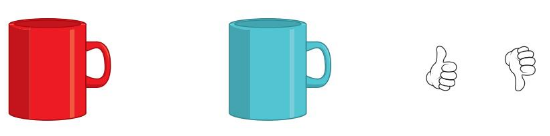
Answer:
4\(\frac{1}{3}\) – \(\frac{2}{3}\)
4 can be written as 3 \(\frac{3}{3}\)
3 \(\frac{3}{3}\) – \(\frac{2}{3}\)
3 + \(\frac{3}{3}\) – \(\frac{2}{3}\)
3 + \(\frac{1}{3}\) = 3 \(\frac{1}{3}\)
So, 4\(\frac{1}{3}\) – \(\frac{2}{3}\) = 3 \(\frac{1}{3}\)

Question 11.
DIG DEEPER!
Find the unknown number.
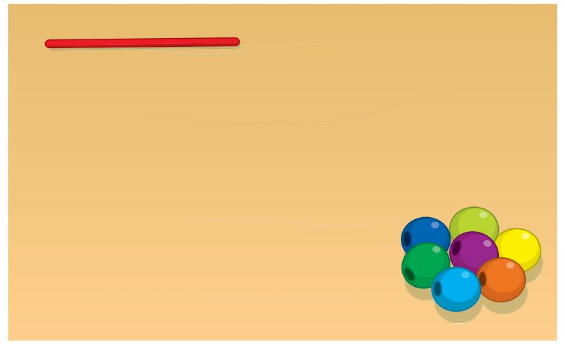
Big Ideas Math Answers 4th Grade Chapter 8 Add and Subtract Fractions 189

Answer:
Let the unknown number be x.
10 \(\frac{3}{12}\) – x = \(\frac{4}{12}\)
10 \(\frac{3}{12}\) –  \(\frac{4}{12}\) = x
9 \(\frac{15}{12}\) –  \(\frac{4}{12}\) = x
x = 9 \(\frac{11}{12}\)
Thus the unknown number is 9 \(\frac{11}{12}\).

Question 12.
Modeling Real Life
A rare flower found in Indonesian rain forests can grow wider than a car tire. How much wider is the flower than a car tire that is 1\(\frac{11}{12}\) feet wide?
Big Ideas Math Answers 4th Grade Chapter 8 Add and Subtract Fractions 189.1

Answer:
Given,
A rare flower found in Indonesian rain forests can grow wider than a car tire.
3 – 1\(\frac{11}{12}\)
2 \(\frac{12}{12}\) – 1\(\frac{11}{12}\)
= 1 \(\frac{1}{12}\)

Question 13.
Modeling Real Life
Your tablet battery is fully charged. You use \(\frac{32}{100}\) of the charge listening to music, and \(\frac{13}{100}\) of the charge playing games. What fraction of the charge remains on your tablet battery?

Answer:
Given,
Your tablet battery is fully charged. You use \(\frac{32}{100}\) of the charge listening to music, and \(\frac{13}{100}\) of the charge playing games.
\(\frac{32}{100}\) – \(\frac{13}{100}\) = \(\frac{19}{100}\)
Thus \(\frac{19}{100}\) fraction of the charge remains on your tablet battery.

Review & Refresh

Divide. Then check your answer.

Question 14.
Big Ideas Math Answers 4th Grade Chapter 8 Add and Subtract Fractions 190

Answer:
Divide 84 by 5
84/5 = 16.8

Question 15.
Big Ideas Math Answers 4th Grade Chapter 8 Add and Subtract Fractions 191

Answer:
Divide 51 by 4.
51/4 = 12.75

Question 16.
Big Ideas Math Answers 4th Grade Chapter 8 Add and Subtract Fractions 192

Answer:
Divide 89 by 8.
89/8 = 11.125

Lesson 8.9 Problem Solving: Fractions

Explore and Grow

Make a plan to solve the problem.

The table shows the tusk lengths of two elephants. Which elephant’s tusks have a greater total length? How much greater?
Big Ideas Math Answers 4th Grade Chapter 8 Add and Subtract Fractions 193
Big Ideas Math Answer Key Grade 4 Chapter 8 Add and Subtract Fractions 194

Answer:
Male Elephant = 4 1/12 + 4 3/12 = 8 4/12
Female Elephant = 4 + 3 7/12 = 7 7/12
The Right Tusk of a Male Elephant is greater than Female Elephant.
The left tusk of a Male Elephant is greater than Female Elephant.
Thus the total length of the Male Elephant is greater than Female Elephant.

Make Sense of Problems
A \(\frac{7}{12}\)-foot long piece of one of the male elephant’s tusks breaks off. Does this change your plan to solve the problem? Will this change the answer? Explain.

Answer:
A \(\frac{7}{12}\)-foot long piece of one of the male elephant’s tusks breaks off.
8 4/12 – 7 7/12 = 3/4
No, if \(\frac{7}{12}\)-foot long piece of one of the male elephant’s tusks breaks off it will not change the answer. Still, the Male Elephant is greater than Female Elephant.

Think and Grow: Problem Solving: Fractions

Example
A family spends 2\(\frac{2}{4}\) hours traveling to a theme park, 7\(\frac{1}{4}\) hours at the theme park, and 2\(\frac{3}{4}\) hours traveling home. How much more time does the family spend at the theme park than traveling?
Big Ideas Math Answer Key Grade 4 Chapter 8 Add and Subtract Fractions 195

Understand the Problem

What do you know?

  • The family spends 2\(\frac{2}{4}\) hours traveling to the theme park, 7\(\frac{1}{4}\) hours at the theme park, 2\(\frac{3}{4}\) hours traveling home.
    What do you need to find?
  • You need to find how much more time the family spends at the theme park than the traveling.

Make a plan

How will you solve it?

  • Add 2\(\frac{2}{4}\) and 2\(\frac{3}{4}\) to find how much time the family spends traveling.
  • Then subtract the sum from 7\(\frac{1}{4}\) to find how much more time they spend at the theme park.

Solve
So, the family spends ___ more hours at the theme park than traveling.

Show and Grow

Question 1.
Explain how you can check your answer in each step of the example above.

Answer:
Big-Ideas-Math-Answer-Key-Grade-4-Chapter-8-Add-and-Subtract-Multi-Digit-Numbers-196
So, the family spends 2 more hours at the theme park than traveling.

Apply any and Grow: Practice

Understand the problem. What do you know? What do you need to find? Explain.

Answer:

  • The family spends 2\(\frac{2}{4}\) hours traveling to the theme park, 7\(\frac{1}{4}\) hours at the theme park, 2\(\frac{3}{4}\) hours traveling home.
    What do you need to find?
  • You need to find how much more time the family spends at the theme park than the traveling.

Question 2.
You are making a sand art bottle. You fill \(\frac{1}{6}\) of the bottle with pink sand, \(\frac{3}{6}\) with red sand, and \(\frac{2}{6}\) with white sand. How much of the bottle is filled?

Answer:
Given that,
You are making a sand art bottle. You fill \(\frac{1}{6}\) of the bottle with pink sand, \(\frac{3}{6}\) with red sand, and \(\frac{2}{6}\) with white sand.
\(\frac{1}{6}\) + \(\frac{3}{6}\) + \(\frac{2}{6}\) = \(\frac{1}{6}\)
Thus \(\frac{1}{6}\) of the bottle is filled.

Question 3.
Your friend has \(\frac{1}{8}\) of a photo album filled with beach photographs and \(\frac{4}{8}\) of the album filled with photos of friends. What fraction of the photo album is left?

Answer:
Given that,
Your friend has \(\frac{1}{8}\) of a photo album filled with beach photographs and \(\frac{4}{8}\) of the album filled with photos of friends.
\(\frac{1}{8}\) + \(\frac{4}{8}\) = \(\frac{5}{8}\)
\(\frac{8}{8}\) – \(\frac{5}{8}\) = \(\frac{3}{8}\)
Thus \(\frac{3}{8}\) fraction of the photo album is left.

Understand the problem. Then make a plan. How will you solve? Explain.

Question 4.
In Race A, an Olympic swimmer swims 100 meters in 62\(\frac{25}{100}\) seconds. In Race B, she cuts 2\(\frac{38}{100}\) seconds off her Race A time. How many seconds does she need to cut off her Race B time to swim 100 meters in 58\(\frac{45}{100}\) seconds?

Answer:
Given,
In Race A, an Olympic swimmer swims 100 meters in 62\(\frac{25}{100}\) seconds. In Race B, she cuts 2\(\frac{38}{100}\) seconds off her Race A time.
62\(\frac{25}{100}\) – 2\(\frac{38}{100}\) = 59 \(\frac{87}{100}\)
59 \(\frac{87}{100}\) – 58\(\frac{45}{100}\) = 1 \(\frac{42}{100}\)
She need 1 \(\frac{42}{100}\) to cut off her Race B time to swim 100 meters in 58\(\frac{45}{100}\) seconds.

Question 5.
A semi-truck has 2 fuel tanks that each hold the same amount of fuel. A truck driver fills up both tanks and uses \(\frac{3}{4}\) tank of gasoline driving to his first stop. He uses \(\frac{2}{4}\) tank of gasoline driving to his second stop. How much gasoline does he have left?

Answer:
Given that,
A semi-truck has 2 fuel tanks that each hold the same amount of fuel. A truck driver fills up both tanks and uses \(\frac{3}{4}\) tank of gasoline driving to his first stop. He uses \(\frac{2}{4}\) tank of gasoline driving to his second stop.
\(\frac{3}{4}\) + \(\frac{2}{4}\) = \(\frac{5}{4}\)
2 – \(\frac{5}{4}\) = \(\frac{3}{4}\)
Thus \(\frac{3}{4}\) gasoline has left.

Question 6.
A bootlace worm holds the record as the longest animal at 180 feet long. How much longer is it than 2 blue whales combined?
Big Ideas Math Answers 4th Grade Chapter 8 Add and Subtract Fractions 197

Answer:
Given,
A bootlace worm holds the record as the longest animal at 180 feet long.
1 blue whale = 85 \(\frac{8}{12}\)
2 blue whales = 85 \(\frac{8}{12}\) + 85 \(\frac{8}{12}\) = 171 \(\frac{1}{3}\)
180 – 171 \(\frac{1}{3}\)
179 \(\frac{3}{3}\) – 171 \(\frac{1}{3}\) = 8 \(\frac{2}{3}\)

Think and Grow: Modeling Real Life

Example
You walk \(\frac{1}{10}\) kilometer on Monday, \(\frac{3}{10}\) kilometer on Tuesday, and \(\frac{5}{10}\) kilometer on Wednesday. You continue the pattern on Thursday and Friday. How many kilometers do you walk in all?
Think: What do you know? What do you need to find? How will you solve?
Big Ideas Math Answer Key Grade 4 Chapter 8 Add and Subtract Fractions 198
Step 1: Identify the pattern.
Big Ideas Math Answer Key Grade 4 Chapter 8 Add and Subtract Fractions 199
Step 2: Use the pattern to find the distances you walk on Thursday and Friday.
Big Ideas Math Answer Key Grade 4 Chapter 8 Add and Subtract Fractions 200
Step 3: Add all of the distances.
Big Ideas Math Answer Key Grade 4 Chapter 8 Add and Subtract Fractions 201
Big Ideas Math Answer Key Grade 4 Chapter 8 Add and Subtract Fractions 202.

Answer:
Step 1: Identify the pattern.
Big-Ideas-Math-Answer-Key-Grade-4-Chapter-8-Add-and-Subtract-Multi-Digit-Numbers-199
Step 2: Use the pattern to find the distances you walk on Thursday and Friday.
Big-Ideas-Math-Answer-Key-Grade-4-Chapter-8-Add-and-Subtract-Multi-Digit-Numbers-200
Step 3: Add all of the distances.
Big-Ideas-Math-Answer-Key-Grade-4-Chapter-8-Add-and-Subtract-Multi-Digit-Numbers-201
So, you walk 2 \(\frac{5}{10}\) kilometers in all.

Show and Grow

Question 7.
You save \(\frac{1}{4}\) dollar the first week, \(\frac{2}{4}\) dollar the next week, and dollar \(\frac{3}{4}\) dollar the following week. You continue the pattern for 3 more weeks. How much money do you save after 6 weeks?
Big Ideas Math Answer Key Grade 4 Chapter 8 Add and Subtract Fractions 203

Answer:
You save \(\frac{1}{4}\) dollar the first week, \(\frac{2}{4}\) dollar the next week, and dollar \(\frac{3}{4}\) dollar the following week. You continue the pattern for 3 more weeks.
\(\frac{1}{4}\), \(\frac{2}{4}\), \(\frac{3}{4}\), \(\frac{4}{4}\), \(\frac{5}{4}\), \(\frac{6}{4}\)
You save \(\frac{6}{4}\) dollar after 6 weeks.

Problem Solving: Fractions Homework & Practice 8.9

Question 1.
An older washing machine uses 170\(\frac{3}{10}\) liters of water per load. A new, high-efficiency, washing machine uses 75\(\frac{7}{10}\) fewer liters than the older washing machine. How many liters of water will the high-efficiency washing machine use for 2 loads of laundry?

Answer:
Given,
An older washing machine uses 170\(\frac{3}{10}\) liters of water per load. A new, high-efficiency, washing machine uses 75\(\frac{7}{10}\) fewer liters than the older washing machine.
75\(\frac{7}{10}\) + 75\(\frac{7}{10}\) = 151\(\frac{2}{5}\)
170\(\frac{3}{10}\) – 151\(\frac{2}{5}\) = 18 \(\frac{9}{10}\)

Question 2.
A student jumps 40 \(\frac{5}{12}\) inches for the high jump. On his second try, he jumps 1\(\frac{8}{12}\) inches higher. He can tie the school record if he raises the bar another 3\(\frac{10}{12}\) inches and successfully jumps over it. What is the school record for the high jump?

Answer:
Given,
A student jumps 40 \(\frac{5}{12}\) inches for the high jump.
On his second try, he jumps 1\(\frac{8}{12}\) inches higher.
He can tie the school record if he raises the bar another 3\(\frac{10}{12}\) inches and successfully jumps over it.
40 \(\frac{5}{12}\) + 1 \(\frac{8}{12}\) = 42 \(\frac{1}{12}\)
40 \(\frac{5}{12}\) + 3\(\frac{10}{12}\) = 44 \(\frac{3}{12}\)
44 \(\frac{3}{12}\) is the school record for the high jump.

Question 3.
You are shipping three care packages. The first package weighs 10\(\frac{1}{10}\) pounds. The second weighs 5\(\frac{7}{10}\) pounds, and the third weighs 25\(\frac{8}{10}\) pounds. What is the total weight of the packages?

Answer:
Given,
You are shipping three care packages. The first package weighs 10\(\frac{1}{10}\) pounds.
The second weighs 5\(\frac{7}{10}\) pounds, and the third weighs 25\(\frac{8}{10}\) pounds.
10\(\frac{1}{10}\) + 5\(\frac{7}{10}\) + 25\(\frac{8}{10}\) = 41 \(\frac{6}{10}\)
The total weight of the packages is 41 \(\frac{6}{10}\) pounds.

Question 4.
A person’s arm span is approximately equal to the person’s height. How tall is this fourth grader according to his arm span?
Big Ideas Math Answer Key Grade 4 Chapter 8 Add and Subtract Fractions 204

Answer:
Given,
A person’s arm span is approximately equal to the person’s height.
By using the pattern we can find the arm span of the fourth-grader i.e., 1 \(\frac{7}{12}\)

Question 5.
Writing
Write and solve a two-step word problem with mixed numbers that can be solved using addition or subtraction.

Answer:
I have 5 \(\frac{8}{12}\) episodes of my favorite series download onto my computer. I Downloaded some yesterday and \(\frac{7}{12}\) of the episodes this morning. The download speed was really slow. What fraction of the episodes did I download yesterday?
5 \(\frac{8}{12}\) – \(\frac{7}{12}\) = 5 \(\frac{1}{12}\) = \(\frac{61}{12}\)

Question 6.
Modeling Real Life
Your friend walks \(\frac{2}{10}\) mile to school each day. She walks the same distance home. How many miles does she walk to and from school in one 5-day school week?

Answer:
Given,
Your friend walks \(\frac{2}{10}\) mile to school each day. She walks the same distance home.
\(\frac{2}{10}\) + \(\frac{2}{10}\) = \(\frac{4}{10}\)
5 × \(\frac{4}{10}\) = \(\frac{20}{10}\) = 2
Thus she walk to and from school in one 5-day school week is 2 miles.

Question 7.
DIG DEEPER!
A store sells cashews in \(\frac{2}{3}\)-pound bags. You buy some bags and repackage the cashews into 1-pound bags. What is the least number of bags you should buy so that you do not have any cashews left over?

Answer:
Given,
A store sells cashews in \(\frac{2}{3}\)-pound bags. You buy some bags and repackage the cashews into 1-pound bags.
1 – \(\frac{2}{3}\) = \(\frac{1}{3}\)
Thus \(\frac{1}{3}\) pound of cashews left over.

Review & Refresh

Compare.

Question 8.
Big Ideas Math Answer Key Grade 4 Chapter 8 Add and Subtract Fractions 205

Answer: >

Explanation:
\(\frac{8}{12}\) = \(\frac{4}{6}\)
\(\frac{4}{6}\) > \(\frac{1}{6}\)

Question 9.
Big Ideas Math Answer Key Grade 4 Chapter 8 Add and Subtract Fractions 206

Answer: <

Explanation:
First, make the denominators common.
\(\frac{9}{10}\) = \(\frac{18}{20}\)
\(\frac{14}{8}\) = \(\frac{35}{20}\)
\(\frac{18}{20}\) < \(\frac{35}{20}\)

Question 10.
Big Ideas Math Answer Key Grade 4 Chapter 8 Add and Subtract Fractions 207

Answer: >

Explanation:
First, make the denominators common.
\(\frac{3}{4}\)
\(\frac{1}{2}\) × 2/2 = \(\frac{2}{4}\)
\(\frac{3}{4}\) > \(\frac{2}{4}\)

Add and Subtract Fractions Performance Task 8

The notes on sheet music tell you what note to play and how long to hold each note. The table shows how long you hold some notes compared to the length of one whole note.
Big Ideas Math Answer Key Grade 4 Chapter 8 Add and Subtract Fractions 208
1. a. Complete the table by writing equivalent fractions.

Answer:
Big-Ideas-Math-Answer-Key-Grade-4-Chapter-8-Add-and-Subtract-Multi-Digit-Numbers-208
A whole note is nothing but 1 so the fraction is 8/8.
1/2 note is nothing but 4/8.
1/4 note is nothing but 2/8.

b. Each group of notes represents one measure. What is the sum of the values of the notes in each measure?
Big Ideas Math Answer Key Grade 4 Chapter 8 Add and Subtract Fractions 209

Answer:
Big-Ideas-Math-Answer-Key-Grade-4-Chapter-8-Add-and-Subtract-Multi-Digit-Numbers-209

c. Draw the missing note to complete each measure.
Big Ideas Math Answer Key Grade 4 Chapter 8 Add and Subtract Fractions 210

Answer:
Big-Ideas-Math-Answer-Key-Grade-4-Chapter-8-Add-and-Subtract-Multi-Digit-Numbers-210

d. Draw one measure of notes where the sum of the values is 1. Show your work.
___________

Answer:
Big-Ideas-Math-Answer-Key-Grade-4-Chapter-8-Add-and-Subtract-Multi-Digit-Numbers-209 (1)

e. Write the fraction represented by the sum of the notes. Then write the fraction as a sum of fractions in two different ways.
Big Ideas Math Answer Key Grade 4 Chapter 8 Add and Subtract Fractions 211

Answer:
Big Ideas Math Answer Key Grade 4 Chapter 8 Add and Subtract Fractions 211 = \(\frac{1}{8}\) + \(\frac{4}{8}\) + \(\frac{2}{8}\) = \(\frac{7}{8}\)

Add and Subtract Fractions Activity

Three In a Row: Fraction Add or Subtract

Directions:

  1. Players take turns.
  2. On your turn, spin both spinners. Choose whether to add or subtract.
  3. Add or subtract the mixed number and fraction. Cover the sum or difference.
  4. If the sum or difference is already covered, you lose your turn.
  5. The first player to get three in a row wins!

Big Ideas Math Answer Key Grade 4 Chapter 8 Add and Subtract Fractions 212

Answer:
1 \(\frac{1}{8}\) + \(\frac{3}{8}\) = 1 + \(\frac{1}{8}\) + \(\frac{3}{8}\) = 1 \(\frac{4}{8}\)
3 \(\frac{7}{8}\) + \(\frac{8}{8}\) = 3 + \(\frac{7}{8}\) + 1 = 4 \(\frac{7}{8}\)
2 \(\frac{5}{8}\) + \(\frac{4}{8}\) = 2 + \(\frac{5}{8}\) + \(\frac{4}{8}\) = 3 \(\frac{1}{8}\)

Add and Subtract Fractions Chapter Practice 8

8.1 Use Models to Add Fractions

Find the sum. Explain how you used the model to add.

Question 1.
Big Ideas Math Answer Key Grade 4 Chapter 8 Add and Subtract Fractions 214

Answer: 5/6
Big-Ideas-Math-Answer-Key-Grade-4-Chapter-8-Add-and-Subtract-Multi-Digit-Numbers-214

Question 2.
Big Ideas Math Answer Key Grade 4 Chapter 8 Add and Subtract Fractions 215

Answer:
Big-Ideas-Math-Answer-Key-Grade-4-Chapter-8-Add-and-Subtract-Multi-Digit-Numbers-215

Find the sum. Use a model or a number line to help.

Question 3.
Big Ideas Math Answer Key Grade 4 Chapter 8 Add and Subtract Fractions 216

Answer:
BIM Grade 4 Chapter 8 add & subtract fractions img_25

Question 4.
Big Ideas Math Answer Key Grade 4 Chapter 8 Add and Subtract Fractions 217

Answer:
Big Ideas Math Answers Grade 4 Chapter 8 Add and Subtract Fractions img_216

Question 5.
Big Ideas Math Answer Key Grade 4 Chapter 8 Add and Subtract Fractions 218

Answer:
Denominators are the same so add the numerators.
\(\frac{45}{100}\) + \(\frac{10}{100}\) + \(\frac{9}{100}\) = \(\frac{64}{100}\)

8.2 Decompose Fractions

Write the fraction as a sum of unit fractions.

Question 6.
\(\frac{2}{12}\)

Answer:
The unit fraction for \(\frac{2}{12}\) is \(\frac{1}{12}\) + \(\frac{1}{12}\)

Question 7.
\(\frac{3}{3}\)

Answer: The unit fraction for \(\frac{3}{3}\) is \(\frac{1}{3}\) + \(\frac{1}{3}\) + \(\frac{1}{3}\)

Write the fraction as a sum of fractions in two different ways.

Question 8.
\(\frac{5}{8}\)

Answer:
The unit fraction for \(\frac{5}{8}\) is \(\frac{1}{8}\) + \(\frac{1}{8}\) + \(\frac{1}{8}\) + \(\frac{1}{8}\) + \(\frac{1}{8}\)

Question 9.
\(\frac{6}{100}\)

Answer:
The unit fraction for \(\frac{6}{100}\) is \(\frac{1}{100}\) + \(\frac{1}{100}\) + \(\frac{1}{100}\) + \(\frac{1}{100}\) + \(\frac{1}{100}\) + \(\frac{1}{100}\)

Question 10.
\(\frac{90}{100}\)

Answer:
\(\frac{90}{100}\) = 9/10
The unit fraction for \(\frac{9}{10}\) is \(\frac{1}{10}\) + \(\frac{1}{10}\) + \(\frac{1}{10}\) + \(\frac{1}{10}\) + \(\frac{1}{10}\) + \(\frac{1}{10}\) + \(\frac{1}{10}\) + \(\frac{1}{10}\) + \(\frac{1}{10}\)

Question 11.
\(\frac{4}{5}\)

Answer:
The unit fraction for \(\frac{4}{5}\) is \(\frac{1}{5}\) + \(\frac{1}{5}\) + \(\frac{1}{5}\) + \(\frac{1}{5}\)

8.3 Add Fractions with Like Denominators

Add

Question 12.
Big Ideas Math Answer Key Grade 4 Chapter 8 Add and Subtract Fractions 219

Answer:
Denominators are the same so add the numerators.
\(\frac{5}{10}\) + \(\frac{10}{10}\) = \(\frac{15}{10}\)

Question 13.
Big Ideas Math Answer Key Grade 4 Chapter 8 Add and Subtract Fractions 220

Answer:
BIM Grade 4 Chapter 8 add & subtract fractions img_24
Denominators are the same so add the numerators.
\(\frac{1}{3}\) + \(\frac{1}{3}\) = \(\frac{2}{3}\)

Question 14.
Big Ideas Math Answer Key Grade 4 Chapter 8 Add and Subtract Fractions 221

Answer:
Denominators are the same so add the numerators.
\(\frac{1}{8}\) + \(\frac{6}{8}\) = \(\frac{7}{8}\)

Question 15.
Big Ideas Math Answer Key Grade 4 Chapter 8 Add and Subtract Fractions 222

Answer:
Denominators are the same so add the numerators.
\(\frac{7}{4}\) + \(\frac{3}{4}\) = \(\frac{11}{4}\)

Question 16.
Big Ideas Math Answer Key Grade 4 Chapter 8 Add and Subtract Fractions 223

Answer:
Denominators are the same so add the numerators.
\(\frac{2}{6}\) + \(\frac{2}{6}\) = \(\frac{4}{6}\)

Question 17.
Big Ideas Math Answer Key Grade 4 Chapter 8 Add and Subtract Fractions 224

Answer:
Denominators are the same so add the numerators.
\(\frac{8}{12}\) + \(\frac{4}{12}\) = \(\frac{12}{12}\) = 1

Question 18.
Logic
When you add two of me you get \(\frac{100}{100}\). What fraction am I?

Answer: \(\frac{50}{100}\)
If you add \(\frac{50}{100}\) two times you get \(\frac{100}{100}\)
\(\frac{50}{100}\) + \(\frac{50}{100}\) = \(\frac{100}{100}\)

8.4 Use Models to Subtract Fractions

Find the difference. Explain how you used the model to subtract.

Question 19.
Big Ideas Math Answer Key Grade 4 Chapter 8 Add and Subtract Fractions 225

Answer:
Big-Ideas-Math-Answer-Key-Grade-4-Chapter-8-Add-and-Subtract-Multi-Digit-Numbers-225

Question 20.
Big Ideas Math Answer Key Grade 4 Chapter 8 Add and Subtract Fractions 226

Answer:
Big-Ideas-Math-Answer-Key-Grade-4-Chapter-8-Add-and-Subtract-Multi-Digit-Numbers-226

Find the difference. Use a model or a number line to help.

Question 21.
Big Ideas Math Answer Key Grade 4 Chapter 8 Add and Subtract Fractions 227

Answer: 3/2
Big-Ideas-Math-Answers-Grade-3-Chapter-8-Add-and-Subtract-Multi-Digit-Numbers-139

Question 22.
Big Ideas Math Answer Key Grade 4 Chapter 8 Add and Subtract Fractions 228

Answer:
Big-Ideas-Math-Answers-Grade-3-Chapter-8-Add-and-Subtract-Multi-Digit-Numbers-139

Question 23.
Big Ideas Math Answer Key Grade 4 Chapter 8 Add and Subtract Fractions 229

Answer:
Denominators are the same so subtract the numerators.
\(\frac{30}{100}\) – \(\frac{21}{100}\) = (30 – 21)/100 = \(\frac{9}{100}\)

Question 24.
Modeling Real Life
A football team wins \(\frac{7}{10}\) of their games this season. They lose \(\frac{3}{10}\) of their games. How many more games does the team win than lose?

Answer:
Given that,
A football team wins \(\frac{7}{10}\) of their games this season. They lose \(\frac{3}{10}\) of their games.
\(\frac{7}{10}\) – \(\frac{3}{10}\) = \(\frac{4}{10}\)
Thus \(\frac{4}{10}\) more games the team win than lose.

8.5 Subtract Fractions with Like Denominators

Subtract.

Question 25.
Big Ideas Math Answer Key Grade 4 Chapter 8 Add and Subtract Fractions 230

Answer: \(\frac{5}{10}\)

Explanation:
Denominators are the same so subtract the numerators.
\(\frac{9}{10}\) – \(\frac{4}{10}\) = \(\frac{5}{10}\)

Question 26.
Big Ideas Math Answer Key Grade 4 Chapter 8 Add and Subtract Fractions 231

Answer: \(\frac{7}{12}\)

Explanation:
Denominators are the same so subtract the numerators.
\(\frac{14}{12}\) – \(\frac{7}{12}\) = \(\frac{7}{12}\)

Question 27.
Big Ideas Math Answer Key Grade 4 Chapter 8 Add and Subtract Fractions 232

Answer: \(\frac{24}{100}\)

Explanation:
Denominators are the same so subtract the numerators.
\(\frac{80}{100}\) – \(\frac{56}{100}\) = \(\frac{24}{100}\)

Question 28.
Big Ideas Math Answer Key Grade 4 Chapter 8 Add and Subtract Fractions 233

Answer: 3/8\(\frac{3}{8}\)

Explanation:
Denominators are the same so subtract the numerators.
1 can be written as \(\frac{8}{8}\)
\(\frac{8}{8}\) – \(\frac{5}{8}\) = \(\frac{3}{8}\)

Question 29
Big Ideas Math Answer Key Grade 4 Chapter 8 Add and Subtract Fractions 234

Answer: \(\frac{2}{3}\)

Explanation:
Denominators are the same so subtract the numerators.
1 can be written as \(\frac{3}{3}\)
\(\frac{3}{3}\) – \(\frac{1}{3}\) = \(\frac{2}{3}\)

Question 30.
Big Ideas Math Answer Key Grade 4 Chapter 8 Add and Subtract Fractions 235

Answer: \(\frac{2}{6}\)

Explanation:
Denominators are the same so subtract the numerators.
2 can be written as \(\frac{12}{6}\)
\(\frac{12}{6}\) – \(\frac{10}{6}\) = \(\frac{2}{6}\)

8.6 Model Fractions and Mixed Numbers

Write the mixed number as a fraction.

Question 31.
1 \(\frac{6}{8}\)

Answer: \(\frac{7}{4}\)

Explanation:
Step 1
Multiply the denominator by the whole number
8 × 1 = 8
Step 2
Add the answer from Step 1 to the numerator
8 + 6 = 14
Step 3
Write an answer from Step 2 over the denominator
14/8 = \(\frac{7}{4}\)

Question 32.
4 \(\frac{1}{2}\)

Answer: \(\frac{9}{2}\)

Explanation:
Step 1
Multiply the denominator by the whole number
2 × 4 = 8
Step 2
Add the answer from Step 1 to the numerator
8 + 1 = 9
Step 3
Write an answer from Step 2 over the denominator
\(\frac{9}{2}\)

Question 33.
5 \(\frac{10}{12}\)

Answer: \(\frac{35}{6}\)

Explanation:
Step 1
Multiply the denominator by the whole number
12 × 5 = 60
Step 2
Add the answer from Step 1 to the numerator
60 + 10 = 70
Step 3
Write an answer from Step 2 over the denominator
70/12 = \(\frac{35}{6}\)

Write the fraction as a mixed number or a whole number.

Question 34.
\(\frac{17}{4}\)

Answer: 4 \(\frac{1}{4}\)

Explanation:
Converting from improper fraction to the mixed fraction.
\(\frac{17}{4}\) = 4 \(\frac{1}{4}\)

Question 35.
\(\frac{30}{6}\)

Answer: 5

Explanation:
Converting from improper fraction to the mixed fraction.
6 divides 30 five times.
So, \(\frac{30}{6}\) = 5

Question 36.
\(\frac{63}{10}\)

Answer: 6 \(\frac{3}{10}\)

Explanation:
Converting from improper fraction to the mixed fraction.
\(\frac{63}{10}\) = 63 ÷ 10
= 6 \(\frac{3}{10}\)

Compare.

Question 37.
Big Ideas Math Answer Key Grade 4 Chapter 8 Add and Subtract Fractions 236

Answer: <

Explanation:
2 4/100
Step 1
Multiply the denominator by the whole number
100 × 2 = 200
Step 2
Add the answer from Step 1 to the numerator
200 + 4 = 204
Step 3
Write an answer from Step 2 over the denominator
204/100
240/100
Step 1
Multiply the denominator by the whole number
100 × 2 = 200
Step 2
Add the answer from Step 1 to the numerator
200 + 40 = 240
Step 3
Write an answer from Step 2 over the denominator
240/100
204/100 < 240/100

Question 38.
Big Ideas Math Answer Key Grade 4 Chapter 8 Add and Subtract Fractions 237

Answer: >

Explanation:
Step 1
Multiply the denominator by the whole number
3 × 8 = 24
Step 2
Add the answer from Step 1 to the numerator
24 + 2 = 26
Step 3
Write an answer from Step 2 over the denominator
26/3
26/3 > 25/3

Question 39.
Big Ideas Math Answer Key Grade 4 Chapter 8 Add and Subtract Fractions 238

Answer: =

Explanation:
25/5 = 5
5 = 5

Question 40.
Which One Doesn’t Belong? Which expression does not belong with the other three?
Big Ideas Math Answer Key Grade 4 Chapter 8 Add and Subtract Fractions 239

Answer: 20/8 does not belong with the other three.

8.7 Add Mixed Numbers

Add.

Question 41.
Big Ideas Math Answer Key Grade 4 Chapter 8 Add and Subtract Fractions 240

Answer: 9

Explanation:
Rewriting our equation with parts separated
=5+1/2+3+1/2
Solving the whole number parts
5+3=8
Solving the fraction parts
1/2+1/2=2/2
Reducing the fraction part, 2/2,
2/2=1/1
Simplifying the fraction part, 1/1,
1/1=1
Combining the whole and fraction parts
8+1=9

Question 42.
Big Ideas Math Answer Key Grade 4 Chapter 8 Add and Subtract Fractions 241

Answer: 4 1/3

Explanation:
Rewriting our equation with parts separated
=2+5/6+1+3/6
Solving the whole number parts
2+1=3
Solving the fraction parts
5/6+3/6 = 8/6
8/6 = 4/3
4/3 = 4 1/3

Question 43.
Big Ideas Math Answer Key Grade 4 Chapter 8 Add and Subtract Fractions 242

Answer: 5 5/6

Explanation:
Rewriting our equation with parts separated
=4+1+10/12
Solving the whole number parts
4+1=5
Combining the whole and fraction parts
5+10/12= 5 10/12 = 5 5/6

Question 44.
Big Ideas Math Answer Key Grade 4 Chapter 8 Add and Subtract Fractions 243

Answer: 19

Explanation:
Rewriting our equation with parts separated
=8+3/5+10+2/5
Solving the whole number parts
8+10=18
Solving the fraction parts
3/5+2/5=5/5
Simplifying the fraction part, 1/1,
1/1 = 1
Combining the whole and fraction parts
18+1=19

Question 45.
Big Ideas Math Answer Key Grade 4 Chapter 8 Add and Subtract Fractions 244

Answer: 14 1/4

Explanation:
Rewriting our equation with parts separated
=7+2/4+1+2/4
Solving the whole number parts
7+1=8
Solving the fraction parts
2/4+2/4=4/4
Reducing the fraction part, 4/4,
4/4=1/1
Simplifying the fraction part, 1/1,
1/1=1
Combining the whole and fraction parts
8+1=9
9 + 5 1/4
Rewriting our equation with parts separated
=9+5+1/4
Solving the whole number parts
9+5=14
Combining the whole and fraction parts
14+1/4=14 1/4

Question 46.
Big Ideas Math Answer Key Grade 4 Chapter 8 Add and Subtract Fractions 245

Answer: 19 5/100

Explanation:
Rewriting our equation with parts separated
=4+25/100+11+75/100
Solving the whole number parts
4+11=15
Solving the fraction parts
25/100+75/100=100/100
Reducing the fraction part, 100/100,
100/100=11
Simplifying the fraction part, 1/1,
1/1=1
Combining the whole and fraction parts
15+1=16
Rewriting our equation with parts separated
=16+3+5/100
Solving the whole number parts
16+3=19
Combining the whole and fraction parts
19+5/100=19 5/100

8.8 Subtract Mixed Numbers

Subtract

Question 47.
Big Ideas Math Answer Key Grade 4 Chapter 8 Add and Subtract Fractions 246

Answer: 3

Explanation:
Rewriting our equation with parts separated
=9+2/3-6-2/3
Solving the whole number parts
9−6=3
Solving the fraction parts
2/3−2/3=0/3
Simplifying the fraction part, 0/3,
0/3=0
Combining the whole and fraction parts
3+0=3

Question 48.
Big Ideas Math Answer Key Grade 4 Chapter 8 Add and Subtract Fractions 247

Answer: 5 2/5

Explanation:
Rewriting our equation with parts separated
=13+9/10−8−5/10
Solving the whole number parts
13−8=5
Solving the fraction parts
9/10−5/10=4/10
Reducing the fraction part, 4/10,
4/10=2/5
Combining the whole and fraction parts
5+2/5=5 2/5

Question 49.
Big Ideas Math Answer Key Grade 4 Chapter 8 Add and Subtract Fractions 248

Answer: 1/2

Explanation:
Rewriting our equation with parts separated
=3+2/8−2−6/8
Solving the whole number parts
3−2=1
Solving the fraction parts
2/8−6/8=−4/8
Reducing the fraction part, 4/8,
−4/8=−1/2
Combining the whole and fraction parts
1−1/2=1/2

Question 50.
Big Ideas Math Answer Key Grade 4 Chapter 8 Add and Subtract Fractions 249

Answer: 5 1/2

Explanation:
6 + 1/2 – 1 = 5 1/2

Question 51.
Big Ideas Math Answer Key Grade 4 Chapter 8 Add and Subtract Fractions 250

Answer: 2 3/4

Explanation:
Rewriting our equation with parts separated
=7−4−1/4
Solving the whole number parts
7−4=3
Combining the whole and fraction parts
3−1/4=2 3/4

Question 52.
Big Ideas Math Answer Key Grade 4 Chapter 8 Add and Subtract Fractions 251

Answer: 1/6

Explanation:
Rewriting our equation with parts separated
=20−19−5/6
Solving the whole number parts
20−19=1
Combining the whole and fraction parts
1−5/6=1/6

8.9 Problem Solving: Fractions

Question 53.
You give \(\frac{3}{12}\) of your bag of grapes to one friend and \(\frac{5}{12}\) of your bag to another friend. What fraction of the bag of grapes do you have left?

Answer:
Given that,
You give \(\frac{3}{12}\) of your bag of grapes to one friend and \(\frac{5}{12}\) of your bag to another friend
\(\frac{3}{12}\) + \(\frac{5}{12}\) = \(\frac{8}{12}\)
\(\frac{12}{12}\) – \(\frac{8}{12}\) = \(\frac{4}{12}\)
Thus \(\frac{4}{12}\) fraction of the bag of grapes are left.

Final Words:

Hope you are all satisfied with the solutions provided in the BIM Grade 4 Chapter 8 Add and Subtract Fractions pdf. If you have any doubts regarding the problems you can ask your doubts in the below comment box. We are ready to clarify your doubts at any time. Stay with us to get the solutions of all 4th-grade chapters.