Concept of Pattern

Concept of Pattern – Definition, Facts, Types, Examples

Do you know the meaning of the pattern? Usually, the pattern is a regular word used by everyone even small kids. For example, while purchasing anything we see the patterns on it. Similarly, in mathematics, we have the concept of pattern. It’s all about numbers and includes the different patterns. So, now we will get a sneak peek at the concept of patterns, and in what way it helps the students in math solving. Let’s see solved examples on Patterns for clear knowledge on it.

Also Check:

What is Pattern?

A pattern means a set of numbers or objects related to each other with a specific rule. It provides a common relation between the numbers. A pattern is not only a numbers pattern, it may be a word pattern, image pattern, dots pattern, etc. In maths, a pattern is a repeated system of numbers, shapes, and so on. Patterns are also known as a sequence of numbers or a series of numbers.

For example, the doors, windows of any house look in a similar pattern. In the same way, we can search for patterns in mathematics also. By knowing about the patterns students observe the relation between numbers and all number patterns are predictions.

Types of Patterns

In mathematics, we have different types to know about the concept of patterns namely arithmetic patterns, geometric patterns, shape patterns, and Fibonacci patterns, etc. In a pattern, the numbers will be in ascending order or descending order. Let’s discuss some patterns with few examples.

Arithmetic Patterns

In arithmetic patterns, the series is based on the addition and subtraction of numbers. It is also known as an algebraic pattern. If there are more than two numbers in a series by using the algebraic patterns we can find the pattern in the series given. There should be a common difference between the numbers by adding or subtracting in a series or sequence of numbers we have. The following image shows the example to understand the arithmetic pattern.

Example on arithmetic pattern

As we can see that the common difference in the above pattern is the number 6 by adding 6 to the previous number we get the next number of the pattern.

Geometric Patterns

Another type of pattern is the Geometric Pattern. It also involves a sequence of numbers depends on the multiplication and division of a sequence. Similarly, to the arithmetic pattern, if there are more than two numbers in a series we can find easily the unknown number in the geometric pattern by observing the sequence.

For example, if we have a series of numbers like 2, 4, 8, 16, __, 64, 128.

Here, if you observe the series every number is multiplied by 2 by the previous term. The third number 16 is multiplied by 2 from the previous number 8.

To find the missing number, we multiply the previous number by 2, then we get the unknown number. Thus, the unknown number is 32.

Hence, the pattern is 2, 4, 8, 16, 32, 64, 128.

Examples of Concept of Number Pattern

Example 1:
Find the missing number from the pattern 4, 8, 12, __, 20, 24, __
Solution:
Given pattern is 4, 8, 12, __, 20, 24, __
Now, we have to find the missing numbers in a sequence.
First, observe the difference between the numbers to know what type of pattern it is?
The sequence of numbers is in ascending order, and if we notice the difference is 4.
By using an arithmetic pattern, the rule to use is ‘add 4 to every previous number’.
Now, add 4 to the previous number, then easily we can find the missing numbers.
Next, add 4 to the previous number 12, then the number is 16.
Similarly, add 4 to the previous number 24, then the number is 28.
Therefore, the pattern with missing numbers is 4, 8, 12, 16, 20, 24, 28.

Example 2:
Find the next number in the series 45, 40, 35, 30, 25, __
Solution:
Given series 45, 40, 35, 30, 25, __
Here, we have to find the next number of the given series.
First, if we notice the series in decreasing order. The difference is 5.
It is in an arithmetic pattern, we have to subtract the number 5 from the previous number to get the next number.
The rule we have to use is ‘subtract 5 from the previous number’.
If we take third term 35 and subtract 5 from the previous number, then easily we got the fourth term 30.
Similarly, to find the next number subtract 5 from the previous number i.e., 25-5=20.
Hence, the next number is 20.
The complete series is 45, 40, 35, 30, 25, 20.

Example 3:
Choose the correct number in the missing place of the given series or pattern: 2, 7, 9, 3, 8, 11, 4, 9, 13, __, 10, 15.
Solution:
If you observe the series either it is in ascending order or in descending order.
Closely notice the series, in the given pattern if you add the first two numbers we get the third number.
Let’s see how the pattern is formed
Add first two numbers i.e., 2+7=9
Add four and five numbers i.e., 3+8=11
Add seven and eight numbers i.e., 4+9=13
Now, we have to find the ninth number in the series.
The next numbers are 10 and 15. The rule we followed is ‘add previous two numbers to get the third number’.
So, to get the ninth number __ + 10 = 15. Now, take 5 and add to 10 to get the 15 ie., 5 + 10 = 15.
Thus, the complete pattern is 2, 7, 9, 3, 8, 11, 4, 9, 13, 5, 10, 15.

FAQs on Concept of Pattern

1. What is a Pattern in mathematics?
A pattern is a repeated arrangement of numbers, shapes, and so on. The patterns are related to every number with a specific rule. A pattern can be not only a number it may be any object also. Simply, we can say a list of numbers that follows a certain pattern.

2. What is the rule to form a pattern?
A pattern rule is formed on basis of mathematical operations we have done on number series to know the relation between consecutive numbers. If a pattern is a numerical pattern it means a sequence of numbers, as it is created based on a rule or formula.

3. What is a repeating pattern?
You can create patterns with numbers, colors, etc. One of the types of patterns is a repeating pattern. In this pattern, the numbers just repeat over and over again is a repeating pattern.

Worksheet on Simplification of Fractions

Worksheet on Simplification of Fractions | Simplifying Fractions Worksheet with Answers

Worksheet on Simplification of Fractional Numbers is provided with the different types of problems. Follow the complete concept and learn more about the Simplification of Fractional Numbers topic. Here you can find, different methods to solve a given problem. We will provide answers and explanations for the simplification of the fractions problems provided. Test your knowledge using these problems and help your child practice converting fractions to the simplest form.

Read More: Simplification of Fractions

Problem 1: 

Simplify \(\frac {9}{16} \) to its lowest terms.

Solution:

Now let’s see what are the factors of numerator 9 = 1, 3, 9
And factors of denominator 16 = 1, 2, 4, 8, 16
Now, we can see that 1 is the only common factor for 9 and 16
So given fractional number \(\frac {9}{16} \) can’t be simplified any further.
Therefore, \(\frac {9}{16} \) is in its simplest form.


Problem 2:

Simplify \(\frac {5}{9} \) to its lowest terms.

Solution:

Now let’s see what are the factors of numerator 5 = 1, 5
And factors of denominator 9 = 1, 3, 9
Now, we can see that 1 is the only common factor for 5 and 9
So given fractional number \(\frac {5}{9} \) can’t be simplified any further.
Therefore, \(\frac {5}{9} \) is in its simplest form.


Problem 3:

Simplify \(\frac {7}{19} \) to its lowest terms.

Solution:

Now let’s see what are the factors of numerator 7 = 1, 7
And factors of denominator 19 = 1, 19
Now, we can see that 1 is the only common factor for 7 and 19
So given fractional number \(\frac {7}{19} \) can’t be simplified any further.
Therefore, \(\frac {7}{19} \) is in its simplest form.


Problem 4:

Simplify \(\frac {2}{8} \) to its lowest terms.

Solution:

Now let’s see what are the factors of numerator 2 = 1, 2
And factors of denominator 8 = 1, 2, 4, 8
Now, we can see that 1 is not the only common factor for 2 and 8
So given fractional number \(\frac {2}{8} \) can be simplified as \(\frac {1}{4} \)
Therefore, the simplest form for \(\frac {2}{8} \) is \(\frac {1}{4} \).


Problem 5:

Simplify \(\frac {3}{15} \) to its lowest terms.

Solution:

Now let’s see what are the factors of numerator 3 = 1, 3
And factors of denominator 15 = 1, 3, 5, 15
Now, we can see that 1 is not the only common factor for 3 and 15
So given fractional number \(\frac {3}{15} \) can be simplified as \(\frac {1}{5} \)
Therefore, the simplest form for \(\frac {3}{15} \) is \(\frac {1}{5} \).


Problem 6:

Simplify \(\frac {2}{56} \) to its lowest terms.

Solution:

Now let’s see what are the factors of numerator 2 = 1, 2
And factors of denominator 56 = 1, 2, 4, 7, 8, 14, 28, 56
Now, we can see that 1 is not the only common factor for 2 and 56
So given fractional number \(\frac {2}{56} \) can be simplified as \(\frac {1}{28} \)
Therefore, the simplest form for \(\frac {2}{56} \) is \(\frac {1}{28} \).


Problem 7:

Simplify \(\frac {4}{54} \) to its lowest terms.

Solution:

Now let’s see what are the factors of numerator 4 = 1, 2, 4
And factors of denominator 54 = 1, 2, 3, 6, 9, 18, 27, 54
Now, we can see that 1 is not the only common factor for 4 and 54
So given fractional number \(\frac {4}{54} \) can be simplified as \(\frac {2}{27} \)
Factors of numerator 4 = 1, 2, 4
Factors of denominator 27 = 1, 3, 9, 27
1 is the only common factor for 4 and 27
Therefore, the simplest form for \(\frac {4}{54} \) is \(\frac {4}{27} \).


Problem 8:

Simplify \(\frac {6}{36} \) to its lowest terms.

Solution:

Now let’s see what are the factors of numerator 6 = 1, 2, 3, 6
And factors of denominator 36 = 1, 2, 3, 4, 6, 9, 12, 18, 36
Now, we can see that 1 is not the only common factor for 6 and 36
So given fractional number \(\frac {6}{36} \) can be simplified as \(\frac {2}{12} \)
Factors of numerator 2 = 1, 2,
Factors of denominator 12 = 1, 2, 3, 6, 12
1 is not the only common factor for 2 and 12
So \(\frac {2}{12} \) can be simplified as \(\frac {1}{6} \)
Factors of numerator 1 = 1
Factors of denominator 6 = 1, 2, 3, 6
1 is the only common factor for 2 and 12
Therefore, the simplest form for \(\frac {6}{36} \) is \(\frac {2}{12} \).


Problem 9:

Simplify \(\frac {26}{42} \) to its lowest terms.

Solution:

Now let’s see what are the factors of numerator 26 = 1, 2, 13, 26
And factors of denominator 42 = 1, 2, 3, 6, 7, 14, 21, 42
Now, we can see that 1 is not the only common factor for 26 and 42
So given fractional number \(\frac {26}{42} \) can be simplified as \(\frac {13}{21} \)
Factors of numerator 13 = 1, 13
Factors of denominator 21 = 1, 3, 7, 21
1 is the only common factor for 13 and 21
Therefore, the simplest form for \(\frac {26}{42} \) is \(\frac {13}{21} \).


Problem 10:

Simplify \(\frac {58}{74} \) to its lowest terms.

Solution:

Now let’s see what are the factors of numerator 58 = 1, 2, 29, 58.
And factors of denominator 74 = 1, 2, 37, 74
Now, we can see that 1 is not the only common factor for 58 and 74
So given fractional number \(\frac {58}{74} \) can be simplified as \(\frac {29}{37} \)
Factors of numerator 29 = 1, 29
Factors of denominator 37 = 1, 37
1 is the only common factor for 29 and 21
Therefore, the simplest form for \(\frac {58}{74} \) is \(\frac {29}{37} \).


Problem 11:

Simplify \(\frac {82}{46} \) to its lowest terms.

Solution: 

Now let’s see what are the factors of numerator 82 = 1, 2, 41, 82.
And factors of denominator 46 = 1, 2, 23, 46
Now, we can see that 1 is not the only common factor for 82 and 46
So given fractional number \(\frac {82}{46} \) can be simplified as \(\frac {41}{23} \)
Factors of numerator 41 = 1, 41
Factors of denominator 23 = 1, 23
1 is the only common factor for 41 and 23
Therefore, the simplest form for \(\frac {82}{46} \) is \(\frac {41}{23} \).


Problem 12:

Simplify \(\frac {96}{28} \) to its lowest terms.

Solution:

Now let’s see what are the factors of numerator 96 = 1, 2, 3, 4, 6, 8, 12, 16, 24, 32, 48, 96.
And factors of denominator 28 = 1, 2, 4, 7, 14, 28
Now, we can see that 1 is not the only common factor for 96 and 28
So given fractional number \(\frac {82}{46} \) can be simplified as \(\frac {48}{14} \)
Factors of numerator 48 = 1, 2, 3, 4, 6, 8, 12, 16, 24, 48
Factors of denominator 14 = 1, 2, 7, 14
1 is not the only common factor for 48 and 14
So \(\frac {48}{14} \) can be simplified as \(\frac {24}{7} \)
Factors of numerator 24 = 1, 2, 3, 4, 6, 12, 24
Factors of denominator 7 = 1, 7
1 is the only common factor for 24 and 7
Therefore, the simplest form for \(\frac {96}{28} \) is \(\frac {24}{7} \).


Simplification of Fractions

Simplification of Fractions – Definition, Facts, Examples | How to Simplify Fractions Step by Step?

Get detailed information regarding the simplifaction of fractions here. Check all the important terms, formulae, and the usage of simplifying fractions. Refer step by step procedure to simplify the fraction problems. Know the various methods used to simplify proper, improper, mixed fractions, etc. Go through the below sections to follow the importance and problems of division on fractions.

Also, read

What are Fractions?

A fraction number is considered as the ratio between any two numbers. Fractions are usually represented as \(\frac {m}{n} \) where m is called the numerator which means the equal number of parts that are counted and n is called the denominator which means a number of parts in the whole.

Example \(\frac {1}{2} \) is a fractional number, 1 is the numerator and 2 is the denominator, in a whole of 2 parts we are counting 1 part.

What is Simplification of Fractions?

Simplification of fractions means converting a given fractional number to its lowest terms until it is divided by only 1. In other words, any given fractional number is said to be in its simplest form if it is having 1 as the only common factor if its numerator and denominator are only divided by 1.

How to do Simplification of Fractions?

For example, \(\frac {8}{9} \), is said to be in its simplest form because 1 is the only common factor of 8 and 9.

If we consider \(\frac {2}{4} \), this fractional number can be further simplifed as \(\frac {1}{2} \) as we know 2 and 4 can be divided by 2. After simplifing \(\frac {1}{2} \) is in its lowest terms and 1 is the only common factor of 1 and 2.

Simplification of Fractions Examples

Now that we know what is meant by simplification of fractions and how it is done, let us see few examples for simplifying proper and improper fractions

Example 1:
Simplify \(\frac {7}{16} \)?
Solution:
Now let’s see what are the factors of numerator 7 = 1, 7
And factors of denominator 16 = 1, 2, 4, 8, 16
Now, we can see that 1 is the only common factor for 7 and 16
So given fractional number \(\frac {7}{16} \) can’t be simplified any further.
Therefore, \(\frac {7}{16} \) is in its simplest form.

Example 2: Simplify \(\frac {12}{20} \)
Solution:
Now let’s see what are the factors of numerator 12 = 1, 2, 3, 4, 6, 12
And factors of denominator 20 = 1, 2, 4, 5, 10, 20
Now, we can see that 1 is not the only common factor for 12 and 20
So given fractional number \(\frac {12}{20} \) can be simplified as \(\frac {6}{10} \)
Factors of numerator 6 = 1, 2, 3, 6
Factors of denominator 10 = 1, 2, 5, 10
1 is not the only common factor for 6 and 10
Which means fractional number \(\frac {6}{10} \) can be simplified as \(\frac {3}{5} \)
Factors of numerator 3 = 1, 3
Factors of denominator 5 = 1, 5,
Now we can see 1 is the only common factor for 6 and 10
So fractional number \(\frac {3}{5} \) can’t be simplified any further.
Therefore, the simplest form for \(\frac {12}{20} \) is \(\frac {3}{5} \).

Simplification of Mixed Fractions

Let us try to simplify few examples on a mixed fractional number.

Example 3: Simply 2\(\frac { 9 }{ 13 } \).
Solution:
To simply a given mixed fraction first we need to convert it into a proper or improper fraction.
Now mixed fraction 2\(\frac { 9 }{ 13 } \) can be converted as \(\frac { 35 }{ 13 } \)
Let’s see what are the factors of numerator 35 = 1, 5, 7, 35
And factors of denominator 13 = 1, 13
Now, we can see that 1 is the only common factor for 35 and 13.
So fractional number \(\frac {35}{13} \) can’t be simplified any further.
Therefore, 2\(\frac {9}{13} \) is in its simplest form.

Example 4: Simply 2\(\frac { 2 }{ 3 } \).
Solution:
To simply a given mixed fraction first we need to convert it into a proper or improper fraction.
Now mixed fraction 2\(\frac { 2 }{ 3 } \) can be converted as \(\frac { 8 }{ 3 } \)
Let’s see what are the factors of numerator 8 = 1, 2, 4, 8
And factors of denominator 3 = 1, 3
Now, we can see that 1 is the only common factor for 8 and 3.
So fractional number \(\frac {8}{3} \) can’t be simplified any further.
Therefore, 2\(\frac {2}{3} \) is in its simplest form.

FAQs on Simplification of Fractions

1. When is a fraction said to be simplified?
A fraction is said to be simplified when it is in its lowest terms and can not be divided any further.

2. How do you know when a fraction is simplified?
A fraction is said to be fully simplified when it can be further divided into whole numbers.

3. What are the fraction that can not be simplified?
If the numerator and denominator of a fraction are only having 1 as their common factor then those fractional numbers can not be simplified.

4. What is mean by the reduction of a fraction number?
The reduction of a fraction number is nothing but simplifying it into its lowest terms.

Multiplication of Money

Multiplication of Money | Multiplication of Rupees and Paise | How to do Multiplication of Money?

Multiplication of money can be done very easily. You can do multiplication of money just like ordinary numbers. We have explained the procedure on how to multiply money involving rupees and paise. Check the word problems on the multiplication of money for a better understanding of the concept. You can solve similar problems with this knowledge very easily.

Do Read:

How to do Multiplication of Money?

In the multiplication of money, we will understand how to multiply the amounts of money involving rupees and paisa. We carry out multiplication with money the same way as ordinary numbers. Place a decimal point after two places from the right side of the product.

(i) Note down the Amounts to be multiplied and arrange them similar to regular multiplication.
(ii) Count as many decimal places are there in the multiplicand and multiplier if any
(ii) Put the decimal point in the product from the right as many places as in the multiplicand and multiplier.

Multiplication of Money Word Problems

Consider some examples of the multiplication of money.
Example 1:
Multiply Rs. 7.50 by 5
Solution:
In this case the numbers to be multiplied are 7.50 and 5. Performing multiplication of rupees and paisa we get the following result
7.50
   ×5  
3 7. 5
Hence, the Multiplication of the number 7.50,5 is 37.5.

Example 2:
Multiply Rs. 43.50 by 9
Solution:
Here numbers to be multiplied are 43.50, 9. As there are 2 decimal places in the multiplicand place the decimal point in the product too after two digits from the right.

43.50
   ×9     
39 1. 5
Hence, the Multiplication of the number 43.50,9 is 391.5.

Example 3:
Multiply Rs. 125.50 by 7
Solution:
Here the multiplicand is 125.50 and the multiplier is 7
125.50
   ×7     
87 8. 5
Hence, the Multiplication of the number 125.50,7 is 878.5.

Example 4:
Multiply 2025.35 by 3
Solution:
Multiplicand and multiplier in the above problem are 2025.35 and 3 respectively.
Performing Multiplication of rupees and paise for the given numbers we get the results as follows
2025.35
   ×3     
6076. 05
Hence, the Multiplication of the number 2025.350,3 is 6076. 05.

Example 5:
Multiply 3216.35 by 23.
Solution:
The Multiplicand is 3216.35 and the multiplier is 23. Check out the worked out procedure listed and how decimal point is placed in the product obtained by referring to the below image.

3216.35                                                                                      multiplication image 1
   ×23     
73976. 05
Hence, the Multiplication of the number 2025.350,3 is 73976. 05.

Example 5:
Multiply Rs. 646.25 by 17
Solution:
Solved Procedure for the multiplication of amounts 646.25 and 17 are given as such
multiplication image3

Hence, the Multiplication of the number 646.25,17 is 10986.25.

Example 6:
Multiply Rs 311.55 by 31
Solution:
In this problem multiplicand and multiplier are 311.55 and 31. Know how to multiply the amounts 311.55 and 31 by having a quick glance at the below provided worked out procedure.

multiplication image 4

Therefore, the Multiplication of 311.55 by 31 is 9658.05.

Example 7:
Find the product by multiplication of Rs 507.33 by 19.
Solution:
Here the multiplicand and multiplier are 507.33 and 19. Know how to perform multiplication of these amounts by looking at the worked-out process. Since there are 2 decimal places in the multiplicand 507.33 the product will also have a decimal point after 2 digits from the right.

multiplication image 5
Therefore, the multiplication of 507.33 by 19 is 9639.27.

Example 8:
Find the product by multiplication of Rs 2575.23 by 15.
Solution:
Multiplicand and Multiplier are 2575.23 and 15 respectively. See the worked out procedure for multiplication of amounts 2575.23 and 15 below. Place as many decimals as in the multiplicand and multiplier in the product too, counting from the right.

multiplication image 6
Therefore Multiplication of 257523 by 15 is 38628.45.

Numbers and their Names

Numbers and their Names | Number Names 1 to 50 | How to Write Numbers Names(Spelling of Numbers)?

Numbers have names in words. A digit is a single symbol used to make numerals. 0, 1, 2, 3, 4, 5, 6, 7, 8, and 9 are the ten digits we use in everyday numerals. In this article, students will learn numbers and their names. Learning numbers with their names will help them to improve their number writing skills quickly. Parents and teachers encourage students to learn numbers and give them support so that they can learn fastly and interestingly.

You can use this page and download this page for free and take a printout of this download so that kids will practice easily. On this page, you will learn numbers and their names from 1 to 50, numbers names(spelling of numbers), example images, some practice questions on writing numbers names in words.

Also, Read:

Numbers and their Names | How do you Write Numbers in Names?

Students who are good at numbers from 1 to 100 at the preschooler stage, can easily learn tables and perform fast mathematical calculations in school. So, Parents start teaching the Number Names at the preschooler stage only. The Number Names in Words are given below in the tabular form so that you can easily learn and remember them.

1One11Eleven21Twenty – one31Thirty – one41Forty – one
2Two12Twelve22Twenty – two32Thirty – two42Forty – two
3Three13Thirteen23Twenty – three33Thirty – three43Forty – three
4Four14Fourteen24Twenty – four34Thirty – four44Forty – four
5Five15Fifteen25Twenty – five35Thirty – five45Forty-five
6Six16Sixteen26Twenty – six36Thirty – six46Forty-six
7Seven17Seventeen27Twenty – seven37Thirty – seven47Forty-seven
8Eight18Eighteen28Twenty – eight38Thirty – eight48Forty – eight
9Nine19Nineteen29Twenty – nine39Thirty – nine49Forty – nine
10Ten20Twenty30Thirty40Forty50Fifty

The image of numbers and their names are given below. The image consists of numbers from 0 to 9 represented in both numbers forms and words form.

Another image of numbers and their names are as shown below, this image consists of numbers from 11 to 20 in numbers from and words form. Students observe the image clear and then start practicing, you can write easily.

Do Check:

Practice Questions on Numbers and their Names

Question 1 :

The below figure consists of numbers and missing letters numbers words. Students have to fill the missing letters in numbers names using it pencil.

Question 2 :

The given figure consists of different numbers and their names but not in sequence order. Students have to match the numbers and their names through a line, draw in between numbers and names using it pencil.

Question 3:

The below image consists of different kinds of pictures, numbers, and numbers names. Students have to count the numbers in pictures, match that number with their number names.

Question 4:

The below-given figure consists of numbers and their names given in the normal form and dotted line, tally marks are just for idea purpose. Using this figure students have to practice and writing these numbers.

Question 5:
Draw a line from the hands to the names of the matching numbers. The given figure consists of hand finger figures and numbers names students draw a line using it pencil.

Question 6:

The below-given figure consists of only number names. Students will write the numbers of their numbers names.

Question 7:

The given figure consists of numbers from 1 to 10 and numbers names letters in reverse words. Students will write the names of the numbers in the correct order.

Question 8:

The below figure consists of numbers names and numbers. Students read the number name properly and circle that number in the given number set.

Question 9:

Write the number names in the given figure blank. The figure contains only numbers and blanks students read the number and fill the blank with name using it pencil.

Question 10:

The below figure consists of pictures with their names. Students have to count the picture name letters and write that number and number name in the given boxes.

Make your kids even more interested in Math Activities by taking help from our fun-learning Kindergarten Math Curriculum, Worksheets, Activities, Problems, Fun Games

Measuring Time

Measuring Time | Units for Measurement of Time | How to Measure Time?

Time waits for no one right! Time is very important in our day-to-day activities, without time we can’t run a single day. We do or plan our works, events, and some calculations based on time. Knowing the concept of time helps us know that it measures incidents throughout a day, month, and year, etc. It is complicated work and is challenging for us every time. Let’s know more about the concept of time, how to measure time, few examples based on time, and a complete concept about time by the end of this article.

Do Refer:

What is Time?

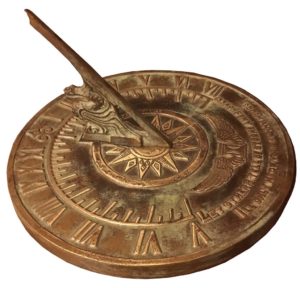
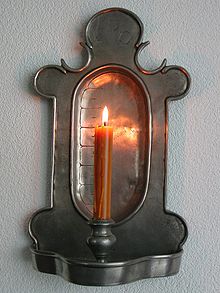
Time is the interval between two events. In mathematics, time is defined as the current sequence of programs that occur, from past to the present and to the future. Time is used to measure or evaluate the duration of programs that has happened, happens, or going to happen. Every student has to know the clear concept of time to schedule anything in a day or life. Have you ever wonder before inventing watches, clocks, etc. How the time was measured? The following images show a sneak peek of tools to measure time in ancient times.

Sundial to measure time in ancient times

  Measuring time using Sundial

Night dial tool to measure time

Measuring time using Candle

What are the Units of Measuring Time?

Measuring time will help us do our daily work from time to time without delaying our routine. Time can be measured by using a simple pendulum, atomic clock, and stopwatch. Time measurement is important because time can be considered as a common language. We measure time in seconds, minutes, hours, days, weeks, months, and years by clocks and calendars.

The tool we used for measuring time is a clock. Basically, the unit we measure time is a day. A day has 24 hours. In units, we have smaller units and larger units to measure. Few more units to measure time are listed below.

Smaller Units to Measure Time

A day has 24 hours i.e., 1 day= 24 hrs.
One hour has 60 minutes i.e., 1 hr = 60 min.
A minute has 60 seconds i.e., 1 min = 60 sec.

Larger Units to Measure Time

A week has 7days i.e., 1 week = 7 days.
One month has between 28 and 31 days i.e., 1 month = 28 and 31 days.
One year has 12 months i.e., 1 yr = 12 months.
A biennium has two years i.e., 1 biennium = 2 yrs.
A decade has ten years i.e., 1 decade = 10 yrs.
A century has one hundred years i.e., 1 century = 100 yrs.
A millennium has one thousand years i.e., 1 millennium = 1000 yrs.

As the above units are the most used units for measuring time. Let’s see few examples on time from the below sections.

Measuring Time Examples

Example 1:
Convert 45 hrs to minutes.
Solution:
Given 45 hrs to convert them into minutes.
We knew that 1 hr = 60 min.
The formula to convert hours into minutes is 1 hr = 1×60min = 60 min.
Now, apply the above formula
45 hrs = 45×60 = 2,700 min.
Thus, 45 hours is equal to 2,700 minutes(min).

Example 2:
Convert 23 days into hours.
Solution:
We know 1 day= 24 hrs.
Now, we have to convert 23 days into hours.
The formula to convert days into hours is 1 day = 1×24hr = 24 hrs.
Apply, the formula
23 days = 23×24hr = 552 hrs.
Therefore, 23 days is equivalent to 552 hours(hrs).

Example 3:
Soumya reached her school at 7:00 a.m. and left for home at 2:30 p.m. How much time did she stay in school?
Solution:
Soumya reached her school = 7:00 a.m
Soumya left school to home = 2:30 p.m
Now, we have to know the time that Soumya stays in school.
Here, we do subtraction between both the time then we get the time that Soumya stays in school.
Soumya stays in school = 7 hrs 00 min – 2 hrs 30 min = 7 hrs 30 min.
Hence, Soumya stays in school is 7 hrs 30 min.

Example 4:
Chandu covers 140 km by car at a speed of 50 km/hr. Find the time taken by him to cover this distance?
Solution:
Given, Chandu covers 140 km speed for an hour = 50 km/hr.
Now, to find the distance of time taken by him.
The formula to find the distance is Speed = Distance / Time.
Now, apply the formula
50 km/hr = 140 km / time
Then,
Time = 140 km ÷ 50 km/hr = 2.8 hrs.
Hence, Chandu covers a distance of 140 km at a speed of 50 km/hr in 2.8 hrs.

Example 5:
Karan works for 3 hours 15 minutes in the morning and 4 hours 20 minutes in the evening. For how much time did Karan work in a fortnight?
Solution:
Karan works in the morning = 3 hrs 15 min
Karan works in the evening = 4 hrs 20 min
Total Karan works in a day = 3 hrs 15 min + 4 hrs 20 min = 8 hrs 35 min.
Now, to find the time that Karan works in a fortnight. Thus, one fortnight is equal to fifteen days i.e., 1 fortnight = 15 days.
Here, we have to apply the formula 1 fortnight = 15 days × Karan works in a day.
So, 1 fortnight = 15 × 8 hrs 35 min
= 120 hrs 35 min.
Therefore, Karan works in a fortnight is 120 hrs 35min.

FAQs on Measurement of Time

1. What is the simple definition of time?

Time is the current chain of programs taking place. The past, present, and future events also come under time. We see time by using clocks, watches, etc. We measure time by seconds, minutes, hours, days, etc.

2. What is the basic unit term to measure time?

There are various units to measure time namely, milliseconds, seconds, minutes, hours, days, months, and years. But, the basic unit to measure time is seconds. The unit term seconds is also noted as ‘sec‘ or ‘s‘.

3. What is the basic instrument used to measure time?

Clocks are the basic instrument or tool to measure time in daily routines. In the past, a common measuring tool is used ie., sundial. These days, the common measuring tools are watches and clocks. For accurate measurement of time, we use an atomic clock and stopwatches.

4. How do we calculate the time?

To calculate time, we use the formula, Time= Distance/Speed i.e., t = d/s which is nothing but time equals distance by speed.

Word Problems on Subtraction of Money

Word Problems on Subtraction of Money | Subtracting Money Word Problems with Solutions

We can solve the word problems on the subtraction of money in both models. i.e. conversion of rupees to paisa and without conversion into paisa. Subtract smaller amounts of Money from larger amounts of money. The borrowing concept is the same just like the ordinary numbers subtraction process. You can check the solved examples of word problems on subtraction of money for a better understanding of the concept.
Do Refer:

Subtraction of Money Word Problems

Consider some of the word problems on the subtraction of money.

Example 1:
Subtract Rs. 58.05 from Rs 175.75
Solution:
Method 1 (with conversion into paise):
Rs. 175.75 = 175.75×100 = 17575paise
Rs. 58.05 = 58.05×100 = 5805 paise
17  5  7  5 Paise
– 5  8  0   5 Paise
   11  7   7   0  Paise
Therefore, difference of Rs. 58.05 from Rs. 175.75 = 12770 Paise = Rs. 117.70.
Method 2(without conversion into paisa)
(i)Rs. and Paise are arranged in columns with decimal points between them.
(ii) Smaller amount is placed under the larger amount.
(iii) Subtraction is made as ordinary subtraction.
Rs              p
1  7  5  .   7  5
–   5  8 .    0  5
1 1  7    .    7    0
75 paise – 05 paise = 70 paise
Rs. 175 – Rs. 58 = Rs. 117
Therefore, the difference of Rs. 175.75 – Rs. 58.05 = Rs. 117.70

Example 2:
Ravi has Rs 500 with him. He spent Rs 39 in purchasing a water bottle. How much money is left with him? Solution:
The total amount of money Ron had  =Rs500
Amount of money he spent        =Rs39
Money left with Ravi is
Rs 5 0 0.0  0
Rs   -3 9.0  0
   Rs 4 61.0  0
Therefore, the amount of money left with Ravi=461.00

Example 3:
The price of a school bag is Rs 450.95 but Supriya has only Rs 410.25. How much more money does she require to buy the bag?
Solution:
The price of a school bag=450.95
Supriya has money=410.25
The money required to buy the bag is
Rs           p
4   5   0 .   9  5
-4  1   0 .   2  5
0    4   0  .   7    0
Hence, the money required to buy the bag is 40.70
Example 4:
Neeraja had Rs 198 with him. He gave Rs 33.20 to her sister to buy a geometry box. How much money is left with Neeraja?
Solution:
Neeraja have the money=198
The money she gave to her sister=33.20
Money left with Neeraja
Rs            P
1 9 8 .    0  0
– 3  3 .    2   0
1  6    4    .    8    0

Therefore, money left with neeraja=164.80.
Example 5:
The price of one kg of wheat is increased from 45 to 55. Find the increase in price?
Solution:
The price of  1 kg wheat=45
The increased price of wheat=55
The increase in price is
5   5
-4   5
1    0
Therefore, the wheat price has increased by Rs 10.
Example 6:
The cost of the dress is 890. In the discount, Preeti got it by 780. Find the discount he got for buying the dress?
Solution:
The cost of the dress =890
Preeti got it by=780
The discount he got to buy the dress
8   9   0
-7  8   0
1    1   0

Therefore the discount he got to buy the dress=110.
Example 7:
Arjun had Rs 998 in his bank account. Later he withdrew Rs 396 from it. How much is the balance in his account? Solution:
The Amount in the Arjun’s Bank Account =998
Withdraw amount = 396
Balance in the account  is calculated as below
9 9 8
-3 9 6
6  0  2
Therefore balance in the account is 602 Rs.

Example 8:
What can be added to Rs 105 to get  Rs. 300?
Solution:
Initial Amount = 105 Rs
Total Amount  =300Rs
The required amount to get the total amount
3 0 0
-1 0 5
1 9 5
Therefore required amount is 195 Rs.

Example 9:
Tulasi purchased a honey bottle for Rs. 96.00, a water bottle for Rs. 29.50, and a hair oil bottle for Rs. 32.50. Tulasi gave the shopkeeper a 200-rupee note, how much money did the shopkeeper return as balance?
Solution:
honey bottle cost=Rs 96.00
Water bottle cost=Rs 29.50
hair oil bottle=Rs 32.50
Tulasi gave money=Rs 200
Total cost of things is
Rs         P
1  1
9 6 .  0   0
3 2 .  5  0
+2 9  .  5  0
15  8  .  0  0
Shopkeeper returned balance to tulasi
Rs       P
2  0  0. 0  0
-1  5  8. 0  0
4   2  . 0    0

Therefore the shopkeeper returned the money of Rs 42.00.
Example 10:
The price of the honey bottle has been reduced from Rs 82.50 to Rs 61.05. Find the reduction in the price.
Solution:
Honey bottle cost =82.50
Reduced cost=61.05
Reduction in price
Rs          P
8    2     .    5   0
– 6    1     .    0   5
2    1      .   4   5
Therefore the reduction in price is 21.45.
Example 11:
Rajesh bought a toy for Rs 200.75 and a book for rs 35.50. Rajesh gave Rs 500 to the shopkeeper. How much amount will the shopkeeper return to Ravi?
Solution:
Rajesh bought a toy = Rs 200.75
Rajesh bought a book= Rs 35.50
Rajesh gave money to the shopkeeper =Rs 500
The cost of the toy and the book =Rs 200.75+Rs 35.50
Rs            P
1
2 0  0   .     7   5
+ 3  5  .     5   0  
2  3 6 .       2   5
The cost of toy and the book =236.25
The shopkeeper will return money to rajesh=500.00-236.25
Rs          P
5  0  0. 0  0
-2  3  6. 2  5
2   6   3  .  7     5
Therefore shopkeeper will return the money to Rajesh=263.75
Example 12:
By how much does Rs. 500 exceed Rs. 158.05?
Solution:
Subtract 158.05 from 500.
Rs           P
5  0  0  .  0  0
-1 5  8 .  0   5
3   4  1 .  9    5
ThereforeRs. 500 exceeds Rs.158.05 by Rs 341.95.
Example 13:
Rakesh went to the shop and buy rice Rs 500.00, wheat 150.90, Sugar Rs 65.25. He gave 1000 Rs note to the shopkeeper. How much amount of money will the shopkeeper return?
Solution:
Rakesh buy rice=Rs500
Rakesh buy wheat=150.90
Rakesh buy sugar=65.25
The total amount of money for buying rice, wheat, sugar
Rs           P
1        1
5  0  0  .  0   0
1   5  0 .   9  0
+     6  5.     2   5
7  1    6  .    1      5
The total amount of money =716.15
The shopkeeper will return money=1000-716.15
= 283.85
The shopkeeper will return  Rs 283.85.

Subtraction of Money

Subtraction of Money with and Without Conversion to Paisa | How to Subtract Amounts of Money Involving Rupees and Paisa?

If you are feeling difficulty in subtracting money then this web page will give you clear information about how to subtract the money. Here we will discuss the methods to subtract the given amounts of money with and without conversions. You can also check the solved examples of the subtraction of money for a better understanding of the concept.

Do Refer:

Subtraction of Money

While subtracting money, we will understand how to subtract the amounts of money having rupees and paisa together. We carry out with money the same way as in the subtraction of ordinary numbers.

We will learn two different methods to solve the subtraction of money having rupees and paisa. We can practice both models.

  • Subtracting the amounts with conversion into paisa
  • Subtracting the amounts without conversion into paisa

1. Subtraction of Amounts with Conversion to Paisa

In this method, First, we have to convert all the given amounts into paisa. Then the smaller amount of paisa is subtracted from a larger number just like an ordinary number in the subtraction process and then the difference is expressed in rupees and paisa. We can convert the difference of paisa into Rupees by placing a dot after two digits from the right of the sum.

Examples of Subtraction of Amounts with Conversion to Paisa

Consider some examples of subtracting the amounts in which we will convert all rupees to paisa.

Example 1:
Find the difference between Rs22.25 and Rs 75.55
Solution:
First Rs 22. 25, Rs 75.55 has to be converted to paise.
To convert rupees to paise multiply with 100. (since 1 rupee=100 paisa)
22.25 ×100=2225
75.55 ×100=7555
Add 2225,7555
7  5  5  5 p
 -2  2   2  5 p
5   3     3   0   p 

We can convert 5330 paise to 53.30 Rs.

Example 2:
Find the difference between Rs 57.65 and 34.25.
Solution:
First Rs 57. 65, Rs 34.25 has to be converted to paise.
To convert rupees to paise multiply with 100. (since 1 rupee=100 paisa)
57.65 ×100=5765
34.25 ×100=3425
Add 5765,3425
5  7  6  5 p
 -3  4   2  5 p
2   3  4  0   p 

We can convert 2340 paise to 23.40 Rs.

Example 3:
Subtract the number 33.25 from 58.50 using the conversion method.
Solution:
First Rs 33. 25, Rs 58.50 has to be converted to paise.
To convert rupees to paise multiply with 100. (since 1 rupee=100 paisa)
33.25 ×100=3325
58.50 ×100=5850
Subtract 58.50,33.25
5   8.   5  0 p
 -3   3.   2  5 p
2   5 .   3  5 p 

We can convert 25.35 paise to 2535 Rs.

Example 4:
Subtract the number 11.35 from 45.55 using the conversion method.
Solution:
First Rs 11. 35, Rs 45.55 has to be converted to paise.
To convert rupees to paise multiply with 100. (since 1 rupee=100 paisa)
11.35 ×100=1135
45.55 ×100=4555
Subtract 45.55,11.35
4   5.   5  5 p
 -1   1.   3  5 p
3   4 .   2  0 p 

We can convert 34.20 paise to 3420 Rs.

Subtraction without Conversion

Subtraction in money by using without conversion method we arrange the given amounts in columns. Such that paise comes under paise, rupees come under rupees and dot comes under dot. In the given amounts, a small amount is subtracted from the larger amount just like ordinary numbers. The decimal point is placed in the difference.

Examples of Subtraction of Amounts Without Conversion to Paisa

Consider some examples given below and find the difference between the two given amounts.
Example 1:
Subtract Rs 13.34 from Rs 74.48
Solution:
Arrange rupees and paisa in different columns and arrange the dots that come under the dot neatly.
In the given amounts, a small amount is subtracted from the larger amount just like ordinary numbers.
The decimal point is placed in the difference.
Rs  7 4.4  8
– Rs 1 3.3  4    

Rs   6  1 .1  4
Therefore, By subtracting 13.34 from 74.48 is 61.14.

Example 2:
Subtract Rs 37.26 from Rs 89.48Using without conversion
Solution:
Arrange rupees and paisa in different columns and arrange the dots that come under the dot neatly.
In the given amount, a small amount is subtracted from the larger amount just like ordinary numbers.
The decimal point is placed in the difference.
Rs  8  9.4  8
Rs-3 7.2  6    

Rs   5  2 .2  2
Therefore, By subtracting 89.48 from 37.26 is 52.22.

Example 3:
Subtract the amount Rs 9.10 from 15.25
Solution:
Arrange rupees and paisa in different columns and arrange the dots that come under the dot neatly.
In the given amount, a small amount is subtracted from the larger amount just like ordinary numbers.
The decimal point is placed in the difference.
Rs  1  5.2  5
Rs-0 9.1  0    

Rs  0 6 .1  5
Therefore, By subtracting 15.25 from 9.10 is 06.15.

Example 4:
Manju buys a notebook for Rs. 25.50. He gives Rs. 100.00 to the shopkeeper. How much money will she get back? Solution:
Cost of a notebook = Rs. 25.50
Manju will get back = Rs. 100 – Rs. 25.50
Rs         P
1 0 0  .   0  0
 -2 5   .   5   0
7 4    .  5  0
Therefore, Manju will get back money= Rs. 74.50

Example 5:
Subtract the amount Rs 46.10 from 79.55
Solution:
Arrange rupees and paisa in different columns and arrange the dots that come under the dot neatly.
In the given amount, a small amount is subtracted from the larger amount just like ordinary numbers.
The decimal point is placed in the difference.
Rs  7  9.5  5
Rs-4 6.1  0    

Rs  3 3 .4  5
Therefore, By subtracting 79.55 from 46.10 is 33.45.

Word Problems on Addition of Money

Word Problems on Addition of Money | Money Word Problems with Solutions

Are you feeling difficulty in solving the word problems? Here you will get plenty of information on how to solve word problems. This article also includes how to add the money in both methods i.e. with the conversion of rupees to paisa and without conversion. By going through the article you can also check the solved examples for a better understanding of the concept.

Read More:

Word Problems on Addition of Money

Here we will discuss some of the word problems on how to add the money. We will discuss both the methods i.e. with the conversion of rupees to paise and without conversion. While adding money the concept of carrying is the same just as the carrying concept in the ordinary numbers in the addition process.

Money Word Problems with Solutions

Consider some of the examples of word problems on the addition of money.

Example 1:
Add the amounts of Rs. 15.25 and Rs. 50.10 by using both methods.
Solution:
Method 1
(with conversion into paise):
Amounts of rupees to be added are converted into paisa.
Multiply 100 with the number of rs.
Rs. 15.25 = 15.25 ×100=1525 p
Rs. 50.10 = 50.10×100=5010 p
Now add the amounts of paise
1  5  2  5 p
+5  0  1  0  p
6 5  3  5     p
6535 p is converted to rupees by placing a dot after two digits from the right of the number.
Therefore, the addition of Rs 15.25 and Rs 50.10 is Rs 65.35.
Method 2(Without Conversion):
Arrange rupees and paise in different columns
Arrange all dots carefully in a line.
Add the given amount of money and the sum is placed in the corresponding columns.
Rs        P
1   5 .   2   5
+5   0 .  1   0    
  6  5  .   3   5
Therefore the addition of 15.25 and 50.10 is 65.35

Example 2:
Raju bought some books. If the cost of a Social book is Rs. 120.75, a Science book is Rs. 159.50 and an English book is Rs. 222.70. Find the total cost of the books.
Solution:
The cost of a social book =120.75
The cost of a science book=159.50
The cost of an English book=222.70
The cost of all books
Rs          p
1 1 1
1 2 0   .  7  5
1 5 9   .  5  0
+2 2 2  .   7  0
5 0 2 .   9   0
Therefore, the cost of all books = Rs 502.90

Example 3:
Sindhu has 2000 Rs and her father gave 3000 Rs more than what Sindhu has. Find how much amount Sindhu has?
Solution:
Sindhu has the money=2000 Rs
Her father gave money=Rs2000+ Rs3000=5000 Rs.
Total amount Sindhu has=Rs2000+Rs5000=7000 Rs.
Example 4:
Saritha gave Rs 40.50 as pocket money to Vaishnav and Rs 85.00 to Neeraja. How much money did she give all together?
Solution:
Saritha gave pocket money to vaishnav=40.50
Saritha gave pocket money to neeraja=85.00
The money she gave to both of them
Rs       P
4   0   .   5  0
 8   5  .    0  0
12  5  .    5  0
Therefore, Saritha gave both of them=Rs125.50

Example 5:

My friend bought a dress worth Rs 950.70, a purse for Rs. 500.85 and a pen for Rs. 145.75. How much did she pay money for all?
Solution:
Dress cost=950.70
Purse cost=500.85
Pen cost=145.75
Money spent for all
Rs             P
2                 1
9  5  0     .    7  0
5  0  0     .    8  5
1  4  5    .     7  5
15 9  7    .    3  0
Hence, Money spent for all=Rs1597.30

Example 6:
Add the amounts of Rs. 30.75 and Rs. 43.25 by using both methods.
Solution:
Method 1
(with conversion into paise):
Amounts of rupees to be added are converted into paisa.
Multiply 100 with the number of rs.
Rs. 30.75 = 30.75 ×100=3075 p
Rs. 43.25 = 43.25×100=4325 p
Now add the amounts of paise
1  1
3  0  7  5 p
+4   3  2  5  p
   7  4  0  0   p
7400 p is converted to rupees by placing a dot after two digits from the right of the number.
Therefore, the addition of Rs 30.75 and Rs 43.25 is Rs 74.00.
Method 2(Without Conversion):
Arrange rupees and paise in different columns
Arrange all dots carefully in a line.
Add the given amount of money and the sum is placed in the corresponding columns.
Rs        P
1    1
3   0 .   7   5
+4   3 .   2   5      
   7  4  .   0   0
Therefore the addition of 30.75 and 43.25 is 74.00

Example 7:
Vaishnavi spent Rs 25.00 on chocolate, Rs 10.00 on chips, and Rs 60.00 on a cool drink. Find the total money spent by him.
Solution:
Vaishnavi spent on chocolate=Rs25.00
Vaishnavi spent on chips=Rs10.00
Vaishnavi spent on cool drink=Rs 60.00
Total money spent by Vaishnavi is
Rs          P
2 5   .    0  0
1 0   .    0  0
+6 0  .  0  0
9  5       0  0     

Hence, total money spent by vaishnavi is 95.00
Example 8:
Ravi bought sugar for Rs 45.00, a tea packet for Rs 61.25, and chocolate for Rs 5.50. Find the total money spent by Ravi.
Solution:
Money spent for sugar=45.00
Money spent for tea packet=61.25
Money spent on chocolate=5.50
Total money spent by Ravi is
Rs           P
1
4  5   .    0  0
6   1  .    2  5
+0  5   .    5   0
11 1     .  7     5

Hence, Total money spent by all=Rs111.75

Example 9:
Anusha had Rs 845.50, in her piggy bank. Gita gave Rs 500.25 to her for saving them in the piggy bank. How much money does Anusha have in her piggy bank now?
Solution:
Anusha had money in piggy bank=845.50
Gita gave money=500
Anusha has the money in a piggy bank is
Rs            P
8   4   5   .  5   0
+5   0   0   .  0   0
 13  4    5    .  5  0
Hence, Anusha has the money in a piggy bank is 1345.50.
Example 10:
In an exhibition, Maya spent Rs 68.75 on the food stall and Rs 127.25 on the lucky dip. How much money did Maya spend in all?
Solution:
Maya spent on food stall=68.75
Maya spent on lucky dip=127.25
Maya spent money on exhibition is
Rs         P
11       1
1 2 7  .   2  5
+6 8  .   7   5       
1 9   6  .       0 0

Hence, the total money spent on the exhibition is Rs 196.00.

Example 11:

The price of the shuttle bats is Rs. 685.60, whereas a cock costs Rs. 55.00. Find the total cost of shuttle bats and cock.
Solution:
The price of a shuttle bat =685.60
The price of a cock=55.00
The total cost of shuttle bat and cock is
Rs               P
1 1
6  8    5   .    5    5
+  5    5   .    0    0  
 7  5   0    .  5      5  
Hence, the total cost of shuttle bat and cock is 750.55
Example 12:
Sarika deposited Rs 950.55 in her savings bank account. Her father deposited Rs 218.00 more. Find the total money Sarita has now in her bank account.
Solution:
Sarika deposited in saving bank account=950.55
Her father deposited money=218.00
The total money Sarita has in her bank account is
Rs                  P
9  5  0     .      5  5
+2  1   8    .   0   0   
11  6  8    .      5   5
Hence, the money in the bank account is 1168.55.

Example 13:
Ravi has Rs. 829.00 with him, Avinash has Rs. 132.50 and Sekhar have Rs. 156.75. How much money do they have in all?
Solution:
Ravi has the money=829.00
Avinash has the money=132.50
Sekhar has the money=156.75
All of them have the money is
Rs           p
1
8  2  9.  0  0
1  3  2.  5  0
9 6 1  .  5 0
Therefore the total money all of them have=961.50

Addition of Money

Addition of Money – Definition, Examples | How to Add Amount of Money Involving Rupees and Paisa?

If you are feeling difficulty in adding money then this web page will give you clear information about how to add the money. Here we will discuss the methods to add the given amounts of money with and without conversion to paisa. You can also check the solved examples of the addition of money for a better understanding of the concept.

Do Refer:

Addition of Money

While adding money, we will understand how to add the amounts of money having rupees and paisa together. We carry out with money the same way as in the addition of ordinary numbers.

We will learn two different methods to solve the addition of money having rupees and paisa. We can practice both models.

  • Adding the amounts with conversion into paisa
  • Adding the amounts without conversion into paisa

1. Addition of Amounts with Conversion to Paisa

In this method, First, we have to convert all the given amounts into paisa. Then the obtained numbers are added just like an ordinary number in the addition process and then the sum is expressed in rupees and paisa. We can convert the sum of paisa into Rupees by placing a dot after two digits from the right of the sum.

Addition of Amounts with Conversion to Paisa Examples

Consider some examples of adding the amounts in which we will convert all rupees to paisa.

Example 1:
Add Rs12.35 and Rs 74.64 without regrouping
Solution:
First Rs 12. 35, Rs 74.64 has to be converted to paise.
To convert rupees to paise multiply with 100. (since 1 rupee=100 paisa)
12.35 ×100=1235
74.64 ×100=7464
Add 1235,7464
1   2  3  4 p
+7  4  6  4 p
8   6  9  8   p 

We can convert 8698 paise to 86.98 Rs.

Example 2:
Add the amounts of Rs 84.65  and 16.53 with regrouping.
Solution:
First Rs 84. 65, Rs 16.53 has to be converted to paise.
To convert rupees to paise multiply with 100. ( since 1 rupee=100 paise)
84.65 ×100=8465
16.53 ×100=1653
Add 8465,1653
1 1
8  4  6  5
+ 1  6  5  3
10  1  1  8   

We can convert 10118 paise to 101.18 Rs.

Example 3:
Add Rs 64.40, 14.22 and 22.35
Solution:
First Rs 64. 40, Rs 14.22, Rs 22.35 has to be converted to paise.
To convert rupees to paise multiply with 100.
64.40 ×100=6440
14.22 ×100=1422
22.35 × 100=2235
Add 6440,1422, 2235
1
6   4  4  0
1   4  2  2
+2  2  3  5
10 0  9  7   

We can convert 10097 paise to 100.97 Rs.

Example 4:
Add 14 Rupees 65 paisa and 75 Rupees and 32 paise.
Solution:
First, 14 Rupees 65 paisa,75 rupees 32 paisa has to be converted to paise.
To convert rupees to paise multiply with 100.
14.65 ×100=1465
75.32 ×100=7532
Add 1465,7532
1  4  6  5
+ 7  5  3  2
8  9  9  7   

We can convert 8997 paise to 89.97 Rs.

Money Addition Without Conversion

For adding the given amounts without conversions follow the three steps.
(i) Arrange the rupees and paisa in the different columns. Arrange the decimal points exactly in one line.
(ii)Add the given amounts just like ordinary numbers.
(iii)Place the decimal point in the sum.

Examples of Adding the Money without Conversion

Example 1:
Add Rs 64.28 and Rs 33.31
Solution:

(i)Arrange the rupees and paisa in the different columns. Arrange the decimal points exactly in one line.
(ii)Add the given amounts just like ordinary numbers.
(iii)Place the decimal point in the sum.
Rs    6  4. 2  8
Rs  +3  3. 3  1
Rs    9  7 .5  9
Therefore, the Addition of 64.28 and 33.31 is 97.59.
Example 2:
Add Rs 51.20 and Rs 18.50 without conversion
Solution:
(i)Arrange the rupees and paisa in the different columns. Arrange the decimal points exactly in one line.
(ii)Add the given amounts just like ordinary numbers.
(iii)Place the decimal point in the sum.
Rs    5  1. 2  0
Rs  +1  8. 5  0
Rs    6  9 .7  0   

Therefore, the addition of Rs51.20 and Rs 18.50 is Rs 69.70.
Example 3:
Add Rs 42.25, Rs15.20 and Rs31.10
Solution:
(i)Arrange the rupees and paisa in the different columns. Arrange the decimal points exactly in one line.
(ii)Add the given amounts just like ordinary numbers.
(iii)Place the decimal point in the sum.
Rs   4   2 . 2  5
Rs  1   5 . 2  0
Rs +3  1 . 1  0
Rs   8  8  .  5 5     

The addition of Rs 42.25, Rs15.20 and Rs31.10 is Rs 88.55.

Example 4:
Add 43 rupees 25 paise and 50 rupees 75 paise.
Solution:
(i)Arrange the rupees and paisa in the different columns. Arrange the decimal points exactly in one line.
(ii)Add the given amounts just like ordinary numbers.
(iii)Place the decimal point in the sum
1     1
Rs   4  3 .  2   5
Rs +5 0 .   7   5
Rs   9 4 .   0   0
Hence, the addition of 43 rupees 25 paise and 50 rupees 75 paise is Rs 94.00

Example 5:
Ram buys 2 kg of wheat at Rs 80 and 2 kg of sugar at Rs 70. Find the total money ram gave to the shopkeeper?
Solution:
Ram buys wheat =Rs 80
Ram buys sugar=Rs 70
Total money ram gave to shopkeeper=Rs80+Rs70
=Rs 150
Therefore, the total money ram gave to shopkeeper=Rs150.

Example 6:
Sita bought a pair of shoes for rs 500 and a bag for Rs 300. Find how much money she spent on buying shoes and bags?
Solution:
Sita buys a pair of shoes =Rs 500
Sita buys bag=Rs 300
Total money spent by Sita for buying shoes and bag=Rs 300+ Rs 500
=Rs 800
Therefore, the total money ram gave to the shopkeeper=Rs 800.