Basic Shapes

Basic Shapes – Definitions, Types, Properties, List and Examples

Everything we see in the surroundings has a shape. These shapes may be rectangle, square, circle, oval, cylindrical, sphere, etc. In the day to day life, we can observe shapes in objects such as coins, boxes, photo frames, credit cards, buildings, windows, etc.  This article explains the basic shapes. It also includes shape definition, Different types of shapes, attributes such as defining attributes, non-defining attributes. You can have a better understanding of the concept by going through this article completely.

Do Refer:

Shape – Definition

The shape is often outlined because of the kind of item. In pure mathematics, we all know basic shapes have plane figures and solid figures.

Attributes of the Shapes

The attribute is that the property of the shape. They are two types namely 1. Defining attributes  2. Non-Defining attributes.

Defining Attributes

Defining Attributes are the properties that make it distinctive. Attributes like the number of sides, edges, vertices, and faces of a form, whether or not the form is open or closed, measurements of angles verify the form of a two-dimensional or three-dimensional object. If we have a tendency to build any amendments in these attributes it’ll change the form.

Non-Defining Attributes

Non-defining attributes are the options of the shape that aren’t required by the definition of the form. The color, overall size, and orientation area unit referred to as the non-defining attributes. The Non-Defining Attribute of a two-dimensional or three-dimensional form doesn’t outline or have an effect on the form in any means. The changes created to those attributes haven’t got any result on the form.

Plane Figures

Plane figures are Two-Dimensional shapes. They are often fabricated from straight lines, recurved lines, or each straight and recurved line. For example, squares, rectangles, triangles, and circles referred to as flat shapes.

plane figures

Properties of Shapes

Properties of Various Two-Dimensional Shapes are as follows.

Square

It has four sides and four corners. A square could be a quadrilateral with four equal sides and 4 equal internal angles.

  • A square could be a parallelogram with 2 adjacent sides equal.
  • It is a quadrangle with all four internal angles adequate to 90° and adjacent sides equal long.
  •  In a square, the opposite sides are parallel to each other.
  • It is a rhombus with four equal angles.

Rectangle

It has 4 sides and 4 corners. The opposite sides of a rectangle are equal and parallel to each other.

  • The rectangle is a quadrilateral with four equal internal angles.
  • Each internal angle of a rectangle measures 90°.
  • A rectangle is known as a parallelogram if the opposite angles of a rectangle are equal.
  • In a rectangle, the diagonals bisect each other and are of the same length.

Triangle

It has three sides and three vertices or corners. The region formed by a triangle is termed a triangular region.

  • The addition of all internal angles of a triangle is usually adequate to 180°. this is often referred to as the angle sum property of a triangle.
  • The side is said to be the largest side when it is opposite to the largest angle of the triangle.
  • The sum of its interior opposite angles is equal to any exterior angle of the triangle. This is known as the exterior angle property of a triangle.

Circle

It has no sides and no corners.

  •  If the circles have equal radii then the circles are said to be congruent.
  • The longest chord of a circle is considered the diameter of the circle.
  • Equal circles and equal chords have equal circumference.

Parallelogram

  • The opposite sides are parallel and congruent.
  • Opposite angles are congruent.
  • The consecutive angles of a parallelogram are supplementary.
  • If one angle of a parallelogram is a right angle, then all angles are right angles.

Solid Figures

Three-dimensional objects are solid figures or solids. They have length, height, width. Since they have three dimensions, they have depth and take space. In real life, many objects that can be seen in our surroundings have solid figures such as laptops, ice cream, balls, etc. Some geometrical shapes like cuboid, cube, cylinder, cone, sphere, triangular prism, etc. are solid figures.

solid figures

Sphere

A sphere could be a solid form, spherical in form, outlined in three-dimensional area. each point on the surface is equal to the middle.

Properties of a Sphere

  • It has one surface.
  • It has no edges or vertices
  • All points on the surface area unit constant distance from the middle.
  • It is symmetrical.

Cylinder

A cylinder could be a solid form outlined on a three-dimensional plane. It holds 2 parallel bases, circular in form, joined by a recurved surface, at a hard and fast distance.

Properties of a Cylinder

  • It has a flat base and a flat prime. It has one recurved aspect.
  • The bases area unit is continuously congruent and parallel.
  • It is a three-dimensional object with 2 identical ends that area unit either circular or oval

Cone

It is a flat surface and a recurved surface, that informs towards the up. it’s shaped by two-line segments connected from the circular base to a typical purpose, called the vertex.

Properties of a Cone

  • It has a circular or oval base with an associate apex (vertex).
  • It has one recurved aspect.
  • A cone could be a turned triangle.

Shapes are two types. They are 1. open shapes 2. Closed shapes.

Open Shapes

An open shape is formed of line segments, however, there’s a minimum of one line section that may not be connected to something at one in every zone of its endpoints.

Closed Shapes

If a shape is closed from all the sides or a figure with no openings is termed a closed-form.

FAQs on Basic Shapes

1. What is an attribute? How many types are there?

An attribute is a property of shape. They are two types of attributes. 1. Defining Attribute  2. Non-Defining Attribute.

2. What are Two-Dimensional Objects?

The two-dimensional objects are flat plane figures that have two dimensions – length and width.

3. What are Three-Dimensional Objects?

The three-dimensional objects are solid figures that have three dimensions – length and width and height.

4. What is a Shape?

A shape is a form of an object.

5. Is the Cylinder shape a Three-Dimensional or Two-Dimensional Object?

A cylinder is a three-dimensional object and has length, width, height.

Estimating a Sum

Estimating a Sum – Definition, Examples | How to Estimate a Sum with Rounding?

If you are interested in knowing how to estimate a sum, this article will give you clear information on estimating the sum. It includes the basic knowledge for estimating a sum, how to estimate a sum. You can also find the step-by-step procedures for estimating the sum of two-digit numbers, estimating the sum of three-digit numbers. Furthermore, check out the Solved Examples and understand how do you use rounding when estimating a sum.

Do Read:

Estimating a Sum – Definition

The estimation of a sum is close to the answer of an original sum, but not exact. For example 29+12=41. The estimated sum of 29,12 is 30+10=40

How to Estimate a Sum?

It is an easy method to estimate the sum of two numbers. Estimating a sum of numbers includes two steps. They are as follows

  • Estimate a sum of two numbers by rounding. i.e. addends are rounded.
  • Then add the rounded numbers.

How to Estimate the Sum of Two-Digit Numbers?

In the two-digit numbers, we have to round the number to the nearest tens place i.e. only one place estimate. For estimating the nearest 10, we see the digit at one’s place. It is converted to 0 or 10 as per the digit. If the digit is < 5, it is converted to zero and if it is > 5, it is converted to10.

Examples on Estimating a Sum of Two Digit Numbers

 Example 1:

Estimate the sum of 38,12 i.e. 38 + 12?

Solution:

1. We have to round the numbers to the nearest 10.

38 → 40

12 → 10

38 is nearest to 40

12 is nearest to 10

2. Add the rounded numbers.

40 + 10 = 50

Therefore the estimated sum of 38, 12 is 50.

Example 2:

Estimate the sum of 55,13 i.e. 55 + 13?

Solution:

1. We have to round the number to the nearest 10.

55 → 60

13 → 10

55 is nearest to 60.

13 is nearest to 10.

2. Add the rounded numbers.

60+10=70

Therefore, the estimated sum of 55,13 is 70.

Example 3:

Estimate the sum of 62, 28?

Solution:

1. First, we have to round the numbers to the nearest 10.

62 → 60

28 → 30

so 62 is nearest to 60

28 is nearest to 30.

2. Add the rounded numbers.

60+30=90

Therefore the estimated sum of 62, 28 is 90.

Example 4:

Estimate the sum of 57, 78?

Solution:

1.First, we have to round the numbers to the nearest 10.

57 → 60

78 → 80

so 57 is nearest to 60

78 is nearest to 80.

2. Add the rounded numbers.

60+80=140

Therefore the estimated sum of 57, 78 is 140.

Example 5:

Estimate the sum of 45, 63?

Solution:

1. We have to round the number to the nearest 10.

45 → 50

63 → 60

45 is nearest to 50.

63 is nearest to 60.

2. Add the rounded numbers.

50+60=110

Therefore, the estimated sum of 45,63 is 110.

How to Estimate a Sum of Three-Digit Numbers?

In the three-digit numbers also, first, we have to round the number to the nearest tens place i.e. only one place estimate. To estimate to the nearest 10, we see the digit at one’s place. It is converted to 0 or 10 as per the digit. If the digit is < 5, it is converted to zero and if the digit is > 5, it is converted to 10.

Estimating the Sum of Three-Digit Numbers Examples

Example 1:

Find the estimated sum of three-digit numbers 396, 110?

Solution:

1. We have to round the number to the nearest 10.

396 → 400

110 → 100

396 is nearest to 400.

110 is nearest to 100.

2. Add the rounded numbers.

400+100=500

Therefore, the estimated sum of 396,110 is 500.

Example 2:

Find the estimated sum of three-digit numbers 488, 108, and also the actual sum?

Solution:

1. We have to round the number to the nearest 10.

488 → 500

108 → 100

488 is nearest to 500.

108 is nearest to 100.

2. Add the rounded numbers.

500+100=600

Therefore, the estimated sum of 488,108 is 600.

Actual sum of 488,108 is488+108 =596.

Example 3:

Find the estimated sum of three-digit numbers 623, 568?

Solution:

1. We have to round the number to the nearest 10.

623 → 600

568 → 600

623 is nearest to 600.

568 is nearest to 600.

2. Add the rounded numbers.

600+600=1200

Therefore, the estimated sum of 623,568 is 1200.

Example 4:

Find the estimated sum of three-digit numbers 123, 848?

Solution:

1. We have to round the number to the nearest 10.

123 → 100

848 → 900

123 is nearest to 100.

848 is nearest to 900.

2. Add the rounded numbers.

100+900=1000

Therefore, the estimated sum of 123,848 is 1000.

Example 5:

Find the estimated sum of three-digit numbers 387,115?

Solution:

1. We have to round the number to the nearest 10.

387 → 400

115 → 100

387 is nearest to 400.

115 is nearest to 100.

2. Add the rounded numbers.

400+100=500

Therefore, the estimated sum of 387,115 is 500.

Circle the Greatest Number

Circle the Greatest Number | How to Teach to Circle the Biggest or Greatest Number?

Are you confused about numbers that are larger, or smaller? Then you have landed on the correct page Which will teach us to know the number which is greatest. You can also find the solved examples of circling the greatest number. This helps the students develop a strong sense of which numbers are greater and which numbers are smaller. It helps the students to know that numbers have an order and able to count the numbers easily.

Do Check: Circle the Smallest Number

Circle the Greatest Numbers

1. Find the greatest numbers among numbers and Circle the greatest number using a pen/pencil. Find and circle the greatest numbers in each group from 1 to 500.

(i)  7   10   12   15      18

(ii)  20   23   25   28   22

(iii) 145  189  199  120   118

(iv)  250   150   500  320  420

(v)   420  490  380  360   290

(vi)   35   65   45     55    25

Solution:

(i) The greatest number among the given numbers 7, 10, 12, 15, 18 is 18. So circle the greatest number 18.

(ii) The greatest number among the given numbers 20, 23, 25, 28, 22 is 28. So circle the greatest number 28.

(iii) The greatest number among the given numbers145,189,199,120,118 is 199. So circle the greatest number 199.

(iv) The greatest number among the given numbers 250,150, 500, 320, 420 is 500. So circle the greatest number 500.

(v) The greatest number among the given numbers  420, 490, 380, 360, 290 is 490. So circle the greatest number 490.

(vi) The greatest number among the given numbers 35, 65, 45, 55, 25 is 65. So circle the greatest number  65.

2. Find and circle the greatest numbers in each group from 500 to 5000.

(i)  2320  1320  3320  4420  4480

(ii)  819  719  619  519  919

(iii)  636  536  696  896  796

(iv) 1180  1249  1534  1000  1943

(v) 555  666  777  888  999

(vi)  512  3430  4120  789  1230

Solution:

(i) The greatest number among the given numbers 2320,1320, 3320,  4420, 4480 is 4480. So circle the greatest number 4480.

(ii) The greatest number among the given numbers 819, 719, 619, 519, 919 is 919. So circle the greatest number 919.

(iii) The greatest number among the given numbers 636, 536, 696, 896, 796 is 896. So circle the greatest number 896.

(iv) The greatest number among the given numbers 1180, 1249, 1534, 1000, 1943 is 1943. So circle the greatest number 1943.

(v) The greatest number among the given numbers 555, 666,  777,  888, 999 is 999. So circle the greatest number 999.

(vi) The greatest number among the given numbers 512, 430,  4120, 789, 1230 is 4120. So circle the greatest number 4120.

3. Find and circle the greatest numbers in each group from 5000 to 50000.

(i)  5250  6450   8760  9320  7590

(ii)  45678   33210  22100  10890 12340

(iii)  15875  16210  23890  13800  12320

(iv)  49728  38623  43609  32965  31532

(v)  26789  16543  29890  15545  19231

(vi)  5350  5800  5900  5100  5730

Solution:

(i) The greatest number among the given numbers 5250, 6450, 8760, 9320, 7590 is 9320. So circle the greatest number 9320.

(ii) The greatest number among the given numbers 45678, 33210, 22100,10890,12340 is 45678. So circle the greatest number 45678.

(iii) The greatest number among the given numbers 15875,16210, 23890,13800, 12320 is 23890. So circle the greatest number 23890.

(iv) The greatest number among the given numbers 49728, 38623, 43609, 32965, 31532 is 49728. So circle the greatest number 49728.

(v) The greatest number among the given numbers 26789,16543, 29890,15545,19231 is 29890. So circle the greatest number 29890.

(vi) The greatest number among the given numbers 5350, 5800, 5900, 5100, 5730 is 5900. So circle the greatest number 5900.

Circle the Smallest Number

Circle the Smallest Number | How to Teach Circle the Smallest Number?

Are you confused about numbers that are smaller, or larger? Then you have landed on the correct page Which will teach us to know which number is the smallest. You can also find the solved examples of circling the smallest number. This helps the students develop a strong sense of which numbers are greater and which numbers are smaller. It helps the students to know that numbers have an order and able to count the numbers easily.

Also, See: Circle the Greatest Number

Encircle the Smallest Numbers

1. Find the smallest numbers among numbers and Circle the smallest number using a pen/pencil. Find and circle the smallest numbers in each group from 1 to 500.

(i)    120    183        220        290      199

(ii)     85         80           78          55       66

(iii)     410      333          111       500       210

(iv)     18          15            16          20         13

(v)     41           63           78         98          84

(vi)   320          115          450       220       490

Solution:

(i) The smallest number from the given numbers 120, 183, 220, 290, 199 is 120. So circle the smallest number 120.

(ii) The smallest number from the given numbers 85, 80, 78, 55, 66 is 55. So circle the smallest number 55.

(iii)  The smallest number from the given numbers 410, 333, 111, 500, 210 is 111. So circle the smallest number 111.

(iv) The smallest number from the given numbers 18, 15,16, 20,13 is 13. So circle the smallest number 13.

(v) The smallest number from the given numbers 41, 63, 78, 98, 84 is 41. So circle the smallest number 41.

(vi) The smallest number from the given numbers 320,115, 450, 220, 490 is 115. So circle the smallest number 115.

2. Find the smallest numbers in each group from 500 to 5000 and circle the number.

(i) 580        570          525          550          590

(ii) 1445      3473          2543       5000        4321

(iii) 1822      1320         1980       1989       1567

(iv) 4525      1525         2525       525         3525

(v) 680         890          630          750       890

(vi) 980          620           3420        4320       583

Solution:

(i) The smallest number from the given numbers 580,570, 525,550,590 is 525. So circle the smallest number 525.

(ii) The smallest number from the given numbers 1445, 3473, 2543, 5000, 4321 is 1445. So circle the smallest number 1445.

(iii) The smallest number from the given numbers 1822,1320,1980,1989,1567 is 1320. So circle the smallest number 1320.

(iv) The smallest number from the given numbers 4525,1525, 2525, 525, 3525 is 525. So circle the smallest number 525.

(v) The smallest number from the given numbers 680, 890, 630, 750, 890 is 630. So circle the smallest number 630.

(vi)The smallest number from the given numbers 980,620, 3420, 4320, 583 is 620. So circle the smallest number 620.

3. Find the smallest numbers in each group from 5000 to 50000 and circle the smallest number.

(i) 8890     9237        6120        7623      5125

(ii)  45231   35678     23989       13200     25678

(iii)  8823     41120      6666         7345       9870

(iv)  10980    23670     25230       39870      45670

(v)   5123        8789      5100         7345       6125

(vi) 31145       21678    45678      20500      50000

Solution:

(i) The smallest number from the given numbers 8890, 9237, 6120, 7623, 5125 is 5125. So circle the smallest number 5125.

(ii) The smallest number from the given numbers 45231, 35678, 23989,13200, 25678 is 13200. So circle the smallest number 13200.

(iii) The smallest number from the given numbers 8823, 41120, 6666, 7345, 9870 is 7345. So circle the smallest number 7345.

(iv) The smallest number from the given numbers 10980, 23670, 25230, 39870, 45670 is 10980. So circle the smallest number 10980.

(v) The smallest number from the given numbers 5123, 8789, 5100, 7345, 6125 is 5100. So circle the smallest number 5100.

(vi) The smallest number from the given numbers 31145, 21678, 45678, 20500, 50000 is 20500. So circle the smallest number 20500.

Color by Number

Color by Number | How to Color by Number? | Number by Coloring Examples

On this page, you will learn how to color based on numbers. So many children and students are interested in painting the image, coloring the picture and they are not interested in studying and learning mathematics. Teachers and parents can teach the numbers in the form of image coloring. In the initial stages, parents teach the numbers with respect to color and images and kids can remember them quite easily. Then children can learn the numbers easily and write on their own without taking anyone’s help.

In this article, you will learn color by number, how to color with respect to a given number, and some practice questions on color by number for kids. Parents and teachers can practice and download this with free of cost.

Colors by Number | How to Color based on Number using Pencils?

Nowadays mathematics is very important in our standard living, so better to learn the numbers from 1 to 100 at preschooler or homeschooling age. Learning numbers from 1 to 100 at the nursery stage is essential and kids can easily identify the numbers without taking anyone’s help. kKds and students can count the group of objects or things fastly. The figure below given is example of color by number,

The above figure is the butterfly, kids can fill the butterfly in given colors. In that given butterfly figure numbers are represented in numeric form. The given numbers are 1, 2, 3, 4, 5, and their respective colors are also given i.e. 1 for blue, 2 for orange, three for yellow, four for green, and five for red.

In the starting stages, kids and students cannot understand the concept of coloring by number early. So the parents and teachers can guide the kids on how to color by number. In Some Images, numbers with colors are given and in some images, colors are not given and we can choose the suitable color and fill the given images or pictures.

The below given figure consists of no colors only a picture is given. Kids and students take your favorite color or suitable image color and fill the images or pictures with colors.

The above given figure consists of cow, flowers, sky, clouds, and ground. Figure consists of only numbers, no colors are given or mentioned. So parents and teachers suggest the suitable color to kids, the kids fill the image with that color.

Practice Questions of Color by Number

Question 1:

The below given figure is parrot, in that figure only numbers will be given no colors will be given, parents suggest the kids take or choose the suitable color and fill the given picture.

Question 2:

The Picture given as below, the picture is bird in that bird some numbers will be present, the below numbers with respect colors given, colored the image according to given number colors using color pencils.

Question 3:

The below-given are two images are color by number, in that one image which consists of no colors with respect to numbers, you can fill with suitable color and another picture consists of numbers with respect to colors, you must and should fill the colors as per given instruction.

No longer ditch the math workbooks and printables, take the help of our Preschool Math Activities and teach your kid counting, math facts, number sense in an interactive way.

Coloring Sheets

Worksheet on Counting Numbers

Worksheet on Counting Numbers | Counting Numbers Worksheet for Pre-K and Kindergarten

Numbers are very important in our day to life. We Count Numbers as 1, 2, 3, 4, 5, 6, 7…. Nowadays kids learning numbers is extremely important. So parents start teaching numbers from kindergarten. During this article, You will get to find out the numbers counting, practice questions of counting numbers.

Parents and teachers can download this Counting Numbers Worksheet free of cost, to teach the children and students with easy methods. Kids need to improve their skills in mathematics.

Worksheet on Counting Numbers

Counting the numbers in several ways? Kids have to learn numbers from 1 to 100 because 1 to 100 numbers are vital. This counting numbers worksheet helps kids and students during practice sessions.

Parents and teachers can download this worksheet and take a printout without paying any amount. If kids and students have good knowledge of numbers then kids can easily count the group of objects, tell the time on the clock, basic arithmetic operations performed like addition, subtraction and etc.

The counting number figure is given below. The figure consists of various pictures, each picture contains a specific number of objects, so kids can count the individual picture objects and write the amount within the given box.

Numbers have both even and odd. Even numbers and odd numbers are included in counting numbers. Numbers also can be written in words also.

Counting Numbers from One to Hundred

The numbers from 1 to 100 are below within the tabular format. These numbers are frequently used for counting in mathematics and in our standard of living. Allow us to learn the numbers from 1 to 100 as soon as possible.

12345678910
11121314151617181920
21222324252627282930
31323334353637383940
41424344454647484950
51525354555657585960
61626364656667686970
71727374757677787980
81828384858687888990
919293949596979899100

How to Write From 1 to 100 Numbers in Words?

The numbers from 1 to 100 within the words chart are given below within the tabular format. Learning numbers in words also very important.

1 One2 Two3 Three4 Four5 Five6  Six7  Seven8 Eight9  Nine10 Ten
11 Eleven12 Twelve13 Thirteen14 Fourteen15 Fifteen16 Sixteen17 Seventeen18 Eighteen19 Nineteen20 Twenty
21 Twenty- one22 Twenty- two23 Twenty- three24 Twenty- four25 Twenty- five26 Twenty- six27 Twenty- seven28 Twenty- eight29 Twenty- nine30 Thirty
31 Thirty- one32

Thirty- two

33

Thirty- three

34

Thirty- four

35

Thirty- five

36

Thirty- six

37

Thirty- seven

38

Thirty- eight

39

Thirty- nine

40

Forty

41

Forty- one

42

Forty- two

43

Forty- three

44

Forty- four

45

Forty- five

46

Forty- six

47

Forty- seven

48

Forty- eight

49

Forty- nine

50

Fifty

51

Fifty- one

52

Fifty- two

53

Fifty- three

54

Fifty- four

55

Fifty- five

56

Fifty- six

57

Fifty- seven

58

Fifty- eight

59

Fifty- nine

60

Sixty

61

Sixty- one

62

Sixty-  two

63

Sixty- three

64

Sixty- four

65

Sixty- five

66

Sixty- six

67

Sixty-  seven

68

Sixty- eight

69

Sixty- nine

70

Seventy

71

Seventy-  one

72

Seventy- two

73

Seventy- three

74

Seventy- four

75

Seventy- five

76

Seventy- six

77

Seventy- seven

78

Seventy- eight

79

Seventy- nine

80Eighty
81 Eighty- one82

Eighty- two

83

Eighty- three

84

Eighty- four

85

Eighty- five

86

Eighty- six

87

Eighty- seven

88

Eighty- eight

89

Eighty- nine

90

Ninety

91

Ninety- one

92

Ninety- two

93

Ninety- three

94

Ninety- four

95

Ninety- five

96

Ninety- six

97

Ninety- seven

98

Ninety- eight

99

Ninety- nine

100

One hundred

Practice Questions on Counting Numbers

Q1: Write the missing numbers within the below figure using a pencil.

Q2: Write the counting numbers between 5 to 25.

Q3: Write the all counting numbers end with that number 5.

Q4: Write the counting numbers from

  1. 1 to 15
  2. 40 to 44
  3. 30 to 60

Q5: Below given some blanks between the numbers, write the missing number?

  1. 45, ___ , ____, 48
  2. ___, 98, ___, 100
  3. 15, ___, ___, ___
  4. 45,___, ___, ___, ___, 50

Q6: Write the missing numbers between 1 to 50 in the below figure with a pencil.


Q7: Write the even numbers in between 1 to 10.

Q8: Write all the natural numbers between 1 to 10.

Q9: Match the following given figures with respect to numbers from 1 to 10.

Q10: The figure given below is, consists of 4 pictures. Students can count the number of the picture and write down the numbers in the given blank.

Q11: Write the numbers from 1 to 100.

Q12: Write the numbers from 1 to 10 in words?

No longer ditch the math workbooks and printables, take the help of our Preschool Math Activities and teach your kid counting, math facts, number sense in an interactive way.

Coloring Sheets

Counting Coloring Activity

Counting Coloring Activity | How to Count Color Objects? | Preschool Coloring Activities

On this page, you learn how to count coloring activities or objects. This is a good choice to guide the kids, students, and preschoolers because in the initial stages kids don’t know how to count coloring activities. By using these worksheets parents and teachers can teach them the coloring activities. This counting activity improves the children’s counting skills.

Kids will have fun and enjoyment while learning the counting and coloring of objects or things. Parents and teachers can also encourage and guide the kids to count and color the objects. In this article, we learn how to count and color by considering few examples.

Worksheet on Counting Coloring Activities | How to Count Coloring Objects?

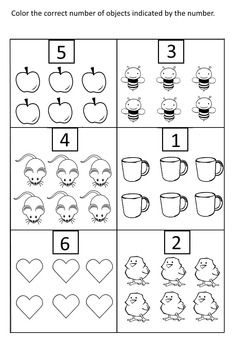
Parents and teachers can download this worksheet free of cost and take the printout of this downloaded worksheet for kid’s practice purposes. With more practice, kids will easily identify the numbers and colors without taking anyone’s help. This counting coloring activity worksheet will help the kids and students to enhance their mathematical skills. The below is the counting coloring figure,

The above figure consists of 6 different activities or images, in that figure based on a given number you can use that number of images and fill with colors. This is one of the tasks for developing the kids counting skills. Consider an example in the above-given figure, the first image consists of six apples but the given number is five (5) so kids will color only 5 apples in that 6 apples. In the same way, the remaining images will be completed.

Only Counting the Things

The below-given images consist of colored pictures, you can count the colored images and fill the blank with that number. This is one method of counting the colored images. Kids and students can color the images if the questions are given as below.

Take one example in the above figure, in the given figure first picture consists of 5 colored faces so the number of colored faces is five. So kids and students fill the first blank with the number five in a numeric number way.

Counting and Coloring Worksheets for Preschool

Example 1:

The given figure contains numbers and colored images. Find the given number of colored pictures and circle that number picture.

Example 2: 

The below given two figures are Counting coloring activities. Figures consist of numbers and pictures, you can count the given number of pictures and color them.

(i) (ii)

Example 3: 

The Below figure consists of colored pictures and some numbers. On the right side of the image, you will have numbers. Count the Colored Images and Circle the Number.

No longer ditch the math workbooks and printables, take the help of our Preschool Math Activities and teach your kid counting, math facts, number sense in an interactive way.

Coloring Sheets

Long Division Method With Regrouping and Without Remainder

Long Division Method With Regrouping and Without Remainder | How to do Long Division without Remainders?

Long Division With Regrouping And Without Remainder is an easy method. It is similar to Long Division With Regrouping And With Remainder except it has a remainder. This article will include Long Division definition, how to do Long Division With Regrouping And Without Remainder. By going through this article completely you can also check the solved examples for a better understanding of the concept.

Also, Refer:

Long Division – Definition

Long division is a method used for dividing large numbers into groups or parts. The long division helps in breaking the division problem into a sequence of easier steps. Just like the standard division it also includes terminology like Dividend, divisor, Quotient, Remainder.

The number that is being divided by is called Dividend. The number that is being divided is called Divisor. The answer to the division is called Quotient. The remainder is the leftover part after division.

How To Do Long Division With Regrouping And Without Remainder

Consider the following steps for doing long division with Regrouping and without the remainder.

  • Start with the first digit of the dividend. Divide the digit with a divisor.
  • The answer is written as a quotient and subtract the number from the dividend.
  • Bring down the next digit right side of the difference.
  • Divide the number with a divisor.
  • Write the answer as a quotient and subtract the number from the other number.
  • Repeat the process. (if a number exists).

Here you can have a look at the solved examples of the long division method with regrouping and without remainder.

Long Division Method With Regrouping and Without Remainder Examples

Example 1:

Divide the numbers 574,2 by long division method with regrouping and without the remainder?

Solution:

long division with regrouping and without Remainder example1

1. Begin with a hundred digit 5, Divide the hundred digit by 2. 5 is not completely divisible by 2. We know that 2*2=4. we will go for it.

5 Hundred÷2 ones=2Hundred.

2. Write the 2 as quotient and subtract the hundred digit from the number i.e. 5-4=1.

3. Bring down the tens digit 7 and place it after 1. It becomes 17. Now Divide it by 2.17 is not completely divisible by 2. we know that 2*8=16. We will go for it.

17 Tens÷2 ones=8Ten.

4. Write the 8 as quotient and subtract 16 from the number17 i.e. 17-16=1.

5. Bring down the one’s digit 4 and place it after 1. It becomes 14. Divide it by 2.

14 ones÷2 ones=7 ones

6. Write the digit 7 as quotient and subtract 14 from the number 14 i.e. 14-14=0.

7. Therefore, the division of 574,2 is 287 with 0 as the remainder.

Example 2:

Find the long division of the number 4968 by 3 with regrouping and without remainder?

Solution:

long division with regrouping and without Remainder example2

1. Begin with the thousand’s digit 4. Divide it by 3. 4 is not completely divisible by 3.We know that 3*1=3. We will go for it.

4 thousands÷3ones=1thousand.

2. Write 1 as Quotient and subtract 3 from 4 i.e. 4-3=1.

3. Bring down a Hundred digit 9 and place it after 1. It becomes 19.  Divide it by 3.19 is not completely divisible by 3. We know that 3*6=18. We will go for it.

19 Hundred÷3 Ones=6Hundred.

4. Write 6 as Quotient and subtract 18 from 19 i.e. 18-19=1.

5. Bring down tens digit 16. Divide it by 3. 16 is not completely divisible by 3. We know that 3*5=15. We will go for it.

16 Tens÷3 ones=5Tens.

6. Write 5 as Quotient and subtract 15 from 16 i.e. 15-16=1.

7. Bring down One’s digit 8. Divide it by 3.

18 Ones÷3 ones=6 ones.

8. Write 6 as Quotient.

Therefore, the division of 4969÷3 is  1656 with 0 as the Remainder.

Example 3:

Find the long division of the number 5937 by 3 with regrouping and without remainder?

Solution:

long division with regrouping and without Remainder example3

1. Begin with the thousand’s digit 5. Divide it by 3. 5 is not completely divisible by 3. We know that 3*1=3. We will go for it.

5 thousands÷3ones=1thousand.

2. Write 1 as Quotient and subtract 5 from 3 i.e. 5-3=2.

3. Bring down a Hundred digit 9 and place after 2. It becomes 29 Divide it by 3. 29 is not completely divisible by 3. We know that 3*9=27. We will go for it.

29 Hundred÷3 ones=9Hundred.

4. Write 9 as Quotient and subtract 27 from 29 i.e. 29-27=2.

5. Bring down tens digit 3 and place it after 2. It becomes 23. Divide it by 3. We know 23 is not completely divisible by 3. We know that 3*7=21. We will go for it.

23 Tens÷3 ones=7 Tens.

6. Write 7 as Quotient and subtract 21 from 23 i.e. 23-21=2.

7. Bring down One’s digit 7 and place it after 2. It becomes 27. Divide it by 3. We know that 3*9=27. We will go for it.

28 Ones÷3 ones=9 ones.

8. Write 9 as Quotient.

Therefore, the division of 5937÷3 is 1979 with 0 as the remainder.

Example 4:

Find the long division of the number 9754 by2 with regrouping and without remainder?

Solution:

long division with regrouping and without Remainder example4

1. Begin with the thousand’s digit 9. Divide it by 2.

9 thousands÷2ones=4thousand.

2. Write 4 as Quotient and subtract 8 from 9 i.e. 9-8=1.

3. Bring down a Hundred digit 7 and place it after 1. It becomes 17. Divide it by 2. 17 is not completely divisible by 2.We know that 2*8=16. We will go for it.

17 Hundred ÷2 ones=8 Hundred

4. Write 8 as Quotient and subtract 16 from 17 i.e. 17-16=1.

5. Bring down tens digit 5 and place it after 1. It becomes 15. Divide it by 2. 15 is not completely divisible by 2. We know that 2*7=14.

15Tens÷2 ones=7 Tens.

6. Write 7 as Quotient and subtract 14 from 15 i.e. 15-14=1.

7. Bring down One’s digit 4 and place it after 1. It becomes 14. Divide it by 2.

14 Ones÷2 Ones=7 Ones.

8. Write 7 as Quotient.

Therefore, the division of 9754÷2 is 4877 with 0 as the remainder.

Example 5:

Find the long division of 5798,2 with regrouping and without remainder?

Solution:

long division with regrouping and without Remainder example5

1. Begin with the thousand’s digit 5. Divide it by 2. 5 is not completely divisible by 2. We know that 2*2=4. We will go for it.

5 thousands÷2ones=2thousand.

2. Write 2 as Quotient and subtract 4 from 5 i.e. 5-4=1.

3. Bring down a Hundred digit 7 and place it after 1. It becomes 17. Divide it by 2.since 17 is not completely divisible by 2, we will go for 2*8=16.

17 Hundred÷2 ones=8Hundred.

4. Write 8 as Quotient and subtract 16 from 17 i.e. 16-17=1.

5. Bring down tens digit 9 and place it after 1. It becomes 19. Divide it by 2. 19 is not completely divisible by 2. We know that 2*9=18. We will go for it.

19 Tens÷2 ones=9 Tens.

6. Write 9 as Quotient and subtract 18 from 19 i.e. 18-19=1.

7. Bring down One’s digit 8 and place it after 1. It becomes 18. Divide it by 2.

18Ones÷2 ones=9 ones.

8. Write 9 as Quotient and 0 as the Remainder.

Therefore, the division of 5798÷2 is 2899 with the remainder as 0.

Long Division With Regrouping and With Remainder

Long Division With Regrouping and With Remainder | How to do Long Division with Remainders?

Long Division With Regrouping And With Remainder is an easy method. It is similar to Long Division With Regrouping And Without Remainder except it has no remainder. This article will include Long Division definition, how to do Long Division With Regrouping And Without Remainder. By going through this article completely you can also check the solved examples for a better understanding of the concept.

Also, Refer:

Long Division – Definition

Long Division is a method used for dividing large numbers into groups or parts. The long division helps in breaking the division problem into a sequence of easier steps. Just like the standard division it also includes terminology like Dividend, divisor, Quotient, Remainder. The number that is being divided by is called Dividend. The number that is being divided is called Divisor. The answer to the division is called Quotient. The remainder is the leftover part after division.

How to do Long Division With Regrouping and With Remainder?

Consider the following steps for doing long division with Regrouping and with the remainder.

  • Start with the first digit of the dividend. Divide the digit with a divisor.
  • The answer is written as a quotient and subtract the number from the dividend.
  • Bring down the next digit right side of the difference.
  • Divide the number with a divisor.
  • Write the answer as a quotient and subtract the number from the other number.
  • Repeat the process. (if a number exists).

Here you can have a look at the solved examples of the long division method with regrouping and with the remainder.

Long Division Method with Regrouping and with Remainder Examples

Example 1:

Divide the numbers 779,2 by long division method with regrouping and with the remainder?

Solution:

long division method with regrouping and with remainder example1

1. Begin with a hundred digit 7, Divide the hundred digit by 2. 7 is not completely divisible by 2. We know that 2*3=6. we will go for it.

7 Hundred÷2 ones=3Hundred.

2. Write the 3 as quotient and subtract the number from the hundred’s digit i.e. 7-6=1.

3. Bring down the tens digit 7 and place it after 1. It becomes 17. Now Divide it by 2.17 is not completely divisible by 2. we know that 2*8=16. We will go for it.

17 Tens÷2 ones=8Ten.

4. Write the 8 as quotient and subtract 16 from the number17 i.e. 17-16=1.

5. Bring down the one’s digit 9 and place it after 1. It becomes 19. Divide it by 2. 19 is not completely divisible by 2. We know that 2*9=18. We will go for it.

19 ones÷2 ones=9 ones

6. Write the digit 9 as quotient and subtract 18 from the number 19 i.e. 19-18=1.

7. Therefore, the division of 779,2 is 389 with 1 as the remainder.

Example 2:

Find the long division of the number 7969 by 3 with regrouping and with the remainder?

Solution:

long division method with regrouping and with remainder example2

1. Begin with the thousand’s digit 7. Divide it by 3. 7 is not completely divisible by 3.We know that 3*2=6. We will go for it.

7 thousands÷3ones=2thousand.

2. Write 2 as Quotient and subtract 6 from 7 i.e. 7-6=1.

3. Bring down a Hundred digit 9 and place it after 1. It becomes 19.  Divide it by 3.19 is not completely divisible by 3 and We know that 3*6=18. We will go for it.

19 Hundred÷3 ones=6 Hundred.

4. Write 6 as Quotient and subtract 18 from 19 i.e. 19-18=1.

5. Bring down tens digit 16. Divide it by 3. 16 is not completely divisible by 3. We know that 3*5=15. We will go for it.

16 Tens÷3 ones=5 Tens.

6. Write 5 as Quotient and subtract 15 from 16 i.e. 16-15=1.

7. Bring down One’s digit 9 and place it after 1. It becomes 19. Divide it by 3. 19 is not completely divisible by 3. We know that 3*6=18.

19 Ones÷3 ones=6 ones.

8. Write 6 as Quotient and 1 as the remainder.

Therefore, the division of 7969÷3 is  2656 with 1 as the Remainder.

Example 3:

Find the long division of the number 4936 by 3 with regrouping and with the remainder?

Solution:


long division method with regrouping and with remainder example3

1. Begin with the thousand’s digit 4. Divide it by 3. 4 is not completely divisible by 3. We know that 3*1=3. We will go for it.

4 thousands÷3ones=1thousand.

2. Write 1 as Quotient and subtract 3 from 4 i.e. 4-3=1.

3. Bring down a Hundred digit 9 and place after 1. It becomes 19. Divide it by 3. 19 is not completely divisible by 3. We know that 3*6=18. We will go for it.

19 Hundred÷3 ones=6Hundred.

4. Write 6 as Quotient and subtract 18 from 19 i.e. 19-18=1.

5. Bring down tens digit 3 and place it after 1. It becomes 13. Divide it by 3. We know 13 is not completely divisible by 3. We know that 3*4=12. We will go for it.

13 Tens÷3 ones=4 Tens.

6. Write 4 as Quotient and subtract 12 from 13 i.e. 13-12=1.

7. Bring down One’s digit 6 and place it after 1. It becomes 16. Divide it by 3. We know that 3*5=15. We will go for it.

16 Ones÷3 ones=5 ones.

8. Write 5as Quotient and 1 as the remainder.

Therefore, the division of 5937÷3 is 1979 with 1 as the remainder.

Example 4:

Find the long division of the number 3759 by2 with regrouping and with the remainder?

Solution:

long division method with regrouping and with remainder example4

1. Begin with the thousand’s digit 3. Divide it by 2.

3 thousands÷2ones=1thousand.

2. Write 1 as Quotient and subtract 2 from 3 i.e. 3-2=1.

3. Bring down a Hundred digit 7 and place it after 1. It becomes 17. Divide it by 2. 17 is not completely divisible by 2, We know that 2*8=16. We will go for it.

17 Hundred ÷2 ones=8 Hundred

4. Write 8 as Quotient and subtract 16 from 17 i.e. 17-16=1.

5. Bring down tens digit 5 and place it after 1. It becomes 15. Divide it by 2. 15 is not completely divisible by 2. We know that 2*7=14.

15Tens÷2 ones=7 Tens.

6. Write 7 as Quotient and subtract 14 from 15 i.e. 15-14=1.

7. Bring down One’s digit 9 and place it after 1. It becomes 19. Divide it by 2.

19 Ones÷2 ones=9 ones.

8. Write 9 as Quotientwith remainder 1.

Therefore, the division of 3759÷2 is 1879 with 1 as the remainder.

Example 5:

Find the long division of 9399,2 with regrouping and with the remainder?

Solution:

long division method with regrouping and with remainder example5

1. Begin with the thousand’s digit 9. Divide it by 2. 9 is not completely divisible by 2. We know that 2*4=8. We will go for it.

9 thousands÷2ones=4thousand.

2. Write 4 as Quotient and subtract 8 from 9 i.e. 9-8=1.

3. Bring down a Hundred digit 3 and place it after 1. It becomes 13. Divide it by 2.since 13 is not completely divisible by 2, we will go for 2*6=12.

13 Hundred÷2 ones=6Hundred.

4. Write 6 as Quotient and subtract 12 from 13 i.e. 13-12=1.

5. Bring down tens digit 9 and place it after 1. It becomes 19. Divide it by 2. 19 is not completely divisible by 2. We know that 2*9=18. We will go for it.

19 Tens÷2 ones=9 Tens.

6. Write 9 as Quotient and subtract 18 from 19 i.e. 18-19=1.

7. Bring down One’s digit 9 and place it after 1. It becomes 19. Divide it by 2.19 is not completely divisible by 2. We know that 2*9=18. We will go for it.

19 Ones÷2 ones=9 ones.

8. Write 9 as Quotient and 1 as the Remainder.

Therefore, the division of 9399÷2 is 4699 with the remainder as 1.

Color by Number Worksheets

Color by Number Worksheets | How to Color by Number? | Worksheet on Number Based Coloring

In this article, you will learn how to color by numbers. Most kids and students interested in drawing, coloring, and painting, and so on and they are not interested in learning mathematics because they feel mathematics is very difficult.

But parents and teachers teach the numbers in the form of picture coloring like that then kids and students show more interest they didn’t feel difficult. Then kids easily learn the numbers and write their own, kids easily know the color and identify colors and numbers quickly. On this page, we have a color by number worksheet download free of cost and take a printout of this color by number worksheet for kids practicing purposes.

Colors by Number | How to Color by Number using Color Pencils?

Students and kids must and should learn the numbers from 1 to 100 at the Nursery stage. Nowadays mathematics is very important, kids easily identify the numbers without taking anyone helps, and students counting the group of objects or things fastly. The below is the figure given as shown,

The above figure is the elephant, kids can fill the elephant in given colors. In that elephant figure numbers are represented in numeric form, the given numbers are 1, 2, 3, 4 with respect colors are also given that is 1 for blue, 2 for green, three for grey, and four for pink.

Initially, the stage of coloring by number kids cannot understand early. So the parents and teachers guide the students and kids on how to color by number. In Some images, numbers with colors are given and in some images, there are not given colors we can choose the own color and fill the images or pictures.

The below figure consists of no colors only a picture is given. Kids and students take your favorite color or suitable image color and filled the images or pictures with colors. The figure as shown below,

Example Images on Color by Numbers

Example 1:

The below given as two images are color by number, in that one image is fruits image which consists of no colors with respect to numbers, you can fill with suitable color and another picture is train images consists of numbers with respect to colors, you must and should fill the colors as per given instruction.


Example 2:

The below given three fish images are number coloring images, in that one image is colored with own and suitable colors and the second, third is given as numbers with respect to colors. So kids and students must fill the second image with the given number of colors only.

No longer ditch the math workbooks and printables, take the help of our Preschool Math Activities and teach your kid counting, math facts, number sense in an interactive way.

Coloring Sheets