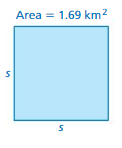
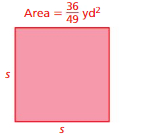
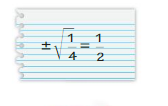
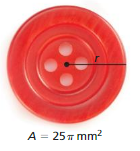
Big Ideas Math Answers Grade 8 Chapter 6 Data Analysis and Displays

Students of Grade 8 can get the best solutions with explanations from Big Ideas Math Answers. Our Big Ideas Math Answers Grade 8 Chapter 6 Data Analysis and Displays helps to score the highest marks in the exams and also improves your skills. Enhance your Knowledge by referring to BIM Grade 8 Answer Key Chapter 6 Data Analysis and Displays from eurekamathanswerkeys.com

Big Ideas Math Book 8th Grade Answer Key Chapter 6 Data Analysis and Displays

The concepts of maths are applicable in modeling Real life. The Big Ideas Math Textbook 8 Grade Chapter 6 Data Analysis and Displays Answers improves the skills. The solutions are prepared from Big Ideas Math- Modeling Real Life Grade 8 student Edition Set. Learning targets and success criteria help the students to focus on learning the subject. By this teachers and parents can understand the graph of the student’s performance.

Performance Task

Lesson: 1 Scatter Plots

Lesson: 2 Lines of Fit

Lesson: 3 Two-Way Tables

Lesson: 4 Choosing a Data Display

Chapter: 6 – Data Analysis and Displays 

Data Analysis and Displays STEAM Video/Performance Task

STEAM Video

Fuel Economy
The fuel economy of a vehicle is a measure of the effciency of the vehicle’s engine. What are the benefits of using a car with high fuel economy?
Big Ideas Math Answer Key Grade 8 Chapter 6 Data Analysis and Displays 1
Watch the STEAM Video “Fuel Economy.” Then answer the following questions.
1. Tory says that the footprint of a vehicle is the area of the rectangle formed by the wheel base and the track width. What is the footprint of a car with a wheel base of 106 inches and a track width of 61 inches?
Big Ideas Math Answer Key Grade 8 Chapter 6 Data Analysis and Displays 2
2. The graph shows the relationship between the fuel economy and the footprint for four vehicles.
a. What happens to the fuel economy as the footprint increases?
b. Plot the point (50, 40) on the graph. What does this point represent? Does the point fit in with the other points? Explain.

Answer:
1.The footprint of a car = 6,466 sq inches.

Explanation:
In the above-given question,
Tory says that the footprint of a vehicle is the area of the rectangle formed by the wheelbase and the track width.
area of rectangle = length  x width
Given that the footprint of a car = 106 inches.
width with 61 inches.
area = 106 x 61
footprint = 6,466 sq inches.

Answer:
2. a.The fuel economy increases when the footprint increases.

Explanation:
In the above-shown video,
tory says that whenever the footprint increases the fuel economy also increases.
whenever the footprint decreases the fuel economy decreases.

Answer:
2.b.The point (50, 40) represents the outlier.

Explanation:
In the above-given graph,
the point (50, 40) lies in the graph.
it represents the outlier of the graph.
Big-Ideas-Math-Solutions-Grade-8-Chapter-6-Data Analysis and Displays-6-1

Performance Task

Cost vs. Fuel Economy
After completing this chapter, you will be able to use the STEAM concepts you learned to answer the questions in the Video Performance Task. You will be given fuel economies and purchase prices of hybrid and non hybrid car models.
Big Ideas Math Answer Key Grade 8 Chapter 6 Data Analysis and Displays 3
You will be asked to create graphs to compare car models. Why might you want to know the relationship between the fuel economy and the purchase price of a vehicle?

Answer:
The relationship between the fuel economy and the purchase price of a vehicle is proportional.

Explanation:
In the above-given figure,
Given that the city fuel Economy and the purchase price of the cars.
for car A (21.8, 24)
for car B(22.4, 22)
for car C(40.1, 18)
if the fuel economy increases the purchase price also increases.
whenever the economy decreases the purchase price also decreases.

Data Analysis and Displays Getting Ready for Chapter 6

Chapter Exploration
1. Work with a partner. The table shows the number of absences and the final grade for each student in a sample.
Big Ideas Math Answer Key Grade 8 Chapter 6 Data Analysis and Displays 4
a.Write the ordered pairs from the table. Then plot them in a coordinate plane.
b. Describe the relationship between absences and final grade.
c. MODELING A student has been absent6 days. Use the data to predict the student’s final grade. Explain how you found your answer.

Answer:
a. (0, 95), (3, 88), (2, 90), (5, 83), (7, 79), (9, 70), (4, 85), (1, 94), (10, 65), (8, 75).
b. the relationships between the absences and the final grade is decreasing when the absences increases.
c. The student’s final grade is 80.

Explanation:
a. From the above-given figure,
The ordered pairs are:
(0, 95), (3, 88), (2, 90), (5, 83), (7, 79), (9, 70), (4, 85), (1, 94), (10, 65), (8, 75).
Big-Ideas-Math-Solutions-Grade-8-Chapter-6-Data Analysis and Displays-6-2

B. whenever the final grade is decreasing the absences also decrease.
whenever the final grade increases the absence also increases.
c. Given that the student has been absent for 6 days.
The student’s final grade is 80.

2. Work with a partner. Match the data sets with the most appropriate scatter plot. Explain your reasoning.
a. month of birth and birth weight for infants at a day care
b. quiz score and test score of each student in a class
c. age and value of laptop computers
Big Ideas Math Answer Key Grade 8 Chapter 6 Data Analysis and Displays 5

Vocabulary
The following vocabulary terms are defined in this chapter. Think about what each term might mean and record your thoughts.
scatter plot
two-way table
line of fit
joint frequency

Answer:
Scatter plot = A scatter plot uses dots to represent values for two different numeric variables. The position of each dot on the horizontal and vertical axis indicates values for an individual data point.
Two-way table = A two-way table is a way to display frequencies or relative frequencies for two categorical variables.
Line of fit = Line of fit refers to a line through a scatter plot of data points that best expresses the relationship between those points.
Joint frequency = Joint frequency is joining one variable from the row and one variable from the column.

Explanation:
Scatter plot = A scatter plot uses dots to represent values for two different numeric variables. The position of each dot on the horizontal and vertical axis indicates values for an individual data point.
Two-way table = A two-way table is a way to display frequencies or relative frequencies for two categorical variables.
Line of fit = Line of fit refers to a line through a scatter plot of data points that best expresses the relationship between those points.
Joint frequency = Joint frequency is joining one variable from the row and one variable from the column.

Lesson 6.1 Scatter Plots

EXPLORATION 1

Work with a partner. The weights and circumferences of several sports balls are shown.
Big Ideas Math Answer Key Grade 8 Chapter 6 Data Analysis and Displays 6.1 1
a. Represent the data in the coordinate plane. Explain your method.
b. Is there a relationship between the size and the weight of a sports ball? Explain your reasoning.
c. Is it reasonable to use the graph to predict the weights of the sports balls below? Explain your reasoning.
Kickball : circumference = 26 in.
Bowling ball : circumference = 27 in.
Answer:
a.(21, 30), (5, 9), (1.6, 5.3), (16, 28), (2, 8), (1.4, 7), (7, 12), (10, 26).

Explanation:
Big-Ideas-Math-Solutions-Grade-8-Chapter-6-Data Analysis and Displays-6.1-1

Answer:
b. The weight is measured in inches and size is measured in ounces.

Explanation:
In the above-given figure,
the size and the weight of the balls are given.
size and weight of basketball = (21, 30).
size and weight of baseball = (5, 9).
size and weight of golfball = (1.6, 5.3).
size and weight of soccerball = (16, 28).
size and weight of tennis = (2, 8).
size and weight of racquetball = (1.4, 7).
size and weight of softball = (7, 12).
size and weight of volleyball = (10, 26)

Answer:
c. No, it is not reasonable to use the graph.

Big Ideas Math Answer Key Grade 8 Chapter 6 Data Analysis and Displays 6.1 2

Try It

Question 1.
Make a scatter plot of the data. Identify any outliers, gaps, or clusters.
Big Ideas Math Answer Key Grade 8 Chapter 6 Data Analysis and Displays 6.1 3

Answer:
outliers = (120, 70)
gaps =(10, 62) to (45, 85)
clusters =(80, 95), (90, 97), (80, 91)

Explanation:
outliers =(120, 70)
gaps = (10, 62) to (45, 85)
clusters = (80, 95), (90, 97), (80, 91)

Big-Ideas-Math-Solutions-Grade-8-Chapter-6-Data Analysis and Displays-6.1-2

Question 2.
Describe the relationship between the data in Example 1.

Answer:
Linear relationship.

Explanation:
In the above-given graph,
the relationship used is a linear relationship.

Self-Assessment for Concepts & Skills
Solve each exercise. Then rate your understanding of the success criteria in your journal.

Question 3.
SCATTER PLOT
Make a scatter plot of the data. Identify any outliers, gaps, or clusters. Then describe the relationship between the data.
Big Ideas Math Answer Key Grade 8 Chapter 6 Data Analysis and Displays 6.1 4
Answer:
outliers = (3,24)
clusters = 22 to 36
gaps = (4, 27), (8, 36)

Explanation:
outliers = (3,24)
clusters = 22 to 36
gaps = (4, 27), (8, 36)

Big-Ideas-Math-Solutions-Grade-8-Chapter-6-Data Analysis and Displays-6.1-3

Question 4.
WHICH ONE DOESN’T BELONG?
Using the scatter plot, which point does not belong with the other three? Explain your reasoning.
Big Ideas Math Answer Key Grade 8 Chapter 6 Data Analysis and Displays 6.1 5

Answer:
The point (3.5, 3) does not belong with the other three.

Explanation:
In the above-given figure
The points (1,8),  (3, 6.5), and (8, 2) lies in the coordinate plane.
the point (3.5, 3) does not belong with the other three.
the point (3.5, 3) is an outlier.
Self-Assessment for Problem Solving
Solve each exercise. Then rate your understanding of the success criteria in your journal.

Question 5.
The table shows the high school and college grade point averages (GPAs) of 10 students. What college GPA do you expect for a high school student with a GPA of 2.7?
Big Ideas Math Answer Key Grade 8 Chapter 6 Data Analysis and Displays 6.1 6

Answer:
The college GPA I expect for a high school student with a GPA of 2.7 is 2.45.

Explanation:
In the above-given points,
given that the college GPA for high school students.
college GPA for 2.4 = high school students of 2.6
so I am expecting the 2.45 for 2.7.

Question 6.
The scatter plot shows the ages of 12 people and the numbers of pets each person owns. Identify any outliers, gaps, or clusters. Then describe the relationship between the data.
Big Ideas Math Answer Key Grade 8 Chapter 6 Data Analysis and Displays 6.1 7

Answer:
outliers = (40, 6)
clusters = (20, 2) to (70, 1)
gaps = (0, 30), (1, 35), (2, 50) and so on.

Explanation:
Given that,
the person’s age (years) in the x-axis.
a number of pets owned in the y-axis.
outliers = (40, 6)
clusters = (20, 2) to (70, 1)
gaps = (0, 30), (1, 35), (2, 50) and so on.

Scatter Plots Homework & Practice 6.1

Review & Refresh

Solve the system. Check your solution.
Question 1.
y = – 5x + 1
y = – 5x – 2

Answer:
There is no solution for the given equation.

Explanation:
Given that y = – 5x + 1
y = – 5x – 2
so there is no solution for the given equation.

Question 2.
2x + 2y = 9
x = 4.5 – y

Answer:
9 = 9

Explanation:
Given that,
2x + 2y = 9
x = 4.5 – y
2(4.5 – y) + 2y = 9
9 – 2y + 2y = 9
-2y and + 2y get cancelled on both sides.
9 = 9

Question 3.
y = – x
6x + y = 4

Answer:
x = (4/5 , -4/5)

Explanation:
Given that y = -x
6x + y = 4
6x + (-x) = 4
6x – x = 4
5x = 4
x = (4/5)

Question 4.
When graphing a proportional relationship represented by y = mx, which point is not on the graph?
A. (0, 0)
B. (0, m)
C. (1, m)
D. (2, 2m)

Answer:
Point A is not on the graph.

Explanation:
In the above question,
given that the points are:
(0, 0)
(0, m)
(1, m)
(2, 2m)
the point (0, 0) is not in the graph.

Concepts, Skills, &Problem Solving

USING A SCATTER PLOT The table shows the average prices (in dollars) of jeans sold at different stores and the numbers of pairs of jeans sold at each store in one month. (See Exploration 1, p. 237.)

Question 5.
Represent the data in a coordinate plane.
Big Ideas Math Answer Key Grade 8 Chapter 6 Data Analysis and Displays 6.1 8

Answer:
The points are (22, 152), (40, 94), (28, 134), (35, 110), and (46, 81)

Explanation:
In the above-given figure,
The points are (22, 152), (40, 94), (28, 134), (35, 110), and (46, 81)
Big-Ideas-Math-Solutions-Grade-8-Chapter-6-Data Analysis and Displays-6.1-4

Question 6.
Is there a relationship between the average price and the number sold? Explain your reasoning.

Answer:
The linear relationship.

Explanation:
In the above-given figure,
the relationship given is linear relationship.

MAKING A SCATTER PLOT Make a scatter plot of the data. Identify any outliers, gaps, or clusters.
Question 7.
Big Ideas Math Answer Key Grade 8 Chapter 6 Data Analysis and Displays 6.1 9

Answer:
Outliers = (102, 63)
gaps = x from 40 to 44
clusters = 82 to 89

Explanation:
outliers = (102, 63)
gaps = x from 40 to 44
clusters = 82 to 89
Big-Ideas-Math-Solutions-Grade-8-Chapter-6-Data Analysis and Displays-6.1-5

Question 8.
Big Ideas Math Answer Key Grade 8 Chapter 6 Data Analysis and Displays 6.1 10

Answer:
Outliers = (0, 5.5)
gaps = x from 4.5 to 5.5
clusters = 1.5 to 2.5

Explanation:
outliers = (0, 5.5)
gaps = x from 4.5 to 5.5
clusters = 1.5 to 2.5
Big-Ideas-Math-Solutions-Grade-8-Chapter-6-Data Analysis and Displays-6.1-6

IDENTIFYING RELATIONSHIPS Describe the relationship between the data. Identify any outliers, gaps, or clusters.
Question 9.
Big Ideas Math Answer Key Grade 8 Chapter 6 Data Analysis and Displays 6.1 11

Answer:
Outliers = (15, 10)
gaps = from x = 15 to x = 25
clusters = 0
Negative linear relationship.

Explanation:
Outliers = (15, 10)
gaps = from x = 15 to x = 25
clusters = 0
There are no clusters.

Question 10.
Big Ideas Math Answer Key Grade 8 Chapter 6 Data Analysis and Displays 6.1 12

Answer:
There are no clusters.
gaps = from x = 4 to x = 36
outliers.

Explanation:
In the above-given figure,
there are no clusters.
gaps = from x = 4 to x = 36
no outliers.

Question 11.
Big Ideas Math Answer Key Grade 8 Chapter 6 Data Analysis and Displays 6.1 13

Answer:
There is no relationship.
there are no clusters.
no gaps.
no outliers.

Explanation:
In the above-given graph,
there are no clusters.
no gaps.
no clusters.
there is no relationship.

Question 12.
CRITICAL THINKING
The table shows the average price per pound for honey at a store from 2014 to 2017. Describe the relationship between the data.
Big Ideas Math Answer Key Grade 8 Chapter 6 Data Analysis and Displays 6.1 14

Answer:
The relationship is a positive linear relationship.

Explanation:
In the above-figure,
given points are:
(2014, $4.65), (2015, $5.90), (2016, $6.50), and (2017, $7.70)
so the above given is a positive linear relationship.

Question 13.
MODELING REAL LIFE
The scatter plot shows the amount of rainfall and the amount of corn produced by a farm over the last 10 years. Describe the relationship between the amount of rainfall and the amount of corn produced.
Big Ideas Math Answer Key Grade 8 Chapter 6 Data Analysis and Displays 6.1 15

Answer:
The relationship is a positive linear relationship.

Explanation:
In  the above-given figure,
outliers = (49, 80)
clusters = from x = 190 to 220.

Question 14.
OPEN-ENDED
Describe a set of real-life data that has a negative linear relationship.
Answer:

Question 15.
MODELING REAL LIFE
The scatter plot shows the total earnings (wages and tips) of a food server during one day.
Big Ideas Math Answer Key Grade 8 Chapter 6 Data Analysis and Displays 6.1 16
a. About how many hours must the server work to earn $70?
b. About how much does the server earn for 5 hours of work?
c. Describe the relationship shown by the data.

Answer:
a. 3.5 h
b. 85 $
c. positive linear relationship.

Explanation:
In the above-given graph,
given that,
a. the hours must server work to earn $70 = 3.5 h
b. The server earns for 5 hours of work = $ 85.
c. the relationship is shown by the data = positive linear relationship.

Question 16.
PROBLEM SOLVING
The table shows the memory capacities (in gigabytes) and prices (in dollars) of tablet computers. (a) Make a scatter plot of the data. Then describe the relationship between the data. (b) Identify any outliers, gaps, or clusters. Explain why they might exist.
Big Ideas Math Answer Key Grade 8 Chapter 6 Data Analysis and Displays 6.1 17

Answer:
Outliers =(16, 50)
gaps = 128 on x.
clusters = 64, 32, 64

Explanation:
Outliers =(16, 50)
gaps =128 on x.
clusters = 64, 32, 64.

Big-Ideas-Math-Solutions-Grade-8-Chapter-6-Data Analysis and Displays-6.1-7

Question 17.
PATTERNS
The scatter plot shows the numbers of drifting scooters sold by a company.
Big Ideas Math Answer Key Grade 8 Chapter 6 Data Analysis and Displays 6.1 18
a. In what year were1000 scooters sold?
b. About how many scooters were sold in 2015?
c. Describe the relationship shown by the data.
d. Assuming this trend continues, in what year are about 500 drifting scooters sold?

Answer:
a. 2014
b. about 950 scooters.
c. negative linear relationship.
d. 2019.

Explanation:
In the above-given figure,
Given that the number of vehicles sold in the year.
a. 2014
b. about 950 scooters.
c. negative linear relationship.
d. 2019

Question 18.
DIG DEEPER!
Sales of sunglasses and beach towels at a store show a positive linear relationship in the summer. Does this mean that the sales of one item cause the sales of the other item to increase? Explain.

Answer:
Yes.

Explanation:
In the above-figure,
given that the sales of the sunglasses and beach towels at a store show a positive linear relationship.
yes the sales of one item cause the sales of the other item to increase.

Lesson 6.2 Lines of Fit

EXPLORATION 1

Representing Data by a Linear Equation
Work with a partner. You have been working on a science project for 8 months. Each month, you measured the length of a baby alligator.
Big Ideas Math Answers 8th Grade Chapter 6 Data Analysis and Displays 6.2 1
a. Use a scatter plot to draw a line that you think best describes the relationship between the data.
b. Write an equation for your line in part(a).
c. MODELING Use your equation in part(b) to predict the length of the baby alligator next September.

Answer:
a. The relation is a linear relationship.

Explanation:
Big-Ideas-Math-Solutions-Grade-8-Chapter-6-Data Analysis and Displays-6.1-8

Big Ideas Math Answers 8th Grade Chapter 6 Data Analysis and Displays 6.2 2

Try It

Question 1.
The table shows the numbers of people who attend a festival over an eight-year period. (a) Make a scatter plot of the data and draw a line of fit. (b) Write an equation of the line of fit. (c) Interpret the slope and the y-intercept of the line of fit.
Big Ideas Math Answers 8th Grade Chapter 6 Data Analysis and Displays 6.2 3

Answer:
The order pairs (1, 420), (2, 500), (3, 650), (4, 900), (5, 1100), (6, 1500), (7, 1750), (8, 2400)

Explanation:
Big-Ideas-Math-Solutions-Grade-8-Chapter-6-Data Analysis and Displays-6.2-2

Question 2.
Find an equation of the line of best fit for the data in Example 1. Identify and interpret the correlation coefficient.
Answer:

Self-Assessment for Concepts & Skills
Solve each exercise. Then rate your understanding of the success criteria in your journal.

Question 3.
FINDING A LINE OF FIT
The table shows the numbers of days spent training and the race times for several people in a race.
Big Ideas Math Answers 8th Grade Chapter 6 Data Analysis and Displays 6.2 4
a. Make a scatter plot of the data and draw a line of fit.
b. Write an equation of the line of fit.
c. Interpret the slope and the y-intercept of the line of fit.

Answer:

Question 4.
IDENTIFYING RELATIONSHIPS
Find an equation of the line of best fit for the data at the left. Identify and interpret the correlation coefficient
Answer:

Self-Assessment for Problem Solving
Solve each exercise. Then rate your understanding of the success criteria in your journal.

Question 5.
The ordered pairs show amounts y (in inches) of rainfall equivalent x to inches of snow. About how many inches of rainfall are equivalent to 6 inches of snow? Justify your answer.
(16, 1.5) (12, 1.3) (18, 1.8) (15, 1.5) (20, 2.1) (23, 2.4)
Answer:

Question 6.
The table shows the heights (in feet) of a high jump bar and the number of people who successfully complete each jump. Identify and interpret the correlation coefficient.
Big Ideas Math Answers 8th Grade Chapter 6 Data Analysis and Displays 6.2 5
Answer:

Lines of Fit Homework & Practice 6.2

Review & Refresh

Describe the relationship between the data. Identify any outliers, gaps, or clusters.
Question 1.
Big Ideas Math Answers 8th Grade Chapter 6 Data Analysis and Displays 6.2 6

Answer:
Negative linear relationship.
outliers = (6, 10)
clusters = 0
gaps = 0

Explanation:
In the above-given figure,
The relationship is negative linear relationship.
outliers = (6, 10)
cluster = 0
gaps = 0
there are no clusters and no gaps.

Question 2.
Big Ideas Math Answers 8th Grade Chapter 6 Data Analysis and Displays 6.2 7

Answer:

Question 3.
Big Ideas Math Answers 8th Grade Chapter 6 Data Analysis and Displays 6.2 8

Answer:

positive linear relationships.
outliers = 0
gaps = 0
clusters = x = 11 to x = 15

Explanation:
In the above-given figure,
given that
positive linear relationship.
outliers = 0
gaps = 0
clusters = x = 11 to x = 15

Write the fraction as a decimal and a percent.
Question 4.
\(\frac{29}{100}\)

Answer:
Decimal = 0.29
percent = 29 %

Explanation:
Given that
(29/100)
0.29
percent = 29%
decimal = 0.29

Question 5.
\(\frac{7}{25}\)

Answer:
Decimal = 0.28
percent = 28%

Explanation:
Given that
(7/25) = 0.28
decimal = 0.28
percent = 28

Question 6.
\(\frac{35}{50}\)

Answer:
Decimal = 0.7
percent = 0.007

Explanation:
Given that
(35/50) = 0.7
decimal = 0.7
percent = 0.007

Concepts, Skills, &Problem Solving
REPRESENTING DATA BY A LINEAR EQUATION Use a scatter plot to draw a line that you think best describes the relationship between the data. (See Exploration 1, p. 243.)
Question 7.
Big Ideas Math Answers 8th Grade Chapter 6 Data Analysis and Displays 6.2 9

Answer:
The points are (0,0), (1, 0.8), (2, 1.50), (3, 2.20), (4, 3.0), (5, 3.75)

Explanation:
In the above-given figure,
Given that :
the points are (0, 0), (1, 0.8), (2, 1.50), (3, 2.20), (4, 3.0), (5, 3.75)
The blue berries are in the x-axis.
weight is measured in pounds.
weight is shown in the y-axis.
Big-Ideas-Math-Solutions-Grade-8-Chapter-6-Data Analysis and Displays-6.2-3
Question 8.
Big Ideas Math Answers 8th Grade Chapter 6 Data Analysis and Displays 6.2 10

Answer:
The given points are (0,91), (2, 82), (4, 74), (6, 65), (8, 55), (10, 43).

Explanation:
In the above-given figure,
Given that :
the points are (0, 91, (2, 82), (4, 74), (6, 65), (8, 55), (10, 43)
The Age is given on the x-axis.
value is measured in dollars.
value is given in the y-axis.
Big-Ideas-Math-Solutions-Grade-8-Chapter-6-Data Analysis and Displays-6.2-4
Question 9.
FINDING A LINE OF FIT
The table shows the daily high temperatures (°F)and the numbers of hot chocolates sold at a coffee shop for eight randomly selected days.
Big Ideas Math Answers 8th Grade Chapter 6 Data Analysis and Displays 6.2 11
a. Make a scatter plot of the data and draw a line of fit.
b.Write an equation of the line of fit.
c. Interpret the slope and the y-intercept of the line of fit.

Answer:
a.The given points are (30, 45), (36, 43), (44, 36), (51, 35), (60, 30), (68, 27), (75, 23), (82, 17).
b. y = -0.5x + 60
c. you could expect that 60 hot chocolates are sold when the temperature is 0 degree f, and the sales decrease by 1 hot chocolate for every 2 degrees f increase in temperature.

Explanation:
a.The given points are (30, 45), (36, 43), (44, 36), (51, 35), (60, 30), (68, 27), (75, 23), (82, 17).
b. y = -0.5x + 60
c. you could expect that 60 hot chocolates are sold when the temperature is 0 degree f, and the sales decrease by 1 hot chocolate for every 2 degrees f increase in temperature.

Big-Ideas-Math-Solutions-Grade-8-Chapter-6-Data Analysis and Displays-6.2-5

Question 10.
NUMBER SENSE
Which correlation coefficient indicates a stronger relationship: – 0.98 or 0.91? Explain.

Answer:
0.91 indicates a stronger correlation coefficient.

Explanation:
In the above-given question,
-0.98 is a negative value and 0.91 is a positive value.
So 0.91 indicates a stronger correlation coefficient.

Question 11.
IDENTIFYING RELATIONSHIPS
The table shows the admission costs (in dollars) and the average number of daily visitors at an amusement park each year for the past 8 years. Find an equation of the line of best fit. Identify and interpret the correlation coefficient.
Big Ideas Math Answers 8th Grade Chapter 6 Data Analysis and Displays 6.2 12

Answer:
The equation for the line of best fit is Y = -4.9x + 1042
about -0.969.
strong negative correlation.

Explanation:
In the above-given figure,
The given points are (20, 940), (21, 935), (22, 940), (24, 925), (25, 920), (27, 905), (28, 910), and (30, 890)
The equation for the line of best fit is y = -4.9x + 1042.
about -0.969.
strong negative correlation.

Question 12.
REASONING
The table shows the weights(in pounds) and the prescribed dosages (in milligrams) of medicine for six patients.
Big Ideas Math Answers 8th Grade Chapter 6 Data Analysis and Displays 6.2 13
a. Find an equation of the line of best fit. Identify and interpret the correlation coefficient.
b. Interpret the slope of the line of best fit.
c. A patient who weighs 140 pounds is prescribed 135 milligrams of medicine. How does this affect the line of best fit?
Answer:

Question 13.
MODELING REAL LIFE
The table shows the populations (in millions) and the numbers of electoral votes assigned for eight states in the 2016 presidential election.
Big Ideas Math Answers 8th Grade Chapter 6 Data Analysis and Displays 6.2 14
a. Find an equation of the line of best fit. Identify and interpret the correlation coefficient.
b. Interpret the slope of the line of best fit.
c. Interpret the y-intercept of the line of best fit.
d. RESEARCH Research the Electoral College to explain the meaning of your answer in part(c).

Answer:
a. y = 1.3 x + 2; about 0.9995; strong positive correlation.
b. The number of electoral votes increases by 1.3 for every increase of 1  million people in the state.
c. A state with a population of 0 has 2 electoral votes.
d. The number of electoral votes a state has is based on the number of members that the state has in congress. Each state has 2 senators, plus a number of members of the House of Representatives based on its population. so, the y-intercept is 2 because a hypothetical state with no population would still have 2 senators.

Explanation:
a. y = 1.3 x + 2; about 0.9995; strong positive correlation.
b. The number of electoral votes increases by 1.3 for every increase of 1  million people in the state.
c. A state with a population of 0 has 2 electoral votes.
d. The number of electoral votes a state has is based on the number of members that the state has in congress. Each state has 2 senators, plus a number of members of the House of Representatives based on its population. so, the y-intercept is 2 because a hypothetical state with no population would still have 2 senators.

Question 14.
MODELING REAL LIFE
The table shows the numbers (in millions) of active accounts for two social media websites over the past five years. Assuming this trend continues, how many active accounts will Website B have when Website A has 280 million active accounts? Justify your answer.
Big Ideas Math Answers 8th Grade Chapter 6 Data Analysis and Displays 6.2 15

Answer:

Question 15.
DIG DEEPER!
The table shows the heights y(in feet) of a baseball x seconds after it was hit.
Big Ideas Math Answers 8th Grade Chapter 6 Data Analysis and Displays 6.2 16
a. Predict the height after 5 seconds.
b. The actual height after 5 seconds is about 3 feet. Why might this be different from your prediction?

Answer:
a. 251 ft.
b. The height of the baseball is not linear.

Explanation:
a. The height after 5 seconds is 251 feet.
Given that the seconds on the x-axis and height on the y-axis.
the points are (0, 3), (0.5, 39), (1, 67), (1.5, 87), and (2, 99).
b. The actual height after 5 seconds is about 3 feet.

Lesson 6.3 Two-Way Tables

EXPLORATION 1

Analyzing Data
Work with a partner. You are the manager of a sports shop. The table shows the numbers of soccer T-shirts that your shop has left in stock at the end of a soccer season.
Big Ideas Math Answers Grade 8 Chapter 6 Data Analysis and Displays 6.3 1
a. Complete the table.
b. Are there any black-and-gold XL T-shirts in stock? Justify your answer.
c. The numbers of T-shirts you ordered at the beginning of the soccer season are shown below. Complete the table.
Big Ideas Math Answers Grade 8 Chapter 6 Data Analysis and Displays 6.3 2
d. REASONING How would you alter the numbers of T-shirts you order for the next soccer season?
Answer:

Big Ideas Math Answers Grade 8 Chapter 6 Data Analysis and Displays 6.3 3

Try It

Question 1.
How many students in the survey above studied for the test and failed?
Answer:

Question 2.
You randomly survey students in a cafeteria about their plans for a football game and a school dance. The two-way table shows the results. Find and interpret the marginal frequencies for the survey.
Big Ideas Math Answers Grade 8 Chapter 6 Data Analysis and Displays 6.3 4
Answer:

Question 3.
You randomly survey students about whether they buy a school lunch or pack a lunch. The results are shown. Make a two-way table that includes the marginal frequencies.
Big Ideas Math Answers Grade 8 Chapter 6 Data Analysis and Displays 6.3 5
Answer:

Self-Assessment for Concepts & Skills
Solve each exercise. Then rate your understanding of the success criteria in your journal.

Question 4.
READING A TWO-WAY TABLE
The results of a music survey are shown in the two-way table. How many students dislike both country and jazz? How many students like country but dislike jazz?
Big Ideas Math Answers Grade 8 Chapter 6 Data Analysis and Displays 6.3 6
Answer:

Question 5.
MAKING A TWO-WAY TABLE
You randomly survey students about their preference for a class field trip. The results are shown in the tally sheets. Make a two-way table that includes the marginal frequencies.
Big Ideas Math Answers Grade 8 Chapter 6 Data Analysis and Displays 6.3 7
Answer:

Self-Assessment for Problem Solving
Solve each exercise. Then rate your understanding of the success criteria in your journal.

Question 6.
The results of a voting survey are shown in the two-way table. For each age group, what percent of voters prefer Candidate A? Candidate B? Determine whether there is a relationship between age and candidate preference.
Big Ideas Math Answers Grade 8 Chapter 6 Data Analysis and Displays 6.3 8
Answer:

Question 7.
You randomly survey 40 students about whether they play an instrument. You find that8 males play an instrument and 13 females do not play an instrument. A total of 17 students in the survey play an instrument. Make a two-way table that includes the marginal frequencies.
Answer:

Question 8.
Collect data from each student in your math class about whether they like math and whether they like science. Is there a relationship between liking math and liking science? Justify your answer.
Answer:

Two-Way Tables Homework & Practice 6.3

Review & Refresh

Find an equation of the line of best fit for the data.
Question 1.
Big Ideas Math Answers Grade 8 Chapter 6 Data Analysis and Displays 6.3 9

Answer:
The line y = 12.6x + 75.8 best fit for the data.

Explanation:
In the above-given figure,
Given that the points are (0,75), (1, 91), (2, 101), (3, 109) and (4, 129).
The line y = 12.6x + 75.8 is the best fit for the data.

Question 2.
Big Ideas Math Answers Grade 8 Chapter 6 Data Analysis and Displays 6.3 10
Answer:

The vertices of a triangle are A (1, 2), B (3, 1), and C (1, – 1). Draw the figure and its image after the translation.
Question 3.
4 units left
Answer:

Question 4.
2 units down
Answer:

Question 5.
(x – 2, y + 3)
Answer:

Concepts, Skills, &Problem Solving

ANALYZING DATA In Exploration 1, determine how many of the indicated T-shirt are in stock at the end of the soccer season. (See Exploration 1, p. 249.)
Question 6.
black-and-white M

Answer:
4 T-shirts are in stock at the end of the soccer season.

Explanation:
In the above-given Exploration 1,
Given that The T-shirts are in stock.
4 T-shirts are in stock at the end of the soccer season.

Question 7.
blue-and-gold XXL

Answer:
0 shirts.

Explanation:
In the above-given Exploration 1,
Given that The T-shirts are in stock.
0 T-shirts are in stock at the end of the soccer season.

Question 8.
blue-and-white L

Answer:
1 T-shirt.

Explanation:
In the above-given Exploration 1,
Given that the T-shirts are in stock.
1 T-shirt is in stock at the end of the soccer season.

READING A TWO-WAY TABLE You randomly survey students about participating in a yearly fundraiser. The two-way table shows the results.
Big Ideas Math Answers Grade 8 Chapter 6 Data Analysis and Displays 6.3 11
Question 9.
How many female students participateFundraiserin the fundraiser?

Answer:
51 students participate.

Explanation:
In the above-given table,
Given that male and female students are participated in the fundraiser.
so 51 female students participate.

Question 10.
How many male students do not participate in the fundraiser?

Answer:
30 male students do not participate.

Explanation:
In the above-given table,
Given that male and female students are participated in the fundraiser.
so 30 male students do not participate.

FINDING MARGINAL FREQUENCIES Find and interpret the marginal frequencies.
Question 11.
Big Ideas Math Answers Grade 8 Chapter 6 Data Analysis and Displays 6.3 12

Answer:
71 students are juniors.
75 students are seniors.
93 students will attend the school play.
53 students will not attend the school play.
146 students were surveyed.

Explanation:
In the above-given table,
Given that students of the class participate in the school play.
71 students are juniors.
75 students are seniors.
93 students will attend the school play.
53 students will not attend the school play.
146 students were surveyed.

Question 12.
Big Ideas Math Answers Grade 8 Chapter 6 Data Analysis and Displays 6.3 13

Answer:
The data plan of 78 people is limited for the cell phone company A.
The data plan of  94 people is limited for the cell phone company B.
The data plan of 175 people is unlimited for the cell phone company A.
The data plan of 135 people is unlimited for the cell phone company B.
482 people were surveyed.

Explanation:
In the above-given table,
The data plan of the cell phone company are given.
The data plan of 78 people is limited for the cell phone company A.
The data plan of  94 people is limited for the cell phone company B.
The data plan of 175 people is unlimited for the cell phone company A.
The data plan of 135 people is unlimited for the cell phone company B.
482 people were surveyed.

Question 13.
MAKING A TWO-WAY TABLE
A researcher randomly surveys people with a medical condition about whether they received a treatment and whether their condition improved. The results are shown. Make a two-way table that includes the marginal frequencies.
Big Ideas Math Answers Grade 8 Chapter 6 Data Analysis and Displays 6.3 14

Answer:
The people who improved with treatment = 34.
The people who did not improve with treatment = 10
The people who improved with no treatment = 12.
The people who did not improve with no treatment = 29
Totally are about 85 people.

Explanation:
The people who improved with treatment = 34.
The people who did not improve with treatment = 10
The people who improved with no treatment = 12.
The people who did not improve with no treatment = 29
Totally are about 85 people.

Question 14.
MODELING REAL LIFE
You randomly survey students in your school about the color of their eyes. The results are shown in the tables.
Big Ideas Math Answers Grade 8 Chapter 6 Data Analysis and Displays 6.3 15
a. Make a two-way table.
b. Find and interpret the marginal frequencies for the survey.
c. For each eye color, what percent of the students in the survey are male? female? Organize the results in a two-way table.
Answer:

Big Ideas Math Answers Grade 8 Chapter 6 Data Analysis and Displays 6.3 16
Question 15.
REASONING
Use the information from Exercise 14. For each gender, what percent of the students in the survey have green eyes? blue eyes? brown eyes? Organize the results in a two-way table.
Answer:

Question 16.
CRITICAL THINKING
What percent of students in the survey in Exercise 14 are either female or have green eyes? What percent of students in the survey are males who do not have green eyes? Find and explain the sum of these two percents.
Answer:

Question 17.
MODELING REAL LIFE
You randomly survey people in your neighborhood about whether they have at least $1000 in savings. The results are shown in the tally sheets. For each age group, what percent of the people have at least $1000 in savings? do not have at least $1000 in savings? Determine whether there is a relationship between age and having at least $1000 in savings.
Big Ideas Math Answers Grade 8 Chapter 6 Data Analysis and Displays 6.3 17
Answer:

Question 18.
DIG DEEPER!
The three-dimensional bar graph shows information about the numbers of hours students at a high school work at part-time jobs during the school year.
Big Ideas Math Answers Grade 8 Chapter 6 Data Analysis and Displays 6.3 18
a. Make a two-way table that represents the data. Use estimation to find the entries in your table.
b. A newspaper article claims that more males than females drop out of high school to work full-time. Do the data support this claim? Explain your reasoning.
Answer:

Lesson 6.4 Choosing a Data Display

EXPLORATION 1

Displaying Data
Work with a partner. Analyze and display each data set in a way that best describes the data. Explain your choice of display.

a. NEW ENGLAND ROADKILL A group of schools in New England participated in a two-month study. They reported 3962 dead animals.
Birds: 307
Mammals: 2746
AmphibiAnswer: 145
Reptiles: 75
Unknown: 689
Big Ideas Math Solutions Grade 8 Chapter 6 Data Analysis and Displays 6.4 1
b. BLACK BEAR ROADKILL The data below show the numbers of black bears killed on a state’s roads each year for 20 years.
Big Ideas Math Solutions Grade 8 Chapter 6 Data Analysis and Displays 6.4 2
c. RACCOON ROADKILL A one-week study along a four-mile section of road found the following weights (in pounds) of raccoons that had been killed by vehicles.
Big Ideas Math Solutions Grade 8 Chapter 6 Data Analysis and Displays 6.4 3
d. What can be done to minimize the number of animals killed by vehicles?
Answer:

Try It

Choose an appropriate data display for the situation. Explain your reasoning.
Question 1.
the population of the United States divided into age groups
Answer:

Question 2.
the number of students in your school who play basketball, football, soccer, or lacrosse
Answer:

Tell whether the data display is appropriate for representing the data in Example 2. Explain your reasoning.
Question 3.
dot plot
Answer:

Question 4.
circle graph
Answer:

Question 5.
stem-and-leaf plot
Answer:

Question 6.
Which bar graph is misleading? Explain.
Big Ideas Math Solutions Grade 8 Chapter 6 Data Analysis and Displays 6.4 4
Answer:

Self-Assessment for Concepts & Skills
Solve each exercise. Then rate your understanding of the success criteria in your journal.

CHOOSING A DATA DISPLAY Choose an appropriate data display for the situation. Explain your reasoning.
Question 7.
the percent of band students playing each instrument
Answer:

Question 8.
a comparison of the amount of time spent using a tablet computer and the remaining battery life
Answer:

Question 9.
IDENTIFYING A MISLEADING DISPLAY
Is the box-and-whisker plot misleading? Explain.
Big Ideas Math Solutions Grade 8 Chapter 6 Data Analysis and Displays 6.4 5
Answer:

Self-Assessment for Problem Solving
Solve each exercise. Then rate your understanding of the success criteria in your journal.

Question 10.
An employee at an animal shelter creates the histogram shown. A visitor concludes that the number of 7-year-old to 9-year-old dogs is triple the number of 1-year-old to 3-year-old dogs. Determine whether this conclusion is accurate. Explain.
Big Ideas Math Solutions Grade 8 Chapter 6 Data Analysis and Displays 6.4 6
Answer:

Question 11.
DIG DEEPER!
A business manager creates the line graph shown. (a) How do the data appear to change over time? Explain why this conclusion may not be accurate. (b) Why might the business manager want to use this line graph?
Big Ideas Math Solutions Grade 8 Chapter 6 Data Analysis and Displays 6.4 7
Answer:

Choosing a Data Display Homework & Practice 6.4

Review & Refresh

You randomly survey students about whether they recycle. The two-way table shows the results.
Big Ideas Math Solutions Grade 8 Chapter 6 Data Analysis and Displays 6.4 8
Question 1.
How many male students recycle? How many female students do not recycle?
Answer:

Question 2.
Find and interpret the marginal frequencies.
Answer:

Find the slope and the y-intercept of the graph of the linear equation.
Question 3.
y = 4x + 10
Answer:

Question 4.
y = – 3.5x – 2
Answer:

Question 5.
y – 8 = – x
Answer:

Concepts, Skills, & Problem Solving

Question 6.
DISPLAYING DATA
Analyze and display the data in a way that best describes the data. Explain your choice of display. (See Exploration 1, p. 255.)
Big Ideas Math Solutions Grade 8 Chapter 6 Data Analysis and Displays 6.4 9

Answer:

CHOOSING A DATA DISPLAY Choose an appropriate data display for the situation. Explain your reasoning.
Question 7.
a student’s test scores and how the scores are spread out

Answer:
stem and leaf plot shows how data is distributed.

Question 8.
the prices of different televisions and the numbers of televisions sold
Answer:

Question 9.
the outcome of rolling a number cube
Answer:

Question 10.
the distance a person drives each month
Answer:

Question 11.
IDENTIFYING AN APPROPRIATE DISPLAY
A survey asked 800 students to choose their favorite school subject. The results are shown in the table. Tell whether each data display is appropriate for representing the portion of students who prefer math. Explain your reasoning.
Big Ideas Math Solutions Grade 8 Chapter 6 Data Analysis and Displays 6.4 10
Answer:

Question 12.
IDENTIFYING AN APPROPRIATE DISPLAY
The table shows how many hours you worked as a lifeguard from May to August. Tell whether each data display is appropriate for representing how the number of hours worked changed during the 4 months. Explain your reasoning.
Big Ideas Math Solutions Grade 8 Chapter 6 Data Analysis and Displays 6.4 11
Answer:

Question 13.
WRITING
When should you use a histogram instead of a bar graph to display data? Use an example to support your answer.
Answer:

IDENTIFYING MISLEADING DISPLAYS Which data display is misleading? Explain.
Question 14.
Big Ideas Math Solutions Grade 8 Chapter 6 Data Analysis and Displays 6.4 12
Answer:

Question 15.
Big Ideas Math Solutions Grade 8 Chapter 6 Data Analysis and Displays 6.4 13
Answer:

Question 16.
REASONING
What type of data display is appropriate for showing the mode of a data set?
Answer:

Question 17.
CRITICAL THINKING
The director of a music festival creates the data display shown. A customer concludes that the ticket price for Group C is more than double the ticket price for Group A. Determine whether this conclusion is accurate. Explain.
Big Ideas Math Solutions Grade 8 Chapter 6 Data Analysis and Displays 6.4 14
Answer:

Question 18.
PATTERNS
A scientist gathers data about a decaying chemical compound and creates the scatter plot shown.
Big Ideas Math Solutions Grade 8 Chapter 6 Data Analysis and Displays 6.4 15
a.The scientist concludes that there is a negative linear relationship between the data. Determine whether this conclusion is accurate. Explain.
b. Estimate the amount of the compound remaining after 1 hour, 3 hours, 5 hours, and 7 hours.
Answer:

Question 19.
REASONING
A survey asks 100 students to choose their favorite sports. The results are shown in the circle graph.
Big Ideas Math Solutions Grade 8 Chapter 6 Data Analysis and Displays 6.4 16
a. Explain why the graph is misleading.
b. What type of data display is more appropriate for the data? Explain.
Answer:

Question 20.
STRUCTURE
With the help of computers, mathematicians have computed and analyzed trillions of digits of the irrational number π. One of the things they analyze is the frequency of each of the numbers 0 through 9. The table shows the frequency of each number in the first 100,000 digits of π.
a. Display the data in a bar graph.
b. Display the data in a circle graph.
c. Which data display is more appropriate? Explain.
d. Describe the distribution.
Big Ideas Math Solutions Grade 8 Chapter 6 Data Analysis and Displays 6.4 17
Answer:

Data Analysis and Displays Connecting Concepts

Using the Problem-Solving Plan
Question 1.
You randomly survey middle school students about whether they prefer action, comedy, or animation movies. The two-way table shows the results. Estimate the probability that a randomly selected middle school student prefers action movies.
Big Ideas Math Answer Key Grade 8 Chapter 6 Data Analysis and Displays cc 1
Understand the problem.
You know the results of a survey about movie preference. You are asked to estimate the probability that a randomly selected middle school student prefers action movies.

Make a plan.
Find the marginal frequencies for the data. Then use the marginal frequencies to find the probability that a randomly selected middle school student prefers action movies.

Solve and check.
Use the plan to solve the problem. Then check your solution.
Answer:

Question 2.
An equation of the line of best fit for a data set is y = – 0.68x + 2.35. Describe what happens to the slope and the y-intercept of the line when each y-value in the data set increases by 7.
Answer:

Question 3.
On a school field trip, there must be 1 adult chaperone for every 16 students. There are 8 adults who are willing to be a chaperone for the trip, but only the number of chaperones that are necessary will attend. Ina class of 124 students, 80 attend the trip. Make a two-way table that represents the data.
Big Ideas Math Answer Key Grade 8 Chapter 6 Data Analysis and Displays cc 2
Answer:

Performance Task

Cost vs. Fuel Economy
At the beginning of this chapter, you watched a STEAM Video called “Fuel Economy.” You are now ready to complete the performance task related to this video, available at BigIdeasMath.com. Be sure to use the problem-solving plan as you work through the performance task.
Big Ideas Math Answer Key Grade 8 Chapter 6 Data Analysis and Displays cc 3

Data Analysis and Displays Chapter Review

Review Vocabulary

Write the definition and give an example of each vocabulary term.
Big Ideas Math Answer Key Grade 8 Chapter 6 Data Analysis and Displays cr 1

Graphic Organizers

You can use Information Frame an to help organize and remember a concept. Here is an example of an Information Frame for scatter plots.
Big Ideas Math Answer Key Grade 8 Chapter 6 Data Analysis and Displays cr 2

Choose and complete a graphic organizer to help you study the concept.
1. lines of fit
2. two-way tables
3. data displays
Big Ideas Math Answer Key Grade 8 Chapter 6 Data Analysis and Displays cr 3

Chapter Self-Assessment

As you complete the exercises, use the scale below to rate your understanding of the success criteria in your journal.
Big Ideas Math Answer Key Grade 8 Chapter 6 Data Analysis and Displays cr 4

6.1 Scatter Plots   (pp. 237–242)
Learning Target: Use scatter plots to describe patterns and relationships between two quantities.

Question 1.
Make a scatter plot of the data. Identify any outliers, gaps, or clusters.
Big Ideas Math Answer Key Grade 8 Chapter 6 Data Analysis and Displays cr 5
Answer:

Describe the relationship between the data. Identify any outliers, gaps, or clusters.
Question 2.
Big Ideas Math Answer Key Grade 8 Chapter 6 Data Analysis and Displays cr 6
Answer:

Question 3.
Big Ideas Math Answer Key Grade 8 Chapter 6 Data Analysis and Displays cr 7
Answer:

Question 4.
Big Ideas Math Answer Key Grade 8 Chapter 6 Data Analysis and Displays cr 8
Answer:

Question 5.
Your school is ordering custom T-shirts. The scatter plot shows the numbers of T-shirts ordered and the cost per shirt. Describe the relationship between the numbers of T-shirts ordered and the cost per T-shirt.
Big Ideas Math Answer Key Grade 8 Chapter 6 Data Analysis and Displays cr 9.1
Answer:

Question 6.
Describe a set of real-life data that has each relationship.
a. positive linear relationship
b. no relationship
Answer:

Question 7.
The table shows the numbers of hours a waitress works and the amounts she earns in tips. How many hours do you expect the waitress to work when she earns $42 in tips?
Big Ideas Math Answer Key Grade 8 Chapter 6 Data Analysis and Displays cr 9
Answer:

6.2 Lines of Fit   (pp. 243–248)
Learning Target: Use lines of fit to model data.

Question 8.
The table shows the numbers of students at a middle school over a 10-year period.
Big Ideas Math Answer Key Grade 8 Chapter 6 Data Analysis and Displays cr 10
a. Make a scatter plot of the data and draw a line of fit.
b. Write an equation of the line of fit.
c. Interpret the slope and the y-intercept of the line of fit.
d. Predict the number of students in year 11.
Answer:

Question 9.
Find an equation of the line of best fit for the data in Exercise 8. Identify and interpret the correlation coefficient.
Answer:

Question 10.
The table shows the revenue (in millions of dollars) for a company over an eight-year period. Assuming this trend continues, how much revenue will there be in year 9?
Big Ideas Math Answer Key Grade 8 Chapter 6 Data Analysis and Displays cr 11.1
Answer:

6.3 TwoWay Tables   (pp. 249–254)
Learning Target: Use two-way tables to represent data. You randomly survey students about participating in the science fair. The two-way table shows the results.

Big Ideas Math Answer Key Grade 8 Chapter 6 Data Analysis and Displays cr 11
Question 11.
How many male students participate in the science fair?
Answer:

Question 12.
How many female students do not participate in the science fair?
Answer:

Question 13.
You randomly survey students in your school about whether they liked a recent school play. The two-way table shows the results. Find and interpret the marginal frequencies.
Big Ideas Math Answer Key Grade 8 Chapter 6 Data Analysis and Displays cr 13
Answer:

Big Ideas Math Answer Key Grade 8 Chapter 6 Data Analysis and Displays cr 14
You randomly survey people at a mall about whether they like the new food court. The results are shown.
Question 14.
Make a two-way table that includes the marginal frequencies.
Answer:

Question 15.
For each group, what percent of the people surveyed like the food court? dislike the food court? Organize your results in a two-way table.
Answer:

Question 16.
Does your table in Exercise 15 show a relationship between age and whether people like the food court?
Answer:

6.4 Choosing a Data Display (pp. 255–262)

Learning Target: Use appropriate data displays to represent situations.

Choose an appropriate data display for the situation. Explain your reasoning.
Question 17.
the numbers of pairs of shoes sold by a store each week
Answer:

Question 18.
the percent of votes that each candidate received in an election.
Answer:

Question 19.
Bird banding is attaching a tag to a bird’s wing or leg to track the movement of the bird. This provides information about the bird’s migration patterns and feeding behaviors. The table shows the numbers of robins banded in Pennsylvania over 5 years. Tell whether each data display is appropriate for representing how the number of bandings changed during the 5 years. Explain your reasoning.
Big Ideas Math Answer Key Grade 8 Chapter 6 Data Analysis and Displays cr 19
Answer:

Question 20.
Give an example of a bar graph that is misleading. Explain your reasoning.
Answer:

Question 21.
Give an example of a situation where a dot plot is an appropriate data display. Explain your reasoning.
Answer:

Data Analysis and Displays Practice Test

Question 1.
The graph shows the population (in millions) of the United States from 1960 to 2010.
Big Ideas Math Answers 8th Grade Chapter 6 Data Analysis and Displays pt 1
a. In what year was the population of the United States about 180 million?
b. What was the approximate population of the United States in 1990?
c. Describe the relationship shown by the data.
Answer:

Question 2.
The table shows the weight of a baby over several months.
Big Ideas Math Answers 8th Grade Chapter 6 Data Analysis and Displays pt 2
a. Make a scatter plot of the data and draw a line of fit.
b. Write an equation of the line of fit.
c. Interpret the slope and the y-intercept of the line of fit.
Answer:

Question 3.
You randomly survey students at your school about what type of books they like to read. The two-way table shows your results. Find and interpret the marginal frequencies.
Big Ideas Math Answers 8th Grade Chapter 6 Data Analysis and Displays pt 3
Answer:

Choose an appropriate data display for the situation. Explain your reasoning.
Question 4.
magazine sales grouped by price range
Answer:

Question 5.
the distance a person hikes each week
Answer:

Question 6.
The table shows the numbers of AP exams (in thousands) taken from 2012 to 2016, where x = 12 represents the year 2012. Find an equation of the line of best fit. Identify and interpret the correlation coefficient.
Big Ideas Math Answers 8th Grade Chapter 6 Data Analysis and Displays pt 6
Answer:

Question 7.
You randomly survey shoppers at a supermarket about whether they use reusable bags. Of 60 male shoppers,15 use reusable bags. Of 110 female shoppers,60 use reusable bags. Organize your results in a two-way table. Include the marginal frequencies. Estimate the probability that a randomly selected male shopper uses reusable bags.
Big Ideas Math Answers 8th Grade Chapter 6 Data Analysis and Displays pt 7
Answer:

Data Analysis and Displays Cumulative Practice

Big Ideas Math Answers Grade 8 Chapter 6 Data Analysis and Displays cp 1
Question 1.
What is the solution of the system of linear equations?
y = 2x – 1
y = 3x + 5
A. ( 13, 6)
B. (- 6, – 13)
C. (- 13, 6)
D. (- 6, 13)
Answer:

Question 2.
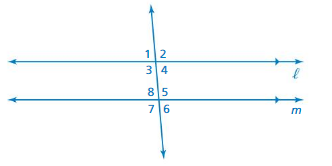
The diagram shows parallel lines cut by a transversal. Which angle is the corresponding angle for ∠6 ?
Big Ideas Math Answers Grade 8 Chapter 6 Data Analysis and Displays cp 2
F. ∠2
G. ∠3
H. ∠4
I. ∠8
Answer:

Question 3.
You randomly survey students in your school. You ask whether they have jobs. You display your results in the two-way table. How many male students do not have a job?
Big Ideas Math Answers Grade 8 Chapter 6 Data Analysis and Displays cp 3
Answer:

Question 4.
Which scatter plot shows a negative relationship between x and y?
Big Ideas Math Answers Grade 8 Chapter 6 Data Analysis and Displays cp 4
Answer:

Question 5.
A system of two linear equations has no solution. What can you conclude about the graphs of the two equations?
F. The lines have the same slope and the same y-intercept.
G. The lines have the same slope and different y-intercepts.
H. The lines have different slopes and the same y-intercept.
I. The lines have different slopes and different y-intercepts.
Answer:

Question 6.
What is the solution of the equation?
0.22(x + 6) = 0.2x + 1.8
A. x = 2.4
B. x = 15.6
C. x = 24
D. x = 156
Answer:

Question 7.
A person who is 5\(\frac{1}{2}\) feet tall casts a 3\(\frac{1}{2}\) -foot-long shadow. A nearby flagpole casts a 28-foot-long shadow. What is the height (in feet) of the flag pole?
Big Ideas Math Answers Grade 8 Chapter 6 Data Analysis and Displays cp 7
Answer:

Question 8.
A store records total sales (in dollars) each month for three years. Which type of graph can best show how sales increase over this time period?
F. circle graph
G. line graph
H. histogram
I. stem-and-leaf plot
Answer:

Question 9.
Trapezoid KLMN is graphed in the coordinate plane shown.
Big Ideas Math Answers Grade 8 Chapter 6 Data Analysis and Displays cp 9
Rotate Trapezoid 90° clockwise about the origin. What are the M’, coordinates of point, the image of point M after the rotation?
A. (- 3, – 2)
B. (- 2, – 3)
C. (- 2, 3)
D. (3, 2)
Answer:

Question 10.
The table shows the numbers of hours students spent watching television from Monday through Friday for one week and their scores on a test that Friday.
Big Ideas Math Answers Grade 8 Chapter 6 Data Analysis and Displays cp 10
Part A Make a scatter plot of the data.
Part B Describe the relationship between the hours of television watched and the test scores.
Part C Explain how to justify your answer in PartB using the linear regression feature of a graphing calculator.
Answer:

Conclusion:

Get the free access to Download Big Ideas Math Answers Grade 8 Chapter 6 Data Analysis and Displays from here. All the solutions are prepared in a simple manner. Test yourself by answering the questions given at the end of the chapter. Keep in touch with us to get the Solutions of all Big Ideas Math Grade 8 Chapters.
Big Ideas Math Answers Grade 8 Chapter 9 Real Numbers and the Pythagorean Theorem

Students who are searching for Big Ideas Math Answers Grade 8 Chapter 9 Real Numbers and the Pythagorean Theorem can refer here. By Solving the Big Ideas Math Book Answers, students can get a good grip on the subject and master mathematical concepts. Mathematics students can construct the meaning of core concepts and principles by addressing the Big Ideas Math Answers Grade 8. Students can get better problem-solving skills by preparing from Grade 8th.

Big Ideas Math Book 8th Grade Answer Key Chapter 9 Real Numbers and the Pythagorean Theorem

Check out the topic before you start your preparation for the exams. This will help you to plan the timetable and to secure good marks in the exams. Enhance your performance by completing the assignments, homework, and tasks within the time. Parents who feel difficult to make their child master in maths can refer to this BIM Answers Grade 8 Chapter 9 Real Numbers and the Pythagorean Theorem. Hit the below link and kickstart your preparation.

Performance Task

Lesson: 1 Finding Square Roots

Lesson: 2 The Pythagorean Theorem

Lesson: 3 Finding Cube Roots

Lesson: 4 Rational Numbers

Lesson: 5 Irrational Numbers

Lesson: 6 The Converse of the Pythagorean Theorem

Chapter: 9 – Real Numbers and the Pythagorean Theorem

Real Numbers and the Pythagorean Theorem STEAM Video/Performance Task

STEAM Video

Metronome Design
A metronome is a device that ticks at a constant rate. A metronome includes a pendulum, which swings back and forth in a precise time called a period. Why do musicians use metronomes?
Watch the STEAM Video “Metronome Design.” Then answer the following questions. The equation T = 0.2√L relates the period T (in seconds) and the length L (in centimeters) of a pendulum, where √L is the square root of L.
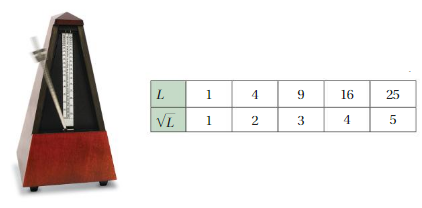
1. The table shows the square roots of several values of L. Use the pattern to find the values of √36 , √49 , and √64 .
Big Ideas Math Answer Key Grade 8 Chapter 9 Real Numbers and the Pythagorean Theorem 1
2. What is the period of a pendulum that is 100 centimeters long? Justify your answer.

Answer:
1. √36 = 6
√49 = 7
√64 = 8
2. √100 = 10

Explanation:
In the above given table the square roots of 1,2, 3,4,5 are given
square root of 36 = 6
6 x 6 = 36
square root of  49 = 7
7 x 7 =49
square root of  64 = 8
8 x 8 =64
2. given that period of the pendulum is 100 centimeters.
square root of 100 =10
10 x 10 = 100

Performance Task

Identify and Correct the Error!
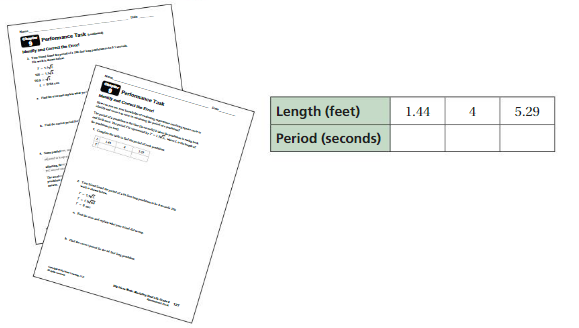
After completing this chapter, you will be able to use the concepts you learned to answer the questions in the STEAM Video Performance Task. You will be given the lengths of several pendulums.
Big Ideas Math Answer Key Grade 8 Chapter 9 Real Numbers and the Pythagorean Theorem 2
You will be asked to identify and correct errors in calculations of periods. Why is it important to pay attention to units when substituting values into a formula?

Answer:
0.438 sec, 1.219 sec, 1.612sec.

Explanation:
1 feet = 0.3048 seconds
so in the question given that the length of 1.44= 1.44 x 0.3048 sec
0.438 sec
4 x 0.3048 = 1.219 sec
5.29 x 0.3048 = 1.612 sec.

Real Numbers and the Pythagorean Theorem Getting Ready for Chapter 9

Chapter Exploration

When you multiply a number by itself, you square the number.
Big Ideas Math Answer Key Grade 8 Chapter 9 Real Numbers and the Pythagorean Theorem 3
To“undo” this, take the square root of the number.
Big Ideas Math Answer Key Grade 8 Chapter 9 Real Numbers and the Pythagorean Theorem 4
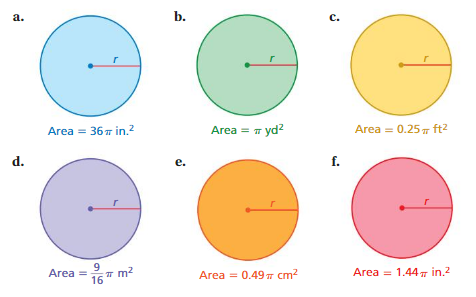
1. Work with a partner. Find the radius of each circle.
Big Ideas Math Answer Key Grade 8 Chapter 9 Real Numbers and the Pythagorean Theorem 5

Answer:
a. 6 in
b. 1 yd
c. 0.5 ft
d. (3/9) m
e. 0.7 cm
f. 1.2 in

Explanation:
a. The radius of circle = (√A/π)
where A = area of a circle, π = 3.14
given that area = 36 π in²
radius = (√ 36 π / π )
both in the numerator and denominator π  get canclled.
radius = ( √ 36)
square root of 36 is 6 x 6
√ 36 = √ 6²
where square and square root get cancelled.
radius = 6 in
b. The radius of circle = (√A/π)
where A = area of a circle, π = 3.14
given that area = π yd²
radius = (√ π / π )
both in the numerator and denominator π  get canceled.
radius = ( √ 1)
the square root of 1 is 1 x 1
√ 1= √ 1²
where square and square root get canceled.
radius =1 yd
c. The radius of circle = (√A/π)
where A = area of a circle, π = 3.14
given that area = 0.25 π ft
radius = (√ 0.25π / π )
both in the numerator and denominator π  get canceled.
radius = ( √ 0.25)
the square root of 0.25 is 0.5 x 0.5
√ 0.25 = √ 0.5²
where square and square root get canceled.
radius = 0.5 ft
d. The radius of circle = (√A/π)
where A = area of a circle, π = 3.14
given that area = (9/16) π m²
radius = (√ (9/16)π / π )
both in the numerator and denominator π  get canceled.
radius = ( √ (9/16)
the square root of (9/16) is (3/4) x (3/4)
√ (9/16) = √ (3/4)²
where square and square root get canceled.
radius = (3/4) m
e. The radius of circle = (√A/π)
where A = area of a circle, π = 3.14
given that area = (0.49) πcm²
radius = (√ (0.49)π / π )
both in the numerator and denominator π  get canceled.
radius = ( √ (0.49)
the square root of (0.49) is (0.7) x (0.7)
√ (0.49) = √ (0.7)²
where square and square root get canceled.
radius = (0.7) cm
f. The radius of circle = (√A/π)
where A = area of a circle, π = 3.14
given that area = (1.44) π in²
radius = (√ (1.44)π / π )
both in the numerator and denominator π  get canceled.
radius = ( √ (1.44)
the square root of (1.44) is (1.2) x (1.2)
√ (1.44) = √ (1.2)²
where square and square root get canceled.
radius = (1.2) in

2. WRITING GUIDELINES Work with a partner. Explain how you can find the radius and diameter of a circular object when you are given its area. Justify your answer using an example that is different from those in Exercise 1.

Answer:
The radius of circle = 8 cm
The diameter of circle = 16 cm

Explanation:
for example, we have to consider the area of a circle is  64π cm² given.
we have to find the radius and diameter of the circle.
The radius of circle = (√A/π)
where A = area of a circle, π = 3.14
the radius of circle = (√64π/π)
both in the numerator and denominator π  get canceled.
radius = ( √ (64)
the square root of (64) is (8) x (8)
√ (64) = √ (8)²
where square and square root get canceled.
radius = 8 cm
The radius of circle = (2√A/π)
where A = area of a circle, π = 3.14
the radius of circle = (2√64π/π)
both in the numerator and denominator π  get canceled.
diameter = ( 2√ (64)
the square root of (64) is (8) x (8)
√ (64) = 2√ (8)²
where square and square root get canceled.
diameter = 2 x 8 cm
diameter = 16 cm
Vocabulary
The following vocabulary terms are defined in this chapter. Think about what the terms might mean and record your thoughts.
square root
cube root
irrational number
perfect square
perfect cube

Answer:
square root = a number that produces a specified quantity when multiplied by itself.
cube root = the number which produces a given number when cubed.
irrational number = an irrational number is a number that cannot be expressed as a fraction for any integers.
perfect square = perfect square is another term for square number.
perfect cube = a perfect cube is an integer that is equal to some other integer raised to the third power
square root  of 36

Explanation:
36 = 6 x 6
√ 36 = √ 6 ²
where square and square root get canceled.
36 = 6
cube root of 343
343 = 7 x 7 x 7
3√ 343 = √ 7  ³
where cube and cube root get canceled.
343 = 7
irrational number
Example : √ 2, √ 3, √ 5, √ 11, √ 12, π (pi) are  all irrational.
perfect square
9 = 3 x 3
perfect cube
125 = 5 x 5 x 5

Lesson 9.1 Finding Square Roots

EXPLORATION 1

Finding Side Lengths
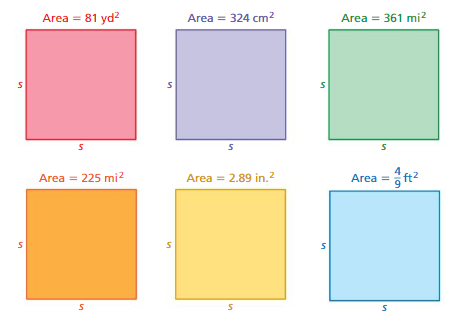
Work with a partner. Find the side length of each square. Explain your method.
Big Ideas Math Answer Key Grade 8 Chapter 9 Real Numbers and the Pythagorean Theorem 9.1 1

Answer:
a. 9yd
b. 18 cm
c. 19 mi
d. 15 mi
e. 1.7 in
f. 0.2 ft

Explanation:
Area of a square = a ²
where a = side
Given that A = 81yd ²
A = s x s
A = 9 x 9
a = 9
b.Given that A =324cm ²
A = s x s
A = 18 x 18
a = 18 cm
c. Given that A =361 mi ²
A = s x s
A = 19 x 19
a = 19 mi
d. Given that A =225 mi²
A = s x s
A = 15 x 15
a = 15 mi
e. Given that A =2.89in ²
A = s x s
A = 1.7 x 1.7
a = 1.7 in
f. Given that A =(4/9) ft ²
A = s x s
A = (2/3) x (2/3)
a = (2/3) ft

EXPLORATION 2

Finding Solutions of Equations
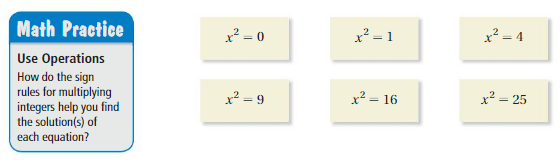
Work with a partner. Use mental math to solve each equation. How many solutions are there for each equation? Explain your reasoning.
Big Ideas Math Answer Key Grade 8 Chapter 9 Real Numbers and the Pythagorean Theorem 9.1 2

Answer:
x = +0, -0
x = +1, -1
x = +2, -2
x = +3, -3
x = +4, -4
x = +5, -5

Explanation:
x² = 0, x = +0, -0
x² = 1, x =+1, -1
x² = 4, x = +2, -2
x² = 9, x = +3, -3
x² = 16, x = +4, -4
x² = 25, x = +5, -5

Big Ideas Math Answer Key Grade 8 Chapter 9 Real Numbers and the Pythagorean Theorem 9.1 3

Try It

Find the two square roots of the number.
Question 1.
36

Answer:
6 , -6

Explanation:
square root of 36 = 6x 6
6 and -6

Question 2.
100

Answer:
10 , – 10

Explanation:
square root of 100 = 10 x 10
10 and – 10

Question 3.
121

Answer:
11,  – 11

Explanation:
square root of 121 = 11 x 11
11 and – 11

Find the square root(s).
Question 4.
\(\sqrt{4}\)

Answer:
2

Explanation:
square root of 4 = 2 x 2
2

Question 5.
– \(\sqrt{81}\)

Answer:
9

Explanation:
square root of 81 = 9 x 9
9

Question 6.
± \(\sqrt{64}\)

Answer:
8

Explanation:
square root of 64 = 8 x 8
8

Find the square root(s).
Question 7.
– \(\sqrt{\frac{1}{100}}\)

Answer:
– 0.1

Explanation:
square root of (1/100) = (1/10 x 10)
(1/10) = 0.1
– 0.1

Question 8.
± \(\sqrt{\frac{4}{25}}\)

Answer:
± 0.4

Explanation:
square root of (4/25) = 0.16
0.16 = 0.4 x 0.4

Question 9.
\(\sqrt{12.25}\)

Answer:
3.5

Explanation:
square root of (12.25) = 3.5
12.25 = 3.5 x 3.5

Evaluate the expression.
Question 10.
12 – 3\(\sqrt{25}\)

Answer:
-3

Explanation:
square root of 25 = 5
12 – 3 (5)
12 – 15
-3

Question 11.
\(\sqrt{\frac{28}{7}}\) + 2.4

Answer:
4.4

Explanation:
(28/7) = 4
square root of 4 = 2
2 + 2.4
4.4

Question 12.
15 – (√4)2

Answer:
11

Explanation:
square root of 16  = 4
15 – 4
11

Solve the equation.
Question 13.
k2 = 169

Answer:
k = 13

Explanation:
square root of 169 = 13 x 13
k = 13

Question 14.
7n2 = 175

Answer:
n = 5

Explanation:
n² = (175/7)
n = 25
square root of 25  = 5 x 5
n = 5

Question 15.
190 = 4b2 – 6

Answer:
b = 7

Explanation:
190 = 4b2 – 6
4b² = 190 + 6
4b²=196
b² = (196/4)
b² = 49
b = 7

Self-Assessment for Concepts & Skills
Solve each exercise. Then rate your understanding of the success criteria in your journal.

FINDING SQUARE ROOTS Find the square root(s).
Question 16.
\(\sqrt{256}\)

Answer:
16

Explanation:
square root of 256  = 16 x 16
16

Question 17.
– \(\sqrt{\frac{1}{9}}\)

Answer:
– (1/3)

Explanation:
square root of (1/9)  = (1/3)
square root of 9 = 3 x 3
given in – ve symbol
– (1/3)

Question 18.
± \(\sqrt{1.44}\)

Answer:
± 1.2

Explanation:
square root of 1.44 = 1.2
square root of 1.44 = 1.2 x 1.2
given in ± symbol
± 1.2

EVALUATING EXPRESSIONS Evaluate the expression.
Question 19.
\(\sqrt{\frac{81}{9}}\) – 7

Answer:
– 4

Explanation:
square root of 81 = 9 x 9
square root of  9 = 3x   3
(9/3) = 3
3 – 7 = -4

Question 20.
– 1 – \(\sqrt{121}\)

Answer:
-12

Explanation:
square root of 121  = 11 x 11
– 1 – 11
– 12

Question 21.
5 + (\(\sqrt{2}\))2

Answer:
7

Explanation:
square root of 4   = 2 x 2
5 + 2
7

SOLVING EQUATIONS Solve the equation.
Question 22.
2r2 = 162

Answer:
r = 9

Explanation:
2r2 = 162
r ² = (162/2)
r² = 81
square root of 81   = 9 x 9
r = 9

Question 23.
d2 + 5 = 41

Answer:
d = 6

Explanation:
d2 + 5 = 41
d ² = 41 – 5
d ²  = 36
square root of 36   = 6 x 6
d = 6

Question 24.
– 42 = 7b2 – 385

Answer:
b = – 7

Explanation:
– 42 = 7b2 – 385
7b ²  = – 385 + 42
7b ²  = – 343
b ²  = (- 343/7)
b ²  = – 49
square root of  – 49 = 7 x 7
b = – 7

Self-Assessment for Problem Solving
Solve each exercise. Then rate your understanding of the success criteria in your journal.

Question 25.
Your distance d (in miles) from the horizon can be approximated by d = 1.22√h, where h is your eye level (in feet above ground level). What is your eye level when you are 9.76 miles from the horizon?

Answer:
The eye level when you are 9.76 miles from the horizon = 11.907 ft

Explanation:
Given that the horizon can be approximated by 1.22 feet
so 1.22 x 11.907
11.907 ft
the eye level when you are 9.76 miles from the horizon = 11.907 ft.

Question 26.
DIG DEEPER!
The speed s (in meters per second) of a tsunami can be modeled by the function s = √9.8d, where d is the water depth (in meters).
Big Ideas Math Answer Key Grade 8 Chapter 9 Real Numbers and the Pythagorean Theorem 9.1 4
a.What is the speed of the tsunami when the water depth is 500 meters?
b. What happens to the speed of the tsunami as the depth decreases? Explain.

Answer:
a. The speed of tsunami  = 4,900 sq meters.
b. if the speed of the tsunami as depth decreases it has low flow.

Explanation:
a. Given that the speed of the tsunami = √9.8d
√9.8 x 500 where d = 500 given
4,900 sq meters
b. if the speed of the tsunami as depth decreases the flow of the water is also less.

Finding Square Roots Homework & Practice 9.1

Review & Refresh

Evaluate the expression. Write your answer in scientific notation.
Question 1.
(4.3 × 10³) + (2.4 × 10³)

Answer
6.7 x 10 ³

Explanation:
(4.3 × 10³) + (2.4 × 10³)
(4.3 + 2.4) x 10³
6.7 x 10 ³

Question 2.
(1.5 × 10⁻²) – (3.5 × 10⁻³)

Answer:
2 × 10⁻²

Explanation:
(1.5 × 10⁻²) – (3.5 × 10⁻³)
(1.5 – 3.5) x 10-2
2 × 10⁻²

Question 3.
9 × (7 × 10-2)

Answer:
6.3 x  10 ⁻¹

Explanation:
9 × (7 × 10-2)
(9 x 10) x 10-2
6.3 x  10 ⁻¹

Question 4.
(6.6 × 10⁻⁵) ÷ (1.1 × 10⁴)

Answer:
6 x 10⁻⁵

Explanation:
(6.6 × 10⁻⁵) ÷ (1.1 × 10⁴)
(6.6/ 1.1) x 10-5
6 x 10⁻⁵

Make a scatter plot of the data. Identify any outliers, gaps, or clusters.
Question 5.
Big Ideas Math Answer Key Grade 8 Chapter 9 Real Numbers and the Pythagorean Theorem 9.1 5

Answer:

Explanation:
outliers = (8,33) and (9,36)
gap = 3.5 meters to 8 meters.
fillers=2 meters to 3 meters.

Question 6.
Big Ideas Math Answer Key Grade 8 Chapter 9 Real Numbers and the Pythagorean Theorem 9.1 6

Answer:

Explanation:
outliers = (1,4.05) and (1, 4.00)
gap = 0.5 gallons to 1 gallon
fillers =1meter to 1.5 meters.

Concepts, Skills, &Problem Solving

FINDING SIDE LENGTHS Find the side length s of the square. (See Exploration 1, p. 373.)
Question 7.
Big Ideas Math Answer Key Grade 8 Chapter 9 Real Numbers and the Pythagorean Theorem 9.1 7

Answer:
S = 21 cm

Explanation:
Area = 441 cm²
Area of square = a ²
where a = side
square root of 441 = 21 x 21
side length = 21

Question 8.
Big Ideas Math Answer Key Grade 8 Chapter 9 Real Numbers and the Pythagorean Theorem 9.1 8

Answer:
S = 1.3 km

Explanation:
Area = 1.69 km²
Area of square = a ²
where a = side
square root of 1.69 = 1.3 x 1.3
side length = 1.3km

Question 9.
Big Ideas Math Answer Key Grade 8 Chapter 9 Real Numbers and the Pythagorean Theorem 9.1 9

Answer:
S = (6/7) yd

Explanation:
Area = (36/49)²
Area of square = a ²
where a = side
square root of (36/49) = (6/7) x (6/7)
side length =(6/7) yd

FINDING SQUARE ROOTS OF A PERFECT SQUARE Find the two square roots of the number.
Question 10.
9

Answer:
3, – 3

Explanation:
square root of 9 = 3 x 3
3
given that two square roots
3, -3

Question 11.
64

Answer:
8, – 8

Explanation:
square root of 64 = 8 x 8
8
given that two square roots
8, -8

Question 12.
4

Answer:
2, -2

Explanation:
square root of 4 = 2 x 2
2
given that two square roots
2, -2

Question 13.
144

Answer:
12, -12

Explanation:
square root of 144 = 12 x 12
12
given that two square roots
12, -12

FINDING SQUARE ROOTS Find the square root(s).
Question 14.
√625

Answer:
25

Explanation:
√625
√25² therefore square and square root get canceled.
the square root of 625 is 25

Question 15.
± √196

Answer:
± 14

Explanation:
± √196
√14² therefore square and square root get canceled.
the square root of 196 is 14

Question 16.
– √1600

Answer:
– 40

Explanation:
– √1600
√40² therefore square and square root get canceled.
the square root of 1600 is 40

Question 17.
± √2500

Answer:
± 50

Explanation:
± √2500
√50² therefore square and square root get canceled.
the square root of 2500 is 50

Question 18.
\(\sqrt{\frac{1}{16}}\)

Answer:
(1/4)

Explanation:
√(1/16)
√(1/4)² therefore square and square root get canceled.
the square root of (1/16) is (1/4)

Question 19.
\(\sqrt{\frac{49}{576}}\)

Answer:
(7/24)

Explanation:
√(49/576)
√(7/24)² therefore square and square root get canceled.
the square root of (49/576) is (7/24)

Question 20.
± \(\sqrt{\frac{1}{961}}\)

Answer:
±(1/31)

Explanation:
√(1/961)
√(1/31)² therefore square and square root get canceled.
the square root of (1/961) is (1/31)

Question 21.
– \(\sqrt{\frac{9}{100}}\)

Answer:
– (3/10)

Explanation:
√(9/100)
√(3/10)² therefore square and square root get canceled.
the square root of (9/100) is (3/10)

Question 22.
± √4.84

Answer:
± 2.2

Explanation:
√4.84
√2.2² therefore square and square root get canceled.
the square root of 4.84 is 2.2

Question 23.
√7.29

Answer:
2.7

Explanation:
√7.29
√27² therefore square and square root get canceled.
the square root of 7.29 is 2.7

Question 24.
– √361

Answer:
– 19

Explanation:
-√361
√19² therefore square and square root get canceled.
the square root of  361 is 19

Question 25.
– √2.25

Answer:
– 1.5

Explanation:
– √2.25
√15² therefore square and square root get canceled.
the square root of  2.25 is 1.5

Question 26.
YOU BE THE TEACHER
Your friend finds ± \(\sqrt{\frac{1}{4}}\). Is your friend correct? Explain your reasoning.
Big Ideas Math Answer Key Grade 8 Chapter 9 Real Numbers and the Pythagorean Theorem 9.1 10
Answer:
± (1/2)

Explanation:
±√(1/4)
√(1/2)² therefore square and square root get canceled.
the square root of  (1/4) is (1/2)

Question 27.
MODELING REAL LIFE
The area of a square patch of fabric is 2.25 square inches. What is the side length of the patch?

Answer:
1.5 inch

Explanation:
Area of a square patch of fabric is 2.25
area of a square is s²
area = 1.5 x 1.5
side = 1.5 inch

Question 28.
CRITICAL THINKING
There are two square roots of 25. Why is there only one answer for the radius of the button?
Big Ideas Math Answer Key Grade 8 Chapter 9 Real Numbers and the Pythagorean Theorem 9.1 11

Answer:
The radius of the button = 5 mm

Explanation:
Given that the area of a circle = πr²
25π = πr²
where π get canceled on both sides.
25 = r²
r = 5

NUMBER SENSE Copy and complete the statement with <, >, or =.
Question 29.
Big Ideas Math Answer Key Grade 8 Chapter 9 Real Numbers and the Pythagorean Theorem 9.1 12

Answer:
√81 >  8

Explanation:
square root  of 81 = 9 x 9
9 is greater then  8

Question 30.
Big Ideas Math Answer Key Grade 8 Chapter 9 Real Numbers and the Pythagorean Theorem 9.1 13

Answer:
0.5  = √0.25

Explanation:
square root  of 0.25 = 0.5 x 0.5
0.5 is equal to 0.5

Question 31.
Big Ideas Math Answer Key Grade 8 Chapter 9 Real Numbers and the Pythagorean Theorem 9.1 14

Answer:
(3/2)  < √(25/4)

Explanation:
square root  of (25/4) = (5/2) x (5/2)
(3/2) is less than (5/2)
(3/2) = 1.5
(5/2) = 3.5

EVALUATING EXPRESSIONS Evaluate the expression.
Question 32.
(√9)2 + 5

Answer:
14

Explanation:
square and square root get canceled.
9 + 5
14

Question 33.
28 – (√144)2

Answer:
-116

Explanation:
square and square root get canceled.
28 – 144
-116

Question 34.
3√16 – 5

Answer:
7

Explanation:
the square root of 16 is 4
16 = 4 x 4
3 x 4 – 5
12 – 5
7

Question 35.
10 – 4\(\sqrt{\frac{1}{16}}\)

Answer:
9

Explanation:
the square root of 16 is 4
16 = 4 x 4
10 – 4 (1/4)
10 – 4 (0.25)
10 – 1
9

Question 36.
√6.76 + 5.4

Answer:
12.56

Explanation:
square and square root get canceled
6.76 + 5.4
12.16

Question 37.
8√8.41 + 1.8

Answer:
25

Explanation:
square and square root get canceled
8 x 8.41 + 1.8
67.28 + 1.8
69.08

Question 38.
2(\(\sqrt{\frac{80}{5}}\) – 5)

Answer:
3

Explanation:
the square root of 16 is 4 x 4
(80/5) = 16
2 x 4 -5
8 – 5
3

Question 39.
4(\(\sqrt{\frac{147}{3}}\) + 3

Answer:
40

Explanation:
the square root of 49 is 7 x 7
(147/3) = 49
4 x 7 + 3
37 + 3
40

Question 40.
NUMBER SENSE
Without calculating, describe how the value of \(\sqrt{\frac{1}{a}}\) changes as a increases. Assume a > 0.
Answer:
0.5

Explanation:
Assuming a > 0
a = 4
the square root of 4 is 2
4 = 2 x 2
(1/2) = 0.5

SOLVING EQUATIONS Solve the equation.
Question 41.
x2 = 100

Answer:
x = 10 , x = -10

Explanation:
x2 = 100
x² = 10²
when powers are equal exponents must be equal.
x = 10

Question 42.
42 = d2 – 22

Answer:
d = 8 , d = 8

Explanation:
42 = d2 – 22
d² = 42 + 22
d² = 64
d² = 8²
when powers are equal exponents must be equal.
d = 8

Question 43.
4z2 = 144

Answer:
z = 6, z = -6

Explanation:
4z2 = 144
z² = (144/4)
z² = 36
z² = 6²
when powers are equal exponents must be equal.
z = 6

Question 44.
\(\sqrt{\frac{136}{9}}\) = \(\frac{1}{3}\) m2 – 10

Answer:
m = 4.8335, m = -4.8335

Explanation:
(136/9) = 45.33
(1/3) = 0.333
0.3333 m2 – 10
m2  = 10 – 0.33
m2 = 9.67
m = 4.835

Question 45.
0.25r2 = 49

Answer:
r = 14, r = -14

Explanation:
0.25r2 = 49
r² = (49/0.25)
r² = 196
r² = 14²
when powers are equal exponents must be equal.
r = 14

Question 46.
3h2 = h2 + 18

Answer:
h = 3, h = -3

Explanation:
3h2 = h2 + 18
3h² – h²  = 18
2h²  = 18
h²  = (18/2)
h²  = 9
h²  = 3²
when powers are equal exponents must be equal.
h = 3

Question 47.
YOU BE THE TEACHER
Your friend solves the equation 9x2 = 36. Is your friend correct? Explain your reasoning.
Big Ideas Math Answer Key Grade 8 Chapter 9 Real Numbers and the Pythagorean Theorem 9.1 15

Answer:
Yes, my friend is correct.

Explanation:
9x2 = 36
x² = (36/9)
x² = 4
x² = 2²
when powers are equal exponents must be equal.
x =2

Question 48.
PROBLEM SOLVING
The period of a pendulum is the time the pendulum takes to complete one back-and-forth T swing. The period T (in seconds) can be modeled by the function T = 1.1√L, where L is the length (in feet) of the pendulum. Estimate the length of a pendulum with a period of 1.65 seconds.
Big Ideas Math Answer Key Grade 8 Chapter 9 Real Numbers and the Pythagorean Theorem 9.1 16

Answer:
The length of the pendulum with a period of 1.65 seconds = 0.50292 sec

Explanation:
Given that the period (in seconds) is 1.1
1.65 x 0.3048
1 feet = 0.3048 sec
0.50292

Question 49.
MODELING REAL LIFE
The area of a sail is 40\(\frac{1}{2}\) square feet. The base and the height of the sail are equal. What is the height of the sail?
Big Ideas Math Answer Key Grade 8 Chapter 9 Real Numbers and the Pythagorean Theorem 9.1 17

Answer:
The height of the sail = 9 ft

Explanation:
Area of triangle = (b h/2)
area = 40 x (1/2)
40 x 0.5 = 20
h = 9 , b = 4
(9 x 4/2) = (36/2)
18 = area

Question 50.
REASONING
Is the product of two perfect squares always a perfect square? Explain your reasoning.

Answer:
Yes, the product of two perfect squares always a perfect square.

Explanation:
for example, we take 9
the square root of 9 = 3 x 3
3 is also a perfect square.

Question 51.
PROBLEM SOLVING
The kinetic energy (in joules) of a falling apple is represented byK = \(\frac{v^{2}}{2}\), where v is the speed of the apple (in meters per second). How fast is the apple traveling when the kinetic energy is 32 joules?

Answer:
The apple traveling when the kinetic energy is 32 joules = 8 meter per second.

Explanation:
Given that the apple is  represented by k
k = 2 x 2
k = 4
also given that 32 joules.
32 / 4 = 8 meter per sec.

Question 52.
PRECISION
The areas of the two watch faces have a ratio of 16:25.
Big Ideas Math Answer Key Grade 8 Chapter 9 Real Numbers and the Pythagorean Theorem 9.1 18
a. What is the ratio of the radius of the smaller watch face to the radius of the larger watch face?
b. What is the radius of the larger watch face?

Answer:
a. The ratio of the radius of the smaller watch face to the radius of the larger watch face = 4: 5
b. the radius of the larger watch face = 25

Explanation:
a. square root of (16/25) = (4/5)
ratio = 4: 5
b. the radius of the larger watch = 25

Question 53.
PROBLEM SOLVING
The cost (in dollars) of making a square window with a side length of n inches is represented by C = \(\frac{n^{2}}{2}\) + 175. A window costs $355. What is the side length (in feet) of the window? Justify your answer.

Answer:
The side length of the window = 2.5  feet

Explanation:
Given that the window costs = 355$
the side length of n inches is represented by c
the side length of the window  355 =  n x n /5+ 175
n = 30
(30/12)
2.5 ft
Question 54.
DIG DEEPER!
Albert Einstein’s most famous equation is E = mc2, where E is the energy of an object (in joules), is the mass of the object (in kilograms), and c is the speed of light (in meters per second). A hydrogen atom has 15.066 × 10⁻⁷ joule of energy and a mass of 1.674 × 10⁻²⁷ kilogram. What is the speed of light? Write your answer in scientific notation.

Answer:
The speed of the light =3 x 10²⁰ meters per second.

Explanation:
Given that mass of the object = 1.674 x  10-27
energy of the object = 15.066 x 10⁻⁷
Albert Einsteins equation = E = mc2
where m = mass , e = energy, c = speed
c² = (E/M)
c² = (15.066/1.674)
c² = 9 x 10²⁰
c² = 3²
c = 3 x 10²⁰

Question 55.
GEOMETRY
The area of the triangle is represented by the formula A = \(\sqrt{s(s-21)(s-17)(s-10)}\), where s is equal to half the perimeter. What is the height of the triangle?
Big Ideas Math Answer Key Grade 8 Chapter 9 Real Numbers and the Pythagorean Theorem 9.1 19
Answer:
The height of the triangle = 8 cm

Explanation:
Area of the triangle = 2 (A/b)
where b = base A = area
area = 2 x 4
area = 8 cubic cm

Question 56.
WRITING
Can you find the square root of a negative number? Explain.

Answer:
Yes, we can find the square root of a negative number.

Explanation:
The square root of – 144 is – 12 x 12
the square root of – ve number is also a + ve.

REASONING Without solving, determine the number of solutions of the equation.
Question 57.
x2 = 1

Answer:
2 solutions
x = 1, x = -1

Explanation:
x² = 1²
when powers are equal exponents must be equal.
x = 1

Question 58.
b2 = – \(\sqrt{\frac{1}{9}}\)

Answer:
b = -0.16, b = 0.16

Explanation:
b2 = – \(\sqrt{\frac{1}{9}}\)
square root of (1/9) = (1/3)
b² = – (1/3)
b² = – 0.33
b = 0.16

Question 59.
z = √-144

Answer:
z = 0

Explanation:
√-144 = √(12 x 12 )²
√-144 = 12
square and square root get cancelled.
z = -12

Lesson 9.2 The Pythagorean Theorem

Pythagoras was a Greek mathematician and philosopher who proved one of the most famous rules in mathematics. In mathematics, a rule is called a theorem. So, the rule that Pythagoras proved is called the Pythagorean Theorem.
Big Ideas Math Answers 8th Grade Chapter 9 Real Numbers and the Pythagorean Theorem 9.2 1

EXPLORATION 1

Discovering the Pythagorean Theorem
Work with a partner.

  • On grid paper,draw a right triangle with one horizontal side and one vertical side.
  • Label the lengths of the two shorter sides a and b. Label the length of the longest side c.
  • Draw three squares that each share a side with your triangle. Label the areas of the squares a2, b2, and c2.
  • Cut out each square. Then make eight copies of the right triangle and cut them out.

Big Ideas Math Answers 8th Grade Chapter 9 Real Numbers and the Pythagorean Theorem 9.2 2
a. Arrange the figures to show how a2 and b2 relate to c2. Use an equation to represent this relationship.
b. Estimate the side length of your triangle. Then use the relationship in part(a) to find c. Compare the values.

Answer:
a. a² + b² = c²
b. 9 + 16 = 25

Explanation:
a. a² + b² = c²
b. we are estimating a = 3 , b = 4 , c =5
a² + b² = c²
3² + 4² = 5²
9 + 16 = 25

Big Ideas Math Answers 8th Grade Chapter 9 Real Numbers and the Pythagorean Theorem 9.2 3

Try It

Find the length of the hypotenuse of the triangle.
Question 1.
Big Ideas Math Answers 8th Grade Chapter 9 Real Numbers and the Pythagorean Theorem 9.2 4

Answer:
Length = -6, 6

Explanation:
a² + b² = c²
15 – 8 = 6

Question 2.
Big Ideas Math Answers 8th Grade Chapter 9 Real Numbers and the Pythagorean Theorem 9.2 5

Answer:
Length = 0.7

Explanation:
a² + b² = c²
0.4² + 0.3² =0.7²
length = 0.7

Find the missing length of the triangle.
Question 3.
Big Ideas Math Answers 8th Grade Chapter 9 Real Numbers and the Pythagorean Theorem 9.2 6

Answer:
Length of the triangle = 8 , -8

Explanation:
a² + b² = c²
16² -8 =8²
length = 8yd

Question 4.
Big Ideas Math Answers 8th Grade Chapter 9 Real Numbers and the Pythagorean Theorem 9.2 7

Answer:
Length of the triangle = 0.8 m

Explanation:
a² + b² = c²
0.8² + 9.6² =10.4²
length = 0.8 m

Find x
Question 5.
Big Ideas Math Answers 8th Grade Chapter 9 Real Numbers and the Pythagorean Theorem 9.2 8

Answer:
x = 10 yd

Explanation:
a² + b² = x²
9² + 1² =10²
length = 10 yd

Question 6.
Big Ideas Math Answers 8th Grade Chapter 9 Real Numbers and the Pythagorean Theorem 9.2 9

Answer:
x = 15.4 ft

Explanation:
a² + b² = x²
6.6² + 8.8² =15.4²
length = 15.4 ft

Find the distance between the points.
Question 7.
(3, 6) and (7, 9)

Answer:
3, 2

Explanation:
(3,6) = (6- 3) = 3
(7 , 9) = (9 – 7) = 2

Question 8.
(- 3, – 4) and (2, 8)

Answer:
-7 , 6

Explanation:
(-3 ,-4) = (-4- -3) = -7
(2 , 8) = (8 – 2) = 6

Self-Assessment for Concepts & Skills
Solve each exercise. Then rate your understanding of the success criteria in your journal.

FINDING A MISSING LENGTH Find x.
Question 9.
Big Ideas Math Answers 8th Grade Chapter 9 Real Numbers and the Pythagorean Theorem 9.2 10

Answer:
The missing length = 1.6 ft

Explanation:
a² + x² = c²
2.4² + 1.6² =4²
length = 1. 6 ft

Question 10.
Big Ideas Math Answers 8th Grade Chapter 9 Real Numbers and the Pythagorean Theorem 9.2 11

Answer:
The missing length = 2.8 cm

Explanation:
a² + x² = c²
1.6² + 1.2² =2.8²
length = 2.8 cm

Question 11.
FINDING A DISTANCE
Find the distance between (- 5, 2) and (7, – 7).

Answer:
– 3 , 0

Explanation:
(-5 ,2) = (-4 -2) = -3
(7 , -7) = (7 – 7) = 0
-3 , 0

Question 12.
DIFFERENT WORDS, SAME QUESTION
Which is different? Find “both” answers.
Big Ideas Math Answers 8th Grade Chapter 9 Real Numbers and the Pythagorean Theorem 9.2 12

Answer:
The hypotenuse = c
longest side = c
leg = c
opposite to right angle = c

Explanation:
By using Pythagoras theorem
a² + x² = c²
The hypotenuse = c
longest side = c
leg = c
opposite to right angle = c

Self-Assessment for Problem Solving
Solve each exercise. Then rate your understanding of the success criteria in your journal.

Question 13.
A zoo keeper knows that an escaped red panda is hiding somewhere in the triangular region shown. What is the area (in square miles) that the zoo keeper needs to search? Explain.
Big Ideas Math Answers 8th Grade Chapter 9 Real Numbers and the Pythagorean Theorem 9.2 13

Answer:
The area that zoo keeper needs to search = 9.8 sq m

Explanation:
By using Pythagoras theorem
a² + b² = c²
2.4 + 7.4 = 9.8 sq m
c² = a² + b²

Question 14.
DIG DEEPER!
Objects detected by radar are plotted in a coordinate plane where each unit represents 1 mile. The point (0, 0) represents the location of a shipyard. A cargo ship is traveling at a constant speed and in a constant direction parallel to the coastline. At9 A.M., the radar shows the cargo ship at(0, 15). At 10 A.M., the radar shows the cargo ship at(16, 15). How far is the cargo ship from the shipyard at 4 P.M.? Explain.

Answer:
The cargo ship from the shipyard at 4 p.m = (16, 0)

Explanation:
Given that cargo ship at (0, 15) 9 a.m
cargo ship at (16, 15) 10 a.m
(16 – 0) , (15 – 15)
(16, 0) at 4 p.m

The Pythagorean Theorem Homework & Practice 9.2

Review & Refresh

Solve the equation.
Question 1.
7z2 = 252

Answer:
z = 6

Explanation:
7z2 = 252
z² = (252/7)
z² = 36
z² = 6²
when powers are equal exponents must be equal.
z = 6

Question 2.
0.75 q2 = 108

Answer:
q = 12

Explanation:
0.75 q2 = 108
q² = (108/0.75)
q² = 144
q² = 12²
when powers are equal exponents must be equal.
q = 12

Question 3.
\(\sqrt{\frac{1000}{10}}\) = n2 – 54

Answer:
n = 8

Explanation:
(1000/10) = 100
square root of 100 = 10 x 10
10 = n² – 54
n² = 10 + 54
n² = 64
n² = 8²
when powers are equal exponents must be equal.
n = 8

Question 4.
What is the solution of the system of linear equations y = 4x + 1 and 2x + y = 13?
A. (1, 5)
B. (5, 3)
C. (2, 9)
D. (9, 2)

Answer:
option c is correct.

Explanation:
y = 4x + 1, 2x + y = 13
if we consider x = 2 and y = 9 the values are equal.
9 = 4(2) + 1 , 2 (2) + 9 = 13
9 = 8 + 1, 4 + 9 = 13
9 = 9 , 13 = 13.

Concepts, Skills, &Problem Solving

USING GRID PAPER Find c. (See Exploration 1, p. 381.)
Question 5.
Big Ideas Math Answers 8th Grade Chapter 9 Real Numbers and the Pythagorean Theorem 9.2 14

Answer:
The value of c = 13

Explanation:
given that grid paper
a = 6 ( 6 boxes touching.)
b = 6 ( 8 boxes touching.)
c = 13 (13 boxes touching.)

Question 6.
Big Ideas Math Answers 8th Grade Chapter 9 Real Numbers and the Pythagorean Theorem 9.2 15

Answer:
The value of c = 15

Explanation:
given that grid paper
a = 5 ( 5 boxes touching.)
b = 12 ( 12 boxes touching.)
c = 15 (15 boxes touching.)

FINDING A MISSING LENGTH Find the missing length of the triangle.
Question 7.
Big Ideas Math Answers 8th Grade Chapter 9 Real Numbers and the Pythagorean Theorem 9.2 16
Answer:
The missing length = 41km

Explanation:
By using Pythagoras theorem
a² + b² = c²
20² + 21² =41²
length = 41 km

Question 8.
Big Ideas Math Answers 8th Grade Chapter 9 Real Numbers and the Pythagorean Theorem 9.2 17

Answer:
The missing length = 16.8 sq ft

Explanation:
By using Pythagoras theorem
a² + b² = c²
7.2² + 9.6² =16.8²
length = 16.8 sq ft

Question 9.
Big Ideas Math Answers 8th Grade Chapter 9 Real Numbers and the Pythagorean Theorem 9.2 18

Answer:
The missing length = 5.0 sq in

Explanation:
By using Pythagoras theorem
a² + b² = c²
5.0² + 5.6² =10.6²
length = 10.6 sq in

Question 10.
Big Ideas Math Answers 8th Grade Chapter 9 Real Numbers and the Pythagorean Theorem 9.2 19

Answer:
The missing length = 6  mm

Explanation:
By using Pythagoras theorem
a² + b² = c²
9² + 6² =15²
length = 6 mm

Question 11.
Big Ideas Math Answers 8th Grade Chapter 9 Real Numbers and the Pythagorean Theorem 9.2 20

Answer:
The missing length = 16  cm

Explanation:
By using Pythagoras theorem
a² + b² = c²
10² + 16² =26²
length = 16 cm

Question 12.
Big Ideas Math Answers 8th Grade Chapter 9 Real Numbers and the Pythagorean Theorem 9.2 21

Answer:
The missing length = 5.0 yd

Explanation:
By using Pythagoras theorem
a² + b² = c²
5.0² + 1.1² = 6.1²
length = 5.0 yd

Question 13.
YOU BE THE TEACHER
Your friend finds the missing length of the triangle. Is your friend correct? Explain your reasoning.
Big Ideas Math Answers 8th Grade Chapter 9 Real Numbers and the Pythagorean Theorem 9.2 22

Answer:
No my friend is not correct.

Explanation:
By using Pythagoras theorem
a² + b² = c²
7² + 18² = 25²
length = 18 ft

FINDING LENGTHS OF THREE-DIMENSIONAL FIGURES Find x.
Question 14.
Big Ideas Math Answers 8th Grade Chapter 9 Real Numbers and the Pythagorean Theorem 9.2 23

Answer:
The missing length = 14 ft

Explanation:
By using Pythagoras theorem
a² + b² = c²
10² + 14² = 24²
length = 14 ft

Question 15.
Big Ideas Math Answers 8th Grade Chapter 9 Real Numbers and the Pythagorean Theorem 9.2 24

Answer:
The missing length = 50 in

Explanation:
By using Pythagoras theorem
a² + b² = c²
14² + 48² = 50²
length = 50 in

Question 16.
Big Ideas Math Answers 8th Grade Chapter 9 Real Numbers and the Pythagorean Theorem 9.2 25

Answer:
The missing length = 0.6 m

Explanation:
By using Pythagoras theorem
a² + b² = c²
0.6² + 0.9² = 1.5²
length = 0.6 m

Question 17.
Big Ideas Math Answers 8th Grade Chapter 9 Real Numbers and the Pythagorean Theorem 9.2 26

Answer:
The missing length = 6 cm

Explanation:
By using Pythagoras theorem
a² + b² = c²
4.5² + 2.5² = 6²
length = 6 cm

FINDING DISTANCES IN THE COORDINATE PLANE Find the distance between the points.
Question 18.
(0, 0), (9, 12)

Answer:
(9,12)

Explanation:
(0, 0), (9, 12)
(9-0) = 9
(12 – 0) = 12

Question 19.
(1, 2), (- 3, 5)

Answer:
5 units
Explanation:
(1, 2), (-3, 5)
(-3-1) = -4
(5- 2) = 5

Question 20.
(—18, 9), (22, 0)

Answer:
(4,9)

Explanation:
(—18, 9), (22, 0)
(22-18) = 4
(9- 0) = 9

Question 21.
(- 7, – 2), (13, – 23)

Answer:
29 units

Explanation:
(- 7, – 2), (13, – 23)
(13-7) = 6
(-23- 2) = -25

Question 22.
(15, – 17), (- 20, – 5)

Answer:
(-35, -22)

Explanation:
(15, – 17), (- 20, – 5)
(-20-15) = -35
(-5- 17) = -22

Question 23.
(- 13, – 3.5), (17, 2)

Answer:
(30, 18.5)

Explanation:
(- 13, – 3.5), (17, 2)
(17+13) = 30
(15+ 3.5) = 18.5

FINDING A MISSING LENGTH Find x.
Question 24.
Big Ideas Math Answers 8th Grade Chapter 9 Real Numbers and the Pythagorean Theorem 9.2 27

Answer:
The missing length = 8 cm

Explanation:
By using Pythagoras theorem
a² + b² = c²
8² + 12² = 20²
length = 8 cm

Question 25.
Big Ideas Math Answers 8th Grade Chapter 9 Real Numbers and the Pythagorean Theorem 9.2 28

Answer:
The missing length = 37 mm

Explanation:
By using Pythagoras theorem
a² + b² = c²
13² + 22² = 37²
length = 37 mm

Question 26.
MODELING REAL LIFE
The figure shows the location of a golf ball after a tee shot. How many feet from the hole is the ball?
Big Ideas Math Answers 8th Grade Chapter 9 Real Numbers and the Pythagorean Theorem 9.2 29

Answer:
The ball from the hole = 540 feet

Explanation:
Given that the hole and  ball is
180 x 3
540 feet
1 yd = 3 ft

Question 27.
MODELING REAL LIFE
A tennis player asks the referee a question. The sound of the player’s voice travels 30 feet. Can the referee hear the question? Explain.
Big Ideas Math Answers 8th Grade Chapter 9 Real Numbers and the Pythagorean Theorem 9.2 30

Answer:
Yes, the referee hears the voice.

Explanation:
In the question given that the sound of the player’s voice travels 30 feet.
in the figure given that 24 feet.
so the referee can hear the voice.

Question 28.
PROBLEM SOLVING
You are cutting a rectangular piece of fabric in half along a diagonal. The fabric measures 28 inches wide and 1\(\frac{1}{4}\) yards long. What is the length (in inches) of the diagonal?

Answer:
The length of the diagonal = 28.25 in

Explanation:
Given that the fabric wides = 28 inches.
(1/4) = 0.25 in
The length of the diagonal  = 28 x 0.25
28.25 in

Question 29.
PROJECT
Measure the length, width, and height of a rectangular room. Use the Pythagorean Theorem to find the distance from B to C and the distance from A to B.
Big Ideas Math Answers 8th Grade Chapter 9 Real Numbers and the Pythagorean Theorem 9.2 31

Answer:
a² + b²  = c²

Explanation:
By using Pythagoras theorem
a² + b² = c²
length + width = height

Question 30.
STRUCTURE
The legs of a right triangle have lengths of 28 meters and 21 meters. The hypotenuse has a length of 5x meters. What is the value of x?

Answer:
The value of x = 9.8 meters.

Explanation:
Given that the right triangle has length  = 28 meters and 21 meters.
the hypotenuse = 5x
28 + 21 = 5x
49 = 5x
x = (49/5)
x = 9.8 meters.

Question 31.
PRECISION
You and a friend stand back-to-back. You run 20 feet forward, then 15 feet to your right. At the same time, your friend runs 16 feet forward, then 12 feet to her right. She stops and hits you with a snowball.
a. Draw the situation in a coordinate plane.
b. How far does your friend throw the snowball?
Answer:

Question 32.
MODELING REAL LIFE
The coordinate plane shows dig sites for archaeological research. Each unit on the grid represents 1 square foot. What is the distance from Site A to Site C?

Answer:
7 square feet.

Explanation:
Given that each grid represents 1 sq feet.
in the below figure shows that the distance.
distance from site A to site C is 7 sq ft.
the boxes 7 are touching the edges of the site A to B

Question 33.
PRECISION
A box has a length of 30 inches, a width of 40 inches, and a height of 120 inches. Can a cylindrical rod with a length of 342.9 centimeters fit in the box? Explain your reasoning.
Big Ideas Math Answers 8th Grade Chapter 9 Real Numbers and the Pythagorean Theorem 9.2 32

Answer:
No, the cylindrical rod with a length of 135 cm will fit in the box.

Explanation:
Given that the box has a length = 30 in
width = 40 in
height = 120 in
area = l x w x h
area = 30 x 40 x 120
area = 1,44,000 cm

Question 34.
MODELING REAL LIFE
A green roof is like a traditional roof but covered with plants. Plants used for a green roof cost $0.75 per square foot. The roof at the right is 40 feet long. How much does it cost to cover both sides of the roof? Justify your answer.
Big Ideas Math Answers 8th Grade Chapter 9 Real Numbers and the Pythagorean Theorem 9.2 33

Answer:
The cost to cover both sides of the roof = 60 sq ft

Explanation:
Given that the plants used for a green roof cost = $0.75 sq ft.
the roof at the right = 40 ft long
the roof at both sides = 40 + 40 =80
1 sq feet = 0.75 $
80 x $0.75 = 60 sq ft

Question 35.
CRITICAL THINKING
A triangle has coordinates A(2, 1), B(2, 4), and C(5, 1). Write an expression for the length of \(\overline{B C}\). Use a calculator to find the length of \(\overline{B C}\) to the nearest hundredth.

Answer:
4.24 units

Question 36.
DIG DEEPER!
Write an equation for the distance d between the points (x1, y1) and (x2, y2). Explain how you found the equation.
Big Ideas Math Answers 8th Grade Chapter 9 Real Numbers and the Pythagorean Theorem 9.2 34

Answer:
x1 + y1 = x2 + y2

Explanation:
Given that the points (x1, y1) and (x2 , y2)
the equation is
x1 + y1 = x2 + y2

Lesson 9.3 Finding Cube Roots

EXPLORATION 1

Finding Edge Lengths
Work with a partner. Find the edge length of each cube. Explain your method.
Big Ideas Math Answers Grade 8 Chapter 9 Real Numbers and the Pythagorean Theorem 9.3 1

Answer:
a. 2 cm
b. 3 ft
c. 5m
d. 7 in
e. 0.1 cm
f. 0.5 yd

Explanation:
a. volume = 8 = 2 x 2 x 2
b. 27 = 3 x 3 x 3
c. 125 = 5 x 5 x 5
d. 343 = 7 x 7 x 7
e. 0.001 = 0.1 x 0.1 x 0.1
f. (1/8) = 0.5 x 0.5 x 0.5

EXPLORATION 2

Finding Solutions of Equations
Work with a partner. Use mental math to solve each equation. How many solutions are there for each equation? Explain your reasoning.
Big Ideas Math Answers Grade 8 Chapter 9 Real Numbers and the Pythagorean Theorem 9.3 2

Answer:
x = -3
x = -2
x = -1
x = 1
x = 2
x = 3

Explanation:
x³ = -27
x³ = -3³
when powers are equal exponents must be equal.
x = -3
x³ = -8
x³ = -2³
when powers are equal exponents must be equal.
x = -2
x³ = -1
x³ = -1³
when powers are equal exponents must be equal.
x = -1
x³ = 27
x³ = 3³
when powers are equal exponents must be equal.
x = 3
x³ = 8
x³ = 2³
when powers are equal exponents must be equal
x = 2
x³ = 1
x³ =1³
when powers are equal exponents must be equal
x = 1

Big Ideas Math Answers Grade 8 Chapter 9 Real Numbers and the Pythagorean Theorem 9.3 3

Try It

Find the cube root.
Question 1.
\(\sqrt [ 3 ]{ 1 } \)

Answer:
1

Explanation:
cube root of 1 is  1
3√1 = 1

Question 2.
\(\sqrt [ 3 ]{ -343 } \)

Answer:
-7

Explanation:
cube root of -343 is  -7
3√ -343= 7 x 7 x 7
(-343)³ = 7³
when powers are equal exponents must be equal.
-343 = 7

Question 3.
\(\sqrt[3]{-\frac{27}{1000}}\)

Answer:
(-3/10)

Explanation:
cube root of -27 is  -3
3√ -27= 3 x 3 x 3
(-27)³ = 3³
when powers are equal exponents must be equal.
-27 = 3
cube root of -1000 is  -10
3√ -1000= 10 x 10 x 10
(-1000)³ = 10³
when powers are equal exponents must be equal.
-1000= 10

Evaluate the expression.

Question 4.
18 – 4 \(\sqrt [ 3 ]{ 8 } \)

Answer:
10

Explanation:
cube root of 8 is  2
3√ 8 = 2 x 2 x 2
(8)³ = 2³
when powers are equal exponents must be equal.
8= 2
18 – 4 (2)
18 – 8
10

Question 5.
(\(\sqrt[3]{-64})^{3}\)) + 43

Answer:
44.333

Explanation:
cube root of -64 is  -4
3√ -64 = 4 x 4 x 4
(-64)³ = 4³
when powers are equal exponents must be equal.
-64= 4
1.333 + 43
44.333

Question 6.
5\(\sqrt [ 3 ]{ 512 } \) – 19

Answer:
21

Explanation:
cube root of 512 is  8
3√512 = 8 x 8 x 8
(512)³ = 8³
when powers are equal exponents must be equal.
512= 8
5 x 8 -19
40 – 19
21

Solve the equation.
Question 7.
z3 = – 1000

Answer:
z = -10

Explanation:
cube root of -1000 is  -10
3√-1000 = 10 x 10 x 10
z3  = 10³
when powers are equal exponents must be equal.
z= -10

Question 8.
3b3 = 1029

Answer:
b = 7

Explanation:
3b3 = 1029
b³ = (1029/3)
b³ = 343
cube root of 343 is  7
3√343 = 7 x 7 x 7
b³  = 7³
when powers are equal exponents must be equal.
b = 7

Question 9.
33 = – \(\frac{1}{5}\) m3 + 8

Answer:
m³ = 25.8

Explanation:
33 = – 0.2 m³  + 8
m³  = 33+0.2 -8
m³  = 25.8

Self-Assessment for Concepts & Skills
Solve each exercise. Then rate your understanding of the success criteria in your journal.

FINDING CUBE ROOTS Find the cube root.
Question 10.
\(\sqrt [ 3 ]{ 64 } \)

Answer:
4

Explanation:
cube root of 64 is  4
3√64 = 4 x 4 x 4
64³ = 4³
when powers are equal exponents must be equal.
64 = 4

Question 11.
\(\sqrt [ 3 ]{ -216 } \)

Answer:
-6

Explanation:
cube root of -216 is  -6
3√-216 = 6 x 6 x 6
216³ = 6³
when powers are equal exponents must be equal.
216 = 6

Question 12.
\(\sqrt[3]{-\frac{343}{100}}\)

Answer:
– 7

Explanation:
cube root of  -343 is  -7
3√-343 = 7 x 7 x 7
-343³ = 7³
when powers are equal exponents must be equal.
-343 = 7

EVALUATING EXPRESSIONS Evaluate the expression.
Question 13.
\((\sqrt[3]{-27})^{3}\) + 61

Answer:
52

Explanation:
cube root of  -27 is  -3
3√-27 = 3 x 3 x 3
-27³ = 3³
when powers are equal exponents must be equal.
-27 = -3
-3 x 3 + 61
-9 + 61
52

Question 14.
15 + 3\(\sqrt[3]{125}\)

Answer:
30

Explanation:
cube root of  125 is  5
3√125 = 5 x 5 x 5
125³ = 5³
when powers are equal exponents must be equal.
125 = 5
15 + 3 (5)
15 + 15
30

Question 15.
z\(\sqrt[3]{-729}\) – 5

Answer:
-14

Explanation:
cube root of  -729 is  -9
3√-729 = 9 x 9 x 9
729³ = 9³
when powers are equal exponents must be equal.
729 = 9
-9 -5 = -14

SOLVING EQUATIONS Solve the equation.
Question 16.
d3 = 512

Answer:
d = 8

Explanation:
cube root of  512 is  8
3√512 = 8 x 8 x 8
512³ = 8³
when powers are equal exponents must be equal.
d³ = 8³
d = 8

Question 17.
w3 – 12 = – 76

Answer:
w = -4

Explanation:
w3 – 12 = – 76
w³ = -76 + 12
w³ = -64
cube root of  -64 is  -4
3√-64 = 4 x 4 x 4
w³ = 4³
when powers are equal exponents must be equal.
w = 4

Question 18.
– \(\frac{1}{3}\)m3 + 13 = 4

Answer:
-8.67

Self-Assessment for Problem Solving
Solve each exercise. Then rate your understanding of the success criteria in your journal.

Question 19.
You have 275 square inches of wrapping paper. Do you have enough wrapping paper to wrap the gift box shown? Explain.

Answer:
Yes i have enough wrapping paper to wrap the gift box.

Explanation:
Given that 275 sq in of wrapping paper.
6.5 x 6.5 x 6.5 = 274.6
275 sq in

Question 20.
A cube-shaped end table has a volume of 16,000 cubic centimeters. Does the end table fit in the corner shown? Justify your answer.
Big Ideas Math Answers Grade 8 Chapter 9 Real Numbers and the Pythagorean Theorem 9.3 4
Answer:
No the end table does not fit in the corner.

Explanation:
volume = 343
343³ = 7³
when powers are equal exponents must be equal.
343 = 7

Question 21.
DIG DEEPER!
Big Ideas Math Answers Grade 8 Chapter 9 Real Numbers and the Pythagorean Theorem 9.3 5
The relationship between the volumes and the lengths of two cereal boxes is represented by
Big Ideas Math Answers Grade 8 Chapter 9 Real Numbers and the Pythagorean Theorem 9.3 6
Box A has a volume of 192 cubic inches and a length of 8 inches. Box B has a volume of 375 cubic inches. What is the length of Box B? Justify your answer.

Answer:
The length of the box B = 1.6 inches.

Explanation:
(v of A/ v of B ) = ( l of A / l of B) ³
B³ = (192/375) x 8
b³ = 0.512 x 8
b³ = 4.096
b ³ = 1.6³
when powers are equal exponents must be equal.
b = 1.6

Finding Cube Roots Homework & Practice 9.3

Review & Refresh

Find the missing length of the triangle.
Question 1

Big Ideas Math Answers Grade 8 Chapter 9 Real Numbers and the Pythagorean Theorem 9.3 7

Answer:
The missing length = 40 m

Explanation:
By using Pythagoras theorem
a² + b² = c²
24² + 32² = 40²
576 + 1024 = 1600
1600 = 1600
length = 56m

Question 2.
Big Ideas Math Answers Grade 8 Chapter 9 Real Numbers and the Pythagorean Theorem 9.3 8

Answer:
The missing length = 10 ft

Explanation:
By using Pythagoras theorem
a² + b² = c²
7.8² + 10² = 17.8²
length = 10 ft

Question 3.
Which linear function is shown by the table?
Big Ideas Math Answers Grade 8 Chapter 9 Real Numbers and the Pythagorean Theorem 9.3 9
Answer:
option C is correct.

Explanation:
y = 3x + 1
x = 1, y = 4
4 = 3(1) + 1
y= 4

Concepts, Skills, &Problem Solving

FINDING EDGE LENGTHS Find the edge length s of the cube. (See Exploration 1, p. 389.)
Question 4.
Big Ideas Math Answers Grade 8 Chapter 9 Real Numbers and the Pythagorean Theorem 9.3 10

Answer:
The edge length of the cube = 6

Explanation:
cube root of  216 is  6
3√216 = 6 x 6 x 6
216³ = 6³
when powers are equal exponents must be equal.
s³ = 6³
s = 6

Question 5.
Big Ideas Math Answers Grade 8 Chapter 9 Real Numbers and the Pythagorean Theorem 9.3 11

Answer:
The edge length of the cube = (1/3) ft

Explanation:
cube root of  (1/27) is  (1/3)
3√(1/27) = (1/3)x (1/3)  x (1/3)
(1/27)³ = (1/3)³
when powers are equal exponents must be equal.
s³ = (1/3)³
s = (1/3)

Question 6.
Big Ideas Math Answers Grade 8 Chapter 9 Real Numbers and the Pythagorean Theorem 9.3 12

Answer:
The edge length of the cube = 0.4

Explanation:
cube root of  0.064 is  0.4
3√0.064 = 0.4 x 0.4  x 0.4
0.064³ = 0.4³
when powers are equal exponents must be equal.
s³ = 0.4³
s = 0.4

FINDING CUBE ROOTS Find the cube root.
Question 7.
\(\sqrt [ 3 ]{ 729 } \)

Answer:
9

Explanation:
cube root of 729 is 9
3√729 = 9 x 9 x 9
729³ = 9³
when powers are equal exponents must be equal.
729 = 9

Question 8.
\(\sqrt [ 3 ]{ -125 } \)

Answer:
-5

Explanation:
cube root of -125 is -5
3√-125 = 5 x 5 x 5
-125³ = -5³
when powers are equal exponents must be equal.
125 = -5

Question 9.
\(\sqrt [ 3 ]{ -1000} \)

Answer:
-10

Explanation:
cube root of -1000 is -10
3√-1000 = 10 x 10 x 10
-1000³ = -10³
when powers are equal exponents must be equal.
-1000 = -10

Question 10.
\(\sqrt [ 3 ]{ 1728 } \)

Answer:
12

Explanation:
cube root of 1728 is 12
3√1728 = 12 x 12 x 12
1728³ = 12³
when powers are equal exponents must be equal.
1728 = 12

Question 11.
\(\sqrt[3]{-\frac{1}{512}}\)

Answer:
(-1/6)

Explanation:
cube root of – 512 is -(1/6)
3√-512 = (1/6) x (1/6) x (1/6)
-512³ = -(1/6)³
when powers are equal exponents must be equal.
-512 = (-1/6)

Question 12.
\(\sqrt[3]{\frac{343}{64}}\)

Answer:
(7/4)

Explanation:
cube root of (343/64) is (7/4)
3√343 = (7/4) x (7/4) x (7/4)
343³ = (7/4)³
when powers are equal exponents must be equal.
343 = (7/4)

EVALUATING EXPRESSIONS Evaluate the expression.
Question 13.

18 – (\(\sqrt [ 3 ]{ 27 }\))3

Answer:
-9

Explanation:
3√27³ = 27
where cube and cube root get cancelled.
18 – 27
-9

Question 14.
\(\left(\sqrt[3]{-\frac{1}{8}}\right)^{3}\) + 3\(\frac{3}{4}\)

Answer:
1.75

Explanation:
cube root of (1/18) is -(1/2)
3√(1/18) = (1/2) x (1/2) x (1/2)
(1/18)³ = (1/2)³
when powers are equal exponents must be equal.
(1/18) =- (1/2)
-(1/2) + 3(3/4)
– 0.5 + 3 (0.75)
-0.5 + 2.25
1.75

Question 15.
5\(\sqrt[3]{729}\) – 24

Answer:
21

Explanation:
cube root of (729) is (9)
3√729 = (9) x (9) x (9)
729³ = (9)³
when powers are equal exponents must be equal.
729 = 9
5 x 9 -24
45 – 24
21

Question 16.
\(\frac{1}{4}-2 \sqrt[3]{\frac{1}{216}}\)

Answer:
-11.75

Explanation:
cube root of (216) is (6)
3√216 = (6) x (6) x (6)
216³ = (6)³
when powers are equal exponents must be equal.
216 = 6
(1/4) -2 (6)
(1/4) – 12
0.25 – 12
-11.75

Question 17.
54 + \(\sqrt[3]{-4096}\)

Answer:
38

Explanation:
cube root of (-4096) is (-16)
3√-4096 = (-16) x (-16) x (-16)
-4096³ = (-16)³
when powers are equal exponents must be equal.
4096 = -16
54 +(-16)
54 – 16
38

Question 18.
4\(\sqrt[3]{8000}\) – 6

Answer:
166

Explanation:
cube root of (8000) is (43)
3√8000 = (43) x (43) x (43)
8000³ = (43)³
when powers are equal exponents must be equal.
8000 = 43
4 x 43 -6
172 – 6
166

EVALUATING EXPRESSIONS Evaluate the expression for the given value of the variable.
Question 19.
\(\sqrt[3]{\frac{n}{4}}+\frac{n}{10}\), n = 500

Answer:
55

Explanation:
(500/4) = 125
(500/10) = 50
cube root of (125) is (5)
3√125 = (5) x (5) x (5)
125³ = (5)³
when powers are equal exponents must be equal.
125 = 5
5 + 50
55

Question 20.
\(\sqrt[3]{6 w}\) – w, w = 288

Answer:
276

Explanation:
w = 288 given
6 x 288 = 1728

Question 21.
2d + \(\sqrt[3]{-45 d}\), d = 75

Answer:
165

Explanation:
d = 75 given
-45 x 75 = -3375
cube root of (-3375) is (-15)
3√-3375 = (-15) x (15) x (15)
(-3375)³ = (-15)³
when powers are equal exponents must be equal.
3375 = 15
2x 75 + 15
150 +15
165

SOLVING EQUATIONS Solve the equation.
Question 22.
x3 = 8

Answer:
x = 2

Explanation:
x³= 8
x³ = 2³
when powers are equal exponents must be equal.
x = 2

Question 23.
t3 = – 343

Answer:
t = – 7

Explanation:
t³ = -343
t³ = -7³
when powers are equal exponents must be equal.
t = -7

Question 24.
– 75 = y3 + 50

Answer:
y = -5

Explanation:
– 75 = y3 + 50
y³ = -75 – 50
y³ = -125

y³ = -5³
when powers are equal exponents must be equal.
y = -5

Question 25.
– \(\frac{1}{2}\)z3 = – 108

Answer:
z = 6

Explanation:
-(1/2)z³ = -108
(1/2) = 0.5
-0.5z³ = -108
z³ = (-108 /-0.5)
z³ = 216
z³ = 6³
when powers are equal exponents must be equal.
z = 6

Question 26.
2h3 – 11 = 43

Answer:
h = 17

Explanation:
2h3 – 11 = 43
2h³ = 43 + 11
2h³ = 54
h³ = (54/2)
h³ = 17
h = 17

Question 27.
– 600 = \(\frac{2}{5}\)k3 + 750

Answer:
k = -15

Explanation:
(2/5) = 0.4
-600 = 0.4 k³ + 750
0.4 k³ = -600 -750
0.4k³ = -1350
k³ = -(1350/0.4)
k³ = -3375
k³ = -15³
when powers are equal exponents must be equal.
k = -15

Question 28.
MODELING REAL LIFE
The volume of a cube-shaped compost bin is 27 cubic feet. What is the edge length of the compost bin?

Answer:
The edge length of the compost bin = 3 feet.

Explanation:
Given that the volume of a cube-shaped compost bin = 27 cubic ft.
volume of cube = s x sx s
volume = 3 x 3 x3
volume = 27

Question 29.
MODELING REAL LIFE
The volume of a cube of ice for an ice sculpture is 64,000 cubic inches.
Big Ideas Math Answers Grade 8 Chapter 9 Real Numbers and the Pythagorean Theorem 9.3 13
a. What is the edge length of the cube of ice?
b. What is the surface area of the cube of ice?

Answer:
a. The edge length of the cube of ice = 40 inches.
b. The surface area of the cube of ice = 9600 sq in

Explanation:
a. The edge length of the cube of ice = 40 in
volume = s x s x s
v = 40 x 40 x 40
v = 40 in
b. The surface area of cube  = 6a²
area = 6 x 40 x 40
where a = edge
area = 6 x 1600
area = 9600 sq in

Question 30.
NUMBER SENSE
There are three numbers that are their own cube roots. What are the numbers?

Answer:
-1, 1 , 0

Explanation:
cube root of -1 = -1
cube root of 1 = 1
cube root of 0 = 0
The 3 numbers have their own cube roots.

REASONING Copy and complete the statement with <, >, or =.
Question 31.
Big Ideas Math Answers Grade 8 Chapter 9 Real Numbers and the Pythagorean Theorem 9.3 14

Answer:
-(1/4) <   3√(-8/125)

Explanation:
(1/4) = -0.25
(8/125) = (-2/5)
(-2/5) = 0.4

Question 32.
Big Ideas Math Answers Grade 8 Chapter 9 Real Numbers and the Pythagorean Theorem 9.3 15

Answer:
3√ 0.001 >   0.01

Explanation:
3√ 0.001 = 0.1
0.1 > 0.01

Question 33.
Big Ideas Math Answers Grade 8 Chapter 9 Real Numbers and the Pythagorean Theorem 9.3 16

Answer:
3√64 <    √64

Explanation:
3√64  = 4 x 4 x4
3√64  = 4
√64 = 8 x 8
√64 = 8
4  <  8

Question 34.
DIG DEEPER!
You bake a dessert in the baking pan shown. You cut the dessert into cube-shaped pieces of equal size. Each piece has a volume of 8 cubic inches. How many pieces do you get from one pan? Justify your answer.
Big Ideas Math Answers Grade 8 Chapter 9 Real Numbers and the Pythagorean Theorem 9.3 17

Answer:
24 pieces.

Explanation:
Given that volume = 8 cubic inches
s = 2 in
Area = 64 sq in given
area = 6 x a²
area = 6 x 2 x2
area = 6 x 4
area = 24 sq in

Question 35.
LOGIC
Determine whether each statement is true for square roots. Then determine whether each statement is true for cube roots. Explain your reasoning.
a. You cannot find the square root of a negative number.
b. Every positive number has a positive square root and a negative square root.

Answer:
a.Yes
b. yes

Explanation:
a. we can find the square root of a negative number.
for example -2
the square root of -2 = -4
b. yes, every positive number has a positive square root and a negative square root.
for example = 4
-2 and 2 are the square roots of 4

Question 36.
GEOMETRY
The pyramid has a volume of 972 cubic inches. What are the dimensions of the pyramid?

Answer:
The dimensions of the pyramid = 14 in

Explanation:
Given that volume of pyramid = 972 cubic in
volume = ( l w h/3)
volume = (14 x 14 x 14/3)
v = 972 cubic in

Question 37.
REASONING
The ratio 125 : x is equivalent to the ratio x2 :125. What is the value of x?
Big Ideas Math Answers Grade 8 Chapter 9 Real Numbers and the Pythagorean Theorem 9.3 18

Answer:
The value of x = 25

Explanation:
Given that the ratio = 125 : x
x ² : 125  = x = 25
when powers are equal exponents must be equal.
x = 25

CRITICAL THINKING Solve the equation.
Question 38.
(3x + 4)3 = 2197

Answer:
x = 6

Explanation:
(3x + 4)3 = 2197
9x³+ 64 = 2197
9x³ = 2197 – 64
9 x³ = 2133
x³ = (2133/9)
x³ =  237
x = 6

Question 39.
(8x3 – 9)3 = 5832

Answer:
x³ = 11.86
x = 3/2

Explanation:
512 x³ – 243 = 5832
512 x³ = 5832 + 243
512 x³ = 6075
x³ = 6075/512
x³ = 11.86

Question 40.
((5x – 16)3 – 4)3 = 216,000

Answer:
x = 56

Explanation:
125 x³ – 4096 – 64 = 216000
125 x³ – 4096 = 216000 + 64
125 x³ = 216064 + 4096
125 x³ = 220160
x³ = 1761.28
x = 56

Lesson 9.4 Rational Numbers

EXPLORATION 1

Work with a partner.
a. Complete the table.
Big Ideas Math Solutions Grade 8 Chapter 9 Real Numbers and the Pythagorean Theorem 9.4 1
b. For each row of the table, use the two equations and what you know about solving systems of equations to write a third equation that does not involve a repeating decimal. Then solve the equation. What does your solution represent?
c. Write each repeating decimal below as a fraction. How is your procedure similar to parts (a) and (b)? How is it different?
Big Ideas Math Solutions Grade 8 Chapter 9 Real Numbers and the Pythagorean Theorem 9.4 2
d. Explain how to write a repeating decimal with n repeating digits as a fraction.

Answer:
a. x = 0.666 , 10 x = 10 x 0.666 = 6.666
x = 0.111, 10 x = 10 x0.111 = 1.111
x = 0.2444, 10 x = 10 x 0.24444 = 2.4444
c. x = (12/100)
x = (0.45/100)
x = (0.27/100)
x = (0.940/1000)

Explanation:
Given that x = 0.333
10 x = 10 x 0.333 = 3.3333
x = 0.666
10 x = 10 x 0.666 = 6.6666
x = 0.111
10 x = 10 x 0.111 = 1.111
x = 0.244
10 x = 10 x 0.244 = 2.444

Try It

Write the fraction or mixed number as a decimal.
Question 1.
\(\frac{3}{15}\)

Answer:
0.2

Explanation:
(3/15) = 0.2

Question 2.
–\(\frac{2}{9}\)

Answer:
-0.222

Explanation:
(-2/9) = -0.222

Question 3.
4\(\frac{3}{8}\)

Answer:
1.5

Explanation:
(3/8) = 0.375
4 x 0.375 = 1.5

Question 4.
2\(\frac{6}{11}\)

Answer:
1.09

Explanation:
(6/11) = 0.5454
2 x 0.5454 = 1.0909

Write the decimal as a fraction or a mixed number.
Question 5.
0.888 …..

Answer:
(111/125)

Explanation:
0.888
(888/1000)
(444/500)
(222/250)
(111/125)

Question 6.
\(2.0 \overline{6}\)

Answer:
(33/100)

Explanation:
(2.0 /6)
0.333
(33/100)

Question 7.
\(0 . \overline{64}\)

Answer:
0

Explanation:
(0/64)
64

Question 8.
\(-4 . \overline{50}\)

Answer:
-(8/100)

Explanation:
-4 /50
– 0.08
-8/100

Self-Assessment for Concepts & Skills
Solve each exercise. Then rate your understanding of the success criteria in your journal.

Question 9.
VOCABULARY
How can you identify a rational number?

Answer:
A rational number is a number that can be written as a ratio, which means it can be written as a fraction, in which both the numerator and denominator are whole numbers.

Explanation:
8
(8/1)
the number 8 is a rational number because the number written as a fraction.

WRITING FRACTIONS OR MIXED NUMBERS AS DECIMALS Write the fraction or mixed number as a decimal.
Question 10.
\(\frac{9}{50}\)

Answer:
0.18

Explanation:
(9/50)
(9/50) = 0.18

Question 11.
– \(\frac{7}{18}\)

Answer:
-0.388

Explanation:
-(7/18)
-(7/18) = -0.388

Question 12.
3\(\frac{4}{9}\)

Answer:
1.333

Explanation:
(4/9)
4/9 = 0.444
3 x 0.444
1.333

Question 13.
– 12 \(\frac{1}{6}\)

Answer:
– 1.9992

Explanation:
(1/6)
(1/6) = 0.1666
0.1666 x -12
-1.9992

WRITING A REPEATING DECIMAL AS A FRACTION Write the repeating decimal as a fraction or a mixed number.
Question 14.
\(-1 . \overline{7}\)

Answer:
(-1/7)

Explanation:
-1: 7
-(1/7)

Question 15.
\(0 . \overline{2}\)

Answer:
(0/2)

Explanation:
0 : 2
(0/2)

Question 16.
\(8 . \overline{93}\)

Answer:
(8 /93)

Explanation:
8 : 93
(8/93)

Question 17.
\(-6 . \overline{235}\)

Answer:
-(6/235)

Explanation:
-6 : 235
-(6 /235)

Self-Assessment for Problem Solving
Solve each exercise. Then rate your understanding of the success criteria in your journal.

Question 18.
A fun house mirror distorts the image it reflects. Objects reflected in the mirror appear \(1 . \overline{3}\) times taller. When a five-foot-tall person looks in the mirror, how tall does he appear?
Big Ideas Math Solutions Grade 8 Chapter 9 Real Numbers and the Pythagorean Theorem 9.4 3

Answer:
He appears in the mirror  = 5 feet.

Explanation:
1 x 3 = 3 given that
1 x 5 = 5

Question 19.
An exchange rate represents the value of one currency relative to another. Your friend visits a country that uses a local currency with an exchange rate of \(1 . \overline{265}\) units of the local currency to $1. If a bank charges $2 to change currency, how many units of the local currency does your friend receive when she gives the bank $200?

Answer:
Friend receive local currency = 1,06,000 units.

Explanation:
Given that local currency of $1 = 265 units.
if a bank charges to $ 2
265 + 265 = 530
the local currency of the friend receive when she gives the bank $ 200
200 x 530
1,06,000 units.

Question 20.
DIG DEEPER!
A low fuel warning appears when a particular car has \(0.014 \overline{6}\) 6 of a tank of gas remaining. The car holds 18.5 gallons of gas and can travel 36 miles for each gallon used. How many miles can the car travel after the low fuel warning appears?

Answer:
9.324 gallons.

Explanation:
(0.014/6) = 0.0023
0.0023 x 6
0.014
Given that car holds 18.5 gallons of gas can travel 36 miles for each gallon.
36 x 0.014
0.504
0.504 x 18.5 gallons
9.324 gallons.

Rational Numbers Homework & Practice 9.4

Review & Refresh

Evaluate the expression.
Question 1.
2 + \(\sqrt [ 3 ]{ 27 } \)

Answer:
5

Explanation:
cube root of (27) is (3)
3√27 = (3) x (3) x (3)
27³ = (3)³
when powers are equal exponents must be equal.
27 = 3
2 + 3
5

Question 2.
1 – \(\sqrt [ 3 ]{ 8 } \)

Answer:
-1

Explanation:
cube root of (8) is (2)
3√8 = (2) x (2) x (2)
8³ = (2)³
when powers are equal exponents must be equal.
8 = 2
1- 2
-1

Question 3.
7\(\sqrt [ 3 ]{ 125 } \) – 12

Answer:
23

Explanation:
cube root of (125) is (5)
3√125 = (5) x (5) x (5)
125³ = (5)³
when powers are equal exponents must be equal.
125 = 5
7 x 5 -12
35 -12
23

Find the measures of the interior angles of the triangle.
Question 4.
Big Ideas Math Solutions Grade 8 Chapter 9 Real Numbers and the Pythagorean Theorem 9.4 4

Answer:
x = 75⁰

Explanation:
Right angle triangle = 90⁰
x = 90⁰ – 15⁰
given that 75⁰
x = 75⁰

Question 5.
Big Ideas Math Solutions Grade 8 Chapter 9 Real Numbers and the Pythagorean Theorem 9.4 5

Answer:
x = 80⁰

Explanation:
x + 40⁰ = 60⁰
x = 60⁰ +40⁰ +80
x = 80⁰

Question 6.
Big Ideas Math Solutions Grade 8 Chapter 9 Real Numbers and the Pythagorean Theorem 9.4 6
Answer:

Explanation:
given that (x – 5)⁰ = 140⁰
x – 5⁰ = 140⁰
x = 140⁰ + 5⁰
x = 145⁰
2x = 145⁰ x 2
2x = 290⁰
x = 290⁰/2
x = 145⁰

Concepts, Skills, &Problem Solving

WRITING REPEATING DECIMALS AS FRACTIONS Write the repeating decimal as a fraction. (See Exploration 1, p. 395.)
Question 7.
0.777 . . .

Answer:
(7/9)

Explanation:
0.7777. . .
(7/9)

Question 8.
0.858585 . . .

Answer:
(85/99)

Explanation:
0.858585 . . .
(85/99)

Question 9.
0.232323 . . .

Answer:
(23/99)

Explanation:
0.232323 . . .
(23/99)
it is a repeating decimal

WRITING FRACTIONS OR MIXED NUMBERS AS DECIMALS Write the fraction or mixed number as a decimal.
Question 10.
–\(\frac{3}{20}\)

Answer:
-0.15

Explanation:
(3/20) = 0.15

Question 11.
9\(\frac{1}{12}\)

Answer:
9.083

Explanation:
(1/12) = 0.833
0.833 x 9 = 9.083

Question 12.
\(\frac{5}{36}\)

Answer:
0.1388

Explanation:
(5/36) = 0.1388

Question 13.
6\(\frac{1}{40}\)

Answer:
6.025

Explanation:
(1/40) = 0.025
6 x 0.025
6.025

Question 14.
\(\frac{11}{75}\)

Answer:
0.1466

Explanation:
(11/75)
0.1466

Question 15.
– 2\(\frac{7}{18}\)

Answer:
-2.38
Explanation:
(17/18)
0.3888
-2 x 0.3888
-2.38

Question 16.
PRECISION
Your hair is \(\frac{5}{16}\) inch long. Write this length as a decimal.

Answer:
0.3125 in

Explanation:
(5/16)
0.3125

WRITING A REPEATING DECIMAL AS A FRACTION Write the repeating decimal as a fraction or a mixed number.
Question 17.
\(-0 . \overline{5}\)

Answer:
-5/9

Explanation:
-5/9

Question 18.
\(4 . \overline{1}\)

Answer:
4

Explanation:
4 x 1
4

Question 19.
\(-0.3 \overline{56}\)

Answer:
-353/990
Explanation:
-0.3 x 56
-26.7
-(353/990)

Question 20.
\(6.0 \overline{89}\)

Answer:
(674/1000)

Explanation:
(6/89)
0.0674
(674/1000)

Question 21.
\(0.18 \overline{72}\)

Answer:
103/550
Explanation:
(0.18/72)
103/550

Question 22.
\(11 . \overline{510}\)

Answer:
(2156/10000)

Explanation:
(11/510)
0.02156
(2156/10000)

Question 23.
STRUCTURE
A forecast cone defines the probable path of a tropical cyclone. The probability that the center of a particular tropical cyclone remains within the forecast cone is \(0 . \overline{8}\). Write this probability as a fraction.
Big Ideas Math Solutions Grade 8 Chapter 9 Real Numbers and the Pythagorean Theorem 9.4 7

Answer:
8 : 9

Explanation:
Given that cone is 8 x 9
they said to write it in the fraction.

Question 24.
STRUCTURE
Describe how to write a decimal with 12 repeating digitsas a fraction.

Answer:
12: 0

Explanation:
given that 12 is a decimal
and they said to write in decimal.
12 : 0

Question 25.
STRUCTURE
An approximation for the value of π is \(\frac{22}{7}\). Write this number as a repeating decimal.

Answer:
3.14 2857

Explanation:
π = (22/7)
(22/7) = 3.14
3.142857

Question 26.
MODELING REAL LIFE
The density of iodine is about \(6.28 \overline{1}\) times the density of acetone. The density of acetone is about 785 kilograms per cubic meter. What is the density of iodine? Write your answer as a repeating decimal.

Answer:
4929.8. . .

Explanation:
The density of iodine = 6.28 given
the density of acetone is 785 kg for cubic meter.
6.28 x 785
4,929.8

Question 27.
MODELING REAL LIFE
A disinfectant manufacturer suggests that its product kills \(99.9 \overline{8}\) % of germs. Write this percent as a repeating decimal and then as a fraction. How many germs would survive when the disinfectant is applied to an object with 18,000 germs?
Big Ideas Math Solutions Grade 8 Chapter 9 Real Numbers and the Pythagorean Theorem 9.4 8

Answer:
Fraction = (8999/9000)
2 germs

Explanation:
Given that the product kills (99.9/8)%
8999/9000
2 germs
Question 28.
MODELING REAL LIFE
You and your friend are making pear tarts for a bake sale. Your recipe uses \(\frac{7}{6}\) times the weight of the diced pears used in your friend’s recipe. Your friend’s recipe calls for 0.3 pound of diced pears. How many pounds of pears should you buy to have enough for both recipes?
Big Ideas Math Solutions Grade 8 Chapter 9 Real Numbers and the Pythagorean Theorem 9.4 9

Answer:
0.35 pounds of pears should buy to have enough for both recipes.

Explanation:
Given that my recipe uses (7/6) times the weight of the diced pears used in friends recipe.
my friends recipie calls for 0.3 pounds of diced pears.
(7/6) x 0.3
1.16666 x 0.3
0.35 pounds

Question 29.
PROBLEM SOLVING
The table shows the principal and interest earned per year for each of three savings accounts with simple annual interest. Which account has the greatest interest rate? Justify your answer.
Big Ideas Math Solutions Grade 8 Chapter 9 Real Numbers and the Pythagorean Theorem 9.4 10

Answer:
Account c has the greatest interest rate.

Explanation:
Simple interest = (px r x t /100)
where p = principal amount, rate of interest, and time = t
Account A = $ 4/$90 =0.04 = 4.4 %
Account B = $5.50/$120.00 = 0.04583 = 4.583%
Account C = $4.80/$100.00 = 0.048 = 4.8%

Question 30.
DIG DEEPER!
The probability that an athlete makes a half-court basketball shot is 22 times the probability that the athlete makes a three-quarter-court shot. The probability that the athlete makes three-quarter-court shot is \(0.00 \overline{9}\). What is the probability that the athlete makes a half-court shot? Write your answer as a percent.
Big Ideas Math Solutions Grade 8 Chapter 9 Real Numbers and the Pythagorean Theorem 9.4 11

Answer:
1.98 %

Explanation:
Given that the athlete makes three-quarter-court shot is 0.00 x 9
basketball shot is 22 times the probability that the athlete makes 3 -quarter-court shot.
0.00 x 9
0
22 x 9
198 writing it as decimal
1.98%
NUMBER SENSE Determine whether the numbers are equal. Justify your answer.
Question 31.
\(\frac{9}{22}\) and \(0.4 \overline{09}\)

Answer:
The numbers are not equal.

Explanation:
(9/22) = 0.4090
(0.4/9)  = 0.0444

Question 32.
\(\frac{1}{999}\) and 0

Answer:
The numbers are not equal.

Explanation:
(1/999) = 0.001
0 = 0.001

Question 33.
\(\frac{135}{90}\) and 1.5

Answer:
The numbers are not equal.

Explanation:
(35/90) = 1.5
1.5 = 1.5

ADDING AND SUBTRACTING RATIONAL NUMBERS Add or subtract.
Question 34.
\(0.4 \overline{09}+0.6 \overline{81}\)

Answer:
0.45180

Explanation:
(0.4/9) = .04444
(0.6/81) = 0.0074
0.0074 +0.444

Question 35.
\(-0 . \overline{63}+\frac{5}{99}\)

Answer:
-58/99

Explanation:
(5/99) = 0.0505
63 + 0.0505

Question 36.
\(\frac{11}{6}-0 . \overline{27}\)

Answer:
-25.1666

Explanation:
(11/6) = 1.833333
27
1.83333  – 27
-25.1666

Question 37.
\(0 . \overline{03}-0 . \overline{04}\)

Answer:
-1/99

Question 38.
STRUCTURE
Write a repeating decimal that is between \(\frac{9}{7}\) and \(\frac{10}{7}\). Justify your answer.

Answer:
1.3546

Explanation:
(9/7)
1.2857
(10/7)
1.4285
The number between 1.2857 and 1.4285 is 1.3546

Lesson 9.5 Irrational Numbers

EXPLORATION 1

Approximating Square Roots
Work with a partner. Use the square shown.
Big Ideas Math Answer Key Grade 8 Chapter 9 Real Numbers and the Pythagorean Theorem 9.5 1
a. Find the exact length x of the diagonal. Is this number a number a rational number or an irrational number? Explain.
b. The value of x is between which two whole numbers? Explain your reasoning.
c. Use the diagram below to approximate the length of the diagonal to the nearest tenth.Explain your method.
Big Ideas Math Answer Key Grade 8 Chapter 9 Real Numbers and the Pythagorean Theorem 9.5 2
d. Which of the following is the closest approximation of the length of the diagonal? Justify your answer using inverse operations.
Big Ideas Math Answer Key Grade 8 Chapter 9 Real Numbers and the Pythagorean Theorem 9.5 3
Answer:
a. The length of x = √2
a number is an irrational number.
d. 1.412 is the closest approximation of the length of the diagonal.

Try It

Classify the real number.
Question 1.
0.121221222 ……

Answer:
Irrational number.

Explanation:
Irrational number : the decimal form neither terminates nor repeats.
so the given number is a irrational number.

Question 2.
– √196
Answer:
The number is real number

Explanation:
the real number are the numbers which includes both rational and irrational numbers.

Question 3.
\(\sqrt [ 3 ]{ 2 } \)

Answer:
The number is real number

Explanation:
cube root of 3 is 2
where cube and cube root get cancelled.

Approximate the number to the nearest (a) integer and (b) tenth.
Question 4.
√8

Answer:
Integer = 3
tenth = 3 .0

Explanation:
square root of 8 = 2 x 2 x2
2 x2 = 4
3 is nearest integer to the 2

Question 5.
– √13

Answer:
-14

Question 6.
– √24
Answer:
13

Question 7.
√20
Answer:
11

Which number is greater? Explain.
Question 8.
√8, π

Answer:
√8 is greater.

Explanation:
√8 = 8
π = 3.14
so 8 is greater.

Question 9.
\(\sqrt [ 3 ]{ 65 }\), √26

Answer:
√26 is greater.

Explanation:
cube root of 65 = 4 x 4 x4
square root of 26 = 26
26 is greater.

Question 10.
– √2, – \(\sqrt [ 3 ]{ 10 }\)
Answer:
10 is greater.

Explanation:
cube root of 10 = 10
square root of -2 = -2
soo 10 is greater.

Approximate the distance between the points to the nearest tenth.
Question 11.
(- 3, – 1) and (- 2, – 2)
Answer:

Question 12.
(1, – 1) and (5, 4)
Answer:

Question 13.
(5, 4) and (9, 8)
Answer:

Question 14.
(- 7, 10) and (3, – 5)
Answer:

Self-Assessment for Concepts & Skills
Solve each exercise. Then rate your understanding of the success criteria in your journal.

Question 15.
VOCABULARY
How are rational numbers and irrational numbers different?

Answer:
rational number: a rational number is a number such as -3/7 that can be expressed as the quotient or fractionp/q of two integers, a numerator p, and non zero denominator q. Every integer is a rational number.
irrational number: irrational numbers are all the real numbers that are not rational numbers.

Explanation:
rational number: a rational number is a number such as -3/7 that can be expressed as the quotient or fractionp/q of two integers, a numerator p, and non zero denominator q. Every integer is a rational number.
irrational number: irrational numbers are all the real numbers that are not rational numbers.

CLASSIFYING REAL NUMBERS Classify the real number.
Question 16.
\(\frac{48}{16}\)
Answer:
Real number

Explanation:
(48/16) = 3
3 is a real number.

Question 17.
– √76
Answer:
Irrational numbers

Explanation:
76 is irrational number
irrational numbers are real numbers.

Question 18.
\(\sqrt [ 3 ]{ -216 }\)

Answer:
-6 is a rational number.

Explanation:
cube root of 216 = -6

APPROXIMATING AN IRRATIONAL NUMBER Approximate the number to the nearest (a) integer and (b) tenth.
Question 19.
√51
Answer:
26

Question 20.
– √87
Answer:
44

Question 21.
\(\sqrt [ 3 ]{ 60 }\)
Answer:
5

Question 22.
WHICH ONE DOESN’T BELONG?
Which number does not belong with the other three? Explain your reasoning.
Big Ideas Math Answer Key Grade 8 Chapter 9 Real Numbers and the Pythagorean Theorem 9.5 4

Answer:
-3.3 is different from the three.

Self-Assessment for Problem Solving
Solve each exercise. Then rate your understanding of the success criteria in your journal.

Question 23.
The equation 3600b2 = hw represents the relationship among the body surface area b (in square meters), height h (in centimeters), and weight w (in kilograms) of a person. To the nearest tenth, approximate the body surface area of a person who is 168 centimeters tall and weighs 60 kilograms.

Answer:
2.8 cm

Explanation:
Given that the surface area of a person = 168 cm
w = 60
3600 b² = 168 x 60
3600 b² = 10080
b² = (10080/3600)
b² = 2.8

Question 24.
Which plane is closer to the base of the airport tower? Justify your answer.
Big Ideas Math Answer Key Grade 8 Chapter 9 Real Numbers and the Pythagorean Theorem 9.5 5

Answer:
Plane B is closer to the base of the airport tower.

Irrational Numbers Homework & Practice 9.5

Review & Refresh

Write the repeating decimal as a fraction or a mixed number.
Question 1.
\(0 . \overline{4}\)
Answer:

Question 2.
\(1.0 \overline{3}\)
Answer:

Question 3.
\(0 . \overline{75}\)

Answer:

Question 4.
\(2 . \overline{36}\)
Answer:

Simplify the expression. Write your answer as a power.
Question 5.
(54)2

Answer:
5 ⁸

Explanation:
(54)2
5 ⁸ = 5 x 5 x 5 x 5 x5 x5 x5
5⁸

Question 6.
(- 9)4 . (- 9)7

Answer:
(-9)¹¹

Explanation:
(-9)⁴ . (-9)⁷
when exponents are equal powers must be added.
(-9)⁴ +⁷
(-9)¹¹

Question 7.
a8 . a

Answer:
a⁹

Explanation:
(a)⁸ . (a)¹
when exponents are equal powers must be added.
(a)⁸ +¹
(a)⁹

Question 8.
(y3)6

Answer:
y ⁶

Explanation:
cube root of y = y x y x y
y ⁶

Concepts, Skills, &Problem Solving

APPROXIMATING SQUARE ROOTS Find the exact length x of the diagonal of the square or rectangle. The value of x is between which two whole numbers? (See Exploration 1, p. 401.)
Question 9.
Big Ideas Math Answer Key Grade 8 Chapter 9 Real Numbers and the Pythagorean Theorem 9.5 6

Answer:
x = 18

Explanation:
Given that the sides of a square = s x s
square =2 3 x 3
s = 18

Question 10.
Big Ideas Math Answer Key Grade 8 Chapter 9 Real Numbers and the Pythagorean Theorem 9.5 7

Answer:
x = 24

Explanation:
Given that the sides of a rectangle  = 2 (l + b)
rectangle = 2( 8 + 4)
rectangle = 2(12)
rectangle = 24

CLASSIFYING REAL NUMBERS Classify the real number.
Question 11.
0
Answer:
whole
integer
rational

Question 12.
\(\sqrt [ 3 ]{ 343 }\)

Answer:
7

Explanation:
cube root of 343 = 7 x 7 x 7
7

Question 13.
\(\frac{π}{6}\)

Answer:
18.84
irrational number.

Question 14.
– √81

Answer:
-9

Explanation:
square root of -81 = -9 x -9

Question 15.
– 1.125

Answer:
rational number

Question 16.
\(\frac{52}{13}\)

Answer:
676

Explanation:
(52/13)
676

Question 17.
\(\sqrt [ 3 ]{ -49 }\)

Answer:
-7
irrational

Question 18.
√15

Answer:
15

Question 19.
YOU BE THE TEACHER
Your friend classifies √144. Is your friend correct? Explain your reasoning.
Big Ideas Math Answer Key Grade 8 Chapter 9 Real Numbers and the Pythagorean Theorem 9.5 8

Answer:
No

Explanation:
144 is a perfect square.
square root of 144 is rational number.

Question 20.
MODELING REAL LIFE
You cut a photograph into a right triangle for a scrapbook. The lengths of the legs of the triangle are 4 inches and 6 inches. Is the length of the hypotenuse a rational number? Explain.

Answer:
√52

Explanation:
By using Pythagoras theorem
a² + b² = c²
4² + 6² = c²
16 + 36 = c²
52 = c²
c =√52

Question 21.
REASONING
Place each number in the correct area of the Venn diagram.
Big Ideas Math Answer Key Grade 8 Chapter 9 Real Numbers and the Pythagorean Theorem 9.5 9
a. the last digit of your phone number
b. the square root of any prime number
c. the quotient of the circumference of a circle and its diameter

Answer:
b. irrational number.
c. irrational number.

APPROXIMATING AN IRRATIONAL NUMBER Approximate the number to the nearest (a) integer and (b) tenth.
Question 22.
√46

Answer:
a. 46
b.√36

Explanation:
square root of 46 = 46
nearest tenth = 36
46 – 10 = 36

Question 23.
– √105

Answer:
a.-10
b.-10 .2

Explanation:
square root of -105 = -10
nearest tenth = -10.2
Question 24.
\(\sqrt [ 3 ]{ -12 }\)

Answer:
a.³√-12
b..³√-2

Explanation:
square root of -12= -12
nearest tenth = -2
12 – 10 = 2

Question 25.
\(\sqrt [ 3 ]{ 310 }\)

Answer:
a. 7
b. 6.8

Explanation:
cube root of 310 = 7
nearest tenth = 7
6.8

Question 26.
\(\sqrt{\frac{27}{4}}\)

Answer:
6.75
6.65

Explanation:
(27/4)
6.75
6.75 – 10 = 6.65

Question 27.
\(-\sqrt{\frac{335}{2}}\)

Answer:
-13
12.9

Explanation:
(335/2)
-13
-13 – 10
-12.9

COMPARING IRRATIONAL NUMBERS Which number is greater? Explain.
Question 28.
√125, √135

Answer:
√135

Explanation:
135 is greater than 125

Question 29.
√22, \(\sqrt [ 3 ]{ 34 }\)

Answer:
34

Explanation:
34 is greater then 22

Question 30.
– \(\sqrt [ 3 ]{ 100 }\), – √42

Answer:
-42

Explanation:
-42 is greater than -100

Question 31.
√5, π

Answer:
√5

Explanation:
5 is greater than 3.14

Question 32.
\(\sqrt [ 3 ]{ 130 }\), √28

Answer:
130

Explanation:
130 is greater than 28

Question 33.
– √38, \(\sqrt [ 3 ]{ -250 }\)

Answer:
-250

Explanation:
250 is greater than 38

USING TOOLS Use the graphing calculator screen to determine whether the statement is true or false.
Big Ideas Math Answer Key Grade 8 Chapter 9 Real Numbers and the Pythagorean Theorem 9.5 10
Question 34.
To the nearest tenth, √10 = 3.1.

Answer:
3.16227766

Question 35.
The value of √14 is between 3.74 and 3.75.

Answer:
True

Explanation:
Given that the √14 = 3.74165

Question 36.
√10 lies between 3.1 and 3.16 on a number line.

Answer:
True

Explanation:
Given that the √10 = 3.1622

USING THE PYTHAGOREAN THEOREM Approximate the distance between the points to the nearest tenth.
Question 37.
(1, 2), (7, 6)

Answer:
7.2 units.

Question 38.
(2, 4), (7, 2)
Answer:

Question 39.
(- 1, – 3), (1, 3)

Answer:
6.3 units.

Question 40.
(- 6, – 7), (0, 0)
Answer:

Question 41.
(- 1, 1), (7, 4)

Answer:
8.5 units.

Explanation:
7 + 1 = 8
4 + 1 = 5
8.5 units

Question 42.
(- 6, 5), (- 4, – 6)
Answer:

Question 43.
MODELING REAL LIFE
The locations of several sites in a forest are shown in the coordinate plane. Approximate each distance to the nearest tenth.
Big Ideas Math Answer Key Grade 8 Chapter 9 Real Numbers and the Pythagorean Theorem 9.5 11
a. How far is the cabin from the peak?
b. How far is the fire tower from the lake?
c. How far is the lake from the peak?
d. You are standing at(- 5, – 6). How far are you from the lake?

Answer:
a. 5.8 km
b. 8.6 km
c. 7.1 km
d. 11.7 km

Question 44.
WRITING
Explain how to continue the method in Example 2 to approximate √71 to the nearest hundredth.

Answer:
29

Question 45.
MODELING REAL LIFE
The area of a four square court is 66 square feet. Approximate the side length s of the four square court to the nearest whole number.
Big Ideas Math Answer Key Grade 8 Chapter 9 Real Numbers and the Pythagorean Theorem 9.5 12

Answer:
The side length = 8 ft

Explanation:
The area of a four square court is 66 square feet given.
the side lengths = 8 x 8
s = 8 ft

Question 46.
MODELING REAL LIFE
A checker board is 8 squares long and 8 squares wide. The area of each square is 14 square centimeters. Approximate the perimeter (in centimeters) of the checker board to the nearest tenth.

Answer:
The perimeter of the checker board = 384

Explanation:
Given that the checker board is 8 squares long and 8 squares wide.
perimeter = 6 x side x side
perimeter = 6 x 8 x 8
p= 6 x 64
p = 384  cm

Question 47.
GEOMETRY
The cube has a volume of 340 cubic inches. Approximate the length d of the diagonal to the nearest whole number. Justify your answer.
Big Ideas Math Answer Key Grade 8 Chapter 9 Real Numbers and the Pythagorean Theorem 9.5 13

Answer:
The length of the diagonal = 12 in

Explanation:
Given that the volume of cube = 340 cubic inches.
v = s x s
v =  7 x 7
d = 7 x 7 + 10 x 10 = 149
12 in
Question 48.
CRITICAL THINKING
Ona number line, π is between 3 and 4.
a. Use this information to draw a number line and shade a region that represents the location of π2. Explain your reasoning.
b. Repeat part(a) using the fact that π is between 3.1 and 3.
c. Repeat part(a) using the fact that π is between 3.14 and 3.15.
Answer:

NUMBER SENSE Approximate the square root to the nearest tenth.
Question 49.
√0.39

Answer:
0.6

Explanation:
√0.39²
where square and square root get cancelled.
0.39  – 10
0.6

Question 50.
√1.19

Answer:
1.09

Explanation:
√1.19²
where square and square root get cancelled.
1.19  – 10
1.09

Question 51.
√1.52

Answer:
1.2

Explanation:
√1.52²
where square and square root get cancelled.
1.52  – 10
1.2

Question 52.
STRUCTURE
Is \(\sqrt{\frac{1}{4}}\) a rational number? Is \(\sqrt{\frac{3}{16}}\) a rational number? Explain.
Answer:

Question 53.
MODELING REAL LIFE
The equation s2 = 54r represents the relationship between the speed s (in meters per second) of a roller-coaster car and the radius r (in meters) of the loop. Approximate the speed of a roller-coaster car going around the loop shown to the nearest tenth.
Big Ideas Math Answer Key Grade 8 Chapter 9 Real Numbers and the Pythagorean Theorem 9.5 14

Answer:
s = 30.1 meters per second.

Explanation:
s2 = 54r
where r = 16.764 m
s² = 54 x 16.764 m
s² = 905.256
s =30.1

Question 54.
OPEN-ENDED
Find two numbers a and b that satisfy the diagram.
Big Ideas Math Answer Key Grade 8 Chapter 9 Real Numbers and the Pythagorean Theorem 9.5 15

Answer:
√a = 9.3
√b = 9.8

Explanation:
Given that a = 9
b = 10
√a = 9.3
√b = 9.8
the distance between the two points is 1 inch

Question 55.
DIG DEEPER!
The equation d3 = t3 represents the relationship between the mean distance d (in astronomical units) of a planet from the Sun and the t time (in years) it takes the planet to orbit the Sun.
a. Jupiter takes about 11.9 years to orbit the Sun. Approximate the mean distance of Jupiter from the Sun to the nearest tenth.
b. The mean distance of Saturn from the Sun is about 9.5 astronomical units. Approximate the time it takes Saturn to orbit the Sun to the nearest tenth.

Answer:
a. d = 5.2 astronomical units
b. 29.3 years

Explanation:
Given that the
a. Jupiter takes about 11.9 years to orbit the sun.
b. the mean distance of Saturn from the sun is about 9.5 astronomical units.
Question 56.

MODELING REAL LIFE
The equation h = – 16t2 + 26 represents the height h (in feet) of a water balloon t seconds after it is dropped. Approximate the time it takes the water balloon to reach the ground to the nearest tenth. Justify your answer.
Big Ideas Math Answer Key Grade 8 Chapter 9 Real Numbers and the Pythagorean Theorem 9.5 16

Answer:
– 28 feet.

Explanation:
Given that the equation h = – 16t2 + 26
we assuming t = 2
h = -16 x 4 + 26
h = -64 + 26
h = -38
nearest tenth = 38 – 10
– 28 feet

Question 57.
NUMBER SENSE
Determine whether the statement is sometimes, always, or never true. Explain your reasoning.
a. A rational number multiplied by a rational number is rational.
b. A rational number multiplied by an irrational number is rational.
c. An irrational number multiplied by an irrational number is rational.

Answer:
a. always.
b. sometimes.
c. sometimes.

Explanation:
a. if a/b and c/d are rational numbers, then ac and bd are integers and bd not equal to zero. so ac/bd is rational.
b. for example, π . 0 = 0 is rational, but 2. √3 is irrational.
c. for example, √2 . π  is irrational, but π  . 1/ π  is rational.

Lesson 9.6 The Converse of the Pythagorean Theorem

The converse of a statement switches the hypothesis and the conclusion.
Big Ideas Math Answers 8th Grade Chapter 9 Real Numbers and the Pythagorean Theorem 9.6 1

EXPLORATION 1

Analyzing the Converse of a Statement
Work with a partner.
a.Write the converse of each statement. Then determine whether each statement and its converse are true or false.
Big Ideas Math Answers 8th Grade Chapter 9 Real Numbers and the Pythagorean Theorem 9.6 2

  • If I live in California,then I live in the United States.
  • If my heart is beating, then I am alive.
  • If one figure is a translation of another figure,then the figures are congruent.

b. Write your own statement whose converse is true. en write your own statement whose converse is false.

EXPLORATION 2

The Converse of the Pythagorean Theorem
Work with a partner.
a.Write the converse of the Pythagorean Theorem. Do you think the converse is true or false?
b. Consider △DEFwith side lengths a, b, and c such that a2 + b2 = c2. Also consider △JKL with leg lengths a and b, where the measure of ∠K is 90°. Use the two triangles and the Pythagorean Theorem to show that the converse of the Pythagorean Theorem is true.
Big Ideas Math Answers 8th Grade Chapter 9 Real Numbers and the Pythagorean Theorem 9.6 3

Try It

Tell whether the triangle with the given side lengths is a right triangle.
Question 1.
28 in., 21 in., 20 in.

Answer:
The given sides does not form a right triangle.
Explanation:
20² + 21² = 28²
400  + 441 = 784
841 = 784
the given sides does not form a right triangle.

Question 2.
1.25 mm, 1 mm, 0.75 mm

Answer:
The given sides form a right triangle.
Explanation:
1² + 0.75² = 1.25²
1 + 0.5625= 1.5623
1.5625 = 784
the given sides  form a right triangle.

Tell whether the points form a right triangle.
Question 4.
D (- 4, 0), E (- 2, 3), F (1, 0)

Answer:
Yes the given points form a right triangle.

Question 5.
J (4, 1), K (1, – 3), L (- 3, 0)

Answer:
Yes the given points form a right triangle.

Self-Assessment for Concepts & Skills
Solve each exercise. Then rate your understanding of the success criteria in your journal.

Question 5.
WRITING
Explain the converse of the Pythagorean Theorem.

Answer:
a² + b² ≠ c²

Explanation:
a² + b² = c²
where a, b and c are side lengths of a triangle.
converse of pythagoras theorem
a² + b² ≠ c²

Question 6.
IDENTIFYING A RIGHT TRIANGLE
Is a triangle with side lengths of 2 millimeters, 2.5 millimeters, and 3 millimeters a right triangle?

Answer:
No the side lengths does not form a right triangle.

Explanation:
2 ² + 2.5² = 3²
4  + 6.25 = 9
10.25 = 9

Question 7.
IDENTIFYING A RIGHT TRIANGLE
Do the points (- 1, 1), (- 3, 5), and (0, 8) form a right triangle?

Answer:
No the given points does not form a right triangle.

Question 8.
WHICH ONE DOESN’T BELONG?
Which set of numbers does not belong with the other three? Explain your reasoning.
Big Ideas Math Answers 8th Grade Chapter 9 Real Numbers and the Pythagorean Theorem 9.6 4

Answer:
3, 6, 8 set does not belong with the other 3 sets.

Explanation:
3 ² + 6² = 8²
9  + 36 = 64
45 = 64
the given sides does not form a right triangle.

Self-Assessment for Problem Solving
Solve each exercise. Then rate your understanding of the success criteria in your journal.

Question 9.
You practice archery as shown. Determine whether the arrow is perpendicular to the vertical support. Justify your answer.
Big Ideas Math Answers 8th Grade Chapter 9 Real Numbers and the Pythagorean Theorem 9.6 5

Answer:
Yes the archery is perpendicular to vertical support.

Explanation:
2 times of 7 is 14.
so archery is perpendicular to vertical support.

Question 10.
DIG DEEPER!
Three fire hydrants in a neighborhood are represented on a map. The coordinates of the fire hydrants are (0, 0), (2, 5), and (7, y). The fire hydrants are arranged in a right triangle, where y is a natural number less than 10. Find y.
Big Ideas Math Answers 8th Grade Chapter 9 Real Numbers and the Pythagorean Theorem 9.6 6

Answer:
y = 5

Explanation:
Given that the coordinates of the fire hydrants are (0, 0), (2, 5), and (7, y).
y can meet the y-axis on 5
y = 5
7 -2 = 5

The Converse of the Pythagorean Theorem Homework & Practice 9.6

Review & Refresh

Approximate the number to the nearest (a) integer and (b) tenth.
Question 1.
√31

Answer:
a. 6
b. 5.6

Explanation:
square root of 31 = 31
√31 ² = 6
where square and square root get cancelled.
nearest tenth = it is decreased by 10
5.6

Question 2.
– √7

Answer:
a. 7
b. -3

Explanation:
square root of 7 = 7
√7 ² = 7
where square and square root get cancelled.
nearest tenth = it is decreased by 10
7 -10
-3

Question 3.
\(\sqrt [ 3 ]{ 25 }\)

Answer:
a. 3
b. 2.9

Explanation:
cube root of 25 = 25
3√25 = 3
where square and square root get cancelled.
nearest tenth = it is decreased by 10
2.9

The figures are similar. Find x.
Question 4.
The ratio of the perimeters is 2 : 5.
Big Ideas Math Answers 8th Grade Chapter 9 Real Numbers and the Pythagorean Theorem 9.6 7

Answer:
x = 2

Explanation:
Given that the ratio of perimeters = 2 : 5
x = 2
5 x 2 = 10

Question 5.
The ratio of the perimeters is 4 : 3.
Big Ideas Math Answers 8th Grade Chapter 9 Real Numbers and the Pythagorean Theorem 9.6 8

Answer:
x = 4.5

Explanation:
Given that the ratio of perimeters = 4 : 3
x = 4.5
3 x 2 = 4.5

Concepts, Skills, &Problem Solving

ANALYZING THE CONVERSE OF A STATEMENT Write the converse of the statement. Then determine whether the statement and its converse are true or false. Explain. (See Exploration 1, p. 409.)
Question 6.
If a is an odd number, then a2 is odd.

Answer:
False.
if a is not an odd number, then square of a is not odd.

Explanation:
The given statement is true.
converse of a given statement is false.

Question 7.
If ABCD is a square, then ABCD is a parallelogram.

Answer:
True.
If ABCD is  not a square, then ABCD is not a parallelogram.

Explanation:
The given statement is false.
converse of a given statement is true.
IDENTIFYING A RIGHT TRIANGLE Tell whether the triangle with the given side lengths is a right triangle.
Question 8.
Big Ideas Math Answers 8th Grade Chapter 9 Real Numbers and the Pythagorean Theorem 9.6 9

Answer:
Yes the given side lengths is a right triangle.

Explanation:
8 ² + 15² = 17²
64  + 225 = 289
289 = 625

Question 9.
Big Ideas Math Answers 8th Grade Chapter 9 Real Numbers and the Pythagorean Theorem 9.6 10

Answer:
Yes the given side lengths is a right triangle.

Explanation:
27 ² + 36² = 45²
729  + 1296 = 2025
2025 = 625

Question 10.
Big Ideas Math Answers 8th Grade Chapter 9 Real Numbers and the Pythagorean Theorem 9.6 11

Answer:c

Question 11.

14 mm, 19 mm, 23 mm

Answer:
No the given side lengths is not a right triangle.

Explanation:
14 ² + 19² = 23²
196  + 361  = 529
557 = 625

Question 12.
\(\frac{9}{10}\) mi, 1 \(\frac{1}{5}\) mi, 1 \(\frac{1}{2}\) mi

Answer:

Question 13.
1.4 m, 4.8 m, 5 m

Answer:
Yes the given side lengths is  a right triangle.

Explanation:
1.4 ² + 4.8² = 5²
1.96  + 23.04  = 25
25 = 25

Question 14.
MODELING REAL LIFE
A post-and-beam frame for a shed is shown in the diagram. Does the brace form a right triangle with the post and beam? Explain.
Big Ideas Math Answers 8th Grade Chapter 9 Real Numbers and the Pythagorean Theorem 9.6 12

Answer:
Yes the given side lengths is a right triangle.

Explanation:
15 ² + 20² = 25²
225  + 400 = 625
625 = 625

Question 15.
MODELING REAL LIFE
A traffic sign has side lengths of 12.6 inches, 12.6 inches, and 12.6 inches. Is the sign a right triangle? Explain.

Answer:
No the given side lengths is not a right triangle.

Explanation:
12.6 ² + 12.6² = 12.6²
158.76 + 158.76 = 158.76
317.52 = 158.76

IDENTIFYING A RIGHT TRIANGLE Tell whether a triangle with the given side lengths is a right triangle.
Question 16.
√63, 9, 12

Answer:
Yes the given side lengths is a right triangle.

Explanation:
√63 ² + 9² = 12²
63 + 81 = 144
144 = 144

Question 17.
4, √15, 6

Answer:
No the given side lengths is not a right triangle.

Explanation:
√15 ² + 4² = 6²
15 + 16 = 36
31 = 36

Question 18.
√18, √24, √42

Answer:
Yes the given side lengths is a right triangle.

Explanation:
√18 ² + √24² = √42²
18 +24 = 42
42= 42

Question 19.
YOU BE THE TEACHER
Your friend determines whether a triangle with side lengths of 3, √58, and 7 is a right triangle. Is your friend correct? Explain your reasoning.
Big Ideas Math Answers 8th Grade Chapter 9 Real Numbers and the Pythagorean Theorem 9.6 13

Answer:
No my friend is  not correct.

Explanation:
By using Pythagoras theorem
a² + b² = c²
13² + 58² = 7²
9 + 58  is not equal to 49

IDENTIFYING A RIGHT TRIANGLE Tell whether the points form a right triangle.
Question 20.
(0, 0), (0, 5), (2, 0)

Answer:
Yes the points  forms a right triangle

Explanation:
the above given points are all positive

Question 21.

(0, 8), (2, 2), (11, 6)

Answer:
No the points not forms a right triangle

Explanation:
the above given points are all positive.

Question 22.
(- 1, 0), (5, 0), (2, – 3)

Answer:
No the points not forms a right triangle

Explanation:
the above given points are all positive and negative.

Question 23.
(- 1, – 2), (2, 6), (4, – 1)

Answer:
No the points does not forms a right triangle

Explanation:
the above given points are all positive

Question 24.

(- 8, 6), (7, 9), (0, – 13)

Answer:
Yes the points  forms a right triangle

Explanation:
the above given points are all positive and negative

Question 25.
(0.5, 1.5), (7.5, 5.5), (9.5, 0.5)

Answer:
No  the points does not  forms a right triangle

Explanation:
the above given points are all positive and negative

Question 26.
LOGIC
The equation a2 + b2 = c2 is not true for a particular triangle with side lengths of a, b, and c. What can you conclude about the type of triangle?

Answer:
If the triangle is right triangle the above condition satisfies.

Explanation:
The equation a2 + b2 = c2 is a pythagoras theroem.
it satisfies for only right triangle.
where a,b, c are side lengths.
Question 27.
MODELING REAL LIFE
You spend the day looking for hidden containers in a wooded area using a Global Positioning System (GPS). You park your bike on the side of the road, and then locate Container 1 and Container 2 before going back to your bike. Does your path form a right triangle? Explain. Each grid line represents 10 yards.
Big Ideas Math Answers 8th Grade Chapter 9 Real Numbers and the Pythagorean Theorem 9.6 14

Answer:
No path does not forms a right triangle.

Explanation:
(10, 50) , (20, -20) and (80, -10)
the given points form a right triangle.

Question 28.
DIG DEEPER!
The locations of a fishing boat, buoy, and kayak are represented by the points (0, 0), (16, 12), and (10, – 5). Each unit represents 1 nautical mile
Big Ideas Math Answers 8th Grade Chapter 9 Real Numbers and the Pythagorean Theorem 9.6 15
a. Do the boat, kayak, and buoy form a right triangle?
b. The boattravels at8 nautical miles per hour. How long does the boat take to reach the buoy if the boat travels directly toward it?

Answer:
a. yes the boat, kayak, buoy form a right triangle.
b. the boat travels at 8 nautical miles per hr= 80 miles per hr

Explanation:
a.yes the boat, kayak, buoy form a right triangle.
b. the boat travels at 8 nautical miles per hr.
8 x 10
80 miles per hr

Question 29.
The vertices of a quadrilateral are (1, 2), (5, 4), (6, 2), and (2, 0). Use the converse of the Pythagorean Theorem to determine whether the quadrilateral is a rectangle.
Answer:
Yes the given points forms a rectangle.

Real Numbers and the Pythagorean Theorem Connecting Concepts

Using the Problem-Solving Plan
Question 1.
The scale drawing of a baseball field has a scale factor of \(\frac{1}{270}\). Approximate the distance from home plate to second base on the actual baseball field to the nearest tenth.
Big Ideas Math Answers Grade 8 Chapter 9 Real Numbers and the Pythagorean Theorem cc 1
Understand the problem.
You know several measurements and the scale factor in a scale drawing of a baseball field. You are asked to approximate the distance from home plate to second base on the actual baseball field.

Make a plan.
The distance from home plate to second base is the hypotenuse of a right triangle. Approximate the distance in the scale drawing to the nearest tenth. Then use the scale factor to approximate the distance on the actual field.

Solve and check.
Use the plan to solve the problem. Then check your solution.

Answer:
0.048 sq in

Explanation:
Given that the scale factor of (1/270)
(1/270) = 0.003
from home plate to second base
4 x 4
16 x 0.003
0.048

Question 2.
You cut the wood cube shown into two identical triangular prisms. Approximate the surface area of each triangular prism to the nearest tenth. Justify your answer.
Big Ideas Math Answers Grade 8 Chapter 9 Real Numbers and the Pythagorean Theorem cc 2
Answer:
The surface area of triangular prism = 64 cm

Explanation:
the volume of the cube
v = s x s x
v = 8 x 8 x 8
v = 64 x 8
v = 512

Question 3.
Complete the mapping diagram representing the relationship between the lengths of the hypotenuse and the legs of an isosceles right triangle. Is the relationship linear? Explain.
Big Ideas Math Answers Grade 8 Chapter 9 Real Numbers and the Pythagorean Theorem cc 3

Answer:
a√2

Performance Task

Identify and Correct the Error!
At the beginning of this chapter, you watched a STEAM Video called “Metronome Design.” You are now ready to complete the performance task related to this video, available at BigIdeasMath.com. Be sure to use the problem-solving plan as you work through the performance task.
Big Ideas Math Answers Grade 8 Chapter 9 Real Numbers and the Pythagorean Theorem cc 4

Answer:

Real Numbers and the Pythagorean Theorem Chapter Review

Review Vocabulary

Write the definition and give an example of each vocabulary term.
Big Ideas Math Answers Grade 8 Chapter 9 Real Numbers and the Pythagorean Theorem cr 1

Graphic Organizers
You can use a Four Square to organize information about a concept. Each of the four squares can be a category, such as definition, vocabulary, example, non-example, words, algebra, table, numbers, visual, graph, or equation. Here is an example of a Four Square for Pythagorean Theorem.
Big Ideas Math Answers Grade 8 Chapter 9 Real Numbers and the Pythagorean Theorem cr 2

Choose and complete a graphic organizer to help you study the concept.
Big Ideas Math Answers Grade 8 Chapter 9 Real Numbers and the Pythagorean Theorem cr 3
1. square roots
2. cube roots
3. rational numbers
4. irrational numbers
5. real numbers
6. converse of the Pythagorean Theorem

Chapter Self-Assessment

As you complete the exercises, use the scale below to rate your understanding of the success criteria in your journal.
Big Ideas Math Answers Grade 8 Chapter 9 Real Numbers and the Pythagorean Theorem cr 4

9.1 Finding Square Roots (pp. 373–380)
Learning Target: Understand the concept of a square root of a number.

Find the square root(s).
Question 1.
√1

Answer:
1

Explanation:
square root of 1 = 1 x 1

Question 2.
– \(\sqrt{\frac{9}{25}}\)

Answer:
-(3/5)

Explanation:
square root of 9 = 3x 3
square root of 25 = 5 x 5

Question 3.
± √1.69

Answer:
± 1.3

Explanation:
square root of 1.69 = 1.3 x 1.3

Evaluate the expression.
Question 4.
15 – 4 √36

Answer:
-9

Explanation:
15 – 4 √36
square root of 36 = 6 x 6
15 – 4 x 6
15 – 24
-9

Question 5.
\(\sqrt{\frac{54}{6}}+\frac{2}{3}\)

Answer:
9.66

Explanation:
(54/6) = 9
(2/3) = 0.66
9 + 0.66
9.66

Question 6.
\((\sqrt{9})^{2}\) – 12

Answer:
-7.5

Explanation:
(9/2) = 4.5
4.5 – 12
-7.5

Question 7.
The total area of a checker board is 256 square inches. What is the side length (in inches) of one of the small squares?
Big Ideas Math Answers Grade 8 Chapter 9 Real Numbers and the Pythagorean Theorem cr 7

Answer:
The side length = 16 in

Explanation:
Given that total area = 256 sq in
area of square = s x s
area = 16 x 16
side = 16 in

9.2 The Pythagorean Theorem (pp. 381–388)
Learning Target: Understand the Pythagorean Theorem.

Find the missing length of the triangle.
Question 8.
Big Ideas Math Answers Grade 8 Chapter 9 Real Numbers and the Pythagorean Theorem cr 8

Answer:
The missing length = 47 in

Explanation:
By using Pythagoras theorem
a² + b² = c²
12² + 35² = 47²
length = 47 in

Question 9.
Big Ideas Math Answers Grade 8 Chapter 9 Real Numbers and the Pythagorean Theorem cr 9

Answer:
The missing length = 0.2 cm

Explanation:
By using Pythagoras theorem
a² + b² = c²
0.3² + 0.2² = 0.5²
length = 0.2 cm

Question 10.
You lean a 13-foot ladder on a house so the bottom of the ladder is 5 feet from the house. From the top of the ladder, you can safely reach another 4 feet higher. Can you reach a window that is located 13 feet above the ground? Explain.
Big Ideas Math Answers Grade 8 Chapter 9 Real Numbers and the Pythagorean Theorem cr 10

Answer:
No we cannot reach a window.

Explanation:
Given that we lean a 13-foot ladder on a house
so that the bottom of the ladder is 5 feetfrom the house.
from the top of ladder, we can reach safely another 4 feet higher.
5 + 4
we can reach 9 feet.

Question 11.
Find the distance between (- 6, 8) and (10, – 4).
Answer:

9.3 FindingCube Roots (pp. 389–394)
Learning Target: Understand the concept of a cube root of a number.

Find the cube root.
Question 12.
\(\sqrt [ 3 ]{ -2197 }\)

Answer:
-13

Explanation:
cube root of (-2197) is (-13)
3√-2197= (-13) x (-13) x (-13)
-2197³ = (-13)³
when powers are equal exponents must be equal.
-2197 = -13

Question 13.
\(\sqrt[3]{\frac{64}{343}}\)

Answer:-
(4/7)

Explanation:
cube root of (64/343) is (4/7)
3√(64/343)= (4/7) x (4/7) x (4/7)
(64/343)³ = (4/7)³
when powers are equal exponents must be equal.
(64/343)= (4/7)

Question 14.
\(\sqrt[3]{-\frac{8}{27}}\)

Answer:
-2/3

Explanation:
cube root of (8/27) is (2/3)
3√(8/27)= (2/3) x (2/3) x (2/3)
(8/27)³ = (2/3)³
when powers are equal exponents must be equal.
(8/27)= (2/3)

Question 15.
Evaluate the expression 25 + 2\(\sqrt [ 3 ]{ -64 }\).
Answer:
17

Explanation:
cube root of (-64) is (-4)
3√(64)= (4) x (4) x (4)
(64)³ = (4)³
when powers are equal exponents must be equal.
(64)= 4
25 + 2(-4)
25 -8
17

Question 16.
Solve the equation – 55 = \(\frac{1}{4}\)x3 + 73.
Answer:
x =8

Explanation:
-55 = 0.25 x ³ + 73
0.25 x³ = -55 -73
0.25 x³ = -128
x³ = -(128/0.25)
x³ = 512
x = 8

Question 17.
You are shipping a puzzle cube to your friend using the cube-shaped box shown. What is the difference between the height of the puzzle cube and the top of the box when you place the cube in the box?
Big Ideas Math Answers Grade 8 Chapter 9 Real Numbers and the Pythagorean Theorem cr 17

Answer:
The height of the puzzle cube = 6 cm

Explanation:
Given that the volume of the cube-shaped box = 216 cubic cm
volume of cube = s x s x s
v = 6 x 6 x 6
v = 36 x 6
v = 216
the height of puzzle cube= 6 cm

9.4 Rational Numbers (pp. 395–400)
Learning Target: Convert between different forms of rational numbers.

Write the fraction or mixed number as a decimal.
Question 18.
– 2\(\frac{5}{6}\)

Answer:
-1.66

Explanation:
(5/6) = 0.83
-1.66

Question 19.
\(\frac{27}{80}\)

Answer:
0.33

Explanation:
(27/80)
0.3375

Question 20.
3\(\frac{8}{9}\)

Answer:
2.66

Explanation:
(8/9)  = 0.888
3 x 8/9
3 x 0.88
2.66

Question 21.
Write \(1 . \overline{36}\) as a mixed number.
Answer:

Question 22.
The gas mileage of a hybrid car is \(3.0 \overline{3}\) times the gas mileage of a regular car. The regular car averages 24 miles per gallon. Find the gas mileage of the hybrid car.
Big Ideas Math Answers Grade 8 Chapter 9 Real Numbers and the Pythagorean Theorem cr 22
Answer:
The gas mileage of the hybrid car is 72 miles

Explanation:
Given that the mileage of the hybrid car is 3
the regular car averages 24 miles per gallon.
the gas mileage of the hybrid car is
24 x 3
72 miles

Question 23.
Your friend’s cat weighs 0.8 3 times the weight of your cat. Your friend’s cat weighs 10 pounds. How much more does your cat weigh than your friend’s cat?

Answer:
2 pounds

Explanation:
Given that the my friend’s cat weighs = 0.8
3 times the weight of my cat.
my friend cat weighs = 10 pounds
10 x 0.2 = 2 pounds.

Question 23.
An apple dessert recipe makes \(2 . \overline{3}\) pounds of dessert and serves 6 people. What is the serving size (in pounds)?

Answer:
The serving size is 18 pounds.

Explanation:
given that an apple dessert recipe makes 3 pounds.
the serving size is
6 x 3
18 pounds.

9.5 Irrational Numbers (pp. 401–408)
Learning Target: Understand the concept of irrational numbers.

Classify the real number.
Question 24.
\(0.81 \overline{5}\)

Answer:
real number

Explanation:
given expression is a real number.

Question 25.
√101
Answer:
no

Explanation:
square root of 101 is real algebraic number
so it is not a real number.

Question 26.
√4
Answer:
no

Explanation:
square root of 4 is real algebraic number
so it is not a real number.

Approximate the number to the nearest (a) integer and (b) tenth.
Question 27.
√14

Answer:
a. 3
b. 4

Explanation:
3 is a integer for square root of 14
4 is the nearest tenth for 14

Question 28.
√90

Answer:
89
80

Explanation:
89 is a integer for square root of 90
80 is the nearest tenth for 90

Question 29.
√175

Answer:
174
165

Explanation:
174 is a integer for square root of 175
165 is the nearest tenth for 175

Question 31.
Which is greater, √48 or \(\sqrt [ 3 ]{ 127 }\) ? Explain.

Answer:
cube root of 127 is greater.

Explanation:
cube root of 127 = 127
cube root of 48 = 48

Question 32.
Approximate the distance between (- 2, – 5) and (3, 5) to the nearest tenth.
Answer:

Question 33.
The equation d = \(\frac{v^{2}}{15.68}\)represents the relationship between the distance d (in meters) needed to stop a vehicle and the velocity v (in meters per second) of the vehicle. Approximate the velocity of the vehicle when it takes 40 meters to stop.
Big Ideas Math Answers Grade 8 Chapter 9 Real Numbers and the Pythagorean Theorem cr 33

Answer:
The velocity of vehicle  = 5.102 meters

Explanation:
given that the equation d = (2/15.68)
(2/15.68 = 0.12755
the velocity of the vehicle when it takes 40 meters
0.12755 x 40
5.102 meters.

9.6 The Converse of the Pythagorean Theorem (pp. 409–414)
Learning Target: Understand the converse of the Pythagorean Theorem.

Tell whether the triangle with the given side lengths is a right triangle.
Question 34.
Big Ideas Math Answers Grade 8 Chapter 9 Real Numbers and the Pythagorean Theorem cr 34

Answer:
yes.

Explanation:
the given triangle is a right triangle.

Question 35.
Big Ideas Math Answers Grade 8 Chapter 9 Real Numbers and the Pythagorean Theorem cr 35

Answer:
no

Explanation:
the given measures not forming a right triangle.

Question 36.
Tell whether the points A (1, – 1), B (3, – 4), and C (4, 1) form a right triangle.

Answer:
no

Explanation:
given that the points
A(1, -1) B(3, -4) and C(4, 1)
the given measures does not form the right triangle.

Question 37.
You want to make a wooden border around a flower bed in the shape of a right triangle. You have three pieces of wood that measure 3.5 meters, 1.2 meters, and 3.9 meters. Do these pieces of wood form a right triangle? If not, explain how you can cut the longest piece of wood to make a right triangle.
Big Ideas Math Answers Grade 8 Chapter 9 Real Numbers and the Pythagorean Theorem cr 37

Answer:
Yes these pieces of wood form a right triangle.

Explanation:
Given that the length of wooden pieces have measures of 3.5 m, 1.2 m, 3.9 m
so it can cut the wooden border in the shape of right triangle.

Real Numbers and the Pythagorean Theorem Practice Test

Question 1.
Find − √1600 .

Answer:
-40

Explanation:
square root of 1600 = 40 x 40
√1600 = 40²
when powers are equal exponents must be equal.
40

Question 2.
Find \(\sqrt[3]{-\frac{729}{64}}\).

Answer:
(-9/4)

Explanation:
cube root of -729 = 9
cube root of -64 = 4
-(9/4)

Evaluate the expression.
Question 3.
12 + 8√16

Answer:
80

Explanation:
12 + 8√16
square root of 16 is 4
12 + 8 x 4
20 x 4
80

Question 4.
\((\sqrt[3]{-125})^{3}+75\)

Answer:
60

Explanation:
cube root of -125 is -5
-5 x 3 + 75
-15 + 75
60
Question 5.
Find the missing length of the triangle.
Big Ideas Math Solutions Grade 8 Chapter 9 Real Numbers and the Pythagorean Theorem pt 5

Answer:
The missing length = 2 in

Explanation:
By using Pythagoras theorem
a² + b² = c²
2² + 24² = 26²
length = 2 in

Classify the real number.
Question 6.
16 π

Answer:
4π

Explanation:
square root of 16 = 4 x 4
square root of 16 = 4

Question 7.
– √49
Answer:
7

Explanation:
square root of 49 = 7 x 7
square root of 49 = 7

Question 8.
Approximate √83 to the nearest (a) integer and (b) tenth.
Answer:
83

Question 9.
Write \(1 . \overline{24}\) as a mixed number.

Answer:
23

Question 10.
Tell whether the triangle is a right triangle.
Big Ideas Math Solutions Grade 8 Chapter 9 Real Numbers and the Pythagorean Theorem pt 10

Answer:
The given triangle is not a right triangle.

Explanation:
The above given triangle is not a right triangle,
right triangle = 90 degrees.

Approximate the distance between the points to the nearest tenth, if necessary.
Question 11.
(- 2, 3), (6, 9)

Answer:
(4, 6)

Explanation:
(- 2, 3), (6, 9)
(6-2, 9-3)
(4, 6)

Question 12.
(0, – 5), (4, 1)
Answer:

Question 13.
How high is the hand of the superhero balloon above the ground?
Big Ideas Math Solutions Grade 8 Chapter 9 Real Numbers and the Pythagorean Theorem pt 13

Answer:
The hand of  superhero ballon above the ground = 78 cubic feet.

Explanation:
The height of the ground = 6 ft
height from the man hand = 11ft
the distance from super hero to hand of the man is
6 + 11 + 61
17 + 61
78 cubic feet

Question 14.
The area of a circular pool cover is 314 square feet. Write and solve an equation to find the diameter of the pool cover. Use 3.14 for π.
Big Ideas Math Solutions Grade 8 Chapter 9 Real Numbers and the Pythagorean Theorem pt 14

Answer:
46,735.76

Explanation:
Area  of the circle = π x r x r
Area = 3.14 x 122 x 122
Area = 46,735.76 ft

Question 15.
Five roads form two triangles. What is the value of x? Justify your answer.
Answer:

Real Numbers and the Pythagorean Theorem Cumulative Practice

Big Ideas Math Solutions Grade 8 Chapter 9 Real Numbers and the Pythagorean Theorem cp 1
Question 1.
The period T of a pendulum is the time (in seconds) it takes the pendulum to swing back and forth once. The period can be found using the formula T = 1.1 √L, where is the length (in feet) of the pendulum. A pendulum has a length of 4 feet. What is the period of the pendulum?
A. 2.2 sec
B. 3.1 sec
C. 4.4 sec
D. 5.1 sec

Answer:
option C is correct.

Explanation:
given that the pendulum has a length of 4 feet.
T = 1.1 l
where t = time and l = length
T = 4.4 sec

Question 2.
Whatis the value of y = 5 – 2x when x = – 3?
F. – 1
G. 1
H. 4
I. 11

Answer:
option F is correct.

Explanation:
given that x = -3
y = 5 -2 x
y = 5- 2 (-3)
y = 5 -6
y = -1

Question 3.
Which graph represents the linear equation 3x + 2y = 12?
Big Ideas Math Solutions Grade 8 Chapter 9 Real Numbers and the Pythagorean Theorem cp 3

Answer:
option B is correct.

Explanation:
In the above 4 graphs option B is correct.
3x + 2y = 12
x = 2 and y= 3
3 x 2 + 2 x 3
6 + 6 = 12

Question 4.
Which expression is equivalent to \(\frac{(-3)^{12}}{(-3)^{3}}\)?
F. (- 3)4
G. (- 3)9
H. 09
I. 19

Answer:
option F is correct.

Explanation:
given that -3 x -3 x -3 x -3
(-3)⁴

Question 5.
A football field is 40 yards wide and 120 yards long. Approximate the distance between opposite corners of the football field to the nearest tenth. Show your work and explain your reasoning.
Big Ideas Math Solutions Grade 8 Chapter 9 Real Numbers and the Pythagorean Theorem cp 5

Answer:
The distance between opposite corners of the football field is 80 yards

Explanation:
Given that the football field is 40 yards and 120 yards long.
the distance between opposite corners = 120 – 40
120 – 40 = 80 yards

Question 6.
A computer consultant charges $50 plus $40 for each hour she works. The consultant charged $650 for one job. This can be represented by the equation below, where h represents the number of hours worked.
Big Ideas Math Solutions Grade 8 Chapter 9 Real Numbers and the Pythagorean Theorem cp 6
40h + 50 = 650
How many hours did the consultant work?

Answer:
The consultant work = 7 hours.

Explanation:
Given that the consultant charges $ 50 + $ 40
for 1 hour the consultant charges $ 90
The consultant charged = 650$
seven hours worked = 650
9 x 7 = 63

Question 7.
Which triangle is not a right triangle?
Big Ideas Math Solutions Grade 8 Chapter 9 Real Numbers and the Pythagorean Theorem cp 7

Answer:
option D is not a right triangle.

Explanation:
Given that the three triangles are right triangle.
right triangle = 90 degree.

Question 8.
What is the distance between (- 3,- 1) and (- 1, – 5)?
F. \(\sqrt{12}\)
G. \(\sqrt{20}\)
H. \(\sqrt{40}\)
I. \(\sqrt{52}\)

Answer:
option F is correct.

Explanation:
given that the distance is (-3, -1) and (-1, -5)
(-3, -1) and (-1, -5)
(-4 , -6)

Question 9.
An airplane flies from City 1 at (0, 0) to City 2 at (33, 56) and then to City 3 at (23, 32). Whatis the total number of miles it flies? Each unit represents 1 mile.
Answer:
The total number of miles it flies = 56 miles

Explanation:
given that city 1 at (0, 0)
city 2 at (33, 56)
city 3 at (23, 32)
33 + 23
56

Question 10.
The national debt of Country A is $398,038,013,519. The national debt of Country B is $2,137,348,918. Approximately how many times greater is the debt of Country A than the debt of Country B?
A. 2 times greater
B. 20 times greater
C. 133 times greater
D. 200 times greater

Answer:
option B is correct.

Explanation:
country A = $398,038,013,519
country B = $2,137,348,918.

Question 11.
What is the solution of the system?
Big Ideas Math Solutions Grade 8 Chapter 9 Real Numbers and the Pythagorean Theorem cp 11
F.(2, 4)
G. (3, 0)
H.(4, 2)
I. (5, 0)

Answer:
option H is correct.

Explanation:
In the given graph
the line x-axis meets on 4 and y-axis meet on 2
(4, 2)

Question 12.
In the diagram, lines ℓ and m are parallel. Which angle has the same measure as ∠1?
Big Ideas Math Solutions Grade 8 Chapter 9 Real Numbers and the Pythagorean Theorem cp 12
A. ∠2
B. ∠5
C. ∠7
D. ∠8

Answer:
option D

Explanation:
given that l and m are parallel lines.
˂ 1 is equal to ˂8

Question 12.
Which graph represents the linear equation y = – 2x – 2?
Big Ideas Math Solutions Grade 8 Chapter 9 Real Numbers and the Pythagorean Theorem cp 13

Answer:
option F is correct.

Explanation:
graph F represents the linear equation.
y = -2x -2

Conclusion:

I wish the details mentioned in the above article regarding the Big Ideas Math Answers Grade 8 Chapter 9 Real Numbers and the Pythagorean Theorem is beneficial for high school students. If you have any queries feel free to post your doubts in the below comment section. Best of Luck!!!

Big Ideas Math Answers Grade 8 Chapter 1 Equations

Big Ideas Math Answers 8th Grade Chapter 1 Equations are provided in a comprehensive manner for better understanding. Solve all the questions from Big Ideas Math Book 8th Grade Chapter 1 Equations Answer Key and become an expert in equations topic. Thus, you can find answers for any kind of question framed on the concept and clear your tests or assessments with higher scores. Hence Download Big Ideas Math Answers Grade 8 Chapter 1 Equations pdf and learn the fundamentals in an easy manner.

Big Ideas Math Book 8th Grade Answer Key Chapter 1 Equations

The list of topics in Equations is given in the below section. The solutions are prepared as per the list of the topics in Big Ideas Math Book 8th Grade Chapter 1 Equations. To help you out with chapter 4 Multiply Whole Numbers we have jotted down all the exercise problems in your Big Ideas Math Textbook. Just tap on the respective link you wish to prepare and learn the fundamentals included within it easily. Here you can learn the topics like Solving Simple Equations, Solving Multi-step Equations, Solving Equations with Variables on Both Sides, Rewriting Equations and Formulas.

performance

Lesson: 1 Solving Simple Equations

Lesson: 2 Solving Multi-step Equations

Lesson: 3 Solving Equations with Variables on Both Sides

Lesson: 4 Rewriting Equations and Formulas

Chapter: 1 – Equations 

STEAM Video/performance

STEAM Video

A half marathon is a race that is 13.1 miles long. How can a runner develop a routine to help train for a half marathon?

Big Ideas Math Answers Grade 8 Chapter 1 Equations 1

Watch the STEAM Video “Training for a Half Marathon.” Then answer the following questions.

Question 1.
Alex and Enid are training for a half marathon. They run four days each week, as shown in the table. How far do they have to run on Saturday to average 4.75 miles per running day in Week Nine?
Big Ideas Math Answers Grade 8 Chapter 1 Equations 2

Answer:
They have to run 13.1 miles on Saturday in Week Nine.

Explanation:
The average on Saturday = 4.7 miles per running day
Sum of distance ran miles/number of weeks = 4.7
(7.0 + 7.0 + 8.5 + x)/4 = 4.7
(22.5 + x)/4 = 4.7
22.5 + x = 4.7 x 4
22.5 + x = 9.4
x = 9.4 – 22.5
x = -13.1
They have to run 13.1 miles on Saturday in Week Nine.

Question 2.
Assuming they meet their goal on Saturday in Week Nine, what is the average number of miles per running day over the 4 weeks in the table?

Answer:
The average number of miles per running day over the 4 weeks in the table is 2.875 miles per day.

Explanation:
Given the running details on week 4 is
Monday – 2.0, Wednesday – 2.1, Friday – 1.9, Saturday – 5.5
The average number of miles per running day of week 4 = (2.0 + 2.1 + 1.9 + 5.5)/4
= 11.5/4
= 2.875 miles per day.

Performance Task

Target Heart Rates

After completing this chapter, you will be able to use the concepts you learned to answer the questions in the STEAM Video Performance Task. You will be given information about a person’s heart rate.
Big Ideas Math Answer Key Grade 8 Chapter 1 Equations 3
Big Ideas Math Answer Key Grade 8 Chapter 1 Equations 4
You will be asked to find the range of a person’s target heart rate. What factors might affect the range of a person’s target heart rate?

Getting Ready for Chapter 1

Chapter Exploration

Question 1.
Work with a partner. Use algebra tiles to model and solve each equation.
Big Ideas Math Answer Key Grade 8 Chapter 1 Equations 5
c. x – 4 = 1
d. x + 5 = -2
e. -7 = x + 4
f. x + 6 = 7
g. -5 + x = -3
h. -4 = x – 4

Answer:
a. x = -6
b. x = -1
c. x = 5
d. x = -7
e. x = -11
f. x = 1
g. x = 2
h. x = 0

Explanation:
a. x + 3 = -3
Subtract 3 from both sides
x + 3 – 3 = -3 – 3
x = -6
b. -3 = x – 2
Add 2 to each side
-3 + 2 = x – 2 + 2
-1 = x
c. x – 4 = 1
Add 4 to each side
x – 4 + 4 = 1 + 4
x = 5
d. x + 5 = -2
Subtract 5 from each side
x + 5 – 5 = -2 – 5
x = -7
e. -7 = x + 4
Subtract 4 from each side
-7 – 4 = x + 4 – 4
-11 = x
f. x + 6 = 7
Subtract 6 from each side
x + 6 – 6 = 7 – 6
x = 1
g. -5 + x = -3
Add 5 to each side
-5 + x + 5 = -3 + 5
x = 2
h. -4 = x – 4
Add 4 to each side
-4 + 4 = x – 4 + 4
0 = x

Question 2.
WRITE GUIDELINES
Work with a partner. Use your models in Exercise 1 to summarize the algebraic steps that you can use to solve an equation.

Answer:
Write the given equation as it is.
And add or subtract the same quantity on both sides of the equation that makes variable one side of the equation.
Simplify the equation to get the value variable.

Vocabulary

The following vocabulary term is defined in this chapter. Think about what the term might mean and record your thoughts.
Big Ideas Math Answer Key Grade 8 Chapter 1 Equations 7

Lesson 1.1 Solving Simple Equations

EXPLORATION 1

Work with a partner.
a. You have used the following properties in a previous course. Explain the meaning of each property.

  • Addition Property of Equality
  • Subtraction Property of Equality
  • Multiplication Property of Equality
  • Division Property of Equality

b. Which property can you use to solve each of the equations modeled by the algebra tiles? Solve each equation and explain your method.
Big Ideas Math Answer Key Grade 8 Chapter 1 Equations 8
Big Ideas Math Answer Key Grade 8 Chapter 1 Equations 9
c. Write an equation that can be solved using one property of equality. Exchange equations with another pair and find the solution.

1.1 Lesson

Try It

Solve the equation. Check your solution.

Question 1.
b + 2 = -5

Answer:
b = -7

Explanation:
Given equation is b + 2 = -5
Subtract 2 from each side
b + 2 – 2 = -5 – 2
b = -7
Putting b = -7 in b + 2 = -5
-7 + 2 = -5

Question 2.
-3 = k + 3

Answer:
k = -6

Explanation:
Given equation is -3 = k + 3
Subtract 3 from each side
-3 -3 = k + 3 – 3
-6 = k
Putting k = -6 in -3 = k + 3
-3 = -6 + 3

Question 3.
Big Ideas Math Answer Key Grade 8 Chapter 1 Equations 10

Answer:
t = -1/2

Explanation:
Given equation is t – 1/4 = -3/4
Add 1/4 to each side
t – 1/4 + 1/4 = -3/4 + 1/4
t = (-3 + 1)/4
t = -2/4
t = -1/2
Putting t = -1/2 in t – 1/4 = -3/4
-1/2 – 1/4 = (-2 – 1)/4
= -3/4

Try It

Solve the equation. Check your solution.

Question 4.
Big Ideas Math Answer Key Grade 8 Chapter 1 Equations 10.1

Answer:
y = -28

Explanation:
Given equation is y/4 = -7
Multiply each side by 4
y/4 x 4 = -7 x 4
y = -28
Putting y = -28 in y/4 = -7
-28/4 = -7

Question 5.
Big Ideas Math Answer Key Grade 8 Chapter 1 Equations 11

Answer:
z = -9

Explanation:
Given equation is -2z/3 = 6
Multiply each side by 3
-2z/3 x 3 = 6 x 3
-2z = 18
Divide each side by -2
-2z/-2 = 18/-2
z = -9
Putting z = -9 in -2z/3 = 6
[-2(-9)]/3 = 18/3 = 6

Question 6.
0.09w = 1.8

Answer:
w = 20

Explanation:
Given equation is 0.09w = 1.8
Divide each side by 0.09
0.09w/0.09 = 1.8/0.09
w = 20
putting w = 20 in 0.09w = 1.8
0.09 x 20 = 1.8

Question 7.
6π = πx

Answer:
x = 6

Explanation:
Given equation is 6π = πx
Divide each side by π
6π/π = πx/π
6 = x
Putting x = 6 in 6π = πx
6π = π(6)

Try It

Solve the equation. Check your solution.

Question 8.
Big Ideas Math Answer Key Grade 8 Chapter 1 Equations 12

Answer:
p = 13

Explanation:
Given equation is p – 8 ÷ 1/2 = -3
p – 16 = -3
Add 16 to each side
p – 16 + 16 = -3 + 16
p = 13
Putting p = 13 in p – 8 ÷ 1/2 = -3
13 – 8 ÷ 1/2 = -3
13 – 16 = -3

Question 9.
q + | -10 | = 2

Answer:
q = -8

Explanation:
q + | -10 | = 2
Mod of negative 10 is 10
q + 10 = 2
Subtract 10 from each side
q + 10 – 10 = 2 – 10
q = -8
Putting q = -8 in q + | -10 | = 2
-8 + | -10 | = -8 + 10 = 2

Self-Assessment for Concepts & Skills
Solve each exercise. Then rate your understanding of the success criteria in your journal.

WRITING
Are the equations equivalent? Explain.

Question 10.
x + 3 = 4 and x = 1

Answer:
Yes, equations are equivalent.

Explanation:
Given equations are x + 3 = 4 and x = 1
x = 4 – 3 & x = 1
x = 1 & x = 1

Question 11.
Big Ideas Math Answer Key Grade 8 Chapter 1 Equations 14

Answer:
No, equations are not equivalent.

Explanation:
Given equations are -y/5 = 2 and y = 10
-y = 2 x 5 & y = 10
-y = 10 & y = 10
y = -10 & y = 10

Question 12.
OPEN-ENDED
Write an equation that you can use the Division Property of Equality to solve.

Answer:
3x + 6 = 36

Explanation:
3x + 6 = 36
Subtract 6 from each side
3x + 6 – 6 = 36 – 6
3x = 30
Dvide each side by 3
3x/3 = 30/3
x = 10

SOLVING EQUATIONS
Solve the equation. Check your solution.

Question 13.
-5 = w – 3

Answer:
w = -2

Explanation:
-5 = w – 3
Add 3 to each side
-5 + 3 = w – 3 + 3
-2 = w
Putting w = -2 in -5 = w – 3
-5 = -2 – 3

Question 14.
Big Ideas Math Answer Key Grade 8 Chapter 1 Equations 15

Answer:
n = -12

Explanation:
Given equation is -2/3 n = 8
multiply each side by 3
-2/3 n x 3 = 8 x 3
-2n = 24
Divide each side by -2
-2n/-2 = 24/-2
n = -12
Putting n = -12 in -2/3 n = 8
-2/3 (-12) = -2 x -4 = 8

Question 15.
Big Ideas Math Answer Key Grade 8 Chapter 1 Equations 16

Answer:
p = 33

Explanation:
Given equation is p – 9 ÷ 1/3 = 6
p – 27 = 6
Add 27 to each side
p – 27 + 27 = 6 + 27
p = 33
Putting p = 33 in p – 9 ÷ 1/3 = 6
33 – 9 ÷ 1/3 = 33 – 27
= 6

Question 16.
q + | 3 | = -5

Answer:
q = -8

Explanation:
q + | 3 | = -5
q + 3 = -5
Subtract 3 from each side
q + 3 – 3 = -5 – 3
q = -8
Putting q = -8 in q + | 3 | = -5
-8 + | 3 | = -8 + 3
= -5

Question 17.
WHICH ONE DOESN’T BELONG?
Which equation does not belong with the other three? Explain your reasoning.
Big Ideas Math Answer Key Grade 8 Chapter 1 Equations 17

Answer:
x – 3 = 9 does not belong with the other three.

Explanation:
x – 2 = 4
x = 4 + 2
x = 6
x – 3 = 9
x = 9 + 3
x = 12
x – 5 = 1
x = 1 + 5
x = 6
x – 6 = 0
x = 6
So, x – 3 = 9 does not belong with the other three.

Self-Assessment for Problem Solving

Solve each exercise. Then rate your understanding of the success criteria in your journal.

Question 18.
A shipwreck is 300 meters away from a diving station. An undersea explorer travels away from the station at a speed of 2 meters per second. The explorer is x meters away from the station and will reach the shipwreck in 100 seconds. What is the value of x?
Big Ideas Math Answer Key Grade 8 Chapter 1 Equations 18

Answer:
The value of x is 100.

Explanation:
Given that,
The distance from shipwreck to the diving station = 300 m
The distance formula is d = speed x time
The distance from the explorer to the shipwreck = (2 m/s) x (100s)
= 200 m
He is also x meters away from the diving station
So, the distance between the diving station and shipwreck is x + 20 m
x + 20 = 300
Subtract 200 from both sides
x + 200 – 200 = 300 – 200
x = 100

Question 19.
You conduct an inventory for a hardware store and count 40 rolls of duct tape. Your manager wants to keep 7 boxes of duct tape in stock. If each box holds 8 rolls of duct tape, how many boxes should you order? Justify your answer.

Answer:
I should order 2 boxes of duct tapes

Explanation:
Number of rolls of duct tape available = 40
Number of rolls of duct tape each box can hold = 8 rols
Number of boxes of duct tape the manager wants to keep in stock = 7
Let x represent the number of boxes of duct tape available
Then 8x = 40
Divide each side by 8
8x/8 = 40/8
x = 5
5 boxes of duct tapes are available in stock.
Number of boxes I order = Number of boxes in the stock – Number of boxes available = 7 – 5
= 2
So, I should order 2 boxes of duct tapes

Question 20.
DIG DEEPER!
Your fitness tracker overestimates the number of steps you take by 5%. The tracker indicates that you took 7350 steps today. Write and solve an equation to find the actual number of steps you took today.

Answer:
Your actual number of steps is 7000.

Explanation:
Let x be the actual number of steps
Since the fitness tracker overestimates, the sum of the number of actual steps and 5% of its equal to 7350
Then, the equation will be
x + 0.05x = 7350
1.05x = 7350
Divide each side by 1.05
1.05x/1.05 = 7350/1.05
x = 7000
So, your actual number of steps is 7000.

Solving Simple Equations Homework & Practice 1.1

Review & Refresh

Evaluate the expression.

Question 1.
(32 – 8) + 4

Answer:
(32 – 8) + 4 = 5

Explanation:
Given expression is (32 – 8) + 4
= (9 – 8) + 4
= 1 + 4
= 5

Question 2.
1 + 5 × 32

Answer:
1 + 5 × 3² = 41

Explanation:
Given expression is 1 + 5 × 3²
= 1 + 5 x 9
= 1 + 40
= 41

Question 3.
4 × 3 + 102

Answer:
4 × 3 + 10² = 112

Explanation:
Given expression is 4 × 3 + 10²
= 4 x 3 + 10 x 10
= 12 + 100
= 112

Identify the terms, coefficients, and constants in the expression.

Question 4.
11q + 2

Answer:
The constant = 2
Terms = p
Coefficients = 11

Explanation:
Given that,
11q + 2
The constant = 2
Terms = p
Coefficients = 11

Question 5.
h + 9 + g

Answer:
The constant = 9
Terms = h, g
Coefficients = 1, 1

Explanation:
Given that,
h + 9 + g
The constant = 9
Terms = h, g
Coefficients = 1, 1

Question 6.
6m2 + 7n

Answer:
The constant = 0
Terms = m², n
Coefficients = 6, 7

Explanation:
Given that,
6m² + 7n
The constant = 0
Terms = m², n
Coefficients = 6, 7

Write the phrase as an expression.

Question 7.
the quotient of 22 and a number a

Answer:
22/a

Explanation:
Given that,
the quotient of 22 and a number a
= 22/a

Question 8.
the difference of a number t and 9

Answer:
t – 9

Explanation:
Given that,
the difference of a number t and 9
t – 9

Concepts, Skills, &Problem Solving
USING PROPERTIES OF EQUALITY
Which property of equality can you use to solve the equation modeled by the algebratiles? Solve the equation and explain your method. (See Exploration 1, p. 3.)

Question 9.
Big Ideas Math Answer Key Grade 8 Chapter 1 Equations 19

Answer:
x = 4

Explanation:
x – 5 = -1
Add 5 to each side
x – 5 + 5 = -1 + 5
x = 4

Question 10.
Big Ideas Math Answer Key Grade 8 Chapter 1 Equations 20

Answer:
x = 3

Explanation:
x + x + x = + 1 +1 +1 +1 +1 +1 +1 +1 +1
3x = 9
Divide each side by 3
3x/3 = 9/3
x = 3

SOLVING EQUATIONS USING ADDITION OR SUBTRACTION
Solve the equation. Check your solution.

Question 11.
x + 12 = 7

Answer:
x = -5

Explanation:
Given equation is
x + 12 = 7
Subtract 12 from both sides
x + 12 – 12 = 7 – 12
x = -5
Putting x = -5 in x + 12 = 7
-5 + 12 = 7

Question 12.
g – 16 = 8

Answer:
g = 24

Explanation:
Given equation is
g – 16 = 8
Add 16 to each side
g – 16 + 16 = 8 + 16
g = 24
Putting g = 24 in g – 16 = 8
24 – 16 = 8

Question 13.
-9 + p = 12

Answer:
p = 21

Explanation:
Given equation is -9 + p = 12
Add 9 to each side
-9 + p + 9 = 12 + 9
p = 21
putting p = 21 in -9 + p = 12
-9 + 21 = 12

Question 14.
2.5 + y = -3.5

Answer:
y = -5.5

Explanation:
Given equation is
2.5 + y = -3.5
Subtract 2.5 from each side
2.5 + y -2.5 = -3.5 – 2.5
y = -5.5
putting y = -5.5 in 2.5 + y = -3.5
2.5 – 5.5 = -3.5

Question 15.
x – 8π = π

Answer:
x = 9π

Explanation:
Given equation is
x – 8π = π
Add 8π to each side
x – 8π + 8π = π + 8π
x = 9π
Putting x = 9π in x – 8π = π
9π – 8π = π

Question 16.
4π = w – 6π

Answer:
w = 10π

Explanation:
Given equation is
4π = w – 6π
add 6π to each side
4π + 6π= w – 6π + 6π
10π = w
putting w = 10π in 4π = w – 6π
4π = 10π – 6π

Question 17.
Big Ideas Math Answer Key Grade 8 Chapter 1 Equations 21

Answer:
d = 2/3

Explanation:
Given equation is 5/6 = 1/6 + d
Subtract 1/6 from each side
5/6 -1/6 = 1/6 + d – 1/6
(5 – 1)/6 = d
d = 4/6
d = 2/3
Putting d = 2/3 in 5/6 = 1/6 + d
5/6 = 1/6 + 2/3
= (1 + 4)/6 = 5/6

Question 18.
Big Ideas Math Answer Key Grade 8 Chapter 1 Equations 22

Answer:
r = -7/24

Explanation:
Given equation is 3/8 = r + 2/3
Subtract 2/3 from each side
3/8 – 2/3 = r + 2/3 – 2/3
(9 – 16)/24 = r
-7/24 = r
Putting r = -7/24 in 3/8 = r + 2/3
3/8 = -7/24 + 2/3
= (-7 + 16)/24 = 9/24
= 3/8

Question 19.
n – 1.4 = -6.3

Answer:
n = -4.9

Explanation:
Given equation is n – 1.4 = -6.3
Add 1.4 to each side
n – 1.4 + 1.4 = -6.3 + 1.4
n = -4.9
Putting n = -4.9 in n – 1.4 = -6.3
-4.9 – 1.4 = -6.3

Question 20.
MODELING REAL LIFE
A discounted concert ticket costs $14.50 less than the original price p. You pay $53 for a discounted ticket. Write and solve an equation to find the original price.

Answer:
53 = p − 14.5
The original price was $67.50.

Explanation:
Let c represent what you paid for the ticket, the discounted price.
We’re told that the discount price, which you pay, is $ 14.50 less than the original price, which will be represented by p.
Algebraically, this means that
c = p –  14.5
Furthermore, we’re told you pay $53, i.e c = 53
53 = p − 14.5
Now, solve for p
p = 53 + 14.5
p = 67.50
So, the original price was $67.50.

Question 21.
PROBLEM SOLVING
A game of bowling has ten frames. After five frames, your friend’s bowling score is 65 and your bowling score is 8 less than your friend’s score.
a. Write and solve an equation to find your score.
b. By the end of the game, your friend’s score doubles and your score increases by 80. Who wins the game? Explain.
Big Ideas Math Answer Key Grade 8 Chapter 1 Equations 23

Answer:
a) x + 8= 65
My score is 57
b) I won the game.

Explanation:
a) Friends bowling score = 65
My score = 8 less than friends sore
Let us take x as my score
Equation is x + 8= 65
Subtrcat 8 from each side
x + 8 – 8 = 65 – 8
x = 57
My score is 57
b) Friend’s score is doubled = 65 x 2 = 130
My score is increased by 80 = 57 + 80 = 137
So, I won the game.

SOLVING EQUATIONS USING MULTIPLICATION OR DIVISION
Solve the equation. Check your solution.

Question 22.
7x = 35

Answer:
x = 5

Explanation:
Given equation is 7x = 35
divide each side by 7
7x/7 = 35/7
x = 5
putting x = 5 in 7x = 35
7(5) = 35

Question 23.
4 = -0.8n

Answer:
n = -5

Explanation:
Given equation is 4 = -0.8n
Divide each side by -0.8
4/-0.8 = -0.8n/-0.8
-5 = n
Putting n = -5 in 4 = -0.8n
4 = -0.8(-5)

Question 24.
6 = –\(\frac{w}{8}\)

Answer:
w = -48

Explanation:
Given equation is 6 = -w/8
Multiply each side by 8
6 x 8 = -w/8 x 8
48 = -w
Multiply each side by (-1)
48 x -1 = -w x -1
w = -48
putting w = -48 in 6 = -w/8
6 = -(-48)/8 = 48/8

Question 25.
Big Ideas Math Answer Key Grade 8 Chapter 1 Equations 24

Answer:
m = 7.3π

Explanation:
Given equation is m/π = 7.3
multiply each side by π
m/π x π = 7.3 x π
m = 7.3π
Putting m = 7.3π in m/π = 7.3
7.3π/π = 7.3

Question 26.
-4.3g = 25.8

Answer:
g = -6

Explanation:
Given equation is -4.3g = 25.8
divide each side by -4.3
-4.3g/-4.3 = 25.8/-4.3
g = -6
putting g = -6 in -4.3g = 25.8
-4.3(-6) = 25.8

Question 27.
Big Ideas Math Answer Key Grade 8 Chapter 1 Equations 25

Answer:
k = 5/3

Explanation:
Given equation is 3/2 = (9/10) k
Multiply each side by 10/9
3/2 x (10/9) = (9/10) k x (10/9)
5/3 = k
Putting k = 5/3 in 3/2 = (9/10) k
3/2 = (9/10) x (5/3)

Question 28.
-7.8x = -1.56

Answer:
x = 0.2

Explanation:
Given equation is -7.8x = -1.56
Divide each side by -7.8
-7.8x/-7.8 = -1.56/-7.8
x = 0.2
Putting x = 0.2 in -7.8x = -1.56
-7.8(0.2) = -1.56

Question 29.
Big Ideas Math Answer Key Grade 8 Chapter 1 Equations 26

Answer:
p = -7/3

Explanation:
Given equation is -2 = (6/7)p
Multiply each side by (7/6)
-2 x (7/6) = (6/7)p x (7/6)
-7/3 = p
putting p = -7/3 in -2 = (6/7)p
-2 = (6/7) x (-7/3)

Question 30.
3πd = 12π

Answer:
d = 4π

Explanation:
Given equation is 3πd = 12π
Divide each side by 3π
3πd/3π = 12π/3π
d = 4π
Putting d = 4π in 3πd = 12π
3π x 4π = 12π

Question 31.
YOU BE THE TEACHER
Your friend solves the equation. Is your friend correct? Explain your reasoning.
Big Ideas Math Answer Key Grade 8 Chapter 1 Equations 27

Answer:
Wrong

Explanation:
-1.5 + k = 8.2
k = 8.2 + 1.5
k = 9.7

Question 32.
STRUCTURE
A gym teacher orders 42 tennis balls. The tennis balls come in packs of 3. Which of the following equations represents the number x of packs?

Answer:
3x = 42

Explanation:
A gym teacher orders 42 tennis balls
Each pack has 3 balls
To find the number of packages of tennis balls, take the total number of tennis balls and divide that number by the number of packages.
42/3 = 14
3x = 42

Question 33.
MODELING REAL LIFE
You clean a community park for 6.5 hours. You earn $42.25. How much do you earn per hour?

Answer:
The amount I earn per hour is $6.50

Explanation:
The amount I earned for cleaning a community park = $42.25
Time = 6.5 hours
Let the amount I earned per hour is x
Equation is 6.5x = 42.25
Divide each side by 6.5
6.5x/6.5 = 42.25/6.5
x = 6.5
The amount I earn per hour is $6.50

Question 34.
MODELING REAL LIFE
A rocket is scheduled to launch from a command center in 3.75 hours. What time is it now?
Big Ideas Math Answer Key Grade 8 Chapter 1 Equations 28

Answer:
The time is 7:35

Explanation:
A rocket is scheduled to launch at 11:20 AM from a command center in 3.75 hours.
11(20/60) – 3(3/4) = 11(1/3) – 3(3/4)
= 34/3 – 15/4
= (136 – 45)/12
= 91/12 = 7(7/12)
The time is 7:35

Question 35.
MODELING REAL LIFE
After earning interest, the balance of an account is $420. The new balance is \(\frac{7}{6}\) of the original balance. How much interest did it earn?

Answer:
You earned $60 as interest.

Explanation:
x/420 = 6/7
x = 420 x 6/7
x = 360 x 6
x = 360
The amountt of interest = new balance – original balance
= 420 – 360 = 60
So, you earned $60 as interest.

Question 36.
MODELING REAL LIFE
After a cleanup, algae covers 2 miles of a coastline. The length of the coastline1covered after the cleanup is of the previous length. How many miles of the coast did the algae previously cover?

Answer:
Miles of the coast the algae previously covered is 6 miles.

Explanation:
Number of miles the algae covers after cleanup = 2 miles
Let x as the miles algae previously covered
Equation is (1/3)x = 2
x = 2 x 3
x = 6
Miles of the coast the algae previously covered is 6 miles.

Question 37.
PROBLEM SOLVING
Cedar Point, an amusement park, has some of the tallest roller coasters in the United States. The Mantis is 165 feet shorter than the Millennium Force. What is the height of the Mantis?
Big Ideas Math Answer Key Grade 8 Chapter 1 Equations 29

Answer:
The height of Mantis is 145 feet.

Explanation:
Height of the Millennium Force = 310 Feet
The mantis is shorter than Millennium Force by 165 feet
Let us take x as the height of the mantis
x = 310 – 165
x = 145 feet
The height of Mantis is 145 feet.

SOLVING AN EQUATION
Solve the equation. Check your solution.

Question 38.
-3 = h + 8 ÷ 2

Answer:
h = -7

Explanation:
Given equation is -3 = h + 8 ÷ 2
-3 = h + 4
Subtract 4 from each side
-3 – 4 = h + 4 – 4
-7 = h
Putting h = -7 in -3 = h + 8 ÷ 2
-3 = -7 + 8 ÷ 2
= -7 + 4

Question 39.
12 = w – | -7 |

Answer:
w = 19

Explanation:
Given equation is 12 = w – | -7 |
12 = w – 7
Add 7 to each side
12 + 7 = w – 7 + 7
19 = w
Putting w = 19 in 12 = w – | -7 |
12 = 19 – | -7 | = 19 – 7

Question 40.
q + | 6.4 | = 9.6

Answer:
q = 3.2

Explanation:
Given equation is q + | 6.4 | = 9.6
q + 6.4 = 9.6
Subtract 6.4 from each side
q + 6.4 – 6.4 = 9.6 – 6.4
q = 3.2
Putting q = 3.2 in q + | 6.4 | = 9.6
3.2 + | 6.4 | = 3.2 + 6.4 = 9.6

Question 41.
d – 2.8 ÷ 0.2 = -14

Answer:
d = 0

Explanation:
Given equation is d – 2.8 ÷ 0.2 = -14
d – 14 = -14
Add 14 to each side
d – 14 + 14 = -14 + 14
d = 0
Put d = 0 in d – 2.8 ÷ 0.2 = -14
0 – 2.8 ÷ 0.2 = -14

Question 42.
Big Ideas Math Answer Key Grade 8 Chapter 1 Equations 30

Answer:
x = -3/9

Explanation:
Given equation is 8/9 = x + (1/3) x 7
8/9 = x + 7/3
Subtract 7/3 from each side
8/9 -7/3 = x + 7/3 -7/3
(8 – 21)/9 = x
-13/9 = x
Put x = -3/9 in 8/9 = x + (1/3) x 7
8/9 = -13/9 + (1/3) x 7
= -13/9 + 7/3 = (-13 + 21)/3

Question 43.
Big Ideas Math Answer Key Grade 8 Chapter 1 Equations 31

Answer:
p = -1/12

Explanation:
Given equation is p – 1/4 . 3 = -5/6
p – 3/4 = -5/6
Add 3/4 to each side
p – 3/4 + 3/4 = -5/6 + 3/4
p = (-10 + 9)/12
p = -1/12
put p = -1/12 in p – 1/4 . 3 = -5/6
-1/12 – 1/4 . 3 = -1/12 – 3/4
= (-1 – 9)/12 = -10/12
= -5/6

Question 44.
GEOMETRY
The volume V of the prism is 1122 cubic inches. Use the formula V = Bh to find the height h of the prism.
Big Ideas Math Answer Key Grade 8 Chapter 1 Equations 32

Answer:
The height of the prism is 12 inches.

Explanation:
Prism volume = 1122 cubic inches
Base b = 93.5 sq in
Volume formula V = Bh
1122 = 93.5 x h
h = 1122/93.5
h = 12 inches

SOLVING AN EQUATION
Write and solve an equation to find the value of x.

Question 45.
The angles are complementary.
Big Ideas Math Answer Key Grade 8 Chapter 1 Equations 33

Answer:
x = 45°

Explanation:
Complementary angles mean the sum of angles is 90 degrees.
x + 45 = 90
x = 90 – 45
x = 45°

Question 46.
The angles are supplementary.
Big Ideas Math Answer Key Grade 8 Chapter 1 Equations 34

Answer:
x° = 130°

Explanation:
Two angles are called supplementary when their measures add up to 180 degrees.
So, x° + 50° = 180°
x° = 180° – 50°
x° = 130°

Question 47.
CRITICAL THINKING
Which of the operations +, −, ×, ÷, are inverses of each other? Explain.

Answer:
addition (+), Subtraction (-) are inverse to each other.
Multiplication (x), division (÷) are inverse to each other.
Because, when you move the quantity which is having + sign from one side to the other side of the equation, it automatically converts to – sign.
In the same way other operations also.

Question 48.
LOGIC
Without solving, determine whether the solution of -2x = -15 is greater than or less than -15. Explain.

Answer:
The solution is greater than -15

Explanation:
The solution is greater than -15
Here both sides of the equation have – sign. They are eliminated
When you divide 15 by 2 you will get obviously answer greater than -15.

Question 49.
OPEN-ENDED
Write a subtraction equation and a division equation so that each has a solution of 2. Justify your answer.

Answer:
The subtraction equation is x + 4 = 6
The division equation is 2x = 4

Explanation:
The subtraction equation is x + 4 = 6
x = 6 – 4
x = 2
The division equation is 2x = 4
x = 4/2
x = 2

Question 50.
MODELING REAL LIFE
Ants of a particular species can carry 50 times their body weight. It takes 32 ants of that species to carry the cherry shown. About how much does each ant weigh?
Big Ideas Math Answer Key Grade 8 Chapter 1 Equations 35

Answer:
The weight of each ant is 3 mg

Explanation:
Weight of the cherry = 4800 mg
Number of Ants that carry the cherry = 32
Ants of a particular species can carry 50 times their body weight.
Let w is the weight of each ant
w. 50 . 32 = 4800
1600w = 4800
w = 4800/1600
w = 3
The weight of each ant is 3 mg

Question 51.
REASONING
One-fourth of the girls and one-eighth of the boys in a grade retake their school pictures. The photographer retakes pictures for 16 girls and 7 boys. How many students are in the grade?
Big Ideas Math Answer Key Grade 8 Chapter 1 Equations 36

Answer:
Total number of students = 120

Explanation:
Let the total number of girls be g, hence according to the question only one-fourth of a total number of girls(g) have retaken their pictures which is 16.
(1/4)g = 16
g = 16 x 4
g= 64
According to the question, only one-eighth of the total number of boys(b) have retaken their pictures which is 7.
(1/8)b = 7
b = 7 x 8
b = 56
Total number of students = boys + girls
= 56 + 64 = 120

Question 52.
DIG DEEPER!
You use a crowdfunding website to raise money. The website keeps 5% of each donation. Five of your friends each donate the same amount. The total funding you receive is $47.50. How much does each friend donate?

Answer:
Each friend donate $10

Explanation:
Assume x as the amount each friend donate
the website keeps 5% of each donation
The total funding you receive is $47.50.
4.75x = 47.50
x = 47.50/4.75
x = 10
Each friend donate $10

Question 53.
CRITICAL THINKING
A neighbor pays you and two friends $90 to paint her garage. You divide the money three ways in the ratio 2 : 3 : 5.
a. How much does each person receive?
b. What is one possible reason the money is not divided evenly?

Answer:
a. They receive $18, &=$27, $45
b. The possible reason for unequal distribution is that the ratios are different for each of them.

Explanation:
a. let the common multiplier for each of the people be x
So, each one gets the value of 2x, 3x, 5x
As per the question, the total amount paid is$90
So, 2x + 3x + 5x = 90
10x = 90
x = 90/10
x = 9
Hence, person receives 9(2) = $18, 9(3) = $27, 9(5) = $45
b. The possible reason for unequal distribution is that the ratios are different for each of them.

Lesson 1.2 Solving Multi-step Equations

EXPLORATION 1
Work with a partner. Find each angle measure in each figure. Use equations to justify your answers.
Big Ideas Math Answer Key Grade 8 Chapter 1 Equations 37

1.2 Lesson

Try It

Solve the equation. Check your solution.

Question 4.
-4n – 8n + 17 = 23

Answer:
n = -1/2

Explanation:
Given equation is -4n – 8n + 17 = 23
-12n + 17 = 23
-12n = 23 – 17
-12n = 6
n = -6/12
n = -1/2
Put n = -1/2 in -4n – 8n + 17 = 23
-4(-1/2) – 8(-1/2) + 17 = 2 + 4 + 17 = 23

Question 5.
10 = 3n + 20 – n

Answer:
n = -5

Explanation:
Given equation is 10 = 3n + 20 – n
10 = 2n + 20
10 – 20 = 2n
-10 = 2n
n = -10/2
n = -5
put n = -5 in 10 = 3n + 20 – n
10 = 3(-5) + 20 – (-5)
= -15 + 20 + 5 = -15 + 25

Try It

Solve the equation. Check your solution.

Question 6.
-3(x + 2) + 5x = -9

Answer:
x = -3/2

Explanation:
Given equation is -3(x + 2) + 5x = -9
-3x – 6 + 5x = -9
2x – 6 = -9
2x = -9 + 6
2x = -3
x = -3/2
Put x = -3/2 in -3(x + 2) + 5x = -9
-3((-3/2) + 2) + 5(-3/2) = 9/2 – 6 – 15/2
= (9 – 15 – 12)/2 = -18/2 = -9

Question 7.
5 + 1.5(2d – 1) = 0.5

Answer:
d = -1

Explanation:
Given equation is 5 + 1.5(2d – 1) = 0.5
5 + 3d – 1.5 = 0.5
3d + 3.5 = 05
3d = 0.5 – 3.5
3d = -3
d = -3/3
d = -1
Put d = -1 in 5 + 1.5(2d – 1) = 0.5
5 + 1.5(2(-1) – 1) = 5 + 1.5(-2 – 1)
= 5 + 1.5(-3) = 5 – 4.5 = 0.5

Self-Assessment for Concepts & Skills
Solve each exercise. Then rate your understanding of the success criteria in your journal.

SOLVING AN EQUATION
Solve the equation. Check your solution.

Question 8.
-5x + 1 = 31

Answer:
x = -6

Explanation:
Given equation is -5x + 1 = 31
Subtract 1from each side
-5x + 1 -1 = 31 – 1
-5x = 30
Divide each side by -5
-5x/-5 = 30/-5
x = -6
Put x = -6 in -5x + 1 = 31
-5(-6) + 1 = 30 + 1 = 31

Question 9.
\(\frac{1}{3}\)x – 9 = -12

Answer:
x = -9

Explanation:
Given equation is (1/3)x – 9 = -12
(1/3)x = -12 + 9
(1/3)x = -3
x = -3 x 3
x = -9
Put x = -9 in (1/3)x – 9 = -12
(1/3)(-9) – 9 = -3 – 9
= -12

Question 10.
-n – 6n + 4 = 53

Answer:
n = -7

Explanation:
Given equation is -n – 6n + 4 = 53
-7n + 4 = 53
-7n = 53 – 4
-7n = 49
n = -49/7
n = -7
put n = -7 in -n – 6n + 4 = 53
-(-7) – 6(-7) + 4 = 7 + 42 + 4 = 53

Question 11.
14 = 6n + 6 – 2n

Answer:
n = 2

Explanation:
Given equation is 14 = 6n + 6 – 2n
14 = 4n + 6
14 – 6 = 4n
8 = 4n
8/4 = n
n = 2
Put n = 2 in 14 = 6n + 6 – 2n
14 = 6(2) + 6 – 2(2)
= 12 + 6 – 4 = 18 – 4

Question 12.
-8(x + 1) + 2x = -32

Answer:
x = 4

Explanation:
Given equation is -8(x + 1) + 2x = -32
-8x – 8 + 2x = -32
-6x – 8 = -32
-6x = -32 + 8
-6x = -24
x = -24/-6
x = 4
Put x = 4 in -8(x + 1) + 2x = -32
-8(4 + 1) + 2(4) = -8(5) + 8
= -40 + 8 = -32

Question 13.
3 + 4.5(2d – 3) = 7.5

Answer:
d = 2

Explanation:
Given equation is 3 + 4.5(2d – 3) = 7.5
3 + 9d – 13.5 = 7.5
9d – 10.5 = 7.5
9d = 7.5 + 10.5
9d = 18
d = 18/9
d = 2
Put d = 2 in 3 + 4.5(2d – 3) = 7.5
3 + 4.5(2(2) – 3) = 3 + 4.5(4 – 3)
= 3 + 4.5(1)
= 3 + 4.5 = 7.5

Question 14.
WRITING
Write the sentence as an equation, then solve.
Big Ideas Math Answer Key Grade 8 Chapter 1 Equations 38

Answer:
2 + 3x = 17, x = 5

Explanation:
2 + 3x = 17
Subtract 2 from each side
2 + 3x – 2 = 17 – 2
3x = 15
Divide each side by 3
3x/3 = 15/3
x = 5

Question 15.
OPEN-ENDED
Explain how to solve the equation
2(4x – 11) + 9 = 19.

Answer:
x = 4

Explanation:
Given equation is 2(4x – 11) + 9 = 19.
Expand brackets
8x – 22 + 9 = 19
Simpify
8x – 13 = 19
Add 13 to each side
8x – 13 + 13 = 19 + 13
8x = 32
Divide each side by 8
8x/8 = 32/8
x = 4

Question 16.
CRITICAL THINKING
How can you solve 3(x + 2) = 9 without distributing the 3?

Answer:
x = 1

Explanation:
3(x + 2) = 9
Divide both sides by 3
3(x + 2)/3 = 9/3
x + 2 = 3
Subtract 2 from both sides
x + 2 -2 = 3 – 2
x = 1

Self-Assessment for Problem Solving

Solve each exercise. Then rate your understanding of the success criteria in your journal.

Question 17.
Find the number x of action figures that a small business needs to produce on Friday so that the mean number of action figures produced per day is 50.
Big Ideas Math Answer Key Grade 8 Chapter 1 Equations 39

Answer:
On friday the number of action figures that a sma business should produce is 53.

Explanation:
Mean = 50
(55 + 45 + 53 + 44 + x)/5 = 50
(197 + x)/5 = 50
197 + x = 50 x 5
197 + x = 250
x = 250 – 197
x = 53
On friday the number of action figures that a sma business should produce is 53.

Question 18.
DIG DEEPER!
A hard drive is 80% full and has 12,000 MB of free space. One minute of video uses 60 MB of storage. How many minutes of the video should be deleted so that the hard drive is 75% full?

Answer:
50 minutes video should be deleted so that the hard drive is 75% full

Explanation:
Let x be the capacity of the hard drive.
A hard drive is 80% full and has 12,000 MB of free space
0.8x + 12000 = x
12000 = x – 0.8x
0.2x = 12000
x = 12000/0.2
x = 60,000 MB
One minute of video uses 60 MB of storage.
Let t be the number of minutes of video that should be deleted
60t = 0.8x – 0.75x
60t = 0.05x
60t = 0.05 x 60000
60t = 3000
t = 3000/60
t = 50
50 minutes video should be deleted so that the hard drive is 75% full

Question 19.
A teacher spends $354 on costumes and microphones for six cast members in a play. Each cast member receives a costume that costs $38 and a microphone that costs $c. What did the teacher spend on each microphone? Justify your answer.

Answer:
The teacher spends $21 on each microphone

Explanation:
The amount the teacher spends on six costumes and microphone = $354
Each cast member receives a costume that costs $38 and a microphone that costs $c.
6(38 + c) = 354
38 + c = 354/6
38 + c = 59
c = 59 – 38
c = 21
The teacher spends $21 on each microphone

Solving Multi-step Equations Homework & Practice 1.2

Review & Refresh

Solve the equation.

Question 1.
y + 8 = 3

Answer:
y = -5

Explanation:
Given equation is y + 8 = 3
y + 8 – 8 = 3 – 8
y = -5

Question 2.
h – 1 = 7.2

Answer:
h = 8.2

Explanation:
Given equation is h – 1 = 7.2
Add 1 to each side
h – 1 + 1 = 7.2 + 1
h = 8.2

Question 3.
5 = -2n

Answer:
n = -5/2

Explanation:
Given equation is 5 = -2n
Divide each side by -2
5/-2 = -2n/-2
-5/2 = n

Question 4.
-3.3m = -1.1

Answer:
m = 1/3

Explanation:
Given equation is -3.3m = -1.1
Divide each side by -3.3
-3.3m/-3.3 = -1.1/-3.3
m = 1/3

Write the decimal as a fraction or mixed number in simplest form.

Question 5.
-0.2

Answer:
-0.2 = -1/5

Explanation:
Given decimal value is -0.2
Fraction form of the decimal = -2/10 = -1/5

Question 6.
3.82

Answer:
3.82 = 191/50

Explanation:
Given decimal value is 3.82
Fraction form of the decimal = 382/100 = 191/50

Question 7.
-0.454

Answer:
-0.454 = -217/500

Explanation:
Given decimal value is -0.454
Fraction form of the decimal = -454/1000 = -217/500

Question 8.
-0.125

Answer:
-0.125 = -1/8

Explanation:
Given decimal value is -0.125
Fraction form of the decimal = -125/1000 = -1/8

Concepts, Skills, &Problem Solving
FINDING ANGLE MEASURES
Find each angle measure in the figure. Use equations to justify your answers. (See Exploration 1, p. 11.)

Question 9.
Big Ideas Math Answers 8th Grade Chapter 1 Equations 40

Answer:
Angles of a triangle are 20°, 24°, 136°.

Explanation:
The sum of angles in triangle = 180°
4y + 20 + (y – 10)= 180°
4y + 20 + y – 10= 180
5y + 10 = 180
5y = 180 – 10
5y = 170
y = 170/5
y = 34°
So, ranges are 4 x 34 = 136°, (34 – 10) = 24°, 20

Question 10.
Big Ideas Math Answers 8th Grade Chapter 1 Equations 41

Answer:
The angles of the triangle are 37.5°, 75°, 67.5°.

Explanation:
The sum of angles in triangle = 180°
x + 2x + (x + 30) = 180
4x + 30 = 180
4x = 180 – 30
4x = 150
x = 150/4
x = 37.5°
The measure of each angle is 37.5°, 2 x 37.5 = 75°, (37.5 + 30) = 67.5°

SOLVING AN EQUATION
Solve the equation. Check your solution.

Question 11.
10x + 2 = 32

Answer:
x = 3

Explanation:
Given equation is 10x + 2 = 32
10x = 32 – 2
10x = 30
x = 30/10
x = 3
Put x = 3 in 10x + 2 = 32
10(3) + 2 = 30 + 2 = 32

Question 12.
19 – 4c = 17

Answer:
c = 1/2

Explanation:
Given equation is 19 – 4c = 17
Add 4c to each side
19 – 4c + 4c = 17 + 4c
19 = 17 + 4c
Subtract 17 from each side
19 – 17 = 17 + 4c – 17
2 = 4c
c = 2/4
c = 1/2
Put c = 1/2 in 19 – 4c = 17
19 – 4(1/2) = 19 – 2 = 17

Question 13.
5x + 2x + 4 = 18

Answer:
x = 2

Explanation:
Given equation is 5x + 2x + 4 = 18
7x + 4 = 18
7x = 18 – 4
7x = 14
x = 14/7
x = 2
Put x = 2 in 5x + 2x + 4 = 18
5(2) + 2(2) + 4 = 10 + 4 + 4 = 18

Question 14.
2 = -9n + 22 – n

Answer:
n = 2

Explanation:
Given equation is 2 = -9n + 22 – n
2 = -10n + 22
2 – 22 = -10n
-20 = -10n
n = -20/-10
n = 2
Put n = 2 in 2 = -9n + 22 – n
2 = -9(2) + 22 – 2
= -18 + 22 – 2 = -20 + 22

Question 15.
1.1x + 1.2x – 5.4 = -10

Answer:
x = -2

Explanation:
Given equation is 1.1x + 1.2x – 5.4 = -10
2.3x – 5.4 = -10
2.3x = -10 + 5.4
2.3x = -4.6
x = -4.6/2.3
x = -2
Put x = -2 in 1.1x + 1.2x – 5.4 = -10
1.1(-2) + 1.2(-2) – 5.4 = -2.2 – 2.4 – 5.4 = -10

Question 16.
Big Ideas Math Answers 8th Grade Chapter 1 Equations 42

Answer:
h = -9

Explanation:
Given equation is (2/3)h – (1/3)h + 11 = 8
(2 – 1)/3 h + 11 = 8
(1/3)h + 11 = 8
(1/3)h = 8 – 11
(1/3)h = -3
h = -3 x 3
h = -9
Put h = -9 in (2/3)h – (1/3)h + 11 = 8
(2/3)(-9) – (1/3)(-9) + 11 = -6 + 3 + 11
= 14 – 6 = 8

Question 17.
6(5 – 8v) + 12 = -54

Answer:
v = 2

Explanation:
Given equation is 6(5 – 8v) + 12 = -54
30 – 48v + 12 = -54
42 – 48v = -54
42 + 54 = 48v
96 = 48v
v = 96/48
v = 2
Put v = 2 in 6(5 – 8v) + 12 = -54
6(5 – 8(2)) + 12 = 6(5 – 16) + 12
= 6(-11) + 12 = -66 + 12 = -54

Question 18.
21(2 – x) + 12x = 44

Answer:
x = -2/9

Explanation:
Given equation is 21(2 – x) + 12x = 44
42 – 21x + 12x = 44
42 – 9x = 44
42 – 44 = 9x
-2 = 9x
x = -2/9
Put x = -2/9 in 21(2 – x) + 12x = 44
21(2 – (-2/9)) + 12(-2/9) = 21(2 + 2/9) – 24/9
= 42 + 42/9 – 24/9
= 42 + (42 – 24)/9
= 42 + 18/9 = 42 + 2 = 44

Question 19.
8.5 = 6.5(2d – 3) + d

Answer:
d = 2

Explanation:
Given equation is 8.5 = 6.5(2d – 3) + d
8.5 = 13d – 19.5 + d
8.5 = 14d – 19.5
8.5 + 19.5 = 14d
28 = 14d
d = 28/14
d = 2
Put d = 2 in 8.5 = 6.5(2d – 3) + d
8.5 = 6.5(2(2) – 3) + 2
= 6.5(4 – 3) + 2
= 6.5 x 1 + 2 = 6.5 + 2

Question 20.
Big Ideas Math Answers 8th Grade Chapter 1 Equations 43

Answer:
x = -6

Explanation:
Given equation is -1/4 (x + 2) + 5 = -x
-x/4 – 2.(1/4) + 5 = -x
-x/4 – 1/2 + 5 = -x
-1/2 + 5 = -x + x/4
(-1 + 10)/2 = (-4x + x)/4
9/2 = -3x/4
9/2 x (-4/3) = x
x = -6
Put x = -6 in -1/4 (x + 2) + 5 = -x
-1/4 (-6 + 2) + 5 = -(-6)
-1/4(-4) + 5 = 6
1 + 5 = 6

YOU BE THE TEACHER
Your friend solves the equation. Is your friend correct? Explain your reasoning.

Question 21.
Big Ideas Math Answers 8th Grade Chapter 1 Equations 44

Answer:
Wrong

Explanation:
-2(7 – y) + 4 = -4
-14 + 2y + 4 = -4
-10 + 2y = -4
2y = -4 + 10
2y = 6
y = 3

Question 22.
Big Ideas Math Answers 8th Grade Chapter 1 Equations 45

Answer:
Correct

Explanation:
3(y – 1) + 8 = 11
3y – 3 + 8 = 11
3y + 5 = 11
3y = 11 – 5
3y = 6
y = 2

Question 23.
STRUCTURE
The cost C (in dollars) of making watches is represented C = 15n + 85. How many watches are made when the cost is $385?

Answer:
20 watches can be manufactured.

Explanation:
C = 15n + 85
385 = 15n + 85
15n = 385 – 85
15n = 300
n = 300/15
n = 20
So, 20 watches can be manufactured.

Question 24.
MODELING REAL LIFE
The height of the house is 26 feet. What is the height x of each story?
Big Ideas Math Answers 8th Grade Chapter 1 Equations 48

Answer:
Height of each story is 10 ft.

Explanation:
The height of the house is 26 feet
x + x + 6 = 26
2x + 6 = 26
2x = 26 – 6
2x = 20
x = 20/2
x = 10 ft
Height of each story is 10 ft.

Question 25.
MODELING REAL LIFE
After the addition of an acid, a solution has a volume of 90 milliliters. The volume of the solution is 3 milliliters greater than 3 times the volume of the solution before the acid was added. What was the original volume of the solution?

Answer:
The original volume of the solution is 29 milliliters

Explanation:
Volume of the solution = 90 milliliters
Let us take x as the original volume of the solution
3x + 3 = 90
3x= 90 – 3
3x = 87
x = 87/3
x = 29
So, the original volume of the solution is 29 milliliters

Question 26.
PROBLEM SOLVING
A grocer prepares free samples of a salad to give out during the day. By lunchtime, the grocer has given out 5 fewer than half the total number of samples. How many samples did the grocer prepare if she gives out 50 samples before lunch?

Answer:
The grocer prepares 110 samples

Explanation:
Let x be the total number of samples the grocer prepares
Total number of samples a grocer given out = 50
(1/2) x – 5 = 50
(1/2)x = 50 + 5
1/2 x = 55
x = 55 x 2
x = 110
So, the grocer prepares 110 samples.

Question 27.
GEOMETRY
What is the length of the missing base of the trapezoid?
Big Ideas Math Answers 8th Grade Chapter 1 Equations 49

Answer:
The missing base is 6 in.

Explanation:
The trapezoid area formula is (a + b)/2 x height
Given trapezoid area = 21 sq. in
(8 + x)/2 x 3 = 21
(8 + x)/2 = 21/3
(8 + x)/2 = 7
(8 + x) = 7 x 2
8 + x = 14
x = 14 – 8
x = 6
The missing base is 6 in.

Question 28.
MODELING REAL LIFE
You order two servings of pancakes and a fruit cup. The cost of the fruit cup is $1.50. You leave a 15% tip. Your total bill is $11.50. How much does one serving of pancakes cost?

Answer:
The cost of one serving of pancake is $4.25

Explanation:
The total cost excluding the tip would be a sum of 1.5 for a fruit cup and twice of price of each pancake servings(b),
hence the price should be 1.5 + 2b.
The customer pays 15% tip that means 0.15 times the bill.
1.15(1.5 + 2b) = 11.5
1.5 + 2b = 11.5/1.15
1.5 + 2b = 10
2b = 10 – 1.5
2b = 8.5
b = 8.5/2
b = 4.25
The cost of one serving of pancake is $4.25

Question 29.
PROBLEM SOLVING
How many people must attend the third show so that the average attendance per show is 3000?
Big Ideas Math Answers 8th Grade Chapter 1 Equations 50

Answer:
3500 people must attend the third show so that the average attendance per show is 3000.

Explanation:
The average attendance = 3000 per show
(2580 + 2920 + x)/3 = 3000
5500 + x = 3000 x 3
5500 + x = 9000
x = 9000 – 5500
x = 3500
3500 people must attend the third show so that the average attendance per show is 3000.

Question 30.
DIG DEEPER!
Divers in a competition are scored by an international panel of judges. The highest and the lowest scores are dropped. The total of the remaining scores is multiplied by the degree of difficulty of the dive. This product is multiplied by 0.6 to determine the final score.
a. A diver’sfinal score is 77.7. What is the degree of difficulty of the dive?
Big Ideas Math Answers 8th Grade Chapter 1 Equations 51
Big Ideas Math Answers 8th Grade Chapter 1 Equations 52

b. CRITICAL THINKING
The degree of difficulty of a dive is 4.0. The diver’s final score is 97.2. Judges award half or whole points from 0 to 10. What scores could the judges have given the diver?

Answer:
a. The degree of difficulty of dive is 3.5
b. The scores are 7.5, 8.0, 8.0, 8.0, 8.0, 8.5, 9.0

Explanation:
a. Let x be the degree of difficulty
By eliminating the scores6.5 and 8.5, we ge
(7 + 7 + 7.5 + 7.5 + 8). x . 0.6 = 77.7
37 . 0.6x = 77.7
22.2x = 77.7
x = 77.7/22.2
x = 7/2
x = 3.5
The degree of difficulty of dive is 3.5
b. Let s be the sum of the scores given by 5 judges
s x 4 x 0.6 = 97.2
2.4s = 97.2
s = 97.2/2.4
s = 40.5
40.5/5 = 8.1
So, the average score is 8.1
The scores are 7.5, 8.0, 8.0, 8.0, 8.0, 8.5, 9.0

Lesson 1.3 Solving Equations with Variables on Both Sides

EXPLORATION 1
Finding Missing Measures in Figures
Work with a partner.
a. If possible, find the value of x so that the value of the perimeter (in feet) is equal to the value of the area (in square feet) for each figure. Use an equation to justify your answer.
Big Ideas Math Answers 8th Grade Chapter 1 Equations 53
b. If possible, find the value of y so that the value of the surface area (in square inches) is equal to the value of the volume (in cubic inches) for each figure. Use an equation to justify your answer.
Big Ideas Math Answers 8th Grade Chapter 1 Equations 54
c. How are the equations you used in parts (a) and (b) different from equations used in previous sections? Explain how to solve this type of equation.

1.3 Lesson

Try It

Solve the equation. Check your solution.

Question 1.
-3x = 2x + 20

Answer:
x = -4

Explanation:
Given equation is -3x = 2x + 20
-3x – 2x = 20
-5x = 20
x = -20/5
x = -4
Put x = -4 in -3x = 2x + 20
-3(-4) = 2(-4) + 20
12 = -8 + 20

Question 2.
2.5y + 6 = 4.5y – 1

Answer:
y = 3.5

Explanation:
Given equation is 2.5y + 6 = 4.5y – 1
6 + 1 = 4.5y – 2.5y
7 = 2y
y = 7/2
y = 3.5
Put y = 3.5 in 2.5y + 6 = 4.5y – 1
2.5(3.5) + 6 = 4.5(3.5) – 1
8.75 + 6 = 15.75 – 1
14.75 = 14.75

Try It

Solve the equation. Check your solution.

Question 3.
6(4 – z) =2z

Answer:
z = 3

Explanation:
Given equation is 6(4 – z) =2z
24 – 6z = 2z
24 = 2z + 6z
8z = 24
z = 24/8
z = 3
Put z = 3 in 6(4 – z) =2z
6(4 – 3) = 2(3)
6(1) = 6

Question 4.
5(w – 2) = -2(1.5w + 5)

Answer:
w = 0

Explanation:
Given equation is 5(w – 2) = -2(1.5w + 5)
5w – 10 = -3w – 10
5w + 3w = -10 + 10
8w = 0
w = 0
Put w = 0 in 5(w – 2) = -2(1.5w + 5)
5(0 – 2) = -2(1.5(0) + 5)
5(-2) = -2(5)
= -10 = -10

Try It

Solve the equation.

Question 5.
2x + 1 = 2x – 1

Answer:
The equation 2x + 1 = 2x – 1 is never true. So, it does not have a soution

Explanation:
Given equation is 2x + 1 = 2x – 1
2x + 1 = 2x – 1
2x – 2x = -1 – 1
0 = -2

Question 6.
6(5 – 2v) = -4(3v + 1)

Answer:
The equation 6(5 – 2v) = -4(3v + 1) is never true. So, it does not have a soution

Explanation:
Given equation is 6(5 – 2v) = -4(3v + 1)
30 – 12v = -12v – 4
30 – 12v + 12v = -4
30 – 0 = -4
30 = -4
The equation 6(5 – 2v) = -4(3v + 1) is never true. So, it does not have a soution

Try It

Solve the equation

Question 7.
Big Ideas Math Answers 8th Grade Chapter 1 Equations 56

Answer:
The equation 1/2 (6t – 4) = 3t – 2 is always true. So, it has infinitely many solutions.

Explanation:
Given equation is 1/2 (6t – 4) = 3t – 2
3t – 2 = 3t – 2
The equation 1/2 (6t – 4) = 3t – 2 is always true. So, it has infinitely many solutions.

Question 8.
Big Ideas Math Answers 8th Grade Chapter 1 Equations 57

Answer:
The equation 1/3 (2b + 9) = 2/3 (b + 9/2) is always true. So, it has infinitely many solutions.

Explanation:
Given equation is 1/3 (2b + 9) = 2/3 (b + 9/2)
2b + 9 = 2/3 (b + 9/2) x 3
2b + 9 = 2(b + 9/2)
2b + 9 = 2b + 9
The equation 1/3 (2b + 9) = 2/3 (b + 9/2)is always true. So, it has infinitely many solutions.

Try It

Question 9.
WHAT IF?
The diameter of the purple circle is 3x. What is the area of each circle?

Answer:
The areas of circles are 25π, 36π.

Explanation:
The diameter of the purple circle is 3x
Diameter = double the radius
3x = 2r
r = 3x/2
Two circles are identical
x + 2 = 3x/2
3x/2 – x = 2
x/2 = 2
x = 4
The radius of green circle is (1 + 4) = 5
The radius of purple circle is 3(4)/2 = 6
The area of each circle = πr²
= π (5)² = 25π
The area of second circle = π (6)² = 36π

Self-Assessment for Concepts & Skills
Solve each exercise. Then rate your understanding of the success criteria in your journal.

Question 10.
OPEN-ENDED
Write an equation with variables on both sides that has a single solution of -1. Explain how to solve your equation.

Answer:
5x + 6= 6x + 7

Explanation:
Write an equation with variables on both sides that has a single solution of -1
5x + 6= 6x + 7
Subtract 5x from each side
5x + 6 – 5x = 6x + 7 – 5x
6 = x + 7
Subtract 7 from each side
6 – 7 = x+ 7 – 7
-1 = x

STRUCTURE
Without solving, determine whether the equation has one solution, no solution, or infinitely many solutions. Justify your answer.

Question 11.
3(x – 1) = -3

Answer:
The equation has only one solution

Explanation:
Given equation is 3(x – 1) = -3
(x – 1) = -1
x = -1 + 1
x = 0

Question 12.
6x + 6 = 6(x + 1)

Answer:
The equation has infinitely many solutions

Explanation:
Given equation is 6x + 6 = 6(x + 1)
The equation has infinitely many solutions
6x + 6 = 6x + 6

Question 13.
z + 1 = z + 6

Answer:
The equation has no solution

Explanation:
Given equation is z + 1 = z + 6
The equation has no solution
1 = 6

SOLVING AN EQUATION
Solve the equation. Check your solution, if possible.

Question 14.
-7x = x + 24

Answer:
x = -3

Explanation:
Given equation is -7x = x + 24
-7x – x = 24
-8x = 24
x = -24/8
x = -3
Put x = -3 in -7x = x + 24
-7(-3) = -3 + 24
= 21

Question 15.
8(3 – z) = 4z

Answer:
z = 2

Explanation:
Given equation is 8(3 – z) = 4z
24 – 8z = 4z
24 = 4z + 8z
24 =12z
z = 24/2
z = 2
Put z = 2 in 8(3 – z) = 4z
8(3 – 2) = 4(2)
8(1) = 8

Question 16.
2(t – 3) = 2t – 6

Answer:
The equation has infinitely many solutions.

Explanation:
Given equation is 2(t – 3) = 2t – 6
2t – 6 = 2t – 6
The equation has infinitely many solutions.

Question 17.
WRITING AND SOLVING AN EQUATION
The squares are identical. What is the area of each square?
Big Ideas Math Answers 8th Grade Chapter 1 Equations 58

Answer:
The areas of squares are 256 sq units, 256 sq units.

Explanation:
What is the area of each square?
So, 3x + 7 = 5x + 1
7 – 1 = 5x – 3x
6 = 2x
x = 6/2
x = 3
The side of first square = 3(3) + 7 = 9 + 7
= 16
First square area = side²
= 16² = 256 sq units
Second square side length = 5(3) + 1 = 15 + 1 = 16
Second sqaure area = 16² = 256 sq units

Self-Assessment for Problem Solving

Solve each exercise. Then rate your understanding of the success criteria in your journal.

Question 18.
Your cousin renews his apartment lease and pays a new monthly rent. His new rent is calculated by applying a discount of $50 to his original rent and then applying a 10% increase to the discounted amount. What was your cousin’s original monthly rent when his new rent is 5% greater?

Answer:
Cousin’s original monthly rent is $1100.

Explanation:
Let us take rent as x
Then, discounted rent = x – 50
The increase applied is 10%
So, final rent is (x – 50) + 10% = (x – 50)1.1
x + 5% = 1.05x
1.1(x – 50) = 1.05x
1.1x – 1.05x = 55
0.05x = 55
x = 55/0.05
x = 1100
Therefore, cousin’s original monthly rent is $1100.

Question 19.
DIG DEEPER!
You and your friend race on a trail that is 10 miles long. In each situation, does your friend pass you before the end of the trail? Justify your answer.
a. You have a four-mile head start and jog at 6 miles per hour. Your friend bikes at 8 miles per hour.
b. You have a five-mile head start and run at 7 miles per hour. Your friend bikes at 17 miles per hour.
Big Ideas Math Answers 8th Grade Chapter 1 Equations 59

Answer:
a) Your friend will pass you after the end of the trial.
b) Your friend will pass you before the end of the trail.

Explanation:
a) Let x be the time after which your friend passes you
In x hours you jog the distance 6x, your friend bikes 8x
8x = 4 + 6x
8x – 6x = 4
2x = 4
x = 4/2
x = 2
So in 2 hours, your friend bikes 2. 8 = 16 miles
Therefore, he will pass you after the end of the trial because 16 > 10.
b) In x hours you jog the distance 7x, while your friend bikes 17x
17x = 5 + 7x
17x – 7x = 5
10x = 5
x = 5/10
x = 0.5
In 0.5 hours, your friend bikes 0.5 x 17 = 8.5 miles
So he will pass you before the end of the trail because 8.5 < 10.

Solving Equations with Variables on Both Sides Homework & practice 1.3

Review & Refresh

Solve the equation. Check your solution.

Question 1.
-9z + 2 = 11

Answer:
z = -1

Explanation:
Given equation is -9z + 2 = 11
-9z + 2 – 2 = 11 – 2
-9z = 9
z = -9/9
z = -1
Put z = -1 in -9z + 2 = 11
-9(-1) + 2 = 9 + 2 = 11

Question 2.
-3n – 4n – 17 = 25

Answer:
n = -6

Explanation:
Given equation is -3n – 4n – 17 = 25
-7n – 17 = 25
-7n = 25 + 17
-7n = 42
n = -42/7
n = -6
Put n = -6 in -3n – 4n – 17 = 25
-3(-6) – 4(-6) – 17 = 18 + 24 – 17
= 42 – 17 = 25

Question 3.
-2(x + 3) + 5x = -39

Answer:
x = -11

Explanation:
Given equation is -2(x + 3) + 5x = -39
-2x – 6 + 5x = -39
3x – 6 = -39
3x = -39 + 6
3x = -33
x = -33/3
x = -11
Put x = -11 in -2(x + 3) + 5x = -39
-2(-11 + 3) + 5(-11) = -2(-8) – 55
= 16 – 55 = 3-9

Question 4.
-15 + 7.5(2d – 1) = 7.5

Answer:
d = 2

Explanation:
Given equation is -15 + 7.5(2d – 1) = 7.5
-15 + 15d – 7.5 = 7.5
-22.5 + 15d = 7.5
15d = 7.5 + 22.5
15d = 30
d = 30/15
d = 2
Put d = 2 in -15 + 7.5(2d – 1) = 7.5
-15 + 7.5(2(2) – 1) = -15 + 7.5(4 – 1)
= -15 + 7.5(3) = -15 + 22.5 = 7.5

Find the volume of the solid.

Question 5.
Big Ideas Math Answers 8th Grade Chapter 1 Equations 60

Answer:
Volume = 27 cubic cm

Explanation:
Length = 3 cm, width = 2 cm height = 4.5 cm
Solid volume formula is length x width x height
Volume V = 3 x 2 x 4.5
= 27 cubic cm

Question 6.
Big Ideas Math Answers 8th Grade Chapter 1 Equations 61

Answer:
Volume is 15.75 cubic cm.

Explanation:
Given that,
b = 4.5, h = 2, l = 3.5
The volume of Triangular Prism = ½ × b × h × l
V = ½ × 4.5 × 2 × 3.5
= 4.5 x 1 x 3.5
= 15.75 cubic cm

Question 7.
Big Ideas Math Answers 8th Grade Chapter 1 Equations 62

Answer:
Volume is 24 cubic in

Explanation:
Given that,
Area of pentagon = 18 in²
Height h = 4 in
The volume of the pentagonal pyramid = 1/3 x base area x height
= 1/3 x 18 x 4
= 6 x 4 = 24 cubic in

Concepts, Skills, &Problem Solving
FINDING MISSING MEASURES IN FIGURES
If possible, find the value of so that the value of the surface area (in square inches) is equal to the value of the volume (in cubic inches). Use an equation to justify your answer. (See Exploration 1, p. 17.)

Question 8.
Big Ideas Math Answers 8th Grade Chapter 1 Equations 63

Answer:
2(14x + 33) = 33x, x = 66/5

Explanation:
Given that,
length l =x in, width w = 11 in, height h = 3 in
Surface area of rectangular prism = Volume of the rectangular prism
2(wl + hl + hw) = whl
2(11x + 3x + 33) = 11 . 3. x
2(14x + 33) = 33x
28x + 66 = 33x
66 = 33x – 28x
66 = 5x
x = 66/5

Question 9.
Big Ideas Math Answers 8th Grade Chapter 1 Equations 64

Answer:
2(36 + 13x) = 36x, x = 7.2

Explanation:
Given that,
length l = 9 in, width w = 4 in, height h = x in
The surface area of rectangular prism = Volume of the rectangular prism
2(wl + hl + hw) = whl
2(36 + 9x + 4x) = 9 . 4 . x
2(36 + 13x) = 36x
72 + 26x = 36x
72 = 36x – 26x
10x = 72
x = 72/10
x = 7.2

Question 10.
Big Ideas Math Answers 8th Grade Chapter 1 Equations 65

Answer:
2(9x + 18) = 18x, It does not have a solution

Explanation:
Given that,
length l = 6 in, width w = 3 in, height h = x in
The surface area of rectangular prism = Volume of the rectangular prism
2(wl + hl + hw) = whl
2(3x + 6x + 18) = 6 . 3 . x
2(9x + 18) = 18x
18x + 18 = 18x
18x – 18x = 18
0 = 18

SOLVING AN EQUATION
Solve the equation. Check your solution.

Question 11.
m – 4 = 2m

Answer:
m = -4

Explanation:
Given equation is m – 4 = 2m
2m – m = -4
m = -4
Put m = -4 in m – 4 = 2m
-4 – 4 = 2(-4)
-8 = -8

Question 12.
3k – 1 = 7k + 2

Answer:
k = -3/4

Explanation:
Given equation is 3k – 1 = 7k + 2
-1 – 2 = 7k – 3k
-3 = 4k
k = -3/4
Put k = -3/4 in 3k – 1 = 7k + 2
3(-3/4) – 1 = 7(-3/4) + 2
-9/4 – 1 = -21/4 + 2
(-9 – 4)/4 = (-21 + 8)/4
-13/4 = -13/4

Question 13.
6x = 5x + 22

Answer:
x = 22

Explanation:
Given equation is 6x = 5x + 22
6x – 5x = 22
x = 22
Put x = 22 in 6x = 5x + 22
6(22) = 5(22) + 22
132 = 110 + 22

Question 14.
-24 – 8p = 4p

Answer:
p = -2

Explanation:
Given equation is -24 – 8p = 4p
-24 = 4p + 8p
-24 = 12p
p = -24/12
p = -2
Put p = -2 in -24 – 8p = 4p
-24 – 8(-2) = 4(-2)
-24 + 16 = -8

Question 15.
12(2w – 3) = 6w

Answer:
w = 2

Explanation:
Given equation is 12(2w – 3) = 6w
24w – 36 = 6w
24w – 6w = 36
18w = 36
w = 36/18
w = 2
Put w = 2 in 12(2w – 3) = 6w
12(2w – 3) = 6w
12(2(2)- 3) = 6(2)
12(4 – 3) = 12
12 = 12

Question 16.
2(n – 3) = 4n + 1

Answer:
n = -7/2

Explanation:
Given equation is 2(n – 3) = 4n + 1
2n – 6 = 4n + 1
-6 – 1 = 4n – 2n
-7 = 2n
n = -7/2
Put n = -7/2 in 2(n – 3) = 4n + 1
2(-7/2 – 3) = 4(-7/2) + 1
2(-7 – 6)/2 = 2(-7) + 1
-13 = -14 + 1

Question 17.
2(4z – 1) = 3(z + 2)

Answer:
z = 8/5

Explanation:
Given equation is 2(4z – 1) = 3(z + 2)
8z – 2 = 3z + 6
8z – 3z = 6 +2
5z = 8
z = 8/5
Put z = 8/5 in 2(4z – 1) = 3(z + 2)
2(4(8/5) – 1) = 3(8/5 + 2)
64/5 – 2 = 24/5 + 6
(64 – 10)/5 = (24 + 30)/5
54/5 = 54/5

Question 18.
0.1x = 0.2(x + 2)

Answer:

Explanation:
Given equation is 0.1x = 0.2(x + 2)
0.1x = 0.2x + 0.4
0.2x – 0.1x = -0.4
0.1x = -0.4
x = -0.4/0.1
x = -4
Put x = -4 in 0.1x = 0.2(x + 2)
0.1(-4) = 0.2(-4 + 2)
-0.4 = 0.2(-2)

Question 19.
Big Ideas Math Answers 8th Grade Chapter 1 Equations 66

Answer:
d = 14

Explanation:
Given equation is (1/6)d + 2/3 = 1/4 (d – 2)
(1/6)d + 2/3 = d/4 – 2/4
(1/6)d + 2/3 = d/4 – 1/2
d/6 – d/4 = -1/2 – 2/3
(4d – 6d)/24 = (-3 – 4)/6
-2d/24 = -7/6
d = -7/6 x (-24/2)
d = 14
Put d = 14 in (1/6)d + 2/3 = 1/4 (d – 2)
(1/6)14 + 2/3 = 1/4 (14 – 2)
7/3 + 2/3 = 1/4 (12)
9/3 = 3

Question 20.
YOU BE THE TEACHER
Your friend solves the equation shown. Is your friend correct? Explain your reasoning.
Big Ideas Math Answers 8th Grade Chapter 1 Equations 67

Answer:
Wrong

Explanation:
3x – 4 = 2x + 1
3x – 2x = 1 + 4
x = 5

Question 21.
MODELING REAL LIFE
Write and solve an equation to find the number of miles you must drive to have the same cost for each of the car rentals.
Big Ideas Math Answers 8th Grade Chapter 1 Equations 68

Answer:
The number of miles I should drive to have the same cost for each of the car rentals is 40 miles

Explanation:
Let x represent the number of miles
20 + 0.5x = 30 + 0.25x
20 – 30 = 0.25x – 0.5x
-10 = -0.25x
x = 10/0.25
x = 40
The number of miles I should drive to have the same cost for each of the car rentals is 40 miles

SOLVING AN EQUATION
Solve the equation. Check your solution, if possible.

Question 22.
x + 6 = x

Answer:
The equation has no solution

Explanation:
Given equation is x + 6 = x
x – x = -6
0 = -6
The equation has no solution

Question 23.
3x – 1 = 1 – 3x

Answer:
x = 1/3

Explanation:
Given equation is 3x – 1 = 1 – 3x
3x + 3x = 1 + 1
6x = 2
x = 2/6
x = 1/3
Put x = 1/3 in 3x – 1 = 1 – 3x
3(1/3) – 1 = 1 – 3(1/3)
1 – 1 = 1 – 1

Question 24.
3x + 15 = 3(x + 15)

Answer:
The equation has no solution

Explanation:
Given equation is 3x + 15 = 3(x + 15)
3x + 15 = 3x + 45
3x – 3x = 45 – 15
0 = 30
The equation has no solution

Question 25.
4x – 9 = 3.5x – 9

Answer:
x = 0

Explanation:
Given equation is 4x – 9 = 3.5x – 9
4x – 3.5x = -9 + 9
-0.5x = 0
x = 0
Put x = 0 in 4x – 9 = 3.5x – 9
4(0) – 9 = 3.5(0) – 9
-9 = -9

Question 26.
Big Ideas Math Answers 8th Grade Chapter 1 Equations 69

Answer:
The equation has infinitely many solutions

Explanation:
Given equation is 1/3 (9x + 3) = 3x + 1
3x + 1 = 3x + 1
3x – 3x = 1 – 1
0 = 0
The equation has infinitely many solutions

Question 27.
5x – 7 = 4x – 1

Answer:
x = 6

Explanation:
Given equation is 5x – 7 = 4x – 1
5x – 4x = 7 – 1
x = 6
Put x = 6 in 5x – 7 = 4x – 1
5(6) – 7 = 4(6) – 1
30 – 7 = 24 – 1
23 = 23

Question 28.
Big Ideas Math Answers 8th Grade Chapter 1 Equations 70

Answer:
The equation has no solution

Explanation:
Given equation is ½ x + ½ x = x + 1
x = x + 1
x – x = 1
0 = 1
The equation has no solution

Question 29.
2x + 4 = -(-7x + 6)

Answer:
x = 2

Explanation:
Given equation is 2x + 4 = -(-7x + 6)
2x + 4 = 7x – 6
4 + 6 = 7x – 2x
10 = 5x
x = 10/5
x = 2
Put x = 2 in 2x + 4 = -(-7x + 6)
2(2) + 4 = -(-7(2) + 6)
4 + 4 = -(-14 + 6)
8 = -(-8)

Question 30.
5.5 – x = -4.5 – x

Answer:
The equation has no solution

Explanation:
Given equation is 5.5 – x = -4.5 – x
5.5 + 4.5 = -x + x
10 = 0

Question 31.
-3(2x – 3) = -6x + 9

Answer:
The equation has infinitely many solutions

Explanation:
Given equation is -3(2x – 3) = -6x + 9
-6x + 9 = -6x + 9
-6x + 6x = 9 – 9
The equation has infinitely many solutions

Question 32.
Big Ideas Math Answers 8th Grade Chapter 1 Equations 71

Answer:
The equation has no solution

Explanation:
Given equation is 10x – 8/3 – 4x= 6x
6x – 8/3 = 6x
6x – 6x = 8/3
0 = 8/3
The equation has no solution

Question 33.
6(7x + 7) = 7(6x + 6)

Answer:
The equation has infinitely many solutions

Explanation:
Given equation is 6(7x + 7) = 7(6x + 6)
42x + 42 = 42x + 42
The equation has infinitely many solutions

Question 34.
YOU BE THE TEACHER
Your friend solves the equation shown. Is your friend correct? Explain your reasoning.
Big Ideas Math Answers 8th Grade Chapter 1 Equations 72

Answer:
The equation has infinitely many solutions

Explanation:
-4(2n – 3) = 12 – 8n
-8n + 12 = 12 – 8n
-8n + 8n = 12 – 12
0 = 0
The equation has infinitely many solutions

Question 35.
OPEN-ENDED
Write an equation with variables on both sides that has no solution. Explain why it has no solution.

Answer:
5(2x – 3) = 10x – 15

Explanation:
The equation is 5(2x – 3) = 10x – 15
10x – 15 = 10x – 15
10x – 10x = -15 + 15
0 = 0
For any values of x, the equation satisies.
So, The equation has infinitely many solutions

Question 36.
MODELING REAL LIFE
A cable television provider charges $75 for installation and $39.96 per month for a basic entertainment package.A satellite television provider others free installation and charges $13.32 per month for service for each television. Your neighbor subscribes to the cable provider the same month you subscribe to the satellite provider. After how many months is your neighbor’s total cost the same as your total cost when you own three televisions?

Answer:
Never my neighbor’s total cost, my total cost will be same.

Explanation:
Let x as the number of months
My satellite cost for 3 televisions is 13.32x * 3 = 39.96x
My friends cable cost = 75 + 39.96x
75 + 39.96x = 39.96x
75 = 39.96x – 39.96x
75 = 0
75 is never equal to zero.
So, never my neighbor’s total cost, my total cost will be same.

Question 37.
MODELING REAL LIFE
A pizza parlor makes 52 pizza crusts the first week of summer and 180 pizza crusts each subsequent week. A diner makes 26 pizza crusts the first week of summer and 90 pizza crusts each subsequent week. In how many weeks will the total number of pizza crusts made by the pizza parlor be twice the total number of pizza crusts made by the diner?
Big Ideas Math Answers 8th Grade Chapter 1 Equations 73

Answer:
The pizza parlor always makes twice the pizza crust than the dinner.

Explanation:
Let x is the number of weeks
Pizza parlor = 52 + 180x
Dinner = 26 + 90x
The number of pizza crusts made by the pizza parlor be twice the total number of pizza crusts made by the diner
52 + 180x = 2(26 + 90x
52 + 180x = 52 + 180x
52 – 52 = 180x – 180x
0 = 0
Infinite solutions.
So, the pizza parlor always makes twice the pizza crust than the dinner.

Question 38.
PRECISION
Is the triangle an equilateral triangle? Justify your answer.
Big Ideas Math Answers 8th Grade Chapter 1 Equations 74

Answer:
The given triangle is not equilateral triangle

Explanation:
Equilateral triangle have all sides of equal length
2x + 5.2 = 3x + 1.2
2x – 3x = 1.2 – 5.2
-x = -4
x = 4
3x + 1.2 = 2x + 6.2
3x – 2x = 6.2 – 1.2
x = 5
So, the given triangle is not equilateral triangle

GEOMETRY
Find the perimeter of the regular polygon.

Question 39.
Big Ideas Math Answers 8th Grade Chapter 1 Equations 75

Answer:
Perimeter = 3

Explanation:
Perimeter is the sum of all sides of the polygon
As it is a regular polygon all sides are equal
5 – 2x = -4x + 9
5 – 9 = -4x + 2x
-4 = -2x
x = 4/2
x = 2
One side = 5 – 2(2) = 5 – 4 = 1
Perimeter = 1 + 1 + 1 = 3

Question 40.
Big Ideas Math Answers 8th Grade Chapter 1 Equations 76

Answer:
Perimeter = 7.5

Explanation:
Perimeter is the sum of all sides of the polygon
As it is a regular polygon all sides are equal
3(x – 1) = 5x – 6
3x – 3 = 5x – 6
5x – 3x = -3 + 6
2x = 3
x = 3/2 = 1.5
One side = 5(1.5) – 6
= 7.5 – 6 = 1.5
Perimeter = 5(1.5) = 7.5

Question 41.
Big Ideas Math Answers 8th Grade Chapter 1 Equations 77

Answer:
Perimeter = 344/3

Explanation:
Perimeter is the sum of all sides of the polygon
As it is a regular polygon all sides are equal
4/3 x – 1/3 = x + 7
4/3 x – x = 7 + 1/3
x = (21 + 1)/3
x = 22/3
One side = 22/3 + 7
= (22 + 21)/3 = 43/3
Perimeter = 8(43/3)
= 344/3

Question 42.
PRECISION
The cost of mailing a DVD in an envelope using Company B is equal to the cost of mailing a DVD in a box using Company A. What is the weight of the DVD with its packing material? Round your answer to the nearest hundredth.
Big Ideas Math Answers 8th Grade Chapter 1 Equations 78

Answer:
The weight of the DVD with its packing material is around 0.19 lb.

Explanation:
Let x is the weight of the DVD
Cost of mailing a DVD in a box using company A is 2.50x + 2.25
Cost of mailing a DVD in a box using company B 8.50x + 1.10
$8.50x + $1.10 = $2.50x + $2.25
8.50x – 2.50x = 2.25 – 1.10
6x = 1.15
x = 1.15/6
x = 0.19
The weight of the DVD with its packing material is around 0.19 lb.

Question 43.
WRITING
Would you solve the equation 0.25x + 7 = \(\frac{1}{3}\)x – 8 using fractions or decimals ? Explain.

Answer:
x = 180

Explanation:
0.25x + 7 = 1/3 x – 8
0.25x – 1/3 x = -8 – 7
25/100x – 1/3 x = -15
1/4 x – 1/3 x = -15
(3 – 4)/12 x = -15
-1/12 x = -15
x = -15 x -12
x = 180

Question 44.
NUMBER SENSE
The weight of an object is equal to \(\frac{3}{4}\) of its own weight plus \(\frac{3}{4}\) of a pound. How much does the object weigh? Explain.

Answer:
The object weight is 3 lb.

Explanation:
Let us take x as the object weight
x = 3/4 x + 3/4
4x = 3x + 3
4x – 3x = 3
x = 3
The object weight is 3 lb.

Question 45.
STRUCTURE
Fill in the blanks in three different ways to create an equation that has one solution, no solution, and infinitely many solutions.
Big Ideas Math Answers 8th Grade Chapter 1 Equations 80

Answer:
7x + 3x + 10 = -2(10x + 10) has one solution.
7x + 3x + 10 = -2(-5x – 5) has infinite solutions
7x + 3x + 10 = -2(-5x + 1) has no solution.

Explanation:
Given that,
7x + 3x + 10 = -2(_ x + _)
One solution
7x + 3x + 10 = -2(10x + 10)
10x + 10 = -20x – 20
10x + 20x = -20 – 10
30x = -30
x = -30/3
x = -1
Infinite solutions
7x + 3x + 10 = -2(-5x – 5)
10x + 10 = 10x + 10
10x – 10x = 10 – 10
0 = 0
No solution
7x + 3x + 10 = -2(-5x + 1)
10x + 10 = 10x – 2
10 = -2

Question 46.
MODELING REAL LIFE
The volume of red blood cells in a blood sample is equal to the total volume of the sample minus the volume of plasma. What is the total volume x of blood drawn?
Big Ideas Math Answers 8th Grade Chapter 1 Equations 81

Answer:
The volume of blood is 5.95 mL.

Explanation:
The volume of red blood cells in a blood sample is equal to the total volume of the sample minus the volume of plasma.
45% = sample volume – 5.5
0.45 = sample volume – 5.5
sample volume = 045 + 5.5
= 5.95

Question 47.
PROBLEM SOLVING
One serving of oatmeal provides 16% of the fiber you need daily. You must get the remaining 21 grams of fiber from other sources. How many grams of fiber should you consume daily? Justify your answer.

Answer:
The total amount of fiber you need daily is 25 grams.

Explanation:
Let x is the total amount of fiber you needed daily.
Since one serving of oatmeal provides 16% of the fiber you need daily, then 0.16x grams is the amount of fiber you get from oatmeal
If you get another 21 grams of fiber from other sources, then 0.16x + 21 grams is the total amount of fiber you need daily
x and 0.16x + 21 both represent the total amount of fiber you need daily
So 0.16x + 21 = x
21 = x – 0.16x
21 = 0.84x
x = 21/0.84
x = 25
The total amount of fiber you need daily is 25 grams.

Question 48.
DIG DEEPER!
The floor of a six-foot-wide hallway is painted as shown, using equal amounts of white and black paint.
a. How long is the hallway?
b. Can this same hallway be painted with the same pattern, but using twice as much black paint as white paint? Explain.
Big Ideas Math Answers 8th Grade Chapter 1 Equations 82

Answer:
a. The total length of the hallway = 9x + 4
b. Yes

Explanation:
a. The total length of the hallway = The length of white paints + lngth of black paints
= 5(x) + 4(x + 1)
= 5x + 4x + 4 = 9x + 4

Question 49.
PRECISION
Consider the equation c = ax – bx, where a, b, and c are whole numbers. Which of the following result in values a, b and c so that the original equation has exactly one solution? Justify your answer.
Big Ideas Math Answers 8th Grade Chapter 1 Equations 83

Answer:
a ≠  b, c = 0

Explanation:
c = ax – bx,
Substitute a ≠  b, c = 0 values in above equation
c = ax – bx
0 = x(a – b)

Lesson 1.4 Rewriting Equations and Formulas

EXPLORATION

Work with a partner.
a. Write a formula for the height h of each figure. Explain your method.

  • A parallelogram with area A and base b
  • A rectangular prism with volume V, length l, and width w
  • A triangle with area A and base b

b. Write a formula for the length l of each figure. Explain your method.

  • A rectangle with perimeter P and width w
  • A rectangular prism with surface area S, width w, and height h.

c. Use your formulas in parts (a) and (b) to find the missing dimension of each figure.
Big Ideas Math Answers 8th Grade Chapter 1 Equations 84

1.4 Lesson

Try It

Solve the equation for y.

Question 1.
5y – x = 10

Answer:
y = (10 + x)/5

Explanation:
Given equation is 5y – x = 10
Add x to both sides
5y – x + x = 10 + x
5y = 10 + x
Divide both sides by 5
5y/5 = (10 + x)/5
y = (10 + x)/5

Question 2.
4x – 4y = 1

Answer:
y = (4x – 1)/4

Explanation:
Given equation is 4x – 4y = 1
Subtract 4x from both sides
4x – 4y – 4x  = 1 – 4x
-4y = 1 – 4x
Divide both sides by -4
-4y/-4 = (1-4x)/-4
y = (4x – 1)/4

Question 3.
12 = 6x + 3y

Answer:
y = (12 – 6x)/3

Explanation:
Given equation is 12 = 6x + 3y
Subtract 6x from each side
12 – 6x = 6x + 3y – 6x
12 – 6x = 3y
Divide each side by 3
(12 – 6x)/3 = 3y/3
y = (12 – 6x)/3

Try It

Solve the formula for the red variable.

Question 4.
Area of rectangle: A = bh

Answer:
b = A/h

Explanation:
Given that,
Area of the rectangle A = bh
Divide each side by h
A/h = bh/h
A/h = b
Area/height = base

Question 5.
Simple interest: I = Prt

Answer:
P = I/rt

Explanation:
Given that,
Simple interest: I = Prt
Divide each side by rt
I/rt = Prt/rt
P = I/rt

Question 6.
Surface area of cylinder: S = 2πr2 + 2πrh

Answer:
h = (S – 2πr²)/2πr

Explanation:
Given that,
Surface area of cylinder: S = 2πr² + 2πrh
Subtract 2πr² from each side
S – 2πr² = 2πr² + 2πrh – 2πr²
S – 2πr² = 2πrh
Divide each side by 2πr
(S – 2πr²)/2πr = h

Try It

Question 7.
Solve the formula F = \(\frac{9}{5}\)C + 32 for C. Justify your answer.

Answer:
C = 5(F – 32)/9

Explanation:
Given that,
F = (9/5)C + 32
Subtract 32 from each side
F – 32 = (9/5)C + 32 – 32
F – 32 = (9/5)C
Multiply each side by (5/9)
(F – 32) x (5/9) = (9/5)C x (5/9
5(F – 32)/9 = C

Self-Assessment for Concepts & Skills
Solve each exercise. Then rate your understanding of the success criteria in your journal.

Question 8.
REWRITING A Formula
The formula for the circumference of a circle is C = 2πr. Solve the formula for r.

Answer:
r = C/2π

Explanation:
Given that
The formula for the circumference of a circle is C = 2πr
Divide each side by 2π
C/ 2π = 2πr/2π
C/2π = r

Question 9.
DIFFERENT WORDS, SAME QUESTION
Which is different? Find “both” answers.
Big Ideas Math Answers 8th Grade Chapter 1 Equations 85

Answer:
2y – 4x = 6

Explanation:
1. 4x = 6 + 2y
4x – 6 = 2y
(4x – 6)/2 = y
y = [2(2x – 3)]/2
y = (2x – 3)
2. 6 = 4x – 2y
6 – 4x = -2y
y = (4x – 6)/2
y = (2x – 3)
3. 2y – 4x = -6
2y = -6 + 4x
y = (4x – 6)/2
y = 2x – 3
4. 2y – 4x = 6
2y = 6 + 4x
y = 3 + 2x

Self-Assessment for Problem Solving

Solve each exercise. Then rate your understanding of the success criteria in your journal.

Question 10.
Room temperature is considered to be 70°F. The temperature outside is currently 23°C. Is this greater than or less than room temperature?

Answer:
The outside temperature is greater than room temperature

Explanation:
Room temperature is considered to be 70°F. The temperature outside is currently 23°C
F = (9/5) C + 32
Put C = 23°
F = (9/5)23 + 32
F = 41.1+ 32
F = 73.4°
C = 23° is greater than F = 70°
So the outside temperature is greater than room temperature

Question 11.
DIG DEEPER!
A bird flies at a top speed of 20,000 meters per hour. The bird flies 30,000 meters without stopping.
a. For how many hours did the bird fly if it flew at top speed?
b. In part(a), did you rewrite a formula to find the number of hours the bird flew, or did you use another approach? Explain.

Answer:
a) The bird flew 1.5 hours at Top speed
b) Yes, I rewrite a formula to find the number of hours the bird flew.

Explanation:
Speed of the bird = 20000 meters per hour
Distance travelled = 30000 meters
a) Distance = speed x time
d = s x t
t = d/s
t = 30000/20000
t = 1.5
The bird flew 1.5 hour at Top speed
b) Yes, I rewrite a formula to find the number of hours the bird flew.

Question 12.
A ball pit is in the shape of a cylinder with a lateral surface area of 245 square feet. The diameter of the ball pit is 312 inches. What is the height of the ball pit? Justify your answer.
Big Ideas Math Answers 8th Grade Chapter 1 Equations 86

Answer:
The height of the ball pit is 3 feet.

Explanation:
Diameter of the ball pit = 312 inches = 26 feet
Radius of the ball pit = 26/2 = 13 feet
Lateral surface area = 245 sq. ft
Surface area = 2πrh
245 = 2 x 3.14 x 13 x h
245 = 81.64h
h = 245/81.64
h = 3 feet
The height of the ball pit is 3 feet

Rewriting Equations and Formulas Homework & Practice 1.4

Solve the equation. Check your solution, if possible.

Question 1.
-2x = x + 15

Answer:
x = -5

Explanation:
Given equation is -2x = x + 15
-2x – x = 15
-3x = 15
x = -15/3
x = -5
Put x = -5 in -2x = x + 15
-2(-5) = -5 + 15
10 = 10

Question 2.
4(z – 3) = 2z

Answer:
z = 6

Explanation:
Given equation is 4(z – 3) = 2z
4z – 12 = 2z
4z – 2z = 12
2z = 12
z = 12/2
z = 6
Put z = 6 in 4(z – 3) = 2z
4(6 – 3) = 2(6)
4(3) = 12

Question 3.
x – 8 = x – 1

Answer:
The equation has no solution

Explanation:
Given equation is x – 8 = x – 1
x – x = -1 + 8
0 = 7
The equation has no solution

Question 4.
5(4 + t) = 5t + 20

Answer:
The equation has infinitely many solutions

Explanation:
Given equation is 5(4 + t) = 5t + 20
20 + 5t = 5t + 20
20 + 5t – 20 = 5t
5t = 5t
The equation has infinitely many solutions

Find the unit rate.

Question 5.
60 miles in 5 hours

Answer:
Speed = 12 miles per 1 hour

Explanation:
60 miles in 5 hours
Speed = 60 miles in 5 hours
= 60/5 = 12 miles per 1 hour

Question 6.
$8.50 : 5 ounces

Answer:
$8.50 : 5 ounces = 1.7 per ounce

Explanation:
$8.50 : 5 ounces
Unit rate = $8.50/5
= 1.7 per ounce

Question 7.
9 pounds per 6 crates

Answer:
9 pounds per 6 crates = 1.5

Explanation:
9 pounds per 6 crates
Unit rate = 9/6
= 1.5

Concepts, Skills, &Problem Solving
REWRITING FORMULA
Solve the formula for the height of the figure. Then use the new formula to find the height. (See Exploration 1, p. 25.)

Question 8.
Big Ideas Math Answers 8th Grade Chapter 1 Equations 87

Answer:
Height = 6mm

Explanation:
A = ½bh
36 = ½ x 12 x h
36 = 6h
h = 36/6
h = 6 mm

Question 9.
Big Ideas Math Answers 8th Grade Chapter 1 Equations 88

Answer:
Height = 6 inch

Explanation:
Volume V = Base area x height
h = V/B
h = 36/6
h = 6 inch

IDENTIFYING LITERAL EQUATIONS
Is the equation a literal equation? Explain.

Question 10.
y = 4

Answer:
y = 4 is not a liter equation.

Explanation:
y = 4 is not a liter equation. A literal equation is an equation that has two or more variables.

Question 11.
t + 8y = 7

Answer:
t + 8y = 7 is a literal equation.

Explanation:
t + 8y = 7 is a literal equation because it has two variables t, and y.

Question 12.
z = 4x + 9y

Answer:
z = 4x + 9y is a literal equation.

Explanation:
z = 4x + 9y is a literal equation because it has 3 variables x, y , and z.

REWRITING AN EQUATION
Solve the equation for y.

Question 13.
Big Ideas Math Answers 8th Grade Chapter 1 Equations 89

Answer:
y = (12 – x)/3

Explanation:
Given equation is (1/3)x + y = 4
Subtract each side by (1/3)x
(1/3)x + y – (1/3)x = 4 – (1/3)x
y = 4 – (1/3)x
y = (12 – x)/3

Question 14.
Big Ideas Math Answers 8th Grade Chapter 1 Equations 90

Answer:
y = (7 – 3x)/5

Explanation:
Given equation is 3x + (1/5)y = 7
Subtract 3x from each side
3x + (1/5)y – 3x = 7 – 3x
(1/5)y = 7 – 3x
Multiply each side by 5
(1/5)y x 5 = (7 – 3x)/5
y = (7 – 3x)/5

Question 15.
6 = 4x + 9y

Answer:
y = (6 – 4x)/9

Explanation:
Given equation is 6 = 4x + 9y
Subtract 4x from each side
6 – 4x = 4x + 9y – 4x
6 – 4x = 9y
Divide each side by 9
(6 – 4x)/9 = 9y/9
y = (6 – 4x)/9

Question 16.
π = 7x – 2y

Answer:
y = (7x – π)/2

Explanation:
Given equation is π = 7x – 2y
Subtract 7x from each side
π – 7x = 7x – 2y – 7x
π – 7x = -2y
Divide eachside by -2
(π – 7x)/-2 = -2y/-2
(7x – π)/2 = y

Question 17.
4.2x – 1.4y = 2.1

Answer:
y = 3(2x – 1)/2

Explanation:
Given equation is 4.2x – 1.4y = 2.1
Subtract 4.2x from each side
4.2x – 1.4y – 4.2x = 2.1 – 4.2x
-1.4y = 2.1 – 4.2x
Divide each side by -1.4y
-1.4y/-1.4 = (2.1 – 4.2x)/-1.4
y = (4.2x – 2.1)/1.4
= 2.1(2x – 1)/1.4
y = 3(2x – 1)/2

Question 18.
6y – 1.5x = 8

Answer:
y = (8 – 1.5x)/6

Explanation:
Given equation is 6y – 1.5x = 8
Add 1.5x to each side
6y – 1.5x – 1.5x = 8 – 1.5x
6y = 8 – 1.5x
Divide each side by 6
6y/6 = (8 – 1.5x)/6
y = (8 – 1.5x)/6

Question 19.
YOU BE THE TEACHER
Your friend rewrites the equation 2x – y = 5. Is your friend correct? Explain your reasoning.
Big Ideas Math Answers 8th Grade Chapter 1 Equations 91

Answer:
Wrong

Explanation:
2x – y = 5
Subtract 2x from each side
2x – y – 2x = 5 – 2x
-y = -2x + 5
y = 5 – 2x

REWRITING A FORMULA
Solve the formula for the red variable.

Question 20.
d = rt

Answer:
t = d/r

Explanation:
Given that,
d = rt
t = d/r

Question 21.
e = mc2

Answer:
m = e/c²

Explanation:
Given that,
e = mc²
e/c² = m

Question 22.
R – C = P

Answer:
C = R – P

Explanation:
Given that,
R – C = P
-C = P – R
C = R – P

Question 23.
P = a + b + c

Answer:
a = P – b – c

Explanation:
Given that,
P = a + b + c
P – b – c = a
a = P – b – c

Question 24.
B = 3\(\frac{V}{h}\)

Answer:
V = Bh/3

Explanation:
Given that,
B = 3(V/h)
Multiply each side by h
Bh = 3(V/h) x h
Bh = 3V
Divide each side by 3
Bh/3 = 3V/3
V = Bh/3

Question 25.
D = \(\frac{m}{V}\)

Answer:
V = m/D

Explanation:
Given that,
D = m/V
Multiply each side by V
DV = (m/V)V
DV = m
Divide each side by D
DV/D = m/D
V = m/D

Question 26.
MODELING REAL LIFE
The formula K = C + 273.15 converts temperatures from degrees Celsius to Kelvin K.
a. Convert 200 degrees Celsius to Kelvin.
b. Solve the formula for C.
c. Convert 300 Kelvin to degrees Celsius.

Answer:
a. K = 473.15
b. C = K – 273.15
c. C = 26.85°

Explanation:
Given formula is K = C + 273.15
a) Convert 200 degrees Celsius to Kelvin.
K = C + 273.15
Put C = 200
K = 200 + 273.15
K = 473.15
b) Solve the formula for C
K = C + 273.15
C = K – 273.15
c) Convert 300 Kelvin to degree Celsius
C = 300 – 273.15
C = 26.85°

Question 27.
PROBLEM SOLVING
The formula for simple interest is I = Prt.
a. Solve the formula for t, when r is the simple interest per year.
b. Use the new formula to find the value of in the table.
Big Ideas Math Answers 8th Grade Chapter 1 Equations 91.1

Answer:
a. t = I/Pr
b. t =1/20

Explanation:
The formula for simple interest is I = Prt.
a. Solve the formula for t, when r is the simple interest per year.
I = Prt
Divide each side by Pr
I/Pr = Prt/Pr
t = I/Pr
b. Given that,
I = $75, P = $500, r = 5%, t = ?
t = I/Pr
Put above values in the formula
t = 75/(500 x 5)
= 1/20

Question 28.
GEOMETRY
Use the triangle shown.
a. Write a formula for the perimeter P of the triangle.
b. Solve the formula for b.
c. Use the new formula to find b when a is 10 feet and c is 17 feet.
Big Ideas Math Answers 8th Grade Chapter 1 Equations 92

Answer:
a. P = a + b + c
b. b = P – a – c
c. b = 15 feet

Explanation:
a. Write a formula for the perimeter P of the triangle.
We know that the perimeter is nothing but the sum of the outer edges of the triangle.
Perimeter = a + b + c
P = a + b + c
b. Solve the formula for b.
P = a + b + c
Subtract a, c from each side
P – a – c = a + b + c – a – c
P – a – c = b
c. Given that,
P = 42 feet, a = 10 ft, c = 17 ft
b = P – a – c
b = 42 – 10 – 17
b = 42 – 27
b = 15 feet

Question 29.
REASONING
The formula Big Ideas Math Answers 8th Grade Chapter 1 Equations 93 converts temperatures from degrees Fahrenheit F to Kelvin K.
a. Solve the formula for F.
b. The freezing point of helium is 0.95 Kelvin. What is this temperature in degrees Fahrenheit?
c. The temperature of dry ice is -78.5°C. Which is colder, dry ice or liquid nitrogen?

Answer:
a. F = 9/5 (K – 273.15) + 32
b. F = = -454.96
c. liquid nitrogen is colder than dry ice

Explanation:
K = 5/9 (F – 32) + 273.15
a. Solve the formula for F.
K = 5/9 (F – 32) + 273.15
Subtract 237.15 from each side
K – 273.15 = 5/9 (F – 32)
Multiply each side by 9
9(K – 273.15) = 5(F – 32)
Divide each side by 5
9(K – 273.15)/5 = 5(F – 32)/5
9/5 (K – 273.15) = F – 32
Subtract 32 from each side
9/5 (K – 273.15) + 32 = F – 32 + 32
9/5 (K – 273.15) + 32 = F
b. The freezing point of helium is 0.95 Kelvin. What is this temperature in degrees Fahrenheit?
F = 9/5 (K – 273.15) + 32
Put K = 0.95
F = 9/5 (0.95  – 273.15) + 32
F = 9/5 (-272.2) + 35
= 9(-54.44) + 35
= -489.96 + 35
= -454.96
c. The temperature of dry ice is -78.5°C. Which is colder, dry ice or liquid nitrogen?
liquid nitrogen is colder than dry ice

Question 30.
MODELING REAL LIFE
In which city is the water temperature higher?
Big Ideas Math Answers 8th Grade Chapter 1 Equations 94

Answer:
The water temperature is higher in Portland.

Explanation:
By observing the image we can say that in Portland the water temperature is higher.

Question 31.
GEOMETRY
The volume of a square pyramid with a height of 30 feet is 360 cubic feet. What are the side lengths of the base? Justify your answer.

Answer:
The base side length is 6 feet.

Explanation:
Given that,
height h = feet
Volume V = 360 cubic feet
Volume V = Bh/3
3V = Bh
3V/h = B
B = (3 x 360)/30
B = 36
Side² = 36
Side = √(36)
Side = 6 feet
The base side length is 6 feet.

Question 32.
DIG DEEPER!
The Navy Pier Ferris Wheel in Chicago has a circumference that is 56% of the circumference of the first Ferris wheel built in 1893.
a. What is the radius of the Navy Pier Ferris Wheel?
b. What was the radius of the first Ferris wheel?
c. The first Ferris wheel took 9 minutes to make a complete revolution. How fast was the wheel moving?
Big Ideas Math Answers 8th Grade Chapter 1 Equations 95

Answer:
a. The radius of the Navy Pier Ferris Wheel is 70 feet
b. The radius of the first Ferris wheel is 125 feet
c. The wheel is moving with 87.2 ft/min

Explanation:
a. Circle circumference = 2πr
439 = 2πr
r = 439/2π
r = 439/(2 x 3.14) = 439/6.28
r = 70 feet
The radius of the Navy Pier Ferris Wheel is 70 feet
b. New circumference = 56% of old circumference
439.6 = 0.56 x C
C = 439.6/0.56
C = 785
Old circumference = 2πr(old)
785 = 2πr(old)
r(old) = 785/2π
= 125 feet
The radius of the first Ferris wheel is 125 feet
c. Old circumference/ time
Cold / Time = 785/9
= 87.2 ft/min
The wheel is moving with 87.2 ft/min

Equations Connecting Concepts

Connecting Concepts

Problem-Solving Strategies
Using an appropriate strategy will help you make sense of problems as you study the mathematics in this course. You can use the following strategies to solve problems that you encounter.
Big Ideas Math Answers 8th Grade Chapter 1 Equations 96

Using the Problem-Solving Plan

Question 1.
The battery life of a one-year-old cell phone is 75% of its original battery life. When the battery is charged to 50% of its capacity, it dies after 4\(\frac{1}{2}\) hours. Find the original battery life of the phone. Justify your answer.
Big Ideas Math Answers 8th Grade Chapter 1 Equations 97

Understand the problem.
You know how long a cell phone battery lasts when it is charged to 50% of its capacity. You also know that the battery life of the phone is 75% of its original battery life. You are asked to find the original battery life of the phone.
Make a plan.
First, find the battery life of the one-year-old cell phone. Then use this information to write and solve an equation for the original battery life of the phone.
Solve and check.
Use the plan to solve the problem. Then check your solution.

Answer:
The original battery life of the phone is 12 hours.

Explanation:
Let x be the battery life of the one-year-old cell phone.
(100% – 50%)x = 4.5
(1 – 0.5)x = 4.5
0.5x = 4.5
x = 4.5/0.5
x = 9 hours
Let take y as the original battery life
One year old battery life = 75% of original battery life
9 = 0.75y
y = 9/0.75
y = 12 hours
75% of original battery life is 75% x 12 = 0.75 x 12 = 9
50% of the battery life of the one year old cell phone is 0.50 x 9 = 4.5
The original battery life of the phone is 12 hours.

Question 2.
The triangular prism shown has a volume of 132 cubic centimeters. Find the height of the prism. Justify your answer.
Big Ideas Math Answers 8th Grade Chapter 1 Equations 98

Answer:
Height h = 5.5 cm

Explanation:
The triangular prism shown has a volume of 132 cubic centimeters.
a = 6 cm, b = 8 cm, h = ?
V = 0.5 x b x a x h
132 = 0.5 x 8 x 6 x h
132 = 24 x h
h = 132/24
h = 5.5
Height h = 5.5 cm

Performance Task

Target Heart Rates
At the beginning of this chapter, you watched a STEAM Video called “Training for a Half Marathon.” You are now ready to complete the performance task related to this video, available at BigIdeasMath.com. Be sure to use the problem-solving plan as you work through the performance task.
Big Ideas Math Answers 8th Grade Chapter 1 Equations 99

Equations Chapter Review

Review Vocabulary

Write the definition and give an example of the vocabulary term.
Big Ideas Math Answers 8th Grade Chapter 1 Equations 100

Graphic Organizers

You can use an Information Frame to help organize and remember a concept. Here is an example of an Information Frame for solving equations with variables on both sides.
Big Ideas Math Answers 8th Grade Chapter 1 Equations 101
Choose and complete a graphic organizer to help you study the concept.

  1. solving simple equations using addition
  2. solving simple equations using subtraction
  3. solving simple equations using multiplication
  4. solving simple equations using division
  5. inverse operations
  6. literal equation

Big Ideas Math Answers 8th Grade Chapter 1 Equations 102

Chapter Self-Assessment

As you complete the exercises, use the scale below to rate your understanding of the success criteria in your journal.
Big Ideas Math Answers 8th Grade Chapter 1 Equations 103

1.1 Solving Simple Equations (pp. 3–10)

Solve the equation. Check your solution.

Question 1.
y + 8 = -11

Answer:
y = -19

Explanation:
Given equation is y + 8 = -11
y + 8 – 8 = -11 – 8
y = -19
Put y = -19 in y + 8 = -11
-19 + 8 = -11

Question 2.
3.2 = -0.4n

Answer:
n = -8

Explanation:
Given equation is 3.2 = -0.4n
3.2/-0.4 = -0.4n/-0.4
-8 = n
Put n = -8 in 3.2 = -0.4n
3.2 = -0.4(-8)

Question 3.
Big Ideas Math Answers 8th Grade Chapter 1 Equations 104

Answer:
t = 12π

Explanation:
Given equation is -t/4 = -3π
-t = -3π x 4
-t = -12π
t = 12π
Put t = 12π in -t/4 = -3π
-12π/4 = -3π

Question 4.
v – | 2.4 | = 5.7

Answer:
v = 8.1

Explanation:
Given equation is v – | 2.4 | = 5.7
v – 2.4 = 5.7
v = 5.7 + 2.4
v = 8.1
put v = 8.1 in v – | 2.4 | = 5.7
8.1 – | 2.4 | = 5.7
8.1 – 2.4 = 5.7

Question 5.
-6 = -2 + w

Answer:
w = -4

Explanation:
Given equation is -6 = -2 + w
-6 + 2 = w
-4 = w
Put w = -4 in -6 = -2 + w
-6 = -2 – 4

Question 6.
Big Ideas Math Answers 8th Grade Chapter 1 Equations 105

Answer:
x = -1/4

Explanation:
Given equation is x – 2/3 = -11/12
x = -11/12 + 2/3
x = (-11 + 8)/12
x = -3/12
x = -1/4
Put x = -1/4 in x – 2/3 = -11/12
-1/4 – 2/3 = -11/12
(-3 – 8)/12 = -11/12

Question 7.
The boiling point of a liquid is the temperature at which the liquid becomes a gas. The boiling point of mercury is about \(\frac{41}{200}\) of the boiling point of lead. Write and solve an equation to find the boiling point of lead.
Big Ideas Math Answers 8th Grade Chapter 1 Equations 106

Answer:
41/200 x = 357
The boiling point of lead is 1741.46°C

Explanation:
The boiling point of mercury = 357°C
The boiling point of lead is x
41/200 x = 357
x = 357 x (200/41)
x = 1741.46
The boiling point of lead is 1741.46°C

Question 8.
Write an equation that you can use the Addition Property of Equality to solve.

Answer:
x – 6 = 8

Explanation:
x – 6 = 8
Add 6 to each side
x – 6 + 6 = 8 + 6
x = 14

Question 9.
To solve \(\frac{2}{5}\)x = 14, you multiply both sides of the equation by \(\frac{5}{2}\). Your friend divides both sides of the equation by \(\frac{2}{5}\). Who is correct? Explain.

Answer:
Multiply both sides of the equation by 5/2

Explanation:
2/5 x = 14
Multiply both sides of the equation by 5/2
2/5 x (5/2) = 14(5/2)
x = 7 x 5
x = 35

Question 10.
Write and solve an equation to find the value of x.
Big Ideas Math Answers Grade 8 Chapter 1 Equations 107

Answer:
x = 45°

Explanation:
(x + 10)° = 55°
x + 10 – 10 = 55 – 10
x = 45°

Question 11.
The circumference C of a circle is 24π inches. Use the formula C = 2πr to find the radius r of the circle.

Answer:
The radius r of the circle is 12 inches.

Explanation:
The circumference C of a circle is 24π inches
C = 2πr
24π = 2πr
24π/2π = r
12 = r
The radius r of the circle is 12 inches

1.2 Solving Multi-Step Equations (pp. 11–16)

Solve the equation. Check your solution.

Question 12.
3n + 12 = 30

Answer:
n = 6

Explanation:
Given equation is 3n + 12 = 30
3n = 30 – 12
3n = 18
n = 18/3
n = 6
Put n = 6 in 3n + 12 = 30
3(6) + 12 = 18 + 12 = 30

Question 13.
2(3 – p) – 17 = 41

Answer:
p = -26

Explanation:
Given equation is 2(3 – p) – 17 = 41
6 – 2p – 17 = 41
-2p – 11 = 41
-2p = 41 + 11
-2p = 52
p = 52/-2
p = -26
Put p = -26 in 2(3 – p) – 17 = 41
2(3 – (-26)) – 17 = 2(3 + 26) – 17
= 2(29) – 17 = 58 – 17 = 41

Question 14.
-14x + 28 + 6x = -44

Answer:
x = 9

Explanation:
Given equation is -14x + 28 + 6x = -44
-8x + 28 = -44
-8x = -44 – 28
-8x = -72
x = 72/8
x = 9
put x = 9 in -14x + 28 + 6x = -44
-14(9) + 28 + 6(9) = -126 + 28 + 54
= -44

Question 15.
1.06(12.95 + x) = 31.27

Answer:
x = 16.55

Explanation:
Given equation is 1.06(12.95 + x) = 31.27
12.95 + x = 31.27/1.06
12.95 + x = 29.5
x = 29.5 – 12.95
x = 16.55
Put x = 16.55 in 1.06(12.95 + x) = 31.27
1.06(12.95 + 16.55) = 1.06(29.5) = 31.27

Question 16.
The sum of the angle measures of a quadrilateral x is 360°. Find the value of x. Then find the angle measures of the quadrilateral.
Big Ideas Math Answers Grade 8 Chapter 1 Equations 108

Answer:
x = 120°

Explanation:
The sum of the angle measures of a quadrilateral is 360°
x° + x° + ½x° + ½x° = 360°
2x° + x° = 360°
3x° = 360°
x = 360/3
x = 120°

Question 17.
The equation P = 2.5m + 35 represents the price (in dollars) of a bracelet, where is the cost of the materials (in dollars). The price of a bracelet is $115. What is the cost of the materials?

Answer:
The cost of the materials is $32.

Explanation:
The equation P = 2.5m + 35 represents the price (in dollars) of a bracelet
The price of a bracelet is $115
$115 = 2.5m + 35
115 – 35 = 2.5m
80 = 2.5m
80/2.5 = m
32 = m
The cost of the materials is $32.

Question 18.
A 455-foot fence encloses a pasture. What is the length of each side of the pasture?
Big Ideas Math Answers Grade 8 Chapter 1 Equations 109

Answer:
The length of each side of the pasture is 50 ft, 150 ft, 180 ft, 75 ft.

Explanation:
A 455-foot fence encloses a pasture
x + 3x + 1.5x + 180 = 455
5.5x + 180 = 455
5.5x = 455 – 180
5.5x = 275
x = 275/5.5
x = 50
The length of each side of the pasture is 50 ft, 150 ft, 180 ft, 75 ft.

1.3 Solving Equations with Variables on Both Sides (pp. 17–24)

Solve the equation. Check your solution, if possible.

Question 19.
3(x – 4) = -2(4 – x)

Answer:
x = 4

Explanation:
Given equation is 3(x – 4) = -2(4 – x)
3x – 12 = -8 + 2x
3x – 2x = -8 + 12
x = 4
Put x = 4 in 3(x – 4) = -2(4 – x)
3(4 – 4) = -2(4 – 4)
3(0) = -2(0)
0 = 0

Question 20.
4 – 5k = -8 – 5k

Answer:
The equation has no solution

Explanation:
Given equation is 4 – 5k = -8 – 5k
4 + 8 = -5k + 5k
12 = 0
The equation has no solution

Question 21.
5m – 1 = 4m + 5

Answer:
m = 6

Explanation:
Given equation is 5m – 1 = 4m + 5
5m – 4m = 5 + 1
m = 6
Put m = 6 in 5m – 1 = 4m + 5
5(6) – 1 = 4(6) + 5
30 – 1 = 24 + 5
29 = 29

Question 22.
3(5p – 3) = 5(p – 1)

Answer:
p = 2/5

Explanation:
Given equation is 3(5p – 3) = 5(p – 1)
15p – 9 = 5p – 5
15p – 5p = -5 + 9
10p = 4
p = 4/10
p = 2/5
Put p = 2/5 in 3(5p – 3) = 5(p – 1)
3(5(2/5) – 3) = 5(2/5 – 1)
3(2 – 3) = 5(2 – 5)/5
3(-1) = -3

Question 23.
0.4n + 0.1 = 0.5(n + 4)

Answer:
n = -19

Explanation:
Given equation is 0.4n + 0.1 = 0.5(n + 4)
0.4n + 0.1 = 0.5n + 2
0.1 – 2 = 0.5n – 04n
-1.9 = 0.1n
-1.9/0.1 = n
n = -19
Put n = -19 in 0.4n + 0.1 = 0.5(n + 4)
0.4(-19) + 0.1 = 0.5(-19 + 4)
-7.6 + 0.1 = 0.5(-15)
-7.5 = -7.5

Question 24.
7t + 3 = 8 + 7t

Answer:
The equation has no solution

Explanation:
Given equation is 7t + 3 = 8 + 7t
7t – 7t = 8 – 3
0 = 5
The equation has no solution

Question 25.
Big Ideas Math Answers Grade 8 Chapter 1 Equations 110

Answer:
The equation has no solution

Explanation:
Given equation is 1/5 (15b – 7) = 3b – 9
(15b – 7) = 5(3b – 9)
15b – 7 = 15b – 45
15b – 15b = -45 + 7
0 = -38
The equation has no solution

Question 26.
Big Ideas Math Answers Grade 8 Chapter 1 Equations 111

Answer:
The equation has infinitely many solutions

Explanation:
Given equation is 1/6 (12z – 18) = 2z – 3
1/6 (6(2z – 3)) = 2z – 3
2z – 3 = 2z – 3
2z = 2z – 3 + 3
2z = 2z
The equation has infinitely many solutions

Question 27.
The side lengths of an isosceles triangle are (3x + 1) inches, (4x + 5) inches, and (2x + 7) inches. Find the perimeters of two possible triangles.

Answer:
The perimeters of two possible triangles are 11x + 11, 12x + 19.

Explanation:
The side lengths of an isosceles triangle are (3x + 1) inches, (4x + 5) inches, and (2x + 7) inches.
The sides of first triangle are (3x + 1), (4x + 5), (4x + 5)
Perimeter = sum of all sides
P = 3x + 1 + 4x + 5 + 4x + 5
= 11x + 11
The sides of the second triangle are (4x + 5), (2x + 7), (2x + 7)
Perimeter = (4x + 5) + (2x + 7) + (2x + 7)
= 12x + 19

Question 28.
A shuttle company charges $3.25 plus $0.55 per mile. A taxi company charges $2.50 plus $0.60 per mile. After how many miles will both companies charge the same amount?

Answer:
After 15 miles both company charge the same amount.

Explanation:
Assume x as the miles
3.25 + 0.55x = 2.50 + 0.60x
3.25 – 2.50 = 0.60x – 0.55x
0.75 = 0.05x
x = 0.75/0.05
x = 15
After 15 miles both company charge the same amount.

Question 29.
You begin the year with $25 in a savings account and $50 in a checking account. Each week you deposit $5 into the savings account and $10 into the checking account. In how many weeks is the amount in the checking account twice the amount in the savings account?

Answer:
Every week the amount in checking twice the amount in savings.

Explanation:
You begin the year with $25 in a savings account and $50 in a checking account.
50 + 10x
Savings is 25 + 5x
The amount in checking twice the amount in savings
50 + 10x = 2(25 + 5x)
50 + 10x = 50 + 10x
Every week the amount in checking twice the amount in savings.

Rewriting Equations and Formulas (pp. 25–30)

Question 30.
6y + x = 8

Answer:
y = (8 – x)/6

Explanation:
Given equation is 6y + x = 8
6y = 8 – x
y = (8 – x)/6

Question 31.
Big Ideas Math Answers Grade 8 Chapter 1 Equations 112

Answer:
y = 30x – 45

Explanation:
Given equation is 10x – 1/3 y = 15
-1/3 y = 15 – 10x
y = (15 – 10x)-3
y = -45 + 30x
y = 30x – 45

Question 32.
20 = 5x + 10y

Answer:
y = (20 – 5x)/10

Explanation:
Given equation is 20 = 5x + 10y
20 – 5x = 10y
(20 – 5x)/10 = y

Question 33.
The formula Big Ideas Math Answers Grade 8 Chapter 1 Equations 113 converts a temperature from Kelvin K to Fahrenheit F.
a. Solve the formula for K.
b. Convert 240°F to Kelvin. Round your answer to the nearest hundredth.

Answer:
a. K = 5/9 (F – 32) + 273.15
b. K = 400

Explanation:
F = 9/5 (K – 273.15) + 32
a.
F – 32 = 9/5 (K – 273.15)
5(F – 32) = 9(K – 273.15)
5/9 (F – 32) = K – 273.15
5/9 (F – 32) + 273.15 = K
b.
K = 5/9 (F – 32) + 273.15
Put F = 240°F
K = 5/9 (240 – 32) + 273.15
= 5/9(208) + 273.15
= 115.5 + 273.15
= 388.7
Rounding 388 to nearest 100
So, K = 400

Question 34.
Use the trapezoid shown.
a. Write the formula for the area A of a trapezoid.
b. Solve the formula for h.
Big Ideas Math Answers Grade 8 Chapter 1 Equations 113.1
c. Use the new formula to find the height of the trapezoid.

Answer:
a. A = (a + b) h/2
b. h = 2A/(a + b)
c. h = 6 cm

Explanation:
a.
Area of trapezoid formula is A = (a + b) h/2
b.
Area of trapezoid is A = (a + b) h/2
2A = (a + b)h
h = 2A/(a + b)
c.
A = 72 cm², a = 8 cm, b = 16 cm
h = (2 x 72)/(8 + 16)
= 144/24
h = 6 cm

Question 35.
The equation for a line in slope-intercept form is y = mx + b. Solve the equation for x.

Answer:
x = (y – b)/m

Explanation:
The equation for a line in slope-intercept form is y = mx + b
y = mx + b
y – b = mx
(y – b)/m = x

Question 36.
The formula for the volume of a cylinder is V = πr2h, where r is the radius of the circular base and is the height of the cylinder.
a. Solve the formula for h.
b. Use the new formula to find the height of the cylinder.
Big Ideas Math Answers Grade 8 Chapter 1 Equations 114

Answer:
a. h = V/πr²
b. The height h = 3.84 in

Explanation:
The formula for the volume of a cylinder is V = πr²h
a. Solve the formula for h.
V = πr²h
Divide each side by πr²
V/πr² = πr²h/πr²
V/πr² = h
b.
Height h = V/πr²
Volume = 6π cubic inches
radius = 1.25 inch
h = V/πr²
= 6π / π(1.25)²
= 6/1.5625
= 3.84
The height h = 3.84 in

Equations Practice Test

Practice Test
Solve the equation. Check your solution, if possible.

Question 1.
4 + y = 9.5

Answer:
y = 5.5

Explanation:
Given equation is 4 + y = 9.5
y = 9.5 – 4
y = 5.5
Put y = 5.5 in 4 + y = 9.5
4 + 5.5 = 9.5

Question 2.
–\(\frac{x}{9}\) = -8

Answer:
x = 72

Explanation:
Given equation is -x/9 = -8
-x = -8 * 9
-x = -72
x = 72
Put x = 72 in -x/9 = -8
-72/9 = -8

Question 3.
z – \(\frac{2}{3}\) = \(\frac{1}{8}\)

Answer:
z = 19/24

Explanation:
Given equation is z – 2/3 = 1/8
z = 1/8 + 2/3
z = (3 + 16)/24
z = 19/24
Put z = 19/24 in z – 2/3 = 1/8
19/24 – 2/3 = (19 – 16)/24 = 3/24
= 1/8

Question 4.
15 = 9 – 3a

Answer:
a = -2

Explanation:
Given equation is 15 = 9 – 3a
15 – 9 = -3a
6 = -3a
6/-3 = a
-2 = a
put a = -2 in 15 = 9 – 3a
15 = 9 – 3(-2) = 9 + 6

Question 5.
4(b + 5) – 9 = -7

Answer:
b = -9/2

Explanation:
Given equation is 4(b + 5) – 9 = -7
4b + 20 – 9 = -7
4b + 11 = -7
4b = -7 – 11
4b = -18
b = -18/4
b = -9/2
Put b = -9/2 in 4(b + 5) – 9 = -7
4(-9/2 + 5) – 9 = 4(-9 + 10)/2 – 9
= 4/2 – 9 = 2 – 9 = -7

Question 6.
9j – 8 = 8 + 9j

Answer:
The equation has no solution

Explanation:
Given equation is 9j – 8 = 8 + 9j
9j = 8 + 9j + 8
9j – 9j = 16
0 = 16
The equation has no solution

Question 7.
3.8n – 13 = 1.4n + 5

Answer:
n = 7.5

Explanation:
Given equation is 3.8n – 13 = 1.4n + 5
3.8n – 1.4n = 5 + 13
2.4n = 18
n = 18/2.4
n = 7.5
Put n = 7.5 in 3.8n – 13 = 1.4n + 5
3.8(7.5) – 13 = 1.4(7.5) + 5
28.5 – 13 = 10.5 + 5
15.5 = 15.5

Question 8.
9(8d – 5) + 13 = 12d – 2

Answer:
d = 1/2

Explanation:
Given equation is 9(8d – 5) + 13 = 12d – 2
72d – 45 + 13 = 12d – 2
72d – 12d – 32 = -2
60d = -2 + 32
60d = 30
d = 30/60
d = 1/2
Put d = 1/2 in 9(8d – 5) + 13 = 12d – 2
9(8(1/2) – 5) + 13 = 12(1/2) – 2
9(4 – 5) + 13 = 6 – 2
9(-1) + 13 = 4
-9 + 13 = 4

Question 9.
Big Ideas Math Answers Grade 8 Chapter 1 Equations 115

Answer:
t = -4

Explanation:
Given equation is 1/4 t + 4 = 3/4(t + 8)
1/4 t + 4 = 3/4t + 8(3/4)
1/4 t + 4 = 3/4t + 6
3/4 t – 1/4 t = 4 – 6
2/4 t = -2
1/2 t = -2
t = -2 * 2
t = -4
Put t = -4 in 1/4 t + 4 = 3/4(t + 8)
1/4 (-4) + 4 = 3/4(-4 + 8)
-1 + 4 = 3/4(4)
3 = 3

Question 10.
The sum of the angle measures of a triangle is 180°. Find the value of x. Then find the angle measures of the triangle.
Big Ideas Math Answers Grade 8 Chapter 1 Equations 116

Answer:
x = 57.33°
The angles of traingle are 57.33°, 114.66°, 65.33°

Explanation:
The sum of the angle measures of a triangle is 180°.
x + 2x + x + 8 = 180
3x + 8 = 180
3x = 180 -8
3x = 172
x = 172/3
x = 57.33
The angles of traingle are 57.33, 114.66, 65.33

Question 11.
A formula for the perimeter of a rectangle P = 2l + 2w.
a. Solve the formula for w.
b. Use the new formula to find the width w (in meters) of a rectangle with a perimeter of 2 meters and a length of 40 centimeters.

Answer:
a. w = (P – 2l)/2
b. Width is 15.6 m

Explanation:
P = 2l + 2w
a.
P – 2l = 2w
(P – 2l)/2 = w
b.
P = 32 m = 3200 cm, l = 40 cm
w = (P – 2l)/2
w = (3200- 2(40))/2
= (3200 – 80)/2
= 3120/2
= 1560 cm
= 15.6 m
Width is 1560 cm

Question 12.
Solve 0.5 = 0.4y – 0.25 for y.

Answer:
y = 1.875

Explanation:
0.5 = 0.4y – 0.25
0.5 + 0.25 = 0.4y
0.75 = 0.4y
0.75/0.4 = y
1.875 = y

Question 13.
Your basketball team wins a game by 13 points. The opposing team scores 72 points. Explain how to find your team’s score.

Answer:
Your team’s score is 85 points

Explanation:
Your basketball team wins a game by 13 points. The opposing team scores 72 points.
Let your team score is x
x – 72 = 13
x = 13 + 72
x = 85
Your team’s score is 85 points

Question 14.
You are biking at a speed of 18 miles per hour. You are 3 miles behind your friend, who is biking at a speed of 12 miles per hour. Write and solve an equation to find the amount of time it takes for you to catch up to your friend.
Big Ideas Math Answers Grade 8 Chapter 1 Equations 117

Answer:
It will take 1/2 hour for you to catch up with your friend.

Explanation:
Let t be the number of hours you and your friends ride bikes
Distance = rate x time and you are riding the bike at a rate of 18 miles per hour, then the distance you ride your bike is 18t miles
Your friend is riding the bike at 12 miles per hour, then your friend rides a distance of 12t miles.
You start 3 miles behind your friend so that distance you ride to catch up to your friend is 3 more than the distance your friend rides. Therefore,
the distance you ride = distance your friend rides + 3
18t = 12t + 3
18t – 12t = 3
6t = 3
t = 3/6
t = 1/2
It will take 1/2 hour for you to catch up with your friend.

Question 15.
Two scientists are measuring the temperatures of lava. One scientist records a temperature of 1725°F. The other scientist records a temperature of 950°C. Which is the greater temperature?

Answer:
The greater temperature is 950°C.

Explanation:
One scientist records a temperature of 1725°F. The other scientist records a temperature of 950°C.
C = 5/9 (F – 32)
Put F = 1725
C = 5/9 (1725 – 32)
= 5/9 (1693)
= 940.55
This is smaller than 950°C

Question 16.
Your profit for mowing lawns this week is $24. You are paid $8 per hour and you paid $40 for gas for the lawn mower. How many hours did you work this week?
Big Ideas Math Answers Grade 8 Chapter 1 Equations 118

Answer:
You work for 8 hours this week.

Explanation:
Let x be the number of hours you work this week
8x – 40 = 24
8x = 24 + 40
8x = 64
x = 64/8
x = 8
You work for 8 hours this week.

Equations Cumulative Practice

Question 1.
Which value of x makes the equation true?
Big Ideas Math Answers Grade 8 Chapter 1 Equations 119
A. 8
B. 28
C. 36
D. 128

Big Ideas Math Answers Grade 8 Chapter 1 Equations 120

Answer:
A. 8

Explanation:
4x = 32
Divide each side by 4
4x/4 = 32/4
x = 8

Question 2.
A taxi ride costs $3 plus $2 for each mile driven. You spend $39 on a taxi. This can be modeled by the equation 2m + 3 = 39, where m represents the number of miles driven. How long was your taxi ride?
F. 18 mi
G. 21 mi
H. 34 mi
I. 72 mi

Answer:
F. 18 mi

Explanation:
To know the miles you traveled,
we have to find the solution of the equation
2m + 3 = 39
2m = 39 – 3
2m = 36
m = 36/2
m = 18
So, you traveled 18 mi

Question 3.
Which of the following equations has exactly one solution?
Big Ideas Math Solutions Grade 8 Chapter 1 Equations 121

Answer:
None of the equation has exactly one solution.

Explanation:
A. 2/3 (x + 6) = 2/3 x + 4
2/3x + 2/3 (6) = 2/3 x + 4
2/3 x + 4 = 2/3 x + 4
B. 3/7 y + 13 = 13 – 3/7 y
3/7 y + 3/7y = 13 – 13
6/7y = 0
C. 4/5(n + 1/3) = 4/5 n + 1/3
4/5n + 4/15 = 4/5n + 1/3
4/5n – 4/5n = 1/3 – 4/15
0 = 1/15
D. 7/8(2t + 1/8) = 7/4t
7t/4 + 7/64 = 7t/4

Question 4.
The perimeter of the square is equal to the perimeter of the triangle. What are the side lengths of the square?
Big Ideas Math Answers Grade 8 Chapter 1 Equations 122
Big Ideas Math Answers Grade 8 Chapter 1 Equations 123

Answer:
The side length of the square is 12 units.

Explanation:
The perimeter of the square is equal to the perimeter of the triangle
4(3x + 3) = 2x + 4 + 7x – 2 + 7x – 2
12x + 12 = 16x
16x – 12x = 12
4x = 12
x = 12/4
x = 3
Side of square = 3x+ 3
= 3(3) + 3 = 9 + 3
= 12
The side length of the square is 12 units.

Question 5.
The formula d = rt relates distance, rate, and time. Solve the formula for t.
Big Ideas Math Answers Grade 8 Chapter 1 Equations 124

Answer:
G. t = d/r

Explanation:
Given that,
d = rt
Divide both sides by r
d/r = rt/r
d/r = t

Question 6.
What is a possible first step to solve the equation 3x + 5 = 2(x + 7)?
A. Combine 3x and 5.
B. Multiply x by 2 and 7 by 2.
C. Subtract x from 3x.
D. Subtract 5 from 7.

Answer:
B. Multiply x by 2 and 7 by 2.

Explanation:
3x + 5 = 2(x + 7)
Multiply x by 2 and 7 by 2.
3x + 5 = 2x + 14
3x – 2x = 14 – 5
x = 9

Question 7.
You work as a sales representative. You earn $400 per week plus 5% of your total sales for the week.
Big Ideas Math Answers Grade 8 Chapter 1 Equations 125
Part A
Last week, you had total sales of $5000. Find your total earnings. Show your work.
Part B
One week, you earned $1350. Let represent your total sales that week. Write an equation that you can use to find s.
Part C
Using your equation from Part B, find s. Show all steps clearly.

Answer:
Part A
$650
Part B
400 + 0.05s = 1350
Part C
s = 19,000

Explanation:
Earnings = 400 + 0.05s
a.
Earnings = 400 + 0.05s
Put s = 5000
400 + 0.05(5000) = 400 + 250 = 650
b.
400 + 0.05s = 1350
c.
400 + 0.05s = 1350
0.05s = 1350 – 400
0.05s = 950
s = 950/0.05
s = 19,000

Question 8.
In 10 years, your aunt will be 39 years old. Let m represent your aunt’s age today. Which equation can you use to find m?
F. m = 39 + 10
G. m – 10 = 39
H. m + 10 = 39
I. 10m = 39

Answer:
H. m + 10 = 39

Explanation:
In 10 years, your aunt will be 39 years old.
Let m represent your aunt’s age today.
Equation is
m = 39 – 10
m + 10 = 39

Question 9.
Which value of y makes the equation 3y + 8 = 7y + 11 true?
A. -4.75
B. -0.75
C. 0.75
D. 4.75

Answer:
C. 0.75

Explanation:
Given equation is 3y + 8 = 7y + 11
8 – 11 = 7y – 3y
-3 = -4y
y = 3/4

Question 10.
What is the value of x?
F. 23
G. 39
H. 58
I. 68
Big Ideas Math Answers Grade 8 Chapter 1 Equations 126

Answer:
F. 23

Explanation:
As shown in the figure
90 = 2x+ 12 + 32
90 = 2x + 44
90 – 44 = 2x
46 = 2x
46/2 = x
23 = x

Question 11.
You have already saved $35 for a new cell phone. You need $175 to buy the cell phone. You think you can save $10 per week. At this rate, how many more weeks will you need to save money before you can buy the new cell phone?
Big Ideas Math Answers Grade 8 Chapter 1 Equations 126.1

Answer:
14 more weeks are required to save money to buy the new cell phone

Explanation:
The equation for the total amount saved
35 + 10x = 175
10x = 175 – 35
10x = 140
x = 140/10
x = 14
14 more weeks are required to save money to buy the new cell phone

Question 12.
What is the greatest angle measure in the triangle?
Big Ideas Math Answers Grade 8 Chapter 1 Equations 127
A. 26°
B. 78°
C. 108°
D. 138°

Answer:
A. 26°

Explanation:
Sum of angle measures = 180°
3x + 2x + 50 = 180
5x + 50 = 180
5x = 180 – 50
5x = 130
x = 130/5
x = 26°

Question 13.
Which value x of makes the equation 6(x – 3) = 4x – 7 true?
F. -5.5
G. -2
H. 1.1
I. 5.5

Answer:
I. 5.5

Explanation:
6(x – 3) = 4x – 7
6x – 18 = 4x – 7
6x – 4x = -7 + 18
2x = 11
x = 11/2
x = 5.5

Question 14.
The drawing below shows equal weights on two sides of a balance scale.
Big Ideas Math Answers Grade 8 Chapter 1 Equations 128
What can you conclude from the drawing?
A. A mug weighs one-third as much as a trophy.
B. A mug weighs one-half as much as a trophy.
C. A mug weighs twice as much as a trophy.
D. A mug weighs three times as much as a trophy.

Answer:
A. A mug weighs one-third as much as a trophy.

Explanation:
The drawing shows 3mugs + 1trophy = 2trophy
3mugs = 2trophy – 1 trophy
3mugs = 1trophy
Mug = 1/3 trophy

Final Words:

Hope you are all satisfied with the information given in this article. Share this Big Ideas Math Answers Grade 8 Chapter 1 Equations pdf link with your besties and help them to overcome their difficulties in maths. Bookmark our site to get the Big Ideas Math Grade 8 Chapterwise Pdf links.

Big Ideas Math Answers Grade 1 Chapter 14 Equal Shares

Anyone who wishes to prepare Grade 1 concepts can get a strong foundation by accessing the Big Ideas Math Book Answer Key. People of highly subject expertise prepared the solutions in a concise manner for easy grasping. Start answering all the questions given in Big Ideas Math Answers Grade 1 Chapter 14 Equal Shares. Refer to our Big Ideas Math Answers Grade 1 Chapter 14 Equal Shares to enhance your math skills and also to score good marks in the exams.

Big Ideas Math Book 1st Grade Answer Key Chapter 14 Equal Shares

Big Ideas Math Answer key for Grade 1 meets the content and intent of the school curriculum. By using the Big Ideas Math Grade 1 Answer Key, you can understand the topics of all chapters easily. Detailed solutions provided makes it easy for you to grab knowledge and learn the underlying concepts. Download Big Ideas Math Answers Grade 1 Chapter 14 Equal Shares pdf for free. Tap the links and practice well for the exams.

Lesson: 1 Equal Shares

Lesson: 2 Partition Shapes into Halves

Lesson: 3 Partition Shapes into Fourths

Performance Task

Equal Shares Vocabulary

Organize It

Review Words:
bar graph
picture graph

Use the review words to complete the graphic organizer.
Big Ideas Math Answer Key Grade 1 Chapter 14 Equal Shares 1
Answer:
In the above, given 2 figures the first figure indicates the bar graph and the second figure indicates the picture graph.
The number of students who like the subject math = 6
The number of students who like the subject science = 5

Explanation:
In the above, given 2 figures the first figure indicates the bar graph and the second figure indicates the picture graph.
The number of students who like the subject math = 6
The number of students who like the subject science = 5

Define It
Use your vocabulary cards to complete the puzzle.
Big Ideas Math Answer Key Grade 1 Chapter 14 Equal Shares 2
Answer:
In the above-given figures, the across indicates the horizontal lines.
down indicates the vertical lines.

Explanation:
In the above-given figures, the across indicates the horizontal lines.
down indicates the vertical lines.

Lesson 14.1 Equal Shares

Explore and Grow

Sort the Equal Shares Sort Cards.
Big Ideas Math Answer Key Grade 1 Chapter 14 Equal Shares 3
Answer:
The equal shares sort cards are equal, half, third, fourth.

Explanation:
The equal shares sort cards are equal, half, third, fourth.
half = divided into 2 parts.
third = divided into 3 parts.
fourth = divided into 4 parts.
Show and Grow

Circle the shape that shows equal shares.

Question 1.
Big Ideas Math Answer Key Grade 1 Chapter 14 Equal Shares 4
Answer:
Big-Ideas-Math-Answer-Key-Grade-1-Chapter-14-Equal-Shares-4

Explanation:
In the above 2 given figures, the second figure is divided into equal halves
Question 2.
Big Ideas Math Answer Key Grade 1 Chapter 14 Equal Shares 5
Answer:

Explanation:
In the above 2 given figures, the second figure is divided into equal halves

Question 3.
Big Ideas Math Answer Key Grade 1 Chapter 14 Equal Shares 6
Answer:

Explanation:
In the above 2 given figures, the first figure is divided into equal halves

Question 4.
Big Ideas Math Answer Key Grade 1 Chapter 14 Equal Shares 7
Answer:

Explanation:
In the above 2 given figures, the first figure is divided into equal halves

Apply and Grow: Practice

Circle the shape that shows equal shares.

Question 5.
Big Ideas Math Answer Key Grade 1 Chapter 14 Equal Shares 8
Answer:

Explanation:
In the above 2 given figures, the first figure is divided into equal halves.

Question 6.
Big Ideas Math Answer Key Grade 1 Chapter 14 Equal Shares 9
Answer:

Explanation:
In the above 2 given figures, the second figure is divided into equal halves.

Question 7.
Answer:

Explanation:
In the above 2 given figures, the second figure is divided into equal halves.

Question 8.
Big Ideas Math Answer Key Grade 1 Chapter 14 Equal Shares 12
Answer:

Explanation:
In the above 2 given figures, the first and second figure is divided into equal halves.

Question 9.
Big Ideas Math Answer Key Grade 1 Chapter 14 Equal Shares 13
Answer:

Explanation:
In the above-given figure, the figure is divided into 2 equal halves.

Question 10.
Big Ideas Math Answer Key Grade 1 Chapter 14 Equal Shares 14
Answer:
The given figure is not divided into equal halves.

Explanation:
In the above-given figure, the figure is divided into 2 unequal halves.

Question 11.
YOU BE THE TEACHER
Newton says the shape shows equal shares. Is he correct? Explain.
Big Ideas Math Answer Key Grade 1 Chapter 14 Equal Shares 15
Answer:
No, he was not correct.

Explanation:
The shape of the trapezoid is not equal.

Think and Grow: Modeling Real Life

You and your friend each design a kite. Your kite has 2 equal shares. Your friend’s has 2 unequal shares. Draw to show the parts.
Big Ideas Math Answer Key Grade 1 Chapter 14 Equal Shares 16
Answer:

Explanation:
My kite has 2 equal shares and my friend kite has 2 unequal shares

Show and Grow

Question 12.
You and your friend each design a poster. Your poster has 4 unequal shares. Your friend’s has 4 equal shares. Draw to show the parts.
Big Ideas Math Answer Key Grade 1 Chapter 14 Equal Shares 17
Answer:

Explanation:
In the above given 2 figures my friend divided the rectangle into 4 equal parts.
I divided the rectangle into 4 unequal parts.

Equal Shares Practice 14.1

Circle the shape that shows equal shares.

Question 1.
Big Ideas Math Answer Key Grade 1 Chapter 14 Equal Shares 18
Answer:
In the above 2 figures, the first figure shows the equal halves.

Explanation:
There are four boxes in each figure but in the first figure, the boxes are in equal size.

Question 2.
Big Ideas Math Answer Key Grade 1 Chapter 14 Equal Shares 19
Answer:
In the above 2 figures, the second figure shows the equal halves.

Explanation:
There are four two halves in each figure but in the first figure, the boxes are not in equal size.

Question 3.
Big Ideas Math Answer Key Grade 1 Chapter 14 Equal Shares 20
Answer:
In the above 2 figures, the second figure shows the equal halves.

Explanation:
There are four halves in 1st figure but in the second figure, the boxes are in equal size.

Question 4.
Big Ideas Math Answer Key Grade 1 Chapter 14 Equal Shares 21
Answer:
In the above 2 figures, the first figure shows the equal halves.

Explanation:
There are four halves in 1st figure but in the second figure, the boxes are not in equal size.

Question 5.
Big Ideas Math Answer Key Grade 1 Chapter 14 Equal Shares 22
Answer:
In the above figure, the figure shows the 4 equal halves.

Explanation:
There are four halves in the figure and, the boxes are in equal size.

Question 6.
Big Ideas Math Answer Key Grade 1 Chapter 14 Equal Shares 23
Answer:
The square is divided into two equal halves.

Explanation:
In the above figure the square is divided into 2 parts .
But it is divided in non equal halves.

Question 7.
MP Precision
Descartes makes a thank you card with 4 equal shares. Which cord does Descartes make?
Big Ideas Math Answer Key Grade 1 Chapter 14 Equal Shares 24
Answer:
1st card makes the 4 equal shares.

Explanation:
In the first figure, the word Thank you so much! makes the 4 equal shares in the same size.
In the second figure, the word Thank you so much does not make equal shares.
so the first figure is correct.

Question 8.
Modeling Real Life
You and your friend each design a sticker. Your sticker has 2 unequal shares. Your friend’s has 2 equal shares. Draw to show the parts.
Big Ideas Math Answer Key Grade 1 Chapter 14 Equal Shares 25
Answer:

Explanation:
In the above heart shapes they said to draw that i has unequal shaped heart.
my friend has equal shaped heart.

Review & Refresh

Make quick sketches to find the sum.

Question 9.
Big Ideas Math Answer Key Grade 1 Chapter 14 Equal Shares 26
Answer:
57
Explanation:
In the ones place the given digits are 5 + 2 = 7
In the tens place the given digits are 3+2 = 5

Question 10.
Big Ideas Math Answer Key Grade 1 Chapter 14 Equal Shares 27
Answer:
76
Explanation:
In the ones place the given digits are 1 + 5 = 6
In the tens place the given digits are 6+ 1 = 7

Lesson 14.2 Partition Shapes into Halves

Explore and Grow

Build hexagons with the paffern blocks shown. Circle the hexagon that shows 2 equal shares.
Big Ideas Math Answers 1st Grade 1 Chapter 14 Equal Shares 28
Answer:
In the above-given figures, the first figure has two equal halves.

Explanation:
In the above given 3 figures the first figure has two equal halves.
In the given 1st hexagon = 2 trapezoids
2nd hexagon = 3 parallelograms
3rd hexagon = 6 triangles

Show and Grow

Circle the shape that shows halves.

Question 1.
Big Ideas Math Answers 1st Grade 1 Chapter 14 Equal Shares 29
Answer:
In the above 2 figures, the ist figure shows the equal halves.

Explanation:
There are two boxes in each figure but in the first figure, the boxes are in equal size.

Question 2.
Big Ideas Math Answers 1st Grade 1 Chapter 14 Equal Shares 30
Answer:
In the above 2 figures, the second figure shows the equal halves.

Explanation:
There are two boxes in each figure but in the second figure, the boxes are in equal size.

Question 3.
Big Ideas Math Answers 1st Grade 1 Chapter 14 Equal Shares 31
Answer:
In the above 2 figures, the second figure shows the equal halves.

Explanation:
There are two boxes in each figure but in the second figure, the boxes are in equal size.

Question 4.
Big Ideas Math Answers 1st Grade 1 Chapter 14 Equal Shares 32
Answer:
In the above 2 figures, the first figure shows the equal halves.

Explanation:
There are two boxes in each figure but in the first figure, the boxes are in equal size.

Apply and Grow: Practice

Circle the shapes that show halves.

Question 5.
Big Ideas Math Answers 1st Grade 1 Chapter 14 Equal Shares 33
Answer:
In the above 4 figures, the first and the third figure shows the equal halves.

Explanation:
There are two halves in each figure but in the first and the 3rd figure, the boxes are in equal size.

Question 6.
Big Ideas Math Answers 1st Grade 1 Chapter 14 Equal Shares 34
Answer:
In the above 4 figures, the second and the fourth figure shows the equal halves.

Explanation:
There are two halves in each figure but in the second and the fourth figure, the boxes are in equal size.

Color half of the shape.

Question 7.
Big Ideas Math Answers 1st Grade 1 Chapter 14 Equal Shares 35
Answer:

Explanation:
In the above-given figure, half of the circle is filled.

Question 8.
Big Ideas Math Answers 1st Grade 1 Chapter 14 Equal Shares 36
Answer:

Explanation:
In the above-given figure, half of the box is filled.

Question 9.
Big Ideas Math Answers 1st Grade 1 Chapter 14 Equal Shares 37
Answer:

Explanation:
In the above-given figure, half of the square is filled.

Question 10.
MP Structure
Match each half with its whole.
Big Ideas Math Answers 1st Grade 1 Chapter 14 Equal Shares 38
Answer:

Explanation:
The semicircle can fill the circle.
The rectangle can fill the rectangle.
The square can fill the rectangle.

Think and Grow: Modeling Real Life

Show three ways to cut the cheese in half.
Big Ideas Math Answers 1st Grade 1 Chapter 14 Equal Shares 39
Answer:

Show and Grow

Question 11.
Show three ways to fold the rug in half.
Big Ideas Math Answers 1st Grade 1 Chapter 14 Equal Shares 40
Answer:

Explanation:
In the above 3 figures we can divide the rug in many different ways.

Partition Shapes into Halves practice 14.2

Circle the shape that shows halves.

Question 1.
Big Ideas Math Answers 1st Grade 1 Chapter 14 Equal Shares 41
Answer:
In the above 2 figures, the first figure shows the equal halves.

Explanation:
There are two halves in each figure but in the first figure, the boxes are in equal size.

Question 2.
Big Ideas Math Answers 1st Grade 1 Chapter 14 Equal Shares 42
Answer:
In the above 2 figures, the first figure shows the equal halves.

Explanation:
There are two halves in each figure but in the first figure, the boxes are in equal size.

Circle the shapes that show halves.

Question 3.
Big Ideas Math Answers 1st Grade 1 Chapter 14 Equal Shares 43
Answer:
In the above 4 figures, the second and the third figure shows the equal halves.

Explanation:
There are two halves in each figure but in the second and the third figure, the boxes are in equal size.

Color half of the shape.

Question 4.
Big Ideas Math Answers 1st Grade 1 Chapter 14 Equal Shares 44
Answer:
In the above 4 figures, the first and the third figure shows the equal halves.

Explanation:
There are two halves in each figure but in the first and the third figure, the boxes are in equal size.

Color half of the shape.

Color half of the shape.

Question 5.
Big Ideas Math Answers 1st Grade 1 Chapter 14 Equal Shares 45
Answer:

Explanation:
In the above figure one part of the rectangle is filled.

Question 6.
Big Ideas Math Answers 1st Grade 1 Chapter 14 Equal Shares 46
Answer:

Explanation:

In the above figure one part of the square is filled.

Question 7.
Big Ideas Math Answers 1st Grade 1 Chapter 14 Equal Shares 47
Answer:

Explanation:
In the above figure one part of the circle is filled.

Question 8.
YOU BE THE TEACHER
Newton says there are only two ways to divide a rectangle into halves. Is he correct? Explain.

___________________________________________

___________________________________________
Answer:
No he was not correct.

Explanation:
rectangle can divided into 4 halves.

Question 9.
Modeling Real Life
Show three ways to fold the bandana in half.
Big Ideas Math Answers 1st Grade 1 Chapter 14 Equal Shares 48
Answer:

Explanation:
In the above given the figures are divided into halves.

Review & Refresh

Question 10.
Circle the shapes that only have a curved surface.
Big Ideas Math Answers 1st Grade 1 Chapter 14 Equal Shares 49
Answer:
cone and cylinder have a curved surface.

Explanation:
In the above-given figures, cone and cylinder have the curved surface.

Lesson 14.3 Partition Shapes into Fourths

Explore and Grow

Sort the 2, 4, or Unequal Shares Sort Cards.
Big Ideas Math Answers Grade 1 Chapter 14 Equal Shares 50
Answer:

Show and Grow

Circle the shape that shows fourths.

Question 1.
Big Ideas Math Answers Grade 1 Chapter 14 Equal Shares 51
Answer:
In the above 2 figures, the first figure shows the equal halves.

Explanation:
There are four halves in each figure but in the first  figure, the boxes are in equal size.

Question 2.
Big Ideas Math Answers Grade 1 Chapter 14 Equal Shares 52
Answer:
In the above 2 figures, the second figure shows the equal halves.

Explanation:
There are four halves in each figure but in the second figure, the boxes are in equal size.

Question 3.
Big Ideas Math Answers Grade 1 Chapter 14 Equal Shares 53
Answer:
In the above 2 figures, the second figure shows the equal halves.

Explanation:
There are four halves in each figure but in the second  figure, the boxes are in equal size

Question 4.
Big Ideas Math Answers Grade 1 Chapter 14 Equal Shares 54
Answer:
In the above 2 figures, the first figure shows the equal halves.

Explanation:
There are four halves in each figure but in the figure, the boxes are in equal size

Apply and Grow: Practice

Circle the shapes that show fourths.

Question 5.
Big Ideas Math Answers Grade 1 Chapter 14 Equal Shares 55
Answer:
In the above 4 figures, the first, second, fourth figure shows fourths.

Explanation:
There are four halves in each figure but in the third  figure, the boxes are in halves.

Apply and Grow: Practice

Color a quarter of the shape.

Question 6.
Big Ideas Math Answers Grade 1 Chapter 14 Equal Shares 56
Answer:

Explanation:
In the above-given circle, one part of the circle is filled with color.

Question 7.
Big Ideas Math Answers Grade 1 Chapter 14 Equal Shares 57
Answer:

Explanation:
In the above-given Rectangle, one part of the circle is filled with color.

Question 8.
MP Precision
Draw more lines to show fourths.
Big Ideas Math Answers Grade 1 Chapter 14 Equal Shares 58
Answer:

Explanation:
In the above-given square, one part of the square is given, so we have to add  2 lines to show fourths.

Question 9.
DIG DEEPER!
You cut a circle into halves. Your friend cuts the same-sized circle into quarters. Who has the larger pieces? Think: How do you know?
You Friend
Answer:
I have the larger pieces.

Explanation:
My friend cuts the circle into quarts.
I cut the circle into halves.
I have the larger pieces.

Think and Grow: Modeling Real Life

You cut a pizza into quarters. Your friend eats 1 quarter. How many more friends could have a piece of pizza?
Big Ideas Math Answers Grade 1 Chapter 14 Equal Shares 59

___________ friends
Answer:
3 friends

Explanation:
In the above-given pizza, the pizza is cut into quarters. My friend eats 1 quarter. so the remaining is 3 pieces.
3 friends have a piece of pizza

Show and Grow

Question 10.
You cut a granola bar into quarters. Your friend eats 2 quarters. How many more friends could have a piece of the granola bar?
Big Ideas Math Answers Grade 1 Chapter 14 Equal Shares 60

___________ friends
Answer: 2 friends

Explanation:
In the above-given granola bar, the granola bar is cut into quarters. My friend eats 2 quarter. so the remaining is 2 quarters.
2 friends have a piece of a granola bar.

Partition Shapes into Fourths practice 14.3

Circle the shape that shows fourths.

Question 1.
Big Ideas Math Answers Grade 1 Chapter 14 Equal Shares 61
Answer:
In the above 2 figures, the first, second, figure fourth figure shows fourths.

Explanation:
There are four halves in each figure but in the second figure, the boxes did not have the same size.

Question 2.
Big Ideas Math Answers Grade 1 Chapter 14 Equal Shares 62
Answer:
In the above 2 figures, the first, second,  figure shows fourths.

Explanation:
There are four halves in each figure but in the second figure, the boxes have the same size.

Circle the shapes that show fourths.

Question 3.
Big Ideas Math Answers Grade 1 Chapter 14 Equal Shares 63
Answer:
In the above 4 figures, the first, third, and fourth figure shows fourths.

Explanation:
There are four fourths in each figure but in the second figure, the boxes are divided into 2 halves.
The remaining three figures are divided into quarts.

Circle the shapes that show fourths.

Color a quarter of the shape.

Question 4.
Big Ideas Math Answers Grade 1 Chapter 14 Equal Shares 64
Answer:

Explanation:
In the above-given figure, one part of the rectangle is filled with color.

Question 5.
Big Ideas Math Answers Grade 1 Chapter 14 Equal Shares 65
Answer:

Explanation:
In the above-given figure, one part of the circle is filled with color.

Question 6.
DIG DEEPER!
Which shape shows a fourth of a circle?
Big Ideas Math Answers Grade 1 Chapter 14 Equal Shares 66
Answer:
The first figure shows the fourth of a circle.

Explanation:
In the above given 2 figures, the first figure shows the fourth of a circle.

Question 7.
MP Reasoning
Color half of the square. How many fourths did you color?
Big Ideas Math Answers Grade 1 Chapter 14 Equal Shares 67
___________ fourths
Answer:
2 fourths

Explanation:

Question 8.
Modeling Real Life
You cut a slice of bread into quarters. Your friend eats 3 quarters. How many more friends could have a piece of bread?
Big Ideas Math Answers Grade 1 Chapter 14 Equal Shares 68
___________ friend
Answer: 1 friend

Explanation:
We cut a slice of bread into quarters.
My friend eats 3  quarters so 1 friend could have a piece of bread.
Review & Refresh

Draw to show the time.

Question 9.
Big Ideas Math Answers Grade 1 Chapter 14 Equal Shares 69
Answer:

Explanation:
The time is 5:00

Question 10.
Big Ideas Math Answers Grade 1 Chapter 14 Equal Shares 70
Answer:

Explanation:
The time is 7:30

Equal Shares Performance Task

Question 1.
You, your friend, and your cousin are having a picnic. Use the clues to match each person with a food item.

  • You bring an item that is cut into 4 unequal shares.
  • Your friend brings an item that is cut into halves.
  • Your cousin brings an item that is cut into quarters.
  • Answer:

Explanation:
I cut the item into 4 unequal shares
my friend cut the item into 2 equal shares
my cousin cut the item into 4 equal shares

Question 2.
a. You cut an apple into 2 equal shares. You cut each share in half. How many equal shares do you have now?
Big Ideas Math Answers Grade 1 Chapter 14 Equal Shares 72

_____________ equal shares
Show how you know:
Answer:
4 equal shares we have now

Explanation:
We have to cut the apple into 2 equal shares.
Again we have to cut the 2 equal shares into 2 equal halves.

b. You give your friend a fourth of the apple. How many shares do you have left?

_____________ shares
Answer:
3 shares I have left

Explanation:
The apple is cut into 4 quarters.
I gave a friend a fourth of the apple
I have the 3 shares left

Equal Shares Chapter Practice

Equal Shares Homework & Practice 14.1

Question 1.
Big Ideas Math Solutions Grade 1 Chapter 14 Equal Shares 73
___________ equal shares
Answer:
2 equal shares

Explanation:
In the above-given trapezoid, the figure is divided into 2 equal shares

Question 2.
Big Ideas Math Solutions Grade 1 Chapter 14 Equal Shares 74
___________ equal shares
Answer:
4 equal shares

Explanation:
In the above-given parallelogram, the figure is divided into 4 equal shares

Question 3.
Modeling Real Life
Newton and Descartes each design a place mat. Newton’s has 4 equal shares. Descartes’s has 4 unequal shares. Draw to show the parts.
Big Ideas Math Solutions Grade 1 Chapter 14 Equal Shares 75
Answer:

Explanation:
In the above figure, the first figure is divided into 4 equal shares.
The second figure is divided into 4 unequal shares.

Partition Shapes into Halves Homework & Practice 14.2

Question 4.
Circle the shapes that show halves.
Big Ideas Math Solutions Grade 1 Chapter 14 Equal Shares 76
Answer:
In the above 4 figures, the first and fourth figure shows halves

Explanation:
There are two halves in each figure but in the second and fourth figure, the boxes are divided into 2 unequal halves.
The remaining three figures are divided into quarts.

Question 5.
MP Structure
Match each half with its whole.
Big Ideas Math Solutions Grade 1 Chapter 14 Equal Shares 77
Answer:

Explanation:
The triangle can fill in the square
The semicircle can fill in the circle
The square can fill in rectangle

Partition Shapes into Fourths Homework & Practice 14.3

Question 6.
Circle the shapes that show fourths.
Big Ideas Math Solutions Grade 1 Chapter 14 Equal Shares 78
Answer:
In the above 4 figures, the first, second, third and fourth figure shows fourths.

Explanation:
There are four fourths in each figure but in the 1st  and third figure, the boxes are divided into 4 equal fourths.
The remaining four figures are not equal divided into quarts.

Color a quarter of the shape.

Question 7.
Big Ideas Math Solutions Grade 1 Chapter 14 Equal Shares 79
Answer:

Explanation:
In the above-given figure, one part is filled with colour.

Question 8.
Big Ideas Math Solutions Grade 1 Chapter 14 Equal Shares 80
Answer:

Explanation:
In the above-given figure, one part is filled with color.

Equal Shares Cumulative Practice

Question 1.
Shade the circle next to the equation that tells how many fewer students chose manga comics than superhero comics.
Big Ideas Math Answer Key Grade 1 Chapter 14 Equal Shares 81
○ 5 + 8 + 2 = 15
○ 8 – 5 = 3
○ 8 – 2 = 10
○ 8 – 2 = 6
Answer: 8-5 = 3

Explanation:
3 fewer students chose manga comics than superhero comics.

Question 2.
Shade the circle next to the number that tells how many minutes are in a half hour.
○ 15
○ 30
○ 45
○ 60
Answer:
30 minutes

Explanation:
There are 60 minutes in an hour.
30 minutes in half hour

Question 3.
Shade the circle next to the shape that does not show fourths.
Big Ideas Math Answer Key Grade 1 Chapter 14 Equal Shares 82
Answer:
In the above 4 figures, the first, second,  and fourth figure shows fourths.

Explanation:
There are four fourths in each figure but in the 1st, second and fourth figure, the boxes are divided into 4 equal fourths.
The remaining third figure not divided into equal quarts.

Question 4.
Shade the circle next to the shape that has no straight sides.
Big Ideas Math Answer Key Grade 1 Chapter 14 Equal Shares 83
Answer:
the circle has no straight sides.

Explanation:
In the above, given four figures the second figure has no straight sides.

Question 5.
Shade the circle next to the difference.
17 – 8 = ________
○ 8
○ 9
○ 10
○ 12
Answer: 9

Explanation:
17-8=9

Question 6.
Draw lines to show halves.
Big Ideas Math Answer Key Grade 1 Chapter 14 Equal Shares 84
Answer:

Explanation:
In the above figure, the figures are divided into 2 halves

Question 7.
Write the time on the clock two ways.
Big Ideas Math Answer Key Grade 1 Chapter 14 Equal Shares 85
Answer:
8: 30

Explanation:
The time = 8 : 30
the hour’s hand is on 8, the minute’s hand is on 6
so the time = 8: 30

Question 8.
Big Ideas Math Answer Key Grade 1 Chapter 14 Equal Shares 86
Answer:
vertices = 7
edges = 18
flat surfaces = 3

Explanation:
The vertices in the cube = 7
The edges in the cube= 18
The flat surfaces in the cube = 3

Question 9.
Shade the circles next to the choices that match the model.
Big Ideas Math Answer Key Grade 1 Chapter 14 Equal Shares 87
○ 7 ones
○ 2 tens + 5 ones
○ 70
○ 20 + 50
Answer:
2 tens  +  5 ones

Explanation:
In the above figure the there are 2 tens and 5 ones

Question 10.
Shade the circles next to the choices that show the shapes you can use to make a Big Ideas Math Answer Key Grade 1 Chapter 14 Equal Shares 88.
Big Ideas Math Answer Key Grade 1 Chapter 14 Equal Shares 89
Answer:
Trapezoid and parallelogram are used to make a hexagon

Explanation:
In the above 4 figures squares and triangles are not forming the hexagon.

Question 11.
Tell how many equal shares.
Big Ideas Math Answer Key Grade 1 Chapter 14 Equal Shares 90
Answer:
Triangle = 2 equal shares
square = 4 equal shares

Explanation:
In the above 2 figures the triangle = 2 equal shares
square = 4 equal shares

Question 12.
A group of students are at a park. 2 of them leave. There are 4 left. How many students were at the park to start?
Big Ideas Math Answer Key Grade 1 Chapter 14 Equal Shares 91
__________ – __________ = __________ students
Answer:
There are 6 students at the park.

Explanation:
In the above question, given that 2 of them leave.
4 are left
6-2 = 4

Question 13.
Circle the shapes that make up the structure.
Big Ideas Math Answer Key Grade 1 Chapter 14 Equal Shares 92
Answer:
square and rectangle make the structure

Explanation:
In the above given 4 figures squares and rectangles are used to make the structure.
cylinder and cone are not used to make the structure.

Conclusion:
I wish the details mentioned in the above article regarding the Big Ideas Math Answers Grade 1 Chapter 14 Equal Shares is beneficial for all the students of 1st Grade. Bookmark our page to get the latest updates regarding all Grade 1 Chapters in Big Ideas Math Answer Key.

Big Ideas Math Answers Grade 8 Chapter 10 Volume and Similar Solids

The Volume and Similar Solids of Chapter of this Big Ideas Math Answers Grade 8 Chapter 10 Volume and Similar Solids help the students learn the essential lessons associated with the volume. By using Big Ideas Math Answers Grade 8 Chapter 10 Volume and Similar Solids, you can understand the topics of all the chapters easily. Thus the students who wish to prepare Grade 8 concepts can get a strong foundation by accessing our Big Ideas Math Book 8th Grade Answer Key Chapter 10 Volume and Similar Solids.

Big Ideas Math Book 8th Grade Answer Key Chapter 10 Volume and Similar Solids

The people of highly subject expertise prepared the Big Ideas Math Book 8th Grade Answer Key Chapter 10 Volume and Similar Solids in a concise manner for highly grasping. Thus the students who feel math is a difficult subject can refer to our Big Ideas Math Answers Grade 8 Chapter 10 Volume and Similar Solids. Hit the below links and see the step by step solutions.

Performance Task

Lesson: 1 Volumes of Cylinders

Lesson: 2 Volumes of Cones

Lesson: 3 Volumes of Spheres

Lesson: 4 Surface Areas and Volumes of Similar Solids

Chapter: 10 – Volume and Similar Solids

Volume and Similar Solids STEAM Video/Performance Task

STEAM Video

Canning Salsa
You can estimate the volumes of ingredients to predict the total volume of a finished recipe. In what other real-life situations is it helpful to know the volumes of objects?
Big Ideas Math Answer Key Grade 8 Chapter 10 Volume and Similar Solids 1
Watch the STEAM Video “Canning Salsa.” Then answer the following questions.
1. You can approximate the volumes of foods by comparing them to common solids. A cube of cheese has side lengths of 3 centimeters. What is the volume of the cheese?
2. The table shows the amounts x (in cubic inches) of tomato used to make y cubic inches of salsa.
Big Ideas Math Answer Key Grade 8 Chapter 10 Volume and Similar Solids 2
a. Is there a proportional relationship between x and y? Justify your answer.
b. How much tomato do you need to make 15 cubic inches of salsa?

Answer:
1. The volume of the cheese = 27 cubic centimeters.
2. a = 1: 3 relationship.
b. 5 tomatoes are used to make 15 cubic inches of salsa.

Explanation:
1. Given that a cube of cheese has a side length of 3 centimeters.
the volume of cube = s³
volume = side x side x side
volume = 3 x 3 x 3
volume = 27 cubic centimeters.
2. The relationship given in the above table is a 1: 3  ratio.
1 x 3 = 3
2 x 3 = 6
3 x 3 = 9
4 x 3 = 12.
b. The tomatoes  used to make 15 cubic inches of salsa = 5
5 x 3 = 15

Performance Task

Packaging Salsa
After completing this chapter, you will be able to use the concepts you learned to answer the questions in the STEAM Video Performance Task. You will be given the dimensions of a jar and a shipping box.
Big Ideas Math Answer Key Grade 8 Chapter 10 Volume and Similar Solids 3
You will be asked questions about how to package jars of salsa. Why is it helpful to know how many jars of salsa fit in one box?

Volume and Similar Solids Getting Ready for Chapter 10

Chapter Exploration
1. Work with a partner.
Big Ideas Math Answer Key Grade 8 Chapter 10 Volume and Similar Solids 4
a. How does the volume of the stack of dimes compare to the volume of a single dime?
b. How does the volume of the stack of nickels compare to the volume of the stack of dimes? Explain your reasoning. (The height of each stack is identical.)
c. How does the volume of each stack change when you double the number of coins?
d. LOGIC Your friend adds coins to both stacks so that the volume of the stack of dimes is greater than the volume of the stack of nickels. What can you conclude about the number of coins added to each stack? Explain your reasoning.

Vocabulary

The following vocabulary terms are defined in this chapter. Think about what each term might mean and record your thoughts.
cone
hemisphere
sphere
similar solids

Answer:
cone = A solid or hollow object which tapers from a circular or roughly circular base to a point.
hemisphere = a half of the celestial sphere as divided into two halves by the horizon.
sphere = a round solid figure, or its surface, with every point on its surface equidistant from its center.
similar solids = two solids are similar if they are the same type of solid and their corresponding radii, heights, base lengths, widths, etc. are proportional.

Lesson 10.1 Volumes of Cylinders

EXPLORATION 1

Exploring Volume
Work with a partner.
a. Each prism shown has a height of h units and bases with areas of B square units. Write a formula that you can use to find the volume of each prism.
Big Ideas Math Answer Key Grade 8 Chapter 10 Volume and Similar Solids 10.1 1
b. How can you find the volume of a prism with bases that each have 100 sides?
c. Make a conjecture about how to find the volume of a cylinder. Explain your reasoning.

Answer:
a. Volume of triangular prism = (bhl/2)
rectangular prism = lwh
pentagonal prism =(1/2)(5 s x a) h
Hexagonal prism = BH
octagonal prism = (A x H)/2
b. volume of prism = 5,00,000
c. volume of cylinder = πr² h

Explanation:
a. volume of traingular prism = (bhl/2)
where b = base, h = height, l= length.
rectangular prism = lwh
where l = length, w= width, h= height.
pentagonal prism = (1/2) x (5 s x a) h
where s = side , a= area , h= height.
hexagonal prism = BH
where b = base h = height
octagonal prism = (A X H)/2
A = area , H = height
volume of triangular prism = (bhl/2)
volume = (100 x 100 x 100/2)
volume = (100x 100 x 50)
volume = 5,00,000
volume of cylinder =πr² h
where r = radius and h = height.

EXPLORATION 2

Finding Volume Experimentally
Work with a partner. Draw a net for a cylinder. Then cut out the net and use tape to form an open cylinder. Repeat this process to form an open cube. The edge length of the cube should be greater than the diameter and the height of the cylinder.
Big Ideas Math Answer Key Grade 8 Chapter 10 Volume and Similar Solids 10.1 2
a.Use your conjecture in Exploration 1 to find the volume of the cylinder.
b. Fill the cylinder with rice. Then pour the rice into the open cube. Find the volume of rice in the cube. Does this support your answer in part(a)? Explain your reasoning.

Answer:
a. volume of cylinder = πr² h
b. we did not find the volume of rice in the cube.

Explanation:
a. volume of cylinder  = πr² h
where r = radius , h = height
b. we did not find the volume of rice in the cube because they did not give the value for the volume of rice.

Try It

Question 1.
Find the volume of a cylinder with a radius of 4 feet and a height of 15 feet. Round your answer to the nearest tenth.

Answer:
volume of cylinder =  753.6 cubic feet.

Explanation:
volume of cylinder =πr² h
where r = radius and h = height.
r = 4 feet , h = 15 feet π = 3.14 given.
v = π x 4 x 4 x 15
v = 3.14 x 16 x 15
v = 753.6 cubic feet.

Question 2.
Find the height of the cylinder at the left. Round your answer to the nearest tenth.
Big Ideas Math Answer Key Grade 8 Chapter 10 Volume and Similar Solids 10.1 3

Answer:
height of the cylinder =0.28545 cm

Explanation:
volume of cylinder =πr² h
where r = radius and h = height.
r = 4 cm , v = 176  π = 3.14 given.
176= π x 4  x 4 x h
176= 3.14 x 16 h
176 = 50.24 h
h = (50.24/176)
h = 0.28545 cm

Find the radius of the cylinder. Round your answer to the nearest tenth.
Question 3.
Big Ideas Math Answer Key Grade 8 Chapter 10 Volume and Similar Solids 10.1 4

Answer:
radius of the cylinder = 0.2242 m²

Explanation:
volume of cylinder =πr² h
where r = radius and h = height.
h = 4 m , v = 28  π = 3.14 given.
28= π x r  x r x 4
28= 3.14 x 4 r²
28 = 12.56 r²
r² = (12.56/28)
r² = 0.44857143 m⁴
r = 0.2242 m²

Question 4.
Big Ideas Math Answer Key Grade 8 Chapter 10 Volume and Similar Solids 10.1 5

Answer:
radius of the cylinder =0.01183067 mm²

Explanation:
volume of cylinder =πr² h
where r = radius and h = height.
h = 4.25mm , v = 564  π = 3.14 given.
564= π x r  x r x 4.25
564= 3.14 x 4.25 r²
564= 13.345 r²
r² = (13.345/564)
r² = 0.02366135.
r = 0.01183067 mm²

Self-Assessment for Concepts & Skills
Solve each exercise. Then rate your understanding of the success criteria in your journal.

Question 5.
FINDING THE VOLUME OF A CYLINDER
Find the volume of the cylinder at the left. Round your answer to the nearest tenth.
Big Ideas Math Answer Key Grade 8 Chapter 10 Volume and Similar Solids 10.1 6

Answer:
volume of cylinder = 43.96 cu yds

Explanation:
volume of cylinder = πr² h
where π = 3.14  diameter = 4 given
so radius = (d/2)
r = (4/2)
r = 2 , h = 3.5
v = 3.14 x 2 x 2 x 3.5
v = 6.28 x 2 x 3.5
v = 12.56 x 3.5
v = 43.96 cu yds

Question 6.
FINDING THE HEIGHT OF A CYLINDER
Find the height of the cylinder at the right. Round your answer to the nearest tenth.
Big Ideas Math Answer Key Grade 8 Chapter 10 Volume and Similar Solids 10.1 7

Answer:
volume of cylinder = 43.96 cu yds

Explanation:
volume of cylinder = πr² h
where π = 3.14  diameter = 4 given
so radius = (d/2)
r = (4/2)
r = 2 , h = 3.5
v = 3.14 x 2 x 2 x 3.5
v = 6.28 x 2 x 3.5
v = 12.56 x 3.5
v = 43.96 cu yds

Question 7.
DIFFERENT WORDS, SAME QUESTION
Which is different? Find “both” answers.
Big Ideas Math Answer Key Grade 8 Chapter 10 Volume and Similar Solids 10.1 8

Answer:
volume of cylinder = 942 cu cm

Explanation:
volume of cylinder = πr² h
where π = 3.14  r = 5 cm
r = 5 , h = 12 given
v = 3.14 x 5 x 5 x 12
v = 3.14 x 25 x 12
v = 78.5 x 12
v = 942 cu cm

Self-Assessment for Problem Solving
Solve each exercise. Then rate your understanding of the success criteria in your journal.

Question 8.
How much salsa is missing from the jar? Explain your reasoning.
Big Ideas Math Answer Key Grade 8 Chapter 10 Volume and Similar Solids 10.1 9

Answer:
The salsa missing from the jar = 6 cm

Explanation:
Given that the jar height = 10 cm
salsa filled is 4 cm
salsa missing from the jar = 10 – 4
salsa missing from the jar = 6 cm

Question 9.
A cylindrical swimming pool has a circumference of 18π feet and a height of 4 feet. About how many liters of water are needed to fill the swimming pool to 85% of its total volume? Justify your answer. (1 ft3 ≈ 28.3 L)
Big Ideas Math Answer Key Grade 8 Chapter 10 Volume and Similar Solids 10.1 10

Answer:
The total amount of water needed to fill the swimming pool = 9 feet

Explanation:
No of liters of water = volume of cylinder = πr² h
h = 4 feet given,
circumference = 18 π feet given
2 πr = 18 π
π get canceled on both sides.
2r = 18
r = 9 feet

Question 10.
DIG DEEPER!
A company creates two designs for a cylindrical soup can. Can A has a diameter of 3.5 inches and a height of 3.6 inches. Can B has a height of 4.9 inches. Each can holds the same amount of soup. Which can requires less material to make? Explain your reasoning.

Answer:
can B requires less material to make.

Explanation:
volume of the cylinder = πr² h
volume of can A = πr² h
h = 3.6 in,diameter = 3.5 in given where r = (d/2)
r = (3.5/2) = 1.75 in
v = 3.14 x 1.75 x 1.75 x 3.6
v = 3.14 x 3.0625 x 3.6
v = 3.14 x 11.025
v = 34.6185 cu in
volume of can B = πr² h
h = 4.9 in,diameter = 3.5 in given where r = (d/2)
r = (3.5/2) = 1.75 in
v = 3.14 x 3.5 x 3.5 x 3.6
v = 3.14 x 12.25 x 3.6
v = 3.14 x 44.1
v = 138.474 cu in

Volumes of Cylinders Homework & Practice 10.1

Review & Refresh

Tell whether the triangle with the given side lengths is a right triangle.
Question 1.
20 m, 21 m, 29 m

Answer:
Yes, the given side lengths form a right triangle.

Explanation:
The length of any sides of right triangle = a² + b² = c²
a² + b² = c² = a² + 2b= c²
a = 20 , b = 21, c = 29
400 + 441 = 841
841 is equal to 841

Question 2.
1 in., 2.4 in., 2.6 in.

Answer:
the given side lengths is not a right triangle.

Explanation:
The length of any sides of right triangle = a² + b² = c²
a² + b² = c² = a² + 2b= c²
a = 1 , b = 2.4, c = 2.6
1+ 2.4 x 2 = 6.76
5.8 = 6.76
5.8 is not equal to 6.76

Question 3.
5.6 ft, 8 ft, 10.6 ft

Answer:
the given side lengths is not a right triangle.

Explanation:
The length of any sides of right triangle = a² + b² = c²
a² + b² = c² = a² + 2b= c²
a = 5.6 , b = 8, c = 10.6
5.6 x 5.6 + 8 x 2 = 10.6 x 10.6
31.36 + 16 = 112.36
47.36 = 112.36
47.36 is not equal to 112.36

Write the number in standard form.
Question 4.
3.9 × 10⁶

Answer:
3.9000000

Explanation:
3.9 x 10⁶
3.9 x (10⁵ x 10⁶)
3.9 x (10 ⁵⁺⁶)
using aᵐx aᵑ = aᵐ⁺ᵑ
3.9 x (10 ¹¹)
3.9 x 10¹¹
3.900000000000

Question 5.
6.7 × 10⁻⁵

Answer:
0.000067

Explanation:
6.7x 10⁻⁵
6.7 x 10-⁴ x 10-5
6.7 x (10-⁴- ⁵)
6.7 x 10-⁹
0.000067

Question 6.
6.24 × 10¹⁰

Answer:
6.240000000000

Explanation:
6.24 x 10¹⁰
6.24 x (10⁹ x 10¹⁰)
6.24 x (10⁹ ⁺¹⁰)
using aᵐx aᵑ = aᵐ⁺ᵑ
6.24 x (10 ¹⁹ )
6.24 x 10¹⁹
6.240000000000000000000

Question 7.
Which ordered pair is the solution of the linear system 3x + 4y = -10 and 2x – 4y = 0?
A. (6, 2)
B. (2, 6)
C. (2, 1)
D. (1, 2)

Answer:
option c is correct.

Explanation:
3x + 4y = -10
3 (2) + 4 (1) = -10
6 + 4 = -10
2x – 4y = 0
2 (2) – 4 (1) = 0
4 – 4 = 0

Concepts, Skills, &Problem Solving

FINDING VOLUME The height h and the base area B of a cylinder are given. Find the volume of the cylinder. Write your answer in terms of π. (See Explorations 1 and 2, p. 427.)
Question 8.
h = 5 units
B = 4π square units

Answer:
volume of cylinder = 251.2 π cubic units

Explanation:
volume of cylinder = πr² h
where π = 3.14  r = 4π
r = 4π , h = 5 given
v = 3.14 x 4 x 4 x 5
v = 3.14 x 16 x 5
v = 251.2
v = 251.2 π cubic  units

Question 9.
h = 2 units
B = 25π square units

Answer:
volume of cylinder = 50 π cubic units

Explanation:
volume of cylinder = πr² h
where π = 3.14  r = 25π
r = 25π , h = 2 given
v = 3.14 x 25x 25 x 2
v = 3.14 x 25 x 2
v = 3.14 x 50
v = 50 π cu. units

Question 10.
h = 4.5 units
B = 16π square units

Answer:
volume of cylinder = 3,617.28 π cu. units

Explanation:
volume of cylinder = πr² h
where π = 3.14  r = 16π
r = 16π , h = 4.5 given
v = 3.14 x 16 x 16 x 4.5
v = 3.14 x 256 x 4.5
v = 3.14 x 1152
v = 3,617.28  π cu. units

FINDING THE VOLUME OF A CYLINDER Find the volume of the cylinder. Round your answer to the nearest tenth.
Question 11.
Big Ideas Math Answer Key Grade 8 Chapter 10 Volume and Similar Solids 10.1 11

Answer:
volume of cylinder = 1,526.04 cu. feet

Explanation:
volume of cylinder = πr² h
where π = 3.14  r = 9
r = 9 , h = 6 given
v = 3.14 x 9 x 9 x 6
v = 3.14 x 81 x 6
v = 3.14 x 486
v = 1,526.04 cu. feet

Question 12.
Big Ideas Math Answer Key Grade 8 Chapter 10 Volume and Similar Solids 10.1 12

Answer:
volume of cylinder = 791.28 cu. in

Explanation:
volume of cylinder = πr² h
where π = 3.14  r = 6
r = 6 , h = 7 given
v = 3.14 x 6 x 6 x 7
v = 3.14 x 36 x 7
v = 3.14 x 252
v = 791.28 cu. in

Question 13.
Big Ideas Math Answer Key Grade 8 Chapter 10 Volume and Similar Solids 10.1 13

Answer:
volume of cylinder = 769.3 cu feet

Explanation:
volume of cylinder = πr² h
where π = 3.14  r = 7
r = 7 , h = 5 given
v = 3.14 x 7 x 7 x 5
v = 3.14 x 49 x 5
v = 3.14 x 245
v = 769.3 cu feet

Question 14.
Big Ideas Math Answer Key Grade 8 Chapter 10 Volume and Similar Solids 10.1 14

Answer:
volume of cylinder = 785 cu. feet

Explanation:
volume of cylinder = πr² h
where π = 3.14  r = 5 ft
r = 5 , h = 10 given
v = 3.14 x 5 x 5 x 10
v = 3.14 x 25 x 10
v = 3.14 x 250
v = 785 cu. feet

Question 15.
Big Ideas Math Answer Key Grade 8 Chapter 10 Volume and Similar Solids 10.1 15

Answer:
volume of cylinder = 804.2 cu. cm

Explanation:
volume of cylinder = πr² h
where π = 3.14  r = 8 cm
r = 8 , h = 16 given
v = 3.14 x 8 x 8 x 16
v = 3.14 x 64 x 16
v = 3.14 x 1,024
v = 804.2 cu. cm

Question 16.
Big Ideas Math Answer Key Grade 8 Chapter 10 Volume and Similar Solids 10.1 16

Answer:
volume of cylinder = 883.125 cu. m

Explanation:
volume of cylinder = πr² h
where π = 3.14  d = 15 r = (d/2)
r = 7.5 , h = 5 given
v = 3.14 x 7.5 x 7.5 x 5
v = 3.14 x 56.25 x 5
v = 3.14 x 281.25
v = 883.125 cu. m

Question 17.
REASONING
Without calculating, which of the solids has the greater volume? Explain.
Big Ideas Math Answer Key Grade 8 Chapter 10 Volume and Similar Solids 10.1 17

Answer:
the cube has a greater volume.

Explanation:
the volume of square prism = s³
v = side x side x side
v = 8 x 8 x 8
v = 64 x 8
v = 512 cubic inches
volume of cylinder = πr² h
where π = 3.14  r = 4 cm
r = 4 , h = 8 given
v = 3.14 x 4 x 4 x 8
v = 3.14 x 16 x 8
v = 3.14 x 128
v = 401.92 cu. in

FINDING A MISSING DIMENSION Find the missing dimension of the cylinder. Round your answer to the nearest whole number.
Question 18.
Volume = 10,000 π in.3
Big Ideas Math Answer Key Grade 8 Chapter 10 Volume and Similar Solids 10.1 18

Answer:
height of cylinder = 0.080384 in

Explanation:
volume of cylinder = πr² h
where π = 3.14  d = 32 r = (d/2)
r = 16 , v = 10,000
10,000 = 3.14 x 16 x 16 x h
10,000 = 3.14 x 256 h
10,000= 803.84  h
h = (803.84/10,000)
h = 0.080384 in

Question 19.
Volume = 3785 cm3
Big Ideas Math Answer Key Grade 8 Chapter 10 Volume and Similar Solids 10.1 19

Answer:
radius of cylinder = 8 cm

Explanation:
volume of cylinder = πr² h
where π = 3.14  h = 19
v = 3785
3785 = 3.14 x r x r x 19
3785 = 3.14 x 19r²
3785= 59.66 r²
r² = (3785/59.66)
r² =64
r = 8 cm

Question 20.
Volume = 600,000 cm3
Big Ideas Math Answer Key Grade 8 Chapter 10 Volume and Similar Solids 10.1 20

Answer:
Radius of cylinder = 0.00198867 cm

Explanation:
Volume of cylinder = πr² h
where π = 3.14  h = 76 cm given
, v = 600,000
600,000 = 3.14 x r x r x 76
600,000 = 3.14 x 76r²
600,000= 238.64r²
r² = (238.64/600,000)
r² = 0.00397733
r = 0.00198867 cm

Question 21.
MODELING REAL LIFE
A cylindrical hazardous waste container has a diameter of 1.5 feet and a height of 1.6 feet. About how many gallons of hazardous waste can the container hold? (1 ft3 ≈ 7.5 gal)

Answer:
Hazardous waste can hold the container = 21.195 gal

Explanation:
volume of cylinder = πr² h
where π = 3.14  d = 1.5 r = (d/2)
r = 0.75 , h = 1.6 feet
v = 3.14 x 0.75 x 0.75 x 1.6
v = 3.14 x 0.5625 x 1.6
v= 3.14 x 0.9
h = 2.826
h = 2.826 x 7.5
h = 21.195 gal

Question 22.
CRITICAL THINKING
How does the volume of a cylinder change when its diameter is halved? Explain.

Answer:
the volume of the cylinder change when its diameter is halved.

Explanation:
If the diameter is halved it is the same as a radius.
d = (r/2)
(d/2)
so the volume of the cylinder change when its diameter is halved.

Question 23.
PROBLEM SOLVING
A traditional “square” bale of hay is actually in the shape of a rectangular prism. Its dimensions are 2 feet by 2 feet by4 feet. How many square bales contain the same amount of hay as one large “round” bale?
Big Ideas Math Answer Key Grade 8 Chapter 10 Volume and Similar Solids 10.1 21

Answer:
The square bales contain the same amount of hay as one large round bale = 4 squares bale

Explanation:
The surface area of rectangular prism = 2(lw + lh +wh)
given that l = 2, w=2 h = 4
area = 2(2 x 2 + 2 x 4 +4 x 2)
area = 2(4 + 8 + 8)
area = 2(2)
area = 4 sq ft

Question 24.
MODELING REAL LIFE
A tank on a road roller is filled with water to make the roller heavy. The tank is a cylinder that has a height of 6 feet and a radius of 2 feet. About how many pounds of water can the tank hold? (One cubic foot of water weighs about 62.5 pounds.)
Big Ideas Math Answer Key Grade 8 Chapter 10 Volume and Similar Solids 10.1 22

Answer:
The pounds of water can hold the tank = 4,710 pounds

Explanation:
Volume of cylinder = πr² h
where π = 3.14  h = 6 ft given
r = 2 ft
v = 3.14 x 2 x 2 x 6
v = 3.14 x 4 x 6
v= 3.14 x 24
v = 75.36 cu. feet
v = 75.36 x 62.5
v = 4,710 pounds

Question 25.
REASONING
A cylinder has a surface area of 1850 square meters and a radius of 9 meters. Estimate the volume of the cylinder to the nearest whole number.

Answer:
Volume of the cylinder = 6035 cubic meters.

Explanation:
volume of the cylinder= πr²h
volume = 3.14 x 9 x 9 x 1850
volume = 8325 – 729 π
v = 8325 – 729 x 3.14
v = 8325 – 102.06
v = 8222.94
the nearest whole number to the 8222.94 is 6035 cubic meters.

Question 26.
DIG DEEPER!
Water flows at 2 feet per second through a cylindrical pipe with a diameter of 8 inches. A cylindrical tank with a diameter of 15 feet and a height of 6 feet collects the water.
a. What is the volume (in cubic inches) of water flowing out of the pipe every second?
b. What is the height (in inches) of the water in the tank after 5 minutes?
c. How many minutes will it take to fill 75% of the tank?

Answer:
a. Volume of water flowing out of the pipe every second = 100.48 cu. in
b. The height of the water in tank after 5 minutes = 1,059.75 sq ft
c. 75% of water to fill tank = 25

Explanation:
a. Volume of cylinder = πr² h
where π = 3.14  h = 2 ft given
r = 4
v = 3.14 x 4 x 4 x 2
v = 3.14 x 16 x 2
v= 3.14 x 32
v = 100.48 cu. in
b. Volume of cylinder = πr² h
where π = 3.14  h = 6 ft given
r = 7.5
v = 3.14 x 7.5 x 7.5 x 6
v = 3.14 x 56.25 x 6
v= 3.14 x 337.5
v = 1,059.75 cu. ft
c. 100 – 75
25 %

Question 27.
PROJECT
You want to make and sell three different sizes of cylindrical candles. You buy 1 cubic foot of candle wax for $20 to make 8 candles of each size.
Big Ideas Math Answer Key Grade 8 Chapter 10 Volume and Similar Solids 10.1 23
a. Design the candles. What are the dimensions of each size of candle?
b. You want to make a profit of $100. Decide on a price for each size of candle. Explain how you set your prices.

Answer:
a. The dimensions of each size of candle = 20cm
b. price for each size of candle = $ 30

Explanation:
$ x 80 candles given
20 x 3 = 60
each candle has a dimension of 20 cm
b. price for each side = $ 30

Lesson 10.2 Volumes of Cones

You already learned how the volume of a pyramid relates to the volume of a cone prism. In this exploration, you will discover how the volume of a relates to the volume of a cylinder.
A cone is a solid that has one circular base and one vertex.
Big Ideas Math Answers 8th Grade Chapter 10 Volume and Similar Solids 10.2 1

EXPLORATION 1

Finding a Formula Experimentally
Work with a partner.Use a paper cup that is shaped like a cone. Measure the height of the cup and the diameter of the circular base. Use these measurements to draw a net for a cylinder with the same base and height as the paper cup. Then cut out the net and use tape to form an open cylinder.
Big Ideas Math Answers 8th Grade Chapter 10 Volume and Similar Solids 10.2 2
a. Find the volume of the cylinder.
b. Fill the paper cup with rice. Then pour the rice into the cylinder. Repeat this until the cylinder is full. How many cones does it take to fill the cylinder?
c. Use your result to write a formula for the volume of a cone.
d. Use your formula in part(c) to find the volume of the cone. How can you tell whether your answer is correct?
e. Do you think your formula for the volume of a cone oblique is also true for cones? Explain your reasoning.

Answer:
a. volume of cylinder = πr² h
b. 2 cones will take to fill the cylinder.
c. volume of cone = πr²( h/3)
d. yes the answer is correct.
e. volume of cone oblique is true for cones.

Explanation:
a.volume of cylinder = πr² h
where r = radius , h= height
b. 2 cones = 1 cylinder
c. . volume of cone = πr²( h/3)
where r = radius , h= height
d. Yes the answer is correct.

Big Ideas Math Answers 8th Grade Chapter 10 Volume and Similar Solids 10.2 3

Try It

Question 1.
Find the volume of a cone with a radius of 6 centimeters and a height of 15 centimeters. Round your answer to the nearest tenth.

Answer:
volume of cone = 565.2 cu. cm

Explanation:
volume of cone =πr² (h/3)
given that r = 6 ,h=15
v = 3.14 x 6 x 6 x (15/3)
v = 3.14 x 36 x 5
v=3.14 x 180
v= 565.2 cu. cm

Question 2.
Find the height of the cone at the left. Round your answer to the nearest tenth.
Big Ideas Math Answers 8th Grade Chapter 10 Volume and Similar Solids 10.2 4

Answer:
height of cone = 0.03270833 yd

Explanation:
volume of cone =πr² (h/3)
given that r = 15 ,v = 7200
7200 = 3.14 x 15 x 15 x (h/3)
7200 = 3.14 x 15 x 5h
7200=3.14 x 75h
7200= 235.5 h
h = (235.5/7200)
h = 0.03270833

Find the radius of the cone. Round your answer to the nearest whole number.
Question 3.
Big Ideas Math Answers 8th Grade Chapter 10 Volume and Similar Solids 10.2 5

Answer:
radius of cone = 12.4887397 feet

Explanation:
volume of cone =πr² (h/3)
given that h = 7 ,v = 183
183 = 3.14 x r x r x (7/3)
183 = 3.14 x r² x 2.33
183=3.14 x 2.33 r²
183= 7.32666 r²
r² = (183/7.32666)
r²  = 24.97747
r=12.4887397 feet

Question 4.
Big Ideas Math Answers 8th Grade Chapter 10 Volume and Similar Solids 10.2 6

Answer:
radius of cone = 1.78594585 meter

Explanation:
volume of cone =πr² (h/3)
given that h = 2.75 ,v = 46
46 = 3.14 x r x r x (2.75/3)
46 = 3.14 x r² x 0.9166
46 = 12.87833 r²
r² = (46/12.87833)
r²  = 3.57189
r=1.78594585 meter

Self-Assessment for Concepts & Skills
Solve each exercise. Then rate your understanding of the success criteria in your journal.

Question 5.
FINDING THE VOLUME OF A CONE
Find the volume of a cone with a diameter of 10 yards and a height of 12 yards. Round your answer to the nearest tenth.

Answer:
volume of cone = 314 cu. yards.

Explanation:
volume of cone =πr² (h/3)
given that d = 10 r=(d/2) r = (10/2) r = 5 ,h=12
v = 3.14 x 5 x 5 x (12/3)
v = 3.14 x 25 x 4
v=3.14 x 100
v= 314 cu. yards

FINDING A MISSING DIMENSION OF A CONE Find the missing dimension of the cone. Round your answer to the nearest tenth.
Question 6.
Big Ideas Math Answers 8th Grade Chapter 10 Volume and Similar Solids 10.2 7

Answer:
height of cone = 66.6666 in

Explanation:
volume of cone =πr² (h/3)
given that r = 6 ,v = 2,512
2512 = 3.14 x 6 x 6 x (h/3)
2512 = 3.14 x 6 x 2h
2512 =3.14 x 12h
2512= 37.68h
h = (2512/37.68)
h = 66.6666 in

Question 7.
Big Ideas Math Answers 8th Grade Chapter 10 Volume and Similar Solids 10.2 8

Answer:
radius of cone = 25.12 centimeter

Explanation:
volume of cone =πr² (h/3)
given that h = 5 ,v = 16.5
16.5 = 3.14 x r x r x (5/3)
16.5 = 3.14 x r² x 1.666
16.5 = 5.23333 r²
r² = (16.5/5.23333)
r²  = 3.152868
r= 8π centimeter

Self-Assessment for Problem Solving
Solve each exercise. Then rate your understanding of the success criteria in your journal.

Question 8.
A stalactite is a mineral formation that hangs from the ceiling of a cave. A cone-shaped stalactite has a height of 48 centimeters and a base circumference of 3.5π centimeters. What is the volume of the stalactite?
Big Ideas Math Answers 8th Grade Chapter 10 Volume and Similar Solids 10.2 9

Answer:
volume of cone = 615.44 cu. cm

Explanation:
volume of cone =πr² (h/3)
given that r =3.5 ,h=48
v = 3.14 x 3.5 x 3.5 x (48/3)
v = 3.14 x 12.25 x 16
v=3.14 x 196
v= 615.44 cu. cm

Question 9.
A store sells two cone-shaped funnels. What is the height of each funnel? (1 pt = 28.875 in.3)
Big Ideas Math Answers 8th Grade Chapter 10 Volume and Similar Solids 10.2 10

Answer:
height of ist funnel =2.72469922 in
height of 2nd funnel = 3.06528662 in

Explanation:
volume of 1st cone =πr² (h/3)
given that r= (d/2)r = (4.5/2) r = 2.25 ,v = 0.5
0.5 = 3.14 x 2.25 x 2.25 x (h/3)
0.5 = 3.14 x 5.0625 x (h/3)
0.5 =3.14 x 1.6875h
0.5= 5.29875 h
h = (0.5/5.29875)
h = 0.09436188
h = 0.09436188 x 28.875
h = 2.72469922
volume of 2nd cone =πr² (h/3)
given that r= (d/2)r = (6/2) r=3 ,v = 1
1 = 3.14 x 3 x 3 x (h/3)
1 = 3.14 x 3x h
1 =3.14 x 3h
1= 9.42 h
h = (1/9.42)
h = 0.10615711 x 28.875
h = 3.0652866

Question 10.
You fill cone-shaped pastry bags with icing to a height of 1 foot and a diameter of 3.5 inches. You use about 1.35 cubic inches of icing per cupcake. About how many cupcakes can you decorate with 2 bags of icing?

Answer:
Cupcakes can decorate with 2 bags of icing = 6.410833 sq in

Explanation:
volume of  cone =πr² (h/3)
given that r= (d/2)r = (3.5/2) r=1.75 ,h = 1
v = 3.14 x 1.75 x 1.75 x (1/3)
v = 3.14 x 3.0625 x (1/3)
v =3.14 x 3.0625 x 0.333
v= 3.14 x 1.0208333
v = 3.20541667 inches
for 2 bags of icing = 6.4108333

Volumes of Cones Homework & Practice 10.2

Review & Refresh

Find the volume of the cylinder. Round your answer to the nearest tenth.
Question 1.
Big Ideas Math Answers 8th Grade Chapter 10 Volume and Similar Solids 10.2 11

Answer:
volume of  cone = 65.94 cu. cm

Explanation:
volume of  cone =πr² (h/3)
given that r=3 ,h = 7
v = 3.14 x 3 x 3 x (7/3)
v = 3.14 x 9 x (7/3)
v =3.14 x 9 x 2.33
v= 3.14 x 21
v = 65.94 cu. cm

Question 2.
Big Ideas Math Answers 8th Grade Chapter 10 Volume and Similar Solids 10.2 12

Answer:
volume of  cone = 16.7466 cu. ft

Explanation:
volume of  cone =πr² (h/3)
given that r=2 ,h = 4
v = 3.14 x 2 x 2 x (4/3)
v = 3.14 x 4 x (4/3)
v =3.14 x 4 x 1.33
v= 3.14 x 5.333
v = 16.7466 cu. ft

Question 3.
Big Ideas Math Answers 8th Grade Chapter 10 Volume and Similar Solids 10.2 13

Answer:
volume of  cone = 523.333 cu. yds

Explanation:
volume of  cone =πr² (h/3)
given that r=10 ,h = 5
v = 3.14 x 10 x 10 x (5/3)
v = 3.14 x 100 x (5/3)
v =3.14 x 100 x 1.666
v= 3.14 x 166.66
v = 523.333 cu. yds

Solve the equation.
Question 4.
x3 = 27

Answer:
x = 3

Explanation:
x³ = 27
x³ = 3³
when power are equal exponents must be equal.
x = 3

Question 5.
– 6 = y3 + 2

Answer:
y = – 2

Explanation:
-6 = y³ + 2
y³ = 2 + 6
y³ = 8
y³ = 2³
y = -2

Question 6.
2h3 – 33 = 95

Answer:
h = 4

Explanation:
2h³ – 33 = 95
2h³ = 95 + 33
2h³ = 128
h³ = (128/2)
h³ = 64
h³ = 4³
h = 4

Concepts, Skills, & Problem Solving

FINDING A VOLUME The height h and the base B area of a cone are given. Find the volume of the cone. Write your answer in terms of π. (See Exploration 1, p. 433.)
Question 7.
h = 6 units
B = 4π square units

Answer:
volume of  cone = 8 π cubic units

Explanation:
volume of  cone =πr² (h/3)
given that r=4 ,h = 6
v = 3.14 x 4 x 4 x (6/3)
v = 3.14 x 16 x (6/3)
v =3.14 x 4 x 2
v= 8 x π
v = 25.12 cubic units

Question 8.
h = 9 units
B = 5π square units

Answer:
volume of  cone = 235.5 cubic units

Explanation:
volume of  cone =πr² (h/3)
given that r=5 ,h = 9
v = 3.14 x 5 x 5 x (9/3)
v = 3.14 x 25 x (9/3)
v =3.14 x 25 x 3
v= 3.14 x 75
v = 235.5 cubic units

FINDING THE VOLUME OF A CONE Find the volume of the cone. Round your answer to the nearest tenth.
Question 9.
Big Ideas Math Answers 8th Grade Chapter 10 Volume and Similar Solids 10.2 14

Answer:
volume of  cone = 16.7466 cu. in

Explanation:
volume of  cone =πr² (h/3)
given that r=2 ,h = 4
v = 3.14 x 2 x 2 x (4/3)
v = 3.14 x 4 x (4/3)
v =3.14 x 4 x 1.33
v= 3.14 x 5.33
v = 16.7466 cu. in

Question 10.
Big Ideas Math Answers 8th Grade Chapter 10 Volume and Similar Solids 10.2 15

Answer:
volume of  cone = 28.26 cu. m

Explanation:
volume of  cone =πr² (h/3)
given that r=(d/2) (6/2)=3 ,h = 3
v = 3.14 x 3 x 3 x (3/3)
v = 3.14 x 9 x (3/3)
v =3.14 x 9 x 1
v= 3.14 x 9
v = 28.26 cu. m

Question 11.
Big Ideas Math Answers 8th Grade Chapter 10 Volume and Similar Solids 10.2 16

Answer:
volume of  cone =261.66 cu. mm

Explanation:
volume of  cone =πr² (h/3)
given that r = 5 ,h = 10
v = 3.14 x 5 x 5 x (10/3)
v = 3.14 x 25 x (10/3)
v =3.14 x 25 x 3.33
v= 3.14 x 83.333
v = 261.66 cu. mm

Question 12.
Big Ideas Math Answers 8th Grade Chapter 10 Volume and Similar Solids 10.2 17

Answer:
volume of  cone =2.093333 cu. ft

Explanation:
volume of  cone =πr² (h/3)
given that r = 1 ,h = 2
v = 3.14 x 1 x 1 x (2/3)
v = 3.14 x 1 x (2/3)
v =3.14 x 1 x 0.6666
v= 3.14 x 0.666
v = 2.093333 cu. ft

Question 13.
Big Ideas Math Answers 8th Grade Chapter 10 Volume and Similar Solids 10.2 18

Answer:
volume of  cone = 804.2 cubic cm

Explanation:
volume of  cone =πr² (h/3)
given that r = 5 ,h = 8
v = 3.14 x 5 x 5 x (8/3)
v = 3.14 x 25 x (8/3)
v =3.14 x 25 x 2.6666
v= 3.14 x 256
v = 804.2 cubic cm

Question 14.
Big Ideas Math Answers 8th Grade Chapter 10 Volume and Similar Solids 10.2 19

Answer:
volume of  cone = 115.395 cu. yd

Explanation:
volume of  cone =πr² (h/3)
given that r =(d/2) = (7/2) = 3. 5 ,h = 9
v = 3.14 x 3.5 x 3.5 x (9/3)
v = 3.14 x 12.25 x (9/3)
v =3.14 x 12.25 x 3
v= 3.14 x 36.75
v = 115.395 cu. yd

Question 15.
Big Ideas Math Answers 8th Grade Chapter 10 Volume and Similar Solids 10.2 20

Answer:
volume of  cone =117.226667 cu. ft

Explanation:
volume of  cone =πr² (h/3)
given that r = 4 ,h = 7
v = 3.14 x 4 x 4 x (7/3)
v = 3.14 x 16 x (7/3)
v =3.14 x 16 x 2.3333
v= 3.14 x 37.33333
v = 117.226667 cu. ft

Question 16.
Big Ideas Math Answers 8th Grade Chapter 10 Volume and Similar Solids 10.2 21

Answer:
volume of  cone =65.416666 cu. in

Explanation:
volume of  cone =πr² (h/3)
given that r = 2.5 ,h = 10
v = 3.14 x 2.5 x 2.5 x (10/3)
v = 3.14 x 6.25 x (10/3)
v =3.14 x 6.25 x 3.33
v= 3.14 x 20.8333
v = 65.416666 cu. in

Question 17.
Big Ideas Math Answers 8th Grade Chapter 10 Volume and Similar Solids 10.2 22

Answer:
volume of  cone =1.5 cu. cm

Explanation:
volume of  cone =πr² (h/3)
given that r = 2 ,h = 8
v = 3.14 x 2 x 2x (8/3)
v = 3.14 x 4 x (8/3)
v =3.14 x 4 x 2.666
v= 3.14 x 10.6666
v = 1.5 cu. cm

Question 18.

STRUCTURE
The inside of each glass is shaped like a cone. Which glass can hold more liquid? How much more?
Big Ideas Math Answers 8th Grade Chapter 10 Volume and Similar Solids 10.2 23

Answer:
Glass A can hold more liquid than glass B.

Explanation:
volume of  Glass A =πr² (h/3)
given that r = 4 ,h = 8
v = 3.14 x 4 x 4 x (8/3)
v = 3.14 x 16 x (8/3)
v =3.14 x 16 x 2.666
v= 3.14 x 42.656
v = 42.656 cu. cm
volume of  Glass A =πr² (h/3)
given that r = 3 ,h = 10
v = 3.14 x 3 x 3 x (10/3)
v = 3.14 x 9 x (10/3)
v =3.14 x 9 x 3.33
v= 3.14 x 30
v = 94.2 cu. cm

FINDING A MISSING DIMENSION OF A CONE Find the missing dimension of the cone. Round your answer to the nearest tenth.
Question 19.
Big Ideas Math Answers 8th Grade Chapter 10 Volume and Similar Solids 10.2 24

Answer:
volume of cone = 9203 cubic cm

Explanation:
volume of  cone =πr² (h/3)
given that  r=0.33 ,v = (1/18) ,v = 0.055
0.055 = 3.14 x 0.33 x 0.33 x (h/3)
0.055 = 3.14 x 0.1089h
0.055 =0.341946 h
h =(8788/3) x 3.14
h = 2929.33 x 3.14
h = 9203 cubic cm

Question 20.
Big Ideas Math Answers 8th Grade Chapter 10 Volume and Similar Solids 10.2 25

Answer:
volume of cone = 0.1162963 cu. cm

Explanation:
volume of  cone =πr² (h/3)
given that  r=5 ,v = 225
225 = 3.14 x 5 x 5 x (h/3)
225 = 3.14 x 5 x 1.666 h
225 =8.3333 x 3.14 h
225 = 26.1666666 h
h = (26.1666666/225)
h = 0.1162963 sq cm

Question 21.
Big Ideas Math Answers 8th Grade Chapter 10 Volume and Similar Solids 10.2 26

Answer:
radius of cone =  3.15 cubic in

Explanation:
volume of  cone =πr² (h/3)
given that  h= 4.2 ,v = 3.6
3.6 = 3.14 x r x r x (4.2/3)
3.6 = 3.14 x r²   x 1.4
3.6  =( 4.396 / r² )
r²  = 3/4 x h
r = 0.75 x 4.12
r = 3.15  cubic in

Question 22.
FINDING A MISSING DIMENSION OF A CONE
The volume of a cone with a height of 10 meters is 20π cubic meters. What is the diameter of the cone?

Answer:
diameter of cone = 0.333 meters

Explanation:
volume of  cone =πr² (h/3)
given that  h= 10 ,v = 20
20 = 3.14 x r x r x (10/3)
20 = 3.14 x r²   x3.33
20  = 10.46666 r²
r²  = 0.1665  x 2
r = 0.333 meters.

Question 23.
MODELING REAL LIFE
Water leaks from a crack in a cone-shaped vase at a rate of 0.5 cubic inch per minute. The vase has a height of 10 inches and a diameter of 4.8 inches. How long does it take for 20% of the water to leak from the vase when it is full of water?

Answer:
20% of water to leak from the vase when it is full of water = 1206.4

Explanation:
volume of  cone  =πr² (h/3)
given that r = 2.4 ,h = 10
v = 3.14 x 2.4 x 2.4 x (10/3)
v = 3.14 x 5.76  x (10/3)
v =3.14 x 5.76 x 3.33
v= 3.14 x 384
v = 1206.4
20% of water to leak from the vase when it was full of water
1206.4

Question 24.
DIG DEEPER!
You have 10 gallons of lemonade to sell. (1 gal ≈ 3785 cm3)
Big Ideas Math Answers 8th Grade Chapter 10 Volume and Similar Solids 10.2 27
a. Each customer uses 1 paper cup. The cups are sold in packages of 50. How many packages should you buy?
b. How many cups will be left over if you sell 80% of the lemonade?

Answer:
a. the no of packages should buy = 25
b. 20 cups will be left over if we sell 80% of lemonade.

Explanation:
a. the no of packages = 25
In the question given that the cups are sold in the packages of 50
b. 80% of cups will be left in the lemonade = 20
100 – 80 =  20

Question 25.
STRUCTURE
The cylinder and the cone have the same volume. What is the height of the cone?
Big Ideas Math Answers 8th Grade Chapter 10 Volume and Similar Solids 10.2 28

Answer:
The height of the cone = 54 π

Explanation:
Given that the cone and the cylinder have the same volume.
The height of the cone = 54 π
54 x 3.14
169.56
170 cubic cm

Question 26.
CRITICAL THINKING
In Example 4, you use a different timer with the same dimensions. The sand in this timer has a height of 30 millimeters. How much time do you have to answer the question?

Answer:
300 minutes will take to answer the question.

Explanation:
The sand in this timer has a height of 30 mm
time to answer the question = 5 x 6
5 hrs
300 minutes will take to answer the question.

Question 27.
REASONING
A vapor cone is a cloud of condensed water that forms when an aircraft breaks the sound barrier. How does doubling both the diameter and the height affect the volume of the vapor cone?
Big Ideas Math Answers 8th Grade Chapter 10 Volume and Similar Solids 10.2 29

Answer:
The volume of the vapor cone is changed.

Explanation:
the volume of the cone = 4/3 πr³
v =4/3 πr³
r = 3√ 435,750,000
3200 + 3√ 435,750,000
3958

Lesson 10.3 Volumes of Spheres

A sphere is the set of all points in space that are the same distance from a point called the center. The radius r is the distance from the center to any point on the sphere. A sphere is different from the other solids you have studied so far because it does not have a base.
Big Ideas Math Answers Grade 8 Chapter 10 Volume and Similar Solids 10.3 1

EXPLORATION 1

Finding a Formula Experimentally
Work with a partner. Use a plastic ball similar to the one shown. Draw a net for a cylinder with a diameter and a height equal to the diameter of the ball. Then cut out the net and use tape to form an open cylinder.
Big Ideas Math Answers Grade 8 Chapter 10 Volume and Similar Solids 10.3 2
a. How is the height h of the cylinder related to the radius r of the ball?
b. Cover the ball with aluminum foil or tape. Leave one hole open. Fill the ball with rice. Then pour the rice into the cylinder. What fraction of the cylinder is filled with rice?
Big Ideas Math Answers Grade 8 Chapter 10 Volume and Similar Solids 10.3 3
c. Use your result in part(b) and the formula for the volume of a cylinder to write a formula for the volume of a sphere. Explain your reasoning.

Answer:
a. Height of the cylinder is proportional to the radius of the ball.
c. volume of cylinder = πr²h
volume of sphere = (4/3) πr² x r

Big Ideas Math Answers Grade 8 Chapter 10 Volume and Similar Solids 10.3 4

Try It

Find the volume of the sphere. Round your answer to the nearest tenth.
Question 1.
Big Ideas Math Answers Grade 8 Chapter 10 Volume and Similar Solids 10.3 5

Answer:
volume of the sphere = 33.49333 cubic mm

Explanation:
volume of sphere = (4/3) πr² x r
v = (4/3) x 3.14 x 2 x 2 x2
where r = 2 given
v = 1.33 x 3.14 x 8
v= 4.18666 x 8
v = 33.49333 cubic mm

Question 2.
Big Ideas Math Answers Grade 8 Chapter 10 Volume and Similar Solids 10.3 6

Answer:
volume of the sphere =2,138.2144 sq ft

Explanation:
volume of sphere = (4/3) πr² x r
v = (4/3) x 3.14 x 8 x 8 x8
where r = 8  given
v = 1.33 x 3.14 x 512
v= 1.33 x 1,607.68
v = 2,138.2144 cu. ft

Find the radius of the sphere. Round your answer to the nearest tenth if necessary.
Question 3.
Big Ideas Math Answers Grade 8 Chapter 10 Volume and Similar Solids 10.3 7

Answer:
radius of the sphere=0.333055310396 m

Explanation:
volume of sphere = (4/3) πr² x r
36  = (4/3) x 3.14 x r³
where v = 36
36 = 1.33r³
r³ = (1.33/36)
r³ = 0.036944
r =0.333055310396 m

Question 4.
Big Ideas Math Answers Grade 8 Chapter 10 Volume and Similar Solids 10.3 8

Answer:
radius of the sphere= 0.6681660696 in

Explanation:
volume of sphere = (4/3) πr² x r
14  = (4/3) x 3.14 x r³
where v = 14
14 = 1.33 x 3.14 r³
14 = 4.1762 r³
r³ = (4.1762/14)
r³ = 0.2983 cubic in
r = 0.6681660696 in

Self-Assessment for Concepts & Skills
Solve each exercise. Then rate your understanding of the success criteria in your journal.

Question 5.
FINDING THE VOLUME OF A SPHERE
Find the volume of the sphere. Round your answer to the nearest tenth.
Big Ideas Math Answers Grade 8 Chapter 10 Volume and Similar Solids 10.3 9

Answer:
volume of the sphere =17,105.7552 cu. cm

Explanation:
volume of sphere = (4/3) πr² x r
v = (4/3) x 3.14 x 16 x 16 x 16
where r = 16  given
v = 1.33 x 3.14 x 4,096
v= 1.33 x 12,861.44
v = 17,105.7552 cu. cm

Question 6.
FINDING THE RADIUS OF A SPHERE
Find the radius of a sphere with a volume of 4500π cubic yards.

Answer:
radius of the sphere= 0.00029556 sq yds

Explanation:
volume of sphere = (4/3) πr² x r
4500  = (4/3) x 3.14 x r³
where v = 4500
4500 = 1.33 x 3.14 r³
4500 = 1.33 r³
r³ = (1.33/4500)
r³ = 0.00029556

Question 7.
WHICH ONE DOESN’T BELONG?
Which figure does not belong with the other three? Explain your reasoning.
Big Ideas Math Answers Grade 8 Chapter 10 Volume and Similar Solids 10.3 10

Answer:
sphere does not belong with the other three.

Explanation:
pyramid, prism, cylinder have bases.
sphere does not have a base.

Self-Assessment for Problem Solving
Solve each exercise. Then rate your understanding of the success criteria in your journal.

Question 8.
In sphering, a person is secured inside a small, hollow sphere that is surrounded by a larger sphere. The space between the spheres is inflated with air. What is the volume of the inflated space? Explain.
Big Ideas Math Answers Grade 8 Chapter 10 Volume and Similar Solids 10.3 11

Answer:
The volume of the inflated surface = 79.54649 cu. m

Explanation:
The volume of larger sphere = (4/3) πr³
v = (4/3) x 3.14 x 3³
v = 1.333 x 3.14 x 27
v = 4.18666 x 27
v = 113.03982 cu. m
The volume of hollow sphere = (4/3) πr³
v = (4/3) x 3.14 x 2³
v = 1.333 x 3.14 x 8
v = 4.18666 x 8
v = 33.49333 cu. m
inflated space = larger sphere – hollow sphere
inflated space = 79.54649

Question 9.

DIG DEEPER!
A vendor sells cones filled with frozen yogurt, as shown. The vendor has 4 cylindrical containers of frozen yogurt, each with a diameter of 18 centimeters and a height of 15 centimeters. About how much money will the vendor make when all of the frozen yogurt is sold? Justify your answer.
Big Ideas Math Answers Grade 8 Chapter 10 Volume and Similar Solids 10.3 12

Answer:
volume of  cone= 113.04 cu. cm

Explanation:
the volume of  cone  =πr² (h/3)
given that r = 3 ,h = 12
v = 3.14 x 3 x 3 x (12/3)
v = 3.14 x 9  x (12/3)
v =3.14 x 9 x 4
v= 3.14 x 36
v = 113.04 cu. cm

Volumes of Spheres Homework & Practice 10.3

Review & Refresh

Find the volume of the cone. Round your answer to the nearest tenth.
Question 1.
Big Ideas Math Answers Grade 8 Chapter 10 Volume and Similar Solids 10.3 13

Answer:
volume of  cone= 25.12 cu. ft

Explanation:
volume of  cone  =πr² (h/3)
given that r = 2 ,h = 6
v = 3.14 x 2 x 2 x (6/3)
v = 3.14 x 4  x (6/3)
v =3.14 x 4 x 2
v= 3.14 x 8
v = 25.12 cu. ft

Question 2.
Big Ideas Math Answers Grade 8 Chapter 10 Volume and Similar Solids 10.3 14

Answer:
volume of  cone= 47.1 cu. cm

Explanation:
volume of  cone  =πr² (h/3)
given that r = 3 ,h = 5
v = 3.14 x 3 x 3 x (5/3)
v = 3.14 x 9  x (5/3)
v =3.14 x 9 x 1.666
v= 3.14 x 15
v = 47.1 cu. cm

Question 3.
Big Ideas Math Answers Grade 8 Chapter 10 Volume and Similar Solids 10.3 15

Answer:
volume of  cone=84.78 cu. m

Explanation:
volume of  cone  =πr² (h/3)
given that r = 4.5 ,h = 4
v = 3.14 x 4.5 x 4.5 x (4/3)
v = 3.14 x 20.25 x (4/3)
v =3.14 x 20.25 x 1.333
v= 3.14 x 27
v = 84.78 cu. m

Evaluate the expression. Write your answer in scientific notation.
Question 4.
(4.6 × 10⁹) + (3.9 × 10⁹)

Answer:
85,00,00,00000

Explanation:
(4.6 × 10⁹) + (3.9 × 10⁹)
4.6 x 1000000000 + 3.9 x 1000000000
85,00,00,00000

Question 5.
(1.4 × 10⁻⁴) ÷ (2.8 × 10⁶)

Answer:
5e – 12

Explanation:
0.00014 / 28000000
5e – 12

Question 6.
A person who is 5 feet tall casts a 6-foot-long shadow. A nearby flag pole casts a 30-foot-long shadow. What is the height of the flagpole?
A. 25 ft
B. 29 ft
C. 36 ft
D. 40 ft
Answer:
Option B is correct.

Explanation:
Given that person who is 5 feet tall casts a 6-foot-long shadow.
A nearby flag pole casts a 30-foot-long shadow.
the height of the flagpole is 29 ft

Concepts, Skills, &Problem Solving

FINDING VOLUME The radius of a sphere is given. Find the volume of the sphere. Write your answer in terms of π. (See Exploration 1, p. 439.)
Question 7.
r = 6 units

Answer:
volume of the sphere= 902.0592 units

Explanation:
volume of sphere = (4/3) πr² x r
v  = (4/3) x 3.14 x r³
where r =6
v = 1.33 x 3.14  x 6 x 6 x 6
v = 1.33 x 3.14 x 216
v = 1.33 x 678.24
v = 902.0592 units

Question 8.
r = 12 units

Answer:
volume of the sphere= 7,216.4736 units

Explanation:
volume of sphere = (4/3) πr² x r
v  = (4/3) x 3.14 x r³
where r =12
v = 1.33 x 3.14  x 12 x 12 x 12
v = 1.33 x 3.14 x 1,728
v = 1.33 x 5,425.92
v = 7,216.4736 units

Question 9.
r = 10 units

Answer:
volume of the sphere=4,176.2 units

Explanation:
volume of sphere = (4/3) πr² x r
v  = (4/3) x 3.14 x r³
where r =10
v = 1.33 x 3.14  x 10 x 10 x 10
v = 1.33 x 3.14 x 1000
v = 1.33 x 3140
v = 4,176.2 units

FINDING THE VOLUME OF A SPHERE Find the volume of the sphere. Round your answer to the nearest tenth.
Question 10.
Big Ideas Math Answers Grade 8 Chapter 10 Volume and Similar Solids 10.3 16

Answer:
volume of the sphere= 522.025 cu. units

Explanation:
volume of sphere = (4/3) πr² x r
v  = (4/3) x 3.14 x r³
where r =5
v = 1.33 x 3.14  x 5 x 5 x 5
v = 1.33 x 3.14 x 125
v = 1.33 x 3.92.5
v = 522.025 cu. units

Question 11.
Big Ideas Math Answers Grade 8 Chapter 10 Volume and Similar Solids 10.3 17

Answer:
volume of the sphere=1,432.4366 cu. units

Explanation:
volume of sphere = (4/3) πr² x r
v  = (4/3) x 3.14 x r³
where r =7
v = 1.33 x 3.14  x 7 x 7 x 7
v = 1.33 x 3.14 x 343
v = 1.33 x 1,077.02
v = 1,432.4366 cu. units

Question 12.
Big Ideas Math Answers Grade 8 Chapter 10 Volume and Similar Solids 10.3 18

Answer:
volume of the sphere= 3,044.4498 units

Explanation:
volume of sphere = (4/3) πr² x r
v  = (4/3) x 3.14 x r³
where r =9
v = 1.33 x 3.14  x 9 x 9 x 9
v = 1.33 x 3.14 x 729
v = 1.33 x 2,289.06
v = 3,044.4498 cu. units

Question 13.
Big Ideas Math Answers Grade 8 Chapter 10 Volume and Similar Solids 10.3 19

Answer:
volume of the sphere= 300.6864 cu. units

Explanation:
volume of sphere = (4/3) πr² x r
v  = (4/3) x 3.14 x r³
where r =6
v = 1.33 x 3.14  x 6 x 6 x 6
v = 1.33 x 3.14 x 72
v = 1.33 x 226.08
v = 300.6864 cu. units

Question 14.
Big Ideas Math Answers Grade 8 Chapter 10 Volume and Similar Solids 10.3 20

Answer:
volume of the sphere= 112.7574 cu. units

Explanation:
volume of sphere = (4/3) πr² x r
v  = (4/3) x 3.14 x r³
where r =3
v = 1.33 x 3.14  x 3 x 3 x 3
v = 1.33 x 3.14 x 27
v = 1.33 x 84.78
v = 112.7574 cu. units

Question 15.
Big Ideas Math Answers Grade 8 Chapter 10 Volume and Similar Solids 10.3 21

Answer:
volume of the sphere=11,459.4928 cu. units

Explanation:
volume of sphere = (4/3) πr² x r
v  = (4/3) x 3.14 x r³
where r =14
v = 1.33 x 3.14  x 14 x 14 x 14
v = 1.33 x 3.14 x 2744
v = 1.33 x 8,616.16
v = 11,459.4928 cu. units

FINDING THE RADIUS OF A SPHERE Find the radius of a sphere with the given volume. Round your answer to the nearest tenth if necessary.
Question 16.
Volume = 972π mm3

Answer:
radius of the sphere= 0.0004561 cubic mm

Explanation:
volume of sphere = (4/3) πr² x r
972  = (4/3) x 3.14 x r³
where v = 972
972 = 1.33 x 3.14 r³
972 = 1.33 r³
r³ = (1.33/972)
r³ = 0.00136831 cubic mm
r = 0.0004561

Question 17.
Volume = 4.5π cm3

Answer:
radius of the sphere= 0.09851852 cubic cm

Explanation:
volume of sphere = (4/3) πr² x r
4.5  = (4/3) x 3.14 x r³
where v = 4.5
4.5 = 1.33 x 3.14 r³
4.5 = 1.33 r³
r³ = (1.33/4.5)
r³ = 0.29555555 cubic mm
r = 0.09851852 cubic cm

Question 18.
Volume = 180 ft3

Answer:
radius of the sphere=0.0077337 cubic ft

Explanation:
volume of sphere = (4/3) πr² x r
180 = (4/3) x 3.14 x r³
where v = 180
180 = 1.33 x 3.14 r³
180 = 1.33  x 3.14r³
180 = 4.1762 r³
r³ = (4.1762/180)
r³ = 0.02320111 cubic ft
r = 0.0077337 cubic ft

Question 19.
MODELING REAL LIFE
The globe of the moon has a radius of 13 centimeters. Find the volume of the globe. Round your answer to the nearest whole number.
Big Ideas Math Answers Grade 8 Chapter 10 Volume and Similar Solids 10.3 22

Answer:
Volume of the globe =9,175.1114 cu. cm

Explanation:
volume of the globe=11,459.4928 units

Explanation:
volume of sphere = (4/3) πr² x r
v  = (4/3) x 3.14 x r³
where r =13
v = 1.33 x 3.14  x 13 x 13 x 13
v = 1.33 x 3.14 x 2,197
v = 1.33 x 6,898.58
v = 9,175.1114 cu. cm

Question 20.
MODELING REAL LIFE
A softball has a volume of about 29 cubic inches. Find the radius of the softball. Round your answer to the nearest tenth.

Answer:
radius of the softball= 0.0480023 ft

Explanation:
volume of sphere = (4/3) πr² x r
29= (4/3) x 3.14 x r³
where v = 29
29 = 1.33 x 3.14 r³
29 = 1.33  x 3.14r³
29 = 4.1762 r³
r³ = (4.1762/29)
r³ = 0.1440069 cubic ft
r = 0.0480023 ft

Question 21.
REASONING
A sphere and a right cylinder have the same radius and volume. Find the radius r in terms of the height h of the cylinder.

Answer:
The volume of sphere = (4/3) π h³
the volume of cylinder = πr²  r

Explanation:
volume of sphere = (4/3) π r³
They said to find the radius r in terms of height h.
the volume of sphere = (4/3) π h³
the volume of cylinder = πr² r

FINDING VOLUME Find the volume of the composite solid. Round your answer to the nearest tenth.
Question 22.
Big Ideas Math Answers Grade 8 Chapter 10 Volume and Similar Solids 10.3 23

Answer:
volume = 256 cubic cm

Explanation:
volume of rectangular prism = lwh
where l= length, w = weight, h= height
l = 8 ,w = 8 , h = 8 given
v= 8 x 8 x 8
v = 64 x 4
v =  256 cubic cm

Question 23.
Big Ideas Math Answers Grade 8 Chapter 10 Volume and Similar Solids 10.3 24

Answer:
volume = 192 cubic feet

Explanation:
volume of triangular prism = (bhl/2)
b = 16 , h = 6 , l = 4 given
v = (16 x 6 x 4/2)
v = (16 x 24/2)
v = 16 x 12
v = 192 cubic feet

Question 24.
Big Ideas Math Answers Grade 8 Chapter 10 Volume and Similar Solids 10.3 25

Answer:
volume of cylinder = 310.86 cu. in

Explanation:
volume of cylinder = πr² h
v = 3.14 x 3 x 3 x 11
v = 3.14 x 9 x 11
v = 3.14 x 99
v = 310.86 cu. in

Question 25.
PROBLEM SOLVING
A cylindrical container of three rubber balls has a height of 18 centimeters and a diameter of 6 centimeters. Each ball in the container has a radius of 3 centimeters. Find the amount of space in the container that is not occupied by rubber balls. Round your answer to the nearest whole number.
Big Ideas Math Answers Grade 8 Chapter 10 Volume and Similar Solids 10.3 26
Answer:
The amount of space in the container that is not occupied by the rubber balls = 2,034.72 cu. cm

Explanation:
volume of cylinder = πr² h
v = 3.14 x 6 x 6 x 18
v = 3.14 x 36 x 18
v = 3.14 x 648
v =2,034.72 cu. cm

Question 26.
DIG DEEPER!
The basketball shown is packaged in a box that is in the shape of a cube. The edge length of the box is equal to the diameter of the basketball. What are the surface area and the volume of the box?
Big Ideas Math Answers Grade 8 Chapter 10 Volume and Similar Solids 10.3 27

Answer:
The volume of sph0.01646091 cubic in

Explanation:
the volume of sphere = 4 πr²
121.5 π = 4 π r²
121.5 = 4 r²
r² = (4/121.5)
r² = 0.03292181
r = 0.01646091 cubic in

Question 27.
PROBLEM SOLVING
The inner core of Earth begins about 3200 miles below the surface of Earth and has a volume of about 581,000,000π cubic miles. Approximate the radius of Earth. Justify your answer.
Big Ideas Math Answers Grade 8 Chapter 10 Volume and Similar Solids 10.3 28

Answer:
radius  of earth = 0.00240199 miles.

Explanation:
volume of sphere = (4/3) π r³
581,000,000 π  = (4/3) x 3.14 x r³
581,000,000= 1.3333 x 3.14 x r³
581,000,000= 4.18666667  r³
r³ = (4.18666667/581.000,000)
r³ = 0.00720597
r = 0.00240199 miles,

Question 28.
LOGIC
Your friend says that the volume of a sphere with radius r is four times the volume of a cone with radius r. When is this true? Justify your answer.
Answer:
No my friend is wrong.

Explanation:
volume of cone = πr² (h/3)
volume of sphere = (4/3) πr² x r
when the radius is equal to the height h
then the volume of a sphere with radius r is four times the volume of a cone with a radius r.

Lesson 10.4 Surface Areas and Volumes of Similar Solids

EXPLORATION 1

Comparing Similar Solids
Work with a partner.
a.You multiply the dimensions of the smallest cylinder by different factors to create the other four cylinders. Complete the table. Compare the surface area and volume of each cylinder with the surface area and volume of the smallest cylinder.
Big Ideas Math Solutions Grade 8 Chapter 10 Volume and Similar Solids 10.4 1
b. Repeat part(a) using the square pyramids and table below.
Big Ideas Math Solutions Grade 8 Chapter 10 Volume and Similar Solids 10.4 2

Answer:
a.  surface area of cylinder  1 = 12.56
b. surface area of cylinder  2 = 50.24
c. surface area of cylinder  3 = 113.04
d. surface area of cylinder  4 = 200.96
e.. surface area of cylinder  5 = 314

Explanation:
a. surface area of cylinder  1 = 2 πr² + 2 πrh
A = 2 x 3.14 x 1 + 2 x 3.14 x 1 x 1
A = 6.28 + 6.28
A = 12.56
volume of cylinder = πr²h
v = 3.14 x 1 x 1
v = 3.14
b. surface area of cylinder  2 = 2 πr² + 2 πrh
A = 2 x 3.14 x 2 x 2 + 2 x 3.14 x 2 x 2
A = 6.28 x 4 + 6.28 x 4
A = 25.12 + 25.12
A = 50.24
volume of cylinder = πr²h
v = 3.14 x 2 x 2
v = 3.14 x 4
v = 12.56
c. surface area of cylinder  1 = 2 πr² + 2 πrh
A = 2 x 3.14 x 3 x 3 + 2 x 3.14 x 3 x 3
A = 6.28 x 9 + 6.28 x 9
A = 56.52 +56.52
A = 113.04
volume of cylinder = πr²h
v = 3.14 x 3 x 3
v = 3.14 x 9
v = 28.26
d. surface area of cylinder  1 = 2 πr² + 2 πrh
A = 2 x 3.14 x 4 x 4 + 2 x 3.14 x 4 x 4
A = 6.28 x 16 + 6.28 x 16
A = 100.48 + 100.48
A = 200.96
volume of cylinder = πr²h
v = 3.14 x 4 x 4
v = 3.14 x 16
v = 50.24
e. surface area of cylinder  1 = 2 πr² + 2 πrh
A = 2 x 3.14 x 5 x 5 + 2 x 3.14 x 5 x 5
A = 6.28 x 25 + 6.28 x 25
A = 157 + 157
A = 314
volume of cylinder = πr²h
v = 3.14 x 5 x 5
v = 3.14 x 25
v = 78.5

Big Ideas Math Solutions Grade 8 Chapter 10 Volume and Similar Solids 10.4 3

Try It

Question 1.
Cylinder D has a radius of 7.5 meters and a height of 4.5 meters. Which cylinder in Example 1 is similar to Cylinder D?

Answer:
volume of cylinder = 794.8125 cu. meters.

Explanation:
volume of cylinder = πr²h
v = 3.14 x 7.5 x 7.5 x 4.5
v = 3.14 x 56.25 x 4.5
v = 3.14 x 253.125
v = 794.8125 cu. meters.

Question 2.
The prisms at the right are similar. Find the missing width and length.
Big Ideas Math Solutions Grade 8 Chapter 10 Volume and Similar Solids 10.4 4

Answer:
volume = 1760 cubic in

Explanation:
the volume of rectangular prism = lwh
where l= length, w = weight, h= height
l = 11,w = 8 , h = 20 given
v= 11 x 8 x 20
v = 88 x 20
v =  1760 cubic in

The solids are similar. Find the surface area of the red solid. Round your answer to the nearest tenth.
Question 3.
Big Ideas Math Solutions Grade 8 Chapter 10 Volume and Similar Solids 10.4 5

Answer:
volume = 440 cubic m

Explanation:
volume of rectangular prism = lwh
where l= length, w = weight, h= height
l  = 11,w = 8 , h = 5 given
v= 11 x 8x 5
v = 11 x 40
v =  440 cubic m

Question 4.
Big Ideas Math Solutions Grade 8 Chapter 10 Volume and Similar Solids 10.4 6

Answer:
Volume of cylinder= 0.17840909 cu. cm

Explanation:
Volume of cylinder = πr² h
where π = 3.14
r = 2.5
110 = 3.14 x 2.5 x 2.5 x h
110 = 3.14 x 6.25 h
110= 19.625 h
h = (19.625/110)
h = 0.17840909 sq cm

Question 5.
The pyramids at the left are similar. Find the volume of the red pyramid. Round your answer to the nearest tenth.
Big Ideas Math Solutions Grade 8 Chapter 10 Volume and Similar Solids 10.4 7

Answer:
volume of red pyramid = 0.444 cubic in

Explanation:
the volume of the pyramid =( l x w x h/3)
v = 9 given, width = 4 h = 3
9=( 4 x 3h /3)
9 = 4h
h = (4/9)
h = 0.444 cubic in

Self-Assessment for Concepts & Skills
Solve each exercise. Then rate your understanding of the success criteria in your journal.

Question 6.
IDENTIFYING SIMILAR SOLIDS
Cone A and Cone B are right cones. Cone B has a radius of 1.25 feet and a height of 3 feet. Are the cones similar?
Big Ideas Math Solutions Grade 8 Chapter 10 Volume and Similar Solids 10.4 8

Answer:
No the cones are not similar.

Explanation:
volume of  cone  A =πr² (h/3)
given that r = 5 ,h = 12
v = 3.14 x 5 x 5 x (12/3)
v = 3.14 x 25 x (12/3)
v =3.14 x 25 x 4
v= 3.14 x100
v = 314  cu. ft
volume of  cone  B =πr² (h/3)
given that r = 1.25 ,h = 3
v = 3.14 x 1.25 x 1.25 x (3/3)
v = 3.14 x 1.5625 x (3/3)
v =3.14 x 1.5625 x 1
v= 3.14 x1.5625
v = 4.90625 cu. ft

Question 7.
FINDING A MISSING MEASURE
A cylinder with a radius of 4 inches r and a height of 6 inches is similar to a cylinder with a radius of r inches and a height of 9 inches. What is the value of r?
Big Ideas Math Solutions Grade 8 Chapter 10 Volume and Similar Solids 10.4 9

Answer:
The value of r = 3 yds

Explanation:
volume of  cylinder  =πr² (h/3)
given that r = 4 ,h = 6
v = 3.14 x 4 x 4 x (6/3)
v = 3.14 x 16 x (6/3)
v =3.14 x 16 x 2
v= 3.14 x 32
v = 100.48

Question 8.
FINDING SURFACE AREA AND VOLUME
The rectangular prisms shown are similar. Find the surface area and volume of the red rectangular prism .

Answer:
The surface area of rectangular prism =2(lw +lh +wh)
the volume of rectangular prism = lwh

Explanation:
The surface area of rectangular prism =2(lw +lh +wh)
where h = height, w = width, l = length
the volume of rectangular prism = lwh

Self-Assessment for Problem Solving
Solve each exercise. Then rate your understanding of the success criteria in your journal.

Question 9.
Two snails have shells that are similar in shape. The younger snail has a shell with a height of 3.9 centimeters and a volume of 3 cubic centimeters. The older snail has a shell with a volume of 10 cubic centimeters. Estimate the height of the older snail’s shell.
Big Ideas Math Solutions Grade 8 Chapter 10 Volume and Similar Solids 10.4 10

Answer:
The height of the older snails shell = 0.942 cm

Explanation:
the volume of  cylinder  =πr² (h/3)
given that r = 3 ,v = 10
10 = 3.14 x 3 x 3 x (h/3)
10 = 3.14 x 3 x h
10 =3.14 x 3h
10= 9.42 h
h = (9.42/10)
h = 0.942 cm

Question 10.
Two barrels filled with sand are similar in shape. The smaller barrel has a height of 4 feet and a volume of 4.5 cubic feet. The larger barrel has a height of 6 feet. What is the weight of the sand in the larger barrel? Round your answer to the nearest tenth.(One cubic foot of sand weighs about 110 pounds.)

Answer:
The weight of the sand in the larger barrel  = 18 cubic feet

Explanation:
Given that the smaller barrel h = 4 ft and v = 4.5 cubic ft
weight = 4 x 4.5
weight = 18 cubic feet
larger barrel h =  6feet, v= 3 cubic feet,
weight = 3 x 6
weight = 18 cubic feet
1 cubic ft = 110 pounds

Question 11.
Two trunks are similar in shape. The larger trunk has a length of 6 feet and a surface area of 164.25 square feet. The smaller trunk has a length of 4 feet. The materials needed to manufacture each trunk cost $0.60 per square foot. What is the total cost of the materials needed to manufacture the smaller trunk?
Answer:

Surface Areas and Volumes of Similar Solids Homework & Practice 10.4

Review & Refresh

Find the volume of the sphere. Round your answer to the nearest tenth.
Question 1.
Big Ideas Math Solutions Grade 8 Chapter 10 Volume and Similar Solids 10.4 11

Answer:
volume of the sphere= 5,558.52222 cubic cm

Explanation:
volume of sphere = (4/3) πr² x r
v  = (4/3) x 3.14 x r³
where r =11
v = 1.33 x 3.14  x 11 x 11 x 11
v = 1.33 x 3.14 x 1,331
v = 1.33 x 4,179.34
v = 5,558.52222 cubic cm

Question 2.
Big Ideas Math Solutions Grade 8 Chapter 10 Volume and Similar Solids 10.4 12

Answer:
volume of the sphere= 380.556225 cubic ft

Explanation:
volume of sphere = (4/3) πr² x r
v  = (4/3) x 3.14 x r³
where r =4.5
v = 1.33 x 3.14  x 4.5 x 4.5 x 4.5
v = 1.33 x 3.14 x 91.125
v = 1.33 x 286.1325
v = 380.556225 cubic ft

Question 3.
Big Ideas Math Solutions Grade 8 Chapter 10 Volume and Similar Solids 10.4 13

Answer:
volume of the sphere=902.0592 cubic mm

Explanation:
volume of sphere = (4/3) πr² x r
v  = (4/3) x 3.14 x r³
where r =6
v = 1.33 x 3.14  x 6 x 6 x 6
v = 1.33 x 3.14 x 216
v = 1.33 x 678.24
v = 902.0592 cubic mm

Question 4.
Which system of linear equations has no solution?
Big Ideas Math Solutions Grade 8 Chapter 10 Volume and Similar Solids 10.4 14
Answer:
Option c has no solution.

Explanation:
if we take x = 2
A. y = 4x + 1 = 4(2) + 1= 9 , y = – 4x + 1 = -8 + 1= -7
b. Y = 2x – 7 = 4 – 7 = -3 , y = 2x + 7 = 4 + 7 = 11
c. 3x + y = 1 , y = 1 – 6 y = -5 , 6x + 2y = 2 = 12 + 2y = 2,2y =- 10  y = -5
Concepts, Skills, & Problem Solving

COMPARING SIMILAR SOLIDS All of the dimensions of the solid are multiplied by a factor of k. How many times greater is the surface area of the new solid? How many times greater is the volume of the new solid? (See Exploration 1, p. 445.)
Question 5.
k = 5
Big Ideas Math Solutions Grade 8 Chapter 10 Volume and Similar Solids 10.4 15

Answer:
25 times greater.
volume of new solid = 125 cubic ft

Explanation:
volume of  prism = lwh
where l= length, w = weight, h= height
l = 5 ,w = 5 , h = 5 given
v= 5 x 5 x 5
v = 5 x 25
v =  125  cubic ft

Question 6.
k = 10
Big Ideas Math Solutions Grade 8 Chapter 10 Volume and Similar Solids 10.4 16

Answer:
volume of  new cone= 1,046.666 cubic cm

Explanation:
volume of  cone  =πr² (h/3)
given that r = 10 ,h = 10
v = 3.14 x 10 x 10 x (10/3)
v = 3.14 x 100 x (10/3)
v =3.14 x 100 x 3.33
v= 3.14 x 333.33
v = 1,046.666 cubic cm

IDENTIFYING SIMILAR SOLIDS Determine whether the solids are similar.
Question 7.
Big Ideas Math Solutions Grade 8 Chapter 10 Volume and Similar Solids 10.4 17

Answer:
The solida are  similar

Explanation:
volume of  small prism = lwh
where l= length, w = weight, h= height
l = 2 ,w = 1 , h = 3 given
v= 2 x 1 x 3
v = 2 x 3
v =  6  cubic in
volume of  large prism = lwh
where l= length, w = weight, h= height
l = 6 ,w = 3 , h = 9 given
v= 6 x 3 x 9
v = 2 x 27
v =  54 cubic in

Question 8.
Big Ideas Math Solutions Grade 8 Chapter 10 Volume and Similar Solids 10.4 18

Answer:
The solida are not similar

Explanation:
surface area  of  large prism =2 (lw + wh +1h)
where l= length, w = weight, h= height
l = 4 ,w = 2 , h = 4 given
v=2( 4 x 2 + 2 x 4 + 4 x 4)
v = 2 (8 + 8+ 16)
v =  2( 32)
v = 64 cubic in
surface area  of small prism =2 (lw + wh +1h)
where l= length, w = weight, h= height
l = 2 ,w = 1 , h = 4 given
v=2( 2 x 1 + 1 x 4 + 2 x 4)
v = 2 (2 + 4+ 8)
v =  2( 16)
v = 32 cubic in

Question 9.
Big Ideas Math Solutions Grade 8 Chapter 10 Volume and Similar Solids 10.4 19

Answer:
The pyramids are  similar.

Explanation:
surface area of triangular pyramid 1 = area of faces + base
area of face 1 = 5
area of face 2 = 5
area of face 3 = 6.5
area of face 4 = 6
area of base = 5
A= 5 + 5 + 6.5 + 6 + 5
A = 10 + 6.5 + 11
A = 21 + 6.5
A = 27.5
surface area of triangular pyramid 2 = area of faces + base
area of face 1 = 10
area of face 2 = 10
area of face 3 = 13
area of face 4 = 12
area of base = 10
A= 10 + 10 + 13 + 12 + 10
A = 20 + 13 + 22
A = 42 + 13
A = 55

Question 10.
Big Ideas Math Solutions Grade 8 Chapter 10 Volume and Similar Solids 10.4 20

Answer:
Two solids are not similar.

Explanation:
volume of  cone 1 =πr² (h/3)
given that  r=9 ,h = 12
v = 3.14 x 9 x 9 x (12/3)
v = 3.14 x 9 x9 x 4
v =3.14 x 81 x 4
v = 3.14 x 324
h = 1,017.36sq m
volume of  cone 2 =πr² (h/3)
given that  r=20 ,h = 21
v = 3.14 x 20 x 20 x (21/3)
v = 3.14 x20 x 20 x 7
v =3.14 x 400 x 7
v = 3.14 x 2800
h =  8,792 sq m

FINDING MISSING MEASURES IN SIMILAR SOLIDS The solids are similar. Find the missing measure(s).
Question 11.
Big Ideas Math Solutions Grade 8 Chapter 10 Volume and Similar Solids 10.4 21

Answer:
volume of the sphere=2.5 cu. feet

Explanation:
volume of sphere = (4/3) πr² x r
v  = (4/3) x 3.14 x r³
where r =5
v = 1.33 x 3.14  x 5 x 5 x 5
v = 1.33 x 3.14 x 125
v = 1.33 x 392.5
v = 2.5 cu. feet

Question 12.
Big Ideas Math Solutions Grade 8 Chapter 10 Volume and Similar Solids 10.4 22

Answer:
surface area of triangular pyramid  = 54 cubic m

Explanation:
surface area of triangular pyramid  = area of faces + base
area of face 1 = 12
area of face 2 = 6
area of face 3 = 13
area of face 4 = 5
area of base = 18
A= 12 + 6 + 13 + 5 + 18
A = 18 + 13 + 23
A = 18 + 36
A = 54  cubic m

Question 13.
Big Ideas Math Solutions Grade 8 Chapter 10 Volume and Similar Solids 10.4 23

Answer:
volume = 11.5 cu. mm

Explanation:
volume of triangular prism = (bhl/2)
b = 4.6 , h = 4.6 , l = 6.4 given
v = (4.6 x 4.6 x 6.4/2)
v = (21.16 x 6.4/2)
v = (135.424/2)
v = 11.5 cu. mm

Question 14.
Big Ideas Math Solutions Grade 8 Chapter 10 Volume and Similar Solids 10.4 24

Answer:
volume of cone = 8.0384 cu. in

Explanation:
volume of  cone  =πr² (h/3)
given that  r=1.6 ,h = 3
v = 3.14 x 1.6 x 1.6 x (3/3)
v = 3.14 x 1.6  x1.6  x 1
v =3.14 x 2.56 x 1
v = 3.14 x 2.56
v = 8.0384 cu. in

FINDING SURFACE AREA The solids are similar. Find the surface area of the red solid. Round your answer to the nearest tenth if necessary.
Question 15.
Big Ideas Math Solutions Grade 8 Chapter 10 Volume and Similar Solids 10.4 25
Answer:
The surface area of the red solid = 90 sq m

Explanation:
Given that the surface area of blue solid = 40 sq m
s0 the surface area of the red solid = 60 sq m
4  x 10 = 40
9 x 10 = 90 sq m

Question 16.
Big Ideas Math Solutions Grade 8 Chapter 10 Volume and Similar Solids 10.4 26

Answer:
volume of the sphere= 14,094 cu. in

Explanation:
volume of sphere = (4/3) πr² x r
v  = (4/3) x 3.14 x r³
where r =15
v = 1.33 x 3.14  x 15 x 15 x 15
v = 1.33 x 3.14 x 3375
v = 1.33 x 10,597.5
v = 14,094.675 cu. in

Question 17.
FINDING SURFACE AREA
The ratio of the corresponding linear measures of two similar cans is 4 to 7. The smaller can has a surface area of 220 square centimeters. Find the surface area of the larger can.

Answer:
The surface area of larger can = 55 sq cm

Explanation:
Given that the smaller can has a surface area of 220 sq cm
The ratio of two similar cans is 4: 7
(220/5) = 55 sq cm

FINDING VOLUME The solids are similar. Find the volume of the red solid.
Question 18.
Big Ideas Math Solutions Grade 8 Chapter 10 Volume and Similar Solids 10.4 27

Answer:
The volume of red soil =  70 cu. mm

Explanation:
surface area of triangular pyramid  = area of faces + base
area of face 1 = 21
area of face 2 = 21
area of face 3 = 7
area of face 4 = 7
area of base = 14
A= 21 + 21 + 7 + 7 + 14
A = 42 + 14 + 14
A = 42 + 28
A = 70 cu. mm

Question 19.
Big Ideas Math Solutions Grade 8 Chapter 10 Volume and Similar Solids 10.4 28

Answer:
height  of cylinder=13,564.8 ft

Explanation:
Volume of cylinder = πr² h
where π = 3.14
r = 12
v = 3.14 x 12 x 12 x h
7850 = 3.14 x 144 h
7850= 452.16 h
h = (452.16/7850)
h = 13,564.8 sq ft

Question 20.
YOU BE THE TEACHER
The ratio of the corresponding linear measures of two similar solids is 3:5. The volume of the smaller solid is 108 cubic inches. Your friend finds the volume of the larger solid. Is your friend correct? Explain your reasoning.
Big Ideas Math Solutions Grade 8 Chapter 10 Volume and Similar Solids 10.4 29

Answer:
Yes my friend is correct.

Explanation:
the volume of smaller solid is 108 cubic inches.
(108/v) = (3/5) x (3/5)
(108/v) = (9/25)
v = 300 cubic in

Question 21.
MODELING REAL LIFE
A hemisphere-shaped mole has a diameter of 5.7 millimeters and a surface area of about 51 square millimeters. The radius of the mole doubles. Estimate the new surface area of the mole.
Big Ideas Math Solutions Grade 8 Chapter 10 Volume and Similar Solids 10.4 30

Answer:
The new surface area of the mole = 19.742 sq. mm

Explanation:
surface area of sphere = (4/3) πr² x r
A = (4/3) x 3.14 x r³
where r = 2.85
A = 1.33 x 3.14  x 2.85 x 2.85
A= 1.33 x 3.14 x 8.1225
A = 1.33 x 25.50465
A = 19.742 sq. mm

Question 22.
REASONING
The volume of a 1968 Ford Mustang GT engine is 390 cubic inches. Which scale model of the Mustang has the greater engine volume, a 1 : 18 scale model or a 1 : 24 scale model? How much greater is it?
Big Ideas Math Solutions Grade 8 Chapter 10 Volume and Similar Solids 10.4 31
Answer:

Question 23.
DIG DEEPER!
You have a small marble statue of Wolfgang Mozart. It is 10 inches tall and weighs 16 pounds. The original marble statue is 7 feet tall.
Big Ideas Math Solutions Grade 8 Chapter 10 Volume and Similar Solids 10.4 32
a. Estimate the weight of the original statue. Explain your reasoning.
b. If the original statue were 20 feet tall, how much would it weigh?

Answer:
a. The weight of the original statue = 84/10 cubic pounds
b. The original statue weight = 221 lb

Explanation:
a. The weight of the original statue = 7 ft
1 ft = 12 pounds
7 x 12 / 10 = 84/10 cubic pounds.
b. given that the original statue was 20 ft
221,184 lb

Question 24.
REPEATED REASONING
The nesting dolls are similar. The largest doll is 7 inches tall. Each of the other dolls is 1 inch shorter than the next larger doll. Make a table that compares the surface areas and the volumes of the seven dolls.
Big Ideas Math Solutions Grade 8 Chapter 10 Volume and Similar Solids 10.4 33

Answer:

Explanation:
In the above given figure the larger doll is 7 inches tall.
Each of the other doll is 1 inch shorter than the next larger doll.

Question 25.
PRECISION
You and a friend make paper cones to collect beach glass. You cut out the largest possible three-fourths circle from each piece of paper.
Big Ideas Math Solutions Grade 8 Chapter 10 Volume and Similar Solids 10.4 34
a. Are the cones similar? Explain your reasoning.
b. Your friend says that because your sheet of paper is twice as large, your cone will hold exactly twice the volume of beach glass. Is this true? Explain your reasoning.

Answer:
a. Yes, the cones are similar.
b.No my friend is correct.

Explanation:
a. all circles are similar, the slant height and the circumference of the base of the cones are proportional .
b. my cone holds about 2 times as much my friend cone.

Volume and Similar Solids Connecting Concepts

Using the Problem-Solving Plan
Question 1.
A yurt is a dwelling traditionally used in Mongolia and surrounding regions. The yurt shown is made of a cylinder and a cone. What is the volume of the yurt?
Big Ideas Math Answer Key Grade 8 Chapter 10 Volume and Similar Solids cc 1
Understand the problem
You know that the yurt is made of a cylinder and a cone. You also know several dimensions. You are asked to find the volume of the yurt.
Make a plan.
Use the Pythagorean Theorem to find the height of the cone. Then use the formulas for the volume of a cylinder and the volume of a cone to find the volume of the yurt.
Solve and check.
Use the plan to solve the problem. Then check your solution.

Answer:
volume of hurt = 4855 cu. ft

Explanation:
volume of  cone  =πr² (h/3)
given that  r = 15 ,h = 7
v = 3.14 x 15 x 15 x (17/3)
v = 3.14 x 225  x (17/3)
v =3.14 x 225 x 5.666
v = 3.14 x 1275
v = 4,003
volume of cylinder = πr² h
where π = 3.14  d =
r = 3 , h = 30
v = 3.14 x 3 x 3 x 30
v = 3.14 x 9 x 30
v= 3.14 x 270
h = 847.8
4008 +847 =4855

Question 2.
supervoidA spherical , a region in space that is unusually empty, has a diameter of 1.8 × 19 0light-years. What is the volume of the supervoid? Use 3.14 for π. Write your answer in scientific notation.

Answer:
volume of supervoid =3.75858000000000 light years

Explanation:
volume of sphere = (4/3) πr³
v = (4/3) x 3.14 x r³
v = 1.33 x 3.14 x 0.9
v = 2.826 x 1.33
v = 3.75858000000000 light years

Question 3.
The cylinders are similar. The volume of Cylinder A is \(\frac{8}{27}\) times the volume of Cylinder B. Find the volume of each cylinder. Round your answers to the nearest tenth.
Big Ideas Math Answer Key Grade 8 Chapter 10 Volume and Similar Solids cc 2

Answer:
volume of cylinder = 452.16 cu. cm

Explanation:
the volume of cylinder = πr² h
where π = 3.14
r = 4 , h = 9
v = 3.14 x 4 x 4 x 9
v = 3.14 x 16 x 9
v= 3.14 x 144
h = 452.16 sq cm

Performance Task

Packaging Salsa
At the beginning of this chapter, you watched a STEAM Video called “Canning Salsa.” You are now ready to complete the performance task related to this video, available at BigIdeasMath.com. Be sure to use the problem-solving plan as you work through the performance task.
Big Ideas Math Answer Key Grade 8 Chapter 10 Volume and Similar Solids cc 3

Volume and Similar Solids Chapter Review

Review Vocabulary

Write the definition and give an example of each vocabulary term.
Big Ideas Math Answer Key Grade 8 Chapter 10 Volume and Similar Solids cr 1

Graphic Organizers

You can use a Summary Triangle to explain a concept. Here is an example of a Summary Triangle for volume of a cylinder.
Big Ideas Math Answer Key Grade 8 Chapter 10 Volume and Similar Solids cr 2

Choose and complete a graphic organizer to help you study the concept.
Big Ideas Math Answer Key Grade 8 Chapter 10 Volume and Similar Solids cr 3
1. volume of a cone
2. volume of a sphere
3. volume of a composite solid
4. surface areas of similar solids
5. volumes of similar solids

Answer:
cone = A solid or hollow object which tapers from a circular or roughly circular base to a point.
hemisphere = a half of the celestial sphere as divided into two halves by the horizon.
sphere = a round solid figure, or its surface, with every point on its surface equidistant from its center.
similar solids = two solids are similar if they are the same type of solid and their corresponding radii, heights, base lengths, widths, etc. are proportional.

Chapter Self-Assessment

As you complete the exercises, use the scale below to rate your understanding of the success criteria in your journal.
Big Ideas Math Answer Key Grade 8 Chapter 10 Volume and Similar Solids cr 4

10.1 Volumes of Cylinders (pp. 427–432)
Learning Target: Find the volume of a cylinder. Find the volume of the cylinder. Round your answer to the nearest tenth.
Question 1.
Big Ideas Math Answer Key Grade 8 Chapter 10 Volume and Similar Solids cr 5

Answer:
volume of cylinder =1,236.375 cu. ft

Explanation:
volume of cylinder = πr² h
where π = 3.14  d = 15 r = (d/2)
r = 7.5 , h = 7 given
v = 3.14 x 7.5 x 7.5 x 7
v = 3.14 x 56.25 x 7
v = 3.14 x 393.75
v = 1,236.375 cu. ft

Question 2.
Big Ideas Math Answer Key Grade 8 Chapter 10 Volume and Similar Solids cr 6

Answer:
volume of cylinder =62.8 cu. cm

Explanation:
volume of cylinder = πr² h
where π = 3.14
r = 2 , h = 5 given
v = 3.14 x 2 x 2 x 5
v = 3.14 x 4 x 5
v = 3.14 x 20
v = 62.8 cu. cm

Find the missing dimension of the cylinder. Round your answer to the nearest whole number.
Question 3.
Big Ideas Math Answer Key Grade 8 Chapter 10 Volume and Similar Solids cr 7

Answer:
height of cylinder = 0.25232143 sq in

Explanation:
volume of cylinder = πr² h
where π = 3.14
r = 1.5 , v = 28 given
28 = 3.14 x 1.5 x 1.5 x h
28= 3.14 x 2.25h
28 = 7.065 h
h = 7.065/28
h = 0.25232143 sq in

Question 4.
Big Ideas Math Answer Key Grade 8 Chapter 10 Volume and Similar Solids cr 8

Answer:
radius of cylinder =60.501 sq m

Explanation:
volume of cylinder = πr² h
where π = 3.14
h = 20 m, v = 7599 given
7599= 3.14 x r x r x 20
7599= 3.14 x 20 r²
7599 = 62.8 r²
r² = 7599/62.8
r² = 121.00 m
r = 60.501 sq m

Question 5.
You are buying two cylindrical cans of juice. Each can holds the same amount of juice.
Big Ideas Math Answer Key Grade 8 Chapter 10 Volume and Similar Solids cr 9
a. What is the height of Can B?
b. About how many cups of juice does 3≈each can hold? (1 in.3 ≈ 0.07 cup)

Answer:
a.The height of can B = 0.074 in
b. The cups of juice does 3 each can hold = 21 cups

Explanation:
volume of cylinder = πr² h
where π = 3.14
h = 6, r = 3given
v = 3.14 x 3 x 3 x 6
v= 3.14 x 9 x 6
v = 3.14 x 54
v = 169.56 sq in
volume of cylinder = πr² h
where π = 3.14
v = 169.56, r = 2given
169.56 = 3.14 x 2 x 2 h
169.56= 3.14 x 4 h
169.56= 12.56 h
h = 0.074 in
b. 3 x 0.07
0.21
21 cups.

Question 6.
You triple the radius of a cylinder. How many times greater is the volume of the new cylinder? Explain.

Answer:
3 times greater than the volume of the new cylinder.

Explanation:
Given that the radius is tripled.
volume of cylinder = πr⁵ h

10.2 Volumes of Cones (pp. 433–438)
Learning Target: Find the volume of a cone.

Find the volume of the cone. Round your answer to the nearest tenth.
Question 7.
Big Ideas Math Answer Key Grade 8 Chapter 10 Volume and Similar Solids cr 10

Answer:

volume of  cone= 803.84 cu. m

Explanation:
volume of  cone  =πr² (h/3)
given that r = 8 ,h = 12
v = 3.14 x 8 x 8 x (12/3)
v = 3.14 x 64 x (12/3)
v =3.14 x 64 x 4
v= 3.14 x 256
v = 803.84 cu. m

Question 8.
Big Ideas Math Answer Key Grade 8 Chapter 10 Volume and Similar Solids cr 11

Answer:
volume of  cone= 41.8666 cu. cm

Explanation:
volume of  cone  =πr² (h/3)
given that r = 2 ,h = 10
v = 3.14 x 2 x 2 x (10/3)
v = 3.14 x 4 x (10/3)
v =3.14 x 4 x 3.33
v= 3.14 x 13.33
v = 41.8666 cu. cm

Find the missing dimension of the cone. Round your answer to the nearest tenth.
Question 9.
Big Ideas Math Answer Key Grade 8 Chapter 10 Volume and Similar Solids cr 12

Answer:
radius of  cone= 0.006173  in

Explanation:
volume of  cone  =πr² (h/3)
given that ,h = 36
3052= 3.14 x r x r (36/3)
3052 = 3.14 x 12 r²
3052 =37.68 r²
r²= 0.012346
v = 0.006173 cu. in

Question 10.
Big Ideas Math Answer Key Grade 8 Chapter 10 Volume and Similar Solids cr 13

Answer:
height of  cone=0.041866 sq mm

Explanation:
volume of  cone  =πr² (h/3)
given that ,r =6
900= 3.14 x 6 x 6 (h/3)
900 = 3.14 x 12 h
900 =37.68 h
h= (37.68/900)
h  = 0.041866 sq mm

Question 11.
The paper cup can hold 84.78 cubic centimeters of water. What is the height of the cup?
Big Ideas Math Answer Key Grade 8 Chapter 10 Volume and Similar Solids cr 14

Answer:
height of  cone=  0.111111 cm

Explanation:
volume of  cone  =πr² (h/3)
given that ,r =3
84.78= 3.14 x 3 x 3 (h/3)
84.78 = 3.14 x 3 h
84.78 =9.42 h
h= (9.42/84.78)
h  = 0.111111 cm

10.3 Volumes of Spheres (pp. 439–444)
Learning Target: Find the volume of a sphere.

Find the volume of the sphere. Round your answer to the nearest tenth.
Question 12.
Big Ideas Math Answer Key Grade 8 Chapter 10 Volume and Similar Solids cr 15

Answer:
volume of the sphere=7,216.4736 cubic ft

Explanation:
volume of sphere = (4/3) πr² x r
v  = (4/3) x 3.14 x r³
where r =12
v = 1.33 x 12  x 12 x 12 x 3.14
v = 1.33 x 3.14 x 1728
v = 1.33 x 5,425.92
v = 7,216.4736 cubic ft

Question 13.
Big Ideas Math Answer Key Grade 8 Chapter 10 Volume and Similar Solids cr 16

Answer:
volume of the sphere= 5,558.52222 cu. cm

Explanation:
volume of sphere = (4/3) πr² x r
v  = (4/3) x 3.14 x r³
where r =11
v = 1.33 x 11  x 11 x 11 x 3.14
v = 1.33 x 3.14 x 1331
v = 1.33 x 4,179.34
v = 5,558.52222 cu. cm

Question 14.
The volume of a water walking ball is \(\frac{4}{3}\)π cubic meters. Find the diameter of the water walking ball.
Big Ideas Math Answer Key Grade 8 Chapter 10 Volume and Similar Solids cr 17
Answer:

Find the volume of the composite solid. Round your answer to the nearest tenth if necessary.
Question 15.
Big Ideas Math Answer Key Grade 8 Chapter 10 Volume and Similar Solids cr 18

Answer:
volume of  cone=  452.16 cu. m

Explanation:
volume of  cone  =πr² (h/3)
given that ,r = 6, h = 12
v= 3.14 x 6 x 6 (12/3)
v = 3.14 x 36 x (12/3)
v =3.14 x 36 x 4
v= 3.14 x 144
v  = 452.16 cu. m

Question 16.
Big Ideas Math Answer Key Grade 8 Chapter 10 Volume and Similar Solids cr 19

Answer:
The volume of solid=  31 cu. ft

Explanation:
surface area of triangular pyramid  = area of faces + base
area of face 1 = 6
area of face 2 = 6
area of face 3 = 2
area of face 4 = 5
area of base = 12
A= 6 + 6 + 2 + 5 + 12
A = 12 + 7 + 12
A = 24 + 7
A = 31   sq ft

Question 17.
Big Ideas Math Answer Key Grade 8 Chapter 10 Volume and Similar Solids cr 20.1

Answer:
volume of cylinder =50.24 cu. cm

Explanation:
volume of cylinder = πr² h
where π = 3.14
r = 2 , h = 4 given
v = 3.14 x 2 x 2 x 4
v = 3.14 x 16
v= 50.24 cu. cm

Question 18.
The volume of water that a submerged object displaces is equal to the volume of the object. Find the radius of the sphere. Round your answer to the nearest tenth.(1 mL = 1 cm3)
Big Ideas Math Answer Key Grade 8 Chapter 10 Volume and Similar Solids cr 20
Answer:

10.4 Surface Areas and Volumes of Similar Solids (pp. 445–452)
Learning Target: Find the surface areas and volumes of similar solids.

Question 19.
Determine whether the solids are similar.
Big Ideas Math Answer Key Grade 8 Chapter 10 Volume and Similar Solids cr 21

Answer:
Volume of cylinder= 0.17840909 cu. cm

Explanation:
Volume of cylinder = πr² h
where π = 3.14
r = 2.5
110 = 3.14 x 2.5 x 2.5 x h
110 = 3.14 x 6.25 h
110= 19.625 h
h = (19.625/110)
h = 0.17840909 sq cm

Question 20
The prisms are similar. Find the missing measures.
Big Ideas Math Answer Key Grade 8 Chapter 10 Volume and Similar Solids cr 22

Answer:

Question 21.
The prisms are similar. Find the surface area of the red prism. Round your answer to the nearest tenth.
Big Ideas Math Answer Key Grade 8 Chapter 10 Volume and Similar Solids cr 23
Answer:
volume = 67.712 cubic cm

Explanation:
volume of triangular prism = (bhl/2)
b = 4.6 , h = 4.6 , l = 6.4 given
v = (4.6 x 4.6 x 6.4/2)
v = (21.16 x 6.4/2)
v = (135.424/2)
v = 67.712 cubic  cm

Question 22.
The pyramids are similar. Find the volume of the red pyramid.
Big Ideas Math Answer Key Grade 8 Chapter 10 Volume and Similar Solids cr 24

Answer:
The volume of red soil =  70 cu. mm

Explanation:
surface area of triangular pyramid  = area of faces + base
area of face 1 = 21
area of face 2 = 21
area of face 3 = 7
area of face 4 = 7
area of base = 14
A= 21 + 21 + 7 + 7 + 14
A = 42 + 14 + 14
A = 42 + 28
A = 70  sqmm

Question 23.
The ratio of the corresponding linear measures of two similar jewelry boxes is 2 to 3. The larger jewelry box has a volume of 162 cubic inches. Find the volume of the smaller jewelry box.

Answer:
volume of the jewelry box = 36.4 cubics in

Explanation:
given that 2: 3 ratio
(162/v) = (2/3) x (2/3)
(162/v) = (4/9)
4v = 1458
v = (1458/4)
v = 36.4 cubic in

Volume and Similar Solids Practice Test

Find the volume of the solid. Round your answer to the nearest tenth.
Question 1.
Big Ideas Math Answers 8th Grade Chapter 10 Volume and Similar Solids pt 1

Answer:
volume of the sphere=33,409.6 cu. mm

Explanation:
volume of sphere = (4/3) πr² x r
v  = (4/3) x 3.14 x r³
where r =20
v = 1.33 x 20 x 20 x 20 x 3.14
v = 1.33 x 3.14 x 8000
v = 1.33 x 25,120
v = 33,409.6 cu. mm

Question 2.
Big Ideas Math Answers 8th Grade Chapter 10 Volume and Similar Solids pt 2

Answer:
volume of  cone=  452.16 cu. m

Explanation:
volume of  cone  =πr² (h/3)
given that ,r = 6, h = 12
v= 3.14 x 6 x 6 (12/3)
v = 3.14 x 36 x (12/3)
v =3.14 x 36 x 4
v= 3.14 x 144
v  = 452.16 cu. m

Question 3.
Big Ideas Math Answers 8th Grade Chapter 10 Volume and Similar Solids pt 3

Answer:
volume of the sphere=33,409.6 cu. mm

Explanation:
volume of sphere = (4/3) πr² x r
v  = (4/3) x 3.14 x r³
where r =20
v = 1.33 x 20 x 20 x 20 x 3.14
v = 1.33 x 3.14 x 8000
v = 1.33 x 25,120
v = 33,409.6 cu. mm

Question 4.
Big Ideas Math Answers 8th Grade Chapter 10 Volume and Similar Solids pt 4
Answer:
volume of  cone=  452.16 cu. m

Explanation:
volume of  cone  =πr² (h/3)
given that ,r = 6, h = 12
v= 3.14 x 6 x 6 (12/3)
v = 3.14 x 36 x (12/3)
v =3.14 x 36 x 4
v= 3.14 x 144
v  = 452.16 cu. m

Question 5.
The pyramids are similar.
Big Ideas Math Answers 8th Grade Chapter 10 Volume and Similar Solids pt 5
a. Find the missing measures.
b. Find the surface area of the red pyramid.

Answer:
The volume of red soil =  70 cu. mm

Explanation:
surface area of triangular pyramid  = area of faces + base
area of face 1 = 21
area of face 2 = 21
area of face 3 = 7
area of face 4 = 7
area of base = 14
A= 21 + 21 + 7 + 7 + 14
A = 42 + 14 + 14
A = 42 + 28

Question 6.
You are making smoothies. You will use either the cone-shaped glass or the cylindrical glass. Which glass holds more? About how much more?
Big Ideas Math Answers 8th Grade Chapter 10 Volume and Similar Solids pt 6
Answer:
volume of  cone=  452.16 cu. m

Explanation:
volume of  cone  =πr² (h/3)
given that ,r = 6, h = 12
v= 3.14 x 6 x 6 (12/3)
v = 3.14 x 36 x (12/3)
v =3.14 x 36 x 4
v= 3.14 x 144
v  = 452.16 cu. m

Question 7.
The ratio of the corresponding linear measures of two similar waffle cones is 3 to 4. The smaller cone has a volume of about 18 cubic inches. Find the volume of the larger cone. Round your answer to the nearest tenth.

Answer: 24 cubic inches.

Explanation:
(18/v) = (3/4)
3v = 18 x 4
3v = 72
v = 24 cubic in

Question 8.
Draw two different composite solids that have the same volume but different surface areas.Explain your reasoning.
Answer:

Question 9.
There are 13.5π cubic inches of blue sand and 9π cubic inches of red sand in the cylindrical container. How many cubic inches of white sand are in the container? Round your answer to the nearest tenth.
Big Ideas Math Answers 8th Grade Chapter 10 Volume and Similar Solids pt 9
Answer:
v = 169.56 cu. in
Explanation:
volume of cylinder = πr² h
where π = 3.14
h = 6, r = 3given
v = 3.14 x 3 x 3 x 6
v= 3.14 x 9 x 6
v = 3.14 x 54
v = 169.56 cu. in

Question 10.
Without calculating, determine which solid has the greater volume. Explain your reasoning.
Big Ideas Math Answers 8th Grade Chapter 10 Volume and Similar Solids pt 10

Answer:
prism has great volume.

Explanation:
the volume of the sphere is less than the volume of a prism.

Volume and Similar Solids Cumulative Practice

Big Ideas Math Answers Grade 8 Chapter 10 Volume and Similar Solids cp 1
Question 1.
What is the value of 14 – 2\(\sqrt [ 3 ]{ 64 } \) ?
A. – 50
B. – 2
C. 6
D. 48
Answer:
option A Is correct

Explanation:
14 – 2 (3/64 x 100)
12 (150/32)
12 x (75/16)
-50

Question 2.
What is the volume of the cone? (Use \(\frac{22}{7}\) for π.)
Big Ideas Math Answers Grade 8 Chapter 10 Volume and Similar Solids cp 2

Answer:
volume of  cone=  4098. 8304 cubic cm

Explanation:
volume of  cone  =πr² (h/3)
given that ,r = 14, h = 20
v= 3.14 x 14 x 14 (20/3)
v = 3.14 x196 x (20/3)
v =3.14 x 196 x 6.66
v= 3.14 x 1305.36
v  = 4098. 8304

Question 3.
The cylinders are similar. What is the volume of the red cylinder?
Big Ideas Math Answers Grade 8 Chapter 10 Volume and Similar Solids cp 3
A. 6 cm
B. 150.75 cm3
C. 301.5 cm3
D. 603 cm3

Answer:
option D is correct.

Explanation:
(1206/2 ) = 603
large cylinder is 2 times greater than small cylinder.

Question 4.
A rectangle is graphed in the coordinate plane.
Big Ideas Math Answers Grade 8 Chapter 10 Volume and Similar Solids cp 4.1
Which of the following shows Rectangle E’F’G’H’, the image of Rectangle EFGH after it is reflected in the -axis?
Big Ideas Math Answers Grade 8 Chapter 10 Volume and Similar Solids cp 4

Answer:
option  I is correct.

Explanation:
EFGH  is reflected in the -ve axis.

Question 5.
What are the ordered pairs shown in the mapping diagram?
Big Ideas Math Answers Grade 8 Chapter 10 Volume and Similar Solids cp 5
A. (2, 5), (4, – 2), (6, – 7), (8, 1)
B. (2, – 7), (4, – 2), (6, 1), (8, 5)
C. (2, 5), (4, 1), (6, – 2), (8, – 7)
D. (5, 2), (- 2, 4), (- 7, 6), (1, 8)

Answer:
option A is correct.

Explanation:
(2, 5)
(4, -2)
(6, -7)
(8, 1)

Question 6.
What is \(0 . \overline{75}\) written as a fraction?
Big Ideas Math Answers Grade 8 Chapter 10 Volume and Similar Solids cp 6

Answer:

Question 7.
Solve the formula A = P + PI for I.
Big Ideas Math Answers Grade 8 Chapter 10 Volume and Similar Solids cp 7

Answer:
option I is correct.

Explanation:
A = P + PI
I = (A – P/P)
A = P + P (A – P/P)
A = A.

Question 8.
A cylinder has a volume of 1296 cubic inches. If you divide the radius of the cylinder by 12, what is the volume (in cubic inches) of the smaller cylinder?
Big Ideas Math Answers Grade 8 Chapter 10 Volume and Similar Solids cp 6

Answer:
The volume =0.1162963 cubic in

Explanation:
volume of  cylinder  =πr² (h/3)
given that r = 12 , v = 1296
1296 = 3.14 x 12 x 12 x (h/3)
1296 = 3.14 x 12x 4h
1296 =3.14 x  48 h
1296= 150.72 h
h =(150.72/1296)
h = 0.1162963 cubic in

Question 9.
The cost y (in dollars) for pounds of grapes is represented by y = 2x. Which graph represents the equation?
Big Ideas Math Answers Grade 8 Chapter 10 Volume and Similar Solids cp 9

Answer:
Option c is correct.

Explanation:
y = 2x
on the x axis the graph represents the straight line on x – axis.

Question 10.
You are making a giant crayon. What is the volume (in cubic centimeters) of the entire crayon? Show your work and explain your reasoning. (Use 3.14 for π.)
Big Ideas Math Answers Grade 8 Chapter 10 Volume and Similar Solids cp 10
Answer:
The volume = =75.34116 cubic cm

Explanation:
the volume of  cylinder  =πr² (h/3)
given that r = 3 ,h = 8
v = 3.14 x 3 x 3 x (8/3)
v = 3.14 x 9 x (8/3)
v =3.14 x 9 x 2.666
v= 3.14 x 23.994
v = 75.34116 cubic cm

Conclusion:

The solution mentioned in this article Big Ideas Math Answers Grade 8 Chapter 10 Volume and Similar Solids is beneficial for all high school students. Go through all the problems before you start practicing. If you have any doubts you can clarify them by posting the comments in the below-mentioned comment section. Keep in touch with us to get the latest updates of all Big Ideas Math 8th Grade Answers for all the chapters.
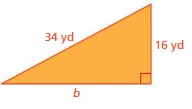
Big Ideas Math Answers Grade 7 Chapter 4 Equations and Inequalities

Hey guys are you in search of diverse opportunities to develop your problem-solving skill? We have provided the best solution to it, just practice Big Ideas Math Grade 7 Answer Key for Chapter 4 Equations and Inequalities. This Big Ideas 7th Grade Math Chapter 4 Equations and Inequalities Answer Key is designed in a fun-learning way like mathematical practices through engaging activities such as games, literature-based exercises, and others. So, check out Big Ideas Math Answers Grade 7 Chapter 4 Equations and Inequalities Answer Key to prepare effectively by clearing all your doubts while practicing.

Big Ideas Math Book 7th Grade Answer Key Chapter 4 Equations and Inequalities

This is a free and user-friendly student edition of Big Ideas Math Book Grade 7 Answer Key Chapter 4 Equations and Inequalities lesson wise details are included below in PDF links. So, you are notified to improve their math, problem-solving skills by referring to these chapter-wise Big Ideas Math Answers Grade 7 Chapter 4 Equations and Inequalities. Also, you can make use of these Big Ideas Math Book 7th Grade Chapter 4 Equations and Inequalities Answer Key for Homework Help & complete all your assignments properly.

Performance

Lesson: 1 Solving Equations Using Addition or Subtraction

Lesson: 2 Solving Equations Using Multiplication or Division

Lesson: 3 Solving Two-Step Equations

Lesson: 4 Writing and Graphing Inequalities

Lesson: 5 Solving Inequalities Using Addition or Subtraction

Lesson: 6 Solving Inequalities Using Multiplication or Division

Lesson: 7 Solving Two-Step Inequalities

Chapter: 4 – Equations and Inequalities

Equations and Inequalities STEAM Video/Performance

STEAM Video

Space Cadets

Inequalities can be used to help determine whether someone is qualified to be an astronaut. Can you think of any other real-life situations where inequalities are useful?

Watch the STEAM Video “Space Cadets.” Then answer the following questions. Tori and Robert use the inequalities below to represent requirements for applying to be an astronaut, where height is measured in inches and age is measured in years.
Big Ideas Math Answers Grade 7 Chapter 4 Equations and Inequalities 1
Big Ideas Math Answer Key Grade 7 Chapter 4 Equations and Inequalities 1.1

Question 1.
Can you use equations to correctly describe the requirements? Explain your reasoning.

Answer:
Yes, we can use equations to correctly describe the requirements.

Explanation:
You can take the requirements as variables and their limit as constants. So that you can use equations to correctly describe the requirements.

Question 2.
The graph shows when a person who recently had vision correction surgery can apply to be an astronaut. Explain how you can determine when they had the surgery.
Big Ideas Math Answer Key Grade 7 Chapter 4 Equations and Inequalities 2

Answer:
The person had surgery exactly 4 months ago.

Explanation:
We can say that he had eye vision correction surgery 4 months from now because the point on the graph is at 4 and the line represents months.

Performance Task

Distance and Brightness of the Stars

After completing this chapter, you will be able to use the concepts you learned to answer the questions in STEAM Video Performance Task. You will be given information about the celestial bodies below.
Big Ideas Math Answer Key Grade 7 Chapter 4 Equations and Inequalities 3
Big Ideas Math Answer Key Grade 7 Chapter 4 Equations and Inequalities 4
You will use inequalities to calculate the distances of stars from Earth and to calculate the brightnesses, or apparent magnitudes, of several stars. How do you think you can use one value to describe the brightnesses of all the stars that can be seen from Earth? Explain your reasoning.

Answer:
I can take the value of brightness of all the stars that can be seen from Earth as variables. And each start brightness is assigned to that variable. Based on those stars brightness you will put an inequality symbol in between those variables.

Equations and Inequalities Getting Ready for Chapter 4

Chapter Exploration

Question 1.
Work with a partner. Use algebra tiles to model and solve each equation. Big Ideas Math Answer Key Grade 7 Chapter 4 Equations and Inequalities 5
Big Ideas Math Answer Key Grade 7 Chapter 4 Equations and Inequalities 6

Answer:
big-ideas-math-answers-grade-7-chapter-4

Question 2.
WRITE GUIDELINES
Work with a partner. Use your models in Exercise 1 to summarize the algebraic steps that you use to solve an equation.

Answer:
The + symbol in the yellow box represents adding 1, – symbol in the red box represents subtracting 1, + in the green box represents the variable. So, you have to represent the given equation in the form of these symbols and do calculations to get the answer.

Vocabulary

The following vocabulary terms are defined in this chapter. Think about what each term might mean and record your thoughts.
Big Ideas Math Answer Key Grade 7 Chapter 4 Equations and Inequalities 7

Lesson 4.1 Solving Equations Using Addition or Subtraction

EXPLORATION 1
Using Algebra Tiles to Solve Equations

Work with a partner.
a. Use the examples to explain the meaning of each property.
Big Ideas Math Answer Key Grade 7 Chapter 4 Equations and Inequalities 8
Are these properties true for equations involving negative numbers? Explain your reasoning.
b. Write the four equations modeled by the algebra tiles. Explain how you can use algebra tiles to solve each equation. Then find the solutions.
Big Ideas Math Answer Key Grade 7 Chapter 4 Equations and Inequalities 9
Big Ideas Math Answer Key Grade 7 Chapter 4 Equations and Inequalities 10
c. How can you solve each equation in part(b) without using algebra tiles?

Answer:
a. x = -1
Yes, algebraic properties are true for equations involving negative numbers.
b. x = -1, x = -7, x = 6, x = 7

Explanation:
a. x = 1 – 2
x = -1
b. x – 3 = -4
x = -4 + 3 = -1
-5 = x + 2
x = -5 – 2 = -7
x – 3 = 3
x = 3 + 3 = 6
5 = x – 2
x = 5 + 2 = 7

4.1 Lesson

Try It

Solve the equation. Check your solution.

Question 1.
p – 5 = -2

Answer:
p = 3

Explanation:
p – 5 = -2
Add 5 to both sides
p – 5 + 5 = -2 + 5
p = 3
Substitute p = 3 in p – 5 = -2
3 – 5 = -2

Question 2.
w + 13.2 = 10.4

Answer:
w = -2.8

Explanation:
w + 13.2 = 10.4
Subtract 13.2 from both sides
w + 13.2 – 13.2 = 10.4 – 13.2
w = -2.8
Putting w = -2.8 in w + 13.2 = 10.4
-2.8 + 13.2 = 10.4

Question 3.
Big Ideas Math Answer Key Grade 7 Chapter 4 Equations and Inequalities 11

Answer:
x = 4/6

Explanation:
Adding 5/6 to both sides
x – 5/6 + 5/6 = -1/6 + 5/6
x = (-1 + 5)/6
x = 4/6
Putting x = 4/6 in x – 5/6 = -1/6
4/6 – 5/6 = -1/6

Try It

Question 4.
A bakery has a profit of $120.50 today. This profit is $145.25 less than the profit P yesterday. Write an equation that can be used to find P.

Answer:
P = $120.50 + $145.25
P = $265.75

Explanation:
Today profit = $120.50
$120.50 = – $145.25 + yesterday profit
$120.50 = -$145.25 + P
P = $120.50 + $145.25
P = $265.75

Self-Assessment for Concepts & Skills

Solve each exercise. Then rate your understanding of the success criteria in your journal.

SOLVING AN EQUATION
Solve the equation. Check your solution.

Question 5.
c – 12 = -4

Answer:
c = 8

Explanation:
Add 12 to both sides
c – 12 + 12 = -4 + 12
c = 8
8 – 12 = -4

Question 6.
k + 8.4 = -6.3

Answer:
k = -14.7

Explanation:
Subtracting 8.4 from both sides
k + 8.4 – 8.4 = -6.3 – 8.4
k = -14.7
-14.7 + 8.4 = -6.3

Question 7.
Big Ideas Math Answer Key Grade 7 Chapter 4 Equations and Inequalities 12

Answer:
w = 5/3

Explanation:
Adding 7/3 on both sides
-2/3 + 7/3 = w – 7/3 + 7/3
(-2 + 7)/3 = w
w = 5/3
-2/3 = 5/3 – 7/3

Question 8.
WRITING
Are the equations m + 3 = -5 and m – 4 = -12 equivalent? Explain.

Answer:
Yes, both equations are equivalent.

Explanation:
m + 3 = -5 and m – 4 = -12
m = -5 – 3 and m = -12 + 4
m = -8 and m = -8

Question 9.
WHICH ONE DOESN’T BELONG?
Which equation does not belong with the other three? Explain your reasoning.
Big Ideas Math Answer Key Grade 7 Chapter 4 Equations and Inequalities 13

Answer:
x + 1 = -5

Explanation:
x + 3 = -1
x = -1 – 3 = -4
x + 1 = -5
x = -5 – 1 = -6
x – 2 = -6
x = -6 + 2 = -4
x – 9 = -13
x = -13 + 9 = -4
By solving all equations, we get solution as -4, but for x + 1 = -5, we get solution as -6.

Self-Assessment for Problem Solving

Solve each exercise. Then rate your understanding of the success criteria in your journal.

Question 10.
You have $512.50. You earn additional money by shoveling snow. Then you purchase a new cell phone for $249.95 and have $482.55 left. How much money do you earn shoveling snow?

Answer:
You earn $220 by shoveling snow.

Explanation:
Let us take additional money earned by shoveling snow as x.
The total money you spend = $249.95
$512.50 + x – $249.95 = $482.55
$262.55 + x = $482.55
x = $482.55 – $262.55
x = $220
So, the money earned at shoveling snow is $220

Question 11.
DIG DEEPER!
You swim 4 lengths of a pool and break a record by 0.72 second. The table shows your time for each length compared to the previous record holder. How much faster or slower is your third length than the previous record holder?
Big Ideas Math Answer Key Grade 7 Chapter 4 Equations and Inequalities 14

Answer:
1.26 seconds faster is my third length than the previous record holder.

Explanation:
Let us take the record at the third length as x.
So, -0.23 + 0.11 + x – 0.42 = 0.72
-0.54 + x = 0.72
x = 0.72 + 0.54
x = 1.26
So, the record at third length is 1.26 seconds.

Solving Equations Using Addition or Subtraction Homework & Practice 4.1

Review & Refresh

Factor out the coefficient of the variable term.

Question 1.
4x – 20

Answer:
4(x – 5)

Explanation:
Take 4 as common factor out.
4x – 20 = 4(x – 5)

Question 2.
-6y – 18

Answer:
-6y – 18 = -6(y + 3)

Explanation:
Take -6 as common factor out.
-6y – 18 = -6(y + 3)

Question 3.
Big Ideas Math Answer Key Grade 7 Chapter 4 Equations and Inequalities 15

Answer:
-2/5 w + 4/5 = 2/5(-w + 2)

Explanation:
Take 2/5 as common factor
-2/5 w + 4/5 = 2/5(-w + 2)

Question 4.
0.75z – 6.75

Answer:
0.75z – 6.75 = 0.75(z – 6)

Explanation:
Take 0.75 as common factor
0.75z – 6.75 = 0.75(z – 6)

Multiply or divide.

Question 5.
-7 × 8

Answer:
-7 × 8 = -56

Explanation:
big-ideas-math-answers-grade-7-chapter-4.1-2

Question 6.
6 × (-12)

Answer:
6 × (-12) = -72

Explanation:
big-ideas-math-answers-grade-7-chapter-4.1-3

Question 7.
18 ÷ (-2)

Answer:
18 ÷ (-2) = -9

Explanation:
big-ideas-math-answers-grade-7-chapter-4.1-4

Question 8.
-26 ÷ 4

Answer:
-26 ÷ 4 = -6.5

Explanation:
big-ideas-math-answers-grade-7-chapter-4.1-5

Question 9.
A class of 144 students voted for a class president. Three-fourths of the students voted for you. Of the students who voted for you, \(\frac{5}{9}\) are female. How many female students voted for you?
A. 50
B. 60
C. 80
D. 108

Answer:
The number of female students voted for you is 60

Explanation:
The total number of students in class = 144
Three-fourths of the students voted for you = 3/4 x 144 = 36 x 3 = 108
Out of 108, 5/9 are female = 5/9 x 108 = 12 x 5 = 60
Therefore, the number of female students voted for you is 60.

Concepts, Skills, & Problem Solving
USING ALGEBRA TILES
Solve the equation using algebra tiles. Explain your reasoning. (See Exploration 1, p. 127.)

Question 10.
6 + x = 4

Answer:
x = -2

Explanation:
6 + x = 4
Subtract 6 from both sides
6 + x – 6 = 4 – 6
x = -2

Question 11.
x – 3 = = -5

Answer:
x = -2

Explanation:
Add 3 to both sides
x – 3 + 3 = -5 + 3
x = -2

Question 12.
-7 + x = -9

Answer:
x = -2

Explanation:
Add 7 to both sides
-7 + x + 7 = -9 + 7
x = -2

SOLVING AN EQUATION
Solve the equation. Check your solution.

Question 13.
a – 6 = 13

Answer:
a = 19

Explanation:
Add 6 to both sides
a – 6 + 6 = 13 + 6
a = 19
Substituting a= 19 in a – 6 = 13
19 – 6 = 13

Question 14.
-3 = z – 8

Answer:
z = 5

Explanation:
Add 8 to both sides.
-3 + 8 = z – 8 + 8
5 = z
Substituting z = 5 in -3 = z – 8
-3 = 5 – 8

Question 15.
-14 = k + 6

Answer:
k = -20

Explanation:
Subtract 6 from both sides
-14 – 6 = k + 6 – 6
-20 = k
Substituting k = -20 in -14 = k + 6
-14 = -20 + 6

Question 16.
x + 4 = -14

Answer:
x = -18

Explanation:
Subtract 4 from both sides
x + 4 – 4 = -14 – 4
x = -18
Substituting x = -18 in x + 4 = -14
-18 + 4 = -14

Question 17.
g – 9 = -19

Answer:
g = -10

Explanation:
Add 9 to both sides.
g – 9 + 9 = -19 + 9
g = -10
Substituting g = -10 in g – 9 = -19
-10 – 9 = -19

Question 18.
c – 7.6 = -4

Answer:
c = 3.6

Explanation:
Add 7.6 to both sides
c – 7.6 + 7.6 = -4 + 7.6
c = 3.6
Substituting c = 3.6 in c – 7.6 = -4
3.6 – 7.6 = -4

Question 19.
-10.1 = w + 5.3

Answer:
w = -15.4

Explanation:
Subtract 5.3 from both sides
-10.1 – 5.3 = w + 5.3 – 5.3
-15.4 = w
Substituting w = -15.4 in -10.1 = w + 5.3
-10.1 = -15.4 + 5.3

Question 20.
Big Ideas Math Answer Key Grade 7 Chapter 4 Equations and Inequalities 16

Answer:
q = -1/6

Explanation:
Subtract 2/3 from both sides
1/2 – 2/3 = q + 2/3 – 2/3
(3 – 4)/6 = q
q = -1/6
Substituting q = -1/6 in 1/2 – 2/3 = q + 2/3 – 2/3
1/2 = -1/6 + 2/3
= (-1 + 4)/6 = 3/6 = 1/2

Question 21.
Big Ideas Math Answer Key Grade 7 Chapter 4 Equations and Inequalities 17

Answer:
p = 4/6

Explanation:
p – 19/6 = -5/2
Adding 19/6 to both sides
p – 19/6 + 19/6 = -5/2 + 19/6
p = (-15 + 19)/6
p = 4/6
Substituting p = 4/6 in p – 19/6 = -5/2
4/6 – 19/6 = -5/2
(-15/6) = -/2

Question 22.
-9.3 = d – 3.4

Answer:
d = -5.9

Explanation:
Add 3.4 to both sides
-9.3 + 3.4 = d – 3.4 + 3.4
d = -5.9
Substituting d = -5.9 in -9.3 = d – 3.4
-9.3 = -5.9 – 3.4

Question 23.
4.58 + y = 2.5

Answer:
y = -2.08

Explanation:
Subtract 4.58 from both sides
4.58 + y – 4.58 = 2.5 – 4.58
y = -2.08
Putting y = -2.08 in 4.58 + y = 2.5
4.58 – 2.08 = 2.5

Question 24.
x – 5.2 = -18.73

Answer:
x = -13.53

Explanation:
Add 5.2 to both sides
x – 5.2 + 5.2 = -18.73 + 5.2
x = -13.53
Putting x = -13.53 in x – 5.2 = -18.73
-13.53 – 5.2 = -18.73

Question 25.
Big Ideas Math Answer Key Grade 7 Chapter 4 Equations and Inequalities 18

Answer:
q = 10/9

Explanation:
Subtract 5/9 from both sides
q + 5/9 – 5/9 = 5/6 – 5/9
q = (15 – 5)/9 = 10/9
Substituting q = 10/9 in q + 5/9 = 5/6
10/9 + 5/9 = 15/9 = 5/6

Question 26.
Big Ideas Math Answer Key Grade 7 Chapter 4 Equations and Inequalities 19

Answer:
r = -19/20

Explanation:
-7/4 = r – 4/5
Adding 4/5 to both sides
-7/4 + 4/5 = r – 4/5 + 4/5
(-35 + 16)/20 = r
r = -19/20
Putting r = -19/20 in -7/4 = r – 4/5
-7/4 = -19/20 – 4/5
= (-19 – 16)/20 = -35/20 = -7/4

Question 27.
Big Ideas Math Answer Key Grade 7 Chapter 4 Equations and Inequalities 20

Answer:
w = -74/48

Explanation:
w + 27/8 = 11/6
Subtract 27/8 from both sides
w + 27/8 – 27/8 = 11/6 – 27/8
w = (88 – 162)/48
w = -74/48
Putting w = -74/48 in w + 27/8 = 11/6
-74/48 + 27/8
(-74 + 162)/48 = 88/48 = 11/6

Question 28.
YOU BE THE TEACHER
Your friend solves the equation x + 8 = 10. Is your friend correct? Explain your reasoning.
Big Ideas Math Answer Key Grade 7 Chapter 4 Equations and Inequalities 21

Answer:
My friend is not correct.

Explanation:
x + 8 = 10
x = 10 – 8
x = 2
The above mentioned is the correct solution. As my friend taken x + 8 = -10, there she did mistake.

WRITING AND SOLVING AN EQUATION
Write the word sentence as an equation. Then solve the equation.

Question 29.
4 less than a number n is -15.

Answer:
4 – n = -15
n = 19

Explanation:
As 4 is less than a number n subtract 4 from n.
4 – n = -15
Add n to sides of the equation
4 – n + n = -15 + n
4 = -15 + n
Add 15 to both sides
4 + 15 = -15 + n + 15
n = 19

Question 30.
10 more than a number c is 3.

Answer:
10 + c = 3
c = -7

Explanation:
As 10 is more than c add 10 to c
10 + c = 3
Subtract 10 from both sides
10 + c – 10 = 3 – 10
c = -7

Question 31.
The sum of a number y and -3 is -8.

Answer:
y – 3 = -8
y = -5

Explanation:
y + (-3) = -8
y – 3 = -8
y – 3 + 3 = -8 + 3
y = -5

Question 32.
The difference of a number p and 6 is 14.

Answer:
p – 6 = 14
p = 20

Explanation:
p – 6 = 14
p – 6 + 6 = 14 + 6
p = 20

Question 33.
MODELING REAL LIFE
The temperature of dry ice is -109.3°F. This is 184.9°F less than the outside temperature. Write and solve an equation to find the outside temperature.

Answer:
-109.3°F = x – 184.9°F
Outside temperature is -24.4°F.

Explanation:
The temperature of dry ice = -109.3°F
Let us take the outside temperature as x.
dry ice is 84.9°F less than the outside temperature
-109.3°F = x – 184.9°F
x = -109.3°F + 184.9°F
x = 75.6°F
Therefore, Outside temperature is -24.4°F

Question 34.
MODELING REAL LIFE
A company makes a profit of $1.38 million. This is $2.54 million more than last year. What was the profit last year? Justify your answer.

Answer:
The last year company got $1.16 millions loss.

Explanation:
A company makes a profit of $1.38 million
Let us take last year profit as p.
p + $2.54 = $1.38
p = $1.38 – $2.54
p = -$1.16
The last year company was at a loss of $1.16 million.

Question 35.
MODELING REAL LIFE
The difference in elevation of a helicopter and a submarine is 18\(\frac{1}{2}\) meters. The elevation of the submarine is -7\(\frac{3}{4}\) meters. What is the elevation of the helicopter? Justify your answer.

Answer:
The elevation of the helicopter is 49/4 meters.

Explanation:
Let us take the elevation of the helicopter as x.
The elevation of the submarine = -7(3/4) = -25/4
x – 18(1/2) = -25/4
x – 37/2 = -25/4
x = -25/4 + 37/2
x = (-25 + 74)/4 = 49/4
So, the elevation of the helicopter is 49/4

GEOMETRY
What is the unknown side length?

Question 36.
Perimeter = 12 cm
Big Ideas Math Answer Key Grade 7 Chapter 4 Equations and Inequalities 21.1

Answer:
The unknown side length is 4 cm.

Explanation:
Let us take the unknown side length as x cm.
Perimeter = 12 cm
x + 3 + 5 = 12
x + 8 = 12
x = 12 – 8
x = 4 cm

Question 37.
Perimeter = 24.2 in.
Big Ideas Math Answer Key Grade 7 Chapter 4 Equations and Inequalities 21.2

Answer:
The unknown side length is 3.8 in.

Explanation:
Let us take the unknown side length as x inches
Perimeter = 24.2 in.
x + 8.3 + 3.8 + 8.3 = 24.2
x + 20.4 = 24.2
x = 24.2 – 20.4
x = 3.8 in

Question 38.
Perimeter = 34.6 ft
Big Ideas Math Answer Key Grade 7 Chapter 4 Equations and Inequalities 22

Answer:
The unknown side length is 11.9 ft

Explanation:
Let us take the unknown side length as x ft.
Perimeter = 34.6 ft
5.2 + 11.1 + 6.4 + x = 34.6
22.7 + x = 34.6
x = 34.6 – 22.7
x = 11.9 ft

Question 39.
MODELING REAL LIFE
The total height of the Statue of Liberty and its pedestal is 153 feet more than the height of the statue. What is the height of the statue? Justify your answer.
Big Ideas Math Answer Key Grade 7 Chapter 4 Equations and Inequalities 23

Answer:
The height of statue is 152 feet.

Explanation:
Let us take the height of the statue as x feet.
The total height of the Statue of Liberty and its pedestal = x + 153
305 = x + 153
x = 305 – 153
x = 152 feet
So, the height of statue is 152 feet.

Question 40.
PROBLEM SOLVING
When bungee jumping, you reach a positive elevation on your first jump that is 50\(\frac{1}{6}\) feet greater than the elevation you reach on your second jump. Your change in elevation on the first jump is -200\(\frac{2}{3}\)feet. What is your change in elevation on the second jump?

Answer:
The height of second jump is 301/2 feet.

Explanation:
The height of the first jump = 200(2/3) = 602/3
The height of second jump = The height of the first jump – 50(1/6)
= -602/3 – 301/6
= (1204 – 301)/6 = 903/6 = 301/2
The height of second jump is 301/2 feet.

Question 41.
MODELING REAL LIFE
Boatesville is a 65\(\frac{3}{5}\)-kilometer drive from Stanton. A bus traveling from Stanton to Boatesville is 24 \(\frac{1}{3}\) kilometers from Boatesville. How far has the bus traveled? Justify your answer.

Answer:
The bus travelled 619/5 km from Boatesville.

Explanation:
The distance between Boatesville and stanton = 65(3/5) = 328/5
The distance between Stanton and bus = 24(1/3) = 73/3
The bus travelled = 328/5 – 73/3 = (984 – 365)/15
= 619/15

Question 42.
GEOMETRY
The sum of the measures of the angles of a triangle equals 180°. What is the missing angle measure?
Big Ideas Math Answer Key Grade 7 Chapter 4 Equations and Inequalities 24

Answer:
Missing angle is 108.9°.

Explanation:
The sum of the measures of the angles of a triangle equals 180°
30.3 + m + 40.8 = 180
71.1 + m = 180
m = 180 – 71.1 = 108.9°

Question 43.
DIG DEEPER!
The table shows your scores in a skateboarding competition. The first-place finisher scores 311.62 total points, which is 4.72 more points than you score. What is your score in the fourth round?
Big Ideas Math Answer Key Grade 7 Chapter 4 Equations and Inequalities 25

Answer:
Your score in the fourth round is 74.36 points.

Explanation:
The first-place finisher scores 311.62 total points, which is 4.72 more points than you score
63.43 + 87.15 + 81.96 + x + 4.72 = 311.62
x + 237.26 = 311.62
x = 311.62 – 237.26
x = 74.36

Question 44.
CRITICAL THINKING
Find the value of 2x – 1 when x + 6 = -2.

Answer:
2x – 1 = -17

Explanation:
x + 6 = -2
x = -2 – 6
x = -8
putting x = -8 in 2x – 1
2(-8) – 1 = -16 – 1 = -17

CRITICAL THINKING
Solve the equation.

Question 45.
| x | = 2

Answer:
x = ± 2

Explanation:
When mod x is 2, then x is plus or minus 2.

Question 46.
| x | – 2 = -2

Answer:
x = 0

Explanation:
| x | = -2 + 2
| x | = 0

Question 47.
| x | + 5 = 18

Answer:
x = ± 13

Explanation:
| x | = 18 – 5
| x | = 13
x = ± 13

Lesson 4.2 Solving Equations Using Multiplication or Division

EXPLORATION 1
Using Algebra Tiles to Solve Equations

Work with a partner.
a. Use the examples to explain the meaning of each property.
Big Ideas Math Answer Key Grade 7 Chapter 4 Equations and Inequalities 26
Are these properties true for equations involving negative numbers? Explain your reasoning.
b. Write the three equations modeled by the algebra tiles. Explain how you can use algebra tiles to solve each equation. Then find the solutions.
Big Ideas Math Answer Key Grade 7 Chapter 4 Equations and Inequalities 27
Big Ideas Math Answer Key Grade 7 Chapter 4 Equations and Inequalities 28
c. How can you solve each equation in part(b) without using algebra tiles?

4.2 Lesson

Try It

Solve the equation. Check your solution.

Question 1.
\(\frac{x}{5}\) = -2

Answer:
x = -10

Explanation:
x/5 = -2
x = -2 x 5
x = -10
Putting x = -10 in x/5 = -2
-10/5 = -2

Question 2.
-a = -24

Answer:
a = 24

Explanation:
a = 24

Question 3.
3 = -1.5n

Answer:
n = -2

Explanation:
n = -3/1.5
n = -2

Try It

Solve the equation. Check your solution.

Question 4.
–\(\frac{8}{5}\)b = 5

Answer:
b = -25/8

Explanation:
-8/5 b = 5
-b = 5 x (5/8)
-b = 25/8
b = -25/8
Substituting b = -25/8 in -8/5 b = 5
-8/5 (-25/8) = (25 x 8)/(8 x 5) = 5

Question 5.
\(\frac{3}{8}\)h = -9

Answer:
h = -24

Explanation:
3/8 h = -9
h = -9 x (8/3)
h = -3 x 8 = -24
Substituting h = -24 in 3/8 h = -9
3/8 (-24) = 3 x -3 = -9

Question 6.
-14 = \(\frac{2}{3}\)x

Answer:
x = -21

Explanation:
-14 = (2/3) x
x = -14 x (3/2)
x = -7 x 3 = -21
Substituting x = -21 in -14 = (2/3) x
-14 = (2/3) -21 = 2 x -7

Self-Assessment for Concepts & Skills
Solve each exercise. Then rate your understanding of the success criteria in your journal.

SOLVING AN EQUATION
Solve the equation. Check your solution.

Question 7.
6d = 24

Answer:
d = 4

Explanation:
6d = 24
d = 24/6
d = 4
Putting d = 4 in 6d = 24
6 x 4 = 24

Question 8.
\(\frac{t}{3}\) = -4

Answer:
t = -12

Explanation:
t/3 = -4
t = -4 x 3
t = -12
Putting t = -12 in t/3 = -4
-12/3 = -4

Question 9.
–\(\frac{2}{5}\)p = -6

Answer:
p = 15

Explanation:
(-2/5) p = -6
p = -6 x (-5/2)
p = 3 x 5 = 15
Putting p = 15 in (-2/5) p = -6
(-2/5) 15 = -2 x 3 = -6

Question 10.
WRITING
Explain why you can use multiplication to solve equations involving division.

Answer:
Multiplication is the inverse of division. So it can easily undo the operation.

Question 11.
WRITING
Are the equations \(\frac{2}{3}\)m = -4 and -4m = 24 equivalent? Explain.

Answer:
Both the given equations are equivalent.

Explanation:
(2/3)m = -4 and -4m = 24
m = -4 x (3/2) and m = -24/4
m = -2 x 3 and m = -6
m = -6 and m = -6
Yes both the equations are equivalent.

Question 11.
REASONING
Describe the inverse operation that will undo the given operation.

Answer:
The inverse operation of division is the multiplication and they are opposite. When dividing a number by a, the multiplication by a will undo the operation.

Question 12.
subtracting 12

Answer:
Adding 12.

Explanation:
The inverse operation of subtraction is addition.

Question 13.
multiplying by –\(\frac{1}{8}\)

Answer:
Dividing by (-8)

Explanation:
The inverse operation of multiplication is division. So, dividing by (-8)

Question 14.
adding -6

Answer:
Subtracting -6

Explanation:
The inverse operation for addition is subtraction. So, subtracting -6.

Self-Assessment for Problem Solving

Solve each exercise. Then rate your understanding of the success criteria in your journal.

Question 15.
The elevation of the surface of a lake is 315 feet. During a drought, the water level of the lake changes -3\(\frac{1}{5}\) feet per week. Find how long it takes for the surface of the lake to reach an elevation of 299 feet. Justify your answer.

Answer:
It takes 5 weeks for the surface of the lake to reach an elevation of 299 feet

Explanation:
Let us take the number of weeks as x.
The lake reduced = 315 – 299 = 16 feet
-3(1/5)x = 16
-16/5 x = 16
x = -16 (5/16)
x = 5
It takes 5 weeks for the surface of the lake to reach an elevation of 299 feet

Question 16.
DIG DEEPER!
The patio shown has an area of 116 square feet. What is the value of h? Justify your answer.
Big Ideas Math Answer Key Grade 7 Chapter 4 Equations and Inequalities 29

Answer:
h = 8

Explanation:
Total area = 116
Triangle 1 + rectangle + triangle2 = 116
1/2 x 4.5 x h + 10 x h + 1/2 x 4.5 x h = 116
10h + 4.5h = 116
14.5h = 116
h = 116/14.5 = 8

Solving Equations Using Multiplication or Division Homework & Practice 4.2

Review & Refresh

Solve the equation. Check your solution.

Question 1.
n – 9 = -12

Answer:
n = -3

Explanation:
n = -12 + 9
n = -3
Putting n = -3 in n – 9 = -12
-3 – 9 = -12

Question 2.
Big Ideas Math Answer Key Grade 7 Chapter 4 Equations and Inequalities 30

Answer:
m = 5/4

Explanation:
-1/2 = m – (7/4)
m = -1/2 + 7/4
m = (-2 + 7)/4 = 5/4
Putting m = 5/4 in -1/2 = m – (7/4)
-1/2 = 5/4 – (7/4) = (5 – 7)/4
= -2/4 = -1/2

Question 3.
-6.4h = h + 8.7

Answer:
h = -1.75

Explanation:
-6.4h = h + 8.7
h + 6.4h = -8.7
7.4h = -8.7
h = -8.7/7.4
h = -1.75
Putting h = -1.175 in -6.4h = h + 8.7
-6.4 x -1.175 = -1.175 + 8.7
7.52 = 7.52

Find the difference.

Question 4.
5 – 12

Answer:
-7

Explanation:
5 – 12 = -7

Question 5.
-7 – 2

Answer:
-9

Explanation:
-7 – 2 = -9

Question 6.
4 – (-8)

Answer:
12

Explanation:
4 – (-8) = 4 + 8 = 12

Question 7.
-14 – (-5)

Answer:
-9

Explanation:
-14 – (-5) = -14 + 5 = -9

Question 8.
Of the 120 apartments in a building, 75 have been scheduled to receive new carpet. What percent of the apartments have not been scheduled to receive new carpet?
A. 25%
B. 37.5%
C. 62.5%
D. 75%

Answer:
B

Explanation:
Total number of apartments = 120
The number of apartments has not been scheduled to receive new carpet = 120 – 75 = 45
Percentage = (45/120) x 100 = 37.5%

Concepts, Skills, &Problem Solving
USING ALGEBRA TILES
Solve the equation using algebra tiles. Explain your reasoning. (See Exploration 1, p. 133.)

Question 9.
4x = -16

Answer:
x = -4

Explanation:
4x = -16
x = -16/4 = -4

Question 10.
2x = -6

Answer:
x = -3

Explanation:
2x = -6
x = -6/2 = -3

Question 11.
-5x = -20

Answer:
x = 4

Explanation:
-5x = -20
5x = 20
x = 20/5 = 4

SOLVING AN EQUATION
Solve the equation. Check your solution.

Question 12.
4x = -16

Answer:
x = -4

Explanation:
4x = -16
x = -16/4 = -4
Putting x = -4 in 4x = -16
4(-4) = -16

Question 13.
2x = -6

Answer:
x = -3

Explanation:
2x = -6
x = -6/2 = -3
Putting x = -3 in 2x = -6
2(-3) = -6

Question 14.
\(\frac{n}{2}\) = -7

Answer:
n = -14

Explanation:
n/2 = -7
n = -7 x 2 = -14
Putting n = -14 in n/2 = -7
-14/2 = -7

Question 15.
\(\frac{k}{-3}\) = 9

Answer:
k = -27

Explanation:
k/-3 = 9
k = 9 x -3 = -27
Putting k = -27 in k/-3 = 9
-27/-3 = 9

Question 16.
5m = -10

Answer:
m = -2

Explanation:
m = -10/5
m = -2
Putting m = -2 in 5m = -10
5(-2) = -10

Question 17.
8t = -32

Answer:
t = -4

Explanation:
t = -32/8 = -4
Putting t = -4 in 8t = -32
8(-4) = -32

Question 18.
-0.2x = 1.6

Answer:
x = -8

Explanation:
-0.2x = 1.6
x = -1.6/0.2
x = -8
Putting x = -8 in -0.2x = 1.6
-0.2 (-8) = 1.6

Question 19.
-10 = –\(\frac{b}{4}\)

Answer:
b = 40

Explanation:
-10 = -(b/4)
b/4 = 10
b = 10 x 4 = 40
Putting b = 40 in -10 = -(b/4)
-10 = -(40/4) = -10

Question 20.
-6p = 48

Answer:
p = -8

Explanation:
-6p = 48
p = -48/6 = -8
Putting p = -8 in -6p = 48
-6(-8) = 48

Question 21.
-72 = 8d

Answer:
d = -9

Explanation:
-72 = 8d
d = -72/8
d = -9
Putting d = -9 in -72 = 8d
-72 = 8 (-9)

Question 22.
\(\frac{n}{1.6}\) = 5

Answer:
n = 8

Explanation:
n/1.6 = 5
n = 1.6 x 5
n = 8
Putting n = 8 in n/1.6 = 5
8/1.6 = 80/16 = 5

Question 23.
-14.4 = -0.6p

Answer:
p = 24

Explanation:
-14.4 = -0.6p
0.6p = 14.4
p = 14.4/0.6
p = 144/6 = 24
Putting p = 24 in -14.4 = -0.6p
-14.4 = -0.6 x 24

Question 24.
\(\frac{3}{4}\)g = -12

Answer:
g = -16

Explanation:
(3/4)g = -12
3g = -12 x 4
3g = -48
g = -48/3
g = -16
Putting g = -16 in (3/4)g = -12
(3/4) x (-16) = 3 x -4 = -12

Question 25.
8 = –\(\frac{2}{5}\)c

Answer:
c = -20

Explanation:
8 = -(2/5)c
-2c = 8 x 5 = 40
2c = -40
c = -40/2 = -20
Putting c = -20 in 8 = -(2/5)c
8 = -(2/5) x -20 = (2/5)20 = 2 x 4
= 8

Question 26.
–\(\frac{4}{9}\)f = -3

Answer:
f = 27/4

Explanation:
-(4/9)f = -3
(4/9)f = 3
4f = 3 x 9 = 27
f = 27/4
Putting f = 27/4 in -(4/9)f = -3
-(4/9) x (27/4) = -27/9 = -3

Question 27.
26 = –\(\frac{8}{5}\)y

Answer:
y = -130/8

Explanation:
26 = -(8/5)y
-8y = 26 x 5 = 130
y = -130/8
Putting y = -65/4 in 26 = -(8/5)y
26 = -(8/5) x (-130/8) = 130/5 = 26

Question 28.
YOU BE THE TEACHER
Your friend solves the equation -4.2x = 21. Is your friend correct? Explain your reasoning.
Big Ideas Math Answer Key Grade 7 Chapter 4 Equations and Inequalities 31

Answer:
My friend is wrong.

Explanation:
-4.2x = 21
-x = 21/4.1
x = -5.12

WRITING AND SOLVING AN EQUATION
Write the word sentence as an equation. Then solve the equation.

Question 29.
A number multiplied by -9 is -16.

Answer:
9n = 16
n = 16/9

Explanation:
n x -9 = -16
9n = 16
n = 16/9

Question 30.
A number multiplied by \(\frac{2}{5}\) is \(\frac{3}{20}\).

Answer:
(2/5)n = 3/20
n = 15/40

Explanation:
n x (2/5) = 3/20
(2/5)n = 3/20
n = (3/20) x (5/2)
= 15/40

Question 31.
The product of 15 and a number is -75.

Answer:
15n = -75
n = -5

Explanation:
15 x n = -75
15n = -75
n = -75/15
n = -5

Question 32.
The quotient of a number and -1.5 is 21.

Answer:
n/-1.5 = 21
n = -31.5

Explanation:
n/-1.5 = 21
-n/1.5 = 21
-n = 21 x 1.5
-n = 31.5
n = -31.5

Question 33.
MODELING REAL LIFE
You make a profit of $0.75 for every bracelet you sell. Write and solve an equation to determine how many bracelets you must sell to earn enough money to buy the soccer cleats shown.

Answer:
I need to sell 48 bracelets to earn enough money to buy the soccer cleats shown.

Explanation:
Let us take a number of bracelets as x.
0.75x = 36
x = 36/0.75
x = 48

Question 34.
MODELING REAL LIFE
A rock climber averages 12\(\frac{3}{5}\) feet climbed per minute. How many feet does the rock climber climb in 30 minutes? Justify your answer.

Answer:
Climber climbs 378 feet in 30 minutes.

Explanation:
A rock climber averages 63/5 feet climbed per minute
Let us take he climb x feet in 30 minutes
x/30 = 63/5
x = (63/5) x 30
x = 63 x 6
x = 378 feet

OPEN-ENDED
Write (a) a multiplication equation and (b) a division equation that has the given solution.

Question 35.
-3

Answer:
(a) 3x = -9
(b) x/3 = -1

Explanation:
(a) 3x = -9
x = -9/3 = -3
x/3 = -1
x = -1 x 3 = -3

Question 36.
-2.2

Answer:
(a) -5x = 11
(b) x/2 = -1.1

Explanation:
(a) -5x = 11
x = -11/5
x = -2.2
(b) x/2 = -1.1
x = 2 x -1.1
x = -2.2

Question 37.
–\(\frac{1}{2}\)

Answer:
(a) 6x = -3
(b) -x/4 = 0.125

Explanation:
(a) 6x = -3
x = -3/6 = -1/2
(b) -x/4 = 0.125
-x = 0.125 x 4 = 0.5
x = -0.5

Question 38.
-1\(\frac{1}{4}\)

Answer:
(a) 4x = 5
(b) x/2 = 10/16

Explanation:
(a) 4x = 5
x = 5/4 = 1(1/4)
(b) x/2 = 10/16
x = 2(10/16)
x = 10/8 = 5/4

Question 39.
REASONING
Which method(s) can you use to solve –\(\frac{2}{3}\)c = 16?
Big Ideas Math Answer Key Grade 7 Chapter 4 Equations and Inequalities 31.1

Answer:
Multiply each side by -3/2.

Explanation:
-(2/3)c = 16
Multiply both sides by -(3/2)
-(2/3)c x (-3/2) = 16 x (-3/2)
c = -8 x 3 = -24

Question 40.
MODELING REAL LIFE
A stock has a return of -$1.26 per day. Find the number of days until the total return is -$10.08. Justify your answer.

Answer:
The number of days required is 8 days.

Explanation:
Let us take the number of days as x.
Multiply number of days by one day return to get a total return
-$1.26 * x = -$10.08
x = 10.08/1.26
x = 8

Question 41.
PROBLEM-SOLVING
In a school election, \(\frac{3}{4}\) of the students vote. There are 1464 votes. Find the number of students. Justify your answer.

Answer:
The number of students who voted is 1098 and the number of students who not voted is 366.

Explanation:
The number of students voted = (3/4) x 1464
= 366 x 3 = 1098
So, 75% of students are 1098
Remaining 25% = 1098 x (25/75)
= 1098 x (1/3) = 366
The number of students voted is 1098 and number of students not voted is 366.

Question 42.
DIG DEEPER!
The diagram shows Aquarius, an underwater ocean laboratory located in the Florida Keys National Marine Sanctuary. The equation \(\frac{31}{25}\)x = -62 can be used to calculate the depth of Aquarius. Interpret the equation. Then find the depth of Aquarius. Justify your answer.
Big Ideas Math Answer Key Grade 7 Chapter 4 Equations and Inequalities 32

Answer:
The depth of the aquarius is -50 feet

Explanation:
(31/25)x = -62
Multiply both sides by (25/31)
(31/25)x . (25/31) = -62 . (25/31)
x = (-2) x 25
x = -50
The depth of the aquarius is -50 feet

Question 43
DIG DEEPER!
The price of a bike at Store A is \(\frac{5}{6}\) the price at Store B. The price at Store A is $150.60. Find how much you save by buying the bike at Store A. Justify your answer.

Answer:
The amount saved is $30.12

Explanation:
Let us take the price of the bike at store b as x.
$150.60 = (5/6)x
150.6 * (6/5) = x
x = 30.12 * 6 = 180.72
The amount saved is $180.72 – $150.60 = $30.12

Question 44.
CRITICAL THINKING
Solve -2| m | = -10.

Answer:
m = 5

Explanation:
-2m = -10
2m = 10
m = 10/2 = 5

Question 45.
NUMBER SENSE
In 4 days, your family drives \(\frac{5}{7}\) of the total distance of a trip. The total distance is 1250 miles. At this rate, how many more days will it take to reach your destination? Justify your answer.

Answer:
It took 1(1/2) day to reach the destination.

Explanation:
The distance travelled in 4 days = 1250 * (5/7)
= 892.857 miles
The distance travelled in 1 day = 892.857/4 = 223.214
Remaining distance = 1250 – 892.57 = 357.14
357.14 = 223.214x
x = 357.14/223.214 = 1.59
So, it took 1(1/2) day to reach the destination.

Lesson 4.3 Solving Two-Step Equations

EXPLORATION 1

Using Algebra Tiles to Solve Equations
Work with a partner.
a. What is being modeled by the algebra tiles below? What is the solution?
Big Ideas Math Answer Key Grade 7 Chapter 4 Equations and Inequalities 33
b. Use properties of equality to solve the original equation in part(a). How do your steps compare to the steps performed with algebra tiles?
c. Write the three equations modeled by the algebra tiles below. Then solve each equation using algebra tiles. Check your answers using properties of equality.
Big Ideas Math Answer Key Grade 7 Chapter 4 Equations and Inequalities 34
d. Explain how to solve an equation of the form ax + b = c for x.

4.3 Lesson

Try It

Solve the equation. Check your solution.

Question 1.
2x + 12 = 4

Answer:
x = -4

Explanation:
2x = 4 – 12 = -8
x = -8/2
x = -4
Putting x = -4 in 2x + 12 = 4
2(-4) + 12 = -8 + 12 = 4

Question 2.
-5c + 9 = -16

Answer:
c = 5

Explanation:
9 + 16 = 5c
5c = 25
c = 25/5
c = 5
Putting c = 5 in -5c + 9 = -16
-5(5) + 9 = -25 + 9 = -16

Question 3.
9 = 3x – 12

Answer:
x = 7

Explanation:
3x = 9 + 12
3x = 21
x = 21/3 = 7
Putting x = 7 in 9 = 3x – 12
9 = 3(7) – 12 = 21 – 12 = 9

4.3 Lesson

Try It

Solve the equation. Check your solution.

Question 4.
Big Ideas Math Answer Key Grade 7 Chapter 4 Equations and Inequalities 35

Answer:
m = 8

Explanation:
m/2 = 10 – 6
m/2 = 4
m = 2 x 4
m = 8
putting m = 8 in m/2 + 6 = 10
8/2 + 6 = 4 + 6 = 10

Question 5.
Big Ideas Math Answer Key Grade 7 Chapter 4 Equations and Inequalities 36

Answer:
z = -12

Explanation:
5 – 9 = z/3
z/3 = -4
z = -4 x 3
z = -12
Putting z = -12 in -z/3 + 5 = 9
-(-12)/3 + 5 = 12/3 + 5 = 4 + 5 = 9

Question 6.
Big Ideas Math Answer Key Grade 7 Chapter 4 Equations and Inequalities 37

Answer:
a = -2/5

Explanation:
2/5 + 4a =-6/5
4a = -6/5 – 2/5
4a = -8/5
a = (-8/5) x (1/4)
a = -2/5
Putting a = -2/5 in 2/5 + 4a =-6/5
2/5 + 4(-2/5) = 2/5 – 8/5 = (2 – 8)/5 = -6/5

Try It

Solve the equation. Check your solution.

Question 7.
4 – 2y + 3 = -9

Answer:
y = 8

Explanation:
7 – 2y = -9
7 + 9 = 2y
16 = 2y
y = 16/2
y = 8
Puuting y = 8 in 4 – 2y + 3 = -9
4 – 2(8) + 3 = 7 – 16 = -9

Question 8.
7x – 10x = 15

Answer:
x = -5

Explanation:
-3x = 15
x = -15/3
x = -5
Putting x = -5 in 7x – 10x = 15
7(-5) – 10(-5) = -35 + 50 = 15

Question 9.
-8 = 1.3m – 2.1m

Answer:
m = 10

Explanation:
-8 = -0.8m
m = 8/0.8
m = 10
Putting m = 10 in -8 = 1.3m – 2.1m
-8 = 1.3(10) – 2.1(10)
= 13 – 21

Self-Assessment for Concepts & Skills
Solve each exercise. Then rate your understanding of the success criteria in your journal.

MATCHING
Match the equation with the step(s) to solve it.

Question 10.
4 + 4n = 12

Answer:
n = 2

Explanation:
4n = 12 – 4
4n = 8
n = 8/4
n = 2

Question 11.
4n = 12

Answer:
n = 3

Explanation:
n = 12/4
n = 3

Question 12.
\(\frac{n}{4}\) = 12

Answer:
n = 48

Explanation:
n/4 = 12
n = 12 x 4
n = 48

Question 13.
\(\frac{n}{4}\) – 4 = 12

A. Add 4 to each side. Then multiply each side by 4.
B. Subtract 4 from each side. Then divide each side by 4.
C. Multiply each side by 4.
D. Divide each side by 4.

Answer:
Add 4 to each side. Then multiply each side by 4.

Explanation:
n/4 – 4 = 12
Add 4 to each side
n/4 – 4 + 4 = 12 + 4
n/4 = 16
Multiply each side by 4
n/4 x 4 = 16 x 4
n = 64

SOLVING AN EQUATION
Solve the equation. Check your solution.

Question 14.
4p + 5 = 3

Answer:
p = -1/2

Explanation:
4p = 3 – 5
4p = -2
p = -2/4
p = -1/2
putting p = -1/2 in 4p + 5 = 3
4(-1/2) + 5 = -2 + 5 = 3

Question 15.
–\(\frac{d}{5}\) – 1 = -6

Answer:
d = 25

Explanation:
-1 + 6 = d/5
5 = d/5
d = 5 x 5
d = 25
Putting d = 25 in -d/5 – 1 = -6
-25/5 – 1 = -5 – 1 = -6

Question 16.
3.6g = 21.6

Answer:
g = 6

Explanation:
g = 21.6 / 6.3
g = 6
Putting g = 6 in 3.6g = 21.6
3.6(6) = 21.6

Question 17.
WRITING
Are the equations 3x + 12 = 6 and -2 = 4 – 3x equivalent? Explain.

Answer:
Equations are not equivalent

Explanation:
3x + 12 = 6 and -2 = 4 – 3x
3x = 6 – 12 and 3x = 4 + 2
3x = -6 and 3x = 6
x = -6/3 and x = 6/3
x = -2 and x = 2
Equations are not equivalent

Self-Assessment for Problem Solving
Solve each exercise. Then rate your understanding of the success criteria in your journal.

Question 18.
You must scuba dive to the entrance of your room at Jules’ Undersea Lodge in Key Largo, Florida. The diver is 1 foot deeper than \(\frac{2}{3}\) of the elevation of the entrance. What is the elevation of the entrance?
Big Ideas Math Answer Key Grade 7 Chapter 4 Equations and Inequalities 38

Answer:
The elevation of entrance is 21 feet

Explanation:
2/3 rd of elevation = -15 foot + 1 feet
(2/3) * x = 14
x = 14 * (3/2)
x = 7 * 3 = 21 foot

Question 19.
DIG DEEPER!
A car drives east along a road at a constant speed of 46 miles per hour. At 4:00 P.M., a truck is 264 miles away, driving west along the same road at a constant speed. The vehicles pass each other at 7:00 P.M. What is the speed of the truck?

Answer:
The speed of truck is 42 miles per hour

Explanation:
Speed = distance/time
The time taken is 3 hours
46 + x = 264/3
46 + x = 88
x = 88 – 46 = 42

Solving Two-Step Equations Homework & Practice 4.3

Review & Refresh

Solve the equation.

Question 1.
3z = 18

Answer:
z = 6

Explanation:
z = 18/3
z = 6

Question 2.
-8p = 40

Answer:
p = -5

Explanation:
-p = 40/8
-p = 5
p = -5

Question 3.
–\(\frac{m}{4}\) = 5

Answer:
m = -20

Explanation:
-m/4 = 5
-m = 5 x 4
-m = 20
m = -20

Question 4.
\(\frac{5}{6}\)k = -10

Answer:
k = -12

Explanation:
(5/6)k = -10
k = -10(6/5)
k = -2(6)
k = -12

Multiply or divide.

Question 5.
-6.2 × 5.6

Answer:
-6.2 × 5.6 = -34.72

Explanation:
big-ideas-math-answers-grade-7-chapter-4.3-1

Question 6.
Big Ideas Math Answer Key Grade 7 Chapter 4 Equations and Inequalities 39

Answer:
-40/6

Explanation:
(8/3) x (-5/2) = -40/6

Question 7.
Big Ideas Math Answer Key Grade 7 Chapter 4 Equations and Inequalities 40

Answer:
-25/8

Explanation:
(5/2) / (-4/5) = (5 x 5) / (2 x – 4)
= -25/8

Question 8.
-18.6 ÷ (-3)

Answer:
6.2

Explanation:
-18.6 ÷ (-3) = 186/30
= 6.2

Question 9.
Which fraction is not equivalent to 0.75?
Big Ideas Math Answer Key Grade 7 Chapter 4 Equations and Inequalities 41

Answer:
6/9 is not equivalent to 0.75

Explanation:
15/20 = 3/4 = 0.75
9/12 = 3/4 = 0.75
6/9 = 2/3 = 0.66

Concepts, Skills, & Problem Solving
USING ALGEBRA TILES
Write the equation modeled by the algebra tiles. Then solve the equation using algebra tiles. Check your answer using properties of equality. (See Exploration 1, p. 139.)

Question 10.
Big Ideas Math Answer Key Grade 7 Chapter 4 Equations and Inequalities 42

Question 11.
Big Ideas Math Answer Key Grade 7 Chapter 4 Equations and Inequalities 43

SOLVING AN EQUATION
Solve the equation. Check your solution.

Question 12.
2v + 7 = 3

Answer:
v = -2

Explanation:
2v = 3 – 7
2v = -4
v = -4/2
v = -2
Putting v = -2 in 2v + 7 = 3
2(-2) + 7 = -4 + 7 = 3

Question 13.
4b + 3 = -9

Answer:
b = -3

Explanation:
4b = -9 – 3
4b = -12
b = -12/4
b = -3
Putting b = -3 in 4b + 3 = -9
4(-3) + 3 = -12 + 3 = -9

Question 14.
17 = 5k – 2

Answer:
k = 19/5

Explanation:
5k = 17 + 2
5k = 19
k = 19/5
Putting k = 19/5 in 5k = 17 + 2
5(19/5) – 2 = 19 – 2 = 17

Question 15.
-6t – 7 = 17

Answer:
t = -4

Explanation:
-6t = 17 + 7
-6t = 24
t = -24/6
t = -4
Putting t = -4 in -6t – 7 = 17
-6(-4) – 7 = 24 – 7 = 17

Question 16.
8n + 16.2 = 1.6

Answer:
n = -1.825

Explanation:
8n = 1.6 – 16.2
8n = -14.6
n = -14.6/8
n = -1.825
Putting n = -1.825 in 8n + 16.2 = 1.6
8(-1.825) + 16.2 = -14.6 + 16.2 = 1.6

Question 17.
-5g + 2.3 = -18.8

Answer:
g = 4.22

Explanation:
2.3 + 18.8 = 5g
5g = 21.1
g = 21.1/5
g = 4.22
putting g = 4.22 in -5g + 2.3 = -18.8
-5(4.22) + 2.3 = -21.1 + 2.3 = -18.8

Question 18.
2t + 8 = -10

Answer:
t = -9

Explanation:
2t = -10 – 8
2t = -18
t = -18/2
t = -9
Putting t = -9 in 2t + 8 = -10
2(-9) + 8 = -18 + 8 = -10

Question 19.
-4p + 9 = -5

Answer:
p = 3.5

Explanation:
4p = 9 + 5
4p = 14
p = 14/4
p = 3.5
Putting p = 3.5 in -4p + 9 = -5
-4(3.5) + 9 = -14 + 9 = -5

Question 20.
15 = -5x + 10

Answer:
x = -1

Explanation:
15 – 10 = -5x
-5x = 5
x = -5/5
x = -1
Putting x = -1 in 15 = -5x + 10
15 = -5(-1) + 10 = 5 + 10
= 15

Question 21.
10.35 + 2.3h = -9.2

Answer:
h = -8.5

Explanation:
2.3h = -9.2 – 10.35
2.3h = -19.55
h = -19.55/2.3
h = -8.5
Putting h = -8.5 in 10.35 + 2.3h = -9.2
10.35 + 2.3(-8.5) = 10.35 – 19.55 = -9.2

Question 22.
-4.8f + 6.4 = -8.48

Answer:
f = 3.1

Explanation:
-4.8f = -8.48 – 6.4
-4.8f = -14.88
4.8f = 14.88
f = 14.88/4.8
f = 3.1
Putting f = 3.1 in -4.8f + 6.4 = -8.48
-4.8(3.1) + 6.4 = -14.88 + 6.4 = -8.48

Question 23.
7.3y – 5.18 = -51.9

Answer:
y = -6.4

Explanation:
7.3y = -51.9 + 5.18
7.3y = -46.72
y = -46.72/7.3
y = -6.4
Putting y = -6.4 in 7.3y – 5.18 = -51.9
7.3(-6.4) – 5.18 = -46.72 – 5.18 = -51.9

YOU BE THE TEACHER
Your friend solves the equation. Is your friend correct? Explain your reasoning.

Question 24.
Big Ideas Math Answer Key Grade 7 Chapter 4 Equations and Inequalities 44

Answer:
My friend is wrong.

Explanation:
-6x + 2x = -10
-4x = -10
x = 10/4
x = 5/2

Question 25.
Big Ideas Math Answer Key Grade 7 Chapter 4 Equations and Inequalities 45

Answer:
My friend is wrong.

Explanation:
-3(x + 6) = 12
x + 6 = -12/3
x + 6 = -4
x = -4 – 6
x = -10

SOLVING AN EQUATION
Solve the equation. Check your solution.

Question 26.
Big Ideas Math Answer Key Grade 7 Chapter 4 Equations and Inequalities 46

Answer:
g = -5

Explanation:
(3/5)g = -10/3 + 1/3
(3/5)g = (-10 + 1)/3
= -9/3 = -3
(3/5)g = -3
g = -3 x (5/3)
g = -5
Putting g = -5 in (3/5)g -1/3 = -10/3
(3/5)(-5) -1/3 = -3 – 1/3 = (-9 – 1)/3
= -10/3

Question 27.
Big Ideas Math Answer Key Grade 7 Chapter 4 Equations and Inequalities 47

Answer:
a = 4/3

Explanation:
a/4 = -1/2 + 5/6
a/4 = (-3 + 5)/6
a/4 = 2/6
a = (2/6) x 4
a = 4/3 = 1.33
Putting a = 4/3 in a/4 – 5/6 = -1/2
(1.33)/4 – 5/6 = (4 – 10)/12 = -6/12 = -1/2

Question 28.
Big Ideas Math Answer Key Grade 7 Chapter 4 Equations and Inequalities 48

Answer:
z = -3/2

Explanation:
(4 + z) = -5/6 x -3
4 + z = 5/2
z = 5/2 – 4
z = (5 – 8)/2
z = -3/2
putting z = -3/2 in -1/3(4 + z) = -5/6
-1/3(4 + (-3/2)) = -1/3(4 – 3/2)
= -1/3(8-3)/2 = -1/6 x (5)
= -5/6

Question 29.
Big Ideas Math Answer Key Grade 7 Chapter 4 Equations and Inequalities 49

Answer:
b = 27/2

Explanation:
2 + 5/2 = b/3
(4 + 5)/2 = b/3
b/3 = 9/2
b = 9/2 x 3
b = 27/2
Putting b = 27/2 in 2 – b/3 = – 5/2
2 – (27/2)/3 = 2 – 27/6
= (12 – 27)/6 = -15/6 = – 5/2

Question 30.
Big Ideas Math Answer Key Grade 7 Chapter 4 Equations and Inequalities 50

Answer:
x = -27/20

Explanation:
(x + 3/5) = 1/2 x (-3/2)
x + 3/5 = -3/4
x = -3/4 – 3/5
x = (-15 – 12)/20
x = -27/20
Putting x = -27/20 in -2/3(x + 3/5) = 1/2
-2/3(-27/20 + 3/5) = -2/3(-27 + 12)/20
= -2/3(-15/20) = (2 x 15)/(3 x 20)
= 30/60 = 1/2

Question 31.
Big Ideas Math Answer Key Grade 7 Chapter 4 Equations and Inequalities 51

Answer:
v = -1/30

Explanation:
-9/4 v = 7/8 – 4/5
-9/4 v = (35 – 32)/40 = 3/40
v = -3/40 x 4/9
v = -1/30
Putting v = -1/30 in -9/4 v + 4/5 = 7/8
-9/4 v + 4/5 = -9/4 (-1/30) + 4/5
= 3/40 + 4/5 = (3 + 32)/40
= 35/40 = 7/8

Question 32.
PRECISION
Starting at 1:00 P.M., the temperature changes -4°F per hour. Write and solve an equation to determine how long it will take for the temperature to reach -1°F.
Big Ideas Math Answer Key Grade 7 Chapter 4 Equations and Inequalities 52

Answer:
Iit takes 8 hours 30 minutes.

Explanation:
Starting at 1:00 P.M., the temperature changes -4°F per hour.
The temperature change is 35 – 1 = 34°F
So, the equation is 4x = 34
x = 34/4
x = 8.5
S,o, it takes 8 hours 30 minutes.

COMBINING LIKE TERMS
Solve the equation. Check your solution.

Question 33.
3v – 9v = 30

Answer:
v = -5

Explanation:
-6v = 30
v = -30/6
v = -5
Putting v = -5 in 3v – 9v = 30
3(-5) – 9(-5) = -15 + 45 = 30

Question 34.
12t – 8t = -52

Answer:
t = -13

Explanation:
4t = -52
t = -52/4
t = -13
Putting t = -13 in 12t – 8t = -52
12(-13) – 8(-13) = -156 + 104 = -52

Question 35.
-8d – 5d + 7d = 72

Answer:
d = -12

Explanation:
-13d + 7d = 72
-6d = 72
d = -72/6
d = -12
Putting d = -12 in -8d – 5d + 7d = 72
-8(-12) – 5(-12) + 7(-12) = 96 + 60 – 84
= 156 – 84 = 72

Question 36.
-3.8g + 5 + 2.7g = 12.7

Answer:
g = -7

Explanation:
-1.1g + 5 = 12.7
-1.1g = 12.7-5
-1.1g = 7.7
g = -7.7/1.1
g = -7
Putting g = -7 in -3.8g + 5 + 2.7g = 12.7
-3.8(-7) + 5 + 2.7(-7) = 26.6 + 5 – 18.9 = 12.7

Question 37.
MODELING REAL LIFE
You have $9.25. How many games can you bowl if you rent bowling shoes? Justify your answer.
Big Ideas Math Answer Key Grade 7 Chapter 4 Equations and Inequalities 53

Answer:
3 games can be played

Explanation:
The amount you have is $9.25
After renting $9.25 – $2.50 = $6.75
Bowling per game = $2.25
After one game,
$2.25 gone out of $6.75
After two games,
$4.50 gone
After three games,
$6.75 gone
Total is $6.75, after three games it will cost you $6.75
So, 3 games can be played

Question 38.
MODELING REAL LIFE
A cell phone company charges a monthly fee plus $0.25 for each text message you send. The monthly fee is $30.00. You owe $59.50. How many text messages did you send? Justify your answer.

Answer:
You have sent 118 text messages.

Explanation:
Since the total cost of $59.50 is comprised of the monthly fee of $30 plus $0.25 for each text message, we can write
$59.50 = $30 + $0.25x
$0.25x = $59.50 – $30
$29.50 = $0.25x
x = 29.5/0.25
x = 118
So, you have sent 118 text messages

Question 39.
PROBLEM SOLVING
The height at the top of a roller coaster hill is 10 times the height h of the starting point. The height decreases 100 feet from the top to the bottom of the hill. The height at the bottom of the hill is -10 feet. Find h.
Big Ideas Math Answers 7th Grade Chapter 4 Equations and Inequalities 54

Answer:
h = -9

Explanation:
From the image, we can write the equation as,
-10 + 10h = -100
10h = -100 + 10
10h = -90
h = -90/10
h = -9

Question 40.
MODELING REAL LIFE
On a given day, the coldest surface temperature on the Moon, -280°F, is 53.6°F colder than twice the coldest surface temperature on Earth. What is the coldest surface temperature on Earth that day? Justify your answer.

Answer:
The coldest surface temperature on Earth is 166.8°F

Explanation:
the coldest surface temperature on the Moon = -280°F
2E + 53.6 = -280
2E = -280 – 53.6
2E = 333.6
E = 166.8°F
The coldest surface temperature on Earth is 166.8°F

Question 41.
DIG DEEPER!
On Saturday, you catch insects for your science class. Five of the insects escape. The remaining insects are divided into three groups to share in class. Each group has nine insects.
a. Write and solve an equation to find the number of insects you catch on Saturday.
b. Find the number of insects you catch on Saturday without using an equation. Compare the steps used to solve the equation in part (a) with the steps used to solve the problem in part (b).
c. Describe a problem that is more convenient to solve using an equation. Then describe a problem that is more convenient to solve without using an equation.
Big Ideas Math Answers 7th Grade Chapter 4 Equations and Inequalities 56

Answer:
a. You catch 32 insects on Saturday.
b.

Explanation:

a.
(x – 5)/3 = 9
(x – 5) = 27
x = 27 + 5 = 32
You catch 32 insects on saturday.
b. The only number which is divisible by 3 and obtained after subtracting 5 insects from it is 5. so, you caught 32 insects.
c. Equation is more convenient to solve the problem.

Question 42.
GEOMETRY
How can you change the dimensions of the rectangle so that the ratio of the length to the width stays the same, but the perimeter is 185 centimeters? Write an equation that shows how you found your answer.
Big Ideas Math Answers 7th Grade Chapter 4 Equations and Inequalities 57

Answer:
The required dimensions are 52.75, 52.75, 39.75.

Explanation:
The perimeter for given dimensions = 2(25 + 12) = 50 + 24 = 74
Given perimeter = 185
Change in perimeter = 185 – 74 = 111
Divide the perimeter by 4 = 111/4 = 27.75
Add 27.75 to each dimension to get the perimeter 185
So, the required dimensions are 52.75, 52.75, 39.75

Lesson 4.4 Writing and Graphing Inequalities

EXPLORATION 1
Understanding Inequality Statements
Work with a partner. Create a number line on the floor with both positive and negative numbers.
a. For each statement, stand at a number on your number line that could represent the situation. On what other numbers can you stand?
Big Ideas Math Answers 7th Grade Chapter 4 Equations and Inequalities 58
• Atleast 3 students from our school are in a chess tournament.
Big Ideas Math Answers 7th Grade Chapter 4 Equations and Inequalities 59
• Your ring size is less than 7.5.
Big Ideas Math Answers 7th Grade Chapter 4 Equations and Inequalities 60
• The temperature is no more than -1 degree Fahrenheit.
• The elevation of a frogfish is greater 1 than -8\(\frac{1}{2}\) meters.
Big Ideas Math Answers 7th Grade Chapter 4 Equations and Inequalities 61
Big Ideas Math Answers 7th Grade Chapter 4 Equations and Inequalities 62
b. How can you represent all of the solutions for each statement in part(a) on a number line?

4.4 Lesson

Try It

Write the word sentence as an inequality.

Question 1.
A number is at least -10.

Answer:
n ≥ -10

Explanation:
The symbol for at least is ≥.
So, n ≥ -10

Question 2.
Twice a number y is more than –\(\frac{5}{2}\).

Answer:
2y > -5/2

Explanation:
more than symbol is >.
2y > -5/2

A solution of an inequality is a value that makes the inequality true. An inequality can have more than one solution. The set of all solutions of an inequality is called the solution set.
Big Ideas Math Answers 7th Grade Chapter 4 Equations and Inequalities 63

Try It

Tell whether -5 is a solution of the inequality.

Question 3.
x + 12 > 7

Answer:
-5 is not soution.

Explanation:
x + 12 > 7
-5 + 12 > 7
7 > 7

Question 4.
1 – 2p ≤ -9

Answer:
-5 is not the solution.

Explanation:
1 – 2p ≤ -9
1 – 2(-5) ≤ -9
1 + 10 ≤ -9
11 ≤ -9

Question 5.
n ÷ 2.5 ≥ -3

Answer:
-5 is solution.

Explanation:
-5 ÷ 2.5 ≥ -3
-2 ≥ -3

Self-Assessment for Concepts & Skills

Solve each exercise. Then rate your understanding of the success criteria in your journal.

Question 6.
REASONING
Do x < 5 and 5 < x represent the same inequality? Explain.

Answer:
No, both inequalities do not represent the same.

Explanation:
No, both inequalities do not represent the same.
The reason is the first one x < 5 means all numbers that are less than 5.
Second one 5 < x, all numbers that are greater than 5.

Question 7.
DIFFERENT WORDS, SAME QUESTION
Which is different? Write “both” inequalities.
Big Ideas Math Answers 7th Grade Chapter 4 Equations and Inequalities 64

Answer:
A number k is no more than -3 is different.

Explanation:
A number k is less than or equal to -3
k ≤ -3
A number k is at least -3
k ≥ – 3
a number k is at most -3
k ≤ -3
A number k is no more than -3
k < -3

CHECKING SOLUTIONS
Tell whether -4 is a solution of the inequality.

Question 8.
c + 6 ≤ 3

Answer:
Yes, -4 is a solution of the inequality.

Explanation:
c + 6 ≤ 3
-4 + 6 ≤ 3
2 ≤ 3

Question 9.
6 > p ÷ (-0.5)

Answer:
No, -4 is not a solution of the inequality.

Explanation:
6 > p ÷ (-0.5)
6 > -4 ÷ (-0.5)
6 > 4 ÷ (0.5)
6 > 8

Question 10.
-7 < 2g + 1

Answer:
No, -4 is not a solution of the inequality.

Explanation:
-7 < 2g + 1
-7 < 2(-4) + 1
-7 < -8 + 1
-7 < -7

Self-Assessment for Problem Solving
Solve each exercise. Then rate your understanding of the success criteria in your journal.

Question 11.
The three requirements to pass a fitness test are shown. Write and graph three inequalities that represent the requirements. Then give a set of possible values for a person who passes the test.
Big Ideas Math Answers 7th Grade Chapter 4 Equations and Inequalities 65

Answer:
x ≥ 2 kilometers
x ≥ 25 pushups
x ≥ 10 pullups
big-ideas-math-answers-grade-7-chapter-4.4-1

Explanation:
Jog at least 2 kilometers
x ≥ 2 kilometers
Perform 25 or more pushups
x ≥ 25 pushups
Perform at least 10 pull-ups
x ≥ 10 pullups

Question 12.
To set a depth record, a submersible vehicle must reach a water depth less than -715 feet. A vehicle breaks the record by more than 10 feet. Write and graph an inequality that represents the possible depths reached by the vehicle.

Answer:
-705 < x < -175
big-ideas-math-answers-grade-7-chapter-4.4-2

Explanation:
Submersible vehicle must reach a water depth less than -715 feet
x < – 175
A vehicle breaks the record by more than 10 feet.
So, -175 + 10 < x < -175
-705 < x < -175

Writing and Graphing Inequalities Homework & Practice 4.4

Review & Refresh

Solve the equation. Check your solution.

Question 1.
p – 8 = 3

Answer:
p = 11

Explanation:
p – 8 = 3
p = 8 + 3
p = 11
Putting p = 11 in p – 8 = 3
11 – 8 = 3

Question 2.
8.7 + w = 5.1

Answer:
w = -3.6

Explanation:
8.7 + w = 5.1
w = 5.1 – 8.7
w = -3.6
Putting w = -3.6 in 8.7 + w = 5.1
8.7 + (-3.6) = 8.7 – 3.6 = 5.1

Question 3.
x – 2 = -9

Answer:
x = -7

Explanation:
x – 2 = -9
x = -9 + 2
x = -7
Putting x = -7 in x – 2 = -9
-7 – 2 = -9

Question 4.
8v + 5 = 1

Answer:
v = -1/2

Explanation:
8v + 5 = 1
8v = 1 – 5
8v = -4
v = -4/8
v = -1/2
Putting v = -1/2 in 8v + 5 = 1
8(-1/2) + 5 = -4 + 5 = 1

Question 5.
Big Ideas Math Answers 7th Grade Chapter 4 Equations and Inequalities 66

Answer:
n = 5

Explanation:
7/8 – (1/4)n = -3/8
7/8 + 3/8 = 1/4 n
1/4 n = (7 + 3)/8
1/4 n = 10/8
n = (10/8) x (4)
n = 10/2
n = 5
Putting n = 5 in 7/8 – (1/4)n = -3/8
7/8 – (1/4)5 = 7/8 – 5/4
= (7-10)/8 = -3/8

Question 6.
1.8 = 2.1h – 5.7 – 4.6h

Answer:
h = -3

Explanation:
1.8 = 2.1h – 5.7 – 4.6h
1.8 + 5.7 = 2.1h – 4.6h
-2.5h = 7.5
h = -7.5/2.5
h = -3
Putting h = -3 in 1.8 = 2.1h – 5.7 – 4.6h
1.8 = 2.1(-3) – 5.7 – 4.6(-3)
= -6.3 – 5.7 + 13.8
= -12 + 13.8

Question 7.
Which expression has a value less than -5?
A. 5 + 8
B. -9 + 5
C. 1 + (-8)
D. 7 + (-2)

Answer:
B has a value less than -5.

Explanation:
A. 5 + 8 = 13
B. -9 + 5 = -4
C. 1 + (-8) = -7
D. 7 + (-2) = 5

Concepts, Skills, & Problem Solving
UNDERSTANDING INEQUALITY STATEMENTS
Choose a number that could represent the situation. What other numbers could represent the situation? (See Exploration 1, p. 145.)

Question 8.
Visibility in an airplane is greater than 6.5 miles.

Answer:
big-ideas-math-answers-grade-7-chapter-4.4-3
x > 6.5 miles

Explanation:
x > 6.5 miles

Question 9.
You must sell no fewer than 20 raffle tickets for a fundraiser.

Answer:
x > 20
big-ideas-math-answers-grade-7-chapter-4.4-4

Explanation:
x > 20

Question 10.
You consume at most 1800 calories per day.

Answer:
x ≤ 1800
big-ideas-math-answers-grade-7-chapter-4.4-5

Explanation:
x ≤ 1800

Question 11.
The elevation of the Dead Sea is less than -400 meters.

Answer:
x < -400
big-ideas-math-answers-grade-7-chapter-4.4-6

Explanation:
x < -400

WRITING AN INEQUALITY
Write the word sentence as an inequality.

Question 12.
A number y is no more than -8.

Answer:
y < -8

Explanation:
No more than means <
y < -8

Question 13.
A number w added to 2.3 is more than 18.

Answer:
w + 2.3 > 18

Explanation:
More than means >
w + 2.3 > 18
w > 18 – 2.3
w > 15.7

Question 14.
A number t multiplied by -4 is atleast –\(\frac{2}{5}\).

Answer:
-4t ≥ -2/5

Explanation:
Atleast means ≥
-4t ≥ -2/5

Question 15.
A number b minus 4.2 is less than -7.5.

Answer:
b – 4.2 < -7.5

Explanation:
Less than means <
b – 4.2 < -7.5
b < -7.5 + 4.2
b < -3.3
b > 3.3

Question 16.
–\(\frac{5}{9}\) is no less than 5 times a number k.

Answer:
-5/9 > 5k

Explanation:
No less than means >
-5/9 > 5k

Question 17.
YOU BE THE TEACHER
Your friend writes the word sentence as an inequality. Is your friend correct? Explain your reasoning.
Big Ideas Math Answers 7th Grade Chapter 4 Equations and Inequalities 67

Answer:
My friend is correct.

Explanation:
Twice a number x means 2x
Atmost means ≤
So, 2x ≤ -24

CHECKING SOLUTIONS
Tell whether the given value is a solution of the inequality.

Question 18.
n + 8 ≤ 13; n = 4

Answer:
n = 4 is the solution

Explanation:
4 + 8 ≤ 13
12 ≤ 13

Question 19.
-15 < 5h; h = -5

Answer:
h = -5 is the solution

Explanation:
-15 < 5(-5)
-15 < -25

Question 20.
p + 104 ≤ 0.5; p = 0.1

Answer:
p = 0.1 is the solution

Explanation:
0.1 + 104 ≤ 0.5
104.1 ≤ 0.5

Question 21.
\(\frac{a}{6}\) > -4; a = -18

Answer:
a = -18 is the solution

Explanation:
a/6 > -4
-18/6 > -4
-3 > -4

Question 22.
6 ≥ –\(\frac{2}{3}\)s ; s = -9

Answer:
s = -9 is the solution

Explanation:
6 ≥ (-2/3)s
6 ≥ (-2/3) x -9
6 ≥ 2 x 3
6 ≥ 6

Question 23.
Big Ideas Math Answers 7th Grade Chapter 4 Equations and Inequalities 68

Answer:
k = 1/4 is not the solution

Explanation:
7/8 – 3k < -1/2
7/8 – 3(1/4) < -1/2
7/8 – 3/4 < -1/2
(7 – 6)/8 < -1/2
1/8 < -1/2

GRAPHING AN INEQUALITY
Graph the inequality on a number line.

Question 24.
r ≤ -9

Answer:
big-ideas-math-answers-grade-7-chapter-4.4-7

Question 25.
g ≥ 2.75

Answer:
big-ideas-math-answers-grade-7-chapter-4.4-8

Question 26.
Big Ideas Math Answers 7th Grade Chapter 4 Equations and Inequalities 69

Answer:
big-ideas-math-answers-grade-7-chapter-4.4-9

Explanation:
x ≥ -7/2

Question 27.
Big Ideas Math Answers 7th Grade Chapter 4 Equations and Inequalities 70

Answer:
big-ideas-math-answers-grade-7-chapter-4.4-10

Explanation:
5/4 > z

Question 28.
MODELING REAL LIFE
Each day at lunchtime, atleast 53 people buy food from a food truck. Write and graph an inequality that represents this situation.

Answer:

Explanation:

CHECKING SOLUTIONS
Tell whether the given value is a solution of the inequality.

Question 29.
4k < k + 8; k = 3

Answer:

Explanation:

Question 30.
Big Ideas Math Solutions Grade 7 Chapter 4 Equations and Inequalities 191

Answer:

Explanation:

Question 31.
7 – 2y > 3y + 13; y = -1

Answer:

Explanation:

Question 32.
Big Ideas Math Answers 7th Grade Chapter 4 Equations and Inequalities 71

Answer:

Explanation:

Question 33.
PROBLEM SOLVING
A single subway ride for a student costs $1.25. A monthly pass costs $35.
a. Write an inequality that represents the numbers of times you can ride the subway each month for the monthly pass to be a better deal.
b. You ride the subway about 45 times per month. Should you buy the monthly pass? Explain.

Answer:
a. 1.25x ≥ 35
b. Yes, it is better to buy a monthly pass.

Explanation:
A.
1.25x ≥ 35
B. 1.25x ≥ 35
x ≥ 35/1.25
x ≥ 28
Yes, it is better to buy a monthly pass.

Question 34.
LOGIC
Consider the in equality b > -2.
a. Describe the values of b that are solutions of the inequality.
b. Describe the values of b that are not solutions of the inequality. Write an inequality that represents these values.
c. What do all the values in parts (a) and (b) represent? Is this true for any similar pair of inequalities? Explain your reasoning.

Answer:
a. b is greater than -2, The possible solutions of b are -1, 0, 1, 2, and so on
b. The values of b that are nor solutions are -2, -3, -4, -5, -6, …. and an inequality that represents it is b < – 2
c. All the values in parts (A), (b) represents all whole numbers.

Question 35.
MODELING REAL LIFE
A planet orbiting a star at a distance such that its temperatures are right for liquid water is said to be in the star’s habitable zone. The habitable zone of a particular star is atleast 0.023 AU and at most 0.054 AU from the star (1 AU is equal to the distance between Earth and the Sun). Draw a graph that represents the habitable zone.
Big Ideas Math Answers 7th Grade Chapter 4 Equations and Inequalities 72

Answer:
x ≥ 0.023 and x ≤ 0.054
big-ideas-math-answers-grade-7-chapter-4-11

Explanation:
As the start is at least 0.023 AU means x ≥ 0.023
And it is almost 0.054 AU means x ≤ 0.054
x ≥ 0.023 ≤ 0.054

Question 36.
DIG DEEPER!
The girth of a package is the distance around the perimeter of a face that does not include the length as a side. A postal service says that a rectangular package can have a maximum combined length and girth of 108 inches.
a. Write an inequality that represents the allowable dimensions for the package.
Big Ideas Math Answers 7th Grade Chapter 4 Equations and Inequalities 73
b. Find three different sets of allowable dimensions that are reasonable for the package. Find the volume of each package.

Answer:
a. x ≥ 27 inches
b. The three different sets of allowable dimensions are 27, 28, 29 and their volumes are 19683 cubic inches, 21952 cubic inches, 24389 cubic inches.

Explanation:
Girth = 108 inches
4x ≥ 108
x ≥ 108/4
x ≥ 27
b. The three different sets of allowable dimensions are 27, 28, 29
Volume = 27³ = 19683
= 28³ = 21952
= 29³ = 24389

Lesson 4.5 Solving Inequalities Using Addition or Subtraction

EXPLORATION 1
Writing Inequalities
Work with a partner. Use two number cubes on which the odd numbers are negative on one of the number cubes and the even numbers are negative on the other number cube.
Big Ideas Math Answers 7th Grade Chapter 4 Equations and Inequalities 74

  • Roll the number cubes. Write an inequality that compares the numbers.
  • Roll one of the number cubes. Add the number to each side of the inequality and record your result.
  • Repeat the previous two steps five more times.

a. When you add the same number to each side of an inequality, does the inequality remain true? Explain your reasoning.
Big Ideas Math Answers 7th Grade Chapter 4 Equations and Inequalities 75
b. When you subtract the same number from each side of an inequality, does the inequality remain true? Use inequalities generated by number cubes to justify your answer.
c. Use your results in parts (a) and (b) to make a conjecture about how to solve inequality of form x + a < b for x. 4.5 Lesson Try It Solve the inequality.

Answer:
a. When you add the same number to each side of an inequality, does the inequality remains true. Because when the same quantity is added on both sides does not show any impact on the actual inequality.
b. When you subtract the same number from each side of an inequality, the inequality remain true. Because when the same quantity is subtracted from both sides does not show any impact on the actual inequality.

Graph the solution.

Question 1.

y – 6 > -7

Answer:
y > -1
big-ideas-math-answers-grade-7-chapter-4.5-1

Explanation:
y > -7 + 6
y > -1

Question 2.
b – 3.8 ≤ 1.7

Answer:
big-ideas-math-answers-grade-7-chapter-4.5-2

Explanation:
b ≤ 1.7 + 3.8
b ≤ 5.5

Question 3.
Big Ideas Math Answers 7th Grade Chapter 4 Equations and Inequalities 76

Answer:
big-ideas-math-answers-grade-7-chapter-4.5-3

Explanation:
-1/2 + 1/4 > z
(-2 + 1)/4 > z
-1/4 > z
1/4 < z

Try It

Solve the inequality. Graph the solution.

Question 4.
w + 3 ≤ -1

Answer:
big-ideas-math-answers-grade-7-chapter-4.5-4
w ≤ -4

Explanation:
w ≤ -1 – 3
w ≤ -4

Question 5.
8.5 ≥ d + 10

Answer:
1.5 ≤ d
big-ideas-math-answers-grade-7-chapter-4.5-5

Explanation:
8.5 – 10 ≥ d
-1.5 ≥ d
1.5 ≤ d

Question 6.
Big Ideas Math Answers 7th Grade Chapter 4 Equations and Inequalities 77

Answer:
x > 3/4
big-ideas-math-answers-grade-7-chapter-4.5-6

Explanation:
x > 3/2 – 3/4
x > (6 – 3)/4
x > 3/4

Self-Assessment for Concepts & Skills
Solve each exercise. Then rate your understanding of the success criteria in your journal.

Question 7.
WRITING
Are the inequalities c + 3 > 5 and c – 1 > 1 equivalent? Explain.

Answer:
Inequalities are equivalent.

Explanation:
c + 3 > 5 and c – 1 > 1
c > 5 – 3 and c > 1 + 1
c > 2 and c > 2

Question 8.
WHICH ONE DOESN’T BELONG?
Which inequality does not belong with the other three? Explain your reasoning.
Big Ideas Math Answers 7th Grade Chapter 4 Equations and Inequalities 78

Answer:
-7/4 < w – 3/4

Explanation:
w + 7/4 < 3/4
w < 3/4 – 7/4
w < -4/4
w < -1
w – 3/4 > -7/4
w > -7/4 + 3/4
w > -4/4
w > -1
w+ 7/4 > 3/4
w > 3/4 – 7/4
w > -4/4
w > -1
-7/4 < w – 3/4
-7/4 + 3/4 < w
-4/4 < w
-1 < w
By solving all inequalities we obtain w > -1, but by solving -7/4 < w – 3/4, we get -1 < w.

SOLVING AN INEQUALITY
Solve the inequality. Graph the solution.

Question 9.
x – 4 > -6

Answer:
big-ideas-math-answers-grade-7-chapter-4.5-7
x > -2

Explanation:
x > -6 + 4
x > -2

Question 10.
z + 4.5 ≤ 3.25

Answer:
big-ideas-math-answers-grade-7-chapter-4.5-8
z ≤ -1.25

Explanation:
z ≤ 3.25 – 4.5
z ≤ -1.25

Question 11.
Big Ideas Math Answers 7th Grade Chapter 4 Equations and Inequalities 79

Answer:
big-ideas-math-answers-grade-7-chapter-4.5-9
-1/10 > g

Explanation:
7/10 – 4/5 > g
(7 – 8)/10 > g
-1/10 > g

Question 12.
OPEN-ENDED
Write two different inequalities that can be represented using the graph. Justify your answers.
Big Ideas Math Answers 7th Grade Chapter 4 Equations and Inequalities 80

Answer:
x > -5
x ≥ 5

Explanation:
x > -5
Because in the graph the point is from 5 to left side.
x ≥ 5
In the graph, the point is also located on 5.

Self-Assessment for Problem Solving
Solve each exercise. Then rate your understanding of the success criteria in your journal.

Question 13.
DIG DEEPER!
A volcanologist rappels 1200 feet into a volcano. He wants to climb out of the volcano in less than 4 hours. He climbs the first 535 feet in 100 minutes. Graph an inequality that represents the average rates at which he can climb the remaining distance and meet his goal. Justify your answer.

Answer:
The average rate at which he climb the remaining distance and meet his goal is less than 0.21 inches per 1 minute.
big-ideas-math-answers-grade-7-chapter-4.5-10

Explanation:
A volcanologist rappel climbs first 535 feet in 100 minutes
He needs to climb the remaining 1200 – 535 = 665 feet in the remaining time.
(1200 – 535)x < (4 x 60 – 100)
665x < (240 – 100)
665x < 140
x < 140/665
x < 0.21
The average rate at which he climb the remaining distance and meet his goal is less than 0.21 inches per 1 minute.

Question 14.
You install a mailbox by burying a post as shown. According to postal service guidelines, the bottom of the box must be at least 41 inches, but no more than 45 inches, above the road. Write and interpret two inequalities that describe the possible lengths of the post.
Big Ideas Math Answers 7th Grade Chapter 4 Equations and Inequalities 81

Answer:
The possible length of post is in between 45 to 41 inches

Explanation:
Given that,
The bottom box must be at least 41 inches
x ≥ 41 inches
The bottom box must be no more than 45 inches
x < 45
By combining both inequalities, we get
45 < x ≥ 41
So, the possible length of post is in between 45 to 41 inches.

Solving Inequalities Using Addition or Subtraction Homework & Practice 4.5

Review & Refresh

Write the word sentence as an inequality.

Question 1.
A number p is greater than 5.

Answer:
p > 5.

Explanation:
greater than means >
p > 5.

Question 2.
A number z times 3 is atmost -4.8.

Answer:
3z ≤ -4.8

Explanation:
Atmost means ≤
3z ≤ -4.8

Question 3.
The sum of a number n and \(\frac{2}{3}\) is no less than 5\(\frac{1}{3}\).

Answer:
n + 2/3 > 5(1/3)

Explanation:
The sum of n and 2/3 is n + 2/3
no less than means >
n + 2/3 > 5(1/3)

Solve the equation. Check your solution.

Question 4.
4x = 36

Answer:
x = 9

Explanation:
4x = 36
x = 36/4
x = 9
Putting x = 9 in 4x = 36
4(9) = 36

Question 5.
\(\frac{w}{3}\) = -9

Answer:
w = -27

Explanation:
w/3 = -9
w = -9 x 3
w = -27
Putting w = -27 in w/3 = -9
-27/3 = -9

Question 6.
-2b = 44

Answer:
b = -22

Explanation:
-2b = 44
b = -44/2
b = -22
Putting b = -22 in -2b = 44
-2(-22) = 44

Question 7.
60 = \(\frac{3}{4}\)h

Answer:
h = 80

Explanation:
60 = (3/4)h
60 x 4 = 3h
240 = 3h
h = 240/3
h = 80
Putting h = 80 in 60 = (3/4)h
60 = (3/4) x 80 = 3 x 20

Question 8.
Which fraction is equivalent to -2.4?
Big Ideas Math Answers 7th Grade Chapter 4 Equations and Inequalities 82

Answer:
-12/5 is the equivalent to -2.4

Explanation:
-12/5 = -2.4
-51/25 = -2.04
-8/5 = -1.6
-6/25 = -0.24
So, by observing all those, we can say that -12/5 is the equivalent to -2.4

Concepts, Skills, & Problem Solving

WRITING AN INEQUALITY
Write an inequality that compares the given numbers. Does the inequality remain true when you add 2 to each side? Justify your answer. (See Exploration 1, p. 151.)

Question 9.
-1; 4

Answer:
-1 > 4
False.

Explanation:
-1 > 4
-1 + 2 > 4 + 2
1 > 6

Question 10.
-3; -6

Answer:
-3 > – 6
True

Explanation:
-3 > – 6
By adding 2 to each side
-3 + 2 > -6 + 2
-1 > -4

Question 11.
-4; -1

Answer:
-4 < -1
False

Explanation:
-4 < -1
-4 + 2 < -1 + 2
-2 < 1
False

SOLVING AN INEQUALITY
Solve the inequality. Graph the solution.

Question 12.
x + 7 ≥ 18

Answer:
x ≥ 11
big-ideas-math-answers-grade-7-chapter-4.5-11

Explanation:
x ≥ 18 – 7
x ≥ 11

Question 13.
a – 2 > 4

Answer:
a > 6
big-ideas-math-answers-grade-7-chapter-4.5-12

Explanation:
a > 4 + 2
a > 6

Question 14.
3 ≤ 7 + g

Answer:
-4 ≤ g
big-ideas-math-answers-grade-7-chapter-4_optimized.5-13

Explanation:
3 – 7 ≤ g
-4 ≤ g

Question 15.
8 + k ≤ -3

Answer:
k ≤ -11
big-ideas-math-answers-grade-7-chapter-4.5-14

Explanation:
k ≤ -3 – 8
k ≤ -11

Question 16.
-12 < y – 6

Answer:
-6 < y
big-ideas-math-answers-grade-7-chapter-4.5-15

Explanation:
-12 + 6 < y
-6 < y

Question 17.
n – 4 < 5

Answer:
n < 9
big-ideas-math-answers-grade-7-chapter-4.5-16

Explanation:
n < 4 + 5
n < 9

Question 18.
t – 5 ≤ -7

Answer:
t ≤ -2

Explanation:
t ≤ -7 + 5
t ≤ -2

Question 19.
Big Ideas Math Answers 7th Grade Chapter 4 Equations and Inequalities 83

Answer:
p ≥ 7/4
big-ideas-math-answers-grade-7-chapter-4.5-18

Explanation:
p ≥ 2 – (1/4)
p ≥ (8 – 1)/4
p ≥ 7/4

Question 20.
Big Ideas Math Answers 7th Grade Chapter 4 Equations and Inequalities 84

Answer:
-3/7 > b

Explanation:
2/7 – 5/7 > b
(2 – 5)/7 > b
-3/7 > b

Question 21.
z – 4.7 ≥ -1.6

Answer:
z ≥ 3.1
big-ideas-math-answers-grade-7-chapter-4.5-20

Explanation:
z ≥ -1.6 + 4.7
z ≥ 3.1

Question 22.
-9.1 < d – 6.3

Answer:
-2.8 < d
big-ideas-math-answers-grade-7-chapter-4.5-21

Explanation:
-9.1 + 6.3 < d
-2.8 < d

Question 23.
Big Ideas Math Answers 7th Grade Chapter 4 Equations and Inequalities 85

Answer:
-4/5 > s
big-ideas-math-answers-grade-7-chapter-4.5-22

Explanation:
8/5 – 12/5 > s
(8 – 12)/5 > s
-4/5 > s

Question 24.
Big Ideas Math Answers 7th Grade Chapter 4 Equations and Inequalities 86

Answer:
6/8 ≥ m

Explanation:
-7/8 + 13/8 ≥ m
6/8 ≥ m

Question 25.
r + 0.2 < -0.7

Answer:
r < 0.5

Explanation:
r < 0.7 – 0.2
r < 0.5

Question 26.
h – 6 ≤ -8.4

Answer:
h ≤ -2.4
big-ideas-math-answers-grade-7-chapter-4.5-25

Explanation:
h ≤ -8.4 + 6
h ≤ -2.4

YOU BE THE TEACHER
Your friend solves the inequality and graphs the solution. Is your friend correct? Explain your reasoning.

Question 27.
Big Ideas Math Answers 7th Grade Chapter 4 Equations and Inequalities 87

Answer:
My friend is correct.

Explanation:
x – 7 > – 2
x > – 2 + 7
x > 5
As the graph says the values of x are more than 5.
So, my friend is correct.

Question 28.
Big Ideas Math Answers 7th Grade Chapter 4 Equations and Inequalities 88

Answer:
My friend is correct.

Explanation:
8 ≤ x + 3
8 – 3 ≤ x
5 ≤ x
As the graph represents the values of x are less than or equal to 5.
So, my friend is correct.

Question 29.
MODELING REAL LIFE
A small airplane can hold 44 passengers. Fifteen passengers board the plane.
a. Write and solve an inequality that represents the additional numbers of passengers that can board the plane.
b. Can 30 more passengers board the plane? Explain.

Answer:
a. 15 + x ≤ 44
b. No.

Explanation:
As the airplane can hold 44 passengers and already 15 passengers board the plane. The inequality can be expressed as
15 + x ≤ 44
Here, x is the additional number of passengers who board the plane
b. Can 30 more passengers board the plane
So, take x as 30
15 + 30 ≤ 44
45 ≤ 44
As this inequality is false. So, 30 more passengers board the plane

GEOMETRY
Find the possible values of x.

Question 30.
The perimeter is less than 28 feet.
Big Ideas Math Answers 7th Grade Chapter 4 Equations and Inequalities 89

Answer:
x < 14

Explanation:
Perimeter = 7 + 7 + x = 14 + x
The perimeter is less than 28 feet.
So, p < 28
14 + x < 28
x < 28 – 14
x < 14

Question 31.
The base is greater than the height.
Big Ideas Math Answers 7th Grade Chapter 4 Equations and Inequalities 90

Answer:
x > 5

Explanation:
Here base = (x + 3), h = 8
The base is greater than the height.
b > h
(x + 3) > 8
x > 8 – 3
x > 5

Question 32.
The perimeter is less than or equal to 51 meters.
Big Ideas Math Answers 7th Grade Chapter 4 Equations and Inequalities 91

Answer:
x ≤ 15 m

Explanation:
Perimeter = 10 + 8 + 8 + 10 + x
= 36 + x
The perimeter is less than or equal to 51 meters.
perimeter ≤ 51
36 + x ≤ 51
x ≤ 51 – 36
x ≤ 15

Question 33.
REASONING
The inequality d + s > -3 is equivalent to d > -7. What is the value of s?

Answer:
s = -4

Explanation:
d + s > -3
d > -3 – s
When s = -4, then d + s > -3 is equivalent to d > -7
So, s = -4

Question 34.
LOGIC
You can spend up to $35 on a shopping trip.
a. You want to buy a shirt that costs $14. Write and solve an inequality that represents the remaining amounts of money you can spend if you buy the shirt.
b. You notice that the shirt is on sale for 30% off. How does this change your inequality in part(a)?
Big Ideas Math Answers 7th Grade Chapter 4 Equations and Inequalities 92

Answer:
a. x + $14 < 35
b. x + $9.8 < 35

Explanation:
You can spend up to $35 on a shopping trip.
a. Shirt cost = $14
The inequality represents the remaining amounts of money you can spend if you buy the shirt.
x + $14 < 35
b. When the shirt is on 30% sale
If the shirt is on sale, then the cost of the shirt is $9.8
Then 35 – 9.8 = 25.2
Then the inequality is x + $9.8 < 35

Question 35.
DIG DEEPER!
If items plugged into a circuit use more than 2400 watts of electricity, the circuit overloads. A portable heater that uses 1050 watts of electricity is plugged into the circuit.
a. Find the additional numbers of watts you can plug in without overloading the circuit.
b. In addition to the portable heater, what two other items in the table can you plug in at the same time without overloading the circuit? Is there more than one possibility? Explain.
Big Ideas Math Answers 7th Grade Chapter 4 Equations and Inequalities 93

Answer:
a. You can add 1350 additional watts without overloading the circuit.
b. You can add vacuum cleaner, television, and vacuum cleaner, aquarium.

Explanation:
a. Given that,
Circuit overloads at 2400 watts
Electricity used by heater = 1050 watts
Let,
x be the number of additional watts.
Electricity used by heater + Additional watts ≤ Circuit’s capacity
1050 + x ≤ 2400
x ≤ 2400 – 1050
x ≤ 1350
You can add 1350 additional watts without overloading the circuit.
b. Check the sum of which two numbers is less than 1350
You can add vacuum cleaner, television, and vacuum cleaner, aquarium.

Question 36.
The possible values of x are given by x + 8 ≤ 6. What is the greatest possible value of 7x? Explain your reasoning.

Answer:
The greatest possible value of x is -14.

Explanation:
Given that,
x + 8 ≤ 6
x ≤ 6 – 8
x ≤ -2
Multiply both sides by 7
7x ≤ -14
So the greatest possible value of x is -14.

Lesson 4.6 Solving Inequalities Using Multiplication or Division

EXPLORATION 1
Writing Inequalities
Work with a partner. Use two number cubes on which the odd numbers are negative on one of the number cubes and the even numbers are negative on the other number cube.

Big Ideas Math Answers 7th Grade Chapter 4 Equations and Inequalities 94

  • Roll the number cubes. Write an inequality that compares the numbers.
  • Roll one of the number cubes. Multiply each side of the inequality by the number and record your result.
  • Repeat the previous two steps nine more times.

a. When you multiply each side of an inequality by the same number, does the inequality remain true? Explain your reasoning.
Big Ideas Math Answers 7th Grade Chapter 4 Equations and Inequalities 95
b. When you divide each side of an inequality by the same number, does the inequality remain true? Use inequalities generated by number cubes to justify your answer.
c. Use your results in parts (a) and (b) to make a conjecture about how to solve an inequality of the form ax < b for x when a > 0 and when a < 0.

4.6 Lesson

Try It

Solve the inequality. Graph the solution.

Question 1.
n ÷ 3 < 1

Answer:
n < 3
Big Ideas Math Answers 7th Grade Chapter 4 Equations and Inequalities 77

Explanation:
n < 1 x 3
n < 3

Question 2.
Big Ideas Math Answers 7th Grade Chapter 4 Equations and Inequalities 96

Answer:
-5 ≤ m
Big Ideas Math Answers 7th Grade Chapter 4 Equations and Inequalities 78

Explanation:
-0.5 x 10 ≤ m
-5 ≤ m

Question 3.
Big Ideas Math Answers 7th Grade Chapter 4 Equations and Inequalities 97

Answer:
-4.5 > p
Big Ideas Math Answers 7th Grade Chapter 4 Equations and Inequalities 79

Explanation:
-3 > (2/3) p
-3 x 3 > 2p
-9 > 2p
-9/2 > p
-4.5 > p

Try It

Solve the inequality. Graph the solution.

Question 1.
4b ≥ 2

Answer:
b ≥ 1/2
Big Ideas Math Answers 7th Grade Chapter 4 Equations and Inequalities 80

Explanation:
4b ≥ 2
b ≥ 2/4
b ≥ 1/2

Question 5.
12k ≤ -24.

Answer:
k ≤ -2
Big Ideas Math Answers 7th Grade Chapter 4 Equations and Inequalities 81

Explanation:
12k ≤ -24
k ≤ -24/12
k ≤ -2

Question 6.
-15 < 2.5q

Answer:
-6 < q
Big Ideas Math Answers 7th Grade Chapter 4 Equations and Inequalities 82

Explanation:
-15 < 2.5q
-15/2.5 < q
-6 < q

Try It

Solve the inequality. Graph the solution.

Question 7.
Big Ideas Math Answers 7th Grade Chapter 4 Equations and Inequalities 98

Answer:
x > 12

Explanation:
x > -4 x -3
x > 12

Question 8.
Big Ideas Math Answers 7th Grade Chapter 4 Equations and Inequalities 99

Answer:
1 ≥ y
Big Ideas Math Answers 7th Grade Chapter 4 Equations and Inequalities 84

Explanation:
0.5 ≤ -y/2
0.5 x 2 ≤ -y
1 ≤ – y
1 ≥ y

Question 9.
Big Ideas Math Answers 7th Grade Chapter 4 Equations and Inequalities 100

Answer:
-10 ≥ m

Explanation:
-12 ≥ (6/5)m
-12 x 5 ≥ 6m
-60 ≥ 6m
-60/6 ≥ m
-10 ≥ m

Question 10.
Big Ideas Math Answers 7th Grade Chapter 4 Equations and Inequalities 101

Answer:
h ≤ 20
Big Ideas Math Answers 7th Grade Chapter 4 Equations and Inequalities 86

Explanation:
(-2/5)h ≤ -8
(2/5)h ≤ 8
2h ≤ 8 x 5
2h ≤ 40
h ≤ 40/2
h ≤ 20

Self-Assessment for Concepts & Skills
Solve each exercise. Then rate your understanding of the success criteria in your journal.

Question 11.
OPEN-ENDED
Write an inequality that you can solve using the Division Property of Inequality where the direction of the inequality symbol must be reversed.

Answer:
Let us take an inequality -3x < 6
Divide both sides by -3
-3x/-3 < 6/-3
x > -2
The solution is x > -2

Question 12.
PRECISION
Explain how solving 4x < -16 is different from −4x < 16.

Answer:
4x < -16
x < -16/4
x < -4
−4x < 16
-4x/-4 > 16/-4
x > -4
For 4x < -16, we get x < -4. For −4x < 16 we get x > -4 as solution.

SOLVING AN INEQUALITY
Solve the inequality. Graph the solution.

Question 13.
6n < -42

Answer:
n < -7
Big Ideas Math Answers 7th Grade Chapter 4 Equations and Inequalities 87

Explanation:
6n < -42
Divide both sides by 6
6n/6 < -42/6
n < -7

Question 14.
Big Ideas Math Answers 7th Grade Chapter 4 Equations and Inequalities 102

Answer:
32 ≤ g
Big Ideas Math Answers 7th Grade Chapter 4 Equations and Inequalities 88

Explanation:
4 ≥ -g/8
4 x 8 ≥ -g
32 ≥ -g
32 ≤ g

Question 15.
WRITING
Are the inequalities 12c > -15 and 4c < -5 equivalent? Explain.

Answer:
Both inequalities are not equivalent.

Explanation:
12c > -15
c > -15/12
c > -5/4
4c < -5
c < -5/4
So, both inequalities are not equivalent

Self-Assessment for Problem Solving
Solve each exercise. Then rate your understanding of the success criteria in your journal.

Question 16.
DIG DEEPER!
You want to put up a fence that encloses a triangular region with an area greater than or equal to 60 square feet. Describe the possible values of c.
Big Ideas Math Answers 7th Grade Chapter 4 Equations and Inequalities 103

Answer:
12 + c + √(c² + 144) ≥ 60

Explanation:
Find all sides to get its perimeter
Let us take hypotenuse as x.
Asit is a right-angled triangle, hypotenuse² = sum of squares of other sides
x² = c² + 12²
x² = c² + 144
x = √(c² + 144)
The perimeter of the triangular region is greater than or equal to 60 square feet.
So, perimeter ≥ 60
Perimeter = 12 + c + x = 12 + c + √(c² + 144)
12 + c + √(c² + 144) ≥ 60

Question 17.
A motorcycle rider travels at an average speed greater than 50 miles per hour. Write and solve an inequality to determine how long it will take the motorcycle rider to travel 375 miles. Explain your reasoning.
Big Ideas Math Answers 7th Grade Chapter 4 Equations and Inequalities 104

Answer:
It may take more than 7.5 hours for a motorcycle rider to travel 375 miles

Explanation:
A motorcycle rider travels at an average speed greater than 50 miles per hour.
speed > 50 miles per hour
50 miles per one hour
So, 375 miles per how many hours
50x > 375
x >375/50
x > 7.5
So, it may take more than 7.5 hours for a motorcycle rider to travel 375 miles

Solving Inequalities Using Multiplication or Division Homework & Practice 4.6

Review & Refresh

Solve the inequality. Graph the solution.

Question 1.
h + 4 < 6

Answer:
h < 2
Big Ideas Math Answers 7th Grade Chapter 4 Equations and Inequalities 89

Explanation:
h < 6 – 4
h < 2

Question 2.
c – 5 ≥ 4

Answer:
c ≥ 9
Big Ideas Math Answers 7th Grade Chapter 4 Equations and Inequalities

Explanation:
c ≥ 4 + 5
c ≥ 9

Question 3.
Big Ideas Math Answers 7th Grade Chapter 4 Equations and Inequalities 105

Answer:
-1/10 ≤ n
 Big Ideas Math Answers 7th Grade Chapter 4 Equations and Inequalities 91

Explanation:
7/10 ≤ n + 4/5
7/10 – 4/5 ≤ n
(7 – 8)/10 ≤ n
-1/10 ≤ n

Solve the equation. Check your solution.

Question 4.
-2w + 4 = -12

Answer:
w = 4

Explanation:
-2w = -12 + 4
-2w = -8
2w = 8
w = 8/2
w = 4
Putting w = 4 in -2w = -12 + 4
-2(-4) = -12 + 4
-8 = -8

Question 5.
Big Ideas Math Answers Grade 7 Chapter 4 Equations and Inequalities 106

Answer:
v = 45

Explanation:
v/5 = 3 + 6 = 9
v = 9 x 5
v = 45
Putting v = 45 in v/5 – 6 = 3
45/5 – 6 = 9 – 6 = 3

Question 6.
3(x – 1) = 18

Answer:
x = 7

Explanation:
3(x – 1) = 18
(x – 1) = 18/3
x – 1 = 6
x = 6 + 1
x = 7
Putting x = 7 in 3(x – 1) = 18
3(7 – 1) = 3 x 6 = 18

Question 7.
Big Ideas Math Answers Grade 7 Chapter 4 Equations and Inequalities 107

Answer:
m = 4

Explanation:
m/4 + 50 = 51
m/4 = 51 – 50
m/4 = 1
m = 1 x 4
m = 4
Putting m = 4 in m/4 + 50 = 51
4/4 + 50 = 1 + 50 = 51

Question 8.
What is the value of Big Ideas Math Answers Grade 7 Chapter 4 Equations and Inequalities 108?
Big Ideas Math Answers Grade 7 Chapter 4 Equations and Inequalities 109

Answer:
B.

Explanation:
2/3 + (-5/7) = 2/3 – 5/7
= (14 – 15)/21
= -1/21

Concepts, Skills, & Problem Solving

WRITING AN INEQUALITY
Write an inequality that compares the given numbers. Does the inequality remain true when you multiply each number in the inequality by 2? by -2? Justify your answers. (See Exploration 1, p. 157.)

Question 9.
-2; 5

Answer:
True

Explanation:
-2 < 5
-2 x 2 < 5 x 2
-4 < 10

Question 10.
4; -1

Answer:
true

Explanation:
4 > -1
4 x 2 > -1 x 2
8 > -2

Question 11.
6; -3

Answer:
True

Explanation:
6 > -3
6 x 2 > -3 x 2
12 > -6

SOLVING AN INEQUALITY
Solve the inequality. Graph the solution.

Question 12.
2n > 20

Answer:
n > 10

Explanation:
2n > 20
n > 20/2
n > 10

Question 13.
Big Ideas Math Answers Grade 7 Chapter 4 Equations and Inequalities 110

Answer:
c ≤ -36
Big Ideas Math Answers 7th Grade Chapter 4 Equations and Inequalities 93

Explanation:
c/9 ≤ -4
c ≤ -4 x 9
c ≤ -36

Question 14.
2.2m < 11

Answer:
m < 5

Explanation:
m < 11/2.2
m < 5

Question 15.
-16 > x ÷ 2

Answer:
-32 > x
Big Ideas Math Answers 7th Grade Chapter 4 Equations and Inequalities 95

Explanation:
-16 > x ÷ 2
-16 x 2 > x
-32 > x

Question 16.
Big Ideas Math Answers Grade 7 Chapter 4 Equations and Inequalities 111

Answer:
w ≥ 15

Explanation:
(1/6)w ≥ 2.5
w ≥ 2.5 x 6
w ≥ 15

Question 17.
7 < 3.5k

Answer:
2 < k
Big Ideas Math Answers 7th Grade Chapter 4 Equations and Inequalities 97

Explanation:
7/3.5 < k
2 < k

Question 18.
Big Ideas Math Answers Grade 7 Chapter 4 Equations and Inequalities 112

Answer:
x < -5/12
Big Ideas Math Answers 7th Grade Chapter 4 Equations and Inequalities 98

Explanation:
3x ≤ -5/4
x < (-5/4) x (1/3)
x < -5/12

Question 19.
4.2y ≤ -12.6

Answer:
y ≤ -3

Explanation:
4.2y ≤ -12.6
y ≤ -12.6/4.2
y ≤ -3

Question 20.
Big Ideas Math Answers Grade 7 Chapter 4 Equations and Inequalities 113

Answer:
48.59 > b
Big Ideas Math Answers 7th Grade Chapter 4 Equations and Inequalities 100

Explanation:
11.3 > (b/4.3)
11.3 x 4.3 > b
48.59 > b

Question 21.
MODELING REAL LIFE
You earn $9.20 per hour at your summer job. Write and solve an inequality that represents the numbers of hours you can work to earn enough money to buy a smart phone that costs $299.

Answer:
9.2h ≥ 299
h ≥ 32.5

Explanation:
Let us take h as the number of hours you work.
Multiply the number of hours by the amount you make per hour. If the total is greater than or equal to the cost of the phone, you can buy it.
9.2h ≥ 299
h ≥ 299/9.2
h ≥ 32.5

Question 22.
DIG DEEPER!
You have $5.60 to buy avocados for a guacamole recipe. Avocados cost $1.40 each.
a. Write and solve an inequality that represents the numbers of avocados you can buy.
b. Are there infinitely many solutions in this context? Explain.
Big Ideas Math Answers Grade 7 Chapter 4 Equations and Inequalities 114

Answer:
a. You can buy at most 4 avocados.
b. Yes

Explanation:
Let x represents the number of avocados that you buy
Then 1.40x is the total cost of avocados.
Since you have $5.60 to spend, 1.40x ≤ 5.60
x ≤ 5.60/1.40
x ≤ 4
You can buy at most 4 avocados.

SOLVING AN INEQUALITY
Solve the inequality. Graph the solution.

Question 23.
5n ≥ 15

Answer:
n ≥ 3
Big Ideas Math Answers 7th Grade Chapter 4 Equations and Inequalities 101

Explanation:
5n ≥ 15
n ≥ 15/5
n ≥ 3

Question 24.
7w > -49

Answer:
w > -7
Big Ideas Math Answers 7th Grade Chapter 4 Equations and Inequalities 103

Explanation:
7w > -49
w > -49/7
w > -7

Question 25.
Big Ideas Math Answers Grade 7 Chapter 4 Equations and Inequalities 115

Answer:
h ≤ -24
Big Ideas Math Answers 7th Grade Chapter 4 Equations and Inequalities 104

Explanation:
-1/3 h ≥ 8
h ≤ -8 x 3
h ≤ -24

Question 26.
Big Ideas Math Answers Grade 7 Chapter 4 Equations and Inequalities 116

Answer:
45 > x
Big Ideas Math Answers 7th Grade Chapter 4 Equations and Inequalities 105

Explanation:
-9 < -1/5 x
-9 x -5 > x
45 > x

Question 27.
-3y < -14

Answer:
y > 42
Big Ideas Math Answers 7th Grade Chapter 4 Equations and Inequalities 106

Explanation:
-3y < -14
y > -14 x -3
y > 42

Question 28.
-2d ≥ 26

Answer:
d ≤ -13
Big Ideas Math Answers 7th Grade Chapter 4 Equations and Inequalities 107

Explanation:
-2d ≥ 26
d ≤ -26/2
d ≤ -13

Question 29.
Big Ideas Math Answers Grade 7 Chapter 4 Equations and Inequalities 117

Answer:
-27 > m

Big Ideas Math Answers 7th Grade Chapter 4 Equations and Inequalities 108

Explanation:
-4.5 > m/6
-4.5 x 6 > m
-27 > m

Question 30.
Big Ideas Math Answers Grade 7 Chapter 4 Equations and Inequalities 118

Answer:
k ≥ -144
Big Ideas Math Answers 7th Grade Chapter 4 Equations and Inequalities 109

Explanation:
k/(-0.25) ≤ 36
k ≥ -36/0.25
k ≥ -144

Question 31.
Big Ideas Math Answers Grade 7 Chapter 4 Equations and Inequalities 119

Answer:
Big Ideas Math Answers 7th Grade Chapter 4 Equations and Inequalities 102
6 < b

Explanation:
-2.4 > b/(-2.5)
-2.4 x -2.5 < b
6 < b

YOU BE THE TEACHER
Your friend solves the inequality. Is your friend correct? Explain your reasoning.

Question 32.
Big Ideas Math Answers Grade 7 Chapter 4 Equations and Inequalities 120

Answer:
Wrong.

Explanation:
x/3 < -9
x < -9 x 3
x < -27

Question 33.
Big Ideas Math Answers Grade 7 Chapter 4 Equations and Inequalities 121

Answer:
Wrong

Explanation:
-3m ≥ 9
m ≤ -9/3
m ≤ -3

WRITING AND SOLVING AN INEQUALITY
Write the word sentence as an inequality. Then solve the inequality.

Question 34.
The quotient of a number and -4 is atmost 5.

Answer:
x ≥ -20

Explanation:
x/-4 ≤ 5
x ≥ 5 x -4
x ≥ -20

Question 35.
A number p divided by 7 is less than -3.

Answer:
p < -21

Explanation:
p/7 < -3
p < -3 x 7
p < -21

Question 36.
Six times a number w is atleast -24.

Answer:
w ≥ -4

Explanation:
6w ≥ -24
w ≥ -24/6
w ≥ -4

Question 37.
The product of -2 and a number is greater than 30.

Answer:
x < -15

Explanation:
-2x > 30
x < -30/2
x < -15

Question 38.
\(\frac{3}{4}\) is greater than or equal to a number k divided by -8.

Answer:
-6 ≤ k

Explanation:
3/4 ≥ k / -8
(3/4) x -8 ≤ k
3 x -2 ≤ k
-6 ≤ k

Question 39.
MODELING REAL LIFE
A cryotherapy chamber uses extreme cold to reduce muscle soreness. A chamber is currently 0°F. The temperature in the chamber is dropping 2.5°F every second. Write and solve an inequality that represents the numbers of seconds that can pass for the temperature to drop below -20°F.
Big Ideas Math Answers Grade 7 Chapter 4 Equations and Inequalities 122

Answer:
8x ≤ -20°F

Explanation:
The temperature in the chamber is dropping 2.5°F every second.
The chamber is currently 0°F.
So, for the 1st second the temperature is -2.5°F
For the second the temperature is -5°F
By calculating these seconds, we get for the 8th second the temperature dropped is below -20°F.
So, the inequality can be 8x ≤ -20°F.

Question 40.
MODELING REAL LIFE
You are moving some of your belongings into a storage facility.
a. Write and solve an inequality that represents the numbers of boxes that you can stack vertically in the storage unit.12.5
b. Can you stack 6 boxes vertically in the storage unit? Explain.
Big Ideas Math Answers Grade 7 Chapter 4 Equations and Inequalities 123

Answer:
a. 27x ≤ 150
b. No

Explanation:
Given that the height of the storage unit is 12.5 feet = 150 inches
The height of each box is 27 inches
Let us take x as the number of boxes that you can stack vertically in the storage unit.
So, 27x ≤ 150
x ≤ 150/27
x ≤ 5.55
b. By solving the inequality, we obtain value as 5.55
So, we can stack only 5 boxes in the stack.

GEOMETRY
Write and solve an inequality that represents x.

Question 41.
Big Ideas Math Answers Grade 7 Chapter 4 Equations and Inequalities 124

Answer:
x ≥ 12

Explanation:
10x ≥ 120
x ≥ 120/10
x ≥ 12

Question 42.
Big Ideas Math Answers Grade 7 Chapter 4 Equations and Inequalities 125

Answer:
x < 5

Explanation:
1/2 * 8 * x < 20
4x < 20
x < 20/4
x < 5

Question 43.
MODELING REAL LIFE
A device extracts no more than 37 liters of water per day from the air. How long does it take to collect atleast 185 liters of water? Explain your reasoning.

Answer:
It takes 5 days to collect atleast 185 liters of water

Explanation:
A device extracts no more than 37 liters of water per day from the air.
Let us take x as the number of days required to collect 185 liters of water.
So, 37x ≥ 185
x ≥ 185/37
x ≥ 5
So, it takes 5 days to collect atleast 185 liters of water

Question 44.
REASONING
Students in a science class are divided into 6 equal groups with atleast 4 students in each group for a project. Describe the possible numbers of students in the class.

Answer:
The possible number of students in the class are 24 or more.

Explanation:
Students in a science class are divided into 6 equal groups with at least 4 students in each group for a project.
So, each group must have 4 or more students.
If we take each group has 4 students, then the number of students is 6 x 4 = 24
So, The possible number of students in the class are 24 or more.

Question 45.
PROJECT
Choose two novels to research.
a. Use the Internet to complete the table below.
b. Use the table to find and compare the average number of copies sold per month for each novel. Which novel do you consider to be the most successful? Explain.
c. Assume each novel continues to sell at the average rate. For what numbers of months will the total number of copies sold exceed twice the current number sold for each novel?
Big Ideas Math Answers Grade 7 Chapter 4 Equations and Inequalities 126
Big Ideas Math Answers Grade 7 Chapter 4 Equations and Inequalities 127

Answer:
Big-Ideas-Math-Answers-7th-Grade-Chapter-4-Equations-and-Inequalities 112
b. As the number of copies sold is highest for Jude the Obscure so i consider it as the most successful
c. It purely depends on the number of copies sold.

Question 46.
LOGIC
When you multiply or divide each side of an inequality by the same negative number, you must reverse the direction of the inequality symbol. Explain why.

Answer:
When divide or multiply the same negative number on each side of the inequality, then you need to reverse the direction of the inequality symbol. The reason behind this is, when you take an example and show it on the number line then you can understand easily.

NUMBER SENSE
Describe all numbers that satisfy both inequalities. Include a graph with your description.

Question 47.
4m > -4 and 3m < 15

Answer:
m > -1 and m < 5
Big-Ideas-Math-Answers-7th-Grade-Chapter-4-Equations-and-Inequalities 113

Explanation:
4m > -4 and 3m < 15
m > -4/4 and m < 15/3
m > -1 and m < 5
The possible values 4, 3, 2, 1, 0

Question 48.
Big Ideas Math Answers Grade 7 Chapter 4 Equations and Inequalities 128

Answer:
n ≥ -12 and n ≤ -5
Big-Ideas-Math-Answers-7th-Grade-Chapter-4-Equations-and-Inequalities 114

Explanation:
n/3 ≥ -4 and n/-5 ≥ 1
n ≥ – 4 x 3 and n ≤ 1 x -5
n ≥ -12 and n ≤ -5
The possible values of n are -11, -10, -9, -8, -7, -6.

Question 49.
2x ≥ -6 and 2x ≥ 6

Answer:
x ≥ -3 and x ≥ 3
Big Ideas Math Answers 7th Grade Chapter 4 Equations and Inequalities 115

Explanation:
2x ≥ -6 and 2x ≥ 6
x ≥ -6/2 and x ≥ 6/2
x ≥ -3 and x ≥ 3
The possible values of x are -3, -2, -1, 0, 1, ….

Question 50.
Big Ideas Math Answers Grade 7 Chapter 4 Equations and Inequalities 129

Answer:
s < 14 & s < 36
Big-Ideas-Math-Answers-7th-Grade-Chapter-4-Equations-and-Inequalities 116

Explanation:
-1/2 s > -7 and 1/3 s < 12
-s > -7 x 2 and s < 12 x 3
-s > -14 & s < 36
s < 14 & s < 36

Lesson 4.7 Solving Two-Step Inequalities

EXPLORATION 1
Using Algebra Tiles to Solve Inequalities
Work with a partner.
a. What is being modeled by the algebra tiles below? What is the solution?
Big Ideas Math Answers Grade 7 Chapter 4 Equations and Inequalities 130
b. Use properties of inequality to solve the original inequality in part(a). How do your steps compare to the steps performed with algebra tiles?
c. Write the three inequalities modeled by the algebra tiles below. Then solve each inequality using algebra tiles. Check your answer using properties of inequality.
Big Ideas Math Answers Grade 7 Chapter 4 Equations and Inequalities 131
d. Explain how solving a two-step inequality is similar to solving a two-step equation.

4.7 Lesson

Try It
Solve the inequality. Graph the solution.

Question 1.
6y – 7 > 5

Answer:
y > 2
Big Ideas Math Answers 7th Grade Chapter 4 Equations and Inequalities 117

Explanation:
6y – 7 > 5
6y > 7 + 5
6y > 12
y > 12/6
y > 2

Question 2.
4 – 3d ≥ 19

Answer:
d ≤ -5
Big Ideas Math Answers 7th Grade Chapter 4 Equations and Inequalities 118

Explanation:
4 – 3d ≥ 19
-3d ≥ 19 – 4
-3d ≥ 15
d ≤ -15/3
d ≤ -5

Question 3.
Big Ideas Math Answers Grade 7 Chapter 4 Equations and Inequalities 132

Answer:
w < -4
Big Ideas Math Answers 7th Grade Chapter 4 Equations and Inequalities 119

Explanation:
w/-4 + 8 > 9
w/-4 > 9 – 8
w/-4 > 1
w < 1 x -4
w < -4

Try It

Solve the inequality. Graph the solution.

Question 4.
2(k – 5) < 6

Answer:
k < 8
Big Ideas Math Answers 7th Grade Chapter 4 Equations and Inequalities 120

Explanation:
2(k – 5) < 6
(k – 5) < 6/2
(k – 5) < 3
k < 3 + 5
k < 8

Question 5.
-4(n – 10) < 32

Answer:
n > 2
Big Ideas Math Answers 7th Grade Chapter 4 Equations and Inequalities 117

Explanation:
-4(n – 10) < 32
(n – 10) > -32/4
(n – 10) > -8
n > -8 + 10
n > 2

Question 6.
-3 ≤ 0.5(8 + y)

Answer:
-14 ≤  y
Big Ideas Math Answers 7th Grade Chapter 4 Equations and Inequalities 121

Explanation:
-3 ≤ 0.5(8 + y)
-3/0.5 ≤ (8 + y)
-6 ≤ (8 + y)
-6 – 8 ≤  y
-14 ≤  y

Self-Assessment for Concepts & Skills
Solve each exercise. Then rate your understanding of the success criteria in your journal.

SOLVING AN INEQUALITY
Solve the inequality. Graph the solution.

Question 7.
3d – 7 ≥ 8

Answer:
d ≥ 5
Big-Ideas-Math-Answers-7th-Grade-Chapter-4-Equations-and-Inequalities-122

Explanation:
3d – 7 ≥ 8
3d ≥ 8 + 7
3d ≥ 15
d ≥ 15/3
d ≥ 5

Question 8.
Big Ideas Math Answers Grade 7 Chapter 4 Equations and Inequalities 133

Answer:
-14 < z
Big Ideas Math Answers 7th Grade Chapter 4 Equations and Inequalities 121

Explanation:
-6 – 1 > z/-2
-7 > z/-2
-7 x -2 < z
-14 < z

Question 9.
-6(g + 4) ≤ 12

Answer:
g ≥ -6
Big-Ideas-Math-Answers-7th-Grade-Chapter-4-Equations-and-Inequalities 123

Explanation:
-6(g + 4) ≤ 12
(g + 4) ≥ -12/6
g + 4 ≥ -2
g ≥ -2 – 4
g ≥ -6

Question 10.
OPEN-ENDED
Describe two different ways to solve the inequality 3(a + 5) < 9.

Answer:
a < -3

Explanation:
3(a + 5) < 9
divide both sides by 3
a + 5 < 9/3
a + 5 < 3
Subtract 5 from both sides
a + 5 – 5 < 3 – 5
a < -2
3(a + 5) < 9
expand 3
3a + 15 < 9
3a < 9 – 15
3a < -6
a < -6/2
a < -3

Question 11.
WRITING
Are the inequalities -6x + 18 ≤ 12 and 2x – 4 ≤ -2 equivalent? Explain.

Answer:
Yes, both inequalities are equivalent

Explanation:
-6x + 18 ≤ 12 and 2x – 4 ≤ -2
-6x ≤ 12 – 18 and 2x ≤ -2 + 4
-6x ≤ -6 and 2x ≤ 2
x ≥ -6/6 and x ≤ 2/2
x ≥ -1 and x ≤ 1
Yes, both inequalities are equivalent

Question 12.
OPEN-ENDED
Write a two-step inequality that can be represented by the graph. Justify your answer.
Big Ideas Math Answers Grade 7 Chapter 4 Equations and Inequalities 134

Answer:
x + a > -5 + a

Explanation:
The solution should be x > -5
Add any number to both sides
x + a > -5 + a

Self-Assessment for Problem Solving

Solve each exercise. Then rate your understanding of the success criteria in your journal.

Question 13.
A fair rents a thrill ride for $3000. It costs $4 to purchase a token for the ride. Write and solve an inequality to determine the numbers of ride tokens that can be sold for the fair to make a profit of at least $750.
Big Ideas Math Answers Grade 7 Chapter 4 Equations and Inequalities 135

Answer:
The number of ride tokens that can be sold for the fair to make a profit of at least $750 is 937

Explanation:
A fair rents a thrill ride for $3000. It costs $4 to purchase a token for the ride.
So, 3000/4 = 750 ride tokens can be sold without loss or profit.
The number of ride tokens that can be sold for the fair to make a profit of at least $750.
So, the total amount collected at the fair is 3000 + 750 = 3750
Each ticket cost 4.
4x ≥ 3750
x ≥ 3750/4
x ≥ 937.5
So, The number of ride tokens that can be sold for the fair to make a profit of at least $750 is 937

Question 14.
DIG DEEPER!
A theater manager predicts that 1000 tickets to a play will be sold if each ticket costs $60. The manager predicts that 20 less tickets will be sold for every $1 increase in price. For what prices can the manager predict that at least 800 tickets will be sold?

Answer:
The manager predict that at least 800 tickets will be sold for $ 70.

Explanation:
The 1000 tickets will be sold when each ticket costs $60.
The manager wants to sell at least 800 tickets which is maximum
1000 – 800 = 200 tickets less than 1000.
Given that for 20 less tickets will be sold for every $1 increase in price.
So, 20 x 2 = 40 less tickets will be sold for $1 x 2 = $2 increase in price.
Proceeding in a similar way, for any natural number n:
20 x n less tickets will be sold for $1 x n=$n increase in price.
Here, 200 = 20 x 10, so n = 10
So, 20 x 10 less tickets will be sold for $1 x 10 = $10 increase in price.
Hence, the manager can increase the price of each ticket up to $10.
So, to sell at least 800 tickets, the maximum price of each ticket can be $60 + $10 = $70.
Hence, the value of p is p ≤ $70.

Solving Two-Step Inequalities Homework & Practice 4.7

Review & Refresh

Solve the inequality. Graph the solution.

Question 1.
-3x ≥ 18

Answer:
x ≤ -6
Big Ideas Math Answers 7th Grade Chapter 4 Equations and Inequalities 124

Explanation:
-3x ≥ 18
x ≤ -18/3
x ≤ -6

Question 2.
Big Ideas Math Answers Grade 7 Chapter 4 Equations and Inequalities 136

Answer:
d > 12

Explanation:
2/3 d > 8
2d > 8 x 3
2d > 24
d > 24/2
d > 12

Question 3.
Big Ideas Math Answers Grade 7 Chapter 4 Equations and Inequalities 137

Answer:
-8 ≤ g
Big-Ideas-Math-Answers-7th-Grade-Chapter-4-Equations-and-Inequalities-138

Explanation:
2 ≥ g/-4
2 x -4 ≤ g
-8 ≤ g

Find the missing values in the ratio table. Then write the equivalent ratios.

Question 4.
Big Ideas Math Answers Grade 7 Chapter 4 Equations and Inequalities 138

Answer:
Big-Ideas-Math-Answers-Grade-7-Chapter-4-Equations-and-Inequalities-139

Explanation:
12 = 4 x 3. So, 7x 3 = 21
7x 4 = 28. So, 4 x 4 = 16

Question 5.
Big Ideas Math Answers Grade 7 Chapter 4 Equations and Inequalities 139

Answer:

Explanation:
3 = 6 x 0.5. So, 10 x 0.5 = 5
50 = 10 x 5. So, 6 x 5 = 30

Question 6.
What is the volume of the cube?
Big Ideas Math Answers Grade 7 Chapter 4 Equations and Inequalities 140

Answer:
A. 8 ft³

Explanation:
Cube volume formula = side³
Given side = 2 feet
Volume = 2³
= 2 x 2 x 2 = 8 ft³

Concepts, Skills, &Problem Solving
USING ALGEBRA TILES
Write the inequality modeled by the algebra tiles. Then solve the inequality using algebra tiles. Check your answer using properties of inequality. (See Exploration 1, p. 165.)

Question 7.
Big Ideas Math Answers Grade 7 Chapter 4 Equations and Inequalities 141

Answer:
x ≥ -5

Explanation:
x + 1 + 1 + x + 1 + 1 ≥ -1 – 1-1-1-1-1
2x + 4 ≥ -6
2x ≥ -6 – 4
2x ≥ -10
x ≥ -10/2
x ≥ -5

Question 8.
Big Ideas Math Answers Grade 7 Chapter 4 Equations and Inequalities 142

Answer:
x < -2

Explanation:
-x + 1 -x + 1 > +1 + 1+ 1+ 1+ 1+ 1
-2x + 2 > 6
-2x > 6 – 2
-2x > 4
x < -4/2
x < -2

SOLVING A TWO-STEP INEQUALITY
Solve the inequality. Graph the solution.

Question 9.
8y – 5 < 3

Answer:
y < 1
Big-Ideas-Math-Answers-7th-Grade-Chapter-4-Equations-and-Inequalities-137

Explanation:
8y – 5 < 3
8y < 3 + 5
8y < 8
y < 1

Question 10.
3p + 2 ≥ -10

Answer:
p ≥ -4
Big-Ideas-Math-Answers-7th-Grade-Chapter-4-Equations-and-Inequalities-135

Explanation:
3p + 2 ≥ -10
3p ≥ -10 – 2
3p ≥ -12
p ≥ -12/3
p ≥ -4

Question 11.
Big Ideas Math Answers Grade 7 Chapter 4 Equations and Inequalities 143

Answer:
-4.5 < h
Big-Ideas-Math-Answers-7th-Grade-Chapter-4-Equations-and-Inequalities-136

Explanation:
2 – 8 > -4/3 h
-6 > -4/3 h
-6 x 3 > -4h
-18 > -4h
-18/-4 < h
-9/2 < h
-4.5 < h

Question 12.
Big Ideas Math Answers Grade 7 Chapter 4 Equations and Inequalities 144

Answer:
30 > m
Big-Ideas-Math-Answers-7th-Grade-Chapter-4-Equations-and-Inequalities-134

Explanation:
-2 + 7 > m/6
5 > m/6
5 x 6 > m
30 > m

Question 13.
-1.2b – 5.3 ≥ 1.9

Answer:
b ≤ -6
Big Ideas Math Answers 7th Grade Chapter 4 Equations and Inequalities 124

Explanation:
-1.2b ≥ 1.9 + 5.3
-1.2b ≥ 7.2
b ≤ -7.2/1.2
b ≤ -6

Question 14.
-1.3 ≥ 2.9 – 0.6r

Answer:
7 ≥ r
Big-Ideas-Math-Answers-7th-Grade-Chapter-4-Equations-and-Inequalities-133

Explanation:
-1.3 ≥ 2.9 – 0.6r
-1.3 – 2.9 ≤ – 0.6r
-4.2 ≤ -0.6r
-4.2/-0.6 ≥ r
7 ≥ r

Question 15.
5(g + 4) > 15

Answer:
g > -1
Big-Ideas-Math-Answers-7th-Grade-Chapter-4-Equations-and-Inequalities-132

Explanation:
5(g + 4) > 15
(g + 4) > 15/5
(g + 4) > 3
g > 3 – 4
g > -1

Question 16.
4(w – 6) ≤ -12

Answer:
w ≤ 3
Big-Ideas-Math-Answers-7th-Grade-Chapter-4-Equations-and-Inequalities-131

Explanation:
(w – 6) ≤ -12/4
(w – 6) ≤ -3
w ≤ -3 + 6
w ≤ 3

Question 17.
Big Ideas Math Answers Grade 7 Chapter 4 Equations and Inequalities 145

Answer:
-18 ≤ k
Big-Ideas-Math-Answers-7th-Grade-Chapter-4-Equations-and-Inequalities-130

Explanation:
-8 x 5 ≤ 2(k – 2)
-40 / 2 ≤ k – 2
-20 ≤ k – 2
-20 + 2 ≤ k
-18 ≤ k

Question 18.
Big Ideas Math Answers Grade 7 Chapter 4 Equations and Inequalities 146

Answer:
d > -9
Big-Ideas-Math-Answers-7th-Grade-Chapter-4-Equations-and-Inequalities-129

Explanation:
-1(d + 1) < 2 x 4
-1(d + 1) < 8
d + 1 > -8
d > -8 – 1
d > -9

Question 19.
7.2 > 0.9(n + 8.6)

Answer:
-0.6 > n
Big-Ideas-Math-Answers-7th-Grade-Chapter-4-Equations-and-Inequalities-128

Explanation:
7.2/0.9 > (n + 8.6)
8 > (n + 8.6)
8 – 8.6 > n
-0.6 > n

Question 20.
20 ≥ -3.2(c – 4.3)

Answer:
-1.95 ≤ c
Big-Ideas-Math-Answers-7th-Grade-Chapter-4-Equations-and-Inequalities-127

Explanation:
20 ≥ -3.2(c – 4.3)
20/-3.2 ≤ (c – 4.3)
-6.25 ≤ c – 4.3
-6.25 + 4.3 ≤ c
-1.95 ≤ c

YOU BE THE TEACHER
Your friend solves the inequality. Is your friend correct? Explain your reasoning.

Question 21.
Big Ideas Math Answers Grade 7 Chapter 4 Equations and Inequalities 147

Answer:
Wrong

Explanation:
x/3+ 4 < 6
x/3 < 6 – 4
x/3 < 2
x < 2 x 6
x < 12

Question 22.
Big Ideas Math Answers Grade 7 Chapter 4 Equations and Inequalities 148

Answer:
Wrong

Explanation:
3(w – 2) ≥ 10
w – 2 ≥ 10/3
w ≥ 10/3 + 2
w ≥(10+6)/3
w ≥ 16/3

Question 23.
MODELING REAL LIFE
The first jump in a unicycle high-jump contest is shown. The bar is raised 2 centimeters after each jump. Solve the inequality 2n + 10 ≥ 26 to find the numbers of additional jumps needed to meet or exceed the goal of clearing a height of 26 centimeters.
Big Ideas Math Answers Grade 7 Chapter 4 Equations and Inequalities 148.1

Answer:
The numbers of additional jumps needed to meet or exceed the goal of clearing a height of 26 centimeters is 8.

Explanation:
2n + 10 ≥ 26
2n ≥ 26 – 10
2n ≥ 16
n ≥ 16/2
n ≥ 8
The numbers of additional jumps needed to meet or exceed the goal of clearing a height of 26 centimeters is 8.

SOLVING AN INEQUALITY
Solve the inequality. Graph the solution.

Question 24.
9x – 4x + 4 ≥ 36 – 12

Answer:
x ≥ 4
Big-Ideas-Math-Answers-7th-Grade-Chapter-4-Equations-and-Inequalities 126

Explanation:
9x – 4x + 4 ≥ 36 – 12
5x + 4 ≥ 24
5x ≥ 24 – 4
5x ≥ 20
x ≥ 20/5
x ≥ 4

Question 25.
3d – 7d + 2.8 < 5.8 – 27

Answer:
d > -0.075
Big-Ideas-Math-Answers-7th-Grade-Chapter-4-Equations-and-Inequalities 125

Explanation:
-4d + 2.8 < 3.1
-4d < 3.1 – 2.8
-4d < 0.3
d > -0.3/4
d > -0.075

Question 26.
MODELING REAL LIFE
A cave explorer is at an elevation of 38 feet. The explorer starts moving at a rate of 12 feet per minute. Write and solve an inequality that represents how long it will take the explorer to reach an elevation deeper than -200 feet.

Answer:
It takes 13 minutes 30 seconds for a cave explorer to reach an elevation deeper than -200 feet.

Explanation:
A cave explorer is at an elevation of 38 feet.
The explorer starts moving at a rate of 12 feet per minute.
He should reach an elevation deeper than -200 feet.
So, 38 + 12n ≤ 200
12n ≤ 200 – 38
12n ≤ 162
n ≤ 162/12
n ≤ 13.5
So, it takes 13 minutes 30 seconds for a cave explorer to reach an elevation deeper than -200 feet.

Question 27.
CRITICAL THINKING
A contestant in a weight-loss competition wants to lose an average of atleast 8 pounds per month during a five-month period. Based on the progress report, how many pounds must the contestant lose in the fifth month to meet the goal?
Big Ideas Math Answers Grade 7 Chapter 4 Equations and Inequalities 148.2

Answer:
6 pounds must the contestant lose in the fifth month to meet the goal

Explanation:
The total weight loss in five months = 12 + 9 + 5 + 8
= 34
A contestant in a weight-loss competition wants to lose an average of atleast 8 pounds per month during a five-month period.
So, he must loss at least 8 x 5 = 40 pounds on overall
Hence, he should lost 40 – 34 = 6 more pounds to meet the goal.

Question 28.
REASONING
A student theater charges $8.50 per ticket.
a. The theater has already sold 70 tickets. How many more tickets does the theater need to sell to earn atleast $750?
b. The theater increases the ticket price by $1. Without solving an inequality, describe how this aspects the total number of tickets needed to earn atleast $750. Explain your reasoning.

Answer:
a. 18 more tickets needed.
b. If the theater charges more per ticket, then they can sell fewer tickets to rach their goal $750.

Explanation:
a. Let t represent the number of additional tickets.
t + 70 is the total number of tickets sold.
Each ticket cost is $8.50, the theatre will earn a tota of $8.50(t + 70)
The theater wants to earn at least $750. So, 8.50(t + 70) ≥ 750
(t + 70) ≥ 750/8.50
t + 70 ≥ 88.23
(t) ≥ 88.23 – 70
t ≥ 18.235
So, 18 more tickets needed.
b. If the theater charges more per ticket, then they can sell fewer tickets to rach their goal $750.

Question 29.
DIG DEEPER!
A zoo does not have room to add any more tigers to an enclosure. According to regulations, the area of the enclosure must increase by 150 square feet for each tiger that is added. The zoo is able to enlarge the 450 square foot enclosure for a total area no greater than 1000 square feet. a. Write and solve an inequality that represents this situation. b. Describe the possible numbers of tigers that can be added to the enclosure. Explain your reasoning.
Big Ideas Math Answers Grade 7 Chapter 4 Equations and Inequalities 149

Answer:
(a + 150)t < 1000

Explanation:
Let us take the area of enclosure for a tiget as a.
The number of tigers as t
the area of the enclosure must increase by 150 square feet for each tiger that is added.
The zoo is able to enlarge the 450 square foot enclosure
(a + 150)t = 450
(a + 150)t < 1000

Question 30.
GEOMETRY
For what values of r will the area of the shaded region be greater than or equal to 12 square units?
Big Ideas Math Answers Grade 7 Chapter 4 Equations and Inequalities 150

Answer:
For r greater than equal to 8 the area of the shaded region be greater than or equal to 12 square units

Explanation:
Total area of rectangle = 3 x r = 3r
Area of unshaded triangle = 1/2 x r x 3 = 1.5r
The area of the shaded region = Total area of rectangle – Area of unshaded triangle
= 3r – 1.5r = 1.5r
The area of the shaded region be greater than or equal to 12 square units
1.5r ≥ 12
r ≥ 12/1.5
r ≥ 8
For r greater than equal to 8 the area of the shaded region be greater than or equal to 12 square units

Equations and Inequalities Connecting Concepts

Using the Problem-Solving Plan

Question 1.
Fencing costs $7 per foot. You install feet of the fencing along one side of a property, as shown. The property has an area of 15,750 square feet. What is the total cost of the fence?
Understand the problem.
You know the area, height, and one base length of the trapezoid-shaped property. You are asked to find the cost of x feet of fencing, given that the fencing costs $7 per foot.
Make a plan.
Use the formula for the area of a trapezoid to find the length of fencing that you buy. Then multiply the length of fencing by $7 to find the total cost.
Solve and check
Use the plan to solve the problem. Then check your solution.

Answer:
The total cost of the fence is $840.

Explanation:
The given image is in the shape of a trapezoid.
Traperzoid area formula = (a + b) xh/2
Here a = 90, b = x, h = 150
Area of property = (90 + x) x 150/2
= (90 + x) x 75
Given that, property area is 15,750 sq ft.
15750 = (90 + x)75
15750/75 = 90 + x
210 = 90 + x
210 – 90 = x
x = 120
Multiply x by fencing cost$7 to get total cost
Total cost = 120 x 7 = $840

Question 2.
A pool is in the shape of a rectangular prism with a length of 15 feet, a width of 10 feet, and a depth of 4 feet. The pool is filled with water at a rate no faster than 3 cubic feet per minute. How long does it take to fill the pool?

Answer:
The time is taken to fill the pool is more than 200 minutes.

Explanation:
Pool length = 15 ft, width = 10 ft, depth = 4 ft
Pool volume = length x width x depth
= 15 x 10 x 4 = 600 cubic feet
The water filled per minute is 3 cubic feet.
The time is taken to fill the pool = 600/3 = 200 minutes

Question 3.
The table shows your scores on 9 out of 10 quizzes that are each worth 20 points. What score do you need on the final quiz to have a mean score of atleast 17 points?
Big Ideas Math Answers Grade 7 Chapter 4 Equations and Inequalities 151

Answer:
You need to score 18 points

Explanation:
The total score on quiz = (15 + 14 + 16 + 19 + 18 + 19 + 20 + 15 + 16 + x)
= 152 + x
Mean of total score = (152 + x)/ 10
So, (152 + x)/ 10 ≥ 17
152 + x ≥ 17 x 10
152 + x ≥ 170
x ≥ 170 – 152
x ≥ 18
So, you need to score 18 points

Performance Task
Distance and Brightness of the Stars
At the beginning of this chapter, you watched a STEAM Video called “Space Cadets.” You are now ready to complete the performance task related to this video, available at BigIdeasMath.com. Be sure to use the problem-solving plan as you work through the performance task.
Big Ideas Math Answers Grade 7 Chapter 4 Equations and Inequalities 152

Equations and Inequalities Chapter Review

Review Vocabulary

Write the definition and give an example of each vocabulary term.
Big Ideas Math Answers Grade 7 Chapter 4 Equations and Inequalities 153
Graphic Organizers
You can use a Summary Triangle to explain a concept. Here is an example of Summary Triangle for Addition Property of Equality.
Big Ideas Math Answers Grade 7 Chapter 4 Equations and Inequalities 154
Choose and complete a graphic organizer to help you study the concept.

  1. equivalent equations
  2. Subtraction Property of Equality
  3. Multiplication Property of Equality
  4. Division Property of Equality
  5. graphing inequalities
  6. Addition and Subtraction Properties of Inequality
  7. Multiplication and Division Properties of Inequality

Big Ideas Math Answers Grade 7 Chapter 4 Equations and Inequalities 155

Chapter Self-Assessment
As you complete the exercises, use the scale below to rate your understanding of the success criteria in your journal.
Big Ideas Math Answers Grade 7 Chapter 4 Equations and Inequalities 156

4.1 Solving Equations Using Addition or Subtraction (pp. 127–132)

Solve the equation. Check your solution.

Question 1.
p – 3 = -4

Answer:
p = -1

Explanation:
p – 3 = -4
p = -4 + 3
p = -1
Putting p = -1 in p – 3 = -4
-1 – 3 = -4

Question 2.
6 + q = 1

Answer:
q = -5

Explanation:
6 + q = 1
q = 1 – 6
q = -5
Putting q = -5 in 6 + q = 1
6 + (-5) = 6 – 5 = 1

Question 3.
-2 + j = -22

Answer:
j = -20

Explanation:
-2 + j = -22
j = -22 + 2
j = -20
Putting j = -20 in -2 + j = -22
-2 + (-20) = -2 – 20 = -22

Question 4.
b – 19 = -11

Answer:
b = 8

Explanation:
b – 19 = -11
b = -11 + 19
b = 8
Putting b = 8 in b – 19 = -11
8 – 19 = -11

Question 5.
Big Ideas Math Solutions Grade 7 Chapter 4 Equations and Inequalities 157

Answer:
n = -1/2

Explanation:
n + 3/4 = 1/4
n = 1/4 – 3/4
n = -2/4
n = -1/2
putting n = -1/2 in n + 3/4 = 1/4
-1/2 + 3/4 = (-2 + 3)/4 = 1/4

Question 6.
Big Ideas Math Solutions Grade 7 Chapter 4 Equations and Inequalities 158

Answer:
v = -1/24

Explanation:
v – 5/6 = -7/8
v = -7/8 + 5/6
v = (-21 + 20)/24
v = -1/24
Putting v = -1/24 in v – 5/6 = -7/8
-1/24 – 5/6 = (-1 – 20)/24 = -21/24 = -7/8

Question 7.
t – 3.7 = 1.2

Answer:
t = 4.9

Explanation:
t = 1.2 + 3.7
t = 4.9
Putting t = 4.9 in t – 3.7 = 1.2
4.9 – 3.7 = 1.2

Question 8.
l + 15.2 = -4.5

Answer:
I = -19.7

Explanation:
l + 15.2 = -4.5
I = -4.5 – 15.2
I = -19.7
Putting I = -19.7 in l + 15.2 = -4.5
-19.7 + 15.2 = -4.5

Question 9.
Write the word sentence as an equation. Then solve the equation.
Big Ideas Math Solutions Grade 7 Chapter 4 Equations and Inequalities 159

Answer:
5 + x = -4
x = -9

Explanation:
5 more than a number x is -4
5 + x = -4
x = -4 – 5
x = -9

Question 10.
The perimeter of the trapezoid-shaped window frame is 23.59 feet. Write and solve an equation to find the unknown side length (in feet).
Big Ideas Math Solutions Grade 7 Chapter 4 Equations and Inequalities 160

Answer:
The unknown side length is 8.7 feet

Explanation:
Perimeter = 23.59
3.65 + 5.62 + 5.62 + x = 23.59
14.89 + x = 23.59
x = 23.59 – 14.89
x = 8.7
The unknown side length is 8.7 feet

Question 11.
You are 5 years older than your cousin. How old is your cousin when you are 12 years old? Justify your answer.

Answer:
Cousin age is 7 years when you are 12 years old.

Explanation:
My age = cousin + 5
When my age is 12 years
12 = cousin + 5
cousin = 12 – 5
cousin = 7 years
Cousin age is 7 years when you are 12 years old.

4.2 Solving Equations Using Multiplication or Division (pp. 133–138)

Solve the equation. Check your solution.

Question 12.
Big Ideas Math Solutions Grade 7 Chapter 4 Equations and Inequalities 161

Answer:
x = -24

Explanation:
x = -8 x 3
x = -24
Putting x = -24 in x/3 = -8
-24/3 = -8

Question 13.
Big Ideas Math Solutions Grade 7 Chapter 4 Equations and Inequalities 162

Answer:
y = -49

Explanation:
-7 = y/7
-7 x 7 = y
y = -49
Putting y = -49 in -7 = y/7
-7 = -49/7

Question 14.
Big Ideas Math Solutions Grade 7 Chapter 4 Equations and Inequalities 163

Answer:
z = 3

Explanation:
-z/4 = -3/4
z/4 = 3/4
z = (3/4) x 4
z = 3
Putting z = 3 in -z/4 = -3/4
-3/4 = -3/4

Question 15.
Big Ideas Math Solutions Grade 7 Chapter 4 Equations and Inequalities 164

Answer:
w = 50

Explanation:
-w/20 = -2.5
w = 2.5 x 20
w = 50
Putting w = 50 in -w/20 = -2.5
-50/20 = -2.5

Question 16.
4x = -8

Answer:
x = -2

Explanation:
4x = -8
x = -8/4
x = -2
Putting x = -2 in 4x = -8
4(-2) = -8

Question 17.
-10 = 2y

Answer:
y = -5

Explanation:
-10 = 2y
y = -10/2
y = -5
Putting y = -5 in -10 = 2y
-10 = 2(-5)

Question 18.
-5.4z = -32.4

Answer:
z = 6

Explanation:
-5.4z = -32.4
z = 32.4/5.4
z = 6
Putting z = 6 in -5.4z = -32.4
-5.4(6) = -32.4

Question 19.
-6.8w = 3.4

Answer:
w = -0.5

Explanation:
-6.8w = 3.4
w = -3.4/6.8
w = -0.5
Putting w = -0.5 in -6.8w = 3.4
-6.8(-0.5) = 3.4

Question 20.
Write “3 times a number is 42” as an equation. Then solve the equation.

Answer:
x = 14

Explanation:
3 times a number is 42
3x = 42
x = 42/3
x = 14

Question 21.
The mean temperature change is -3.2°F per day for 5 days. Write and solve an equation to find the total change over the 5-day period.

Answer:
The total change in temperature for 5 days is -16°F.

Explanation:
The mean temperature change is -3.2°F per day
The total change in temperature for 5 days = 5 x -3.2 = -16°F
x= 5 x -3.2
x = -16°F

Question 22.
Describe a real-life situation that can be modeled by 7x = 1.75.

Answer:
x = 0.25

Explanation:
7x = 1.75.
x = 1.75/7
x = 0.25

4.3 Solving Two-Step Equations (pp. 139–144)

Solve the equation. Check your solution.

Question 23.
-2c + 6 = -8

Answer:
c = 2

Explanation:
-2c = -8 – 6
-2c = -14
c = 14/2
c = 7
Putting c = 7 in -2c + 6 = -8
-2(7) + 6 = -14 + 6 = -8

Question 24.
5 – 4t = 6

Answer:
t = -1/4

Explanation:
-4t = 6 – 5
-4t = 1
t = -1/4
Putting t = -1/4 in 5 – 4t = 6
5 – 4(-1/4) = 5 + 1 = 6

Question 25.
-3x – 4.6 = 5.9

Answer:
x = -3.5

Explanation:
-3x = 5.9 + 4.6
-3x = 10.5
x = -10.5/3
x = -3.5
Putting x = -3.5 in -3x – 4.6 = 5.9
-3(-3.5) – 4.6 = 10.5 – 4.6 = 5.9

Question 26.
Big Ideas Math Solutions Grade 7 Chapter 4 Equations and Inequalities 165

Answer:
w = -12

Explanation:
w/6 + 5/8 = -11/8
w/6 = -11/8 – 5/8
w/6 = -16/8
w/6 = -2
w = -2 x 6
w = -12
Putting w = -12 in w/6 + 5/8 = -11/8
-12/6 + 5/8 = -2 + 5/8
= (-16 + 5)/8 = -11/8

Question 27.
3(3w – 4) = -20

Answer:
w = -8/9

Explanation:
3(3w – 4) = -20
(3w – 4) = -20/3
3w = -20/3 + 4
3w = (-20 + 12)/3
3w = -8/3
w = -8/3 x 1/3
w = -8/9
Putting w = -8/9 in 3(3w – 4) = -20
3(3(-8/9) – 4) = 3(-8/3 – 4)
= 3(-8 – 12)/3 = -20

Question 28.
-6y + 8y = -24

Answer:
y = -12

Explanation:
2y = -24
y = -24/2
y = -12
putting y = -12 in -6y + 8y = -24
-6(-12) + 8(-12) = 72 – 96 = -24

Question 29.
The floor of a canyon has an elevation of -14.5 feet. Erosion causes the elevation to change by -1.5 feet per year. How many years will it take for the canyon floor to reach an elevation of 31 feet? Justify your solution.

Answer:
It takes 11 years for the canyon floor to reach an elevation of 31 feet

Explanation:
The floor of a canyon has an elevation of -14.5 feet
Erosion causes the elevation to change by -1.5 feet per year
Let us take x as the no of years take for the canyon floor to reach an elevation of 31 feet
-14.5 – 1.5x > 31
-1.5x > -31 + 14.5
-1.5x > -16.5
x < 16.5/1.5
x < 11
So, it take 11 years.

4.4 Writing and Graphing Inequalities (pp. 145–150)

Write the word sentence as an inequality.

Question 30.
A number w is greater than -3.

Answer:
w > -3

Explanation:
Greater than means >
w > -3

Question 31.
A number y minus \([\frac{1}{2}/latex] is no more than –[latex][\frac{3}{2}/latex].

Answer:
y – 1/2 < -3/2

Explanation:
No more than means <
y – 1/2 < -3/2

Tell whether the given value is a solution of the inequality.

Question 32.
5 + j > 8; j = 7

Answer:
j = 7 is the solution of the inequality.

Explanation:
5 + j > 8; j = 7
5 + 7 > 8
12 > 8

Question 33.
6 ÷ n ≤ -5; n = -3

Answer:
n = -3 is not the solution of the inequality.

Explanation:
6 ÷ n ≤ -5; n = -3
6 ÷ -3 ≤ -5
-2 ≤ -5
2 ≥ 5

Question 34.
7p ≥ p – 12; p = -2

Answer:
p = -2 is the solution of the inequality.

Explanation:
7p ≥ p – 12; p = -2
7(-2) ≥ -2 – 12
-14 ≥ -14

Graph the inequality on a number line.

Question 35.
q > -1.3

Answer:
Big-Ideas-Math-Answers-7th-Grade-Chapter-4-Equations-and-Inequalities-139

Question 36.
Big Ideas Math Solutions Grade 7 Chapter 4 Equations and Inequalities 165.1

Answer:
s < 7/4
Big-Ideas-Math-Answers-7th-Grade-Chapter-4-Equations-and-Inequalities-140

Question 37.
The Enhanced Fujita scale rates the intensity of tornadoes based on wind speed and damage caused. An EF5 tornado is estimated to have wind speeds greater than 200 miles per hour. Write and graph an inequality that represents this situation.

Answer:
w > 200
Big-Ideas-Math-Answers-7th-Grade-Chapter-4-Equations-and-Inequalities-141

Explanation:
The wind speed is greater than 200 miles per hour
w > 200

4.5 Solving Inequalities Using Addition or Subtraction (pp. 151–156)

Solve the inequality. Graph the solution.

Question 38.
d + 12 < 19

Answer:
d < 7
Big-Ideas-Math-Answers-7th-Grade-Chapter-4-Equations-and-Inequalities-142

Explanation:
d + 12 < 19
d < 19 – 12
d < 7

Question 39.
t – 4 ≤ -14

Answer:
t ≤ -10
Big-Ideas-Math-Answers-7th-Grade-Chapter-4-Equations-and-Inequalities-143

Explanation:
t – 4 ≤ -14
t – 4 + 4 ≤ -14 + 4
t ≤ -10

Question 40.
-8 ≤ z + 6.4

Answer:
-14.4 ≤ z
Big-Ideas-Math-Answers-7th-Grade-Chapter-4-Equations-and-Inequalities-144

Explanation:
-8 ≤ z + 6.4
-8 -6.4 ≤ z + 6.4 -6.4
-14.4 ≤ z

Question 41.
A small cruise ship can hold up to 500 people. There are 115 crew members on board the ship.
a. Write and solve an inequality that represents the additional numbers of people that can board the ship.
b. Can 385 more people board the ship? Explain.

Answer:
a. 115 + x < 500
b. Yes

Explanation:
A small cruise ship can hold up to 500 people. There are 115 crew members on board the ship.
a. 115 + x < 500
b. a. 115 + x < 500
a. 115 + x – 115 < 500 -115
a < 385

Question 42.
Write an inequality that can be solved using the Subtraction Property of Inequality and has a solution of all numbers less than -3.

Answer:
x + 15 < 12

Explanation:
x + 15 < 12
x + 15 – 15 < 12 – 15
x < -3

4.6 Solving Inequalities Using Multiplication or Division (pp. 157–164)

Solve the inequality. Graph the solution.

Question 43.
6q < -18

Answer:
q < -3
Big-Ideas-Math-Answers-7th-Grade-Chapter-4-Equations-and-Inequalities-145

Explanation:
6q < -18
6q/6 < -18/6
q < -3

Question 44.
Big Ideas Math Solutions Grade 7 Chapter 4 Equations and Inequalities 166

Answer:
r ≥-18
Big-Ideas-Math-Answers-7th-Grade-Chapter-4-Equations-and-Inequalities-146

Explanation:
-r/3 ≤ 6
-r ≤ 6 * 3
-r ≤ 18
r ≥-18

Question 45.
Big Ideas Math Solutions Grade 7 Chapter 4 Equations and Inequalities 166.1

Answer:
3 < s
Big-Ideas-Math-Answers-7th-Grade-Chapter-4-Equations-and-Inequalities-147

Explanation:
-4 x 3 > -4s
-12 > -4s
12 < 4s
12/4 < s
3 < s

Question 46.
Write the word sentence as an inequality. Then solve the inequality.
Big Ideas Math Solutions Grade 7 Chapter 4 Equations and Inequalities 167

Answer:
p < -7
Big-Ideas-Math-Answers-7th-Grade-Chapter-4-Equations-and-Inequalities-148

Explanation:
-3p > 21
-p > 21/3
-p > 7
p < -7

Question 47.
You are organizing books on a shelf. Each book has a width of [latex]\frac{3}{4}\) inch. Write and solve an inequality for the numbers of books b that can fit on the shelf.
Big Ideas Math Solutions Grade 7 Chapter 4 Equations and Inequalities 168

Answer:
32 books will fit on the shelf.

Explanation:
Width of book = 3/4 inch
The total width of shelf = 24 in
3/4 b < 24
3b < 24 x 4
3b < 96
b < 96/3
b < 32
So, 32 books will fit on the shelf.

4.7 Solving Two-Step Inequalities (pp. 165–170)

Solve the inequality. Graph the solution.

Question 48.
3x + 4 > 16

Answer:
x > 4
Big-Ideas-Math-Answers-7th-Grade-Chapter-4-Equations-and-Inequalities 149

Explanation:
3x + 4 > 16
3x + 4 – 4 > 16 – 4
3x > 12
x > 12/3
x > 4

Question 49.
Big Ideas Math Solutions Grade 7 Chapter 4 Equations and Inequalities 169

Answer:
z ≥ -8
Big-Ideas-Math-Answers-7th-Grade-Chapter-4-Equations-and-Inequalities 150

Explanation:
z / -2 ≤ -2 + 6
z/-2 ≤ 4
z ≥ 4 x -2
z ≥ -8

Question 50.
-2t – 5 < 9

Answer:
t > -7
Big-Ideas-Math-Answers-7th-Grade-Chapter-4-Equations-and-Inequalities-151

Explanation:
-2t – 5 + 5 < 9 + 5
-2t < 14
t > -14/2
t > -7

Question 51.
7(q + 2) < -77

Answer:
q < -13
Big-Ideas-Math-Answers-7th-Grade-Chapter-4-Equations-and-Inequalities-152

Explanation:
7(q + 2) < -77
q + 2 < -77/7
q + 2 < -11
q < -11 – 2
q < -13

Question 52.
Big Ideas Math Solutions Grade 7 Chapter 4 Equations and Inequalities 170

Answer:
p ≥ -21
Big-Ideas-Math-Answers-7th-Grade-Chapter-4-Equations-and-Inequalities-153

Explanation:
-1/3 (p + 9) ≤ 4
(p + 9) ≥ -4 x 3
p + 9 ≥ -12
p ≥ -12 – 9
p ≥ -21

Question 53.
1.2(j + 3.5) ≥ 4.8

Answer:
j ≥ 0.5
Big-Ideas-Math-Answers-7th-Grade-Chapter-4-Equations-and-Inequalities-154

Explanation:
1.2(j + 3.5) ≥ 4.8
(j + 3.5) ≥ 4.8/1.2
(j + 3.5) ≥ 4
j ≥ 4 – 3.5
j ≥ 0.5

Question 54.
Your goal is to raise at least $50 in a charity fundraiser. You earn $3.50 for each candle sold. You also receive a $15 donation. Write and solve an inequality that represents the numbers of candles you must sell to reach your goal.

Answer:
You must sell 10 candles to reach your goal.

Explanation:
Your goal is to raise at least $50 in a charity fundraiser.
goal ≥ 50
You earn $3.50 for each candle sold. You also receive a $15 donation.
3.5x + 15 ≥ 50
3.5x ≥ 50 – 15
3.5x ≥ 35
x ≥ 35/3.5
x ≥ 10

Equations and Inequalities Practice Test

Solve the equation. Check your solution.

Question 1.
7x = -3

Answer:
x = -3/7

Explanation:
7x = -3
x = -3/7
Putting x = -3/7 in 7x = -3
7(-3/7) = -3

Question 2.
2(x + 1) = -2

Answer:
x = -2

Explanation:
2(x + 1) = -2
x + 1 = -2/2
x + 1 = -1
x = -1 – 1
x = -2
Putting x = -2 in 2(x + 1) = -2
2(-2 + 1) = 2(-1) = -2

Question 3.
Big Ideas Math Solutions Grade 7 Chapter 4 Equations and Inequalities 171

Answer:
g = -36

Explanation:
(2/9)g = -8
2g = -8 x 9
2g = -72
g = -72/2
g = -36
Putting g = -36 in (2/9)g = -8
(2/9) x (-36) = 2 x -4 = -8

Question 4.
z + 14.5 = 5.4

Answer:
z = -9.2

Explanation:
z + 14.5 = 5.4
z = 5.4 – 14.5
z = -9.2
Putting z = -9.2 in z + 14.5 = 5.4
-9.2 + 14.5 = 5.4

Question 5.
-14 = c – 10

Answer:

Explanation:
-14 + 10 = c
c = -4
Putting c = -4 in -14 = c – 10
-14 = -4 – 10

Question 6.
Big Ideas Math Solutions Grade 7 Chapter 4 Equations and Inequalities 172

Answer:
k = -7

Explanation:
(2/7)k – 3/8 = -19/8
(2/7)k = -19/8 + 3/8
(2/7)k = -16/8
(2/7)k = -2
2k = -2 x 7
2k = -14
k = -14/2
k = -7
Putting k = -7 in (2/7)k – 3/8 = -19/8
(2/7)(-7) – 3/8 = -2 – 3/8
= (-16 – 3)/8 = -19/8

Write the word sentence as an inequality.

Question 7.
A number k plus 19.5 is less than or equal to 40.

Answer:
k + 19.5 ≤ 40

Explanation:
A number k plus 19.5 is less than or equal to 40.
less than or equal to means ≤
k + 19.5 ≤ 40

Question 8.
A number q multiplied by \(\frac{1}{4}\) is greater than -16.

Answer:
q/4 > -16

Explanation:
A number q multiplied by 1/4 is greater than -16.
greater than means >
q (1/4) > -16
q/4 > -16

Tell whether the given value is a solution of the inequality.

Question 9.
n – 3 ≤ 4; n = 7

Answer:
The given value is the solution for the inequality.

Explanation:
Putting n = 7 in n – 3 ≤ 4
7 – 3 ≤ 4
4 ≤ 4
So, the given value is the solution for the inequality.

Question 10.
Big Ideas Math Solutions Grade 7 Chapter 4 Equations and Inequalities 173

Answer:
The given value is not the solution for the inequality.

Explanation:
Putting m = -7 in (-3/7)m < 1 + m
(-3/7)(-7) < 1 + (-7)
3 < -6
So, the given value is not the solution for the inequality.

Solve the inequality. Graph the solution.

Question 11.
x – 4 > -6

Answer:
x > -2
Big-Ideas-Math-Answers-7th-Grade-Chapter-4-Equations-and-Inequalities-70

Explanation:
x – 4 > -6
x > -6 + 4
x > -2

Question 12.
Big Ideas Math Solutions Grade 7 Chapter 4 Equations and Inequalities 174

Answer:
y ≤ 7/9
Big-Ideas-Math-Answers-7th-Grade-Chapter-4-Equations-and-Inequalities-71

Explanation:
-2/9 + y ≤ 5/9
y ≤ 5/9 + 2/9
y ≤ 7/9

Question 13.
-6z ≥ 36

Answer:
z ≥ -6
Big-Ideas-Math-Answers-7th-Grade-Chapter-4-Equations-and-Inequalities-72

Explanation:
-6z ≥ 36
z ≥ -36/6
z ≥ -6

Question 14.
Big Ideas Math Solutions Grade 7 Chapter 4 Equations and Inequalities 174.1

Answer:
-20.8 ≥ p
Big-Ideas-Math-Answers-7th-Grade-Chapter-4-Equations-and-Inequalities-73

Explanation:
-5.2 ≥ p/4
-5.2 x 4 ≥ p
-20.8 ≥ p

Question 15.
4k – 8 ≥ 20

Answer:
k ≥ 7
Big-Ideas-Math-Answers-7th-Grade-Chapter-4-Equations-and-Inequalities-75

Explanation:
4k – 8 ≥ 20
4k ≥ 20 + 8
4k ≥ 28
k ≥ 28/4
k ≥ 7

Question 16.
-0.6 > -0.3(d + 6)

Answer:
-4 > d
Big-Ideas-Math-Answers-7th-Grade-Chapter-4-Equations-and-Inequalities-74

Explanation:
-0.6/(-0.3) > (d + 6)
2 > d + 6
2 – 6 > d
-4 > d

Question 17.
You lose 0.3 point for stepping out of bounds during a gymnastics floor routine. Your final score is 9.124. Write and solve an equation to find your score without the penalty.

Answer:
My score without penalty is 9.424

Explanation:
You lose 0.3 point for stepping out of bounds during a gymnastics floor routine.
Assume my score without penalty as x.
Your final score is 9.124.
x – 0.3 = 9.124
x = 9.124 + 0.3
x = 9.424
So, my score without penalty is 9.424

Question 18.
Half the area of the rectangle shown is 24 square inches. Write and solve an equation to find the value of x.
Big Ideas Math Solutions Grade 7 Chapter 4 Equations and Inequalities 175

Answer:
x = 2

Explanation:
Rectangle area = length x breadth
6(x+ 2) = 24
(x + 2) = 24/6
x + 2 = 4
x = 4 – 2
x = 2

Question 19.
You can spend no more than $100 on a party you are hosting. The cost per guest is $8.
a. Write and solve an inequality that represents the numbers of guests you can invite to the party.
b. What is the greatest number of guests that you can invite to the party? Explain your reasoning.
Big Ideas Math Solutions Grade 7 Chapter 4 Equations and Inequalities 176

Answer:
a. You can invite 12 guests to the party.
b. The greatest number of guests that you can invite to the party is 13.

Explanation:
You can spend no more than $100 on a party you are hosting. The cost per guest is $8.
a. 8x < 100
x < 100/8
x < 12.5
So, you can invite 12 guests to the party.
b. x < 12.5
So, the greatest number of guests that you can invite to the party is 13.

Question 20.
You have $30 to buy baseball cards. Each pack of cards costs $5. Write and solve an inequality that represents the numbers of packs of baseball cards you can buy and still have atleast $10 left.

Answer:
I can buy at least 4 packs of baseball cards

Explanation:
You have $30 to buy baseball cards. Each pack of cards costs $5.
I must have at least 10 left after shopping
So, 5x + 10 ≥ 30
5x ≥ 30 – 10
5x ≥ 20
x ≥ 20/5
x ≥ 4
So, I can buy at least 4 packs of baseball cards

Question 21.
The sum of the lengths of any two sides of a triangle is greater than the length of the third side.
a. Write and solve three inequalities for the previous statement using the triangle shown.
b. What values for x make sense?
Big Ideas Math Solutions Grade 7 Chapter 4 Equations and Inequalities 177

Answer:
a. 6.4 > x
b. The values of x can be less than 64.

Explanation:
The sum of the lengths of any two sides of a triangle is greater than the length of the third side.
17 + 15 > 5x
32 > 5x
32/5 > x
6.4 > x
b. x can be less than 64.

Equations and Inequalities Cumulative Practice

Question 1.
Which equation represents the word sentence?
Big Ideas Math Solutions Grade 7 Chapter 4 Equations and Inequalities 178

Big Ideas Math Solutions Grade 7 Chapter 4 Equations and Inequalities 179

Answer:
B. b/0.3 = -10

Explanation:
The quotient of b and 0.3 means b/0.3
The quotient of b and 0.3 equal to negative 10.
So, b/0.3 = -10

Question 2.
What is the value of the expression?
Big Ideas Math Solutions Grade 7 Chapter 4 Equations and Inequalities 180

Answer:
-3/8 x 2/5 = -3/20

Explanation:
-3/8 x 2/5 = (-3/4) x (1/5)
= (-3/20)

Question 3.
Which graph represents the inequality?
Big Ideas Math Solutions Grade 7 Chapter 4 Equations and Inequalities 181

Answer:
A.

Explanation:
x/-4 – 8 ≥ -9
x/-4 ≥ -9 + 8
x/-4 ≥ -1
x ≤ -1 x -4
x ≤ 4

Question 4.
Which equation is equivalent to Big Ideas Math Solutions Grade 7 Chapter 4 Equations and Inequalities 182
Big Ideas Math Solutions Grade 7 Chapter 4 Equations and Inequalities 182.1

Answer:
F.

Explanation:
-3/4 x + 1/8 = -3/8
-3/4 x =-3/8 – 1/8

Question 5.
What is the decimal form of 2\(\frac{5}{8}\) ?
Big Ideas Math Solutions Grade 7 Chapter 4 Equations and Inequalities 183

Answer:
The decimal form of 2(5/8) is 2.25

Explanation:
The decimal form of 2(5/8)
= 18/8 = 2.25

Question 6.
What is the value of the expression when x = -5, y = 3, and z = -1?
Big Ideas Math Solutions Grade 7 Chapter 4 Equations and Inequalities 184
A. -34
B. -16
C. 16
D. 34

Answer:
B. -16

Explanation:
Putting x = -5, y = 3, and z = -1 in (x² – 3y)/z
= ((-5)² – 3(3))/(-1)
= (25 – 9)/(-1)
= -16

Question 7.
Which expression is equivalent to 9h – 6 + 7h – 5?
F. 3h + 2
G. 16h + 1
H. 2h – 1
I. 16h – 11

Answer:
I. 16h – 11

Explanation:
9h – 6 + 7h – 5 = 16h – 11

Question 8.
Your friend solved the equation -96 = -6(x – 15).
Big Ideas Math Solutions Grade 7 Chapter 4 Equations and Inequalities 185
What should your friend do to correct her error?
A. First add 6 to both sides of the equation.
B. First subtract from both sides of the equation.
C. Distribute the -6 to get 6x – 90.
D. Distribute the -6 to get -6x + 90.

Answer:
D. Distribute the -6 to get -6x + 90.

Explanation:
-96 = -6(x – 15)
96 = 6(x – 15)
x – 15 = 96/6
x – 15 = 16
x = 16 + 15
x = 31

Question 9.
Which expression does not represent the perimeter of the rectangle?
Big Ideas Math Solutions Grade 7 Chapter 4 Equations and Inequalities 186
F. 4j(60)
G. 8j + 120
H. 2(4j + 60)
I. 8(j + 15)

Answer:
F. 4j(60)

Explanation:
The perimeter of rectangle = 2(length + breadth)
= 2(4j + 60) = 8j + 120 = 8(j + 15)

Question 10.
What is the value of the expression?
Big Ideas Math Solutions Grade 7 Chapter 4 Equations and Inequalities 187

Answer:
5/12 – 7/8 = -11/24

Explanation:
5/12 – 7/8 = (10 – 21)/24
= -11/24

Question 11.
You are selling T-shirts to raise money for a charity. You sell the T-shirts for $10 each.
Big Ideas Math Solutions Grade 7 Chapter 4 Equations and Inequalities 188
Part A
You have already sold 2 T-shirts. How many more T-shirts must you sell to raise at least $500? Explain.
Part B
Your friend is raising money for the same charity and has not sold any T-shirts previously. He sells the T-shirts for $8 each. What are the total numbers of T-shirts he can sell to raise atleast $500? Explain.
Part C
Who has to sell more T-shirts in total? How many more? Explain.

Answer:
A. You need to sell 48 more t-shirts to raise at least $500
B. You need to sell more than 63 T-shirts to raise atleast $500
C. The person who is selling $8 per T-shirt has to sell more when compared with others.

Explanation:
The cost of each T-shirt = $10
A. You have already sold 2 T-shirts.
So, you earned = 2 x 10 = 20
The more number of T-shirts must you sell to raise at least $500
2 + 10x ≥ 500
10x ≥ 500 – 2
10x ≥ 488
x ≥ 488/10
x ≥ 48.8
B. The cost of each T-shirt = $8
The total numbers of T-shirts he can sell to raise atleast $500
8x ≥ 500
x ≥ 500/8
x ≥ 62.5
You need to sell more than 63 T-shirts to raise atleast $500
C. The person who is selling $8 per T-shirt has to sell more when compared with others.

Question 12.
Which expression has the same value as Big Ideas Math Solutions Grade 7 Chapter 4 Equations and Inequalities 189
Big Ideas Math Solutions Grade 7 Chapter 4 Equations and Inequalities 189.1

Answer:
A. -1/3 + 1/9

Explanation:
Solve all the expressions and check which solution represents the given expression.
-2/3 – (-4/9) = -2/3 + 4/9
= (-6 + 4)/9
= -2/9
A. -1/3 + 1/9 = (-3 + 1)/9
= -2/9
B. -2/3 x (-13) = 2/9
As option A and given expression has the same solution. A is the answer.

Question 13.
You recycle (6c + 10) water bottles. Your friend recycles twice as many water bottles as you recycle. Which expression represents the amount of water bottles your friend recycles?
F. 3c + 5
G. 12c + 10
H. 12c + 20
I. 6c + 12

Answer:
H. 12c + 20

Explanation:
Friend recycles twice as many water bottles as you recycle.
You recycle (6c + 10) water bottles.
So, my friend recycles 2(6c + 10) = 12c + 20

Question 14.
What is the value of the expression?
Big Ideas Math Solutions Grade 7 Chapter 4 Equations and Inequalities 190

Answer:
-4/5 + (-2/3) = -22/15

Explanation:
-4/5 + (-2/3) = -4/5 – 2/3
= (-12 – 10)/15
= -22/15

Conclusion:

We are here to make your child master in maths. All the answers are explained in a detailed and simple manner. So, the students who are lagging in this topic can Download Big Ideas Math Answers Grade 7 Chapter 4 Equations and Inequalities. We do not charge any amount to download the pdf. Stay tuned to get the latest updates regarding the Big Ideas Math Grade 7 Answer Key for all the chapters.
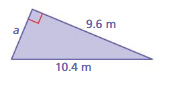
Big Ideas Math Answers Grade 7 Chapter 5 Ratios and Proportions

Big Ideas Math Grade 7 Chapter 5 Ratios and Proportions Answer Sheet is presented here for the best practice of maths. All solutions along with the detailed explanations prepared by the math experts are included in the below sections. Students can quickly open Big Ideas Math Book Grade 7 Answer Key Chapter 5 Ratios and Proportions on our website and start preparation. You can also get a free pdf for Big Ideas Math Answers Grade 7 Chapter 5 Ratios and Proportions that helps you to prepare offline also.

Big Ideas Math Book 7th Grade Answer Key Chapter 5 Ratios and Proportions

It is very difficult to get the best answer key for the math problems. A trustable guide will clear explanation and short answers are provided that help you to learn perfectly and to improve your math skills. Get a clear idea of ratios and ratio tables, rates and unit rates, identifying proportional relationships, writing and solving proportions, graphs of proportional relationships, and scale drawings by practicing this chapter.

Performance Task

Lesson: 1 Ratios and Ratio Tables

Lesson: 2 Rates and Unit Rates

Lesson: 3 Identifying Proportional Relationships

Lesson: 4 Writing and Solving Proportions

Lesson: 5 Graphs of Proportional Relationships

Lesson: 6 Scale Drawings

Chapter: 5 – Ratios and Proportions

Ratios and Proportions STEAM Video/ Performance Task

STEAM Video

Painting a Large Room
Shades of paint can be made by mixing other paints. What colors of paints can you mix to make green paint?
Big Ideas Math Answer Key Grade 7 Chapter 5 Ratios and Proportions 1
Watch the STEAM Video “Painting a Large Room.” Then answer the following questions.
1. Enid estimates that they need 2 gallons of paint to apply two coats to the wall shown. How many square feet does she expect \(\frac{1}{2}\) gallon of paint will cover?
Big Ideas Math Answer Key Grade 7 Chapter 5 Ratios and Proportions 2

Answer:
1/2 gallon of paint will cover 60 sq feet.

Explanation:
Enid estimates that they need 2 gallons of paint to apply two coats to the wall of 240 sq ft
The area of the shown figure = 24 x 10
= 240 square feet
To know how many sq feet does 1/2 gallon of paint will cover (240 . 1/2) . 1/2
= 240 . 1/4
= 60
So, 1/2 gallon of paint will cover 60 sq feet.

2. Describe a room that requires 5\(\frac{1}{2}\) gallons of paint to apply one coat of paint to each of the four walls.

Answer:
The room has 4 walls each wall is 330 sq feet.

Explanation:
A room requires 5(1/2) gallons of paint to apply one coat of paint to each of the four walls.
Enid estimates that they need 2 gallons of paint to apply two coats to the wall of 240 sq ft
If they coat only once, she would require 1 gallon of paint for a wall of 240 sq feet.
If she wants to use 5(1/2) = 11/2 gallons of paint, then the area of walls will be
= 240 . (11/2)
= 120 . 11 = 1320 Square feet
Each wall = 1320/4 =330 sq feet
The room has 4 walls each wall is 330 sq feet.

Performance Task

Mixing Paint
After completing this chapter, you will be able to use the concepts you learned to answer the questions in the STEAM Video Performance Task. You will be given the amounts of each tint used to make different colors of paint. For example:
Big Ideas Math Answer Key Grade 7 Chapter 5 Ratios and Proportions 3
You will be asked to solve various ratio problems about mixing paint. Given any color of paint, how can you make the paint slightly lighter in color?

Ratios and Proportions Getting Ready for Chapter 5

Chapter Exploration

The Meaning of a Word Rate
When you rent snorkel gear at the beach, rate you should pay attention to the rental. The rental rate is in dollars per hour.
Big Ideas Math Answer Key Grade 7 Chapter 5 Ratios and Proportions 4
1. Work with a partner. Complete each step.
• Match each description with a rate.
• Match each rate with a fraction.
• Give a reasonable value for each fraction. Then give an unreasonable value.
Big Ideas Math Answer Key Grade 7 Chapter 5 Ratios and Proportions 5
2. Work with a partner Describe a situation to which the given fraction can apply. Show how to rewrite each expression as a division problem. Then simplify and interpret your result.
Big Ideas Math Answer Key Grade 7 Chapter 5 Ratios and Proportions 6
Vocabulary
The following vocabulary terms are defined in this chapter. Think about what each term might mean and record your thoughts.
proportional
constant of proportionality
scale drawing

Lesson 5.1 Ratios and Ratio Tables

EXPLORATION 1

Describing Ratio Relationships
Work with a partner. Use the recipe shown.
Big Ideas Math Answer Key Grade 7 Chapter 5 Ratios and Proportions 5.1 1
a. Identify several ratios in the recipe.
b. You halve the recipe. Describe your ratio relationships in part (a) using the new quantities. Is the relationship between the ingredients the same as in part(a)? Explain.

Answer:
a. Stewed tomatoes : chicken broth = 9 ounces : 15 ounces
Stewed tomatoes : Chopped Spinach = 9 ounces : 9 ounces = 1 : 1
Chopped Spinach : chicken broth = 9 ounces : 15 ounces
Chopped Chicken : grated parmesan = 1 cup : 5 tablespoons
Chicken broth : Chopped Chicken = 15 ounces : 1 cup
Stewed tomatoes : chopped chicken = 9 ounces : 1 cup = Chopped Spinach : chopped chicken
Stewed tomatoes : grated parmesan = 9 ounces : 5 tablespoons = Chopped Spinach : grated parmesan
chicken broth : grated parmesan = 15 ounces : 5 tablespoons = 5 ounces : 1 tablespoon
b. The relationship between the ingredients the same as in part(a).

Explanation:
a. The several ratios of the recipe are Stewed tomatoes : chicken broth = 9 ounces : 15 ounces
Stewed tomatoes : Chopped Spinach = 9 ounces : 9 ounces = 1 : 1
Chopped Spinach : chicken broth = 9 ounces : 15 ounces
Chopped Chicken : grated parmesan = 1 cup : 5 tablespoons
Chicken broth : Chopped Chicken = 15 ounces : 1 cup
Stewed tomatoes : chopped chicken = 9 ounces : 1 cup = Chopped Spinach : chopped chicken
Stewed tomatoes : grated parmesan = 9 ounces : 5 tablespoons = Chopped Spinach : grated parmesan
chicken broth : grated parmesan = 15 ounces : 5 tablespoons = 5 ounces : 1 tablespoon
b. The relationship between the ingredients the same as in part(a).

EXPLORATION 2

Completing Ratio Tables
Work with a partner. Use the ratio tables shown.
Big Ideas Math Answer Key Grade 7 Chapter 5 Ratios and Proportions 5.1 2
a. Complete the first ratio table using multiple operations. Use the same operations to complete the second ratio table.
b. Are the ratios in the first table equivalent? the second table? Explain.
c. Do the strategies for completing ratio tables of whole numbers work for completing ratio tables of fractions? Explain your reasoning.

Answer:
a. Big Ideas Math Answer Key Grade 7 Chapter 5 Ratios and Proportions 5.1 2
b. Yes

Explanation:
a. 5 x 2 = 10, 1 x 2 = 2, 1/4 x 2 = 1/2, 1/2 x 2 = 1
5 x 1.5 = 7.5, 1 x 1.5 = 1.5, 1/4 x 3/2 = 3/8, 1/2 x 3/2 = 3/4
5 x 4 = 20, 1 x 4 = 4, 1/4 x 4 = 1, 1/2 x 4= 2
b. Yes the ratios in the first table are equivalent to the second table.

Big Ideas Math Answer Key Grade 7 Chapter 5 Ratios and Proportions 5.1 3

Try It

Question 1.
You mix \(\frac{2}{3}\) teaspoon of baking soda with 3 teaspoons of salt. Find and interpret the value of the ratio of baking soda to salt.

Answer:
The ratio of baking soda to salt is 2 : 1.

Explanation:
Given that,
You mix \(\frac{2}{3}\) teaspoon of baking soda with 3 teaspoons of salt.
The ratio of baking soda to salt = 2/3 to 3 = 2/3 : 3
= 2/3 / 3 = 2/3 . 3/1 = 2/1 = 2 : 1
The ratio of baking soda to salt is 2 : 1.

Find the missing values in the ratio table. Then write the equivalent ratios.
Question 2.
Big Ideas Math Answer Key Grade 7 Chapter 5 Ratios and Proportions 5.1 4

Answer:
Big Ideas Math Answer Key Grade 7 Chapter 5 Ratios and Proportions 5.1 3

Explanation:
The missing values in the ratio table are
4 x 4 = 16. So, 5/2 x 4 = 10
5/2 . x = 5
x = 2
So, 4 . 2 = 8
The equivalent ratios are 5/2 : 4, 10 : 16, 5 : 8.

Question 3.
Big Ideas Math Answer Key Grade 7 Chapter 5 Ratios and Proportions 5.1 5

Answer:
Big Ideas Math Answer Key Grade 7 Chapter 5 Ratios and Proportions 5.1 4

Explanation:
0.4 . x = 1.2
x = 1.2/0.4 = 3
So, 0.75 . 3 = 2.25
0.4 . y = 1.6
y = 1.6/0.4 = 4
So, 0.75 . 4 = 3
The equivalent ratios are 0.4 : 0.75, 1.2 : 2.25, 1.6 : 3

Self-Assessment for Concepts & Skills
Solve each exercise. Then rate your understanding of the success criteria in your journal.

Question 4.
WRITING AND INTERPRETING RATIOS
You include \(\frac{1}{2}\) tablespoon of essential oils in a solution for every 12 tablespoons of jojoba oil. Find and interpret the value of the ratio of jojoba oil to essential oils.
Big Ideas Math Answer Key Grade 7 Chapter 5 Ratios and Proportions 5.1 6

Answer:
The amount of jojoba oil in the solution is the 24th amount of essential oil.

Explanation:
You include \(\frac{1}{2}\) tablespoon of essential oils in a solution for every 12 tablespoons of jojoba oil
The ratio of jojoba oil to essential oil = 12 : 1/2
= 12 ÷ 1/2
= 12 . 2/1
= 24
The amount of jojoba oil in the solution is the 24th amount of essential oil.

Question 5.
NUMBER SENSE
Find the missing values in the ratio table. Then write the equivalent ratios.
Big Ideas Math Answer Key Grade 7 Chapter 5 Ratios and Proportions 5.1 7

Answer:
Big Ideas Math Answer Key Grade 7 Chapter 5 Ratios and Proportions 5.1 5

Explanation:
1/12 . x = 2/3
x = 2/3 . 12
x = 8
So, Pounds = 3/2 . 8 = 12
3/2 . 7 = 21/2
1/12 . 7 = 7/12
The equivalent ratios are 3/2 : 1/12, 12 : 2/3, 21/2 : 7/12

Self-Assessment for Problem Solving
Solve each exercise. Then rate your understanding of the success criteria in your journal.

Question 6.
DIG DEEPER!
A satellite orbiting Earth travels 14\(\frac{1}{2}\) miles every 3 seconds. How far does the satellite travel in \(\frac{3}{4}\) minute?
Big Ideas Math Answer Key Grade 7 Chapter 5 Ratios and Proportions 5.1 8

Answer:
The satellite travels 217(1/2) miles in 3/4 minutes.

Explanation:
A satellite orbiting Earth travels 14\(\frac{1}{2}\) miles every 3 seconds.
So, it travels 14.5/3 miles = 29/6 miles in every 1 second
3/4 minutes = 3/4 . 60
= 45 seconds
Therefore, it travels 45 . 29/6 miles in 3/4 minutes
= 217(1/2) miles in 3/4 minutes.
Hence, the satellite travels 217(1/2) miles in 3/4 minutes.

Question 7.
An engine runs on a mixture of 0.1 quart of oil for every 3.5 quarts of gasoline. You make 3 quarts of the mixture. How much oil and how much gasoline do you use?

Answer:
We use 0.083 quarts of oil and 2.917 quarts of gasoline.

Explanation:
The ratio of oil to gasoline = 0.1 : 3.5 = 1 : 35
use the ratio table to find an equivalent ratio in which the total mixture is 3 quarts.
For 3 quarts mixture
Oil required is 1/36 * 3 = 3/36
= 1/12 = 0.083 quarts
Gasoline required is
35/36 * 3 = 35/12 = 2.917 quarts
We use 0.083 quarts of oil and 2.917 quarts of gasoline.

Ratios and Ratio Tables Homework & Practice 5.1

Review & Refresh

Solve the inequality. Graph the solution.
Question 1.
4p + 7 ≥ 19

Answer:
p ≥ 3
Big Ideas Math Answer Key Grade 7 Chapter 5 Ratios and Proportions 5.1 6

Explanation:
Given that,
4p + 7 ≥ 19
Subtract 7 from both sides
4p + 7 – 7 ≥ 19 – 7
4p ≥ 12
Divide both sides by 4
4p/4 ≥ 12/4
p ≥ 3

Question 2.
14 < – 6n – 10

Answer:
-4 > n
Big Ideas Math Answer Key Grade 7 Chapter 5 Ratios and Proportions 5.1 7

Explanation:
Given that,
14 < – 6n – 10
Add 10 to both sides
14 + 10 < -6n – 10 + 10
24 < -6n
Divide both sides by -6
24/-6 > -6n/-6
-4 > n

Question 3.
– 3(2 + d) ≤ 15

Answer:
d ≥ -7
Big Ideas Math Answer Key Grade 7 Chapter 5 Ratios and Proportions 5.1 8

Explanation:
Given that,
– 3(2 + d) ≤ 15
Divide both sides by -3
– 3(2 + d)/-3 ≥ 15/-3
2 + d ≥ -5
d ≥ -5 – 2
d ≥ -7

Find the quotient. Write fractions in simplest form.
Question 4.
\(\frac{2}{9}\) ÷ \(\frac{4}{3}\)

Answer:
\(\frac{2}{9}\) ÷ \(\frac{4}{3}\) = 1/6 = 0.166

Explanation:
\(\frac{2}{9}\) ÷ \(\frac{4}{3}\) = 2/9 . 3/4
= (2 . 3) / (9 . 4)
= 1/6
Big Ideas Math Answer Key Grade 7 Chapter 5 Ratios and Proportions 5.1 9

Question 5.
10.08 ÷ 12

Answer:
10.08 ÷ 12 = 3024/25 = 120.96

Explanation:
10.08 ÷ 12 = 1008/100 ÷ 12
= 1008/100 . 12/1
= (1008 . 12)/100
= (100.8 . 3)/25
= 3024/25 = 120.96
Big Ideas Math Answer Key Grade 7 Chapter 5 Ratios and Proportions 5.1 10

Question 6.
– \(\frac{5}{6}\) ÷ \(\frac{3}{10}\) = -25/9 = -2.7777

Answer:
– \(\frac{5}{6}\) ÷ \(\frac{3}{10}\)

Explanation:
– \(\frac{5}{6}\) ÷ \(\frac{3}{10}\) = -5/6 . 10/3
= (-5 . 10)/(3 . 6)
= -25/9 = -2.7777
Big Ideas Math Answer Key Grade 7 Chapter 5 Ratios and Proportions 5.1 11

Question 7.
Which ratio can be represented by the tape diagram?
Big Ideas Math Answer Key Grade 7 Chapter 5 Ratios and Proportions 5.1 9
A. 3 : 4
B. 4 : 5
C. 4 : 9
D. 8 : 12

Answer:
D. 8 : 12

Explanation:
Quantity 1 has 2 boxes, quantity 2 has 3 boxes.
Out of all given ratios, 8 : 12 satisfy the condition
The ratio of given quantity = 2 : 3
2 * 4 : 3 * 4 = 8 : 12

Concepts, Skills, & Problem Solving

OPEN-ENDED Complete the ratio table using multiple operations. Are the ratios in the table equivalent? Explain. (See Exploration 2, p. 183.)
Question 8.
Big Ideas Math Answer Key Grade 7 Chapter 5 Ratios and Proportions 5.1 10

Answer:
Big Ideas Math Answer Key Grade 7 Chapter 5 Ratios and Proportions 5.1 12

Explanation:
4 x 2 = 8, 10  2 = 20
8 x 2 = 16, 20 x 2 = 40
16/8 = 2, 40/8 = 5
The equivalent ratios are 4:10, 8:20, 16:40, 2:5.

Question 9.
Big Ideas Math Answer Key Grade 7 Chapter 5 Ratios and Proportions 5.1 11

Answer:
Big Ideas Math Answer Key Grade 7 Chapter 5 Ratios and Proportions 5.1 14

Explanation:
4/5 x 10 = 8, 1/2 x 10 = 5
4/5 x 5 = 4, 1/2 x 5 = 5/2
4 x 1/25 = 4/25, 5/2 x 1/25 = 1/10

WRITING AND INTERPRETING RATIOS Find the ratio. Then find and interpret the value of the ratio.
Big Ideas Math Answer Key Grade 7 Chapter 5 Ratios and Proportions 5.1 12
Question 10.
club soda : white grape juice

Answer:
club soda : white grape juice = 2 : 1

Explanation:
Club soda = 4 cups
white grape juice = 2 cups
club soda : white grape juice = 4 : 2
= 2 : 1

Question 11.
mint leaves : chopped watermelon

Answer:
mint leaves : chopped watermelon = 1 : 6

Explanation:
mint leaves = 1/2 cup
chopped watermelon = 3 cups
mint leaves : chopped watermelon = 1/2 : 3
= 1 : 3 x 2
= 1 : 6

Question 12.
white grape juice to sugar

Answer:
white grape juice : sugar = 8 : 3

Explanation:
white grape juice = 2 cups
sugar=3/4 cup
white grape juice : sugar = 2 : 3/4
= 2 x 4: 3
= 8 : 3

Question 13.
lime juice to mint leaves

Answer:
lime juice to mint leaves is 3 : 2

Explanation:
lime juice = 3/4 cup
mint leaves = 1/2 cup
lime juice to mint leaves = 3/4 : 1/2
= 3/2 : 1
= 3 : 2

Question 14.
You have blue ribbon and red ribbon in the ratio \(\frac{1}{2}\) : \(\frac{1}{5}\) . Your friend finds the value of the ratio. Is your friend correct? Explain your reasoning.
Big Ideas Math Answer Key Grade 7 Chapter 5 Ratios and Proportions 5.1 13

Answer:
Wrong.

Explanation:
1/2 : 1/5 = 1/2 ÷ 1/5
= 1/2 . 5/1 = 5/2

COMPLETING A RATIO TABLE Find the missing values in the ratio table. Then write the equivalent ratios.
Question 15.
Big Ideas Math Answer Key Grade 7 Chapter 5 Ratios and Proportions 5.1 14

Answer:
Big Ideas Math Answer Key Grade 7 Chapter 5 Ratios and Proportions 5.1 15

Explanation:
To find the missing values,
1/6 . x = 2/3
x = 2/3 . 6
x = 4
So, calories = 20 . 4 = 80
20 . y = 10
y = 10/20 = 1/2
Miles = 1/6 . 1/2 = 1/12
10 . z = 90
z = 90/10
z = 9
Miles = 1/12 . 9 = 3/4
The equivalent ratios are 20 : 1/6, 80 : 2/3, 10 : 1/12, 90 : 3/4

Question 16.
Big Ideas Math Answer Key Grade 7 Chapter 5 Ratios and Proportions 5.1 15

Answer:
Big Ideas Math Answer Key Grade 7 Chapter 5 Ratios and Proportions 5.1 16

Explanation:
To find the missing values,
8/2 = 4
Minutes = 1/3/2 = 1/3 . 2 = 1/6
1/3 . x = 1/4
x = 1/4 . 3 = 3/4
Meters = 8 . 3/4 = 6
1/3 . y = 5/12
y = 5/12 . 3 = 5/4
Meters = 8 . 5/4 = 10
The equivalent ratios are 8 : 1/3, 4 : 2/3, 6 : 1/4, 10 : 5/12

Question 17.
Big Ideas Math Answer Key Grade 7 Chapter 5 Ratios and Proportions 5.1 16

Answer:
Big Ideas Math Answer Key Grade 7 Chapter 5 Ratios and Proportions 5.1 17

Explanation:
To find the missing values,
1/2 . x = 1
x = 2
1/24 . 2 = 1/12 = Feet
1/24 . y = 1/8
y = 1/8 . 24 = 3
Inches = 1/2 . 3 = 3/2
1/2 . z = 1/4
z = 1/4 . 2 = 1/2
Feet = 1/24 . 1/2 = 1/48
The equivalent ratios are 1/24 : 1/2, 1/12 : 1, 1/8 : 3, 1/48 : 1/4

Question 18.
Big Ideas Math Answer Key Grade 7 Chapter 5 Ratios and Proportions 5.1 17

Answer:
Big Ideas Math Answer Key Grade 7 Chapter 5 Ratios and Proportions 5.1 18

Explanation:
To find missing values,
1.5 . x = 1
x = 1/1.5 = 2/3
Tea = 3.75 . 2/3 = 2.5
1.5 . y = 3.5
y = 35/15 = 7/3
Tea = 3.75 . 7/3 = 8.75
1.5 . z = 2.5
z = 5/3
3.75 . 5/3 = 6.25

Question 19.
CRITICAL THINKING
Are the two statements equivalent? Explain your reasoning.
The ratio of boys to girls is 2 to 3.
The ratio of girls to boys is 3 to 2.

Answer:
Yes, both the statements are equivalent.

Explanation:
The ratio of boys to girls is 2 to 3.
boys : girls = 2 : 3
The ratio of girls to boys is 3 to 2.
girls : boys = 3 : 2

Question 20.
MODELING REAL LIFE
A city dumps plastic shade balls into a reservoir to prevent water from evaporating during a drought. It costs $5760 for 16,000 shade balls. How much does it cost for 12,000 shade balls?
Big Ideas Math Answer Key Grade 7 Chapter 5 Ratios and Proportions 5.1 18

Answer:
The cost for 12,000 shade balls is $4320

Explanation:
It costs $5760 for 16,000 shade balls.
The cost for 12,000 shade balls = (5760 x 12,000)/16000
= 69120/16
= 4320
So, the The cost for 12,000 shade balls is $4320

Question 21.
MODELING REAL LIFE
An oil spill spreads 25 square meters every \(\frac{1}{6}\) hour. What is the area of the oil spill after 2 hours?

Answer:
The area that the oil spill covers after 2 hours is 300 sq meters.

Explanation:
An oil spill spreads 25 square meters every 1/6 hour
The unit rate = 25 ÷ 1/6
= 25 x 6 = 150 square meters per hour
Every 1 hour spreads 150 square meters
The area that the oil spill covers after 2 hours = 2 x 150 = 300 sq meters

Question 22.
MODELING REAL LIFE
You mix 0.25 cup of juice concentrate for every 2 cups of water to make 18 cups of juice. How much juice concentrate do you use? How much water do you use?
Big Ideas Math Answer Key Grade 7 Chapter 5 Ratios and Proportions 5.1 19

Answer:
To make 18 cups of juice we use 16 cups of water and 2 cups of juice concentrate

Explanation:
The ratio between cups of water and cups of juice concentration is 2 to 1/4
The unit rate = 2 / 1/4
= 2 x 4 = 8 cups of water per cup of juice concentrate
So, to make 9 cups of juice we use 8 cups of water and 1 cup of juice concentrate
To make 18 cups of juice we use 16 cups of water and 2 cups of juice concentrate

Question 23.
A store sells 2\(\frac{1}{4}\) pounds of mulch for every 1\(\frac{1}{2}\) pounds of gravel sold. The store sells 180 pounds of mulch and gravel combined. How many pounds of each item does the store sell?

Answer:
Mulch = 108 pounds, gravel = 72 pounds

Explanation:
Let 2(1/4)x = 9/4 x be the amount of mulch so that 1(1/2)x = 3x/2 is the amount of gravel the store sell, both in pounds.
Given that thestore sells a total of 180 pounds of mulch and gravel, we can write
9x/4 + 3x/2 = 180
9x + 6x = 180 x 4
15x = 720
x = 720/15
x = 48
So, the store sells 9/4(48) = 108 pounds of mulch and 3/2(48) = 72 pounds of gravel.

Question 24.
DIG DEEPER!
You mix \(\frac{1}{4}\) cup of red paint for every \(\frac{1}{2}\) cup of blue paint to make 3 gallons of purple paint.
a. How much red paint do you use? How much blue paint do you use?
b. You decide that you want to make a lighter purple paint. You make the new mixture by adding \(\frac{1}{4}\) cup of white paint for every \(\frac{1}{4}\) cup of red paint and \(\frac{1}{2}\) cup of blue paint. How much red paint, blue paint, and white paint do you use to make 1\(\frac{1}{2}\) gallons of the lighter purple paint?

Answer:
a. We use 12 cups of red paint, 24 cups of blue paint
b. white paint = 6 cups, red paint = 6 cups, blue paint = 12 cups.

Explanation:
You mix \(\frac{1}{4}\) cup of red paint for every \(\frac{1}{2}\) cup of blue paint to make 3 gallons of purple paint.
a. The ratio of red paint to blue paint = 1/4 : 1/2
1/4x + 1/2x = (x + 2x)/4 = 3x/4
3x/4 = 3
x = 3 . 4/3
x = 4 cups
1 cup = 1/16 gallons
So, 4 cups = 4/16 = 1/4 gallons
12 . 4 = 48 cups = 1/4 . 12 = 3 gallons
So, 1/4(48) = 12 cups of red paint and 1/2(48) = 24 cups of blue paint is required to make 3 gallons
b. You make the new mixture by adding \(\frac{1}{4}\) cup of white paint for every \(\frac{1}{4}\) cup of red paint and \(\frac{1}{2}\) cup of blue paint.
(1/4 + 1/4 +1/2) = 1
1 cup = 1/16 gallons
The total lighter purple paint = 1(1/2) = 3/2 gallons
Total number of cups = (3/2) 16
= 24
white paint = 1/4 (24) = 6 cups
red paint = 1/4 (24) = 6 cups
blue paint = 1/2 (24) = 12 cups

Lesson 5.2 Rates and Unit Rates

EXPLORATION 1

Writing Rates
Work with a partner.
a. How many degrees does the minute hand on a clock move every 15 minutes? Write a rate that compares the number of degrees moved by the minute hand to the number of hours elapsed.
Big Ideas Math Answers 7th Grade Chapter 5 Ratios and Proportions 5.2 1
b. Can you use the rate in part(a) to determine how many degrees the minute hand moves in \(\frac{1}{2}\) hour? Explain your reasoning.
c. Write a rate that represents the number of degrees moved by the minute hand every hour. How can you use this rate to find the number of degrees moved by the minute hand in 2\(\frac{1}{2}\) hours?
d. Draw a clock with hour and minute hands. Draw another clock that shows the time after the minute hand moves 900°. How many degrees does the hour hand move in this time? in one hour? Explain your reasoning.
Big Ideas Math Answers 7th Grade Chapter 5 Ratios and Proportions 5.2 2

Big Ideas Math Answers 7th Grade Chapter 5 Ratios and Proportions 5.2 3

Try It

Question 1.
There is \(\frac{1}{4}\) gram of fat for every \(\frac{1}{3}\) tablespoon of powdered peanut butter. How many grams of fat are there for every tablespoon of the powder?

Answer:
We have 3/4 grams of fat for every tablespoon of the powder.

Explanation:
There is \(\frac{1}{4}\) gram of fat for every \(\frac{1}{3}\) tablespoon of powdered peanut butter.
There are 1/4 / 1/3 = 1/4. 3 = 3/4 grams of fat for every tablespoon of the powder.

Question 2.
WHAT IF?
The scientist later states that the iron travels 3 feet every 10 minutes. Does this change your answer in Example 2? Explain.

Answer:
The liquid iron travels about 432 feet in 1 day.

Explanation:
The iron travels 3 feet for every 10 minutes
The ratio of feet to minutes is 3 : 10
Divide the quantity by 10 to get the unit rate per minute. Then multiply each quantity by 1440 to find the distance traveled in 24 hours.
Big Ideas Math Answer Key Grade 7 Chapter 5 Ratios and Proportions 5.1 19
So, the liquid iron travels about 432 feet in 1 day.

Self-Assessment for Concepts & Skills
Solve each exercise. Then rate your understanding of the success criteria in your journal.

Question 3.
VOCABULARY
How can you tell when a rate is a unit rate?

Answer:
A unit rate is described as hoe many units of the first type of quantity corresponds to one unit of the second type of quantity. When the denominator is 1, then you can say that that rate is a unit rate. Few examples of unit rate are m/sec, feet/hour.

Question 4.
WRITING
Explain why rates are usually written as unit rates.

Answer:
Generally, a rate is a ratio of two quantities. Rates are usually written as unit rates because they are easier to read, easier to understand and easier to compare.

Find the unit rate.
Question 5.
$1.32 for 12 ounces

Answer:
$0.11 for 1 ounce

Explanation:
$1.32 for 12 ounces = 1.32 : 12
= 1.32/12 : 12/12
= 0.11 : 1

Question 6.
\(\frac{1}{4}\) gallon for every \(\frac{3}{10}\) mile

Answer:
5/6 gallon for every 1 mile

Explanation:
\(\frac{1}{4}\) gallon for every \(\frac{3}{10}\) mile = 1/4 : 3/10
= 1/4 x 10/3 : 3/10 x 10/3
= 5/6 : 1

Question 7.
USING TOOLS
Find the missing values in the ratio table. Then write the unit rate of grams per cup and the unit rate of cups per gram.
Big Ideas Math Answers 7th Grade Chapter 5 Ratios and Proportions 5.2 4

Answer:
Big Ideas Math Answer Key Grade 7 Chapter 5 Ratios and Proportions 5.2 1
The unit rate of grams per cup = 15/4 : 1
The unit rate of cups per gram = 1 : 4/15

Explanation:
2/3 . x = 1/6
x = 1/6 . 3/2 = 1/4
1/4 . 5/2 = 5/8 = grams
5/2 . y = 1
y = 1 . 2/5 = 2/5
2/3 . 2/5 = 4/15 = cups
5/2 . 3/2 = 15/4
So, 2/3 . 3/2 = 1 = cups
2/3 . z = 4
z = 4 . 3/2 = 6
So, 5/2 . 6 = 15
grams: cups = 5/2 : 2/3
The unit rate of grams per cup = 5/2 . 3/2 : 1 = 15/4 : 1
cups : grams = 4/15 : 1

Self-Assessment for Problem Solving
Solve each exercise. Then rate your understanding of the success criteria in your journal.

Question 8.
Two people compete in a five-mile go-kart race. Person A travels \(\frac{1}{10}\) mile every 15 seconds. Person B travels \(\frac{3}{8}\) mile every 48 seconds. Who wins the race? What is the difference of the finish times of the competitors?
Big Ideas Math Answers 7th Grade Chapter 5 Ratios and Proportions 5.2 5

Answer:
Person B wins the race.
The difference of the finish times of the competitors = 1.833 minutes

Explanation:
Two people compete in a five-mile go-kart race.
Person A travels 1/10 miles for 15 seconds = 1/10 : 15
Person A unit rate = 1/150 : 1
It means, A travels 1/150 miles per1 second
So, person A completes the race in 5 x 150 = 750 seconds = 750/60 = 12.5 minutes
Person B travels 3/8 mile for 48 seconds = 3/8 : 48
Person B unit rate = 3/384 : 1
It means B travels 3/384 miles in 1 second.
So, person B completes the race in 5 . (384/3) = 1920/3 = 640
= 640/60 = 10.666 minutes
Hence, person B wins the race.
The difference of the finish times of the competitors = 12.5 – 10.66 = 1.8333 minutes

Question 9.
DIG DEEPER!
A bus travels 0.8 mile east every 45 seconds. A second bus travels 0.55 mile west every 30 seconds. The buses start at the same location. Use two methods to determine how far apart the buses are after 15 minutes. Explain your reasoning.

Answer:
Two buses are 1/2 mile apart after 15 minutes.

Explanation:
A bus travels 0.8 mile east every 45 seconds = 0.8 : 45
The unit rate = 0.8/45 : 1
A second bus travels 0.55 mile west every 30 seconds = 0.55 : 30
The unit rate = 0.55/30 : 1
Find how much distance, busses travelled after 15 minutes = 15 x 60 = 900 seconds
First bus travels (0.8/45) x 900 = 16 miles
Second bus travels (0.55/30) x 900 = 16.5 miles
The difference in their distances = 16.5 – 16 = 1/2 mile

Rates and Unit Rates Homework & Practice 5.2

Review & Refresh

Find the missing values in the ratio table. Then write the equivalent ratios.
Question 1.
Big Ideas Math Answers 7th Grade Chapter 5 Ratios and Proportions 5.2 6

Answer:
Big Ideas Math Answer Key Grade 7 Chapter 5 Ratios and Proportions 5.2 2
The equivalent ratios are 3/4 : 1/3, 3/2 : 2/3, 3 : 3/4, 1 : 4/9

Explanation:
To find the missing values,
1/3 . x = 2/3
x = 2
3/4 . 2 = 3/2 = flour
3/4 . y = 3
y = 4
1/3 . 4 = 4/3 = oats1
3/4 . z = 1
z = 4/3
4/3 . 1/3 = 4/9 = oats2
The equivalent ratios are 3/4 : 1/3, 3/2 : 2/3, 3 : 3/4, 1 : 4/9

Question 2.
Big Ideas Math Answers 7th Grade Chapter 5 Ratios and Proportions 5.2 7

Answer:
Big Ideas Math Answer Key Grade 7 Chapter 5 Ratios and Proportions 5.2 3
The equivalent ratios are 1/4 : 1/2, 3/4 : 3/2, 3/2 : 3, 5 : 10

Explanation:
To find the missing values,
1/4 . x = 3/4
x = 3
1/2 . 3 = 3/2 = minutes1
1/2 . y = 3
y = 6
1/4 . 6 = 3/2 = pages
1/4 . z = 5
z = 20
1/2 . 20 = 10 = minutes 2
The equivalent ratios are 1/4 : 1/2, 3/4 : 3/2, 3/2 : 3, 5 : 10

Copy and complete the statement using <, >, or =.
Question 3.
Big Ideas Math Answers 7th Grade Chapter 5 Ratios and Proportions 5.2 8

Answer:
9/2 > 8/3

Explanation:
9/2 = 4.5
8/3 = 2.6666
So, 9/2 > 8/3

Question 4.
Big Ideas Math Answers 7th Grade Chapter 5 Ratios and Proportions 5.2 9

Answer:
-8/15 < 10/18

Explanation:
-8/15 = -0.5333
10/18 = 0.555
So, -8/15 < 10/18

Question 5.
Big Ideas Math Answers 7th Grade Chapter 5 Ratios and Proportions 5.2 10

Answer:
-6/24 = -2/8

Explanation:
-6/24 = -0.25
-2/8 = -0.25
So, -6/24 = -2/8

Concepts, Skills, & Problem Solving

WRITING RATES Find the number of degrees moved by the minute hand of a clock in the given amount of time. Explain your reasoning. (See Exploration 1, p. 189.)
Question 6.
\(\frac{2}{3}\) hour

Answer:
240 degrees.

Explanation:
The minute hand passes through 60 minutes ( = 360 degrees) in 1 hour.
In 2/3 hours it passes through 2/3 * 360 = 240 degrees.

Question 7.
\(\frac{7}{12}\) hour

Answer:
210 degrees

Explanation:
The minute hand passes through 60 minutes ( = 360 degrees) in 1 hour.
In 7/12 hours it passes through 7/12 * 360 = 210 degrees

Question 8.
1\(\frac{1}{4}\) hours

Answer:
450 degrees = (360 + 90) degrees

Explanation:
The minute hand passes through 60 minutes ( = 360 degrees) in 1 hour.
In 1(1/4) = 5/4 hours it passes through 5/4 * 360 = 450 degrees

FINDING UNIT RATES Find the unit rate.
Question 9.
180 miles in 3 hours

Answer:
6 miles per 1 hour

Explanation:
180 miles in 3 hours = 18 : 3
The unit rate is 18/3 : 1 = 6 : 1

Question 10.
256 miles per 8 gallons

Answer:
32 miles per 1 gallon

Explanation:
256 miles per 8 gallons = 256 : 8
The unit rate is 256/8 : 1 = 32 : 1

Question 11.
\(\frac{1}{2}\) pound : 5 days

Answer:
1/10 pounds for 1 day

Explanation:
\(\frac{1}{2}\) pound : 5 days = 1/2 : 5
The unit rate is 1/2/5 : 1
= 1/10 : 1

Question 12.
4 grams for every \(\frac{3}{4}\) serving

Answer:
16/3 grams per serving

Explanation:
4 grams for every \(\frac{3}{4}\) serving = 4 : 3/4
The unit rate is = 4 x (4/3) : 1
= 16/3 : 1

Question 13.
$9.60 for 4 pounds

Answer:
$2.4 per 1 pound

Explanation:
$9.60 for 4 pounds = 9.60 : 4
The unit rate is 9.60/4 : 1
= 2.4 : 1

Question 14.
$4.80 for 6 cans

Answer:
$0.8 per 1 can

Explanation:
$4.80 for 6 cans = 4.80 : 6
The unit rate is 4.80/6 : 1
= 0.8 : 1

Question 15.
297 words in 5.5 minutes

Answer:
54 words in 1 minute

Explanation:
297 words in 5.5 minutes = 297 : 5.5
The unit rate is 297/5.5 : 1
= 54 : 1

Question 16.
\(\frac{1}{3}\) kilogram: \(\frac{2}{3}\) foot

Answer:
1/2 kilogram per 1 foot

Explanation:
\(\frac{1}{3}\) kilogram: \(\frac{2}{3}\) foot = 1/3 : 2/3
The unit rate is 1/3 x (3/2) : 1
= 1/2 : 1

Question 17.
\(\frac{5}{8}\) ounce per \(\frac{1}{4}\) pint

Answer:
5/2 ounce per 1 pint

Explanation:
\(\frac{5}{8}\) ounce per \(\frac{1}{4}\) pint = 5/8 : 1/4
The unit rate is 5/8 x 4 : 1
= 5/2 : 1

Question 18.
21\(\frac{3}{4}\) meters in 2\(\frac{1}{2}\) hours

Answer:
87 meters in 1 hour

Explanation:
21\(\frac{3}{4}\) meters in 2\(\frac{1}{2}\) hours = 21(3/4) : 2(1/2)
= 87/4 : 5/2
The unit rate is 87/4 x (2/5) : 1
= 87/10 : 1

USING TOOLS Find the missing values in the ratio table. Then write the equivalent ratios.
Question 19.
Big Ideas Math Answers 7th Grade Chapter 5 Ratios and Proportions 5.2 11

Answer:
Big Ideas Math Answer Key Grade 7 Chapter 5 Ratios and Proportions 5.2 5
The equivalent ratios are 25 : 1/3, 50 : 2/3, 75 : 1, 100 : 4/3

Explanation:
To find the missing values,
25 . x = 50
x = 50/25 = 2
1/3 . 2 = 2/3 = servings
1/3 . y = 1
y = 3
25 . 3 = 75 = calories1
1/3 . z = 4/3
z = 4
25 . 4 = 100 = calories2
The equivalent ratios are 25 : 1/3, 50 : 2/3, 75 : 1, 100 : 4/3

Question 20.
Big Ideas Math Answers 7th Grade Chapter 5 Ratios and Proportions 5.2 12

Answer:
Big Ideas Math Answer Key Grade 7 Chapter 5 Ratios and Proportions 5.2 4
The equivalent ratios are 4 : 3/4, 4/3 : 1/4, 16/3 : 1, 16 : 3

Explanation:
To find the missing values,
4x = 4/3
x = 1/3
3/4 . 1/3 = 1/4 = time1
3/4 y = 1
y = 4/3
4 . 4/3 = 16/3 = oxygen
4z = 16
z = 16/4 = 4
3/4 . 4 = 3 = time2
The equivalent ratios are 4 : 3/4, 4/3 : 1/4, 16/3 : 1, 16 : 3

Question 21.
PROBLEM SOLVING
In January 2012, the U.S.population was about 313 million people. In January 2017, it was about 324 million. What was the average rate of population change per year?

Answer:
The average rate of population change per year = 2.2 million

Explanation:
In January 2012, the U.S.population was about 313 million people
In January 2017, it was about 324 million
After 5 years, the population change = 324 – 313 = 11 million
The average rate of population change per year = 11/5 = 2.2 million

Question 22.
MODELING REAL LIFE
You can sand \(\frac{4}{9}\) square yard of wood in \(\frac{1}{2}\) hour. How many square yards can you sand in 3.2 hours? Justify your answer.

Answer:
128/45 square yards can you sand in 3.2 hours.

Explanation:
You can sand \(\frac{4}{9}\) square yard of wood in \(\frac{1}{2}\) hour
In 3.2 hours, you can sand 4/9 x 3.2 x 2 sq yads
= 25.6/9 = 128/45
So, 128/45 square yards can you sand in 3.2 hours.

Question 23.
REASONING
Tell whether the rates are equivalent. Justify your answer.
Question 23.
75 pounds per 1.5 years
38.4 ounces per 0.75 year

Answer:
Rates are not equivalent.

Explanation:
75 pounds per 1.5 years = 75 : 1.5
= 750/15 = 50
38.4 ounces per 0.75 year = 38.4 : 0.75
= 384 : 7.5 = 51.2
So, rates are not equivalent

Question 24.
7\(\frac{1}{2}\) miles for every \(\frac{3}{4}\) hour
\(\frac{1}{2}\) mile for every 3 minutes

Answer:
Rates are not equivalent.

Explanation:
7\(\frac{1}{2}\) miles for every \(\frac{3}{4}\) hour = 7(1/2) : 3/4
= 15/2 : 3/4
= 15/2 . 4/3 = 10
\(\frac{1}{2}\) mile for every 3 minutes = 1/2 : 3
= 1 : 6
So, rates are not equivalent

Question 25.
PROBLEM SOLVING
The table shows nutritional information for three beverages.
Big Ideas Math Answers 7th Grade Chapter 5 Ratios and Proportions 5.2 13
a. Which has the most calories per fluid ounce?
b. Which has the least sodium per fluid ounce?

Answer:
a. whole milk has the most calories per fluid ounce
b. Oange juice has the least sodium per fluid ounce.

Explanation:
a.
Convert serving size to fluid ounce
Whole Milk = 1 c = 8 fl oz
Orange juice = 1 pt = 16 fl oz
Whole milk = 146 : 8 = 146/8 : 1
= 18.25
There are 18.25 calories in 1 fluid ounce of Whole Milk.
Orange juice = 210 : 16 = 210/16 : 1
= 13.125
There are 13.125 calories in 1 fluid ounce of Orange Juice.
Apple juice = 351 : 24
= 351/24 : 1
There are 14.625 calories in 1 fluid ounce of Apple Juice.
So, whole milk has the most calories per fluid ounce
b. Whole milk = 98 : 8
= 98/8 : 1
= 12.25
Orange juice = 10 : 16
= 10/16 : 1
= 0.625
Apple juice = 21 : 24
= 21/24 : 1
= 0.875
So, orange juice has the least sodium per fluid ounce.

Question 26.
MODELING REAL LIFE
A shuttle leaving Earth’s atmosphere travels 15 miles every 2 seconds. When entering the Earth’s atmosphere, the shuttle travels 2\(\frac{3}{8}\) miles per \(\frac{1}{2}\) second. Find the difference in the distances traveled after 15 seconds when leaving and entering the atmosphere.

Answer:
The difference in the distances traveled is 2503 miles.

Explanation:
A shuttle leaving Earth’s atmosphere travels 15 miles every 2 seconds. = 15 : 2
= 15/2 : 1
= 7.5 miles for every second
When entering the Earth’s atmosphere, the shuttle travels 2\(\frac{3}{8}\) miles per \(\frac{1}{2}\) second = 2(3/8) : /2
= 19/8 : 1/2
= 19/8 . 2 = 19/4
= 4.75 miles per second
After 15 minutes = 15 x 60 = 900 seconds,
A shuttle leaving Earth’s atmosphere travels = 7.5 x 900
= 6750 miles
When entering the Earth’s atmosphere, the shuttle travels = 4.75 x 900
= 4247 miles
The difference in the distances traveled = 6750 – 4247
= 2503 miles

Question 27.
RESEARCH
Fire hydrants are one of four different colors to indicate the rate at which water comes from the hydrant.
Big Ideas Math Answers 7th Grade Chapter 5 Ratios and Proportions 5.2 14
a. Use the Internet to find the ranges of rates indicated by each color.
b. Research why a fire fighter needs to know the rate at which water comes out of a hydrant.

Answer:
a. Blue – 1500 or more gallons per minute
Green – 1000 to 1499 gallons per minute
Red – Less than 500 gallons per minute
Orange – 500 to 999 gallons per minute
b. Fire hydrants are flow-tested at a residual pressure of 20 psi. Therefore, firefighters should understand the typical flow rates of fire hydrants at a pressure. They should not expect that the fire hydrant will be supplied at an increased pressure, resulting in a greater flow rate.

Explanation:
a. Blue – 1500 or more gallons per minute
Green – 1000 to 1499 gallons per minute
Red – Less than 500 gallons per minute
Orange – 500 to 999 gallons per minute

Question 28.
DIG DEEPER!
You and a friend start riding bikes toward each other from opposite ends of a 24-mile biking route. You ride 2\(\frac{1}{6}\) miles every \(\frac{1}{4}\) hour. Your friend rides 7\(\frac{1}{3}\) miles per hour.
Big Ideas Math Answers 7th Grade Chapter 5 Ratios and Proportions 5.2 15
a. After how many hours do you meet?
b. When you meet, who has traveled farther? How much farther?

Answer:
a. They meet after 1(1/2) hour.
b. You have traveled farther 2 miles.

Explanation:
You ride 2\(\frac{1}{6}\) miles every \(\frac{1}{4}\) hour.
= 2(1/6) : 1/4
= 13/6 : 1/4
= 13/6 . 4 = (13 . 2)/3 = 26/3 : 1
Your friend rides 7\(\frac{1}{3}\) miles per hour.
= 7(1/3) : 1
= 22/3 : 1
After 1 hour, you traveled = 26/3 miles, your friend traveled 22/3 miles
= 26/3 + 22/3 = 48/3
= 16 miles
Since you and your friend moving towards each other at 16 miles per hour
we can write 24/16 = 3/2 = 1.5 hours.
So, they meet after 1(1/2) hour.
b. You have traveled 26/3 (1.5) = 13 miles at the time of the meeting
Your friend has traveled 22/3 (1.5) = 11 miles at the time of the meeting.
You have traveled farther 2 miles.

Lesson 5.3 Identifying Proportional Relationships

EXPLORATION 1

Determining Proportional Relationships
Work with a partner.
a. You can paint 50 square feet of a surface every 40 minutes. How long does it take you to paint the mural shown? Explain how you found your answer.
Big Ideas Math Answers Grade 7 Chapter 5 Ratios and Proportions 5.3 1
b. The number of square feet you paint is proportional to the number of minutes it takes you. What do you think it means for a quantity to be proportional to another quantity?
c. Assume your friends paint at the same rate as you. The table shows how long it takes you and different numbers of friends to paint a fence. Is x proportional to y in the table? Explain.
Big Ideas Math Answers Grade 7 Chapter 5 Ratios and Proportions 5.3 2
d. How long will it take you and four friends to paint the fence? Explain how you found your answer.

Answer:
a. It takes 3 hours to paint the mural.
b. It means if the number of squares feet increases or decreases then the number of minutes to paint also increases or decreases respectively.
c. x is not proportional to y.

Explanation:
a. The area of mural = 25 x 9 = 225 sq ft
You can paint 50 square feet of a surface every 40 minutes
To paint the given mural it takes (40 x 225)/50 = 180 minutes = 3 hours
b. The number of square feet you paint is proportional to the number of minutes it takes you.
It means if the number of squares feet increases or decreases then the number of minutes to paint also increases or decreases respectively.
c. x : y = 1 : 4, 2 : 2 = 1 : 1
3 : 4/3 = 9 : 4, 4 : 1
All those are not equa so, x is not proportional to y.

Big Ideas Math Answers Grade 7 Chapter 5 Ratios and Proportions 5.3 3

Try It

Tell whether the ratios form a proportion.
Question 1.
1 : 2 and 5 : 10

Answer:
1 : 2 and 5 : 10 form a proportion.

Explanation:
Compare the values of the ratios
1/2
5/10 = (5 ÷ 5) / (10 ÷ 5) = 1/2
The values of the ratios are equivalent
So, 1 : 2 and 5 : 10 form a proportion.

Question 2.
4 : 6 and 18 : 24

Answer:
4 : 6 and 18 : 24 do not form a proportion.

Explanation:
Compare the values of the ratios
4/6 = (4 ÷ 2)/(6 ÷ 2) = 2/3
18/24 = (18 ÷ 6)/(24 ÷ 6) = 3/4
The values of the ratios are not equivalent
So, 4 : 6 and 18 : 24 do not form a proportion.

Question 3.
4.5 to 3 and 6 to 9

Answer:
4.5 to 3 and 6 to 9 do not form a proportion.

Explanation:
Compare the values of the ratios
4.5/3 = 45/30
= (45 ÷ 15) / (30 ÷ 15) =3/2
6/9 = (6 ÷ 3) / (9 ÷ 3)
= 2/3
The values of the ratios are not equivalent
So, 4.5 to 3 and 6 to 9 do not form a proportion.

Question 4.
\(\frac{1}{2}\) to \(\frac{1}{4}\) and 8 to 4

Answer:
\(\frac{1}{2}\) to \(\frac{1}{4}\) and 8 to 4 form a proportion

Explanation:
Compare the values of the ratios
1/2 : 1/4 = (1/2) / (1/4)
= 1/2 . 4 = 2 : 1
8 : 4 = (8 ÷ 4) / (4 ÷ 4) = 2 : 1
The values of the ratios are equivalent
So, \(\frac{1}{2}\) to \(\frac{1}{4}\) and 8 to 4 form a proportion

Tell whether the ratios form a proportion.
Question 5.
6 : 2 and 12 : 1

Answer:
6 : 2 and 12 : 1 do not form a proportion.

Explanation:
Compare the values of the ratios
6 : 2 = (6 ÷ 2) : (2 ÷ 2) = 3 : 1
12 : 1 = (12 ÷ 1) : (1 ÷ 1) = 12 : 1
The values of the ratios are not equivalent
So, 6 : 2 and 12 : 1 do not form a proportion.

Question 6.
8 : 12 and \(\frac{2}{3}\) : 1

Answer:
8 : 12 and \(\frac{2}{3}\) : 1 form a proportion

Explanation:
Use the cross product property to determine whether the ratios form a proportion.
8/12 = 2/3 : 1
8/12 = 2/3
8 . 3 = 12 . 2
24 = 24
The cross productsare equal.
So, 8 : 12 and \(\frac{2}{3}\) : 1 form a proportion

Tell whether x and y are proportional.
Question 7.
Big Ideas Math Answers Grade 7 Chapter 5 Ratios and Proportions 5.3 4

Answer:
x and y are proportional.

Explanation:
Compare the values of ratios x to y
1/2, 2/4 = 1/2, 3/6 = 1/2, 4/8 = 1/2
The values of the ratios are equivalent.
So, x and y are proportional.

Question 8.
Big Ideas Math Answers Grade 7 Chapter 5 Ratios and Proportions 5.3 5

Answer:
x and y are not proportional.

Explanation:
Compare the values of ratios x to y
2/4 = 1/2, 4/2 = 2, 6/1 = 6, 8/1/2 = 16, 10/1/4 = 40
The values of the ratios are not equivalent.
So, x and y are not proportional.

Self-Assessment for Concepts & Skills
Solve each exercise. Then rate your understanding of the success criteria in your journal.

PROPORTIONS Tell whether the ratios form a proportion.
Question 9.
4 : 14 and 12 : 40

Answer:
4 : 14 and 12 : 40 do not form a proportion.

Explanation:
Use the cross product property to determine whether the ratios form a proportion.
4/14 = 12/40
Cross multiply
4 . 40 = 12 . 14
160 ≠ 168
The cross products are not equal
So, 4 : 14 and 12 : 40 do not form a proportion

Question 10.
9 : 3 and 45 : 15

Answer:
9 : 3 and 45 : 15 form a proportion.

Explanation:
Compare the values of the ratios
9/3 = (9 ÷ 3) / (3 ÷ 3) = 3/1
45/15 = (45 ÷ 15) / (15 ÷ 15) = 3/1
The ratios are equivalent
So, 9 : 3 and 45 : 15 form a proportion

Question 11.
VOCABULARY
Explain how to determine whether two quantities are proportional.

Answer:
The two quantities are proportional means they are having equivalent ratios.

Question 12.
WHICH ONE DOESN’T BELONG?
Which ratio does not belong with the other three? Explain your reasoning.
Big Ideas Math Answers Grade 7 Chapter 5 Ratios and Proportions 5.3 6

Answer:
3/5 does not belong with the other three.

Explanation:
4/10 = 2/5
2/5
3/5
6/15 = 2/5
So, 3/5 does not belong with the other three.

Self-Assessment for Problem Solving
Solve each exercise. Then rate your understanding of the success criteria in your journal.

Question 13.
After making 20 servings of pasta, a chef has used 30 cloves of garlic. The chef used 6 cloves to make the first 4 servings. How many cloves of garlic are used to make 10 servings? Justify your answer.
Big Ideas Math Answers Grade 7 Chapter 5 Ratios and Proportions 5.3 7

Answer:
15 cloves of garlic are used to make 10 servings?

Explanation:
After making 20 servings of pasta, a chef has used 30 cloves of garlic.
The ratio of garlic cloves to serving of pasta = 30 : 20
= 30/20 : 1
= 3/2 : 1
The chef used 6 cloves to make the first 4 servings
The ratio of garlic cloves to serving of pasta = 6 : 4
= 6/4 : 1
= 3/2 : 1
It means 1.5 garlic cloves are used to make 1 serving.
The ratios are proportional
So, to make 10 servings, multiply 1.5 by 10
= 1.5 x 10 = 15 cloves
Therefore, 15 cloves of garlic are used to make 10 servings.

Question 14.
DIG DEEPER!
A runner completes a 25-mile race in 5 hours. The runner completes the first 7.5 miles in 1.5 hours.
a. Do these rates form a proportion? Justify your answer.
b. Can you determine, with certainty, the time it took the runner to complete 10 miles? Explain your reasoning.

Answer:
a. Yes, these form a proportion
b. It takes 2 hours for the runner to complete 10 miles.

Explanation:
a. A runner completes a 25-mile race in 5 hours.
The ratio of miles to hours = 25 : 5
= 25/5 : 1
= 5 : 1
The runner completes the first 7.5 miles in 1.5 hours.
The ratio of miles to hours = 7.5/1.5
= 75/15 : 1
= 5 : 1
It means the runner completes 5 miles in 1 hour
The ratios are proportional
b. So, it takes 10/5 = 2 hours for the runner to complete 10 miles.

Identifying Proportional Relationships Homework & Practice 5.3

Review & Refresh

Find the unit rate.
Question 1.
30 inches per 5 years

Answer:
6 inches per 1 year

Explanation:
30 inches per 5 years = 30 : 5
= 30/5 : 1
= 6 : 1
6 inches per 1 year

Question 2.
486 games every 3 seasons

Answer:
162 games every season

Explanation:
486 games every 3 seasons = 486 : 3
= 486/3 : 1
= 162 : 1
162 games every season

Question 3.
8750 steps every 1.25 hours

Answer:
7000 steps every hour

Explanation:
8750 steps every 1.25 hours = 8750 : 1.25
= 8750/1.25 : 1
= 7000 : 1
7000 steps every hour

Question 4.
3.75 pints out of every 5 gallons

Answer:
0.75 prints out of every gallon

Explanation:
3.75 pints out of every 5 gallons = 3.75 : 5
= 3.75/5 : 1
= 3/4 : 1
0.75 prints out of every gallon

Add or subtract.
Question 5.
– 28 + 15

Answer:
– 28 + 15 = -13

Explanation:
– 28 + 15 = -13

Question 6.
– 6 + (- 11)

Answer:
– 6 + (- 11) = -17

Explanation:
– 6 + (- 11) = -6 – 11
= -17

Question 7.
– 10 – 8

Answer:
– 10 – 8 = -18

Explanation:
– 10 – 8 = -18

Question 8.
– 17 – (- 14)

Answer:
– 17 – (- 14) = -3

Explanation:
– 17 – (- 14) = -17 + 14
= -3

Solve the equation.
Question 9.
\(\frac{x}{6}\) = 25

Answer:
x = 150

Explanation:
\(\frac{x}{6}\) = 25
Multiply both sides by 6
x/6 • 6 = 25 • 6
x = 150

Question 10.
8x = 72

Answer:
x = 9

Explanation:
8x = 72
Divide both sides by 8
8x/8 = 72/8
x = 9

Question 11.
150 = 2x

Answer:
x = 75

Explanation:
150 = 2x
Divide both sides by 2
150/2 = 2x/2
75 = x

Question 12.
35 = \(\frac{x}{4}\)

Answer:
x = 140

Explanation:
35 = \(\frac{x}{4}\)
Multiply both sides by 4
35 • 4 = x/4 • 4
140 = x

Concepts, Skills, & Problem Solving

REASONING You can paint 75 square feet of a surface every 45 minutes. Determine how long it takes you to paint a wall with the given dimensions. (See Exploration 1, p. 195.)
Question 13.
8 ft × 5 ft

Answer:
24 minutes

Explanation:
You can paint 75 square feet of a surface every 45 minutes
= 75 : 45
= 75/45 : 1
= 5/3 : 1
So, you can paint 5/3 sq feet of a surface in 1 minute.
The given area is 8 ft × 5 ft = 40 sq ft
Divide 40 by 5/3
= 40 / 5/3
= 40 . 3/5
= 24 minutes

Question 14.
7 ft × 6 ft

Answer:
25 minutes 12 seconds

Explanation:
The given area is 7 ft × 6 ft = 42 sq ft
Divide 42 by 5/3
= 42/5/3
= 42 . 3/5
= 126/5
= 25(1/5)
= 25 minutes 12 seconds

Question 15.
9 ft × 9 ft

Answer:
48 minutes 36 seconds

Explanation:
The given area is 9 ft × 9 ft = 81 sq ft
Divide 81 by 5/3
= 81/5/3
= 81 . 3/5
= 243/5
= 48(3/5)
= 48 minutes 36 seconds

PROPORTIONS Tell whether the ratios form a proportion.
Question 16.
1 to 3 and 7 to 21

Answer:
1 to 3 and 7 to 21 form a proportion.

Explanation:
Compare the values of the ratios
1 to 3 = 1 : 3
7 to 21 = 7 : 21
= (7 ÷ 7) : (21 ÷ 7)
= 1 : 3
The ratios are equivalent
So, 1 to 3 and 7 to 21 form a proportion.

Question 17.
1 : 5 and 6 : 30

Answer:
1 : 5 and 6 : 30 form a proportion

Explanation:
Compare the values of the ratios
1 : 5 = 1/5
6 : 30 = (6 ÷ 6) : (30 ÷ 6)
= 1/5
The ratios are equivalent
So, 1 : 5 and 6 : 30 form a proportion

Question 18.
3 to 4 and 24 to 18

Answer:
3 to 4 and 24 to 18 do not form a proportion

Explanation:
Compare the values of the ratios
3 to 24 = 3 : 24
= (3 ÷ 3) : (24 ÷ 3)
= 1 : 8
24 to 18 = 24 : 18
= (24 ÷ 6) : (18 ÷ 6)
= 4 : 3
The ratios are not equivalent
So, 3 to 4 and 24 to 18 do not form a proportion

Question 19.
3.5 : 2 and 14 : 8

Answer:
3.5 : 2 and 14 : 8 do not form a proportion

Explanation:
Compare the values of the ratios
35 : 2 = 35/2
14 : 8 = (14 ÷ 2) : (8 ÷ 2)
= 7 : 4 = 7/4
The ratios are not equivalent
So, 3.5 : 2 and 14 : 8 do not form a proportion

Question 20.
24: 30 and 3 : \(\frac{7}{2}\)

Answer:
24: 30 and 3 : \(\frac{7}{2}\) do not form a proportion.

Explanation:
Compare the values of the ratios
24 : 30 = 24/30
= (24 ÷ 2)/(30 ÷ 2)
= 12/15
3 : 7/2 = 6 : 7
= 6/7
The ratios are not equivalent
So, 24: 30 and 3 : \(\frac{7}{2}\) do not form a proportion.

Question 21.
\(\frac{21}{2}\) : 3 and 16 : 6

Answer:
\(\frac{21}{2}\) : 3 and 16 : 6 do not form a proportion.

Explanation:

21/2 : 3 = 21 : 6
= (21 ÷ 3) : (6 ÷ 3)
= 7 : 2
16 : 6 = (16 ÷ 2) : (6 ÷ 2)
= 8 : 3
The ratios are not equivalent
So, \(\frac{21}{2}\) : 3 and 16 : 6 do not form a proportion.

Question 22.
0.6 : 0.5 and 12 : 10

Answer:
0.6 : 0.5 and 12 : 10 form a proportion

Explanation:
Compare the values of the ratios
0.6 : 0.5 = 6/5
12 : 10 = (12 ÷ 2) : (10 ÷ 2)
= 6 : 5
The ratios are equivalent
So, 0.6 : 0.5 and 12 : 10 form a proportion

Question 23.
2 to 4 and 11 to \(\frac{11}{2}\)

Answer:
2 to 4 and 11 to \(\frac{11}{2}\) do not form a proportion.

Explanation:
Compare the values of the ratios
2 to 4 = 2 : 4
= (2 ÷ 2) : (4 ÷ 2)
= 1 : 2
11 to \(\frac{11}{2}\) = 11 : 11/2
= 22 : 11
= (22 ÷ 11) : (11 ÷ 11)
= 2 : 1
The ratios are not equivalent
So, 2 to 4 and 11 to \(\frac{11}{2}\) do not form a proportion.

Question 24
\(\frac{5}{8}\) : \(\frac{2}{3}\) and \(\frac{1}{4}\) : \(\frac{1}{3}\)

Answer:
\(\frac{5}{8}\) : \(\frac{2}{3}\) and \(\frac{1}{4}\) : \(\frac{1}{3}\) do not form a proportion.

Explanation:
Compare the values of the ratios
\(\frac{5}{8}\) : \(\frac{2}{3}\) = 5/8 / 2/3
= 5/8 . 3/2
= 15/16
\(\frac{1}{4}\) : \(\frac{1}{3}\) = 1/4 / 1/3
= 1/4 . 3 = 3/4
The ratios are not equivalent
So, \(\frac{5}{8}\) : \(\frac{2}{3}\) and \(\frac{1}{4}\) : \(\frac{1}{3}\) do not form proportion

IDENTIFYING PROPORTIONAL RELATIONSHIPS Tell whether x and y are proportional.
Question 25.
Big Ideas Math Answers Grade 7 Chapter 5 Ratios and Proportions 5.3 8

Answer:
x and y are not proportional.

Explanation:
Compare the values of the ratios x to y.
1/7, 2/8 = 1/4, 3/9 = 1/3
The values of the ratios are not equivalent.
So, x and y are not proportional.

Question 26.
Big Ideas Math Answers Grade 7 Chapter 5 Ratios and Proportions 5.3 9

Answer:
x and y are proportional.

Explanation:
Compare the values of the ratios x to y.
2/5, 4/10 = 2/5, 6/15 = 2/5
The values of the ratios are equivalent
So, x and y are proportional.

Question 27.
Big Ideas Math Answers Grade 7 Chapter 5 Ratios and Proportions 5.3 10

Answer:
x and y are proportional.

Explanation:
Compare the values of the ratios x to y.
0.25/4 = 1/16, 0.5/8 = 1/6, 0.75/12 = 1/16
The values of the ratios are equivalent
So, x and y are proportional.

Question 28.
Big Ideas Math Answers Grade 7 Chapter 5 Ratios and Proportions 5.3 11

Answer:
x and y are not proportional.

Explanation:
Compare the values of the ratios x to y.
2/3 / 7/10 = 2/3 . 10/7 = 20/21, 1/3/5 = 1/3 . 5 = 5/3
4/3 / 1/2 = 4/3 . 2 = 8/3
The values of the ratios are not equivalent
So, x and y are not proportional.

YOU BE THE TEACHER Your friend determines whether x and y are proportional. Is your friend correct? Explain your reasoning.
Question 29.
Big Ideas Math Answers Grade 7 Chapter 5 Ratios and Proportions 5.3 12

Answer:
Correct.

Explanation:
Compare the values of the ratios x to y.
8 + 1 = 9
3 + 1 = 4
The values of the ratios x to y are equal.
So, x and y are proportional.

Question 30.
Big Ideas Math Answers Grade 7 Chapter 5 Ratios and Proportions 5.3 13

Answer:
Wrong

Explanation:
Compare the values of the ratios x to y.
2/6 = 1/3
4/12 = 1/3
8/18 = 4/9
The values of the ratios x to y are not equal.
So, x and y are not proportional.

PROPORTIONS Tell whether the rates form a proportion.
Question 31.
7 inches in 9 hours;
42 inches in 54 hours

Answer:
Ratios form a proportion.

Explanation:
7 inches in 9 hours = 7 : 9
42 inches in 54 hours = 42 : 54
= (42 ÷ 6) : (54 ÷ 6)
= 7 : 9
The ratios are equivalent
So, ratios form a proportion.

Question 32.
12 players from 21 teams;
15 players from 24 teams

Answer:
The ratios do not form a proportion.

Explanation:
12 players from 21 teams; = 12 : 21
= (12 ÷ 3) : (21 ÷ 3)
= 4 : 7
15 players from 24 teams = 15 : 24
= (15 ÷ 3) : (24 ÷ 3)
= 5 : 8
The ratios are not equivalent
So, ratios do not form a proportion.

Question 33.
385 calories in 3.5 servings; 300 calories in 3 servings

Answer:
385 calories in 3.5 servings; 300 calories in 3 servings do not form a proportion.

Explanation:
385 calories in 3.5 servings = 385 : 3.5
= 110
300 calories in 3 servings = 300 : 3
= 100
The ratios are not equivalent
So, 385 calories in 3.5 servings; 300 calories in 3 servings do not form a proportion.

Question 34.
4.8 laps every 8 minutes; 3.6 laps every 6 minutes

Answer:
4.8 laps every 8 minutes; 3.6 laps every 6 minutes form a proportion.

Explanation:
4.8 laps every 8 minutes = 4.8 : 8
= (4.8 ÷ 8) : (8 ÷ 8)
= 3/5 : 1
3.6 laps every 6 minutes = 3.6 : 6
= (3.6 ÷ 6) : (6 ÷ 6)
= 3/5 : 1
The ratios are equivalent
So, 4.8 laps every 8 minutes; 3.6 laps every 6 minutes form a proportion.

Question 35.
\(\frac{3}{4}\) pound for every 5 gallons; \(\frac{4}{5}\) pound for every 5\(\frac{1}{3}\) gallons

Answer:
\(\frac{3}{4}\) pound for every 5 gallons; \(\frac{4}{5}\) pound for every 5\(\frac{1}{3}\) gallons do not form a proportion.

Explanation:
\(\frac{3}{4}\) pound for every 5 gallons = 3/4 : 5
= 3 : 20
\(\frac{4}{5}\) pound for every 5\(\frac{1}{3}\) gallons = 4/5 : 5(1/3)
= 4/5 : 16/3
= 4/5 . 3/16
= 15/16
The ratios are not equivalent
So, \(\frac{3}{4}\) pound for every 5 gallons; \(\frac{4}{5}\) pound for every 5\(\frac{1}{3}\) gallons do not form a proportion.

Question 36.
MODELING REAL LIFE
You do 90 sit-ups in 2 minutes. Your friend does 126 sit-ups in 2.8 minutes. Do these rates form a proportion? Explain.
Big Ideas Math Answers Grade 7 Chapter 5 Ratios and Proportions 5.3 14

Answer:
The rates form a proportion

Explanation:
You do 90 sit-ups in 2 minutes = 90/2
= 45 sit-ups in 1 minute
Your friend does 126 sit-ups in 2.8 minutes = 126/2.8
= 45 sit-ups in 1 minute
They are equivalent.
So, the rates form a proportion

Question 37.
MODELING REAL LIFE
Find the heart rates of you and your friend. Do these rates form a proportion? Explain.
Big Ideas Math Answers Grade 7 Chapter 5 Ratios and Proportions 5.3 15

Answer:
The rates do not form a proportion

Explanation:
Your heart rate = 22/20
= 11/10
Your friend heat rate = 18/15 = 6/5
The ratios are not equivalent
So, the rates do not form a proportion

Question 38.
PROBLEM SOLVING
You earn $56 walking your neighbor’s dog for 8 hours. Your friend earns $36 painting your neighbor’s fence for 4 hours. Are the pay rates equivalent? Explain.

Answer:
The pay rates are not equivalent.

Explanation:
You earn $56 walking your neighbor’s dog for 8 hours.
= 56 : 8
= 7
Your friend earns $36 painting your neighbor’s fence for 4 hours
= 36 : 4
= 9
So, the pay rates are not equivalent.

Question 39.
GEOMETRY
Are the heights and bases of the two triangles proportional? Explain.
Big Ideas Math Answers Grade 7 Chapter 5 Ratios and Proportions 5.3 16

Answer:
The heights and bases of the two triangles proportional

Explanation:
Height to base of first triangle = 12 : 15
= (12 ÷ 3) : (15 ÷ 3)
= 4 : 5
Height to base of second triangle = 8 : 10
= (8 ÷ 2) : (10 ÷ 5)
= 4 : 5
The ratios are equivalent
So, the heights and bases of the two triangles proportional

Question 40.
REASONING
A pitcher coming back from an injury limits the number of pitches thrown in bullpen sessions as shown.
Big Ideas Math Answers Grade 7 Chapter 5 Ratios and Proportions 5.3 17
a. Which quantities are proportional?
b. How many pitches that are not curveballs will the pitcher likely throw in Session 5?

Answer:
a. None of the quantities are proportional.
b. Curveballs are 20, pitches are 50.

Explanation:
a. By observing the table we can say that,
None of the quantities are proportional.
b. In session 5, the pitches are 5 . 10 = 50
curveballs are 5 . 4 = 20

Question 41.
STRUCTURE
You add the same numbers of pennies and dimes to the coins shown. Is the new ratio of pennies to dimes proportional to the original ratio of pennies to dimes? If so, illustrate your answer with an example. If not, show why with a counterexample.
Big Ideas Math Answers Grade 7 Chapter 5 Ratios and Proportions 5.3 18

Answer:
The new ratio of pennies to dimes is not proportional to the original ratio of pennies to dimes.

Explanation:
Number of pennies to dimes in image a = 3 : 2
Number of pennies to dimes in image b = 4 : 4
= 1 : 1
The ratios are not equivalent
So, the new ratio of pennies to dimes is not proportional to the original ratio of pennies to dimes.

Question 42.
REASONING
You are 13 years old, and your cousin is 19 years old. As you grow older, is your age proportional to your cousin’s age? Explain your reasoning.

Answer:
Your age is not proportional to your cousin’s age

Explanation:
You are 13 years old, and your cousin is 19 years old.
= 13 : 19
As you grow older
Suppose after 3 years the ratio is (13 + 3) / (19 + 3) = 16/21
13/19≠ 16/21
So, your age is not proportional to your cousin’s age

Question 43.
MODELING REAL LIFE
The shadow of the moon during a solar eclipse travels 2300 miles in 1 hour. In the first 20 minutes, the shadow traveled 766\(\frac{2}{3}\) miles. How long does it take for the shadow to travel 1150 miles? Justify your answer.
Big Ideas Math Answers Grade 7 Chapter 5 Ratios and Proportions 5.3 19

Answer:
It takes 30 minutes for the shadow to travel 1150 miles

Explanation:
The shadow of the moon during a solar eclipse travels 2300 miles in 1 hour
= 2300 : 1
In the first 20 minutes, the shadow traveled 766\(\frac{2}{3}\) miles.
= 766(2/3) : 20
= 2300/3 : 20
So, it travels 2300/3 miles in 20 minutes
The time taken for the shadow to travel 1150 miles is 1150 . 20 x (3/2300)
= 69000/2300
= 30
Therefore, The time taken for the shadow to travel 1150 miles is 30 minutes

Question 44.
MODELING REAL LIFE
In 60 seconds, a car in a parade travels 0.2 mile. The car traveled the last 0.05 mile in 12 seconds. How long did it take for the car to travel 0.1 mile? Justify your answer.

Answer:
It takes 32 seconds for the car to travel 0.1 mile.

Explanation:
In 60 seconds, a car in a parade travels 0.2 mile.
Car travels to time = 0.2 : 60
The car traveled the last 0.05 mile in 12 seconds
= 0.05 : 12
So, the car travels (0.2 – 0.05 = 0.15 miles) in (60 – 12 = 48 seconds)
The time taken to travel 0.1 mile = (48 x 0.1)/0.15 = 32 seconds.

Question 45.
OPEN-ENDED
Describe (a) a real-life situation where you expect two quantities to be proportional and (b) a real-life situation where you do not expect two quantities to be proportional. Explain your reasoning.

Answer:
(a) We will the real-life situation as the relationship between the number of gallons of fuel that we put in the tank and the amount of money we have to pay.
(b) The real-life situation is 2 persons buy different items at a store and pay amount.

Explanation:
(a) Let us take two people to put fuel their cars. Person 1 puts 5 gallons of fuel and pays 20 dollars.
Person 2 puts 8 gallons of fuel pays 32 dollars.
The ratio to the number of gallons to dollars is 5 : 20, 8 : 32
= 1 : 4, 1 : 4
So, the ratios are proportional.
(b) Let us assume 2 persons buy different products at the store and pays the bill.
Person 1 buys 2 items per 15 dollars and person 2 buys 4 items for 32 dollars.

Question 46.
PROBLEM SOLVING
A specific shade of red nail polish requires 7 parts red to 2 parts yellow. A mixture contains 35 quarts of red and 8 quarts of yellow. Is the mixture the correct shade? If so, justify your answer. If not, explain how you can fix the mixture to make the correct shade of red.
Big Ideas Math Answers Grade 7 Chapter 5 Ratios and Proportions 5.3 20

Answer:
To fix the mixture add 2 more quarts of yellow.

Explanation:
The ratio of nail polish = 7/2 = (7 . 5) / (2 . 5) = 35/10 red/yellow
The ratio of mixture = 35/8 red/yellow
To fix the mixture make the two ratios 35/10 and 35/8 equivalent
Add 2 more quarts of yellow to the mixture
35/10 = 35/(8 + 2)
To fix the mixture add 2 more quarts of yellow.

Question 47.
LOGIC
The quantities x and y are proportional. Use each of the integers 1–5 to complete the table. Justify your answer.
Big Ideas Math Answers Grade 7 Chapter 5 Ratios and Proportions 5.3 21

Answer:
Big Ideas Math Answer Key Grade 7 Chapter 5 Ratios and Proportions 5.3 1

Explanation:
The quantities x and y are proportional.
Let us take x/2 = y
So, 10/2 = 5
6/2 = 3
0.5 x 2 = 1
4/2 = 2

Question 48.
CRITICAL THINKING
Ratio A and Ratio B form a proportion. Ratio B and Ratio C also form a proportion. Do Ratio A and Ratio C form a proportion? Justify your answer.

Answer:
Ratio A and Ratio C form a proportion.

Explanation:
Ratio A and Ratio B form a proportion
Ratio B and Ratio C also form a proportion
So, Ratio A : Ratio B = Ratio B : Ratio C
Ratio A = (Ratio B)/Ratio C x Ratio B
Ratio C = (Ratio B x Ratio B)/Ratio A
Ratio A : Ratio C = [(Ratio B)/Ratio C x Ratio B] : [(Ratio B x Ratio B)/Ratio A]
= 1/Ratio C : 1/Ratio A
= Ratio A : Ratio C
So, Ratio A and Ratio C form a proportion

Lesson 5.4 Writing and Solving Proportions

EXPLORATION 1

Solving a Ratio Problem
Work with a partner. A train travels 50 miles every 40 minutes. To determine the number of miles the train travels in 90 minutes, your friend creates the following table.
Big Ideas Math Solutions Grade 7 Chapter 5 Ratios and Proportions 5.4 1
a. Explain how you can find the value of x.
b. Can you use the information in the table to write a proportion? If so, explain how you can use the proportion to find the value of x. If not, explain why not.
c. How far does the train below travel in 2 hours?
Big Ideas Math Solutions Grade 7 Chapter 5 Ratios and Proportions 5.4 2
d. Share your results in part(c) with other groups. Compare and contrast methods used to solve the problem.

Answer:
a. x = 112.5
b. yes
c. 120 miles

Explanation:
a. 50/40 = x/90
(50/40) . 90 = x
4500/40 = x
x = 112.5
b. We can use information in the table to write a proportion.
c. The train travels 30 miles in 1/2 hour.
The distance traveled in 2 hours is 30. 2 . 2 = 120 miles

Try It

Solve the proportion.
Question 1.
\(\frac{5}{8}=\frac{20}{d}\)

Answer:
d = 32

Explanation:
\(\frac{5}{8}=\frac{20}{d}\)
cross multiply the fractions
5d = 20 . 8
5d = 160
d = 160/5
d = 32

Question 2.
\(\frac{7}{z}=\frac{14}{10}\)

Answer:
z = 5

Explanation:
\(\frac{7}{z}=\frac{14}{10}\)
cross multiply the fractions
7 . 10 = 14 . z
70 = 14z
70/14 = z
5 = z

Question 3.
\(\frac{21}{24}=\frac{x}{8}\)

Answer:
x = 7

Explanation:
\(\frac{21}{24}=\frac{x}{8}\)
cross multiply the fractions
21 . 8 = 24x
168 = 24x
168/24 = x
x = 7

Solve the proportion.
Question 4.
\(\frac{w}{6}=\frac{6}{9}\)

Answer:
w = 4

Explanation:
\(\frac{w}{6}=\frac{6}{9}\)
cross multiply the fractions
9w = 6 . 6
9w = 36
w = 36/9
w = 4

Question 5.
\(\frac{12}{10}=\frac{a}{15}\)

Answer:
a = 18

Explanation:
\(\frac{12}{10}=\frac{a}{15}\)
cross multiply the fractions
12 . 15 = 10a
180 = 10a
a = 180/10
a = 18

Question 6.
\(\frac{y}{10}=\frac{3}{5}\)

Answer:
y = 6

Explanation:
\(\frac{y}{10}=\frac{3}{5}\)
cross multiply the fractions
5y = 3 . 10
5y = 30
y = 30/5
y = 6

Solve the proportion.
Question 7.
\(\frac{2}{7}=\frac{x}{28}\)

Answer:
x = 8

Explanation:
\(\frac{2}{7}=\frac{x}{28}\)
cross multiply the fractions
2 . 28 = 7x
56 = 7x
x = 56/7
x = 8

Question 8.
\(\frac{12}{5}=\frac{6}{y}\)

Answer:
y = 5/2

Explanation:
\(\frac{12}{5}=\frac{6}{y}\)
cross multiply the fractions
12y = 6 . 5
12y = 30
y = 30/12
y = 5/2

Question 9.
\(\frac{40}{z+1}=\frac{15}{6}\)

Answer:
z = 15

Explanation:
\(\frac{40}{z+1}=\frac{15}{6}\)
cross multiply the fractions
40 . 6 = 15(z + 1)
240 = 15z + 15
240 – 15 = 15z
225 = 15z
z = 225/15
z = 15

Find the value of x so that the ratios are equivalent.
Question 10.
2 : 4 and x : 6

Answer:
x = 3

Explanation:
2/4 = x/6
cross multiply the fractions
2 . 6 = 4x
12 = 4x
x = 12/4
x = 3

Question 11.
x : 5 and 8 : 2

Answer:
x = 20

Explanation:
x/5 = 8/2
x/5 = 4
x = 4 . 5
x = 20

Question 12.
4 to 3 and 10 to x

Answer:
x = 15/2

Explanation:
4/3 = 10/x
cross multiply the fractions
4x = 3 . 10
4x = 30
x = 30/4
x = 15/2

Question 13.
Write a proportion that can be used to find the number of tomatoes in the new recipe.

Answer:
The number of tomatoes in the new recipe are 4.

Explanation:
In the original recipe, the ratio of the black beans to the number of tomatoes is 1.5 : 1
For the new recipe to be proportional to the original recipe, these ratios must be equivalent.
So the vales of the ratios must be equal
1.5/1 = 6/x
1.5 = 6/x
1.5x = 6
x = 6/1.5
x = 4

Self-Assessment for Concepts & Skills
Solve each exercise. Then rate your understanding of the success criteria in your journal.

SOLVING A PROPORTION Solve the proportion.
Question 14.
\(\frac{5}{12}=\frac{b}{36}\)

Answer:
b = 15

Explanation:
\(\frac{5}{12}=\frac{b}{36}\)
Cross multiply the fractions
(5 x 36) = 12b
180 = 12b
b = 180/12
b = 15

Question 15.
\(\frac{6}{p}=\frac{42}{35}\)

Answer:
p = 5

Explanation:
\(\frac{6}{p}=\frac{42}{35}\)
Cross multiply the fractions
6 x 35 = 42p
210 = 42p
p = 210/42
p = 5

Question 16.
WRITING AND SOLVING A PROPORTION
Find the value of x so that the ratios x : 9 and 5 : 6 are equivalent.

Answer:
x = 15/2

Explanation:
The ratios x : 9 and 5 : 6 are equivalent.
x/9 = 5/6
Cross multiply the fractionsx
6x = 9 . 5
6x = 45
x = 45/6
x = 15/2

Question 17.
DIFFERENT WORDS, SAME QUESTION
Which is different? Find “both” answers.
Big Ideas Math Solutions Grade 7 Chapter 5 Ratios and Proportions 5.4 3

Answer:
Solve 12/x = 3/8 is different, x = 32
For remaining x = 2

Explanation:
3/x = 12/8
3 • 8 = 12x
24 = 12x
x = 2
3 : x and 12 : 8 are equivalent
3/x = 12/8
So, x = 2
3 : 12 and x : 8 are equivalent
3/12 = x/8
3 • 8 = 12x
x = 2
12/x = 3/8
12 • 8 = 3x
3x= 96
x = 96/3 = 32

Self-Assessment for Problem Solving
Solve each exercise. Then rate your understanding of the success criteria in your journal.

Question 18.
You burn 35 calories every 3 minutes running on a treadmill. You want to run for at least 15 minutes, but no more than 30 minutes. What are the possible numbers of calories that you will burn? Justify your answer.

Answer:
The possible number of calories burned in between 560/3 and 350.

Explanation:
You burn 35 calories every 3 minutes running on a treadmill.
35 : 3
= 35/3 : 1
You want to run for at least 15 minutes, but no more than 30 minutes means you want to run in between 16 and 30 minutes
If you run for 16 minutes then, the number of calories burn = (35/3) x 16
= 560/3
If you run for 30 minutes, then the number of calories burn = (35/3) x 30
= 1050/3 = 350
So, the possible number of calories burned in between 560/3 and 350.

Question 19.
DIG DEEPER!
Two boats travel at the same speed to different destinations. Boat A reaches its destination in 12 minutes. Boat B reaches its destination in 18 minutes. Boat B travels 3 miles farther than Boat A. How fast do the boats travel? Justify your answer.
Big Ideas Math Solutions Grade 7 Chapter 5 Ratios and Proportions 5.4 4

Answer:
The boat travels with 1/2 mile/hr.

Explanation:
Boat A reaches its destination in 12 minutes
Boat B reaches its destination in 18 minutes
Let us take the speed as x miles/minute
So, Boat A travels 12x miles
Boat B travels 18x miles
Boat B travels 3 miles farther than Boat A
18x + 3 = 12x
18x – 12x = -3
6x = -3
x = 3/6
x = 1/2 mile/hr
So, the boat travels with 1/2 mile/hr

Writing and Solving Proportions Homework & Practice 5.4

Review & Refresh

Tell whether and are proportional.
Question 1.
Big Ideas Math Solutions Grade 7 Chapter 5 Ratios and Proportions 5.4 5

Answer:
x and y are not proportional.

Explanation:
Compare the values of the ratios x to y
4/6 = 2/3
6/8 = 3/4
8/10 = 4/5
The values of the ratios are not equivalent
So, x and y are not proportional.

Question 2.
Big Ideas Math Solutions Grade 7 Chapter 5 Ratios and Proportions 5.4 6

Answer:
x and y are proportional.

Explanation:
Compare the values of the ratios x to y
2/5/3 = 2/15
4/5/6 = 2/15
4/30 = 2/15
The values of the ratios are equivalent
So, x and y are proportional.

Plot the ordered pair in a coordinate plane.
Question 3.
A (- 5, – 2)

Answer:
Big Ideas Math Answer Key Grade 7 Chapter 5 Ratios and Proportions 5.5 1

Explanation:
In point A (- 5, – 2)
The x coordinate and y coordinate values are negative.
so, the point lies in 3rd quadrant.
Take 5 units on the x-axis, 2 units on the y-axis, and locate the point.

Question 4.
B (- 3, 0)

Answer:
Big Ideas Math Answer Key Grade 7 Chapter 5 Ratios and Proportions 5.5 2

Explanation:
In the point B (- 3, 0)
The x coordinate, y coordinates are negative and zero.
So, the point lies in the x-axis.

Question 5.
C (- 1, 2)

Answer:
Big Ideas Math Answer Key Grade 7 Chapter 5 Ratios and Proportions 5.5 3

Explanation:
In point C (- 1, 2) has x coordinate negative value and y coordinate positive value.
so, the point lies in the 2nd quadrant.
Take -1 units on the x-axis, 2 units on the y-axis, and mark the point.

Question 6.
D (1, 4)

Answer:
Big Ideas Math Answer Key Grade 7 Chapter 5 Ratios and Proportions 5.5 4

Explanation:
In point D (1, 4) the x, y coordinates are positive.
So, the point lies in quadrant 1.
Take 1 unit on the x-axis, 4 units on the y-axis, and mark the point.

Question 7.
Which expression is equivalent to (3w – 8) – 4(2w + 3)?
A. 11w + 4
B. – 5w – 5
C. – 5w + 4
D. – 5w – 20

Answer:
D. – 5w – 20

Explanation:
(3w – 8) – 4(2w + 3) = 3w – 8 – 8w – 12
= -5w -20

Concepts, Skills, & Problem Solving

SOLVING A RATIO PROBLEM Determine how far the vehicle travels in 3 hours. (See Exploration 1, p. 203.)
Question 8.
A helicopter travels 240 miles every 2 hours.

Answer:
The helicopter travels 360 miles in 3 hours.

Explanation:
A helicopter travels 240 miles every 2 hours = 240 : 2
= 240/2 : 1
= 120 : 1
The helicopter travels 120 miles in 1 hour
The distance traveled by the vehicle in 3 hours = 120 * 3
= 360 miles

Question 9.
A motorcycle travels 25 miles every 0.5 hour.

Answer:
A motorcycle travels 150 miles in 3 hours.

Explanation:
A motorcycle travels 25 miles every 0.5 hour = 25 : 0.5
= 25/0.5 : 1
= 50 : 1
The motorcycle travels 50 miles in 1 hour
So, the distance traveled by the vehicle in 3 hours = 50 * 3 = 150 miles

Question 10.
A train travels 10 miles every \(\frac{1}{4}\) hour.

Answer:
A train travels 120 miles in 3 hours.

Explanation:
A train travels 10 miles every \(\frac{1}{4}\) hour = 10 : 1/4
= 4 * 10 : 1
= 40 : 1
A train travels 40 miles in 1 hour
So, the distance traveled by the vehicle in 3 hours = 40 * 3 = 120 miles

Question 11.
A ferry travels 45 miles every 1\(\frac{1}{2}\) hours.

Answer:
A ferry travels 90 miles in 3 hours

Explanation:
A ferry travels 45 miles every 1\(\frac{1}{2}\) hours = 45 : 1(1/2)
= 45 : 3/2
= 45 * 2 : 3
= 90 : 3
= 30 : 1
A ferry travels 30 miles in 1 hour
So, the distance traveled by the vehicle in 3 hours = 30 * 3 = 90

SOLVING A PROPORTION Solve the proportion. Explain your choice of method.
Question 12.
\(\frac{1}{4}=\frac{z}{20}\)

Answer:
z = 5

Explanation:
\(\frac{1}{4}=\frac{z}{20}\)
Cross multiply the fractions
20 = 4z
z = 20/4
z = 5

Question 13.
\(\frac{3}{4}=\frac{12}{y}\)

Answer:
y = 16

Explanation:
\(\frac{3}{4}=\frac{12}{y}\)
The product of 3 and waht number is 12?
Because the product pf 3 and 4 is 12, multiply the denominator by 4 to find y
4 * 4 = 16
So, y = 16

Question 14.
\(\frac{35}{k}=\frac{7}{3}\)

Answer:
k = 15

Explanation:
\(\frac{35}{k}=\frac{7}{3}\)
Divide both sides by 35
(35/k)/35 = (7/3)/35
1/k = 1/15
k = 15

Question 15.
\(\frac{b}{36}=\frac{5}{9}\)

Answer:
b = 20

Explanation:
\(\frac{b}{36}=\frac{5}{9}\)
Cross multiply the proportions
9b = 5 * 36
9b = 180
b = 180/9
b = 20

Question 16.
\(\frac{x}{8}=\frac{3}{12}\)

Answer:
x = 2

Explanation:
\(\frac{x}{8}=\frac{3}{12}\)
Cross multiply the fractions
12x = 3 * 8
12x = 24
x = 24/12
x = 2

Question 17.
\(\frac{3}{4}=\frac{v}{14}\)

Answer:
v = 21/2

Explanation:
\(\frac{3}{4}=\frac{v}{14}\)
Cross multiply the fractions
3 * 14 = 4v
42 = 4v
v = 42/4
v = 21/2

Question 18.
\(\frac{15}{8}=\frac{45}{c}\)

Answer:
c = 24

Explanation:
\(\frac{15}{8}=\frac{45}{c}\)
Cross multiply the fractions
15c = 45 * 8
15c = 360
c = 360/15
c = 24

Question 19.
\(\frac{35}{28}=\frac{n}{12}\)

Answer:
n = 15

Explanation:
\(\frac{35}{28}=\frac{n}{12}\)
Cross multiply the fractions
35 * 12 = 28n
420 = 28n
n = 420/28
n = 15

Question 20.
\(\frac{a}{6}=\frac{15}{2}\)

Answer:
a = 45

Explanation:
\(\frac{a}{6}=\frac{15}{2}\)
Cross multiply the fractions
2a = 15 * 6
2a = 90
a = 90/2
a = 45

Question 21.
\(\frac{y}{9}=\frac{44}{54}\)

Answer:
y = 22/3

Explanation:
\(\frac{y}{9}=\frac{44}{54}\)
Cross multiply the fractions
54y = 44 * 9
54y = 396
y = 396/54
y = 22/3

Question 22.
\(\frac{4}{24}=\frac{c}{36}\)

Answer:
c = 6

Explanation:
\(\frac{4}{24}=\frac{c}{36}\)
Cross multiply the fractions
4 * 36 = 24c
144 = 24c
c = 144/24
c = 6

Question 23.
\(\frac{20}{16}=\frac{d}{12}\)

Answer:
d = 15

Explanation:
\(\frac{20}{16}=\frac{d}{12}\)
Cross multiply the fractions
20 * 12 = 16d
240 = 16d
d = 240/16
d = 15

Question 24.
\(\frac{10}{7}=\frac{8}{k}\)

Answer:
k = 5.6

Explanation:
Cross multiply the fractions
10k = 8 * 7
10k = 56
k = 56/10
k = 5.6

Question 25.
\(\frac{5}{n}=\frac{16}{32}\)

Answer:
n = 10

Explanation:
\(\frac{5}{n}=\frac{16}{32}\)
Cross multiply the fractions
5 * 32 = 16n
160 = 16n
n = 160/16
n = 10

Question 26.
\(\frac{9}{10}=\frac{d}{6.4}\)

Answer:
d = 5.76

Explanation:
\(\frac{9}{10}=\frac{d}{6.4}\)
Cross multiply the fractions
10d = 6.4 * 9
10d = 57.6
d = 57.6/10
d = 5.76

Question 27.
\(\frac{2.4}{1.8}=\frac{7.2}{k}\)

Answer:
k = 5.4

Explanation:
\(\frac{2.4}{1.8}=\frac{7.2}{k}\)
Cross multiply the fractions
2.4k = 7.2 * 1.8
2.4k = 12.96
k = 12.96/2.4
k = 5.4

Question 28.
YOU BE THE TEACHER
Your friend solves the proportion \(\frac{m}{8}=\frac{15}{24}\). Is your friend correct? Explain your reasoning.
Big Ideas Math Solutions Grade 7 Chapter 5 Ratios and Proportions 5.4 7

Answer:
Correct

Explanation:
m/8 = 15/24
Cross multiply the fractions
24m = 15 * 8
24m = 120
m = 120/24
m = 5

Question 29.
NUMBER SENSE
Without solving, determine whether \(\frac{x}{4}=\frac{15}{3}\) and \(\frac{x}{15}=\frac{4}{3}\) have the same solution. Explain your reasoning.

Answer:
Both have same solution.

Explanation:
\(\frac{x}{4}=\frac{15}{3}[/latex
Cross multiply the fractions
3x = 15 * 4
[latex]\frac{x}{15}=\frac{4}{3}\)
Cross multiply the fractions
3x = 4 * 15
We got same equation
So, both have same solution.

WRITING A PROPORTION Use the table to write a proportion.
Question 30.
Big Ideas Math Solutions Grade 7 Chapter 5 Ratios and Proportions 5.4 8

Answer:
6/7 = 18/w, w = 6

Explanation:
12/14 = 18/w
Cross multiply the fractions
12w = 18 * 4
w = 72/12
w = 6
12/14 = 18/w
6/7 = 18/w

Question 31.
Big Ideas Math Solutions Grade 7 Chapter 5 Ratios and Proportions 5.4 9

Answer:
n/85 = 1/5, n = 17

Explanation:
n/85 = 34/170
n/85 = 1/5
Cross multiply the fractions
5n = 85
n = 85/5
n = 17

Question 32.
Big Ideas Math Solutions Grade 7 Chapter 5 Ratios and Proportions 5.4 10

Answer:
15/2.5 = m/4, m = 24

Explanation:
15/2.5 = m/4
Cross multiply the fractions
15 * 4 = 2.5m
60 = 2.5m
m = 60/2.5
m = 24

Question 33.
Big Ideas Math Solutions Grade 7 Chapter 5 Ratios and Proportions 5.4 11

Answer:
x = 11.2

Explanation:
100/x = 200/22.4
Cross multiply the fractions
100 * 22.4 = 200x
2240 = 200x
x = 2240/200
x = 11.2

WRITING AND SOLVING A PROPORTION Find the value of x so that the ratios are equivalent.
Question 34.
1 : 8 and 4 : x

Answer:
x = 32

Explanation:
1/8 = 4/x
Cross multiply the fractions
x = 8 * 4
x = 32

Question 35.
4 to 5 and x to 20

Answer:
x = 16

Explanation:
4/5 = x/20
Cross multiply the fractions
20 * 4 = 5x
80 = 5x
x = 80/5
x = 16

Question 36.
3 : x and 12 : 40

Answer:
x = 10

Explanation:
3/x = 12/40
Cross multiply the fractions
3 * 40 = 12x
120 = 12x
x = 120/12
x = 10

Question 37.
x to 0.25 and 6 to 1.5

Answer:
x = 1

Explanation:
x/0.25 = 6/1.5
Cross multiply the fractions
1.5x = 6 * 0.25
1.5x = 1.5
x = 1.5/1.5
x = 1

Question 38.
x : \(\frac{5}{2}\) and 8 : 10

Answer:
x = 2

Explanation:
x : 5/2 = 8 : 10
Cross multiply the fractions
10x = 8 * 5/2
10x = 20
x = 20/10
x = 2

Question 39.
\(\frac{7}{4}\) to 14 and x to 32

Answer:
x = 4

Explanation:
7/4 : 14 = x : 32
Cross multiply the fractions
14x = 32 * (7/4)
14x = 56
x = 56/14
x = 4

Question 40.
WRITING A PROPORTION
Your science teacher has a photograph of the space shuttle Atlantis. Every 1 centimeter in the photograph represents 200 centimeters on the actual shuttle. Which of the proportions can you use to find the actual length x of Atlantis? Explain.
Big Ideas Math Solutions Grade 7 Chapter 5 Ratios and Proportions 5.4 12

Answer:
1/200 = x/19.5

Explanation:
Every 1 centimeter in the photograph represents 200 centimeters on the actual shuttle
= 1 : 200
Length of atlantis on model = 19.5
The actual length on Atlantis = x
Scale 1:200
When length on model = 1
Actual length = 200
When actual length = x
Length on model = 19.5
Scale = x : 19.5
Equating both scales
1/200 = x/19.5

Question 41.
MODELING REAL LIFE
In an orchestra, the ratio of trombones to violas is 1 to 3. There are 9 violas. How many trombones are in the orchestra?

Answer:
There are 3 trombones in the orchestra.

Explanation:
t/9 = 1/3
3t = 9
t = 9/3
t = 3
There are 3 trombones in the orchestra.

Question 42.
MODELING REAL LIFE
A dance team has 80 dancers. The ratio of seventh-grade dancers to all dancers is 5:16. Find the number of seventh-grade dancers on the team.

Answer:
The number of seventh-grade dancers on the team is 25.

Explanation:
A dance team has 80 dancers
Let us take the seventh-grade dancers as x
The ratio of seventh-grade dancers to all dancers is 5:16
x : 80 = 5 : 16
x/80 = 5/16
Cross multiply the fractions
16x = 5 *80
16x = 400
x = 400/16
x = 25
The number of seventh-grade dancers on the team is 25.

Question 43.
MODELING REAL LIFE
There are 144 people in an audience. The ratio of adults to children is 5 to 3. How many are adults?

Answer:
The number of adults in the audience are 18.

Explanation:
The ratio of adults to children is 5 to 3
adults : children = 5 : 3
There are 144 people in an audience.
5x + 3x = 144
8x = 144
x = 144/8
x = 18
So, the number of adults in the audience are 18.

Question 44.
PROBLEM SOLVING
You have $50 to buy T-shirts. You can buy 3 T-shirts for $24. Do you have enough money to buy 7 T-shirts? Justify your answer.

Answer:
No.

Explanation:
You can buy 3 T-shirts for $24
= 24 : 3
= 24/3 : 1
= 8 : 1
So, you can buy 1 T-shirt per $8.
The money required to buy 7 T-shirts = 7 * 8 = $56
The remaining money after buying 3 T-shirts is 50 – 24 = $26
$26 is not enough to buy 7 T-shirts.

Question 45.
PROBLEM SOLVING
You buy 10 vegetarian pizzas and pay with $100. How much change do you receive?
Big Ideas Math Solutions Grade 7 Chapter 5 Ratios and Proportions 5.4 13

Answer:
The change you receive = $15

Explanation:
3 vegetarian pizzas for $25.50 = 25.50 : 3
= 25.50/3 : 1
= 8.5 : 1
So, you have to pay $8.5 for 1 vegetarian pizza
If you buy 10 vegetarian pizzas, then amount is 10 * 8.5 = $85
The change you receive = 100 – 85 = 15

Question 46.
MODELING REAL LIFE
A person who weighs 120 pounds on Earth weighs 20 pounds on the Moon. How much does a 93-pound person weigh on the Moon?

Answer:
The weight of a 93-pound person weigh on the Moon is 15.5 pounds

Explanation:
The ratio of a person weight on earth to moon = 120 : 20
= 120/20 : 1
= 6 : 1
The weight of a 93-pound person weigh on the Moon is 93/6 = 31/2 = 15.5 pounds.

Question 47.
PROBLEM SOLVING
Three pounds of lawn seed covers 1800 square feet. How many bags are needed to cover 8400 square feet?
Big Ideas Math Solutions Grade 7 Chapter 5 Ratios and Proportions 5.4 14

Answer:
The number of bags required to cover 8400 sq ft is 14.

Explanation:
Three pounds of lawn seed covers 1800 square feet.
The ratio of lawn to seed cover = 1800 : 3
= 1800/3 : 1
= 600 : 1
So, 1 seed bag covers 600 sq ft
The number of bags required to cover 8400 sq ft is 8400/600
= 14 bags

Question 48.
MODELING REAL LIFE
There are 180 white lockers in a school. There are 3 white lockers for every 5 blue lockers. How many lockers are in the school?

Answer:
There are 480 lockers in the school.

Explanation:
There are 3 white lockers for every 5 blue lockers
= 3 : 5
Let b be the number of blue lockers
3/5 = 180/b
3b = 180 * 5
3b = 900
b = 900/3
b = 300
300 + 180 = 400
So, there are 480 lockers in the school.

CONVERTING MEASURES Use a proportion to complete the statement. Round to the nearest hundredth if necessary.
Question 49.
Big Ideas Math Solutions Grade 7 Chapter 5 Ratios and Proportions 5.4 15

Answer:
3.73 miles

Explanation:
1 km = 0.621371
6 km = 6 * 0.621371
= 3.72823 miles
= 3.73 miles

Question 50.
Big Ideas Math Solutions Grade 7 Chapter 5 Ratios and Proportions 5.4 16

Answer:
0.66 gal

Explanation:
1 L = 0.264172 gal
2.5 L = 0.264172 * 2.5
= 0.66043
2.5 L = 0.66 gal

Question 51.
Big Ideas Math Solutions Grade 7 Chapter 5 Ratios and Proportions 5.4 17

Answer:
40.82 kg

Explanation:
1 lb = 0.453592 kgs
90 lb = 0.453592 * 90
= 40.8233
90 lb = 40.82 kg

SOLVING A PROPORTION Solve the proportion.
Question 52.
Big Ideas Math Solutions Grade 7 Chapter 5 Ratios and Proportions 5.4 18

Answer:
x = 3/2

Explanation:
2x/5 = 9/15
Cross-multiply the fractions
15 * 2x = 9 * 5
30x = 45
x = 45/30
x = 3/2

Question 53.
Big Ideas Math Solutions Grade 7 Chapter 5 Ratios and Proportions 5.4 19

Answer:
d = 12

Explanation:
5/2 = (d – 2)/4
Cross-multiply the fractions
20 = 2(d – 2)
20 = 2d – 4
20 + 4 = 2d
24 = 2d
d = 24/2
d = 12

Question 54.
Big Ideas Math Solutions Grade 7 Chapter 5 Ratios and Proportions 5.4 20

Answer:
k = 4

Explanation:
4/(k + 3) = 8/14
Cross-multiply the fractions
14 * 4 = 8(k + 3)
56 = 8k + 24
56 – 24 = 8k
32 = 8k
k = 32/8
k = 4

Question 55.
LOGIC
It takes 6 hours for 2 people to build a swing set. Can you use the proportion \(\frac{2}{6}=\frac{5}{h}\) to determine the number of hours h it will take 5 people h6to build the swing set? Explain.

Answer:
It will take 15 hours for 5 people to build the swing set.

Explanation:
It takes 6 hours for 2 people to build a swing set
2 people – 6 hours
5 people – ?
We have a proportion,
2/6 = 5/h
2h = 6 * 5
2h = 30
h = 30/2
h = 15
It will take 15 hours for 5 people to build the swing set.

Question 56.
STRUCTURE
The ratios a : b and c : d are equivalent. Which of the following equations are proportions? Explain your reasoning.
Big Ideas Math Solutions Grade 7 Chapter 5 Ratios and Proportions 5.4 21

Answer:
a/d = c/b is not equivalent proportion.

Explanation:
a/b = c/d
ad = bc
b/a = d/c
bc = ad
a/c = b/d
ad = bc
a/d = c/b
ab = cd
c/a = d/b
bc = ad
So, a/d = c/b is not equivalent proportion.

Question 57.
CRITICAL THINKING
Consider the proportions \(\frac{m}{n}=\frac{1}{2}\) and \(\frac{n}{k}=\frac{2}{5}\). What is \(\frac{m}{k}\) ? Explain your reasoning.

Answer:
m/k = 1/5

Explanation:
m/n = 1/2
So m = x, n = 2x
n/k = 2/5
n = 2x, k = 5x
So, m/k = x/5x
= 1/5

Lesson 5.5 Graphs of Proportional Relationships

EXPLORATION 1

Representing Relationships Graphically

Work with a partner. The tables represent two different ways that red and blue food coloring are mixed.
Big Ideas Math Answer Key Grade 7 Chapter 5 Ratios and Proportions 5.5 1
a. Represent each table in the same coordinate plane. Which graph represents a proportional relationship? How do you know?
Big Ideas Math Answer Key Grade 7 Chapter 5 Ratios and Proportions 5.5 2
b. Find the unit rate of the proportional relationship. How is the unit rate shown on the graph?
c. What is the multiplicative relationship between x and y for the proportional relationship? How can you use this value to write an equation that relates y and x?

Answer:
Mixture 1
a. Big Ideas Math Answer Key Grade 7 Chapter 5 Ratios and Proportions 5.5 5
Mixture 2
Big Ideas Math Answer Key Grade 7 Chapter 5 Ratios and Proportions 5.5 6
b. If the line passes through the origin, then x and y are proportional.

Explanation:
a.The points in mixture 1 are A (1, 2), B (2, 4), C (3, 6), D (4, 8)
The points in mixture 2 are E (0, 2), F (2, 4), G (4, 6), H (6, 8)
b. If the line passes through the origin, then x and y are proportional.

Big Ideas Math Answer Key Grade 7 Chapter 5 Ratios and Proportions 5.5 3

Try It

Tell whether x and y are proportional. Explain your reasoning.

Question 1.
Big Ideas Math Answer Key Grade 7 Chapter 5 Ratios and Proportions 5.5 4

Answer:
The line does not pass through the origin. So, x and y are not proportional.

Explanation:
Big Ideas Math Answer Key Grade 7 Chapter 5 Ratios and Proportions 5.5 7
The line does not pass through the origin. So, x and y are not proportional.

Question 2.
Big Ideas Math Answer Key Grade 7 Chapter 5 Ratios and Proportions 5.5 5

Answer:
x and y are not proportional.

Explanation:
Big Ideas Math Answer Key Grade 7 Chapter 5 Ratios and Proportions 5.5 8
The line pass through the origin. So, x and y are not proportional.

Question 3.
Big Ideas Math Answer Key Grade 7 Chapter 5 Ratios and Proportions 5.5 6

Answer:
x and y are not proportional.

Explanation:
Big Ideas Math Answer Key Grade 7 Chapter 5 Ratios and Proportions 5.5 9
The line pass through the origin. So, x and y are not proportional.

Question 4.
WHAT IF
Does your answer change when you use the point (\(\frac{1}{2}\), \(\frac{1}{4}\))to find the speed of the subway car? Explain your reasoning.

Answer:
No.

Explanation:
The point (1/2, 1/4) indicates that the subway car travels 1/4 mile every 1/2 minutes.
1/4 : 1/2
= 2/4 : 1
= 1/2 : 1
So, the unit rate is 1/2 mile per minute
The speed of the subway car is 1/2 mile per minute.

Self-Assessment for Concepts & Skills
Solve each exercise. Then rate your understanding of the success criteria in your journal.

Big Ideas Math Answer Key Grade 7 Chapter 5 Ratios and Proportions 5.5 7
Question 5.
IDENTIFYING A PROPORTIONAL RELATIONSHIP Use the graph shown to tell whether x and y are proportional. Explain your reasoning.

Answer:
x and y are proportional.

Explanation:
x/y = 0/0
1.5/1 = 15/10 = 3/2
4.5/3 = 45/30 = 3/2
As the line pass through the origin, so, x and y are proportional.

Question 6.
FINDING A UNIT RATE
Interpret each plotted point in the graph. Then identify the unit rate, if possible.

Answer:
The unit rate is 1.5

Explanation:
time : distance = 1.5/1
= 15/10 = 3/2
The unit rate is 1.5

Self-Assessment for Problem Solving
Solve each exercise. Then rate your understanding of the success criteria in your journal.

Question 7.
The table shows the temperature (in degrees Fahrenheit), hours after midnight.
Big Ideas Math Answer Key Grade 7 Chapter 5 Ratios and Proportions 5.5 8
a. Describe a proportional relationship between time and temperature shown by the table. Explain your reasoning.
b. Find the temperature 3.5 hours after midnight.

Answer:
b. 161 degrees Fahrenheit

Explanation:
a. The table shows the proportional relationship between hours and temperature.
0.5/44 = 1/88
1/46
1.5/48 = 1/32
The temperature after 3.5 hours, is 3.5 * 46 = 161 degrees Fahrenheit

Question 8.
DIG DEEPER!
Show how you can use a proportional relationship to plan the heights of the vertical supports of a waterskiing ramp. Then explain how increasing the steepness of the ramp affects the proportional relationship.
Big Ideas Math Answer Key Grade 7 Chapter 5 Ratios and Proportions 5.5 9

Answer:
The vertical supports tell the height of the ramp. As the height of the ramp increases the distance from the ramp is increases.

Graphs of Proportional Relationships Homework & Practice 5.5

Review & Refresh

Find the value of x so that the ratios are equivalent.
Question 1.
2 : 7 and 8 : x

Answer:
x = 28

Explanation:
2/7 = 8/x
Cross multiply the fractions
2x = 8 * 7
2x = 56
x = 56/2
x = 28

Question 2.
3 to 2 and x to 18

Answer:
x = 27

Explanation:
3/2 = x/18
Cross multiply the fractions
3 * 18 = 2x
54 = 2x
x = 54/2
x = 27

Question 3.
9 : x and 54 : 8

Answer:
x = 4/3

Explanation:
9/x = 54/8
Cross multiply the fractions
54x = 9 * 8
54x = 72
x = 72/54
x = 4/3

Find the quotient, if possible.
Question 4.
36 ÷ 4

Answer:
36 ÷ 4 = 9

Explanation:
The quotient of two integers of the same sign is positive.
36 ÷ 4 = 9

Question 5.
42 ÷ (- 6)

Answer:
42 ÷ (- 6) = -7

Explanation:
The quotient of two integers of the different signs is negative.
42 ÷ (- 6) = -7

Question 6.
– 39 ÷ 3

Answer:
– 39 ÷ 3 = -13

Explanation:
The quotient of two integers of the different signs is negative.
– 39 ÷ 3 = -13

Question 7.
– 44 ÷ (- 4)

Answer:
– 44 ÷ (- 4) = 11

Explanation:
The quotient of two integers of the same sign is positive.
– 44 ÷ (- 4) = 11

Solve the inequality. Graph the solution.
Question 8.
– \(\frac{x}{3}\) < 2

Answer:
x > -6
Big Ideas Math Answer Key Grade 7 Chapter 5 Ratios and Proportions 5.5 10

Explanation:
– \(\frac{x}{3}\) < 2
Multiply each side by 3
-x/3 . 3 < 2 . 3
-x < 6
x > -6

Question 9.
\(\frac{1}{3}\)p ≥ 4

Answer:
p ≥ 12
Big Ideas Math Answer Key Grade 7 Chapter 5 Ratios and Proportions 5.5 11

Explanation:
\(\frac{1}{3}\)p ≥ 4
Multiply each side by 3
\(\frac{1}{3}\)3p ≥ 4 . 3
p ≥ 12

Question 10.
– 8 < \(\frac{2}{3}\)n

Answer:
-24 < n
Big Ideas Math Answer Key Grade 7 Chapter 5 Ratios and Proportions 5.5 12

Explanation:
– 8 < \(\frac{2}{3}\)n
Multiply each side by 3/2
-8 x (3/2) < 2n/3 x (3/2)
-24 < n

Question 11.
– 2w ≤ 10

Answer:
w ≥ 5
Big Ideas Math Answer Key Grade 7 Chapter 5 Ratios and Proportions 5.5 13

Explanation:
– 2w ≤ 10
Divide each side by 2
– 2w/2 ≤ 10/2
-w ≤ 5
w ≥ 5

Concepts, Skills, & Problem Solving

REPRESENTING RELATIONSHIPS GRAPHICALLY Represent the table graphically. Does the graph represent a proportional relationship? How do you know? (See Exploration 1, p. 211.)
Question 12.
Big Ideas Math Answer Key Grade 7 Chapter 5 Ratios and Proportions 5.5 10

Answer:
x and y are not proportional.

Explanation:
Big Ideas Math Answer Key Grade 7 Chapter 5 Ratios and Proportions 5.5 14
The line does not pass through the origin.
So, x and y are not proportional.

Question 13.
Big Ideas Math Answer Key Grade 7 Chapter 5 Ratios and Proportions 5.5 11

Answer:
x and y are proportional.

Explanation:
Big Ideas Math Answer Key Grade 7 Chapter 5 Ratios and Proportions 5.5 15
The line pass through the origin.
So, x and y are proportional.

IDENTIFYING A PROPORTIONAL RELATIONSHIP Tell whether x and y are proportional. Explain your reasoning.
Question 14.
Big Ideas Math Answer Key Grade 7 Chapter 5 Ratios and Proportions 5.5 12

Answer:
x and y are proportional.

Explanation:
Compare the values of ratios x to y
x/y = 1/2
2/4 = 1/2
3/6 = 1/2
4/8 = 1/2
The ratios are equivalent.
So, x and y are proportional.

Question 15.
Big Ideas Math Answer Key Grade 7 Chapter 5 Ratios and Proportions 5.5 13

Answer:
x and y are not proportional.

Explanation:
Compare the values of ratios x to y
x/y = -2/0 = 0
-1/2
0/4 = 0
1/6
The ratios are not equivalent
So, x and y are not proportional.

Question 16.
Big Ideas Math Answer Key Grade 7 Chapter 5 Ratios and Proportions 5.5 14

Answer:
x and y are not proportional.

Explanation:
Compare the values of ratios x to y
x/y = -1/-2 = 1/2
0/-1 = 0
1/0 = 0
2/1
All the ratios are not equivalent
So, x and y are not proportional.

Question 17.
Big Ideas Math Answer Key Grade 7 Chapter 5 Ratios and Proportions 5.5 15

Answer:
x and y are proportional.

Explanation:
Compare the values of ratios x to y
x/y = 3/2
6/4 = 3/2
9/6 = 3/2
12/8 = 3/2
All the ratios are equivalent
So, x and y are proportional.

Question 18.
Big Ideas Math Answer Key Grade 7 Chapter 5 Ratios and Proportions 5.5 16

Answer:
x and y are not proportional.

Explanation:
Compare the values of ratios x to y
x/y = 1/3
2/4 = 1/2
3/5
4/6 = 2/3
All the ratios are not equivalent
So, x and y are not proportional.

Question 19.
Big Ideas Math Answer Key Grade 7 Chapter 5 Ratios and Proportions 5.5 17

Answer:
x and y are proportional.

Explanation:
Compare the values of ratios x to y
x/y = 1/0.5 = 2
3/1.5 = 2
5/2.5 = 2
7/3.5 = 2
The ratios are equivalent
So, x and y are proportional.

Question 20.
YOU BE THE TEACHER
Your friend uses the graph to determine whether x and y are proportional. Is your friend correct? Explain your reasoning.
Big Ideas Math Answer Key Grade 7 Chapter 5 Ratios and Proportions 5.5 18

Answer:
The line does not pass through the origin.
so, x and y are not proportional.

FINDING A UNIT RATE Interpret each plotted point in the graph. Then identify the unit rate.
Question 21.
Big Ideas Math Answer Key Grade 7 Chapter 5 Ratios and Proportions 5.5 19

Answer:
Tnit rate is 1/15

Explanation:
The points are (1, 15), (4, 60)
x/y = 1/15
4/60 = (4 ÷ 4)/(60 ÷ 4)
= 1/15
So, unit rate is 1/15

Question 22.
Big Ideas Math Answer Key Grade 7 Chapter 5 Ratios and Proportions 5.5 20

Answer:
The unit rate is 0.2 seconds per feet.

Explanation:
The points are (1, 5), (6, 30)
x/y = 1/5
6/30 = 1/5
The unit rate is 0.2 seconds per feet.

IDENTIFYING A PROPORTIONAL RELATIONSHIP Tell whether x and y are proportional. If so, identify the constant of proportionality. Explain your reasoning.
Question 23.
x – y = 0

Answer:
x and y are proportional.

Explanation:
x – y = 0
x = 0 + y
x = y
Big Ideas Math Answer Key Grade 7 Chapter 5 Ratios and Proportions 5.5 16
So, x and y are proportional.

Question 24.
\(\frac{x}{y}\) = 2

Answer:
x and y are proportional.

Explanation:
\(\frac{x}{y}\) = 2
x = 2y
If y = 0, then x = 2(0) = 0
If y = 1, then x = 2(1) = 2
If y = 2, then x = 2(2) = 4
Big Ideas Math Answer Key Grade 7 Chapter 5 Ratios and Proportions 5.5 17
So, x and y are proportional.

Question 25.
8 = xy

Answer:
x and y are proportional.

Explanation:
8 = xy
y = 8/x
If x = 0, then y = 8/0 = 0
If x = 1, then y = 8/1 = 8
If x = 2, then y = 8/2 = 4
Big Ideas Math Answer Key Grade 7 Chapter 5 Ratios and Proportions 5.5 18
So, x and y are proportional.

Question 26.
x2 = y

Answer:
x and y are proportional.

Explanation:
x2 = y
If x = 0, then y = 0
If x = 1, then y = 1
If x = 2, then y = 4
Big Ideas Math Answer Key Grade 7 Chapter 5 Ratios and Proportions 5.5 19
So, x and y are proportional.

WRITING AN EQUATION The variables and are proportional. Use the values to find the constant of proportionality. Then write an equation that relates x and y.
Question 27.
When y = 72, x = 3.

Answer:
y = 24x

Explanation:
y/x = 72/3
y/x = 24
y = 24x

Question 28.
When y = 20, x = 12.

Answer:
5x = 3y

Explanation:
y/x = 20/12
y/x = 5/3
Cross multiply the fractions
3y = 5x

Question 29.
When y = 45, x = 40.

Answer:
9x = 8y

Explanation:
y/x = 45/40
y/x = 9/8
Cross multiply the fractions
8y = 9x

Question 30.
MODELING REAL LIFE
The table shows the profit y for recycling x pounds of aluminum. Find the profit for recycling 75 pounds of aluminum.
Big Ideas Math Answer Key Grade 7 Chapter 5 Ratios and Proportions 5.5 21

Answer:
The profit for recycling 75 pounds of aluminum is $33.75

Explanation:
The profit is $4.50 for recycling 10 pounds of aluminum
= 4.50 : 10
= 4.50/10 : 1
= 0.45 : 1
The profit is 40.45 for recycling 1 pound of aluminum.
The profit for recycling 75 pounds of aluminum is $135/4

Question 31.
MODELING REAL LIFE
The graph shows the cost of buying concert tickets. Tell whether x and y are proportional. If so, find and interpret the constant of proportionality. Then find the cost of 14 tickets.
Big Ideas Math Answer Key Grade 7 Chapter 5 Ratios and Proportions 5.5 22

Answer:
x and y are proportional.
The cost for buying 14 tickets is $182
13x = y

Explanation:
The line in the graph passes through the origin. so, x and y are proportional.
The cost for buying 2 tickets is 26
= 26 : 2
=13 : 1
The cost for buying 1 ticket is $13.
So, the cost for buying 14 tickets is 14 * 13 = $182
x/y = 2/26
x/y = 1/13
Cross multiply the fractions
13x = y

Question 32.
REASONING
The graph of a proportional relationship passes through (12, 16) and (1, y) Find y.

Answer:
y = 4/3

Explanation:
12/16 = 1/y
3/4 = 1/y
Cross multiply the fractions
3y = 4
y = 4/3

Question 33.
PROBLEM SOLVING
The amount of chlorine in a swimming pool is proportional to the volume of water. The pool has 2.5 milligrams of chlorine per liter of water. How much chlorine is in the pool?
Big Ideas Math Answer Key Grade 7 Chapter 5 Ratios and Proportions 5.5 23

Answer:
The amount of chlorine in the pool is 75708.225 milligrams.

Explanation:
The amount of chlorine in a swimming pool varies directly with the volume of water. The pool has 2.5 milligrams of chlorine per liter of water.
1 gallon = 3.78541 litre
8000 gallons = 8000 * 3.78541 = 30283.29 litres
The amount of chlorine in the pool = 30283.29 * 2.5
= 75708.225 milligrams.

Question 34.
DIG DEEPER!
A vehicle travels 250 feet every 3 seconds. Find the value of the ratio, the unit rate, and the constant of proportionality. How are they related?

Answer:
The ratio is 250 : 3
The unit rate is 250/3 : 1
3x = 250y

Explanation:
A vehicle travels 250 feet every 3 seconds
= 250 : 3
= 250/3 : 1
The unit rate is 250/3 : 1
x/y = 250/3
Cross multiply the proportions
3x = 250y

Lesson 5.6 Scale Drawings

EXPLORATION 1

Creating a Scale Drawing

Work with a partner. Several sections in a zoo are drawn on 1-centimeter grid paper as shown. Each centimeter in the drawing represents 4 meters.
Big Ideas Math Answers 7th Grade Chapter 5 Ratios and Proportions 5.6 1
a. Describe the relationship between the lengths of the fences in the drawing and the actual side lengths of the fences.
b. Describe the relationship between the areas of the sections in the drawing and the actual areas of the sections.
c. Are the relationships in parts (a) and (b) the same? Explain your reasoning.
d. Choose a different distance to represent each centimeter on a piece of 1-centimeter grid paper. Then create a new drawing of the sections in the zoo using the distance you chose. Describe any similarities or differences in the drawings.

Big Ideas Math Answers 7th Grade Chapter 5 Ratios and Proportions 5.6 2

Try It

Question 1.
What is the actual distance between Traverse City and Marquette?

Answer:
The distance between Traverse City and Marquette is 150 miles

Explanation:
Use the centimeter ruler to find the distance on the map between traverse city and Marquette.
the map distance is about 3 centimeters
Use the scale 1 cm : 50 mi and the ratio 3 cm : d mi to write and solve a proportion
1/50 = 3/d
d = 50 * 3
d = 150
So, the distance between Traverse City and Marquette is 150 miles

Question 2.
A drawing has a scale of 1 mm : 20 cm. What is the scale factor of the drawing?

Answer:
The scale factor is 1/200

Explanation:
Write the scale with the same units. Use the factor 1 cm = 10 mm
1 mm : 20 cm = 1 mm : (20 • 10) mm
= 1 : 200
So, the scale factor is 1/200

Self-Assessment for Concepts & Skills
Solve each exercise. Then rate your understanding of the success criteria in your journal.

Question 3.
VOCABULARY
In your own words, explain the meaning of the scale and scale factor of a drawing or model.

Answer:
A scale factor is a number that multiplies times a given quantity to produce a smaller or longer version of the original number. It is also defined as the ratio of a drawing or blueprint to the actual object or distance.
The measurements in scale drawings are proportional to the measurements of the actual object. The scale is the ratio that compares the measurements of the drawings with the actual measurements.

Question 4.
FINDING AN ACTUAL DISTANCE
Consider the scale drawing of Balanced Rock in Arches National Park. What is the actual height of the structure?
Big Ideas Math Answers 7th Grade Chapter 5 Ratios and Proportions 5.6 3

Answer:
h = 1/975.36

Explanation:
scale drawing is 1 cm : 32 ft
1 foot = 30.48 cm
So, 32 ft = 975.36 cm
1 cm : 32 ft = 1 : 975.36
h = 1/975.36

Question 5.
FINDING A SCALE FACTOR
A drawing has a scale of 3 in. : 2 ft. What is the scale factor of the drawing?

Answer:
The scale factor is 1/8

Explanation:
3 in. : 2 ft
1 foot = 12 inches
2 ft = 24 inches
The scale is 3 : 24 inches = 1/8

Question 6.
REASONING
Describe the scale factor of a model that is (a) larger than the actual object and (b) smaller than the actual object.

Answer:
If the scale of the factor is larger than the actual object, then every point is considered larger in the image. It means we represent a lion in a smaller box.
If the scale of the factor is less than the actual object, it means we represent the pen as a larger box.

Self-Assessment for Problem Solving
Solve each exercise. Then rate your understanding of the success criteria in your journal.

Question 7.
A scale drawing of the Parthenon is shown. Find the actual perimeter and area of the rectangular face of the Parthenon. Then recreate the scale drawing with a scale factor of 0.2. Find the perimeter and area of the rectangular face in your drawing.
Big Ideas Math Answers 7th Grade Chapter 5 Ratios and Proportions 5.6 4

Answer:
The actual perimeter of the rectangular face of the Parthenon is 26 ft
The actual area of the rectangular face of the Parthenon is 36 sq ft
the perimeter of the rectangular face in your drawing is 5.2 ft
area of the rectangular face in your drawing is 1.44 sq ft.

Explanation:
Perimeter of the rectangular face of the Parthenon = 2(l + b)
= 2(4 + 9) = 13 * 2
= 26 ft
Area of the rectangular face of the Parthenon = l * b
= 4 * 9
= 36 sq ft
Scale factor = 0.2
The length of the rectangular face in your drawing = 0.2 * 9
= 1.8
The breadth of the rectangular face in your drawing = 4 * 0.2
= 0.8
Perimeter is 2(1.8 + 0.8) = 5.2
Area is 0.8 * 1.8 = 1.44

Question 8.
DIG DEEPER!
You are in charge of creating a billboard advertisement that is 16 feet long and 8 feet tall. Choose a product. Create a scale drawing of the billboard using words and a picture. What is the scale factor of your design?

Answer:
The scale factor is 2

Explanation:
The details of the billboard advertisement is 16 : 8
= 2 : 1
1 unit is 4 units on the scale
So, the billboard advertisement is 16 * 4 : 8 * 4
= 64 : 32
= 2 : 1
So, the scale factor is 2

Scale Drawings Homework & Practice 5.6

Review & Refresh

Tell whether x and y are proportional. Explain your reasoning.
Question 1.
Big Ideas Math Answers 7th Grade Chapter 5 Ratios and Proportions 5.6 5

Answer:
x and y are not proportional

Explanation:
Compare the values of ratios x to y
10/5 = 2
9/4 = 2.25
8/3 = 2.6666
7/2 = 3.5
The ratios are not equivalent
So, x and y are not proportional

Question 2.
Big Ideas Math Answers 7th Grade Chapter 5 Ratios and Proportions 5.6 6

Answer:
x and y are proportional

Explanation:
Compare the values of ratios x to y
6/7
12/14 = 6/7
18/21 = 6/7
24/28 = 6/7
The ratios are equivalent
So, x and y are proportional

Simplify the expression.
Question 3.
7p + 6p

Answer:
7p + 6p = 13p

Explanation:
The given expression is 7p + 6p
= 13p

Question 4.
8 + 3d – 17

Answer:
8 + 3d – 17 = 3d – 9

Explanation:
The given expression is 8 + 3d – 17
= 3d – 9

Question 5.
– 2 + \(\frac{2}{5}\)b – \(\frac{1}{4}\)b + 6

Answer:
– 2 + \(\frac{2}{5}\)b – \(\frac{1}{4}\)b + 6 = 4 + 3b/20

Explanation:
The given expression is – 2 + \(\frac{2}{5}\)b – \(\frac{1}{4}\)b + 6
= 4 + (8b – 5b)/20
= 4 + 3b/20

Write the word sentence as an inequality.
Question 6.
A number is less than – 3.

Answer:
n < -3

Explanation:
Let us the number as n
n < -3

Question 7.
7 plus a number z is more than 5.

Answer:
7 + z > 5, z > -2

Explanation:
more than means > symbol
7 + z > 5
z > 5 – 7
z > -2

Question 8.
The product of a number m and 6 is no less than 30.

Answer:
6m > 30

Explanation:
No less than means >
m . 6 > 30
6m > 30
Divide both sides by 6
6m/6 > 30/6
m > 30/6

Concepts, Skills, & Problem Solving

CREATING A SCALE DRAWING Each centimeter on the 1-centimeter grid paper represents 8 inches. Create a proportional drawing of the figure that is larger or smaller than the figure shown. (See Exploration 1, p. 217.)
Question 9.
Big Ideas Math Answers 7th Grade Chapter 5 Ratios and Proportions 5.6 7

Answer:
The base of the traingle is 16 inches

Explanation:
1 cm = 8 inches
The base of triangle = 2 cm
= 2 * 8 = 16 inches
Actually, 1 cm = 0.393701 inches
The size of drawing/real size = 1/8
2/real size = 1/8
16 = real size

Question 10.
Big Ideas Math Answers 7th Grade Chapter 5 Ratios and Proportions 5.6 8

Answer:
The bottom surface is 24 inches, the height is 24 inches, the top surface is 8 inches.

Explanation:
1 cm = 8 inches
Bottom surface is 3 cm
= 3 * 8 = 24 inches
Height is 3 cm
= 3 * 8 = 24 inches
Top surface = 1 cm
= 1 * 8 = 8 inches

FINDING AN ACTUAL DISTANCE Use the map in Example 1 to find the actual distance between the cities.
Question 11.
Kalamazoo and Ann Arbor

Answer:
The distance between Kalamazoo and Ann Arbor is 100 miles.

Explanation:
Use the centimeter ruler to find the distance on the map between Kalamazoo and Ann Arbor
The map distance is about 2 cm
Use the scale 1 cm : 50 mi and the ratio 2 cm : d mi to write and solve a proportion
1/50 = 2/d
d = 50 * 2
d = 100
So, the distance between Kalamazoo and Ann Arbor is 100 miles.

Question 12.
Lansing and Flint

Answer:
The distance between Lansing and Flint is 50 miles.

Explanation:
Use the centimeter ruler to find the distance on the map between Lansing and Flint
The map distance is about 1 cm
Use the scale 1 cm : 50 mi and the ratio 1 cm : d mi to write and solve a proportion
1/50 = 1/d
d = 50 * 1
d = 50
So, the distance between Lansing and Flint is 50 miles.

Question 13.
Grand Rapids and Escanaba

Answer:
The distance between Grand Rapids and Escanaba is 200 miles.

Explanation:
Use the centimeter ruler to find the distance on the map between Grand Rapids and Escanaba
The map distance is about 4 cm
Use the scale 1 cm : 50 mi and the ratio 4 cm : d mi to write and solve a proportion
1/50 = 1/d
d = 50 * 4
d = 200
So, the distance between Grand Rapids and Escanaba is 200 miles.

Question 14.
Saginaw and Alpena

Answer:
The distance between Saginaw and Alpena is 150 miles.

Explanation:
Use the centimeter ruler to find the distance on the map between Saginaw and Alpena
The map distance is about 3 cm
Use the scale 1 cm : 50 mi and the ratio 4 cm : d mi to write and solve a proportion
1/50 = 1/d
d = 50 * 3
d = 150
So, the distance between Saginaw and Alpena is 150 miles.

USING A SCALE Find the missing dimension. Use the scale 1 : 12.
Big Ideas Math Answers 7th Grade Chapter 5 Ratios and Proportions 5.6 9

Answer:
Big Ideas Math Answer Key Grade 7 Chapter 5 Ratios and Proportions 5.6 1

Explanation:
15. 1 inch = 12 inches
So, 6.25 x 12 = 75 inches
16. 1 ft = 12 inches
x in = 15 * 12
x in = 180 inches
17. 1 m = 100 cm
32 cm = 0.32 m
32 * 1 = .32 * 12
= 3.84 m
18. 1 ft = 0.333333 yard
5.4 ft = 5.4 * 0.333333
= 1.8 yard * 12 = 21.6 yard
19. 1 cm = 10 mm
21 cm = 210 mm
210 * 12 = 2520 mm

FINDING A SCALE FACTOR Use a centimeter ruler to find the scale and the scale factor of the drawing.
Question 20.
Big Ideas Math Answers 7th Grade Chapter 5 Ratios and Proportions 5.6 10

Answer:
1 cm = 30 m

Explanation:
Using the centimeter ruler, the length is 4 cm
So, 4 cm = 120 m
1 cm = 120/4
1 cm = 30 m

Question 21.
Big Ideas Math Answers 7th Grade Chapter 5 Ratios and Proportions 5.6 11

Answer:
1 cm = 8 mm

Explanation:
Using the centimeter ruler, the length is 3 cm
So, 3 cm = 24 mm
1 cm = 24/3
= 8 mm

Question 22.
CRITICAL THINKING
You know the length and the width of a scale model. What additional information do you need to know to find the scale of the model? Explain.

Answer:
You need to know the scale factor to know the scale of the model.

Question 23.
MODELING REAL LIFE
Central Park is a rectangular park in New YorkCity.
Big Ideas Math Answers 7th Grade Chapter 5 Ratios and Proportions 5.6 12
a. Find the perimeter and the area of the scale drawing of Central Park.
b. Find the actual perimeter and area of Central Park.

Answer:
a. The perimeter of the scale drawing of Central Park = 26 cm
The area of the scale drawing of Central Park = 30 sq cm
b. The perimeter of the scale drawing of Central Park = 8320 cm
The area of the scale drawing of Central Park = 3072000 sq cm

Explanation:
a. The length of the central park is 10 cm
The breadth of the central park is 3 cm
The perimeter of the scale drawing of Central Park = 2(10 + 3)
= 2(13)
= 26 cm
The area of the scale drawing of Central Park = 10 * 3
= 30 sq cm
b. 1 cm = 320 m
The length of the central park is 10 * 320 = 3200
The breadth of the central park is 3 * 320 = 960
The perimeter of the scale drawing of Central Park = 2(3200 + 960)
= 8320 cm
The area of the scale drawing of Central Park = 3200 * 960
= 3072000 sq cm

Question 24.
PROBLEM SOLVING
In a blueprint,each square has a side length of \(\frac{1}{4}\) inch.
Big Ideas Math Answers 7th Grade Chapter 5 Ratios and Proportions 5.6 13
a. Ceramic tile costs $5 per square foot. How much does it cost to tile the bathroom?
b. Carpet costs $18 per square yard. How much does it cost to carpet the bedroom and living room?

Answer:
a. The cost to the bathroom = $0.06075
b. The cost to carpet the bedroom and living room = $0.02430

Explanation:
Square side length = 1/4 inch
1 feet = 12 inch
1 inch : 16 ft = 1 : 16 * 12 = 1 : 192
a. one square side length is 1/4
1 foot = 12 inch
So, the length of the bathroom = 4(1/4) = 1 = 1 * 0.0833333
= 0.0833333
The breadth of the bathroom = 7(1/4) = 7/4
= (7 * 0.0833333)/4
= 0.583333/4
= 0.14583325
The area of bathroom = 0.0833333 * 0.14583325
= 0.01215 sq in
Ceramic tile costs $5 per square foot
The cost to the bathroom = 0.01215 * 5 = $0.06075
b. 1 inch = 0.0277778 yard
length of bathroom + living room = 1 * 0.0277778 = 0.0277778
breadth of bathroom + living room = 7/4 (0.0277778)
= 0.04861115
The area of bathroom + living room = 0.0277778 * 0.04861115
= 0.00135031080247
Carpet costs $18 per square yard.
The cost to carpet the bedroom and living room = 0.00135031080247 * 18 = $0.02430

REPRODUCING A SCALE DRAWING Recreate the scale drawing so that it has a scale of 1 cm : 4 m.
Question 25.
Big Ideas Math Answers 7th Grade Chapter 5 Ratios and Proportions 5.6 14

Answer:
Big Ideas Math Answer Key Grade 7 Chapter 5 Ratios and Proportions 5.6 2

Explanation:
1 m = 100 cm
Actual length = 1 cm * (1 cm / 400 cm)
= 1/400 cm
Actual breadth = 8 m * (1 cm / 4 m)
= 2 cm

Question 26.
Big Ideas Math Answers 7th Grade Chapter 5 Ratios and Proportions 5.6 15

Answer:
Big Ideas Math Answer Key Grade 7 Chapter 5 Ratios and Proportions 5.6 3

Explanation:
1 cm = 100 m
Actual length = 1 cm * (1 cm / 400 cm)
= 1/400 cm
Actual breadth = 2 m * ( 1 cm / 4 m)
= 1/2 cm

Question 27.
DIG DEEPER!
Make a conjecture about the relationship between the scale factor of a drawing and the quotients Big Ideas Math Answers 7th Grade Chapter 5 Ratios and Proportions 5.6 16. Explain your reasoning.

Answer:
drawing perimeter/ actual perimeter = scale factor
drawing area/actual area = scale factor

Ratios and Proportions Connecting Concepts

Using the Problem-Solving Plan
Question 1.
The table shows the toll y(in dollars) for traveling x miles on a turnpike. You have $8.25 to pay your toll. How far can you travel on the turnpike?
Big Ideas Math Answers Grade 7 Chapter 5 Ratios and Proportions cc 1
Understand the problem.
The table shows the tolls for traveling several different distances on a turnpike. You have $8.25 to pay the toll. You are asked to find how far you can travel on the turnpike with $8.25 for tolls.

Make a plan.
First, determine the relationship between x and y and write an equation to represent the relationship. Then use the equation to determine the distance you can travel.

Solve and check.
Use the plan to solve the problem. Then check your solution.

Answer:
You can travel 55 miles with $8.25 for tolls.

Explanation:
x : y = 40 : 6
= 40/6 : 1
= 20/3 : 1
You need to pay $1 for 20/3 miles
So, 20/3 : 1 = x : 8.25
8.25 (20/3) = x
55 = x
So, you can travel 55 miles with $8.25 for tolls.

Question 2.
A company uses a silo in the shape of a rectangular prism to store bird seed. The base of the silo is a square with side lengths of 20 feet. Are the height and the volume of the silo proportional? Justify your answer.

Answer:
The height and the volume of the silo proportional

Explanation:
The base of the silo is a square with side lengths of 20 feet.
The area of silo = side² = 20²
= 400 sq ft
Height = h
Volume = lwh
= 400h
h : 400h = 1 : 400
The height and the volume of the silo proportional

Question 3.
A rectangle is drawn in a coordinate plane as shown. In the same coordinate plane, create a scale drawing of the rectangle that has a vertex at (0, 0) and a scale factor of 3.
Big Ideas Math Answers Grade 7 Chapter 5 Ratios and Proportions cc 2

Answer:
The length of rectangle = 2/3
Breadth = 1/3

Explanation:
The length of rectangle = 2 units
The breadth of rectangle = 1 unit
length : breadth = 2 : 1
length = 2breadth
The scale factor = 3
The length of rectangle = 2/3
Breadth = 1/3

Performance Task

Mixing Paint
At the beginning of this chapter, you watched a STEAM Video called “Painting a Large Room.” You are now ready to complete the performance task related to this video, available at BigIdeasMath.com. Be sure to use the problem-solving plan as you work through the performance task.
Big Ideas Math Answers Grade 7 Chapter 5 Ratios and Proportions cc 3

Ratios and Proportions Chapter Review

Review Vocabulary

Write the definition and give an example of each vocabulary term.
Big Ideas Math Answers Grade 7 Chapter 5 Ratios and Proportions cr 1

Graphic Organizers

You can use an Example and Non-Example Chart to list examples and non-examples of a concept. Here is an Example and Non-Example Chart for scale factor.
Big Ideas Math Answers Grade 7 Chapter 5 Ratios and Proportions cr 2

Choose and complete a graphic organizer to help you study the concept.
Big Ideas Math Answers Grade 7 Chapter 5 Ratios and Proportions cr 3
1. ratio
2. equivalent ratios
3. rate
4. unit rate
5. equivalent rates
6. proportion
7. cross products
8. proportional
9. scale

Chapter Self-Assessment

As you complete the exercises, use the scale below to rate your understanding of the success criteria in your journal.
Big Ideas Math Answers Grade 7 Chapter 5 Ratios and Proportions cr 4

5.1 Ratios and Ratio Tables (pp. 183–188)
Learning Target: Understand ratios of rational numbers and use ratio tables to represent equivalent ratios.

Write the ratio. Then find and interpret the value of the ratio.
Big Ideas Math Answers Grade 7 Chapter 5 Ratios and Proportions cr 5
Question 1.
salt: flour

Answer:
1/2 : 2

Explanation:
salt : flour = 1/2 cup : 2 cups

Question 2.
water to flour

Answer:
3/4 cup : 2 cups

Explanation:
water to flour = 3/4 : 2

Question 3.
salt to water

Answer:
1/2 cup : 3/4 cup

Explanation:
salt to water = 1/2 cup : 3/4 cup

Find the missing values in the ratio table. Then write the equivalent ratios.
Question 4.
Big Ideas Math Answers Grade 7 Chapter 5 Ratios and Proportions cr 6

Answer:
Big Ideas Math Answer Key Grade 7 Chapter 5 Ratios and Proportions 5.1 21
The equivalent ratios are 3/2 : 1/2, 3 : 1, 9/2 : 3/2, 6 : 2

Explanation:
The missing values in the ratio table are
3/2 • x = 3
x = 3 • 2/3
x = 2
Milk1 = 2 • 1/2 = 1
1/2 • y = 3/2
y = 3
Flour1 = 3/2 • 3
= 9/2
1/2 • z = 2
z = 4
Flour2 = 3/2 • 4
= 6
The equivalent ratios are 3/2 : 1/2, 3 : 1, 9/2 : 3/2, 6 : 2

Question 5.
Big Ideas Math Answers Grade 7 Chapter 5 Ratios and Proportions cr 7

Answer:
Big Ideas Math Answer Key Grade 7 Chapter 5 Ratios and Proportions 5.1 22
The equivalent ratios are 45 : 0.75, 135 : 2.25, 180 : 3, 90 : 1.5

Explanation:
The missing values in the ratio table are
45 • x = 135
x = 135/45
x = 3
Hours1 = 0.75 • 3
= 2.25
0.75 • y = 3
y = 3/0.75
y = 4
Miles1 = 45 • 4 = 180
45 • z = 90
z = 90/45 = 2
Hours2 = 0.75 • 2 = 1.5
The equivalent ratios are 45 : 0.75, 135 : 2.25, 180 : 3, 90 : 1.5

Question 6.
The cost for 16 ounces of cheese is $3.20. What is the cost for 20 ounces of cheese?

Answer:
The cost for 20 ounces of cheese is $3.95

Explanation:
The cost for 16 ounces of cheese is $3.20
The cost for 1 ounce of cheese is 3.20/16
The cost for 20 ounces of cheese is 20(3.20/16)
= 63.2/16
= 3.95

5.2 Rates and Unit Rates (pp. 189–194)
Learning Target: Understand rates involving fractions and use unit rates to solve problems.

Find the unit rate.
Question 7.
289 miles on 10 gallons

Answer:
28.9 miles per 1 gallon

Explanation:
289 miles on 10 gallons
= 289 : 10
= 289/10 : 1
= 28.9 : 1

Question 8.
6 \(\frac{2}{5}\) revolutions in 2\(\frac{2}{3}\) seconds

Answer:
2.4 revolutions in 1 second

Explanation:
6 \(\frac{2}{5}\) revolutions in 2\(\frac{2}{3}\) seconds = 32/5 : 8/3
= 32/5 • 3/8 : 1
= 12/5 : 1

Question 9.
You can mow 23,760 square feet in \(\frac{1}{2}\) hour. How many square feet can you mow in 2 hours? Justify your answer.

Answer:
95040 sq ft you can mow in 2 hours.

Explanation:
You can mow 23,760 square feet in \(\frac{1}{2}\) hour
= 23760 : 1/2
= 23760 • 2 : 1
= 47520 : 1
So you can mow 47520 sq ft in 1 hour
The number of sq ft you can mow in 2 hours = 47520 • 2
= 95040

Tell whether the rates are equivalent. Justify your answer.
Question 10.
60 centimeters every 2.5 years
30 centimeters every 15 months

Answer:
The rates are equivalent.

Explanation:
60 centimeters every 2.5 years = 60 : 2.5
= 600 : 25
= 24 : 1
24 cm every year
= 24 : 12
= 2 : 1
2 cm every month
30 centimeters every 15 months = 30 : 15
= 2 : 1
So, The rates are equivalent.

Question 11.
2.56 per \(\frac{1}{2}\) pound
$0.48 per 6 ounces

Answer:
The ratios are not equivalent.

Explanation:
2.56 per \(\frac{1}{2}\) pound = 2.56 : 1/2
= 2.56 * 2 : 1
= 5.12 : 1
1 pound = 16 ounces
$0.48 per 6 ounces = 0.48 : 6
= 0.48 : 6 * 16
= 0.48 : 96
= 1 : 200
So, the ratios are not equivalent.

5.3 Identifying Proportional Relationships (pp. 195–202)
Learning Target: Determine whether two quantities are in a proportional relationship.

Tell whether the ratios form a proportion.
Question 12.
4 to 9 and 2 to 3

Answer:
The rates do not form a proportion.

Explanation:
4 to 9 = 4 : 9
2 to 3 = 2 : 3
So, the rates do not form a proportion.

Question 13.
12 : 22 and 18 : 33

Answer:
The rates form a proportion.

Explanation:
12 : 22 = 12 : 22
= 6 : 11
18 : 33 = 18 : 33
= 6 : 11
So, the rates form a proportion.

Question 14.
\(\frac{1}{2}\) : 2 and \(\frac{1}{4}\) : \(\frac{1}{10}\)

Answer:
The rates do not form a proportion

Explanation:
\(\frac{1}{2}\) : 2 = 1 : 4
\(\frac{1}{4}\) : \(\frac{1}{10}\) = 1/4 : 1/10
= 10 : 4
= 5 : 2
So, the rates do not form a proportion.

Question 15.
3.2 to 8 and 1.2 to 3

Answer:
The ratios are equivalent.

Explanation:
3.2 to 8 = 3.2 : 8
= 2/5
1.2 to 3 = 1.2 : 3
= 2/5
So, the ratios are equivalent.

Question 16.
Tell whether x and y are proportional.
Big Ideas Math Answers Grade 7 Chapter 5 Ratios and Proportions cr 16

Answer:
The x and y are proportional

Explanation:
x/y = 1/4
3/12 = (3 • 1)/(4 • 3) = 1/4
6/24 = (6 • 1)/(6 • 4) = 1/4
8/32 = (8 • 1)/(8 • 4) = 1/4
So, the x and y are proportional.

Question 17.
You can type 250 characters in 60 seconds. Your friend can type 375 characters in 90 seconds. Do these rates form a proportion? Explain.

Answer:
The rates form a proportion.

Explanation:
You can type 250 characters in 60 seconds = 250 : 60
= (25 • 10) : (6 • 10) = 25 : 6
Your friend can type 375 characters in 90 seconds = 375 : 90
= (25 • 15) : (6 • 15)
= 25 : 6
So, the rates form a proportion.

5.4 Writing and Solving Proportions (pp. 203–210)
Learning Target: Use proportions to solve ratio problems.

Solve the proportion. Explain your choice of method.
Question 18.
\(\frac{3}{8}=\frac{9}{x}\)

Answer:
x = 24

Explanation:
\(\frac{3}{8}=\frac{9}{x}\)
Cross multiply the fractions
3x = 9 * 8
x = 3 * 8
x = 24

Question 19.
\(\frac{x}{4}=\frac{2}{5}\)

Answer:
x = 8/5

Explanation:
\(\frac{x}{4}=\frac{2}{5}\)
Cross multiply the fractions
5x = 2 * 4
5x = 8
x = 8/5

Question 20.
\(\frac{5}{12}=\frac{y}{15}\)

Answer:
y = 75/12

Explanation:
\(\frac{5}{12}=\frac{y}{15}\)
Cross multiply the fractions
15 * 5 = 12y
75 = 12y
y = 75/12

Question 21.
\(\frac{s+1}{4}=\frac{4}{8}\)

Answer:
s = 1

Explanation:
\(\frac{s+1}{4}=\frac{4}{8}\)
Cross multiply the fractions
8(s + 1) = 4 * 4
8s + 8 = 16
8s = 16 – 8
8s = 8
s = 1

Use the table to write a proportion.
Question 22.
Big Ideas Math Answers Grade 7 Chapter 5 Ratios and Proportions cr 22

Answer:
6/12 = 8/m, m = 12

Explanation:
The ratios are proportional.
6/12 = 8/m
Cross multiply the fractions
6m = 8 * 12
6m = 96
m = 96/8
m = 12

Question 23.
Big Ideas Math Answers Grade 7 Chapter 5 Ratios and Proportions cr 23

Answer:
15/h = 18/2.5

Explanation:
The ratios are proportional.
So, 15/h = 18/2.5

Question 24.
Find the value of x so that the ratios 8 : 20 and 6 : x are equivalent.

Answer:
x = 15

Explanation:
8/20 = 6/x
Cross multiply the fractions
8x = 6 * 20
8x = 120
x = 120/8
x = 15

Question 25.
Swamp gas consists primarily of methane, a chemical compound consisting of a 1 : 4 ratio of carbon to hydrogen atoms. If a sample of methane contains 1564 hydrogen atoms, how many carbon atoms are present in the sample?
Big Ideas Math Answers Grade 7 Chapter 5 Ratios and Proportions cr 25

Answer:
The number of carbon atoms present in the sample is 391.

Explanation:
Swamp gas consists primarily of methane, a chemical compound consisting of a 1 : 4 ratio of carbon to hydrogen atoms
The number of carbon atoms present in the sample is 1564/4
= 391

5.5 Graphs of Proportional Relationships (pp. 211–216)
Learning Target: Represent proportional relationships using graphs and equations.

Question 26.
Tell whether x and y are proportional. Explain your reasoning.
Big Ideas Math Answers Grade 7 Chapter 5 Ratios and Proportions cr 26

Answer:
x and y are proportional

Explanation:
Big Ideas Math Answer Key Grade 7 Chapter 5 Ratios and Proportions 5.5 20
The line passes through origin.
So, x and y are proportional

Question 27.
The graph shows the number of visits your website received over the past 6 months. Interpret each plotted point in the graph. Then identify the unit rate.
Big Ideas Math Answers Grade 7 Chapter 5 Ratios and Proportions cr 27

Answer:
50 : 1

Explanation:
Number of visitors : months = 150 : 3
= 150/3 : 1
= 50 : 1

Tell whether x and y are proportional. If so, identify the constant of proportionality. Explain your reasoning.
Question 28.
x + y = 6

Answer:
x and y are not proportional.

Explanation:
x + y = 6
y = 6 – x
If x = 1, then y = 6 – 1 = 5
If x = 2, then y = 6 – 2 = 4
If x = 3, y = 6 – 3 = 3
1/5, 2/4, 3/3 are not equivalent ratios
So, x and y are not proportional.

Question 29.
y – x = 0

Answer:
x and y are proportional.

Explanation:
y – x = 0
y = x
If x = 1, then y = 1
If x = 2, then y = 2
If x = 3, then y = 3
1/2, 2/2, 3/3 are equivalent ratios
So, x and y are proportional.

Question 30.
\(\frac{x}{y}\) = 20

Answer:
x and y are proportional.

Explanation:
\(\frac{x}{y}\) = 20
x = 20y
If y = 1, then x = 20(1) = 20
If y = 2, then x = 20(2) = 40
If y = 3, then x = 20(3) = 60
20/1, 40/2, 60/3 are equivalent ratios
So, x and y are proportional.

Question 31.
x = y + 2

Answer:
x and are not proportional.

Explanation:
x = y + 2
If y = 1, then x = 1 + 2 = 3
If y = 2, then x = 2 + 2 = 4
If y = 3, then x = 3 + 2 = 6
3/1, 4/2, 6/3 are not equivalent
So, x and are not proportional.

Question 32.
The variables x and y are proportional. When y = 4, x = \(\frac{1}{2}\). Find the constant of proportionality. Then write an equation that relates x and y.

Answer:
x = 8y

Explanation:
x/y = k
(1/2)/4 = k
k = 1/8
x/y = 8
x = 8y

5.6 Scale Drawings (pp. 217–222)
Learning Target: Solve problems involving scale drawings.

Find the missing dimension. Use the scale factor 1 : 20.
Big Ideas Math Answers Grade 7 Chapter 5 Ratios and Proportions cr 33

Answer:
Big Ideas Math Answer Key Grade 7 Chapter 5 Ratios and Proportions 5.6 4

Explanation:
33. Scale factor = 1/20
Use the scale 1 : 20
90(1/20) = 9/2 = 4.5
34. x/20 = 3.75
x = 3.75 * 20
x = 75
Actual legth = 75 ft

Use a centimeter ruler to find the scale and the scale factor of the drawing.
Question 35.
Big Ideas Math Answers Grade 7 Chapter 5 Ratios and Proportions cr 35

Answer:
The scale is 7.62, scale factor is 39.3701 in

Explanation:
The length of drawing = 10 cm
10 cm = 30 in
1 cm = 0.393701
10 cm = 39.3701 in
10 cm : 30 in = 1 cm : 3 in
3 inch = 7.62
The actual length is 39.3701 inch
So, the scale is 7.62, scale factor is 39.3701 in

Question 36
Big Ideas Math Answers Grade 7 Chapter 5 Ratios and Proportions cr 36

Answer:
The scale is 19.05, scale factor is 19.05

Explanation:
Uisng the centimeter ruler, length is 4 cm
4 cm = 7.5 in
1 cm = 0.393701
4 cm = 1.5748 in
4 cm : 7.5 in
7.5 inch = 19.05
4 cm : 7.5 inch = 4 cm : 19.05 cm
the scale is 19.05, scale factor is 19.05

Question 37.
A scale model of a lighthouse has a scale of 1 in.: 8ft. The scale model is 20 inches tall. How tall is the lighthouse?

Answer:

Explanation:
A scale model of a lighthouse has a scale of 1 in.: 8ft
The scale model is 20 inches tall

Ratios and Proportions Practice Test

Find the unit rate.
Question 1.
84 miles in 12 days

Answer:
7 miles in 1 day

Explanation:
84 miles in 12 days
= 84 : 12
= 84/12 : 1
= 7 : 1

Question 2.
2 \(\frac{2}{5}\) kilometers in 3\(\frac{3}{4}\) minutes

Answer:
48 kilometers in 75 minutes.

Explanation:
2 \(\frac{2}{5}\) kilometers in 3\(\frac{3}{4}\) minutes = 12/5 : 15/4
= 12/5 • 4/15 : 1
= 48/75 : 1

Tell whether the ratios form a proportion.
Question 3.
1 to 0.4 and 9 to 3.6

Answer:
The ratios form a proportion.

Explanation:
1 to 0.4 = 1 : 0.4
= 5/2
9 to 3.6 = 9 : 3.6
= 5/2
So, the ratios form a proportion.

Question 4.
2 : \(\frac{8}{3}\) and \(\frac{2}{3}\) : 6

Answer:
The ratios do not form a proportion.

Explanation:
2 : \(\frac{8}{3}\) = 6 : 8
= 3/4
\(\frac{2}{3}\) : 6 = 2 : 18
= 1/9
So, the ratios do not form a proportion.

Tell whether and are proportional. Explain your reasoning.
Question 5.
Big Ideas Math Solutions Grade 7 Chapter 5 Ratios and Proportions pt 5

Answer:
x and y are proportional

Explanation:
x/y = 2/10 = 1/5
4/20 = 1/5
6/30 = 1/5
8/40 = 1/5
So, x and y are proportional

Question 6.
Big Ideas Math Solutions Grade 7 Chapter 5 Ratios and Proportions pt 6

Answer:
x and y are not proportional.

Explanation:
x/y = 1/3, 3/7, 5/11, 7/15
So, x and y are not proportional.

Question 7.
Use the table to write a proportion.
Big Ideas Math Solutions Grade 7 Chapter 5 Ratios and Proportions pt 7

Answer:
1/30 = 8/m

Explanation:
the ratios are proportional
so, 6/180 = 8/m
1/30 = 8/m

Solve the proportion.
Question 8.
\(\frac{x}{8}=\frac{9}{4}\)

Answer:
x = 18

Explanation:
\(\frac{x}{8}=\frac{9}{4}\)
Cross multiply the fractions
4x = 9 * 8
4x = 72
x = 72/4
x = 18

Question 9.
\(\frac{17}{4}=\frac{y}{6}\)

Answer:
y = 51/2

Explanation:
\(\frac{17}{4}=\frac{y}{6}\)
Cross multiply the fractions
17 * 6 = 4y
102 = 4y
y = 102/4
y = 51/2

Tell whether and are proportional. If so, identify the constant of proportionality. Explain your reasoning.
Question 10.
xy – 11 = 5

Answer:
x, y are not proportional.

Explanation:
xy – 11 = 5
xy = 5 + 11
xy = 16
x = 16/y

Question 11.
\(\frac{y}{x}\) = 8

Answer:
x and y are proportional

Explanation:
\(\frac{y}{x}\) = 8
y = 8x
So, x and y are proportional

Question 12.
A recipe calls for \(\frac{2}{3}\) cup flour for every cup sugar. Write the ratio of sugar to flour. Then find and interpret the value of the ratio.

Answer:
The ratio of sugar to flour is 3 : 2.

Explanation:
A recipe calls for \(\frac{2}{3}\) cup flour for every cup sugar
Flour : sugar = 2/3 : 1
Sugar to flour = 1 : 2/3
= 3 : 2

Question 13.
The graph shows the number of cycles of a crosswalk signal during the day and during the night.
Big Ideas Math Solutions Grade 7 Chapter 5 Ratios and Proportions pt 13
a. Write equations that relate x and y for both the day and night periods.
b. Find how many more cycles occur during the day than during the night for a six-hour period.

Answer:
a. The equation for day is 40 x = y
the equation for night is 30x = y
b. 60 more cycles occur during the day than during the night for a six-hour period.

Explanation:
a. For day, 2 hours is 80 cycles
x/y = 2/80 = 1/40
40x = y
For night, 3 hours is 90
x/y = 3/90 = 1/30
30x = y
a. For day, the number of cycles for 3 hours is 90
90 : 3 = 30 : 1
So, 30 cycles per 1 hour
The number of cycles per 6 hours is 30 * 6 = 180
For night,
the number of cycles is 80 for 2 hours
80 : 2 = 40 : 1
The number of cycles for 6 hours is 40 * 6 = 240
240 – 180 = 60

Question 14.
An engineer is using computer-aided design (CAD) software to design a component for a space shuttle. The scale of the drawing is 1 cm : 60 in. The actual length of the component is 12.75 feet. What is the length of the component in the drawing?

Answer:
The length of the component in the drawing is 25 cm

Explanation:
Write the proportion relating the model length to the actual length. the scale has inches for the actual length units so you must use 12.5 feet = 15 inches in the proportion
model/actual = 1 cm/60 in = x cm/150 in
60x = 150
x = 150/6
= 25

Question 15.
A specific shade of green glaze is made of 5 parts blue glaze to 3 parts yellow glaze. A glaze mixture contains 25 quarts of blue glaze and 9 quarts of yellow glaze. How can you fix the mixture to make the specific shade of green glaze?

Answer:
25 parts blue to 15 parts yellow

Explanation:
25 blue to 9 yellow
The rate is not equal to the specific rate, 5 parts blue to 3 parts yellow
25 parts blue to 15 parts yellow

Ratios and Proportions Cumulative Practice

Big Ideas Math Solutions Grade 7 Chapter 5 Ratios and Proportions cp 1
Question 1.
The school store sells 4 pencils for $0.80. What is the unit cost of a pencil?
A. $0.20
B. $0.80
C. $3.20
D. $5.00

Answer:
A. $0.20

Explanation:
The school store sells 4 pencils for $0.80
= 0.80 : 4
= 0.80/4 : 1
= 0.2 : 1

Question 2.
What is the simplified form of the expression?
3x – (2x – 5)
F. x – 5
G. x + 5
H. 5x – 5
I. – x – 5

Answer:
G. x + 5

Explanation:
The given expression is 3x – (2x – 5)
= 3x – 2x + 5
= x + 5

Question 3.
Which fraction is equivalent to – 1.25?”
Big Ideas Math Solutions Grade 7 Chapter 5 Ratios and Proportions cp 3

Answer:
B.

Explanation:
-1.25 = -125/100
= -5/4
-1(1/4) = -5/4

Question 4.
What is the value of for the proportion \(\frac{8}{12}=\frac{x}{18}\)?
Big Ideas Math Solutions Grade 7 Chapter 5 Ratios and Proportions cp 4

Answer:
x = 12

Explanation:
\(\frac{8}{12}=\frac{x}{18}\)
Cross multiply the fractions
8 * 18 = 12x
144 = 12x
x = 144/12
x = 12

Question 5.
What inequality is represented by the graph?
Big Ideas Math Solutions Grade 7 Chapter 5 Ratios and Proportions cp 5
F. x – 3 < 7
G. x + 6 ≤ 10
H. – 5 + x < – 1 I. x – 8 > – 4

Answer:
G. x + 6 ≤ 10

Explanation:
the graph represents x ≤ 4.
Solve all the given options
x – 3 < 7
x < 7 + 3
x < 10
G. x + 6 ≤ 10
x ≤ 10 – 6
x ≤ 4
H. – 5 + x < – 1
x < -1 + 5
x < 4
I. x – 8 > – 4
x > -4 + 8
x > 4

Question 6.
What is the missing value in the ratio table?
Big Ideas Math Solutions Grade 7 Chapter 5 Ratios and Proportions cp 6

Answer:
B. 30

Explanation:
2/3 • x = 10/3
x = 10/3 • 3/2
x = 5
6 • 5 = 30

Question 7.
Which expression shows factoring 12x + 54 using the GCF?
F. 2(6x + 27)
G. 3(4x + 18)
H. 6(2x + 9)
I. 12(x + \(\frac{9}{2}\))

Answer:
H. 6(2x + 9)

Explanation:
12x = 3 • 2 • 2 • x
54 = 2 • 3 • 9
The common prime factors are 3 • 2 = 6
So, the GCF of 12x + 54 is 6
12x + 54 = 6(2x) + 6(9)
= 6(2x + 9)

Question 8.
The distance traveled by a high-speed train is proportional to the number of hours traveled. Which of the following is not a valid interpretation of the graph?
Big Ideas Math Solutions Grade 7 Chapter 5 Ratios and Proportions cp 8
A. The train travels 0 kilometers in 0 hours.
B. The unit rate is 200 kilometers per hour.
C. After 4 hours, the train is traveling 800 kilometers per hour.
D. The train travels 800 kilometers in 4 hours.

Answer:
B. The unit rate is 200 kilometers per hour.

Explanation:
The distance traveled by a high-speed train is proportional to the number of hours traveled
200 proportional to 1 = 200 : 1

Question 9.
Which graph represents a number that is at most – 2?
Big Ideas Math Solutions Grade 7 Chapter 5 Ratios and Proportions cp 9

Answer:
H.

Explanation:
At most means less than or equal to
x ≤ -2

Question 10.
A map of the state where your friend lives has the scale \(\frac{1}{2}\) in. : 10 mi.
Big Ideas Math Solutions Grade 7 Chapter 5 Ratios and Proportions cp 10
Part A Your friend measured the distance between her town and the state capital on the map. Her measurement was 4\(\frac{1}{2}\) inches. Based on your friend’s measurement, what is the actual distance (in miles) between her town and the state capital? Show your work and explain your reasoning.
Part B Your friend wants to mark her favorite campsite on the map. She knows that the campsite is 65 miles north of her town. What distance on the map (in inches) represents an actual distance of 65 miles? Show your work and explain your reasoning.

Answer:
A. 90 miles
B. 3(1/4) inch

Explanation:
A. Write the proportion relating the model distance on the map to the actual distance where x is the actual distance. Then solve the proportion by cross multiplying
model/actual = 1/2/10 = 4(1/2)/x
0.5/10 = 4.5/x
0.5x = 45
x = 45/0.5
x = 90 miles
B. Write the proportion relating the model distance to the actual distance where y is the model distance.
0.5/10 = y/65
cross multiply
10y = 0.5 * 65
10y = 32.5
y = 32.5/10
y = 3.25
= 3(1/4) inch

Question 11.
What is the value of the expression – 56 ÷ (- 8)?
Big Ideas Math Solutions Grade 7 Chapter 5 Ratios and Proportions cp 4

Answer:
– 56 ÷ (- 8) = 7

Explanation:
– 56 ÷ (- 8)
The quotient of two negative integers is positive
56 ÷ 8 = 7

Question 12.
The quantities and are proportional. What is the missing value in the table?
Big Ideas Math Solutions Grade 7 Chapter 5 Ratios and Proportions cp 12
A. 38
B. 42
C. 46
D. 56

Answer:
D. 56

Explanation:
Two quantities are proportional
5/7x = 4
x = 4 (7/5)
x = 28/5
Missing value = 10(28/5) = 2(28) = 56

Question 13.
To begin a board game, you place a playing piece at START. On your first three turns, you move ahead 8 spaces, move back 3 spaces, and then move ahead 2 spaces. How many spaces are you from START?
F. 2
G. 3
H. 7
I. 13

Answer:
H. 7

Explanation:
For the first three turns, you move ahead 8 spaces and move back 3 spaces
= 8 – 3 = 5
move ahead 2 spaces
5 + 2 = 7

Conclusion:

One of such best online guides is Big Ideas Math Answers Grade 7 Chapter 5 Ratios and Proportions. Refer Big Ideas Math Book Grade 7 Chapter 5 Ratios and proportions within 10 to learning the easy way of maths practice. So, collect Big Ideas Math 7th Grade Chapter 5 Ratios and Proportions Answer Key and get help while doing homework.

Big Ideas Math Answers Grade 7 Chapter 2 Multiplying and Dividing Rational Numbers

The best Big Ideas Math Grade 7 Chapter 2 Multiplying and Dividing Rational Numbers Answer Key PDF is available here. The students who are seeking help in math learning in an easy way can refer to this page. You can find the professionals suggested ways of solving Multiplying and Dividing Rational Numbers questions and learn the best methods to solve the problems. The students can practice all the questions from Big Ideas Math Answers Grade 2 Chapter 2 Multiplying and Dividing Rational Numbers to score good marks in the examination.

Big Ideas Math Book 7th Grade Answer Key Chapter 2 Multiplying and Dividing Rational Numbers

The topics covered in Big Ideas Math Answers Grade 7 Chapter 2 are multiplying integers, dividing integers, conversion between fractions and decimals, multiplying rational numbers, and dividing rational numbers. Students who are willing to practice exercise questions can go through the Chapter Review, Practice Test, Cumulative Practice which is provided at the end of the chapter.

Performance

Lesson: 1 Multiplying Integers

Lesson: 2 Dividing Integers

Lesson: 3 Converting Between Fractions and Decimals

Lesson: 4 Multiplying Rational Numbers

Lesson: 5 Dividing Rational Numbers

Chapter: 2 – Multiplying and Dividing Rational Numbers

Multiplying and Dividing Rational Numbers STEAM Video/Performance

STEAM Video

Carpenter or Joiner

Carpenters and joiners must be precise with their measurements when building structures. In what other real-life situations must measurements be precise?
Big Ideas Math Answers Grade 7 Chapter 2 Multiplying and Dividing Rational Numbers 1

Watch the STEAM Video “Carpenter or Joiner.” Then answer the following questions.

Question 1.
Robert says that changes in water content cause wood to shrink or expand across the grain more than along the grain. What does this mean?

Answer:
Robert says that changes in water content cause wood to expand across the grain. So, the carpenter has to make the measurements 1/16 inches.

Question 2.
Describe how you can cut a log so that the pieces shrink in different ways as they dry out.
Big Ideas Math Answer Key Grade 7 Chapter 2 Multiplying and Dividing Rational Numbers 1.1

Answer:
While cutting the log, you need to take the correct measurement to avoid the pieces shrink in different ways as they dry out.

Performance Task

Precisely Perfect

After completing this chapter, you will be able to use the concepts you learned to answer the questions in the Video Performance Task. You will be given the accuracies of seven telescopes. For example:
Big Ideas Math Answer Key Grade 7 Chapter 2 Multiplying and Dividing Rational Numbers 2
Big Ideas Math Answer Key Grade 7 Chapter 2 Multiplying and Dividing Rational Numbers 3
You will be asked to compare the accuracies of the telescopes. Why do different telescopes have different accuracies?

Multiplying and Dividing Rational Numbers Getting Ready for Chapter 2

Chapter Exploration

Question 1.
Work with a partner. Use integer counters to find each product. Big Ideas Math Answer Key Grade 7 Chapter 2 Multiplying and Dividing Rational Numbers 4
Big Ideas Math Answer Key Grade 7 Chapter 2 Multiplying and Dividing Rational Numbers 4.1

Work with a partner. Use integer counters to find the product.

Answer:
Big Ideas Math Answers Grade 7 Chapter 2 Multiplying and Dividing Rational Numbers 1

Explanation:
a. (+3) x (-2) = -6
The integers have different signs, so the product is a negative value.
b. (-2) x (-2) = 4
The integers have the same sign, so the product is a positive value.
c. (-2) x (+3) = -6

Question 2.
(+3) × (+2)

Answer:
(+3) x (+2) = +6

Explanation:
The given expression is (+3) x (+2)
The integers have the same sign. So the product is a positive value.
(+3) x (+2) = +6

Question 3.
(+3) × (-1)

Answer:
(+3) × (-1) = -3

Explanation:
The given expression is (+3) × (-1)
The integers have different signs. So the product is a negative value.
(+3) × (-1) = -3

Question 4.
(+2) × (-4)

Answer:
(+2) × (-4) = -8

Explanation:
The given expression is (+2) × (-4)
The integers have different signs. So the product is a negative value.
(+2) × (-4) =-8

Question 5.
(-3) × (+2)

Answer:
(-3) × (+2) = -6

Explanation:
The given expression is
The integers have different signs. So the product is a negative value.
(-3) × (+2) = -6

Question 6.
(-2) × (-3)

Answer:
(-2) × (-3) = +6

Explanation:
The given expression is (-2) × (-3)
The integers have the same sign. So the product is a positive value.
(-2) × (-3) = +6

Question 7.
(-1) × (-4)

Answer:
(-1) × (-4) = +4

Explanation:
The given expression is (-1) × (-4)
The integers have the same sign. So the product is a positive value.
(-1) × (-4) = +4

Question 8.
(-1) × (-2)

Answer:
(-1) × (-2) = +2

Explanation:
The given expression is (-1) × (-2)
The integers have the same sign. So the product is a positive value.
(-1) × (-2) = +2

Question 9.
(+3) × (+1)

Answer:
(+3) × (+1) = 3

Explanation:
The given expression is (+3) × (+1) = 3
The integers have the same sign. So the product is a positive value.
(+3) × (+1) = 3

Question 10.
(-3) × (-2)

Answer:
(-3) × (-2) = +6

Explanation:
The given expression is (-3) × (-2)
The integers have the same sign. So the product is a positive value.
(-3) × (-2) = +6

Question 11.
(-2) × (+2)

Answer:
(-2) × (+2) = -4

Explanation:
The given expression is (-2) × (+2)
The integers have different signs. So the product is a negative value.
(-2) × (+2) = -4

Question 12.
(-2) × (+4)

Answer:
(-2) × (+4) = -8

Explanation:
The given expression is (-2) × (+4)
The integers have different signs. So the product is a negative value.
(-2) × (+4) = -8

Question 13.
(-4) × (-2)

Answer:
(-4) × (-2) = +8

Explanation:
The given expression is (-4) × (-2)
The integers have the same sign. So the product is a positive value.
(-4) × (-2) = +8

Question 14.
MAKE A CONJECTURE
Use your results in Exercises 1–13 to determine the sign of each product.
a. negative integer and a positive integer
b. two negative integers
c. two positive integers

Answer:
a. When you multiply a negative integer and a positive integer, the product is a negative integer.
b. When you multiply two negative integers, then the product is a positive integer.
c. If you multiply two positive integers, then the product is a positive integer.

Explanation:
a. negative integer and a positive integer
When you multiply a negative integer and a positive integer, the product is a negative integer.
b. two negative integers
When you multiply two negative integers, then the product is a positive integer.
c. two positive integers
If you multiply two positive integers, then the product is a positive integer.

Vocabulary

The following vocabulary terms are defined in this chapter. Think about what each term might mean and record your thoughts.
Big Ideas Math Answer Key Grade 7 Chapter 2 Multiplying and Dividing Rational Numbers 4.2

Lesson 2.1 Multiplying Integers

EXPLORATION 1
Understanding Products Involving Negative Integers
Work with a partner.
a. The number line and integer counters model the product 3 • 2. How can you find 3 • (-2)? Explain.
Big Ideas Math Answer Key Grade 7 Chapter 2 Multiplying and Dividing Rational Numbers 4.3
Big Ideas Math Answer Key Grade 7 Chapter 2 Multiplying and Dividing Rational Numbers 4.4
b. Use the tables to find -3 • 2 and -3 • (-2). Explain your reasoning.
Big Ideas Math Answer Key Grade 7 Chapter 2 Multiplying and Dividing Rational Numbers 4.5
c.
INDUCTIVE REASONING
Complete the table. Then write general rules for multiplying

  1. two integers with the same sign and
  2. two integers with different signs.

Big Ideas Math Answer Key Grade 7 Chapter 2 Multiplying and Dividing Rational Numbers 4.6

Answer:
a. 3 . 2 = 6
3 . (-2) = -6
b. Big Ideas Math Answers Grade 7 Chapter 2 Multiplying and Dividing Rational Numbers 2
c. Big Ideas Math Answers Grade 7 Chapter 2 Multiplying and Dividing Rational Numbers 3

Explanation:
a. The product of 3 and 2 is 6
Both the integers are positive. So, the product is also positive.
3 . (-2) = -6
The reason is one integer is positive and another integer is negative. So, the result is negative.
b. The product of two positive or negative integers is a positive integer. The product of one positive and second negative integers is a negative integer.
c. In any expression, integers are having the same sign, which means the product is positive. If the integers are having a different sign, then the product is negative.

2.1 Lesson

Try It

Find the product.

Question 1.
5 • 5

Answer:
5 . 5 = 25

Explanation:
The given expression is 5 . 5
The given integers have the same sign. So the product is a positive integer.
5 . 5 = 25

Question 2.
-1(-9)

Answer:
-1(-9) = +9

Explanation:
The given expression is -1(-9)
The given integers have the same sign. So the product is a positive integer.
-1(-9) = +9

Question 3.
-7 • (-8)

Answer:
-7 • (-8) = 56

Explanation:
The given expression is -7 • (-8)
The given integers have the same sign. So the product is a positive integer.
-7 • (-8) = 56

Question 4.
12 • (-2)

Answer:
12 • (-2) = -24

Explanation:
The given integers are 12, -2
Integers have different signs. So, the product is a negative integer.
12 • (-2) = -24

Question 5.
4(-6)

Answer:
4(-6) = -24

Explanation:
The given integers are 4, -6
Integers have different signs. So, the product is a negative integer.
4(-6) = -24

Question 6.
-25(0)

Answer:
-25(0) = 0

Explanation:
The given integers are -25, 0
Integers have different signs. So, the product is a negative integer.
-25(0) = 0
When you multiply any number with zero, the product is also zero.

Try It

Evaluate the expression.

Question 7.
8 • (-15) • 0

Answer:
8 • (-15) • 0 = 0

Explanation:
The given expression is 8 • (-15) • 0
Use the commutative property of the multiplication
= -120 . 0
= 0

Question 8.
24 – 33

Answer:
24 – 3³ = -3

Explanation:
The given expression is 24 – 3³
Write 3³ as a repeated multiplication
= 24 – (3 . 3 . 3)
= 24 – 27
= -3

Question 9.
10 – 7(3 – 5)

Answer:
10 – 7(3 – 5) = 24

Explanation:
The given expression is 10 – 7(3 – 5)
Perform the operations in the parenthesis
= 10 – 7(-2)
= 10 + 14
= 24

Self-Assessment for Concepts & Skills

Solve each exercise. Then rate your understanding of the success criteria in your journal.

Question 10.
WRITING
What can you conclude about two integers whose product is (a) positive and (b) negative?

Answer:
If the product of two integers is positive, then those integers are with the same sign. If the product of two integers is negative, then those integers are having different signs.

Explanation:
The two integers product is a positive integer means those integers are with two positive signs or two negative signs.
For example 4 . 2 = 8, (-4) . (-2) = 8
The two integers is a negative integer means those are having one positive integer and negative integer irrespective of the order.
Examples are -4 . 2 = -8, 4 . -2 = -8

EVALUATING AN EXPRESSION
Evaluate the expression.

Question 11.
4(-8)

Answer:
4(-8) = -32

Explanation:
The given expression is 4(-8)
Here integers are having different signs. So the product is a negative integer.
4(-8) = -32

Question 12.
-5(-7)

Answer:
-5(-7) = 35

Explanation:
The given expression is -5(-7)
The product of two integers with the same sign is positive.
-5(-7) = 35

Question 13.
12 – 32 • (-2)

Answer:
12 – 3² • (-2) = 30

Explanation:
The given expression is 12 – 3² • (-2)
Write 3² as a repeated multiplication
= 12 – (3 . 3) . (-2)
= 12 – 9 . (-2)
The product of two integers with the same sign is positive.
= 12 + 18
= 30

REASONING
Tell whether the statement is true or false. Explain your reasoning.

Question 14.
The product of three positive integers is positive.

Answer:
True

Explanation:
The product of three positive integers is positive The reason is the product of two positive integers is positive. Again perform the product of an obtained positive integer with the third positive integer to get a positive integer.

Question 15.
The product of three negative integers is positive.

Answer:
False

Explanation:
The product of three negative integers is always a negative integer. Because the product of two negative integers is a positive integer. The product of obtained positive integer and remaining negative integer is a negative integer. So, the product of three integers is not positive.

Self-Assessment for Problem Solving

Solve each exercise. Then rate your understanding of the success criteria in your journal.

Question 16.
On a mountain, the temperature decreases by 18°F for each 5000-foot increase in elevation. At 7000 feet, the temperature is 41°F. What is the temperature at 22,000 feet? Justify your answer.

Answer:
The temperature at 22,000 feet is 95°F

Explanation:
Change in temperature over 5000 feet = 18°F
The temperature at 7000 feet = 41°F
The temperature at 22000 feet = 7000 + 5000x
22000 – 7000 = 5000x
15000 = 5000x
x = 15000/5000
x = 3
So, the temperature at 22000 feet is 41 + 3(18)
= 41 + 54 = 95°F

Question 17.
Players in a racing game earn 3 points for each coin they collect. Each player loses 5 points for each second that he or she finishes after the first-place finisher. The table shows the results of a race. List the players in order from greatest to least number of points.
Big Ideas Math Answer Key Grade 7 Chapter 2 Multiplying and Dividing Rational Numbers 4.7
Big Ideas Math Answer Key Grade 7 Chapter 2 Multiplying and Dividing Rational Numbers 4.8

Answer:
Player 3, Player 2, Player 1, Player 4.

Explanation:
Players in a racing game earn 3 points for each coin they collect.
The number of coins earned by the players are listed here.
Player 2 = 18 x 3 = 54 points
Player 3 takes 3 seconds more than player 2 to finish the game.
So, player 3 number of points = (24 . 3) – (5 . 3) = 72 – 15 = 57
Player 4 takes 6 seconds more than player 2 to finish the game.
So, the number of points earned by player 4 = (27 . 3) – (5 . 6)
= 81 – 30 = 51
Player 1 takes 8 seconds more than player 2 to finish the game.
So, the number of points earned by player 1 = (31 . 3) – (5 . 8)
= 93 – 40 = 53
Hence, the number of coins earned by the players are Player 3 = 57, Player 2 = 53, Player 1 = 53, Player 4 = 51

Multiplying Integers Homework & Practice 2.1

Review & Refresh

Find the distance between the two numbers on a number line.

Question 1.
-4.3 and 0.8

Answer:
5.1

Explanation:
The distance between -4.3 and 0.8 = | 0.8 – (-4.3) |
= | 0.8 + 4.3 | = | 5.1 |
Big Ideas Math Answers Grade 7 Chapter 2 Multiplying and Dividing Rational Numbers4

Question 2.
-7.7 and -6.4

Answer:
1.3

Explanation:
The distance between -7.7 and -6.4 = | -6.4 – (-7.7) |
= | -6.4 + 7.7 | = | 1.3 |
Big Ideas Math Answers Grade 7 Chapter 2 Multiplying and Dividing Rational Numbers 5

Question 3.
-2\(\frac{3}{5}\) and -1

Answer:
3.6

Explanation:
The distance between -2(3/5) or -13/5 and 1 = | 1 – (-13/5) |
= | 1 + 13/5 | = | (5 + 13)/5 |
= | 18/5 | = | 3.6 |
Big Ideas Math Answers Grade 7 Chapter 2 Multiplying and Dividing Rational Numbers 6

Divide.

Question 4.
27 ÷ 9

Answer:
27 ÷ 9 = 3

Explanation:
Big Ideas Math Answers Grade 7 Chapter 2 Multiplying and Dividing Rational Numbers 7

Question 5.
48 ÷ 6

Answer:
48 ÷ 6 = 8

Explanation:
Big Ideas Math Answers Grade 7 Chapter 2 Multiplying and Dividing Rational Numbers 8

Question 6.
56 ÷ 4

Answer:
56 ÷ 4 = 14

Explanation:
Big Ideas Math Answers Grade 7 Chapter 2 Multiplying and Dividing Rational Numbers 9

Question 7.
153 ÷ 8

Answer:
153 ÷ 8 = 19 R 1

Explanation:
Big Ideas Math Answers Grade 7 Chapter 2 Multiplying and Dividing Rational Numbers 10

Question 8.
What is the prime factorization of 84?
A. 22 × 32
B. 23 × 7
C. 33 × 7
D. 22 × 3 × 7

Answer:
D. 2² x 3 x 7

Explanation:
Divide 84 by 2
84/2 = 42
Divide 42 by 2
42/2 = 21
divide 21 by 3
21/3 = 7
Divide 7 by 7
7/7 = 1
So, the prime factorization of 84 is 2 x 2 x 3 x 7 = 2² x 3 x 7

Concepts, Skills, & Problem Solving
CHOOSE TOOLS
Use a number line or integer counters to find the product. (See Exploration 1, p. 49.)

Question 9.
2(-4)

Answer:
2(-4) = -8

Explanation:
2 . -4
Big Ideas Math Answers Grade 7 Chapter 2 Multiplying and Dividing Rational Numbers 11

Question 10.
-6(3) = -18

Answer:
-6(3)

Explanation:
-6. 3
Big Ideas Math Answers Grade 7 Chapter 2 Multiplying and Dividing Rational Numbers 12

Question 11.
4(-5)

Answer:
4(-5) = -20

Explanation:
4(-5)
Big Ideas Math Answers Grade 7 Chapter 2 Multiplying and Dividing Rational Numbers 13
So, 4(-5) = -20

MULTIPLYING INTEGERS
Find the product.

Question 12.
6 • 4

Answer:
6 • 4 = 24

Explanation:
The product of two integers with the same sign is positive.
6 • 4 = 24

Question 13.
7(-3)

Answer:
7(-3) = -21

Explanation:
The product of two integers with the different sign is negative.
7(-3) = -21

Question 14.
-2(8)

Answer:
-2(8) = -16

Explanation:
The product of two integers with different sign is negative.
-2(8) = -16

Question 15.
-3(-4)

Answer:
-3(-4) = 12

Explanation:
The product of two integers with the same sign is positive.
-3(-4)= 12

Question 16.
-6 • 7

Answer:
-6 • 7= -42

Explanation:
The product of two integers with different sign is negative.
-6 • 7 = -42

Question 17.
3 • 9

Answer:
3 • 9 = 27

Explanation:
The product of two integers with the same sign is positive.
3 • 9 = 27

Question 18.
8 • (-5)

Answer:
8 • (-5) = -40

Explanation:
The product of two integers with different sign is negative.
8 • (-5) = -40

Question 19.
-1 • (-12)

Answer:
-1 • (-12) = 12

Explanation:
The product of two integers with the same sign is positive.
-1 • (-12) = 12

Question 20.
-5(10)

Answer:
-5(10) = -50

Explanation:
The product of two integers with different sign is negative.
-5(10) = -50

Question 21.
-13(0)

Answer:
-13(0) = 0

Explanation:
The product of two integers with different sign is negative.
-13(0) = -0 = 0

Question 22.
-9 • 9

Answer:
-9 • 9 = -81

Explanation:
The product of two integers with different sign is negative.
-9 • 9 = -81

Question 23.
15(-2)

Answer:
15(-2) = -30

Explanation:
The product of two integers with different sign is negative.
15(-2) = -30

Question 24.
-10 • 11

Answer:
-10 • 11 = -110

Explanation:
The product of two integers with different sign is negative.
-10 • 11 = -110

Question 25.
-6 • (-13)

Answer:
-6 • (-13) = 78

Explanation:
The product of two integers with the same sign is positive.
-6 • (-13) = 78

Question 26.
7(-14)

Answer:
7(-14) = -98

Explanation:
The product of two integers with different sign is negative.
7(-14) = -98

Question 27.
-11 • (-11)

Answer:
-11 • (-11) = 121

Explanation:
The product of two integers with the same sign is positive.
-11 • (-11) = 121

Question 28.
MODELING REAL LIFE
You burn 10 calories each minute you jog. What integer represents the change in your calories after you jog for 20 minutes?

Answer:
The change in your calories after you jog for 20 minutes is 200.

Explanation:
The number of calories you burn per minute = 10
The change in your calories after you jog for 20 minutes = 20 x 10 = 200

Question 29.
MODELING REAL LIFE
In a four-year period, about 80,000 acres of coastal wetlands in the United States are lost each year. What integer represents the total change in coastal wetlands?
Big Ideas Math Answer Key Grade 7 Chapter 2 Multiplying and Dividing Rational Numbers 6

Answer:
The total change in coastal wetlands is 20000 acres.

Explanation:
In A 4 year period, About 80,000 acres of coastal wetlands in United States are lost each year.
so, total area =80000 acres
total time = 4 years
now, we can use formula
total change in wetlands = ( total area)/(total time)
now, we can put values
total change in wetlands = 80000/4 = 20000

EVALUATING EXPRESSIONS
Evaluate the expression.

Question 30.
(-4)2

Answer:
(-4)² = 16

Explanation:
(-4)² = -4 . -4 = 16

Question 31.
-62

Answer:
-6² = -36

Explanation:
-6² = -6. 6 = -36

Question 32.
-5 • 3 • (-2)

Answer:
-5 • 3 • (-2) = 30

Explanation:
-5 • 3 • (-2) = -15 . (-2)
= 30

Question 33.
3 • (-12) • 0

Answer:
3 • (-12) • 0 = 0

Explanation:
3 • (-12) • 0 = -36 . 0 = 0

Question 34.
-5(-7)(-20)

Answer:
-5(-7)(-20) = -700

Explanation:
-5(-7)(-20) = -5 . -7 (-20) = 35 . -20 = -700

Question 35.
5 – 82

Answer:
5 – 8² = -59

Explanation:
5 – 8² = 5 – (8 . 8)
= 5 – 64 = -59

Question 36.
-52 • 4

Answer:
-5² . 4 = -100

Explanation:
-5² . 4 = -5 . 5 . 4
= -25 . 4 = -100

Question 37.
-2 • (-3)3

Answer:
-2 • (-3)³ = 54

Explanation:
-2 • (-3)³ = -2 . (-3 . -3 . -3)
= -2 . (-3 . 9)
= -2 . -27 = 54

Question 38.
2 + 1 • (-7 + 5)

Answer:
2 + 1 • (-7 + 5) = 0

Explanation:
2 + 1 • (-7 + 5) = 2 + 1 . (-2)
= 2 – 2 = 0

Question 39.
4 – (-2)3

Answer:
4 – (-2)³ = 12

Explanation:
4 – (-2)³ = 4 – (-2 . -2 . -2)
= 4 – (-2 . 4) = 4 – (-8)
= 4 + 8 = 12

Question 40.
4 • (25 • 32)

Answer:
4 • (25 • 3²) = 900

Explanation:
4 • (25 • 3²) = 4 . (25 . 3 . 3)
= 4 . (25 . 9) = 4 . 225
= 900

Question 41.
-4(32 – 8) + 1

Answer:
-4(3² – 8) + 1 = -3

Explanation:
-4(3² – 8) + 1 = -4(3 . 3 – 8) + 1
= -4(9 – 8) + 1
= -4(1) + 1 = -4 + 1 = -3

YOU BE THE TEACHER
Your friend evaluates the expression. Is your friend correct? Explain your reasoning.

Question 42.
Big Ideas Math Answer Key Grade 7 Chapter 2 Multiplying and Dividing Rational Numbers 7

Answer:
Wrong

Explanation:
The product of two integers with the same sign is positive.
So, -2(-7) = 14

Question 43.
Big Ideas Math Answer Key Grade 7 Chapter 2 Multiplying and Dividing Rational Numbers 8

Answer:
Correct

Explanation:
The product of two integers with different sign is negative.
-10² = -10 . 10 = -100

PATTERNS
Find the next two numbers in the pattern.

Question 44.
-12, 60, -300, 1500, ….

Answer:
The next two numbers in the pattern are -7500, 37500

Explanation:
Multiply each integer by -5
-12 x -5 = 60
60 x -5 = -300
-300 x -5 = 1500
1500 x -5 = -7500
-7500 x -5 = 37500

Question 45.
7, -28, 112, -448,…..

Answer:
The next two numbers in the pattern are 1792, -7168

Explanation:
Multiply each integer by -4
7 x -4 = -28
-28 x -4 = 112
112 x -4 = -448
-448 x -4 = 1792
1792 x -4 = -7168

Question 46.
PROBLEM SOLVING
In a scavenger hunt, each team earns 25 points for each item that they find. Each team loses 15 points for every minute after 4:00 P.M. that they report to the city park. The table shows the number of items found by each team and the time that each team reported to the park. Which team wins the scavenger hunt? Justify your answer.
Big Ideas Math Answer Key Grade 7 Chapter 2 Multiplying and Dividing Rational Numbers 9

Answer:
Team D wins the scavenger hunt.

Explanation:
Each team earns 25 points for each item that they find. Each team loses 15 points for every minute after 4:00 P.M
The points earned by Team A = (13 x 25) – (15 x 3) = 325 – 45 = 280
The points earned by Team B = (15 x 25) – (15 x 7) = 375 – 105 = 270
The points earned by Team C = (11 x 25) = 275
The points earned by Team D = (12 x 25) – (1 x 15) = 300 – 15 = 285
Finally, Team D scores the highest points.
Hence, Team D wins the scavenger hunt.

Question 47.
REASONING
The height of an airplane during a landing is given by 22,000 + (-480t), where t is the time in minutes. Estimate how many minutes it takes the plane to land. Explain your reasoning.

Answer:
It takes 45 minutes for the plane to land.

Explanation:
The height of an airplane during a landing = 22,000 + (-480t)
= 22,000 – 480t
After landing, the height of the airplane = 0
So, 22,000 – 480t = 0
22000 = 0 + 480t
480t = 22000
t = 22000/480
t = 2200/48
Big Ideas Math Answers Grade 7 Chapter 2 Multiplying and Dividing Rational Numbers 14
So, it takes 45 minutes for the plane to land.

Question 48.
PROBLEM SOLVING
The table shows the price of a bluetooth speaker each month for 4 months.
Big Ideas Math Answer Key Grade 7 Chapter 2 Multiplying and Dividing Rational Numbers 10
a. Describe the change in the price of the speaker.
b. The table at the right shows the amount of money you save each month. When do you have enough money saved to buy the speaker? Explain your reasoning.
Big Ideas Math Answer Key Grade 7 Chapter 2 Multiplying and Dividing Rational Numbers 11

Answer:
a. The Bluetooth speaker price decreased by 12 dollars every month.
b. You can buy the speaker in the month of September.

Explanation:
a. The table shows that the change in the price of the Bluetooth speaker per every month is -12. So, the Bluetooth speaker price decreased by 12 dollars per every month.
b.
The amount of money you saved in June is $35, the price of the speaker is $165.
The amount of money you saved in July is 35 + 55 = $90, the price of the speaker is 165 – 12 = $153
The amount of money you saved in august is 90 + 45 = $135, the price of the speaker is 165 – 24 = $141
The amount of money you saved in September is 135 + 18 = $153, the price of the speaker is 165 – 36 = 129
So, you can buy the speaker in the month of September.

Question 49.
DIG DEEPER!
Two integers, a and b, have a product of 24. What is the least possible sum of a and b?

Answer:
The least possible sum of a and b is -25.

Explanation:
The product of a and b = 24
Big Ideas Math Answers Grade 7 Chapter 2 Multiplying and Dividing Rational Numbers 15
The least possible sum of a and b is -25.

Question 50.
NUMBER SENSE
Consider two integers p and q. Explain why p × (-q) = (-p) × q = -pq

Answer:
We know that,
the product of two integers with the different sign is negative.
p × (-q)
Here p is a positive integer, q is a negative integer
(-p) × q
Here p is a negative integer and q is a positive integer.
So, the product is negative

Lesson 2.2 Dividing Integers

EXPLORATION 1

Understanding Quotients Involving Negative Integers
Work with a partner.
a. Discuss the relationship between multiplication and division with your partner.
b. INDUCTIVE REASONING
Complete the table. Then write general rules for dividing

  1. two integers with the same sign and
  2. two integers with different signs.

Big Ideas Math Answer Key Grade 7 Chapter 2 Multiplying and Dividing Rational Numbers 12
c. Find the values of Big Ideas Math Answer Key Grade 7 Chapter 2 Multiplying and Dividing Rational Numbers 13 What do you notice? Is this true for Big Ideas Math Answer Key Grade 7 Chapter 2 Multiplying and Dividing Rational Numbers 14 when a and b are integers? Explain.
d. Is every quotient of integers a rational number? Explain your reasoning.

Answer:
a. Multiplication and division are two opposite operations.
b. Big Ideas Math Answers Grade 7 Chapter 2 Multiplying and Dividing Rational Numbers 16
c. True
d. Yes

Explanation:
a. Multiplication and division are the reverse operations. When you multiply two numbers, you will get the product. Divide the product by any one of the multiplicand to get another multiplicand.
b. When two integers have the same sign then the quotient is positive. If two integers have different signs then the quotient is negative. When any one of the integers is zero, then the quotient is zero.
c. -(8/4) = -(2) = -2
-8/4 = -2
8/-4 = -2
Yes, -(8/4), 8/-4, -8/4 are true.
d. Every quotient of integers a rational number.

2.2 Lesson

Try It

Find the quotient.

Question 1.
14 ÷ 2

Answer:
14 ÷ 2 = 7

Explanation:
The quotient of two integers with the same sign is positive.
14 ÷ 2 = 7

Question 2.
-32 ÷ (-4)

Answer:
-32 ÷ (-4) = 8

Explanation:
The quotient of two integers with the same sign is positive.
-32 ÷ (-4) = 8

Question 3.
-40 ÷ (-8)

Answer:
-40 ÷ (-8) = 5

Explanation:
The quotient of two integers with the same sign is positive.
-40 ÷ (-8) = 5

Try It

Find the quotient.

Question 4.
0 ÷ (-6)

Answer:
0 ÷ (-6) = 0

Explanation:
The quotient of two integers with the different signs is negative.
0 ÷ (-6) = 0

Question 5.
\(\frac{-49}{7}\)

Answer:
-49 ÷ 7 = -7

Explanation:
The quotient of two integers with the different signs is negative.
-49 ÷ 7 = -7

Question 6.
\(\frac{21}{-3}\)

Answer:
21 ÷ -3 = -7

Explanation:
The quotient of two integers with the different signs is negative.
21 ÷ -3 = -7

Try It

Evaluate the expression when a = 18 and b = -6.

Question 7.
a ÷ b

Answer:
18 ÷ -6 = -3

Explanation:
a ÷ b
Put a = 18, b = -6
18 ÷ -6 = -3
The quotient of two integers with the different signs is negative.

Question 8.
Big Ideas Math Answer Key Grade 7 Chapter 2 Multiplying and Dividing Rational Numbers 13.1

Answer:
8

Explanation:
The given expression is (a + 6)/3
Put a = 18
= (18 + 6)/3 = 24/3
The quotient of two integers with the same sign is positive.
24/3 = 8

Question 9.
Big Ideas Math Answer Key Grade 7 Chapter 2 Multiplying and Dividing Rational Numbers 14.1

Answer:
-50

Explanation:
The given expression is b²/a + 4
Put a = 18, b = -6
= 18²/-6 + 4
= 324/-6 + 4
The quotient of two integers with the different signs is negative.
= -54 + 4 = -50

Self-Assessment for Concepts & Skills

Solve each exercise. Then rate your understanding of the success criteria in your journal.

Question 10.
WRITING
What can you conclude about two integers whose quotient is (a) positive, (b) negative, or (c) zero?

Answer:
If the quotient of two integers is positive then the integers are having the same sign.
The quotient of two integers is negative when the integers are having different signs.
The quotient of two integers is zero when any one of the integers is zero.

DIVIDING INTEGERS
Find the quotient.

Question 11.
-12 ÷ 4

Answer:
-12 ÷ 4 = -3

Explanation:
The quotient of two integers with the different signs is negative.
-12 ÷ 4 = -3

Question 12.
\(\frac{-6}{-2}\)

Answer:
-6 ÷ -2 = 3

Explanation:
The quotient of two integers with the same sign is positive.
-6 ÷ -2 = 3

Question 13.
15 ÷ (-3)

Answer:
15 ÷ (-3) = -5

Explanation:
The quotient of two integers with the different signs is negative.
15 ÷ (-3) = -5

Question 14.
WHICH ONE DOESN’T BELONG?
Which expression does not belong with the other three? Explain your reasoning.
Big Ideas Math Answer Key Grade 7 Chapter 2 Multiplying and Dividing Rational Numbers 15

Answer:
-10/-5

Explanation:
Out of all expressions, -10/-5 is different. Because in all remaining expressions, the negative sign is applicable to either numerator or denominator. But in -10/-5 the negative sign is applicable to both numerator and denominator.

Self-Assessment for Problem Solving

Solve each exercise. Then rate your understanding of the success criteria in your journal.

Question 15.
A female grizzly bear weighs 500 pounds. After hibernating for 6 months, she weighs only 350 pounds. What is the mean monthly change in weight?
Big Ideas Math Answer Key Grade 7 Chapter 2 Multiplying and Dividing Rational Numbers 15.2

Answer:
The mean change in weight per month is 50 pounds.

Explanation:
A female grizzly bear weighs 500 pounds
After hibernating for 6 months, she weighs only 200 pounds
Mean change in weight = 500 – 200 = 300
6 months = 300 pounds
Divide both sides by 6
6 months/6 = 300/6
1 month = 50 pounds
The mean change in weight per month is 50 pounds.

Question 16.
The table shows the change in the number of crimes committed in a city each year for 4 years. What is the mean yearly change in the number of crimes?
Big Ideas Math Answer Key Grade 7 Chapter 2 Multiplying and Dividing Rational Numbers 16

Answer:
The mean yearly change in the number of crimes are -49.

Explanation:
Mean = (sum of observations)/ number of observations
= (215 – 321 – 185 + 95)/4
= -196/4 = -49
The mean yearly change in the number of crimes are -49.

Question 17.
DIG DEEPER!
At a restaurant, when a customer buys 4 pretzels, the fifth pretzel is free. Soft pretzels cost $3.90 each. You order 12 soft pretzels. What is your mean cost per pretzel?

Answer:
The mean cost per pretzel is $2.925.

Explanation:
At a restaurant, when a customer buys 4 pretzels, the fifth pretzel is free.
The cost of soft pretzels is $3.90
You order 12 soft pretzels
So, you need to pay for (4 + 4 + 4) – 3 = 12 – 3 = 9
The cost for 9 soft pretzels = 9 x 3.90 =35.1
The mean cost per pretzel = (35.1)/12 = $2.925

Dividing Integers Homework & Practice 2.2

Review & Refresh

Find the product.

Question 1.
8 • 10

Answer:
8 • 10 = 80

Explanation:
The product of two integers with the same sign is positive.
8 • 10 = 80

Question 2.
-6(9)

Answer:
-6(9) = -54

Explanation:
The product of two integers with different signs is negative.
-6(9) = -54

Question 3.
4(7)

Answer:
4(7) = 28

Explanation:
The product of two integers with the same sign is positive.
4(7) = 28

Question 4.
-9(-8)

Answer:
-9(-8) = 72

Explanation:
The product of two integers with the same sign is positive.
-9(-8) = 72

Order the numbers from least to greatest.

Question 5.
Big Ideas Math Answer Key Grade 7 Chapter 2 Multiplying and Dividing Rational Numbers 17

Answer:
0.24, 1/4, 28%

Explanation:
28% = 28/100 = 0.28
1/4 = 0.25
0.24
The order of numbers from the least to greatest is 0.24, 0.25, 0.28

Question 6.
Big Ideas Math Answer Key Grade 7 Chapter 2 Multiplying and Dividing Rational Numbers 18

Answer:
2/5, 42%, 0.45

Explanation:
42% = 42/100 = 0.42
0.45
2/5 = 0.4
The order of numbers from the least to greatest is 0.4, 0.42, 0.45

Question 7.
Big Ideas Math Answer Key Grade 7 Chapter 2 Multiplying and Dividing Rational Numbers 19

Answer:
0.69, 7/10, 71%, 0.84, 9/10

Explanation:
7/10 = 0.7
0.69
71% = 71/100 = 0.71
9/10 = 0.9
0.84
The order of numbers from the least to greatest is 0.69, 0.7, 0.71, 0.84, 0.9

Write an addition expression and write a subtraction expression represented by the number line. Then evaluate the expressions.

Question 8.
Big Ideas Math Answer Key Grade 7 Chapter 2 Multiplying and Dividing Rational Numbers 20

Answer:
Addition expression is 0 + 5 = 5
Subtraction expression is 5 – 1 = 4

Explanation:
The red line on the number line represents
5 – 1 = 4
The blue line on the number line represents
0 + 5 = 5

Question 9.
Big Ideas Math Answer Key Grade 7 Chapter 2 Multiplying and Dividing Rational Numbers 21

Answer:
The addition expression is -3 + 3 = 0
The subtraction expression is 0 – 3 = -3

Explanation:
The red line on the number line represents
0 – 3 = -3
The blue line on the number line represents
-3 + 3 = 0

Concepts, Skills, & Problem Solving
CHOOSE TOOLS
Complete the table. (See Exploration 1, p. 55.)
Big Ideas Math Answer Key Grade 7 Chapter 2 Multiplying and Dividing Rational Numbers 22

Answer:
Big Ideas Math Answers Grade 7 Chapter 2 Multiplying and Dividing Rational Numbers 17

Explanation:
10. 14 ÷ (-2) = -7
11. -24 ÷ 12 = -2
12. -55 ÷ (-5) = 11

DIVIDING INTEGERS
Find the quotient, if possible.

Question 13.
4 ÷ (-2)

Answer:
4 ÷ (-2) = -2

Explanation:
The quotient of two integers with the different signs is negative.
4 ÷ (-2) = -2

Question 14.
21 ÷ (-7)

Answer:
21 ÷ (-7) = -3

Explanation:
The quotient of two integers with the different signs is negative.
21 ÷ (-7) = -3

Question 15.
-20 ÷ 4

Answer:
-20 ÷ 4 = -5

Explanation:
The quotient of two integers with the different signs is negative.
-20 ÷ 4 = -5

Question 16.
-18 ÷ (-3)

Answer:
-18 ÷ (-3) = 6

Explanation:
The quotient of two integers with the same sign is positive.
-18 ÷ (-3) = 6

Question 17.
\(\frac{-14}{2}\)

Answer:
-14 ÷ 2 = -7

Explanation:
The quotient of two integers with the different signs is negative.
-14 ÷ 2 = -7

Question 18.
\(\frac{0}{6}\)

Answer:
0 ÷ 6 = 0

Explanation:
If any of the integers is zero in the division expression, then the quotient is zero.
0 ÷ 6 = 0

Question 19.
\(\frac{-15}{-5}\)

Answer:
-15 ÷ -5 = 3

Explanation:
The quotient of two integers with the same sign is positive.
-15 ÷ -5 = 3

Question 20.
\(\frac{54}{-9}\)

Answer:
54 ÷ -9 = -6

Explanation:
The quotient of two integers with the different signs is negative.
54 ÷ -9 = -6

Question 21.
\(-\frac{33}{11}\)

Answer:
-33 ÷ 11 = -3

Explanation:
The quotient of two integers with the different signs is negative.
-33 ÷ 11 = -3

Question 22.
-49 ÷ (-7)

Answer:
-49 ÷ (-7) = 7

Explanation:
The quotient of two integers with the same sign is positive.
-49 ÷ (-7) = 7

Question 23.
0 ÷ (-2)

Answer:
0 ÷ (-2) = 0

Explanation:
If any of the integers is zero in the division expression, then the quotient is zero.
0 ÷ (-2) = 0

Question 24.
\(\frac{60}{-6}\)

Answer:
60 ÷ -6 = -10

Explanation:
The quotient of two integers with the different signs is negative.
60 ÷ -6 = -10

Question 25.
\(\frac{-56}{14}\)

Answer:
-56 ÷ 14 = -4

Explanation:
The quotient of two integers with the different signs is negative.
-56 ÷ 14 = -4

Question 26.
\(\frac{18}{0}\)

Answer:
18 ÷ 0 = 0

Explanation:
If any of the integers is zero in the division expression, then the quotient is zero.
18 ÷ 0 = 0

Question 27.
\(-\frac{65}{5}\)

Answer:
-65 ÷ 5 = -13

Explanation:
The quotient of two integers with the different signs is negative.
-65 ÷ 5 = -13

Question 28.
\(\frac{-84}{-7}\)

Answer:
-84 ÷ -7 = 12

Explanation:
The quotient of two integers with the same sign is positive.
-84 ÷ -7 = 12

YOU BE THE TEACHER
Your friend finds the quotient. Is your friend correct? Explain your reasoning.

Question 29.
Big Ideas Math Answer Key Grade 7 Chapter 2 Multiplying and Dividing Rational Numbers 23

Answer:
Wrong

Explanation:
The quotient of two integers with the same sign is positive.
-63 ÷ -9 = 7

Question 30.
Big Ideas Math Answer Key Grade 7 Chapter 2 Multiplying and Dividing Rational Numbers 24

Answer:
0 ÷ (-5) = 0

Explanation:
If any of the integers is zero in the division expression, then the quotient is zero.
0 ÷ (-5) = 0

Question 31.
MODELING REAL LIFE
You read 105 pages of a novel over 7 days. What is the mean number of pages you read each day?
Big Ideas Math Answer Key Grade 7 Chapter 2 Multiplying and Dividing Rational Numbers 24.1

Answer:
The mean is 15 pages a day.

Explanation:
To find the mean of the pages we read each day we will evaluate the quotient of the division of the number of pages we read over these days (105 days) by the number of days (7 days).
105 / 7 = 15
The mean is 15 pages a day.

USING ORDER OF OPERATIONS
Evaluate the expression.

Question 32.
-8 – 14 ÷ 2 + 5

Answer:
-8 – 14 ÷ 2 + 5 = -10

Explanation:
The given expression is -8 – 14 ÷ 2 + 5
-8 – (14 / 2) + 5
= -8 – 7 + 5
= -15 + 5 = -10

Question 33.
24 ÷ (-4) + (-2) • (-5)

Answer:
24 ÷ (-4) + (-2) • (-5) = 4

Explanation:
The given expression is 24 ÷ (-4) + (-2) • (-5)
= -6 + (-2) . (-5)
= -6 + 10
= 4

EVALUATING EXPRESSIONS
Evaluate the expression when x = 10, y = -2, and z = -5.

Question 34.
x ÷ y

Answer:
-5

Explanation:
The given expression is x ÷ y
Put x = 10, y = -2
= 10 ÷ -2
The quotient of two integers with the different signs is negative.
= -5

Question 35.
12 ÷ 3y

Answer:
-2

Explanation:
The given expression is 12 ÷ 3y
Put y = -2
= 12 ÷ 3(-2)
= 12 ÷ -6
The quotient of two integers with the different signs is negative.
= -2

Question 36.
\(\frac{2 z}{y}\)

Answer:
5

Explanation:
The given expression is 2z/y
Put y = -2, and z = -5.
= 2(-5)/(-2)
= -10/-2
The quotient of two integers with the same sign is positive.
= 5

Question 37.
Big Ideas Math Answer Key Grade 7 Chapter 2 Multiplying and Dividing Rational Numbers 25

Answer:
-2

Explanation:
The given expression is (-x + y)/6
Put x = 10, y = -2
= (-10 + (-2))/6
= (-10 – 2)/6
= -12/6
The quotient of two integers with the different signs is negative.
= -2

Question 38.
100 ÷ (-z2)

Answer:
4

Explanation:
The given expression is 100 ÷ (-z2)
Put z = -5
= 100 ÷(-(-5)²)
= 100 ÷ (25)
The quotient of two integers with the same sign is positive.
= 4

Question 39.
Big Ideas Math Answer Key Grade 7 Chapter 2 Multiplying and Dividing Rational Numbers 25.1

Answer:
-8

Explanation:
The given expression is (10y²)/z
Put y = -2, and z = -5
= (10(-2)²)/-5
= 10(4)/-5
= 40/-5
The quotient of two integers with the different signs is negative.
= -8

Question 40.
Big Ideas Math Answer Key Grade 7 Chapter 2 Multiplying and Dividing Rational Numbers 25.2

Answer:
25

Explanation:
The given expression is | (xz)/-y |
Put x = 10, y = -2, and z = -5
= | (10 . -5)/-(-2) |
= | -50/2 |
= 50/2
= 25

Question 41.
Big Ideas Math Answer Key Grade 7 Chapter 2 Multiplying and Dividing Rational Numbers 25.3

Answer:
65

Explanation:
The given expression is (-x² + 6z)/y
Put x = 10, y = -2, and z = -5
= (-(10)² + 6(-5))/-2
= (-100 – 30)/-2
= -130/-2
= 65

Question 42.
PATTERNS
Find the next two numbers in the pattern -128, 64, -32, 16, . . .. Explain your reasoning.

Answer:
The next two numbers in the pattern are -8, 4.

Explanation:
Divide each integer by -2
-128/-2 = 64
64/-2 = -32
-32/-2 = 16
16/-2 = -8
-8/-2 = 4
So, the next two numbers in the pattern are -8, 4.

Question 43.
MODELING REAL LIFE
The Detroit-Windsor Tunnel is an underwater highway that connects the cities of Detroit, Michigan, and Windsor, Ontario. How many times deeper is the roadway than the bottom of the ship?
Big Ideas Math Answer Key Grade 7 Chapter 2 Multiplying and Dividing Rational Numbers 26

Answer:
5 times deeper is the roadway than the bottom of the ship.

Explanation:
The deep of the bottom of the ship = -15 ft
The deep of the roadway = -75 ft
To find out how many times deeper is the roadway than the bottom of the ship, divide the deep of the roadway by the deep of the bottom of the ship
-75 / -15 = 5 times
So, 5 times deeper is the roadway than the bottom of the ship

Question 44.
MODELING REAL LIFE
A snowboarder descends from an elevation of 2253 feet to an elevation of 1011 feet in 3 minutes. What is the mean change in elevation per minute?

Answer:
The mean change in elevation per minute is 414 ft.

Explanation:
A snowboarder descends from an elevation of 2253 feet to an elevation of 1011 feet in 3 minutes
So, the mean change in elevation per minute = (2253 – 1011)/3
= 1242/3 = 414 ft

Question 45.
REASONING
The table shows a golfer’s scores relative to par for three out of four rounds of a tournament.
a. What was the golfer’s mean score per round for the first 3 rounds?
b. The golfer’s goal for the tournament is to have a mean score no greater than -3. Describe how the golfer can achieve this goal.
Big Ideas Math Answer Key Grade 7 Chapter 2 Multiplying and Dividing Rational Numbers 25.5
Big Ideas Math Answer Key Grade 7 Chapter 2 Multiplying and Dividing Rational Numbers 28

Answer:
a. The golfer’s mean score per round for the first 3 rounds is -2
b. The score in round 4 should be less than -6.

Explanation:
a. The golfer’s mean score per round for the first 3 rounds = (1 + (-4) + (-3))/3
= (1 – 4 – 3)/3 = (1 – 7)/3
= -6/3 = -2
b. The golfer’s goal for the tournament is to have a mean score no greater than -3.
(1 + (-4) + (-3) + x)/4 < -3
(1 – 4 – 3 + x)/4 <-3
(1 – 7 + x)/4 <-3
(-6 + x)/4 < -3
(-6 + x) < -3 . 4
(-6 + x) < -12
x < -12 + 6
x < -6
The score at the round 4 should be less than -6.

Question 46.
PROBLEM SOLVING
The regular admission price for an amusement park is $72. For a group of 15 or more, the admission price is reduced by $25 per person. How many people need to be in a group to save $500?

Answer:
20 people needed in the group to save $500.

Explanation:
Let the number of people is x
The price of the person reduced by $25
The total price we want to save is $500
x = 500/25 = 20
So, the number of people x needs to be in the group to save $500 is 20 people.

Question 47.
DIG DEEPER!
Write a set of five different integers that has a mean of -10. Explain how you found your answer.

Answer:
The set of five different integers whose mean is -10 are (-12, -11, -10, -9 -8).

Explanation:
Let us take the 5 integers as x, x + 1, x + 2, x + 3, x + 4
The mean of these integers is -10
(x + x + 1 + x + 2 + x + 3 + x + 4)/5 = -10
(5x + 10)/5 = -10
5x + 10 = -10 . 5
5x + 10 = -50
5x = -50 – 10
5x = -60
x = -60/5
x = -12
So, the set of 5 integers are -12, -12 + 1 = -11, -12 + 2 = -10, -12 +3 = -9, -12 + 4 = -8

Lesson 2.3 Converting Between Fractions and Decimals

EXPLORATION 1

Analyzing Denominators of Decimal Fractions
Work with a partner.
a. Write each decimal as a fraction or mixed number.
Big Ideas Math Answer Key Grade 7 Chapter 2 Multiplying and Dividing Rational Numbers 29
b. What do the factors of the denominators of the fractions you wrote have in common? Is this always true for decimal fractions?
Big Ideas Math Answer Key Grade 7 Chapter 2 Multiplying and Dividing Rational Numbers 30

EXPLORATION 2
Exploring Decimal Representations
Work with a partner.
a. A fraction \(\frac{a}{b}\) can be interpreted as a ÷ b. Use a calculator to convert each unit fraction to a decimal. Do some of the decimals look different than the others? Explain.
Big Ideas Math Answer Key Grade 7 Chapter 2 Multiplying and Dividing Rational Numbers 31
b. Compare and contrast the fractions in part(a) with the fractions you wrote in Exploration 1. What conclusions can you make?
Big Ideas Math Answer Key Grade 7 Chapter 2 Multiplying and Dividing Rational Numbers 32
c. Does every fraction have a decimal form that either terminates or repeats? Explain your reasoning.

2.3 Lesson

Try It

Write the fraction or mixed number as a decimal.

Question 1.
\(-\frac{6}{5}\)

Answer:
-6/5 = -1.2

Explanation:
Big Ideas Math Answers Grade 7 Chapter 2 Multiplying and Dividing Rational Numbers 19

Question 2.
-7\(\frac{3}{8}\)

Answer:
-7(3/8) = -7.375

Explanation:
-7(3/8) = -59/8
Use long division to divide 59 by 8
g Ideas Math Answers Grade 7 Chapter 2 Multiplying and Dividing Rational Numbers 20

Question 3.
\(-\frac{3}{11}\)

Answer:
-3/11 = 0.2727

Explanation:
Big Ideas Math Answers Grade 7 Chapter 2 Multiplying and Dividing Rational Numbers 21
The remainder repeats. So, it is a repeating decimal.

Question 4.
1\(\frac{5}{27}\)

Answer:
1(5/27) =1.185

Explanation:
1(5/27) =32/27
Big Ideas Math Answers Grade 7 Chapter 2 Multiplying and Dividing Rational Numbers 22

Try It

Write the decimal as a fraction or mixed number in simplest form.

Question 5.
-0.3

Answer:
-0.3 = -3/10

Explanation:
-0.3 = -3/10

Question 6.
0.125

Answer:
0.125 = 1/8

Explanation:
0.125 = 125/1000
= (5 . 25)/(5 . 200)
= (5 . 5)/(5 . 40)
= 5/(8 . 5)
= 1/8

Question 7.
-3.1

Answer:
-3.1 = -31/10

Explanation:
-3.1 = -31/10

Question 8.
-10.25

Answer:
-10.25 = -41/4

Explanation:
-10.25 = -1025/100
= -(5 . 205)/(20 . 5)
= -(5 . 41)/(5 . 4)
= -41/4

Self-Assessment for Concepts & Skills
Solve each exercise. Then rate your understanding of the success criteria in your journal.

Question 9.
WRITING
Compare and contrast terminating decimals and repeating decimals.

Answer:
A rational number can be expressed as either a terminating decimal or a repeating decimal. Divide numerator by the denominator you will get a remainder of 0, then you have a terminating decimal. The remainders will begin to repeat after some point, and you have a repeating decimal.
The example for terminating decimal is 5/8 = 0.625
The example for repeating decimal is 7/12 = 0.58333.

WRITING A FRACTION OR MIXED NUMBER AS A DECIMAL
Write the fraction or mixed number as a decimal.

Question 10.
\(\frac{3}{16}\)

Answer:
3/16 = 0.1875

Explanation:
Big Ideas Math Answers Grade 7 Chapter 2 Multiplying and Dividing Rational Numbers 23

Question 11.
–\(\frac{7}{15}\)

Answer:
-7/15 = -0.4666

Explanation:
Big Ideas Math Answers Grade 7 Chapter 2 Multiplying and Dividing Rational Numbers 24

Question 12.
6\(\frac{17}{20}\)

Answer:
6(17/20) = 6.85

Explanation:
6(17/20) = 137/20
Big Ideas Math Answers Grade 7 Chapter 2 Multiplying and Dividing Rational Numbers 25

WRITING A DECIMAL AS A FRACTION OR MIXED NUMBER
Write the decimal as a fraction or mixed number in simplest form.

Question 13.
0.6

Answer:
0.6 = 3/5

Explanation:
0.6 = 6/10
= 3/5

Question 14.
-12.48

Answer:
-12.48 = -312/25

Explanation:
-12.48 = -1248/100
= -(4 . 312)/(4 . 25)
= -312/25

Question 15.
0.408

Answer:
0.408 = 51/125

Explanation:
0.408 = 408/1000
= (51 . 8)/(125 . 8)
= 51/125

Self-Assessment for Problem Solving

Solve each exercise. Then rate your understanding of the success criteria in your journal.

Question 16.
A box turtle hibernates in sand at an elevation of 1.625 feet. A spotted turtle hibernates at an elevation of -1\(\frac{7}{12}\) feet. Which turtle hibernates deeper in the sand? How much deeper?
Big Ideas Math Answer Key Grade 7 Chapter 2 Multiplying and Dividing Rational Numbers 33

Answer:
Box turtle hibernates deeper in the sand.

Explanation:
A box turtle hibernates in sand at an elevation of 1.625 feet.
A spotted turtle hibernates at an elevation of -1(7/12) feet
= -19/12 = -1.58333
Big Ideas Math Answers Grade 7 Chapter 2 Multiplying and Dividing Rational Numbers 26
1.625 is greater than -1.5833.
So, box turtle hibernates deeper in the sand.

Question 17.
A red sprite is an electrical flash that occurs in Earth’s upper atmosphere. The table shows the elevations of four red sprites. What is the range of the elevations?
Big Ideas Math Answer Key Grade 7 Chapter 2 Multiplying and Dividing Rational Numbers 34

Answer:
The range of elevations are 51.66 miles, 50.6 miles, 50.53 miles, 50.52 miles.

Explanation:
First, write each fraction or mixed fraction as a decimal.
50.6
50(8/15) = 758/15 = 50.533
Big Ideas Math Answers Grade 7 Chapter 2 Multiplying and Dividing Rational Numbers 27
50(13/25) = 1263/25 = 50.52
Big Ideas Math Answers Grade 7 Chapter 2 Multiplying and Dividing Rational Numbers 28
155/3 = 51.66
Big Ideas Math Answers Grade 7 Chapter 2 Multiplying and Dividing Rational Numbers 29
So, the range of elevations are 51.66, 50.6, 50.53, 50.52

Converting Between Fractions and Decimals Homework & Practice 2.3

Review & Refresh

Find the quotient.

Question 1.
12 ÷ (-6)

Answer:
12 ÷ (-6) = -2

Explanation:
The quotient of two integers with the different signs is negative.
12 ÷ (-6) = -2

Question 2.
-48 ÷ 8

Answer:
-48 ÷ 8 = -6

Explanation:
The quotient of two integers with the different signs is negative.
-48 ÷ 8 = -6

Question 3.
-42 ÷ (-7)

Answer:
-42 ÷ (-7) = 6

Explanation:
The quotient of two integers with the same sign is positive.
-42 ÷ (-7) = 6

Question 4.
-33 ÷ (-3)

Answer:
-33 ÷ (-3) = 11

Explanation:
The quotient of two integers with the same sign is positive.
-33 ÷ (-3) = 11

Find the product.

Question 5.
Big Ideas Math Answer Key Grade 7 Chapter 2 Multiplying and Dividing Rational Numbers 35

Answer:
35.28

Explanation:
Big Ideas Math Answers Grade 7 Chapter 2 Multiplying and Dividing Rational Numbers 30

Question 6.
2.0035 • 4

Answer:
2.0035 • 4 = 8.0140

Explanation:
Big Ideas Math Answers Grade 7 Chapter 2 Multiplying and Dividing Rational Numbers 31

Question 7.
5.49 × 13.509

Answer:
5.49 × 13.509 = 74.16441

Explanation:
Big Ideas Math Answers Grade 7 Chapter 2 Multiplying and Dividing Rational Numbers 32

Question 8.
Big Ideas Math Answer Key Grade 7 Chapter 2 Multiplying and Dividing Rational Numbers 36

Answer:
0.0030018

Explanation:
Big Ideas Math Answers Grade 7 Chapter 2 Multiplying and Dividing Rational Numbers 33

Question 9.
Find the missing values in the ratio table. Then write the equivalent ratios.
Big Ideas Math Answer Key Grade 7 Chapter 2 Multiplying and Dividing Rational Numbers 37

Answer:
Big Ideas Math Answers Grade 7 Chapter 2 Multiplying and Dividing Rational Numbers 34

Explanation:
72/18 = 4. So, x/2 = 4
x = 4 . 2
x = 8
2 . 2/3 = 4/3
So, 18 . 2/3 = 36/3 = 12

Concepts, Skills, & Problem Solving

STRUCTURE
Without dividing, determine whether the decimal form of the terminates or repeats. Explain. (See Explorations 1 & 2, p. 61.)

Question 10.
\(\frac{3}{8}\)

Answer:
3/8 is a terminating decimal.

Explanation:
3, 8 have no common factors.
The denominator 8 is in the form of 2m x 5n
Hence, 3/8 is a terminating decimal.
3/8 = 0.375

Question 11.
\(\frac{5}{7}\)

Answer:
5/7 is a repeating decimal.

Explanation:
5, 7 have no common factors
The denominator 7 is not in the form of 2m x 5n
Hence, 5/7 is a repeating decimal.

Question 12.
\(\frac{11}{40}\)

Answer:
11/40 is a terminating decimal.

Explanation:
11, 40 have no common factors
The denominator 40 is in the form of 2³ x 5¹
Hence, 11/40 is a terminating decimal.

Question 13.
\(\frac{5}{24}\)

Answer:
5/24 is a repeating decimal.

Explanation:
5, 24 have no common factors
The denominator 24 is not in the form of 2m x 5n
Hence, 5/24 is a repeating decimal.

WRITING A FRACTION OR MIXED NUMBER AS A DECIMAL
Write the fraction or mixed number as a decimal.

Question 14.
\(\frac{7}{8}\)

Answer:
7/8 = 0.875

Explanation:
Big Ideas Math Answers Grade 7 Chapter 2 Multiplying and Dividing Rational Numbers 35

Question 15.
\(\frac{1}{11}\)

Answer:
1/11 = 0.9090

Explanation:
Big Ideas Math Answers Grade 7 Chapter 2 Multiplying and Dividing Rational Numbers 36

Question 16.
-3\(\frac{1}{2}\)

Answer:
-3(1/2) = -3.5

Explanation:
-3(1/2) = -7/2
Big Ideas Math Answers Grade 7 Chapter 2 Multiplying and Dividing Rational Numbers 37

Question 17.
–\(\frac{7}{9}\)

Answer:
-7/9 = -0.77

Explanation:
Big Ideas Math Answers Grade 7 Chapter 2 Multiplying and Dividing Rational Numbers 38

Question 18.
–\(\frac{17}{40}\)

Answer:
-17/40 = -0.425

Explanation:
Big Ideas Math Answers Grade 7 Chapter 2 Multiplying and Dividing Rational Numbers 39

Question 19.
1\(\frac{5}{6}\)

Answer:
1(5/6) = 1.83333

Explanation:
1(5/6) = 11/6
Big Ideas Math Answers Grade 7 Chapter 2 Multiplying and Dividing Rational Numbers 40

Question 20.
4\(\frac{2}{15}\)

Answer:
4(2/15) = 4.133

Explanation:
4(2/15) = 62/15
Big Ideas Math Answers Grade 7 Chapter 2 Multiplying and Dividing Rational Numbers 41

Question 21.
\(\frac{25}{24}\)

Answer:
25/24 = 1.04166

Explanation:
Big Ideas Math Answers Grade 7 Chapter 2 Multiplying and Dividing Rational Numbers 42

Question 22.
–\(\frac{13}{11}\)

Answer:
-13 / 11 = -1.1818

Explanation:
Big Ideas Math Answers Grade 7 Chapter 2 Multiplying and Dividing Rational Numbers 43

Question 23.
-2\(\frac{17}{18}\)

Answer:
-2(17/18) = -2.944

Explanation:
-2(17/18) = -53/18
Big Ideas Math Answers Grade 7 Chapter 2 Multiplying and Dividing Rational Numbers 44

Question 24.
-5\(\frac{7}{12}\)

Answer:
-5(7/12) = -5.5833

Explanation:
-5(7/12) = -67/12
Big Ideas Math Answers Grade 7 Chapter 2 Multiplying and Dividing Rational Numbers 45

Question 25.
8\(\frac{15}{22}\)

Answer:
8(15/22) = 8.681818

Explanation:
8(15/22) = 191/22
Big Ideas Math Answers Grade 7 Chapter 2 Multiplying and Dividing Rational Numbers 46

Question 26.
YOU BE THE TEACHER
Your friend writes –\(\frac{7}{11}\) as a decimal. Is your friend correct? Explain your reasoning.
Big Ideas Math Answer Key Grade 7 Chapter 2 Multiplying and Dividing Rational Numbers 38

Answer:
Correct

Explanation:
-7/11 = -0.636363
Big Ideas Math Answers Grade 7 Chapter 2 Multiplying and Dividing Rational Numbers 47

WRITING A DECIMAL AS A FRACTION OR MIXED NUMBER
Write the decimal as a fraction or mixed number in simplest form.

Question 27.
-0.9

Answer:
-0.9 = -9/10

Explanation:
-0.9 = -9/10

Question 28.
0.45

Answer:
0.45 = 9/20

Explanation:
0.45 = 45/100
= (9 . 5)/(20 . 5)
= 9/20

Question 29.
-0.258

Answer:
-0.258 = -129/500

Explanation:
-0.258 = -258/1000
= -(129 . 2)/(500 . 2)
= -129/500

Question 30.
-0.312

Answer:
-0.312 = 39/125

Explanation:
-0.312 = -312/1000
= (39 . 8) / (125 . 8)
= 39/125

Question 31.
-2.32

Answer:
-2.32 = -58/25

Explanation:
-2.32 = -232/100
= -(58 . 4)/(25 . 4)
= -58/25

Question 32.
-1.64

Answer:
-1.64 = -41/25

Explanation:
-1.64 = -164/100
= -(41 . 4)/(25 . 4)
= -41/25

Question 33.
6.012

Answer:
6.012 = 1503/250

Explanation:
6.012 = 6012/1000
= (1503 . 4)/(250 . 4)
= 1503/250

Question 34.
-12.405

Answer:
-12.405 = -2481/200

Explanation:
-12.405 = -12405/1000
= -(2481 . 5)/(200 . 5)
= -2481/200

Question 35.
MODELING REAL LIFE
You find one quarter, two dimes, and two nickels.
a. Write the dollar amount as a decimal.
b. Write the dollar amount as a fraction or mixed number in simplest form.
Big Ideas Math Answer Key Grade 7 Chapter 2 Multiplying and Dividing Rational Numbers 39

Answer:
a. $0.55
b. 11/20

Explanation:
You find one quarter, two dimes, and two nickels.
a. Convert each one into dollars
1 quarter is equal to 0.25 dollars
1 dime is equal to 0.1 dollars.
1 nickels is equal to 0.05 dollars.
$0.25 + 2(0.1) + 2(0.05)
= 0.25 + 0.2 + 0.1
= $0.55
b. $0.55 = 55/100
= (5 . 11)/(5. 20)
= 11/20

COMPARING RATIONAL NUMBERS
Copy and complete the statement using < or >.

Question 36.
Big Ideas Math Answer Key Grade 7 Chapter 2 Multiplying and Dividing Rational Numbers 40

Answer:
-4(6/10) > -4.65

Explanation:
-4(6/10) = -46/10 = -4.6
-4.65 < -4.6
So, -4(6/10) > -4.65

Question 37.
Big Ideas Math Answer Key Grade 7 Chapter 2 Multiplying and Dividing Rational Numbers 41

Answer:
Big Ideas Math Answers Grade 7 Chapter 2 Multiplying and Dividing Rational Numbers 49

Explanation:
-5(3/11) = -58/11 = -5.2727
Big Ideas Math Answers Grade 7 Chapter 2 Multiplying and Dividing Rational Numbers 48
-5.2727 < -5.222

Question 38.
Big Ideas Math Answer Key Grade 7 Chapter 2 Multiplying and Dividing Rational Numbers 42

Answer:
-2(13/16) < -2(11/14)

Explanation:
-2(13/16) = -45/16 = -2.8125
Big Ideas Math Answers Grade 7 Chapter 2 Multiplying and Dividing Rational Numbers 50
-2(11/14) = -39/14 = -2.7857
Big Ideas Math Answers Grade 7 Chapter 2 Multiplying and Dividing Rational Numbers 51
-2(13/16) < -2(11/14)

Question 39.
MODELING REAL LIFE
Is the half pipe deeper than the skating bowl? Explain.
Big Ideas Math Answer Key Grade 7 Chapter 2 Multiplying and Dividing Rational Numbers 43

Answer:
No. They have the same depth.

Explanation:
As a decimal, 5/6 = 0.833333
9(5/6) = 59/6 = 9.838383
This means that half-pipe and the skating bowl have the same depth.
No. They have the same depth.

Question 40.
MODELING REAL LIFE
In softball, a batting average is the number of hits divided by the number of times at bat. Does Player 1 or Player 2 have the greater batting average?
Big Ideas Math Answer Key Grade 7 Chapter 2 Multiplying and Dividing Rational Numbers 44

Answer:
Player 2 has the greater batting average.

Explanation:
Batting average = Number of hits / number of times at bat
Player 1 average = 42 / 90 = 0.466
Big Ideas Math Answers Grade 7 Chapter 2 Multiplying and Dividing Rational Numbers 52
Player 2 average = 38/80 = 0.475
Big Ideas Math Answers Grade 7 Chapter 2 Multiplying and Dividing Rational Numbers 53
Player 2 has the greater batting average

ORDERING RATIONAL NUMBERS
Order the numbers from least to greatest.

Question 41.
Big Ideas Math Answer Key Grade 7 Chapter 2 Multiplying and Dividing Rational Numbers 45

Answer:
The order from least to greatest -7/3, -3/4, 0.5, 2/3, 1.2

Explanation:
Express each term as a decimal
-3/4 = -0.75
2/3 = 0.666
-7/3 = -2.333
The order from least to greatest -7/3, -3/4, 0.5, 2/3, 1.2

Question 42.
Big Ideas Math Answer Key Grade 7 Chapter 2 Multiplying and Dividing Rational Numbers 46

Answer:
The order from least to greatest is -2.5, -1.1, -4/5, 0.8, 9/5

Explanation:
Express each term as a decimal
9/5 = 1.8
-4/5 = -0.8
The order from least to greatest is -2.5, -1.1, -4/5, 0.8, 9/5

Question 43.
Big Ideas Math Answer Key Grade 7 Chapter 2 Multiplying and Dividing Rational Numbers 47

Answer:
The order from least to greatest is -8/5, -1.4, -0.9, 1/4, 0.6

Explanation:
Express each term as a decimal
-8/5 = -1.6
1/4 = 0.25
The order from least to greatest is -1.6 < -1.4 < -0.9 < 0.25 < 0.6

Question 44.
Big Ideas Math Answers 7th Grade Chapter 2 Multiplying and Dividing Rational Numbers 48

Answer:
The order from least to greatest is -9/4, -0.75, -6/10, 5/3, 2.1

Explanation:
Express each term as a decimal
-6/10 = -0.6
-9/4 = -2.25
5/3 = 1.666
The order from least to greatest is -2.25 < -0.75 < -0.6 < 1.666 < 2.1

Question 45.
Big Ideas Math Answers 7th Grade Chapter 2 Multiplying and Dividing Rational Numbers 49

Answer:
The order from least to greatest is -7/2, -2.8, -5/4, 1.3, 4/3

Explanation:
Express each term as a decimal
-7/2 = -3.5
-5/4 = -1.25
4/3 = 1.333
The order from least to greatest is -3.5 < -2.8 < -1.25 < 1.3 < 1.333

Question 46.
Big Ideas Math Answers 7th Grade Chapter 2 Multiplying and Dividing Rational Numbers 50

Answer:
The order from least to greatest is -2.4 -2.25, -11/5, 15/10, 1.6

Explanation:
Express each term as a decimal
-11/5 = -2.2
15/10 = 1.5
The order from least to greatest is -2.4 < -2.25 < -2.2 < 1.5 < 1.6

Question 47.
MODELING REAL LIFE
The table shows the changes in the water level of a pond over several weeks. Order the numbers from least to greatest.
Big Ideas Math Answers 7th Grade Chapter 2 Multiplying and Dividing Rational Numbers 51

Answer:
The order from the least to greatest is Week 4, Week 2, Week 3, Week 1.

Explanation:
Week 1 = -7/5 = -1.4
Week 2 = -1(5/11) = -1.4545
Week 3 = -1.45
Week 4 = -1(91/200) = -1.455
The order from the least to greatest is Week 4 < Week 2 < Week 3 < Week 1

Question 48.
OPEN-ENDED
Find one terminating decimal and one repeating decimal between \(-\frac{1}{2}\) and \(-\frac{1}{3}\).

Answer:
-23/60 = -0.383333 is a repeating decimal
-24/60 = -0.4 is a terminating decimal.

Explanation:
To find one terminating decimal and one repeating decimal between -1/2 and -1/3 multiply each fraction by the denominator of the other fraction
-1/2 . 3/3 = -3/6 and -1/3 . 2/2 = -2/6
Multiply the resulting fractions by 10
-3/6 . 10/10 = -30/60 and -2/6 . 10/10 = -20/60
Find two numbers between -20 and -30
-23/60 = -0.383333 is a repeating decimal
-24/60 = -0.4 is a terminating decimal.

Question 49.
PROBLEM SOLVING
You miss 3 out of 10 questions on a science quiz and 4 out of 15 questions on a math quiz. On which quiz did you have a greater percentage of correct answers?

Answer:
You have a higher percent of correct answers on a math quiz.

Explanation:
You miss 3 out of 10 questions on a science quiz
So, the coorect answers = 10 – 3 = 7
The percent of correct answers on a science quiz = 7/10 . 100 = 70%
You miss 4 out of 15 questions on a math quiz
So, the correct answers = 15 – 4 = 11
The percent of correct answers on a math quiz = 11/15 . 100 = 73.3%
Thus, you have a higher percent of correct answers on a math quiz.

Question 50.
CRITICAL THINKING
A hackberry tree has roots that reach a depth of 6\(\frac{5}{12}\) meters. The top of the tree is \(18.2 \overline{8}\) meters above the ground. Find the total height from the bottom of the roots to the top of the tree.
Big Ideas Math Answers 7th Grade Chapter 2 Multiplying and Dividing Rational Numbers 52

Answer:
The total height from the bottom of the roots to the top of the tree is 23.70544 meters.

Explanation:
The depth of the tree = 6(5/12) = 65/12 meters
The top of the tree = 18.288 meters
The total height from the bottom of the roots to the top of the tree = 65/12 + 18.288
= 5.41666 + 18.2888
= 23.70544 meters
So, the total height from the bottom of the roots to the top of the tree is 23.70544 meters.

Question 51.
DIG DEEPER!
Let a and b be integers.
a. When can –\(\frac{1}{a}\) be written as a positive, repeating decimal?
b. When can \(\frac{1}{ab}\) be written as a positive, terminating decimal?

Answer:
a. a = -7
b. b = -2

Explanation:
a. Let us take a = -7
Then -1/a = -1/-7 = 0.142857142
b. 1/ab = 1/(-7)(-2) = 1/14 = 0.7142

Lesson 2.4 Multiplying Rational Numbers

EXPLORATION 1
Finding Products of Rational Numbers
Work with a partner.
a. Write a multiplication expression represented by each area model. Then find the product.
Big Ideas Math Answers 7th Grade Chapter 2 Multiplying and Dividing Rational Numbers 53
b. Complete the table.
Big Ideas Math Answers 7th Grade Chapter 2 Multiplying and Dividing Rational Numbers 54
Big Ideas Math Answers 7th Grade Chapter 2 Multiplying and Dividing Rational Numbers 54.1
c. Do the rules for multiplying integers apply to all rational numbers? Explain your reasoning.

Answer:
a. 9 x 10 = 90
5 x 10 = 50
b. Big Ideas Math Answers Grade 7 Chapter 2 Multiplying and Dividing Rational Numbers 54
c. The rules for multiplying integers apply to all rational numbers.

2.4 Lesson

Try It

Find the product. Write fractions in simplest form.

Question 1.
-5.1 × 1.8

Answer:
-5.1 × 1.8 = -9.18

Explanation:
Big Ideas Math Answers Grade 7 Chapter 2 Multiplying and Dividing Rational Numbers 55

Question 2.
-6.3(-0.6) = 3.78

Answer:
-6.3(-0.6)

Explanation:
Big Ideas Math Answers Grade 7 Chapter 2 Multiplying and Dividing Rational Numbers 56

Question 3.
Big Ideas Math Answers 7th Grade Chapter 2 Multiplying and Dividing Rational Numbers 55

Answer:
-4/5(-2/3) = 8/15

Explanation:
-4/5(-2/3) = (-4 . -2)/(5 . 3)
= 8/15

Question 4.
Big Ideas Math Answers 7th Grade Chapter 2 Multiplying and Dividing Rational Numbers 56

Answer:
4(1/2) . (-2(1/3)) = -21/2

Explanation:
4(1/2) . (-2(1/3)) = 9/2 . (-7/3)
= (9 . -7)/(2 . 3)
= (-7 . 3)/2 = -21/2

Try It

Find the product. Write fractions in simplest form.

Question 5.
Big Ideas Math Answers 7th Grade Chapter 2 Multiplying and Dividing Rational Numbers 57

Answer:
-2/3 . 7(7/8) . 3/2 = -63/8

Explanation:
-2/3 . 7(7/8) . 3/2 = -2/3 . 63/8 . 3/2
= (-2 . 63 . 3)/(3 . 8 . 2)
= -63/8

Question 6.
-7.02(0.1)(100)(-10)

Answer:
-7.02(0.1)(100)(-10) = 702

Explanation:
-7.02(0.1)(100)(-10) = (-7.02 . 0.1)(100 . -10)
= (-0.702)(-1000)
= 702

Self-Assessmentfor Concepts & Skills

Solve each exercise. Then rate your understanding of the success criteria in your journal.

Question 7.
WRITING
Explain how to determine whether a product of two rational numbers is positive or negative.

Answer:
The product of two rational numbers is positive when they have the same sign.
The product of two rational numbers is negative when they have different signs.

MULTIPLYING RATIONAL NUMBERS
Find the product. Write fractions in simplest form.

Question 8.
Big Ideas Math Answers 7th Grade Chapter 2 Multiplying and Dividing Rational Numbers 58

Answer:
-3/10 x (-8/15) = 4/25

Explanation:
-3/10 x (-8/15) = (-3 x -8)/(10 x 15)
= 24/150 = 4/25

Question 9.
Big Ideas Math Answers 7th Grade Chapter 2 Multiplying and Dividing Rational Numbers 59

Answer:
-2/3 . 1(1/3) = -8/9

Explanation:
-2/3 . 1(1/3) = -2/3 . 4/3
= (-2 . 4)/(3 . 3) = -8/9

Question 10.
-2.8(-1.7)

Answer:
-2.8(-1.7) = 4.76

Explanation:
Big Ideas Math Answers Grade 7 Chapter 2 Multiplying and Dividing Rational Numbers 57

Question 11.
Big Ideas Math Answers 7th Grade Chapter 2 Multiplying and Dividing Rational Numbers 60

Answer:
1(3/5) . (-3(3/4)) = -10

Explanation:
1(3/5) . (-3(3/4)) = 8/3 . -15/4
= (8 . -15)/(3 . 4)
= (2 . -5) = -10

Self-Assessment for Problem Solving

Solve each exercise. Then rate your understanding of the success criteria in your journal.

Question 12.
A swimmer’s best time in an event is 53.87 seconds. On average, his best time decreases by 0.28 second each of the next five times he swims the event. Does he accomplish his goal of swimming the event in less than 52.5 seconds?
Big Ideas Math Answers 7th Grade Chapter 2 Multiplying and Dividing Rational Numbers 61

Answer:
Yes. This is because his fifth attempt was 52.47 seconds

Explanation:
From the question, we are informed that Swimmers best time in an event is 53.87 seconds and that on average, his best time decreases by 0.28 seconds each of the next five times he swims the event.
The time for the fifth time he swims will be = 53.87 – 5(0.28)
= 53.87 – 1.4
= 52.47 seconds
This means that he accomplishes his goal of swimming the event in less than 52.5 seconds.

Question 13.
DIG DEEPER!
Terminal velocity is the fastest speed that an object can fall through the air. A skydiver reaches a terminal velocity of 120 miles per hour. What is the change in elevation of the skydiver after falling at terminal velocity for 15 seconds? Justify your answer.

Answer:
The change in elevation of the skydiver after falling at terminal velocity for 15 seconds is 30 miles.

Explanation:
A skydiver reaches a terminal velocity of 120 miles per hour = 120/60 = 2 miles per seconds
The change in elevation of the skydiver after falling at terminal velocity for 15 seconds is 2 x 15 = 30 miles

Multiplying Rational Numbers Homework & Practice 2.4

Review & Refresh

Write the fraction or mixed number as a decimal.

Question 1.
\(\frac{5}{16}\)

Answer:
5/16 = 0.3125

Explanation:
Big Ideas Math Answers Grade 7 Chapter 2 Multiplying and Dividing Rational Numbers 58

Question 2.
–\(\frac{9}{22}\)

Answer:
-9/22 = -0.4090909

Explanation:
Big Ideas Math Answers Grade 7 Chapter 2 Multiplying and Dividing Rational Numbers 59

Question 3.
6\(\frac{8}{11}\)

Answer:
6(8/11) = 6.727272

Explanation:
6(8/11) = 74/11
Big Ideas Math Answers Grade 7 Chapter 2 Multiplying and Dividing Rational Numbers 60

Question 4.
–\(\frac{26}{24}\)

Answer:
-26/24 = -1.08333

Explanation:
Big Ideas Math Answers Grade 7 Chapter 2 Multiplying and Dividing Rational Numbers 61

Find the area of the figure.

Question 5.
Big Ideas Math Answers 7th Grade Chapter 2 Multiplying and Dividing Rational Numbers 62

Answer:
Area is 36 sq inches

Explanation:
Given that,
a = 2 in, b = 10 in, h = 6 in
Area of the trapezoid = 1/2 (a + b) . h
= 1/2 (2 + 10) . 6
= (12) . 3
= 36 sq inches

Question 6.
Big Ideas Math Answers 7th Grade Chapter 2 Multiplying and Dividing Rational Numbers 63

Answer:
Area is 9 m².

Explanation:
p = 1.5 + 3 = 4.5 m
q = 2 + 2 = 4 m
Area of rhombus = (pq)/2
= (4.5 . 4)/2
= 18/2 = 9 m²

Question 7.
Big Ideas Math Answers 7th Grade Chapter 2 Multiplying and Dividing Rational Numbers 64

Answer:
The area is 121 ft².

Explanation:
The area of the rectangle formed by extending the base line and the top line is l x b
= 13 x 11 = 143 ft²
The area of the formed triangle is 1/2 x b x h
base = 13 – 9 = 4 ft
height = 11 ft
Triangle area = 1/2 x 4 x 11
= 2 x 11 = 22 ft²
Area of the given shape = Area of the rectangle – area of the triangle
= 143 – 22 = 121 ft²

Concepts, Skills, &Problem Solving
FINDING PRODUCTS OF RATIONAL NUMBERS
Write a multiplication expression represented by the area model. Then find the product. (See Exploration 1, p. 67.)

Question 8.
Big Ideas Math Answers 7th Grade Chapter 2 Multiplying and Dividing Rational Numbers 65

Answer:
The area is 90 sq units.

Explanation:
The number of shaded rows = 9
The number of shaded columns = 10
Area model = rows x columns
= 9 . 10 = 90

Question 9.
Big Ideas Math Answers 7th Grade Chapter 2 Multiplying and Dividing Rational Numbers 66

Answer:
The area is 50 sq units.

Explanation:
The number of shaded rows = 5
The number of shaded columns = 10
Area model = rows x columns
= 5 . 10 = 50

REASONING
Without multiplying, tell whether the value of the expression is positive or negative. Explain your reasoning.

Question 10.
Big Ideas Math Answers 7th Grade Chapter 2 Multiplying and Dividing Rational Numbers 67

Answer:
The expression is negative.

Explanation:
When you multiply a positive fraction by a negative integer, you will get a negative fraction.

Question 11.
Big Ideas Math Answers 7th Grade Chapter 2 Multiplying and Dividing Rational Numbers 68

Answer:
The expression is negative.

Explanation:
The product of two fractions with different signs is negative.

Question 12.
-0.25(-3.659)

Answer:
The expression is positive.

Explanation:
The product of two fractions with different signs is positive.

MULTIPLYING RATIONAL NUMBERS
Find the product. Write fractions in simplest form.

Question 13.
Big Ideas Math Answers 7th Grade Chapter 2 Multiplying and Dividing Rational Numbers 69

Answer:
-1/4 x (-4/3) = 1/3

Explanation:
-1/4 x (-4/3) = (-1 . -4)/(4 . 3)
= 1/3

Question 14.
Big Ideas Math Answers 7th Grade Chapter 2 Multiplying and Dividing Rational Numbers 70

Answer:
5/6(-8/15) = -4/9

Explanation:
5/6(-8/15) = (5 . -8) / (6 . 15)
= (5 . -2 . 4) / (3 . 2 . 5 . 3)
= -4/9

Question 15.
Big Ideas Math Answers 7th Grade Chapter 2 Multiplying and Dividing Rational Numbers 71

Answer:
-2(-1(1/4)) = 5/2

Explanation:
-2(-1(1/4)) = -2(-5/4)
= -2(-5/2 . 2) = 5/2

Question 16.
Big Ideas Math Answers 7th Grade Chapter 2 Multiplying and Dividing Rational Numbers 72

Answer:
-3(1/3) . (-2(7/10)) = 9

Explanation:
-3(1/3) . (-2(7/10)) = -10/3 . -27/10
= (-10 . -27)/(3 . 10)
= (9 . 3)/3 = 9

Question 17.
0.4 × (-0.03)

Answer:
0.4 × (-0.03) = -3/250

Explanation:
0.4 × (-0.03) = 4/10 . (-3/100)
= (4 . -3)/(10 . 100)
= (2 . 2 . -3)/(5 . 2 . 50 . 2)
= -3/250

Question 18.
-0.05 × (-0.5)

Answer:
-0.05 × (-0.5) = 1/40

Explanation:
-0.05 × (-0.5) = -5/100 x -5/10
= (-5 x -5)/(100 x 10)
= (-5 x -5)/(5 x 20 x 5 x 2)
= 1/40

Question 19.
-8(0.09)(-0.5)

Answer:
-8(0.09)(-0.5) = 9/25

Explanation:
-8(0.09)(-0.5) = -8(9/100)(-5/10)
= (-8 . 9 . -5)/(100 . 10)
= 9/25

Question 20.
Big Ideas Math Answers 7th Grade Chapter 2 Multiplying and Dividing Rational Numbers 74

Answer:
5/6 . (-4(1/2)) . (-2(1/5)) = 33/4

Explanation:
5/6 . (-4(1/2)) . (-2(1/5)) = 5/6 . -9/2 . -11/5
= (5 . -9 . -11)/(6 . 2 . 5) = 33/4

Question 21.
Big Ideas Math Answers 7th Grade Chapter 2 Multiplying and Dividing Rational Numbers 75

Answer:
(-1(2/3))³ = -125/27

Explanation:
(-1(2/3))³ = (-5/3)³
= (-5 . -5 . -5)/(3 . 3 . 3)
= -125/27

YOU BE THE TEACHER
Your friend evaluates the expression. Is your friend correct? Explain your reasoning.

Question 22.
Big Ideas Math Answers 7th Grade Chapter 2 Multiplying and Dividing Rational Numbers 76

Answer:
Correct

Explanation:
-14 x 3/2 = (-1 . 3)/(4 . 2)
= -3/8

Question 23.
Big Ideas Math Answers 7th Grade Chapter 2 Multiplying and Dividing Rational Numbers 77

Answer:
Wrong

Explanation:
-2.2 x (-3.7) = 8.14

Question 24.
MODELING REAL LIFE
The hour hand of a clock moves 30° every hour. How many degrees does it move in 2\(\frac{1}{5}\) hours?
Big Ideas Math Answers 7th Grade Chapter 2 Multiplying and Dividing Rational Numbers 78

Answer:
In 2(1/5) hours, the hour hand of a clock moves -66 degrees.

Explanation:
2(1/5) = 11/5 = 2.2You can here use the rule of three as an easier way, and let x be the degrees it moves in 2(1/5) hours.
1 hour –> -30
2.2 hour –>x
x = 2.2 * -30
x = -66
So, in 2(1/5) hours, the hour hand of a clock moves -66 degrees.

Question 25.
MODELING REAL LIFE
A 14.5-gallon gasoline tank is \(\frac{3}{4}\) full. How many gallons will it take to fill the tank?

Answer:
We need 3.625 gallons to fill the tank.

Explanation:
3/4 of the tank is full so, 1/4 of the tank is empty
The number of gallons will it take to fill the tank = 1/4 * 14.5
= 0.25 * 14.5 = 3.625
Big Ideas Math Answers Grade 7 Chapter 2 Multiplying and Dividing Rational Numbers 62
We need 3.625 gallons to fill the tank.

Question 26.
OPEN-ENDED
Write two fractions whose product is –\(\frac{3}{5}\).

Answer:
The two fractions are -2/3 and 9/10

Explanation:
= -2/3 . 9/10
= (-2 . 9)/(3 . 10)
= -3/5

USING PROPERTIES
Find the product. Write fractions in simplest form.

Question 27.
Big Ideas Math Answers 7th Grade Chapter 2 Multiplying and Dividing Rational Numbers 79

Answer:
1/5 . 3/8 . (-5) = -3/8

Explanation:
1/5 . 3/8 . (-5) = (1 . 3 . -5)/(5 . 8)
= -3/8

Question 28.
0.01(4.6)(-200)

Answer:
0.01(4.6)(-200) = -46/5

Explanation:
0.01(4.6)(-200) = 1/100 . 46/10 . -200
= (1 . 46 . -200)/(100 . 10)
= -46/5

Question 29.
(-17.2 × 2.5) × 4

Answer:
(-17.2 × 2.5) × 4 = -172

Explanation:
(-17.2 × 2.5) × 4 = (-172/10 x 25/10) x 4
= (-172 x 25)/(10 x 10) x 4
= (-172 / 2 x 2) x 4
= -172

Question 30.
Big Ideas Math Answers 7th Grade Chapter 2 Multiplying and Dividing Rational Numbers 80

Answer:
(-5/9 x 2/7) x (-7/2) = 5/9

Explanation:
(-5/9 x 2/7) x (-7/2) = (-5 x 2)/(9 x 7) x (-7/2)
= (-10/63)  (-7/2)
= (-10 x -7)/(63 x 2)
= 5/9

Question 31.
Big Ideas Math Answers 7th Grade Chapter 2 Multiplying and Dividing Rational Numbers 81

Answer:
[-2/3 . (-5/7)] . (-9/4) = -15/14

Explanation:
[-2/3 . (-5/7)] . (-9/4) = (-2 . -5)/(3 . 7) . (-9/4)
= 10/21 . (-9/4)
= (10 . -9)/(21 . 4)
= (5 . -3)/(7 . 2)
= -15/14

Question 32.
Big Ideas Math Answers 7th Grade Chapter 2 Multiplying and Dividing Rational Numbers 82

Answer:
(-4.5 . 8.61) . (-2/9) = 861/100

Explanation:
(-4.5 . 8.61) . (-2/9) = (-45/10 . 861/100) . (-2/9)
= (-45 . 861)/(10 . 100) . (-2/9)
= 861/100

Question 33.
PROBLEM SOLVING
Fencing costs $25.80 per yard. How much does it cost to enclose two adjacent rectangular pastures as shown? Justify your answer.
Big Ideas Math Answers 7th Grade Chapter 2 Multiplying and Dividing Rational Numbers 83

Answer:
The cost of fencing is $3558.249312.

Explanation:
Fencing costs $25.80 per yard.
Length = 30(2/9) = 272/9 yd
Width = 50(5/8) = 405/8 yd
The rectangular pastures perimeter = 2(length + width) + length
= 2(272/9 + 405/8) + 272/9
= 2(30.222 + 50.625) + 30.2222
= 2(53.8472) + 30.2222
= 107.6944 + 30.2222
= 137.91664 yards
Multiply the perimeter by $25.80 to get the cost
= 137.91664 x 25.80 = $3558.249312
Big Ideas Math Answers Grade 7 Chapter 2 Multiplying and Dividing Rational Numbers 63
So, the cost of fencing is $3558.249312.

ALGEBRA
Evaluate the expression when x = -2, y = 3, and z = –\(\frac{1}{5}\).

Question 34.
x • z

Answer:
2/5

Explanation:
The given expression is x • z
Put x = -2, z = -1/5
= -2 . (-1/5)
= 2/5

Question 35.
xyz

Answer:
6/5

Explanation:
The given expression is xyz
x = -2, y = 3, and z = –\(\frac{1}{5}\)
= -2 . 3 . (-1/5)
= -6 . (-1/5)
= 6/5

Question 36.
\(\frac{1}{3}\) + x • z

Answer:
11/15

Explanation:
The given expression is 1/3 + x . z
Put x = -2, z = -1/5
= 1/3 + (-2) . (-1/5)
= 1/3 + 2/5
= (5 + 6)/15
= 11/15

Question 37.
\(\frac{1}{2}\)z – \(\frac{2}{3}\)y

Answer:
-21/10

Explanation:
The given expression is 1/2 z – 2/3 y
Put y = 3 , z = -1/5
= 1/2 . (-1/5) – 2/3 . 3
= -1/10 – 2
= (-1 – 20)/10
= -21/10

EVALUATING AN EXPRESSION
Evaluate the expression. Write fractions in simplest form.

Question 38.
-4.2 + 8.1 × (-1.9)

Answer:
-4.2 + 8.1 × (-1.9) = -19.59

Explanation:
-4.2 + 8.1 × (-1.9) = -4.2 + (8.1 x -1.9)
= -4.2 – 15.39
= -19.59

Question 39.
Big Ideas Math Answers 7th Grade Chapter 2 Multiplying and Dividing Rational Numbers 84

Answer:
-3(3/4) x 5/6 – 2(1/3) = -131/24

Explanation:
-3(3/4) x 5/6 – 2(1/3) = (-15/4) x 5/6 – 7/3
= (-15 . 5)/(4 . 6) – 7/3
= -25/8 – 7/3
= (-75 – 56)/24
= -131/24

Question 40.
Big Ideas Math Answers 7th Grade Chapter 2 Multiplying and Dividing Rational Numbers 85

Answer:
(-2/3)² – 3/4 (2(1/3)) = -47/36

Explanation:
(-2/3)² – 3/4 (2(1/3)) = (-2/3).(-2/3) – 3/4 (7/3)
= 4/9 – 7/4
= (16 – 63)/36
= -47/36

Question 41.
DIG DEEPER!
Use positive or negative integers to fill in the blanks so that the product is \(\frac{1}{4}\). Justify your answer.
Big Ideas Math Answers 7th Grade Chapter 2 Multiplying and Dividing Rational Numbers 86

Answer:
Big Ideas Math Answers Grade 7 Chapter 2 Multiplying and Dividing Rational Numbers 64= 1/4

Explanation:
One of the possibilities of arranging numbers in the fill in the blanks are as follows:
9/2 x (-5/144) x (8/-5) = (9 x -5 x 8)/(2 x  x -5)
= 1/4

Lesson 2.5 Dividing Rational Numbers

EXPLORATION 1
Work with a partner
a. Write two division expressions represented by the area model. Then find the quotients.
Big Ideas Math Answers 7th Grade Chapter 2 Multiplying and Dividing Rational Numbers 87
b. Complete the table.
Big Ideas Math Answers Grade 7 Chapter 2 Multiplying and Dividing Rational Numbers 88
Big Ideas Math Answers Grade 7 Chapter 2 Multiplying and Dividing Rational Numbers 89
c. Do the rules for dividing integers apply to all rational numbers? Explain your reasoning.
d. Write a real-life story involving the quotient 0.75 ÷ 3. Interpret the quotient in the context of the story.

Answer:
a. 100 ÷ 60 = 1.666, 200 ÷ 120 = 1.666
b. Big Ideas Math Answers Grade 7 Chapter 2 Multiplying and Dividing Rational Numbers 66
c. Yes
d. 0.75 ÷ 3 = 0.25

2.5 Lesson

Try It

Find the quotient. Write fractions in simplest form.

Question 1.
-2.4 ÷ 3.2

Answer:
-2.4 ÷ 3.2 = -0.75

Explanation:
-2.4 ÷ 3.2
Write the division expression as a fraction.
= -24/32 = -0.75
Big Ideas Math Answers Grade 7 Chapter 2 Multiplying and Dividing Rational Numbers 67

Question 2.
-6 ÷ (-1.1)

Answer:
-6 ÷ (-1.1) = 5.454545

Explanation:
-6 ÷ (-1.1)
= 60/11
Big Ideas Math Answers Grade 7 Chapter 2 Multiplying and Dividing Rational Numbers 68

Question 3.
Big Ideas Math Answers Grade 7 Chapter 2 Multiplying and Dividing Rational Numbers 90

Answer:
-6/5 ÷ (-1/2) = 12/5

Explanation:
-6/5 ÷ (-1/2)
= 6/5 ÷ 1/2
= 6/5 . (2/1)
= (6 . 2)/(5 . 1)
= 12/5

Question 4.
Big Ideas Math Answers Grade 7 Chapter 2 Multiplying and Dividing Rational Numbers 91

Answer:
-1/3 ÷ 2(2/3) = -1/8

Explanation:
-1/3 ÷ 2(2/3)
= -1/3 ÷ 8/3
= -1/3 . (3/8)
= (-1 . 3)/(3 . 8)
= -1/8

Try It

Evaluate the expression. Write fractions in simplest form.

Question 5.
Big Ideas Math Answers Grade 7 Chapter 2 Multiplying and Dividing Rational Numbers 92

Answer:
-1/2 / 6 = -1/12

Explanation:
-1/2 / 6 = (-1/2) . (1/6)
= (-1 . 1)/(2 . 6)
= -1/12

Question 6.
Big Ideas Math Answers Grade 7 Chapter 2 Multiplying and Dividing Rational Numbers 93

Answer:
-2(1/2) / -3/4 = 10/3

Explanation:
-2(1/2) / -3/4 = -5/2 / -3/4
= (-5/2) . (4/-3)
= (-5 . 4)/(2 . -3)
= 10/3

Question 7.
Big Ideas Math Answers Grade 7 Chapter 2 Multiplying and Dividing Rational Numbers 94

Answer:
[-1(2/3) . (-3/5)] / (1/3)² = 9

Explanation:
[-1(2/3) . (-3/5)] / (1/3)² = [(-5/3) . (-3/5)] / (1/9)
= [(-5 . -3)/(3 . 5)]/(1/9)
= (1/1) / (1/9)
= (1/1) . (9/1)
= 9

Self-Assessmentfor Concepts & Skills

Solve each exercise. Then rate your understanding of the success criteria in your journal.

Question 8.
WRITING
Explain how to determine whether a quotient of two rational numbers is positive or negative.

Answer:
The simple and easy strategy to find whether the quotient of two rational numbers is positive or negative is mentioned here.
The quotient of two rational numbers is positive when those numbers have the same sign.
The quotient of two rational numbers is negative when they have different signs.

EVALUATING AN EXPRESSION
Evaluate the expression. Write fractions in simplest form.

Question 9.
Big Ideas Math Answers Grade 7 Chapter 2 Multiplying and Dividing Rational Numbers 95

Answer:
3/8 ÷ (-9/5) = -5/24

Explanation:
3/8 ÷ (-9/5) = 3/8 . (-5/9)
= (3 . -5)/(8 . 9)
= -5/(8 . 3)
= -5/24

Question 10.
-6.8 ÷ (-3.6)

Answer:
-6.8 ÷ (-3.6) = 17/9

Explanation:
-6.8 ÷ (-3.6) = -68/10 ÷ (-36/10)
= -68/10 . (-10/36)
= (-68 . -10)/(10 . 36)
= 68/36
= 17/9

Question 11.
Big Ideas Math Answers Grade 7 Chapter 2 Multiplying and Dividing Rational Numbers 97

Answer:
(-2/9)/(2(2/5)) = -5/54

Explanation:
(-2/9)/(2(2/5)) = (-2/9)/(12/5)
= -2/9 . 5/12
= (-2 . 5)/(9 . 12)
= (-5)/(9 . 6)
= -5/54

Self-Assessment for Problem Solving

Solve each exercise. Then rate your understanding of the success criteria in your journal.

Question 12.
DIG DEEPER!
Soil is composed of several layers. A geologist measures the depths of the subsoil and the bedrock, as shown. Find and interpret two quotients involving the depths of the subsoil and the bedrock.
Big Ideas Math Answers Grade 7 Chapter 2 Multiplying and Dividing Rational Numbers 98

Answer:
The depths of the subsoil and the bedrock is 2.244 ft

Explanation:
The depth of the subsoil = -22.5 ft
The depth of the bedrock = -50.5 ft
The distance between subsoil and bedrock =50.5 – 22.5
= 28 ft
The depths of the subsoil and the bedrock = -50.5/-22.5
= 2.244
Big Ideas Math Answers Grade 7 Chapter 2 Multiplying and Dividing Rational Numbers 69

Question 13.
The restaurant in Example 3 receives additional scores of 0.75, 1.5, 1.25, 4.75, 0.25, 0.5, 5, and 0.5 for the lasagna. Given the additional data, should the restaurant consider changing the recipe? Explain.

Answer:
The restaurant should not change the recipe.

Explanation:
The restaurant received scores are 2.25, -3.5, 0, -4.5, 1.75, -1, 3.5, -2.5, -0.75, -1.5, -1.25, 4.75, -0.25, -0.5, 5 and -0.5
The mean of scores = sum of scores / number of scores
= (2.25 + (-3.5) + 0 + (-4.5) + 1.75 + (-1) + 3.5 + (-2.5) + (-0.75) + (-1.5) + (-1.25) + 4.75 + (-0.25) + (-0.5) + 5 + (-0.5))/16
= (2.25 – 3.5 – 4.5 + 1.75 – 1 + 3.5 – 2.5 – 0.75 – 1.5 – 1.25 + 4.75 – 0.25 – 0.5 + 5 – 0.5)/16
= 1/16 = 0.0625
The mean score is above 0.
So, the restaurant should not change the recipe.

Dividing Rational Numbers Homework & Practice 2.5

Review & Refresh

Find the product. Write fractions in simplest form.

Question 1.
-0.5(1.31)

Answer:
-0.5(1.31) = -131/200

Explanation:
-0.5(1.31) = -5/10 (131/100)
= (-5 . 131) / (10 . 100)
= -131/(2 . 100)
= -131/200

Question 2.
Big Ideas Math Answers Grade 7 Chapter 2 Multiplying and Dividing Rational Numbers 99

Answer:
9/10 (-1(1/4)) = -9/8

Explanation:
9/10 (-1(1/4)) = 9/10 (-5/4)
= (9 . -5)/(10 . 4)
= -9/(2 . 4)
= -9/8

Question 3.
Big Ideas Math Answers Grade 7 Chapter 2 Multiplying and Dividing Rational Numbers 100

Answer:
-7/12 (-3/14) = 1/8

Explanation:
-7/12 (-3/14) = (-7 . -3) / (12 . 14)
= (-1 . -1)/(4 . 2)
= 1/8

Identify the terms, coefficients, and constants in the expression.

Question 4.
3b + 12

Answer:
The coefficients are 3, the constant is 12, terms are 3b, 12

Explanation:
The coefficients are 3, the constant is 12, terms are 3b, 12

Question 5.
14 + z + 6f

Answer:
The terms are 14, z, 6f, coefficients are 6, 1 and constant is 14 in 14 + z + 6f

Explanation:
The terms are 14, z, 6f, coefficients are 6, 1 and constant is 14 in 14 + z + 6f

Question 6.
8g + 14 + 5c + 7

Answer:
The terms are 8g, 14, 5c, 7 and coefficients are 8, 5, and constants are 14, 7

Explanation:
The terms are 8g, 14, 5c, 7 and coefficients are 8, 5, and constants are 14, 7

Question 7.
42m + 18 + 12c2

Answer:
The terms are 42m, 18, 12c², coefficients are 42, 12 and constants are 18.

Explanation:
The terms are 42m, 18, 12c², coefficients are 42, 12 and constants are 18.

Concepts, Skills, &Problem Solving
USING TOOLS
Write two division expressions represented by the area model. Then find the quotients. (See Exploration 1, p. 73.)

Question 8.
Big Ideas Math Answers Grade 7 Chapter 2 Multiplying and Dividing Rational Numbers 101

Answer:
20/50, 40/100

Explanation:
The first division expression is 20/50 = 0.4
The second division expression is 40/100 = 0.4

Question 9.
Big Ideas Math Answers Grade 7 Chapter 2 Multiplying and Dividing Rational Numbers 102

Answer:
6/10, 54/100

Explanation:
The first division expression is 6/10 = 0.6
The second division expression is 54/100 = 0.54

DIVIDING RATIONAL NUMBERS
Find the quotient. Write fractions in simplest form.

Question 10.
Big Ideas Math Answers Grade 7 Chapter 2 Multiplying and Dividing Rational Numbers 103

Answer:
-7/5 ÷ 2/5 = -3.5

Explanation:
-7/5 ÷ 2/5 = -7/5 . 5/2
= (-7 . 5)/(5 . 2)
= -7/2
= -3.5

Question 11.
-0.18 ÷ 0.03

Answer:
-0.18 ÷ 0.03 = -6

Explanation:
-0.18 ÷ 0.03 = -18/100 ÷ 3/100
= -18/100 . 100/3
= (-18 . 100) / (100 . 3)
= -6

Question 12.
-3.45 ÷ (-15)

Answer:
-3.45 ÷ (-15) = 0.03

Explanation:
-3.45 ÷ (-15) = -45/100 ÷ -15/1
= -45/100 . -1/15
= (-45 . -1)/(100 . 15)
= 3/100
= 0.03

Question 13.
-8 ÷ (-2.2)

Answer:
-8 ÷ (-2.2) = 3.636363

Explanation:
-8 ÷ (-2.2) = -8 ÷ -22/10
= -8/1 . -10/22
= (-8 . -10) / (1 . 22)
= (-4 . -10) / 11
= 40/11 = 3.636363
Big Ideas Math Answers Grade 7 Chapter 2 Multiplying and Dividing Rational Numbers 70

Question 14.
Big Ideas Math Answers Grade 7 Chapter 2 Multiplying and Dividing Rational Numbers 104

Answer:
1/4 ÷ (-3/8) = -0.6666

Explanation:
1/4 ÷ (-3/8) = 1/4 . (-8/3)
= (1 . -8) / (4 . 3)
= -2/3
= -0.66666

Question 15.
8.722 ÷ (-3.56)

Answer:
8.722 ÷ (-3.56) = -2.45

Explanation:
8.722 ÷ (-3.56) = 8722/1000 ÷ (-356/100)
= 8722/1000 . (100/-356)
= (8722 . 100)/(1000 . -356)
= (8722) / (10 . -356)
= -8722/3560 = -2.45
Big Ideas Math Answers Grade 7 Chapter 2 Multiplying and Dividing Rational Numbers 71

Question 16.
12.42 ÷ (-4.8)

Answer:
12.42 ÷ (-4.8) = -2.5875

Explanation:
12.42 ÷ (-4.8) = 1242/100 ÷ (-48/10)
= 1242/100 . (-10/48)
= (1242 . -10)/(100 . 48)
= (-1242) / (480)
= -2.5875
Big Ideas Math Answers Grade 7 Chapter 2 Multiplying and Dividing Rational Numbers 72

Question 17.
Big Ideas Math Answers Grade 7 Chapter 2 Multiplying and Dividing Rational Numbers 105

Answer:
-2(4/5) ÷ (-7) = 0.4

Explanation:
-2(4/5) ÷ (-7) = -14/5 ÷ (-7)
= -14/5 . -1/7
= (-14 . -1) / (7 . 5)
= 2/5
= 0.4

Question 18.
Big Ideas Math Answers Grade 7 Chapter 2 Multiplying and Dividing Rational Numbers 106

Answer:
-10(2/7) ÷ (-4(4/11)) = 2.3571

Explanation:
-10(2/7) ÷ (-4(4/11)) = -72/7 ÷ -48/11
= -72/7 . (-11/48)
= (-72 . -11) / (7 . 48)
= 99/42 = 2.3571
Big Ideas Math Answers Grade 7 Chapter 2 Multiplying and Dividing Rational Numbers 73

YOU BE THE TEACHER
Your friend evaluates the expression. Is your friend correct? Explain your reasoning.

Question 19.
Big Ideas Math Answers Grade 7 Chapter 2 Multiplying and Dividing Rational Numbers 107

Answer:
wrong

Explanation:
-2/3 ÷ 4/5 = -2/3 . 5/4
= (-2 . 5)/(3 . 4)
= -5/6

Question 20.
Big Ideas Math Answers Grade 7 Chapter 2 Multiplying and Dividing Rational Numbers 108

Answer:
Wrong

Explanation:
-4.25 ÷ 1.7 = -2.5
Big Ideas Math Answers Grade 7 Chapter 2 Multiplying and Dividing Rational Numbers 74

Question 21.
MODELING REAL LIFE
How many 0.75-pound packages can you make with 4.5 pounds of sunflower seeds?

Answer:
6 0.75-pound packages are required to make 4.5 pounds of sunflower seeds.

Explanation:
Divide 4.5 by 0.75 to get the solution.
= 4.5 ÷ 0.75 = 45/10 ÷ 75/100
= 45/10 . 100/75
= (45 . 100)/ (10 . 75)
= 6
So, 6 0.75-pound packages are required to make 4.5 pounds of sunflower seeds.

EVALUATING AN EXPRESSION
Evaluate the expression. Write fractions in simplest form.

Question 22.
Big Ideas Math Answers Grade 7 Chapter 2 Multiplying and Dividing Rational Numbers 109

Answer:
(14/9) / (-1/3-1/6) = -28/9

Explanation:
(14/9) / (-1/3-1/6) = (14/9) / ((-2 – 1)/6)
= 14/9 / -3/6
= 14/9 . (-6/3)
= (14 . -6) / (3 . 9)
= -28/9

Question 23.
Big Ideas Math Answers Grade 7 Chapter 2 Multiplying and Dividing Rational Numbers 110

Answer:
(-125 + 3/10) / (11/4 – (-9/14)) = -77/100

Explanation:
(-125 + 3/10) / (11/4 – (-9/14)) = (-24 + 13)/10 / (11/14 + 9/14)
= -11/10 / (20/14)
= -11/10 . 14/20
= (-11 . 14) / (10 . 20)
= (-11 . 7) / (5 . 20)
= -77/100

Question 24.
-0.42 ÷ 0.8 + 0.2

Answer:
-0.42 ÷ 0.8 + 0.2 = -13/40

Explanation:
-0.42 ÷ 0.8 + 0.2 = -4.2 ÷ 8 + 0.2
= -0.525 + 0.2
= -0.325 = -325/1000
= -13/40

Question 25.
2.85 ÷ 6.2 ÷ 22

Answer:
2.85 ÷ 6.2 ÷ 2² = 28.25/248

Explanation:
2.85 ÷ 6.2 ÷ 2² = 2.85 ÷ 6.2 ÷ 4
= (2.825 ÷ 6.2) ÷ 4
= 2.825/6.2 . 1/4
= (2.825 . 1) / (6.2 . 4)
= 2.825/24.8
= 28.25/248

Question 26.
Big Ideas Math Answers Grade 7 Chapter 2 Multiplying and Dividing Rational Numbers 111

Answer:
3/4 + 7/10 – 1/8 ÷ (-1/2) = 17/10

Explanation:
3/4 + 7/10 – 1/8 ÷ (-1/2) = 3/4 + 7/10 + (1/8 ÷ 1/2)
= 3/4 + 7/10 + (1/8 . 2)
= 3/4 + 7/10 + 1/4
= 1 + 7/10
= 17/10

Question 27.
Big Ideas Math Answers Grade 7 Chapter 2 Multiplying and Dividing Rational Numbers 112

Answer:
7/6 / [(-11/5)(10(1/2))(-5/11)] = 1/9

Explanation:
7/6 / [(-11/5)(10(1/2))(-5/11)] = 7/6 / [(-11/5)(21/2)(-5/11)]
= 7/6 / [(-11 . 21 . -5) / (5 . 2 . 11)]
= 7/6 / [21/2]
= 7/6 . 2/21
= (7 . 2) / (6 . 21)
= 1/9

Question 28.
PROBLEM SOLVING
The section of the boardwalk shown is made using boards that are each 9\(\frac{1}{4}\)inches wide. The spacing between each board is equal. What is the width of the spacing between each board?
Big Ideas Math Answers Grade 7 Chapter 2 Multiplying and Dividing Rational Numbers 113

Answer:
The width of the spacing between each section is 5.25 inches

Explanation:
15 boards each board is 9(1/4) inches wide
The total width of 15 boards = 9(1/4) . 15
= 37/4 . 15
= 555/4 = 138.75
Big Ideas Math Answers Grade 7 Chapter 2 Multiplying and Dividing Rational Numbers 77
The total width of 15 boards = 138.75 inches
The total width of the section = 144 inches
The width of the spacing between each section = 144 – 138.75 = 5.25 inches

Question 29.
REASONING
The table shows the daily changes in the barometric pressure(in inches of mercury) for four days.
a. What is the mean change?
b. The mean change for Monday through Friday is -0.01 inch. What is the change in the barometric pressure on Friday? Explain.
Big Ideas Math Answers Grade 7 Chapter 2 Multiplying and Dividing Rational Numbers 114

Answer:
a. Mean change is -0.02
b. The change in the barometric pressure on Friday is 0.03

Explanation:
a. Mean change = sum of observations / total number of observations
= (-0.05 + 0.09 – 0.04 – 0.08)/4
= -0.08/4
= -0.02
b. The mean change for Monday through Friday is -0.01 inch
Mean change = sum of observations / total number of observations
-0.01 = (-0.05 + 0.09 – 0.04 – 0.08 + x)/5
-0.01 =  (-0.08 + x)/5
5 * -0.01 = -0.08 + x
-0.05 = -0.08 + x
-0.05 + 0.08 = x
0.03 = x
So, the change in the barometric pressure on Friday is 0.03

Question 30.
LOGIC
In an online survey, gym members react to the statement shown by adjusting the position of the needle. The responses have values of -4.2, 1.6, 0.4, 0, 2.1, -5.0, -4.7, 0.6, 1.1, 0.8, 0.4, and 2.1. Explain how two people can use the results of the survey to reach different conclusions about whether the gym should adjust its membership prices.
Big Ideas Math Answers Grade 7 Chapter 2 Multiplying and Dividing Rational Numbers 115

Answer:
The gym should adjust its membership prices.

Explanation:
Use mean to determine whether adjust the gym membership prices or not.
Mean = sum of observations / total number of observations
= (-4.2 + 1.6 + 0.4 + 0 + 2.1 – 5.0 – 4.7 + 0.6 + 1.1 + 0.8 + 0.4 + 2.1)/12
= -4.8/12
= -0.4
The mean score is below 0.
So, the gym should adjust its membership prices.

Question 31.
CRITICAL THINKING
Determine whether the statement is sometimes, always, or never true. Explain your reasoning.
a. The product of two terminating decimals is a terminating decimal.
b. The quotient of two terminating decimals is a terminating decimal.

Answer:
a. The product of two terminating decimals is always a terminating decimal
b. The quotient of two terminating decimals is always a terminating decimal.

Explanation:
a. The product of two terminating decimals is always a terminating decimal
The example to check the product of terminating decimals is a terminating decimal
4.5 x 6.27 = 28.215
b. The quotient of two terminating decimals is a terminating decimal.
The example is 36.257 / 24.85
= 1.459034205

Multiplying and Dividing Rational Numbers Connecting Concepts

Using the Problem-Solving Plan

Question 1.
You feed several adult hamsters equal amounts of a new food recipe over a period of 1 month. You record the changes in the weights of the hamsters in the table. Use the data to answer the question “What is the typical weight change of a hamster that is fed the new recipe?
Big Ideas Math Answers Grade 7 Chapter 2 Multiplying and Dividing Rational Numbers 116
Big Ideas Math Answers Grade 7 Chapter 2 Multiplying and Dividing Rational Numbers 117

Understand the problem.
You know the weight changes of 15 hamsters. You want to use this information to find the typical weight change.
Make a plan.
Display the data in a dot plot to see the distribution of the data. Then use the distribution to determine the most appropriate measure of center.
Solve and check.
Use the plan to solve the problem. Then check your solution.

Answer:
The typical weight change of a hamster that is fed the new recipe is -0.06266 ounces.

Explanation:
The typical weight change is measured by calculating the mean change.
Mean = (-0.07 – 0.03 – 0.11 – 0.04 – 0.08 + 0.02 – 0.08 – 0.08 – 0.06 – 0.05 – 0.11 – 0.1 + 0 – 0.07 – 0.08)/15
= -0.94/15
= -0.06266
So, typical weight change of a hamster that is fed the new recipe is -0.06266 ounces

Question 2.
Evaluate the expression shown at the right. Write your answer in simplest form.
Big Ideas Math Answers Grade 7 Chapter 2 Multiplying and Dividing Rational Numbers 118

Answer:
-4/9

Explanation:
(-1/2 + 2/3) / [3/5(3/4 – 11/8)] = [(-3 + 4)/6] / [3/5((6 – 11)/8)]
= 1/6 / [3/5(-5/8)
= 1/6 / -3/8
= 1/6 . -8/3
= (1 . -8) / (3 . 6)
= -4/9

Question 3.
You drop a racquetball from a height of 60 inches. On each bounce, the racquetball bounces to a height that is 70% of its previous height. What is the change in the height of the racquetball after 3 bounces?

Answer:
The change in height of the racquetball after 3 bounces is 20.58 inches

Explanation:
You drop a racquetball from a height of 60 inches. On each bounce, the racquetball bounces to a height that is 70% of its previous height.
The change in height of the racquetball after 1 bounce = (60 x 70)/100
= 4200 / 100 = 42 inches
The change in height of the racquetball after 2 bounces = (42 x 70)/100
= 29.4
The change in height of the racquetball after 3 bounces = (29.4 x 70)/100
= 2058/100 = 20.58 inches

Performance Task

Precisely Perfect

At the beginning of this chapter, you watched a STEAM Video called “Carpenter or Joiner.” You are now ready to complete the performance task related to this video, available at BigIdeasMath.com. Be sure to use the problem-solving plan as you work through the performance task.
Big Ideas Math Answers Grade 7 Chapter 2 Multiplying and Dividing Rational Numbers 119

Multiplying and Dividing Rational Numbers Chapter Review

Review Vocabulary

Write the definition and give an example of each vocabulary term.
Big Ideas Math Solutions Grade 7 Chapter 2 Multiplying and Dividing Rational Numbers 120

Graphic Organizers

You can use an Information Frame to help organize and remember a concept. Here is an example of an Information Frame for multiplying integers.
Big Ideas Math Solutions Grade 7 Chapter 2 Multiplying and Dividing Rational Numbers 121
Choose and complete a graphic organizer to help you study the concept.

  1. dividing integers
  2. writing fractions or mixed numbers as decimals
  3. writing decimals as fractions or mixed numbers
  4. multiplying rational numbers
  5. dividing rational numbers

Big Ideas Math Solutions Grade 7 Chapter 2 Multiplying and Dividing Rational Numbers 122

Chapter Self-Assessment

As you complete the exercises, use the scale below to rate your understanding of the success criteria in your journal.
Big Ideas Math Solutions Grade 7 Chapter 2 Multiplying and Dividing Rational Numbers 123

2.1 Multiplying Integers (pp. 49–54)

Find the product.

Question 1.
-8 • 6

Answer:
-8 • 6 = -48

Explanation:
The product of two integers with different signs is negative.
-8 • 6 = -48

Question 2.
10(-7)

Answer:
10(-7) = -70

Explanation:
The product of two integers with different signs is negative.
10(-7) = -70

Question 3.
-3 • (-6)

Answer:
-3 • (-6) = 18

Explanation:
-3 • (-6) = 18
The product of two integers with the same sign is positive.

Question 4.
You and a group of friends participate in a game where you must use clues to escape from a room. You have a limited amount of time to escape and are allowed 3 free clues. Additional clues may be requested, but each removes 5 minutes from your remaining time. What integer represents the total change in the time when you use 5 clues?

Answer:
The total change in time when you use 5 clues is -10 minutes

Explanation:
You are allowed 3 clues for free
The amount of time removes for each clue is 5 minutes
If you want to take 2 clues, then 5 x 2 = 10 minutes are removed
So, the total change in time when you use 5 clues is -10 minutes

Evaluate the expression.

Question 5.
(-3)3

Answer:
(-3)³ = -27

Explanation:
(-3)³ = -3 • -3 • -3
= 9 • -3
= -27

Question 6.
(-3)(-4)(10)

Answer:
(-3)(-4)(10) = 120

Explanation:
(-3)(-4)(10) = 12(10)
= 120

Question 7.
24 – 3(2 – 42)

Answer:
24 – 3(2 – 4²) = 66

Explanation:
24 – 3(2 – 4²) = 24 – 3(2 – 16)
= 24 – 3(-14)
= 24 + 42
= 66

Question 8.
Write three integers whose product is negative.

Answer:
-5, -2, 6

Explanation:
If three integers product is negative, then all integers would have negative signs or only one integer should have a negative sign.
(-5)(-2)6 = 10(6)
= 60

Question 9.
You are playing laser tag. The table shows how many points you gain or lose when you tag or are tagged by another player in different locations. You are tagged three times on the back, twice on the shoulder, and twice on the laser. You tag two players on the front, four players on the back, and one player on the laser. What is your score?
Big Ideas Math Solutions Grade 7 Chapter 2 Multiplying and Dividing Rational Numbers 124

Answer:
Score = 727 points

Explanation:
You are tagged three times on the back, twice on the shoulder, and twice on the laser.
You have tagged means points lost.
= 3(25) + 2(12) + 2(12)
= 123
You tag two players on the front, four players on the back, and one player on the laser.
you tagged others means points gained
= 2(200) + 4(100) + 1(50)
= 850
Score = points gained – points lost
= 850 – 123 = 727

Question 10.
The product of three integers is positive. How many of the integers can be negative? Explain.

Answer:
If the product of three integers is positive, then only 2 integers can be negative.

Explanation:
If the product of three integers is positive, then only 2 integers can be negative.
We know the product of two negative integers is positive.
Find the product of an obtained positive integer with the third integer.

Question 11.
Two integers, c and d, have a product of -6. What is the greatest possible sum of c and d?

Answer:
The greatest possible sum of c and d are {-1, 6}

Explanation:
Two integers, c and d, have a product of -6
cd = -6
The possibilities of c, d are {-1, 6}, {1, -6}, {6, -1}, {-6, 1}, {-2, 3}, {3, -2}, {2, -3}, {-3, 2}
Find sum of c and d = 5, -5, 5, -5, 1, 1, -1, -1
The greatest possible sum of c and d are {-1, 6}

Dividing Integers (pp. 55–60)

Find the quotient.

Question 12.
-18 ÷ 9

Answer:
-18 ÷ 9 = -2

Explanation:
-18 ÷ 9 = -2
The quotient of two integers with the different signs is negative.

Question 13.
\(\frac{-42}{-6}\)

Answer:
-42/-6 = 7

Explanation:
The quotient of two integers with the same sign is positive.
-42/-6 = 7

Question 14.
\(\frac{-30}{6}\)

Answer:
-30/6 = -5

Explanation:
The quotient of two integers with the different signs is negative.
-30/6 = -5

Question 15.
84 ÷ (-7)

Answer:
84 ÷ (-7) = -12

Explanation:
The quotient of two integers with the different signs is negative.
84 ÷ (-7) = -12

Evaluate the expression when x = 3, y = -4, and z = -6.

Question 16.
z ÷ x

Answer:
z ÷ x = -2

Explanation:
The given expression is z ÷ x
Put x = 3, z = -6
-6 ÷ 3 = -2

Question 17.
\(\frac{xy}{z}\)

Answer:
xy/z = 2

Explanation:
The given expression is xy/z
Put x = 3, y = -4, and z = -6
= (3 . -4)/-6
= -4/-2
= 2

Question 18.
\(\frac{z – 2x}{y}\)

Answer:
(z – 2x)/y = 3

Explanation:
The given expression is (z – 2x)/y
Put x = 3, y = -4, and z = -6
= (-6 – 2(3))/-4
= (-6 – 6)/-4
= -12/-4
= 3

Find the mean of the integers.

Question 19.
-3, -8, 12, -15, 9

Answer:
Mean = -1

Explanation:
Mean = sum of integers / total number of integers
= (-3 – 8 + 12 – 15 + 9)/5
= -5/5
= -1

Question 20.
-54, -32, -70, -25, -65, -42

Answer:
Mean = -48

Explanation:
Mean = (-54 – 32 – 70 – 25 – 65 – 42)/6
= -288/6
= -48

Question 21.
The table shows the weekly profits of a fruit vendor. What is the mean profit for these weeks?
Big Ideas Math Solutions Grade 7 Chapter 2 Multiplying and Dividing Rational Numbers 125
Big Ideas Math Solutions Grade 7 Chapter 2 Multiplying and Dividing Rational Numbers 126

Answer:
The mean profit for 4 weeks is -$48

Explanation:
The mean profit = (sum of the profits) / number of weeks
= (-125 – 86 + 54 – 35)/4
= -192/4
= -48
The mean profit for 4 weeks is -$48.

2.3 Converting Between Fractions and Decimals (pp. 61–66)

Write the fraction or mixed number as a decimal.

Question 22.
– \(\frac{8}{15}\)

Answer:
-8/15 = -0.533333

Explanation:
-8/15 = -0.533333
Big Ideas Math Answers Grade 7 Chapter 2 Multiplying and Dividing Rational Numbers 78

Question 23.
\(\frac{5}{8}\)

Answer:
5/8 = 0.625

Explanation:
5/8 = 0.625
Big Ideas Math Answers Grade 7 Chapter 2 Multiplying and Dividing Rational Numbers 79

Question 24.
–\(\frac{13}{6}\)

Answer:
-13/6 = -2.16666

Explanation:
-13/6 = -2.16666
Big Ideas Math Answers Grade 7 Chapter 2 Multiplying and Dividing Rational Numbers 80

Question 25.
1\(\frac{7}{16}\)

Answer:
1\(\frac{7}{16}\) = 1.4375

Explanation:
1(7/16) = 23/16
Big Ideas Math Answers Grade 7 Chapter 2 Multiplying and Dividing Rational Numbers 81

Write the decimal as a fraction or mixed number in simplest form.

Question 26.
-0.6

Answer:
-0.6 = -3/5

Explanation:
-0.6 = -6/10
= -3/5

Question 27.
-0.35

Answer:
-0.35 = -7/20

Explanation:
-0.35 = -35/100
= -7/20

Question 28.
-5.8

Answer:
-5.8 = -29/5

Explanation:
-5.8 = -58/10
= -29/5

Question 29.
24.23

Answer:
24.23 = 2423/100

Explanation:
24.23 = 2423/100

Question 30.
The table shows the changes in the average yearly precipitation (in inches) in a city for several months. Order the numbers from least to greatest.
Big Ideas Math Solutions Grade 7 Chapter 2 Multiplying and Dividing Rational Numbers 127

Answer:
The order of numbers from least to greatest is -1(7/9), -1.75, 3/11, 0.3

Explanation:
Order the numbers -1.75, 3/11, 0.3, -1(7/9) from least to greatest
Express each number as a decimal
3/11 = 0.272727
-1(7/9) = -16/9 = -1.77777
-1.7777 < -1.75 < 0.272727 < 0.3
The order of numbers from least to greatest is -1(7/9), -1.75, 3/11, 0.3

2.4 Multiplying Rational Numbers (pp. 67–72)

Find the product. Write fractions in simplest form.

Question 31.
Big Ideas Math Solutions Grade 7 Chapter 2 Multiplying and Dividing Rational Numbers 128

Answer:
-4/9(-7/9) = 28/81

Explanation:
-4/9(-7/9) = (-4 . -7)/(9 . 9)
= 28/81

Question 32.
Big Ideas Math Solutions Grade 7 Chapter 2 Multiplying and Dividing Rational Numbers 129

Answer:
8/15(-2/3) = -16/45

Explanation:
8/15(-2/3) = (8 . -2)/(15 . 3)
= -16/45

Question 33.
-5.9(-9.7)

Answer:
-5.9(-9.7) = 5723/100

Explanation:
-5.9(-9.7) = -59/10 (-97/10)
= (-59 . -97)/100
= 5723/100
Big Ideas Math Answers Grade 7 Chapter 2 Multiplying and Dividing Rational Numbers 82

Question 34.
4.5(-5.26)

Answer:
4.5(-5.26) = 2367/100

Explanation:
4.5(-5.26) = 45/10 (-526/100)
= (45 . -526) / (10 . 100)
= (9 . 263) / 100
= 2367/100
Big Ideas Math Answers Grade 7 Chapter 2 Multiplying and Dividing Rational Numbers 83

Question 35.
Big Ideas Math Solutions Grade 7 Chapter 2 Multiplying and Dividing Rational Numbers 130

Answer:
-2/3 (2(1/2))(-3) = -5

Explanation:
-2/3 (2(1/2))(-3) = -2/3 (5/2) (-3)
= (-2 . 5 . -3) / (2 . 3)
= -5

Question 36.
-1.6(0.5)(-20)

Answer:
-1.6(0.5)(-20) = 16

Explanation:
-1.6(0.5)(-20) = -16/10(5/10)(-20)
= (-16 . 5 . -20)/(10 . 10)
= 16

Question 37.
The elevation of a sunken ship is -120 feet. You are in a submarine at an elevation that is \(\frac{5}{8}\) of the ship’s elevation. What is your elevation?
Big Ideas Math Solutions Grade 7 Chapter 2 Multiplying and Dividing Rational Numbers 131

Answer:
Your elevation is -300 feet.

Explanation:
You are in a submarine at an elevation that is 5/8 of the ship’s elevation
Ship elevation = -120 feet
Your elevation = 5/8 (-120)
= 15(-20) = -300

Question 38.
Write two fractions whose product \(\frac{1}{5}\) and \(\frac{1}{2}\), and whose sum is negative.

Answer:
Two fractions are-1/2 and -1/2

Explanation:
The product of two fractions is between 1/5 and 1/2 and sum is negative.
Let us say the product of fractions is 1/4.
Then two fractions are -1/2 and -1/2
the sum is -1/2 – 1/2 = -2/2 = -1

2.5 Dividing Rational Numbers (pp. 73–78)

Find the quotient. Write fractions in simplest form.

Question 39.
Big Ideas Math Solutions Grade 7 Chapter 2 Multiplying and Dividing Rational Numbers 132

Answer:
-3/4

Explanation:
9/10 ÷ (-6/5) = 9/10 • (-5/6)
= (9 • -5)/ (10 . 6)
= -3/4

Question 40.
Big Ideas Math Solutions Grade 7 Chapter 2 Multiplying and Dividing Rational Numbers 133

Answer:
-14/11

Explanation:
-4/11 ÷ 2/7 = -4/11 • 7/2
= (-4 • 7) / (2 • 11)
= -14/11

Question 41.
Big Ideas Math Solutions Grade 7 Chapter 2 Multiplying and Dividing Rational Numbers 134

Answer:
21/10

Explanation:
-7/8 ÷ (-5/12) = -7/8 • (-12/5)
= (-7 • -12) / (8 • 5)
= 21/10

Question 42.
6.4 ÷ (-3.2)

Answer:
-512/25

Explanation:
6.4 ÷ (-3.2) = 64/10 ÷ (-32/10)
= (64 • -32) / (10 • 10)
= -512/25

Question 43.
-15.4 ÷ (-2.5)

Answer:
77/2

Explanation:
-15.4 ÷ (-2.5) = -154/10 ÷(-25/10)
= (-154 • -25)/(10 • 10)
= 77/2

Question 44.
-23.8 ÷ 5.6

Answer:
-3332/25

Explanation:
-23.8 ÷ 5.6 = -238/10 ÷ 56/10
= (-238 • 56) / (10 • 10)
= -3332/25

Question 45.
You use a debit card to purchase several shirts. Your account balance after buying the shirts changes by -$30.60. For each shirt you purchased, the change in your account balance was -$6.12. How many shirts did you buy?

Answer:
The number of T-shirts bought was 5

Explanation:
After using a debit card, to purchase several t-shirts. Your account balance after buying the t-shirts changes by -$30.60. The negative sign means there was a total debit of $30.6 after your transactions.
For each t-shirt you purchased, the changes in your account balance were -6.12. If you purchased n T-shirts, the changes would be n × -6.12 = -6.12n. This means a total debit of 6.12n for all the T-shirts you bought.
Therefore, 6.12n = 30.6
n = 30.6/6.12 = 5
So the number of T-shirts bought was 5

Question 46.
Evaluate Big Ideas Math Solutions Grade 7 Chapter 2 Multiplying and Dividing Rational Numbers 136 when x = 4, y = -3, and \(-\frac{1}{8}\).

Answer:
-1/2

Explanation:
The given expression is z / (y – 3/4 + x)
Put x = 4, y = -3 and z = -1/8
= -1/8 / (-3 – 3/4 + 4)
= -1/8 / ((-12 – 3 + 16)/4)
= -1/8 / (1/4)
= -1/8 • 4/1
= -1/2

Multiplying and Dividing Rational Numbers Practice Test

Evaluate the expression. Write fractions in simplest form.

Question 1.
-9 • 2

Answer:
-9 • 2 = -18

Explanation:
-9 • 2 = -18
The product of two integers with different signs is negative.

Question 2.
-72 ÷ (-3)

Answer:
-72 ÷ (-3) = 24

Explanation:
-72 ÷ (-3) = 24
The quotient of two integers with the same sign is positive.

Question 3.
Big Ideas Math Solutions Grade 7 Chapter 2 Multiplying and Dividing Rational Numbers 136.1

Answer:
-52/5

Explanation:
3(9/10) x (-8/3) = 39/10 x (-8/3)
= (39 . -8) / (10 . 3)
= (13 . -4)/5
= -52/5

Question 4.
Big Ideas Math Solutions Grade 7 Chapter 2 Multiplying and Dividing Rational Numbers 137

Answer:
-11/25

Explanation:
-1(5/6) ÷ 4(1/6) = -11/6 ÷ 25/6
= -11/6 • 6/25
= (-11 • 6) / (6 • 25)
= -11/25

Question 5.
-4.4 × (-6.02)

Answer:
-4.4 × (-6.02) = 6622/25

Explanation:
-4.4 × (-6.02) = -44/10 x -602/10
= (-44 x -602) / (10 x 10)
= (-11 x -602)/25
= 6622/25

Question 6.
-5 ÷ 1.5

Answer:
-5 ÷ 1.5 = -10/3

Explanation:
-5 ÷ 1.5 = -5 ÷ 15/10
= -5 • 10/15
=(-5 • 10) / 15
= -10/3

Write the fraction or mixed number as a decimal.

Question 7.
\(\frac{7}{40}\)

Answer:
\(\frac{7}{40}\) = 0.175

Explanation:
Big Ideas Math Answers Grade 7 Chapter 2 Multiplying and Dividing Rational Numbers 84

Question 8.
\(-\frac{1}{9}\)

Answer:
\(-\frac{1}{9}\) = -0.11111

Explanation:
Big Ideas Math Answers Grade 7 Chapter 2 Multiplying and Dividing Rational Numbers 85

Question 9.
-1\(\frac{5}{16}\)

Answer:
-1\(\frac{5}{16}\) = -1.3125

Explanation:
-1\(\frac{5}{16}\) = -21/16
Big Ideas Math Answers Grade 7 Chapter 2 Multiplying and Dividing Rational Numbers 86

Write the decimal as a fraction or mixed number in simplest form.

Question 10.
-0.122

Answer:
-0.122 = -61/500

Explanation:
-0.122 = -122/1000
= (-2 x 61) / (2 x 500)
= -61/500

Question 11.
0.33

Answer:
0.33 = 33/100

Explanation:
0.33 = 33/100

Question 12.
-7.09

Answer:
-7.09 = -709/100

Explanation:
-7.09 = -709/100

Evaluate the expression when x = 5, y = -3, and z = -2.

Question 13.
Big Ideas Math Solutions Grade 7 Chapter 2 Multiplying and Dividing Rational Numbers 138

Answer:
-6/5

Explanation:
The given expression is (y + z)/x
Put x = 5, y = -3, and z = -2
= (-3 + (-2)) / 5
= (-3 – 2)/5
= -6/5

Question 14.
Big Ideas Math Solutions Grade 7 Chapter 2 Multiplying and Dividing Rational Numbers 139

Answer:
-5

Explanation:
The given expression is (x – 5z)/y
Put x = 5, y = -3, and z = -2
= (5 – 5(-2))/-3
= (5 + 10)/-3
= 15/-3 = -5

Question 15.
Big Ideas Math Solutions Grade 7 Chapter 2 Multiplying and Dividing Rational Numbers 140

Answer:
10/9

Explanation:
The given expression is 1/3 x / y/z
Put x = 5, y = -3, and z = -2
= [1/3 (5)]/[-3/-2]
= 5/3 / 3/2
= 5/3 . 2/3
= 10/9

Question 16.
Find the mean of 11, -7, -14, 10, and -5.

Answer:
Mean = -1

Explanation:
Mean = (11 – 7 – 14 + 10 – 5)/5
= -5/5
= -1

Question 17.
A driver receives -25 points for each rule violation. What integer represents the change in points after 4 rule violations?
Big Ideas Math Solutions Grade 7 Chapter 2 Multiplying and Dividing Rational Numbers 141

Answer:
The change in points after 4 rule violations is -100 points

Explanation:
A driver receives -25 points for each rule violation.
The change in points after 4 rule violations = 4(-25)
= -100

Question 18.
How many 2.25-pound containers can you fill with 24.75 pounds of almonds?

Answer:
The number of containers = 11

Explanation:
The number of containers = 24.75 / 2.25
= 2475/225 = (495 . 5)/(45 . 5)
= (99 . 5) / (9 . 5)
= 11

Question 19.
In a recent 10-year period, the change in the number of visitors to U.S.national parks was about 11,150,000 visitors.
a. What was the mean yearly change in the number of visitors?
b. During the seventh year, the change in the number of visitors was about 10,800,000. Explain how the change for the 10-year period can be negative.
Big Ideas Math Solutions Grade 7 Chapter 2 Multiplying and Dividing Rational Numbers 142

Answer:
a. Mean yearly change in the number of visitors = 1,15,000
b. The change is -35000

Explanation:
a. Mean yearly change in the number of visitors = 11,150,000/10
= 1,15,000
b. During the seventh year, the change in the number of visitors was about 10,800,000
The change in the number of visitors to U.S.national parks was about 11,150,000 visitors
(10,800,000 – 11,150,000)/10 = -350000/10 = -35000

Question 20.
You have a $50 gift card to go shopping for school supplies. You buy 2 packs of pencils, 5 notebooks, 6 folders, 1 pack of pens, 3 packs of paper, 1 pack of highlighters, and 2 binders.
Big Ideas Math Solutions Grade 7 Chapter 2 Multiplying and Dividing Rational Numbers 143
a. What number represents the change in the value of the gift card after buying your school supplies?
b. What percentage of the value remains on your gift card?

Answer:
a. The change in the value of the gift card after buying your school supplies = $12.06
b. The percentage of the value that remains on your gift card = 24.12%

Explanation:
You buy 2 packs of pencils, 5 notebooks, 6 folders, 1 pack of pens, 3 packs of paper, 1 pack of highlighters, and 2 binders.
a. The change in the value of the gift card after buying your school supplies = 50 – [2(1.98) + 5(2.95) + 6(0.75) + 1(1.57) + 3(0.89) + 1(3.45) + 2(3.55)]
= 50 – [3.9 + 14.75 + 4.5 + 1.57 + 2.67 + 3.45 + 7.1]
= 50 – 37.94
= 12.06
b. The amount remains on the gift card = $12.06
The percentage of the value that remains on your gift card = (100 x 12.06)/50
= 2 x 12.06 = 24.12%

Multiplying and Dividing Rational Numbers Cumulative Practice

Question 1.
When José and Sean were each 5 years old, José was 1\(\frac{1}{2}\) inches taller than Sean. Then José grew at an average rate of 2\(\frac{3}{4}\) inches per year until he was 13 years old. José was 63 inches tall when he was 13 years old. How tall was Sean when he was 5 years old?
Big Ideas Math Solutions Grade 7 Chapter 2 Multiplying and Dividing Rational Numbers 146

Big Ideas Math Solutions Grade 7 Chapter 2 Multiplying and Dividing Rational Numbers 145

Answer:
A. 39(1/2)

Explanation:
José grew at an average rate of 2\(\frac{3}{4}\) inches per year until he was 13 years old.
2.75 * (13 – 5) = 2.75 (8) =  22
José was 63 inches
= 63 – 22 = 41
41 – 1.5 = 39.5 = 39(1/2)
sean was only 39.5 inches tall when he was 5.

Question 2.
Whatis the value of -5 + (-7) ?
F. -12
G. -2
H. 2
I. 12

Answer:
F. -12

Explanation:
-5 + (-7) = -5 – 7
= -12

Question 3.
What is the value of the expression?
Big Ideas Math Solutions Grade 7 Chapter 2 Multiplying and Dividing Rational Numbers 147

Answer:
9/16

Explanation:
-9/16 + 9/8 = (-9 + 18)/16
= 9/16

Question 4.
What is the value of Big Ideas Math Solutions Grade 7 Chapter 2 Multiplying and Dividing Rational Numbers 158 when a = -2, b = 3, and c = -5?
A. -9
B. -1
C. 1
D. 9

Answer:
C. 1

Explanation:
| a² – 2ac + 5b |
Put a = -2, b = 3, and c = -5
= | (-2)² – 2(-2)(-5) + 5(3) |
= | 4 – 20 + 15 |
= | -1 |
= 1

Question 5.
Your friend evaluated the expression.
Big Ideas Math Solutions Grade 7 Chapter 2 Multiplying and Dividing Rational Numbers 148
What should your friend do to correct the error that he made?
F. Subtract 5 from -5 instead of adding.
G. Rewrite 2 – 3 as -1.
H. Subtract -5 from 3 before subtracting 3 from 2.
I. Rewrite -5 + 5 as -10

Answer:
H. Subtract -5 from 3 before subtracting 3 from 2.

Explanation:
2 – 3 – (-5) = 2 – 3 + 5
= -1 + 5
= 4

Question 6.
What is the value of Big Ideas Math Solutions Grade 7 Chapter 2 Multiplying and Dividing Rational Numbers 149?
Big Ideas Math Solutions Grade 7 Chapter 2 Multiplying and Dividing Rational Numbers 149.1

Answer:
B. 1/4

Explanation:
-1(1/2) – (-1(3/4)) = -3/2 + 7/4
= (-6 + 7)/4
= 1/4

Question 7.
What is the value of the expression when q = -2, r = -12, and s = 8?
Big Ideas Math Solutions Grade 7 Chapter 2 Multiplying and Dividing Rational Numbers 150
F. -2
G. -1
H. 1
I. 2

Answer:
H. 1

Explanation:
The given expression is (-q² – r)/s
Put q = -2, r = -12, and s = 8
= (-(-2)² – (-12))/8
= (-4 + 12)/8
= 8/8 = 1

Question 8.
You are stacking wooden blocks with the dimensions shown. How many blocks do you need to stack vertically to build a block tower that is 7\(\frac{1}{2}\) inches tall?
Big Ideas Math Solutions Grade 7 Chapter 2 Multiplying and Dividing Rational Numbers 151
Big Ideas Math Solutions Grade 7 Chapter 2 Multiplying and Dividing Rational Numbers 152

Answer:
We need 6 blocks to stack vertically to build a block tower.

Explanation:
The length of block tower = 7(1/2) = 15/2 inches
The length of each block = 1(1/4) = 5/4 inches
So, 5/4 x = 15/2
x = 15/2 . 4/5
x = 6
Therefore, we need 6 blocks to stack vertically to build a block tower.

Question 9.
Your friend evaluated an expression.
Big Ideas Math Solutions Grade 7 Chapter 2 Multiplying and Dividing Rational Numbers 153
What should your friend do to correct the error that she made?
Big Ideas Math Solutions Grade 7 Chapter 2 Multiplying and Dividing Rational Numbers 154

Answer:
C.

Explanation:
-4(3/4) + 2(1/5) = -19/4 + 11/5
= (-95 + 44)/20
= -51/20

Question 10.
Which expression has the greatest value when x = 2 and y = -3?
F. -xy
G. xy
H. x – y
I. -x – y

Answer:
F. -xy

Explanation:
Put x = 2 and y = -3
F. -xy
= -2(-3) = 6
G. xy = 2(-3) = -6
H. x – y = 2 – (-3) = 2 + 3 = 5
I. -x – y = -2 – (-3) = -2 + 3 = 1

Question 11.
Four points are graphed on the number line.
Big Ideas Math Solutions Grade 7 Chapter 2 Multiplying and Dividing Rational Numbers 155
Part A
Choose the two points whose values have the greatest sum. Approximate this sum. Explain your reasoning.
Part B
Choose the two points whose values have the greatest difference. Approximate this difference. Explain your reasoning.
Part C
Choose the two points whose values have the greatest product. Approximate this product. Explain your reasoning.
Part D
Choose the two points whose values have the greatest quotient. Approximate this quotient. Explain your reasoning.

Answer:
A. T + U
B. R – S
C. R . S
D. U/T

Explanation:
Values of the points are R = -2.75, S = -1.25, T = 0.4, U = 2.1
A. T + U = 0.4 + 2.1 = 2.5
B. R – S = -2.75 – (-1.25) = -2.75 + 1.25 = -1.5
S – T = -1.25 – 0.4 = -1.65
T – U = 0.4 – 2.1 = -1.7
S – U = -1.25 – 2.1 = -3.35
R – T = -2.75 – 0.4 = -3.15
R – U = -2.75 – 2.1 = -4.85
Out of all R – S has the greatest difference.
C. R . S = -2.75 . -1.25 = 3.4375
T. U = 0.4 . 2.1 = 0.84
D. R/s = -2.75/1.25 = 2.2
T/U = 0.4/2.1 = 0.19
U/T = 2.1/0.4 = 5.25

Question 12.
What number belongs in the box to make the equation true?
Big Ideas Math Solutions Grade 7 Chapter 2 Multiplying and Dividing Rational Numbers 156
A. -1
B. -0.2
C. 0.2
D. 1

Answer:
A. -1

Explanation:
-0.4/-1 + 0.8 = 0.4 + 0.8 = 1.2
-0.4/1 + 0.8 = -0.4 + 0.8 = 0.4
-0.4/0.2 + 0.8 = -2

Question 13.
Which expression has a negative value when x = -4 and y = 2?
F. -x + y
G. y – x
H. x – y
I. -x – y

Answer:
H. x – y

Explanation:
Put x = -4 and y = 2
F. -x + y = -(-4) + 2 = 4 + 2 = 6
G. y – x = 2 – (-4) = 6
H. x – y = -4 – 2 = -6
I. -x – y = -(-4) – 2 = 4 – 2 = 2

Question 14.
What is the area of a triangle with a base of 2\(\frac{1}{2}\) inches and a height of 2 inches?
Big Ideas Math Solutions Grade 7 Chapter 2 Multiplying and Dividing Rational Numbers 157

Answer:
B

Explanation:
Area of triangle = 1/2 . base . height
= 1/2 . 2(1/2) . 2
= 2(1/2)

Question 15.
Which decimal is equivalent to \(\frac{2}{9}\)?
F. 0.2
G. \(0 . \overline{2}\)
H. 0.29
I. 4.5

Answer:
F. 0.2

Explanation:
2/9 = 0.222
Big Ideas Math Answers Grade 7 Chapter 2 Multiplying and Dividing Rational Numbers 87

Conclusion:

All the answers to the above questions are prepared by the math experts. We have provided the solutions in pdf format so that you can practice through offline mode also. Go through all the topics and feel free to clarify your doubts by posting the comments in the below comment box.

Big Ideas Math Answers Grade 7 Chapter 3 Expressions

Big Ideas Math 7th Grade Chapter 3 Expressions Answer Key: Get the free step by step detailed solutions to all Big Ideas Math Grade 7 Chapter 3 Expressions is available here. The solutions for 7th-grade chapter 3 expressions are given in pdf format. So, download Big Ideas Math Book 7th Grade Answer Key Chapter 3 Expressions pdf for free of cost and prepare. By referring to the Big Ideas Math Answers Grade 7 Chapter 3 Expressions you can finish your assignment and homework in time.

Big Ideas Math Book 7th Grade Answer Key Chapter 3 Expressions

The list of topics in the Expressions Chapter are given below. The answers are prepared as per the list of topics in Big Ideas Math Grade 7 Chapter 3 Expressions. Check out the solutions for Algebraic Expressions, Adding and Subtracting Linear Expressions, The Distributive Property, Factoring Expressions are mentioned below. After solving this chapter, you can be able to solve problems using algebraic expressions, identify parts of an algebraic expression, write algebraic expressions, and interpret algebraic expressions in real-life problems.

Performance

Lesson: 1 Algebraic Expressions

Lesson: 2 Adding and Subtracting Linear Expressions

Lesson: 3 The Distributive Property

Lesson: 4 Factoring Expressions

Chapter: 3 – Expressions 

Expressions STEAM VIDEO/Performance

STEAM Video

Trophic Status

In an ecosystem, energy and nutrients flow between abiotic and components. Biotic components are the living parts of an ecosystem. Abiotic components are the non-living parts of an ecosystem. What is an example of an ecosystem?
Big Ideas Math Answers Grade 7 Chapter 3 Expressions 1

Watch the STEAM video “Trophic Status.” Then answer the following questions.

Question 1.
Give examples of both biotic and abiotic components in an ecosystem. Explain.

Answer:
Examples of biotic components are plants, animals, bacteria, fungi. Examples of abiotic components are water, soil, sunlight, gases, etc.

Explanation:
Biotic components are the living organisms in an ecosystem. Examples of biotic components are plants, animals, bacteria, fungi. Abiotic components are the non-living physical and chemical factors in the environment that affect ecosystems. Examples of abiotic components are water, soil, sunlight, gases, etc. Abiotic factors affect the ability of organisms to reproduce, survive, help determine the types and number of organisms able to exist in the environment. Limiting factors restrict growth. Biotic factors are the living things that directly or indirectly affect organisms in the environment.

Question 2.
When an organism is eaten, its energy flows into the organism that consumes it. Explain how to use an expression to represent the total energy that a person gains from eating each of the items shown.
Big Ideas Math Answer Key Grade 7 Chapter 3 Expressions 2

Answer:
bx + lx + fx

Explanation:
Let us take the energy gained by eating a banana is bx, by eating leaves is lx, by eating fish is fx.
So, the expression becomes the sum of all those energies.
bx + lx + fx

Performance Task

Chlorophyll in Plants

After completing this chapter, you will be able to use the STEAM concepts you learned to answer the questions in the Video Performance Task. You will be given the numbers of atoms found in molecules involved in photosynthesis.
Big Ideas Math Answer Key Grade 7 Chapter 3 Expressions 3
Big Ideas Math Answer Key Grade 7 Chapter 3 Expressions 4
You will be asked to determine the total cost for a model of a molecule given the costs of different types of atom models. How can you find the total cost of purchasing several identical objects?

Expressions Getting Ready for Chapter 3

Chapter Exploration

Work with a partner. Rewrite the algebraic expression so that it has fewer symbols x but still has the same value when evaluated for any value of x.
Big Ideas Math Answer Key Grade 7 Chapter 3 Expressions 5

Answer:
1. 3x + 4
2. 3x – 1
3. 2x – 3
4. 2(1 + x)
5. 3x – 1
6. x + 5

Explanation:
1. Original expression is 2x + 4 + x
Simplified expression is 3x + 4
2. Original expression is 3(x + 1) – 4
3x + 3 – 4 = 3x – 1
Simplified expression is 3x – 1
3. Original expression is x – (3 – x)
x – 3 + x
Simplified expression is 2x – 3
4. Original expression is 5 + 2x – 3
Simplified expression is 2 + 2x = 2(1 + x)
5. Original expression is x + 3 + 2x – 4
Simplified expression is 3x – 1
6. Original expression is 2x + 2 – x + 3
Simplified expression is x + 5

Question 7.
WRITING GUIDELINES
Work with a partner. Use your answers in Exercises 1-6 to write guidelines for simplifying an expression.
Big Ideas Math Answer Key Grade 7 Chapter 3 Expressions 6

Answer:
First, you need to take the given original expression as it is.
If there are any braces, then eliminate them by expanding the expression
Then, add or subtract variables and constants together to get the solution

Explanation:
Let us take question 2. 3(x + 1) – 4
Expand 3
3x + 3 – 4
Simplify
3x – 1

APPLYING A DEFINITION
Work with a partner. Two expressions are equivalent if x they have the same value when evaluated for any value of x. Decide which two expressions are equivalent. Explain your reasoning.
Big Ideas Math Answer Key Grade 7 Chapter 3 Expressions 7

Answer:
8. x – (2x + 1) is equivalent to -x – 1
9. 2x + 3 – x + 4 is equivalent to x + 7 in expression B
10. 3 + x -2(x + 1) is equivalent to -x + 1
11. 2 – 2x – (x + 2) is equivalent to -3x

Explanation:
8. x – (2x + 1) = x – 2x – 1
= -x – 1
So, x – (2x + 1) is equivalent to -x – 1
9. 2x + 3 – x + 4 = x + 7
So, 2x + 3 – x + 4 is equivalent to x + 7 in expression B
10. 3 + x -2(x + 1) = 3 + x -2x – 2
= 1 – x
So, 3 + x -2(x + 1) is equivalent to -x + 1
11. 2 – 2x – (x + 2) = 2 – 2x – x – 2
= -3x
So, 2 – 2x – (x + 2) is equivalent to -3x

Vocabulary
The following vocabulary terms are defined in this chapter. Think about what each term might mean and record your thoughts.
Big Ideas Math Answer Key Grade 7 Chapter 3 Expressions 8

Lesson 3.1 Algebraic Expressions

EXPLORATION 1
Simplifying Algebraic Expressions
Work with a partner.
a. Choose a value of other than 0 or 1 for the last column in the table. Complete the table by evaluating each algebraic expression for each value of x. What do you notice?
Big Ideas Math Answer Key Grade 7 Chapter 3 Expressions 9
b. How can you use properties of operations to justify your answers in part(a)? Explain your reasoning.
c. To subtract a number, you can add its opposite. Does a similar rule apply to the terms of an algebraic expression? Explain your reasoning.

Answer:
a. Big Ideas Math Answers Grade 7 Chapter 3 Expressions 1
b. Just simplify the expression and put the values of x in simplified expression
c. Yes

Explanation:
a.
A. -1/3 + x + 7/3 = (-1 + 7)/3 + x
= -6/3 + x = -2 + x
If x = 0, then -2 + 0 = -2
If x = 1, then -2 + 1 = -1
If x = 4, then -2 + 4 = 2
B. 0.5x + 3 – 1.5x – 1 = -x + 4
If x = 0, then -0 + 4 = 4
If x = 1, then -1 + 4 = 3
If x = 4, then -4 + 4 = 0
C. 2x + 6
If x = 0, then 2(0) + 6 = 6
If x = 1, then 2(1) + 6 = 8
Ifx = 4, then 2(4) + 6 = 14
D. x + 4
If x = 0, then 0 + 4 = 4
If x = 1, then 1 + 4 = 5
If x = 4, then 4 + 4 = 8
E. -2x + 2
If x = 0, then -2(0) + 2 = 2
If x = 1, then -2(1) + 2 = 0
If x = 4, then -2(4) + 2 = -6
F. 1/2 x – x + 3/2 x + 4 = 4/2 x – x + 4
= 2x – x + 4 = x + 4
If x = 0, then 0 + 4 = 4
If x = 1, then 1 + 4 = 5
If x = 4, then 4 + 4 = 8
G. -4.8x + 2 – x + 3.8x = -2x + 2
If x = 0, then -2(0) + 2 = 2
If x = 1, then -2(1) + 2 = 0
If x = 4, then -2(4) + 2 = -6
H. x + 2
If x = 0, then 0 + 2 = 2
If x = 1, then 1 + 2 = 3
If x = 4, then 4 + 2 = 6
I. -x + 2
If x = 0, then -0 + 2 = 2
If x = 1, then -1 + 2 =1
If x = 4, then -4 + 2 = -2
J. 3x + 2 – x + 4 = 2x + 6
If x = 0, then 2(0) + 6 = 6
If x = 1, then 2(1) + 6 = 8
If x = 4, then 2(4) + 6 = 14

3.1 Lesson

In an algebraic expression, are terms that have the same variables raised to the same exponents. Constant terms are also like terms. To identify terms and like terms in an expression, first write the expression as a sum of its terms.

Try It
Identify the terms and like terms in the expression.

Question 1.
Big Ideas Math Answer Key Grade 7 Chapter 3 Expressions 10

Answer:
Terms are 10, y, -3/2y, like terms are y, -3/2y.

Explanation:
The given expression is y + 10 – 3/2 y
Like terms are y, -3/2y
Because they have the same variable y
Terms are 10, y, -3/2y

Question 2.
2r2 + 7r – r2 – 9

Answer:
The like terms are 2r², -r², Terms are -9, 7r, 2r², -r²

Explanation:
Given expression is 2r² + 7r -r² – 9
The like terms are 2r², -r²
Terms are -9, 7r, 2r², -r²

Question 3.
7 + 4p – 5 + p + 2q

Answer:
The like terms are 4p, p
The terms are 7, -5, 2q, 4p, p

Explanation:
Given expression is 7 + 4p – 5 + p + 2q
The like terms are 4p, p
The terms are 7, -5, 2q, 4p, p

Try It
Simplify the expression.

Question 4.
-10y + 15y

Answer:
-10y + 15y = 5y

Explanation:
Given expression is -10y + 15y
5y

Question 5.
Big Ideas Math Answer Key Grade 7 Chapter 3 Expressions 11

Answer:
3/8 b – 3/4 b = -3/8 b

Explanation:
Given expression is 3/8 b – 3/4 b
L.C.M of 8, 4 is 8
(3 – 6)/8 b = -3/8 b

Question 6.
2.4g – 2.4g – 9.8g

Answer:
-9.8g

Explanation:
Given expression is 2.4g – 2.4g – 9.8g
-9.8g

Try It

Simplify the expression.

Question 7.
14 – 3z + 8 + z

Answer:
22 – 2z

Explanation:
Given expression is 14 – 3z + 8 + z
Add constants and like terms
22 – 2z

Question 8.
2.5x + 4.3x – 5

Answer:
6.8x – 5

Explanation:
Given expression is 2.5x + 4.3x – 5
6.8x – 5

Question 9.
2s – 9s + 8t – t

Answer:
7(t – s)

Explanation:
Given expression is 2s – 9s + 8t – t
-7s + 7t = 7(t – s)

Self-Assessment for Concepts & Skills

Solve each exercise. Then rate your understanding of the success criteria in your journal.

Question 10.
WRITING
Explain how to identify the terms and like terms of 3y – 4 – 5y.

Answer:
The like terms are 3y, -5y
Terms are -4, 3y, -5y

Explanation:
Given expression is 3y – 4 – 5y
Like terms are the terms in the expression which have the same variable
The following are the like terms because each term contains a variable y and numeric coefficient
3y, -5y
Other than like terms are called the terms
Terms are -4, 3y, -5y

SIMPLIFYING ALGEBRAIC EXPRESSIONS
Simplify the expression.

Question 11.
7p + 6p

Answer:
13p

Explanation:
Given expression is 7p + 6p
13p

Question 12.
Big Ideas Math Answer Key Grade 7 Chapter 3 Expressions 12

Answer:
3n/2 – 3

Explanation:
Given expression is 4/5 n – 3 + 7/10 n
(8n + 7n)/10 – 3
= 15n/10 – 3
= 3n/2 – 3

Question 13.
2w – g – 7w + 3g

Answer:
-5w + 2g

Explanation:
Given expression is 2w – g – 7w + 3g
Perform the arithmetic operations between the like terms
-5w + 2g

Question 14.
VOCABULARY
Is the expression 3x + 2x – 4 in simplest form? Explain.

Answer:
The expression 3x + 2x – 4 is not in the simplest form.

Explanation:
Given expression is 3x + 2x – 4
= 5x – 4
The simplest form of 3x + 2x – 4 is 5x – 4

Question 15.
WHICH ONE DOESN’T BELONG?
Which expression does not belong with the other three? Explain your reasoning.
Big Ideas Math Answer Key Grade 7 Chapter 3 Expressions 13

Answer:
5x – 10 – 2x does not belong with the other three.

Explanation:
The first expression is -4 + 6 + 3x = 2 + 3x
The second expression is 3x + 9 – 7 = 3x + 2
The third expression is 5x – 10 – 2x = 3x – 10
Fourth expression is 5x – 4 + 6 – 2x = 3x + 2
So, out of all 5x – 10 – 2x does not belong with the other three.

Self-Assessment for Problem Solving

Solve each exercise. Then rate your understanding of the success criteria in your journal.

Question 16.
MODELING REAL LIFE
An exercise mat is 3.3 times as long as it is wide. Write expressions in simplest form that represent the perimeter and the area of the exercise mat.
Big Ideas Math Answer Key Grade 7 Chapter 3 Expressions 14

Answer:
The perimeter of the exercise mat is 8.6l, Area of the exercise mat is 3.3l²

Explanation:
Let us take the l is the length of the exercise mat
Then, the width of the exercise mat = 3.3l
Perimeter of exercise mat = 2(length + width)
= 2(l + 3.3l)
= 2(4.3l) = 8.6 l
Area of the exercise mat = length x width
= l x 3.3l
= 3.3l²
Therefore, the perimeter of the exercise mat is 8.6l, Area of the exercise mat is 3.3l²

Question 17.
DIG DEEPER!
A group of friends visits the movie theater in Example 4. Each person buys a daytime ticket and a small drink. The group shares 2 large popcorns. What is the average cost per person when there are 4 people in the group?

Answer:
The total cost for a group of 4 people is $35.

Explanation:
Number of tickets . cost per ticket + number of small drinks . cost per small drink + Number of large popcorns . Cost per large popcorn
The same number of tickets, small drinks are purchased. So, can represent the number of tickets, the number of small drinks.
5x + 1.75x + $8 = x(5 + 1.75) + $8
= 6.75x + $8
2 popcorns cost is 2 x 4 = $8
The expression 6.75x + $8 indicates that the cost per person is $6.75 + $8 = 14.75
To find the cost for a group of 4 people, evaluate the expression when x = 4
= 6.75 (4 ) + 8 = 27 + 8 = 35
The total cost for a group of 4 people is $35.

Algebraic Expressions Homework & Practice 3.1

Review & Refresh

Find the product or quotient. Write fractions in simplest form.

Question 1.
Big Ideas Math Answer Key Grade 7 Chapter 3 Expressions 15

Answer:
-1/2

Explanation:
Given that,
-2/7 x 7/4 = -2/4
= -1/2

Question 2.
Big Ideas Math Answer Key Grade 7 Chapter 3 Expressions 16

Answer:
3/5

Explanation:
Given that,
-2/3(-9/10) = 2/3 x 9/10
= 6/10 = 3/5

Question 3.
Big Ideas Math Answer Key Grade 7 Chapter 3 Expressions 17

Answer:
-13/6

Explanation:
Given that,
1(4/9) ÷ (-2/3) = 13/9 ÷ (-2/3)
= 13/9 x (-3/2) = -13/6

Order the numbers from least to greatest.

Question 4.
Big Ideas Math Answer Key Grade 7 Chapter 3 Expressions 18

Answer:
3/4, 78%, 0.85, 87%, 7/8

Explanation:
Given that
7/8 = 0.875, 0.85, 87% = 87/100 = 0.87 3/4 = 0.75, 78% = 78/100 = 0.78
So, the numbers are 0.875, 0.85, 0.87, 0.75, 0.78
Ordering from the least to the greatest is 0.75,0.78,0.85,0.87,0.875
i.e 3/4, 78%, 0.85, 87%, 7/8

Question 5.
Big Ideas Math Answer Key Grade 7 Chapter 3 Expressions 19

Answer:
15%, 1450%, 14.8, 15(4/5)

Explanation:
Given that,
15% = 15/100 = 0.15, 14.8, 15(4/5) = 79/5 = 15.8, 1450% = 1450/100 = 14.5
So the numbers are 0.15, 14.8, 15.8, 14.5
The order of number from least to greatest is 0.15, 14.5, 14.8, 15.8
i.e 15%, 1450%, 14.8, 15(4/5)

Question 6.
A bird’s nest is 12 feet above the ground. A mole’s den is 12 inches below the ground. What is the difference in height of these two positions?
A. 24 in.
B. 11 ft
C. 13 ft
D. 24 ft

Answer:
The difference in height of these two positions is 13 feet.

Explanation:
Given that,
The bird nest is 12 feet above the ground and a mole’s den is 12 inches below the ground.
So, the mole’s den have to travel 12 inches +12 feet to reach the bird nest
So, the difference in height of these two positions is 12 feet + 12 inches
= 12 feet + 1 feet = 13 feet

Concepts, Skills, & Problem Solving
REASONING
Determine whether the expressions are equivalent. Explain your reasoning. (See Exploration 1, p. 91.)

Question 7.
Big Ideas Math Answer Key Grade 7 Chapter 3 Expressions 20

Answer:
The expressions are not equivalent

Explanation:
Expression 1 is 3 – 5x
Expression 2 is 4.25 – 5x – 4.25
= -5x
So, expressions are not equivalent

Question 8.
Big Ideas Math Answer Key Grade 7 Chapter 3 Expressions 21

Answer:
Both the expressions are equivalent.

Explanation:
Expression 1 is 1.25x + 4 + 0.75x – 3
= 2x + 4 – 3 = 2x + 1
Expression 2 is 2x + 1
So, both the expressions are equivalent.

IDENTIFYING TERMS AND LIKE TERMS
Identify the terms and like terms in the expression.

Question 9.
t + 8 + 3t

Answer:
Like terms are t, 3t
Terms are 8, t, 3t

Explanation:
Given expression is t + 8 + 3t
Like terms are t, 3t
Terms are 8, t, 3t

Question 10.
3z + 4 + 2 + 4z

Answer:
Like terms are 3z, 4z
terms are 4, 2, 3z, 4z

Explanation:
Given expression is 3z + 4 + 2 + 4z
Like terms are 3z, 4z
terms are 4, 2, 3z, 4z

Question 11.
2n – n – 4 + 7n

Answer:
Like terms are 2n, -n, 7n
Terms are -4, 2n, -n, 7n

Explanation:
Given expression is 2n – n – 4 + 7n
Like terms are 2n, -n, 7n
Terms are -4, 2n, -n, 7n

Question 12.
-x – 9x2 + 12x2 + 7

Answer:
Like terms are -9x², 12x²
Terms are 7, -x, -9x², 12x²

Explanation:
Given expression is -x – 9x² + 12x² + 7
Like terms are -9x², 12x²
Terms are 7, -x, -9x², 12x²

Question 13.
1.4y + 5 – 4.2 – 5y2 + z

Answer:
There are no like terms
Terms are 1.4y, 5, -4.2, -5y², z

Explanation:
Given expression is 1.4y + 5 – 4.2 – 5y² + z
There are no like terms
Terms are 1.4y, 5, -4.2, -5y², z

Question 14.
Big Ideas Math Answer Key Grade 7 Chapter 3 Expressions 22

Answer:
Like terms are 1/2 s, 3/4 s
Terms are -4, 1/8, -s³, 1/2 s, 3/4 s

Explanation:
Given expression is 1/2 s – 4 + 3/4 s + 1/8 – s³
Like terms are 1/2 s, 3/4 s
Terms are -4, 1/8, -s³, 1/2 s, 3/4 s

Question 15.
YOU BE THE TEACHER
Your friend identifies the terms and like terms in the expression 3x – 5 – 2x + 9x. Is your friend correct? Explain your reasoning.
Big Ideas Math Answer Key Grade 7 Chapter 3 Expressions 23

Answer:
Wrong

Explanation:
Given expression is 3x – 5 – 2x + 9x
like terms are 3x, -2x, 9x
Terms are 3x, -2x, 9x, 5

SIMPLIFYING ALGEBRAIC EXPRESSIONS
Simplify the expression.

Question 16.
12g + 9g

Answer:
21g

Explanation:
The given expression is 12g + 9g
= 21g

Question 17.
11x + 9 – 7

Answer:
11x + 2

Explanation:
Given expression is 11x + 9 – 7
= 11x + 2

Question 18.
8s – 11s + 6s

Answer:
3s

Explanation:
Given expression is 8s – 11s + 6s
= 14s – 11s = 3s

Question 19.
4b – 24 + 19

Answer:
4b – 5

Explanation:
Given expression is 4b – 24 + 19
= 4b – 5

Question 20.
4p – 5p – 30p

Answer:
-31p

Explanation:
Given expression is 4p – 5p – 30p
= 4p – 35p = -31p

Question 21.
4.2v – 5 – 6.5v

Answer:
-2.3v – 5

Explanation:
Given expression is 4.2v – 5 – 6.5v
= -2.3v – 5

Question 22.
8 + 4a + 6.2 – 9a

Answer:
14.2 – 5a

Explanation:
Given expression is 8 + 4a + 6.2 – 9a
= 14.2 – 5a

Question 23.
Big Ideas Math Answer Key Grade 7 Chapter 3 Expressions 24

Answer:
3 – 1/2 y

Explanation:
Given expression is 2/5y – 4 + 7 – 9/10y
= (4 – 9)/10 y + 3
= -5/10 y + 3
= -1/2 y + 3

Question 24.
Big Ideas Math Answer Key Grade 7 Chapter 3 Expressions 25

Answer:
40c/3 – 3/2

Explanation:
Given expression is -2/3 c -9/5 + 14c + 3/10
= (-2 + 42)c/3 – (18 – 3)/10
= 40c/3 – 15/10
= 40c/3 – 3/2

Question 25.
MODELING REAL LIFE
On a hike, each hiker carries the items shown. Write and interpret an expression in simplest form that represents the weight carried by x hikers. How much total weight is carried when there are 4 hikers?
Big Ideas Math Answer Key Grade 7 Chapter 3 Expressions 26

Answer:
When there are 4 hikers the total weight is 40.8 lb.

Explanation:
A hiker has thw following items:
A sleeping bag of 3.4 lb weight, camping bag of 4.6 lb weight, and a water bottle of 2.2 lb weight
The expression can be
3.4x + 4.6x + 2.2x = x
Here x is the weight each hiker is carrying
10.2x = x
So, each hiker carries a total weight of 10.2 pounds
When there are 4 hikes, the total weight is 10.2 x 4 = 40.8

Question 26.
STRUCTURE
Evaluate the expression -8x + 5 – 2x – 4 + 5 when x = 2 before and after simplifying. Which method do you prefer? Explain.

Answer:
-14

Explanation:
Given expression is -8x + 5 – 2x – 4 + 5
Put x = 2
-8(2) + 5 -2(2) – 4 + 5
= -16 + 5 – 4 – 4 + 5 = -14
Simplify -8x + 5 – 2x – 4 + 5
= -10x + 10 – 4 = -10x + 6
Put x = 2 in -10x + 6
= -10(2) + 6
= -20 + 6 = -14
I just prefer putting x = 2 after simplifying the expression.

Question 27.
OPEN-ENDED
Write an expression with five different terms that is equivalent 8x2 + 3x2 + 3y. Justify your answer.

Answer:
3x² + 2y + y + 7x² + x²

Explanation:
Given expression is 8x² + 3x² + 3y.
The expression which is equivalent to 8x² + 3x² + 3y and having 5 different terms can be as follows
3x² + 2y + y + 7x² + x²
by simplifying the above expression, you will get the original expression.

Question 28.
STRUCTURE
Which of the following shows a correct way of simplifying 6 + (3 – 5x)? Explain the errors made in the other choices.
Big Ideas Math Answer Key Grade 7 Chapter 3 Expressions 27

Answer:
C. 6 + (3 – 5x) = (6 + 3) – 5x = 9 – 5x

Explanation:
A. 6 + (3 – 5x) = (6 + 3 – 5)x
Here, x is applicable to only -5x, it is not multiplied with whole expression
B. 6 + (3 – 5x) = 6 + (3 – 5)x
Here, x is the multiple of only -5x, but you have included 3 also which is false
C. 6 + (3 – 5x) = (6 + 3) – 5x = 9 – 5x
This is true
D. 6 + (3 – 5x) = (6 + 3 + 5) – x
5 is the multiple of x, it is not constant.

Question 29.
PRECISION
Two comets orbit the Sun. One comet travels 30,000 miles per hour and the other comet travels 28,500 miles per hour. What is the most efficient way to calculate the difference of the distances traveled by the comets for any given number of minutes? Justify your answer.
Big Ideas Math Answer Key Grade 7 Chapter 3 Expressions 28

Answer:
The difference between those distances is 1500 miles for 60 minutes.

Explanation:
Given that,
One comet travels 30,000 miles per hour and the other comet travels 28,500 miles per hour.
Let us say, the time given for the comets is 60 minutes.
So, in 60 minutes, the first one travels 30,000 miles, and the second one travels 28,500 miles
The difference between those distances = 30,000 – 28,500 = 1500 miles

Question 30.
MODELING REAL LIFE
Find the earnings for washing and waxing 12 cars and 8 trucks. Justify your answer.
Big Ideas Math Answer Key Grade 7 Chapter 3 Expressions 29

Answer:
and waxing 12 cars and 8 trucks is $440

Explanation:
The earnings for washing and waxing 12 cars = 12(washing one car cost) + 12(waxing one car cost)
= 12($8) + 12($12)
= 12(8 + 12) = $240
The earnings for washing and waxing 8 trucks = 8(washing one truck cost) + 8(waxing one truck cost)
= 8($10) + 8($15)
= 8(10 + 15) = 8(25) = $200
So, the earnings for washing and waxing 12 cars and 8 trucks is $ 240 + $200 = $440

Question 31.
CRITICAL THINKING
You apply gold foil to a piece of red poster board to make the design shown.
a. Find the area of the gold foil when x = 3. Justify your answer.
b. The pattern at the right is called “St. George’s Cross.” Find a country that uses this pattern as its flag.
Big Ideas Math Answer Key Grade 7 Chapter 3 Expressions 30

Answer:
a. Area of the gold foil = 87 sq in
b. England

Explanation:
You apply gold foil to a piece of red poster board to make the design.
a. Area of rectangle = length x breadth
= 20 x 12 = 240 sq in.
Length of the gold foil = (12 – x) in
The breadth of gold foil = (20 – x) in
Area of horizontal gold foil = length x breadth
= 20 * x = 20x sq. in
Area of the vertical gold foil = length x breath
= 12 * x = 12x sq. in
Area of the middle gold foil = length x breadth
= x * x = x² sq. in
Area of the gold foil = Area of horizontal gold foil + Area of vertical gold foil – Area of the middle gold foil
= 20x + 12x – x²
The area of gold foil when x = 3 is 20(3) + 12(3) – (3)²
= 60 + 36 – 9
= 87 sq in
b. The pattern at the right is called “St. George’s Cross.” Find a country that uses this pattern as its flag.
England

Question 32.
GEOMETRY
Two rectangles have different dimensions. Each rectangle has a perimeter of (7x + 5) inches. Draw and label diagrams that represent possible dimensions of the rectangles.

Answer:
Big Ideas Math Answers Grade 7 Chapter 3 Expressions 3
Rectangle 1 dimensions are 3.5x and 2.5, rectangle 2 dimensions are 1/2(5x + 1), x + 2

Explanation:
Perimeter of rectangle = (7x + 5) inches
2(length + width) = 7x + 5
length + width = (7x + 5)/2
Rectangle 1 dimensions can be 3.5x and 2.5
Rectangle 2 dimensions can be 1/2(5x + 1), x + 2

Lesson 3.2 Adding and Subtracting Linear Expressions

EXPLORATION 1

Using Algebra Tiles
Work with a partner. You can use the algebra tiles shown at the left to find sums and differences of algebraic expressions.
Big Ideas Math Answer Key Grade 7 Chapter 3 Expressions 31
a. How can you use algebra tiles to model a sum of terms that equals 0? Explain your reasoning.
b. Write each sum or difference modeled below. Then use the algebra tiles to simplify the expression.
Big Ideas Math Answer Key Grade 7 Chapter 3 Expressions 32
c. Write two algebraic expressions of the form ax + b, where a and b are rational numbers. Find the sum and difference of the expressions.

EXPLORATION 2
Using Properties of Operations
Work with a partner.
a. Do algebraic expressions, such as 2x, -3y, and 3z + 1 have additive inverses? How do you know?
b. How can you find the sums and differences modeled in Exploration 1 without using algebra tiles? Explain your reasoning.

3.2 Lesson

Try It

Find the sum.

Question 1.
(x + 3) + (2x – 1)

Answer:
(x + 3) + (2x – 1) = 3x + 2

Explanation:
The given expression is (x + 3) + (2x – 1)
Add the like terms and constant
= 3x + 3 – 1
= 3x + 2

Question 2.
(-8z + 4) + (8z – 7)

Answer:
(-8z + 4) + (8z – 7) = -3

Explanation:
The given expression is (-8z + 4) + (8z – 7)
= -8z + 4 + 8z – 7
= -3

Question 3.
(4.5 – n) + (-10n + 6.5)

Answer:
(4.5 – n) + (-10n + 6.5) = 11(1 – n)

Explanation:
The given expression is (4.5 – n) + (-10n + 6.5)
= 4.5 – n – 10n + 6.5
= 11 – 11n
= 11(1 – n)

Question 4.
Big Ideas Math Answer Key Grade 7 Chapter 3 Expressions 34

Answer:
(1/2w – 3) + (1/4w + 3) = 3w/4

Explanation:
The given expression is (1/2w – 3) + (1/4w + 3)
= 1/2w – 3 + 1/4w + 3
= (2w + w)/4 = 3w/4

Try It

Find the difference.

Question 5.
(m – 3) – (-m + 12)

Answer:
(m – 3) – (-m + 12) = 2m – 15

Explanation:
The given expression is (m – 3) – (-m + 12)
= m – 3 + m – 12
= 2m – 15

Question 6.
(-2c + 5) – (6.3c + 20)

Answer:
(-2c + 5) – (6.3c + 20) = -83c – 15

Explanation:
The given expression is (-2c + 5) – (6.3c + 20)
= -2c + 5 – 6.3c – 20
= -83c – 15

Self-Assessment for Concepts & Skills

Solve each exercise. Then rate your understanding of the success criteria in your journal.

Question 7.
WRITING
Describe how to distinguish a linear expression from a nonlinear expression. Give an example of each.

Answer:
An example of a linear expression is 2x + 1.
An example of a non-linear expression is 2x² + 1

Explanation:
Linear expressions are the expressions where the sum of constants and products of constants and raised to a power of 0 or 1. Non-linear expressions are the expressions where the sum of constants and products of constants and raised to a power that is not 0 or 1.
So, an example of a linear expression is 2x + 1.
An example of a non-linear expression is 2x² + 1

Question 8.
DIFFERENT WORDS, SAME QUESTION
Which is different? Find “both” answers.
Big Ideas Math Answer Key Grade 7 Chapter 3 Expressions 35

Answer:
What is x more than 3x – 1 is different.

Explanation:
What is x more than 3x – 1 = x + 3x – 1 = 4x – 1
Find 3x – 1 decreased by x = 3x – 1 – x = 2x – 1
What is the difference of 3x – 1 and x = 3x – 1 – x = 2x – 1
Subtract (x + 1) from 3x = 3x – (x + 1) = 3x – x – 1 = 2x – 1

Self-Assessment for Problem Solving

Solve each exercise. Then rate your understanding of the success criteria in your journal.

Question 9.
DIG DEEPER!
In a basketball game, the home team scores (2m + 39) points and the away team scores (3m + 40) points, where m is the number of minutes since halftime. Who wins the game? What is the difference in the scores minutes after halftime? Explain.

Answer:
The away team wins the game. And the difference in the scores minutes after halftime is 2m + 2.

Explanation:
Given that,
The score of home team = 2m + 39 points
The score of away team = 3m + 40 points
Here, m is the number of minutes since halftime
Let us consider the teams that score the same points after the half time
The score of home team = 2m + 39 + 2m + 39 = 4m + 78
The score of away team = 3m + 40 + 3m + 40 = 6m + 80
The difference between those scores = 6m + 80 – (4m + 78)
= 6m + 80 – 4m – 78 = 2m + 2
The away team wins the game.

Question 10.
Electric guitar kits originally cost d dollars online. You buy the kits on sale for 50% of the original price, plus a shipping fee of $4.50 per kit. After painting and assembly, you sell each guitar online for (1.5d + 4.5) dollars. Find and interpret your profit on each guitar sold.

Answer:
Your profit on each electric guitar kit is d dollars

Explanation:
Electric guitar kits originally cost d dollars online.
You buy the kits on sale for 50% of the original price. So, the purchase price of kit is = d/2 + 4.50
After painting and assembly, you sell each guitar online for (1.5d + 4.5) dollars
Profit = Selling price – Purchased price
= 1.5d + 4.5 – (d/2+ 4.50)
= 1.5d + 4.5 – 0.5d – 4.50
= d dollars
Your profit on each electric guitar kit is d dollars. You pay (0.5d + 4.50) dollars for each kit. so, you are getting 4.50 dollars less than double your money.

Adding and Subtracting Linear Expressions Homework & Practice 3.2

Review & Refresh

Simplify the expression.

Question 1.
4f + 11f

Answer:
4f + 11f = 15f

Explanation:
Given expression is 4f + 11f
Add the like terms
= 15f

Question 2.
b + 4b – 9b

Answer:
b + 4b – 9b = -4b

Explanation:
Given expression is b + 4b – 9b
Perform required operations between like terms
= 5b – 9b = -4b

Question 3.
-4z – 6 – 7z + 3

Answer:
-4z – 6 – 7z + 3 = -11z- 3

Explanation:
Given expression is -4z – 6 – 7z + 3
Perform required operations between like terms and constants
= -11z- 3

Evaluate the expression when x = \(-\frac{4}{5}\) and y = \(\frac{1}{3}\).

Question 4.
x + y

Answer:
-7/15

Explanation:
Given expression is x + y
Put x = -4/5, y = 1/3
= -4/5 + 1/3
= (-12 + 5)/15 = -7/15

Question 5.
2x + 6y

Answer:
2/5

Explanation:
Given expression is 2x + 6y
Put x = -4/5, y = 1/3
= 2(-4/5) + 6(1/3) = -8/5 + 6/3
= (-24 + 30)/15 = 6/15
= 2/5

Question 6.
-x + 4y

Answer:
32/15

Explanation:
Given expression is -x + 4y
Put x = -4/5, y = 1/3
= -(-4/5) + 4(1/3)
= 4/5 + 4/3
= (12 + 20)/15
= 32/15

Question 7.
What is the surface area of a cube that has a side length of 5 feet?
A. 25 ft2
B. 75 ft2
C. 125 ft2
D. 150 ft2

Answer:
D. 150 ft²

Explanation:
Given that,
the side length of cube = 5 feet
The surface area of a cube = 6side²
= 6 x (5)² = 6 x 25
= 150 ft²

Concepts, Skills, & Problem Solving
USING ALGEBRA TILES
Write the sum or difference modeled by the algebra tiles. Then use the algebra tiles to simplify the expression. (See Exploration 1, p. 97.)

Question 8.
Big Ideas Math Answer Key Grade 7 Chapter 3 Expressions 36

Answer:
3x – 1

Explanation:
Convert the given algebra tiles to the expressions
(x – 1 – 1 – 1 + x – 1 – 1 – 1) + (x + 1 + 1+ 1+ 1+ 1)
= (2x – 6) +(x + 5)
= 2x – 6 + x + 5
= 3x – 1

Question 9.
Big Ideas Math Answer Key Grade 7 Chapter 3 Expressions 37

Answer:
11

Explanation:
Convert the given algebra tiles to the expressions
(x + 1 + 1 + 1+ 1 + 1 + x + 1 + 1) – (x – 1 – 1 – 1 – 1 + x)
= (2x + 7) – (2x – 4)
= 2x + 7 – 2x + 4
= 11

ADDING LINEAR EXPRESSIONS
Find the sum.

Question 10.
(n + 8) + (n – 12)

Answer:
(n + 8) + (n – 12) = 2n – 4

Explanation:
Given linear expression is (n + 8) + (n – 12)
= n + 8 + n – 12
= 2n – 4

Question 11.
(7 – b) + (3b + 2)

Answer:
(7 – b) + (3b + 2) = 9 + 2b

Explanation:
Given linear expression is (7 – b) + (3b + 2)
= 7 – b + 3b + 2
= 9 + 2b

Question 12.
(2w – 9) + (-4w – 5)

Answer:
(2w – 9) + (-4w – 5) = -2w – 14

Explanation:
Given linear expression is (2w – 9) + (-4w – 5)
= 2w – 9 – 4w- 5
= -2w – 14

Question 13.
(2x – 6) + (4x – 12)

Answer:
(2x – 6) + (4x – 12) = 8x – 18

Explanation:
Given linear expression is (2x – 6) + (4x – 12)
= 2x – 6 + 4x – 12
= 8x – 18

Question 14.
(-3.4k – 7) + (3k + 21)

Answer:
(-3.4k – 7) + (3k + 21) = -0.4k + 14

Explanation:
Given linear expression is (-3.4k – 7) + (3k + 21)
= -3.4k – 7 + 3k + 21
= -0.4k + 14

Question 15.
Big Ideas Math Answer Key Grade 7 Chapter 3 Expressions 38

Answer:
(-7/2 z+ 4) + (1/5 z- 15) = -33z/10 – 11

Explanation:
Given linear expression is (-7/2 z+ 4) + (1/5 z- 15)
= -7/2 z + 4 + 1/5 z- 15
= (-35z + 2z)/10 – 11
= -33z/10 – 11

Question 16.
(6 – 2.7h) + (-1.3j – 4)

Answer:
(6 – 2.7h) + (-1.3j – 4) = 2 – 2.7h – 1.3j

Explanation:
Given linear expression is (6 – 2.7h) + (-1.3j – 4)
= 6 – 2.7h – 1.3j – 4
= 2 – 2.7h – 1.3j

Question 17.
Big Ideas Math Answer Key Grade 7 Chapter 3 Expressions 39

Answer:
(7/4 x – 5) + (2y – 3.5) + (-1/4 x + 5) = 3x/2 + 2y – 3.5

Explanation:
Given linear expression is (7/4 x – 5) + (2y – 3.5) + (-1/4 x + 5)
= 7/4 x – 5 + 2y – 3.5 – 1/4x + 5
= (7x – x)/4 + 2y – 3.5
= 6x/4 + 2y – 3.5
= 3x/2 + 2y – 3.5

Question 18.
MODELING REAL LIFE
While catching fireflies, you and a friend decide to have a competition. After m minutes, you have (3m + 13) fireflies and your friend has (4m + 6) fireflies.
a. How many total fireflies do you and your friend catch? Explain your reasoning.
b. The competition lasts 3 minutes. Who has more fireflies? Justify your answer.
Big Ideas Math Answer Key Grade 7 Chapter 3 Expressions 40

Answer:
a. The total number of fireflies collected is 7m + 19
b. You have more fireflies when compared with your friend.

Explanation:
The number of fireflies you collected after m minutes is (3m + 13)
The number of fireflies your friend collected after m minutes is (4m + 6)
a.
The number of fireflies you collected is (3m + 13)
The number of fireflies your friend collected is (4m + 6)
The total number of fireflies collected = (3m + 13) + (4m + 6)
= 3m + 13 + 4m + 6 = 7m + 19
b. The competition lasts 3 minutes
So, The number of fireflies you collected is 3(1) + 13 = 3 + 13 = 16
The number of fireflies your friend collected is 4(1) + 6 = 4 + 6 = 10
So, you have more fireflies when compared with your friend.

SUBTRACTING LINEAR EXPRESSIONS

Find the difference.

Question 19.
(-2g + 7) – (g + 11)

Answer:
(-2g + 7) – (g + 11) = -3g – 4

Explanation:
The given linear expression is (-2g + 7) – (g + 11)
= -2g + 7 – g – 11
= -3g – 4

Question 20.
(6d + 5) – (2 – 3d)

Answer:
(6d + 5) – (2 – 3d) = 9d + 3

Explanation:
The given linear expression is (6d + 5) – (2 – 3d)
= 6d + 5 – 2 + 3d
= 9d + 3

Question 21.
(4 – 5y) – (2y – 16)

Answer:
(4 – 5y) – (2y – 16) = 20 – 7y

Explanation:
The given linear expression is (4 – 5y) – (2y – 16)
= 4 – 5y – 2y + 16
= 20 – 7y

Question 22.
(2n – 9) – (-2.4n + 4)

Answer:
(2n – 9) – (-2.4n + 4) = 4.4n – 13

Explanation:
The given linear expression is (2n – 9) – (-2.4n + 4)
= 2n – 9 + 2.4n – 4
= 4.4n – 13

Question 23.
Big Ideas Math Answer Key Grade 7 Chapter 3 Expressions 41

Answer:
(-1/8 c + 16) – (3/8 + 3c) = (-25c + 125)/8

Explanation:
The given linear expression is (-1/8 c + 16) – (3/8 + 3c)
= -1/8 c + 16 – 3/8 – 3c
= (-c – 24c)/8 + (128 – 3)/8
= -25c/8 + 125/8
= (-25c + 125)/8

Question 24.
Big Ideas Math Answer Key Grade 7 Chapter 3 Expressions 42

Answer:
(9/4 x + 6) – (-5/4 x – 24) = 7x/2 + 30

Explanation:
The given linear expression is (9/4 x + 6) – (-5/4 x – 24)
= 9x/4 + 6 + 5x/4 + 24
= (9x + 5x)/4 + 30
= 14x/4 + 30
= 7x/2 + 30

Question 25.
Big Ideas Math Answer Key Grade 7 Chapter 3 Expressions 43

Answer:
(1/3 – 6m) – (1/4 n – 8) = 25/4 – 6m – n/4

Explanation:
The given linear expression is (1/3 – 6m) – (1/4 n – 8)
= 1/3 – 6m – 1/4 n + 8
= (1 + 24)/3 – 6m – n/4
= 25/4 – 6m – n/4

Question 26.
(1 – 5q) – (2.5s + 8) – (0.5q + 6)

Answer:
(1 – 5q) – (2.5s + 8) – (0.5q + 6) = -5.5q – 2.5s – 13

Explanation:
The given linear expression is (1 – 5q) – (2.5s + 8) – (0.5q + 6)
= 1 – 5q – 2.5s – 8 – 0.5q – 6
= 1 – 5.5q – 2.5s – 14
= -5.5q – 2.5s – 13

Question 27.
YOU BE THE TEACHER
Your friend finds the difference (4m + 9) – (2m – 5). Is your friend correct? Explain your reasoning.
Big Ideas Math Answer Key Grade 7 Chapter 3 Expressions 44

Answer:
Wrong

Explanation:
The given expression is (4m + 9) – (2m – 5)
= 4m + 9 – 2m + 5
= 2m + 14

Question 28.
GEOMETRY
The expression 17n + 11 represents the perimeter of the triangle. What is the length of the third side? Explain your reasoning.
Big Ideas Math Answer Key Grade 7 Chapter 3 Expressions 45

Answer:
The length of the third side is 8n.

Explanation:
Perimeter of the triangle = 17n + 11
5n + 6 + 4n + 5 + third side = 17n + 11
9n + 11 + third side = 17n + 11
third side = 17n + 11 – (9n +11)
= 17n + 11 – 9n – 11
= 8n
The length of the third side is 8n.

Question 29.
LOGIC
Your friend says the sum of two linear expressions is always a linear expression. Is your friend correct? Explain.

Answer:
yes, the sum of two linear expressions is always a linear expression.

Explanation:
The sum of two linear expressions is always a linear expression. But the product of linear expressions may not be the linear expression.

Question 30.
MODELING REAL LIFE
You burn 265 calories running and then 7 calories per minute swimming. Your friend burns 273 calories running and then 11 calories per minute swimming. You each swim for the same number of minutes. Find and interpret the difference in the amounts of calories burned by you and your friend.
Big Ideas Math Answer Key Grade 7 Chapter 3 Expressions 46

Answer:
The difference in the amounts of calories burned by you and your friend is 8 + 4m.

Explanation:
The number of calories your burn by running and swimming is 265 + 7m
The number of calories your friend burns by running and swimming is 273 + 11m
The difference in amount of calories burn = 273 + 11m – (265 + 7m)
= 273 + 11m – 265 – 7m
= 8 + 4m
The difference in the amounts of calories burned by you and your friend is 8 + 4m.

Question 31.
DIG DEEPER!
You start a new job. After w weeks, you have (10w + 120) dollars in your savings account and (45w + 25) dollars in your checking account.
a. What is the total amount of money in the accounts? Explain.
b. How much money did you have before you started your new job? How much money do you save each week?
c. You want to buy a new phone for $150, and still have $500 left in your accounts afterwards. Explain how to determine when you can buy the phone.

Answer:
a. The total amount of money in the accounts = (55w + 145) dollars
b. You started a new job with 120 dollars savings and you earned 10 dollars savings each week.
c. You can buy the phone after 9 weeks of starting new job.

Explanation:
You have (10w + 120) dollars in your savings account and (45w + 25) dollars in your checking account.
a.
The total amount of money in the accounts = 10w + 120 + 45w + 25
= 55w + 145
b.
In the saving’s account the multiple of w is the amount earned during job and other constant is the amount you have before the new job.
So, you started a new job with 120 dollars savings and you earned 10 dollars savings each week.
c.
The total amount in accounts is (55w + 145) dollars
You want to buy a new phone for $150, and still have $500 left in your accounts afterwards
Deduct $150 from total amount so that the remaining amount should be $500.
55w + 145 – 150 = 500
55w – 5 = 500
55w = 500 + 5
55w = 505
w = $505/55
w = 9.1818
So, you can buy the phone after 9 weeks of starting new job.

Question 32.
REASONING
Write an expression in simplest form that represents the vertical distance between the two lines shown. What is the distance when x = 3? when x = -3?
Big Ideas Math Answer Key Grade 7 Chapter 3 Expressions 47

Answer:
The vertical distance between the two lines is 3 units.

Explanation:
Given equations are y = x – 1, y = 2x – 4
Equating those two
x – 1 = 2x – 4
-1 + 4 = 2x – x
3 = x
So, the vertical distance between the two lines is 3 units.

Lesson 3.3 The Distributive Property

EXPLORATION 1

Using Models to Write Expressions
Work with a partner.
a. Write an expression that represents the area of the shaded region in each figure.
Big Ideas Math Answer Key Grade 7 Chapter 3 Expressions 48
Big Ideas Math Answer Key Grade 7 Chapter 3 Expressions 48.1
b. Compare your expressions in part(a) with other groups in your class. Did other groups write expressions that look different than yours? If so, determine whether the expressions are equivalent.

3.3 Lesson

Try It
Simplify the expression.

Question 1.
-1(x + 9)

Answer:
-1(x + 9) = 9 – x

Explanation:
Given expression is -1(x + 9)
= -x + 9

Question 2.
Big Ideas Math Answer Key Grade 7 Chapter 3 Expressions 49

Answer:
2/3 (-3z – 6) = -2z – 4

Explanation:
Given expression is 2/3 (-3z – 6)
= 2/3(-3z) – 2/3(6)
= -2z – 2(2)
= -2z – 4

Question 3.
-1.5(8m – n)

Answer:
-1.5(8m – n) = -12m + 1.5n

Explanation:
Given expression is -1.5(8m – n)
= -1.5(8m) + 1.5(n)
= -12m + 1.5n

Try It

Simplify the expression.

Question 4.
2(-3s + 1 – 5)

Answer:
2(-3s + 1 – 5) = -6s – 8

Explanation:
Given expression is 2(-3s + 1 – 5)
= 2(-3s) + 2(1) + 2(-5)
= -6s + 2 – 10
= -6s – 8

Question 5.
Big Ideas Math Answers 7th Grade Chapter 3 Expressions 50

Answer:
-3/2 (a – 4 – 2a) = 3a/2 + 6

Explanation:
Given expression is -3/2 (a – 4 – 2a)
= -3/2 (a) + 3/2(4) + 3/2(2a)
= -3a/2 + 3(2) + 3(a)
= -3a/2 + 6 + 3a
= (-3a + 6a)/2 + 6
= 3a/2 + 6

Try It

Simplify the expression.

Question 6.
3.5m – 1.5(m – 10)

Answer:
3.5m – 1.5(m – 10) = 2m + 15

Explanation:
Given expression is 3.5m – 1.5(m – 10)
= 3.5m – 1.5(m) + 1.5(10)
= 3.5m – 1.5m + 15
= 2m + 15

Question 7.
Big Ideas Math Answer Key Grade 7 Chapter 3 Expressions 51

Answer:
4/5(10w – 5) – 2(w + 9) = 6w – 22

Explanation:
Given expression is 4/5(10w – 5) – 2(w + 9)
= 4/5(10w) – 4/5(5) – 2w – 18
= 4(2w) – 4 – 2w – 18
= 8w – 2w – 22
= 6w – 22

Self-Assessment for Concepts & Skills

Solve each exercise. Then rate your understanding of the success criteria in your journal.

Question 8.
WRITING
Explain how to use the Distributive Property when simplifying an expression.

Answer:
Distributive property says that a(b+ c) = ab + ac and a(b – c) = ab – ac
So, you need to expand the outer number with the sum or difference inside the braces
And perform the required arithmetical operations to get the simplified expression.

USING THE DISTRIBUTIVE PROPERTY
Simplify the expression.

Question 9.
Big Ideas Math Answer Key Grade 7 Chapter 3 Expressions 52

Answer:
5/6 (-2y + 3) = -5y/3 + 5/2

Explanation:
Given expression is 5/6 (-2y + 3)
= 5/6(-2y) + 5/6(3)
= -10y/6 + 15/6
= -5y/3 + 5/2

Question 10.
6(3s – 2.5 – 5s)

Answer:
6(3s – 2.5 – 5s) = -15 – 12s

Explanation:
Given expression is 6(3s – 2.5 – 5s)
= 6(-2.5 – 2s)
= 6(-2.5) – 6(2s)
= -15 – 12s

Question 11.
Big Ideas Math Answers 7th Grade Chapter 3 Expressions 53

Answer:
3/10(4m – 8) + 9m = (51m – 12)/5

Explanation:
Given expression is 3/10(4m – 8) + 9m
= 3/10(4m) – 3/10(8) + 9m
= 3/5(2m) – 3/5(4) + 9m
= 6m/5 – 12/5 + 9m
= (6m + 45m)/5 – 12/5
= 51m/5 – 12/5
= (51m – 12)/5

Question 12.
2.25 – 2(7.5 – 4h)

Answer:
2.25 – 2(7.5 – 4h) = 8h – 12.75

Explanation:
Given expression is 2.25 – 2(7.5 – 4h)
= 2.25 – 2(7.5) + 2(4h)
= 2.25 – 15 + 8h
= 8h – 12.75

Question 13.
STRUCTURE
Big Ideas Math Answers 7th Grade Chapter 3 Expressions 54
Use the terms at the left to complete the expression below so that it is equivalent to 9x – 12. Justify your answer.
Big Ideas Math Answers 7th Grade Chapter 3 Expressions 55

Answer:
3/2 (4x – 8) + 3x

Explanation:
The expression can be
3/2 (4x – 8) + 3x
= 3/2(4(x – 2)) + 3x
= 3(2(x – 2)) + 3x
= 6(x – 2) + 3x
= 6x – 12 + 3x
= 9x – 12

Self-Assessment for Problem Solving

Solve each exercise. Then rate your understanding of the success criteria in your journal.

Question 14.
A rectangular room is 10 feet longer than it is wide. How many 1-foot square tiles does it take to tile along the inside walls of the room?

Answer:
The number of tiles required is 4w + 20.

Explanation:
Let the width of the rectangular room is w
The length of the rectangular room is w + 10
Perimeter of the rectangular room = 2(length + with)
= 2(w + 10 + w)
= 2(2w +10)
= 4w + 20
So, the number of tiles required is 4w + 20.

Question 15.
How many 2-foot square tiles does it take to tile the border of the pool in Example 4? Explain.

Answer:
(4s + 8) 2 foot square tiles are required.

Explanation:
Big Ideas Math Answers Grade 7 Chapter 3 Expressions 6
The diagram shows that the tiled border can be divided into two sections that each requires s + 4 tiles and two sections that each requires s tiles. So, the number of tiles can be represented as 2(s + 4) + 2s
2(s + 4) + 2s = 2(s) + 2(4) + 2s
= 4s + 8
So, (4s + 8) 2 foot square tiles are required.

The Distributive Property Homework & Practice 3.3

Review & Refresh

Find the sum or difference.

Question 1.
(5b – 9) + (b + 8)

Answer:
(5b – 9) + (b + 8) = 6b – 1

Explanation:
Given expression is (5b – 9) + (b + 8)
= 5b – 9 + b + 8
= 6b – 1

Question 2.
(3m + 5) – (6 – 5m)

Answer:
(3m + 5) – (6 – 5m) = 8m – 1

Explanation:
Given expression is (3m + 5) – (6 – 5m)
= 3m + 5 – 6 + 5m
= 8m – 1

Question 3.
(1 – 9z) + 3(z – 2)

Answer:
(1 – 9z) + 3(z – 2) = -5 – 6z

Explanation:
Given expression is (1 – 9z) + 3(z – 2)
= 1 – 9z + 3(z) – 3(2)
= 1 – 9z + 3z – 6
= -5 – 6z

Question 4.
(7g – 6) – (-3n – 4)

Answer:
(7g – 6) – (-3n – 4) = 7g + 3n – 2

Explanation:
Given expression is (7g – 6) – (-3n – 4)
= 7g – 6 -(-3n) -(-4)
= 7g – 6 + 3n + 4
= 7g + 3n – 2

Evaluate the expression.

Question 5.
-62

Answer:
-6² = -36

Explanation:
Given expression is -62
-6 x 6 = -36

Question 6.
-92 . 3

Answer:
-9² . 3 = -243

Explanation:
Given expression is -9² . 3
= -9 . 9 . 3
= -9 . 27
= -243

Question 7.
(-7) . (-2) . (-4)

Answer:
(-7) . (-2) . (-4) = -56

Explanation:
Given expression is (-7) . (-2) . (-4)
= -7 . -2 . -4
= 14 . -4
= -56

Copy and complete the statement using <, >, or =.

Question 8.
Big Ideas Math Answers 7th Grade Chapter 3 Expressions 56

Answer:
11 = | -11 |

Explanation:
11 = | -11 |
mod of -11 is positive 11
So, they are equal.

Question 9.
Big Ideas Math Answers 7th Grade Chapter 3 Expressions 57

Answer:
| 3.5 | <  | -5.8 |

Explanation:
| 3.5 | _  | -5.8 |
3.5 < 5.8

Question 10.
Big Ideas Math Answers 7th Grade Chapter 3 Expressions 58

Answer:
| -3.5 | <  | 17/5 |

Explanation:
| -3.5 | _  | 17/5 |
3.5 < 3.4

Concepts, Skills, & Problem Solving

USING MODELS
Write two different expressions that represent the area of the shaded region. Show that the expressions are equivalent. (See Exploration 1, p. 103.)

Question 11.
Big Ideas Math Answers 7th Grade Chapter 3 Expressions 59

Answer:
6.5(2x + 2), 13x + 13

Explanation:
The length of the shaded region is 6.5
The width of the shaded region is (3x + 4) – (x + 2) = 3x + 4 – x – 2
= 2x + 2
The area of the shaded region = length . width
= 6.5 . (2x + 2)
= 6.5(2x + 2)
= 6.5(2x) + 6.5(2)
= 13x + 13
The second way is as follows
The length of bigger rectangle is 3x + 4
Width of the bigger rectangle is 6.5
Area of the bigger rectangle = length . width
= 6.5(3x + 4)
The length of unshaded region is x + 2
width of the unshaded region is 6.2
Area of the unshaded region = length . width
= 6.5(x + 2)
Area of the shaded region = Area of the bigger rectangle – area of the shaded region
= 6.5(3x + 4) – 6.5(x + 2)
= 6.5(3x + 4 -(x + 2))
= 6.5(3x + 4 – x – 2)
= 6.5(2x + 2)
= 6.5(2x) + 6.5(2)
= 13x + 13

Question 12.
Big Ideas Math Answers 7th Grade Chapter 3 Expressions 60

Answer:
2.5m² – 2m, 1.5m² + m(m – 2)

Explanation:
The first way is here.
The length of the bigger rectangle is 1.5m
The width of the bigger rectangle is 2m
The area of the bigger rectangle = length . width
= 1.5m x 2m = 3m²
Length of the unshaded region is 1.5m – (m – 2) = 1.5m – m + 2
= 0.5m + 2
Width of the unshaded region = 2m – m = m
Area of the unshaded region = length . width
= (0.5m + 2) . m
Area of the shaded region = The area of the bigger rectangle – Area of the unshaded region
= 3m² – m(0.5m + 2)
= 3m² – 0.5m² -2m
= 2.5m² – 2m
The second way is as follows
Big Ideas Math Answers Grade 7 Chapter 3 Expressions 7
The length of the first shaded rectangle = 1.5m
The width of the first shaded rectangle = m
Area of the first shaded rectangle = length . width
= 1.5m x m
= 1.5m²
The length of the second shaded rectangle = m – 2
The width of the first shaded rectangle = 2m – m = m
Area of the second shaded rectangle = length . width
= m(m – 2)
Therefore, area of the shaded region = Area of the first shaded rectangle + Area of the second shaded rectangle
= 1.5m² + m(m – 2)
= 1.5m² + m² – 2m
= 2.5m² – 2m
Therefore, two expressions that represent the area of the shaded region is 2.5m² – 2m, 1.5m² + m(m – 2).

USING THE DISTRIBUTIVE PROPERTY
Simplify the expression.

Question 13.
3(a – 7)

Answer:
3(a – 7) = 3a – 21

Explanation:
The given expression is 3(a – 7)
= 3(a) – 3(7)
= 3a – 21

Question 14.
-6(2 + x)

Answer:
-6(2 + x) = -12 – 6x

Explanation:
The given expression is -6(2 + x)
= -6(2) +(-6)(x)
= -12 -6(x)
= -12 – 6x

Question 15.
-5(3m – 4)

Answer:
-5(3m – 4) = -15m + 20

Explanation:
The given expression is -5(3m – 4)
= -5(3m) – (-5) (4)
= -15m +5(4)
= -15m + 20

Question 16.
-9(-5 – 4c)

Answer:
-9(-5 – 4c) = 45 + 36c

Explanation:
The given expression is -9(-5 – 4c)
= -9(-5) – (-9) (4c)
= 45 + 9(4c)
= 45 + 36c

Question 17.
4.5 (3s + 6)

Answer:
4.5 (3s + 6) = 13.5s+ 27

Explanation:
The given expression is 4.5 (3s + 6)
= 4.5(3s) + 4.5(6)
= 13.5s+ 27

Question 18.
-1.4 (-5 + 7g)

Answer:
-1.4 (-5 + 7g) = 7 – 9.8g

Explanation:
The given expression is -1.4 (-5 + 7g)
= -1.4(-5) -1.4(7g)
= 7 – 9.8g

Question 19.
Big Ideas Math Answers 7th Grade Chapter 3 Expressions 61

Answer:
2/5(6 – 5p) = 12/5 – 2p

Explanation:
The given expression is 2/5(6 – 5p)
= 2/5(6) – 2/5(5p)
= 12/5 – 2p

Question 20.
Big Ideas Math Answers 7th Grade Chapter 3 Expressions 62

Answer:
-4/3 (3q – 10) = -4q + 40/3

Explanation:
The given expression is -4/3 (3q – 10)
= -4/3 (3q) + 4/3(10)
= -4q + 40/3

Question 21.
2(3 + 4y + 5)

Answer:
2(3 + 4y + 5) = 16 + 8y

Explanation:
The given expression is 2(3 + 4y + 5)
= 2(8 + 4y)
= 2(8) + 2(4y)
= 16 + 8y

Question 22.
-9(8 + 6n – 4)

Answer:
-9(8 + 6n – 4) = -36 – 54n

Explanation:
The given expression is -9(8 + 6n – 4)
= -9(4 + 6n)
= -9(4) – 9(6n)
= -36 – 54n

Question 23.
-6(-4d – 8.3 + 3d)

Answer:
-6(-4d – 8.3 + 3d) = 6d + 49.8

Explanation:
The given expression is -6(-4d – 8.3 + 3d)
= -6(-d – 8.3)
= -6(-d) + 6(8.3)
= 6d + 49.8

Question 24.
2.3h(6 – k)

Answer:
2.3h(6 – k) = 13.8h – 2.3hk

Explanation:
The given expression is 2.3h(6 – k)
= 2.3h(6) – 2.3h(k)
= 13.8h – 2.3hk

Question 25.
Big Ideas Math Answers Grade 7 Chapter 3 Expressions 63

Answer:
-3/8 (-4y + z) = 3y/2 – 3z/8

Explanation:
The given expression is -3/8 (-4y + z)
= -3/8 (-4y) – 3/8(z)
= 3y/2 – 3z/8

Question 26.
2(-2w – 1.2 + 7x)

Answer:
2(-2w – 1.2 + 7x) = -4w- 2.4 + 14x

Explanation:
The given expression is 2(-2w – 1.2 + 7x)
= 2(-2w) + 2(-1.2) + 2(7x)
= -4w- 2.4 + 14x

Question 27.
Big Ideas Math Answers Grade 7 Chapter 3 Expressions 64

Answer:
5/3(4/3 a + 9b + 2/3 a) = 10a/3 + 15b

Explanation:
The given expression is 5/3(4/3 a + 9b + 2/3 a)
= 5/3 ( 6a/3 + 9b)
= 5/3 (2a + 9b)
= 5/3 (2a) + 5/3 (9b)
= 10a/3 + 5 (3b)
= 10a/3 + 15b

YOU BE THE TEACHER
Your friend simplifies the expression. Is your friend correct? Explain your reasoning

Question 28.
Big Ideas Math Answers Grade 7 Chapter 3 Expressions 65

Answer:
Wrong.

Explanation:
-2(h + 8k) = -2(h) -2(8k)
= -2h – 16k

Question 29.
Big Ideas Math Answers Grade 7 Chapter 3 Expressions 66

Answer:
Wrong

Explanation:
-3(4 – 5b + 7) = -3(11 – 5b)
= -3(11) -3(-5b)
= -33 + 15b

SIMPLIFYING EXPRESSIONS
Simplify the expression.

Question 30.
-3(5g + 1) + 8g

Answer:
-3(5g + 1) + 8g = -7g – 3

Explanation:
The given expression is -3(5g + 1) + 8g
= -3(5g) -3(1) + 8g
= -15g – 3 + 8g
= -7g – 3

Question 31.
-6a + 7(-2a – 4)

Answer:
-6a + 7(-2a – 4) = -20a – 28

Explanation:
The given expression is -6a + 7(-2a – 4)
= -6a + 7(-2a) +7(-4)
= -6a – 14a – 28
= -20a – 28

Question 32.
9 – 3(5 – 4x)

Answer:
9 – 3(5 – 4x) = -6 + 12x

Explanation:
The given expression is 9 – 3(5 – 4x)
= 9 – 3(5) -3(-4x)
= 9 – 15 + 12x
= -6 + 12x

Question 33.
Big Ideas Math Answers Grade 7 Chapter 3 Expressions 67

Answer:
-3/4(5p – 12) + 2(8 – 1/4 p) = -17p/4 + 25

Explanation:
The given expression is -3/4(5p – 12) + 2(8 – 1/4 p)
= -3/4 (5p) -3/4(-12) + 2(8) + 2(-1/4p)
= -15p/4 + 9 + 16 – p/2
= (-15p -2p)/4 + 25
= -17p/4 + 25

Question 34.
c(4 + 3c) – 0.75(c + 3)

Answer:
c(4 + 3c) – 0.75(c + 3) = 4c + 3c² – 0.75c – 2.25

Explanation:
The given expression is c(4 + 3c) – 0.75(c + 3)
= c(4) + c(3c) – 0.75(c) – 0.75(3)
= 4c + 3c² – 0.75c – 2.25

Question 35.
Big Ideas Math Answers Grade 7 Chapter 3 Expressions 68

Answer:
-1 – 2/3(6/7 – 3/7 n) = -33/21 + 6n/21

Explanation:
The given expression is -1 – 2/3(6/7 – 3/7 n)
= -1 -2/3(6/7) – 2/3(-3/7 n)
= -1 – 12/21 + 6n/21
= (-21 – 12)/21 + 6n/21
= -33/21 + 6n/21

Question 36.
MODELING REAL LIFE
The cost (in dollars) of a custom-made sweatshirt is represented by 3.5n + 29.99, where n is the number of different colors in the design. Write and interpret a simplified expression that represents the cost of 15 sweatshirts.

Answer:
The cost of 15 sweatshirts is 52.5n + 449.85

Explanation:
The cost (in dollars) of a custom-made sweatshirt is represented by 3.5n + 29.99
To find the cost of 15 sweatshirts, we need to multiply the expression by 15
= 15(3.5n + 29.99)
= 15(3.5n) + 15(29.99)
= 52.5n + 449.85
Therefore, the cost of 15 sweatshirts is 52.5n + 449.85

Question 37.
MODELING REAL LIFE
A ski resort makes snow using a snow fan that costs $1200. The fan has an average daily operation cost of $9.50. Write and interpret a simplified expression that represents the cost to purchase and operate 6 snow fans.
Big Ideas Math Answers Grade 7 Chapter 3 Expressions 69

Answer:
The expression that represents the cost to purchase and operate 6 snow fans is 7200 + 57d.

Explanation:
Given that,
A ski resort makes snow fan that costs $1200
The fan has an average daily operation cost of $ 9.50
We have to write a simplified expression that represents the cost to purchase and operate 6 snow fans.
And variable d represents the number of days that the resort operates the fans.
Now, cost of 6 snow fans = 6 x cost of each snow fan = 6 x 1200 = 7200
The cost to operate 6 fans = 6 x number of days x cost to operate each fan
= 6 x d x 9.5 = 57d
So, the expression for total cost will be cost of fans + cost to operate = 7200 + 57d.

Question 38.
NUMBER SENSE
Predict whether the instructions below will produce equivalent expressions. Then show whether your prediction is correct.

  • Subtract 3 from n, add 3 to the result, and then triple that expression.
  • Subtract 3 from n, triple the result, and then add 3 to that expression.

Answer:
Your prediction is wrong.

Explanation:
a. Subtract 3 from n = n – 3
Add 3 to the result = n – 3 + 3 = n
And then triple that expression = n x n x n = n³.
b. Subtract 3 from n = n – 3
Triple the result = (n – 3) . (n – 3) . (n – 3) = (n – 3)³
And then add 3 to that expression = (n – 3)³ + 3
Therefore, n³ is not equivalent to (n – 3)³ + 3
Hence, the prection is wrong.

USING A MODEL
Draw a diagram that shows how the expression can represent the area of a figure. Then simplify the expression.

Question 39.
5(2 + x + 3)

Answer:
Big Ideas Math Answers Grade 7 Chapter 3 Expressions 8

Explanation:
The area of rectangle = length . width
= 5(2 + x + 3)
= 5(5 + x)
= 5(5) + 5(x)
= 25 + 5x
Therefore, area is (25 + 5x)

Question 40.
(4 + 1)(x + 2x)

Answer:
Big Ideas Math Answers Grade 7 Chapter 3 Expressions 9

Explanation:
Length = 4 + 1
width = x + 2x
The area of rectangle = length . width
= (4 + 1) . (x + 2x)
= 5 . (3x)
= 15x
Therefore, area is 15x.

Question 41.
DIG DEEPER!
A square firepit with a side length of s feet is bordered by 1-foot square stones as shown.
a. How many stones does it take to border the firepit with two rows of stones? Use a diagram to justify your answer.
b. You border the fire pit with rows of stones. How many stones are in the nth row? Explain your reasoning.
Big Ideas Math Answers Grade 7 Chapter 3 Expressions 70

Answer:
a. Big Ideas Math Answers Grade 7 Chapter 3 Expressions 11
The number of stones = (s + 2)² + (s + 4)²
b. The area of the nth row square is (s + 2n)² ft².

Explanation:
a. The side length of the inner sqaure is s
The area of the sqaure = side²
= s²
The side length of the 1st row square is s + 1 + 1 = s + 2 ft
The area of the 1st row square = side²
= (s + 2)² ft²
The side length of the 2nd row of the sqaure is s + 2 + 2 = s + 4 ft
The area of the 2st row square = side²
= (s + 4)² ft²
So, the number of stones = (s + 2)² + (s + 4)²
b.
The side length of the nth row is s + 2n ft
The area of the nth row square = side²
= (s + 2n)² ft²

Question 42.
PUZZLE
Your friend asks you to perform the following steps.

  1. Pick any number except 0.
  2. Add 2 to your number.
  3. Multiply the result by 3.
  4. Subtract 6 from the result.
  5. Divide the result by your original number.

Your friend says, “The final result is 3!” Is your friend correct? If so, explain how your friend knew the final result. If not, explain why not.

Answer:
Yes, my friend is correct.

Explanation:

  1. Pick any number except 0.
    I have taken 2.
  2. Add 2 to your number.
    2 + 2 = 4
  3. Multiply the result by 3.
    4 x 3 = 12
  4. Subtract 6 from the result.
    12 – 6 = 6
  5. Divide the result by your original number.
    6/2 = 3

Lesson 3.4 Factoring Expressions

Factoring Expressions

EXPLORATION 1

Finding Dimensions
Work with a partner.
a. The models show the areas (in square units) of parts of rectangles.
Use the models to find the missing values that complete the expressions. Explain your reasoning.?
Big Ideas Math Answers Grade 7 Chapter 3 Expressions 71
b. Are the expressions you wrote in part(a) equivalent to the original expressions? Explain your reasoning.
c. Explain how you can use the Distributive Property to find rational number factors of an expression.

Try It

Factor the expression using the GCF.

Question 1.
15x + 25

Answer:
15x + 25 = 5(3x + 5)

Explanation:
Find the G.C.F of 15x and 25
15x = 3 . 5 . x
25 = 5. 5
The common prime factor is 5.
So, the GCF of 15x and 25 is 5
Use the GCF to factor the expression
15x + 25 = 5(3x) + 5(5)
= 5(3x + 5)

Question 2.
4y – 20

Answer:
4y – 20 = 4(y – 5)

Explanation:
Find the G.C.F of 4y and 20
15x = 2 . 2 . y
20 = 2 . 2 . 5
The common prime factors are 2 . 2 = 4
So, the GCF of 4y and 20 is 4
Use the GCF to factor the expression
4y – 20 = 4(y) – 4(5)
= 4(y – 5)

Question 3.
36c + 24d

Answer:
36c + 24d = 12(3c + 2d)

Explanation:
The G.C.F of 36c, 24d is
36c = 2 . 2 . 3 . 3 . c
24d = 2 . 3 . 2 . 2 . d
The common prime factors are 2 . 2 . 3 = 12
The G.C.F of 36c, 24d is 12
Use the GCF to factor the expression
36c + 24d = 12(3c) + 12(2d)
= 12(3c + 2d)

Try It

Factor out the coefficient of the variable term.

Question 4.
Big Ideas Math Answers Grade 7 Chapter 3 Expressions 72

Answer:
½n – ½ = ½(n – 1)

Explanation:
Given that,
½n – ½
½n = ½ . n
½ = ½ . 1
Use the distributive property to factor out ½.
½n – ½ = ½(n) – ½(1)
= ½(n – 1)

Question 5.
Big Ideas Math Answers Grade 7 Chapter 3 Expressions 73

Answer:
3/4 p – 3/2 = 3/2(p/2 – 1)

Explanation:
Given that,
3/4 p – 3/2
3/2 = 3/2 . 1
3/4 p = 3/2 . 1/2 . p
Use the distributive property to factor out 3/2
3/4 p – 3/2 = 3/2(1/2 p) – 3/2(1)
= 3/2(p/2 – 1)

Question 6.
5 + 2.5q

Answer:
5 + 2.5q = 2.5(2 + q)

Explanation:
Given that,
5 + 2.5q
5 = 2.5 . 2
2.5 = 2.5 . 1
Use the distributive property to factor out 2.5
5 + 2.5q = 2.5(2) + 2.5(q)
= 2.5(2 + q)

Try It

Question 7.
Factor -5 out of -5d + 30.

Answer:
-5d + 30 = -5(d – 6)

Explanation:
Given that,
-5d + 30.
-5d = -5 . d
30 = 5 . 6 = -5 . -6
-5d + 30 = -5(d) – 5(-6)
= -5(d – 6)

Question 8.
Factor -4 out of -8k – 12.

Answer:
-8k – 12 = -4(2k + 3)

Explanation:
given that,
-8k – 12
-8k = -2 . 4 . k
-12 = -4 . 3
The G.C.f of -8k, -12 is -4.
-8k – 12 = -4(2k) – 4(3)
= -4(2k + 3)

Self-Assessment for Concepts & Skills

Solve each exercise. Then rate your understanding of the success criteria in your journal.

FACTORING OUT THE GCF
Factor the expression using the GCF.

Question 9.
16n – 24

Answer:
16n – 24 = 8(2n – 3)

Explanation:
Find the G.C.F of 16n, 24
16n = 2 . 2 . 2 . 2 . n
24 = 2 . 2 . 2 . 3
The G.C.F of 16n, 24 is 2 . 2 . 2 = 8
Use the GCF to factor the expression
16n – 24 = 8(2n)- 8(3)
= 8(2n – 3)

Question 10.
42a + 14b

Answer:
42a + 14b = 14(3a + b)

Explanation:
Find the G.C.F of 42a, 14b
42a = 2 . 3 . 7 . a
14b = 2 . 7 . b
The greatest common factor of 42a, 14b is 2 . 7 = 14
Use the GCF to factor the expression
42a + 14b = 14(3a) + 14(b)
= 14(3a + b)

FACTORING OUT A RATIONAL NUMBER
Factor out the coefficient of the variable term.

Question 11.
Big Ideas Math Answers Grade 7 Chapter 3 Expressions 74

Answer:
1/10 k – 7/10 = 1/10(k – 7)

Explanation:
Given that,
1/10 k – 7/10
The factors of 1/10, 7/10 are
1/10 = 1/10 . 1
7/10 = 7 . 1/10
Use the distributive property to factor out 1/10
1/10 k – 7/10 = 1/10 (k) – 1/10(7)
= 1/10(k – 7)

Question 12.
42 + 3.5h

Answer:
42 + 3.5h = 3.5(12 + h)

Explanation:
Find the factors of 42, 3.5
42 = 4 . 3 . 3.5
3.5 = 3.5 . 1
Use the distributive property to factor out 3.5
42 + 3.5h = 3.5(12) + 3.5(h)
= 3.5(12 + h)

FACTORING OUT A NEGATIVE NUMBER
Factor out the indicated number.

Question 13.
Factor -8 out of -3d + 56.

Answer:
-3d + 56 = -8(3d/8  – 7)

Explanation:
Get the factors of -3d, 56
-3d = 3d/8 . -8
56 = -7 . -8
Use the distributive property to factor out -8
-3d + 56 = -8(3d/8) – 8(-7)
= -8(3d/8  – 7)

Question 14.
Factor -12 out of -24k + 120.

Answer:
-24k + 120 = -12(2k – 10)

Explanation:
Get the factors of -24k, 120
-24k = -12. 2. k
120 = -12. -10
Use the distributive property to factor out -12
-24k + 120 = -12(2k) -12(-10)
= -12(2k – 10)

Question 15.
WRITING
Describe the relationship between using the Distributive Property to simplify an expression and to factor an expression. Give an example to justify your answer.

Answer:
The distributive property tells that a(b – c) = ab – ac and a(b + c) = ab + ac. It means you can seperate the common term and represent it as the factor.

Explanation:
The relationship between using the Distributive Property to simplify an expression and to factor an expression is mentioned here.
The distributive property tells that a(b – c) = ab – ac and a(b + c) = ab + ac. It means you can seperate the common term and represent it as the factor.
Let us take one example question 12x + 40y
The factors of 12x = 3 . 4 . x, the factors of 40y = 5 . 2 . 4 . y
The common factor is 4. So, take out the common factor and use the distribuyive property.
12x + 4y = 4(3x) + 4(10y)
= 4(3x + 10y)

Self-Assessment for Problem Solving

Solve each exercise. Then rate your understanding of the success criteria in your journal.

Question 16.
An organization drills 3 wells to provide access to clean drinking water. The cost (in dollars) to drill and maintain the wells for n years is represented by 34,500 + 540n. Write and interpret an expression that represents the cost to drill and maintain one well for n years.
Big Ideas Math Answers Grade 7 Chapter 3 Expressions 75

Answer:
The cost to drill and maintain one well for n years is 10(1150 + 18n).

Explanation:
The cost to drill and maintain 3 wells for n years is 34,500 + 540n
To get the drill and maintainance cost for 1 well, you need to find the factors
34500 = 10 . 10 . 3 . 5 . 23
540n = 3. 9 . 2 . 10 . n
The G.C.F of 34500 and 540n is 10 . 3 = 30
34,500 + 540n = 30(1150) + 30(18n)
= 30(1150 + 18n)
Divide the expression by 3 to get the drill and maintainance cost for 1 well
= 30(1150 + 18n)/ 3 = 10(1150 + 18n)
So, the cost to drill and maintain one well for n years is 10(1150 + 18n)

Question 17.
A photograph is 16 inches long and has an area of (16x + 96) square inches. A custom-made frame is 2 inches wide and costs $0.50 per square inch. Write an expression that represents the cost of the frame.
Big Ideas Math Answers Grade 7 Chapter 3 Expressions 76

Answer:
The cost of frame is $0.50(4x + 104)

Explanation:
Given that,
Length of photograph = 16 inches
Area of photograph = (16x + 96) sq inches
Factor out 16 from the expression
= 16(x) + 16(6) = 16(x + 6)
So, the width of the photograph is x + 6 inches
A custom-made frame is 2 inches wide and costs $0.50 per square inch.
The length of frame and photograph is 16 + 2 + 2 = 20 inches
The bredth of the frame & photograph is (x + 6 + 4) = x + 10 inches
Area of the photograph and frame = length . width
= 20(x + 10)
The area of frame = The area of photograph and frame – Area of photograph
= 20(x + 10) – (16x + 96)
= 20x + 200 – 16x – 96
= 4x + 104 sq inches
The cost of frame is $0.50 per square inch
So, the cost of the frame is 0.50(4x + 104).

Factoring Expressions Homework & Practice 3.4

Review & Refresh

Simplify the expression.

Question 1.
8(k – 5)

Answer:
8(k – 5) = 8k – 40

Explanation:
The given expression is 8(k – 5)
= 8(k) – 8(5)
= 8k – 40

Question 2.
-4.5(-6 + 2d)

Answer:
-4.5(-6 + 2d) = 27 – 9d

Explanation:
The given expression is -4.5(-6 + 2d)
= -4.5(-6) – 4.5(2d)
= 27 – 9d

Question 3.
Big Ideas Math Answers Grade 7 Chapter 3 Expressions 77

Answer:
-1/4 (3g – 6 – 5g) = 3/2 + g/2

Explanation:
The given expression is -1/4 (3g – 6 – 5g)
= -1/4(-6 – 2g)
= -1/4(-6) – 1/4(-2g)
= 3/2 + 1/2 g

Find the difference. Write fractions in simplest form.

Question 4.
Big Ideas Math Answers Grade 7 Chapter 3 Expressions 78

Answer:
2/3 – (-5/3) = 7/3

Explanation:
Given that,
2/3 – (-5/3) = 2/3 + 5/3
= (2 + 5)/3 = 7/3

Question 5.
-4.7 – 5.6

Answer:
-4.7 – 5.6 = -10.3

Explanation:
Given that,
-4.7 – 5.6 = -10.3

Question 6.
Big Ideas Math Answers Grade 7 Chapter 3 Expressions 79

Answer:
-4(3/8) – (-2(1/4) = -17/8

Explanation:
Given that,
-4(3/8) – (-2(1/4) = -35/8 – (-9/4)
= -35/8 + 9/4 = (-35 + 18)/8
= -17/8

Evaluate the expression when x = 4, y = -6, and z = -3.

Question 7.
y ÷ z

Answer:
y ÷ z = 2

Explanation:
Given expression is y ÷ z
Put y = -6, and z = -3
y ÷ z = -6 ÷ -3
= 6 ÷ 3 = 2

Question 8.
\(\frac{4 y}{2 x}\)

Answer:
4y/2x = -3

Explanation:
Given expression is 4y/2x
Put x = 4, y = -6
4y/2x =(4 x -6)/ (2 x 4)
= -24/8 = -3

Question 9.
Big Ideas Math Answers Grade 7 Chapter 3 Expressions 80

Answer:
(3x – 2y)/z = -8

Explanation:
Given expression is (3x – 2y)/z
Put x = 4, y = -6, and z = -3
= (3 x 4 – 2(-6))/-3
= (12 + 12)/-3
= 24/-3
= -24/3
= -8

Concepts, Skills, & Problem Solving
FINDING DIMENSIONS
The model shows the area (in square units) of each part of a rectangle. Use the model to find the missing values that complete the expression. Explain your reasoning. (See Exploration 1, p. 109.)

Question 10.
Big Ideas Math Answers Grade 7 Chapter 3 Expressions 81

Answer:
2.25x + 3 = 1.5(1.5x + 2)

Explanation:
Find the factors of 2.25x, 3
2.25x = 1.5 . 1.5 . x
3 = 1.5 . 2
So, 2.25x + 3 = 1.5(1.5x) +1.5(2)
= 1.5(1.5x + 2)

Question 11.
Big Ideas Math Answers Grade 7 Chapter 3 Expressions 82

Answer:
5/6 m + 2/3 n = 1/3(5m/2 + 2n)

Explanation:
Find the factors of 5m/6, 2n/3
5m/6 = 1/3 . 5/2 . m
2n/3 = 1/3 . 2 . n
So, 5/6 m + 2/3 n = 1/3(5m/2) + 1/3(2n)
= 1/3(5m/2 + 2n)

FACTORING OUT THE GCF
Factor the expression using the GCF.

Question 12.
9b + 21

Answer:
9b + 21 = 3(3b + 7)

Explanation:
The given expression is 9b + 21
Find the factors of 9b, 21
9b = 3 . 3 . b
21= 7 . 3
G.C.F of 9b, 21 is 3
Use the GCF to factor the expression
9b + 21 = 3(3b) + 3(7)
= 3(3b + 7)

Question 13.
32z – 48

Answer:
32z – 48 = 16(2z – 3)

Explanation:
The given expression is 32z – 48
Find the factors of 32z, -48
32z = 2 . 2 . 2 . 2 . 2 . z
48 = 2 . 2 . 2 . 2 . 3
G.C.F of 32z, -48 is 2 . 2 . 2 . 2 = 16
Use the GCF to factor the expression
32z – 48 = 16(2z) – 16(3)
= 16(2z – 3)

Question 14.
8x + 2

Answer:
8x + 2 = 2(4x + 1)

Explanation:
The given expression is 8x + 2
find the factors of 8x, 2
8x = 2 . 2 . 2 . x
2 = 2. 1
G.C.F of 8x, 2 is 2
Use the GCF to factor the expression
8x + 2 = 2(4x) + 2(1)
= 2(4x + 1)

Question 15.
3y – 24

Answer:
3y – 24 = 3(y – 4)

Explanation:
The given expression is 3y – 24
Find the factors of 3y, 24
3y = 3 . y
24 = 4 . 3
G.C.F of 3y, 24 is 3
Use the GCF to factor the expression
3y – 24 = 3(y) – 3(4)
= 3(y – 4)

Question 16.
14p – 28

Answer:
14p – 28 = 14(p – 2)

Explanation:
The given expression is 14p – 28
Find the factors of 14p, 28
14p = 7 . 2 . p
28 = 7 . 2 . 2
G.C.F of 14p, 28 is 14
Use the GCF to factor the expression
14p – 28 = 14(p) – 14(2)
= 14(p – 2)

Question 17.
6 + 16k

Answer:
6 + 16k = 2(3 + 8k)

Explanation:
The given expression is 6 + 16k
Find the factors of 6, 16k
6 = 2 . 3
16k = 2 . 2 . 2 . 2 . k
G.C.F of 6, 16k is 2
Use the GCF to factor the expression
6 + 16k = 2(3) + 2(8k)
= 2(3 + 8k)

Question 18.
21 – 14d

Answer:
21 – 14d = 7(3 – 2d)

Explanation:
The given expression is 21 – 14d
Get the factors of 21, 14d
21 = 7 . 3
14d = 7 . 2 . d
G.C.F of 21, 14d is 7
Use the GCF to factor the expression
21 – 14d = 7(3) – 7(2d)
= 7(3 – 2d)

Question 19.
20z – 8

Answer:
20z – 8 = 4(5z – 2)

Explanation:
The given expression is 20z – 8
Get the factors of 20z, 8
20z = 5 . 2 . 2 . z
8 = 2 . 2 . 2
G.C.F of 20z, 8 is 4
Use the GCF to factor the expression
20z – 8 = 4(5z) – 4(2)
= 4(5z – 2)

Question 20.
15w + 65

Answer:
15w + 65 = 5(3w + 13)

Explanation:
The given expression is 15w + 65
Get the factors of 15w, 65
15w = 5 . 3 . w
65 = 5 . 13
G.C.F of 15w, 65 is 5
Use the GCF to factor the expression
15w + 65 = 5(3w) + 5(13)
= 5(3w + 13)

Question 21.
36a + 16b

Answer:
36a + 16b = 4(9a + 4b)

Explanation:
The given expression is 36a + 16b
Get the factors of 36a, 16b
36a = 3 . 2 . 3 . 2 . a
16b = 2 . 2 . 2 . 2 . b
G.C.F of 36a, 16b is 4
Use the GCF to factor the expression
36a + 16b = 4(9a) + 4(4b)
= 4(9a + 4b)

Question 22.
21m – 49n

Answer:
21m – 49n = 7(3m + 7n)

Explanation:
The given expression is 21m – 49n
Get the factors of 21m, 49n
21m = 7 . 3 . m
49n = 7 . 7 . n
G.C.F of 21m, 49n
Use the GCF to factor the expression
21m – 49n = 7(3m) + 7(7n)
= 7(3m + 7n)

Question 23.
12 + 9g – 30h

Answer:
12 + 9g – 30h = 3(4 + 3g – 10h)

Explanation:
The given expression is 12 + 9g – 30h
Get the factors of 12, 9g, 30h
12 = 3 . 2 . 2
9g = 3 . 3 . g
30h = 3 . 5 . 2 . h
G.C.F of 12, 9g, 30h is 3
Use the GCF to factor the expression
12 + 9g – 30h = 3(4) + 3(3g) – 3(10h)
= 3(4 + 3g – 10h)

FACTORING OUT A RATIONAL NUMBER
Factor out the coefficient of the variable term.

Question 24.
Big Ideas Math Answers Grade 7 Chapter 3 Expressions 83

Answer:
1/7 a + 1/7 = 1/7 (a + 1)

Explanation:
The given expression is 1/7 a + 1/7
1/7a = 1/7 . a
1/7 = 1/7 . 1
Use the distributive property to factor out 1/7
1/7 a + 1/7 = 1/7(a) + 1/7(1)
= 1/7 (a + 1)

Question 25.
Big Ideas Math Answers Grade 7 Chapter 3 Expressions 84

Answer:
1/3 b – 1/3 = 1/3(b – 1)

Explanation:
The given expression is 1/3 b – 1/3
1/3b = 1/3 . b
1/3 = 1/3 . 1
Use the distributive property to factor out 1/3
1/3 b – 1/3 = 1/3(b) – 1/3(1)
= 1/3(b – 1)

Question 26.
Big Ideas Math Answers Grade 7 Chapter 3 Expressions 85

Answer:
3/8 d + 3/4 = 3/4(d/2 + 1)

Explanation:
The given expression is 3/8 d + 3/4
3/8 d = 3/4 . 1/2 . d
3/4 = 3/4 . 1
Use the distributive property to factor out 3/4
3/8 d + 3/4 = 3/4 (d/2) + 3/4(1)
= 3/4(d/2 + 1)

Question 27.
2.2x + 4.4

Answer:
2.2x + 4.4 = 2.2(x +2)

Explanation:
The given expression is 2.2x + 4.4
2.2x = 1.1 . 2 . x
4.4 = 1.1 . 2 . 2
Use the distributive property to factor out 2.2
2.2x + 4.4 = 2.2(x) + 2.2(2)
= 2.2(x +2)

Question 28.
1.5y – 6 = 1.5(y – 4)

Answer:
1.5y – 6

Explanation:
The given expression is 1.5y – 6
1.5y = 1.5 . y
6 = 1.5 . 2 . 2
Use the distributive property to factor out 1.5
1.5y – 6 = 1.5(y) – 1.5(4)
= 1.5(y – 4)

Question 29.
0.8w + 3.6

Answer:
0.8w + 3.6 = 0.8(w + 4.5)

Explanation:
The given expression is 0.8w + 3.6
0.8w = 0.8 . w
3.6 = 0.8 . 4.5
Use the distributive property to factor out 0.8
0.8w + 3.6 = 0.8(w) + 0.8(4.5)
= 0.8(w + 4.5)

Question 30.
Big Ideas Math Answers Grade 7 Chapter 3 Expressions 86

Answer:
15/4 + 3/8 x = 3/4(5 + x/2)

Explanation:
The given expression is 15/4 + 3/8 x
15/4 = 3/4 . 5
3/8x = 3/4 . 1/2 . x
Use the distributive property to factor out 3/4
15/4 + 3/8 x = 3/4(5) + 3/4(x/2)
= 3/4(5 + x/2)

Question 31.
4h – 3

Answer:
4h – 3 = 2(2h – 1.5)

Explanation:
The given expression is 4h – 3
4h = 2 . 2 h
3 = 2 . 1.5
Use the distributive property to factor out 2
4h – 3 = 2(2h) – 2(1.5)
= 2(2h – 1.5)

Question 32.
0.15c – 0.072

Answer:
0.15c – 0.072 = 0.03(5c – 2.4)

Explanation:
The given expression is 0.15c – 0.072
0.15c = 0.03 . 5 . c
0.072 = 0.03 . 2.4
Use the distributive property to factor out 0.03
0.15c – 0.072 = 0.03(5c) – 0.03(2.4)
= 0.03(5c – 2.4)

Question 33.
Big Ideas Math Answers Grade 7 Chapter 3 Expressions 87

Answer:
3/8 z + 1 = 1/8(3z + 8)

Explanation:
The given expression is 3/8 z + 1
3/8 z = 1/8 . 3 . z
1 = 1/8 . 8
Use the distributive property to factor out 1/8
3/8 z + 1 = 1/8(3z) + 1/8(8)
= 1/8(3z + 8)

Question 34.
Big Ideas Math Answers Grade 7 Chapter 3 Expressions 88

Answer:
6s – 3/4 = 3(2s – 1/4)

Explanation:
The given expression is 6s – 3/4
6s = 3 . 2 . s
3/4 = 3 . 1/4
Use the distributive property to factor out 3
6s – 3/4 = 3(2s) – 3(1/4)
= 3(2s – 1/4)

Question 35.
Big Ideas Math Answers Grade 7 Chapter 3 Expressions 89

Answer:
5/2 k – 2 = 1/2(5k – 4)

Explanation:
The given expression is 5/2 k – 2
5/2k = 1/2 . 5 . k
2 = 1/2 . 4
Use the distributive property to factor out 1/2
5/2 k – 2 = 1/2 (5k) – 1/2(4)
= 1/2(5k – 4)

YOU BE THE TEACHER
Your friend factors the expression. Is your friend correct? Explain your reasoning.

Question 36.
Big Ideas Math Answers Grade 7 Chapter 3 Expressions 90

Answer:
Wrong

Explanation:
Factors of 16p, 28
16p = 4 . 4 . p
28 = 4 . 7
Use the distributive property to factor out 4
16p – 28 = 4(4p) – 4(7)
= 4(4p – 7)

Question 37.
Big Ideas Math Answers Grade 7 Chapter 3 Expressions 91

Answer:
Correct.

Explanation:
Find the factors of 2/3y, 14/3
2/3y = 2 . 1/3 . y
14/3 = 2 . 7 . 1/3
Use the distributive property to factor out 2/3
2/3y – 14/3 = 2/3(y) – 2/3(7)
= 2/3(y – 7)

FACTORING OUT A NEGATIVE NUMBER
Factor out the indicated number.

Question 38.
Factor -4 out of -8d + 20.

Answer:
-4(2d – 5)

Explanation:
Given expression is -8d + 20
Find factors of 8d, 20
-8d = -4 . 2 . d
20 = -4. -5
Use the distributive property to factor out -4
-8d + 20 = -4(2d) – 4(-5)
= -4(2d – 5)

Question 39.
Factor -6 out of 18z – 15.

Answer:
18z – 15 = -6(-3z + 5/2)

Explanation:
Given expression is 18z – 15
Find factors of 18z, -15
18z = -6 . -3 . z
-15 = -3 . 5/2 . 2
Use the distributive property to factor out -6
18z – 15 = -6(-3z) – 6(5/2)
= -6(-3z + 5/2)

Question 40.
Factor -0.25 out of 7g+ 3.5.

Answer:
7g+ 3.5 = -0.25(-28g – 14)

Explanation:
Given expression is 7g+ 3.5
Find factors of 7g, 3.5
7g = -0.25 x -28 x g
3.5 = -0.25 x -14
Use the distributive property to factor out -0.25
7g+ 3.5 = -0.25(-28g) -0.25(-14)
= -0.25(-28g – 14)

Question 41.
Big Ideas Math Answers Grade 7 Chapter 3 Expressions 92

Answer:
-1/2 x + 6 = -1/2(x – 12)

Explanation:
Given expression is -1/2 x + 6
Find factors of -1/2 x, 6
-1/2x = -1/2 . x
6 = -1/2 . -4 . 3
Use the distributive property to factor out -1/2
-1/2 x + 6 = -1/2(x) – 1/2(-12)
= -1/2(x – 12)

Question 42.
Factor -1.75 out of -14m – 5.25n.

Answer:
-14m – 5.25n = -1.75(8m + 3n)

Explanation:
Given expression is -14m – 5.25n
Find factors of -14m, -5.25n
-14m = -1.75 . 8 . m
-5.25n = -1.75 . 3 . n
Use the distributive property to factor out -1.75
-14m – 5.25n = -1.75(8m) -1.75(3n)
= -1.75(8m + 3n)

Question 43.
Big Ideas Math Answers Grade 7 Chapter 3 Expressions 92.1

Answer:
-1/2 x – 5/4 y = -1/4(2x + 5y)

Explanation:
Given expression is -1/2 x – 5/4 y
Find factors of -1/2 x, – 5/4 y
-1/2x = -1/4 . 2. x
-5/4y = -1/4 . 5 . y
Use the distributive property to factor out -1/4
-1/2 x – 5/4 y = -1/4(2x) -1/4(5y)
= -1/4(2x + 5y)

Question 44.
STRUCTURE
A rectangle has an area of (4x + 12) square units. Write three multiplication expressions that can represent the product of the length and the width of the rectangle.

Answer:
Three multiplication expressions that can represent the product of the length and the width of the rectangle are1/2(4x + 24), 2(2x + 6), 4(x + 3).

Explanation:
Rectangle area is (4x + 12) square units
Find the factors of 4x, 12
4x = 2 . 2 . x
12 = 2 . 2 . 3
Use the distributive property to factor out 2
(4x + 12) = 2(2x) + 2(6)
= 2(2x + 6)
Area of rectangle = length . width
= 2(2x + 6)
Use the distributive property to factor out 4 of (4x + 12)
(4x + 12) = 4(x) + 4(3)
= 4(x + 3)
4x = 1/2 . 4x
12 = 1/2 . 6 . 4
Use the distributive property to factor out 1/2
(4x + 12) = 1/2(4x) + 1/2(24)
= 1/2(4x + 24)
So, three multiplication expressions that can represent the product of the length and the width of the rectangle are1/2(4x + 24), 2(2x + 6), 4(x + 3).

Question 45.
MODELING REAL LIFE
A square wrestling mat has a perimeter of (12x – 32) feet. Explain how to use the expression to find the length (in feet) of the mat. Justify your answer.
Big Ideas Math Answers Grade 7 Chapter 3 Expressions 93

Answer:
The expression that represents the length of the side of the mat is 3x – 8 feet.

Explanation:
The wrestling mat is a sqauare
Let a is the length of the side of a square
The perimeter of mat = 4 x side = 4 . a
12x – 32 = 4a
In order to find the length of the side of te mat we have to solve the equation above for a
4a = 12x – 32
a = (12x – 32)/4
a = 3x – 8 feet
The expression that represents the length of the side of the mat is 3x – 8 feet.

Question 46.
MODELING REAL LIFE
A table is 6 feet long and 3 feet wide. You extend the length of the table by inserting two identical leaves table. The extended table is rectangular with an area of (18 + 6x) square feet. Write and interpret an expression that represents the length (in feet) of the extended table.

Answer:
The length of the extended table is 6 + 2x

Explanation:
A table is 6 feet long and 3 feet wide.
Table area = length. width
= 6 . 3 = 18 sq feet
The extended table is rectangular with an area of (18 + 6x) square feet.
Find factors of 18, 6x
18 = 3 . 6
6x = 3 . 2 . x
(18 + 6x) = 3(6) + 3(2x)
= 3(6 + 2x)
So, the length of the extended table is 6 + 2x

Question 47.
DIG DEEPER!
A three-dimensional printing pen uses heated plastic to create three-dimensional objects. A kit comes with one 3D-printing pen and packages of plastic. An art club purchases 6 identical kits for (180 + 58.5p) dollars. Write and interpret an expression that represents the cost of one kit.
Big Ideas Math Answers Grade 7 Chapter 3 Expressions 94

Answer:
The cost of one kit is (30 + 9.75) dollars.

Explanation:
Art club purchases 6 identical kits for (180 + 58.5p) dollars
Divide (180 + 58.5p) by 6 to get the cost of one kit
= (180 + 58.5p) / 6
= 180/6 + 58.5p/6
= 30 + 9.75
Hence, the cost of one kit is (30 + 9.75) dollars.

Question 48.
STRUCTURE
The area of the trapezoid is Big Ideas Math Answers Grade 7 Chapter 3 Expressions 95.1 square centimeters. Write two different pairs of expressions that represent the possible base lengths (in centimeters). Justify your answers.
Big Ideas Math Answer Key Grade 7 Chapter 3 Expressions 95

Answer:
(3x – 1)/2

Explanation:
Area of the trapezoid = height * (sum of parallel lengths)/2
= (3x/4 – 1/4)
= (3x – 1)/4
Here height is 1/2
So, base length is (3x – 1)/2

Expressions Connecting Concepts

3 Connecting Concepts

Using the Problem-Solving Plan

Question 1.
The runway shown has an area of (0.05x + 0.125) square miles. Write an expression that represents the perimeter (in feet) of the runway.
Big Ideas Math Solutions Grade 7 Chapter 3 Expressions 96
Understand the problem
You know the area of the rectangular runway in square miles and the width of the runway in miles. You want to know the perimeter of the runway in feet.
Make a plan.
Factor the width of 0.05 mile out of the expression that represents the area to find an expression that represents the length of the runway. Then write an expression that represents the perimeter (in miles) of the runway. Finally, use a measurement conversion to write the expression in terms of feet.
Solve and check.
Use the plan to solve the problem. Then check your solution.

Answer:
The perimeter of the runway is 2(x + 2.55) miles.

Explanation:
The runway shown has an area of (0.05x + 0.125)
= 0.05(x) + 0.05(2.5)
= 0.05(x + 2.5)
The length of the run way is (x + 2.5) miles
Width = 0.05
Perimeter of the runway = 2(length + width)
= 2(x + 2.5 + 0.05)
= 2(x + 2.55)

Question 2.
The populations of two towns after t years can be modeled by -300t + 7000 and -200t + 5500. What is the combined population of the two towns after years? The combined population of the towns in Year 10 is what percent of the combined population in Year 0?
Big Ideas Math Solutions Grade 7 Chapter 3 Expressions 97

Answer:
The combined population of two towns after t years is -500t + 12500.
The combined population of the towns in 10 Years is 60% of the combined population in Year 0.

Explanation:
The populations of two towns after t years can be modeled by -300t + 7000 and -200t + 5500
The combined population of two towns after t years = -300t + 7000 + (-200t + 5500)
= -300t + 7000 – 200t + 5500
= -500t + 12500
The combined population of the towns in 10 Years = -500(10) + 12500
= -5000 + 12500 = 7500
The combined population in Year 0 = -500(0) + 12500
= 12500
The combined population of the towns in 10 Years is what percent of the combined population in Year 0 is 7500/12500 x 100
= 7500/125 = 60
So, The combined population of the towns in 10 Years is 60% of the combined population in Year 0.

Performance Task

Chlorophyll in Plants

At the beginning of this chapter, you watched a STEAM Video called “Tropic Status.” You are now ready to complete the performance task related to this video, available at BigIdeasMath.com. Be sure to use the problem-solving plan as you work through the performance task.
Big Ideas Math Solutions Grade 7 Chapter 3 Expressions 98

Expressions Chapter Review

3 Chapter Review

Review Vocabulary

Write the definition and give an example of each vocabulary term.
Big Ideas Math Solutions Grade 7 Chapter 3 Expressions 99

Graphic Organizers

You can use an Example and Non-Example Chart to list examples and non-examples of a concept. Here is an Example and Non-Example Chart for like terms.
Big Ideas Math Solutions Grade 7 Chapter 3 Expressions 100

Choose and complete a graphic organizer to help you study the concept.

  1. simplest form
  2. equivalent expressions
  3. linear expression
  4. Distributive Property
  5. factoring an expression

Big Ideas Math Solutions Grade 7 Chapter 3 Expressions 101

Chapter Self-Assessment

As you complete the exercises, use the scale below to rate your understanding of the success criteria in your journal.
Big Ideas Math Solutions Grade 7 Chapter 3 Expressions 102

3.1 Algebraic Expressions (pp. 91–96)

Identify the terms and like terms in the expression.

Question 1.
z + 8 – 4z

Answer:
Like terms are z, -4z
Terms are z, 8, -4z

Explanation:
Like terms are z, -4z
Terms are z, 8, -4z

Question 2.
3n + 7 – n – 3

Answer:
Like terms are 3n, -n
Terms are 3n, 7, -n, -3

Explanation:
Like terms are 3n, -n
Terms are 3n, 7, -n, -3

Question 3.
10x2 – y + 12 – 2x2

Answer:
Like terms are10x², -2x²
Terms are 10x², -y, 12, -2x²

Explanation:
Like terms are10x², -2x²
Terms are 10x², -y, 12, -2x²

Simplify the expression.

Question 4.
4h – 8h

Answer:
4h – 8h = -4h

Explanation:
The given expression is 4h – 8h
= -4h

Question 5.
6.4r – 7 – 2.9r

Answer:
6.4r – 7 – 2.9r = 3.5r – 7

Explanation:
The given expression is 6.4r – 7 – 2.9r
= 3.5r – 7

Question 6.
2m – m – 7m

Answer:
2m – m – 7m = -6m

Explanation:
The given expression is 2m – m – 7m
= 2m – 8m = -6m

Question 7.
6y + 9 + 3y – 7

Answer:
6y + 9 + 3y – 7 = 9y + 2

Explanation:
The given expression is 6y + 9 + 3y – 7
= 9y + 2

Question 8.
Big Ideas Math Solutions Grade 7 Chapter 3 Expressions 103

Answer:
3/5 x + 19 – 3/20 x – 7 = 9x/20 + 12

Explanation:
The given expression is 3/5 x + 19 – 3/20 x – 7
= 3x/5 + 19 – 3x/20 – 7
= (12x – 3x)/20 + 19 – 7
= 9x/20 + 12

Question 9.
Big Ideas Math Solutions Grade 7 Chapter 3 Expressions 104

Answer:
2/3 y + 14 – 1/6 y – 8 = y/2 + 6

Explanation:
The given expression is 2/3 y + 14 – 1/6 y – 8
= (4y – y)/6 + 14 – 8
= 3y/6 + 6
= y/2 + 6

Question 10.
Write an expression with 4 different terms that is equivalent to 5x2 – 8. Justify your answer.

Answer:
5x² – 8 = 3x² + 2x² – 6 – 2

Explanation:
Given expression is 5x² – 8
= 3x² + 2x² – 6 – 2

Question 11.
Find the earnings for selling the same number of each type of sandwich. Justify your answer.
Big Ideas Math Solutions Grade 7 Chapter 3 Expressions 105

Answer:
The earnings in turkey is 2.25x + 1.15y
The earnings in Ham is 1.55x + 1.30y

Explanation:
Let us take the earnings for selling pretzel roll sandwich is x, begel sandwich is y
So, The earnings in turkey is 2.25x + 1.15y
The earnings in Ham is 1.55x + 1.30y

Question 12.
You buy the same number of brushes, rollers, and paint cans.
a. Write and interpret an expression in simplest form that represents the total amount of money you spend on painting supplies.
b. How much do you spend when you buy one set of supplies for each of 3 painters?
Big Ideas Math Solutions Grade 7 Chapter 3 Expressions 106

Answer:
a. The total amount of money you spend on painting supplies is 32.67x
b. The cost of one set of supplies for each of 3 painters is $98.01.

Explanation:
a.
let us take you buy the x number of brushes, rollers, and paint cans.
So, the amount sped to buy those is 3.99x + 21.79x + 6.89x
= x(3.99 + 21.79 + 6.89)
= x(32.67)
b. The cost for 1 set of painting supplies = (3.99 + 21.79 + 6.89)
= 32.67
The cost for 3 sets of painting supplies = 3(32.67)
= 98.01

3.2 Adding and Subtracting Linear Expressions (pp. 97–102)

Find the sum.

Question 13.
(c – 4) + (3c + 9)

Answer:
(c – 4) + (3c + 9) = 4c + 5

Explanation:
The given expression is (c – 4) + (3c + 9)
= c – 4 + 3c + 9
= 4c + 5

Question 14.
(5z + 4) + (3z – 6)

Answer:
(5z + 4) + (3z – 6) = 8z- 2

Explanation:
The given expression is (5z + 4) + (3z – 6)
= 5z + 4 + 3z – 6
= 8z- 2

Question 15.
(-2.1m – 5) + (3m – 7)

Answer:
(-2.1m – 5) + (3m – 7) = 0.9m – 12

Explanation:
The given expression is (-2.1m – 5) + (3m – 7)
= -2.1m – 5 + 3m – 7
= 0.9m – 12

Question 16.
Big Ideas Math Solutions Grade 7 Chapter 3 Expressions 107

Answer:
(5/4 q + 1) + (q – 4) + (-1/4 q + 2) = 2q – 1

Explanation:
The given expression is (5/4 q + 1) + (q – 4) + (-1/4 q + 2)
= 5/4 q + 1 + q – 4 -1/4 q + 2
= (5q – q)/4 + q + 3 – 4
= 4q/4 + q – 1
= q + q – 1
= 2q – 1

Find the difference.

Question 17.
(x – 1) – (3x + 2)

Answer:
(x – 1) – (3x + 2) = -2x – 3

Explanation:
The given expression is (x – 1) – (3x + 2)
= x – 1 – 3x – 2
= -2x – 3

Question 18.
(4y + 3) – (2y – 9)

Answer:
(4y + 3) – (2y – 9) = 2y + 12

Explanation:
The given expression is (4y + 3) – (2y – 9)
= 4y + 3 – 2y + 9
= 2y + 12

Question 19.
Big Ideas Math Solutions Grade 7 Chapter 3 Expressions 108

Answer:
(1/2 h + 7) – (3/2 h + 9) = -h – 2

Explanation:
The given expression is  (1/2 h + 7) – (3/2 h + 9)
= 1/2 h + 7 – 3/2 h – 9
= (1 – 3)/2 h – 2
= -2h/2 – 2
= -h – 2

Question 20.
(4 – 3.7b) – (-5.4b – 4) – (1.2b + 1)

Answer:
(4 – 3.7b) – (-5.4b – 4) – (1.2b + 1) = 7 – 0.5b

Explanation:
The given expression is (4 – 3.7b) – (-5.4b – 4) – (1.2b + 1)
= 4 – 3.7b + 5.4b + 4 – 1.2b – 1
= 7 – 4.9b + 5.4b
= 7 – 0.5b

Question 21.
A basket holds apples. You pick (2n – 3) apples, and your friend picks (n + 4) apples. How many apples do you and your friend pick together? How many baskets do you need to carry all the apples? Justify your answer.

Answer:
The number of apples you and your friend picked is 3n + 1.

Explanation:
The number of apples you picked = 2n – 3
The number of apples your friend picked = n + 4
The number of apples you and your friend picked = (2n – 3) + (n + 4)
= 3n + 1
The number of apples you and your friend picked is 3n + 1

Question 22.
Greenland has a population of x people. Barbados has a population of about 4500 more than 5 times the population of Greenland. Find and interpret the difference in the populations of these two countries.

Answer:
The difference in the populations of these two countries is 4500 + 4x.

Explanation:
Greenland population = x
Barbados population = 4500 + 5x
The difference in the populations of these two countries = 4500 + 5x – x
= 4500 + 4x

3.3 The Distributive Property (pp. 103–108)

Simplify the expression.

Question 23.
2(a – 3)

Answer:
2(a – 3) = 2a – 6

Explanation:
The given expression is 2(a – 3)
= 2(a) – 2(3)
= 2a – 6

Question 24.
-3(4x – 10)

Answer:
-3(4x – 10) = -12x + 30

Explanation:
The given expression is -3(4x – 10)
= -3(4x) + 3(10)
= -12x + 30

Question 25.
-2.5(8 – b)

Answer:
-2.5(8 – b) = -20 + 2.5b

Explanation:
The given expression is -2.5(8 – b)
= -2.5(8) + 2.5(b)
= -20 + 2.5b

Question 26.
-7(1 – 3d – 5)

Answer:
-7(1 – 3d – 5) = 21d + 28

Explanation:
The given expression is -7(1 – 3d – 5)
= -7(-3d – 4)
= -7(-3d) – 7(-4)
= 21d + 28

Question 27.
9(-3w – 6.2 + 2w)

Answer:
9(-3w – 6.2 + 2w) = -9w – 55.8

Explanation:
The given expression is 9(-3w – 6.2 + 2w)
= 9(-w – 6.2)
= 9(-w) – 9(6.2)
= -9w – 55.8

Question 28.
Big Ideas Math Solutions Grade 7 Chapter 3 Expressions 109

Answer:
3/4 (8g – 1/4 – 2/3 g) = 11g/2 – 3/8

Explanation:
The given expression is 3/4 (8g – 1/4 – 2/3 g)

= 3/4((24g – 2g)/3 – 1/4)
= 3/4(22g/3 – 1/4)
= 3/4(22g/3) – 3/4(1/4)
= 11g/2 – 3/8

Question 29.
Mars has m moons. The number of moons of Pluto is one more than twice the number of moons of Mars. The number of moons of Neptune is one less than 3 times the number of moons of Pluto. Write and interpret a simplified expression that represents the number of moons of Neptune.
Big Ideas Math Solutions Grade 7 Chapter 3 Expressions 109.1

Answer:
The number of moons of Neptune is 6m + 2.

Explanation:
Number of moons of marks = m
The number of moons of pluto = 1 + 2m
The number of moons of Neptune = 3(1 + 2m) – 1
= 3 + 6m – 1 = 6m + 2

Simplify the expression.

Question 30.
3( 2 + q) + 15

Answer:
3( 2 + q) + 15 = 21 + 3q

Explanation:
The given expression is 3( 2 + q) + 15
= 3(2) + 3(q) + 15
= 6 + 3q + 15
= 21 + 3q

Question 31.
Big Ideas Math Solutions Grade 7 Chapter 3 Expressions 110

Answer:
1/8 (16m – 8) – 17 = 2m – 18

Explanation:
The given expression is 1/8 (16m – 8) – 17
= 1/8(16m) + 1/8(-8) – 17
= 2m – 1 – 17
= 2m – 18

Question 32.
-1.5(4 – n) + 2.8

Answer:
-1.5(4 – n) + 2.8 = -3.2 + 1.5n

Explanation:
The given expression is -1.5(4 – n) + 2.8
= -1.5(4)- 1.5(-n) + 2.8
= -6 + 1.5n + 2.8
= -3.2 + 1.5n

Question 33.
Big Ideas Math Solutions Grade 7 Chapter 3 Expressions 111

Answer:
2/5 (d – 10) – 2/3 (d + 6) = -4d/15 – 8

Explanation:
The given expression is 2/5 (d – 10) – 2/3 (d + 6)
= 2/5(d) + 2/5(-10) – 2/3(d) – 2/3(6)
= 2d/5 – 4 – 2d/3 – 4
= (6d – 10d)/15 – 8
= -4d/15 – 8

Question 34.
The expression for degrees Fahrenheit is Big Ideas Math Solutions Grade 7 Chapter 3 Expressions 112 where C represents degrees Celsius. The temperature today is 5 degrees Celsius more than yesterday. Write and simplify an expression for the difference in degrees Fahrenheit for these two days.

Answer:
The difference in degrees Fahrenheit for these two days 9 degrees celsius.

Explanation:
The expression for degrees Fahrenheit is 9/5 C + 32
The temperature today is 5 degrees Celsius more than yesterday.
Today temperature = 9/5 (x + 5) + 32
Yesterday Temperature = 9/5 x + 32
The difference in degrees Fahrenheit for these two days = 9/5 (x + 5) + 32 – ( 9/5 x + 32)
= 9/5(x) + 9/5(5) + 32 – 9/5 x – 32
= 9x/5 + 9 + 32 – 9x/5 – 32
= 9

3.4 Factoring Expressions (pp. 109–114)

Factor the expression using GCF.

Question 35.
18a – 12

Answer:
18a – 12 = 6(3a – 2)

Explanation:
The G.C.F of 18a, 12 is
18a = 2 . 3 . 3 . a
12 = 3 . 2 . 2
The common prime factors are 2 . 3 = 6
The G.C.F of 18a, 12 is 6
Use the GCF to factor the expression
18a – 12 = 6(3a) – 6(2)
= 6(3a – 2)

Question 36.
2b + 8

Answer:
2b + 8 = 2(b + 3)

Explanation:
The G.C.F of 2b, 8 is
2b = 2 . b
8 = 2 . 2 . 2
The common prime factors are 2
The G.C.F of 2b, 8 is 2
Use the GCF to factor the expression
2b + 8 = 2(b) + 2(3)
= 2(b + 3)

Question 37.
9 – 15x

Answer:
9 – 15x = 3(3 – 5x)

Explanation:
The G.C.F of 9, 15x is
9 = 3 . 3
15x = 3 . 5 . x
The common prime factor is 3
The G.C.F of 9, 15x is 3
Use the GCF to factor the expression
9 – 15x = 3(3) – 3(5x)
= 3(3 – 5x)

Factor out the coefficient of the variable term.

Question 38.
Big Ideas Math Solutions Grade 7 Chapter 3 Expressions 112.1

Answer:
1/4 y + 3/8 = 1/4(y + 3/2)

Explanation:
Find the factors of 1/4 y, 3/8
1/4y = 1/4 . y
3/8 = 1/4 . 1/2 . 3
Use the distributive property to factor out 1/4
1/4 y + 3/8 = 1/4(y) + 1/4(3/2)
= 1/4(y + 3/2)

Question 39.
1.7j – 3.4

Answer:
1.7j – 3.4 = 1.7(j – 2)

Explanation:
Find the factors of 1.7j, 3.4
1.7j = 1.7 . j
3.4 = 1.7 . 2
Use the distributive property to factor out 1.7
1.7j – 3.4 = 1.7(j) – 1.7(2)
= 1.7(j – 2)

Question 40.
-5p + 20

Answer:
-5p + 20 = 5(-p + 4)

Explanation:
Find the factors of 5p, 20
5p = 5 . p
20 = 5 . 4
Use the distributive property to factor out 5
-5p + 20 = 5(-p) + 5(4)
= 5(-p + 4)

Question 41.
Big Ideas Math Solutions Grade 7 Chapter 3 Expressions 113

Answer:
3/2 x – 9/4y = -3/4(-2 + 3y)

Explanation:
Find the factors of 3/2 x , -9/4 y
3/2x = -3/4 . -2
-9/4 y = -3/4 . 3 . y
Use the distributive property to factor out -3/4
3/2 x – 9/4y = -3/4(-2) – 3/4(3y)
= -3/4(-2 + 3y)

Question 42.
You and 4 friends are buying tickets for a concert. The cost to buy one ticket is c dollars. If you buy all the tickets together, there is a discount and the cost is (5c – 12.5) dollars. How much do you save per ticket when you buy the tickets together?

Answer:
The amount saved by buying all tickets is 12.5 dollars.

Explanation:
The cost per 1 ticket is c
The cost to buy 5 tickets = 5c dollars
If you buy all the tickets together, there is a discount and the cost is (5c – 12.5) dollars
The amount saved by buying all tickets = 5c – (5c – 12.5) dollars
= 5c – 5c + 12.5
= 12.5 dollars

Question 43.
The rectangular pupil of an octopus is estimated to be 20 millimeters long with an area of (20x – 200) square millimeters. Write an expression that represents the perimeter (in millimeters) of the octopus pupil.
Big Ideas Math Solutions Grade 7 Chapter 3 Expressions 114

Answer:
Perimeter the octopus pupil is 2x milli meters.

Explanation:
The length of an octopus pupil = 20 millimeters
Area of an octopus = (20x – 200) sq milli meters
Factor 20 out of (20x – 200)
= 20(x) – 20(10)
= 20(x – 20)
So, the width of the octopus pupil = x – 20 milli meters
The perimeter of octopus pupil = 2(length + width)
= 2(20 + (x – 20))
= 2(20 + x – 20)
= 2x milli meters
Perimeter the octopus pupil is 2x milli meters.

Question 44.
A building block has a square base that has a perimeter of (12x – 9) inches. Explain how to use the expression to find the length (in inches) of the wall shown.
Big Ideas Math Solutions Grade 7 Chapter 3 Expressions 114.1

Answer:
The length of the wall is 7(3x – 9/4) inches

Explanation:
The perimeter of the square base = (12x – 9) inches
4 x length of the base = (12x – 9)
length of the base = (12x/4 – 9/4)
= (3x – 9/4) inches
The length of wall = 7(3x – 9/4)

Expressions Practice Test

3 Practice Test

Question 1.
Identify the terms and like terms in 4x + 9x2 – 2x + 2.

Answer:
The terms are 4x, 9x², -2x, 2
The like terms are 4x -2x

Explanation:
The given expression is 4x + 9x² – 2x + 2
The terms are 4x, 9x², -2x, 2
The like terms are 4x -2x

Simplify the expression.

Question 2.
8x – 5 + 2x

Answer:
8x – 5 + 2x = 10x – 5

Explanation:
The given expression is 8x – 5 + 2x
= 10x – 5

Question 3.
2.5w – 3y + 4w

Answer:
2.5w – 3y + 4w = 6.5w – 3y

Explanation:
The given expression is 2.5w – 3y + 4w
= 6.5w – 3y

Question 4.
Big Ideas Math Solutions Grade 7 Chapter 3 Expressions 115

Answer:
5/7 x + 15 – 9/14 x – 9 = x/14 + 6

Explanation:
The given expression is 5/7 x + 15 – 9/14 x – 9
= (10x – 9x)/14 + 15 – 9
= x/14 + 6

Question 5.
(3j + 11) + (8j – 7)

Answer:
(3j + 11) + (8j – 7) = 11j + 4

Explanation:
The given expression is (3j + 11) + (8j – 7)
= 3j + 11 + 8j – 7
= 11j + 4

Question 6.
(2r – 13) – (-6r + 4)

Answer:
(2r – 13) – (-6r + 4) = 8r – 17

Explanation:
The given expression is (2r – 13) – (-6r + 4)
= 2r – 13 + 6r – 4
= 8r – 17

Question 7.
-2(4 – 3n)

Answer:
-2(4 – 3n) = -8 + 6n

Explanation:
The given expression is -2(4 – 3n)
= -2(4) – 2(-3n)
= -8 + 6n

Question 8.
3(5 – 2n) + 9n

Answer:
3(5 – 2n) + 9n = 15 + 3n

Explanation:
The given expression is 3(5 – 2n) + 9n
= 3(5) – 3(2n) + 9n
= 15 – 6n + 9n
= 15 + 3n

Question 9.
Big Ideas Math Solutions Grade 7 Chapter 3 Expressions 116

Answer:
1/3 (6x + 9) – 2 = 2x + 1

Explanation:
The given expression is 1/3 (6x + 9) – 2
= 1/3 (6x) + 1/3(9) – 2
= 2x + 3 – 2
= 2x + 1

Question 10.
Big Ideas Math Solutions Grade 7 Chapter 3 Expressions 117

Answer:
3/4 (8p + 12) + 3/8 (16p – 8) = 12p + 6

Explanation:
The given expression is 3/4 (8p + 12) + 3/8 (16p – 8)
= 3/4(8p) + 3/4(12) + 3/8(16p) + 3/8(-8)
= 3(2p) + 3(3) + 3(2p) + 3(-1)
= 6p + 9 + 6p – 3
= 12p + 6

Question 11.
-2.5(2s – 5) – 3(4.5s – 5.2)

Answer:
-2.5(2s – 5) – 3(4.5s – 5.2) = -18.5s + 28.1

Explanation:
The given expression is -2.5(2s – 5) – 3(4.5s – 5.2)
= -2.5(2s) – 2.5(-5) – 3(4.5s) – 3(-5.2)
= -5s + 12.5 – 13.5s + 15.6
= -18.5s + 28.1

Factor out the coefficient of the variable term.

Question 12.
6n – 24

Answer:
6n – 24 = 6(n – 4)

Explanation:
Find the factors of 6n, 24
6n = 6 . n
24 = 6 . 4
Use the distributive property to factor out 6
6n – 24 = 6(n) – 6(4)
= 6(n – 4)

Question 13.
Big Ideas Math Solutions Grade 7 Chapter 3 Expressions 118

Answer:
1/2 q + 5/2 = 1/2(q + 5)

Explanation:
Find the factors of 1/2 q, 5/2
1/2q = 1/2 . q
5/2 = 5 . 1/2
Use the distributive property to factor out 1/2
1/2 q + 5/2 = 1/2(q) + 1/2(5)
= 1/2(q + 5)

Question 14.
-4x + 36

Answer:
-4x + 36 = 4(-x + 9)

Explanation:
Find the factors of 4x, 36
4x = 4 . x
36 = 4 . 9
Use the distributive property to factor out 4
-4x + 36 = 4(-x) + 4(9)
= 4(-x + 9)

Question 15.
Find the earnings for giving a haircut and a shampoo to m men and w women. Justify your answer.
Big Ideas Math Solutions Grade 7 Chapter 3 Expressions 119

Answer:
The earnings for giving a haircut and a shampoo to women is 45w + 12w
The earnings for giving a haircut and a shampoo to men is 15m + 7m

Explanation:
The earning for giving haircut to women is 45w
The earning for giving shampoo to women is 12w
The earning for giving haircut to men is 15m
The earning for giving shampoo to men is 7m
The earnings for giving a haircut and a shampoo to women is 45w + 12w
The earnings for giving a haircut and a shampoo to men is 15m + 7m

Question 16.
The expression 15x + 11 represents the perimeter of the trapezoid. What is the length of the fourth side? Explain your reasoning.
Big Ideas Math Solutions Grade 7 Chapter 3 Expressions 120

Answer:
The length of the fourth side of trapezoid is 6x + 5.

Explanation:
Perimeter of the trapezoid = 15x + 11
2x + 3 + 3x + 4 + 4x – 1 + fourth side length = 15x + 11
9x + 7 – 1 + fourth side length = 15x + 11
9x + 6 + fourth side length = 15x + 11
fourth side length = (15x + 11) – (9x + 6)
= 15x + 11 – 9x – 6
= 6x + 5

Question 17.
The maximum number of charms that will fit on a bracelet is Big Ideas Math Solutions Grade 7 Chapter 3 Expressions 121, where d is the diameter(in centimeters) of the bracelet.
a. Write and interpret a simplified expression that represents the maximum number of charms on a bracelet.
b. What is the maximum number of charms that fit on a bracelet that has a diameter of 6 centimeters?

Answer:
a. The maximum number of charms that will fit on a bracelet = 3d – 2
b. The maximum number of charms that fit on a bracelet that has a diameter of 6 centimeters is 16.

Explanation:
a. The maximum number of charms that will fit on a bracelet = 3(d – 2/3)
= 3(d) – 3(2/3)
= 3d – 2
b. The maximum number of charms that fit on a bracelet that has a diameter of 6 centimeters is 3(6) – 2
= 18 – 2 = 16

Question 18.
You expand a rectangular garden so the perimeter is now twice the perimeter of the old garden. The expression 12w + 16 represents the perimeter of the new garden, where w represents the width of the old garden.
a. Write an expression that represents the perimeter of the old garden. Justify your answer.
b. Write an expression that represents the area of the old garden.

Answer:
a. Perimeter of old rectangular garden is 6w + 8
b. The area of the old garden is 12w.

Explanation:
a. New garden perimeter = 2 * perimeter of old garden
(12w + 16) = 2 * perimeter of old garden
(12w/2 + 16/2) = Perimeter of old garden
6w + 8 = Perimeter of old garden
b. Perimeter of old rectangular garden is 6w + 8
Find the factors of 6w, 8
6w = 2 . 3 . w
8 = 2 . 2 . 2
Use the distributive property to factor out 2
6w + 8 = 2(3w) + 2(4)
= 2(3w + 4)
Perimeter of old garden = 2(length + width) = 2(3w + 4)
So, length of the garden is 3w, width of the garden is 4
The area of old garden = length . width
= 3w . 4 = 12w

Expressions Cumulative Practice

Question 1.
What is the simplified form of the expression?
Big Ideas Math Solutions Grade 7 Chapter 3 Expressions 121.1
A. -3.6x
B. 6x – 5
C. 1.4x – 5
D. 3.7x – 7.3

Big Ideas Math Solutions Grade 7 Chapter 3 Expressions 122

Answer:
C. 1.4x – 5

Explanation:
The given expression is 3.7x – 5 – 2.3x
= 1.4x – 5

Question 2.
What is the value of the expression when c = 0 and d = -6?
Big Ideas Math Solutions Grade 7 Chapter 3 Expressions 123
Big Ideas Math Solutions Grade 7 Chapter 3 Expressions 124

Answer:
-9.

Explanation:
The give expression is (cd – d²)/4
Put c = 0, d= -6 in above expression
= (0 . -6 – (-6)²)/4
= -(36)/4
= -9

Question 3.
What is the value of the expression?
Big Ideas Math Solutions Grade 7 Chapter 3 Expressions 125
F. -52
G. -24
H. 24
I. 52

Answer:
G. -24

Explanation:
The given expression is -38 – (-14)
= -38 + 14 = -24

Question 4.
The daily low temperatures for a week are shown.
Big Ideas Math Solutions Grade 7 Chapter 3 Expressions 126
What is the mean low temperature of the week?
A. −2°F
B. 6°F
C. 8°F
D. 10°F

Answer:
The mean low temperature of the week is 6°F.

Explanation:
The list of low temperatures are -2°F, -3°F, -1°F, 8°F, 10°F, 12°F, 18°F
The mean temperature of the week = sum of the observations/ number of observations
= (-2 – 3 – 1 + 8 + 10 + 12 + 18)/7
= (-6 + 48)/7
= 42/7
= 6°F
The mean low temperature of the week is 6°F.

Question 5.
You and a friend collect seashells on a beach. After h minutes, you have collected (11 + 2h) seashells and your friend has collected (5h – 2) seashells. How many total seashells have you and your friend collected?
F. 7h + 9
G. 3h – 13
H. 16h
I. 7h + 13

Answer:
F. 7h + 9

Explanation:
The number of seashells collected by you = (11 + 2h)
The number of seashells collected by your friend = (5h – 2)
The total seashells have you and your friend collected = The number of seashells collected by you + The number of seashells collected by your friend
= 11 + 2h + 5h – 2
= 9 + 7h

Question 6.
What is the value of the expression?
Big Ideas Math Solutions Grade 7 Chapter 3 Expressions 127

Answer:
-0.28 ÷ (-0.07) = 4

Explanation:
The value of the expression is -0.28 ÷ (-0.07)
= 0.28 ÷ 0.07 = 4

Question 7.
Which list is ordered from least to greatest?
Big Ideas Math Solutions Grade 7 Chapter 3 Expressions 128

Answer:
D.

Explanation:
A. -3/4, -1/2, 3/8, -1/4, 7/8 is not in the order
B. -1/2, -1/4, 3/8, -3/4, 7/8 is not in the order
C. 7/8, 3/8, -1/4, -1/2, -3/4 is not in the order
D. -3/4, -1/2, -1/4, 3/8, 7/8 is in the order from least to greatest.

Question 8.
Which number is equivalent to the expression shown?
Big Ideas Math Solutions Grade 7 Chapter 3 Expressions 129

Answer:
H. 6(1/8)

Explanation:
-2(1/4) – (-8(3/8)) = -9/4 + 67/8
= (-18 + 67)/8 = 49/8
= 6(1/8)

Question 9.
What is the simplified form of the expression?
Big Ideas Math Solutions Grade 7 Chapter 3 Expressions 130
A. 15x + 30
B. x – 12
C. 13x + 12
D. -11x

Answer:
B. x – 12

Explanation:
The given expression is 7x – 2(3x + 6)
= 7x – 2(3x) – 2(6)
= 7x – 6x – 12
= x – 12

Question 10.
Which expression is not equivalent to the expression?
Big Ideas Math Solutions Grade 7 Chapter 3 Expressions 131
F. 6(12m – 10)
G. 4(18m – 15)
H. 12m
I. 12(6m – 5)

Answer:
I. 12(6m – 5)

Explanation:
The given expression is 72m – 60
Find the factors of 72m, 60
72m = 2 . 2 . 3 . 3 . 2 . m
60 = 2 . 2 . 3 . 5
The G.C.F of 72m, 60 is 2 . 2 . 3 = 12
72m – 60 = 12(6m) – 12(5)
= 12(6m – 5)

Question 11.
You want to buy a bicycle with your friend. You have $43.50 saved and plan to save an additional $7.25 every week. Your friend has $24.50 saved and plans to save an additional $8.75 every week.
Big Ideas Math Solutions Grade 7 Chapter 3 Expressions 132
Part A
Simplify and interpret an expression that represents the amount of money you and your friend save after weeks.
Part B
After 10 weeks, you and your friend use all of the money and buy the bike. How much does the bike cost? Who pays more towards the cost of the bike? Explain your reasoning.

Answer:
A. The total amount of money you and your friend saved after x weeks is 68 + 16x
B. The cost of the bike is 228 dollars
You will pay more money towards the bike.

Explanation:
A. Let the number of weeks we need to save be x
The amount you saved 43.50 + 7.25x
The amount your friend saved = 24.50 + 8.75x
The total amount of money you and your friend saved after x weeks is 43.50 + 7.25x + 24.50 + 8.75x
= 68 + 16x
B. The amount saved after 10 weeks is
The amount you saved = 43.50 + 7.25(10) = 43.50 + 72.5 = 116
The amount your friend saved = 24.50 + 8.75(10) = 24.50 + 87.5 = 112
The cost of bike = The amount you saved + The amount your friend saved
= 116 + 112 = 228 dollars
You will pay more money towards the bike.

Question 12.
Your friend evaluated 3 + x2 ÷ y when x = 2 and y = 4.
Big Ideas Math Solutions Grade 7 Chapter 3 Expressions 133
What should your friend do to correct his error?
A. Divide 3 by 4 before subtracting.
B. Square -2, then divide.
C. Divide -2 by 4, then square.
D. Subtract 4 from 3 before dividing.

Answer:
B. Square -2, then divide.

Explanation:
The given expression is 3 + x2 ÷ y
Put x = 2 and y = 4
= 3 + 2² ÷ 4
= 3 + 4 ÷  4
= 3 + 1
= 4

Conclusion:

To help you out with Chapter 3 Expressions we have jotted down all the exercise problems in your Big Ideas Math Text Book 7th Grade Solution Key. Just tap on the respective link you wish to prepare and learn the fundamentals included within it easily. Bookmark our eurekamathanswerkeys.com website to get the solutions of all Grade 7 chapters.
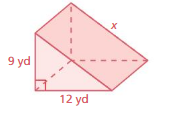
Big Ideas Math Answers Grade 7 Chapter 10 Surface Area and Volume

Area and Volume are the important topics in maths. This will be helpful in the real-time environment. Know how and where to apply the formulas from this page. Get a detailed explanation for all the questions here. Download Big Ideas Math Answers Grade 7 Chapter 10 Surface Area and Volume pdf for free of cost. As per your convenience, we have provided the solutions in pdf format so that you can prepare offline.

Big Ideas Math Book 7th Grade Answer Key Chapter 10 Surface Area and Volume

Get the guided notes for Chapter 10 Surface Area and Volume from here. This will be the best resource to enhance your math skills.  The topics covered in this chapter are Surface Areas of Prisms, Cylinders, Pyramids, Volume of Prism, Pyramids, Cross Sections of Three-Dimensional Figures. Test yourself by solving questions given at the end of the chapter.

Performance Task

Lesson: 1 Surface Areas of Prisms

Lesson: 2 Surface Areas of Cylinders

Lesson: 3 Surface Areas of Pyramids

Lesson: 4 Volumes of Prisms

Lesson: 5 Volumes of Pyramids

Lesson: 6 Cross Sections of Three-Dimensional Figures

Chapter 10 – Surface Area and Volume

Surface Area and Volume STEAM Video/Performance Task

STEAM Video

Paper Measurements
The thickness of a single piece of paper cannot be precisely measured using a ruler. What another method can you use to measure the thickness of a piece of paper?
Big Ideas Math Answer Key Grade 7 Chapter 10 Surface Area and Volume 1
Watch the STEAM Video “Paper Measurements.” Then answer the following questions.
1. A stack of 500 pieces of paper is 2 inches tall. How tall is a stack of 250 pieces? 100 pieces? 10 pieces? How thick is a single piece of paper?
Big Ideas Math Answer Key Grade 7 Chapter 10 Surface Area and Volume 2
2. You have a circular notepad. How can you find the volume of one piece of paper in the notepad?

Answer:
1. for 250 pieces = 46750 cubic inches
2. volume = 187 cubic inches

Explanation:
1. for 250 pieces = l w x h
250 pieces = 250 x 17 x 11
pieces = 46750
100 pieces = 100 x 17 x 11
pieces = 18,700
10 pieces = 10 x 17 x 11
pieces = 1870
piece = 1 x 17 x 11
piece = 187
2. volume = l x w x h
volume = 8.5 x 11 x 2
volume = 187
Performance Task

Volumes and Surface Areas of Small Objects
After completing this chapter, you will be able to use the concepts you learned to answer the questions in the STEAM Video Performance Task. You will be given the dimensions of a shipping box and the number of bouncy balls that fit in the box.
Big Ideas Math Answer Key Grade 7 Chapter 10 Surface Area and Volume 3
You will be asked to use the box to estimate the volume of each bouncy ball. Why might it be helpful to use the volume of a container of objects to estimate the volume of one of the objects?

Answer:
The volume of the object =11,809.8 cubic centimeters

Explanation:
The volume of rectangular prism = l x w x h
where l = length, w = width, h = height
rectangular prism = 27 x 27 x 16.2
volume = 11,809.8 cubic centimeters

Surface Area and Volume Getting Ready for Chapter 10

Chapter Exploration
Question 1.
Work with a partner. Perform each step for each of the given dimensions.
• Use 24 one-inch cubes to form a rectangular prism that has the given dimensions.
• Make a sketch of the prism.
• Find the surface area of the prism.
Big Ideas Math Answer Key Grade 7 Chapter 10 Surface Area and Volume 4

Answer:
a . 52 inches
b . 98 inches
c . 76 inches
d . 70 inches
e . 68 inches
f . 64 inches
g . 52  inches

prism :

The surface area of the square prism = 2lw + 2lh + 2wh
The surface area of the rectangle prism = 2(lw + lh + wh)

Explanation:
a . The surface area of the Rectangular prism = 2(lw + lh +wh)
where l = 4 w = 3 h = 2
rectangular prism =2(4 x 3) +(2 x 3) +(4 x 2)
prism = 2(12) + (6) +(8)
surface area =2( 26)
surface area = 52
b . The surface area of the Rectangular prism = 2(lw + lh +wh)
where l = 1 w = 1 h = 24
rectangular prism =2(1 x 1) +(1 x 24) +(1 x 24)
prism = 2(1) + (24) +(24)
surface area =2( 49)
surface area = 98
c . The surface area of the Rectangular prism = 2(lw + lh +wh)
where l = 1 w = 2 h = 12
rectangular prism =2(1 x 2) +(2 x 12)+(1 x 12)
prism = 2(2) + (24) +(12)
surface area =2( 38)
surface area = 76
d. The surface area of the Rectangular prism = 2(lw + lh +wh)
where l = 1 w = 3 h = 8
rectangular prism =2(1 x 3) +(3 x 8)+(1 x 8)
prism = 2(3) + (24) +(8)
surface area =2( 35)
surface area = 70
e . The surface area of the Rectangular prism = 2(lw + lh +wh)
where l = 1 w = 4 h = 6
rectangular prism =2(1 x 4) +(4 x 6)+(1 x 6)
prism = 2(4) + (24) +(6)
surface area =2( 34)
surface area = 68
f . The surface area of the Rectangular prism = 2(lw + lh +wh)
where l = 2 w = 2 h = 6
rectangular prism =2(2 x 2) +(2 x 6)+(1 x 6)
prism = 2(4) + (12) +(6)
surface area =2( 32)
surface area = 64
g .  The surface area of the Rectangular prism = 2(lw + lh +wh)
where l = 2 w = 4 h = 3
rectangular prism =2(2 x 4) +(4 x 3)+(2 x 3)
prism = 2(8) + (12) +(6)
surface area =2( 26)
surface area = 52

Question 2.
REASONING
Work with a partner. If two blocks of ice have the same volume, the block with the greater surface area will melt faster. The blocks below have equal volumes. Which block will melt faster? Explain your reasoning.
Big Ideas Math Answer Key Grade 7 Chapter 10 Surface Area and Volume 5

Answer:
The first block will melt faster.

Explanation:
The surface area of the square prism = 2lw + 2lh + 2wh
where l = 1ft w = 1ft h = 1 ft
surface area = 2(1 x 1)+2(1 x 1) + 2(1 x 1)
surface area = 2(1)+2(1) + 2(1)
surface area = 2+2+2
surface area = 6
The surface area of the Rectangular prism = 2(lw + lh +wh)
where l = 2 w = 1 h = 0.5
rectangular prism =2(2 x 1) +(2 x 0.5) +(1 x 0.5)
prism = 2(2) + (1) +(0.5)
surface area = 4 + 1 + 0.5
surface area = 5.5

Vocabulary
The following vocabulary terms are defined in this chapter. Think about what each term might mean and record your thoughts.
lateral surface area
the slant height of a pyramid
regular pyramid
cross section

Answer:
Lateral Surface Area = The lateral surface of an object is all of the sides of the object, excluding its base and top.
Slant Height of a Pyramid = The slant height of an object is the distance measured along a lateral face from the base to the apex along the center of the face.
Regular Pyramid =  In geometry, a pyramid is a polyhedron formed by connecting a polygonal base and a point, called the apex. Each base edge and apex form a triangle.
Cross Section = a surface or shape exposed by making a straight cut through something, especially at the right angles to an axis. ( The cross-section of an octahedron is a square.)

Lesson 10.1 Surface Areas of Prisms

EXPLORATION 1

Writing a Formula for Surface Area
Work with a partner.
a. Use the diagrams to write a formula for the surface area of a rectangular prism. Explain your reasoning.
Big Ideas Math Answer Key Grade 7 Chapter 10 Surface Area and Volume 10.1 1
b. Choose dimensions for a rectangular prism. Then draw the prism and use your formula in part(a) to find the surface area.

Answer:
a :

b : The surface area of the rectangular prism = 2(lw + lh + wh)
where l = length , w= width , h = height.

EXPLORATION 2

Surface Areas of Prisms
Work with a partner.
a. Identify the solid represented by the net. Then find the surface area of the solid.
Big Ideas Math Answer Key Grade 7 Chapter 10 Surface Area and Volume 10.1 2
b. Describe a method for finding the surface area of any prism.

Answer:
a : The surface area of the solid = 94
b :  The surface area of the solid = 2(lw + lh + wh)

Explanation:
a :

b :
The surface area of the rectangular prism = 2(lw + lh + wh)
where l = length , w= width , h = height.

Big Ideas Math Answer Key Grade 7 Chapter 10 Surface Area and Volume 10.1 3

Try It

Find the surface area of the prism.
Question 1.
Big Ideas Math Answer Key Grade 7 Chapter 10 Surface Area and Volume 10.1 4

Answer:
The surface area of the prism = 52 ft

Explanation:
The surface area of the prism = 2lw + 2lh + 2wh
surface area = 2(2 x 3) + 2(3 x 4) +2(2×4)
surface area = 2(6) + 2(12) + 2(8)
surface area = 12 + 24 + 16
surface area = 52 ft

Question 2.
Big Ideas Math Answer Key Grade 7 Chapter 10 Surface Area and Volume 10.1 5
Answer:
The surface area of the prism = 288 sq. m

Explanation:
The surface area of the prism = 2lw + 2lh + 2wh
surface area = 2(5 x 8) + 2(8 x 8) +2(5×8) where l = 8m,w = 8m, h= 8m
surface area = 2(40) + 2(64) + 2(40)
surface area = 80 + 128 + 80
surface area = 288 sq. m

Question 3.
Find the surface area of the prism at the left.
Big Ideas Math Answer Key Grade 7 Chapter 10 Surface Area and Volume 10.1 6

Answer:
The surface area of the prism at the left  = 288 sq. m

Explanation:
The surface area of the prism = 2lw + 2lh + 2wh
surface area = 2(5 x 12) + 2(12 x 13) +2(5×13) where l = 13m,w = 5m, h= 12m
surface area = 2(60) + 2(156) + 2(65)
surface area = 120 + 312 + 130
surface area = 562 sq. m

Self-Assessment for Concepts & Skills
Solve each exercise. Then rate your understanding of the success criteria in your journal.

Question 4.

WRITING
Explain the meaning of each term in the formula for the surface area of a rectangular prism.

Answer:
The surface area of the rectangular prism = 2(lw + lh + wh)

Explanation:
The surface area of the rectangular prism = 2(lw + lh + wh)
where l = length , w= width , h = height

Question 5.
DIFFERENT WORDS, SAME QUESTION
Which is different? Find “both” answers.
Big Ideas Math Answer Key Grade 7 Chapter 10 Surface Area and Volume 10.1 7

Answer:
The surface area of the triangular prism = 26 sq. cm
The surface area of the bases of the prism = 26 sq. cm

Explanation:

The surface area of the triangular prism = 2B + ph
where B = area of the base, p = perimeter of the base, h = height
surface area = 2( 3) + 4 (5)
surface area = 6 + 20
surface area = 26 sq. cm
The surface area of the bases of the prism = ph + 2B
surface area = 4(5) + 2(3)
surface area = 26 sq. cm
The area of the net of the prism = The sum of the areas of the bases and the lateral faces of the prism.

Question 6.
You want to stain the lateral faces of the wooden chest shown. Find the area that you want to stain in square inches.
Big Ideas Math Answer Key Grade 7 Chapter 10 Surface Area and Volume 10.1 8

Answer:
The area that you want to stain in square inches = 3456 square inches.

Explanation:
The surface area of the lateral faces of the prism = ph + 2B
surface area = 4(4) + 2(4)
surface area = 24 ft
1 feet = 144 square inches
144 x 24 = 3456 square inches.

Question 7.
One can of frosting covers about 280 square inches. Is one can of frosting enough to frost the cake? Explain.
Big Ideas Math Answer Key Grade 7 Chapter 10 Surface Area and Volume 10.1 9
Answer:
no one can of frosting is not enough to frost the cake.

Explanation:
The cake piece is in the shape of a rectangle
The surface area of the rectangular prism = 2(lw + lh + wh)
where l = length , w= width , h = height
surface area = 2(39 + 117 + 27)
183 sq. inches.

Question 8.
DIG DEEPER!
Find the surface area of the bench shown. Justify your answer.
Big Ideas Math Answer Key Grade 7 Chapter 10 Surface Area and Volume 10.1 10

Answer:
The surface area of the bench = 16 sq. ft

Explanation:
The surface area of the rectangular prism = 2(lw + lh + wh)
where l = length , w= width , h = height
surface area = 2(1 x 1.5) +(1.5 x 2) +(2 x 5)
surace area = 2(1.5) + 3 + 10
surface area = 16 sq. ft

Surface Areas of Prisms Homework & Practice 10.1

Review & Refresh
Classify the pair of angles. Then find the value of x.
Question 1.
Big Ideas Math Answer Key Grade 7 Chapter 10 Surface Area and Volume 10.1 11

Answer:
The value of x = 146

Explanation:
The above-shown angle = obtuse angle
given that 34 degrees
180 – 34 = 146

Question 2.
Big Ideas Math Answer Key Grade 7 Chapter 10 Surface Area and Volume 10.1 12
Answer:
The value of x = 106

Explanation:
The above-shown angle = right angle
given that 74 degrees
180 – 74 = 106Question 3.
Big Ideas Math Answer Key Grade 7 Chapter 10 Surface Area and Volume 10.1 13
Answer:
The value of x = 121

Explanation:
The above-shown angle = acute angles.
given that 59 degrees
x + 10 = 59
x = 49
180 – 49 = 121

Question 3.

Find the area of a circle with the indicated dimensions. Use 3.14 or \(\frac{22}{7}\) for π.
Question 4.
radius: 21 in.

Answer:
The area of the circle = 1,384.74 sq. in

Explanation:
The area of the circle = πr2
area = 3.14 x 21 x 21 where π = 3.14 radius = 21 in
area = 1,384.74 sq. in
Question 5.
diameter: 36mm
Answer:
The area of the circle = 530.66 sq. mm

Explanation:
The area of the circle = πr2
area = 3.14 x 13 x 13 where π = 3.14 radius = 13 mm
area = 530.66 sq. mm

Question 6.
radius: 8.5 m

Answer:
The area of the circle = 226.865 sq. m

Explanation:
The area of the circle = πr2
area = 3.14 x 8.5 x 8.5 where π = 3.14 radius = 8.5 m
area = 226.865 sq. m

Concepts, Skills, & Problem Solving

SURFACE AREA OF A PRISM Identify the solid represented by the net. Then find the surface area of the solid. (See Explorations 1 & 2, p. 409.)
Question 7.
Big Ideas Math Answer Key Grade 7 Chapter 10 Surface Area and Volume 10.1 14

Answer:
The surface area of the prism = 182

Explanation:
The surface area of the rectangular prism = 2(lw + lh + wh)
where l = length , w= width , h = height
surface area = 2(6 x 8) +(9 x 6) +(10 x 8)
surace area = 2(48) + 54 + 80
surface area = 182

Question 8.
Big Ideas Math Answer Key Grade 7 Chapter 10 Surface Area and Volume 10.1 15

Answer:
The surface area of the prism = 44

Explanation:
The surface area of the rectangular prism = 2(lw + lh + wh)
where l = length , w= width , h = height
surface area = 2(5 x 2) +(2 x 3) +(3 x 2)
surace area = 2(10) + 6+ 6
surface area = 44 sq. units

FINDING THE SURFACE AREA OF A PRISM Find the surface area of the prism.
Question 9.
Big Ideas Math Answer Key Grade 7 Chapter 10 Surface Area and Volume 10.1 16

Answer:
The surface area of the prism = 324 sq. m

Explanation:
The surface area of the rectangular prism = 2(lw + lh + wh)
where l = length , w= width , h = height
surface area = 2(6 x 16) +(16 x 3) +(3 x 6)
surace area = 2(96) + 48+ 18
surface area = 324 sq. m

Question 10.
Big Ideas Math Answer Key Grade 7 Chapter 10 Surface Area and Volume 10.1 17

Answer:
The surface area of the prism = 294 sq. yd

Explanation:
The surface area of the prism = 2lw + 2lh + 2wh
surface area = 2(7 x 7)+ 2(7 x 7) +2(7×7)
surface area = 2(49) + 2(49) + 2(49)
surface area = 98 + 98 + 98
surface area = 294 sq. yd

Question 11.
Big Ideas Math Answer Key Grade 7 Chapter 10 Surface Area and Volume 10.1 18
Answer:
The surface area of the triangular prism = 32 sq. m

Explanation:
The surface area of the triangular prism = 2B + ph
where B = area of the base, p = perimeter of the base, h = height
surface area = 2( 6) + 4 (5)
surface area = 12 + 20
surface area = 32 sq. m

Question 12.
Big Ideas Math Answer Key Grade 7 Chapter 10 Surface Area and Volume 10.1 19
Answer:
The surface area of the triangular prism = 166 sq. ft

Explanation:
The surface area of the triangular prism = 2B + ph
where B = area of the base, p = perimeter of the base, h = height
surface area = 2( 15) + 17 (8)
surface area = 30 + 136
surface area = 166 sq. ft

Question 13.
Big Ideas Math Answer Key Grade 7 Chapter 10 Surface Area and Volume 10.1 20
Answer:
The surface area of the prism = 46.4 yds

Explanation:
The surface area of the rectangular prism = 2(lw + lh + wh)
where l = length , w= width , h = height
surface area = 2(1.2 x 5) +(5 x 3) +(1.2 x 6)
surace area = 2(1) + 15+ 7.2
surface area = 23.2 x 2
surface area = 46.4 sq. yds

Question 14.
Big Ideas Math Answer Key Grade 7 Chapter 10 Surface Area and Volume 10.1 21
Answer:
The surface area of the prism = 693 sq. in

Explanation:
The surface area of the paralleloram prism = 2(lw + lh + wh)
where l = length , w= width , h = height
surface area = 2(9 x 10) +(9 x 13.5) +(13.5 x 10)
surace area = 2(90) +121.5 + 135
surface area = 346.5 x 2
surface area = 693 sq. inches

Question 15.
YOU BE THE TEACHER
Your friend finds the surface area of the prism. Is your friend correct? Explain your reasoning.
Big Ideas Math Answer Key Grade 7 Chapter 10 Surface Area and Volume 10.1 22
Answer:
yes my friend is correct.

Explanation:
The surface area of the prism = 2lw + 2lh + 2wh
surface area = 2(5 x 3)+ 2(3 x 4) +2(5×3)
surface area = 2(15) + 2(12) + 2(15)
surface area = 30+ 24 + 30
surface area = 84 sq. cm

Question 16.
MODELING REAL LIFE
A cube-shaped satellite has side lengths of 10 centimeters. What is the least amount of aluminum needed to cover the satellite?
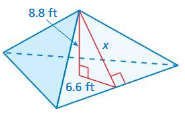
Answer:
The least amount of aluminum needed to cover the satellite = 90 centimeters.
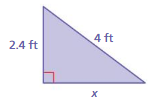
Explanation:
Given that cube has the side lengths of 10 and 10 centimeters
10 x 10 = 100
100 -10 = 90
so the least amount of aluminum needed to cover = 90 centimeters.
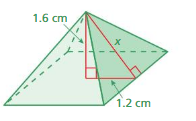
FINDING SURFACE AREA Find the surface area of the prism.
Question 17.
Big Ideas Math Answer Key Grade 7 Chapter 10 Surface Area and Volume 10.1 23
Answer:
The surface area of the triangular prism = 80 in

Explanation:
The surface area of the triangular prism = 2B + ph
where B = area of the base, p = perimeter of the base, h = height
surface area = 2( 16) + 4 (12)
surface area = 32 + 48
surface area = 80 sq. in

Question 18.
Big Ideas Math Answer Key Grade 7 Chapter 10 Surface Area and Volume 10.1 24
Answer:
The surface area of the prism = 58 sq. m

Explanation:
The surface area of the rectangular prism = 2(lw + lh + wh)
where l = length , w= width , h = height
surface area = 2(4 x 4) +(4 x 2) +(2.5 x 2)
surace area = 2(16) + 8+ 5
surface area = 29 x 2
surface area = 58 sq. m

Question 19.
OPEN-ENDED
Draw and label a rectangular prism that has a surface area of 158 square yards.
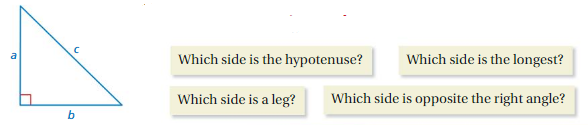
Answer:

Explanation:
The surface area of the rectangular prism = 2(lw + lh + wh)
where l = length , w= width , h = height
surface area = 2(4 x 5) +(5x 6) +(4 x 7)
surace area = 2(20) + 30+ 29
surface area = 79 x 2
surface area = 158 square yards

Question 20.
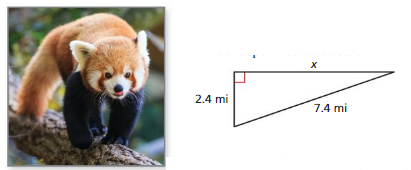
DIG DEEPER!
A label that wraps around a box of golf balls covers 75% of its lateral surface area. What is the value of x?
Big Ideas Math Answer Key Grade 7 Chapter 10 Surface Area and Volume 10.1 25
Answer:
The value of x = 25%

Explanation:
Given that the label that wraps around a box of golf covers 75%
That means for 100%
100 – 75 = 25%

Question 21.
STRUCTURE
You are painting the prize pedestals shown(including the bottoms). You need 0.5 pint of paint to paint the red pedestal.
Big Ideas Math Answer Key Grade 7 Chapter 10 Surface Area and Volume 10.1 26
a. The edge lengths of the green pedestal are one-half the edge lengths of the red pedestal. How much paint do you t do you need to paint the green pedestal?
b. The edge lengths of the blue pedestal are triple the edge lengths of the green pedestal. How much paint do you need to paint the blue pedestal?
c. Compare the ratio of paint volumes to the ratio of edge lengths for the green and red pedestals. Repeat for the green and blue pedestals. What do you notice?
Answer:
a. The paint you need to paint the green pedestal =1024 in
b. The paint you need to paint the blue pedestal = 5798464 in
c. 1 : 2 for green and red , 1 : 3 for green and blue.
b. Explanation:
The surface area of the rectangular prism = 2(lw + lh + wh)
where l = length , w= width , h = height
surface area = 2(16 x 16) +(16x 24) +(16 x 24)
surace area = 2(256) + 384+ 384
surface area = 1024 x 2
surface area = 2048 sq. in

Question 22.
NUMBER SENSE
A key chain-sized puzzle cube is made up of small cubes. Each small cube has a surface area of 1.5 square inches.
a. What is the edge length of each small cube?
b. What is the surface area of the entire puzzle cube?
Big Ideas Math Answer Key Grade 7 Chapter 10 Surface Area and Volume 10.1 27
Answer:
The edge length of each small cube = 1
The surface area of the entire puzzle cube  = 81

Explanation:
The surface area of the prism = 2lw + 2lh + 2wh
surface area = 2(0 x 0)+ 2(0 x 0) +1.5(1x 1)
surface area = 2(0) +2(0) +1.5(1)
surface area = 0 + 0 + 1.5
surface area = 1.5
The surface area of the each small cube = 81

Lesson 10.2 Surface Areas of Cylinders

A is a solid that has two parallel, identical circular bases.
Big Ideas Math Answers 7th Grade Chapter 10 Surface Area and Volume 10.2 1

EXPLORATION 1

Finding the Surface Area of a Cylinder
Work with a partner.
a. Make a net for the can. Name each shape in the net.
b. How are the dimensions of the paper related to the dimensions of the can?
Big Ideas Math Answers 7th Grade Chapter 10 Surface Area and Volume 10.2 2
c. Write a formula that represents the surface area of a cylinder with h a height of and bases with a radius of r.
d. Estimate the dimensions of each can. Then use your formula in part(c) to estimate the surface area of each can.
Big Ideas Math Answers 7th Grade Chapter 10 Surface Area and Volume 10.2 3
Answer:
a.
b. The dimensions of the paper = the dimensions of the can
c .

d. The surface area of the cylinder = 2πr (h + r)

Try It

Find the surface area of the cylinder. Round your answer to the nearest tenth if necessary.
Question 1.
Big Ideas Math Answers 7th Grade Chapter 10 Surface Area and Volume 10.2 4
Answer:
The surface area of the cylinder = 34138.08 sq. yd

Explanation:
The surface area of the cylinder = 2πr2 + 2πrh
where r = radius, h = height
2 x 3.14 x 36 + 2 x 3.14 x 6 x 9
226.08 + 33912
34138.08

Question 2.
Big Ideas Math Answers 7th Grade Chapter 10 Surface Area and Volume 10.2 5
Answer:

The surface area of the cylinder = 395.64 sq. cm

Explanation:
The surface area of the cylinder = 2πr2 + 2πrh
where r = radius, h = height
2 x 3.14 x 9+ 2 x 3.14 x 3 x 18
56.52 + 339.12
395.64 sq. cms

Find the lateral surface area of the cylinder. Round your answer to the nearest tenth.
Question 3.
Big Ideas Math Answers 7th Grade Chapter 10 Surface Area and Volume 10.2 6
Answer:
The lateral surface of the cylinder = 75.36 sq. cms

Explanation:
The lateral surface area of the cylinder = 2πrh
area = 2 x 3.14 x 3 x 4
area = 75.36 sq. cms

Question 4.
Big Ideas Math Answers 7th Grade Chapter 10 Surface Area and Volume 10.2 7
Answer:
The lateral surface of the cylinder = 150.72 sq. yds

Explanation:
The lateral surface area of the cylinder = 2πrh
area = 2 x 3.14 x 3 x 8
area = 150.72 sq. yds

Self-Assessment for Concepts & Skills
Solve each exercise. Then rate your understanding of the success criteria in your journal.

Question 5.
WRITING
Which part of the formula S = 2πr2 + 2πrh represents the lateral surface area of a cylinder? the areas of the bases?
Answer:
The area of the bases of the cylinder.

Explanation:
The area of the bases of the cylinder = 2πr2 + 2πrh
where r = radius , h = height

Question 6.
CRITICAL THINKING
You are given the height of a cylinder and the circumference of its base. Describe how to find the surface area of the cylinder.
Answer:
The surface area of the cylinder = 2πr2 + 2πrh

Explanation:
The area of the bases of the cylinder =2πr2 + 2πrh
where r = radius, h = height

Question 7.
FINDING A SURFACE AREA
Find the surface area of the cylinder at the left. Round your answer to the nearest tenth.
Big Ideas Math Answers 7th Grade Chapter 10 Surface Area and Volume 10.2 8
Answer:
The lateral surface of the cylinder = 351.68 sq. in

Explanation:
The lateral surface area of the cylinder = 2πrh
area = 2 x 3.14 x 16 + 2 x 3.14x 4 x 10
area = 100.48 + 251.2
area = 351.68 sq. in

Question 8.
FINDING A LATERAL SURFACE AREA
Find the lateral surface area of the cylinder at the right. Round your answer to the nearest tenth.
Big Ideas Math Answers 7th Grade Chapter 10 Surface Area and Volume 10.2 9
Answer:

The lateral surface of the cylinder = 351 sq. in

Explanation:
The lateral surface area of the cylinder = 2πrh
area = 2 x 3.14 x 16 + 2 x 3.14x 4 x 10
area = 100.48 + 251.2
area = 351.68 sq. in
IN the question given that round to the nearest tenth
area = 351 sq. in

Question 9.
You remove the lid of the can. What is the percent of change in the surface area of the can?
Big Ideas Math Answers 7th Grade Chapter 10 Surface Area and Volume 10.2 10
Answer:
The percent of the change in the surface area of the can = 22,019.25 mm

Explanation:
The surface area of the can = 2π rx r+ 2πrh
2 x 3.14 x 1806.25 + 2 x 3.14 x 42.5 x 40
22,019.25 mm
The surface area of the triangular prism = 166 sq. ft

Explanation:
The surface area of the triangular prism = 2B + ph
where B = area of the base, p = perimeter of the base, h = height
surface area = 2( 15) + 17 (8)
surface area = 30 + 136
surface area = 166 sq. ft

Question 10.
After burning half of a cylindrical candle, the surface area is 176 square inches. The radius of the candle is 2 inches. What was the original height of the candle?
Answer:
The original height of the

Question 11.
DIG DEEPER!
The area of the sheet of wrapping paper is equal to the lateral surface area of a cylindrical tube. The tube is 14 inches tall. What is the surface area of the tube, including the bases? Explain your reasoning.
Big Ideas Math Answers 7th Grade Chapter 10 Surface Area and Volume 10.2 11
Answer:
The surface area of the tube including the bases = 42.96 inches

Explanation:
The lateral surface area of the cylinder = 2 x 3.14 x r x h
surface area = 2 x 3.14 x 13 x 14
surface area = 1142.96 inchs

Surface Areas of Cylinders Homework & Practice 10.2

Review & Refresh

Find the surface area of the prism.
Question 1.
Big Ideas Math Answers 7th Grade Chapter 10 Surface Area and Volume 10.2 12
Answer:

The surface area of the prism = 142 sq. cms

Explanation:
The surface area of the prism = 2lw + 2lh + 2wh
surface area = 2(7 x 3)+ 2(3 x 5) +2(5×7)
surface area = 2(21) + 2(15) + 2(35)
surface area = 42+ 30 + 70
surface area = 142 sq. cm

Question 2.
Big Ideas Math Answers 7th Grade Chapter 10 Surface Area and Volume 10.2 13
Answer:

The surface area of the triangular prism = 649 sq. ft

Explanation:
The surface area of the triangular prism = 2B + ph
where B = area of the base, p = perimeter of the base, h = height
surface area = 2( 20) + 29 (21)
surface area = 40+ 609
surface area = 649 sq. ft

Question 3.
Which of the following is equivalent to 0.625?
A. \(\frac{5}{8}\)
B. \(\frac{625}{100}\)
C. 0.625%
D. 6.25%
Answer:
A is the correct answer

Explanation:
(5/8) = 0.625

Concepts, Skills, & Problem Solving

FINDING SURFACE AREA Find the surface area of the cylinder. (See Exploration 1, p. 415.)
Question 4.
a can with a radius of 60 millimeters and a height of 160 millimeters
Answer:
The surface area of the cylinder = 82,896 millimeters

Explanation:
The surface area of the cylinder = 2πr2 + 2πrh
where  radius = 60 millimeters , height = 160 given
surface area = 2 x 3.14 x 60 x 60 + 2 x 3.14 x 60 x 160
surface area = 22608 + 60,288
surface area = 82,896 sq. millimeters

Question 5.
a hay bale with a diameter of 30 inches and a height of 72 inches
Answer:
The surface area of the cylinder = 8195.4 inches

Explanation:
The surface area of the cylinder = 2πr2 + 2πrh
where  radius = 15 inches , height = 72 inches given
surface area = 2 x 3.14 x 15 x 15 + 2 x 3.14 x 15 x 72
surface area = 1413 + 6,782.4
surface area = 8195.4 sq. inches

FINDING SURFACE AREA Find the surface area of the cylinder. Round your answer to the nearest tenth if necessary.
Question 6.
Big Ideas Math Answers 7th Grade Chapter 10 Surface Area and Volume 10.2 14
Answer:
The surface area of the cylinder = 94.2 ft

Explanation:
The surface area of the cylinder = 2πr2 + 2πrh
where  radius = 3 ft , height = 2 ft given
surface area = 2 x 3.14 x 3 x 3 + 2 x 3.14 x 3 x 2
surface area = 56.52 + 37.68
surface area = 94.2 sq. ft

Question 7.
Big Ideas Math Answers 7th Grade Chapter 10 Surface Area and Volume 10.2 15
Answer:

The surface area of the cylinder = 31.4 sq. m

Explanation:
The surface area of the cylinder = 2πr2 + 2πrh
where  radius = 1 m , height = 4 m given
surface area = 2 x 3.14 x 1 x 1 + 2 x 3.14 x 1 x 4
surface area = 6.28+ 25.12
surface area = 31.4 sq. m

Question 8.
Big Ideas Math Answers 7th Grade Chapter 10 Surface Area and Volume 10.2 16
Answer:

The surface area of the cylinder = 527.52 sq. ft

Explanation:
The surface area of the cylinder = 2πr2 + 2πrh
where  radius = 7 ft , height = 5 ft given
surface area = 2 x 3.14 x 7 x 7 + 2 x 3.14 x 7 x 5
surface area = 307.72+ 219.8
surface area = 527.52 sq. ft

Question 9.
Big Ideas Math Answers 7th Grade Chapter 10 Surface Area and Volume 10.2 17
Answer:
The surface area of the cylinder = 87.92 sq. mm

Explanation:
The surface area of the cylinder = 2πr2 + 2πrh
where  radius = 2mm , height = 5 mm given
surface area = 2 x 3.14 x 2 x 2 + 2 x 3.14 x 2 x 5
surface area = 25.12+ 62.8
surface area = 87.92 sq. mm

Question 10.
Big Ideas Math Answers 7th Grade Chapter 10 Surface Area and Volume 10.2 18
Answer:
The surface area of the cylinder = 489.84 sq. ft

Explanation:
The surface area of the cylinder = 2πr2 + 2πrh
where  radius = 6 ft , height = 7 ft given
surface area = 2 x 3.14 x 6 x 6 + 2 x 3.14 x 6 x 7
surface area = 226.08+ 263.76
surface area = 489.84 sq. ft

Question 11.
Big Ideas Math Answers 7th Grade Chapter 10 Surface Area and Volume 10.2 19
Answer:
The surface area of the cylinder = 678.24 sq. cm

Explanation:
The surface area of the cylinder = 2πr2 + 2πrh
where  radius = 6 cm , height = 12 cm given
surface area = 2 x 3.14 x 6 x 6 + 2 x 3.14 x 6 x 12
surface area = 226.08+ 452.16
surface area = 678.24 sq. cm

FINDING LATERAL SURFACE AREA Find the lateral surface area of the cylinder. Round your answer to the nearest tenth if necessary.
Question 12.
Big Ideas Math Answers 7th Grade Chapter 10 Surface Area and Volume 10.2 20
Answer:
The lateral surface area of the cylinder = 376.8 sq. ft

Explanation:
The surface area of the cylinder =  2πrh
where  radius = 10 ft , height = 6 ft given
surface area =  2 x 3.14 x 10 x 6
surface area =  376.8 sq. ft
Question 13.
Big Ideas Math Answers 7th Grade Chapter 10 Surface Area and Volume 10.2 21
Answer:
The lateral  surface area of the cylinder = 226.08 sq. in

Explanation:
The surface area of the cylinder =  2πrh
where  radius = 4 in , height = 9 in given
surface area =  2 x 3.14 x 4 x 9
surface area =  226.08 sq. in
Question 14.
Big Ideas Math Answers 7th Grade Chapter 10 Surface Area and Volume 10.2 22
Answer:
The lateral surface area of the cylinder = 87.92 sq. m

Explanation:
The surface area of the cylinder =  2πrh
where  radius = 7 m , height = 2 m given
surface area =  2 x 3.14 x 7 x 2
surface area =  87.92 sq. m
Question 15.
YOU BE THE TEACHER
Your friend finds the surface area of the cylinder. Is your friend correct? Explain your reasoning.
Big Ideas Math Answers 7th Grade Chapter 10 Surface Area and Volume 10.2 23
Answer:
No my friend is not correct.

Explanation:
The surface area of the cylinder = 2πr2 + 2πrh
surface area = 2 x 3.14 x 5 x 5 + 2 x 3.14 x 5 x 10.6
surface area = 157 + 332.84
surface area = 489.84 sq. yds

Question 16.
MODELING REAL LIFE
The tank of a tanker truck is a stainless steel cylinder. Find the surface area of the tank.
Big Ideas Math Answers 7th Grade Chapter 10 Surface Area and Volume 10.2 24
Answer:
The surface area of the tank = 1356.48 sq. ft

Explanation:
The surface area of the cylinder = 2πr2 + 2πrh
surface area = 2 x 3.14 x 4 x 4 + 2 x 3.14 x 4 x 50
surface area = 100.48+ 1256
surface area = 1,356.48 sq. ft

Question 17.
MODELING REAL LIFE
The Petri dish shown has no lid. What is the surface area of the outside of the Petri dish?
Big Ideas Math Answers 7th Grade Chapter 10 Surface Area and Volume 10.2 25
Answer:
The surface area of the outside of the petri dish= 20,410 sq. mm

Explanation:
The surface area of the outside of the petri dish = 2πr2 + 2πrh
surface area = 2 x 3.14 x 50 x 50 + 2 x 3.14 x 50x 15
surface area = 15700+ 4710
surface area = 20410 sq. mm

Question 18.
REASONING
You have two 8.5-by-11-inch pieces of paper. You form the lateral surfaces of two different cylinders by taping together a pair of opposite sides on each piece of paper so that one cylinder has a height of 8.5 inches and the other has a height of 11 inches. Without calculating, compare the surface areas of the cylinders (including the bases). Explain.
Answer:
The surface area of the cylinder 1= 44.826012 sq. inches
The surface area of the cylinder 2= 56.915012 sq. inches

Explanation:
The surface area of the cylinder 1 = 2πr2 + 2πrh
surface area = 2 x 3.14 x 0.77 x 0.77 + 2 x 3.14 x 0.77x 8.5
surface area = 3.723412+ 41.1026
surface area = 44.826012 inches
The surface area of the cylinder 1 = 2πr2 + 2πrh
surface area = 2 x 3.14 x 0.77 x 0.77 + 2 x 3.14 x 0.77x 11
surface area = 3.723412+ 53.1916
surface area = 56.915012 inches

Question 19.
DIG DEEPER!
A ganza is a percussion instrument used in samba music.
Big Ideas Math Answers 7th Grade Chapter 10 Surface Area and Volume 10.2 26
a. Find the surface area of each of the two labeled ganzas.
b. The smaller ganza weighs 1.1 pounds. Assume that the surface area is proportional to the weight. What is the weight of the larger ganza?
Answer:
a. The surface area of the smaller ganza= 296.73 sq. cm
The surface area of the larger ganza= 1036.2 sq. cm

Explanation:
The surface area of the smaller ganza = 2πr2 + 2πrh
surface area = 2 x 3.14 x 3.5 x 3.5 + 2 x 3.14 x 3.5x 10
surface area = 76.93+ 219.8
surface area = 296.73 sq. cm
The surface area of the larger ganza  = 2πr2 + 2πrh
surface area = 2 x 3.14 x 5.5 x 5.5 + 2 x 3.14 x 5.5x 24.5
surface area = 189.97+846.23
surface area = 1036.2 sq. cm

Question 20.
PROBLEM SOLVING
The wedge is one-eighth of the wheel of cheese.
Big Ideas Math Answers 7th Grade Chapter 10 Surface Area and Volume 10.2 27
a. Find the surface area of the cheese before it is cut.
b. Find the surface area of the remaining cheese after the wedge is removed. Did the surface area increase, decrease, or remain the same?
Answer:
a. The surface area of the cheese before it is cut= 75.36 sq. in
b. The surface area of the cheese after the wedge is removed = 58.875 sq. in
The surface area decreases.

Explanation:
The surface area of the cheese after the wedge is removed = 2πr2 + 2πrh
surface area = 2 x 3.14 x 3 x 3 + 2 x 3.14 x 3 x 1
surface area = 56.52+ 18.84 in
surface area = 75.36 sq. in

The surface area of the cheese after the wedge is removed = 2πr2 + 2πrh
surface area = 2 x 3.14 x 3 x 3 + 2 x 3.14 x 3 x (1/8) (1/8) = 0.125
surface area = 56.52+ 2.355
surface area = 58.875 in
The surface area decreases

Question 21.
REPEATED REASONING
A cylinder has radius r and height h.
Big Ideas Math Answers 7th Grade Chapter 10 Surface Area and Volume 10.2 28
a. How many times greater is the surface area of a cylinder when both dimensions are multiplied by2? 3? 5? 10?
b. Describe the pattern in part(a). Write an expression for the surface area of the cylinder when both dimensions are multiplied by a number.
Answer:
a. 2 times greater, 3 times greater, 5 times greater,10 times greater.
b. The expression for the surface area of the cylinder when both dimensions are multiplied 2 = 2r + 2h,3r + 3h,5r + 5h, 10r + 10 h

Lesson 10.3 Surface Areas of Pyramids

Many well-known pyramids have square bases, however, the base of a pyramid can be any polygon.
Big Ideas Math Answers Grade 7 Chapter 10 Surface Area and Volume 10.3 1

EXPLORATION 1

Making a Scale Model
Work with a partner. Each pyramid below has a square base.
Big Ideas Math Answers Grade 7 Chapter 10 Surface Area and Volume 10.3 2
a. Draw a net for a scale model of one of the pyramids. Describe the scale factor.
b. Find the lateral surface area of the real-life pyramid that you chose in part(a). Explain how you found your answer.
c. Draw a net for a pyramid with a non-rectangular base and find its lateral surface area. Explain how you found your answer.
Answer:
a.
b. The lateral surface of the real life pyramid = A + (1/2 ) ps
where A = area of base ,p= perimeter of base , s = slant height.
c.
The lateral surface area of the rectangular pyramid = A + (1/2)ps
where A = area of base ,p= perimeter of base , s = slant height.
A regular pyramid is a pyramid whose base is a regular polygon. The slant height lateral faces are triangles. The height of each triangle is the of the pyramid.
Big Ideas Math Answers Grade 7 Chapter 10 Surface Area and Volume 10.3 3

Try It

Question 1.
What is the surface area of a square pyramid with a base side length of 9 centimeters and a slant height of 7 centimeters?
Answer:
The surface area of the square pyramid = 94.5 sq. centimeters

Explanation:
The surface area of the square pyramid = A + (1/2) ps
where A = area of the base ,p = perimeter of th base, s = slant height
surface area = 63 +(1/2) 9 x 7
surface area = 63 + 0.5 x  63
surface area = 31.5 + 63
94.5 sq. centimeters.
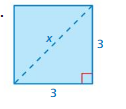
Question 2.
Find the surface area of the regular pyramid at the left.
Big Ideas Math Answers Grade 7 Chapter 10 Surface Area and Volume 10.3 4
Answer:

The surface area of the triangle pyramid = 86 sq. ft

Explanation:
The surface area of the triangle pyramid = A + (1/2) ps
where A = area of the base ,p = perimeter of th base, s = slant height
surface area = 60 +(1/2) 5.2 x 10
surface area = 60 + 2.6 x  10
surface area = 60+ 26
surface area = 86 sq. ft

Self-Assessment for Concepts & Skills
Solve each exercise. Then rate your understanding of the success criteria in your journal.

Question 3.
VOCABULARY
Can a pyramid have rectangles as lateral faces? Explain.
Answer:
Yes, pyramids have rectangles as lateral faces.

Explanation:
In the pyramid diagram, the rectangles included the lateral surfaces.

FINDING THE SURFACE AREA OF A PYRAMID Find the surface area of the regular pyramid.
Question 4.
Big Ideas Math Answers Grade 7 Chapter 10 Surface Area and Volume 10.3 5
Answer:
The surface area of the triangle pyramid = 95 sq. m

Explanation:
The surface area of the triangle pyramid = A + (1/2) ps
where A = area of the base ,p = perimeter of th base, s = slant height
surface area = 65+(1/2) 5 x 12
surface area = 65 + 2.5 x  12
surface area = 65 + 30
surface area = 95 sq. m

Question 5.
Big Ideas Math Answers Grade 7 Chapter 10 Surface Area and Volume 10.3 6
Answer:
The surface area of the triangle pyramid = 24 sq. cm

Explanation:
The surface area of the triangle pyramid = A + (1/2) ps
where A = area of the base ,p = perimeter of th base, s = slant height
surface area = 12+(1/2) 2 x 6
surface area = 12 + 1 x  12
surface area = 12 + 12
surface area = 24 sq. cm

Question 6.
WHICH ONE DOESN’T BELONG?
Which description of the solid does not belong with the other three? Explain your reasoning.
Big Ideas Math Answers Grade 7 Chapter 10 Surface Area and Volume 10.3 7
Answer:
regular pyramid does not belong with the other three;

Explanation:
the remaining are square pyramid, rectangular pyramid, triangular pyramid are the three pyramids with different shapes.

Self-Assessment for Problem Solving
Solve each exercise. Then rate your understanding of the success criteria in your journal.

Question 7.
A building in the shape of a square pyramid is covered with solar panels. The building has a slant height of 12 feet and a base with side lengths of 15 feet. The solar panels cost $70 per square foot to install. How much does it cost to install enough solar panels to cover the entire surface of the building?
Big Ideas Math Answers Grade 7 Chapter 10 Surface Area and Volume 10.3 8
Answer:
$ 270 is enough for solar planets to cover the entire surface of the building.

Explanation:
The building is in the shape of square pyramid.
surface area = A + (1/2) ps
area = 180 + (1/2) x 180
area = 180 + 90
area = 270 $

Question 8.
You use the glass pyramid shown to display rainbows on the walls of a room. The pyramid is regular and has a surface area of 105.35 square centimeters. Find the height of each triangular face. Justify your answer.
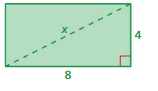
Big Ideas Math Answers Grade 7 Chapter 10 Surface Area and Volume 10.3 9
Answer:

Surface Areas of Pyramids Homework & Practice 10.3

Review & Refresh

Find the surface area of the cylinder. Round your answer to the nearest tenth.
Question 1.
Big Ideas Math Answers Grade 7 Chapter 10 Surface Area and Volume 10.3 10
Answer:
The surface area of the cylinder = 182.12 sq. ft

Explanation:
The surface area of the cylinder = 2πr2 + 2πrh
where  radius = 3 ft , height = 10 ft given
surface area = 2 x 3.14 x 3 x 3 + 2 x 3.14 x 2 x 10
surface area =  56.52+ 125.6
surface area = 182.12 sq. ft

Question 2.
Big Ideas Math Answers Grade 7 Chapter 10 Surface Area and Volume 10.3 11
Answer:
The surface area of the cylinder = 345.4 sq. m

Explanation:
The surface area of the cylinder = 2πr2 + 2πrh
where  radius = 5 m , height = 6 m given
surface area = 2 x 3.14 x 5 x 5 + 2 x 3.14 x 5 x 6
surface area =  157+ 188.4
surface area = 345.4 sq. m

Question 3.
Big Ideas Math Answers Grade 7 Chapter 10 Surface Area and Volume 10.3 12
Answer:
The surface area of the cylinder = 406.944 sq. mm

Explanation:
The surface area of the cylinder = 2πr2 + 2πrh
where  radius = 4mm , height = 12.2mm given
surface area = 2 x 3.14 x 4 x 4+ 2 x 3.14 x 4 x 12.2
surface area =  100.48+ 306.464
surface area = 406.944 sq. mm

Question 4.
The ratio of the distance between bases on a professional baseball field to the distance between bases on a youth baseball field is 3 : 2. Bases on a professional baseball field are 90 feet apart. What is the distance between bases on a youth baseball field?
A. 30 ft
B. 45 ft
C. 60 ft
D. 135 ft
Answer:
The distance between bases on a youth baseball = 60 ft
Explanation:
The ratios between professional base and youth baseball = 3 : 2 already given
90 given
so 60 ft is the distance between bases on a youth baseball field.

Concepts, Skills, & Problem Solving

USING A NET Use the net to find the surface area of the regular pyramid. (See Exploration 1, p. 421.)
Question 5.
Big Ideas Math Answers Grade 7 Chapter 10 Surface Area and Volume 10.3 13
Answer:
The surface area of the square pyramid = 18 sq. in

Explanation:
The surface area of the square pyramid = A + (1/2) ps
where A = area of the base ,p = perimeter of th base, s = slant height
surface area = 12+(1/2) 4 x 3
surface area = 12 + 0.5x  12
surface area = 12 + 6
surface area = 18 sq. in

Question 6.
Big Ideas Math Answers Grade 7 Chapter 10 Surface Area and Volume 10.3 14
Answer:
The surface area of the square pyramid = 88.3 sq. mm

Explanation:
The surface area of the square pyramid = A + (1/2) ps
where A = area of the base ,p = perimeter of th base, s = slant height
surface area = 43.3+(1/2) 10 x 9
surface area = 43.3 + 0.5x  90
surface area = 43.3 + 45
surface area = 88.3 sq. mm

Question 7.
Big Ideas Math Answers Grade 7 Chapter 10 Surface Area and Volume 10.3 15
Answer:
The surface area of the square pyramid = 79.9 sq. m

Explanation:
The surface area of the square pyramid = A + (1/2) ps
where A = area of the base ,p = perimeter of the base, s = slant height
surface area = 61.9 +(1/2) 6 x 6
surface area = 61.9 + 0.5x 36
surface area = 61.9 + 18
surface area = 79.9 sq. m

FINDING THE SURFACE AREA OF A PYRAMID Find the surface area of the regular pyramid.
Question 8.
Big Ideas Math Answers Grade 7 Chapter 10 Surface Area and Volume 10.3 16
Answer:
The surface area of the triangular  pyramid = 81 sq. ft

Explanation:
The surface area of the triangular pyramid = A + (1/2) ps
where A = area of the base ,p = perimeter of the base, s = slant height
surface area = 54 +(1/2) 6 x 9
surface area = 54 + 0.5x 54
surface area = 54 + 27
surface area = 81 sq. ft

Question 9.
Big Ideas Math Answers Grade 7 Chapter 10 Surface Area and Volume 10.3 17
Answer:

The surface area of the triangular  pyramid = 36 sq. cm

Explanation:
The surface area of the triangular pyramid = A + (1/2) ps
where A = area of the base ,p = perimeter of the base, s = slant height
surface area = 24 +(1/2) 6 x 4
surface area = 24 + 0.5x 24
surface area = 24 + 12
surface area = 36 sq. cm

Question 10.
Big Ideas Math Answers Grade 7 Chapter 10 Surface Area and Volume 10.3 18
Answer:
The surface area of the triangular  pyramid = 36 sq. in

Explanation:
The surface area of the triangular pyramid = A + (1/2) ps
where A = area of the base ,p = perimeter of the base, s = slant height
surface area = 13  +(1/2) 15 x 10
surface area = 13 + 0.5x 150
surface area = 13 + 75
surface area = 88 sq. in

Question 11.
Big Ideas Math Answers Grade 7 Chapter 10 Surface Area and Volume 10.3 19
Answer:
The surface area of the triangular  pyramid = 126 sq. yd

Explanation:
The surface area of the triangular pyramid = A + (1/2) ps
where A = area of the base ,p = perimeter of the base, s = slant height
surface area = 7.8  +(1/2) 10 x 9
surface area = 7.8 + 0.5x 90
surface area = 7.8 + 48
surface area = 126 sq. yd

Question 12.
Big Ideas Math Answers Grade 7 Chapter 10 Surface Area and Volume 10.3 20
Answer:
The surface area of the triangular  pyramid = 13.5 sq. m

Explanation:
The surface area of the triangular pyramid = A + (1/2) ps
where A = area of the base ,p = perimeter of the base, s = slant height
surface area = 4.5 +(1/2) 4 x 4.5
surface area = 4.5 + 0.5x 18
surface area = 4.5 + 9
surface area = 13.5 sq. m

Question 13.
Big Ideas Math Answers Grade 7 Chapter 10 Surface Area and Volume 10.3 21
Answer:
The surface area of the triangular  pyramid = 600.4 sq. mm

Explanation:
The surface area of the triangular pyramid = A + (1/2) ps
where A = area of the base ,p = perimeter of the base, s = slant height
surface area = 440.4 +(1/2) 16 x 20
surface area = 440.4+ 0.5x 320
surface area = 440.4+ 160
surface area = 600.4 sq. mm

Question 14.
MODELING REAL LIFE
The base of the lampshade is a regular hexagon with side lengths of 8 inches. Estimate the amount of glass needed to make the lampshade.
Big Ideas Math Answers Grade 7 Chapter 10 Surface Area and Volume 10.3 22
Answer:
The amount of glass needed to make the lampshade = 26.6666667 in

Explanation:
hexagon = 1/3 x b x h
where base = 8 inches , height = 10 in given
hexagon = (80/3)
hexagon = 26.6666667 in
Question 15.
GEOMETRY
The surface area of a square pyramid is 85 square meters. The side length of the base is 5 meters. What is the slant height?
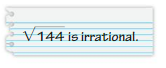
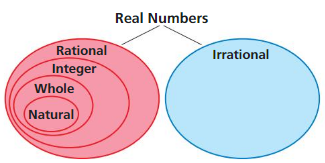
Answer:
The  slant height = 6 meters

Explanation:
The area of the base = side x side = 5 x 5 = 25 m
area of the lateral face = (1/2)bh= (1/2)5h= 2.5 h m
There are  4 identical lateral faces.
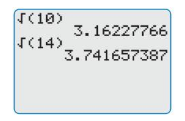
area of lateral faces = 4(2.5h) = 10 hm
surface area of regular pyramid = area of base + area of lateral faces
85 = 25 + 10 h
85-25 = 10 h
60 = 10 h
h = (60/10)
h = 6 meters

FINDING SURFACE AREA Find the surface area of the solid.
Question 16.
Big Ideas Math Answers Grade 7 Chapter 10 Surface Area and Volume 10.3 23
Answer:
The surface area of the square  pyramid = 20 sq. ft

Explanation:
The surface area of the square pyramid = A + (1/2) ps
where A = area of the base ,p = perimeter of the base, s = slant height
surface area = 5 +(1/2) 5 x 6
surface area = 5 + 0.5x 30
surface area = 5  + 15
surface area = 20 sq. ft

Question 17.
Big Ideas Math Answers Grade 7 Chapter 10 Surface Area and Volume 10.3 24
Answer:
The surface area of the square  pyramid = 22 sq. cm

Explanation:
The surface area of the square pyramid = A + (1/2) ps
where A = area of the base ,p = perimeter of the base, s = slant height
surface area = 10 +(1/2) 4 x 6
surface area = 10 + 0.5x 24
surface area = 10 + 12
surface area = 22 sq. cm

Question 18.
Big Ideas Math Answers Grade 7 Chapter 10 Surface Area and Volume 10.3 25
Answer:
The surface area of the rectangular  pyramid = 22 sq. ft

Explanation:
The surface area of the rectangular pyramid = A + (1/2) ps
where A = area of the base ,p = perimeter of the base, s = slant height
surface area = 12 +(1/2) 4 x 5
surface area = 12 + 0.5x 20
surface area = 12 + 10
surface area = 22 sq. ft

Question 19.
GEOMETRY
A tetrahedron is a triangular pyramid with four faces that are identical equilateral triangles. The total lateral surface area of a tetrahedron is 93 square centimeters. Find the surface area of the tetrahedron.
Answer:
The surface area  of the tetrahedron = 124 square cm

Explanation:
Area of lateral face (equilateral triangle) = 93/3 = 31
The tetrahedron has four identical equilateral triangles = 4 X 31 =124 cm

Question 20.
PROBLEM SOLVING
You are making an umbrella that is shaped like a regular octagonal pyramid.
Big Ideas Math Answers Grade 7 Chapter 10 Surface Area and Volume 10.3 26
a. Estimate the amount of fabric that you need to make the umbrella.
b. The fabric comes in rolls that are 60 inches wide. Draw a diagram of how you can cut the fabric from rolls that are 10 feet long.
c. How much fabric is wasted?
Answer:

Question 21.
REASONING
The height of a pyramid is the perpendicular distance between the base and the top of the pyramid. Which is greater, the height of a pyramid or the slant height? Explain your reasoning.
Big Ideas Math Answers Grade 7 Chapter 10 Surface Area and Volume 10.3 27
Answer:
The height of the pyramid is greater .

Explanation:
In the above shown figure the slant height is less than the height of the pyramid.

Question 22.
DIG DEEPER!
Both pyramids at the right have regular bases.
a. Without calculating, determine which pyramid has the greater surface area. Explain.
b. Verify your answer to part(a) by finding the surface area of each pyramid.
Big Ideas Math Answers Grade 7 Chapter 10 Surface Area and Volume 10.3 28
Answer:
The first figure has the greatest surface area.

Explanation:
The surface area of 1st pyramid = A + (1/2) ps
surface area = 112  + (1/2) 8 x 14
surface area = 112 +(112/2)
surface area = 56 +112
surface area = 168 in
The surface area of 2nd pyramid = A + (1/2) ps
surface area = 6.9 + (1/2) 8 x 14
surface area = 6.9 +(112/2)
surface area = 56 +6.9
surface area = 62.9 sq. in

Question 23.
REASONING
Is the total area of the lateral faces of a pyramid greater than, less than or equal to the area of the base? Explain.
Answer:
The lateral surface area of a regular pyramid is the sum of the area of its lateral faces.
The total surface area of a regular pyramid is the sum of the areas of its lateral faces and its base.

Lesson 10.4 Volumes of Prisms

EXPLORATION 1

Finding a Formula for Volume
Work with a partner.
a. In the figures shown, each cube has a volume of 1 cubic unit. Compare the volume V (in cubic units) of each rectangular prism to the area B(in square units) of its base. What do you notice?
Big Ideas Math Solutions Grade 7 Chapter 10 Surface Area and Volume 10.4 1
b. Repeat part(a) using the prisms below.
Big Ideas Math Solutions Grade 7 Chapter 10 Surface Area and Volume 10.4 2
c. Use what you learned in parts (a) and (b) to write a formula that gives the volume of any prism.
Big Ideas Math Solutions Grade 7 Chapter 10 Surface Area and Volume 10.4 3
Answer:
a. The 1st cube has a volume of 1 cubic unit. and it is increased by one horizontal in each cube.
b. The 1st prism has a volume of 1 cubic unit and it is increased by one horizontal in each cube.
c. Triangular prism = 2B + ph
where b = base ,h = height, l = length, p = perimeter of base, B = area of base
Rectangular prism = 2(lw +lh + wh)
where l = length, w = width, h = height
pentagonal prism = (1/2)(5s x a)h
Hexagonal prism = v = bh
octagonal prism = 2(1 +square root )a square

The volume of a three-dimensional figure is a measure of the amount of space that it occupies. Volume is measured in cubic units.

Try It

Find the volume of the prism.
Question 1.
Big Ideas Math Solutions Grade 7 Chapter 10 Surface Area and Volume 10.4 4
Answer:
The volume of the prism = 16 cu. ft

Explanation:
The volume of the prism = bh
where b = 4 ft , h = 4 ft given
volume of the prism = 16 cu. ft

Question 2.
Big Ideas Math Solutions Grade 7 Chapter 10 Surface Area and Volume 10.4 5
Answer:
The volume of the prism = 51 cu. cm

Explanation:
The volume of the prism = bh
where b = 8.5 cm , h = 6 cm given
volume of the prism = 8.5 x 6 = 51 cu. cm

Find the volume of the prism.
Question 3.
Big Ideas Math Solutions Grade 7 Chapter 10 Surface Area and Volume 10.4 6
Answer:
The volume of prism = 162 cu. m

Explanation:
The volume of triangular prism = a x b x c x h
where a = b = c = base side , h = height
prism = 12 x 9 x 12 x 5
volume = 60 + 102
volume = 162 cu. m

Question 4.
Big Ideas Math Solutions Grade 7 Chapter 10 Surface Area and Volume 10.4 7
Answer:

The volume of prism = 9 cu. m

Explanation:
The volume of triangular prism = a x b x c x h
where a = b = c = base side , h = height
prism = 0.75x 2 x 2 x 3
volume = 0.75 x12
volume = 9 cu. m

Self-Assessment for Concepts & Skills
Solve each exercise. Then rate your understanding of the success criteria in your journal.

FINDING THE VOLUME OF A PRISM Find the volume of the prism.
Question 5.
Big Ideas Math Solutions Grade 7 Chapter 10 Surface Area and Volume 10.4 8
Answer:
The volume of the prism = 56 cu. in

Explanation:
volume v = B h
v = 7 x 8
v = 56 cu. in

Question 6.
Big Ideas Math Solutions Grade 7 Chapter 10 Surface Area and Volume 10.4 9
Answer:
The volume of the prism = 75 cu. ft

Explanation:
volume v = B h
v = 15 x 5
v = 75 cu. ft

Question 7.
Big Ideas Math Solutions Grade 7 Chapter 10 Surface Area and Volume 10.4 10
Answer:
The volume of the prism = 96 cu. yd

Explanation:
volume v = B h
v = 12 x 8
v = 96 cu. yd

Question 8.
Big Ideas Math Solutions Grade 7 Chapter 10 Surface Area and Volume 10.4 11
Answer:
The volume of the prism = 4925 cu. mm

Explanation:
volume v = B h
v = 197 x 25
v = 4925 cu. mm

Question 9.
OPEN-ENDED
Draw and label a prism with a volume of 144 cubic inches. Justify your answer.
Answer:
v = b x h
144 = 12 x 12
so base = 7 and height = 7 inches.

Explanation:

Self-Assessment for Problem Solving
Solve each exercise. Then rate your understanding of the success criteria in your journal.

Question 10.
DIG DEEPER!
You visit an aquarium. One of the tanks at the aquarium holds 450 gallons of water. Draw a diagram to show one possible set of dimensions of the tank. Justify your answer. (1 gal = 231 in.3)
Big Ideas Math Solutions Grade 7 Chapter 10 Surface Area and Volume 10.4 12
Answer:

Question 11.
A stack of paper contains 400 sheets. The volume of the stack is 140.25 cubic inches. Each sheet of paper is identical, with a length of 11 inches and a width of 8.5 inches. Find the height of each sheet of paper. Justify your answer.
Answer:
Each sheet of paper = 0.0075 inches.

Volumes of Prisms Homework & Practice 10.4

Review & Refresh

Find the surface area of the regular pyramid.
Question 1.
Big Ideas Math Solutions Grade 7 Chapter 10 Surface Area and Volume 10.4 13
Answer:
Surface area of the regular pyramid = 15 sq. m

Explanation:
Surface area of the regular pyramid = A + (1/2) ps
area = 3 +(1/2) 3 x 8
surface area = 3 + 12
surface area = 15 sq. m

Question 2.
Big Ideas Math Solutions Grade 7 Chapter 10 Surface Area and Volume 10.4 14
Answer:
Surface area of the regular pyramid =550 sq. mm

Explanation:
Surface area of the regular pyramid = A + (1/2) ps
area = 30 +(1/2) 20 x 26
surface area = 30 + 520
surface area = 550 sq. mm

Question 3.
Big Ideas Math Solutions Grade 7 Chapter 10 Surface Area and Volume 10.4 15
Answer:
Surface area of the regular pyramid =61 sq. cm

Explanation:
Surface area of the regular pyramid = A + (1/2) ps
area = 7 +(1/2) 6 x 9
surface area = 7 + 54
surface area = 61 sq. cm

Find the selling price.
Question 4.
Cost to store: $75
Markup: 20%
Answer:
Selling price = 1665 $

Explanation:
Selling price = cost to store x markup + cost to store
selling price = $75 x 20% + $75
selling price = $75x 0.20 + $75
s p = 1665 $
Question 5.
Cost to store: $90
Markup: 60%
Answer:
Selling price = 5490$

Explanation:
Selling price = cost to store x markup + cost to store
selling price = $90 x 60% + $90
selling price = $90x 0.60+ $90
s p = 5490 $

Question 6.
Cost to store: $130
Markup: 85%
Answer:
Selling price =10,530 $

Explanation:
Selling price = cost to store x markup + cost to store
selling price = $130 x 85% + $130
selling price = $130 x 0.80+ $130
s p = 10,530$

Concepts, Skills, & Problem Solving

USING TOOLS In the figure, each cube has a volume of 1 cubic unit. Find the volume of the figure and the area of its base. (See Exploration 1, p. 427.)
Question 7.
Big Ideas Math Solutions Grade 7 Chapter 10 Surface Area and Volume 10.4 16
Answer:
The volume of the cube = length + breadth + height
1 x 3 = 3

Explanation:
The volume of the cube = length + breadth + height
where length = l, width = w ,height = h

Question 8.
Big Ideas Math Solutions Grade 7 Chapter 10 Surface Area and Volume 10.4 17
Answer:
The volume of the cube = length + breadth + height
1 x 4 = 4

Explanation:
The volume of the cube = length + breadth + height
where length = l, width = w ,height = h

Question 9.
Big Ideas Math Solutions Grade 7 Chapter 10 Surface Area and Volume 10.4 18
Answer:
The volume of the cube = length + breadth + height
1 x 2 = 2

Explanation:
The volume of the cube = length + breadth + height
where length = l, width = w ,height = h

FINDING THE VOLUME OF A PRISM Find the volume of the prism.
Question 10.
Big Ideas Math Solutions Grade 7 Chapter 10 Surface Area and Volume 10.4 19
Answer:
The volume of the prism = 81 cu. in

Explanation:
volume v = B h
v = 9 x 9
v = 81 cu.in

Question 11.
Big Ideas Math Solutions Grade 7 Chapter 10 Surface Area and Volume 10.4 20
Answer:
The volume of the prism = 48 cu. cm

Explanation:
volume v = B h
v = 6 x 8
v = 48 cu. cm

Question 12.
Big Ideas Math Solutions Grade 7 Chapter 10 Surface Area and Volume 10.4 21
Answer:
The volume of the prism = 48 cu. m

Explanation:
volume v = B h
v = 7 x 8.5
v = 59.5 cu. m

Question 13.
Big Ideas Math Solutions Grade 7 Chapter 10 Surface Area and Volume 10.4 22
Answer:

The volume of the prism = 48 cu. yd

Explanation:
volume v = B h
v = 8.33 x 6
v = 50 cu. yd

Question 14.
Big Ideas Math Solutions Grade 7 Chapter 10 Surface Area and Volume 10.4 23
Answer:

The volume of the prism = 54 cu.ft

Explanation:
volume v = B h
v = 9 x 6
v = 54 cu.ft

Question 15.
Big Ideas Math Solutions Grade 7 Chapter 10 Surface Area and Volume 10.4 24
Answer:

The volume of the prism = 84 cu.mm

Explanation:
volume v = B h
v = 10.5 x 8
v = 84 cu.mm

Question 16.
Big Ideas Math Solutions Grade 7 Chapter 10 Surface Area and Volume 10.4 25
Answer:

The volume of the prism = 48 cu.m

Explanation:
volume v = B h
v = 10 x 4.8
v = 48 cu.m

Question 17.
Big Ideas Math Solutions Grade 7 Chapter 10 Surface Area and Volume 10.4 26
Answer:

The volume of the prism = 645 cu. mm

Explanation:
volume v = B h
v = 15 x 43
v = 645 cu. mm

Question 18.
Big Ideas Math Solutions Grade 7 Chapter 10 Surface Area and Volume 10.4 27
Answer:

The volume of the prism =3320 cu. feet

Explanation:
volume v = B h
v = 166 x 20
v = 3320 cu. ft

Question 19.
YOU BE THE TEACHER
Your friend finds the volume of the triangular prism. Is your friend correct? Explain your reasoning.
Big Ideas Math Solutions Grade 7 Chapter 10 Surface Area and Volume 10.4 28
Answer:
Yes my friend is correct.

Explanation:
Volume of triangular prism = B h
volume = 10 x (5 x 7)
volume = 10 x (35)
volume = 350 cubic centimeters

Question 20.
MODELING REAL LIFE
A battery for an underwater drone is in the shape of a square prism. It is designed to draw in seawater that is then used to produce energy. The base of the battery has side lengths of 15 centimeters and the height of the battery is 10 centimeters. Find the volume of the battery.
Answer:
The volume of the battery  = 2250 cu. centimeters.

Explanation:
Volume of a square prism = a square h
given that a = 15 cm, h = 10 cm
volume = 15 x 15x 10
volume = 2250 cu. centimeters.
Question 21.
MODELING REAL LIFE
A cereal box has a volume of 225 cubic inches. The length of the base is 9 inches and the width of the base is 2.5 inches. What is the height of the box? Justify your answer.
Answer:
The heightt of the box = 10 inches.

Explanation:
v = length x width x height
v = 225 cubic inches, l = 9 inches,w = 2.5 in
225 = 9 x 2.5 x h
225 = 22.5 h
h = 225/22.5
h = 10 inches

Question 22.
REASONING
Each locker is shaped like a rectangular prism. Which has more storage space? Explain.
Big Ideas Math Solutions Grade 7 Chapter 10 Surface Area and Volume 10.4 29
Answer:
The school locker has the more storage space.

Explanation:
2. The surface area of the rectangular prism = 2(lw + lh + wh)
area = 2(10 x 12) +(15 x 48) +(12 x 48) where l= 15 in,w = 12 in,h= 48 in
area = 2(120) +(720) +(576)
area = 2(1416)
area = 2832 sq. in
1. The surface area of the rectangular prism = 2(lw + lh + wh)
area = 2(15 x 12) +(10 x 60) +(12 x 60) where l= 10 in,w = 12 in,h= 60 in
area = 2(120) +(600) +(720)
area = 2(1440)
area = 2880 sq. in

Question 23.
USING TOOLS
How many cubic inches are in 1 cubic foot? Use a sketch to explain your reasoning.
Answer:
1 cubic foot = 1728 cubic inches.

Explanation:

Question 24.
PROBLEM SOLVING
A concrete construction block has the measurements shown. How much concrete is used to make the block? Justify your answer.
Big Ideas Math Solutions Grade 7 Chapter 10 Surface Area and Volume 10.4 30
Answer:
The concrete used to make the block = 544 sq. in

Explanation:
The surface area of the rectangular prism = 2(lw + lh + wh)
area = 2(16 x 8) +(16 x 6) +(8 x 6) where l= 16in,w = 8 in,h= 6 in
area = 2(128) +(96) +(48)
area = 2(272)
area = 544 sq. in

Question 25.
RESEARCH
The gas tank is 20% full. Use the current price of regular gasoline in your community to find the cost to fill the tank. (1 gal = 231 in.3)
Big Ideas Math Solutions Grade 7 Chapter 10 Surface Area and Volume 10.4 31
Answer:

Question 26.
DIG DEEPER!
Two liters of water are poured into an empty vase shaped like an octagonal prism. The base area is 100 square centimeters. What is the height of the water? (1 L = 1000 cm3)
Answer:
The height of the water = 20 centimeters

Explanation:
1 liter = 1000 cubic centimeters.
area of the base = 100 square cm
height = h
the volume of water in the vase = 2 liters = 2000 cubic centimeters
the volume of water in the vase = area of base x-height of the prism
2000 = 100 h
h = 20 cm
Question 27.
LOGIC
Two prisms have the same volume. Do they always, sometimes never, or have the same surface area? Justify your answer.
Answer:
If the volume is the same, they do not have the surface area.

Explanation:
if we take two prisms at random that have the same volume, it’s very likely that they don’t have the same surface area.

Question 28.
CRITICAL THINKING
How many times greater is the volume of a triangular prism when one of its dimensions is doubled? when all three dimensions are doubled?
Big Ideas Math Solutions Grade 7 Chapter 10 Surface Area and Volume 10.4 32
Answer:
The volume is 8 times greater when we double all 3 dimensions.

Explanation:
we are doubling only one dimension means that you are multiplying by 2 only 1 time.

Lesson 10.5 Volumes of Pyramids

EXPLORATION 1

Finding a Formula for the Volume of a Pyramid
Work with a partner. Draw the two nets on cardboard and cut them out. Fold and tape the nets to form an open cube and an open square pyramid. Both figures should have the same size square base and the same height.
Big Ideas Math Answer Key Grade 7 Chapter 10 Surface Area and Volume 10.5 1
a. Compare the volumes of the figures. What do you notice?
b. Use your observations in part(a) to write a formula for the volume of a pyramid.
c. The rectangular prism below can be cut to form three pyramids. Use your formula in part(b) to show that the sum of the volumes of the three pyramids is equal to the volume of the prism.
Big Ideas Math Answer Key Grade 7 Chapter 10 Surface Area and Volume 10.5 2
Answer:
The volume of the pyramid = (1/3) Bh

Explanation:
a. the volume of the pyramid =(1/3) B h
1. v = (1/3)  x 2 x2
v = (1/3) x 4
v = 1.33 in

the volume of the pyramid =(1/3) B h
1. v = (1/3)  x 2 x2.5
v = (1/3) x 5
v = 1.66 in
b.  the second figure has a greater volume than the 1st figure
c. the volume of the pyramid = (1/3) B h
the volume of the prism = Bh
The volume of the 3 pyramids is equal to the volume of the prism.

Try It

Find the volume of the pyramid.
Question 1.
Big Ideas Math Answer Key Grade 7 Chapter 10 Surface Area and Volume 10.5 3
Answer:
The volume of the pyramid = 42 cubic feet

Explanation:
The volume of the pyramid = (1/3) B h
B = 21 square feet h= 6 ft
volume = (1/3) x 21×6
volume = (126/3)
volume = 42 cu. ft

Question 2.
Big Ideas Math Answer Key Grade 7 Chapter 10 Surface Area and Volume 10.5 4
Answer:
The volume of the pyramid = 290 cubic centimeter

Explanation:
The volume of the pyramid = (1/3) B h
B =174 square cm h= 5 cm
volume = (1/3) x 174 x 5
volume = (870/3)
volume = 290 cubic centimeter

Find the volume of the pyramid.
Question 3.
Big Ideas Math Answer Key Grade 7 Chapter 10 Surface Area and Volume 10.5 5
Answer:
The volume of the pyramid = 290 cubic centimeter

Explanation:
The volume of the pyramid = (1/3) B h
B =18 in h= 7 in
volume = (1/3) x 18x 7
volume = (126/3)
volume = 42 inches

Question 4.
Big Ideas Math Answer Key Grade 7 Chapter 10 Surface Area and Volume 10.5 6
Answer:
The volume of the pyramid = 91.66 square centimeter

Explanation:
The volume of the pyramid = (1/3) B h
B =25 cm h= 11 cm
volume = (1/3) x 25x 11
volume = (275/3)
volume = 91.66 cm

Self-Assessment for Concepts & Skills
Solve each exercise. Then rate your understanding of the success criteria in your journal.

Question 5.
WRITING
How is the formula for the volume of a pyramid different from the formula for the volume of a prism?
Answer:
The volume of the pyramid = (1/3) B h
where B = base of the pyramid h = height
the volume of the prism = B h
where B = base of the prism h= height

Explanation:
The volume of the pyramid  is 3 times greater the volume of the prism.

Question 6.
PROBLEM SOLVING
How many different pyramids can you draw with the same height and volume? Explain.
Answer:
We can draw the 2 or 3 pyramids with the same height and volume

Explanation:
We can draw the 2 or 3 pyramids with the same height and volume .
it is our wish to draw as many as possible
FINDING THE VOLUME OF A PYRAMID Find the volume of the pyramid.
Question 7.
Big Ideas Math Answer Key Grade 7 Chapter 10 Surface Area and Volume 10.5 7
Answer:
The volume of the pyramid = cubic yard

Explanation:
The volume of the pyramid = (1/3) B h
where B = base of the pyramid, h = height
v = (1/3) x B xh where B = 10 and h= 6
v = (1/3) x 10 x 6
v = (60/3)
v = 20 cubic yds

Question 8.
Big Ideas Math Answer Key Grade 7 Chapter 10 Surface Area and Volume 10.5 8
Answer:
The volume of the pyramid = 12 cubic centimeters

Explanation:
The volume of the pyramid = (1/3) B h
where B = base of the pyramid, h = height
v = (1/3) x B xh where B = 4 and h= 9
v = (1/3) x 4 x 9
v = (36/3)
v = 12 cu. cm

Self-Assessment for Problem Solving
Solve each exercise. Then rate your understanding of the success criteria in your journal.

Question 9.
A resort features a square pyramid with a water slide. The length of the water slide is 90% of the height of the pyramid. The base of the pyramid has side lengths of 60 feet. The volume of the pyramid is 60,000 cubic feet. What is the length of the water slide?
Big Ideas Math Answer Key Grade 7 Chapter 10 Surface Area and Volume 10.5 9
Answer:
The length of the water slide = 50 cubic feet

Question 10.
DIG DEEPER!
To make a candle, you use a mold to create the wax pyramid shown. You cut off the top 3 centimeters of the pyramid to make space for a wick. If the base area of the removed portion is 5.4 square centimeters, what percentage of the wax did you remove?
Big Ideas Math Answer Key Grade 7 Chapter 10 Surface Area and Volume 10.5 10
Answer:
The percentage of the wax we remove = 140 cubic centimeters.

Explanation:
The volume of the pyramid = (1/3) B h
volume = (1/3) x 60 x 7
volume =( 420/3)
volume = 140 cubic centimeters.

Volumes of Pyramids Homework & Practice 10.5

Review & Refresh

Find the volume of the prism.
Question 1.
Big Ideas Math Answer Key Grade 7 Chapter 10 Surface Area and Volume 10.5 11
Answer:
The volume of the prism = 189 cubic feets

Explanation:
The volume of the rectangular prism = l x w x h
v = 9 x 7 x 3
v = 189 cubic feets

Question 2.
Big Ideas Math Answer Key Grade 7 Chapter 10 Surface Area and Volume 10.5 12
Answer:
The volume of the prism = 189 cubic centimeters

Explanation:
The volume of the triangular prism = (b x h x l)/ 2
v = (5 x 3 x 8)/2
v = 60 cubic centimeters

Solve the inequality. Graph the solution.
Question 3.
r + 0.5 < – 0.4
Answer:
r = – 0.9

Explanation:
r = -0.4 -0.5
r = -0.9

Question 4.
z – 2.4 ≥ – 0.6
Answer:
z = 1.8

Explanation:
z = -0.6  (+ 2.4)
z = 1.8

Question 5.
h – 5 ≤ – 3.7
Answer:
h = -1.3

Explanation:
h = -3.7 +5
h = -1.3

Concepts, Skills, & Problem Solving

VOLUMES OF PYRAMIDS The rectangular prism is cut to form three pyramids. Show that the sum of the volumes of the three pyramids is equal to the volume of the prism. (See Exploration 1, p. 433.)
Question 6.
Big Ideas Math Answer Key Grade 7 Chapter 10 Surface Area and Volume 10.5 13
Answer:
The volume of the  3 pyramids is equal to the volume of the prism.

Explanation:
The volume of the pyramid = (1/3) B h
where B = base of the pyramid, h = height
v = (1/3) x B xh where B = 6 and h= 4
v = (1/3) x 6 x 4
v = (24/3)
v = 8 cubic feet
the volume of the pyramid is 3 times greater than volume of the prism.
The volume of the prism =  B h
where B = base of the prism, h = height
v =  B xh where B = 6 and h= 4
v =  6 x 4
v = 24
8 x 3 = 24

Question 7.
Big Ideas Math Answer Key Grade 7 Chapter 10 Surface Area and Volume 10.5 14
Answer:
The volume of the  3 pyramids is equal to the volume of the prism.

Explanation:
The volume of the pyramid = (1/3) B h
where B = base of the pyramid, h = height
v = (1/3) x B xh where B = 6 and h= 6
v = (1/3) x 6 x 6
v = (36/3)
v = 12 inches
the volume of the pyramid is 3 times greater than volume of the prism.
The volume of the prism=  B h
where B = base of the prism, h = height
v =  B xh where B = 6 and h= 6
v =  6 x 6
v = 36 in
12 x 3 = 36

FINDING THE VOLUME OF A PYRAMID Find the volume of the pyramid.
Question 8.
Big Ideas Math Answer Key Grade 7 Chapter 10 Surface Area and Volume 10.5 15
Answer:
The volume of the pyramid =  0.66 cubic feet

Explanation:
The volume of the pyramid = (1/3) B h
where B = base of the pyramid, h = height
v = (1/3) x B xh where B = 1 and h= 2
v = (1/3) x 1 x 2
v = (2/3)
v = 0.66 cubic feet

Question 9.
Big Ideas Math Answer Key Grade 7 Chapter 10 Surface Area and Volume 10.5 16
Answer:
The volume of the pyramid = 6.66  cubic feet

Explanation:
The volume of the pyramid = (1/3) B h
where B = base of the pyramid, h = height
v = (1/3) x B xh where B = 2 and h= 10
v = (1/3) x 10 x 2
v = (20/3)
v = 6.66 cubic feet

Question 10.
Big Ideas Math Answer Key Grade 7 Chapter 10 Surface Area and Volume 10.5 17
Answer:
The volume of the pyramid = 16  cubic feet

Explanation:
The volume of the pyramid = (1/3) B h
where B = base of the pyramid, h = height
v = (1/3) x B xh where B = 8 and h= 7
v = (1/3) x 8 x 7
v = (48/3)
v = 16 cubic feet

Question 11.
Big Ideas Math Answer Key Grade 7 Chapter 10 Surface Area and Volume 10.5 18
Answer:
The volume of the pyramid = 20  cubic millimeters

Explanation:
The volume of the pyramid = (1/3) B h
where B = base of the pyramid, h = height
v = (1/3) x B xh where B = 15 mm and h= 4
v = (1/3) x 15 x 4
v = (60/3)
v = 20 cubic mm

Question 12.
Big Ideas Math Answer Key Grade 7 Chapter 10 Surface Area and Volume 10.5 19
Answer:
The volume of the pyramid = 10.666 cu. yds

Explanation:
The volume of the pyramid = (1/3) B h
where B = base of the pyramid, h = height
v = (1/3) x B xh where B = 4 and h= 8
v = (1/3) x 4 x 8
v = (32/3)
v = 10.666 cu. yd

Question 13.
Big Ideas Math Answer Key Grade 7 Chapter 10 Surface Area and Volume 10.5 20
Answer:
The volume of the pyramid = 36 cu. in

Explanation:
The volume of the pyramid = (1/3) B h
where B = base of the pyramid, h = height
v = (1/3) x B xh where B = 6 and h= 8
v = (1/3) x 6 x 8
v = (48/3)
v = 36 cu. in

Question 14.
Big Ideas Math Answer Key Grade 7 Chapter 10 Surface Area and Volume 10.5 21
Answer:
The volume of the pyramid = 70 cu. mm

Explanation:
The volume of the pyramid = (1/3) B h
where B = base of the pyramid, h = height
v = (1/3) x B xh where B = 14 and h = 15 mm
v = (1/3) x 14x 15
v = (210/3)
v = 70 cu. mm

Question 15.
Big Ideas Math Answer Key Grade 7 Chapter 10 Surface Area and Volume 10.5 22
Answer:
The volume of the pyramid = 2.333 cubic centimeters

Explanation:
The volume of the pyramid = (1/3) B h
where B = base of the pyramid, h = height
v = (1/3) x B xh where B = 1 and h = 7 cm
v = (1/3) x 1 x 7
v = (7/3)
v = 2.333 cubic centimeters

Question 16.
Big Ideas Math Answer Key Grade 7 Chapter 10 Surface Area and Volume 10.5 23
Answer:
The volume of the pyramid = 252 cubic millimeters

Explanation:
The volume of the pyramid = (1/3) B h
where B = base of the pyramid, h = height
v = (1/3) x B xh where B = 63 and h = 12 mm
v = (1/3) x 63 x 12
v = (756/3)
v  = 252 cubic millimeters

Question 17.
YOU BE THE TEACHER
Your friend finds the volume of the pyramid. Is your friend correct? Explain your reasoning.
Big Ideas Math Answer Key Grade 7 Chapter 10 Surface Area and Volume 10.5 24
Answer:
No my friend is not correct.

Explanation:
The volume of the pyramid = (1/3) x B x h
volume = (8 x 4 x 7)/3
volume = (224/3)
volume = 74.666 cu. in

Question 18.
MODELING REAL LIFE
A researcher develops a cage for a living cell in the shape of a square-based pyramid. A scale model of the cage is shown. What is the volume of the model?
Big Ideas Math Answer Key Grade 7 Chapter 10 Surface Area and Volume 10.5 25
Answer:
The volume of the model = 133.33 cu. millimeters

Explanation:
The volume of the pyramid = (1/3) B h
where B = base of the pyramid, h = height
v = (1/3) x B xh where B = 20 and h = 20 mm
v = (1/3) x 20 x 20
v = (400/3)
v  = 133.33 cu. millimeters

Question 19.
FINDING VOLUME
Find the volume of the composite solid. Justify your answer.
Big Ideas Math Answer Key Grade 7 Chapter 10 Surface Area and Volume 10.5 26
Answer:
The volume of the  compositte solid =48 cu. feet

Explanation:
The volume of the pyramid = (1/3) B h
where B = base of the pyramid, h = height
v = (1/3) x B xh where B =36 and h = 4 ft
v = (1/3) x 36 x 4
v = (144/3)
v  = 48 cu. feet

Question 20.
MODELING REAL LIFE
In 1483, Leonardo da Vinci designed a parachute. It is believed that this was the first parachute ever designed. In a notebook, he wrote, “If a man is provided with a length of gummed linen cloth with a length of 12 yards on each side and 12 yards high, he can jump from any great height whatsoever without injury.” Find the volume of air inside Leonardo’s parachute.
Big Ideas Math Answer Key Grade 7 Chapter 10 Surface Area and Volume 10.5 27
Answer:
The volume of the air inside parachute  =48 cu. yd

Explanation:
The volume of the pyramid = (1/3) B h
where B = base of the pyramid, h = height
v = (1/3) x B xh where B =12 and h = 12
v = (1/3) x 12 x 12
v = (144/3)
v = 48 cu. yds

Question 21.
MODELING REAL LIFE
Which sandcastle spire has a greater volume? How much more sand do you need to make the spire with the greater volume?
Big Ideas Math Answer Key Grade 7 Chapter 10 Surface Area and Volume 10.5 28
Answer:
spire B has greater volume
4 % of sand is needed to make the spire

Explanation:
The volume of the spire A = (1/3) B h
where B = base of the pyramid, h = height
v = (1/3) x B xh where B =30 and h = 6
v = (1/3) x 30 x 6
v = (180/3)
v = 60 in
The volume of the spire B = (1/3) B h
where B = base of the pyramid, h = height
v = (1/3) x B xh where B =24 and h = 8
v = (1/3) x 24 x 8
v = (192/3)
v = 64 cu. in

Question 22.
PROBLEM SOLVING
Use the photo of the tepee.
Big Ideas Math Answer Key Grade 7 Chapter 10 Surface Area and Volume 10.5 29
a. What is the shape of the base? How can you tell?
b. The tepee’s height is about 10 feet. Estimate the volume of the tepee.
Answer:
a. The shape of the base is a triangular pyramid .
b . The volume of the triangular pyramid = 3.33

Explanation:
b . The volume of the triangular pyramid = (1/3) B h
volume = (1/3) B 10
volume = (10 b /3)
10 B = 3
B = (10/3)
B = 3.33

Question 23.
OPEN-ENDED
A rectangular pyramid has a volume of 40 cubic feet and a height of 6 feet. Find one possible set of dimensions of the base.
Answer:
The dimensions of the base = 20 feet

Explanation:
The volume of the rectangular pyramid = (1/3) xB x h
volume = (1/3) x B x 6 where h = 6 ,v= 40 given
40 = (1/3) x 6 B
2 B = 40
B = 20  feet

Question 24.
REASONING
Do the two solids have the same volume? Explain.
Big Ideas Math Answer Key Grade 7 Chapter 10 Surface Area and Volume 10.5 30
Answer:
No, the two solids did not have the same volume.

Explanation:
The volume of rectangular prism = l wh
volume = xyz
The volume of the triangular prism = b hl/2
volume = (xy3z/2)

Lesson 10.6 Cross Sections of Three-Dimensional Figures

EXPLORATION 1

Describing Cross Sections
Work with a partner. A baker is thinking of different ways to slice zucchini bread that is in the shape of a rectangular prism. The shape that is formed by the cut is called a cross section.
Big Ideas Math Answers 7th Grade Chapter 10 Surface Area and Volume 10.6 1
a. What is the shape of the cross section when the baker slices the bread vertically, as shown above?
b. What is the shape of the cross section when the baker slices the bread horizontally?
Big Ideas Math Answers 7th Grade Chapter 10 Surface Area and Volume 10.6 2
c. What is the shape of the cross section when the baker slices off a corner of the bread?
Big Ideas Math Answers 7th Grade Chapter 10 Surface Area and Volume 10.6 3
d. Is it possible to obtain a cross section that is a trapezoid? Explain.
e. Name at least 3 cross sections that are possible to obtain from a rectangular pyramid. Explain your reasoning.
Answer:

Consider a plane “slicing” through a solid. The intersection of the plane and the solid is a two-dimensional shape called a cross section. For example, the diagram shows that the intersection of the plane and the rectangular prism is a rectangle.

Big Ideas Math Answers 7th Grade Chapter 10 Surface Area and Volume 10.6 4

Try It

Describe the intersection of the plane and the solid.
Question 1.
Big Ideas Math Answers 7th Grade Chapter 10 Surface Area and Volume 10.6 5
Answer:
The intersection of the plane of the solid = one dimensional

Question 2.
Big Ideas Math Answers 7th Grade Chapter 10 Surface Area and Volume 10.6 6
Answer:
The intersection of the plane of the solid = two dimensional

Describe the intersection of the plane and the solid.
Question 3.
Big Ideas Math Answers 7th Grade Chapter 10 Surface Area and Volume 10.6 7
Answer:
The intersection of the plane of the cylinder = two dimensional

Question 4.
Big Ideas Math Answers 7th Grade Chapter 10 Surface Area and Volume 10.6 8
Answer:
The intersection of the plane of the cone = two dimensional

Self-Assessment for Concepts & Skills
Solve each exercise. Then rate your understanding of the success criteria in your journal.

Question 5.
VOCABULARY
What is a cross section?
Answer:
The intersection of the plane of the solid is a two-dimensional is called crosssection.
Question 6.
DESCRIBING CROSS SECTIONS
Describe the intersection of the plane and the solid at the left.
Answer:
The intersection of the plane and the solid at the left is a two dimensional.

Question 7.
REASONING
Name all possible cross sections of a cylinder.
Big Ideas Math Answers 7th Grade Chapter 10 Surface Area and Volume 10.6 9
Answer:
The cross-section of the sphere is a circle. The vertical cross-section of a cone is a triangle, and the horizontal cross- section is a circle.

Question 8.
WHICH ONE DOESN’T BELONG?
You slice a square prism. Which cross section does not belong with the other three? Explain your reasoning.
Big Ideas Math Answers 7th Grade Chapter 10 Surface Area and Volume 10.6 10
Answer:
circle crosssection does not belong with the other three.

Explanation:
square, triangle, the rectangle does not belong with the three.

Self-Assessment for Problem Solving
Solve each exercise. Then rate your understanding of the success criteria in your journal.

Question 9.
A steel beam that is 12 meters long is cut into four equal parts. The cross sections are rectangles with side lengths of 1 meter and 2 meters.
a. What is the perimeter of each cross section?
b. What is the area of each cross section?
c. What is the volume of the original beam?
Answer:
a. The perimeter of each cross-section =  3 meters
b. The area of each cross-section = 2 meters
c.  The volume of the original beam = 12 meters.

Question 10.
DIG DEEPER!
A lumberjack saws a cylindrical tree trunk at an angle. Is the cross-section a circle? Explain your reasoning.
Answer:
Yes, the cross-section is a circle.

Explanation:
The cross-section of the sphere is a circle

Cross Sections of Three-Dimensional Figures Homework & Practice 10.6

Review & Refresh

Find the volume of the pyramid.
Question 1.
Big Ideas Math Answers 7th Grade Chapter 10 Surface Area and Volume 10.6 11
Answer:
The volume of the  pyramid = 37.33 cu. in

Explanation:
The volume of the pyramid = (1/3) B h
where B = base of the pyramid, h = height
v = (1/3) x B xh where B =16 and h = 7 in
v = (1/3) x16 x 7
v = (112/3)
v = 37.33 cu. in

Question 2.
Big Ideas Math Answers 7th Grade Chapter 10 Surface Area and Volume 10.6 12
Answer:
The volume of the  pyramid = 2.875 cubic centimeters.

Explanation:
The volume of the pyramid = (1/3) B h
where B = base of the pyramid, h = height
v = (1/3) x B xh where B =23 and h = 8
v = (1/3) x23 x 8
v = (112/3)
v = 2.875 cubic centimeters.

Find the sum.
Question 3.
(w – 7) + (- 6w – 5)
Answer:
w = -2

Explanation:
w = -11w+7
w=-4w
2w = -4
w= -2

Question 4.
(8 – b) + (5b + 6)
Answer:
b = 2.33

Explanation:
-b = 5b-2
5b + 6b = 2
b = 2.33

Concepts, Skills, & Problem Solving

DESCRIBING CROSS SECTIONS Determine whether it is possible to obtain the cross section from a cube. (See Exploration 2, p. 439.)
Big Ideas Math Answers 7th Grade Chapter 10 Surface Area and Volume 10.6 13
Question 5.
circle
Answer:
No it is not possible to obtain the crosssection from a cube.

Question 6.
square
Answer:
No it is not possible to obtain the crosssection from a cube.

Question 7.
equilateral triangle
Answer:
No it is not possible to obtain the crosssection from a cube.

Explanation:
equilateral triangle is not possible to obtain the crosssection from a cube.

Question 8.
pentagon
Answer:
No it is not possible to obtain the crosssection from a cube.

Explanation:
pentagon is not possible to obtain the crosssection from a cube.

Question 9.
non-rectangular parallelogram
Answer:
No it is not possible to obtain the crosssection from a cube.

Explanation:
non rectangular parallelogram is not possible to obtain the crosssection from a cube.

Question 10.
octagon
Answer:
No it is not possible to obtain the crosssection from a cube.

Explanation:
octagon is not possible to obtain the crosssection from a cube.

DESCRIBING CROSS SECTIONS OF PRISMS AND PYRAMIDS Describe the intersection of the plane and the solid.
Question 11.
Big Ideas Math Answers 7th Grade Chapter 10 Surface Area and Volume 10.6 14
Answer:
The intersection of the prism and the solid is a two dimensional.

Question 12.
Big Ideas Math Answers 7th Grade Chapter 10 Surface Area and Volume 10.6 15
Answer:
The intersection of the pyramid and the solid is a one dimensional.

Question 13.
Big Ideas Math Answers 7th Grade Chapter 10 Surface Area and Volume 10.6 16
Answer:
The intersection of the pyramid and the solid is a two dimensional.

Question 14.
Big Ideas Math Answers 7th Grade Chapter 10 Surface Area and Volume 10.6 17
Answer:
The intersection of the pyramid and the solid is a three dimensional.

DESCRIBING CROSS SECTIONS OF CYLINDERS AND CONES Describe the intersection of the plane and the solid.
Question 15.
Big Ideas Math Answers 7th Grade Chapter 10 Surface Area and Volume 10.6 18
Answer:
The intersection of the plane and the solid is a circle

Explanation:
The cross section of the cylinder is a circle.
Question 16.
Big Ideas Math Answers 7th Grade Chapter 10 Surface Area and Volume 10.6 19
Answer:
The intersection of the plane and the solid is a circle

Explanation:
The cross section of the cone is a circle.

DESCRIBING CROSS SECTIONS Describe the shape that is formed by the cut in the food.
Question 17.
Big Ideas Math Answers 7th Grade Chapter 10 Surface Area and Volume 10.6 20
Answer:
The shape that is formed is circle.

Explanation:
The cross section when it is cut it is formed a circle.

Question 18.
Big Ideas Math Answers 7th Grade Chapter 10 Surface Area and Volume 10.6 21
Answer:
The shape that is formed is semi-circle.

Explanation:
The cross section when it is cut it is formed a semi circle.

Question 19.
Big Ideas Math Answers 7th Grade Chapter 10 Surface Area and Volume 10.6 22
Answer:
The shape that is formed is  circle.

Explanation:
The cross section when it is cut it is formed  circle.

Question 20.
DESCRIBING CROSS SECTIONS
Describe the intersection of the plane and the cylinder.
Big Ideas Math Answers 7th Grade Chapter 10 Surface Area and Volume 10.6 23
Answer:
The intersection of a plane and a cylinder is a rectangle.

REASONING Determine whether the given intersection is possible. If so, draw the solid and the cross section.
Question 21.
The intersection of a plane and a cone is a rectangle.
Answer:
No the intersection of a plane and a cone is a circle.

Explanation:
Big Ideas Math Answers 7th Grade Chapter 10 Surface Area and Volume 10.6 19
Question 22.
The intersection of a plane and a square pyramid is a triangle.
Answer:
Yes the intersection of a plane and a square pyramid is a triangle.

Explanation:
Big Ideas Math Answers 7th Grade Chapter 10 Surface Area and Volume 10.6 5

Question 23.
REASONING
A plane that intersects a prism is parallel to the bases of the prism. Describe the intersection of the plane and the prism.
Answer:
when a plane intersects a prism and is parallel to the bases of the prism , the intersection is the same shape as the base.

Question 24.
REASONING
Explain how a plane can be parallel to the base of a cone and intersect the cone at exactly one point.
Answer:
A plane will be parallel to the base and intersecting the cone at only one point is only possible when the plana will pass through

Question 25.
DIG DEEPER!
An artist plans to paint bricks.
Big Ideas Math Answers 7th Grade Chapter 10 Surface Area and Volume 10.6 24
a. Find the surface area of the brick.
b. The artist cuts along the length of the brick to form two bricks, each with a width of 2 inches. What is the percent of increase in the surface area? Justify your answer.
Answer:
a. The surface area of the brick = 164 in
b. The surface area of the percent increase = 2 %

Explanation:
b.The surface area of the rectangular prism = 2(lw +lh +wh)
surface area = 2(12 x 6 +12 x5  +6 x 5)
surface area = 2(72 + 60+30)
surface area = 2(162)
surface area = 81 in
a. The surface area of the rectangular prism = 2(lw +lh +wh)
surface area = 2(10 x 4 +10 x3 +4 x 3)
surface area = 2(40 + 30 +12)
surface area = 2(82)
surface area = 164 in
Question 26.
MODELING REAL LIFE
A cross section of an artery is shown.
Big Ideas Math Answers 7th Grade Chapter 10 Surface Area and Volume 10.6 25
a. Describe the cross section of the artery.
b. The radius of the artery is 0.22 millimeter. What is the circumference of the artery?
Answer:
a. The cross section of the artery is a circle.
b. The circumference of the artery = 1.3816 millimeters

Explanation:
The circumference of the circle = 2πr
where r= 0.22 mm given π = 3.14
circumference = 2 x 3.14 x 0.22
circumference= 1.3816 millimeters

Question 27.
REASONING
Three identical square pyramids each with a height of meters and a base area of 100 square meters are shown. For each pyramid, a cross section parallel to the base is shown. Describe the relationship between the area of the base and the area of any cross section parallel to the base.
Big Ideas Math Answers 7th Grade Chapter 10 Surface Area and Volume 10.6 26
Answer:
The relationship between the area of the base and the area of any cross section parallel to the base  for 1st figure = 1: 2 %
The relationship between the area of the base and the area of any cross section parallel to the base  for 2nd figure = 1: 5%
The relationship between the area of the base and the area of any cross section parallel to the base  for 3rd figure = 1: 10%

Explanation:
In the above 3 figures  the base area is same for all the 3 figures = 100 square meters

Surface Area and Volume Connecting Concepts

Using the Problem-Solving Plan
Question 1.
A store pays $2 per pound for popcorn kernels. One cubic foot of kernels weighs about 45 pounds. Wha tis the selling price of the container shown when the markup is 30%?
Big Ideas Math Answers Grade 7 Chapter 10 Surface Area and Volume cc 1
Understand the problem.
You are given the dimensions of a container of popcorn kernels and the price that a store pays for the kernels. You also know the weight of one cubic foot of popcorn kernels. You are asked to find the selling price of the container when the markup is 30%.
Make a plan.
Use the volume of the container to find the weight of the kernels. Then use the weight of the kernels to find the cost to the store. Finally, use the percent markup to find the selling price of the container.
Solve and check.
Use the plan to solve the problem. Then check your solution.
Answer:
Selling price = 525 $

Explanation:
Selling price = cost to store x markup + cost to store
selling price = $2 x 30% + $45
selling price = $2x 0.30 + $45
selling price = $525

Question 2.
The pyramid shown has a square base. What is the height of the pyramid? Justify your answer.
Big Ideas Math Answers Grade 7 Chapter 10 Surface Area and Volume cc 2
Answer:
The height of the pyramid = 3000 cm

Explanation:
The volume of the triangular pyramid = (1/3) x B h
1500 = (1/3) x 1.5 h
1500 = 0.5 h
h = (1500/3)
h = 3000 cm

Question 3.
A cylindrical can of soup has a height of 7 centimeters and a lateral surface area of 63π square centimeters. The can is redesigned to have a lateral surface area of 45π square centimeters without changing the radius of the can. What is the height of the new design? Justify your answer.
Answer:
The height of the new design can = 5 centimeters.

Explanation:
The can when it is redesigned to have a lateral surface area of 45π = 5 x 9 = 45
The height of the can when it is redesigned = 5 centimeters.

Performance Task

Volumes and Surface Areas of Small Objects
At the beginning of this chapter, you watched a STEAM Video called “Paper Measurements.” You are now ready to complete the performance task related to this video, available at BigIdeasMath.com. Be sure to use the problem-solving plan as you work through the performance task.
Big Ideas Math Answers Grade 7 Chapter 10 Surface Area and Volume cc 3

Surface Area and Volume Chapter Review

Review Vocabulary
Write the definition and give an example of each vocabulary term.
Big Ideas Math Answers Grade 7 Chapter 10 Surface Area and Volume cr 1

Graphic Organizers
Information Frame You can use an to help organize and remember a concept. Here is an example of an Information Frame for Surface Areas of Rectangular Prisms.
Big Ideas Math Answers Grade 7 Chapter 10 Surface Area and Volume cr 2

Choose and complete a graphic organizer to help you study the concept.
Big Ideas Math Answers Grade 7 Chapter 10 Surface Area and Volume cr 3
1. surface areas of prisms
2. surface areas of cylinders
3. surface areas of pyramids
4. volumes of prisms
5. volumes of pyramids
6. cross sections of three-dimensional figures

Chapter Self-Assessment
As you complete the exercises, use the scale below to rate your understanding of the success criteria in your journal.
Big Ideas Math Answers Grade 7 Chapter 10 Surface Area and Volume cr 4

10.1 Surface Areas of Prisms (pp. 409–414)
Learning Target: Find the surface area of a prism.

Find the surface area of the prism.
Question 1.
Big Ideas Math Answers Grade 7 Chapter 10 Surface Area and Volume cr 5
Answer:
The surface area of the Rectangular prism = 158 sq. in

Explanation:
The surface area of the Rectangular prism = 2(lw + lh +wh)
where l = 8 w = 3 h = 5
rectangular prism =2(8 x 3) +(8 x 5) +(3 x 5)
prism = 2(24) + (40) +(15)
surface area =2(79)
surface area = 158 sq. in

Question 2.
Big Ideas Math Answers Grade 7 Chapter 10 Surface Area and Volume cr 6
Answer:
The surface area of the triangular prism = 562 sq. cm

Explanation:
The surface area of the triangular prism = 2lw + 2lh + 2wh
surface area = 2(7 x 8) + 2(8 x 15) +2(15×7) where l = 8m,w = 8m, h= 8m
surface area = 2(56) + 2(120)+ 2(105)
surface area =112 + 240 + 210
surface area = 562 sq. cm
Question 3.
Big Ideas Math Answers Grade 7 Chapter 10 Surface Area and Volume cr 7
Answer:
The surface area of the triangular prism = 262 sq. m

Explanation:
The surface area of the triangular prism = 2lw + 2lh + 2wh
surface area = 2(5 x 7) + 2(5x 8) +2(8×7) where l = 5m,w = 7m, h= 8m
surface area = 2(35) + 2(40)+ 2(56)
surface area =70 + 80 + 112
surface area = 262 sq. m

Question 4.
You want to wrap the box using a piece of wrapping paper that is 76 centimeters long by56 centimeters wide. Do you have enough wrapping paper to wrap the box? Explain.
Big Ideas Math Answers Grade 7 Chapter 10 Surface Area and Volume cr 8
Answer:
The enough wrapping  paper to wrap the box = 4180 cm

Explanation:
The surface area of the Rectangular prism = 2(lw + lh +wh)
where l = 35 w = 50 h = 4
rectangular prism =2(35 x 50) +(50 x 4) +(35 x 4)
prism = 2(1750) + (200) +(140)
surface area =2(2090)
surface area = 4180 sq. cm

Question 5.
To finish a project, you need to paint the lateral surfaces of a cube with side length 2.5 inches. Find the area that you need to paint.
Answer:

10.2 Surface Areas of Cylinders (pp. 415–420)
Learning Target: Find the surface area of a cylinder.

Find the surface area and lateral surface area of the cylinder. Round your answers to the nearest tenth.
Question 6.
Big Ideas Math Answers Grade 7 Chapter 10 Surface Area and Volume cr 9
Answer:
The surface area of the cylinder = 169.56 square yards
The lateral surface area of the cylinder = 113.04 square yards

Explanation:
The surface area of the cylinder = 2πr2 + 2πrh
where  radius = 3  , height = 6  given
surface area = 2 x 3.14 x 3 x 3 + 2 x 3.14 x 3 x 6
surface area =  56.52+ 113.04
surface area = 169.56
The lateral surface area of the cylinder =  2πrh
where  radius = 3  , height = 6  given
surface area =  2 x 3.14 x 3 x 6
surface area = 113.04 sq. yards

Question 7.
Big Ideas Math Answers Grade 7 Chapter 10 Surface Area and Volume cr 10
Answer:
The surface area of the cylinder = 34.196 square centimeters
The lateral surface area of the cylinder =30.144 square centimeters

Explanation:
The surface area of the cylinder = 2πr2 + 2πrh
where  radius = 0.8  , height = 6  given
surface area = 2 x 3.14 x 0.8 x 0.8 + 2 x 3.14 x 0.8 x 6
surface area =  4.0192+ 30.144
surface area = 34.196 square centimeters
The lateral surface area of the cylinder =  2πrh
where  radius = 0.8  , height = 6  given
surface area =  2 x 3.14 x 0.8 x 6
surface area = 30.144 square centimeters

Question 8.
The label covers the entire lateral surface area of the can. How much of the can is not covered by the label?
Big Ideas Math Answers Grade 7 Chapter 10 Surface Area and Volume cr 11
Answer:
The can that is not covered =276.32 square centimeters

Explanation:
The lateral surface area of the cylinder =  2πrh
where  radius = 4 , height = 11  given
surface area =  2 x 3.14 x 4 x11
surface area = 276.32 square centimeters

10.3 Surface Areas of Pyramids (pp. 421–426)
Learning Target: Find the surface area of a pyramid.

Find the surface area of the regular pyramid.
Question 9.
Big Ideas Math Answers Grade 7 Chapter 10 Surface Area and Volume cr 12
Answer:
The surface area of the pyramid =  5 square inches.

Explanation:
The surface area of the pyramid = A + (1/2) ps
surface area = 2 +(1/2) x 3 x 2
surface area= 2 +3
surface area= 5 sq. in
Question 10.
Big Ideas Math Answers Grade 7 Chapter 10 Surface Area and Volume cr 13
Answer:
The surface area of the pyramid =  42.5 sq. meters

Explanation:
The surface area of the pyramid = A + (1/2) ps
surface area = 8 +(1/2) x 10 x 6.9
surface area= 8 +34.5
surface area= 42.5 sq. m

Question 11.
Big Ideas Math Answers Grade 7 Chapter 10 Surface Area and Volume cr 14
Answer:
The surface area of the pyramid = 115.8 sq. cm

Explanation:
The surface area of the pyramid = A + (1/2) ps
surface area = 84.3+(1/2) x 9 x 7
surface area= 84.3 +31.5
surface area= 115.8  sq. cm

Question 12.
The tent is shaped like a square pyramid. There is no fabric covering the ground.
Big Ideas Math Answers Grade 7 Chapter 10 Surface Area and Volume cr 15
a. Estimate the amount of fabric needed to make the tent.
b. Fabric costs $5.25 per square yard. How much will it cost to make the tent?
Answer:
a. The amount of fabric needed to make the tent = 12 ft
b. The cost to make the tent =

Explanation:
The surface area of the pyramid = A + (1/2) ps
surface area = 3+(1/2) x 3 x 6
surface area= 3 +9
surface area= 12 sq. ft

10.4 Volumes of Prisms (pp. 427–432)
Learning Target: Find the volume of a prism.

Find the volume of the prism.
Question 13.
Big Ideas Math Answers Grade 7 Chapter 10 Surface Area and Volume cr 16
Answer:
The volume of prism = 96 cu. in

Explanation:
The volume of prism = lwh
where l = 8,w=2,h = 6
volume = 8 x 2 x 6
volume = 96 cu. in

Question 14.
Big Ideas Math Answers Grade 7 Chapter 10 Surface Area and Volume cr 17
Answer:
The volume of prism = 240 cu. m

Explanation:
The volume of prism =( lbh/2)
where l = 4,w=8,h = 7.5
volume = 8 x 4 x 7.5
volume = 240 cu. m

Question 15.
Big Ideas Math Answers Grade 7 Chapter 10 Surface Area and Volume cr 18
Answer:
The volume of prism =607.5 cu. mm

Explanation:
The volume of prism = lwh
where l = 15,w=4.5,h = 9
volume = 15 x 4.5 x 9
volume = 607.5 cu. mm

Question 16.
Big Ideas Math Answers Grade 7 Chapter 10 Surface Area and Volume cr 19
Answer:
The volume of prism =96 cu. m

Explanation:
The volume of prism = lwh
where l = 6,w=3,h = 4
volume = 6 x 3 x 4
volume = 96 cu. m

Question 17.
Big Ideas Math Answers Grade 7 Chapter 10 Surface Area and Volume cr 20
Answer:
The volume of prism = 15.6 cu. cm

Explanation:
The volume of prism = lwh
where l = 2.6 ,w=1.5 ,h = 4
volume = 2.6 x1.5 x 4
volume = 15.6 cu. cm

Question 18.
Big Ideas Math Answers Grade 7 Chapter 10 Surface Area and Volume cr 21
Answer:
The volume of prism = 105 cubic feet

Explanation:
The volume of prism =( lbh/2)
where l = 7 ,w=5 ,h = 3
volume = 7 x 5 x 3
volume = 105 cu. feet

Question 19.
Two cereal boxes each hold exactly 192 cubic inches of cereal. Which box should a manufacturer choose to minimize the amount of cardboard needed to make the cereal boxes?
Big Ideas Math Answers Grade 7 Chapter 10 Surface Area and Volume cr 22
Answer:
The first cereal box is used to minimize

10.5 Volumes of Pyramids (pp.433-438)
Learning Target: Find the volume of a pyramid.

Find the volume of the pyramid.
Question 20.
Big Ideas Math Answers Grade 7 Chapter 10 Surface Area and Volume cr 23
Answer:
The volume of the pyramid = 133.33 cu. ft

Explanation:
The volume of the pyramid = (1/3) B h
volume = (1/3) 17 20
volume = (340/3)
volume = 113.33 cu. ft

Question 21.
Big Ideas Math Answers Grade 7 Chapter 10 Surface Area and Volume cr 24
Answer:
The volume of the pyramid = 2100 cubic in

Explanation:
The volume of the pyramid = (1/3) B h
volume = (1/3) 210 x  30
volume = (6300/3)
volume = 2100 cubic in

Question 22.
Big Ideas Math Answers Grade 7 Chapter 10 Surface Area and Volume cr 25
Answer:
The volume of the pyramid = 48 cu. mm

Explanation:
The volume of the pyramid = (1/3) B h
volume = (1/3) 16 x  9
volume = (144/3)
volume =48 cu. mm

Question 23.
A pyramid-shaped hip roof is a good choice for a house in an area with many hurricanes.
Big Ideas Math Answers Grade 7 Chapter 10 Surface Area and Volume cr 26
a. What is the volume of the roof to the nearest tenth of a foot?
b. What is the volume of the entire house, including the roof?
Answer:
a. The volume of the pyramid = 800 cu. ft

Explanation:
The volume of the pyramid = (1/3) B h
volume = (1/3) 80 x  30
volume = (2400/3)
volume =800 cu. ft
b.
The volume of the pyramid = 400 cu. ft

Explanation:
The volume of the pyramid = (1/3) B h
volume = (1/3) 40 x  30
volume = (1200/3)
volume =400 cu. ft

Question 24.
A laboratory creates calcite crystals for use in the study of light. The crystal is made up of two pieces of calcite that form a square pyramid. The base length of the top piece is 2 inches.
Big Ideas Math Answers Grade 7 Chapter 10 Surface Area and Volume cr 27
a. Find the volume of the entire pyramid.
b. Find the volume of each piece of the pyramid.
Answer:
a. The volume of the entire pyramid = 1.58 cu. in

Explanation:
The volume of the pyramid = (1/3) B h
volume = (1/3) 3.5 x  3
volume = (4.75/3)
volume =1.58 cu. in
b.The volume of the pyramid = 1.458 cu. in

Explanation:
The volume of the pyramid = (1/3) B h
volume = (1/3) 3.5 x 1.25
volume = (4.375/3)
volume =1.458 cu. in

10.6 Cross Sections of Three-Dimensional Figures (pp. 439–444)
Learning Target: Describe the cross sections of a solid.

Describe the intersection of the plane and the solid.
Question 25.
Big Ideas Math Answers Grade 7 Chapter 10 Surface Area and Volume cr 28
Answer:
The intersection of the plane of the solid = two dimensional
The  cross section of a solid = rectangular prism

Question 26.
Big Ideas Math Answers Grade 7 Chapter 10 Surface Area and Volume cr 29
Answer:
The intersection of the plane of the solid = two dimensional
The  cross section of a solid = triangular prism

Sketch how a plane can intersect with a cylinder to form a cross section of the given shape.
Question 27.
rectangle
Answer:

Question 28.
circle
Answer:

Question 29.
line segment
Answer:

Surface Area and Volume Practice Test

Find the surface area of the prism or regular pyramid.
Question 1.
Big Ideas Math Solutions Grade 7 Chapter 10 Surface Area and Volume pt 1
Answer:
The surface area of the pyramid = 7 ft

Explanation:
The surface area of the pyramid = (1/3) x B h
surface area = (1/3) X 7 x 3
surface area = (21/3)
surface area = 7 sq. ft

Question 2.
Big Ideas Math Solutions Grade 7 Chapter 10 Surface Area and Volume pt 2
Answer:
The surface area of the pyramid = 0.66 sq. in

Explanation:
The surface area of the pyramid = (1/3) x B h
surface area = (1/3) X 1 x 2
surface area = (2/3)
surface area = 0.66 sq. in

Question 3.
Big Ideas Math Solutions Grade 7 Chapter 10 Surface Area and Volume pt 3
Answer:
The surface area of the pyramid = 47.5 sq. m

Explanation:
The surface area of the pyramid = (1/3) x B h
surface area = (1/3) X 9.5 x 15
surface area = (142.5/3)
surface area = 47.5 sq. m

Find the surface area and lateral surface area of the cylinder. Round your answers to the nearest tenth.
Question 4.
Big Ideas Math Solutions Grade 7 Chapter 10 Surface Area and Volume pt 4
Answer:
The surface area of the cylinder = 62.8 sq. cm
The lateral surface area of the cylinder = 37.68 sq. cm

Explanation:

The surface area of the cylinder = 2πr2 + 2πrh
where  radius = 2 , height = 3 given
surface area = 2 x 3.14 x 2 x 2 + 2 x 3.14 x 2 x 3
surface area =  25.12+ 37.68
surface area = 62.8 sq. cm
The lateral surface area of the cylinder =  2πrh
where  radius = 2  , height = 3 given
surface area =  2 x 3.14 x 2 x 3
surface area = 37.68 sq. cm

Question 5.
Big Ideas Math Solutions Grade 7 Chapter 10 Surface Area and Volume pt 5
Answer:
The surface area of the cylinder = 1623.38 sq. in
The lateral surface area of the cylinder = 863.5 sq. in

Explanation:
The surface area of the cylinder = 2πr2 + 2πrh
where  radius = 11 , height = 12.5 given
surface area = 2 x 3.14 x 11 x 11 + 2 x 3.14 x 11 x 12.5
surface area =  759.88+ 863.5
surface area = 1623.38 sq. in
The lateral surface area of the cylinder =  2πrh
where  radius = 11  , height = 12.5 given
surface area =  2 x 3.14 x 11 x 12.5
surface area = 863.5 sq. in

Find the volume of the solid.
Question 6.
Big Ideas Math Solutions Grade 7 Chapter 10 Surface Area and Volume pt 6
Answer:
Volume of the prism = 324 cu. in

Explanation:
Volume of the prism =( bhl/2)
volume = (9 x `12 x 6/2)
volume =(648 /2)
volume = 324 cu. in

Question 7.
Big Ideas Math Solutions Grade 7 Chapter 10 Surface Area and Volume pt 7
Answer:
Volume of the prism = 41.6 cu. yd

Explanation
Volume of the prism =lwh
volume = (4 x `2 x 5.2)
volume =(41.6)
Question 8.
Big Ideas Math Solutions Grade 7 Chapter 10 Surface Area and Volume pt 8
Answer:
Volume of the prism = 72 cu. m

Explanation:
Volume of the prism =( bhl/2)
volume = (3 x `8 x 6/2)
volume =(144/2)
volume = 72 cu. m

Question 9.
A quart of paint covers 80 square feet. How many quarts should you buy to paint the ramp with two coats? (Assume you will not paint the bottom of the ramp.)
Big Ideas Math Solutions Grade 7 Chapter 10 Surface Area and Volume pt 9
Answer:
Volume of the prism = 2914.8 cu. ft

Explanation:
Volume of the prism =lwh
volume = (14x 34.7 x 6)
volume =2914.8 cu. ft

Question 10.
A manufacturer wants to double the volume of the graham cracker box. The manufacturer will either double the height or double the width.
Big Ideas Math Solutions Grade 7 Chapter 10 Surface Area and Volume pt 10
a. What is the volume of the new graham cracker box?
b. Which option uses less cardboard? Justify your answer.
c. A graham cracker takes up about 1.5 cubic inches of space. Write an inequality that represents the numbers of graham crackers that can fit in the new box.
Answer:
a. the volume of the new graham cracker box = 108 cu. in

Explanation:
Volume of the prism =lwh
volume = (9 x 2 x 6)
volume = 108 cu. in

Question 11.
The label on the can of soup covers about 354.2 square centimeters. What is the height of the can? Round your answer to the nearest whole number.
Big Ideas Math Solutions Grade 7 Chapter 10 Surface Area and Volume pt 11
Answer:
The height of the can = 10,454.5672 cm

Explanation:
The lateral surface area of the cylinder =  2πrh
where  radius = 4.7 , height = 354.2 given
surface area =  2 x 3.14 x 4.7 x 354.2
surface area = 10,454.5672 cm

Question 12.
A lumberjack splits the cylindrical log from top to bottom with an ax, dividing it in half. Describe the shape that is formed by the cut.
Big Ideas Math Solutions Grade 7 Chapter 10 Surface Area and Volume pt 12
Answer:
cylinder.

Explanation:
The shape that formed by the cut = cylinder

Surface Area and Volume Cumulative Practice

Big Ideas Math Solutions Grade 7 Chapter 10 Surface Area and Volume cp 1
Question 1.
A gift box and its dimensions are shown.
Big Ideas Math Solutions Grade 7 Chapter 10 Surface Area and Volume cp 2
What is the least amount of wrapping paper that you need to wrap the box?
A. 20 in.2
B. 56 in.2
C. 64 in.2
D. 112 in.2
Answer:
option C is correct.

Explanation:
The least amount of wrapping paper that need to wrap the box = l x w x h
8 x 4 x 2
64
Question 2.
James is getting ready for wrestling season. As part of his preparation, he plans to lose 5% of his body weight. James currently weighs 160 pounds. How much will he weigh, in pounds, after he loses 5% of his weight?
Big Ideas Math Solutions Grade 7 Chapter 10 Surface Area and Volume cp 3
Answer:
he weigh after he loses 5 % = 128

Question 3.
How far will the tip of the hour hand of the clock travel in 2 hours? (Use \(\frac{22}{7}\) for π.)
Big Ideas Math Solutions Grade 7 Chapter 10 Surface Area and Volume cp 4
F. 44 mm
G. 88 mm
H. 264 mm
I. 528 mm
Answer:
option G is correct

Explanation:
The circumference of circle = 2 π r h

Question 4.
Which value of x makes the equation true?
5x – 3 = 11
A. 1.6
B. 2.8
C. 40
D. 70
Answer:
option B is correct

Explanation:
5x – 3 = 11
5x = 11 + 3
5x = 14
x = (14/3)
x = 2.8
Question 5.
A hockey rink contains 5 face-off circles. Each of these circles has a radius of 15 feet. What is the total area of all the face-off circles? (Use 3.14 for π.)
F. 706.5 ft 2
G. 2826 ft2
H. 3532.5 ft2
I. 14,130 ft2
Answer:
Option G is correct

Explanation:
The surface area of circle = 2rhπ
circle = 2 x 15 x 5 x 3.14

Question 6.
How much material is needed to make the popcorn container?
Big Ideas Math Solutions Grade 7 Chapter 10 Surface Area and Volume cp 5
A. 76π in.2
B. 84π in.2       
C. 92π in.2
D. 108π in.2

Answer:
The material needed to make the popcorn container = 76π in.2

Explanation:
The lateral surface area = 2πrh
surface area = 2 x 9.5 x 4 π
surface area = 76π in.2

Question 7.
What is the surface area of the square pyramid?
Big Ideas Math Solutions Grade 7 Chapter 10 Surface Area and Volume cp 6
F. 24 in.2
G. 96 in.2
H. 132 in.2
I. 228 in.2
Answer:
Option g is correct

Explanation:
surface area = 2 x l x h
surface area = 2 x 8 x 6
surface area = 96 square inches

Question 8.
A rectangular prism and its dimensions are shown.
Big Ideas Math Solutions Grade 7 Chapter 10 Surface Area and Volume cp 7
What is the volume, in cubic inches, of a rectangular prism whose dimensions are three times greater?
Answer:
The volume of rectangular prism = 24 cu. in

Explanation:
The volume of rectangular prism l w h
volume = 4 x 3 x 2
volume = 24 cu. in
Question 9.
What is the value of x?
Big Ideas Math Solutions Grade 7 Chapter 10 Surface Area and Volume cp 8
A. 20
B. 43
C. 44
D. 65
Answer:
option A  is correct

Explanation:
(2x + 4) = 46
2x = (46 – 4)
2x = 42
x = 21

Question 10.
Which of the following are possible angle measures of a triangle?
F. 60°, 50°, 20°
G. 40°, 80°, 90°
H. 30°, 60°, 90°
I. 0°, 90°, 90°
Answer:
option H is the correct

Explanation:
The angles of a triangle = 30°, 60°, 90°

Question 11.
The table shows the costs of buying matinee movie tickets.
Big Ideas Math Solutions Grade 7 Chapter 10 Surface Area and Volume cp 9
Part A Graph the data.
Part B Find and interpret the constant of proportionality for the graph of the line.
Part C How much does it cost to buy 8 matinee movie tickets?
Answer:

Big Ideas Math Answers Grade 7 Chapter 10 Surface Area and Volume

It is necessary for the students to learn the concepts to answer the questions in maths. The solutions in this chapter are prepared by the math experts. Hence you need not worry about the answers. Just make use of the above links and solve the problems. Keep in touch with us to get the solutions of all Big Ideas Math Grade 7 Chapters.