go-math-grade-4-chapter-12-relative-sizes-of-measurement-units-review-test-answer-key

Go Math Grade 4 Answer Key Homework FL Chapter 12 Relative Sizes of Measurement Units Review/Test

Improve your subject skills and problem-solving skills by practicing the questions of Chapter 12 Relative Sizes of Measurement Units from Go Math Grade 4 Answer Key Homework FL Chapter 12 Relative Sizes of Measurement Units Review/Test. By taking the chapter review or chapter test you can easily assess the level of preparation and easily fill up the knowledge gap by HMH Go Math Grade 4 Review/Test Answer Key. Finally, you can score good marks in the exam.

Go Math Grade 4 Answer Key Homework FL Chapter 12 Relative Sizes of Measurement Units Review/Test

Go Math Grade 4 Solution Key Homework FL Review/Test comprises all the concepts in Chapter 12 Relative Sizes of Measurement Units. After testing your kid’s knowledge by giving the question from the Review/Test you can easily identify their preparation & subject skills. Simply tap on the respective link and Download Go Math Grade 4 Solution Key Homework FL Chapter 12 Relative Sizes of Measurement Units Review/Test pdf for free to practice well.

Chapter 12 – Review/Test

Review/Test – Page No. 491

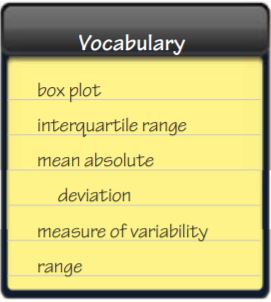
Choose the best term from the box to complete the sentence.
Go Math Grade 4 Answer Key Homework FL Chapter 12 Relative Sizes of Measurement Units Review Test img 1

Question 1.
A ___________ is a metric unit for measuring length or distance.
________

Answer: millimeter
A millimeter is a metric unit for measuring length or distance.

Question 2.
A ___________ is a metric unit for measuring liquid volume.
________

Answer: milliliter
A milliliter is a metric unit for measuring liquid volume.

Question 3.
A ___________ is a graph that shows the frequency of data along a number line.
________

Answer: line plot
A line plot is a graph that shows the frequency of data along a number line.

Question 4.
A ___________ is a customary unit for measuring liquid volume.
________

Answer: quart
A quart is a customary unit for measuring liquid volume.

Complete.

Question 5.
9 feet = _____ inches

Answer: 108 inches

Explanation:
Convert from feet to inches
1 feet = 12 inches
9 feet = 9 × 12 inches = 108 inches
Thus 9 feet = 108 inches

Question 6.
7 tons = _____ pounds

Answer: 14,000 pounds

Explanation:
Converting from tons to pounds
1 ton = 2000 pounds
7 tons = 7 × 2000 pounds = 14,000 pounds
Thus 7 tons = 14,000 pounds

Question 7.
10 pints = _____ cups

Answer: 20 cups

Explanation:
Converting from pints to cups.
1 pint = 2 cups
10 pints = 10 × 2 cups = 20 cups
Thus 10 pints = 20 cups

Question 8.
4 decimeters = _____ centimeters

Answer: 40 centimeters

Explanation:
Converting from decimeters to centimeters.
1 decimeter = 10 centimeter
4 decimeters = 4 × 10 centimeter = 40 centimeters
Thus 4 decimeters = 40 centimeters

Question 9.
8 liters = _____ milliliters

Answer: 8000 millimeters

Explanation:
Converting from liters to milliliters.
1 liter = 1000 milliliters
8 liters = 8 × 1000 milliliters
= 8000 milliliters
Thus 8 liters = 8000 milliliters

Question 10.
5 weeks = _____ days

Answer: 35 days

Explanation:
Converting from weeks to days.
1 week = 7 days
5 weeks = 5 × 7 days = 35 days
Thus 5 weeks = 35 days

Compare using <, >, or =.

Question 11.
3 yards _____ 36 inches

Answer: >

Explanation:
Converting from yards to inches.
1 yard = 36 inches
3 yards = 108 inches
Thus 3 yards > 36 inches

Question 12.
10 cups _____ 80 fluid ounces

Answer: =

Explanation:
Converting from cups to fluid ounces.
1 cup = 8 fluid ounces
10 cups = 8 × 10 = 80 fluid oiunces
Thus 10 cups = 80 fluid ounces

Question 13.
4 pounds _____ 96 ounces

Answer: <

Explanation:
Converting from pounds to ounces.
1 pound = 16 ounces
4 pounds = 4 × 16 ounces = 64 ounces
64 ounces is less than 96 ounces
Thus, 4 pounds < 96 ounces

Question 14.
8 meters _____ 700 centimeters

Answer: >

Explanation:
Converting from meters to centimeters.
1 meter = 100 centimeters
8 meters = 8 × 100 centimeters = 800 centimeters
800 centimeters is greater than 700 centimeters.
Thus, 8 meters > 700 centimeters

Question 15.
6 liters _____ 6,500 milliliters

Answer: <

Explanation:
Converting from liters to milliliters.
1 liter = 1000 milliliters
6 liters = 6 × 1000 milliliters
6000 milliliters is less than 6500 milliliters.
Thus, 6 liters < 6,500 milliliters.

Question 16.
9 kilograms _____ 9,000 grams

Answer: =

Explanation:
Converting from kilograms to grams.
1 kilogram = 1000 grams
9 kilograms = 9 × 1000 grams = 9000 grams
9 kilograms = 9,000 grams

Add or subtract.

Question 17.
8 hr 30 min
− 6 hr 25 min
————————–
_____ hr _____ min

Answer: 2 hr 5 min

Explanation:
8 hr 30 min
-6 hr 25 min
2 hr 5 min

Question 18.
7 c 4 fl oz
+4 c 3 fl oz
———————–
_____ c _____ fl oz

Answer: 11c 7 fl oz

Explanation:
7 c 4 fl oz
+4 c 3 fl oz
11 c 7 fl oz.

Question 19.
9 yd 1 ft
−5 yd 2 ft
———————–
_____ yd _____ ft

Answer: 3 yd 2 ft

Explanation:
First, convert from the yard to feet.
1 yard = 3 ft
9 yd 1 ft = 8 yd 4 ft
8 yd 4 ft
-5 yd 2 ft
3 yd 2 ft

Review/Test – Page No. 492

Fill in the bubble completely to show your answer.

Question 20.
Maya’s band rehearsal started at 10:30 A.M. It ended 1 hour and 40 minutes later. At what time did Maya’s band rehearsal end?
Options:
a. 12:10 A.M.
b. 8:50 A.M.
c. 12:10 P.M.
d. 11:10 P.M.

Answer: 12:10 P.M.

Explanation:
Given,
Maya’s band rehearsal started at 10:30 A.M. It ended 1 hour and 40 minutes later.
10 hr 30 min
+1 hr 40 min
11 hr 70 min
Now convert 70 min to hours.
70 min = 1 hr 10 min
11 hr 70 min = 12:10 P.M.
Thus the correct answer is option C.

Question 21.
Darlene is making punch. She pours 4 quarts 2 cups of apple juice into a bowl. Then she pours 3 quarts 1 cup of grape juice into the bowl. How much juice is in the bowl now?
Options:
a. 1 quart 1 cup
b. 7 quarts 1 cup
c. 7 quarts 3 cups
d. 8 quarts 1 cup

Answer: 7 quarts 3 cups

Explanation:
Given,
Darlene is making punch. She pours 4 quarts 2 cups of apple juice into a bowl.
Then she pours 3 quarts 1 cup of grape juice into the bowl.
4 quarts 2 cups
+3 quarts 1 cup
7 quarts 3 cups
Thus the correct answer is option c.

Question 22.
Kainoa bought a brick of modeling clay that was labeled 2 kilograms. He needs to separate the clay into balls that are measured in grams. How many grams does he have?
Options:
a. 20 grams
b. 200 grams
c. 2,000 grams
d. 20,000 grams

Answer: 2,000 grams

Explanation:
Given,
Kainoa bought a brick of modeling clay that was labeled 2 kilograms.
He needs to separate the clay into balls that are measured in grams.
Convert from kilograms to grams.
1 kilogram = 1000 grams
2 kilograms = 2 × 1000 grams = 2000 grams
Thus the correct answer is option c.

Question 23.
A truck driver’s truck weighs 3 tons. A weigh station measures the weight in pounds. How many pounds does the truck weigh?
Options:
a. 600 pounds
b. 2,000 pounds
c. 3,000 pounds
d. 6,000 pounds

Answer: 6,000 pounds

Explanation:
Given,
A truck driver’s truck weighs 3 tons. A weigh station measures the weight in pounds.
Convert from tons to pounds.
1 ton = 2000 pounds
3 tons = 3 × 2000 pounds = 6000 pounds
Thus the correct answer is option d.

Review/Test – Page No. 493

Fill in the bubble completely to show your answer.

Question 24.
Brody and Amanda canoed for 1 hour and 20 minutes before stopping to fish at 1:15 P.M. At what time did they start canoeing?
Options:
a. 11:55 A.M.
b. 12:05 P.M.
c. 2:35 P.M.
d. 11:55 P.M.

Answer: 11:55 A.M.

Explanation:
Given,
Brody and Amanda canoed for 1 hour and 20 minutes before stopping to fish at 1:15 P.M.
13 hr 15 min
-1 hr 20 min
11 hr 55 min
Thus they start canoeing at 11:55 A.M.
Thus the correct answer is option d.

Question 25.
Lewis fills his thermos with 2 liters of water. Garret fills his thermos with 1 liter of water. How many more milliliters of water does Lewis have than Garret?
Options:
a. 1 more milliliter
b. 100 more milliliters
c. 1,000 more milliliters
d. 2,000 more milliliters

Answer: 1,000 more milliliters

Explanation:
Given,
Lewis fills his thermos with 2 liters of water. Garret fills his thermos with 1 liter of water.
2 liters
-1 liters
1 liter
Convert from liters to milliliters.
1 liter = 1000 milliliters
Thus the correct answer is option c.

Question 26.
Lola won the 100-meter freestyle event at her swim meet. How many decimeters did Lola swim?
Options:
a. 1 decimeter
b. 10 decimeter
c. 100 decimeter
d. 1,000 decimeter

Answer: 1,000 decimeter

Explanation:
Given,
Lola won the 100-meter freestyle event at her swim meet.
Convert from meter to decimeter.
1 meter = 10 decimeter
100 meter = 100 × 10 decimeter = 1000 decimeter
Thus the correct answer is option d.

Question 27.
What is the best estimate for the length of an ant’s leg?
Options:
a. 2 millimeters
b. 2 centimeters
c. 2 decimeters
d. 2 meters

Answer: 2 centimeters

Explanation:
The best estimation for the length of an ant’s leg is 2 centimeters.
Thus the correct answer is option b.

Review/Test – Page No. 494

Question 28.
Sabita made this table to relate two customary units of liquid volume. List the number pairs for the table. Describe the relationship between the numbers in each pair.
Go Math Grade 4 Answer Key Homework FL Chapter 12 Relative Sizes of Measurement Units Review Test img 2
Type below:
________

Answer: The relationship between the numbers in each pair is pints and cups.

Question 29.
Label the columns of the table. Explain your answer.
Type below:
________

Answer:
Go-Math-Grade-4-Answer-Key-Homework-FL-Chapter-12-Relative-Sizes-of-Measurement-Units-Review-Test-img-2

Question 30.
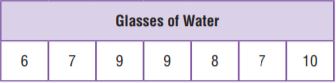
Landon borrowed a book from the library. The data show the lengths of time Landon read the book each day until he finished it.
Go Math Grade 4 Answer Key Homework FL Chapter 12 Relative Sizes of Measurement Units Review Test img 3
A. Make a tally table and a line plot to show the data.
Go Math Grade 4 Answer Key Homework FL Chapter 12 Relative Sizes of Measurement Units Review Test img 4
Go Math Grade 4 Answer Key Homework FL Chapter 12 Relative Sizes of Measurement Units Review Test img 5
Type below:
________

Answer:
Go-Math-Grade-4-Answer-Key-Homework-FL-Chapter-12-Relative-Sizes-of-Measurement-Units-Review-Test-img-4

Question 30.
B. Explain how you used the tally table to label the numbers and plot the Xs on the line plot.
Type below:
________

Answer:
I used the number of tallys to the plot the Xs on the line plot.

Question 30.
C. What is the difference between the longest time and shortest time Landon spent reading the book?
\(\frac{□}{□}\) hour

Answer: \(\frac{3}{4}\) hour

Explanation:
The shortest time Landon spent reading the book is 1/4
The longest time Landon spent reading the book is 1
1 – 1/4 = 3/4
Thus the difference between the longest time and shortest time Landon spent reading the book is \(\frac{3}{4}\) hour.

Conclusion:

Keep in touch with our Go Math Grade 4 Answer Key in pdf format & learn the explanations of each and every question from ch 12. For more questions and assistance take help from the other two articles ie, Go Math Grade 4 Answer Key Chapter 12 Relative Sizes of Measurement Units and Go Math Grade 4 Solution Key Homework practice FL Chapter 12 pdf. All The Best!!!

go-math-grade-4-chapter-13-algebra-perimeter-and-area-review-test-answer-key

Go Math Grade 4 Answer Key Homework FL Chapter 13 Algebra: Perimeter and Area Review/Test

Go Math Grade 4 Answer Key Homework FL Chapter 13 Algebra: Perimeter and Area Review/Test support students to improve their subject knowledge on the perimeter and area of the different shapes & gain maths skills. The answers provided in this chapter are designed by the math experts. Go ahead and download the Go Math Grade 4 Answer key pdf, to find out the Perimeter and Area of the rectangle, square, and etc. concepts easily.

Go Math Grade 4 Answer Key Homework FL Chapter 13 Algebra: Perimeter and Area Review/Test

Go Math Solution Key of grade 4 chapter 13 will provide perfect solutions in a step-by-step manner with a clear explanation of every question. Go Math taught explicitly about Perimeter and Area of different Shapes with the help of images, indicating images with arrows, and numbers. So, make use of this pdf formatted lesson-wise Go Math Grade 4 Answer Key Homework FL Chapter 13 Algebra: Perimeter and Area Review/Test & check your solutions within no time.

Chapter: 13 – Review/Test 

Review/Test – Page No. 519

Choose the best term from the box.
Go Math Grade 4 Answer Key Homework FL Chapter 13 Algebra Perimeter and Area Review Test img 1

Question 1.
The number of square units needed to cover a flat surface is the ______________.
_________

Answer: Area
The number of square units needed to cover a flat surface is the area.

Question 2.
The distance around a shape is the ____________.
_________

Answer: Perimeter
The distance around a shape is the Perimeter.

Find the area of the rectangle or combined rectangles.

Question 3.
Go Math Grade 4 Answer Key Homework FL Chapter 13 Algebra Perimeter and Area Review Test img 2
A = _____ square feet

Answer: 112 square feet

Explanation:
Given,
length = 14 ft
Width = 8 ft
Area of the rectangle = l × w
A = 14 ft × 8 ft
A = 112 square feet
Thus the area of the rectangle for the above figure is 112 square feet.

Question 4.
Go Math Grade 4 Answer Key Homework FL Chapter 13 Algebra Perimeter and Area Review Test img 3
A = _____ square centimeters

Answer: 65 square cm.

Explanation:
Figure 1:
S = 3 cm
Area of the square = s × s
A = 3 cm × 3 cm
A = 9 square cm
Figure 2:
b = 11 cm
h = 4 cm
Area of the rectangle = b × h
A = 11 cm × 4 cm
A = 44 square cm
Figure 3:
b = 2 cm
h = 6 cm
Area of the rectangle = b × h
A = 2 cm × 6 cm
A = 12 square cm
Area of the composite figure is 9 sq. cm + 44 sq. cm + 12 sq. cm = 65 square cm.

Find the unknown measure of the rectangle.

Question 5.
Go Math Grade 4 Answer Key Homework FL Chapter 13 Algebra Perimeter and Area Review Test img 4
A = _____ square yards

Answer: 136 square yard

Explanation:
Figure 1:
b = 12 yd
h = 8 yd
Area of the rectangle = b × h
A = 12 yd × 8 yd
A = 96 square yard.
Figure 2:
b = 16 yd
h = 1 yd
Area of the rectangle = b × h
A = 16 yd × 1 yd
A = 16 square yard.
Figure 3:
b = 4 yd
h = 6 yd
Area of the rectangle = b × h
A = 4 yd × 6 yd
A = 24 square yard.
The area of the composite figure is 96 square yard + 16 square yard + 24 square yard = 136 square yard.

Question 6.
Go Math Grade 4 Answer Key Homework FL Chapter 13 Algebra Perimeter and Area Review Test img 5
Perimeter = 60 meters
width = _____ m

Answer: 12 m

Explanation:
Given,
Perimeter = 60 meters
length = 18 m
width = _____ m
The perimeter of the rectangle = l + w + l + w
P = 2l + 2w
60 m = 2 × 18 m + 2w
60 m – 36 m = 2w
2w = 24
w = 24/2
w = 12 meters
Thus the width of the above rectangle is 12 meters.

Question 7.
Go Math Grade 4 Answer Key Homework FL Chapter 13 Algebra Perimeter and Area Review Test img 6
Area = 91 square feet
height = _____ feet

Answer: 13 ft

Explanation:
Given,
Area = 91 square feet
base = 7 ft
height = _____ feet
Area of the rectangle = b × h
91 sq ft = 7 ft × h
h = 91/7
h = 13 ft
Thus the height of the above rectangle is 13 ft.

Question 8.
Go Math Grade 4 Answer Key Homework FL Chapter 13 Algebra Perimeter and Area Review Test img 7
Area = 60 square inches
base = _____ in.

Answer: 10 inches

Explanation:
Given,
Area = 60 square inches
height = 6 in
base = _____ in.
Area of the rectangle = b × h
60 square inches = b × 6 in
b = 60/6
b = 10 inches
Thus the base of the above rectangle is 10 inches.

Question 9.
What is the perimeter of a rectangle with a length of 13 feet and a width of 9 feet?
P = _____ ft

Answer: 44 ft

Explanation:
Given,
l = 13 ft
w = 9 ft
The perimeter of the rectangle = l + w + l + w
P = 13 ft + 9 ft + 13 ft + 9 ft
P = 44 ft
Thus the perimeter of the rectangle is 44 ft.

Review/Test – Page No. 520

Fill in the bubble completely to show your answer.

Question 10.
Which pair of shapes has the same area?
Options:
a.Go Math Grade 4 Answer Key Homework FL Chapter 13 Algebra Perimeter and Area Review Test img 8
b. Go Math Grade 4 Answer Key Homework FL Chapter 13 Algebra Perimeter and Area Review Test img 9
c. Go Math Grade 4 Answer Key Homework FL Chapter 13 Algebra Perimeter and Area Review Test img 10
d. Go Math Grade 4 Answer Key Homework FL Chapter 13 Algebra Perimeter and Area Review Test img 11

Answer: Go Math Grade 4 Answer Key Homework FL Chapter 13 Algebra Perimeter and Area Review Test img 10

Explanation:
a. Go Math Grade 4 Answer Key Homework FL Chapter 13 Algebra Perimeter and Area Review Test img 8
4 × 2 = 8
3 × 3 = 9
8 ≠ 9
b. Go Math Grade 4 Answer Key Homework FL Chapter 13 Algebra Perimeter and Area Review Test img 9
4 × 4 = 16
3 × 5 = 15
16 ≠ 15
c. Go Math Grade 4 Answer Key Homework FL Chapter 13 Algebra Perimeter and Area Review Test img 10
3 × 4 = 12
2 × 6 = 12
12 = 12
Thus the correct answer is option c.

Question 11.
Jamie’s mom wants to enlarge her rectangular garden by adding a new rectangular section. The garden is now 96 square yards. What will the total area of the garden be after she adds the new section?
Options:
a. 84 square yards
b. 96 square yards
c. 180 square yards
d. 192 square yards

Answer: 192 square yards

Explanation:
Given that,
Jamie’s mom wants to enlarge her rectangular garden by adding a new rectangular section. The garden is now 96 square yards.
Add 96 square yards to the rectangular garden.
96 square yards + 96 square yards = 192 square yards
Thus the correct answer is option d.

Question 12.
A rectangular yoga studio has an area of 153 square feet. The width of the studio is 9 feet. What is the length of the studio?
lenght = _____ ft

Answer: 17 ft

Explanation:
Given,
A rectangular yoga studio has an area of 153 square feet.
The width of the studio is 9 feet.
Area of the rectangle = l × w
153 square feet = l × 9 ft
l = 153/9
l = 17 ft
Therefore the length of the studio is 17 feet.

Review/Test – Page No. 521

Fill in the bubble completely to show your answer.

Question 13.
Mr. Patterson had a rectangular deck with an area of 112 square feet built in his backyard. Which could be a diagram of Mr. Patterson’s deck?
Options:
a. Go Math Grade 4 Answer Key Homework FL Chapter 13 Algebra Perimeter and Area Review Test img 12
b. Go Math Grade 4 Answer Key Homework FL Chapter 13 Algebra Perimeter and Area Review Test img 13
c. Go Math Grade 4 Answer Key Homework FL Chapter 13 Algebra Perimeter and Area Review Test img 14
d. Go Math Grade 4 Answer Key Homework FL Chapter 13 Algebra Perimeter and Area Review Test img 15

Answer: c. Go Math Grade 4 Answer Key Homework FL Chapter 13 Algebra Perimeter and Area Review Test img 14

Explanation:
Given,
Mr. Patterson had a rectangular deck with an area of 112 square feet built in his backyard.
Area of the rectangle = l × w
A = 28 ft × 4 ft
A = 112 square feet
Thus the correct answer is option c.

Question 14.
The town indoor pool is in a rectangular building. Marco is laying tile around the rectangular pool. How many square meters of tile will Marco need?
Go Math Grade 4 Answer Key Homework FL Chapter 13 Algebra Perimeter and Area Review Test img 16
Options:
a. 96 square meters
b. 252 square meters
c. 572 square meters
d. 892 square meters

Answer: 252 square meters

Explanation:
The outer rectangle is
l = 26 m
w = 22 m
Area of the rectangle = l × w
A = 26 m × 22 m
A = 572 square meters
The inner rectangle is
l = 20 m
w = 16 m
Area of the rectangle = l × w
A = 20 m × 16 m
A = 320 square meters
Thus the square meters of tile will Marco need is 572 – 320 = 252 square meters.

Review/Test – Page No. 522

Question 15.
A drawing of a high school pool is shown below.
Go Math Grade 4 Answer Key Homework FL Chapter 13 Algebra Perimeter and Area Review Test img 17
What is the area of the pool? Explain how you know.
_______ square yards

Answer:

Explanation:
Figure 1:
l = 10 yd
w = 15 yd
Area of the rectangle = l × w
A = 10 yd × 15 yd
A = 150 square yard
Figure 2:
l = 15 yd
w = 10 yd
Area of the rectangle = l × w
A = 15 yd × 10 yd
A = 150 square yard
Figure 3:
l = 10 yd
w = 5 yd
Area of the rectangle = l × w
A = 10 yd × 5 yd
A = 50 square yard
Area of the pool = 150 square yard + 150 square yard + 50 square yard = 350 square yard

Question 16.
Mr. Brown has 24 meters of fencing. He wants to build a rectangular pen for his rabbits.
Go Math Grade 4 Answer Key Homework FL Chapter 13 Algebra Perimeter and Area Review Test img 18
A. Draw two different rectangles that Mr. Brown could build. Use only whole numbers for the lengths of the sides of each rectangle. Label the length of each side.
Type below:
_________

Answer:
Go Math Grade 4 Answer Key Chapter 13 Review Test img-2

Question 16.
B. Find the area in square meters of each rabbit pen you made in Part A. Show your work.
Type below:
_________

Answer: 20 square meters

Explanation:
l = 10m
w = 2m
Area of the rectangle = l × w
A = 10 m × 2 m
A = 20 square meters
Therefore the area in square meters of each rabbit pen is 20 square meters.

Question 16.
C. If you were Mr. Brown, which of the two pens above would you construct for your rabbits? Explain why.
Type below:
_________

Answer: I would construct the second figure for the two rabbit pens.

Conclusion:

Once you go through the Go Math Grade 4 Review Test Solutions of ch 13, then students can immediately discover the perimeter and area of shapes. Stay Connected with us to get the Go Math Grade 4 Answer Key Chapter 13 Algebra: Perimeter and Area along with Go Math Grade 4 Answer Key Homework Practice FL Chapter 13 Algebra: Perimeter and Area pdf.

go-math-grade-4-chapter-12-relative-sizes-of-measurement-units-answer-key

Go Math Grade 4 Answer Key Chapter 12 Relative Sizes of Measurement Units

Go Math Grade 4 Answer Key Chapter 12 Relative Sizes of Measurement Units Pdf download links are provided here for free od cost.  Do refer to them during the preparation time and learn the concepts easily. All the students who are hunting for the Go Math Grade 4 Answer Key Chapter 12 Relative Sizes of Measurement Units can download them here. So, take the help of these available pdf links and download Go Math Grade 4 Answer Key Chapter 12 pdf to understand & learn the concepts of Relative Sizes of Measurement Units in a simplistic manner.

Go Math Grade 4 Answer Key Chapter 12 Relative Sizes of Measurement Units

Go through the below-provided links and get the Go Math Grade 4 Chapter 12 Relative Sizes of Measurement Units Answer Key for better preparation and score good marks in the exams. The provided solutions to all the questions asked from Relative Sizes of Measurement Units concepts will help you in real-time calculations also. Hence, utilize these lesson-wise links and solve each and every concept related questions covered in this chapter.

Lesson 1:

Lesson 2:

Common Core

Lesson 3:

Common Core

Lesson 4:

Common Core

Lesson 5:

Common Core

Mid Chapter Checkpoint

Lesson 6:

Common Core

Lesson 7:

Common Core

Lesson 8:

Common Core

Lesson 9: Problem Solving • Elapsed Time

Common Core

Chapter 12: Page No. 699

Chapter 12: Page No. 700

Lesson 10:

Lesson 11: Algebra • Patterns in Measurement Units

Common Core

Chapter 12: Review/Test

Common Core – New – Page No. 645

Measurement Benchmarks

Use benchmarks to choose the customary unit you would use to measure each.
Go Math Grade 4 Answer Key Chapter 12 Relative Sizes of Measurement Units Common Core - New img 1

Question 1.
height of a computer
foot

Question 2.
weight of a table
________

Answer: Pound

The customary unit to measure the weight of the table is Pound.

Question 3.
length of a semi-truck
________

Answer: Yard

The unit to measure the length of a semi-truck is the yard.

Question 4.
the amount of liquid a bathtub holds
________

Answer: Gallon

The customary unit to measure the amount of liquid a bathtub holds is Gallon.

Use benchmarks to choose the metric unit you would use to measure each.
Go Math Grade 4 Answer Key Chapter 12 Relative Sizes of Measurement Units Common Core - New img 2

Question 5.
mass of a grasshopper
________

Answer: Gram

The metric unit to measure the mass of a grasshopper is the gram.

Question 6.
the amount of liquid a water bottle holds
________

Answer: Liter

The metric unit to measure the amount of liquid a water bottle holds is Liter.

Question 7.
length of a soccer field
________

Answer: Meter

The metric unit to measure the length of a soccer field is meter.

Question 8.
length of a pencil
________

Answer: Centimeter

The metric unit to measure the length of a pencil is Centimeter.

Circle the better estimate.

Question 9.
mass of a chicken egg
a. 50 grams
b. 50 kilograms

Answer: 50 grams

The better estimate to measure the mass of a chicken egg is 50 grams.

Question 10.
length of a car
a. 12 miles
b. 12 feet

Answer: 12 feet

The better estimate to measure the length of a car is 12 feet.

Question 11.
amount of liquid a drinking glass holds
a. 8 ounces
b. 8 quarts

Answer: 8 ounces

The better estimate to measure the amount of liquid a drinking glass holds is 8 ounces.

Complete the sentence. Write more or less.

Question 12.
A camera has a length of _______ than one centimeter.

Answer: more

Explanation:

The length of a camera will greater than a centimeter. So, A camera has a length of more than one centimeter.

Question 13.
A bowling ball weighs _______ than one pound.

Answer: more

The unit of the pound is very less compared to the length of the ball.
So, A bowling ball weighs more than one pound.

Problem Solving

Question 14.
What is the better estimate for the mass of a textbook, 1 gram or 1 kilogram?
1 ________

Answer: 1 kilogram

The weight of a book will be more than a gram. So, the better estimate for the mass of a textbook is 1 kilogram.

Question 15.
What is the better estimate for the height of a desk, 1 meter or 1 kilometer?
1 ________

Answer: 1 meter

The kilometer is not suitable to measure the height of the desk. So, the better estimate for the height of a desk is 1 meter.

Common Core – New – Page No. 646

Lesson Check

Question 1.
Which is the best estimate for the weight of a stapler?
Options:
a. 4 ounces
b. 4 pounds
c. 4 inches
d. 4 feet

Answer: 4 ounces

The best estimate for the weight of a stapler is 4 ounces
So, the correct answer is option A.

Question 2.
Which is the best estimate for the length of a car?
Options:
a. 4 kilometers
b. 4 tons
c. 4 kilograms
d. 4 meters

Answer: 4 meters

The unit to measure the length of the car is meters.
Thus the answer is option D.

Spiral Review

Question 3.
Bart practices his trumpet 1 \(\frac{1}{4}\) hours each day. How many hours will he practice in 6 days?
Options:
a. 8 \(\frac{2}{4}\) hours
b. 7 \(\frac{2}{4}\) hours
c. 7 hours
d. 6 \(\frac{2}{4}\) hours

Answer: 7 \(\frac{2}{4}\) hours

Explanation:

Bart practices his trumpet 1 \(\frac{1}{4}\) hours each day.
The normal fraction for 1 \(\frac{1}{4}\) = \(\frac{5}{4}\)
In order to calculate the number of hours for 6 days, we need to multiply the fraction with 6.
6 × \(\frac{5}{4}\) = \(\frac{30}{4}\)
The mixed fraction of \(\frac{30}{4}\) is 7 \(\frac{2}{4}\) hours
So, the correct answer is otpion D.

Question 4.
Millie collected 100 stamps from different countries. Thirty-two of the stamps are from countries in Africa. What is \(\frac{32}{100}\) written as a decimal?
Options:
a. 32
b. 3.2
c. 0.32
d. 0.032

Answer: 0.32

The decimal for the fraction is \(\frac{32}{100}\) = 0.32
Thus the answer is option C.

Question 5.
Diedre drew a quadrilateral with 4 right angles and 4 sides of the same length. What kind of polygon did Diedre draw?
Options:
a. square
b. trapezoid
c. hexagon
d. pentagon

Answer: square

Explanation:

A square has got 4 sides of equal length and 4 right angles (right angle = 90 degrees).
So, the correct answer is option A.

Question 6.
How many degrees are in an angle that turns through \(\frac{1}{2}\) of a circle?
Options:
a. 60°
b. 90°
c. 120°
d. 180°

Answer: 180°

Explanation:

\(\frac{1}{2}\) × 360°
360°/2 = 180°
So, the correct answer is option D.

Page No. 649

Question 1.
Compare the size of a yard to the size of a foot.
Use a model to help.
Go Math Grade 4 Answer Key Chapter 12 Relative Sizes of Measurement Units img 3
Go Math Grade 4 Answer Key Chapter 12 Relative Sizes of Measurement Units img 4
1 yard is ____ times as long as ____ foot.
____              ____

Answer: 1 yard is three times as long as one feet.

Complete.

Question 2.
2 feet = ____ inches

Answer: 24 inches

Explanation:

1 foot = 12 inches
2 feets = 2 × 12 inches = 24 inches

Question 3.
3 yards = ____ feet

Answer: 9 feets

Explanation:

1 yard = 3 feets
3 yards = 3 × 3 = 9 feets

Question 4.
7 yards = ____ feet

Answer: 21 feets

Explanation:

1 yard = 3 feets
7 yards = 3 × 7 = 21 feets
Therefore 7 yards = 21 feets

Question 5.
4 yards = ____ feet

Answer: 12 feets

Explanation:

1 yard = 3 feet
4 yards = 4 × 3 feets = 12 feets
4 yards = 12 feets

Question 6.
10 yards = ____ feet

Answer: 30 feets

Explanation:

1 yard = 3 feets
10 yards = 10 × 3 feets = 30 feets
10 yards = 30 feets

Question 7.
7 feet = ____ inches

Answer: 84 inches

Explanation:

1 feet = 12 inches
7 feets = 7 × 12 = 84 inches

Use Symbols Algebra Compare using <, >, or =.

Question 8.
1 foot ____ 13 inches

Answer: 1 foot < 13 inches

Explanation:

We know that 1 foot = 12 inches
12 inches is less than 13 inches
So, 1 foot < 13 inches

Question 9.
2 yards ____ 6 feet

Answer: 2 yards = 6 feet

Explanation:

1 yard = 3 feets
2 yards = 2 × 3 feets = 6 feets
2 yards = 6 feet

Question 10.
6 feet ____ 60 inches

Answer: 6 feet > 60 inches

Explanation:

1 feet = 12 inches
6 feets = 6 × 12 inches = 72 inches
72 inches is greater than 60 inches
So, 6 feet > 60 inches

Question 11.
Joanna has 3 yards of fabric. She needs 100 inches of fabric to make curtains. Does she have enough fabric to make curtains? Explain. Make a table to help.
Type below:
________

Answer:

Given that, Joanna has 3 yards of fabric. She needs 100 inches of fabric to make curtains.
1 yard = 36 inches
3 yards = 36 × 3 = 108 inches
108 inches > 100 inches
So, she has enough fabric to make curtains.

Question 12.
Select the measures that are equal. Mark all that apply.
Options:
a. 4 feet
b. 12 yards
c. 36 feet
d. 480 inches
e. 15 feet
f. 432 inches

Answer: B = C = F

Explanation:

1 yard = 3 feet
12 yards = 12 × 3 = 36 feet
So, B = C

1 feet = 12 inches
36 feet = 12 × 36 inches = 432 inches
C = F
Therefore B = C = F

Page No. 650

Question 13.
Jasmine and Luke used fraction strips to compare the size of a foot to the size of an inch using fractions. They drew models to show their answers. Whose answer makes sense? Whose answer is nonsense? Explain your reasoning.
Jasmine’s Work
Go Math Grade 4 Answer Key Chapter 12 Relative Sizes of Measurement Units img 5
1 inch is \(\frac{1}{12}\) of a foot.
Luke’s Work
Go Math Grade 4 Answer Key Chapter 12 Relative Sizes of Measurement Units img 6
1 inch is \(\frac{1}{3}\) of a foot.
_______ ‘s answer makes sense

Answer: Jasmine’s answer makes sense

Question 13.
a. Apply For the answer that is nonsense, write an answer that makes sense.
Type below:
________

Answer: Luke’s answer is nonsense and Jasmine’s answer makes sense.
Because 1 foot = 12 inches. The fraction of 1 inch = \(\frac{1}{3}\) of a foot.

Question 13.
b. Look back at Luke’s model. Which two units could you compare using his model? Explain.
Type below:
________

Answer: Luke’s model will be suitable to compare the size of a foot to the size of a yard using fractions.

1 feet = 12 inches
3 feet = 36 inches
36 inches = 1 yard
So, 1 yard = \(\frac{12}{36}\)
1 yard = \(\frac{1}{3}\) feet

Common Core – New – Page No. 651

Customary Units of Length

Complete.

Question 1.
3 feet = 36 inches
Think: 1 foot = 12 inches,
so 3 feet = 3 × 12 inches, or 36 inches

Question 2.
2 yards = ____ feet

Answer: 6

Explanation:

1 yard = 3 feet
2 yards = 2 × 3 = 6 feets

Question 3.
8 feet = ____ inches

Answer: 96 inches

Explanation:

1 foot = 12 inches
8 feet = 12 × 8 = 96 inches
So, 8 feet = 96 inches

Question 4.
7 yards = ____ feet

Answer:21 feets

Explanation:

1 yard = 3 feet
7 yards = 7 × 3 feet = 21 feets
So, 7 yards = 21 feets

Question 5.
4 feet = ____ inches

Answer: 48 inches

Explanation:

1 foot = 12 inches
4 feet = 4 × 12 inches = 48 inches
So, 4 feet = 48 inches

Question 6.
15 yards = ____ feet

Answer: 45 feet

Explanation:

1 yard = 3 feet
15 yards = 15 × 3 feet = 45 feet
So, 15 yards = 45 feet

Question 7.
10 feet = ____ inches

Answer: 120 inches

Explanation:

1 foot = 12 inches
10 feet = 10 × 12 inches
10 feet = 120 inches

Compare using <, >, or =.

Question 8.
3 yards ____ 10 feet

Answer: 3 yards < 10 feet

Explanation:

1 yard = 3 feet
3 yards = 3 × 3 feet = 9 feet
9 feet is less than 10 feet
So, 3 yards < 10 feet

Question 9.
5 feet ____ 60 inches

Answer: 5 feet = 60 inches

Explanation:

1 foot = 12 inches
5 feet = 5 × 12 inches = 60 inches
So, 5 feet = 60 inches

Question 10.
8 yards ____ 20 feet

Answer: 8 yards > 20 feet

Explanation:

1 yard = 3 feet
8 yards = 8 × 3 feet = 24 feet
24 feet is greater than 20 feet
So, 8 yards > 20 feet

Question 11.
3 feet ____ 10 inches

Answer: 3 feet > 10 inches

Explanation:

1 foot = 12 inches
3 feet = 3 × 12 inches = 36 inches
36 inches is greater than 10 inches
So, 3 feet > 10 inches

Question 12.
3 yards ____ 21 feet

Answer: 3 yards < 21 feet

Explanation:

1 yard = 3 feet
3 yards = 3 × 3 feet = 9 feet
9 feet is less than 21 feet
So, 3 yards < 21 feet

Question 13.
6 feet ____ 72 inches

Answer: 6 feet = 72 inches

Explanation:

1 foot = 12 inches
6 feet = 6 × 12 inches = 72 inches
6 feet = 72 inches

Problem Solving

Question 14.
Carla has two lengths of ribbon. One ribbon is 2 feet long. The other ribbon is 30 inches long. Which length of the ribbon is longer?
2 feet ____ 30 inches

Answer: 2 feet < 30 inches

Explanation:

Carla has two lengths of ribbon. One ribbon is 2 feet long. The other ribbon is 30 inches long.
1 feet = 12 inches
2 feet = 2 × 12 inches = 24 inches
24 inches is less than 30 inches
30 inches is greater than 2 feet.
2 feet < 30 inches

Question 15.
A football player gained 2 yards on one play. On the next play, he gained 5 feet. Was his gain greater on the first play or the second play?
2 yards ____ 5 feet

Answer: 2 yards > 5 feet

Explanation:

A football player gained 2 yards on one play.
On the next play, he gained 5 feet.
1 yard = 3 feet
2 yards = 2 × 3 feet = 6 feet
The first play > The second play

Common Core – New – Page No. 652

Lesson Check

Question 1.
Marta has 14 feet of wire to use to make necklaces. She needs to know the length in inches so she can determine how many necklaces to make. How many inches of wire does Marta have?
Options:
a. 42 inches
b. 84 inches
c. 168 inches
d. 504 inches

Answer: 168 inches

Explanation:

Marta has 14 feet of wire to use to make necklaces.
1 feet = 12 inches
14 feet = 14 × 12 inches
14 feet = 168 inches
So, the correct answer is option C.

Question 2.
Jarod bought 8 yards of ribbon. He needs 200 inches to use to make curtains. How many inches of ribbon does he have?
Options:
a. 8 inches
b. 80 inches
c. 96 inches
d. 288 inches

Answer: 288 inches

Explanation:

Jarod bought 8 yards of ribbon. He needs 200 inches to use to make curtains.
1 yard = 36 inches
8 yards = 288 inches
Thus he has 288 inches of ribbon.
So, the correct answer is option D.

Spiral Review

Question 3.
Which describes the turn shown below?
Go Math Grade 4 Answer Key Chapter 12 Relative Sizes of Measurement Units Common Core - New img 7
Options:
a. \(\frac{1}{4}\) turn counterclockwise
b. \(\frac{1}{4}\) turn clockwise
c. \(\frac{1}{2}\) turn clockwise
d. \(\frac{3}{4}\) turn counterclockwise

Answer: \(\frac{1}{4}\) turn counterclockwise

By seeing the above figure we can say that the circle turn \(\frac{1}{4}\) in counterclockwise direction.

Question 4.
Which decimal represents the shaded part of the model below?
Go Math Grade 4 Answer Key Chapter 12 Relative Sizes of Measurement Units Common Core - New img 8
Options:
a. 0.03
b. 0.3
c. 0.33
d. 0.7

Answer: 0.3

Explanation:

The square is divided into 10 parts. Among them, 3 parts are shaded.
The fraction of the shaded part is \(\frac{3}{10}\)
The decimal that represents the above figure is 0.3
Thus the correct answer is option B.

Question 5.
Three sisters shared $3.60 equally. How much did each sister get?
Options:
a. $1.00
b. $1.20
c. $1.80
d. $10.80

Answer: $1.20

Explanation:

Three sisters shared $3.60 equally.
The amount that each sister get = x
x × 3 = $3.60
x = $3.60/3 = $1.20
So, the correct answer is option B.

Question 6.
Which is the best estimate for the width of your index finger?
Options:
a. 1 millimeter
b. 1 gram
c. 1 centimeter
d. 1 liter

Answer: 1 centimeter

The unit to measure the width of your index finger is 1 centimeter
The answer is option C.

Page No. 655

Go Math Grade 4 Answer Key Chapter 12 Relative Sizes of Measurement Units img 9
Question 1.
4 tons = ______ pounds

Answer: 8000 pounds

Explanation:

1 ton = 2000 pounds
4 tons = 4 × 2000 pounds = 8000 pounds
4 tons = 8000 pounds

Complete.

Question 2.
5 tons = ______ pounds

Answer: 10,000 pounds

1 ton = 2000 pounds
5 tons = 5 × 2000 pounds
5 tons = 10,000 pounds

Question 3.
6 pounds = ______ ounces

Answer: 96 ounces

1 pound = 16 ounces
6 pounds = 6 × 16 ounces
6 pounds = 96 ounces

Question 4.
7 pounds = ______ ounces

Answer: 112 ounces

1 pound = 16 ounces
7 pounds = 7 × 16 ounces
7 pounds = 112 ounces

Question 5.
6 tons = ______ pounds

Answer:

1 ton = 2000 pounds
6 tons = 6 × 2000 pounds
6 tons = 12,000 pounds

Use Symbols Algebra Compare using >, <, or =.

Question 6.
1 pound ______ 15 pounds

Answer: 1 pound < 15 pounds
1 is greater than 15.
So, 1 pound < 15 pounds

Question 7.
2 tons ______ 2 pounds

Answer: 2 tons > 2 pounds
1 ton is greater than 1 pound.
So, 2 tons > 2 pounds

Question 8.
A landscaping company ordered 8 tons of gravel. It sells the gravel in 50-pound bags. How many pounds of gravel did the company order?
______ 50-pound bags.

Answer: 16000 pounds

A landscaping company ordered 8 tons of gravel. It sells the gravel in 50-pound bags.
1 ton = 2000 pounds
8 tons = 8 × 2000 pounds = 16000 pounds

Question 9.
If you could draw a number line that shows the relationship between tons and pounds, what would it look like? Explain.

Answer:
Since 1 ton = 2000 pounds, the number line would show tick marks for every whole number from 0 to 2000. Each tick mark from 0 to 2000 would represent 1 pound. The tick mark in 2000 would represent 1 ton.

Question 10.
Write the symbol that compares the weights correctly.
Go Math Grade 4 Answer Key Chapter 12 Relative Sizes of Measurement Units img 10
160 ounces ______ 10 pounds

Answer: 160 ounces = 10 pounds
1 pound = 16 ounces
16 pounds = 10 × 16 ounces = 160 ounces
160 ounces = 10 pounds

Question 10.
600 pounds ______ 1 ton

Answer: 600 pounds < 1 ton
1 ton = 2000 pounds
600 pounds is less than 2000 pounds
600 pounds < 1 ton

Page No. 656

Question 11.
Alexis bought \(\frac{1}{2}\) pound of grapes. How many ounces of grapes did she buy?
Dan drew the number line below to solve the problem. He says his model shows that there are 5 ounces in \(\frac{1}{2}\) pound. What is his error?
Go Math Grade 4 Answer Key Chapter 12 Relative Sizes of Measurement Units img 11
Look at the way Dan solved the problem.
Draw a correct number line and solve the problem.
Find and describe his error.
So, Alexis bought ______ ounces of grapes.
Type below:
________

1 pound = 16 ounces
\(\frac{1}{2}\) pound = 8 ounces
The error of Dan is he must draw the mark till 8 but he drew till 5 ounces.

Question 11.
Look back at the number line you drew. How many ounces are in \(\frac{1}{4}\) pound? Explain.
Type below:
________

Answer: There are 4 ounces in \(\frac{1}{4}\) pound.

Common Core – New – Page No. 657

Customary Units of Weight

Complete.

Question 1.
5 pounds = 80 ounces
Think: 1 pound = 16 ounces, so
5 pounds = 5 × 16 ounces, or 80 ounces

Question 2.
7 tons = _____ pounds

Answer: 14,000 pounds

Explanation:

1 ton = 2000 pounds
7 tons = 7 × 2000 pounds = 14000 pounds
7 tons = 14000 pounds

Question 3.
2 pounds = _____ ounces

Answer: 32 ounces

Explanation:

1 pound = 16 ounces
2 pounds = 2 × 16 ounces = 32 ounces
2 pounds = 32 ounces

Question 4.
3 tons = _____ pounds

Answer: 6,000 pounds

Explanation:

1 ton = 2000 pounds
3 tons = 3 × 2000 pounds = 6000 pounds
3 tons = 6000 pounds

Question 5.
10 pounds = _____ ounces

Answer: 160 ounces

Explanation:

1 pound = 16 ounces
10 pounds = 10 × 16 ounces = 160 ounces
10 pounds = 160 ounces

Question 6.
5 tons = _____ pounds

Answer: 10,000 pounds

Explanation:

1 ton = 2000 pounds
5 tons = 5 × 2000 pounds = 10000 pounds
5 tons = 10000 pounds

Question 7.
7 pounds = _____ ounces

Answer: 112 ounces

Explanation:

1 pound = 16 ounces
7 pounds = 7 × 16 ounces = 112 ounces
7 pounds = 112 ounces

Compare using <, >, or =.

Question 8.
8 pounds _____ 80 ounces

Answer: 8 pounds > 80 ounces

Explanation:

1 pound = 16 ounces
8 pounds = 128 ounces
128 ounces is greater than 80 ounces
So, the answer is 8 pounds > 80 ounces

Question 9.
1 ton _____ 100 pounds

Answer: 1 ton > 100 pounds

Explanation:

1 ton = 2000 pounds
2000 pounds is greater than 100 pounds
1 ton > 100 pounds

Question 10.
3 pounds _____ 50 ounces

Answer: 3 pounds < 50 ounces

Explanation:

1 pound = 16 ounces
3 pounds = 3 × 16 ounces = 48 ounces
3 pounds = 48 ounces
3 pounds < 50 ounces

Question 11.
5 tons _____ 1,000 pounds

Answer: 5 tons > 1,000 pounds

Explanation:

1 ton = 2000 pounds
5 tons = 5 × 2000 pounds = 10000 pounds
10000 pounds is greater than 1000 pounds
5 tons > 1,000 pounds

Question 12.
16 pounds _____ 256 ounces

Answer: 16 pounds = 256 ounces

Explanation:

1 pound = 16 ounces
16 pounds = 16 × 16 ounces = 256 ounces
16 pounds = 256 ounces

Question 13.
8 tons _____ 16,000 pounds

Answer: 8 tons = 16,000 pounds

Explanation:

1 ton = 2000 pounds
8 tons = 8 × 2000 pounds = 16,000 pounds
8 tons = 16,000 pounds

Problem Solving

Question 14.
A company that makes steel girders can produce 6 tons of girders in one day. How many pounds is this?
6 tons = _____ pounds

Answer: 12,000 pounds

Explanation:

A company that makes steel girders can produce 6 tons of girders in one day.
1 ton = 2000 pounds
6 tons = 6 × 2000 pounds = 12000 pounds
6 tons = 12000 pounds

Question 15.
Larry’s baby sister weighed 6 pounds at birth. How many ounces did the baby weigh?
6 pounds = _____ ounces

Answer: 96 ounces

Explanation:

Larry’s baby sister weighed 6 pounds at birth.
1 pound = 16 ounces
6 pounds = 6 × 16 ounces = 96 ounces

Common Core – New – Page No. 658

Lesson Check

Question 1.
Ann bought 2 pounds of cheese to make lasagna. The recipe gives the amount of cheese needed in ounces. How many ounces of cheese did she buy?
Options:
a. 20 ounces
b. 32 ounces
c. 40 ounces
d. 64 ounces

Answer: 32 ounces

Explanation:

Ann bought 2 pounds of cheese to make lasagna.
1 pound = 16 ounces
2 pounds = 2 × 16 ounces = 32 ounces
So, the answer is option is option B.

Question 2.
A school bus weighs 7 tons. The weight limit for a bridge is given in pounds. What is this weight of the bus in pounds?
Options:
a. 700 pounds
b. 1,400 pounds
c. 7,000 pounds
d. 14,000 pounds

Answer: 14,000 pounds

Explanation:

A school bus weighs 7 tons. The weight limit for a bridge is given in pounds.
1 ton = 2000 pounds
7 tons = 7 × 2000 pounds
7 tons = 14000 pounds
So, the correct answer is option D.

Spiral Review

Question 3.
What is the measure of m∠EHG?
Go Math Grade 4 Answer Key Chapter 12 Relative Sizes of Measurement Units Common Core - New img 12
Options:
a. 60°
b. 100°
c. 120°
d. 130°

Answer: 120°

Explanation:

m∠EHG = m∠EHF + m∠FHG
m∠EHG = 90° + 30° = 120°
m∠EHG = 120°
The correct answer is option C.

Question 4.
How many lines of symmetry does the square below have?
Go Math Grade 4 Answer Key Chapter 12 Relative Sizes of Measurement Units Common Core - New img 13
Options:
a. 0
b. 2
c. 4
d. 6

Answer: 4

Explanation:

A square contains 4 right angles.
So, the answer is option C.

Question 5.
To make dough, Reba needs 2 \(\frac{1}{2}\) cups of flour. How much flour does she need to make 5 batches of dough?
Options:
a. 14 \(\frac{1}{2}\) cups
b. 12 \(\frac{1}{2}\) cups
c. 11 \(\frac{1}{2}\) cups
d. 10 \(\frac{1}{2}\) cups

Answer: 12 \(\frac{1}{2}\) cups

Explanation:

To make dough, Reba needs 2 \(\frac{1}{2}\) cups of flour.
5 × 2 \(\frac{1}{2}\)
= 12 \(\frac{1}{2}\) cups
She need 12 \(\frac{1}{2}\) cups of flour to make dough.
So, the correct answer is option B.

Question 6.
Judi’s father is 6 feet tall. The minimum height to ride a rollercoaster is given in inches. How many inches tall is Judi’s father?
Options:
a. 60 inches
b. 66 inches
c. 72 inches
d. 216 inches

Answer: 72 inches

Explanation:

Judi’s father is 6 feet tall. The minimum height to ride a rollercoaster is given in inches.
1 feet = 12 inches
6 feet = 6 × 12 inches = 72 inches
Thus the correct answer is option C.

Page No. 661

Question 1.
Compare the size of a quart to the size of a pint.
Use a model to help.
Go Math Grade 4 Answer Key Chapter 12 Relative Sizes of Measurement Units img 14
Go Math Grade 4 Answer Key Chapter 12 Relative Sizes of Measurement Units img 15
1 quart is ____ times as much as _____ pint.

Answer: 1 quart is 2 times as much as 1 pint.

Complete.

Question 2.
2 pints = _____ cups

Answer: 4 cups

Explanation:

1 pint = 2 cups
2 pints = 2 × 2 cups = 4 cups
2 pints = 4 cups

Question 3.
3 gallons = _____ quarts

Answer: 12 quarts

Explanation:

1 gallon = 4 quarts
3 gallons = 3 × 4 quarts = 12 quarts
3 gallons = 12 quarts

Question 4.
6 quarts = _____ cups

Answer: 24 cups

Explanation:

1 quart = 4 cups
6 quarts = 6 × 4 cups = 24 cups
6 quarts = 24 cups

Use a model or Tools to complete.

Question 5.
4 gallons = _____ pints

Answer: 32 pints

Explanation:

1 gallon = 8 pints
4 gallons = 4 × 8 pints = 32 pints
4 gallons = 32 pints

Question 6.
5 cups = _____ fluid ounces

Answer:

1 cup = 8 fluid ounces
5 cups = 5 × 8 fluid ounces = 40 fluid ounces
5 cups = 40 fluid ounces

Use Symbols Algebra Compare using >, <, or =.

Question 7.
2 gallons _____ 32 cups

Answer: 2 gallons = 32 cups

Explanation:

1 gallon = 16 cups
2 gallons = 2 × 16 cups = 32 cups
2 gallons = 32 cups

Question 8.
4 pints _____ 6 cups

Answer: 4 pints > 6 cups

Explanation:

1 pint = 2 cups
4 pints = 4 × 2 cups = 8 cups
So, 4 pints > 6 cups

Question 9.
5 quarts _____ 11 pints

Answer: 5 quarts < 11 pints

Explanation:

1 quart = 2 pints
5 quarts = 5 × 2 pints = 10 pints
10 is less than 11 pints
So, 5 quarts < 11 pints

Question 10.
A soccer team has 25 players. The team’s thermos holds 4 gallons of water. If the thermos is full, is there enough water for each player to have 2 cups? Explain. Make a table to help.
Go Math Grade 4 Answer Key Chapter 12 Relative Sizes of Measurement Units img 16
________

Answer: Enough water

GallonsCups
116
232
348
464

Page No. 662

Question 11.
Verify the Reasoning of Others Whose statement makes sense? Whose statement is nonsense? Explain your reasoning.
Go Math Grade 4 Answer Key Chapter 12 Relative Sizes of Measurement Units img 17
_______ ’s statement makes sense.

Answer: Angela’s Statement is true. A gallon is 8 times as much as a pint, so 1 pint is 1/8 of a gallon.
Zach’s statement is nonsense. There are 8 pints in a gallon, not 4, so a pint cannot be 1/4 of a gallon.

Question 12.
Peter’s glasses each hold 8 fluid ounces. How many glasses of juice can Peter pour from a bottle that holds 2 quarts?
_____ glasses

Answer: 8 glasses

Explanation:

Peter’s glasses each hold 8 fluid ounces.
There is 32oz per quart. 8 goes into 32 a total of four times. So since there are two quarts, Peter can pour 8 glasses.

Question 13.
A pitcher contains 5 quarts of water. Josy says the pitcher contains 10 cups of water. Explain Josy’s error. Then find the correct number of cups the pitcher contains.
Type below:
________

Answer: 20 cups

Explanation:

Josy multiplied the number of quarts by 2.
There are 4 cups in each quart.
She should have multiplied the number of quarts by 4
5 × 4 = 20
Therefore there are 20 cups in the pitcher.

Common Core – New – Page No. 663

Customary Units of Liquid Volume

Complete.

Question 1.
6 gallons = 24 quarts
Think: 1 gallon = 4 quarts,
so 6 gallons = 6 × 4 quarts, or 24 quarts

Question 2.
12 quarts = _____ pints

Answer: 24 pints

Explanation:

1 quart = 2 pints
12 quarts = 12 × 2 pints
12 pints = 24 pints

Question 3.
6 cups = _____ fluid ounces

Answer: 48 fluid ounces

Explanation:

1 cup = 8 fluid ounces
6 cups = 6 × 8 fluid ounces = 48 fluid ounces
So, 6 cups = 48 fluid ounces

Question 4.
9 pints = _____ cups

Answer: 18 cups

Explanation:

1 pint = 2 cups
9 pints = 9 × 2 cups = 18 cups
9 pints = 18 cups

Question 5.
10 quarts = _____ cups

Answer: 40 cups

Explanation:

1 quart = 4 cups
10 quarts = 10 × 4 cups = 40 cups
10 quarts = 40 cups

Question 6.
5 gallons = _____ pints

Answer: 40 pints

Explanation:

1 gallon = 8 pints
5 gallons = 5 × 8 pints = 40 pints
5 gallons = 40 pints

Question 7.
3 gallons = _____ cups

Answer: 48 cups

Explanation:

1 gallon = 16 cups
3 gallons = 3 × 16 cups = 48 cups
Therefore 3 gallons = 48 cups

Compare using <, >, or =.

Question 8.
6 pints _____ 60 fluid ounces

Answer: 6 pints > 60 fluid ounces

Explanation:

1 pint = 16 fluid ounces
6 pints = 6 × 16 fluid ounces = 96 fluid ounces
96 fluid ounces is greater than 60 fluid ounces
So, 6 pints > 60 fluid ounces

Question 9.
3 gallons _____ 30 quarts

Answer: 3 gallons < 30 quarts

Explanation:

1 gallon = 4 quarts
3 gallons = 3 × 4 quarts = 12 quarts
12 is less than 30
So, 3 gallons < 30 quarts

Question 10.
5 quarts _____ 20 cups

Answer: 5 quarts = 20 cups

Explanation:

1 quart = 4 cups
5 quarts = 5 × 4 cups = 20 cups
5 quarts = 20 cups

Question 11.
6 cups _____ 12 pints

Answer: 6 cups < 12 pints

Explanation:

1 cup = \(\frac{1}{2}\) pint
6 cups = 6 × \(\frac{1}{2}\) pint = 3 pints
3 is less than 12.
So, 6 cups < 12 pints

Question 12.
8 quarts _____ 16 pints

Answer: 8 quarts = 16 pints

Explanation:

1 quart = 2 pints
8 quarts = 8 × 2 pints = 16 pints
8 quarts = 16 pints

Question 13.
6 gallons _____ 96 pints

Answer: 6 gallons < 96 pints

Explanation:

1 gallon = 8 pints
6 gallons = 6 × 8 pints = 48 pints
48 is less than 96 pints
So, 6 gallons < 96 pints

Problem Solving

Question 14.
A chef makes 1 \(\frac{1}{2}\) gallons of soup in a large pot. How many 1-cup servings can the chef get from this large pot of soup?
_____ 1-cup servings

Answer: 24 1-cup servings

Explanation:

A chef makes 1 \(\frac{1}{2}\) gallons of soup in a large pot.
1 gallon = 16 cups
We have to convert a mixed fraction into a proper fraction.
1 \(\frac{1}{2}\) = \(\frac{3}{2}\)
\(\frac{3}{2}\) × 16 cups = 24 cups
Thus the chef get 24 1-cup servings from this large pot of soup.

Question 15.
Kendra’s water bottle contains 2 quarts of water. She wants to add a drink mix to it, but the directions for the drink mix give the amount of water in fluid ounces. How many fluid ounces are in her bottle?
_____ fluid ounces

Answer: 64 fluid ounces

Explanation:

Kendra’s water bottle contains 2 quarts of water.
She wants to add a drink mix to it, but the directions for the drink mix give the amount of water in fluid ounces.
1 quart = 4 cups
1 cup = 8 fluid ounces
4 cups = 4 × 8 fluid ounces = 32 fluid ounces
2 quarts = 2 × 32 fluid ounces = 64 fluid ounces
Thus 64 fluid ounces are in her bottle.

Common Core – New – Page No. 664

Lesson Check

Question 1.
Joshua drinks 8 cups of water a day. The recommended daily amount is given in fluid ounces. How many fluid ounces of water does he drink each day?
Options:
a. 16 fluid ounces
b. 32 fluid ounces
c. 64 fluid ounces
d. 128 fluid ounces

Answer: 64 fluid ounces

Explanation:

1 cup = 8 fluid ounces
8 cups = 8 × 8 fluid ounces = 64 fluid ounces
8 cups = 64 fluid ounces
Thus the correct answer is option C.

Question 2.
A cafeteria used 5 gallons of milk in preparing lunch. How many 1-quart containers of milk did the cafeteria use?
Options:
a. 10
b. 20
c. 40
d. 80

Answer: 20

Explanation:

A cafeteria used 5 gallons of milk in preparing lunch.
1 gallon = 4 quarts
5 gallons = 5 × 4 quarts = 20 quarts
5 gallons = 20 quarts
So, the correct answer is option B.

Spiral Review

Question 3.
Roy uses \(\frac{1}{4}\) cup of batter for each muffin. Which list shows the amounts of batter he will use depending on the number of muffins he makes?
Options:
a. \(\frac{1}{4}, \frac{1}{5}, \frac{1}{6}, \frac{1}{7}, \frac{1}{8}\)
b. \(\frac{1}{4}, \frac{2}{4}, \frac{3}{4}, \frac{4}{4}, \frac{5}{4}\)
c. \(\frac{1}{4}, \frac{2}{8}, \frac{3}{12}, \frac{4}{16}, \frac{5}{20}\)
d. \(\frac{1}{4}, \frac{2}{8}, \frac{4}{16}, \frac{6}{24}, \frac{8}{32}\)

Answer: \(\frac{1}{4}, \frac{2}{4}, \frac{3}{4}, \frac{4}{4}, \frac{5}{4}\)

Explanation:

Given that, Roy uses \(\frac{1}{4}\) cup of batter for each muffin.
The amounts of batter he will use depending on the number of muffins he makes is \(\frac{1}{4}, \frac{2}{4}, \frac{3}{4}, \frac{4}{4}, \frac{5}{4}\)
The correct answer is option B.

Question 4.
Beth has \(\frac{7}{100}\) of a dollar. Which shows the amount of money Beth has?
Options:
a. $7.00
b. $0.70
c. $0.07
d. $0.007

Answer: $0.07

Explanation:

Beth has \(\frac{7}{100}\) of a dollar.
The decimal of \(\frac{7}{100}\) = 0.07
The amount of money Beth has is $0.07
So, the answer is option C.

Question 5.
Name the figure that Enrico drew below.
Go Math Grade 4 Answer Key Chapter 12 Relative Sizes of Measurement Units Common Core - New img 18
Options:
a. a ray
b. a line
c. a line segment
d. an octagon

Answer: a ray

Explanation:

A part of a line with a start point but no endpoint is called a ray.
The above figure has no endpoint.
So, the answer is option A.

Question 6.
A hippopotamus weighs 4 tons. Feeding instructions are given for weights in pounds. How many pounds does the hippopotamus weigh?
Options:
a. 4,000 pounds
b. 6,000 pounds
c. 8,000 pounds
d. 12,000 pounds

Answer: 8,000 pounds

Explanation:

A hippopotamus weighs 4 tons. Feeding instructions are given for weights in pounds.
We know that 1 ton = 2000 pounds
4 tons = 4 × 2000 pounds = 8000 pounds
Thus the answer is option C.

Page No. 667

Question 1.
A food critic collected data on the lengths of time customers waited for their food. Order the data from least to greatest time. Make a tally table and a line plot to show the data.
Go Math Grade 4 Answer Key Chapter 12 Relative Sizes of Measurement Units img 19
Go Math Grade 4 Answer Key Chapter 12 Relative Sizes of Measurement Units img 20
Go Math Grade 4 Answer Key Chapter 12 Relative Sizes of Measurement Units img 21
Type below:
________

Answer:

Tally Table:

Time Customers waited for Food
Time (in hour)Tally
\(\frac{1}{2}\)||
\(\frac{1}{4}\)|||
\(\frac{3}{4}\)|
1|

Line plot:

Go Math Solution Key Grade 4 Chapter 12 solution image_2

Use your line plot for 2 and 3.

Question 2.
On how many customers did the food critic collect data?
________

Answer: 7

Explanation:

Number of customers waited for half an hour = 2
Number of customers waited for an hour = 1
Number of customers waited for \(\frac{3}{4}\) of an hour = 1
Number of customers waited for \(\frac{1}{4}\) of an hour = 3
Total number of customers = 2 + 1 + 1 + 3 = 7
The food critic collects data from 7 customers.

Question 3.
What is the difference between the longest time and the shortest time that customers waited?
\(\frac{□}{□}\)

Answer: \(\frac{3}{4}\)

The longest time is 1 hour
And the shortest time is \(\frac{1}{4}\)
1 – \(\frac{1}{4}\) = \(\frac{3}{4}\)

Question 4.
Use Models The data show the lengths of the ribbons Mia used to wrap packages. Make a tally table and a line plot to show the data.
Go Math Grade 4 Answer Key Chapter 12 Relative Sizes of Measurement Units img 22
Go Math Grade 4 Answer Key Chapter 12 Relative Sizes of Measurement Units img 23
Go Math Grade 4 Answer Key Chapter 12 Relative Sizes of Measurement Units img 24
Type below:
________

Answer:

Ribbon used to Wrap Packages
Length (in yards)Tally
\(\frac{1}{6}\)|
\(\frac{2}{6}\)|||
\(\frac{5}{6}\)|
\(\frac{6}{6}\)|
\(\frac{3}{6}\)||

Line plot:

Go math Grade 4 Solution Key Chapter 12 solution image_3

Question 5.
What is the difference in length between the longest ribbon and the shortest ribbon Mia used?
\(\frac{□}{□}\) yard

Answer: \(\frac{5}{6}\) yard

Explanation:

The longest ribbon is \(\frac{6}{6}\) yard
The shortest ribbon is \(\frac{1}{6}\) yard
To find the difference of both the ribbons we have to subtract the shortest ribbon from the longest ribbon
\(\frac{6}{6}\) – \(\frac{1}{6}\) = \(\frac{5}{6}\)

Page No. 668

Question 6.
The line plot shows the distances the students in Mr. Boren’s class ran at the track in miles. Altogether, did the students run more or less than 5 miles?
Go Math Grade 4 Answer Key Chapter 12 Relative Sizes of Measurement Units img 25
a. What are you asked to find?
Type below:
________

Answer: If the students ran more or less than 5 miles together.

Question 6.
b. What information do you need to use?
Type below:
________

Answer: I need the information about the distance each student ran.

Question 6.
c. How will the line plot help you solve the problem?
Type below:
________

Answer: With the help of the line plot I can know how far each student ran.

Question 6.
d. What operation will you use to solve the problem?
Type below:
________

Answer: I use addition to solve the problem.

Question 6.
e. Show the steps to solve the problem.
Type below:
________

Answer: \(\frac{1}{5}\) + \(\frac{1}{5}\) + \(\frac{2}{5}\) + \(\frac{2}{5}\) + \(\frac{3}{5}\) + \(\frac{4}{5}\) + \(\frac{4}{5}\) + \(\frac{5}{5}\) = \(\frac{22}{5}\)
The mixed fraction of \(\frac{22}{5}\) is 4 \(\frac{2}{5}\).

Question 6.
Complete the sentences.
The students ran a total of ____ miles.
The distance is ____ than 5 miles. Altogether the students ran ____ than 5 miles.
Type below:
________

Answer: he students ran a total of 4 \(\frac{2}{5}\) miles.
The distance is less than 5 miles. Altogether the students ran less than 5 miles.

Question 7.
Lena collects antique spoons. The line plot shows the lengths of the spoons in her collection. If she lines up all of her spoons in order of size, what is the size of the middle spoon? Explain.
Go Math Grade 4 Answer Key Chapter 12 Relative Sizes of Measurement Units img 26
\(\frac{□}{□}\) feet spoon

Answer: \(\frac{4}{4}\) feet
I ordered the data from the least to the greatest value and found the middle value.

Question 8.
A hiking group recorded the distances they hiked. Complete the line plot to show the data.
Go Math Grade 4 Answer Key Chapter 12 Relative Sizes of Measurement Units img 27
Go Math Grade 4 Answer Key Chapter 12 Relative Sizes of Measurement Units img 28
Type below:
________

Answer:

Go Math Answer Key Grade 4 Chapter 12 solution image_6

Common Core – New – Page No. 669

Line Plots

Question 1.
Some students compared the time they spend riding the school bus. Complete the tally table and line plot to show the data.
Go Math Grade 4 Answer Key Chapter 12 Relative Sizes of Measurement Units Common Core - New img 29
Go Math Grade 4 Answer Key Chapter 12 Relative Sizes of Measurement Units Common Core - New img 30

Time Spent on School Bus
Time (in hour)Tally
\(\frac{1}{6}\)||
\(\frac{2}{6}\)|
\(\frac{3}{6}\)||||
\(\frac{4}{6}\)|

Answer:

Go Math Grade 4 Answer Key Chapter 12 solution image_1

Use your line plot for 2 and 3.

Question 2.
How many students compared times?
______ students

Answer: 8

Explanation:

Number of students spent \(\frac{1}{6}\) of an hour on school bus = 2
Number of students spent \(\frac{2}{6}\) of an hour on school bus = 1
Number of students spent \(\frac{3}{6}\) of an hour on school bus = 4
Number of students spent \(\frac{4}{6}\) of an hour on school bus = 1
Total number of students = 2 + 1 + 4 + 1 = 8 students

Question 3.
What is the difference between the longest time and shortest time students spent riding the bus?
\(\frac{□}{□}\) hour

Answer: \(\frac{3}{6}\)

Explanation:

Longest time is \(\frac{4}{6}\) and shortest time is \(\frac{1}{6}\)
\(\frac{4}{6}\) – \(\frac{1}{6}\) = \(\frac{3}{6}\)
Thus the difference between the longest time and shortest time students spent riding the bus is \(\frac{3}{6}\)

Problem Solving

For 4–5, make a tally table on a separate sheet of paper.
Make a line plot in the space below the problem.

Question 4.
Go Math Grade 4 Answer Key Chapter 12 Relative Sizes of Measurement Units Common Core - New img 31
Go Math Grade 4 Answer Key Chapter 12 Relative Sizes of Measurement Units Common Core - New img 32

Answer:

HMH Go Math Key Grade 4 Chapter 12 solution image_4

Question 5.
Go Math Grade 4 Answer Key Chapter 12 Relative Sizes of Measurement Units Common Core - New img 33
Go Math Grade 4 Answer Key Chapter 12 Relative Sizes of Measurement Units Common Core - New img 34

Answer:

Go Math 4th Grade Answer Key for chapter 12 solution image_5

Common Core – New – Page No. 670

Lesson Check

Use the line plot for 1 and 2.

Question 1.
How many students were reading during study time?
Go Math Grade 4 Answer Key Chapter 12 Relative Sizes of Measurement Units Common Core - New img 35
Options:
a. 5
b. 6
c. 7
d. 8

Answer: 8

Explanation:

By seeing the above line plot we can say that the number of students was reading during study time is 8.
So, the correct answer is option D.

Question 2.
What is the difference between the longest time and shortest time spent reading?
Options:
a. \(\frac{4}{8}\) hour
b. \(\frac{3}{8}\) hour
c. \(\frac{2}{8}\) hour
d. \(\frac{1}{8}\) hour

Answer: \(\frac{3}{8}\) hour

Explanation:

The line plot shows that the shortest time is \(\frac{1}{8}\) hour and the longest time is \(\frac{4}{8}\) hour.
The difference of between the longest time and shortest time spent reading is \(\frac{4}{8}\) – \(\frac{1}{8}\) = \(\frac{3}{8}\) hour
So, the correct answer is option B.

Spiral Review

Question 3.
Bridget is allowed to play on-line games for \(\frac{75}{100}\) of an hour each day. Which shows that fraction as a decimal?
Options:
a. 75.0
b. 7.50
c. 0.75
d. 0.075

Answer: 0.75

Explanation:

The decimal form of the fraction \(\frac{75}{100}\) is 0.75.
So, the answer is option C.

Question 4.
Bobby’s collection of sports cards has \(\frac{3}{10}\) baseball cards and \(\frac{39}{100}\) football cards. The rest are soccer cards. What fraction of Bobby’s sports cards are baseball or football cards?
Options:
a. \(\frac{9}{100}\)
b. \(\frac{42}{100}\)
c. \(\frac{52}{100}\)
d. \(\frac{69}{100}\)

Answer: \(\frac{69}{100}\)

Explanation:

The way the question is written, there are other possibilities, but it seems to me the simplest possibility is that Bobby has 100 sports cards. If 3/10 are baseball, that’s 30. He has 39 football cards. So for baseball and football together it’s 69 cards.
So, the fraction is of Bobby’s sports cards are baseball or football cards is \(\frac{69}{100}\)
Thus the correct answer is option D.

Question 5.
Jeremy gives his horse 12 gallons of water each day. How many 1-quart pails of water is that?
Options:
a. 24
b. 48
c. 72
d. 96

Answer: 48

Explanation:

Jeremy gives his horse 12 gallons of water each day.
For 1 quart he needs 12 × 4 = 48 gallons of water
So, the answer is option B.

Question 6.
An iguana at a pet store is 5 feet long. Measurements for iguana cages are given in inches. How many inches long is the iguana?
Options:
a. 45 inches
b. 50 inches
c. 60 inches
d. 72 inches

Answer: 60 inches

Explanation:

An iguana at a pet store is 5 feet long. Measurements for iguana cages are given in inches.
1 feet = 12 inches
5 feet = 5 × 12 inches = 60 inches
Thus the answer is option C.

Page No. 671

Go Math Grade 4 Answer Key Chapter 12 Relative Sizes of Measurement Units img 36

Question 1.
A _______ is a customary unit used to measure weight.
_______

Answer: Pound

Question 2.
The cup and the _____ are both customary units for measuring liquid volume.
_______

Answer: Pint

Complete the sentence. Write more or less.

Question 3.
A cat weighs _______ than one ounce
____

Answer: more

Explanation:
Pound, unit of avoirdupois weight, equal to 16 ounces
The weigh of the cat is measured in pounds. So, the cat weighs more than one ounce

Question 4.
Serena’s shoe is ______ than one yard long.
____

Answer: Less

The length of the shoe is less when compared to the yard.
So, Serena’s shoe is less than one yard long.

Complete.

Question 5.
5 feet = ____ inches

Answer: 60 inches

Explanation:

1 feet = 12 inches
5 feets = 5 × 12 inches = 60 inches
5 feets = 60 inches

Question 6.
4 tons = ____ pounds

Answer: 8000 pounds

Explanation:

1 ton = 2000 pounds
4 tons = 4 × 2000 pounds = 8000 pounds
The answer is 4 tons = 8000 pounds

Question 7.
4 cups = ____ pints

Answer: 2 pints

Explanation:

1 pint = 2 cups
4 cups = 4 × 1/2 pint = 2 pints
Thus 4 cups = 2 pints

Question 8.
Mrs. Byrne’s class went raspberry picking. The data show the weights of the cartons of raspberries the students picked. Make a tally table and a line plot to show the data.
Go Math Grade 4 Answer Key Chapter 12 Relative Sizes of Measurement Units img 37
Go Math Grade 4 Answer Key Chapter 12 Relative Sizes of Measurement Units img 38
Go Math Grade 4 Answer Key Chapter 12 Relative Sizes of Measurement Units img 39
Type below:
_________

Line plot:

Go Math Grade 4 Chapter 12 Answer Key image_6

Tally Marks:

Cartons of Raspberries picked
Weight (in pounds)Tally
\(\frac{1}{4}\)|||
\(\frac{2}{4}\)||
\(\frac{3}{4}\)|||
\(\frac{4}{4}\)|

Use your line plot for 9 and 10.

Question 9.
What is the difference in weight between the heaviest carton and the lightest carton of raspberries?
\(\frac{□}{□}\) pound

Answer: \(\frac{3}{4}\) pound

Explanation:

The heaviest carton of raspberries is \(\frac{4}{4}\)
The lightest carton of raspberries is \(\frac{1}{4}\)
The difference in weight between the heaviest carton and a lightest carton of raspberries = \(\frac{4}{4}\) – \(\frac{1}{4}\) = \(\frac{3}{4}\) pounds.

Question 10.
How many pounds of raspberries did Mrs. Byrne’s class pick in all?
______ pounds

Answer: 5 pounds

Explanation:

Add total weight of carton of raspberries picked
= \(\frac{1}{4}\) + \(\frac{1}{4}\) + \(\frac{1}{4}\) + \(\frac{2}{4}\) + \(\frac{2}{4}\) + \(\frac{3}{4}\) + \(\frac{3}{4}\) + \(\frac{3}{4}\) + \(\frac{4}{4}\) = 5
Therefore Mrs. Byrne’s class picked 5 pounds of raspberries in all.

Page No. 672

Question 11.
A jug contains 2 gallons of water. How many quarts of water does the jug contain?
______ quarts

Answer: 8 quarts

Explanation:

A jug contains 2 gallons of water
Now we have to gallons into quarts.
We know that 1 gallon = 4 quarts
2 gallons = 2 × 4 quarts = 8 quarts
Thus the jug contain 8 quarts of water.

Question 12.
Serena bought 4 pounds of dough to make pizzas. The recipe gives the amount of dough needed for a pizza in ounces. How many ounces of dough did she buy?
______ ounces

Answer: 64 ounces

Explanation:

Serena bought 4 pounds of dough to make pizzas.
The recipe gives the amount of dough needed for a pizza in ounces.
We know that,
1 pound = 16 ounces
4 pounds = 4 × 16 ounces = 64 ounces
Thus Serena bought 64 ounces of dough.

Question 13.
Vicki has a 50 inch roll of ribbon. She used 3 feet of the ribbon to wrap a gift. How many inches of ribbon does she have left?
______ inches

Answer: 14 inches

Explanation:

Vicki has a 50 inch roll of ribbon. She used 3 feet of the ribbon to wrap a gift.
1 feet = 12 inches
3 feet = 3 × 12 inches = 36 inches
Now subtract 36 inches from 50 inches
50 inches – 36 inches = 14 inches
Therefore 14 inches of ribbon is left.

Question 14.
The watering can that Carlos uses in his vegetable garden holds 5 of a certain unit of liquid volume. When full, how much water is in the watering can?
Go Math Grade 4 Answer Key Chapter 12 Relative Sizes of Measurement Units img 40
5 ______ of water

Answer: 5 gallons of water
The unit to measure the liquid volume is the gallon. So, the watering can holds 5 gallons of water.

Page No. 675

Complete.
Go Math Grade 4 Answer Key Chapter 12 Relative Sizes of Measurement Units img 41

Question 1.
2 meters = _____ centimeters

Answer: 200 centimeters

Explanation:

Convert meters into centimeters
1 meter = 100 centimeters
2 meters = 2 × 100 centimeters = 200 centimeters

Question 2.
3 centimeters = _____ millimeters

Answer: 30 millimeters

Explanation:

Convert the centimeters into millimeters
1 centimeter = 10 millimeters
3 centimeters = 3 × 10 millimeters = 30 millimeters
3 centimeters = 30 millimeters

Question 3.
5 decimeters = _____ centimeters

Answer: 50 centimeters

Explanation:

1 decimeter = 10 centimeters
5 decimeters = 5 × 10 centimeters = 50 centimeters
5 decimeters = 50 centimeters

Use Symbols Algebra Compare using <, >, or =.

Question 4.
4 meters _____ 40 decimeters

Answer: 4 meters = 40 decimeters

Explanation:

1 meter = 10 decimeters
4 meters = 4 × 10 decimeters = 40 decimeters
4 meters = 40 decimeters

Question 5.
5 centimeters _____ 5 millimeters

Answer: 5 centimeters > 5 millimeters

Explanation:

1 centimeter = 10 millimeters
5 centimeters = 50 millimeters
50 millimeters is greater than 5 millimeters
Thus 5 centimeters > 5 millimeters

Question 6.
6 decimeters _____ 65 centimeters

Answer: 6 decimeters < 65 centimeters

Explanation:

1 decimeter = 10 centimeters
6 decimeters = 6 × 10 centimeters = 60 centimeters
60 is less than 65 centimeters
6 decimeters < 65 centimeters

Question 7.
7 meters _____ 700 millimeters

Answer: 7 meters > 700 millimeters

Explanation:

1 meter = 1000 millimeters
7 meters = 7 × 1000 millimeters = 7000 millimeters
7000 is greater than 700
So, 7 meters > 700 millimeters

Describe the length in meters. Write your answer as a fraction and as a decimal.

Question 8.
65 centimeters = ______ or ______ meter
Type below:
_________

Answer: \(\frac{65}{100}\) or 0.65 meter

Explanation:

The fraction for 65 centimeters is \(\frac{65}{100}\) and the decimal form of the fraction is 0.65 meter

Question 9.
47 centimeters = ______ or ______ meter
Type below:
_________

Answer: \(\frac{47}{100}\) or 0.47 meter

Explanation:

The fraction for 47 centimeters is \(\frac{47}{100}\) and the decimal is 0.47 meter.

Question 10.
9 decimeters = ______ or ______ meter
Type below:
_________

Answer: \(\frac{9}{10}\) or 0.9 meter

Explanation:

The fraction for 9 decimeters is \(\frac{9}{10}\) and the decimal for the fraction is 0.9 meter.

Question 11.
2 decimeters = ______ or ______ meter
Type below:
_________

Answer: \(\frac{2}{10}\) or 0.2 meter

Explanation:

The fraction for 2 decimeters is \(\frac{2}{10}\) and the decimal for the fraction is 0.2 meter.

Question 12.
A new building is 25 meters tall. How many decimeters tall is the building?
______ decimeters

Answer: 250 decimeters

Explanation:

A new building is 25 meters tall.
Now we have to convert the meters into decimeters
1 meter = 10 decimeters
25 meters = 25 × 10 decimeters = 250 decimeters
The height of the building is 250 decimeters.

Question 13.
Alexis is knitting a blanket 2 meters long. Every 2 decimeters, she changes the color of the yarn to make stripes. How many stripes will the blanket have? Explain.
______ stripes

Answer: 10 stripes

Explanation:

Given that, Alexis is knitting a blanket 2 meters long. Every 2 decimeters, she changes the color of the yarn to make stripes.
First of all, convert the meters into the decimeters
1 meter = 10 decimeters
2 meters = 20 decimeters
If she changes the color of the yarn for every 2 decimeters then the blanket will have 10 stripes.

Page No. 676

Question 14.
Julianne’s desk is 75 centimeters long. She says her desk is 7.5 meters long. Describe her error.
Type below:
_________

Answer: \(\frac{75}{100}\) or 0.75 meter

The fraction form of 75 centimeters is \(\frac{75}{100}\). The decimation for the fraction is 0.75 meter

Question 15.
Write the equivalent measurements in each column.
Go Math Grade 4 Answer Key Chapter 12 Relative Sizes of Measurement Units img 42
Type below:
_________

Answer:

5 meters55 centimeters50 millimeters
5000 millimeters55/100 meter500/1000 meter
500 centimeters0.55 meter0.500 meter
50 decimeters550 millimeters50 centimeters

Question 16.
Aruna was writing a report on pecan trees. She made the table of information to the right. Write a problem that can be solved by using the data.
Go Math Grade 4 Answer Key Chapter 12 Relative Sizes of Measurement Units img 43
Type below:
_________

Answer: The height of the tree is 21m to 30m. How many centimeters is the height of the tree?

Question 16.
Describe how you could change the problem by changing a unit in the problem. Then solve the problem.
Type below:
_________

Answer:

Convert meters into centimeters.
Given that the height of the height is 21 to 30m
1 meter = 100 centimeters
21 meters = 2100 centimeters, 30 meters = 3000 centimeters
So, the height of the tree in centimeters is 2100 to 3000 centimeters.

Common Core – New – Page No. 677

Metric Units of Length

Complete.

Question 1.
4 meters = 400 centimeters
Think: 1 meter = 100 centimeters,
so 4 meters = 4 × 100 centimeters, or 400 centimeters

Question 2.
8 centimeters = ______ millimeters

Answer: 80 millimeters

Explanation:

1 centimeter = 10 millimeters
8 centimeters = 8 × 10 millimeters = 80 millimeters
8 centimeters = 80 millimeters

Question 3.
5 meters = ______ decimeters

Answer: 50 decimeters

Explanation:

We have to convert meters into decimeters
1 meter = 10 decimeters
5 meters = 5 × 10 decimeters = 50 decimeters
5 meters = 50 decimeters

Question 4.
9 meters = ______ millimeters

Answer: 9000 millimeters

Explanation:

You need to convert meters into millimeters
1 meter = 1000 millimeters
9 meters = 9 × 1000 millimeters = 9000 millimeters
9 meters = 9000 millimeters

Question 5.
7 meters = ______ centimeters

Answer: 700 centimeters

Explanation:

Convert meters into centimeters
1 meter = 100 centimeters
7 meters = 7 × 100 centimeters = 700 centimeters
7 meters = 700 centimeters

Compare using <, >, or =.

Question 6.
8 meters ______ 80 centimeters

Answer: 8 meters > 80 centimeters

Explanation:

1 meter = 100 centimeters
8 meters = 800 centimeters
800 centimeters is greater than 80 centimeters
8 meters > 80 centimeters

Question 7.
3 decimeters ______ 30 centimeters

Answer: 3 decimeters = 30 centimeters

Explanation:

1 decimeter = 10 centimeters
3 decimeters = 3 × 10 centimeters = 30 centimeters
So, 3 decimeters = 30 centimeters

Question 8.
4 meters ______ 450 centimeters

Answer: 4 meters < 450 centimeters

Explanation:

1 meter = 100 centimeters
4 meters = 400 centimeters
400 centimeters < 450 centimeters
So, 4 meters < 450 centimeters

Question 9.
90 centimeters ______ 9 millimeters

Answer: 90 centimeters > 9 millimeters

Explanation:

1 millimeter = 1/10 centimeters
9 millimeters = 1/90 centimeters
So, 90 centimeters > 9 millimeters

Describe the length in meters. Write your answer as a fraction and as a decimal.

Question 10.
43 centimeters =
Type below:
________

Answer: \(\frac{43}{100}\), 0.43

Explanation:

The fraction of 43 centimeters is \(\frac{43}{100}\). the decimal form of \(\frac{43}{100}\) is 0.43

Question 11.
6 decimeters =
Type below:
________

Answer: \(\frac{6}{10}\), 0.6

Explanation:

The fraction form of 6 decimeters is \(\frac{6}{10}\) and the decimal for the fraction is 0.6

Question 12.
8 centimeters =
Type below:
________

Answer: \(\frac{8}{100}\), 0.08

Explanation:

The fraction form of 8 centimeters is \(\frac{8}{100}\). The decimal for the fraction of \(\frac{8}{100}\) is 0.08

Question 13.
3 decimeters =
Type below:
________

Answer: \(\frac{3}{10}\), 0.3

Explanation:

The fraction of 3 decimeters is \(\frac{3}{10}\) and the decimal for the 3 decimeters is 0.3

Problem Solving

Question 14.
A flagpole is 4 meters tall. How many centimeters tall is the flagpole?
_____ centimeters

Answer: 400 centimeters

Explanation:

A flagpole is 4 meters tall.
Now we have to convert the meters into centimeters.
We know that
1 meter = 100 centimeters
4 meters = 4 × 100 centimeters = 400 centimeters
Thus the height of the flagpole is 400 centimeters

Question 15.
A new building is 25 meters tall. How many decimeters tall is the building?
_____ decimeters

Answer: 250 decimeters

Explanation:

A new building is 25 meters tall.
We know that 1 meter = 10 decimeters
25 meters = 25 × 10 decimeters = 250 decimeters
The height of the building is 250 decimeters.

Common Core – New – Page No. 678

Lesson Check

Question 1.
A pencil is 15 centimeters long. How many millimeters long is that pencil?
Options:
a. 1.5 millimeters
b. 15 millimeters
c. 150 millimeters
d. 1,500 millimeters

Answer: 150 millimeters

Explanation:

A pencil is 15 centimeters long
1 centimeter = 10 millimeters
15 centimeters = 15 × 10 millimeters = 150 millimeters
15 centimeters = 150 millimeters
So, the correct answer is option C.

Question 2.
John’s father is 2 meters tall. How many centimeters tall is John’s father?
Options:
a. 2,000 centimeters
b. 200 centimeters
c. 20 centimeters
d. 2 centimeters

Answer: 200 centimeters

Explanation:

John’s father is 2 meters tall.
Convert meters to centimeters.
1 meter = 100 centimeters
2 meters = 2 × 100 centimeters = 200 centimeters
The correct answer is option B.

Spiral Review

Question 3.
Bruce reads for \(\frac{3}{4}\) hour each night. How long will he read in 4 nights?
Options:
a. \(\frac{3}{16}\)hours
b. \(\frac{7}{4}\) hours
c. \(\frac{9}{4}\) hours
d. \(\frac{12}{4}\) hours

Answer: \(\frac{12}{4}\) hours

Explanation:

Bruce reads for \(\frac{3}{4}\) hour each night.
Multiply latex]\frac{3}{4}[/latex] hour with 4 = latex]\frac{3}{4}[/latex] × 4 = \(\frac{12}{4}\) hours
Thus the correct answer is option D.

Question 4.
Mark jogged 0.6 mile. Caroline jogged 0.49 mile. Which inequality correctly compares the distances they jogged?
Options:
a. 0.6 = 0.49
b. 0.6 > 0.49
c. 0.6 < 0.49
d. 0.6 + 0.49 = 1.09

Answer: 0.6 > 0.49

Explanation:

Mark jogged 0.6 mile. Caroline jogged 0.49 mile.
0.49 miles is less than 0.6 miles
So, the correct answer is option B.

Use the line plot for 5 and 6.
Go Math Grade 4 Answer Key Chapter 12 Relative Sizes of Measurement Units Common Core - New img 44

Question 5.
How many lawns were mowed?
Options:
a. 8
b. 9
c. 10
d. 11

Answer: 11

Explanation:

The line plot shows that the total number lawns = 11
The correct answer is option D.

Question 6.
What is the difference between the greatest amount and the least amount of gasoline used to mow lawns?
Options:
a. \(\frac{6}{8}\) gallon
b. \(\frac{5}{8}\) gallon
c. \(\frac{4}{8}\) gallon
d. \(\frac{3}{8}\) gallon

Answer: \(\frac{4}{8}\) gallon

Explanation:

The greatest amount of gasoline used to mow lawns = \(\frac{5}{8}\)
The least amount of gasoline used to mow lawns = \(\frac{1}{8}\)
\(\frac{5}{8}\) – \(\frac{1}{8}\) = \(\frac{4}{8}\) gallon
The correct answer is option C.

Page No. 680

Question 1.
There are 3 liters of water in a pitcher. How many milliliters of water are in the pitcher?
There are _____ milliliters in 1 liter. Since I am changing from a larger unit to a smaller unit, I can _____ 3 by 1,000 to find the number of milliliters in 3 liters.
So, there are _____ milliliters of water in the pitcher.
Go Math Grade 4 Answer Key Chapter 12 Relative Sizes of Measurement Units img 45

Answer: There are 1000 milliliters in 1 liter. Since I am changing from a larger unit to a smaller unit, I can multiply 3 by 1,000 to find the number of milliliters in 3 liters.
So, there are 3000 milliliters of water in the pitcher.

Complete.

Question 2.
4 liters = _____ milliliters

Answer: 4000 milliliters

Explanation:

1 liter = 1000 milliliters
4 liters = 4 × 1000 milliliters = 4000 milliliters
4 liters = 4000 milliliters

Question 3.
6 kilograms = _____ grams

Answer: 6000 grams

Explanation:

1 kilogram = 1000 grams
6 kilograms = 6 × 1000 grams = 6000 grams
6 kilograms = 6000 grams

Complete.

Question 4.
8 kilograms = _____ grams

Answer: 8000 grams

Explanation:

1 kilogram = 1000 grams
8 kilograms = 8 × 1000 grams = 8000 grams
8 kilograms = 8000 grams

Question 5.
7 liters = _____ milliliters

Answer: 7000 milliliters

Explanation:

1 liter = 1000 milliliters
7 liters = 7 × 1000 milliliters = 7000 milliliters
7 liters = 7000 milliliters

Use Symbols Algebra Compare using <, >, or =.

Question 6.
1 kilogram _____ 900 grams

Answer: 1 kilogram < 900 grams

Explanation:

1 kilogram = 1000 grams
1000 grams is less than 900 grams
1 kilogram < 900 grams

Question 7.
2 liters _____ 2,000 milliliters

Answer: 2 liters = 2,000 milliliters

Explanation:

1 liter = 1000 milliliters
2 liters = 2 × 1000 milliliters = 2000 liters
2 liters = 2,000 milliliters

Look for a Pattern Algebra Complete.

Question 8.
Go Math Grade 4 Answer Key Chapter 12 Relative Sizes of Measurement Units img 46
Type below:
_________

Answer:

LitersMilliters
11,000
22 × 1,000 = 2,000
33 × 1,000 = 3,000
44 × 1,000 = 4,000
55 × 1,000 = 5,000
66 × 1,000 = 6,000
77 × 1,000 = 7,000
88 × 1,000 = 8,000
99 × 1,000 = 9,000
1010 × 1,000 = 10,000

Question 9.
Go Math Grade 4 Answer Key Chapter 12 Relative Sizes of Measurement Units img 47
Type below:
_________

Answer:

KilogramsGrams
11,000
22 × 1,000 = 2,000
33 × 1,000 = 3,000
44 × 1,000 = 4,000
55 × 1,000 = 5,000
66 × 1,000 = 6,000
77 × 1,000 = 7,000
88 × 1,000 = 8,000
99 × 1,000 = 9,000
1010 × 1,000 = 10,000

Page No. 681

Question 10.
Frank wants to fill a fish tank with 8 liters of water. How many milliliters is that?
Go Math Grade 4 Answer Key Chapter 12 Relative Sizes of Measurement Units img 48
_____ milliliters

Answer: 8000 milliliters

Explanation:

Frank wants to fill a fish tank with 8 liters of water.
Convert liters into milliliters.
1 liter = 1000 milliliters
8 liters = 8 × 1000 milliliters = 8000 milliliters

Question 11.
Kim has 3 water bottles. She fills each bottle with 1 liter of water. How many milliliters of water does she have?
_____ milliliters

Answer: 3000 milliliters

Explanation:

Kim has 3 water bottles. She fills each bottle with 1 liter of water.
Convert liters into milliliters.
1 liter = 1000 milliliters
3 liters = 3 × 1000 milliliters = 3,000 milliliters
She has 3000 milliliters of water.

Question 12.
Jared’s empty backpack has a mass of 3 kilograms. He doesn’t want to carry more than 7 kilograms on a trip. How many grams of equipment can Jared pack?
_____ grams

Answer: 4000 grams

Explanation:

Jared’s empty backpack has a mass of 3 kilograms.
He doesn’t want to carry more than 7 kilograms on a trip.
7 kilograms – 3 kilograms = 4 kilograms
Convert kilogram into grams
1 kilogram = 1000 grams
4 kilograms = 4 × 1000 grams = 4000 grams.
Jared can pack 4000 grams of equipment.

Question 13.
A large cooler contains 20 liters of iced tea and a small cooler contains 5 liters of iced tea. How many more milliliters of iced tea does the large cooler contain than the small cooler?
_____ milliliters

Answer: 15000 milliliters

Explanation:

A large cooler contains 20 liters of iced tea and a small cooler contains 5 liters of iced tea.
20 liters – 5 liters = 15 liters
1 liter = 1000 milliliters
15 liters = 15 × 1000 milliliters = 15,000 milliliters
The large cooler contain 15,000 milliliters than the small cooler.

Question 14.
A 500-gram bag of granola costs $4, and a 2-kilogram bag of granola costs $15. What is the least expensive way to buy 2,000 grams of granola? Explain.
Type below:
_________

Answer:
A 500-gram bag of granola costs $4, and a 2-kilogram bag of granola costs $15.
500-gram bag of granola costs $4
2000 grams = 4 × $4 = $16
2-kilogram bag of granola costs $15.
The Least expensive way to buy 2,000 grams of granola is $15.

Question 15.
Verify the Reasoning of Others The world’s largest apple had a mass of 1,849 grams. Sue said the mass was greater than 2 kilograms. Does Sue’s statement make sense? Explain.
Type below:
_________

Answer:

The world’s largest apple had a mass of 1,849 grams.
Sue said the mass was greater than 2 kilograms.
The statement of Sue doesn’t make sense. Because 1,849 grams is less than 2 kilograms.

Page No. 682

Question 16.
Lori bought 600 grams of cayenne pepper and 2 kilograms of black pepper. How many grams of pepper did she buy in all?
Go Math Grade 4 Answer Key Chapter 12 Relative Sizes of Measurement Units img 49
a. What are you asked to find?
Type below:
_________

Answer: I am asked to find How many grams of pepper did Lori buy in all.

Question 16.
b. What information will you use?
Type below:
_________

Answer: Number of grams of black pepper and cayenne pepper.

Question 16.
c. Tell how you might solve the problem.
Type below:
_________

Answer: I will solve by adding the weight of both the peppers.

Question 16.
d. Show how you solved the problem.
Type below:
_________

Answer: I solved the problem by converting the kilograms into grams and then add the weight of both the peppers.

Question 16.
e. Complete the sentences.
Lori bought ______ grams of cayenne pepper.
She bought ______ grams of black pepper.
______ + ______ = ______ grams
So, Lori bought ______ grams of pepper in all.
Type below:
_________

Answer:

Lori bought 600 grams of cayenne pepper.
She bought 2000 grams of black pepper.
600 + 2000 = 2600
So, Lori bought 2600 grams of the pepper in all.

Question 17.
Jill has two rocks. One has a mass of 20 grams and the other has a mass of 20 kilograms. Which rock has the greater mass? Explain.
Type below:
_________

Answer:

Jill has two rocks. One has a mass of 20 grams and the other has a mass of 20 kilograms.
To find the greater mass of both the rocks. We have to compare the mass of two rocks.
20 grams is less than 20 kilograms.
The rock of 20 kilograms is having the greater mass.

Question 18.
For numbers 18a–18c, choose Yes or No to tell whether the measurements are equivalent.
a. 5,000 grams and 5 kilograms
i. yes
ii. no

Answer: Yes

Explanation:

1 kilogram = 1000 grams
5 kilograms = 5 × 1000 grams = 5000 grams
So, the above statement is true.

Question 18.
b. 300 milliliters and 3 liters
i. yes
ii. no

Answer: No

Explanation:

1 liter = 1000 milliliters
3 liters = 3000 milliliters
So, the above statement is false.

Question 18.
c. 8 grams and 8,000 kilograms
i. yes
ii. no

Answer: Yes

Explanation:

1 kilogram = 1000 grams
8 kilograms = 8 × 1000 grams = 8000 grams
So, the above statement is true.

Common Core – New – Page No. 683

Metric Units of Mass and Liquid Volume

Complete.

Question 1.
5 liters = 5,000 milliliters
Think: 1 liter 5 1,000 milliliters,
so 5 liters 5 5 × 1,000 milliliters, or 5,000 milliliters

Question 2.
3 kilograms = _____ grams

Answer: 3000 grams

Explanation:

Convert kilograms into grams
1 kilogram = 1000 grams
3 kilograms = 3 × 1000 grams = 3000 grams
3 kilograms = 3000 grams

Question 3.
8 liters = _____ milliliters

Answer: 8000 milliliters

Explanation:

Convert liters to milliliters
1 liter = 1000 milliliters
8 liters = 8 × 1000 milliliters = 8000 milliliters
8 liters = 8000 milliliters

Question 4.
7 kilograms = _____ grams

Answer: 7000 grams

Explanation:

Convert kilograms into grams
1 kilogram = 1000 grams
7 kilograms = 7 × 1000 grams = 7000 grams
7 kilograms = 7000 grams

Question 5.
9 liters = _____ milliliters

Answer: 9000 milliliters

Explanation:

Convert liters to milliliters
1 liter = 1000 milliliters
9 liters = 9 × 1000 milliliters = 9000 milliliters
9 liters = 9000 milliliters

Question 6.
2 liters = _____ milliliters

Answer: 2000 milliliters

Explanation:

Convert liters to milliliters
1 liter = 1000 milliliters
2 liters = 2 × 1000 milliliters = 2000 milliliters
2 liters = 2000 milliliters

Question 7.
6 kilograms = _____ grams

Answer: 6000 grams

Explanation:

Convert kilograms into grams
1 kilogram = 1000 grams
6 kilograms = 6 × 1000 grams = 6000 grams
6 kilograms = 6000 grams

Compare using <, >, or =.

Question 8.
8 kilograms _____ 850 grams

Answer: 8 kilograms > 850 grams

Explanation:

1 kilogram = 1000 grams
8 kilograms = 8 × 1000 grams = 8000 grams
8000 grams is greater than 850 grams
So, 8 kilograms > 850 grams

Question 9.
3 liters _____ 3,500 milliliters

Answer: 3 liters < 3,500 milliliters

Explanation:

Convert liters to milliliters
1 liter = 1000 milliliters
3 liters = 3 × 1000 milliliters = 3000 milliliters
3000 milliliters is less than 3,500 milliliters
Thus, 3 liters < 3,500 milliliters

Question 10.
1 kilogram _____ 1,000 grams

Answer: 1 kilogram = 1,000 grams

Explanation:

1 kilogram = 1000 grams
The symbol the above statement is 1 kilogram = 1,000 grams

Question 11.
5 liters _____ 520 milliliters

Answer: 5 liters > 520 milliliters

Explanation:

Convert liters to milliliters
1 liter = 1000 milliliters
5 liters = 5 × 1000 milliliters = 5000 milliliters
5000 milliliters is greater than 520 milliliters
5 liters > 520 milliliters

Problem Solving

Question 12.
Kenny buys four 1-liter bottles of water. How many milliliters of water does Kenny buy?
_____ milliliters

Answer: 4000 milliliters

Explanation:

Kenny buys four 1-liter bottles of water.
4 × 1-liter = 4 liters
Kenny buys 4-liter bottles
Now convert liters into milliliters
1 liter = 1000 milliliters
4 liters = 4 × 1000 milliliters = 4000 milliliters
Kenny bought 4000 milliliters of water.

Question 13.
Mrs. Jones bought three 2-kilogram packages of flour. How many grams of flour did she buy?
_____ grams

Answer: 6000 grams

Explanation:

Mrs. Jones bought three 2-kilogram packages of flour.
That means she buys 6 kilograms of flour.
1 kilogram = 1000 grams
6 kilograms = 6 × 1000 grams = 6000 grams
Mrs. Jones bought 6000 grams of flour.

Question 14.
Colleen bought 8 kilograms of apples and 2.5 kilograms of pears. How many more grams of apples than pears did she buy?
_____ grams

Answer: 5500 grams

Explanation:

Colleen bought 8 kilograms of apples and 2.5 kilograms of pears.
1 kilogram = 1000 grams
8 kilograms = 8 × 1000 grams = 8000 grams
2.5 kilograms = 2.5 × 1000 grams = 2500 grams
8000 grams – 2500 grams = 5500 grams
That means Collen bought 5500 grams of apples than pears.

Question 15.
Dave uses 500 milliliters of juice for a punch recipe. He mixes it with 2 liters of ginger ale. How many milliliters of punch does he make?
_____ milliliters

Answer: 2500 milliliters

Explanation:

Dave uses 500 milliliters of juice for a punch recipe. He mixes it with 2 liters of ginger ale.
1 liter = 1000 milliliters
2 liters = 2 × 1000 milliliters = 2000 milliliters
Add 2000 milliliters from 500 milliliters
2000 milliliters + 500 milliliters = 2500 milliliters
Dave made 2500 milliliters of punch.

Common Core – New – Page No. 684

Lesson Check

Question 1.
During his hike, Milt drank 1 liter of water and 1 liter of sports drink. How many milliliters of liquid did he drink in all?
Options:
a. 20 milliliters
b. 200 milliliters
c. 2,000 milliliters
d. 20,000 milliliters

Answer: 2,000 milliliters

Explanation:

Given,
During his hike, Milt drank 1 liter of water and 1 liter of sports drink.
we have to convert liters into milliliters.
1 liter = 1000 milliliters
2 liters = 2 × 1000 milliliters = 2000 milliliters.
Thus the correct answer is option C.

Question 2.
Larinda cooked a 4-kilogram roast. The roast left over after the meal weighed 3 kilograms. How many grams of roast were eaten during that meal?
Options:
a. 7,000 grams
b. 1,000 grams
c. 700 grams
d. 100 grams

Answer: 1,000 grams

Explanation:

Given that,
Larinda cooked a 4-kilogram roast.
The roast leftover after the meal weighed 3 kilograms.
4 kilogram – 3 kilogram = 1kilogram
Convert kilograms into grams.
1 kilogram = 1000 grams
So, the correct answer is option B.

Spiral Review

Question 3.
Use a protractor to find the angle measure.
Go Math Grade 4 Answer Key Chapter 12 Relative Sizes of Measurement Units Common Core - New img 50
Options:
a. 15°
b. 35°
c. 135°
d. 145°

Answer: 145°

Explanation:

By using the protractor we can measure the unknown angle for the above figure.
The angle for the above figure is 145°
The correct answer is option D.

Question 4.
Which of the following shows parallel lines?
Options:
a. Go Math Grade 4 Answer Key Chapter 12 Relative Sizes of Measurement Units Common Core - New img 51
b. Go Math Grade 4 Answer Key Chapter 12 Relative Sizes of Measurement Units Common Core - New img 52
c. Go Math Grade 4 Answer Key Chapter 12 Relative Sizes of Measurement Units Common Core - New img 53
d.Go Math Grade 4 Answer Key Chapter 12 Relative Sizes of Measurement Units Common Core - New img 54

Answer: Go Math Grade 4 Answer Key Chapter 12 Relative Sizes of Measurement Units Common Core - New img 53

Non-intersecting lines are known as parallel lines. From the above figures, we can that option c has non intersecting lines.
So, the correct answer is option C.

Question 5.
Carly bought 3 pounds of birdseed. How many ounces of birdseed did she buy?
Options:
a. 30 ounces
b. 36 ounces
c. 42 ounces
d. 48 ounces

Answer: 48 ounces

Explanation:

Carly bought 3 pounds of birdseed.
Convert the pounds into ounces.
1 pound = 16 ounces
3 pounds = 3 × 16 ounces = 48 ounces.
Thus Carly bought 48 ounces of birdseed.
The correct answer is option D.

Question 6.
A door is 8 decimeters wide. How wide is the door in centimeters?
Options:
a. 8 centimeters
b. 80 centimeters
c. 800 centimeters
d. 8,000 centimeters

Answer: 80 centimeters

Explanation:

A door is 8 decimeters wide.
1 decimeter = 10 centimeters
8 decimeters = 8 × 10 centimeters = 80 centimeters
The door is 80 centimeters wide.
Thus the correct answer is option B.

Page No. 687

Question 1.
Compare the length of a year to the length of a month.
Use a model to help.
Go Math Grade 4 Answer Key Chapter 12 Relative Sizes of Measurement Units img 55
Go Math Grade 4 Answer Key Chapter 12 Relative Sizes of Measurement Units img 56
1 year is _____ times as long as _____ month.
Type below:
_______

Answer: 1 year is 12 times as long as 1 month.

Complete.

Question 2.
2 minutes = _____ seconds

Answer: 120 seconds

Explanation:

Convert minutes to seconds.
1 minute = 60 seconds
2 minutes = 2 × 60 seconds = 120 seconds
2 minutes = 120 seconds

Question 3.
4 years = _____ months

Answer: 48 months

Explanation:

Convert year to months
1 year = 12 months
4 years = 4 × 12 months = 48 months
So, 4 years = 48 months

Complete.

Question 4.
3 minutes = _____ seconds

Answer: 180 seconds

Explanation:

Convert minutes to seconds.
1 minute = 60 seconds
3 minutes = 3 × 60 seconds = 180 seconds
So, 3 minutes = 180 seconds

Question 5.
4 hours = _____ minutes

Answer: 240 minutes

Explanation:

Convert hours to minutes
1 hour = 60 minutes
4 hours = 4 × 60 minutes = 240 minutes
4 hours = 240 minutes

Use Symbols Algebra Compare using >, <, or =.

Question 6.
3 years _____ 35 months

Answer: 3 years > 35 months

Explanation:

First of all, you need to convert years to minutes
1 year = 12 months
3 years = 3 × 12 months = 36 months
36 months is greater than 35 months
Thus 3 years > 35 months

Question 7.
2 days _____ 40 hours

Answer: 2 days > 40 hours

Explanation:

Convert days to hours
1 day = 24 hours
2 days = 2 × 24 hours = 48 hours
48 is greater than 40.
So, 2 days > 40 hours

Question 8.
Damien has lived in the apartment building for 5 years. Ken has lived there for 250 weeks. Who has lived in the building longer? Explain. Make a table to help.
Go Math Grade 4 Answer Key Chapter 12 Relative Sizes of Measurement Units img 57
_____

Answer:

Given that, Damien has lived in the apartment building for 5 years. Ken has lived there for 250 weeks.

YearWeeks
152
2104
3156
4208
5260

Damien has lived in the building longer.

Question 9.
How many hours are in a week? Explain.
_____ hours

Answer: 168 hours

Explanation:

Convert week to hours
1 day = 24 hours
1 week = 7 days
7 days = 7 × 24 hours = 168 hours
Therefore there are 168 hours in a week.

Page No. 688

Question 10.
Communicate Explain how you know that 9 minutes is less than 600 seconds.
Type below:
________

Answer:

First, convert minutes to seconds
We know that,
1 minute = 60 seconds
9 minutes = 9 × 60 seconds = 540 seconds.
540 is less than 600 seconds.
Therefore 9 minutes is less than 600 seconds.

Question 11.
Draw lines to match equivalent time intervals. Some intervals might not have a match.
Go Math Grade 4 Answer Key Chapter 12 Relative Sizes of Measurement Units img 58
Type below:
________

Answer:

Go-Math-Grade-4-Answer-Key-Chapter-12-Relative-Sizes-of-Measurement-Units-img-58

One day is the length of time it takes Earth to make one complete rotation. One year is the time it takes Earth to revolve around the sun. To make the calendar match Earth’s orbit time, there are leap years. Leap years add one extra day to the year. A leap day, February 29, is added to the calendar every four years.
Go Math Grade 4 Answer Key Chapter 12 Relative Sizes of Measurement Units img 59
Go Math Grade 4 Answer Key Chapter 12 Relative Sizes of Measurement Units img 60

Question 12.
How many days are there in 4 years, if the fourth year is a leap year? Explain. Make a table to help.
Go Math Grade 4 Answer Key Chapter 12 Relative Sizes of Measurement Units img 61
_____ days

Answer:

YearDays
1365
2730
31095
41460
51825

Question 13.
Parker was born on February 29, 2008. The second time he is able to celebrate on his actual birthday is in 2016. How many days old will Parker be on February 29, 2016?
_____ days

Answer: 2922 days

Explanation:

Parker was born on February 29, 2008.
The second time he is able to celebrate on his actual birthday is in 2016.
Parker was 8 years old.
There are 2 leap years out of 8 years. There are 366 days in a leap year = 366 × 2 = 732
And multiply 6 years with 365 = 365 × 6 = 2190
2190+ 732 = 2920 days.
Parker will be 2920 days old on February 29, 2016.

Common Core – New – Page No. 689

Units of Time

Complete.

Question 1.
6 minutes = 360 seconds
Think: 1 minute = 60 seconds,
so 6 minutes = 6 × 60 seconds, or 360 seconds

Question 2.
5 weeks = ____ days

Answer: 35 days

Explanation:

1 week = 7 days
5 weeks = 5 × 7 days = 35 days
5 weeks = 35 days

Question 3.
3 years = ____ weeks

Answer: 156 weeks

Explanation:

Convert years to weeks.
1 year = 52 weeks
3 years = 3 × 52 weeks = 156 weeks
3 years = 156 weeks.

Question 4.
9 hours = ____ minutes

Answer: 540 minutes

Explanation:

Convert hours into minutes.
1 hour = 60 minutes
9 hours = 9 × 60 minutes = 540 minutes
9 hours = 540 minutes

Question 5.
9 minutes = ____ seconds

Answer: 540 seconds

Explanation:

Convert minutes to seconds.
1 minute = 60 seconds
9 minutes = 9 × 60 seconds = 540 seconds
9 minutes = 540 seconds

Question 6.
5 years = ____ months

Answer: 60 months

Explanation:

Convert years to months
1 year = 12 months
5 years = 5 × 12 months = 60 months
5 years = 60 months

Question 7.
7 days = ____ hours

Answer: 168 hours

Explanation:

Convert days to hours.
1 day = 24 hours
7 days = 7 × 24 hours = 168 hours
7 days = 168 hours

Compare using <, >, or =.

Question 8.
2 years ____ 14 months

Answer: 2 years > 14 months

Explanation:

Convert years to months
1 year = 12 months
2 years = 2 × 12 months = 24 months
24 months is greater than 14 months.
So, 2 years > 14 months

Question 9.
3 hours ____ 300 minutes

Answer: 3 hours < 300 minutes

Explanation:

1 hour = 60 minutes
3 hours = 3 × 60 minutes = 180 minutes.
180 is less than 300 minutes.
So, 3 hours < 300 minutes

Question 10.
2 days ____ 48 hours

Answer: 2 days = 48 hours

Explanation:

Convert days to hours
1 day = 24 hours
2 days = 2 × 24 hours = 48 hours
So, 2 days = 48 hours

Question 11.
6 years ____ 300 weeks

Answer: 6 years > 300 weeks

Explanation:

Convert years to weeks.
1 year = 52 weeks
6 years = 6 × 52 weeks = 312 weeks
312 weeks is greater than 300 weeks.
So, 6 years > 300 weeks.

Question 12.
4 hours ____ 400 minutes

Answer: 4 hours < 400 minutes

Explanation:

Convert hours to minutes
1 hour = 60 minutes
4 hours = 4 × 60 minutes = 240 minutes
240 minutes is less than 400 minutes
4 hours < 400 minutes

Question 13.
5 minutes ____ 300 seconds

Answer: 5 minutes = 300 seconds

Explanation:

Convert minutes to seconds.
1 minute = 60 seconds
5 minutes = 5 × 60 seconds = 300 seconds
5 minutes = 300 seconds

Problem Solving

Question 14.
Jody practiced a piano piece for 500 seconds. Bill practiced a piano piece for 8 minutes. Who practiced longer?
_________

Answer: Jody

Explanation:

Jody practiced a piano piece for 500 seconds.
Bill practiced a piano piece for 8 minutes.
First, convert minutes to seconds.
8 × 60 seconds = 480 seconds
480 seconds is less than 500 seconds.
So, Jody practiced for a longer time.

Question 15.
Yvette’s younger brother just turned 3 years old. Fred’s brother is now 30 months old. Whose brother is older?
_________ ‘s brother

Answer: Yvette’s

Explanation:

Yvette’s younger brother just turned 3 years old.
Fred’s brother is now 30 months old.
Convert years to months.
1 year = 12 months
3 years = 3 × 12 months = 36 months
36 months is more than 30 months.
So, Yvette’s brother is older than Fred’s brother.

Common Core – New – Page No. 690

Lesson Check

Question 1.
Glen rode his bike for 2 hours. For how many minutes did Glen ride his bike?
Options:
a. 60 minutes
b. 100 minutes
c. 120 minutes
d. 150 minutes

Answer: 120 minutes

Explanation:

Glen rode his bike for 2 hours.
Convert hours to minutes.
1 hour = 60 minutes
2 hours = 2 × 60 minutes = 120 minutes.
Thus the correct answer is option C.

Question 2.
Tina says that vacation starts in exactly 4 weeks. In how many days does vacation start?
Options:
a. 28 days
b. 35 days
c. 42 days
d. 48 days

Answer: 28 days

Explanation:

Tina says that vacation starts in exactly 4 weeks.
Convert weeks to days.
1 week = 7 days
4 weeks = 4 × 7 days = 28 days
So, the correct answer is option A.

Spiral Review

Question 3.
Kayla bought \(\frac{9}{4}\) pounds of apples. What is that weight as a mixed number?
Options:
a. 1 \(\frac{1}{4}\) pounds
b. 1 \(\frac{4}{9}\) pounds
c. 2 \(\frac{1}{4}\) pounds
d. 2 \(\frac{3}{4}\) pounds

Answer: 2 \(\frac{1}{4}\) pounds

Explanation:

Kayla bought \(\frac{9}{4}\) pounds of apples.
The mixed fraction of \(\frac{9}{4}\) is 2 \(\frac{1}{4}\) pounds.
Thus the correct answer is option C.

Question 4.
Judy, Jeff, and Jim each earned $5.40 raking leaves. How much did they earn in all?
Options:
a. $1.60
b. $10.80
c. $15.20
d. $16.20

Answer: $16.20

Explanation:

Judy, Jeff, and Jim each earned $5.40 raking leaves.
= 3 × $5.40 = $16.20
They earned $16.20 in all.
The correct answer is option D.

Question 5.
Melinda rode her bike \(\frac{54}{100}\) mile to the library. Then she rode \(\frac{4}{10}\) mile to the store. How far did Melinda ride her bike in all?
Options:
a. 0.14 mile
b. 0.58 mile
c. 0.94 mile
d. 1.04 miles

Answer: 0.94 mile

Explanation:

Melinda rode her bike \(\frac{54}{100}\) mile to the library.
Then she rode \(\frac{4}{10}\)mile to the store.
The decimal form of \(\frac{54}{100}\) is 0.54 mile
The decimal form of \(\frac{4}{10}\) is 0.40 mile
0.54 + 0.40 = 0.94 mile
Thus the answer is option C.

Question 6.
One day, the students drank 60 quarts of milk at lunch. How many pints of milk did the students drink?
Options:
a. 30 pints
b. 120 pints
c. 240 pints
d. 480 pints

Answer: 120 pints

Explanation:

One day, the students drank 60 quarts of milk at lunch.
1 quart = 2 pints
60 quarts = 60 × 2 pints = 120 pints
The correct answer is option B.

Page No. 693

Question 1.
Evelyn has dance class every Saturday. It lasts 1 hour and 15 minutes and is over at 12:45 p.m. At what time does Evelyn’s dance class begin?
Go Math Grade 4 Answer Key Chapter 12 Relative Sizes of Measurement Units img 62
First, write the problem you need to solve.
Type below:
________

Answer: I need to find when Evelyn’s dance class begins.

Question 1.
Next, draw a time line to show the end time and the elapsed time.
Go Math Grade 4 Answer Key Chapter 12 Relative Sizes of Measurement Units img 63
Type below:
________

Answer:

Question 1.
Finally, find the start time.
Evelyn’s dance class begins at _________ .
______ A.M.

Answer: 11:30 A.M.

Explanation:

Evelyn has dance class every Saturday. It lasts 1 hour and 15 minutes and is over at 12:45 p.m.
12 hr 45 minutes
-1 hr 15 minutes
11 hr 30 minutes

Thus Evelyn dance class starts at 11:30 A.M.

Question 2.
What if Evelyn’s dance class started at 11:00 a.m. and lasted 1 hour and 25 minutes? At what time would her class end? Describe how this problem is different from Problem 1.
Type below:
________

Answer: 12:25 P.M.

Explanation:

If Evelyn’s dance class started at 11:00 a.m. and lasted 1 hour and 25 minutes.
Then the class ends at 12:25 P.M.
11 hours 0 minutes
+1 hour 25 minutes
12 hour 25 minutes

Question 3.
Beth got on the bus at 8:06 a.m. Thirty-five minutes later, she arrived at school. At what time did Beth arrive at school?
______ a.m.

Answer: 8:41 A.M.

Explanation:

Beth got on the bus at 8:06 a.m.
Thirty-five minutes later, she arrived at school.
8 hour 06 minutes
+ 0 hour 35 minutes
8 hour 41 minutes

Beth arrived to school at 8:41 A.M.

Question 4.
Lyle went fishing for 1 hour and 30 minutes until he ran out of bait at 6:40 p.m. At what time did Lyle start fishing?
______ p.m.

Answer: 5:10 P.M.

Explanation:

Lyle went fishing for 1 hour and 30 minutes until he ran out of bait at 6:40 p.m.
Subtract 1 hour and 30 minutes from 6:40 p.m.
6 hour 40 minutes
-1 hour 30 minutes
5 hour 10 minutes

Lyle starts fishing at 5:10 P.M.

Page No. 694

Question 5.
Mike and Jed went skiing at 10:30 a.m. They skied for 1 hour and 55 minutes before stopping for lunch. At what time did Mike and Jed stop for lunch?
______ p.m

Answer: 12:25 P.M.

Explanation:

Mike and Jed went skiing at 10:30 a.m.
They skied for 1 hour and 55 minutes before stopping for lunch.
Add 1 hour and 55 minutes to 10:30 a.m
10 hour 30 minutes
+1 hour 55 minutes
12 hour 25 minutes
= 12:25 P.M.
Mike and Jed stop for lunch at 12:25 P.M.

Question 6.
Mike can run a mile in 12 minutes. He starts his run at 11:30 am. and runs 4 miles. What time does Mike finish his run?
_____ : _____  _____

Answer: 12:18 P.M

Explanation:

Mike can run a mile in 12 minutes. He starts his run at 11:30 am. and runs 4 miles.
1 mile = 12 minutes
4 miles = 4 × 12 minutes = 48 minutes
Add 48 minutes to 11:30 A.M.
11 hour 30 minutes
0 hour 48 minutes
12 hour 18 minutes

Mike finish his run at 12:18 P.M.

Question 7.
Communicate Explain how you can use a diagram to determine the start time when the end time is 9:00 a.m. and the elapsed time is 26 minutes. What is the start time?
______ a.m.

Answer: 8:34 A.M.

Explanation:

End time = 9:00 A.M.
Elapsed time = 26 minutes
Subtract 26 minutes from 9 hours.
9 hour 00 minutes
-0 hour 26 minutes
8 hour 34 minutes
So, the start time is 8:34 A.M.

Question 8.
Bethany finished her math homework at 4:20 p.m. She did 25 multiplication problems in all. If each problem took her 3 minutes to do, at what time did Bethany start her math homework?
______ p.m.

Answer: 3:05 P.M.

Explanation:

Bethany finished her math homework at 4:20 p.m. She did 25 multiplication problems in all.
If she took 3 minutes to solve each problem then multiply 25 with 3
25 × 3 = 75 minutes = 1 hour 15 minutes
Subtract 1 hour 15 minutes from 4:20 P.M.
4 hour 20 minutes
-1 hour 15 minutes
3 hour 05 minutes

Therefore Bethany started her math homework at 3:05 P.M.

Question 9.
Vincent began his weekly chores on Saturday morning at 11:20 a.m. He finished 1 hour and 10 minutes later. Draw a time line to show the end time.
Go Math Grade 4 Answer Key Chapter 12 Relative Sizes of Measurement Units img 64
Vincent finished his chores at _______ p.m.
______ p.m.

Answer: 12:30 P.M.

Explanation:

Vincent began his weekly chores on Saturday morning at 11:20 a.m. He finished 1 hour and 10 minutes later.
Add 1 hour 10 minutes to 11:20 A.M.
11 hour 20 minutes
+1 hour 10 minutes
12 hour 30 minutes
Thus the Endtime is 12:30 P.M.

Common Core – New – Page No. 695

Problem Solving Elapsed Time

Read each problem and solve.

Question 1.
Molly started her piano lesson at 3:45 P.M. The lesson lasted 20 minutes. What time did the piano lesson end?
Think: What do I need to find?
How can I draw a diagram to help?
4:05 P.M.

Question 2.
Brendan spent 24 minutes playing a computer game. He stopped playing at 3:55 P.M and went outside to ride his bike. What time did he start playing the computer game?
______ P.M.

Answer: 3:31 P.M

Explanation:

Brendan spent 24 minutes playing a computer game.
He stopped playing at 3:55 P.M and went outside to ride his bike.
You need to subtract 24 minutes from 3:55 P.M. = 3:31 P.M.

Question 3.
Aimee’s karate class lasts 1 hour and 15 minutes and is over at 5:00 P.M. What time does Aimee’s karate class start?
______ P.M.

Answer: 3:45 P.M

Explanation:

Aimee’s karate class lasts 1 hour and 15 minutes and is over at 5:00 P.M.
You need to subtract 1 hour 15 minutes from 5:00 P.M = 5:00 – 1:15 = 3:45 P.M.
Aimee’s karate class started at 3:45 P.M.

Question 4.
Mr. Giarmo left for work at 7:15 A.M. Twenty-five minutes later, he arrived at his work. What time did Mr. Giarmo arrive at his work?
______ A.M.

Answer: 7:40 A.M.

Explanation:

Mr. Giarmo left for work at 7:15 A.M.
Twenty-five minutes later, he arrived at his work.
Add 25 minutes to 7:15 A.M. = 7:40 A.M.
Mr. Giarmo arrived at his work at 7:40 A.M.

Question 5.
Ms. Brown’s flight left at 9:20 A.M. Her plane landed 1 hour and 23 minutes later. What time did her plane land?
______ A.M.

Answer: 10:43 A.M.

Explanation:

Ms. Brown’s flight left at 9:20 A.M.
Her plane landed 1 hour and 23 minutes later.
Add 1 hour and 23 minutes to 9:20 A.M = 10:43 A.M.
Her plane landed at 10:43 A.M.

Common Core – New – Page No. 696

Lesson Check

Question 1.
Bobbie went snowboarding with friends at 10:10 A.M. They snowboarded for 1 hour and 43 minutes, and then stopped to eat lunch. What time did they stop for lunch?
Options:
a. 8:27 A.M.
b. 10:53 A.M.
c. 11:53 A.M.
d. 12:53 A.M.

Answer: 11:53 A.M.

Explanation:

Bobbie went snowboarding with friends at 10:10 A.M.
They snowboarded for 1 hour and 43 minutes and then stopped to eat lunch.
Add 1 hour and 43 minutes to 10:10 A.M. = 11:53 A.M.
Thus the correct answer is option C.

Question 2.
The Cain family drove for 1 hour and 15 minutes and arrived at their camping spot at 3:44 P.M. What time did the Cain family start driving?
Options:
a. 4:59 P.M.
b. 2:44 P.M.
c. 2:39 P.M.
d. 2:29 P.M.

Answer: 2:29 P.M.

Explanation:

The Cain family drove for 1 hour and 15 minutes and arrived at their camping spot at 3:44 P.M.
Subtract 1 hour and 15 minutes from 3:44 P.M
3:44 P.M. – 1:15 = 2:29 P.M.
The correct answer is option D.

Spiral Review

Question 3.
A praying mantis can grow up to 15 centimeters long. How long is this in millimeters?
Options:
a. 15 millimeters
b. 150 millimeters
c. 1,500 millimeters
d. 15,000 millimeters

Answer: 150 millimeters

Explanation:

A praying mantis can grow up to 15 centimeters long.
Convert centimeters to millimeters
1 centimeter = 10 millimeters
15 centimeters = 15 × 10 millimeters = 150 millimeters
The correct answer is option B.

Question 4.
Thom’s minestrone soup recipe makes 3 liters of soup. How many milliliters of soup is this?
Options:
a. 30 milliliters
b. 300 milliliters
c. 3,000 milliliters
d. 30,000 milliliters

Answer: 3,000 milliliters

Explanation:

Thom’s minestrone soup recipe makes 3 liters of soup.
Convert liters to milliliters.
1 liter = 1000 milliliters
3 liters = 3 × 1000 milliliters = 3,000 milliliters
Thus the correct answer is option C.

Question 5.
Stewart walks \(\frac{2}{3}\) mile each day. Which is a multiple of \(\frac{2}{3}\) ?
Options:
a. \(\frac{4}{3}\)
b. \(\frac{4}{6}\)
c. \(\frac{8}{10}\)
d. \(\frac{2}{12}\)

Answer: \(\frac{4}{6}\)

Explanation:

Stewart walks \(\frac{2}{3}\) mile each day.
\(\frac{2}{3}\) × \(\frac{2}{3}\) = \(\frac{4}{6}\)
The correct answer is option B.

Question 6.
Angelica colored in 0.60 of the squares on her grid. Which of the following expresses 0.60 as tenths in fraction form?
Options:
a. \(\frac{60}{100}\)
b. \(\frac{60}{10}\)
c. \(\frac{6}{100}\)
d. \(\frac{6}{10}\)

Answer: \(\frac{6}{10}\)

Explanation:

Angelica colored in 0.60 of the squares on her grid.
The fraction of 0.60 is \(\frac{6}{10}\)
The correct answer is option D.

Page No. 699

Question 1.
A truck is carrying 2 tons 500 pounds of steel. How many pounds of steel is the truck carrying?
Think of 2 tons 500 pounds as 2 tons + 500 pounds.
Write tons as pounds.
Go Math Grade 4 Answer Key Chapter 12 Relative Sizes of Measurement Units img 65
So, the truck is carrying _____ pounds of steel.
______ pounds

Answer: 4,500 pounds

Explanation:

A truck is carrying 2 tons 500 pounds of steel.
Before you add convert tons to pounds.
1 ton = 2000 pounds
2 tons = 2 × 2000 pounds = 4000 pounds
4000 pounds
+500 pounds
4500 pounds
So, the truck is carrying 4500 pounds of steel.

Rewrite each measure in the given unit.

Question 2.
1 yard 2 feet
______ feet

Answer: 5 feet

Explanation:

Convert yard to feet
1 yard = 3 feet
3 feet + 2 feet = 5 feet

Question 3.
3 pints 1 cup
______ cups

Answer: 7 cups

Explanation:

1 pint = 2 cups
3 pints = 3 × 2 cups = 6 cups
6 cups + 1 cup = 7 cups

Question 4.
3 weeks 1 day
______ days

Answer: 22 days

Explanation:

Convert weeks to days.
1 week = 7 days
3 weeks = 21 days
21 days + 1 day = 22 days.

Add or subtract.

Question 5.
2 lb 4 oz
+ 1 lb 6 oz
————–
_____ lb _____ oz

Answer: 3 lb 10 oz

Explanation:

Add 2 lb 4 oz and 1 lb 6 oz

2 lb 4 oz
+ 1 lb 6 oz
3 lb 10 oz

Question 6.
3 gal 2 qt
− 1 gal 3 qt
————–
_____ gal _____ qt

Answer: 1 gal 3 qt

Explanation:

Subtract 1 gal 3 qt from 3 gal 2 qt
Convert gallon to a quart and then borrow to 2 quarts = 6 quarts

3 gal 2 qt
− 1 gal 3 qt
1 gal 3 qt

Question 7.
5 hr 20 min
− 3 hr 15 min
—————–
_____ hr _____ min

Answer: 2 hr 5 min

Explanation:

Subtract 3 hr 15 min from 5 hr 20 min

5 hr 20 min
− 3 hr 15 min
2 hr 5 min

Rewrite each measure in the given unit.

Question 8.
1 hour 15 minutes
_____ minutes

Answer: 75 minutes

Explanation:

Convert hours to minutes.
1 hour = 60 minutes
60 minutes + 15 minutes = 75 minutes

Question 9.
4 quarts 2 pints
_____ pints

Answer: 10 pints

Explanation:

Convert quart to pints
1 quart = 2 pints
4 quarts = 8 pints
8 pints + 2 pints = 10 pints

Question 10.
10 feet 10 inches
_____ inches

Answer: 130 inches

Explanation:

Convert feet to inches
1 feet = 12 inches
10 feet = 10 × 12 inches = 120 inches
120 inches + 10 inches = 130 inches

Add or subtract.

Question 11.
2 tons 300 lb
– 1 ton 300 lb
—————–
_____ ton(s) _____ lb

Answer: 1ton

Explanation:

Subtract 1 ton 300 lb from 2 tons 300 lb

2 tons 300 lb
– 1 ton 300 lb
1ton 0 lb

Question 12.
10 gal 8 c
+ 8 gal 9 c
—————–
_____ gal _____ c

Answer: 19 gal 1 c

Explanation:

Add 10 gal 8 c and 8 gal 9 c
Convert cups to gallon
17 cups = 1 gal 1 cup

10 gal 8 c
+ 8 gal 9 c
18 gal 17 c = 19 gal 1 c

Question 13.
7 lb 6 oz
− 2 lb 12 oz
—————–
_____ lb _____ oz

Answer: 4 lb 10 oz

Explanation:

Subtract 2 lb 12 oz from 7 lb 6 oz
1 lb = 16 oz
Borrow 16 oz to ones place.
7 lb 6 oz

6 lb 22 oz
− 2 lb 12 oz
4 lb 10 oz

Question 14.
Apply Ahmed fills 6 pitchers with juice. Each pitcher contains 2 quarts 1 pint. How many pints of juice does he have in all?
_____ pints of juice

Answer: 30 pints of juice

Explanation:

Apply Ahmed fills 6 pitchers with juice. Each pitcher contains 2 quarts 1 pint.
Convert quarts to pints.
1 quart = 2 pint
2 quarts = 2 × 2 pint = 4 pints
2 quarts 1 pint = 4 pints + 1 pint = 5 pints
5 pints × 6 pitchers = 30 pints of juice.

Question 15.
Sense or Nonsense? Sam and Dave each solve the problem at the right. Sam says the sum is 4 feet 18 inches. Dave says the sum is 5 feet 6 inches. Whose answer makes sense? Whose answer is nonsense? Explain.
2 ft 10 in.
+ 2 ft 8 in.
—————-
Type below:
_________

Answer: The answer of Dave and Sam makes sense. Because 4 feet 18 inches and 5 feet 6 inches are the same.
Convert feet to inches
1 feet = 12 inches
4 feet 18 inches = 5 feet 6 inches.

Question 16.
Jackson has a rope 1 foot 8 inches long. He cuts it into 4 equal pieces. How many inches long is each piece?
______ inches

Answer: 5 inches

Explanation:

Jackson has a rope 1 foot 8 inches long. He cuts it into 4 equal pieces.
Convert feet to inches
1 feet = 12 inches
12 inches + 8 inches = 20 inches
20 ÷ 4 = 5 inches.
Therefore there are 5 inches in each piece.

Page No. 700

Question 17.
Theo is practicing for a 5-kilometer race. He runs 5 kilometers every day and records his time. His normal time is 25 minutes 15 seconds. Yesterday it took him only 23 minutes 49 seconds. How much faster was his time yesterday than his normal time?
Go Math Grade 4 Answer Key Chapter 12 Relative Sizes of Measurement Units img 66
a. What are you asked to find?
Type below:
_________

Answer: I am asked to find how much faster was his time yesterday than his normal time.

Question 17.
b. What information do you know?
Type below:
_________

Answer: I know the information about his normal time and the time he took to run yesterday.

Question 17.
c. How will you solve the problem?
Type below:
_________

Answer: I will solve this problem by subtracting the time taken by him yesterday from normal time.
25 minutes 15 seconds
-23 minutes 49 seconds

Question 17.
d. Solve the problem.
Type below:
_________

Answer:

25 minutes 15 seconds
-23 minutes 49 seconds
1 minute 26 seconds     

Question 17.
e. Fill in the sentence.
Yesterday, Theo ran 5 kilometers in a time that was ______ faster than his normal time.
_____ min _____ sec

Answer: 1 min 26 sec

Question 18.
Don has 5 pieces of pipe. Each piece is 3 feet 6 inches long. If Don joins the pieces end to end to make one long pipe, how long will the new pipe be?
_____ ft _____ in

Answer: 17 ft 6 in.

Explanation:

Don has 5 pieces of pipe. Each piece is 3 feet 6 inches long.
5 pieces = 5 × 3 feet 6 inches
= 15 feet 30 inches
1 feet = 12 inches
30 inches = 2 feet 6 inches
15 feet 30 inches = 17 feet 6 inches
The new pipe will be 17 feet 6 inches long.

Question 19.
Ana mixes 2 quarts 1 pint of apple juice and 1 quart 3 cups of cranberry juice. Will her mixture be able to fit in a 1 gallon pitcher? Explain.
Type below:
_________

Answer: Yes

Ana mixes 2 quarts 1 pint of apple juice and 1 quart 3 cups of cranberry juice.
We should convert it into gallons.
Before that convert pint to cups.
1 pint = 2 cups
2 quarts 1 pint = 2 quarts 2 cups

2 quarts 2 cups
1 quart 3 cups
3 quart 5 cups

1 quart = 4 cups
5 cups = 1 quart 1 cup
3 quart 5 cups = 4 quart 1 cup
Now we can convert 4 quarts 1 cup into gallons.
1 gallon = 4 quarts
1 gallon 1 cup.

Common Core – New – Page No. 701

Mixed Measures

Complete.

Question 1.
8 pounds 4 ounces = 132 ounces
Think: 8 pounds = 8 × 16 ounces, or 128 ounces.
128 ounces + 4 ounces = 132 ounces

Question 2.
5 weeks 3 days = _____ days

Answer: 38 days

Explanation:

Convert weeks to days
1 week = 7 days
5 weeks = 5 × 7 days = 35 days
35 days + 3 days = 38 days

Question 3.
4 minutes 45 seconds = _____ seconds

Answer: 285 seconds

Explanation:

Convert minutes to seconds
1 minute = 60 seconds
4 minutes = 4 × 60 seconds = 240 seconds
240 seconds + 45 seconds = 285 seconds

Question 4.
4 hours 30 minutes = _____ minutes

Answer: 270 minutes

Explanation:

Convert hours to minutes
1 hour = 60 minutes
4 hours = 4 × 60 minutes = 240 minutes
240 minutes + 30 minutes = 270 minutes

Question 5.
3 tons 600 pounds = _____ pounds

Answer: 6600 pounds

Explanation:

Convert tons to pounds
1 ton = 2,000 pounds
3 tons = 3 × 2000 pounds = 6,000 pounds
6,000 pounds + 600 pounds = 6,600 pounds

Question 6.
6 pints 1 cup = _____ cups

Answer: 13 cups

Explanation:

Convert pints to cups.
1 pint = 2 cups
6 pints = 6 × 2 cups = 12 cups
12 cups + 1 cup = 13 cups

Question 7.
7 pounds 12 ounces = _____ ounces

Answer: 124 ounces

Explanation:

Convert pounds to ounces
1 pound = 16 ounces
7 pounds = 7 × 16 ounces = 112 ounces
112 ounces + 12 ounces = 124 ounces

Add or subtract.

Question 8.
9 gal 1 qt
+ 6 gal 1 qt
—————
______ gal ______ qt

Answer: 15 gal 2 qt

Explanation:

9 gal + 6 gal = 15 gal
1 qt + 1 qt = 2qt

9 gal 1 qt
+ 6 gal 1 qt
15 gal 2 qt

Question 9.
12 lb 5 oz
– 7 lb 10 oz
—————
______ lb ______ oz

Answer: 4 lb 11 oz

Explanation:

21 oz – 10 oz = 11 oz
11 lb – 7 lb = 4 lb

12 lb 5 oz
– 7 lb 10 oz
4 lb 11 oz

Question 10.
8 hr 3 min
+ 4 hr 12 min
—————
______ hr ______ min

Answer: 12 hr 15 min

Explanation:

8 hr + 4 hr = 12 hr
3 min + 12 min = 15 min

8 hr 3 min
+ 4 hr 12 min
12 hr 15 min

Problem Solving

Question 11.
Michael’s basketball team practiced for 2 hours 40 minutes yesterday and 3 hours 15 minutes today. How much longer did the team practice today than yesterday?
______ minutes

Answer: 35 minutes

Explanation:

Michael’s basketball team practiced for 2 hours 40 minutes yesterday and 3 hours 15 minutes today.
3 hours 15 minutes
– 2 hours 40 minutes
0 hours 35 minutes

Question 12.
Rhonda had a piece of ribbon that was 5 feet 3 inches long. She removed a 5-inch piece to use in her art project. What is the length of the piece of ribbon now?
______ feet ______ inches

Answer: 4 feet 10 inches

Explanation:

Rhonda had a piece of ribbon that was 5 feet 3 inches long. She removed a 5-inch piece to use in her art project.
5 feet 3 inches
– 0 feet 5-inch

1 feet = 12 inches
12 inches – 5 inches = 7 inches
5 feet 3 inches
– 0 feet 5-inch
4 feet 10 inches

Common Core – New – Page No. 702

Lesson Check

Question 1.
Marsha bought 1 pound 11 ounces of roast beef and 2 pounds 5 ounces of corned beef. How much more corned beef did she buy than roast beef?
Options:
a. 16 ounces
b. 10 ounces
c. 7 ounces
d. 6 ounces

Answer: 10 ounces

Explanation:

Marsha bought 1 pound 11 ounces of roast beef and 2 pounds 5 ounces of corned beef.
Subtract 1 pound 11 ounces of roast beef from 2 pounds 5 ounces of corned beef.
2 pounds 5 ounces
1 pound 11 ounces
0 pound 10 ounces
Thus the correct answer is option B.

Question 2.
Theodore says there are 2 weeks 5 days left in the year. How many days are left in the year?
Options:
a. 14 days
b. 15 days
c. 19 days
d. 25 days

Answer: 19 days

Explanation:

Theodore says there are 2 weeks 5 days left in the year.
Convert weeks to days.
1 week = 7 days
2 weeks = 14 days
14 days + 5 days = 19 days.
So, the correct answer is option C.

Spiral Review

Question 3.
On one grid, 0.5 of the squares are shaded. On another grid, 0.05 of the squares are shaded. Which statement is true?
Options:
a. 0.05 > 0.5
b. 0.05 = 0.5
c. 0.05 < 0.5
d. 0.05 + 0.5 = 1.0

Answer: 0.05 < 0.5

Explanation:

Given,
On one grid, 0.5 of the squares are shaded.
On another grid, 0.05 of the squares are shaded.
0.5 is greater than 0.05
So, the answer is option C.

Question 4.
Classify the triangle shown below.
Go Math Grade 4 Answer Key Chapter 12 Relative Sizes of Measurement Units Common Core - New img 67
Options:
a. right
b. acute
c. equilateral
d. obtuse

Answer: right

Explanation:

The above figure is the right angle triangle.
So, the correct answer is option A.

Question 5.
Sahil’s brother is 3 years old. How many weeks old is his brother?
Options:
a. 30 weeks
b. 36 weeks
c. 90 weeks
d. 156 weeks

Answer: 156 weeks

Explanation:

Sahil’s brother is 3 years old.
Convert years to weeks.
1 year = 52 weeks
3 years = 3 × 52 = 156 weeks.
Therefore the correct answer is option D.

Question 6.
Sierra’s swimming lessons last 1 hour 20 minutes. She finished her lesson at 10:50 A.M. At what time did her lesson start?
Options:
a. 9:30 A.M.
b. 9:50 A.M.
c. 10:30 A.M.
d. 12:10 A.M.

Answer: 9:30 A.M.

Explanation:

Sierra’s swimming lessons last 1 hour 20 minutes. She finished her lesson at 10:50 A.M.
10 hour 50 minutes
– 1 hour 20 minutes
9 hours 30 minutes
9:30 A.M.
So, the correct answer is option A.

Page No. 705

Question 1.
The table shows a pattern for two units of time. Label the columns of the table with the units of time.
Think: What unit of time is 24 times as great as another unit?
Go Math Grade 4 Answer Key Chapter 12 Relative Sizes of Measurement Units img 68
Type below:
________

Answer: Days, Hours
The conversion of the day to hours is
1 day = 24 hours.

DayHours
124
248
372
496

Each table shows a pattern for two customary units. Label the columns of the table.

Question 2.
Go Math Grade 4 Answer Key Chapter 12 Relative Sizes of Measurement Units img 69
Type below:
________

Answer: Pint, Cups
1 pint = 2 Cups
So, the label for the above table is:

PintCups
12
24
36
48
510

Question 3.
Go Math Grade 4 Answer Key Chapter 12 Relative Sizes of Measurement Units img 70
Type below:
________

Answer: Pound, Ounces
Conversion of pounds to ounces is 1 pound = 16 ounces

PoundOunces
116
232
348
464
580

Each table shows a pattern for two customary units. Label the columns of the table.

Question 4.
Go Math Grade 4 Answer Key Chapter 12 Relative Sizes of Measurement Units img 71
Type below:
________

Answer: Yard, Inches
1 yard = 36 inches

YardInches
136
272
3108
4144
5180

Question 5.
Go Math Grade 4 Answer Key Chapter 12 Relative Sizes of Measurement Units img 72
Type below:
________

Answer: Feet, Inches
1 Feet = 12 inches

FeetInches
112
224
336
448
560

Each table shows a pattern for two metric units of length. Label the columns of the table.

Question 6.
Go Math Grade 4 Answer Key Chapter 12 Relative Sizes of Measurement Units img 73
Type below:
________

Answer: Decimeter, Centimeter, and Centimeter, Millimeter

1 decimeter = 10 centimeters
1 centimeter = 10 millimeters

Label for Decimeter and Centimeter:

DecimeterCentimeter
110
220
330
440
550

Label for Centimeter and Millimeter:

CentimeterMillimeter
110
220
330
440
550

Question 7.
Go Math Grade 4 Answer Key Chapter 12 Relative Sizes of Measurement Units img 74
Type below:
________

Answer: Meter, Centimeter

1 meter = 100 centimeters,

Label for Meter and Centimeter is:

MeterCentimeter
1100
2200
3300
4400
5500

Question 8.
List the number pairs for the table in Exercise 6. Describe the relationship between the numbers in each pair.

Answer: There are 8 pairs for the table.
The relationship for the first pair is Day, Hour.
The relationship for the second pair is Pound, Ounces.
The relationship for the third pair is Yard, Inches.
The relationship for the fourth pair is Feet, inches.
The relationship for the fifth pair is Decimeter, Centimeter.
The relationship for the sixth pair is Centimeter, Millimeter.
The relationship for the seventh pair is Meter, Centimeter.

Page No. 706

Question 9.
What’s the Error? Maria wrote Weeks as the label for the first column of the table and Years as the label for the second column. Describe her error.
Go Math Grade 4 Answer Key Chapter 12 Relative Sizes of Measurement Units img 75
Type below:
________

Answer: The error of Maria is she didn’t write the name for the pair of table.

YearWeeks
152
2104
3156
4208
5260

Question 10.
Verify the Reasoning of Others The table shows a pattern for two metric units. Lou labels the columns Meters and Millimeters. Zayna labels them Liters and Milliliters. Whose answer makes sense? Whose answer is nonsense? Explain.
Go Math Grade 4 Answer Key Chapter 12 Relative Sizes of Measurement Units img 76
Type below:
________

Answer: Both Lou and Zayna labels are correct but they didn’t name the pair of units.

MetersMillimeters
11000
22000
33000
44000
55000
LitersMilliliters
11000
22000
33000
44000
55000

Question 11.
Look at the following number pairs: 1 and 365, 2 and 730, 3 and 1,095. The number pairs describe the relationship between which two units of time? Explain.
____ ____

Answer:

Year Days
112
224
336

Question 12.
The tables show patterns for some units of measurement. Write the correct labels in each table.
Go Math Grade 4 Answer Key Chapter 12 Relative Sizes of Measurement Units img 77
Type below:
________

Answer:

The suitable units the first table is

FeetInches
112
224
336
448

The suitable units the second table is

DayHours
124
248
372
496

The suitable units the third table is

GallonQuarts
14
28
312
416

Common Core – New – Page No. 707

Patterns in Measurement Units

Each table shows a pattern for two customary units of time or volume. Label the columns of the table.

Question 1.
Go Math Grade 4 Answer Key Chapter 12 Relative Sizes of Measurement Units Common Core - New img 78

Question 2.

____________________
112
224
336
448
560

Answer:

YearsMonths
112
224
336
448
560

Question 3.

____________________
12
24
36
48
510

Answer:

PintsCups
12
24
36
48
510

Question 4.

____________________
17
214
321
428
535

Answer:

WeeksDays
17
214
321
428
535

Problem Solving

Use the table for 5 and 6.
Go Math Grade 4 Answer Key Chapter 12 Relative Sizes of Measurement Units Common Core - New img 79

Question 5.
Marguerite made the table to compare two metric measures of length. Name a pair of units Marguerite could be comparing.
1 _________
= 10 _________

Answer: The pair of units for the above table is Centimeters, Millimeters.

Question 6.
Name another pair of metric units of length that have the same relationship.
1 _________
= 10 _________

Answer: Another pair of metric units of length are Meters, Decimeters.

Common Core – New – Page No. 708

Lesson Check

Question 1.
Joanne made a table to relate two units of measure. The number pairs in her table are 1 and 16, 2 and 32, 3 and 48, 4 and 64. Which are the best labels for
Joanne’s table?
Options:
a. Cups, Fluid Ounces
b. Gallons, Quarts
c. Pounds, Ounces
d. Yards, Inches

Answer: Pounds, Ounces

Explanation:

Joanne made a table to relate two units of measure. The number pairs in her table are 1 and 16, 2 and 32, 3 and 48, 4 and 64.
The label for Joanna’s table is pounds and ounces.
Thus the correct answer is option C.

Question 2.
Cade made a table to relate two units of time. The number pairs in his table are 1 and 24, 2 and 48, 3 and 72, 4 and 96. Which are the best labels for Cade’s table?
Options:
a. Days, Hours
b. Days, Weeks
c. Years, Months
d. Years, Weeks

Answer: Days, Hours

Explanation:

Cade made a table to relate two units of time. The number pairs in his table are 1 and 24, 2 and 48, 3 and 72, 4 and 96.
The label for Joanna’s table is Days and Hours.
The correct answer is option B.

Spiral Review

Question 3.
Anita has 2 quarters, 1 nickel, and 4 pennies. Write Anita’s total amount as a fraction of a dollar
Options:
a. \(\frac{39}{100}\)
b. \(\frac{54}{100}\)
c. \(\frac{59}{100}\)
d. \(\frac{84}{100}\)

Answer: \(\frac{59}{100}\)

Question 4.
The minute hand of a clock moves from 12 to 6. Which describes the turn the minute hand makes?
Options:
a. \(\frac{1}{4}\) turn
b. \(\frac{1}{2}\) turn
c. \(\frac{3}{4}\) turn
d. 1 full turn

Answer: \(\frac{1}{2}\) turn

Explanation:

The minute hand of a clock moves from 12 to 6.
If the minute hand move from 12 to 6 then the fraction of the turn is \(\frac{1}{2}\)
Thus the correct answer is option B.

Question 5.
Roderick has a dog that has a mass of 9 kilograms. What is the mass of the dog in grams?
Options:
a. 9 grams
b. 900 grams
c. 9,000 grams
d. 90,000 grams

Answer: 9,000 grams

Explanation:

Roderick has a dog that has a mass of 9 kilograms.
Convert kilograms to grams.
1 kilogram = 1000 grams
9 kilograms = 9 × 1000 grams = 9000 grams
Therefore the correct answer is option C.

Question 6.
Kari mixed 3 gallons 2 quarts of lemon lime drink with 2 gallons 3 quarts of pink lemonade to make punch. How much more lemon-lime drink did Kari use than pink lemonade?
Options:
a. 3 quarts
b. 4 quarts
c. 1 gallon 1 quart
d. 1 gallon 2 quarts

Answer: 3 quarts

Explanation:

Kari mixed 3 gallons 2 quarts of lemon-lime drink with 2 gallons 3 quarts of pink lemonade to make punch.
Kari used 3 quarts of pink lemonade more to make punch.
The correct answer is option A.

Common Core – New – Page No. 709

Question 1.
Mrs. Miller wants to estimate the width of the steps in front of her house. Select the best benchmark for her to use.
Options:
a. her fingertip
b. the thickness of a dime
c. the width of a license plate
d. how far she can walk in 20 minutes

Answer: the thickness of a dime

Question 2.
Franco played computer chess for 3 hours. Lian played computer chess for 150 minutes. Compare the times spent playing computer chess. Complete the sentence.
_____ played for _____ minutes longer than _____.

Answer: Franco played for 30 minutes longer than Lian.

Question 3.
Select the measures that are equal. Mark all that apply.
Options:
a. 6 feet
b. 15 yards
c. 45 feet
d. 600 inches
e. 12 feet
f. 540 inches

Answer: B, F; C, F

The measure of 15 yards = 45 feet = 540 inches

Question 4.
Jackie made 6 quarts of lemonade. Jackie says she made 3 pints of lemonade. Explain Jackie’s error. Then find the correct number of pints of lemonade.
Type below:
_________

Answer: The error of Jackie is that she made 12 pints of lemonade but she noted 3 pints of lemonade.
1 quart = 2 pints
6 quarts = 6 × 2 pints = 12 pints

Page No. 710

Question 5.
Josh practices gymnastics each day after school. The data shows the lengths of time Josh practiced gymnastics for 2 weeks.
Go Math Grade 4 Answer Key Chapter 12 Relative Sizes of Measurement Units img 80
Part A
Make a tally table and line plot to show the data.
Go Math Grade 4 Answer Key Chapter 12 Relative Sizes of Measurement Units img 81
Type below:
_________

Answer:

Time Practicing Gymnastics
Time (in hours)Tally
\(\frac{1}{2}\)|
\(\frac{1}{4}\)||
\(\frac{3}{4}\)|||
1||||

Line Plot:

Go Math 4th Grade Chapter 12 Key Review test solution image_2

Question 5.
Part B
Explain how you used the tally table to label the numbers and plot the Xs.
Type below:
_________

Answer: By using the tally marks table I have plotted the X’s on the line plot. Based on the tally of each fraction I have plotted X on the point.

Question 5.
Part C
What is the difference between the longest time and shortest time Josh spent practicing gymnastics?
\(\frac{□}{□}\) hour

Answer:

The longest time is 1
The shortest time is \(\frac{1}{4}\)
1 – \(\frac{1}{4}\) = \(\frac{3}{4}\)
Thus the difference between the longest time and shortest time Josh spent practicing gymnastics is \(\frac{3}{4}\)

Question 6.
Select the correct word to complete the sentence.
Juan brings a water bottle with him to soccer practice.
A full water bottle holds Go Math Grade 4 Answer Key Chapter 12 Relative Sizes of Measurement Units img 82 of water.
_________

Answer: A full water bottle holds 1 liter of water

Page No. 711

Question 7.
Write the symbol that compares the weights correctly.
Go Math Grade 4 Answer Key Chapter 12 Relative Sizes of Measurement Units img 83
128 ounces ____ 8 pounds
8,000 pounds ____ 3 tons

Answer:

i. 128 ounces ____ 8 pounds

1 pound = 16ounces
8 pounds = 8 × 16 ounces = 128 ounces
Thus 128 ounces = 8 pounds

ii. 8,000 pounds ____ 3 tons

1 ton = 2000 pounds
4 tons = 4 × 2000 pounds = 8000 pounds
8000 pounds is greater than 6000 pounds
So, 8,000 pounds > 3 tons

Question 8.
Dwayne bought 5 yards of wrapping paper. How many inches of wrapping paper did he buy?
____ inches

Answer: 180 inches

Convert yards to inches
1 yard = 36 inches
5 yards = 5 × 36 inches = 180 inches
Therefore he bought 180 inches of wrapping paper.

Question 9.
A sack of potatoes weighs 14 pounds 9 ounces. After Wendy makes potato salad for a picnic, the sack weighs 9 pounds 14 ounces. What is the weight of the potatoes Wendy used for the potato salad? Write the numbers to show the correct subtraction.
Go Math Grade 4 Answer Key Chapter 12 Relative Sizes of Measurement Units img 84
Go Math Grade 4 Answer Key Chapter 12 Relative Sizes of Measurement Units img 85
____ pounds ____ ounces

Answer: 4 pounds 11 ounces

14 pounds 9 ounces
-9 pounds 14 ounces
Borrow 1 pound to ones place to subtract 11 ounces
1 pound = 16 ounces
16 + 9 = 25 ounces

13 pounds 25 ounces
-9 pounds 14 ounces
4 pounds 11 ounces

Question 10.
Sabita made this table to relate two customary units of liquid volume.
Go Math Grade 4 Answer Key Chapter 12 Relative Sizes of Measurement Units img 86
Part A
List the number pairs for the table. Then describe the relationship between the numbers in each pair.
Type below:
________

Answer: The relationship between the numbers in each pair is Pint, Cups.

Question 10.
Part B
Label the columns of the table. Explain your answer.
Type below:
________

Answer:

PintCups
12
24
36
48
510

Page No. 712

Question 11.
The table shows the distances some students swam in miles. Complete the line plot to show the data.
Go Math Grade 4 Answer Key Chapter 12 Relative Sizes of Measurement Units img 87
Go Math Grade 4 Answer Key Chapter 12 Relative Sizes of Measurement Units img 88

Answer:

Go Math 4th Grade Answer Key Chapter 12 Review solution image_3

What is the difference between the longest distance and the shortest distance the students swam?
\(\frac{□}{□}\) mile

Answer: \(\frac{4}{8}\) mile

Explanation:

The longest distance = \(\frac{5}{8}\) mile
The shortest distance = \(\frac{1}{8}\) mile
\(\frac{5}{8}\) – \(\frac{1}{8}\) = \(\frac{4}{8}\) mile
The difference between the longest distance and the shortest distance the students swam is \(\frac{4}{8}\) mile.

Question 12.
An elephant living in a wildlife park weighs 4 tons. How many pounds does the elephant weigh?
______ pounds

Answer: 8000 pounds

Explanation:

An elephant living in a wildlife park weighs 4 tons.
1 ton = 2000 pounds
4 tons = 4 × 2000 pounds = 8000 pounds
The elephant weighs 8000 pounds.

Question 13.
Katia bought two melons. She says the difference in mass between the melons is 5,000 grams. Which two melons that did Katia buy?
Options:
a. watermelon: 8 kilograms
b. cantaloupe: 5 kilograms
c. honeydew: 3 kilograms
d. casaba melon: 2 kilograms
e. crenshaw melon: 1 kilogram

Answer: cantaloupe: 5 kilograms

Katia bought two melons. She says the difference in mass between the melons is 5,000 grams.
She bought cantaloupe: 5 kilograms.
The correct answer is option B.

Question 14.
Write the equivalent measurements in each column.
Go Math Grade 4 Answer Key Chapter 12 Relative Sizes of Measurement Units img 89
Type below:
________

Answer:

3 meters35 centimeters300 millimeters
3,000 millimeters35/100 meter300/1000 meter
300 centimeters0.35 meter0.300 meter
30 decimeters350 millimeters30 centimeters

Page No. 713

Question 15.
Cheryl is making a mixed fruit drink for a party. She mixes 7 pints each of apple juice and cranberry juice. How many fluid ounces of mixed fruit drink does Cheryl make?
______ fluid ounces

Answer: 224 fluid ounces

Explanation:

Cheryl is making a mixed fruit drink for a party. She mixes 7 pints each of apple juice and cranberry juice.
We need to convert pints into fluid ounces
We know that, 1 pint = 32 fluid ounces
7 pints = 7 × 32 fluid ounces = 224 fluid ounces.
Therefore Cheryl makes 224 fluid ounces of mixed fruit drink.

Question 16.
Hamid’s soccer game will start at 11:00 a.m., but the players must arrive at the field three-quarters of an hour early to warm up. The game must end by 1:15 p.m.
Part A
Hamid says he has to be at the field at 9:45 a.m. is Hamid correct? Explain your answer.
______

Answer: No

Explanation:

The statement of Hamid is wrong. Because Hamid’s soccer game starts at 10:15 A.M.

Question 16.
Part B
The park closes at 6:30 p.m. There is a 15-minute break between each game played at the park, and each game takes the same amount of time as Hamid’s soccer game. How many more games can be played before the park closes? Explain your answer.
______ more games

Answer: 2 more games

Explanation:

Given that,
The park closes at 6:30 p.m.
There is a 15-minute break between each game played at the park, and each game takes the same amount of time as Hamid’s soccer game.
The game starts at 11:00 A.M and ends at 1:15 P.M.
After completion of the game, they will take a break for 15 minutes.
So, game starts at 1:30 P.M or 2:00 P.M. and ends at 4:15 P.M.
By this, we can say that 2 more games can be played before the park closes.

Question 17.
For numbers 17a–17e, select Yes or No to tell whether the measurements are equivalent.
a. 7,000 grams and 7 kilograms
i. yes
ii. no

Answer: Yes

Explanation:

1 kilogram = 1000 grams
7 kilograms = 7 × 1000 grams = 7000 grams.
Thus the above statement is true.

Question 17.
b. 200 milliliters and 2 liters
i. yes
ii. no

Answer: No

Explanation:

1 liter = 1000 milliliters
2 liters = 2000 milliliters
So, the above statement is not correct.

Question 17.
c. 6 grams and 6,000 kilograms
i. yes
ii. no

Answer: No

Explanation:

1 kilogram = 1000 grams
6 kilograms = 6 × 1000 grams = 6000 grams.
Thus the above statement is true.

Question 17.
d. 5 liters and 5,000 milliliters
i. yes
ii. no

Answer: Yes

Explanation:

1 liter = 1000 milliliters
5 liters = 5000 milliliters
Thus the above statement is true.

Question 17.
e. 2 milliliters and 2,000 liters
i. yes
ii. no

Answer: No

Explanation:

1 liter = 1000 milliliters
2 liters = 2000 milliliters
the above statement is false.

Page No. 714

Question 18.
Draw lines to match equivalent time intervals.
Go Math Grade 4 Answer Key Chapter 12 Relative Sizes of Measurement Units img 90

Answer:

Go-Math-Grade-4-Answer-Key-Chapter-12-Relative-Sizes-of-Measurement-Units-img-90-1

Question 19.
Anya arrived at the library on Saturday morning at 11:10 a.m. She left the library 1 hour 20 minutes later. Draw a time line to show the end time.
Go Math Grade 4 Answer Key Chapter 12 Relative Sizes of Measurement Units img 91
Anya left the library at _____ P. M.

Question 20.
The tables show patterns for some units of measurement. Write the correct labels in each table.
Go Math Grade 4 Answer Key Chapter 12 Relative Sizes of Measurement Units img 92

Answer: Yard, Feet; Week, days; Quart, Cups.

The label for the first table is:

YardFeet
13
26
39
412

The label for the second table is:

WeekDays
17
214
321
428

The label for the third table is:

QuartCups
14
28
312
416

Question 21.
An Olympic swimming pool is 25 meters wide. How many decimeters wide is an Olympic swimming pool?
_____ decimeters wide

Answer: 250 decimeter

Explanation:

An Olympic swimming pool is 25 meters wide.
Convert meters to decimeters.
1 meter = 10 decimeter
25 meters = 25 × 10 decimeter = 250 decimeters
Thus the Olympic swimming pool is 250 decimeters wide.

Question 22.
Frankie is practicing for a 5-kilometer race. His normal time is 31 minutes 21 seconds. Yesterday it took him only 29 minutes 38 seconds.
How much faster was Frankie yesterday than his normal time?
Type below:
________

Answer: 1 minute 43 seconds

Explanation:

Frankie is practicing for a 5-kilometer race.
His normal time is 31 minutes 21 seconds. Yesterday it took him only 29 minutes 38 seconds.
Subtract 29 minutes 38 seconds from 31 minutes 21 seconds
31 minutes 21 seconds
29 minutes 38 seconds
1 minute 43 seconds

Page No. 719

Question 1.
Find the perimeter of the rectangle.
Go Math Grade 4 Answer Key Chapter 12 Relative Sizes of Measurement Units img 93
The perimeter is _______ feet.
_____ ft

Answer: 24 ft.

Explanation:

The length of the rectangle = 8 ft.
The width of the rectangle = 4 ft.
The formula for the perimeter of the rectangle is 2 (l + w)
= 2 (8 ft. + 4 ft.) = 2(12 ft.) = 24 ft.
The perimeter of the rectangle = 24 ft.

Find the perimeter of the rectangle or square.

Question 2.
Go Math Grade 4 Answer Key Chapter 12 Relative Sizes of Measurement Units img 94
P = _____ yards

Answer: 40 yards

Explanation:

The length of the rectangle = 16 yards
The width of the rectangle = 4 yards
The formula for the perimeter of the rectangle is 2 (l + w)
= 2 (16 yards + 4 yards) = 2(20 yards) = 40 yards
The perimeter of the rectangle is 40 yards.

Question 3.
Go Math Grade 4 Answer Key Chapter 12 Relative Sizes of Measurement Units img 95
P = _____ meters

Answer: 304 meters

Explanation:

The length of the rectangle = 110 m
The width of the rectangle = 42 m
The formula for the perimeter of the rectangle is 2 (l + w)
= 2 (110 m + 42 m) = 2(152 m)
= 304 meters
Therefore the perimeter of the rectangle is 304 meters.

Question 4.
Go Math Grade 4 Answer Key Chapter 12 Relative Sizes of Measurement Units img 96
P = _____ meters

Answer: 16 meters

Explanation:

The side of the square is 4 meters
The perimeter of the square = 4a
= 4 × 4 = 16 meters.
Therefore the perimeter of the square is 16 meters.

Find the perimeter of the rectangle or square.

Question 5.
Go Math Grade 4 Answer Key Chapter 12 Relative Sizes of Measurement Units img 97
P = _____ inches

Answer: 108 in.

Explanation:
Length = 34 in.
Width = 20 in.
The formula for the perimeter of the rectangle is 2 (l + w)
= 2 (34 in. + 20 in.)
= 108 in.

Question 6.
Go Math Grade 4 Answer Key Chapter 12 Relative Sizes of Measurement Units img 98
P = _____ feet

Answer: 464 feet

Explanation:

The side of the square is 116 feet
The perimeter of the square = 4a
= 4 × 116 feet = 464 feet.
Thus the perimeter of the square is 464 feet.

Question 7.
Go Math Grade 4 Answer Key Chapter 12 Relative Sizes of Measurement Units img 99
P = _____ meters

Answer: 126 meters

Explanation:

The length of the rectangle = 42 meters
The width of the rectangle = 21 meters
The formula for the perimeter of the rectangle is 2 (l + w)
= 2 (42 m + 21 m) = 2 (63 m) = 126 meters
Therefore the perimeter of the above rectangle is 126 meters.

Question 8.
Robert wants to put lights around the edge of his yard. The yard is 40 feet long and 23 feet wide. How many yards of lights does he need?
_____ feet

Answer: 126 feet

Explanation:

Given that, Robert wants to put lights around the edge of his yard. The yard is 40 feet long and 23 feet wide.
The length = 40 ft.
The width = 23 ft.
The formula for the perimeter of the rectangle is 2 (l + w)
= 2 (40 ft. + 23 ft.) = 2 (63 feet) = 126 feets
Thus Robert need 126 feet to put lights.

Question 9.
Analyze What is the side length of a square with a perimeter of 60 meters?
l = _____ meters

Answer: 15 meters

Explanation:

The perimeter of the square = 60 meters
We know that, the perimeter of the square = 4a
4a = 60 meters
a = 60/4 = 15 meters
Thus the length of a square is 15 meters.

Page No. 720

Question 10.
Alejandra plans to sew fringe on a scarf. The scarf is shaped like a rectangle. The length of the scarf is 48 inches. The width is one half the length. How much fringe does Alejandra need?
Go Math Grade 4 Answer Key Chapter 12 Relative Sizes of Measurement Units img 100
a. Draw a picture of the scarf, and label the given measurements on your drawing.
Type below:
________

Answer:

Go Math Grade 4 Solution Key Chapter 12 Review Test solution image_1

Question 10.
b. What do you need to find?
Type below:
___9 _____

Answer: I need to find how much fringe does Alejandra need?

Question 10.
c. What formula will you use?
Type below:
________

Answer: I will use the perimeter of the rectangle formula = 2 (l + w).

Question 10.

d. Show the steps you use to solve the problem.
Type below:
________

Answer:

First I will calculate the width of the rectangle.
After that, I will use the formula of perimeter of the rectangle.
I will substitute the value of the length and width of the rectangle.

Question 10.
e. Complete.
The length of the scarf is ____ inches.
The width is one half the length, or
____ ÷ 2 = ____ inches.
So, the perimeter is
(____ × ____) + (____ × ____) = ____ inches.
Type below:
________

Answer:

The length of the scarf is 48 inches.

The width is one half the length, or 48 ÷ 2 = 24 inches.

So, the perimeter is

(2 × 24) + (2 × 48) = 144 inches

Question 10.
f. Alejandra needs _____ of fringe.
____ inches of fringe

Answer: 144 inches of fringe

Question 11.
Marcia will make a frame for her picture. The picture frame will be three times as long as it is wide. The width of the frame will be 5 inches. How much wood does Marcia need for the frame?
____ inches

Answer: 40 inches

Explanation:

Given that, Marcia will make a frame for her picture.
The picture frame will be three times as long as it is wide.
The width of the frame will be 5 inches.
Length = 3 × 5 inches = 15 inches
Perimeter of the rectangle = 2 (l + w)
= 2 (15 + 5) = 2 × 20 = 40 inches
Marcia needs 40 inches of wood for the frame.

Question 12.
Maya is building a sandbox that is 36 inches wide. The length is four times the width. What is the perimeter of the sandbox? Show your work. Explain.
____ inches

Answer: 360 inches

Explanation:

Maya is building a sandbox that is 36 inches wide. The length is four times the width.
Width = 36 inches
length = 4 × 36 inches = 144 inches
The perimeter of the rectangle = 2 (l + w)
= 2 (144 in. + 36 in.) = 2 × 180 inches = 360 inches
Therefore, the perimeter of the sandbox is 360 inches.

Conclusion:

The questions covered in the review test and mid-chapter checkpoint can also be verified using the Go Math grade 4 answer key Chapter 12 Relative Sizes of Measurement Units Pdf. So, you can practice well and score good grades in the standard tests and exams. Also, it clarifies all your subject doubts within no time. Hence, download and prepare more on a daily basis.

go-math-grade-4-chapter-13-algebra-perimeter-and-area-answer-key

Go Math Grade 4 Answer Key Chapter 13 Algebra: Perimeter and Area

Students who are looking for a great study resource or prep resource can refer to this page. Here, we have curated a Grade 4 Answer Key of Go Math Chapter 13 Algebra: Perimeter and Area. Download HMH Go Math Grade 4 Answer Key Chapter 13 Algebra: Perimeter and Area pdf by accessing the links available over here. Save them and use the Go Math Grade 4 Answer Key Chapter 13 Algebra: Perimeter and Area as a reference purpose during your practice sessions & score good marks in the exam.

Go Math Grade 4 Answer Key Chapter 13 Algebra: Perimeter and Area

Students can find various concepts questions and solutions covered in the chapter 13 Algebra: Perimeter and Area from this Go math Gerade 4 Answer Keys. All these solutions are prepared by the subject experts in a well-organized and understanding manner. So, practice all exercise and homework problems through Go Math 4th Grade Key of Chapter 13 Perimeter and Area. Also, test your knowledge by answering the given sums and learn your mistakes using HMH Go Math Grade 4 Solution Key Chapter Perimeter and Area.

Common Core – New – Page No. 721

Perimeter

Find the perimeter of the rectangle or square.

Question 1.
Go Math Grade 4 Answer Key Chapter 13 Algebra Perimeter and Area Common Core - New img 1
9+3+9+3=24
24 inches

Explanation:

Length = 9 inches
Width = 3 inches
Perimeter of the rectangle = l + w + l + w
9+3+9+3=24
Therefore the Perimeter of the rectangle = 24 inches.

Question 2.
Go Math Grade 4 Answer Key Chapter 13 Algebra Perimeter and Area Common Core - New img 2
_____ meters

Answer: 32 meters

Explanation:

Side of a square = 8 meters
The perimeter of a square = 4a
= 4 × 8 meters = 32 meters
Thus the perimeter of a square = 32 meters.

Question 3.
Go Math Grade 4 Answer Key Chapter 13 Algebra Perimeter and Area Common Core - New img 3
_____ feet

Answer: 44 feet

Explanation:

Length = 10 ft
Width = 12 ft
Perimeter of the rectangle = l + w + l + w
P = 10 + 12 + 10 + 12 = 20 + 24 = 44 feets
Thus the perimeter of the rectangle = 44 feet.

Remember: perimeter is the total distance around the outside, which can be found by adding together the length of each side. In the case of a rectangle, opposite sides are equal in length, so the perimeter is twice its width plus twice its height.

Question 4.
Go Math Grade 4 Answer Key Chapter 13 Algebra Perimeter and Area Common Core - New img 4
_____ centimeters

Answer: 108 centimeters

Explanation:

Length = 30 cm
Width = 24 cm
Perimeter of the rectangle = l + w + l + w
= 30 + 24 + 30 + 24 = 60 + 48
= 108 centimeters
Therefore the perimeter of the rectangle = 108 centimeters

Question 5.
Go Math Grade 4 Answer Key Chapter 13 Algebra Perimeter and Area Common Core - New img 5
_____ inches

Answer: 216 inches

Explanation:

Length = 25 in.
Width = 83 in.
Perimeter of the rectangle = l + w + l + w
= 25 + 83 + 25 + 83
= 216 inches
Thus the perimeter of the rectangle = 216 inches

Question 6.
Go Math Grade 4 Answer Key Chapter 13 Algebra Perimeter and Area Common Core - New img 6
_____ meters

Answer: 240 meters

Explanation:

The side of a square = 60 meters
The perimeter of the square = 4a
= 4 × 60 meters = 240 meters
Thus the perimeter of the square = 240 meters.

Problem Solving

Question 7.
Troy is making a flag shaped like a square. Each side measures 12 inches. He wants to add ribbon along the edges. He has 36 inches of ribbon. Does he have enough ribbon? Explain.
_____

Answer: No. He needs 48 inches of ribbon.

Explanation:

Troy is making a flag shaped like a square. Each side measures 12 inches.
He wants to add a ribbon along the edges.
He has 36 inches of ribbon.
36 inches + 12 inches = 48 inches

Question 8.
The width of the Ochoa Community Pool is 20 feet. The length is twice as long as its width. What is the perimeter of the pool?
_____ feet

Answer: 120 feet

Explanation:

The width of the Ochoa Community Pool is 20 feet.
The length is twice as long as its width.
Length = 2 × 20 feet = 40 feet
Perimeter of the rectangle = l + w + l + w
= 40 + 20 + 40 + 20 = 120 feet
Thus the perimeter of the pool is 120 feet.

Common Core – New – Page No. 722

Lesson Check

Question 1.
What is the perimeter of a square window with sides 36 inches long?
Options:
a. 40 inches
b. 72 inches
c. 144 inches
d. 1,296 inches

Answer: 144 inches

Explanation:

Given, Side of a square = 36 inches
The perimeter of the square = 4 × side = 4a
= 4 × 36 inches = 144 inches
Thus the perimeter of the square = 144 inches
The correct answer is option C.

Question 2.
What is the perimeter of the rectangle below?
Go Math Grade 4 Answer Key Chapter 13 Algebra Perimeter and Area Common Core - New img 7
Options:
a. 11 meters
b. 14 meters
c. 18 meters
d. 400 meters

Answer: 18 meters

Explanation:

Length of the rectangle = 5 meter
Width of the rectangle = 4 meters
The perimeter of the rectangle = l + w + l + w
= 5 + 4 + 5 + 4 = 18 meters
Thus the correct answer is option C.

Spiral Review

Question 3.
Which is the most reasonable estimate for the measure of the angle Natalie drew?
Go Math Grade 4 Answer Key Chapter 13 Algebra Perimeter and Area Common Core - New img 8
Options:
a. 30°
b. 90°
c. 180°
d. 210°

Answer: 90°

Explanation:

By seeing the above figure we can say that it is the right angle.
The correct answer is option B.

Question 4.
Ethan has 3 pounds of mixed nuts. How many ounces of mixed nuts does Ethan have?
Options:
a. 30 ounces
b. 36 ounces
c. 48 ounces
d. 54 ounces

Answer: 48 ounces

Explanation:

Given that, Ethan has 3 pounds of mixed nuts.
1 pound = 16 ounces
3 pounds = 3 × 16 ounces = 48 ounces
Therefore the correct answer is option C.

Question 5.
How many lines of symmetry does the shape below appear to have?
Go Math Grade 4 Answer Key Chapter 13 Algebra Perimeter and Area Common Core - New img 9
Options:
a. 0
b. 1
c. 2
d. more than 2

Answer: 1

Explanation:

The above shape has 1 line of symmetry.
The correct answer is option B.

Question 6.
Which of the following comparisons is correct?
Options:
a. 0.70 > 7.0
b. 0.7 = 0.70
c. 0.7 < 0.70
d. 0.70 = 0.07

Answer: 0.7 = 0.70

Explanation:

a. 0.70 > 7.0
7.0 = 7
0.7 is less than 7

b. 0.7 = 0.70
0.7 is nothing but 0.70
So, the comparision is correct.
The answer is option B.

Page No. 725

Question 1.
Find the area of the rectangle.
Go Math Grade 4 Answer Key Chapter 13 Algebra Perimeter and Area img 10
A = _____ square cm

Answer: 143 square cm

Explanation:

Length = 11 cm
Width = 13 cm
Area of the rectangle = l × w
= 11 cm × 13 cm = 143 square cm
Therefore the area of the rectangle = 143 square cm

Find the area of the rectangle or square.

Question 2.
Go Math Grade 4 Answer Key Chapter 13 Algebra Perimeter and Area img 11
A = _____ square inches

Answer: 14 square inches

Explanation:

Length = 7 inches
Width = 2 inches
Area of the rectangle = l × w
= 7 inches × 2 inches = 14 inches
Therefore the area of the rectangle = 14 square inches

Question 3.
Go Math Grade 4 Answer Key Chapter 13 Algebra Perimeter and Area img 12
A = _____ square meters

Answer: 81 square meters

Explanation:

Side of the square = 9 m
Area of a square = s × s
= 9 m × 9 m = 81 square meters
Thus the area of a square = 81 square meters

Question 4.
Go Math Grade 4 Answer Key Chapter 13 Algebra Perimeter and Area img 13
A = _____ square feet

Answer: 112 square feet

Explanation:

Length = 8 feet
Width = 14 feet
Area of the rectangle = l × w
= 8 feet × 14 feet = 112 square feet
Therefore, area of the rectangle = 112 square feet

Find the area of the rectangle or square.

Question 5.
Go Math Grade 4 Answer Key Chapter 13 Algebra Perimeter and Area img 14
A = _____ square feet

Answer: 65 square feet

Explanation:

Length of the rectangle = 13 ft
Width of the rectangle = 5 feet
Area of a rectangle = l × w
= 13 feet × 5 feet = 65 square feet
Thus, the area of the rectangle = 65 square feet

Question 6.
Go Math Grade 4 Answer Key Chapter 13 Algebra Perimeter and Area img 15
A = _____ square yards

Answer: 169 square yards

Explanation:

Side of the square = 13 yards
Area of a square = s × s
= 13 yards × 13 yards = 169 square yards
Therefore, the area of a square = 169 square yards

Question 7.
Go Math Grade 4 Answer Key Chapter 13 Algebra Perimeter and Area img 16
A = _____ square centimeters

Answer: 40 square centimeters

Explanation:

Length of the rectangle = 20 cm
Width of the rectangle = 2 cm
Area of a rectangle = l × w
= 20 cm × 2 cm = 40 square centimeters
Therefore the area of the rectangle = 40 square centimeters.

Practice: Copy and Solve Find the area of the rectangle.

Question 8.
base: 16 feet
height: 6 feet
A = _____ square feet

Answer: 96 square feet

Explanation:

base: 16 feet
height: 6 feet
Area of a rectangle = b ×h
= 16 feet × 6 feet = 96 square feet
Thus the area of the rectangle = 96 square feet

Question 9.
base: 9 yards
height: 17 yards
A = _____ square yards

Answer: 153 square yards

Explanation:

base: 9 yards
height: 17 yards
Area of a rectangle = b × h
9 yards × 17 yards = 153 square yards
The area of the rectangle = 153 square yards

Question 10.
base: 14 centimeters
height: 11 centimeters
A = _____ square centimeters

Answer: 154 square centimeters

Explanation:

base: 14 centimeters
height: 11 centimeters
Area of a rectangle = b × h
14 centimeters × 11 centimeters = 154 square centimeters
The area of the rectangle = 154 square centimeters

Question 11.
Terry’s rectangular yard is 15 meters by 18 meters. Todd’s rectangular yard is 20 meters by 9 meters. How much greater is the area of Terry’s yard than Todd’s yard?
_____ square meters

Answer: 90 square meters

Explanation:

Given,
Terry’s rectangular yard is 15 meters by 18 meters.
Todd’s rectangular yard is 20 meters by 9 meters.
Terry’s rectangular yard:
Area of a rectangle = b × h
= 15 meters × 18 meters = 270 square meters
Todd’s rectangular yard:
Area of a rectangle = b × h
20 meters × 9 meters = 180 square meters
270 square meters – 180 square meters = 90 square meters
Terry’s yard is 90 square meters greater than Todd’s yard.

Question 12.
Reason Quantitatively Carmen sewed a square baby quilt that measures 36 inches on each side. What is the area of the quilt?
A = _____ square inches

Answer: 1296 square inches

Explanation:

Carmen sewed a square baby quilt that measures 36 inches on each side.
Area of a square = s × s
= 36 inches × 36 inches = 1296 square inches
Therefore the area of the quilt is 1296 square inches.

Page No. 726

Go Math Grade 4 Answer Key Chapter 13 Algebra Perimeter and Area img 17

Question 13.
Nancy and Luke are drawing plans for rectangular flower gardens. In Nancy’s plan, the garden is 18 feet by 12 feet. In Luke’s plan, the garden is 15 feet by 15 feet. Who drew the garden plan with the greater area? What is the area?
a. What do you need to find?
Type below:
__________

Answer: I need to find who drew the garden plan with the greater area.

Question 13.
b. What formula will you use?
Type below:
__________

Answer: I will Area of rectangle and Area of a square formula

Question 13.
c. What units will you use to write the answer?
Type below:
__________

Answer: Square feet units

Question 13.
d. Show the steps to solve the problem.
Type below:
__________

Answer:
First, we need to find the area of Nancy’s plan
Length = 18 feet
Width = 12 feet
Area of a rectangle = l × w
A = 18 feet × 12 feet = 216 square feet
And now we need to find the area of Luke’s plan
A = s × s
A = 15 feet × 15 feet = 225 square feet

Question 13.
e. Complete the sentences.
The area of Nancy’s garden is _______.
The area of Luke’s garden is _______.
_______ garden has the greater area.
Type below:
__________

Answer:
The area of Nancy’s garden is 216 square feet.
The area of Luke’s garden is 225 square feet.
Luke’s garden has a greater area.

Question 14.
Victor wants to buy fertilizer for his yard. The yard is 35 feet by 55 feet. The directions on the bag of fertilizer say that one bag will cover 1,250 square feet. How many bags of fertilizer should Victor buy to be sure that he covers the entire yard?
______ bags

Answer: 2 bags

Explanation:
Given that,
Victor wants to buy fertilizer for his yard. The yard is 35 feet by 55 feet.
The directions on the bag of fertilizer say that one bag will cover 1,250 square feet.
A = b × h
A = 35 feet × 55 feet
A = 1925 square feet
1925 square feet is greater than 1,250 square feet.
So, Victor has to buy 2 bags to be sure that he covers the entire yard.

Question 15.
Tuan is an artist. He is painting on a large canvas that is 45 inches wide. The height of the canvas is 9 inches less than the width. What is the area of Tuan’s canvas?
A = ______ square inches

Answer: 1620 square inches

Explanation:
Tuan is an artist. He is painting on a large canvas that is 45 inches wide.
The height of the canvas is 9 inches less than the width.
So, h = 45 – 9 = 36 inches
A = b × h
A = 45 inches × 36 inches
A = 1,620 square inches
Therefore the area of Tuan’s canvas is 1620 square inches.

Common Core – New – Page No. 727

Area

Find the area of the rectangle or square.

Question 1.
Go Math Grade 4 Answer Key Chapter 13 Algebra Perimeter and Area Common Core - New img 18

Question 2.
Go Math Grade 4 Answer Key Chapter 13 Algebra Perimeter and Area Common Core - New img 19
______ square yards

Answer: 64 square yards

Explanation:

Side of the square = 8 yards
Area of the square = s × s
8 yards × 8 yards = 64 square yards
Therefore, The area of the square is 64 square yards.

Question 3.
Go Math Grade 4 Answer Key Chapter 13 Algebra Perimeter and Area Common Core - New img 20
_____ square meters

Answer: 45 square meters

Explanation:

Length of the rectangle = 15 m
Width of the rectangle = 3 m
Area of the rectangle = b × h
= 15 m × 3 m = 45 square meters
Thus the area of the rectangle is 45 square meters.

Question 4.
Go Math Grade 4 Answer Key Chapter 13 Algebra Perimeter and Area Common Core - New img 21
______ square inches

Answer: 78 square inches

Explanation:

The base of the rectangle = 13 in.
Height of the rectangle = 6 in.
Area of the rectangle = b × h
13 in. × 6 in. = 78 square inches
Thus the area of the rectangle is 78 square inches.

Question 5.
Go Math Grade 4 Answer Key Chapter 13 Algebra Perimeter and Area Common Core - New img 22
______ square centimeters

Answer: 150 square centimeters

Explanation:

The base of the rectangle = 30 cm
Height of the rectangle = 5 cm
Area of the rectangle = b × h
30 cm × 5 cm = 150 square centimeters
Therefore, the area of the rectangle = 150 square centimeters

Question 6.
Go Math Grade 4 Answer Key Chapter 13 Algebra Perimeter and Area Common Core - New img 23
______ square feet

Answer: 56 square feet

Explanation:

The base of the rectangle = 14 feet
Height of the rectangle = 4 feet
Area of the rectangle = b × h
14 feet × 4 feet = 56 square feet
Therefore, the area of the rectangle = 56 square feet.

Problem Solving

Question 7.
Meghan is putting wallpaper on a wall that measures 8 feet by 12 feet. How much wallpaper does Meghan need to cover the wall?
______ square feet wallpaper

Answer: 96 square feet

Explanation:

Meghan is putting wallpaper on a wall that measures 8 feet by 12 feet.
The base of the rectangle = 8 feet
Height of the rectangle = 12 feet
Area of the rectangle = b × h
8 feet × 12 feet = 96 square feet
Thus the Area of the rectangle = 96 square feet

Question 8.
Bryson is laying down sod in his yard to grow a new lawn. Each piece of sod is a 1-foot by 1-foot square. How many pieces of sod will Bryson need to cover his yard if his yard measures 30 feet by 14 feet?
______ pieces

Answer: 420 pieces

Explanation:

Bryson is laying down sod in his yard to grow a new lawn.
Each piece of sod is a 1-foot by 1-foot square.
The base of the rectangle = 30 feet
Height of the rectangle = 14 feet
Area of the rectangle = b × h
= 30 feet × 14 feet = 420 sq. ft.
Therefore Bryson needs 420 pieces of sod to cover his yard.

Common Core – New – Page No. 728

Lesson Check

Question 1.
Ellie and Heather drew floor models of their living rooms. Ellie’s model represented 20 feet by 15 feet. Heather’s model represented 18 feet by 18 feet. Whose floor model represents the greater area? How much greater?
Options:
a. Ellie; 138 square feet
b. Heather; 24 square feet
c. Ellie; 300 square feet
d. Heather; 324 square feet

Answer: Heather; 24 square feet

Explanation:

Given,
Ellie and Heather drew floor models of their living rooms.
Ellie’s model represented 20 feet by 15 feet.
Heather’s model represented 18 feet by 18 feet.
Area of Ellie’s model = 20 feet × 15 feet = 300 square feet
Area of Heather’s model = 18 feet × 18 feet = 324 square feet
Now subtract the area of Ellie’s model from Heather’s model = 324 square feet – 300 square feet = 24 square feet
Thus the area of Heather’s model is greater than Ellie’s model
The correct answer is option B.

Question 2.
Tyra is laying down square carpet pieces in her photography studio. Each square carpet piece is 1 yard by 1 yard. If Tyra’s photography studio is 7 yards long and 4 yards wide, how many pieces of square carpet will Tyra need?
Options:
a. 10
b. 11
c. 22
d. 28

Answer: 28

Explanation:

Tyra is laying down square carpet pieces in her photography studio.
Each square carpet piece is 1 yard by 1 yard. Tyra’s photography studio is 7 yards long and 4 yards wide
Area of the rectangle = b × h
= 7 yards × 4 yards
= 28 square yards
Thus the correct answer is option D.

Spiral Review

Question 3.
Typically, blood fully circulates through the human body 8 times each minute. How many times does blood circulate through the body in 1 hour?
Options:
a. 48
b. 240
c. 480
d. 4,800

Answer: 480

Explanation:

Blood fully circulates through the human body 8 times each minute.
1 minute = 60 seconds
8 × 60 seconds = 480 seconds
The correct answer is option C.

Question 4.
Each of the 28 students in Romi’s class raised at least $25 during the jump-a-thon. What is the least amount of money the class raised?
Options:
a. $5,200
b. $700
c. $660
d. $196

Answer: $700

Explanation:

Each of the 28 students in Romi’s class raised at least $25 during the jump-a-thon.
Multiply number od students with $25
28 × $25 = $700
The correct answer is option B.

Question 5.
What is the perimeter of the shape below if 1 square is equal to 1 square foot?
Go Math Grade 4 Answer Key Chapter 13 Algebra Perimeter and Area Common Core - New img 24
Options:
a. 12 feet
b. 14 feet
c. 24 feet
d. 28 feet

Answer: 28 feet

Explanation:

Given that 1 square is equal to 1 square foot
There are 14 squares
Length = 14 squares
Width = 2 squares
Area of the rectangle = l × w = 14 × 2 = 28 sq. feets
The correct answer is option D.

Question 6.
Ryan is making small meat loaves. Each small meat loaf uses \(\frac{3}{4}\) pound of meat. How much meat does Ryan need to make 8 small meat loaves?
Options:
a. 4 pounds
b. 6 pounds
c. 8 pounds
d. 10 \(\frac{2}{3}\) pounds

Answer: 6 pounds

Explanation:

Ryan is making small meatloaves.
Each small meatloaf uses \(\frac{3}{4}\) pound of meat.
Ryan need to make 8 small meatloaves.
\(\frac{3}{4}\) × 8 = 6 pounds
The correct answer is option B.

Page No. 731

Question 1.
Explain how to find the total area of the figure.
Go Math Grade 4 Answer Key Chapter 13 Algebra Perimeter and Area img 25
A = ______ square units

Answer: 23 square units

Explanation:
Rectangle:
Each square box = 1 unit
There are 7 units
Base = 7 units
Height = 2 units
The area of the figure = b × h
A = 7 units × 2 units = 14 square units
Square:
The side is 3 units
Area of the square = 3 units × 3 units = 9 square units
Add both the areas = 14 square units + 9 square units = 23 square units
Therefore the area of the above figure is 23 square units.

Find the area of the combined rectangles.

Question 2.
Go Math Grade 4 Answer Key Chapter 13 Algebra Perimeter and Area img 26
A = ______ square mm

Answer: 72 square mm

Explanation:
Area of top rectangle = b × h
Base = 12 mm
Height = 3 mm
A = 12 mm × 3 mm = 36 square mm
Area of square = s × s
s = 6 mm
A = 6 mm × 6 mm = 36 square mm
Area of the figure = 36 square mm + 36 square mm = 72 square mm
Thus the area of the above figure is 72 square mm.

Question 3.
Go Math Grade 4 Answer Key Chapter 13 Algebra Perimeter and Area img 27
A = ______ square miles

Answer: 146 square miles

Explanation:
Area of rectangle = b × h
Area of the first rectangle = 10 mi × 9 mi
A = 90 square miles
Area of the second rectangle = 8 mi × 7 mi
A = 56 square miles
Area of the figure = Area of first rectangle + Area of the second rectangle
Area of the figure = 90 square mi + 56 square miles
Thus the Area of the figure = 146 square miles

Question 4.
Go Math Grade 4 Answer Key Chapter 13 Algebra Perimeter and Area img 28
A = ______ square feet

Answer: 96 square feet

Explanation:
There are 2 squares and one rectangle in this figure
Area of the square = s × s
A = 4 ft × 4 ft = 16 square ft
Area of the square = s × s
A = 4 ft × 4 ft = 16 square ft
Area of the rectangle = b × h
A = 16 ft × 4 ft = 64 square ft
Area of the figure = 16 square ft + 16 square ft + 64 square ft
Thus the Area of the figure = 96 square feet.

Find the area of the combined rectangles.

Question 5.
Attend to Precision Jamie’s mom wants to enlarge her rectangular garden by adding a new rectangular section. The garden is now 96 square yards. What will the total area of the garden be after she adds the new section?
Go Math Grade 4 Answer Key Chapter 13 Algebra Perimeter and Area img 29
A = ______ square yards

Answer: 180 square yards

Explanation:

There are 2 rectangles in the above figure
Area of rectangle = b × h
A = 12 yard × 8 yards  = 96 square yards
Area of rectangle = b × h
A = 6 yards × 14 yards = 84 square yards
Area of the figure = 96 square yards + 84 square yards
Therefore the area of the figure = 180 square yards.

Question 6.
Explain how to find the perimeter and area of the combined rectangles at the right.
Go Math Grade 4 Answer Key Chapter 13 Algebra Perimeter and Area img 30
P = ______ feet; A = ______ square feet

Answer: A = 92 square feet; P = 52 feet

Explanation:
There are 2 rectangle in the figure
Area of rectangle = b × h
A = 5 ft × 4 ft = 20 square ft
Area of rectangle = b × h
A = 8 ft × 9 ft = 72 square ft
Area of the figure = 20 square ft + 72 square ft = 92 square ft
Perimeter of the rectangle = 2l + 2w
P = 2 × 5 + 2 × 4 = 10 + 8 = 18 feet
Perimeter of the rectangle = 2l + 2w
P = 2 × 8 + 2 × 9 = 16 + 18 = 34 feet
Perimeter of the figure = 52 feet

Page No. 732

Go Math Grade 4 Answer Key Chapter 13 Algebra Perimeter and Area img 31

Question 7.
The diagram shows the layout of Mandy’s garden. The garden is the shape of combined rectangles. What is the area of the garden?
a. What do you need to find?
Type below:
__________

Answer: I need to find the area of the garden.

Question 7.
b. How can you divide the figure to help you find the total area?
Type below:
__________

Answer: I will divide the figure into 3 parts to find the total area

Question 7.
c. What operations will you use to find the answer?
Type below:
__________

Answer: I will use the addition operation to find the area.

Question 7.
d. Draw a diagram to show how you divided the figure. Then show the steps to solve the problem.
Type below:
__________

Answer:
Go-Math-Grade-4-Answer-Key-Chapter-13-Algebra-Perimeter-and-Area-img-31
There are 2 rectangles and 1 square in this figure.
Area of rectangle = b × h
Base = 1 ft
H = 7 ft
A = 1 ft × 7 ft = 7 square ft
Area of rectangle = b × h
Base = 5 ft
H = 2 ft
A = 5 ft × 2 ft = 10 square ft
Area of the square = s × s
A = 3 ft × 3 ft = 9 square ft
Total area = 7 square ft + 10 square ft + 9 square ft
= 26 square ft

Question 8.
Workers are painting a large letter L for an outdoor sign. The diagram shows the dimensions of the L. For numbers 8a–8c, select Yes or No to tell whether you can add the products to find the area that the workers will paint.
Go Math Grade 4 Answer Key Chapter 13 Algebra Perimeter and Area img 32
8a. 2 × 8 and 2 × 4
i. yes
ii. no

Answer: Yes
Explanation:
There are 2 rectangles in the above figure
B = 2 ft
H = 8 ft
A = 2 × 8
B = 4 ft
H = 2 ft
A = 4 × 2
Thus the above statement is correct.

Question 8.
8b. 2 × 6 and 2 × 8
i. yes
ii. no

Answer: No
There are 2 rectangles in the above figure
B = 6 ft
H = 2 ft
A = 2 × 6
Then 2 will be subtracted from 8 = 6
So, the above statement 2 × 6 and 2 × 8 is false.

Question 8.
8c. 2 × 6 and 6 × 2
i. yes
ii. no

Answer: Yes
Explanation:
There are 2 rectangles in the above figure
B = 6 ft
H = 2 ft
A = 6 × 2
B = 2 ft
H = 6 ft
A = 2 × 6
Thus the above statement is true.

Common Core – New – Page No. 733

Area of Combined Rectangles

Find the area of the combined rectangles.

Question 1.
Go Math Grade 4 Answer Key Chapter 13 Algebra Perimeter and Area Common Core - New img 33

Question 2.
Go Math Grade 4 Answer Key Chapter 13 Algebra Perimeter and Area Common Core - New img 34
______ square feet

Answer: 143 square feet

Explanation:

Go-Math-Grade-4-Answer-Key-Chapter-13-Algebra-Perimeter-and-Area-img-34

Area of A = 9 ft × 5 ft = 45 sq. ft.
Area of B = 14 ft. × 7 ft. = 98 sq. ft.
Total Area = Area of A + Area of B
= 45 sq. ft. + 98 sq. ft. = 143 square feet
Therefore the total Area = 143 square feet

Question 3.
Go Math Grade 4 Answer Key Chapter 13 Algebra Perimeter and Area Common Core - New img 35
______ square inches

Answer: 63 square inches

Explanation:

Go-Math-Grade-4-Answer-Key-Chapter-13-Algebra-Perimeter-and-Area-img-35

Area of A = 9 in. × 5 in. = 45 square inches
Area of B = 6 inches × 3 inches = 18 square inches
Total Area = Area of A + Area of B
Total Area = 45 square inches + 18 square inches
Total Area = 63 square inches

Question 4.
Go Math Grade 4 Answer Key Chapter 13 Algebra Perimeter and Area Common Core - New img 36
______ square feet

Answer: 50 square feet

Explanation:

Go-Math-Grade-4-Answer-Key-Chapter-13-Algebra-Perimeter-and-Area-img-36

Area of A = 4 feet × 2 feet = 8 square feet
Area of B = 7 feet × 6 feet = 42 square feet
Total Area = Area of A + Area of B
Total Area = 8 square feet + 42 square feet
Total Area = 50 square feet

Question 5.
Go Math Grade 4 Answer Key Chapter 13 Algebra Perimeter and Area Common Core - New img 37
______ square centimeters

Answer: 180 square centimeters

Explanation:

Go-Math-Grade-4-Answer-Key-Chapter-13-Algebra-Perimeter-and-Area-img-37

Area of A = 12 cm × 7 cm = 84 square cm
Area of B = 16 cm × 6 cm = 96 square cm
Total Area = Area of A + Area of B
Total Area = 84 square cm + 96 square cm
Total Area = 180 square centimeters

Question 6.
Go Math Grade 4 Answer Key Chapter 13 Algebra Perimeter and Area Common Core - New img 38
______ square yards

Answer: 68 square yards

Explanation:

Go-Math-Grade-4-Answer-Key-Chapter-13-Algebra-Perimeter-and-Area-img-38

Area of A = 14 yd × 1 yd = 14 square yards
Area of B = 9 yd × 6 yd = 54 square yards
Total Area = Area of A + Area of B
Total Area = 14 square yards + 54 square yards
Total Area = 68 square yards

Problem Solving

Use the diagram for 7–8.

Nadia makes the diagram below to represent the counter space she wants to build in her craft room.
Go Math Grade 4 Answer Key Chapter 13 Algebra Perimeter and Area Common Core - New img 39

Question 7.
What is the area of the space that Nadia has shown for scrapbooking?
______ square feet

Answer: 52 square feet

Explanation:

Length = 13 feet
Width = 9 feet – 5 feet = 4 feet
Area of scrapbooking = l × w
= 13 feet × 4 feet
= 52 square feet
Therefore the area of the space that Nadia has shown for scrapbooking is 52 square feet.

Question 8.
What is the area of the space she has shown for painting?
______ square feet

Answer: 25 square feet

Explanation:
The space for painting is a square.
Side of the square is 5 feet
Area of the square = 5 feet × 5 feet
= 25 square feet
Thus the area of the space she has shown for painting is 25 square feet.

Common Core – New – Page No. 734

Lesson Check

Question 1.
What is the area of the combined rectangles below?
Go Math Grade 4 Answer Key Chapter 13 Algebra Perimeter and Area Common Core - New img 40
Options:
a. 136 square yards
b. 100 square yards
c. 76 square yards
d. 64 square yards

Answer: 76 square yards

Explanation:
Area of 1st rectangle = 5 yards × 8 yards = 40 square yards
Area of 2nd rectangle = 12 yards × 3 yards = 36 square yards
Area of the figure = Area of 1st rectangle + Area of 2nd rectangle
Area of the figure = 40 square yards + 36 square yards
Therefore, the Area of the figure is 76 square yards.
So, the correct answer is option C.

Question 2.
Marquis is redecorating his bedroom. What could Marquis use the area formula to find?
Options:
a. how much space should be in a storage box
b. what length of wood is needed for a shelf
c. the amount of paint needed to cover a wall
d. how much water will fill up his new aquarium

Answer: the amount of paint needed to cover a wall

Spiral Review

Question 3.
Giraffes are the tallest land animals. A male giraffe can grow as tall as 6 yards. How tall would the giraffe be in feet?
Options:
a. 2 feet
b. 6 feet
c. 12 feet
d. 18 feet

Answer: 18 feet

Explanation:
Giraffes are the tallest land animals. A male giraffe can grow as tall as 6 yards.
6 yards + 6 yards + 6 yards = 18 yards
The correct answer is option D.

Question 4.
Drew purchased 3 books for $24. The cost of each book was a multiple of 4. Which of the following could be the prices of the 3 books?
Options:
a. $4, $10, $10
b. $4, $8, $12
c. $5, $8, $11
d. $3, $7, $14

Answer: $4, $8, $12

Explanation:
Given that,
Drew purchased 3 books for $24.
The cost of each book was a multiple of 4.
So, the prices of books will be multiple of 4.
That means $4 × 1, $4 × 2, $4 × 3
=  $4, $8, $12
The correct answer is option B.

Question 5.
Esmeralda has a magnet in the shape of a square. Each side of the magnet is 3 inches long. What is the perimeter of her magnet?
Options:
a. 3 inches
b. 7 inches
c. 9 inches
d. 12 inches

Answer: 12 inches

Explanation:
Esmeralda has a magnet in the shape of a square. Each side of the magnet is 3 inches long.
Side = 3 inches
The perimeter of the square = 4s
P = 4 × 3 = 12 inches
The correct answer is option D.

Question 6.
What is the area of the rectangle below?
Go Math Grade 4 Answer Key Chapter 13 Algebra Perimeter and Area Common Core - New img 41
Options:
a. 63 square feet
b. 32 square feet
c. 18 square feet
d. 16 square feet

Answer: 63 square feet

Explanation:
Area of the rectangle = base × height
Base = 9 feet
Height = 7 feet
A = 9 feet × 7 feet
A = 63 square feet
Thus the correct answer is option A.

Page No. 735

Choose the best term from the box.
Go Math Grade 4 Answer Key Chapter 13 Algebra Perimeter and Area img 42

Question 1.
A square that is 1 unit wide and 1 unit long is a ________.
__________

Answer: Square unit

Question 2.
The _______ of a two-dimensional figure can be any side.
__________

Answer: Base

Question 3.
A set of symbols that expresses a mathematical rule is called a ______.
__________

Answer: Formula

Question 4.
The ______ is the distance around a shape.
__________

Answer: Perimeter

Find the perimeter and area of the rectangle or square.

Question 5.
Go Math Grade 4 Answer Key Chapter 13 Algebra Perimeter and Area img 43
Perimeter = ______ cm
Area = ______ square cm

Answer:
Perimeter = 52 cm
Area = 169 square cm

Explanation:
P = 4s
P = 4 × 13 = 52 cm
A = s × s
A = 13 × 13 = 169 square cm

Question 6.
Go Math Grade 4 Answer Key Chapter 13 Algebra Perimeter and Area img 44
Perimeter = ______ ft
Area = ______ square ft

Answer:
Perimeter: 48 ft
Area = 63 square ft

Explanation:
Base = 21 ft
Height = 3 ft
P = 2l +2w
P = 2 (21 ft + 3 ft)
P = 2 × 24 = 48 feet
A = b × h
A = 21 × 3
A = 63 square ft

Question 7.
Go Math Grade 4 Answer Key Chapter 13 Algebra Perimeter and Area img 45
Perimeter = ______ in.
Area = ______ square in.

Answer:
Perimeter = 46 in.
Area = 120 square in.

Explanation:
P = 2l +2w
P = 2 × 15 + 2 × 8
P = 30 + 16 = 46 inches
A = l × w
A = 15 × 8 = 120 square inches

Question 8.
Go Math Grade 4 Answer Key Chapter 13 Algebra Perimeter and Area img 46
Area = ____ square yd

Answer:
Area of the rectangle = 20 yards × 5 yards = 100 square yards
Area of the rectangle = 18 yards × 5 yards = 90 square yards
Area of the figure = 100 square yards + 90 square yards = 190 square yards

Question 9.
Go Math Grade 4 Answer Key Chapter 13 Algebra Perimeter and Area img 47
Area = ____ square meters

Answer:
A = b × h
A = 5 m × 2 m = 10 square meters
A = b × h
A = 5 m × 2 m = 10 square meters
A = b × h
A = 4 m × 2 m = 8 square meters
Now add all the areas
10 square meters + 10 square meters + 8 square meters
= 28 square meters
Therefore the area of the figures is 28 square meters

Question 10.
Go Math Grade 4 Answer Key Chapter 13 Algebra Perimeter and Area img 48
Area = ____ square feet
Answer:
Area of the rectangle = b × h
A = 14 ft × 2 ft = 28 square feet
A = s × s
A = 8 ft × 8 ft = 64 square feet
Area of the figures = 64 square feet + 28 square feet
Therefore Area of the figure = 92 square feet

Page No. 736

Question 11.
Which figure has the greatest perimeter?
Go Math Grade 4 Answer Key Chapter 13 Algebra Perimeter and Area img 49
Go Math Grade 4 Answer Key Chapter 13 Algebra Perimeter and Area img 50
Go Math Grade 4 Answer Key Chapter 13 Algebra Perimeter and Area img 51
Go Math Grade 4 Answer Key Chapter 13 Algebra Perimeter and Area img 52
________

Answer: Figure B has the highest perimeter.

Explanation:
Go Math Grade 4 Answer Key Chapter 13 Algebra Perimeter and Area img 49
P = 2l +2w
P = 2 × 3 + 2 ×5 = 6 + 10 = 16
Go Math Grade 4 Answer Key Chapter 13 Algebra Perimeter and Area img 51

P = 2 × 6 + 2 × 3 = 12 + 6 = 18
Go Math Grade 4 Answer Key Chapter 13 Algebra Perimeter and Area img 50
P = 4a = 4 × 4 = 16
Go Math Grade 4 Answer Key Chapter 13 Algebra Perimeter and Area img 52
P = 2 × 4 + 2 × 3 = 8+ 6 = 14
Thus the greatest perimeter is figure B.

Question 12.
Which figure has an area of 108 square centimeters?
Go Math Grade 4 Answer Key Chapter 13 Algebra Perimeter and Area img 53
Go Math Grade 4 Answer Key Chapter 13 Algebra Perimeter and Area img 54
Go Math Grade 4 Answer Key Chapter 13 Algebra Perimeter and Area img 55
Go Math Grade 4 Answer Key Chapter 13 Algebra Perimeter and Area img 56
________

Answer: Figure C

Explanation:
Go Math Grade 4 Answer Key Chapter 13 Algebra Perimeter and Area img 53
A = 13 cm × 6 cm = 78 square cm.
Go Math Grade 4 Answer Key Chapter 13 Algebra Perimeter and Area img 55
A = 11 cm × 11 cm = 121 square cm.
Go Math Grade 4 Answer Key Chapter 13 Algebra Perimeter and Area img 54
A = 12 cm × 9 cm = 108 square cm.
Go Math Grade 4 Answer Key Chapter 13 Algebra Perimeter and Area img 56
A = 16 cm × 38 cm = 608 square cm.
Thus the area of 108 square centimeters is Figure C.

Question 13.
Which of the combined rectangles has an area of 40 square feet?
Go Math Grade 4 Answer Key Chapter 13 Algebra Perimeter and Area img 57
Go Math Grade 4 Answer Key Chapter 13 Algebra Perimeter and Area img 58
Go Math Grade 4 Answer Key Chapter 13 Algebra Perimeter and Area img 59
Go Math Grade 4 Answer Key Chapter 13 Algebra Perimeter and Area img 60
________

Answer: Figure A

Explanation:
Go Math Grade 4 Answer Key Chapter 13 Algebra Perimeter and Area img 57
Area of top rectangle = 6 ft × 2 ft = 12 square feet
Area of bottom rectangle = 6 ft × 2 ft = 12 square feet
Area of square = 4 ft × 4 ft = 16 square feet
Add Area of top rectangle, Area of bottom rectangle and Area of square
= 12 square feet +  12 square feet + 16 square feet = 40 square feet.
Thus the correct answer is option A.

Page No. 739

Question 1.
Find the unknown measure. The area of the rectangle is 36 square feet.
Go Math Grade 4 Answer Key Chapter 13 Algebra Perimeter and Area img 61
A = b × h
The base of the rectangle is ________ .
base = _____ ft

Answer: 12 feet

Explanation:
Given,
The area of the rectangle = 36 square feet
Height = 3 feet
Base =?
A = b × h
36 square feet = b × 3 feet
b × 3 feet = 36 square feet
b = 36/3 = 12 feet
The base of the rectangle is 12 feets.

Find the unknown measure of the rectangle.

Question 2.
Go Math Grade 4 Answer Key Chapter 13 Algebra Perimeter and Area img 62
Perimeter = 44 centimeters
width = _____ cm

Answer: 10 cm

Explanation:
Given,
Perimeter = 44 centimeters
Length = 12 cm
width =?
The perimeter of the rectangle = 2 (l + w)
P = 2l + 2w
44 cm = 24 cm + 2w
2w = 44 cm – 24 cm
2w = 20 cm
w = 20/2 = 10
Therefore width = 10 cm

Question 3.
Go Math Grade 4 Answer Key Chapter 13 Algebra Perimeter and Area img 63
Area = 108 square inches
height = _____ in.

Answer: 12 inches

Explanation:
Given,
Area = 108 square inches
Base = 9 inches
height = _____ in.
A = b × h
108 square inches = 9 inches × h
h = 108/9
Height = 12 inches
Therefore the height of the rectangle = 12 inches

Question 4.
Go Math Grade 4 Answer Key Chapter 13 Algebra Perimeter and Area img 64
Area = 90 square meters
base = _____ cm

Answer: 18 meters

Explanation:
Given,
Area = 90 square meters
Height = 5 meters
base = _____ cm
A = b × h
90 square meters = b × 5 meters
b × 5 meters = 90 square meters
b = 90/5 = 18 meters
Therefore the base of the rectangle = 18 meters

Question 5.
Go Math Grade 4 Answer Key Chapter 13 Algebra Perimeter and Area img 65
Perimeter = 34 yards
length = _____ yd

Answer: 12 yards

Explanation:
Given,
Perimeter = 34 yards
Width = 5 yards
Length =?
The perimeter of the rectangle = 2 (l + w)
P = 2l + 2w
34 yards = 2 × l + 2 × 5 yards
34 yards = 2 × l + 10 yards
2 × l + 10 yards = 34 yards
2l = 34 yards – 10 yards
2l = 24 yards
l = 24/2 = 12 yards
Therefore the length of the rectangle = 12 yards.

Question 6.
Go Math Grade 4 Answer Key Chapter 13 Algebra Perimeter and Area img 66
Area = 96 square feet
base = ______ ft

Answer: 12 feet

Explanation:
Given,
Area = 96 square feet
Height = 8 feet
Base =?
A = b × h
96 square feet = b × 8 feet
b × 8 feet = 96 square feet
b = 96/8 = 12 feet
Thus base of the rectangle = 12 feet.

Question 7.
Go Math Grade 4 Answer Key Chapter 13 Algebra Perimeter and Area img 67
Area = 126 square centimeters
height = _____ centimeters

Answer: 14 centimeters

Explanation:
Given,
Area = 126 square centimeters
Base = 9 cm
height = _____ centimeters
A = b × h
126 square centimeters = 9 cm × h
9 cm × h = 126 square centimeters
h = 126/9 = 14 centimeters
Therefore the Height of the rectangle = 14 centimeters

Question 8.
A square has an area of 49 square inches. Explain how to find the perimeter of the square.
Type below:
________

Answer:

Explanation:
Given that,
A square has an area of 49 square inches.
A = 49 square inches
s^2 = 49 square inches
The square root of 49 is 7
So, each side of the square is 7 inches
The perimeter of the square = 4 × s
4 × 7 inches = 28 inches.
Therefore the perimeter of the square is 28 inches.

Page No. 740

Question 9.
Identify Relationships The area of a swimming pool is 120 square meters. The width of the pool is 8 meters. What is the length of the pool in centimeters?
length = _____ centimeters

Answer:
Given that the area of a swimming pool is 120 square meters.
The width of the pool is 8 meters.
We have to find the length of the pool in centimeters.
We know that Area of the rectangle = l × w
A = l × w
120 square meters = l × 8 meters
l × 8 meters = 120 square meters
l = 120/8 = 15 meters
Therefore, the length of the pool = 15 meters
Convert meters to centimeters
1 meter = 100 centimeters
15 meters = 1500 centimeters.
The length of the pool in centimeters = 1500 centimeters

Question 10.
An outdoor deck is 7 feet wide. The perimeter of the deck is 64 feet. What is the length of the deck? Use the numbers to write an equation and solve. A number may be used more than once.
Go Math Grade 4 Answer Key Chapter 13 Algebra Perimeter and Area img 68
P=(2 × l) + (2 × w)
So, the length of the deck is _______ feet.
length = _____ ft

Answer:
An outdoor deck is 7 feet wide.
The perimeter of the deck is 64 feet.
We know that,
P=(2 × l) + (2 × w)
64 feet = (2 × l) + (2 × 7)
64 feet = 2l + 14 feet
2 × l = 64 feet – 14 feet
2 × l = 50 feet
l = 50/2 = 25 feet
Therefore the length of the deck = 25 feet.

Question 11.
A male mountain lion has a rectangular territory with an area of 96 square miles. If his territory is 8 miles wide, what is the length of his territory?
Go Math Grade 4 Answer Key Chapter 13 Algebra Perimeter and Area img 69
length = _____ miles

Answer:
A male mountain lion has a rectangular territory with an area of 96 square miles.
Width = 8 miles
Length =?
A = l × w
96 square miles = l × 8 miles
l × 8 miles = 96 square miles
l = 96/8
l = 12 miles
Therefore, length of his territory = 12 miles

Common Core – New – Page No. 741

Find Unknown Measures

Find the unknown measure of the rectangle.

Question 1.
Go Math Grade 4 Answer Key Chapter 13 Algebra Perimeter and Area Common Core - New img 70
Perimeter = 54 feet
width = 7 feet
Think: P = (2 × l) + (2 × w)
54 = (2 × 20) + (2 × w)
54 = 40 + (2 × w)
Since 54 = 40 + 14, 2 × w = 14, and w = 7.

Question 2.
Go Math Grade 4 Answer Key Chapter 13 Algebra Perimeter and Area Common Core - New img 71
Perimeter = 42 meters
length = _____ meters

Answer: length = 12 meters

Explanation:

Given, Perimeter = 42 meters
Width = 9 meters
P = (2 × l) + (2 × w)
P = (2 × l) + (2 × 9 m)
42 m = 2l + 18 m
42 m – 18 m = 2l
2l = 24 meters
l = 24 meters/2 = 12 meters
Therefore length = 12 meters

Question 3.
Go Math Grade 4 Answer Key Chapter 13 Algebra Perimeter and Area Common Core - New img 72
Area = 28 square centimeters
height = _____ centimeters

Answer: height = 7 centimeters

Explanation:

Given,
Area = 28 square centimeters
Base = 4 cm
A = b × h
28 square centimeters = 4 cm × h
4 × h = 28
h = 28/4 = 7 cm
The height of the rectangle = 7 centimeters

Question 4.
Go Math Grade 4 Answer Key Chapter 13 Algebra Perimeter and Area Common Core - New img 73
Area = 200 square inches
base = _____ inches

Answer: base = 8 inches

Explanation:

Given,
Area = 200 square inches
Height = 25 inches
Base = ?
Area of the rectangle = b × h
200 square inches = b × 25 inches
b × 25 inches = 200 square inches
b = 200/25 = 8 inches
The base of the rectangle = 8 inches.

Problem Solving

Question 5.
Susie is an organic vegetable grower. The perimeter of her rectangular vegetable garden is 72 yards. The width of the vegetable garden is 9 yards. How long is the vegetable garden?
length = _____ yards

Answer: 27 yards

Explanation:

Susie is an organic vegetable grower.
The perimeter of her rectangular vegetable garden is 72 yards.
The width of the vegetable garden is 9 yards.
P = 72 yards
W = 9 yards
L =?
We know that,
P = (2 × l) + (2 × w)
72 yards = (2 × l) + (2 × 9)
72 yards – 18 yards = (2 × l)
(2 × l) = 72 yards – 18 yards
2l = 54 yards
l = 54/2 = 27 yards
Thus the vegetable garden is 27 yards long.

Question 6.
An artist is creating a rectangular mural for the Northfield Community Center. The mural is 7 feet tall and has an area of 84 square feet. What is the length of
the mural?
length = _____ feet

Answer: 12 feet

Explanation:

An artist is creating a rectangular mural for the Northfield Community Center.
The mural is 7 feet tall and has an area of 84 square feet.
A = 84 square feet
W = 7 feet
L =?
A = l × w
84 square feet = l × 7 feet
l × 7 feet = 84 square feet
l = 84/7 = 12 feet
Thus the length of Murali is 12 feet.

Common Core – New – Page No. 742

Lesson Check

Question 1.
The area of a rectangular photograph is 35 square inches. If the width of the photo is 5 inches, how tall is the photo?
Options:
a. 5 inches
b. 7 inches
c. 25 inches
d. 30 inches

Answer: 7 inches

Explanation:

The area of a rectangular photograph is 35 square inches.
Width = 5 inches
A = l × w
35 square inches = l × 5 inches
Length = 35/5 = inches
Thus the photo is 7 inches tall.
The correct answer is option B.

Question 2.
Natalie used 112 inches of blue yarn as a border around her rectangular bulletin board. If the bulletin board is 36 inches wide, how long is it?
Options:
a. 20 inches
b. 38 inches
c. 40 inches
d. 76 inches

Answer: 20 inches

Explanation:

Natalie used 112 inches of blue yarn as a border around her rectangular bulletin board.
Width = 36 inches
A = 112 inches
A = l × w
112 inches = l × 36 inches
l × 36 inches = 112 inches
l = 112/36 = 20 inches
Length = 20 inches
The correct answer is option A.

Spiral Review

Question 3.
A professional basketball court is in the shape of a rectangle. It is 50 feet wide and 94 feet long. A player ran one time around the edge of the court. How far did the player run?
Options:
a. 144 feet
b. 194 feet
c. 238 feet
d. 288 feet

Answer: 288 feet

Explanation:

A professional basketball court is in the shape of a rectangle.
It is 50 feet wide and 94 feet long.
A player ran one time around the edge of the court.
P = (2 × l) + (2 × w)
P = (2 × 94 feet) + (2 × 50 feet)
P = 188 feet + 100 feet = 288 feet
Therefore the perimeter of the rectangle is 288 feet.

Question 4.
On a compass, due east is a \(\frac{1}{4}\) turn clockwise from due north. How many degrees are in a \(\frac{1}{4}\) turn?
Options:
a. 45°
b. 60°
c. 90°
d. 180°

Answer: 90°

Explanation:

On a compass, due east is a \(\frac{1}{4}\) turn clockwise from due north.
\(\frac{1}{4}\) × 360° = 360°/4 = 90°
The correct answer is option C.

Question 5.
Hakeem’s frog made three quick jumps. The first was 1 meter. The second jump was 85 centimeters. The third jump was 400 millimeters. What was the total length of the frog’s three jumps?
Options:
a. 189 centimeters
b. 225 centimeters
c. 486 centimeters
d. 585 millimeters

Answer: 225 centimeters

Explanation:

Hakeem’s frog made three quick jumps.
The first was 1 meter. The second jump was 85 centimeters. The third jump was 400 millimeters.
Convert other units to centimeters
1 meter = 100 centimeters
400 millimeters = 40 centimeters
100 + 85 + 40 = 225 centimeters
Thus the correct answer is option B.

Question 6.
Karen colors in squares on a grid. She colored \(\frac{1}{8}\) of the squares blue and \(\frac{5}{8}\) of the squares red. What fraction of the squares are not colored in?
Options:
a. \(\frac{1}{8}\)
b. \(\frac{1}{4}\)
c. \(\frac{1}{2}\)
d. \(\frac{3}{4}\)

Answer: \(\frac{1}{4}\)

Explanation:

Karen colors in squares on a grid.
She colored \(\frac{1}{8}\) of the squares blue and \(\frac{5}{8}\) of the squares red.
\(\frac{1}{8}\) + \(\frac{5}{8}\) = \(\frac{6}{8}\)
Total number of fractions = \(\frac{8}{8}\)
\(\frac{8}{8}\) – \(\frac{6}{8}\) = \(\frac{2}{8}\)
\(\frac{1}{4}\) fraction of the squares are not colored.

Page No. 745

Question 1.
Lila is wallpapering one wall of her bedroom, as shown in the diagram. She will cover the whole wall except for the doorway. How many square feet of wall does Lila need to cover?
Go Math Grade 4 Answer Key Chapter 13 Algebra Perimeter and Area img 74
First, find the area of the wall.
A = b × h
Awall = _____ square feet

Answer:
Base = 12 feet
Height = 8 feet
A = b × h
Awall = 12 feet × 8 feet
Awall = 96 square feet

Question 1.
Next, find the area of the door.
A = b × h
Adoor = _____ square feet

Answer:
Base = 3 feet
Height = 7 feet
A = b × h
Adoor = 3 feet × 7 feet
Adoor = 21 square feet

Question 1.
Last, subtract the area of the door from the area of the wall.
_____ – _____ = _____ square feet
So, Lila needs to cover _____ of wall.
Type below:
________

Answer:
Adoor = 21 square feet
Awall = 96 square feet
Last, subtract the area of the door from the area of the wall.
A = Awall – Adoor
A = 96 square feet – 21 square feet
A = 75 square feet
So, Lila needs to cover 75 square feet

Question 2.
What if there was a square window on the wall with a side length of 2 feet? How much wall would Lila need to cover then? Explain.
______ square feet

Answer:
If there is a square window of length 2 feet
Area of square = s × s
Awindow = 2 × 2 = 4 square feet
Now Subtract the area of the door, area of the window from the area of the wall.
A = 96 square feet – 21 square feet – 4 square feet
A = 71 square feet
Therefore Lila need to cover 71 square feet.

Question 3.
Ed is building a model of a house with a flat roof, as shown in the diagram. There is a chimney through the roof. Ed will cover the roof with square tiles. If the area of each tile is 1 square inch, how many tiles will he need? Explain.
Go Math Grade 4 Answer Key Chapter 13 Algebra Perimeter and Area img 75
_____ tiles

Answer:
Roof:
Base = 20 inches
Height = 30 inches
Area of the roof = b × h
Aroof = 20 inches × 30 inches
Aroof = 600 inches
Chimney:
Base = 3 inches
Height = 4 inches
Area of the chimney = b × h
Achimney = 3 × 4 = 12 inches
Now subtract Area of Chimney from Area of the roof
A = 600 inches – 12 inches
A = 588 inches
Therefore Ed needs 588 tiles.

Page No. 746

Question 4.
Make Sense of Problems Lia has a dog and a cat. Together, the pets weigh 28 pounds. The dog weighs 3 times as much as the cat. How much does each pet weigh?
cat weight = _____  pounds dog weight = _____ pounds

Answer:
Given that, the pets weigh 28 pounds.
28 = 7 + 7 + 7 + 7
The dog weighs 3 times as much as the cat.
= 3 × 7 = 21 pounds
The dog weighs 21 pounds
28 – 21 = 7
The cat weighs = 7 pounds.

Question 5.
Mr. Foster is covering two rectangular pictures with glass. One is 6 inches by 4 inches and the other one is 5 inches by 5 inches. Does he need the same number of square inches of glass for each picture? Explain.
_____

Answer: No

Explanation:
Mr. Foster is covering two rectangular pictures with glass.
One is 6 inches by 4 inches and the other one is 5 inches by 5 inches.
Area of first rectangular picture = 6 × 4 = 24 square inches
Area of second rectangular picture = 5 × 5 = 25 square inches
Area of two rectangular pictures = 25 square inches – 24 square inches
1 square inch.
Therefore, he doesn’t need the same number of square inches of glass for each picture.

Question 6.
Claire says the area of a square with a side length of 100 centimeters is greater than the area of a square with a side length of 1 meter. Is she correct? Explain.
_____

Answer: No

Explanation:
Claire says the area of a square with a side length of 100 centimeters is greater than the area of a square with a side length of 1 meter.
Her statement is not correct because 1 meter = 100 centimeters.
So, the area of a square with a side length of 100 centimeters is equal to the area of a square with a side length of 1 meter.

Question 7.
A rectangular floor is 12 feet long and 11 feet wide. Janine places a rug that is 9 feet long and 7 feet wide and covers part of the floor in the room. Select the word(s) to complete the sentence.
To find the number of square feet of the floor that is NOT covered by the rug,
Go Math Grade 4 Answer Key Chapter 13 Algebra Perimeter and Area img 76 the Go Math Grade 4 Answer Key Chapter 13 Algebra Perimeter and Area img 77 Go Math Grade 4 Answer Key Chapter 13 Algebra Perimeter and Area img 78 the area of the floor.
_____ square feet

Answer:
Length = 12 feet
Width = 11 feet
Area of the rectangular floor = l × w
= 12 feet × 11 feet = 132 square feet
Room:
Length = 9 feet
Width = 7 feet
Area of the floor in the room = l × w
= 9 feet × 7 feet
= 63 square feet
Subtract the area of the rug from the area of the floor
= 132 square feet – 63 square feet = 69 square feet
The number of square feet of the floor that is NOT covered by the rug is 69 square feet.

Common Core – New – Page No. 747

Problem Solving Find the Area

Solve each problem.

Question 1.
A room has a wooden floor. There is a rug in the center of the floor. The diagram shows the room and the rug. How many square feet of the wood floor still shows?
Go Math Grade 4 Answer Key Chapter 13 Algebra Perimeter and Area Common Core - New img 79
82 square feet
Area of the floor: 13 × 10 = 130 square feet
Area of the rug: 8 × 6 = 48 square feet
Subtract to find the area of the floor still showing: 130 – 48 = 82 square feet

Question 2.
A rectangular wall has a square window, as shown in the diagram.
Go Math Grade 4 Answer Key Chapter 13 Algebra Perimeter and Area Common Core - New img 80
What is the area of the wall NOT including the window?
The area of the wall NOT including the window = _____ square feet

Answer: 96 square feet

Explanation:
Wall:
Base = 14 feet
Height = 8 feet
Area of the wall = b × h
A = 14 feet × 8 feet
A = 112 square feet
Window:
Length = 4 feet
Area of the square = s × s
Area of the window = 4 feet × 4 feet = 16 square feet
Now subtract Area of the window from the area of the rectangular wall
= 112 square feet – 16 square feet
= 96 square feet
Therefore the area of the wall NOT including the window = 96 square feet.

Question 3.
Bob wants to put down new sod in his backyard, except for the part set aside for his flower garden. The diagram shows Bob’s backyard and the flower garden.
Go Math Grade 4 Answer Key Chapter 13 Algebra Perimeter and Area Common Core - New img 81
How much sod will Bob need?
The area covered with new sod = _____ square yards

Answer: 235 square yards

Flower Garden:
Base = 20 yards
Height = 14 yards
Area of the rectangular flower garden = b × h
A = 20 yards × 14 yards
A = 280 square yards
Sod:
Base = 5 yards
Height = 9 yards
Area of sod = b × h
= 5 yards × 9 yards = 45 square yards
Now subtract area of sod from area of flower garden
= 280 square yards – 45 square yards
= 235 square yards
Thus the area covered with new sod = 235 square yards

Question 4.
A rectangular painting is 24 inches wide and 20 inches tall without the frame. With the frame, it is 28 inches wide and 24 inches tall. What is the area of the frame not covered by the painting?
The area of the frame = _____ square inches

Answer: 192 square inches

Explanation:
A rectangular painting is 24 inches wide and 20 inches tall without the frame.
A = b × h
A = 24 inches × 20 inches
A = 480 square inches
With the frame, it is 28 inches wide and 24 inches tall.
A = b × h
A = 28 inches × 24 inches
A = 672 square inches
The area of the frame not covered by the painting
= 672 square inches – 480 square inches
= 192 square inches
Therefore, The area of the frame = 192 square inches

Question 5.
One wall in Jeanne’s bedroom is 13 feet long and 8 feet tall. There is a door 3 feet wide and 6 feet tall. She has a poster on the wall that is 2 feet wide and 3 feet tall. How much of the wall is visible?
The area of the wall visible = _____ square feet

Answer: 80 square feet

Explanation:
One wall in Jeanne’s bedroom is 13 feet long and 8 feet tall.
Area of Jeanne’s bedroom = 13 feet × 8 feet = 104 square feet
Area of door = 3 feet × 6 feet = 18 square feet
Area of the wall = 2 feet × 3 feet = 6 square feet
To find the area of the wall visible we have to subtract Area of the wall, Area of the door from Area of Jeanne’s bedroom.
104 square feet – 18 square feet – 6 square feet
= 80 square feet
The area of the wall visible = 80 square feet

Common Core – New – Page No. 748

Lesson Check

Question 1.
One wall in Zoe’s bedroom is 5 feet wide and 8 feet tall. Zoe puts up a poster of her favorite athlete. The poster is 2 feet wide and 3 feet tall. How much of the wall is not covered by the poster?
Options:
a. 16 square feet
b. 34 square feet
c. 35 square feet
d. 46 square feet

Answer: 34 square feet

Explanation:
One wall in Zoe’s bedroom is 5 feet wide and 8 feet tall.
Area of the wall in Zoe’s bedroom = b × h
A = 5 feet × 8 feet
A = 40 square feet
Zoe puts up a poster of her favorite athlete. The poster is 2 feet wide and 3 feet tall.
Area of the poster = b × h
A = 2 feet × 3 feet = 6 square feet
Now subtract Area of the poster from the Area of the wall in Zoe’s bedroom
= 40 square feet – 6 square feet
= 34 square feet
Thus the area of the wall is not covered by the poster = 34 square feet.
The correct answer is option B.

Question 2.
A garage door is 15 feet wide and 6 feet high. It is painted white, except for a rectangular panel 1 foot high and 9 feet wide that is brown. How much of the garage door is white?
Options:
a. 22 square feet
b. 70 square feet
c. 80 square feet
d. 81 square feet

Answer: 81 square feet

Explanation:
A garage door is 15 feet wide and 6 feet high.
Area of the garage door = b × h
A = 15 feet × 6 feet
A = 90 square feet
It is painted white, except for a rectangular panel 1 foot high and 9 feet wide that is brown.
b = 9 feet
h = 1 foot
A = b × h
A = 9 feet × 1 feet
A = 9 square feet
Area of the garage door is white = 90 square feet – 9 square feet
Area of the garage door is white = 81 square feet
The correct answer is option D.

Spiral Review

Question 3.
Kate baked a rectangular cake for a party. She used 42 inches of frosting around the edges of the cake. If the cake was 9 inches wide, how long was the cake?
Options:
a. 5 inches
b. 12 inches
c. 24 inches
d. 33 inches

Answer: 12 inches

Explanation:
Kate baked a rectangular cake for a party. She used 42 inches of frosting around the edges of the cake.
Width = 9 inches
P = (2 × l) + (2 × w)
42 inches = (2 × l) + (2 × 9)
(2 × l) + (2 × 9) = 42 inches
(2 × l) = 42 inches – 18 inches
2l = 24 inches
l = 24/2 = 12 inches
Therefore the cake is 12 inches long.
Thus the correct answer is option B.

Question 4.
Larry, Mary, and Terry each had a full glass of juice. Larry drank \(\frac{3}{4}\) of his. Mary drank \(\frac{3}{8}\) of hers. Terry drank \(\frac{7}{10}\) of his. Who drank less than \(\frac{1}{2}\) of their juice?
Options:
a. Larry
b. Mary
c. Mary and Terry
d. Larry and Terry

Answer: Mary

Explanation:
Larry, Mary, and Terry each had a full glass of juice.
Larry drank \(\frac{3}{4}\), Mary drank \(\frac{3}{8}\) and Terry drank \(\frac{7}{10}\) of \(\frac{1}{2}\)
\(\frac{3}{8}\) is less than \(\frac{1}{2}\) of their juice.
The correct answer is Option B.

Question 5.
Which of the following statements is NOT true about the numbers 7 and 9?
Options:
a. 7 is a prime number.
b. 9 is a composite number.
c. 7 and 9 have no common factors other than 1.
d. 27 is a common multiple of 7 and 9.

Answer: 27 is a common multiple of 7 and 9

Explanation:
a. 7 is a prime number is true.
b. 9 is a composite number is true
c. 7 and 9 have no common factors other than 1 is true.
d. 27 is a common multiple of 7 and 9 is not true because 7 is not the multiple of 27.
Thus the correct answer is option D.

Question 6.
Tom and some friends went to a movie. The show started at 2:30 P.M. and ended at 4:15 P.M. How long did the movie last?
Options:
a. 1 hour 35 minutes
b. 1 hour 45 minutes
c. 1 hour 55 minutes
d. 2 hours 15 minutes

Answer: 1 hour 45 minutes

Explanation:
Tom and some friends went to a movie. The show started at 2:30 P.M. and ended at 4:15 P.M.
Subtract 2:30 P.M. from 4:15 P.M.
4 hour 15 minutes
-2 hour 30 minutes
1 hour 45 minutes
The movie last for 1 hour 45 minutes
Thus the correct answer is option B.

Page No. 749

Question 1.
For numbers 1a–1e, select Yes or No to indicate if a rectangle with the given dimensions would have a perimeter of 50 inches.
a. length: 25 inches; width: 2 inches
i. yes
ii. no

Answer: No

Explanation:
P = (2 × l) + (2 × w)
50 inches = (2 × 25 in.) + (2 × w)
(2 × w) = 50 inches – 50 inches
w = 0
Thus the above statement is false

Question 1.
b. length: 20 inches; width: 5 inches
i. yes
ii. no

Answer: Yes

Explanation:
P = (2 × l) + (2 × w)
50 inches = (2 × 20 in.) + (2 × 5)
50 inches = 40 in. + 10 in.
Thus the above statement is true.

Question 1.
c. length: 17 inches; width: 8 inches
i. yes
ii. no

Answer: Yes

Explanation:
P = (2 × l) + (2 × w)
50 inches = (2 × 17 in.) + (2 × 8 in.)
50 inches = 34 in. + 16 in.
Thus the above statement is true.

Question 1.
d. length: 15 inches; width: 5 inches
i. yes
ii. no

Answer: No

Explanation:
P = (2 × l) + (2 × w)
50 inches = (2 × 15 in.) + (2 × 5 in.)
50 inches = 30 in. + 10 in.
50 inches = 40 inches
Thus the above statement is false.

Question 1.
e. length: 15 inches; width: 10 inches
i. yes
ii. no

Answer: Yes

Explanation:
P = (2 × l) + (2 × w)
50 inches = (2 × 15 in.) + (2 × 10 in.)
50 inches = 30 in. + 20 in.
50 inches = 50 inches
Thus the above statement is true.

Question 2.
The swimming club’s indoor pool is in a rectangular building.
Marco is laying tile around the rectangular pool.
Go Math Grade 4 Answer Key Chapter 13 Algebra Perimeter and Area img 82
Part A
What is the area of the pool and the area of the pool and the walkway? Show your work.
A(pool) = ____ m2    A(building) = ____ m2

Answer:
Pool:
Base = 20 m
Height = 16 m
A = b × h
Area of the pool = 20 m × 16 m = 320 square meters
Pool and the walkway:
Area of the pool and the walkway = 26 m × 22 m = 572 square meters

Question 2.
Part B
How many square meters of tile will Marco need for the walkway?
Explain how you found your answer.
A(walkway) = ____ m2

Answer: 252 square meters

Explanation:
Area of walkway = Area of the pool and the walkway – Area of pool
Area of the walkway = 572 square meters – 320 square meters
= 252 square meters
Therefore the Area of walkway = 252 square meters

Page No. 750

Question 3.
Match the dimensions of the rectangles in the top row with the correct area or perimeter in the bottom row
Go Math Grade 4 Answer Key Chapter 13 Algebra Perimeter and Area img 83

Answer:

Go-Math-Grade-4-Answer-Key-Chapter-13-Algebra-Perimeter-and-Area-img-83

Question 4.
Kyleigh put a large rectangular sticker on her notebook. The height of the sticker measures 18 centimeters. The base is half as long as the height. What area of the notebook does the sticker cover?
________ square centimeters

Answer: 162 square centimeters

Explanation:
Kyleigh put a large rectangular sticker on her notebook.
The height of the sticker measures 18 centimeters.
The base is half as long as the height.
Base = h/2 = 18/2 = 9 centimeters
Area of the rectangle = b × h
A = 9 cm × 18 cm
A = 162 square centimeters
Thus the area of the notebook the sticker cover is 162 square centimeters.

Question 5.
A rectangular flower garden in Samantha’s backyard has 100 feet around its edge. The width of the garden is 20 feet. What is the length of the garden? Use the numbers to write an equation and solve. A number may be used more than once.
Go Math Grade 4 Answer Key Chapter 13 Algebra Perimeter and Area img 84
□ = (2 × l) + (2 × □)
□ = 2 × l + □
□ = 2 × l
□ = l
So, the length of the garden _____ feet.

Answer:
P = (2 × l) + (2 × w)
100 = (2 × l) + (2 × 20)
100 – 40 = 2 × l
2 × l = 60
l = 60/2 = 30 feet
Length = 30 feet
So, the length of the garden 30 feet.

Question 6.
Gary drew a rectangle with a perimeter of 20 inches. Then he tried to draw a square with a perimeter of 20 inches.
Draw 3 different rectangles that Gary could have drawn. Then draw the square, if possible.
Type below:
__________

Answer:
The possible rectangles with a perimeter of 20 inches are:
Go Math Grade 4 Chapter 13 Answer Key review solution image-1HMH Grade 4 Go Math Answer Key review solution image-2Go Math 4th Grade Solution Key Review solution image-3
The possible square with a perimeter of 20 inches is:
Go Math Grade 4 Chapter 13 solution key review solution image-4

Page No. 751

Question 7.
Ami and Bert are drawing plans for rectangular vegetable gardens. In Ami’s plan, the garden is 13 feet by 10 feet. In Bert’s plan, the garden is 12 feet by 12 feet. For numbers 7a−7d, select True or False for each statement.
a. The area of Ami’s garden is 130 square feet.
i. True
ii. False

Answer: True

Explanation:
A = b × h
Area of Ami’s garden = 13 feet × 10 feet =
Area of Ami’s garden = 130 square feet
The above statement is true.

Question 7.
b. The area of Bert’s garden is 48 square feet.
i. True
ii. False

Answer: False

Explanation:
Area of Bert’s garden = 12 feet × 12 feet = 144 square feet
The above statement is false.

Question 7.
c. Ami’s garden has a greater area than Bert’s garden.
i. True
ii. False

Answer: False

Explanation:
Area of Ami’s garden = 13 feet × 10 feet = 130 square feet
Area of Bert’s garden = 12 feet × 12 feet = 144 square feet
130 square feet is less than 144 square feet
The area of Ami’s garden is less than Area of Bert’s garden.
The above statement is false.

Question 7.
d. The area of Bert’s garden is 14 square feet greater than Ami’s.
i. True
ii. False

Answer: True

Explanation:
Area of Ami’s garden = 13 feet × 10 feet = 130 square feet
Area of Bert’s garden = 12 feet × 12 feet = 144 square feet
144 square feet – 130 square feet = 14 square feet
The above statement is true.

Question 8.
A farmer planted corn in a square field. One side of the field measures 32 yards. What is the area of the cornfield? Show your work.
_______ square yards

Answer: 1024 square yards

Explanation:
A farmer planted corn in a square field. One side of the field measures 32 yards.
Area of the square = 32 yards × 32 yards
A = 1,024 square yards
Therefore the area of the cornfield is 1,024 square yards.

Question 9.
Harvey bought a frame in which he put his family’s picture.
Go Math Grade 4 Answer Key Chapter 13 Algebra Perimeter and Area img 85
What is the area of the frame not covered by the picture?
_______ square inches

Answer: 136 square inches

Explanation:
Area of the picture = 12 in. × 18 in.
A = 216 square inches
Area of the frame = 16 in. × 22 in.
A = 352 square inches
The area of the frame not covered by the picture = 352 square inches – 216 square inches
= 136 square inches
Therefore the area of the frame not covered by the picture is 136 square inches.

Question 10.
Kelly has 236 feet of fence to use to enclose a rectangular space for her dog. She wants the width to be 23 feet. Draw a rectangle that could be the space for Kelly’s dog. Label the length and width.
Type below:
________

Answer:

Kelly has 236 feet of fence to use to enclose a rectangular space for her dog.
She wants the width to be 23 feet.
Perimeter = (2 × l) + (2 × w)
236 = (2 × l) + (2 × w)
236 = (2 × l) + (2 × 23)
236 – 46 = (2 × l)
(2 × l) = 190HMH Go Math Answer Key Grade 4 Chapter 13 review solution img- 5
l = 190/2
l = 95 feet
Therefore length = 95 feet.

Page No. 752

Question 11.
The diagram shows the dimensions of a new parking lot at Helen’s Health Food store.
Go Math Grade 4 Answer Key Chapter 13 Algebra Perimeter and Area img 86
Use either addition or subtraction to find the area of the parking lot. Show your work.
_______ square yards

Answer: 1100 square yards

Explanation:
Addition:
Top:
Base = 40 yards
Height = 20 yards
Area of the top rectangle = b × h
A = 40 yards × 20 yards = 800 square yards
Bottom:
Base = 30 yards
Height = 10 yards
Area of the rectangle = b × h
A = 30 yards × 10 yards = 300 square yards
Area of the parking = Area of top + Area of bottom
A = 800 square yards + 300 square yards
Area of parking = 1100 square yards.

Question 12.
Chad’s bedroom floor is 12 feet long and 10 feet wide. He has an area rug on his floor that is 7 feet long and 5 feet wide. Which statement tells how to find the amount of the floor that is not covered by the rug? Mark all that apply.
Options:
a. Add 12 × 10 and 7 × 5.
b. Subtract 35 from 12 × 10
c. Subtract 10 × 5 from 12 × 7.
d. Add 12 + 10 + 7 + 5.
e. Subtract 7 × 5 from 12 × 10.
f. Subtract 12 × 10 from 7 × 5.

Answer: B, F

Chad’s bedroom floor is 12 feet long and 10 feet wide.
A = 12 feet × 10 feet = 120 square feet
Area rug on his floor = 7 feet × 5 feet = 35 square feet
To find the amount of the floor that is not covered by the rug we have to subtract 120 square feet from 35 square feet or 35 square feet from 12 × 10.
So, the correct answers are B and F.

Question 13.
A row of plaques covers 120 square feet of space along a wall. If the plaques are 3 feet tall, what length of the wall do they cover?
____ feet

Answer: 40 feet

Explanation:
Given that,
A row of plaques covers 120 square feet of space along a wall.
Height = 3 feet
A = b × h
120 square feet = b × 3 feet
b = 120/3 = 40
Therefore the base is 40 feet.

Page No. 753

Question 14.
Ms. Bennett wants to buy carpeting for her living room and dining room.
Go Math Grade 4 Answer Key Chapter 13 Algebra Perimeter and Area img 87
Explain how she can find the amount of carpet she needs to cover the floor in both rooms. Then find the amount of carpet she will need.
____ square feet

Answer:
She can find the area of each rectangle and then find the sum. The area of the living room is 20 × 20 = 400 square feet.
The area of the dining room is 15 × 10 = 150 square feet.
The sum of the two rooms = 400 + 150 = 550 square feet.
She needs 550 square feet of carpeting.

Question 15.
Lorenzo built a rectangular brick patio. He is putting a stone border around the edge of the patio. The width of the patio is 12 feet. The length of the patio is two feet longer than the width.
How many feet of stone will Lorenzo need? Explain how you found your answer.
____ feet

Answer: 52 feet

Explanation:
Width = 12 feet
Length = 2 × width
Length = 2 + 12 feet = 14 feet
Perimeter = (2 × l) + (2 × w)
P = (2 × 14) + (2 × 12)
P = 28 + 24
P = 52 feet

Page No. 754

Question 16.
Which rectangle has a perimeter of 10 feet? Mark all that apply.
Go Math Grade 4 Answer Key Chapter 13 Algebra Perimeter and Area img 88
Rectangle: ____
Rectangle: ____

Answer: A, C

Explanation:
i. Perimeter of A = (2 × l) + (2 × w)
P = (2 × 1) + (2 × 4) = 2 + 8 = 10 feet
ii. Perimeter of B = (2 × l) + (2 × w)
P = (2 × 2) + (2 × 5) = 4 + 10 = 14 feet
iii. Perimeter of C = (2 × l) + (2 × w)
P = (2 × 2) + (2 × 3) = 4 + 6 = 14 feet
iv. Perimeter of D = (2 × l) + (2 × w)
P = (2 × 4) + (2 × 6) = 8 + 12 = 20 feet
The correct answer is option A and C.

Question 17.
A folder is 11 inches long and 8 inches wide. Alyssa places a sticker that is 2 inches long and 1 inch wide on the notebook. Choose the words that correctly complete the sentence.
To find the number of square inches of the folder that is NOT covered by the sticker,
Go Math Grade 4 Answer Key Chapter 13 Algebra Perimeter and Area img 89
Type below:
________

Answer: Subtract the area of the sticker from the area of the notebook.

Question 18.
Tricia is cutting her initial from a piece of felt. For numbers 18a–18c, select Yes or No to tell whether you can add the products to find the number of square centimeters Tricia needs.
Go Math Grade 4 Answer Key Chapter 13 Algebra Perimeter and Area img 90
a. 1 × 8 and 5 × 2 _______
b. 3 × 5 and 1 × 8 _______
c. 2 × 5 and 1 × 3 and 1 × 3 _______

Answer:
a. 1 × 8 and 5 × 2 _______
Yes
b. 3 × 5 and 1 × 8 _______
No
c. 2 × 5 and 1 × 3 and 1 × 3 _______
No

Question 19.
Mr. Butler posts his students’ artwork on a bulletin board.
Go Math Grade 4 Answer Key Chapter 13 Algebra Perimeter and Area img 91
The width and length of the bulletin board are whole numbers. What could be the dimensions of the bulletin board Mr. Butler uses?
Type below:
________

Answer: 5 feet long by 3 feet wide
Area of the rectangle = l × w
A = 15 square feet
The factor of 15 is 5 and 3.
So, the length = 5 feet long
Width = 3 feet long.

Quick learning is not only important but also understanding is important to learn the concepts. You can’t love maths if you don’t understand the subject. So, to help you guys we have provided the images for your better understanding. Learn the simple techniques to solve the problem in less time in our Go Math Answer Key.

Conclusion:

We wish you all have satisfied with the solutions exists in the Go Math Grade 4 Answer Key Chapter 13 Algebra: Perimeter and Area. For better practice sessions refer to the questions given at the end of the chapter and solve them properly with the help of topic-wise chapter 13 Go Math 4th Grade Answer Key. Practice all problems easily and score well in any standard tests or exams.

go-math-grade-4-chapter-11-angles-answer-key

Go Math Grade 4 Answer Key Chapter 11 Angles

Examine your Preparation and understanding level towards chapter 11 concepts with the help of the Go Math Grade 4 Answer Key Chapter 11 Angles Assessment Test. All you need to do is just click on the links provided here and assess your weak areas and strong areas. So that you can allot time accordingly & fill up the knowledge gaps using the 4th Grade HMH Go Math Homework Practice FL Answer Key Ch 11 Angles. With regular practice, you can secure more marks in your exam.

Go Math Grade 4 Answer Key Chapter 11 Angles

Go Math Grade 4 Answer Key Chapter 11 includes all standard topics of angles. Improve your math skills by taking help from 4th Grade HMH Go Math Solutions Key Chapter 11 Angles Practice FL, Homework practice FL. Educators and Instructors must use of these Grade 4 Go Math Chapter 11 Angles Answer Key & educate their students to understand the topics clearly. Step by step Solutions are given for all the concepts of angles and you can refer to them to easily and clear all your doubts. Utilize these links and begin your practice right away.

Lesson 1:

Lesson 2:

Lesson 3: Measure and Draw Angles

Mid-Chapter Checkpoint

Lesson 4:

Common Core – New

Lesson 5:

Common Core – New

Chapter 11 Review/Test

Common Core – New – Page No. 605

Angles and Fractional Parts of a Circle

Tell what fraction of the circle the shaded angle represents.

Question 1.
Go Math Grade 4 Answer Key Chapter 11 Angles Common Core - New img 1

The figure shows that the \(\frac{1}{4}\)th part of the circle is shaded. So, the fraction of the shaded angle is \(\frac{1}{4}\)

Question 2.
Go Math Grade 4 Answer Key Chapter 11 Angles Common Core - New img 2
\(\frac{□}{□}\)

Answer: \(\frac{1}{2}\)

Explanation:

Half of the circle is shaded. Thus the fraction of the shaded angle is \(\frac{1}{2}\)

Question 3.
Go Math Grade 4 Answer Key Chapter 11 Angles Common Core - New img 3
\(\frac{□}{□}\)

Answer: \(\frac{1}{1}\)

Explanation:

From the above figure, we can observe that the complete circle is shaded. So, the fraction of the shaded angle is \(\frac{1}{1}\) or 1.

Tell whether the angle on the circle shows a \(\frac{1}{4}, \frac{1}{2}, \frac{3}{4}\), or 1 full turn clockwise or counterclockwise.

Question 4.
Go Math Grade 4 Answer Key Chapter 11 Angles Common Core - New img 4
\(\frac{□}{□}\)

Answer: \(\frac{1}{2}\) turn counter clockwise

Explanation:

From the figure, we can see that the circle is rotating in the anti-clockwise direction. And it has completed the half turn.
Thus the fraction is \(\frac{1}{2}\) turn counter clockwise

Question 5.
Go Math Grade 4 Answer Key Chapter 11 Angles Common Core - New img 5
\(\frac{□}{□}\)

Answer: \(\frac{3}{4}\) turn clockwise

Explanation:

The arrow is turned in a clockwise direction. It has completed \(\frac{3}{4}\) turn. So, the angle with direction is \(\frac{3}{4}\) turn clockwise.

Question 6.
Go Math Grade 4 Answer Key Chapter 11 Angles Common Core - New img 6
_________

Answer: 1 full turn counter clockwise

Explanation:

From the above picture, we can observe that the circle has completed the full turn in the counter clockwise direction.

Problem Solving

Question 7.
Shelley exercised for 15 minutes. Describe the turn the minute hand made.
Go Math Grade 4 Answer Key Chapter 11 Angles Common Core - New img 7
Type below:
_________

Answer: The minute hand made a turn of \(\frac{1}{4}\) clockwise.

Explanation:

Given that,

Shelley exercised for 15 minutes.
So, the fraction of the minute hand made is \(\frac{1}{4}\).
The direction of the minute hand made is clockwise.
So, the answer is the minute hand made a turn of \(\frac{1}{4}\) clockwise.

Question 8.
Mark took 30 minutes to finish lunch. Describe the turn the minute hand made.
Go Math Grade 4 Answer Key Chapter 11 Angles Common Core - New img 8
Type below:
_________

Answer: The minute hand made a turn of \(\frac{1}{2}\) clockwise.

Explanation:

Given, Mark took 30 minutes to finish lunch.
The minute hand made a turn in the clockwise direction from 12 to 6.
That means the fraction of the angle is \(\frac{1}{2}\).
Thus the turn minute hand made is \(\frac{1}{2}\) clockwise.

Common Core – New – Page No. 606

Lesson Check

Question 1.
What fraction of the circle does the shaded angle represent
Go Math Grade 4 Answer Key Chapter 11 Angles Common Core - New img 9
Options:
a. \(\frac{1}{1}\) or 1
b. \(\frac{3}{4}\)
c. \(\frac{1}{2}\)
d. \(\frac{1}{4}\)

Answer: \(\frac{1}{4}\)

Explanation:

From the figure we can say that the fraction of the shaded angle is \(\frac{1}{4}\).
Thus the answer is option D.

Question 2.
Which describes the turn shown below?
Go Math Grade 4 Answer Key Chapter 11 Angles Common Core - New img 10
Options:
a. \(\frac{1}{4}\) turn clockwise
b. \(\frac{1}{2}\) turn clockwise
c. \(\frac{1}{4}\) turn counterclockwise
d. \(\frac{1}{2}\) turn counterclockwise

Answer: \(\frac{1}{2}\) turn clockwise

Explanation:

From the figure, we can see that the circle is rotating in the clockwise direction. And it has completed the half turn.
So, the answer is \(\frac{1}{2}\) turn clockwise.

Spiral Review

Question 3.
Which shows \(\frac{2}{3}\) and \(\frac{3}{4}\) written as a pair of fractions with a common denominator?
Options:
a. \(\frac{2}{3} \text { and } \frac{4}{3}\)
b. \(\frac{6}{9} \text { and } \frac{6}{8}\)
c. \(\frac{2}{12} \text { and } \frac{3}{12}\)
d. \(\frac{8}{12} \text { and } \frac{9}{12}\)

Answer: \(\frac{8}{12} \text { and } \frac{9}{12}\)

Explanation:

\(\frac{2}{3}\) and \(\frac{3}{4}\)
The denomintors are different here. So you have to make the denominators common.
\(\frac{2}{3}\) × \(\frac{4}{4}\) = \(\frac{8}{12}\)
\(\frac{3}{4}\) × \(\frac{3}{3}\) = \(\frac{9}{12}\)
So the answer is option D.

Question 4.
Raymond bought \(\frac{3}{4}\) of a dozen rolls. How many rolls did he buy?
Options:
a. 3
b. 6
c. 7
d. 9

Answer: 9

Explanation:

Raymond bought \(\frac{3}{4}\) of a dozen rolls.
Dozen = 12
\(\frac{3}{4}\) × 12 = 9
Thus the correct answer is option D.

Question 5.
Which of the following lists all the factors of 18?
Options:
a. 1, 2, 4, 9, 18
b. 1, 2, 3, 6, 9, 18
c. 2, 3, 6, 9
d. 1, 3, 5, 9, 18

Answer: 1, 2, 3, 6, 9, 18

Explanation:

The factors of 18 are
1 × 18 = 18
2 × 9 = 18
3 × 6 = 18
6 × 3 = 18
9 × 2 = 18
18 × 1 = 18
Thus the correct answer is option B.

Question 6.
Jonathan rode 1.05 miles on Friday, 1.5 miles on Saturday, 1.25 miles on Monday, and 1.1 miles on Tuesday. On which day did he ride the shortest distance?
Options:
a. Monday
b. Tuesday
c. Friday
d. Saturday

Answer: Friday

Explanation:

Jonathan rode 1.05 miles on Friday, 1.5 miles on Saturday, 1.25 miles on Monday, and 1.1 miles on Tuesday.
The shortest among all is 1.05 miles.
Therefore the answer is option C.

Page No. 609

Question 1.
Find the measure of the angle.
Go Math Grade 4 Answer Key Chapter 11 Angles img 11
Through what fraction of a circle does the angle turn?
\(\frac{1}{3}=\frac{■}{360}\)
Think: 3 × 12 = 36, so 3 × _____ = 360.
So, the measure of the angle is _____.
_____ degrees

Answer: 120°

Explanation:

The fraction of the shaded angle is \(\frac{1}{3}\)
To measure the angle we have to multiply the fraction of the shaded angle with the total angle.
That means, \(\frac{1}{3}\) × 360
360/3 = 120 degrees.
Thus the angle of the shaded part is 120°

Tell the measure of the angle in degrees.

Question 2.
Go Math Grade 4 Answer Key Chapter 11 Angles img 12
____ °

Answer: 45°

Explanation:

The fraction of the shaded angle is \(\frac{45}{360}\)
Multiply the fraction with the complete angle
\(\frac{45}{360}\) × 360° = 45°
Thus the angle of the above figure is 45°

Question 3.
Go Math Grade 4 Answer Key Chapter 11 Angles img 13
____ degrees

Answer: 30°

Explanation:

The figure shows the fraction of the shaded angle is \(\frac{1}{12}\)
Multiply the fraction with the complete angle
\(\frac{1}{12}\) × 360° = 30°
Therefore the measure of the shaded angle is 30°

Tell the measure of the angle in degrees.

Question 4.
Go Math Grade 4 Answer Key Chapter 11 Angles img 14
____ °

Answer: 360°

Explanation:

We observe that the circle is shaded completely.
\(\frac{360}{360}\) × 360° = 360°
Thus the above figure is the complete angle.

Question 5.
Go Math Grade 4 Answer Key Chapter 11 Angles img 15
____ °

Answer: 36°

Explanation:

The fraction of the shaded angle is \(\frac{1}{10}\)
Multiply the fraction with the complete angle
\(\frac{1}{10}\) × 360° = 36°
Therefore the measure of the shaded angle is 36°

Classify the angle. Write acute, obtuse, right, or straight.

Question 6.
Go Math Grade 4 Answer Key Chapter 11 Angles img 16
_________

Answer: Obtuse

An obtuse angle has a measurement greater than 90 degrees but less than 180 degrees. However, A reflex angle measures more than 180 degrees but less than 360 degrees.

Question 7.
Go Math Grade 4 Answer Key Chapter 11 Angles img 17
_________

Answer: Right

A right angle is an angle of exactly 90° (degrees), corresponding to a quarter turn. If a ray is placed so that its endpoint is on a line and the adjacent angles are equal, then they are right angles.

Question 8.
Go Math Grade 4 Answer Key Chapter 11 Angles img 18
_________

Answer: Acute

The acute angle is the small angle which is less than 90°.

Question 9.
Go Math Grade 4 Answer Key Chapter 11 Angles img 19
_________

Answer: Straight

A straight angle is 180 degrees. A straight angle changes the direction to point the opposite way.

Question 10.
Is this an obtuse angle? Explain.
Go Math Grade 4 Answer Key Chapter 11 Angles img 20
Type below:
_________

Answer: Obtuse

An obtuse angle has a measurement greater than 90 degrees but less than 180 degrees. However, A reflex angle measures more than 180 degrees but less than 360 degrees.

Question 11.
Alex cut a circular pizza into 8 equal slices. He removed 2 of the slices of pizza. What is the measure of the angle made by the missing slices of pizza?
Go Math Grade 4 Answer Key Chapter 11 Angles img 21
____ °

Answer: 90°

Explanation:

Alex cut a circular pizza into 8 equal slices.
He removed 2 of the slices of pizza.
The fraction of the missing slices = \(\frac{2}{8}\) = \(\frac{1}{4}\)
The fraction of the missing slices is \(\frac{1}{4}\)
To know the angle we have to multiply the fraction with complete angle i.e., 360°
\(\frac{1}{4}\) × 360° = 90°
Thus the angle of the missing slices is 90°

Page No. 610

Question 12.
Ava started reading at 3:30 p.m. She stopped for a snack at 4:15 p.m. During this time, through what fraction of a circle did the minute hand turn? How many degrees did the minute hand turn?
Go Math Grade 4 Answer Key Chapter 11 Angles img 22
a. What are you asked to find?
Type below:
_________

Answer: I am asked to find the fraction of a circle did the minute hand turn and how many degrees did the minute hand turn

Question 12.
b. What information can you use to find the fraction of a circle through which the minute hand turned?
Type below:
_________

Answer: The fraction of a circle through which the minute hand-turned \(\frac{3}{4}\) Clockwise.

Question 12.
c. How can you use the fraction of a circle through which the minute hand turned to find how many degrees it turned?
Type below:
_________

Answer:

The figure shows that the fraction of a circle through which the minute hand turned is \(\frac{3}{4}\) Clockwise.
Let the shaded part be x
And the nonshaded part is 90°
x + 90° = 360°
x = 360°- 90°
x = 270°
Therefore the minute hand turns 270° clockwise.

Question 12.
d. Show the steps to solve the problem.
Step 1:
\(\frac{3 × ■}{4 × ■}=\frac{?}{360}\)
Step 2:
\(\frac{3 × 90}{4 × 90}=\frac{■}{360}\)
Type below:
_________

Answer:
\(\frac{3 × 90}{4 × 90}=\frac{■}{360}\)
\(\frac{270}{360} = \frac{■}{360}\)
If the denominators are equal then the numerators must be equated.
■ = 270

Question 12.
e. Complete the sentences. From 3:30 p.m. to 4:15 p.m., the minute hand made a ______ turn clockwise. The minute hand turned ______ degrees.
Type below:
_________

Answer:
From 3:30 p.m. to 4:15 p.m., the minute hand made a \(\frac{3}{4}\) turn clockwise. The minute hand turned 270 degrees.

Question 13.
An angle represents \(\frac{1}{15}\) of a circle. Select the number to show how to find the measure of the angle in degrees.
Go Math Grade 4 Answer Key Chapter 11 Angles img 23
Go Math Grade 4 Answer Key Chapter 11 Angles img 24
\(\frac{1}{15}=\frac{1 × □}{15 × □}=\frac{□}{360}\)
Type below:
_________

Answer: 24°
\(\frac{1}{15} × 360° = 24°

Common Core – New – Page No. 611

Degrees

Tell the measure of the angle in degrees.

Question 1.
Go Math Grade 4 Answer Key Chapter 11 Angles Common Core - New img 25
Answer: 60°

Explanation:

Given that the fraction of the shaded angle is [latex]\frac{60}{360}\)
\(\frac{60}{360}\) × 360 = 60°
Thus the angle for the above figure is 60°

Question 2.
Go Math Grade 4 Answer Key Chapter 11 Angles Common Core - New img 26
____ °

Answer: 180°

Explanation:

Half of the circle is shaded. The fraction of the shaded angle is \(\frac{1}{2}\)
\(\frac{1}{2}\) × 360 = 360/2 = 180°

Question 3.
Go Math Grade 4 Answer Key Chapter 11 Angles Common Core - New img 27
____ °

Answer: 90°

Explanation:

The fraction of the shaded angle is \(\frac{1}{4}\)
To find the angle we need to multiply the fraction with the total angle.
\(\frac{1}{4}\) × 360° = 90°

Classify the angle. Write acute, obtuse, right, or straight.

Question 4.
Go Math Grade 4 Answer Key Chapter 11 Angles Common Core - New img 28
_________

Answer: Acute

Explanation:

25° < 90°
So, the above figure is an acute angle.

Question 5.
Go Math Grade 4 Answer Key Chapter 11 Angles Common Core - New img 29
_________

Answer: Obtuse

Explanation:

110° > 90°
So, the figure shown above is an obtuse angle.

Question 6.
Go Math Grade 4 Answer Key Chapter 11 Angles Common Core - New img 30
_________

Answer: Acute

Explanation:

60° < 90°
Acute angles measure less than 90 degrees. Thus the above angle is an acute angle.

Classify the triangle. Write acute, obtuse, or right.

Question 7.
Go Math Grade 4 Answer Key Chapter 11 Angles Common Core - New img 31
_________

Answer: Right

Explanation:

65 + 25 = 90
The sum of two angles = 90°
Thus the above figure is a right-angled triangle.

Question 8.
Go Math Grade 4 Answer Key Chapter 11 Angles Common Core - New img 32
_________

Answer: Obtuse

Explanation:

110° > 90°
So, the above triangle is an obtuse angle.

Question 9.
Go Math Grade 4 Answer Key Chapter 11 Angles Common Core - New img 33
_________

Answer: Acute

Explanation:

50° is less than 90°
Thus the above triangle is an acute angle triangle.

Problem Solving

Ann started reading at 4:00 P.M. and finished at 4:20 P.M.
Go Math Grade 4 Answer Key Chapter 11 Angles Common Core - New img 34

Question 10.
Through what fraction of a circle did the minute hand turn?
\(\frac{□}{□}\)

Answer: \(\frac{1}{3}\) turn clockwise

Explanation:

The fraction of the shaded clock is \(\frac{12}{4}\)
\(\frac{12}{4}\) = \(\frac{1}{3}\)
The minute hand turn clockwise direction.
So, the answer is \(\frac{1}{3}\) turn clockwise

Question 11.
How many degrees did the minute hand turn?
____ °

Answer: 120°

Explanation:

The fraction of the minute hand turn is \(\frac{1}{3}\)
\(\frac{1}{3}\) × 360° = 120°
The minute hand turn 120°

Common Core – New – Page No. 612

Lesson Check

Question 1.
What kind of angle is shown?
Go Math Grade 4 Answer Key Chapter 11 Angles Common Core - New img 35
Options:
a. acute
b. obtuse
c. right
d. straight

Answer: straight

A straight angle is 180 degrees. This is a straight angle. A straight angle changes the direction to point the opposite way.
So, the answer is option D.

Question 2.
How many degrees are in an angle that turns through \(\frac{1}{4}\) of a circle?
Options:
a. 45°
b. 90°
c. 180°
d. 270°

Answer: 90°

Explanation:

\(\frac{1}{4}\) × 360°
\(\frac{360}{4}\) = 90°
Thus the correct answer is option B.

Spiral Review

Question 3.
Mae bought 15 football cards and 18 baseball cards. She separated them into 3 equal groups. How many sports cards are in each group?
Options:
a. 5
b. 6
c. 11
d. 12

Answer: 11

Explanation:

Mae bought 15 football cards and 18 baseball cards.
She separated them into 3 equal groups.
Total number of cards = 15 + 18 = 33
33/3 = 11
There are 11 sports cards in each group.

Question 4.
Each part of a race is \(\frac{1}{10}\) mile long. Marsha finished 5 parts of the race. How far did Marsha race?
Options:
a. \(\frac{1}{10}\) mile
b. \(\frac{5}{12}\) mile
c. \(\frac{1}{2}\) mile
d. 5 \(\frac{1}{10}\) miles

Answer: \(\frac{1}{2}\) mile

Explanation:

Each part of a race is \(\frac{1}{10}\) mile long.
Marsha finished 5 parts of the race.
\(\frac{1}{10}\) × 5 = 5/10 = \(\frac{1}{2}\) mile
Thus the correct answer is option C.

Question 5.
Jeff said his city got \(\frac{11}{3}\) inches of snow. Which shows this fraction written as a mixed number?
Options:
a. 3 \(\frac{2}{3}\)
b. 3 \(\frac{1}{3}\)
c. 2 \(\frac{2}{3}\)
d. 1 \(\frac{2}{3}\)

Answer: 3 \(\frac{2}{3}\)

Explanation:

Jeff said his city got \(\frac{11}{3}\) inches of snow.
The mixed fraction of \(\frac{11}{3}\) is 3 \(\frac{2}{3}\)
The correct answer is option A.

Question 6.
Amy ran \(\frac{3}{4}\) mile. Which decimal shows how many miles she ran?
Options:
a. 0.25 mile
b. 0.34 mile
c. 0.5 mile
d. 0.75 mile

Answer: 0.75 mile

Explanation:

Amy ran \(\frac{3}{4}\) mile.
\(\frac{3}{4}\) = \(\frac{75}{100}\)
The decimal form of \(\frac{75}{100}\) is 0.75
So, the answer is option D.

Page No. 615

Question 1.
Measure ∠ABC.
Go Math Grade 4 Answer Key Chapter 11 Angles img 36
Place the center of the protractor on point ____.
Align ray BC with ____ .
Read where ____ intersects the same scale.
So, m∠ABC is _____.
Type below:
_________

Answer: 65°

Use a protractor to find the angle measure.

Question 2.
Go Math Grade 4 Answer Key Chapter 11 Angles img 37
m∠ONM = ____ °

Answer: 55°

Question 3.
Go Math Grade 4 Answer Key Chapter 11 Angles img 38
m∠TSR = ____ °

Answer: 105°

Use a protractor to draw the angle.

Question 4.
170°
Type below:
_________

Answer:

Go Math grade 4 chapter 11 angles answer key image_1

Question 5.
78°
Type below:
_________

Answer:

Go Math Grade 4 Chapter 11 Answer Key image_2

Use a protractor to find the angle measure.

Question 6.
Go Math Grade 4 Answer Key Chapter 11 Angles img 39
m∠QRS = ____ °

Answer: 90°

Question 7.
Go Math Grade 4 Answer Key Chapter 11 Angles img 40
m∠XYZ = ____ °

Answer: 155°

Use a protractor to draw the angle.

Question 8.
115°
Type below:
_________

Answer:

Go Math Grade 5 Solution Key Angles image_3

Question 9.
67°
Type below:
_________

Answer:

Draw an example of each. Label the angle with its measure.

Question 10.
an acute angle
Type below:
_________

Answer:

Go Math Grade 4 Answer Key Chapter 11 Angles img 18

Question 11.
an obtuse angle
Type below:
_________

Answer:

Go Math Grade 4 Answer Key Chapter 11 Angles Common Core - New img 29

Question 12.
Elizabeth is making a quilt with scraps of fabric. What is the difference between m∠ABC and m∠DEF?
Go Math Grade 4 Answer Key Chapter 11 Angles img 41
____ °

Answer: 15°

Question 13.
Draw an angle with a measure of 0°.
Describe your drawing.
Type below:
_________

Answer:

HMH Go Math Grade 4 Key Chapter 11 image_4

Page No. 616

Question 14.
Hadley wants to divide this angle into three angles with equal measure. What will the measure of each angle be?
Go Math Grade 4 Answer Key Chapter 11 Angles img 42
____ °

Answer: 30°

Explanation:

Given,
Hadley wants to divide this angle into three angles with equal measure.
The above figure is a right angle = 90°
If he divides into three equal angles
90/3 = 30°
So, the measure of angle will be 30°

Question 15.
Tracy measured an angle as 50° that was actually 130°. Explain her error.
Type below:
_________

Answer: She has measured the angle in the counterclockwise direction. So, that is why she got 50°.

Question 16.
Choose the word or number to complete a true statement about ∠QRS.
Go Math Grade 4 Answer Key Chapter 11 Angles img 43
∠QRS is a(n) Go Math Grade 4 Answer Key Chapter 11 Angles img 44 angle that has a measure of Go Math Grade 4 Answer Key Chapter 11 Angles img 45
Type below:
_________

Answer: ∠QRS is an obtuse angle that has a measure of 135°.

Earth’s Axis Earth revolves around the sun yearly. The Northern Hemisphere is the half of Earth that is north of the equator. The seasons of the year are due to the tilt of Earth’s axis.

Use the diagrams and a protractor for 17–18.
Go Math Grade 4 Answer Key Chapter 11 Angles img 46

Question 17.
In the Northern Hemisphere, Earth’s axis is tilted away from the sun on the first day of winter, which is often on December 21. What is the measure of the marked angle on the first day of winter, the shortest day of the year?
____ °

Answer: 115°

Explanation:

By seeing the above figure we can say that the angle is an obtuse angle. The mark is above 90° and the marked angle is 115°.
Therefore the measure of the marked angle on the first day of winter, the shortest day of the year is 115°.

Question 18.
Earth’s axis is not tilted away from or toward the sun on the first days of spring and fall, which are often on March 20 and September 22. What is the measure of the marked angle on the first day of spring or fall?
____ °

Answer: 90°

Explanation:

The mark is exactly 90°. So, the angle on the first day of spring or fall is 90°

Common Core – New – Page No. 617

Measure and Draw Angles

Use a protractor to find the angle measure.

Question 1.
Go Math Grade 4 Answer Key Chapter 11 Angles Common Core - New img 47
m∠ABC = 120°

By using the protractor we can measure the angle m∠ABC i.e., 120°

Question 2.
Go Math Grade 4 Answer Key Chapter 11 Angles Common Core - New img 48
m∠MNP = ____ °

Answer: m∠MNP = 90°

By observing the above figure we can say that the angle of m∠MNP is 90°

Question 3.
Go Math Grade 4 Answer Key Chapter 11 Angles Common Core - New img 49
m∠RST = ____ °

Answer: m∠RST = 65°
By using the protractor we can measure m∠RST = 65°

Use a protractor to draw the angle.

Question 4.
40°

Answer:

Go Math Grade 4 Answer Key Chapter 11 image_5

Question 5.
170°

Answer:

Go Math grade 4 chapter 11 angles answer key image_1

Draw an example of each. Label the angle with its measure.

Question 6.
a right angle

Answer:

A right angle is an angle of exactly 90°

Go Math Grade 4 Answer Key Chapter 11 Angles img 39

Question 7.
an acute angle

Answer:

The acute angle is the small angle which is less than 90°.

Go Math Grade 4 Answer Key Chapter 11 Angles Common Core - New img 28

Problem Solving

The drawing shows the angles a stair tread makes with a support board along a wall. Use your protractor to measure the angles.
Go Math Grade 4 Answer Key Chapter 11 Angles Common Core - New img 50

Question 8.
What is the measure of ∠A?
____ °

Answer: 45°

By using the protractor we can measure the angle for A = 45°

Question 9.
What is the measure of ∠B?
____ °

Answer: 135°

The same process is used to measure ∠B = 135°

Common Core – New – Page No. 618

Lesson Check

Question 1.
What is the measure of ∠ABC?
Go Math Grade 4 Answer Key Chapter 11 Angles Common Core - New img 51
Options:
a. 15°
b. 25°
c. 155°
d. 165°

Answer: 15°

Explanation:

Step 1: Place the center point of the protractor on the point B.
Step 2: Align the 0° mark on the scale of the protractor with ray BC.
Step 3: Find the point where AC meet. Read the angle measure on that scale.
So, the measure of ∠ABC is 15°
Thus the correct answer is option A.

Question 2.
What is the measure of ∠XYZ?
Go Math Grade 4 Answer Key Chapter 11 Angles Common Core - New img 52
Options:
a. 20°
b. 30°
c. 150°
d. 160°

Answer: 150°

Explanation:

Step 1: Place the center point of the protractor on the point Y.
Step 2: Align the 0° mark on the scale of the protractor with ray XY.
Step 3: Find the point where YZ meet. Read the angle measure on that scale.
So, ∠XYZ = 150°
Therefore the correct answer is option C.

Spiral Review

Question 3.
Derrick earned $1,472 during the 4 weeks he had his summer job. If he earned the same amount each week, how much did he earn each week?
Options:
a. $360
b. $368
c. $3,680
d. $5,888

Answer: $368

Explanation:

Given that, Derrick earned $1,472 during the 4 weeks he had his summer job.
Let the amount he earned per week = x
x × 4 = $1,472
x = 1472 ÷ 4
x = 1472/4 = 368
So, Derrick earned $368 per week.

Question 4.
Arthur baked 1 \(\frac{7}{12}\) dozen muffins. Nina baked 1 \(\frac{1}{12}\) dozen muffins. How many dozen muffins did they bake in all?
Options:
a. 3 \(\frac{2}{3}\)
b. 2 \(\frac{2}{3}\)
c. 2 \(\frac{1}{2}\)
d. \(\frac{6}{12}\)

Answer: 2 \(\frac{2}{3}\)

Explanation:

Given:
Arthur baked 1 \(\frac{7}{12}\) dozen muffins. Nina baked 1 \(\frac{1}{12}\) dozen muffins.
Add both the fractions
Convert mixed fraction into normal fractions
1 \(\frac{7}{12}\) = \(\frac{19}{12}\)
1 \(\frac{1}{12}\) = \(\frac{13}{12}\)
\(\frac{19}{12}\) + \(\frac{13}{12}\) = \(\frac{32}{12}\)
= \(\frac{8}{3}\)
Convert \(\frac{8}{3}\) into mixed fraction = 2 \(\frac{2}{3}\)
So, the answer is option B.

Question 5.
Trisha drew the figure below. What figure did she draw?
Go Math Grade 4 Answer Key Chapter 11 Angles Common Core - New img 53
Options:
a. line segment ST
b. ray ST
c. ray TS
d. line TS

Answer: ray TS

A ray can be defined as a part of a line that has a fixed starting point but no endpoint.
Here the point starts from T and ends at S.
So, the figure Trisha drew is ray TS.
The correct answer is option C.

Question 6.
Which describes the turn shown by the angle?
Go Math Grade 4 Answer Key Chapter 11 Angles Common Core - New img 54
Options:
a. 1 full turn clockwise
b. \(\frac{3}{4 }\) turn clockwise
c. \(\frac{1}{2}\) turn clockwise
d. \(\frac{1}{4}\) turn clockwise

Answer: \(\frac{1}{4}\) turn clockwise

Explanation:

The figure shows that the point turned \(\frac{1}{4}\) in clockwise direction.
So, the answer is option D.

Page No. 619

Choose the best term from the box.
Go Math Grade 4 Answer Key Chapter 11 Angles img 55

Question 1.
The unit used to measure an angle is called a ________.
________

Answer: The unit used to measure an angle is called a degree.

Question 2.
________ is the opposite of the direction in which the hands of a clock move.
________

Answer: Counterclockwise is the opposite of the direction in which the hands of a clock move.

Question 3.
A ________ is a tool for measuring the size of an angle.
________

Answer: A protractor is a tool for measuring the size of an angle.

Tell whether the angle on the circle shows a \(\frac{1}{4}, \frac{1}{2}, \frac{3}{4}\), or 1 full turn clockwise or counterclockwise.

Question 4.
Go Math Grade 4 Answer Key Chapter 11 Angles img 56
\(\frac{□}{□}\)

Answer: \(\frac{1}{4}\) turn clockwise
The figure shows that the angle turn \(\frac{1}{4}\) in the clockwise direction.

Question 5.
Go Math Grade 4 Answer Key Chapter 11 Angles img 57
\(\frac{□}{□}\)

Answer: \(\frac{1}{2}\) turn counterclockwise
From the above figure, we can see that the angle turn \(\frac{1}{2}\) in the counterclockwise direction.

Question 6.
Go Math Grade 4 Answer Key Chapter 11 Angles img 58
\(\frac{□}{□}\)

Answer: \(\frac{3}{4}\) turn clockwise
The figure shows that the angle turn \(\frac{3}{4}\) in the clockwise direction.

Question 7.
Go Math Grade 4 Answer Key Chapter 11 Angles img 59
____

Answer: \(\frac{1}{1}\) or 1 turn counterclockwise
From the above figure, we can see that the angle turn \(\frac{1}{1}\) or 1 in the counterclockwise direction.

Tell the measure of the angle in degrees.

Question 8.
Go Math Grade 4 Answer Key Chapter 11 Angles img 60
____ °

Answer: 100°

\(\frac{100}{360}\) × 360° = 100°

Question 9.
____ °

Use a protractor to draw the angle.

Question 10.
75°
Type below:
________

HMH Go Math Key Chapter 11 Angles Image_6

Question 11.
127°
Type below:
________

Chapter 11 Go Math Grade 4 Answer Key Angles Image_7

Page No. 620

Question 12.
Phillip watched a beach volleyball game from 1:45 p.m. to 2:00 p.m. How many degrees did the minute hand turn?
Go Math Grade 4 Answer Key Chapter 11 Angles img 61
____ °

Answer: 90°

Explanation:

Phillip watched a beach volleyball game from 1:45 p.m. to 2:00 p.m.
The minute hand turned for 15 minutes.
That means \(\frac{1}{4}\) turn clockwise.
Complete angle = 360°
\(\frac{1}{4}\) × 360° = 360°/4 = 90°
Therefore the minute hand turn 90°

Question 13.
What angle does this piece of pie form?
Go Math Grade 4 Answer Key Chapter 11 Angles img 62
____ °

Answer: 180°

From the above figure, we can see that half of the pie is completed.
Complete angle = 360°
\(\frac{1}{2}\) × 360°
= 180°
The angle for the piece of pie form is 180°

Question 14.
What is m∠CBT? Use a protractor to help you.
Go Math Grade 4 Answer Key Chapter 11 Angles img 63
____ °

Answer: 60°

By using the protractor we can say that the angle for the above figure is 60°

Question 15.
Matt cut a circle into 8 equal sections. He drew an angle that measures the same as the total measure of 3 of the sections in the circle. What is the measure of the angle Matt drew?
____ °

Answer: 135°

Explanation:

Matt cut a circle into 8 equal sections.
He drew an angle that measures the same as the total measure of 3 of the sections in the circle.
Complete angle = 360°
Divide the total number of sections by 360°
\(\frac{360}{8}\) = 45°
So, the angle for each section is 45°
The angle for 3 of the sections in the circle = 3 × 45° = 135°
Thus the measure of the angle Matt drew is 135°

Page No. 623

Add to find the measure of the angle. Write an equation to record your work.

Question 1.
Go Math Grade 4 Answer Key Chapter 11 Angles img 64
∠PQT = ____ °

Answer: 80°

To find the ∠PQT you have to add 43° and 37°
∠PQT = 43° + 37°
∠PQT = 80°

Question 2.
Go Math Grade 4 Answer Key Chapter 11 Angles img 65
∠JKL = ____ °

Answer: 100°
Let ∠JKL = x°
∠JKL = 90° + 10°
∠JKL = 100°

Question 3.
Go Math Grade 4 Answer Key Chapter 11 Angles img 66
∠RHT = ____ °

Answer:
Let ∠RHT = x°
x = 55° + 27° + 78°
x = 160°
Therefore ∠RHT = 160°

Use a protractor to find the measure of each angle. Label each angle with its measure.
Write the sum of the angle measures as an equation.

Question 4.
Go Math Grade 4 Answer Key Chapter 11 Angles img 67
Type below:
________

Answer:

By using the protractor we can measure the angles of the above figures.
m∠KLM = 160°
m∠KLJ = 80°
m∠LMJ = 120°

Question 5.
Go Math Grade 4 Answer Key Chapter 11 Angles img 68
Type below:
________

Answer:

By using the protractor we can measure the angles of the above figures.

m∠WVZ = 90°
m∠YVZ = 90°
m∠WVX = 140°
m∠YVX = 40°

Question 6.
Use Diagrams What is m∠QRT?
Go Math Grade 4 Answer Key Chapter 11 Angles img 69
∠QRT = ____ °

Answer: 20°

The above figure is a straight angle.
∠QRT + ∠LRD + ∠RLT = 180
∠QRT + 75° + 85° = 180°
∠QRT + 160° = 180°
∠QRT = 180°- 160°
∠QRT = 20°

Question 7.
Look back at Exercise 1. Suppose you joined an angle measuring 10° to ∠PQT. Draw the new angle, showing all three parts. What type of angle is formed?
Type below:
________

Page No. 624

Question 8.
Stephanie, Kay, and Shane each ate an equal-sized piece of a pizza. The measure of the angle of each piece was 45°. When the pieces were together, what is the measure of the angle they formed?
Go Math Grade 4 Answer Key Chapter 11 Angles img 70
a. What are you asked to find?
Type below:
________

Answer: What is the measure of the angle for the pizza leftover?

Question 8.
b. What information do you need to use?
Type below:
________

Answer: I need the information about the angle for each piece of pizza.

Question 8.
c. Tell how you can use addition to solve the problem.
Type below:
________

Answer:
The measure of the angle of each piece was 45°
There are 3 pieces of pizza = 45° + 45° + 45° = 135°

Question 8.
d. Complete the sentence. The three pieces of pizza formed a _________ angle.
________

Answer: Obtuse angle

Question 9.
What is the measure of ∠XZW?
Go Math Grade 4 Answer Key Chapter 11 Angles img 71
____ °

Answer: 113°

Explanation:

∠XZW = ∠XZY + ∠YZW
∠XZY = 42°
∠YZW = 71°
∠XZW = 42° + 71°
∠XZW = 113°

Question 10.
What is m∠PRS? Use equations to explain and check your answer.
Go Math Grade 4 Answer Key Chapter 11 Angles img 72
____ °

Answer: 12°

Explanation:

The above figure is a straight angle.
The sum of the three angles must be equal to 180°
m∠PRS + m∠PRN + m∠TRN = 180°
m∠PRS + 90° + 78° = 180°
m∠PRS = 180° – 90° – 78°
m∠PRS = 12°

Common Core – New – Page No. 625

Join and Separate Angles

Add to find the measure of the angle. Write an equation to record your work.

Question 1.
Go Math Grade 4 Answer Key Chapter 11 Angles Common Core - New img 73
50°+75° = 125°
m∠ABD = 125°

Explanation:

m∠ABC = 50°
m∠CBD = 75°
To find the measure of m∠ABD we have to add m∠ABC and m∠CBD
m∠ABD = 50°+75°
m∠ABD = 125°

Question 2.
Go Math Grade 4 Answer Key Chapter 11 Angles Common Core - New img 74
____ ° + ____ ° = ____ ° ;   m∠FGJ = ____ °

Answer: 140° + 20° = 160°
m∠FGJ = 160°

Explanation:

m∠FGH = 140°
m∠JGH = 20°
To find the measure of m∠FGJ we need to add m∠FGH and m∠JGH
m∠FGJ = 140° + 20°
m∠FGJ = 160°

Question 3.
Go Math Grade 4 Answer Key Chapter 11 Angles Common Core - New img 75
____ ° + ____ ° = ____ ° ; m∠KLN = ____ °

Answer: 30° + 90° + 45° = 165°
m∠KLN = 165°

Explanation:

m∠KLM = 30°
m∠MLP = 90°
m∠PLN = 45°
To find the measure of m∠KLN we need to add m∠KLM, m∠MLP and m∠PLN
m∠KLN = 30° + 90° + 45° = 165°
m∠KLN = 165°

Use a protractor to find the measure of each angle in the circle.
Go Math Grade 4 Answer Key Chapter 11 Angles Common Core - New img 76

Question 4.
m∠ABC = ____ °

Answer: 115°

Question 5.
m∠DBE = ____ °

Answer: 90°

Question 6.
m∠CBD = ____ °

Answer: 75°

Question 7.
m∠EBA = ____ °

Answer: 80°

Question 8.
Write the sum of the angle measures as an equation.
____ ° + ____ ° + ____ ° + ____ ° = ____ °

Answer:

Sum all the angles = m∠DBE + m∠ABC + m∠CBD + m∠EBA
= 115° + 90° + 75° + 80° = 360°

Problem Solving
Go Math Grade 4 Answer Key Chapter 11 Angles Common Core - New img 77

Question 9.
Ned made the design at the right. Use a protractor. Find and write the measure of each of the 3 angles.
____ ° ; ____ ° ; ____ ° ;

Answer: 50°; 60°; 70°

The above figure is a straight angle.
By using the protractor we can measure the angles of the above figure.
The angle of above 3 shades is 50°; 60°; 70°

Question 10.
Write an equation to find the measure of the total angle.
____ ° + ____ ° + ____ ° = ____ °

Answer: Sum of three angles = 50° + 60° + 70° = 180°

Common Core – New – Page No. 626

Lesson Check

Question 1.
What is the measure of m∠WXZ?
Go Math Grade 4 Answer Key Chapter 11 Angles Common Core - New img 78
Options:
a. 32°
b. 83°
c. 88°
d. 97°

Answer: 83°

Explanation:

m∠WXZ = m∠WXY + m∠YXZ
Let m∠WXZ be x°
x° = 58° + 25°
x° = 83°
Thus the correct answer is option B.

Question 2.
Which equation can you use to find the m∠MNQ?
Go Math Grade 4 Answer Key Chapter 11 Angles Common Core - New img 79
Options:
a. 148° – 24° = ■
b. 148° × 24° = ■
c. 148° ÷ 24° = ■
d. 148° + 24° = ■

Answer: 148° + 24° = ■

Explanation:

To measure the unknown angle we need to add both the angles
m∠MNQ = m∠MNP + m∠PNQ
■ = 148° + 24°
So, the correct answer is option D.

Spiral Review

Question 3.
Joe bought 6 packages of envelopes. Each package contains 125 envelopes. How many envelopes did he buy?
Options:
a. 750
b. 723
c. 720
d. 650

Answer: 750

Explanation:

Joe bought 6 packages of envelopes.
Each package contains 125 envelopes.
To find the total number of envelopes in all 6 packages
We have to multiply number of packages and number of envelopes
= 125 × 6 =750
Thus Joe bought 750 envelopes.
The correct answer is option A.

Question 4.
The Lake Trail is \(\frac{3}{10}\) mile long and the Rock Trail is \(\frac{5}{10}\) long. Bill hiked each trail once. How many miles did he hike in all?
Options:
a. \(\frac{1}{5}\) mile
b. \(\frac{4}{10}\) mile
c. \(\frac{1}{2}\) mile
d. \(\frac{8}{10}\) mile

Answer: \(\frac{8}{10}\) mile

Explanation:

The Lake Trail is \(\frac{3}{10}\) mile long and the Rock Trail is \(\frac{5}{10}\) long. Bill hiked each trail once.
We need to both the fractions
\(\frac{3}{10}\) +\(\frac{5}{10}\)
The denominators are common. So add the numerators.
= \(\frac{8}{10}\)
Bill hiked \(\frac{8}{10}\) miles in all.
Thus the correct answer is option D.

Question 5.
Ron drew a quadrilateral with 4 right angles and 4 sides with the same length. Which best describes the figure he drew?
Options:
a. square
b. rhombus
c. trapezoid
d. parallelogram

Answer: square

Explanation:

A square has got 4 sides of equal length and 4 right angles (right angle = 90 degrees).
So, the answer is option A.

Question 6.
How many degrees are in an angle that turns through \(\frac{3}{4}\) of a circle?
Options:
a. 45°
b. 90°
c. 180°
d. 270°

Answer: 270°

Explanation:

Complete angle = 360°
To measure the angle that turns through is \(\frac{3}{4}\)
multiply \(\frac{3}{4}\) with 360°
360° × \(\frac{3}{4}\) = 270°
So, the answer is option D.

Page No. 629

Question 1.
Laura cuts a square out of scrap paper as shown. What is the angle measure of the piece left over?
First, draw a bar model to represent the problem.
Go Math Grade 4 Answer Key Chapter 11 Angles img 80

Type below:
_________

Go Math Grade 4 Chapter 11 Answer Key image_11

Question 1.
Next, write the equation you need to solve.
Type below:
_________

Answer:

m∠MNQ + m∠QNP = m∠MNP
x + 90° = 115°
x = 115° – 90°

Question 1.
Last, find the angle measure of the piece left over.
m∠MNQ =
So, the angle measure of the piece left over is _____.
____ °

Answer:
x + 90° = 115°
x = 115° – 90°
x = 25°
So, the angle measure of the piece left over is 25°

Question 2.
Jackie trimmed a piece of scrap metal to make a straight edge as shown. What is the measure of the piece she trimmed off?
Go Math Grade 4 Answer Key Chapter 11 Angles img 81
x = ____ °

Answer:
x + 180° = 225°
x = 225°- 180°
x = 45°
Thus the measure of the piece she trimmed off is 45°

Question 3.
What if Laura cut a smaller square as shown? Would m∠MNQ be different? Explain.
Go Math Grade 4 Answer Key Chapter 11 Angles img 82
Type below:
_________

Answer: No
m∠MNQ would still be 25°. Only the size of the square changed the angle will be the same.
m∠PNQ and m∠MNP did not change.

Question 4.
The map shows Marco’s paper route. When Marco turns right onto Center Street from Main Street, what degree turn does he make? Hint: Draw a dashed line to extend Oak Street to form a 180° angle.
Go Math Grade 4 Answer Key Chapter 11 Angles img 83

Answer:

x° + 125° + 180° = 360°
x° = 360° – 125° – 180°
x° = 360° – 215°
x° = 145°

Page No. 630

Question 5.
Write an Equation Two angles form a straight angle. One angle measures 89°. What is the measure of the other angle? Explain.
____ °

Answer: 91°

A straight angle measures 180°, so you can subtract 89° from 180°
180° – 89° = 91°

Question 6.
Pose a Problem Look back at Problem 5. Write a similar problem about two angles that form a right angle.
____ °

Answer: Two angles form a right angle. The measure of one angle is 25°. What is the measure of the other angle?
x + 25° = 90°
x °= 90° – 25°
x° = 65°
The measure of other angle is 65°

Question 7.
Sam paid $20 for two T-shirts. The price of each T-shirt was a multiple of 5. What are the possible prices of the T-shirts?
Type below:
_________

Answer:
Sam paid $20 for two T-shirts.
The price of each T-shirt was a multiple of 5.
$20 – 2 T-shirts
x – 1 T-shirt
x = $10
The possible prices of the T-shirts are $10, $10
Another possible price of the T-shirts are $5, $15

Question 8.
Zayna has 3 boxes with 15 art books in each box. She has 2 bags with 11 math books in each bag. If she gives 30 books away, how many art and math books does she have left?
_____ books

Answer: 37 art and math books

Explanation:

Zayna has 3 boxes with 15 art books in each box = 15 × 3 = 45
She has 2 bags with 11 math books in each bag = 11 × 2 = 22
Total number of books = 45 + 22 = 67
If she gives 30 books away, then we have to subtract 30 from 67
67 – 30 = 37
37 art and math books are left.

Question 9.
What’s the Question? It measures greater than 0° and less than 90°.
Type below:
_________

Answer: What is an acute angle?

Question 10.
Two angles, ∠A and ∠B, form a straight angle. ∠A measures 65°. For numbers 10a–10c, select True or False for the statement.
a. ∠B is an acute angle.
i. True
ii. False

Answer: False

Explanation:

Two angles, ∠A and ∠B, form a straight angle. ∠A measures 65°.
65° + ∠B = 180°
∠B = 180° – 65°
∠B = 115°
115° is not an acute angle.
So, the above statement is false.

Question 10.
b. The equation 180° – 65° = x° can be used to find the measure of ∠B.
i. True
ii. False

Answer: True

Question 10.
c. The measure of ∠B is 125°.
i. True
ii. False

Answer: False

65° + ∠B = 180°
∠B = 180° – 65°
∠B = 115°
So, the above statement is false.

Common Core – New – Page No. 631

Problem Solving Unknown Angle Measures

Solve each problem. Draw a diagram to help.

Question 1.
Go Math Grade 4 Answer Key Chapter 11 Angles Common Core - New img 84
Go Math Grade 4 Answer Key Chapter 11 Angles Common Core - New img 85

Question 2.
An artist is cutting a piece of metal as shown. What is the angle measure of the piece left over?
Go Math Grade 4 Answer Key Chapter 11 Angles Common Core - New img 86
x = ____ °

Answer: 95°

x + 130° = 225°
x = 225° – 130°
x = 95°
Therefore the angle of the piece leftover is 95°.

Question 3.
Joan has a piece of material for making a costume. She needs to cut it as shown. What is the angle measure of the piece left over?
Go Math Grade 4 Answer Key Chapter 11 Angles Common Core - New img 87
x = ____ °

Answer: 50°

Joan has a piece of material for making a costume. She needs to cut it as shown.
By seeing the above figure we can say that it is a right angle.|
The sum of two must be equal to 90°
Let the unknown angle be x
x + 40° = 90°
x = 90° – 40°
x = 50°
Thue the angle measure of the piece leftover is 50°

Common Core – New – Page No. 632

Lesson Check

Question 1.
Angelo cuts a triangle from a sheet of paper as shown. What is the measure of ∠x in the triangle?
Go Math Grade 4 Answer Key Chapter 11 Angles Common Core - New img 88
Options:
a. 15°
b. 25°
c. 75°
d. 105°

Answer: 15°

Explanation:

The above figure is a right angle.
So, to measure the ∠x we have to subtract 75° from 90°
∠x + 75° = 90°
∠x = 90° – 75°
∠x = 15°
Thus the correct answer is option A.

Question 2.
Cindy cuts a piece of wood as shown. What is the angle measure of the piece left over?
Go Math Grade 4 Answer Key Chapter 11 Angles Common Core - New img 89
Options:
a. 30°
b. 90°
c. 120°
d. 150°

Answer: 120°

Explanation:

x + 90° = 210°
x = 210° – 90°
x = 120°
120° is the measure of the piece leftover.
So, the correct answer is option C.

Spiral Review

Question 3.
Tyronne worked 21 days last month. He earned $79 each day. How much did Tyronne earn last month?
Options:
a. $869
b. $948
c. $1,659
d. $2,169

Answer: $1,659

Explanation:

Tyronne worked 21 days last month.
He earned $79 each day.
$79 × 21 = 1659
Thus Tyronne earned $1,659 last month.
So, the correct answer is option C.

Question 4.
Meg inline skated for \(\frac{7}{10}\) mile. Which shows this distance written as a decimal?
Options:
a. 0.07 mile
b. 0.1 mile
c. 0.7 mile
d. 7.1 miles

Answer: 0.7 mile

Explanation:

Meg inline skated for \(\frac{7}{10}\) mile.
The decimal of the fraction \(\frac{7}{10}\) is 0.7
So, the answer is option C.

Question 5.
Kerry ran 34 mile. Sherrie ran \(\frac{1}{2}\) mile. Marcie ran \(\frac{2}{3}\) mile. Which list orders the friends from least to greatest distance
run?
Options:
a. Kerry, Sherrie, Marcie
b. Kerry, Marcie, Sherrie
c. Sherrie, Kerry, Marcie
d. Sherrie, Marcie, Kerry

Answer: Sherrie, Marcie, Kerry

Explanation:

Kerry ran 34 miles. Sherrie ran \(\frac{1}{2}\) mile. Marcie ran \(\frac{2}{3}\) mile.
The order of the above fractions is Sherrie ran \(\frac{1}{2}\), \(\frac{2}{3}\), 34
The distance from least to greatest is Sherrie, Marcie, Kerry.
so, the correct answer is option D.

Question 6.
What is the measure of m∠ABC?
Go Math Grade 4 Answer Key Chapter 11 Angles Common Core - New img 90
Options:
a. 32°
b. 84°
c. 88°
d. 94°

Answer: 84°

Explanation:

m∠ABC = m∠ABD + m∠DBC
m∠ABC = 58° + 26°
m∠ABC = 84°
So, the correct answer is option B.

Page No. 633

Question 1.
An angle represents \(\frac{1}{12}\) of a circle. Use the numbers to show how to find the measure of the angle in degrees.
Go Math Grade 4 Answer Key Chapter 11 Angles img 91
Go Math Grade 4 Answer Key Chapter 11 Angles img 92
Go Math Grade 4 Answer Key Chapter 11 Angles img 93
The angle measure is ____ °

Answer: 30°
\(\frac{1}{12}\) × \(\frac{30}{30}\) = \(\frac{30}{360}\)
Thus the angle measure is 30°

Question 2.
Match the measure of each ∠C with the measure of ∠D that forms a straight angle.
Go Math Grade 4 Answer Key Chapter 11 Angles img 94
Type below:
_________

i. 122° + 58° = 180°
ii. 35° + 145° = 180°
iii. 62° + 118° = 180°
iv. 105° + 75° = 180°

Question 3.
Katie drew an obtuse angle. Which could be the measure of the angle she drew? Mark all that apply.
Options:
a. 35°
b. 157°
c. 180°
d. 92°

Answer: 157° and 92°
An obtuse angle has a measurement greater than 90 degrees but less than 180 degrees.
From the above options, B and D are more than 90°
So, the answer is option B and D.

Question 4.
Draw an angle that represents a \(\frac{1}{4}\) turn counterclockwise on the circle.
Go Math Grade 4 Answer Key Chapter 11 Angles img 95
Type below:
_________

Go Math Answer Key Grade 4 Chapter 11 solution image_8

Page No. 634

Question 5.
Renee drew the figure shown. For 5a–5c, select Yes or No to tell whether the statement is true.
Go Math Grade 4 Answer Key Chapter 11 Angles img 96
a. The measure of a straight angle is 180°.
i. yes
ii. no

Answer: Yes

By seeing the above figure we can say that the angle is a straight angle.
So, the above statement is true.

Question 5.
b. To find the measure of x, Renee can subtract 75° from 180°.
i. yes
ii. no

Answer: Yes

To know the value of x we have to subtract 75° from 180°.
x = 180° – 75°
Thus the above statement is true.

Question 5.
c. The measure of x is 115°.
i. yes
ii. no

Answer: No
x = 180° – 75°
x = 105°
Thus the above statement is false.
So, the answer is no.

Question 6.
Trey drew this figure with a protractor.
Go Math Grade 4 Answer Key Chapter 11 Angles img 97
Part A
Write an equation that can be used to find m∠KFG.
Type below:
_________

Answer: 55° + 80° + x = 180°

The figure is a straight angle.
So, the sum of the three angles must be equal to 180°
Let m∠KFG = x
55° + 80° + x = 180°

Question 6.
Part B
What is the measure of m∠KFG? Describe how you solved the equation and how you can check your answer.
____ °
Explain:
_________

Answer: 45°

Explanation:

55° + 80° + x = 180°
x = 180° – 80° – 55°
x = 45°

Question 7.
Use a protractor to find the measure of the angle.
Go Math Grade 4 Answer Key Chapter 11 Angles img 98
The angle measures ____ °

Answer: 40°
By using a protractor we can measure the angle.
The angle of the above figure is 40°

Page No. 635

Question 8.
Alex drew this angle on the circle. Which describes the angle? Mark all that apply.
Go Math Grade 4 Answer Key Chapter 11 Angles img 99
Options:
a. \(\frac{1}{4}\) turn
b. clockwise
c. \(\frac{1}{2}\) turn
d. counterclockwise

Answer: \(\frac{1}{2}\) turn

The above figure shows that it is straight angle. So, the fraction of the circle is \(\frac{1}{2}\) turn.
The correct answer is option C.

Question 9.
Miles has a piece of paper that is \(\frac{1}{4}\) of a large circle. He cuts the paper into three equal parts from the center point of the circle. What is the angle measure of each part?
Go Math Grade 4 Answer Key Chapter 11 Angles img 100
The angle measure is ____ °

Answer: 30°

Explanation:

Miles has a piece of paper that is \(\frac{1}{4}\) of a large circle. He cuts the paper into three equal parts from the center point of the circle.
\(\frac{1}{4}\) of a large circle = 90°
Given that he cut into 3 equal parts = \(\frac{90}{3}\) = 30°
So, the angle for each part is 30°

Question 10.
Use a protractor to find the measure of each angle. Write each angle and its measure in a box ordered by the measure of the angles from least to greatest.
Go Math Grade 4 Answer Key Chapter 11 Angles img 101
Go Math Grade 4 Answer Key Chapter 11 Angles img 102

Answer:

Go-Math-Grade-4-Answer-Key-Chapter-11-Angles-solution-img-9

Question 11.
Use the numbers and symbols to write an equation that can be used to find the measure of the unknown angle.
Go Math Grade 4 Answer Key Chapter 11 Angles img 103
What is the measure of the unknown angle?
____ °

Answer: 57°

Explanation:

Let the unknown angle be x
It is a straight angle.
The sum of three angles = 180°
90° + 33° + x = 180°
x = 180° – 90° – 33°
x = 57°

Page No. 636

Question 12.
Choose the word or number to complete a true statement about m∠JKL.
Go Math Grade 4 Answer Key Chapter 11 Angles img 104
Go Math Grade 4 Answer Key Chapter 11 Angles img 105
m∠JKL is a(n) ______ angle that has a measure of ____ °.

Answer: m∠JKL is an Obtuse angle that has a measure of 120°.

Question 13.
Vince began practicing piano at 5:15 p.m. He stopped at 5:35 p.m. How many degrees did the minute hand turn during Vince’s practice time?
Explain how you found your answer.
Go Math Grade 4 Answer Key Chapter 11 Angles img 106
____ °
Explain:
_________

Answer: 120°

I shaded the part of the clock that the minute hand turned from 5:15 p.m. to 5:35 p.m. anmd found that it is \(\frac{1}{3}\) of the circle.
Next, I multiplied \(\frac{1}{3}\) × 360° = 120°
Thus the minute hand moved 120°

Question 14.
An angle measures 125°. Through what fraction of a circle does the angle turn?
\(\frac{□}{□}\) of a circle

Answer: \(\frac{125}{360}\)

The fraction of the circle the angle turned is \(\frac{125}{360}\)

Question 15.
Write the letter for each angle measure in the correct box.
Go Math Grade 4 Answer Key Chapter 11 Angles img 107
Type below:
__________

Answer:

Go-Math-Grade-4-Answer-Key-Chapter-11-Angles-solution-img-10

Page No. 637

Question 16.
For numbers 16a–16b, select the fraction that makes a true statement about the figure.
Go Math Grade 4 Answer Key Chapter 11 Angles img 108

Question 16.
a. The angle in Figure 1 represents a Go Math Grade 4 Answer Key Chapter 11 Angles img 109 turn.
\(\frac{□}{□}\) turn

Answer: The angle in Figure 1 represents a \(\frac{3}{4}\) turn

The above figure shows that \(\frac{3}{4}\) part of the circle is shaded. So, the angle represents \(\frac{3}{4}\) turn.

Question 16.
b. The angle in Figure 2 represents a Go Math Grade 4 Answer Key Chapter 11 Angles img 110 turn.
\(\frac{□}{□}\) turn

Answer: The angle in Figure 2 represents a \(\frac{1}{2}\) turn.
From the second figure, we observe that half of the circle is shaded. So, The angle in Figure 2 represents a \(\frac{1}{2}\) turn.

Question 17.
Melanie cuts a rectangle out of a piece of scrap paper as shown. She wants to calculate the angle measure of the piece that is left over.
Go Math Grade 4 Answer Key Chapter 11 Angles img 111
Part A
Draw a bar model to represent the problem.

Go Math Grade 4 Chapter 11 Answer Key Angles Image_7

Question 17.
Part B
Write and solve an equation to find x.
The angle measures ____ °.

Answer: 36°
m∠RST = 90°
m∠RSN = 126°
m∠TSN = x°
x + 90° = 126°
x = 126° – 90°
x = 36°
m∠TSN = 36°

Page No. 638

Question 18.
Two angles, m∠A and m∠B, form a right angle. m∠A measures 32°.
For numbers, 18a–18c, select True or False for the statement.
a. m∠B is an acute angle.
i. True
ii. False

Answer: True

If the sum of two angles is 90°, if one angle is acute then the other angle will be acute.
So, the above statement is true.

Question 18.
b. The equation 180° − 32° = x° can be used to find the measure of m∠B.
i. True
ii. False

Answer: False

Explanation:

Given that the sum of 2 angles is 90°
The sum of m∠A and m∠B = 90°
90° – 32° = x°
So, the above statement is false.

Question 18.
c. The measure of m∠B is 58°.
i. True
ii. False

Answer: True

Explanation:

Let m∠B = x
x° + 32° = 90°
x = 90 – 32
x = 58°.
So, the above statement is true.

Question 19.
A circle is divided into parts. Which sum could represent the angle measures that make up the circle? Mark all that apply.
Options:
a. 120° + 120° + 120° + 120°
b. 25° + 40° + 80° + 105° + 110°
c. 33° + 82° + 111° + 50° + 84°
d. 40° + 53° + 72° + 81° + 90° + 34°

Answer: 25° + 40° + 80° + 105° + 110°; 33° + 82° + 111° + 50° + 84°

Explanation:

The sum of all the angles must be equal to 360°
i. 120° + 120° + 120° + 120° = 480° ≠ 360°
ii. 25° + 40° + 80° + 105° + 110° = 360°
iii. 33° + 82° + 111° + 50° + 84° = 360°
iv. 40° + 53° + 72° + 81° + 90° + 34° = 370° ≠ 360°
So, the correct answers are option B, C.

Question 20.
Use a protractor to find the measures of the unknown angles.
Go Math Grade 4 Answer Key Chapter 11 Angles img 112
What do you notice about the measures of the unknown angles? Is this what you would have expected? Explain your reasoning.
m∠x = ____ ° m∠y = ____ °

Answer: m∠x = 70°; m∠y = 110°
By using a protractor we can find the measure of m∠y
m∠y = 110°
Let m∠x = x°
Sum of supplementary angles = 180°
110° + x = 180°
x = 180° – 110°
x = 70°
Therefore m∠x = 70°

Page No. 643

Use benchmarks to choose the metric unit you would use to measure each.
Go Math Grade 4 Answer Key Chapter 11 Angles img 113

Question 1.
mass of a strawberry
__________

Answer: gram
The metric unit used to measure the mass of a strawberry is the gram.

Question 2.
length of a cell phone
__________

Answer: Centimeter
The metric unit used to measure the length of a cell phone is Centimeter.

Circle the better estimate.

Question 3.
width of a teacher’s desk
10 meters or 1 meter
__________

Answer: 1 meter
The estimation of the width of the teacher’s desk is 1 meter.

Question 4.
the amount of liquid a punch bowl holds
2 liters or 20 liters
__________

Answer: 2 liters

20 liters is greater than 2 liters.
The estimation of the amount of liquid a punch bowl holds is 2 liters.

Question 5.
distance between Seattle and San Francisco
6 miles or 680 miles
__________

Answer: 680 miles
The distance between Seattle and San Francisco is 680 miles.

Use benchmarks to choose the customary unit you would use to measure each.
Go Math Grade 4 Answer Key Chapter 11 Angles img 114

Question 6.
length of a football field
__________

Answer: Yard
The units to measure the length of a football field is Yards.

Question 7.
weight of a pumpkin
__________

Answer: Pound
The customary unit I use to measure the weight of a pumpkin is pounds.

Circle the better estimate.

Question 8.
weight of a watermelon
4 pounds or 4 ounces
__________

Answer: 4 pounds
The estimation of the weight of watermelon is 4 pounds.

Question 9.
the amount of liquid a fish tank holds
10 cups or 10 gallons
__________

Answer: 10 gallons
The estimation of the amount of liquid a fish tank holds is 10 gallons.

Complete the sentence. Write more or less.

Question 10.
Matthew’s large dog weighs ________ than one ton.
________

Answer: Less
1 ton = 1000 kgs
The weight of dogs can’t be more than a ton.
So, Matthew’s large dog weighs less than one ton.

Question 11.
The amount of liquid a sink can hold is _______ than one cup of water.
________

Answer: More
1 cup holds very less amount of water.
So, The amount of liquid a sink can hold is more than one cup of water.

Question 12.
A paper clip has a mass of _______ than one kilogram.
________

Answer: Less

The weight of a paper clip is about 1 gram.
So, A paper clip has a mass of less than one kilogram.

Page No. 644

For 13–15, use benchmarks to explain your answer.
Go Math Grade 4 Answer Key Chapter 11 Angles img 115

Question 13.
Cristina is making macaroni and cheese for her family. Would Cristina use 1 pound of macaroni or 1 ounce of macaroni?
__________

Answer: Cristina should use 1 pound of macaroni.

Question 14.
Which is the better estimate for the length of a kitchen table, 200 centimeters or 200 meters?
__________

Answer: 200 centimeters

Centimeters are less than meters. The length of the kitchen will be measured in centimeters.
So, the answer is 200 centimeters.

Question 15.
Jodi wants to weigh her cat and measure its standing height. Which two units should she use?
weight: ________
height: ________

Answer:
The weight of the cat should be measured in Kilograms.
The height of the cat should be measured in Centimeters.

Question 16.
Evaluate Reasonableness Dalton used benchmarks to estimate that there are more cups than quarts in one gallon. Is Dalton’s estimate reasonable? Explain.
Type below:
__________

Answer: Dalton’s reasoning is correct because the measurement of cups is smaller than the measurement of quarts, therefore there would be more cups in a gallon than quarts.

Question 17.
Select the correct word to complete the sentence. Justine is thirsty after running two miles.
She should Go Math Grade 4 Answer Key Chapter 11 Angles img 116 of water.
__________

Answer: 1 pint

The suitable word for the above sentence is the pint. Pint is a measure for liquid equal to about half a liter. There are eight pints in a gallon.

Conclusion

Hoping that the data provided here has shed some light on the students of grade 4. If teachers & parents want to make their kids learn all angles concepts properly then make sure they refer to these Go Math Grade 4 Chapter 11 Angles Answer Key. Need any assistance then check our other articles such as HMH Go Math 4th Grade Chapter 11 Homework Practice FL Angles.

Big Ideas Math Algebra 2 Answers | Big Ideas Math Book Algebra 2 Answer Key

Students who are in search of Big Ideas Math Algebra 2 Solutions can get them on this page. Free answers for Big Ideas Math Algebra 2 Common Core High School is available here. Get the answers to the homework questions from the math experts. Big Ideas Math encourages the growth mindset in students and also it helps the teachers to teach the students in a simple way. We have provided user-friendly solutions for all the questions in Big Ideas Math Answers Algebra 2.

Big Ideas Math Algebra 2 Answer Key | Big Ideas Math Answers Algebra 2 Solutions Pdf

We the team of eurekamathanswerkeys.com have prepared the solutions for all the questions in pdf format. So the students can Download Bigideas Math Answer Key for Algebra 2 Pdf for free of cost. With the help of this Big Ideas Math Algebra 2 answer key, the students can get control over the subject from surface level to the deep level. By this, you can finish your homework problems in time. By practicing the problems from our answer key students can prove their best in all types of exams like practice tests, FAs, Quiz, Chapter tests, and so on. Have a look at the list of the chapters given below and start practicing the problems.

Advantages of Big Ideas Math Answers Algebra 2 Common Core High School

The advantages of BIM Answer Key Algebra 2 are given below.

  1. The solutions are prepared as per the Algebra 2 Common Core High School Student Edition.
  2. Students can improve their performance by solving the questions in the chapter tests, assessment tests etc.
  3. In this answer key, you can get step by step explanation for all the questions.

FAQs on Big Ideas Math Answers for Algebra 2

1. Where do I get the best Big Ideas Math Book Answer Key for Algebra 2?

Students can get the best big ideas math answer key Algebra 2 on eurekamathanswerkeys.com. You can step by step explanation for all the questions chapter wise.

2. How to access BIM Answers Algebra 2?

Students can access the Bigideas Math Answer Key Algebra 2 links from our page.

3. What is the use of Big Ideas Math Textbook Algebra 2 Answers?

With the help of  Big Ideas Math Algebra 2 Answer Key students can improve their performance and score good marks in the exams.

go-math-grade-6-chapter-12-data-displays-and-measures-of-center-answer-key

Go Math Grade 6 Answer Key Chapter 12 Data Displays and Measures of Center

Students who are unable to solve the textbook problems can go through the Go Math Grade 6 Answer Key Chapter 12 Data Displays and Measures of Center. Refer to HMH Go Math 6th Grade Solution Key of Chapter 12 Data Displays and Measures of Center to understand the problem-solving methods in depth. Go Math Grade 6 Answer Key was explained by the experts in a unique and simple way.

Go Math Grade 6 Answer Key Chapter 12 Data Displays and Measures of Center

I know it is difficult for parents to explain the homework problems. So, in order to help them, we are providing the solutions for Go Math 6th Grade Answer Key Chapter 12 Data Displays and Measures of Center. Make use of the HMH Go Math Grade Solution Key Pdf and make your child completer their homework in time. Hence Download Grade 6 Go Math Answer Key Chapter 12 Data Displays and Measures of Center.

Lesson 1: Recognize Statistical Questions

Lesson 2: Describe Data Collection

Lesson 3: Dot Plots and Frequency Tables

Lesson 4: Histograms

Mid-Chapter Checkpoint

Lesson 5: Investigate • Mean as Fair Share and Balance Point

Lesson 6: Measures of Center

Lesson 7: Effects of Outliers

Lesson 8: Problem-Solving • Data Displays

Chapter 12 Review/Test

Share and Show – Page No. 651

Identify the statistical question. Explain your reasoning.

Question 1.
A. What was the low temperature in Chicago each day in March?
B. What was the low temperature in Chicago on March 7?

Answer: A is the statistical question.

Explanation: As in A temperature was asked for each day and in B temperature was asked for only one day.

Question 2.
A. How long did it take you to get to school this morning?
B. How long did it take you to get to school each morning this week?

Answer: B is the statistical question.

Explanation: In B it was asked for each morning in a week and in A It was asked for only for this morning.

Write a statistical question you could ask in the situation.

Question 3.
A student recorded the number of pets in the households of 50 sixth-graders.

Answer: How many households have one or more pets?

On Your Own

Identify the statistical question. Explain your reasoning.

Question 4.
A. How many gold medals has Finland won at each of the last 10 Winter Olympics?
B. How many gold medals did Finland win at the 2008 Winter Olympics?

Answer: A is the statistical question.

Explanation: A asks about the no.of medals won at 10 different times and in B asks about no.of medals won at 1 time.

Write a statistical question you could ask in the situation.

Question 5.
A wildlife biologist measured the length of time that 17 grizzly bears hibernated.

Answer: What was the least amount of time grizzly bears hibernated?

Question 6.
A doctor recorded the birth weights of 48 babies.

Answer: What was the highest birth weight recorded?

Problem Solving + Applications – Page No. 652

Use the table for 7 and 8.
Go Math Grade 6 Answer Key Chapter 12 Data Displays and Measures of Center img 1

Question 7.
Give a statistical question that you could ask about the data recorded in the table.

Answer: Which Roller coaster reaches the maximum height?

Question 8.
What statistical question could “92 mi/hr” be the answer to?

Answer: What is the maximum speed of Roller Coasters?

Question 9.
Explain A video game company will make a new game. The manager must choose between a roleplaying game and an action game. He asks his sales staff which of the last 10 released games sold the most copies. Explain why this is a statistical question.

Answer: As the manager asks his sales staff about the last 10 released games and most sold-out copies, so it is a statistical question.

Question 10.
Think of a topic. Record a set of data for the topic. Write a statistical question that you could ask about your data.

Answer: John spend 10 hours to watch TV in each week.

Explanation: What was the time spent by the John to watch TV in each week?

Question 11.
For numbers 11a–11d, choose Yes or No to indicate whether the question is a statistical question.
11a. How many minutes did it take Ethan to complete his homework last night?
11b. How many minutes did it take Madison to complete her homework each night this week?
11c. How many more minutes did Andrew spend on homework on Tuesday than on Thursday?
11d. What was the longest amount of time Abigail spent on homework this week?
11a. ____________
11b. ____________
11c. ____________
11d. ____________

Answer:
11a. No.

Explanation: The question asked only about last night’s homework, so it is not a statistical question.

11b. Yes

Explanation: As the question was asked for each night in a week, so it is a statistical question.

11c. No

Explanation: The question is about the differences in the duration of homework at a time, so it is not a statistical question.

11d. Yes

Explanation: As the question is on the longest amount of time on homework, so it is a statistical question.

Recognize Statistical Questions – Page No. 653

Identify the statistical question. Explain your reasoning.

Question 1.
A. How many touchdowns did the quarterback throw during the last game of the season?
B. How many touchdowns did the quarterback throw each game of the season?

Answer: B is the statistical question.

Explanation: In A asks for no.of touchdowns in the last game and in B asks for no.of touchdowns in each game.

Question 2.
A. What was the score in the first frame of a bowling game?
B. What are the scores in 10 frames of a bowling game?

Answer: B is the statistical question.

Explanation: In A, asks for only for the first frame, and in B asks for 10 frames and score in each frame.

Question 3.
A. How many hours of television did you watch each day this week?
B. How many hours of television did you watch on Saturday?

Answer: A is the statistical question.

Explanation: In A, the question was asked for no.of hour’s television for each day in a week. And in B the question was asked for only for Saturday.

Write a statistical question you could ask in the situation.

Question 4.
A teacher recorded the test scores of her students.

Answer: What was the highest test score recorded?

Question 5.
A car salesman knows how many of each model of a car was sold in a month.

Answer: What was the least sold model of the car?

Problem Solving

Question 6.
The city tracked the amount of waste that was recycled from 2000 to 2007. Write a statistical question about the situation.

Answer: What was the amount of waste that was recycled for each year from 2000 to 2007?

Question 7.
The daily low temperature is recorded for a week. Write a statistical question about the situation.

Answer: What was the daily low temperature recorded each day this week?

Question 8.
Write three statistical questions that you could use to gather data about your family. Explain why the questions are statistical.

Answer:
Which family member was oldest?
Which family member was tallest?
Which family member has the highest income?

Lesson Check – Page No. 654

Question 1.
Elise says that the question “Do you have any siblings?” is a statistical question. Mark says that “How many siblings do you have?” is a statistical question. Who is correct?

Answer: How many siblings do you have? is a statistical question. So Mark is correct.

Question 2.
Kate says that “What was the lowest amount of precipitation in one month last year?” is a statistical question. Mike says that “What is the speed limit?” is a statistical question. Who is correct?

Answer: What was the lowest amount of precipitation in one month last year?. Is a statistical question. So Kate is correct.

Spiral Review

Question 3.
A regular decagon has side lengths of 4 centimeters long. If the decagon is divided into 10 congruent triangles, each has an approximate height of 6.2 centimeters. What is the approximate area of the decagon?
_______ cm2

Answer: 124 cm2

Explanation: Area= ½ b×h
= ½ 46.2
= 26.2
= 12.4 cm2
So the area of the decagon is 1012.4= 124 cm2

Question 4.
Mikki uses the net shown to make a solid figure.
Go Math Grade 6 Answer Key Chapter 12 Data Displays and Measures of Center img 2
What solid figure does Mikki make?

Answer: Triangular pyramid.

Explanation: Mikki makes a Triangular pyramid.

Question 5.
A prism is filled with 30 cubes with \(\frac{1}{2}\)-unit side lengths. What is the volume of the prism in cubic units?
_______ \(\frac{□}{□}\) cubic units.

Answer: 3.75 cubic units.

Explanation: As it takes 8 cubes with a side length of ½ to form a unit cube, so the volume of the cube is 308= 3.75 cubic units.

Question 6.
A tank in the shape of a rectangular prism has a length of 22 inches, a width of 12 inches, and a height of 15 inches. If the tank is filled halfway with water, how much water is in the tank?
_______ in.3

Answer: 1980 in3

Explanation:
The volume of a rectangular prism= LWH
=  22×12×15
= 3960 in3
As the tank was filled halfway with water, so 3960÷2= 1980 in3

Share and Show – Page No. 657

Describe the data set by listing the attribute measured, the unit of measure, the likely means of measurement, and the number of observations.

Question 1.
Greg’s 100-meter race results.
Go Math Grade 6 Answer Key Chapter 12 Data Displays and Measures of Center img 3

Answer:
The attribute is the Duration of run data.
The unit of measure is Seconds.
The likely means of measurement was taken on Stopwatch.
No.of observations are 7.

Question 2.
The Andrews family’s water use.
Go Math Grade 6 Answer Key Chapter 12 Data Displays and Measures of Center img 4

Answer:
The attribute is the amount of water used daily.
The unit of measure is Gallons.
The likely means of measurement was taken on Water meter.
No.of observations are 14.

On Your Own

Question 3.
Practice: Copy and Solve Collect data on one of the topics listed below. You may wish to work with other students. Make a chart of your results. Then describe the data set.

  • Weights of cereal boxes, soup cans, or other items
  • Numbers of family members
  • Lengths of time to multiply two 2-digit numbers
  • Numbers of pets in families
  • Lengths of forearm (elbow to fingertip)
  • Numbers of pages in books

Answer:
The attribute is the Number of pages in books.
The unit of measure is Numbers.
The likely means of measurement were counting.
No.of observations are 6.

Question 4.
Describe the data set by writing the attribute measured, the unit of measure, the likely means of measurement, and the number of observations in the correct location on the chart.
Go Math Grade 6 Answer Key Chapter 12 Data Displays and Measures of Center img 5
Go Math Grade 6 Answer Key Chapter 12 Data Displays and Measures of Center img 6

Answer:

Go Math Grade 6 Answer Key Chapter 12 Data Displays and Measures of Center

Summarize – Page No. 658

When you summarize a reading passage, you restate the most important information in a shortened form. This allows you to understand more easily what you have read. Read the following passage:

A biologist is studying green anacondas. The green anaconda is the largest snake in the world. Finding the length of any snake is difficult because the snake can curl up or stretch out while being measured. Finding the length of a green anaconda is doubly difficult because of the animal’s great size and strength.

The standard method for measuring a green anaconda is to calm the snake, lay a piece of string along its entire length, and then measure the length of the string. The table at the right gives data collected by the biologist using the string method.
Go Math Grade 6 Answer Key Chapter 12 Data Displays and Measures of Center img 7

Question 5.
Analyze Summarize the passage in your own words

Answer: The world’s largest snake in the world is green anacondas. Finding the length of these green anacondas is very difficult because of the animal’s great size and strength. So there is a standard method for measuring. Firstly calm the snake, then lay a piece of string along its entire length, and then measure the length of the string.

Question 6.
Use your summary to name the attribute the biologist was measuring. Describe how the biologist measured this attribute.

Answer:
The attribute the biologist was measuring green anacondas. And the biologist measured by lay a piece of string along its entire length, and then measure the length of the string.

Question 7.
Give any other information that is important for describing the data set.

Answer:
Unit of measure is Centimeters
No.of observations are 19

Question 8.
Write the greatest green anaconda length that the biologist measured in feet. Round your answer to the nearest foot. (Hint: 1 foot is equal to about 30 centimeters.)

Answer: 507.5 cm, 17 feet

Explanation: The greatest green anaconda length that the biologist measured was 507.5 cm. As 1 foot= 30 cm, so 507.5÷30= 16.9 feet round off to 17 feet.

Describe Data Collection – Page No. 659

Describe the data set by listing the attribute measured, the unit of measure, the likely means of measurement, and the number of observations.

Question 1.
Daily temperature
Go Math Grade 6 Answer Key Chapter 12 Data Displays and Measures of Center img 8

Answer:
The attribute is Daily Temperature.
The unit of measure is Fahrenheit.
The likely means of measurement is Thermometer
No.of observations are 25.

Question 2.
Plant heights
Go Math Grade 6 Answer Key Chapter 12 Data Displays and Measures of Center img 9

Answer:
The attribute is the Height of plants
The unit of measure in inches.
The likely means of measurement is the Ruler.
No.of observations are 10.

Question 3.
Cereal in boxes
Go Math Grade 6 Answer Key Chapter 12 Data Displays and Measures of Center img 10

Answer:
The attribute is the Amount of Cereal in Boxes
The unit of measure is Cup.
The likely means of measurement is measuring cup
No.of observations are 16.

Question 4.
Dog weights
Go Math Grade 6 Answer Key Chapter 12 Data Displays and Measures of Center img 11

Answer:
The attribute is Dog weights.
The unit of measure is Pounds.
The likely means of measurement is scale.
No.of observations are 8.

Problem Solving

Question 5.
The table below gives the amount of time Preston spends on homework. Name the likely means of measurement.
Go Math Grade 6 Answer Key Chapter 12 Data Displays and Measures of Center img 12

Answer:
The likely means of measurement is Clock.

Question 6.
The table below shows the speed of cars on a highway. Name the unit of measure.
Go Math Grade 6 Answer Key Chapter 12 Data Displays and Measures of Center img 13

Answer: The unit of measure is miles per hour.

Question 7.
Gather data about the heights of your family members or friends. Then describe how you collected the data set.

Answer:

Go Math Grade 6 Answer Key Chapter 12 Data Displays and Measures of Center

Lesson Check – Page No. 660

Question 1.
What is the attribute of the data set shown in the table?
Go Math Grade 6 Answer Key Chapter 12 Data Displays and Measures of Center img 14

Answer: The attribute is the Mass of produce.

Question 2.
What is the number of observations of the data set shown below?
Go Math Grade 6 Answer Key Chapter 12 Data Displays and Measures of Center img 15

Answer:
No.of observation: 6

Spiral Review

Question 3.
What is the area of the figure shown below?
Go Math Grade 6 Answer Key Chapter 12 Data Displays and Measures of Center img 16
_______ cm2

Answer: 23 cm2

Explanation:
Area of the rectangle= Length×width
= 7×4.5
= 31.5 cm2
Area of trapezoid= 1/2 ×(b1+b2)×h
= 1/2 ×(7+4.5)×4
= 11.5×2
= 23 cm2

Question 4.
Each base of a triangular prism has an area of 43 square centimeters. Each lateral face has an area of 25 square centimeters. What is the surface area of the prism?
_______ cm2

Answer: 161 cm2

Explanation:
The surface area of the prism is 2×43+3×25
= 86+ 75
= 161 cm2

Question 5.
How much sand can this container hold?
Go Math Grade 6 Answer Key Chapter 12 Data Displays and Measures of Center img 17
_______ in.3

Answer: 225 in.3

Explanation:
Volume= Length×width×Height
= 5×10×4 1/2
= 5 × 10 × 5/2
= 5×5×9
= 225 in.3

Question 6.
Jay says that “How much does Rover weigh today?” is a statistical question. Kim says that “How long are the puppies’ tails in the pet store?” is a statistical question. Who is NOT correct?

Answer: “How much does Rover weigh today?” is not correct as it is not a statistical question.

Share and Show – Page No. 663

For 1−4, use the data at right.
Go Math Grade 6 Answer Key Chapter 12 Data Displays and Measures of Center img 18

Question 1.
Complete the dot plot.
Go Math Grade 6 Answer Key Chapter 12 Data Displays and Measures of Center img 19

Answer:

Go Math Grade 6 Answer Key Chapter 12 Data Displays and Measures of Center

Question 2.
What was the most common distance Lionel biked? How do you know?

Answer: The most common distance Lionel biked is 6 km.

Question 3.
Make a frequency table. Use the intervals 1−3 km, 4−6 km, 7−9 km, and 10−12 km.

Answer:

Go Math Grade 6 Answer Key Chapter 12 Data Displays and Measures of Center

Question 4.
Make a relative frequency table. Use the same intervals as in Exercise 3.

Answer:
As there are 25 data values, so
1-3 km 8÷25= 0.32= 32% relative frequency.
4-6 km 9÷25= 0.36= 36% relative frequency.
7-9 km 4÷25= 0.16= 16% relative frequency.
10-12 km 4÷25= 0.16= 16% relative frequency.

Go Math Grade 6 Answer Key Chapter 12 Data Displays and Measures of Center

On Your Own

Practice: Copy and Solve For 5−9, use the table.
Go Math Grade 6 Answer Key Chapter 12 Data Displays and Measures of Center img 20

Question 5.
Make a dot plot of the data.

Answer:

Go Math Grade 6 Answer Key Chapter 12 Data Displays and Measures of Center

Question 6.
Make a frequency table of the data with three intervals.

Answer:

Go Math Grade 6 Answer Key Chapter 12 Data Displays and Measures of Center

Question 7.
Make a relative frequency table of the data with three intervals.

Answer:
As there are 25 data values, so
3-7    3÷25= 0.12= 12% relative frequency.
8-12  7÷25= 0.28= 28% relative frequency.
13-17 15÷25= 0.6= 60% relative frequency.

Go Math Grade 6 Answer Key Chapter 12 Data Displays and Measures of Center

Question 8.
Describe how you decided on the intervals for the frequency table.

Answer: As we found 3 intervals of equal size that cover the full range of data values.

Question 9.
Could someone use the information in the frequency table to make a dot plot? Explain.

Answer: No. Because the data is grouped in intervals, but a dot plot requires individual data values.

Unlock the Problem – Page No. 664

Question 10.
The manager of a fitness center asked members to rate the fitness center. The results of the survey are shown in the frequency table. What percent of members in the survey rated the center as excellent or good?
Go Math Grade 6 Answer Key Chapter 12 Data Displays and Measures of Center img 21
a. What do you need to find?

Answer: We need to find what percent of members in the survey rated the center as excellent or good.

Question 10.
b. How can you use relative frequency to help you solve the problem?

Answer: We can solve by adding the relative frequencies of excellent and good responses.

Question 10.
c. Show the steps you use to solve the problem.

Answer: 30%, 25%.

Explanation:
The total no.of responses are 18+15+21+6= 60. So the percent for excellent and good responses are
18÷60= 0.3= 30%
15÷60= 0.25= 25%

Question 10.
d. Complete the sentences.

Answer:
The percent of members who were rated excellent is 30%
The percent of members who were rated good is 25%
So total members rated excellent and good are 30%+25%= 55%

Question 11.
Use the table above. What is the difference in percent of the members in the survey that rated the fitness center as poor versus excellent?
_________ %

Answer: 20%.

Explanation: The percents for poor responses are 6÷60= 0.1= 10%, so the difference in the percent of the members in the survey that rated the fitness center as poor versus excellent is 30%-10%= 20%.

Question 12.
Julie kept a record of the number of minutes she spent reading for 20 days. Complete the frequency table by finding the frequency and the relative frequency (%).
Go Math Grade 6 Answer Key Chapter 12 Data Displays and Measures of Center img 22

Answer:
As there are 20 data values, so
30 mins 8÷20= 0.4= 40% relative frequency.
45 mins 4÷20= 0.2= 20% relative frequency.
60 mins 3÷20= 0.15= 15% relative frequency.

Dot Plots and Frequency Tables – Page No. 665

For 1–4, use the chart.

Question 1.
The chart shows the number of pages of a novel that Julia reads each day. Complete the dot plot using the data in the table.
Go Math Grade 6 Answer Key Chapter 12 Data Displays and Measures of Center img 23
Go Math Grade 6 Answer Key Chapter 12 Data Displays and Measures of Center img 24

Answer:

Go Math Grade 6 Answer Key Chapter 12 Data Displays and Measures of Center

Question 2.
What number of pages does Julia read most often? Explain.

Answer: Julia reads most often 15 pages because we can see in the dot plot as 15 was the highest.

Question 3.
Make a frequency table in the space below. Use the intervals 10–13, 14–17, and 18–21.

Answer:

Go Math Grade 6 Answer Key Chapter 12 Data Displays and Measures of Center

Question 4.
Make a relative frequency table in the space below.

Answer:
As there are 20 data values, so
10-13  7÷20= 0.35= 35% relative frequency.
14-17  9÷20= 0.45= 45% relative frequency.
18-21  4÷20= 0.2=  20% relative frequency.

Go Math Grade 6 Answer Key Chapter 12 Data Displays and Measures of Center

Problem Solving

Question 5.
The frequency table shows the ages of the actors in a youth theater group. What percent of the actors are 10 to 12 years old?
Go Math Grade 6 Answer Key Chapter 12 Data Displays and Measures of Center img 25
_______ %

Answer: 55%

Explanation:
As there are 8+22+10= 40 data values, so the percent of the actors are 10 to 12 years old is
22÷40= 0.55= 55%.

Question 6.
Explain how dot plots and frequency tables are alike and how they are different.

Answer: As the dot plot is similar to the frequency table and the frequencies are represented with dots instead of using numbers each dot represents a data point.

Lesson Check – Page No. 666

Question 1.
The dot plot shows the number of hours Mai babysat each week. How many hours is Mai most likely to babysit?
Go Math Grade 6 Answer Key Chapter 12 Data Displays and Measures of Center img 26
_______ hours

Answer: Mai is most likely to babysit for 9 hours.

Explanation: As we can see dot plot with the highest dots is 9 hours. So Mai is most likely to babysit for 9 hours.

Question 2.
The frequency table shows the ratings that a movie received from online reviewers. What percent of the reviewers gave the movie a 4-star rating?

Go Math Grade 6 Answer Key Chapter 12 Data Displays and Measures of Center
_______ %

Answer: 30%.

Explanation: The percent of reviewers gave the movie a 4-star rating are 6/20
= 0.30
= 30%

Spiral Review

Question 3.
The dimensions of a rectangular playground are 50 times the dimensions of a scale drawing of the playground. The area of the scale drawing is 6 square feet. What is the area of the actual playground?
_______ square feet

Answer: 15,000 square feet.

Explanation: The area of the actual playground is
= 6×50×50
= 15,000 square feet.

Question 4.
A square pyramid has a base side length of 8 feet. The height of each lateral face is 12 feet. What is the surface area of the pyramid?
_______ ft2

Answer: 256 ft2

Explanation:
The area of the base is 8×8= 64 ft2
The area of one face is 1/2 × 8 × 12
= 4×12
= 48 ft2
So the surface area of the pyramid is 64+ 4×48
= 64+192
= 256 ft2

Question 5.
A gift box is in the shape of a rectangular prism. The box has a length of 24 centimeters, a width of 10 centimeters, and a height of 13 centimeters. What is the volume of the box?
_______ cm3

Answer: 3,120 cm3

Explanation: Volume of the box= Length×width×height
= 24×10×13
= 3,120 cm3

Question 6.
For a science experiment, Juanita records the height of a plant every day in centimeters. What is the attribute measured in her experiment?

Answer: The attribute measured in her experiment was height.

Share and Show – Page No. 669

For 1–4, use the data at right.
Go Math Grade 6 Answer Key Chapter 12 Data Displays and Measures of Center img 27

Question 1.
Complete the frequency table for the age data in the table at right.
Go Math Grade 6 Answer Key Chapter 12 Data Displays and Measures of Center img 28

Answer:

Go Math Grade 6 Answer Key Chapter 12 Data Displays and Measures of Center

Question 2.
Complete the histogram for the data.
Go Math Grade 6 Answer Key Chapter 12 Data Displays and Measures of Center img 29

Answer:

Go Math Grade 6 Answer Key Chapter 12 Data Displays and Measures of Center

Question 3.
Use your histogram to find the number of people at the health club who are 30 or older.
_______ people

Answer: 7 people.

Explanation: The people from 30-39 are 5 and from 40-49 are 2 people.

Question 4.
Use your histogram to determine the percent of the people at the health club who are 20–29 years old.
_______ %

Answer: 40%.

Explanation: The data value is 2+6+5+2= 15, so the percent of the people at the health club who are 20–29 years old are
6÷15= 0.4= 40%.

On Your Own

Practice: Copy and Solve For 5–7, use the table.
Go Math Grade 6 Answer Key Chapter 12 Data Displays and Measures of Center img 30

Question 5.
Make a histogram of the data using the intervals 10–19, 20–29, and 30–39.

Answer:

Go Math Grade 6 Answer Key Chapter 12 Data Displays and Measures of Center

Question 6.
Make a histogram of the data using the intervals 10–14, 15–19, 20–24, 25–29, 30–34, and 35–39.

Answer:

Go Math Grade 6 Answer Key Chapter 12 Data Displays and Measures of Center

Question 7.
Compare Explain how using different intervals changed the appearance of your histogram.

Answer: In the histogram, smaller intervals shows that most of the data are clustered between 15 and 24. And larger intervals show that the data is evenly spread out.

Problem Solving + Applications – Page No. 670

The histogram shows the hourly salaries, to the nearest dollar, of the employees at a small company. Use the histogram to solve 8–11.
Go Math Grade 6 Answer Key Chapter 12 Data Displays and Measures of Center img 31

Question 8.
How many employees make less than $20 per hour?
_______ employees

Answer: 7 employees.

Explanation: 7 employees make less than $20 per hour.

Question 9.
How many employees work at the company? Explain how you know.
_______ employees

Answer: 47 employees.

Explanation: As 2+5+10+12+9+6+3= 47 employees work at the company.

Question 10.
Pose a Problem Write and solve a new problem that uses the histogram.

Answer: How many employees make more than $40 per hour?

Explanation: 3 employees.

Question 11.
Analyze Describe the overall shape of the histogram. What does this tell you about the salaries at the company?

Answer: The histogram shows that the employees are high at the interval of $25-$29 and it tells us that there is the same number of employees with salaries less than $25 as there are with salaries greater than $29.

Question 12.
The frequency table shows the TV ratings for the show American Singer. Complete the histogram for the data.
Go Math Grade 6 Answer Key Chapter 12 Data Displays and Measures of Center img 32
Go Math Grade 6 Answer Key Chapter 12 Data Displays and Measures of Center img 33

Answer:

Go Math Grade 6 Answer Key Chapter 12 Data Displays and Measures of Center

Histograms – Page No. 671

For 1–4 use the data at right.
Go Math Grade 6 Answer Key Chapter 12 Data Displays and Measures of Center img 34

Question 1.
Complete the histogram for the data.
Go Math Grade 6 Answer Key Chapter 12 Data Displays and Measures of Center img 35

Answer:

Go Math Grade 6 Answer Key Chapter 12 Data Displays and Measures of Center

Question 2.
What do the numbers on the y-axis represent?

Answer: The numbers on the y-axis represent the number of students.

Question 3.
How many students scored from 60 to 69?
_______ students

Answer: 3 students scored 60 to 69

Question 4.
Use your histogram to find the number of students who got a score of 80 or greater. Explain.
_______ students

Answer: 12 students.

Explanation: Students who scored 80-89 are 8 students and students who scored 90-99 are 4 students. So total students are
8+4= 12 students.

Problem Solving

For 5–6, use the histogram.
Go Math Grade 6 Answer Key Chapter 12 Data Displays and Measures of Center img 36

Question 5.
For which two age groups are there the same number of customers?

Answer: The same number of customers is 10-19 and 50-59.

Question 6.
How many customers are in the restaurant? How do you know?
_______ customers

Answer: 63 customers

Explanation: Total number of customers are 6+9+13+11+15+9= 63 customers. By adding all frequencies we can get a number of customers.

Question 7.
Write a letter to another student that explains how to make a histogram and what type of data a histogram displays.

Answer: A histogram represents a bar graph with a vertical axis and a horizontal axis. The histogram displays the vertical axis with frequencies and the horizontal axis with a certain amount of intervals. We must place the intervals from lower to higher, and the height of each bar should be equal to the frequency of its corresponding intervals.

Lesson Check – Page No. 672

Question 1.
The histogram shows the amount, to the nearest dollar, that customers spent at a museum gift shop. How many customers spent less than $20?
Go Math Grade 6 Answer Key Chapter 12 Data Displays and Measures of Center img 37
_______ customers

Answer: 14 customers.

Explanation: The number of customers who spent less than $20 is 8+6=14 customers.

Question 2.
Use the histogram in Problem 1. How many customers bought something at the gift shop?
_______ customers

Answer: 27 customers.

Explanation: The number of customers who bought something at the gift shop is 8+6+7+4+2= 27 customers.

Spiral Review

Question 3.
Marguerite drew a rectangle with vertices A(−2, −1), B(−2, −4), and C(1, −4). What are the coordinates of the fourth vertex?

Answer: As Marguerite draw a rectangle, so the fourth vertex is D(1,-1)

Explanation:

Go Math Grade 6 Answer Key Chapter 12 Data Displays and Measures of Center

Question 4.
A rectangular swimming pool can hold 1,408 cubic feet of water. The pool is 22 feet long and has a depth of 4 feet. What is the width of the pool?
_______ feet

Answer: 16 feet

Explanation: Volume= LWH
1408= 22×W×4
W= 1408÷88
= 16 feet

Question 5.
DeShawn is using this frequency table to make a relative frequency table. What percent should he write in the Relative Frequency column for 5 to 9 push-ups?
Go Math Grade 6 Answer Key Chapter 12 Data Displays and Measures of Center img 38
_______ %

Answer: 35%

Explanation: Data Values are 3+7+8+2= 20

As there are 3+7+8+2= 20 data values, so
5-9  7÷20= 0.35= 35% relative frequency.

Mid-Chapter Checkpoint – Vocabulary – Page No. 673

Choose the best term from the box to complete the sentence.
Go Math Grade 6 Answer Key Chapter 12 Data Displays and Measures of Center img 39

Question 1.
A _____ is a kind of bar graph that shows the frequency of data grouped into intervals.

Answer: A histogram is a kind of bar graph that shows the frequency of data grouped into intervals.

Question 2.
A question that asks about a set of data that varies is called a _____.

Answer: A question that asks about a set of data that varies is called a statistical question.

Concepts and Skills

Question 3.
A sports reporter records the number of touchdowns scored each week during the football season. What statistical question could the reporter ask about the data?

Answer: What was the greatest number of touchdowns scored in one week?

Question 4.
Flora records her pet hamster’s weight once every week for one year. How many observations does she make?
_______ observations

Answer: 52 observations.

Explanation: As there are 52 weeks in a year, so Flora makes 52 observations.

Question 5.
The number of runs scored by a baseball team in 20 games is given below. Draw a dot plot of the data and use it to find the most common number of runs scored in a game.
Go Math Grade 6 Answer Key Chapter 12 Data Displays and Measures of Center img 40

Answer:

Go Math Grade 6 Answer Key Chapter 12 Data Displays and Measures of Center

Page No. 674

Question 6.
Write a statistical question you could ask about a set of data that shows the times visitors arrived at an amusement park.

Answer: How many visitors arrived at an amusement park each hour?

Question 7.
A school principal is trying to decide how long the breaks should be between periods. He plans to time how long it takes several students to get from one classroom to another. Name a tool he could use to collect the data.

Answer: He could use to collect the data by stopwatch.

Question 8.
The U.S. Mint uses very strict standards when making coins. On a tour of the mint, Casey asks, “How much copper is in each penny?” Lenny asks, “What is the value of a nickel?” Who asked a statistical question?

Answer: Casey asked a statistical question.

Question 9.
Chen checks the temperature at dawn and at dusk every day for a week for a science project. How many observations does he make?
_______ observations

Answer: 14 observations.

Explanation: As there are 7 days in a week, so he makes 7×2= 14 observations.

Question 10.
The table shows the lengths of the songs played by a radio station during a 90-minute period. Alicia is making a histogram of the data. What frequency should she show for the interval 160–169 seconds?
Go Math Grade 6 Answer Key Chapter 12 Data Displays and Measures of Center img 41

Answer: 5.

Explanation: As there are 5 values in between 160-169, so Alicia makes a frequency of 5 for the interval 160-169 seconds.

Share and Show – Page No. 677

Use counters to find the mean of the data set.

Question 1.
On the first day of a school fundraiser, five students sell 1, 1, 2, 2, and 4 gift boxes of candy.
The mean of the data set is _______.

Answer: 2.

Explanation: The mean of the data set is
= \(\frac{1+1+2+2+4}{5}
=\frac{10}{5}\)
= 2.

Make a dot plot for the data set and use it to check whether the given value is a balance point for the data set.

Question 2.
Rosanna’s friends have 0, 1, 1, 2, 2, and 12 pets at home. Rosanna says the mean of the data is 3. Is Rosanna correct?

Answer:

Explanation: Yes, Rosanna is correct. As the mean is
= \(\frac{0+1+1+2+2+12}{6}
=\frac{18}{6}\)
= 3
So Rosanna is correct.

Go Math Grade 6 Answer Key Chapter 12 Data Displays and Measures of Center

Problem Solving + Applications

Question 3.
Four people go to lunch, and the costs of their orders are $6, $9, $10, and $11. They want to split the bill evenly. Find each person’s fair share. Explain your work.
Each person’s fair share is $ _______ .

Answer: $9.

Explanation: Each person’s fair share is
= \(\frac{ $6+$9+$10+$11}{4}
=\frac{$36}{4}\)
= $9.

Page No. 678

Use the table for 4–6.
Go Math Grade 6 Answer Key Chapter 12 Data Displays and Measures of Center img 42

Question 4.
A grocer is preparing fruit baskets to sell as holiday presents. If the grocer rearranges the apples in baskets A, B, and C so that each has the same number, how many apples will be in each basket? Use counters to find the fair share.
_______ apples

Answer: 3 apples.

Explanation: Mean for the apples are
= \(\frac{4+1+4}{3}
=\frac{9}{3}\)
= 3
So there will be 3 apples in each basket.

Question 5.
Make Arguments Can the pears be rearranged so that there is an equal whole number of pears in each basket? Explain why or why not.

Answer: No pears cannot rearrange, as three stacks of counters height are 2,1,5 so that there is an equal number in each stack, So we cannot rearrange.

Question 6.
Use counters to find the mean of the number of pears originally in baskets B and C. Draw a dot plot of the data set. Use your plot to explain why the mean you found is a balance point.

Answer: Mean= 3

Explanation: Mean= \(\frac{1+5}{2}
=\frac{6}{2}\)
= 3
As data point 1 is 2 times less than the mean and data point 5 is 2 times greater than the mean, so the points are the same distance from the mean and the mean is the balance point.

Go Math Grade 6 Answer Key Chapter 12 Data Displays and Measures of Center

Question 7.
Four friends go to breakfast and the costs of their breakfasts are $5, $8, $9, and $10. Select True or False for each statement.
7a. The mean of the cost of the breakfasts can be found by adding each of the costs and dividing that total by 4.
7b. The mean cost of the four breakfasts is $10.
7c. The difference between the greatest cost and the mean is $2.
7d. The difference between the least cost and the mean is $2.

Answer:
7a. True

Explanation: As mean = (sum of the terms)/ (No.of terms)

7b. False

Explanation: The mean cost of the four breakfast is \(\frac{$5+$8+$9+$10}{4}
=\frac{$32}{4}\)
= $8.

7c. True

Explanation: The difference between the greatest cost and the mean is $10-$8= $2.

7d. False

Explanation: The difference between the least cost and the mean is $8-$5= $3

Mean as Fair Share and Balance Point – Page No. 679

Use counters to find the mean of the data set.

Question 1.
Six students count the number of buttons on their shirts. The students have 0, 4, 5, 2, 3, and 4 buttons.
The mean of the data set is _______ .

Answer: 3

Explanation: The mean of the data set is \(\frac{0+4+5+2+3+4}{6}
=\frac{18}{6}\)
= 3

Question 2.
Four students completed 1, 2, 2, and 3 chin-ups.
The mean of the data set is _______ .

Answer: 2

Explanation: The mean of the data set is \(\frac{1+2+2+3}{4}
=\frac{8}{4}\)
= 2.

Make a dot plot for the data set and use it to check whether the given value is a balance point for the data set.

Question 3.
Sandy’s friends ate 0, 2, 3, 4, 6, 6, and 7 pretzels. Sandy says the mean of the data is 4. Is Sandy correct?

Answer: Yes, Sandy is correct.

Explanation: The mean of the data set is \(\frac{0+2+3+4+6+6+7}{7}
=\frac{28}{7}\)
= 4.

Go Math Grade 6 Answer Key Chapter 12 Data Displays and Measures of Center

Problem Solving

Question 4.
Three baskets contain 8, 8, and 11 soaps. Can the soaps be rearranged so that there is an equal whole number of soaps in each basket? Explain why or why not.

Answer: Yes, the soaps can be rearranged.

Explanation: As the mean is 9, the soaps can be rearranged so that there is an equal whole number of soaps in each basket. And we can fit 9 in each group.

Question 5.
Five pages contain 6, 6, 9, 10, and 11 stickers. Can the stickers be rearranged so that there is an equal whole number of stickers on each page? Explain why or why not.

Answer: No

Explanation: No, we cannot rearrange the stickers. As there is a 5 stack counter which is unable to fit in for 6, 6, 9, 10, and 11 stickers

Question 6.
Describe how to use counters to find the mean of a set of data. Give a data set and list the steps to find the mean.

Answer: We will start with an unequal stack then we will move a counter from the tallest stack to the shortest stack and we will repest it until the stacks have the same height.

Lesson Check – Page No. 680

Question 1.
What is the mean of 9, 12, and 15 stamps?
The mean is _______ stamps.

Answer: 12 stamps.

Explanation: The mean is \(\frac{9+12+15}{3}
=\frac{36}{3}\)
= 12.

Question 2.
Four friends spent $9, $11, $11, and $17 on dinner. If they split the bill equally, how much does each person owe?
$ _______

Answer: $12.

Explanation: The mean is \(\frac{$9+$11+$11+$17}{4}
=\frac{$48}{4}\)
= $12.

Spiral Review

Question 3.
What figure does the net below represent?
Go Math Grade 6 Answer Key Chapter 12 Data Displays and Measures of Center img 43

Answer: As the net has 6 equal square surfaces, it represents a cube.

Question 4.
Sarah paints the box below. She paints the whole box except for the front face. What area of the box does she paint?
Go Math Grade 6 Answer Key Chapter 12 Data Displays and Measures of Center img 44
_______ cm2

Answer: 586 cm2

Explanation: The area of the box is
= 2×20×7 + 2 ×9×7 + 9×20
= 280+126+180
= 586 cm2

Question 5.
Chloe collected data and then displayed her results in the table to the right. What is the unit of measure of the data?
Go Math Grade 6 Answer Key Chapter 12 Data Displays and Measures of Center img 45

Answer: The unit of measure is Fahrenheit.

Share and Show – Page No. 683

Question 1.
Terrence records the number of e-mails he receives per day. During one week, he receives 7, 3, 10, 5, 5, 6, and 6 e-mails. What are the mean, median, and mode of the data?

Answer:
Mean: 6
Median: 6
Mode: 5,6.

Explanation:
The mean is \(\frac{7+3+10+5+5+6+6}{7}
=\frac{42}{7}\)
= 6
First, we must set the data from smallest to greatest
3,5,5,6,6,7,10
so, the median is 6.
As 5 and 6 appears twice the mode is 5,6

Question 2.
Julie goes to several grocery stores and researches the price of a 12 oz bottle of juice. Find the mean, median, and mode of the prices shown.
Go Math Grade 6 Answer Key Chapter 12 Data Displays and Measures of Center img 46

Answer:
The mean is $1.21
The Median is $2.08
The mode is $0.99

Explanation:
The mean is \(\frac{$0.95+$1.09+$0.99+$1.25+$0.99+$1.99}{6}
=\frac{$7.26}{6}\)
= $1.21.
First, we must set the data from smallest to greatest
$0.95,$0.99,$0.99,$1.09,$1.25,$1.99 as the count is even number we will add both middle numbers and will divide with 2
so, the median is $0.99+$1.09= $2.08÷2
= $1.04.
As $0.99 appears twice the mode is $0.99.

On Your Own

Question 3.
T.J. is training for the 200-meter dash event for his school’s track team. Find the mean, median, and mode of the times shown in the table.
Go Math Grade 6 Answer Key Chapter 12 Data Displays and Measures of Center img 47

Answer:
The mean is $1.21
The Median is $2.08
The mode is $0.99

Explanation:
The mean is \(\frac{22.3+22.4+23.3+24.5+22.5}{5}
=\frac{115}{5}\)
= 23
First, we must set the data from smallest to greatest
22.3,22.4,22.5,23.3,24.5
so, the median is 22.5
As no value appear twice there is no mode.

Question 4.
Make Connections Algebra The values of a data set can be represented by the expressions x, 2x, 4x, and 5x. Write the data set for x = 3 and find the mean.
The mean is _______

Answer: The mean is 9.

Explanation: As x=3, the expression is 3,2(3),4(3),5(3)
3,6,12,15
So mean= \(\frac{3+6+12+15}{4}
=\frac{36}{4}\)
= 9.

Question 5.
In the last six months, Sonia’s family used 456, 398, 655, 508, 1,186, and 625 minutes on their cell phone plan. In an effort to spend less time on the phone each month, Sonia’s family wants to try and keep the mean cell phone usage at 600 minutes or less. Over the last 6 months, by how many minutes did the mean number of minutes exceed their goal?
They exceeded their goal by _______ minutes.

Answer: 38 minutes.

Explanation: First we must find the mean
= \(\frac{456+398+655+508+1186+625}{6}=\frac{3828}{6\)
= 638
so, they exceeded their goal by 638-600= 38 minutes.

Problem Solving + Applications – Page No. 684

Sense or Nonsense?

Question 6.
Jeremy scored 85, 90, 72, 88, and 92 on five math tests, for a mean of 85.4. On the sixth test he scored a 95. He calculates his mean score for all 6 tests as shown below, but Deronda says he is incorrect. Whose answer makes sense? Whose answer is nonsense? Explain your reasoning.

Jeremy’s Work:
The mean of my first 5 test scores was 85.4, so to find the mean of all 6 test scores, I just need to find the mean of 85.4 and 95.
Mean = \(\frac{85.4+95}{2}=\frac{180.4}{2}\) = 90.2.
So, my mean score for all 6 tests is 90.2.

Deronda’s Work:
To find the mean of all 6 test scores, you need to add up all 6 scores and divide by 6.
Mean = \(\frac{85+90+72+88+92+95}{6}=\frac{522}{6}\) = 87.
So, Jeremy’s mean score for all 6 tests is 87.

Answer: Jeremy’s answer is nonsense, Deronda’s answer makes sense.

Explanation: Jeremy should add all 6 test scores and then divide the sum by 6. And Deronda used the mean formula in the right way.

Question 7.
Alex took a standardized test 4 times. His test scores were 16, 28, 24, and 32.
The mean of the test scores is _____.
The median of the test scores is _____.
The mode of the test scores is _____.

Answer:
The mean of the test scores is 25.
The median of the test scores is 26.
The mode of the test scores is there is no mode.

Explanation:
The mean of the test scores is \(\frac{16+28+24+32}{4}
= \frac{100}{4}\)
= 25.
The median of the test scores is 16,24,28,32
= \(\frac{24+28}{2}
= \frac{52}{2}\)
= 26.
As there are no repeated values, so there is no mode.

Measures of Center – Page No. 685

Use the table for 1–4.
Go Math Grade 6 Answer Key Chapter 12 Data Displays and Measures of Center img 48

Question 1.
What is the mean of the data?
The mean is _______ points.

Answer: 9.4 points.

Explanation: The mean is \(\frac{10+8+11+12+6}{5}
=\frac{47}{5}\)
= 9.4

Question 2.
What is the median of the data?
The median is _______ points.

Answer: 10 points.

Explanation: The median is 6,8,10,11,12
10.

Question 3.
What is the mode(s) of the data?

Answer: No mode.

Explanation: As there are no repeated values, so there is no mode.

Question 4.
Suppose Blaine played a sixth game and scored 10 points during the game. Find the new mean, median, and mode.

Answer:
Mean 9.5.
Median 10.
Mode 10.

Explanation:
The mean is \(\frac{10+8+11+12+6+10}{6}
= \frac{57}{6}\)
= 9.5.
The median is 6,8,10,10,11,12
= \(\frac{10+10}{2}
= \frac{20}{2}\)
= 10.
As 10 is repeated, so the mode is 10.

Problem Solving

Question 5.
An auto manufacturer wants their line of cars to have a median gas mileage of 25 miles per gallon or higher. The gas mileage for their five models are 23, 25, 26, 29, and 19. Do their cars meet their goal? Explain.

Answer: 25.

Explanation:
The median is 19,23,25,26,29
25.
So the car meets its goal.

Question 6.
A sporting goods store is featuring several new bicycles, priced at $300, $250, $325, $780, and $350. They advertise that the average price of their bicycles is under $400. Is their ad correct? Explain.

Answer: Their ad is incorrect.

Explanation: The mean is \(\frac{$300+$250+$325+$780+$350}{5}
= \frac{$2005}{5}\)
= $401
Their ad is incorrect. As the average price is more than $400.

Question 7.
Explain how to find the mean of a set of data.

Answer: By dividing the sum of data by the number of data we can find the mean.

Lesson Check – Page No. 686

Question 1.
The prices for a video game at 5 different stores are $39.99, $44.99, $29.99, $35.99, and $31.99. What is the mode(s) of the data?

Answer: As there are no repeated values, so there is no mode.

Question 2.
Manuel is keeping track of how long he practices the saxophone each day. The table gives his practice times for the past five days. What is the mean of his practice times?
Go Math Grade 6 Answer Key Chapter 12 Data Displays and Measures of Center img 49

Answer: 39.

Explanation: The mean is \(\frac{25+45+30+65+30}{5}
= \frac{195}{5}\)
= 39.

Spiral Review

Question 3.
What is the surface area of the triangular prism shown below?
Go Math Grade 6 Answer Key Chapter 12 Data Displays and Measures of Center img 50
_______ cm2

Answer: 1008 cm2

Explanation: The Surface area triangular prism= 25×9+25×12+25×15+2×12×9×12
= 225+300+375+108
= 1008 cm2

Question 4.
Kate records the number of miles that she bikes each day. She displayed the number of daily miles in the dot plot below. Each dot represents the number of miles she biked in one day. How many days did she bike 4–7 miles?
Go Math Grade 6 Answer Key Chapter 12 Data Displays and Measures of Center img 51

Answer: 7 days

Explanation: By counting dots from 4-7 we will get to know how many days did she bike. So it is for 7 days.

Question 5.
Six people eat breakfast together at a restaurant. The costs of their orders are $4, $5, $9, $8, $6, and $10. If they want to split the check evenly, how much should each person pay?

Answer: $7.

Explanation: The mean is \(\frac{$4+$5+$9+$8+$6+$10}{6}
= \frac{42}{6}\)
= $7.
So each should pay $7.

Share and Show – Page No. 689

Question 1.
Find the outlier by drawing a dot plot of the data.
Go Math Grade 6 Answer Key Chapter 12 Data Displays and Measures of Center img 52
Go Math Grade 6 Answer Key Chapter 12 Data Displays and Measures of Center img 53

Answer: The outlier is 15.

Explanation:

Go Math Grade 6 Answer Key Chapter 12 Data Displays and Measures of Center

Question 2.
The prices of the X-40 Laser Printer at five different stores are $99, $68, $98, $105, and $90. The mean price is $92, and the median price is $98. Identify the outlier and describe how the mean and median are affected by it.

Answer: The outlier is $68.

Explanation: Outliers are the data values which won’t fit the pattern. In this $68 is an outlier.
The mean price without outlier is \(\frac{$99+$98+$105+$90}{4}
= \frac{392}{4}\)
= $98.
The median is $90,$98,$99,$105
= \(\frac{$98+$99}{2}
= \frac{$197}{2}\)
= $98.5

Question 3.
Identify the outlier in the data set of melon weights. Then describe the effect the outlier has on the mean and median.
Go Math Grade 6 Answer Key Chapter 12 Data Displays and Measures of Center img 54

Answer: The outlier is 14.

Explanation:
The mean with outlier is \(\frac{47+45+48+45+49+47+14+45+51+46+47}{11}
= \frac{$484}{11}\)
= 44 oz.
The mean without outlier is \(\frac{47+45+48+45+49+47+45+51+46+47}{10}
= \frac{$470}{10}\)
= 47 oz.
The outlier decreases mean from 47 to 44 oz.
The median is 14,45,45,45,46,47,47,47,48,49,51.
= 47
There is no change in the median with the outlier.

Question 4.
Use Reasoning In a set of Joanne’s test scores, there is an outlier. On the day of one of those tests, Joanne had the flu. Do you think the outlier is greater or less than the rest of her scores? Explain

Answer: The outlier is less than the rest of her score because if Joanne had the flu her test score from the day is probably lower thn her score.

Problem Solving + Applications – Page No. 690

Use the table for 5–7.
Go Math Grade 6 Answer Key Chapter 12 Data Displays and Measures of Center img 55

Question 5.
Which player’s number of stolen bases is an outlier?

Answer: Rickey Henderson.

Explanation: The player is Rickey Henderson number 1,406 is an outlier.

Question 6.
What effect does the outlier have on the median of the data set?

Answer: The outlier increases from 905.5 to 914.

Explanation: The median with outlier is 914 and the median without outlier is \(\frac{897+914}{2}
= \frac{1811}{2}\)
=  905.5
The outlier increases from 905.5 to 914.

Question 7.
Miguel wrote that the mean of the data set is 992.6. Is this the mean with or without the outlier? Explain how you can tell without doing a calculation.

Answer: This is the mean is with outlier as the mean 992.6 is greater than the data values except for the outlier.

Question 8.
Does an outlier have any effect on the mode of a data set? Explain

Answer: The outlier will not effect the mode of a data set because an outlier must be greater or lesser than the data value, so it cannot be the same as any other data value.

Question 9.
The prices of mesh athletic shorts at five different stores are $9, $16, $18, $20, and $22. The mean price is $17 and the median price is $18. Identify the outlier and describe how the mean and median are affected by it.

Answer: The outlier is $9. The outlier decreases both the mean and the median.

Explanation: The mean without outlier is \(\frac{$16+$18+$20+$22}{4}
= \frac{$76}{4}\)
= $19.5.
The median without outlier is $16,$18,$20,$22
= \(\frac{$18+$20}{2}
= \frac{$38}{2}\)
= $19.
The outlier decreases both the mean and the median.

Effects of Outliers – Page No. 691

Question 1.
Identify the outlier in the data set of students in each class. Then describe the effect the outlier has on the mean and median.
Go Math Grade 6 Answer Key Chapter 12 Data Displays and Measures of Center img 56

Answer: The outlier is 12. The outlier decreases both mean and median.

Explanation:
The mean with outlier is \(\frac{30+22+26+21+24+28+23+26+28+12}{10}
= \frac{240}{10}\)
= 24.
The mean without outlier is \(\frac{30+22+26+21+24+28+23+26+28}{9}
= \frac{228}{9}\)
= 25.3.
The outlier decreases mean from 24 to 25.3.
The median with outlier is 12,21,22,23,24,26,26,28,28,30.
= \(\frac{24+26}{2}
= \frac{50}{2}\)
= 25
The median without outlier is 21,22,23,24,26,26,28,28,30.
= 26
The outlier decreases both mean and median.

Question 2.
Identify the outlier in the data set of pledge amounts. Then describe the effect the outlier has on the mean and median.
Go Math Grade 6 Answer Key Chapter 12 Data Displays and Measures of Center img 57

Answer: The outlier is $100. The outlier increases mean from $22 to $31.75 and no effect on median.

Explanation:
The mean with outlier is \(\frac{$100+$10+$15+$20+$17+$20+$32+$40}{8}
= \frac{$254}{8}\)
= $31.75.
The mean without outlier is \(\frac{$10+$15+$20+$17+$20+$32+$40}{7}
= \frac{$154}{7}\)
= 22.
The outlier increases mean from $22 to $31.75.
The median with outlier is $10,$15,$17,$20,$20,$32,$40,$100.
= \(\frac{$20+$20}{2}
= \frac{$40}{2}\)
= $20
The median without outlier is $10,$15,$17,$20,$20,$32,$40.
= $20.
The outlier has no effect on median.

Problem Solving

Question 3.
Duke’s science quiz scores are 99, 91, 60, 94, and 95. Describe the effect of the outlier on the mean and median.

Answer: The outlier is 60. The outlier decreases the mean from 94.75 to 87.8 and decreases the median from 94.5 to 94.

Explanation:
The mean with outlier is \(\frac{99+91+60+94+95}{5}
= \frac{439}{5}\)
= 87.8.
The mean without outlier is \(\frac{99+91+94+95}{4}
= \frac{379}{4}\)
= 94.75.
The outlier decreases mean from 94.75 to 87.8.
The median with outlier is 60,91,94,95,99.
= 94.
The median without outlier is 91,94,95,99.
= \(\frac{94+95}{2}
= \frac{189}{2}\)
= 94.5
The outlier decreases the median from 94.5 to 94.

Question 4.
The number of people who attended an art conference for five days was 42, 27, 35, 39, and 96. Describe the effect of the outlier on the mean and median.

Answer: The outlier is 96. The outlier increases the mean from 35.75 to 47.8 and increases the median from 37 to 39.

Explanation:
The mean with outlier is \(\frac{42+27+35+39+96}{5}
= \frac{239}{5}\)
=47.8 .
The mean without outlier is \(\frac{42+27+35+39}{4}
= \frac{143}{4}\)
= 35.75.
The outlier increases mean from 35.75 to 47.8.
The median with the outlier is 27,35,39,42,96.
= 39.
The median without outlier is 27,35,39,42.
= \(\frac{35+39}{2}
= \frac{74}{2}\)
= 37.
The outlier increases the median from 37 to 39.

Question 5.
Find or create a set of data that has an outlier. Find the mean and median with and without the outlier. Describe the effect of the outlier on the measures of center.

Answer:

Lesson Check – Page No. 692

Question 1.
What is the outlier for the data set?
19, 19, 27, 21, 77, 18, 23, 29

Answer: The outlier is 77.

Explanation: As 77 is not fit in the data set, so 77 is an outlier.

Question 2.
The number of counties in several states is 64, 15, 42, 55, 41, 60, and 52. How does the outlier change the median?

Answer: The outlier is 15. The outlier decreases the median from 52 to 53.5.

Explanation:
The median with the outlier is 15,41,42,52,55,60,64.
= 52.
The median without outlier is 41,42,52,55,60,64.
= \(\frac{52+55}{2}
= \frac{107}{2}\)
= 53.5
The outlier decreases the median from 52 to 53.5.

Spiral Review

Question 3.
Hector covers each face of the pyramid below with construction paper. The area of the base of the pyramid is 28 square inches. What area will he cover with paper?
Go Math Grade 6 Answer Key Chapter 12 Data Displays and Measures of Center img 58
_______ in.2

Answer: 196 in.2

Explanation:
Area= 1/2 bh
= 1/2 × 8×14
= 4×14
= 56 in.2
The surface area is 28+3×56
= 28+168
= 196 in.2

Question 4.
Mr. Stevenson measured the heights of several students and recorded his findings in the chart below. How many observations did he complete?
Go Math Grade 6 Answer Key Chapter 12 Data Displays and Measures of Center img 59

Answer: No.of observations are 14.

Question 5.
Kendra is making a histogram for the data in the chart. She uses the intervals 0–4, 5–9, 10–14, and 15–19. What should be the height of the longest bar in her histogram?
Go Math Grade 6 Answer Key Chapter 12 Data Displays and Measures of Center img 60

Answer: So the height of the longest bar is 5.

Explanation:
The frequency of intervals from 0-4 is 2.
The frequency of intervals from 5-9 is 5.
The frequency of intervals from 10-14 is 4.
The frequency of intervals from 15-19 is 4.
So the height of the longest bar is 5.

Question 6.
Sharon has 6 photo files on her computer. The numbers below are the sizes of the files in kilobytes. What is the median number of kilobytes for the files?
69.7, 38.5, 106.3, 109.8, 75.6, 89.4
The median is _______ kilobytes.

Answer: 82.5 Kilobytes.

Explanation: The median is 38.5,69.7,75.6,89.4,106.3,109.8
= \(\frac{75.6+89.4}{2}
= \frac{165}{2}\)
= 82.5 Kilobytes.

Share and Show – Page No. 695

Question 1.
The table shows the number of goals scored by the Florida Panthers National Hockey League team in the last 20 games of the 2009 season. What was the most common number of goals the team scored?
Go Math Grade 6 Answer Key Chapter 12 Data Displays and Measures of Center img 61
Go Math Grade 6 Answer Key Chapter 12 Data Displays and Measures of Center img 62

Answer: The most common number of goals the team scored is 2.

Explanation: As 2 has appeared 6 times.

Go Math Grade 6 Answer Key Chapter 12 Data Displays and Measures of Center

Question 2.
Draw a histogram of the hockey data. Use it to find the percent of the games in which the Panthers scored more than 3 goals.

Answer:

Explanation:

Go Math Grade 6 Answer Key Chapter 12 Data Displays and Measures of Center

Question 3.
Use Appropriate Tools If you needed to find the mean of a data set, which data display—dot plot or histogram—would you choose? Explain your reasoning.

Answer: To find the mean data set the best tool is a dot plot because in a dot plot we can add all the data values to find the mean but in a histogram does not show individual values.

On Your Own – Page No. 696

Question 4.
Corey collected data on the ages of the parents of his classmates. Make a data display and use it to find the percent of parents at least 30 years old but under 50 years old.
42, 36, 35, 49, 52, 43, 41, 32, 45, 39, 50, 38, 27, 29, 37, 39

Answer: 75% of parents at least 30 years old but under 50 years old.

Explanation: Total parents are 16 and 12 parents who are at least 30 years old but under 50 years. So percent is 12/16= 0.75
= 75% of parents at least 30 years old but under 50 years old.

Question 5.
What is the mode of the data in Exercise 4?

Answer: 39

Explanation: As 39 appears two times, so the mode is 39.

Question 6.
Explain An online retail store sold 500 electronic devices in one week. Half of the devices were laptop computers and 20% were desktop computers. The remaining devices sold were tablets. How many tablets were sold? Explain how you found your answer.

Answer: 150 tablets.

Explanation:
Number of devices sold are
= 100%-50%-20%
= 100%-70%
= 30% of devices
So, number of tablets sold are 30/100 ×500
= 150 tablets.

Question 7.
A recipe for punch calls for apple juice and cranberry juice. The ratio of apple juice to cranberry juice is 3:2. Tyrone wants to make at least 20 cups of punch, but no more than 30 cups of punch. Describe two different ways he can use apple juice and cranberry juice to make the punch.

Answer: Tyrone can use 60:40 and 90:60.

Explanation: For 20 cups Tyrone can use 60:40 and for 30 cups he can use 90:60

Question 8.
The data set shows the total points scored by the middle school basketball team in the last 14 games. What is the most common number of points scored in a game? Explain how to find the answer using a dot plot.
Go Math Grade 6 Answer Key Chapter 12 Data Displays and Measures of Center img 63

Answer: The most common number of points scored in a game is 39

Explanation:
Go Math Grade 6 Answer Key Chapter 12 Data Displays and Measures of Center

Problem Solving Data Displays – Page No. 697

Read each problem and solve.

Question 1.
Josie collected data on the number of siblings her classmates have. Make a data display and determine the percent of Josie’s classmates that have more than 2 siblings.
5, 1, 2, 1, 2, 4, 3, 2, 2, 6
_______ %

Answer: 40%.

Explanation: Total number of classmates are 10 members and 4 of them have more than 2 siblings, so the percent of Josie’s classmates is 4÷10= 0.4= 40%.
Go Math Grade 6 Answer Key Chapter 12 Data Displays and Measures of Center

Question 2.
The following data show the number of field goals a kicker attempted each game. Make a data display and tell which number of field goals is the mode.
4, 6, 2, 1, 3, 1, 2, 1, 5, 2, 2, 3

Answer: The mode of data is 2.

Explanation: As 2 is repeated 4 times, so mode is 2.

Go Math Grade 6 Answer Key Chapter 12 Data Displays and Measures of Center

Question 3.
The math exam scores for a class are shown below. Make a data display. What percent of the scores are 90 and greater?
91, 68, 83, 75, 81, 99, 97, 80, 85, 70, 89, 92, 77, 95, 100, 64, 88, 96, 76, 88

Answer: 35% of the scores are 90 and greater.

Explanation: Total data display is 20 scores and 7 of them are greater than 90. So the percent of scores is 7÷20= 0.35
= 35%.

Question 4.
The heights of students in a class are shown below in inches. Make a data display. What percent of the students are taller than 62 inches?
63, 57, 60, 64, 59, 62, 65, 58, 63, 65, 58, 61, 63, 64

Answer: 50% of the students are taller than 62 inches.

Explanation: Total data display is 14 scores and 7 of them are taller than 62 inches. So the percent of scores is 7÷14= 0.5
= 50%.

Question 5.
Write and solve a problem for which you would use a dot plot or histogram to answer questions about given data.

Answer:

Lesson Check – Page No. 698

Question 1.
The number of student absences is shown below. What is the mode of the absences?
2, 1, 3, 2, 1, 1, 3, 2, 2, 10, 4, 5, 1, 5, 1

Answer: 1

Explanation: The mode is the data value with the most dots, so the mode of absence is 1.

Question 2.
Kelly is making a histogram of the number of pets her classmates own. On the histogram, the intervals of the data are 0–1, 2–3, 4–5, 6–7. What is the range of the data?

Answer: 7

Explanation: The range of data is 7.

Spiral Review

Question 3.
The area of the base of the rectangular prism shown below is 45 square millimeters. The height is 5 \(\frac{1}{2}\) millimeters. What is the volume of the prism?
Go Math Grade 6 Answer Key Chapter 12 Data Displays and Measures of Center img 64
_______ \(\frac{□}{□}\) mm3

Answer: 247 1/2 mm3

Explanation:
As l×w= 45 mm2
Area of the base is l×w
V= l×w×h
=  45×h
= 45 × 5 1/2
= 45 × 11/2
= 495/2
= 247 1/2 mm3

Question 4.
The frequency table shows the number of runs scored by the Cougars in 20 of their baseball games. In what percent of the games did they score 5 or fewer runs?
Go Math Grade 6 Answer Key Chapter 12 Data Displays and Measures of Center img 65
_______ %

Answer: 85%.

Explanation: The Cougars scores 5 or fewer runs in 17 of their 20 games. So the percent of the games did they score 5 or fewer runs is 17/20= 0.85 = 85%.

Question 5.
There are 5 plates of bagels. The numbers of bagels on the plates are 8, 10, 9, 10, and 8. Shane rearranges the bagels so that each plate has the same amount. How many bagels are now on each plate?

Answer: 9

Explanation: There are 9 bagels on each plate.

Question 6.
By how much does the median of the data set 12, 9, 9, 11, 14, 28 change if the outlier is removed?

Answer: The outlier is 28.

Explanation:
The median without outlier is 9,9,11,12,14
= 11
The median with outlier is 9,9,11,12,14,28
= (11+12)/2
= 11.5.
The median was decreased when the outlier is removed.

Chapter 12 Review/Test – Page No. 699

Question 1.
The data set shows the total number of sandwiches sold each day for 28 days. What is the most common number of sandwiches sold in a day?
Go Math Grade 6 Answer Key Chapter 12 Data Displays and Measures of Center img 66
______ sandwiches

Answer: 13 sandwiches.

Explanation: The most common number of sandwiches sold are 13.

Question 2.
Michael’s teacher asks, “How many items were sold on the first day of the fund raiser?” Explain why this is not a statistical question.

Answer: As there is no variability in the number of items sold on the first day of the fundraiser, so it is not a statistical question.

Question 3.
Describe the data set by writing the attribute measured, the unit of measure, the likely means of measurement, and the number of observations in the correct location on the chart.
Go Math Grade 6 Answer Key Chapter 12 Data Displays and Measures of Center img 67
Go Math Grade 6 Answer Key Chapter 12 Data Displays and Measures of Center img 68

Answer:

Go Math Grade 6 Answer Key Chapter 12 Data Displays and Measures of Center

Page No. 700

Question 4.
The numbers of points scored by a football team in 7 different games are 26, 38, 33, 20, 27, 3, and 28. For numbers 4a–4c, select True or False to indicate whether the statement is correct.
4a. The outlier in the data set is 3
4b. The difference between the outlier and the median is 24.
4c. The outlier in this set of data affects the mean by increasing it.

4a.
Answer:  True.

Explanation: The outlier is 3.

4b.
Answer: True.

Explanation: The median is 3,20,26,27,28,33,38
= 27
and outlier is 3, so difference between median and outlier is 27-3= 24.

4c.
Answer: False

Explanation: The mean with outlier is \(\frac{26+38+33+20+27+3+28}{7}
= \frac{175}{7}\)
= 25
The mean without outlier is \(\frac{26+38+33+20+27+28}{6}
= \frac{172}{6}\)
= 28.6
The mean increases without the outlier.

Question 5.
Mr. Jones gave a quiz to his math class. The students’ scores are listed in the table. Make a dot plot of the data.
Go Math Grade 6 Answer Key Chapter 12 Data Displays and Measures of Center img 69

Answer:

Go Math Grade 6 Answer Key Chapter 12 Data Displays and Measures of Center

Question 6.
Melanie scored 10, 10, 11, and 13 points in her last 4 basketball games.
The mean of the test scores is _____.
The median of the test scores is _____.
The mode of the test scores is _____.

Answer:
The mean of the test scores is 11.
The median of the test scores is 10.5
The mode of the test scores is 10.

Explanation:
The mean of the test scores is \(\frac{10+10+11+13}{4}
= \frac{44}{4}\)
= 11.
The median of the test scores is 10,10,11,13
= \(\frac{10+11}{2}
= \frac{21}{2}\)
= 10.5
The mode of the test scores is 10. As 10 is repeated twice.

Page No. 701

Question 7.
The Martin family goes out for frozen yogurt to celebrate the last day of school. The costs of their frozen yogurts are $1, $1, $2, and $4. Select True or False for each statement.
7a. The mean cost for the frozen yogurts can be found by adding each cost and dividing that total by 4.
7b. The mean cost of the four frozen yogurts is $2.
7c. The difference between the greatest cost and the mean is $1.
7d. The difference between the least cost and the mean is $1.

7a.
Answer: True.

Explanation: To find the mean we will add each cost and divide that total by 4.

7b.
Answer: True.

Explnation: The mean is \(\frac{$1+$1+$2+$4}{4}
= \frac{$8}{4}\)
= $2.

Answer:
7c. False.

Explanation: The difference between the greatest cost and the mean is $4-$2= $2.

Answer:
7d. True.

Explanation: The difference between the least cost and the mean is $2-$1= $1.

Question 8.
The histogram shows the amount of time students spent on homework for the week. For numbers 8a–8d, choose True or False to indicate whether the statement is correct.
Go Math Grade 6 Answer Key Chapter 12 Data Displays and Measures of Center img 70
8a. The number of students that spent between 30 minutes and 59 minutes on homework is 2.
8b. The greatest number of students spent between 90 minutes and 119 minutes on homework.
8c. Five of the students spent less than 60 minutes on homework for the week.
8d. Six of the students spent 60 minutes or more on homework for the week.

8a.
Answer: True.

8b.
Answer: True.

8c.
Answer: False

Explanation: Three of the students spent less than 60 minutes.

8d.
Answer: True.

Page No. 702

Question 9.
The dot plot shows how many games of chess 8 different members of the chess club played in one month. If Jackson is a new member of the chess club, how many games of chess is he likely to play in one month? Explain how the dot plot helped you find the answer.
Go Math Grade 6 Answer Key Chapter 12 Data Displays and Measures of Center img 71

Answer: Jackson played 5 games of chess in one month.

Explanation: As the tallest stack in this dot plot is 5 games.

Question 10.
Larry is training for a bicycle race. He records how far he rides each day. Find the mode of the data.
Go Math Grade 6 Answer Key Chapter 12 Data Displays and Measures of Center img 72

Answer: 15

Explanation: As 15 repeated 3 times, so mode of the data is 15.

Question 11.
The amounts of money Connor earned each week from mowing lawns for 5 weeks are $12, $61, $71, $52, and $64. The mean amount earned is $52 and the median amount earned is $61. Identify the outlier and describe how the mean and median are affected by it.

Answer: The outliernis $12. The outlier decreases both mean and median.

Explanation: The mean without outlier is \(\frac{$61+$71+$52+$64}{4}
= \frac{248}{4}\)
= 62.
The median without outlier is $52,$61,$64,$71.
= \(\frac{$61+$64}{2}
= \frac{125}{2}\)
= 62.5
The outlier decreases both mean and median.

Question 12.
The frequency table shows the height, in inches, of 12 basketball players. What fraction of the players are 70 inches or taller?
Go Math Grade 6 Answer Key Chapter 12 Data Displays and Measures of Center img 73
\(\frac{□}{□}\)

Answer: \(\frac{3}{4}\).

Explanation: The total number of players who are 70 inches or taller are 6+3= 9, so fraction is \(\frac{9}{12}\)
= \(\frac{3}{4}\).

Page No. 703

Question 13.
A teacher surveys her students to find out how much time the students spent eating lunch on Monday.
Go Math Grade 6 Answer Key Chapter 12 Data Displays and Measures of Center img 74
She uses _____ as the unit of measure.
She uses ______ as the unit of measure.

Answer: She uses minutes as the unit of measure.

Question 14.
For numbers 14a–14d, choose Yes or No to indicate whether the question is a statistical question.
14a. What are the heights of the trees in the park?
14b. How old are the trees in the park?
14c. How tall is the cypress tree on the north side of the lake this morning?
14d. What are the diameters of the trees in the park?

14a.
Answer: Yes.

14b.
Answer: Yes.

14c.
Answer: No.

14d. Yes.

Question 15.
Five friends have 8, 6, 5, 2, and 4 baseball cards to divide equally among themselves.
Each friend will get _____ cards.
Each friend will get ______ cards.

Answer: 5 cards.

Explanation: Each friend will get \(\frac{8+6+5+2+4}{5}
= \frac{25}{5}\)
= 5

Question 16.
The data set shows the ages of the members of the cheerleading squad. What is the most common age of the members of the squad? Explain how to find the answer using a dot plot.
Go Math Grade 6 Answer Key Chapter 12 Data Displays and Measures of Center img 75

Answer: 11 is the most common age of the members of the squad.

Explanation:

Page No. 704

Question 17.
The band director kept a record of the number of concert tickets sold by 20 band members. Complete the frequency table by finding the frequency and the relative frequency.
Go Math Grade 6 Answer Key Chapter 12 Data Displays and Measures of Center img 76
Go Math Grade 6 Answer Key Chapter 12 Data Displays and Measures of Center img 77

Answer:

Explanation:

Question 18.
Gilbert is training for a marathon by running each week. The table shows the distances, in miles, that he ran each week during the first 7 weeks.
Go Math Grade 6 Answer Key Chapter 12 Data Displays and Measures of Center img 78
Part A
Gilbert set a goal that the mean number of miles he runs in 7 weeks is at least 14 miles. Did Gilbert reach his goal? Use words and numbers to support your answer.

Answer: No, Gilbert did not reach his goal as 13 is less than 14.

Explanation: The mean number of miles he runs in 7 weeks \(\frac{8+10+9+10+15+18+21}{7}
= \frac{91}{7}\)
= 13

Question 18.
Part B
Suppose Gilbert had run 18 miles during week 5 and 22 miles during week 6. Would he have reached his goal? Use words and numbers to support your answer

Answer: As the mean is 14, Gilbert reached his goal.

Explanation: The mean is \(\frac{8+10+9+10+22+18+21}{7}
= \frac{98}{7}\)
= 14.

Final Words

Tap the above links and start your preparation from now itself. You can understand the concepts of Data Displays and Measures of Center in-depth here. Bookmark our eurekamathanswerkeys.com to get the answers with explanations for all grade 6 chapters.

go-math-grade-6-chapter-13-variability-and-data-distributions-answer-key

Go Math Grade 6 Answer Key Chapter 13 Variability and Data Distributions

Go Math Grade 6 Answer Key Chapter 13 deals with Variability and Data Distributions. The HMH Go Math 6th Grade Answer Key is a very helpful resource for students to prepare for the exams. The solutions are mentioned topic-wise to all the questions for chapter 13 Variability and Data Distributions. You can understand the problem-solving methods in a better way by using Go Math Grade 6 Answer Key Chapter 13 Variability and Data Distributions for free.

Go Math Grade 6 Answer Key Chapter 13 Variability and Data Distributions

The main concepts of chapter 13 Variability and Data Distributions are discussed in the below sections. So, tap the links and practice the problems. This Go Math Grade 6 Answer Key Ch 13 Variability and Data Distributions helps you to secure the highest marks in the exams. For better performance, you try to compare the problems with real time.

Chapter 13 – Lesson: 1

Chapter 13 – Lesson: 2

Chapter 13 – Lesson: 3

Chapter 13 – Lesson: 4

Chapter – 13 – Mid-Chapter Checkpoint

Chapter 13 – Lesson: 5

Chapter 13 – Lesson: 5

Chapter 13 – Lesson: 6

Chapter 13 – Lesson: 7

Chapter 13 – Review/Test

Share and Show – Page No. 709

For 1–3, use the dot plot.

Question 1.
The dot plot shows the number of paintings students in the art club displayed at the art show. Does the dot plot contain any gaps?
If so, where?
Go Math Grade 6 Answer Key Chapter 13 Variability and Data Distributions img 1
Type below:
_________________

Answer: Between the intervals of 4 – 7 excluding 4 and 7

Explanation:
Go Math Grade 6 Answer Key Chapter 13 Variability and Data Distributions img 1
The dots are filled from 1 – 4 and 7 but the region between these two intervals is left unfilled so the region containing gaps is 5-6 including 5 and 6

Question 2.
Identify any clusters in the data.
Type below:
_________________

Answer: 1-4

Explanation:
A group of dots is called a cluster
The dots form a cluster at 1 – 4

Question 3.
Summarize the information in the dot plot.
Type below:
_________________

Answer: It says about the number of paintings done by each student in the art club.

Explanation:
The number of paintings is represented by the number line. The dots represent the students.
Therefore we can say that It says about the number of paintings done by each student in the art club.

On Your Own

Question 4.
What patterns do you see in the histogram data?
Go Math Grade 6 Answer Key Chapter 13 Variability and Data Distributions img 2
Type below:
_________________

Answer:

Explanation:
STEP 1 Identify any peaks in the data.
The histogram has 6 peaks.
The interval representing the greatest number of visitors is for ages between 60 and 69 age group.
STEP 2 The data changes across the intervals.
The number of visitors increases from 0 to 29 age group and from 40 to 69 age group.
So, the data values increase to one peak in the interval from 0 to 9 age group and then decrease.
The visitors of the age group 30 – 39 did not visit the zoo.

Question 5.
The dot plot shows the number of errors made by a baseball team in the first 16 games of the season. For numbers 5a-5e, choose Yes or No to indicate whether the statement is correct.
Go Math Grade 6 Answer Key Chapter 13 Variability and Data Distributions img 3
5a. There is a gap from 4 to 5.
5b. There is a peak at 0.
5c. The dot plot has symmetry.
5d. There are two modes.
5e. There is one cluster.
5a. __________
5b. __________
5c. __________
5d. __________
5e. __________

Answer:
5a. Yes
5b. Yes
5c. No
5d. No
5e. No

Explanation:
5a. There are dots between 4-5 so we can say that there is a gap from 4 to 5.
5b. The number of dots is more at the interval 0 So we can say that there is a peak at 0.
5c. The symmetrical view is nothing but having the same number of dots on both sides of the figure but we cannot observe it in the above figure. Therefore we can say that the dot plot has no symmetry.
5d. The most frequently occurring observation is known as a mode. One dot repeats in all the intervals so we can say that the mode is 1.
5e. A group of observations form a cluster, there are more than 1 group of dots in the figure given above.

Big Cats – Page No. 710

There are 41 species of cats living in the world today. Wild cats live in places as different as deserts and the cold forests of Siberia, and they come in many sizes. Siberian tigers may be as long as 9 feet and weigh over 2,000 pounds, while bobcats are often just 2 to 3 feet long and weigh between 15 and 30 pounds.

You can find bobcats in many zoos in the United States. The histogram below shows the weights of several bobcats. The weights are rounded to the nearest pound.
Go Math Grade 6 Answer Key Chapter 13 Variability and Data Distributions img 4
Use the histogram for 6 and 7.

Question 6.
Look for a Pattern Describe the overall shape of the histogram.
Type below:
_________________

Answer: The graph starts from a small interval and increases to the highest and then decreases to the smallest interval.
The histogram has rectangles which are closely packed.

Explanation:
STEP 1 Identify any peaks in the data.
The histogram has 1 peak(s).
The interval representing the greatest number of bobcats is for weights between 18 and 20 pounds.
STEP 2 Describe how the data changes across the intervals. The number of bobcats increases from 12 to 17 pounds and from 21 to 29 pounds.
STEP 3 Describe any symmetry the graph has. If I draw a vertical line through the interval for 18 to 20 pounds, the left and right parts of the histogram are very close to being mirror images. The histogram has line symmetry.

So, the data values increase to one peak in the interval for 18 to 20 pounds and then decrease. The data set has a vertical line
symmetry about the peak.

Question 7.
Sense or Nonsense? Sunny says that the graph might have a different shape if it was redrawn as a bar graph with one bar for each number of pounds. Is Sunny’s statement sense or nonsense? Explain.
Type below:
_________________

Answer: Sense

Explanation:
Bar graph also contains rectangles but they are not closely packed hence the statement is correct which is said by Sunny as a bar graph with one bar for each number of pounds.

Patterns in Data – Page No. 711

For 1–2, use the dot plot.
Go Math Grade 6 Answer Key Chapter 13 Variability and Data Distributions img 5

Question 1.
The dot plot shows the number of omelets ordered at Paul’s Restaurant each day. Does the dot plot contain any gaps?
Type below:
_________________

Answer: Yes, the dot plot contain gaps

Explanation:
The dots are filled from 10 – 11, from 14 – 16 and from 18 – 19 but the region between these two intervals is left unfilled so the region containing gaps is 12-13 including 12 and 13, 17 is also left unfilled.

Question 2.
Identify any clusters in the data.
Type below:
_________________

Answer: 14 – 16 and 18 – 19

Explanation:
A group of dots is called a cluster. The dots which form a cluster are 14 – 16 and from 18 – 19.

For 3–4, use the histogram.
Go Math Grade 6 Answer Key Chapter 13 Variability and Data Distributions img 6

Question 3.
The histogram shows the number of people that visited a local shop each day in January. How many peaks does the histogram have?
Type below:
_________________

Answer: The histogram has only one peak.

Explanation:
The rectangle with tall length represents the highest peak in the graph given above.
The number of people who visited a local shop each day in January were among 0 – 9  visitors and this was the highest frequency having 14 days.
The highest peak is in the interval of 0 – 9.

Question 4.
Describe how the data values change across the intervals.
Type below:
_________________

Answer: They decrease from highest to low values in the given picture above.

Explanation:
The graph represents the number of visitors in the month of January the visitors of number 0 – 9 have the highest frequency,
10 – 19 are the second-highest among the visitors who went to the local shop in the month of January, followed by 20 – 29,
30 – 39

Problem Solving

Question 5.
Look at the dot plot at the right. Does the graph have symmetry? Explain.
Go Math Grade 6 Answer Key Chapter 13 Variability and Data Distributions img 7
Type below:
_________________

Answer: Yes, the graph has a symmetry

Explanation:
If I draw a vertical line through the interval for _ to_ pounds, the left and right parts of the histogram are very close to being mirror images. The histogram __ line symmetry.
A geometric figure has line symmetry if you can draw a line through it so that the two parts are mirror images of each other.
So, the data values increase to one peak in the interval for _ to _ pounds and then decrease. The data set __ line symmetry about the peak.

Question 6.
A histogram that shows the ages of students at a library has intervals 1–5, 6–10, 11–15, 16–20, and 21–25. There is a peak at 11–15 years and the graph is symmetric. Sketch what the histogram could look like and describe the patterns you see in the data.
Type below:
_________________

Answer:

The histogram shows the ages of students at a library has intervals 1–5, 6–10, 11–15, 16–20, and 21–25. There is a peak at 11–15 years and the graph is symmetric.

Explanation:

The histogram is a graph with continuous rectangles which are closely packed.
The asymmetric graph is a graph which has a mirror-like view with equal rectangles on each side.
The graph with the highest peak represents the highest number of students who visit the library in that age group 11 – 15

Lesson Check – Page No. 712

Question 1.
What interval in the histogram has the greatest frequency?
Go Math Grade 6 Answer Key Chapter 13 Variability and Data Distributions img 8
Type below:
_________________

Answer: 10 – 14 interval has highest frequency of 6

Explanation:
The rectangle with a peak can be said as it has the greatest frequency. The interval with a peak is 11 – 15 and the frequency of the peak is 6

Question 2.
Meg makes a dot plot for the data 9, 9, 4, 5, 5, 3, 4, 5, 3, 8, 8, 5. Where does a gap occur?
Type below:
_________________

Answer: 6 – 7 including 6 and 7

Explanation:
Let us consider an axis with 3 to 9 numbers on it plot the dots as given in the question at the points 3,4,5,8 and 9 the gap occurs between 6 and 7 including 6 and 7.

Spiral Review

Question 3.
A rectangular fish tank is 20 inches long, 12 inches wide, and 20 inches tall. If the tank is filled halfway with water, how much water is in the tank?
________ in.

Answer: 37500 cubic centimeter

Explanation:
The length of the rectangle of the rectangular fish tank = 20 inches x 2.5 cm = 50 cm (since 1 inch = 2.5 cm)
The breadth of the rectangle of the rectangular fish tank = 12 inches x 2.5 cm = 30 cm (since 1 inch = 2.5 cm)
The height of the rectangle of the rectangular fish tank = 20 inches x 2.5 cm = 50 cm (since 1 inch = 2.5 cm)
Water filled in the tank = Volume of the tank = 50 x 50 x 30 = 75000 cubic centimeter
If the tank is filled halfway = volume of the tank / 2 = 37500 cubic centimeter

Question 4.
Look at the histogram below. How many students scored an 81 or higher on the math test?
________ students

Answer: 14

Explanation:
The interval 81 – 90 has 10 frequency and the interval 91 – 100 has 4 frequency. So the total number of students = 14

Question 5.
The Little League coach uses a radar gun to measure the speed of several of Kyle’s baseball pitches. The speeds, in miles per hour, are 52, 48, 63, 47, 47. What is the median of Kyle’s pitch speeds?
The median is ________ miles.

Answer: Median is 48

Explanation:
First, write the observations in ascending order or descending order.
The formula to calculate the median is (n+1/2)th observation, for odd number of observations
n = 5 (odd)
Median = (5 + 1 / 2) = (6/2) = 3rd observation = 48
Therefore the median is 48.

Share and Show – Page No. 715

Find the median, lower quartile, and upper quartile of the data.

Question 1.
the scores of 11 students on a geography quiz:
87, 72, 80, 95, 86, 80, 78, 92, 88, 76, 90
Type below:
_________________

Answer: Median: 86, lower quartile: 72, upper quartile: 95

Explanation:
First, write the observations in ascending order or descending order.
The formula to calculate the median is (n+1/2)th observation, for odd number of observations
n = 11 (odd)
Median = (11 + 1 / 2) = (12/2) = 6th observation = 86
Therefore the median is 86.

Lower quartile: 72  Upper quartile: 95

Question 2.
the lengths, in seconds, of 9 videos posted online:
50, 46, 51, 60, 62, 50, 65, 48, 53
Type below:
_________________

Answer: Median: 51 Lower quartile: 46 Upper quartile: 65

Explanation:
First, write the observations in ascending order or descending order.
The formula to calculate the median is (n+1/2)th observation, for odd number of observations
n = 9 (odd)
Median = (9 + 1 / 2) = (10/2) = 5th observation = 51
Therefore the median is 51.

Lower quartile: 46 Upper quartile: 65

Question 3.
Make a box plot to display the data set in Exercise 2.
Type below:
_________________

Answer: The box plot is drawn on the topic: Lengths of the videos (in seconds) posted in the online.

Explanation:
The box is drawn to understand the clear view of the raw data, in a precise manner.
This box gives us information about lengths of the videos posted in the online. We can directly say the median, lower quartile, upper quartile seeing the box plot.

On Your Own

Find the median, lower quartile, and upper quartile of the data.

Question 4.
13, 24, 37, 25, 56, 49, 43, 20, 24
Type below:
_________________

Answer: 25

Explanation:
First, write the observations in ascending order or descending order.
The formula to calculate the median is (n+1/2)th observation, for odd number of observations
n = 9 (odd)
Median = (9 + 1 / 2) = (10/2) = 5th observation =25
Therefore the median is 25.

Question 5.
61, 23, 49, 60, 83, 56, 51, 64, 84, 27
Type below:
_________________

Answer: 58

Explanation:
First, write the observations in ascending order or descending order.
The formula to calculate the median is mean of (n/2) and (n/2+1)th observations, for even number of observations
n = 10 (even)
Median = Mean of (5)th and (6)th observations = 56 + 60 divided by 2 = 116/2 = 58
Therefore the median is 58.

Question 6.
The chart shows the height of trees in a park. Display the data in a box plot.
Go Math Grade 6 Answer Key Chapter 13 Variability and Data Distributions img 9
Type below:
_________________

Answer:

Explanation:
Lower limit: 8
Upper limit: 30
Median:
First, write the observations in ascending order or descending order.
The formula to calculate the median is mean of (n/2) and (n/2+1)th observations, for even number of observations
n = 12 (even)
Median = Mean of (6)th and (7)th observations = 18 + 20 divided by 2 = 38/2 = 19
Therefore the median is 19.

Question 7.
Analyze Eric made this box plot for the data set below. Explain his error.
Go Math Grade 6 Answer Key Chapter 13 Variability and Data Distributions img 10
Go Math Grade 6 Answer Key Chapter 13 Variability and Data Distributions img 11
Type below:
_________________

Answer: The lower and upper limits are marked wrong.

Explanation:
The box drew above the number line is wrong.
It does not show the correct upper and lower limits.
The lower limit is 5 and the upper limit is 35.

Problem Solving + Applcations – Page No. 716

Pose a Problem

Question 8.
The box plots show the number of flights delayed per day for two different airlines. Which data set is more spread out?
Go Math Grade 6 Answer Key Chapter 13 Variability and Data Distributions img 12
Airline A: greatest value − least value = _____
Airline B: greatest value − least value = _____
So, the data for _____ is more spread out.
Write a new problem that can be solved using the data in the box plots.
Type below:
_________________

Answer:
Airline A: greatest value − least value = 8
Airline B: greatest value − least value = 10
The data for airline B is more spread out.

A problem which can be solved using the box plot can be:

Find the median, lower and upper limits.

Explanation:
The greatest value and lowest value can be identified by seeing the box drew above the number line. The ends represent the lower and upper limits in both the box plots.

The solution to the question framed:
The start and end of the rectangle represent the lower and upper limits. And the middle line represents the median.
The lower limit is 5
Upper limit is 35
Median:
First, write the observations in ascending order or descending order.
The formula to calculate the median is mean of (n/2) and (n/2+1)th observations, for even number of observations
n = 6 (even)
Median = Mean of (3)th and (4)th observations = 15 + 25 divided by 2 = 40/2 = 20
Therefore the median is 20.

Question 9.
The data set shows the cost of the dinner specials at a restaurant on Friday night.
Go Math Grade 6 Answer Key Chapter 13 Variability and Data Distributions img 13
The median is _____.
The lower quartile is _____.
The upper quartile is _____.

Answer:
Median: 24
The lower quartile is 16.
The upper quartile is 30.

Explanation:
Seeing the data in the box we can identify the lower and upper quartiles.
Median:
First, write the observations in ascending order or descending order.
The formula to calculate the median is (n+1/2)th observation, for odd number of observations
n = 11 (odd)
Median = (11 + 1 / 2) = (12/2) = 6th observation =24
Therefore the median is 24.

Box Plots – Page No. 717

Find the median, lower quartile, and upper quartile of the data.

Question 1.
the amounts of juice in 12 glasses, in fluid ounces:
11, 8, 4, 9, 12, 14, 9, 16, 15, 11, 10, 7
Type below:
_________________

Answer:
Median: 10.5
Lower quartile: 4
Upper quartile: 16

Explanation:
Median:
First, write the observations in ascending order or descending order.
The formula to calculate the median is mean of (n/2) and (n/2+1)th observations, for even number of observations
n = 12 (even)
Median = Mean of (6)th and (7)th observations = 10 + 11 divided by 2 = 21/2 = 10.5
Therefore the median is 10.5.
After writing in ascending or descending order the first and last terms justify the lower and upper limits respectively.
They are:
Lower quartile: 4
Upper quartile: 16

Question 2.
the lengths of 10 pencils, in centimeters:
18, 15, 4, 9, 14, 17, 16, 6, 8, 10
Type below:
_________________

Answer:
Median: 12
Lower quartile: 4
Upper quartile: 18

Explanation:
Median:
First, write the observations in ascending order or descending order.
The formula to calculate the median is mean of (n/2) and (n/2+1)th observations, for even number of observations
n = 10 (even)
Median = Mean of (5)th and (6)th observations = 10 + 14 divided by 2 = 24/2 = 12
Therefore the median is 12.
After writing in ascending or descending order the first and last terms justify the lower and upper limits respectively.
They are:
Lower quartile: 4
Upper quartile: 18

Question 3.
Make a box plot to display the data set in Exercise 2.
Type below:
_________________

Answer:

The above box plot represents the lower and upper quartiles, the median.

Explanation:
Box plot is drawn using the number line and the rectangle which is drawn above it.
The ends of the rectangles say about the lower and upper limits and the middle line indicates the median.

Question 4.
The numbers of students on several teams are 9, 4, 5, 10, 11, 9, 8, and 6. Make a box plot for the data.
Type below:
_________________

Answer:

Explanation:
Box plot is drawn using the number line and the rectangle which is drawn above it.
The ends of the rectangles say about the lower and upper limits and the middle line indicates the median.
Therefore the lower and upper quartiles are 4 and 11 respectively.
Median:
First, write the observations in ascending order or descending order.
The formula to calculate the median is mean of (n/2) and (n/2+1)th observations, for even number of observations
n = 8 (even)
Median = Mean of (4)th and (5)th observations = 8 + 9 divided by 2 = 17/2 = 8.5
Therefore the median is 8.5.

Problem Solving

Question 5.
The amounts spent at a gift shop today are $19, $30, $28, $22, $20, $26, and $26. What is the median? What is the lower quartile?
Type below:
_________________

Answer:
Median: $26
Lower quartile: $19
Upper quartile: $30

Explanation:
Median:
First, write the observations in ascending order or descending order.
The formula to calculate the median is (n+1/2)th observation, for odd number of observations
n = 7 (odd)
Median = (7 + 1 / 2) = (8/2) = 4th observation =26
Therefore the median is 26.
After writing in ascending or descending order the first and last terms justify the lower and upper limits respectively.
They are:
Lower quartile: $19
Upper quartile: $30

Question 6.
The weights of six puppies in ounces are 8, 5, 7, 5, 6, and 9. What is the upper quartile of the data?
Type below:
_________________

Answer: Upper quartile: 9

Explanation:
The highest value in the data is defined as the upper quartile.
The highest value in the raw data given is 9

Question 7.
Draw a box plot to display this data: 81, 22, 34, 55, 76, 20, 56.
Type below:
_________________

Answer:

Explanation:
A box plot gives information about the lower and upper quartiles and about the median.
The box plot is drawn using a rectangle and the number line.

Lesson Check – Page No. 718

Question 1.
The values in a data set are 15, 7, 11, 12, 6, 3, 10, and 6. Where would you draw the box in a box plot for the data?
Type below:
_________________

Answer: The box is drawn above the number line.

Explanation:
Example:

The rectangle which can be seen above the number line is the box plot which is drawn.
The box plot gives information about the lower and upper quartiles and about the median.

Question 2.
What is the lower quartile of the following data set?
22, 27, 14, 21, 22, 26, 18
Type below:
_________________

Answer: 14

Explanation:
The value which is lowest in the given data is called the lowest quartile.
Therefore the lowest quartile in the given data is 14.

Spiral Review

Question 3.
Jenn says that “What is the average number of school lunches bought per day?” is a statistical question. Lisa says that “How many lunches did Mark buy this week?” is a statistical question. Who is NOT correct?
Type below:
_________________

Answer: Lisa’s statement is wrong.

Explanation:

Question 4.
The prices of several chairs are $89, $76, $81, $91, $88, and $70. What is the mean of the chair prices?
The mean is $ _________

Answer: $82.5

Explanation:
Number of observations= 6
Mean of the observations= $89 + $76 + $81+ $91+$88+ $70/ 6= 495/6 = $82.5

Question 5.
By how much does the mean of the following data set change if the outlier is removed?
13, 19, 16, 40, 12
Type below:
_________________

Answer: The mean shows a difference if the lower limit is removed the mean increases and if the upper limit is removed the mean decreases.

Explanation:
Outliers are nothing but both upper and lower limits.
The actual mean is 20
But when the lower limit is removed the mean increases to 22 while when the upper limit is removed the mean decreases to 15.
Therefore, we can say that the mean shows a difference when the outliers are removed.

Question 6.
Where in the dot plot does a cluster occur?
Go Math Grade 6 Answer Key Chapter 13 Variability and Data Distributions img 14
Type below:
_________________

Answer: 52 – 54

Explanation:
A cluster is nothing but a group of dots.
In the intervals 52 – 54 a cluster has occurred.

Share and Show – Page No. 721

Use counters, a dot plot, or iTools to find the mean absolute deviation of the data.

Question 1.
Find the mean absolute deviation for both data sets. Explain which data set is more spread out.
the number of laps Shawna swam on 5 different days:
5, 6, 6, 8, 10
mean = 7

the number of laps Lara swam on 5 different days:
1, 3, 7, 11, 13
mean = 7
Type below:
_________________

Answer: Case 2 is more spread out.

Explanation:
CASE1
The number of laps Shawna swam on 5 different days:
5,6,6,8,10
Mean = 7
Deviations:
7 – 5 = 2
7 – 6 = 1
7 – 6 = 1
7 -8 = -1
7 -10=-3
Mean of deviations = 2+1+1+1+3/5 = 8/5 = 1.6

CASE2
The number of laps Lara swam on 5 different days:
1, 3, 7, 11, 13
Mean = 7
Deviations:
7 – 1 = 6
7 – 3 = 4
7 – 7 = 0
7 -11= -4
7 -13= -6
Mean of deviations = 6+ 4 + 0 + 4 + 6 / 5 = 20/5 = 4

Use the dot plot to find the mean absolute deviation of the data.

Question 2.
mean = 7 books
Go Math Grade 6 Answer Key Chapter 13 Variability and Data Distributions img 15
______ books

Answer: Mean absolute deviation is 2.4

Explanation:
STEP 1 Label each dot with its distance from the mean.
Starting from left to right:
4: 7-4=3
5: 7-5=2
6: 7-6=1
9: 7-9=-2
10: 7-10=-3
11: 7-11=-4

STEP 2 Find the mean of the distances.
(3) + (2) +(2) +(2) +(2) +(1) + (2) +(3) +(3) +(4) / 10 = 24/10 = 2.4

So, the mean absolute deviation of the data is 2.4

Question 3.
mean = 29 pounds
Go Math Grade 6 Answer Key Chapter 13 Variability and Data Distributions img 17
_______ pounds

Answer: Mean Absolute deviation is 3.2

Explanation:
STEP 1 Label each dot with its distance from the mean.
Starting from left to right:
26: 29-26=03
27: 29-27=02
32: 29-32=-3
33: 29-33=-4
35: 29-35=-6

STEP 2 Find the mean of the distances.
(3) + (2) +(3) +(4) +(6) +(3) + (3) +(2) / 8 = 26/8 = 3.2

So, the mean absolute deviation of the data is 3.2

Question 4.
The mean absolute deviation of the number of daily visits to Scott’s website for February is 167.7. In March, the absolute mean deviation is 235.9. In which month did the number of visits to Scott’s website vary more? Explain how you know.
Type below:
_________________

Answer: As the mean absolute deviation is more in the month of February we can say that there are more visitors in this month.

Explanation:
As the mean of the month of February is less it means that the number of observations are more.
Similarly, as the mean of the month of March is more it means that the number of observations are less.
Therefore we can say that the number of visitors were more in the month of February compared to March.

Question 5.
Write an Inequality Algebra In April, the data for Scott’s website visits are less spread out than they were in February. Use a to represent the mean absolute deviation for April. Write an inequality to describe the possible values of a.
Type below:
_________________

Answer: a < February

Explanation:
Since the data is more spread out in the month of April than they were in February. Therefore the inequality represents “less than” sign.

Problem Solving + Applcations – Page No. 722

Question 6.
Use the table.
Go Math Grade 6 Answer Key Chapter 13 Variability and Data Distributions img 18
The mean of the data is 11. What is the mean absolute deviation of the data?
_______ days

Answer: 3

Explanation:
STEP 1 Label each observation with its distance from the mean.
Starting from left to right:
10: 11-10= 1
12: 11-12=-1
13: 11-13=-2
18: 11-18=-7
10: 11-10= 1
08: 11-08= 3
07: 11-07= 4
06: 11-06= 5
16: 11-16=-5
14: 11-14=-3
08: 11-08= 3
10: 11-10= 1

STEP 2 Find the mean of the distances.
1+1 +2 +7 +1 +3 +4 +5+5+3+3+1/ 12
= 36/12 = 3

So, the mean absolute deviation of the data is 3.

Question 7.
Suppose all of the players on a basketball team had the same height. Explain how you could use reasoning to find the mean absolute deviation of the players’ heights.
Type below:
_________________

Answer: 0

Explanation:
If the players on a basketball team had the same height.
The mean deviation will be equal to the 0 because the difference between the mean and the observations is 0.
Let the observations be 2,2,2,2,2
Mean = 10/5 = 2
Mean deviation =  (2-2)+(2-2)+(2-2)+(2-2)+(2-2)/5 = 0/5 = 0

Question 8.
Explain Tell how an outlier that is much greater than the mean would affect the mean absolute deviation of the data set. Explain your reasoning.
Type below:
_________________

Answer: An outlier increases the mean absolute deviation of the data set.

Explanation:
The difference between the outlier and the mean is a greater number when added in the sum of observations the mean absolute deviation increases.

Question 9.
The data set shows the number of soccer goals scored by players in 3 games.
Go Math Grade 6 Answer Key Chapter 13 Variability and Data Distributions img 19
For numbers 9a–9c, choose Yes or No to indicate whether the statement is correct.
9a. The mean absolute deviation of Player A is 1.
9b. The mean absolute deviation of Player B is 0.
9c. The mean absolute deviation of Player C is greater than the mean absolute deviation of Player A.
9a. __________
9b. __________
9c. __________

Answer:
9a. No
9b. Yes
9c. No

Explanation:
Player A
Mean = 1+2+3/3 = 6/3 = 2
Mean absolute deviation = 1+0+1/3 = 2/3 = 0.6

Player B
Mean =2+2+2/3 = 6?3 = 2
Mean absolute deviation = 0/3 = 0

Player C
Mean = 1+2+1/3 = 4/3 = 1.3
Mean absolute deviation = 0.3+0+0.3/3 = 0.2

Mean Absolute Deviation – Page No. 723

Use counters and a dot plot to find the mean absolute deviation of the data.

Question 1.
the number of hours Maggie spent practicing soccer for 4 different weeks:
9, 6, 6, 7
mean = 7 hours
_______ hour

Answer: The mean absolute deviation of the data is 1.

Explanation:
STEP 1 Label each observation with its distance from the mean.
Starting from left to right:
9: 7-9=-2
6: 7-6=-1
6: 7-6=-1
7: 7-7= 0

STEP 2 Find the mean of the distances.
2 +1 +1+0/ 4
= 4 /4 = 1

So, the mean absolute deviation of the data is 1.

Question 2.
the heights of 7 people in inches:
60, 64, 58, 60, 70, 71, 65
mean = 64 inches
_______ inches

Answer: The mean absolute deviation of the data is 4.

Explanation:
STEP 1 Label each observation with its distance from the mean.
Starting from left to right:
60: 64-60= 4
64: 64-64= 0
58: 64-58= 6
60: 64-60= 4
70: 64-70=-6
71: 64-71=-7
65: 64-65=-1

STEP 2 Find the mean of the distances.
4+0+6+ 4+6+7+1/7
= 28/7 = 4

So, the mean absolute deviation of the data is 4.

Use the dot plot to find the mean absolute deviation of the data.

Question 3.
mean = 10
Go Math Grade 6 Answer Key Chapter 13 Variability and Data Distributions img 20
_______ year

Answer: The mean absolute deviation of the data is 1

Explanation:
STEP 1 Label each dot with its distance from the mean.
Starting from left to right:
08: 10-08=02
09: 10-09=01
10: 10-10= 0
11: 10-11=-1
12: 10-12=-2

STEP 2 Find the mean of the distances.
(2) + (1) +(0) +(1) +(2) +(2)+(1)+(0)+(0)+(0)+(1)+(2) /12 = 12/12= 1

So, the mean absolute deviation of the data is 1

Question 4.
mean = 8
Go Math Grade 6 Answer Key Chapter 13 Variability and Data Distributions img 21
_______ hours

Answer: The mean absolute deviation of the data is 2.4

Explanation:
STEP 1 Label each dot with its distance from the mean.
Starting from left to right:
03: 8-03=05
04: 8-04=04
05: 8-05=03
07: 8-07=01
08: 8-08= 0
09: 8-09=-1
10: 8-10=-2
11: 8-11=-3
12: 8-12=-4

STEP 2 Find the mean of the distances.
(5) + (4) +(3) +(1) +(0) +(1) + (2) +(3) +(4)+(5)+(0)+(1)+(1)+(2)+(4)/ 15 = 36/15 = 2.4

So, the mean absolute deviation of the data is 2.4

Problem Solving

Question 5.
In science class, Troy found the mass, in grams, of 6 samples to be 10, 12, 7, 8, 5, and 6. What is the mean absolute deviation?
_______ grams

Answer: The mean absolute deviation of the data is 2.

Explanation:
Mean = 10+12+7+8+5+6/6 = 48/6 = 8

Mean absolute deviation:

STEP 1 Label each observation with its distance from the mean.
Starting from left to right:
10: 8-10= -2
12: 8-12= -4
07: 8-07= 01
08: 8-08= 0
05: 8-05=03
06: 8-06=02

STEP 2 Find the mean of the distances.
2+4+1+0+3+2/6
= 12/6 = 2

So, the mean absolute deviation of the data is 2.

Question 6.
Five recorded temperatures are 71°F, 64°F, 72°F, 81°F, and 67°F. What is the mean absolute deviation?
_______ °F

Answer: The mean absolute deviation of the data is 4.4.

Explanation:
Mean = 71+64+72+81+67/5 = 355/5 = 71

Mean absolute deviation:

STEP 1 Label each observation with its distance from the mean.
Starting from left to right:
71: 71-71= 0
64: 71-64= 07
72: 71-72= -1
81: 71-81=-10
67: 71-67= 04

STEP 2 Find the mean of the distances.
0+7+1+10+4/5
= 22/5 = 4.4

So, the mean absolute deviation of the data is 4.4.

Question 7.
Make a dot plot of the following data: 10, 10, 11, 12, 12, 13, 13, 15. Use the dot plot to find the mean absolute deviation.
Type below:
_________________

Answer: The mean absolute deviation of the data is 1.25

Explanation:
Mean = 10+10+11+12+12+13+13+15/8 = 96/8 = 12

Mean absolute deviation:

Box plot:

STEP 1 Label each dot with its distance from the mean.
Starting from left to right:
10: 12-10=02
11: 12-11=01
12: 12-12=0
13: 12-13=-1
15: 12-15=-3

STEP 2 Find the mean of the distances.
(2) + (2) +(1) +(0) +(0) +(1) + (1) +(3) / 8 = 10/8 = 1.25

So, the mean absolute deviation of the data is 1.25

Lesson Check – Page No. 724

Question 1.
Six test grades are 86, 88, 92, 90, 82, and 84. The mean of the data is 87. What is the mean absolute deviation?
_______

Answer: The mean absolute deviation of the data is 3.5

Explanation:

Mean absolute deviation:

STEP 1 Label each observation with its distance from the mean.
Starting from left to right:
86: 87-86= 01
88: 87-88= -1
92: 87-92= -5
90: 87-81= 06
82: 87-82= 05
84: 87-84= 03

STEP 2 Find the mean of the distances.
1+5+1+6+5+3/6
= 21/6 = 3.5

So, the mean absolute deviation of the data is 3.5

Question 2.
Eight heights in inches are 42, 36, 44, 46, 48, 42, 48, and 46. The mean of the data is 44. What is the mean absolute deviation?
_______ inches

Answer:

Explanation: The mean absolute deviation of the data is 3

Mean absolute deviation:

STEP 1 Label each observation with its distance from the mean.
Starting from left to right:
42: 44-42= 02
36: 44-36= 08
44: 44-44= 0
46: 44-46= -2
48: 44-48= -4
42: 44-42= 02
48: 44-48= -4
46: 44-46= -2

STEP 2 Find the mean of the distances.
2+8+2+4+0+2+4+2/8
= 24/8 = 3

So, the mean absolute deviation of the data is 3

Spiral Review

Question 3.
What is the volume of a rectangular prism with dimensions 4 meters, 1 \(\frac{1}{2}\) meters, and 5 meters?
_______ m3

Answer: 30m3

Explanation:
Dimentions: 4 meters, 1 1/2 meters, 5 meters
Change the mixed fraction into improper fraction = 3/2
Volume of the rectangle = 4 x 3/2 x 5 = 30m3

Question 4.
Carrie is making a frequency table showing the number of miles she walked each day during the 30 days of September. What value should she write in the Frequency column for 9 to 11 miles?
Go Math Grade 6 Answer Key Chapter 13 Variability and Data Distributions img 22
_______

Answer: 1

Explanation:
Total number of days in the month of September = 30
Number of days given in the frequency table = 17+8+4 = 29
Frequency in the interval 9 – 11 = 30 – 29 = 1 day

Question 5.
The following data shows the number of laps each student completed. What number of laps is the mode?
9, 6, 7, 8, 5, 1, 8, 10
The mode is _______ laps.

Answer: The mode is 8 laps.

Explanation:
The most frequently occurring observation is known as mode.
8 is the mode in the above raw data given.

Question 6.
What is the upper quartile of the following data?
43, 48, 55, 50, 58, 49, 38, 42, 50
The upper quartile is _______

Answer: The upper quartile is 58

Explanation:
The highest observation in the data given is known as upper quartile. The upper quartile is 58

Share and Show – Page No. 727

Question 1.
Find the range and interquartile range of the data in the box plot.
Go Math Grade 6 Answer Key Chapter 13 Variability and Data Distributions img 23
The range is $ __________ .
The interquartile range is $ __________ .

Answer: $12, $3

Explanation:
The difference between the highest observation and the lowest observation is called a range.
Range = 19 – 7 = $12
The difference and the highest and the lowest dots of the dot plot is called as interquartile range.
Interquartile range = 15 – 12 = $3

Practice: Copy and Solve Find the mean absolute deviation for the data set.

Question 2.
heights in inches of several tomato plants:
16, 18, 18, 20, 17, 20, 18, 17
_______ inch

Answer: The mean absolute deviation of the data is 1

Explanation:
Mean:
Mean = 16+18+18 +20+17+20+18+17/8 = 144/8 = 18

Mean absolute deviation:

STEP 1 Label each observation with its distance from the mean.
Starting from left to right:
16: 18-16= 02
18: 18-18= 0
18: 18-18= 0
20: 18-20= -2
17: 18-17= 01
20: 18-20= -2
18: 18-18= 0
17: 18-17= 01

STEP 2 Find the mean of the distances.
2+0+0+2+1+2+0+1/8
= 8/8 = 1

So, the mean absolute deviation of the data is 1

Question 3.
times in seconds for students to run one lap:
68, 60, 52, 40, 64, 40
_______ seconds

Answer: The mean absolute deviation of the data is 10

Explanation:
Mean:
Mean = 68+60+52+40+64+40/6 = 54

Mean absolute deviation:

STEP 1 Label each observation with its distance from the mean.
Starting from left to right:
68: 54-68= -14
60: 54-60= -6
52: 54-52= 02
40: 54-40= 14
64: 54-64= -10
40: 54-40= 14

STEP 2 Find the mean of the distances.
14+6+2+14+10+14/6
= 60/6 = 10

So, the mean absolute deviation of the data is 10

On Your Own

Use the box plot for 4 and 5.
Go Math Grade 6 Answer Key Chapter 13 Variability and Data Distributions img 24

Question 4.
What is the range of the data?
$ _______

Answer: $24

Explanation:
The difference between the highest observation and the lowest observation is called a range.
Range = $56 – $32 = $24

Question 5.
What is the interquartile range of the data?
$ _______

Answer: $16

Explanation:
The difference and the highest and the lowest dots of the dot plot is called as interquartile range.
Interquartile range = $52 – $36 = $16

Practice: Copy and Solve Find the mean absolute deviation for the data set.

Question 6.
times in minutes spent on a history quiz:
35, 35, 32, 34, 34, 32, 34, 36
_______ minute

Answer: The mean absolute deviation of the data is 1

Explanation:
Mean:
Mean = 35+ 35+ 32+ 34+34+ 32+ 34+36/8 = 272/8 = 34

Mean absolute deviation:

STEP 1 Label each observation with its distance from the mean.
Starting from left to right:
35: 34-35= -1
35: 34-35= -1
32: 34-32= 02
34: 34-34= 0
34: 34-34= 0
32: 34-32=02
34: 34-34=0
36: 34-36=-2

STEP 2 Find the mean of the distances.
1+1+2+0+0+2+0+2/8
= 8/8 = 1

So, the mean absolute deviation of the data is 1

Question 7.
number of excused absences for one semester:
1, 2, 1, 10, 9, 9, 10, 6, 1, 1
_______

Answer: The mean absolute deviation of the data is 3.8

Explanation:

Mean:
Mean =1+2+1+10+9+9+10+6+1+1 /10 = 50/10 = 5

Mean absolute deviation:

STEP 1 Label each observation with its distance from the mean.
Starting from left to right:
1: 5-1= 4
2: 5-2= 3
1: 5-1= 4
10: 5-10= -5
9: 5-9= -4
9: 5-9=-4
10: 5-10=-5
6: 5-6=-1
1: 5-1=4
1: 5-1=4

STEP 2 Find the mean of the distances.
4+3+4+5+4+4+5+1+4+4/10
=38/10 = 3.8

So, the mean absolute deviation of the data is 3.8

Question 8.
The chart shows the price of different varieties of dog food at a pet store. Find the range, interquartile range, and the mean absolute deviation of the data set.
Go Math Grade 6 Answer Key Chapter 13 Variability and Data Distributions img 25
Type below:
_________________

Answer:

The mean absolute deviation of the data is 3.6
Range = 32-16 = 16
Interquartile range = 24 – 20 = 4

Explanation:

Mean:
Mean =18+24+20+26+24+20+32+20+16+20 /10 = 220/10 = 22

Mean absolute deviation:

STEP 1 Label each observation with its distance from the mean.
Starting from left to right:
18: 22-18= 4
24: 22-24= -2
20: 22-20= 2
26: 22-26= -4
24: 22-24= -2
20: 22-20= 2
32: 22-32=-10
20: 22-20= 2
16: 22-16= 6
20: 22-20= 2

STEP 2 Find the mean of the distances.
4+2+2+4+2+2+10+2+6+2/10
=36/10 = 3.6

So, the mean absolute deviation of the data is 3.6
The difference between the highest observation and the lowest observation is called a range.
Range = 32-16 = 16
The difference and the highest and the lowest dots of the dot plot is called as interquartile range.
Interquartile range = 24 – 20 = 4

Problem Solving + Applications – Page No. 728

Question 9.
Hyato’s family began a walking program. They walked 30, 45, 25, 35, 40, 30, and 40 minutes each day during one week. At the right, make a box plot of the data. Then find the interquartile range.
_______ minutes

Answer: 35 minutes

Explanation:
Ascending order: 25,30,30,35,40,40,45
n=7 (odd)
Median= Number of (n+1/2) = 8/2 = 4th observation = 35
Median:(four terms of the data)
Median = 30+30/2 = 60/2 = 30
Median:(last 3 terms of the data)
Median = (n+1/2) = 2nd observation = 40
Interquartile range = 30+40/2 = 70/2 = 35

Question 10.
Compare Jack recorded the number of minutes his family walked each day for a month. The range of the data is 15. How does this compare to the data for Hyato’s family?
Type below:
_________________

Answer: Jack’s family walked less number of minutes each day compared to Hyato’s family.

Explanation:
The range of Hyato’s family is 20 while the range of Jack’s family is 15. Therefore we can say that Hyato’s family walked more minutes compared to Jack’s family in a day.
Range can define the data with large observations and the data with least observations.

Question 11.
Sense or Nonsense? Nathan claims that the interquartile range of a data set can never be greater than its range. Is Nathan’s claim sense or nonsense? Explain.
Type below:
_________________

Answer: Nonsense, Interquartile range of a data set can be less than or greater than range.

Explanation:
The interquartile range is the difference between the medians of the observations.
Nathan’s claim is nonsense as he said that, ” The interquartile range can never be greater than its range.”
The range is the difference between the highest observation and the lowest observation.
The interquartile range can be less than greater than the range.

Example:
Ascending order: 25,30,30,35,40,40,45
n=7 (odd)
Median= Number of (n+1/2) = 8/2 = 4th observation = 35
Median:(four terms of the data)
Median = 30+30/2 = 60/2 = 30
Median:(last 3 terms of the data)
Median = (n+1/2) = 2nd observation = 40
Interquartile range = 30+40/2 = 70/2 = 35

Range= 45-25 = 20

In the above case the interquartile range is more than the range proving that the given statement is nonsense.

Question 12.
The box plot shows the heights of corn stalks from two different farms.
Go Math Grade 6 Answer Key Chapter 13 Variability and Data Distributions img 26
The range of Farm A’s heights is _____ the range of Farm B’s heights.

Answer: greater than

Explanation:
The range is the difference between the highest and the lowest observations.
Range of Farm A: 72-58 = 14
Range of Farm B: 70-55 = 15

Therefore, The range of Farm A’s heights is greater than the range of Farm B’s heights.

Measures of Variability – Page No. 729

Question 1.
Find the range and interquartile range of the data in the box plot.
Go Math Grade 6 Answer Key Chapter 13 Variability and Data Distributions img 27
The range is __________ miles.
The interquartile range is __________ miles.

Answer: 16, 8

Explanation:
The difference between the highest and the lowest observations is range.
Range = 17 – 1 = 16
The difference between the highest and lowest observations of the box is the interquartile range.
Interquartile range = 12 – 4 = 8

Use the box plot for 2 and 3.
Go Math Grade 6 Answer Key Chapter 13 Variability and Data Distributions img 28

Question 2.
What is the range of the data?
_____

Answer: 35

Explanation:
The difference between the highest and the lowest observations is range.
Range = 95 – 60 = 35

Question 3.
What is the interquartile range of the data?
_____

Answer: 20

Explanation:
The difference between the highest and lowest observations of the box is the interquartile range.
Interquartile range = 90 – 70 = 20

Find the mean absolute deviation for the set.

Question 4.
heights in centimetres of several flowers:
14, 7, 6, 5, 13
_____ cm

Answer: The mean absolute deviation of the data is 3.6

Explanation:

Mean:
Mean =14+7+ 6+5+13/5= 45/5 = 9

Mean absolute deviation:

STEP 1 Label each observation with its distance from the mean.
Starting from left to right:
14: 9-14= -5
07: 9-07= 02
06: 9-06= 03
05: 9-05= 04
13: 9-13= -4

STEP 2 Find the mean of the distances.
5+2+3+4+4/5
= 18/5 = 3.6

So, the mean absolute deviation of the data is 3.6

Question 5.
ages of several children:
5, 7, 4, 6, 3, 5, 3, 7
_____ years

Answer: The mean absolute deviation of the data is 1.25

Explanation:
Mean:
Mean = 5+7+4+6+ 3+5+3+7/8 = 40/8 = 5

Mean absolute deviation:

STEP 1 Label each observation with its distance from the mean.
Starting from left to right:
5: 5-5= 0
7: 5-7= -2
4: 5-4= 01
6: 5-6= -1
3: 5-3= 02
5: 5-5= 0
3: 5-3= 02
7: 5-7=-2

STEP 2 Find the mean of the distances.
0+2+1+1+2+0+2+2/8
= 10/8 = 1.25

So, the mean absolute deviation of the data is 1.25

Problem Solving

Question 6.
The following data set gives the amount of time, in minutes, it took five people to cook a recipe. What is the mean absolute deviation for the data?
33, 38, 31, 36, 37
_____ minutes

Answer: The mean absolute deviation of the data is 2.4

Explanation:
Mean:
Mean = 33+38+31+36+37/5 = 175/5 = 35

Mean absolute deviation:

STEP 1 Label each observation with its distance from the mean.
Starting from left to right:
33: 35-33= 02
38: 35-38= -3
31: 35-31= 04
36: 35-36= -1
37: 35-37= -2

STEP 2 Find the mean of the distances.
2+3+4+1+2/5
= 12/5 = 2.4

So, the mean absolute deviation of the data is 2.4

Question 7.
The prices of six food processors are $63, $59, $72, $68, $61, and $67. What are the range, interquartile range, and mean absolute deviation for the data?
Type below:
_________________

Answer: Range = $9 The mean absolute deviation of the data is 4

Explanation:
The difference between the highest and the lowest observations is range.
Range = $68 – $59 = $9
The difference between the highest and lowest observations of the box is the interquartile range.
Interquartile range = 12 – 4 = 8

Mean:
Mean = $63+$59+$72+$68+$61+$67/6 = 390/6 = 65

Mean absolute deviation:

STEP 1 Label each observation with its distance from the mean.
Starting from left to right:
63: 65-63= 02
59: 65-59= 06
72: 65-72= -7
68: 65-68= -3
61: 65-61= -4
67: 65-67= -2

STEP 2 Find the mean of the distances.
2+6+7+3+4+2/6
= 24/6 = 4

So, the mean absolute deviation of the data is 4

Question 8.
Find the range, interquartile range, and mean absolute deviation for this data set: 41, 45, 60, 61, 61, 72, 80.
Type below:
_________________

Answer: The mean absolute deviation of the data is 9.7

Explanation:

Mean:
Mean = 41+45+60+61+61+72+80 /7 = 420/7 = 60

Mean absolute deviation:

STEP 1 Label each observation with its distance from the mean.
Starting from left to right:
41: 60-41= 19
45: 60-45= 15
60: 60-60= 0
61: 60-61= -1
61: 60-61= -1
72: 60-72= -12
80: 60-80= -20

STEP 2 Find the mean of the distances.
19+15+0+1+1+12+20/7
= 68/7 = 9.7

So, the mean absolute deviation of the data is 9.7

Lesson Check – Page No. 730

Question 1.
Daily high temperatures recorded in a certain city are 65°F, 66°F, 70°F, 58°F, and 61°F. What is the mean absolute deviation for the data?
_____ °F

Answer: The mean absolute deviation of the data is 3.6

Explanation:

Mean:
Mean = 65+66+70+58+61 /5 = 320/5 = 64

Mean absolute deviation:

STEP 1 Label each observation with its distance from the mean.
Starting from left to right:
65: 64-65=-1
66: 64-66=-2
70: 64-70=-6
58: 64-58=06
61: 64-61=03

STEP 2 Find the mean of the distances.
1+2+6+6+3/5
= 18/5 = 3.6

So, the mean absolute deviation of the data is 3.6

Question 2.
Eight different cereals have 120, 160, 135, 144, 153, 122, 118, and 134 calories per serving. What is the interquartile range for the data?
_____ calories

Answer: 42cereals

Explanation:
Ascending order of the data: 118,120,122,134,135,144,153,160
Median:(for first 4 terms)
Median= 120+122/2 = 242/2 = 121
Median:(for first 4 terms)
Median= 144+153/2 = 297/2 = 148.5
The difference and the highest and the lowest dots of the dot plot is called as interquartile range.
Interquartile range = 148.5 – 121 = 27.5

Spiral Review

Question 3.
Look at the histogram. How many days did the restaurant sell more than 59 pizzas?
Go Math Grade 6 Answer Key Chapter 13 Variability and Data Distributions img 29
________

Answer: 20

Explanation:
After 59 there is 1 interval 60-79
Number of days the restaurant sell more than 59 pizzas = 20

Question 4.
Look at the histogram. Where does a peak in the data occur?
Go Math Grade 6 Answer Key Chapter 13 Variability and Data Distributions img 30
Type below:
_________________

Answer: 20 – 39

Explanation:
Number of days the restaurant sold the maximum pizzas = 30
Number pizzas sold in each day = 20 – 39

Question 5.
What is the mode of the data set?
14, 14, 18, 20
The mode is ________

Answer: 14

Explanation:
The most frequently occurring observation is known as a mode.
In the above data mode is 14.

Question 6.
The data set below lists the ages of people on a soccer team. The mean of the data is 23. What is the mean absolute deviation?
24, 22, 19, 19, 23, 23, 26, 27, 24
________

Answer: The mean absolute deviation of the data is 2

Explanation:

Mean absolute deviation:

STEP 1 Label each observation with its distance from the mean.
Starting from left to right:
24: 23-24=-1
22: 23-22= 1
19: 23-19= 4
19: 23-19= 4
23: 23-23=0
23: 23-23=0
26: 23-26=-3
27: 23-27=-4
24: 23-24=-1

STEP 2 Find the mean of the distances.
1+1+4+4+3+4+1+0+0/9
= 18/9 = 2

So, the mean absolute deviation of the data is 2

Mid-Chapter Checkpoint – Vocabulary – Page No. 731

Choose the best term from the box to complete the sentence.
Go Math Grade 6 Answer Key Chapter 13 Variability and Data Distributions img 31

Question 1.
The _____ is the difference between the upper quartile and the lower quartile of a data set.
Type below:
_________________

Answer: Range

Explanation:
The difference between the upper and lower quartiles of the data is known as range.

Question 2.
A graph that shows the median, quartiles and least and greatest values of a data set is called a(n) _____.
Type below:
_________________

Answer: Box plot

Explanation:
The figure which shows the median, quartiles and least and greatest values of a data set is called a box plot, a box plot is a figure which represents median with a horizontal line and the starting and ending line represents the upper and lower quartiles and the end dots represent the upper limit and the lower limit.

Question 3.
The difference between the greatest value and the least value in a data set is the _____.
Type below:
_________________

Answer: Range

Explanation:
Each data set consists of upper and lower limits the difference between these limits is called as range.

Question 4.
The _____ is the mean of the distances between the values of a data set and the mean of the data set.
Type below:
_________________

Answer: Mean absolute

Explanation:
Mean absolute deviation is calculated by subtracting each observation from the mean and then the mean is calculated for these observations.
Therefore we can say that the mean absolute is the mean of the distances between the values of a data set and the mean of the data set.

Concepts and Skills

Question 5.
Make a box plot for this data set: 73, 65, 68, 72, 70, 74.
Type below:
_________________

Answer: Median = 71

Explanation:
Median:
Ascending order: 65, 68, 70, 72, 73,74
n = even = 6
Median = Mean of 3rd and 4th terms
= 70+72/2 = 142/2 = 71

Find the mean absolute deviation of the data.

Question 6.
43, 46, 48, 40, 38
________

Answer: The mean absolute deviation of the data is 3.2

Explanation:
Mean:

Mean = 43+46+48+40+38/5 = 215/5 = 43

Mean absolute deviation:

STEP 1 Label each observation with its distance from the mean.
Starting from left to right:
43: 43-43=0
43: 43-46=-3
43: 43-48=-5
43: 43-40= 3
43: 43-38= 5

STEP 2 Find the mean of the distances.
0+3+5+3+5/5 = 16/5 = 3.2

So, the mean absolute deviation of the data is 3.2

Question 7.
26, 20, 25, 21, 24, 27, 26, 23
________

Answer: The mean absolute deviation of the data is 2.125

Explanation:
Mean:

Mean = 26+20+25+21+24+27+26+23/8 = 192/8 = 24

Mean absolute deviation:

STEP 1 Label each observation with its distance from the mean.
Starting from left to right:
26: 24-26=-3
20: 24-20= 4
25: 24-25= -1
21: 24-21= 3
24: 24-24=0
27: 24-27=-3
26: 24-26=-2
23: 24-23=1

STEP 2 Find the mean of the distances.
3+4+1+3+0+3+2+1/8
= 17/8 = 2.125

So, the mean absolute deviation of the data is 2.125

Question 8.
99, 70, 78, 85, 76, 81
________

Answer: The mean absolute deviation of the data is 2

Explanation:
Mean:

Mean = 99+70+78+85+76+81/6 = 489/6 = 81.5

Mean absolute deviation:

STEP 1 Label each observation with its distance from the mean.
Starting from left to right:
24: 23-24=-1
22: 23-22= 1
19: 23-19= 4
19: 23-19= 4
23: 23-23=0
23: 23-23=0
26: 23-26=-3
27: 23-27=-4
24: 23-24=-1

STEP 2 Find the mean of the distances.
1+1+4+4+3+4+1+0+0/9
= 18/9 = 2

So, the mean absolute deviation of the data is 2

Find the range and interquartile range of the data.

Question 9.
2, 4, 8, 3, 2
The range is _________ .
The interquartile range is _________ .

Answer: 6

Explanation:
The difference between the upper quartile and lower quartile.
Range = 8 – 2 =6

Question 10.
84, 82, 86, 87, 88, 83, 84
The range is _________ .
The interquartile range is _________ .

Answer: 6

Explanation:
The difference between the upper quartile and lower quartile.
Range = 88 – 82 = 6

Question 11.
39, 22, 33, 45, 42, 40, 28
The range is _________ .
The interquartile range is _________ .

Answer: 23

Explanation:
The difference between the upper quartile and lower quartile.
Range = 45 – 22 = 23

Page No. 732

Question 12.
Yasmine keeps track of the number of hockey goals scored by her school’s team at each game. The dot plot shows her data.
Go Math Grade 6 Answer Key Chapter 13 Variability and Data Distributions img 32
Where is there a gap in the data?
Type below:
_________________

Answer: There is a gap in the data in the intervals: between 1 and 2

Explanation:
As shown in the dot plot there is a gap between 1 and 2. This means that Yasmine’s team did not score only one goal when they played the game.

Question 13.
What is the interquartile range of the data shown in the dot plot with Question 12?
The interquartile range is _________ .

Answer: 2

Explanation:
The interquartile range is the difference between the lower and upper quartiles.
Interquartile range = 3-1 = 2

Question 14.
Randall’s teacher added up the class scores for the quarter and used a histogram to display the data. How many peaks does the histogram have? Explain how you know.
Go Math Grade 6 Answer Key Chapter 13 Variability and Data Distributions img 33
Type below:
_________________

Answer: The graph has only one peak

Explanation:
In the given graph there is are rectangles out of which one has a tall rectangle which can be addressed as peak.

Question 15.
In a box plot of the data below, where would the box be drawn?
55, 37, 41, 62, 50, 49, 64
Type below:
_________________

Answer: The box is drawn above the number line and this represents the median and the lower and upper limits.

Explanation:
A box is drawn to represent the median and  the upper and lower limits in a box plot.

Share and Show – Page No. 735

Question 1.
The distances in miles students travel to get to school are 7, 1, 5, 9, 9, and 8. Decide which measure(s) of center best describes the data set. Explain your reasoning.
Type below:
_________________

Answer: Mean: 6.5
Median: 7.5
Mode: 9

Explanation:
Mean:
7+1+5+9+9+8/6 = 39/6 = 6.5
Median:
Ascending order: 1,5,7,8,9,9
Median = Mean of 7 and 8 = 7+8/2 = 15/2 = 7.5
Mode:
The most frequently occurring observation is known as the mode.
The mode is 9.

Question 2.
Use Graphs The numbers of different brands of orange juice carried in several stores are 2, 1, 3, 1, 12, 1, 2, 2, and 5. Make a box plot of the data and find the range and interquartile range. Decide which measure better describes the data set and explain your reasoning.
Type below:
_________________

Answer: Range: 11      Interquartile: 3 Interquartile range is the best way to represent the data.

Explanation:
Range = 12 – 1 = 11
Interquartile range :
Median(of first 4 terms):
Median = 1+1/2 = 2/2 = 1
Median (of last 4 terms):
Median = 3+5/2 = 8/2 = 4
Interquartile range = 4 – 1 = 3

On Your Own

Question 3.
Use Reasoning The ages of students in a computer class are 14, 13, 14, 15, 14, 35, 14. Decide which measure of center(s) best describes the data set. Explain your reasoning.
Type below:
_________________

Answer: Mean:17  Median:14   Mode:14  Median and mode is the best ways to represent the data.

Explanation:
Mean:
14+13+14+15+14+35+14/7 = 119/7 = 17
Median:
Ascending order: 13,14,14,14,14,15,35
Median = 14
Mode:
The most frequently occurring observation is known as the mode.
The mode is 14.

Question 4.
Mateo scored 98, 85, 84, 80, 81, and 82 on six math tests. When a seventh math test score is added, the measure of center that best describes his scores is the median. What could the seventh test score be? Explain your reasoning.
Type below:
_________________

Answer: Median is the best way to represent the data.

Explanation:
Median:
Ascending order: 80,81,82,84,85,98
Median = Mean of 3 and 4 = 82+84/2 = 166/2 = 83
The seventh score can be 83

Unlock the Problem – Page No. 736

Question 5.
Jaime is on the community swim team. The table shows the team’s results in the last 8 swim meets. Jaime believes they can place in the top 3 at the next swim meet. Which measure of center should Jaime use to persuade her team that she is correct? Explain.
Go Math Grade 6 Answer Key Chapter 13 Variability and Data Distributions img 34
a. What do you need to find?
Type below:
_________________

Answer: Mean, median,mode

Explanation:
Mean= 1+2+2+3+3+1+18+2/8 = 32/8 = 4
Median:
Ascending order: 1,1,2,2,2,3,3,18
Median = 2+2/2 = 2
Mode:
The most frequently occurring observation is called a mode.
Mode=2

Question 5.
b. What information do you need to solve the problem?
Type below:
_________________

Answer: We need to have the data to find the centre of tendencies.

Explanation:
The given data can be used to find the mean, median and mode.

Question 5.
c. What are the measures of center?
Type below:
_________________

Answer: Mean = 4 Median = 2 Mode = 2

Explanation:
There are three measures to calculate their approximate values.

Question 5.
d. Which measure of center should Jaime use? Explain.
Type below:
_________________

Answer: Median or mode

Explanation:
Median or mode are nearer to the solution, therefore, they can be used.

Question 6.
The numbers of sit-ups students completed in one minute are 10, 42, 46, 50, 43, and 49. The mean of the data values is 40 and the median is 44.5. Which measure of center better describes the data, the mean or median? Use words and numbers to support your answer.
Type below:
_________________

Answer: Median is the better way to represent the data.

Explanation:
44.5 is closer and represents the more number of observations compared to the mean.

Choose Appropriate Measures of Center and Variability – Page No. 737

Question 1.
The distances, in miles, that 6 people travel to get to work are 14, 12, 2, 16, 16, and 18. Decide which measure(s) of center best describes the data set. Explain your reasoning.
Type below:
_________________

Answer: Mean= 13 miles Median= 15 miles Mode= 16 miles

Explanation:
Mean is less than the data points.
Median describes the data in the best way compared to mean and mode.

Question 2.
The numbers of pets that several children have are 2, 1, 2, 3, 4, 3, 10, 0, 1, and 0. Make a box plot of the data and find the range and interquartile range. Decide which measure better describes the data set and explain your reasoning.
Type below:
_________________

Answer: Range = 10-0 = 10
Interquartile range = 3.5 – 0.5 = 3
The interquartile range is the best way to represent the data.

Explanation:
Ascending order: 0,0,1,1,2,2,3,3,4,10
Median = 2+2/2 = 2
Lower quartile = 0.5
Upper quartile= 7/2 = 3.5
Highest observation= 10
Lowest observation = 0
Range = 10-0 = 10
Interquartile range = 3.5 – 0.5 = 3
The interquartile range is the best way to represent the data.

Problem Solving

Question 3.
Brett’s history quiz scores are 84, 78, 92, 90, 85, 91, and 0. Decide which measure(s) of center best describes the data set. Explain your reasoning.
Type below:
_________________

Answer: Mean is the best measure of centre to describe the data set.

Explanation:
Mean:
Mean= 84+78+92+90+85+91+0/7 = 74.2
Median:
Ascending order: 0,78,84,85,90,91,92
Median = 4th observation = 85

Question 4.
Eight students were absent the following number of days in a year: 4, 8, 0, 1, 7, 2, 6, and 3. Decide if the range or interquartile range better describes the data set, and explain your reasoning.
Type below:
_________________

Answer: 8 represents all the terms range is more preferable compared to the interquartile range.

Explanation:
Ascending order: 0,1,2,3,4,6,7,8
Range = 8-0 = 8
Median = Mean of 3 and 4 = 3+4/2 = 7/2 = 3.5
Median of first 3 terms = 1
Median of last 3 terms = 7
Interquartile range = 7-1 = 6
Since 8 represents all the terms range is more preferable compared to the interquartile range.

Question 5.
Create two sets of data that would be best described by two different measures of centre.
Type below:
_________________

Answer: The given below are the examples of two sets of data that would be best described by two different measures of centre.

Explanation:
Example 1:

The numbers of pets that several children have are 2, 1, 2, 3, 4, 3, 10, 0, 1, and 0. Make a box plot of the data and find the range and interquartile range. Decide which measure better describes the data set and explain your reasoning.
Type below:
_________________

Answer: Range = 10-0 = 10
Interquartile range = 3.5 – 0.5 = 3
The interquartile range is the best way to represent the data.

Explanation:
Ascending order: 0,0,1,1,2,2,3,3,4,10
Median = 2+2/2 = 2
Lower quartile = 0.5
Upper quartile= 7/2 = 3.5
Highest observation= 10
Lowest observation = 0
Range = 10-0 = 10
Interquartile range = 3.5 – 0.5 = 3
The interquartile range is the best way to represent the data.

Example 2:

Brett’s history quiz scores are 5,6,7,8,9,10. Decide which measure(s) of centre best describes the data set. Explain your reasoning.
Type below:
_________________

Answer: Mean and median are the best measure of centre to describe the data set.

Explanation:
Mean:
Mean= 5+6+7+8+9+10/6 = 7.5
Median:
Ascending order: 5,6,7,8,9,10
Median = Mean of 7 and 8 = 15/2 = 7.5

Lesson Check – Page No. 738

Question 1.
Chloe used two box plots to display some data. The box in the plot for the first data set is wider than the box for the second data set. What does this say about the data?
Type below:
_________________

Answer: The graphs say that the interquartile range is more for the second graph compared to the first.

Explanation:
The interquartile range is the difference between the lower and upper quartiles.
It is more for wider data compared to the compact data.

Question 2.
Hector recorded the temperature at noon for 7 days in a row. The temperatures are 20°F, 20°F, 20°F, 23°F, 23°F, 23°F, and 55°F. Which measure of center would best describe the data?
Type below:
_________________

Answer: Mode

Explanation:
The most frequently occurring observation is known as mode.
The mode of the above data describes the data well, the mode of the data is 20°F

Spiral Review

Question 3.
By how much does the median of the following data set change if the outlier is removed?
13, 20, 15, 19, 22, 26, 42
Type below:
_________________

Answer: 0.5

Explanation:
Median:
Ascending order: 13,15,19,20,22,26,42
Median = 20
If the outlier is removed then the median=
19+20/2 = 39/2 = 19.5
The difference in the medians = 0.5

Question 4.
What percent of the people surveyed spent at least an hour watching television?
Go Math Grade 6 Answer Key Chapter 13 Variability and Data Distributions img 35
_______ %

Answer: 8 people

Explanation:
Total number of people= 40
Percentage = 8/40 x 100 = 20%

Question 5.
What is the lower quartile of the following data?
12, 9, 10, 8, 7, 12
The lower quartile is _______ .

Answer:

Explanation:
Ascending order: 7,8,9,10,12,12
Median = 9+10/2 = 9.5
Lower quartile = 8

Question 6.
What is the interquartile range of the data shown in the box plot?
Go Math Grade 6 Answer Key Chapter 13 Variability and Data Distributions img 36
The interquartile range is _______ .

Answer: 5

Explanation:
The difference between the upper and lower quartiles is called as interquartile range.
Interquartile range = 14 – 9 = 5

Share and Show – Page No. 741

Question 1.
Zoe collected data on the number of points her favourite basketball players scored in several games. Use the information in the table to compare the data.
Go Math Grade 6 Answer Key Chapter 13 Variability and Data Distributions img 37
The mean of Player 1’s points is __ the mean of Player 2’s
points.
The interquartile range of Player 1’s points is __ the
interquartile range of Player 2’s points.
So, Player 2 typically scores __ points than Player 1, but
Player 2’s scores typically vary __ Player 1’s scores
Type below:
_________________

Answer: less than ; less than ; more ; more

Explanation:
The mean of Player 1’s points is less than the mean of Player 2’s points.
The interquartile range of Player 1’s points is less than the interquartile range of Player 2’s points.
So, Player 2 typically scores more points than Player 1, but Player 2’s scores typically vary in more Player 1’s scores

Question 2.
Mark collected data on the weights of puppies at two animal shelters. Find the median and range of each data set, and use these measures to compare the data.
Go Math Grade 6 Answer Key Chapter 13 Variability and Data Distributions img 38
Type below:
_________________

Answer: They differ slightly but on an average we can say that shalter B is more as compared to shelter A

Explanation:
Shelter A
Median:
Ascending order: 5,7,7,7,10,12,15
Median = 4th observation = 7
Range = 15-5 = 10
Shelter B
Median:
Ascending order: 4,5,5,11,11,13,15
Median = 4th observation = 11
Range = 15-4 = 11

On Your Own

Kwan analyzed data about the number of hours musicians in her band practice each week. The table shows her results. Use the table for Exercises 3–5.
Go Math Grade 6 Answer Key Chapter 13 Variability and Data Distributions img 39

Question 3.
Which two students typically practised the same amount each week, with about the same variation in practice times?
Type below:
_________________

Answer: Sally and Jennifer

Explanation:
They are slightly different but on a whole, the average shows no difference and we can say that Sally and Jennifer practised for the same amount each week

Question 4.
Which two students typically practised the same number of hours, but had very different variations in their practice times?
Type below:
_________________

Answer: Tim and Sally

Explanation:
They are different in range but on a whole, the average shows no difference and we can say that Sally and Tim practised for the same number of hours, but had very different variations in their practice times.

Question 5.
Which two students had the same variation in practice times, but typically practised a different number of hours per week?
Type below:
_________________

Answer: Matthew and Tim

Explanation:
Matthew and Tim practised for the same number of hours but they had a high variation in the range.

Problem Solving + Applications – Page No. 742

Question 6.
Compare The table shows the number of miles Johnny ran each day for two weeks. Find the median and the interquartile range of each data set, and use these measures to compare the data sets.
Go Math Grade 6 Answer Key Chapter 13 Variability and Data Distributions img 40
Type below:
_________________

Answer: Interquartile range is the best way to compare the data in the week 1
While the median is the best way to compare the data in the week 2

Explanation:
Week 1
Median:
Ascending order: 1,2,2,3,3,4,5
Median = 4th observation = 3
Lower quartile range= 2
Upper quartile range= 4
Interquartile range = 4-2 = 2

Week 2
Median:
Ascending order: 1,1,1,3,3,8,8
Median = 4th observation = 3
Lower quartile range= 1
Upper quartile range= 8
Interquartile range = 8-1 = 7

Question 7.
Sense or Nonsense? Yashi made the box plots at right to show the data he collected on plant growth. He thinks that the variation in bean plant growth was about the same as the variation in tomato plant growth. Does Yashi’s conclusion make sense? Why or why not?
Go Math Grade 6 Answer Key Chapter 13 Variability and Data Distributions img 41
Type below:
_________________

Answer: Sense

Explanation:
Yashi said that thinks that the variation in bean plant growth was about the same as the variation in tomato plant growth.
It is a true statement because the range of both bean and tomato plants growth is the same and they have the same medians.

Question 8.
Kylie’s teacher collected data on the heights of boys and girls in a sixth-grade class. Use the information in the table to compare the data.
Go Math Grade 6 Answer Key Chapter 13 Variability and Data Distributions img 42
The mean of the boys’ heights is _____ the mean of the girls’ heights.
The range of the boys’ heights is _____ the range of the girls’ heights.

Answer: more than ; more than

Explanation:
Mean of boys height:
Mean = 72+68+70+56+58+62+64/7 = 64.2
Range= 72-56 = 16

Mean of girls height:
Mean = 55+60+56+51+60+63+65/7 = 58.5
Range= 65-51 = 14
The mean of the boys’ heights is _more than____ the mean of the girls’ heights.
The range of the boys’ heights is _more than____ the range of the girls’ heights.

Apply Measures of Center and Variability – Page No. 743

Solve.

Question 1.
The table shows temperature data for two cities. Use the information in the table to compare the data.
Go Math Grade 6 Answer Key Chapter 13 Variability and Data Distributions img 43
The mean of City 1’s temperatures is the ———————– mean of City 2’s temperatures.
The ———————- of City 1’s temperatures is————— the —————–of City 2’s temperatures.
So, City 2 is typically —————-City 1, but City 2’s temperatures
vary ——————-City 1’s temperatures.
Type below:
_________________

Answer: less than; interquartile range; less than; interquartile range; warmer than; more than

Explanation:
The mean of City 1’s temperatures is the —-less than———- mean of City 2’s temperatures.
The –interquartile range——— of City 1’s temperatures is—less than—– the —-interquartile range—–of City 2’s temperatures.
So, City 2 is typically —warmer than—–City 1, but City 2’s temperatures
vary —–more than——-City 1’s temperatures.

Question 2.
The table shows weights of fish that were caught in two different lakes. Find the median and range of each data set, and use these measures to compare the data.
Go Math Grade 6 Answer Key Chapter 13 Variability and Data Distributions img 44
Type below:
_________________

Answer: Lake A’s average is greater but varies more.

Explanation:
Lake A
Median:
Ascending order: 4,6,7,9,10,12
Median = Mean 3rd and 4th observation = 7+9/2 = 8
Range = 12 – 4 = 8

Lake B
Median:
Ascending order: 4,4,5,6,6,7
Median = Mean 3rd and 4th observation = 5+6/2 = 5.5
Range = 7 – 3 = 4

Problem Solving

Question 3.
Mrs. Mack measured the heights of her students in two classes. Class 1 has a median height of 130 cm and an interquartile range of 5 cm. Class 2 has a median height of 134 cm and an interquartile range of 8 cm. Write a statement that compares the data.
Type below:
_________________

Answer: Class 2 is greater but varies more.

Explanation:
The interquartile range is the difference between the lower and upper quartiles. Since the interquartile range is more for class 2 we can say that the extremes are greater while the interquartile range is less for class 1 which means that the data is compact.

Question 4.
Richard’s science test scores are 76, 80, 78, 84, and 80. His math test scores are 100, 80, 73, 94, and 71. Compare the medians and interquartile ranges.
Type below:
_________________

Answer: Medians are equal but the interquartile range varies a large, math test scores are more spread out compared to science test scores.

Explanation:
Science test scores:
Median:
Ascending order: 76,78,80,80,84
Median = 3rd observation = 80
Interquartile range = 84 – 76 = 10

Math test scores:
Median:
Ascending order: 71,73,80,94,100
Median = 3rd observation = 80
Interquartile range = 100 – 71 = 29

Medians are equal but the interquartile range varies a large, math test scores are more spread out compared to science test scores.

Question 5.
Write a short paragraph to a new student that explains how you can compare data sets by examining the mean and the interquartile range.
Type below:
_________________

Answer: average and consistency

Explanation:
If the mean is more it means that the data has more observations or observations with more value.
Interquartile range and median range say about the consistency.

Lesson Check – Page No. 744

Question 1.
Team A has a mean of 35 points and a range of 8 points. Team B has a mean of 30 points and a range of 7 points. Write a statement that compares the data.
Type below:
_________________

Answer: Similar variation but team A average is more than team B

Explanation:
The range has only a difference of 1 point which can be said as a slight variation but while the average/ mean has a large variation.

Question 2.
Jean’s test scores have a mean of 83 and an interquartile range of 4. Ben’s test scores have a mean of 87 and an interquartile range of 9. Compare the students’ scores.
Type below:
_________________

Answer: Ben’s average is more than Jean’s but Ben is less consistent compared to Jean.

Explanation:
Ben’s average score is more than the average scores of Jean while the interquartile range

Spiral Review

Question 3.
Look at the box plots below. What is the difference between the medians for the two groups of data?
Go Math Grade 6 Answer Key Chapter 13 Variability and Data Distributions img 45
_______ students

Answer: 2 students

Explanation:
Median of students in a class of school A = 24
Median of students in a class of school B = 26
Difference between the medians of the schools = 26-24 = 2 students

Question 4.
The distances in miles that 6 people drive to get to work are 10, 11, 9, 12, 9, and 27. What measure of center best describes the data set?
Type below:
_________________

Answer: Median is the centre best describes the data set

Explanation:
Median:
AScending order: 9,9,10,11,12,27
Median= 3rd and 4th observations = 10+11/2 = 21/2 = 10.5

Question 5.
Which two teams typically practice the same number of hours, but have very different variations in their practice times?
Go Math Grade 6 Answer Key Chapter 13 Variability and Data Distributions img 46
Type below:
_________________

Answer: Team A and C

Explanation:
Team A and C have medians which nare only slightly different but the consistency varies a lot that is range.

Share and Show – Page No. 747

Connie asked people their ages as they entered the food court at the mall. Use the histogram of the data she collected for 1–5.
Go Math Grade 6 Answer Key Chapter 13 Variability and Data Distributions img 47

Question 1.
What statistical question could Connie ask about her data?
Type below:
_________________

Answer: Mean, Median, Mode

Explanation:
The graph shows the age and number of people. The questions which can be asked can be of mean, median, mode.

Question 2.
Describe any peak or gap in the data.
Type below:
_________________

Answer: Peak : 21-30   Gap : 61-70

Explanation:
There is a peak in the graph at the interval 21-30
There is a gap in between the bars of the histogram the bar which had a gap before it was 61-70

Question 3.
Does the graph have symmetry? Explain your reasoning.
Type below:
_________________

Answer: No the graph doesn’t have symmetry

Explanation:
The symmetry of the graph means there must be equal parts of the graph on both the sides of the line of the graph.
This is not possible in the above situation.

On Your Own

Question 4.
The lower quartile of the data set is 16.5 years, and the upper quartile is 51.5 years. Find the interquartile range. Is it a better description of the data than the range? Explain your reasoning.
Type below:
_________________

Answer: Interquartile range = 35; The interquartile range is better than the range.

Explanation:
The interquartile range is the difference between the upper quartile and the lower quartile.
Interquartile range = 51.5-16.5 = 35
The interquartile range is better than the range because if we take the example of the above graph we can see thatthe most of the data fall in the range of the interquartile range ie. 35.
Therefore we can say that the interquartile range is better than the range.

Question 5.
Make Arguments The mode of the data is 16 years old. Is the mode a good description of the center of the data? Explain
Type below:
_________________

Answer: No mode is not a good description of the data.

Explanation:
The mode is just a frequently occurring observation.
It cannot be the best way to describe the data.

Problem Solving + Applications – Page No. 748

Use the dot plot for 6–8.

Question 6.
Make Arguments Jason collected data about the number of songs his classmates bought online over the past 3 weeks. Does the data set have symmetry? Why or why not?
Go Math Grade 6 Answer Key Chapter 13 Variability and Data Distributions img 48
Type below:
_________________

Answer: No, the data has no symmetry.

Explanation:
No, the data has no symmetry. Because there are gaps between the dots drawn.

Question 7.
Jason claims that the median is a good description of his data set, but the mode is not. Does his statement make sense? Explain.
Type below:
_________________

Answer: Median can be a better centre of description. Therefore his statement makes a sense.

Explanation:
Median = 7+8/2 = 15/2 = 7.5
The number 7.5 represents more number of observations.

Question 8.
Trinni surveyed her classmates about how many siblings they have. A dot plot of her data increases from 0 siblings to a peak at 1 sibling and then decreases steadily as the graph goes to 6 siblings. How is Trinni’s dot plot similar to Jason’s? How is it different?
Type below:
_________________

Answer: Trinni graph represents a part of Jason’s graph

Explanation:
In Jason’s graph, there is a peak in the middle and then it decreases on both sides.
But according to Trinni graph, there is no peak in the middle.

Question 9.
Diego collected data on the number of movies seen last month by a random group of students.
Go Math Grade 6 Answer Key Chapter 13 Variability and Data Distributions img 49
Draw a box plot of the data and use it to find the interquartile range and range.
Type below:
_________________

Answer: Range = 12  Interquartile range = 2

Explanation:
The range is the difference between the highest and lowest observations.
Range = 12-0 = 12
The interquartile range is the difference between the upper and lower quartiles.
Ascending order: 0,0,1,1,2,2,2,2,3,3,3,5,12
Lower quartile = 1+1/2 = 2/2 = 1
Upper quartile = 3+3/2 = 6/2 = 3
Interquartile range = 3-1 = 2

Describe Distributions – Page No. 749

Chase asked people how many songs they have bought online in the past month. Use the histogram of the data he collected for 1–4.
Go Math Grade 6 Answer Key Chapter 13 Variability and Data Distributions img 50

Question 1.
What statistical question could Chase ask about the data?
Type below:
_________________

Answer: What is the median number of songs purchased?

Explanation:
Many questions can be formed from the data given to us
We can ask about the mean, median, mode.

Question 2.
Describe any peaks in the data.
Type below:
_________________

Answer: Peak : 0-4

Explanation:
The peak is a bar in the histogram which has the highest value. The peak of the given graph is 0-4

Question 3.
Describe any gaps in the data.
Type below:
_________________

Answer: There are no gaps in the graph.

Explanation:
The gap is something between a bar of the histogram and all the other adjacent bars.
There no such case in the graph. Therefore there are no gaps in the graph.

Question 4.
Does the graph have symmetry? Explain your reasoning.
Type below:
_________________

Answer: No the graph doesn’t have symmetry

Explanation:
The symmetry of the graph means there must be equal parts of the graph on both the sides of the line of the graph.
This is not possible in the above situation.

Problem Solving

Question 5.
Mr. Carpenter teaches five classes each day. For several days in a row, he kept track of the number of students who were late to class and displayed the results in a dot plot. Describe the data.
Go Math Grade 6 Answer Key Chapter 13 Variability and Data Distributions img 51
Type below:
_________________

Answer: Peaks: At 6 and 8
Gaps: Between 3 and 5 , 6 and 8
Clusters: Between 0-3 ; 9-11

Explanation:
The highest points in the graph are known as peaks.
They are at 6 and 8 in this graph.
The space between the dots in the dot plot graph is known as gaps.
Gaps are between 3 and 5; 6 and 8
The group of the dots in the dot plot are known as clusters.
The clusters are at the 0-3; 9-11

Question 6.
Describe how a graph of a data set can be used to understand the distribution of the data.
Type below:
_________________

Answer: Mean, median, mode

Explanation:
There are three measures of centre which can be used to describe the data given in the form of a graph.
The three measures of centre are mean, median, mode.

Lesson Check – Page No. 750

Question 1.
The ages of people in a restaurant are 28, 10, 44, 25, 18, 8, 47, and 30. What is the median age of the people in the restaurant?
_______ years old

Answer: Median age of the people in the restaurant is 26.5 approximately 27

Explanation:
Median:
Ascending order: 8,10,18,25,28,30,44,47
Median = Mean of 4th and 5th observations = 25+28/2 = 53/2 = 26.5

Question 2.
What is the median in the dot plot?
Go Math Grade 6 Answer Key Chapter 13 Variability and Data Distributions img 52
$ ________

Answer: 11

Explanation:
Median is the middlemost value and it is 11 in the above graph.
We need to consider the middle value by neglecting the same number on both the sides.

Spiral Review

Question 3.
Look at the dot plot. Where does a gap occur in the data?
Go Math Grade 6 Answer Key Chapter 13 Variability and Data Distributions img 53
Type below:
_________________

Answer: 30-33

Explanation:
The gap is a space between the intervals.
The intervals are 30-33.

Question 4.
Look at the dot plot. Where does a peak occur in the data?
Go Math Grade 6 Answer Key Chapter 13 Variability and Data Distributions img 54
Type below:
_________________

Answer: 37

Explanation:
The highest point in the graph is known as the peak.
The peak in the dot plot is 37.

Question 5.
Which two teams had similar variations in points earned, but typically earned a different number of points per game?
Go Math Grade 6 Answer Key Chapter 13 Variability and Data Distributions img 55
Type below:
_________________

Answer: Red and blue

Explanation:
The difference between the upper and lowest observations is called a range.
The range (consistency) in the data given is the same but they vary in the mean.
But we can say that Red and Blue teams typically earned a different number of points per game.

Question 6.
Manny’s monthly electric bills for the past 6 months are $140, $165, $145, $32, $125, and $135. What measure of center best represents the data?
Type below:
_________________

Answer: Median is the best way to represent the data. Median= 137.5

Explanation:
Median:
Ascending order: 32,125,135,140,145,165
Median = 135+140/2 = 275/2 = 137.5

Share and Show – Page No. 753

Question 1.
Josh is playing a game at the carnival. If his arrow lands on a section marked 25 or higher, he gets a prize. Josh will only play if most of the players win a prize. The carnival worker says that the average (mean) score is 28. The box plot shows other statistics about the game. Should Josh play the game? Explain your reasoning.
Go Math Grade 6 Answer Key Chapter 13 Variability and Data Distributions img 56
First, look at the median. The median is _ points.
Next, work backwards from the statistics.
The median is the __ value of the data.
So, at least __ of the values are scores
less than or equal to _.
Finally, use the statistics to draw a conclusion.
Type below:
_________________

Answer: middlemost value; 20; 15

Explanation:
First, look at the median. The median is 20 points.
Next, work backwards from the statistics.
The median is the middlemost value of the data.
So, at least 20 of the values are scores
less than or equal to 15.
Finally, use the statistics to draw a conclusion.

Question 2.
What if a score of 15 or greater resulted in a prize? How would that affect Josh’s decision? Explain.
Type below:
_________________

Answer: It doesn’t affect his decision.

Explanation:
Josh wanted to play only when most of the prizes were awarded.
Therefore if the minimum score was 15 or greater than it then they would get the prize. So there will be no difference in his decision.

Question 3.
A store collects data on the sales of DVD players each week for 3 months. The manager determines that the data has a range of 62 players and decides that the weekly sales were very inconsistent. Use the statistics in the table to decide if the manager is correct. Explain your answer.
Go Math Grade 6 Answer Key Chapter 13 Variability and Data Distributions img 57
Type below:
_________________

Answer: No the manager is not correct.

Explanation:
The range is given to be 62.
The range is correct when we check it with the help of the given data, therefore, the data is not inconsistent.

On Your Own – Page No. 754

Question 4.
Gerard is fencing in a yard that is 21 feet by 18 feet. How many yards of fencing material does Gerard need? Explain how you found your answer.
_______ yards

Answer: 78 yards of the fencing material is required

Explanation:
Length = 21 feet  Breadth = 18 feet
The perimeter of the rectangle = The number of yards of fencing material required = 2(l+b) = 2(21+18) = 2(39) = 78 yards

Question 5.
Susanna wants to buy a fish that grows to be about 4 in. long. Mark suggests she buys the same type of fish he has. He has five of these fish with lengths of 1 in., 1 in., 6 in., 6 in., and 6 in., with a mean length of 4 in. Should Susanna buy the type of fish that Mark suggests? Explain.
Type below:
_________________

Answer: Yes Susanna buy the type of fish that Mark suggests

Explanation:
The length of fish suggested by Mark is 4 in. long.
Mark has 5 fishes with a mean length of 4 in.
To buy a fish of that grows to be about 4 in. long. Susanna should buy the fishes suggested by Mark.

Question 6.
Look for a Pattern The graph shows the number of stamps that Luciano collected over several weeks. If the pattern continues, how many stamps will Luciano collect in Week 8? Explain.
Go Math Grade 6 Answer Key Chapter 13 Variability and Data Distributions img 58
_______ stamps

Answer: 7 stamps

Explanation:
In week 4 and 6, the number of stamps are 4, 5. Therefore in week 6 and 8, the number of stamps are 5, 7

Question 7.
The data set shows the number of hours Luke plays the piano each week. Luke says he usually plays the piano 3 hours per week. Why is Luke’s statement misleading?
Go Math Grade 6 Answer Key Chapter 13 Variability and Data Distributions img 59
Type below:
_________________

Answer: According to the question he should spend 3 hours per week. His statement is correct.

Explanation:
Sum of the data = 1+2+1+3+2+10+2 = 21
Number of days in a week = 7
Mean = 21/7 = 3 hours

Problem Solving Misleading Statistics – Page No. 755

Mr Jackson wants to make dinner reservations at a restaurant that has most meals costing less than $16. The Waterside Inn advertises that they have meals that average $15. The table shows the menu items.
Go Math Grade 6 Answer Key Chapter 13 Variability and Data Distributions img 60

Question 1.
What is the minimum price and the maximum price?
minimum: $ _________
maximum: $ _________

Answer: minimum: $6
maximum: $19

Explanation:
The minimum value is the most minimum price in the given data.
The maximum value is the most maximum price in the given data.

Question 2.
What is the mean of the prices?
$ ________

Answer: $15

Explanation:
Mean = sum of all the observations/ total number of observations = 6+16+18+16+18+19/6 = 93/6 = 15.2
Approximately therefore the mean of the observations is $15

Question 3.
Construct a box plot for the data.
Type below:
_________________

Answer: The box plot is a diagram which signifies the information about the data.

Explanation:

The box plot represents the range, lower and upper quartiles.

Question 4.
What is the range of the prices?
$ ________

Answer: the range is $13

Explanation:
The difference between the upper and lower observations is known as the range.
Range = 19-6 = $13

Question 5.
What is the interquartile range of the prices?
$ ________

Answer: $7.5

Explanation:
Ascending order: $6, $16, $16, $18, $18, $19
Median = 16+18/2 = 34/2 = 17
Lower quartile = 6+16/2 = 11
Upper quartile = 18+19/2 = 18.5
Interquartile range = 18.5-11 = 7.5

Question 6.
Does the menu match Mr. Jackson’s requirements? Explain your reasoning.
Type below:
_________________

Answer: Yes the menu matches Mr Jackson’s requirements.

Explanation:
Mr Jackson wants to make dinner arrangements with cost less than $16.
The mean of the items in the menu:
Mean = $6+$16+$16+$18+$18+$19/6 = 93/6 = $15.5
Therefore the requirements of Mr Jackson is satisfied.

Question 7.
Give an example of a misleading statistic. Explain why it is misleading.
Type below:
_________________

Answer: The Waterside Inn advertises the misleading statement.

Explanation:
According to the information given in the question, The Waterside Inn advertises that they have meals that average $15. But it is more than that, so this is the misleading statement.
The mean of the items in the menu:
Mean = $6+$16+$16+$18+$18+$19/6 = 93/6 = $15.5
Therefore the requirements of Mr Jackson is satisfied.

Lesson Check – Page No. 756

Question 1.
Mary’s science test scores are 66, 94, 73, 81, 70, 84, and 88. What is the range of Mary’s science test scores?
________

Answer: 28

Explanation:
The difference between the highest and the lowest observations is called a range.
Range = 94 – 66 = 28

Question 2.
The heights in inches of students on a team are 64, 66, 60, 68, 69, 59, 60, and 70. What is the interquartile range?
________

Answer: Interquartile range = 9

Explanation:
Ascending order: 59,60,60,64,66,68,69,70
Median = Mean of 64 and 66 = 64+66/2 = 130/2 = 65
Lower quartile = 60
Upper quartile = 69
Interquartile range = 69 – 60 = 9

Spiral Review

Question 3.
By how much does the median of the following data set change if the outlier is removed?
26, 21, 25, 18, 0, 28
Type below:
_________________

Answer: The median changes by 3.5

Explanation:
Ascending order: 0,18,21,25,26,28
Median = 21+28/2 = 49/2 = 24.5
If the outlier is removed then the
Median = 21
Difference between the 1st and 2nd median = 24.5 – 21 = 3.5

Question 4.
Look at the box plot. What is the interquartile range of the data?
Go Math Grade 6 Answer Key Chapter 13 Variability and Data Distributions img 61
________

Answer: Interquartile range = 6

Explanation:
The difference between the lower and upper quartiles is known as the interquartile range.
Interquartile range = 50 – 44 = 6

Question 5.
Erin is on the school trivia team. The table shows the team’s scores in the last 8 games. Erin wants to build confidence in her team so that they will do well in the last game. If a score of 20 is considered a good score, what measure of center would be best for Erin to use to motivate her teammates?
Go Math Grade 6 Answer Key Chapter 13 Variability and Data Distributions img 62
Type below:
_________________

Answer: Mean and median are the best centre of tendencies to compare the data.

Explanation:
Mean = 20+20+18+19+23+40+22+19/8 = 181/8 = 22.6
Median:
Ascending order: 18,19,19,20,20,22,23,40
Median = 40/2 = 20

Chapter 13 Review/Test – Page No. 757

Question 1.
The dot plot shows the number of chin-ups done by a gym class.
Go Math Grade 6 Answer Key Chapter 13 Variability and Data Distributions img 63
For numbers 1a–1e, choose Yes or No to indicate whether the statement is correct.
1a. There are two peaks.
1b. There are no clusters.
1c. There is a gap from 6 to 8.
1d. The most chin-ups anyone did was 15.
1e. The modes are 3, 4, and 9.
1a. ____________
1b. ____________
1c. ____________
1d. ____________
1e. ____________

Answer: 1a. Yes
1b. No
1c. Yes
1d. No
1e. Yes

Explanation:
1a. The highest point in the dot plot is called the peak. The peak in the given dot plot is at 5 and 11 the value of the peak is 3
1b. The group of dots form a cluster with 3 or more intervals.
1c. There is a gap between the intervals 6-8
1d. The maximum number of people did 11 chin-ups while only a single person did 15 chin-ups.
1e. The most frequently occurring observation is known as mode.
The mode of the given data is at the intervals 3,4 and 9.

Question 2.
The histogram shows the high temperatures in degrees Fahrenheit of various cities for one day in March.
Go Math Grade 6 Answer Key Chapter 13 Variability and Data Distributions img 64
Select the best word to complete each sentence.
The histogram has _____ peak(s).
The histogram _____ symmetry.

Answer: The histogram has 1 peak(s).
The histogram is symmetry.

Explanation:
The is one and only one peak at the interval 41 – 50
We can say that the graph is symmetrical because if we draw a line between the graph we can observe that the graph has two parts symmetric to each other.

Chapter 13 Review/Test – Page No. 758

Question 3.
The data set shows the scores of the players on the winning team of a basketball game.
Go Math Grade 6 Answer Key Chapter 13 Variability and Data Distributions img 65
The median is _____.
The lower quartile is _____.
The upper quartile is _____.

Answer:Median = 6
Lower quartile = 1
Upper quartile =19.5

Explanation:
Ascending order: 0,0,1,1,4,5,6,9,13,17,22,30,47
Median = 6
Lower quartile = Mean of 1 and 1 = 1+1/2 = 2/2 = 1
Upper quartile = Mean of 17 and 22 = 17+22/2 = 39/2 = 19.5

Question 4.
The data set shows the number of desks in 12 different classrooms.
Go Math Grade 6 Answer Key Chapter 13 Variability and Data Distributions img 66
Find the values of the points on the box plot.
Go Math Grade 6 Answer Key Chapter 13 Variability and Data Distributions img 67
Type below:
_________________

Answer: A= 16 B=17 C= 20 D= 21 E=24

Explanation:
Ascending order: 16,17,17,18,19,20,20,21,21,21,22,24
Median = 20+20/2 = 20
Lower quartile = 17
Upper quartile = 21

Question 5.
The box plot shows the number of boxes sold at an office supply store each day for a week.
Go Math Grade 6 Answer Key Chapter 13 Variability and Data Distributions img 68
For numbers 5a–5d, select True or False for each statement.
5a. The median is 18.
5b. The range is 15.
5c. The interquartile range is 9.
5d. The upper quartile is 18.
5a. ____________
5b. ____________
5c. ____________
5d. ____________

Answer: 5a.  false
5b. true
5c. true
5d. true

Explanation:
Median is the middlemost value of the given data.
Median of the data is 14
The range is the difference between the upper and lower observations.
Range = 21-6 = 15
The interquartile range is the difference between the upper and lower observations.
Upper quartile range: 18
Interquartile range = 18-9 = 9

Chapter 13 Review/Test – Page No. 759

Question 6.
The data set shows the number of glasses of water Dalia drinks each day for a week.
Go Math Grade 6 Answer Key Chapter 13 Variability and Data Distributions img 69
Part A
What is the mean number of glasses of water Dalia drinks each day?
_______ glasses

Answer: The mean number of glasses of water Dalia drinks each day is 8 glasses.

Explanation:
Mean = sum of all the observations/ total number of observations= 6+7+9+9+8+7+10/7 = 8

Question 6.
Part B
What is the mean absolute deviation of the number of glasses of water Dalia drinks each day? Round your answer to the nearest tenth. Use words and numbers to support your answer.
_______

Answer: Mean absolute deviation is 1.14

Explanation:

Mean:
Mean = sum of all the observations/ total number of observations= 6+7+9+9+8+7+10/7 = 8

Mean absolute deviation:

STEP 1 Label each observation with its distance from the mean.
Starting from left to right:
06: 8-6  = 02
07: 8-7  = 01
09: 8-9  = -1
09: 8-9  = -1
08: 8-8  =  0
07: 8-7  = 01
10: 8-10= -2

STEP 2 Find the mean of the distances.
2+1+1+1+0+1+2/7
= 8/7 = 1.14

So, the mean absolute deviation of the data is 1.14

Question 7.
The numbers of emails Megan received each hour are 9, 10, 9, 8, 7, and 2. The mean of the data values is 7.5 and the median is 8.5. Which measure of center better describes the data, the mean or median? Use words and numbers to support your answer.
Type below:
_________________

Answer: Mean is the best center of the tendency to represent the data given in the question

Explanation:
Ascending order of the data: 2,7,8,9,9,10
Mean = 7.5
Mean represents the observations 8,9,9,10 which come after 7.5
Therefore mean is the best way to represent the data.

Question 8.
The number of miles Madelyn drove between stops was 182, 180, 181, 184, 228, and 185. Which measure of center best describes the data?
Options:
a. mean
b. median
c. mode

Answer: b. Median

Explanation:
Ascending order: 180,181,182,184,185,228
Median = 182+184/2 = 183
183 represents all the observations after 182
So the median is the best way to represent the data.

Chapter 13 Review/Test – Page No. 760

Question 9.
The histogram shows the weekly earnings of part-time workers. What interval(s) represents the most common weekly earnings?
Go Math Grade 6 Answer Key Chapter 13 Variability and Data Distributions img 70
Type below:
_________________

Answer: 321-330 ; 341-350

Explanation:
The histogram has 2 intervals which show equal heights which means that the monthly earnings of these intervals is the same.

Question 10.
Jordan surveyed a group of randomly selected smartphone users and asked them how many applications they have downloaded onto their phones. The dot plot shows the results of Jordan’s survey. Select the statements that describe patterns in the data. Mark all that apply.
Go Math Grade 6 Answer Key Chapter 13 Variability and Data Distributions img 71
Options:
a. The modes are 37 and 42.
b. There is a gap from 38 to 40.
c. There is a cluster from 41 to 44.
d. There is a cluster from 35 to 36.

Answer: b. There is a gap from 38 to 40.

Explanation:
The dot plot represents a gap between 38-40. So we can say that there is a gap between the intervals 38 to 40.

Chapter 13 Review/Test – Page No. 761

Question 11.
Mrs. Gutierrez made a histogram of the birth month of the students in her class. Describe the patterns in the histogram by completing the chart.
Go Math Grade 6 Answer Key Chapter 13 Variability and Data Distributions img 72
Go Math Grade 6 Answer Key Chapter 13 Variability and Data Distributions img 73
Type below:
_________________

Answer: There are 2 peaks, Yes there is an increase across the intervals, Yes there is a decrease across the intervals

Explanation:
The highest point in the histogram is called is as a peak.
There is a peak near the month’s May and August.

There is an increase between the bars in the bar graph.
At the months February, March, November there is an increase in the graph.

There is a decrease between the bars in the bar graph.
At the months September, October, December.

Question 12.
Ian collected data on the number of children in 13 different families.
Go Math Grade 6 Answer Key Chapter 13 Variability and Data Distributions img 74
Draw a box plot of the data and use it to find the interquartile range and range.
Type below:
_________________

Answer: Range = 8-0 = 8 Interquartile range = 3-1 = 2

Explanation:

Ascending order:
0,0,1,1,1,1,2,2,2,3,3,4,8
Median = 2
Lower quartile = 1+1/2 = 1
Upper quartile = 3+3/2 = 3
Range = 8-0 = 8
Interquartile range = 3-1 = 2

Chapter 13 Review/Test – Page No. 762

Question 13.
Gavin wants to move to a county where it rains about 5 inches every month. The data set shows the monthly rainfall in inches for a county. The mean of the data is 5 and the median is 4.35. After analyzing the data, Gavin says that this county would be a good place to move. Do you agree or disagree with Gavin? Use words and numbers to support your answer.
Go Math Grade 6 Answer Key Chapter 13 Variability and Data Distributions img 75
Type below:
_________________

Answer: Yes I agree that it is a good place to move.

Explanation:
After analyzing the data we can say that this country would be a good place to move for Gavin.
Gavin wants to move to a place which has an average of 5 cm rainfall. So this country is the best choice because it has a mean equal to 5 and median equal to 4.35

Question 14.
The data set shows the number of books Peyton reads each month. Peyton says she usually reads 4 books per month. Why is Peyton’s statement misleading?
Go Math Grade 6 Answer Key Chapter 13 Variability and Data Distributions img 76
Type below:
_________________

Answer: No Peyton’s statement is not misleading because the mean of the data is 4.
Therefore Peyton says she usually reads 4 books per month.

Explanation:
Mean = 2+3+2+4+3+11+3/7 = 28/7 = 4

Question 15.
The data set shows the scores of three players for a board game.
Go Math Grade 6 Answer Key Chapter 13 Variability and Data Distributions img 77
For numbers 15a–15d, choose Yes or No to indicate whether the statement is correct.
15a. The mean absolute deviation of Player B’s scores is 0.
15b. The mean absolute deviation of Player A’s scores is 0.
15c. The mean absolute deviation of Player B’s scores is greater than the mean absolute deviation of Player C’s scores.
15a. ___________
15b. ___________
15c. ___________

Answer:15a. No
15b. Yes
15c.  Yes

Explanation:
Mean of player A = 90+90+90/3 = 90

Mean absolute deviation:

STEP 1 Label each observation with its distance from the mean.
Starting from left to right:
90: 90-90  = 0
90: 90-90  = 0
90: 90-90  = 0

STEP 2 Find the mean of the distances.
0+0+0/3 = 0
So, the mean absolute deviation of player A is 0

Mean of player B = 110+100+90/3 = 100

Mean absolute deviation:

STEP 1 Label each observation with its distance from the mean.
Starting from left to right:
100: 100-110  = -10
100: 100-100  = 0
100: 100-90    = 10

STEP 2 Find the mean of the distances.
10+0+10/3 = 20/3 = 6.67
So, the mean absolute deviation of player B is 6.67

Mean of player C = 95+100+95/3 = 96.67

Mean absolute deviation:

STEP 1 Label each observation with its distance from the mean.
Starting from left to right:
96.67: 96.67-95    = 1.67
96.67: 96.67-100  = -3.33
96.67: 96.67-95    = 1.67

STEP 2 Find the mean of the distances.
1.67+3.33+1.67/3 = 6.67/3 = 2.22
So, the mean absolute deviation of player C is 2.22

Conclusion:

The solutions with explanations to all the questions are prepared by the math experts as per the latest syllabus. So, go through the solutions and overcome your difficulties in this chapter. Keep in touch with this page to get the solutions to all the 6th-grade chapters.

go-math-grade-6-chapter-11-surface-area-and-volume-answer-key

Go Math Grade 6 Answer Key Chapter 11 Surface Area and Volume

Go Math solutions for Class 6 Maths Provide detailed explanations for all the questions provided in the HMH Go Math. We provide topic wise Go Math Grade 6 Answer Key Chapter 11 Surface Area and Volume to help the students clear their doubts by offering an understanding of concepts in depth. You can practice different types of questions in Go Math Grade 6 Answer Key Chapter 11 Surface Area and Volume. 

Go Math Grade 6 Answer Key Chapter 11 Surface Area and Volume

Download HMH Go Math Grade 6 Answer Key Chapter 11 Surface Area and Volume and learn offline. With the help of these Go Math 6th Grade Solution Key Chapter 11 Surface Area and Volume, you can score good marks in the exams. The topics include 3-D figures and Nets, Explore Surface Area Using Nets, Surface Area of Prisms, and so on. This will also help to build a strong foundation of all these concepts for secondary level classes.

Lesson 1: Three-Dimensional Figures and Nets

Lesson 2: Investigate • Explore Surface Area Using Nets

Lesson 3: Algebra • Surface Area of Prisms

Lesson 4: Algebra • Surface Area of Pyramids

 Mid-Chapter Checkpoint

Lesson 5: Investigate • Fractions and Volume

Lesson 6: Algebra • Volume of Rectangular Prisms

Lesson 7: Problem Solving • Geometric Measurements

Chapter 11 Review/Test

Share and Show – Page No. 599

Identify and draw a net for the solid figure.

Question 1.
Go Math Grade 6 Answer Key Chapter 11 Surface Area and Volume img 1

Answer: The base Square or Rectangle, and lateral faces are Triangle and the figure is a Square pyramid or Rectangular pyramid.

Explanation:
Go Math Grade 6 Answer Key Chapter 11 Surface Area and Volume

Question 2.
Go Math Grade 6 Answer Key Chapter 11 Surface Area and Volume img 2
Answer: Cube or Rectangular prism.

Explanation: The base is a square or rectangle and lateral faces are squares are rectangle. The figure is a Cube or Rectangular prism.

Go Math Grade 6 Answer Key Chapter 11 Surface Area and Volume

Identify and sketch the solid figure that could be formed by the net.

Question 3.
Go Math Grade 6 Answer Key Chapter 11 Surface Area and Volume img 3

Answer: Triangular pyramid.

Explanation: The net has four triangles, so it is a triangular pyramid.

Go Math Grade 6 Answer Key Chapter 11 Surface Area and Volume

Question 4.
Go Math Grade 6 Answer Key Chapter 11 Surface Area and Volume img 4
Answer: Cube

Explanation: The net has six squares.
Go Math Grade 6 Answer Key Chapter 11 Surface Area and Volume

On Your Own

Identify and draw a net for the solid figure.

Question 5.
Go Math Grade 6 Answer Key Chapter 11 Surface Area and Volume img 5

Answer: Triangular prism.

Explanation: The base is a rectangle and the lateral faces are triangle and rectangles, so it is a triangular prism.

Go Math Grade 6 Answer Key Chapter 11 Surface Area and Volume

Question 6.
Go Math Grade 6 Answer Key Chapter 11 Surface Area and Volume img 6

Answer:  Rectangular Prism.

Explanation: The base is a rectangle and the lateral faces are squares and rectangles. And it is a Rectangular prism.

Go Math Grade 6 Answer Key Chapter 11 Surface Area and Volume

Problem Solving + Applications – Page No. 600

Solve.

Question 7.
The lateral faces and bases of crystals of the mineral galena are congruent squares. Identify the shape of a galena crystal.
Go Math Grade 6 Answer Key Chapter 11 Surface Area and Volume img 7
Answer: Cube

Explanation: The shape of the galena is Cube.

Go Math Grade 6 Answer Key Chapter 11 Surface Area and Volume

Question 8.
Rhianon draws the net below and labels each square. Can Rhianon fold her net into a cube that has letters A through G on its faces? Explain.
Go Math Grade 6 Answer Key Chapter 11 Surface Area and Volume img 8

Answer: No, she cannot fold her net into a cube. Rhianon’s net has seven squares but there are only six squares in a net of a cube.

Question 9.
Describe A diamond crystal is shown. Describe the figure in terms of the solid figures you have seen in this lesson.
Go Math Grade 6 Answer Key Chapter 11 Surface Area and Volume img 9

Answer: We can see that Diamond crystal consists of two square pyramids with congruent bases and the pyramids are reversed and placed base to base.

Question 10.
Sasha makes a triangular prism from paper.
The bases are _____.
The lateral faces are _____.

Answer:
The bases are Triangle
The lateral faces are Rectangle

Three-Dimensional Figures and Nets – Page No. 601

Identify and draw a net for the solid figure.

Question 1.
Go Math Grade 6 Answer Key Chapter 11 Surface Area and Volume img 10

Answer: Rectangular Prism

Explanation:
Go Math Grade 6 Answer Key Chapter 11 Surface Area and Volume

Question 2.
Go Math Grade 6 Answer Key Chapter 11 Surface Area and Volume img 11

Answer: Cube, Rectangular prism

Explanation:
Go Math Grade 6 Answer Key Chapter 11 Surface Area and Volume

Question 3.
Go Math Grade 6 Answer Key Chapter 11 Surface Area and Volume img 12

Answer: Square Pyramid

Explanation:
Go Math Grade 6 Answer Key Chapter 11 Surface Area and Volume

Question 4.
Go Math Grade 6 Answer Key Chapter 11 Surface Area and Volume img 13

Answer: Triangular Prism

Explanation:
Go Math Grade 6 Answer Key Chapter 11 Surface Area and Volume

Problem Solving

Question 5.
Hobie’s Candies are sold in triangular-pyramidshaped boxes. How many triangles are needed to make one box?

Answer: 4

Explanation: As triangled pyramids have four faces.
Go Math Grade 6 Answer Key Chapter 11 Surface Area and Volume

Question 6.
Nina used plastic rectangles to make 6 rectangular prisms. How many rectangles did she use?

Answer: 36

Explanation:
Go Math Grade 6 Answer Key Chapter 11 Surface Area and Volume

Question 7.
Describe how you could draw more than one net to represent the same three-dimensional figure. Give examples.

Answer:

Explanation:

Lesson Check – Page No. 602

Question 1.
How many vertices does a square pyramid have?

Answer: 5

Explanation:
Go Math Grade 6 Answer Key Chapter 11 Surface Area and Volume

Question 2.
Each box of Fred’s Fudge is constructed from 2 triangles and 3 rectangles. What is the shape of each box?

Answer: Triangular Prism

Explanation:
Go Math Grade 6 Answer Key Chapter 11 Surface Area and Volume

Spiral Review

Question 3.
Bryan jogged the same distance each day for 7 days. He ran a total of 22.4 miles. The equation 7d = 22.4 can be used to find the distance d in miles he jogged each day. How far did Bryan jog each day?

Answer: 3.2 miles

Explanation: As given equation 7d= 22.4,
d= 22.4÷7
= 3.2 miles.

Question 4.
A hot-air balloon is at an altitude of 240 feet. The balloon descends 30 feet per minute. What equation gives the altitude y, in feet, of the hot-air balloon after x minutes?

Answer: Y= 240- 30X.

Explanation: Given altitude Y, and the ballon was descended 30 feet per minute. So the equation is Y= 240- 30X.

Question 5.
A regular heptagon has sides measuring 26 mm and is divided into 7 congruent triangles. Each triangle has a height of 27 mm. What is the area of the heptagon?

Answer: 351 mm2

Explanation: Area of heptagon= 1/2 b×h
= 1/2 (26)×(27)
= 13×27
= 351 mm2

Question 6.
Alexis draws quadrilateral STUV with vertices S(1, 3), T(2, 2), U(2, –3), and V(1, –2). What name best classifies the quadrilateral?

Answer: Parallelogram

Explanation:
Go Math Grade 6 Answer Key Chapter 11 Surface Area and Volume

Share and Show – Page No. 605

Use the net to find the surface area of the prism.

Question 1.
Go Math Grade 6 Answer Key Chapter 11 Surface Area and Volume img 14

Answer:

Explanation: First we must find the area of each face
A= 4×3= 12
B= 4×3= 12
C= 5×4= 20
D= 5×4= 20
E= 5×3= 15
F= 5×3= 15
So, the surface area is 12+12+20+20+15+15= 94 cm2

Find the surface area of the rectangular prism.

Question 2.
Go Math Grade 6 Answer Key Chapter 11 Surface Area and Volume img 15

Answer: 222 cm2

Explanation: Area of a rectangular prism is 2(wl+hl+hw) = 2(7×9+ 3×9+ 3×7)
= 2(63+27+21)
= 2(111)
= 222 cm2

Question 3.
Go Math Grade 6 Answer Key Chapter 11 Surface Area and Volume img 16

Answer:

Explanation: Area of a rectangular prism is 2(wl+hl+hw) = 2(10×10+ 10×10+ 10×10)
= 2(100+100+100)
= 2(300)
= 600 cm2

Question 4.
Go Math Grade 6 Answer Key Chapter 11 Surface Area and Volume img 17

Answer: 350 cm2

Explanation: Area of a rectangular prism is 2(wl+hl+hw) = 2(15×5+ 5×5+ 15×5)
= 2(75+25+75)
= 2(175)
= 350 cm2

Problem Solving + Applications

Question 5.
A cereal box is shaped like a rectangular prism. The box is 20 cm long by 5 cm wide by 30 cm high. What is the surface area of the cereal box?

Answer: 1700 cm2

Explanation: The length of the box is 20 cm, the wide is 5 cm and the height is 30 cm. So surface area of the cereal box is 2(wl+hl+hw)= 2(20×5+30×20+30×5)
= 2(100+600+150)
= 2(850)
= 1700 cm2

Question 6.
Darren is painting a wooden block as part of his art project. The block is a rectangular prism that is 12 cm long by 9 cm wide by 5 cm high. Describe the rectangles that make up the net for the prism.

Answer:

Go Math Grade 6 Answer Key Chapter 11 Surface Area and Volume

Question 7.
In Exercise 6, what is the surface area, in square meters, that Darren has to paint?

Answer: 416 cm2

Explanation: Surface area = 2(wl+hl+hw)
= 2(9×12+5×12+ 5×9)
= 2(108+60+45)
= 2(213)
= 416 cm2

What’s the Error? – Page No. 606

Question 8.
Emilio is designing the packaging for a new MP3 player. The box for the MP3 player is 5 cm by 3 cm by 2 cm. Emilio needs to find the surface area of the box.
Look at how Emilio solved the problem. Find his error.
STEP 1: Draw a net.
Go Math Grade 6 Answer Key Chapter 11 Surface Area and Volume img 18
STEP 2: Find the areas of all the faces and add them.
Face A: 3 × 2 = 6 cm2.
Face B: 3 × 5 = 15 cm2.
Face C: 3 × 2 = 6 cm2.
Face D: 3 × 5 = 15 cm2.
Face E: 3 × 5 = 15 cm2.
Face F: 3 × 5 = 15 cm2.
The surface area is 6 + 15 + 6 + 15 + 15 + 15 = 72 cm2.
Correct the error. Find the surface area of the prism.

Answer: Emilio drew the net incorrectly Face D and F should have been 2 cm by 5 cm, not 3 cm by 5 cm

Explanation:
Face A: 3×2= 6 cm2
Face B: 3×5= 15 cm2
Face C: 3×2= 6 cm2
Face D: 2×5= 10 cm2
Face E: 3×5= 15 cm2
Face F: 2×5= 10 cm2
So, the surface area of the prism area is 6+15+6+10+15+10= 62 cm2.

Question 9.
For numbers 9a–9d, select True or False for each statement.
Go Math Grade 6 Answer Key Chapter 11 Surface Area and Volume img 19
9a. The area of face A is 10 cm2.
9b. The area of face B is 10 cm2.
9c. The area of face C is 40 cm2.
9d. The surface area of the prism is 66 cm2.

9a. The area of face A is 10 cm2.

Answer: True

Explanation: The area of face A is 2×5= 10 cm2.

9b. The area of face B is 10 cm2.

Answer: False

Explanation: The area of face B is 2×8= 16  cm2.

9c. The area of face C is 40 cm2.

Answer: The area of face C is 8×5= 40 cm2.

9d. The surface area of the prism is 66 cm2.

Answer: 160 cm2.

Explanation: The surface area of the prism is
= 2×10+2×10+2×40
= 20+20+80
= 160 cm2.

Explore Surface Area Using Nets – Page No. 607

Use the net to find the surface area of the rectangular prism.

Question 1.
Go Math Grade 6 Answer Key Chapter 11 Surface Area and Volume img 20
_______ square units

Answer: 52 square units.

Explanation:
The area of face A is 6 squares.
The area of face B is 8 squares.
The area of face C is 6 squares.
The area of face D is 12 squares.
The area of face E is 8 squares.
The area of face F is 12 squares.
The surface area is 6+8+6+12+8+12= 52 square units.

Question 2.
Go Math Grade 6 Answer Key Chapter 11 Surface Area and Volume img 21
_______ square units

Answer: 112 square units.

Explanation:
The area of face A is 16 squares.
The area of face B is 8 squares.
The area of face C is 32 squares.
The area of face D is 16 squares.
The area of face E is 32 squares.
The area of face F is 8 squares.
The surface area is 112 square units.

Question 3.
Go Math Grade 6 Answer Key Chapter 11 Surface Area and Volume img 22

Answer: 102 mm2

Explanation: Area= 2(wl+hl+hw)
= 2(3×7+3×7+3×3)
= 2(21+21+9)
= 2(51)
= 102 mm2

Question 4.
Go Math Grade 6 Answer Key Chapter 11 Surface Area and Volume img 23
_______ in.2

Answer: 58 in.2

Explanation: Area= 2(wl+hl+hw)
= 2(5×1+ 4×1+ 4×5)
= 2(5+4+20)
= 2(29)
= 58 in.2

Question 5.
Go Math Grade 6 Answer Key Chapter 11 Surface Area and Volume img 24
_______ ft2

Answer: 77 ft2

Explanation: Area= 2(wl+hl+hw)
= 2(6.5×2+3×2+3×6.5)
= 2(13+6+19.5)
= 2(38.5)
= 77 ft2

Problem Solving

Question 6.
Jeremiah is covering a cereal box with fabric for a school project. If the box is 6 inches long by 2 inches wide by 14 inches high, how much surface area does Jeremiah have to cover?
_______ in.2

Answer: 248 in.2

Explanation: Surface area of a cereal box is 2(wl+hl+hw)
= 2(2×6+14×6+14×2)
= 2(12+84+28)
= 2(124)
= 248 in.2
Go Math Grade 6 Answer Key Chapter 11 Surface Area and Volume

Question 7.
Tia is making a case for her calculator. It is a rectangular prism that will be 3.5 inches long by 1 inch wide by 10 inches high. How much material (surface area) will she need to make the case?
_______ in.2

Answer: 97 in.2

Explanation: Surface Area= 2(wl+hl+hw)
= 2(1×3.5+ 10×3.5+ 10×1)
= 2(3.5+35+10)
= 2(48.5)
= 97 in.2

Go Math Grade 6 Answer Key Chapter 11 Surface Area and Volume

Question 8.
Explain in your own words how to find the surface area of a rectangular prism.

Answer: To find the surface area we must know the width, length, and height of the prism and then we can apply the formula which is
Surface area= 2(width ×length)+ 2(length×height)+ 2(height×width)
= 2(width ×length+ length×height+ 2(height×width)

Lesson Check – Page No. 608

Question 1.
Gabriela drew a net of a rectangular prism on centimeter grid paper. If the prism is 7 cm long by 10 cm wide by 8 cm high, how many grid squares does the net cover?
_______ cm2

Answer: 412 cm2.

Explanation: Surface area is 2(wl+hl+hw)
= 2(10×7+8×7+8×10)
= 2(70+56+80)
= 2(206)
= 412 cm2.

Question 2.
Ben bought a cell phone that came in a box shaped like a rectangular prism. The box is 5 inches long by 3 inches wide by 2 inches high. What is the surface area of the box?
_______ in.2

Answer: 62 in.2

Explanation: Surface area is 2(wl+hl+hw)
= 2(3×5+2×5+2×3)
= 2(15+10+6)
= 2(31)
= 62 in.2

Spiral Review

Question 3.
Katrin wrote the inequality x + 56 < 533. What is the solution of the inequality?

Answer: X<477.

Explanation: X+56<533
= X<533-56
= X<477.

Question 4.
The table shows the number of mixed CDs y that Jason makes in x hours.
Go Math Grade 6 Answer Key Chapter 11 Surface Area and Volume img 25
Which equation describes the pattern in the table?

Answer: y= 5x

Explanation:
y/x = 10/2= 15/4= 3
y= 5x
The pattern is y is x multipled by 5.

Question 5.
A square measuring 9 inches by 9 inches is cut from a corner of a square measuring 15 inches by 15 inches. What is the area of the L-shaped figure that is formed?
_______ in.2

Answer: 144 in.2

Explanation: The area of a square A= a2, so we will find the area of each square.
Area= 92
= 9×9
= 81 in.2
And the area of another square is
A= 152
= 15×15
= 225 in.2
So the area of L shaped figure is 225-81= 144 in.2

Question 6.
Boxes of Clancy’s Energy Bars are rectangular prisms. How many lateral faces does each box have?

Answer: 4

Explanation: As Lateral faces are not included in the bases, so rectangular prism has 4.

Share and Show – Page No. 611

Use a net to find the surface area.

Question 1.
Go Math Grade 6 Answer Key Chapter 11 Surface Area and Volume img 26
_______ ft2

Answer: 24 ft2

Explanation: The area of each face is 2 ft×2 ft= 4 ft and the number of faces is 6, so surface area is 6×4= 24 ft2

Go Math Grade 6 Answer Key Chapter 11 Surface Area and Volume

Question 2.
Go Math Grade 6 Answer Key Chapter 11 Surface Area and Volume img 27

Answer: 432 cm2

Explanation:
The area of face A is 16×6= 96 cm2
The area of face B is 16×8= 128 cm2
The area of face C and D is 1/2 × 6×8= 24 cm2
The area of face E is 16×10= 160 cm2
The surface 96+128+2×24+160= 432 cm2

Go Math Grade 6 Answer Key Chapter 11 Surface Area and Volume

Question 3.
Go Math Grade 6 Answer Key Chapter 11 Surface Area and Volume img 28
_______ in.2

Answer: 155.5 in.2

Explanation:

Go Math Grade 6 Answer Key Chapter 11 Surface Area and Volume
The area of face A and E is  8 ½ × 3½
= 17/2 × 7/2
= 119/4
= 29.75 in.2
The area of face B and F is 8 ½×4
= 17 ½ × 4
= 34 in.2
The area of face C and D is 3 ½×4
7/2 × 4= 14 in.2
The surface area is 2×29.75+2×34+2×14
= 59.5+68+28
= 155.5 in.2

On Your Own

Use a net to find the surface area.

Question 4.
Go Math Grade 6 Answer Key Chapter 11 Surface Area and Volume img 29
_______ m2

Answer:

Explanation:
Go Math Grade 6 Answer Key Chapter 11 Surface Area and Volume
The area of face A and E is 8×3= 24 m2
The area of face B and F is 8×5= 40 m2
The area of face C and D is 3×5= 15 m2
The surface area is 2×24+2×40+2×15
= 48+80+30
= 158 m2

Question 5.
Go Math Grade 6 Answer Key Chapter 11 Surface Area and Volume img 30
_______ \(\frac{□}{□}\) in.2

Answer:

Explanation:

Go Math Grade 6 Answer Key Chapter 11 Surface Area and Volume

The area of each face is 7 1/2 × 7 1/2
= 15/2 × 15/2
= 225/4 in.2
The no.of faces are 6 and the surface area is 6× 225/4
= 675/4
= 337 1/2 in.2

Question 6.
Attend to Precision Calculate the surface area of the cube in Exercise 5 using the formula S = 6s2. Show your work.

Answer: 337 1/2 in.2

Explanation: As S= s2
= 6(7 1/2)2
= 6(15/2)2
= 6(225/4)
= 675/2
= 337 1/2 in.2

Unlock the Problem – Page No. 612

Question 7.
The Vehicle Assembly Building at Kennedy Space Center is a rectangular prism. It is 218 m long, 158 m wide, and 160 m tall. There are four 139 m tall doors in the building, averaging 29 m in width. What is the building’s outside surface area when the doors are open?
a. Draw each face of the building, not including the floor.

Answer:

Go Math Grade 6 Answer Key Chapter 11 Surface Area and Volume

Question 7.
b. What are the dimensions of the 4 walls?

Answer: The 2 walls measure 218 m ×160 m and 2 walls measure by 158 m×160 m.

Question 7.
c. What are the dimensions of the roof?

Answer: The dimensions of the roof are 218 m×158 m.

Question 7.
d. Find the building’s surface area (not including the floor) when the doors are closed.
_______ m2

Answer: 1,54,764 m2

Explanation:
The area of two walls is 218×160= 34,880 m2
The area of the other two walls is 158×160= 25,280 m2
The area of the roof 158×218= 34,444 m2
The surface area is 2× 34,880+ 2× 25,280+ 34,444
= 69,760+ 50,560+ 34,444
= 1,54,764 m2

Question 7.
e. Find the area of the four doors.
_______ m2

Answer: 16,124 m2

Explanation: Area of a door is 139×29 = 4031 m2
And the area of 4 doors is 4×4031= 16,124 m2

Question 7.
f. Find the building’s surface area (not including the floor) when the doors are open.
_______ m2

Answer: 1,38,640 m2

Explanation: The building’s surface area (not including the floor) when the doors are open is
1,54,764 – 16,124= 1,38,640 m2

Question 8.
A rectangular prism is 1 \(\frac{1}{2}\) ft long, \(\frac{2}{3}\) ft wide, and \(\frac{5}{6}\) ft high. What is the surface area of the prism in square inches?
_______ in.2

Answer: 808 in.2

Explanation: The area of two faces is 1 1/2× 5/6
= 3/2 × 5/6
= 5/4 cm2
The area of two faces is 2/3 × 5/6
= 5/9 ft2
The area of two faces is 1 1/2× 2/3
= 3/2 × 2/3
= 1 ft2
The surface area of the prism is 2(wl+hl+hw)
= 2(5/4 + 5/9 + 1)
= 2( 1.25+0.55+1)
= 2.5+1.1+2
= 5.61 ft2
As 1 square foot = 144 square inches
so 5.61×144 = 807.84
= 808 in.2

Question 9.
A gift box is a rectangular prism. The box measures 8 inches by 10 inches by 3 inches. What is its surface area?
_______ in.2

Answer: 268 in.2

Explanation:
The area of face A and Face E is 8×10= 80 in.2
The area of face B and Face F is 8×3= 24 in.2
The area of face C and Face D is 10×3= 30 in.2
The surface area is 2×80+2×24+2×30
= 160+48+60
= 268 in.2

Surface Area of Prisms – Page No. 613

Use a net to find the surface area.

Question 1.
Go Math Grade 6 Answer Key Chapter 11 Surface Area and Volume img 31
_______ cm2

Answer: 104 cm2

Explanation: Surface area= 2(wl+hl+hw)
= 2(6×5+2×5+2×6)
= 2(30+10+12)
= 2(52)
= 104 cm2

Question 2.
Go Math Grade 6 Answer Key Chapter 11 Surface Area and Volume img 32
_______ in.2

Answer: 118 in.2

Explanation: Surface area= 2(wl+hl+hw)
= 2(3.5×4+6×4+6×3.5)
= 2(59)
= 118 in.2

Question 3.
Go Math Grade 6 Answer Key Chapter 11 Surface Area and Volume img 33
_______ ft2

Answer: 486 ft2

Explanation: Surface area= 2(wl+hl+hw)
= 2(9×9+9×9+9×9)
= 2(81+81+81)
= 2(243)
= 486 ft2

Question 4.
Go Math Grade 6 Answer Key Chapter 11 Surface Area and Volume img 34
_______ cm2

Answer: 336 cm2.

Explanation: Area = 1/2 bh
= 1/2 (6)(8)
= 3×8
= 24.
As there are 2 triangles, so 2×24= 48.
Surface Area= (wl+hl+hw)
= (6×12+8×12+12×10)
= 228
Total Surface area = 228+48
= 336 cm2

Problem Solving

Question 5.
A shoe box measures 15 in. by 7 in. by 4 \(\frac{1}{2}\) in. What is the surface area of the box?
_______ in.2

Answer: 408 in.2

Explanation:
The area of two faces is 15×7= 105 in.2
The area of two faces is 15× 4 1/2
= 15 × 9/2
= 15 × 4.5
= 67.5 in.2
The area of two faces is 7× 4 1/2
= 7× 9/2
= 7× 4.5
= 31.5 in.2
The surface area is 2×10⁵+ 2×67.5+ 2×31.5
= 210+ 135+ 63
= 408 in.2

Question 6.
Vivian is working with a styrofoam cube for art class. The length of one side is 5 inches. How much surface area does Vivian have to work with?
_______ in.2

Answer: 150 in.2

Explanation:
The area of each face is 5×5= 25 in.2
The number of faces that styrofoam cube has is 6
So the surface area is 6×25= 150 in.2

Question 7.
Explain why a two-dimensional net is useful for finding the surface area of a three-dimensional figure.

Answer: Two-dimensional net is useful because by using a two-dimensional net you can calculate the surface area of each face and add them up to find the surface area of the three-dimensional figure.

Lesson Check – Page No. 614

Question 1.
What is the surface area of a cubic box that contains a baseball that has a diameter of 3 inches?
_______ in.2

Answer: 54 in.2

Explanation:
The area of each face is 3×3= 9 in.2
The number of faces for a cubic box is 6 in.2
The surface area of box that contains a baseball is 6×9= 54 in.2

Question 2.
A piece of wood used for construction is 2 inches by 4 inches by 24 inches. What is the surface area of the wood?
_______ in.2

Answer: 304 in.2

Explanation:
The area of two faces is 4×2= 8 in.2
The area of two faces is 2×24= 48 in.2
The area of two faces is 24×4= 96 in.2
So the surface area is 2×8+ 2×48+ 2×96
= 16+96+192
= 304 in.2

Spiral Review

Question 3.
Detergent costs $4 per box. Kendra graphs the equation that gives the cost y of buying x boxes of detergent. What is the equation?

Answer: Y= 4X.

Explanation: The total price Y and the price is equal to 4 × X, and X is the number of boxes that Kendra buys. So the equation is Y=4X.

Question 4.
A trapezoid with bases that measure 8 inches and 11 inches has a height of 3 inches. What is the area of the trapezoid?
_______ in.2

Answer: 28.5 in.2

Explanation:
Area of a trapezoid is 1/2(b1+b2)h
= 1/2(8+11)3
= 1/2(19)3
= 1/2 (57)
= 28.5 in.2

Question 5.
City Park is a right triangle with a base of 40 yd and a height of 25 yd. On a map, the park has a base of 40 in. and a height of 25 in. What is the ratio of the area of the triangle on the map to the area of City Park?

Answer: 1296:1.

Explanation:
Area= 1/2 bh
= 1/2 (40)(25)
= (20)(25)
= 500 yd2
So area of city park is 500 yd2
Area= 1/2 bh
= 1/2 (40)(25)
= (20)(25)
= 500 in2
So area on the map is 500 in
as 1 yd2= 1296 in2
So 500 in2 = 500×1296
= 648,000
So, the ratio of the area of the triangle on the map to the area of City Park is 648,000:500
= 1296:1.

Question 6.
What is the surface area of the prism shown by the net?
Go Math Grade 6 Answer Key Chapter 11 Surface Area and Volume img 35
Answer: 72 square units.

Explanation:
The area of two faces is 18 squares
The area of two faces is 6 squares
The area of two faces is 12 squares
So the surface area is 2×18+ 2×6+ 2×12
= 72 square units.

Share and Show – Page No. 617

Question 1.
Use a net to find the surface area of the square pyramid.
Go Math Grade 6 Answer Key Chapter 11 Surface Area and Volume img 36
_______ cm2

Answer: 105 cm2

Explanation:

Go Math Grade 6 Answer Key Chapter 11 Surface Area and Volume
Area of the base 5×5= 25 ,
and area of one face is 1/2 × 5 × 8
= 5× 4
= 20 cm2
The surface area of a pyramid is 25+ 4×20
= 25+80
= 105 cm2

Question 2.
A triangular pyramid has a base with an area of 43 cm2 and lateral faces with bases of 10 cm and heights of 8.6 cm. What is the surface area of the pyramid?
_______ cm2

Answer: 172 cm2

Explanation:
The area of one face is 1/2×10×8.6
= 5×8.6
= 43 cm2
The surface area of the pyramid is 43+3×43
= 43+ 129
= 172 cm2

Question 3.
A square pyramid has a base with a side length of 3 ft and lateral faces with heights of 2 ft. What is the lateral area of the pyramid?
_______ ft2

Answer: 12 ft2

Explanation:
The area of one face is 1/2×3×2= 3 ft2
The lateral area of the pyramid is 4×3= 12 ft2

On Your Own

Use a net to find the surface area of the square pyramid.

Question 4.
Go Math Grade 6 Answer Key Chapter 11 Surface Area and Volume img 37
_______ ft2

Answer: 208 ft2

Explanation:
Go Math Grade 6 Answer Key Chapter 11 Surface Area and Volume
The area of the base is 8×8= 64
The area of one face is 1/2 ×8×9
= 36 ft2
The surface area of the pyramid is 64+4×36
= 64+144
= 208 ft2

Question 5.
Go Math Grade 6 Answer Key Chapter 11 Surface Area and Volume img 38
_______ cm2

Answer: 220 cm2

Explanation:

Go Math Grade 6 Answer Key Chapter 11 Surface Area and Volume
The area of base is 10×10= 100
The area of one place is 1/2×10×6
= 10×3
= 30
The surface area of the pyramid is 100+4×30
= 100+120
= 220 cm2

Question 6.
Go Math Grade 6 Answer Key Chapter 11 Surface Area and Volume img 39
_______ in.2

Answer: 264 in.2

Explanation:

Go Math Grade 6 Answer Key Chapter 11 Surface Area and Volume
The area of the base is 8×8= 64
The area of one face is 1/2×8×12.5
= 4×12.5
= 50 in.2
The surface area of the pyramid is 64+ 4×50
= 64+200
= 264 in.2

Question 7.
The Pyramid Arena is located in Memphis, Tennessee. It is in the shape of a square pyramid, and the lateral faces are made almost completely of glass. The base has a side length of about 600 ft and the lateral faces have a height of about 440 ft. What is the total area of the glass in the Pyramid Arena?
_______ ft2

Answer: 5,28,000 ft2

Explanation:
The area of one face is 1/2×600×440= 1,32,000 ft2
The surface of tha lateral faces is 4× 1,32,000= 5,28,000 ft2
So, the total area of the glass in the arena is 5,28,000 ft2

Problem Solving + Applications – Page No. 618

Use the table for 8–9.
Go Math Grade 6 Answer Key Chapter 11 Surface Area and Volume img 40

Question 8.
The Great Pyramids are located near Cairo, Egypt. They are all square pyramids, and their dimensions are shown in the table. What is the lateral area of the Pyramid of Cheops?
_______ m2

Answer: 82,800 m2

Explanation:
The area of one face is 1/2×230×180
= 230×90
= 20,700 m2
The lateral area of the pyramid of Cheops is 4×20,700= 82,800 m2

Question 9.
What is the difference between the surface areas of the Pyramid of Khafre and the Pyramid of Menkaure?
_______ m2

Answer: 93,338 m2

Explanation:
The area of the base is 215×215= 46,225
The area of one face is 1/2×215×174
= 215× 87
18,705 m2
The surface area of Pyramid Khafre is= 46,225+4×18,705
= 46,225+ 74820
= 121,045 m2
The area of the base 103×103= 10,609
The area of one face is 1/2×103×83
= 8549÷2
= 4274.4 m2
The surface area of the Pyramid of Menkaure is 10,609+4×4274.5
= 10,609+ 17,098
= 27,707 m2

The difference between the surface areas of the Pyramid of Khafre and the Pyramid of Menkaure
= 121,405-27,707
= 93,338 m2

Question 10.
Write an expression for the surface area of the square pyramid shown.
Go Math Grade 6 Answer Key Chapter 11 Surface Area and Volume img 41

Answer: 6x+9 ft2.

Explanation: The expression for the surface area of the square pyramid is 6x+9 ft2.

Question 11.
Make Arguments A square pyramid has a base with a side length of 4 cm and triangular faces with a height of 7 cm. Esther calculated the surface area as (4 × 4) + 4(4 × 7) = 128 cm2. Explain Esther’s error and find the correct surface area

Answer: 72 cm2.

Explanation: Esther didn’t apply the formula correctly, she forgot to include 1/2 in the calculated surface area.
The correct surface area is (4×4)+4(1/2 ×4×7)
= 16+4(14)
= 16+56
= 72 cm2.

Question 12.
Jose says the lateral area of the square pyramid is 260 in.2. Do you agree or disagree with Jose? Use numbers and words to support your answer.
Go Math Grade 6 Answer Key Chapter 11 Surface Area and Volume img 42

Answer: 160 in.2

Explanation: No, I disagree with Jose as he found surface area instead of the lateral area, so the lateral area is
4×1/2×10×8
= 2×10×8
= 160 in.2

Surface Area of Pyramids – Page No. 619

Use a net to find the surface area of the square pyramid.

Question 1.
Go Math Grade 6 Answer Key Chapter 11 Surface Area and Volume img 43
_______ mm2

Answer: 95 mm2

Explanation:

Go Math Grade 6 Answer Key Chapter 11 Surface Area and Volume
The area of the base is 5×5= 25 mm2
The area of one face is 1/2×5×7
= 35/2
= 17.5 mm2
The surface area is 25+4×17.5
= 25+4×17.5
= 25+70
= 95 mm2

Question 2.
Go Math Grade 6 Answer Key Chapter 11 Surface Area and Volume img 44
_______ cm2

Answer: 612 cm2

Explanation:
Go Math Grade 6 Answer Key Chapter 11 Surface Area and Volume

The area of the base is 18×18= 324 cm2
The area of one face is 1/2×18×8
= 18×4
=  72 cm2
The surface area is 324+4×72
= 25+4×17.5
= 25+70
= 612 cm2

Question 3.
Go Math Grade 6 Answer Key Chapter 11 Surface Area and Volume img 45
_______ yd2

Answer: 51.25 yd2

Explanation:
Go Math Grade 6 Answer Key Chapter 11 Surface Area and Volume

The area of the base is 2.5×2.5= 6.25  mm2
The area of one face is 1/2×2.5×9
= 22.5/2
= 11.25 yd2
The surface area is 25+4×17.5
= 6.25+4×11.25
= 6.25+45
= 51.25 yd2

Question 4.
Go Math Grade 6 Answer Key Chapter 11 Surface Area and Volume img 46
_______ in.2

Answer: 180 in2

Explanation:

Go Math Grade 6 Answer Key Chapter 11 Surface Area and Volume

The area of the base is 10×10= 100 in2
The area of one face is 1/2×4×10
= 2×10
= 20 in2
The surface area is 100+4×20
= 100+4×20
= 100+80
= 180 in2

Problem Solving

Question 5.
Cho is building a sandcastle in the shape of a triangular pyramid. The area of the base is 7 square feet. Each side of the base has a length of 4 feet and the height of each face is 2 feet. What is the surface area of the pyramid?
_______ ft2

Answer: 19 ft2

Explanation:
The area of one face is 1/2×4×2= 4 ft2
The surface area of the triangular pyramid is 7+3×4
= 7+12
= 19 ft2

Question 6.
The top of a skyscraper is shaped like a square pyramid. Each side of the base has a length of 60 meters and the height of each triangle is 20 meters. What is the lateral area of the pyramid?
_______ m2

Answer: 2400 m2

Explanation:
The area of the one face is 1/2×60×20
= 600 m2
The lateral area of the pyramid is 4×600= 2400 m2

Question 7.
Write and solve a problem finding the lateral area of an object shaped like a square pyramid.

Answer: Mary has a triangular pyramid with a base of 10cm and a height of 15cm. What is the lateral area of the pyramid?

Explanation:
The area of one face is 1/2×10×15
= 5×15
= 75 cm2
The lateral area of the triangular pyramid is 3×75
= 225 cm2

Lesson Check – Page No. 620

Question 1.
A square pyramid has a base with a side length of 12 in. Each face has a height of 7 in. What is the surface area of the pyramid?
_______ in.2

Answer: 312 in.2

Explanation:
The area of the base is 12×12= 144 in.2
The area of one face is 1/2×12×7
= 6×7
= 42 in.2
The surface area of the square pyramid is 144+4×42
= 144+ 168
= 312 in.2

Question 2.
The faces of a triangular pyramid have a base of 5 cm and a height of 11 cm. What is the lateral area of the pyramid?
_______ cm2

Answer: 82.5 cm2

Explanation:
The area of one face is 1/2×5×11
= 55/2
= 27.5 cm2
The lateral area of the triangular pyramid is 3×27.5= 82.5 cm2

Spiral Review

Question 3.
What is the linear equation represented by the graph?
Go Math Grade 6 Answer Key Chapter 11 Surface Area and Volume img 47

Answer: y=x+1.

Explanation: As the figure represents that every y value is 1 more than the corresponding x value, so the linear equation is y=x+1.

Question 4.
A regular octagon has sides measuring about 4 cm. If the octagon is divided into 8 congruent triangles, each has a height of 5 cm. What is the area of the octagon?
_______ cm2

Answer:

Explanation:
Area is 1/2bh
= 1/2× 4×5
= 2×5
= 10 cm2
So the area of each triangle is 10 cm2
and the area of the octagon is 8×10= 80 cm2

Question 5.
Carly draws quadrilateral JKLM with vertices J(−3, 3), K(3, 3), L(2, −1), and M(−2, −1). What is the best way to classify the quadrilateral?

Answer: It is a Trapezoid.

Explanation: It is a Trapezoid.
Go Math Grade 6 Answer Key Chapter 11 Surface Area and Volume

Question 6.
A rectangular prism has the dimensions 8 feet by 3 feet by 5 feet. What is the surface area of the prism?
_______ ft2

Answer: 158 ft2

Explanation:
The area of the two faces of the rectangular prism is 8×3= 24 ft2
The area of the two faces of the rectangular prism is 8×5= 40 ft2
The area of the two faces of the rectangular prism is 3×5= 15 ft2
The surface area of the rectangular prism is 2×24+2×40+2×15
= 48+80+30
= 158 ft2

Mid-Chapter Checkpoint – Vocabulary – Page No. 621

Choose the best term from the box to complete the sentence.
Go Math Grade 6 Answer Key Chapter 11 Surface Area and Volume img 48

Question 1.
_____ is the sum of the areas of all the faces, or surfaces, of a solid figure.

Answer: Surface area is the sum of the areas of all the faces, or surfaces, of a solid figure.

Question 2.
A three-dimensional figure having length, width, and height is called a(n) _____.

Answer: A three-dimensional figure having length, width, and height is called a(n) solid figure.

Question 3.
The _____ of a solid figure is the sum of the areas of its lateral faces.

Answer: The lateral area of a solid figure is the sum of the areas of its lateral faces.

Concepts and Skills

Question 4.
Identify and draw a net for the solid figure.
Go Math Grade 6 Answer Key Chapter 11 Surface Area and Volume img 49

Answer: Triangular prism

Explanation:

Go Math Grade 6 Answer Key Chapter 11 Surface Area and Volume

Question 5.
Use a net to find the lateral area of the square pyramid.
Go Math Grade 6 Answer Key Chapter 11 Surface Area and Volume img 50
_______ in.2

Answer: 216 in.2

Explanation:

Go Math Grade 6 Answer Key Chapter 11 Surface Area and Volume
The area of one face is 1/2×9×12
= 9×6
= 54 in.2
The lateral area of the square pyramid is 4×54= 216 in.2

Question 6.
Use a net to find the surface area of the prism.
Go Math Grade 6 Answer Key Chapter 11 Surface Area and Volume img 51
_______ cm2

Answer: 310 cm2

Explanation:

Go Math Grade 6 Answer Key Chapter 11 Surface Area and Volume
The area of face A and E is 10×5= 50 cm2
The area of face B and F is 10×7= 70 cm2
The area of face C and D is 7×5= 35 cm2
The surface area of the prism is 2×50+2×70+2×35
= 100+140+70
= 310 cm2

Page No. 622

Question 7.
A machine cuts nets from flat pieces of cardboard. The nets can be folded into triangular pyramids used as pieces in a board game. What shapes appear in the net? How many of each shape are there?

Answer: 4 triangles.

Explanation: There are 4 triangles.

Go Math Grade 6 Answer Key Chapter 11 Surface Area and Volume

Question 8.
Fran’s filing cabinet is 6 feet tall, 1 \(\frac{1}{3}\) feet wide, and 3 feet deep. She plans to paint all sides except the bottom of the cabinet. Find the area of the sides she intends to paint.
_______ ft2

Answer: 56 ft2

Explanation:
The two lateral face area is 6×1 1/3
= 6× 4/3
= 2×4
= 8 ft2
The area of the other two lateral faces is 6×3= 18
The area of the top and bottom is 3× 1 1/3
= 3× 4/3
= 4 ft2
The area of the sides she intends to paint is 2×8+2×18+4
= 16+36+4
= 56 ft2

Question 9.
A triangular pyramid has lateral faces with bases of 6 meters and heights of 9 meters. The area of the base of the pyramid is 15.6 square meters. What is the surface area of the pyramid?

Answer: 96.6 m2

Explanation:
The area of one face is 1/2× 6× 9
= 3×9
= 27 m2
The surface area of the triangular pyramid is 15.6+3×27
= 15.6+ 81
= 96.6 m2

Question 10.
What is the surface area of a storage box that measures 15 centimeters by 12 centimeters by 10 centimeters?
_______ cm2

Answer: 900 cm2

Explanation:
The area of two faces is 15×12= 180 cm2
The area of another two faces is 15×10= 150 cm2
The area of the other two faces is 10×12= 120 cm2
So surface area of the storage box is 2×180+2×150+2×120 cm2
= 360+300+240
= 900 cm2

Question 11.
A small refrigerator is a cube with a side length of 16 inches. Use the formula S = 6s2 to find the surface area of the cube.
_______ in.2

Answer: 1,536 in.2

Explanation:
Area = s2
= 6×(16)2
= 6× 256
= 1,536 in.2

Share and Show – Page No. 625

Question 1.
A prism is filled with 38 cubes with a side length of \(\frac{1}{2}\) unit. What is the volume of the prism in cubic units?
_______ \(\frac{□}{□}\) cubic units

Answer: 4.75 cubic units

Explanation:
The volume of the cube is S3
The volume of a cube with S= (1/2)3
= 1/2×1/2×1/2
= 1/8
= 0.125 cubic units
As there are 38 cubes so 38×0.125= 4.75 cubic units.

Question 2.
A prism is filled with 58 cubes with a side length of \(\frac{1}{2}\) unit. What is the volume of the prism in cubic units?
_______ \(\frac{□}{□}\) cubic units

Answer: 7.25 cubic units.

Explanation:
The volume of the cube is S3
The volume of a cube with S= (1/2)3
= 1/2×1/2×1/2
= 1/8
= 0.125 cubic units
As there are 58 cubes so 58×0.125= 7.25 cubic units.

Find the volume of the rectangular prism.

Question 3.
Go Math Grade 6 Answer Key Chapter 11 Surface Area and Volume img 52
_______ cubic units

Answer: 33 cubic units.

Explanation:
The volume of the rectangular prism is= Width×Height×Length
= 5 1/2 ×3×2
= 11/2 ×3×2
= 33 cubic units.

Question 4.
Go Math Grade 6 Answer Key Chapter 11 Surface Area and Volume img 53
_______ \(\frac{□}{□}\) cubic units

Answer: 91 1/8 cubic units.

Explanation:
The volume of the rectangular prism is= Width×Height×Length
= 4 1/2 ×4 1/2×4 1/2
= 9/2 ×9/2×9/2
= 729/8
= 91 1/8 cubic units.

Question 5.
Theodore wants to put three flowering plants in his window box. The window box is shaped like a rectangular prism that is 30.5 in. long, 6 in. wide, and 6 in. deep. The three plants need a total of 1,200 in.3 of potting soil to grow well. Is the box large enough? Explain.

Answer: No, the box is not large enough as the three plants need a total of 1,200 in.3 and here volume is 1,098 in.3

Explanation:
Volume= Width×Height×Length
= 30.5×6×6
= 1,098 in.3

Question 6.
Explain how use the formula V = l × w × h to verify that a cube with a side length of \(\frac{1}{2}\) unit has a volume of \(\frac{1}{8}\) of a cubic unit.

Answer: 1/8 cubic units

Explanation:
As length, width and height is 1/2′ so
Volume = Width×Height×Length
= 1/2 × 1/2 × 1/2
= 1/8 cubic units

Problem Solving + Applications – Page No. 626

Use the diagram for 7–10.
Go Math Grade 6 Answer Key Chapter 11 Surface Area and Volume img 54

Question 7.
Karyn is using a set of building blocks shaped like rectangular prisms to make a model. The three types of blocks she has are shown at right. What is the volume of an A block? (Do not include the pegs on top.)
\(\frac{□}{□}\) cubic units

Answer: 1/2 cubic units

Explanation: Volume = Width×Height×Length
= 1× 1/2 ×1
= 1/2 cubic units

Question 8.
How many A blocks would you need to take up the same amount of space as a C block?
_______ A blocks

Answer: No of blocks required to take up the same amount of space as a C block is 4 A blocks.

Explanation: Volume = Width×Height×Length
= 1×2×1
= 2 cubic unit
No of blocks required to take up the same amount of space as a C block is 1/2 ÷2
= 2×2
= 4 A blocks

Question 9.
Karyn puts a B block, two C blocks, and three A blocks together. What is the total volume of these blocks?
_______ \(\frac{□}{□}\) cubic units

Answer: 6 1/2 cubic units

Explanation: The volume of A block is
Volume = Width×Height×Length
= 1×1 ×1/2
= 1/2 cubic units.
As Karyn puts three A blocks together, so 3× 1/2= 3/2 cubic units.
The volume of B block is
Volume = Width×Height×Length
= 1×1 × 1
= 1 cubic units.
As Karyn puts only one B, so 1 cubic unit.
The volume of C block is
Volume = Width×Height×Length
= 2×1×1
= 2 cubic units.
As Karyn puts two C blocks together, so 2× 2= 4 cubic units.
So, the total volume of these blocks is 3/2 + 1+ 4
= 3/2+5
= 13/2
= 6 1/2 cubic units

Question 10.
Karyn uses the blocks to make a prism that is 2 units long, 3 units wide, and 1 \(\frac{1}{2}\) units high. The prism is made of two C blocks, two B blocks, and some A blocks. What is the total volume of A blocks used?
_______ cubic units

Answer: 3 cubic units.

Explanation:
Volume = Width×Height×Length
= 2×3×1 1/2
= 2×3× 3/2
= 9 cubic units.
The total volume of A block used is 9-(2×2)-(2×1)
= 9- 4- 2
= 9-6
= 3 cubic units.

Question 11.
Verify the Reasoning of Others Jo says that you can use V = l × w × h or V = h × w × l to find the volume of a rectangular prism. Does Jo’s statement make sense? Explain.

Answer: Yes

Explanation: Yes, Jo’s statement makes sense because by the commutative property we can change the order of the variables of length, width, height and both will produce the same result.

Question 12.
A box measures 5 units by 3 units by 2 \(\frac{1}{2}\) units. For numbers 12a–12b, select True or False for the statement.
12a. The greatest number of cubes with a side length of \(\frac{1}{2}\) unit that can be packed inside the box is 300.
12b. The volume of the box is 37 \(\frac{1}{2}\) cubic units.
12a. __________
12b. __________

Answer:
12a True.
12b True.

Explanation: The volume of the cube is S3
The volume of a cube with S= (1/2)3
= 1/2×1/2×1/2
= 1/8 cubic units
As there are 300 cubes so 300× 1/8= 75/2
= 37 1/2 cubic units.

Fractions and Volume – Page No. 627

Find the volume of the rectangular prism.

Question 1.
Go Math Grade 6 Answer Key Chapter 11 Surface Area and Volume img 55
_______ \(\frac{□}{□}\) cubic units

Answer: 6 3/4 cubic units

Explanation: Volume = Width×Height×Length
= 3× 1 1/2× 1 1/2
= 3× 3/2 × 3/2
= 27/4
= 6 3/4 cubic units

Question 2.
Go Math Grade 6 Answer Key Chapter 11 Surface Area and Volume img 56
_______ \(\frac{□}{□}\) cubic units

Answer: 22 1/2 cubic units

Explanation: Volume = Width×Height×Length
= 5×1× 4 1/2
= 5× 9/2
= 45/2
= 22 1/2 cubic units

Question 3.
Go Math Grade 6 Answer Key Chapter 11 Surface Area and Volume img 57
_______ \(\frac{□}{□}\) cubic units

Answer: 16 1/2 cubic units.

Explanation: Volume = Width×Height×Length
= 5 1/2× 1 1/2× 2
= 11/2×3/2×2
= 33/2
= 16 1/2 cubic units.

Question 4.
Go Math Grade 6 Answer Key Chapter 11 Surface Area and Volume img 58
_______ \(\frac{□}{□}\) cubic units

Answer: 28 1/8 cubic units.

Explanation: Volume = Width×Height×Length
= 2 1/2× 2 1/2 × 4 1/2
= 5/2 × 5/2 × 9/2
= 225/8
= 28 1/8 cubic units.

Problem Solving

Question 5.
Miguel is pouring liquid into a container that is 4 \(\frac{1}{2}\) inches long by 3 \(\frac{1}{2}\) inches wide by 2 inches high. How many cubic inches of liquid will fit in the container?
_______ \(\frac{□}{□}\) in.3

Answer: 31 1/2 cubic units

Explanation: Volume = Width×Height×Length
= 4 1/2 × 3 1/2 ×2
= 9/2 × 7/2 × 2
= 63/2
= 31 1/2 cubic units

Question 6.
A shipping crate is shaped like a rectangular prism. It is 5 \(\frac{1}{2}\) feet long by 3 feet wide by 3 feet high. What is the volume of the crate?
_______ \(\frac{□}{□}\) ft3

Answer: 49 1/2 ft3

Explanation: Volume = Width×Height×Length
= 5 1/2 × 3 × 3
= 11/2 ×9
= 99/2
= 49 1/2 ft3

Question 7.
How many cubes with a side length of \(\frac{1}{4}\) unit would it take to make a unit cube? Explain how you determined your answer.

Answer: There will be 4×4×4= 64 cubes and 1/4 unit in the unit cube.

Explanation:
As the unit cube has a 1 unit length, 1 unit wide, and 1 unit height
So length 4 cubes = 4× 1/4= 1 unit
width 4 cubes = 4× 1/4= 1 unit
height 4 cubes = 4× 1/4= 1 unit
So there will be 4×4×4= 64 cubes and 1/4 unit in the unit cube.

Lesson Check – Page No. 628

Question 1.
A rectangular prism is 4 units by 2 \(\frac{1}{2}\) units by 1 \(\frac{1}{2}\) units. How many cubes with a side length of \(\frac{1}{2}\) unit will completely fill the prism?

Answer: 120 cubes

Explanation:
No of cubes with a side length of 1/2 unit is
Length 8 cubes= 8× 1/2= 4 units
Width 5 cubes= 5× 1/2= 5/2= 2 1/2 units
Height 3 cubes= 3× 1/2= 3/2= 1 1/2 units
So there are 8×5×3= 120 cubes in the prism.

Question 2.
A rectangular prism is filled with 196 cubes with \(\frac{1}{2}\)-unit side lengths. What is the volume of the prism in cubic units?
_______ \(\frac{□}{□}\) cubic units

Answer: 24 1/2 cubic units.

Explanation: As it takes 8 cubes with a side length of 1/2 to form a unit cube, so the volume of the prism in the cubic units is 196÷8= 24 1/2 cubic units.

Spiral Review

Question 3.
A parallelogram-shaped piece of stained glass has a base measuring 2 \(\frac{1}{2}\) inches and a height of 1 \(\frac{1}{4}\) inches. What is the area of the piece of stained glass?
_______ \(\frac{□}{□}\) in.2

Answer: 3 1/8 in.2

Explanation: Area of a parallelogram = base×height
= 2 1/2 × 1 1/4
= 5/2 × 5/4
= 25/8
= 3 1/8 in.2

Question 4.
A flag for the sports club is a rectangle measuring 20 inches by 32 inches. Within the rectangle is a yellow square with a side length of 6 inches. What is the area of the flag that is not part of the yellow square?
_______ in.2

Answer: 604 in.2

Explanation: Area of a flag= Length×width
= 20×32
= 640 in.2
Area of the yellow square= S2
= 6
= 36 in.2
So the area of the flag that is not a part of the yellow square is 640-36= 604 in.2

Question 5.
What is the surface area of the rectangular prism shown by the net?
Go Math Grade 6 Answer Key Chapter 11 Surface Area and Volume img 59
_______ square units

Answer: 80 square units

Explanation:
Area of two faces is 12 squares
Area of other two faces is 16 squares
Area of another two faces is 12 squares
So the surface area is 2×12+2×16+2×12
= 24+32+24
= 80 square units

Question 6.
What is the surface area of the square pyramid?
Go Math Grade 6 Answer Key Chapter 11 Surface Area and Volume img 60
_______ cm2

Answer: 161 cm2

Explanation: The area of the base is 7×7= 49 cm2
And the area of one face is 1/2 × 7× 8
= 7×4
= 28 cm2
The surface area of the square pyramid is 49+4×28
= 49+112
= 161 cm2

Share and Show – Page No. 631

Find the volume.

Question 1.
Go Math Grade 6 Answer Key Chapter 11 Surface Area and Volume img 61
_______ \(\frac{□}{□}\) in.3

Answer: 3,937 1/2 in.3

Explanation: Volume= Length× wide× heght
= 10 1/2 ×15 × 25
= 11/2 × 15 × 25
= 4,125/2
= 3,937 1/2 in.3

Question 2.
Go Math Grade 6 Answer Key Chapter 11 Surface Area and Volume img 62
_______ \(\frac{□}{□}\) in.3

Answer: 27/512 in.3

Explanation: Volume= Length× wide× height
=3/8 ×3/8 × 3/8
= 27/512 in.3

On Your Own

Find the volume of the prism.

Question 3.
Go Math Grade 6 Answer Key Chapter 11 Surface Area and Volume img 63
_______ \(\frac{□}{□}\) in.3

Answer: 690 5/8in.3

Explanation: Volume= Length× wide× height
= 8 1/2 × 6 1/2 × 12 1/2
= 17/2 × 13/2× 25/2
= 5525/2
= 690 5/8in.3

Question 4.
Go Math Grade 6 Answer Key Chapter 11 Surface Area and Volume img 64
_______ \(\frac{□}{□}\) in.3

Answer: 125/4096 in.3

Explanation: Volume= Length× wide× height
= 5/16 ×5/16 × 5/16
= 125/4096 in.3

Question 5.
Go Math Grade 6 Answer Key Chapter 11 Surface Area and Volume img 65
_______ yd3

Answer: 20 yd3

Explanation:
Area= 3 1/3 yd2
So Area= wide×height
3 1/3= w × 1 1/3
10/3= w× 4/3
w= 10/3 × 3/4
w= 5/2
w= 2.5 yd
Volume= Length×width×height
= 6× 2.5× 1 1/3
= 6×2.5× 4/3
= 2×2.5×4
= 20 yd3

Question 6.
Wayne’s gym locker is a rectangular prism with a width and height of 14 \(\frac{1}{2}\) inches. The length is 8 inches greater than the width. What is the volume of the locker?
_______ \(\frac{□}{□}\) in.3

Answer: 4,730 5/8 in.3

Explanation: As length is 8 inches greater than width, so 14 1/2+ 8
= 29/2+8
= 45/2
= 22 1/2 in
Then volume= Length×width×height
= 22 1/2 × 14 1/2 × 14 1/2
= 45/2× 29/2× 29/2
= 37845/8
= 4,730 5/8 in.3

Question 7.
Abraham has a toy box that is in the shape of a rectangular prism.
Go Math Grade 6 Answer Key Chapter 11 Surface Area and Volume img 66
The volume is _____.
_______ \(\frac{□}{□}\) ft3

Answer: 33 3/4 ft3

Explanation: Volume of rectangular prism is= Length×width×height
= 4 1/2× 2 1/2× 3
= 9/2 × 5/2× 3
= 135/3
= 33 3/4 ft3

Aquariums – Page No. 632

Large public aquariums like the Tennessee Aquarium in Chattanooga have a wide variety of freshwater and saltwater fish species from around the world. The fish are kept in tanks of various sizes.
The table shows information about several tanks in the aquarium. Each tank is a rectangular prism.
Go Math Grade 6 Answer Key Chapter 11 Surface Area and Volume img 67
Find the length of Tank 1.
V = l w h
52,500 = l × 30 × 35
\(\frac{52,500}{1,050}\) = l
50 = l
So, the length of Tank 1 is 50 cm.

Solve.

Question 8.
Find the width of Tank 2 and the height of Tank 3.

Answer: Width of Tank 2= 8m, Height of the Tank 3= 10 m

Explanation:
The volume of Tank 2= 384 m3
so V= LWH
384=  12×W×4
W= 384/48
W= 8 m
So the width of Tank 2= 8m
The volume of Tank 3= 2160 m
So V= LWH
2160= 18×12×H
H= 2160/216
H= 10 m
So the height of the Tank 3= 10 m

Question 9.
To keep the fish healthy, there should be the correct ratio of water to fish in the tank. One recommended ratio is 9 L of water for every 2 fish. Find the volume of Tank 4. Then use the equivalencies 1 cm3 = 1 mL and 1,000 mL = 1 L to find how many fish can be safely kept in Tank 4.

Answer: 35 Fishes

Explanation:
Volume of Tank 4 = LWH
= 72×55×40
= 1,58,400 cm3
As 1 cm3 = 1 mL and 1,000 mL = 1 L
1,58,400 cm3 = 1,58,400 mL and 1,58,400 mL = 158.4 L
So tank can keep safely (158.4÷ 9)×2
= (17.6)× 2 = 35.2
= 35 Fishes

Question 10.
Use Reasoning Give another set of dimensions for a tank that would have the same volume as Tank 2. Explain how you found your answer.

Answer: Another set of dimensions for a tank that would have the same volume as Tank 2 is 8m by 8m by 6m.
So when we multiply the product will be 384

Volume of Rectangular Prisms – Page No. 633

Find the volume.

Question 1.
Go Math Grade 6 Answer Key Chapter 11 Surface Area and Volume img 68
_______ \(\frac{□}{□}\) m3

Answer: 150 5/16 m3

Explanation: Volume= Length×width×height
= 5× 3 1/4× 9 1/4
= 5× 13/4 × 37/4
= 2405/16
= 150 5/16 m3

Question 2.
Go Math Grade 6 Answer Key Chapter 11 Surface Area and Volume img 69
_______ \(\frac{□}{□}\) in.3

Answer: 27 1/2 in.3

Explanation: Volume= Length×width×height
= 5 1/2 × 2 1/2 × 2
= 11/2 × 5/2 × 2
= 55/2
= 27 1/2 in.3

Question 3.
Go Math Grade 6 Answer Key Chapter 11 Surface Area and Volume img 70
_______ \(\frac{□}{□}\) mm3

Answer: 91 1/8 mm3

Explanation: Volume= Length×width×height
= 4 1/2 × 4 1/2 × 4 1/2
= 9/2 × 9/2 × 9/2
= 729/8
= 91 1/8 mm3

Question 4.
Go Math Grade 6 Answer Key Chapter 11 Surface Area and Volume img 71
_______ \(\frac{□}{□}\) ft3

Answer: 112 1/2 ft3

Explanation: Volume= Length×width×height
= 7 1/2 × 2 1/2 × 6
= 15/2 × 5/2 × 6
= 225/2
= 112 1/2 ft3

Question 5.
Go Math Grade 6 Answer Key Chapter 11 Surface Area and Volume img 72
_______ m3

Answer: 36 m3

Explanation:
The area of shaded face is Length × width= 8 m2
Volume of the prism= Length×width×height
= 8 × 4 1/2
= 8 × 9/2
= 4 × 9
= 36 m3

Question 6.
Go Math Grade 6 Answer Key Chapter 11 Surface Area and Volume img 73
_______ \(\frac{□}{□}\) ft3

Answer: 30 3/8 ft3

Explanation: Volume of the prism= Length×width×height
= 2 1/4 × 6 × 2 1/4
= 9/4 × 6 × 9/4
= 243/8
= 30 3/8 ft3

Problem Solving

Question 7.
A cereal box is a rectangular prism that is 8 inches long and 2 \(\frac{1}{2}\) inches wide. The volume of the box is 200 in.3. What is the height of the box?
_______ in.

Answer: H= 10 in

Explanation: As volume = 200 in.3. So
V= LWH
200= 8 × 2 1/2 × H
200= 8 × 5/2 × H
200= 20 × H
H= 10 in

Question 8.
A stack of paper is 8 \(\frac{1}{2}\) in. long by 11 in. wide by 4 in. high. What is the volume of the stack of paper?
_______ in.3

Answer: 374 in.3

Explanation: The volume of the stack of paper= LWH
= 8 1/2 × 11 × 4
= 17/2 × 11 × 4
= 374 in.3

Question 9.
Explain how you can find the side length of a rectangular prism if you are given the volume and the two other measurements. Does this process change if one of the measurements includes a fraction?

Answer: We can find the side length of a rectangular prism if you are given the volume and the two other measurements by dividing the value of the volume by the product of the values of width and height of the prism. And the process doesn’t change if one of the measurements include a fraction.

Lesson Check – Page No. 634

Question 1.
A kitchen sink is a rectangular prism with a length of 19 \(\frac{7}{8}\) inches, a width of 14 \(\frac{3}{4}\) inches, and height of 10 inches. Estimate the volume of the sink.

Answer: 3,000 in.3

Explanation: Length = 19 7/8 as the number was close to 20 and width 14 3/4 which is close to 15 and height is 10
So Volume= LBH
= 20 × 15 × 10
= 3,000 in.3

Question 2.
A storage container is a rectangular prism that is 65 centimeters long and 40 centimeters wide. The volume of the container is 62,400 cubic centimeters. What is the height of the container?

Answer: H= 24 cm

Explanation: Volume of container= LBH
Volume= 62,400 cubic centimeters
62,400 = 65× 40 × H
62,400 = 2600 × H
H= 62,400/ 2600
H= 24 cm

Spiral Review

Question 3.
Carrie started at the southeast corner of Franklin Park, walked north 240 yards, turned and walked west 80 yards, and then turned and walked diagonally back to where she started. What is the area of the triangle enclosed by the path she walked?
_______ yd2

Answer: 9,600 yd2

Explanation:
Area of triangle= 1/2 bh
= 1/2 × 240 × 80
= 240 × 40
= 9,600 yd2

Question 4.
The dimensions of a rectangular garage are 100 times the dimensions of a floor plan of the garage. The area of the floor plan is 8 square inches. What is the area of the garage?

Answer: 80,000 in2

Explanation: As 1 in2= 10,000 in2, so area of the floor plan 8 in
= 8×10000
= 80,000 in2

Question 5.
Shiloh wants to create a paper-mâché box shaped like a rectangular prism. If the box will be 4 inches by 5 inches by 8 inches, how much paper does she need to cover the box?

Answer: 184 in2

Explanation: Area of the rectangular prism= 2(wl+hl+hw)
= 2(4×5 + 5×8 + 8×4)
= 2(20+40+32)
= 2(92)
= 184 in2

Question 6.
A box is filled with 220 cubes with a side length of \(\frac{1}{2}\) unit. What is the volume of the box in cubic units?
_______ \(\frac{□}{□}\) cubic units

Answer: 27.5 cubic units.

Explanation: The volume of a cube side is (1/2)3 = 1/8
So 220 cubes= 220× 1/8
= 27.5 cubic units.

Share and Show – Page No. 637

Question 1.
An aquarium tank in the shape of a rectangular prism is 60 cm long, 30 cm wide, and 24 cm high. The top of the tank is open, and the glass used to make the tank is 1 cm thick. How much water can the tank hold?
_______ cm3

Answer: So tank can hold 37,352 cm3

Explanation: As Volume= LBH
Let’s find the inner dimensions of the tank, so 60-2 × 30-2 × 24-1
= 58×28×23
= 37,352 cm3

Question 2.
What if, to provide greater strength, the glass bottom were increased to a thickness of 4 cm? How much less water would the tank hold?
_______ cm3

Answer: 4,872 cm3

Explanation: As the glass bottom was increased to a thickness of 4 cm, 60-2 × 30-2 × 24-4
= 58×28×20
= 32,480 cm3
So the tank can hold 37,352- 32,480= 4,872 cm3

Question 3.
An aquarium tank in the shape of a rectangular prism is 40 cm long, 26 cm wide, and 24 cm high. If the top of the tank is open, how much tinting is needed to cover the glass on the tank? Identify the measure you used to solve the problem.
_______ cm3

Answer: 4,208 cm3  tinting needed to cover the glass on the tank.

Explanation:
The lateral area of the two faces is 26×24= 624 cm2
The lateral area of the other two faces is 40×24= 960 cm2
And the area of the top and bottom is 40×26= 1040 cm2
So the surface area of the tank without the top is 2×624 + 2×960 + 1040
= 1,248+1,920+1,040
= 4,208 cm3

Question 4.
The Louvre Museum in Paris, France, has a square pyramid made of glass in its central courtyard. The four triangular faces of the pyramid have bases of 35 meters and heights of 27.8 meters. What is the area of glass used for the four triangular faces of the pyramid?

Answer: 1946 m2

Explanation: The area of one face is 1/2 × 35 × 27.8= 486.5 m2
And the area of glass used for the four triangular faces of the pyramid is 4×486.5= 1946 m2

On Your Own – Page No. 638

Question 5.
A rectangular prism-shaped block of wood measures 3 m by 1 \(\frac{1}{2}\) m by 1 \(\frac{1}{2}\) m. How much of the block must a carpenter carve away to obtain a prism that measures 2 m by \(\frac{1}{2}\) m by \(\frac{1}{2}\) m?
_______ \(\frac{□}{□}\) m3

Answer: 6 1/4 m3

Explanation: The volume of the original block= LWH
= 3 × 1 1/2 × 1 1/2
= 3× 3/2 × 3/2
= 27/4
= 6 3/4 m2
And volume of carpenter carve is 2× 1/2 × 1/2
= 1/2 m2
So, the carpenter must carve 27/4 – 1/2
= 25/2
= 6 1/4 m3

Question 6.
The carpenter (Problem 5) varnished the outside of the smaller piece of wood, all except for the bottom, which measures \(\frac{1}{2}\) m by \(\frac{1}{2}\) m. Varnish costs $2.00 per square meter. What was the cost of varnishing the wood?
$ _______

Answer: $8.50

Explanation: The area of two lateral faces are 2×1/2= 1 m2
The area of the other two lateral faces are 2×1/2= 1 m2
The area of the top and bottom is 1/2×1/2= 1/4 m2
And the surface area is 2×1 + 2×1 + 1/4
= 2+2+1/4
= 17/4
= 4.25 m2
And the cost of vanishing the wood is $2.00× 4.25= $8.50

Question 7.
A wax candle is in the shape of a cube with a side length of 2 \(\frac{1}{2}\) in. What volume of wax is needed to make the candle?
_______ \(\frac{□}{□}\) in.3

Answer:

Explanation: The Volume of wax is needed to make the candle is= LWH
= 2 1/2 × 2 1/2 × 2 1/2
= 5/2 × 5/2 × 5/2
= 125/8
= 15 5/8 in.3

Question 8.
Describe A rectangular prism-shaped box measures 6 cm by 5 cm by 4 cm. A cube-shaped box has a side length of 2 cm. How many of the cube-shaped boxes will fit into the rectangular prismshaped box? Describe how you found your answer.

Answer: 12 cube-shaped boxes

Explanation: As 6 small boxes can fit on the base i.e 6 cm by 5 cm, as height is 4cm there can be a second layer of 6 small boxes. So, there will be a total of 12 cube-shaped boxes and will fit into a rectangular prism-shaped box

Question 9.
Justin is covering the outside of an open shoe box with colorful paper for a class project. The shoe box is 30 cm long, 20 cm wide, and 13 cm high. How many square centimeters of paper are needed to cover the outside of the open shoe box? Explain your strategy
_______ cm2

Answer: 1,900 cm2

Explanation:
The area of the two lateral faces of the shoebox is 20×13= 260 cm2
The area of another two lateral faces of the shoebox is 30×13= 390 cm2
The area of the top and bottom is 30×20= 600 cm2
So, the surface area of the shoebox without the top is 2×260 + 2× 390 + 600
= 520+780+600
= 1,900 cm2

Problem Solving Geometric Measurements – Page No. 639

Read each problem and solve.

Question 1.
The outside of an aquarium tank is 50 cm long, 50 cm wide, and 30 cm high. It is open at the top. The glass used to make the tank is 1 cm thick. How much water can the tank hold?
_______ cm3

Answer: So water tank can hold 66,816 cm3

Explanation: The volume of inner dimensions of the aquarium is 50-2 × 50-2 × 30-1
= 48×48×29
= 66,816 cm3
So water tank can hold 66,816 cm3

Question 2.
Arnie keeps his pet snake in an open-topped glass cage. The outside of the cage is 73 cm long, 60 cm wide, and 38 cm high. The glass used to make the cage is 0.5 cm thick. What is the inside volume of the cage?
_______ cm3

Answer: The volume of the cage is 1,59,300 cm3

Explanation: The volume of inner dimensions is 73-1 × 60-1 × 38-0.5
= 72×59×37.5
= 1,59,300 cm3
So, the volume of the cage is 1,59,300 cm3

Question 3.
A display number cube measures 20 in. on a side. The sides are numbered 1–6. The odd-numbered sides are covered in blue fabric and the even-numbered sides are covered in red fabric. How much red fabric was used?
_______ in.2

Answer: 1200 in.2

Explanation: The area of each side of a cube is 20×20= 400 in.2, as there are 3 even-numbered sides on the cube. So there will be
3×400= 1200 in.2

Question 4.
The caps on the tops of staircase posts are shaped like square pyramids. The side length of the base of each cap is 4 inches. The height of the face of each cap is 5 inches. What is the surface area of the caps for two posts?
_______ in.2

Answer: 112 in.2

Explanation: The area of the base is 4×4= 16 in.2
The area of one face is 1/2×5×4= 10 in.2
The surface area of one cap is 16+4×10
= 16+40
= 56 in.2
And the surface area of the caps for two posts is 2×56= 112 in.2

Question 5.
A water irrigation tank is shaped like a cube and has a side length of 2 \(\frac{1}{2}\) feet. How many cubic feet of water are needed to completely fill the tank?
_______ \(\frac{□}{□}\) ft3

Answer: 15 5/8 ft3

Explanation: Volume= LWH
= 2 1/2 × 2 1/2 × 2 1/2
= 5/2 × 5/2 × 5/2
= 125/8
= 15 5/8 ft3

Question 6.
Write and solve a problem for which you use part of the formula for the surface area of a triangular prism.

Answer: In a triangular prism, the triangular end has a base of 5cm and the height is 8 cm. The length of each side is 4 cm and the height of the prism is 10 cm. What is the lateral area of this triangular prism?

Explanation: The area of two triangular faces is 1/2 × 5 × 8
= 5×4
= 20 cm2
The area of two rectangular faces is 4×10= 40 cm2
The lateral area is 2×20+2×40
= 40+80
= 120 cm2

Lesson Check – Page No. 640

Question 1.
Maria wants to know how much wax she will need to fill a candle mold shaped like a rectangular prism. What measure should she find?

Answer: Maria needs to find the volume of the mold.

Question 2.
The outside of a closed glass display case measures 22 inches by 15 inches by \(\frac{1}{2}\) inches. The glass is 12 inch thick. How much air is contained in the case?
_______ in.3

Answer: 3381 in.3

Explanation: The inner dimensions are 22-1× 15-1 × 12- 1/2
= 21 ×14×23/2
= 3381 in.3

Spiral Review

Question 3.
A trapezoid with bases that measure 5 centimeters and 7 centimeters has a height of 4.5 centimeters. What is the area of the trapezoid?
_______ cm2

Answer: 27 cm2

Explanation: Area of trapezoid= 1/2 ×(7+5)×4.5
= 6×4.5
= 27 cm2

Question 4.
Sierra has plotted two vertices of a rectangle at (3, 2) and (8, 2). What is the length of the side of the rectangle?
_______ units

Answer: 5 units.

Explanation: The length of the side of the rectangle is 8-3= 5 units.

Question 5.
What is the surface area of the square pyramid?
Go Math Grade 6 Answer Key Chapter 11 Surface Area and Volume img 74
_______ m2

Answer: 104 m2

Explanation: The area of the base 4×4= 16
The area of the one face is 1/2 × 4 × 11
= 2×11
= 22 m2
The surface area of the square pyramid is 16+4×22
= 16+88
= 104 m2

Question 6.
A shipping company has a rule that all packages must be rectangular prisms with a volume of no more than 9 cubic feet. What is the maximum measure for the height of a box that has a width of 1.5 feet and a length of 3 feet?
_______ feet

Answer: 2 feet.

Explanation: As given volume = 9 cubic feet
So 1.5×3×H < 9
4.5×H < 9
H< 9/4.5
and H<2
So maximum measure for the height of the box is 2 feet.

Chapter 11 Review/Test – Page No. 641

Question 1.
Elaine makes a rectangular pyramid from paper.
The base is a _____. The lateral faces are _____.
The base is a ___________ .
The lateral faces are ___________ .

Answer:
The base is a rectangle.
The lateral faces are triangles.

Question 2.
Darrell paints all sides except the bottom of the box shown below.
Go Math Grade 6 Answer Key Chapter 11 Surface Area and Volume img 75
Select the expressions that show how to find the surface area that Darrell painted. Mark all that apply.
Options:
a. 240 + 240 + 180 + 180 + 300 + 300
b. 2(20 × 12) + 2(15 × 12) + (20 × 15)
c. (20 × 12) + (20 × 12) + (15 × 12) + (15 × 12) + (20 × 15)
d. 20 × 15 × 12

Answer: b,c

Explanation: The expressions that show how to find the surface area is 2(20 × 12) + 2(15 × 12) + (20 × 15), (20 × 12) + (20 × 12) + (15 × 12) + (15 × 12) + (20 × 15)

Question 3.
A prism is filled with 44 cubes with \(\frac{1}{2}\)-unit side lengths. What is the volume of the prism in cubic units?
_______ \(\frac{□}{□}\) cubic unit

Answer:

Explanation:
The volume of a cube with S= (1/2)3
= 1/2×1/2×1/2
= 1/8
= 0.125 cubic units
As there are 44 cubes so 44×0.125=5.5 cubic units.

Question 4.
A triangular pyramid has a base with an area of 11.3 square meters, and lateral faces with bases of 5.1 meters and heights of 9 meters. Write an expression that can be used to find the surface area of the triangular pyramid.

Answer: 11.3+ 3 × 1/2+ 5.1×9

Explanation: The expression that can be used to find the surface area of the triangular pyramid is 11.3+ 3 × 1/2+ 5.1×9

Page No. 642

Question 5.
Jeremy makes a paperweight for his mother in the shape of a square pyramid. The base of the pyramid has a side length of 4 centimeters, and the lateral faces have heights of 5 centimeters. After he finishes, he realizes that the paperweight is too small and decides to make another one. To make the second pyramid, he doubles the length of the base in the first pyramid.
For numbers 5a–5c, choose Yes or No to indicate whether the statement is correct.
5a. The surface area of the second pyramid is 144 cm2.
5b. The surface area doubled from the first pyramid to the second pyramid.
5c. The lateral area doubled from the first pyramid to the second pyramid.
5a. ___________
5b. ___________
5c. ___________

Answer:
5a. True.
5b. False
5c. True.

Explanation:
The area of the base is 4×4= 16 cm2.
The area of one face is 1/2×4×5
= 2×5
= 10 cm2.
The surface area of the First pyramid is 16+ 4×10
= 16+40
= 56 cm2.
The area of the base is 8×8= 64
The area of one face is 1/2×8×5
= 4×5
= 20 cm2.
The surface area od the second pyramid is 64+ 4×20
= 64+80
= 144 cm2.

Question 6.
Identify the figure shown and find its surface area. Explain how you found your answer.
Go Math Grade 6 Answer Key Chapter 11 Surface Area and Volume img 76

Answer: 369 in2

Explanation:
The area of the base is 9×9= 81 in2
The area of one face is 1//2 × 16× 9
= 8×9
= 72 in2
The surface area of a square pyramid is 81+ 4× 72
= 81+ 288
= 369 in2

Question 7.
Dominique has a box of sewing buttons that is in the shape of a rectangular prism.
The volume of the box is 2 \(\frac{1}{2}\) in. × 3 \(\frac{1}{2}\) in. × _____ = _____.

Answer: 17.5 in3

Explanation: The volume of the box is 2 1/2 × 3 1/2 × 2
= 5/2 × 7/2 × 2
= 5/2 × 7
= 35/2
= 17.5 in3

Page No. 643

Question 8.
Emily has a decorative box that is shaped like a cube with a height of 5 inches. What is the surface area of the box?
_______ in.2

Answer: 150 in.2

Explanation: Surface area of the box is 6 a2
So 6 × 52
= 6×5×52
= 150 in.2

Question 9.
Albert recently purchased a fish tank for his home. Match each question with the geometric measure that would be most appropriate for each scenario.
Go Math Grade 6 Answer Key Chapter 11 Surface Area and Volume img 77

Answer:
Go Math Grade 6 Answer Key Chapter 11 Surface Area and Volume

Question 10.
Select the expressions that show the volume of the rectangular prism. Mark all that apply.
Go Math Grade 6 Answer Key Chapter 11 Surface Area and Volume img 78Options:
a. 2(2 units × 2 \(\frac{1}{2 }\) units) + 2(2 units × \(\frac{1}{2}\) unit) + 2(\(\frac{1}{2}\) unit × 2 \(\frac{1}{2}\) units)
b. 2(2 units × \(\frac{1}{2}\) unit) + 4(2 units × 2 \(\frac{1}{2}\) units)
c. 2 units × \(\frac{1}{2}\) unit × 2 \(\frac{1}{2}\) units
d. 2.5 cubic units

Answer: c, d

Explanation: 2 units ×1/2 unit × 2 1/2 units and 2.5 cubic units

Page No. 644

Question 11.
For numbers 11a–11d, select True or False for the statement.
Go Math Grade 6 Answer Key Chapter 11 Surface Area and Volume img 79
11a. The area of face A is 8 square units.
11b. The area of face B is 10 square units.
11c. The area of face C is 8 square units.
11d. The surface area of the prism is 56 square units.
11a. ___________
11b. ___________
11c. ___________
11d. ___________

Answer:
11a. True.
11b. True.
11c. False.
11d. False.

Explanation:
The area of the face A is 4×2= 8 square units
The area of the face B is 5×2= 10 square units
The area of the face C is 5×4= 20 square units
So the surface area is 2×8+2×10+2×20
= 16+20+40
= 76 square units

Question 12.
Stella received a package in the shape of a rectangular prism. The box has a length of 2 \(\frac{1}{2}\) feet, a width of 1 \(\frac{1}{2}\) feet, and a height of 4 feet.
Part A
Stella wants to cover the box with wrapping paper. How much paper will she need? Explain how you found your answer

Answer: 39.5 ft2

Explanation:
The area of two lateral faces is 4 × 2 1/2
= 4 × 5/2
= 2×5
= 10 ft2
The area of another two lateral faces is 4 × 1 1/2
= 4 × 3/2
= 2×3
= 6 ft2
The area of the top and bottom is 2 1/2 × 1 1/2
= 5/2 × 3/2
= 15/4
= 3 3/4 ft2
So Stella need 2×10+ 2×6 + 2 × 15/4
= 20+ 12+15/2
= 20+12+7.5
= 39.5 ft2

Question 12.
Part B
Can the box hold 16 cubic feet of packing peanuts? Explain how you know

Answer: The box cannot hold 16 cubic feet of the packing peanuts

Explanation: Volume = LWH
= 2 1/2 ×1 1/2 × 4
= 5/2 × 3/2 ×4
= 5×3
= 15 ft3
So the box cannot hold 16 cubic feet of the packing peanuts.

Page No. 645

Question 13.
A box measures 6 units by \(\frac{1}{2}\) unit by 2 \(\frac{1}{2}\) units.
For numbers 13a–13b, select True or False for the statement.
13a. The greatest number of cubes with a side length of \(\frac{1}{2}\) unit that can be packed inside the box is 60.
13b. The volume of the box is 7 \(\frac{1}{2}\) cubic units.
13a. ___________
13b. ___________

Answer:
13a. True
13b. True.

Explanation:
Length is 12 × 1/2= 6 units
Width is 1× 1/2= 1/2 units
Height is 5× 1/2= 5/2 units
So, the greatest number of cubes with a side length of 1/2 unit that can be packed inside the box is 12×1×5= 60
The volume of the cube is S3
The volume of a cube with S= (1/2)3
= 1/2×1/2×1/2
= 1/8
= 0.125 cubic units
As there are 60 cubes so 60×0.125= 7.5cubic units.

Question 14.
Bella says the lateral area of the square pyramid is 1,224 in.2. Do you agree or disagree with Bella? Use numbers and words to support your answer. If you disagree with Bella, find the correct answer.

Answer: 900 in2

Explanation:
Area= 4× 1/2 bh
= 4× 1/2 × 18 × 25
= 2× 18 × 25
=  900 in2
So lateral area is 900 in2, so I disagree

Question 15.
Lourdes is decorating a toy box for her sister. She will use self-adhesive paper to cover all of the exterior sides except for the bottom of the box. The toy box is 4 feet long, 3 feet wide, and 2 feet high. How many square feet of adhesive paper will Lourdes use to cover the box?
_______ ft2

Answer: 40 ft2

Explanation:
The area of two lateral faces is 4×2= 8 ft2
The area of another two lateral faces is 3×2= 6 ft2
The area of the top and bottom is 4×3= 12 ft2
So Lourdes uses to cover the box is 2×8 + 2×6 + 12
= 16+12+12
= 40 ft2

Question 16.
Gary wants to build a shed shaped like a rectangular prism in his backyard. He goes to the store and looks at several different options. The table shows the dimensions and volumes of four different sheds. Use the formula V = l × w × h to complete the table.
Go Math Grade 6 Answer Key Chapter 11 Surface Area and Volume img 80

Answer:
Length of shed 1= 12 ft
Width of shed 2= 12 ft
Height of shed 3= 6 ft
Volume of shed 4= 1200 ft3

Explanation: Volume= LWH
Volume of shed1= 960 ft
So 960= L×10×8
960= 80×L
L= 960/80
L= 12 ft
Volume of shed2= 2160 ft
So 2160= 18×W×10
960= 180×W
W= 2160/180
W= 12 ft
Volume of shed3= 288 ft
So 288= 12×4×H
288= 48×H
H= 288/48
W= 6 ft
Volume of shed2= 10×12×10
So V= 10×12×10
V= 1200 ft3

Page No. 646

Question 17.
Tina cut open a cube-shaped microwave box to see the net. How many square faces does this box have?
_______ square faces

Answer: The box has 6 square faces.

Question 18.
Charles is painting a treasure box in the shape of a rectangular prism.
Which nets can be used to represent Charles’ treasure box? Mark all that apply.
Options:
a. Go Math Grade 6 Answer Key Chapter 11 Surface Area and Volume img 81
b. Go Math Grade 6 Answer Key Chapter 11 Surface Area and Volume img 82
c. Go Math Grade 6 Answer Key Chapter 11 Surface Area and Volume img 83
d. Go Math Grade 6 Answer Key Chapter 11 Surface Area and Volume img 84

Answer: a and b can be used to represent Charle’s treasure box.

Question 19.
Julianna is lining the inside of a basket with fabric. The basket is in the shape of a rectangular prism that is 29 cm long, 19 cm wide, and 10 cm high. How much fabric is needed to line the inside of the basket if the basket does not have a top? Explain your strategy.
_______ cm2

Answer: 1511 cm2

Explanation: The surface area= 2(WL+HL+HW)
The surface area of the entire basket= 2(19×29)+2(10×29)+2(10×19)
= 2(551)+2(290)+2(190)
= 1102+580+380
= 2,062 cm2
The surface area of the top is 29×19= 551
So Julianna needs 2062-551= 1511 cm2

Conclusion

Click on the related links and begin your preparation. Make your preparation perfect by practicing the problems a number of times. We wish the info provided in the Go Math 6th Standard Answer Key Chapter 11 Surface Area and Volume is satisfactory for all of you. Keep in touch with us to get the latest updates regarding the HMH Go Math Grade 6 Answer Key.

go-math-grade-6-chapter-10-area-of-parallelograms-answer-key

Go Math Grade 6 Answer Key Chapter 10 Area of Parallelograms

Get Chapter 10 Area of Parallelograms Go Math Grade 6 Answer Key from this page. Here you can know the formulas of the area of a parallelogram. In order to solve the problems first, you have to know what is parallelogram and how to calculate the area of a parallelogram. Download HMH Go Math Grade 6 Solution Key Area of Parallelograms pdf here.

Go Math Grade 6 Answer Key Chapter 10 Area of Parallelograms

Check out the topics covered in Chapter 10 Area of Parallelograms before you start practicing the problems. Area of Parallelograms includes topics like the area of triangles, Area of Trapezoids, Area of Regular Polygons, Composite Figures, etc. Practice the problems a number of times and enhance your math skills. After that solve the questions given in the mid-chapter checkpoint and review test. We have also provided the solutions of mid-chapter and review test here.

Lesson 1: Algebra • Area of Parallelograms

Lesson 2: Investigate • Explore Area of Triangles

Lesson 3: Algebra • Area of Triangles

Lesson 4: Investigate • Explore Area of Trapezoids

Lesson 5: Algebra • Area of Trapezoids

Mid-Chapter Checkpoint

Lesson 6: Area of Regular Polygons

Lesson 7: Composite Figures

Lesson 8: Problem Solving • Changing Dimensions

Lesson 9: Figures on the Coordinate Plane

Chapter 10 Review/Test

Share and Show – Page No. 535

Find the area of the parallelogram or square.

Question 1.
Go Math Grade 6 Answer Key Chapter 10 Area of Parallelograms img 1
_______ m2

Answer: 9.96

Explanation:
Given that
Base = 8.3 m
Height = 1.2 m
We know that the area of the parallelogram is base × height
A = bh
A = 8.3 m × 1.2 m
A = 9.96 square meters
Thus the area of the parallelogram for the above figure is 9.96 m²

Question 2.
Go Math Grade 6 Answer Key Chapter 10 Area of Parallelograms img 2
_______ ft2

Answer: 90

Explanation:
Given,
Base = 15 ft
Height = 6 ft
Area = ?
We know that,
Area of the parallelogram = bh
A = 15 ft × 6 ft
A = 90 square feet
Thus the area of the parallelogram for the above figure is 90 ft²

Question 3.
Go Math Grade 6 Answer Key Chapter 10 Area of Parallelograms img 3
_______ mm2

Answer: 6.25

Explanation:
The above figure is a square
The side of the square is a × a
A = 2.5 mm × 2.5 mm
A = 6.25 square mm
Thus the area of the square is 6.25 mm²

Question 4.
Go Math Grade 6 Answer Key Chapter 10 Area of Parallelograms img 4
\(\frac{□}{□}\) ft2

Answer: 1/2

Explanation:
Given
Base = 3/4 ft
Height = 2/3 ft
Area of the parallelogram is base × height
A = bh
A = 3/4 × 2/3
A = 1/2
Thus the area of the above parallelogram is 1/2 ft²

Find the unknown measurement for the parallelogram.

Question 5.
Area = 11 yd2
Go Math Grade 6 Answer Key Chapter 10 Area of Parallelograms img 5
_______ yd

Answer: 2

Explanation:
Given,
A = 11 yd²
B = 5 1/2 yd
We know that
A = bh
11 = 5 1/2 × h
11 = 11/2 × h
22 = 11 × h
H = 2 yd
Thus the height of the above figure is 2 yards.

Question 6.
Area = 32 yd2
Go Math Grade 6 Answer Key Chapter 10 Area of Parallelograms img 6
_______ yd

Answer: 8 yd

Explanation:
Given
Area = 32 yd2
Base = 4 yd
Height = ?
We know that
A = b × h
32 = 4 yd × h
H = 32/4
H = 8 yd
Therefore the height of the above figure is 8 yards.

On Your Own

Find the area of the parallelogram.

Question 7.
Go Math Grade 6 Answer Key Chapter 10 Area of Parallelograms img 7
_______ m2

Answer: 58.24

Explanation:
Given
Base = 9.1 m
Height = 6.4 m
A = b × h
A = 9.1 m × 6.4 m
A = 58.24 square meters
Thus the area of the parallelogram for the above figure is 58.24 m²

Question 8.
Go Math Grade 6 Answer Key Chapter 10 Area of Parallelograms img 8
_______ ft2

Answer: 168

Explanation:
Given
Base = 21 ft
Height = 8ft
We know that the area of the parallelogram is  base × height
A = 21 ft × 8ft
A = 168 square feet
Therefore the area of the above figure is 168 ft²

Find the unknown measurement for the figure.

Question 9.
square
A = ?
s = 15 ft
A = _______ ft

Answer: 225

Explanation:
Given,
S = 15 ft
The area of the square is s × s
A = 15 ft × 15 ft
A = 225 ft²
Thus the area of the square is 225 square feet.

Question 10.
parallelogram
A = 32 m2
b = ?
h = 8 m
b = _______ m

Answer: 4

Explanation:
Given
A = 32 m²
H = 8m
B = ?
To find the base we have to use the area of parallelogram formula
A = bh
32 m² = b × 8 m
B = 32/8
B = 4 m
Thus the base is 4 meters

Question 11.
parallelogram
A = 51 \(\frac{1}{4}\) in.2
b = 8 \(\frac{1}{5}\) in.
h = ?
________ \(\frac{□}{□}\) in.

Answer: 6 \(\frac{1}{4}\) in.

Explanation:
Given,
A = 51 \(\frac{1}{4}\) in.2
b = 8 \(\frac{1}{5}\) in.
H = ?
We know that the area of the parallelogram is  base × height
A = bh
51 \(\frac{1}{4}\) = h × 8 \(\frac{1}{5}\) in.
h = 51 \(\frac{1}{4}\) ÷ 8 \(\frac{1}{5}\) in.
h = 205/4 ÷ 41/5
h = 1025/164
h = 6 \(\frac{1}{4}\) in.
Thus the height of the parallelogram is 6 \(\frac{1}{4}\) in.

Question 12.
parallelogram
A = 121 mm2
b = 11 mm
h = ?
________ mm

Answer: 11 mm

Explanation:
Given
A = 121 mm²
B = 11 mm
H = ?
We know that
A = b × h
121 mm² = 11 mm × h
H = 121/11
H = 11 mm
Thus the height is 11 mm.

Question 13.
The height of a parallelogram is four times the base. The base measures 3 \(\frac{1}{2}\) ft. Find the area of the parallelogram.
________ ft2

Answer: 49

Explanation:
Given
B= 3 \(\frac{1}{2}\)
H = 4b
H = 4 × 3 \(\frac{1}{2}\)
H = 4 × 7/2
H = 14
A = bh
A = 7/2 × 14
A = 7 × 7 = 49
Thus the area of the parallelogram is 49 ft²

Problem Solving + Applications – Page No. 536

Question 14.
Jane’s backyard is shaped like a parallelogram. The base of the parallelogram is 90 feet, and the height is 25 feet. What is the area of Jane’s backyard?
Go Math Grade 6 Answer Key Chapter 10 Area of Parallelograms img 9
________ ft2

Answer: 2250

Explanation:
Jane’s backyard is shaped like a parallelogram.
The base of the parallelogram is 90 feet, and the height is 25 feet.
A = bh
A = 90 ft × 25 ft
A = 2250 square feet
Therefore the area of the parallelogram for the above figure is 2250 ft2

Question 15.
Jack made a parallelogram by putting together two congruent triangles and a square, like the figures shown at the right. The triangles have the same height as the square. What is the area of Jack’s parallelogram?
Go Math Grade 6 Answer Key Chapter 10 Area of Parallelograms img 10
________ cm2

Answer: 104

Explanation:
Jack made a parallelogram by putting together two congruent triangles and a square, like the figures shown at the right.
The triangles have the same height as the square.
Base = 8 cm + 5 cm = 13 cm
Height = 8 cm
Area = bh
A = 13 cm × 5 cm
A = 104 square cm
Thus the area of the parallelogram is 104 cm2

Question 16.
The base of a parallelogram is 2 times the parallelogram’s height. If the base is 12 inches, what is the area?
________ ft2

Answer: 72

Explanation:
The base of a parallelogram is 2 times the parallelogram’s height.
Base = 12 ft
Height = 12/2 = 6 ft
Area of parallelogram is  base × height
A = bh
A = 12 ft × 6 ft
A = 72 ft2
Thus the area of the parallelogram is 72 ft2

Question 17.
Verify the Reasoning of Others Li Ping says that a square with 3-inch sides has a greater area than a parallelogram that is not a square but has sides that have the same length. Does Li Ping’s statement make sense? Explain.
Go Math Grade 6 Answer Key Chapter 10 Area of Parallelograms img 11
Type below:
_______________

Answer: 9

Explanation:
Base = 3 in
Height = 3 in
A = bh
A = 3 in × 3 in
A = 9 square inches
Therefore the area of the above figure is 9 in²

Question 18.
Find the area of the parallelogram.
Go Math Grade 6 Answer Key Chapter 10 Area of Parallelograms img 12
________ in.2

Answer: 60

Explanation:
Base = 12 in
H = 5 in
A = bh
A = 12 in × 5 in
A = 60 square inches
A = 60 in²

Area of Parallelograms – Page No. 537

Find the area of the figure.

Question 1.
Go Math Grade 6 Answer Key Chapter 10 Area of Parallelograms img 13
________ ft2

Answer: 126

Explanation:
The base of the figure is 18 ft
Height = 7 ft
The area of the parallelogram is bh
A = 18 ft × 7 ft
A = 126 square feet
Thus the area of the parallelogram is 126 ft2

Question 2.
Go Math Grade 6 Answer Key Chapter 10 Area of Parallelograms img 14
________ cm2

Answer: 35

Explanation:
Base = 7 cm
Height = 5 cm
A = bh
A = 7 cm × 5 cm
A = 35 square cm
A = 35 cm2

Find the unknown measurement for the figure.

Question 3.
parallelogram
A = 9.18 m2
b = 2.7 m
h = ?
h = ________ m

Answer: 3.4

Explanation:
A = 9.18 m2
b = 2.7 m
h = ?
A = bh
9.18 m2 = 2.7 m × h
h = 9.18/2.7
A = 3.4 m

Question 4.
parallelogram
A = ?
b = 4 \(\frac{3}{10}\) m
h = 2 \(\frac{1}{10}\) m
A = ________ \(\frac{□}{□}\) m2

Explanation:
b = 4 \(\frac{3}{10}\) m
h = 2 \(\frac{1}{10}\) m
A = ?
A = bh
A = 4 \(\frac{3}{10}\) m × 2 \(\frac{1}{10}\) m
A = \(\frac{43}{10}\) m × \(\frac{21}{10}\) m
A = \(\frac{903}{100}\) m²
A = 9 \(\frac{3}{100}\) m²

Question 5.
square
A = ?
s = 35 cm
A = ________ cm2

Answer: 1225

Explanation:
s = 35 cm
A = s × s
A = 35 cm × 35 cm
A = 1225 cm2
Area of the parallelogram is 1225 cm2

Question 6.
parallelogram
A = 6.3 mm2
b = ?
h = 0.9 mm
b = ________ mm

Answer: 7

Explanation:
A = 6.3 mm2
b = ?
h = 0.9 mm
A = bh
6.3 mm2 = b × 0.9 mm
b = 6.3/0.9
b = 7 mm
Thus the base of the parallelogram is 7 mm.

Problem Solving

Question 7.
Ronna has a sticker in the shape of a parallelogram. The sticker has a base of 6.5 cm and a height of 10.1 cm. What is the area of the sticker?
________ cm2

Answer: 65.65

Explanation:
Ronna has a sticker in the shape of a parallelogram.
The sticker has a base of 6.5 cm and a height of 10.1 cm.
A = bh
A = 6.5 cm × 10.1 cm
A = 65.65 cm2

Question 8.
A parallelogram-shaped tile has an area of 48 in.2. The base of the tile measures 12 in. What is the measure of its height?
________ in.

Answer: 4

Explanation:
A parallelogram-shaped tile has an area of 48 in.2
The base of the tile measures 12 in.
A = bh
48 = 12 × h
h = 48/12 = 4 in
Therefore the height of the parallelogram is 4 inches

Question 9.
Copy the two triangles and the square in Exercise 15 on page 536. Show how you found the area of each piece. Draw the parallelogram formed when the three figures are put together. Calculate its area using the formula for the area of a parallelogram.
Type below:
_______________

Answer:
Go Math Grade 6 Answer Key Chapter 10 Area of Parallelograms img 10
First, we need to add the base of the triangle and square
So, base = 8 cm + 5 cm
base = 13 cm
The height of the triangle and square are the same.
So, h = 8 cm
Area of the parallelogram is base × height
A = bh
A = 13 cm × 5 cm
A = 104 square cm
Thus the area of the parallelogram is 104 cm2

Lesson Check – Page No. 538

Question 1.
Cougar Park is shaped like a parallelogram and has an area of \(\frac{1}{16}\) square mile. Its base is \(\frac{3}{8}\) mile. What is its height?
\(\frac{□}{□}\) mile

Answer: \(\frac{1}{6}\) mile

Explanation:
Cougar Park is shaped like a parallelogram and has an area of \(\frac{1}{16}\) square mile.
Its base is \(\frac{3}{8}\) mile.
A = bh
\(\frac{1}{16}\) = \(\frac{3}{8}\) × h
\(\frac{1}{16}\) × \(\frac{8}{3}\) = h
h =  \(\frac{1}{6}\) mile

Question 2.
Square County is a square-shaped county divided into 16 equal-sized square districts. If the side length of each district is 4 miles, what is the area of Square County?
________ square miles

Answer: 256 square miles

Explanation:
Square County is a square-shaped county divided into 16 equal-sized square districts.
If the side length of each district is 4 miles
4 × 4 = 16
A = 16 × 16 = 256 square miles

Spiral Review

Question 3.
Which of the following values of y make the inequality y < –4 true?
y = –4     y = –6      y = 0    y = –8    y = 2
Type below:
_______________

Answer: y = -6

Question 4.
On a winter’s day, 9°F is the highest temperature recorded. Write an inequality that represents the temperature t in degrees Fahrenheit at any time on this day.
Type below:
_______________

Answer: t ≤ 9

Explanation:
On a winter’s day, 9°F is the highest temperature recorded.
t will be less than or equal to 9.
The inequality is t ≤ 9

Question 5.
In 2 seconds, an elevator travels 40 feet. In 3 seconds, the elevator travels 60 feet. In 4 seconds, the elevator travels 80 feet. Write an equation that gives the relationship between the number of seconds x and the distance y the elevator travels.
Type below:
_______________

Answer: y = 20x

Explanation:
x represents the number of seconds
y represents the distance the elevator travels.
The elevator travels 20 feet per second.
Thus the equation is y = 20x

Question 6.
The linear equation y = 4x represents the number of bracelets y that Jolene can make in x hours. Which ordered pair lies on the graph of the equation?
Type below:
_______________

Answer: (4, 16)

Explanation:
y = 4x
If x = 4
Then y = 4(4)
y = 16
Thus the ordered pairs are (4, 16)

Share and Show – Page No. 541

Question 1.
Trace the parallelogram, and cut it into two congruent triangles. Find the areas of the parallelogram and one triangle, using square units.
Go Math Grade 6 Answer Key Chapter 10 Area of Parallelograms img 15
Type below:
_______________

Answer:
Base = 9 units
Height = 4 units
Area of the parallelogram = base × height
A = 9 × 4
A = 36 sq. units
Area of the triangle = ab/2
A = (9 × 4)/2
A = 18 sq. units
Area of another triangle = ab/2
A = (9 × 4)/2
A = 18 sq. units

Find the area of each triangle.

Question 2.
Go Math Grade 6 Answer Key Chapter 10 Area of Parallelograms img 16
_______ in.2

Answer: 40

Explanation:
The area of the right triangle is bh/2
A = (8 × 10)/2
A = 80/2
A = 40 in.2
Thus the area of the triangle for the above figure is 40 in.2

Question 3.
Go Math Grade 6 Answer Key Chapter 10 Area of Parallelograms img 17
_______ ft2

Answer: 180

Explanation:
The area of the right triangle is bh/2
A = (18 × 20)/2
A = 360/2
A = 180 ft2

Question 4.
Go Math Grade 6 Answer Key Chapter 10 Area of Parallelograms img 18
_______ yd2

Answer: 22

Explanation:
The area of the right triangle is bh/2
A = (4 × 11)/2
A = 44/2
A = 22
A = 22 yd2
Thus the area of the triangle is 22 yd2

Question 5.
Go Math Grade 6 Answer Key Chapter 10 Area of Parallelograms img 19
_______ mm2

Answer: 495

Explanation:
The area of the right triangle is bh/2
A = (30 × 33)/2
A = 990/2
A = 495 mm2
Thus the area of the triangle is 495 mm2

Question 6.
Go Math Grade 6 Answer Key Chapter 10 Area of Parallelograms img 20
_______ in.2

Answer: 190

Explanation:
The area of the right triangle is bh/2
A = (19 × 20)/2
A = 380/2
A = 190 in.2
Thus the area of the triangle is 190 in.2

Question 7.
Go Math Grade 6 Answer Key Chapter 10 Area of Parallelograms img 21
_______ cm2

Answer: 96

Explanation:
The area of the right triangle is bh/2
A = (16 × 12)/2
A = 192/2
A = 96 Sq. cm
Thus the area of the triangle is 96 Sq. cm

Problem Solving + Applications

Question 8.
Communicate Describe how you can use two triangles of the same shape and size to form a parallelogram.
Type below:
_______________

Answer: Put them together like a puzzle. if the sides are parallel then it would be a parallelogram.

Question 9.
A school flag is in the shape of a right triangle. The height of the flag is 36 inches and the base is \(\frac{3}{4}\) of the height. What is the area of the flag?
_______ in.2

Answer: 486 in.2

Explanation:
A school flag is in the shape of a right triangle.
The height of the flag is 36 inches and the base is \(\frac{3}{4}\) of the height.
B = 36 × \(\frac{3}{4}\)
B = 27
Area of the triangle = bh/2
A = (36 × 27)/2
A = 486 sq. in
Thus the area of the triangle is 486 in.2

Sense or Nonsense? – Page No. 542

Question 10.
Cyndi and Tyson drew the models below. Each said his or her drawing represents a triangle with an area of 600 square inches. Whose statement makes sense? Whose statement is nonsense? Explain your reasoning.
Tyson’s Model:
Go Math Grade 6 Answer Key Chapter 10 Area of Parallelograms img 22

Cyndi’s Model:
Go Math Grade 6 Answer Key Chapter 10 Area of Parallelograms img 23
Type below:
_______________

Answer: Tyson’s Model makes sense.
The base of the figure is 30 in.
The height of the figure is 40 in
Area of the triangle = bh/2
A = (30 × 40)/2
A = 1200/2 = 600 sq. in
Cyndi’s Model doesn’t make sense because there is no base for the triangle.

Question 11.
A flag is separated into two different colors. Find the area of the white region. Show your work.
Go Math Grade 6 Answer Key Chapter 10 Area of Parallelograms img 24
_______ ft.2

Answer: 7.5 ft.2

Explanation:
A flag is separated into two different colors.
B = 5 ft
H = 3 ft
Area of the triangle = bh/2
A = (3 × 5)/2
A = 15/2
A = 7.5 sq. ft

Explore Area of Triangles – Page No. 543

Find the area of each triangle.

Question 1.
Go Math Grade 6 Answer Key Chapter 10 Area of Parallelograms img 25
_______ ft2

Answer: 30

Explanation:
Given,
Base = 6 ft
Height = 10 ft
Area of the triangle = bh/2
A = (6 ft × 10 ft)/2
A = 60 sq. ft/2
A = 30 ft2
Thus the area of the triangle for the above figure is 0 ft2

Question 2.
Go Math Grade 6 Answer Key Chapter 10 Area of Parallelograms img 26
_______ cm2

Answer: 925

Explanation:
Given,
Base = 50 cm
Height = 37 cm
Area of the triangle = bh/2
A = (50 × 37)/2
A = 1850/2
A = 925 sq. cm
Therefore the area of the above figure is 925 cm2

Question 3.
Go Math Grade 6 Answer Key Chapter 10 Area of Parallelograms img 27
_______ mm2

Answer: 400

Explanation:
Given,
Base = 40 mm
Height = 20 mm
Area of the triangle = bh/2
A = (40 × 20)/2
A = 800/2
A = 400 mm2
Therefore the area of the above figure is 400 mm2

Question 4.
Go Math Grade 6 Answer Key Chapter 10 Area of Parallelograms img 28
_______ in.2

Answer: 180

Explanation:
Given,
Base = 12 in.
Height = 30 in.
Area of the triangle = bh/2
A = (12 × 30)/2
A = 360/2
A = 180 in.2
Therefore the area of the above figure is 180 in.2

Question 5.
Go Math Grade 6 Answer Key Chapter 10 Area of Parallelograms img 29
_______ cm2

Answer: 225

Explanation:
Given,
Base = 15 cm
Height = 30 cm
Area of the triangle = bh/2
A = (15 × 30)/2
A = 450/2
A = 225 cm2
Therefore the area of the above figure is 225 cm2

Question 6.
Go Math Grade 6 Answer Key Chapter 10 Area of Parallelograms img 30
_______ cm2

Answer: 450

Explanation:
Given,
Base = 20 cm
Height = 45 cm
Area of the triangle = bh/2
A = (20 × 45)/2
A = 900/2
A = 450 cm2
Therefore the area of the above figure is 450 cm2

Problem Solving

Question 7.
Fabian is decorating a triangular pennant for a football game. The pennant has a base of 10 inches and a height of 24 inches. What is the total area of the pennant?
_______ in.2

Answer: 120

Explanation:
Fabian is decorating a triangular pennant for a football game.
The pennant has a base of 10 inches and a height of 24 inches.
Area of the triangle = bh/2
A = (10 × 24)/2
A = 240/2
A = 120 in.2
Therefore the area of the above figure is 120 in.2

Question 8.
Ryan is buying a triangular tract of land. The triangle has a base of 100 yards and a height of 300 yards. What is the area of the tract of land?
_______ yd2

Answer: 15000

Explanation:
Given,
Base = 100 yards
Height = 300 yards
Area of the triangle = bh/2
A = (100 × 300)/2
A = 30000/2
A = 15000 yd2
Therefore the area of the above figure is 15000 yd2

Question 9.
Draw 3 triangles on grid paper. Draw appropriate parallelograms to support the formula for the area of the triangle. Tape your drawings to this page.
Type below:
_______________

Lesson Check – Page No. 544

Question 1.
What is the area of a triangle with a height of 14 feet and a base of 10 feet?
_______ ft2

Answer: 70

Explanation:
Given,
Base = 10 feet
Height = 14 feet
Area of the triangle = bh/2
A = (14 × 10)/2
A = 140/2
A = 70 ft2
Therefore the area of the triangle is 70 ft2

Question 2.
What is the area of a triangle with a height of 40 millimeters and a base of 380 millimeters?
_______ mm2

Answer: 7600

Explanation:
Given,
Base = 380 millimeters
Height = 40 millimeters
Area of the triangle = bh/2
A = (380 × 40)/2
A = 15200/2
A = 7600 mm2

Spiral Review

Question 3.
Jack bought 3 protein bars for a total of $4.26. Which equation could be used to find the cost c in dollars of each protein bar?
Type below:
_______________

Answer: 3c = 4.26

Explanation:
Jack bought 3 protein bars for a total of $4.26.
c represents the cost of each protein bar
3c = 4.26

Question 4.
Coach Herrera is buying tennis balls for his team. He can solve the equation 4c = 92 to find how many cans c of balls he needs. How many cans does he need?
_______ cans

Answer: 23

Explanation:
Coach Herrera is buying tennis balls for his team.
4c = 92
c = 92/4
c = 23
Therefore he need 23 cans.

Question 5.
Sketch the graph of y ≤ –7 on a number line.
Type below:
_______________

Answer:
Go Math Grade 6 Answer Key Chapter 10 solution img-1

Question 6.
A square photograph has a perimeter of 20 inches. What is the area of the photograph?
_______ in.2

Answer: 25

Explanation:
A square photograph has a perimeter of 20 inches.
p = 4s
20 = 4s
s = 20/4
s = 5 in.
Area of the square is s × s
A = 5 × 5 = 25
Thus the area of square photograph = 25 in.2

Share and Show – Page No. 547

Question 1.
Find the area of the triangle.
Go Math Grade 6 Answer Key Chapter 10 Area of Parallelograms img 31
A = _______ cm2

Answer: 56

Explanation:
B = 14 cm
H = 8 cm
Area of the triangle = bh/2
A = (14 × 8)/2
A = 14 × 4
A = 56 sq. cm
Thus the area of the above figure is 56 cm2

Question 2.
The area of the triangle is 132 in.2. Find the height of the triangle
Go Math Grade 6 Answer Key Chapter 10 Area of Parallelograms img 32
h = _______ in.

Answer: 12

Explanation:
B = 22 in.
H = ?
A = 132 in.2
Area of the triangle = bh/2
132 sq. in  = 22 in × h
h = 132 sq. in/22 in
h = 12 in
Thus the height of the above figure is 12 in.

Find the area of the triangle.

Question 3.
Go Math Grade 6 Answer Key Chapter 10 Area of Parallelograms img 33
A = _______ mm2

Answer: 540

Explanation:
B = 27 mm
H = 40 mm
Area of the triangle = bh/2
A = (27 × 40)/2
A = 27 × 20 = 540
A = 540 mm2
Therefore the area of the above figure is 540 mm2

Question 4.
Go Math Grade 6 Answer Key Chapter 10 Area of Parallelograms img 34
A = _______ mm2

Answer: 11

Explanation:
B = 5.5 mm
H = 4 mm
Area of the triangle = bh/2
A = (5.5 mm × 4 mm)/2
A = 5.5 mm × 2 mm
A = 11 mm2
Therefore the area of the above figure is 11 mm2

On Your Own

Find the unknown measurement for the figure.

Question 5.
Go Math Grade 6 Answer Key Chapter 10 Area of Parallelograms img 35
h = _______ in.

Answer: 21

Explanation:
B = 5 in
H =?
A = 52.5 sq. in
Area of the triangle = bh/2
52.5 sq. in = (5 × h)/2
52.5 sq. in × 2 = 5h
h = 21 in
Thus the height of the above figure is 21 in

Question 6.
Go Math Grade 6 Answer Key Chapter 10 Area of Parallelograms img 36
h = _______ cm

Answer: 4.3

Explanation:
B = 80 mm = 8 cm
H = ?
A = 17.2 sq. cm
Area of the triangle = bh/2
17.2 sq. cm = (8 cm × h)/2
17.2 × 2 = 8 × h
h = 4.3 cm
Thus the height of the above figure is 4.3 cm

Question 7.
Verify the Reasoning of Others The height of a triangle is twice the base. The area of the triangle is 625 in.2. Carson says the base of the triangle is at least 50 in. Is Carson’s estimate reasonable? Explain.
Type below:
_______________

Answer:
A = 625 in.2
B = 50 in
H = 2b
H = 2 × 50 in
H = 100 in
Area of the triangle = bh/2
625 in.2 = (50 × 100)/2
625 in.2 = 2500
No Carson’s estimation is not reasonable.

Unlock the Problem – Page No. 548

Question 8.
Alani is building a set of 4 shelves. Each shelf will have 2 supports in the shape of right isosceles triangles. Each shelf is 14 inches deep. How many square inches of wood will she need to make all of the supports?
Go Math Grade 6 Answer Key Chapter 10 Area of Parallelograms img 37
a. What are the base and height of each triangle?
Base: ___________ in.
Height: ___________ in.

Answer:
Base: 14 in
Height: 14 in

Explanation:
Given that,
Each shelf is 14 inches deep.
Height = 14 inches
By seeing the above figure we can say that the base of the shelves is 14 inches
Base = 14 inches

Question 8.
b. What formula can you use to find the area of a triangle?
Type below:
_______________

Answer: The formula to find the Area of the triangle = bh/2

Question 8.
c. Explain how you can find the area of one triangular support.
Type below:
_______________

Answer:
We can find the area of one triangle support by substituting the base and height in the formula.
A = (14 × 14)/2
A = 98 sq. in

Question 8.
d. How many triangular supports are needed to build 4 shelves?
_______ supports

Answer: 8
By seeing the above figure we can say that 8 triangular supports are needed to build 4 shelves.

Question 8.
e. How many square inches of wood will Alani need to make all the supports?
_______ in.2

Answer: 784

Explanation:
The depth of each shelf made by Alamo is 14 inches.
So the base of the right isosceles triangular supporter is 14 inches.
So one equal side is 14 cm. Now by using the Pythagoras theorem we can calculate the other side of the supporter = = 19.8 inches.
The area of the right isosceles triangle is given by × base ×height. Here the base and height are equal to 14 inches.
Therefore the area of each right isosceles triangular supporter is
A = (14 × 14)/2
A = 98 sq. in
Each shelf would require two such supporters and there are 4 such shelves. Thus the total number of supporters required is 8.
Square inches of wood necessary for 8 right isosceles triangular supporters = 98 × 8 = 784 square inches.

Question 9.
The area of a triangle is 97.5 cm2. The height of the triangle is 13 cm. Find the base of the triangle. Explain your work.
b = _______ cm

Answer: 15 cm

Explanation:
Given,
The area of a triangle is 97.5 cm2.
The height of the triangle is 13 cm.
Area of the triangle = bh/2
97.5 cm2 = (b × 13 cm)/2
b = 2 × 97.5cm2/13 cm
b = 15 cm
Therefore the base of the triangle is 15 cm

Question 10.
The area of a triangle is 30 ft2.
For numbers 10a–10d, select Yes or No to tell if the dimensions given could be the height and base of the triangle.
10a. h = 3, b = 10
10b. h = 3, b = 20
10c. h = 5, b = 12
10d. h = 5, b = 24
10a. ___________
10b. ___________
10c. ___________
10d. ___________

Answer:
10a. No
10b. yes
10c. Yes
10d. No

Explanation:
The area of a triangle is 30 ft2.
10a. h = 3, b = 10
Area of the triangle = bh/2
A = (3 × 10)/2
A = 15 ft2.
Thus the answer is no.
10b. h = 3, b = 20
Area of the triangle = bh/2
A = (3 × 20)/2
A = 30 ft2.
Thus the answer is yes.
10c. h = 5, b = 12
Area of the triangle = bh/2
A = (5 × 12)/2
A = 30 ft2.
Thus the answer is yes.
10d. h = 5, b = 24
Area of the triangle = bh/2
A = (5 × 24)/2
A = 60 ft2.
Thus the answer is no.

Area of Triangles – Page No. 549

Find the area.

Question 1.
Go Math Grade 6 Answer Key Chapter 10 Area of Parallelograms img 38
_______ in.2

Answer: 45

Explanation:
Given,
Base = 15 in.
Height = 6 in.
Area of the triangle = bh/2
A = (15 × 6)/2
A = 90/2
A = 45 in.2

Question 2.
Go Math Grade 6 Answer Key Chapter 10 Area of Parallelograms img 39
_______ m2

Answer: 0.36

Explanation:
Given,
Base = 1.2 m
Height = 0.6 m
Area of the triangle = bh/2
A = (1.2 × 0.6)/2
A = 0.72/2
A = 0.36 m2

Question 3.
Go Math Grade 6 Answer Key Chapter 10 Area of Parallelograms img 40
_______ ft2

Answer: 6

Explanation:
Given,
Base = 4 1/2 ft
Height = 2 2/3 ft
Area of the triangle = bh/2
A = (4 1/2 × 2 2/3)/2
A = 12/2
A = 6 ft2

Find the unknown measurement for the triangle.

Question 4.
A = 0.225 mi2
b = 0.6 mi
h = ?
h = _______ mi

Answer: 0.75

Explanation:
Given,
A = 0.225 mi2
b = 0.6 mi
h = ?
Area of the triangle = bh/2
0.225 = (0.6 × h)/2
0.450 = 0.6 × h
h = 0.450/0.6
h = 0.75 mi

Question 5.
A = 4.86 yd2
b = ?
h = 1.8 yd
b = _______ yd

Answer: 5.4 yd

Explanation:
Given,
A = 4.86 yd2
b = ?
h = 1.8 yd
Area of the triangle = bh/2
4.86 yd2 = (b × 1.8 yd)/2
4.86 × 2 = b × 1.8
9.72 = b × 1.8
b = 9.72/1.8
b = 5.4 yd

Question 6.
A = 63 m2
b = ?
h = 12 m
b = _______ m

Answer: 10.5

Explanation:
Given,
A = 63 m2
b = ?
h = 12 m
Area of the triangle = bh/2
63 = (b × 12)/2
63 = b × 6
b = 63/6
b = 10.5 m

Question 7.
A = 2.5 km2
b = 5 km
h = ?
h = _______ km

Answer: 1

Explanation:
Given,
A = 2.5 km2
b = 5 km
h = ?
Area of the triangle = bh/2
2.5 = (5 km × h)/2
2.5 km2 = 2.5 km × h
h = 2.5/2.5
h = 1 km

Problem Solving

Question 8.
Bayla draws a triangle with a base of 15 cm and a height of 8.5 cm. If she colors the space inside the triangle, what area does she color?
_______ cm2

Answer: 63.75 cm2

Explanation:
Bayla draws a triangle with a base of 15 cm and a height of 8.5 cm.
B = 15 cm
h = 8.5 cm
Area of the triangle = bh/2
A = (15 cm × 8.5 cm)/2
A = 7.5 cm × 8.5 cm
A = 63.75 cm2

Question 9.
Alicia is making a triangular sign for the school play. The area of the sign is 558 in.2. The base of the triangle is 36 in. What is the height of the triangle?
_______ in.

Answer: 31

Explanation:
Given,
Alicia is making a triangular sign for the school play.
The area of the sign is 558 in.2
The base of the triangle is 36 in.
Area of the triangle = bh/2
558 = (36 × h)/2
558 = 18 × h
h = 558/18
h = 31 inches

Question 10.
Describe how you would find how much grass seed is needed to cover a triangular plot of land.
Type below:
_______________

Answer:

You will need to find the area
A=height multiplied by the base divided by 2
Area of the triangle = bh/2

Lesson Check – Page No. 550

Question 1.
A triangular flag has an area of 187.5 square inches. The base of the flag measures 25 inches. How tall is the triangular flag?
_______ in.

Answer: 15 in.

Explanation:
A triangular flag has an area of 187.5 square inches.
The base of the flag measures 25 inches.
Area of the triangle = bh/2
187.5 square inches = (25 inches × h)/2
187.5 sq. in × 2 = 25h
375 sq. in = 25h
h = 375 sq. in/25
h = 15 inches

Question 2.
A piece of stained glass in the shape of a right triangle has sides measuring 8 centimeters, 15 centimeters, and 17 centimeters. What is the area of the piece?
_______ cm2

Answer: 60

Explanation:
A piece of stained glass in the shape of a right triangle has sides measuring 8 centimeters, 15 centimeters, and 17 centimeters.
b = 8 cm
h = 15 cm
Area of the triangle = bh/2
A = (8 × 15)/2
A = 4 cm × 15 cm
A = 60 sq. cm

Spiral Review

Question 3.
Tina bought a t-shirt and sandals. The total cost was $41.50. The t-shirt cost $8.95. The equation 8.95 + c = 41.50 can be used to find the cost c in dollars of the sandals. How much did the sandals cost?
$ _______

Answer: $32.55

Explanation:
Tina bought a t-shirt and sandals.
The total cost was $41.50.
The t-shirt cost $8.95.
8.95 + c = 41.50
c = 41.50 – 8.95
c = $32.55

Question 4.
There are 37 paper clips in a box. Carmen places more paper clips in the box. Write an equation to show the total number of paper clips p in the box after Carmen places n more paper clips in the box.
Type below:
_______________

Answer: 37 + n = p

Explanation:
There are 37 paper clips in a box. Carmen places more paper clips in the box.
n represents number of paper clips in the box
The equation is 37 + n = p

Question 5.
Name another ordered pair that is on the graph of the equation represented by the table.
Go Math Grade 6 Answer Key Chapter 10 Area of Parallelograms img 41
Type below:
_______________

Answer: The ordered pairs are (1, 6), (2, 12), (3, 18), (4, 16)

Question 6.
Find the area of the triangle that divides the parallelogram in half.
Go Math Grade 6 Answer Key Chapter 10 Area of Parallelograms img 42
_______ cm2

Answer: 58.5

Explanation:
Given,
b = 13 cm
h = 9 cm
Area of the triangle = bh/2
A = (13 × 9)/2
A = 117/2
A = 58.5 cm2

Share and Show – Page No. 553

Question 1.
Trace and cut out two copies of the trapezoid. Arrange the trapezoids to form a parallelogram. Find the areas of the parallelogram and one trapezoid using square units
Go Math Grade 6 Answer Key Chapter 10 Area of Parallelograms img 43
Type below:
_______________

Answer:
Figure 1:
Base 1 = 3 units
Base 2= 7 units
Height = 4 units
Area of the trapezium = (b1 + b2)h/2
A = (3 + 7)4/2
A = 10 × 2
A = 20 sq. units
Figure 2:
Base 1 = 7 units
Base 2= 3 units
Height = 4 units
Area of the trapezium = (b1 + b2)h/2
A = (7 + 3)4/2
A = 10 × 2
A = 20 sq. units

Find the area of the trapezoid.

Question 2.
Go Math Grade 6 Answer Key Chapter 10 Area of Parallelograms img 44
_______ cm2

Answer: 40

Explanation:
Base 1 = 6 cm
Base 2 = 10 cm
Height = 5 cm
We know that the Area of the trapezium is the sum of bases into height divided by 2.
Area of the trapezium = (b1 + b2)h/2
A = (6 cm + 10 cm)5 /2
A = (16 × 5)/2
A = 40 sq. cm

Question 3.
Go Math Grade 6 Answer Key Chapter 10 Area of Parallelograms img 45
_______ in.2

Answer: 48

Explanation:
b1 = 3 in
b2 = 9 in.
h = 8 in.
We know that the Area of the trapezium is the sum of bases into height divided by 2.
Area of the trapezium = (b1 + b2)h/2
A = (3 + 9)8/2
A = 12 × 4
A = 48 sq. in

Question 4.
Go Math Grade 6 Answer Key Chapter 10 Area of Parallelograms img 46
_______ ft2

Answer: 64

Explanation:
b1 = 11 ft
b2 = 5 ft
h = 8 ft
We know that the Area of the trapezium is the sum of bases into height divided by 2.
Area of the trapezium = (b1 + b2)h/2
A = (11 + 5)8/2
A = 16 × 4
A = 64 sq. ft

Question 5.
Go Math Grade 6 Answer Key Chapter 10 Area of Parallelograms img 47
_______ cm2

Answer: 266

Explanation:
b1 = 16 cm
b2 = 22 cm
h = 14 cm
We know that the Area of the trapezium is the sum of bases into height divided by 2.
Area of the trapezium = (b1 + b2)h/2
A = (16 + 22)14/2
A = 38 × 7
A = 266 sq. cm

Question 6.
Go Math Grade 6 Answer Key Chapter 10 Area of Parallelograms img 48
_______ mm2

Answer: 71.5

Explanation:
b1 = 8 mm
b2 = 14 mm
h = 6.5 mm
We know that the Area of the trapezium is the sum of bases into height divided by 2.
Area of the trapezium = (b1 + b2)h/2
A = (8 + 14)6.5/2
A = 11 × 6.5
A = 71.5 sq. mm

Question 7.
Go Math Grade 6 Answer Key Chapter 10 Area of Parallelograms img 49
_______ in.2

Answer: 31.5

Explanation:
b1 = 3 1/2 in.
b2 = 8 1/2 in.
h = 5 1/4 in.
We know that the Area of the trapezium is the sum of bases into height divided by 2.
Area of the trapezium = (b1 + b2)h/2
b = 3 1/2 + 8 1/2
b = 12
A = 5 1/4 × 12/2
A = 5 1/4 × 6
A = 31.5 sq. in

Problem Solving + Applications

Question 8.
Describe a Method Explain one way to find the height of a trapezoid if you know the area of the trapezoid and the length of both bases.
Type below:
_______________

Answer:
1) Add the length of both bases: [Total Length = Length 1 + Length 2]
2) Divide the length that you found by 2. [Average Length = Total Length ÷ 2]
3) Divide the Area with the length found [Height = Area ÷ average length]

Question 9.
A patio is in the shape of a trapezoid. The length of the longer base is 18 feet. The length of the shorter base is two feet less than half the longer base. The height is 8 feet. What is the area of the patio?
_______ ft2

Answer: 100

Explanation:
trapezoid area = ((sum of the bases) ÷ 2) × height
long base = 18
short base = 7
height = 8
trapezoid area = [(18 + 7) / 2] × 8
trapezoid area = [(12.5)] × 8
trapezoid area = 100 square feet

What’s the Error? – Page No. 554

Question 10.
Except for a small region near its southeast corner, the state of Nevada is shaped like a trapezoid. The map at the right shows the approximate dimensions of the trapezoid. Sabrina used the map to estimate the area of Nevada.
Look at how Sabrina solved the problem. Find her error.
Two copies of the trapezoid can be put together to form a rectangle.
length of rectangle: 200 + 480 = 680 mi
width of rectangle: 300 mi
A = lw
A = 680 × 300
A = 204,000
The area of Nevada is about 204,000 square miles.
Describe the error. Find the area of the trapezoid to estimate the area of Nevada.
Type below:
_______________

Answer:
The area of Nevada is she didn’t divide by 2.
Area of the trapezium = (b1 + b2)h/2
A = (200 + 480)300/2
A = 680 × 150
A = 102000 sq. miles

Question 11.
A photo was cut in half at an angle. What is the area of one of the cut pieces?
Go Math Grade 6 Answer Key Chapter 10 Area of Parallelograms img 50
_______ in.2

Answer: 30

Explanation:
b1= 3 in
b2 = 7 in
h = 6 in.
Area of the trapezium = (b1 + b2)h/2
A = (3 + 7)6/2
A = 10 × 3
A = 30 sq. in
Thus the area of the trapezium is 30 in.2

Explore Area of Trapezoids – Page No. 555

Question 1.
Trace and cut out two copies of the trapezoid. Arrange the trapezoids to form a parallelogram. Find the areas of the parallelogram and the trapezoids using square units.
Go Math Grade 6 Answer Key Chapter 10 Area of Parallelograms img 51
Type below:
_______________

Answer:
Figure 1:
b1 = 2 units
b2 = 6 units
h = 3 units
Area of the trapezium = (b1 + b2)h/2
A = (2 + 6)3/2
A = (8)(3)/2
A = 24/2 = 12
A = 12 sq. units
Figure 2:
b1 = 6 units
b2 = 2 units
h = 3 units
Area of the trapezium = (b1 + b2)h/2
A = (6 + 2)3/2
A = (8)(3)/2
A = 24/2 = 12
The area of figure 2 is 12 sq. units

Find the area of the trapezoid.

Question 2.
Go Math Grade 6 Answer Key Chapter 10 Area of Parallelograms img 52
_______ in.2

Answer: 38.5

Explanation:
Given,
b1 = 9 in
b2 = 2 in
h = 7 in
Area of the trapezium = (b1 + b2)h/2
A = (9 + 2)7/2
A = (11 × 7)/2
A = 77/2 = 38.5 in.2

Question 3.
Go Math Grade 6 Answer Key Chapter 10 Area of Parallelograms img 53
_______ yd2

Answer: 3600

Explanation:
Given,
b1 = 24 yd
b2 = 48 yd
h = 100 yd
Area of the trapezium = (b1 + b2)h/2
A = (24 + 48)100/2
A = 72 × 50
A = 3600 yd2

Question 4.
Go Math Grade 6 Answer Key Chapter 10 Area of Parallelograms img 54
_______ ft2

Answer: 64

Explanation:
Given,
b1 = 4.5 ft
b2 = 11.5 ft
h = 8 ft
Area of the trapezium = (b1 + b2)h/2
A = (4.5 + 11.5)8/2
A = 16 × 4
A = 64 sq. ft

Problem Solving

Question 5.
A cake is made out of two identical trapezoids. Each trapezoid has a height of 11 inches and bases of 9 inches and 14 inches. What is the area of one of the trapezoid pieces?
_______ in.2

Answer: 126.5

Explanation:
Given,
A cake is made out of two identical trapezoids.
Each trapezoid has a height of 11 inches and bases of 9 inches and 14 inches.
Area of the trapezium = (b1 + b2)h/2
A = (9 + 14)11/2
A = 23 × 11/2
A = 126.5 in.2

Question 6.
A sticker is in the shape of a trapezoid. The height is 3 centimeters, and the bases are 2.5 centimeters and 5.5 centimeters. What is the area of the sticker?
_______ cm2

Answer: 12

Explanation:
Given,
A sticker is in the shape of a trapezoid.
The height is 3 centimeters, and the bases are 2.5 centimeters and 5.5 centimeters.
Area of the trapezium = (b1 + b2)h/2
A = (2.5 + 5.5)3/2
A = 8 × 3/2
A = 4 × 3
A = 12 sq. cm

Question 7.
Find the area of a trapezoid that has bases that are 15 inches and 20 inches and a height of 9 inches.
_______ in.2

Answer: 157.5

Explanation:
b1 = 15 inches
b2 = 20 inches
h = 9 inches
Area of the trapezium = (b1 + b2)h/2
A = (15 + 20)9/2
A = (35 × 9)/2
A = 157.5 sq. in

Lesson Check – Page No. 556

Question 8.
Go Math Grade 6 Answer Key Chapter 10 Area of Parallelograms img 55
_______ yd2

Answer: 84

Explanation:
b1 = 9 yd
b2 = 15 yd
h = 7 yd
Area of the trapezium = (b1 + b2)h/2
A = (9 + 15)7/2
A = 24 × 3.5
A = 84 sq. yd

Question 2.
Maggie colors a figure in the shape of a trapezoid. The trapezoid is 6 inches tall. The bases are 4.5 inches and 8 inches. What is the area of the figure that Maggie colored?
_______ in.2

Answer: 37.5

Explanation:
Maggie colors a figure in the shape of a trapezoid.
The trapezoid is 6 inches tall.
The bases are 4.5 inches and 8 inches.
b1 = 4.5 in
b2 = 8 in
h = 6 in
Area of the trapezium = (b1 + b2)h/2
A = (4.5 in + 8 in)6/2
A = 12.5 in × 3
A = 37.5 sq. in

Spiral Review

Question 3.
Cassandra wants to solve the equation 30 = \(\frac{2}{5}\)p. What operation should she perform to isolate the variable?
Type below:
_______________

Answer: Divide two sides by \(\frac{2}{5}\)

Explanation:
In order to make p independent
We have to divide \(\frac{2}{5}\) on both sides.
30 = \(\frac{2}{5}\)p
30 ÷ \(\frac{2}{5}\) p ÷ \(\frac{2}{5}\)
p = 75

Question 4.
Ginger makes pies and sells them for $14 each. Write an equation that represents the situation, if y represents the money that Ginger earns and x represents the number of pies sold.
Type below:
_______________

Answer: y = 14x

Explanation:
Ginger makes pies and sells them for $14 each.
y represents the money that Ginger earns
x represents the number of pies sold
The equation is y = 14x

Question 5.
What is the equation for the graph shown below?
Go Math Grade 6 Answer Key Chapter 10 Area of Parallelograms img 56
Type below:
_______________

Answer: y = 2x
By seeing the graph we can say that y = 2x

Question 6.
Cesar made a rectangular banner that is 4 feet by 3 feet. He wants to make a triangular banner that has the same area as the other banner. The triangular banner will have a base of 4 feet. What should its height be?
_______ feet

Answer: 6

Explanation:
6 Because 4×3=12 and (4× 6)/2=12

Share and Show – Page No. 559

Question 1.
Find the area of the trapezoid.
Go Math Grade 6 Answer Key Chapter 10 Area of Parallelograms img 57
A = _______ cm2

Answer: 18

Explanation:
Given,
b1 = 6 cm
b2 = 3 cm
h = 4 cm
We know that,
Area of the trapezium = (b1 + b2)h/2
A = (6 cm + 3 cm)4 cm/2
A = 9 cm × 2 cm
A = 18 sq. cm
Therefore the area of the trapezoid is 18 cm2

Question 2.
The area of the trapezoid is 45 ft2. Find the height of the trapezoid.
Go Math Grade 6 Answer Key Chapter 10 Area of Parallelograms img 58
h = _______ ft

Answer: 5

Explanation:
b1 = 10 ft
b2 = 8 ft
The area of the trapezoid is 45 ft2
We know that,
Area of the trapezium = (b1 + b2)h/2
45 ft2 = (10 ft + 8 ft)h/2
90 = 18 × h
h = 90/18
h = 5 ft
Thus the height of the above figure is 5 ft.

Question 3.
Find the area of the trapezoid.
Go Math Grade 6 Answer Key Chapter 10 Area of Parallelograms img 59
_______ mm2

Answer: 540

Explanation:
b1 = 17 mm
b2 = 43 mm
h = 18 mm
We know that,
Area of the trapezium = (b1 + b2)h/2
A = (17 + 43)18/2
A = 60 mm × 9 mm
A = 540 sq. mm
Thus the area of the trapezoid is 540 mm2

On Your Own

Find the area of the trapezoid.

Question 4.
Go Math Grade 6 Answer Key Chapter 10 Area of Parallelograms img 60
A = _______ in.2

Answer: 266

Explanation:
Given,
b1 = 17 in
b2 = 21 in
h = 14 in
We know that,
Area of the trapezium = (b1 + b2)h/2
A = (17 in + 21 in)14/2
A = 38 in × 7 in
A = 266 sq. in
Therefore Area of the trapezium is 266 in.2

Question 5.
Go Math Grade 6 Answer Key Chapter 10 Area of Parallelograms img 61
A = _______ m2

Answer: 25.2 m2

Explanation:
Given,
b1 = 9.2 m
b2 = 2.8 m
h = 4.2 m
We know that,
Area of the trapezium = (b1 + b2)h/2
A = (9.2 + 2.8)4.2/2
A = 12 × 2.1
A = 25.2 sq. m
Therefore the area of the trapezium is 25.2 m2

Find the height of the trapezoid.

Question 6.
Go Math Grade 6 Answer Key Chapter 10 Area of Parallelograms img 62
h = _______ in.

Answer: 25

Explanation:
Given,
b1 = 27.5 in
b2 = 12.5 in
h = ?
A = 500 sq. in
We know that,
Area of the trapezium = (b1 + b2)h/2
500 sq. in = (27.5 in + 12.5 in)h/2
500 sq. in = 40 × h/2
500 sq. in = 20h
h = 500/20
h = 25 inches
Thus the height of the above figure is 25 inches.

Question 7.
Go Math Grade 6 Answer Key Chapter 10 Area of Parallelograms img 63
h = _______ cm

Answer: 15

Explanation:
A = 99 sq. cm
b1 = 3.2 cm
b2 = 10 cm
h = ?
We know that,
Area of the trapezium = (b1 + b2)h/2
99 sq. cm = (3.2 cm+ 10 cm)h/2
99 sq. cm = (13.2 cm)h/2
99 sq. cm = 6.6 × h
h = 99 sq. cm/6.6 cm
h = 15 cm

Problem Solving + Applications – Page No. 560

Use the diagram for 8–9.
Go Math Grade 6 Answer Key Chapter 10 Area of Parallelograms img 64

Question 8.
A baseball home plate can be divided into two trapezoids with the dimensions shown in the drawing. Find the area of home plate.
_______ in.2

Answer: 21.75

Explanation:
The bases of the trapezoid area 8.5 in and 17 in and the height is 8.5 in.
We know that,
Area of the trapezium = (b1 + b2)h/2
A = 1/2 (8.5 + 17)8.5
A = (25.5)(8.5)/2
A = 1/2 × 216.75
The area of the home plate is double the area of a trapezoid.
So, the area of the home plate is 216.75 sq. in.

Question 9.
Suppose you cut home plate along the dotted line and rearranged the pieces to form a rectangle. What would the dimensions and the area of the rectangle be?
Type below:
_______________

Answer:
The dimensions of the rectangle would be 25.5 in by 8.5 in.
The area would be 216.75 sq. in.

Question 10.
A pattern used for tile floors is shown. A side of the inner square measures 10 cm, and a side of the outer square measures 30 cm. What is the area of one of the yellow trapezoid tiles?
Go Math Grade 6 Answer Key Chapter 10 Area of Parallelograms img 65
_______ cm2

Answer: 200 sq. cm

Explanation:
A side of the inner square measures 10 cm, and a side of the outer square measures 30 cm.
The bases of the trapezoid are 10 cm and 30 cm and the height of the trapezoid is 10 cm.
We know that,
Area of the trapezium = (b1 + b2)h/2
A = (10 + 30)10/2
A = 40 cm × 5 cm
A = 200 sq. cm
So, the area of one of the yellow trapezoid tiles is 200 sq. cm

Question 11.
Verify the Reasoning of Others A trapezoid has a height of 12 cm and bases with lengths of 14 cm and 10 cm. Tina says the area of the trapezoid is 288 cm2. Find her error, and correct the error.
Type below:
_______________

Answer:
A trapezoid has a height of 12 cm and bases with lengths of 14 cm and 10 cm.
Tina says the area of the trapezoid is 288 cm2
We know that,
Area of the trapezium = (b1 + b2)h/2
A = (14 + 10)12/2
A = 24 cm × 6 cm
A = 144 sq. cm
The error of Tina is she didn’t divide by 2.

Question 12.
Which expression can be used to find the area of the trapezoid? Mark all that apply.
Go Math Grade 6 Answer Key Chapter 10 Area of Parallelograms img 66
Options:
a. \(\frac{1}{2}\) × (4 + 1.5) × 3.5
b. \(\frac{1}{2}\) × (1.5 + 3.5) × 4
c. \(\frac{1}{2}\) × (4 + 3.5) × 1.5
d. \(\frac{1}{2}\) × (5) × 4

Answer: \(\frac{1}{2}\) × (1.5 + 3.5) × 4

Explanation:
b1 = 3.5 ft
b2 = 1.5 ft
h = 4 ft
We know that,
Area of the trapezium = (b1 + b2)h/2
A = (3.5 ft + 1.5 ft)4ft/2
A = \(\frac{1}{2}\) × (1.5 + 3.5) × 4
Thus the correct answer is option B.

Area of Trapezoids – Page No. 561

Find the area of the trapezoid.

Question 1.
Go Math Grade 6 Answer Key Chapter 10 Area of Parallelograms img 67
_______ cm2

Answer: 252 cm2

Explanation:
Given that,
long base b1 = 17 cm
short base b2 = 11 cm
h = 18 cm
We know that,
The Area of the trapezium = (b1 + b2)h/2
A = (17 cm + 11 cm)18 cm/2
A = 28 cm × 9 cm
A = 252 cm2
Thus the area of the trapezium for the above figure is 252 cm2

Question 2.
Go Math Grade 6 Answer Key Chapter 10 Area of Parallelograms img 68
_______ ft2

Answer: 30 ft2

Explanation:
Given,
b1 = 6.5 ft
b2 = 5.5 ft
h = 5 ft
We know that,
The Area of the trapezium = (b1 + b2)h/2
A = (6.5 + 5.5)5/2
A = 12 ft × 2.5 ft
A = 30 sq. ft
Therefore the area of the trapezium is 30 ft2

Question 3.
Go Math Grade 6 Answer Key Chapter 10 Area of Parallelograms img 69
_______ cm2

Answer: 0.08 cm2

Explanation:
Given,
b1 = 0.6 cm
b2 = 0.2 cm
h = 0.2 cm
We know that,
The Area of the trapezium = (b1 + b2)h/2
A = (0.6 cm + 0.2 cm)0.2 cm/2
A = 0.8 cm × 0.1 cm
A = 0.08 sq. cm
Thus the area of the trapezium is 0.08 sq. cm

Question 4.
Go Math Grade 6 Answer Key Chapter 10 Area of Parallelograms img 70
_______ in.2

Answer: 37.5 in.2

Explanation:
Given,
b1 = 5 in
b2 = 2 1/2
h = 10 in
We know that,
The Area of the trapezium = (b1 + b2)h/2
A = (5 in + 2 1/2 in)10/2
A = 7 1/2 × 5
A = 37.5 sq. in
Thus the area of the trapezium is 37.5 in.2

Problem Solving

Question 5.
Sonia makes a wooden frame around a square picture. The frame is made of 4 congruent trapezoids. The shorter base is 9 in., the longer base is 12 in., and the height is 1.5 in. What is the area of the picture frame?
_______ in.2

Answer: 63

Explanation:
Given,
Sonia makes a wooden frame around a square picture.
The frame is made of 4 congruent trapezoids.
The shorter base is 9 in., the longer base is 12 in., and the height is 1.5 in.
We know that,
The Area of the trapezium = (b1 + b2)h/2
A = (9 in + 12 in)1.5/2
A = 21 in × 1.5 in/2
A = 63 sq. in
Thus the area of the trapezium is 63 in.2

Question 6.
Bryan cuts a piece of cardboard in the shape of a trapezoid. The area of the cutout is 43.5 square centimeters. If the bases are 6 centimeters and 8.5 centimeters long, what is the height of the trapezoid?
_______ cm

Answer: 6 cm

Explanation:
Given,
Bryan cuts a piece of cardboard in the shape of a trapezoid.
The area of the cutout is 43.5 square centimeters.
If the bases are 6 centimeters and 8.5 centimeters long.
We know that,
The Area of the trapezium = (b1 + b2)h/2
43.5 sq. cm = (6 + 8.5)h/2
43.5 × 2 = 14.5 × h
h = 6 cm
Therefore the height of the trapezoid is 6 cm.

Question 7.
Use the formula for the area of a trapezoid to find the height of a trapezoid with bases 8 inches and 6 inches and an area of 112 square inches.
_______ in.

Answer: 16 in.

Explanation:
Given,
b1 = 8 inches
b2 = 6 in
A = 112 sq. in
We know that,
The Area of the trapezium = (b1 + b2)h/2
112 sq. in = (8 in + 6 in)h/2
112 sq. in = 7 × h
h = 112/7
h = 16 in.
Thus the height of the trapezoid is 16 in.

Lesson Check – Page No. 562

Question 1.
Dominic is building a bench with a seat in the shape of a trapezoid. One base is 5 feet. The other base is 4 feet. The perpendicular distance between the bases is 2.5 feet. What is the area of the seat?
_______ ft2

Answer: 11.25 sq. ft

Explanation:
Given,
Dominic is building a bench with a seat in the shape of a trapezoid.
One base is 5 feet. The other base is 4 feet.
The perpendicular distance between the bases is 2.5 feet.
We know that,
The Area of the trapezium = (b1 + b2)h/2
A = (5 ft + 4 ft)2.5/2
A = 4.5 ft × 2.5 ft
A = 11.25 sq. ft
Thus the area of the seat is 11.25 sq. ft

Question 2.
Molly is making a sign in the shape of a trapezoid. One base is 18 inches and the other is 30 inches. How high must she make the sign so its area is 504 square inches?
_______ in.

Answer: 21 in.

Explanation:
Given,
Molly is making a sign in the shape of a trapezoid.
One base is 18 inches and the other is 30 inches.
A = 504 sq. in
We know that,
The Area of the trapezium = (b1 + b2)h/2
504 sq. in = (18 + 30)h/2
504 sq. in = 24 × h
h = 504 sq. in÷ 24 in
h = 21 inches
Thus the height of the trapezoid is 21 inches.

Spiral Review

Question 3.
Write these numbers in order from least to greatest.
3 \(\frac{3}{10}\)     3.1       3 \(\frac{1}{4}\)
Type below:
_______________

Explanation:
First, convert the fraction into the decimal.
3 \(\frac{3}{10}\) = 3.3
3 \(\frac{1}{4}\) = 3.25
Now write the numbers from least to greatest.
3.1 3.25 3.3

Question 4.
Write these lengths in order from least to greatest.
2 yards       5.5 feet        70 inches
Type below:
_______________

Answer: 5.5 feet , 70 inches, 2 yards

Explanation:
First, convert from inches to feet.
1 feet = 12 inches
70 inches = 5.8 ft
1 yard = 3 feet
2 yards = 2 × 3 ft
2 yards = 6 feet
Now write the numbers from least to greatest.
5.5 ft 5.8 ft 6 ft

Question 5.
To find the cost for a group to enter the museum, the ticket seller uses the expression 8a + 3c in which a represents the number of adults and c represents the number of children in the group. How much should she charge a group of 3 adults and 5 children?
$ _______

Answer: 39

Explanation:
The expression is 8a + 3c
where,
a represents the number of adults.
c represents the number of children in the group.
a = 3
c = 5
8a + 3c = 8(3) + 3(5)
= 24 + 15 = $39

Question 6.
Brian frosted a cake top shaped like a parallelogram with a base of 13 inches and a height of 9 inches. Nancy frosted a triangular cake top with a base of 15 inches and a height of 12 inches. Which cake’s top had the greater area? How much greater was it?
Type below:
_______________

Explanation:
Parallelogram Formula = Base × Height
A=bh
A=13 × 9=117 in
Triangle Formula=
A=1/2bh
A=1/2 × 15 × 12 = 90 in
Brian’s cake top has a greater area, and by 27 inches.

Mid-Chapter Checkpoint – Vocabulary – Page No. 563

Choose the best term from the box to complete the sentence.
Go Math Grade 6 Answer Key Chapter 10 Area of Parallelograms img 71

Question 1.
A _____ is a quadrilateral that always has two pairs of parallel sides.
Type below:
_______________

Answer: A parallelogram is a quadrilateral that always has two pairs of parallel sides.

Question 2.
The measure of the number of unit squares needed to cover a surface without any gaps or overlaps is called the _____.
Type below:
_______________

Answer: The measure of the number of unit squares needed to cover a surface without any gaps or overlaps is called the Area.

Question 3.
Figures with the same size and shape are _____.
Type below:
_______________

Answer: Figures with the same size and shape are Congruent.

Concepts and Skills

Find the area.

Question 4.
Go Math Grade 6 Answer Key Chapter 10 Area of Parallelograms img 72
_______ cm2

Answer: 19.38

Explanation:
b = 5.7 cm
h = 3.4 cm
Area of parallelogram = bh
A = 5.7 cm × 3.4 cm
A = 19.38 cm2
Thus the area of the parallelogram is 19.38 cm2

Question 5.
Go Math Grade 6 Answer Key Chapter 10 Area of Parallelograms img 73
_______ \(\frac{□}{□}\) in.2

Answer: 42 \(\frac{1}{4}\) in.2

Explanation:
b = 6 \(\frac{1}{2}\)
h = 6 \(\frac{1}{2}\)
Area of parallelogram = bh
A = 6 \(\frac{1}{2}\) × 6 \(\frac{1}{2}\)
A = 42 \(\frac{1}{4}\) in.2
Thus the area of the parallelogram is 42 \(\frac{1}{4}\) in.2

Question 6.
Go Math Grade 6 Answer Key Chapter 10 Area of Parallelograms img 74
_______ mm2

Answer: 57.4

Explanation:
b = 14 mm
h = 8.2 mm
A = bh/2
A = (14 mm × 8.2 mm)/2
A = 57.4 mm2

Question 7.
Go Math Grade 6 Answer Key Chapter 10 Area of Parallelograms img 75

Answer: 139.5

Explanation:
b1 = 13 cm
b2= 18 cm
h = 9 cm
Area of the trapezium = (b1 + b2)h/2
A = (13 + 18)9/2
A = 31 × 4.5
A = 139.5 sq. cm

Question 8.
A parallelogram has an area of 276 square meters and a base measuring 12 meters. What is the height of the parallelogram?
_______ m

Answer: 23

Explanation:
A parallelogram has an area of 276 square meters and a base measuring 12 meters.
A = bh
276 = 12 × h
h = 276/12
h = 23 m

Question 9.
The base of a triangle measures 8 inches and the area is 136 square inches. What is the height of the triangle?
_______ in.

Answer: 34

Explanation:
The base of a triangle measures 8 inches and the area is 136 square inches.
A = 136 sq. in
b = 8 in.
h = ?
A = bh/2
136 = 8h/2
136 = 4h
h = 136/4
h = 34 in

Page No. 564

Question 10.
The height of a parallelogram is 3 times the base. The base measures 4.5 cm. What is the area of the parallelogram?
_______ cm2

Answer: 60.75

Explanation:
The height of a parallelogram is 3 times the base. The base measures 4.5 cm.
A = bh
h = 3 × 4.5
h = 13.5 cm
b = 4.5 cm
A = 13.5 cm × 4.5 cm
A = 60.75 cm2

Question 11.
A triangular window pane has a base of 30 inches and a height of 24 inches. What is the area of the window pane?
_______ in.2

Answer: 360

Explanation:
A triangular window pane has a base of 30 inches and a height of 24 inches.
b = 30 in
h = 24 in
A = bh/2
A = (30 × 24)/2
A = 30 × 12
A = 360 in.2

Question 12.
The courtyard behind Jennie’s house is shaped like a trapezoid. The bases measure 8 meters and 11 meters. The height of the trapezoid is 12 meters. What is the area of the courtyard?
_______ m2

Answer: 114

Explanation:
Given,
The courtyard behind Jennie’s house is shaped like a trapezoid.
The bases measure 8 meters and 11 meters.
The height of the trapezoid is 12 meters.
Area of the trapezium = (b1 + b2)h/2
A = (8 + 11)12/2
A = 19 × 6
A = 114 m2

Question 13.
Rugs sell for $8 per square foot. Beth bought a 9-foot-long rectangular rug for $432. How wide was the rug?
_______ feet

Answer: 6 feet

Explanation:
If you know the rugs sell for 8$ per square foot and the total spend was $432.
You divide 432 by 8 to find the total number of square feet of the rug.
To find the total square foot you find the area.
So the area of a rectangle is L × W. So 54 = 9 × width.
So just divide 54 by 9 and you get the width of the rug.
The width is 6 feet.
Now you check. A nine by 6 rugs square foot is 54. and then times by 8 and you get 432 total.

Question 14.
A square painting has a side length of 18 inches. What is the area of the painting?
_______ in.2

Answer: 324

Explanation:
A square painting has a side length of 18 inches.
A = s × s
A = 18 × 18
A = 324 in.2

Share and Show – Page No. 567

Find the area of the regular polygon.

Question 1.
Go Math Grade 6 Answer Key Chapter 10 Area of Parallelograms img 76
_______ cm2

Answer: 120

Explanation:
b = 5 cm
h = 6 cm
Number of congruent figures inside the figure: 8
Area of each triangle = bh/2
A = (5 cm)(6 cm)/2
A = 15 sq. cm
Now to find the area of the regular polygon we have to multiply the area of each triangle and number of congruent figures.
Area of regular octagon = 8 × 15 sq. cm
A = 120 sq. cm
Therefore the area of the regular octagon for the above figure = 120 sq. cm

Question 2.
Go Math Grade 6 Answer Key Chapter 10 Area of Parallelograms img 77
_______ m2

Answer: 60

Explanation:
Given,
b = 6 m
h = 4 m
Number of congruent figures inside the figure: 5
Area of each triangle = bh/2
A = (6 m)(4 m)/2
A = 12 sq. m
Now to find the area of the regular polygon we have to multiply the area of each triangle and number of congruent figures.
Area of regular pentagon = 5 × 12 sq. m
A = 60 sq. m
Therefore the area of the above figure is 60 sq. m.

Question 3.
Go Math Grade 6 Answer Key Chapter 10 Area of Parallelograms img 78
_______ mm2

Answer: 480

Explanation:
Given,
b = 8 mm
h = 12 mm
Number of congruent figures inside the figure: 10
Area of each triangle = bh/2
A = (12 mm)(8 mm)/2
A = 48 sq. mm
Now to find the area of the regular polygon we have to multiply the area of each triangle and number of congruent figures.
Area of regular polygon = 10 × 48 sq. mm
A = 480 sq. mm
Therefore, the area of the regular polygon is 480 sq. mm

On Your Own

Find the area of the regular polygon.

Question 4.
Go Math Grade 6 Answer Key Chapter 10 Area of Parallelograms img 79
_______ cm2

Answer: 168

Explanation:
Given,
b = 8 cm
h = 7 cm
Number of congruent figures inside the figure: 6
Area of each triangle = bh/2
A = (8 cm)(7 cm)/2
A = 28 sq. cm
Now to find the area of the regular polygon we have to multiply the area of each triangle and number of congruent figures.
Area of regular hexagon = 6 × 28 sq. cm
A = 168 sq. cm
Thus the area of the above figure is 168 sq. cm

Question 5.
Go Math Grade 6 Answer Key Chapter 10 Area of Parallelograms img 80
_______ in.2

Answer: 6020

Explanation:
Given,
b = 28 in
h = 43 in
Number of congruent figures inside the figure: 10
Area of each triangle = bh/2
A = (28 in)(43 in)/2
A = 602 sq. in
Now to find the area of the regular polygon we have to multiply the area of each triangle and number of congruent figures.
Area of regular polygon = 10 × Area of each triangle
A = 10 × 602 sq. in
A = 6020 sq. in
Therefore the area of the regular polygon is 6020 sq. in

Question 6.
Explain A regular pentagon is divided into congruent triangles by drawing a line segment from each vertex to the center. Each triangle has an area of 24 cm2. Explain how to find the area of the pentagon
Type below:
_______________

Answer: 120

Explanation:
Given,
Each triangle has an area of 24 cm2.
Pentagon has 5 sides. The number of congruent figures is 5.
Now to find the area of the regular polygon we have to multiply the area of each triangle and number of congruent figures.
Area of regular pentagon = 5 × 24 sq. cm
A = 120 sq. cm
Therefore the area of the pentagon is 120 sq. cm

Page No. 568

Question 7.
Name the polygon and find its area. Show your work.
Go Math Grade 6 Answer Key Chapter 10 Area of Parallelograms img 81
_______ in.2

Answer: 76.8 sq. in

Explanation:
b = 4 in
h = 4.8 in
Number of configured figures of the regular polygon: 8
Area of the triangle = bh/2
A = (4)(4.8)/2
A = 9.6 sq. in.
Now to find the area of the regular polygon we have to multiply the area of each triangle and number of congruent figures.
Area of regular polygon = 8 × area of the triangle
A = 8 × 9.6 sq. in.
A = 76.8 sq. in
Thus the area of the regular polygon is 76.8 sq. in.

Regular polygons are common in nature

One of the bestknown examples of regular polygons in nature is the small hexagonal cells in honeycombs constructed by honeybees. The cells are where bee larvae grow. Honeybees store honey and pollen in the hexagonal cells. Scientists can measure the health of a bee population by the size of the cells.

Question 8.
Cells in a honeycomb vary in width. To find the average width of a cell, scientists measure the combined width of 10 cells, and then divide by 10.
The figure shows a typical 10-cell line of worker bee cells. What is the width of each cell?
Go Math Grade 6 Answer Key Chapter 10 Area of Parallelograms img 82
_______ cm

Answer: 0.52 cm

Explanation:
Since the combined width of 10 cells is 5.2 cm, the width of each cell is 5.2 ÷ 10 = 0.52 cm.

Question 9.
The diagram shows one honeycomb cell. Use your answer to Exercise 8 to find h, the height of the triangle. Then find the area of the hexagonal cell.
Go Math Grade 6 Answer Key Chapter 10 Area of Parallelograms img 83
Type below:
_______________

Answer: 0.234 sq. cm

Explanation:
The length of the h, the height of the triangle, is half of the width of each cell.
Since the width of each cell is 0.52 cm
h = 0.52 ÷ 2 = 0.26 cm
Area of the triangle = bh/2
A = (0.3)(0.26)/2
A = 0.078/2
A = 0.039
The area of the hexagon is:
6 × 0.039 = 0.234 sq. cm.

Question 10.
A rectangular honeycomb measures 35.1 cm by 32.4 cm. Approximately how many cells does it contain?
_______ cells

Answer: 4860 cells

Explanation:
A = lw
A = 35.1 cm × 32.4 cm
A = 1137.24
The area of the rectangular honeycomb is 1137.24 sq. cm
The honeycomb contains
1137.24 ÷ 0.234 = 4860 cells

Area of Regular Polygons – Page No. 569

Find the area of the regular polygon.

Question 1.
Go Math Grade 6 Answer Key Chapter 10 Area of Parallelograms img 84
_______ mm2

Answer: 168

Explanation:
Given,
b = 8 mm
h = 7 mm
Number of congruent figures inside the figure: 6
Area of each triangle = bh/2
A = (8)(7)/2
A = 28 sq. mm
Now to find the area of regular polygon we have to multiply the area of each triangle and number of congruent figures.
Area of regular polygon = 6 × 28 sq. mm
A = 168 sq. mm
Therefore the area of the regular polygon for the above figure is 168 sq. mm

Question 2.
Go Math Grade 6 Answer Key Chapter 10 Area of Parallelograms img 85
_______ yd2

Answer: 139.5

Explanation:
Given,
b = 9 yd
h = 6.2 yd
Number of congruent figures inside the figure: 5
Area of each triangle = bh/2
A = (9 yd) (6.2 yd)/2
A = 9 yd × 3.1 yd
A = 27.9 sq. yd
Now to find the area of the regular polygon we have to multiply the area of each triangle and number of congruent figures.
Area of regular polygon = 5 × 27.9 sq. yd
A = 139.5 sq. yd
Thus the area of the regular polygon for the above figure is 139.5 sq. yd.

Question 3.
Go Math Grade 6 Answer Key Chapter 10 Area of Parallelograms img 86
_______ in.2

Answer: 52.8

Explanation:
Given,
b = 3.3 in
h = 4 in
Number of congruent figures inside the figure: 8
Area of each triangle = bh/2
A = (3.3 in)(4 in)/2
A = 6.6 sq. in
Now to find the area of the regular polygon we have to multiply the area of each triangle and number of congruent figures.
Area of regular polygon = 8 × 6.6 sq. in
A = 52.8 sq. in
The area of the regular polygon is 52.8 sq. in

Problem Solving

Question 4.
Stu is making a stained glass window in the shape of a regular pentagon. The pentagon can be divided into congruent triangles, each with a base of 8.7 inches and a height of 6 inches. What is the area of the window?
_______ in.2

Answer: 130.5

Explanation:
Stu is making a stained glass window in the shape of a regular pentagon.
The pentagon can be divided into congruent triangles, each with a base of 8.7 inches and a height of 6 inches.
Number of congruent figures inside the figure: 5
Area of each triangle = bh/2
A = (8.7 in)(6 in)/2
A = 8.7 in × 3 in
A = 26.1 sq. in.
Now to find the area of the regular polygon we have to multiply the area of each triangle and number of congruent figures.
Area of regular polygon = 5 × 26.1 sq. in
A = 130.5 sq. in
Thus the area of the window is 130.5 sq. in

Question 5.
A dinner platter is in the shape of a regular decagon. The platter has an area of 161 square inches and a side length of 4.6 inches. What is the area of each triangle? What is the height of each triangle?

Answer: 7 in

Explanation:
A dinner platter is in the shape of a regular decagon.
The platter has an area of 161 square inches and a side length of 4.6 inches.
Area of each triangle = bh/2
161 sq. in = 4.6 × h/2
161 sq. in = 2.3 × h
h = 161 sq. in/2.3
h = 70 sq. in
Therefore the height of each triangle is 70 sq. in

Question 6.
A square has sides that measure 6 inches. Explain how to use the method in this lesson to find the area of the square.
Type below:
_______________

Answer: 36 sq. in

Explanation:
A square has sides that measure 6 inches.
s = 6 in
We know that,
Area of the square = s × s
A = 6 in × 6 in
A = 36 sq. in
Thus the area of the square is 36 sq. in

Lesson Check – Page No. 570

Question 1.
What is the area of the regular hexagon?
Go Math Grade 6 Answer Key Chapter 10 Area of Parallelograms img 87
________ \(\frac{□}{□}\) m2

Answer: 30 \(\frac{3}{5}\) m2

Explanation:
Given,
b = 3 \(\frac{2}{5}\) m
h = 3 m
Area of each triangle = bh/2
A = 3 \(\frac{2}{5}\) m × 3/2 m
A = 5.1 sq. m
Now to find the area of the regular polygon we have to multiply the area of each triangle and number of congruent figures.
Area of the regular hexagon = 6 × 5.1 = 30.6
= 30 \(\frac{6}{10}\) m2
= 30 \(\frac{3}{5}\) m2
Therefore the area of the regular hexagon is 30 \(\frac{3}{5}\) m2

Question 2.
A regular 7-sided figure is divided into 7 congruent triangles, each with a base of 12 inches and a height of 12.5 inches. What is the area of the 7-sided figure?
________ in.2

Answer: 525 sq. in

Explanation:
A regular 7-sided figure is divided into 7 congruent triangles, each with a base of 12 inches and a height of 12.5 inches.
Area of each triangle = bh/2
A = (12 in)(12.5 in)/2
A = 12.5 in × 6 in
A = 75 sq. inches
Thus the area of each triangle = 75 sq. in
Now to find the area of the regular polygon we have to multiply the area of each triangle and number of congruent figures.
Area of regular polygon = 7 × 75 sq. in
A = 525 sq. in
Thus the area of the 7-sided figure is 525 sq. in

Spiral Review

Question 3.
Which inequalities have b = 4 as one of its solutions?
2 + b ≥ 2      3b ≤ 14
8 − b ≤ 15     b − 3 ≥ 5
Type below:
_______________

Answer: b − 3 ≥ 5

Explanation:
Substitute b = 4 in the inequality
i. 2 + b ≥ 2
2 + 4 ≥ 2
6 ≥ 2
ii. 3b ≤ 14
3(4) ≤ 14
12 ≤ 14
iii. 8 − b ≤ 15
8 – 4 ≤ 15
4 ≤ 15
iv. b − 3 ≥ 5
4 – 3 ≥ 5
1 ≥ 5
1 is not greater than or equal to 5.

Question 4.
Each song that Tara downloads costs $1.25. She graphs the relationship that gives the cost y in dollars of downloading x songs. Name one ordered pair that is a point on the graph of the relationship.
Type below:
_______________

Answer: (2, 2.5)

Explanation:
The equation is y = 2x
y = 1.25
y = 2 (1.25)
y = 2.5
The coordinates of (x,y) is (2, 2.5)

Question 5.
What is the area of triangle ABC?
Go Math Grade 6 Answer Key Chapter 10 Area of Parallelograms img 88
________ ft2

Answer: 30 ft2

Explanation:
b = 6 ft
h = 10 ft
We know that,
Area of each triangle = bh/2
A = (6 ft)(10 ft)/2
A = 60 sq. ft/2
A = 30 sq. ft
Therefore the area of triangle ABC is 30 sq. ft

Question 6.
Marcia cut a trapezoid out of a large piece of felt. The trapezoid has a height of 9 cm and bases of 6 cm and 11 cm. What is the area of Marcia’s felt trapezoid?
________ cm2

Answer: 76.5 cm2

Explanation:
Marcia cut a trapezoid out of a large piece of felt.
The trapezoid has a height of 9 cm and bases of 6 cm and 11 cm.
Area of the trapezium = (b1 + b2)h/2
A = (6 + 11)9/2
A = 17 cm × 4.5 cm
A = 76.5 sq. cm
Therefore the area of Marcia’s felt trapezoid is 76.5 cm2

Share and Show – Page No. 573

Question 1.
Find the area of the figure.
Go Math Grade 6 Answer Key Chapter 10 Area of Parallelograms img 89
________ ft2

Answer: 126 sq. ft

Explanation:
Figure 1:
l = 10 ft
w = 5 ft
A = lw
A = 10 ft × 5 ft
A = 50 sq. ft
Figure 2:
l = 10 ft
w = 5 ft
A = lw
A = 10 ft × 5 ft
A = 50 sq. ft
Figure 3:
b = 5 ft + 5 ft + 3 ft
b = 13 ft
h = 4 ft
Area of triangle = bh/2
A = 13 ft × 4 ft/2
A = 13 ft × 2 ft
A = 26 sq. ft
Add the areas of all the figures = 50 sq. ft + 50 sq. ft + 26 sq. ft
Thus the Area of the composite figure is 126 sq. ft.

Find the area of the figure.

Question 2.
Go Math Grade 6 Answer Key Chapter 10 Area of Parallelograms img 90
________ mm2

Answer: 128.2 sq. mm

Explanation:
Figure 1:
b1 = 11 mm
b2 = 11 mm
h = 8.2 mm
Area of the trapezoid = (b1 + b2)h/2
A = (11 mm + 11 mm)8.2 mm/2
A = 22 mm × 4.1 mm
A = 90.2 sq. mm
Figure 2:
b1 = 11mm
b2 = 8mm
h = 4mm
Area of the trapezoid = (b1 + b2)h/2
A = (11mm + 8mm)4mm/2
A = 19mm × 2mm
A = 38 sq. mm
Add the areas of both figures = 90.2 sq. mm + 38 sq. mm
Thus the area of the figure is 128.2 sq. mm

Question 3.
Go Math Grade 6 Answer Key Chapter 10 Area of Parallelograms img 91
________ m2

Answer: 144 sq. m

Explanation:
Figure 1:
l = 12 m
w = 7 m
Area of Rectangle = lw
A = 12m × 7m
A = 84 sq. m
Figure 2:
Area of right triangle = ab/2
a = 5m
b = 12m
A = (5m)(12m)/2
A = 30 sq. m
Figure 3:
Area of right triangle = ab/2
a = 5m
b = 12m
A = (5m)(12m)/2
A = 30 sq. m
Area of all figures = 84 sq. m + 30 sq. m + 30 sq. m = 144 sq. m.
Therefore the area of the figure is 144 sq. m

On Your Own

Question 4.
Find the area of the figure.
Go Math Grade 6 Answer Key Chapter 10 Area of Parallelograms img 92
________ in.2

Answer: 184 sq. in

Explanation:
Figure 1:
b = 8 in
h = 6 in
Area of right triangle = ab/2
A = 8 in × 6 in/2
A = 24 sq. in
Figure 2:
Area of Rectangle = lw
A = 16 in × 6 in
A = 96 sq. in
Figure 3:
Area of right triangle = ab/2
b = 8 in
h = 8 in
A = 8 in × 8 in/2
A = 32 sq. in
Figure 4:
Area of right triangle = ab/2
b = 8 in
h = 8 in
A = 8 in × 8 in/2
A = 32 sq. in
Area of all figures = 24 sq. in + 96 sq. in + 32 sq. in + 32 sq. in = 184 sq. in
Thus the area of the figure = 184 sq. in.

Question 5.
Attend to Precision Find the area of the shaded region.
Go Math Grade 6 Answer Key Chapter 10 Area of Parallelograms img 93
________ m2

Answer: 96.05 sq. m

Explanation:
Figure 1:
Area of Rectangle = lw
A = 12.75 m × 8.8 m
A = 112.2 sq. m
Figure 2:
Area of Rectangle = lw
l = 4.25 m
w = 3.3 m
A = 4.25 m × 3.3 m
A = 16.15 sq. m
Area of all the figures = 112.2 sq. m + 16.15 sq. m = 90.05 sq. m
Therefore the area of the figure = 90.05 sq. m

Unlock the Problem – Page No. 574

Question 6.
Marco made the banner shown at the right. What is the area of the yellow shape?
Go Math Grade 6 Answer Key Chapter 10 Area of Parallelograms img 99
a. Explain how you could find the area of the yellow shape if you knew the areas of the green and red shapes and the area of the entire banner.
Type below:
_______________

Answer: I can find the area of the yellow shape by subtracting the areas of the green and red shapes from the area of the entire banner.

Question 6.
b. What is the area of the entire banner? Explain how you found it.
The area of the banner is ________ in.2

Answer: 1440 sq. in

Explanation:
The banner is a rectangle with a width of 48 inches and a length of 30 inches.
A = lw
A = 48 in × 30 in
A = 1440 sq. in
Therefore, the area of the banner is 1440 sq. in.

Question 6.
c. What is the area of the red shape? What is the area of each green shape?
The area of the red shape is ________ in.2
The area of each green shape is ________ in.2

Answer:
The area of the red shape is 360 in.2
The area of each green shape is 360 in.2

Explanation:
The red shape is a triangle with a base of 30 inches and a height of 24 inches.
A = bh/2
A = (30)(24)/2
A = 360 sq. in.
The area of the red triangle is 360 sq. in.
Each green shape is a triangle with a base of 15 inches and a height of 48 inches.
A = bh/2
A = 1/2 × 15 × 48
A = 720/2
A = 360 sq. in
Therefore the area of each green triangle is 360 sq. in.

Question 6.
d. What equation can you write to find A, the area of the yellow shape?
Type below:
_______________

Answer: A = 1440 – (360 + 360 + 360)

Question 6.
e. What is the area of the yellow shape?
The area of the yellow shape is ________ in.2

Answer: 360 sq. in

Explanation:
A = bh/2
A = 1/2 × 15 × 48
A = 720/2
A = 360 sq. in
Therefore the area of the yellow shape is 360 sq. in

Question 7.
There are 6 rectangular flower gardens each measuring 18 feet by 15 feet in a rectangular city park measuring 80 feet by 150 feet. How many square feet of the park are not used for flower gardens?
________ ft2

Answer: 10380 ft2

Explanation:
18 × 15=270
270 × 6 flower gardens = 1620
80 × 150=12000 this is the total area of the park
12000 – 1620=10380 ft2

Question 8.
Sabrina wants to replace the carpet in a few rooms of her house. Select the expression she can use to find the total area of the floor that will be covered. Mark all that apply.
Go Math Grade 6 Answer Key Chapter 10 Area of Parallelograms img 95
Options:
a. 8 × 22 + 130 + \(\frac{1}{2}\) × 10 × 9
b. 18 × 22 − \(\frac{1}{2}\) × 10 × 9
c. 18 × 13 + \(\frac{1}{2}\) × 10 × 9
d. \(\frac{1}{2}\) × (18 + 8) × 22

Answer: 8 × 22 + 130 + \(\frac{1}{2}\) × 10 × 9

Explanation:
Figure 1:
l = 13 ft
w = 10 ft
Area of the rectangle = lw
A = 13 ft × 10 ft = 130
Figure 2:
b = 9 ft
h = 10 ft
Area of the triangle = bh/2
A = (9)(10)/2
A = 45 sq. ft
Figure 3:
Area of the rectangle = lw
l = 22 ft
w = 8 ft
The area of the composite figure is 8 × 22 + 130 + \(\frac{1}{2}\) × 10 × 9
Thus the correct answer is option A.

Composite Figures – Page No. 575

Find the area of the figure

Question 1.
Go Math Grade 6 Answer Key Chapter 10 Area of Parallelograms img 96
________ cm2

Answer: 37 cm2

Explanation:
Area of square = s × s
A = 3 × 3 = 9 sq. cm
Area of Triangle = bh/2
A = 2 × 8/2 = 8 sq. cm
Area of the trapezoid = (b1 + b2)h/2
A = (5 + 3)5/2
A = 4 × 5 = 20 sq. in
Area of composite figure = 9 sq. cm + 8 sq. cm + 20 sq. in
A = 37 cm2

Question 2.
Go Math Grade 6 Answer Key Chapter 10 Area of Parallelograms img 97
________ ft2

Answer:

Explanation:
Figure 1:
b = 9 ft
h = 6 ft
Area of Triangle = bh/2
A = (9ft)(6ft)/2
A = 27 sq. ft
Figure 2:
l = 12 ft
w = 9 ft
Area of the rectangle = lw
A = (12ft)(9ft)/2
A = 12 ft × 9 ft
A = 108 sq. ft
Figure 3:
Area of Triangle = bh/2
b = 9 ft
h = 10 ft
A = (10ft)(9ft)/2
A = 45 sq. ft
Area of the composite figure = 27 sq. ft + 108 sq. ft + 45 sq. ft = 180 sq. ft

Question 3.
Go Math Grade 6 Answer Key Chapter 10 Area of Parallelograms img 98
________ yd2

Answer: 128 yd2

Explanation:
Figure 1:
b1 = 7 yd
b2 = 14 yd
h = 8 yd
Area of the trapezoid = (b1 + b2)h/2
A = (7yd + 14yd)8yd/2
A = 21 yd × 4 yd
A = 84 sq. yd
Figure 2:
b = 11 yd
h = 4 yd
Area of the parallelogram = bh
A = 11yd × 4yd = 44 sq. yd
Area of the composite figure = 84 sq. yd + 44 sq. yd = 128 sq. yd

Problem Solving

Question 4.
Janelle is making a poster. She cuts a triangle out of poster board. What is the area of the poster board that she has left?
Go Math Grade 6 Answer Key Chapter 10 Area of Parallelograms img 99
________ in.2

Answer: 155 sq. in

Explanation:
The poster is a parallelogram, and it’s area is:
A = bh
A = 20 x 10
A = 200 sq. in
The area of the triangle that Janelle cut out of the poster board is:
A = 1/2bh
A = 1/2 x 10 x 9
A = 90/2
A = 45 sq. in
The area of the poster board that she has left is 200 sq. in – 45 sq. in = 155 sq. in

Question 5.
Michael wants to place grass on the sides of his lap pool. Find the area of the shaded regions that he wants to cover with grass.
Go Math Grade 6 Answer Key Chapter 10 Area of Parallelograms img 100
________ yd2

Answer: 204 yd2

Explanation:
The area of the shaded region can be found by finding the total area and subtracting the area of the lap pool.
Total area = Area of the trapezium = 1/2 × (Sum of parallel sides) × distance between them
Sum of parallel sides = 25 yd + (3 + 12) = 40 yd
Distance between them = 12 yd
Total area = 1/2 × 40 × 12 = 240 yd²
Find the area of the lap pool.
Area = length × width = 12 × 3 = 36 yd²
Find the area of the shaded region
Area to be covered with grass = 240 – 36 = 204 yd²

Question 6.
Describe one or more situations in which you need to subtract to find the area of a composite figure.
Type below:
_______________

Answer:
Go Math Grade 6 Answer Key Chapter 10 Area of Parallelograms img 93
Figure 1:
Area of Rectangle = lw
A = 12.75 m × 8.8 m
A = 112.2 sq. m
Figure 2:
Area of Rectangle = lw
l = 4.25 m
w = 3.3 m
A = 4.25 m × 3.3 m
A = 16.15 sq. m
Area of all the figures = 112.2 sq. m + 16.15 sq. m = 90.05 sq. m
Therefore the area of the figure = 90.05 sq. m

Lesson Check – Page No. 576

Question 1.
What is the area of the composite figure?
Go Math Grade 6 Answer Key Chapter 10 Area of Parallelograms img 101
________ m2

Answer: 227 m2

Explanation:
Figure 1:
b = 7 m
h = 7 m
Area of the triangle = bh/2
A = (7m)(7m)/2
A = 24.5 sq. m
Figure 2:
b1 = 7m
b2 = 10m
h = 9m
Area of the trapezoid = (b1 + b2)h/2
A = (7m + 10m)9m/2
A = 17m × 4.5 m
A = 76.5 sq. m
Area of the rectangle = lw
A = 18m × 7m
A = 126 sq. m
Area of the figures = 24.5 sq. m + 76.5 sq. m + 126 sq. m = 227 sq. m
Thus the area of the figure is 227 sq. m

Question 2.
What is the area of the shaded region?
Go Math Grade 6 Answer Key Chapter 10 Area of Parallelograms img 102
________ in.2

Answer: 251.5 in.2

Explanation:
Figure 1:
l = 21 in
w = 15 in
Area of triangle = bh/2
A = 21 in × 15 in/2
A = 157.5 sq. in
Figure 2:
b1 = 12 in
b2 = 15 in
h = 11 in
Area of the trapezoid = (b1 + b2)h/2
A = (12 in + 15 in)11 in/2
A = 27 in × 5.5 in
A = 148.5 sq. in
Figure 3:
b = 13 in
h = 14.4 in
Area of trinagle = bh/2
A = 13 × 14.4in/2
A = 13in × 7.2 in
A = 94 sq. in
The area of the shaded region is 94 sq. in + 157.5 sq. in = 251.5 in.2

Spiral Review

Question 3.
In Maritza’s family, everyone’s height is greater than 60 inches. Write an inequality that represents the height h, in inches, of any member of Maritza’s family.
Type below:
_______________

Answer: h > 60

Explanation:
Given, Maritza’s family, everyone’s height is greater than 60 inches.
The inequality is h > 60

Question 4.
The linear equation y = 2x represents the cost y for x pounds of apples. Which ordered pair lies on the graph of the equation?
Type below:
_______________

Answer: (2, 4)

Explanation:
y = 2x
put x = 2
y = 2(2)
y = 4
The ordered pair is (2,4)

Question 5.
Two congruent triangles fit together to form a parallelogram with a base of 14 inches and a height of 10 inches. What is the area of each triangle?
________ in.2

Answer: 70 in.2

Explanation:
b = 14 in
h = 10 in
Area of trinagle = bh/2
A = (14 in)(10 in)/2
A = 140/2
A = 70 sq. in
Thus the area of the triangle is 70 sq. in.

Question 6.
A regular hexagon has sides measuring 7 inches. If the hexagon is divided into 6 congruent triangles, each has a height of about 6 inches. What is the approximate area of the hexagon?
________ in.2

Answer: 126 in.2

Explanation:
b = 7 in
h = 6 in
Number of congruent figures: 6
Area of the triangle = bh/2
A = (7in)(6in)/2
A = 21 sq. in
Area of regular hexagon = 6 × area of each triangle
A = 6 × 21 sq. in
A = 126 sq. in
Thus the approximate area of the hexagon is 126 sq. in.

Share and Show – Page No. 579

Question 1.
The dimensions of a 2-cm by 6-cm rectangle are multiplied by 5. How is the area of the rectangle affected?
Type below:
_______________

Answer: 25

Explanation:
The dimensions of a 2-cm by 6-cm rectangle are multiplied by 5.
Original Area:
Area of rectangle = lw
A = 2cm × 6cm = 12 sq. cm
New dimensions:
l = 6 × 5 = 30 cm
w = 2 × 5 = 10 cm
The new area is:
A = 10 cm × 30 cm = 300 sq. cm
New Area/ Original Area = 300/12 = 25
So, the new area is 25 times the original area.

Question 2.
What if the dimensions of the original rectangle in Exercise 1 had been multiplied by \(\frac{1}{2}\)? How would the area have been affected?
Type below:
_______________

Answer:
The new dimensions are:
l = 1/2 × 6 =3cm
w = 1/2 × 2 = 1cm
The original area is:
A = 2 × 6 = 12 sq. cm
The new area is:
A = 1 × 3 = 3 sq. cm
New Area/Original Area = 3/12 = 1/4
So, the new area is 1/4 times the original area.

Question 3.
Evan bought two square rugs. The larger one measured 12 ft square. The smaller one had an area equal to \(\frac{1}{4}\) the area of the larger one. What fraction of the side lengths of the larger rug were the side lengths of the smaller one?
Type below:
_______________

Answer:
Since the area of the smaller rug is \(\frac{1}{4}\) times the area of the larger rug, the side lengths of the smaller rug are \(\frac{1}{2}\) of the side lengths of the larger one.

Question 4.
On Silver Island, a palm tree, a giant rock, and a buried treasure form a triangle with a base of 100 yd and a height of 50 yd. On a map of the island, the three landmarks form a triangle with a base of 2 ft and a height of 1 ft. How many times the area of the triangle on the map is the area of the actual triangle?
Go Math Grade 6 Answer Key Chapter 10 Area of Parallelograms img 103
Type below:
_______________

Answer: 45,000

Explanation:
Area of triangle= (1/2) (base x height)
1 yard = 3 foot
Base of the actual triangle= 100 yards= 300ft
Height of the actual triangle= 50 yards= 150ft.
Area of the actual triangle= (1/2) (300 x 150) = 45000 square ft
The base of the triangle on the map = 2ft
Height of the triangle on the map= 1ft
Area of the triangle on the map= (1/2) (2 x 1) = 1 square ft.
The actual area is 45000 time the area of the map

On Your Own – Page No. 580

Question 5.
A square game board is divided into smaller squares, each with sides one-ninth the length of the sides of the board. Into how many squares is the game board divided?
________ small squares

Answer: 81 small squares

Explanation:
Each side of the game board is divided into 9 lengths.
The game board is divided into 9 × 9 = 81 small squares.
Thus, the board is divided into 81 small squares.

Question 6.
Flynn County is a rectangle measuring 9 mi by 12 mi. Gibson County is a rectangle with an area 6 times the area of Flynn County and a width of 16 mi. What is the length of Gibson County?
________ mi

Answer: 40.5 mi.

Explanation:
Flynn County is a rectangle measuring 9 mi by 12 mi.
Gibson County is a rectangle with an area 6 times the area of Flynn County and a width of 16 mi.
The area of Flynn Country is
A = 9 × 12 = 108 sq. mi
The area of Gibson Country is
A = 6 × 108 = 648 sq. mi
A = lw
648 = 16 × l
l = 648/16
l = 40.5 mi
Therefore the length of Gibson Country is 40.5 miles.

Question 7.
Use Diagrams Carmen left her house and drove 10 mi north, 15 mi east, 13 mi south, 11 mi west, and 3 mi north. How far was she from home?
________ miles

Answer:
15 mi – 11 mi = 4 miles
Thus Carmen is 4 miles from home.

Question 8.
Bernie drove from his house to his cousin’s house in 6 hours at an average rate of 52 mi per hr. He drove home at an average rate of 60 mi per hr. How long did it take him to drive home?
________ hours

Answer: 5.2 hours

Explanation:
Given,
Bernie drove from his house to his cousin’s house in 6 hours at an average rate of 52 mi per hr. He drove home at an average rate of 60 mi per hr.
The distance from Bernie’s house to his cousin’s house is
52 mi/hr × 6hr = 52 × 6mi = 312 miles
On the way back, he drove for
312mi ÷ 60mi/hr = 5.2 hours
Therefore it takes 5.2 hours for Bernie to drive home.

Question 9.
Sophia wants to enlarge a 5-inch by 7-inch rectangular photo by multiplying the dimensions by 3.
Find the area of the original photo and the enlarged photo. Then explain how the area of the original photo is affected.
Type below:
_______________

Answer:
Original Area:
l = 5 in
w = 7 in
Area of rectangle = lw
A = 5 in × 7 in
A = 35 sq. in
New dimensions:
l = 5 in × 3 = 15 in
w = 7 in × 3 = 21 in
Area of rectangle = lw
A = 15 in × 21 in = 315 sq. in
New Area/Original Area = 315 sq. in/35 sq. in = 9
Thus the new area is 9 times the original photo.

Problem Solving Changing Dimensions – Page No. 581

Read each problem and solve.

Question 1.
The dimensions of a 5-in. by 3-in. rectangle are multiplied by 6. How is the area affected?
Type below:
_______________

Answer: 36

Explanation:
Original area: A = 5 × 3 = 15 sq. in
new dimensions:
l = 6 × 5 = 30 in
w = 6 × 3 = 18 in
New Area = l × w
A = 30 in × 18 in
A = 540 sq. in
Thus new area = 540 sq. in
new area/original area = 540/15 = 36
Thus the area was multiplied by 36.

Question 2.
The dimensions of a 7-cm by 2-cm rectangle are multiplied by 3. How is the area affected?
Type below:
_______________

Answer: 9

Explanation:
Original area: A = 7 × 2 = 14 sq. cm
new dimensions:
l = 3 × 7 = 21 cm
w = 3 × 2 cm = 6 cm
new area: A = 21 cm × 6 cm = 126 sq. cm
new area/original area = 126 sq. cm/14 sq. cm
The area was multiplied by 9.
Thus the answer is 9.

Question 3.
The dimensions of a 3-ft by 6-ft rectangle are multiplied by \(\frac{1}{3}\). How is the area affected?
Type below:
_______________

Answer: 1/9

Explanation:
Original area: A = 3 ft × 6 ft = 18 sq. ft
new dimensions:
l = 3 ft × \(\frac{1}{3}\) = 1 ft
w = 6 ft × \(\frac{1}{3}\) = 2 ft
New area: A = 1 ft × 2 ft = 2 sq. ft
new area/original area = 2/18 = 1/9
The area was multiplied by 1/9.

Question 4.
The dimensions of a triangle with base 10 in. and height 4.8 in. are multiplied by 4. How is the area affected?
Type below:
_______________

Answer: 16

Explanation:
original area: A = 10 in × 4.8 in = 48 sq. in
new dimensions:
l = 10 in × 4 = 40 in
w = 4.8 in × 4 = 19.2 in
new area = l × w
A = 40 in × 19.2 in
A = 768 sq. in
new area/original area = 768/48
Thus the area was multiplied by 16.

Question 5.
The dimensions of a 1-yd by 9-yd rectangle are multiplied by 5. How is the area affected?
Type below:
_______________

Answer: 25

Explanation:
original area: A = 1 yd × 9 yd = 9 sq. yd
new dimensions:
l = 1 yd × 5 = 5 yd
w = 9 yd × 5 = 45 yd
new area = 5 yd × 45 yd = 225 sq. yd
new area/original area = 225 sq. yd/9 sq. yd
Thus the area was multiplied by 25.

Question 6.
The dimensions of a 4-in. square are multiplied by 3. How is the area affected?
Type below:
_______________

Answer: 9

Explanation:
original area = 4 in × 4 in = 16 sq. in
new dimensions:
s = 4 in × 3 = 12 in
new area = s × s
= 12 in × 12 in = 144 sq. in
new area/original area = 144 sq. in/16 sq. in = 9
Thus the area was multiplied by 9.

Question 7.
The dimensions of a triangle are multiplied by \(\frac{1}{4}\). The area of the smaller triangle can be found by multiplying the area of the original triangle by what number?
Type below:
_______________

Answer: 1/16

Explanation:
We can find the area of the original triangle by multiplying with \(\frac{1}{4}\)
\(\frac{1}{4}\) × \(\frac{1}{4}\) = \(\frac{1}{16}\)
Thus the area was multiplied by \(\frac{1}{16}\)

Question 8.
Write and solve a word problem that involves changing the dimensions of a figure and finding its area.
Type below:
_______________

Answer:
The dimensions of a triangle with a base 1.5 m and height 6 m are multiplied by 2. How is the area affected?
Original area:
Area of triangle = bh/2
A = (1.5m)(6m)/2
A = 4.5 sq. m
new dimensions:
b = 1.5m × 2 = 3 m
h = 6 m × 2 = 12 m
Area of triangle = bh/2
A = (12m × 3m)/2
A = 6m × 3m
A = 18 sq. m
new area/original area = 18 sq. m/4.5 sq. m
The area was multiplied by 4.

Lesson Check – Page No. 582

Question 1.
The dimensions of Rectangle A are 6 times the dimensions of Rectangle B. How do the areas of the rectangles compare?
Type below:
_______________

Answer: Area of Rectangle A = 36 × Area of Rectangle B

Explanation:
The area of Rectangle A will always be 36 times the area of Rectangle B.
If Rectangle B has length 1 and width 2, Rectangle A will have length 6 and width 12. By multiplying, Rectangle A will have an area of 72 and B 2. Divide the two numbers and you will have 36.

Question 2.
A model of a triangular piece of jewelry has an area that is \(\frac{1}{4}\) the area of the jewelry. How do the dimensions of the triangles compare?
Type below:
_______________

Answer: Model dimensions = 1/2 jewelry dimensions

Explanation:
The dimensions of the model area
1/4 ÷ 2 = 1/2 times the dimensions of the piece of jewelry.

Spiral Review

Question 3.
Gina made a rectangular quilt that was 5 feet wide and 6 feet long. She used yellow fabric for 30% of the quilt. What was the area of the yellow fabric?
________ square feet

Answer: 9 square feet

Explanation:
Gina made a rectangular quilt that was 5 feet wide and 6 feet long.
She used yellow fabric for 30% of the quilt.
Area of rectangle = lw
A = 5 ft × 6 ft = 30 square ft
she used 30% of yellow fabric so 30% of 30
30/x = 100/30
x = 900/100
x = 9
The area of the yellow fabric is 9 square feet.

Question 4.
Graph y > 3 on a number line.
Type below:
_______________

Answer:
HMH Go Math Grade 6 Chapter 10 Answer Key img-1

Question 5.
The parallelogram below is made from two congruent trapezoids. What is the area of the shaded trapezoid?
Go Math Grade 6 Answer Key Chapter 10 Area of Parallelograms img 104
________ mm2

Answer: 1312.5 sq. mm

Explanation:
Given,
b1 = 25mm
b2 = 50mm
h = 35mm
Area of the trapezoid = (b1 + b2)h/2
A = (25mm + 50mm)35mm/2
A = 75mm × 35mm/2
A = 1312.5 sq. mm
Thus the area of the shaded region is 1312.5 sq. mm

Question 6.
A rectangle has a length of 24 inches and a width of 36 inches. A square with side length 5 inches is cut from the middle and removed. What is the area of the figure that remains?
________ in.2

Answer: 839 sq. in

Explanation:
Area of rectangle = lw
A = 24 in × 36 in
A = 864 sq. in
Area of square = s × s
s = 5 in
A = 5 in × 5 in
A = 25 sq. in
Area of the figure that remains = 864 sq. in – 25 sq. in
A = 839 sq. in

Share and Show – Page No. 585

Question 1.
The vertices of triangle ABC are A(−1, 3), B(−4, −2), and C(2, −2). Graph the triangle and find the length of side \(\overline { BC } \).
________ units

Answer: 6 units
Go Math Grade 6 chapter 10 img-5

Give the coordinates of the unknown vertex of rectangle JKLM, and graph.

Question 2.
Go Math Grade 6 Answer Key Chapter 10 Area of Parallelograms img 105
Type below:
_______________

Answer:
Go-Math-Grade-6-Answer-Key-Chapter-10-Area-of-Parallelograms-img-105

Question 3.
Go Math Grade 6 Answer Key Chapter 10 Area of Parallelograms img 106
Type below:
_______________

Answer:
Go-Math-Grade-6-Answer-Key-Chapter-10-Area-of-Parallelograms-img-106

On Your Own

Question 4.
Give the coordinates of the unknown vertex of rectangle PQRS, and graph.
Go Math Grade 6 Answer Key Chapter 10 Area of Parallelograms img 107
Type below:
_______________

Answer:
Go-Math-Grade-6-Answer-Key-Chapter-10-Area-of-Parallelograms-img-107

Question 5.
The vertices of pentagon PQRST are P(9, 7), Q(9, 3), R(3, 3), S(3, 7), and T(6, 9). Graph the pentagon and find the length of side \(\overline { PQ } \).
________ units

Answer: 4 units
Go Math Grade 6 chapter 10 img-6

Problem Solving + Applcations – Page No. 586

The map shows the location of some city landmarks. Use the map for 6–7.
Go Math Grade 6 Answer Key Chapter 10 Area of Parallelograms img 108

Question 6.
A city planner wants to locate a park where two new roads meet. One of the new roads will go to the mall and be parallel to Lincoln Street which is shown in red. The other new road will go to City Hall and be parallel to Elm Street which is also shown in red. Give the coordinates for the location of the park.
Type below:
_______________

Answer:
Go-Math-Grade-6-Answer-Key-Chapter-10-Area-of-Parallelograms-img-108
By seeing we can say that the coordinates for the location of the park is (1,1)

Question 7.
Each unit of the coordinate plane represents 2 miles. How far will the park be from City Hall?
________ miles

Answer: 8 units

Explanation:
The distance from City Hall to Park is 4 units.
Each unit = 2 miles
So, 2 miles × 4 = 8 miles
The distance from City Hall to Park is 8 miles.

Question 8.
\(\overline { PQ } \) is one side of right triangle PQR. In the triangle, ∠P is the right angle, and the length of side \(\overline { PR } \) is 3 units. Give all the possible coordinates for vertex R.
Go Math Grade 6 Answer Key Chapter 10 Area of Parallelograms img 109
Type below:
_______________

Answer:
Go-Math-Grade-6-Answer-Key-Chapter-10-Area-of-Parallelograms-img-109
The coordinates of S are (-2,-2)
The coordinates of R are (3,-2)

Question 9.
Use Math Vocabulary Quadrilateral WXYZ has vertices with coordinates W(−4, 0), X(−2, 3), Y(2, 3), and Z(2, 0). Classify the quadrilateral using the most exact name possible and explain your answer.
Type below:
_______________

Answer: Trapezoid
Go Math Grade 6 chapter 11 img
By seeing the above graph we can say that a suitable quadrilateral is a trapezoid.

Question 10.
Kareem is drawing parallelogram ABCD on the coordinate plane. Find and label the coordinates of the fourth vertex, D, of the parallelogram. Draw the parallelogram. What is the length of side CD? How do you know?
Go Math Grade 6 Answer Key Chapter 10 Area of Parallelograms img 110
Type below:
_______________

Answer:
Go-Math-Grade-6-Answer-Key-Chapter-10-Area-of-Parallelograms-img-110

Figures on the Coordinate Plane – Page No. 587

Question 1.
The vertices of triangle DEF are D(−2, 3), E(3, −2), and F(−2, −2). Graph the triangle, and find the length of side \(\overline { DF } \).
________ units

Answer: 5 units

Explanation:
Vertical distance of D from 0: |3| = 3 units
Vertical Distance of F from 0: |-2| = 2 units
The points are in different quadrants, so add to find the distance from D to F: 3 + 2 = 5

Graph the figure and find the length of side \(\overline { BC } \).

Question 2.
A(1, 4), B(1, −2), C(−3, −2), D(−3, 3)
________ units

Answer: 4 units
Go Math Grade 6 chapter 10 img-1

Question 3.
A(−1, 4), B(5, 4), C(5, 1), D(−1, 1)
________ units

Answer: 3 units
Go Math Grade 6 chapter 10 img-2

Problem Solving

Question 4.
On a map, a city block is a square with three of its vertices at (−4, 1), (1, 1), and (1, −4). What are the coordinates of the remaining vertex?
Type below:
_______________

Answer: (-4, -4)
Go Math Grade 6 chapter 10 img-3

Question 5.
A carpenter is making a shelf in the shape of a parallelogram. She begins by drawing parallelogram RSTU on a coordinate plane with vertices R(1, 0), S(−3, 0), and T(−2, 3). What are the coordinates of vertex U?
Type below:
_______________

Answer: (2, 3)
Go Math Grade 6 chapter 10 img-4

Question 6.
Explain how you would find the fourth vertex of a rectangle with vertices at (2, 6), (−1, 4), and (−1, 6).
Type below:
_______________

Answer:

Explanation:
Midpoint of AC = (2 + (-1))/2 = 1/2; (6 + 6)/2 = 6
Midpoint of AC = (1/2, 6)
Midpoint of BD = (-1 + a)/2 = (-1 + a)/2; (b + 4)/2
(-1 + a)/2 = 1/2
-1 + a = 1
a = 2
(b + 4)/2 = 6
b + 4 = 12
b = 12 – 4
b = 8
So, the fouth vertex D is (2, 8)

Lesson Check – Page No. 588

Question 1.
The coordinates of points M, N, and P are M(–2, 3), N(4, 3), and P(5, –1). What coordinates for point Q make MNPQ a parallelogram?
Type below:
_______________

Answer: Q (-1, -1)

Question 2.
Dirk draws quadrilateral RSTU with vertices R(–1, 2), S(4, 2), T(5, –1), and U( 2, –1). Which is the best way to classify the quadrilateral?
Type below:
_______________

Answer:
The bases and height are not equal.
So, the best way to classify the quadrilateral is Trapezoid.

Spiral Review

Question 3.
Marcus needs to cut a 5-yard length of yarn into equal pieces for his art project. Write an equation that models the length l in yards of each piece of yarn if Marcus cuts it into p pieces.
Type below:
_______________

Answer:
Given,
Marcus needs to cut a 5-yard length of yarn into equal pieces for his art project.
To find the length we have to divide 5 by p.
Thus the equation is l = 5 ÷ p

Question 4.
The area of a triangular flag is 330 square centimeters. If the base of the triangle is 30 centimeters long, what is the height of the triangle?
________ cm

Answer: 22 cm

Explanation:
Given,
A = 330 sq. cm
b = 30
h = ?
Area of the triangle = bh/2
330 sq. cm = (30 × h)/2
330 sq. cm = 15 × h
h = 330 sq. cm/15 cm
h = 22 cm

Question 5.
A trapezoid is 6 \(\frac{1}{2}\) feet tall. Its bases are 9.2 feet and 8 feet long. What is the area of the trapezoid?
________ ft2

Answer: 55.9

Explanation:
Given that,
A trapezoid is 6 \(\frac{1}{2}\) feet tall. Its bases are 9.2 feet and 8 feet long.
We know that
Area of trapezoid = (b1 + b2)h/2
A = (9.2 + 8)6.5/2
A = (17.2 × 6.5)/2
A = 55.9 ft2

Question 6.
The dimensions of the rectangle below will be multiplied by 3. How will the area be affected?
Go Math Grade 6 Answer Key Chapter 10 Area of Parallelograms img 111
Type below:
_______________

Answer:
3 × 3 = 9
the area will be multiplied by 9.

Chapter 10 Review/Test – Page No. 589

Question 1.
Find the area of the parallelogram.
Go Math Grade 6 Answer Key Chapter 10 Area of Parallelograms img 112
________ in.2

Answer: 67.5

Explanation:
b = 9 in
h = 7.5 in
Area of the parallelogram is bh
A = 9 in × 7.5 in
A = 67.5 sq. in
Thus the area of the parallelogram is 67.5 in.2

Question 2.
A wall tile is two different colors. What is the area of the white part of the tile? Explain how you found your answer.
Go Math Grade 6 Answer Key Chapter 10 Area of Parallelograms img 113
________ in.2

Answer: 11 in.2

Explanation:
b = 5.5 in
h = 4 in
We know that
The area of the triangle is bh/2
A = (5.5 in × 4 in)/2
A = 22/2 sq. in
A = 11 sq. in
Thus the area of one triangle is 11 in.2

Question 3.
The area of a triangle is 36 ft2. For numbers 3a–3d, select Yes or No to tell if the dimensions could be the height and base of the triangle.
3a. h = 3 ft, b = 12 ft
3b. h = 3 ft, b = 24 ft
3c. h = 4 ft, b = 18 ft
3d. h = 4 ft, b = 9 ft
3a. ____________
3b. ____________
3c. ____________
3d. ____________

Answer:
3a. No
3b. Yes
3c. Yes
3d. No

Explanation:
The area of a triangle is 36 ft2.
3a. h = 3 ft, b = 12 ft
The area of the triangle is bh/2
A = (12 × 3)/2
A = 6 × 3 = 18
A = 18 sq. ft
Thus the answer is no.
3b. h = 3 ft, b = 24 ft
The area of the triangle is bh/2
A = (3 × 24)/2
A = 3 × 12
A = 36 sq. ft
Thus the answer is yes.
3c. h = 4 ft, b = 18 ft
The area of the triangle is bh/2
A = (4 × 18)/2
A = 4 × 9
A = 36 sq. ft
Thus the answer is yes.
3d. h = 4 ft, b = 9 ft
The area of the triangle is bh/2
A = (4 × 9)/2
A = 2 ft × 9 ft
A = 18 sq. ft
Thus the answer is no.

Question 4.
Mario traced this trapezoid. Then he cut it out and arranged the trapezoids to form a rectangle. What is the area of the rectangle?
Go Math Grade 6 Answer Key Chapter 10 Area of Parallelograms img 114
________ in.2

Answer: 112

Explanation:
b1 = 10 in
b2 = 4 in
h = 8 in
We know that
Area of trapezoid = (b1 + b2)h/2
A = (10 in + 4 in)8 in/2
A = 14 in × 4 in
A = 56 sq. in
Thus the area of the trapezoid for the above figure is 56 sq. in

Chapter 10 Review/Test Page No. 590

Question 5.
The area of the triangle is 24 ft2. Use the numbers to label the height and base of the triangle.
Go Math Grade 6 Answer Key Chapter 10 Area of Parallelograms img 115
Type below:
_______________

Answer: 6, 8

Explanation:
Go-Math-Grade-6-Answer-Key-Chapter-10-Area-of-Parallelograms-img-115
Area of the triangle = bh/2
A = (6 ft × 8 ft)/2
A = 6 ft × 4 ft
A = 24 ft2

Question 6.
A rectangle has an area of 50 cm2. The dimensions of the rectangle are multiplied to form a new rectangle with an area of 200 cm2. By what number were the dimensions multiplied?
Type below:
_______________

Answer: 2

Explanation:
Let A₁ = the original area a
and A₂ = the new area
and n = the number by which the dimensions were multiplied
A₁ = lw
A₂ = nl × nw = n²lw
A₂/A₁ = (n²lw)/(lw) = 200/50
n² = 4
n = 2

Question 7.
Sami put two trapezoids with the same dimensions together to make a parallelogram.
Go Math Grade 6 Answer Key Chapter 10 Area of Parallelograms img 116
The formula for the area of a trapezoid is \(\frac{1}{2}\)(b1 + b2)h. Explain why the bases of a trapezoid need to be added in the formula.
Type below:
_______________

Answer:
A trapezoid is a 4-sided figure with one pair of parallel sides. To find the area of a trapezoid, take the sum of its bases, multiply the sum by the height
sum by the height of the trapezoid, and then divide the result by 2.

Question 8.
A rectangular plastic bookmark has a triangle cut out of it. Use the diagram of the bookmark to complete the table.
Go Math Grade 6 Answer Key Chapter 10 Area of Parallelograms img 117
Go Math Grade 6 Answer Key Chapter 10 Area of Parallelograms img 118
Type below:
_______________

Answer: 10 – 0.5 = 9.5
Go-Math-Grade-6-Answer-Key-Chapter-10-Area-of-Parallelograms-img-118

Chapter 10 Review/Test Page No. 591

Question 9.
A trapezoid has an area of 32 in.2. If the lengths of the bases are 6 in. and 6.8 in., what is the height?
________ in.

Answer: 5 in

Explanation:
A trapezoid has an area of 32 in.2.
If the lengths of the bases are 6 in. and 6.8 in
Area of trapezoid = (b1 + b2)h/2
32 sq. in = (6 in + 6.8 in)h/2
32 sq. in = 12.8 in × h/2
32 sq. in =6.4 in × h
h = 32 sq. in/6.4 in
h = 5 in
Thus the height of trapezium is 5 inches.

Question 10.
A pillow is in the shape of a regular pentagon. The front of the pillow is made from 5 pieces of fabric that are congruent triangles. Each triangle has an area of 22 in.2. What is the area of the front of the pillow?
________ in.2

Answer: 110 in.2

Explanation:
Given,
Each triangle has an area of 22 in.2
The front of the pillow is made from 5 pieces of fabric that are congruent triangles.
Area of front pillow = 5 × 22 in.2 = 110 in.2

Question 11.
Which expressions can be used to find the area of the trapezoid? Mark all that apply.
Go Math Grade 6 Answer Key Chapter 10 Area of Parallelograms img 119
Options:
a. \(\frac{1}{2}\) × (5 + 2) × 4.5
b. \(\frac{1}{2}\) × (2 + 4.5) × 5
c. \(\frac{1}{2}\) × (5 + 4.5) × 2
d. \(\frac{1}{2}\) × (6.5) × 5

Answer: \(\frac{1}{2}\) × (2 + 4.5) × 5

Explanation:
b1 = 4.5 in
b2 = 2
h = 5 in
We know that,
Area of trapezoid = (b1 + b2)h/2
A = \(\frac{1}{2}\) × (2 + 4.5) × 5
Thus the correct answer is option B.

Question 12.
Name the polygon and find its area. Show your work.
Go Math Grade 6 Answer Key Chapter 10 Area of Parallelograms img 120
Type below:
_______________

Answer: 31 sq. in.

Explanation:
b = 5 in
h = 6.2 in
The area of the triangle is bh/2
A = (5 × 6.2)/2
A = 31/2
A = 15.5 sq. in
There are 2 triangles.
To find the area of the regular polygon we have to multiply the area of the triangle and number of triangles.
A = 15.5 × 2 = 31

Chapter 10 Review/Test Page No. 592

Question 13.
A carpenter needs to replace some flooring in a house.
Go Math Grade 6 Answer Key Chapter 10 Area of Parallelograms img 121
Select the expression that can be used to find the total area of the flooring to be replaced. Mark all that apply.
Options:
a. 19 × 14
b. 168 + 12 × 14 + 60
c. 19 × 24 − \(\frac{1}{2}\) × 10 × 12
d. 7 × 24 + 12 × 14 + \(\frac{1}{2}\) × 10 × 12

Answer: B, C, D

Explanation:
Go-Math-Grade-6-Answer-Key-Chapter-10-Area-of-Parallelograms-img-121

Here we have to use the Area of the parallelogram, Area of the rectangle, and area of triangle formulas.
Thus the suitable answers are 168 + 12 × 14 + 60, 19 × 24 − \(\frac{1}{2}\) × 10 × 12 and 7 × 24 + 12 × 14 + \(\frac{1}{2}\) × 10 × 12.

Question 14.
Ava wants to draw a parallelogram on the coordinate plane. She plots these 3 points.
Go Math Grade 6 Answer Key Chapter 10 Area of Parallelograms img 122
Part A
Find and label the coordinates of the fourth vertex, K, of the parallelogram. Draw the parallelogram
Type below:
_______________

Answer: K (2, 1)
Go-Math-Grade-6-Answer-Key-Chapter-10-Area-of-Parallelograms-img-122

Question 14.
Part B
What is the length of side JK? How do you know?
Type below:
_______________

Answer:
By using the above graph we can find the length of JK.
The length of the JK is 2 units.

Chapter 10 Review/Test Page No. 593

Question 15.
Joan wants to reduce the area of her posters by one-third. Draw lines to match the original dimensions in the left column with the correct new area in the right column. Not all dimensions will have a match.
Go Math Grade 6 Answer Key Chapter 10 Area of Parallelograms img 123
Type below:
_______________

Answer:
Go-Math-Grade-6-Answer-Key-Chapter-10-Area-of-Parallelograms-img-123

Question 16.
Alex wants to enlarge a 4-ft by 6-ft vegetable garden by multiplying the dimensions of the garden by 2.
Part A
Find each area.
Area of original garden : ________ ft2
Area of enlarged garden : ________ ft2

Answer:
B = 4 ft
w = 6 ft
Area of original garden = 4 ft × 6 ft
A = 24 sq. ft
Now multiply 2 to base and width
b = 4 × 2 = 8 ft
w = 6 × 2 = 12 ft
Area of original garden = bw
A = 8 ft × 12 ft
A = 96 sq. ft

Question 16.
Suppose the point (3, 2) is changed to (3, 1) on this rectangle. What other point must change so the figure remains a rectangle? What is the area of the new rectangle?
Go Math Grade 6 Answer Key Chapter 10 Area of Parallelograms img 124
Type below:
_______________

Answer:
Point: (-2, 2) would change to (-2, 1)
Rectangle:
B = 5 units
W = 4 units
Area of the rectangle = b × w
A = 5 × 4 = 20
A = 20 sq. units

Chapter 10 Review/Test Page No. 594

Question 18.
Look at the figure below. The area of the parallelogram and the areas of the two congruent triangles formed by a diagonal are related. If you know the area of the parallelogram, how can you find the area of one of the triangles?
Go Math Grade 6 Answer Key Chapter 10 Area of Parallelograms img 125
Type below:
_______________

Answer:
Each of the diagonals of a parallelogram divides it into two congruent triangles, as we saw when we proved properties like that the opposite sides are equal to each other or that the two pairs of opposite angles are congruent. Since those two triangles are congruent, their areas are equal.
We also saw that the diagonals of the parallelogram bisect each other, and so create two additional pairs of congruent triangles.
When comparing the ratio of areas of triangles, we often look for an equal base or an equal height.

Question 19.
The roof of Kamden’s house is shaped like a parallelogram. The base of the roof is 13 m and the area is 110.5 m². Choose a number and unit to make a true statement.
The height of the roof is _____ __ .
Type below:
_______________

Answer: 8.5 m

Explanation:
A = 110.5 m²
b = 13 m
Area of the parallelogram is bh
110.5 m² = 13 × h
h = 8.5 m

Question 20.
Eliana is drawing a figure on the coordinate grid. For numbers 20a–20d, select True or False for each statement.
20a. The point (−1, 1) would be the fourth vertex of a square.
20b. The point (1, 1) would be the fourth vertex of a trapezoid.
20c. The point (2, -1) would be the fourth vertex of a trapezoid.
20d. The point (−1, -1) would be the fourth vertex of a square.
20a. ____________
20b. ____________
20c. ____________
20d. ____________

Answer:
20a. False
20b. False
20c. True
20d. True

Conclusion:

With the help of the above-provided links you can complete the homework within time without any mistakes. Test your knowledge by solving the problems mentioned in our website. Stay with us to get the solution keys of all Go Math Grade 6 Chapters from 1 to 13.