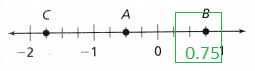
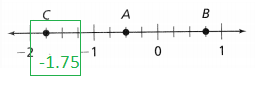
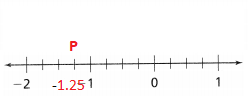
Envision Math Common Core Grade 6 Answer Key Topic 4 Represent And Solve Equations And Inequalities

Go through the enVision Math Common Core Grade 6 Answer Key Topic 4 Represent and Solve Equations and Inequalities and finish your homework or assignments.

Envision Math Common Core 6th Grade Answers Key Topic 4 Represent And Solve Equations And Inequalities

?Topic Essential Question What procedures can be used to write and solve equations and inequalities?
Answer:
The three methods most commonly used to solve systems of equations are substitution, and elimination. Substitution and elimination are simple methods that can effectively solve most systems of two equations in a few straightforward steps
The steps to solve an inequality are:
a. Add the same number to both sides.
b. Subtract the same number from both sides.
c. Multiply both sides by the same positive number.
d. Divide both sides by the same positive number.
e. Multiply both sides by the same negative number and reverse the sign

3-ACT MATH

Envision Math Common Core 6th Grade Answer Key Topic 4 Represent And Solve Equations And Inequalities 1

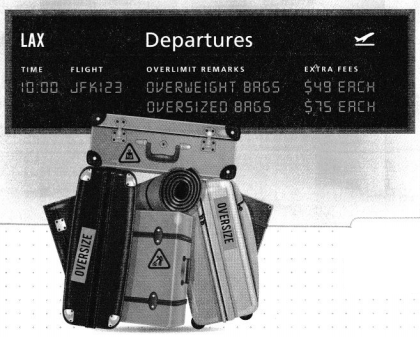
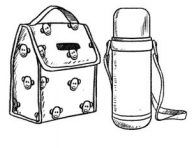
Checking a Bag
A large plane flying across the ocean can weigh almost 1 million pounds! The heavier an airplane is, the more fuel it needs for a flight. The cost of fuel has led many airlines to add a weight restriction on luggage.
If you were to fly somewhere, what would you bring? What would you leave at home to minimize the weight of your luggage? Packing light is important, not only to avoid a fee but also to do your part to conserve fuel. Think about this during the 3-Act Mathematical Modeling lesson.
Envision Math Common Core 6th Grade Answer Key Topic 4 Represent And Solve Equations And Inequalities 2

Topic 4 EnVision STEM Project

Did You Know?
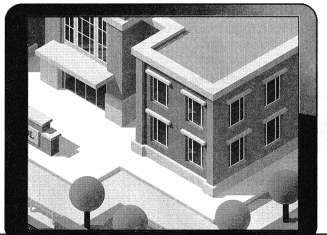
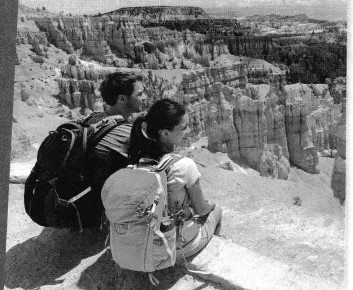
The design of a bridge depends on factors such as the distance the bridge will cover, the expected number of vehicles that will cross the bridge daily, and the geographic conditions.
Envision Math Common Core 6th Grade Answer Key Topic 4 Represent And Solve Equations And Inequalities 3

Your Task: Design a Bridge
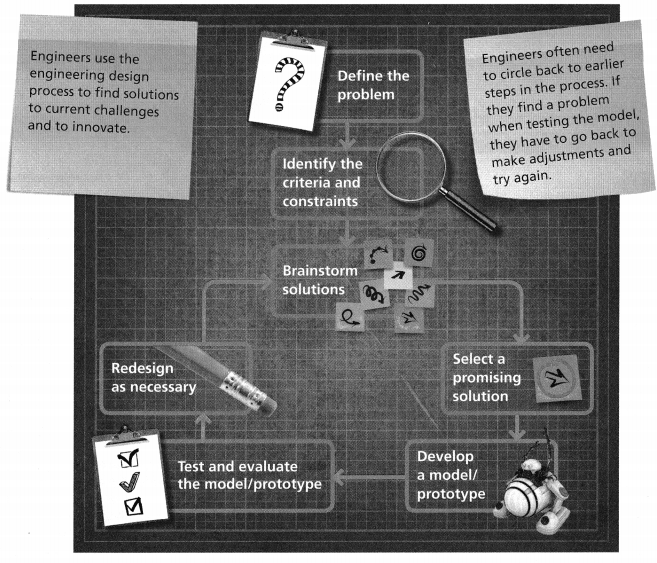
Now that you have defined the problem, identified the criteria and constraints, and performed some data collection, it is time to focus on the solution. You and your classmates will continue to be engineers as you brainstorm solutions and develop prototypes for your bridge.
Envision Math Common Core 6th Grade Answer Key Topic 4 Represent And Solve Equations And Inequalities 4

Topic 4 Get Ready!

Review What You Know!

Vocabulary
Choose the best term from the box to complete each definition.

  • algebraic expression
  • coefficient equation
  • evaluate
  • variable

Question 1.
In 6x, x is a(n) _________ .
Answer:
We know that,
In 6x,
“6” is called as “Coefficient”
“x” is called as “Variable”
Hence, from the above,
We can conclude that
The best term that is suitable for the given statement is: Variable

Question 2.
x + 5 is an example of a(n) __________
Answer:
We know that,
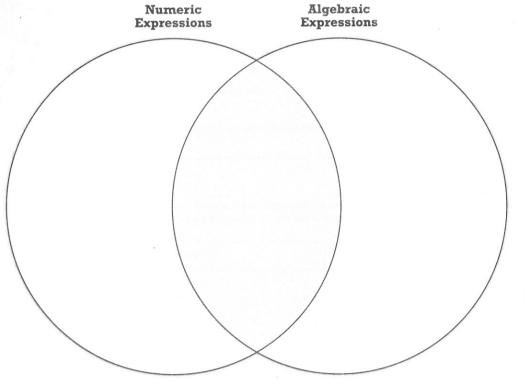
The expressions are of 2 types. They are:
a. Numeric Expressions – The expression that contains only numbers and arithmetic symbols
Ex: 6 + 2 – 5
b. Algebraic expressions – The expression that contains variables, numbers,and arithmetic symbols
Ex: x + 2 – 5 + y
So,
x + 5 is an example of “Algebraic expression”
Hence, from the above,
We can conclude that
The best term that is suitable for the given statement is: Algebraic expression

Question 3.
__________ an expression to find its value.
Answer:
We know that,
“Evaluate” an expression to find its value
Hence, from the above,
We can conclude that
The best term that is suitable for the given statement is: Evaluate

Question 4.
The expressions on each side of the equal sign in a(n) __________ are equal.
Answer:
We know that,
The expressions on each side of the equal sign in an “Equation” are equal
Hence, from the above,
We can conclude that
The best term that is suitable for the given statement is: Equation

Equality

Tell whether the equation is true or false.
Question 5.
6 + 2 = 2 + 6
Answer:
The given equation is:
6 + 2 = 2 + 6
Now,
We know that,
According to the Commutative Property of Addition,
a + b = b + a
Hence, from the above,
We can conclude that
The given equation is: True

Question 6.
2.5 – 1 = 1 – 2.5
Answer:
The given equation is:
2.5 – 1 = 1 – 2.5
Now,
We know that,
According to the Commutative Property,
a – b ≠ b – a
Hence, from the above,
We can conclude that
The given equation is: False

Question 7.
\(\frac{1}{2}\) × 3= 3 × \(\frac{1}{2}\)
Answer:
The given equation is:
\(\frac{1}{2}\) × 3 = 3 × \(\frac{1}{2}\)
Now,
We know that,
According to the Commutative Property of Multiplication,
a × b = b × a
Hence, from the above,
We can conclude that
The given equation is: True

Question 8.
\(\frac{3}{4} \div 5=\frac{3}{4} \times \frac{1}{5}\)
Answer:
The given equation is:
\(\frac{3}{4}\) ÷ 5 = \(\frac{3}{4}\) × \(\frac{1}{5}\)
Now,
We know that,
When any number is present after the “Division” symbol, then it will turn into its reciprocal when it is converted into “Multiplication” and vice-versa
So,
÷ 5 will convert into × \(\frac{1}{5}\)
Hence, from the above,
We can conclude that
The given equation is: True

Question 9.
\(5 \div \frac{1}{3}=\frac{5}{3}\)
Answer:
The given equation is:
5 ÷ \(\frac{1}{3}\) = \(\frac{5}{3}\)
Now,
We know that,
When any number is present after the “Division” symbol, then it will turn into its reciprocal when it is converted into “Multiplication” and vice-versa
So,
÷ \(\frac{1}{3}\) will be converted into × 3
Hence, from the above,
We can conclude that
The given equation is: False

Question 10.
\(\frac{2}{3} \times 5=\frac{10}{15}\)
Answer:
The given equation is:
\(\frac{2}{3}\) × 5 = \(\frac{10}{15}\)
Now,
\(\frac{2}{3}\) × 5
= \(\frac{2 × 5}{3}\)
= \(\frac{10}{3}\)
Hence, from the above,
We can conclude that
The given equation is: False

Expressions

Evaluate each expression.
Question 11.
x – 2 for x = 8
Answer:
The given expression is: x – 2
Now,
For x = 8,
x – 2 = 8 – 2
= 6
Hence, from the above,
We can conclude that
The value of the given expression is: 6

Question 12.
2b for b = 9
Answer:
The given expression is: 2b
Now,
For b = 9,
2b = 2 × b
= 2 × 9
= 18
Hence, from the above,
We can conclude that
The value of the given expression is: 18

Question 13.
3\(\frac{3}{4}\) + y for y = \(\frac{5}{6}\)
Answer:
The given expression is: 3\(\frac{3}{4}\) + y
Now,
For y = \(\frac{5}{6}\),

Hence, from the above,
We can conclude that
The value of the given expression is: 4\(\frac{7}{12}\)

Question 14.
\(\frac{15}{x}\) for x = 3
Answer:
The given expression is: \(\frac{15}{x}\)
Now,
For x = 3,
\(\frac{15}{x}\) = \(\frac{15}{3}\)
= 5
Hence, from the above,
We can conclude that
The value of the given expression is: 5

Question 15.
5.6t for t = 0.7
Answer:
The given expression is: 5.6t
Now,
For t = 0.7,
5.6t = 5.6 × t
= 5.6 × 0.7
= 3.92
Hence, from the above,
We can conclude that
The value of the given expression is: 3.92

Question 16.
4x for x = \(\frac{1}{2}\)
Answer:
The given expression is: 4x
Now,
For x = \(\frac{1}{2}\),
4x = 4 × \(\frac{1}{2}\)
= \(\frac{4}{2}\)
= 2
Hence, from the above,
We can conclude that
The value of the given expression is: 2

Order of Operations

Question 17.
Explain the order in which you should compute the operations in the expression below. Then evaluate the expression.
[(33 ÷ 3) + 1] – 22
Answer:
The given expression is: [(33 ÷ 3) + 1] – 2²
Now,
We know that,
We will follow the order of operations by uisng the BODMAS rule
Where,
B – Brackets
O – Of
D – Division
M – Multiplication
A – Addition
S – Subtraction
So,
In the given expression,
The order of expressions we have to compute from the first to the last is:
a. 33 ÷ 3
b. [(33 ÷ 3) + 1]
c. 2²
d. [(33 ÷ 3) + 1] – 2²
So,
[(33 ÷ 3) + 1] – 2²
= [11 + 1] – 2²
= 12 – 4
= 8
Hence, from the above,
We can conclude that
The value of the given expression is: 8

Graphing in the Coordinate Plane

Question 18.
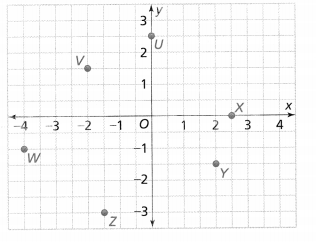
Describe how to plot point A(-6, 2) on a coordinate plane.
Answer:
The given point is: A (-6, 2)
Now,
When we observe the given point,
The x-coordinate of point A is negative and the y-coordinate of point A is positive
So,
For point A,
The x-coordinate is at the left side of the coordinate plane and the y-coordinate is at the top side of the coordinate plane
Hence,
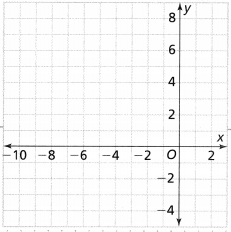
The representation of A (-6, 2) in the coordinate plane is:

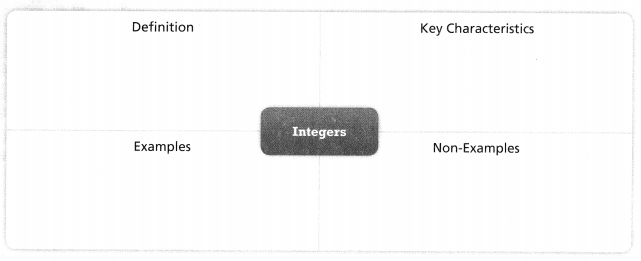
Language Development
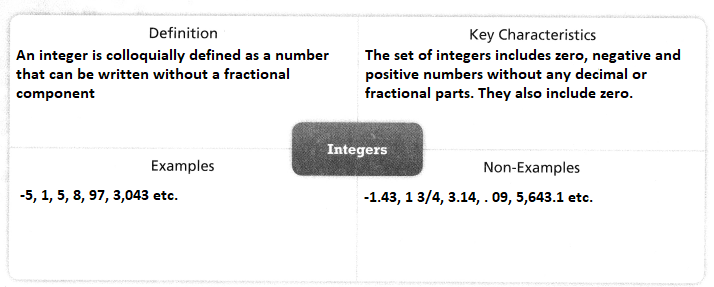
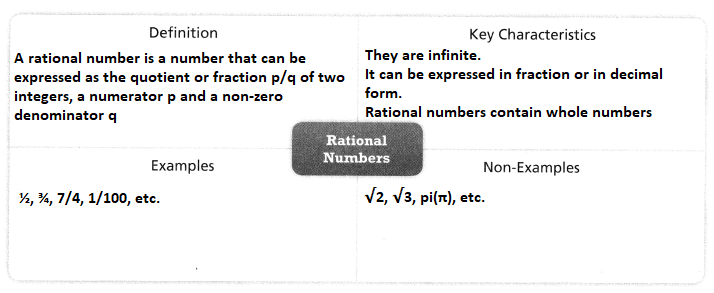
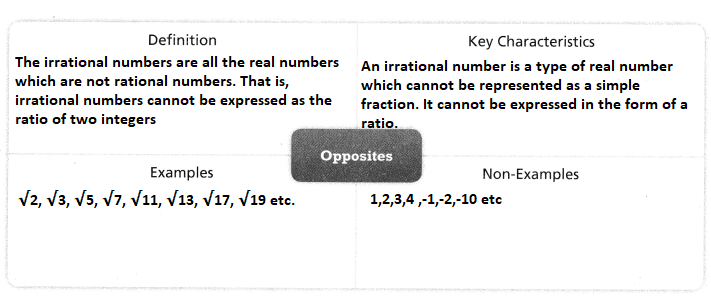
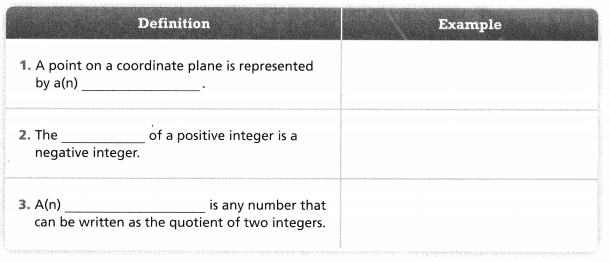
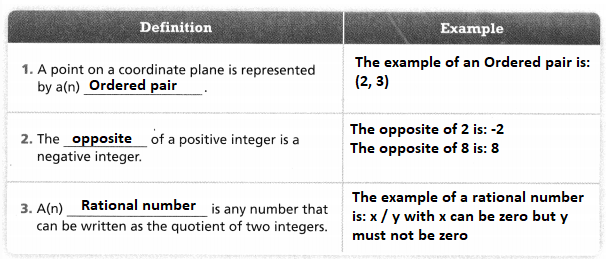
Use the graphic organizer to help you understand new vocabulary terms.
Envision Math Common Core 6th Grade Answer Key Topic 4 Represent And Solve Equations And Inequalities 5
Answer:

Pick A Project

PROJECT 4A
If you were going to try a new exercise, what would it be? Why?
PROJECT: ANALYZE AN EXERCISE ROUTINE
Envision Math Common Core 6th Grade Answer Key Topic 4 Represent And Solve Equations And Inequalities 6

PROJECT 4B
What is the most interesting book you have read?
PROJECT: WRITE AND ILLUSTRATE A CHILDREN’S BOOK
Envision Math Common Core 6th Grade Answer Key Topic 4 Represent And Solve Equations And Inequalities 7

PROJECT 4C
If you were a carpenter what sorts of things would you build?
PROJECT: MAKE A MODEL OF A STAIRCASE
Envision Math Common Core 6th Grade Answer Key Topic 4 Represent And Solve Equations And Inequalities 8

PROJECT 4D
What skills would you need if you wanted to move as slowly as a snail?
PROJECT: PLAN A RACE
Envision Math Common Core 6th Grade Answer Key Topic 4 Represent And Solve Equations And Inequalities 9

Lesson 4.1 Understand Equations and Solutions

Solve & Discuss It!
Unit cubes are placed on a pan balance. There are 3 cubes on one pan and 9 cubes on the other pan. What can you do to make the pans balance?

Model with Math
A pan balance can be used to represent the relationship between two quantities. You can write an equation with a variable to show this relationship.
I can… determine if a value for a variable makes an equation true.
Envision Math Common Core 6th Grade Answer Key Topic 4 Represent And Solve Equations And Inequalities 10
Answer:
It is given that
Unit cubes are placed on a pan balance. There are 3 cubes on one pan and 9 cubes on the other pan.
Now,
Let the number of cubes on one pan that has to be added as to make the pan balance be: x
Let the number of cubes on other pan that has to be added as to make the pan balance be: y
So,
The number of cubes present on one pan = x + 3
The number of cubes present on other pan = y + 9
So,
To make the given pans balanced,
x + 3 = y + 9
Hence, from the above,
We can conclude that
The equation that makes the pans balances is:
x + 3 = y + 9

Focus on math practices
Use Structure Suppose that you added 10 cubes to the pan with 3 cubes and then added 4 cubes to the pan with 9 cubes. Would the pans balance? Write an equation to show this relationship.
Answer:
It is given that
you added 10 cubes to the pan with 3 cubes and then added 4 cubes to the pan with 9 cubes
So,
The number of cubes present on one pan = 10 + 3 = 13 cubes
The number of cubes present on other pan = 9 + 4 = 13 cubes
So,
The number of cubes present on both pans are the same
Hence, from the above,
We can conclude that
The pans are balanced

Essential Question
How can you determine whether a given number makes an equation true?
Answer:
We can check if the given solution to an expression is actually the solution the expression by replacing the variables in the equation with the given solution and solving the equation. If LHS = RHS with the given solution, the solution is correct. If not, it’s incorrect.

Try It!

Tracy received a $21.00 gift card for phone apps. She has used $9.00 of the value and wants to buy one more app from the list above to use up the balance. Complete the bar diagram and use the equation $21.00 = x + $9.00 to determine which app she should buy.
Envision Math Common Core 6th Grade Answer Key Topic 4 Represent And Solve Equations And Inequalities 11
The solution is _________, so Tracy should buy the _________ app.
Answer:
It is given that
Tracy received a $21.00 gift card for phone apps. She has used $9.00 of the value and wants to buy one more app from the list above to use up the balance
Now,
The given figure is:

Now,
Let x be the cost of the another app that Tracy wanted to buy
So,
According to the given information,
The equation that represents the used up balance is:
$9 + $x = $21
Now,
The representation of the above equation in the form of a bar diagram is:

So,
$x = $21 – $9
$x = $12
So,

Hence, from the above,
We can conclude that
Tracy should buy the “Remote Desktop” app with her balance of $12

Convince Me! What do you notice about the expression on the left side of an equation compared to the expression on the right side when a value is substituted for the variable? How do you know which value is a solution?
Answer:
When we observe the expression that is present on the left side of an equation and the expression that is present on the right side of an equation when a value is substituted for the variable,
We can say that
The left hand side of the equation = The right hand side of the equation
Now,
The solution for the equation is the value we substituted for a “Variable”

Try It!

Anthony has a total of y marbles and 4 boxes. He puts 13 marbles in each box and has none left over. Which of his friends, if any, correctly guessed how many marbles Anthony has in all? Use the equation y ÷ 4 = 13.
Substitute each guess for y and evaluate.
Envision Math Common Core 6th Grade Answer Key Topic 4 Represent And Solve Equations And Inequalities 12
Try y = 48: _______ ÷ 4 = _______
Try y = 60: _______ ÷ 4 = _______
Try y = 120: _______ ÷ 4 = _______

Of Anthony’s three friends, _______ correctly guessed the number of marbles he has in all.
No solution is given in the set of values.
Anthony has _______ marbles in all.
Answer:
It is given that
Anthony has a total of y marbles and 4 boxes. He puts 13 marbles in each box and has none left over.
Now,
The representation of the given situation in the form of a bar diagram is:

Now,
The given table is:

Now,
To find whether any friend of Anthony guesses correctly or not,
Substitute the values of marbles below

So,

Now,
The given equation that represents the number of marbles Anthony has is:
y ÷ 4 = 13
y = 13 × 4
y = 52 marbles
So,

Hence, from the above,
We can conclude that
The number of marbles Anthony has in all is: 52 marbles

KEY CONCEPT
A solution of an equation is a value for the variable that makes the equation true. Substitute values from a given set for the variable and evaluate. x – 4 = 12 x = 9, 16
Envision Math Common Core 6th Grade Answer Key Topic 4 Represent And Solve Equations And Inequalities 13

Do You Understand?
Question 1.
Essential Question How can you determine whether a given number makes an equation true?
Answer:
We can check if the given solution to an expression is actually the solution the expression by replacing the variables in the equation with the given solution and solving the equation. If LHS = RHS with the given solution, the solution is correct. If not, it’s incorrect.

Question 2.
When is an equation true?
Answer:
To make a true equation, check your math to make sure that the values on each side of the equals sign are the same. Ensure that the numerical values on both sides of the “=” sign are the same to make a true equation

Question 3.
Reasoning Ben says that n = 5 is the solution of the equation 7n = 45. How can you check whether Ben is correct?
Answer:
It is given that
Ben says that n = 5 is the solution of the equation 7n = 45
Now,
The given equation is:
7n = 45
Now,
substitute the given value of n in the given equation
So,
For the given equation,
If  LHS = RHS, then
Ben is correct
If LHS ≠ RHS, then
Ben is not correct

Question 4.
A pan balance has 3 cubes on one pan and 11 cubes on the other pan. Lucy thinks she should add 7, 8, 9, or 10 cubes to make the pans balance. How can you use the equation 3 + C = 11 to find the number of cubes Lucy should add?
Answer:
It is given that
A pan balance has 3 cubes on one pan and 11 cubes on the other pan. Lucy thinks she should add 7, 8, 9, or 10 cubes to make the pans balance.
Now,
According to the given information,
The number of cubes on one pan = 3 cubes
The number of cubes on other pan = 11 cubes
Now,
It is given that
Lucy wants to add the extra cubes with 3 cubes
So,
The number of cubes in the second pan is constant
Now,
Let the number of extra cubes on one pan to be added so that the pan should be balanced be: C
So,
3 + C = 11
So,
C = 11 – 3
C = 9 cubes
So,
Lucy should add 9 cubes to make the pans balance
Hence, from the above,
We can conclude that
Lucy should add 9 cubes on one pan to make both the pans balance

Do You Know How?
In 5-8, substitute each given value of the variable to find which, if any, is a solution of the equation.
Question 5.
d + 9 = 35; d = 16, 22, 26, 36
Answer:
The given equation is:
d + 9 = 35
Now,
For d = 16,
16 + 9 = 35
25 ≠ 35
For d = 22,
22 + 9 = 35
31 ≠ 35
For d = 26,
26 + 9 = 35
35 = 35
For d = 36,
36 + 9 = 35
45 ≠ 35
Hence, from the above,
We can conclude that
d = 26 is a solution to the given equation

Question 6.
14n = 35; n = 2, 3, 3.5, 4
Answer:
The given equation is:
14n = 35
Now,
For n = 2,
14 (2) = 35
28 ≠ 35
For n = 3,
14 (3) = 35
42 ≠ 35
For n = 3.5,
14 (3.5) = 35
49 ≠ 35
For n = 4,
14 (4) = 35
56 ≠ 35
Hence, from the above,
We can conclude that
The given values of n are not any solutions for the given equation

Question 7.
13.4 – g = 8.1; g = 4.3, 5.3, 5.5, 6.5
Answer:
The given equation is:
13.4 – g = 8.1
Now,
For g = 4.3,
13.4 – 4.3 = 8.1
9.1 ≠ 8.1
For g = 5.3,
13.4 – 5.3 = 8.1
8.1 = 8.1
For g = 5.5,
13.4 – 5.5 = 8.1
7.9 ≠ 8.1
For g = 6.5,
13.4 – 6.5 = 8.1
6.9 ≠ 8.1
Hence, from the above,
We can conclude that
g = 5.3 is a solution to the given equation

Question 8.
4 = 36 ÷ m; m = 4, 6, 8, 9
Answer:
The given equation is:
4 = 36 ÷ m
Now,
For m = 4,
4 = 36 ÷ 4
4 ≠ 9
For m = 6,
4 = 36 ÷ 6
4 ≠ 6
For m = 8,
4 = 36 ÷ 8
4 ≠ 4.5
For m = 9,
4 = 36 ÷ 9
4 = 4
Hence, from the above,
We can conclude that
m = 9 is a solution to the given equation

In 9-12, tell whether each equation is true or false for n = 8.
Question 9.
n = 54 – 36
Answer:
The given equation is:
n = 54 – 36
Now,
n = 54 – 36
= 18
So,
8 ≠ 18
Hence, from the above,
We can conclude that
The given equation is False for n = 8

Question 10.
5n = 40
Answer:
The given equation is:
5n = 40
Now,
5n = 40
n = \(\frac{40}{5}\)
= 8
So,
8 = 8
Hence, from the above,
We can conclude that
The given equation is True for n = 8

Question 11.
152 ÷ n = 21
Answer:
The given equation is:
152 ÷ n = 21
Now,
152 ÷ n = 21
n = \(\frac{152}{21}\)
= 0.7
So,
0.7 ≠ 8
Hence, from the above,
We can conclude that
The given equation is False for n = 8

Question 12.
n + 46 = 54
Answer:
The given equation is:
n + 46 = 54
Now,
n + 46 = 54
n = 54 – 46
= 8
So,
8 = 8
Hence, from the above,
We can conclude that
The given equation is True for n = 8

Practice & Problem Solving

In 13-16, tell which given value, if any, is a solution of the equation.
Question 13.
t – 2.1 = 0           t = 2.1, 2.4, 2.6, 2.8
Answer:
The given equation is:
t – 2.1 = 0
Now,
t – 2.1 = 0
Now,
Add with 2.1 on both sides
So,
t – 2.1 + 2.1 = 0 + 2.1
t = 2.1
Hence, from the above,
We can conclude that
t = 2.1 is the solution for the given equation

Question 14.
49 = 7r            r = 3, 6, 7, 9
Answer:
The given equation is:
49 = 7r
Now,
49 = 7r
Divide by 7 on both sides
So,
\(\frac{49}{7}\) = \(\frac{7r}{7}\)
7 = r
Hence, from the above,
We can conclude that
r = 7 is the solution for the given equation

Question 15.
$4.10 = $6.25 – y           y = $2.15, $2.95, $3.05, $3.15
Answer:
The given equation is:
$4.10 = $6.25 – y
Now,
$4.10 = $6.25 – y
y = $6.25 – $4.10
y = $2.15
Hence, from the above,
We can conclude that
y = $2.15 is the solution for the given equation

Question 16.
24 ÷ h = 6         h = 1, 3, 6, 8
Answer:
The given equation is:
24 ÷ h = 6
Now,
24 ÷ h = 6
h = \(\frac{24}{6}\)
h = 4
Hence, from the above,
We can conclude that
There is not any solution from the given values for the given equation

Question 17.
In the past, Marcie’s father rode his bike 108 miles in 7.5 hours. Her mother rode the same distance in 8 hours. Marcie plans to ride her bike 108 miles at a steady rate of 18 mph for y hours. Will she match her father’s or mother’s time? Use the equation 108 ÷ y = 18 to justify your answer.
Answer:
It is given that
In the past, Marcie’s father rode his bike 108 miles in 7.5 hours. Her mother rode the same distance in 8 hours. Marcie plans to ride her bike 108 miles at a steady rate of 18 mph for y hours.
Now,
We know that,
Speed = \(\frac{Distance}{Time}\)
Time = \(\frac{Distance}{Speed}\)
So,
According to the given information,
The time took for Marcie to ride her bike at a steady rate (t) = (The distance rode by Marcie) ÷ (The speed of Marcie’s bike)
= 108 ÷ 18
= 6 hours
Now,
From the given information,
The time took for Marcie’s father to ride his bike is: 7.5 hours
The time took for Marcie’s mother to ride her bike is: 8 hours
So,
6 ≠ 7.5 ≠ 8
Hence, from the above,
We can conclude that
Marcie will not match her father’s or mother’s time

Question 18.
Write if b = 6 is a solution or is not a solution of each equation.
a. 8b = 48
b. 11 – b = 6
c. b + 3 = 9
d. 54 ÷ b = 9
Answer:
The given expression sare:
a. 8b = 48
b. 11 – b = 6
c. b + 3 = 9
d. 54 ÷ b = 9
Now,
a.
For b = 6,
8 (6) = 48
48 = 48
b.
For b = 6,
11 – 6 = 6
5 ≠ 6
c.
For b = 6,
6 + 3 = 9
9 = 9
d.
For b = 6,
54 ÷ 6 = 9
9 = 9
Hence, from the above,
We can conclude that
The equations that have a solution b = 6 are:

Question 19.
A group of 4 friends is planning a fun day trip. The equations in the table represent the number of people n who can participate in each activity for $29.
Envision Math Common Core 6th Grade Answer Key Topic 4 Represent And Solve Equations And Inequalities 14
Which activity should the friends choose if they want to spend exactly $29?
Answer:
It is given that
A group of 4 friends is planning a fun day trip. The equations in the table represent the number of people n who can participate in each activity for $29.
Now,
The given table is:

Now,
For the friends to choose an activity so as they spend exactly $29,
The solutions of the variables should satisfy their own equations
Now,
a. For the Raft Trip activity:
The given equation is:
6n + 5 = 29
6n = 29 – 5
6n = 24
n = \(\frac{24}{6}\)
n = 4
Verification:
6 (4) + 5 = 29
24 + 5 = 29
29 = 29
b. For the Amusement park Trip activity:
The given equation is:
14n = 29
n = \(\frac{29}{14}\)
n = 2.07
n ≅ 2
Verification:
14 (2) = 29
28 ≠ 29
c. For the Balloon Ride activity:
30n – 40 = 29
30n = 20 + 49
30n = 69
n = \(\frac{69}{30}\)
n = \(\frac{23}{10}\)
n = 2.3
n ≅ 2
Verification:
30 (2) – 40 = 29
60 – 40 = 29
20 ≠ 29
Hence, from the above,
We can conclude that
The activity the friends should choose if they want to spend exactly $29 is: Raft Trip

Question 20.
There are 27 pennies on one pan of a pan balance and 18 pennies on the other. To make the pans balance, Hillary thinks 5 pennies should be added to the higher pan. Sean thinks 8 pennies should be added, and Rachel thinks 9 pennies should be added. Use the equation 27 = 18 + p to determine who is correct.
Answer:
It is given that
There are 27 pennies on one pan of a pan balance and 18 pennies on the other. To make the pans balance, Hillary thinks 5 pennies should be added to the higher pan. Sean thinks 8 pennies should be added, and Rachel thinks 9 pennies should be added
Now,
Let the nuber of pennies added be: p
Now,
The given equation in the problem that represents the situation is:
27 = 18 + p
So,
On the basis of the given information,
According to Hillary, p = 5
According to Sean, p = 8
According to Rachel, p = 9
Now,
For p = 5,
27 = 18 + p
27 = 18 + 5
27 ≠ 23
Now,
For p = 8,
27 = 18 + p
27 = 18 + 8
27 ≠ 26
Now,
For p = 9,
27 = 18 + p
27 = 18 + 9
27 = 27
Hence, from the above,
We can conclude that
Rachel is correct

Question 21.
Construct Arguments Gerard spent $5.12 for a drink and a sandwich. His drink cost $1.30. Did he have a ham sandwich for $3.54, a tuna sandwich for $3.82, or a turkey sandwich for $3.92? Use the equation s + 1.30 = 5.12 to justify your answer.
Answer:
It is given that
Gerard spent $5.12 for a drink and a sandwich. His drink cost $1.30
Now,
Let the cost of sandwich be: $s
So,
According to the given information,
$5.12 = s + $1.30
Subtract $1.30 on both sides
So,
$5.12 – $1.30 = s + $1.30 – $1.30
s = $3.82
Now,
According to the given information,
The cost of tuna sandwich is: $3.82
Hence, from the above,
We can conclude that
Gerard will have a tuna sandwich

Question 22.
Higher Order Thinking Write an equation that has a solution of 12. Show how you know that 12 is the solution.
Answer:
Let the equation that has a solution of 12 be:
6x = 72
Now,
We know that,
To find whether the solution is correct or not, substitute the solution in the place of the variable present in that equation and if LHS = RHS, then that solution is true for the equation
So,
The equation is: 6x = 72
Now,
Substitute 12 in place of x
So,
6 (12) = 72
Hence,
72 = 72

Question 23.
Gina’s family is driving 255 miles to visit Tallahassee. After driving for a while, they pass a sign that reads “Tallahassee: 124 miles.” Substitute the values m = 111, 121, 131, and 141 in the equation 255 – m = 124 to find the number of miles the family has already driven.
Answer:
It is given that
Gina’s family is driving 255 miles to visit Tallahassee. After driving for a while, they pass a sign that reads “Tallahassee: 124 miles.”
Now,
The given equation to represent the number of miles the Gina’s family has already driven is:
255 – m = 124 with m = 111, 121, 131, and 141
Now,
For m = 111,
255 – m = 124
255 – 111 = 124
144  ≠ 124
Now,,
For m = 121,
255 – m = 124
255 – 121 = 124
134  ≠ 124
Now,
For m = 131,
255 – m = 124
255 – 131 = 124
124  = 124
Now,
For m = 141,
255 – m = 124
255 – 141 = 124
114  ≠ 124
Hence, from the above,
We can conclude that
The number of miles the Gina’s family has already driven is: 131 miles

Question 24.
Lisa is making a quilt that uses a pattern of triangles like the one shown. Write an equation that represents the missing side length if the perimeter is 19 centimeters
Envision Math Common Core 6th Grade Answer Key Topic 4 Represent And Solve Equations And Inequalities 15
Answer:
It is given that
Lisa is making a quilt that uses a pattern of triangles like the one shown
Now,
The given figure is:
Envision Math Common Core 6th Grade Answer Key Topic 4 Represent And Solve Equations And Inequalities 15
Now,
We know that,
The “Perimeter” of a figure is the sum of all the side lengths of a figure
So,
For the given figure,
Perimeter = 5 + (3 + 3) + m + 3
19 = 5 + 6 + m + 3
19 = 14 + m
m = 19 – 14
m = 5 cm
Hence, from the above,
We can conclude that
The missing side length is: 5 cm

Question 25.
Alisa’s family planted 7 palm trees in their yard. The park down the street has 147 palm trees. Alisa guessed that the park has either 11 or 31 times as many palm trees as her yard has. Is either of Alisa’s guesses correct? Use the equation 7n = 147 to justify your answer.
Answer:
It is given that
Alisa’s family planted 7 palm trees in their yard. The park down the street has 147 palm trees. Alisa guessed that the park has either 11 or 31 times as many palm trees as her yard has.
Now,
The equation that represents the given information that is given in the problem is:
7n = 147
So,
n = \(\frac{147}{7}\)
n = 21 palm trees
But,
According to the given information,
Alisa had guessed that the park has either 11 or 31 times as many palm trees as her yard has
Hence, from the above,
We can conclude that
Alisa’s guesses are not correct

Assessment Practice

Question 26.
Trish has $26.00 to spend at a craft store. She buys fabric that costs $18.62. She also wants to buy knitting needles for $7.32, silk flowers for $7.38, or oil paints for $8.48.
Use the equation $18.62 + c = $26.00, where c is the item cost, to find the most expensive item Trish can buy Explain how you found your answer.
Answer:
It is given that
Trish has $26.00 to spend at a craft store. She buys fabric that costs $18.62. She also wants to buy knitting needles for $7.32, silk flowers for $7.38, or oil paints for $8.48.
Now,
The equation that represents the given information and is mentioned in the problem is:
$18.62 + c = $26.00
So,
c = $26.00 – $18.62
c = $7.38
So,
Trish can buy silk flowers with her balance
Hence, from the above,
We can conclude that
The most expensive item Trish can buy with the remaining amount of money is: Silk flowers

Lesson 4.2 Apply Properties of Equality

Solve & Discuss It!
Start with the equation 4 + 8 = 12 and complete each computation listed below. Do each computation individually. Which of the computations keeps the equation true? Explain.

I can… use the properties of equality to write equivalent equations.
Envision Math Common Core 6th Grade Answer Key Topic 4 Represent And Solve Equations And Inequalities 16
Answer:
The given equation is:
4 + 8 = 12
Now,
We know that,
The equation will be true only when the equations’s
LHS = RHS
Now,
The completed table with the individual computations and the result as “True” and “False” is:

Hence, from the above,
We can conclude that
The computations that keep the equation true are:
a. Add 5 to both sides of the equation
b. Subtract 4 from both sides of the equation

Reasoning
How can you determine whether an equation is true?
Answer:
From above,
The completed table is:

Now,
We know that,
According to the Properties of Equality,
In an equation,
The operation we performed with the given number on the left side of the equation will be as the same as the operation we performed with the same number on the right side of the equation
So,
From the completed table,
Only 2 computations follows the “Properties of equality”
Hence, from the above,
We can conclude that
We can determine the equation by using the “Properties of equality”

Focus on math practices
Use Structure Complete the equation 7 + ☐ = 10 – ☐ by filling in the missing numbers. Describe at least two other operations with numbers that you can do to each side of the completed equation to keep it true.
Answer:
Let the missing number on the left side and right side of the given equation be: x
Now,
We know that,
According to the Properties of Equality,
In an equation,
The operation we performed with the given number on the left side of the equation will be as the same as the operation we performed with the same number on the right side of the equation
So,
7 + x = 10 – x
x + x = 10 – 7
2x = 3
x = \(\frac{3}{2}\)
x = 1.5
Hence, from the above,
We can conclude that
The completed equation is:

Essential Question
How can you use the properties of equality to write equivalent equations?
Answer:
Just as you can add or subtract the same exact quantity on both sides of an equation, you can also multiply both sides of an equation by the same quantity to write an equivalent equation.

Try It!

If 5y = 25, which property of equality was used to keep the equation 5y – 7 = 25 – 7 equal?
Answer:
The given equation is:
5y = 25
Now,
We know that,
The “Subtraction Property of equality” states that when you subtract the same amount from both sides of an equation, the two sides of the equation stay equal
So,
According to the above property,
5y = 25 changed into 5y – 7 = 25 – 7
Hence, from the above,
We can conclude that
The “Subtraction Property of Equality” was used to keep the equation 5y – 7 = 25 – 7 equal

Convince Me! What other properties of equality could you apply to keep the equation 5y = 25 equal? Give an example of each.
The given equation is:
5y = 25
Now,
We know that,
We can use any “Property of Equality” like “Addition Property of equality”, “Subtraction Property of equality” , “Multiplication Property of equality”, and “Division Property of equality” to keep the given equation true
Hence, from the above,
We can conclude that
The other properties of equality you could apply to keep the equation 5y = 25 equal are:
a. Addition Property of equality
b. Multiplication Property of equality
c. Division Property of equality

Try It!

A. A scale balances with four blue x-blocks on one side and 36 green blocks on the other side. Complete the equation to balance the scale with only one blue x-block.
4 • x = 36
(4 • x) ÷ ☐ = 36 ÷ ☐
x = 9
Answer:
It is given that
A scale balances with four blue x-blocks on one side and 36 green blocks on the other side.
Now,
According to the given information,
To balance the equation with only one blue x-block,
Divide the both sides of the given equation by 4 so that only one blue x rock will be present
So,

Hence, from the above,
We can conclude that
The number of blue x-rocks are: 9 blue x-rocks

B. If 25 + d = 36, does 25 + d – 25 = 36 – 20? Explain.
Answer:
The given equations are: 25 + d = 36 and 25 + d – 25 = 36 – 20
Now,
We know that,
The “Subtraction Property of equality” states that when you subtract the same amount from both sides of an equation, the two sides of the equation stay equal
So,
For 25+ d = 36,
According to the given second equation,
25 + d – 25 = 36 – 25
Hence, from the above,
We can conclude that
If 25 +d = 36, then 25 + d – 25 = 36 – 25

KEY CONCEPT
You can use the properties of equality to write equivalent equations.

Addition Property of Equality
7 + 3 = 10
(7 + 3) + a = 10 + a
Add the same amount to each side to keep the equation balanced.

Subtraction Property of Equality
7 + 3 = 10
(7 + 3) – a = 10 – a
Subtract the same amount from each side to keep the equation balanced.

Multiplication Property of Equality
7 + 3 = 10
(7 + 3) × a = 10 × a
Multiply each side of the equation by the same amount to keep the equation balanced.

Division Property of Equality
7+ 3 = 10
(7 + 3) ÷ a = 10 ÷ a
Divide each side of the equation by the same non-zero amount to keep the equation balanced.

Do You Understand?
Question 1.
Essential Question How can you use the properties of equality to write equivalent equations?
Answer:
Just as you can add or subtract the same exact quantity on both sides of an equation, you can also multiply both sides of an equation by the same quantity to write an equivalent equation.

Question 2.
A pan balance shows 7 + 5 = 12. If 4 units are removed from one side, what needs to be done to the other side to keep the pans balanced?
Answer:
It is given that
A pan balance shows 7 + 5 = 12. and 4 units are removed from one side
Now,
We know that,
According to the “Subtraction Property of Equality”,
Subtract the same amount from each side to keep the equation balanced.
So,
To keeps the pans balanced, we have to remove 4 from the other side also
Hence, from the above,
We can conclude that
We have to remove 4 from other side also to keep the pans balanced

Question 3.
If one side of the equation 23 + 43 = 66 is multiplied by 3, what needs to be done to the other side of the equation to keep the sides equal?
Answer:
It is given that
One side of the equation 23 + 43 = 66 is multiplied by 3
Now,
We know that,
According to the “Multiplication Property of Equality”,
Multiply the same amount from each side to keep the equation balanced.
So,
To keeps the pans balanced, we have to multiply 3 to the other side also
Hence, from the above,
We can conclude that
We have to multiply 3 to the other side also to keep the pans balanced

Question 4.
Reasoning If one side of the equation x + 5 = 8 has 9 added to it and the other side has (4 + 5) added to it, will the equation stay equal?
Answer:
It is given that
One side of the equation x + 5 = 8 has 9 added to it and the other side has (4 + 5) added to it
Now,
We know that,
According to the “Addition Property of Equality”,
Add the same amount from each side to keep the equation balanced.
Now,
We know that,
4 + 5 = 9
So,
The equation stays equal
Hence, from the above,
We can conclude that
The equation will stay equal even we added (4 + 5) to the other side of the equation

Do You Know How?
In 5 and 6, answer yes or no and explain why or why not.
Question 5.
If 23 + 37 = 60, does 23 + 37 + 9 = 60 + 9?
Answer:
The given equations are:
23 + 37 = 60 and 23 + 37 + 9 = 60 + 9
Now,
We know that,
According to the “Addition Property of Equality”,
Add the same amount from each side to keep the equation balanced.
So,
From the above equation,
We can observe that
9 is added to both sides
Hence, from the above,
We can conclude that
The given equation is true

Question 6.
If 16 + 1 = 17, does (16 + 1) – 1 = 17 – 2?
Answer:
The given equations are:
16 + 1 = 17 and (16 + 1) – 1 = 17 – 2
Now,
We know that,
According to the “Subtraction Property of Equality”,
Subtract the same amount from each side to keep the equation balanced.
So,
From the above equation,
We can observe that
1 is subtracted from one side and 2 is subtracted from the other side
Hence, from the above,
We can conclude that
The given equation is false

Question 7.
Apply the Multiplication Property of Equality to write an equation equivalent to 7n = 28.
Answer:
The given equation is:
7n = 28
Now,
We know that,
According to the “Multiplication Property of Equality”,
Multiply the same amount from each side to keep the equation balanced.
Now,
Let the number be multiplied on both sides of the equation be 2
So,
According the Multiplication Property of Equality,
7n × 2 = 28 × 2
Hence, from the above,
We can conclude that
According to the Multiplication Property of equation,
The equation that is equivalent to the given equation is:
7n × 2 = 28 × 2

Question 8.
Critique Reasoning Tomas says that if one side of the equation 6m = 9 is divided by 2 and the other side is divided by 3, the equation will stay equal because the result will be 3m = 3. Is Tomas correct? Explain.
Answer:
It is given that
Tomas says that one side of the equation 6m = 9 is divided by 2 and the other side is divided by 3
Now,
We know that,
According to the “Division Property of Equality”,
Divide the same amount from each side to keep the equation balanced.
So,
We have to divide the both sides of the equation by either only 2 or only 2 but not with 2 on one side and with 3 on other side
Hence,f rom the above,
We can conclude that
Tomas is not correct

Practice & Problem Solving

In 9-12, tell which property of equality was used.
Question 9.
5m + 4 = 19
5m + 4 – 3 = 19 – 3
Answer:
The given equations are:
5m + 4 = 19
5m + 4 – 3 = 19 – 3
Now,
We know that,
According to the “Subtraction Property of Equality”,
Subtract the same amount from each side to keep the equation balanced.
So,
From the given equation,
We can observe that
We subtracted 3 on both sides
Hence, from the above,
We can conclude that
“Subtraction Property of Equality” was used for the given equation

Question 10.
3t = 20
3t ÷ 2 = 20 ÷ 2
Answer:
The given equations are:
3t = 20
3t ÷ 2 = 20 ÷ 2
Now,
We know that,
According to the “Division Property of Equality”,
Divide the same amount at each side to keep the equation balanced.
So,
From the given equation,
We can observe that
We divided by 2 on both sides
Hence, from the above,
We can conclude that
“Division Property of Equality” was used for the given equation

Question 11.
\(\frac{n}{6}\) = 9
\(\left(\frac{n}{6}\right)\) × 5 = 9 × 5
Answer:
The given equations are:
\(\frac{n}{6}\) = 9
\(\frac{n}{6}\) × 5 = 9 × 5
Now,
We know that,
According to the “Multiplication Property of Equality”,
Multiply the same amount at each side to keep the equation balanced.
So,
From the given equation,
We can observe that
We multiplied 5 on both sides
Hence, from the above,
We can conclude that
“Multiplication Property of Equality” was used for the given equation

Question 12.
5b – 6 = 14
(5b – 6) + 2 = 14 + 2
Answer:
The given equations are:
5b – 6 = 14
(5b – 6) + 2 = 14 + 2
Now,
We know that,
According to the “Addition Property of Equality”,
Add the same amount at each side to keep the equation balanced.
So,
From the given equation,
We can observe that
We added 2 on both sides
Hence, from the above,
We can conclude that
“Addition Property of Equality” was used for the given equation

Question 13.
If r + 9 = 42, does r + 9 – 9 = 42 + 9? Why or why not?
Answer:
The given equations are:
r + 9 = 42
r + 9 – 9 = 42 + 9
Now,
We know that,
According to the “Subtraction Property of Equality”,
Subtract the same amount from each side to keep the equation balanced.
So,
From the given equation,
We can observe that
We subtracted 9 from one side and added 9 at the other side
Hence, from the above,
We can conclude that
r + 9 = 42 is not the equivalent of r + 9 – 9 = 42 + 9

Question 14.
If 6s = 24, does 6s ÷ 6 = 24 ÷ 6? Why or why not?
Answer:
The given equations are:
6s = 24
6s ÷ 6 = 24 ÷ 6
Now,
We know that,
According to the “Division Property of Equality”,
Divide the same amount at each side to keep the equation balanced.
So,
From the given equation,
We can observe that
We divided with 6 on both sides
Hence, from the above,
We can conclude that
6s = 24 is the equivalent of 6s ÷ 6 = 24 ÷ 6

Question 15.
This scale was balanced. Find the number to add that makes the scale become balanced again. Then complete the equation to make it true.
Envision Math Common Core 6th Grade Answer Key Topic 4 Represent And Solve Equations And Inequalities 17
Answer:
It is given that
This scale was balanced
Now,
The given figure is:

Now,
From the given figure,
We can observe that
To make the scale balanced again,
We have to add some quantity to 12 on the left side of the pan
Now,
Let the some quantity that is added on the left side of the pan be x
So,
To make the scale balanced,
12 + x = 2 + 7+ 3 + 16
So,
12 + x = 28
Subtract with 12 on both sides
12 + x – 12 = 28 – 12
x = 28 – 12
x = 16
Hence, from the above,
We can conclude that
The completed equation so that the equation is true is:

Question 16.
This scale balanced with 3 green blocks on one side and 1 blue x-block on the other side. Find the number to multiply by that makes the scale balance. Then complete the equation to make it true.
Envision Math Common Core 6th Grade Answer Key Topic 4 Represent And Solve Equations And Inequalities 18
Answer:
It is given that
This scale balanced with 3 green blocks on one side and 1 blue x-block on the other side
Now,
The given figure is:

Now,
From the given information,
The equation that represents the given situation is:
1x = 3
So,
x = 3
Now,
Multiply both sides with 5
So,
5 × x = 3 × 5
5x = 15
15 = 5x
Hence, from the above,
We can conclude that
The completed equation so that the equation will be true is:

Question 17.
You start with the equation 8x = 24. Your friend changes the equation as follows.
8x = 24 ÷ 4
How can you make your friend’s equation equivalent to the original equation?
Answer:
The given equations are:
8x = 24
8x = 24 ÷ 4
Now,
From the above equation,
We can observe that
Your friend wants to change the equation by dividing the equation by 4
Now,
We know that,
According to the “Division Property of Equality”,
Divide the same amount at each side to keep the equation balanced.
So,
For the given equation,
We have to divide by 4 on both sides instead of only one side like your friend
So,
8x ÷ 4 = 24 ÷ 4
Hence, from the above,
We can conclude that
The representation of your friend’s equation equivalent to the original given equation is:
8x ÷ 4 = 24 ÷ 4

Question 18.
A scale balanced with 1 blue x-block and 20 green blocks on the left side and 40 green blocks on the right side. A student bumped into the scale and knocked some blocks off so that only 1 blue x-block and 3 green blocks remained on the left side. How many blocks do you need to remove from the right side to make the scale balance?
Answer:
It is given that
A scale balanced with 1 blue x-block and 20 green blocks on the left side and 40 green blocks on the right side. A student bumped into the scale and knocked some blocks off so that only 1 blue x-block and 3 green blocks remained on the left side
So,
According to the given information,
Now,
Before a student bumped into the scale,
The representation of the equation is:
1x blue rocks + 20 green rocks = 40 green rocks
x blue rocks + 20 green rocks = 40 green rocks
Now,
After a student bumped into the scale,
x blue rocks + 20 green rocks – 0 blue rocks – 17 green rocks = 40 green rocks – x
Where,
x is the variable to make the equation balanced
Now,
We know that,
According to the “Subtraction Property of Equality”,
Subtract the same amount from each side to keep the equation balanced.
So,
x blue rocks + 20 green rocks – 0 blue rocks – 17 green rocks = 40 green rocks – 0 blue rocks – 17 green rocks
Hence, from the above,
We can conclude that
The number of blocks you needed to remove from the right side to make the scale balance is: 17 green rocks

Question 19.
Bobbie wrote y + 6 = 15. Then she wrote (y + 6) ÷ 3 = 15. Explain why the second equation is not equivalent to the first. What can Bobbie do to make the two equations equivalent?
Answer:
It is given that
Bobbie wrote y + 6 = 15. Then she wrote (y + 6) ÷ 3 = 15
Now,
The given equations are:
y + 6 = 15
(y + 6) ÷ 3 = 15
Now,
We know that,
According to the “Division Property of Equality”,
Divide the same amount at each side to keep the equation balanced.
So,
From the given equation,
We can observe that
We have to divide by 3 on both sides
But,
According to the second equation,
It has been divided only on the left side
So,
(y + 6) ÷ 3 ≠ 15
Hence, from the above,
We can conclude that
Due to the “Division Property of Equality”,
(y + 6) ÷ 3 ≠ 15

Question 20.
Construct Arguments John wrote that 5 + 5 = 10. Then he wrote that 5 + 5 + n = 10 + n. Are the equations John wrote equivalent? Explain.
Answer:
It is given that
John wrote that 5 + 5 = 10. Then he wrote that 5 + 5 + n = 10 + n
Now,
The given equations are:
5 + 5 = 10
5 + 5 + n = 10 + n
Now,
We know that,
According to the “Addition Property of Equality”,
Add the same amount at each side to keep the equation balanced.
So,
From the given equation,
We can observe that
John added n at both sides
So,
5 + 5 = 10 is equivalent to 5 + 5 + n = 10 + n
Hence, from the above,
We can conclude that
Due to the Addition Property of Equality,
5 + 5 = 10 is equivalent to 5 + 5 + n = 10 + n

Question 21.
Reasoning Scientists often use a pan balance to measure mass when doing experiments. The equation 4 + 3 – 1 = 7 – 1 represents a scientist taking away one unit of mass from each side of a pan balance. Construct an argument to explain how the scientist knows that the pans are still in balance.
Answer:
It is given that
Scientists often use a pan balance to measure mass when doing experiments. The equation 4 + 3 – 1 = 7 – 1 represents a scientist taking away one unit of mass from each side of a pan balance.
Now,
The given expression is:
4 + 3 – 1 = 7 – 1
Now,
We know that,
According to the “Subtraction Property of Equality”,
Subtract the same amount from each side to keep the equation balanced.
So,
From the given equation,
We can observe that
1 is subtracted from both sides of the equation
So,
The pans are still in balance according to “Subtraction Property of Equality”
Hence, from the above,
We can conclude that
The pans are still in balance according to “Subtraction Property of Equality”

Question 22.
Bryce wrote the equation n – 3 = 4. Lexi used a property of equality to write an equivalent equation. Write an equation Lexi could have written. Explain how you know the equations are equivalent.
Answer:
It is given that
Bryce wrote the equation n – 3 = 4. Lexi used a property of equality to write an equivalent equation
Now,
The given equation is:
n – 3 = 4
Now,
We know that,
According to the “Addition Property of Equality”,
Add the same amount at each side to keep the equation balanced.
So,
n – 3 + 3 = 4 + 3
n = 7
So,
The equivalent equation of the given equation is: n = 7
Hence, from the above,
We can conclude that
The equation Lexi could have written is: n = 7
The equation swritten by Bryce and Lexi are equivalent by using the “Additie Property of Equality”

Question 23.
Higher Order Thinking Emil has $1 and a quarter. Jade has 5 quarters. If Emil gives Jade $1 and Jade gives Emil 4 quarters, will they each still have the same amount of money? Explain.
Envision Math Common Core 6th Grade Answer Key Topic 4 Represent And Solve Equations And Inequalities 19
Answer:
It is given that
Emil has $1 and a quarter. Jade has 5 quarters and Emil gives Jade $1 and Jade gives Emil 4 quarters
Now,
We know that,
1 Quarter = $0.25
Now,
The amount of money Emil contains = $1 + $0.25
= $1.25
The amount of money Jade contains = 5 × $0.25
= $1.25
Now,
If Emil gives Jade $1, then
The amount of money Jade contains = $1.25 + $1
= $2.25
The remaining amount of money Emil contains = $1.25 – $1
= $0.25
If Jade gives 4 Quarters to Emil, then
The amount of money Emil contains = $0.25 + 4 × $0.25
= $0.25 + $1
= $1.25
Hence, from the above,
We can conclude that
Emil and Jade each still have the same amount of money

Question 24.
Vocabulary If 7w = 49, which property of equality was used to find the equivalent equation 7w ÷ 7 = 49 ÷ 7?
Answer:
The given equations are:
7w = 49
7w ÷ 7 = 49 ÷ 7
Now,
We know that,
According to the “Division Property of Equality”,
Divide the same amount at each side to keep the equation balanced.
So,
From the given equation,
We can observe that
7 is divided on both sides
Hence, from the above,
We can conclude that
“Division Property of Equality” was used to find the equivalent equation  of the given equation 7w ÷ 7 = 49 ÷ 7

Question 25.
You start with the equation 12b = 24. What step should you take to find the quantity that equals 4b?
Answer:
The given equation is:
12b = 24
Now,
It is given that
After using the “Equality Property”, we have to make 12b as 4b
Now,
We know that,
According to the “Division Property of Equality”,
Divide the same amount at each side to keep the equation balanced.
So,
Divide the given equation by 3 on both sides
So,
\(\frac{12b}{3}\) = \(\frac{24}{3}\)
4b = 8
Hence, from the above,
We can conclude that
To find the quantity “4b”,
We have to use “Division Property of Equality” for the given equation

Assessment Practice

Question 26.
Which equation is equivalent to n + 4 = 11?.
A. (n + 4) × 2 = 11
B. (n + 4) × 2 = 11 ÷ 2
C. (n + 4) × 2 = 11 × 4
D (n + 4) × 2 = 11 × 2
Answer:
The given equation is:
n + 4 = 11
Now.
We know that,
According to the “Properties of Equality”,
The operation we are doing at the left side will be the same as the operation we are doing at the right side
Hence, from the above,
We can conclude that
The equation that is equivalent to n + 4 = 11 is:

Question 27.
Which of the equations is NOT equivalent to 8p = 12? Select all that apply.
☐ 8p ÷ 8 = 12 ÷ 8
☐ 8p ÷ 8 = 12 ÷ 12
☐ 8p + 4 = 12 + 4
☐ 8p – 2 = 12 – 2
☐ 8p × 8 = 12 × 12
Answer:
The given equation is:
8p = 12
Now.
We know that,
According to the “Properties of Equality”,
The operation we are doing at the left side will be the same as the operation we are doing at the right side
Hence, from the above,
We can conclude that
The equations that are not equivalent to 8p = 12 are:

Lesson 4.3 Write and Solve Addition and Subtraction Equations

Solve & Discuss It!
A group of students were on a school bus. How many students were on the bus before the last stop?
I can… write and solve an addition or subtraction equation.
Envision Math Common Core 6th Grade Answer Key Topic 4 Represent And Solve Equations And Inequalities 20

Use Appropriate Tools
You use a pan balance to help solve for the unknown.
Answer:
It is given that
A group of students were on a school bus
Now,
The given figure is:
Envision Math Common Core 6th Grade Answer Key Topic 4 Represent And Solve Equations And Inequalities 20
Now,
From the given figure,
We can observe that
The total number of students arrived at school = (The total number of students present on the bus before the last stop) + (The total number of students present on the bus at the last stop)
Now,
Let the total number of students present on the bus before the last stop be x
So,
25 = x + 16
x = 25 – 16
x = 9 students
Hence, from the above,
We can conclude that
The total number of students present on the bus before the last stop is: 9 students

Focus on math practices
Reasoning How does using cubes on the pan balance demonstrate the Addition and Subtraction Properties of Equality?
Answer:
In the pan balance,
The cubes represent the variables
Remember that the pans must be in a balanced position and it is represented by “=”
Ex:
In a pan balance,
At one side, 3x cubes are present
At other side, 2x cubes are present
So,
The balanced pan will be:
3x = 2x
Ex:
In a pan balance,
At one side, 10x cubes are added
At other side, 25x cubes are added and later, 6x quantities are removed
So,
The balance pan will be:
10x = 25x – 6x

Essential Question
How can you write and solve an addition or subtraction equation?
Answer:
a.
To write a proper addition equation, you have an equals sign. One side shows you the total. The other side shows you what things are being added together. You can have a variable on either side of the equation
b.
When we write a subtraction equation, we use two symbols: – and =. The minus sign (-) means one thing is being subtracted from another

Try It!

Cabrini had some markers. After she bought 12 more markers, she had 16. How many markers did Cabrini have at the start?
Let n represent the number of markers Cabrini had at the start.
Solve the addition equation.
n + 12 = 16
n + 12 ___ = 16 ____
n = _____
Cabrini had ______ markers at the start.
Answer:
It is given that
Cabrini had some markers. After she bought 12 more markers, she had 16
Now,
Let the number of markers Cabrini had before she bought more markers be: x
So,
According to the given information,
The equation will be:
x + 12 = 16
Now,
We know that,
According to the “Subtraction Property of Equality”,
Subtract the same amount from each side to keep the equation balanced.
So,
Subtract 12 from both sides in the given equation
So,

Hence, from the above,
We can conclude that
Cabrini had 4 markers at the start

Convince Me! Which property of equality is used to solve the equation n + 12 = 16? Could one of the other properties of equality have also been used? Explain.
The given equation is:
n + 12 = 16
Now,
To solve the above equation,
The property of equality we used is “Subtraction Property of Equality”
Now,
We know that,
According to the “Subtraction Property of Equality”,
Subtract the same amount from each side to keep the equation balanced.
Now,
We know that,
If we observe the above equation,
We can say that,
We can use other “Properties of Equality” like “Addition Property of Equality”, “Multiplication Property of Equality”, and “Division Property of Equality”
Hence, from the above,
We can conclude that
We used “Subtraction Property of Equality” to solve the given equation n + 12 = 16
The other properties of equality can also be used to solve the given equation n + 12 = 16

Try It!

Vivian read 14 fewer pages than she was assigned to read. She read 60 pages. Write and solve an equation to find how many pages, p, Vivian was assigned to read.
Answer:
It is given that
Vivian read 14 fewer pages than she was assigned to read. She read 60 pages.
Now,
Let the number of pages Vivian was assigned to read be: x pages
Now,
According to the given information,
The equation that represents the given situation is:
x – 14 = 60
Now,
We know that,
According to the “Addition Property of Equality”,
Add the same amount at each side to keep the equation balanced.
So,
Add 14 on both sides to the given equation
So,
x – 14 + 14 = 60 + 14
x = 74 pages
Hence, from the above,
We can conclude that
The number of pages Vivian was assigned to read is: 74 pages

KEY CONCEPT
You can use inverse relationships and the properties of equality to solve equations.
Envision Math Common Core 6th Grade Answer Key Topic 4 Represent And Solve Equations And Inequalities 21

Do You Understand?
Question 1.
Essential Question How can you write and solve an addition or subtraction equation?
Answer:
a.
To write a proper addition equation, you have an equals sign. One side shows you the total. The other side shows you what things are being added together. You can have a variable on either side of the equation
b.
When we write a subtraction equation, we use two symbols: – and =. The minus sign (-) means one thing is being subtracted from another

Question 2.
Explain how you can use the inverse relationship of addition and subtraction to solve the equation n + 7 = 25.
Answer:
The given equation is:
n + 7 = 25
Now,
We know that,
Addition and subtraction are inverse operations because one operation can “undo” the other operation
Now,
We know that,
According to the “Subtraction Property of Equality”,
Subtract the same amount from each side to keep the equation balanced.
Now,
subtract 7 from both sides
So,
n + 7 – 7 = 25 – 7
n = 18
Hence, from the above,
We can conclude that
The value of n for the given equation is: 18

Question 3.
Model with Math Clare had t seashells. After she bought 8 more seashells, she had 24 seashells. Write and solve an equation to find the number of seashells Clare started with.
Answer:
It is given that
Clare had t seashells. After she bought 8 more seashells, she had 24 seashells.
So,
The number of seashells = (The number of seashells Clare had at the start) + (The number of seashells she bought after the start)
24 = t + 8
Now,
We know that,
According to the “Subtraction Property of Equality”,
Subtract the same amount from each side to keep the equation balanced.
Now,
subtract 8 from both sides
So,
24 – 8 = t + 8 – 8
t = 16 seashells
Hence, from the above,
We can conclude that
The number of seashells Clare had at the start is: 16 seashells

Question 4.
Model with Math The outside temperature dropped 20°F from the time Arianna ate breakfast until the time she ate dinner. When she ate dinner the temperature was 35°F. Write and solve an equation to find the outside temperature t when Arianna ate breakfast.
Answer:
It is given that
The outside temperature dropped 20°F from the time Arianna ate breakfast until the time she ate dinner. When she ate dinner the temperature was 35°F
So,
The outside temperature from the time Arianna ate breakfast until the time she ate dinner = (The outside temperature when Arianna ate breakfast) + (The outside temperature when Arianna ate dinner)
20° F = x° F + 35° F
Now,
We know that,
According to the “Subtraction Property of Equality”,
Subtract the same amount from each side to keep the equation balanced.
Now,
subtract 35° F from both sides
So,
20° F – 35° F = x° F + 35° F – 35° F
x° F = – 15° F
Hence, from above,
We can conclude that
The outside temperature when Arianna ate breakfast is: -15° F

Do You Know How?
In 5-10, solve each equation.
Question 5.
24 + m = 49
Answer:
The given equation is:
24 + m = 49
Now,
Subtract with 24 on both sides
So,
24 + m – 24 = 49 – 24
m = 25
Hence, from the above,
We can conclude that
The value of m is: 25

Question 6.
12 = y – 11
Answer:
The given equation is:
12 = y – 11
Now,
Add 11 on both sides
So,
12 + 11 = y – 11 + 11
y = 23
Hence, from the above,
We can conclude that
The value of y is: 23

Question 7.
22 = 13 + a
Answer:
The givene quation is:
22 = 13 + a
Now,
Subtract 13 on both sides
So,
22 – 13 = 13 + a – 13
a = 9
Hence, from the above,
We can conclude that
The value of a is: 9

Question 8.
t – 40 = 3
Answer:
The given equation is:
t – 40 = 3
Now,
Add 40 on both sides
So,
t – 40 + 40 = 3 + 40
t = 43
Hence, from the above,
We can conclude that
The value of t is: 43

Question 9.
d + 11 = 15
Answer:
The given equation is:
d + 11 = 15
Now,
Subtract 11 on both sides
So,
d + 11 – 11 = 15 – 11
d = 4
Hence, from the above,
We can conclude that
The value of d is: 4

Question 10.
32 = s – 19
Answer:
The given equation is:
32 = s – 19
Now,
Add 19 on both sides
So,
32 + 19 = s – 19 + 19
s = 51
Hence, from the above,
We can conclude that
The value of s is: 51

Practice & Problem Solving

Leveled Practice
In 11-16, solve each equation.

Question 11.
y – 12 = 89
y – 12 + _____ = 89 + 12
y = ______
Answer:
The given equation is:
y – 12 = 89
Now,
Add 12 on both sides
So,

Hence, from the above,
We can conclude that
The value of y is: 101

Question 12.
80 + r = 160
80 + r – ______ = 160 – ______
r = ______
Answer:
The given equation is:
80 + r = 160
Now,
Subtract 80 on both sides
So,

Hence, from the above,
We can conclude that
The value of r is: 80

Question 13.
60 = x – 16
60 + ______ = x – 16 + ______
______ = x
Answer:
The given equation is:
60 = x – 16
Now,
Add 16 on both sides
So,

Hence, from the above,
We can conclude that
The value of x is: 76

Question 14.
20 = y + 12
Answer:
The givene quation is:
20 = y + 12
Now,
Subtract 12 on both sides
So,
20 – 12 = y + 12 – 12
y = 8
Hence, from the above,
We can conclude that
The value of y is: 8

Question 15.
x + 2 = 19
Answer:
The given equation is:
x + 2 = 19
Now,
Subtract 2 on both sides
So,
x + 2 – 2 = 19 – 2
x = 17
Hence, from the above,
We can conclude that
The value of x is: 17

Question 16.
z – 313 = 176
Answer:
The given equation is:
z – 313 = 176
Now,
Add 313 on both sides
So,
z – 313 + 313 = 176 + 313
z = 489
Hence, from the above,
We can conclude that
The value of z is: 489

Question 17.
You have some baseball trading cards. You give 21 baseball cards to a friend and have 9 left for yourself. How many baseball cards were in your original deck? Write and solve an equation to find t, the number of baseball cards in your original deck.
Envision Math Common Core 6th Grade Answers Topic 4 Represent And Solve Equations And Inequalities 22
Answer:
It is given that
You have some baseball trading cards. You give 21 baseball cards to a friend and have 9 left for yourself
Now,
The representation of the given information in the form of a bar diagram is:
Envision Math Common Core 6th Grade Answers Topic 4 Represent And Solve Equations And Inequalities 22
Now,
From the given bar diagram,
We can observe that
(The total number of baseball trading cards) – (The number of baseball cards you have given to your friend) = (The number of baseball cards you have left)
So,
t – 21 = 9
Now,
Add 21 on both sides
So,
t – 21 + 21 = 9 + 21
t = 30
Hence, from the above,
We can conclude that
The total number of baseball trading cards in your original deck is: 30 cards

Question 18.
Model with Math Joy added 26 new contacts to her phone list. She now has a total of 100 contacts. Let c represent how many contacts Joy had on her phone list before she updated it. Write an equation and solve for c.
Answer:
It is given that
Joy added 26 new contacts to her phone list. She now has a total of 100 contacts. Let c represent how many contacts Joy had on her phone list before she updated it
Now,
According to the given information,
The representation of the equation for the given information is:
c + 26 = 100
Now,
Subtract 26 on both sides
So,
c + 26 – 26 = 100 – 26
c = 84 contacts
Hence, from the above,
We can conclude that
The number of contacts Joy had on her phone list before she updated is: 84 contacts

Question 19.
Reasoning Jeremy bought a sandwich and a drink that cost him $7. His drink cost $1.75. Solve the equation 7 = s + 1.75 to find s, the cost of Jeremy’s sandwich.
Answer:
It is given that
Jeremy bought a sandwich and a drink that cost him $7. His drink cost $1.75
Now,
Let s be the cost of Jeremy’s sandwich
So,
According to the given information,
The total cost pf a sandwich and a drink that Jeremy bought = (The cost of Jeremy’s sandwich) + (The cost of Jeremy’s drink)
$7 = s + $1.75
Now,
subtract $1.75 on both sides
So,
$7 – $1.75 = s + $1.25 – $1.25
s = $5.25
Hence, from the baove,
We can conclude that
The cost of Jeremy’s sandwich is: $5.25

Question 20.
A triathlon is about 51 Kilometers. One participant completed two of the three legs of the race and traveled 42 Kilometers. Solve the equation 42 + d = 51 for the distance, d, of the third leg of the race.
Envision Math Common Core 6th Grade Answers Topic 4 Represent And Solve Equations And Inequalities 23
Answer:
It is given that
A triathlon is about 51 Kilometers. One participant completed two of the three legs of the race and traveled 42 Kilometers
Now,
The representation of the given information in the form of a bar diagram is:
Envision Math Common Core 6th Grade Answers Topic 4 Represent And Solve Equations And Inequalities 23

Now,
The representation of the equation that represents the given information ad as given in the problem is:
42 + d = 51
Where,
d is the Distance of the third leg
Now,
Subtract 41 from both sides
So,
42 + d – 42 = 51 – 42
d = 9 Kilometers
Hence, from the above,
We can conclude that
The distance of the third leg of the race is: 9 Kilometers

Question 21.
What operation should be used to solve the equation 153 = 9 + 45? Solve the equation.
Answer:
The given equation is:
153 = 9 + 45
Now,
When we observe the equation,
There is “Addition” operation taking place in the given equation
Now,
We have to subtract the required number
Hence, from the above,
We can conclude that
The operation we should be used to solve the given equation 153 = 9 + 45 is: Subtraction

Question 22.
Higher Order Thinking In the equation 6 + 3y = 4y + 2 the variable y represents the same value. Is y = 2, 3, 4, or 5 the solution of this equation? Explain.
Answer:
It is given that
In the equation 6 + 3y = 4y + 2 the variable y represents the same value
Now,
The given equation is:
6 + 3y = 4y + 2
Now,
For y = 2:
6 + 3y = 4y + 2
6 + 3 (2) = 4 (2) + 2
6 + 6 = 8 + 2
12 ≠ 10
For y = 3:
6 + 3y = 4y + 2
6 + 3 (3) = 4 (3) + 2
6 + 9 = 12 + 2
15 ≠ 14
For y = 4;
6 + 3y = 4y + 2
6 + 3 (4) + 4 (4) + 2
6 + 12 = 16 + 2
18 = 18
For y = 5:
6 + 3y = 4y + 2
6 + 3 (5) = 4 (5) + 2
6 + 15 = 20 + 2
21 ≠ 22
Hence, from the above,
We can conclude that
y = 4 is the solution for the given equation

Question 23.
A traffic helicopter descends to hover 477 meters above the ground. Let h be the original height of the helicopter. What is a subtraction equation that represents the problem? What was the original height of the helicopter?
Envision Math Common Core 6th Grade Answers Topic 4 Represent And Solve Equations And Inequalities 24
Answer:
It is given that
A traffic helicopter descends to hover 477 meters above the ground. Let h be the original height of the helicopter
Now,
The given figure is:
Envision Math Common Core 6th Grade Answers Topic 4 Represent And Solve Equations And Inequalities 24
Now,
From the given figure,
We can observe that
(The original height of helicopter) + 127 m = 477 m
h – 127 = 477
Now,
Add 127 on both sides
So,
h + 127 – 127 = 477 + 127
h = 604 meters
Hence, from the above,
We can conclude that
The subtraction equation that represents the given problem is:
h  – 127 = 477
The original height of the helicopter is: 604 meters

Question 24.
The drama club sold all the tickets for its annual production in three days. The club sold 143 tickets the first day and 295 tickets the second day. If the drama club sold 826 tickets, how many tickets were sold on the third day of sales? Solve the equation 438 + t = 826 for the number of tickets, t, sold on the third day of ticket sales.
Answer:
It is given that
The drama club sold all the tickets for its annual production in three days. The club sold 143 tickets the first day and 295 tickets the second day. If the drama club sold 826 tickets
So,
The total number of tickets sold by the drama club in two days = (The number of tickets sold on the first day) + (The number of tickets sold on the second day)
= 143 + 295
= 438 tickets
Now,
Let the number of tickets sold on third day be: t
So,
According to the given information,
The equation that represents the given information is:
438 + t = 826
Now,
Subtract 438 on both sides
So,
438 + t – 438 = 826 – 438
t = 388 tickets
Hence, from the above,
We can conclude that
The number of tickets sold on the third day of ticket sales is: 388 tickets

Question 25.
In a bag of mixed nuts, there are 35 almonds, 34 pecans, 32 walnuts, and p pistachios. The bag has a total of 134 nuts. Find the total number of almonds, pecans, and walnuts. Then write and solve an equation to find the number of pistachios in the bag.
Answer:
It is given that
In a bag of mixed nuts, there are 35 almonds, 34 pecans, 32 walnuts, and p pistachios. The bag has a total of 134 nuts
So,
The total number of almonds, pecans, and walnuts = 35 + 34 + 32
= 101
Now,
The total number of almonds, peacons, walnuts, and pistachios = (The total number of almond, pecans, and walnuts) + (The number of pistachios)
So,
134 = 101 + p
Now,
Subtract 101 on both sides
So,
134 – 101 = 101 + p – 101
p = 33
Hence, from the above,
We can conclude that
The number of pistachios in the bag is: 33 pistachios

Assessment Practice

Question 26.
Which equation has g = 6 as the solution?
A. g+ 2 = 10
B. 9- 1 = 10
C. 58 +9 = 60
D. 44 – g = 38
Answer:
The given equations are:
A. g+ 2 = 10
B. 9- 1 = 10
C. 58 +g = 60
D. 44 – g = 38
So,
A.
g + 2 = 10
g = 10 – 2
g = 8
B.
g – 1 = 10
g = 10 + 1
g = 11
C.
58 + g = 60
g = 60 – 58
g = 2
D.
44 – g = 38
g = 44- 38
g = 6
Hence, from the above,
We can conclude that
The equation that has g = 6 as the solution is:

Question 27.
Select all the equations that have the same solution as 36 = x + 32.
☐ 42 = 38 + x
☐ x + 15 = 19
☐ 18 = x – 2
☐ 36 = x – 32
☐ 52 – x = 46
Answer:
The given equation is:
36 = x + 32
So,
x = 36 – 32
x = 4
Now,
The given equations are:
A.
42 = 38 + x
x = 42 – 38
x = 4
B.
x + 15 = 19
x = 19 – 15
x = 4
C.
18 = x – 2
x = 18 + 2
x = 20
D.
36 = x – 32
x = 36 + 32
x = 68
E.
52 – x = 46
x = 52 – 46
x = 6
Hence, from the above,
We can conclude that
All the equations that have the same solution as 36 = x + 32 are:

Lesson 4.4 Write and Solve Multiplication and Division Equations

Solve & Discuss It!
A school group is planning a trip to New York City. There are 29 people going on the trip. They agreed to share the total cost of the trip equally. Let s equal each person’s share of the cost. What is each person’s share of the cost?

I can… write and solve a multiplication or division equation.
Envision Math Common Core 6th Grade Answers Topic 4 Represent And Solve Equations And Inequalities 25
Answer:
It is given that
A school group is planning a trip to New York City. There are 29 people going on the trip. They agreed to share the total cost of the trip equally. Let s equal each person’s share of the cost
Now,
The given table is:

Now,
From the given table,
We can observe that
The total cost is: $19,111
So,
According to the given information,
(The total number of people going to a trip) × (The share of the cost of each person) = $19,111
29 × s = $19,111
s = \(\frac{$19,111}{29}\)
s = $659
Hence, from the above,
We can conclude that
Each person’s share of the cost is: $659

Generalize
How can you use what you know about dividing lesser numbers to write equations and solve problems involving greater numbers?
Answer:
Let a smaller faction be: \(\frac{a}{b}\)
Where,
a = 1, 2, ……… n
b = 1, 2, ……… n
Now,
When we divide lesser numbers say the lesser numbers only have 2 digits, then the quotient we will also get will be a small number
Now,
When we divide larger numbers say the larger numbers have 4 digits, then the quotient we will also get will be a large number with 3 (or) 4 digits

Focus on math practices
Construct Arguments Can you use the same strategy that you used above to find each person’s share of the hotel bill? Explain.
Answer:
Yes,
We can use the same strategy that you used above to find each person’s share of the hotel bill

Essential Question
How can you write and solve a multiplication or division equation?
Answer:
The steps to solve a multiplication or division problem is:
a. Always perform the same operation to both sides of the equation.
b. When you multiply or divide, you have to multiply and divide by the entire side of the equation.
c. Try to perform addition and subtraction first to get some multiple of x by itself on one side.

Try It!

Theresia picked the same number of tomatoes each day. In 4 days she picked 52 tomatoes. How many tomatoes did Theresia pick each day? Let n represent the number of tomatoes Theresia picked each day.
4n = 52
4n ÷ 4 = 52 ______
n = _______
Theresia picked _______ tomatoes each day.
Answer:
It is given that
Theresia picked the same number of tomatoes each day. In 4 days she picked 52 tomatoes
Now,
Let n represent the number of tomatoes Theresia picked each day.
So,
4 × (The number of tomatoes Theresia picked each day) = (The number of tomatoes Theresia picked in 4 days)
4 × n = 52
Now,

Hence, from the above,
We can conclude that
Theresia picked 13 tomatoes each day

Convince Me! Which property or equality can you use to solve Theresia’s equation? Explain.
Answer:
From the above problem,
The equation is:
4n = 52
Now,
To find the value of n (or) the number of tomatoes Theresia picked each day,
We have to use “Division Property of Equality”
Now,
We know that,
According to the “Division Property of Equality”,
Divide the same amount to the equation to keep the equation balanced
Hence, from the above,
We can conclude that
We used the “Division Property of equality” to solve Theresia’s equation

Try It!

Meghann is reading a 630-page book. She reads 18 pages each day. Write and solve a division equation to find the number of days, d, it will take Meghann to finish her book.
Answer:
It is given that
Meghann is reading a 630-page book. She reads 18 pages each day
Now,
Let d be the number of days it will take Meghann to finish her book
Now,
(The number of pages Meghann reads each day) × (The number of days it will take Meghann to finish her book) = (The total number of pages in a book)
18 × d = 630
d = \(\frac{630}{18}\)
d = 35 days
Hence, from the above,
We can conclude that
It will take 35 days for Meghann to finish her 630-page book

KEY CONCEPT
You can multiply or divide both sides of an equation by the same number and it will remain balanced.
Envision Math Common Core 6th Grade Answers Topic 4 Represent And Solve Equations And Inequalities 26

Do You Understand?
Question 1.
Essential Question How can you write and solve a multiplication or division equation?
Answer:
The steps to solve a multiplication or division problem is:
a. Always perform the same operation to both sides of the equation.
b. When you multiply or divide, you have to multiply and divide by the entire side of the equation.
c. Try to perform addition and subtraction first to get some multiple of x by itself on one side.

Question 2.
Which property of equality would you use to solve the equation 8n = 16?
Answer:
The given equation is:
8n = 16
Now,
Divide by 8 to find the value of n
So,
We have to use “Division Property of Equality”
Now,
We know that,
According to the “Division Property of Equality”,
Divide the same amount at each side to keep the equation balanced.
So,
\(\frac{8n}{8}\) = \(\frac{16}{8}\)
n = 2
Hence, from the above,
We can conclude that
You would use “Division Property of Equality” to solve the given equation 8n = 16

Question 3.
Which property of equality would you use to solve the equation a ÷ 9 = 2?
Answer:
The given equation is:
a ÷ 9 = 2
Now,
Multiply with 9 to find the value of ‘a’
So,
We have to use “Multiplication Property of Equality”
Now,
We know that,
According to the “Multiplication Property of Equality”,
Multiply the same amount at each side to keep the equation balanced.
So,
(a ÷ 9) × 9 = 2 × 9
a = 18
Hence, from the above,
We can conclude that
You would use “Multiplication Property of Equality” to solve the given equation a ÷ 9 = 2

Question 4.
There are 30 students in the drama club. They are carpooling in 5 vans to perform a play. They want each van to carry an equal number of students. Let s be the number of students in each van. Write and solve a multiplication equation to find the number of students in each van.
Answer:
It is given that
There are 30 students in the drama club. They are carpooling in 5 vans to perform a play. They want each van to carry an equal number of students.
Now,
Let s be the number of students in each van
So,
(The number of vans carpooling to perform a play) × (The number of students in each van) = (The total number of students in the drama club)
5 × s = 30
5s = 80
Now,
Divide by 5 on both sides
So,
\(\frac{5s}{5}\) = \(\frac{80}{5}\)
s = 16 students
Hence, from the above,
We can conclude that
The number of students in each van is: 16 students

Do You Know How?
In 5-8, explain how to solve each equation.
Question 5.
18m = 36
Answer:
The given equation is:
18m = 36
Now,
Divide the equation by 18 on both sides
So,
\(\frac{18m}{18}\) = \(\frac{36}{18}\)
m = 2
Hence, from the above,
We can conclude that
The value of m in the given equation is: 2

Question 6.
t ÷ 3 = 10
Answer:
The given equation is:
t ÷ 3 = 10
Now,
Multiply the equation with 3 on both sides
So,
(t ÷ 3) × 3 = 10 × 3
t = 30
Hence, from the above,
We can conclude that
The value of t in the given equation is: 30

Question 7.
12 = 2y
Answer:
The given equation is:
12 = 2y
Now,
Divide the equation by 2 on both sides
So,
\(\frac{12}{2}\) = \(\frac{2y}{2}\)
6 = y
y = 6
Hence, from the above,
We can conclude that
The value of y in the given equation is: 6

Question 8.
22 = a ÷ 5
Answer:
The given equation is:
22 = a ÷ 5
Now,
Multiply the equation with 5 on both sides
So,
22 × 5 = (a ÷ 5) × 5
a = 110
Hence, from the above,
We can conclude that
The value of a in the given equation is: 110

In 9-12, solve each equation.
Question 9.
23d = 2,392
Answer:
The given equation is:
23d = 2,392
Now,
Divide the given equation by 23 on both sides
So,
\(\frac{23d}{23}\) = \(\frac{2,392}{23}\)
d = 104
Hence, from the above,
We can conclude that
The value of d in the given equation is: 104

Question 10.
74f = 6,179
Answer:
The given equation is:
74f = 6,179
Now,
Divide the given equation by 74 on both sides
So,
\(\frac{74f}{74}\) = \(\frac{6,179}{74}\)
f = 83.5
Hence, from the above,
We can conclude that
The value of f in the given equation is: 83.5

Question 11.
y ÷ 11 = 987
Answer:
The given equation is:
y ÷ 11 = 987
Now,
Multiply the given equation with 11 on both sides
So,
(y ÷ 11) × 11 = 987 × 11
y = 10,857
Hence, from the above,
We can conclude that
The value of y in the given equation is: 10,857

Question 12.
r ÷ 187 = 9
Answer:
The given equation is:
r ÷ 187 = 9
Now,
Multiply the given equation with 187 on both sides
So,
(r ÷ 187) × 187 = 9 × 187
y = 1,683
Hence, from the above,
We can conclude that
The value of r in the given equation is: 1,683

Practice & Problem Solving

In 13-16, explain how to get the variable alone in each equation.
Question 13.
8y = 56
Answer:
The given equation is:
8y = 56
Now,
Divide the given equation with 8 on both sides
so,
\(\frac{8y}{8}\) = \(\frac{56}{8}\)
y = 7
Hence, from the above,
We can conclude that
The value of y for the given equation is: 7

Question 14.
t ÷ 15 = 3
Answer:
The given equation is:
t ÷ 15 = 3
Now,
Multiply the given equation with 15 on both sides
So,
(t ÷ 15) × 15 = 3 × 15
t = 45
Hence, from the above,
We can conclude that
The value of t for the given equation is: 45

Question 15.
u ÷ 8 = 12
Answer:
The given equation is:
u ÷ 8 = 12
Now,
Multiply the given equation with 8 on both sides
So,
(u ÷ 8) × 8 = 12 × 8
u = 96
Hence, from the above,
We can conclude that
The value of u for the given equation is: 96

Question 16.
31y = 310
Answer:
The given equation is:
31y = 310
Now,
Divide the given equation with 31 on both sides
so,
\(\frac{31y}{31}\) = \(\frac{310}{31}\)
y = 10
Hence, from the above,
We can conclude that
The value of y for the given equation is: 10

In 17-20, solve each equation.
Question 17.
d ÷ 2 = 108
Answer:
The given equation is:
d ÷ 2 = 108
Now,
Multiply the given equation with 2 on both sides
So,
(d ÷ 2) × 2 = 108 × 2
d = 216
Hence, from the above,
We can conclude that
The value of d for the given equation is: 216

Question 18.
7,200 = 800s
Answer:
The given equation is:
7,200 = 800s
Now,
Divide the given equation with 800 on both sides
so,
\(\frac{7,200}{800}\) = \(\frac{800s}{800}\)
9 = s
s = 9
Hence, from the above,
We can conclude that
The value of s for the given equation is: 9

Question 19.
x ÷ 3 = 294
Answer:
The given equation is:
x ÷ 3 = 294
Now,
Multiply the given equation with 3 on both sides
So,
(x ÷ 3) × 3 = 294 × 3
d = 882
Hence, from the above,
We can conclude that
The value of x for the given equation is: 882

Question 20.
99 = 3x
Answer:
The given equation is:
99 = 3x
Now,
Divide the given equation with 3 on both sides
so,
\(\frac{99}{3}\) = \(\frac{3x}{3}\)
33 = x
x = 33
Hence, from the above,
We can conclude that
The value of x for the given equation is: 33

In 21 and 22, write a division equation and a multiplication equation to represent each problem.
Question 21.
Lolo typed 1,125 words in 15 minutes. Let w represent the number of words typed each minute. If Lolo typed the same number of words each minute, how many words did she type in 1 minute?
Answer:
It is given that
Lolo typed 1,125 words in 15 minutes. Let w represent the number of words typed each minute. and Lolo typed the same number of words each minute
So,
(The number of minutes needed to type 1,125 words) × (The number of words Lolo typed each minute) = 1,125
15 ×w = 1,125
15w = 1,125
Now,
Divide by 15 on both sides
So,
\(\frac{15w}{15}\) = \(\frac{1,125}{15}\)
w = \(\frac{1,125}{15}\)
Hence, from the above,
We can conclude that
The representation of the multiplication equation and the division equation to represent the given situation is:
a. Multiplication equation: 15w = 1,125
b. Division equation: w = \(\frac{1,125}{15}\)

Question 22.
In 12 weeks Felipe earns $4,500 doing yard work. He earns the same amount each week. Let m stand for the amount earned each week. How much does Felipe make in 1 week?
Answer:
It is given that
In 12 weeks Felipe earns $4,500 doing yard work. He earns the same amount each week. Let m stand for the amount earned each week
So,
(The number of weeks needed to earn $4,500) × (The amount earned by Felipe each week) = $4,500
12 × m = $4,500
12m = $4,500
Now,
Divide by 12 on both sides
So,
\(\frac{12m}{12}\) = \(\frac{$4,500}{12}\)
m = \(\frac{$4,500}{12}\)
Hence, from the above,
We can conclude that
The representation of the multiplication equation and the division equation to represent the given situation is:
a. Multiplication equation: 12m = $4,500
b. Division equation: m = \(\frac{$4,500}{12}\)

Question 23.
Model with Math Abel has 3,330 toothpicks. He wants to use them all to make a floor mat with 18 equal rows. Use the bar diagram to write a division equation. Then solve the equation to find how many toothpicks Abel should use in each row.
Envision Math Common Core 6th Grade Answers Topic 4 Represent And Solve Equations And Inequalities 27
Answer:
It is given that
Abel has 3,330 toothpicks. He wants to use them all to make a floor mat with 18 equal rows
Now,
The representation of the gven situation in the form of a bar diagram is:
Envision Math Common Core 6th Grade Answers Topic 4 Represent And Solve Equations And Inequalities 27
Now,
Let the number of toothpicks Abel shoud use in each row be: t
Now,
From the given bar diagram,
We can observe that
(The total number of toothpicks) ÷ (The number of tooth picks Abel should use in each row) = (The total number of rows)
\(\frac{3,330}{t}\) = 18
t = \(\frac{3,330}{18}\)
t = 185 toothpicks
Hence, from the above,
We can conclude that
The number of toothpicks Abel should use in each row is: 185 toothpicks

Question 24.
Model with Math Emily took an airplane trip. Her plane flew an equal number of miles each hour. Let m stand for the miles flown each hour. Write an equation to represent one way you can find how many miles Emily’s plane flew each hour.
Envision Math Common Core 6th Grade Answers Topic 4 Represent And Solve Equations And Inequalities 28
Answer:
It is given that
Emily took an airplane trip. Her plane flew an equal number of miles each hour. Let m stand for the miles flown each hour.
Now,
The given figure is:
Envision Math Common Core 6th Grade Answers Topic 4 Represent And Solve Equations And Inequalities 28
Now,
From the figure,
We can observe that
The total distance airplane travels is: 2,184 miles in 12 hours
So,
(The time took for airplane to reach Emily’s destination) × (The number of miles Emily’s plane flew each hour) = (The total distance an airplane travels in 12 hours)
12 × m = 2,184
12m = 2,184
Now,
Divide by 12 on both sides
So,
m = \(\frac{2,184}{12}\)
m = 182 miles
Hence, from the above,
We can conclude that
The number of miles Emily’s plane flew each hour is: 182 miles

In 25 and 26, use the triangle.
Envision Math Common Core 6th Grade Answers Topic 4 Represent And Solve Equations And Inequalities 29
Question 25.
The area of the isosceles triangle is 44 square centimeters. Use the equation \(\frac{1}{2}\)(8h) = 44 to find the height of the triangle.
Answer:
It is given that
The area of the isosceles triangle is 44 square centimeters
Now,
The given figure is:
Envision Math Common Core 6th Grade Answers Topic 4 Represent And Solve Equations And Inequalities 29
Now,
We know that,
The area of an Isosceles triangle (A) = \(\frac{1}{2}\) × Base × Height
So,
Accoring to the given information,
\(\frac{1}{2}\) × 8 × h = 44
\(\frac{8h}{2}\) = 44
8h = 44 × 2
8h = 88
h = \(\frac{88}{8}\)
h = 11 cm
Hence, from the above,
We can conclude that
The height of the given triangle is: 11 cm

Question 26.
If the perimeter of the triangle is 32 centimeters, what is the length of each of the two sides? Write and solve an equation.
Answer:
It is given that
The perimeter of the triangle is 32 centimeters
Now,
The given figure is:
Envision Math Common Core 6th Grade Answers Topic 4 Represent And Solve Equations And Inequalities 29
Now,
We know that,
In an Isosceles triangle, 2 sides lengths are the same
The “Perimeter” of any figure is the sum of all the side lengths in a given figure
Now,
Let x be the side length of the given triangle
So,
x + x + 8 = 32
2x + 8 = 32
2x = 32 – 8
2x = 24
x = \(\frac{24}{2}\)
x = 12 cm
Hence, from the above,
We can conclude that
The length of one side in the given triangle is: 12 cm
The length of the other side in the given triangle is: 12 cm

Question 27.
Kelsey and her 4 sisters spent an equal amount of time cleaning their home. Their parents added their times. They found that each of the 5 girls spent 3 hours cleaning. Let c be the total number of hours the girls spent cleaning. Write and solve a division equation to find the total number of hours the girls spent cleaning.
Answer:
It is given that
Kelsey and her 4 sisters spent an equal amount of time cleaning their home. Their parents added their times. They found that each of the 5 girls spent 3 hours cleaning. Let c be the total number of hours the girls spent cleaning.
So,
According to the given information,
(The total number of hours the girls spent cleaning) ÷ (The total number of girls) = (The time took each girl spent cleaning)
c ÷ 5 = 3
c = 3 × 5
c = 15 hours
Hence, from the above,
We can conclude that
The total number of hours the five girls spent cleaning is: 15 hours

Question 28.
Higher Order Thinking Veronica traveled 562 miles to Venice, Florida. She drove 85 miles every day. On the last day of her trip she only drove 52 miles. Write and solve an equation to find the number of days Veronica traveled. Explain each step of your problem-solving strategy.
Answer:
It is given that
Veronica traveled 562 miles to Venice, Florida. She drove 85 miles every day. On the last day of her trip she only drove 52 miles
Now,

Hence, from the above,
We can conclude that
The number of days Veronica traveled is: 7 days

Question 29.
Generalize A movie theater sells 11,550 tickets for 50 sold-out showings of the same movie. Write a division equation that you can use to find the number of people who bought tickets for each showing. Use what you know about dividing with larger numbers to solve the equation.
Envision Math Common Core 6th Grade Answers Topic 4 Represent And Solve Equations And Inequalities 30
Answer:
It is given that
A movie theater sells 11,550 tickets for 50 sold-out showings of the same movie.
Now,
Let the number of people who bought tickets for each showing be: p
So,
According to the given information,
(The total number of tickets sold by a movie theater) ÷ (The number of people who bought tickets for each showing) = (The number of showings)
11,550 ÷ p = 50
p = \(\frac{11,550}{50}\)
p = 231 people
Hence, from the above,
We can conclude that
The number of people who bought tickets for each showing is: 231 people

Assessment Practice

Question 30.
In October, Calvin’s school used 4,920 pounds of sand to protect the building against flooding during different tropical storms. One bag contains 40 pounds of sand.
Which of the following equations can be used to find how many bags of sand, b, Calvin’s school used in October?
A. 4,920b = 40
B. b ÷ 40 = 4,920
C. 40b = 4,920
D. b ÷ 4,920 = 40
Answer:
It is given that
In October, Calvin’s school used 4,920 pounds of sand to protect the building against flooding during different tropical storms. One bag contains 40 pounds of sand.
Now,
Let b be the number of bags of sand
So,
According to the given information,
(The number of bags) × (The amount of sand in each bag) = (The total amount of sand)
40b = 4,920
\(\frac{4,920}{b}\) = 40
Hence, from the above,
We can conclude that
The equation that can be used to find how many bags of sand, b, Calvin’s school used in October is:

Lesson 4.5 Write and Solve Equations with Rational Numbers

Explore It!
The cost of T-shirts for four different soccer teams are shown below.
I can… write and solve equations that involve rational numbers.
Envision Math Common Core 6th Grade Answers Topic 4 Represent And Solve Equations And Inequalities 31

A. Lorna is on Team A. Ben is on another team. They paid a total of $21.25 for both team T-shirts. Write an equation represent the cost of Ben’s shirt
Answer:
It is given that
The cost of T-shirts for four different soccer teams are shown below.
Now,
The given figure is:
Envision Math Common Core 6th Grade Answers Topic 4 Represent And Solve Equations And Inequalities 31
Now,
Let the cost of Ben’s shirt be: x
So,
According to the given information,
(The total cost of both T-shirts) = (The cost of Lorna’s shirt which is in Team A) + (The cost of Ben’s shirt)
$21.25 = $12.50 + x
So,
x = $21.25 – $12.50
x = $8.75
Hence, from the above,
We can conclude that
The cost of Ben’s shirt is: $8.75

B. Dario also plays soccer and he says that, based on the price of Ben’s T-shirt, Ben is on Team B. is Dario correct explain.
Answer:
It is given that
Dario said that based on the price of Ben’s T-shirt, Ben is on Team B
Now,
The given figure is:
Envision Math Common Core 6th Grade Answers Topic 4 Represent And Solve Equations And Inequalities 31
Now,
We know that,
From Part A,
The cost of Ben’s T-shirt is: $8.75
Now,
From the given figure,
We can observe that
The T-shirt costs $8.75 that belongs to Team C
Hence, from the above,
We can conclude that
Dario is not correct

Focus on math practices
Generalize How is solving for unknowns involving money like solving for unknowns involving whole numbers?
We know that,
The representation of money is as the same as the rational numbers
So,
Whatever operations we are performing on the whole numbers, we can perform the same operations on the unknowns involving money

Essential Question
How can you write and solve equations involving rational numbers?
Answer:
Convert the rational number to decimals, then solve it as a decimal instead, (with the optional choice of re-converting it back to rational number).

Try It!

Suppose you cut the shorter piece of fruit snack from the example above into two pieces. The longer of the two pieces is 1\(\frac{3}{8}\) feet long. Complete the bar diagram to represent the equation. Then find the length of the shorter piece.
Envision Math Common Core 6th Grade Answers Topic 4 Represent And Solve Equations And Inequalities 32
Answer:
It is given that
you cut the shorter piece of fruit snack from the example above into two pieces. The longer of the two pieces is 1\(\frac{3}{8}\) feet long.
Now,
From Example 1,
The length of the shorter piece is: 2\(\frac{1}{4}\) feet
Now,
The length of the longer piece in the given shorter piece is: 1\(\frac{3}{8}\) feet
Now,
Let the length of the shorter piece in the given shorter piece be: x
Now,
The representation of the given information in the form of a bar diagram is:

Now,
From the given diagram,
We can observe that

Hence, from the above,
We can conclude that
The shorter piece of the shorter piece is: \(\frac{7}{8}\) feet

Convince Me! How does the equation change if you know the length of the shorter piece is \(\frac{7}{8}\) foot and you want to know the length of the longer of the two pieces?
Answer:
If we know
The length of the shorter piece is: \(\frac{7}{8}\) foot
So,
The equation in the above problem will change into
\(\frac{7}{8}\) + x = 2\(\frac{1}{4}\)
Where,
x is the length of the other piece
Now,
x = 2\(\frac{1}{4}\) – \(\frac{7}{8}\)
x = 1\(\frac{3}{4}\) feet
So,
\(\frac{7}{8}\) < 1\(\frac{3}{4}\)
Hence, from the above,
We can conclude that
The length of the longer piece of the shorter piece is: 1\(\frac{3}{4}\) feet

Try It!

Solve \(\frac{5}{9}\)y = 25 for y.
Answer:
The given equation is:
\(\frac{5}{9}\)y = 25
Now,
Multiply with \(\frac{9}{5}\) on both sides
So,
\(\frac{5}{9}\) × \(\frac{9}{5}\)y = 25 × \(\frac{9}{5}\)
y = \(\frac{25 × 9}{5}\)
y = 45
Hence, from the above,
We can conclude that
The value of y for the given equation is: 45

Try It!

Molly also buys a bag of 8 apples for $3.60. Write and solve an equation to find how much Molly paid for each apple.
Answer:
It is given that
Molly also buys a bag of 8 apples for $3.60
So,
The cost of each apple = (The total cost of apples) ÷ (The total number of apples)
= \(\frac{$3.60}{8}\)
= $0.45
Hence, from the above,
We can conclude that
The cost of each apple is: $0.45

Try It!

Carmen spent $12.50 for a new notebook and a compass. The notebook cost $6.35. Write and solve an equation to find c, the cost of the compass.
Answer:
It is given that
Carmen spent $12.50 for a new notebook and a compass. The notebook cost $6.35
Now,
Let the cost of compass be c
So,
The total amount of money Carmen spent on a new notebook and a compass = (The cost of a compass) + (The cost of a new notebook)
$12.50 = c + $6.35
So,
c = $12.50 – $6.35
c = $6.15
Hence, from the above,
We can conclude that
The cost of a compass is: $6.15

KEY CONCEPT
You can solve equations using properties of equality and inverse relationships.
Envision Math Common Core 6th Grade Answers Topic 4 Represent And Solve Equations And Inequalities 33

Do You Understand?
Question 1.
Essential Question How can you write and solve equations involving rational numbers?
Answer:
Convert the rational number to decimals, then solve it as a decimal instead, (with the optional choice of re-converting it back to rational number).

Question 2.
Construct Arguments Why are inverse relationships important for solving equations?
Answer:
Mathematically, Inverse operations are opposite operations. Addition is the opposite of subtraction; division is the opposite of multiplication, and so on. Inverse operations are used to solve simple algebraic equations to more difficult equations that involve exponents, logarithms, and trigonometry

Question 3.
Critique Reasoning Johnny says that he solved the equation x – 3.5 = 7.2 by adding 3.5 to the left side of the equation. Explain whether Johnny is correct.
Answer:
It is given that
Johnny says that he solved the equation x – 3.5 = 7.2 by adding 3.5 to the left side of the equation.
Now,
The given equation is:
x – 3.5 = 7.2
Now,
We know that,
According to the “Addition Property of Equality”,
Add the same amount on both sides to make the equation balanced
So,
For the given equation,
Add 3.5 on both sides
So,
x – 3.5 + 3.5 = 7.2 – 3.5
Hence, from the above,
We can conclude that
Johnny is not correct

Question 4.
Generalize When solving an equation involving a mixed number, such as y + \(\frac{3}{4}\) = 4\(\frac{1}{2}\), what do you need to do to the mixed number?
Answer:
The given equation is:
y + \(\frac{3}{4}\) = 4\(\frac{1}{2}\)
Now,
To solve the given equation,
We have to convert the mixed number into a proper fraction
Hence, from the above,
We can conclude that
We have to convert the given mixed number into a proper fraction

Question 5.
Construct Arguments How is solving an equation with fractions like solving an equation with whole numbers? How is it different?
Answer:
Solving an equation with a fraction isn’t much different than solving an equation full of whole numbers. You group the variable terms on one side, the constants on the other, and then simplify.

Do You Know How?
In 6-14, solve each equation.
Question 6.
t – \(\frac{2}{3}\) = 25\(\frac{3}{4}\)
Answer:
The given equation is:
t – \(\frac{2}{3}\) = 25\(\frac{3}{4}\)
Now,

Hence, from the above,
We can conclude that
The value of t for the given expression is: \(\frac{317}{12}\)

Question 7.
\(\frac{f}{2}\) = \(\frac{5}{8}\)
Answer:
The given equation is:
\(\frac{f}{2}\) = \(\frac{5}{8}\)
Now,

Hence, from the above,
We can conclude that
The value of f for the given equation is: \(\frac{5}{4}\)

Question 8.
13.27 = t – 24.45
Answer:
The given equation is:
13.27 = t – 24.45
Now,

Hence, from the above,
We can conclude that
The value of t for the given equation is: \(\frac{943}{25}\)

Question 9.
r ÷ 5.5 = 18.2
Answer:
The given equation is:
r ÷ 5.5 = 18.2
Now,

Hence, from the above,
We can conclude that
The value of r for the given equation is: \(\frac{1,001}{10}\)

Question 10.
\(\frac{7}{10}=x – [latex]\frac{3}{5}\)
Answer:
The given equation is:
\(\frac{7}{10}=x-[latex]\frac{3}{5}\)
Now,

Hence, from the above,
We can conclude that
The value of x for the given equation is: \(\frac{13}{10}\)

Question 11.
1.8x = 40.14
Answer:
The given equation is:
1.8x = 40.14
Now,

Hence, from the above,
We can conclude that
The value of x for the given equation is: \(\frac{223}{10}\)

Question 12.
17.3 + v = 22.32
Answer:
The given equation is:
17.3 + v = 22.32
Now,

Hence, from the above,
We can conclude that
The value of v for the given equation is: \(\frac{251}{50}\)

Question 13.
9 = \(\frac{3}{8}\)y
Answer:
The given equation is:
9 = \(\frac{3}{8}\)y
Now,

Hence, from the above,
We can conclude that
The value of y for the given equation is: 24

Question 14.
1\(\frac{3}{4}+z=2[latex]\frac{2}{3}\)
Answer:
The given equation is:
1\(\frac{3}{4}+z=2[latex]\frac{2}{3}\)
Now,
Convert the given mixed numbers into the fraction form
So,
1\(\frac{3}{4}\) = \(\frac{7}{4}\)
2\(\frac{2}{3}\) = \(\frac{8}{3}\)
Now,

Hence, from the above,
We can conclude that
The value of y for the given equation is: \(\frac{11}{12}\)

Practice & Problem Solving

Leveled Practice
In 15-22, solve each equation.

Question 15.
w – 3.2 = 5.6
w – 3.2 + _____ = 5.6 + _____
w = _____
Answer:
The given equation is:
w – 3.2 = 5.6
Now,

Hence, from the above,
We can conclude that
The value of w for the given equation is: 8.8

Question 16.
9.6 = 1.6y
9.6 ÷ _____ = 1.6y ÷ ______
_______ = y
Answer:
The given equation is:
9.6 = 1.6y
Now,

Hence, from the above,
We can conclude that
The value of y for the given equation is: 6

Question 17.
48.55 + k = 61.77
48.55 + k – _____ = 61.77 – _____
k = _____
Answer:
The given equation is:
48.55 + k = 61.77
Now,

Hence, from the above,
We can conclude that
The value of k for the given equation is: 13.22

Question 18.
m ÷ 3.54 = 1.5
m ÷ 3.54 × _____ = 1.5 × _____
m = _____
Answer:
The given equation is:
m ÷ 3.54 = 1.5
Now,

Hence, from the above,
We can conclude that
The value of m for the given equation is: 5.31

Question 19.
\(7 \frac{1}{9}=2 \frac{4}{5}+m\)
Answer:
The given equation is:
\(7 \frac{1}{9}=2 \frac{4}{5}+m\)
Now,
Convert the given mixed numbers into fractions
So,
7\(\frac{1}{9}\) = \(\frac{64}{9}\)
2\(\frac{4}{5}\) = \(\frac{14}{5}\)
Now,

Hence, from the above,
We can conclude that
The value of m for the given equation is: \(\frac{194}{45}\)

Question 20.
\(a+3 \frac{1}{4}=5 \frac{2}{9}\)
Answer:
The given equation is:
\(a+3 \frac{1}{4}=5 \frac{2}{9}\)
Now,
Convert the given mixed numbers into the fractions
So,
3\(\frac{1}{4}\) = \(\frac{13}{4}\)
5\(\frac{2}{9}\) = \(\frac{47}{9}\)
Now,

Hence, from the above,
We can conclude that
The value of a for the given equation is: \(\frac{71}{36}\)

Question 21.
\(\frac{1}{8}\) • y=4
Answer:
The given equation is:
\(\frac{1}{8}\) • y=4
Now,

Hence, from the above,
We can conclude that
The value of y for the given equation is: 32

Question 22.
\(k-6 \frac{3}{8}=4 \frac{6}{7}\)
Answer:
The given equation is:
\(k-6 \frac{3}{8}=4 \frac{6}{7}\)
Now,
Convert the given mixed numbers into the fractions
So,
6\(\frac{3}{8}\) = \(\frac{51}{8}\)
4\(\frac{6}{7}\) = \(\frac{34}{7}\)
Now,

Hence, from the above,
We can conclude that
The value of k for the given equation is: \(\frac{629}{56}\)

Question 23.
Mr. Marlon buys these tickets for his family to visit the water park. The total cost is $210. Write and solve an equation to find the cost of each ticket.
Envision Math Common Core 6th Grade Answers Topic 4 Represent And Solve Equations And Inequalities 34
Answer:
It is given that
Mr. Marlon buys these tickets for his family to visit the water park. The total cost is $210
Now,
The given figure is:
Envision Math Common Core 6th Grade Answers Topic 4 Represent And Solve Equations And Inequalities 34
Now,
From the given figure,
We can observe that
The number of tickets Mr. Marlon bought is: 4
Now,
The cost of each ticket = (The total cost of tickets) ÷ (The total number of people)
= \(\frac{210}{4}\)
= $ 52.50
Hence, from the above,
We can conclude that
The cost of each ticket is: $52.50

Question 24.
Higher Order Thinking Without solving, tell which equation below has a greater solution. Explain.
\(\frac{5}{8}\)m = 2\(\frac{3}{4}\)
\(\frac{5}{9}\)m = 2\(\frac{3}{4}\)
Answer:
The given equations are:
\(\frac{5}{8}\)m = 2\(\frac{3}{4}\)
\(\frac{5}{9}\)m = 2\(\frac{3}{4}\)
Now,
We know that,
In the given fraction,
The numerators are the same and to find whether which fraction is greater,
We can compare by using the denominators
If the denominator is a small number when the numerators are the same then the other denominator, then the fraction that contains the smallest value of denominator is the greater fraction
Now,
From the given fractions,
When we compare the denominators,
8 < 9
Hence, from the above,
We can conclude that
The equation which is greater is:
\(\frac{5}{8}\)m = 2\(\frac{3}{4}\)

Question 25.
Make Sense and Persevere A high school track team’s long jump record is 21 feet 2\(\frac{1}{4}\) inches. This year, Tim’s best long jump is 20 feet 9\(\frac{1}{2}\) inches. If long jumps are measured to the nearest quarter inch, how much farther must Tim jump to break the record?
Answer:
It is given that
A high school track team’s long jump record is 21 feet 2\(\frac{1}{4}\) inches. This year, Tim’s best long jump is 20 feet 9\(\frac{1}{2}\) inches
Now,
We know that,
1 foot = 12 inches
So,
21 feet 2\(\frac{1}{4}\) inches = (21 × 12) + 2\(\frac{1}{4}\) inches
= 252 + 2\(\frac{1}{4}\) inches
= 252 + 2.25 inches
= 254.25 inches
So,
20 feet 9\(\frac{1}{2}\) inches = (20 × 12) + 9\(\frac{1}{2}\) inches
= 240 + 9\(\frac{1}{2}\) inches
= 240 + 9.5 inches
= 249.5 inches
So,
The distance Tim has to cross to break the record = 254.25 – 249.5
= 4.75 inches
Hence, from the above,
We can conclude that
The distance Tim has to cross to break the record is: 4.75 inches

Question 26.
Make Sense and Persevere About how many gallons of fuel does it take to move the space shuttle 3 miles from its hangar to the Vehicle Assembly Building?
Envision Math Common Core 6th Grade Answers Topic 4 Represent And Solve Equations And Inequalities 35
Answer:
The given figure is:
Envision Math Common Core 6th Grade Answers Topic 4 Represent And Solve Equations And Inequalities 35
Now,
From the given figure,
We can observe that
1 mile = 5,280 ft
It will take 1 gallon of fuel to move space shuttle 42 feet
Now,
The distance of 3 miles traveled by the space shuttle in fuel = (The number of feet required for 1 mile) × 3
= 3 × 5,280
= 15,840 feet
Now,
The number of gallons of fuel required to move the space shuttle 3 miles = (The total distance of 3 miles in feet) ÷ (The distance covered by 1 gallon of fuel)
= \(\frac{15,840}{42}\)
= 377 gallons
Hence, from the above,
We can conclude that
It will take 377 gallons of fuel to move the space shuttle 3 miles from its hangar to the Vehicle Assembly Building

Question 27.
Is the solution of b × \(\frac{5}{6}\) = 25 greater than or less than 25? How can you tell before computing?
Answer:
The given equation is:
b × \(\frac{5}{6}\) = 25
Now,
We know that,
When a multiplication is converted into a division, then the fraction after × or ÷ symbols will have to be reciprocal and vice-versa
So,
The reciprocal of \(\frac{5}{6}\) is: \(\frac{6}{5}\)
So,
b = 25 × \(\frac{6}{5}\)
Now,
We know that,
The value of \(\frac{6}{5}\) is greater than 1
So,
The solution for the given equation will also be greater than 25
Hence, from the above,
We can conclude that
The solution of b × \(\frac{5}{6}\) = 25 is greater than 25

Question 28.
What is the width of a rectangle with a length of \(\frac{3}{7}\) ft and an area of 2 ft2? Write an equation to show your work.
Answer:
It is given that
The area of a rectangle is: 2 ft²
The length of a rectangle is: \(\frac{3}{7}\) ft
Now,
Let the width of the rectangle be x
Now,
We know that,
The area of a rectangle = Length × Width
So,
2 = \(\frac{3}{7}\) × x
Now,

Hence, from the above,
We can conclude that
The width of the given rectangle is: \(\frac{14}{3}\) ft

Question 29.
Model with Math Helen is filling the pool shown for her little brother. She can carry 1\(\frac{7}{8}\) gallons of water each trip. Write and solve an equation to find how many trips Helen needs to make.
Envision Math Common Core 6th Grade Answers Topic 4 Represent And Solve Equations And Inequalities 36
Answer:
It is given that
Helen is filling the pool shown for her little brother. She can carry 1\(\frac{7}{8}\) gallons of water each trip
Now,
The given figure is:
Envision Math Common Core 6th Grade Answers Topic 4 Represent And Solve Equations And Inequalities 36
So,
The number of trips Helen needs to make = (The total amount of water held in the pool) ÷ (The amount of water Helen can carry each trip)
= 10\(\frac{1}{2}\) ÷ 1\(\frac{7}{8}\)
Now,

Hence, from the above,
We can conclude that
The number of trips Helen needs to make is about 6 trips

Question 30.
After the pool was full, Helen’s little brother and his friend splashed g gallons of water out of the pool. There are 7\(\frac{7}{8}\) gallons still left in the pool. Write and solve an equation to find how much water was splashed out of the pool.
Answer:
It is given that
After the pool was full, Helen’s little brother and his friend splashed g gallons of water out of the pool. There are 7\(\frac{7}{8}\) gallons still left in the pool
Now,
The given figure is:
Envision Math Common Core 6th Grade Answers Topic 4 Represent And Solve Equations And Inequalities 36
Now,
Let the amount of water splashed from the pool be: g gallons
So,
(The total amount of water present in the pool) – (The amount of water splashed out of the pool) = (The amount of water still left in the pool)
10\(\frac{1}{2}\) – g = 7\(\frac{7}{8}\)
g = 10\(\frac{1}{2}\) – 7\(\frac{7}{8}\)
Now,

Hence, from the above,
We can conclude that
The amount of water that splashed out from the pool is: 2\(\frac{5}{8}\) gallons

Question 31.
Grace solved the equation 2\(\frac{1}{2}\)y = \(\frac{5}{8}\). Her steps for the solution are shown in the table but are all mixed up. Write her steps in the correct order on the right side of the table.
Envision Math Common Core 6th Grade Answers Topic 4 Represent And Solve Equations And Inequalities 37
Answer:
It is given that
Grace solved the equation 2\(\frac{1}{2}\)y = \(\frac{5}{8}\). Her steps for the solution are shown in the table but are all mixed up.
Now,
The given equation is:
2\(\frac{1}{2}\)y = \(\frac{5}{8}\)
Now,

Hence,from the above,
We can conclude that
Her steps in the correct order on the right side of the table is:

Question 32.
The scientific name for the little bumps on your tongue is fungiform papillae. Each bump can contain many taste buds. The number of taste buds a person has varies. There are three general classifications of taste: supertaster, medium taster, and non-taster. Suppose a supertaster has 8,640 taste buds. Solve the equation 4.5n = 8,640 to find the number of taste buds, n, a non-taster may have.
Envision Math Common Core 6th Grade Answers Topic 4 Represent And Solve Equations And Inequalities 38
Answer:
It is given that
The scientific name for the little bumps on your tongue is fungiform papillae. Each bump can contain many taste buds. The number of taste buds a person has varies. There are three general classifications of taste: supertaster, medium taster, and non-taster. Suppose a supertaster has 8,640 taste buds
Now,
The given figure is:
Envision Math Common Core 6th Grade Answers Topic 4 Represent And Solve Equations And Inequalities 38
The given equation according to the given information is:
4.5n = 8,640
Now,

Hence, from the above,
We can conclude that
The number of taste buds a non-taster may have is: 1,920 taste buds

Question 33.
Model with Math In one study, the number of women classified as supertasters was 2.25 times the number of men classified as supertasters. Suppose 72 women were classified as supertasters. Write an equation that represents the number of men, m, who were classified as supertasters. Then solve the equation. How many men were classified as supertasters?
Answer:
It is given that
In one study, the number of women classified as supertasters was 2.25 times the number of men classified as supertasters. Suppose 72 women were classified as supertasters
Now,
From the given information,
The number of women who are supertasters = 2.25 × (The numberof men who are supertasters)
72 = 2.25 × (The number of men who are supertasters)
The number of men who are supertasters = \(\frac{72}{2.25}\)
= 32
Hence, from the above,
We can conclude that
The number of men who are classified as supertasters is: 32 men

Question 34.
Use Structure A fraction, f, multiplied by 5 equals \(\frac{1}{8}\). Write an algebraic sentence to show the equation. Then solve the equation and explain how you solved it.
Answer:
It is given that
A fraction, f, multiplied by 5 equals \(\frac{1}{8}\).
Now,
The representation of the given information in the form of an equation is:
f × 5 = \(\frac{1}{8}\)
5f = \(\frac{1}{8}\)
Now,

Hence, from the above,
We can conclude that
The value of f for the given equation is: \(\frac{1}{40}\)

Question 35.
Yelena needs to swim a total of 8 miles this week. So far, she swam 5\(\frac{3}{8}\) miles. Use the equation 5\(\frac{3}{8}\) + m = 8 to find how many more miles Yelena needs to swim.
Answer:
It is given that
Yelena needs to swim a total of 8 miles this week. So far, she swam 5\(\frac{3}{8}\) miles.
Now,
The givene quation according to the given information is:
5\(\frac{3}{8}\) + m = 8
Now,
Convert the given mixed number into a fraction
So,
\(\frac{43}{8}\) + m = 8
Now,

Hence, from the above,
We can conclude that
The number of miles Yelena needs to swim is: \(\frac{21}{8}\) miles

Question 36.
Can any equation that is written using addition be written as an equivalent equation using subtraction? Explain your reasoning and give an example containing decimals that shows your reasoning.
Answer:
Yes, any equation that is written using addition can be written as an equivalent equation using subtraction
Ex:
3.35 + y = 6.88
y = 6.88 – 3.35
y = 3.53
Now,
By using Subtraction:
Subtract any number let say 5 from both sides of 3.35 + y = 6.88
Now,
3.35 + y – 5 = 6.88 – 5
y – 1.65 = 1.88
y = 3.53

Question 37.
Critique Reasoning Oscar is 12 years old and his little sister is 6. Oscar uses a to represent his age. He says that he can use the expression a ÷ 2 to always know his sister’s age. Do you agree? Explain.
Answer:
It is given that
Oscar is 12 years old and his little sister is 6. Oscar uses a to represent his age. He says that he can use the expression a ÷ 2 to always know his sister’s age
Now,
Let the age of Oscar be: 18 years
Then,
The age of his sister will be: 8 – 6 = 12 years
So,
The relationship between the ages of Oscar and his sister is:
The age of Oscar = The age of his sister + 6
Hence, from the above,
We can conclude that
We can not agree with Oscar

Assessment Practice

Question 38.
Which value for y makes the equation 0.26y = 0.676 true?
A. y = 0.17576
B. y = 0.26
C. y = 2.6
D. y = 26
Answer:
The given equation is:
0.26y = 0.676
Now,

Hence, from the above,
We can conclude that
The value of y that makes the given equation true is:

Question 39.
Which value for x makes the equation 0.435 + x = 0.92 true?
A. x = 1.355
B. x = 0.595
C. x = 0.495
D. x = 0.485
Answer:
The given equation is:
0.435 + x = 0.92
Now,
x = 0.92 – 0.435
x = 0.485
Hence, from the above,
We can conclude that
The value of x that makes the givene quation true is:

Topic 4 Mid-Topic Checkpoint

Question 1.
Vocabulary Describe the relationship between equations and the properties of equality. Lessons 4-1 and 4-2
Answer:
The property of equality states that when we do arithmetic operations on both sides of an equation by the same number, the two sides remain equal and the property of equality is pplicable only on equations

In 2-4, write an equation for the situation. Then solve the equation.
Question 2.
A fraction f multiplied by 4 equals \(\frac{1}{2}\). Lesson 4-5
Answer:
The given situation is:
A fraction f multiplied by 4 equals \(\frac{1}{2}\)
Now,
The representation of the given situation in the form of an equation is:
4f = \(\frac{1}{2}\)
Now,
Divide the equation by 4 on both sides
So,
f = \(\frac{1}{2 × 4}\)
f = \(\frac{1}{8}\)
Hence, from the above,
We can conclude that
The value of f for the given equation is: \(\frac{1}{8}\)

Question 3.
When 832 is divided by n, the result is 16. Lesson 4-4
Answer:
The given situation is:
When 832 is divided by n, the result is 16
Now,
The representation of the given situation in the form of an equation is:
\(\frac{832}{n}\) = 16
Now,
Multiply the equation with n on both sides
So,
n = \(\frac{832}{16}\)
n = 52
Hence, from the above,
We can conclude that
The value of n for the given equation is: 52

Question 4.
When 10 is subtracted from x, the result is 6. Lesson 4-3
Answer:
The given situation is:
When 10 is subtracted from x, the result is 6.
Now,
The representation of the given situation in the form of an equation is:
x – 10 = 6
Now,
Add 10 on both sides for the equation
So,
x – 10 + 10 = 6 + 10
x = 16
Hence, from the above,
We can conclude that
The value of x for the given equation is: 16

Question 5.
Select all the equations that are equivalent to n-9 = 12. Lesson 4-2
☐ n – n – 9 = 12 – n
☐ n – 9 + 12 = 12 – 9
☐ n – 9 + 9 = 12 + 9
☐ n – 9 – n = 12 – n
☐ n – 9 + 9 = 12 – 12
Answer:
The given equation is: n – 9 = 12
Now,
We know that,
According to the “Property of Equality”,
We have to do the same arithmetic operation with the same number on both sides of the equation to keep the equation balanced
Hence, from the above,
We can conclude that
The equations that are equivalent to n – 9 = 12 are:

Question 6.
Select all the values ford that make the equation 9 = 18 ÷ d true. Lesson 4-1
☐ 2
☐ 0.5
☐ \(\frac{10}{5}\)
☐ 162
☐ \(\frac{1}{4}\)
Answer:
The given equation is:
9 = 18 ÷ d
Now,
Multiply with d on both sides fro the equation
So,
d = \(\frac{18}{9}\)
d = 2
Hence,f rom the above,
We can conclude that
The values of d that make the given equation true are:

Question 7.
The area, A, of a triangle is 15.3 square cm. Its base, b, is 4.5 cm. The formula for finding the area of a triangle is A = \(\frac{1}{2}\)bh. Write and solve an equation to find the height, h, of the triangle. Lessons 4-4 and 4-5
Envision Math Common Core 6th Grade Answers Topic 4 Represent And Solve Equations And Inequalities 39
Answer:
It is given that
The area, A, of a triangle is 15.3 square cm. Its base, b, is 4.5 cm. The formula for finding the area of a triangle is A = \(\frac{1}{2}\)bh.
Now,
The given figure is:
Envision Math Common Core 6th Grade Answers Topic 4 Represent And Solve Equations And Inequalities 39
Now,
According to the given formula in the given informatio,
15.3 = \(\frac{1}{2}\) × 4.5 × h
15.3 = 2.25 × h
h = \(\frac{15.3}{2.25}\)
h = 6.8 cm
Hence,f rom the above,
We can conclude that
The value of h of the given triangle is: 6.8 cm

Topic 4 Mid-Topic Performance Task

Ronald carved 3\(\frac{3}{8}\) feet of a totem pole. He says that the totem pole is \(\frac{3}{4}\) complete.
Envision Math Common Core 6th Grade Answers Topic 4 Represent And Solve Equations And Inequalities 40

PART A
If h represents the height, in feet, of the finished totem pole, then \(\frac{3}{4}\)h = 3\(\frac{3}{8}\) represents this situation. Which equations show the use of a reciprocal to write an equivalent equation that can be used to solve for h? Select all that apply.
Envision Math Common Core 6th Grade Answers Topic 4 Represent And Solve Equations And Inequalities 41
Answer:
It is given that
Ronald carved 3\(\frac{3}{8}\) feet of a totem pole. He says that the totem pole is \(\frac{3}{4}\) complete.
Now,
The given figure is:
Envision Math Common Core 6th Grade Answers Topic 4 Represent And Solve Equations And Inequalities 40
Now,
If h represents the height, in feet, of the finished totem pole, then
\(\frac{3}{4}\)h = 3\(\frac{3}{8}\) represents this situation
Now,
We know that,
The term “Reciprocal” is applicable only for multiplication and division
Now,
We know that,
The reciprocal of \(\frac{3}{4}\) is: \(\frac{4}{3}\)
Now,
We know that,
According to the “Property of Equality”,
The arithmetic operation we performed on the left side of th equation with a number will have to be the same to the right side of the equation also
Hence, from the above,
We can conclude that
The equations that show the use of a reciprocal to write an equivalent equation that can be used to solve for h are:

PART B
Use the equation in Part A to determine the height of the finished totem pole. Then write and solve an equation to find the height, s, of the section that has not been carved.
Answer:
From Part A,
The equation to determine the height h of the finished totem pole is:
\(\frac{3}{4}\)h = 3\(\frac{3}{8}\)
Now,
The given figure is:
Envision Math Common Core 6th Grade Answers Topic 4 Represent And Solve Equations And Inequalities 40
Now,
From the given figure,
We can observe that
The \(\frac{1}{4}\) of the section has not been carved
Now,
h = 3\(\frac{3}{8}\) × \(\frac{4}{3}\)
h = \(\frac{27}{8}\) × \(\frac{4}{3}\)
h = \(\frac{27 × 4}{8 × 3}\)
h = \(\frac{9}{2}\) ft
Now,
The height of the section that ahs not been carved (s) = \(\frac{h}{4}\)
= h × \(\frac{1}{4}\)
= \(\frac{9}{2}\) × \(\frac{1}{4}\)
= \(\frac{9}{8}\) ft
Hence, from the above,
We can conclude that
The height of the section that has not been carved is: \(\frac{9}{8}\) ft

PART C
Ronald spent $10.50 on tools and x dollars on the wood for the totem pole. His total cost for the totem pole is $19.35. The equation $10.50 + x = $19.35 represents this situation. What is the cost of the wood Ronald used?
Answer:
It is given that
Ronald spent $10.50 on tools and x dollars on the wood for the totem pole. His total cost for the totem pole is $19.35. The equation $10.50 + x = $19.35 represents this situation
Now,
The given equation that represents the given situation is:
$10.50 + x = $19.35
x = $19.35 – $10.50
x = $8.85
Hence, from the above,
We can conclude that
The cost of Wood Ronald used is: $8.85

PART D
To make the same totem pole with wood that costs y dollars, Ronald would have to spend a total of $35.19. Explain which property of equality Ronald could use to solve the equation $10.50 + y = $35.19 and why that property can be used. Then show how to use that property to solve for y.
Answer:
It is given that
To make the same totem pole with wood that costs y dollars, Ronald would have to spend a total of $35.19.
Now,
The given equation that is used to represent the given situation is:
$10.50 + y = $35.19
Now,
We know that,
According to the “Subtraction Property of Equality”,
Subtract the same amount from both sides to make the equation balanced
Now,
Subtract $10.50 from the given equation by using the “Subtraction Property of Equality”
So,
$10.50 + y – $10.50 = $35.19 – $10.50
y = $24.69
Hence, from the above,
We can conclude that
The cost of wood that is used to make the totem pole is: $24.69

Lesson 4.6 Understand and Write Inequalities

Solve & Discuss It!
The record time for the girls’ 50-meter freestyle swimming competition is 24.49 seconds. Camilla has been training and wants to break the record. What are some possible times Camilla would have to swim to break the current record?

I can… understand and write an inequality that describes a real-world situation.
Envision Math Common Core 6th Grade Answers Topic 4 Represent And Solve Equations And Inequalities 42
Answer:
It is given that
The record time for the girls’ 50-meter freestyle swimming competition is 24.49 seconds. Camilla has been training and wants to break the record”
Now,
The given table is:

Now,
From the given table,
We can observe that
To break the record,
Camilia has to swim greater than the time it is taken for the girls’ 50-meter freestyle swimming competition
So,
The possible times Camilia would have to swim to break the current record is: 26.56 seconds, 25.14 seconds, and 25.32 seconds
Hence, from the above,
We can conclude that
The possible times Camilia would have to swim to break the current record is:
a. 26.56 seconds b. 25.14 seconds c. 25.32 seconds

Reasoning
How do Camilla’s possible times compare to 24.49 seconds?
Answer:
From the above Exercise,
We know that,
Camilia wants to break the record
So,
The possible times of Camilia must be greater than 24.49 seconds
Hence, from the above,
We can conclude that
Camilia’s possible times are greater than 24.49 seconds

Focus on math practices
Be Precise Fran won a blue ribbon for growing the heaviest pumpkin. It weighed 217 pounds. What could be the weights of other pumpkins in the contest? How could you show the weights of the other pumpkins using a mathematical statement? Explain.
Answer:
It is given that
Fran won a blue ribbon for growing the heaviest pumpkin. It weighed 217 pounds.
Now,
We know that,
The heaviest weight means there is no other weight greater than that weight
Now,
From the given information,
217 pounds is the heaviest weight
So,
Other weights other than 217 pounds are lesser
Now,
Let the weight of all the other pumpkins be x
So,
According to the given information,
The weights of all the pumpkins present in the contest have lesser weight than the heaviest pumpkin
So,
The mathematical representation of the above statement is:
x < 217 pounds
Hence, from the above,
We can conclude that
The representation of the give information in the form of a mathematical statement is:
The weights of all the pumpkins present in the contest have lesser weight than the heaviest pumpkin. i.e.,
x < 217 pounds

Essential Question
How can you write an inequality to describe a situation?
Answer:
The steps to write an inequality to describe a situation are:
a. Read through the entire problem.
b. Highlight the important information and key words that you need to solve the problem.
c. Identify your variables.
d. Write the equation or inequality.
e. Solve.
f. Write your answer in a complete sentence.
g. Check or justify your answer

Try It!

Use the number line to show some of the ages of people who do not need to be accompanied by an adult. Write an inequality to represent the ages of people, n, who do not need to be accompanied by an adult.
Envision Math Common Core 6th Grade Answers Topic 4 Represent And Solve Equations And Inequalities 43
Answer:
Let the ages of the people who do not need to be accompanied by an adult be: n
Now,
The given figure is:

Now,
From the given figure,
We can observe that
The people who are less than 8 years have to be accompanied by an adult
Now,
The representation of the people who do not need to be accompanied by an adult in the given number line is:

So,
The inequality that represents ages of people ,n, who do not need to be accompanied by an adult is:
n > 8 years
Hence, from the above,
We can conclude that
The inequality that represents ages of people ,n, who do not need to be accompanied by an adult is:
n > 8 years

Convince Me! How do you know to which group an 8-year-old belongs, those who must be accompanied by an adult or those who do not need to be accompanied by an adult? Explain.
Answer:
The given figure is:

Now,
Let the number of children who must be accompanied by an adult be: x
Let the number of children who do not need to be accompanied by an adult be: y
Now,
From the given figure,
We can observe that
The children under the age of 8 must be accompanied by an adult
So,
The representation of an inequality that represents the ages of the children who must be accompanied by an adult is:
x < 8
The representation of an inequality that represents the ages of the children who need not to be accompanied by an adult is:
y > 8
Hence, from the above,
We can conclude that
The representation of an inequality that represents the ages of the children who must be accompanied by an adult is:
x < 8
The representation of an inequality that represents the ages of the children who need not to be accompanied by an adult is:
y > 8

Try It!

Write an inequality to represent each situation.
a. Harry is taller than 60 inches.
Answer:
The given situation is:
Harry is taller than 60 inches.
Now,
Let h be the height of Harry
Hence, from the above,
We can conclude that
The representation of the inequality that represents the given situation is:
h > 60 inches

b. Sherry is not 4 years old.
Answer:
The given situation is:
Sherry is not 4 years old
Now,
Let a be the age of Sherry
Hence, from the above,
We can conclude that
The representation of the inequality that represents the given situation is:
a ≠ 4 years

c. Hank has at least $7.50.
Answer:
The given situation is:
Hank has at least $7.50
Now,
Let s be the amount of money Hank has
Hence, from the above,
We can conclude that
The representation of the inequality that represents the given situation is:
s ≥ $7.50

KEY CONCEPT
Inequality symbols can be used to describe situations that have more than one possible solution.
Envision Math Common Core Grade 6 Answer Key Topic 4 Represent And Solve Equations And Inequalities 44

Do You Understand?
Question 1.
Essential Question How can you write an inequality to describe a situation?
Answer:
The steps to write an inequality to describe a situation are:
a. Read through the entire problem.
b. Highlight the important information and key words that you need to solve the problem.
c. Identify your variables.
d. Write the equation or inequality.
e. Solve.
f. Write your answer in a complete sentence.
g. Check or justify your answer

Question 2.
Generalize What is the difference between an equation with a variable and an inequality with a variable?
Answer:
An equation is a mathematical statement that shows the equal value of two expressions while an inequality is a mathematical statement that shows that an expression is lesser than or more than the other. An equation shows the equality of two variables while an inequality shows the inequality of two variables.

Question 3.
Would it be more efficient to use an inequality or to list all of the quantities less than 6? Explain.
Answer:
Without using “Inequalities”,
The qualities less than 6 are: -5, -4, -3, -2, -1, 0, 1, 2, 3, 4, and 5
By using the “Inequalities”,
The quantities less than 6 are: x < 6
Where,
x is the list of numbers that are less than 6

Question 4.
Generalize How are the symbols for greater than (>) and greater than or equal to (≥) related?
Answer:
“Greater than or equal to” and “less than or equal to” are just the applicable symbol with half an equal sign under it. For example, 4 or 3 ≥ 1 shows us a greater sign over half an equal sign, meaning that 4 or 3 are greater than or equal to 1. It works the other way, too

Do You Know How?
In 5-12, write an inequality for each situation.
Question 5.
A number, n, is greater than 22.
Answer:
The given situation is:
A number, n, is greater than 22.
Hence, from the above,
We can conclude that
The representation of the given situation in the form of an inequality is:
n > 22

Question 6.
The value, v, does not equal 2\(\frac{1}{2}\).
Answer:
The given situation is:
The value, v, does not equal 2\(\frac{1}{2}\).
Hence, from the above,
We can conclude that
The representation of the given situation in the form of an inequality is:
v ≠ 2\(\frac{1}{2}\)

Question 7.
Sally’s age, a, is at most 15.
Answer:
The given situation is:
Sally’s age, a, is at most 15.
Hence, from the above,
We can conclude that
The representation of the given situation in the form of an inequality is:
a ≤ 15

Question 8.
The width of the picture, w, is shorter than 8.5 inches.
Answer:
The given situation is:
The width of the picture, w, is shorter than 8.5 inches.
Hence, from the above,
We can conclude that
The representation of the given situation in the form of an inequality is:
w < 8.5 inches

Question 9.
Steve’s height, h, is at least 48 inches.
Answer:
The given situation is:
Steve’s height, h, is at least 48 inches.
Hence, from the above,
We can conclude that
The representation of the given situation in the form of an inequality is:
h ≥ 48 inches

Question 10.
Vera’s baby brother’s age, b, is not 24 months.
Answer:
The given situation is:
Vera’s baby brother’s age, b, is not 24 months.
Hence, from the above,
We can conclude that
The representation of the given situation in the form of an inequality is:
b ≠ 24 months

Question 11.
The number of quarters, q, in the jar is less than 75.
Answer:
The given situation is:
The number of quarters, q, in the jar is less than 75.
Hence, from the above,
We can conclude that
The representation of the given situation in the form of an inequality is:
q < 75

Question 12.
The length of the fish a fisherman catches, f, must be at least 10 inches for him to keep it.
Answer:
The given situation is:
The length of the fish a fisherman catches, f, must be at least 10 inches for him to keep it
Hence, from the above,
We can conclude that
The representation of the given situation in the form of an inequality is:
f ≥ 10 inches

Practice & Problem Solving

In 13-22, write an inequality for each situation.
Question 13.
Up to 12 people, p, can ride in the van.
Answer:
The given situation is:
Up to 12 people, p, can ride in the van.
Hence, from the above,
We can conclude that
The representation of the given situation in the form of an inequality is:
p ≤ 12 people

Question 14.
A number of days, d, of sunshine is not 28.
Answer:
The given situation is:
A number of days, d, of sunshine is not 28.
Hence, from the above,
We can conclude that
The representation of the given situation in the form of an inequality is:
d ≠ 28

Question 16.
The value, v, of the bracelet is less than $85.25.
Answer:
The given situation is:
The value, v, of the bracelet is less than $85.25.
Hence, from the above,
We can conclude that
The representation of the given situation in the form of an inequality is:
v < $85.25

Question 15.
The distance of the race, r, is farther than 6.2 miles.
Answer:
The given situation is:
The distance of the race, r, is farther than 6.2 miles.
Hence, from the above,
We can conclude that
The representation of the given situation in the form of an inequality is:
r > 6.2 miles

Question 17.
The number of people, p, that a restaurant can seat at one time is no more than 171.
Answer:
The given situation is:
The number of people, p, that a restaurant can seat at one time is no more than 171.
Hence, from the above,
We can conclude that
The representation of the given situation in the form of an inequality is:
p ≤ 171 people

Question 18.
The time, t, a customer has left on a parking meter is at least 25 minutes.
Answer:
The given situation is:
The time, t, a customer has left on a parking meter is at least 25 minutes.
Hence, from the above,
We can conclude that
The representation of the given situation in the form of an inequality is:
t ≥ 25 minutes

Question 19.
The bill, b, was less than $45.
Answer:
The given situation is:
The bill, b, was less than $45.
Hence, from the above,
We can conclude that
The representation of the given situation in the form of an inequality is:
b < $45

Question 20.
The girls live b blocks apart; they do not live 7\(\frac{1}{2}\) blocks apart.
Answer:
The given situation is:
The girls live b blocks apart; they do not live 7\(\frac{1}{2}\) blocks apart.
Hence, from the above,
We can conclude that
The representation of the given situation in the form of an inequality is:
b ≠ 7\(\frac{1}{2}\) blocks

Question 21.
The speed of the truck, s, must be no less than 34 miles per hour.
Answer:
The given situation is:
The speed of the truck, s, must be no less than 34 miles per hour.
Hence, from the above,
We can conclude that
The representation of the given situation in the form of an inequality is:
s ≤ 34 miles per hour

Question 22.
The number of baseball games, x, that Karen went to last year is more than 5.
Answer:
The given situation is:
The number of baseball games, x, that Karen went to last year is more than 5.
Hence, from the above,
We can conclude that
The representation of the given situation in the form of an inequality is:
x ≤ 5 games

Question 23.
Mia is taller than Gage. If m represents Mia’s height and g represents Gage’s height, write an inequality that shows the relationship between their heights.
Answer:
It is given that
Mia is taller than Gage and m represents Mia’s height and g represents Gage’s height
Now,
According to the given information,
The representation of the inequality for the given situation is:
m > g
Hence, from the above,
We can conclude that
The representation of the inequality for the given situation is:
m > g

Question 24.
Taryn sold gift-wrapping paper for a school fund-raiser. She sold at least 15 rolls of paper. Write an inequality to represent the amount of money, d, she earned for the fund-raiser.
Envision Math Common Core Grade 6 Answer Key Topic 4 Represent And Solve Equations And Inequalities 45
Answer:
It is given that
Taryn sold gift-wrapping paper for a school fund-raiser. She sold at least 15 rolls of paper
Now,
The given figure is:
Envision Math Common Core Grade 6 Answer Key Topic 4 Represent And Solve Equations And Inequalities 45
Now,
Let the number of rolls of paper be: x
So,
The representation of the inequality for representing the rolls of paper is:
x ≥ 15 rolls
Now,
The amount of money, d, Taryn earned for the fundraiser = (The total number of rolls) × (The cost of each roll)
= 15 × $8
= $120
So,
The representation of the inequality for representing the amount of money Taryn earned for the fundraiser is:
d ≥ $120
Hence, from the above,
We can conclude that
The representation of the inequality for representing the amount of money Taryn earned for the fundraiser is:
d ≥ $120

Question 25.
A city in New England just experienced its greatest 1-day snowfall. Write an inequality to represent a snowfall that would beat this record.
Envision Math Common Core Grade 6 Answer Key Topic 4 Represent And Solve Equations And Inequalities 46
Answer:
It is given that
A city in New England just experienced its greatest 1-day snowfall
Now,
The given figure is:
Envision Math Common Core Grade 6 Answer Key Topic 4 Represent And Solve Equations And Inequalities 46
Now,
Let the snowfall that would beat the given record be: t
From the given figure,
We can observe that
The representation of the inequality to represent a snowfall that would beat the given record is:
t > 19.7 inches of snow

Question 26.
The first bookcase, a, in a library can hold 1 less book than the second bookcase. The second bookcase holds 2,492 books. Write an inequality to represent the number of books the first bookcase can hold.
Answer:
It is given that
The first bookcase, a, in a library can hold 1 less book than the second bookcase. The second bookcase holds 2,492 books
So,
The number of books the first bookcase can hold = (The number of books the second bookcase can hold) – 1
= 2,492 – 1
= 2,491 books
Now,
Let the number of books the first bookcase can hold be: x
Let the number of books the second bookcase can hold be: y
So,
From the above,
We can observe that
x < y
Hence, from the above,
We can conclude that
The number of books the first bookcase can hold < The number of books the second bookcase can hold

Question 27.
A certain airplane must carry no more than 134 passengers during a flight. Write an inequality to represent the number of passengers, p, that would NOT be allowed during this flight.
Answer:
It is given that
A certain airplane must carry no more than 134 passengers during a flight
Now,
Let p be the number of passengers during a flight
So,
The representation of the inequality to represent the number of passengers that would not be allowed during this flight is:
p > 134 passengers
Hence, from the above,
We can conclude that
The representation of the inequality to represent the number of passengers that would not be allowed during this flight is:
p > 134 passengers

Question 28.
Higher Order Thinking To ride a certain roller coaster, a rider must be at least 42 inches tall. To represent this situation, Elias wrote h > 42 and Nina wrote h > 42. Who is correct? Explain.
Envision Math Common Core Grade 6 Answer Key Topic 4 Represent And Solve Equations And Inequalities 47
Answer:
It is given that
To ride a certain roller coaster, a rider must be at least 42 inches tall. To represent this situation, Elias wrote h > 42 and Nina wrote h > 42.
Now,
Let the height of the rider be: h inches
So,
The representation of the inequality that represents the height of a rider to ride a certain roller coaster is:
h ≥ 42
Hence, from the above,
We can conclude that
Elias is correct

Assessment Practice

Question 29.
Miguel earns extra money working two weekends with his dad. He is saving to buy a new bike that costs $140.
Heather says that Miguel needs to earn more than $6 for each hour that he works to have enough money to buy the bike. Her work is shown below. Write an inequality to explain why she is incorrect.
Envision Math Common Core Grade 6 Answer Key Topic 4 Represent And Solve Equations And Inequalities 48
$140 ÷ 23 hours > $6.00 per hour
Miguel has to earn more than $6.00 per hour.
Answer:
It is given that
Miguel earns extra money working two weekends with his dad. He is saving to buy a new bike that costs $140.
Heather says that Miguel needs to earn more than $6 for each hour that he works to have enough money to buy the bike. Her work is shown below
Now,
The given figure is:

Now,
From the given figure,
We can observe that
Miguel’s work record in Weekend 1 is: 9 hours
Miguel’s work record in Weekend 2 is: 7 hours
So,
The total number of hours in 2 Weekends for Migul = 9 + 7
= 16 hours
So,
The amount of money Migul will earn per hour = (The amount of money Migul saved to buy a new bike) ÷ (The total number of hours in 2 Weekends for Migul)
= \(\frac{$140}{16}\)
= $8.75
Hence, from the above,
We can conclude that
The inequality that represents Migul’s work is:
W > $8.75 per hour

Lesson 4.7 Solve Inequalities

Solve & Discuss It!
Henry is thinking of a number that is less than 17. What number could he be thinking of?
I can… write and represent solutions of inequalities.
Envision Math Common Core Grade 6 Answer Key Topic 4 Represent And Solve Equations And Inequalities 49
Answer:
It is given that
Henry is thinking of a number that is less than 17
Now,
Let x be the numbers less than 17
Where,
x may be an integer, decimal number (or) a whole number that is less than 17
So,
The representation of the inequality that represents the number that is less than 17 that Henry is thinking is:
x < 17
Hence, from the above,
We can conclude that
The representation of the inequality that represents the number that is less than 17 that Henry is thinking is:
x < 17

Use Appropriate Tools
How can you use a number line to show all the numbers that are less than 17?
Envision Math Common Core Grade 6 Answer Key Topic 4 Represent And Solve Equations And Inequalities 50
Answer:
We know that,
The numebrs that are 17 will be an integer, decimal number or a Whole number
Now,
The whole numbers that are less than 17 are: 0, 1, 2, 3, …….. 16
Hence, from the above,
We can conclude that
The representation of the list of all the Whole numbers that are less than 17 in the given number line is:

Focus on math practices
Reasoning Could Henry be thinking of 17? Explain.
Answer:
No, Henry should not be thinking of 17 because it is clearly mentioned that Henry is thinking of a number that is less than 17
So,
The list of the numbers that Henry may be thinking is: 0, 1, 2, 3 ….. 16

Essential Question
How can you represent the solutions of an inequality?
Answer:
The rules for Solving Inequalities are:
a. Add the same number on both sides.
b. From both sides, subtract the same number.
c. By the same positive number, multiply both sides.
d. By the same positive number, divide both sides.
e. Multiply the same negative number on both sides and reverse the sign.
A closed, or shaded, circle is used to represent the inequalities greater than or equal to (≥) or less than or equal to (≤) . The point is part of the solution. An open circle is used for greater than (>) or less than (<). The point is not part of the solution

Try It!

Graph all of the solutions of x < 8.
Envision Math Common Core Grade 6 Answer Key Topic 4 Represent And Solve Equations And Inequalities 51
To graph x < 8, draw a(n) ________ circle at 8 on the number line.
7 and 4 are two of the many possible solutions of the inequality.
Shade the solutions to the ________ of the ________ circle you drew at 8.
Answer:
The given inequality is: x < 8
Now,
The representation of the given inequality in the given number line is:

Now,


Hence, from the above,
We can conclude that
The solutions for the given inequality in the given number line is:

Convince Me! How does the graph of the inequality change when the less than sign is changed to a greater than sign? How does it stay the same?
Answer:
We know that multiplying or dividing an inequality by a negative number changes the direction of the inequality. In other words, a greater-than symbol becomes a less-than symbol, and vice versa
Now,
When the inequality has the symbol > (or) ≥, the numbers to the right of this inequality will become the solutions
When the inequality has the symbol < (or) ≤, the numbers to the left of this inequality will become the solutions

Try It!

There are no menu items on the children’s menu at the Flamingo Restaurant that cost more than $8.50. What are all the possible costs of the items on the children’s menu?
Envision Math Common Core Grade 6 Answer Key Topic 4 Represent And Solve Equations And Inequalities 52
Answer:
It is given that
There are no menu items on the children’s menu at the Flamingo Restaurant that cost more than $8.50
Now,
Let c be the cost of the menu items on the children’s menu at the Flamingo Restaurant
So,
The representation of the inequality that represents the given situation is:
c < $8.50
Hence,
The representation of all the possible costs of the items on the children’s menu on the given number line is:

Try It!

Which athletes, if any, would qualify for the finals if the length of a jump that qualifies for the finals were at least 20\(\frac{1}{2}\) feet?
Answer:
It is given that
The length of a jump that qualifies for the finals were at least 20\(\frac{1}{2}\) feet
Now,
The given table is:

Now,
Let the length of a jump be: d feet
Now,
The representation of the given situation in teh form of an inequality is:
d ≥ 20\(\frac{1}{2}\) feet
Now,
From the given table,
We can observe that
The values that are greater than 20\(\frac{1}{2}\) feet are:
20\(\frac{1}{2}\) = 20\(\frac{1}{2}\)
20\(\frac{1}{2}\) > 22\(\frac{1}{3}\)
Hence, from the above,
We can conclude that
Amir and Ryan would qualify for the finals if the length of a jump that qualifies for the finals were at least 20\(\frac{1}{2}\) feet

KEY CONCEPT
An inequality uses these symbols: <, >, ≤ , or ≥ to compare two expressions.
Envision Math Common Core Grade 6 Answer Key Topic 4 Represent And Solve Equations And Inequalities 53

Do You Understand?
Question 1.
Essential Question How can you represent the solutions of an inequality?
Answer:
The rules for Solving Inequalities are:
a. Add the same number on both sides.
b. From both sides, subtract the same number.
c. By the same positive number, multiply both sides.
d. By the same positive number, divide both sides.
e. Multiply the same negative number on both sides and reverse the sign.
A closed, or shaded, circle is used to represent the inequalities greater than or equal to (≥) or less than or equal to (≤) . The point is part of the solution. An open circle is used for greater than (>) or less than (<). The point is not part of the solution

Question 2.
In Example 1, why is 9 a solution of x > 5?
Answer:
The given equation is: x > 5
Now,
From the given equation,
We can observe that
Since x > 5,
The solutions to the given equation are all the numbers that are greater than 5
So,
The given equation will have infinitely many solutions that are greater than 5
Hence, from the above,
We can conclude that
9 is a solution of x > 5

Question 3.
Explain why 2 is NOT a solution of x > 5.
Answer:
The given equation is: x > 5
Now,
From the given equation,
We can observe that
Since x > 5,
The solutions to the given equation are all the numbers that are greater than 5
So,
The given equation will have infinitely many solutions that are greater than 5
Hence, from the above,
We can conclude that
2 is not a solution of x > 5

Question 4.
How many solutions does the inequality x > 12 have? Explain.
Answer:
The given equation is: x > 12
Now,
From the given equation,
We can observe that
Since x > 12,
The solutions to the given equation are all the numbers that are greater than 12
So,
The given equation will have infinitely many solutions that are greater than 12
Hence, from the above,
We can conclude that
x > 12 will have infinitely many solutions that are greater than 12

Question 5.
Generalize How do the graphs of the solutions of inequalities involving greater than (>) and greater than or equal to (≥) compare?
Answer:
A closed, or shaded, circle is used to represent the inequalities greater than or equal to (≥) or less than or equal to (≤) . The point is part of the solution. An open circle is used for greater than (>) or less than (<). The point is not part of the solution

Do You Know How?
In 6 and 7, write the inequality that each graph represents.
Question 6.
Envision Math Common Core Grade 6 Answer Key Topic 4 Represent And Solve Equations And Inequalities 54
Answer:
The given number line is:

Now,
From the given number line,
We can observe that
There is an open circle on 14.
So,
14 will not be included and the selected numbers are to the left side of 14 in the given number line
So,
The representation of the inequality for the given number line is:

Hence, from the above,
We can conclude that
The representation of the inequality for the given number line is:
z < 14

Question 7.
Envision Math Common Core Grade 6 Answer Key Topic 4 Represent And Solve Equations And Inequalities 55
Answer:
The given number line is:

Now,
From the given number line,
We can observe that
There is a closed circle on 18.
So,
18 will be included and the selected numbers are to the right side of 18 in the given number line
So,
The representation of the inequality for the given number line is:

Hence, from the above,
We can conclude that
The representation of the inequality for the given number line is:
d ≥ 18

In 8-11, substitute each given value of the variable to find which, if any, is a solution of the inequality.
Question 8.
w < 8         w = 4.3, 5.3, 8.3, 9
Answer:
The given inequality is: w < 8
Now,
The given list of numbers are: 4.3, 5.3, 8.3, and 9
Now,
When we observe the given list of numbers,
4.3, and 5.3 are less than 8
Hence, from the above,
We can conclude that
The solutions for the given inequality are: 4.3, 5.3

Question 9.
t > 25      t = 24, 25, 25.1, 27
Answer:
The given inequality is: t > 25
Now,
The given list of numbers are: 24, 25, 25.1, and 27
Now,
When we observe the given list of numbers,
25.1 and 27 are greater the 25
Hence, from the above,
We can conclude that
The solutions for the given inequality are: 25.1, 27

Question 10.
g ≤ 4        g = 0, 4, 5, 6
Answer:
The given inequality is: g ≤ 4
Now,
The given list of numbers are: 0, 4, 5, and 6
Now,
When we observe the given list of numbers,
0 and 4 are less than or equal to 4
Hence, from the above,
We can conclude that
The solutions for the given inequality are: 0, 4

Question 11.
y ≥ 28        y = 4, 5, 6, 7
Answer:
The given inequality is: y ≥ 8
Now,
The given list of numbers are: 4, 5, 6, and 7
Now,
When we observe the given list of numbers,
The given list of numbers are less than 28
Hence, from the above,
We can conclude that
There are no solutions for the given inequality from the given list of numbers

Practice & Problem Solving

In 12-15, write the inequality that each graph represents.
Question 12.
Envision Math Common Core Grade 6 Answer Key Topic 4 Represent And Solve Equations And Inequalities 56
Answer:
The given number line is:

Now,
From the given number line,
We can observe that
There is an open circle on 7.
So,
7 will not be included and the selected numbers are to the left side of 7 in the given number line
So,
The representation of the inequality for the given number line is:

Hence, from the above,
We can conclude that
The representation of the inequality for the given number line is:
y < 7

Question 13.
Envision Math Common Core Grade 6 Answer Key Topic 4 Represent And Solve Equations And Inequalities 57
Answer:
The given number line is:

Now,
From the given number line,
We can observe that
There is an open circle on 0.
So,
0 will not be included and the selected numbers are to the right side of 0 in the given number line
So,
The representation of the inequality for the given number line is:

Hence, from the above,
We can conclude that
The representation of the inequality for the given number line is:
b > 0

Question 14.
Envision Math Common Core Grade 6 Answer Key Topic 4 Represent And Solve Equations And Inequalities 58
Answer:
The given number line is:

Now,
From the given number line,
We can observe that
There is an open circle on 3.
So,
3 will not be included and the selected numbers are to the right side of 3 in the given number line
So,
The representation of the inequality for the given number line is:

Hence, from the above,
We can conclude that
The representation of the inequality for the given number line is:
x > 3

Question 15.
Envision Math Common Core Grade 6 Answer Key Topic 4 Represent And Solve Equations And Inequalities 59
Answer:
The given number line is:

Now,
From the given number line,
We can observe that
There is a closed circle on 5.
So,
5 will be included and the selected numbers are to the left side of 5 in the given number line
So,
The representation of the inequality for the given number line is:

Hence, from the above,
We can conclude that
The representation of the inequality for the given number line is:
t ≤ 5

In 16-19, graph each inequality on a number line.
Question 16.
h ≥ 9
Envision Math Common Core Grade 6 Answer Key Topic 4 Represent And Solve Equations And Inequalities 59
Answer:
The given inequality is: h ≥ 9
Hence, from the above,
We can conclude that
The representation of the given inequality on the number line is:

Question 17.
p < 3
Envision Math Common Core Grade 6 Answer Key Topic 4 Represent And Solve Equations And Inequalities 59
Answer:
The given inequality is: p < 3
Hence, from the above,
We can conclude that
The representation of the given inequality on the number line is:

Question 18.
t ≤ 6
Envision Math Common Core Grade 6 Answer Key Topic 4 Represent And Solve Equations And Inequalities 59
Answer:
The given inequality is: t ≤ 6
Hence, from the above,
We can conclude that
The representation of the given inequality on the number line is:

Question 19.
s > 1
Envision Math Common Core Grade 6 Answer Key Topic 4 Represent And Solve Equations And Inequalities 59
Answer:
The given inequality is: s > 1
Hence, from the above,
We can conclude that
The representation of the given inequality on the number line is:

In 20-27, name three solutions of each inequality.
Question 20.
x > 10.5
Answer:
The given inequality is: x > 10.5
Now,
We know that,
If the inequality has a “>” symbol, then the values that are greater than the given number will be the solutions for the equation
Hence, from the above,
We can conclude that
The three solutions for the given inequality are: 11, 12, and 13

Question 21.
r < 19
Answer:
The given inequality is: r < 19
Now,
We know that,
If the inequality has a “<” symbol, then the values that are lesser than the given number will be the solutions for the equation
Hence, from the above,
We can conclude that
The three solutions for the given inequality are: 15, 16, and 17

Question 22.
y ≥ 200
Answer:
The given inequality is: y ≥ 200
Now,
We know that,
If the inequality has a “≥” symbol, then the values that are greater than or equal to the given number will be the solutions for the equation
Hence, from the above,
We can conclude that
The three solutions for the given inequality are: 200, 205, and 210

Question 23.
m ≤ 82
Answer:
The given inequality is: m ≤ 82
Now,
We know that,
If the inequality has a “≤” symbol, then the values that are lesser than or equal to the given number will be the solutions for the equation
Hence, from the above,
We can conclude that
The three solutions for the given inequality are: 75, 80, and 81

Question 24.
x ≥ 12
Answer:
The given inequality is: x ≥ 12
Now,
We know that,
If the inequality has a “≥” symbol, then the values that are greater than or equal to the given number will be the solutions for the equation
Hence, from the above,
We can conclude that
The three solutions for the given inequality are: 12, 13, and 14

Question 25.
q ≤ 3.5
Answer:
The given inequality is: q ≤ 3.5
Now,
We know that,
If the inequality has a “≤” symbol, then the values that are lesster than or equal to the given number will be the solutions for the equation
Hence, from the above,
We can conclude that
The three solutions for the given inequality are: 0, 1.5, and 3.5

Question 26.
v > 35
Answer:
The given inequality is: v > 35
Now,
We know that,
If the inequality has a “>” symbol, then the values that are greater than the given number will be the solutions for the equation
Hence, from the above,
We can conclude that
The three solutions for the given inequality are: 40, 45, and 50

Question 27.
m < 2.5
Answer:
The given inequality is: m < 2.5
Now,
We know that,
If the inequality has a “<” symbol, then the values that are lesser than the given number will be the solutions for the equation
Hence, from the above,
We can conclude that
The three solutions for the given inequality are: 0, 1, and 2

Question 28.
The inequality w ≤ 1,500 describes the maximum weight in pounds, w, allowed by law in a freight elevator. Is a total weight of either 1,505 pounds or 1,600 pounds allowed in a freight elevator? Explain.
Envision Math Common Core Grade 6 Answer Key Topic 4 Represent And Solve Equations And Inequalities 61
Answer:
It is given that
The inequality w ≤ 1,500 describes the maximum weight in pounds, w, allowed by law in a freight elevator.
Now,
The given equation is: w ≤ 1,500
Now,
From the given inequality,
We can observe that
The solutions for the given inequality will be less than or equal to 1,500 but not greater than 1,500
So,
1,505 > 1,500 and 1,600 > 1,500
Hence, from the above,
We can conclude that
The total weight of either 1,505 pounds or 1,600 pounds will not be allowed in a freight elevator

Question 29.
Reasoning Graph the inequalities x > 2 and x < 2 on the same number line. What value, if any, is not a solution of either inequality? Explain.
Envision Math Common Core Grade 6 Answer Key Topic 4 Represent And Solve Equations And Inequalities 59
Answer:
The given inequalities are: x > 2 and x < 2
Now,
The representation of x > 2 on the given number line is:

The representtaion of x < 2 on the given number line is:

Now,
When we observe the number lines of x > 2 and x < 2,
We can say that
2 is not a solution for either of the number lines
Hence, from the above,
We can conclude that
2 is not a solution of either inequality

Question 30.
Model with Math Death Valley is the hottest place in the United States. The highest temperature ever recorded there was 134°F. The lowest temperature recorded there was 15°F. Write two inequalities that would describe the temperature, in degrees Fahrenheit, in Death Valley at any time since temperatures have been recorded.
Answer:
It is given that
Death Valley is the hottest place in the United States. The highest temperature ever recorded there was 134°F. The lowest temperature recorded there was 15°F
Now,
Let the highest temperature recorded in the Death Valley be: H
Let the lowest temperature recorded in the Death Valley be: L
So,
The inequality that represents the highest temperature in °F in the Death Valley is: H < 134° F
The inequality that represents the lowest temperature in °F in the Death Valley is: L > 15° F
Hence, from the above,
We can conclude that
The two inequalities that describe the temperature in the Death Vally at any time since the temperatures have been recorded is:
The inequality that represents the highest temperature in °F in the Death Valley is: H < 134° F
The inequality that represents the lowest temperature in °F in the Death Valley is: L > 15° F

Question 31.
The number line below represents the solutions of the inequality x > 7. Is 7.1 a solution? Is 7.01 a solution? Explain.
Envision Math Common Core Grade 6 Answer Key Topic 4 Represent And Solve Equations And Inequalities 62
Answer:
It is given that
The number line below represents the solutions of the inequality x > 7
Now,
The given number that represents the solution for the given inequality x > 7 is:
Envision Math Common Core Grade 6 Answer Key Topic 4 Represent And Solve Equations And Inequalities 62
Now,
From the above number line,
We can observe that
The solutions for x > 7 will be all the numbers that are greater than 7 and will be infinite
So,
7.1 > 7 and 7.01 > 7
Hence, from the above,
We can conclude that
7.1 and 7.01 are the solutions of the given inequality x > 7

Question 32.
The temperature in a greenhouse should be 65 degrees or higher. Write an inequality to describe the allowable temperature in the greenhouse.
Answer:
It is given that
The temperature in a greenhouse should be 65 degrees or higher.
Now,
Let the temperature of the greenouse be: t
So,
The inequality that describes the allowable temperature in the greenhouse is:
t ≥ 65°
Hence, from the above,
We can conclude that
The inequality that describes the allowable temperature in the greenhouse is:
t ≥ 65°

Question 33.
Higher Order Thinking Francine received a gift card to buy cell phone apps. She says that the card’s value is enough to buy any of the apps shown at the right. Let v be the dollar value of the gift card. Write an inequality that best describes the value of the gift card.
Envision Math Common Core Grade 6 Answer Key Topic 4 Represent And Solve Equations And Inequalities 63
Answer:
It is given that
Francine received a gift card to buy cell phone apps. She says that the card’s value is enough to buy any of the apps shown at the right. Let v be the dollar value of the gift card.
Now,
The given figure is:
Envision Math Common Core Grade 6 Answer Key Topic 4 Represent And Solve Equations And Inequalities 63
Now,
When we observe the given figure,
We can say that
The maximum vaue of the given gift card is: $12
So,
The costs of the given apps should be less than $12
So,
The representation of the inequality that describes the value of the gift card is:
v ≤ $12
Hence, from the above,
We can conclude that
The representation of the inequality that describes the value of the gift card is:
v ≤ $12

Question 34.
The maximum load on a small plane is 400 pounds. Let w represent the weight on the plane. Write an inequality to describe the allowable weight on the plane.
Answer:
It is given that
The maximum load on a small plane is 400 pounds. Let w represent the weight on the plane
Now,
Since the maximum load is 400 pounds, the remaining weights will be less than or equal to 400 pounds
So,
The representation of the inequalty that describes teh allowable weight on the plane is:
w ≤ 400 pounds
Hence, from the above,
We can conclude that
The representation of the inequalty that describes teh allowable weight on the plane is:
w ≤ 400 pounds

Question 35.
Jillian is thinking of a whole number that is greater than 21. What numbers, if any, make the inequality n > 21 true for n = 0, 1, 2, 3, 4, …?
Answer:
It is given that
Jillian is thinking of a whole number that is greater than 21
Now,
The given inequality is: n > 21
Now,
We know that,
If any inequality has “>” symbol, then the solutions for that inequality will be greater than thenumber and the solutions will be infinite
So,
The solutions for the given inequality will be: 22, 23, 24,……..
Hence, from the above,
We can conclude that
The numbers that make the inequality n > 21 true are: 22, 23, 24, …..

Assessment Practice

Question 36.
Select all the given values of y that make the inequality 3y < 25 true.
☐ 6.5
☐ 7
☐ 8
☐ 8.5
☐ 9
Answer:
The given inequality is: 3y < 25
Now,
Divide the given nequality be 3 on both sides
So,
\(\frac{3y}{3}\) < \(\frac{25}{3}\)
y < 8.3
Hence, from the above,
We can conclude that
All the values of y that make the inequality 3y < 25 true are:

Question 37.
Tania started a graph to show the inequality y < 3.7. Finish labeling the number line and draw the graph.
Envision Math Common Core Grade 6 Answer Key Topic 4 Represent And Solve Equations And Inequalities 64
Answer:
It is given that
Tania started a graph to show the inequality y < 3.7
Now,
The given inequality is: y < 3.7
Now,
The representation of the given number line and the solution for thegiven inequality is:

Hence, from the above,
We can conclude that
The completed number line and the solutions for y < 3.7 on the completed number line is:

3-ACT MATH

3-Act Mathematical Modeling: Checking a Bag
Envision Math Common Core Grade 6 Answer Key Topic 4 Represent And Solve Equations And Inequalities 65

АСТ 1
Question 1.
After watching the video, what is the first question that comes to mind?
Answer:

Question 2.
Write the Main Question you will answer.
Answer:

Question 3.
Construct Arguments Predict an answer to this Main Question. Explain your prediction.
Envision Math Common Core Grade 6 Answer Key Topic 4 Represent And Solve Equations And Inequalities 66
Answer:

Question 4.
On the number line below, write a number that is too small to be the answer. Write a number that is too large.
Envision Math Common Core Grade 6 Answer Key Topic 4 Represent And Solve Equations And Inequalities 67
Answer:

Question 5.
Plot your prediction on the same number line.
Answer:

ACT 2
Question 6.
What information in this situation would be helpful to know? How would you use that information?
Envision Math Common Core Grade 6 Answer Key Topic 4 Represent And Solve Equations And Inequalities 68
Answer:

Question 7.
Use Appropriate Tools What tools can you use to solve the problem? Explain how you would use them strategically.
Answer:

Question 8.
Model with Math Represent the situation using mathematics. Use your representation to answer the Main Question.
Answer:

Question 9.
What is your answer to the Main Question? is it higher or lower than your prediction? Explain why.
Envision Math Common Core Grade 6 Answer Key Topic 4 Represent And Solve Equations And Inequalities 69
Answer:

ACT 3
Question 10.
Write the answer you saw in the video.
Answer:

Question 11.
Reasoning Does your answer match the answer in the video? If not, what are some reasons that would explain the difference?
Envision Math Common Core Grade 6 Answer Key Topic 4 Represent And Solve Equations And Inequalities 70
Answer:

Question 12.
Make Sense and Persevere Would you change your model now that you know the answer? Explain.
Envision Math Common Core Grade 6 Answer Key Topic 4 Represent And Solve Equations And Inequalities 71
Answer:

Reflect
Question 13.
Model with Math Explain how you used a mathematical model to represent the situation. How did the model help you answer the Main Question?
Answer:

Question 14.
Was an equation or an inequality more useful to answer the Main Question? Explain.
Answer:

SEQUEL
Question 15.
Be Precise A different airline has a weight limit of 40 pounds for a checked bag. Explain how the answer would change for this airline.
Envision Math Common Core Grade 6 Answer Key Topic 4 Represent And Solve Equations And Inequalities 72
Answer:

Lesson 4.8 Understand Dependent and Independent Variables

Explain It!
Max is shipping a present to his grandmother.
I can… identify dependent and independent variables.
Envision Math Common Core Grade 6 Answer Key Topic 4 Represent And Solve Equations And Inequalities 73

A. What are three factors that will affect the weight of the box? What are three factors that will not affect the weight of the box?
Answer:
It is given that
Max is shipping a present to his grandmother.
Now,
The given figure is:
Envision Math Common Core Grade 6 Answer Key Topic 4 Represent And Solve Equations And Inequalities 73
Now,
From the given figure,
We can observe that
The three factors that will affect the weight of the box is:
a. Size of the box
b. The material of the box
c. Contents inside the box
The three factors that will not affect the weight of the box is:
a. The color of the box
b. The shape of the box
c. The design of the box

B. How might the size of the box and the contents of the box affect the weight of the box?
Answer:
We know that,
When we increase the size of the box, the contents of the box will also increase in the box and also the weight of the box will increase
So,
The relationship between the size of the box and the contents of the box and the weight of the box is:
Size of the box ∝ Contents of the box ∝ Weight of the box

Focus on math practices
Model with Math Describe another situation in which changing one factor results in changes to another factor.
Answer:
The example of a situation in which changing one factor results in changes to another factor is:
The distance a car travels, d, is dependent on the speed, s, at which it travels. So, speed is the independent variable and distance is the dependent variable
So,
Here,
The distance a car travels, d, is dependent on the speed, s, at which it travels. So, speed is the independent variable and distance is the dependent variable

Essential Question
What does it mean for one variable to be dependent on another variable?
Answer:
A dependent variable is a variable whose value will change depending on the value of another variable, called the independent variable. In a scientific experiment, it is the variable being tested, and therefore, it is called the dependent variable

Try It!

A baker used a certain number of cups of batter, b, to make p pancakes. Which variable, p, pancakes or b, batter is the dependent variable? Explain.
Answer:
It is given that
A baker used a certain number of cups of batter, b, to make p pancakes
Now,
We know that,
An “Independent variable” causes the dependent variable to change
A “Dependent variable” change in response to another variable
Now,
From the given situation,
We can observe that
The independent variable is: b
The dependent variable is: p
Hence, from the above,
We can conclude that
Pancakes (p) is the dependent variable

Convince Me! If the baker doubles the number of cups of batter used, b, what would you expect to happen to the number of pancakes made, p? Explain.
Answer:
It is given that
The baker doubles the number of cups of batter used, b
Now,
We know that,
An “Independent variable” causes the dependent variable to change
A “Dependent variable” change in response to another variable
So,
From the given situation,
We can observe that
If the baker doubles the number of cups of batter used, b, then the number of pancakes, p, would also be double in quantity
Hence, from the above,
We can conclude that
If the baker doubles the number of cups of batter used, b, then the number of pancakes, p, would also be double in quantity

Try It!

Jenna wants to rent a mountain bike by the week. Identify the independent variables that affect the total rental cost.
Answer:
It is given that
Jenna wants to rent a mountain bike by the week
Now,
From Example 3,
We can observe that
The dependent variables and independent present in Example 3 are:

Now,
We know that,
An “Independent variable” causes the dependent variable to change
A “Dependent variable” change in response to another variable
So,
The independent variables that affect the total rental cost for the given situation is:
a. Price per day (d)
b. Price per week (w)
c. Length of rental (l)
Hence, from the above,
We can conclude that
The independent variables that affect the total rental cost for the given situation is:
a. Price per day (d)
b. Price per week (w)
c. Length of rental (l)

KEY CONCEPT
A dependent variable changes in response to another variable, called an independent variable. An independent variable causes the change in a dependent variable. It is independent because its value is not affected by other variables.
The distance a car travels, d, is dependent on the speed, s, at which it travels. Speed is the independent variable, and distance is the dependent variable.

Do You Understand?
Question 1.
Essential Question What does it mean for one variable to be dependent on another variable?
Answer:
A dependent variable is a variable whose value will change depending on the value of another variable, called the independent variable. In a scientific experiment, it is the variable being tested, and therefore, it is called the dependent variable

Question 2.
Jake and Viola record the number of miles, m, they bike to help track the number of calories, s, they burn in an hour.
Envision Math Common Core Grade 6 Answer Key Topic 4 Represent And Solve Equations And Inequalities 74
Critique Reasoning Viola says the number of calories, c, they burn is the dependent variable. Do you agree? Explain.
Answer:
It is given that
Jake and Viola record the number of miles, m, they bike to help track the number of calories, s, they burn in an hour.
Now,
From the given situation,
We can observe that
The number of calories they burn is dependent on the number of miles
Now,
We know that,
An “Independent variable” causes the dependent variable to change
A “Dependent variable” change in response to another variable
So,
The independent variable for the given situation is: Number of miles
The dependent variable for the given situation is: Number of calories they burn
Hence, from the above,
We can conclude that
We can agree with Viola

Question 3.
Reasoning in the biking problem above, identify at least one other independent variable that could affect the dependent variable.
Answer:
The given situation from Exercise 2 is:

Now,
From the given situation,
We can observe that
The number of calories they burn is dependent on the number of miles
Now,
We know that,
An “Independent variable” causes the dependent variable to change
A “Dependent variable” change in response to another variable
So,
The independent variable for the given situation is: Number of miles
The dependent variable for the given situation is: Number of calories they burn
Hence, from the above,
We can conclude that
The independent variable that could affect the dependent variale for the given situation is: Number of miles

Do You Know How?
In 4-11, identify the independent variable and the dependent variable.
Question 4.
The amount of money, m, earned if t raffle tickets are sold
Answer:
The given situation is:
The amount of money, m, earned if t raffle tickets are sold
Now,
We know that,
An “Independent variable” causes the dependent variable to change
A “Dependent variable” change in response to another variable
So,
The independent variable for the given situation is: traffic tickets, t
The dependent variable for the given situation is: Amount of oney, m
Hence, from the above,
We can conclude that
The independent variable for the given situation is: traffic tickets, t
The dependent variable for the given situation is: Amount of money, m

Question 5.
The number of hours, h, worked and the amount of money, m, earned
Answer:
The given situation is:
The number of hours, h, worked and the amount of money, m, earned
Now,
We know that,
An “Independent variable” causes the dependent variable to change
A “Dependent variable” change in response to another variable
So,
The independent variable for the given situation is: Number of hours , h
The dependent variable for the given situation is: Amount of money, m
Hence, from the above,
We can conclude that
The independent variable for the given situation is: traffic tickets, t
The dependent variable for the given situation is: Amount of money, m

Question 6.
The number of shelves, s, in a bookcase and the number of books, b, the bookcase can hold
Answer:
The given situation is:
The number of shelves, s, in a bookcase and the number of books, b, the bookcase can hold
Now,
We know that,
An “Independent variable” causes the dependent variable to change
A “Dependent variable” change in response to another variable
So,
The independent variable for the given situation is: Number of shelves, s
The dependent variable for the given situation is: Number of books, b, the bookcase can hold
Hence, from the above,
We can conclude that
The independent variable for the given situation is: Number of shelves, s
The dependent variable for the given situation is: Number of books, b, the bookcase can hold

Question 7.
The number of pages, p, you read in your book in h hours
Answer:
The given situation is:
The number of pages, p, you read in your book in h hours
Now,
We know that,
An “Independent variable” causes the dependent variable to change
A “Dependent variable” change in response to another variable
So,
The independent variable for the given situation is: Number of pages, p
The dependent variable for the given situation is: Number of hours, h
Hence, from the above,
We can conclude that
The independent variable for the given situation is: Number of pages, p
The dependent variable for the given situation is: Number of hours, h

Question 8.
The number of gallons, g, of water a garden hose produces after running for m minutes
Answer:
The given situation is:
The number of gallons, g, of water a garden hose produces after running for m minutes
Now,
We know that,
An “Independent variable” causes the dependent variable to change
A “Dependent variable” change in response to another variable
So,
The independent variable for the given situation is: Number of gallons, g, of water
The dependent variable for the given situation is: Number of minutes, m
Hence, from the above,
We can conclude that
The independent variable for the given situation is: Number of gallons, g, of water
The dependent variable for the given situation is: Number of minutes, m

Question 9.
The number of peaches, y, a farmer harvests in x bushels
Answer:
The given situation is:
The number of peaches, y, a farmer harvests in x bushels
Now,
We know that,
An “Independent variable” causes the dependent variable to change
A “Dependent variable” change in response to another variable
So,
The independent variable for the given situation is: Number of bushels, x
The dependent variable for the given situation is: Number of peaches, y
Hence, from the above,
We can conclude that
The independent variable for the given situation is: Number of bushels, x
The dependent variable for the given situation is: Number of peaches, y

Question 10.
The number of hours, h, you spend driving at a speed of r miles per hour
Answer:
The given situation is:
The number of hours, h, you spend driving at a speed of r miles per hour
Now,
We know that,
An “Independent variable” causes the dependent variable to change
A “Dependent variable” change in response to another variable
So,
The independent variable for the given situation is: Number of miles per hour, r
The dependent variable for the given situation is: Number of hours, h
Hence, from the above,
We can conclude that
The independent variable for the given situation is: Number of miles per hour, r
The dependent variable for the given situation is: Number of hours, h

Question 11.
Name at least two independent variables that could result in a change in a monthly electric bill.
Answer:
The two independent variables that could result in a change in a monthly electric bill is:
a. Outside temperature and humidity
b. The frequency of the electrical appliances inside the house you use

Practice & Problem Solving

In 12-15, identify the independent variable and the dependent variable.
Question 12.
The pages, p, in a book and the weight, w, of the book
Answer:
The given situation is:
The pages, p, in a book and the weight, w, of the book
Now,
We know that,
An “Independent variable” causes the dependent variable to change
A “Dependent variable” change in response to another variable
So,
The independent variable for the given situation is: Number of pages, p, in a book
The dependent variable for the given situation is: Weight, w, of the book
Hence, from the above,
We can conclude that
The independent variable for the given situation is: Number of pages, p, in a book
The dependent variable for the given situation is: Weight, w, of the book

Question 13.
The number of hamburgers, h, sold and the dollar amount of sales, s, taken in
Answer:
The given situation is:
The number of hamburgers, h, sold and the dollar amount of sales, s, taken in
Now,
We know that,
An “Independent variable” causes the dependent variable to change
A “Dependent variable” change in response to another variable
So,
The independent variable for the given situation is: Number of hamburgers, h, sold
The dependent variable for the given situation is: The amount of sales, s, taken in
Hence, from the above,
We can conclude that
The independent variable for the given situation is: Number of hamburgers, h, sold
The dependent variable for the given situation is: The amount of sales, s, taken in

Question 14.
The pounds, p, of flour you buy and the number of bread loaves, b, you want to make
Answer:
The given situation is:
The pounds, p, of flour you buy and the number of bread loaves, b, you want to make
Now,
We know that,
An “Independent variable” causes the dependent variable to change
A “Dependent variable” change in response to another variable
So,
The independent variable for the given situation is: Number of pounds, p, of flour you buy
The dependent variable for the given situation is: Number of bread loaves, b, you want to make
Hence, from the above,
We can conclude that
The independent variable for the given situation is: Number of pounds, p, of flour you buy
The dependent variable for the given situation is: Number of bread loaves, b, you want to make

Question 15.
The temperature, t, of water and the number of minutes, m, the water is in the freezer
Answer:
The given situation is:
The temperature, t, of water and the number of minutes, m, the water is in the freezer
Now,
We know that,
An “Independent variable” causes the dependent variable to change
A “Dependent variable” change in response to another variable
So,
The independent variable for the given situation is: The temperature, t, of water
The dependent variable for the given situation is: Number of minutes, m, the water is in the freezer
Hence, from the above,
We can conclude that
The independent variable for the given situation is: The temperature, t, of water
The dependent variable for the given situation is: Number of minutes, m, the water is in the freezer

Question 16.
Write your own situation. Identify the independent and dependent variables.
Answer:
In an experiment in Psychology, on the impact of sleep deprivation on test performance,
a. Sleep deprivation would be the independent variable.
b. The dependent variable is the variable that is measured by the experimenter

Question 17.
Name at least two independent variables that could result in a change in the price of a basket of grapefruits.
Answer:
The independent variables that could result in a change in the price of a basket of grapefruits is:
a. The weight of grapefruits
b. The size of a basket

Question 18.
Critique Reasoning You spend c dollars for p identical pairs of pants. A friend claims that because c increases if you increase p, and p increases if you increase c, either corp could be the independent variable. Is your friend right or wrong? Explain.
Answer:
It is given that
You spend c dollars for p identical pairs of pants. A friend claims that because c increases if you increase p, and p increases if you increase c, either corp could be the independent variable.
Now,
We know that,
An “Independent variable” causes the dependent variable to change
A “Dependent variable” change in response to another variable
Now,
From the given situation,
We can observe that
The independent variable for the given situation is: Identical pairs of pants, p
The dependent variable for the given situation is: Amount of money spent, c
Hence, from the above,
We can conclude that
Your friend is wrong

Question 19.
The number of oranges in a bag and the cost of the bag of oranges are related. What is the independent variable in this relationship? Explain.
Answer:
It is given that
The number of oranges in a bag and the cost of the bag of oranges are related
Now,
We know that,
An “Independent variable” causes the dependent variable to change
A “Dependent variable” change in response to another variable
Now,
From the given situation,
We can observe that
The independent variable for the given situation is: Number of oranges
The dependent variable for the given situation is: The cost of oranges
Hence, from the above,
We can conclude that
The independent variable for the given situation is: Number of oranges

Question 20.
The dependent variable g represents the growth of a plant. What variables can represent independent variables in this situation?
Envision Math Common Core Grade 6 Answer Key Topic 4 Represent And Solve Equations And Inequalities 75
Answer:
It is given that
The dependent variable g represents the growth of a plant
Now,
We know that,
An “Independent variable” causes the dependent variable to change
A “Dependent variable” change in response to another variable
Now,
From the given figure,
We can observe that
The independent variable for the given situation is: The number of plants
Hence, from the above,
We can conclude that
The independent variable for the given situation is: The number of plants

In 21 and 22, use the table at the right.
Envision Math Common Core Grade 6 Answer Key Topic 4 Represent And Solve Equations And Inequalities 76
Question 21.
The table shows distances driven by the Williams family each day of their vacation. What is an independent variable that would affect the total distance they drove each day?
Answer:
It is given that
The table shows distances driven by the Williams family each day of their vacation
Now,
The given table is:
Envision Math Common Core Grade 6 Answer Key Topic 4 Represent And Solve Equations And Inequalities 76
Now,
From the given table,
We can observe that
The independent variable that would affect the total distance is: Number of days
Hence, from the above,
We can conclude that
The independent variable that would affect the total distance is: Number of days

Question 22.
Name at least two dependent variables that could affect the amount of money the Williams family spends on meals during their vacation.
Answer:
The given table is:
Envision Math Common Core Grade 6 Answer Key Topic 4 Represent And Solve Equations And Inequalities 76
Now,
From the given table,
We can observe that
The independent variables that could affect the amount of money the Williams family spends on meals during their vacation is:
a. The number of items present during meals
b. The number of days
Hence, from the above,
We can conclude that
The independent variables that could affect the amount of money the Williams family spends on meals during their vacation is:
a. The number of items present during meals
b. The number of days

Question 23.
The cost of a salad at a restaurant depends on many factors. List at least two independent variables that could affect the cost of a salad.
Answer:
It is given that
The cost of a salad at a restaurant depends on many factors
So,
The independent variables that could affect the cost of a salad for the given situation is:
a. The amount of a salad
b. The type of restaurant
Hence, from the above,
We can conclude that
The independent variables that could affect the cost of a salad for the given situation is:
a. The amount of a salad
b. The type of restaurant

Question 24.
Julian drove from New York to Florida. List at least two independent variables that could affect the number of days Julian took to make the trip.
Answer:
It is given that
Julian drove from New York to Florida
So,
The independent variables that could affect the number of days Julian took to make the trip is:
a. The distance between New York and Florida
b.  The number of hours she drove each day
Hence, from the above,
We can conclude that
The independent variables that could affect the number of days Julian took to make the trip is:
a. The distance between New York and Florida
b.  The number of hours she drove each day

Question 25.
The number of incorrect answers and the score on a math test are related. What is the dependent variable in this relationship? Explain.
Answer:
It is given that
The number of incorrect answers and the score on a math test are related
Now,
From the given situation,
We can observe that
The dependent variable for the given situation is: The score on a math test
Hence, from the above,
We can conclude that
The dependent variable for the given situation is: The score on a math test

Question 26.
Higher Order Thinking Write a situation in which time, t, is an independent variable Then write a situation in which time, t, is a dependent variable.
Answer:
In the study of uniform motion, “Time” is an independent variable, denoted by t and represented on the horizontal axis, while position is a dependent variable, denoted by x and represented on the vertical axis.
“Time” is usually viewed as the independent variable for the simple reason that it doesn’t depend on anything else. Time simply ticks by at the same rate wherever you are (in non-relativistic context), independent of other variables so it doesn’t make sense to express time as a dependent variable

Assessment Practice

Question 27.
Jonas is concerned about the amount of water he uses to wash his laundry. He made a table to show the number of gallons of water used by different washing machines to complete a load of laundry.
Envision Math Common Core Grade 6 Answer Key Topic 4 Represent And Solve Equations And Inequalities 77

PART A
Use variables to represent the independent and dependent quantities shown in the table.
Answer:
It is given that
Jonas is concerned about the amount of water he uses to wash his laundry. He made a table to show the number of gallons of water used by different washing machines to complete a load of laundry.
Now,
The given table is:
Envision Math Common Core Grade 6 Answer Key Topic 4 Represent And Solve Equations And Inequalities 77
Now,
From the given table,
We can observe that
The independent variable for the given situation is: Type of Washing Machine
The dependent variable for the given situation is: Gallons of Water for a Washing Machine
Hence, from the above,
We can conclude that
The independent variable for the given situation is: Type of Washing Machine
The dependent variable for the given situation is: Gallons of Water for a Washing Machine

PART B
Use variables to represent the dependent variable and the independent variable in this sentence.
Jonas records the total cost of the water he uses and the number of gallons of water he uses.
Answer:
It is given that
Jonas records the total cost of the water he uses and the number of gallons of water he uses.
Now,
From the given sentence,
We can observe that
The independent variable for the given sentence is: Gallons of water
The dependent variable for the given sentence is: The total cost of water
Hence, from the above,
We can conclude that
The independent variable for the given sentence is: Gallons of water
The dependent variable for the given sentence is: The total cost of water

Lesson 4.9 Use Patterns to Write and Solve Equations

Solve & Discuss It!
The table below shows how many candles are in different numbers of boxes. Find a pattern that explains the relationship between the values of c and b. Use words and numbers to describe the pattern. How many candles will there be in 10 boxes?

I can… use patterns to write and solve equations with variables.
Envision Math Common Core Grade 6 Answers Topic 4 Represent And Solve Equations And Inequalities 78
Answer:
It is given that
The table below shows how many candles are in different numbers of boxes.
Now,
The given table is:
Envision Math Common Core Grade 6 Answers Topic 4 Represent And Solve Equations And Inequalities 78
Now,
From the given table,
We can observe that
The pattern that explains the relationship between the number of candles and the number of boxes is:
The number of boxes is one-fourth of the number of candles
Now,
The mathematical representation for the above pattern is:
The number of boxes = \(\frac{1}{4}\) × (The number of candles)
Now,
From the above relationship,
The number of candles present in 10 boxes is:
The number of boxes = \(\frac{1}{4}\) × (The number of candles)
10 = \(\frac{1}{4}\) × (The number of candles)
The number of candles = 10 × 4
The number of candles = 40
Hence, from the above,
We can conclude that
The pattern that explains the relationship between the number of candles and the number of boxes is:
The number of boxes is one-fourth of the number of candles
The number of candles present in 10 boxes is: 40 candles

Look for Relationships
How can you get from each value in the left column to its matching value in the right column?
Envision Math Common Core Grade 6 Answers Topic 4 Represent And Solve Equations And Inequalities 79
Answer:
The given table is:
Envision Math Common Core Grade 6 Answers Topic 4 Represent And Solve Equations And Inequalities 78
Now,
From the above Problem,
The mathematical representation for the pattern between the left column and the right column is:
The number of boxes = \(\frac{1}{4}\) × (The number of candles)
So,
The number of candles = 4 × (The number of boxes)
Hence, from the above,
We can conclude that
The relationship between each value in the left column to its matching value in the right column is:
The number of candles = 4 × (The number of boxes)

Focus on math practices
Use Structure Write a rule that explains how you get from the values in the right column of the table above to the values in the left column.
Answer:
The given table is:
Envision Math Common Core Grade 6 Answers Topic 4 Represent And Solve Equations And Inequalities 78
Now,
The rule that explains the relationship between the values in the right column of the table to the values in the left column is:
The number of boxes = \(\frac{1}{4}\) × (The number of candles)

Essential Question
How can you use a pattern to write and solve an equation?
Answer:
Problems that are solved most easily by finding a pattern include those that ask students to extend a sequence of numbers or to make a prediction based on data.  Finding a Pattern is an appropriate strategy to use to solve the problem. This is a pattern that is predictable and will be continuous

Try It!

The table shows the number of yards, y, that a professional bicyclist rides in s seconds. Find a pattern that relates the variables. If the cyclist maintains this speed, how far would the cyclist ride in 8 seconds?
Envision Math Common Core Grade 6 Answers Topic 4 Represent And Solve Equations And Inequalities 80
Answer:
It is given that
The table shows the number of yards, y, that a professional bicyclist rides in s seconds.
Now,
The given table is:
Envision Math Common Core Grade 6 Answers Topic 4 Represent And Solve Equations And Inequalities 80
Now,
From the given table,
We can observe that
The relationship between the number of seconds, s, and the number of yards, y is:
12.2 × s = y
12.2s = y
Now,
The number of yards traveled by the cyclist in 8 seconds is:
12.2 × 8 = y
y = 97.6 yards
Hence, from the above,
We can conclude that
The relationship between the number of seconds, s, and the number of yards, y is:
12.2s = y
The number of yards traveled by the cyclist in 8 seconds is: 97.6 yards

Convince Me! How do you know that the equation you wrote describes the pattern in the table?
Answer:
The given table is:
Envision Math Common Core Grade 6 Answers Topic 4 Represent And Solve Equations And Inequalities 80
Now,
From the above Problem,
The relationship (or) pattern between the number of seconds, s, and the number of yards, y is:
12.2s = y
Now,
Substitute 2, 3, 5 in the place of s
So,
y = 12.2 (2) = 24.4 yards
y = 12.2 (3) = 36.6 yards
y = 12.2 (5) = 61 yards
Hence, from the above,
We can conclude that
The equation that you wrote describes the pattern in the given table because the ratio between the number of seconds and the number of yards is constant

Try It!

If Ethan continues to pay $5 per week, how many more weeks will he need to pay his mother after 12 weeks? Explain.
Answer:
From Example 2,
It is given that
Ethan owes his mother $75 and he repays his mother a set amount of $5 each week
Now,
From Example 2,
The pattern for the given situation is: $75 – $5n
Where,
n is the number of weeks
Now,
For 12 weeks,
The amount Eathan owed to his mother = $75 – $5 (12)
= $75 – $60
= $15
Now,
We know that,
Eathan has to pay a set amount of $5 each week
So,
The number of weeks more Eathan has to pay $5 for his mother = \(\frac{$15}{$5}\)
= 3 weeks
Hence, from the above,
We can conclude that
The number of more weeks will ethan need to pay for his mother after 12 weeks is: 3 weeks

KEY CONCEPT
You can use patterns in a table to write an equation that relates the independent and dependent variables.
Envision Math Common Core Grade 6 Answers Topic 4 Represent And Solve Equations And Inequalities 81

Do You Understand?
Question 1.
Essential Question How can you use a pattern to write and solve an equation?
Answer:
Problems that are solved most easily by finding a pattern include those that ask students to extend a sequence of numbers or to make a prediction based on data.  Finding a Pattern is an appropriate strategy to use to solve the problem. This is a pattern that is predictable and will be continuous

Question 2.
Make Sense and Persevere How do you find a pattern that relates the values in a table?
Answer:
To determine the rule for a table, simply look at one pair of input/output numbers and figure out what number has been added, subtracted, multiplied, or divided by it. Then, make sure that pattern matches the rest of the numbers. Once you know the rule for a table, you can finish filling in the rest of it

Question 3.
Reasoning In Example 2, what happens to the value of the dependent variable, a, the amount still owed, when the value of the independent variable, w, the number of weeks Ethan pays $5, is increased by 1?
Answer:
From Example 2,
It is given that
Ethan owes his mother $75 and he repays his mother a set amount of $5 each week
Now,
From Example 2,
The pattern for the given situation is: $75 – $5n
Where,
n is the number of weeks
Now,
It is given that
Ethan owes his mother $75 and he repays his mothe a set amount of $s each week for 13 weeks
Now,
For 13 weeks,
The amount Eathan owed to his mother = $75 – $5 (13)
= $75 – $65
= $10
Hence, from the baove,
We can conclude that
The amount Etan still owed to his mother after 13 weeks is: $10

Question 4.
Look for Relationships Use the pattern in the table below to write an equation.
Envision Math Common Core Grade 6 Answers Topic 4 Represent And Solve Equations And Inequalities 82
Answer:
The given table is:
Envision Math Common Core Grade 6 Answers Topic 4 Represent And Solve Equations And Inequalities 82
Now,
From the given table,
We can observe that
The pattern between the values of x and y is:
y = 5x + 2
Hence, from the above,
We can conclude that
The pattern in the given table to represent as an equation is:
y = 5x + 2

Do You Know How?
Question 5.
The table shows Brenda’s age, b, when Talia’s age, t, is 7, 9, and 10. Find the pattern and then write a rule and an equation that represents the pattern. Then find Brenda’s age when Talia is 12.
Envision Math Common Core Grade 6 Answers Topic 4 Represent And Solve Equations And Inequalities 83
Answer:
It is given that
The table shows Brenda’s age, b, when Talia’s age, t, is 7, 9, and 10.
Now,
The given table is:
Envision Math Common Core Grade 6 Answers Topic 4 Represent And Solve Equations And Inequalities 83
Now,
From the given table,
We can observe that
The pattern between Talia’s age and Brenda’s age is:
Brenda’s age = Talia’s age – 5
b = t – 5
So,
Brenda’s age when Talia’s age is 12 is:
b = 12 – 5
b = 7 years
Hence, from the above,
We can conclude that
The pattern between Talia’s age and Brenda’s age is:
Brenda’s age = Talia’s age – 5
Brenda’s age when Talia’s age is 12 is: 7 years

In 6 and 7, use the table below.
Envision Math Common Core Grade 6 Answers Topic 4 Represent And Solve Equations And Inequalities 84
Question 6.
Use the equation y = 2x – 7 to complete the table.
Answer:
The given table is:
Envision Math Common Core Grade 6 Answers Topic 4 Represent And Solve Equations And Inequalities 84
Now,
The given pattern (or) equation that represents the given table is:
y = 2x – 7
Now,
For x = 7,
y = 2 (7) – 7
= 14 – 7
= 7
For x = 8,
y = 2 (8) – 7
= 16 – 7
= 9
Hence, from the above,
We can conclude that
The completed table is:

Question 7.
State the rule for the pattern in words.
Answer:
The given pattern for the given table is:
y = 2x – 7
Now,
The given pattern in terms of words is:
The value of y is equal to the value of 7 less than the 2 times the value of x
Hence, from the above,
We can conclude that
The given pattern in terms of words is:
The value of y is equal to the value of 7 less than the 2 times the value of x

Practice & Problem Solving

In 8 and 9, write a rule and an equation that represents the pattern in each table.
Question 8.
Envision Math Common Core Grade 6 Answers Topic 4 Represent And Solve Equations And Inequalities 85
Answer:
The given table is:
Envision Math Common Core Grade 6 Answers Topic 4 Represent And Solve Equations And Inequalities 85
Now,
From the given table,
We can observe that
The representation of the pattern for the given table in the form of an equation is:
y = x + 32
Hence, from the above,
We can conclude that
The equation that represents the pattern in the given table is:
y = x + 32

Question 9.
Envision Math Common Core Grade 6 Answers Topic 4 Represent And Solve Equations And Inequalities 86
Answer:
The given table is:
Envision Math Common Core Grade 6 Answers Topic 4 Represent And Solve Equations And Inequalities 86
Now,
From the given table,
We can observe that
The representation of the pattern for the given table in the form of an equation is:
n = 3m
Hence, from the above,
We can conclude that
The equation that represents the pattern in the given table is:
n = 3m

In 10 and 11, write a rule and an equation that represents the pattern in each table. Then complete the table.
Question 10.
Envision Math Common Core Grade 6 Answers Topic 4 Represent And Solve Equations And Inequalities 87
Answer:
The given table is:
Envision Math Common Core Grade 6 Answers Topic 4 Represent And Solve Equations And Inequalities 87
Now,
From the given table,
We can observe that
The representation of the pattern for the given table in the form of an equation is:
k = g – 15
So,
The completed table by using the above pattern is:

Hence, from the above,
We can conclude that
The equation that represents the pattern in the given table is:
k = g – 15
The completed table by using the above pattern is:

Question 11.
Envision Math Common Core Grade 6 Answers Topic 4 Represent And Solve Equations And Inequalities 88
Answer:

The given table is:
Envision Math Common Core Grade 6 Answers Topic 4 Represent And Solve Equations And Inequalities 88
Now,
From the given table,
We can observe that
The representation of the pattern for the given table in the form of an equation is:
y = \(\frac{x}{9}\)
So,
The completed table by using the above pattern is:

Hence, from the above,
We can conclude that
The equation that represents the pattern in the given table is:
y = \(\frac{x}{9}\)
The completed table by using the above pattern is:

Question 12.
To celebrate its 125th anniversary, a company produced 125 expensive teddy bears. These “125 Karat Teddy Bears” are made of gold thread and have diamonds for eyes. The table shows the approximate cost of different numbers of these bears. Write an equation that can be used to find c, the cost of n bears.
Envision Math Common Core Grade 6 Answers Topic 4 Represent And Solve Equations And Inequalities 89
Answer:
It is given that
To celebrate its 125th anniversary, a company produced 125 expensive teddy bears. These “125 Karat Teddy Bears” are made of gold thread and have diamonds for eyes. The table shows the approximate cost of different numbers of these bears.
Now,
The given table is:
Envision Math Common Core Grade 6 Answers Topic 4 Represent And Solve Equations And Inequalities 89
Now,
From the given table,
We can observe that
The pattern between the number of bears and the cost of bears is:
The cost of n Teddy bears = 47,000 × (n Teddy Bears)
So,
c = 47,000n
Hence, from the above,
We can conclude that
The equation that can be used to find c, the cost of n bears is:
c = 47,000n

Question 13.
Andrea attends the county fair. The fair charges for admission and for each ride is shown below.
Envision Math Common Core Grade 6 Answers Topic 4 Represent And Solve Equations And Inequalities 90
a. Use the pattern in the table to the find the cost for Andrea to ride 5 rides or 8 rides. Then write an equation for the pattern.
Answer:
It is given that
Andrea attends the county fair. The fair charges for admission and for each ride is shown
Now,
The given table is:

Now,
From the given table,
We can observe that
The pattern between the number of rides and the cost of rides is:
The cost of r rides = 2.5 × (Tne number of rides) + 8
So,
c = 2.5r + 8
Now,
The completed table by using the above pattern is:

Hence, from the above,
We can conclude that
The pattern to find the cost for Andrea to ride 5 rides or 8rides is:
c = 2.5r + 8
The completed table by using the above pattern is:

b. Find the cost, c, for 12 rides.
Answer:
From Part (a),
The pattern to find the cost of r rides is:
c = 2.5r + 8
So,
The cost for 12 rides is:
c = 2.5 (12) + 8
c = $38
Hence, from the above,
We can conclude that
The cost for Andrea to ride 12 rides is: $38

In 14 and 15, write an equation that best describes the pattern in each table.
Question 14.
Envision Math Common Core Grade 6 Answers Topic 4 Represent And Solve Equations And Inequalities 91
Answer:
The given table is:
Envision Math Common Core Grade 6 Answers Topic 4 Represent And Solve Equations And Inequalities 91
Now,
From the given table,
We can observe that
The pattern between w and z is:
z = w – 2
Hence, from the above,
We can conclude that
The equation that represents the pattern in the given table is:
z = w – 2

Question 15.
Envision Math Common Core Grade 6 Answers Topic 4 Represent And Solve Equations And Inequalities 92
Answer:
The given table is:
Envision Math Common Core Grade 6 Answers Topic 4 Represent And Solve Equations And Inequalities 92
Now,
From the given table,
We can observe that
The pattern between x and y is:
y = 4x
Hence, from the above,
We can conclude that
The equation that represents the pattern in the given table is:
y = 4x

In 16-19, use the equation to complete each table.
Question 16.
t = 5d + 5
Envision Math Common Core Grade 6 Answers Topic 4 Represent And Solve Equations And Inequalities 93
Answer:
The given equation is:
t = 5d + 5
Now,
The given table that is related to the given equation is:
Envision Math Common Core Grade 6 Answers Topic 4 Represent And Solve Equations And Inequalities 93
Now,
For d = 3,
t = 5 (3) + 5
= 20
For d = 4,
t = 5 (4) + 5
= 25
So,
The completed table is:

Hence, from the above,
We can conclude that
The completed by using the given equation is:

Question 17.
y = \(\frac{1}{2}\)x – 1
Envision Math Common Core Grade 6 Answers Topic 4 Represent And Solve Equations And Inequalities 94
Answer:
The given equation is:
y = \(\frac{1}{2}\)x – 1
Now,
The given table that is related to the given equation is:
Envision Math Common Core Grade 6 Answers Topic 4 Represent And Solve Equations And Inequalities 94
Now,
For x = 8,
y = \(\frac{1}{2}\) (8) – 1
= 3
For x = 10,
y = \(\frac{1}{2}\) (10) – 1
= 4
So,
The completed table is:

Hence, from the above,
We can conclude that
The completed by using the given equation is:

Question 18.
y = 2x + 1
Envision Math Common Core Grade 6 Answers Topic 4 Represent And Solve Equations And Inequalities 95
Answer:
The given equation is:
y = 2x + 1
Now,
The given table that is related to the given equation is:
Envision Math Common Core Grade 6 Answers Topic 4 Represent And Solve Equations And Inequalities 95
Now,
For x = 2,
y = 2 (2) + 1
= 5
For x = 3,
y = 2 (3) + 1
= 7
So,
The completed table is:

Hence, from the above,
We can conclude that
The completed by using the given equation is:

Question 19.
b = \(\frac{a}{2}\) – 2
Envision Math Common Core Grade 6 Answers Topic 4 Represent And Solve Equations And Inequalities 96
Answer:
The given equation is:
b = \(\frac{a}{2}\) – 2
Now,
The given table that is related to the given equation is:
Envision Math Common Core Grade 6 Answers Topic 4 Represent And Solve Equations And Inequalities 96
Now,
For a = 17,
b = \(\frac{17}{2}\) – 2
= 6.5
For a = 14,
b = \(\frac{14}{2}\) – 2
= 5
For a = 11,
b = \(\frac{11}{2}\) – 2
= 3.5
For a = 8,
b = \(\frac{8}{2}\) – 2
= 2
For a = 5,
b = \(\frac{5}{2}\) – 2
= 0.5
So,
The completed table is:

Hence, from the above,
We can conclude that
The completed by using the given equation is:

Question 20.
Higher Order Thinking Maya wrote the equation h= d+ 22 to represent the relationship shown in the table. Is this equation correct? Explain.
Envision Math Common Core Grade 6 Answers Topic 4 Represent And Solve Equations And Inequalities 97
Answer:
It is given that
Maya wrote the equation h= d+ 22 to represent the relationship shown in the table.
Now,
The given table is:
Envision Math Common Core Grade 6 Answers Topic 4 Represent And Solve Equations And Inequalities 97
Now,
From the given table,
We can observe that
The relationship between the values of h and d is:
d = 11h
So,
h = d + 22 and d = 11h are different relationships
Hence, from the above,
We can conclude that
h = d + 22 is not correct

Assessment Practice

Question 21.
The table below shows the total cost for the number of movie tickets purchased. Write an equation that represents the relationship between these two quantities. Use the equation to find the cost of 6 tickets.
Envision Math Common Core Grade 6 Answers Topic 4 Represent And Solve Equations And Inequalities 98
Answer:
It is given that
The table below shows the total cost for the number of movie tickets purchased
Now,
The given table is:
Envision Math Common Core Grade 6 Answers Topic 4 Represent And Solve Equations And Inequalities 98
Now,
From the given table,
We can purchase that
The relationship between the number of tickets and their cost is:
Cost of n tickets (c) = 8.75 × (Number of tickets)
So,
c = 8.75n
Where,
c is teh cost of n tickets
n is the number of tickets
Now,
The cost of 6 tickets by using the above pattern is:
c = 8.75 (6)
c = $52.5
Hence, from the above,
We can conclude that
The equation that represents the relationship between the number of tickets and their cost is:
c = 8.75n
The cost of 6 tickets by using the above equation is: $52.5

Lesson 4.10 Relate Tables, Graphs, and Equations

Solve & Discuss It!
Nancy walks 4 blocks to Maria’s house. Together, they continue the walk. The walk can be described as n = m + 4, where n is the number of blocks Nancy walks and m is the number of blocks Maria walks. Describe Nancy’s house how the equation, data table, and graph reflect the walk.
I can… analyze the relationship between dependent and independent variables in tables, graphs, and equations.
Envision Math Common Core Grade 6 Answers Topic 4 Represent And Solve Equations And Inequalities 99Envision Math Common Core Grade 6 Answers Topic 4 Represent And Solve Equations And Inequalities 100
Answer:
It is given that
Nancy walks 4 blocks to Maria’s house. Together, they continue the walk. The walk can be described as n = m + 4, where n is the number of blocks Nancy walks and m is the number of blocks Maria walks.
Now,
The given equation that represents the given situation is:
n = m + 4
Where,
n is the number of blocks Nancy walks
m is the number of blocks Maria walks
Now,
From the given equation,
We can observe that
n is the output
m is the input
Now,
The given data table and the graph for the given situation is:
Envision Math Common Core Grade 6 Answers Topic 4 Represent And Solve Equations And Inequalities 100
Now,
From the given data table,
We can observe that
m is the input
n is the output
We can take any value of input and calculate the value of output
Now,
From the given graph,
We can observe that
The graph can be drawn by taking the ordered pairs (m, n) and if we observe the graph, we can say that it is a straight line without passingthrough the origin

Look for Relationships How can you use the values in one row of the data table to describe the relationship shown in the equation, data table, and graph?
Envision Math Common Core Grade 6 Answers Topic 4 Represent And Solve Equations And Inequalities 100
Answer:
From the above,
We know that,
The given equation that represents the given situation is:
n = m + 4
Where,
n is the number of blocks Nancy walks
m is the number of blocks Maria walks
Now,
From the given equation,
We can observe that
n is the output
m is the input
Now,
The given data table and the graph for the given situation is:
Envision Math Common Core Grade 6 Answers Topic 4 Represent And Solve Equations And Inequalities 100
Now,
From the given data table,
We can observe that
m is the input
n is the output
We can take any value of input and calculate the value of output
Now,
From the given graph,
We can observe that
The graph can be drawn by taking the ordered pairs (m, n) and if we observe the graph, we can say that it is a straight line without passingthrough the origin

Focus on math practices
Model with Math Draw a line through the points on the graph. What ordered pair on the line includes m = 5? Explain what that ordered pair represents.
Answer:
The given data table is:

Now,
We know that,
The representation of the ordered pair is: (Input, Output)
Now,
From the given data table,
We can observe that
The ordered pairs are: (1, ), (2, 6), (3, 7)
So,
The representation of the ordered pairs in the coordinate plane is:

Now,
From the above,
We can observe that
The equation that represents the above situation is:
n = m + 4
Now,
For m = 5,
n = 5 + 4
= 9
So,
The ordered pair when m = 5 is: (5, 9)
The above ordered pair represents that
When Maria walks 5 blocks, Nncy walks 9 blocks
Hence, from the above,
We can conclude that
The ordered pair when m = 5 is: (5, 9)
The above ordered pair represents that
When Maria walks 5 blocks, Nancy walks 9 blocks

Essential Question
How can you analyze the relationship between dependent and independent variables using tables, graphs, and equations?
Answer:
In a graph, the X-axis runs horizontally (side to side) and the Y-axis runs vertically (up and down). Typically, the independent variable will be shown on the X axis and the dependent variable will be shown on the Y axis
In a table, the independent variable will be shown in the left side or the top of the column ans the dependent variable will be shown in the right side or the bottom of the column
In an equation, the independent variable will be shown at the right side of “=” and the dependent variable will be shown at the left side of “=”

Try It!

The booster club now raises $0.41 for each pom pom they sell. Complete the table and graph. Write and solve an equation to find how many pom poms they need to sell to raise $50.
Envision Math Common Core Grade 6 Answers Topic 4 Represent And Solve Equations And Inequalities 101
Answer:
It is given that
The booster club now raises $0.41 for each pom pom they sell.
Now,
From Example 1,
We can observe that
The representation of the equation that represents the amount of money raised to the number of pom poms sold is:
r = 0.45n
Where,
r is the amount of money raised
n is the number of pom poms
Now,
According to the given situation,
The representation of the equation that represents the amount of money raised to the number of pom poms sold is:
r = 0.41n
Now,
For n = 150,
r = 0.41 (150)
= 61.5
So,
The completed table is:

The representation of the graph in the coordinate plane according to the above table is:

Now,
For r = $50,
r = 0.41n
$50 = 0.41n
n = \(\frac{50}{0.41}\)
n = 121.95
n ≅ 122
Hence, from the above,
We can conclude that
The number of pom poms they needed to sell to raise $50 must be atleast 122 pom poms

Convince Me! How does finding three values for x and y help you represent the relationship between x and y?
Answer:
We know that,
In a graph,
The x-values represent on the horizontal axis and the y-values represent on the vertical axis
Now,
The representation of x and y values in a graph gives us the information that whether the equation is linear or not

Try It!

A company makes decorations for pens. All the supplies cost $5, and the company plans to sell the decorations for $2 apiece. Analyze the relationship between the number of decorations sold and the profit by completing the table and the graph. Use the table and the graph to write and solve an equation to find the number of decorations that must be sold for the company to make a $15 profit.
Envision Math Common Core Grade 6 Answers Topic 4 Represent And Solve Equations And Inequalities 102
Answer:
It is given that
A company makes decorations for pens. All the supplies cost $5, and the company plans to sell the decorations for $2 apiece
Now,
Let the number of decorations be x
Let the profit be y
So,
The representation of the given situation in the form of an equation is:
Profit = $2 × (Number of decorations)
y = 2x
Now,
For x = 3,
y = 2 (3)
= 6
For x = 4,
y = 2 (4)
= 8
For x = 5,
y = 2 (5)
= 10
So,
The completed table for y = 2x is:

So,
The representation of the above table in the cordinate plane is:

Now,
The number of decorations that must be sold for the company to make a $15 profit is:
y = 2x
$15 = 2 (x)
x = \(\frac{15}{2}\)
x = 7.5
x ≅ 8
Hence, from the above,
We can conclude that
The number of decorations that must be sold for the company to make a profit of $15 should be about 8 decorations

KEY CONCEPT
You can analyze the relationship between independent and dependent variables in tables and graphs. You can relate tables and graphs to an equation.
Envision Math Common Core Grade 6 Answers Topic 4 Represent And Solve Equations And Inequalities 103

Do You Understand?
Question 1.
Essential Question How can you analyze the relationship between dependent and independent variables using tables, graphs, and equations?
Answer:
In a graph, the X-axis runs horizontally (side to side) and the Y-axis runs vertically (up and down). Typically, the independent variable will be shown on the X axis and the dependent variable will be shown on the Y axis
In a table, the independent variable will be shown in the left side or the top of the column ans the dependent variable will be shown in the right side or the bottom of the column
In an equation, the independent variable will be shown at the right side of “=” and the dependent variable will be shown at the left side of “=”

Question 2.
Reasoning Using the relationship in Example 1, how many pom poms must the booster club sell to raise $75 for charity? Explain.
Answer:
From Example 1,
We know that,
The relationship between the amount of money raised and the number of pom poms sold is:
r = 0.45n
Where,
r is the amount of money raised
n is the number of pom poms sold
Now,
For r = $75,
75 = 0.45n
n = \(\frac{75}{0.45}\)
n = 166.66
n ≅ 167
Hence, from the above,
We can conclude that
The number of pom poms must booster club sell to raise $75 for charity should be at least 167 pom poms

Question 3.
Construct Arguments For every 4 bananas a grocery store sells, it sells 2 apples. Mary wrote the equation 4b × 2 = a, where b= the number of bananas sold and a = the number of apples sold. Does Mary’s equation correctly represent the relationship of bananas sold to apples sold? Explain.
Answer:
It is given that
For every 4 bananas a grocery store sells, it sells 2 apples. Mary wrote the equation 4b × 2 = a, where b= the number of bananas sold and a = the number of apples sold
Now,
According to the given information,
The representation of the given information in the form of an equation is:
4 × (The number of bananas) = 2 × (The number of apples)
So,
4b = 2a
4b × 2 = a and 4b = 2a are not the same
Hence, from the above,
We can conclude that
Mary’s equation does not correctly represent the relationship of bananas sold to apples sold

Do You Know How?
In 4-6, use the equation d = 4t.
Envision Math Common Core Grade 6 Answers Topic 4 Represent And Solve Equations And Inequalities 104
Question 4.
Complete the table.
d = distance t = time
Answer:
The given equation is: d = 4t
Now,
For t = 1,
d = 4 (1) = 4
For t = 2,
d = 4 (2) = 8
For t = 3,
d = 4 (3) = 12
So,
The completed table for the given equation is:

Hence, from the above,
We can conclude that
The completed table for d = 4t is:

Question 5.
Name four ordered pairs found on the line plotted using this equation.
Answer:
The given table is:

Now,
The representation of the given table in the coordinate plane is:

Hence, from the above,
We can conclude that
The ordered pairs found on the line plotted using the equation d = 4t are:
(1, 4), (2, 8), (3, 12)

Question 6.
Describe the relationship between the variables.
Answer:
The given equation is: d = 4t
Now,
From the given equation,
We can observe that
t is the independent variable (or) input
d is the dependent variable (or) output
Now,
From Question 5,
We can observe that
As the value of t increases, the value of d also increases
Hence, from the above,
We can conclude that
The relationship between the variables d and t in the equation d = 4t is:
As the value of t increases, the value of d also increases

In 7, complete the table and graph to show the relationship between the variables in the equation d = 5 + 5t.
Question 7.
d= distance
t = time
Envision Math Common Core Grade 6 Answers Topic 4 Represent And Solve Equations And Inequalities 105
Answer:
The given equation is: d = 5 + 5t
Now,
For t = 0,
d = 5 + 0 = 5
For t = 2,
d = 5 + 5 (2)
= 5 + 10
= 15
For t = 4,
d = 5 + 5 (4)
= 5 + 20
= 25
So,
The completed table for the equation d = 5 + 5t is:

So,
The representation of the above table in the coordinate plane is:

Hence, from the above,
We can conclude that
The completed table and the graph to show the relationship between the variables in the equation d = 5 +5t are:

Practice & Problem Solving

In 8 and 9, complete the table and graph to show the relationship between the variables in each equation.
Question 8.
A rectangle is \(\frac{1}{2}\) inch longer than it is wide.
Let w = width.
Let l = length
Graph l = w + \(\frac{1}{2}\)
Envision Math Common Core Grade 6 Answers Topic 4 Represent And Solve Equations And Inequalities 106
Answer:
It is given that
A rectangle is \(\frac{1}{2}\) inch longer than it is wide.
Now,
The given equation is:
l = w + \(\frac{1}{2}\)
Now,
For w = 1,
l = 1 + \(\frac{1}{2}\)
= 1 + 0.5
= 1.5
For w = 2,
l = 2 + \(\frac{1}{2}\)
= 2 + 0.5
= 2.5
For w = 3,
l = 3 + \(\frac{1}{2}\)
= 3 + 0.5
= 3.5
So,
The completed table for the equation l = w + \(\frac{1}{2}\) is:

So,
The representation of the above table in the coordinate plane is:

Hence, from the above,
We can conclude that
The completed table and the graph to show the relationship between the variables in the equation l = w + \(\frac{1}{2}\) are:

Question 9.
The sale price is $5 less than the regular price.
Let s = the sale price.
Let r = the regular price.
Graph s = r – 5.
Envision Math Common Core Grade 6 Answers Topic 4 Represent And Solve Equations And Inequalities 107
Answer:
It is given that
The sale price is $5 less than the regular price.
Now,
The given equation is:
s = r – 5
Now,
For r = 10,
s = 10 – 5 = 5
For r = 20,
s = 20 – 5 = 15
For r = 30,
s = 30 – 5 = 25
So,
The completed table for the equation s = r – 5 is:

So,
The representation of the above table in the coordinate plane is:

Hence, from the above,
We can conclude that
The completed table and the graph to show the relationship between the variables in the equation l = w + \(\frac{1}{2}\) are:

Question 10.
The points (2, 4) and (-2, -4) are plotted on the coordinate plane using the equation y = a • x. How can you use the coordinates to find the value of a?
Answer:
It is given that
The points (2, 4) and (-2, -4) are plotted on the coordinate plane using the equation y = a • x
Now,
Compare the given points with (x, y)
Now,
The given equation is:
y = a . x
Now,
For (2, 4),
4 = a . 2
a = \(\frac{4}{2}\)
a = 2
Now,
For (-2, -4),
-4 = a . (-2)
4 = a . 2
a = \(\frac{4}{2}\)
a = 2
Hence, from the above,
We can conclude that
The value of a for the equation y = a . x is: 2

Question 11.
Without using a table or graph, identify three other points that a graph of the equation in Exercise 10 will pass through.
Answer:
From Question 10,
We know that,
The equation is: y = a . x
Now,
From Question 10,
We can observe that
The points that pss through y = a . x are: (2, 4), and (-2, -4)
Now,
For x = 3,
y = 2 . 3 = 6
For x = -3,
y = 2 . -3 = -6
For x = 4,
y = 2 . 4 = 8
Hence, from the above,
We can conclude that
The other three points that a graph of the equation y = a . x will pass through are: (3, 6), (-3, -6), and (4, 8)

Question 12.
Reasoning The Jackson family is planning a weekend vacation. They plan to rent a car from the ABC Car Rental Company. Let m represent the number of miles the family will drive. Let c represent the cost for renting a car. Write an equation that shows what the cost for renting a car will be.
Envision Math Common Core Grade 6 Answers Topic 4 Represent And Solve Equations And Inequalities 108
Answer:
It is given that
The Jackson family is planning a weekend vacation. They plan to rent a car from the ABC Car Rental Company. Let m represent the number of miles the family will drive. Let c represent the cost for renting a car.
Now,
The given figure is:
Envision Math Common Core Grade 6 Answers Topic 4 Represent And Solve Equations And Inequalities 108
Now,
According the given information,
The equation that represents the given situation is:
c = ($40 + $0.10)m
So,
c = $40.1m
Hence, from the above,
We can conclude that
The equation tht shows the cost for renting a car is:
c = $40.1m

In 13, write an equation. Complete the table and graph to solve the problem.
Envision Math Common Core Grade 6 Answers Topic 4 Represent And Solve Equations And Inequalities 109
Question 13.
A puppy weighs 1 pound. What does the puppy weigh after 4 weeks?
Answer:
It is given that
A puppy weighs 1 pound and the puppy gains \(\frac{1}{2}\) each week
Now,
Let w be the number of weeks
Let p be the weight of the puppy
Now,
The completed table for the given information is:

Now,
The representation of the above table in the coordinate plane is:

Hence, from the above,
We can conclude that
The completed table and the completed graph for the given problem is:

Question 14.

Model with Math During a movie matinee, the film projector broke. The theater manager refunded the ticket price to everyone attending. Let n represent the number of people watching the movie. Let r represent the total amount of money refunded. Write an equation to represent the amount of money refunded.
Envision Math Common Core Grade 6 Answers Topic 4 Represent And Solve Equations And Inequalities 110
Answer:
It is given that
During a movie matinee, the film projector broke. The theater manager refunded the ticket price to everyone attending. Let n represent the number of people watching the movie. Let r represent the total amount of money refunded.
Now,
The given figure is:
Envision Math Common Core Grade 6 Answers Topic 4 Represent And Solve Equations And Inequalities 110
Now,
The amount of money collecting by selling the movie tickets =  $5.00
Now,
The representation of the quation for the given information is:
The total amount of money refunded = $5 (The number of people watching the movie)
So,
r = 5n
Hence, from the above,
We can conclude that
The equation to represent the amount of money refunded is:
r = 5n

Question 15.
Higher Order Thinking Write an algebraic equation that matches the values shown in the table at the right. Explain how you solved the problem.
Envision Math Common Core Grade 6 Answers Topic 4 Represent And Solve Equations And Inequalities 111
Answer:
The given table is:
Envision Math Common Core Grade 6 Answers Topic 4 Represent And Solve Equations And Inequalities 111
Now,
From the given table,
We can observe that
The pattern that describes the relationship between x and y is:
y = 3x + 5
Hence, from the above,
We can conclude that
The algebraic equation that matches the values shown in the table is:
y = 3x + 5

Assessment Practice

Question 16.
For every hour Sonia worked, she had made 2 seashell necklaces for her gift shop.
Envision Math Common Core Grade 6 Answers Topic 4 Represent And Solve Equations And Inequalities 112

PART A
Write an equation that describes the relationship shown in the graph on the right.
Answer:
It is given that
For every hour Sonia worked, she had made 2 seashell necklaces for her gift shop.
Now,
The given graph that describes the given situation is:
Envision Math Common Core Grade 6 Answers Topic 4 Represent And Solve Equations And Inequalities 112
Now,
From the given graph,
The representation of the quation that represents the given situation is:
The number of seashell necklaces = 2 × (Time in hours)
So,
n = 2h
Hence, from the above,
We can conclude that
The equation that describes the relationship shown in the graph is:
n = 2h

PART B
Describe the relationship between the variables in the graph and the equation.
Answer:
From Part A,
The equation that describes the relationship shown in the graph is:
n = 2h
Where,
n is the number of seashell necklaces
h is the number of hours
Now,
In the graph,
The x-axis represents the number of hours, h
The y-axis represents the number of seashell necklaces, n

Topic 4 Review

Topic Essential Question
What procedures can be used to write and solve equations and inequalities?
Answer:
The three methods most commonly used to solve systems of equation are substitution, and elimination. Substitution and elimination are simple methods that can effectively solve most systems of two equations in a few straightforward steps
The steps to solve an inequality are:
a. Add the same number to both sides.
b. Subtract the same number from both sides.
c. Multiply both sides by the same positive number.
d. Divide both sides by the same positive number.
e. Multiply both sides by the same negative number and reverse the sign

Vocabulary

Review Complete each definition with a vocabulary word.
Vocabulary

  • dependent variable
  • independent variable
  • inequality
  • equation

Question 1.
In the equation y = x + 9, the variable x is the ___________
Answer:
We know that,
In the equation y = x + 9,
x is called the “Independent variable”
Hence, from the above,
We can conclude that
The best term that is suitable for the given sentence is: Independent variable

Question 2.
A(n). __________ has an infinite number of solutions.
Answer:
We know that,
An “Inequality” has infinite number of solutions
Hence, from the above,
We can conclude that
The best term that is suitable for the given sentence is: Inequality

Question 3.
In the equation y = x -9, the variable y is the _________
Answer:
We know that,
In the equation y = x – 9,
y is called the “Dependent variable”
Hence, from the above,
We can conclude that
The best term that is suitable for the given sentence is: Dependent variable

Draw a line from each equation to the property of equality it illustrates.
Envision Math Common Core Grade 6 Answers Topic 4 Represent And Solve Equations And Inequalities 113
Answer:
The equations that matched to the corresponding property of equality it illustrates is:

Use Vocabulary in Writing
Describe how to solve \(\frac{3}{7}\)n = 27. Use vocabulary words in your explanation.
Answer:
The given equation is:
\(\frac{3}{7}\)n = 27
Now,
From the given equation,
We can observe that
n is the variable
Now,
Multiply the given equation with \(\frac{7}{3}\) i.e., the reciprocal of \(\frac{3}{7}\) on both sides
So,
\(\frac{3}{7}\) × \(\frac{7}{3}\) × n = 27 × \(\frac{7}{3}\)
n = \(\frac{27 × 7}{3}\)
n = 9 × 7
n = 63
Hence, from the above,
We can conclude that
The value of n for the given equation is: 63

Concepts and Skills Review

Lesson 4.1 Understand Equations and Solutions

Quick Review
The solution of an equation makes the equation true. Substitute each of the given values into the equation for the variable to determine which value, if any, is a solution of the equation.

Example
Which value of x is a solution of the equation?
Envision Math Common Core Grade 6 Answers Topic 4 Represent And Solve Equations And Inequalities 114

Practice
Tell which value of the variable, if any, is a solution of the equation.
Question 1.
d + 9 = 25
d = 6, 14, 16, 21
Answer:
The given equation is:
d + 9 = 25
Now,
For d = 6,
6 + 9 = 25
15 ≠ 25
For d = 14,
14 + 9 = 25
23 ≠ 25
For d = 16,
16 + 9 = 25
25 = 25
For d = 21,
21 + 9 = 25
30 ≠ 25
Hence, from the above,
We can conclude that
d = 16 is a solution of the givene quation

Question 2.
C – 8 = 25
C = 17, 28, 33, 35
Answer:
The givene quation is:
c – 8 = 25
Now,
For c = 17,
17 – 8 = 25
9 ≠ 25
For c = 28,
28 – 8 = 25
20 ≠ 25
For c = 33,
33 – 8 = 25
25 = 25
For c = 35,
35 – 8 = 25
27 ≠ 25
Hence, from the above,
We can conclude that
c = 33 is a solution of the given equation

Question 3.
2y = 30
y = 10, 12, 24, 36
Answer:
The given equation is:
2y = 30
Now,
Now,
For y = 10,
2 (10) = 30
20 ≠ 30
For y = 12,
2 (12) = 30
24 ≠30
For y = 24,
2 (24) = 30
48 ≠ 30
For y = 36,
2 (36) = 30
72 ≠ 30
Hence, from the above,
We can conclude that
The given equation does not have any solution from the given values of y

Question 4.
150 ÷ h = 50
h = 2, 3, 4, 5
Answer:
The given equation is:
150 ÷ h = 50
Now,
For h = 2,
150 ÷ 2 = 50
75 ≠ 50
For h = 3,
150 ÷ 3 = 50
50 = 50
For h = 4,
150 ÷ 4 = 50
37.5 ≠ 50
For h = 5,
150 ÷ 5 = 50
30 ≠ 50
Hence, from the above,
We can conclude that
h = 3 is a solution of the given equation

Question 5.
f – 13.2 = 28.9
f= 38.7, 42.2, 45.8, 51.4
Answer:
The given equation is:
f – 13.2 = 28.9
Now,
For f = 38.7,
38.7 – 13.2 = 28.9
25.5 ≠ 28.9
For f = 42.2,
42.2 – 13.2 = 28.9
29 ≠ 28.9
For f = 45.8,
45.8 – 13.2 = 28.9
32.6 ≠ 28.9
For f = 51.4,
51.4 – 13.2 = 28.9
38.2 ≠ 28.9
Hence, from the above,
We can conclude that
There are solutions for the given equation from the given values of f

Lesson 4.2 Apply Properties of Equality

Quick Review
The properties of equality allow you to apply the same operation with the same amount to both sides of an equation.

Example
The properties of equality are illustrated in the table.
Envision Math Common Core Grade 6 Answers Topic 4 Represent And Solve Equations And Inequalities 115

Practice
Question 1.
If 6+2 = 8, does 6 + 2 + 3 = 8+ 3? Why or why not?
Answer:
The given equations are:
6 + 2 = 8
6 + 2 + 3 = 8 + 3
Now,
According to “Addition Property of Equality”,
Add the same amount of number on both sides to make the equation balanced
So,
From the given equation,
We can observe that 3 is added on both sides
Hence, from the above,
We can conclude that
The given equations are the same by using the Addition Property of Equality

Question 2.
If 8 – 1 = 7, does 8 – 1 – 2 = 7 – 3? Why or why not?
Answer:
The given equations are:
8 – 1 = 7
8- 1 – 2 = 7 – 3
Now,
According to “Subtraction Property of Equality”,
Subtract the same amount of number from both sides to make the equation balanced
So,
From the given equation,
We can observe that
2 is subtracted from one side and 3 is subtracted from other side
Hence, from the above,
We can conclude that
The given equations are not the same by using the Subtraction Property of Equality

Question 3.
If 4 + 6 = 10, does (4 + 6) × 3 = 10 × 3? Why or why not?
Answer:
The given equations are:
4 + 6 = 10
(4 + 6) × 3 = 10 × 3
Now,
According to “Multiplication Property of Equality”,
Multiply the same amount of number on both sides to make the equation balanced
So,
From the given equation,
We can observe that 3 is multiplied on both sides
Hence, from the above,
We can conclude that
The given equations are the same by using the Multiplication Property of Equality

Question 4.
If 5 + 4 = 9, does (5 + 4) ÷ 3 = 9 ÷ 4? Why or why not?
Answer:
The given equations are:
5 + 4 = 9
(5 + 4) ÷ 3 = 9 ÷ 4
Now,
According to “Division Property of Equality”,
Divide the same amount of number on both sides to make the equation balanced
So,
From the given equation,
We can observe that
3 is divided on one side and 4 is divided on the other side
Hence, from the above,
We can conclude that
The given equations are not the same by using the Division Property of Equality

Lessons 4.3 AND 4.4 Write and Solve Addition, Subtraction, Multiplication, and Division Equations

Quick Review
Use the inverse relationship of addition and subtraction or multiplication and division to solve equations. To check, substitute your answer back into the original equation.

Example
23 + y = 57
23 + y – 23 = 57 – 23a
y = 34

a – 12 = 16
a – 12 + 12 = 16 + 12
a = 28

9z = 63
9z ÷ 9 = 63 ÷ 9
z = 7

c ÷ 4 = 24
c ÷ 4 × 4 = 24 × 4
c = 96

Practice
Solve for x.
Question 1.
8x = 64
Answer:
The given equation is:
8x = 64
Now,
Divide by 8 on both sides
So,
\(\frac{8x}{8}\) = \(\frac{64}{8}\)
x = 8
Hence, from the above,
We can conclude that
The value of x for the given equation is: 8

Question 2.
x + 2 = 11
Answer:
The given equation is:
x + 2 = 11
Now,
Subtract 2 on both sides
So,
x + 2 – 2 = 11 – 2
x = 9
Hence, from the above,
We can conclude that
The value of x for the given equation is: 9

Question 3.
x ÷ 20 = 120
Answer:
The given equation is:
x ÷ 20 = 120
Now,
Multiply with 20 on both sides
So,
(x ÷ 120) × 20 = 120 × 20
x = 2,400
Hence, from the above,
We can conclude that
The value of x for the given equation is: 2,400

Question 4.
x – 17 = 13
Answer:
The given equation is:
x – 17 = 13
Now,
Add 17 on both sides
So,
x – 17 + 17 = 13 + 17
x = 30
Hence, from the above,
We can conclude that
The value of x for the given equation is: 30

Question 5.
x ÷ 12 = 2
Answer:
The given equation is:
x ÷ 12 = 2
Now,
Multiply with 12 on both sides
So,
(x ÷ 12) × 12 = 2 × 12
x = 24
Hence, from the above,
We can conclude that
The value of x for the given equation is: 24

Question 6.
8 + x = 25
Answer:
The given equation is:
8 + x = 25
Now,
Subtract 8 on both sides
So,
8 + x – 8 = 25 – 8
x = 17
Hence, from the above,
We can conclude that
The value of x for the given equation is: 17

Question 7.
7x = 77
Answer:
The givene quation is:
7x = 77
Now,
Divide by 7 on both sides
So,
\(\frac{7x}{7}\) = \(\frac{77}{7}\)
x = 11
Hence, from the above,
We can conclude that
The value of x for the given equation is: 11

Question 8.
x – 236 = 450
Answer:
The given equation is:
x – 236 = 450
Now,
Add 236 on both sides
So,
x – 236 + 236 = 450 + 236
x = 686
Hence, from the above,
We can conclude that
The value of x for the given equation is: 686

Question 9.
26 = 13x
Answer:
The given equation is:
26 = 13x
Now,
Divide by 13 on both sides
So,
\(\frac{26}{13}\) = \(\frac{13x}{13}\)
2 = x
x = 2
Hence, from the above,
We can conclude that
The value of x for the given equation is: 2

Question 10.
x + 21.9 = 27.1
Answer:
The given equation is:
x + 21.9 = 27.1
Now,
Subtract 21.9 on both sides
So,
x + 21.9 – 21.9 = 27.1 – 21.9
x = 5.2
Hence, from the above,
We can conclude that
The value of x for the given equation is: 5.2

Question 11.
2,448 ÷ 48 = x
Answer:
The given equation is:
2,448 ÷ 48 = x
Now,
x = 2,448 ÷ 48
x = 51
Hence, from the above,
We can conclude that
The value of x for the given equation is: 51

Question 12.
x + 15 = 31
Answer:
The given equation is:
x + 15 = 31
Now,
Subtract with 15 on both sides
So,
x + 15 – 15 = 31 – 15
x = 16
Hence, from the above,
We can conclude that
The value of x for the given equation is: 16

Lesson 4.5 Write and Solve Equations with Rational Numbers

Quick Review
You can use inverse relationships and properties of equality to solve each equation.

Example
Solve w + 4\(\frac{1}{3}\) = 7.
Subtract 4\(\frac{1}{3}\) from both sides.
w + 4\(\frac{1}{3}\) – 4\(\frac{1}{3}\) = 7 – 4\(\frac{1}{3}\)
w = 2\(\frac{2}{3}\)

Solve \(\frac{3}{5}\)n = \(\frac{2}{3}\)
Multiply both sides by the reciprocal of \(\frac{3}{5}\).
\(\frac{5}{3} \times \frac{3}{5} n=\frac{5}{3} \times \frac{2}{3}\)
\(n=\frac{10}{9} \text { or } 1 \frac{1}{9}\)

Practice
In 1-8, solve for x.
Question 1.
x + 3\(\frac{5}{8}\) = 7\(\frac{1}{4}\)
Answer:
The given equation is:
x + 3\(\frac{5}{8}\) = 7\(\frac{1}{4}\)
Now,
x = 7\(\frac{1}{4}\) – 3\(\frac{5}{8}\)
So,

Hence, from the above,
We can conclude that
The value of x for the given equation is: 3\(\frac{5}{8}\)

Question 2.
x – \(\frac{4}{8}\) = 4\(\frac{1}{4}\)
Answer:
The given equation is:
x – \(\frac{4}{8}\) = 4\(\frac{1}{4}\)
Now,
x = 4\(\frac{1}{4}\) + \(\frac{4}{8}\)
So,

Hence, from the above,
We can conclude that
The value of x for the given equation is: 4\(\frac{3}{4}\)

Question 3.
x ÷ 15 = 8\(\frac{1}{3}\)
Answer:
The given equation is:
x ÷ 15 = 8\(\frac{1}{3}\)
Now,
x = 8\(\frac{1}{3}\) × 15
So,

Hence, from the above,
We can conclude that
The value of x for the given equation is: 125

Question 4.
\(\frac{4}{2}\)x = 6
Answer:
The given equation is:
\(\frac{4}{2}\)x = 6
Now,
x = 6 × \(\frac{2}{4}\)
x = \(\frac{6 × 2}{4}\)
x = \(\frac{12}{4}\)
x = 3
Hence, from the above,
We can conclude that
The value of x for the given equation is: 3

Question 5.
\(\frac{x}{3}\) = 9
Answer:
The given equation is:
\(\frac{x}{3}\) = 9
Now,
x = 9 × 3
x = 27
Hence, from the above,
We can conclude that
The value of x for the given equation is: 27

Question 6.
14x = 73.5
Answer:
The given equation is:
14x = 73.5
Now,
x = \(\frac{73.5}{14}\)
x = 5.25
Hence, from the above,
We can conclude that
The value of x for the given equation is: 5.25

Question 7.
12x = 19.2
Answer:
The given equation is:
12x = 19.2
Now,
x = \(\frac{19.2}{12}\)
x = 1.6
Hence, from the above,
We can conclude that
The value of x for the given equation is: 1.6

Question 8.
17.9 – x = 12.8
Answer:
The given equation is:
17.9 – x = 12.8
Now,
x = 17.9 – 12.8
x = 5.1
Hence, from the above,
We can conclude that
The value of x for the given equation is: 5.1

Question 9.
Tomas buys a bag of 5 peaches for $3.55. Write and solve an equation to find how much money, m, Tomas paid for each peach.
Answer:
It is given that
Tomas buys a bag of 5 peaches for $3.55
Now,
The amount of money Tomas paid for each peach = (The amount of money Tomas paid for 5 peaches) ÷ (The number of peaches)
= \(\frac{$3.55}{5}\)
= $0.71
Hence, from the above,
We can conclude that
The amount of money Tomas paid for each peach is: $0.71

Question 10.
Krys has $1.54 and spends $0.76. Write and solve an equation to find how much money, m, Krys has left.
Answer:
It is given that
Krys has $1.54 and spends $0.76.
Now,
Let the amount of money Krys has left be x
So,
x = (The amount of money Krys has) – (The amount of money Krys spent)
x = $1.54 – $0.76
x = $0.78
Hence, from the above,
We can conclude that
The amount of money Krys has left is: $0.78

Lesson 4.6 Understand and Write Inequalities

Quick Review
An inequality is a mathematical sentence that contains < (less than), > (greater than), < (less than or equal to), 2 (greater than or equal to), or = (not equal to).

Example
Envision Math Common Core Grade 6 Answers Topic 4 Represent And Solve Equations And Inequalities 116

Practice
Write an inequality for each situation.
Question 1.
Up to 5 people, p, visited Mary today.
Answer:
The given situation is:
Up to 5 people, p, visited Mary today.
So,
The representation of the given situation in the form of an inequality is:
p ≤ 5
Hence, from the above,
We can conclude that
The representation of the given situation in the form of an inequality is:
p ≤ 5

Question 2.
The value, v, of the hat is less than $9.
Answer:
The given situation is:
The value, v, of the hat is less than $9.
So,
The representation of the given situation in the form of an inequality is:
v < $9
Hence, from the above,
We can conclude that
The representation of the given situation in the form of an inequality is:
v < $9

Question 3.
The number of guests, g, coming for dinner is not 8.
Answer:
The given situation is:
The number of guests, g, coming for dinner is not 8.
So,
The representation of the given situation in the form of an inequality is:
g ≠ 8
Hence, from the above,
We can conclude that
The representation of the given situation in the form of an inequality is:
g ≠ 8

Question 4.
The distance of the race, d, is at least 6 miles.
Answer:
The given situation is:
The distance of the race, d, is at least 6 miles.
So,
The representation of the given situation in the form of an inequality is:
d ≥ 6 miles
Hence, from the above,
We can conclude that
The representation of the given situation in the form of an inequality is:
d ≥ 6 miles

Question 5.
The time it takes to get to Grandma’s house, t, is longer than 2 hours.
Answer:
The given situation is:
The time it takes to get to Grandma’s house, t, is longer than 2 hours.
So,
The representation of the given situation in the form of an inequality is:
t > 2 hours
Hence, from the above,
We can conclude that
The representation of the given situation in the form of an inequality is:
t > 2 hours

Lesson 4.7 Solve Inequalities

Quick Review
To graph the solutions of an inequality on a number line, use an open circle for < or > and a closed circle for ≤ or ≥. If the values of the variable are less than the given number, shade to the left on the number line. If the values of the variable are greater than the given number, shade to the right on the number line.

Example
“Molly is less than 15 years old” is represented by the inequality x < 15. Write three ages that could represent Molly’s age.
To graph the inequality on a number line, draw an open circle at 15 and shade to the left of 15 because x is less than 15. Draw an arrow to show all numbers less than 15.
Envision Math Common Core Grade 6 Answers Topic 4 Represent And Solve Equations And Inequalities 117
There are many solutions. Molly could be 10, 12, 14, or any age less than 15 years.

Practice
Write the inequality that each graph represents.
Question 1.
Envision Math Common Core Grade 6 Answers Topic 4 Represent And Solve Equations And Inequalities 118
Answer:
The given number line is:
Envision Math Common Core Grade 6 Answers Topic 4 Represent And Solve Equations And Inequalities 118
Now,
Let the solutions of the given number line be x
Now,
From the given number line,
We can observe that
There is an open circle on 10 and the list of numbers are on the left side of 10
So,
The representation of the given number line in the form of an inequality is:
x < 10
Hence, from the above,
We can conclude that
The representation of the given number line in the form of an inequality is:
x < 10

Question 2.
Envision Math Common Core Grade 6 Answers Topic 4 Represent And Solve Equations And Inequalities 119
Answer:
The given number line is:
Envision Math Common Core Grade 6 Answers Topic 4 Represent And Solve Equations And Inequalities 119
Now,
Let the solutions of the given number line be x
Now,
From the given number line,
We can observe that
There is an open circle on 5 and the list of numbers are on the right side of 5
So,
The representation of the given number line in the form of an inequality is:
x > 5
Hence, from the above,
We can conclude that
The representation of the given number line in the form of an inequality is:
x > 5

Question 3.
Envision Math Common Core Grade 6 Answers Topic 4 Represent And Solve Equations And Inequalities 120
Answer:
The given number line is:
Envision Math Common Core Grade 6 Answers Topic 4 Represent And Solve Equations And Inequalities 120
Now,
Let the solutions of the given number line be x
Now,
From the given number line,
We can observe that
There is a closed circle on 3 and the list of numbers are on the right side of 3
So,
The representation of the given number line in the form of an inequality is:
x ≥ 3
Hence, from the above,
We can conclude that
The representation of the given number line in the form of an inequality is:
x ≥ 3

Question 4.
Envision Math Common Core Grade 6 Answers Topic 4 Represent And Solve Equations And Inequalities 121
Answer:
The given number line is:
Envision Math Common Core Grade 6 Answers Topic 4 Represent And Solve Equations And Inequalities 121
Now,
Let the solutions of the given number line be x
Now,
From the given number line,
We can observe that
There is a closed circle on 7 and the list of numbers are on the left side of 7
So,
The representation of the given number line in the form of an inequality is:
x ≤ 7
Hence, from the above,
We can conclude that
The representation of the given number line in the form of an inequality is:
x ≤ 7

Lesson 4.8 Understand Dependent and Independent Variables

Quick Review
Think about how the values of variables affect each other.
To identify the dependent variable, ask yourself which variable depends on the other.
To identify the independent variable, ask yourself which variable causes the change.

Example
The spirit squad is washing cars. The equation m=2c represents the money they make, m, for washing c cars. Identify the dependent variable and the independent variable.
The amount of money the spirit squad makes depends on the number of cars they wash. The dependent variable is m.
The number of cars washed changes the amount of money made. The independent variable is c.

Practice
Identify the dependent variable and the independent variable in each situation.
Question 1.
The distance traveled, d, and the speed, s
Answer:
The given situation is:
The distance traveled, d, and the speed, s
Now,
To identify the “Dependent variable” ask yourself which variable depends on the other
To identify the “Independent variable”, ask yourself which variable causes the change
So,
The independent variable for the given situation is: d
The dependent variable for the given situation is: s
Hence, from the above,
We can conclude that
The independent variable for the given situation is: d
The dependent variable for the given situation is: s

Question 2.
The calories, c, in a snack and the amount of the snack, a
Answer:
The given situation is:
The calories, c, in a snack and the amount of the snack, a
Now,
To identify the “Dependent variable” ask yourself which variable depends on the other
To identify the “Independent variable”, ask yourself which variable causes the change
So,
The independent variable for the given situation is: c
The dependent variable for the given situation is: a
Hence, from the above,
We can conclude that
The independent variable for the given situation is: c
The dependent variable for the given situation is: a

Question 3.
The amount of money you have spent, s, and how much money you have left, m
Answer:
The given situation is:
The amount of money you have spent, s, and how much money you have left, m
Now,
To identify the “Dependent variable” ask yourself which variable depends on the other
To identify the “Independent variable”, ask yourself which variable causes the change
So,
The independent variable for the given situation is: s
The dependent variable for the given situation is: m
Hence, from the above,
We can conclude that
The independent variable for the given situation is: s
The dependent variable for the given situation is: m

Question 4.
The number of apple slices remaining, r, and the number of apple slices eaten, e
Answer:
The given situation is:
The number of apple slices remaining, r, and the number of apple slices eaten, e
Now,
To identify the “Dependent variable” ask yourself which variable depends on the other
To identify the “Independent variable”, ask yourself which variable causes the change
So,
The independent variable for the given situation is: e
The dependent variable for the given situation is: r
Hence, from the above,
We can conclude that
The independent variable for the given situation is: e
The dependent variable for the given situation is: r

Lesson 4.9 Use Patterns to Write and Solve Equations

Quick Review
Look for patterns between two related variables to find rules and write equations.

Example
Write a rule and an equation that represents the pattern. Then complete the table.
Envision Math Common Core Grade 6 Answers Topic 4 Represent And Solve Equations And Inequalities 122
Find the rule and write an equation.
12 is 3 × 4
16 is 4 × 4
20 is 5 × 4
Rule: The value of y is 4 times the value of x.
Equation: y = 4x
Evaluate the equation for x = 6 and x = 7.
y = 4 × 6 = 24
y = 4 × 7 = 28

Practice
Question 1.
Find the pattern and then write a rule and an equation that represents the pattern. Then complete the table.
Envision Math Common Core Grade 6 Answers Topic 4 Represent And Solve Equations And Inequalities 123
Answer:
The given table is:
Envision Math Common Core Grade 6 Answers Topic 4 Represent And Solve Equations And Inequalities 123
Now,
From the given table,
We can observe that
The relationship (or) pattern between x and y is:
y = \(\frac{x}{2}\)
Now,
For x = 16,
y = \(\frac{16}{2}\)
y = 8
For x = 20,
y = \(\frac{20}{2}\)
y = 10
So,
The completed table by using the above relationship is:

Hence, from the above,
We can conclude that
The completed table by using the above relationship is:

Question 2.
Use the equation to complete the table.
y = 6x + 1
Envision Math Common Core Grade 6 Answers Topic 4 Represent And Solve Equations And Inequalities 124
Answer:
The given equation is:
y = 6x + 1
Now,
For x = 1,
y = 6 (1) + 1
= 7
For x = 2,
y = 6 (2) + 1
= 13
For x = 3,
y = 6 (3) + 1
= 19
For x = 4,
y = 6 (4) + 1
= 25
For x = 5,
y = 6 (5) + 1
= 31
So,
The completed table by uisng the above equation is:

Hence, from the above,
We can conclude that
The completed table by uisng the above equation is:

Lesson 4.10 Relate Tables, Graphs, and Equations

Quick Review
A table, equation, or graph can be used to analyze the relationship between dependent and independent variables. Ordered pairs that make an equation true can be used to graph the equation.

Example
Complete the table and graph to show the relationship between the variables in the equation t = s + 1.
A restaurant has a special that when you buy one sandwich you get a second sandwich for $1
Let s = price of one sandwich.
Let t = total price of two sandwiches.
Step 1
Make a table. Include at least three values.
Envision Math Common Core Grade 6 Answers Topic 4 Represent And Solve Equations And Inequalities 125

Step 2
Graph each ordered pair on a coordinate plane. Then draw a line through the points.
Envision Math Common Core Grade 6 Answers Topic 4 Represent And Solve Equations And Inequalities 126

Practice
Question 1.
The cross country team practices by jogging on the town’s streets. The average jogging rate is 6 miles per hour. One member jogged for 3.5 hours one weekend. How many miles did the team member jog?
a. Complete the table to relate the number of miles to the number of hours jogged.
Envision Math Common Core Grade 6 Answers Topic 4 Represent And Solve Equations And Inequalities 127
Answer:
It is given that
The cross country team practices by jogging on the town’s streets. The average jogging rate is 6 miles per hour. One member jogged for 3.5 hours one weekend.
So,
From the given situation,
We can observe that
The independent variable is: The number of hours the team member jogged
The dependent variable is: Number of miles the team member jogged
Now,
Let the dependent variable be y
Let the independent variable be y
So,
The relation between x and y from the given situation is:
y = 6x
Now,
The completed table by using the above equation is:

Hence, from the above,
We can conclude that
The completed table by using the above equation is:

b. Graph the ordered pairs on the coordinate plane.
Envision Math Common Core Grade 6 Answers Topic 4 Represent And Solve Equations And Inequalities 128
Answer:
The given table is:

Now,
From the given table,
We can observe that
The ordered pairs to draw in the coordinate plane is:
(1, 6), (2, 12), (3, 18)
Hence,
The representtaion of the given ordered pairs in the coordinate plane is:

c. Write an equation that describes the relationship. Then solve the problem.
Answer:
From part (a),
We know that,
The equation that describes the given situation is:
y = 6x
So,
The number of miles did the team member jog is:
y = 6x
= 6 (3.5)
= 21 miles
Hence, from the above,
We can conclude that
The number of miles did the team member jog is: 21 miles

Question 2.
Alex is making puppets for a show. He bought all the string needed for $125. It costs $18 for the remaining materials to make each puppet. What is the total cost to make 50 puppets?
Answer:
It is given that
Alex is making puppets for a show. He bought all the string needed for $125. It costs $18 for the remaining materials to make each puppet
So,
The total cost of the materials to make each puppet = $125 + $18
= $143
So,
The total cost to make 50 puppets = 50 × $143
= $7,150
Hence, from the above,
We can conclude that
The total cost to make 50 puppets = 50 × $143
= $7,150

Topic 4 Fluency Practice

Riddle Rearranging
Find each quotient. Then arrange the answers in order from least to greatest. The letters will spell out the answer to the riddle below.
I can… divide multi-digit numbers.
Envision Math Common Core Grade 6 Answers Topic 4 Represent And Solve Equations And Inequalities 129

Envision Math Common Core Grade 6 Answer Key Topic 3 Numeric And Algebraic Expressions

Go through the enVision Math Common Core Grade 6 Answer Key Topic 3 Numeric and Algebraic Expressions and finish your homework or assignments.

Envision Math Common Core 6th Grade Answers Key Topic 3 Numeric And Algebraic Expressions

?Topic essential Question  What are expressions and how they can be written and evaluated?
Answer:
Expressions are mathematical statements that have a minimum of two terms containing numbers or variables, or both, connected by an operator in between.
To evaluate an algebraic expression means to find the value of the expression when the variable is replaced by a given number. To evaluate an expression, we substitute the given number for the variable in the expression and then simplify the expression using the order of operations.

TOPIC 3 enVision STEM Project

Did You Know?
There are more than 600,000 bridges in the United States.

Envision Math Common Core Grade 6 Answer Key Topic 3 Numeric And Algebraic Expressions 1

Your Task: Design a Bridge
Suppose the proposed ma×imum weight limit for a new bridge in your community is 100,000 pounds. How many and what types of vehicles can be allowed to cross the bridge? How can the weight on the bridge be controlled? You and your classmates will begin the engineering design process to understand the problem, do necessary research, and brainstorm solutions.

Topic 3 GET READY!

Review What You Know!

Vocabulary

Choose the best term from the box to complete each definition.

composite number
formula
numerical expression
prime number

Question 1.
A ____ is a rule that uses symbols to relate two or more quantities.
Answer:
We know that,
A “Formula” is a rule that uses symbols to relate two or more quantities
Hence, from the above,
We can conclude that
The best term that is suitable for the given definition is: Formula

Question 2.
The number 12 is a ____ because it has more than two factors.
Answer:
We know that,
The number 12 is a “Composite number” because it has more than two factors.
Hence, from the above,
We can conclude that
The best term that is suitable for the given definition is: Composite number

Question 3.
A ___ is a mathematical phrase that includes numbers and at least one operation.
Answer:
We know that,
A “Numerical expression” is a mathematical phrase that includes numbers and at least one operation.
Hence, from the above,
We can conclude that
The best term that is suitable for the given definition is: Numerical expression

Perimeter and Area
Use the formulas P = 2l + 2w and A = l × w, where l is the length and w is the width, to find the perimeter, P, and the area, A, of each figure.

Question 4.
Envision Math Common Core Grade 6 Answer Key Topic 3 Numeric And Algebraic Expressions 1.1
P = ___
A = ____
Answer:
The given figure is:
Envision Math Common Core Grade 6 Answer Key Topic 3 Numeric And Algebraic Expressions 1.1
Now,
From the given figure,
We can observe that
The length of a rectangle (L) is: 13 cm
The width of a rectangle (W) is: 13 cm
Now,
We know that,
The perimeter of a rectangle (P) is: 2 (L + W)
The area of a rectangle (A) is: Length × Width
So,
P = 2 × (13 + 13)
= 2 ×26
= 52 cm
A = 13 × 13
= 169 cm²
Hence, from the above,
We can conclude that
The perimeter of the given rectangle is: 52 cm
The area of the given rectangle is: 169 cm²

Question 5.
Envision Math Common Core Grade 6 Answer Key Topic 3 Numeric And Algebraic Expressions 1.2
P = ___
A = ____
Answer:
The given figure is:
Envision Math Common Core Grade 6 Answer Key Topic 3 Numeric And Algebraic Expressions 1.2
Now,
From the given figure,
We can observe that
The length of a rectangle (L) is 5 in.
The width of a rectangle (W) is 21 in.
Now,
We know that,
The perimeter of a rectangle (P) is: 2 (L + W)
The area of a rectangle (A) is: Length × Width
So,
P = 2 × (21 + 5)
= 2 ×26
= 52 in.
A = 21 × 5
= 105 in.²
Hence, from the above,
We can conclude that
The perimeter of the given rectangle is 52 in.
The area of the given rectangle is 105 in.²

Question 6.
Envision Math Common Core Grade 6 Answer Key Topic 3 Numeric And Algebraic Expressions 1.3
P = ___
A = ____
Answer:
The given figure is:
Envision Math Common Core Grade 6 Answer Key Topic 3 Numeric And Algebraic Expressions 1.3
Now,
From the given figure,
We can observe that
The length of a rectangle (L) is 9 m
The width of a rectangle (W) is 15 m
Now,
We know that,
The perimeter of a rectangle (P) is: 2 (L + W)
The area of a rectangle (A) is: Length × Width
So,
P = 2 × (9 + 15)
= 2 ×24
= 48 m
A = 9 × 15
= 135 m²
Hence, from the above,
We can conclude that
The perimeter of the given rectangle is 48 m
The area of the given rectangle is 135 m²

Multiples
Write the first five multiples of each number.

Question 7.
8
Answer:
The given number is: 8
Now,
We know that,
A multiple is a number that can be divided by another number a certain number of times without a remainder
Hence, from the above,
We can conclude that
The first 5 multiples of 8 are: 8, 16, 24, 32, and 40

Question 8.
9
Answer:
The given number is: 9
Now,
We know that,
A multiple is a number that can be divided by another number a certain number of times without a remainder
Hence, from the above,
We can conclude that
The first 5 multiples of 9 are: 9, 18, 27, 36, and 45

Question 9.
10
Answer:
The given number is: 10
Now,
We know that,
A multiple is a number that can be divided by another number a certain number of times without a remainder
Hence, from the above,
We can conclude that
The first 5 multiples of 10 are: 10, 20, 30, 40, and 50

Question 10.
6
Answer:
The given number is: 6
Now,
We know that,
A multiple is a number that can be divided by another number a certain number of times without a remainder
Hence, from the above,
We can conclude that
The first 5 multiples of 6 are: 6, 12, 18, 24, and 30

Question 11.
4
Answer:
The given number is: 4
Now,
We know that,
A multiple is a number that can be divided by another number a certain number of times without a remainder
Hence, from the above,
We can conclude that
The first 5 multiples of 4 are: 4, 8, 12, 16, and 20

Question 12.
3
Answer:
The given number is: 3
Now,
We know that,
A multiple is a number that can be divided by another number a certain number of times without a remainder
Hence, from the above,
We can conclude that
The first 5 multiples of 3 are: 3, 6, 9, 12, and 15

Factors

Question 13.
How can you find the factors of 12 and 15? Explain.
Answer:
The given numbers are: 12 and 15
Now,
We know that,
A factor is a number that divides into another number exactly and without leaving a remainder
Hence, from the above,
We can conclude that
The factors of 12 are: 1, 2, 3, 4, 6, and 12
The factors of 15 are: 1, 3, 5, and 15

Operations

Question 14.
How are the terms difference, sum, quotient, and product alike?
Answer:
Sum:
The sum is the result of adding two or more numbers.
Product:
The product of two or more numbers is the result of multiplying these numbers.
Quotient:
The quotient of two numbers is the result of the division of these numbers
Difference:
The word difference is the result of subtracting one number from another

Language Development
Write terms and phrases related to Numeric expressions and Algebraic expressions in the Venn diagram.
Envision Math Common Core Grade 6 Answer Key Topic 3 Numeric And Algebraic Expressions 6.1

In the box below, draw pictures to represent the terms and phrases in the overlap section of your diagram.

Topic 3 PICK A PROJECT

PROJECT 3A
What is the most inspiring poem you have read?
PROJECT: WRITE AN ALGEBRAIC POEM
Envision Math Common Core Grade 6 Answer Key Topic 3 Numeric And Algebraic Expressions 6.2

PROJECT 3B
What equipment do you need to play your favorite sport?
PROJECT: PLAN A TEAM PURCHASE
Envision Math Common Core Grade 6 Answer Key Topic 3 Numeric And Algebraic Expressions 6.3

PROJECT 3C
Where is the most interesting place you have gone swimming?
PROJECT: DESIGN A POOL PATIO
Envision Math Common Core Grade 6 Answer Key Topic 3 Numeric And Algebraic Expressions 6.4

PROJECT 3D
In what ways have you seen exponents used in the real world?
PROJECT: CALCULATE WITH exPONENTS
Envision Math Common Core Grade 6 Answer Key Topic 3 Numeric And Algebraic Expressions 6.5

Lesson 3.1 Understand and Represent exponents

Solve & Discuss It!

ACTIVITY

Fold a sheet of paper in half. Record the number of sections you see when it is unfolded. Continue folding the paper in half 4 more times. Record the number of sections each time. Describe any patterns you see.

Answer:
It is given that
Fold a sheet of paper in half. Record the number of sections you see when it is unfolded. Continue folding the paper in half 4 more times.
Now,
The given figure is:

Now,
From the given figure,
We can observe that,
When we fold a sheet of paper in half, there are 2 sections when we unfold the sheet of paper
So,
The number of sections when we fold the paper 4 more times in half = (The number of times a sheet of paper folded) × (The number of sections present when a sheet of paper is unfolded)
= 4 × 2
= 8 sections
Hence, from the above,
We can conclude that
The number of sections when we fold the paper 4 more times in half is: 8 sections

Look for Relationships How are the number of sections related to the number of folds?
Answer:
The figure from the above problem is:

Now,
When we observe the above figure,
We can say that
The number of sections present when we folded a paper in half is: 2 sections
So,
The number of sections = 2 × (The number of folds)
Hence, from the above,
We can conclude that
The relationship between the number of sections and the number of folds is:
The number of sections = 2 × (The number of folds)

Focus on math practices
Use Structure How many sections will there be after 6 folds? 7 folds?
Answer:
From the above problem,
We know that,
The number of sections = 2 × (The number of folds)
So,
The number of sections when there are 6 folds = 2 × 6
= 12 sections
The number of sections when there are 7 folds = 2 × 7
= 14 sections
Hence, from the above,
We can conclude that
The number of sections when there are 6 folds is: 12 sections
The number of sections when there are 7 folds is: 14 sections

VISUAL LEARNING

? Essential Question How can you write and evaluate numbers with exponents?
Answer:
You can use the “Order of operations” to evaluate the expressions containing exponents.
First, evaluate anything in Parentheses or grouping symbols.
Next, look for Exponents, followed by Multiplication and Division (reading from left to right)
Lastly, addition and subtraction (again, reading from left to right)

Example 1
The expression 2 × 2 × 2 represents the number of cells after 1 hour if there is 1 cell at the start. How can you write this expression using exponents? How many cells will there be after 1 hour?

Reasoning Repeated multiplication can be represented in more than one way.
Envision Math Common Core Grade 6 Answer Key Topic 3 Numeric And Algebraic Expressions 6.50

Some bacteria cells divide every 20 minutes to make 2 cells.

You can use an exponent to write the repeated multiplication of a number.
Envision Math Common Core Grade 6 Answer Key Topic 3 Numeric And Algebraic Expressions 6.6
A number that can be written using exponents is called a power.

You can use repeated multiplication to evaluate or find the value of power.

Multiply the first two factors, 2 × 2 = 4.
Envision Math Common Core Grade 6 Answer Key Topic 3 Numeric And Algebraic Expressions 6.7
There will be 8 cells after 1 hour.

Try It!
There are 2 × 2 × 2 × 2 × 2 × 2 × 2 × 2 × 2 bacteria cells after 3 hours. Write the repeated multiplication as power and then evaluate.
Answer:
It is given that
There are 2 × 2 × 2 × 2 × 2 × 2 × 2 × 2 × 2 bacteria cells after 3 hours
Now,
We know that,
The number that is repeatedly multiplied is the “Base”
The “Exponent” tells us how many times the base is used as a factor
A number that can be written using “Exponents” is called a “Power”
So,
The representation of the given repeated multiplication in the form of power is: 29
So,
29 = 25 × 24
= 32 × 16
= 512 cells
Hence, from the above,
We can conclude that
There are 512 bacteria cells present after 3 hours

Convince Me! Why can you represent the number of cells after two hours as power 26?
Answer:
From Example 1,
It is given that
The number of bacteria cells present in 1 hour is: 23
Now,
We know that,
am × an = am + n
So,
The number of bacteria cells present in 2 hours = 23 × 23
= 26 bacteria cells
Hence, from the above,
We can conclude that
We can represent the number of cells after 2 hours as 2

Try It!
Evaluate (\(\frac{1}{3}\))³?
Answer:
The given expression is: (\(\frac{1}{3}\))³
So,
(\(\frac{1}{3}\))³
= \(\frac{1}{3}\) × \(\frac{1}{3}\) × \(\frac{1}{3}\)
= \(\frac{1 × 1}{3 × 3}\) × \(\frac{1}{3}\)
= \(\frac{1}{9}\) × \(\frac{1}{3}\)
= \(\frac{1 × 1}{9 × 3}\)
= \(\frac{1}{27}\)
Hence, from the above,
We can conclude that
(\(\frac{1}{3}\))³ = \(\frac{1}{27}\)

Try It!
Rafael calculated the foil as 1.8 × 10⁴ units thick. Evaluate Rafael’s expression.
Answer:
It is given that
Rafael calculated the foil as 1.8 × 10⁴ units thick.
Now,
We know that,
104 = 102 × 102
= 100 × 100
= 10,000
So,
1.8 × 104 = 18,000
Hence, from the above,
We can conclude that
Rafael calculated the foil as 18,000 units thick

KEY CONCEPT
You can represent a repeated multiplication expression using an exponent.
Envision Math Common Core Grade 6 Answer Key Topic 3 Numeric And Algebraic Expressions 6.10
You can evaluate a power using repeated multiplication.
54 = 5 × 5 × 5 × 5 = 625

Do You Understand?

Question 1.
? Essential Question How can you write and evaluate numbers with exponents?
Answer:
You can use the “Order of operations” to evaluate the expressions containing exponents.
First, evaluate anything in Parentheses or grouping symbols.
Next, look for Exponents, followed by Multiplication and Division (reading from left to right)
Lastly, addition and subtraction (again, reading from left to right)

Question 2.
Look for Relationships How many times is 4 used as a factor in the expression 45? Write the numerical expression as repeated multiplication.
Answer:
The given expression is: 45
Now,
We know that,
The “Exponent” tells how many times the base is used as a factor
So,
In the given expression,
4 is used 5 times as a factor
So,
The representation of the given expression in the form of a repeated multiplication is:
4 × 4 × 4 × 4 × 4
Hence, from the above,
We can conclude that
4 is used 5 times as a factor
The representation of the given expression in the form of a repeated multiplication is:
4 × 4 × 4 × 4 × 4

Question 3.
Be Precise What is a power that has the same value as 18? Explain.
Answer:
The given expression is: 18
Now,
We know that,
The value of 1 raised to an exponent of any whole number is always equal to 1
So,
The power that has the same value as the given expression is: 1n
Where,
n = 0, 1, 2,…..
Hence, from the above,
We can conclude that
The power that has the same value as the given expression is: 1n
Where,
n = 0, 1, 2,…..

Question 4.
Construct Arguments Does 2.5 × 100 equal 0, 1, 2.5, or 25? Justify your answer.
Answer:
The given expression is: 2.5 × 100
Now,
We know that,
Any nonzero number raised to an exponent of zero has a value of 1
So,
2.5 × 100 = 2.5 × 1
= 2.5
Hence, from the above,
We can conclude that
The value of the given expression is: 2.5

Question 5.
Model with Math
How would you write (\(\frac{1}{2}\))3 as repeated multiplication?
Answer:
The given expression is: (\(\frac{1}{2}\))3
Now,
We know that,
The number that is repeatedly multiplied is the “Base”
The “Exponent” tells how many times the base is used as a factor
So,
The representation of the given expression as a repeated multiplication is:
\(\frac{1}{2}\) × \(\frac{1}{2}\) × \(\frac{1}{2}\)
Hence, from the above,
We can conclude that
The representation of the given expression as a repeated multiplication is:
\(\frac{1}{2}\) × \(\frac{1}{2}\) × \(\frac{1}{2}\)

Do You Know How?

Question 6.
Write 81 as a repeated multiplication of 3s. Then write it as a power.
Answer:
The given number is: 81
Now,
We know that,
81 = 9 × 9
= 3 × 3 × 3 × 3
Now,
We know that,
The number that is repeatedly multiplied is the “Base”
The “Exponent” tells how many times the base is used as a factor
So,
The representation of 81 in the form of power is:
81 = 34
Hence, from the above,
We can conclude that
The representation of 81 as a repeated multiplication is:
81 = 3 × 3 × 3 × 3
The representation of 81 as power is:
81 = 34

Question 7.
Write 125 as a repeated multiplication of 5s. Then write it as a power.
Answer:
The given number is: 125
Now,
We know that,
125 = 25 × 5
= 5 × 5 × 5
Now,
We know that,
The number that is repeatedly multiplied is the “Base”
The “Exponent” tells how many times the base is used as a factor
So,
The representation of 125 in the form of power is:
125 = 53
Hence, from the above,
We can conclude that
The representation of 125 as a repeated multiplication is:
125 = 5 × 5 × 5
The representation of 125 as power is:
125 = 53

Question 8.
What is 0.75 × 0.75 × 0.75 × 0.75 × 0.75 written as a power?
Answer:
The given expression is: 0.75 × 0.75 × 0.75 × 0.75 × 0.75
Now,
We know that,
The number that is repeatedly multiplied is the “Base”
The “Exponent” tells how many times the base is used as a factor
So,
The representation of 0.75 × 0.75 × 0.75 × 0.75 × 0.75 in the form of power is:
0.75 × 0.75 × 0.75 × 0.75 × 0.75 = 0.755
Hence, from the above,
We can conclude that
The representation of 0.75 × 0.75 × 0.75 × 0.75 × 0.75 as power is:
0.75 × 0.75 × 0.75 × 0.75 × 0.75 = 0.755

Question 9.
What is \(\frac{3}{8}\) × \(\frac{3}{8}\) × \(\frac{3}{8}\) written as a power?
Answer:
The given expression is: \(\frac{3}{8}\) × \(\frac{3}{8}\) × \(\frac{3}{8}\)
Now,
We know that,
The number that is repeatedly multiplied is the “Base”
The “Exponent” tells how many times the base is used as a factor
So,
The representation of \(\frac{3}{8}\) × \(\frac{3}{8}\) × \(\frac{3}{8}\) in the form of power is:
\(\frac{3}{8}\) × \(\frac{3}{8}\) × \(\frac{3}{8}\) = (\(\frac{3}{8}\))3
Hence, from the above,
We can conclude that
The representation of \(\frac{3}{8}\) × \(\frac{3}{8}\) × \(\frac{3}{8}\) as power is:
\(\frac{3}{8}\) × \(\frac{3}{8}\) × \(\frac{3}{8}\) = (\(\frac{3}{8}\))3

In 10-13, evaluate each power.

Question 10.
(\(\frac{1}{6}\))2
Answer:
The given expression is: (\(\frac{1}{6}\))2
So,
(\(\frac{1}{6}\))2
= \(\frac{1}{6}\) × \(\frac{1}{6}\)
= \(\frac{1 × 1}{6 × 6}\)
= \(\frac{1}{36}\)
Hence, from the above,
We can conclude that
The value of the given expression is: \(\frac{1}{36}\)

Question 11.
450
Answer:
The given expression is: 450
Now,
We know that,
Any nonzero number raised to an exponent of zero has a value of 1
So,
450 = 1
Hence, from the above,
We can conclude that
The value of the given expression is: 1

Question 12.
0.15
Answer:
The given given expression is: 0.15
So,
0.15
= 0.1 × 0.1 ×0.1 × 0.1 × 0.1
= 0.00001
Hence, from the above,
We can conclude that
The value of the given expression is: 0.00001

Question 13.
73
Answer:
The given expression is: 73
So,
73
= 7 × 7 × 7
= 49 × 7
= 343
Hence, from the above,
We can conclude that
The value of the given expression is: 343

In 14-16, evaluate each expression.

Question 14.
4.5 × 10⁴
Answer:
The given expression is: 4.5 × 10⁴
Now,
We know that,
104 = 10,000
So,
4.5 × 104
= 45 × 103
= 45,000
Hence, from the above,
We can conclude that
The value of the given expression is: 45,000

Question 15.
0.6 × 10⁶
Answer:
The given expression is: 0.6 × 10⁶
Now,
We know that,
106 = 10,00,000
So,
0.6 × 106
= 6 × 105
= 6,00,000
Hence, from the above,
We can conclude that
The value of the given expression is: 6,00,000

Question 16.
3.4 × 100
Answer:
The given expression is: 3.4 × 100
Now,
We know that,
Any nonzero value raised to an exponent of zero has a value of 1
So,
100 = 1
So,
3.4 × 100
= 3.4 × 1
= 3.4
Hence, from the above,
We can conclude that
The value of the given expression is: 3.4

Practice & Problem Solving

Scan for Multimedia

In 17-20, write the exponent for each expression.

Question 17.
9 × 9 × 9 × 9
Answer:
The given expression is: 9 × 9 × 9 × 9
Now,
We know that,
The “Exponent” tells how many times the base is used as a factor
So,
From the given expression,
We can observe that
9 is repeated 4 times
Hence, from the above,
We can conclude that
The exponent for the given expression is: 4

Question 18.
1.29
Answer:
The given expression is: 1.29
Now,
We know that,
The “Exponent” tells how many times the base is used as a factor
So,
From the given expression,
We can observe that
1.2 is repeated 9 times
Hence, from the above,
We can conclude that
The exponent for the given expression is: 9

Question 19.
\(\frac{1}{6}\) × \(\frac{1}{6}\) × \(\frac{1}{6}\)
Answer:
The given expression is: \(\frac{1}{6}\) × \(\frac{1}{6}\) × \(\frac{1}{6}\)
Now,
We know that,
The “Exponent” tells how many times the base is used as a factor
So,
From the given expression,
We can observe that
\(\frac{1}{6}\) is repeated 3 times
Hence, from the above,
We can conclude that
The exponent for the given expression is: 3

Question 20.
7
Answer:
The given expression is: 7
Now,
We know that,
The “Exponent” tells how many times the base is used as a factor
So,
From the given expression,
We can observe that
7 is repeated 1 time
Hence, from the above,
We can conclude that
The exponent for the given expression is: 1

Leveled Practice In 21-26, evaluate each power or expression.

Question 21.
Envision Math Common Core Grade 6 Answer Key Topic 3 Numeric And Algebraic Expressions 8.1
Answer:
The given expression is: 83
So,

Hence, from the above,
We can conclude that
The value of the given expression is: 512

Question 22.
Envision Math Common Core Grade 6 Answer Key Topic 3 Numeric And Algebraic Expressions 8.2
Answer:
The given expression is: (\(\frac{1}{5}\))4
So,

Hence, from the above,
We can conclude that
The value of the given expression is: \(\frac{1}{625}\)

Question 23.
0.62
Answer:
The given expression is 0.6²
So,
0.6² = 0.6 × 0.6
= 0.36
Hence, from the above,
We can conclude that
The value of the given expression is: 0.36

Question 24.
(\(\frac{1}{4}\))2
Answer:
The given expression is: (\(\frac{1}{4}\))²
So,
(\(\frac{1}{4}\))² = \(\frac{1}{4}\) × \(\frac{1}{4}\)
= \(\frac{1 × 1}{4 × 4}\)
= \(\frac{1}{16}\)
Hence, from the above,
We can conclude that
The value of the given expression is: \(\frac{1}{16}\)

Question 25.
580
Answer:
The given expression is: 580
Now,
We know that,
Any nonzero value raised to an exponent of zero has a value of 1
So,
580 = 1
Hence, from the above,
We can conclude that
The value of the given expression is: 1

Question 26.
6.2 × 10³
Answer:
The given expression is: 6.2 × 10³
So,
6.2 × 103 = 62 ×102
= 62 × 100
= 6,200
Hence, from the above,
We can conclude that
The value of the given expression is: 6,200

Question 27.
A company rents two storage units. Both units are cube-shaped. What is the difference in the volume between the two storage units? Note that the volume of a cube is s3, where s is the side length. Explain.
Envision Math Common Core Grade 6 Answer Key Topic 3 Numeric And Algebraic Expressions 9.1
Answer:
It is given that
A company rents two storage units. Both units are cube-shaped
Now,
The given figure is:
Envision Math Common Core Grade 6 Answer Key Topic 3 Numeric And Algebraic Expressions 9.1
Now,
From the given figure,
We can observe that
The side length of the first storage unit is: 6.5 ft
The side length of the second storage unit is: 6 ft
Now,
We know that,
The volume of a cube = (Side)³
So,
The difference in volume between the two storage units = (The volume of the first storage unit) – (The volume of the second storage unit)
= (6.5)³ – 6³
= 274.625 – 216
= 58.63 ft³
Hence, from the above,
We can conclude that
The difference in volume between the two storage units is: 58.63 ft³

Question 28.
Jia is tiling a floor. The floor is a square with a side length of 12 feet. Jia wants the tiles to be squares with a side length of 2 feet. How many tiles does Jia need to cover the entire floor? Note that the area of a square is s2, where s is the side length. Explain.
Answer:
It is given that
Jia is tiling a floor. The floor is a square with a side length of 12 feet. Jia wants the tiles to be squares with a side length of 2 feet.
Now,
We know that,
The area of a square = (Side)²
So,
The area of the square floor = (The sidelength of the square floor)²
= 12²
= 144 feet²
So,
The area of the square tiles = (The sidelength of the square tiles)²
= 2²
= 4 feet²
Now,
The number of tiles Jia needed to cover the entire floor = (The area of the square floor) ÷ (The area of the square tiles)
= \(\frac{144}{4}\)
= 36 tiles
Hence, from the above,
We can conclude that
The number of tiles Jia needed to cover the entire floor is: 36 tiles

Question 29.
A marine biologist studies the population of seals in a research area. How many seals are in the research area?
Envision Math Common Core Grade 6 Answer Key Topic 3 Numeric And Algebraic Expressions 9.2
Answer:
It is given that
A marine biologist studies the population of seals in a research area
Now,
The given figure is:
Envision Math Common Core Grade 6 Answer Key Topic 3 Numeric And Algebraic Expressions 9.2
Now,
From the given figure,
We can observe that
The population of Seals is: 3.27 × 10²
Now,
We know that,
10² = 10 × 10
= 100
So,
3.27 × 10² = 32.7 × 10
= 327 Seals
Hence, from the above,
We can conclude that
The number of Seals that are present in the research area is: 327 Seals

Question 30.
Higher-Order Thinking Zach invested $50 and tripled his money in two years. Kayla also invested $50, and after two years the amount was equal to 50 to the third power. Who had more money after two years? Explain.
Answer:
It is given that
Zach invested $50 and tripled his money in two years. Kayla also invested $50, and after two years the amount was equal to 50 to the third power
So,
According to the given information,
The amount of money invested by Zach in two years = $50 × 3
= $150
The amount of money invested by Kayla in two years = ($50)³
= $1,25,000
So,
From the above values,
We can say that
$1,25,000 > $150
Hence, from the above,
We can conclude that
Kayla had more money after two years

Question 31.
Malik read that the land area of Alaska is about 5.7 × 10⁵ square miles. About how many square miles is the land area of Alaska?
Envision Math Common Core Grade 6 Answer Key Topic 3 Numeric And Algebraic Expressions 9.3
Answer:
It is given that
Malik read that the land area of Alaska is about 5.7 × 10⁵ square miles.
Now,
We know that,
105 = 1,00,000
104 = 10,000
So,
5.7 × 105 = 57 × 104
= 57 × 10,000
= 57,000 square miles
Hence, from the above,
We can conclude that
The land area of Alaska is about 57,000 square miles

Question 32.
Explain why the expressions 100, 14, and 1 × 1.00 have the same value.
Answer:
The given expressions are: 100, 14, 1 × 1.04
Now,
We know that,
Any nonzero value that has raised to an exponent of zero has a value of 1
Any value of 1 that is raised to an exponent that contained a whole number has always a value of 1
Hence, from the above,
We can conclude that
The given expressions have the same value since some expressions have raised to an exponent of zero and some expressions have the value of 1 that is to an exponent of any whole number

Question 33.
Solve the equation 0.33 = n.
Answer:
The given equation is:
0.3³ = n
So,
By using the repeated multiplication,
n = 0.3 × 0.3 × 0.3
n = 0.09 × 0.3
n = 0.027
Hence, from the above,
We can conclude that
The value of “n” for the given equation is: 0.027

Question 34.
Construct Arguments The same digits are used for the expressions 25 and 52. Explain how to compare the values of the expressions.
Answer:
It is given that
The same digits are used for the expressions 25 and 52
Now,
We know that,
The number that is repeatedly multiplied is the “Base”
The “Exponent” tells how many times the base is used as a factor
So,
25 = 2 × 2 × 2 × 2 × 2
= 4 × 4 × 2
= 16 × 2
= 32
So,
52 = 5 ×5
= 25
So,
From the obtained values,
32 > 25
Hence, from the above,
We can conclude that 25 is greater than 52

Question 35.
Critique Reasoning Kristen was asked to write each of the numbers in the expression 80,000 × 25 using exponents. Her response was (8 × 103) × 52. Was Kristen’s response correct? Explain.
Answer:
It is given that
Kristen was asked to write each of the numbers in the expression 80,000 × 25 using exponents. Her response was (8 × 103) × 52
Now,
The given expression is: 80,000 × 25
Now,
80,000 × 25 = 8 × 10,000 × 25
= 2³ × 10,000 × 5²
Now,
We know that,
10,000 = 104
So,
80,000 × 25 = 23 × 4 × 52
= (8 × 104) × 52
Hence, from the above,
We can conclude that
Kristen’s response was not correct

Question 36.
Consider the equation 1,000,000 = 106. Why is 10 used as the base to write 106?
Answer:
The given equation is: 1,000,000 = 106
Now,
We know that,
In base-10, each digit of a number can have an integer value ranging from 0 to 9 (10 possibilities) depending on its position. The places or positions of the numbers are based on powers of 10. Each number position is 10 times the value to the right of it, hence the term base-10
Hence, from the above,
We can conclude that
We used 10 as the base to write 106 because of the position and the possibilities

Question 37.
Isabella saved 2 nickels today. If she doubles the number of nickels she saves each day, how many days, including today, will it take her to save more than 500 nickels?
Answer:
It is given that
Isabella saved 2 nickels today and she doubles the number of nickels she saves each day,
So,
The number of nickels she saved today is: 2
The number of nickels she saved the second day is 4 (or) 2²
The number of nickels she saved the third day is 8 (or) 2³
So,
The pattern for the number of nickels she saves each day will be like
2, 2², 2³, …..
Now,
The number of days it will take for her to save more than 500 nickels is: 28
Hence, from the above,
We can conclude that
The number of days she will take to save more than 500 nickels each day is about 8 days

Assessment Practice

Question 38.
Select all expressions equivalent to 5 × 5 × 5 × 5.
Envision Math Common Core Grade 6 Answer Key Topic 3 Numeric And Algebraic Expressions 11 51 × 54
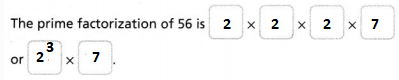
Envision Math Common Core Grade 6 Answer Key Topic 3 Numeric And Algebraic Expressions 11 54
Envision Math Common Core Grade 6 Answer Key Topic 3 Numeric And Algebraic Expressions 11 52 × 52
Envision Math Common Core Grade 6 Answer Key Topic 3 Numeric And Algebraic Expressions 11 45
Envision Math Common Core Grade 6 Answer Key Topic 3 Numeric And Algebraic Expressions 11 4(51)
Answer:
The given expression is: 5 × 5 × 5 × 5
Now,
The representation of the given expression in the form of an exponent is:
5 × 5 × 5 × 5 = 5² × 5²
= 54
Hence, from the above,
We can conclude that
All the expressions equivalent to 5 × 5 × 5 × 5 are:

Question 39.
Which expression is equivalent to \(\frac{1}{36}\)?
A. \(\frac{1}{3}\) × \(\frac{1}{6}\)
B. \(\frac{1}{4}\) × (\(\frac{1}{3}\))3
C. (\(\frac{1}{2}\))2 × (\(\frac{1}{3}\))2
D. \(\frac{1}{2}\) × \(\frac{1}{3}\) × \(\frac{1}{3}\) × \(\frac{1}{3}\)
Answer:
The given expression is: \(\frac{1}{36}\)
Now,
The representation of the givene xpression in various forms is:
\(\frac{1}{36}\) = (\(\frac{1}{6}\))²
= \(\frac{1}{9}\) × \(\frac{1}{4}\)
= (\(\frac{1}{3}\))² × (\(\frac{1}{2}\))²
Hence, from the above,
We can conclude that
The expression is equivalent to \(\frac{1}{36}\) is:

Lesson 3.2 Find Greatest Common Factor and Least Common Multiple

Solve & Discuss It!

ACTIVITY

Mark sets the dinner table every 2 days and dries the dishes every 3 days. If he sets the table on Day 2 and dries the dishes on Day 3, on what day would Mark first perform both chores on the same day?
Envision Math Common Core Grade 6 Answer Key Topic 3 Numeric And Algebraic Expressions 12
Answer:
It is given that
Mark sets the dinner table every 2 days and dries the dishes every 3 days and he sets the table on Day 2 and dries the dishes on Day 3
Now,
To find the days that Mark would perform both chores on the same day,
Find the common multiplies of 2 and 3
So,
The common multiples of 2 and 3 are: 6, 12, 18, 24, 30, 36, 42, 48, 54, 60….
Hence, from the above,
We can conclude that
The days that Mark would perform both chores on the same day must be the multiple of 6

Look for Relationships What is the relationship between the chores that Mark does each day?
Envision Math Common Core Grade 6 Answer Key Topic 3 Numeric And Algebraic Expressions 12.1
Answer:
The completed list of days and chores is:

Now,
From the above list,
We can observe that
For every day that is multiple of 2,
Mark sets the dinner table
For every day that is multiple of 3,
Mark dries the dishes
For every day that is both the multiple of 2 and 3,
Mark sets the dinner table and dries the dishes
Hence, from the above,
We can conclude that
The relationship between the chores Mark does each day is:
a. For every day that is multiple of 2,
Mark sets the dinner table
b. For every day that is multiple of 3,
Mark dries the dishes
c. For every day that is both the multiple of 2 and 3,
Mark sets the dinner table and dries the dishes

Focus on math practices
Generalize on what day will Mark do both chores on the same day again? How can you find on which days Mark does both chores without making a list?
Answer:
From the above problem,
We can observe that
The days that Mark would perform both chores on the same day must be the multiple of 6 i.e., the common multiple of both 2 and 3
Hence, from the above,
We can conclude that
The days that Mark would perform both chores on the same day must be the multiple of 6 i.e., the common multiple of both 2 and 3

VISUAL LEARNING

? Essential Question How can you write the prime factorization and find the greatest common factor and least common multiple of two numbers?
Answer:
The steps to Write Prime Factorization of Composite Numbers are:
a. Put a prime factor on the outside left and the result or quotient (the number of times it divides evenly) underneath.
b. Divide the quotient (the number underneath) by another prime number and keep doing this until the bottom number is a prime
Examples:

The steps to find the GCF of a set of numbers, using prime factorization are:
a. List the prime factors of each number.
b. Circle every common prime factor i.e., every prime factor that’s a factor of every number in the set.
c. Multiply all the circled numbers. The result is the GCF.
The steps to find the LCM using the prime factorization method are:
a. Find the prime factorization of each number.
b. Write each number as a product of primes, matching primes vertically when possible.
c. Bring down the primes in each column.
d. Multiply the factors to get the LCM.

Try It!
Find the prime factorization of 56. Start with the least prime factor.
Envision Math Common Core Grade 6 Answer Key Topic 3 Numeric And Algebraic Expressions 12.2
Answer:
The given number is: 56
Now,
By using the Prime factorization method,

So,

Hence, from the above,
We can conclude that
The prime factorization of 56 is: 2³ × 7

Convince Me! A number is greater than 2 and it has 2 as a factor. Is the number prime or composite? Explain.
Answer:
It is given that
A number is greater than 2 and it has 2 as a factor
Now,
We know that,
2 is both prime and composite. The definition of prime is a number whose two factors are one and itself. If it has two, it must be composite, because that is not one or itself
Now,
According to the given information,
One of the numbers that are greater than 2 and have 2 as a factor will be: 4
Now,
We know that,
4 has more than 2 factors
Hence, from the above,
We can conclude that
A number that is greater than 2 and has 2 as a factor is a “Composite number”

Try It!
Keesha has 24 beads to add equally to each bag. Can she still make 6 bags and have no supplies left over? Explain.
Answer:
It is given that
Keesha has 24 beads to add equally to each bag.
Now,
The GCF of 24 and 6 is:

Now,
We can say that
The highest number of bags Keesha can make is: 6 bags
Hence, from the above,
We can conclude that
Keesha can still make 6 bags and have no supplies leftover

Try It!
Use the GCF and the Distributive Property to find the sum of 12 and 36.
Answer:
The given numbers are: 12 and 36
Now,
Step 1:
The GCF of 12 and 36 is:

Step 2:
Write 12 and 36 as a product using the GCF as a factor
Now,
By using the Distributive Property,
12 + 36 = (12 × 1) + (12 × 3)
= 12 × (1 + 3)
= 12 × 4
= 48
Hence, from the above,
We can conclude that
The sum of 12 and 36 is: 48

Try It!
Grant also buys bottled water and juice pouches for the picnic. There are 12 bottles of water in each case and 10 juice pouches in each box. Grant wants to buy the least amount but still have as many bottles of water as juice pouches. How many of each should he buy? Explain.
Answer:
It is given that
Grant also buys bottled water and juice pouches for the picnic. There are 12 bottles of water in each case and 10 juice pouches in each box. Grant wants to buy the least amount but still have as many bottles of water as juice pouches
Now,
To find the number of bottles and juice pouches Grant bought,
Find the LCM of 12 and 10
Now,
The LCM of 12 and 10 is:

So,
The number of bottles Grant should buy = \(\frac{60}{12}\)
= 5 bottles
The number of juice pouches Grant should buy = \(\frac{60}{10}\)
= 6 juice pouches
Hence, from the above,
We can conclude that
The number of bottles Grant should buy is: 5 bottles
The number of juice pouches Grant should buy is: 6 juice pouches

KEY CONCEPT
The greatest common factor (GCF) of two numbers is the greatest number that is a factor of both numbers.
Factors of 12: 1, 2, 3, 4, 6, 12
Factors of 40: 1, 2, 4, 5, 8, 10, 20, 40
2 and 4 are common factors of 12 and 40. 4 is the greatest common factor.
The GCF of 12 and 40 is 4.

The least common multiple (LCM) of two numbers is the least multiple, not including zero, common to both numbers. Multiples of 6: 6, 12, 18, 24, 30, 36, 42, 48 …
Multiples of 9: 9, 18, 27, 36, 45, 54 …
18 and 36 are common multiples of 6 and 9.
18 is the least common multiple.
The LCM of 6 and 9 is 18.

Do You Understand?

Question 1.
? Essential Question How can you write the prime factorization and find the greatest common factor and the least common multiple of two numbers?
Answer:
The steps to Write Prime Factorization of Composite Numbers are:
a. Put a prime factor on the outside left and the result or quotient (the number of times it divides evenly) underneath.
b. Divide the quotient (the number underneath) by another prime number and keep doing this until the bottom number is a prime
Examples:

The steps to find the GCF of a set of numbers, using prime factorization are:
a. List the prime factors of each number.
b. Circle every common prime factor i.e., every prime factor that’s a factor of every number in the set.
c. Multiply all the circled numbers. The result is the GCF.
The steps to find the LCM using the prime factorization method are:
a. Find the prime factorization of each number.
b. Write each number as a product of primes, matching primes vertically when possible.
c. Bring down the primes in each column.
d. Multiply the factors to get the LCM.

Question 2.
What are two different ways in which you can use prime factorization to find the prime factors of a number?
Answer:
There are two common ways to perform prime factorization. The first is called the “Prime Factor Tree”, and the second is known as the “Upside-Down Division”
An example of the Prime Factor Tree method is:

An example of the Upside Down Division method is:

Question 3.
Generalize Why is the GCF of two prime numbers always 1?
Answer:
GCF stands for Greatest Common Factor. Since 1 is a factor of every number, any two or more numbers have a GCF, because even if the numbers are prime, or if they don’t share any prime factors, then the GCF will be 1. If they do share any prime factors, then the GCF will be the product of those shared prime factors.

Question 4.
Construct Arguments In example 4, Grant finds applesauce that comes in packages of 8, but now he finds juice bottles in only packages of 3. Will the LCM change? Explain.
Answer:
It is given that
In example 4, Grant finds applesauce that comes in packages of 8, but now he finds juice bottles in only packages of 3
Now,
In Example 4,
We can observe that
Grant should buy 8 packages of juice bottles and 6 packages of applesauce
Now,
From the given information,
We can observe that
Instead of 6 packages of applesauce, there are only 3 packages of applesauce now
Now,
We know that,
Since 3 and 6 are multiples, the LCM will be the same as in Example 4
Hence, from the above,
We can conclude that
The LCM will not change

Question 5.
Critique Reasoning Sarah says that you can find the LCM of any two whole numbers by multiplying them together. Provide a counterexample to show that Sarah’s statement is incorrect.
Answer:
We know that,
“LCM” means the “Lowest Common Multiple”
Now,
To find the LCM of the two whole numbers means finding the least common multiple of the two whole numbers
Example:
Find the LCM of 30 and 40
Now,
30 × 40 = 1,200
But,
1,200 is not the LCM of 30 and 40
Now,
The LCM of 30 and 40 are:

Hence, from the above,
We can conclude that
Sarah’s statement is incorrect

Do You Know How?

In 6-8, write the prime factorization of each number. If the number is prime, write prime.

Question 6.
33
Answer:
The given number is: 33
So,
The representation of the factors for the given number using the prime factorization method is:

Hence, from the above,
We can conclude that
The factors for the given number using the Prime factorization method is:
33 = 3 × 11

Question 7.
32
Answer:
The given number is: 32
So,
The representation of the factors for the given number using the prime factorization method is:

Hence, from the above,
We can conclude that
The factors for the given number using the Prime factorization method is:
32 = 2 × 2 × 2 × 2 × 2

Question 8.
19
Answer:
The given number is: 19
Now,
We know that,
19 has the factors of 1 and itself
Hence, from the above,
We can conclude that the given number is a prime number

In 9-11, find the GCF for each pair of numbers.

Question 9.
18, 36
Answer:
The given numbers are: 18, 36
Now,

Hence, from the above,
We can conclude that
The GCF of 18 and 36 is: 18

Question 10.
22, 55
Answer:
The given numbers are: 22, 55
Now,

Hence, from the above,
We can conclude that
The GCF of 22 and 55 is: 11

Question 11.
100, 48
Answer:
The given numbers are: 100, 48
Now,

Hence, from the above,
We can conclude that
The GCF of 100 and 48 is: 4

In 12-14, find the LCM for each pair of numbers.

Question 12.
2, 5
Answer:
The given numbers are: 2, 5
Now,

Hence, from the above,
We can conclude that
The LCM of 2 and 5 is: 10

Question 13.
8, 12
Answer:
The given numbers are: 8, 12
Now,

Hence, from the above,
We can conclude that
The LCM of 8 and 12 is: 24

Question 14.
8, 10
Answer:
The given numbers are: 8, 10
Now,

Hence, from the above,
We can conclude that
The LCM of 8 and 10 is: 40

Practice & Problem Solving

Leveled Practice
In 15-18, find the prime factorization of each number. If it is prime, write prime.

Question 15.
Envision Math Common Core Grade 6 Answer Key Topic 3 Numeric And Algebraic Expressions 12.3
Answer:
The given number is: 27
Now,
The representation of the factors for the given number using the Prime factorization method is:

Hence, from the above,
We can conclude that
The factors of 27 by using the Prime Factorization method is: 3 × 3 × 3

Question 16.
Envision Math Common Core Grade 6 Answer Key Topic 3 Numeric And Algebraic Expressions 12.4
Answer:
The given number is: 30
Now,
The representation of the factors for the given number using the Prime factorization method is:

Hence, from the above,
We can conclude that
The factors of 30 by using the Prime Factorization method is: 2 × 3 × 5

Question 17.
26
Answer:
The given number is: 26
Now,
The representation of the factors for the given number using the Prime factorization method is:

Hence, from the above,
We can conclude that
The factors of 26 by using the Prime Factorization method is: 2 × 13

Question 18.
47
Answer:
The given number is: 47
Now,
We know that,
47 has factors of 1 and only itself
Hence, from the above,
We can conclude that
47 is a prime number

In 19-21, find the GCF for each pair of numbers.

Question 19.
21, 49
Answer:
The given numbers are: 21, 49
Now,

Hence, from the above,
We can conclude that GCF of 21, 49 is: 7

Question 20.
8, 52
Answer:
The given numbers are: 8, 52
Now,

Hence, from the above,
We can conclude that GCF of 8, 52 is: 4

Question 21.
32, 81
Answer:
The given numbers are: 32, 81
Now,

Hence, from the above,
We can conclude that GCF of 32, 81 is: 1

In 22-24, use the GCF and the Distributive Property to find each sum.

Question 22.
30 + 66
Answer:
The given expression is: 30 + 66
Now,
Step 1: Find the GCF of 30 and 66
So,

So,
The GCF of 30 and 66 is: 6
Step 2: Write each number as a product using GCF as a factor
So,
30 + 66 = (6 × 5) + (6 × 11)
= 6 × (5 + 11)
= 6 × 16
= 96
Hence, from the above,
We can conclude that
The sum of 30 and 66 is: 96

Question 23.
34 + 51
Answer:
The given expression is: 34 + 51
Now,
Step 1: Find the GCF of 34 and 51
So,

So,
The GCF of 34 and 51 is: 17
Step 2: Write each number as a product using GCF as a factor
So,
34 + 51 = (17 × 2) + (17 × 3)
= 17 × (2 + 3)
= 17 × 5
= 85
Hence, from the above,
We can conclude that
The sum of 34 and 51 is: 85

Question 24.
15 + 36
Answer:
The given expression is: 15 + 36
Now,
Step 1: Find the GCF of 15 and 36
So,

So,
The GCF of 15 and 36 is: 3
Step 2: Write each number as a product using GCF as a factor
So,
15 + 36 = (3 × 5) + (3 × 12)
= 3 × (5 + 12)
= 3 × 17
= 51
Hence, from the above,
We can conclude that
The sum of 15 and 36 is: 51

In 25-27, find the LCM for each pair of numbers.

Question 25.
12, 11
Answer:
The given numbers are: 12, 11
Now,

Hence, from the above,
We can conclude that
The LCM of 12 and 11 is: 132

Question 26.
4, 12
Answer:
The given numbers are: 4, 12
Now,

Hence, from the above,
We can conclude that
The LCM of 4 and 12 is: 12

Question 27.
5, 8
Answer:
The given numbers are: 5, 8
Now,

Hence, from the above,
We can conclude that
The LCM of 5 and 8 is: 40

Question 28.
Critique Reasoning Gabrielle and John each wrote the prime factorization of 64. Analyze their work and explain any errors.
Envision Math Common Core Grade 6 Answer Key Topic 3 Numeric And Algebraic Expressions 12.6
Answer:
It is given that
Gabrielle and John each wrote the prime factorization of 64
Now,
According to Gabrielle,
The factors of 64 by using the Prime factorization method is:

So,
The representation of factors of 64 using the Prime factorization method is:
64 = 2 × 2 × 2 × 2 ×2 × 2 = 26
Now,
According to John,
The factors of 64 are:
64 = 2 × 32
= 2 × 2 ×16
= 2 × 2 × 2 × 8
= 2 × 2 × 2 × 2 × 4
= 2 × 2 × 2 × 2 × 2 × 2
Hence, from the above,
We can conclude that
There are no errors in Gabriel’s and John’s work

Question 29.
To celebrate its grand opening, a store is giving customers gift certificates. Which customer is the first to get two gift certificates?
Envision Math Common Core Grade 6 Answer Key Topic 3 Numeric And Algebraic Expressions 12.7
Answer:
It is given that
To celebrate its grand opening, a store is giving customers gift certificates.
Now,
The given figure is:
Envision Math Common Core Grade 6 Answer Key Topic 3 Numeric And Algebraic Expressions 12.7
Now,
To find the customer who is the first that will get two gift certificates,
Find the LCM of 6 and 8
Now,

Hence, from the above,
We can conclude that
The 24th customer is the first to get the two gift certificates

Question 30.
A Model with Math
The Venn diagram at the right shows the factors of 24 and 40.
a. What is the meaning of each of the three shaded regions?
Envision Math Common Core Grade 6 Answer Key Topic 3 Numeric And Algebraic Expressions 12.8
Answer:
The given numbers are: 24 and 40
Now,
The given Venn diagram is:
Envision Math Common Core Grade 6 Answer Key Topic 3 Numeric And Algebraic Expressions 12.8
Now,
From the given Venn diagram,
We can observe that
The left side region of the Venn diagram shows: The factors of 24
The right side region of the Venn diagram shows: The factors of 40
The midle region of the Venn diagram shows: The common factors of 24 and 40
Hence, from the above,
We can conclude that
The meaning of the shaded regions is:
The left side region of the Venn diagram shows: The factors of 24
The right side region of the Venn diagram shows: The factors of 40
The midle region of the Venn diagram shows: The common factors of 24 and 40

b. Explain how you use the Venn diagram to find the GCF of 24 and 40. What is the GCF of 24 and 40?
Answer:
The given Venn diagram is:
Envision Math Common Core Grade 6 Answer Key Topic 3 Numeric And Algebraic Expressions 12.8
Now,
We know that,
The GCF of the two numbers can be find out by identifying the highest factor in the common factors of a and b
So,
In he given Venn diagram,
The middle region represents the common factors of 24 and 40
In the common factors of 24 and 40, 8 is the highest factor
Hence, from the above,
We can conclude that
The GCF of 24 and 40 is: 8

Question 31.
Reasoning You have 50 blueberry scones and 75 cranberry scones. You want to make as many identical bags as possible. Each bag should have an equal number of blueberry scones and an equal number of cranberry scones. What is the greatest number of bags you can fill? Explain.
Answer:
It is given that
You have 50 blueberry scones and 75 cranberry scones. You want to make as many identical bags as possible. Each bag should have an equal number of blueberry scones and an equal number of cranberry scones
Now,
To find the greatest number of bags that you can fill an equal number of blueberry scones and cranberry scones,
Find the GCF of 50 and 75
Now,

Hence, from the above,
We can conclude that
The greatest number of blueberry scones bags and cranberry scones bags that you can fill is: 25 bags

Question 32.
Make Sense and Persevere The prime factorizations of A and B are shown. Find the value of n that needs to be listed as a prime factor of B so that the greatest common factor (GCF) of A and B is 9.
Prime factorization of A: 3 × 3 × 3
Prime factorization of B: 2 × 2 × 3 × n
Answer:
It is given that
The prime factorizations of A and B are shown and the greatest common factor (GCF) of A and B is 9.
Now,
The given prime factorizations of A and B are:
Prime factorization of A: 3 × 3 × 3
Prime factorization of B: 2 × 2 × 3 × n
Now,
To make GCF of A and B to be 9,
The numbers must be 27 and 36
Now,
27 = 3 × 3 × 3
36 = 2 × 2 × 3 × 3
So,
The missing number is: 3
Hence, from the above,
We can conclude that
The value of n is: 3

Question 33.
Higher-Order Thinking Gena has 28 trading cards, Sam has 91 trading cards, and Tiffany has 49 trading cards. Use the GCF and the Distributive Property to find the total number of trading cards Gena, Sam, and Tiffany, have.
Answer:
It is given that
Gena has 28 trading cards, Sam has 91 trading cards, and Tiffany has 49 trading cards.
Now,
To find the total number of trading cards Gena, Sam, and Tiffany have, the following steps that used to solve are:
Step 1: Find the GCF of 28, 91, and 49
So,

So,
The GCF of 28, 91, and 49 is: 7
Step 2: Write each number as a product using the GCF as a factor
So,
28 + 91 + 49 = (7 × 4) + (7 × 13) + (7 × 7)
= 7 × (4 + 13 + 7)
= 7 × 24
= 168 trading cards
Hence, from the above,
We can conclude that
The total number of trading cards Gena, Sam, and Tiffany have is: 168 trading cards

Question 34.
Periodical cicada species emerge in large numbers from their larval stage at different yearly intervals. What is the GCF of the years?
Envision Math Common Core Grade 6 Answer Key Topic 3 Numeric And Algebraic Expressions 15.6
Answer:
It is given that
Periodical cicada species emerge in large numbers from their larval stage at different yearly intervals.
Now,
The given figure is:
Envision Math Common Core Grade 6 Answer Key Topic 3 Numeric And Algebraic Expressions 15.6
Now,
From the given figure,
We can observe that
The two years are: 13 years and 17 years
Now,
The GCF of 13 and 17 is:

Hence, from the above,
We can conclude that
The GCF of the given years is: 1

Question 35.
People are waiting in line for a theater premiere. Every 5th person in line will receive a free theater ticket. Every 6th person will receive a gift card for $40. Which person is the first to receive both prizes?
Answer:
It is given that
People are waiting in line for a theater premiere. Every 5th person in line will receive a free theater ticket. Every 6th person will receive a gift card for $40
Now,
To find the person who is the first to receive both prizes,
Find the LCM of 5 and 6
Now,

Hence, from the above,
We can conclude that
The 30th person is the first to receive both prizes

Question 36.
Two volunteer groups plant trees. Group A plants the trees in clusters of 3. Group B plants the trees in clusters of 10. Both groups plant the same number of trees. What is the least number of clusters that Group B plants?
Answer:
It is given that
Two volunteer groups plant trees. Group A plants the trees in clusters of 3. Group B plants the trees in clusters of 10. Both groups plant the same number of trees
Now,
To find the least number of clusters that Group B plants,
Find the LCM of 3 and 10
Now,

Hence, from the above,
We can conclude that
The least number of clusters that Group B plants is: 30 clusters

Question 37.
Find the LCM of the two numbers. Then use the LCM to find the corresponding letter in the key. Write that letter in the box. What word did you decode?
Envision Math Common Core Grade 6 Answer Key Topic 3 Numeric And Algebraic Expressions 15.7
Answer:
The given data is:

Now,
a.
The LCM of 2 and 3 is:

So,
The LCM of 2 and 3 is: 6
The letter that corresponds to the LCM of 2 and 3 is: F
b.
The LCM of 3 and 7 is:

So,
The LCM of 3 and 7 is: 21
The letter that corresponds to the LCM of 3 and 7 is: U
c.
The LCM of 2 and 7 is:

So,
The LCM of 2 and 7 is: 14
The letter that corresponds to the LCM of 2 and 7 is: N
So,
The word did you decode is: FUN
Hence, from the above,
We can conclude that

The word you decoded is: FUN

Question 38.
Rami has swimming lessons every 3 days and guitar lessons every 8 days. If he has both lessons on the first day of the month, in how many days will Rami have both lessons on the same day again?
Answer:
It is given that
Rami has swimming lessons every 3 days and guitar lessons every 8 days and he has both lessons on the first day of the month
Now,
To find the number of days will Rami have both lessons on the same day again,
Find the LCM of 3 and 8
Now,

Hence, from the above,
We can conclude that
In 24 days, Rami will have both lessons on the same day again

Question 39.
A number is between 58 and 68. It has prime factors of 2, 3, and 5. What is the number?
Answer:
It is given that
A number is between 58 and 68. It has prime factors of 2, 3, and 5
Now,
Let the number that has the given prime factors be x
Now,
If x has the prime factor of 5, then it must be a multiple of 5
So,
The multiples of 5 between 58 and 68 are: 60, 65
Now,
The factors of 65 using the Prime Factorization method are:
65 = 5 × 13
The factors of 60 using the Prime Factorization method are:
60 = 2 × 30
= 2 × 2 × 15
= 2 × 2 × 3 × 5
So,
60 has the prime factors of 2, 3, and 5 as given
Hence, from the above,
We can conclude that
The number that is between 58 and 68 and has the prime factors 2, 3, and 5 is: 60

Question 40.
A college offers shuttle service from Dickson Hall or Lot B to its campus quad. Both shuttles first depart their locations at 9:10 A.M. They run from each location to campus and back at the intervals shown. When is the next time both shuttles will depart for the campus at the same time? Explain.
Envision Math Common Core Grade 6 Answer Key Topic 3 Numeric And Algebraic Expressions 15.8
Answer:
It is given that
A college offers shuttle service from Dickson Hall or Lot B to its campus quad. Both shuttles first depart their locations at 9:10 A.M. They run from each location to campus and back at the intervals shown.
Now,
The given figure is:
Envision Math Common Core Grade 6 Answer Key Topic 3 Numeric And Algebraic Expressions 15.8
Now,
From the given figure,
We can observe that
The shuttle departs every 10 minutes from Lot B
The shuttle departs every 12 minutes from Dickson Hall
Now,
To find the next time both shuttles will depart for the campus at the same time,
Find the LCM of 10 and 12
Now,

Now,
We know that,
1 hour = 60 minutes
So,
The next time both shuttles will depart from the campus at the same time = (The first time both shuttles departed from the campus at the same time) + 1 hour
= 9:10 A.M + 1 hour
= 10:10 A.M
Hence, from the above,
We can conclude that
The next time both shuttles will depart from the campus at the same time is: 10:10 A.M

Assessment Practice

Question 41.
Match each pair of numbers with the pair(s) of numbers that have the same LCM.
Envision Math Common Core Grade 6 Answer Key Topic 3 Numeric And Algebraic Expressions 15.9
Answer:
The given pairs of numbers are: (6, 9), (3, 4), (6, 12), (2, 9), (3, 9), (4, 6), and (9, 12)
Now,
The LCMs of the given pairs of numbers are:
The LCM of 6 and 9 is: 18
The LCM of 3 and 4 is: 12
The LCM of 6 and 12 is: 12
The LCM of 2 and 9 is: 18
The LCM of 3 and 9 is: 9
The LCM of 4 and 6 is: 12
The LCM of 9 and 12 is: 36
Hence, from the above,
We can conclude that
The matched pair of numbers with the pair of numbers that has the same LCM is:

Question 42.
Which expression is equivalent to 48 + 60?
A. 12(4 + 5)
B. 12(8 + 5)
C. 6(6 + 10)
D. 6(8 + 12)
Answer:
The given expression is: 48 + 60
Now,
Step 1: Find the GCF of 48 and 60
So,

Step 2: Write each number as a product by using the GCF as a factor
So,
48 + 60 = (12 × 4) + (12 × 5)
= 12 × (4 + 5)
Hence, from the above,
We can conclude that
The expression that is equivalent to 48 + 60 is:

Lesson 3.3 Write and Evaluate Numerical expressions

Solve & Discuss It!

ACTIVITY
An airline company charges additional fees for bags that do not meet the weight and size limits. For one flight, fees were charged for a total of 50 bags that were over the weight limit and 6 oversized bags. Find the total amount of fees collected for that flight.
Envision Math Common Core Grade 6 Answer Key Topic 3 Numeric And Algebraic Expressions 15.10
Look for Relationships You can use the order of operations to evaluate numerical expressions.
Answer:
It is given that
An airline company charges additional fees for bags that do not meet the weight and size limits. For one flight, fees were charged for a total of 50 bags that were over the weight limit and 6 oversized bags.
Now,
The given figure is:
Envision Math Common Core Grade 6 Answer Key Topic 3 Numeric And Algebraic Expressions 15.10
So,
The total amount of fees collected for the given flight = (The total number of overweight bags) × (The extra fees for each overweight bag) + (The total number of oversized bags) × (The extra fees for each oversized bag)
= (50 × $49) + (6 × $75)
Now,

Hence, from the above,
We can conclude that
The total amount of fees collected for the given flight is: $2900

Focus on math practices
A Model with Math
Tamara was charged for two bags that were over the weight limit and another bag that was over the size limit. Write and evaluate a numerical expression to find the additional fees Tamara was charged for her bags.
Answer:
It is given that
Tamara was charged for two bags that were over the weight limit and another bag that was over the size limit.
Now,
The given figure is:
Envision Math Common Core Grade 6 Answer Key Topic 3 Numeric And Algebraic Expressions 15.10
So,
The total additional fees Tamara charged for her bags = (The total number of overweight bags) × (The extra fees for each overweight bag) + (The total number of oversized bags) × (The extra fee for each oversized bag)
= (2 × $49) + (1 × $75)
Now,

Hence, from the above,
We can conclude that
The total additional fees Tamara charged for her bags is: $173

VISUAL LEARNING

? Essential Question How do you write and evaluate numerical expressions?
Answer:
We write a numerical expression by using numbers and mathematical operators which are addition, subtraction, multiplication, and division.
Example:
The expression of the mathematical statement “4 added to 2”, will be 2+4.
To evaluate a numerical expression means to find the value of the expression by using the order of operations. To evaluate an expression, we follow the rules of the order of operations in the expression and then simplify the expression using the order of operations.

Scan for Multimedia

Try It!
Evaluate the numerical expression at the right.
Envision Math Common Core Grade 6 Answer Key Topic 3 Numeric And Algebraic Expressions 15.11
Answer:
The given numerical expression is: \(\frac{1}{8}\) [6³ + (48 ÷ 6)] – 20
Now,

Hence, from the above,
We can conclude that
The value of the given numerical expression is: 8

Convince Me! Why is it important to follow the order of operations?
Answer:
The order of operations is a rule that tells you the right order in which to solve different parts of a math problem. Subtraction, multiplication, and division are all examples of operations. The order of operations is important because it guarantees that people can all read and solve a problem in the same way

Try It!
A. Evaluate the numerical expression: 3.22 – [(9 × 4) + 9] × (\(\frac{1}{3}\))2?
Answer:
The given numerical expression is: 3.22 – [(9 × 4) + 9] × (\(\frac{1}{3}\))2
Now,

Hence, from the above,
We can conclude that
The value of the given numerical expression is: 5.24

B. Insert grouping symbols so that the numerical expression has a value of 80.
6 + 12 × (\(\frac{2}{3}\))2 × 3 + 7
Answer:
The given expression is:
6 + 12 × (\(\frac{2}{3}\))2 × 3 + 7
Now,
It is given that
The value of the given expression is: 80
Now,
Case 1:
6 + 12 × (\(\frac{2}{3}\))² × (3 + 7)
= 6 + 12 × \(\frac{4}{9}\) × 10
= 6 + \(\frac{160}{3}\)
= 6 + 53
= 59
Case 2:
(6 + 12) × (\(\frac{2}{3}\))² × (3 + 7)
= 18 × \(\frac{4}{9}\) × 10
= 2 × 4 ×10
= 8 × 10
= 80
Hence, from the above,
We can conclude that
The complete numerical expression with inserted grouping symbols and has a value of 80 is:
(6 + 12) × (\(\frac{2}{3}\))² × (3 + 7)

KEY CONCEPT
The order of operations is a set of rules used to evaluate expressions that include more than one operation.

Order of Operations

1 Evaluate inside grouping symbols,
such as parentheses or brackets.
2 Evaluate powers.
3 Multiply or divide from left to right.
4 Add or subtract from left to right.

Do You Understand?

Question 1.
? Essential Question How do you write and evaluate numerical expressions?
Answer:
We write a numerical expression by using numbers and mathematical operators which are addition, subtraction, multiplication, and division.
Example:
The expression of the mathematical statement “4 added to 2”, will be 2+4.
To evaluate a numerical expression means to find the value of the expression by using the order of operations. To evaluate an expression, we follow the rules of the order of operations in the expression and then simplify the expression using the order of operations.

Question 2.
Make Sense and Persevere Explain why grouping symbols can change the value of a numerical expression. Then insert grouping symbols to show four different values for the following expression. 80 ÷ 8 × 5 + 4
Answer:
We know that,
“Grouping symbols” are used in math to show a part of a math expression or equation that must be solved first, before any other calculations are done. The part between the two grouping symbols is treated like one number. Operations inside grouping symbols can be done before any other operations in order to simplify the problem
The position of grouping symbols decide the single value of the numerical expression based on the order of operations
Now,
The given expression is: 80 ÷ 8 × 5 + 4
Case 1:
The given expression with the grouping symbols is: (80 ÷ 8) × 5 + 4
So,

Case 2:
The given expression with the grouping symbols is: 80 ÷ (8 × 5) + 4
So,

Case 3:
The given expression with the grouping symbols is: 80 ÷ 8 × (5 + 4)
So,

Case 4:
The given expression with the grouping symbols is: 80 ÷ (8 × (5 + 4))
So,

Question 3.
In the expression (21 – 3) × (7 + 2) ÷ (12 – 4), what operation should you perform last? Explain.
Answer:
The given expression is:
(21 – 3) × (7 + 2) ÷ (12 – 4)
To decide the order of operation,
We will follow BODMAS RULE
Where,
B – Brackets (or) Grouping symbols
O – Of
D – Division
M – Multiplication
A – Addition
S – Subtraction
Hence, from the above,
We can conclude that
The operation you should perform last for the given expression is: Multiplication

Question 4.
Critique Reasoning Charles says that 2 × 3 – 2 is 4, and Seth says that 2 × 3 – 2 is 2. Who is correct? Explain.
Answer:
It is given that
Charles says that 2 × 3 – 2 is 4, and Seth says that 2 × 3 – 2 is 2.
Now,
We know that,
To decide the order of operation,
We will follow BODMAS RULE
Where,
B – Brackets (or) Grouping symbols
O – Of
D – Division
M – Multiplication
A – Addition
S – Subtraction
So,
According to Charles:
The expression is: 2 × 3 – 2
So,
(2 × 3) – 2
= 6 – 2
= 4
According to Seth:
The expression is: 2 × 3 – 2
So,
2 × (3 – 2)
= 2 × 1
= 2
Hence, from the above,
We can conclude that
Charles is correct since he followed the order of operations correctly

Do You Know How?

In 5-9, evaluate each expression.

Question 5.
52 + (6.7 – 3.1)
Answer:
The given expression is: 52 + (6.7 – 3.1)
So,

Hence, from the above,
We can conclude that
The value of the given expression is: 28.6

Question 6.
(8.2 + 5.3) ÷ 5
Answer:
The given expression is: (8.2 + 5.3) ÷ 5
So,

Hence, from the above,
We can conclude that
The value of the given expression is: 2.7

Question 7.
(1.5 – 0.52) ÷ [(3 + 2) × 2]
Answer:
The given expression is: (1.5 – 0.52) ÷ [(3 + 2) × 2]
So,

Hence, from the above,
We can conclude that
The value of the given expression is: 0.125

Question 8.
36.8 ÷ [11.5 – (2.5 × 3)]2
Answer;
The given expression is: 36.8 ÷ [11.5 – (2.5 × 3)]2
So,

Hence, from the above,
We can conclude that
The value of the given expression is: 2.3

Question 9.
6 + 4 × 5 ÷ 2 – 8 × 1.5
Answer:
The given expression is: 6 + 4 × 5 ÷ 2 – 8 × 1.5
So,

Hence, from the above,
We can conclude that
The value of the given expression is: 4

In 10-12, insert grouping symbols so that the expression has the given value.

Question 10.
12 × 32 + 36 Target value: 540
Answer:
The given expression is: 12 × 32 + 36
Now,
It is given that
The value of the given expression is: 540
Now,
Case 1:
12 × 32 + 36
= (12 × 32 ) + 36
= (12 × 9) + 36
= 108 + 36
= 144
Case 2:
12 × 3² + 36
= 12 × (3² + 36)
= 12 × (9 + 36)
= 12 × 45
= 540
Hence, from the above,
We can conclude that
The representation of the given expression with the grouping values and a target value of 540 is:
12 × (3² + 36)

Question 11.
32 ÷ 23 – 4 Target value: 8
Answer:
The given expression is: 32 ÷ 23 – 4
Now,
It is given that
The value of the given expression is: 8
Now,
Case 1:
32 ÷ 2³ – 4
= (32 ÷ 2³) – 4
= (32 ÷ 8) – 4
= 4 – 4
= 0
Case 2:
32 ÷ 2³ – 4
= 32 ÷ (2³  – 4)
= 32 ÷ (8 – 4)
= 32 ÷4
= 8
Hence, from the above,
We can conclude that
The representation of the given expression with the grouping values and a target value of 8 is:
32 ÷ (2³ – 4)

Question 12.
2.32 + 9 × 4 ÷ 2 Target value: 28.58
Answer:
The given expression is: 2.32 + 9 × 4 ÷ 2
Now,
It is given that
The value of the given expression is: 28.58
Now,
Case 1:
2.32 + 9 × 4 ÷ 2
= 2.32 + (9 × 4) ÷ 2
= 2.32 + (36) ÷ 2
= 2.32 + 18
= 23.29
Case 2:
2.32 + 9 × 4 ÷ 2
= (2.32 + 9 × 4) ÷ 2
= (5.29 + 36) ÷ 2
= 20.64
Case 3:
2.32 + 9 × 4 ÷ 2
= (2.32 + 9) × (4 ÷ 2)
= 14.29 × 2
= 28.58
Hence, from the above,
We can conclude that
The representation of the given expression with the grouping values and a target value of 28.58 is:
(2.32 + 9) × (4 ÷ 2)

Practice & Problem Solving
Leveled Practice
In 13-18, use the order of operations to evaluate.

Question 13.
Envision Math Common Core 6th Grade Answers Topic 3 Numeric And Algebraic Expressions 20.1
Answer:
The given expression is: 4² – (3.1 + 6.4) + 4.5
So,

Hence, from the above,
We can conclude that
The value of the given expression is: 11

Question 14.
Envision Math Common Core 6th Grade Answers Topic 3 Numeric And Algebraic Expressions 20.2
Answer:
The given expression is: (8.7 + 3.3) × (\(\frac{1}{2}\))²
So,

Hence, from the above,
We can conclude that
The value of the given expression is: 3

Question 15.
Envision Math Common Core 6th Grade Answers Topic 3 Numeric And Algebraic Expressions 20.3
Answer:
The given expression is: 157.8 – (3² + 6) × 3
So,

Hence, from the above,
We can conclude that
The value of the given expression is: 112.8

Question 16.
4.3 + (8.4 – 5.1)
Answer:
The given expression is: 4.3 + (8.4 – 5.1)
So,

Hence, from the above,
We can conclude that
The value of the given expression is: 7.6

Question 17.
1.25 × 4 + 3 × 2 ÷ (\(\frac{1}{2}\))3
Answer:
The given expression is: 1.25 × 4 + 3 × 2 ÷ (\(\frac{1}{2}\))3
So,

Hence, from the above,
We can conclude that
The value of the given expression is: 29

Question 18.
[23 × (152 ÷ 8)] – 52
Answer:
The given expression is: [23 × (152 ÷ 8)] – 52
So,

Hence, from the above,
We can conclude that
The value of the given expression is: 100

In 19-21, insert grouping symbols so that the expression has the given value.

Question 19.
Target value: 32
2 × 9 + 7
Answer:
The given expression is: 2 × 9 + 7
Now,
It is given that
The value of the given expression is: 32
Now,
Case 1:
2 × 9 + 7
= (2 × 9) + 7
= 18 + 7
= 25
Case 2:
2 × 9 + 7
= 2 × (9 + 7)
= 2 × 16
= 32
Hence, from the above,
We can conclude that
The representation of the given expression with the grouping values and a target value of 32 is:
2 × (9 + 7)

Question 20.
Target value: 6
\(\frac{1}{3}\) × 21 – 3
Answer:
The given expression is: \(\frac{1}{3}\) × 21 – 3
Now,
It is given that
The value of the given expression is: 6
Now,
Case 1:
\(\frac{1}{3}\) × 21 – 3
= (\(\frac{1}{3}\) × 21) – 3
= 7 – 3
= 4
Case 2:
\(\frac{1}{3}\) × 21 – 3
= \(\frac{1}{3}\) × (21 – 3)
= \(\frac{1}{3}\) × 18
= 6
Hence, from the above,
We can conclude that
The representation of the given expression with the grouping values and a target value of 6 is:
\(\frac{1}{3}\) × (21 – 3)

Question 21.
Target value: 43
2.5 + 5 × 6 – 2
Answer:
The given expression is: 2.5 + 5 × 6 – 2
Now,
It is given that
The value of the given expression is: 43
Now,
Case 1:
2.5 + 5 × 6 – 2
= (2.5 + 5) × (6 – 2)
= 7.5 × 4
= 30
Case 2:
2.5 + 5 × 6 – 2
= [(2.5 + 5) × 6] – 2
= (7.5 × 6) – 2
= 45 – 2
= 43
Hence, from the above,
We can conclude that
The representation of the given expression with the grouping values and a target value of 43 is:
[(2.5 + 5) × 6] – 2

Question 22.
Cory bought some baseball equipment. He used a coupon for \(\frac{1}{2}\) off the price of the bat and glove. Write and evaluate a numerical expression to find the total cost of the bat, the glove, and
Envision Math Common Core 6th Grade Answers Topic 3 Numeric And Algebraic Expressions 25.1
Answer:
It is given that
Cory bought some baseball equipment. He used a coupon for \(\frac{1}{2}\) off the price of the bat and glove
Now,
The given figure is:
Envision Math Common Core 6th Grade Answers Topic 3 Numeric And Algebraic Expressions 25.1
Now,
From the given information,
The new cost of the bat will become \(\frac{1}{2}\) of the old price of the bat
The new cost of the glove will become \(\frac{1}{2}\) of the old price of the glove
So,
The total cost of the bat, the glove and 3 baseballs = (The new cost of the bat) + (The new cost of the glove) + (3 × The cost of the baseball)
= \(\frac{$69}{2}\) + \(\frac{$75}{2}\) + (3 × $5.50)
= \(\frac{1}{2}\) (69 + 75) + (3 × $5.50)
= \(\frac{$144}{2}\) + $16.50
= $72 + $16.50
= $88.50
Hence, from the above,
We can conclude that
The total cost of the bat, the glove, and 3 baseballs is: $88.50

Question 23.
Make Sense and Persevere Write a numerical expression, with at least three operations, that has the same value as the following expression. Justify your answer.
5 + (8 – 4) ÷ 2 + 3
Answer:
The given expression is: 5 + (8 – 4) ÷ 2 + 3
Now,

So,
The value of the given expression is: 10
Now,
The expression that has the same value as the given expression and has at least 3 operations is:
(5 × 2) + 4 – (36 ÷ 9)

Question 24.
Use Structure How do you know which part of the numerical expression to evaluate first? Explain.
(26 + 2.5) – [(8.3 × 3) + (13 – 0.25)]
Answer:
The given expression is:
(26 + 2.5) – [(8.3 × 3) + (13 – 0.25)]
Now,
To solve an expression,
We will use the order of operations using the BODMAS rule and solve the part of the expression that involves more operations in it
So,
In the given expression,
We have to first evaluate [(8.3 × 3) + (13 – 0.25)]
Hence, from the above,
We can conclude that
By using the order of operations using the BODMAS rule and the part of the expression that involves more operations in it,
We have to first evaluate [(8.3 × 3) + (13 – 0.25)]

Question 25.
Construct Arguments Evan says that the value of the numerical expression 0.22 + 12 ÷ (1.5 × 4) is 32.04. Do you agree? Explain.
Answer:
The given expression is: 0.22 + 12 ÷ (1.5 × 4)
So,

But,
For the given expression,
It is given that the value is: 32.04
But,
We got the value of the expression as 2.04
Hence, from the above,
We can conclude that
We can not agree with Evan

Question 26.
The width of the rectangular drawing is one-third the length plus 3 inches. What is the perimeter of the drawing? Write and evaluate an expression to solve the problem.
Envision Math Common Core 6th Grade Answers Topic 3 Numeric And Algebraic Expressions 20.6
Answer:
It is given that
The width of the rectangular drawing is one-third the length plus 3 inches.
Now,
The given figure is:
Envision Math Common Core 6th Grade Answers Topic 3 Numeric And Algebraic Expressions 20.6
Now,
From the given figure,
We can observe that
The length of the rectangular drawing is 12 in.
Now,
According to the given information,
The width of the rectangular drawing = (The length of the rectangular drawing ÷ 3) + 3
= \(\frac{12}{3}\) + 3
= 4 + 3
= 7 in.
Now,
We know that,
The perimeter of a rectangle = 2 × (Length + Width)
So,
The perimeter of a rectangular drawing = 2 × (12 + 7)
= 2 × 19
= 38 in.
Hence, from the above,
We can conclude that
The perimeter of the rectangular drawing is 38 in.

Question 27.
Higher-Order Thinking Frederick evaluates the numerical expression [(53.7 + 37.2) – (33 + 3.8)] – 8.6 and records the answer as 51.5. Lana evaluates the numerical expression 53.7 + 37.2 – 33 + 3.8 – 8.6 and records the answer as 59.1. The expressions have the same numbers and operations. Explain how Frederick and Lana can both be correct.
Answer:
It is given that
Frederick evaluates the numerical expression [(53.7 + 37.2) – (33 + 3.8)] – 8.6 and records the answer as 51.5. Lana evaluates the numerical expression 53.7 + 37.2 – 33 + 3.8 – 8.6 and records the answer as 59.1. The expressions have the same numbers and operations
Now,
According to Fredrick:
The given expression is: [(53.7 + 37.2) – (33 + 3.8)] – 8.6
So,

Now,
According to Lana:
The given expression is: 53.7 + 37.2 – 33 + 3.8 – 8.6
So,

Now,
From both answers,
We can observe that
Even though the operations and the numbers are the same, the only difference between the expressions is the grouping symbols
Hence, from the above,
We can conclude that
Both Fredrick and Lana are correct and the only difference between their expressions is the grouping of symbols

Question 28.
Model with Math
Lillian went to the gift shop on the boardwalk and bought four bags of dyed seashells at $3.99 each. She had a coupon for $1 off. Her mom paid for half of the remaining cost. Write and evaluate a numerical expression to find how much Lillian paid toward the purchase of the seashells.
Answer:
It is given that
Lillian went to the gift shop on the boardwalk and bought four bags of dyed seashells at $3.99 each. She had a coupon for $1 off. Her mom paid for half of the remaining cost.
Now,
The cost of 4 bags of dyed seashells = 4 × (The cost of each bag of dyed seashells)
= 4 × $3.99
= $15.96
Now,
It is given that
She had a coupon for $1 off
So,
The amount Lilian paid to purchase 4 bags of dyed seashells = $15.96 – $1
= $14.96
Now,
It is given that
Lilian’s mom paid for half of the remaining cost
So,
The amount Lilian’s mom paid = \(\frac{$14.96}{2}\)
= $7.48
So,
The  total amount Lilian paid toward the purchase of the seashells = $14.96 – $7.48
= $7.48
Hence, from the above,
We can conclude that
The total amount Lilian paid toward the purchase of the seashells is: $7.48

Question 29.
In an ecosystem, some animals get energy by eating plants. Write and evaluate an expression to find how many pounds of plants a herd of 18 elk can eat in one week.
Envision Math Common Core 6th Grade Answers Topic 3 Numeric And Algebraic Expressions 20.7
Answer:
It is given that
In an ecosystem, some animals get energy by eating plants
Now,
The given figure is:
Envision Math Common Core 6th Grade Answers Topic 3 Numeric And Algebraic Expressions 20.7
Now,
We know that,
1 week = 7 days
So,
The number of pounds of plants a herd of 18 elk can eat in one week = (The number of elks) × (The number of pounds of plants an elk eats each day) × (The number of days in a  week)
= (18 × 20 × 7) pounds
= (126 × 20) pounds
= 2,520 pounds
Hence, from the above,
We can conclude that
The number of pounds of plants a herd of 18 elk can eat in one week is: 2,520 pounds

Assessment Practice

Question 30.
Select all expressions that are equivalent to 24 ÷ [(3.2 × 0.8) + 1.44].
Envision Math Common Core 6th Grade Answers Topic 3 Numeric And Algebraic Expressions 21 24 ÷ [(4 × 0.64) + 1.44]
Envision Math Common Core 6th Grade Answers Topic 3 Numeric And Algebraic Expressions 21 16 ÷ [(22 × 0.64) + (0.72 × 2)]
Envision Math Common Core 6th Grade Answers Topic 3 Numeric And Algebraic Expressions 21 8 ÷ [(3.2 × 0.8) + (0.48 × 3)]
Envision Math Common Core 6th Grade Answers Topic 3 Numeric And Algebraic Expressions 21 24 ÷ [2.56 + (0.48 × 4)]
Envision Math Common Core 6th Grade Answers Topic 3 Numeric And Algebraic Expressions 21 42 ÷ [2.56 + (0.48 × 4)]
Answer:
The given expression is: 24 ÷ [(3.2 × 0.8) + 1.44]
So,

Now,
The given expressions and its values are:
A.  24 ÷ [(4 × 0.64) + 1.44] = 4
B.  16 ÷ [(22 × 0.64) + (0.72 × 2)] = 4
C.  8 ÷ [(3.2 × 0.8) + (0.48 × 3)] = 2
D.  24 ÷ [2.56 + (0.48 × 4)] = 3.57
E.  4² ÷ [2.56 + (0.48 × 4)] = 3.57
Hence, from the above,
We can conclude that
All expressions that are equivalent to 24 ÷ [(3.2 × 0.8) + 1.44] are:

Question 31.
Which value is equivalent to the expression 18.9 × [(2 × 2.7) – 4.6] – 22?
A. 1,112
B. 111.2
C. 11.12
D. 1.112
Answer:
The given expression is: 18.9 × [(2 × 2.7) – 4.6] – 22
So,

Hence, from the above,
We can conclude that
The value is equivalent to the expression 18.9 × [(2 × 2.7) – 4.6] – 2² is:

Topic 3 MID-TOPIC CHECKPOINT

Question 1.
Vocabulary Describe the relationship between the base and the exponent in 43. Lesson 3-1
Answer:
The given expression is: 4³
Now,
From the given expression,
We can observe that
“4” is called the “Base”
“3” is called the “Exponent”
Now,
We know that,
The number that is repeatedly multiplied is the “Base”
The “Exponent” tells how many times the Base is used as a factor
Hence, from the above,
We can conclude that
“4” is the number that is repeatedly multiplied
“3” is the number that tells how many times “4” is used as a factor

Question 2.
What is the GCF of 14 and 42? Lesson 3.2
Answer:
The given numbers are: 14 and 42
Now,

Hence, from the above,
We can conclude that
The GCF of 14 and 42 is: 14

Question 3.
Which pair of numbers has a GCF of 5? Lesson 3.2
A. 15 and 30
B. 5 and 21
C. 45 and 9
D. 20 and 55
Answer:
The given numbers are:
A) 15 and 30   – GCF is 15
B) 5 and 21     – GCF is 1
C) 45 and 9     – GCF is 9
D) 20 and 55   – GCF is 5
Hence, from the above,
We can conclude that
The pair of numbers that has a GCF of 5 is:

Question 4.
What is the LCM of 12 and 9? Lesson 3.2
Answer:
The given numbers are: 12 and 9
So,

Hence, from the above,
We can conclude that
The LCM of 12 and 9 is: 36

Question 5.
Evaluate the numerical expression. Lesson 3.3
0.52 × (20 – 22 × 3) × (\(\frac{2}{5}\) × 25)
Answer:
The given numerical expression is:
0.52 × (20 – 22 × 3) × (\(\frac{2}{5}\) × 25)
So,

Hence, from the above,
We can conclude that
The value of the given numerical expression is: 20

Question 6.
Select all the expressions that are equal to (\(\frac{2}{3}\))2? Lesson 3.1
Envision Math Common Core 6th Grade Answers Topic 3 Numeric And Algebraic Expressions 22 \(\frac{4}{9}\)
Envision Math Common Core 6th Grade Answers Topic 3 Numeric And Algebraic Expressions 22 \(\frac{4}{3}\)
Envision Math Common Core 6th Grade Answers Topic 3 Numeric And Algebraic Expressions 22 \(\frac{1}{3}\) × \(\frac{1}{3}\)
Envision Math Common Core 6th Grade Answers Topic 3 Numeric And Algebraic Expressions 22 \(\frac{1}{9}\) × 4
Envision Math Common Core 6th Grade Answers Topic 3 Numeric And Algebraic Expressions 22 \(\frac{2}{3}\) × \(\frac{2}{3}\)
Answer:
The given expression is: (\(\frac{2}{3}\))²
So,
(\(\frac{2}{3}\))²
= \(\frac{2}{3}\) × \(\frac{2}{3}\)
= \(\frac{2 × 2}{3 × 3}\)
= \(\frac{4}{9}\)
= 4 × \(\frac{1}{9}\)
Hence, from the baove,
We can conclude that
All the expressions that are equivalent to (\(\frac{2}{3}\))² are:

Question 7.
Liam bought 2 vintage movie posters, 2 rock posters, and 1 rap poster. He applied a $35 gift card to the total purchase and a \(\frac{1}{2}\)-off coupon to the rap poster. Write and evaluate a numerical expression to show how much Liam paid for the posters. Lesson 3.3
Envision Math Common Core 6th Grade Answers Topic 3 Numeric And Algebraic Expressions 30.1
Answer:
It is given that
Liam bought 2 vintage movie posters, 2 rock posters, and 1 rap poster. He applied a $35 gift card to the total purchase and a \(\frac{1}{2}\)-off coupon to the rap poster
Now,
The given table is:
Envision Math Common Core 6th Grade Answers Topic 3 Numeric And Algebraic Expressions 30.1
Now,
The amount Liam has to pay for the posters = (The number of vintage movie posters) × (The cost of each vintage movie poster) + (The number of rap posters) × (The cost of each rap poster) + (The number of rock posters) × (The cost of each rock poster)
= (2 × $28.50) + (1 × $19.50) + (2 × $29.75)
Now,

So,
The amount Liam has to pay for the posters is: $136
Now,
With a $35 gift coupon,
The amount Liam has to pay for the posters = $136 – $35
= $101
Now,
With the \(\frac{1}{2}\) off coupon of rap poster,
The total cost of rap poster = \(\frac{$19.50}{2}\)
= $9.75
So,
The amount Liam has to pay for the posters = $101 – $9.75
= $91.25
Hence, from the above,
We can conclude that
The amount of money Liam paid for the products is: $91.25

Question 8.
Eva counts up by 3s, while Jin counts up by 5s. What is the smallest number that they both say? Lesson 3-2
Answer:
It is given that
Eva counts up by 3s, while Jin counts up by 5s
Now,
To find the smallest number that both Evan and Jin can say,
Find the LCM of 3 and 5
Now,

Hence, from the above,
We can conclude that
The smallest number that both Eva and Jin can say is: 15

How well did you do on the mid-topic checkpoint? Fill in the stars. Envision Math Common Core 6th Grade Answers Topic 3 Numeric And Algebraic Expressions 30.2

Topic 3 MID-TOPIC PERFORMANCE TASK

Monique and Raoul are helping teachers make gift bags and gather supplies for a student celebration day at Pineville Middle School.

PART A
Raoul has 72 wristbands and 96 movie passes to put in gift bags. The greatest common factor for the number of wristbands and the number of movie passes is equal to the number of gift bags Raoul needs to make. Find the number of gift bags Raoul needs to make. Then find how many wristbands and how many movies passes Raoul can put in each gift bag if he evenly distributes the items.
Answer:
It is given that
Monique and Raoul are helping teachers make gift bags and gather supplies for a student celebration day at Pineville Middle School.
Raoul has 72 wristbands and 96 movie passes to put in gift bags. The greatest common factor for the number of wristbands and the number of movie passes is equal to the number of gift bags Raoul needs to make.
Now,
According to the given information,
The number of gift bags Raoul needs to make = The GCF of the number of wristbands and the number of movies passes
So,

So,
The number of gift bags Raoul needs to make is: 24 gift bags
Now,
The number of wristbands = (The number of gift bags Raoul needs to make) ÷ 2
= \(\frac{24}{2}\)
= 12 wristbands
The number of movie tickets = (The number of gift bags Raoul needs to make) ÷ 2
= \(\frac{24}{2}\)
= 12 movie tickets
Hence, from the above,
We can conclude that
The number of gift bags Raoul needs to make is: 24 gift bags
The number of wristbands is: 12
The number of movie tickets is: 12

PART B
Monique wants to have an equal number of cups and napkins. What are the least number of packages of cups and the least number of packages of napkins Monique should buy to have an equal number of cups and napkins? Justify your answer.
Envision Math Common Core 6th Grade Answers Topic 3 Numeric And Algebraic Expressions 30.5
Answer:
It is given that
Monique wants to have an equal number of cups and napkins
Now,
The given table is:
Envision Math Common Core 6th Grade Answers Topic 3 Numeric And Algebraic Expressions 30.5
Now,
To find the least number of packages of cups and the least number of packages of napkins,
Find the LCM of the number of cups and napkins present in each package
So,
We have to find the LCM of 12 and 10 to find the least number of packages of cups and napkins
Now,

Hence, from the above,
We can conclude that
The least number of packages of cups and the least number of packages of napkins Monique should buy to have an equal number of cups and napkins is: 60

PART C
Which numerical expressions show the equal number of both cups and napkins that Monique will have in Part B? Select all that apply.
Envision Math Common Core 6th Grade Answers Topic 3 Numeric And Algebraic Expressions 31 21 × 30
Envision Math Common Core 6th Grade Answers Topic 3 Numeric And Algebraic Expressions 31 102 × 60
Envision Math Common Core 6th Grade Answers Topic 3 Numeric And Algebraic Expressions 31 22 × 15
Envision Math Common Core 6th Grade Answers Topic 3 Numeric And Algebraic Expressions 31 4600
Envision Math Common Core 6th Grade Answers Topic 3 Numeric And Algebraic Expressions 31 40 × 60
Answer:
From part B,
We can observe that
The least number of packages of cups and the least number of packages of napkins Monique should buy to have an equal number of cups and napkins is: 60
Hence, from the above,
We can conclude that
The numerical expressions that show the equal number of both cups and napkins that Monique will have in Part B are:

PART D
The teachers have $25 to buy supplies. Write and evaluate a numerical expression to show how much more money they will need to buy the cups and napkins.
Answer:
It is given that
The teachers have $25 to buy supplies
Now,
The given table is:
Envision Math Common Core 6th Grade Answers Topic 3 Numeric And Algebraic Expressions 30.5
Now,
From the given table,
We can observe that
The total cost of cups and Napkins = (The number of cups per package) × (The cost of each cup) + (The number of Napkins per package) × (The cost of each Napkin)
= (12 × $3.80) + (10 × $4.25)
= $45.60 + $42.50
= $88.10
Now,
The amount of more money than the teachers need to buy cups and napkins = (The total cost of cups and Napkins) – (The amount of money the teachers have)
= $88.10 – $25
= $63.10
Hence, from the above,
We can conclude that
The more money the teachers will need to buy the cups and napkins is: $63.10

Lesson 3.4 Write Algebraic expressions

Explore It!
The table shows the number of games the Hornets won and the number of games the Lynx won.
Envision Math Common Core 6th Grade Answers Topic 3 Numeric And Algebraic Expressions 32

A. What pattern do you see in the data in the table? Explain how the pattern relates to the number of games won.
Answer:
It is given that
The table shows the number of games the Hornets won and the number of games the Lynx won.
Now,
The given table is:
Envision Math Common Core 6th Grade Answers Topic 3 Numeric And Algebraic Expressions 32
Now,
From the given table,
We can observe that
The number of games won by Lynx is 2 more than the number of games won by Hornets
Hence, from the above,
We can conclude that
The pattern that is related to the number of games won is:
The number of games won by Lynx = (The number of games won by Hornet) + 2

B. Look for Relationships Write numerical expressions to relate the number of games won by the Lynx to the number of games won by the Hornets.
Envision Math Common Core 6th Grade Answers Topic 3 Numeric And Algebraic Expressions 33
Answer:
From part A,
We know that,
The number of games won by Lynx = (The number of games won by Hornet) + 2
Hence, from the above,
We can conclude that
The numerical expressions that relate the number of games won by the Lynx to the number of games won by the Hornets is:

C. Explain how to complete the table above for the Lynx if the Hornets won n games.
Answer:
From Part A,
We know that,
The number of games won by Lynx = (The number of games won by Hornet) + 2
Now,
It is given that
Hornets won n games
Hence, from the above,
We can conclude that
The number of games won by Lynx = n + 2
Where,
n is the number of games won by Hornets

Focus on math practices
Reasoning
Suppose the Lynx won g games. What mathematical expression could you write to show how many games the Hornets won? How is this expression related to the expression you wrote to find the number of games the Lynx won when the Hornets won n games? Explain.
Answer:
From Part A,
We know that,
The number of games won by Lynx = (The number of games won by Hornets) + 2
Now,
If Lynx won g games, then
The number of games won by Hornets = g – 2
Where,
g is the number of games won by Lynx
The expression when Hornets won n games is the same as the above expression as we replace the variable g with the variable n

VISUAL LEARNING

? Essential Question How can you write an algebraic expression?
Answer:
Algebraic expressions are useful because they represent the value of an expression for all of the values a variable can take on. Similarly, when we describe an expression in words that includes a variable, we are describing an algebraic expression, an expression with a variable

Try It!
Darius’s sister Rachel bought m mystery books for $6.50 each. Show three ways to write an algebraic expression that represents the total cost of the mystery books.
Answer:
It is given that
Darius’s sister Rachel bought m mystery books for $6.50 each
So,
The cost of m books bought by Rachel = (The total number of books) × (The cost of each book)
= m × $6.50
= $6.50m
Now,
The representation of the algebraic expression that represents the total cost of the mystery books in 3 ways is:
$6.50m (or) $6.50 × m (or) $6050(m)
Hence, from the above,
We can conclude that
The representation of the algebraic expression that represents the total cost of the mystery books in 3 ways is:
$6.50m (or) $6.50 × m (or) $6050(m)

Convince Me! How do you know that the expressions you wrote for the cost of the mystery books are algebraic expressions?
Answer:
We know that,
Algebraic expressions are combinations of variables, numbers, and at least one arithmetic operation.
For example,
2x+4y−9 is an algebraic expression.
Now,
When we observe the total cost of m mystery books,
We can observe that
m is a variable
Hence, from the above,”
We can conclude that
Since the expression that represents the total cost of the mystery books,
We can say that the expression that represents the total cost of the mystery books is an algebraic expression

Try It!

Write an algebraic expression that represents “8 minus the quantity b divided by 6.”
Answer:
The given algebraic expression in words is: 8 minus the quantity divided by 6
So,
The representation of the given algebraic expression that is in words into a symbolic form is:
(8 – b) ÷ 6 (or) \(\frac{8 – b}{6}\)
Hence, from the above,
We can conclude that
The representation of the given algebraic expression that is in words into a symbolic form is:
(8 – b) ÷ 6 (or) \(\frac{8 – b}{6}\)

Try It!
How many terms does the expression r ÷ 9 + 5.5 have? Explain.
Answer:
The given expression is: r ÷ 9 + 5.5
Now,
We know that,
Each part of an expression that is separated by a plus sign or a minus sign is called a “Term”
So,
The number of terms the given expression contains is: 2 terms
Hence, from the above,
We can conclude that
The number of terms the given expression contains is: 2 terms

KEY CONCEPT
A variable, written as a letter, represents a quantity that can change. You can use a variable to write an algebraic expression that has at least one operation.
Envision Math Common Core 6th Grade Answers Topic 3 Numeric And Algebraic Expressions 50.1

Do You Understand?

Question 1.
? Essential Question How can you write an algebraic expression?
Answer;
Algebraic expressions are useful because they represent the value of an expression for all of the values a variable can take on. Similarly, when we describe an expression in words that includes a variable, we are describing an algebraic expression, an expression with a variable

Question 2.
Be Precise Identify the variable and the operation in the algebraic expression \(\frac{6}{x}\)
Answer:
The given algebraic expression is: \(\frac{6}{x}\)
Now,
We know that,
A “Variable”, written as a letter, represents a quantity that can change
So,
In the given expression,
The variable is: x
The operation in the given algebraic expression is: Division
Hence, from the above,
We can conclude that
In the given expression,
The variable is: x
The operation in the given algebraic expression is: Division

Question 3.
Vocabulary Explain why 15 + \(\frac{1}{2}\)n is an algebraic expression.
Answer:
The given expression is: 15 + \(\frac{1}{2}\)n
Now,
We know that,
Algebraic expressions are useful because they represent the value of an expression for all of the values a variable can take on. Similarly, when we describe an expression in words that includes a variable, we are describing an algebraic expression, an expression with a variable
Hence, from the above,
We can conclude that
15 + \(\frac{1}{2}\)n is an algebraic expression

Question 4.
Reasoning Could you describe the expression 2(3 + 4) as a product of two factors? Explain.
Answer:
The given expression is: 2 (3 + 4)
Now,
By using the Distributive Property,
2 (3 + 4) = 2 × (3 + 4)
= (2 × 3) + (2 × 4)
Hence, from the above,
We can conclude that
The given expression could be described as a product of two factors

Question 5.
Which part of the expression 2(3 + 4) is the sum of two terms? Explain.
Answer:
The given expression is: 2 (3 + 4)
Now,
We know that,
Each part of an expression that is separated by a plus sign or a minus sign is called a “Term”
So,
In the given expression,
We can observe that
(3 + 4) contains two terms separated by an addition operation
Hence, from the above,
We can conclude that
In the given expression,
(3 + 4) is the sum of two terms

Do You Know How?

In 6 and 7, write an algebraic expression for each situation.

Question 6.
five less than y
Answer:
The given situation is: five less than y
Now,
We know that,
When we see the word “Less” in a situation, the operation that takes place in that situation must be “Subtraction”
Hence, from the above,
We can conclude that
The representation of the given situation into an algebraic expression is: y – 5

Question 7.
six times the quantity two x plus three y
Answer:
The given situation is: six times the quantity two x plus three y
Now,
We know that,
When we see the word “times the quantity” in a situation, the operation that takes place in that situation must be “Multiplication”
Hence, from the above,
We can conclude that
The representation of the given situation into an algebraic expression is: 6 (2x + 3y)

In 8-10, use the expression \(\frac{w}{4}\) + 12.5 – 7z.

8. How many terms does the expression have?
Answer:
The given expression is: \(\frac{w}{4}\) + 12.5 – 7z
Now,
We know that,
Each part of an expression that is separated by a plus sign or a minus sign is called a “Term”
Hence, from the above,
We can conclude that
The number of terms the given expression contains: 3 terms

Question 9.
Which term has a coefficient? Explain.
Answer:
The given expression is: \(\frac{w}{4}\) + 12.5 – 7z
Now,
We know that,
A “Coefficient” is the number that is multiplied by a variable
Hence, from the above,
We can conclude that
The term that has a coefficient in the given expression is: 7z

Question 10.
Which term is a constant numerical value?
Answer:
The given expression is: \(\frac{w}{4}\) + 12.5 – 7z
Now,
We know that,
A “Constant” is nothing but a numerical value
Hence, from the above,
We can conclude that
The term that is a constant numerical value in the given expression is: 12.5

Practice & Problem Solving

In 11-14, write an algebraic expression for each situation.

Question 11.
12 times a number g
Answer:
The given situation is: 12 times a number g
Now,
We know that,
When we see the word “times a number” in a situation, the operation that takes place in that situation must be “Multiplication”
Hence, from the above,
We can conclude that
The representation of the given situation into an algebraic expression is: 12 (g) (or) 12g

Question 12.
p pennies added to 22 pennies
Answer:
The given situation is: p pennies added to 22 pennis
Now,
We know that,
When we see the word “Add” in a situation, the operation that takes place in that situation must be “Addition”
Hence, from the above,
We can conclude that
The representation of the given situation into an algebraic expression is: p + 22

Question 13.
22 divided by a number s
Answer:
The given situation is: 22 divided by a number s
Now,
We know that,
When we see the word “Divide” in a situation, the operation that takes place in that situation must be “Division”
Hence, from the above,
We can conclude that
The representation of the given situation into an algebraic expression is: 22 ÷ s (or) \(\frac{22}{s}\)

Question 14.
12\(\frac{3}{4}\) less than the product of 7 and a number x
Answer:
The given situation is: 12\(\frac{3}{4}\) less than the product of 7 and a number x
Now,
We know that,
When we see the word “Less” and “Product” in a situation, the operation that takes place in that situation must be “Subtraction” and “Multiplication”
Hence, from the above,
We can conclude that
The representation of the given situation into an algebraic expression is: 7x – 12\(\frac{3}{4}\)

In 15-18, tell how many terms each expression has.

Question 15.
5 – g
Answer:
The given expression is: 5 – g
Now,
We know that,
Each part of an expression that is separated by a plus sign or a minus sign is called a “Term”
Hence, from the above,
We can conclude that
The number of terms the given expression contains is: 2 terms

Question 16.
3 + \(\frac{1}{2}\)b
Answer:
The given expression is: 3 + \(\frac{1}{2}\)b
Now,
We know that,
Each part of an expression that is separated by a plus sign or a minus sign is called a “Term”
Hence, from the above,
We can conclude that
The number of terms the given expression contains is: 2 terms

Question 17.
\(\frac{v}{3}\) + 2 • 5
Answer:
The given expression is: \(\frac{v}{3}\) + 2 • 5
Now,
We know that,
Each part of an expression that is separated by a plus sign or a minus sign is called a “Term”
Hence, from the above,
We can conclude that
The number of terms the given expression contains is: 2 terms

Question 18.
16.2 – (3 • 4) + (14 ÷ 2)
Answer:
The given expression is: 16.2 – (3 • 4) + (14 ÷ 2)
Now,
We know that,
Each part of an expression that is separated by a plus sign or a minus sign is called a “Term”
Hence, from the above,
We can conclude that
The number of terms the given expression contains is: 3 terms

In 19 and 20, use the expression 5.3t – (20 ÷ 4) + 11.

Question 19.
Which part of the expression is a quotient? Describe its parts.
Answer:
The given expression is: 5.3t – (20 ÷ 4) + 11
Now,
We know that,
The “Quotient” is only possible when there is a “Division” operation
Hence, from the above,
We can conclude that
The part of the expression that is a quotient is: 20 ÷ 4

Question 20.
Which part of the expression is a product of two factors? Describe its parts.
Answer:
The given expression is: 5.3t – (20 ÷ 4) + 11
Now,
We know that,
The “product” is possible when there are 2 numbers or a number and a variable
Hence, from the above,
We can conclude that
The part of the expression that is a product of two factors is: 5.3t

In 21 and 22, use the table at the right.
Envision Math Common Core 6th Grade Answers Topic 3 Numeric And Algebraic Expressions 52.1

Question 21.
Model with Math
Write an expression to show how much longer the round-trip to San Diego is than the round-trip to San Jose. How many terms does the expression have?
Answer:
The given information is:

Now,
From the given table,
We can observe that
The distance of the round trip to San Jose is: 236 miles
The distance of the round trip to San Diego is: 1,012 miles
So,
The expression that shows how much longer the round-trip to San Diego is than the round-trip to San Jose
= (The distance of the round trip to San Diego) – (The distance of the round trip to San Jose)
= 1,012 – 236
Now,
We know that,
Each part of an expression that is separated by a plus sign or a minus sign is called a “Term”
So,
The number of terms in the above expression is: 2 terms
Hence, from the above,
We can conclude that
The expression that shows how much longer the round-trip to San Diego is than the round-trip to San Jose is: 1,012 – 236
The number of terms in the above expression is: 2 terms

Question 22.
Make Sense and Persevere Last month, a truck driver made 5 round-trips to Los Angeles and some round-trips to San Diego. Write an expression that shows how many miles he drove in all. Identify and describe the part of the expression that shows how many miles he drove and trips he made to San Diego.
Answer:
It is given that
Last month, a truck driver made 5 round-trips to Los Angeles and some round-trips to San Diego
Now,
The given information is:

Now,
From the above table,
We can observe that
The distance of the round trip to Los Angeles is: 770 miles
The distance of the round trip to San Diego is: 1,012 miles
Now,
Let the number of round trips to San Diego be: x
Let the number of miles the truck driver drove to Los Angeles be: p
Let the number of miles the truck driver drove to San Diego be: q
Now,
We know that,
The total distance traveled by the truck driver = (The number of round trips made to Los Angeles) × (The number of miles the truck driver drove to Los Angeles) + (The number of round trips to San Diego) × (The number of miles the truck driver drove to San Diego)
= 5p + xq
So,
The number of miles the truck driver drove is: 5p + xq
The number of trips the truck driver made to san Diego is: x
Hence, from the above,
We can conclude that
The number of miles the truck driver drove is: 5p + xq
The number of trips the truck driver made to san Diego is: x

Question 23.
Use the expression y ÷ 3(4 – 2) + 5.5 to complete the table. Identify the parts of the expression that correspond to the descriptions.
Envision Math Common Core 6th Grade Answers Topic 3 Numeric And Algebraic Expressions 52.2
Answer:
The given expression is: y ÷ 3 (4 – 2) + 5.5
Now,
We know that,
A “Variable”, written as a letter, represents a quantity that can change
The symbol of Difference is: –
The symbol of Product is () (or) ×
Hence, from the above,
We can conclude that
The completed table with the corresponding descriptions is:

Question 24.
The floats in the Orlando Citrus parade may use as many citrus fruits as a small orchard produces in 6 years. If f is the number of citrus fruits a small orchard produces in 1 year, write an algebraic expression to represent the number of citrus fruits the floats in the parade may use.
Answer:
It is given that
The floats in the Orlando Citrus parade may use as many citrus fruits as a small orchard produces in 6 years and f is the number of citrus fruits a small orchard produces in 1 year
So,
The number of citrus fruits the floats in the parade may use in 6 years = 6 × (The number of citrus fruits a small orchard produces in 1 year)
= 6 × f
= 6f citrus fruits
Hence, from the above,
We can conclude that
The number of citrus fruits the floats in the parade may use in 6 years is: 6f citrus fruits

Question 25.
Critique Reasoning Anthony says that the expression abc has three terms because it uses three different variables. Critique Anthony’s reasoning and explain whether he is correct
Answer:
It is given that
Anthony says that the expression abc has three terms because it uses three different variables.
Now,
The given expression is: abc
Now,
We know that,
Each part of an expression that is separated by a plus sign or a minus sign is called a “Term”
Now,
From the given expression,
We can observe that
There are not any plus or minus signs
So,
The given expression is a single term
Hence, from the above,
We can conclude that
Anthony’s reasoning is incorrect

Question 26.
Yuri walked p poodles and b bulldogs on Monday. He walked the same number of poodles and bulldogs each day Tuesday through Friday as he did on Monday. Write an algebraic expression to represent how many total dogs were walked in this 5-day period.
Envision Math Common Core 6th Grade Answers Topic 3 Numeric And Algebraic Expressions 35.1
Answer:
It is given that
Yuri walked p poodles and b bulldogs on Monday. He walked the same number of poodles and bulldogs each day Tuesday through Friday as he did on Monday
So,
The total dogs walked on Monday = (The number of poodles) + (The number of bulldogs)
= p + b
Now,
It is given that
The same number of dogs walked from Tuesday to Friday as on Monday
So,
The total number of dogs that were waked from Monday to Friday = (The number of days from Monday to Friday) × (The number of dogs walked on Monday)
= 5 × (p + b) dogs
Hence, from the above,
We can conclude that
The total number of dogs that were waked from Monday to Friday is: 5(p + b) dogs

Question 27.
Higher-Order Thinking Some students equally share 2 baskets of oranges. Each basket has 12 oranges. Write an algebraic expression to represent this situation. Then explain how you chose which variable and operations to use.
Answer:
It is given that
Some students equally share 2 baskets of oranges. Each basket has 12 oranges
Now,
Let the number of students be: x
Let the number of apples each student gets be: y
Now,
The total number of oranges in 2 baskets = 2(The number of baskets in each basket)
= 2 (12)
= 24 oranges
So,
The algebraic expression that represents the given situation is:
The number of apples each student gets = (The total number of apples in 2 baskets) ÷ (The number of students)
y = \(\frac{24}{x}\)
Hence, from the above,
We can conclude that
The algebraic expression that represents the given situation is:
y = \(\frac{24}{x}\)

Question 28.
Model with Math
The figure at the right is a regular octagon with side length s. Write two algebraic expressions that use different operations to represent the perimeter of the figure.
Envision Math Common Core 6th Grade Answers Topic 3 Numeric And Algebraic Expressions 53.2
Answer:
It is given that
The figure at the right is a regular octagon with side length s.
Now,
The given figure is:
Envision Math Common Core 6th Grade Answers Topic 3 Numeric And Algebraic Expressions 53.2
Now,
We know that,
The “Perimeter” of any figure is the sum of all the sides of the given figure
Now,
Let the perimeter of the regular Octagon be: P
So,
The perimeter of the given regular Octagon is:
P = s + s + s + s + s + s + s + s
P = 8 (s) = 8s
Hence, from the above,
We can conclude that
The two algebraic expressions that use different operations to represent the perimeter of the given figure is:
P = s + s + s + s + s + s + s + s
P = 8s

Assessment Practice

Question 29.
Which algebraic expression represents the phrase Four more than the product 3 times the number of c cats?
A. 4 + 3c
B. (4 + 3)c
C. 3 + 4c
D. 4 × 3 × c
Answer:
The given phrase is: Four more than the product 3 times the number of c cats
So,
The representation of the given phrase in the form of an algebraic expression is: 4 + 3c
Hence, from the above,
We can conclude that
The algebraic expression represents the phrase Four more than the product 3 times the number of c cats is:

Question 30.
Select all of the phrases that could be represented by the algebraic expression \(\frac{w}{4}\) – 4.
Envision Math Common Core 6th Grade Answers Topic 3 Numeric And Algebraic Expressions 55 four less than the quotient of a number w and four
Envision Math Common Core 6th Grade Answers Topic 3 Numeric And Algebraic Expressions 55 the difference between a number w and 4
Envision Math Common Core 6th Grade Answers Topic 3 Numeric And Algebraic Expressions 55 four less than w divided by 4
Envision Math Common Core 6th Grade Answers Topic 3 Numeric And Algebraic Expressions 55 four less than a number w
Envision Math Common Core 6th Grade Answers Topic 3 Numeric And Algebraic Expressions 55 the quotient of four and a number w
Answer:
The given algebraic expression is: \(\frac{w}{4}\) – 4
So,
The representation of the given algebraic expression in the form of a phrase is:
a. 4 less than the quotient of w and 4
b. The difference between the quotient of w and 4 and 4
c. 4 less than w divided by 4
Hence, from the above,
We can conclude that
All of the phrases that could be represented by the algebraic expression \(\frac{w}{4}\) – 4. are:

Lesson 3.5 Evaluate Algebraic expressions

Solve & Discuss It!

A bike shop charges by the hour to rent a bike. Related items are rented for flat fees. Write an expression that represents how much it will cost to rent a bike and helmet for h hours. How much would it cost to rent a bike and a helmet for 3 hours?
Model with Math
You can write an algebraic expression with decimals in the same way you do with whole numbers.
Envision Math Common Core 6th Grade Answers Topic 3 Numeric And Algebraic Expressions 55.1

Answer:
It is given that
A bike shop charges by the hour to rent a bike. Related items are rented for flat fees
Now,
The given table is:

So,
The total cost of renting a bike and a helmet for h hours = (The cost of renting a bike per hour) × (The total number of hours) + The cost of a helmet
= $12.50 ×h + $5.25
So,
The total cost of renting a bike and a helmet for 3 hours = (The cost of renting a bike per hour) × (The total number of hours) + The cost of a helmet
= $12.50 ×3 + $5.25
= $37.50 + $5.25
= $42.75
Hence, from the above,
We can conclude that
The expression that represents the total cost to rent a bike and a helmet for h hours is:
The total cost of renting a bike and a helmet for h hours =$12.50 ×h + $5.25
The total cost of renting a bike and a helmet for 3 hours is: $42.75

Focus on math practices
Use Structure Write an expression that represents renting a bike, a lock, and a basket for h hours. What is the cost of renting this equipment for 4 hours?
Answer:
The given table is:

Now,
From the given table,
We can observe that
The cost to rent a bike, a lock, and a basket for h hours = (The cost of renting a bike per hour) × (The total number of hours) + The cost of renting a lock + The cost of renting a basket
= $12.50 × h + $1.75 + $2.25
= $12.50 × h + 4
Now,
The cost to rent a bike, a lock, and a basket for 4 hours = (The cost of renting a bike per hour) × (The total number of hours) + The cost of renting a lock + The cost of renting a basket
= $12.50 × 4 + $1.75 + $2.25
= $12.50 × 4 + $4
= $50 + $4
= $54
Hence, from the above,
We can conclude that
The expression that represents renting a bike, a lock, and a basket for h hours is:
The expression that represents renting a bike, a lock, and a basket for h hours = $12.50 × h + 4
The cost to rent a bike, a lock, and a basket for 4 hours is: $54

VISUAL LEARNING

? Essential Question How can you evaluate an algebraic expression?
Answer:
To evaluate an algebraic expression means to determine the value of the expression for a given value of each variable in the expression. Replace each variable in the expression with the given value, then simplify the resulting expression using the order of operations.

Try It!
Evaluate the expression 50 – t when t equals 10, 20, or 25. Then complete the table to show the values.
Envision Math Common Core 6th Grade Answers Topic 3 Numeric And Algebraic Expressions 53.1
Answer:
The given expression is: 50 – t
Where,
The value of t is: 10, 20, and 25
Now,
For t = 10, 20, and 25,

Hence, from the above,
We can conclude that

Convince Me! What does it mean to use substitution to evaluate an algebraic expression?
Answer:
To substitute the values of the numerals into an algebraic expression means to replace all numerals with their respective values (or numbers). Once the values of the numerals are substituted, the expression can be evaluated. While evaluating, the correct order of operations must be observed

Try It!
Evaluate the expression 3.4 + 12a ÷ 4 for a = 10.
Answer:
The given expression is 3.4 + 12a ÷ 4 for a = 10
Now,
For a = 10,
3.4 + 12a ÷4
= 3.4 + 12 (10) ÷ 4
= 3.4 + 120 ÷ 4
= 3.4 + 30
= 33.4
Hence, from the above,
We can conclude that
The value of the given expression is: 33.4

Try It!
Suppose Mr. Grant decides to buy square tiles that have side lengths of \(\frac{3}{4}\) foot. How many of these tiles will he need to buy?
Answer:
It is given that
Suppose Mr. Grant decides to buy square tiles that have side lengths of \(\frac{3}{4}\) foot
Now,
From Example 3,
It is given that
The expression to find the number of tiles Mr. Grant needs to buy is 27 ÷ s²
Where,
s is the sidelength
Now,
When s = \(\frac{3}{4}\) foot,
The number of tiles Mr.Grant needs to buy = 27 ÷ (\(\frac{3}{4}\))²
= 27 ÷ \(\frac{9}{16}\)
= 27 × \(\frac{16}{9}\)
= \(\frac{27 × 16}{9}\)
= 3 × 16
= 48 tiles
Hence, from the above,
We can conclude that
The number of tiles Mr.Grant needed to buy when the side length is \(\frac{3}{4}\) foot is: 48 tiles

KEY CONCEPT
To evaluate an expression, use substitution to replace a variable with its numerical value. Then use the order of operations to simplify.
Envision Math Common Core 6th Grade Answers Topic 3 Numeric And Algebraic Expressions 53.4

Do You Understand?

Question 1.
? Essential Question How can you evaluate an algebraic expression?
Answer:
To evaluate an algebraic expression means to determine the value of the expression for a given value of each variable in the expression. Replace each variable in the expression with the given value, then simplify the resulting expression using the order of operations

Question 2.
Construct Arguments Why is it important to use the order of operations to evaluate algebraic expressions?
Answer:
The order of operations is a rule that tells you the right order in which to solve different parts of a math problem. The order of operations is important because it guarantees that people can all read and solve a problem in the same way

Question 3.
How is evaluating an expression with fractions like evaluating an expression with whole numbers? How is it different?
Answer:
The fractions have the same denominators so you can start by adding the first two fractions. Add the fractions before adding the whole numbers. Then, take the sum and subtract the third fraction. Before evaluating the expression, rewrite the fractions with one common denominator
To evaluate an expression with a whole number, we substitute the given number for the variable in the expression and then simplify the expression using the order of operations. in the expression that involves fractions, first, we have to simplify the fractions into whole numbers and follow the order of operations to evaluate them

Question 4.
Reasoning Annalise earns $4 an hour walking pets in her neighborhood. She evaluates the expression 4h, where h represents the number of hours, to find the amount she earns. Can any number be substituted for h? Explain.
Answer:
It is given that
Annalise earns $4 an hour walking pets in her neighborhood. She evaluates the expression 4h, where h represents the number of hours, to find the amount she earns.
Now,
According to the given information,
The total amount of money earned by Annalise = $4h
Where,
h is the number of hours
Now,
We know that,
h will be any number i.e., either a whole number or a fraction
Hence, from the above,
We can conclude that
We can substitute any number for h

Do You Know How?

In 5-8, evaluate each expression for t = 8, w = \(\frac{1}{2}\), and x = 3.

Question 5.
3t – 8
Answer:
The givene xpression is: 3t – 8
Now,
For t = 8,
3t – 8
= 3 (8) – 8
= 24 – 8
= 16
Hence, from the baove,
We can conclude that
The value of the given expression is: 16

Question 6.
6w ÷ x + 9
Answer:
The given expression is: 6w ÷ x + 9
Now,
For w = \(\frac{1}{2}\), and x = 3,
6w ÷ x + 9
= 6 (\(\frac{1}{2}\)) ÷ 3 + 9
= \(\frac{6}{2}\) ÷ 3 + 9
= 3 ÷ 3 + 9
= 1 + 9
= 10
Hence, from the above,
We can conclude that
The value of the given expression is: 10

Question 7.
t2 – 12w ÷ ×
Answer:
The given expression is: t2 – 12w ÷ ×
Now,
For t = 8, w = \(\frac{1}{2}\), and x = 3,
t2 – 12w ÷ ×
= 82 – 12 (\(\frac{1}{2}\)) ÷ 3
= 64 – \(\frac{12}{2}\) ÷ 3
= 64 – 6 ÷ 3
= 64 – 2
= 62
Hence, from the above,
We can conclude that
The value of the given expression is: 62

Question 8.
5x – 2w + t
Answer:
The given expression is: 5x – 2w + t
Now,
For t = 8, w = \(\frac{1}{2}\), and x = 3,
5x – 2w + t
= 5 (3) – 2 (\(\frac{1}{2}\)) + 8
= 15 – \(\frac{2}{2}\) + 8
= 15 – 1 + 8
= 15 + 7
= 22
Hence, from the above,
We can conclude that
The value of the given expression is: 22

In 9-14, evaluate each expression for the value given.

Question 9.
z ÷ 4; z = 824
Answer:
The given expression is: z ÷ 4 with z = 824
Now,
For z = 824,
z ÷ 4
= 824 ÷ 4
= 206
Hence, from the above,
We can conclude that
The value of the given expression is: 206

Question 10.
6t ÷ 9 – 22; t = 60
Answer:
The given expression is: 6t ÷ 9 – 22 with t = 60
Now,
For t = 60,
6t ÷ 9 – 22
= 6 (60) ÷ 9 – 22
= 360 ÷ 9 – 22
= 40 – 22
= 18
Hence, from the above,
We can conclude that
The value of the given expression is: 18

Question 11.
r ÷ 2.4; r = 16.8
Answer:
The given expression is: r ÷2.4 with r = 16.8
Now,
For r = 16.8,
r ÷2.4
= 16.8 ÷ 2.4
= 7
Hence, from the above,
We can conclude that
The value of the given expression is: 7

Question 12.
9.85 × s; s = 4
Answer:
The given expression is: 9.85 × s with s = 4
Now,
For s = 4,
9.85 × s
= 9.85 × 4
= 39.40
Hence, from the above,
We can conclude that
The value of the given expression is: 39.40

Question 13.
x ÷ 12; x = \(\frac{2}{3}\)
Answer:
The given expression is: x ÷ 12, with x = \(\frac{2}{3}\)
Now,
For x = \(\frac{2}{3}\),
x ÷ 12
= \(\frac{2}{3}\) ÷ 12
= \(\frac{2}{3}\) × \(\frac{1}{12}\)
= \(\frac{2 ×1}{3 × 12}\)
= \(\frac{2}{36}\)
= \(\frac{1}{18}\)
Hence, from the above,
We can conclude that
The value of the given expression is: \(\frac{1}{18}\)

Question 14.
\(\frac{3}{4}\) + 4y ÷ 3; y = 1\(\frac{1}{2}\)
Answer:
The given expression is: \(\frac{3}{4}\) + 4y ÷ 3 with y = 1\(\frac{1}{2}\)
Now,
For y = 1\(\frac{1}{2}\),
\(\frac{3}{4}\) + 4y ÷ 3
= \(\frac{3}{4}\) + 4 (1\(\frac{1}{2}\) ÷ 3
= \(\frac{3}{4}\) + 3 ÷ 3
= \(\frac{3}{4}\) + 1
= \(\frac{7}{4}\)
Hence, from the above,
We can conclude that
The value of the given expression is: \(\frac{7}{4}\)

Practice & Problem Solving

Scan for Multimedia

In 15-17, evaluate each expression for w = 5, x = 3, y = 4, and z = 8.

Question 15.
9x
Answer:
The given expression is: 9x
Now,
For x = 3,
9x = 9 × 3
= 27
Hence, from the above,
We can conclude that
The value of the given expression is: 27

Question 16.
3y + 6 ÷ 2x
Answer:
The given expression is: 3y + 6 ÷ 2x
Now,
For x = 3, and y = 4,
3y + 6 ÷ 2x
= (3 × 4) + 6 ÷ (2 × 3)
= 12 + 6 ÷ 6
= 12 + 1
= 13
Hence, from the above,
We can conclude that
The value of the given expression is: 13

Question 17.
w2 + 2 + 48 ÷ 2z
Answer:
The given expression is: w2 + 2 + 48 ÷ 2z
Now,
For w = 5, and z = 8,
w2 + 2 + 48 ÷ 2z
= 5² + 2 + 48 ÷ (2 × 8)
= 25 + 2 + 48 ÷ 16
= 27 + 3
= 30
Hence, from the above,
We can conclude that
The value of the given expression is: 30

In 18-20, evaluate each expression for x = 1.8, x = 5, and x = 6.4.

Question 18.
x ÷ 4
Answer:
The given expression is: x ÷ 4
Now,
For x = 1.8
x ÷ 4 = 1.8 ÷ 4
= 0.45
Now,
For x = 5,
x ÷ 4 = 5 ÷ 4
= 1.25
Now,
For x = 6.4,
x ÷ 4 = 6.4 ÷ 4
= 1.6
Hence, from the above,
We can conclude that
The value of the given expression for x = 1.8 is: 0.45
The value of the given expression for x = 5 is: 1.25
The value of the given expression for x = 6.4 is: 1.6

Question 19.
x(3.35)
Answer:
The given expression is: x (3.35)
Now,
For x = 1.8,
x (3.35) = 1.8 (3.35)
= 6.03
Now,
For x = 5,
x (3.35) = 5 (3.35)
= 16.75
Now,
For x = 6.4,
x (3.35) = 6.4 (3.35)
= 21.44
Hence, from the above,
We can conclude that
The value of the given expression for x = 1.8 is: 6.03
The value of the given expression for x = 5 is: 16.75
The value of the given expression for x = 6.4 is: 21.44

Question 20.
2x + 3.1
Answer:
The given expression is: 2x + 3.1
Now,
For x = 1.8,
2x + 3.1 = (2 × 1.8) + 3.1
= 6.7
Now,
For x = 5,
2x + 3.1 = (2 × 5) + 3.1
= 10 + 3.1
= 13.1
Now,
For x = 6.4,
2x + 3.1 = (2 × 6.4) + 3.1
= 15.9
Hence, from the above,
We can conclude that
The value of the given expression for x = 1.8 is: 6.7
The value of the given expression for x = 5 is: 13.1
The value of the given expression for x = 6.4 is: 15.9

In 21-23, evaluate each expression for the value given.

Question 21.
j + \(\frac{3}{8}\); j = \(\frac{3}{4}\)
Answer:
The given expression is: j + \(\frac{3}{8}\)
Now,
For j = \(\frac{3}{4}\),
j + \(\frac{3{8}\)
= \(\frac{3}{8}\) + \(\frac{3}{4}\)
= \(\frac{3}{8}\) + \(\frac{6}{8}\)
= \(\frac{3 + 6}{8}\)
= \(\frac{9}{8}\)
Hence, from the baove,
We can conclude that
The value of the given expression is: \(\frac{9}{8}\)

Question 22.
8 – g ÷ \(\frac{7}{8}\); g = \(\frac{5}{6}\)
Answer:
The given expression is: 8 – g ÷ \(\frac{7}{8}\)
Now,
For g = \(\frac{5}{6}\),
8 – g ÷ \(\frac{7}{8}\)
= 8 – \(\frac{5}{6}\) ÷ \(\frac{7}{8}\)
= 8 – \(\frac{5}{6}\) × \(\frac{8}{7}\)
= 8 – \(\frac{5 × 8}{6 × 7}\)
= 8 – \(\frac{40}{42}\)
= 8 – \(\frac{20}{21}\)
= \(\frac{168 – 20}{21}\)
= \(\frac{148}{21}\)
Hence, from the above,
We can conclude that
The value of the given expression is: \(\frac{148}{21}\)

Question 23.
3m ÷ \(\frac{2}{5}\); m = \(\frac{2}{3}\)
Answer:
The given expression is: 3m ÷ \(\frac{2}{5}\)
Now,
For m = \(\frac{2}{3}\),
3 × \(\frac{2}{3}\) ÷ \(\frac{2}{5}\)
= 2 ÷ \(\frac{2}{5}\)
= 2 × \(\frac{5}{2}\)
= 5
Hence, from the above,
We can conclude that
The value of the given expression is: 5

Question 24.
Evaluate the expression for the values of b.
Envision Math Common Core 6th Grade Answers Topic 3 Numeric And Algebraic Expressions 60.1
Answer:
The given expression is: b (3) + 20.4
Now,
For b = 8.9,
b (3) + 20.4
= 8.9 (3) + 20.4
= 47.1
Now,
For b = 5.1,
b (3) + 20.4
= 5.1 (3) + 20.4
= 35.7
Now,
For b = 0.2,
b (3) + 20.4
= 0.2 (3) + 20.4
= 21
Hence, from the above,
We can conclude that
The value of the given expression for the given values of b is:

Question 25.
Evaluate the expression for the values of j.
Envision Math Common Core 6th Grade Answers Topic 3 Numeric And Algebraic Expressions 60.2
Answer:
The given expression is: 2j + \(\frac{3}{5}\)
Now,
For j = \(\frac{1}{2}\),
2j + \(\frac{3}{5}\)
= 2 (\(\frac{1}{2}\)) + \(\frac{3}{5}\)
= 1 + \(\frac{3}{5}\)
= \(\frac{8}{5}\)
= 1.6
Now,
For j = \(\frac{4}{5}\),
2j + \(\frac{3}{5}\)
= 2 (\(\frac{4}{5}\)) + \(\frac{3}{5}\)
= \(\frac{8}{5}\) + \(\frac{3}{5}\)
= \(\frac{11}{5}\)
= 2.2
For j = 1\(\frac{3}{4}\),
2j + \(\frac{3}{5}\)
= 2 (1\(\frac{3}{4}\)) + \(\frac{3}{5}\)
= \(\frac{14}{4}\) + \(\frac{3}{5}\)
= \(\frac{82}{20}\)
= 4.1
Hence, from the above,
We can conclude that
The value of the given expression for the values of j is:

In 26-28, use the table at the right.

Question 26.
Model with Math
a. Ms. White wants to rent a small car for a week. It will cost the weekly fee plus $0.30 per mile driven. Let m= the number of miles Ms. White drives during the week. Write an expression that shows the amount she will pay for the car.
Envision Math Common Core Grade 6 Answers Topic 3 Numeric And Algebraic Expressions 60.3
Answer:
It is given that
Ms. White wants to rent a small car for a week. It will cost the weekly fee plus $0.30 per mile driven. Let m= the number of miles Ms. White drives during the week.
Now,
The given table is:

So,
The total amount Ms. White will pay for the car = (The rent of a small car for a week) + (The extra fee for a small car per mile during the week) × (The total number of miles)
= $250 + $0.30m
Hence, from the above,
We can conclude that
The expression that represents the total amount Ms. White will pay for the car is: $250 + $0.30m

b. Evaluate the expression you wrote to find how much Ms. White will pay if she drives 100 miles.
Answer:
From Part (a),
We can observe that
The expression that represents the total amount Ms. White will pay for the car is: $250 + $0.30m
Now,
When Ms. White drives for 100 miles,
The total amount Ms. White will pay for the car if she drives 100 miles = $250 + $0.30 (100)
= $250 + $30
= $280
Hence, from the above,
We can conclude that
The total amount Ms. White will pay for the car if she drives 100 miles is: $280

Question 27.
Mr. Black rents a lu×ury car for one week and a few days, d. He does not pay a per-mile fee. Evaluate the expression 325 + 120d to find how much Mr. Black will pay for an 11-day rental.
Answer:
It is given that
Mr. Black rents a lu×ury car for one week and a few days, d. He does not pay a per-mile fee.
Now,
The given table is:

Now,
According to the given information,
The expression that represents the total amount paid by Mr.Black for one week and a few days is: $325 + $120d
Where
d is the number of few days
Now,
For an 11-day rental,
The total amount paid by Mr.Black for one week and a few days = $325 + $120d
= $325 + $120 (11)
– $325 + $132
= $457
Hence, from the above,
We can conclude that
The total amount Mr.Black will pay for an 11-day rental is: $457

Question 28.
For any of the vehicles listed in the table, how many days can you rent the vehicle before it would be less expensive to rent for the week?
Answer:
The given list of vehicles is:

Now,
When we observe the list,
The least expensive rent is: $250 for a week
Now,
When we observe the rents for a day,
There are only 2 days’ rents that are less than the least expensive rent for a week
Hence, from the above,
We can conclude that
We can rent the vehicle for 2 days before it would be less expensive to rent for the week

In 29 and 30, use the table at the right.

Question 29.
Model with Math
Tamara is making a medium-length necklace. Write an expression that shows how much it will cost Tamara for the chain, pendant, and b beads that cost $0.25 each. Then find the total cost of the necklace if Tamara uses 30 beads.
Envision Math Common Core Grade 6 Answers Topic 3 Numeric And Algebraic Expressions 60.4
Answer:
It is given that
Tamara is making a medium-length necklace
Now,
The given table is:

So,
The total cost of the medium-length necklace made by Tamara = (The cost of medium length necklace) + (The cost of medium length pendant) + (The cost of each bead) × (The total number of beads)
= $1.80 + $3.72 + $0.25b
= $5.52 + $0.25b
Now,
When there are 30 beads,
The total cost of the medium length necklace made by Tamara when there are 30 beads = $5.52 + $0.25b
= $5.52 + $0.25 (30)
= $13.02
Hence, from the above,
We can conclude that
The total cost of the medium-length necklace made by Tamara, when there are 30 beads, is: $13.02

Question 30.
Higher-Order Thinking Ronnie is making short and long necklaces with only one chain and one pendant per necklace. Write an expression that shows how much it will cost Ronnie to make s short necklaces and n long necklaces. Then find the cost for 3 short necklaces and 2 long necklaces.
Answer:
It is given that
Ronnie is making short and long necklaces with only one chain and one pendant per necklace.
Now,
The given table is:

Now,
The cost of a necklace made by Ronnie = [(The cost of a short-chain) + (The cost of a short pendant)] × (The number of short necklaces) + [(The cost of a long chain) + (The cost of a long pendant)] × (The number of long necklaces)
= ($1.15 + $2.39) × s + ($2.25 + $4.50) × n
= $3.54s +  $6.75n
Where,
s is the number of short necklaces
n is the number of long necklaces
Now,
The cost of 3 short necklaces = $3.54s
= $3.54 × 3
= $10.62
Now,
The cost of 2 long necklaces = $6.75n
= 6.75 × 2
= $13.50
Hence, from the above,
We can conclude that
The expression that represents the cost of a necklace made by Ronnie is: $3.54s + $6.75n
The cost of 3 short necklaces is: $10.62
The cost of 2 long necklaces is: $13.50

Question 31.
Critique Reasoning Katrina says that the expression 5,432 + 4,564 + 13,908 = 61n can be evaluated by adding 5,432 + 4,564 + 13,908 and then dividing by the value of 61n. Do you agree? Explain.
Answer:
It is given that
Katrina says that the expression 5,432 + 4,564 + 13,908 = 61n can be evaluated by adding 5,432 + 4,564 + 13,908 and then dividing by the value of 61n.
Now,
The given expression is: 5,432 + 4,564 + 13,908 = 61n
Now,
We have to find the value of n in the given expression,
Now,
To find the value of n, the following steps have to be followed:
Step 1:
Add 5,432, 4,54, and 13,908
Step 2:
Divide the result that we obtained in step 1 by 61 to get the value of n
But,
According to the given information,
To find the value of the given expression, we have to divide the result that we obtained in step 1 by 61n
Hence, from the above,
We can conclude that
We can not agree with Katrina

Question 32.
The density, d, of an object can be found by using the formula d = \(\frac{m}{V}\), where m is the mass of the object and visits volume. What is the density of an object that has a mass of 73,430 kilograms and a volume of 7 m3?
Answer:
It is given that
The density, d, of an object can be found by using the formula d = \(\frac{m}{v}\), where m is the mass of the object and visits volume
Now,
The given expression is: d = \(\frac{m}{V}\)
Now,
For m = 73,430 Kilograms, and V = 7 m³,
d = \(\frac{73,430}{7}\)
d = 10,490 Kg / m³
Hence, from the above,
We can conclude that
The density of the given object for the given values of m and V is: 10,490 Kg / m³

Question 33.
The formula V = s3 can be used to find the volume of a cube. Use the formula to find the volume, V, of a cube-shaped bin with side length s of \(\frac{2}{3}\) yard.
Answer:
It is given that
The formula V = s3 can be used to find the volume of a cube.
Now,
The given side length of the cube is: \(\frac{2}{3}\) yard
So,
V = (\(\frac{2}{3}\))³
= \(\frac{2}{3}\) × \(\frac{2}{3}\) × \(\frac{2}{3}\)
= \(\frac{2 × 2 × 2}{3 × 3 × 3}\)
= \(\frac{8}{27}\) yard³
Hence, from the above,
We can conclude that
The volume of the cube-shaped bin with the given side length is: \(\frac{8}{27}\) yard³

Question 34.
Katie is evaluating the expression 15.75 ÷ p + 3p when p = 3.15. Explain each step that she should follow.
Answer:
It is given that
Katie is evaluating the expression 15.75 ÷ p + 3p when p = 3.15.
Now,
The given expression is: 15.75 ÷ p + 3p with p = 3.15
Now,
For p = 3.15,
15.75 ÷ p + 3p
= 15.75 ÷ 3.15 + 3 (3.15)
= 5 + 9.45
= 14.45
Hence, from the above,
We can conclude that
The value of the given expression is: 14.45

Assessment Practice

Question 35.
An equation is shown.
5x + (x ÷ 3) = 38.4
Which value of x makes the equation true?
A. x = 5.1
B. x = 5.2
C. x = 6.1
D. x = 7.2
Answer:
The given expression is:
5x + (x ÷ 3) = 38.4
Now,
5x + \(\frac{x}{3}\) = 38.4
\(\frac{16x}{3}\) = 38.4
16x = 38.4 (3)
16x = 115.2
x = \(\frac{115.2}{16}\)
x = 7.2
Hence, from the above,
We can conclude that
The value of x that makes the given equation true is:

3-Act Mathematical Modeling: The Field Trip

3-ACT MATH

Envision Math Common Core Grade 6 Answers Topic 3 Numeric And Algebraic Expressions 62.2

ACT 1

Question 1.
After watching the video, what is the first question that comes to mind?
Answer:

Question 2.
Write the Main Question you will answer.
Answer:

Question 3.
Construct Arguments Make a prediction to answer this Main Question. Explain your prediction.
Envision Math Common Core Grade 6 Answers Topic 3 Numeric And Algebraic Expressions 62.4
Answer:

Question 4.
On the number line below, write a number that is too small to be the answer. Write a number that is too large.
Envision Math Common Core Grade 6 Answers Topic 3 Numeric And Algebraic Expressions 62.5
Answer:

Question 5.
Plot your prediction on the same number line.
Answer:

ACT 2

Question 6.
What information in this situation would be helpful to know? How would you use that information?
Envision Math Common Core Grade 6 Answers Topic 3 Numeric And Algebraic Expressions 62.6
Answer:

Question 7.
Use Appropriate Tools What tools can you use to solve the problem? Explain how you would use them strategically.
Answer:

Question 8.
Model with Math Represent the situation using mathematics. Use your representation to answer the Main Question.
Answer:

Question 9.
What is your answer to the Main Question? Is it higher or lower than your prediction? Explain why.
Envision Math Common Core Grade 6 Answers Topic 3 Numeric And Algebraic Expressions 62.7
Answer:

ACT 3

Question 10.
Write the answer you saw in the video.
Envision Math Common Core Grade 6 Answers Topic 3 Numeric And Algebraic Expressions 62.8
Answer:

Question 11.
Reasoning Does your answer match the answer in the video? If not, what are some reasons that would explain the difference?
Answer:

Question 12.
Make Sense and Persevere Would you change your model now that you know the answer? Explain.
Envision Math Common Core Grade 6 Answers Topic 3 Numeric And Algebraic Expressions 62.9
Answer:

Reflect

Question 13.
Model with Math explain how you used a mathematical model to represent the situation. How did the model help you answer the Main Question?
Answer:

Question 14.
Critique Reasoning A classmate said your model works for any number of students and adults. Do you agree? Justify your reasoning or explain your classmate’s error.
Answer:

SEQUEL

Question 15.
Generalize Suppose the entire grade goes on the field trip: 283 students and 10 teachers. Each bus holds 72 people and costs $610 for transport. How much money is needed? Explain how you reused your model.
Envision Math Common Core Grade 6 Answers Topic 3 Numeric And Algebraic Expressions 65.1
Answer:

Lesson 3.6 Generate Equivalent expressions

ACTIVITY

Explain It!
Juwon says all three expressions are equivalent.
Envision Math Common Core Grade 6 Answers Topic 3 Numeric And Algebraic Expressions 65.3

A. Find the value of each expression for n = 1.
Envision Math Common Core Grade 6 Answers Topic 3 Numeric And Algebraic Expressions 65.4
Answer:
It is given that
Juwon says all three expressions are equivalent.
Now,
For n = 1,
The value of each expression will be:

Hence, from the above,
We can conclude that

B. Find the value of each expression for n = 2.
Envision Math Common Core Grade 6 Answers Topic 3 Numeric And Algebraic Expressions 65.5
Answer:
It is given that
Juwon says all three expressions are equivalent.
Now,
For n = 2,
The value of each expression will be:

Hence, from the above,
We can conclude that

C. Critique Reasoning Do you agree with Juwon that all three expressions are equivalent? Explain.
Answer:
According to Juwon,
The expressions are:
a. 8n + 6
b. 2 (4n + 3)
c. 14n
Now,
From (a),
8n + 6 = 2 (4n + 3) ≠ 14n
Hence, from the above,
We can conclude that
We can not agree with Juwon that all the three expressions are equivalent

Focus on math practices
Generalize When a number is substituted for the same variable in two expressions, how many times must those two expressions have different values before you know they are not equivalent? Explain.
Answer:
When a number is substituted for the same variable in two expressions, those two expressions must have  2 different values before you know they are not equivalent

VISUAL LEARNING

? Essential Question How can you identify and write equivalent expressions?
Answer:
Combine any like terms on each side of the equation x-terms with x-terms and constants with constants. Arrange the terms in the same order, usually x-term before constants. If all of the terms in the two expressions are identical, then the two expressions are equivalent.

Try It!
Write an expression that is equivalent to 3y – 9.
Envision Math Common Core Grade 6 Answers Topic 3 Numeric And Algebraic Expressions 70.1
Answer:
The given expression is: 3y – 9
Now,

Hence, from the above,
We can conclude that
3y – 9 is equivalent to 3 (y – 3)

Convince Me! Why can you use properties of operations to write equivalent expressions?
Answer:
The properties of operations used to write equivalent expressions are:
a. Commutative Property of Addition: When adding, changing the order of the numbers does not change the sum.
b. Commutative Property of Multiplication
c. Associative Property of Addition
d. Associative Property of Multiplication
e. Distributive Property

Try It!
Which of the following expressions are equivalent? Explain.
Envision Math Common Core Grade 6 Answers Topic 3 Numeric And Algebraic Expressions 70.2
Answer:
The given expressions are:
a. 10y + 5    b. 15y     c. 5 (2y + 1)
Now,
10y + 5 = 5 (2y + 1)
Hence, from the above,
We can conclude that
10y + 5 and 5 (2y + 1) are equivalent expressions

Try It!
Are 2(x – 3) + 1 and 2x + 6 equivalent expressions? Use substitution to justify your work.
Answer:
The given expressions are: 2 (x – 3) + 1 and 2x + 6
Now,
2 (x – 3) + 1 = 2 (x) – 2 (3) + 1
= 2x – 6 + 1
= 2x – 5
So,
2x – 5 ≠ 2x + 6
Hence, from the above,
We can conclude that
2 (x – 3) + 1 and 2x + 6 are not equivalent expressions

KEY CONCEPT
Two algebraic expressions are equivalent if they have the same value when any number is substituted for the variable. You can use the properties of operations to write equivalent expressions.

Properties of Operations
1 Commutative Property
of Addition a + b = b + a
of Multiplication a × b = b × a
2 Associative Property
of Addition (a + b) + c = a + (b + c)
of Multiplication (a × b) × c = a × (b × c)
3 Distributive Property
across Addition a(b + c) = a(b) + a(c)
across Subtraction a(b – c) = a(b) – a(c)

Do You Understand?

Question 1.
? Essential Question How can you identify and write equivalent expressions?
Answer:
Combine any like terms on each side of the equation x-terms with x-terms and constants with constants. Arrange the terms in the same order, usually x-term before constants. If all of the terms in the two expressions are identical, then the two expressions are equivalent.

Question 2.
Use Structure which property of operations could you use to write an equivalent expression for y + \(\frac{1}{2}\)? Write the equivalent expression.
Answer:
The given expression is: y + \(\frac{1}{2}\)
Now,
To write the equivalent expression for the given expression,
We will use “Distributive Property of Addition”
Now,
y + \(\frac{1}{2}\)
= \(\frac{2 (y) + 1}{2}\)
= \(\frac{2y + 1}{2}\)
So,
The equivalent expression for the given expression is: \(\frac{2y + 1}{2}\)
Hence, from the above,
We can conclude that
The property of operation you could use to write y + \(\frac{1}{2}\) is: Distributive Property of Addition
The equivalent expression for y + \(\frac{1}{2}\) is: \(\frac{2y + 1}{2}\)

Question 3.
Generalize Are z3 and 3z equivalent expressions? Explain.
Answer:
The given expressions are: z³ and 3z
Now,
z³ = z × z × z
3z = z + z + z
Hence, from the above,
We can conclude that
z³ and 3z are not equivalent expressions

Question 4.
Are the expressions 3(y + 1) and 3y + 3 equivalent for y = 1? y = 2? y = 3?
Answer:
The given expressions are: 3 (y + 1) and 3y + 3
Now,
For y = 1,
3 (y + 1) = 3 (1 + 1)
= 3 (2) = 6
3y + 3 = 3 (1) + 3
= 3 + 3 = 6
Now,
For y = 2,
3 (y + 1) = 3 (2 + 1)
= 3 (3) = 9
3y + 3 = 3 (2) + 3
= 6 + 3 = 9
Now,
For y = 3,
3 (y + 1) = 3 (3 + 1)
= 3 (4) = 12
3y + 3 = 3 (3) + 3
= 9 + 3 = 12
So,
For y = 1, y = 2, and y = 3
3 (y + 1) = 3y + 3
Hence, from the above,
We can conclude that
3 (y + 1) is equivalent to 3y + 3 for y = 1, y = 2, and y = 3

Question 5.
Construct Arguments Are the expressions 3(y + 1) and 3y + 3 equivalent for any value of y? Explain.
Answer:
The given expressions are: 3 (y + 1) and 3y + 3
Now,
3 (y + 1) = 3 (y) + 3 (1)
= 3y + 3
So
3 (y + 1) = 3y + 3
Where,
y will be an integer or a whole number
Hence, from the above,
We can conclude that
The expressions 3 (y + 1) and 3y + 3 are equivalent for any value of y

Do You Know How?

In 6-8, use properties of operations to complete the equivalent expressions.

Question 6.
Envision Math Common Core Grade 6 Answers Topic 3 Numeric And Algebraic Expressions 80.1
Answer:
The given expression is: 2 (r + 3)
Now,

Hence, from the above,
We can conclude that
The equivalent expression for the given expression is: 2r + 6

Question 7.
Envision Math Common Core Grade 6 Answers Topic 3 Numeric And Algebraic Expressions 80.2
Answer:
The given expression is: 6 (4s – 1)
Now,

Hence, from the above,
We can conclude that
The equivalent expression for the given expression is 24s – 6

Question 8.
Envision Math Common Core Grade 6 Answers Topic 3 Numeric And Algebraic Expressions 80.3
Answer:
The given expression is: 8t + 2
Now,

Hence, from the above,
We can conclude that
The equivalent expression for the given expression is: 2 (4t + 1)

Question 9.
Complete the table below.
Envision Math Common Core Grade 6 Answers Topic 3 Numeric And Algebraic Expressions 80.4
Answer:
The given expressions are:
a. 12x – 6    b. 3x + 3    c. 6 (2x – 1)
Now,
a.
For x = 1,
12x – 6 = 12 (1) – 6
= 12 – 6
= 6
For x = 2,
12x – 6 = 12 (2) – 6
= 24 – 6
= 18
For x = 3,
12x – 6 = 12 (3) – 6
= 36 – 6
= 30
b.
For x = 1,
3x + 3 = 3 (1) + 3
= 3 + 3
= 6
For x = 2,
3x + 3 = 3 (2) + 3
= 6 + 3
= 9
For x = 3,
3x + 3 = 3 (3) + 3
= 9 + 3
= 12
c.
For x = 1,
6 (2x – 1) = 6 [ 2 (1) – 1]
= 6
For x = 2,
6 (2x – 1) = 6 [2 (2) – 1]
= 18
For x = 3,
6 (2x – 1) = 6 [2 (3) – 1]
= 30
Hence, from the above,
We can conclude that
The completed table is:

Question 10.
In exercise 9, which expressions in the table are equivalent?
Answer:
From Exercise 9,
The completed table is:

Now,
From the given table,
We can observe that
The values are the same for 12x – 6 and 6 (2x – 1) i.e.,
12x – 6 = 6 (2x – 1)
Hence, from the above,
We can conclude that
12x – 6 and 6 (2x – 1) are equivalent expressions

Practice & Problem Solving

Scan for Multimedia

Leveled Practice
In 11-20, write equivalent expressions.

Question 11.
Envision Math Common Core Grade 6 Answers Topic 3 Numeric And Algebraic Expressions 80.5
Answer:
The given expression is: 3 (m + 3)
Now,
3 (m + 3) = 3 (m) + 3 (3)
= 3m + 9
Hence, from the above,
We can conclude that
The equivalent expression for the given expression is: 3m + 9

Question 12.
Envision Math Common Core Grade 6 Answers Topic 3 Numeric And Algebraic Expressions 80.6
Answer:
The given expression is: 20n – 4m
Now,
20n – 4m = 4 (5n) – 4 (m)
= 4 (5n – m)
Hence, from the above,
We can conclude that
The equivalent expression for the given expression is: 4 (5n – m)

Question 13.
3(x – 6)
Answer:
The given expression is: 3 (x – 6)
Now,
3 (x – 6) = 3 (x) – 3 (6)
= 3x – 18
Hence, from the above,
We can conclude that
The equivalent expression for the given expression is: 3x – 18

Question 14.
2x + 10
Answer:
The given expression is: 2x + 10
Now,
2x + 10 = 2 (x) + 2 (5)
= 2 (x  + 5)
Hence, from the above,
We can conclude that
The equivalent expression for the given expression is: 2 (x + 5)

Question 15.
8(2y + \(\frac{1}{4}\))
Answer:
The given expression is: 8 (2y + \(\frac{1}{4}\))
Now,
8 (2y + \(\frac{1}{4}\)) = 8 (2y) + 8 (\(\frac{1}{4}\))
= 16y + 2
Hence, from the above,
We can conclude that
The equivalent expression for the given expression is: 16y + 2

Question 16.
5.7 + (3z + 0.3)
Answer:
The given expression is: 5.7 + (3z + 0.3)
Now,
5.7 + (3z + 0.3) = 3z + (5.7 + 0.3)
= 3z + 6
Hence, from the above,
We can conclude that
The equivalent expression for the given expression is: 3z + 6

Question 17.
5w – 15
Answer:
The give expression is: 5w – 15
Now,
5w – 15 = 5 (w) – 5 (3)
= 5 (w – 3)
Hence, from the above,
We can conclude that
The equivalent expression for the given expression is: 5 (w – 3)

Question 18.
2x + 4y
Answer:
The given expression is: 2x + 4y
Now,
2x + 4y = 2 (x) + 2 (2y)
= 2 (x + 2y)
Hence, from the above,
We can conclude that
The equivalent expression for the given expression is: 2 (x + 2y)

Question 19.
10(y2 + 2.45)
Answer:
The given expression is: 10 (y² + 2.45)
Now,
10 (y² + 2.45) = 10 (y²) + 10 (2.45)
= 10y² + 24.5
Hence, from the above,
We can conclude that
The equivalent expression for the given expression is: 10y² + 24.5

Question 20.
\(\frac{3}{4}\) • (z3•4)
Answer:
The given expression is: \(\frac{3}{4}\) × (z³ × 4)
Now,
\(\frac{3}{4}\) × (z³ × 4) = z³ × \(\frac{3}{4}\) × 4
= 3z³
Hence, from the above,
We can conclude that
The equivalent expression for the given expression is: 3z³

In 21-24, write the letters of the expressions that are equivalent to the given expression.

Question 21.
5(2x + 3)
a. 10x + 15
b. 5x + 15 + 5x
c. 10x + 8
Answer:
The given expression is: 5 (2x + 3)
Now,
5 (2x + 3) = 5 (2x) + 5 (3)
= 10x + 15
Hence, from the above,
We can conclude that
The expression that is equivalent to the given expression is:

Question 22.
4x – 8
a. 2(2x – 6)
b. 2(2x – 4)
c. x – 8 + 3x
Answer:
The given expression is: 4x – 8
Now,
4x – 8 = 4 (x – 2)
= 3x + x – 8
= 2 (2x – 4)
Hence, from the above,
We can conclude that
The expressions that are equivalent to the given expression is:

Question 23.
12x – 16
a. 9.6x – 16+ 2.4x
b. 3(3x – 5)
c. 4(3x – 4)
Answer:
The given expression is: 12x – 16
Now,
12x – 16 = 4 (3x – 4)
= 9.6x + 2.4x – 16
Hence, from the above,
We can conclude that
The expressions that are equivalent to the given expression is:

Question 24.
2(6x + \(\frac{1}{2}\))
a. 12x + 2
b. 12x + 1
c. 6x + \(\frac{1}{2}\) + 6x + \(\frac{1}{2}\)
Answer:
The given expression is: 2 (6x + \(\frac{1}{2}\))
Now,
2 (6x + \(\frac{1}{2}\))
= 6x + 6x + \(\frac{1}{2}\) + \(\frac{1}{2}\)
= 12x + 1
Hence, from the above,
We can conclude that
The expressions that are equivalent to the given expression is:

In 25-27, use the signs at the right.

Question 25.
Write an algebraic expression that represents each purchase.
a. Mr. Tonkery bought x number of soccer balls and 3 baseballs.
Envision Math Common Core Grade 6 Answers Topic 3 Numeric And Algebraic Expressions 82.1

Answer:
It is given that
Mr. Tonkery bought x number of soccer balls and 3 baseballs.
Now,
The given figure is:
Envision Math Common Core Grade 6 Answers Topic 3 Numeric And Algebraic Expressions 82.1
So,
The total purchase made by Mr. Tonkery = (The number of soccer balls) × (The cost of each soccer ball) + (The number of baseballs) × (The cost of each baseball)
= (x × $15) + (3 × $6)
= $15x + $18
Hence, from the above,
We can conclude that
The algebraic expression that represents Mr. Tonkery’s purchase is: $15x + $18

b. Dennis, Eddie, and Felix are on a baseball team. They each bought a baseball and x pairs of sweat socks.
Answer:
It is given that
Dennis, Eddie, and Felix are on a baseball team. They each bought a baseball and x pairs of sweat socks.
Now,
The given figure is:
Envision Math Common Core Grade 6 Answers Topic 3 Numeric And Algebraic Expressions 82.1
So,
The total purchase made by Dennis, Eddie, and Felix = (The number of baseballs purchased by the three of them) × (The cost of each baseball) + (The number of sweat socs purchased by the three of them) × (The cost of each sweat socks)
= (3 × $6) + (3x × $5)
= $15x + $18
Hence, from the above,
We can conclude that
The algebraic expression that represents the total purchase made by Dennis, Eddie, and Felix is: $15x + $18

Question 26.
Make Sense and Persevere Suppose x has the same value in both of the expressions you wrote for exercise 25. Are the two expressions you wrote equivalent? Explain.
Answer:
It is given that
x has the same value in both of the expressions you wrote for exercise 25.
So,
From Part (a) and part (b) of Exercise 25,
$15x + $18 = $15x + $18
Hence, from the above,
We can conclude that
The two expressions in exercise 25’s part (a) and part (b) are equivalents

Question 27.
Critique Reasoning Wendy says that soccer balls cost 2\(\frac{1}{2}\) times as much as baseballs. Do you agree? Explain.
Answer:
It is given that
Wendy says that soccer balls cost 2\(\frac{1}{2}\) times as much as baseballs.
Now,
The given figure is:
Envision Math Common Core Grade 6 Answers Topic 3 Numeric And Algebraic Expressions 82.1
Now,
From the given figure,
We can observe that
The cost of each soccer ball is: $15
The cost of each baseball is: $6
Now,
Let the number of times as soccer balls as many as base balls be x
So,
x × $6 = $15
x = \(\frac{15}{6}\)
x = \(\frac{5}{2}\)
x = 2\(\frac{1}{2}\)
Hence, from the above,
We can conclude that
We can agree with Wendy

Question 28.
Use Structure Write an algebraic expression to represent the area of the rectangular rug. Then use properties of operations to write an equivalent expression.
Envision Math Common Core Grade 6 Answers Topic 3 Numeric And Algebraic Expressions 83.1
Answer:
The given figure is:
Envision Math Common Core Grade 6 Answers Topic 3 Numeric And Algebraic Expressions 83.1
Now,
From the above figure,
We can observe that
The length of the rectangular rug is: 2 (x – 1)
The width of the rectangular rug is: 5
Now,
We know that,
The area of a rectangle = Length × Width
So,
The area of a rectangular rug = 2 (x – 1) × 5
= [2 (x) – 2 (1)] × 5
= (2x – 2) × 5
= 5 (2x) – 5 (2)
= 10x – 10
Hence from the above,
We can conclude that
The algebraic expression that represents the area of the given rectangular rug is: 10x – 10

Question 29.
Critique Reasoning Jamie says that the expressions 6x – 2x + 4 and 4(x + 1) are not equivalent because one expression has a term that is subtracted and the other does not. Do you agree? Explain.
Answer:
It is given that
Jamie says that the expressions 6x – 2x + 4 and 4(x + 1) are not equivalent because one expression has a term that is subtracted and the other does not.
Now,
The given expressions are: 6x – 2x + 4 and 4 (x + 1)
Now,
6x – 2x + 4 = 4x + 4
Now,
4 (x + 1) = 4 (x) + 4 (1)
= 4x + 4
So,
6x – 2x + 4 = 4x + 4
Hence, from the above,
We can conclude that
We can not agree with Jamie

Question 30.
Are the two expressions shown below equivalent? Explain.
4(n + 3) – (3 + n) and 3n + 9
Answer:
The given expressions are: 4 (n + 3) – (3 + n) and 3n + 9
Now,
4 (n + 3) – (3 + n) = 4 (n) + 4 (3) – 3 – n
= 4n + 12 – 3 – n
= 3n + 9
So,
4 (n + 3) – (3 + n) = 3n + 9
Hence, from the above,
We can conclude that
The given two expressions are equivalent expressions

Question 31.
Critique Reasoning Chris says that the expression 4n – 2 can be written as 2(2n – 1). Do you agree? Explain.
Answer:
It is given that
Chris says that the expression 4n – 2 can be written as 2(2n – 1)
Now,
The given expression is: 4n – 2
Now,
4n – 2 = 2 (2n – 1)
Hence, from the above,
We can conclude that
We can agree with Chris

Question 32.
Higher Order Thinking Write an expression that has only one term and is equivalent to the expression below.
(f • g2) + 5 – (g2 • f)
Answer:
The given expression is: (f × g²) + 5 – (g² ×f )
Now,
We know that,
According to the Associative Property of Multiplication,
a × b = b × a
So,
f × g² = g² × f
So,
(f × g²) + 5 – (g² ×f ) = 0 + 5
= 5
Hence, from the above,
We can conclude that
The expression that has only one term and is equivalent to the given expression is: 5

Question 33.
Construct Arguments A Florida college golf team with 14 members is planning an awards banquet. To find the total cost of the meals, the team uses the expression 5(g + 14), where g is the number of guests attending the banquet. A team member says that an equivalent expression is 5g + 14. Do you agree? Explain.
Envision Math Common Core Grade 6 Answers Topic 3 Numeric And Algebraic Expressions 84.1
Answer:
It is given that
A Florida college golf team with 14 members is planning an awards banquet. To find the total cost of the meals, the team uses the expression 5(g + 14), where g is the number of guests attending the banquet. A team member says that an equivalent expression is 5g + 14
Now,
The given figure is:
Envision Math Common Core Grade 6 Answers Topic 3 Numeric And Algebraic Expressions 84.1
Now,
The given expression is:
5 (g + 14) = 5 (g) + 5 (14)
= 5g + 70
So,
5 (g + 14) ≠ 5g + 14
Hence, from the above,
We can conclude that
We can not agree that the equivalent expression of 5 (g + 14) is 5g + 14

Assessment Practice

Question 34.
Select each expression that is equivalent to 8.5 + (2s + 0.5).
Envision Math Common Core 6th Grade Answer Key Topic 3 Numeric And Algebraic Expressions 85 (8.5 + 2s) + 0.5
Envision Math Common Core 6th Grade Answer Key Topic 3 Numeric And Algebraic Expressions 85 (8.5 + 0.5) + 2s
Envision Math Common Core 6th Grade Answer Key Topic 3 Numeric And Algebraic Expressions 85 9 + 2
Envision Math Common Core 6th Grade Answer Key Topic 3 Numeric And Algebraic Expressions 85 2(4.5 + s)
Envision Math Common Core 6th Grade Answer Key Topic 3 Numeric And Algebraic Expressions 85 8.5(2s + 0.5)
Answer:
The given epression is: 8.5 + (2s + 0.5)
Hence, from the above,
We can conclude that
The expressions that are equivalent to 8.5 + (2s + 0.5) are:

Question 35.
Select each expression that is equivalent to 5(n + 4).
Envision Math Common Core 6th Grade Answer Key Topic 3 Numeric And Algebraic Expressions 85 5n + 4
Envision Math Common Core 6th Grade Answer Key Topic 3 Numeric And Algebraic Expressions 85 5n + 20
Envision Math Common Core 6th Grade Answer Key Topic 3 Numeric And Algebraic Expressions 85 15 + 5n + 5
Envision Math Common Core 6th Grade Answer Key Topic 3 Numeric And Algebraic Expressions 85 5(n + 3) + 5
Envision Math Common Core 6th Grade Answer Key Topic 3 Numeric And Algebraic Expressions 85 5n + 54
Answer:
The given expression is: 5 (n + 4)
Hence, from the above,
We can conclude that
The expressions that are equivalent to 5 (n + 4) are:

Lesson 3.7 Simplify Algebraic expressions

Solve & Discuss It!

Write an expression equivalent to x + 5 + 2x + 2.
Envision Math Common Core 6th Grade Answer Key Topic 3 Numeric And Algebraic Expressions 85.1
Make Sense and Persevere Use what you know about algebraic expressions and properties of operations to make sense of the problem.
Answer:
The given expression is: x + 5 + 2x + 2
Now,
We know that,
The terms that have the same variable are called “Like terms” and we use the Order of operations to write the equivalent expression
So,
x + 5 + 2x + 2 = (x + 2x) + (5 + 2)
= 3x + 7
Hence, from the above,
We can conclude that
The equivalent expression for the given expression is: 3x + 7

Focus on math practices
Be Precise How do you know that the expression you wrote is equivalent to x + 5 + 2x + 2?
Answer:
The given expression is: x + 5 + 2x + 2
Now,
We know that,
The terms that have the same variable are called “Like terms” and we use the Order of operations to write the equivalent expression
Hence, from the above,
We can conclude that
We will use the Order of operations and “Like terms” to solve the given expression for its equivalent expression

VISUAL LEARNING

? Essential Question How can you simplify algebraic expressions?
Answer:
The steps to simplify the algebraic expressions are:
a. When simplifying mathematical expressions perform the operations in the following order: Parentheses and other Grouping Symbols.
b. Exponents.
c. Multiplication and Division.
d. Addition and Subtraction.

Try It!
Simplify the expression 4z – z + z – 2z.

4z – z + z – 2z
Envision Math Common Core 6th Grade Answer Key Topic 3 Numeric And Algebraic Expressions 85.2
Answer:
The given expression is: 4z – z + z – 2z
Now,

Hence, from the above,
We can conclude that
The value of the given expression is: 2z

Convince Me! How do you know that the expression 2x + 4y is not equivalent to 6xy?
Answer:
The given expressions are: 2x + 4y and 6xy
Now,
2x + 4y = 2 (x + 2y)
Now,
When we observe the two expressions,
2x + 4y contains “Addition” operation
6xy contains only the “Product” operation
So,
2x + 4y ≠ 6xy
Hence, from the above,
We can conclude that
2x + 4y is not equivalent to 6xy with the help of arithmetic symbols

Try It!
Park rangers add another section to the trail, represented by the expression in \(\frac{1}{2}\)n + n + \(\frac{1}{2}\). Write an expression for the new total length of the trail. Then write a simplified equivalent expression.
Answer:
It is given that
Park rangers add another section to the trail, represented by the expression in \(\frac{1}{2}\)n + n + \(\frac{1}{2}\)
Now,
The given figure is:

So,
The new total length of the trail = (The old total length of the trail that is present in Example 2) + \(\frac{1}{2}\) + n + \(\frac{1}{2}\)
= 3\(\frac{2}{3}\)n + 4 + \(\frac{1}{2}\)n + n + \(\frac{1}{2}\)
= \(\frac{11}{3}\)n + 4 + \(\frac{1}{2}\)n + n + \(\frac{1}{2}\)
= \(\frac{11}{3}\)n + \(\frac{3}{2}\)n + \(\frac{9}{2}\)
= \(\frac{31}{6}\)n + \(\frac{9}{2}\)
Hence, from the above,
We can conclude that
The simplified expression of the new total length of the trail is: \(\frac{31}{6}\)n + \(\frac{9}{2}\)

Try It!
Suppose Vanna increases her rate by 3.5 times and her expenses also increase by 3.5 times this summer. Write two equivalent expressions to represent how much she can earn mowing and raking grass.
Answer:
It is given that
Vanna increases her rate by 3.5 times and her expenses also increase by 3.5 times this summer.
Now,
The given figure is:

So,
The algebraic expression that represents the amount of money Vanna can earn from mowing and raking grass = 3.5 ($20.50x + $5.50x – $10)
Now,
By using the Distributive Property,
3.5 ($20.50x + $5.50x – $10)
= 3.5 ($26x – $10)
= 3.5 ($26x) – 3.5 ($10)
= $91x – $35
= 7 ($13x – $5)
Hence, from the above,
We can conclude that
The two equivalent expressions that represent the amount of money Vanna earned from mowing and raking grass is:
$91x – $35 (or) 7 ($13x – $5)

KEY CONCEPT
You can combine like terms to write equivalent expressions. Like terms have the same variable part.
2x + 6 + 5x + 4 ……… Identify like terms
= 2x + 5x + 6 + 4 ………… Commutative Property of Addition
= 7x + 10
2x + 6 + 5x + 4 = 7x + 10

Do You Understand?

Question 1.
? Essential Question How can you simplify algebraic expressions?
Answer:
The steps to simplify the algebraic expressions are:
a. When simplifying mathematical expressions perform the operations in the following order: Parentheses and other Grouping Symbols.
b. Exponents.
c. Multiplication and Division.
d. Addition and Subtraction.

Question 2.
Explain how you know which terms to combine when combining like terms.
Answer:
The terms that have identical variable parts (same variable(s) and same exponent(s)) are called “Like terms”. When simplifying using addition and subtraction, you combine “like terms” by keeping the “like term” and adding or subtracting the numerical coefficients

Question 3.
Construct Arguments Explain why the expression 2y – y can be written as y.
Answer:
The given expression is: 2y – y
Now,
By using the Order of operations,
2y – y = 2y – 1y
= y (2 – 1)
= y (1)
= y
Hence, from the above,
We can conclude that
2y – y can be written as y by using the Order of operations

Question 4.
Explain why the expressions \(\frac{1}{2}\)x + \(\frac{1}{2}\)x and x are equivalent.
Answer:
The given expression is: \(\frac{1}{2}\)x + \(\frac{1}{2}\)x
Now,
By using the order of Operations,
\(\frac{1}{2}\)x + \(\frac{1}{2}\)x
= \(\frac{x}{2}\) + \(\frac{x}{2}\)
= \(\frac{x + x}{2}\)
= \(\frac{2x}{2}\)
= \(\frac{x}{1}\)
= x
So,
\(\frac{1}{2}\)x + \(\frac{1}{2}\)x = x
Hence, from the above,
We can concldue that
\(\frac{1}{2}\)x + \(\frac{1}{2}\)x and x are equivalents by using the properties of addition in fraction and order of operations

Question 5.
Critique Reasoning Henry wrote 4z2 – z2 as 4. Are 4z2 – z2 and 4 equivalent expressions? Explain.
Answer:
The given expression is: 4z² – z²
Now,
By using the order of operations,
4z2 – z2
= 4z2 – 1z2
= z2 (4 – 1)
= z2 (3)
= 3z2
So,
4z2 – z2  ≠ 4
Hence, from the above,
We can conclude that
4z2 – z2 is not equivalent to 4

Do You Know How?

In 6-15, simplify each expression.

Question 6.
x + x + x + x
Answer:
The given expression is: x + x + x + x
Now,
By using the Order of Operations,
x + x + x + x
= 1x + 1x + 1x + 1x
= x (1 + 1 + 1 + 1)
= x (4)
= 4x
Hence, from the above,
We can conclude that
The value of the given expression is: 4x

Question 7.
4y – y
Answer:
The given expression is: 4y – y
Now,
By using the Order of Operations,
4y – y
= 4y – 1y
= y (4 – 1)
= y (3)
= 3y
Hence, from the above,
We can conclude that
The value of the given expression is: 3y

Question 8.
7y – 4.5 – 6y
Answer:
The given expression is: 7y – 4.5 – 6y
Now,
By using the Order of Operations,
7y – 4.5 – 6y
= (7y – 6y) – 4.5
= y – 4.5
Hence, from the above,
We can conclude that
The value of the given expression is: y – 4.5

Question 9.
4x + 2 – \(\frac{1}{2}\)x
Answer:
The given expression is: 4x + 2 – \(\frac{1}{2}\)x
Now,
By using the Order of Operations,
4x + 2 – \(\frac{1}{2}\)x
= (4x – \(\frac{1}{2}\)x) + 2
= \(\frac{8x – x}{2}\) + 2
= \(\frac{7x}{2}\) + 2
Hence, from the above,
We can conclude that
The value of the given expression is: \(\frac{7x}{2}\) + 2

Question 10.
3 + 3y – 1 + y
Answer:
The given expression is: 3 + 3y – 1 + y
Now,
By using the Order of Operations,
3 + 3y – 1 + y
= (3 – 1) + (3y + y)
= 2 + 4y
= 4y + 2
Hence, from the above,
We can conclude that
The value of the given expression is: 4y + 2

Question 11.
x + 6x
Answer:
The given expression is: x + 6x
Now,
By using the Order of Operations,
x + 6x
= 1x + 6x
= x (1 + 6)
= x (7)
= 7x
Hence, from the above,
We can conclude that
The value of the given expression is: 7x

Question 12.
0.5w + 1.7w – 0.5
Answer:
The given expression is: 0.5w + 1.7w – 0.5
Now,
By using the Order of Operations,
0.5w + 1.7w – 0.5
= (0.5w + 1.7w) – 0.5
= w (0.5 + 1.7) – 0.5
= 2.2w – 0.5
Hence, from the above,
We can conclude that
The value of the given expression is: 2.2w – 0.5

Question 13.
12\(\frac{1}{3}\)b + 6\(\frac{2}{3}\) – 10\(\frac{2}{3}\)b
Answer:
The given expression is:
12\(\frac{1}{3}\)b + 6\(\frac{2}{3}\) – 10\(\frac{2}{3}\)b
Now,
Convert the given mixed numbers into fractions
So,
The given expression is: \(\frac{37}{3}\)b + \(\frac{20}{3}\) – \(\frac{32}{3}\)b
Now,
By using the Order of Operations,
\(\frac{37}{3}\)b + \(\frac{20}{3}\) – \(\frac{32}{3}\)b
= (\(\frac{37}{3}\)b – \(\frac{32}{3}\)b) + \(\frac{20}{3}\)
= b (\(\frac{37}{3}\) – \(\frac{32}{3}\)) + \(\frac{20}{3}\)
= \(\frac{5}{3}\)b + \(\frac{20}{3}\)
= \(\frac{1}{3}\) (5b + 20)
Hence, from the above,
We can conclude that
The value of the given expression is: \(\frac{1}{3}\) (5b + 20)

Question 14.
\(\frac{3}{4}\)x + 2 + 3x – \(\frac{1}{2}\)
Answer:
The given expression is: \(\frac{3}{4}\)x + 2 + 3x – \(\frac{1}{2}\)
Now,

Hence, from the above,
We can conclude that
The value of the given expression is: \(\frac{15}{4}\)x + \(\frac{3}{2}\)

Question 15.
3.2x + 6.5 – 2.4x – 4.4
Answer:
The given expression is: 3.2x + 6.5 – 2.4x – 4.4
Now,
By using the Order of Operations,
3.2x + 6.5 – 2.4x – 4.4
= (3.2x – 2.4x) + (6.5 – 4.4)
= x (3.2 – 2.4) + 2.1
= x (0.8) + 2.1
= 0.8x + 2.1
Hence, from the above,
We can conclude that
The value of the given expression is: 0.8x + 2.1

Practice & Problem Solving

Scan for Multimedia

Leveled Practice
In 16-26, combine like terms to simplify each expression.

Question 16.
Envision Math Common Core 6th Grade Answer Key Topic 3 Numeric And Algebraic Expressions 90.1
Answer:
The given expression is: 2.1x² + 3 – 0.5x² – 1
Now,
2.1x² + 3 – 0.5x² – 1

Hence, from the above,
We can conclude that
The value of the given expression is: \(\frac{8}{5}\)x² + 2

Question 17.
Envision Math Common Core 6th Grade Answer Key Topic 3 Numeric And Algebraic Expressions 90.2
Answer:
The given expression is: \(\frac{2}{3}\)n + 6 +3n – \(\frac{2}{3}\)
Now,
\(\frac{2}{3}\)n + 6 +3n – \(\frac{2}{3}\)

Hence, from the above,
We can conclude that
The value of the given expression is: \(\frac{11}{3}\)n + \(\frac{16}{3}\)

Question 18.
5 + 3w + 3 – w
Answer:
The given expression is: 5 + 3w + 3 – w
Now,
5 + 3w + 3 – w

Hence, from the above,
We can conclude that
The value of the given expression is: 2w + 8

Question 19.
5w – 5w
Answer:
The given expression is: 5w – 5w
Now,
5w – 5w
= w (5 – 5)
= w (0)
= 0
Hence, from the above,
We can conclude that
The value of the given expression is: 0

Question 20.
2x + 5 + 3x + 6
Answer:
The givene xpression is: 2x + 5 + 3x + 6
Now,
2x + 5 + 3x + 6

Hence, from the above,
We can conclude that
The value of the given expression is: 5x + 11

Question 21.
\(\frac{3}{4}\)z3 + 4 – \(\frac{1}{4}\)z3
Answer:
The given expression is: \(\frac{3}{4}\)z3 + 4 – \(\frac{1}{4}\)z3
Now,
\(\frac{3}{4}\)z3 + 4 – \(\frac{1}{4}\)z3

Hence, from the above,
We can conclude that
The value of the given expression is: \(\frac{1}{2}\)z³ + 4

Question 22.
3.4m + 2.4m
Answer:
The given expression is: 3.4m + 2.4m
Now,
3.4m + 2.4m
= m (3.4 + 2.4)
= m (5.8)
= 5.8m
Hence, from the above,
We can conclude that
The value of the given expression is: 5.8m

Question 23.
4.2n + 5 – 3.2n
Answer:
The givene xpression is: 4.2n + 5 – 3.2n
Now,
4.2n + 5 – 3.2n
= (4.2n – 3.2n) + 5
= n (4.2 – 3.2) + 5
= n (1) + 5
= n + 5
Hence, from the above,
We can conclude that
The value of the given expression is: n + 5

Question 24.
q5 + q5 + q5
Answer:
The given expression is: q5 + q5 + q5
Now,
q5 + q5 + q5
= q5 (1 + 1 + 1)
= q5 (3)
= 3q5
Hence, from the above,
We can conclude that
The value of the given expression is: 3q5

Question 25.
3x + \(\frac{1}{4}\) + 2y + \(\frac{1}{4}\) + 7x – y
Answer:
The given expression is: 3x + \(\frac{1}{4}\) + 2y + \(\frac{1}{4}\) + 7x – y
Now,
3x + \(\frac{1}{4}\) + 2y + \(\frac{1}{4}\) + 7x – y

Hence, from the above,
We can conclude that
The value of the given expression is: 10x + y + \(\frac{1}{2}\)

Question 26.
1.5z2 + 4.5 + 6z – 0.3 – 3z + z2
Answer:
The given expression is: 1.5z2 + 4.5 + 6z – 0.3 – 3z + z2
Now,
1.5z2 + 4.5 + 6z – 0.3 – 3z + z2

Hence, from the above,
We can conclude that
The value of the given expression is: \(\frac{5}{2}\)z² + 3z + \(\frac{21}{5}\)

Question 27.
Use Structure Use the table at the right. Yolanda is planning a party that will take place in three rooms.
Envision Math Common Core 6th Grade Answer Key Topic 3 Numeric And Algebraic Expressions 90.6
a. Write an expression that can be used to represent the total amount Yolanda will need to rent all three rooms and the sound system for t hours.
Answer:
It is given that
Yolanda is planning a party that will take place in three rooms.
Now,
The given table is:
Envision Math Common Core 6th Grade Answer Key Topic 3 Numeric And Algebraic Expressions 90.6
So,
The amount of money Yolanda will need to rent all three rooms and the sound system for t hours =
(The total rental fee of the three rooms per hour) × (The total number of hours the three rooms are rented) + (The total fee of Sound system)
= ($25 + $20 + $50) × t + ($15 + $10)
= $95 × t + $25
= $95t + $25
Hence, from the above,
We can conclude that
The expression that can be used to represent the total amount Yolanda will need to rent all three rooms and the sound system for t hours is: $95t + $25

b. How can you use a property to write a simplified equivalent expression?
Answer:
The properties used to write a simplified equivalent expression are:
a. Commutative Property of Addition : When adding, changing the order of the numbers does not change the sum.
b. Commutative Property of Multiplication
c. Associative Property of Addition
d. Associative Property of Multiplication
e. Distributive Property

In 28-30, use the diagram at the right.

Question 28.
Write an algebraic expression for the perimeter of the swimming pool.
Envision Math Common Core 6th Grade Answer Key Topic 3 Numeric And Algebraic Expressions 91.1
Answer:
The given figure is:
Envision Math Common Core 6th Grade Answer Key Topic 3 Numeric And Algebraic Expressions 91.1
Now,
From the given figure,
We can observe that
The swimming pool is in the form of a rectangle
Now,
From the given figure,
We can observe that
The length of the swimming pool is: 2y + 1
The width of the swimming pool is: y
Now,
We know that,
The perimeter of a recatngle = 2 × (Length + Width)
So,
The perimeter of the given swimming pool = 2 × (Length of the swimming pool + Width of the swimming pool)
= 2 × (2y + 1 + y)
= 2 × (3y + 1)
= 2 (3y + 1)
Hence,f rom the above,
We can conclude that
The algebraic expression that represents the perimeter of the swimming pool is: 2 (3y + 1)

Question 29.
Use Structure Write a new expression equivalent to the expression you wrote for exercise 28.
Answer:
From Exercise 28,
We know that,
The algebraic expression that represents the perimeter of the swimming pool is: 2 (3y + 1)
Now,
The given expression is: 2 (3y + 1)
Now,
2 (3y + 1)
= 2 (3y) + 2 (1)
= 6y + 2
Hence, from the above,
We can conclude that
The new expression that is equivalent to the expression you wrote for Exercise 28 is: 6y + 2

Question 30.
Justify that the two expressions are equivalent.
Answer:
From Exercise 28 and 29
We know that,
The expressions are: 2 (3y + 1) and 6y + 2
Now,
2 (3y + 1) = 2 (3y) + 2 (1)
= 6y + 2
So,
2 (3y + 1) = 6y + 2
Hence, from the above,
We can conclude that
The two expressions that are from Exercise 28 and Exercise 29 are equivalent expressions

Question 31.
Rodney rewrote the expression \(\frac{1}{2}\)(2x + 7) as x + 3\(\frac{1}{2}\). Which property of operations did Rodney use?
Answer:
It is given that
Rodney rewrote the expression \(\frac{1}{2}\)(2x + 7) as x + 3\(\frac{1}{2}\).
Now,
The given expression is: \(\frac{1}{2}\) (2x + 7)
Now,
By using the Distributive Property,
\(\frac{1}{2}\) (2x + 7)
= \(\frac{1}{2}\) (2x) + \(\frac{1}{2}\) (7)
= \(\frac{2x}{2}\) + \(\frac{7}{2}\)
= x + \(\frac{7}{2}\)
= x + 3\(\frac{1}{2}\)
Hence, from the above,
We can conclude that
Rodney used “Distributive Property” to solve the given expression

Question 32.
Construct Arguments Annie said that she simplified the expression 6.5(x + 0.5x + 1) by writing the equivalent expression 6.5x + 3.25x + 6.5. Do you agree? Explain.
Answer:
It is given that
Annie said that she simplified the expression 6.5(x + 0.5x + 1) by writing the equivalent expression 6.5x + 3.25x + 6.5
Now,
The given expression is: 6.5 (x + 0.5x + 1)
Now,
By using the Distributive Property,
6.5 (x + 0.5x + 1)
= 6.5 (x) + 6.5 (0.5x) + 6.5 (1)
= 6.5x + 3.25x + 6.5
Hence,from the above,
We can conclude that
We can agree with Annie

Question 33.
Critique Reasoning Thea said that the expressions 4x – 3x + 2 and x + 2 are equivalent. Is Thea correct? Explain.
Answer:
It is given that
Thea said that the expressions 4x – 3x + 2 and x + 2 are equivalent.
Now,
The given expression is: 4x – 3x + 2
Now,
4x – 3x + 2
= (4x – 3x) + 2
= x + 2
So,
4x – 3x + 2 = x + 2
Hence, from the above,
We can conclude that
Thea is correct

Question 34.
Higher Order Thinking Write an equivalent expression for the expression shown below.
\(\frac{a}{3}\) + \(\frac{a}{3}\) + \(\frac{a}{3}\)
Answer:
The given expression is:
\(\frac{a}{3}\) + \(\frac{a}{3}\) + \(\frac{a}{3}\)
Now,
\(\frac{a}{3}\) + \(\frac{a}{3}\) + \(\frac{a}{3}\)

Hence, from the above,
We can conclude that
The value of the given expression is: a

Assessment Practice

Question 35.
Select all expressions that are equivalent to 8x + 3 + 5x – 2x.
Envision Math Common Core 6th Grade Answer Key Topic 3 Numeric And Algebraic Expressions 93 13x + 3 – 2x
Envision Math Common Core 6th Grade Answer Key Topic 3 Numeric And Algebraic Expressions 93 11x + 3x
Envision Math Common Core 6th Grade Answer Key Topic 3 Numeric And Algebraic Expressions 93 11 + 3x
Envision Math Common Core 6th Grade Answer Key Topic 3 Numeric And Algebraic Expressions 93 14x
Envision Math Common Core 6th Grade Answer Key Topic 3 Numeric And Algebraic Expressions 93 11x + 3
Answer:
The given expression is: 8x + 3 + 5x – 2x
Now,
By using the Order of Operations,
8x + 3 + 5x – 2x
= (8x + 5x) + 3 – 2x
= 13x + 3 – 2x
= (13x – 2x) + 3
= 11x + 3
Hence, from the above,
We can conclude that
All expressions that are equivalent to 8x + 3 + 5x – 2x are:

Question 36.
Select which expression is equivalent to or NOT equivalent to the given expression.
Envision Math Common Core 6th Grade Answer Key Topic 3 Numeric And Algebraic Expressions 94.1
Answer:
The givene xpression is: 2x + 7 + 6x – x
Now,
By using the Order of Operations,
2x + 7 + 6x – x
= (2x + 6x – x) + 7
= (8x – x) + 7
= 7x + 7
= 7 + 7x
Hence, from the above,
We can conclude that
The expression is equivalent to or not equivalent to the given expression is:

Topic 3 Review

? Topic Essential Question

What are expressions and how can they be written and evaluated?
Answer:
Expressions are mathematical statements that have a minimum of two terms containing numbers or variables, or both, connected by an operator in between.
To evaluate an algebraic expression means to find the value of the expression when the variable is replaced by a given number. To evaluate an expression, we substitute the given number for the variable in the expression and then simplify the expression using the order of operations.

Vocabulary Review

Complete each definition with a vocabulary word.

Vocabulary
algebraic expression
factor tree
coefficient
like terms
exponent
variable

Question 1.
A(n) ____ tells the number of times the base is used as a factor.
Answer:
We know that,
An “Exponent” tells the number of times the base is used as a factor.
Hence, from the above,
We can conclude that
The term that is suitable for the given definition is: Exponent

Question 2.
A letter or symbol that represents an unknown quantity is a(n) _____
Answer:
We know that,
A letter or symbol that represents an unknown quantity is a “variable”
Hence, from the above,
We can conclude that
The term that is suitable for the given definition is: Variable

Question 3.
A diagram that shows the prime factors of a composite number is a(n) ____
Answer:
We know that,
A diagram that shows the prime factors of a composite number is a “factor tree”
Hence, from the above,
We can conclude that
The term that is suitable for the given definition is: Factor tree

Draw a line from each pair of numbers in Column A to the least common multiple (LCM) of the numbers in Column B.
Envision Math Common Core 6th Grade Answer Key Topic 3 Numeric And Algebraic Expressions 95.1
Answer:
The given pair of numbers are: (9, 6), (9, 12), and (8, 7)
So,
The LCM of (9, 6) is: 18
The LCM of (9, 12) is: 36
The LCM of (8, 7) is: 56
Hence, from the above,
We can conclude that
The matched pairs of Column A and Column B are:

Question 7.
Look at the variables in each expression below. Write Y if the terms of each expression are like terms. Write N if they are NOT like terms.
a. 3a + 3z
b. \(\frac{x}{3}\) + \(\frac{x}{4}\)
c. 4j – j + 3.8j
Answer:
The given expressions are:
a. 3a + 3z
b. \(\frac{x}{3}\) + \(\frac{x}{4}\)
c. 4j – j + 3.8j
Now,
We know that,
“Like terms” are terms whose variables (and their exponents such as the 2 in x2) are the same. In other words, terms that are “like” each other
Hence, from the above,
We can conclude that
The representation of Y and N for the given expressions are:
a. 3a + 3z                                                                         –  N
b. \(\frac{x}{3}\) + \(\frac{x}{4}\)        –  Y
c. 4j – j + 3.8j                                                                    –  Y

Use Vocabulary in Writing
Explain one way to simplify the expression 4(3q – q). Use vocabulary words in your explanation.
Answer:
The given algebraic expression is: 4 (3q – q)
Now,
When we observe the given expression,
In 3q, “3” is the coefficient
3q and q are the like terms
Now,
4 (3q – q) = 4 (3q – 1q)
= 4q (3 – 1)
= 4q (2)
= 8q
Hence, from the above,
We can conclude that
The value of the given expression is: 8q

Concepts and Skills Review

LESSON 3.1 Understand and Represent exponents

Quick Review
An exponent is a way to show repeated multiplication.

Example
Use an exponent to write the expression 6 × 6 × 6. Then evaluate the expression.
6 is used as a factor 3 times.
6 is the base and 3 is the exponent.
6 × 6 × 6 = 63 = 216

Find 60

A number with an exponent of 0 is always equal to 1.
60 = 1

Practice

Write each expression using an exponent.

Question 1.
8 × 8 × 8 × 8 × 8 × 8 × 8
Answer:
The given repeated multiplication is: 8 × 8 × 8 × 8 × 8 × 8 × 8
Now,
We know that,
An “Exponent” tells the number of times the base i.e., the given number is used as afactor
So,
8 × 8 × 8 × 8 × 8 × 8 × 8 = 87
Hence, from the above,
We can conclude that
The representation of the given expression using an exponent is: 87

Question 2.
4
Answer:
The given repeated multiplication is: 4
Now,
We know that,
An “Exponent” tells the number of times the base i.e., the given number is used as afactor
So,
4 = 41
Hence, from the above,
We can conclude that
The representation of the given expression using an exponent is: 41

Question 3.
10 × 10 × 10 × 10
Answer:
The given repeated multiplication is: 10 × 10 × 10 × 10
Now,
We know that,
An “Exponent” tells the number of times the base i.e., the given number is used as afactor
So,
10 × 10 × 10 × 10 = 104
Hence, from the above,
We can conclude that
The representation of the given expression using an exponent is: 104

Evaluate each expression.

Question 4.
92
Answer:
The given expression is: 9²
Now,
We know that,
An “Exponent” tells the number of times the base is used as a factor
So,
9² = 9 × 9
= 81
Hence, from the above,
We can conclude that
The value of the given expression is: 81

Question 5.
991
Answer:
The given expression is: 991
Now,
We know that,
An “Exponent” tells the number of times the base is used as a factor
So,
991 = 99
Hence, from the above,
We can conclude that
The value of the given expression is: 99

Question 6.
3,1050
Answer:
The given expression is: 3,1050
Now,
We know that,
An “Exponent” tells the number of times the base is used as a factor
Any nonzero number raised to an exponent of zero has always a value of 1
So,
3,1050 = 1
Hence, from the above,
We can conclude that
The value of the given expression is: 1

Question 7.
222
Answer:
The given expression is: 222
Now,
We know that,
An “Exponent” tells the number of times the base is used as a factor
So,
222 = 22 × 22
= 484
Hence, from the above,
We can conclude that
The value of the given expression is: 484

Question 8.
27
Answer:
The given expression is: 27
Now,
We know that,
An “Exponent” tells the number of times the base is used as a factor
So,
27 = 2 × 2 × 2 × 2 × 2 × 2 × 2
= 128
Hence, from the above,
We can conclude that
The value of the given expression is: 128

Question 9.
34
Answer:
The given expression is: 34
Now,
We know that,
An “Exponent” tells the number of times the base is used as a factor
So,
34 = 3 × 3 × 3 × 3
= 81
Hence, from the above,
We can conclude that
The value of the given expression is: 81

LESSON 3.2 Find Greatest Common Factor and Least Common Multiple

Quick Review
You can use prime factorization to find the greatest common factor and the least common multiple of two numbers.

Example
Find the greatest common factor (GCF) and the least common multiple (LCM) of 12 and 6.

List the prime factors of both numbers.
Envision Math Common Core 6th Grade Answer Key Topic 3 Numeric And Algebraic Expressions 95.8

Practice
Find the GCF for each pair of numbers. Use the GCF and the Distributive Property to find the sum of each pair of numbers.

Question 1.
30, 100
Answer:
The given numbers are: 30, 100
Now,

Hence, from the above,
We can conclude that
The GCF of the given numbers is: 10

Question 2.
8, 52
Answer:
The given numbers are: 8, 52
Now,

Hence, from the above,
We can conclude that
The GCF of the given numbers is: 4

Question 3.
28, 42
Answer:
The given numbers are: 28, 42
Now,

Hence, from the above,
We can conclude that
The GCF of the given numbers is: 14

Question 4.
37, 67
Answer:
The given numbers are: 37, 67
Now,

Hence, from the above,
We can conclude that
The GCF of the given numbers is: 1

Question 5.
12, 24
Answer:
The given numbers are: 12, 24
Now,

Hence, from the above,
We can conclude that
The GCF of the given numbers is: 12

Question 6.
8, 12
Answer:
The given numbers are: 8, 12
Now,

Hence, from the above,
We can conclude that
The GCF of the given numbers is: 4

Find the LCM for each pair of numbers.

Question 7.
4, 9
Answer:
The given numbers are: 4, 9
Now,

Hence, from the above,
We can conclude that
The LCM of the given numbers is: 36

Question 8.
3, 6
Answer:
The given numbers are: 3, 6
Now,

Hence, from the above,
We can conclude that
The LCM of the given numbers is: 6

Question 9.
8, 10
Answer:
The given numbers are: 8, 10
Now,

Hence, from the above,
We can conclude that
The LCM of the given numbers is: 40

Question 10.
3, 5
Answer:
The given numbers are: 3, 5
Now,

Hence, from the above,
We can conclude that
The LCM of the given numbers is: 15

Question 11.
12, 5
Answer:
The given numbers are: 12, 5
Now,

Hence, from the above,
We can conclude that
The LCM of the given numbers is: 60

Question 12.
4, 11
Answer:
The given numbers are: 4, 11
Now,

Hence, from the above,
We can conclude that
The LCM of the given numbers is: 44

LESSON 3.3 Write and Evaluate Numerical expressions

Quick Review
Use the order of operations to evaluate numerical expressions.

Example
Evaluate the expression 32 + 2[(21 – 9) ÷ 4].
Envision Math Common Core 6th Grade Answer Key Topic 3 Numeric And Algebraic Expressions 96.3

Practice
Evaluate each expression.

Question 1.
80 – 42 ÷ 8
Answer:
The given expression is: 80 – 42 ÷ 8
Now,

Hence, from the above,
We can conclude that
The value of the given expression is: 78

Question 2.
92.3 – (3.2 ÷ 0.4) × 23
Answer:
The given expression is: 92.3 – (3.2 ÷ 0.4) × 23
Now,

Hence, from the above,
We can conclude that
The value of the given expression is: 28.3

Question 3.
[(23 × 2.5) ÷ \(\frac{1}{2}\)] + 120
Answer:
The given expression is: [(23 × 2.5) ÷ \(\frac{1}{2}\)] + 120
Now,

Hence, from the above,
We can conclude that
The value of the given expression is: 160

Question 4.
[20 + (2.5 × 3)] – 33
Answer:
The given expression is: [20 + (2.5 × 3)] – 33
Now,

Hence, from the above,
We can conclude that
The value of the given expression is: 0.5

Question 5.
Envision Math Common Core 6th Grade Answer Key Topic 3 Numeric And Algebraic Expressions 97.1
Answer:
The given expression is: [(2 × 100 ) ÷ \(\frac{1}{3}\)] + 8
Now,

Hence, from the above,
We can conclude that
The value of the given expression is: 14

LESSONS 3.4 AND 3.5 Write and Evaluate Algebraic expressions

Quick Review
An algebraic expression can be written to represent a situation with an unknown quantity. Use a variable to represent the unknown quantity. An algebraic expression can be evaluated by substituting a value for the variable and performing the operations.

Example
Write an algebraic expression for 9 times the difference of 12 and a divided by 2. Then evaluate the expression for a = 4.
9 times the difference of 12 and a divided by 2″ is represented by 9 × (12 – a) ÷ 2.
Envision Math Common Core 6th Grade Answer Key Topic 3 Numeric And Algebraic Expressions 98.1

Practice
Write an algebraic expression to represent each situation.

Question 1.
22 less than 5 times a number f
Answer:
The given situation is: 22 less than 5 times a number f
Now,
We know that,
The term “Less than” represents the subtraction
The term”many times” (or) “times” represents the multiplication
Hence, from the above,
We can conclude that
The representation of the given situation in the form of an algebraic expression is: 5f – 22

Question 2.
48 times a number of game markers, g
Answer:
The given situation is: 48 times a number of game markers, g
Now,
We know that,
The term”many times” (or) “times” represents the multiplication
Hence, from the above,
We can conclude that
The representation of the given situation in the form of an algebraic expression is: 48g

Question 3.
A number of eggs, e, divided by 12
Answer:
The given situation is: A number of eggs, e, divided by 12
Now,
We know that,
The term”Division” (or) “Divide” represents the division
Hence, from the above,
We can conclude that
The representation of the given situation in the form of an algebraic expression is: \(\frac{e}{12}\)

Question 4.
3 times the sum of m and 7
Answer:
The given situation is: 3 times the sum of m and 7
Now,
We know that,
The term”many times” (or) “times” represents the multiplication
The term “Sum” (or) “Add” represents the addition
Hence, from the above,
We can conclude that
The representation of the given situation in the form of an algebraic expression is: 3 (m + 7)

Evaluate each expression for n = 7, x = 4, y = 8, and z = 1.

Question 5.
12x – 7
Answer:
The given expression is: 12x – 7
Now,
For x = 4,
12x – 7 = 12 (4) – 7
= 48 – 7
= 41
Hence, from the above,
We can conclude that
The value of the given expression is: 41

Question 6.
x2 ÷ y
Answer:
The given expression is: x² ÷ y
Now,
For x = 4, and y = 8,
x² ÷ y = 4² ÷ 8
= 16 ÷ 8
= 2
Hence, from the above,
We can conclude that
The value of the given expression is: 2

Question 7.
5z + 3n – z3
Answer:
The given expression is: 5z + 3n – z3
Now,
For z = 1, and n = 7,
5z + 3n – z3 = 5 (1) + 3 (7) – 13
= 5 + 21 – 1
= 25
Hence, from the above,
We can conclude that
The value of the given expression is: 25

Question 8.
y2 ÷ 2x + 3n – z
Answer:
The given expression is: y2 ÷ 2x + 3n – z
Now,
For x = 4, n = 7, z = 1, and y = 8,
y2 ÷ 2x + 3n – z = 8² ÷ 2 (4) + 3 (7) – 1
= 64 ÷ 8 + 21 – 1
= 8 + 20
= 28
Hence, from the above,
We can conclude that
The value of the given expression is: 28

LESSON 3.6 Generate Equivalent expressions

Quick Review
Equivalent expressions are expressions that have the same value. The properties of operations and substitution can be used to write and identify equivalent expressions.

Example
Are the expressions 5x + 20, 5(x + 4), and x + 4 equivalent?
For algebraic expressions to be equivalent, each expression must name the same value no matter what value is substituted for the variable.
Envision Math Common Core 6th Grade Answer Key Topic 3 Numeric And Algebraic Expressions 99.1
Use the Distributive Property to write
5x + 20 as 5(x + 4).
5x + 20 = 5 • x + 5 • 4
= 5(x + 4)
Properties of operations cannot be used to write 5x + 20 or 5(x + 4) as x + 4.
5x + 20 and 5(x + 4) are equivalent expressions.

Practice
Complete the table. Then circle the expressions that are equivalent.

Question 1.
Envision Math Common Core 6th Grade Answer Key Topic 3 Numeric And Algebraic Expressions 99.5
Answer:
The given expressions are:
a. 5 (2.2y + 1) – 3   b. 11y + 5 – y   c. 11y + 2
Now,
a.
For y = 1,
5 (2.2y + 1) – 3 = 5 (2.2 + 1) – 3
= 13
For y = 2,
5 (2.2y + 1) = 5 (2.2 (2) + 1) – 3
= 24
For y = 3,
5 (2.2y + 1) – 3 = 5 (2.2 (3) + 1) – 3
= 35
Now,
b.
For y = 1,
11y + 5 – y = 11 + 5 – 1
= 15
For y = 2,
11y + 5 – y = 22 + 5 – 2
= 25
For y = 3,
11y + 5 – y = 33 + 5 – 3
= 35
Now,
c.
For y = 1,
11y + 2 = 11 + 2
= 13
For y = 2,
11y + 2 = 22 + 2
= 24
For y = 3,
11y + 2 = 33 + 2
= 35
Hence, from the above,
We can conclude that
The completed table and the expressions (Circled in the table) that are equivalent is:

In 2-4, write Yes or No to indicate whether the expressions are equivalent.

Question 2.
10x – 3 + 2x – 5 and 4(3x – 2)
Answer:
The given expressions are: 10x – 3 + 2x – 5 and 4(3x – 2)
Now,
10x – 3 + 2x – 5 = (10x + 2x) – (3 + 5)
= 12x – 8
= 4 (3x – 2)
So,
10x – 3 + 2x – 5 = 4 (3x – 2)
Hence, from the above,
We can conclude that
We can indicate YES since the given expressions are equivalent

Question 3.
3y + 3 and 9(y + \(\frac{1}{3}\))
Answer:
The given expressions are: 3y + 3 and 9(y + \(\frac{1}{3}\))
Now,
9(y + \(\frac{1}{3}\)) = 9 (y) + 9 (\(\frac{1}{3}\))
= 9y + 3
So,
3y + 3 ≠ 9y + 3
Hence, from the above,
We can conclude that
We can indicate NO since the given expressions are not equivalent

Question 4.
6(3x + 1) and 9x + 6 + 9x
Answer:
The given expressions are: 6(3x + 1) and 9x + 6 + 9x
Now,
9x + 6 + 9x = (9x + 9x) + 6
= 18x + 6
= 6 (3x + 1)
So,
6 (3x + 1) = 9x + 6 + 9x
Hence, from the above,
We can conclude that
We can indicate YES since the given expressions are equivalent

In 5-7, use properties of operations to complete the equivalent expressions.

Question 5.
2(x + 4) and ___x + ____
Answer:
The given expression is: 2 (x + 4)
Now,
By using the Distributive Property,
2 (x + 4) = 2 (x) + 2 (4)
= 2x + 8
Hence, from the above,
We can conclude that
The equivalent expression for the given expression is: 2x + 8

Question 6.
5x – 45 and 5(___ – ___ )
Answer:
The given expression is: 5x – 45
Now,
By using the Distributive Property,
5x – 45 = 5 (x – 9)
Hence, from the above,
We can conclude that
The equivalent expression for the given expression is: 5 (x – 9)

Question 7.
3(x + 7) and ___ ×+ ____
Answer:
The given expression is: 3 (x + 7)
Now,
By using the Distributive Property,
3 (x + 7) = 3 (x) + 3 (7)
= 3x + 21
Hence, from the above,
We can conclude that
The equivalent expression for the given expression is: 3x + 21

LESSON 3.7 Simplify Algebraic expressions

Quick Review
Combine like terms to simplify algebraic expressions.

Example
Simplify the expression 3x + 7 + 6x.
Envision Math Common Core 6th Grade Answer Key Topic 3 Numeric And Algebraic Expressions 99.9

Practice
Simplify each expression.

Question 1.
9y + 4 – 6y
Answer:
The given expression is: 9y + 4 – 6y
Now,
9y + 4 – 6y
= (9y – 6y) + 4
= 5y + 4
Hence, from the above,
We can conclude that
The value of the given expression is: 5y + 4

Question 2.
3x + 5 + 7x
Answer:
The given expression is: 3x + 5 + 7x
Now,
3x + 5 + 7x
= (3x + 7x) + 5
= 10x + 5
= 5 (2x + 1)
Hence, from the above,
We can conclude that
The value of the given expression is: 5 (2x + 1)

Question 3.
8x + 13 – 3x + 9
Answer:
The given expression is: 8x + 13 – 3x + 9
Now,
8x + 13 – 3x + 9
= (8x – 3x) + (13 + 9)
= 5x + 22
Hence, from the above,
We can conclude that
The value of the given expression is: 5x + 22

Question 4.
y2 + 3y2
Answer:
The given expression is: y² + 3y²
Now,
y² + 3y²
= y² (1 + 3)
= y² (4)
= 4y²
Hence, from the above,
We can conclude that
The value of the given expression is: 4y²

Question 5.
4x + 15 – 3x + 10
Answer:
The given expression is: 4x + 15 – 3x + 10
Now,
4x + 15 – 3x + 10
= (4x – 3x) + (15 + 10)
= x + 25
Hence, from the above,
We can conclude that
The value of the given expression is: x + 25

Question 6.
10x + 2x – 12x
Answer:
The given expression is: 10x + 2x – 12x
Now,
10x + 2x – 12x
= x (10 + 2 – 12)
= x (12 – 12)
= x (0)
= 0
Hence, from the above,
We can conclude that
The value of the given expression is: 0

Topic 3 Fluency Practice

Crisscrossed

Envision Math Common Core 6th Grade Answer Key Topic 3 Numeric And Algebraic Expressions 99.20

Envision Math Common Core Grade 6 Answer Key Topic 2 Integers and Rational Numbers

Go through the enVision Math Common Core Grade 6 Answer Key Topic 2 Integers and Rational Numbers and finish your homework or assignments.

Envision Math Common Core 6th Grade Answers Key Topic 2 Integers and Rational Numbers

?Topic Essential Question What are integers and rational numbers? How are points graphed on a coordinate plane?
Answer:
An “Integer” can be written as a fraction by giving it a denominator of one. So, any integer is a rational number
“Rational numbers” are those numbers that are integers and can be expressed in the form of \(\frac{x}{y}\) where both numerator and denominator are integers
To graph or plot points, we use two perpendicular lines called the x-axis and the y-axis. The horizontal number line is the x-axis and the vertical line is the y-axis.  Every point in the coordinate plane is represented by an ordered pair of x and y coordinates.

3-ACT MATH

The ULTIMATE THROW
Envision Math Common Core Grade 6 Answer Key Topic 2 Integers and Rational Numbers 1
The Ultimate Throw
Have you ever played ultimate? It’s a team sport played with a flying disc. The goal is to score the most points by passing the disc to your opponent’s end zone. Ultimate is played by millions of people across the globe, from casual games to professional leagues.
Envision Math Common Core Grade 6 Answer Key Topic 2 Integers and Rational Numbers 1.1
There are many ways to throw a flying disc. It takes a lot of practice to learn each type of throw. If you want the disc to travel a specific path and distance, you need to try different throws with different amounts of spin and power. Think about this during the 3-Act Mathematical Modeling lesson.

enVision STEM Project

Did You Know?
Envision Math Common Core Grade 6 Answer Key Topic 2 Integers and Rational Numbers 3.1

Your Task: Improve Your School

Now that you have defined the problem, or improvement needed, you and your classmates will apply the engineering design process to propose solutions.
Envision Math Common Core Grade 6 Answer Key Topic 2 Integers and Rational Numbers 3.2

Topic 2 GET READY!

Review What You Know!

Vocabulary

Choose the best term from the box to complete each definition.

decimal
denominator
fraction
numerator

Question 1.
A ____ names part of a whole, part of a set, or a location on a number line.
Answer:
We know that,
A “Fraction” names part of a whole, part of a set, or a location on a number line.
Hence, from the above,
We can conclude that
The best term that is suitable for the given definition is: Fraction

Question 2.
The number above the fraction bar that represents the part of the whole is the ____
Answer:
We know that,
The number above the fraction bar that represents the part of the whole is the “Numerator”
Hence, from the above,
We can conclude that
The best term that is suitable for the given definition is: Numerator

Question 3.
The number below the fraction bar that represents the total number of equal parts in one whole is the ____
Answer:
We know that,
The number below the fraction bar that represents the total number of equal parts in one whole is the “Denominator”
Hence, from the above,
We can conclude that
The best term that is suitable for the given definition is: Denominator

Fractions and Decimals
Write each fraction as a decimal.

Question 4.
\(\frac{2}{5}\)
Answer:
The given fraction is: \(\frac{2}{5}\)
Hence, from the above,
We can conclude that
The representation of the given fraction in the form of a decimal is:

Question 5.
\(\frac{3}{4}\)
Answer:
The given fraction is: \(\frac{3}{4}\)
Hence, from the above,
We can conclude that
The representation of the given fraction in the form of a decimal is:

Question 6.
\(\frac{10}{4}\)
Answer:
The given fraction is: \(\frac{10}{4}\)
Hence, from the above,
We can conclude that
The representation of the given fraction in the form of a decimal is:

Question 7.
\(\frac{12}{5}\)
Answer:
The given fraction is: \(\frac{12}{5}\)
Hence, from the above,
We can conclude that
The representation of the given fraction in the form of a decimal is:

Question 8.
\(\frac{3}{5}\)
Answer:
The given fraction is: \(\frac{3}{5}\)
Hence, from the above,
We can conclude that
The representation of the given fraction in the form of a decimal is:

Question 9.
\(\frac{15}{3}\)
Answer:
The given fraction is: \(\frac{15}{3}\)
Hence, from the above,
We can conclude that
The representation of the given fraction in the form of a decimal is:

Division with Decimals

Divide.

Question 10.
1.25 ÷ 0.5
Answer:
The given Division Expression is: 1.25 ÷ 0.5
Now,
By using the Long Division,

Hence, from the above,
We can conclude that
1.25 ÷ 0.5 = 2.5

Question 11.
13 ÷ 0.65
Answer:
The given Division Expression is: 13 ÷ 0.65
Now,
By using the Long Division,

Hence, from the above,
We can conclude that
13 ÷ 0.65 = 20

Question 12.
12.2 ÷ 0.4
Answer:
The given Division Expression is: 12.2 ÷ 0.4
Now,
By using the Long Division,

Hence, from the above,
We can conclude that
12.2 ÷ 0.4 = 30

Ordered Pairs
Write the ordered pair for each point shown on the graph.

Envision Math Common Core Grade 6 Answer Key Topic 2 Integers and Rational Numbers 5.1

Question 13.
J
Answer:
The given coordinate plane is:
Envision Math Common Core Grade 6 Answer Key Topic 2 Integers and Rational Numbers 5.1
Now,
We know that,
“Ordered pairs” are often used to represent two variables. The number which corresponds to the value of x is called the x-coordinate and the number which corresponds to the value of y is called the y-coordinate.
Hence, from the above,
We can conclude that
The ordered pair J is: (4, 3)

Question 14.
K
Answer:
The given coordinate plane is:
Envision Math Common Core Grade 6 Answer Key Topic 2 Integers and Rational Numbers 5.1
Now,
We know that,
“Ordered pairs” are often used to represent two variables. The number which corresponds to the value of x is called the x-coordinate and the number which corresponds to the value of y is called the y-coordinate.
Hence, from the above,
We can conclude that
The ordered pair K is: (0, 6)

Question 15.
L
Answer:
The given coordinate plane is:
Envision Math Common Core Grade 6 Answer Key Topic 2 Integers and Rational Numbers 5.1
Now,
We know that,
“Ordered pairs” are often used to represent two variables. The number which corresponds to the value of x is called the x-coordinate and the number which corresponds to the value of y is called the y-coordinate.
Hence, from the above,
We can conclude that
The ordered pair L is: (6, 8)

Question 16.
M
Answer:
The given coordinate plane is:
Envision Math Common Core Grade 6 Answer Key Topic 2 Integers and Rational Numbers 5.1
Now,
We know that,
“Ordered pairs” are often used to represent two variables. The number which corresponds to the value of x is called the x-coordinate and the number which corresponds to the value of y is called the y-coordinate.
Hence, from the above,
We can conclude that
The ordered pair M is: (7, 1)

Plot each point on the coordinate plane.

Question 17.
A(6, 2)
Answer:
The given point is: A (6, 2)
Hence,
The representation of the given point in a coordinate plane is:

Question 18.
B(1, 3)
Answer:
The given point is: B (1, 3)
Hence,
The representation of the given point in a coordinate plane is:

Question 19.
C(5, 7)
Answer:
The given point is: C (5, 7)
Hence,
The representation of the given point in a coordinate plane is:

Question 20.
D(3, 4)
Answer:
The given point is: D (3, 4)
Hence,
The representation of the given point in a coordinate plane is:

Explain

Question 21.
Les said that the quotient of 3.9 ÷ 0.75 is 0.52. Explain how you know Les is incorrect without completing the division.
Answer:
It is given that
Les said that the quotient of 3.9 ÷ 0.75 is 0.52
Now,
The given Division Expression is: 3.9 ÷ 0.75
Now,
By using the Long Division,

Now,
When we observe the numbers after the decimal point in the given division expression,
We can say that there are 2 numbers after the decimal point n the numerator and 1 number after the decimal point in the denominator
So,
The numbers after the decimal point in the quotient will be only 1 number
But,
There are 2 numbers after the decimal point
Hence, from the above,
We can conclude that Les is incorrect

Language Development

Use the graphic organizer to help you understand new vocabulary terms.

Envision Math Common Core Grade 6 Answer Key Topic 2 Integers and Rational Numbers 6.1

Envision Math Common Core Grade 6 Answer Key Topic 2 Integers and Rational Numbers 6.2

Envision Math Common Core Grade 6 Answer Key Topic 2 Integers and Rational Numbers 6.3
Answer:


Topic 2 PICK A PROJECT

PROJECT 2A
What places would you like to visit in the United States?
PROJECT: MAKE A TRAVEL BROCHURE
Envision Math Common Core Grade 6 Answer Key Topic 2 Integers and Rational Numbers 6.33

PROJECT 2B
If you were to solve a puzzle, what type would you choose?
PROJECT: DESIGN A CONNECT-THE-DOTS PUZZLE
Envision Math Common Core Grade 6 Answer Key Topic 2 Integers and Rational Numbers 6.4

PROJECT 2C
What are some exercises for staying fit and having fun?
PROJECT: RECORD AN EXERCISE VIDEO
Envision Math Common Core Grade 6 Answer Key Topic 2 Integers and Rational Numbers 6.5

PROJECT 2D
If you were going to make a commercial, what type of product would you feature?
PROJECT: WRITE YOUR OWN COMMERCIAL
Envision Math Common Core Grade 6 Answer Key Topic 2 Integers and Rational Numbers 6.6

Lesson 2.1 Understand Integers

ACTIVITY

Explain It!
Sal recorded the outdoor temperature as -4°F at 7:30 A.M. At noon, it was 22°F. Sal said the temperature changed by 18°F because 22 – 4 = 18.

Envision Math Common Core Grade 6 Answer Key Topic 2 Integers and Rational Numbers 6.9
A. Critique Reasoning is Sal right or wrong? Explain.
Answer:
It is given that
Sal recorded the outdoor temperature as -4°F at 7:30 A.M. At noon, it was 22°F. Sal said the temperature changed by 18°F because 22 – 4 = 18.
So,
The total temperature from 7:30 A.M to noon = (The temperature at 7:30 A.M) + (The temperature at noon
= -4 + 22
= 18° F
Hence, from the above,
We can conclude that Sal is right

B. Construct Arguments What was the total temperature change from 7:30 A.M. until noon? Use the thermometer to help justify your solution.
Answer:
It is given that
It is given that
Sal recorded the outdoor temperature as -4°F at 7:30 A.M. At noon, it was 22°F. Sal said the temperature changed by 18°F because 22 – 4 = 18.
Now,
The given figure is:
Envision Math Common Core Grade 6 Answer Key Topic 2 Integers and Rational Numbers 6.9
Now,
Using the thermometer,
The temperature at 7:30 A.M is: -4° F
Now,
The temperature at noon is: 18° F
So,
The change in temperature from 7: 30 A.M to until noon by using the thermometer is: 18° F
Hence, from the above,
We can conclude that
The total temperature change from 7:30 A.M. until noon is: 18° F

Focus on math practices
Reasoning 0°C is the temperature at which water freezes. Which is colder, 10°C or -10°C? Explain.
Answer:
It is given that
0°C is the temperature at which water freezes
Now,
We know that,
A temperature below 0°C is a negative temperature
Hence, from the above,
We can conclude that
-10°C is colder than 0°C

Visual Learning

? Essential Question What are integers and how are they used to represent real-world quantities?
Answer:
“Integers” are a set of numbers that include the positive whole numbers (1, 2, 3, 4, 5, …), their opposites (-1, -2, -3, -4, -5, …) and zero.
You can use integers to help represent many real-world situations, such as Increases and decreases in temperature

Try It!
Label the integers on the number line.
The opposite of 4 isEnvision Math Common Core Grade 6 Answer Key Topic 2 Integers and Rational Numbers 7. The opposite of -4 isEnvision Math Common Core Grade 6 Answer Key Topic 2 Integers and Rational Numbers 7.

Envision Math Common Core Grade 6 Answer Key Topic 2 Integers and Rational Numbers 8.2
Answer:
We know that,
The opposite of any integer ‘a’ is ‘−a‘ Similarly, the opposite of any integer ‘−a’ is ‘−(−a)’ = ‘a’
Now,
The completed number line is:

Hence, from the above,
We can conclude that
By using the given definition,
The opposite of 4 is: -4
The opposite of -4 is: 4

Convince Me! How do you know that two numbers are opposites?
Answer:
Two numbers are opposites if they have the same absolute value but different signs. Opposites are the same distance from 0 on a number line, and they are on opposite sides of 0

Try It!
Which number is greater, -4 or -2? Explain.
Answer:
The given numbers are: -4, and -2
Now,
We know that,
In the positive numbers i.e., the numbers that are to the right side of 0,
4 > 2
So,
In the negative numbers, i.e., the numbers that are to the left side of 0,
-4 < -2
Hence, from the above,
We can conclude that,
The greater number is: -2

Try It!
Which integer represents each situation?
a. A $10 debt
Answer:
We know that,
A “Debt” is a negative value
Hence, from the above,
We can conclude that
The representation of the given situation as an integer is: -$10

b. Six degrees below zero
Answer:
We know that,
In a vertical number line,
The numbers above zero are positive
The numbers below zero are negative
Hence, from the above,
We can conclude that
The representation of the given situation as an integer is: -6° C

c. Deposit of $25
Answer:
We know that,
A “Deposit” is a positive value
Hence, from the above,
We can conclude that
The representation of the given situation as an integer is: $25

KEY CONCEPT
Integers are all of the counting numbers, their opposites, and 0. Opposites are integers that are the same distance from 0 and on opposite sides of 0 on a number line.
Envision Math Common Core Grade 6 Answer Key Topic 2 Integers and Rational Numbers 8.4

Do You Understand?

Question 1.
? Essential Question What are integers and how are they used to represent real-world quantities?
Answer:
“Integers” are a set of numbers that include the positive whole numbers (1, 2, 3, 4, 5, …), their opposites (-1, -2, -3, -4, -5, …) and zero.
You can use integers to help represent many real-world situations, such as Increases and decreases in temperature

Question 2.
Reasoning What do you know about two different integers that are opposites?
Answer:
Let us consider two integers a and b such that a > b (or) a < b
Now,
The opposites of the two integers are: -a and -b
Now,
In the number line,
The numbers after 0 increase from left to right
The numbers before 0 decrease from right to left
So,
We can conclude that
-a < -b (or) -a > -b
Hence, from the above,
We can conclude that
The two different integers that are opposites can be represented as:
-a < -b or -a > -b

Question 3.
How do you read -17?
Answer:
The given number is: -17
Hence,
We can conclude that
-17 can read as:
a. The opposite of 17
b. The number that is on the left side of the number line

Question 4.
Construct Arguments which amount represents a debt of two hundred fifty dollars, $250 or -$250? Explain.
Answer:
We know that,
A “Debt” is a negative number
Hence, from the above,
We can conclude that
The representation of a debt of two hundred fifty dollars in the form of an integer is: -$250

Question 5.
Generalize when comparing two negative integers, how can you determine which integer is the greater number?
Answer:
We know that,
In the number line,
The numbers that are on the left side of 0 are called “Negative Numbers”
The “Negative Numbers” decrease when moves from right to left
Hence, from the above,
We can conclude that
When comparing two negative integers,
The  negative number that is nearest to zero is the greater number

Do You Know How?

In 6-17, write the opposite of each integer.

Question 6.
1
Answer:
The given integer is: 1
Now,
We know that,
The opposite of any integer ‘a’ is ‘−a‘ Similarly, the opposite of any integer ‘−a’ is ‘−(−a)’ = ‘a’
Hence, from the above,
We can conclude that
The opposite of 1 is: -1

Question 7.
-1
Answer:
The given integer is: -1
Now,
We know that,
The opposite of any integer ‘a’ is ‘−a‘ Similarly, the opposite of any integer ‘−a’ is ‘−(−a)’ = ‘a’
Hence, from the above,
We can conclude that
The opposite of -1 is: 1

Question 8.
-11
Answer:
The given integer is: -11
Now,
We know that,
The opposite of any integer ‘a’ is ‘−a‘ Similarly, the opposite of any integer ‘−a’ is ‘−(−a)’ = ‘a’
Hence, from the above,
We can conclude that
The opposite of -11 is: 11

Question 9.
30
Answer:
The given integer is: 30
Now,
We know that,
The opposite of any integer ‘a’ is ‘−a‘ Similarly, the opposite of any integer ‘−a’ is ‘−(−a)’ = ‘a’
Hence, from the above,
We can conclude that
The opposite of 30 is: -30

Question 10.
0
Answer:
The given integer is: 0
Now,
We know that,
The opposite of any integer ‘a’ is ‘−a‘ Similarly, the opposite of any integer ‘−a’ is ‘−(−a)’ = ‘a’
There is not any opposite value for 0
Hence, from the above,
We can conclude that
The opposite of 0 is: 0

Question 11.
-16
Answer:
The given integer is: -16
Now,
We know that,
The opposite of any integer ‘a’ is ‘−a‘ Similarly, the opposite of any integer ‘−a’ is ‘−(−a)’ = ‘a’
Hence, from the above,
We can conclude that
The opposite of -16 is: 16

Question 12.
-(-8)
Answer:
The given integer is: -(-8)
Now,
We know that,
The opposite of any integer ‘a’ is ‘−a‘ Similarly, the opposite of any integer ‘−a’ is ‘−(−a)’ = ‘a’
Hence, from the above,
We can conclude that
The opposite of -(-8) is: -8

Question 13.
28
Answer:
The given integer is: 28
Now,
We know that,
The opposite of any integer ‘a’ is ‘−a‘ Similarly, the opposite of any integer ‘−a’ is ‘−(−a)’ = ‘a’
Hence, from the above,
We can conclude that
The opposite of 28 is: -28

Question 14.
-(-65)
Answer:
The given integer is: -(-65)
Now,
We know that,
The opposite of any integer ‘a’ is ‘−a‘ Similarly, the opposite of any integer ‘−a’ is ‘−(−a)’ = ‘a’
Hence, from the above,
We can conclude that
The opposite of -(-65) is: -65

Question 15.
98
Answer:
The given integer is: 98
Now,
We know that,
The opposite of any integer ‘a’ is ‘−a‘ Similarly, the opposite of any integer ‘−a’ is ‘−(−a)’ = ‘a’
Hence, from the above,
We can conclude that
The opposite of 98 is: -98

Question 16.
100
Answer:
The given integer is: 100
Now,
We know that,
The opposite of any integer ‘a’ is ‘−a‘ Similarly, the opposite of any integer ‘−a’ is ‘−(−a)’ = ‘a’
Hence, from the above,
We can conclude that
The opposite of 100 is: -100

Question 17.
-33
Answer:
The given integer is: -33
Now,
We know that,
The opposite of any integer ‘a’ is ‘−a‘ Similarly, the opposite of any integer ‘−a’ is ‘−(−a)’ = ‘a’
Hence, from the above,
We can conclude that
The opposite of -33 is: 33

In 18-20, write the integers in order from least to greatest.

Question 18.
2, -3, 0, -4
Answer:
The given integers are: 2, -3, 0, -4
Now,
We know that,
In a number line,
The numbers after zero increase from left to right i.e., the farthest number after zero will be a greater number
The numbers before zero decrease from right to left i.e., the nearest number to zero will be a greater number
Hence, from the above,
We can conclude that
The given integers from the least to the greatest is: -4, -3, 0, 2

Question 19.
4, 12, -12, -11
Answer:
The given integers are: 4, 12, -12, -11
Now,
We know that,
In a number line,
The numbers after zero increase from left to right i.e., the farthest number after zero will be a greater number
The numbers before zero decrease from right to left i.e., the nearest number to zero will be a greater number
Hence, from the above,
We can conclude that
The given integers from the least to the greatest is: -12, -11, 4, 12

Question 20.
-5, 6, -7, -8
Answer:
The given integers are: -5, 6, -7, -8
Now,
We know that,
In a number line,
The numbers after zero increase from left to right i.e., the farthest number after zero will be a greater number
The numbers before zero decrease from right to left i.e., the nearest number to zero will be a greater number
Hence, from the above,
We can conclude that
The given integers from the least to the greatest is: -8, -7, -5, 6

Practice & Problem Solving

Scan for Multimedia

In 21-24, use the pictures at the right.
Envision Math Common Core Grade 6 Answer Key Topic 2 Integers and Rational Numbers 8.10

Question 21.
Generalize Which integer represents sea level? Explain.
Answer:
We know that,
We will represent the real-world situations always like above the sea level and below the sea level
Now,
When we observe a number line,
We will say the numbers above zero and the numbers below zero
Now,
When we compare the 2 definitions,
We can say that
The integer that represents the sea level is: zero
Hence, from the above,
We can conclude that
The integer that represents the sea level is: Zero

Question 22.
Use a negative integer to represent the depth to which a dolphin may swim.
Answer:
From the given figure,
We can observe that
A dolphin can swim to 150 feet below the sea level
Now,
We know that,
The values below the sea level are all “Negative numbers”
Hence, from the above,
We can conclude that
The representation of the depth to which a dolphin may swim in the form of an integer is: -150 feet

Question 23.
Which of these animals can travel at the greatest distance from sea level?
Answer:
We know that,
The values that are above the sea level are “Positive values” and the value that is farthest from the sea level is the greatest value
The values that are below the sea level are “Negative values” and the value that is nearest to the sea level is the greatest value
Hence, from the above,
We can conclude that
The animal that can travel at the greatest distance above sea level is: Griffon
The animal that can travel at the greatest distance below sea level is: Sperm whale

Question 24.
Order the elevations of the animals as integers from least to greatest.
Answer:
The given figure is:
Envision Math Common Core Grade 6 Answer Key Topic 2 Integers and Rational Numbers 8.10
Now,
We know that,
We know that,
The values that are above the sea level are “Positive values” and the value that is farthest from the sea level is the greatest value
The values that are below the sea level are “Negative values” and the value that is nearest to the sea level is the greatest value
Hence, from the above,
We can conclude that
The elevations of the animals as integers from the least to the greatest is:
Sperm whale, Dolphin, Migrating bird, Griffon

In 25-30, plot each point on the number line below.

Envision Math Common Core Grade 6 Answer Key Topic 2 Integers and Rational Numbers 10.1

Question 25.
G(-10)
Answer:
The given point is: G (-10)
Hence,
The representation of the given point on the number line is:

Question 26.
H(8)
Answer:
The given point is: H (8)
Hence,
The representation of the given point on the number line is:

Question 27.
I(-1)
Answer:
The given point is: I (-1)
Hence,
The representation of the given point on the number line is:

Question 28.
J(9)
Answer:
The given point is: J (9)
Hence,
The representation of the given point on the number line is:

Question 29.
K(6)
Answer:
The given point is: K (6)
Hence,
The representation of the given point on the number line is:

Question 30.
L(-3)
Answer:
The given point is: L (-3)
Hence,
The representation of the given point on the number line is:

In 31-36, write the integer value that each point represents. Then use the number line to help write its opposite.
Envision Math Common Core Grade 6 Answer Key Topic 2 Integers and Rational Numbers 10.3

Question 31.
A
Answer:
The given number line is:
Envision Math Common Core Grade 6 Answer Key Topic 2 Integers and Rational Numbers 10.3
Now,
From the given figure,
We can observe that
The value of A is: -7
Now,
We know that,
The opposite of any integer ‘a’ is ‘−a‘ Similarly, the opposite of any integer ‘−a’ is ‘−(−a)’ = ‘a’
So,
The opposite value of A is: 7
Hence, from the above,
We can conclude that
The integer value that A represents is: -7
The opposite value of -7 is: 7

Question 32.
B
Answer:
The given number line is:
Envision Math Common Core Grade 6 Answer Key Topic 2 Integers and Rational Numbers 10.3
Now,
From the given figure,
We can observe that
The value of B is: 4
Now,
We know that,
The opposite of any integer ‘a’ is ‘−a‘ Similarly, the opposite of any integer ‘−a’ is ‘−(−a)’ = ‘a’
So,
The opposite value of B is: -4
Hence, from the above,
We can conclude that
The integer value that B represents is: 4
The opposite value of 4 is: -4

Question 33.
C
Answer:
The given number line is:
Envision Math Common Core Grade 6 Answer Key Topic 2 Integers and Rational Numbers 10.3
Now,
From the given figure,
We can observe that
The value of C is: 0
Now,
We know that,
The opposite of any integer ‘a’ is ‘−a‘ Similarly, the opposite of any integer ‘−a’ is ‘−(−a)’ = ‘a’
The opposite of 0 is 0 i.e., there is not any opposite value for 0
So,
The opposite value of C is: 0
Hence, from the above,
We can conclude that
The integer value that C represents is: 0
The opposite value of 0 is: 0

Question 34.
D
Answer:
The given number line is:
Envision Math Common Core Grade 6 Answer Key Topic 2 Integers and Rational Numbers 10.3
Now,
From the given figure,
We can observe that
The value of D is: -2
Now,
We know that,
The opposite of any integer ‘a’ is ‘−a‘ Similarly, the opposite of any integer ‘−a’ is ‘−(−a)’ = ‘a’
So,
The opposite value of D is: 2
Hence, from the above,
We can conclude that
The integer value that D represents is: -2
The opposite value of -2 is: 2

Question 35.
E
Answer:
The given number line is:
Envision Math Common Core Grade 6 Answer Key Topic 2 Integers and Rational Numbers 10.3
Now,
From the given figure,
We can observe that
The value of E is: 2
Now,
We know that,
The opposite of any integer ‘a’ is ‘−a‘ Similarly, the opposite of any integer ‘−a’ is ‘−(−a)’ = ‘a’
So,
The opposite value of E is: -2
Hence, from the above,
We can conclude that
The integer value that E represents is: 2
The opposite value of 2 is: -2

Question 36.
F
Answer:
The given number line is:
Envision Math Common Core Grade 6 Answer Key Topic 2 Integers and Rational Numbers 10.3
Now,
From the given figure,
We can observe that
The value of F is: -5
Now,
We know that,
The opposite of any integer ‘a’ is ‘−a‘ Similarly, the opposite of any integer ‘−a’ is ‘−(−a)’ = ‘a’
So,
The opposite value of F is: 5
Hence, from the above,
We can conclude that
The integer value that F represents is: -5
The opposite value of -5 is: 5

Question 37.
Write the opposite of each integer.
A. 5
Answer:
The given integer is: 5
Now,
We know that,
The opposite of any integer ‘a’ is ‘−a‘ Similarly, the opposite of any integer ‘−a’ is ‘−(−a)’ = ‘a’
Hence, from the above,
We can conclude that
The opposite of 5 is: -5

B. -13
Answer:
The given integer is: -13
Now,
We know that,
The opposite of any integer ‘a’ is ‘−a‘ Similarly, the opposite of any integer ‘−a’ is ‘−(−a)’ = ‘a’
Hence, from the above,
We can conclude that
The opposite of -13 is: 13

C. -(-22)
Answer:
The given integer is: -(-22)
Now,
We know that,
The opposite of any integer ‘a’ is ‘−a‘ Similarly, the opposite of any integer ‘−a’ is ‘−(−a)’ = ‘a’
Hence, from the above,
We can conclude that
The opposite of -(-22) is: -22

D. -31
Answer:
The given integer is: -31
Now,
We know that,
The opposite of any integer ‘a’ is ‘−a‘ Similarly, the opposite of any integer ‘−a’ is ‘−(−a)’ = ‘a’
Hence, from the above,
We can conclude that
The opposite of -31 is: 31

E. -50
Answer:
The given integer is: -50
Now,
We know that,
The opposite of any integer ‘a’ is ‘−a‘ Similarly, the opposite of any integer ‘−a’ is ‘−(−a)’ = ‘a’
Hence, from the above,
We can conclude that
The opposite of -50 is: 50

F. -(-66)
Answer:
The given integer is: -(-66)
Now,
We know that,
The opposite of any integer ‘a’ is ‘−a‘ Similarly, the opposite of any integer ‘−a’ is ‘−(−a)’ = ‘a’
Hence, from the above,
We can conclude that
The opposite of -(-66) is: -66

Question 38.
Compare the integers and write the integer with the greater value.
A. -5, 1
Answer:
The given integers are: -5, 1
Now,
We know that,
In a number line,
The numbers that are after zero are “Positive numbers” and the numbers that are farthest to zero are the greater numbers
The numbers that are before zero are “Negative numbers” and the numbers that are nearest to zero are the least numbers
The “Positive numbers” are always greater than “Negative numbers”
Hence, from the above,
We can conclude that
1 > -5
The greater value is: 1

B. -6, -7
Answer:
The given integers are: -6, -7
Now,
We know that,
In a number line,
The numbers that are after zero are “Positive numbers” and the numbers that are farthest to zero are the greater numbers
The numbers that are before zero are “Negative numbers” and the numbers that are nearest to zero are the least numbers
The “Positive numbers” are always greater than “Negative numbers”
Hence, from the above,
We can conclude that
-6 > -7
The greater value is: -6

C. -9, 8
Answer:
The given integers are: -9, 8
Now,
We know that,
In a number line,
The numbers that are after zero are “Positive numbers” and the numbers that are farthest to zero are the greater numbers
The numbers that are before zero are “Negative numbers” and the numbers that are nearest to zero are the least numbers
The “Positive numbers” are always greater than “Negative numbers”
Hence, from the above,
We can conclude that
8 > -9
The greater value is: 8

D. -12, -(-10)
Answer:
The given integers are: -12, -(-10)
So,
The given integers are: -12, 10
Now,
We know that,
In a number line,
The numbers that are after zero are “Positive numbers” and the numbers that are farthest to zero are the greater numbers
The numbers that are before zero are “Negative numbers” and the numbers that are nearest to zero are the least numbers
The “Positive numbers” are always greater than “Negative numbers”
Hence, from the above,
We can conclude that
10 > -12
The greater value is: 10

E. -(-9), 11
Answer:
The given integers are: -(-9), 11
So,
The given integers are: 9, 11
Now,
We know that,
In a number line,
The numbers that are after zero are “Positive numbers” and the numbers that are farthest to zero are the greater numbers
The numbers that are before zero are “Negative numbers” and the numbers that are nearest to zero are the least numbers
The “Positive numbers” are always greater than “Negative numbers”
Hence, from the above,
We can conclude that
11 > 9
The greater value is: 11

F. -(-4), 3
Answer:
The given integers are: -(-4), 3
So,
The given integers are: 4, 3
Now,
We know that,
In a number line,
The numbers that are after zero are “Positive numbers” and the numbers that are farthest to zero are the greater numbers
The numbers that are before zero are “Negative numbers” and the numbers that are nearest to zero are the least numbers
The “Positive numbers” are always greater than “Negative numbers”
Hence, from the above,
We can conclude that
4 > 3
The greater value is: 4

Question 39.
The display at the right shows the daily low temperatures for several consecutive days in a New England city. Write the temperatures in order from least to greatest. On which day was it the coldest?
Envision Math Common Core Grade 6 Answer Key Topic 2 Integers and Rational Numbers 16.1
Answer:
It is given that
The display at the right shows the daily low temperatures for several consecutive days in a New England city.
Now,
The given temperatures are:
Envision Math Common Core Grade 6 Answer Key Topic 2 Integers and Rational Numbers 16.1
Now,
We know that,
In a number line,
The numbers that are after zero are “Positive numbers” and the numbers that are farthest to zero are the greater numbers
The numbers that are before zero are “Negative numbers” and the numbers that are nearest to zero are the least numbers
The “Positive numbers” are always greater than “Negative numbers”
So,
The temperatures in order from the last to the greatest is:
-7° < -5° < 4° < 7°
The coldest day from the given days is: Wednesday
Hence, from the above,
We can conclude that
The temperatures in order from the last to the greatest is:
-7° < -5° < 4° < 7°
The coldest day from the given days is: Wednesday

Question 40.
In a bank account, a paid-out expense is called a debit, and a deposit is called a credit. Would you use positive or negative integers to represent credits? Debits? Explain.
Answer:
It is given that
In a bank account, a paid-out expense is called a debit, and a deposit is called a credit.
Now,
We know that,
A “Paid-out expense” or “Debit” is a negative value
A “Deposit” or “Credit” is a positive value
Hence, from the above,
We can conclude that
We will use “Positive integers” to represent “Credits”
We will use “Negative integers” to represent “Debits”

Question 41.
Higher-Order Thinking Atoms have negatively charged particles called electrons and positively charged particles called protons. If an atom loses an electron, it has a positive electric charge. If it gains an electron, it has a negative electric charge. Which integer would represent the electric charge of an atom that has an equal number of electrons and protons?
Answer:
It is given that
Atoms have negatively charged particles called electrons and positively charged particles called protons. If an atom loses an electron, it has a positive electric charge. If it gains an electron, it has a negative electric charge.
Now,
We know that,
“Protons” and “Electrons” have the same values but opposite signs
So,
The value of the integer that has an equal number of electrons and protons =  (The number of Protons) – (The number of Electrons)
= 0 (Since both have the same values but with opposite signs)
Hence, from the above,
We can conclude that
The value of the integer that has an equal number of electrons and protons is: 0

Assessment Practice

Question 42.
Marco goes on a recreational scuba diving expedition. What is a possible diving depth for his expedition?
A. 0 meters
B. 40 meters
C. 400 meters
D. -40 meters
Answer:
It is given that
Marco goes on a recreational scuba diving expedition.
Now,
In terms of sea level,
The “Height” represents the positive values
The “Depth” represents the negative values
Hence, from the above,
We can conclude that
The possible diving depth for Marco’s expedition is:

Question 43.
Fill in the bubbles to match each integer with its opposite.
Envision Math Common Core Grade 6 Answer Key Topic 2 Integers and Rational Numbers 16.3
Answer:
The bubbles that matched with each integer and its opposite are:

Lesson 2.2 Represent Rational Numbers on the Number Line

ACTIVITY

Explore It!
The locations of four animals relative to sea level are shown.
Envision Math Common Core Grade 6 Answer Key Topic 2 Integers and Rational Numbers 16.4

A. What can you say about the animals and their positions relative to sea level?
Answer: It is given that
The locations of four animals relative to sea level are shown.
Now,
The given figure is:
Envision Math Common Core Grade 6 Answer Key Topic 2 Integers and Rational Numbers 16.4
Now,
We know that,
The sea level is considered as zero
The values above the sea level are positive
The values below the sea level are negative
Now,
From the given figure,
We can observe that
The animals that are below the sea level are: Dolphin, Sea Turtle, and Shark
The animals that are above sea level are: Seagull
Hence, from the above,
We can conclude that
The animals that are below the sea level are: Dolphin, Sea Turtle, and Shark
The animals that are above sea level are: Seagull

B. How can you use a number line to represent the locations of the animals?

Envision Math Common Core Grade 6 Answer Key Topic 2 Integers and Rational Numbers 16.5
Answer:
The given figure is:
Envision Math Common Core Grade 6 Answer Key Topic 2 Integers and Rational Numbers 16.4
Now,
In terms of a number line,
The sea level is considered zero
The values above zero (Sea level) are positive
The values below zero (Sea level) are negative
So,
The representations of the locations of the given animals in a number line are:

Hence, from the above,
We can conclude that
The representation of the locations of the animals in a number line is:

Focus on math practices
Generalize How is representing the locations of negative fractions and decimals like representing the locations of positive fractions and decimals? How is it different?
Answer:
We know that,
In a number line,
The values above zero are “Positive numbers”
The values below zero are “Negative numbers”
Hence,
If the fractions and decimals are positive, then they are above zero in a number line
If the fractions and decimals are negative, then they are below zero in a number line

Visual Learning

? Essential Question How can you plot, compare, and order rational numbers using a number line?
Answer:
Just as positive and negative integers can be represented on a number line, so can positive and negative rational numbers. You can use a number line to help you compare and order negative rational numbers.
When comparing the values of two numbers, you can use a number line to determine which number is greater. The number on the right is always greater than the number on the left

Try It!
How can you find and position –\(\frac{5}{4}\) and -1.75 on the number lines? Write –\(\frac{5}{4}\) and -1.75 as mixed numbers, then plot the points on the number lines.
Envision Math Common Core Grade 6 Answer Key Topic 2 Integers and Rational Numbers 18.1

Envision Math Common Core Grade 6 Answer Key Topic 2 Integers and Rational Numbers 18.30
Answer:
The given numbers are: –\(\frac{5}{4}\) and -1.75
Now,
The representation of –\(\frac{5}{4}\) into a mixed number is:

The representation of -1.75 into a mixed number is:

So,
The representation of –\(\frac{5}{4}\) on a number line is:

So,
The representation of -1.75 on a number line is:

Hence, from the above,
We can conclude that
The representation of the given numbers as mixed numbers are:

The representation of the given numbers on a number line is:

Convince Me! Why is it helpful to rename –\(\frac{5}{4}\) and -1.75 as mixed numbers when plotting these points on number lines?
Answer:
The given numbers are: –\(\frac{5}{4}\) and -1.75
Now,
The representations of the given numbers into mixed numbers are:

Now,
When we observe the fraction part in the mixed numbers,
We can draw a conclusion as to how much nearer to the whole numbers the fraction part is
Now,
We know that,
Between 2 numbers,
\(\frac{1}{4}\) is near to the previous number
\(\frac{1}{2}\) is between 2 numbers
\(\frac{3}{4}\) is near to the next number
Hence,
We will rewrite the numbers into mixed numbers to facilitate the marking of the numbers on the number line

Try It!
If \(\frac{1}{4}\) is ordered within the list of numbers in the example above, between which two numbers would it be placed?
Answer:
The given numbers in Example 2 are:
\(\frac{2}{3}\), 1.75 and -0.75
Now,
The given numbers from the given information will be:
\(\frac{2}{3}\), \(\frac{1}{4}\), 1.75 and -0.75
Now,
Convert all the given numbers into decimal numbers to compare the numbers from the least to the greatest
So,
The representation of the given fractions into decimal numbers are:
\(\frac{2}{3}\) = 0.66
\(\frac{1}{4}\) = 0.25
So,
The order of the given numbers from the least t the greatest is:
-0.75 < \(\frac{1}{4}\) < \(\frac{2}{3}\) < 1.75
Hence, from the above,
We can conclude that
\(\frac{1}{4}\) would be placed between -0.75 and \(\frac{2}{3}\)

Try It!
At 10:00 P.M. one winter night, the temperature was -3°C. At midnight, the temperature was -7°C. Use <, >, or = to compare the two temperatures and explain their relationship.
Answer:
It is given that
At 10:00 P.M. one winter night, the temperature was -3°C. At midnight, the temperature was -7°C.
Now,
We know that,
The values before zero are called “Negative Numbers”
The values before zero decrease as we move from right to left
The farthest value at the leftmost side of a number line is the “least value”
So,
-3° C > -7° C
Hence, from the above,
We can conclude that
The temperature at 10 P.M is greater than the midnight

KEY CONCEPT
A rational number can be expressed as a fraction in the form \(\frac{a}{b}\) and –\(\frac{a}{b}\) are integers and b is not 0.

Envision Math Common Core Grade 6 Answer Key Topic 2 Integers and Rational Numbers 18.5
The numbers, in order from least to greatest, are: -1.75, \(\frac{3}{5}\), 1.25

Do You Understand?

Question 1.
? Essential Question How can you plot, compare, and order rational numbers using a number line?
Answer:
Just as positive and negative integers can be represented on a number line, so can positive and negative rational numbers. You can use a number line to help you compare and order negative rational numbers.
When comparing the values of two numbers, you can use a number line to determine which number is greater. The number on the right is always greater than the number on the left

Question 2.
Generalize Why are whole numbers rational numbers? Use 15 as an example.
Answer:
Rational numbers are the numbers that can be written in the form of \(\frac{p}{q}\) where q ≠ 0.  “Whole numbers” are the numbers that start from 0 to ∞. Whole numbers can be written in the form of \(\frac{0}{1}\), \(\frac{1}{1}\), \(\frac{2}{1}\), etc. Thus, every whole number is a rational number but every rational number is not a whole number.
Example:
15 = \(\frac{15}{1}\)
We know that,
15 is a “Whole number”
So,
We can write 15 in the form of \(\frac{p}{q}\) i.e., a “Rational number”

Question 3.
Vocabulary Why are integers rational numbers? Give an example.
Answer:
An “Integer” can be written as a fraction by giving it a denominator of one, So, any integer is a rational number
Examples: 17 and -34 are integers as well as rational numbers

Question 4.
Reasoning Explain how the inequality -4°C > -9°C describes how the temperatures are related.
Answer:
The given inequality is: -4°C > -9°C
Now,
We know that,
In a number line,
The values before zero are “Negative values”
The negative values on a number line decrease from right to left
So,
In the negative values,
The large number will be a small number and vice-versa
Hence, from the above,
We can conclude that
-4° C is greater than -9° C

Do You Know How?

In 5-7, write the number positioned at each point.
Envision Math Common Core Grade 6 Answer Key Topic 2 Integers and Rational Numbers 19.1

Question 5.
A
Answer:
The given number line is:
Envision Math Common Core Grade 6 Answer Key Topic 2 Integers and Rational Numbers 19.1
Hence,
The representation of the value of A on the given number line is:

Question 6.
B
Answer:
The given number line is:
Envision Math Common Core Grade 6 Answer Key Topic 2 Integers and Rational Numbers 19.1
Hence,
The representation of the value of B on the given number line is:

Question 7.
C
Answer:
The given number line is:
Envision Math Common Core Grade 6 Answer Key Topic 2 Integers and Rational Numbers 19.1
Hence,
The representation of the value of C on the given number line is:

In 8-11, plot the points on the number line below.

Envision Math Common Core Grade 6 Answer Key Topic 2 Integers and Rational Numbers 19.2

Question 8.
P at -1\(\frac{1}{4}\)
Answer:
The given point is: P (-1\(\frac{1}{4}\))
Now,
The representation of -1\(\frac{1}{4}\) into a decimal number is:

-1\(\frac{1}{4}\) = -1.25
Hence,
The representation of P on the given number line is:

Question 9.
Q at 0.25
Answer:
The given point is: Q (0.25)
Hence,
The representation of Q on the given number line is:

Question 10.
R at -0.75
Answer:
The given point is: R (-0.75)
Hence,
The representation of R on the given number line is:

Question 11.
S at –\(\frac{1}{4}\)
Answer:
The given point is: S (-\(\frac{1}{4}\))
Now,
The representation of –\(\frac{1}{4}\) into a decimal number is:

In 12-14, use the number line to help order the numbers from least to greatest.

Envision Math Common Core Grade 6 Answer Key Topic 2 Integers and Rational Numbers 20.3

Question 12.
1.25, –\(\frac{3}{2}\), -1.25, 1\(\frac{1}{2}\)
Answer:
The given numbers are:
1.25, –\(\frac{3}{2}\), -1.25, 1\(\frac{1}{2}\)
Now,
The representation of the given numbers into decimal numbers are:
1.25, -1.5, -1.25, 1.5
Hence, from the above,
We can conclude that
The numbers that are from the least to the greatest are: -1.5, -1.25, 1.25, 1.5

Question 13.
– 0.5, \(\frac{1}{2}\), -0.75, \(\frac{3}{4}\)
Answer:
The given numbers are:
– 0.5, \(\frac{1}{2}\), -0.75, \(\frac{3}{4}\)
Now,
The representation of the given numbers into decimal numbers are:
-0.5, 0.5, -0.75, 0.75
Hence, from the above,
We can conclude that
The numbers that are from the least to the greatest are: -0.75, -0.5, 0.5, 0.75

Question 14.
-1.5, -0.75, -1,2
Answer:
The given numbers are:
-1.5, -0.75, -1,2
Hence, from the above,
We can conclude that
The numbers that are from the least to the greatest are: -1.5, -1.2, -0.75

Practice & Problem Solving

Scan for Multimedia

In 15-20, write the number positioned at each point.

Envision Math Common Core Grade 6 Answer Key Topic 2 Integers and Rational Numbers 20.6

Question 15.
A
Answer:
The given number line is:
Envision Math Common Core Grade 6 Answer Key Topic 2 Integers and Rational Numbers 20.6
Now,
We know that,
Each line in the given number line represents 0.25 units
Hence, from the above,
We can conclude that
The value of A in the given number line is: -3.25

Question 16.
B
Answer:
The given number line is:
Envision Math Common Core Grade 6 Answer Key Topic 2 Integers and Rational Numbers 20.6
Now,
We know that,
Each line in the given number line represents 0.25 units
Hence, from the above,
We can conclude that
The value of B in the given number line is: -4.5

Question 17.
C
Answer:
The given number line is:
Envision Math Common Core Grade 6 Answer Key Topic 2 Integers and Rational Numbers 20.6
Now,
We know that,
Each line in the given number line represents 0.25 units
Hence, from the above,
We can conclude that
The value of C in the given number line is: 1.25

Question 18.
D
Answer:
The given number line is:
Envision Math Common Core Grade 6 Answer Key Topic 2 Integers and Rational Numbers 20.6
Now,
We know that,
Each line in the given number line represents 0.25 units
Hence, from the above,
We can conclude that
The value of D in the given number line is: -5.75

Question 19.
E
Answer:
The given number line is:
Envision Math Common Core Grade 6 Answer Key Topic 2 Integers and Rational Numbers 20.6
Now,
We know that,
Each line in the given number line represents 0.25 units
Hence, from the above,
We can conclude that
The value of E in the given number line is: 0.5

Question 20.
F
Answer:
The given number line is:
Envision Math Common Core Grade 6 Answer Key Topic 2 Integers and Rational Numbers 20.6
Now,
We know that,
Each line in the given number line represents 0.25 units
Hence, from the above,
We can conclude that
The value of F in the given number line is: -2.5

Question 21.
Plot the numbers on the number line below.
Envision Math Common Core Grade 6 Answer Key Topic 2 Integers and Rational Numbers 21.1

A. -5\(\frac{1}{2}\)
Answer:
The given fraction is: -5\(\frac{1}{2}\)
Now,
The given number line is:
Envision Math Common Core Grade 6 Answer Key Topic 2 Integers and Rational Numbers 21.1
Now,
The representation of the given fraction into a decimal number is: -5.5
From the given number line,
We can observe that
Each line in the number line represents 0.1 units
Hence,
The representation of the given fraction in the given number line is:

B. -6.3
Answer:
The given number is: -6.3
Now,
The given number line is:
Envision Math Common Core Grade 6 Answer Key Topic 2 Integers and Rational Numbers 21.1
Now,
From the given number line,
We can observe that
Each line in the number line represents 0.1 units
Hence,
The representation of the given decimal number in the given number line is:

C. -5.8
Answer:
The given number is: -5.8
Now,
The given number line is:
Envision Math Common Core Grade 6 Answer Key Topic 2 Integers and Rational Numbers 21.1
Now,
From the given number line,
We can observe that
Each line in the number line represents 0.1 units
Hence,
The representation of the given decimal number in the given number line is:

D. -6\(\frac{7}{10}\)
Answer:
The given fraction is: -6\(\frac{7}{10}\)
Now,
The given number line is:
Envision Math Common Core Grade 6 Answer Key Topic 2 Integers and Rational Numbers 21.1
Now,
The representation of the given fraction into a decimal number is: -6.7
From the given number line,
We can observe that
Each line in the number line represents 0.1 units
Hence,
The representation of the given fraction in the given number line is:

E. -4.9
Answer:
The given number is: -4.9
Now,
The given number line is:
Envision Math Common Core Grade 6 Answer Key Topic 2 Integers and Rational Numbers 21.1
Now,
From the given number line,
We can observe that
Each line in the number line represents 0.1 units
Hence,
The representation of the given decimal number in the given number line is:

F. -6\(\frac{9}{10}\)
Answer:
The given fraction is: -6\(\frac{9}{10}\)
Now,
The given number line is:
Envision Math Common Core Grade 6 Answer Key Topic 2 Integers and Rational Numbers 21.1
Now,
The representation of the given fraction into a decimal number is: -6.9
From the given number line,
We can observe that
Each line in the number line represents 0.1 units
Hence,
The representation of the given fraction in the given number line is:

Question 22.
Use <, >, or = to compare.
A. \(\frac{1}{10}\) Envision Math Common Core Grade 6 Answer Key Topic 2 Integers and Rational Numbers 22 0.09
Answer:
The given numbers are: \(\frac{1}{10}\), 0.09
Now,
Convert –\(\frac{1}{10}\) into a decimal number
So,
\(\frac{1}{10}\) = 0.10
Hence, from the above,
We can conclude that

B. –1.44 Envision Math Common Core Grade 6 Answer Key Topic 2 Integers and Rational Numbers 22 -1\(\frac{1}{4}\)
Answer:
The given numbers are: -1.44, -1\(\frac{1}{4}\)
Now,
Convert -1\(\frac{1}{4}\) into a decimal number
So,
1\(\frac{1}{4}\) = 1.25
Hence, from the above,
We can conclude that

C. –\(\frac{2}{3}\) Envision Math Common Core Grade 6 Answer Key Topic 2 Integers and Rational Numbers 22 -0.8
Answer:
The given numbers are: -0.8, –\(\frac{2}{3}\)
Now,
Convert –\(\frac{2}{3}\) into a decimal number
So,
\(\frac{2}{3}\) = 0.66
Hence, from the above,
We can conclude that

D. 0.5 Envision Math Common Core Grade 6 Answer Key Topic 2 Integers and Rational Numbers 22 \(\frac{2}{4}\)
Answer:
The given numbers are: 0.5, \(\frac{2}{4}\)
Now,
Convert \(\frac{2}{4}\) into a decimal number
So,
\(\frac{2}{4}\) = 0.5
Hence, from the above,
We can conclude that

E. -2\(\frac{3}{4}\) Envision Math Common Core Grade 6 Answer Key Topic 2 Integers and Rational Numbers 22 -2.25
Answer:
The given numbers are: -2\(\frac{3}{4}\), -2.25
Now,
Convert 2\(\frac{3}{4}\) into a decimal number
So,
2\(\frac{3}{4}\) = 2.75
Hence, from the above,
We can conclude that

F. –\(\frac{3}{5}\) Envision Math Common Core Grade 6 Answer Key Topic 2 Integers and Rational Numbers 22 -0.35
Answer:
The given numbers are: –\(\frac{3}{5}\), -0.35
Now,
Convert \(\frac{3}{5}\) into a decimal number
So,
\(\frac{3}{5}\) = 0.60
Hence, from the above,
We can conclude that

Question 23.
Order the numbers from least to greatest.
A. -6, 8, -9, 13
Answer:
The given numbers are: -6, 8, -9, 13
Now,
We know that,
In a number line,
The positive values are greater than negative values
The positive values increase from left to right
The negative values decrease from right to left
Hence, from the above,
We can conclude that
The order of the given numbers from the least to the greatest is: -9, -6, 8, 13

B. –\(\frac{4}{5}\), –\(\frac{1}{2}\), 0.25, -0.2
Answer:
The given numbers are: –\(\frac{4}{5}\), –\(\frac{1}{2}\), 0.25, -0.2
Now,
We know that,
In a number line,
The positive values are greater than negative values
The positive values increase from left to right
The negative values decrease from right to left
Now,
The representation of the given numbers into a decimal number is: -0.8, -0.5, 0.25, -0.2
Hence, from the above,
We can conclude that
The order of the given numbers from the least to the greatest is: -0.8, -0.5, -0.2, 0.25

C. 4.75, -2\(\frac{1}{2}\), –\(\frac{8}{3}\), –\(\frac{9}{2}\)
Answer:
The given numbers are: 4.75, -2\(\frac{1}{2}\), –\(\frac{8}{3}\), –\(\frac{9}{2}\)
Now,
We know that,
In a number line,
The positive values are greater than negative values
The positive values increase from left to right
The negative values decrease from right to left
Now,
The representation of the given numbers into a decimal number is: 4.75, -2.5, -2.66, -4.5
Hence, from the above,
We can conclude that
The order of the given numbers from the least to the greatest is: -4.5, -2.66, -2.5, 4.75

D. 4, -3, -8, -1
Answer:
The given numbers are 4, -3, -8, -1
Now,
We know that,
In a number line,
The positive values are greater than negative values
The positive values increase from left to right
The negative values decrease from right to left
Hence, from the above,
We can conclude that
The order of the given numbers from the least to the greatest is: -8, -3, -1, 4

E. –\(\frac{1}{4}\), 0.5, \(\frac{3}{4}\), –\(\frac{1}{2}\)
Answer:
The given numbers are: –\(\frac{1}{4}\), 0.5, \(\frac{3}{4}\), –\(\frac{1}{2}\)
Now,
We know that,
In a number line,
The positive values are greater than negative values
The positive values increase from left to right
The negative values decrease from right to left
Now,
The representation of the given numbers into a decimal number is: -0.25, 0.5, 0.75, -0.5
Hence, from the above,
We can conclude that
The order of the given numbers from the least to the greatest is: -0.5, -0.25, 0.5, 0.75

F. –\(\frac{4}{5}\), –\(\frac{5}{4}\), –\(\frac{3}{2}\), 1.5
Answer:
The given numbers are: –\(\frac{4}{5}\), –\(\frac{5}{4}\), –\(\frac{3}{2}\), 1.5
Now,
We know that,
In a number line,
The positive values are greater than negative values
The positive values increase from left to right
The negative values decrease from right to left
Now,
The representation of the given numbers into a decimal number is -0.8, -1.25, -1.5, 1.5
Hence, from the above,
We can conclude that
The order of the given numbers from the least to the greatest is: -1.5, -1.25, -0.8, 1.5

Question 24.
Make Sense and Persevere What is the least number of points you must plot to have examples of all four sets of numbers, including at least one positive integer and one negative integer? Explain.
Envision Math Common Core Grade 6 Answer Key Topic 2 Integers and Rational Numbers 23.1
Answer:
Let’s define the sets:
Integers: The set of all whole numbers.
Rational numbers: Numbers that can be written as the quotient of two integer numbers.
Natural numbers: The set of positive integers.
Whole numbers: All the numbers that can be made by adding (or subtracting) 1 a given number of times.
Hence, from the above,
We can conclude that
We can use only one example for all four sets of numbers, including at least one positive integer and one negative integer

Question 25.
Reasoning Suppose you plot the locations of the animals on a number line. Which animal would be represented by the point farthest from 0 on the number line? Explain.
Envision Math Common Core Grade 6 Answer Key Topic 2 Integers and Rational Numbers 23.2
Answer:
It is given that
You plot the locations of the animals on a number line
Now,
The given table is:
Envision Math Common Core Grade 6 Answer Key Topic 2 Integers and Rational Numbers 23.2
Now,
The representation of the given data present in the table into a decimal number is:
Bloodbelly comb jelly         –        -0.8 km
Deep-sea anglerfish           –        -0.66 km
Fanfin anglerfish                 –        -2.25 km
Gulper eel                          –         -1.1 km
Pacific blackdragon            –         -0.3 km
Slender snipe eel                –         -0.6 km
Now,
We know that,
In a number line,
The negative decrease from right to left
The negative number that is at the end of the number line on the left side is the “Least number”
Hence, from the above,
We can conclude that
The animal which is farthest from 0 at the left side of the number line is: Fanfin anglerfish
The animal which is farthest from 0 at the right side of the number line is: Pacific blackdragon

Question 26.
Which animal is closest to a depth of -0.7 km?
Answer:
From Question 25,
The given information is:
Envision Math Common Core Grade 6 Answer Key Topic 2 Integers and Rational Numbers 23.2
Now,
The representation of the given data present in the table into a decimal number is:
Bloodbelly comb jelly         –        -0.8 km
Deep-sea anglerfish           –        -0.66 km
Fanfin anglerfish                 –        -2.25 km
Gulper eel                          –         -1.1 km
Pacific blackdragon            –         -0.3 km
Slender snipe eel                –         -0.6 km
Hence, from the above,
We can conclude that
The animal that is closest to a depth of -0.7 km is: Deep-sea anglerfish

Question 27.
The change in the value of a stock is represented by the rational number -5.90. Describe, in words, what this means.
Answer:
It is given that
The change in the value of a stock is represented by the rational number -5.90.
Now,
From the given information,
We can observe that
The given number is a negative number.
Now,
We know that,
When a stock is given by a negative number, it represents the decrease in stock and when a stock is given by a positive number, it represents the increase in stock.
As we are given number is a negative number,
We can just say that
The stock value is being decreased by 5.90.
Hence, from the above,
We can conclude that
The representation of the given information in words is:
The stock value is being decreased by 5.90.

Question 28.
Construct Arguments A classmate ordered these numbers from greatest to least. Is he correct? Construct an argument to justify your answer.
4.4, 4.2, -4.42, -4.24
Answer:
It is given that
A classmate ordered these numbers from greatest to least and the given order of these numbers is:
4.4, 4.2, -4.42, -4.24
Now,
We know that,
The positive values are greater than the negative values
In a number line,
The negative values decrease from right to left
The positive values increase from left to right
So,
The order of the numbers ordered by a classmate from the greatest to the least is:
4.4, 4.2, -4.24, -4.42
Hence, from the above,
We can conclude that
The classmate is not correct

Question 29.
Make Sense and Persevere Order -3.25, -3\(\frac{1}{8}\), -3\(\frac{3}{4}\), and -3.1 from least to greatest. Explain.
Answer:
The given numbers are: -3.25, -3\(\frac{1}{8}\), -3\(\frac{3}{4}\), and -3.1
Now,
The representation of the given numbers into a decimal number is:
-3.25, -3.12, -3.75, and -3.1
Hence, from the above,
We can conclude that
The order of the given numbers from the least to the greatest is:
-3.75, -3.25, -3.12, -3.1

Question 30.
Higher Order Thinking Suppose \(\frac{a}{b}\), \(\frac{c}{d}\), and \(\frac{e}{f}\) represent three rational numbers. If \(\frac{a}{b}\) is less than \(\frac{c}{d}\), and \(\frac{c}{d}\) is less than \(\frac{e}{f}\), compare \(\frac{a}{b}\) and \(\frac{e}{f}\). Explain.
Answer:
It is given that
Suppose \(\frac{a}{b}\), \(\frac{c}{d}\), and \(\frac{e}{f}\) represent three rational numbers. If \(\frac{a}{b}\) is less than \(\frac{c}{d}\), and \(\frac{c}{d}\) is less than \(\frac{e}{f}\)
Now,
According to the given information,
\(\frac{a}{b}\) < \(\frac{c}{d}\) and \(\frac{c}{d}\) < \(\frac{e}{f}\)
So,
\(\frac{a}{b}\) < \(\frac{c}{d}\) < \(\frac{e}{f}\)
Hence, from the above,
We can conclude that
\(\frac{a}{b}\) < \(\frac{e}{f}\)

Assessment Practice

Question 31.
Which could be a value for n?
Envision Math Common Core 6th Grade Answers Topic 2 Integers and Rational Numbers 2.80
A. –\(\frac{1}{2}\)
B. –\(\frac{1}{3}\)
C. –\(\frac{1}{4}\)
D. –\(\frac{1}{6}\)
Answer:
The given number line is:
Envision Math Common Core 6th Grade Answers Topic 2 Integers and Rational Numbers 2.80
Now,
From the given figure,
We can observe that
Each line in the given number line is: 0.1 units
So,
The representation of the value of n on the given number line is:

Hence, from the above,
We can conclude that
The value of n on the given number line is:

Question 32.
Which inequality does NOT represent the correct position of two numbers on a number line?
A. 4\(\frac{1}{2}\) > \(\frac{25}{4}\)
B. -4\(\frac{1}{2}\) > –\(\frac{25}{5}\)
C. -6 < -5
D. –\(\frac{1}{2}\) < \(\frac{1}{2}\)
Answer:
The given inequalities are:
A. 4\(\frac{1}{2}\) > \(\frac{25}{4}\)
B. -4\(\frac{1}{2}\) > –\(\frac{25}{5}\)
C. -6 < -5
D. –\(\frac{1}{2}\) < \(\frac{1}{2}\)
So,
The representation of the given inequalities in the form of a decimal number is:
A. 4.5 > 6.25
B. -9.5 > -5
C. -6 < -5
D. -0.5 < 0.5
Hence, from the above,
We can conclude that
The inequality that does not represent the correct position of two numbers on a number line is:

Lesson 2.3 Absolute Values of Rational Numbers

Solve & Discuss It!
A portion of a bank account statement is shown below How would you interpret the value of the ending balance? Explain.
Envision Math Common Core 6th Grade Answers Topic 2 Integers and Rational Numbers 29.2
Answer:
It is given that
A portion of a bank account statement is shown
Now,
The given figure is:

Now,
From the given figure,
We can observe that
The Ending Balance is: -$30
Now,
We know that,
A negative balance in your Debit Account means you owe money to the bank. It probably means you have used more than what you had in your account
Hence, from the above,
We can conclude that
The Ending Balance of -$30 in your account statement represents a negative balance in your Debit Account which means you owe money to the bank. It probably means you have used more than what you had in your account

Focus on math practices
Reasoning What is an example of a bank account balance that represents an amount owed greater than $40?
Answer:
We know that,
The money owed should be represented as “Negative”
Now,
Let the bank account balance that represents an amount be x
So,
According to the given information,
x > -$40
Hence, from the above,
We can conclude that
The representation of the bank account balance that represents an amount greater than 40$ is:
x > -$40

Visual learning

? Essential Question
How are absolute values used to describe quantities?
Answer:
“Absolute value” refers to a point’s distance from zero or origin on the number line, regardless of the direction. The absolute value of a number is always positive

Try It!
The students in a science class recorded the change in the water level of a local river. During which week did the water level change by the greatest amount?
Use absolute values to represent the change in the water level.
Envision Math Common Core 6th Grade Answers Topic 2 Integers and Rational Numbers 29.4
The water level changed by the greatest amount in WeekEnvision Math Common Core 6th Grade Answers Topic 2 Integers and Rational Numbers 30.
Answer:
It is given that
The students in a science class recorded the change in the water level of a local river
Now,
The given table is:

Now,
We know that,
“Absolute value” refers to a point’s distance from zero or origin on the number line, regardless of the direction. The absolute value of a number is always positive
So,
The representation of the changes in the water level is:

Hence, from the above,
We can conclude that

Convince Me! Can a lesser number represent a greater change in water level than a greater number? Explain.
Answer:
The given table is:

Now,
From the given table,
We can observe that
The greatest number in the given table represents the greatest change in the water level
Hence, from the above,
We can conclude that
A lesser number can not represent a greater change in water level than a greater number

Try It!
A bank has two customers with overdrawn accounts. Which balance is the greater number? Which balance is the lesser amount owed?
Envision Math Common Core 6th Grade Answers Topic 2 Integers and Rational Numbers 29.5
Answer:
It is given that
A bank has two customers with overdrawn accounts
Now,
The given information is:
Envision Math Common Core 6th Grade Answers Topic 2 Integers and Rational Numbers 29.5
Now,
We know that,
“Absolute value” refers to a point’s distance from zero or origin on the number line, regardless of the direction. The absolute value of a number is always positive
So,
The absolute value of V.Wong’s Account’s balance is: $19.45
The absolute value of J.Olson’s Account’s balance is: $23.76
Now,
We know that,
In a number line,
The value of a negative number decrease from right to left and the negative number that is farthest to zero is the least number
We represent the amount of money owed as “Negative”
So,
The greater number is: $23.76
The balance that is the lesser amount owed is: $-19.45
Hence, from the above,
We can conclude that
The greater number is: $23.76
The balance that is the lesser amount owed is: $-19.45

KEY CONCEPT
The absolute value of a number is its distance from 0 on a number line. Distance is always positive. The absolute value of any number, n, is written |n|.
Envision Math Common Core 6th Grade Answers Topic 2 Integers and Rational Numbers 30.1
-4 and 4 are opposites as they are the same distance from 0.

Do You Understand?

Question 1.
? Essential Question How are absolute values used to describe quantities?
Answer:
“Absolute value” refers to a point’s distance from zero or origin on the number line, regardless of the direction. The absolute value of a number is always positive

Question 2.
Construct Arguments Explain why – 7 has a greater absolute value than the absolute value of 6.
Answer:
We know that,
“Absolute value” refers to a point’s distance from zero or origin on the number line, regardless of the direction. The absolute value of a number is always positive
So,
The absolute value of -7 is:
|-7| = 7
So,
In the number line,
We know that,
The positive values increase from left to right
Hence, from the above,
We can conclude that
According to the Property of representation of Integers in a number line,
7 > 6

Question 3.
Reasoning Give an example of a balance that has a greater integer value than a balance of -$12 but represents a debt of less than $5.
Answer:
It is given that
Give an example of a balance that has a greater integer value than a balance of -$12 but represents a debt of less than $5.
Now,
Let x be the balance that has a greater integer value than a balance of -$12, but represents a debt of less than $5.
Now,
We are given that a balance that has a greater integer value than a balance of -$12
So,
x >-12
Now,
We are given that balance represents a debt of less than $5.
So,
Debt < -5
So,
x < -5
So,
-5 >x >-12
So,
x ∈ [-6,-11]
Hence, from the above,
We can conclude that
The balance that has a greater integer value than a balance of -$12, but represents a debt of less than $5 is:
-5 > x > -12

Question 4.
Of the three elevations, -2 feet, -12 feet, and 30 feet, which represents the least number? Which represents the farthest distance from sea level?
Answer:
It is given that
There are three elevations namely: -2 feet, -12 feet, and 30 feet
Now,
We know that,
“Absolute value” refers to a point’s distance from zero or origin on the number line, regardless of the direction. The absolute value of a number is always positive
So,
The absolute values of the three elevations are: 2 feet, 12 feet, and 30 feet
Now,
We know that,
In a number line,
The positive values increase from left to right
So,
The least number is: 2 feet
The farthest distance from the sea level is: 30 feet
Hence, from the above,
We can conclude that
The least number is: 2 feet
The farthest distance from the sea level is: 30 feet

Do You Know How?

In 5-14, find each absolute value.

Question 5.
|-9|
Answer:
The given number is |-9|
Now,
We know that,
“Absolute value” refers to a point’s distance from zero or origin on the number line, regardless of the direction. The absolute value of a number is always positive
Hence, from the above,
We can conclude that
The absolute value of |-9| is: 9

Question 6.
|5\(\frac{3}{4}\)|
Answer:
The given number is |5\(\frac{3}{4}\)|
Now,
We know that,
“Absolute value” refers to a point’s distance from zero or origin on the number line, regardless of the direction. The absolute value of a number is always positive
Hence, from the above,
We can conclude that
The absolute value of |5\(\frac{3}{4}\)| is: 5\(\frac{3}{4}\)

Question 7.
|-5.5|
Answer:
The given number is |-5.5|
Now,
We know that,
“Absolute value” refers to a point’s distance from zero or origin on the number line, regardless of the direction. The absolute value of a number is always positive
Hence, from the above,
We can conclude that
The absolute value of |-5.5| is: 5.5

Question 8.
|82.5|
Answer:
The given number is |82.5|
Now,
We know that,
“Absolute value” refers to a point’s distance from zero or origin on the number line, regardless of the direction. The absolute value of a number is always positive
Hence, from the above,
We can conclude that
The absolute value of |82.5| is: 82.5

Question 9.
|-14\(\frac{1}{3}\)|
Answer:
The given number is |-14\(\frac{1}{3}\)|
Now,
We know that,
“Absolute value” refers to a point’s distance from zero or origin on the number line, regardless of the direction. The absolute value of a number is always positive
Hence, from the above,
We can conclude that
The absolute value of |-14\(\frac{1}{3}\)| is: 14\(\frac{1}{3}\)

Question 10.
|-7.75|
Answer:
The given number is |-7.75|
Now,
We know that,
“Absolute value” refers to a point’s distance from zero or origin on the number line, regardless of the direction. The absolute value of a number is always positive
Hence, from the above,
We can conclude that
The absolute value of |-7.75| is: 7.75

Question 11.
|–19|
Answer:
The given number is |-19|
Now,
We know that,
“Absolute value” refers to a point’s distance from zero or origin on the number line, regardless of the direction. The absolute value of a number is always positive
Hence, from the above,
We can conclude that
The absolute value of |-19| is: 19

Question 12.
|-2\(\frac{1}{2}\)|
Answer:
The given number is |-2\(\frac{1}{2}\)|
Now,
We know that,
“Absolute value” refers to a point’s distance from zero or origin on the number line, regardless of the direction. The absolute value of a number is always positive
Hence, from the above,
We can conclude that
The absolute value of |-2\(\frac{1}{2}\)| is: 2\(\frac{1}{2}\)

Question 13.
|24|
Answer:
The given number is |24|
Now,
We know that,
“Absolute value” refers to a point’s distance from zero or origin on the number line, regardless of the direction. The absolute value of a number is always positive
Hence, from the above,
We can conclude that
The absolute value of |24| is: 24

Question 14.
|35.4|
Answer:
The given number is |35.4|
Now,
We know that,
“Absolute value” refers to a point’s distance from zero or origin on the number line, regardless of the direction. The absolute value of a number is always positive
Hence, from the above,
We can conclude that
The absolute value of |35.4| is: 35.4

In 15-17, use the absolute value of each account balance to determine which account has the greater overdrawn amount.

Question 15.
Account A: -$5.42
Account B: -$35.76
Answer:
The given information is:
Account A: -$5.42
Account B: -$35.76
Now,
We know that,
“Absolute value” refers to a point’s distance from zero or origin on the number line, regardless of the direction. The absolute value of a number is always positive
So,
The absolute value of each account balance is:
Account A: $5.42
Account B: $35.76
Now,
We know that,
In a number line,
The positive values increase from left to right
So,
The account that has the greater overdrawn amount is: Account B
Hence, from the above,
We can conclude that
The account that has the greater overdrawn amount is: Account B

Question 16.
Account A: – $6.47
Account B: -$2.56
Answer:
The given information is:
Account A: -$6.47
Account B: -$2.56
Now,
We know that,
“Absolute value” refers to a point’s distance from zero or origin on the number line, regardless of the direction. The absolute value of a number is always positive
So,
The absolute value of each account balance is:
Account A: $6.47
Account B: $2.56
Now,
We know that,
In a number line,
The positive values increase from left to right
So,
The account that has the greater overdrawn amount is: Account A
Hence, from the above,
We can conclude that
The account that has the greater overdrawn amount is: Account A

Question 17.
Account A: -$32.56
Account B: -$29.12
Answer:
The given information is:
Account A: -$32.56
Account B: -$29.12
Now,
We know that,
“Absolute value” refers to a point’s distance from zero or origin on the number line, regardless of the direction. The absolute value of a number is always positive
So,
The absolute value of each account balance is:
Account A: $32.56
Account B: $29.12
Now,
We know that,
In a number line,
The positive values increase from left to right
So,
The account that has the greater overdrawn amount is: Account A
Hence, from the above,
We can conclude that
The account that has the greater overdrawn amount is: Account A

Practice & Problem Solving

In 18-33, find each absolute value.

Question 18.
|-46|
Answer:
The given number is |-46|
Now,
We know that,
“Absolute value” refers to a point’s distance from zero or origin on the number line, regardless of the direction. The absolute value of a number is always positive
Hence, from the above,
We can conclude that
The absolute value of |-46| is: 46

Question 19.
|0.7|
Answer:
The given number is |0.7|
Now,
We know that,
“Absolute value” refers to a point’s distance from zero or origin on the number line, regardless of the direction. The absolute value of a number is always positive
Hence, from the above,
We can conclude that
The absolute value of |0.7| is: 0.7

Question 20.
|-\(\frac{2}{3}\)|
Answer:
The given number is |-\(\frac{2}{3}\)|
Now,
We know that,
“Absolute value” refers to a point’s distance from zero or origin on the number line, regardless of the direction. The absolute value of a number is always positive
Hence, from the above,
We can conclude that
The absolute value of |-\(\frac{2}{3}\)| is: \(\frac{2}{3}\)

Question 21.
|-7.35|
Answer:
The given number is |-7.35|
Now,
We know that,
“Absolute value” refers to a point’s distance from zero or origin on the number line, regardless of the direction. The absolute value of a number is always positive
Hence, from the above,
We can conclude that
The absolute value of |-7.35| is: 7.35

Question 22.
|-4\(\frac{3}{4}\)|
Answer:
The given number is |-4\(\frac{3}{4}\)|
Now,
We know that,
“Absolute value” refers to a point’s distance from zero or origin on the number line, regardless of the direction. The absolute value of a number is always positive
Hence, from the above,
We can conclude that
The absolute value of |-4\(\frac{3}{4}\)| is: 4\(\frac{3}{4}\)

Question 23.
|-54.5|
Answer:
The given number is |-54.5|
Now,
We know that,
“Absolute value” refers to a point’s distance from zero or origin on the number line, regardless of the direction. The absolute value of a number is always positive
Hence, from the above,
We can conclude that
The absolute value of |-54.5| is: 54.5

Question 24.
|27\(\frac{1}{4}\)|
Answer:
The given number is |27\(\frac{1}{4}\)|
Now,
We know that,
“Absolute value” refers to a point’s distance from zero or origin on the number line, regardless of the direction. The absolute value of a number is always positive
Hence, from the above,
We can conclude that
The absolute value of |27\(\frac{1}{4}\)| is: 27\(\frac{1}{4}\)

Question 25.
|–13.35|
Answer:
The given number is |-13.35|
Now,
We know that,
“Absolute value” refers to a point’s distance from zero or origin on the number line, regardless of the direction. The absolute value of a number is always positive
Hence, from the above,
We can conclude that
The absolute value of |-13.35| is: 13.35

Question 26.
|14|
Answer:
The given number is |14|
Now,
We know that,
“Absolute value” refers to a point’s distance from zero or origin on the number line, regardless of the direction. The absolute value of a number is always positive
Hence, from the above,
We can conclude that
The absolute value of |14| is: 14

Question 27.
|-11.5|
Answer:
The given number is |-11.5|
Now,
We know that,
“Absolute value” refers to a point’s distance from zero or origin on the number line, regardless of the direction. The absolute value of a number is always positive
Hence, from the above,
We can conclude that
The absolute value of |-11.5| is: 11.5

Question 28.
|-6.3|
Answer:
The given number is |-6.3|
Now,
We know that,
“Absolute value” refers to a point’s distance from zero or origin on the number line, regardless of the direction. The absolute value of a number is always positive
Hence, from the above,
We can conclude that
The absolute value of |-6.3| is: 6.3

Question 29.
|3.75|
Answer:
The given number is |3.75|
Now,
We know that,
“Absolute value” refers to a point’s distance from zero or origin on the number line, regardless of the direction. The absolute value of a number is always positive
Hence, from the above,
We can conclude that
The absolute value of |3.75| is: 3.75

Question 30.
|-8.5|
Answer:
The given number is |-8.5|
Now,
We know that,
“Absolute value” refers to a point’s distance from zero or origin on the number line, regardless of the direction. The absolute value of a number is always positive
Hence, from the above,
We can conclude that
The absolute value of |-8.5| is: 8.5

Question 31.
|15|
Answer:
The given number is |15|
Now,
We know that,
“Absolute value” refers to a point’s distance from zero or origin on the number line, regardless of the direction. The absolute value of a number is always positive
Hence, from the above,
We can conclude that
The absolute value of |15| is: 15

Question 32.
|-6\(\frac{3}{4}\)|
Answer:
The given number is |-6\(\frac{3}{4}\)|
Now,
We know that,
“Absolute value” refers to a point’s distance from zero or origin on the number line, regardless of the direction. The absolute value of a number is always positive
Hence, from the above,
We can conclude that
The absolute value of |-6\(\frac{3}{4}\)| is: 6\(\frac{3}{4}\)

Question 33.
|-5.3|
Answer:
The given number is |-5.3|
Now,
We know that,
“Absolute value” refers to a point’s distance from zero or origin on the number line, regardless of the direction. The absolute value of a number is always positive
Hence, from the above,
We can conclude that
The absolute value of |-5.3| is: 5.3

In 34-37, order the numbers from least to greatest.

Question 34.
|-12|, |11\(\frac{3}{4}\)|, |-20.5|, |2|
Answer:
The given numbers are:
|-12|, |11\(\frac{3}{4}\)|, |-20.5|, |2|
Now,
We know that,
“Absolute value” refers to a point’s distance from zero or origin on the number line, regardless of the direction. The absolute value of a number is always positive
So,
The absolute values of the given numbers are:
12, 11\(\frac{3}{4}\), 20.5, 2
So,
The absolute values of the given numbers in the decimal form are:
12, 11.75, 20.5, 2
Now,
We know that,
In a number line,
The positive values increase from left to right
Hence, from the above,
We can conclude that
The order of the numbers from the least to the greatest is:
2, 11.75, 12, 20.5

Question 35.
|10|, |-3|, |0|, |-5.25|
Answer:
The given numbers are:
|10|, |-3|, |0|, |-5.25|
Now,
We know that,
“Absolute value” refers to a point’s distance from zero or origin on the number line, regardless of the direction. The absolute value of a number is always positive
So,
The absolute values of the given numbers are:
10, 3, 0, 5.25
Now,
We know that,
In a number line,
The positive values increase from left to right
Hence, from the above,
We can conclude that
The order of the numbers from the least to the greatest is:
0, 3, 5.25, 10

Question 36.
|-6|, |-4|, |11|, |0|
Answer:
The given numbers are:
|-6|, |-4|, |11|, |0|
Now,
We know that,
“Absolute value” refers to a point’s distance from zero or origin on the number line, regardless of the direction. The absolute value of a number is always positive
So,
The absolute values of the given numbers are:
6, 4, 11, 0
Now,
We know that,
In a number line,
The positive values increase from left to right
Hence, from the above,
We can conclude that
The order of the numbers from the least to the greatest is:
0, 4, 6, 11

Question 37.
|4|, |-3|, |–18|, |-3.18|
Answer:
The given numbers are:
|4|, |-3|, |–18|, |-3.18|
Now,
We know that,
“Absolute value” refers to a point’s distance from zero or origin on the number line, regardless of the direction. The absolute value of a number is always positive
So,
The absolute values of the given numbers are:
4, 3, 18, 3.18
Now,
We know that,
In a number line,
The positive values increase from left to right
Hence, from the above,
We can conclude that
The order of the numbers from the least to the greatest is:
3, 3.18, 4, 18

Alberto and Rebecca toss horseshoes at a stake. Whoever’s horseshoe is closer to the stake wins a point.

Question 38.
Reasoning What integer best describes the location of Alberto’s horseshoe in relation to the stake? What integer best describes the location of Rebecca’s horseshoe?
Envision Math Common Core 6th Grade Answers Topic 2 Integers and Rational Numbers 35.1
Answer:
It is given that
Alberto and Rebecca toss horseshoes at a stake. Whoever’s horseshoe is closer to the stake wins a point.
Now,
The given figure is:
Envision Math Common Core 6th Grade Answers Topic 2 Integers and Rational Numbers 35.1
Now,
From the given figure,
We can observe that
The stake is at zero position
The location of Alberto’s horseshoe is at: -3
The location of Rebecca’s horseshoe is at: 2
So,
The location of Alberto’s horseshoe is: 3 feet
The location of Reecca’s horseshoe is: 2 feet
Hence, from the above,
We can conclude that
The integer that best describes the location of Alberto’s horseshoe in relation to the stake is: 3 feet
The integer that best describes the location of Rebecca’s horseshoe is: 2 feet

Question 39.
Critique Reasoning Alberto says that -3 is less than 2, so he wins a point. Is Alberto correct? Explain.
Answer:
It is given that
Alberto says that -3 is less than 2, so he wins a point
Now,
The given figure is:
Envision Math Common Core 6th Grade Answers Topic 2 Integers and Rational Numbers 35.1
Now,
The number of points between Alberto’s horseshoe and Rebecca’s horseshoe = |(The location of Alberto’s horseshoe) + (The location of Rebecca’s horseshoe)|
= |-3 + 2|
= |-1|
= 1
Hence, from the above,
We can conclude that Alberto is correct

Question 40.
A model with Math
Find the distance from Alberto’s horseshoe to Rebecca’s horseshoe. Explain.
Answer:
The given figure is:
Envision Math Common Core 6th Grade Answers Topic 2 Integers and Rational Numbers 35.1
So,
The distance between Alberto’s horseshoe and Rebecca’s horseshoe = |(The location of Alberto’s horseshoe) + (The location of Rebecca’s horseshoe)|
= |-3 + 2|
= |-1|
= 1 feet
Hence, from the above,
We can conclude that
The distance from Alberto’s horseshoe to Rebecca’s horseshoe is: 1 feet

Question 41.
Higher-Order Thinking Let a = any rational number. Is the absolute value of a difference if a is a positive number or a negative number? Explain.
Answer:
It is given that
“a” is any rational number
Now,
Let
a = 6 (or) a = -5
Now,
We know that,
“Absolute value” refers to a point’s distance from zero or origin on the number line, regardless of the direction. The absolute value of a number is always positive
So,
|a| = |6| (or) |a| = |-5|
|a| = 6 (or) |a| = 5
So,
|6 – 5| = |1| =1
Hence, from the above,
We can conclude that
The absolute value of a difference is positive even if “a” is a positive number or a negative number

Question 42.
Construct Arguments Samuel and Leticia are playing a game. After the first round of the game, Samuel’s score was -19, and Leticia’s score was 21. The score with the greater absolute value wins each round. Who won the first round? Explain.
Answer:
It is given that
Samuel and Leticia are playing a game. After the first round of the game, Samuel’s score was -19, and Leticia’s score was 21. The score with the greater absolute value wins each round
Now,
We know that,
“Absolute value” refers to a point’s distance from zero or origin on the number line, regardless of the direction. The absolute value of a number is always positive
So,
The abso;ute value of Samuel’s score was:
|-19| = 19
The absolute value of Leticia’s score was:
|21| = 21
Now,
We know that,
The positive values increase from left to right
So,
Leticia won the first round
Hence, from the above,
We can conclude that
Leticia won the first round

Question 43.
Use Structure Ana and Chuyen are exploring underwater sea life while on a helmet diving adventure. Ana’s location is -30 feet below sea level, and Chuyen’s location is -12 feet below sea level. Which girl is located farther from sea level?
Answer:
It is given that
Ana and Chuyen are exploring underwater sea life while on a helmet diving adventure. Ana’s location is -30 feet below sea level, and Chuyen’s location is -12 feet below sea level
Now,
We know that,
In a number line,
The negative values decrease from right to left
The negative value that is farthest to the number line is the least value
Hence, from the above,
We can conclude that
Ana is located farther from sea level

Question 44.
Marie’s account balance is – $45.62. Tom’s account balance is $42.55. Which balance represents the greater number? Which balance represents the lesser amount owed?
Answer:
It is given that
Marie’s account balance is – $45.62. Tom’s account balance is $42.55
Now,
We know that,
“Absolute value” refers to a point’s distance from zero or origin on the number line, regardless of the direction. The absolute value of a number is always positive
So,
The absolute value of Marie’s account balance is: $45.62
The absolute value of Tom’s account balance is: $42.55
So,
The balance that represents the greater number is: Marie’s account balance
The balance that represents the lesser amount owed is: Tom’s account balance
Hence, from the above,
We can conclude that
The balance that represents the greater number is: Marie’s account balance
The balance that represents the lesser amount owed is: Tom’s account balance

Question 45.
In New York, the Federal Reserve gold vault is located at a depth of |-80| feet below ground. The treasure at Oak Island is believed to be at a depth of |-134| feet. Which is farther below ground, the gold vault or the Oak Island treasure?
Answer:
It is given that
In New York, the Federal Reserve gold vault is located at a depth of |-80| feet below ground. The treasure at Oak Island is believed to be at a depth of |-134| feet
Now,
We know that,
“Absolute value” refers to a point’s distance from zero or origin on the number line, regardless of the direction. The absolute value of a number is always positive
So,
The absolute value of the depth of the Federal reserve gold vault is: 80 feet
The absolute value of the depth of the treasure at Oak Island is: 134 feet
So,
The treasure at oak Island is farther below ground
Hence, from the above,
We can conclude that
The treasure at Oak Island is farther below ground

Question 46.
Two scuba divers are swimming below sea level. The locations of the divers can be represented by -30 feet and -42 feet. Which measure represents the location that is closest to sea level?
Answer:
It is given that
Two scuba divers are swimming below sea level. The locations of the divers can be represented by -30 feet and -42 feet
Now,
We know that,
In a number line,
The negative values decrease from left to right
Hence, from the above,
We can conclude that
The measure that represents the location that is closest to sea level is: -30 feet

Assessment Practice

Question 47.
The table at the right shows the scores at the end of the first round of a golf tournament. The scores are relative to par.
Envision Math Common Core 6th Grade Answers Topic 2 Integers and Rational Numbers 38.1
PART A
Par is represented as 0. Using absolute value, show the distance each score is from par.
Answer:
It is given that
The table at the right shows the scores at the end of the first round of a golf tournament. The scores are relative to par.
Now,
The given table is:
Envision Math Common Core 6th Grade Answers Topic 2 Integers and Rational Numbers 38.1
Hence,
The representation of the distance each score is from Par in a number line is:

PART B
The golfer with the least score wins the round. Who won the first round of the tournament? Explain.
Answer:
It is given that
The golfer with the least score wins the round
The given table is:
Envision Math Common Core 6th Grade Answers Topic 2 Integers and Rational Numbers 38.1
Now,
From part (a),
The representation of the scores on a number line is:

Now,
From the given table,
We can observe that
The golfer who has the least score is: Kate
Hence, from the above,
We can conclude that
Kate won the first round of the tournament

Topic 2 MID-TOPIC CHECKPOINT

Question 1.
Vocabulary Describe the relative locations of the rational numbers -(-\(\frac{a}{b}\)) and \(\frac{a}{b}\) on a number line. Lessons 2.1 and 2.2
Answer:
The given rational numbers are: \(\frac{a}{b}\) and -(-\(\frac{a}{b}\))
Now,
We know that,
– × – = +
So,
The given rational numbers are: \(\frac{a}{b}\) and \(\frac{a}{b}\)
Now,
From the given fractions,
We can observe that both are positive rational numbers
Now,
We know that,
In a number line,
The values after zero are the “positive Values”
Hence, from the above,
We can conclude that
The relative locations of the given rational numbers on a number line are: At the right side of the number line

Question 2.
Marc deposited $175 in a new bank account. After buying some furniture, he was overdrawn by $55. Select all the true statements about Marc’s account. Lesson 2.1
Envision Math Common Core 6th Grade Answers Topic 2 Integers and Rational Numbers 41 To start, Marc had a negative balance.
Envision Math Common Core 6th Grade Answers Topic 2 Integers and Rational Numbers 41 In this situation, 0 represents an empty bank account.
Envision Math Common Core 6th Grade Answers Topic 2 Integers and Rational Numbers 41 When Marc was overdrawn, he had a negative balance.
Envision Math Common Core 6th Grade Answers Topic 2 Integers and Rational Numbers 41 After buying furniture, Marc had a positive balance.
Envision Math Common Core 6th Grade Answers Topic 2 Integers and Rational Numbers 41 The lowest balance in the account was -$55.
Answer:
It is given that
Marc deposited $175 in a new bank account. After buying some furniture, he was overdrawn by $55.
Hence, from the above,
We can conclude that
All the true statements about Marc’s account are:

Question 3.
What number is represented on the number line? Give your answer as a decimal and as a fraction. Lesson 2.2
Envision Math Common Core 6th Grade Answers Topic 2 Integers and Rational Numbers 41.1
Answer:
The given number line is:
Envision Math Common Core 6th Grade Answers Topic 2 Integers and Rational Numbers 41.1
Now,
From the given number line,
We can observe that
Each line in the given number line represents 0.25 units
So,
The number that is represented on the number line is: -2.25
Hence, from the above,
We can conclude that
The number that is represented on the number line as a decimal number is: -2.25
The number that is represented on the number line as a fraction is: -2\(\frac{1}{4}\)

Question 4.
The absolute value of a number is 52. Select all the integers that this number could be. Lesson 2.3
Envision Math Common Core 6th Grade Answers Topic 2 Integers and Rational Numbers 42 -52
Envision Math Common Core 6th Grade Answers Topic 2 Integers and Rational Numbers 42 -25
Envision Math Common Core 6th Grade Answers Topic 2 Integers and Rational Numbers 42 25
Envision Math Common Core 6th Grade Answers Topic 2 Integers and Rational Numbers 42 –\(\frac{1}{52}\)
Envision Math Common Core 6th Grade Answers Topic 2 Integers and Rational Numbers 42 52
Answer:
It is given that
The absolute value of a number is 52
Hence, from the above,
We can conclude that
All the integers that the number could be:

Question 5.
The table shows the location of four treasure chests relative to sea level. How can you use the number line to find the treasure chest that is farthest from sea level? Lesson 2.2
Envision Math Common Core 6th Grade Answers Topic 2 Integers and Rational Numbers 42.1
Envision Math Common Core 6th Grade Answers Topic 2 Integers and Rational Numbers 42.3
Answer:
It is given that
The table shows the location of four treasure chests relative to sea level
Now,
The given table is:
Envision Math Common Core 6th Grade Answers Topic 2 Integers and Rational Numbers 42.1
Now,
The representation of \(\frac{5}{4}\) feet in a decimal form is: 1.25 feet
Now,
The given number line is:
Envision Math Common Core 6th Grade Answers Topic 2 Integers and Rational Numbers 42.3
Now,
From the given number line,
We can observe that
Each unit represents 0.25 on the given number line
Hence,
The representation of the locations of the treasure chests on the given number line is:

Question 6.
Three customers have accounts owing money. The table shows the account balances that represent what the customers owe. Which customer owes the least amount of money? Lesson 2.3
Envision Math Common Core 6th Grade Answers Topic 2 Integers and Rational Numbers 42.4
Answer:
It is given that
Three customers have accounts owing money. The table shows the account balances that represent what the customers owe.
Now,
The given table is:
Envision Math Common Core 6th Grade Answers Topic 2 Integers and Rational Numbers 42.4
Now,
We know that,
In a number line,
The negative value that is farthest from zero is the least value
The negative values decrease from right to left
Hence, from the above,
We can conclude that
The customet that owes the least amount of money is: B Barker

How well did you do on the mid-topic checkpoint? Fill in the stars. Envision Math Common Core 6th Grade Answers Topic 2 Integers and Rational Numbers 42.5

Topic 2 MID-TOPIC PERFORMANCE TASK

Warren and Natasha started a dog-walking business. During their first week, they paid $10 to make their business cards and $6 for a 4.5-pound box of doggie treats. Warren walked a dog for 15 minutes, and Natasha walked a dog for 30 minutes.

PART A
Which integers represent the dollar amounts either spent or earned during the first week Warren and Natasha were in business? Select all that apply.
Envision Math Common Core 6th Grade Answers Topic 2 Integers and Rational Numbers 43 $5
Envision Math Common Core 6th Grade Answers Topic 2 Integers and Rational Numbers 43 -$5
Envision Math Common Core 6th Grade Answers Topic 2 Integers and Rational Numbers 43 $10
Envision Math Common Core 6th Grade Answers Topic 2 Integers and Rational Numbers 43 -$10
Envision Math Common Core 6th Grade Answers Topic 2 Integers and Rational Numbers 43 -$6
Envision Math Common Core 6th Grade Answers Topic 2 Integers and Rational Numbers 43.1
Answer:
It is given that
Warren and Natasha started a dog-walking business. During their first week, they paid $10 to make their business cards and $6 for a 4.5-pound box of doggie treats. Warren walked a dog for 15 minutes, and Natasha walked a dog for 30 minutes.
Now,
The given table is:
Envision Math Common Core 6th Grade Answers Topic 2 Integers and Rational Numbers 43.1
So,
The amount of money Warren and Natasha spent during the first week = (The amount spent on business cards) + 9the amount spent on a 4.5-pound box of doggie treats)
= $10 + $6
= $16
So,
The amount earned by Warren = $5
The amount earned by Natasha = $10
Hence, from the above,
We can conclude that
The integers that represent the dollar amounts either spent or earned during the first week Warren and Natasha were in business are:

PART B
At the end of each week, Warren records the weight in pounds of doggie treats eaten as a negative rational number. Plot the numbers of pounds eaten each week on the number line. Order the numbers from most pounds eaten to fewest pounds eaten.
Envision Math Common Core 6th Grade Answers Topic 2 Integers and Rational Numbers 43.2
Envision Math Common Core 6th Grade Answers Topic 2 Integers and Rational Numbers 43.3
Answer:
It is given that
At the end of each week, Warren records the weight in pounds of doggie treats eaten as a negative rational number
Now,
The given table is:
Envision Math Common Core 6th Grade Answers Topic 2 Integers and Rational Numbers 43.2
Now,
The representation of the number of pounds eaten into a decimal number are:
–\(\frac{3}{2}\) = -1.5
–\(\frac{2}{3}\) = -0.6
–\(\frac{5}{4}\) = -1.25
Now,
We know that,
In a number line,
The negative numbers decrease from right to left
So,
The representation of the number of pounds eaten on a number line is:

So,
The order of the numbers from most pounds eaten to fewest pounds eaten is:
-1.5 < -1.25 < -0.66 < -0.5
–\(\frac{3}{2}\) < –\(\frac{5}{4}\) < –\(\frac{2}{3}\) < -0.5
Hence, from the above,
We can conclude that
The representation of the number of pounds eaten on a number line is:

The order of the numbers from most pounds eaten to fewest pounds eaten is:
–\(\frac{3}{2}\) < –\(\frac{5}{4}\) < –\(\frac{2}{3}\) < -0.5

PART C
Find the absolute value for the number of pounds of doggie treats eaten each week. Which two weeks had the greatest number of pounds eaten?
Answer:
The given table from part B is:
Envision Math Common Core 6th Grade Answers Topic 2 Integers and Rational Numbers 43.2
Now,
We know that,
“Absolute value” refers to a point’s distance from zero or origin on the number line, regardless of the direction. The absolute value of a number is always positive
So,
The absolute values for the number of pounds eaten are:
|-\(\frac{3}{2}\)| = \(\frac{3}{2}\)
|-\(\frac{2}{3}\)| = \(\frac{2}{3}\)
|-0.5| = 0.5
|-\(\frac{5}{4}\)| = \(\frac{5}{4}\)
So,
The representation of the absolute values for the number of pounds eaten into a decimal number is:
1.5, 0.66, 0.5, 1.25
Now,
From the given table,
We can observe that
Week 1 and Week 4 had the greatest number of pounds eaten
Hence, from the above,
We can conclude that
a. The absolute values for the number of pounds eaten are:
|-\(\frac{3}{2}\)| = \(\frac{3}{2}\)
|-\(\frac{2}{3}\)| = \(\frac{2}{3}\)
|-0.5| = 0.5
|-\(\frac{5}{4}\)| = \(\frac{5}{4}\)
b. Week 1 and Week 4 had the greatest number of pounds eaten

Lesson 2.4 Represent Rational Numbers on the Coordinate Plane

Solve & Discuss It!

Point B has the same x-coordinate as point A, but its y-coordinate is the opposite of the y-coordinate of point A. Plot point B and write its coordinates.
Envision Math Common Core 6th Grade Answers Topic 2 Integers and Rational Numbers 43.4
Answer:
It is given that
Point B has the same x-coordinate as point A, but its y-coordinate is the opposite of the y-coordinate of point A.
Now,
The given coordinate plane is:
Envision Math Common Core 6th Grade Answers Topic 2 Integers and Rational Numbers 43.4
Now,
From the given coordinate plane,
We can observe that A (3, 5)
Now,
We know that,
The opposite of y-coordinate in the coordinate plane is: -y
So,
The coordinates for point B is: B (3, -5)
Hence, from the above,
We can conclude that
The coordinates for point B is: B (3, -5)
The representation of B (3, -5) in the coordinate plane is:

Make Sense and Persevere How can you use what you know about integers and graphing points on a coordinate plane to plot point B?
Answer:
From the above problem,
We know that,
The coordinates of point B are: B (3, -5)
Now,
We know that,
A coordinate plane consists of 2 number lines i.e., 1 horizontal number line and 1 vertical number line, and both intersect at zero
Now,
We know that,
In a number line,
The right side of zero and the upside of zero will be positive numbers
The left side of zero and the downside of zero will be negative numbers
Hence, from the above,
We can conclude that
B (3, -5) will be located on the right side of the horizontal number line and the downside of the vertical number line

Focus on math practices
Generalize Two points that have the same x-coordinate but opposite y-coordinates. Across which axis do they form mirror images of each other?
Answer:
It is given that
Two points that have the same x-coordinate but opposite y-coordinates.
So,
The representation of the point and its mirror image respectively are:
(x, y) ——–> (x, -y)
Hence, from the above,
We can conclude that
The mirror images of the given points will form across the x-axis

Visual Learning

? Essential Question How can you graph a point with rational coordinates on a coordinate plane?
Answer:
Graphing Points with Rational Number Coordinates:
a. Locate “a” on the x-axis.
b. From “a” on the x-axis, if “b” is positive, move up “b” units, and if “b” is negative, move down “b” units.
c. The location should now line up to “a” on the x-axis and to “b” on the y-axis, so we draw a point at the location. This is the point (a, b).

Try It!
Graph point P(-2, -3) on the coordinate plane shown.
Start at the originEnvision Math Common Core 6th Grade Answers Topic 2 Integers and Rational Numbers 50.
The x-coordinate is negative, so moveEnvision Math Common Core 6th Grade Answers Topic 2 Integers and Rational Numbers 51 units to the left.
Then use y-coordinate to moveEnvision Math Common Core 6th Grade Answers Topic 2 Integers and Rational Numbers 51 units down.
Draw and label the point.
Envision Math Common Core 6th Grade Answers Topic 2 Integers and Rational Numbers 53.5
Answer:
The given point is: P (-2, -3)
Now,

Hence,
The representation of the given point in the coordinate plane is:

Convince Me! How do the signs of the coordinates relate to the quadrant in which a point is located? Explain for each of the four quadrants.
Answer:
a. If both x and y are positive, then the point lies in the “First quadrant”
b. If x is negative and y is positive, then the point lies in the “Second quadrant”
c. If both x and y are negative, then the point lies in the “Third quadrant”
d. If x is positive and y is negative, then the point lies in the “Fourth quadrant”

Try It!
What landmark is located on the map at (2, \(\frac{1}{4}\))?

Answer:
The given point is: (2, \(\frac{1}{4}\)
Now,
The given figure is:

Now,
The representation of the given point in the decimal form is: (2, 0.25)
Now,
From the given map,
Locate the given point
So,
The location of the given point in the map is:

Hence, from the above,
We can conclude that
The landmark that is located on the map at (2, \(\frac{1}{4}\)) is: FBI Building

Try It!
The coordinates of point A are (-3, 5). What are the coordinates of point B, which is a reflection of point A across the x-axis?
Answer:
It is given that
The coordinates of point A are (-3, 5)
Now,
It is given that
Point B is the reflection of point A across the x-axis
Now,
We know that,
When (x, y) reflects across the x-axis, the point will become (x, -y)
Hence, from the above,
We can conclude that
The coordinates of point B, which is a reflection of point A across the x-axis is: (-3, -5)

KEY CONCEPT
A coordinate plane is a grid that contains number lines that intersect at right angles and divide the plane into four quadrants. The horizontal number line is called the x-axis, and the vertical number line is called the y-axis.
The location of a point on a coordinate plane is written as an ordered pair (x, y).
Envision Math Common Core 6th Grade Answers Topic 2 Integers and Rational Numbers 52.1

Do You Understand?

Question 1.
? Essential Question How can you graph a point with rational coordinates on a coordinate plane?
Answer:
Graphing Points with Rational Number Coordinates:
a. Locate “a” on the x-axis.
b. From “a” on the x-axis, if “b” is positive, move up “b” units, and if “b” is negative, move down “b” units.
c. The location should now line up to “a” on the x-axis and to “b” on the y-axis, so we draw a point at the location. This is the point (a, b).

Question 2.
What is the y-coordinate of any point that lies on the x-axis?
Answer:
Every point on the x-axis has no distance (zero distance) from the x-axis, therefore, the y – coordinate of every point lying on the x-axis is always “Zero”

Question 3.
Look for Relationships How are the points (4, 5) and (-4, 5) related?
Answer:
The given points are: (4, 5), and (-4, 5)
Now,
We know that,
The reflection of A (x, y) across the x-axis is: B(x, -y)
The reflection of A (x, y) across the y-axis is: B(-x, y)
Now,
From the given points,
We can observe that
(-4, 5) is the reflection of (4, 5) across the y-axis
Hence, from the above,
We can conclude that
(-4, 5) is the reflection of (4, 5) across the y-axis

Question 4.
Construct Arguments On a larger map, the coordinates for the location of another Washington, D.C. landmark are (8, -10). In which quadrant of the map is this landmark located? Explain.
Answer:
It is given that
On a larger map, the coordinates for the location of another Washington, D.C. landmark are (8, -10)
Now,
We know that,
a. If both x and y are positive, then the point lies in the “First quadrant”
b. If x is negative and y is positive, then the point lies in the “Second quadrant”
c. If both x and y are negative, then the point lies in the “Third quadrant”
d. If x is positive and y is negative, then the point lies in the “Fourth quadrant”
Hence, from the above,
We can conclude that
The location of another Washington D. C of the map is located in the fourth quadrant

In 5-7, graph and label each point on the coordinate plane.
Envision Math Common Core 6th Grade Answers Topic 2 Integers and Rational Numbers 53.4

Question 5.
A(-4, 1)
Answer:
The given point is: A (-4, 1)
Hence,
The representation of the given point in the coordinate plane is:

Question 6.
B(4, 3)
Answer:
The given point is: B (4, 3)
Hence,
The representation of the given point in the coordinate plane is:

Question 7.
C(0, -2)
Answer:
The given point is: C (0, -2)
Hence,
The representation of the given point in the coordinate plane is:

Question 8.
What ordered pair gives the coordinates of point P above?
Answer:
The given coordinate plane is:
Envision Math Common Core 6th Grade Answers Topic 2 Integers and Rational Numbers 53.4
Now,
From the given coordinate plane,
We can observe that
Point P is in the 4th quadrant
The coordinates of point P is: P (3, -2)
Hence, from the above,
We can conclude that
The ordered pair that gives the coordinates of Point P is: P (3, -2)

In 9 and 10, use the map in Example 2 and write the ordered pair of each location.

Question 9.
White House
Answer:
The given map is:

Now,
From the given map,
We can observe that
The coordinates of the White House are: (1, 1)
Hence, from the above,
We can conclude that
The coordinates of the White House are: (1, 1)

Question 10.
Lincoln Memorial
Answer:
The given map is:

Now,
From the given map,
We can observe that
The coordinates of the Lincoln Memorial are: (-1, -0.5)
Hence, from the above,
We can conclude that
The coordinates of the White House are: (-1, -0.5)

In 11 and 12, use the map in Example 2 and write the landmark located at each ordered pair.

Question 11.
(0.5, 0)
Answer:
The given point is: (0.5, 0)
Now,
The given map is:

Now,
From the given map,
We can observe that
The landmark that is located at (0.5, 0) is: Ellipse
Hence, from the above,
We can conclude that
The landmark that is located at (0.5, 0) is: Ellipse

Question 12.
(\(\frac{3}{4}\), –\(\frac{1}{2}\))
Answer:
The given point is: (\(\frac{3}{4}\), –\(\frac{1}{2}\))
Now,
The given map is:

Now,
From the given map,
We can observe that
The landmark that is located at (\(\frac{3}{4}\), –\(\frac{1}{2}\)) is: Washington Monument
Hence, from the above,
We can conclude that
The landmark that is located at (\(\frac{3}{4}\), –\(\frac{1}{2}\)) is: Washington Monument

Practice & Problem Solving

In 13-20, graph and label each point.

Question 13.
A(1, -1)
Answer:
The given point is: A (1, -1)
Hence,
The representation of the given point in the coordinate plane is:

Question 14.
B(4, 3)
Answer:
The given point is: B (4, 3)
Hence,
The representation of the given point in the coordinate plane is:

Question 15.
C(-4, 3)
Answer:
The given point is: C (-4, 3)
Hence,
The representation of the given point in the coordinate plane is:

Question 16.
D(5, -2)
Answer:
The given point is: D (5, -2)
Hence,
The representation of the given point in the coordinate plane is:

Question 17.
E(-2.5, 1.5)
Answer:
The given point is: E (-2.5, 1.5)
Hence,
The representation of the given point in the coordinate plane is:

Question 18.
F(2, 1.5)
Answer:
The given point is: F (2, 1.5)
Hence,
The representation of the given point in the coordinate plane is:

Question 19.
G(-2, -1\(\frac{1}{2}\))
Answer:
The given point is: G (-2, -1\(\frac{1}{2}\))
Hence,
The representation of the given point in the coordinate plane is:

Question 20.
H(1\(\frac{1}{2}\), -1)
Answer:
The given point is: H (1\(\frac{1}{2}\), -1)
Hence,
The representation of the given point in the coordinate plane is:

In 21-26, write the ordered pair for each point.
Envision Math Common Core Grade 6 Answers Topic 2 Integers and Rational Numbers 55.1

Question 21.
P
Answer:
The given coordinate plane is:
Envision Math Common Core Grade 6 Answers Topic 2 Integers and Rational Numbers 55.1
Now,
From the given coordinate plane,
We can observe that
The coordinates of point P from the given coordinate plane is: P (0, -8)
Hence, from the above,
We can conclude that
The coordinates of point P from the given coordinate plane is: P (0, -8)

Question 22.
Q
Answer:
The given coordinate plane is:
Envision Math Common Core Grade 6 Answers Topic 2 Integers and Rational Numbers 55.1
Now,
From the given coordinate plane,
We can observe that
The coordinates of point Q from the given coordinate plane is: Q (5, -3)
Hence, from the above,
We can conclude that
The coordinates of point Q from the given coordinate plane is: Q (5, -3)

Question 23.
R
Answer:
The given coordinate plane is:
Envision Math Common Core Grade 6 Answers Topic 2 Integers and Rational Numbers 55.1
Now,
From the given coordinate plane,
We can observe that
The coordinates of point R from the given coordinate plane is: R (-8, 0)
Hence, from the above,
We can conclude that
The coordinates of point R from the given coordinate plane is: R (-8, 0)

Question 24.
S
Answer:
The given coordinate plane is:
Envision Math Common Core Grade 6 Answers Topic 2 Integers and Rational Numbers 55.1
Now,
From the given coordinate plane,
We can observe that
The coordinates of point S from the given coordinate plane is: S (-2.5, -0.5)
Hence, from the above,
We can conclude that
The coordinates of point S from the given coordinate plane is: S (-2.5, -0.5)

Question 25.
T
Answer:
The given coordinate plane is:
Envision Math Common Core Grade 6 Answers Topic 2 Integers and Rational Numbers 55.1
Now,
From the given coordinate plane,
We can observe that
The coordinates of point T from the given coordinate plane is: T (1.5, 2.5)
Hence, from the above,
We can conclude that
The coordinates of point T from the given coordinate plane is: T (1.5, 2.5)

Question 26.
U
Answer:
The given coordinate plane is:
Envision Math Common Core Grade 6 Answers Topic 2 Integers and Rational Numbers 55.1
Now,
From the given coordinate plane,
We can observe that
The coordinates of point U from the given coordinate plane is: U (-1, -0.5)
Hence, from the above,
We can conclude that
The coordinates of point U from the given coordinate plane is: U (-1, -0.5)

In 27-30, use the map at the right.
Envision Math Common Core 6th Grade Answers Topic 2 Integers and Rational Numbers 56.1

Question 27.
Which building is located in Quadrant III?
Answer:
The given map is:
Envision Math Common Core 6th Grade Answers Topic 2 Integers and Rational Numbers 56.1
Now,
We know that,
a. If both x and y are positive, then the point lies in the “First quadrant”
b. If x is negative and y is positive, then the point lies in the “Second quadrant”
c. If both x and y are negative, then the point lies in the “Third quadrant”
d. If x is positive and y is negative, then the point lies in the “Fourth quadrant”
So,
From the given map,
We can observe that
The building that is located in Quadrant III is: Fire House
Hence, from the above,
We can conclude that
The building that is located in Quadrant III is: Fire House

Question 28.
Which two places have the same x-coordinate?
Answer:
The given map is:
Envision Math Common Core 6th Grade Answers Topic 2 Integers and Rational Numbers 56.1
Now,
We know that,
a. If both x and y are positive, then the point lies in the “First quadrant”
b. If x is negative and y is positive, then the point lies in the “Second quadrant”
c. If both x and y are negative, then the point lies in the “Third quadrant”
d. If x is positive and y is negative, then the point lies in the “Fourth quadrant”
So,
From the given map,
We can observe that
The two buildings that have the same x-coordinate are: Swimming pool and clubhouse
Hence, from the above,
We can conclude that
The two buildings that have the same x-coordinate are: Swimming pool and clubhouse

Question 29.
Use Structure The city council wants the location of the entrance to a new city park to be determined by the reflection of the school entrance across the y-axis. What are the coordinates of the entrance to the new city park on this map?
Envision Math Common Core 6th Grade Answers Topic 2 Integers and Rational Numbers 56.1
Answer:
It is given that
The city council wants the location of the entrance to a new city park to be determined by the reflection of the school entrance across the y-axis
Now,
The given map is:
Envision Math Common Core 6th Grade Answers Topic 2 Integers and Rational Numbers 56.1
Now,
From the given map,
We can observe that
The coordinates of the school entrance are: (4, 6)
Now,
We know that,
The reflection of (x, y) across the y-axis is: (-x, y)
So,
The coordinates of the entrance to a new city park are: (-4, 6)
Hence, from the above,
We can conclude that
The coordinates of the entrance to a new city park are: (-4, 6)

Question 30.
Higher-Order Thinking You are at the market square (0, 0) and want to get to the doctor’s office. Following the gridlines, what is the shortest route?
Envision Math Common Core 6th Grade Answers Topic 2 Integers and Rational Numbers 56.1
Answer:
It is given that
You are at the market square (0, 0) and want to get to the doctor’s office.
Now,
The given map is:
Envision Math Common Core 6th Grade Answers Topic 2 Integers and Rational Numbers 56.1
Now,
The representation of the distance of the Market and doctor’s office in the map are:

Now,
From the given map,
We can observe that
The shortest route can be determined by using the Pythagoras Theorem since a right triangle is formed
So,
The shortest route between the market and doctor’s office = \(\sqrt{4² + 2²}\)
= \(\sqrt{20}\)
= 4.47 units
Hence, from the above,
We can conclude that
The shortest route between the market and the doctor’s office is: 4.47 units

In 31-36, use the coordinate plane at the right.
Envision Math Common Core 6th Grade Answers Topic 2 Integers and Rational Numbers 56.5

Question 31.
What is located at (-0.7,-0.2)?
Answer:
The given point is: (-0.7, -0.2)
Now,
The given coordinate plane is:

Envision Math Common Core 6th Grade Answers Topic 2 Integers and Rational Numbers 56.5
Now,
From the given coordinate plane,
We can observe that the landmark that is located at (-0.7, -0.2) is: Pond
Hence, from the above,
We can conclude that
The pond is located at (-0.7, -0.2)

Question 32.
What is located at (\(\frac{3}{10}\), –\(\frac{1}{5}\))?
Answer:
The given point is: (\(\frac{3}{10}\), –\(\frac{1}{5}\))
Now,
The given coordinate plane is:
Envision Math Common Core 6th Grade Answers Topic 2 Integers and Rational Numbers 56.5
Now,
The representation of the given point in the form of a decimal number is: (0.3, -0.2)
Now,
From the given coordinate plane,
We can observe that the landmark that is located at (\(\frac{3}{10}\), –\(\frac{1}{5}\)) is: Start of Hiking Trail
Hence, from the above,
We can conclude that
The start of Hiking Trail is located at (\(\frac{3}{10}\), –\(\frac{1}{5}\))

Question 33.
Be Precise Write the ordered pair to locate the end of the hiking trail in two different ways.
Answer:
The given coordinate plane is:
Envision Math Common Core 6th Grade Answers Topic 2 Integers and Rational Numbers 56.5
Now,
From the given coordinate plane,
We can observe that
The coordinates to locate the end of the hiking trail is: (0.2, -0.8)
Hence, from the above,
We can conclude that
The coordinates to locate the end of the hiking trail is: (0.2, -0.8)

Question 34.
What are the coordinates of the information center? Explain.
Answer:
The given coordinate plane is:
Envision Math Common Core 6th Grade Answers Topic 2 Integers and Rational Numbers 56.5
Now,
From the given coordinate plane,
We can observe that
The coordinates of the Information center are: (-0.2, 0.7)
Hence, from the above,
We can conclude that
The coordinates of the Information center are: (-0.2, 0.7)

Question 35.
What are the coordinates of the point that is a reflection across the x-axis of the pond?
Answer:
From Question 31,
We can observe that,
The location of the pond in the coordinate plane is: (-0.7, -0.2)
Now,
The given coordinate plane is:
Envision Math Common Core 6th Grade Answers Topic 2 Integers and Rational Numbers 56.5
Now,
We know that,
The reflection of (x, y) across the x-axis is: (x, -y)
So,
The coordinates of the point that is a reflection across the x-axis of the pond are: (-0.7, 0.2)
Hence, from the above,
We can conclude that
The coordinates of the point that is a reflection across the x-axis of the pond are: (-0.7, 0.2)

Question 36.
Use Structure Which picnic areas are located at points that are reflections of each other across one of the axes of the coordinate plane?
Answer:
The given coordinate plane is:
Envision Math Common Core 6th Grade Answers Topic 2 Integers and Rational Numbers 56.5
Now,
From the given coordinate plane,
We can observe that
The coordinates of Picnic area 1 are: (-0.8, 0.6)
The coordinates of Picnic area 2 are: (0.6, 0.9)
The coordinates of Picnic area 3 are: (0.6, 0.3)
The coordinates of Picnic area 4 are: (-0.8, -0.6)
Now,
We know that,
The reflection of (x, y) across the x-axis is: (x, -y)
The reflection of (x, y) across the y-axis is: (-x, y)
Hence, from the above,
We can conclude that
Picnic area 4 is the reflection of Picnic area 1 across the x-axis

Assessment Practice

Question 37.
Graph and label each point on the coordinate plane at the right.
A. (\(\frac{3}{4}\), -1\(\frac{1}{2}\))
B. (-2.75, -2.25)
C. (0, 2\(\frac{1}{4}\))
D. (-1.75, 2)
Envision Math Common Core Grade 6 Answers Topic 2 Integers and Rational Numbers 58.1
Answer:
The given points are:
A. (\(\frac{3}{4}\), -1\(\frac{1}{2}\))
B. (-2.75, -2.25)
C. (0, 2\(\frac{1}{4}\))
D. (-1.75, 2)
Hence,
The representation of the given points in the coordinate plane are:

3-Act Mathematical Modeling: The Ultimate Throw

3-ACT MATH

The ULTIMATE THROW

ACT 1

Question 1.
After watching the video, what is the first question that comes to mind?
Answer:

Question 2.
Write the Main Question you will answer.
Answer:

Question 3.
Make a prediction to answer this Main Question.
The person who threw the flying disc farther is Envision Math Common Core Grade 6 Answers Topic 2 Integers and Rational Numbers 65
Answer:

Question 4.
Construct Arguments Explain how you arrived at your prediction.
Envision Math Common Core Grade 6 Answers Topic 2 Integers and Rational Numbers 65.1
Answer:

ACT 2

Question 5.
What information in this situation would be helpful to know? How would you use that information?
Answer:

Question 6.
Use Appropriate Tools What tools can you use to solve the problem? Explain how you would use them strategically.
Answer:

Question 7.
A Model with Math
Represent the situation using mathematics. Use your representation to answer the Main Question.
Answer:

Question 8.
What is your answer to the Main Question? Does it differ from your prediction? Explain.
Envision Math Common Core Grade 6 Answers Topic 2 Integers and Rational Numbers 65.6
Answer:

АСТ 3

Question 9.
Write the answer you saw in the video.
Answer:

Question 10.
Reasoning Does your answer match the answer in the video? If not, what are some reasons that would explain the difference?
Envision Math Common Core Grade 6 Answers Topic 2 Integers and Rational Numbers 65.8
Answer:

Question 11.
Make Sense and Persevere Would you change your model now that you know the answer? Explain.
Answer:

Reflect

Question 12.
Model with Math
Explain how you used a mathematical model to represent the situation. How did the model help you answer the Main Question?
Answer:

Question 13.
Make Sense and Persevere When did you struggle most while solving the problem? How did you overcome that obstacle?
Envision Math Common Core Grade 6 Answers Topic 2 Integers and Rational Numbers 65.9
Answer:

SEQUEL

Question 14.
Reasoning Suppose each person walks to the other person’s disc. They throw each other’s discs toward the starting point. Where do you think each disc will land?
Envision Math Common Core Grade 6 Answers Topic 2 Integers and Rational Numbers 65.10
Answer:

Lesson 2.5 Find Distances on the Coordinate Plane

Solve & Discuss It!

Graph the points on the coordinate plane below. What picture do you make when you connect the points in order?
(3, 3), (0, 0), (-4,-4), (-9,0), (-4, 4), (0, 0), (3, -3), (3, 3)
Name a pair of points that are the same distance from the x-axis. Explain your choice.
Envision Math Common Core Grade 6 Answers Topic 2 Integers and Rational Numbers 66.1
Answer:
The given points are:
(3, 3), (0, 0), (-4,-4), (-9,0), (-4, 4), (0, 0), (3, -3), (3, 3)
Now,
Represent the given points in the coordinate plane and connect the points in the given order
So,
The representation of the given points in the coordinate plane is:

Now,
From the given coordinate plane,
We can observe that
When we connect the given points in order,
The picture you made looks like a composite figure of a rhombus and a triangle
Now,
The pair of points that are the same distance from the x-axis is:
(3, 3), (3, -3); and (-4, 4), (-4, -4)
Hence, from the above,
We can conclude that
a. When we connect the given points in order,
The picture you made looks like a composite figure of a rhombus and a triangle
b. The pair of points that are the same distance from the x-axis is:
(3, 3), (3, -3); and (-4, 4), (-4, -4)

Use Structure How can you use the structure of the grid to find a pair of points that are the same distance from the x-axis?
Answer:
Derived from the Pythagorean Theorem, the distance formula is used to find the distance between two points in the plane. The Pythagorean Theorem, a²+b²=c² is based on a right triangle where a and b are the lengths of the legs adjacent to the right angle, and c is the length of the hypotenuse.

Focus on math practices
Use Structure How can you use the coordinate plane to find the total length of the picture you graphed?
Answer:
We know that,
The “Linear distance” between the two points is the square root of the sum of the squared values of the x-axis distance and the y-axis distance
Ex:
The distance between (3,2) and (7,8) is \(\sqrt{52}\), or approximately 7.21 units.

? Essential Question How can you find the distance between two points on a coordinate plane?
Answer:
We know that,
The distance between two points by using the distance formula, which is an application of the Pythagorean theorem. We can rewrite the Pythagorean theorem as
d=√(x2-x1)²+(y2-y1)²
to find the distance between any two points.

Try It!
What is the distance from the school to the playground? Explain how you used absolute values to find the distance?

Answer:
The given map is:

Now,
From the given coordinate plane,
We can observe that
The coordinates at which the school is located are: (-4, 2)
The coordinates at which the playground is located are: (-4, 5)
Now,
Compare the given points with (x, a), and (x, b) respectively
We know that,
Let (x, a), and (y, b) are the two points
Now,
The absolute distance of (x, a) = | x + a|
The absolute distance of (y, b) = | y + b|
So,
The absolute distance between (x, a), and (y, b) = |x + a| + |y + b|
So,
The absolute distance between (-4, 2), and (-4, 5) = | -4 + 2| + |-4 +5|
= |-2| + |1|
= 2 + 1
= 3 units
Hence, from the above,
We can conclude that
The distance from the school to the playground is: 3 units

Convince Me! To find the distance from the school to the playground, do you add or subtract the absolute values of the y-coordinates? Explain.
Answer:
Let (x, a), and (y, b) are the two points
Now,
The absolute distance of (x, a) = | x + a|
The absolute distance of (y, b) = | y + b|
So,
The absolute distance between (x, a), and (y, b) = |x + a| + |y + b|
Hence, from the above,
We can conclude that
To find the distance from the school to the playground, we added the absolute values of the y-coordinates

Try It!
What is the total distance of the Coulters’ return trip after their day at the water park?

Envision Math Common Core Grade 6 Answers Topic 2 Integers and Rational Numbers 67
Answer:
The given figure is:

Now,
From the given figure,
we can observe that
The total distance of the Coulters’ return trip after their day at the water park = (The absolute distance of Water park) + (The absolute distance of Coulters’ home)
Now,
We know that,
Let (x, a), and (y, b) are the two points
Now,
The absolute distance of (x, a) = | x + a|
The absolute distance of (y, b) = | y + b|
So,
The absolute distance between (x, a), and (y, b) = |x + a| + |y + b|
Now,
From the given points,
We can observe that the x-coordinates are the same for the Water park and the Coulters’ home
So,

Hence, from the above,
We can conclude that
The total distance of the Coulters’ return trip after their day at the Water Park is: 151 miles

Try It!
Point D is in Quadrant IV and is the same distance from point B as point A. What are the coordinates of point D?

Answer:

KEY CONCEPT
You can use absolute values to find distances between points on a coordinate plane.
Envision Math Common Core Grade 6 Answers Topic 2 Integers and Rational Numbers 67.2

Do You Understand?

Question 1.
?Essential Question How can you find the distance between two points on a coordinate plane?
Answer:
We know that,
The distance between two points by using the distance formula, which is an application of the Pythagorean theorem. We can rewrite the Pythagorean theorem as
d=√(x2-x1)²+(y2-y1)²
to find the distance between any two points.

Question 2.
Look for Relationships To find the distance between two points using their coordinates, when do you add their absolute values and when do you subtract them?
Answer:
Case 1:
Let the coordinates of points be (x, y), and (a, b)
So,
The absolute value of (x, y) is: |x + y|
The absolute value of (a, b) is: |a + b|
Hence, from the above,
We can conclude that
We will add the absolute values when both the coordinates of the given points are positive
Case 2:
Let the coordinates of points be (x, -y), and (-a, b)
So,
The absolute value of (x, -y) is: |x – y|
The absolute value of (-a, b) is: |b – a|
Hence, from the above,
We can conclude that
We will subtract the absolute values when any one of the coordinates of the given points are negative

Question 3.
Reasoning Can you use absolute value to find the distance between Li’s house and Tammy’s house in
Example 1? Explain.

Answer:
The given figure is:

Now,
From the given figure,
We can observe that
The coordinates at which Li’s House is located = (-4, -3)
The coordinates at which Tammy’s house is located = (2, 0)
Now,
We know that,
The absolute distance between two points is: |x + a| + |y + b|
Hence, from the above,
We can conclude that
You can use absolute value to find the distance between Li’s house and Tammy’s house that is present in Example 1

Do You Know How?

In 4-9, find the distance between each pair of points.

Question 4.
(-5, 2) and (-5, 6)
Answer:
The given points are: (-5, 2) , and (-5, 6)
Now,
Compare the given points with (x, a), and (y, b)
Now,
We know that,
The absolute distance between two points = |x + a| + |y + b|
So,
The distance between (-5, 2), and (-5, 6) = |-5 + 2| + |-5 + 6|
= 3 + 1
= 4 units
Hence, from the above,
We can conclude that
The distance between the given pair of points is: 4 units

Question 5.
(4.5, -3.3) and (4.5, 5.5)
Answer:
The given points are: (4.5, -3.3), and (4.5, 5.5)
Now,
Compare the given points with (x, a), and (y, b)
Now,
We know that,
The absolute distance between two points = |x + a| – |y + b|
So,
The distance between (4.5, -3.3), and (4.5, 5.5) = |4.5 – 3.3| – |4.5 + 5.5|
= |1.2 – 10|
= 8.8 units
Hence, from the above,
We can conclude that
The distance between the given pair of points is: 11.2 units

Question 6.
(5\(\frac{1}{2}\), -7\(\frac{1}{2}\)) and (5\(\frac{1}{2}\), -1\(\frac{1}{2}\))
Answer:
The given points are: (5\(\frac{1}{2}\), -7\(\frac{1}{2}\)) and (5\(\frac{1}{2}\), -1\(\frac{1}{2}\))
Now,
Convert the coordinates of the given points into decimal numbers
So,
The given points are: (5.5, -3.5), and (5.5, -1.5)
Now,
Compare the given points with (x, a), and (y, b)
Now,
We know that,
The absolute distance between two points = |x + a| – |y + b|
So,
The distance between (5.5, -3.5), and (5.5, -1.5) = |5.5 – 3.5| – |5.5 – 1.5|
= |2 – 4|
= 2 units
Hence, from the above,
We can conclude that
The distance between the given pair of points is: 2 units

Question 7.
(-2\(\frac{1}{4}\), -8 ) and (7\(\frac{3}{4}\), -8)
Answer:
The given points are: (-2\(\frac{1}{4}\), -8 ) and (7\(\frac{3}{4}\), -8)
Now,
Convert the coordinates of the given points into a decimal number
So,
The given points are: (-2.25, -8), and (7.75, -8)
Now,
Compare the given points with (x, a), and (y, b)
Now,
We know that,
The absolute distance between two points = |x + a| – |y + b|
So,
The distance between (-2.25, -8), and (7.75, -8) = |-2.25 – 8| – |7.75 – 8|
= |10.25 – 0.25|
= 10 units
Hence, from the above,
We can conclude that
The distance between the given pair of points is: 10 units

Question 8.
(5\(\frac{1}{4}\), -3\(\frac{1}{4}\)) and (5\(\frac{1}{4}\), -6\(\frac{1}{4}\))
Answer:
The given points are: (5\(\frac{1}{4}\), -3\(\frac{1}{4}\)) and (5\(\frac{1}{4}\), -6\(\frac{1}{4}\))
Now,
Convert the coordinates of the given points into a decimal number
So,
The given points are: (5.25, -3.25), and (5.25, -6.25)
Now,
Compare the given points with (x, a), and (y, b)
Now,
We know that,
The absolute distance between two points = |x + a| + |y + b|
So,
The distance between (5.25, -3.25), and (5.25, -6.25) = |5.25 – 3.25| + |5.25 – 6.25|
= 2 + 1
= 3 units
Hence, from the above,
We can conclude that
The distance between the given pair of points is: 3 units

Question 9.
(-1\(\frac{1}{2}\), –6\(\frac{1}{2}\)) and (-2\(\frac{1}{2}\), -6\(\frac{1}{2}\))
Answer:
The given points are: (-1\(\frac{1}{2}\), –6\(\frac{1}{2}\)) and (-2\(\frac{1}{2}\), -6\(\frac{1}{2}\))
Now,
Convert the coordinates of the given points into a decimal number
So,
The given points are: (-1.5, -6.5), and (-2.5, -6.5)
Now,
Compare the given points with (x, a), and (y, b)
Now,
We know that,
The absolute distance between two points = |x + a| + |y + b|
So,
The distance between (-1.5, -6.5), and (-2.5, -6.5) = |-1.5 – 6.5| – |-2.5 – 6.5|
= |8 – 9|
= 1 units
Hence, from the above,
We can conclude that
The distance between the given pair of points is: 1 units

Practice & Problem Solving

Scan for Multimedia

Leveled Practice In 10-15, find the distance between each pair of points.

Question 10.
Envision Math Common Core Grade 6 Answers Topic 2 Integers and Rational Numbers 70.1
Answer:
The given points are: (-2, 8), and (7, 8)
Now,
Compare the given points with (x, a), and (y, b)
Now,
We know that,
The distance between two points = |x + a| + |y + b|
So,

Hence, from the above,
We can conclude that
The distance between the given points is: 21 units

Question 11.
Envision Math Common Core Grade 6 Answers Topic 2 Integers and Rational Numbers 70.2
Answer:
The given points are: (-6.1, -8.4), and (-6.1, -4.2)
Now,
Compare the given points with (x, a), and (y, b)
Now,
We know that,
The distance between two points = |x + a| – |y + b|
Now,
Since the x-coordinates are the same, subtract the y-coordinates to find the distance between the given points
So,

Hence, from the above,
We can conclude that
The distance between the given points is: 4.2 units

Question 12.
Envision Math Common Core Grade 6 Answers Topic 2 Integers and Rational Numbers 70.3
Answer:
The given points are: (12\(\frac{1}{2}\), 3\(\frac{3}{4}\)), and (-4\(\frac{1}{2}\), 3\(\frac{3}{4}\))
Now,
Convert the coordinates of the given points into a decimal number
So,
The given points are: (12.5, 3.75), and (-4.5, 3.75)
Now,
Compare the given points with (x, a), and (y, b)
Now,
We know that,
The distance between two points = |x + a| + |y + b|
Now,
Since y-coordinates are the same, add the x-coordinates to find the distance between the given points
So,

Hence, from the above,
We can conclude that
The distance between the given points is: 17 units

Question 13.
(-5, -3) and (-5, -6)
Answer:
The given points are: (-5, -3) , and (-5, -6)
Now,
Compare the given points with (x, a), and (y, b)
Now,
We know that,
The absolute distance between two points = |x + a| – |y + b|
So,
The distance between (-5, -3), and (-5, -6) = |-5 – 3| – |-5 – 6|
= |8 – 11|
= 3 units
Hence, from the above,
We can conclude that
The distance between the given pair of points is: 3 units

Question 14.
(-5.4, 4.7) and (0.6, 4.7)
Answer:
The given points are: (-5.4, 4.7), and (0.6, 4.7)
Now,
Compare the given points with (x, a), and (y, b)
Now,
We know that,
The absolute distance between two points = |x + a| – |y + b|
So,
The distance between (-5.4, 4.7), and (0.6, 4.7) = |-5.4 + 4.7| – |0.6 + 4.7|
= |-0.7 – 5.3|
= 6 units
Hence, from the above,
We can conclude that
The distance between the given pair of points is: 6 units

Question 15.
(7\(\frac{1}{2}\), -5\(\frac{3}{4}\)) and (7\(\frac{1}{2}\), -1\(\frac{1}{4}\))
Answer:
The given points are: (7\(\frac{1}{2}\), -5\(\frac{3}{4}\)) and (7\(\frac{1}{2}\), -1\(\frac{1}{4}\))
Now,
Convert the coordinates of the given points into a decimal number
So,
The given points are: (7.5, -5.75), and (7.5, -1.25)
Now,
Compare the given points with (x, a), and (y, b)
Now,
We know that,
The absolute distance between two points = |x + a| – |y + b|
So,
The distance between (7.5, -5.75), and (7.5, -1.25) = |7.5 – 5.75| – |7.5 – 1.25|
= |1.75 – 6.25|
= 4.5 units
Hence, from the above,
We can conclude that
The distance between the given pair of points is: 4.5 units

In 16-19, use the map at the right.
Envision Math Common Core Grade 6 Answers Topic 2 Integers and Rational Numbers 80.1

Question 16.
Find the distance from roller coaster 1 to the swings.
Answer:
The given map is:

Envision Math Common Core Grade 6 Answers Topic 2 Integers and Rational Numbers 80.1
Now,
From the given map,
We can observe that
The coordinates of roller coaster 1 are: (-6, 7)
The coordinates of the swings are: (1, 7)
Now,
Compare the given points with (x, a), and (y, b)
Now,
We know that,
The distance between the two points = |x + a| – |y – b|
So,
The distance from roller coaster 1 to the swings = |-6 + 7| – |1 + 7|
= |1 – 8|
= 7 units
Hence, from the above,
We can conclude that
The distance from roller coaster 1 to the swings is: 7 units

Question 17.
Find the distance from the Ferris wheel to the roller coaster 3.
Answer:
The given map is:
Envision Math Common Core Grade 6 Answers Topic 2 Integers and Rational Numbers 80.1
Now,
From the given map,
We can observe that
The coordinates of the Ferris Wheel are: (-6, 2)
The coordinates of roller coaster 3 are: (-6, -8)
Now,
Compare the given points with (x, a), and (y, b)
Now,
We know that,
The distance between the two points = |x + a| + |y – b|
So,
The distance from Ferris Wheel to the roller coaster 3 = |-6 + 2| – |-6 – 8|
= |-4 + 14|
= 10 units
Hence, from the above,
We can conclude that
The distance from Ferris Wheel to the roller coaster 3 is: 10 units

Question 18.
Find the total distance from roller coaster 2 to roller coaster 3 and then to the water slide.
Answer:
The given map is:
Envision Math Common Core Grade 6 Answers Topic 2 Integers and Rational Numbers 80.1
Now,
From the given map,
We can observe that
The coordinates of roller coaster 2 are: (-6, -3)
The coordinates of roller coaster 3 are: (-6, -8)
The coordinates of the Water slide are: (8, -8)
Now,
Compare the given points with (x, a), and (y, b)
Now,
We know that,
The distance between the two points = |x + a| + |y – b|
So,
The distance from Ferris Wheel to the roller coaster 3 = |-6 + 2| – |-6 – 8|
= |-4 + 14|
= 10 units
Hence, from the above,
We can conclude that
The distance from Ferris Wheel to the roller coaster 3 is: 10 units

Question 19.
Higher Order Thinking Is the distance from the merry-go-round to the water slide the same as the distance from the water slide to the merry-go-round? Explain.
Answer:
The given map is:
Envision Math Common Core Grade 6 Answers Topic 2 Integers and Rational Numbers 80.1
Now,
From the given map,
We can observe that
The coordinates of merry-go-round are: (8, 2)
The coordinates of the Water slide are: (8, -8)
Now,
Compare the given points with (x, a), and (y, b)
Now,
We know that,
The distance between the two points = |x + a| + |y – b|
So,
The distance from merry-go-round to the Water slide  = |8 + 2| – |8 – 8|
= |0 + 10|
= 10 units
So,
The distance from the Water slide to merry-go-round = |8 – 8| – |8 + 2|
= |0 – 10|
= 10 units
Hence, from the above,
We can conclude that
The distance from merry-go-round to the Water slide and the distance from the Water slide to merry-go-round are the same

In 20 and 21, use the coordinate plane at the right.

The graph shows the locations of point G and point H. Point J is graphed at (n, -3). The distance from point H to point J is equal to the distance from point H to point G.

Envision Math Common Core Grade 6 Answers Topic 2 Integers and Rational Numbers 81.1

Question 20.
What is the distance from point H to point J?
Answer:
It is given that
The graph shows the locations of point G and point H. Point J is graphed at (n, -3). The distance from point H to point J is equal to the distance from point H to point G.
Now,
The given coordinate plane is:

Envision Math Common Core Grade 6 Answers Topic 2 Integers and Rational Numbers 81.1
Now,
From the given coordinate plane,
We can observe that
The coordinates of G are: (0, -y)
It is given that
The coordinates of point J are: (n, -3)
Now,
Compare points H and J with (x, a), and (y, b)
Now,
We know that,
The distance between 2 points = | x + a| – |y + b|
So,
The distance between points H and J = |n – 6| – |n – 3|
= |n – 6 – n + 3|
= 3 units
Hence, from the above,
We can conclude that
The distance from point G to point H is: 3 units

Question 21.
What is the value of n?
Answer:
It is given that
The graph shows the locations of point G and point H. Point J is graphed at (n, -3). The distance from point H to point J is equal to the distance from point H to point G.
Now,
The given coordinate plane is:

Envision Math Common Core Grade 6 Answers Topic 2 Integers and Rational Numbers 81.1
Now,
From Exercise 20,
We know that,
The distance from point G to point H is: 3 units
Now,
|n – 6 + n – 3| = 3
|2n – 9| = 3
2n = 3 + 9
2n = 12
n = \(\frac{12}{2}\)
n = 6 units
Hence, from the above,
We can conclude that
The value of n is: 6 units

Question 22.
Use Structure Suppose a, b, and c are all negative numbers. How do you find the distance between points (a, b) and (a, c)?
Answer:
It is given that
a, b, and c are all negative numbers.
Now,
The given points are: (a, b), and (a, c)
Now,
Compare the given points with (x, a), and (y, b)
Now,
We know that,
The distance between 2 points = |x + a| – |y + b|
So,
The distance between the given points = |-a + (-b)| – |-a + (-c)|
= |-a – b| – |-a – c|
= |-a – b + a + c|
= |c – b| units
Hence, from the above,
We can conclude that
The distance between points (a, b), and (a, c) is: |c – b| units

Question 23.
A scientist graphed the locations of the epicenter of an earthquake and all of the places where people reported feeling the earthquake. She positioned the epicenter at (-1, 8) and the farthest location reported to have felt the quake was positioned at (85, 8). If each unit on the graph represents 1 mile, how far from its epicenter was the earthquake felt?
Answer:
It is given that
A scientist graphed the locations of the epicenter of an earthquake and all of the places where people reported feeling the earthquake. She positioned the epicenter at (-1, 8) and the farthest location reported to have felt the quake was positioned at (85, 8) and each unit on the graph represents 1 mile
Now,
The given points are: (-1, 8), (85, 8)
Now,
Compare the given points with (x, a), and (y, b)
Now,
We know that,
The distance between 2 points = |x + a| – |y + b|
So,
The distance between the given points = |-1 + 8| – |85 + 8|
= |7 – 93|
= 86 miles
Hence, from the above,
We can conclude that
The earthquake felt 86 miles away from its epiccenter

Question 24.
The rectangle ABCD shown on the coordinate plane represents an overhead view of a piece of land. Each unit represents 1,000 feet. What are the dimensions of the rectangular piece of land, in feet?
Envision Math Common Core 6th Grade Answer Key Topic 2 Integers and Rational Numbers 82.1
Answer:
It is given that
The rectangle ABCD shown on the coordinate plane represents an overhead view of a piece of land. Each unit represents 1,000 feet
Now,
The given coordinate plane is:
Envision Math Common Core 6th Grade Answer Key Topic 2 Integers and Rational Numbers 82.1
Now,
From the given coordinate plane,
We can observe that
The dimensions of the rectangle present in the given coordinate plane are:
A (0, 0), B (0, 4), C (5, 5), and D (5, 0)
So,
The dimensions of the rectangular piece of land, in feet are:
A (0, 0), B (0, 4,000), C (5,000, 5,000), and D (5,000, 0)
Hence, from the above,
We can conclude that
The dimensions of the rectangular piece of land, in feet are:
A (0, 0), B (0, 4,000), C (5,000, 5,000), and D (5,000, 0)

Assessment Practice

Question 25.
You are given the following ordered pairs.
(3.5, -1) (-1.5, 3) (-3, 3) (3.5, 2.5) (-1.5, -1.5)
PART A
Graph the ordered pairs on the coordinate plane.
Answer:
The given ordered pairs are:
(3.5, -1), (-1.5, 3), (-3, 3), (3.5, 2.5), (-1.5, -1.5)
Hence,
The representation of the given ordered pairs in the coordinate plane is:

PART B
Find the two ordered pairs on the coordinate plane that are 4.5 units apart.
Envision Math Common Core 6th Grade Answer Key Topic 2 Integers and Rational Numbers 82.3
Answer:
The given ordered pairs are:
A (3.5, -1), B(-1.5, 3), C(-3, 3), D(3.5, 2.5), E(-1.5, -1.5)
Now,
Compare the given points with (x, a), and (y, b)
Now,
We know that,
The distance between 2 points = |x – a| + |y + b|
So,
The distance of AB = 6.41 units
The distance of AC = 7.63 units
The dsitance of AD = 3.5 units
The distance of AE = 5.02 units
The distance of BC = 4.5 units
The distance of BD = 5.02 units
The distance of BE = 4.5 units
Hence, from the above,
We can conclude that
The two ordered pairs on the coordinate plane that are 4.5 units apart is:
B(-1.5, 3), and C (-3, 3); B(-1.5, 3), and E (-1.5, -1.5)

Lesson 2.6 Represent Polygons on the Coordinate Plane

Solve & Discuss It!

ACTIVITY

Draw a polygon with vertices at A(-1, 6), B(-7, 6), C(-7, -3), and D(-1, -3). Then find the perimeter of the polygon.
Envision Math Common Core 6th Grade Answer Key Topic 2 Integers and Rational Numbers 82.5
Answer:
The vertices of a given polygon are:
A(-1, 6), B(-7, 6), C(-7, -3), and D(-1, -3)
So,
The representtaion of the given vertices of a polygon in the coordinate plane are:

Now,
We know that,
The “Perimeter” of a figure is the sum of all of the side lengths of a given figure
Now,
Compare the given points with (x, a), and (y, b)
Now,
We know that,
The distance betwee 2points = |x + a| + |y + b|
So,
The distace of AB = |-1 + 6| + |-7 + 6|
= |5 + 1|
= 6 units
The distance of BC = |-7 + 6| + |-7 – 3|
= |1 – 10|
= 9 units
The distace of CD = |-7 – 3| + |-1 – 3|
= |10 – 4|
= 6 units
The distace of DA = |-1 – 3| + |-1 + 6|
= |5 + 4|
= 9 units
So,
The perimeter of the given polygon = 6 + 6 + 9 + 9
= 30 units
Hence, from the above,
We can conclude that
The perimeter of the given polygon is: 30 units

Use Structure How can you use the coordinate plane to draw the polygon and find its perimeter?
Answer:
You can use ordered pairs to represent vertices of polygons. To draw a polygon in a coordinate plane, plot and connect the ordered pairs
To find the perimeter of a regular polygon, we take the length of each side, , and multiply it by the number of sides

Focus on math practices
Construct Arguments What type of polygon did you draw? Use a definition to justify your answer.
Answer:
The representation of the vertices of the given polyon is:

Now,
From the given coordinate plane,
We can observe that
The opposite side lengths are equal and all the angle measures are 90°
Now,
We know that,
The polygon that has the same opposite side lengths is called as “Rectangle”
Hence, from the above,
We can conclude that
The type of polyon did you draw is: Rectangle

Visual Learning

? Essential Question How is distance used to solve problems about polygons in a coordinate plane?
Answer:
To find the distance between two points with the same x-coordinates, subtract their y-coordinates. To find the distance between two points with the same y-coordinates, subtract their x-coordinates
To find the distance between the different x and y-coordinates, subtract the x-coordinates of the 2 points and y-coordinates of the 2 points and add both the values

Try It!
The archaeologist later decides to extend the roped-off area so that the new perimeter goes from A to B to the food tent to the working tent and then back to A. How much rope does she need now?
Envision Math Common Core 6th Grade Answer Key Topic 2 Integers and Rational Numbers 85.5
Answer:
It is given that
The archaeologist later decides to extend the roped-off area so that the new perimeter goes from A to B to the food tent to the working tent and then back to A
Now,
The given figure is:

Now,
From the given figure,
We can observe that
The coordinates of A are: (-4, 6)
The coordinates of B are: (2, 6)
The coordinates of Food Tent are: (2, -2)
The coordinates of Working Tent are: (-4, -2)
Now,
Compare the given points with (x, a), and (y, b)
So,

Hence, from the above,
We can concldue that
The length of rope the archaeologist needs now is: 28 meters

Convince Me! How could you use the formula for the perimeter of a rectangle to find the perimeter of the larger rectangle using two of the distances?
Answer:
We know that,
The perimeter of a rectangle = 2(l + w)
Now,
If the perimeter and the length of a rectangle are known, then
Width = P/2 – l,
where,
l = length, w = width, and P = perimeter of the rectangle.
Now,
If the perimeter and the width are known, then
Length(L) = P/2 – w.

Try It!
The rancher needs to replace the fence for the holding pen for the horses. How much fencing does he need?
The rancher needs Envision Math Common Core 6th Grade Answer Key Topic 2 Integers and Rational Numbers 85.6 yards of fencing.
Envision Math Common Core 6th Grade Answer Key Topic 2 Integers and Rational Numbers 85.7
Answer:
It is given that
The rancher needs to replace the fence for the holding pen for the horses
Now,
The given figure is:
Envision Math Common Core 6th Grade Answer Key Topic 2 Integers and Rational Numbers 85.7
Now,
From the given figure,
The coordinates of the fence that is used for the holding pen for the houses is:
A (4.5, 14), B (15, 14), C (15, 8), D (10, 8), E (10, 3), F (15, 3), G (15, -2.25), and H (4.5, -2.25)
Now,
Compare the given points with (x, a), and (y, b)
Now,
We know that,
The distance between 2 points = |x + a| + |y + b|
Now,
The distance of AB = |4.5 – 15| = 11.5 units
The distance of BC = |14 – 8| = 6 units
The distance of CD = |15 – 10| = 5 units
The distance of DE = |8 – 3| = 5 units
The distance of EF = |10 – 15| = 5 units
The distance of FG = | 3 + 2.25| = 5.25 units
The distance of GH = |15 – 4.5| = 11.5 units
The distance of HA = |14 + 2.25| = 16.25 units
Now,
We know that,
To find the length of fencing, we have to find the perimeter of the given polyon
So,
The length of the fencing that Rancher needed = 11.5 + 6 + 5 + 5 + 5 + 5.25 + 11.5 + 16.25
= 65.5 yards
Hence, from the above,
We can conclude that
The rancher needs 65.5 yards of fencing

Try It!
Joaquin says that quadrilateral ADEF is a square. Is he correct? Explain.
Answer:
It is given that
Joaquin says that quadrilateral ADEF is a square
Now,
The given figure is:

Now,
From the given figure,
We can observe that
The coordinates of A are: (-5, 2)
The coordinates of D are: (7, 2)
The coordinates of E are: (7, -8)
The coordinates of F are: (-5, -8)
Now,
Compare the given points with (x, a), and (y, b)
Now,
We know that,
The distance between 2 points = |x + a| + |y + b|
Now,
The distance of AD = |-5 + 2| + |7 + 2|
= 12 units
The distance of DE = |7 + 2| + |7 – 8|
= 10 units
The distance of EF = |7 – 8| + |-5 – 8|
= 12 units
The disatnce of FD = |-5 – 8| – |-5 + 2|
= 10 units
Now,
From the given side lengths,
We can observe that
The opposite side lengths are equal
Now,
we know that,
The rectangle has the opposite side lengths
Hence, from the above,
We can conclude that
Joaquin is not correct

KEY CONCEPT
You can represent polygons on a coordinate plane and solve problems by using absolute values to find side lengths.
Add or subtract absolute values to find the length of each side.
Envision Math Common Core 6th Grade Answer Key Topic 2 Integers and Rational Numbers 88.1
AB: |-3| + |2| = 3 + 2 = 5 units
BC: |4| – |2| = 4 – 2 = 2 units
CD: |-3| + |2| = 3 + 2 = 5 units
DA: |4| – |2| = 4 – 2 = 2 units

Do You Understand?

Question 1.
?Essential Question How is distance used to solve problems about polygons in a coordinate plane?
Answer:
To find the distance between two points with the same x-coordinates, subtract their y-coordinates. To find the distance between two points with the same y-coordinates, subtract their x-coordinates
To find the distance between the different x and y-coordinates, subtract the x-coordinates of the 2 points and y-coordinates of the 2 points and add both the values

Question 2.
Reasoning In Example 1, why do you add absolute values to find the distance from A to B but subtract absolute values to find the distance from B to C?
Answer:
From Example 1,
We know that,
The coordinates of A, B, and C are:
A (-4, 6), B (2, 6), and C (2, 1)
Now,
We know that,
The absolute distance between given points = |x + a| + |y + b|
Now,
When the y-coordinates are the same,
The absolute distance between 2 points = |x + y|
So,
The absolute distance from A and B is positive because the x-coordinates move from left to right (or) vice-versa
When the x-coordinates are the same,
The absolute distance between 2 points = |a – b|
So,
The absolute distance from B and C is negative because the y-coordinates move from top to bottom (or) vice-versa

Question 3.
Construct Arguments Could you add or subtract the absolute values of coordinates to find the length of the diagonal AC of rectangle ABCD in Example 1? Explain.
Answer:
From Example 1,
We know that,
A (-4, 6), B (2, 6), C (2, 1), and D (-4, 1)
Now,
We know that,
The distance between 2 points = |x + a| + |y + b|
So,
The distance of the diagonal AC of rectangle ABCD is solved by the addition of the absolute values of the coordinates of A and C
Hence, from the above,
We can conclude that
We add the absolute values of coordinates to find the length of the diagonal AC of rectangle ABCD in Example 1

Do You Know How?

Question 4.
Find the perimeter of rectangle MNOP with vertices M(-2,5), N(-2, -4), 0(3,-4), and P(3, 5).
Answer:
The given vertices of rectangle MNOP are:
M(-2,5), N(-2, -4), 0(3,-4), and P(3, 5)
Now,
Compare the given points with (x, a), and (y, b)
Now,
We know that,
The distance between 2 points = |x + a| + |y + b|
Now,
The disatnce of MN = |-2 + 5| + |-2 – 4|
= |3 + 6|
= 9 units
The distance of NO = |-2 – 4| + |3 – 4|
= |6 – 1|
= 5 units
The distance of OP = |3 – 4| + |3 + 5|
= |1 + 8|
= 9 units
The distance of PM = |3 + 5| + |-2 + 5|
= |8 – 3|
= 5 units
Now,
The perimeter of the rectangle MNOP = MN + NO + OP + PM
= 9 + 5 + 9 + 5
= 28 units
Hence, from the above,
We can conclude that
The perimeter of the given rectangle MNOP is: 28 units

Question 5.
Jen draws a polygon with vertices E(-2, 3.5), F(3, 3.5), G(3, -1.5), and H(-2, -1.5). Is EFGH a square? Justify your answer.
Answer:
It is given that
Jen draws a polygon with vertices E(-2, 3.5), F(3, 3.5), G(3, -1.5), and H(-2, -1.5)
Now,
Compare the given points with (x, a), and (y, b)
Now,
We know that,
The distance between 2 points = |x + a| + |y + b|
Now,
The distance of EF = |3 + 2|
= 5 units
The distance of FG = |3.5 + 1.5|
= 5 units
The distance of GH = |3 + 2|
= 5 units
The distance of HE = |3.5 + 1.5|
= 5 units
Now,
We know that,
The “Square” has all the same side lengths
Hence, from the above,
We can conclude that
EFGH is a square

Question 6.
Square ABCD has vertices A(-4.5, 4), B(3.5, 4), C(3.5, -4), and D(-4.5, -4). What is the area of square ABCD?
Answer:
It is given that
Square ABCD has vertices A(-4.5, 4), B(3.5, 4), C(3.5, -4), and D(-4.5, -4)
Now,
We know that,
The square has the same side lengths
So,
The distance between any 2 points is sufficient to find the area of square ABCD
Now,
We know that,
The area of a square = Side²
Now,
Compare the given points with (x, a), and (y, b)
Now,
We know that,
The distance between 2 points = |x + a| + |y + b|
Now,
The distance of AB =|3.5 + 4.5|
= 8 units
So,
The area of square ABCD = Side²
= 8²
= 64 units²
Hence, from the above,
We can conclude that
The area of square ABCD is: 64 units²

Practice & Problem Solving

Scan for Multimedia

Leveled Practice
In 7 and 8, find the perimeter of each rectangle.

Question 7.
Rectangle JKLM: J(-3, 8), K(-3,-1), L(4, -1), M(4,8)
JK = |8| + |-1| = Envision Math Common Core 6th Grade Answer Key Topic 2 Integers and Rational Numbers 90
KL = |–3| + |4| = Envision Math Common Core 6th Grade Answer Key Topic 2 Integers and Rational Numbers 90
Perimeter = Envision Math Common Core 6th Grade Answer Key Topic 2 Integers and Rational Numbers 90 units
Answer:
The given vertices of Rectangle JKLM are: J(-3, 8), K(-3,-1), L(4, -1), M(4,8)
Now,
We know that,
The side lengths of the parallel sides are the same
So,
In Rectangle JKLM,
JK = LM and KL = MJ
Now,
Compare the given points with (x, a), and (y, b)
Now,
We know that,
The distance between 2 points = |x + a| + |y + b|
Now,

Hence, from the above,
We can conclude that
The perimeter of Rectangle JKLM is: 16 units

Question 8.
Rectangle WXYZ: W(-3, -2), X(4, -2), Y(4, -5), Z(-3, -5)
WX = |-3| + |4| = Envision Math Common Core 6th Grade Answer Key Topic 2 Integers and Rational Numbers 90
XY = |–5| – |-2| = Envision Math Common Core 6th Grade Answer Key Topic 2 Integers and Rational Numbers 90
Perimeter = Envision Math Common Core 6th Grade Answer Key Topic 2 Integers and Rational Numbers 90 units
Answer:
The given vertices of Rectangle WXYZ are: W(-3, -2), X(4, -2), Y(4, -5), Z(-3, -5)
Now,
We know that,
The side lengths of the parallel sides are the same
So,
In Rectangle WXYZ,
WX = YZ and XY = ZW
Now,
Compare the given points with (x, a), and (y, b)
Now,
We know that,
The distance between 2 points = |x + a| + |y + b|
Now,

Hence, from the above,
We can conclude that
The perimeter of Rectangle JKLM is: 10 units

Question 9.
Triangle JKL has vertices J(0, 0), K(5, 0), and L(0, -3). Is triangle JKL equilateral? Justify your answer.
Answer:
It is given that
Triangle JKL has vertices J(0, 0), K(5, 0), and L(0, -3)
Now,
We know that,
The “Equilateral Triangle” is a triangle that has the same side lengths
Now,
Compare the given points with (x, a), and (y, b)
Now,
We know that,
The distance between 2 points = |x + a| + |y + b|
So,
The distance of JK = |0 + 0| + |5 + 0|
= 5 units
The distance of KL = |5 + 0| + |0 – 3|
= 8 units
The distance of LJ = |0 – 3| + |0 + 0|
= 3 units
So,
From the given side lengths,
JK ≠ L ≠ LJ
Hence, from the above,
We can conclude that
Triangle JKL is not an equilateral triangle

Question 10.
Polygon WXYZ has vertices W(-1.5, 1.5), X(6, 1.5), Y(6, -4.5), and Z(-1.5, -4.5). Is WXYZ a rectangle? Justify your answer.
Answer:
It is given that
Polygon WXYZ has vertices W(-1.5, 1.5), X(6, 1.5), Y(6, -4.5), and Z(-1.5, -4.5)
Now,
The representation of the given polygon WXYZ with its side lengths is:

Now,
From the above figure,
We can observe that
The side lengths of the opposite sides are equal
Now,
We know that,
A “Rectangle” has the same opposite side lengths
Hence, from the above,
We can conclude that
Polygon WXYZ is a rectangle

Question 11.
What are the perimeter and area of rectangle ABCD?
Envision Math Common Core 6th Grade Answer Key Topic 2 Integers and Rational Numbers 91
Answer:
The given figure is:
Envision Math Common Core 6th Grade Answer Key Topic 2 Integers and Rational Numbers 91
Now,
From the given figure,
We can observe that
The coordinates of the rectangle ABCD are:
A (-3, -7), B (4, -7), C (4, 6), and D (-3, 6)
Now,
We know that,
In a Rectangle,
The side lengths of the opposite sides are the same
So,
AB = CD and BC = DA
Now,
We know that,
The perimeter of a rectangle = 2 (l + w)
The area of a rectangle = l × w
Now,
The distance of AB = |-3 – 7| + |4 – 7|
= |-10 + 3|
= 7 units
The disatnce of BC = |4 – 3| + |6 + 6|
= |1 + 12|
=13 units
So,
The perimeter of Rectangle ABCD = 2 (AB + BC)
= 2 (7 + 13)
= 2 (20)
= 40 units
The area of Rectangle ABCD = AB × CD
= 7 × 13
= 91 units²
Hence, from the above,
We can conclude that
The perimeter of Rectangle BACD is: 40 units
The area of Rectangle BACD is: 91 units²

Question 12.
Mike used a coordinate plane to design the patio shown at the right. Each unit on the grid represents 1 yard. To buy materials to build the patio, Mike needs to know its perimeter. What is the perimeter of the patio?
Envision Math Common Core 6th Grade Answer Key Topic 2 Integers and Rational Numbers 92
Answer:
It is given that
Mike used a coordinate plane to design the patio shown at the right. Each unit on the grid represents 1 yard.
Now,
The given figure is:
Envision Math Common Core 6th Grade Answer Key Topic 2 Integers and Rational Numbers 92
Now,
From the given figure,
We can observe that
The coordinates of the given patio are:
A (3, 2), B (3, 4), C (7, 4), D (7, 7), E (9, 7), and F (9, 2)
Now,
Compare the given points with (x, a), and (y, b)
Now,
We know that,
The distance between 2 points = |x + a| + |y + b|
Now,
The distance of AB = |4 – 2| = 2 units
The disatnce of BC = |7 – 3| = 4 units
The distance of CD = |7 – 4| = 3 units
The distance of DE = |9 – 7| = 2 units
The distance of EF = |7 – 2| = 5 units
The distance of FA = |9 – 3| = 6 units
Now,
The perimeter of the patio = 2 + 4 + 3 + 2 + 5 + 6
= 22 units
Hence, from the above,
We can conclude that
The perimeter of the patio is: 22 units

Question 13.
Jordan started at her home at point H. She ran to the bank (B), the library (1), the post office (P), the café (C), her school (S), and then back to her home, as shown. The coordinates represent the position, in miles, of each of these locations with respect to the center of town, which is located at the origin. What is the total distance that Jordan ran?
Envision Math Common Core 6th Grade Answer Key Topic 2 Integers and Rational Numbers 92.1
Answer:
It is given that
Jordan started at her home at point H. She ran to the bank (B), the library (1), the post office (P), the café (C), her school (S), and then back to her home, as shown. The coordinates represent the position, in miles, of each of these locations with respect to the center of town, which is located at the origin
Now,
The given figure is:
Envision Math Common Core 6th Grade Answer Key Topic 2 Integers and Rational Numbers 92.1
Now,
From the given figure,
We can observe that
The coordinates are:
H (\(\frac{-3}{4}\), \(\frac{1}{2}\)), B (1, \(\frac{1}{2}\)), L (1, –\(\frac{1}{4}\)), P (\(\frac{1}{2}\), –\(\frac{1}{4}\)), C (\(\frac{1}{2}\), –\(\frac{3}{4}\)), S (-\(\frac{3}{4}\), –\(\frac{3}{4}\))
Now,
The representation of the given coordinates with its side lengths is:

So,
The total distance that Jordan ran = 1.75 + 0.75 + 0.70 + 1.25 + 1.25
= 5.7 miles
Hence, from the above,
We can conclude that
The total distance that Jordan ran is: 5.7 miles

Question 14.
Use Structure Ana drew a plan for a rectangular piece of material that she will use for a quilt. The vertices are (-1.2, -3.5), (-1.2, 4.4), and (5.5, 4.4). What are the coordinates of the fourth vertex?
Answer:
It is given that
Ana drew a plan for a rectangular piece of material that she will use for a quilt. The vertices are (-1.2, -3.5), (-1.2, 4.4), and (5.5, 4.4)
Now,
Let the vertices be A (-1.2, -3.5), B (-1.2, 4.4), C (5.5, 4.4), and D (x, y)
Now,
We know that,
In a Rectangle,
The opposite side lengths are the same
So,
For the given quilt,
AB = CD and BC = DA
Now,
If you observe carefully the vertices given, you will see that there are two vertex with same coordinates in x axis: (-1.2, -3.5), and (-1.2, 4.4),
And one vertex has other coordinate in x axis, it is: (5.5, 4.4)
So,
To form a rectangle, you need a fourth vertex that will have same coordinate in x than (5.5, 4.4) and same coordinate in y axis as (-1.2, -3.5),
So,
The fourth vertex coordinate is (5.5, -3.5)
Hence, from the above,
We can conclude that
The coordinates of the fourth vertex are: (5.5, -3.5)

Question 15.
Mr. Janas is building a pool in his backyard. He sketches the rectangular pool on a coordinate plane. The vertices of the pool are A(-5, 7), B(1,7), C(1, -1), and D(-5, -1). If each unit represents 1 yard, how much area of the backyard is needed for the pool?
Answer:
It is given that
Mr. Janas is building a pool in his backyard. He sketches the rectangular pool on a coordinate plane. The vertices of the pool are A(-5, 7), B(1,7), C(1, -1), and D(-5, -1)
Now,
The representation of the given vertices of a rectangular pool and its side lengths in the coordinate plane is:

Now,
We know that,
In a Rectangle,
The opposite side lengths have the same value
Now,
We know that,
The area of a Rectangle = Length × Width
So,
The area of the rectangular swimming pool = AB × BC
= 6 × 8
= 48 yard²
Hence, from the above,
We can conclude that
The area of the given rectangular swimming pool is: 48 yard²

Question 16.
Vocabulary Why is absolute value used to find distances on a coordinate plane?
Answer:
We know that the absolute value of a point on the number line (or the absolute value of the coordinate of a tree in your backyard) tells you the distance between that point (or tree) and the number zero at origin of your coordinate system

Question 17.
Higher Order Thinking A square on a coordinate plane has one vertex at (-0.5, -2) and a perimeter of 10 units. If all of the vertices are located in Quadrant III, what are the coordinates of the other three vertices?
Answer:
It is given that
A square on a coordinate plane has one vertex at (-0.5, -2) and a perimeter of 10 units and all of the vertices are located in Quadrant III
Now,
We know that,
The perimeter of square is:

where,
b is the length side of the square
Now,
According to the given information,

Now,
Divide the above equation by 4 both sides
So,

Now,
A (-0.5, -2) —> The given coordinates of one vertex
Now,
we know that
All of the vertices are located in Quadrant III
So,
The other three vertices are located at the left and down of vertex A
Now,
The coordinate of vertex B located at 2.5 units at left of vertex A
The coordinate of vertex C located at 2.5 units at left and 2.5 units down of vertex A
The coordinate of vertex D located at 2.5 units down of vertex A
So,
B(-0.5-2.5,-2) —–> B(-3, -2)
C(-0.5-2.5,-2-2.5) —–> C(-3, -4.5)
D(-0.5,-2-2.5) —–> D(-0.5, -4.5)
Hence, from the above,
We can conclude that
The coordinates of the other three vertices are:
B (-3, -2), C (-3, -4.5), and D (-0.5, -4.5)

Assessment Practice

Question 18.
You are given the following points on a coordinate plane: A(-1\(\frac{1}{2}\), –\(\frac{1}{2}\)), B(-1\(\frac{1}{2}\), -3), and C (4, -3).
PART A
Using absolute value, find the distance (number of units) between points A and B.
Answer:
The given points are:
A(-1\(\frac{1}{2}\), –\(\frac{1}{2}\)), B(-1\(\frac{1}{2}\), -3), and C (4, -3)
Now,
The representation of the given coordinates along with its side lengths in the coordinate plane is:

So,
From the above figure,
We can observe that
The distance between points A and B is: 2.5 units
Hence, from the above,
We can conclude that
The distance between points A and B is: 2.5 units
PART B
Select all the coordinates that are 8 units from point C.
Envision Math Common Core 6th Grade Answer Key Topic 2 Integers and Rational Numbers 94 (12, -3)
Envision Math Common Core 6th Grade Answer Key Topic 2 Integers and Rational Numbers 94 (12, -11)
Envision Math Common Core 6th Grade Answer Key Topic 2 Integers and Rational Numbers 94 (4, -3)
Envision Math Common Core 6th Grade Answer Key Topic 2 Integers and Rational Numbers 94 (-4, -3)
Envision Math Common Core 6th Grade Answer Key Topic 2 Integers and Rational Numbers 94 (4,-11)
Answer:
It is given that
The coordinates of Point C are: C (4, -3)
Now,
When the coordiantes of point C moves 8 units towards right,
C (4 + 8, -3) = C (12, -3)
When the coordiantes of point C moves 8 units towards left,
C (4 – 8, -3) = C (-4, -3)
Hence, from the above,
We can conclude that
All the coordinates that are 8 units from point C are:

Topic 2 REVIEW

? Topic Essential Question
What are integers and rational numbers? How are points graphed on a coordinate plane?
Answer:
An “Integer” can be written as a fraction by giving it a denominator of one. So, any integer is a rational number
“Rational numbers” are those numbers that are integers and can be expressed in the form of \(\frac{x}{y}\) where both numerator and denominator are integers
To graph or plot points, we use two perpendicular lines called the x-axis and the y-axis. The horizontal number line is the x-axis and the vertical line is the y-axis.  Every point in the coordinate plane is represented by an ordered pair of x and y coordinates.

Vocabulary Review

Complete each definition and then provide an example of each vocabulary word.

Vocabulary

absolute value
opposite
ordered pair
rational number

Envision Math Common Core 6th Grade Answer Key Topic 2 Integers and Rational Numbers 95.1
Answer:

Use Vocabulary in Writing

Explain how the points A(9, –\(\frac{2}{5}\)) and B(9, \(\frac{2}{5}\)) are related. Use vocabulary words in your explanation.
Answer:
The given points are:
A(9, –\(\frac{2}{5}\)) and B(9, \(\frac{2}{5}\))
Now,
Compare the given points with (x, a), and (y, b)
Now,
From the given points,
We can observe that
a. The x-coordinates are the same
b. The y-coordinates are opposite to each other
c. The y-coordinates and x-coordinates are rational numbers since they can be written in the form of \(\frac{x}{y}\)

Concepts and Skills Review

LESSON 2.1 Understand Integers

Quick Review
Integers are all of the counting numbers, their opposites, and 0. Opposites are integers located on opposite sides of 0 and the same distance from 0 on a number line.

Example
For each point on the number line, write the integer and its opposite.
Envision Math Common Core 6th Grade Answer Key Topic 2 Integers and Rational Numbers 150
A: 4,-4 B: 0,0 C: -6,6
The opposite of the opposite of a number is the number itself.

Practice
For each point on the number line, write the integer and its opposite.
Envision Math Common Core 6th Grade Answer Key Topic 2 Integers and Rational Numbers 151
Question 1.
A
Answer:
The given number line is:
Envision Math Common Core 6th Grade Answer Key Topic 2 Integers and Rational Numbers 151
Now,
From the given number line,
We can observe that
Each line in the given number line represents 1 unit
Now,
We know that,
The opposite value of a is: -a
The opposite value of -a is: a
Hence, from the above,
We can conclude that
The value of A from the given number line is: 3
The opposite value of A is: -3

Question 2.
B
Answer:
The given number line is:
Envision Math Common Core 6th Grade Answer Key Topic 2 Integers and Rational Numbers 151
Now,
From the given number line,
We can observe that
Each line in the given number line represents 1 unit
Now,
We know that,
The opposite value of a is: -a
The opposite value of -a is: a
Hence, from the above,
We can conclude that
The value of B from the given number line is: -1
The opposite value of B is: 1

Question 3.
C
Answer:
The given number line is:
Envision Math Common Core 6th Grade Answer Key Topic 2 Integers and Rational Numbers 151
Now,
From the given number line,
We can observe that
Each line in the given number line represents 1 unit
Now,
We know that,
The opposite value of a is: -a
The opposite value of -a is: a
Hence, from the above,
We can conclude that
The value of C from the given number line is: 6
The opposite value of C is: -6

Question 4.
D
Answer:
The given number line is:
Envision Math Common Core 6th Grade Answer Key Topic 2 Integers and Rational Numbers 151
Now,
From the given number line,
We can observe that
Each line in the given number line represents 1 unit
Now,
We know that,
The opposite value of a is: -a
The opposite value of -a is: a
Hence, from the above,
We can conclude that
The value of D from the given number line is: -7
The opposite value of D is: 7

Question 5.
E
Answer:
The given number line is:
Envision Math Common Core 6th Grade Answer Key Topic 2 Integers and Rational Numbers 151
Now,
From the given number line,
We can observe that
Each line in the given number line represents 1 unit
Now,
We know that,
The opposite value of a is: -a
The opposite value of -a is: a
Hence, from the above,
We can conclude that
The value of E from the given number line is: -5
The opposite value of E is: 5

Question 6.
F
Answer:
The given number line is:
Envision Math Common Core 6th Grade Answer Key Topic 2 Integers and Rational Numbers 151
Now,
From the given number line,
We can observe that
Each line in the given number line represents 1 unit
Now,
We know that,
The opposite value of a is: -a
The opposite value of -a is: a
Hence, from the above,
We can conclude that
The value of F from the given number line is: 1
The opposite value of F is: -1

LESSON 2.2 Represent Rational Numbers on the Number Line

Quick Review
Rational numbers are numbers that can be written as a quotient \(\frac{a}{b}\), where a and b are integers and b does not equal 0. You can use number lines to represent, compare, and order rational numbers.

Example
Compare and order -0.1, 0.75, and –\(\frac{1}{4}\) from least to greatest.
Plot the numbers on a number line.
Envision Math Common Core 6th Grade Answer Key Topic 2 Integers and Rational Number 159
so –\(\frac{1}{4}\) < -0.1 < 0.75, and their order from least to greatest is –\(\frac{1}{4}\), -0.1, 0.75.

Practice
In 1-3, plot each rational number on the number line.

Envision Math Common Core 6th Grade Answer Key Topic 2 Integers and Rational Numbers 160

Question 1.
\(\frac{3}{4}\)
Answer:
The given point is: \(\frac{3}{4}\)
Now,
The given number line is:
Envision Math Common Core 6th Grade Answer Key Topic 2 Integers and Rational Numbers 160
Now,
From the given number line,
We can observe that
Each line in the given number line represents 0.1 unit
Now,
The representation of \(\frac{3}{4}\) in the decimal form is: 0.75
Hence,
The representation of the given point on the given number line is:

Question 2.
–\(\frac{2}{5}\)
Answer:
The given point is: –\(\frac{2}{5}\)
Now,
The given number line is:
Envision Math Common Core 6th Grade Answer Key Topic 2 Integers and Rational Numbers 160
Now,
From the given number line,
We can observe that
Each line in the given number line represents 0.1 unit
Now,
The representation of –\(\frac{2}{5}\) in the decimal form is: -0.4
Hence,
The representation of the given point on the given number line is:

Question 3.
0.5
Answer:
The given point is: 0.5
Now,
The given number line is:
Envision Math Common Core 6th Grade Answer Key Topic 2 Integers and Rational Numbers 160
Now,
From the given number line,
We can observe that
Each line in the given number line represents 0.1 unit
Hence,
The representation of the given point on the given number line is:

In 4-7, use <, >, or = to compare.

Question 4.
0.25 Envision Math Common Core 6th Grade Answer Key Topic 2 Integers and Rational Numbers 170 \(\frac{1}{4}\)
Answer:
The given numbers are: 0.25 and \(\frac{1}{4}\)
Now,
The conversion of \(\frac{1}{4}\) into a decimal number is: 0.25
Hence, from the above,
We can conclude that

Question 5.
1\(\frac{5}{8}\) Envision Math Common Core 6th Grade Answer Key Topic 2 Integers and Rational Numbers 170 1.6
Answer:
The given numbers are: 1\(\frac{5}{8}\) and 1.6
Now,
The conversion of 1\(\frac{5}{8}\) into a decimal number is: 1.625
Hence, from the above,
We can conclude that

Question 6.
3.65 Envision Math Common Core 6th Grade Answer Key Topic 2 Integers and Rational Numbers 170 3\(\frac{3}{4}\)
Answer:
The given numbers are: 3.65 and 3\(\frac{3}{4}\)
Now,
The conversion of 3\(\frac{3}{4}\) into a decimal number is: 3.75
Hence, from the above,
We can conclude that

Question 7.
–\(\frac{2}{3}\) Envision Math Common Core 6th Grade Answer Key Topic 2 Integers and Rational Numbers 170 \(\frac{3}{4}\)
Answer:
The given numbers are: –\(\frac{2}{3}\) and \(\frac{3}{4}\)
Now,
The conversion of \(\frac{3}{4}\) into a decimal number is: 0.75
The conversion of –\(\frac{2}{3}\) into a decimal number is: -0.66
Hence, from the above,
We can conclude that

LESSON 2.3 Absolute Values of Rational Numbers

Quick Review
The absolute value of a number is its distance from 0 on the number line. Distance is always positive. Absolute values are never negative.

Example
Find the absolute values and order |3|, |4|, |-2|, |–5| from least to greatest.
Envision Math Common Core 6th Grade Answer Key Topic 2 Integers and Rational Numbers 95.2

Practice
In 1-4, find each value.

Question 1.
|-9|
Answer:
The given absolute number is: |-9|
Now,
We know that,
The absolute value of any number is positive
Hence, from the above,
We can conclude that
The value of |-9| is: 9

Question 2.
|-2|
Answer:
The given absolute number is: |-2|
Now,
We know that,
The absolute value of any number is positive
Hence, from the above,
We can conclude that
The value of |-2| is: 2

Question 3.
|4|
Answer:
The given absolute number is: |4|
Now,
We know that,
The absolute value of any number is positive
Hence, from the above,
We can conclude that
The value of |4| is: 4

Question 4.
-|-10|
Answer:
The given absolute number is: -|-10|
Now,
We know that,
The absolute value of any number is positive
Hence, from the above,
We can conclude that
The value of -|-10| is: -10

In 5-8, order the values from least to greatest.

Question 5.
|-3|, |-2|, |10|
Answer:
The given absolute numbers are: |-3|, |-2|, and |10|
Now,
We know that,
The absolute value of any number is positive
So,
The values of the given absolute numbers are: 3, 2, and 10
So,
The order of the given absolute numbers from the least to the greatest is: 2, 3, and 10
Hence, from the above,
We can conclude that
The order of the given absolute numbers from the least to the greatest is: 2, 3, and 10

Question 6.
|-7|, |0|, |-5|
Answer:
The given absolute numbers are: |-7|, |0|, and |-5|
Now,
We know that,
The absolute value of any number is positive
So,
The values of the given absolute numbers are: 7, 0, and 5
So,
The order of the given absolute numbers from the least to the greatest is: 0, 5, and 7
Hence, from the above,
We can conclude that
The order of the given absolute numbers from the least to the greatest is: 0, 5, and 7

Question 7.
|-18.5|, |18|, |-12.5|
Answer:
The given absolute numbers are: |-18.5|, |18|, and |-12.5|
Now,
We know that,
The absolute value of any number is positive
So,
The values of the given absolute numbers are: 18.5, 18, and 12.5
So,
The order of the given absolute numbers from the least to the greatest is: 12.5, 18, and 18.5
Hence, from the above,
We can conclude that
The order of the given absolute numbers from the least to the greatest is: 12.5, 18, and 18.5

Question 8.
|26|, |-20|, |-24.5|
Answer:
The given absolute numbers are: |26|, |-20|, and |-24.5|
Now,
We know that,
The absolute value of any number is positive
So,
The values of the given absolute numbers are: 26, 20, and 24.5
So,
The order of the given absolute numbers from the least to the greatest is: 20, 24.5, and 26
Hence, from the above,
We can conclude that
The order of the given absolute numbers from the least to the greatest is: 20, 24.5, and 26

LESSON 2.4 Represent Rational Numbers on the Coordinate Plane

Quick Review
An ordered pair (x, y) of numbers gives the coordinates that locate a point on a coordinate plane. Coordinates can be whole numbers, fractions, mixed numbers, or decimals.

Example
Explain how to plot any point with coordinates (x, y).
• Start at the origin, (0, 0).
• Use the x-coordinate to move right (if positive) or left (if negative) along the x-axis.
• Then use the y-coordinate of the point to move up (if positive) or down (if negative) following the y-axis.
• Draw and label the point on the coordinate plane. Explain how to name the location of a point on a coordinate plane. Follow the grid line from the point to the x-axis to name the x-coordinate, and follow the grid line from the point to the y-axis to name the y-coordinate.

Practice
In 1-6, give the ordered pair for each point.
Envision Math Common Core 6th Grade Answer Key Topic 2 Integers and Rational Numbers 98.1

Question 1.
U
Answer:
The given coordinate plane is:
Envision Math Common Core 6th Grade Answer Key Topic 2 Integers and Rational Numbers 98.1
Now,
From the given coordinate plane,
We can observe that
The coordinates of point U are: (0, 2.5)
Hence, from the above,
We can conclude that
The ordered pair for point U is: (0, 2.5)

Question 2.
V
Answer:
The given coordinate plane is:
Envision Math Common Core 6th Grade Answer Key Topic 2 Integers and Rational Numbers 98.1
Now,
From the given coordinate plane,
We can observe that
The coordinates of point V are: (-2, 1.5)
Hence, from the above,
We can conclude that
The ordered pair for point V is: (-2, 1.5)

Question 3.
W
Answer:
The given coordinate plane is:
Envision Math Common Core 6th Grade Answer Key Topic 2 Integers and Rational Numbers 98.1
Now,
From the given coordinate plane,
We can observe that
The coordinates of point W are: (-4, -1)
Hence, from the above,
We can conclude that
The ordered pair for point W is: (-4, -1)

Question 4.
X
Answer:
The given coordinate plane is:
Envision Math Common Core 6th Grade Answer Key Topic 2 Integers and Rational Numbers 98.1
Now,
From the given coordinate plane,
We can observe that
The coordinates of point X are: (2.5, 0)
Hence, from the above,
We can conclude that
The ordered pair for point X is: (2.5, 0)

Question 5.
Y
Answer:
The given coordinate plane is:
Envision Math Common Core 6th Grade Answer Key Topic 2 Integers and Rational Numbers 98.1
Now,
From the given coordinate plane,
We can observe that
The coordinates of point Y are: (2, -1.5)
Hence, from the above,
We can conclude that
The ordered pair for point Y is: (2, -1.5)

Question 6.
Z
Answer:
The given coordinate plane is:
Envision Math Common Core 6th Grade Answer Key Topic 2 Integers and Rational Numbers 98.1
Now,
From the given coordinate plane,
We can observe that
The coordinates of point Z are: (-1.5, -3)
Hence, from the above,
We can conclude that
The ordered pair for point Z is: (-1.5, -3)

LESSONS 2.5 AND 2.6 Find Distances and Represent Polygons on the Coordinate Plane

Quick Review
You can use absolute value to find the distance between two points that share the same X- or y-coordinate. When the y-coordinates are the same, use the x-coordinates to find the distance. When the x-coordinates are the same, use the y-coordinates. If the points are in different quadrants, add their absolute values. If the points are in the same quadrant, subtract their absolute values.
You can use what you know about finding the distance between two points to find the lengths of the sides of a polygon on a coordinate plane.

Example
Find the length of side AB.
Envision Math Common Core 6th Grade Answer Key Topic 2 Integers and Rational Numbers 98.2
The ordered pairs for points A and B are A(-3, 2) and B(-1, 2). The points are in the same quadrant, so subtract the absolute values of the x-coordinates.
|-3| – |-1| = 3 – 1 = 2 units
The length of side AB is 2 units.

Practice

In 1-6, find the remaining side lengths of polygon ABCDEF. Then find the polygon’s perimeter.
Envision Math Common Core 6th Grade Answer Key Topic 2 Integers and Rational Numbers 98.2
Answer:
The given coordinate plane is:
Envision Math Common Core 6th Grade Answer Key Topic 2 Integers and Rational Numbers 98.2
Now,
From the given coordinate plane,
The coordinates of the vertices are:
A (-3, 2) B (-1, 2), C (-1, 1), D (1, 1), E (1, -2), F (-3, -2)

Question 1.
Length of BC
Answer:
The given coordinates of points B and C are: B (-1, 2), and C (-1, 1)
Now,
Compare the given points with (x, a), and (y, b)
Now,
We know that,
The distance between 2 points = |x + a| + |y + b|
So,
The length of BC = |2 – 1|
= 1 unit
Hence, from the above,
We can conclude that
The length of BC is: 1 unit

Question 2.
Length of CD
Answer:
The given coordinates of points C and D are: C (-1, 1), and D (1, 1)
Now,
Compare the given points with (x, a), and (y, b)
Now,
We know that,
The distance between 2 points = |x + a| + |y + b|
So,
The length of CD = |1 + 1|
= 2 units
Hence, from the above,
We can conclude that
The length of CD is: 2 units

Question 3.
Length of DE
Answer:
The given coordinates of points D and E are: D (1, 1), and E (1, -2)
Now,
Compare the given points with (x, a), and (y, b)
Now,
We know that,
The distance between 2 points = |x + a| + |y + b|
So,
The length of DE = |2 + 1|
= 3 units
Hence, from the above,
We can conclude that
The length of DE is: 3 units

Question 4.
Length of EF
Answer:
The given coordinates of points E and F are: E (1, -2), and F (-3, -2)
Now,
Compare the given points with (x, a), and (y, b)
Now,
We know that,
The distance between 2 points = |x + a| + |y + b|
So,
The length of EF = |3 + 1|
= 4 units
Hence, from the above,
We can conclude that
The length of EF is: 4 units

Question 5.
Length of FA
Answer:
The given coordinates of points F and A are: F (-3, -2), and A (-3, 2)
Now,
Compare the given points with (x, a), and (y, b)
Now,
We know that,
The distance between 2 points = |x + a| + |y + b|
So,
The length of FA = |2 + 2|
= 4 units
Hence, from the above,
We can conclude that
The length of FA is: 4 units

Question 6.
Perimeter of ABCDEF
Answer:
We know that,
The perimeter of any polygon is the sum of its side lengths
So,
The perimeter of polygon ABCDEF = AB + BC + CD+ DE+ EF+ FA
= 2 + 1 + 2 + 3 + 4 + 4
= 16 units
Hence, from the above,
We can conclude that
The perimeter of the given polygon ABCDEF is: 16 units

In 7 and 8, polygon QRST has vertices Q(-4, -1), R(-4,5), S(2,5), and T(2, -1).

Question 7.
Draw and label polygon QRST on the coordinate plane.
Envision Math Common Core 6th Grade Answer Key Topic 2 Integers and Rational Numbers 96.1
Answer:
The given vertices of the polygon QRST are:
Q (-4, -1), R (-4,5), S (2,5), and T (2, -1)
Hence,
The representation of the given vertices along with its side lengths in the given coordinate plane is:

Question 8.
Construct an argument to justify whether or not polygon QRST is a square.
Answer:
From Exercise 7,
The representation of polygon QRST along with its side lengths in the given coordinate plane is:

Now,
From the given coordinate plane,
We can observe that
The sidelengths of all the sides are the same
Now,
We know that,
A “Square” has the same side lengths on all the four sides
Hence, from the above,
We can conclude that
Polygon QRST is a square

Topic 2 Fluency Practice

Hidden Clue
For each ordered pair, simplify the two coordinates. Then locate and label the corresponding point on the graph. Draw line segments to connect the points in alphabetical order. Use the completed picture to help answer the riddle below.
Envision Math Common Core 6th Grade Answer Key Topic 2 Integers and Rational Numbers 98.4
Envision Math Common Core 6th Grade Answer Key Topic 2 Integers and Rational Numbers 98.5

enVision Math Common Core Grade 6 Answer Key Topic 1 Use Positive Rational Numbers

Go through the enVision Math Common Core Grade 6 Answer Key Topic 1 Use Positive Rational Numbers and finish your homework or assignments.

enVision Math Common Core 6th Grade Answers Key Topic 1 Use Positive, Rational Numbers

Topic Essential Question How can you fluently add, subtract, multiply, and divide decimals? How can you multiply and divide fractions?
Answer:
The steps to add, subtract, multiply, and divide decimals are:
a. Write the numbers vertically with the decimals lined up (if the number is a whole number then the decimal goes on the right end of the number)
b. Add zeros to make sure there is the same number of digits in each number.
c. Add or subtract as normal.
d. Multiply just as you would if the numbers were all whole numbers and add at the end.
e. After that count how many decimals places the two factors have (start at the far right of each number) and then give the answer that the total number of decimal places.
f. To divide decimals, always use long division.
The process to multiply and divide fractions is:
a. Dividing two fractions is the same as multiplying the first fraction by the reciprocal of the second fraction.
b. The first step to dividing fractions is to find the reciprocal (reverse the numerator and denominator) of the second fraction.
c. Next, multiply the two numerators. Then, multiply the two denominators.

enVision STEM Project

VIDEO

Did You Know?

Engineers design equipment to make you safer.

Engineering is the application of math and science to solve problems.

Engineers solve problems by designing and building products, materials, machinery, structures, transportation vehicles, and so many other things.
Envision Math Common Core Grade 6 Answer Key Topic 1 Use Positive Rational Numbers 1
Engineers work in nearly every area from chemical and electrical engineering to biomedical and oceanographic engineering.
Envision Math Common Core Grade 6 Answer Key Topic 1 Use Positive Rational Numbers 1.1
Engineers help keep you healthy.
Envision Math Common Core Grade 6 Answer Key Topic 1 Use Positive Rational Numbers 1.2
Engineers find ways to improve and enhance performance of all kinds of products.
Envision Math Common Core Grade 6 Answer Key Topic 1 Use Positive Rational Numbers 1.3

Your Task: Improve Your School

Think like an engineer! Take a walk around the inside and the outside of your school building. Make a list of specific things or areas that need improvement. Then choose one idea and do some background research to gain an understanding of factors that might impact improvement efforts. In the next topic, you and your classmates will learn about and implement the engineering design process to propose possible ways to make the improvements.
Envision Math Common Core Grade 6 Answer Key Topic 1 Use Positive Rational Numbers 1.4

Topic 1 GET READY!

Review What You Know!

Vocabulary
Choose the best term from the box to complete each definition.

compatible numbers
decimal
divisor
estimate
quotient

Question 1.
Numbers that are easy to compute mentally are ____
Answer:
We know that,
Numbers that are easy to compute mentally are called “Compatible numbers”
Hence, from the above,
We can conclude that the best term to complete the given definition is: Compatible numbers

Question 2.
The number used to be divided is the _____
Answer:
We know that,
The number used to be divided is the “Divisor”
Hence, from the above,
We can conclude that the best term to complete the given definition is: Divisor

Question 3.
A(n) _____ is an approximate answer.
Answer:
We know that,
An “Estimate” is an approximate answer
Hence, from the above,
We can conclude that the best term to complete the given definition is: Estimate

Question 4.
The result of a division problem is a(n) ____
Answer:
We know that,
The result of a division problem is a “Quotient”
Hence, from the above,
We can conclude that the best term to complete the given definition is: Quotient

Whole Number Operations
Calculate each value.

Question 5.
Envision Math Common Core Grade 6 Answer Key Topic 1 Use Positive Rational Numbers 1.6
Answer:
The given division problem is: 348 ÷ 4
Now,
By using the Long Division method,

Hence, from the above,
We can conclude that
The value of the quotient for the given division problem is: 87

Question 6.
9,007 – 3,128
Answer:
The given subtraction problem is: 9,007 – 3,128
So,
9,007 – 3,128 = 5,879
Hence, from the above,
We can conclude that
The result for the given subtraction problem is: 5,879

Question 7.
35 × 17
Answer:
The given multiplication problem is: 35 × 17
Now,
By using the Partial Products method,
35 × 17
= (30 + 5) × (10 + 7)
= (30 × 10) + (30 × 7) + (5 × 10) + (5 × 7)
= 300 + 210 + 50 + 35
= 595
Hence, from the above,
We can conclude that
The value of product for the given multiplication problem is: 595

Question 8.
7,964 + 3,872
Answer:
The given addition problem is: 7,964 + 3,872
So,
7,964 + 3,872 = 11,836
Hence, from the above,
We can conclude that
The result for the given addition problem is: 11,836

Question 9.
Envision Math Common Core Grade 6 Answer Key Topic 1 Use Positive Rational Numbers 1.7
Answer:
The given division problem is: 4,638 ÷ 22
Now,
By using the Long Division method,

Hence, from the above,
We can conclude that
The value of quotient for the given division problem is: 210

Question 10.
181 × 42
Answer:
The given multiplication problem is: 181 × 42
Now,
By using the Partial Products method,
181 × 42
= (100 + 80 + 1) × (40 + 2)
= (100 ×40) + (100 × 2) + (80 × 40) + (80 × 2) + (1 × 40) + (1 × 2)
= 4,000 + 200 + 3,200 + 160 + 40 + 2
= 7,602
Hence, from the above,
We can conclude that
The value of the product for the given multiplication problem is: 7,602

Mixed Numbers and Fractions
Write each mixed number as a fraction. Write each fraction as a mixed number.

Question 11.
8\(\frac{1}{3}\)
Answer:
The given mixed number is: 8\(\frac{1}{3}\)
So,
To convert the given mixed number into a fraction,
8\(\frac{1}{3}\)
= \(\frac{3 × 8 + 1}{3}\)
= \(\frac{24 + 1}{3}\)
= \(\frac{25}{3}\)
Hence, from the above,
We can conclude that
The representation of the given mixed number into a fraction is: \(\frac{25}{3}\)

Question 12.
5\(\frac{3}{5}\)
Answer:
The given mixed number is: 5\(\frac{3}{5}\)
So,
To convert the given mixed number into a fraction,
5\(\frac{3}{5}\)
= \(\frac{5 × 5 + 3}{5}\)
= \(\frac{25 + 3}{5}\)
= \(\frac{28}{5}\)
Hence, from the above,
We can conclude that
The representation of the given mixed number into a fraction is: \(\frac{28}{5}\)

Question 13.
2\(\frac{5}{8}\)
Answer:
The given mixed number is: 2\(\frac{5}{8}\)
So,
To convert the given mixed number into a fraction,
2\(\frac{5}{8}\)
= \(\frac{2 × 8 + 5}{8}\)
= \(\frac{16 + 5}{8}\)
= \(\frac{21}{8}\)
Hence, from the above,
We can conclude that
The representation of the given mixed number into a fraction is: \(\frac{21}{8}\)

Question 14.
3\(\frac{4}{9}\)
Answer:
The given mixed number is: 3\(\frac{4}{9}\)
So,
To convert the given mixed number into a fraction,
3\(\frac{4}{9}\)
= \(\frac{3 × 9 + 4}{9}\)
= \(\frac{27 + 4}{9}\)
= \(\frac{31}{9}\)
Hence, from the above,
We can conclude that
The representation of the given mixed number into a fraction is: \(\frac{31}{9}\)

Question 15.
\(\frac{24}{7}\)
Answer:
The given fraction is: \(\frac{24}{7}\)
So,
To convert the given fraction into a mixed number,
Quotient\(\frac{Remainder}{Divisor}\)
So,
\(\frac{24}{7}\) = 3\(\frac{3}{7}\)
Hence, from the above,
We can conclude that
The representation of the given fraction into a mixed number is: 3\(\frac{3}{7}\)

Question 16.
\(\frac{43}{9}\)
Answer:
The given fraction is: \(\frac{43}{9}\)
So,
To convert the given fraction into a mixed number,
Quotient\(\frac{Remainder}{Divisor}\)
So,
\(\frac{43}{9}\) = 4\(\frac{7}{9}\)
Hence, from the above,
We can conclude that
The representation of the given fraction into a mixed number is: 4\(\frac{7}{9}\)

Question 17.
\(\frac{59}{8}\)
Answer:
The given fraction is: \(\frac{59}{8}\)
So,
To convert the given fraction into a mixed number,
Quotient\(\frac{Remainder}{Divisor}\)
So,
\(\frac{59}{8}\) = 7\(\frac{3}{8}\)
Hence, from the above,
We can conclude that
The representation of the given fraction into a mixed number is: 7\(\frac{3}{8}\)

Question 18.
\(\frac{32}{5}\)
Answer:
The given fraction is: \(\frac{32}{5}\)
So,
To convert the given fraction into a mixed number,
Quotient\(\frac{Remainder}{Divisor}\)
So,
\(\frac{32}{5}\) = 6\(\frac{2}{5}\)
Hence, from the above,
We can conclude that
The representation of the given fraction into a mixed number is: 6\(\frac{2}{5}\)

Verbal Expressions

Question 19.
How are the expressions “\(\frac{1}{4}\) of 12″ and “12 divided by 4” related?
Answer:
The given expressions are: \(\frac{1}{4}\) × 12 and 12 ÷ 4
So,
We can write
12 ÷ 4
= \(\frac{12}{4}\)
= 12 × \(\frac{1}{4}\)
Hence,f rom the above,
We can conclude that the given expressions 12 × \(\frac{1}{4}\) and 12 ÷ 4 are the same

Decimals

Question 20.
What decimal does this model represent? Explain.
Envision Math Common Core Grade 6 Answer Key Topic 1 Use Positive Rational Numbers 2.1
Answer:
The given model is:
Envision Math Common Core Grade 6 Answer Key Topic 1 Use Positive Rational Numbers 2.1
Now,
From the given model,
We can observe that
The total number of parts are: 100
The number of shaded parts is: 73
So,
The fraction of the shaded part in the given model = \(\frac{Shaded parts}{Total parts}\)
= \(\frac{73}{100}\)
= 0.73
Hence, from the above,
We can conclude that
The decimal number that the given model represents is: 0.73

Language Development

Fill in the boxes with terms and phrases related to Decimals and Fractions from the given bank. Include illustrations or examples.

annex zeroes (1-1)
compatible numbers (1-1)
decimal point (1-1)
estimate (1-1)
hundredths (1-1)
line up place value (1-1)
rounding (1-1)
tenths (1-1)
algorithm (1-2)
the denominator (1-3)
mixed number (1-3)
the numerator (1-3)
unit fraction (1-3)
reciprocal (1-4)
rewrite (1-4)
multistep problems (1-7)

Envision Math Common Core Grade 6 Answer Key Topic 1 Use Positive Rational Numbers 2.5

Topic 1 PICK A PROJECT

PROJECT 1A
What is the most challenging board game you have ever played?
PROJECT: MAKE YOUR OWN BOARD GAME
Envision Math Common Core Grade 6 Answer Key Topic 1 Use Positive Rational Numbers 2.8

PROJECT 1B
What is your favorite party food?
PROJECT: PLAN THE MENU FOR A SCHOOL FUNDRAISER
Envision Math Common Core Grade 6 Answer Key Topic 1 Use Positive Rational Numbers 2.9

PROJECT 1C
If you planted a garden, what would be in it?
PROJECT: DESIGN A VEGETABLE AND HERB GARDEN
Envision Math Common Core Grade 6 Answer Key Topic 1 Use Positive Rational Numbers 2.10

PROJECT 10D
How much food does a tiger eat?
PROJECT: PRESENT A PROPOSAL FOR A TIGER EXHIBIT
Envision Math Common Core Grade 6 Answer Key Topic 1 Use Positive Rational Numbers 2.11

Lesson 1.1 Fluently Add, Subtract and Multiply Decimals

ACTIVITY

Solve & Discuss It!

Maxine is making a model windmill for a science fair. She is connecting 4 cardboard tubes together vertically. Each tube is 0.28 meters in length. What is the combined measure of the connected tubes?

Use Appropriate Tools You can use decimal grids to calculate with decimals.
Envision Math Common Core Grade 6 Answer Key Topic 1 Use Positive Rational Numbers 2.12
Envision Math Common Core Grade 6 Answer Key Topic 1 Use Positive Rational Numbers 2.13
Answer:
It is given that
Maxine is making a model windmill for a science fair. She is connecting 4 cardboard tubes together vertically. Each tube is 0.28 meters in length
So,
The combined measure of the connected tubes = (The number of cardboard tubes) × (The length of each tube)
= 4 × 0.28
= 4 × (0.20 + 0.08)
= (4 × 0.20) + (4 × 0.08)
= 0.8 + 0.32
= 1.12 meters
So,
The representation of the length of 4 cardboard tubes in the decimal grid is:

Hence, from the above,
We can conclude that
The combined measure of the 4 connected tubes is: 1.12 meters

Focus on math practices Look for Relationships Suppose that Maxine made another windmill model by connecting 4 cardboard tubes that are each 2.8 meters long. What is the combined measure of this model? What relationships do you see in the factors you used here and above? Explain how this helps you solve the problem.
Answer:
It is given that
Maxine made another windmill model by connecting 4 cardboard tubes that are each 2.8 meters long
So,
The combined measure of another model made by Maxine = (The number of cardboard tubes of another model) × (The length of each tube)
= 4 × 2.8
= 4 × (2 + 0.8)
= (4 × 2) + (4 × 0.8)
= 8 + 3.2
= 11.2 meters
Now,
From the above problem,
We can observe that
The combined measure of 4 connected tubes is: 1.12 meters
So,
When we multiply 1.12 meters by 10,
We will get the combined measure of the other model made by Maxine
Hence, from the above,
We can conclude that
The relationship do you see in the factors you used in this problem and the above problem is:
(The combined measure of 4 connected tubes of the above problem) × 10 = (The combined measure of the 4 connected tubes of this problem)

? Essential Question How can you add, subtract, and multiply with decimals?
Answer:
The steps to add, subtract, multiply, and divide decimals are:
a. Write the numbers vertically with the decimals lined up (if the number is a whole number then the decimal goes on the right end of the number)
b. Add zeros to make sure there is the same number of digits in each number.
c. Add or subtract as normal.
d. Multiply just as you would if the numbers were all whole numbers and add at the end.
e. After that count how many decimals places the two factors have (start at the far right of each number) and then give the answer that the total number of decimal places.
f. To divide decimals, always use long division.

Try It!
Suppose that Martin finished the race 0.47 seconds after Kim. What was Martin’s time in the race? Use an estimate to check that your answer is reasonable.
Answer:
It is given that
Martin finished the race 0.47 seconds after Kim
Now,
We know that,
The time Kim took to complete the race is: 50.9 seconds
So,
The time took by Martin in the race = (The time took by Kim to complete the race) + (The more time taken by Martin to finish the race more than Kim)
= 50.9 + 0.47
= 50.90 + 0.47
= 51.37 seconds
Now,
Estimate:
The time took by Kim to complete the race is: 51 seconds
The more time taken by Martin to finish the race more than Kim is: 0.50 seconds
So,
The time took by Martin to complete the race = (The time took by Kim in the race) + (The more time taken by Martin to finish the race more than Kim)
= 51 + 0.50
= 51.50 seconds
Hence, from the above,
We can conclude that
The time took by Martin in the race is: 51.37 seconds
Since the estimated time and the exact time is near, your answer is reasonable

Convince Me! If Martin finished the race 0.267 seconds after Kim, you would need to add 0.267 to 50.9 to solve the problem. How is adding 0.267 to 50.9 different from adding 0.26 to 50.9?
Answer:
It is given that
If Martin finished the race 0.267 seconds after Kim, you would need to add 0.267 to 50.9 to solve the problem
So,
The time took by Martin in the race = (The time took by Kim in the race) + (The more time taken by Martin to finish the race more than Kim)
= 50.9 + 0.267
= 50.900 + 0.267
= 51.167 seconds ——(1)
So,
The time took by Martin in the race = (The time took by Kim in the race) + (The more time taken by Martin to finish the race more than Kim)
= 50.9 + 0.26
= 50.90 + 0.26
= 51.16 seconds —— (2)
So,
When we compare eq (1) and eq (2),
We can observe that
eq (1) gives the more accurate time when compared to eq (2)
Hence, from the above,
We can conclude that
The difference between the results of eq(1) and eq (2) is the accuracy and precision

Try It!
Suppose that Katie finished the race 0.13 seconds before Amy. What was Katie’s time in the race? Use an estimate to check that your answer is reasonable.
Answer:
It is given that
Katie finished the race 0.13 seconds before Amy
Now,
We know that,
The time Amy took to complete the race is: 20.7 seconds
So,
The time took by Katie in the race = (The time took by Amy to complete the race) – (The time taken by Katie to finish the race before Amy)
= 20.7 – 0.13
= 20.70 – 0.13
= 20.57 seconds
Now,
Estimate:
The time took by Amy to complete the race is: 21 seconds
The time is taken by Katie to finish the race before Amy is: 0.10 seconds
So,
The time took by Katie to complete the race = (The time took by Amy in the race) + (The time taken by Katie to finish the race before Amy)
= 21 – 0.10
= 21.00 – 0.10
= 20.90 seconds
Hence, from the above,
We can conclude that
The time took by Martin in the race is: 20.57 seconds
Since the estimated time and the exact time is near, your answer is reasonable

Try It!
How do you determine where to place the decimal point in the product?
Envision Math Common Core Grade 6 Answer Key Topic 1 Use Positive Rational Numbers 3.1
Answer:
We know that,
Decimals are multiplied as if they were whole numbers, and then the decimal point is placed in the product. To find out where the decimal point should be placed, count the number of decimal places after the decimal point in each factor.
Hence,
The representation of the decimal point in the given product is:

KEY CONCEPT
Envision Math Common Core Grade 6 Answer Key Topic 1 Use Positive Rational Numbers 3.2

Do You Understand?

Question 1.
? Essential Question How can you add, subtract, and multiply with decimals?
Answer:
The steps to add, subtract, multiply, and divide decimals are:
a. Write the numbers vertically with the decimals lined up (if the number is a whole number then the decimal goes on the right end of the number)
b. Add zeros to make sure there is the same number of digits in each number.
c. Add or subtract as normal.
d. Multiply just as you would if the numbers were all whole numbers and add at the end.
e. After that count how many decimals places the two factors have (start at the far right of each number) and then give the answer that the total number of decimal places.
f. To divide decimals, always use long division.

Question 2.
Generalize How is adding and subtracting decimals similar to and different from adding and subtracting whole numbers?
Answer:
We know that,
Adding and subtracting decimal numbers, numbers with a decimal point is just like adding and subtracting whole numbers.
The only difference is that we line up the numbers according to the decimal point.
For subtraction, the number we are subtracting goes to the bottom.

Question 3.
What can you do if a decimal product has final zeros to the right of the decimal point?
Answer:
We can drop the zeros on the right once the decimal point has been placed in the product. If the number of decimal places is greater than the number of digits in the product, you can insert zeros in front of the product.

Question 4.
Critique Reasoning Diego says that the product of 0.51 × 2.427 will have five decimal places. Is Diego correct? Explain.
Answer:
It is given that
Diego says that the product of 0.51 × 2.427 will have five decimal places
Now,
We know that,
Decimals are multiplied as if they were whole numbers, and then the decimal point is placed in the product. To find out where the decimal point should be placed, count the number of decimal places after the decimal point in each factor.
So,
In
0.51 × 2.427,
We can observe that
There are 2 decimal places in 0.51
There are 3 decimal places in 2.427
So,
In 0.51 × 2,427,
There are 5 decimal places
Hence, from the above,
We can conclude that Diego is correct

Do You Know How?

In 5-10, find each sum or difference.

Question 5.
5.9 + 2.7
Answer:
The given addition problem is: 5.9 + 2.7
So,
By using the Long Addition,

Hence, from the above,
We can conclude that the value of the given addition problem is: 8.6

Question 6.
4.01 – 2.95
Answer:
The given subtraction problem is: 4.01 – 2.95
So,
By using the Long Subtraction,

Hence, from the above,
We can conclude that the value of the given subtraction problem is: 1.06

Question 7.
6.8 – 1.45
Answer:
The given subtraction problem is: 6.8 – 1.45
So,
By using the Long Subtraction,

Hence, from the above,
We can conclude that the value of the given subtraction problem is: 5.35

Question 8.
9.62 – 0.3
Answer:
The given subtraction problem is: 9.62 – 0.3
So,
By using the Long Subtraction,

Hence, from the above,
We can conclude that the value of the given subtraction problem is: 9.32

Question 9.
2.57 + 7.706
Answer:
The given addition problem is: 2.57 + 7.706
So,
By using the Long Addition,

Hence, from the above,
We can conclude that the value of the given addition problem is: 10.276

Question 10.
15 – 6.108
Answer:
The given subtraction problem is: 15 – 6.108
So,
By using the Long Subtraction,

Hence, from the above,
We can conclude that the value of the given subtraction problem is: 8.892

In 11-16, place the decimal point in the correct location in the product.

Question 11.
4 × 0.94 = 376
Answer:

Hence, from the above,
We can conclude that
4 × 0.94 = 3.76

Question 12.
5 × 0.487 = 2435
Answer:

Hence, from the above,
We can conclude that
5 × 0.487 = 2.435

Question 13.
3.4 × 6.8 = 2312
Answer:

Hence, from the above,
We can conclude that
3.4 × 6.8 = 23.12

Question 14.
3.9 × 0.08 = 312
Answer:

Hence, from the above,
We can conclude that
3.9 × 0.08 = 0.312

Question 15.
0.9 × 0.22 = 198
Answer:

Hence, from the above,
We can conclude that
0.9 × 0.22 = 0.198

Question 16.
9 × 1.2 = 108
Answer:

Hence, from the above,
We can conclude that
9 × 1.2 = 10.8

In 17 and 18, find each product.

Question 17.
5.3 × 2.7
Answer:
The given multiplication equation is: 5.3 × 2.7
So,
By using the Long Multiplication method,

Hence, from the above,
We can conclude that
The value of the product for the given multiplication equation is: 14.31

Question 18.
8 × 4.09
Answer:
The given multiplication is: 8 × 4.09
So,
By using the Long Multiplication,

Hence, from the above,
We can conclude that
The value of the product for the given multiplication equation is: 32.72

Practice & Problem Solving

Scan for Multimedia

In 19-27, find each sum or difference.

Question 19.
2.17 – 0.8
Answer:
The given subtraction equation is: 2.17 – 0.8
So,
By using the Long subtraction,

Hence, from the above,
We can conclude that
2.17 – 0.8 = 1.37

Question 20.
4.3 + 4.16
Answer:
The given addition equation is: 4.3 + 4.16
So,
By using the Long Addition,

Hence, from the above,
We can conclude that
4.3 + 4.16 = 8.46

Question 21.
46.91 – 28.7
Answer:
The given subtraction equation is: 46.91 – 28.7
So,
By using the Long subtraction,

Hence, from the above,
We can conclude that
46.91 – 28.7 = 18.21

Question 22.
4.815 + 2.17
Answer:
The given addition equation is: 4.815 + 2.17
So,
By using the Long Addition,

Hence, from the above,
We can conclude that
4.815 + 2.17 = 6.985

Question 23.
5.1 – 0.48
Answer:
The given subtraction equation is: 5.1 – 0.48
So,
By using the Long subtraction,

Hence, from the above,
We can conclude that
5.1 – 0.48 = 4.62

Question 24.
27 + 0.185
Answer:
The given addition equation is: 27 + 0.185
So,
By using the Long Addition,

Hence, from the above,
We can conclude that
27 + 0.185 = 27.185

Question 25.
9.501 – 9.45
Answer:
The given subtraction equation is: 9.501 – 9.45
So,
By using the Long subtraction,

Hence, from the above,
We can conclude that
9.501 – 9.45 = 0.051

Question 26.
14 + 9.8
Answer:
The given addition equation is: 14 + 9.8
So,
By using the Long Addition,

Hence, from the above,
We can conclude that
14 + 9.8 = 23.8

Question 27.
12.65 + 14.24
Answer:
The given addition equation is: 12.65 + 14.24
So,
By using the Long Addition,

Hence, from the above,
We can conclude that
12.65 + 14.24 = 26.89

In 28-33, find each product.

Question 28.
7 × 0.5
Answer:
The given multiplication equation is: 7 × 0.5
So,
By using the Long Multiplication,

Hence, from the above,
We can conclude that
7 × 0.5 = 3.5

Question 29.
12 × 0.08
Answer:
The given multiplication equation is: 12 × 0.08
So,
By using the Long Multiplication,

Hence, from the above,
We can conclude that
12 × 0.08 = 0.96

Question 30.
24 × 0.17
Answer:
The given multiplication equation is: 24 × 0.17
So,
By using the Long Multiplication,

Hence, from the above,
We can conclude that
24 × 0.17 = 4.08

Question 31.
0.4 × 0.17
Answer:
The given multiplication equation is: 0.4 × 0.17
So,
By using the Long Multiplication,

Hence, from the above,
We can conclude that
0.4 × 0.17 = 0.068

Question 32.
1.9 × 0.46
Answer:
The given multiplication is: 1.9 × 0.46
So,
By using the Long Multiplication,

Hence, from the above,
We can conclude that
1.9 × 0.46 = 0.874

Question 33.
3.42 × 5.15
Answer:
The given multiplication is: 3.42 × 5.15
So,
By using the Long Multiplication,

Hence, from the above,
We can conclude that
3.42 × 5.15 = 17.6130

Question 34.
Write an equation that illustrates the following: A number with two decimal places multiplied by a number with one decimal place. The product has only two nonzero digits.
Answer:
It is given that
A number with two decimal places is multiplied by a number with one decimal place. The product has only two nonzero digits.
Now,
Let the number with two decimal places be: 2.55
Let the number with one decimal be: 1.6
So,
We have to find the product of 2.55 × 1.6
Now,
By using the Long Multiplication,

Hence, from the above,
We can conclude that
The multiplication equation with the product value that has only two non-zero digits is: 2.55 × 1.6

Question 35.
The Bright-o Shampoo Factory includes 1.078 ounces of vanilla oil in a 6.35-ounce bottle of shampoo. How much of the bottle of shampoo is NOT vanilla oil?
Answer:
It is given that
The Bright-o Shampoo Factory includes 1.078 ounces of vanilla oil in a 6.35-ounce bottle of shampoo.
So,
The total content present in Bright-o-Shampoo = (The amount of vanilla oil) + (The amount of other content)
Now,
Let the amount of other content be: x
So,
6.35 = 1.078 + x
So,
x = 6.35 – 1.078
Now,
By using the Long Subtraction,

Hence, from the above,
We can conclude that
The amount of the bottle of a shampoo that is not vanilla oil is: 5.272 ounces

In 36-38, use the graph to solve.

Envision Math Common Core Grade 6 Answer Key Topic 1 Use Positive Rational Numbers 5.1

Question 36.
The fastest speed a table tennis ball has been hit is about 13.07 times as fast as the speed for the fastest swimming. What is the speed of the table tennis ball?
Answer:
It is given that
The fastest speed a table tennis ball has been hit is about 13.07 times as fast as the speed for the fastest swimming.
Now,
The given graph is:
Envision Math Common Core Grade 6 Answer Key Topic 1 Use Positive Rational Numbers 5.1
Now,
The speed of the table tennis ball = 13.07 × (The speed for the fastest swimming)
= 13.07 × 5.35
Now,
By using the Long Multiplication,

Hence, from the above,
We can conclude that the speed of the tennis ball is about 70 miles per hour

Question 37.
Look for Relationships How fast would 1.5 times the fastest rowing speed be? Before you solve, tell the number of decimal places in your answer.
Answer:
The given graph is:
Envision Math Common Core Grade 6 Answer Key Topic 1 Use Positive Rational Numbers 5.1
Now,
From the given graph,
We can observe that
The fastest rowing speed is: 13.99 miles per hour
So,
The speed of 1.5 times the fastest rowing speed = 1.5 × 13.99
Now,
By using the Long Multiplication,

Hence, from the above,
We can conclude that
1.5 times of the fastest rowing speed is: 209.85 miles per hour

Question 38.
Which activity has a recorded speed about 7 times as fast as the fastest rowing speed?
Answer:
The given graph is:
Envision Math Common Core Grade 6 Answer Key Topic 1 Use Positive Rational Numbers 5.1
Now,
From the given graph,
We can observe that
The fastest rowing speed is: 13.99 miles per hour
Now,
7 times of the fastest rowing speed is: 7 × 13.99
Now,
By using the Long Multiplication,

So,
The fastest rowing speed is about: 98 miles per hour
Now,
From the given graph,
We can observe that
The fastest Luge is: 95.69 miles per hour
Hence, from the above,
We can conclude that
“Fastest Luge” has a recorded speed about 7 times as fast as the fastest rowing speed

Question 39.
Matthew a pennant, and a hat. He paid with a $50 bill and some money he borrowed from his friend. If Matthew got $6.01 in change from the cashier, how much did he borrow from his friend to pay for all the items?
Envision Math Common Core Grade 6 Answer Key Topic 1 Use Positive Rational Numbers 6.1
Answer:
It is given that
Matthew a pennant, and a hat. He paid with a $50 bill and some money he borrowed from his friend. If Matthew got $6.01 in change from the cashier
Now,
Let the amount Matthew borrowed from his friend be: x
So,
According to the given information,
The amount Matthew borrowed from his friend = (The amount of bill) – (The amount Matthew got in change from the cashier)
x = $50 – $6.01
Now,
By using the Long Subtraction,

Hence, from the above,
We can conclude that
The amount Matthew borrowed from his friend is: $43.99

Question 40.
Anna’s running time for a race was 23.1 seconds. Another runner’s time was 5.86 seconds faster. Find the other runner’s time.
Answer:
It is given that
Anna’s running time for a race was 23.1 seconds. Another runner’s time was 5.86 seconds faster
So,
The time took by another runner = 5.86 + (Anna’s running time)
= 5.86 + 23.1
Now,
By using the Long Addition,

Hence, from the above,
We can conclude that
The time took by another runner is: 28.96 seconds

Question 41.
Higher-Order Thinking Explain why 0.25 × 0.4 has only one decimal place in the product.
Answer:
The given multiplication equation is: 0.25 × 0.4
Now,
By using the Long Multiplication,

Now,
We know that,
In the decimal numbers,
If there are zeros on the right side, then we can neglect those zeros
So,
0.100 can become 0.1
Hence, from the above,
We can conclude that
0.25 × 0.4 has only one decimal place in the product because of the following property:
In the decimal numbers,
If there are zeros on the right side, then we can neglect those zeros

Question 42.
The wings of some hummingbirds beat 52 times per second when hovering. If a hummingbird hovers for 35.5 seconds, how many times do its wings beat?
Answer:
It is given that
The wings of some hummingbirds beat 52 times per second when hovering and a hummingbird hovers for 35.5 seconds
So,
The number of times the wings of a hummingbird beat in 35.5 seconds = (The time a hummingbird hovers) × (The number of times the wings of a hummingbird beat)
= 35.5 × 52
Now,
By using the Long Multiplication,

Hence, from the above,
We can conclude that
The number of times the wings of a hummingbird beat in 35.5 seconds is: 1,846 times

Question 43.
The students at Walden Middle School are selling tins of popcorn to raise money for new uniforms. They sold 42 tins in the first week. How much money did they make in the first week?
Envision Math Common Core Grade 6 Answer Key Topic 1 Use Positive Rational Numbers 6.10
Answer:
It is given that
The students at Walden Middle School are selling tins of popcorn to raise money for new uniforms. They sold 42 tins in the first week
Now,
The given figure is:

So,
The money did the students at Walden Middle School made in the first week = (The number of tins) × (The cost of each tin)
= 42 × $9.25
Now,
By using the Long Multiplication,

Hence, from the above,
We can conclude that
The money did the students at Walden Middle School made in the first week is: $388.50

Assessment Practice

Question 44.
Use the information in the table to solve each problem.
Envision Math Common Core Grade 6 Answer Key Topic 1 Use Positive Rational Numbers 6.3
PART A
What is the combined length in kilometers of the Bayshore Loop trail and the Rowdy Bend trail?
Answer:
The given information is:
Envision Math Common Core Grade 6 Answer Key Topic 1 Use Positive Rational Numbers 6.3
So,
The combined length of the Bayshore Loop trail and the Rowdy Bend trail = 3.2 + 4.2
Now,
By using the Long Addition,

Hence, from the above,
We can conclude that
The combined length of the Bayshore Loop trail and the Rowdy Bend trail is: 7.4 Kilometers

PART B
How many kilometers longer is the Coastal Prairie trail than the Snake Bight trail?
Answer:
The given information is:
Envision Math Common Core Grade 6 Answer Key Topic 1 Use Positive Rational Numbers 6.3
So,
The difference between the length of the Coastal Prairie trail and the Snake Bight trail = 12.1 – 2.6
Now,
By using the Long Subtraction,

Hence, from the above,
We can conclude that
The Coastal Prairie trail is 9.5 Kilometers longer than the Snake Bight trail

Lesson 1.2 Fluently Divide Whole Numbers and Decimals

Solve & Discuss It!
Some friends went to lunch and split the bill equally. If each person paid $6.75, how many people went to lunch? Use a diagram or equation to explain your thinking.
Envision Math Common Core Grade 6 Answer Key Topic 1 Use Positive Rational Numbers 6.4
Answer:
Some friends went to lunch and split the bill equally and each person paid $6.75
Now,
The given figure is:
Envision Math Common Core Grade 6 Answer Key Topic 1 Use Positive Rational Numbers 6.4

So,
The number of people that went for lunch – (The total bill) ÷ (The amount paid by each person)
= \(\frac{$27}{$6.75}\)
Now,
By using the Long Division,

Hence, from the above,
We can conclude that
The number of people that went for lunch is: 4 people

Reasoning How can you use reasoning to create a representation of the problem?
Answer:
Reasoning in maths is the process of applying logical thinking to a situation to derive the correct problem-solving strategy for a given question and using this method to develop and describe a solution. Put more simply, mathematical reasoning is the bridge between fluency and problem-solving.

Focus on math practices
Reasoning Suppose $7.00 was added to the bill for a dessert that everyone shared. How much more does each person have to pay?
Answer:
It is given that
Suppose $7.00 was added to the bill for a dessert that everyone shared
So,
The total bill = $27 + $7
= $34
So,
The amount each person has to pay = (The total bill) ÷ (The number of people that the bill was split)
= \(\frac{$34}{4}\)
Now,
By using the Long Division,

Hence, from the above,
We can conclude that
The amount that each person has to pay is about $8

? Essential Question How can you divide whole numbers and decimals?
Answer:
The steps to divide decimals by Whole Numbers are:
a. Bring down the next digit from the dividend. Continue dividing.
b. Place the decimal point in the quotient.
c. Check your answer: Multiply the divisor by the quotient to see if you get the dividend.

Scan for Multimedia

Try It!
Workers at an electronics company pack 2,610 smartphones in the boxes. Each box holds 9 smartphones. How many boxes do they fill?
Answer:
It is given that
Workers at an electronics company pack 2,610 smartphones in the boxes. Each box holds 9 smartphones
So,
The number of boxes does the workers fill = (The total number of smartphones in the box) ÷ (The number of smartphones each box holds)
= \(\frac{2,610}{9}\)
Now,
By using the Long Division,

Hence, from the above,
We can conclude that
The number of boxes does the workers fill are: 290 boxes

Convince Me! Why is the first digit of the quotient in the Try It! not in the same place as the first digit of the quotient in Example 1?
Envision Math Common Core Grade 6 Answer Key Topic 1 Use Positive Rational Numbers 6.5
Answer:
We know that,
Use place value to place the first digit. Look at the first digit. If the first digit is less than the divisor, then the first digit of the quotient will be in the hundreds place. If the first digit is greater than or equal to the divisor, then the first digit of the quotient will be in the thousands place
Hence, from the above,
We can conclude that the first digit of the quotient in the Try It! is not in the same place as the first digit of the quotient in Example 1

Try It!

Divide.

a. 65 ÷ 8
Answer:
The given division equation is: 65 ÷ 8
Now,
By using the Long Division,

Hence, from the above,
We can conclude that
65 ÷ 8 = 8.12

b. 14.4 ÷ 8
Answer:
The given division equation is: 14.4 ÷ 8
Now,
By using the Long Division,

Hence, from the above,
We can conclude that
14.4 ÷ 8 = 1.8

c. 128.8 ÷ 1.4
Answer:
The given division equation is: 128.8 ÷ 1.4
Now,
By using the Long Division,

Hence, from the above,
We can conclude that
128.8 ÷ 1.4 = 92

KEY CONCEPT
To divide by a decimal, rewrite the decimal so that you are dividing by a whole number. Multiply both the divisor and the dividend by the same power of 10. Then divide as you would with whole numbers.
Envision Math Common Core Grade 6 Answer Key Topic 1 Use Positive Rational Numbers 6.6

Do You Understand?

Question 1.
? Essential Question How can you divide whole numbers and decimals?
Answer:
The steps to divide decimals by Whole Numbers are:
a. Bring down the next digit from the dividend. Continue dividing.
b. Place the decimal point in the quotient.
c. Check your answer: Multiply the divisor by the quotient to see if you get the dividend.

Question 2.
When dividing with decimals, why is it necessary to multiply both the divisor and the dividend by the same power of 10?
Answer:
In cases like this, you can use powers of 10 to help create an easier problem to solve.
Example:
In this case, you can multiply the divisor, 0.3, by 10 to move the decimal point 1 place to the right. If you multiply the divisor by 10, then you also have to multiply the dividend by 10 to keep the quotient the same.

Question 3.
Use Structure Explain how you can decide where to place the first digit of the quotient for 6,139 ÷ 153.
Answer:
We know that,
Use place value to place the first digit. Look at the first digit. If the first digit is less than the divisor, then the first digit of the quotient will be in the hundreds place. If the first digit is greater than or equal to the divisor, then the first digit of the quotient will be in the thousands place
Hence, from the above,
We can conclude that
For 6,139 ÷ 153,
The first digit of the quotient will be in the hundred’s place

Question 4.
Use Structure How do you know where to place the decimal point in the quotient when dividing a decimal by a whole number?
Answer:
We know that,
The decimal point in the quotient is directly above the decimal point in the dividend. To divide a decimal by a whole number, we place the decimal point in the quotient above the decimal point in the dividend and then divide as usual.

Do You Know How?

Question 5.
Envision Math Common Core Grade 6 Answer Key Topic 1 Use Positive Rational Numbers 7.1
Answer:
The given division equation is: 9,853 ÷ 48
So,
By using the Long Division,

Hence, from the above,
We can conclude that
9,853 ÷ 48 = 205 R 13

In 6 and 7, divide. Record remainders.

Question 6.
2,789 ÷ 36
Answer:
The given division equation is: 2,789 ÷ 36
Now,
By using the Long Division,

Hence, from the above,
We can conclude that
2,879 ÷ 36 = 77 R 17
The remainder for the given division equation is: 17

Question 7.
Envision Math Common Core Grade 6 Answer Key Topic 1 Use Positive Rational Numbers 7.3
Answer:
The given division equation is: 153 ÷ 18
Now,
By using the Long Division,

Hence, from the above,
We can conclude that
153 ÷ 18 = 8 R 8
The remainder for the given division equation is: 8

In 8 and 9, divide. Write remainders as decimals.

Question 8.
Envision Math Common Core Grade 6 Answer Key Topic 1 Use Positive Rational Numbers 7.4
Answer:
The given division equation is: 139 ÷ 4
Now,
By using the Long Division,

Hence, from the above,
We can conclude that
139 ÷ 4 = 34 R 3
The remainder for the given division equation is: 3

Question 9.
215 ÷ 2
Answer:
The given division equation is: 215 ÷ 2
Now,
By using the Long Division,

Hence, from the above,
We can conclude that
215 ÷ 2 = 107 R 1
The remainder for the given division equation is: 1

In 10 and 11, divide.

Question 10.
Envision Math Common Core Grade 6 Answer Key Topic 1 Use Positive Rational Numbers 8.1
Answer:
The given division equation is: 34.75 ÷ 5
Now,
By using the Long Division,

Hence, from the above,
We can conclude that
34.75 ÷ 5 = 6.95

Question 11.
215.25 ÷ 5
Answer:
The given division equation is: 215.25 ÷ 5
Now,
By using the Long Division,

Hence, from the above,
We can conclude that
215.25 ÷ 5 = 43.05

In 12 and 13, divide. Annex zeros if needed to write remainders as decimals.

Question 12.
5.3 ÷ 0.2
Answer:
The given division equation is: 5.3 ÷ 0.2
Now,
By using the Long Division,

Hence, from the above,
We can conclude that
5.3 ÷ 0.2 = 26.5

Question 13.
Envision Math Common Core Grade 6 Answer Key Topic 1 Use Positive Rational Numbers 8.2
Answer:
The given division equation is: 8.9 ÷ 0.4
Now,
By using the Long Division,

Hence, from the above,
We can conclude that
8.9 ÷ 0.4 = 22.2

Practice & Problem Solving

Scan for Multimedia

Leveled Practice
In 14 and 15, divide.

Question 14.
Envision Math Common Core Grade 6 Answer Key Topic 1 Use Positive Rational Numbers 8.3
Answer:
The given division equation is: 5,841 ÷ 62
Now,
By using the Long Division,

Hence, from the above,
We can conclude that
5,841 ÷ 62 = 94 R 13

Question 15.
Envision Math Common Core Grade 6 Answer Key Topic 1 Use Positive Rational Numbers 8.4
Answer:
The given division equation is: 350 ÷ 4
Now,
By using the Long Division,

Hence, from the above,
We can conclude that
350 ÷ 4 = 87.5

In 16-19, divide. Record remainders.

Question 16.
2,593 ÷ 21
Answer:
The given division equation is: 2,593 ÷ 21
Now,
By using the Long Division,

Hence, from the above,
We can conclude that
2,593 ÷ 21 = 123 R 10
The remainder for the given division equation is: 10

Question 17.
Envision Math Common Core Grade 6 Answer Key Topic 1 Use Positive Rational Numbers 8.5
Answer:
The given division equation is: 6,927 ÷ 19
Now,
By using the Long Division,

Hence, from the above,
We can conclude that
6,927 ÷ 19 = 364 R 11
The remainder for the given division equation is: 11

Question 18.
Envision Math Common Core Grade 6 Answer Key Topic 1 Use Positive Rational Numbers 8.6
Answer:
The given division equation is: 2,483 ÷ 9
Now,
By using the Long Division,

Hence, from the above,
We can conclude that
2,483 ÷ 9 = 276 R 8
The remainder for the given division equation is: 8

Question 19.
968 ÷ 38
Answer:
The given division equation is: 968 ÷ 38
Now,
By using the Long Division,

Hence, from the above,
We can conclude that
968 ÷ 38 = 25 R 18
The remainder for the given division equation is: 25 R 18

In 20-23, divide. Write remainders as decimals.

Question 20.
Envision Math Common Core Grade 6 Answer Key Topic 1 Use Positive Rational Numbers 8.7
Answer:
The given division equation is: 56 ÷ 5
Now,
By using the Long Division,

Hence, from the above,
We can conclude that
56 ÷ 5 = 11.2

Question 21.
232 ÷ 40
Answer:
The given division equation is: 232 ÷ 40
Now,
By using the Long Division,

Hence, from the above,
We can conclude that
232 ÷ 40 = 5.8

Question 22.
44 ÷ 10
Answer:
The given division equation is: 44 ÷ 10
Now,
By using the Long Division,

Hence, from the above,
We can conclude that
44 ÷ 10 = 4.4

Question 23.
Envision Math Common Core Grade 6 Answer Key Topic 1 Use Positive Rational Numbers 9.1
Answer:
The given division equation is: 2,626 ÷ 4
Now,
By using the Long Division,

Hence, from the above,
We can conclude that
2,626 ÷ 4 = 656.5

In 24-27, divide.

Question 24.
Envision Math Common Core Grade 6 Answer Key Topic 1 Use Positive Rational Numbers 9.5
Answer:
The given division equation is: $54.18 ÷ 6
Now,
By using the Long Division,

Hence, from the above,
We can conclude that
$54.18 ÷ 6 = $9.03

Question 25.
187.2 ÷ 8
Answer:
The given division equation is: 187.2 ÷ 8
Now,
By using the Long Division,

Hence, from the above,
We can conclude that
187.2 ÷ 8 = 23.4

Question 26.
Envision Math Common Core Grade 6 Answer Key Topic 1 Use Positive Rational Numbers 9.51
Answer:
The given division equation is: 6.3 ÷ 7
Now,
By using the Long Division,

Hence, from the above,
We can conclude that
6.3 ÷ 7 = 0.9

Question 27.
137.5 ÷ 5
Answer:
The given division equation is: 137.5 ÷ 5
Now,
By using the Long Division,

Hence, from the above,
We can conclude that
137.5 ÷ 5 = 27.5

In 28-31, divide. Annex zeros if needed to write remainders as decimals.

Question 28.
6.4 ÷ 0.8
Answer:
The given division equation is: 6.4 ÷ 0.8
Now,
By using the Long Division,

Hence, from the above,
We can conclude that
6.4 ÷ 0.8 = 8

Question 29.
Envision Math Common Core Grade 6 Answer Key Topic 1 Use Positive Rational Numbers 9.6
Answer:
The given division equation is: 0.2430 ÷ 0.6
Now,
By using the Long Division,

Hence, from the above,
We can conclude that
0.2430 ÷ 0.6 = 0.405

Question 30.
52.056 ÷ 7.23
Answer:
The given division equation is: 52.056 ÷ 7.23
Now,
By using the Long Division,

Hence, from the above,
We can conclude that
52.056 ÷ 7.23 = 7.2

Question 31.
Envision Math Common Core Grade 6 Answer Key Topic 1 Use Positive Rational Numbers 10.1
Answer:
The given division equation is: 9.089 ÷ 0.745
Now,
By using the Long Division,

Hence, from the above,
We can conclude that
9.089 ÷ 0.745 = 12.2

Question 32.
Ants are one of the Thorny Devil lizard’s favorite foods. It can eat 45 ants per minute. How long would it take this lizard to eat 1,080 ants? Express your answer in minutes.
Envision Math Common Core Grade 6 Answer Key Topic 1 Use Positive Rational Numbers 10.2
Answer:
It is given that
Ants are one of the Thorny Devil lizard’s favorite foods. It can eat 45 ants per minute.
So,
The time it will take for Thorny Devil lizard to eat 1,080 ants = (The total number of ants) ÷ (The number of ants Thorny Devil lizard eat per minute)
= 1,080 ÷ 45
Now,
By using the Long Division,

Hence, from the above,
We can conclude that
The time it will take for Thorny Devil lizard to eat 1,080 ants is: 24 minutes

Question 33.
Critique Reasoning Henrieta divided 0.80 by 20 as shown. Is her work correct? If not, explain why and give a correct response.
Envision Math Common Core 6th Grade Answers Topic 1 Use Positive Rational Numbers 10.3
Answer:
It is given that
Henrieta divided 0.80 by 20 as shown
So,
The representation of the division equation Henrieta divided is: 0.80 ÷ 20
Now,
By using the Long Division,

So,
From the above,
We can observe that
0.80 ÷ 20 = 0.04
Hence, from the above,
We can conclude that Henrieta’s work is not correct

Question 34.
Which brand of fruit snacks costs less per pound? How much less?
Envision Math Common Core 6th Grade Answers Topic 1 Use Positive Rational Numbers 10.4
Answer:
The given figure is:
Envision Math Common Core 6th Grade Answers Topic 1 Use Positive Rational Numbers 10.4
Now,
The cost per pound of Brand A’s fruit snacks = (The cost of Brand A fruit snacks) ÷ (The amount of Brand A fruit snacks)
= $16.20 ÷ 15
Now,
By using the Long Division,

So,
The cost per pound of Brand A’s fruit snacks is: $1.08
Now,
The cost per pound of Brand B’s fruit snacks = (The cost of Brand B fruit snacks) ÷ (The amount of Brand B fruit snacks)
= $22.25 ÷ 25
Now,
By using the Long Division,

So,
The cost per pound of Brand B’s fruit snacks is: $0.89
So,
The difference between the cost per pound of two brands = $1.08 – $0.89
Now,
By using the Long Subtraction,

So,
The difference between the cost per pound of two brands is: $0.19
Hence, from the above,
We can conclude that
The cost per pound of Brand B’s fruit snacks is: $0.89
The difference between the cost per pound of two brands is: $0.19

Question 35.
Be Precise How many times as much does each item cost in 2010 as in 1960?
Envision Math Common Core 6th Grade Answers Topic 1 Use Positive Rational Numbers 10.5
Answer:
The given data is:

Now,
Let the number of times as much does each item cost in 2010 as in 1960 be x
So,
For the Movie Ticket,
x = $9.75 ÷ $0.75
Now,
By using the Long Division,

So,
For Regular popcorn,
x = $4.10 ÷ $0.25
Now,
By using the Long Division,

So,
For Regular Drink,
x = $3.08 ÷ $0.35
Now,
By using the Long Division,

Hence, from the above,
We can conclude that
The number of times as much does the movie ticket cost in 2010 as in 1960 is: 13 times
The number of times as much does the regular ticket cost in 2010 as in 1960 is: 16.40 times
The number of times as much does the regular drink cost in 2010 as in 1960 is: 8.80 times

Question 36.
Higher-Order Thinking Kendra has 5.5 pounds of popcorn and wants to package it equally in 50 bags. How can she use place-value reasoning to find the amount of popcorn to put in each bag?
Answer:
It is given that
Kendra has 5.5 pounds of popcorn and wants to package it equally in 50 bags.
Now,
We know that,
Use place value to place the first digit. Look at the first digit. If the first digit is less than the divisor, then the first digit of the quotient will be in the hundreds place. If the first digit is greater than or equal to the divisor, then the first digit of the quotient will be in the thousands place
So,
The amount of popcorn Kendra put in each bag = (The total number of pounds of popcorn Kendra has) ÷ (The number of bags Kendra wants to package the popcorn equally)
= 5.5 ÷ 50
Now,
By using the Long Division,

Hence, from the above,
We can conclude that
The amount of popcorn Kendra put in each bag is: 0.11 pounds

Question 37.
You and a friend are paid $38.25 for doing yard work. You worked 2.5 hours and your friend worked 2 hours. You split the money according to the amount of time each of you worked. How much is your share of the money? Explain.
Answer:
It is given that
You and a friend are paid $38.25 for doing yard work. You worked 2.5 hours and your friend worked 2 hours. You split the money according to the amount of time each of you worked
So,
The amount of money that is your share = (The amount of money you and your friend are paid for doing yard work) ÷ (The number of hours you worked)
= $38.25 ÷ 2.5
Now,
By using the Long Division,

Hence, from the above,
We can conclude that
The amount of money that is your share is: $15.30

Assessment Practice

Question 38.
What is the value of the expression 1,248 ÷ 25?
A. 49
B. 49 R9
C. 49.9
D. 49 R 23
Answer:
The given division equation is: 1,248 ÷ 25
Now,
By using the Long Division,

Hence, from the above,
We can conclude that
The value of the expression 1,248 ÷ 25 is:

Question 39.
Which expression has the same solution as 3,157 ÷ 41?
A. 1,852 ÷ 24
B. 1,928 ÷ 25
C. 2,079 ÷ 27
D. 2,184 ÷ 28
Answer:
The given division equation is: 3,157 ÷ 41
Now,
By using the Long Division,

Now,
The expressions that have the same value as the given expression by using the Long Division are:
A. 1,852 ÷ 24

B. 1,928 ÷ 25

C. 2,079 ÷ 27

D. 2,184 ÷ 28

Hence, from the above,
We can conclude that
The expressions that have the same value as the given expression are:

Lesson 1-3 Multiply Fractions

Solve & Discuss It!

ACTIVITY

The art teacher gave each student half of a sheet of paper. Then she asked the students to color one-fourth of their pieces of paper. What part of the original sheet did the students color?
Answer:
It is given that
The art teacher gave each student half of a sheet of paper. Then she asked the students to color one-fourth of their pieces of paper
So,
The part of the original sheet did the students color = (The piece of paper the art teacher gave to each student) × (The part of the paper the are teacher asked the students to color)
= \(\frac{1}{2}\) × \(\frac{1}{4}\)
= \(\frac{1 × 1}{2 × 4}\)
= \(\frac{1}{8}\) of the piece of paper
Hence, from the above,
We can conclude that
The part of the original sheet did the students color is: \(\frac{1}{8}\) of the piece of paper

A model with Math
How can you use a picture to represent the problem?
Envision Math Common Core 6th Grade Answers Topic 1 Use Positive Rational Numbers 11.1
Answer:
By representing units of measurement and other objects visually, students can begin to think about the problem mathematically. Pictures and diagrams are also good ways of describing solutions to problems; therefore they are an important part of mathematical communication.

Focus on math practices
Reasoning
Should your answer be less than or greater than 1? Explain.
Answer:
From the above problem,
We can observe that
The part of the original sheet did the students color is: \(\frac{1}{8}\) of the piece of paper
Now,
By using the Long Division,
The value of \(\frac{1}{8}\) is:

Hence, from the above,
We can conclude that
Your answer is less than 1

? Essential Question How can you multiply fractions and mixed numbers?
Answer:
The steps that are used to multiply mixed numbers and fractions are:
a. Convert the given mixed fraction to an improper fraction.
b. Write the whole number in the form of a fraction with denominator 1.
c. Multiply the numerators of both the fractions.
d. Multiply the denominators of both the fractions.
e. Combine them and simplify the fraction to its lowest form.

Try It!

Find \(\frac{1}{4}\) × \(\frac{1}{5}\) using the area model. Explain.
Envision Math Common Core 6th Grade Answers Topic 1 Use Positive Rational Numbers 11.2
Answer:
The given multiplication equation is:
\(\frac{1}{4}\) × \(\frac{1}{5}\)
Now,
By using the Area model,

So,

So,
\(\frac{1}{4}\) × \(\frac{1}{5}\)
= \(\frac{1 × 1}{4 × 5}\)
= \(\frac{1}{20}\)
Hence, from the above,
We can conclude that
\(\frac{1}{4}\) × \(\frac{1}{5}\) = \(\frac{1}{20}\)

Convince Me! Why is the product of \(\frac{1}{4}\) × \(\frac{1}{5}\) less than each factor?
Envision Math Common Core 6th Grade Answers Topic 1 Use Positive Rational Numbers 11.3
Answer:
The given multiplication equation is:
\(\frac{1}{4}\) × \(\frac{1}{5}\)
So,
\(\frac{1}{4}\) × \(\frac{1}{5}\)
= \(\frac{1}{20}\)
Now,
When we compare the denominators,
4 < 5 and 5 < 20
So,
20  > 5 > 4 —- (1)
But,
When we compare the denominators,
The same relationship of eq (1) will be reversed
So,
20 < 5 < 4
Hence, from the above,
We can conclude that
\(\frac{1}{4}\) × \(\frac{1}{5}\) is less than each factor

Try It!
Find \(\frac{3}{4}\) × \(\frac{4}{6}\) using the number line. Explain.
Envision Math Common Core 6th Grade Answers Topic 1 Use Positive Rational Numbers 11.4
Answer:
The given multiplication equation is:
\(\frac{3}{4}\) × \(\frac{4}{6}\)
So,
\(\frac{3}{4}\) × \(\frac{4}{6}\)
= \(\frac{3 × 4}{4 × 6}\)
= \(\frac{12}{24}\)
= \(\frac{3}{6}\)
So,
The representation of the product of \(\frac{3}{4}\) × \(\frac{4}{6}\) in the number line is:

Hence, from the above,
We can concldue that
\(\frac{3}{4}\) × \(\frac{4}{6}\) = \(\frac{3}{6}\)

Try It!
A clothing factory makes T-shirts. If each machine makes 3\(\frac{1}{3}\) T-shirts per hour, how many T-shirts does one machine make in 4\(\frac{1}{2}\) hours? Write and solve an equation.
Envision Math Common Core 6th Grade Answers Topic 1 Use Positive Rational Numbers 11.5
Answer:
It is given that
A clothing factory makes T-shirts. If each machine makes 3\(\frac{1}{3}\) T-shirts per hour
So,
The number of T-shirts does 1 machine makes in 4\(\frac{1}{2}\) hours = (The number of T-shirts made by each machine in a hour) × 4\(\frac{1}{2}\) hours
Now,
The representation of 3\(\frac{1}{3}\) into a fraction is: \(\frac{10}{3}\)
The representation of 4\(\frac{1}{2}\) into a fraction is: \(\frac{9}{2}\)
So,
The number of T-shirts does 1 machine makes in 4\(\frac{1}{2}\) hours = \(\frac{10}{3}\) × \(\frac{9}{2}\)
= \(\frac{10 ×9}{3 ×2}\)
= \(\frac{90}{6}\)
= 15 T-shirts
Hence, from the above,
We can conclude that
The number of T-shirts does 1 machine makes in 4\(\frac{1}{2}\) hours is: 15 T-shirts

KEY CONCEPT
You can find the product of fractions or mixed numbers.
Envision Math Common Core 6th Grade Answers Topic 1 Use Positive Rational Numbers 11.6

Do You Understand?

Question 1.
? Essential Question How can you multiply fractions and mixed numbers?
Answer:
The steps that are used to multiply mixed numbers and fractions are:
a. Convert the given mixed fraction to an improper fraction.
b. Write the whole number in the form of a fraction with denominator 1.
c. Multiply the numerators of both the fractions.
d. Multiply the denominators of both the fractions.
e. Combine them and simplify the fraction to its lowest form.

Question 2.
Reasoning Is the product of \(\frac{3}{6}\) × \(\frac{5}{4}\) equal to the product of \(\frac{3}{6}\) × \(\frac{5}{6}\)? Explain.
Answer:
The given multiplication equations are:
\(\frac{3}{6}\) × \(\frac{5}{4}\)
\(\frac{3}{6}\) × \(\frac{5}{6}\)
Now,
By using the Long Multiplication,

Now,
By using the Long Multiplication,

Hence, from the above,
We can conclude that
The product of \(\frac{3}{6}\) × \(\frac{5}{4}\)  is not equal to the product of \(\frac{3}{6}\) × \(\frac{5}{6}\)

Question 3.
Construct Arguments Why is adding \(\frac{3}{9}\) and \(\frac{6}{9}\) different from multiplying the two fractions?
Answer:

Question 4.
Tina has \(\frac{1}{2}\) of a pan of cornbread left from a dinner party. She eats \(\frac{1}{2}\) of the leftover part the next night. How much of the whole pan does Tina eat? Write and solve an equation.
Answer:
It is given that
Tina has \(\frac{1}{2}\) of a pan of cornbread left from a dinner party. She eats \(\frac{1}{2}\) of the leftover part the next night
So,
The amount of the whole pan of cornbread does Tina eat = (The amount of a pan of cornbread left from a dinner party) × (The amount of the leftover from a dinner party that Tine eat the next night)
= \(\frac{1}{2}\) × \(\frac{1}{2}\)
Now,
By using the Long Multiplication,

Hence, from the above,
We can conclude that
The amount of the whole pan of cornbread does Tina eat is: \(\frac{1}{4}\) of a pan of cornbread

Question 5.
Construct Arguments Explain how you would multiply 5 × 2\(\frac{1}{2}\).
Answer:
The given multiplication is: 5 × 2\(\frac{1}{2}\)
So,
The representation of 2\(\frac{1}{2}\) into a fraction is:

Now,
By using the Long Multiplication,

Hence, from the above,
We can conclude that
5 × 2\(\frac{1}{2}\) = \(\frac{25}{2}\)

Question 6.
In Example 1, find the fraction of a whole pan of lasagna that Tom ate if he started with \(\frac{7}{8}\) of a pan.
Answer:
It is given that
Tom has a \(\frac{7}{8}\) of a pan of lasagna left and Tom ate \(\frac{1}{3}\) of this amount
So,
The fraction of a whole pan of lasagna that Tom ate = (The amount of a pan of lasagna left) × (The amount that Tom ate from the amount of lasagna that is left)
= \(\frac{7}{8}\) × \(\frac{1}{3}\)
Now,
By using the Long Multiplication,

Hence, from the above,
We can conclude that
The fraction of a whole pan of lasagna that Tom ate is: \(\frac{7}{24}\) of a pan of lasagna

Do You Know How?

Question 7.
Find \(\frac{5}{6}\) × \(\frac{1}{2}\). Use the model to help solve.
Envision Math Common Core 6th Grade Answers Topic 1 Use Positive Rational Numbers 12.1
Answer:
The given multiplication equation is:
\(\frac{5}{6}\) × \(\frac{1}{2}\)
Now,
By using the Area model,

Now,
By using the Long Multiplication,

Hence, from the above,
We can conclude that
\(\frac{5}{6}\) × \(\frac{1}{2}\) = \(\frac{5}{12}\)

Question 8.
Find \(\frac{3}{4}\) × \(\frac{4}{9}\).
Answer:
The given multiplication equation is:
\(\frac{3}{4}\) × \(\frac{4}{9}\)
Now,
By using the Long Multiplication,

Hence, from the above,
We can conclude that
\(\frac{3}{4}\) × \(\frac{4}{9}\) = \(\frac{1}{3}\)

In 9-16, find each product.

Question 9.
\(\frac{2}{3}\) × \(\frac{1}{2}\)
Answer:
The given multiplication equation is:
\(\frac{2}{3}\) × \(\frac{1}{2}\)
Now,
By using the Long Multiplication,

Hence, from the above,
We can conclude that
\(\frac{2}{3}\) × \(\frac{1}{2}\) = \(\frac{1}{3}\)

Question 10.
\(\frac{5}{9}\) × \(\frac{1}{9}\)
Answer:
The given multiplication equation is:
\(\frac{5}{9}\) × \(\frac{1}{9}\)
Now,
By using the Long Division,

Hence, from the above,
We can conclude that
\(\frac{5}{9}\) × \(\frac{1}{9}\) = \(\frac{5}{81}\)

Question 11.
\(\frac{7}{10}\) × \(\frac{3}{4}\)
Answer:
The given multiplication equation is:
\(\frac{7}{10}\) × \(\frac{3}{4}\)
Now,
By using the Long Division,

Hence, from the above,
We can conclude that
\(\frac{7}{10}\) × \(\frac{3}{4}\) = \(\frac{21}{40}\)

Question 12.
\(\frac{1}{3}\) × \(\frac{1}{4}\)
Answer:
The given multiplication equation is:
\(\frac{1}{3}\) × \(\frac{1}{4}\)
Now,
By using the Long Multiplication,

Hence, from the above,
We can conclude that
\(\frac{1}{3}\) × \(\frac{1}{4}\) = \(\frac{1}{12}\)

Question 13.
\(\frac{5}{6}\) × \(\frac{3}{7}\)
Answer:
The given multiplication equation is:
\(\frac{5}{6}\) × \(\frac{3}{7}\)
Now,
By using the Long Division,

Hence, from the above,
We can conclude that
\(\frac{5}{6}\) × \(\frac{3}{7}\) = \(\frac{5}{14}\)

Question 14.
\(\frac{3}{5}\) × \(\frac{11}{12}\)
Answer:
The give multiplication equation is:
\(\frac{3}{5}\) × \(\frac{11}{12}\)
Now,
By using the Long Multiplication,

Hence, fro the above,
We can conclude that
\(\frac{3}{5}\) × \(\frac{11}{12}\) = \(\frac{11}{20}\)

Question 15.
\(\frac{4}{10}\) × \(\frac{2}{5}\)
Answer:
The given multiplication equation is:
\(\frac{4}{10}\) × \(\frac{2}{5}\)
Now,
By using the Long Multiplication,

Hence, from the above,
We can conclude that
\(\frac{4}{10}\) × \(\frac{2}{5}\) = \(\frac{4}{25}\)

Question 16.
\(\frac{3}{4}\) × \(\frac{2}{9}\)
Answer:
The given multiplication equation is:
\(\frac{3}{4}\) × \(\frac{2}{9}\)
Now,
By using the Long Multiplication,

Hence, from the above,
We can conclude that
\(\frac{3}{4}\) × \(\frac{2}{9}\) = \(\frac{1}{6}\)

In 17 and 18, estimate the product. Then complete the multiplication.

Question 17.
Envision Math Common Core 6th Grade Answers Topic 1 Use Positive Rational Numbers 16.1
Answer:
The given multiplication equation is:
2\(\frac{3}{4}\) × 8
Now,
The representation of 2\(\frac{3}{4}\) into a fraction is:

So,
By using the Long Multiplication,

Hence, from the above,
We can conclude that

Question 18.
Envision Math Common Core 6th Grade Answers Topic 1 Use Positive Rational Numbers 16.2
Answer:
The given multiplication equation is:
4\(\frac{1}{2}\) × 1\(\frac{1}{4}\)
Now,
The representation of 4\(\frac{1}{2}\) into a fraction is:

The representation of 1\(\frac{1}{4}\) into a fraction is:

So,
By using the Long Multiplication,

Hence, from the above,
We can conclude that

Practice & Problem Solving

Scan for Multimedia

In 19 and 20, find each product. Shade the model to help solve.

Question 19.
\(\frac{1}{3}\) × \(\frac{5}{6}\)
Envision Math Common Core 6th Grade Answers Topic 1 Use Positive Rational Numbers 16.3
Answer:
The given multiplication equation is:
\(\frac{1}{3}\) × \(\frac{5}{6}\)
Now,
The representation of the given multiplication equation in the form of a model is:

So,
By using the Long Multiplication,

Hence, from the above,
We can conclude that
\(\frac{1}{3}\) × \(\frac{5}{6}\) = \(\frac{5}{18}\)

Question 20.
\(\frac{2}{3}\) × \(\frac{1}{12}\)
Envision Math Common Core 6th Grade Answers Topic 1 Use Positive Rational Numbers 16.4
Answer:
The given multiplication equation is:
\(\frac{2}{3}\) × \(\frac{1}{12}\)
So,
The representation of the given multiplication equation in the form of a model is:

So,
By using the Long Multiplication,

Hence, from the above,
We can conclude that
\(\frac{2}{3}\) × \(\frac{1}{12}\) = \(\frac{1}{18}\)

In 21-28, find each product.

Question 21.
\(\frac{7}{8}\) × \(\frac{1}{2}\)
Answer:
The given multiplication equation is:
\(\frac{7}{8}\) × \(\frac{1}{2}\)
Now,
By using the Long Multiplication,

Hence, from the above,
We can conclude that
\(\frac{7}{8}\) × \(\frac{1}{2}\) = \(\frac{7}{16}\)

Question 22.
\(\frac{2}{5}\) × \(\frac{1}{12}\)
Answer:
The given multiplication equation is:
\(\frac{2}{5}\) × \(\frac{1}{12}\)
Now,
By using the Long Multiplication,

Hence, from the above,
We can conclude that
\(\frac{2}{5}\) × \(\frac{1}{12}\) = \(\frac{1}{30}\)

Question 23.
\(\frac{5}{7}\) × \(\frac{7}{9}\)
Answer:
The given multiplication equation is:
\(\frac{5}{7}\) × \(\frac{7}{9}\)
Now,
By using the Long Multiplication,

Hence, from the above,
We can conclude that
\(\frac{5}{7}\) × \(\frac{7}{9}\) = \(\frac{5}{9}\)

Question 24.
\(\frac{1}{2}\) × \(\frac{3}{4}\)
Answer:
The given multiplication equation is:
\(\frac{1}{2}\) × \(\frac{3}{4}\)
Now,
By using the Long Multiplication,

Hence, from the above,
We can conclude that
\(\frac{1}{2}\) × \(\frac{3}{4}\) = \(\frac{3}{8}\)

Question 25.
\(\frac{1}{4}\) × \(\frac{7}{8}\)
Answer:
The given multiplication equation is:
\(\frac{1}{4}\) × \(\frac{7}{8}\)
Now,
By using the Long Multiplication,

Hence, from the above,
We can conclude that
\(\frac{1}{4}\) × \(\frac{7}{8}\) = \(\frac{7}{32}\)

Question 26.
\(\frac{5}{6}\) × \(\frac{9}{10}\)
Answer:
The given multiplication equation is:
\(\frac{5}{6}\) × \(\frac{9}{10}\)
Now,
By using the Long Multiplication,

Hence, from the above,
We can conclude that
\(\frac{5}{6}\) × \(\frac{9}{10}\) = \(\frac{3}{4}\)

Question 27.
\(\frac{1}{4}\) × \(\frac{1}{8}\)
Answer:
The given multiplication equation is:
\(\frac{1}{4}\) × \(\frac{1}{8}\)
Now,
By using the Long Multiplication,

Hence, from the above,
We can conclude that
\(\frac{1}{4}\) × \(\frac{1}{8}\) = \(\frac{1}{32}\)

Question 28.
\(\frac{1}{3}\) × \(\frac{3}{7}\)
Answer:
The given multiplication equation is:
\(\frac{1}{3}\) × \(\frac{3}{7}\)
Now,
By using the Long Multiplication,

Hence, from the above,
We can conclude that
\(\frac{1}{3}\) × \(\frac{3}{7}\) = \(\frac{1}{7}\)

In 29-36, estimate the product. Then find each product.

Question 29.
2\(\frac{1}{6}\) × 4\(\frac{2}{9}\)
Answer:
The given multiplication equation is:
2\(\frac{1}{6}\) × 4\(\frac{2}{9}\)
Now,
By using the Long Multiplication,

Hence, from the above,
We can conclude that
2\(\frac{1}{6}\) × 4\(\frac{2}{9}\) = \(\frac{247}{27}\)

Question 30.
\(\frac{3}{4}\) × 8\(\frac{1}{2}\)
Answer:
The given multiplication equation is:
\(\frac{3}{4}\) × 8\(\frac{1}{2}\)
Now,
The representation of 8\(\frac{1}{2}\) into a fraction is:

So,
By using the Long Division,

Hence, from the above,
We can conclude that
\(\frac{3}{4}\) × 8\(\frac{1}{2}\) = \(\frac{51}{8}\)

Question 31.
1\(\frac{1}{8}\) × 3\(\frac{1}{3}\)
Answer:
The given multiplication equation is:
1\(\frac{1}{8}\) × 3\(\frac{1}{3}\)
Now,
By using the Long Multiplication,

Hence, from the above,
We can conclude that
1\(\frac{1}{8}\) × 3\(\frac{1}{3}\) = \(\frac{15}{4}\)

Question 32.
3\(\frac{1}{2}\) × \(\frac{2}{3}\)
Answer:
The given multiplication equation is:
3\(\frac{1}{2}\) × \(\frac{2}{3}\)
Now,
The representation of 3\(\frac{1}{2}\) into a fraction is:

So,
By using the Long Division,

Hence, from the above,
We can conclude that
3\(\frac{1}{2}\) × \(\frac{2}{3}\) = \(\frac{7}{3}\)

Question 33.
3\(\frac{1}{4}\) × 6
Answer:
The given multiplication equation is:
3\(\frac{1}{4}\) × 6
Now,
The representation of 3\(\frac{1}{4}\) into a fraction is:

So,
By using the Long Multiplication,

Hence, from the above,
We can conclude that
3\(\frac{1}{4}\) × 6 = \(\frac{39}{2}\)

Question 34.
5\(\frac{1}{3}\) × 3
Answer:
The given multiplication equation is:
5\(\frac{1}{3}\) × 3
Now,
The representation of 5\(\frac{1}{3}\) into a fraction is:

So,
By using the Long Multiplication,

Hence, from the above,
We can conclude that
5\(\frac{1}{3}\) × 3 = 16

Question 35.
2\(\frac{3}{8}\) × 4
Answer:
The given multiplication equation is:
2\(\frac{3}{8}\) × 4
Now,
The representation of 2\(\frac{3}{8}\) into a fraction is:

So,
By using the Long Multiplication,

Hence, from the above,
We can conclude that
2\(\frac{3}{8}\) × 4 = \(\frac{19}{2}\)

Question 36.
4\(\frac{1}{8}\) × 5\(\frac{1}{2}\)
Answer:
The given multiplication equation is:
4\(\frac{1}{8}\) × 5\(\frac{1}{2}\)
Now,
By using the Long Multiplication,

Hence, from the above,
We can conclude that
4\(\frac{1}{8}\) × 5\(\frac{1}{2}\) = \(\frac{363}{16}\)

In 37 and 38, use the diagram at the right.

Question 37.
Linda walked \(\frac{3}{4}\) of the length of the Tremont Trail before stopping for a rest. How far had Linda walked on the trail?
Envision Math Common Core 6th Grade Answers Topic 1 Use Positive Rational Numbers 20.1
Answer:
It is given that
Linda walked \(\frac{3}{4}\) of the length of the Tremont Trail before stopping for a rest
Now,
The given information is:
Envision Math Common Core 6th Grade Answers Topic 1 Use Positive Rational Numbers 20.1
So,
The distance covered by Linda on the trail = (The distance Linda walked of the Tremont trail) × (The length of the Tremont trail)
= \(\frac{3}{4}\) × 3\(\frac{1}{2}\)
Now,
The representation of 3\(\frac{1}{2}\) into a fraction is:

So,
By using the Long Multiplication,

Hence, from the above,
We can conclude that
The distance covered by Linda on the trail is: \(\frac{25}{8}\) miles

Question 38.
The city plans to extend the Wildflower Trail to make it 2\(\frac{1}{2}\) times its current length in the next 5 years. How long will the Wildflower Trail be at the end of 5 years?
Answer:
It is given that
The city plans to extend the Wildflower Trail to make it 2\(\frac{1}{2}\) times its current length in the next 5 years
Now,
The given information is:
Envision Math Common Core 6th Grade Answers Topic 1 Use Positive Rational Numbers 20.1
So,
The length of the Wildflower trail at the end of 5 years = (The extended length of the Wildflower trail at the end of 5 years) × (The current length of the Wildflower trail)
= 2\(\frac{1}{2}\) × 2\(\frac{3}{8}\)
Now,
By using the Long Multiplication,

Hence, from the above,
We can conclude that
The length of the Wildflower trail at the end of 5 years will be: \(\frac{95}{16}\) miles

Question 39.
The world’s smallest gecko is \(\frac{3}{4}\) inch long. An adult male Western Banded Gecko is 7\(\frac{1}{3}\) times as long. How long is an adult male Western Banded Gecko?
Envision Math Common Core 6th Grade Answers Topic 1 Use Positive Rational Numbers 20.2
Answer:
It is given that
The world’s smallest gecko is \(\frac{3}{4}\) inch long. An adult male Western Banded Gecko is 7\(\frac{1}{3}\) times as long
So,
The length of an adult male Western Banded Gecko = (The length of the world’s small gecko) × (The number of times an adult male western banded gecko is as larger than the world’s smallest gecko)
= \(\frac{3}{4}\) × 7\(\frac{1}{3}\)
Now,
The representation of 7\(\frac{1}{3}\) into a fraction is:

So,
By using the Long Multiplication,

Hence, from the above,
We can conclude that
The length of an adult male Western Banded Gecko is: \(\frac{11}{2}\) inches

Question 40.
Higher-Order Thinking In Ms. Barclay’s classroom, \(\frac{2}{5}\) of the students play chess. Of the students who play chess, \(\frac{5}{6}\) also play sudoku. If there are 30 students in Ms. Barclay’s class, how many play chess and sudoku?
Answer:
It is given that
In Ms. Barclay’s classroom, \(\frac{2}{5}\) of the students play chess. Of the students who play chess, \(\frac{5}{6}\) also play sudoku. If there are 30 students in Ms. Barclay’s class
So,
The number of students who play chess = (The total number of students) × (The fracti of the students that play chess)
= 30 × \(\frac{2}{5}\)
Now,
By using the Long Multiplication,

So,
The number of students who play chess are: 12 students
Now,
The number of students who play Sudoku = (The number of students who play chess) × (The fraction of the students who play Sudoku)
= 12 × \(\frac{5}{6}\)
Now,
By using the Long Multiplication,

So,
The number of students who play sudoku are: 10 students
Now,
The number of students who play chess and sudoku = (The number of students who play chess) – (The number of students who play sudoku)
= 12 – 10
= 2 students
Hence, from the above,
We can conclude that
The number of students who play chess are: 12 students
The number of students who play sudoku are: 10 students
The number of students who play chess and sudoku are: 2 students

Question 41.
The Boca Grande Causeway in Florida is about 1\(\frac{4}{9}\) times as long as the Golden Gate Bridge in San Francisco. The Golden Gate Bridge is about 9,000 feet long. About how long is the Boca Grande Causeway?
Answer:
It is given that
The Boca Grande Causeway in Florida is about 1\(\frac{4}{9}\) times as long as the Golden Gate Bridge in San Francisco. The Golden Gate Bridge is about 9,000 feet long
So,
The length of the Boca Grande causeway = (The number of times the Boca Grande causeway as long as the Golden Gate Bridge) × (The length of the Golden Gate Bridge)
= 1\(\frac{4}{9}\) × 9,000
Now,
The representation of 1\(\frac{4}{9}\) into a fraction is:

Now,
By using the Long Multiplication,

Hence, from the above,
We acn conclude that
The length of the Boca Grande causeway is: 13,000 feet

Question 42.
If \(\frac{7}{8}\) is multiplied by \(\frac{4}{5}\), will the product be greater than either of the two factors? Explain.
Answer:
The given multiplication equation is:
\(\frac{7}{8}\) × \(\frac{4}{5}\)
Now,
The representation of the given multiplication equation in the form of a decimal numbers is:
0.875 × 0.8
Now,
By using the Long Multiplication,

Now,
The representation of the value of the product in the form of a decimal number is: 0.7
Hence, from the above,
We can conclude that
The product would be smaller than either of the two factors

Question 43.
Be Precise To amend the U.S. Constitution, \(\frac{3}{4}\) of the 50 states must approve the amendment. If 35 states approve an amendment, will the Constitution be amended?
Answer:
It is given that
To amend the U.S. Constitution, \(\frac{3}{4}\) of the 50 states must approve the amendment
So,
The number of states that approved the amendment = (The total number of states) × (The number of states who approved the amendment)
= 50 × \(\frac{3}{4}\)
Now,
By using the Long Multiplication,

Now,
We can observe that about 37 states approved the amendment from the above Long Multiplication
Hence, from the above,
We can conclude that
If 35 states approve an amendment, the Constitution will be amended

Question 44.
A scientist had \(\frac{3}{4}\) of a bottle of a solution. She used \(\frac{1}{6}\) of the solution in an experiment. How much of the bottle did she use?
Envision Math Common Core 6th Grade Answers Topic 1 Use Positive Rational Numbers 22.10
Answer:
It is given that
A scientist had \(\frac{3}{4}\) of a bottle of a solution. She used \(\frac{1}{6}\) of the solution in an experiment
So,
The amount of the solution in the bottle did she used = (The total amount of solution in the bottle) × (the amount of solution did she used in an experiment)
= \(\frac{3}{4}\) × \(\frac{1}{6}\)
Now,
By using the Long Multiplication,

Hence, from the above,
We can conclude that
The amount of the solution in the bottle did she used is: \(\frac{1}{8}\) of the total amount of solution

Question 45.
In the voting for City Council Precinct 5, only \(\frac{1}{2}\) of all eligible voters cast votes. What fraction of all eligible voters voted for Shelley? Morgan? Who received the most votes?
Envision Math Common Core 6th Grade Answers Topic 1 Use Positive Rational Numbers 20.11
Answer:
It is given that
In the voting for City Council Precinct 5, only \(\frac{1}{2}\) of all eligible voters cast votes
Now,
The given table is:
Envision Math Common Core 6th Grade Answers Topic 1 Use Positive Rational Numbers 20.11
So,
The fraction of the eligible voters voted for Shelly = (The fraction of the eligible voters voted) × (The fraction of votes received by Shelly)
= \(\frac{1}{2}\) × \(\frac{3}{10}\)
Now,
By using the Long Multiplication,

So,
The fraction of the eligible voters voted for Shelly is: \(\frac{3}{20}\) votes
So,
The fraction of the eligible voters voted for Morgan = (The fraction of the eligible voters voted) × (The fraction of votes received by Morgan)
= \(\frac{1}{2}\) × \(\frac{5}{8}\)
Now,
By using the Long Multiplication,

So,
The fraction of the eligible voters voted for Morgan is: \(\frac{5}{16}\) votes
Now,
The representation of \(\frac{3}{20}\) into a decimal number is: 0.15
The representation of \(\frac{5}{16}\) into a decimal number is: 0.3125
Hence, from the above,
We can conclude that
Morgan received the most votes

Assessment Practice

Question 46.
Which of these equations is equivalent to 1\(\frac{1}{2}\) × 3\(\frac{1}{5}\) = 4\(\frac{1}{2}\)?
A. 4\(\frac{1}{2}\) ÷ 3\(\frac{1}{5}\) = 1\(\frac{1}{2}\)
B. 1\(\frac{1}{2}\) ÷ 4\(\frac{1}{2}\) = 3\(\frac{1}{5}\)
C. 1\(\frac{1}{2}\) ÷ 3\(\frac{1}{5}\) = 4\(\frac{1}{2}\)
D. 3\(\frac{1}{5}\) ÷ 4\(\frac{1}{2}\) = 1\(\frac{1}{2}\)
Answer:
The given multiplication equation is:
1\(\frac{1}{2}\) × 3\(\frac{1}{5}\) = 4\(\frac{1}{2}\)
Now,
Divide the above equation with 3\(\frac{1}{5}\)
So,
We will get
4\(\frac{1}{2}\) ÷ 3\(\frac{1}{5}\) = 1\(\frac{1}{2}\)
Hence, from the above,
We can conclude that
The equations that are equivalent to 1\(\frac{1}{2}\) × 3\(\frac{1}{5}\) = 4\(\frac{1}{2}\) are:

Question 47.
Which of these equations is equivalent to \(\frac{3}{4}\) × 8\(\frac{1}{5}\) = 6\(\frac{3}{20}\)? Select all that apply.
Envision Math Common Core 6th Grade Answers Topic 1 Use Positive Rational Numbers 26 \(\frac{3}{4}\) ÷ 8\(\frac{1}{5}\) = 6\(\frac{3}{20}\)
Envision Math Common Core 6th Grade Answers Topic 1 Use Positive Rational Numbers 26 6\(\frac{3}{20}\) ÷ \(\frac{3}{4}\) = 8\(\frac{1}{5}\)
Envision Math Common Core 6th Grade Answers Topic 1 Use Positive Rational Numbers 26 6\(\frac{3}{20}\) ÷ 8\(\frac{1}{5}\) = \(\frac{3}{4}\)
Envision Math Common Core 6th Grade Answers Topic 1 Use Positive Rational Numbers 26 \(\frac{3}{4}\) ÷ 6\(\frac{3}{20}\) = 8\(\frac{1}{5}\)
Envision Math Common Core 6th Grade Answers Topic 1 Use Positive Rational Numbers 26 8\(\frac{1}{5}\) ÷ 6\(\frac{3}{20}\) = \(\frac{3}{4}\)
Answer:
The given multiplication equation is:
\(\frac{3}{4}\) × 8\(\frac{1}{5}\) = 6\(\frac{3}{20}\)
Now,
Divide the above equation with 8\(\frac{1}{5}\)
So,
We will get
6\(\frac{3}{20}\) ÷ 8\(\frac{1}{5}\) = \(\frac{3}{4}\)
Hence, from the above,
We can conclude that
The equations that are equivalent to \(\frac{3}{4}\) × 8\(\frac{1}{5}\) = 6\(\frac{3}{20}\) are:

Topic 1 MID-TOPIC CHECKPOINT

Question 1.
Vocabulary How can you use a compatible number to estimate a quotient when dividing a decimal by a whole number? Lesson 1.2
Answer:
When dividing a decimal by a whole number, we use the following procedure:
a. Estimate the quotient.
b. Perform the division. Remember to place a zero in the quotient when the divisor is larger than the dividend.
c. Compare your estimate with your quotient to verify that the answer makes sense.

Question 2.
Keaton is building a rectangular tabletop and wants to put a metal border around the edge. The length of the tabletop is 1.83 meters and the width is 0.74 meters. Use the formula P = 2l + 2w to find the perimeter of the tabletop. Lesson 1.1
Answer:
It is given that
Keaton is building a rectangular tabletop and wants to put a metal border around the edge. The length of the tabletop is 1.83 meters and the width is 0.74 meters
So,
To find the length of the metal border around the edge,
We have to find the perimeter of the tabletop
Now,
From the give information,
We can observe that
The perimeter of the tabletop (P) = 2l + 2w
Where,
‘l’ is the length of the tabletop
‘w’ is the width of the tabletop
So,
The perimeter of the tabletop (P) = (2 × 1.83) + (2 × 0.74)
= 3.66 + 1.48
= 5.14 meters
Hence, from the above,
We can conclude that
The perimeter of thetabletop is: 5.14 meters

Question 3.
Norbert’s Nursery is having a sale. Flats of flowers are priced as marked, including tax. Jake buys 2 flats of petunias, 3 flats of daisies, and 1 flat of begonias. If he pays with a $50 bill, how much change should Jake receive? Lesson 1.1
Envision Math Common Core 6th Grade Answers Topic 1 Use Positive Rational Numbers 21.5
Answer:
It is given that
Norbert’s Nursery is having a sale. Flats of flowers are priced as marked, including tax. Jake buys 2 flats of petunias, 3 flats of daisies, and 1 flat of begonias. If he pays with a $50 bill
Now,
The given table is:
Envision Math Common Core 6th Grade Answers Topic 1 Use Positive Rational Numbers 21.5
Now,
The total price of flats of flowers Jack bought = (2 × The price of each flat of Petunia) + (3 × The price of each flat of daisies) + (1 × The price of each flat of begonias)
= (2 × $5.25) + (3 × $7.65) + (1 × $8.40)
= $10.5 + $22.95 + $8.40
= $41.85
Now,
The amount of change should Jack receive = (The total amount of money Jack gave) – (The total price of the flowers Jack bought)
= $50 – $41.85
= $8.15
Hence, from the above,
We can conclude that
The amount of change should Jack receive is: $8.15

Question 4.
Marguerite is selling space in an advertisement book for a community fund-raising event. Each \(\frac{1}{4}\) page in the book costs $15.50. What is the cost for \(\frac{3}{4}\) page? Lesson 1.1
A. $62.00
B. $46.50
C. $20.67
D. $11.63
Answer:
It is given that
Marguerite is selling space in an advertisement book for a community fund-raising event. Each \(\frac{1}{4}\) page in the book costs $15.50
So,
The cost for \(\frac{3}{4}\) page = 3 × (The cost of \(\frac{1}{4}\) page)
= 3 × $15.50
= $46.50
Hence, from the above,
We can conclude that
The cost for \(\frac{3}{4}\) page is:

Question 5.
What is the value of 170 ÷ (4 × 5)? Lesson 1.2
Answer:
The given division expression is: 170 ÷ (4 × 5)
So,
170 ÷ (4 × 5)
= 170 ÷ 20
Now,
By using the Long Division,

Hence, from the above,
We can conclude that
170 ÷ 20 = 8.5

Question 6.
Lucia walks 2\(\frac{3}{4}\) miles on Monday. On Monday, she walks 1\(\frac{1}{2}\) times farther than on Tuesday. Which equation can be used to find how far Lucia walks on Tuesday? Lesson 1-3
A. 2\(\frac{3}{4}\) × 1\(\frac{1}{2}\) = 4\(\frac{1}{8}\)
B. 2\(\frac{3}{4}\) × 1\(\frac{1}{2}\) = 4\(\frac{1}{4}\)
C. 2\(\frac{3}{4}\) ÷ 1\(\frac{1}{2}\) = 1\(\frac{5}{6}\)
D. 1\(\frac{1}{2}\) ÷ 2\(\frac{3}{4}\) = \(\frac{6}{11}\)
Answer:
It is given that
Lucia walks 2\(\frac{3}{4}\) miles on Monday. On Monday, she walks 1\(\frac{1}{2}\) times farther than on Tuesday
So,
The distance Lucia walked on Tuesday = (The distance Lucia walked on Monday) + 1\(\frac{1}{2}\)
= 2\(\frac{3}{4}\) + 1\(\frac{1}{2}\)
Now,
By using the Long Addition,

Hence, from the above,
We can conclude that
The equation that can be used to find how far Lucia walks on Tuesday is:

How well did you do on the mid-topic checkpoint? Fill in the stars. Envision Math Common Core 6th Grade Answers Topic 1 Use Positive Rational Numbers 28

Topic 1 MID-TOPIC PERFORMANCE TASK

Nyan Robotics Team received their challenge for the year and has to buy parts to build their robot for competitions.

Envision Math Common Core 6th Grade Answers Topic 1 Use Positive Rational Numbers 28.1

PART A
Team members Eric and Natalia secure a grant for $75.00 to buy beams and channels. If the team needs 3 beams and 6 channels, will the grant cover the cost? If so, how much of the grant will remain?
Answer:
It is given that
Team members Eric and Natalia secure a grant for $75.00 to buy beams and channels and the team needs 3 beams and 6 channels
Now,
The given table is;
Envision Math Common Core 6th Grade Answers Topic 1 Use Positive Rational Numbers 28.1
So,
The cost of 3 beams and 6 channels = (3 × The cost of each Beam) + (6 × The cost of each Channel)
= (3 × $5.95) + (6 × $8.50)
= $17.85 + $51
= $68.85
So,
The grant received > The cost of 3 beams and 6 channels
Now,
The amount of the grant that will remain = (The total grant granted) – (The cost of 3 beams and 6 channels)
= $75 – $68.85
= $6.15
Hence, from the above,
We can conclude that
The amount of grant that will remain is: $6.15

PART B
Team members Corinne, Kevin, and Tomas decide to share the cost of 2 motor controllers and 4 wheels equally. How much does each member need to contribute?
Answer:
It is given that
Team members Corinne, Kevin, and Tomas decide to share the cost of 2 motor controllers and 4 wheels equally
Now,
The given table is:
Envision Math Common Core 6th Grade Answers Topic 1 Use Positive Rational Numbers 28.1
So,
The total cost of 2 motor controllers and 4 wheels = (2 × The cost of each motor controller) + (4 × The cost of each wheel)
= (2 × $99.75) + (4 × $18.90)
= $199.5 + $75.6
= $275.1
Now,
The amount of money each member needs to contribute to buy 2 motor controllers and 4 wheels = $275.1 ÷ 3
Now,
By using the Long Division,

Hence, from the above,
We can conclude that
The amount of money each member needs to contribute to buy 2 motor controllers and 4 wheels is: $91.70

PART C
Nyan Robotics has a budget of $99 to buy sprockets, axles, and gears. If they spend \(\frac{2}{3}\) of the budget on sprockets, how much money from the budget remains to buy axles and gears?
Answer:
It is given that
Nyan Robotics has a budget of $99 to buy sprockets, axles, and gears and they spend \(\frac{2}{3}\) of the budget on sprockets
Now,
The given table is:
Envision Math Common Core 6th Grade Answers Topic 1 Use Positive Rational Numbers 28.1
Now,
The amount of budget remaining after they spent on sprockets to buy axles and gears = \(\frac{2}{3}\) × $99
Now,
By using the Long Multiplication,

Hence, from the above,
We can conclude that
The amount of budget remaining after they spent on sprockets to buy axles and gears is: $66

3-Act Mathematical Modeling: Stocking Up

3-ACT MATH

Stocking UP

ACT 1

Question 1.
After watching the video, what is the first question that comes to mind?
Answer:

Question 2.
Write the Main Question you will answer.
Answer:

Question 3.
Construct Arguments Predict an answer to this Main Question. Explain your prediction.
Envision Math Common Core 6th Grade Answers Topic 1 Use Positive Rational Numbers 26.1
Answer:

Question 4.
On the number line below, write a number that is too small to be the answer. Write a number that is too large.
Envision Math Common Core 6th Grade Answers Topic 1 Use Positive Rational Numbers 26.2
Answer:

Question 5.
Plot your prediction on the same number line.
Answer:

ACT 2

Question 6.
What information in this situation would be helpful to know? How would you use that information?
Envision Math Common Core 6th Grade Answers Topic 1 Use Positive Rational Numbers 26.5
Answer:

Question 7.
Use Appropriate Tools What tools can you use to solve the problem? Explain how you would use them strategically.
Answer:

Question 8.
Model with Math Represent the situation using mathematics. Use your representation to answer the Main Question.
Answer:

Question 9.
What is your answer to the Main Question? Is it higher or lower than your prediction? Explain why.
Envision Math Common Core 6th Grade Answers Topic 1 Use Positive Rational Numbers 26.6
Answer:

ACT 3

Question 10.
Write the answer you saw in the video.
Answer:

Question 11.
Reasoning Does your answer match the answer in the video? If not, what are some reasons that would explain the difference?
Envision Math Common Core 6th Grade Answers Topic 1 Use Positive Rational Numbers 26.7
Answer:

Question 12.
Make Sense and Persevere Would you change your model now that you know the answer? Explain.
Envision Math Common Core 6th Grade Answers Topic 1 Use Positive Rational Numbers 26.8
Answer:

Reflect

Question 13.
Model with Math Explain how you used a mathematical model to represent the situation. How did the model help you answer the Main Question?
Envision Math Common Core 6th Grade Answers Topic 1 Use Positive Rational Numbers 26.9
Answer:

Question 14.
Reasoning How did you represent the situation using symbols? How did you use those symbols to solve the problem?
Answer:

SEQUEL

Question 15.
Model with Math
The store purchases boxes of pasta for $0.82 and cans of sauce for $1.62. How much profit does the store make from this purchase?
Answer:

Lesson 1.4 Understand Division with Fractions

ACTIVITY

Explore It!
Students are competing in a 4-kilometer relay race. There are 10 runners.
Envision Math Common Core 6th Grade Answers Topic 1 Use Positive Rational Numbers 30.1

A. Use the number line to represent the data for the race.
Envision Math Common Core 6th Grade Answers Topic 1 Use Positive Rational Numbers 30.2
Answer:
It is given that
Students are competing in a 4-kilometer relay race. There are 10 runners.
Now,
The given data is:
Envision Math Common Core 6th Grade Answers Topic 1 Use Positive Rational Numbers 30.1
So,
From the given number line,
We can observe that
There are 10 runners and each runner runs \(\frac{2}{5}\) km and the finish line is at 4 km
Hence,
The representation of the given data in a number line is:

B. Use multiplication or division to describe your work on the number line.
Answer:
It is given that
Students are competing in a 4-kilometer relay race. There are 10 runners.
Now,
The given data is:
Envision Math Common Core 6th Grade Answers Topic 1 Use Positive Rational Numbers 30.1
Now,
Using Multiplication,
The total distance covered by 10 runners = 10 × (The distance each runner runs)
= 10 × \(\frac{2}{5}\)
Now,
By using the Long Multiplication,

So,
The total distance covered by 10 runners is: 4 km

Focus on math practices
Model with Math
Describe what a number line would look like if there were 10 runners each running; kilometer in a 5-kilometer
race.
Answer:
It is given that
There were 10 runners each running; kilometer in a 5-kilometer race
So,
The total distance covered by 10 runners = 10 × (The distance each runner runs)
= 10 × \(\frac{1}{2}\)
Now,
By using the Long Multiplication,

So,
The total distance covered by 10 runners is: 5 km
Hence,
The representation of the given information in a number line is:

? Essential Question How can you represent the division of fractions?
Answer:
Interpret a fraction as a division of the numerator by the denominator (\(\frac{a}{b}\) = a ÷ b). Solve word problems involving the division of whole numbers leading to answers in the form of fractions or mixed numbers,
Ex: By using visual fraction models or equations to represent the problem.

Try It!
A board is 6 feet long. How many \(\frac{2}{3}\)-foot-long pieces can be cut from the board? Use the number line to show your work.
Envision Math Common Core 6th Grade Answers Topic 1 Use Positive Rational Numbers 102
Answer:
It is given that
A board is 6 feet long
So,
The number of \(\frac{2}{3}\)-foot-long pieces can be cut from the board = (The length of the board) ÷ \(\frac{2}{3}\)
= 6 ÷ \(\frac{2}{3}\)
= 6 × \(\frac{3}{2}\)
Now,
By using the Long Multiplication,

Hence, from the above,
We can conclude that
The number of \(\frac{2}{3}\)-foot-long pieces that can be cut from the board are: 9 pieces

Convince Me! Why is the number of pieces that can be cut from the board greater than the number of feet in the length of the board?
Answer:

Try It!
Make a diagram to find \(\frac{2}{3}\) ÷ 4.
Answer:
The given division expression is: \(\frac{2}{3}\) ÷ 4
Hence,
The representation of the given division expression in the form of an area model is:

Hence, from the above,
We can conclude that
\(\frac{2}{3}\) ÷ 4 = \(\frac{1}{6}\)

Try It!
Use the pattern in the table above to find 8 ÷ \(\frac{3}{4}\).
Envision Math Common Core 6th Grade Answers Topic 1 Use Positive Rational Numbers 31.2
Answer:
The given division expression is: 8 ÷ \(\frac{3}{4}\)
So,
8 ÷ \(\frac{3}{4}\)
= 8 × \(\frac{4}{3}\)
Now,
By using the Long Multiplication,

Hence, from the above,
We can conclude that

KEY CONCEPT

To divide a whole number by a fraction:
Envision Math Common Core 6th Grade Answers Topic 1 Use Positive Rational Numbers 31.3
To divide a fraction by a whole number:
Envision Math Common Core 6th Grade Answers Topic 1 Use Positive Rational Numbers 31.4

Do You Understand?

Question 1.
? Essential Question How can you represent the division of fractions?
Answer:
Interpret a fraction as a division of the numerator by the denominator (\(\frac{a}{b}\) = a ÷ b). Solve word problems involving the division of whole numbers leading to answers in the form of fractions or mixed numbers,
Ex: By using visual fraction models or equations to represent the problem.

Question 2.
Reasoning Draw a diagram to represent 8 ÷ \(\frac{2}{3}\). Then write an equation to show the solution.
Answer:

Question 3.
Reasoning is 4 ÷ \(\frac{3}{2}\) the same as 4 ÷ \(\frac{2}{3}\)? Explain.
Answer:
The given division expressions are:
4 ÷ \(\frac{3}{2}\) and 4 ÷ \(\frac{2}{3}\)
So,
4 ÷ \(\frac{3}{2}\)
= 4 × \(\frac{2}{3}\)
So,
4 ÷ \(\frac{2}{3}\)
= 4 × \(\frac{3}{2}\)
Hence, from the above,
We can conclude that
4 ÷ \(\frac{3}{2}\) and 4 ÷ \(\frac{3}{2}\) are not the same

Question 4.
How can you write any nonzero whole number as a fraction?
Answer:
You can multiply the numerator and the denominator of a fraction by any nonzero whole number, as long as you multiply both by the same whole number

Question 5.
Look for Relationships How does the quotient compare to the dividend when the divisor is a fraction less than 1?
Answer:
When the divisor is less than 1, the quotient is larger than the dividend. Decreasing the divisor to \(\frac{1}{2}\) increases the quotient to \(\frac{1}{2}\). When the divisor is smaller than the dividend, the quotient is more than 1.

Question 6.
What division equation is represented by the diagram?
Envision Math Common Core 6th Grade Answers Topic 1 Use Positive Rational Numbers 33.1
Answer:
The given diagram is:
Envision Math Common Core 6th Grade Answers Topic 1 Use Positive Rational Numbers 33.1
Now,
From the given diagram,
We can observe that
The total number of equal parts are: 8
The number of shaded parts are: 6
So,
The division equation that is represented by the given diagram = (The number of shaded parts) ÷ (The total number of equal parts)
= \(\frac{6}{8}\)
= \(\frac{6 ÷ 2}{8 ÷ 2}\)
= \(\frac{3}{4}\)
Hence, from the above,
We can conclude that
The division equation that is represented by the given diagram is: \(\frac{3}{4}\)

Do You Know How?

In 7-14, find each reciprocal.

Question 7.
\(\frac{3}{5}\)
Answer:
We know that,
Two numbers whose product is “1” are called “Reciprocals” of each other. If a nonzero number is named as a fraction \(\frac{a}{b}\), then its reciprocal is \(\frac{b}{a}\)
Hence, from the above,
We can conclude that
The reciprocal of \(\frac{3}{5}\) is: \(\frac{5}{3}\)

Question 8.
\(\frac{1}{6}\)
Answer:
We know that,
Two numbers whose product is “1” are called “Reciprocals” of each other. If a nonzero number is named as a fraction \(\frac{a}{b}\), then its reciprocal is \(\frac{b}{a}\)
Hence, from the above,
We can conclude that
The reciprocal of \(\frac{1}{6}\) is: \(\frac{6}{1}\)

Question 9.
9
Answer:
We know that,
Two numbers whose product is “1” are called “Reciprocals” of each other. If a nonzero number is named as a fraction \(\frac{a}{b}\), then its reciprocal is \(\frac{b}{a}\)
Hence, from the above,
We can conclude that
The reciprocal of 9 is: \(\frac{1}{9}\)

Question 10.
\(\frac{7}{4}\)
Answer:
We know that,
Two numbers whose product is “1” are called “Reciprocals” of each other. If a nonzero number is named as a fraction \(\frac{a}{b}\), then its reciprocal is \(\frac{b}{a}\)
Hence, from the above,
We can conclude that
The reciprocal of \(\frac{7}{4}\) is: \(\frac{4}{7}\)

Question 11.
\(\frac{5}{8}\)
Answer:
We know that,
Two numbers whose product is “1” are called “Reciprocals” of each other. If a nonzero number is named as a fraction \(\frac{a}{b}\), then its reciprocal is \(\frac{b}{a}\)
Hence, from the above,
We can conclude that
The reciprocal of \(\frac{5}{8}\) is: \(\frac{8}{5}\)

Question 12.
16
Answer:
We know that,
Two numbers whose product is “1” are called “Reciprocals” of each other. If a nonzero number is named as a fraction \(\frac{a}{b}\), then its reciprocal is \(\frac{b}{a}\)
Hence, from the above,
We can conclude that
The reciprocal of 16 is: \(\frac{1}{16}\)

Question 13.
\(\frac{7}{12}\)
Answer:
We know that,
Two numbers whose product is “1” are called “Reciprocals” of each other. If a nonzero number is named as a fraction \(\frac{a}{b}\), then its reciprocal is \(\frac{b}{a}\)
Hence, from the above,
We can conclude that
The reciprocal of \(\frac{7}{12}\) is: \(\frac{12}{7}\)

Question 14.
\(\frac{11}{5}\)
Answer:
We know that,
Two numbers whose product is “1” are called “Reciprocals” of each other. If a nonzero number is named as a fraction \(\frac{a}{b}\), then its reciprocal is \(\frac{b}{a}\)
Hence, from the above,
We can conclude that
The reciprocal of \(\frac{11}{5}\) is: \(\frac{5}{11}\)

In 15-22, find each quotient.

Question 15.
6 ÷ \(\frac{2}{3}\)
Answer:
The given division equation is: 6 ÷ \(\frac{2}{3}\)
So,
By using the Long Division,

Hence, from the above,
We can conclude that
6 ÷ \(\frac{2}{3}\) = 9
The quotient for the given division equation is: 9

Question 16.
12 ÷ \(\frac{3}{8}\)
Answer:
The given division equation is: 12 ÷ \(\frac{3}{8}\)
So,
By using the Long Division,

Hence, from the above,
We can conclude that
12 ÷ \(\frac{3}{8}\) = 32
The quotient for the given division equation is: 32

Question 17.
\(\frac{1}{4}\) ÷ 3
Answer:
The given division equation is: \(\frac{1}{4}\) ÷ 3
So,
By using the Long Division,

Hence, from the above,
We can conclude that
\(\frac{1}{4}\) ÷ 3 = \(\frac{1}{12}\)
The quotient for the given division equation is: \(\frac{1}{12}\)

Question 18.
\(\frac{2}{5}\) ÷ 2
Answer:
The given division equation is: \(\frac{2}{5}\) ÷ 2
So,
By using the Long Division,

Hence, from the above,
We can conclude that
\(\frac{2}{5}\) ÷ 2 = \(\frac{1}{5}\)
The quotient for the given division equation is: \(\frac{1}{5}\)

Question 19.
2 ÷ \(\frac{1}{2}\)
Answer:
The given division equation is: 2 ÷ \(\frac{1}{2}\)
So,
By using the Long Division,

Hence, from the above,
We can conclude that
2 ÷ \(\frac{1}{2}\) = 4
The quotient for the given division equation is: 4

Question 20.
3 ÷ \(\frac{1}{4}\)
Answer:
The given division equation is: 2 ÷ \(\frac{1}{2}\)
So,
By using the Long Division,

Hence, from the above,
We can conclude that
2 ÷ \(\frac{1}{2}\) = 4
The quotient for the given division equation is: 4

Question 21.
9 ÷ \(\frac{3}{5}\)
Answer:
The given division equation is: 9 ÷ \(\frac{3}{5}\)
So,
By using the Long Division,

Hence, from the above,
We can conclude that
9 ÷ \(\frac{3}{5}\) = 15
The quotient for the given division equation is: 15

Question 22.
5 ÷ \(\frac{2}{7}\)
Answer:
The given division equation is: 5 ÷ \(\frac{2}{7}\)
So,
By using the Long Division,

Hence, from the above,
We can conclude that
5 ÷ \(\frac{2}{7}\) = \(\frac{35}{2}\)
The quotient for the given division equation is: \(\frac{35}{2}\)

Practice & Problem Solving

Scan for Multimedia

Leveled Practice In 23 and 24, complete each division sentence.

Question 23.
Envision Math Common Core 6th Grade Answers Topic 1 Use Positive Rational Numbers 40.1
The number line shows 6 wholes.
Answer:
The given number line is:

Hence, from the above,
We can conclude that
The completed division sentence is:

Question 24.
Envision Math Common Core 6th Grade Answers Topic 1 Use Positive Rational Numbers 40.2
Answer:
The given diagram is:

Hence, from the above,
We can conclude that
The completed division sentence is:

In 25 and 26, find each quotient. Draw a diagram to help.

Question 25.
\(\frac{3}{5}\) ÷ 3
Answer:
The given division equation is:
\(\frac{3}{5}\) ÷ 3
Now,
The representation of the given division equation in the form of an area model is:

Now,
By using the Long Division,

Hence, from the above,
We can conclude that
\(\frac{3}{5}\) ÷ 3 = \(\frac{1}{5}\)
The quotient for the given division equation is: \(\frac{1}{5}\)

Question 26.
2 ÷ \(\frac{2}{5}\)
Answer:
The given division equation is:
2 ÷ \(\frac{2}{5}\)
Now,
The representation of the given division equation in the form of an area model is:

Now,
By using the Long Division,

Hence, from the above,
We can conclude that
2 ÷ \(\frac{2}{5}\) = 5
The quotient for the given division equation is: 5

In 27-30, find each reciprocal.

Question 27.
\(\frac{3}{10}\)
Answer:
We know that,
Two numbers whose product is “1” are called “Reciprocals” of each other. If a nonzero number is named as a fraction \(\frac{a}{b}\), then its reciprocal is \(\frac{b}{a}\)
Hence, from the above,
We can conclude that
The reciprocal of \(\frac{3}{10}\) is: \(\frac{10}{3}\)

Question 28.
6
Answer:
We know that,
Two numbers whose product is “1” are called “Reciprocals” of each other. If a nonzero number is named as a fraction \(\frac{a}{b}\), then its reciprocal is \(\frac{b}{a}\)
Hence, from the above,
We can conclude that
The reciprocal of 6 is: \(\frac{1}{6}\)

Question 29.
\(\frac{1}{15}\)
Answer:
We know that,
Two numbers whose product is “1” are called “Reciprocals” of each other. If a nonzero number is named as a fraction \(\frac{a}{b}\), then its reciprocal is \(\frac{b}{a}\)
Hence, from the above,
We can conclude that
The reciprocal of \(\frac{1}{15}\) is: 15

Question 30.
3
Answer:
We know that,
Two numbers whose product is “1” are called “Reciprocals” of each other. If a nonzero number is named as a fraction \(\frac{a}{b}\), then its reciprocal is \(\frac{b}{a}\)
Hence, from the above,
We can conclude that
The reciprocal of 3 is: \(\frac{1}{3}\)

In 31-38, find each quotient.

Question 31.
36 ÷ \(\frac{3}{4}\)
Answer:
The given division equation is: 36 ÷ \(\frac{3}{4}\)
So,
By using the Long Division,

Hence, from the above,
We can conclude that
36 ÷ \(\frac{3}{4}\) = 48
The quotient for the given division equation is: 48

Question 32.
2 ÷ \(\frac{3}{8}\)
Answer:
The given division equation is: 2 ÷ \(\frac{3}{8}\)
So,
By using the Long Division,

Hence, from the above,
We can conclude that
2 ÷ \(\frac{3}{8}\) = \(\frac{16}{3}\)
The quotient for the given division equation is: \(\frac{16}{3}\)

Question 33.
18 ÷ \(\frac{2}{3}\)
Answer:
The given division equation is: 18 ÷ \(\frac{2}{3}\)
So,
By using the Long Division,

Hence, from the above,
We can conclude that
18 ÷ \(\frac{2}{3}\) = 27
The quotient for the given division equation is: 27

Question 34.
9 ÷ \(\frac{4}{5}\)
Answer:
The given division equation is: 9 ÷ \(\frac{4}{5}\)
So,
By using the Long Division,

Hence, from the above,
We can conclude that
9 ÷ \(\frac{4}{5}\) = \(\frac{45}{4}\)
The quotient for the given division equation is: \(\frac{45}{4}\)

Question 35.
\(\frac{1}{6}\) ÷ 2
Answer:
The given division equation is: \(\frac{1}{6}\) ÷ 2
So,
By using the Long Division,

Hence, from the above,
We can conclude that
\(\frac{1}{6}\) ÷ 2 = \(\frac{1}{12}\)
The quotient for the given division equation is: \(\frac{1}{12}\)

Question 36.
\(\frac{2}{3}\) ÷ 3
Answer:
The given division equation is: \(\frac{2}{3}\) ÷ 3
So,
By using the Long Division,

Hence, from the above,
We can conclude that
\(\frac{2}{3}\) ÷ 3 = \(\frac{2}{9}\)
The quotient for the given division equation is: \(\frac{2}{9}\)

Question 37.
\(\frac{3}{5}\) ÷ 2
Answer:
The given division equation is: \(\frac{3}{5}\) ÷ 2
So,
By using the Long Division,

Hence, from the above,
We can conclude that
\(\frac{3}{5}\) ÷ 2 = \(\frac{3}{10}\)
The quotient for the given division equation is: \(\frac{3}{10}\)

Question 38.
\(\frac{1}{4}\) ÷ 4
Answer:
The given division equation is: \(\frac{1}{4}\) ÷ 4
So,
By using the Long Division,

Hence, from the above,
We can conclude that
\(\frac{1}{4}\) ÷ 4 = \(\frac{1}{16}\)
The quotient for the given division equation is: \(\frac{1}{16}\)

Question 39.
A worker is pouring 3 quarts of liquid into \(\frac{3}{8}\)-quart containers. How many of the containers can she fill? Write and solve a division equation.
Envision Math Common Core 6th Grade Answers Topic 1 Use Positive Rational Numbers 49.1
Answer:
It is given that
A worker is pouring 3 quarts of liquid into \(\frac{3}{8}\)-quart containers
So,
The number of containers she can fill = (The number of quarts of liquid a worker poured) ÷ (The size of each container)
= 3 ÷ \(\frac{3}{8}\)
Now,
By using the Long Division,

In 40-43, use the given information.

Envision Math Common Core 6th Grade Answers Topic 1 Use Positive Rational Numbers 40.3

Question 40.
Higher-Order Thinking Without doing any calculations, how can you use the information given to tell which animal moves the fastest?
Answer:
The given information is:
Envision Math Common Core 6th Grade Answers Topic 1 Use Positive Rational Numbers 40.3
Now,
The distance covered by a snail in 1 hour = 120 ÷ \(\frac{3}{4}\)
So,
By using the Long Division,

So,
The distance covered by a snail in 1 hour is: 160 ft
Now,
The distance covered by a tortoise in 1 hour = 600 ÷ \(\frac{2}{3}\)
So,
By using the Long Division,

So,
The distance covered by a tortoise in 1 hour is: 900 ft
Now,
The distance covered by a Sloth in 1 hour = 250 ÷ \(\frac{5}{8}\)
So,
By using the Long Division,

So,
The distance covered by a Sloth in 1 hour is: 400 ft
Hence, from the above,
We can conclude that
The animal which moves the fastest is: Tortoise

Question 41.
Reasoning The quotient 250 ÷ \(\frac{5}{8}\) tells about how far a sloth may move in one hour. How far can a sloth go in 90 minutes? Justify your reasoning.
Answer:
It is given that
The quotient 250 ÷ \(\frac{5}{8}\) tells about how far a sloth may move in one hour
Now,
We know that,
1 hour = 60 minutes
1\(\frac{1}{2}\) hour = 90 minutes
So,
The representation of 1\(\frac{1}{2}\) into a fraction is:

So,
The distance covered by a Sloth in 90 minutes = 250 ÷ \(\frac{3}{2}\)
Now,
By using the Long Division,

Hence, from the above,
We can conclude that
The distance covered by a Sloth in 90 minutes is: \(\frac{500}{3}\) ft

Question 42.
The quotient 600 ÷ \(\frac{2}{3}\) tells about how far a tortoise may move in one hour. Find that distance.
Answer:
It is given that
The quotient 600 ÷ \(\frac{2}{3}\) tells about how far a tortoise may move in one hour
Now,
According to the given information,
The distance covered by a tortoise in 1 hour = 600 ÷ \(\frac{2}{3}\)
So,
By using the Long Division,

Hence, from the above,
We can conclude that
The distance covered by a tortoise in 1 hour is: 900 ft

Question 43.
Write and solve an equation to find how far a snail can go in one hour.
Answer:
The given information is:
Envision Math Common Core 6th Grade Answers Topic 1 Use Positive Rational Numbers 40.3
Now,
The distance covered by a snail in 1 hour = 120 ÷ \(\frac{3}{4}\)
So,
By using the Long Division,

Hence, from the above,
We can conclude that
The distance covered by a snail in 1 hour is: 160 ft

Question 44.
A waitress pours \(\frac{3}{4}\) gallon of orange juice equally into 5 pitchers. What fraction of a gallon of orange juice is in each pitcher? Use the rectangle to represent the problem. Then write an equation to show the solution.
Envision Math Common Core Grade 6 Answers Topic 1 Use Positive Rational Numbers 41.3
Answer:
It is given that
A waitress pours \(\frac{3}{4}\) gallon of orange juice equally into 5 pitchers.
Now,
The representation of the given information in the form of an Area model is:

Now,
Let the fraction of a gallon of orange juice that is present in each pitcher be x
So,
According to the given information,
5 ÷ x = \(\frac{3}{4}\)
So,
x = 5 ÷ \(\frac{3}{4}\)
Now,
By using the Long Division,

Hence, from the above,
We can conclude that
The fraction of a gallon of orange juice that is present in each pitcher is: \(\frac{20}{3}\) gallons

Assessment Practice

Question 45.
Select all the math statements that have the same quotient.
Envision Math Common Core Grade 6 Answers Topic 1 Use Positive Rational Numbers 54 12 ÷ \(\frac{2}{3}\)
Envision Math Common Core Grade 6 Answers Topic 1 Use Positive Rational Numbers 54 \(\frac{2}{3}\) ÷ \(\frac{1}{27}\)
Envision Math Common Core Grade 6 Answers Topic 1 Use Positive Rational Numbers 54 16 ÷ \(\frac{4}{5}\)
Envision Math Common Core Grade 6 Answers Topic 1 Use Positive Rational Numbers 54 12 ÷ \(\frac{3}{2}\)
Envision Math Common Core Grade 6 Answers Topic 1 Use Positive Rational Numbers 54 24 ÷ \(\frac{4}{3}\)
Answer:
The given math statements and their quotients are:
a. 12 ÷ \(\frac{2}{3}\)
Now,
By using the Long Division,

b. \(\frac{2}{3}\) ÷ \(\frac{1}{27}\)
Now,
By using the Long Division,

c. 16 ÷ \(\frac{4}{5}\)
Now,
By using the Long Division,

d. 12 ÷ \(\frac{3}{2}\)
Now,
By using the Long Division,

e. 24 ÷ \(\frac{4}{3}\)
Now,
By using the Long Division,

Hence, from the above,
We can conclude that
All the math statements that have the same quotient are:

Question 46.
Select all the math statements that are true.
Envision Math Common Core Grade 6 Answers Topic 1 Use Positive Rational Numbers 55.1
Answer:
All the math statements that are true are:

Lesson 1.5 Divide Fractions by Fractions

ACTIVITY

Solve & Discuss It!

A granola bar was cut into 6 equal pieces. Someone ate part of the granola bar so that \(\frac{2}{3}\) of the original bar remains. How many \(\frac{1}{6}\) parts are left? Use the picture to draw a model to represent and find \(\frac{2}{3}\) ÷ \(\frac{1}{6}\)

Envision Math Common Core Grade 6 Answers Topic 1 Use Positive Rational Numbers 55.2
Answer:
It is given that
A granola bar was cut into 6 equal pieces. Someone ate part of the granola bar so that \(\frac{2}{3}\) of the original bar remains
Now,
The given picture is:

Now,
The representation of the given information in the form of a bar diagram is:

Now,
The number of \(\frac{1}{6}\) parts that are left = (The part that is remained in the original granola bar) ÷ \(\frac{1}{6}\)
= \(\frac{2}{3}\) ÷ \(\frac{1}{6}\)
Now,
By using the Long Division,

Hence, from the above,
We can conclude that
The number of \(\frac{1}{6}\) parts that are left is: 4

A model with Math
You can model with math by dividing a whole into equal parts.
Answer:
The representation of the above problem in the form of a bar diagram is:

Focus on math practices
Use Structure How can you use multiplication to check your answer?
Answer:
You can use multiplication to check your division answer the following way:
a. Do the division problem.
b. Multiply the quotient times the divisor.
c. If there is a remainder, add it to the multiplication product.
d. Compare this answer to the dividend. They should be the same number

? Essential Question How can you divide a fraction by a fraction?
Answer:
The easiest way to divide fractions is to follow three simple steps:
a. Flip the divisor into a reciprocal.
b. Change the division sign into a multiplication sign and multiply.
c. Simplify if possible.

Try It!
Use the number line below to represent \(\frac{1}{6}\) × 3 = \(\frac{1}{2}\). Then write an equivalent division sentence.
Envision Math Common Core Grade 6 Answers Topic 1 Use Positive Rational Numbers 55.3
Answer:
The given multiplication equation is:
\(\frac{1}{6}\) × 3 = \(\frac{1}{2}\)
So,
The representation of the given division equation in the given number line is:

Now,
The representation of the given multiplication equation into division equation is:
\(\frac{1}{2}\) ÷ \(\frac{1}{6}\) = 3
Hence, from the above,
We can conclude that
The equivalent division equation for the given multiplication equation is:
\(\frac{1}{2}\) ÷ \(\frac{1}{6}\) = 3

Convince Me! How are the dividend, divisor, and quotient represented on the number line?
Answer:
In a number line,
The dividend represents the “Product”
The divisor represents the “The division of the dividend into equal parts”
The quotient represents the “The number of times the divisor divided”

Try It!
Find \(\frac{1}{4}\) ÷ \(\frac{3}{8}\). Draw an area model.
Answer:
The given division expression is: \(\frac{1}{4}\) ÷ \(\frac{3}{8}\)
Hence,
The representation of the given division expression by using the area model is:

Try It!
How wide is a rectangular strip of land with a length of \(\frac{3}{4}\) mile and an area of \(\frac{1}{2}\) square mile? Use the area formula: A = l × w.
Envision Math Common Core Grade 6 Answers Topic 1 Use Positive Rational Numbers 55.4
Answer:
It is given that
The length of a rectangular strip is \(\frac{3}{4}\) mile and an area of a rectangular strip is \(\frac{1}{2}\) square mile
Now,
It is given that
Area (A) = Length (L) × Width (W)
So,
\(\frac{1}{2}\) = \(\frac{3}{4}\) × Width (W)
Width (W) = \(\frac{1}{2}\) ÷ \(\frac{3}{4}\)
Now,
By using the Long Division,

Hence, from the above,
We can conclude that

KEY CONCEPT

To divide a fraction by a fraction, rewrite the division equation as a multiplication equation.
Envision Math Common Core Grade 6 Answers Topic 1 Use Positive Rational Numbers 56.1

Do You Understand?

Question 1.
?Essential Question How can you divide a fraction by a fraction?
Answer:
The easiest way to divide fractions is to follow three simple steps:
a. Flip the divisor into a reciprocal.
b. Change the division sign into a multiplication sign and multiply.
c. Simplify if possible.

Question 2.
Critique Reasoning To find the quotient of \(\frac{2}{5}\) ÷ \(\frac{8}{5}\), Corey rewrites the problem as \(\frac{5}{2}\) × \(\frac{8}{5}\). Explain Corey’s mistake and how to correct it.
Answer:
It is given that
To find the quotient of \(\frac{2}{5}\) ÷ \(\frac{8}{5}\), Corey rewrites the problem as \(\frac{5}{2}\) × \(\frac{8}{5}\)
Now,
The given division expression is: \(\frac{2}{5}\) ÷ \(\frac{8}{5}\)
Now,
We know that,
We have to find the reciprocal of a fraction that is present to the right side of the division symbol
So,
\(\frac{2}{5}\) ÷ \(\frac{8}{5}\)
= \(\frac{2}{5}\) × \(\frac{5}{8}\)
Hence, from the above,
We can conclude that
Corey’s mistake is: He found the reciprocal of a fraction that is present to the left side of the division symbol instead of the right side of the division symbol
The correct form of the given division expression is:
\(\frac{2}{5}\) × \(\frac{5}{8}\)

Question 3.
Reasoning is the quotient of \(\frac{3}{5}\) ÷ \(\frac{6}{7}\) greater than or less than \(\frac{3}{5}\)? Explain.
Answer:
The given division expression is: \(\frac{3}{5}\) ÷ \(\frac{6}{7}\)
Now,
The representation of the given division expression in the decimal form is:
\(\frac{3}{5}\) ÷ \(\frac{6}{7}\)
= 0.60 ÷ 0.85
Now,
By using the Long Division,

So,
The representation of the quotient value for the given divison expression in the decimal form is: 0.7
Hence, from the above,
We can conclude that
The quotient of \(\frac{3}{5}\) ÷ \(\frac{6}{7}\) is greater than \(\frac{3}{5}\)

Question 4.
How is dividing a whole number by a fraction different from dividing a fraction by a fraction?
Answer:
The steps to divide a fraction by a Whole Number are:
1. Turn the whole number into a fraction.
2. Multiply the fraction by the whole number fraction.
3. Multiply the tops together and the bottoms together
The steps to divide a fraction by a fraction are:
1. Arrange the equation
2. Keep the first fraction
3. Change the sign
4. Flip the fraction
5. Multiply the tops together and the bottoms together

Do You Know How?

In 5–7, write a division sentence to represent each model.

Question 5.
Envision Math Common Core Grade 6 Answers Topic 1 Use Positive Rational Numbers 56.2
Answer:
The given model is:
Envision Math Common Core Grade 6 Answers Topic 1 Use Positive Rational Numbers 56.2
Now,
From the given model,
We can observe that
The division sentence to represent the given model is:
\(\frac{4}{5}\) ÷ 4
Now,
By using the Long Division,

Hence, from the above,
We can conclude that
The division sentence to represent the given model is:
\(\frac{4}{5}\) ÷ 4

Question 6.
Envision Math Common Core Grade 6 Answers Topic 1 Use Positive Rational Numbers 56.3
Answer:
The given model is:
Envision Math Common Core Grade 6 Answers Topic 1 Use Positive Rational Numbers 56.3
Now,
From the given model,
We can observe that
The division sentence to represent the given model is:
\(\frac{1}{2}\) ÷ \(\frac{2}{3}\)
Now,
By using the Long Division,

Hence, from the above,
We can conclude that
The division sentence to represent the given model is:
\(\frac{1}{2}\) ÷ \(\frac{2}{3}\)

Question 7.
Envision Math Common Core Grade 6 Answers Topic 1 Use Positive Rational Numbers 56.4
Answer:
The given model is:
Envision Math Common Core Grade 6 Answers Topic 1 Use Positive Rational Numbers 56.4
Now,
From the given model,
We can observe that
The division sentence for the given model is:
\(\frac{3}{4}\) ÷ \(\frac{1}{8}\)
Now,
By using the Long Division,

Hence, from the above,
We can conclude that
The division sentence for the given model is:
\(\frac{3}{4}\) ÷ \(\frac{1}{8}\)

In 8-11, find each quotient.

Question 8.
\(\frac{3}{4}\) ÷ \(\frac{2}{3}\)
Answer:
The given division expression is:
\(\frac{3}{4}\) ÷ \(\frac{2}{3}\)
Now,
By using the Long Division,

Hence, from the above,
We can conclude that
\(\frac{3}{4}\) ÷ \(\frac{2}{3}\) = \(\frac{9}{8}\)
The quotient for the given division expression is: \(\frac{9}{8}\)

Question 9.
\(\frac{3}{12}\) ÷ \(\frac{1}{8}\)
Answer:
The given division expression is:
\(\frac{3}{12}\) ÷ \(\frac{1}{8}\)
Now,
By using the Long Division,

Hence, from the above,
We can conclude that
\(\frac{3}{12}\) ÷ \(\frac{1}{8}\) = 2
The quotient for the given division expression is: 2

Question 10.
\(\frac{1}{2}\) ÷ \(\frac{4}{5}\)
Answer:
The given division expression is:
\(\frac{1}{2}\) ÷ \(\frac{4}{5}\)
Now,
By using the Long Division,

Hence, from the above,
We can conclude that
\(\frac{1}{2}\) ÷ \(\frac{4}{5}\) = \(\frac{5}{8}\)
The quotient for the given division expression is: \(\frac{5}{8}\)

Question 11.
\(\frac{7}{10}\) ÷ \(\frac{2}{5}\)
Answer:
The given division expression is:
\(\frac{7}{10}\) ÷ \(\frac{2}{5}\)
Now,
By using the Long Division,

Hence, from the above,
We can conclude that
\(\frac{7}{10}\) ÷ \(\frac{2}{5}\) = \(\frac{7}{4}\)
The quotient for the given division expression is: \(\frac{7}{4}\)

Practice & Problem Solving

Scan for Multimedia

In 12 and 13, complete each division sentence using the models provided.

Question 12.
Envision Math Common Core Grade 6 Answers Topic 1 Use Positive Rational Numbers 56.5
Answer:
The given division expression is:
\(\frac{1}{3}\) ÷ \(\frac{1}{12}\)
Now,
The given model is:

Now,
By using the Long Division,

Hence, from the above,
We can conclude that
\(\frac{1}{3}\) ÷ \(\frac{1}{12}\) = 4

Question 13.
Envision Math Common Core Grade 6 Answers Topic 1 Use Positive Rational Numbers 56.6
Answer:
The given division expression is:
\(\frac{2}{5}\) ÷ \(\frac{1}{10}\)
Now,
The given model is:

Now,
By using the Long Division,

Hence, from the above,
We can conclude that
\(\frac{2}{5}\) ÷ \(\frac{1}{10}\) = 4

In 14-25, find each quotient.

Question 14.
\(\frac{2}{3}\) ÷ \(\frac{1}{3}\)
Answer:
The given division expression is:
\(\frac{2}{3}\) ÷ \(\frac{1}{3}\)
Now,
By using the Long Division,

Hence, from the above,
We can conclude that
\(\frac{2}{3}\) ÷ \(\frac{1}{3}\) = 2
The quotient for the given division expresion is: 2

Question 15.
\(\frac{1}{2}\) ÷ \(\frac{1}{16}\)
Answer:
The given division expression is:
\(\frac{1}{2}\) ÷ \(\frac{1}{16}\)
Now,
By using the Long Division,

Hence, from the above,
We can conclude that
\(\frac{1}{2}\) ÷ \(\frac{1}{16}\) = 8
The quotient for the given division expresion is: 8

Question 16.
\(\frac{1}{4}\) ÷ \(\frac{1}{12}\)
Answer:
The given division expression is:
\(\frac{1}{4}\) ÷ \(\frac{1}{12}\)
Now,
By using the Long Division,

Hence, from the above,
We can conclude that
\(\frac{1}{4}\) ÷ \(\frac{1}{12}\) = 3
The quotient for the given division expresion is: 3

Question 17.
\(\frac{6}{7}\) ÷ \(\frac{3}{7}\)
Answer:
The given division expression is:
\(\frac{6}{7}\) ÷ \(\frac{3}{7}\)
Now,
By using the Long Division,

Hence, from the above,
We can conclude that
\(\frac{6}{7}\) ÷ \(\frac{3}{7}\) = 2
The quotient for the given division expresion is: 2

Question 18.
\(\frac{5}{14}\) ÷ \(\frac{4}{7}\)
Answer:
The given division expression is:
\(\frac{5}{14}\) ÷ \(\frac{4}{7}\)
Now,
By using the Long Division,

Hence, from the above,
We can conclude that
\(\frac{5}{14}\) ÷ \(\frac{4}{7}\) = \(\frac{5}{8}\)
The quotient for the given division expresion is: \(\frac{5}{8}\)

Question 19.
\(\frac{5}{8}\) ÷ \(\frac{1}{2}\)
Answer:
The given division expression is:
\(\frac{5}{8}\) ÷ \(\frac{1}{2}\)
Now,
By using the Long Division,

Hence, from the above,
We can conclude that
\(\frac{5}{8}\) ÷ \(\frac{1}{2}\) = \(\frac{5}{4}\)
The quotient for the given division expresion is: \(\frac{5}{4}\)

Question 20.
\(\frac{7}{12}\) ÷ \(\frac{3}{4}\)
Answer:
The given division expression is:
\(\frac{7}{12}\) ÷ \(\frac{3}{4}\)
Now,
By using the Long Division,

Hence, from the above,
We can conclude that
\(\frac{7}{12}\) ÷ \(\frac{3}{4}\) = \(\frac{7}{9}\)
The quotient for the given division expresion is: \(\frac{7}{9}\)

Question 21.
\(\frac{2}{7}\) ÷ \(\frac{1}{2}\)
Answer:
The given division expression is:
\(\frac{2}{7}\) ÷ \(\frac{1}{2}\)
Now,
By using the Long Division,

Hence, from the above,
We can conclude that
\(\frac{2}{7}\) ÷ \(\frac{1}{2}\) = \(\frac{4}{7}\)
The quotient for the given division expresion is: \(\frac{4}{7}\)

Question 22.
\(\frac{3}{10}\) ÷ \(\frac{3}{5}\)
Answer:
The given division expression is:
\(\frac{3}{10}\) ÷ \(\frac{3}{5}\)
Now,
By using the Long Division,

Hence, from the above,
We can conclude that
\(\frac{3}{10}\) ÷ \(\frac{3}{5}\) = \(\frac{1}{2}\)
The quotient for the given division expresion is: \(\frac{1}{2}\)

Question 23.
\(\frac{7}{12}\) ÷ \(\frac{1}{8}\)
Answer:
The given division expression is:
\(\frac{7}{12}\) ÷ \(\frac{1}{8}\)
Now,
By using the Long Division,

Hence, from the above,
We can conclude that
\(\frac{7}{12}\) ÷ \(\frac{1}{8}\) = \(\frac{14}{3}\)
The quotient for the given division expresion is: \(\frac{14}{3}\)

Question 24.
\(\frac{3}{10}\) ÷ \(\frac{3}{5}\)
Answer:
The given division expression is:
\(\frac{3}{10}\) ÷ \(\frac{3}{5}\)
Now,
By using the Long Division,

Hence, from the above,
We can conclude that
\(\frac{3}{10}\) ÷ \(\frac{3}{5}\) = \(\frac{1}{2}\)
The quotient for the given division expresion is: \(\frac{1}{2}\)

Question 25.
\(\frac{2}{5}\) ÷ \(\frac{1}{8}\)
Answer:
The given division expression is:
\(\frac{2}{5}\) ÷ \(\frac{1}{8}\)
Now,
By using the Long Division,

Hence, from the above,
We can conclude that
\(\frac{2}{5}\) ÷ \(\frac{1}{8}\) = \(\frac{16}{5}\)
The quotient for the given division expresion is: \(\frac{16}{5}\)

Question 26.
Be Precise A large bag contains \(\frac{12}{15}\) pound of granola. How many \(\frac{1}{3}\) pound bags can be filled with this amount of granola? How much granola is left over?
Envision Math Common Core Grade 6 Answers Topic 1 Use Positive Rational Numbers 103
Answer:
It is given that
A large bag contains \(\frac{12}{15}\) pound of granola
Now,
Let the number of \(\frac{1}{3}\) pound bags that can be filled with the given amount of granola be: x
Now,
According to the given information,
\(\frac{1}{3}\) × x = \(\frac{12}{15}\)
x = \(\frac{12}{15}\) ÷ \(\frac{1}{3}\)
Now,
By using the Long Division,

So,
The number of \(\frac{1}{3}\) pound bags that can be filled with the given amount of granola is about 2 bags
Now,
The amount of granola that is leftover = (The number of \(\frac{1}{3}\) pound bags that can be filled with the given amount of granola) – (The total amount of granola)
= \(\frac{12}{5}\) – \(\frac{12}{15}\)
Now,
By using the Long Subtraction,

Hence, from the above,
We can conclude that
The amount of granola that is leftover is: \(\frac{8}{5}\) pounds

Question 27.
Higher-Order Thinking Find \(\frac{3}{4}\) ÷ \(\frac{2}{3}\). Then draw a picture and write an explanation describing how to get the answer.
Answer:
The given division expression is:
\(\frac{3}{4}\) ÷ \(\frac{2}{3}\)
Now,
By using the Long Division,

Hence,
The representation of the given division expression in the form of an area model is:

\(\frac{3}{4}\) ÷ \(\frac{2}{3}\) = \(\frac{9}{8}\)

Question 28.
The area of a rectangular painting is \(\frac{1}{6}\) square yard. The width is \(\frac{2}{3}\) yard. What is the length of the painting? Use the formula A = l × w.
Answer:
It is given that
The area of a rectangular painting is \(\frac{1}{6}\) square yard. The width is \(\frac{2}{3}\) yard.
Now,
Let the length of the painting be x yard
Now,
From the given information,
A = l × w
So,
\(\frac{1}{6}\) = x × \(\frac{2}{3}\)
x = \(\frac{1}{6}\) ÷ \(\frac{2}{3}\)
Now,
By using the Long Division,

Hence, from the above,
We can conclude that
The length of the painting is: \(\frac{1}{4}\) yard

Question 29.
Solve for n in the equation \(\frac{13}{16}\) ÷ \(\frac{1}{6}\) = n.
Answer:
The given division expression is:
\(\frac{13}{16}\) ÷ \(\frac{1}{6}\) = n
Where,
‘n’ is the quotient for the given division expression
Now,
By using the Long Division,

So,
\(\frac{13}{16}\) ÷ \(\frac{1}{6}\) = \(\frac{39}{8}\)
Hence, from the above,
We can conclude that
The value of ‘n’ is: \(\frac{39}{8}\)

Question 30.
Model with Math
A cafeteria uses \(\frac{1}{6}\) pound of coffee to fill a large coffee dispenser. The cafeteria has \(\frac{2}{3}\) pound of coffee to use.
a. Complete the model at the right to find how many coffee dispensers the cafeteria can fill.
b. Write a division sentence that describes the model and tells how many dispensers can be filled.
Envision Math Common Core Grade 6 Answers Topic 1 Use Positive Rational Numbers 60.1
Answer:
It is given that
A cafeteria uses \(\frac{1}{6}\) pound of coffee to fill a large coffee dispenser. The cafeteria has \(\frac{2}{3}\) pound of coffee to use.
Now,
The representation of the given information in the form of a model is:

Now,
From the given model,
We can observe that
The number of coffee dispensers the cafeteria can fill = (The number of pounds of the coffee cafeteria has to use) ÷ (The number of pounds of the coffee a cafeteria has to use)
= \(\frac{2}{3}\) ÷ \(\frac{1}{6}\)
Now,
By using the Long division,

Hence, from the above,
We can conclude that
a. The model to find how many coffee dispensers the cafeteria can fill is:

b. The division sentence that describes the model and tells how many dispensers can be filled is:
\(\frac{2}{3}\) ÷ \(\frac{1}{6}\)

Question 31.
Model with Math A full load for a small truck to haul is \(\frac{2}{3}\) ton of gravel. The truck is hauling \(\frac{1}{2}\) ton of gravel.
Envision Math Common Core Grade 6 Answers Topic 1 Use Positive Rational Numbers 60.2
a. Complete the model below to find how much of a full load the truck is hauling.
b. Write a division sentence that describes the model and tells how much of a full load the truck is hauling.
Envision Math Common Core Grade 6 Answers Topic 1 Use Positive Rational Numbers 60.3
Answer:
It is given that
A full load for a small truck to haul is \(\frac{2}{3}\) ton of gravel. The truck is hauling \(\frac{1}{2}\) ton of gravel.
Now,
The representation of the given information in the form of a model is:

Now,
From the given model,
We can observe that
The amount of a full load the truck is hauling = (The amount of a full load for a small truck to haul) ÷ (The amount of gravel a truck is hauling)
= \(\frac{2}{3}\) ÷ \(\frac{1}{2}\)
Now,
By using the Long Division,

Hence, from the above,
We can conclude that
a. The model below to find how much of a full load the truck is hauling is:

b. The division sentence describes the model and tells how much of a full load the truck is hauling is:
\(\frac{2}{3}\) ÷ \(\frac{1}{2}\)

Question 32.
Use Structure How many \(\frac{1}{4}\)-inch pieces can be cut from a piece of metal \(\frac{5}{4}\) inch long?
Answer:
It is given that
\(\frac{1}{4}\)-inch pieces can be cut from a piece of metal \(\frac{5}{4}\) inch long
So,
The number of \(\frac{1}{4}\)-inch pieces that can be cut from \(\frac{5}{4}\) inch long
= \(\frac{5}{4}\) ÷ \(\frac{1}{4}\)
Now,
By using the Long Division,

Hence, from the above,
We can conclude that
The number of \(\frac{1}{4}\)-inch pieces that can be cut from \(\frac{5}{4}\) inch long is: 5 pieces

Question 33.
Write a problem that could be solved by finding \(\frac{5}{8}\) ÷ \(\frac{2}{5}\).
Answer:
The given division expression is:
\(\frac{5}{8}\) ÷ \(\frac{2}{5}\)
Now,
By using the Long Division,

Hence, from the above,
We can conclude that
\(\frac{5}{8}\) ÷ \(\frac{2}{5}\) = \(\frac{25}{16}\)

Assessment Practice

Question 34.
Which division sentence is shown by the model at the right?
Envision Math Common Core Grade 6 Answers Topic 1 Use Positive Rational Numbers 60.30
A. \(\frac{2}{3}\) ÷ \(\frac{1}{9}\) = 6
B. \(\frac{1}{9}\) ÷ \(\frac{2}{3}\) = \(\frac{1}{6}\)
C. 6 ÷ \(\frac{1}{9}\) = 54
D. 6 ÷ \(\frac{2}{3}\) = 9
Answer:
The given model is:
Envision Math Common Core Grade 6 Answers Topic 1 Use Positive Rational Numbers 60.30
Now,
From the given model,
We can observe that
\(\frac{2}{3}\) ÷ \(\frac{1}{9}\)
Now,
By using the Long Division,

Hence, from the above,
We can conclude that
The division sentence that is shown by the model is:

Lesson 1.6 Divide Mixed Numbers

Solve & Discuss It!

A jeweler has a 5\(\frac{1}{2}\)inch strip of silver wire that she is cutting into 1\(\frac{3}{8}\)-inch pieces. How many pieces can she make?
Envision Math Common Core Grade 6 Answers Topic 1 Use Positive Rational Numbers 60.4
Answer:
It is given that
A jeweler has a 5\(\frac{1}{2}\)inch strip of silver wire that she is cutting into 1\(\frac{3}{8}\)-inch pieces
So,
The number of pieces of silver wire she can make = (The total length of the silver wire) ÷ (The length of each cutting piece of the silver wire)
= 5\(\frac{1}{2}\) ÷ 1\(\frac{3}{8}\)
Now,
By using the Long Division,

Hence, from the above,
We can conclude that
The number of pieces of silver wire she can make is: 4 pieces

Generalize How can you use what you know about solving problems with fractions to find how many pieces the jeweler can make?
Answer:
The steps to solve problems with fractions with the help of what you know is:
a. Read the problem carefully.
b. Think about what it is asking us to do.
c. Think about the information we need.
d. Solve it.
e Simplify, if necessary.
f. Think about whether our solution makes sense (in order to check it).

Focus on math practices
Generalize Explain how to use estimation to check whether your answer is reasonable.
Answer:
To use estimation, you need to read and understand the problem. There will be clues in the problem to let you know if estimation is a good option for solving that specific problem. Estimating means finding an answer that is an approximate answer

? Essential Question How can you divide with mixed numbers?
Answer:
The steps to divide the mixed numbers are:
Step 1:
Make sure everything is in fraction form (mixed numbers need to be changed to improper fractions).
Step 2:
Flip the second fraction and change the operation to multiply.
Step 3:
Multiply across the top for the new numerator and across the bottom for the new denominator.
Step 4:
Simplify (if needed).

Try It!
How many medium bumper stickers can Damon fit side by side on his car bumper? Find 37\(\frac{1}{2}\) ÷ 10\(\frac{3}{4}\).
Envision Math Common Core Grade 6 Answers Topic 1 Use Positive Rational Numbers 60.5
Answer:
The given information is:

Now,
The number of medium bumper stickers can Damon fit side by side on his car bumper = (The total length of the car bumper) ÷ (The length of the medium bumper)
= 37\(\frac{1}{2}\) ÷ 10\(\frac{3}{4}\)
Now,
By using the Long Division,

Hence, from the above,
We can conclude that

Convince Me! Why do you multiply \(\frac{75}{2}\) by \(\frac{4}{43}\) to divide 37\(\frac{1}{2}\) by 10\(\frac{3}{4}\)?
Answer:
The given division expression is:
37\(\frac{1}{2}\) ÷ 10\(\frac{3}{4}\)
Now,
The representation of the given mixed numbers into a fraction is:


So,
37\(\frac{1}{2}\) ÷ 10\(\frac{3}{4}\)
= \(\frac{75}{2}\) ÷ \(\frac{43}{4}\)
Now,
We know that,
Two numbers whose product is “1” are called “reciprocals” of each other. If a nonzero number is named as a fraction \(\frac{a}{b}\), then its reciprocal is \(\frac{b}{a}\)
So,
\(\frac{75}{2}\) ÷ \(\frac{43}{4}\)
= \(\frac{75}{2}\) × \(\frac{4}{43}\)
Hence, from the above,
We can conclude that
You can multiply \(\frac{75}{2}\) by \(\frac{4}{43}\) to divide 37\(\frac{1}{2}\) by 10\(\frac{3}{4}\) due to the property of “Reciprocals”

Try It!
Divide.

a. 20 ÷ 2\(\frac{2}{3}\)
Answer:
The given division expression is:
20 ÷ 2\(\frac{2}{3}\)
So,
The representtaion of 2\(\frac{2}{3}\) into a fraction is:

So,
20 ÷ \(\frac{8}{3}\)
Now,
By using the Long Division,

Hence, from the above,
We can conclude that
20 ÷ 2\(\frac{2}{3}\) = \(\frac{15}{2}\)

b. 12\(\frac{1}{2}\) ÷ 6
Answer:
The given division expression is:
12\(\frac{1}{2}\) ÷ 6
So,
The representation of 12\(\frac{1}{2}\) into a fraction is:

So,
\(\frac{25}{2}\) ÷ 6
Now,
By using the Long Division,

Hence, from the above,
We can conclude that
12\(\frac{1}{2}\) ÷ 6 = \(\frac{25}{12}\)

KEY CONCEPT
Envision Math Common Core Grade 6 Answers Topic 1 Use Positive Rational Numbers 60.6

Do You Understand?

Question 1.
? Essential Question How can you divide with mixed numbers?
Answer:
The steps to divide the mixed numbers are:
Step 1:
Make sure everything is in fraction form (mixed numbers need to be changed to improper fractions).
Step 2:
Flip the second fraction and change the operation to multiply.
Step 3:
Multiply across the top for the new numerator and across the bottom for the new denominator.
Step 4:
Simplify (if needed).

Question 2.
Generalize When dividing mixed numbers, why is it important to estimate the quotient first?
Answer:
You can estimate to find the approximate quotient of fractions and mixed numbers. Estimating quotients of fractions is similar to estimating products of fractions. To estimate the quotient of two fractions, you will first rewrite the problem as a multiplication problem

Question 3.
Reasoning In Example 1, how many long bumper stickers can Damon fit side by side on his car bumper? Will there be uncovered space? Explain.
Answer:
It is given that
The total length of the bumper is: 37\(\frac{1}{2}\) inches
Now,
The given information is:

Now,
From the given table,
We can observe that
The total length of the bumper = (The length of the short bumper) + (The length of the medium bumper) + (The length of the long bumper)
= 6\(\frac{1}{4}\) + 10\(\frac{3}{4}\) + 15
Now,
By using the Long Addition,

So,
The total length of the bumper = 17 + 15
= 32 inches
Now,
From the answer,
We can observe that
The given total length of the bumper > The calculated total length of the bumper
Hence, from the above,
We can conclude that there will be uncovered space in the bumper

Question 4.
What is the difference between dividing fractions less than 1 and dividing mixed numbers?
Answer:
Dividing mixed numbers is very similar to multiplying mixed numbers. You just add one step i.e., after changing the divisor into an improper fraction, you then find its reciprocal and multiply.

Do You Know How?

In 5–13, find each quotient.

Question 5.
Envision Math Common Core Grade 6 Answers Topic 1 Use Positive Rational Numbers 61.1
Answer:
The given division expression is:
2\(\frac{5}{8}\) ÷ 2\(\frac{1}{4}\)
Now,
By using the Long Division,

Hence, from the above,
We can conclude that
2\(\frac{5}{8}\) ÷ 2\(\frac{1}{4}\) = \(\frac{7}{8}\)
The quotient for the given division expression is: \(\frac{7}{6}\)

Question 6.
3 ÷ 4\(\frac{1}{2}\)
Answer:
The given division expression is:
3 ÷ 4\(\frac{1}{2}\)
Now,
The representation of 4\(\frac{1}{2}\) into a fraction is:

Now,
By using the Long Division,

Hence, from the above,
We can conclude that
3 ÷ 4\(\frac{1}{2}\) = \(\frac{2}{3}\)
The quotient for the given division expression is: \(\frac{2}{3}\)

Question 7.
18 ÷ 3\(\frac{2}{3}\)
Answer:
The given division expression is:
18 ÷ 3\(\frac{2}{3}\)
Now,
The representation of 3\(\frac{2}{3}\) into a fraction is:

Now,
By using the Long Division,

Hence, from the above,
We can conclude that
18 ÷ 3\(\frac{2}{3}\) = \(\frac{54}{11}\)
The quotient for the given division expression is: \(\frac{54}{11}\)

Question 8.
1\(\frac{2}{5}\) ÷ 7
Answer:
The given division expression is:
1\(\frac{2}{5}\) ÷ 7
Now,
The representation of 1\(\frac{2}{5}\) into a fraction is:

Now,
By using the Long Division,

Hence, from the above,
We can conclude that
1\(\frac{2}{5}\) ÷ 7 = \(\frac{1}{5}\)
The quotient for the given division expression is: \(\frac{1}{5}\)

Question 9.
5 ÷ 6\(\frac{2}{5}\)
Answer:
The given division expression is:
5 ÷ 6\(\frac{2}{5}\)
Now,
The representation of 3\(\frac{2}{3}\) into a fraction is:

Now,
By using the Long Division,

Hence, from the above,
We can conclude that
5 ÷ 6\(\frac{2}{5}\) = \(\frac{25}{32}\)
The quotient for the given division expression is: \(\frac{25}{32}\)

Question 10.
8\(\frac{1}{5}\) ÷ 3\(\frac{3}{4}\)
Answer:
The given division expression is:
8\(\frac{1}{5}\) ÷ 3\(\frac{3}{4}\)
Now,
By using the Long Division,

Hence, from the above,
We can conclude that
8\(\frac{1}{5}\) ÷ 3\(\frac{3}{4}\) = \(\frac{164}{75}\)
The quotient for the given division expression is: \(\frac{164}{75}\)

Question 11.
2\(\frac{1}{2}\) ÷ 4\(\frac{1}{10}\)
Answer:
The given division expression is:
2\(\frac{1}{2}\) ÷ 4\(\frac{1}{10}\)
Now,
By using the Long Division,

Hence, from the above,
We can conclude that
2\(\frac{1}{2}\) ÷ 4\(\frac{1}{10}\) = \(\frac{25}{41}\)
The quotient for the given division expression is: \(\frac{25}{41}\)

Question 12.
2\(\frac{2}{3}\) ÷ 6
Answer:
The given division expression is:
2\(\frac{2}{3}\) ÷ 6
Now,
The representation of 2\(\frac{2}{3}\) into a fraction is:

Now,
By using the Long Division,

Hence, from the above,
We can conclude that
2\(\frac{2}{3}\) ÷ 6 = \(\frac{4}{9}\)
The quotient for the given division expression is: \(\frac{4}{9}\)

Question 13.
6\(\frac{5}{9}\) ÷ 1\(\frac{7}{9}\)
Answer:
The given division expression is:
6\(\frac{5}{9}\) ÷ 1\(\frac{7}{9}\)
Now,
By using the Long Division,

Hence, from the above,
We can conclude that
6\(\frac{5}{9}\) ÷ 1\(\frac{7}{9}\) = \(\frac{59}{16}\)
The quotient for the given division expression is: \(\frac{59}{16}\)

Practice & Problem Solving

Scan for Multimedia

Leveled Practice In 14-25, find each quotient.

Question 14.
Envision Math Common Core Grade 6 Answers Topic 1 Use Positive Rational Numbers 62.1
Answer:
The given division expression is:
10 ÷ 2\(\frac{1}{4}\)
Now,
The representation of 2\(\frac{1}{4}\) into a fraction is:

Now,
By using the Long Division,

Hence, from the above,
We can conclude that
10 ÷ 2\(\frac{1}{4}\) = \(\frac{40}{9}\)
The quotient for the given division expression is: \(\frac{40}{9}\)

Question 15.
Envision Math Common Core Grade 6 Answers Topic 1 Use Positive Rational Numbers 67.2
Answer:
The given division expression is:
9\(\frac{1}{3}\) ÷ 6
Now,
The representation of 9\(\frac{1}{3}\) into a fraction is:

Now,
By using the Long Division,

Hence, from the above,
We can conclude that
9\(\frac{1}{3}\) ÷ 6 = \(\frac{14}{9}\)
The quotient for the given division expression is: \(\frac{14}{9}\)

Question 16.
Envision Math Common Core Grade 6 Answers Topic 1 Use Positive Rational Numbers 69.3
Answer:
The given division expression is:
1\(\frac{3}{8}\) ÷ 4\(\frac{1}{8}\)
Now,
By using the Long Division,

Hence, from the above,
We can conclude that
1\(\frac{3}{8}\) ÷ 4\(\frac{1}{8}\) = \(\frac{1}{3}\)
The quotient for the given division expression is: \(\frac{1}{3}\)

Question 17.
Envision Math Common Core Grade 6 Answers Topic 1 Use Positive Rational Numbers 69.4
Answer:
The given division expression is:
2\(\frac{2}{3}\) ÷ 8
Now,
The representation of 2\(\frac{2}{3}\) into a fraction is:

Now,
By using the Long Division,

Hence, from the above,
We can conclude that
2\(\frac{2}{3}\) ÷ 8 = \(\frac{1}{3}\)
The quotient for the given division expression is: \(\frac{1}{3}\)

Question 18.
Envision Math Common Core Grade 6 Answers Topic 1 Use Positive Rational Numbers 69.5
Answer:
The given division expression is:
4\(\frac{1}{3}\) ÷ 3\(\frac{1}{4}\)
Now,
By using the Long Division,

Hence, from the above,
We can conclude that
4\(\frac{1}{3}\) ÷ 3\(\frac{1}{4}\) = \(\frac{4}{3}\)
The quotient for the given division expression is: \(\frac{4}{3}\)

Question 19.
Envision Math Common Core Grade 6 Answers Topic 1 Use Positive Rational Numbers 69.6
Answer:
The given division expression is:
1 ÷ 8\(\frac{5}{9}\)
Now,
The representation of 8\(\frac{5}{9}\) into a fraction is:

Now,
By using the Long Division,

Hence, from the above,
We can conclude that
1 ÷ 8\(\frac{5}{9}\) = \(\frac{9}{77}\)
The quotient for the given division expression is: \(\frac{9}{77}\)

Question 20.
3\(\frac{5}{6}\) ÷ 9\(\frac{5}{6}\)
Answer:
The given division expression is:
3\(\frac{5}{6}\) ÷ 9\(\frac{5}{6}\)
Now,
By using the Long Division,

Hence, from the above,
We can conclude that
3\(\frac{5}{6}\) ÷ 9\(\frac{5}{6}\) = \(\frac{23}{59}\)
The quotient for the given division expression is: \(\frac{23}{59}\)

Question 21.
16 ÷ 2\(\frac{2}{3}\)
Answer:
The given division expression is:
16 ÷ 2\(\frac{2}{3}\)
Now,
The representation of 2\(\frac{2}{3}\) into a fraction is:

Now,
By using the Long Division,

Hence, from the above,
We can conclude that
16 ÷ 2\(\frac{2}{3}\) = 6
The quotient for the given division expression is: 6

Question 22.
2\(\frac{5}{8}\) ÷ 13
Answer:
The given division expression is:
2\(\frac{5}{8}\) ÷ 13
Now,
The representation of 2\(\frac{5}{8}\) into a fraction is:

Now,
By using the Long Division,

Hence, from the above,
We can conclude that
2\(\frac{5}{8}\) ÷ 13 = \(\frac{21}{104}\)
The quotient for the given division expression is: \(\frac{21}{104}\)

Question 23.
3\(\frac{6}{7}\) ÷ 6\(\frac{3}{4}\)
Answer:
The given division expression is:
3\(\frac{6}{7}\) ÷ 6\(\frac{3}{4}\)
Now,
By using the Long Division,

Hence, from the above,
We can conclude that
3\(\frac{6}{7}\) ÷ 6\(\frac{3}{4}\) = \(\frac{4}{7}\)
The quotient for the given division expression is: \(\frac{4}{7}\)

Question 24.
2\(\frac{1}{3}\) ÷ 1\(\frac{1}{3}\)
Answer:
The given division expression is:
2\(\frac{1}{3}\) ÷ 1\(\frac{1}{3}\)
Now,
By using the Long Division,

Hence, from the above,
We can conclude that
2\(\frac{1}{3}\) ÷ 1\(\frac{1}{3}\) = \(\frac{7}{4}\)
The quotient for the given division expression is: \(\frac{7}{4}\)

Question 25.
3\(\frac{3}{4}\) ÷ 1\(\frac{1}{2}\)
Answer:
The given division expression is:
3\(\frac{3}{4}\) ÷ 1\(\frac{1}{2}\)
Now,
By using the Long Division,

Hence, from the above,
We can conclude that
3\(\frac{3}{4}\) ÷ 1\(\frac{1}{2}\) = \(\frac{5}{2}\)
The quotient for the given division expression is: \(\frac{5}{2}\)

Question 26.
Beth is making a rope ladder. Each step of the ladder is 2\(\frac{1}{3}\), feet wide. Beth has a rope that is 21 feet long. How many steps can she make from the rope?
Envision Math Common Core Grade 6 Answers Topic 1 Use Positive Rational Numbers 69.11
Answer:
It is given that
Beth is making a rope ladder. Each step of the ladder is 2\(\frac{1}{3}\), feet wide. Beth has a rope that is 21 feet long
So,
The number of steps Berth can make from the rope = (The total length of the rope) ÷ (The length of each step of the ladder)
= 21 ÷ 2\(\frac{1}{3}\)
Now,
The representation of 2\(\frac{1}{3}\) into a fraction form is:

Now,
By using the Long Division,

Hence, from the above,
We can conclude that
The number of steps Berth can make from the rope is: 9 steps

Question 27.
The area of this rectangle is 257\(\frac{1}{4}\) in.2. Find side length w.
Envision Math Common Core Grade 6 Answers Topic 1 Use Positive Rational Numbers 69.12
Answer:
It is given that
The area of this rectangle is 257\(\frac{1}{4}\) in.2
Now,
The given figure is:
Envision Math Common Core Grade 6 Answers Topic 1 Use Positive Rational Numbers 69.12
Now,
We know that,
The area of a rectangle = Length × Width
So,
257\(\frac{1}{4}\) = 10\(\frac{1}{2}\) × w
w = 257\(\frac{1}{4}\) ÷ 10\(\frac{1}{2}\)
Now,
By using the Long Division,

Hence, from the above,
We can conclude that
The side length (w) of the given rectangle is: \(\frac{49}{2}\) in.

In 28 and 29, use the picture.

Question 28.
The larger room is twice as long as the smaller room. How long is the larger room?
Envision Math Common Core Grade 6 Answers Topic 1 Use Positive Rational Numbers 69.13
Answer:
It is given that
The larger room is twice as long as the smaller room.
Now,
The given figure is:
Envision Math Common Core Grade 6 Answers Topic 1 Use Positive Rational Numbers 69.13
So,
The length of the larger room = 2 × (The length of the smaller room)
= 2 × 20\(\frac{4}{5}\)
Now,
The representation of 20\(\frac{4}{5}\) into a fraction is:

Now,
By using the Long Multiplication,

Hence, from the above,
We can conclude that
The length of the larger room is: \(\frac{208}{5}\) feet

Question 29.
If the length of the smaller room is divided into 4 equal parts, how long is each part?
Answer:
It is given that
The length of the smaller room is divided into 4 equal parts
So,
According to the given information,
The length of each part in the smaller room = 20\(\frac{4}{5}\) ÷ 4
Now,
The representation of 20\(\frac{4}{5}\) into a fraction is:

Now,
By using the Long Division,

Hence, from the above,
We can conclude that
The length of each part in the smaller room is: [latx]\frac{26}{5}[/latex] feet

Question 30.
Make Sense and Persevere Luis has 3 pounds of ground turkey to make turkey burgers. He uses \(\frac{3}{8}\) pound per burger to make 6 burgers. How many \(\frac{1}{4}\)-pound burgers can Luis make with the remaining turkey?
Answer:
It is given that
Luis has 3 pounds of ground turkey to make turkey burgers. He uses \(\frac{3}{8}\) pound per burger to make 6 burgers
So,
The remaining amount of ground Turkey Luis has = 3 – \(\frac{3}{8}\)
Now,
By using the Long Subtraction,

So,
The remaining amount of ground turkey Luis has is: \(\frac{21}{8}\) pounds
Now,
The number of \(\frac{1}{4}\)-pound burgers can Luis make with the remaining turkey =
\(\frac{21}{8}\) ÷ \(\frac{1}{4}\)
Now,
By using the Long Division,

Hence, from the above,
We can conclude that
The number of \(\frac{1}{4}\)-pound burgers can Luis make with the remaining turkey is about 11 burgers

Question 31.
Higher Order Thinking If 9 × \(\frac{n}{5}\) = 9 ÷ \(\frac{n}{5}\), then what does n equal? Explain.
Answer:
It is given that
9 × \(\frac{n}{5}\) = 9 ÷ \(\frac{n}{5}\)
So,
According to the Property of Reciprocals,
9 × \(\frac{n}{5}\) = 9 ÷ \(\frac{n}{5}\)
9 × \(\frac{n}{5}\) = 9 × \(\frac{5}{n}\)
\(\frac{n}{5}\) = \(\frac{5}{n}\)
n × n = 5 × 5
n² = 25
n = \(\sqrt{25}\)
n = 5
Hence, from the above,
We can conclude that
The value of “n” is: 5

Question 32.
Margaret uses 1\(\frac{3}{4}\) teaspoons of key lime zest to make 12 key lime cupcakes. She wants to make 30 cupcakes. How much key lime zest will Margaret use?
Answer:
It is given that
Margaret uses 1\(\frac{3}{4}\) teaspoons of key lime zest to make 1\(\frac{1}{2}\) key lime cupcakes
Now,
Let the number of teaspoons of key lime zest to make 30 cupcakes be x
So,
1\(\frac{3}{4}\) × 12 = x × 30
Now,
The representation of 1\(\frac{3}{4}\) into a fraction is:

So,
x = \(\frac{7}{4}\) × \(\frac{12}{30}\)
Now,
By using the Long Multiplication,

Hence, from the above,
We can conclude that
The number of teaspoons of key lime zest to make 30 cupcakes is: \(\frac{7}{10}\) teaspoons of key lime zest

Question 33.
Use Structure A gem store in Fort Lauderdale received a shipment of 1\(\frac{1}{2}\) pounds of moonstone crystals. If these moonstone crystals were separated into 6 equal bags, how much would each bag weigh?
Answer:
It is given that
A gem store in Fort Lauderdale received a shipment of 1\(\frac{1}{2}\) pounds of moonstone crystals.
So,
The weight of each bag of moonstone crystals = (The total weight of moonstone crystals) ÷ (The number of bags that moonstone crystals equally divided)
= 1\(\frac{1}{2}\) ÷ 6
Now,
The representation of 1\(\frac{1}{2}\) into a fraction is:

Now,
By using the Long Division,

Hence, from the above,
We can conclude that
The weight of each bag of moonstone crystals is: \(\frac{1}{4}\) pounds

Question 34.
The owner of an aquatic store used 17\(\frac{1}{2}\) gallons of water to fill aquariums. He put 5\(\frac{5}{6}\) gallons of water in each aquarium. How many aquariums did he fill?
Answer:
It is given that
The owner of an aquatic store used 17\(\frac{1}{2}\) gallons of water to fill aquariums. He put 5\(\frac{5}{6}\) gallons of water in each aquarium.
So,
The number of aquariums did he fill = (The total amount of water used to fill aquariums) ÷ (The amount of water in each aquarium)
= 17\(\frac{1}{2}\) ÷ 5\(\frac{5}{6}\)
Now,
By using the Long Division,

Hence, from the above,
We can conclude that
The number of aquariums did he fill is: 3 aquariums

Question 35.
Write an explanation to a friend about how you would estimate 17\(\frac{1}{5}\) ÷ 3\(\frac{4}{5}\).
Answer:
The given division expression is:
17\(\frac{1}{5}\) ÷ 3\(\frac{4}{5}\)
Now,
By using the Long Division,

Hence, from the above,
We can conclude that
17\(\frac{1}{5}\) ÷ 3\(\frac{4}{5}\) = \(\frac{86}{19}\)

Assessment Practice

Question 36.
A restaurant has 15\(\frac{1}{5}\) pounds of alligator meat to make tasty alligator dishes.
PART A
Each pot of alligator stew requires 2\(\frac{3}{8}\) pounds of alligator meat. Which solution shows how many pots of alligator stew can be made?
A. 36 pots; 15\(\frac{1}{5}\) × 2\(\frac{3}{8}\)
B. \(\frac{5}{32}\) pot; 2\(\frac{3}{8}\) ÷ 15\(\frac{1}{5}\)
C. 7 pots; 15\(\frac{1}{5}\) ÷ 2\(\frac{3}{8}\)
D. 6 pots; 15\(\frac{1}{5}\) ÷ 2\(\frac{3}{8}\)
Answer:
It is given that
A restaurant has 15\(\frac{1}{5}\) pounds of alligator meat to make tasty alligator dishes. Each pot of alligator stew requires 2\(\frac{3}{8}\) pounds of alligator meat
So,
The number of pots of alligator stew can be made = 15\(\frac{1}{5}\) ÷ 2\(\frac{3}{8}\)
Now,
By using the Long Division,

So,
The number of pots of alligator stew that can be made is about 6 pots
Hence, from the above,
We can conclude that
The solution that shows how many pots of alligator stew can be made is:

PART B
The restaurant could make a smaller pot of alligator stew that uses 1\(\frac{3}{5}\) pounds of alligator meat. How many smaller pots of alligator stew can be made than the larger pots?
Answer:
It is given that
The restaurant could make a smaller pot of alligator stew that uses 1\(\frac{3}{5}\) pounds of alligator meat
So,
The number of smaller pots of stew that can be made = 15\(\frac{1}{5}\) ÷ 1\(\frac{3}{5}\)
Now,
By using the Long Division,

So,
The number of smaller pots of stew that can be made is about 10 pots
Now,
From Part (A),
We can observe that
The number of larger pots of stew that can be made is about 6 pots
So,
The number of smaller pots more than the larger pots = 10 – 6
= 4 pots
Hence, from the above,
We can conclude that
The number of smaller pots more than the larger pots are: 4 pots

Lesson 1.7 Solve Problems with Rational Numbers

ACTIVITY

Explain It!
Jenna feeds her cat twice a day. She gives her cat \(\frac{3}{4}\) can of cat food each time. Jenna is having a friend take care of her cat for 5 days. To prepare, she bought 8 cans of cat food. Did Jenna buy enough cat food?
Envision Math Common Core Grade 6 Answers Topic 1 Use Positive Rational Numbers 69.18

A. What do you need to know before you can answer the question?
Answer:
It is given that
Jenna feeds her cat twice a day. She gives her cat \(\frac{3}{4}\) can of cat food each time. Jenna is having a friend take care of her cat for 5 days. To prepare, she bought 8 cans of cat food.
Hence,
The hidden question for the given information is:
How much food will be needed for Jenna’s cat for 5 days?

B. How can you determine which operations to use to solve the problem?
Answer:
It is given that
Jenna feeds her cat twice a day. She gives her cat \(\frac{3}{4}\) can of cat food each time. Jenna is having a friend take care of her cat for 5 days. To prepare, she bought 8 cans of cat food.
So,
The operations we will use to solve the given problem is:
a.
To find the total amount of food Jenna gives her cat ——> Multiplication
b.
To find the amount of food Jenna’s cat will need for 5 days ——->Multiplication
c.
To find the amount of food Jenna’s cat will need for 8 days ——-> Multiplication
d.
To know whether Jenna bought enough food or not ——> Comparison

Focus on math practices
Reasoning To find out whether she has enough cat food, Jenna multiplies, divides, and compares. Explain how Jenna may have solved the problem.
Answer:
The steps Jenna took to solve the given problem are:
a.
To find the total amount of food Jenna gives her cat ——> Multiplication
b.
To find the amount of food Jenna’s cat will need for 5 days ——->Multiplication
c.
To find the amount of food Jenna’s cat will need for 8 days ——-> Multiplication
d.
To know whether Jenna bought enough food or not ——> Comparison

?Essential Question How can you solve problems with rational numbers?
Answer:
We know that,
A “Rational number” is a number that can be written as a fraction.
Fractions, integers, and decimals are all rational numbers.
Example:
Fraction to Decimal:
\(\frac{1}{2}\) = 0.5
Decimal to Fraction:
a. 0.15= \(\frac{3}{20}\)
b. 15÷5=3
c. 100÷5=20

Try It!
The farmer decided that he ordered enough planks for an arena that measured 115\(\frac{1}{4}\) ft by 63\(\frac{1}{2}\) ft. Is he correct? Explain.
Answer:
It is given that
The farmer decided that he ordered enough planks for an arena that measured 115\(\frac{1}{4}\) ft by 63\(\frac{1}{2}\) ft.
So,
The perimeter of the arena = 2 × (115\(\frac{1}{4}\) + 63\(\frac{1}{2}\))
Now,
By using the Long Addition,

Now,
By using the Long Multiplication,

So,
The perimeter of the arena is: \(\frac{715}{2}\) ft
Now,
The number of 8\(\frac{1}{2}\)-foot planks needed = (The perimeter of the arena) ÷ 8\(\frac{1}{2}\)
= \(\frac{715}{2}\) ÷ 8\(\frac{1}{2}\)
Now,
By using the Long Division,

So,
The number of 8\(\frac{1}{2}\)-foot planks needed is about 47 planks
But,
It is given that
A farmer needed 130 8\(\frac{1}{2}\)-foot planks
So,
47 < 130
Hence, from the above,
We can conclude that
The farmer is not correct

Convince Me! What questions do you need to answer to solve the Try It!?
Answer:
The questions you need to answer to solve the Try It is:
a. The perimeter of the arena with the given length and width of the arena
b. The number of 8\(\frac{1}{2}\)-foot planks for the perimeter we find in part (a)

Try It!
The number of runners who finish the marathon is 320. Runners donate $2.50 for each mile they run. How much money is donated? Explain.
Envision Math Common Core Grade 6 Answers Topic 1 Use Positive Rational Numbers 65.18
Answer:
It is given that
The number of runners who finish the marathon is 320. Runners donate $2.50 for each mile they run
Now,
The total number of miles run by 320 runners = (The total length of the marathon) × 320
= 26.2 × 320
Now,
By using the Long Multiplication,

So,
The total number of miles run by 320 runners is: 8,384 miles
Now,
The amount of money donated = (The total number of miles run by 320 runners) × (The amount of money donated by each runner for each mile)
= 8,384 × $2.50
Now,
By using the Long Multiplication,

So,
The amount of money donated is: $20,960
Hence, from the above,
We can conclude that

KEY CONCEPT
When solving multistep problems with fractions or decimals:
• decide the steps to use to solve the problem.
• choose the correct operations.
• identify the information you need from the problem.
• correctly use the information.
• calculate accurately.
• interpret solutions and check that the answer is reasonable.

Do You Understand?

Question 1.
?Essential Question How can you solve problems with rational numbers?
Answer:
We know that,
A “Rational number” is a number that can be written as a fraction.
Fractions, integers, and decimals are all rational numbers.
Example:
Fraction to Decimal:
\(\frac{1}{2}\) = 0.5
Decimal to Fraction:
a. 0.15= \(\frac{3}{20}\)
b. 15÷5=3
c. 100÷5=20

Question 2.
Be Precise Meghan has 5\(\frac{1}{4}\) yards of fabric. She plans to use \(\frac{2}{3}\) of the fabric to make 4 identical backpacks. To find how much fabric she will use to make the backpacks, Meghan multiplies 5\(\frac{1}{4}\) by \(\frac{2}{3}\). What else does Meghan need to do to find how much fabric she needs for each backpack?
Answer:
It is given that
Meghan has 5\(\frac{1}{4}\) yards of fabric. She plans to use \(\frac{2}{3}\) of the fabric to make 4 identical backpacks. To find how much fabric she will use to make the backpacks, Meghan multiplies 5\(\frac{1}{4}\) by \(\frac{2}{3}\)
Now,
The amount of fabric needed to make 4 identical backpacks = (The amount of fabric she planned to use to make the backpacks) × (The total length of the fabric) × (The number of identical backpacks)
= \(\frac{2}{3}\) × 5\(\frac{1}{4}\) × 4
So,
Aside From the given information,
Meghan needed to multiply the number of identical backpacks to the result of \(\frac{2}{3}\) × 5\(\frac{1}{4}\)
Hence, from the above,
We can conclude that
To find how much fabric Meghan needs for each backpack,
Meghan needed to multiply the number of identical backpacks to the result of \(\frac{2}{3}\) × 5\(\frac{1}{4}\)

Question 3.
Critique Reasoning Each side of a square patio is 10.5 feet. The patio is made up of 1.5-foot by 1.5-foot square stones. What is the number of stones on the patio? Look at the solution below. Does it include all the steps needed to solve the problem? Explain.
Envision Math Common Core Grade 6 Answers Topic 1 Use Positive Rational Numbers 69.30
Answer:
It is given that
Each side of a square patio is 10.5 feet. The patio is made up of 1.5-foot by 1.5-foot square stones
Now,
We know that,
The area of a square = Side × Side
So,
The area of a square patio = 10.5 × 10.5
So,
The area of the square stones = 1.5 × 1.5
So,
The number of stones in the patio = (The area of a square patio) ÷ (The area of the square stones)
= (10.5 × 10.5) ÷ (1.5 × 1.5)
= 110.25 ÷ 2.25
Now,
By using the Long Division,

Hence, from the above,
We can conclude that
The given solution did not include all the steps needed to solve the given problem
The number of stones in the patio is: 49 stones

Do You Know How?

Question 4.
Devon records 4 hours of reality shows on her DVR. She records comedy shows for \(\frac{3}{8}\) of that amount of time. Devon watches all the reality and comedy shows in half-hour sittings.
a. Find the number of hours of comedy shows that Devon records.
Answer:
It is given that
Devon records 4 hours of reality shows on her DVR. She records comedy shows for \(\frac{3}{8}\) of that amount of time. Devon watches all the reality and comedy shows in half-hour sittings.
So,
The number of hours of comedy shows that Devon records = \(\frac{3}{8}\) × (The amount of time Devon records the reality shows on her DVR)
= \(\frac{3}{8}\) × 4
Now,
By using the Long Multiplication,

Hence, from the above,
We can conclude that
The number of hours of comedy shows that Devon records are: \(\frac{3}{2}\) hours

b. Find the total number of hours of reality and comedy shows that Devon records.
Answer:
It is given that
Devon records 4 hours of reality shows on her DVR. She records comedy shows for \(\frac{3}{8}\) of that amount of time. Devon watches all the reality and comedy shows in half-hour sittings.
Now,
From part (a),
We can observe that
The number of hours of comedy shows that Devon records are: \(\frac{3}{2}\) hours
So,
The total number of hours of reality and comedy shows that Devon records = (The number of hours of reality shows that Devon records) + (The number of hours of comedy shows that Devon records)
= \(\frac{3}{2}\) + 4
Now,
By using the Long Addition,

Hence, from the above,
We can conclude that
The total number of hours of reality and comedy shows that Devon records are: 5\(\frac{1}{2}\) hours

c. Find the number of half-hour sittings needed to watch all the shows.
Answer:
It is given that
Devon records 4 hours of reality shows on her DVR. She records comedy shows for \(\frac{3}{8}\) of that amount of time. Devon watches all the reality and comedy shows in half-hour sittings.
Now,
From part (b),
We can observe that
The total number of hours of reality and comedy shows that Devon records are: 5\(\frac{1}{2}\) hours
So,
The number of half-hour sittings needed to watch all the shows = (The total number of hours of reality and comedy shows that Devon records) ÷ \(\frac{1}{2}\)
= 5\(\frac{1}{2}\) ÷ \(\frac{1}{2}\)
Now,
By using the Long Division,

Hence, from the above,
We can conclude that
The number of half-hour sittings needed to watch all the shows is: 11 half-hour sittings

Question 5.
An auto mechanic earns $498.75 in 35 hours during the week. His pay is $2.50 more per hour on weekends. If he works 6 hours on the weekend in addition to 35 hours during the week, how much does he earn?
a. What questions do you need to answer to solve the problem?
Answer:
It is given that
An auto mechanic earns $498.75 in 35 hours during the week. His pay is $2.50 more per hour on weekends. If he works 6 hours on the weekend in addition to 35 hours during the week
Hence,
The questions you need to answer to solve the given problem are:
a. How much does an auto mechanic earn per hour?
b. How much does an auto mechanic earn per hour on weekends?

b. How much does the auto mechanic earn? Explain.
Answer:
It is given that
An auto mechanic earns $498.75 in 35 hours during the week. His pay is $2.50 more per hour on weekends. If he works 6 hours on the weekend in addition to 35 hours during the week
So,
The amount of money does an auto mechanic earn per hour = (The amount an auto mechanic earns during the week) ÷ (Number of hours)
= $498.75 ÷ 35
Now,
By using the Long Division,

So,
The amount of money an auto mechanic earns per hour is: $14.25
Now,
The amount of money an auto mechanic earns on weekends per hour = $2.50 + $14.25
Now,
By using the Long Multiplication,

So,
The amount of money an auto mechanic earns during weekends is: $16.75
Now,
The total amount of money an auto mechanic earns = (The total amount of money an auto mechanic earns during weekdays) + (The total amount of money an auto mechanic earns on weekends)
= $498.75 + (6 × $16.75)
= $498.75 + $100.5
= $599.25
Hence, from the above,
We can conclude that
The total amount of money an auto mechanic earns is: $599.25

Practice & Problem Solving

Scan for Multimedia

In 6-8, use the picture at the right.

Question 6.
You buy 3.17 pounds of apples, 1.25 pounds of pears, and 2.56 pounds of oranges. What is your total bill rounded to the nearest cent?
Envision Math Common Core Grade 6 Answers Topic 1 Use Positive Rational Numbers 69.31
Answer:
It is given that
You buy 3.17 pounds of apples, 1.25 pounds of pears, and 2.56 pounds of oranges
So,
Your total bill rounded to the nearest cent = [(The total weight of apples) × (The cost of each apple)] + [(The total weight of pears) × (The cost of each pear)] + [(The total weight of oranges) × (The cost of each orange)]
= (3.17 × $0.99) + (1.25 × $1.19) + (2.56 × $1.09)
= $3.13 + $1.48 + 2.79
= $4.61 + $2.79
= $7.40
Hence, from the above,
We can conclude that
Your total bill rounded to the nearest cent is: $7.40

Question 7.
A student pays for 8.9 pounds of apples with a $10 bill. How much change does the student receive?
a. What do you do first to solve the problem?
Answer:
It is given that
A student pays for 8.9 pounds of apples with a $10 bill
Hence,
The hidden question you need to answer for the given problem is:
What is the total bill you have to pay for 8.9 pounds of apples for $0.99 each?

b. What do you do next?
Answer:
After completing the solution in part (a),
The thing you have to do next is:
Subtract the amount of money the student received by subtracting the value of the total bill you have to pay for 8.9 pounds of apples for $0.99 each from $10

Question 8.
A customer pays $3.27 for oranges and $4.76 for pears. How many pounds of fruit does the customer buy?
a. What do you do first to solve the problem?
Answer:
It is given that
A customer pays $3.27 for oranges and $4.76 for pears
Hence,
The hidden question you have to answer for the given problem is:
How many pounds of oranges and pears does the customer can buy?

b. What do you do next?
Answer:
After find the solution to the question present in part (a),
The thing you have to do next is:
Add the number of pounds of oranges and pears to find the total number of pounds of fruit doe the customer bought

Question 9.
Critique Reasoning Students put 2\(\frac{1}{4}\) pounds of trail mix into bags that each weigh \(\frac{3}{8}\) pound. They bring \(\frac{2}{3}\) of the bags of trail mix on a hiking trip. Can you determine how many bags of trail mix are left by completing just one step? Explain.
Answer:
It is given that
Students put 2\(\frac{1}{4}\) pounds of trail mix into bags that each weigh \(\frac{3}{8}\) pound. They bring \(\frac{2}{3}\) of the bags of trail mix on a hiking trip.
So,
The number of bags of trail mix = (The total number of pounds of trail mix) ÷ (The weight of each bag of trail mix)
= 2\(\frac{1}{4}\) ÷ \(\frac{3}{8}\)
Now,
By using the Long Division,

So,
The number of bags of trail mix is: 6 bags
Now,
The \(\frac{2}{3}\) of the bags of trail mix = 6 × \(\frac{2}{3}\)
= \(\frac{6 × 2}{3}\)
= 4 bags
So,
The number of bags of trail mix left = (The total number of bags of trail mix) – (The \(\frac{2}{3}\) of the bags of trail mix)
= 6 – 4
= 2 bags
Hence, from the above,
We can conclude that
The number of bags of trail mix that are left is: 2 bags
We can’t determine the number of bags of trail mix by completing just one step

Question 10.
Three-fifths of the T-shirts in a T-shirt shop are blue. Five-eighths of those T-shirts are on sale. One-third of the blue T-shirts that are on sale are size medium. What fraction of the shop’s T-shirts are blue T-shirts that are on sale and are size medium? Explain.
Answer:
It is given that
Three-fifths of the T-shirts in a T-shirt shop are blue. Five-eighths of those T-shirts are on sale. One-third of the blue T-shirts that are on sale are size medium.
So,
The number of blue T-shirts are: \(\frac{3}{5}\) shirts
The number of blue T-shirts that are on sale = \(\frac{3}{5}\) × \(\frac{5}{8}\)
Now,
By using the Long Multiplication,

So,
The number of blue T-shirts that are on sale is: \(\frac{3}{8}\) shirts
Now,
The number of blue T-shirts that are on sale and are medium size = \(\frac{3}{8}\) × \(\frac{1}{3}\)
Now,
By using the Long Multiplication,

So,
The number of blue shirts that are on sale and are medium size is: \(\frac{1}{8}\) shirts
Hence, from the above,
We can conclude that
The number of blue T-shirts that are on sale is: \(\frac{3}{8}\) shirts
The number of blue shirts that are on sale and are medium size is: \(\frac{1}{8}\) shirts

In 11 and 12, use the diagram.
A community garden is made up of three gardens: a vegetable garden, an herb garden, and a flower garden.

Question 11.
The area of the vegetable garden is 0.4 of the area of the community garden. What is the area of the vegetable garden?
Envision Math Common Core Grade 6 Answers Topic 1 Use Positive Rational Numbers 69.32
Answer:
It is given that
A community garden is made up of three gardens: a vegetable garden, an herb garden, and a flower garden.
The area of the vegetable garden is 0.4 of the area of the community garden.
Now,
The given figure is:
Envision Math Common Core Grade 6 Answers Topic 1 Use Positive Rational Numbers 69.32
Now,
From the given figure,
The area of the community garden = (Length of the community garden) × (Width of the community garden)
= 6.2 × 4.5
Now,
By using the Long Multiplication,

So,
The area of the community garden is: 27.9 m²
Now,
The area of the vegetable garden = 0.4 × (The area of the community garden)
= 0.4 × 27.9
= 11.16 m²
Hence, from the above,
We can conclude that
The area of the vegetable garden is: 11.16 m²

Question 12.
The area of the flower garden is 9.7 square meters greater than the herb garden. What is the area of the flower garden?
Answer:
It is given that
The area of the flower garden is 9.7 square meters greater than the herb garden.
Now,
The given figure is:
Envision Math Common Core Grade 6 Answers Topic 1 Use Positive Rational Numbers 69.32
Now,
From the given figure,
We can observe that
The area of the Herb garden = 2.2 × 1.6
= 3.52 m²
So,
The area of the flower garden = 9.7 + (The area of the flower garden)
= 9.7 + 3.52
= 13.22 m²
Hence, from the above,
We can conclude that
The area of the flower garden is: 13.22 m²

Question 13.
Reasoning At the end of a party, \(\frac{3}{4}\) cup of smoked fish dip is left. Jim divides \(\frac{4}{5}\) of the leftover smoked fish dip equally between 2 friends. How much dip does each friend get?
Answer:
It is given that
At the end of a party, \(\frac{3}{4}\) cup of smoked fish dip is left. Jim divides \(\frac{4}{5}\) of the leftover smoked fish dip equally between 2 friends.
Now,
The \(\frac{4}{5}\) of the leftover smoked fish = \(\frac{4}{5}\) × \(\frac{3}{4}\)
Now,
By using the Long Multiplication,

So,
The \(\frac{4}{5}\) of the leftover smoked fish is: \(\frac{3}{5}\)
Now,
The amount of dip each friend get = \(\frac{3}{5}\) ÷ 2
Now,
By using the Long Division,

Hence, from the above,
We can conclude that
The amount of dip each friend get is: \(\frac{3}{10}\) of the leftover smoked fish dip

Question 14.
Students are planning a 3-day hiking trip in the Everglades. The hike covers a distance of 18.5 kilometers. The students hike 0.28 of the total distance on the first day. If they split the remaining distance equally between the second and third days, how far will they hike on day 3?
Answer:
It is given that
Students are planning a 3-day hiking trip in the Everglades. The hike covers a distance of 18.5 kilometers. The students hike 0.28 of the total distance on the first day and they split the remaining distance equally between the second and third days
So,
The remaining distance of the hike after the first day = (The total distance of hike) – (The distance of hike on the first day)
= 18.5 – (0.28 × 18.5)
= 18.5 – 5.18
= 13.32 kilometers
Now,
The distance of the hike on the second and the third days which are split equally = (The remaining distance of the hike after the first day) ÷ 2
= 13.32 ÷2
= 6.66 kilometers
So,
The amount of distance the students hiked on the third day is: 6.66 kilometers
Hence, from the above,
We can conclude that
The amount of distance the students hiked on the third day is: 6.66 kilometers

Question 15.
Higher-Order Thinking Kelly buys three containers of potato salad at the deli. She brings \(\frac{4}{5}\) of the potato salad to a picnic. How many pounds of potato salad does Kelly bring to the picnic? Describe two different ways to solve the problem.
Envision Math Common Core Grade 6 Answers Topic 1 Use Positive Rational Numbers 69.33
Answer:
It is given that
Kelly buys three containers of potato salad at the deli. She brings \(\frac{4}{5}\) of the potato salad to a picnic
Now,
The given figure is:
Envision Math Common Core Grade 6 Answers Topic 1 Use Positive Rational Numbers 69.33
So,
The total weight of the containers of potato salad = 1.03 + 1.12 + 1.6
= 3.75 pounds
So,
The total weight of potato salad Kelly brought = 3 × (The total weight of the containers of potato salad)
= 3 × 3.75
= 11.25 pounds
Now,
The amount of potato salad Kelly brought to picnic = \(\frac{4}{5}\) × (The total weight of potato salad Kelly brought)
= \(\frac{4}{5}\) × 11.25
= 9 pounds
Hence, from the above,
We can conclude that
The amount of potato salad Kelly brought to the picnic is: 9 pounds

Assessment Practice

Question 16.
Students make 84\(\frac{1}{2}\) ounces of liquid soap for a craft fair. They put the soap in 6\(\frac{1}{2}\)-ounce bottles and sell each bottle for $5.50. Which expression shows how much students earn if they sell all the bottles of liquid soap?
Envision Math Common Core Grade 6 Answers Topic 1 Use Positive Rational Numbers 69.34
Answer:
It s given that
Students make 84\(\frac{1}{2}\) ounces of liquid soap for a craft fair. They put the soap in 6\(\frac{1}{2}\)-ounce bottles and sell each bottle for $5.50.
So,
The number of bottles of liquid soap = 84\(\frac{1}{2}\) ÷ 6\(\frac{1}{2}\)
Now,
By using the Long Division,

So,
The number of bottles of liquid soap is: 13 bottles
Now,
The cost of the 13 bottles of liquid soap = 13 × (The cost of each liquid soap)
= 13 × $5.50
= $71.5
Hence, from the above,
We can conclude that
The expression shows how much students earn if they sell all the bottles of liquid soap is:

Question 17.
Claire mowed 5 lawns last week. She mowed each lawn in \(\frac{7}{12}\) hour. She mowed the same lawns this week in \(\frac{5}{12}\) hour each using her new lawnmower. How many times longer was Claire’s time to mow all the lawns last week than this week?
Answer:
It is given that
Claire mowed 5 lawns last week. She mowed each lawn in \(\frac{7}{12}\) hour. She mowed the same lawns this week in \(\frac{5}{12}\) hour each using her new lawnmower
So,
The number of hours Claire mowed last week = (The number of lawns) × (The amount of time each lawn was mowed last week)
= 5 × \(\frac{7}{12}\)
Now,
By using the Long Multiplication,

So,
The number of hours Claire mowed last week is: \(\frac{35}{12}\) hours
Now,
The number of hours Claire mowed this week = (The number of lawns) × (The amount of time each lawn was mowed this week)
= 5 × \(\frac{5}{12}\)
Now,
By using the Long Multiplication,

So,
The number of hours Claire mowed this week is: \(\frac{25}{12}\) hours
Now,
The difference between the number of hours Claire mowed the last week and this week = \(\frac{35}{12}\) – \(\frac{25}{12}\)
= \(\frac{35 – 25}{12}\)
= \(\frac{10}{12}\)
= \(\frac{5}{6}\) hours
Hence, from the above,
We can conclude that
Claire’s time to mow all the lawns last week is \(\frac{5}{6}\) times longer than this week

Topic 1 REVIEW

? Topic Essential Question
How can you fluently add, subtract, multiply, and divide decimals? How can you multiply and divide fractions?
Answer:
The steps to add, subtract, multiply, and divide decimals are:
a. Write the numbers vertically with the decimals lined up (if the number is a whole number then the decimal goes on the right end of the number)
b. Add zeros to make sure there is the same number of digits in each number.
c. Add or subtract as normal.
d. Multiply just as you would if the numbers were all whole numbers and add at the end.
e. After that count how many decimals places the two factors have (start at the far right of each number) and then give the answer that the total number of decimal places.
f. To divide decimals, always use long division.
The process to multiply and divide fractions is:
a. Dividing two fractions is the same as multiplying the first fraction by the reciprocal of the second fraction.
b. The first step to dividing fractions is to find the reciprocal (reverse the numerator and denominator) of the second fraction.
c. Next, multiply the two numerators. Then, multiply the two denominators.

Vocabulary Review

Complete each definition and then provide an example of each vocabulary word.

Vocabulary

reciprocal
dividend
fraction
product

Envision Math Common Core Grade 6 Answers Topic 1 Use Positive Rational Numbers 70.
Answer:

Use Vocabulary in Writing

Explain how to use multiplication to find the value of \(\frac{1}{3}\) ÷ \(\frac{9}{5}\) Use the words multiplication, divisor, quotient, and reciprocal in your explanation.
Answer:
The given division expression is:
\(\frac{1}{3}\) ÷ \(\frac{9}{5}\)
Where,
\(\frac{1}{3}\) is the dividend
\(\frac{9}{5}\) is the divisor
Now,
The “Reciprocal” of \(\frac{9}{5}\) is: \(\frac{5}{9}\)
So,
\(\frac{1}{3}\) ÷ \(\frac{9}{5}\)
= \(\frac{1}{3}\) × \(\frac{5}{9}\)
Now,
By using the Long Multiplication,

Hence, from the above,
We can conclude that
\(\frac{1}{3}\) ÷ \(\frac{9}{5}\) = \(\frac{5}{27}\)

Concepts and Skills Review

LESSON 1.1 Fluently Add, Subtract and Multiply Decimals

Quick Review
To add or subtract decimals, line up the decimal points so that place-value positions correspond. Add or subtract as you would with whole numbers, and place the decimal point in the answer. To multiply decimals, multiply as you would with whole numbers, then place the decimal point in the product by starting at the right and counting the number of places equal to the sum of the number of decimal places in each factor.

Example
Add, subtract, or multiply.
Envision Math Common Core Grade 6 Answers Topic 1 Use Positive Rational Numbers 70.2

Practice
Add, subtract, or multiply.

Question 1.
91.2 + 89.9
Answer:
The given Addition expression is: 91.2 + 89.9
Now,
By using the Long Addition,

Hence, from the above,
We can conclude that
91.2 + 89.9 = 181.1

Question 2.
902.3 – 8.8
Answer:
The given Subtraction expression is: 902.3 – 8.8
Now,
By using the Long Subtraction,

Hence, from the above,
We can conclude that
902.3 – 8.8 = 893.5

Question 3.
5 × 98.2
Answer:
The given Multiplication Expression is: 5 × 98.2
Now,
By using the Long Multiplication,

Hence, from the above,
We can conclude that
5 × 98.2 = 491

Question 4.
4 × 0.21
Answer:
The given Multiplication Expression is: 4 × 0.21
Now,
By using the Long Multiplication,

Hence, from the above,
We can conclude that
4 × 0.21 = 0.84

Question 5.
62.99 – 10.83
Answer:
The given Subtraction Expression is: 62.99 – 10.83
Now,
By using the Long Subtraction,

Hence, from the above,
We can conclude that
62.99 – 10.83 = 52.16

Question 6.
423.22 + 98.30
Answer:
The given Addition Expression is: 423.22 + 98.30
Now,
By using the Long Addition,

Hence, from the above,
We can conclude that
423.22 + 98.30 = 521.52

Question 7.
4.4 × 6
Answer:
The given Multiplication Expression is: 4.4 × 6
Now,
By using the Long Multiplication,

Hence, from the above,
We can conclude that
4.4 × 6 = 26.4

Question 8.
7 × 21.6
Answer:
The given Multiplication Expression is: 7 × 21.6
Now,
By using the Long Multiplication,

Hence, from the above,
We can conclude that
7 × 21.6 = 151.2

Question 9.
24.52 – 9.6
Answer:
The given Subtraction Expression is: 24.52 – 9.6
Now,
By using the Long Subtraction,

Hence, from the above,
We can conclude that
24.52 – 9.6 = 14.92

Question 10.
369.45 + 32.42
Answer:
The given Addition Expression is: 369.45 + 32.42
Now,
By using the Long Addition,

Hence, from the above,
We can conclude that
369.45 + 32.42 = 401.87

Question 11.
12.5 × 163.2
Answer:
The given Multiplication Expression is: 12.5 × 163.2
Now,
By using the Long Multiplication,

Hence, from the above,
We can conclude that
12.5 × 163.2 = 2,040

Question 12.
16 × 52.3
Answer:
The given Multiplication Expression is: 16 × 52.3
Now,
By using the Long Multiplication,

Hence, from the above,
We can conclude that
16 × 52.3 = 836.8

Question 13.
121.3 + 435.7
Answer:
The given Addition Expression is: 121.3 + 435.7
Now,
By using the Long Addition,

Hence, from the above,
We can conclude that
121.3 + 435.7 = 557

Question 14.
201.7 – 104.6
Answer:
The given Subtraction Expression is: 201.7 – 104.6
Now,
By using the Long Subtraction,

Hence, from the above,
We can conclude that
201.7 – 104.6 = 97.1

LESSON 1.2 Fluently Divide Whole Numbers and Decimals

Quick Review
To divide decimals, multiply the divisor and the dividend by the same power of 10 so that the divisor is a whole number. Then use an algorithm for whole-number division.

Example
Find 2.75 ÷ 0.05.
Envision Math Common Core Grade 6 Answers Topic 1 Use Positive Rational Numbers 80.1

Practice
Divide.

Question 1.
9.6 ÷ 1.6
Answer:
The given Division Expression is: 9.6 ÷ 1.6
Now,
By using the Long Division,

Hence, from the above,
We can conclude that
9.6 ÷ 1.6 = 6

Question 2.
48.4 ÷ 0.4
Answer:
The given Division Expression is: 48.4 ÷ 0.4
Now,
By using the Long Division,

Hence, from the above,
We can conclude that
48.4 ÷ 0.4 = 121

Question 3.
13.2 ÷ 0.006
Answer:
The given Division Expression is: 13.2 ÷ 0.006
Now,
By using the Long Division,

Hence, from the above,
We can conclude that
13.2 ÷ 0.006 = 2,200

Question 4.
10.8 ÷ 0.09
Answer:
The given Division Expression is: 10.8 ÷ 0.09
Now,
By using the Long Division,

Hence, from the above,
We can conclude that
10.8 ÷ 0.09 = 120

Question 5.
45 ÷ 4.5
Answer:
The given Division expression is: 45 ÷ 4.5
Now,
By using the Long Division,

Hence, from the above,
We can conclude that
45 ÷ 4.5 = 10

Question 6.
1,008 ÷ 1.8
Answer:
The given Division Expression is: 1,008 ÷ 1.8
Now,
By using the Long Division,

Hence, from the above,
We can conclude that
1,008 ÷ 1.8 = 560

Question 7.
1.26 ÷ 0.2
Answer:
The given Division Expression is: 1.26 ÷ 0.2
Now,
By using the Long Division,

Hence, from the above,
We can conclude that
1.26 ÷ 0.2 = 6.3

Question 8.
2.24 ÷ 3.2
Answer:
The given Division Expression is: 2.24 ÷ 3.2
Now,
By using the Long Division,

Hence, from the above,
We can conclude that
2.24 ÷ 3.2 = 0.7

Question 9.
35.75 ÷ 55
Answer:
The given Division Expression is: 35.75 ÷ 55
Now,
By using the Long Division,

Hence, from the above,
We can conclude that
35.75 ÷ 55 = 0.65

Question 10.
120.4 ÷ 602
Answer:
The given Division Expression is: 120.4 ÷ 602
Now,
By using the Long Division,

Hence, from the above,
We can conclude that
120.4 ÷ 602 = 0.2

Question 11.
330 ÷ 5.5
Answer:
The given Division Expression is: 330 ÷ 5.5
Now,
By using the Long Division,

Hence, from the above,
We can conclude that
330 ÷ 5.5 = 60

Question 12.
1.08 ÷ 0.027
Answer:
The given Division Expression is: 1.08 ÷ 0.027
Now,
By using the Long Division,

Hence, from the above,
We can conclude that
1.08 ÷ 0.027 = 40

LESSON 1.3 Multiply Fractions

Quick Review
Multiply the numerators to find the numerator of the product. Multiply the denominators to find the denominator of the product.

Example
Envision Math Common Core Grade 6 Answers Topic 1 Use Positive Rational Numbers 82.1
10 of the 18 rectangles are in the overlap area. So, \(\frac{2}{3}\) × \(\frac{5}{6}\) = \(\frac{10}{8}\) or \(\frac{5}{9}\).

Practice
Find each product.

Question 1.
\(\frac{2}{3}\) × \(\frac{3}{8}\)
Answer:
The given Multiplication Expression is:
\(\frac{2}{3}\) × \(\frac{3}{8}\)
Now,
By using the Long Multiplication,

Hence, from the above,
We can conclude that
\(\frac{2}{3}\) × \(\frac{3}{8}\) = \(\frac{1}{4}\)

Question 2.
\(\frac{1}{4}\) × \(\frac{3}{5}\)
Answer:
The given Multiplication Expression is:
\(\frac{1}{4}\) × \(\frac{3}{5}\)
Now,
By using the Long Multiplication,

Hence, from the above,
We can conclude that
\(\frac{1}{4}\) × \(\frac{3}{5}\) = \(\frac{3}{20}\)

Question 3.
\(\frac{1}{6}\) × \(\frac{1}{8}\)
Answer:
The given Multiplication Expression is:
\(\frac{1}{6}\) × \(\frac{1}{8}\)
Now,
By using the Long Multiplication,

Hence, from the above,
We can conclude that
\(\frac{1}{6}\) × \(\frac{1}{8}\) = \(\frac{1}{48}\)

Question 4.
\(\frac{4}{7}\) × \(\frac{4}{7}\)
Answer:
The given Multiplication Expression is:
\(\frac{4}{7}\) × \(\frac{4}{7}\)
Now,
By using the Long Multiplication,

Hence, from the above,
We can conclude that
\(\frac{4}{7}\) × \(\frac{4}{7}\) = \(\frac{16}{49}\)

Question 5.
\(\frac{6}{7}\) × \(\frac{1}{2}\)
Answer:
The given Multiplication Expression is:
\(\frac{6}{7}\) × \(\frac{1}{2}\)
Now,
By using the Long Multiplication,

Hence, from the above,
We can conclude that
\(\frac{6}{7}\) × \(\frac{1}{2}\) = \(\frac{3}{7}\)

Question 6.
\(\frac{3}{8}\) × \(\frac{8}{3}\)
Answer:
The given Multiplication Expression is:
\(\frac{3}{8}\) × \(\frac{8}{3}\)
Now,
By using the Long Multiplication,

Hence, from the above,
We can conclude that
\(\frac{3}{8}\) × \(\frac{8}{3}\) = 1

Question 7.
\(\frac{2}{3}\) × \(\frac{1}{3}\)
Answer:
The given Multiplication Expression is:
\(\frac{2}{3}\) × \(\frac{1}{3}\)
Now,
By using the Long Multiplication,

Hence, from the above,
We can conclude that
\(\frac{2}{3}\) × \(\frac{1}{3}\) = \(\frac{2}{9}\)

Question 8.
\(\frac{7}{8}\) × \(\frac{3}{2}\)
Answer:
The given Multiplication Expression is:
\(\frac{7}{8}\) × \(\frac{3}{2}\)
Now,
By using the Long Multiplication,

Hence, from the above,
We can conclude that
\(\frac{7}{8}\) × \(\frac{3}{2}\) = \(\frac{21}{16}\)

Question 9.
2\(\frac{1}{3}\) × 4\(\frac{1}{5}\)
Answer:
The given Multiplication Expression is:
2\(\frac{1}{3}\) × 4\(\frac{1}{5}\)
Now,
By using the Long Multiplication,

Hence, from the above,
We can conclude that
2\(\frac{1}{3}\) × 4\(\frac{1}{5}\) = \(\frac{49}{5}\)

Question 10.
4\(\frac{1}{2}\) × 6\(\frac{2}{3}\)
Answer:
The given Multiplication Expression is:
4\(\frac{1}{2}\) × 6\(\frac{2}{3}\)
Now,
By using the Long Multiplication,

Hence, from the above,
We can conclude that
4\(\frac{1}{2}\) × 6\(\frac{2}{3}\) = 30

Question 11.
3\(\frac{3}{5}\) × 2\(\frac{5}{7}\)
Answer:
The given Multiplication Expression is:
3\(\frac{3}{5}\) × 2\(\frac{5}{7}\)
Now,
By using the Long Multiplication,

Hence, from the above,
We can conclude that
3\(\frac{3}{5}\) × 2\(\frac{5}{7}\) = \(\frac{342}{35}\)

Question 12.
14\(\frac{2}{7}\) × 4\(\frac{3}{10}\)
Answer:
The given Multiplication Expression is:
14\(\frac{2}{7}\) × 4\(\frac{3}{10}\)
Now,
By using the Long Multiplication,

Hence, from the above,
We can conclude that
14\(\frac{2}{7}\) × 4\(\frac{3}{10}\) = \(\frac{430}{7}\)

LESSONS 1.4 AND 1.5 Understand and Divide with Fractions

Quick Review
To divide by a fraction, use the reciprocal of the divisor to rewrite the problem as a multiplication problem.
Practice Find each quotient.

Example
Find 4 ÷ \(\frac{4}{5}\).
Envision Math Common Core 6th Grade Answer Key Topic 1 Use Positive Rational Numbers 83.2

Find \(\frac{3}{4}\) ÷ \(\frac{4}{5}\).
Envision Math Common Core 6th Grade Answer Key Topic 1 Use Positive Rational Numbers 83.3

Practice

Find each Quotient

Question 1.
7 ÷ \(\frac{1}{2}\)
Answer:
The given Division Expression is:
7 ÷ \(\frac{1}{2}\)
Now,
By using the Long Division,

Hence, from the above,
We can conclude that
7 ÷ \(\frac{1}{2}\) = 14
The quotient for the given division expression is: 14

Question 2.
6 ÷ \(\frac{2}{5}\)
Answer:
The given Division Expression is:
6 ÷ \(\frac{2}{5}\)
Now,
By using the Long Division,

Hence, from the above,
We can conclude that
6 ÷ \(\frac{2}{5}\) = 15
The quotient for the given division expression is: 15

Question 3.
2 ÷ \(\frac{1}{8}\)
Answer:
The given Division Expression is:
2 ÷ \(\frac{1}{8}\)
Now,
By using the Long Division,

Hence, from the above,
We can conclude that
2 ÷ \(\frac{1}{8}\) = 16
The quotient for the given division expression is: 16

Question 4.
8 ÷ \(\frac{4}{9}\)
Answer:
The given Division Expression is:
8 ÷ \(\frac{4}{9}\)
Now,
By using the Long Division,

Hence, from the above,
We can conclude that
8 ÷ \(\frac{4}{9}\) = 18
The quotient for the given division expression is: 18

Question 5.
\(\frac{1}{2}\) ÷ \(\frac{1}{4}\)
Answer:
The given Division Expression is:
\(\frac{1}{2}\) ÷ \(\frac{1}{4}\)
Now,
By using the Long Division,

Hence, from the above,
We can conclude that
\(\frac{1}{2}\) ÷ \(\frac{1}{4}\) = 2
The quotient for the given division expression is: 2

Question 6.
\(\frac{8}{10}\) ÷ \(\frac{1}{5}\)
Answer:
The given Division Expression is:
\(\frac{8}{10}\) ÷ \(\frac{1}{5}\)
Now,
By using the Long Division,

Hence, from the above,
We can conclude that
\(\frac{8}{10}\) ÷ \(\frac{1}{5}\) = 4
The quotient for the given division expression is: 4

Question 7.
\(\frac{5}{6}\) ÷ \(\frac{3}{8}\)
Answer:
The given Division Expression is:
\(\frac{5}{6}\) ÷ \(\frac{3}{8}\)
Now,
By using the Long Division,

Hence, from the above,
We can conclude that
\(\frac{5}{6}\) ÷ \(\frac{3}{8}\) = \(\frac{20}{9}\)
The quotient for the given division expression is: \(\frac{20}{9}\)

Question 8.
\(\frac{1}{3}\) ÷ \(\frac{1}{2}\)
Answer:
The given Division Expression is:
\(\frac{1}{3}\) ÷ \(\frac{1}{2}\)
Now,
By using the Long Division,

Hence, from the above,
we can conclude that
\(\frac{1}{3}\) ÷ \(\frac{1}{2}\) = \(\frac{2}{3}\)
The quotient for the given division expression is: \(\frac{2}{3}\)

Question 9.
5 ÷ \(\frac{5}{16}\)
Answer:
The given Division Expression is:
5 ÷ \(\frac{5}{16}\)
Now,
By using the Long Division,

Hence, from the above,
We can conclude that
5 ÷ \(\frac{5}{16}\) = 16
The quotient for the given division expression is: 16

Question 10.
\(\frac{7}{12}\) ÷ \(\frac{3}{4}\)
Answer:
The given Divisio Expression is:
\(\frac{7}{12}\) ÷ \(\frac{3}{4}\)
Now,
By using the Long Division,

Hence, from the above,
We can conclude that
\(\frac{7}{12}\) ÷ \(\frac{3}{4}\) = \(\frac{7}{9}\)
The quotient for the given division expression is: \(\frac{7}{9}\)

Question 11.
20 ÷ \(\frac{5}{6}\)
Answer;
The given Division Expression is:
20 ÷ \(\frac{5}{6}\)
Now,
By using the Long Division,

Hence, from the above,
We can conclude that
20 ÷ \(\frac{5}{6}\) = 24
The quotient for the given division expression is: 24

Question 12.
16 ÷ \(\frac{1}{4}\)
Answer:
The given Division Expression is:
16 ÷ \(\frac{1}{4}\)
Now,
By using the Long Division,

Hence, from the above,
We can conclude that
16 ÷ \(\frac{1}{4}\) = 64
The quotient for the given division expression is: 64

Question 13.
\(\frac{4}{5}\) ÷ \(\frac{1}{8}\)
Answer:
The given Division Expression is:
\(\frac{4}{5}\) ÷ \(\frac{1}{8}\)
Now,
By using the Long Division,

Hence, from the above,
We can conclude that
\(\frac{4}{5}\) ÷ \(\frac{1}{8}\) = \(\frac{32}{5}\)
The quotient for the given division expression is: \(\frac{32}{5}\)

Question 14.
5 ÷ \(\frac{1}{10}\)
Answer:
The given Division Expression is:
5 ÷ \(\frac{1}{10}\)
Now,
By using the Long Division,

Hence, from the above,
We can conclude that
5 ÷ \(\frac{1}{10}\) = 50
The quotient for the given division expression is: 50

Question 15.
\(\frac{7}{11}\) ÷ \(\frac{1}{11}\)
Answer:
The given Division Expression is:
\(\frac{7}{11}\) ÷ \(\frac{1}{11}\)
Now,
By using the Long Division,

Hence, from the above,
We can conclude that
\(\frac{7}{11}\) ÷ \(\frac{1}{11}\) = 7
The quotient for the given division expression is: 7

Question 16.
4 ÷ \(\frac{2}{8}\)
Answer:
The given Division Expression is:
4 ÷ \(\frac{2}{8}\)
Now,
By using the Long Division,

Hence, from the above,
We ca conclude that
4 ÷ \(\frac{2}{8}\) = 16
The quotient for the given division expression is: 16

LESSON 1.6 Divide Mixed Numbers

Quick Review
To divide by a mixed number, rename each mixed number as a fraction. Then use the reciprocal of the divisor to rewrite the problem as a multiplication problem.

Example
Envision Math Common Core 6th Grade Answer Key Topic 1 Use Positive Rational Numbers 88.1
Practice
Find each quotient

Question 1.
6\(\frac{3}{8}\) ÷ 4\(\frac{1}{4}\)
Answer:
The given Division Expression is:
6\(\frac{3}{8}\) ÷ 4\(\frac{1}{4}\)
Now,
By using the Long Division,

Hence, from the above,
We can conclude that
6\(\frac{3}{8}\) ÷ 4\(\frac{1}{4}\) = \(\frac{3}{2}\)
The quotient for the given division expression is: \(\frac{3}{2}\)

Question 2.
9 ÷ 2\(\frac{2}{7}\)
Answer:
The given Division Expression is:
9 ÷ 2\(\frac{2}{7}\)
Now,
By using the Long Division,

Hence, from the above,
We can conclude that
9 ÷ 2\(\frac{2}{7}\) = \(\frac{63}{16}\)
The quotient for the given division expression is: \(\frac{63}{16}\)

Question 3.
3\(\frac{3}{5}\) ÷ 1\(\frac{1}{5}\)
Answer:
The given Division Expression is:
3\(\frac{3}{5}\) ÷ 1\(\frac{1}{5}\)
Now,
By using the Long Division,

Hence, from the above,
We can conclude that
3\(\frac{3}{5}\) ÷ 1\(\frac{1}{5}\) = 3
The quotient for the given division expression is: 3

Question 4.
5\(\frac{1}{2}\) ÷ 3\(\frac{3}{8}\)
Answer:
The given Division Expression is:
5\(\frac{1}{2}\) ÷ 3\(\frac{3}{8}\)
Now,
By using the Long Division,

Hence, from the above,
We can conclude that
5\(\frac{1}{2}\) ÷ 3\(\frac{3}{8}\) = \(\frac{44}{27}\)
The quotient for the given division expression is: \(\frac{4}{27}\)

Question 5.
3\(\frac{2}{5}\) ÷1\(\frac{1}{5}\)
Answer:
The given Division Expression is:
3\(\frac{2}{5}\) ÷1\(\frac{1}{5}\)
Now,
By using the Long Division,

Hence, from the above,
We can conclude that
3\(\frac{2}{5}\) ÷1\(\frac{1}{5}\) = \(\frac{17}{6}\)
The quotient for the given division expression is: \(\frac{17}{6}\)

Question 6.
12\(\frac{1}{6}[/ltex] ÷ 3
Answer:
The given Division Expression is:
12[latex]\frac{1}{6}[/ltex] ÷ 3
Now,
By using the Long Division,

Hence, from the above,
We ca conclude that
12[latex]\frac{1}{6}[/ltex] ÷ 3 = [latex]\frac{73}{18}\)
The quotient for the given division expression is: \(\frac{73}{18}\)

Question 7.
12 ÷ 1\(\frac{1}{2}\)
Answer:
The given Division Expression is:
12 ÷ 1\(\frac{1}{2}\)
Now,
By using the Long Division,

Hence, from the above,
We can conclude that
12 ÷ 1\(\frac{1}{2}\) = 8
The quotient for the given division expression is: 8

Question 8.
3\(\frac{1}{2}\) ÷ 2\(\frac{1}{4}\)
Answer:
The given Division Expression is:
3\(\frac{1}{2}\) ÷ 2\(\frac{1}{4}\)
Now,
By using the Long Division,

Hence, from the above,
We can conclude that
3\(\frac{1}{2}\) ÷ 2\(\frac{1}{4}\) = \(\frac{14}{9}\)
The quotient for the given division expression is: \(\frac{14}{9}\)

Question 9.
8 ÷ 1\(\frac{1}{4}\)
Answer:
The given Division Expression is:
8 ÷ 1\(\frac{1}{4}\)
Now,
By using the Long Division,

Hence, from the above,
We can conclude that
8 ÷ 1\(\frac{1}{4}\) = \(\frac{32}{5}\)
The quotient for the given division expression is: \(\frac{32}{5}\)

Question 10.
10\(\frac{1}{2}\) ÷ 1\(\frac{3}{4}\)
Answer:
The given Division Expression is:
10\(\frac{1}{2}\) ÷ 1\(\frac{3}{4}\)
Now,
By using the Long Division,

Hence, from the above,
We can conclude that
10\(\frac{1}{2}\) ÷ 1\(\frac{3}{4}\) = 6
The quotient for the given division expression is: 6

Question 11.
3\(\frac{3}{4}\) ÷ 2\(\frac{1}{2}\)
Answer:
The given Division Expression is:
3\(\frac{3}{4}\) ÷ 2\(\frac{1}{2}\)
Now,
By using the Long Division,

Hence, from the above,
We can conclude that
3\(\frac{3}{4}\) ÷ 2\(\frac{1}{2}\) = \(\frac{3}{2}\)
The quotient for the given division expression is: \(\frac{3}{2}\)

Question 12.
60 ÷ 3\(\frac{1}{3}\)
Answer:
The given Division Expression is:
60 ÷ 3\(\frac{1}{3}\)
Now,
By using the Long Division,

Hence, from the above,
We can conclude that
60 ÷ 3\(\frac{1}{3}\) = 18
The quotient for the given division expression is: 18

LESSON 1.7 Solve Problems with Rational Numbers

Quick Review
When solving multistep problems:
• decide the steps to solve the problem.
• choose the correct operations.
• identify the information you need from the problem.
• correctly use the information.
• calculate accurately.
• check if the answer is reasonable.

Example
Jane’s garden is 3.4 meters by 6.5 meters. If fencing costs $2.25 per meter, how much will it cost to enclose Jane’s garden?
Step 1: Find how much fence is needed.
3.4 + 3.4 + 6.5 + 6.5 = 19.8 meters
Step 2: Multiply to find the cost.
19.8 × 2.25 = $44.55
Step 3: Estimate to check.
3 + 3 + 7 + 7 = 20 meters
20 × 2.00 = $40.00
$40 is close to $44.55, so the answer is reasonable.

Practice
Daisy has one cucumber that is 3 inches long and another cucumber that is 5 inches long. She cuts the cucumbers into \(\frac{3}{8}\)-inch-thick slices and adds them to a salad. How many \(\frac{3}{8}\)-inch-thick slices does Daisy have?

Question 1.
Write division expressions to represent the first steps in the problem.
Answer:
It is given that
Daisy has one cucumber that is 3 inches long and another cucumber that is 5 inches long. She cuts the cucumbers into \(\frac{3}{8}\)-inch-thick slices and adds them to a salad.
So,
The total length of 2 cucumbers = (The length of the first cucumber) + (The length of the second cucumber)
= 3 + 5
= 8 inches
Now,
The number of \(\frac{3}{8}\)-inch-thick slices does Daisy have = (The total length of 2 cucumbers) ÷ \(\frac{3}{8}\)
= 8 ÷ \(\frac{3}{8}\)
Hence, from the above,
We can conclude that
The division expression to represent the given information is:
The number of \(\frac{3}{8}\)-inch-thick slices do Daisy have = 8 ÷ \(\frac{3}{8}\)

Question 2.
Solve. Then explain your answer.
Answer:
From Question 1,
We can observe that
The number of \(\frac{3}{8}\)-inch-thick slices does Daisy have = (The total length of 2 cucumbers) ÷ \(\frac{3}{8}\)
= 8 ÷ \(\frac{3}{8}\)
Now,
By using the Long Division,

Hence, from the above,
We can conclude that
The number of \(\frac{3}{8}\)-inch-thick slices does Daisy have is about 21 pieces

Topic 1 Fluency Practice

Pathfinder
Shade a path from START to FINISH. Follow the solutions in which the digit in the hundredths place is greater than the digit in the tenths place. You can only move up, down, right, or left.
Envision Math Common Core 6th Grade Answer Key Topic 1 Use Positive Rational Numbers 100

enVision Math Common Core Grade 5 Answer Key Topic 16 Geometric Measurement: Classify Two-Dimensional Figures

Go through the enVision Math Common Core Grade 5 Answer Key Topic 16 Geometric Measurement: Classify Two-Dimensional Figures and finish your homework or assignments.

enVision Math Common Core 5th Grade Answers Key Topic 16 Geometric Measurement: Classify Two-Dimensional Figures

Envision Math Common Core Grade 5 Answer Key Topic 16 Geometric Measurement Classify Two-Dimensional Figures 1
enVision STEM Project: Ecosystems
Do Research Use the Internet or other sources to learn more about ecosystems. Look for examples of changes that living organisms might cause. List three different ecosystems and describe any changes that humans might have made to each one.
Journal: Write a Report Include what you found. Also in your report:
• Compare two ecosystems. List 10 living things and 5 non-living things you might find in each one.
• Think about changes that can occur in an ecosystem. Are the changes positive or negative? Why?
• Use two-dimensional shapes to make a map or diagram of an ecosystem.

Review What You Know

A-Z Vocabulary

Choose the best term from the box. Write it on the blank.

• degree
• polygon
• line segment
• quadrilateral
• parallel
• vertex
• perimeter

Question 1.
A ___ is a polygon with four sides.

Answer:
A quadrilateral is a polygon with four sides.

Explanation:
In the above-given question,
given that,
A quadrilateral is a polygon with four sides.
for example:
square is a quadrilateral.
square has four sides of equal length.
square has four internal right angles.
so a quadrilateral is a polygon with four sides.

Question 2.
The point where two sides of a polygon intersect is a ___

Answer:
The point where two sides of a polygon intersect is a vertex.

Explanation:
In the above-given question,
given that,
the point where two sides of a polygon intersect is a vertex.
for example:
triangle is a polygon.
a polygon with three sides is a triangle.
we name a triangle by its three vertices.
so the point where two sides of a polygon intersect is a vertex.

Question 3.
The distance between ____ sides of a polygon is always the same.

Answer:
The distance between parallel sides of a polygon is always the same.

Explanation:
In the above-given question,
given that,
the distance between the number of sides of a polygon is always the same.
for example:
the rectangle is a polygon.
the rectangle has opposite sides that are equal.
so the distance between parallel sides of a polygon is always the same.

Question 4.
The ____ is a unit of measure for angles.

Answer:
A degree is a unit of measure for angles.

Explanation:
In the above-given question,
given that,
a degree is a unit of measure for angles.
for example:
a circle is divided into 360 equal degrees.
so that a right angle is 90 degrees.
so the degree is a unit of measure for angles.

Decimals
Find each answer.

Question 5.
2.75 + 9.08

Answer:
2.75 + 9.08 = 11.83.

Explanation:
In the above-given question,
given that,
addition of two numbers.
the numbers are 2.75 and 9.08.
2.75 + 9.08.
11.83.

Question 6.
17.6 – 3.08

Answer:
17.6 – 3.08 = 14.52.

Explanation:
In the above-given question,
given that,
subtraction of two numbers.
the numbers are 17.6 and 3.08.
17.6 – 3.08.
14.52.

Question 7.
83.2 × 0.1

Answer:
83.2 x 0.1 = 8.32.

Explanation:
In the above-given question,
given that,
multiplication of two numbers.
the numbers are 83.2 and 0.1.
83.2 x 0.1.
8.32.

Question 8.
24.27 × 10³

Answer:
24.27 x 1000 = 24270.

Explanation:
In the above-given question,
given that,
multiplication of two numbers.
the numbers are 24.27 and 10 x 10 x 10.
10 x 10 x 10 = 1000.
24.27 x 1000 = 24270.

Fractions
Find each answer.

Question 9.
3\(\frac{2}{3}\) + 6\(\frac{9}{10}\)

Answer:
3(2/3) + 6(9/10) = 7.2.

Explanation:
In the above-given question,
given that,
addition of two numbers.
the numbers are 3(2/3) and 6(9/10).
2/3 = 0.6.
9/10 = 0.9.
3(0.6) + 6(0.9).
1.8 + 5.4 = 7.2.
3(2/3) + 6(9/10) = 7.2.

Question 10.
8\(\frac{1}{2}\) – 4\(\frac{4}{5}\)

Answer:
8(1/2) – 4(4/5) = 0.8.

Explanation:
In the above-given question,
given that,
subtraction of two numbers.
the numbers are 8(1/2) and 4(4/5).
1/2 = 0.5.
4/5 = 0.8.
8(0.5) – 4(0.8).
4 – 3.2 = 0.8.
8(1/2) – 4(4/5) = 0.8.

Question 11.
8 ÷ \(\frac{1}{2}\)

Answer:
8 ÷ \(\frac{1}{2}\) = 16.

Explanation:
In the above-given question,
given that,
division of two numbers.
the numbers are 8 and 1/2.
8 / 0.5.
16.
8 ÷ \(\frac{1}{2}\) = 16.

Question 12.
\(\frac{1}{3}\) ÷ 6

Answer:
\(\frac{1}{3}\) ÷ 6 = 0.05.

Explanation:
In the above-given question,
given that,
division of two numbers.
the numbers are 6 and 1/3.
1/3 = 0.3.
0.3 / 6 = 0.05.
\(\frac{1}{3}\) ÷ 6 = 0.05.

Write an Equation

Question 13.
Louisa drew a polygon with six sides of equal length. If the perimeter of Louisa’s polygon is 95.4 centimeters, how long is each side? Use an equation to solve.

Answer:
The length of each side = 15.9 cm.

Explanation:
In the above-given question,
given that,
If the perimeter of Louisa’s polygon is 95.4 centimeters.
a polygon with 6 sides is called a hexagon.
perimeter of hexagon = 6a.
where a = side.
p = 6 a.
95.4 = 6 a.
a = 95.4 / 6.
a = 15.9 cm.
so the length of each side = 15.9 cm.

Question 14.
The area of a rectangle is 112 square inches. If the length of the rectangle is 16 inches, what is the width of the rectangle? Use an equation to solve.

Answer:
The width of the rectangle is = 7 in.

Explanation:
In the above-given question,
given that,
The area of a rectangle is 112 square inches.
If the length of the rectangle is 16 inches.
area of the rectangle = l x w.
where l = length and w = width.
112 = 16 x w.
112 /16 = w.
w = 7.
so the width of the rectangle = 7 in.

Pick a Project

PROJECT 16A
Where can you find a pyramid?
Project: Build a Pyramid
Envision Math Common Core Grade 5 Answer Key Topic 16 Geometric Measurement Classify Two-Dimensional Figures 3.5

PROJECT 16B
How do blueprints use different shapes?
Project: Draw a Blueprint
Envision Math Common Core Grade 5 Answer Key Topic 16 Geometric Measurement Classify Two-Dimensional Figures 3.6

PROJECT 16C
What shapes make up a map?
Project: Hunt for Shapes in a Map
Envision Math Common Core Grade 5 Answer Key Topic 16 Geometric Measurement Classify Two-Dimensional Figures 3.7

PROJECT 16D
What does the Florida flag look like?
Project: Design a Flag
Envision Math Common Core Grade 5 Answer Key Topic 16 Geometric Measurement Classify Two-Dimensional Figures 3.8

Answer:
The Florida flag looks like a cross mark.

Explanation:
In the above-given question,
given that,
in the flag, has the cross mark.
the cross mark is inside the flag.
so the Florida flag looks like a cross mark.
cross mark indicates it is not correct.

Lesson 16.1 Classify Triangles

Solve & Share
One triangle is shown below. Draw five more triangles with different properties. Next to each triangle, list its properties such as 2 equal sides, 1 right angle, 3 acute angles, and so on. Work with a partner to solve this problem.

In a triangle, angles will be either acute, right, or obtuse.
Envision Math Common Core Grade 5 Answer Key Topic 16 Geometric Measurement Classify Two-Dimensional Figures 3.9

Look Back! Reasoning What are some different ways you can put triangles into categories? Explain.

Answer:
They are acute, obtuse, equilateral, right triangles.

Explanation:
In the above-given question,
given that,
the equilateral triangle has all the sides equal length.
an acute triangle is a trigon with three sides and three angles each less than 90 degrees.
an obtuse triangle will have one and only one obtuse angle.
the other two angles are acute angles.
a right triangle is a triangle in which one angle is a right angle.
an isosceles triangle has at least two sides of the same length.
so the triangles are acute, obtuse, equilateral, right triangles.

Visual Learning Bridge

Essential Question How Can You Classify Triangles?

A.
Triangles can be classified by the lengths of their sides.
Envision Math Common Core Grade 5 Answer Key Topic 16 Geometric Measurement Classify Two-Dimensional Figures 4.1
Equilateral triangle All sides are the same length.

Envision Math Common Core Grade 5 Answer Key Topic 16 Geometric Measurement Classify Two-Dimensional Figures 4.2
Isosceles triangle At least two sides are the same length.

Envision Math Common Core Grade 5 Answer Key Topic 16 Geometric Measurement Classify Two-Dimensional Figures 4.3
Scalene triangle No sides are the same length

Can you tell if the sides of a triangle are the same length without measuring them?
Envision Math Common Core Grade 5 Answer Key Topic 16 Geometric Measurement Classify Two-Dimensional Figures 4.4

The total measure of all the angles in a triangle is 180°.
Envision Math Common Core Grade 5 Answer Key Topic 16 Geometric Measurement Classify Two-Dimensional Figures 4.5

B.
Triangles can also be classified by the measures of their angles.
Envision Math Common Core Grade 5 Answer Key Topic 16 Geometric Measurement Classify Two-Dimensional Figures 4.6
Right triangle One angle is a right angle.
Envision Math Common Core Grade 5 Answer Key Topic 16 Geometric Measurement Classify Two-Dimensional Figures 4.7
Acute triangle All three angles are acute angles.
Envision Math Common Core Grade 5 Answer Key Topic 16 Geometric Measurement Classify Two-Dimensional Figures 4.8
Obtuse triangle One angle is an obtuse angle.

Convince Me! Construct Arguments Can you draw an equilateral right triangle? Explain using precise mathematical language.

To justify a mathematical argument, you must use precise mathematical language and ideas to explain your thinking
Envision Math Common Core Grade 5 Answer Key Topic 16 Geometric Measurement Classify Two-Dimensional Figures 4.9

Answer:
Yes, we can draw an equilateral right triangle.

Explanation:
In the above-given question,
given that,
we can draw an equilateral triangle with 90 degrees.
right angle means it has 90 degrees.
an equilateral triangle has all the sides are equal.
so we can draw an equilateral right triangle.

Guided Practices

Do You Understand?

Question 1.
Can a right triangle have an obtuse angle? Why or why not?

Answer:
No, the right triangle has an obtuse angle.

Explanation:
In the above-given question,
given that,
the right triangle cannot be an obtuse angle.
since a right-angled triangle has one right angle, the other two angles are acute.
therefore, an obtuse-angled triangle can never have a right angle.
the side opposite the obtuse angle in a triangle is the longest.
so the right triangle is not an obtuse angle.

Question 2.
Can an equilateral triangle have only two sides of equal length? Why or why not?

Answer:
No, an equilateral triangle has only two sides of equal length.

Explanation:
In the above-given question,
given that,
an equilateral triangle has all three sides are equal.
if only two sides are equal in length, then it is an isosceles triangle.
so the equilateral triangle does not have only two sides of equal length.

Do You Know How?

In 3 and 4, classify each triangle by its sides and then by its angles.

Question 3.
Envision Math Common Core Grade 5 Answer Key Topic 16 Geometric Measurement Classify Two-Dimensional Figures 4.10

Answer:
The triangle is an equilateral triangle.

Explanation:
In the above-given question,
given that,
the three angles are equal.
the three sides are equal sides.
an equilateral triangle has all the sides are equal.
so the triangle is an equilateral triangle.

Question 4.
Envision Math Common Core Grade 5 Answer Key Topic 16 Geometric Measurement Classify Two-Dimensional Figures 4.11

Answer:
The triangle is an isosceles triangle.

Explanation:
In the above-given question,
given that,
the two sides have an equal length.
they are 7 inches.
the other side is 9.9 in.
an isosceles triangle has only two sides are equal.
so the above triangle is an isosceles triangle.

Independent Practice

In 5-10, classify each triangle by its sides and then by its angles.

Question 5.
Envision Math Common Core Grade 5 Answer Key Topic 16 Geometric Measurement Classify Two-Dimensional Figures 4.12

Answer:
The above triangle is an acute-angle triangle.

Explanation:
In the above-given question,
given that,
the two sides and the two sides have the same length.
they are 75 degrees and 6 in.
the other side has a different side length.
acute angle triangle has two equal lengths.
so the above triangle is an acute-angled triangle.

Question 6.
Envision Math Common Core Grade 5 Answer Key Topic 16 Geometric Measurement Classify Two-Dimensional Figures 4.13

Answer:
The triangle is a scalene triangle.

Explanation:
In the above-given question,
given that,
the triangle has three sides.
the three sides have three different lengths.
a scalene triangle has different lengths.
so the above-given triangle is a scalene triangle.

Think about what you need to compare to classify the triangle correctly.
Envision Math Common Core Grade 5 Answer Key Topic 16 Geometric Measurement Classify Two-Dimensional Figures 4.15

Question 7.
Envision Math Common Core Grade 5 Answer Key Topic 16 Geometric Measurement Classify Two-Dimensional Figures 4.20

Answer:
The triangle is an equilateral triangle.

Explanation:
In the above-given question,
given that,
the triangle has the 3 equal sides and three equal angles.
60 + 60 + 60 = 180.
an equilateral triangle has all three sides equal in length.
so the above triangle is an equilateral triangle.

Question 8.
Envision Math Common Core Grade 5 Answer Key Topic 16 Geometric Measurement Classify Two-Dimensional Figures 4.21

Answer:
The triangle is an obtuse-angled triangle.

Explanation:
In the above-given question,
given that,
the triangle has 2 equal sides.
obtuse-angled triangle has only two equal side lengths.
so the triangle is an obtuse-angled triangle.

Question 9.
Envision Math Common Core Grade 5 Answer Key Topic 16 Geometric Measurement Classify Two-Dimensional Figures 4.22

Answer:
The triangle is a scalene triangle.

Explanation:
In the above-given question,
given that,
the triangle has three different side lengths.
the side lengths are 6m, 10m, and 8m.
a scalene triangle has three different side lengths.
so the triangle is a scalene triangle.

Question 10.
Envision Math Common Core Grade 5 Answer Key Topic 16 Geometric Measurement Classify Two-Dimensional Figures 4.23

Answer:
The triangle is an isosceles triangle.

Explanation:
In the above-given question,
given that,
the triangle has two different side lengths.
they are 12 cm and 6.5 cm.
an isosceles triangle has the two sides equal.
so the triangle is an isosceles triangle.

Problem Solving

Question 11.
The Louvre Pyramid serves as an entrance to the Louvre Museum in Paris. The base of the pyramid is 35 meters long and the sides are 32 meters long. Classify the triangle on the front of the Louvre Pyramid by the lengths of its sides and the measures of its angles.
Envision Math Common Core Grade 5 Answer Key Topic 16 Geometric Measurement Classify Two-Dimensional Figures 5.1

Answer:
The Louvre triangle is in the shape of an isosceles triangle.

Explanation:
In the above-given question,
given that,
The Louvre Pyramid serves as an entrance to the Louvre Museum in Paris.
The base of the pyramid is 35 meters long and the sides are 32 meters long.
an isosceles triangle has two equal side lengths.
the other side is a difference in length.
so the Louvre triangle is in the shape of an isosceles triangle.

Question 12.
A pizza is divided into twelve equal slices. Glenn and Ben each ate \(\frac{1}{6}\) of the pizza on Monday. The next day Ben ate \(\frac{1}{2}\) of the pizza that was left over. How many slices of the original pizza remain? Explain your reasoning.

Answer:
The number of slices of the original pizza remains = 2 pieces.

Explanation:
In the above-given question,
given that,
A pizza is divided into twelve equal slices.
Glenn and Ben each ate \(\frac{1}{6}\) of the pizza on Monday.
The next day Ben ate \(\frac{1}{2}\) of the pizza that was leftover.
1/6 + 1/2.
1/6 = 0.16.
1/2 = 0.5.
0.16 + 0.5 = 0.66.
so the number of slices of the original pizza remains = 2 pieces.

Question 13.
During a sale at the bookstore, books sold for $3 and magazines sold for $2.50. Jan spent $16 and bought a total of 6 books and magazines. How many of each did she buy?

Answer:
The number of each did she buy = $17.

Explanation:
In the above-given question,
given that,
During a sale at the bookstore, books sold for $3, and magazines sold for $2.50.
Jan spent $16 and bought a total of 6 books and magazines.
6 x 3 = $18.
6 x $2.50 = $15.
$18 + $15 = 33.
$33 – $16 = $17.
so the number of each did she buy = $17.

Question 14.
Higher Order Thinking The measures of two angles of a triangle are 23° and 67°. Is the triangle acute, right, or obtuse? Use geometric terms in your explanation.

Answer:
The triangle is an acute-angled triangle.

Explanation:
In the above-given question,
given that,
The measures of two angles of a triangle are 23° and 67°.
the triangles have two different angles.
they are 23° and 67°.
so the triangle is an acute-angled triangle.

Question 15.
Make Sense and Persevere An animal shelter houses dogs, cats, and rabbits. There are 126 animals at the shelter. Of the animals, \(\frac{1}{3}\) are cats. Three fourths of the remaining animals are dogs. How many of the animals are rabbits? Show your work.

Answer:
The number of animals is rabbits = 21.

Explanation:
In the above-given question,
given that,
An animal shelter houses dogs, cats, and rabbits.
There are 126 animals at the shelter.
Of the animals, \(\frac{1}{3}\) are cats.
Three-fourths of the remaining animals are dogs.
1/3 = 0.3.
3/4 = 0.75.
0.3 + 0.75 = 1.05.
so the number of animals is rabbits = 21.

Assessment Practice

Question 16.
Two sides of a triangle measure 5 inches and 6 inches. Jason says the triangle must be scalene. Is Jason correct? Explain.

Answer:
No, Jason is not correct.

Explanation:
In the above-given question,
given that,
Two sides of a triangle measure 5 inches and 6 inches.
a scalene triangle has all three sides have different lengths.
an isosceles triangle has the two sides are equal.
so Jason is not correct.

Lesson 16.2 Classify Quadrilaterals

Solve & Share
Draw any length line segment that will fit in the space below. The line segment can go in any direction, but it must be straight. Draw another line segment of any length that is parallel to the first one. Connect the ends of each line segment with line segments to make a closed four-sided figure. What does your shape look like? Can you classify it? Discuss your ideas with a partner.

Answer:
The shape looks like is a rectangle.

Explanation:
In the above-given question,
given that,
the line segment has 5 cm in length.
the other line segment has the same 2 cm in length.
so the lines joined is formed a rectangle.
the rectangle has two opposite sides that are equal.
the rectangle has the area = length x width.
so the shape looks like a rectangle.

You can use reasoning to find the differences and similarities between shapes when classifying quadrilaterals. Show your work!
Envision Math Common Core Grade 5 Answer Key Topic 16 Geometric Measurement Classify Two-Dimensional Figures 16.5

Look Back! Reasoning How can you draw a quadrilateral different from the one above? Describe what you can change and why it changes the quadrilateral.

Answer:
The quadrilateral formed is square.

Explanation:
In the above-given question,
given that,
the line segment is increased by 3 cm.
5 – 2 = 3.
so it has 4 equal side lengths.
area of the square = 4 s.
where S = sides.
so the quadrilateral formed is square.

Visual Learning Bridge

Essential Question What Are Some Properties of Quadrilaterals?
A.
Categories of quadrilaterals are classified by their properties.
• How many pairs of opposite sides are parallel?
• Which sides have equal lengths?
• How many right angles are there?

Think about the questions below when you are classifying quadrilaterals.
Envision Math Common Core Grade 5 Answer Key Topic 16 Geometric Measurement Classify Two-Dimensional Figures 6.6

B.
A trapezoid has one pair of parallel sides.
Envision Math Common Core Grade 5 Answer Key Topic 16 Geometric Measurement Classify Two-Dimensional Figures 6.7
A parallelogram has two pairs of opposite sides parallel and equal in length.
Envision Math Common Core Grade 5 Answer Key Topic 16 Geometric Measurement Classify Two-Dimensional Figures 6.8

C.
A rectangle has four right angles.
Envision Math Common Core Grade 5 Answer Key Topic 16 Geometric Measurement Classify Two-Dimensional Figures 6.9
A rhombus has all sides the same length.
Envision Math Common Core Grade 5 Answer Key Topic 16 Geometric Measurement Classify Two-Dimensional Figures 6.10

D.
A square has all sides the same length.
Envision Math Common Core Grade 5 Answer Key Topic 16 Geometric Measurement Classify Two-Dimensional Figures 6.11
A square has four right angles.

Convince Me! Generalize How is a parallelogram different from a rhombus? How are they similar?

Guided Practice

Do You Understand?

Question 1.
A-Z Vocabulary How are a square and a rhombus alike?

Answer:
Yes, a square and a rhombus have four equal sides.

Explanation:
In the above-given question,
given that,
the square has four sides of the same length.
square has four right angles.
rhombus has all sides the same length.
so the square and a rhombus have four equal sides.

Question 2.
Vocabulary How is a trapezoid different from a parallelogram?

Answer:
Yes, both of them are different.

Explanation:
In the above-given question,
given that,
a trapezoid has one pair of parallel sides.
a parallelogram has two pairs of opposite sides and is equal in length.
so both of them are different.

Do You Know How?

In 3-6, use as many names as possible to identify each polygon. Tell which name is most specific.

Use the questions at the top of page 626 to help you classify the quadrilaterals.
Envision Math Common Core Grade 5 Answer Key Topic 16 Geometric Measurement Classify Two-Dimensional Figures 50.1

Question 3.
Envision Math Common Core Grade 5 Answer Key Topic 16 Geometric Measurement Classify Two-Dimensional Figures 40.2

Answer:
The quadrilateral is a square.

Explanation:
In the above-given question,
given that,
the quadrilateral has 4 equal sides.
four right angles.
so the square has 4 equal sides.
so the quadrilateral is a square.

Question 4.
Envision Math Common Core Grade 5 Answer Key Topic 16 Geometric Measurement Classify Two-Dimensional Figures 40.3

Answer:
The quadrilateral is a rectangle.

Explanation:
In the above-given question,
given that,
the quadrilateral has opposite equal sides.
four right angles.
so the rectangle has opposite equal sides.
so the quadrilateral is a rectangle.

Question 5.
Envision Math Common Core Grade 5 Answer Key Topic 16 Geometric Measurement Classify Two-Dimensional Figures 40.4

Answer:
The quadrilateral is a rhombus.

Explanation:
In the above-given question,
given that,
the quadrilateral has 4 equal sides.
so the rhombus has 4 equal sides.
so the quadrilateral is a rhombus.

Question 6.
Envision Math Common Core Grade 5 Answer Key Topic 16 Geometric Measurement Classify Two-Dimensional Figures 40.5

Answer:
The quadrilateral is a parallelogram.

Explanation:
In the above-given question,
given that,
the quadrilateral has opposite sides are equal.
four right angles.
so the rectangle has opposite equal sides.
so the quadrilateral is a parallelogram.

Independent Practice

Question 7.
Identify the polygon using as many names as possible.
Envision Math Common Core Grade 5 Answer Key Topic 16 Geometric Measurement Classify Two-Dimensional Figures 40.6

Answer:
The polygon is a square and rhombus.

Explanation:
In the above-given question,
given that,
the polygon has 4 equal sides.
the polygon has 4 equal angles.
so the polygon is a square and rhombus.

Question 8.
Identify the polygon using as many names as possible.
Envision Math Common Core Grade 5 Answer Key Topic 16 Geometric Measurement Classify Two-Dimensional Figures 40.7

Answer:
The polygon is a quadrilateral and trapezoid.

Explanation:
In the above-given question,
given that,
the polygon has 4 different sides.
the polygon has one right angle.
so the polygon is a quadrilateral and trapezoid.

Question 9.
Why is a square also a rectangle?

Answer:
Yes, a square is also a rectangle.

Explanation:
In the above-given question,
given that,
the square has 4 equal right angles.
the rectangle has 4 equal right angles.
so square and rectangle are the same.
so the square is also a rectangle.

Question 10.
Which special quadrilateral is both a rectangle and a rhombus? Explain how you know.

Answer:
The special quadrilateral is a square.

Explanation:
In the above-given question,
given that,
the square is a rectangle.
square has 4 equal right angles.
rectangle also has 4 equal right angles.
rhombus also has 4 equal right angles.
so the special quadrilateral is a square.

Problem Solving

Question 11.
Each time Sophie makes a cut to a polygon, she can make a new type of polygon. What kind of polygon is left if Sophie cuts off the top of the isosceles triangle shown?
Envision Math Common Core 5th Grade Answers Topic 16 Geometric Measurement Classify Two-Dimensional Figures 100

Answer:
The polygon formed is a trapezoid.

Explanation:
In the above-given question,
given that,
Each time Sophie makes a cut to a polygon, she can make a new type of polygon.
the polygon is an isosceles triangle.
after Sophie makes a cut to a polygon.
so the polygon formed is a trapezoid.

Question 12.
Number Sense Donald’s car gets about 30 miles per gallon. About how many miles can Donald drive on 9.2 gallons of gas? At $3.15 a gallon, about how much would that amount of gas cost?

Answer:
The amount of gas cost = $869.4 miles.

Explanation:
In the above-given question,
given that,
Donald’s car gets about 30 miles per gallon.
9.2 x 30 = 276 miles.
276 x $3.15 = $869.4 miles.
so the amount of gas cost = $869.4 miles.

Question 13.
Is it possible to draw a quadrilateral that is not a rectangle but has at least one right angle? Explain.

Answer:
Yes, it is possible to draw a quadrilateral that is not a rectangle.

Explanation:
In the above-given question,
given that,
the square is also a quadrilateral.
square has 4 equal right angles.
square has 4 equal side lengths.
so it is possible to draw a quadrilateral that is not a rectangle.

Question 14.
The area of a quadrilateral is 8.4 square feet. Find two decimals that give a product close to 8.4.

Answer:
The two decimals are 2.1 and 4.0.

Explanation:
In the above-given question,
given that,
the area of a quadrilateral is 8.4 square feet.
area = l x w.
where l = 2.1 and w = 4.0.
area = 2.1 x 4.0.
area = 8.4.
so the two decimals are 2.1 and 4.0.

Question 15.
Be Precise Suppose you cut a square into two identical triangles. What type of triangles will you make?

Answer:
The triangle I make is the isosceles triangle.

Explanation:
In the above-given question,
given that,
Suppose you cut a square into two identical triangles.
an isosceles triangle has the two sides equal.
the triangle formed is the isosceles triangle.
so the triangle I can make is an isosceles triangle.

Question 16.
Higher Order Thinking A parallelogram has four sides that are the same length. Is it a square? Explain how you know.

What do you know about the sides of a parallelogram?
Envision Math Common Core 5th Grade Answers Topic 16 Geometric Measurement Classify Two-Dimensional Figures 40.9

Assessment Practice

Question 17.
Which quadrilateral could have side lengths 1 m, 5 m, 1 m, 5 m?
A. square
B. rectangle
C. trapezoid
D. rhombus

Answer:
Option B is the correct answer.

Explanation:
In the above-given question,
given that,
the quadrilateral could have side lengths 1 m, 5 m, 1 m, and 5 m.
the rectangle has the opposite sides equal.
so option B is the correct answer.

Question 18.
Which of the following statements is NOT true?
A. A rectangle is also a parallelogram.
B. A trapezoid is also a quadrilateral.
C. A rhombus is also a rectangle.
D. A square is also a rectangle.

Answer:
Option C is the correct answer.

Explanation:
In the above-given question,
given that,
a rectangle is also a parallelogram.
a trapezoid is also a quadrilateral.
a square is also a rectangle.
a rhombus is not a rectangle.
rhombus has all four equal sides.
so option C is the correct answer.

Lesson 16.3 Continue to Classify Quadrilaterals

Solve & Share
Look at the quadrilaterals below. In the table, write the letters for all the figures that are trapezoids. Then do the same with each of the other quadrilaterals. Work with a partner to solve this problem.
Envision Math Common Core 5th Grade Answers Topic 16 Geometric Measurement Classify Two-Dimensional Figures 41.2

You can classify quadrilaterals that have more than one property. Show your work!
Envision Math Common Core 5th Grade Answers Topic 16 Geometric Measurement Classify Two-Dimensional Figures 41.3

List the letter of each figure in each group.
Envision Math Common Core 5th Grade Answers Topic 16 Geometric Measurement Classify Two-Dimensional Figures 41.4

Answer:
The number of trapezoids is Q, R, S, U, and O.
parallelograms are L, M, and N.
the rectangle is G.
the rhombus is V.

Explanation:
In the above-given question,
given that,
the number of trapezoids is Q, R, S, U, and O.
parallelograms are L, M, and N.
the rectangle is G.
the rhombus is V.

Look Back! Construct Arguments which quadrilateral had the most figures listed? Explain why this group had the most.

Visual Learning Bridge

Essential Question
How Are Special Quadrilaterals Related to Each Other?

A.
This Venn diagram shows how special quadrilaterals are related to each other.

How can you use the Venn diagram to describe other ways to classify a square? What does the diagram show about how a trapezoid relates to other special quadrilaterals?

Envision Math Common Core 5th Grade Answers Topic 16 Geometric Measurement Classify Two-Dimensional Figures 41.5

B.
Each circle in the Venn diagram shows a category of quadrilateral.
Items in overlapping sections of the Venn diagram belong to more than one group.
“Square” is in more than one circle in the Venn diagram.
Envision Math Common Core 5th Grade Answers Topic 16 Geometric Measurement Classify Two-Dimensional Figures 41.7
A square is also a rectangle, rhombus, parallelogram, and quadrilateral.

C.
In the diagram, the circle for trapezoids does not intersect with any other circles. This shows that a trapezoid is also a quadrilateral, but never a parallelogram, rectangle, rhombus, or square.

Convince Me! Construct Arguments When can a rectangle be a rhombus? Can a rhombus be a rectangle? Explain using examples.

Guided Practice

Do You Understand?

Question 1.
Explain how the Venn diagram on page 630 shows that every rectangle is a parallelogram.

Answer:
Yes, every rectangle is a parallelogram.

Explanation:
In the above-given question,
given that,
square is a rectangle, parallelogram, rhombus, and quadrilateral.
square is also a rectangle.
square has 4 equal right angles.
a rectangle has 4 equal right angles.
so every rectangle is a parallelogram.

Question 2.
How are a rectangle and a rhombus alike?

Answer:
The rectangle and rhombus are alike when they have 4 equal right angles.

Explanation:
In the above-given question,
given that,
square is a rectangle, parallelogram, rhombus, and quadrilateral.
square is also a rectangle.
square has 4 equal right angles.
a rectangle has 4 equal right angles.
so every rectangle is a parallelogram.
rhombus also have 4 equal right angles.
so the rectangle and rhombus are alike.

Do You Know How?

In 3-6, tell whether each statement is true or false. If false, explain.

Question 3.
All rectangles are squares.

Answer:
Yes, all rectangles are squares.

Explanation:
In the above-given question,
given that,
the square is a rectangle.
square has 4 equal right angles.
rectangles have 4 equal right angles.
so all rectangles are squares.

Question 4.
Every rhombus is a parallelogram.

Answer:
Yes, the rhombus is a parallelogram.

Explanation:
In the above-given question,
given that,
a rhombus has 4 equal sides lengths.
rhombus has 4 equal right angles.
a parallelogram has opposite sides equal.
so the rhombus is a parallelogram.

Question 5.
Parallelograms are special rectangles.

Answer:
Parallelograms are special rectangles.

Explanation:
In the above-given question,
given that,
rectangles have two opposite side lengths.
the parallelogram has two opposite side lengths.
so parallelograms are special rectangles.

Question 6.
A trapezoid can be a square.

Answer:
No, the trapezoid cannot be a square.

Explanation:
In the above-given question,
given that,
the square has 4 sides.
trapezoid also has 4 sides.
square has all sides equal.
a trapezoid has all sides not equal.
so trapezoid is not a square.

Independent Practice

In 7-10, write whether each statement is true or false. If false, explain why.

Question 7.
All rhombuses are rectangles.

Answer:
False.

Explanation:
In the above-given question,
given that,
a rhombus has 4 equal side lengths.
rectangles have 2 opposite side lengths.
so the statement is not correct.

Question 8.
Every trapezoid is a quadrilateral.

Answer:
Yes, the trapezoid is a quadrilateral.

Explanation:
In the above-given question,
given that,
the trapezoid is also a quadrilateral but never a parallelogram, rectangle, rhombus, or square.
so the trapezoid is a quadrilateral.

Question 9.
Rhombuses are special parallelograms.

Answer:
Yes, the rhombus is a special parallelogram.

Explanation:
In the above-given question,
given that,
a rhombus has 4 equal sides.
parallelograms have 4 sides.
so rhombus is a special parallelogram.

Question 10.
All rectangles are quadrilaterals.

Answer:
The statement is not correct.

Explanation:
In the above-given question,
given that,
rectangles have two opposite side lengths.
the quadrilateral has two opposite side lengths.
so the statement is not correct.

Question 11.
What properties does the shape have? Why is it not a parallelogram?
Envision Math Common Core 5th Grade Answers Topic 16 Geometric Measurement Classify Two-Dimensional Figures 42.1

Answer:
The shape formed is a rhombus.

Explanation:
In the above-given question,
given that,
the shape formed is a rhombus.
rhombus has 4 equal side lengths.
rhombus has 4 equal right angles.
so the shape formed is a rhombus.

Question 12.
Why is a square also a rhombus?

Answer:
Yes, a square is also a rhombus.

Explanation:
In the above-given question,
given that,
a square has 4 equal sides.
square has 4 equal right angles.
rhombus has 4 equal sides.
rhombus has 4 equal right angles.
so the square is also a rhombus.

Problem Solving

Question 13.
Construct Arguments Draw a quadrilateral with one pair of parallel sides and two right angles. Explain why this figure is a trapezoid.

Answer:
Yes, it is a trapezoid.

Explanation:
In the above-given question,
given that,
a trapezoid has one pair of parallel sides and two right angles.
a quadrilateral with one pair of parallel sides and two right angles.
so the figure formed is a trapezoid.

Question 14.
A reflecting pool is shaped like a rhombus with a side length of 6 meters. What is the perimeter of the pool? Explain how you found your answer.
Think about the properties of a rhombus to help you solve.
Envision Math Common Core 5th Grade Answers Topic 16 Geometric Measurement Classify Two-Dimensional Figures 42.6

Answer:
The perimeter of the pool is

Explanation:
In the above-given question,
given that,
A reflecting pool is shaped like a rhombus with a side length of 6 meters.
the perimeter of rhombus = 6 a.
where a = sides.
perimeter = 6 x 6.
perimeter = 36 sq m.
so the perimeter of the pool is 36 sq m.

Question 15.
A bakery sold 31 bagels in the first hour of business and 42 bagels in the second hour. If the bakery had 246 bagels to start with, how many bagels were left after the second hour?
img 42.7

Answer:
The number of bagels was left after the second hour = 3.36 bagels.

Explanation:
In the above-given question,
given that,
A bakery sold 31 bagels in the first hour of business and 42 bagels in the second hour.
If the bakery had 246 bagels to start with.
42 + 31 = 73.
246/73 = 3.36.
so the number of bagels were left after the second hour = 3.36 bagels.

Question 16.
Higher Order Thinking Ann says the figure below is a square. Pablo says that it is a parallelogram. Felix says that it is a rectangle. Can they all be right? Explain.
Envision Math Common Core 5th Grade Answers Topic 16 Geometric Measurement Classify Two-Dimensional Figures 42.8

Answer:
Ann was correct.

Explanation:
In the above-given question,
given that,
the figure has 4 equal sides.
the figures have 4 equal angles.
the above figure is a square.
so Ann was correct.

Assessment Practice

Question 17.
Below is the Venn diagram of quadrilaterals.
Envision Math Common Core 5th Grade Answers Topic 16 Geometric Measurement Classify Two-Dimensional Figures 42.9
Part A
Are rhombuses also rectangles? Explain.
Part B
What are all of the names that describe a rhombus?

Answer:
Squares and rectangles describe a rhombus.

Explanation:
In the above-given question,
given that,
rhombuses, squares, and rectangles are over-linked with each other.
square has 4 equal side lengths.
square has 4 equal right angles.
rectangles have 2 opposite equal sides.
rhombus has 4 equal side lengths.
so squares and rectangles describe a rhombus.

Lesson 16.4 Construct Arguments

Activity

Problem Solving

Solve & Share
Alfie thinks that if he cuts a parallelogram along a diagonal, he will get two triangles that have the same shape and size. Is he correct? Solve this problem any way you choose. Construct a math argument to justify your answer.
Envision Math Common Core 5th Grade Answers Topic 16 Geometric Measurement Classify Two-Dimensional Figures 42.10

Answer:
The two triangles are Scalene triangles.

Explanation:
In the above-given question,
given that,
Alfie thinks that if he cuts a parallelogram along a diagonal.
he will get two triangles that have the same shape and size.
the triangles formed are scalene triangles.
a scalene triangle has 3 different side lengths.

Thinking Habits
Be a good thinker! These questions can help you.
• How can I use numbers, objects, drawings, or actions to justify my argument?
• Am I using numbers and symbols correctly?
• Is my explanation clear and complete?
• Can I use a counterexample in my argument?
Envision Math Common Core 5th Grade Answers Topic 16 Geometric Measurement Classify Two-Dimensional Figures 50.1

Look Back! Construct Arguments Suppose you cut along a diagonal of a rhombus, a rectangle, or a square. Would you get two triangles that have the same shape and size? Construct an argument to justify your answer.

Visual Learning Bridge

Essential Question How Can You Construct Arguments?

A.
Anika says, “If I draw a diagonal in a parallelogram, I will always form two right triangles.” Is she correct? Construct a math argument to justify your answer.
Envision Math Common Core 5th Grade Answers Topic 16 Geometric Measurement Classify Two-Dimensional Figures 50.2

You can construct an argument using what you know about triangles and quadrilaterals.
Envision Math Common Core 5th Grade Answers Topic 16 Geometric Measurement Classify Two-Dimensional Figures 50.3

What do I need to do to solve the problem?
I need to examine several cases, including special parallelograms. Then I need to state my conclusion and write a good argument to justify it.

Here’s my thinking..
Envision Math Common Core 5th Grade Answers Topic 16 Geometric Measurement Classify Two-Dimensional Figures 50.4

B.
How can I construct an argument?
I can
• use math to explain my reasoning
• use the correct words and symbols.
• give a complete explanation.
• use a counterexample in my argument.

C.
Anika is incorrect. The triangles are right triangles only when the parallelogram is a rectangle or square. Rectangles and squares have four right angles. So, each triangle formed by drawing a diagonal will have a right angle and be a right triangle. But if the parallelogram does not have right angles, each triangle will not have a right angle.
Envision Math Common Core 5th Grade Answers Topic 16 Geometric Measurement Classify Two-Dimensional Figures 102

Convince Me! Construct Arguments How can counterexamples be helpful in constructing an argument?

Guided Practice

Jamal says, “Two equilateral triangles that are the same size can be joined to make a rhombus.”

Question 1.
What is the definition of an equilateral triangle? What is the definition of a rhombus?
Envision Math Common Core Grade 5 Answers Topic 16 Geometric Measurement Classify Two-Dimensional Figures 51.1

Answer:
Yes, two equilateral triangles that are the same size can be joined to make a rhombus.

Explanation:
In the above-given question,
given that,
an equilateral triangle has all three sides has an equal length.
rhombus has all 4 sides are equal.
rhombus has all 4 equal right angles.
so the two equilateral triangles that are the same size can be joined to make a rhombus.

Question 2.
How could knowing these definitions help in constructing your argument?
Answer:

Question 3.
Is Jamal correct? Construct an argument to justify your answer.

Answer:
Yes, Jamal was correct.

Explanation:
In the above-given question,
given that,
an equilateral triangle has all three sides has an equal length.
rhombus has all 4 sides are equal.
rhombus has all 4 equal right angles.
so the two equilateral triangles that are the same size can be joined to make a rhombus.

Independent Practice

Construct Arguments
Lauren says, “If I draw a diagonal in a trapezoid, neither of the triangles formed will have a right angle.”

Stuck? Answering this question might help. Have I interpreted all word meanings correctly?
Envision Math Common Core 5th Grade Answers Topic 16 Geometric Measurement Classify Two-Dimensional Figures 51.3
A diagram can help you construct arguments.

Question 4.
What is the definition of a trapezoid?

Answer:
The trapezoid is a quadrilateral with one pair of parallel sides.

Explanation:
In the above-given question,
given that,
the trapezoid is a quadrilateral with one pair of parallel sides.
area of trapezoid = 1/2(a + b) h.
where a and b are the bases.
h is the height.

Question 5.
Draw examples of a diagonal in a trapezoid.

Answer:
The shape formed is a triangle.

Explanation:
In the above-given question,
given that,
if the trapezoid is divided into two equal halves.
we can get the two triangles.
so the shape formed is a triangle.

Question 6.
How can you use a drawing to construct an argument?
Answer:

Question 7.
Is Lauren correct? Construct a math argument to justify your answer.
Answer:

Problem Solving

Performance Task
Flag Making
Mr. Herrera’s class is studying quadrilaterals. The class worked in groups, and each group made a “quadrilateral flag.”
Envision Math Common Core Grade 5 Answers Topic 16 Geometric Measurement Classify Two-Dimensional Figures 51.6

Question 8.
Construct Arguments Which flags show parallelograms? Construct a math argument to justify your answer.

Answer:
Flag 1 shows a parallelogram.

Explanation:
In the above-given question,
given that,
Mr. Herrera’s class is studying quadrilaterals.
The class worked in groups, and each group made a “quadrilateral flag.
in 1st flag there are parallelograms.
so flag 1 shows a parallelogram.

Question 9.
Reasoning Explain how you would classify the quadrilaterals on the green flag and the blue flag.

Answer:

The definitions of the different quadrilaterals will help you construct arguments.
Envision Math Common Core Grade 5 Answers Topic 16 Geometric Measurement Classify Two-Dimensional Figures 51.7

Question 10.
Critique Reasoning Marcia’s group made the red flag. Bev’s group made the orange flag. Both girls say their flag shows all rectangles. Critique the reasoning of both girls and explain who is correct.

Answer:

Question 11.
Make Sense and Persevere Does it make sense for this quadrilateral to be on any of the flags?
Envision Math Common Core Grade 5 Answers Topic 16 Geometric Measurement Classify Two-Dimensional Figures 52.6
Answer:

Topic 16 Fluency Practice

Activity

Point & Tally

Find a partner. Get paper and a pencil. Each partner chooses light blue or dark blue.
At the same time, Partner 1 and Partner 2 each point to one of their black numbers. Both partners find the product of the two numbers.
The partner who chose the color where the product appears gets a tally mark. Work until one partner has seven tally marks.

Envision Math Common Core Grade 5 Answers Topic 16 Geometric Measurement Classify Two-Dimensional Figures 53.1

Topic 16 Vocabulary Review

Understand Vocabulary

Word List
• acute triangle
• equilateral triangle
• isosceles triangle
• obtuse triangle
• parallelogram
• rectangle
• rhombus
• right triangle
• scalene triangle
• square
• trapezoid

Choose the best term from the Word List. Write it on the blank.

Question 1.
A 3-sided polygon with at least two sides the same length is a(n) _____

Answer:
A 3-sided polygon with at least two sides of the same length is a(n) is an equilateral triangle.

Explanation:
In the above-given question,
given that,
a 3-sided polygon with at least two sides of the same length is a(n) is an equilateral triangle.
for example:
an equilateral triangle has three sides that are all the same length and three angles that all measure 60 degrees.

Question 2.
A polygon with one pair of parallel sides is a(n) ____

Answer:
A polygon with one pair of parallel sides is a(n) is a trapezium.

Explanation:
In the above-given question,
given that,
a polygon with one pair of parallel sides is a(n) is a trapezium.
for example:
if the polygon has one pair of parallel sides is a trapezoid.

Question 3.
A(n) ____ has four right angles and all four sides the same length.

Answer:
A(n) rhombus has four right angles and all four sides the same length.

Explanation:
In the above-given question,
given that,
a(n) rhombus has four right angles and all four sides the same length.
for example:
a rhombus is a parallelogram with 4 sides of equal length.
area of rhombus = 6 a.
where a = sides.

Question 4.
All three sides of a(n) ____ are different lengths.

Answer:
All three sides of a(n) are scalene triangle are different lengths.

Explanation:
In the above-given question,
given that,
All three sides of a(n) are scalene triangle are different lengths.
for example:
a scalene triangle is a triangle in which all three sides have different lengths.

Question 5.
The measure of each of the three angles in a(n) ____ is less than 90°

Answer:
The measure of each of the three angles in a(n) acute angle triangle is less than 90°.

Explanation:
In the above-given question,
given that,
the measure of each of the three angles in a(n) acute angle triangle is less than 90°.
for example:
an acute angle triangle has three angles that each measure less than 90 degrees.

Question 6.
A rectangle is a special type of ____

Answer:
A rectangle is a special type of parallelogram.

Explanation:
In the above-given question,
given that,
a rectangle is a special type of parallelogram.
for example:
a rectangle is a special case of a parallelogram in which each pair of adjacent sides is perpendicular.

For each of these terms, draw an example and a non-example.

Envision Math Common Core Grade 5 Answers Topic 16 Geometric Measurement Classify Two-Dimensional Figures 60.1

Answer:
An obtuse triangle is an isosceles triangle.
Rhombus with no right angle is a quadrilateral.
An isosceles right triangle is two equal sides.

Explanation:
In the above-given question,
given that,
An obtuse triangle is an isosceles triangle.
Rhombus with no right angle is a quadrilateral.
An isosceles right triangle is two equal sides.

Use Vocabulary in Writing

Question 10.
Alana claims that not all 4-sided polygons with 2 pairs of equal sides are parallelograms. Is Alana correct? Use terms from the Word List in your answer.

Answer:
No, she is not correct.

Explanation:
In the above-given question,
given that,
Alana claims that not all 4-sided polygons with 2 pairs of equal sides are parallelograms.
2 pairs of equal sides are not parallelograms.
so she was not correct.

Topic 16 Reteaching

Set A
pages 621-624
Classify the triangle by the measures of its angles and the lengths of its sides.
Since one of the angles is right, this is a right triangle. Since two of the sides are the same length, this is an isosceles triangle.
Envision Math Common Core Grade 5 Answers Topic 16 Geometric Measurement Classify Two-Dimensional Figures 69.1
It is a right, isosceles triangle.

Remember that right, obtuse, and acute describe the angles of a triangle. Equilateral, scalene, and isosceles describe the sides of a triangle.

Classify each triangle by the measures of its angles and the lengths of its sides.

Question 1.
Envision Math Common Core Grade 5 Answers Topic 16 Geometric Measurement Classify Two-Dimensional Figures 61.1

Answer:
The triangle is an equilateral triangle.

Explanation:
In the above-given question,
given that,
the triangles have 3 equal sides and three equal angles.
so the triangle is an equilateral triangle.

Question 2.
Envision Math Common Core Grade 5 Answers Topic 16 Geometric Measurement Classify Two-Dimensional Figures 61.2

Answer:
The triangle is a scalene triangle.

Explanation:
In the above-given question,
given that,
the triangle has 3 different sides.
they are 3 in, 5 in, and 4 in.
the three side lengths are different.
so the triangle is a scalene triangle.

Question 3.
Envision Math Common Core Grade 5 Answers Topic 16 Geometric Measurement Classify Two-Dimensional Figures 61.3

Answer:
The triangle is an isosceles triangle.

Explanation:
In the above-given question,
given that,
the triangle has 2 sides of equal length.
they are 8cm and 8 cm.
so the triangle is an isosceles triangle.

Question 4.
Envision Math Common Core Grade 5 Answers Topic 16 Geometric Measurement Classify Two-Dimensional Figures 61.4

Answer:
The triangle is a scalene triangle.

Explanation:
In the above-given question,
given that,
the triangle has 3 different sides.
they are 16.4 cm, 16 cm, and 10 cm.
so the triangle is a scalene triangle.

Set B
pages 625-628

Quadrilaterals are classified by their properties.
A trapezoid has one pair of parallel sides.
Envision Math Common Core Grade 5 Answers Topic 16 Geometric Measurement Classify Two-Dimensional Figures 86.1
A parallelogram has two pairs of equal parallel sides.
Envision Math Common Core Grade 5 Answers Topic 16 Geometric Measurement Classify Two-Dimensional Figures 86.2
A rectangle is a parallelogram with 4 right angles.
Envision Math Common Core Grade 5 Answers Topic 16 Geometric Measurement Classify Two-Dimensional Figures 86.3
A rhombus is a parallelogram with 4 equal sides.
Envision Math Common Core Grade 5 Answers Topic 16 Geometric Measurement Classify Two-Dimensional Figures 86.4
A square is a parallelogram with 4 right angles and 4 equal sides.
Envision Math Common Core Grade 5 Answers Topic 16 Geometric Measurement Classify Two-Dimensional Figures 61.6

Remember that some quadrilaterals can be identified by more than one name.

Identify each quadrilateral. Describe each quadrilateral by as many names as possible.

Question 1.
Envision Math Common Core Grade 5 Answers Topic 16 Geometric Measurement Classify Two-Dimensional Figures 61.7

Answer:
The quadrilateral is a rectangle.

Explanation:
In the above-given question,
given that,
the polygon has 4 right angles.
the polygon with 4 right angles is a rectangle.
so the quadrilateral is a rectangle.

Question 2.
Envision Math Common Core Grade 5 Answers Topic 16 Geometric Measurement Classify Two-Dimensional Figures 61.8

Answer:
The quadrilateral is a rhombus.

Explanation:
In the above-given question,
given that,
the polygon has 4 equal sides.
rhombus is a parallelogram with 4 equal sides.
so the quadrilateral is a rhombus.

Question 3.
Envision Math Common Core Grade 5 Answers Topic 16 Geometric Measurement Classify Two-Dimensional Figures 61.9

Answer:
The polygon is a trapezoid.

Explanation:
In the above-given question,
given that,
the quadrilateral has 4 sides.
a trapezoid has one pair of parallel sides.
so the polygon is a trapezoid.

Question 4.
Envision Math Common Core Grade 5 Answers Topic 16 Geometric Measurement Classify Two-Dimensional Figures 61.10

Answer:
The polygon is a square.

Explanation:
In the above-given question,
given that,
the quadrilateral has 4 equal sides and 4 equal angles.
a square is a parallelogram with 4 right angles and 4 equal sides.
so the polygon is a square.

Set C
pages 629-632
This Venn diagram shows how special quadrilaterals are related to each other.
Envision Math Common Core Grade 5 Answers Topic 16 Geometric Measurement Classify Two-Dimensional Figures 70.1

Remember that each circle of the Venn diagram shows a subgroup of quadrilaterals.

Tell whether each statement is true or false.

Question 1.
All squares are rectangles.

Answer:
True.

Explanation:
In the above-given question,
given that,
all squares are rectangles.
square is a rectangle.
area of the square = 4s.

Question 2.
Every parallelogram is a rectangle.

Answer:
False.

Explanation:
In the above-given question,
given that,
a rectangle is a parallelogram.
but every parallelogram is a rectangle.
so the statement is false.

Question 3.
Rhombuses are special parallelograms.

Answer:
True.

Explanation:
In the above-given question,
given that,
rhombuses are special parallelograms.
rhombus is a special parallelogram.
area of the rhombus = 4 a.

Question 4.
All trapezoids are quadrilaterals.

Answer:
False.

Explanation:
In the above-given question,
given that,
a trapezoid is not a quadrilateral.
so the above statement is false.

Set D
pages 633-636
Think about these questions to help you construct arguments.

Thinking Habits
• How can I use numbers, objects, drawings, or actions to justify my argument?
• Am I using numbers and symbols correctly?
• Is my explanation clear and complete?
• Can I use a counterexample in my argument?
Envision Math Common Core 5th Grade Answer Key Topic 16 Geometric Measurement Classify Two-Dimensional Figures 70.11

Remember that using definitions of geometric figures can help you construct arguments. Malcolm says, “The sum of the angle measures in any rectangle is 180°.”

Question 1.
What is the definition of a rectangle?

Answer:
A rectangle is a parallelogram with 4 right angles.

Explanation:
In the above-given question,
given that,
a rectangle is a parallelogram with 4 right angles.
area of the rectangles = length x width.

Question 2.
Draw a picture of a rectangle and label its angles.

Answer:
A rectangle is a parallelogram with 4 right angles.

Explanation:
In the above-given question,
given that,
a rectangle is a parallelogram with 4 right angles.
area of the rectangles = length x width.

Question 3.
Is Malcolm correct? Construct a math argument to justify your answer.
Answer:

Topic 16 Assessment Practice

Question 1.
Which of the following correctly describes the triangles? Select all that apply.
Envision Math Common Core 5th Grade Answer Key Topic 16 Geometric Measurement Classify Two-Dimensional Figures 71.12
Envision Math Common Core 5th Grade Answer Key Topic 16 Geometric Measurement Classify Two-Dimensional Figures 72 Both triangles have a right angle.
Envision Math Common Core 5th Grade Answer Key Topic 16 Geometric Measurement Classify Two-Dimensional Figures 72 Only one triangle is a right triangle.
Envision Math Common Core 5th Grade Answer Key Topic 16 Geometric Measurement Classify Two-Dimensional Figures 72 Only one triangle has an acute angle.
Envision Math Common Core 5th Grade Answer Key Topic 16 Geometric Measurement Classify Two-Dimensional Figures 72 Both triangles have an obtuse angle.
Envision Math Common Core 5th Grade Answer Key Topic 16 Geometric Measurement Classify Two-Dimensional Figures 72 Both triangles have at least two acute angles.

Answer:
Only one triangle is a right triangle.
only one triangle has an acute angle.

Explanation:
In the above-given question,
given that,
there are two triangles.
they have only one triangle is a right triangle.
only one triangle has an acute angle.

Question 2.
Which statement is true?
A. Trapezoids are parallelograms.
B. A square is always a rectangle.
C. A rectangle is always a square.
D. A rhombus is a trapezoid.

Answer:
Option B is correct.

Explanation:
In the above-given question,
given that,
a square is always a rectangle.
square has 4 equal right angles.
the rectangle has 4 equal right angles.

Question 3.
Select all the shapes that are parallelograms.
Envision Math Common Core 5th Grade Answer Key Topic 16 Geometric Measurement Classify Two-Dimensional Figures 72.1

Answer:
Option 4 is correct.

Explanation:
In the above-given question,
given that,
the shapes are hexagon, rectangle, trapezoid, and parallelogram.
so option 4 is correct.

Question 4.
The necklace charm shown has one pair of m parallel sides. What type of quadrilateral is the charm? Explain.
Envision Math Common Core 5th Grade Answer Key Topic 16 Geometric Measurement Classify Two-Dimensional Figures 72.2

Answer:
The charm is in the shape of a trapezoid.

Explanation:
In the above-given question,
given that,
The necklace charm shown has one pair of m parallel sides.
a trapezoid has one pair of parallel sides.
the above charm has one pair of parallel sides.
so the charm is in the shape of a trapezoid.

Question 5.
Identify the figure below using as many names as possible.
Envision Math Common Core 5th Grade Answer Key Topic 16 Geometric Measurement Classify Two-Dimensional Figures 72.4

Answer:
The figure is a rhombus.

Explanation:
In the above-given question,
given that,
the square has 4 equal sides and 4 equal angles.
rhombus has 4 equal sides.
so the figure is a rhombus.

Question 6.
Claim 1: A square is a rectangle because it has 4 right angles.
Claim 2: A square is a rhombus because it has 4 equal sides.
Which claim is correct? Explain.

Answer:
Yes, both of them are correct.

Explanation:
In the above-given question,
given that,
a square is a rectangle because it has 4 right angles.
a square is a rhombus because it has 4 equal sides.
so both of them are correct.

Assessment Practice

Question 7.
Look at the rhombus and square below.
Envision Math Common Core 5th Grade Answer Key Topic 16 Geometric Measurement Classify Two-Dimensional Figures 72.30
A. How are the two figures the same?
B. How are the two figures different?

Answer:
They are the same when they have 4 equal sides.
They are different when they have 4 equal right angles.

Explanation:
In the above-given question,
given that,
a square is a rectangle because it has 4 right angles.
a square is a rhombus because it has 4 equal sides.
they are the same when they have 4 equal sides.
they are different when they have 4 equal right angles.

Question 8.
Identify the figure below using as many names as possible.
Envision Math Common Core 5th Grade Answer Key Topic 16 Geometric Measurement Classify Two-Dimensional Figures 72.40

Answer:
The polygon is a trapezoid.

Explanation:
In the above-given question,
given that,
the figure has 4 different sides.
so the polygon is a trapezoid.

Question 9.
Identify the figure below using as many names as possible.
Envision Math Common Core 5th Grade Answer Key Topic 16 Geometric Measurement Classify Two-Dimensional Figures 72.50

Answer:
The polygon is a parallelogram.

Explanation:
In the above-given question,
given that,
the figure has opposite sides equal lengths.
parallelogram also has the opposite sides equal lengths.
so the polygon is a parallelogram.

Question 10.
What shape has two pairs of opposite sides that are parallel and has all sides of equal length but does NOT have four right angles?
A. Square
B. Rectangle
C. Rhombus
D. Trapezoid

Answer:
Option C is correct.

Explanation:
In the above-given question,
given that,
rhombus has two pairs of opposite sides that are parallel.
all sides of equal length but do not have 4 right angles.
so option C is correct.

Question 11.
Use the Venn diagram. Are rhombuses always, sometimes, or never also parallelograms? Explain.
Envision Math Common Core 5th Grade Answer Key Topic 16 Geometric Measurement Classify Two-Dimensional Figures 80.1

Answer:
Rhombuses are always a parallelogram.

Explanation:
In the above-given question,
given that,
rhombuses are parallelograms.
rhombus is a parallelogram with 4 equal sides.
area of the rhombus = 4 a.
where a = side.
so rhombuses are always a parallelogram.

Question 12.
Describe triangle HJK in terms of its sides and angles.
Envision Math Common Core 5th Grade Answer Key Topic 16 Geometric Measurement Classify Two-Dimensional Figures 80.2

Answer:
The triangle is an isosceles triangle.

Explanation:
In the above-given question,
given that,
triangle HJK is an isosceles triangle.
an isosceles triangle has 2 sides equal.
so the triangle HJK is an isosceles triangle.

Topic 16 Performance Task

Geometry in Art
Artists often use triangles and quadrilaterals in their pictures.

Question 1.
Use the Poster to answer the following questions.
Part A
Classify Triangle 1 in the Poster by its angles and by its sides.
Envision Math Common Core 5th Grade Answer Key Topic 16 Geometric Measurement Classify Two-Dimensional Figures 80.3

Answer:
The triangle is a scalene triangle.

Explanation:
In the above-given question,
given that,
triangle 1 is a scalene triangle.
a scalene triangle has three different sides.

Part B
What are all of the names you can use to describe Shape 2 in the Poster?

Answer:
Shape 2 is a parallelogram.

Explanation:
In the above-given question,
given that,
shape 2 is a parallelogram.
a parallelogram has two pairs of equal parallel sides.
shape 2 is a parallelogram.

Part C
Triangles 3 and 4 are identical. They are joined in the Poster to form a square. Construct a math argument to show why Triangles 3 and 4 are isosceles right triangles.
Part D
If Triangle 3 is joined with another triangle that is the same size and shape, do the two triangles always form a square? Construct a math argument to explain your reasoning.
Part E
What are the measures of the angles of Triangle 3? Note that two angles in an isosceles triangle always have the same measure. Explain.

Answer:
Triangle 3 is a rhombus.

Explanation:
In the above-given question,
given that,
triangle 3 is a rhombus.
in the rhombus, there are 2 equilateral triangles.
triangles 3 and 4 are equilateral triangles.
so triangle 3 is a rhombus.

Question 2.
Classify the triangles and quadrilaterals in the Houses drawing to answer the following questions.
Part A
Are all the triangles shown in the design isosceles? Are they all equilateral? Construct a math argument, using properties, to explain why or why not.
Envision Math Common Core 5th Grade Answer Key Topic 16 Geometric Measurement Classify Two-Dimensional Figures 80.56

Answer:
Yes, the triangles are equilateral and isosceles triangle.

Explanation:
In the above-given question,
given that,
there are equilateral and isosceles triangles.
an equilateral triangle has all the 3 sides are equal.
an isosceles triangle has only two sides that are equal.
so the triangles are both equilateral and isosceles triangle.

Part B
All of the quadrilaterals in the Houses drawing are rectangles. Does that mean all of the quadrilaterals are parallelograms? Does that mean all are squares? Construct a math argument, using properties, to explain your reasoning.

Answer:
Yes, all of the quadrilaterals in the house drawing are rectangles.

Explanation:
In the above-given question,
given that,
all of the quadrilaterals in the house drawing are rectangles.
all the quadrilaterals are parallelograms.
all squares are rectangles.
so all of the quadrilaterals in the house drawing are rectangles.

enVision Math Common Core Grade 5 Answer Key Topic 15 Algebra: Analyze Patterns and Relationships

Go through the enVision Math Common Core Grade 5 Answer Key Topic 15 Algebra: Analyze Patterns and Relationships and finish your homework or assignments.

enVision Math Common Core 5th Grade Answers Key Topic 15 Algebra: Analyze Patterns and Relationships

Essential Questions: How can number patterns be analyzed and graphed? How can number patterns and graphs be used to solve problems?

Envision Math Common Core Grade 5 Answer Key Topic 15 Algebra Analyze Patterns and Relationships 0.1

enVision STEM Project: Analyze Patterns
Do Research Use the Internet or other sources to find patterns in cities and buildings in other parts of the world.

Journal: Write a Report Include what you found. Also in your report:
• Describe types of patterns found in nature.
• Describe types of patterns found in cities.
• Make a graph to show relationships between some of the patterns you found.

Review What You Know

A-Z Vocabulary

Choose the best term from the Word List. Write it on the blank.
• equation
• Expression
• variable
• evaluate
• ordered pair

Question 1.
A numerical _____ is a mathematical phrase that has numbers and at least one operation.

Answer:
A numerical expression is a mathematical phrase that has numbers and at least one operation.

Explanation:
In the above-given question,
given that,
A numerical expression is a mathematical phrase that has numbers and at least one operation.
for example:
14 – 8 = 6.
21 – 5 + 2.
21 – 7 = 14.

Question 2.
A(n) _____ can be used to show the location of a point on the coordinate plane.

Answer:
A(n) ordered pair can be used to show the location of a point on the coordinate plane.

Explanation:
In the above-given question,
given that,
A(n) ordered pair can be used to show the location of a point on the coordinate plane.
for example:
(1, 3) is an ordered pair.
1 is on the x-axis.
3 is on the y-axis.

Question 3.
The letter n in $10 × n is called a(n) ___ and is a quantity that can change.

Answer:
The letter n in $10 x n is called a(n) variable and is a quantity that can change.

Explanation:
In the above-given question,
given that,
The letter n in $10 x n is called a(n) variable and is a quantity that can change.
for example:
A factor can be a number, variable, term, or a longer expression.

Expressions
Write a numerical Expression for each calculation.

Question 4.
Add 230 and 54, and then divide by 7.

Answer:
230 + 54 / 7.

Explanation:
In the above-given question,
given that,
Add 230 and 54, and then divide by 7.
230 + 54.
230 + 54 / 7.
284 / 7 = 40.5.

Question 5.
Subtract 37 from the product of 126 and 4.

Answer:
37 – 126 x 4 = 467.

Explanation:
In the above-given question,
given that,
Subtract 37 from the product of 126 and 4.
126 x 4 – 37.
504 – 37.
467.

Solve Equations
Solve each equation.

Question 6.
7,200 + x = 13,000

Answer:
X = 5800.

Explanation:
In the above-given question,
given that,
the equation is 7200 + x = 13000.
7200 + x = 13000.
13000 – 7200 = x.
x = 5800.

Question 7.
6,000 = 20 × g

Answer:
G = 300.

Explanation:
In the above-given question,
given that,
the equation is 6000 = 20 x g.
6000 = 20 x g.
g = 6000/ 20.
g = 300.

Question 8.
105 + 45 = w × 3

Answer:
W = 50.

Explanation:
In the above-given question,
given that,
the equation is 105 + 45 = w x 3.
150 = w x 3.
w = 150 / 3.
w = 50.

Question 9.
38 + 42 = 480 ÷ b

Answer:
B = 6.

Explanation:
In the above-given question,
given that,
the equation is 38 + 42 = 480 ÷ b.
80 = 480 / b.
b = 480 / 80.
b = 6.

Question 10.
Janine has 85 hockey cards in one book and 105 hockey cards in another book. The hockey cards come in packages of 5 cards. If Janine bought all of her hockey cards in packages, how many packages did she buy?
A. 21 packages
B. 38 packages
C. 190 packages
D. 195 packages

Answer:
Option D is correct.

Explanation:
In the above-given question,
given that,
Janine has 85 hockey cards in one book and 105 hockey cards in another book.
The hockey cards come in packages of 5 cards.
85 + 105 = 190.
190 + 5 = 195.
so option D is correct.

Evaluate Expressions

Question 11.
Explain how to evaluate the Expression 9 + (45 × 2) ÷ 10.

Answer:
9 + (45 x 2) / 10 = 18

Explanation:
In the above-given question,
given that,
9 + (45 x 2) / 10.
9 + (90) / 10.
9 + 9.
18.
9 + (45 x 2) / 10 = 18.

Pick a Project
PROJECT 15A
How are piano keys arranged on a keyboard?
Project: Learn More About Keyboards
Envision Math Common Core Grade 5 Answer Key Topic 15 Algebra Analyze Patterns and Relationships 20.1

PROJECT 15B
Why is it important to protect gopher tortoises?
Project: Use Information to Write Problems
Envision Math Common Core Grade 5 Answer Key Topic 15 Algebra Analyze Patterns and Relationships 20.2

PROJECT 15C
How can you use patterns to make art?
Project: Create a Work of String Art
Envision Math Common Core Grade 5 Answer Key Topic 15 Algebra Analyze Patterns and Relationships 20.3

3-ACT MATH PREVIEW

Math Modeling

Video

Speed Stacks

Envision Math Common Core Grade 5 Answer Key Topic 15 Algebra Analyze Patterns and Relationships 20.4
Before watching the video, think:
Stacking cups is a lot less messy when they’re empty.

Lesson 15.1 Numerical Patterns

Activity

Solve & Share
Emma has $100 in her savings account. Jorge has $50 in his savings account. They each put $10 in their accounts at the end of each week. Complete the tables to see how much each of them has saved after 5 weeks. What patterns do you notice?
Envision Math Common Core Grade 5 Answer Key Topic 15 Algebra Analyze Patterns and Relationships 20.5

Answer:
Emma has $150 and Jorge has $100 after 5 weeks.

Explanation:
In the above-given question,
given that,
Emma has $100 in her savings account.
Jorge has $50 in his savings account.
They each put $10 in their accounts at the end of each week.
100 + 10 = 110, 110 + 10 = 120, 120 + 10 = 130, 130 + 10 = 140, and 140 + 10 = 150.
50 + 10 = 60, 60 + 10 = 70, 70 + 10 = 80, 80 + 10 = 90, 90 + 10 = 100.
so Emma has $150 and Jorge has $100 after 5 weeks.

Look for Relationships to see what is alike and what is different in the two tables.
Envision Math Common Core Grade 5 Answer Key Topic 15 Algebra Analyze Patterns and Relationships 20.6

Answer:
Both of them saved an equal amount of money that is $50.

Explanation:
In the above-given question,
given that,
Emma has $100 in her savings account.
Jorge has $50 in his savings account.
They each put $10 in their accounts at the end of each week.
100 + 10 = 110, 110 + 10 = 120, 120 + 10 = 130, 130 + 10 = 140, and 140 + 10 = 150.
50 + 10 = 60, 60 + 10 = 70, 70 + 10 = 80, 80 + 10 = 90, 90 + 10 = 100.
so both of them saved an equal amount of money that is $50.

Look Back! If the savings patterns continue, will Jorge ever have as much saved as Emma? Explain.

Visual Learning Bridge

Essential Question How Can You Solve Problems Involving Numerical Patterns?

A.
Lindsey has a sage plant that is 3.5 inches tall. She also has a rosemary plant that is 5.2 inches tall. Both plants grow 1.5 inches taller each week. How tall will the plants be after 5 weeks? What is the relationship between the heights of the plants?

You can create tables to help identify relationships between corresponding terms in the number sequences.
Envision Math Common Core Grade 5 Answer Key Topic 15 Algebra Analyze Patterns and Relationships 20.7

B.
You can use the rule “add 1.5” to complete the tables.
Envision Math Common Core Grade 5 Answer Key Topic 15 Algebra Analyze Patterns and Relationships 20.8

Convince Me! Reasoning If the patterns continue, how can you tell that the rosemary plant will always be taller than the sage plant?

Guided Practice

Do You Understand?

Question 1.
Anthony says, “The pattern is that the sage plant is always 1.7 inches shorter than the rosemary plant.” Do you agree? Explain.

Answer:
Yes, I will agree.

Explanation:
In the above-given question,
given that,
Lindsey has a sage plant that is 3.5 inches tall.
She also has a rosemary plant that is 5.2 inches tall.
Both plants grow 1.5 inches taller each week.
5.2 – 3.5 = 1.7.
so I will agree.

Question 2.
How does making tables help you identify relationships between terms in patterns?

Answer:
The difference for every pattern is 1.7.

Explanation:
In the above-given question,
given that,
Lindsey has a sage plant that is 3.5 inches tall.
She also has a rosemary plant that is 5.2 inches tall.
Both plants grow 1.5 inches taller each week.
5.2 – 3.5 = 1.7.
so the difference for every pattern is 1.7.

Do You Know How?

Question 3.
If the plants continue to grow 1.5 inches each week, how tall will each plant be after 10 weeks?

Answer:
After 10 weeks each plant will be 18.5.

Explanation:
In the above-given question,
given that,
if the plants continue to grow 1.5 inches each week.
11 + 1.5 = 12.5.
12.5 + 1.5 = 14.0.
14.0 + 1.5 = 15.5.
15.5 + 1.5 = 17.0.
17.0 + 1.5 = 18.5.

Question 4.
If the plants continue to grow 1.5 inches each week, how tall will each plant be after 15 weeks?

Answer:
After 15 weeks each plant will be 26.0.

Explanation:
In the above-given question,
given that,
if the plants continue to grow 1.5 inches each week.
18.5 + 1.5 = 20.0.
20.0 + 1.5 = 21.5.
21.5 + 1.5 = 23.0.
23.0 + 1.5 = 24.5.
24.5 + 1.5 = 26.0.

Independent Practice

In 5-7, use the rule “add $0.50” to help you.

Question 5.
Tim and Jill each have a piggy bank. Tim starts with $1.25 in his bank and puts in $0.50 each week. Jill starts with $2.75 in her bank and also puts in $0.50 each week. Complete the table to show how much money each has saved after five weeks.
Envision Math Common Core Grade 5 Answer Key Topic 15 Algebra Analyze Patterns and Relationships 30.1

Answer:
Tim saved $3.75 and Jill saved $5.25.

Explanation:
In the above-given question,
given that,
Tim and Jill each have a piggy bank.
Tim starts with $1.25 in his bank and puts in $0.50 each week.
Jill starts with $2.75 in her bank and also puts in $0.50 each week.
1.25 + 0.50 = 1.75.
1.75 + 0.50 = 2.25.
2.25 + 0.50 = 2.75.
2.75 + 0.50 = 3.25.
3.25 + 0.50 = 3.75.
2.75 + 0.50 = 3.25.
3.25 + 0.50 = 3.75.
3.75 + 0.50 = 4.25.
4.25 + 0.50 = 4.75.
4.75 + 0.50 = 5.25.

Question 6.
What relationship do you notice between the amount Tim has saved and the amount Jill has saved each week?

Answer:
Tim has saved $3.75 and Jill saved $5.25.

Explanation:
In the above-given question,
given that,
Tim and Jill each have a piggy bank.
Tim starts with $1.25 in his bank and puts in $0.50 each week.
Jill starts with $2.75 in her bank and also puts in $0.50 each week.
1.25 + 0.50 = 1.75.
1.75 + 0.50 = 2.25.
2.25 + 0.50 = 2.75.
2.75 + 0.50 = 3.25.
3.25 + 0.50 = 3.75.
2.75 + 0.50 = 3.25.
3.25 + 0.50 = 3.75.
3.75 + 0.50 = 4.25.
4.25 + 0.50 = 4.75.
4.75 + 0.50 = 5.25.

Question 7.
If Tim and Jill continue saving in this way, how much will each have saved after 10 weeks? Explain how you decided.

Answer:
Tim saves $6.25 and Jill saves $7.75.

Explanation:
In the above-given question,
given that,
Tim and Jill each have a piggy bank.
Tim starts with $1.25 in his bank and puts in $0.50 each week.
Jill starts with $2.75 in her bank and also puts in $0.50 each week.
3.75 + 0.50 = 4.25.
4.25 + 0.50 = 4.75.
4.75 + 0.50 = 5.25.
5.25 + 0.50 = 5.75.
5.75 + 0.50 = 6.25.
5.25 + 0.50 = 5.75.
5.75 + 0.50 = 6.25.
6.25 + 0.50 = 6.75.
6.75 + 0.50 = 7.25.
7.25 + 0.50 = 7.75.

Problem Solving

For 8-10, use the table.

Envision Math Common Core Grade 5 Answer Key Topic 15 Algebra Analyze Patterns and Relationships 30.2

Question 8.
enVision® STEM Bur oak and hickory trees are deciduous, which means that they lose their leaves seasonally. A bur oak is 25\(\frac{1}{2}\) feet tall and grows 1\(\frac{1}{2}\) feet each year. A hickory is 30 feet tall and grows 1\(\frac{1}{2}\) feet each year. Complete the chart to show the heights of the two trees each year for five years.

Answer:
The heights of the two trees each year for five years = 32 and 37.5.

Explanation:
In the above-given question,
given that,
Bur oak and hickory trees are deciduous, which means that they lose their leaves seasonally.
A bur oak is 25\(\frac{1}{2}\) feet tall and grows 1\(\frac{1}{2}\) feet each year.
A hickory is 30 feet tall and grows 1\(\frac{1}{2}\) feet each year.
25(1/2) = 51/2 = 25.5.
3/2 = 1.5.
25.5 + 1.5 = 27.0.
27.0 + 1.5 = 28.5.
28.5 + 1.5 = 30.
30 + 1.5 = 31.5.
31.5 + 1.5 = 32.
30 + 1.5 = 31.5.
31.5 + 1.5 = 33.
33 + 1.5 = 34.5.
34.5 + 1.5 = 36.0.
36.0 + 1.5 = 37.5.

Question 9.
If each tree continues to grow 1\(\frac{1}{2}\) feet each year, how tall will each tree be after 15 years?

Answer:
The height of each tree after 15 years = 39.5 and 45.0.

Explanation:
In the above-given question,
given that,
A bur oak is 25\(\frac{1}{2}\) feet tall and grows 1\(\frac{1}{2}\) feet each year.
Hickory is 30 feet tall and grows 1\(\frac{1}{2}\) feet each year.
32 + 1.5 = 33.5.
33.5 + 1.5 = 35.0.
35.0 + 1.5 = 36.5.
36.5 + 1.5 = 38.0.
38.0 + 1.5 = 39.5.
37.5 + 1.5 = 39.0.
39.0 + 1.5 = 40.5.
40.5 + 1.5 = 42.0.
42.0 + 1.5 = 43.5.
43.5 + 1.5 = 45.0.

Question 10.
Higher Order Thinking What relationship do you notice between the height of the bur oak and the height of the hickory each year? Explain.
Answer:

Question 11.
Reasoning Each small square on the chessboard is the same size. The length of a side of a small square is 2 inches. What is the area of the chessboard? Explain.
Envision Math Common Core Grade 5 Answer Key Topic 15 Algebra Analyze Patterns and Relationships 32.1

Answer:
The area of the chessboard = 4 sq in.

Explanation:
In the above-given question,
given that,
Each small square on the chessboard is the same size.
The length of a side of a small square is 2 inches.
area of the square = side x side.
area of the square and area of the chessboard is the same.
area = s x s.
s = 2 inches.
area = 2 x 2.
area = 4 sq in.
so the area of the chessboard = 4 sq in.

Assessment Practice

Question 12.
Jessica has saved $50. She will add $25 to her savings each week. Ron has saved $40 and will add $25 to his savings each week. How much will each person have saved after 5 weeks?
A. Jessica: $275; Ron: $225
B. Jessica: $250; Ron: $240
C. Jessica: $175; Ron: $165
D. Jessica: $165; Ron: $175

Answer:
Option C is correct.

Explanation:
In the above-given question,
given that,
Jessica has saved $50.
She will add $25 to her savings each week.
Ron has saved $40 and will add $25 to his savings each week.
$50 + $25 = $75.
$25 x 5 = $125.
$125 + $50 = $175.
$40 + $25 = $65.
$65 + $100 = $165.

Question 13.
Which of the following statements are true?
Envision Math Common Core Grade 5 Answer Key Topic 15 Algebra Analyze Patterns and Relationships 33 Jessica has always saved $25 more than Ron.
Envision Math Common Core Grade 5 Answer Key Topic 15 Algebra Analyze Patterns and Relationships 33 Jessica has always saved $10 more than Ron.
Envision Math Common Core Grade 5 Answer Key Topic 15 Algebra Analyze Patterns and Relationships 33 Ron has always saved $25 less than Jessica.
Envision Math Common Core Grade 5 Answer Key Topic 15 Algebra Analyze Patterns and Relationships 33 Ron has always saved $10 less than Jessica

Answer:
Option B is correct.

Explanation:
In the above-given question,
given that,
Jessica has saved $50.
She will add $25 to her savings each week.
Ron has saved $40 and will add $25 to his savings each week.
$175 – $165 = $10.
so option B is correct.

Lesson 15.2 More Numerical Patterns

Activity

Solve & Share
During summer vacation, Julie read 45 pages each day. Her brother Bret read 15 pages each day. Complete the tables to show how many pages each of them read after 5 days. What relationship do you notice between the terms in each pattern?

Envision Math Common Core Grade 5 Answer Key Topic 15 Algebra Analyze Patterns and Relationships 33.1

Find a rule to help you complete each table.
Envision Math Common Core Grade 5 Answer Key Topic 15 Algebra Analyze Patterns and Relationships 33.2

Answer:
The number of pages each of them read after 5 days = 105 and 75.

Explanation:
In the above-given question,
given that,
During summer vacation, Julie read 45 pages each day.
Her brother Bret read 15 pages each day.
45 + 15 = 60.
60 + 15 = 75.
75 + 15 = 90.
90 + 15 = 105.
105 + 15 = 125.
15 + 15 = 30.
30 + 15 = 45.
45 + 15 = 60.
60 + 15 = 75.

Look Back! Reasoning Explain why this relationship Exists between the terms.

Visual Learning Bridge

Essential Question
How Can You Identify Relationships Between Patterns?

A.
Jack is training for a race. Each week, he runs 30 miles and bikes 120 miles. He created a table to record his progress. How many total miles will he run and bike after 5 weeks? Can you identify any relationship between the miles run and the miles biked?

You can use the rules “add 30” and “add 120″ to help you complete the table.
Envision Math Common Core Grade 5 Answer Key Topic 15 Algebra Analyze Patterns and Relationships 33.3

B.
Since jack runs 30 miles each week, add 30 to find the nExt term for the total miles run. Add 120 to find each term in the pattern for the total number of miles biked.
Envision Math Common Core Grade 5 Answer Key Topic 15 Algebra Analyze Patterns and Relationships 33.4

C.
Compare the corresponding terms in the patterns:
30 × 4 = 120
60 × 4 = 240
90 × 4 = 360
120 × 4 = 480
150 × 4 = 600
So, the total number of miles biked is always 4 times the total number of miles run.

Convince Me! Generalize Do you think the relationship between the corresponding terms in the table Jack created will always be true? Explain.

Answer:
The relationship between the corresponding terms in the table Jack created will always be true.

Explanation:
In the above-given question,
given that,
Jack is training for a race.
Each week, he runs 30 miles and bikes 120 miles.
He created a table to record his progress.
30 × 4 = 120.
60 × 4 = 240.
90 × 4 = 360.
120 × 4 = 480.
150 × 4 = 600.
so the relationship between the corresponding terms in the table Jack created will always be true.

Guided Practice

Do You Understand?

In 1-3, use the table on page 598.

Question 1.
Neko says that the relationship between the terms is that the number of miles run is \(\frac{1}{4}\) the number of miles biked. Do you agree? Explain.

Answer:
Yes, it is true.

Explanation:
In the above-given question,
given that,
the number of miles run is 1/4 the number of miles biked.
Jack is training for a race.
Each week, he runs 30 miles and bikes 120 miles.
He created a table to record his progress.
30 × 4 = 120.
60 × 4 = 240.
90 × 4 = 360.
120 × 4 = 480.
150 × 4 = 600.
So it is true.

Question 2.
How many total miles will Jack have run and biked after 10 weeks? 15 weeks?

Answer:
The number of miles will Jack have run and biked after 10 weeks and 15 weeks = 1200 and 1800.

Explanation:
In the above-given question,
given that,
180 x 4 = 720.
210 x 4 = 840.
240 x 4 = 960.
270 x 4 = 1080.
300 x 4 = 1200.
330 x 4 = 1320.
360 x 4 = 1440.
390 x 4 = 1560.
420 x 4 = 1680.
450 x 4 = 1800.
so the number of miles Will Jack have run and biked after 10 weeks and 15 weeks = 1200 and 1800.

Question 3.
Miguel says that he can use multiplication to find the terms in the patterns. Do you agree? Explain.

Answer:
Yes, Miguel says that he can use multiplication to find the terms in the patterns.

Explanation:
In the above-given question,
given that,
180 x 4 = 720.
210 x 4 = 840.
240 x 4 = 960.
270 x 4 = 1080.
300 x 4 = 1200.
330 x 4 = 1320.
360 x 4 = 1440.
390 x 4 = 1560.
420 x 4 = 1680.
450 x 4 = 1800.
Independent Practice

In 4-6, use the rules “add 250” and “add 125” to help you.

Question 4.
Maria and Henry are each starting a savings account. Maria puts $250 into her account each month. Henry puts $125 into his account each month. How much money will each of them have saved after 6 months? Complete the table to solve.
Envision Math Common Core Grade 5 Answer Key Topic 15 Algebra Analyze Patterns and Relationships 32.11

Answer:
The money will each of them have saved after 6 months =

Explanation:
In the above-given question,
given that,
Maria and Henry are each starting a savings account.
Maria puts $250 into her account each month.
Henry puts $125 into his account each month.

Question 5.
What relationship do you notice between the total amount Maria has saved after each month and the total amount Henry has saved after each month?
Answer:

Question 6.
If Maria and Henry continue saving this way for a full year, how much more will Maria have saved than Henry?
Answer:

Problem Solving

Question 7.
Sheila and Patrick are making a table to compare gallons, quarts, and pints. Use the rule “add 4” to complete the column for the number of quarts. Then use the rule “add 8” to complete the column for the number of pints.
Envision Math Common Core Grade 5 Answer Key Topic 15 Algebra Analyze Patterns and Relationships 33.22
Answer:

Question 8.
Patrick has a 12-gallon fish tank at home. How many quarts of water will fill his fish tank? How many pints?
Answer:

Question 9.
Look for Relationships What relationship do you notice between the number of quarts and the number of pints?
Answer:

Question 10.
Higher Order Thinking At their family’s pizzeria, Dan makes 8 pizzas in the first hour they are open and 6 pizzas each hour after that. Susan makes 12 pizzas in the first hour and 6 pizzas each hour after that. If the pizzeria is open for 6 hours, how many pizzas will they make in all? Complete the table using the rule “add 6” to help you.
Envision Math Common Core Grade 5 Answer Key Topic 15 Algebra Analyze Patterns and Relationships 33.23
Answer:

Question 11.
Look for Relationships Compare the total number of pizzas made by each person after each hour. What relationship do you notice?
Answer:

Assessment Practice

Question 12.
Mike and Sarah are packing boxes at a factory. Mike packs 30 boxes each hour. Sarah packs 15 boxes each hour. How many boxes will each person have packed after an 8-hour shift?
A. Mike: 38 boxes; Sarah: 23 boxes
B. Mike: 86 boxes; Sarah: 71 boxes
C. Mike: 120 boxes; Sarah: 240 boxes
D. Mike: 240 boxes; Sarah: 120 boxes
Answer:

Question 13.
Which of the following are true statements about the number of boxes Mike and Sarah have packed after each hour?
Envision Math Common Core Grade 5 Answer Key Topic 15 Algebra Analyze Patterns and Relationships 35 Mike has always packed a total of 15 more boxes than Sarah.
Envision Math Common Core Grade 5 Answer Key Topic 15 Algebra Analyze Patterns and Relationships 35 Mike has always packed twice as many boxes as Sarah.
Envision Math Common Core Grade 5 Answer Key Topic 15 Algebra Analyze Patterns and Relationships 35 Sarah has always packed twice as many boxes as Mike.
Envision Math Common Core Grade 5 Answer Key Topic 15 Algebra Analyze Patterns and Relationships 35 Sarah has always packed half as many boxes as Mike.
Answer:

Lesson 15.3 Analyze and Graph Relationships

Activity

Solve & Share
A bakery can fit either 6 regular muffins or 4 jumbo muffins in each box. Each box will contain either regular or jumbo muffins. Complete the table to show how many of each muffin will fit in 2, 3, or 4 boxes. Then generate ordered pairs and graph them.
Envision Math Common Core Grade 5 Answer Key Topic 15 Algebra Analyze Patterns and Relationships 35.26

Find rules that describe the relationships between the number of boxes and the number of muffins.
Envision Math Common Core Grade 5 Answer Key Topic 15 Algebra Analyze Patterns and Relationships 35.30

Look Back! Look for Relationships The bakery can fit 12 mini-muffins in a box. How many mini-muffins will fit in 4 boxes? Without Extending the table, what relationship do you notice between the number of mini-muffins and the number of boxes?

Visual Learning Bridge

Essential Question How Can You Generate and Graph Numerical Patterns?

You can look for a relationship between the corresponding terms in the patterns.
Envision Math Common Core Grade 5 Answer Key Topic 15 Algebra Analyze Patterns and Relationships 35.44

A.
Jill earns $5 per hour babysitting. Robin earns $15 per hour teaching ice skating lessons. The girls made a table using the rule “Add 5” to show Jill’s earnings and the rule “Add 15” to show Robin’s earnings. Complete the table, compare their earnings, and graph the ordered pairs of the corresponding terms.
Envision Math Common Core Grade 5 Answer Key Topic 15 Algebra Analyze Patterns and Relationships 35.54

B.
Compare the numbers in Jill’s and Robin’s sequences.
Each sequence begins with zero. Then each term in Robin’s pattern is 3 times as great as the corresponding term in Jill’s pattern.
Generate ordered pairs from the total amount Jill and Robin have earned after each hour.
(0, 0), (5, 15), (10,30), (15,45), (20,60)

C.
Graph the ordered pairs.
Envision Math Common Core Grade 5 Answer Key Topic 15 Algebra Analyze Patterns and Relationships 35.60

Convince Me! Make Sense and Persevere What does the point (0,0) represent?

Guided Practice

Do You Understand?

Question 1.
In the Example on page 602, what ordered pair would you write for how much Jill and Robin have each earned after 5 hours?

Question 2.
Ben says that the relationship is that Jill earns \(\frac{1}{3}\) as much as Robin. Do you agree? Explain.
Answer:

Do You Know How?

Sam and Eric record the total number of miles they walk in one week. Sam walks 2 miles each day. Eric walks 4 miles each day.

Question 3.
What ordered pair represents the number of miles each has walked in all after 7 days?
Answer:

Question 4.
What relationship do you notice between the total number of miles Sam and Eric have each walked?
Answer:

Independent Practice

In 5-8, use the rule “add 4″ to help you.

Question 5.
Megan and Scott go fishing while at camp. Megan catches 3 fish in the first hour and 4 fish each hour after that. Scott catches 5 fish in the first hour and 4 fish each hour after that. Complete the table to show the total number of fish each has caught after each hour.
Envision Math Common Core Grade 5 Answer Key Topic 15 Algebra Analyze Patterns and Relationships 36.1
Answer:

Question 6.
What ordered pair represents the total number of fish they each caught after 4 hours?
Answer:

Question 7.
What relationship do you notice between the total number of fish each has caught after each hour?
Answer:

Question 8.
Graph the ordered pairs of the total number of fish each has caught after each hour.
Answer:

Question 9.
The pattern continues until Scott’s total is 29 fish. What ordered pair represents the total number of fish they each caught when Scott’s total is 29 fish?
Answer:

Problem Solving

In 10-12, use the rules “add 15″ and “add 10” to help you.

Question 10.
The Snack Shack made a table to track the amount of money from sales of frozen yogurt and fruit cups for four hours. What are the missing values in the table?
Envision Math Common Core Grade 5 Answer Key Topic 15 Algebra Analyze Patterns and Relationships 36.2
Answer:

Question 11.
Use Structure If sales continue in the same manner, what ordered pair would represent the money from sales of yogurt and fruit cups at 1 P.M.? Explain how you know.
Answer:

Question 12.
Graph the ordered pairs for the money from sales of yogurt and fruit cups from 9 A.M. to 1 P.M.
Answer:

Question 13.
A-Z Vocabulary Write two number sequences. Then, circle corresponding terms in the two sequences.
Answer:

Question 14.
Higher Order Thinking Pedro runs 2\(\frac{1}{2}\) miles each day for 5 days. Melissa runs 4 miles each day for 5 days. How many more miles will Melissa run in 5 days than Pedro? Make a table to help you.
Answer:

Assessment Practice

Question 15.
Every month, Leonard pays $240 for a car payment. He spends $60 each month for a gym membership. Write an ordered pair to represent how much Leonard spends in 12 months for car payments and the gym membership.
Answer:

Question 16.
What relationship do you notice between how much Leonard spends in 12 months on car payments and the gym membership?
Answer:

Lesson 15.4 Make Sense and Persevere

Activity

Solve & Share
Val is planning a bowling-and-pizza party. Including herself, there will be no more than 10 guests. Val wonders which bowling alley offers the less Expensive party plan.
Complete the tables for Leonard’s Lanes and Southside Bowl. On the same grid, graph the ordered pairs in each table. Use a different color for the values in each table. Which bowling alley would be less Expensive? Explain how you know.

Leonard’s Lanes
Bowling and Pizza: $25 plus $10 per person
Envision Math Common Core Grade 5 Answer Key Topic 15 Algebra Analyze Patterns and Relationships 40.1
Southside Bowl
Bowling and Pizza: $15 per person Guests 1 2 3 4 5 6 7
Envision Math Common Core Grade 5 Answer Key Topic 15 Algebra Analyze Patterns and Relationships 40.2

Thinking Habits
Think about these questions to help you make sense and persevere.
• What do I need to find?
• What do I know?
• What else can I try if I get stuck?
• How can I check that my solution makes sense?
Envision Math Common Core Grade 5 Answer Key Topic 15 Algebra Analyze Patterns and Relationships 40.3

Look Back! Make Sense and Persevere How did the graph help you answer the question?

Visual Learning Bridge

Essential Question How Can You Make Sense of a Problem Question and Persevere in Solving It?

A.
Make Sense of the Problem
On Aiden’s farm, there are 12 acres of soybeans and 8 acres of corn. Aiden plans to replace his other crops with more acres of soybeans and corn. Will his farm ever have the same number of acres of soybeans and corn? Explain.

Envision Math Common Core 5th Grade Answers Topic 15 Algebra Analyze Patterns and Relationships 14.50

You can make sense of the problem by answering these questions. What do you know? What are you asked to find?
Envision Math Common Core 5th Grade Answers Topic 15 Algebra Analyze Patterns and Relationships 40.5

B.
How can I make sense of and solve this problem?
I can
• choose and implement an appropriate strategy.
• use ordered pairs to make graphs.
• identify and analyze patterns.
• check that my work and answer make sense.

Here’s my thinking…
Envision Math Common Core 5th Grade Answers Topic 15 Algebra Analyze Patterns and Relationships 40.50

C.
For each crop, I can write a rule, make a table, and plot the ordered pairs. Then I can see if the number of acres is ever the same.
Soybeans
Rule: Start at 12 and add 3.
Envision Math Common Core 5th Grade Answers Topic 15 Algebra Analyze Patterns and Relationships 40.6

Envision Math Common Core 5th Grade Answers Topic 15 Algebra Analyze Patterns and Relationships 40.8

Corn
Rule: Start at 8 and add 4.
Envision Math Common Core 5th Grade Answers Topic 15 Algebra Analyze Patterns and Relationships 40.9
Where the lines intersect, at 4 years, Aiden’s farm has 24 acres of each crop.

Convince Me! Make Sense and Persevere How can you check your work? Does your answer make sense? Explain.

Guided Practice

Mindy has already saved $20 and plans to save $8 each month. Georgette has no money saved yet but plans to save $5 each month. Will the girls ever have saved the same amount? Explain.
Envision Math Common Core 5th Grade Answers Topic 15 Algebra Analyze Patterns and Relationships 40.90

Question 1.
Write a rule and complete each table.
Rule: _______
Rule: _______
Answer:

Question 2.
On the same grid, graph the ordered pairs in each table.
Answer:

Envision Math Common Core 5th Grade Answers Topic 15 Algebra Analyze Patterns and Relationships 40.10

Question 3.
Explain whether the girls will ever have the same amount of money saved.
Answer:

Independent Practice

Make Sense and Persevere
O’Brien’s Landscaping pays employees $15 plus $12 per lawn. Carter’s Landscaping pays $25 plus $10 per lawn. Which company pays more? Explain.
Envision Math Common Core 5th Grade Answers Topic 15 Algebra Analyze Patterns and Relationships 40.11

Question 4.
Write a rule and complete each table.
Rule: _______
Rule: _______
Answer:

Question 5.
On the grid, graph the ordered pairs in each table. Explain which company pays more.
Envision Math Common Core Grade 5 Answers Topic 15 Algebra Analyze Patterns and Relationships 40.12
Answer:

Problem Solving

Performance Task

Track-a-Thon
Jordan is running in a track-a-thon to raise money for charity. Who will make a larger donation, Aunt Meg or Grandma Diane? Explain.

Envision Math Common Core Grade 5 Answers Topic 15 Algebra Analyze Patterns and Relationships 40.13

Question 6.
Make Sense and Persevere How can you use tables and a graph to solve the problem?
Answer:

Question 7.
Use Appropriate Tools For each pledge, write a rule and complete the table.
Rule: ________
Envision Math Common Core Grade 5 Answers Topic 15 Algebra Analyze Patterns and Relationships 40.14
Rule: ________
Envision Math Common Core Grade 5 Answers Topic 15 Algebra Analyze Patterns and Relationships 40.15

When you make sense and persevere, you choose and implement an appropriate strategy
Envision Math Common Core 5th Grade Answers Topic 15 Algebra Analyze Patterns and Relationships 40.16

Question 8.
Use Appropriate Tools On the grid, graph the ordered pairs in each table.
Envision Math Common Core Grade 5 Answers Topic 15 Algebra Analyze Patterns and Relationships 40.17
Answer:

Question 9.
Reasoning Explain whose donation will be greater.
Answer:

Topic 15 Fluency Practice

Activity

Follow the path

Solve each problem. Follow problems with an answer of 72,072 to shade a path from START to FINISH. You can only move up, down, right, or left.
Envision Math Common Core Grade 5 Answers Topic 15 Algebra Analyze Patterns and Relationships 200
Envision Math Common Core Grade 5 Answers Topic 15 Algebra Analyze Patterns and Relationships 40.18

Topic 15 Vocabulary Review

Glossory

Word List
• coordinate grid
• corresponding terms
• number sequence
• ordered pair • origin
• x-axis
• x-coordinate
• y-axis
• y-coordinate

Understand Vocabulary
Write always, sometimes, or never on each blank.

Question 1.
Corresponding terms are ____ in the same position in a pair of number sequences.
Answer:

Question 2.
An ordered pair can ____ be plotted on the origin of a coordinate grid.
Answer:

Question 3.
The origin is ____ any other location on a coordinate grid besides (0,0).
Answer:

Question 4.
Two number lines that form a coordinate grid _____ intersect at a right angle.
Answer:

Question 5.
The second number of an ordered pair ____ describes the distance to the right or left of the origin.
Answer:

In 6-8, use the lists of numbers below.

Envision Math Common Core Grade 5 Answers Topic 15 Algebra Analyze Patterns and Relationships 50.1

Envision Math Common Core Grade 5 Answers Topic 15 Algebra Analyze Patterns and Relationships 50.2

Use Vocabulary in Writing

Question 9.
Explain how to identify corresponding terms in two number sequences. Use terms from the Word List in your Explanation.
Answer:

Topic 15 ReTeaching

Set A pages 593-596
Maria has $4. She will save $10 each week. Stephen has $9 and will also save $10 each week.
Maria uses the rule “add 10” to create tables to see how much each will have saved after each week. What relationship do you notice between the corresponding terms?
Envision Math Common Core Grade 5 Answers Topic 15 Algebra Analyze Patterns and Relationships 50.3
After each week, Stephen has $5 more saved than Maria. Or, Maria’s savings are always $5 less than Stephen’s savings.

Remember to compare corresponding terms to see if there is a relationship.

Question 1.
Two groups of students went hiking. After 1 hour, Group A hiked 1\(\frac{1}{2}\) miles and Group B hiked 2\(\frac{1}{2}\) miles. After that, each group hiked 2 miles each hour. Complete the tables to show how far each group had hiked after 3 hours.
Envision Math Common Core Grade 5 Answers Topic 15 Algebra Analyze Patterns and Relationships 50.4
Answer:

Question 2.
What relationship do you notice between the corresponding terms?
Answer:

Set B
pages 597-600
Each week, Andre lifts weights twice and runs 4 times. Andre uses the rules “add 2” and “add 4” to complete the table. What relationship do you notice between the corresponding terms?
Envision Math Common Core Grade 5 Answers Topic 15 Algebra Analyze Patterns and Relationships 50.5
The number of times Andre went running is always 2 times the number of times he lifted weights.

Remember to use the rules to help you complete the tables.

Question 1.
A garden center sells 15 trees and 45 shrubs each day for one week. Complete the table to show how many trees and shrubs in all were sold in 4 days. Use the rules “add 15″ and “add “45” to help you.
Envision Math Common Core Grade 5 Answers Topic 15 Algebra Analyze Patterns and Relationships 50.6
Answer:

Question 2.
What is the relationship between the corresponding terms of the sequences?
Answer:

Set C
pages 601-604
Kelly uses 3 pounds of nuts and 2 pounds of cereal to make each batch of trail mix. The chart shows how many total pounds of each she will need for 4 batches. Graph ordered pairs of the corresponding terms. What does the point (12, 8) represent?
Envision Math Common Core Grade 5 Answers Topic 15 Algebra Analyze Patterns and Relationships 60.1
The chart and graph both represent the problem. The point (12,8) shows that when Kelly uses 12 pounds of nuts, she will use 8 pounds of cereal.
Envision Math Common Core Grade 5 Answers Topic 15 Algebra Analyze Patterns and Relationships 60.2

Remember to make ordered pairs from corresponding terms.

Question 1.
Lauren has $6 and saves $5 each week. Derrick has $3 and saves $5 each week. How much will each have saved after 4 weeks? Use the rule “add 5” to complete the table.
Envision Math Common Core Grade 5 Answers Topic 15 Algebra Analyze Patterns and Relationships 60.3
Answer:

Question 2.
What does the point (26, 23) represent?
Answer:

Question 3.
What is the relationship between the corresponding terms?
Answer:

Set D
pages 605-608
Think about these questions to help you make sense and persevere in solving problems.

Thinking Habits
• What do I need to find?
• What do I know?
• What else can I try if I get stuck?
• How can I check that my solution makes sense?

Envision Math Common Core Grade 5 Answers Topic 15 Algebra Analyze Patterns and Relationships 100

Remember that you can use patterns, tables, and graphs to represent and solve problems.

Question 1.
Sam starts with 5 stamps and buys 10 more each month. Pat starts with 9 stamps and buys 9 more each month. Complete the table using the rules “add 10” and “add 9”.
Envision Math Common Core Grade 5 Answers Topic 15 Algebra Analyze Patterns and Relationships 72.1
Answer:

Question 2.
Make a graph from the data in the tables. Will Sam ever have more stamps than Pat?
Answer:

Topic 15 Assessment Practice

Question 1.
Liz and Fareed each start a new savings account. Liz starts her account with $75. Fareed starts his account with $100. Each month, both save another $50.
A. Complete the table to show the total amount each has saved after each month. Use the rule “add 50”.
Envision Math Common Core Grade 5 Answers Topic 15 Algebra Analyze Patterns and Relationships 73.1
B. Select all the ordered pairs that represent amounts Liz and Fareed have each saved.
Envision Math Common Core Grade 5 Answers Topic 15 Algebra Analyze Patterns and Relationships 74 (50, 75)
Envision Math Common Core Grade 5 Answers Topic 15 Algebra Analyze Patterns and Relationships 74 (75, 100)
Envision Math Common Core Grade 5 Answers Topic 15 Algebra Analyze Patterns and Relationships 74 (125, 150)
Envision Math Common Core Grade 5 Answers Topic 15 Algebra Analyze Patterns and Relationships 74 (150, 200)
Envision Math Common Core Grade 5 Answers Topic 15 Algebra Analyze Patterns and Relationships 74 (275, 300)
C. Describe the relationship between the amount each person has saved after each month.
Answer:

Question 2.
There are 16 pawns and 2 kings in each chess set.
A. Complete the table to show how many pawns and kings in all are in different numbers of chess sets. Use the rules “add 16″ and “add 2”.
Envision Math Common Core Grade 5 Answers Topic 15 Algebra Analyze Patterns and Relationships 74.2
B. Use the total number of pawns and kings to form ordered pairs. Graph the ordered pairs below.
Envision Math Common Core Grade 5 Answers Topic 15 Algebra Analyze Patterns and Relationships 74.3
C. What would the ordered pair (96, 12) represent?
Answer:

Question 3.
Luis kept track of the heights of his basil and chive plants. His basil plant was 15\(\frac{1}{2}\)cm tall and grew 1\(\frac{1}{2}\) cm each week. His chive plant was 18\(\frac{1}{2}\) cm tall and grew \(\frac{1}{2}\) cm each week.
A. Complete the table to show the heights of each plant after each week. Use the rules “add 1\(\frac{1}{2}\)” and “add 1\(\frac{1}{2}\)“.
Envision Math Common Core Grade 5 Answers Topic 15 Algebra Analyze Patterns and Relationships 74.5
B. Will the basil plant ever be taller than the chive plant? If so, when?
C. How does the table in A help you answer the question in B?
Answer:

Question 4.
Bonnie’s Bakery makes 12 cakes and 36 muffins each hour.
A. Complete the table to show how many cakes and muffins in all the bakery has made after each hour. Use the rules “add 12” and “add 36”.
Envision Math Common Core Grade 5 Answers Topic 15 Algebra Analyze Patterns and Relationships 74.6
B. Miles says “the total number of muffins made is always 24 more than the total number of cakes made.” Do you agree? Explain your reasoning.
C. Bonnie wants to graph this information. What ordered pair represents the total number of each item made after 6 hours?
A. (36,12)
B. (18,42)
C. (60, 180)
D. (72, 216)
Answer:

Topic 15 Performance Task

Butterfly Patterns
Use the Butterflies picture to Explore patterns.
Envision Math Common Core Grade 5 Answers Topic 15 Algebra Analyze Patterns and Relationships 74.7

Question 1.
Jessie and Jason use their cell phones to take pictures of butterflies. Jessie had 3 pictures of butterflies stored in her cell phone and Jason had 1 picture in his. On Saturday, they each took a picture of 1 butterfly every hour.

Part A
How many butterfly wings are in each photo collection after 3 hours? Complete the table.
Envision Math Common Core Grade 5 Answers Topic 15 Algebra Analyze Patterns and Relationships 74.9
Part B
What is the relationship between the corresponding terms of the two patterns in Part A?
Part C
Write rules for the number of butterfly wings in Jessie’s pictures and in Jason’s pictures.
Answer:

Question 2.
Compare the number of wings to the number of legs in different numbers of butterflies.
Envision Math Common Core Grade 5 Answers Topic 15 Algebra Analyze Patterns and Relationships 75.1
Part A
Complete the table.
Part B
What is the relationship between the number of wings and the number of legs you found in Part A?
Answer:

Question 3.
Tomika has no pictures of butterflies in her cell phone, but Kyle has 3 pictures in his. On Saturday, Tomika takes 2 pictures of butterflies every hour and Kyle takes 1 picture every hour. Answer the following to find whether or not their collections of butterfly pictures will ever have the same number of wings.
Envision Math Common Core Grade 5 Answers Topic 15 Algebra Analyze Patterns and Relationships 80.1
Part A
Write a rule and complete the Tomika’s Pictures table.
Part B
Write a rule and complete the Kyle’s Pictures table.
Envision Math Common Core Grade 5 Answers Topic 15 Algebra Analyze Patterns and Relationships 80.2
Part C
Graph the ordered pairs from Part A and Part B on the same coordinate grid and draw lines through each set.
Part D
Will Tomika and Kyle ever have the same number of wings in their pictures? Explain.
Envision Math Common Core Grade 5 Answers Topic 15 Algebra Analyze Patterns and Relationships 80.3
Answer:

enVision Math Common Core Grade 5 Answer Key Topic 14 Graph Points on the Coordinate Plane

Go through the enVision Math Common Core Grade 5 Answer Key Topic 14 Graph Points on the Coordinate Plane and finish your homework or assignments.

enVision Math Common Core 5th Grade Answers Key Topic 14 Graph Points on the Coordinate Plane

Envision Math Common Core Grade 5 Answer Key Topic 14 Graph Points on the Coordinate Plane 1
enVision STEM Project: Earth’s Rotation
Do Research Use the Internet or other sources to find out more about Earth’s rotation. Investigate why it appears that the Sun is moving across the sky. Design a model to explain Earth’s day/night cycle. Compare Earth’s rotation to another planet’s rotation.
Write a Report: Journal Include what you found. Also in your report:
• Write a step-by-step procedure of how to use a ball and a flashlight to represent the day/night cycle.
• Explain what happens if the ball rotates slowly. What happens if the ball rotates quickly?
• Make up and solve problems for plotting points and using graphs to show relationships.

Review What You Know

A-Z Vocabulary
Choose the best term from the Word List. Write it on the blank.

• equation
• factor
• line plot
• numerical expression
• variable

Question 1.
A(n) ____ contains numbers and at least one operation.

Answer:
A(n) numerical expression contains numbers and at least one operation.

Explanation:
In the above-given question,
given that,
A(n) numerical expression contains numbers and at least one operation.
for example:
8x + 4y.
where x and y are variables.
8 and 4 are constants.

Question 2.
A letter or symbol that represents an unknown amount is a(n) ____.

Answer:
A letter or symbol that represents an unknown amount is a(n) variable.

Explanation:
In the above-given question,
given that,
A letter or symbol that represents an unknown amount is a(n) variable.
for example:
8 + n = 12.
a variable is a letter or symbol that represents a number(unknown quantity).

Question 3.
A number sentence that uses the = symbol is a(n) ____.

Answer:
A number sentence that uses the = symbol is a(n) equation.

Explanation:
In the above-given question,
given that,
A number sentence that uses the = symbol is a(n) equation.
for example:
4 + 5 = 9.
8 – 2 = 6.

Question 4.
A display that shows Xs or dots above a number line is a(n) ___.

Answer:
A display that shows Xs or dots above a number line is a(n) line plot.

Explanation:
In the above-given question,
given that,
A display that shows Xs or dots above a number line is a(n) line plot.
for example:
x < 3.

Evaluate Expressions
Evaluate each numerical expression.

Question 5.
3 × 4 × (10 – 7) ÷ 2

Answer:
3 x 4 x (10 – 7) / 2 = 12.

Explanation:
In the above-given question,
given that,
the equation is 3 x 4 x (10 – 7) / 2.
3 x 4 x (3)/3.
3 x 4 x 1.
3 x 4 = 12.
3 x 4 x (10 – 7) / 2 = 12.

Question 6.
(8 + 2) 6 – 4

Answer:
(8 + 2) 6 – 4 = 12.

Explanation:
In the above-given question,
given that,
the equation is (8 + 2) 6 – 4.
(6) 6 – 4.
(6) 2.
6 x 2 = 12.
(8 + 2) 6 – 4 = 12.

Question 7.
8 + 2 × 6 – 4

Answer:
8 + 2 x 6 – 4 = 20.

Explanation:
In the above-given question,
given that,
the equation is 8 + 2 x 6 – 4.
10 x 6 – 4.
10 x 2 = 20.
8 + 2 x 6 – 4 = 20.

Question 8.
40 ÷ 5 + 5 × (3 – 1)

Answer:
40 / 5 + 5 x (3 – 1) = 18.

Explanation:
In the above-given question,
given that,
the equation is 40 / 5 + 5 x (3 – 1).
40 / 5 + 5 x (2).
8 + 5 x 2.
8 + 10 = 18.
40 / 5 + 5 x (3 – 1) = 18.

Question 9.
15 ÷ 3 + 2 × 10

Answer:
15 / 3 + 2 x 10 =

Explanation:
In the above-given question,
given that,
the equation is 15 / 3 + 2 x 10.
5 + 2 x 10.
5 + 20.
25.
15 / 3 + 2 x 10 = 25.

Question 10.
21 × (8 – 6) ÷ 14

Answer:
21 x (8 – 6) / 14 = 3.

Explanation:
In the above-given question,
given that,
the equation is 21 x (8 – 6) / 14.
21 x ( 2) / 14.
21 x 1/7.
21 / 7 = 3.
21 x (8 – 6) / 14 = 3.

Write Expressions
Write a numerical expression for each word phrase.

Question 11.
Three less than the product of eight and six

Answer:
Three less than the product of eight and six = 45.

Explanation:
In the above-given question,
given that,
three less than the product of eight and six.
product of 6 and 8 is 48.
6 x 8 = 48.
48 – 3 = 45.

Question 12.
Thirteen more than the quotient of twenty divided by four

Answer:
Thirteen more than the quotient of twenty divided by four is 18.

Explanation:
In the above-given question,
given that,
thirteen more than the quotient of twenty divided by four is 18.
20 / 4 = 5.
5 + 13 = 18.
so thirteen more than the quotient of twenty divided by four is 18.

Question 13.
Four times the difference between seven and two

Answer:
Four times the difference between seven and two is 20.

Explanation:
In the above-given question,
given that,
Four times the difference between seven and two is 20.
7 – 2 = 5.
4 x 5 = 20.
so four times the difference between seven and two is 20.

Compare Expressions

Question 14.
Use < or > to compare 13 × (54 + 28) and 13 × 54 + 28 without calculating. Explain your reasoning.
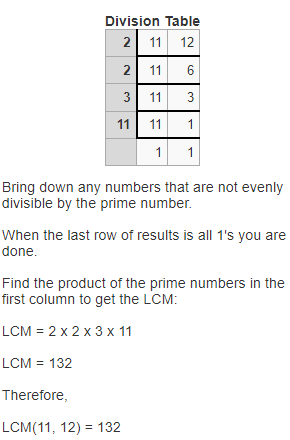
Answer:
13 x (54 + 28) < 13 x 54 + 28.
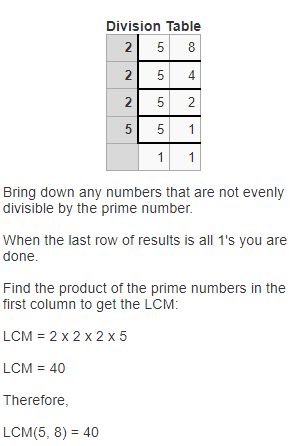
Explanation:
In the above-given question,
given that,
the equation is 13 x (54 + 28).
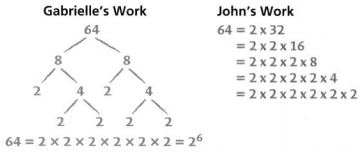
13 x 82 = 1066.
13 x 54 + 28.
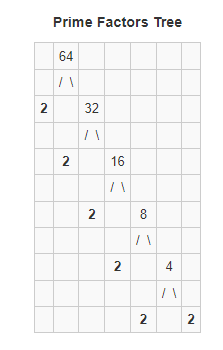
702 + 28 = 730.
so 13 x (54 + 28) < 13 x 54 + 28.

Pick a Project

PROJECT 14A
What does a city planner do?
Project: Plan a City
Envision Math Common Core Grade 5 Answer Key Topic 14 Graph Points on the Coordinate Plane 6.1

PROJECT 14B
What are some of the oldest childhood games?
Project: Make Your Own Game
Envision Math Common Core Grade 5 Answer Key Topic 14 Graph Points on the Coordinate Plane 6.2

PROJECT 14C
How can dogs help rescue people?
Project: Write a Story of a Missing Hiker
Envision Math Common Core Grade 5 Answer Key Topic 14 Graph Points on the Coordinate Plane 6.3

PROJECT 14D
How can artists use grids in their work?
Project: Draw a Picture Using a Grid
Envision Math Common Core Grade 5 Answer Key Topic 14 Graph Points on the Coordinate Plane 6.4

Lesson 14.1 The Coordinate System

Activity

Solve&Share
On the first grid, plot a point where two lines intersect. Name the location of the point. Plot and name another point. Work with a partner. Take turns describing the locations of the points on your first grid. Then plot the points your partner describes on your second grid. Compare your first grid with your partner’s second grid to see if they match. Use the grids below to solve this problem.
Envision Math Common Core Grade 5 Answer Key Topic 14 Graph Points on the Coordinate Plane 6.5

You can use grid paper to graph ordered pairs. Show your work!
Envision Math Common Core Grade 5 Answer Key Topic 14 Graph Points on the Coordinate Plane 6.6

Look Back! Construct Arguments Why does the order of the two numbers that name a point matter? Explain your thinking

Visual Learning Bridge

Essential Question
How Do You Name a Point on a Coordinate Grid?

A.
A map shows the locations of landmarks and has guides for finding them. In a similar way, a coordinate grid is used to graph and name the locations of points in a plane.
Envision Math Common Core Grade 5 Answer Key Topic 14 Graph Points on the Coordinate Plane 7.1

You can use ordered pairs to locate points on a coordinate grid.
Envision Math Common Core Grade 5 Answer Key Topic 14 Graph Points on the Coordinate Plane 7.2

B.
A coordinate grid has a horizontal x-axis and a vertical y-axis. The point at which the x-axis and y-axis intersect is called the origin.
Envision Math Common Core Grade 5 Answer Key Topic 14 Graph Points on the Coordinate Plane 7.3

C.
A point on the grid is named using an ordered pair of numbers. The first number, the x-coordinate, names the distance from the origin along the x-axis. The second number, the y-coordinate, names the distance from the origin along the y-axis.
Envision Math Common Core Grade 5 Answer Key Topic 14 Graph Points on the Coordinate Plane 7.4

Convince Me! Reasoning in the example above, name the ordered pair for Point B if it is 3 units to the right of Point A. Tell how you decided

Answer:
The points are (3, 3).

Explanation:
In the above-given question,
given that,
the point B if it is 3 units to the right of point A.
the point is (1, 3).
on the x-axis, the point is 1.
on the y-axis, the point is 3.
so the point is (1,3).
if it is 3 units to the right of point A.
so the points are (3, 3).

Guided Practice

Do You Understand?

Question 1.
You are graphing Point E at (0,5). Do you move to the right zero units, or up zero units? Explain.

Answer:
We will move up to zero units.

Explanation:
In the above-given question,
given that,
the point is (0, 5).
the point 0 on the x-axis.
the point 5 on the y-axis.
we have to move up zero units.
so we will move up to zero units.

Question 2.
A-Z Vocabulary What ordered pair names the origin of any coordinate grid?

Answer:
The points (0, 0) names the origin of any coordinate grid.

Explanation:
In the above-given question,
given that,
the ordered pair names the origin of any coordinate grid.
the points are (0, 0), (1, 1), (2, 2), (3, 3) and so on.
the points (0, 0) names the origin of any coordinate grid.

Question 3.
Describe how to graph Point K at (5, 4).

Answer:
Point 5 on the x-axis and 4 on the y-axis.

Explanation:
In the above-given question,
given that,
the point k at (5, 4) on the co-ordinate axis.
we have to move up zero units.
point 5 is on the x-axis.
point 4 is on the y-axis.
point 5 on the x-axis and 4 on the y-axis.

Do You Know How?

In 4 and 5, write the ordered pair for each point. Use the grid.

Question 4.
B

Envision Math Common Core Grade 5 Answer Key Topic 14 Graph Points on the Coordinate Plane 8.1

Answer:
The ordered pairs are (3, 2), (1, 4), and (5, 3).

Explanation:
In the above-given question,
given that,
the points are A, B, C, and D.
the points are (1, 4).
1 is on the x-axis.
4 is on the y-axis.
the point is (3, 2).
3 is on the x-axis.
2 is on the y-axis.
the point is (5, 3).
5 is on the x-axis.
3 is on the y-axis.
so the ordered pairs are (3, 2), (1, 4), and (5, 3).

Question 5.
A
Answer:

In 6 and 7, name the point for each ordered pair on the grid above.

Question 6.
(5, 3)

Answer:
Point 5 moves up to 3 units.

Explanation:
In the above-given question,
given that,
point 5 is on the x-axis.
point 3 is on the y-axis.
so the point is (5, 3).
point 5 moves up zero units.

Question 7.
(1, 4)

Answer:
Point 1 moves up to 4 units.

Explanation:
In the above-given question,
given that,
point 1 is on the x-axis.
point 4 is on the y-axis.
so the point is (1, 4).
point 1 moves up to 4 units.

Independent Practice

In 8-13, write the ordered pair for each point. Use the grid.

Envision Math Common Core Grade 5 Answer Key Topic 14 Graph Points on the Coordinate Plane 9.1

Question 8.
T

Answer:
The ordered pair is (0, 5).

Explanation:
In the above-given question,
given that,
point 0 is on the origin.
point 5 is on the y-axis.
the ordered pair is (0, 5).
so the ordered pair is (0, 5).

Question 9.
X

Answer:
The ordered pair is (4, 3).

Explanation:
In the above-given question,
given that,
point 4 is on the x-axis.
point 3 is on the y-axis.
the ordered pair is (4, 3).
so the ordered pair is (4, 3).

Question 10.
Y

Answer:
The ordered pair is (1, 0).

Explanation:
In the above-given question,
given that,
point 1 is on the X-axis.
point 0 is on the y-axis.
the ordered pair is (1, 0).
so the ordered pair is (1, 0).

Question 11.
W

Answer:
The ordered pair is (3, 3).

Explanation:
In the above-given question,
given that,
point 3 is on the x-axis.
point 3 is on the y-axis.
the ordered pair is (3, 3).
so the ordered pair is (3, 3).

Question 12.
Z

Answer:
The ordered pair is (1, 4).

Explanation:
In the above-given question,
given that,
point 1 is on the x-axis.
point 4 is on the y-axis.
the ordered pair is (1, 4).
so the ordered pair is (1, 4).

Question 13.
S

Answer:
The ordered pair is (5, 5).

Explanation:
In the above-given question,
given that,
point 5 is on the x-axis.
point 5 is on the y-axis.
the ordered pair is (5, 5).
so the ordered pair is (5, 5).

In 14-18, name the point for each ordered pair on the grid above.

Question 14.
(2, 2)

Answer:
The point is L.

Explanation:
In the above-given question,
given that,
the point is (2,2).
2 is on the x-axis.
2 is on the y-axis.
so the point is 2.

Question 15.
(5, 4)

Answer:
The point is Q.

Explanation:
In the above-given question,
given that,
the point is (5, 4).
5 is on the x-axis.
4 is on the y-axis.
so the point is Q.

Question 16.
(1, 5)

Answer:
The point is N.

Explanation:
In the above-given question,
given that,
the point is (1, 5).
1 is on the x-axis.
5 is on the y-axis.
so the point is N.

Question 17.
(0, 3)

Answer:
The point is M.

Explanation:
In the above-given question,
given that,
the point is (0, 3).
0 is on the x-axis.
3 is on the y-axis.
so the point is M.

Question 18.
(4, 0)

Answer:
The point is P.

Explanation:
In the above-given question,
given that,
the point is (4, 0).
4 is on the x-axis.
0 is on the y-axis.
so the point is p.

Problem Solving

Question 19.
Higher Order Thinking Describe to a friend how to find and name the ordered pair for Point R on the grid.
Envision Math Common Core Grade 5 Answer Key Topic 14 Graph Points on the Coordinate Plane 9.3

Answer:
The point is (4, 5).

Explanation:
In the above-given question,
given that,
the point is R.
4 is on the x-axis.
5 is on the y-axis.
so the point is (4, 5).

In 20-24, complete the table. List the point and ordered pair for each vertex of the pentagon at the right.

Envision Math Common Core Grade 5 Answer Key Topic 14 Graph Points on the Coordinate Plane 9.4

Envision Math Common Core Grade 5 Answer Key Topic 14 Graph Points on the Coordinate Plane 9.5

Answer:
The points are B, C, D, E, and F.

Explanation:
In the above-given question,
given that,
The point E is on the ordered pair (1, 1).
the point D is on the ordered pair (1, 2).
point C is on the ordered pair (1, 3).
point B is on the ordered pair (2, 4).
point F is on the ordered pair (3, 1).

Question 25.
Reasoning Why is the order important when naming or graphing the coordinates of a point?

Answer:
The order is important when naming or graphing the coordinates of a point.

Explanation:
In the above-given question,
given that,
the order is important because A is on the (3, 3).
B is on the (2, 4).
C is on the (1, 3).
D is on the (1, 2).
E is on the (1, 1).
F is on the (3, 1).
G is on the (5, 1).

Question 26.
How are the x-axis and the y-axis related on a coordinate grid?

Answer:
The x-axis and the y-axis are related.

Explanation:
In the above-given question,
given that,
the order is important because A is on the (3, 3).
B is on the (2, 4).
C is on the (1, 3).
D is on the (1, 2).
E is on the (1, 1).
F is on the (3, 1).
G is on the (5, 1).

Assessment Practice

Question 27.
Which of the following points is located at (4, 2)?
Envision Math Common Core Grade 5 Answer Key Topic 14 Graph Points on the Coordinate Plane 10.1
A. Point A
B. Point M
C. Point B
D. Point P

Answer:
Option M is correct.

Explanation:
In the above-given question,
given that,
the point is (4, 2).
4 is located on the x-axis.
2 is located on the y-axis.
so option M is correct.

Lesson 14.2 Graph Data Using Ordered Pairs

Activity

Sole & Share
Graph and label the point for each ordered pair below on the grid. Then connect the points with line segments to form a shape. What shape did you draw?

Use Appropriate Tools You can graph points on a coordinate grid. Show your work!
Envision Math Common Core Grade 5 Answer Key Topic 14 Graph Points on the Coordinate Plane 10.2

Answer:
The shape formed is square.

Explanation:
In the above-given question,
given that,
the ordered pairs are (2, 1), (5, 1), (5, 4), and (2, 4).
the point (2, 1) is on the A.
the point (5, 1) is on the B.
the point (5, 4) is on the C.
the point (2, 4) is on the D.
so the shape formed is square.
Envision-Math-Common-Core-5th-Grade-Answers-Key-Topic-14-Graph Points on the Coordinate Plane-1

Look Back! What tool could you use to help connect points A, B, C, and D? Explain.

Visual Learning Bridge

Essential Question How Do You Graph a Point on a Coordinate Grid?

A.
The table below shows the growth of a plant over a period of several days. Graph ordered pairs to show the plant’s growth.
Envision Math Common Core Grade 5 Answer Key Topic 14 Graph Points on the Coordinate Plane 10.4
Let x be the number of days and let y be the height of the plant in centimeters.
Envision Math Common Core Grade 5 Answer Key Topic 14 Graph Points on the Coordinate Plane 10.5
The ordered pairs are (1, 4), (3, 8), (5, 10), (7, 11), and (9, 14).

B.
Step 1
Graph the first point (1, 4).
Start at (0, 0). Move 1 unit to the right along the x-axis. Then move 4 units up.
Envision Math Common Core Grade 5 Answer Key Topic 14 Graph Points on the Coordinate Plane 10.6

C.
Step 2
Plot the rest of the ordered pairs from the table. Use a ruler to connect the points.
Envision Math Common Core Grade 5 Answer Key Topic 14 Graph Points on the Coordinate Plane 10.7

Convince Me! Reasoning Based on the data, about how tall was the plant on day 4? Day 8?

Guided Practice

Do You Understand?

Question 1.
Natalie is graphing Point T at (1,8). Should she move to the right 8 units or up 8 units? Explain.

Answer:
She moves 8 units up.

Explanation:
In the above-given question,
given that,
the point T at (1, 8).
point 1 is on the x-axis.
point 8 is on the y-axis.
so she moves 8 units up.

Question 2.
Describe how to graph the point (c, d).

Answer:

Do You Know How?

In 3-6, graph each point on the grid and label it with the appropriate letter.

Envision Math Common Core Grade 5 Answer Key Topic 14 Graph Points on the Coordinate Plane 11.1

Question 3.
E (1, 3)

Answer:
The point is E.

Explanation:
In the above-given question,
given that,
point 1 is on the x-axis.
point 3 is on the y-axis.
the ordered pair is (1, 3).
so the point is E.

Question 4.
F (4, 4)

Answer:
The point is F.

Explanation:
In the above-given question,
given that,
point 4 is on the x-axis.
point 4 is on the y-axis.
the ordered pair is (4, 4).
so the point is F.

Question 5.
G (5, 2)

Answer:
The point is G.

Explanation:
In the above-given question,
given that,
point 5 is on the x-axis.
point 2 is on the y-axis.
the ordered pair is (5, 2).
so the point is G.

Question 6.
H (0, 2)

Answer:
The point is H.

Explanation:
In the above-given question,
given that,
point 0 is on the x-axis.
point 2 is on the y-axis.
the ordered pair is (0, 2).
so the point is H.
Envision-Math-Common-Core-5th-Grade-Answers-Key-Topic-14-Graph Points on the Coordinate Plane-2

Independent Practice

In 7-18, graph and label each point on the grid at the right.

Envision Math Common Core 5th Grade Answers Topic 14 Graph Points on the Coordinate Plane 11.5

Question 7.
J (2, 6)

Answer:
The point is J.

Explanation:
In the above-given question,
given that,
point 2 is on the x-axis.
point 6 is on the y-axis.
the ordered pair is (2, 6).
so the point is J.

Question 8.
K (6, 2)

Answer:
The point is K.

Explanation:
In the above-given question,
given that,
point 6 is on the x-axis.
point 2 is on the y-axis.
the ordered pair is (6, 2).
so the point is K.

Question 9.
L (4, 5)

Answer:
The point is L.

Explanation:
In the above-given question,
given that,
point 4 is on the x-axis.
point 5 is on the y-axis.
the ordered pair is (4, 5).
so the point is L.

Question 10.
M (0, 8)

Answer:
The point is M.

Explanation:
In the above-given question,
given that,
point 0 is on the x-axis.
point 8 is on the y-axis.
the ordered pair is (0, 8).
so the point is M.

Question 11.
N (3, 9)

Answer:
The point is N.

Explanation:
In the above-given question,
given that,
point 3 is on the x-axis.
point 9 is on the y-axis.
the ordered pair is (3, 9).
so the point is N.

Question 12.
V (6, 6)

Answer:
The point is V.

Explanation:
In the above-given question,
given that,
point 6 is on the x-axis.
point 6 is on the y-axis.
the ordered pair is (6, 6).
so the point is V.

Question 13.
P (1, 4)

Answer:
The point is P.

Explanation:
In the above-given question,
given that,
point 1 is on the x-axis.
point 4 is on the y-axis.
the ordered pair is (1, 4).
so the point is P.

Question 14.
Q (5, 0)

Answer:
The point is Q.

Explanation:
In the above-given question,
given that,
point 5 is on the x-axis.
point 0 is on the y-axis.
the ordered pair is (5, 0).
so the point is Q.

Question 15.
R (7, 3)

Answer:
The point is R.

Explanation:
In the above-given question,
given that,
point 7 is on the x-axis.
point 3 is on the y-axis.
the ordered pair is (7, 3).
so the point is R.

Question 16.
S (7, 8)

Answer:
The point is S.

Explanation:
In the above-given question,
given that,
point 7 is on the x-axis.
point 8 is on the y-axis.
the ordered pair is (7, 8).
so the point is S.

Question 17.
T (8, 1)

Answer:
The point is T.

Explanation:
In the above-given question,
given that,
point 8 is on the x-axis.
point 1 is on the y-axis.
the ordered pair is (8, 1).
so the point is T.

Question 18.
U (3, 3)

Answer:
The point is E.

Explanation:
In the above-given question,
given that,
point 1 is on the x-axis.
point 3 is on the y-axis.
the ordered pair is (1, 3).
so the point is E.
Envision-Math-Common-Core-5th-Grade-Answers-Key-Topic-14-Graph Points on the Coordinate Plane-3

Problem Solving

Question 19.
Reasoning How is graphing (0, 2) different from graphing (2,0)?

Answer:
(0, 2) is on the y-axis, and (2, 0) is on the x-axis.

Explanation:
In the above-given question,
given that,
the ordered pairs are (0, 2) and (2, 0).
(0, 2) is 2 units up from the origin.
(2, 0) is 2 units right from the origin.

Question 20.
Number Sense Shane took a test that had a total of 21 items. He got about of the items correct. About how many items did he get correct?

Answer:

Question 21.
Higher Order Thinking Point C is located at (10, 3) and Point D is located at (4,3). What is the horizontal distance between the two points? Explain.

Answer:
The distance between the points is (6, 0).

Explanation:
In the above-given question,
given that,
point C is located at (10, 3).
point D is located at (4, 3).
10 – 4 = 6.
3 – 3 = 0.
so the distance between the points is (6, 0).

Question 22.
Laurel buys 3 balls of yarn. Each ball of yarn costs $4.75. She also buys 2 pairs of knitting needles. Each pair costs $5.75. She pays for her purchase with two 20-dollar bills. What is her change?

Answer:
The change is $14.25.

Explanation:
In the above-given question,
given that,
Laurel buys 3 balls of yarn.
Each ball of yarn costs $4.75.
She also buys 2 pairs of knitting needles.
Each pair costs $5.75.
3 x $4.75 = $14.25.
$5.75 x 2 = $11.5.
$14.25 + $11.5 = $25.75.
20 x 2 = 40 dollar bills.
40 – 25.75 = $14.25.

Question 23.
Graph the points below on the grid at the right.
A (2, 4) B (1, 2) C (2, 0) D (3, 0) E (4, 2) F (3, 4)
Envision Math Common Core 5th Grade Answers Topic 14 Graph Points on the Coordinate Plane 11.8

Answer:
The points are (2, 4), (1, 2), (2, 0), (3, 0), (4, 2), and (3, 4).

Explanation:
In the above-given question,
given that,
The points are (2, 4), (1, 2), (2, 0), (3, 0), (4, 2), and (3, 4).
point 2 is on the x-axis.
point 4 is on the y-axis.
point 1 is on the x-axis.
point 2 is on the y-axis.
point 2 is on the x-axis.
point 0 is on the y-axis.
point 3 is on the x-axis.
point 4 is on the x-axis.
point 2 is on the y-axis.
point 3 is on the x-axis.
point 4 is on the y-axis.
Envision-Math-Common-Core-5th-Grade-Answers-Key-Topic-14-Graph Points on the Coordinate Plane-4

Question 24.
Alejandro wants to connect the points to form a shape. What would be the most appropriate tool for him to use? Use the tool to connect the points.

Answer:
The shape formed is the hexagon.

Explanation:
In the above-given question,
given that,
Alejandro wants to connect the points to form a shape.
points are (2, 4), (1, 2), (2, 0), (3, 0), (4, 2), and (3, 4).
point 2 is on the x-axis.
point 4 is on the y-axis.
point 1 is on the x-axis.
point 2 is on the y-axis.
point 2 is on the x-axis.
point 0 is on the y-axis.
point 3 is on the x-axis.
point 4 is on the x-axis.
point 2 is on the y-axis.
point 3 is on the x-axis.
point 4 is on the y-axis.
so the shape formed is the hexagon.

Assessment Practice

Question 25.
Talia draws a map of her neighborhood on a coordinate grid. Her map shows the school at S (1,6), her house at H (4,3), and the library at L (7,2). Graph and label each location on the grid at the right.
Envision Math Common Core 5th Grade Answers Topic 14 Graph Points on the Coordinate Plane 12.1

Answer:
Points are (1, 6), (4, 3), and (7, 2).

Explanation:
In the above-given question,
given that,
Talia draws a map of her neighborhood on a coordinate grid.
Her map shows the school at S (1,6), her house at H (4,3), and the library at L (7,2).
point 1 is on the x-axis.
point 6 is on the y-axis.
point 4 is on the x-axis.
point 3 is on the y-axis.
point 7 is on the x-axis.
point 2 is on the y-axis.
Envision-Math-Common-Core-5th-Grade-Answers-Key-Topic-14-Graph Points on the Coordinate Plane-5

Lesson 14.3 Solve Problems Using Ordered Pairs

Activity

Solve&Share
The table below uses number patterns to describe changes in the width and length of a rectangle. Let x be the width and y be the length. Then plot each of the four ordered pairs in the table on the coordinate grid. What do you think the length is if the width is 5?
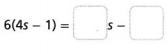
Envision Math Common Core 5th Grade Answers Topic 14 Graph Points on the Coordinate Plane 12.2

You can make a graph to help solve the problem. Show your work!
Envision Math Common Core 5th Grade Answers Topic 14 Graph Points on the Coordinate Plane 12.3

Look Back! Look for Relationships What pattern do the points form on your graph?

Visual Learning Bridge

Essential Question How Can You Use Ordered Pairs to Solve Problems?

A.
Both Ann and Bill earn the amount shown each week. Ann starts with no money, but Bill starts with $5. How much will Bill have when Ann has $30? Represent this situation using a table and a graph.

You know that when Ann has $0, Bill has $5.
Envision Math Common Core 5th Grade Answers Topic 14 Graph Points on the Coordinate Plane 12.4

B.
Make a table showing how much money Ann and Bill have after each week.
Envision Math Common Core 5th Grade Answers Topic 14 Graph Points on the Coordinate Plane 12.5
Let x = Ann’s earnings and y = Bill’s earnings.

C.
Plot the ordered pairs from the table. Draw a line to show the pattern. Extend your line to the point where the x-coordinate is 30. The corresponding y-coordinate is 35.
Envision Math Common Core 5th Grade Answers Topic 14 Graph Points on the Coordinate Plane 12.6
So, Bill has $35 when Ann has $30.

Convince Me! Look for Relationships What is the relationship between Bill’s earnings and Ann’s earnings?

Guided Practice

Do You Understand?

Question 1.
In the example on page 574, find another point on the line. What does this point represent?

Answer:

Question 2.
Algebra In the example on page 574, write an equation to show the relationship between Ann’s earnings and Bill’s earnings. Remember to let x = Ann’s earnings and y = Bill’s earnings.

Answer:
Let x = Ann’s earnings.
y = Bill’s earnings.

Explanation:
In the above-given question,
given that,
x + 5.
Ann has $30 and $35.
$30 + 5 = $35.

Do You Know How?

Write the missing coordinates and tell what the point represents.

Question 3.
Envision Math Common Core 5th Grade Answers Topic 14 Graph Points on the Coordinate Plane 12.8

Answer:
The missing coordinates are (5, 200).

Explanation:
In the above-given question,
given that,
the points are (20, 800), (15, 600), (10, 400).
20 – 5 = 15.
15 – 5 = 10.
10 – 5 = 5.
800- 200 = 600.
600 – 200 = 400.
400 – 200 = 200.
so the missing coordinates are (5, 200).

Independent Practice

In 4 and 5, find the missing coordinates and tell what the point represents.

Question 4.
Envision Math Common Core 5th Grade Answers Topic 14 Graph Points on the Coordinate Plane 12.9

Answer:
The missing coordinates are (900, 800).

Explanation:
In the above-given question,
given that,
the ordered pairs are (1500, 1200), (1200, 1000), (600, 600), and (300, 400).
on x-axis subtract 300.
1500 – 300 = 1200.
1200 – 300 = 900.
900 – 300 = 600.
600 – 300 = 300.
on y-axis subtract 200.
1200 – 200 = 1000.
1000 – 200 = 800.
800 – 200 = 600.
600 – 200 = 400.
so the missing coordinates are (900, 800).

Question 5.
Envision Math Common Core 5th Grade Answers Topic 14 Graph Points on the Coordinate Plane 12.10

Answer:
The missing coordinates are (200, 150).

Explanation:
In the above-given question,
given that,
the ordered pairs are (600, 550), (500, 450), (400, 350), (300, 250), and (100, 50).
subtract 100 on x-axis.
subtract 100 on y-axis.
600 – 100 = 500.
500 – 100 = 400.
400 – 100 = 300.
300 – 100 = 200.
200 – 100 = 100.
so the missing coordinates are (200, 150).

Question 6.
For Exercise 5, find two other points on the line. Then graph and label them. Describe the relationship between deer sightings and elk sightings.

Answer:

Problem Solving

In 7 and 8, use the table at the right.

Question 7.
Graph the points in the table on the grid at the right. Then draw a line through the points.
Envision Math Common Core 5th Grade Answers Topic 14 Graph Points on the Coordinate Plane 25.1

Answer:
Time(h) is on the x-axis.
pages read is on the y-axis.

Explanation:
In the above-given question,
given that,
in 1 hour number of pages read is 20.
in 2 hours number of pages read is 40.
in 3 hours number of pages read is 60.
in 4 hours number of pages read is 80.
in 5 hours number of pages read is 100.

Question 8.
Look for Relationships If the pattern continues, how many pages will have been read after 6 hours? Extend your graph to solve.
Envision Math Common Core 5th Grade Answers Topic 14 Graph Points on the Coordinate Plane 25.2

Answer:
The number of pages that will have been read after 6 hours = 120.

Explanation:
In the above-given question,
given that,
in 1 hour number of pages read is 20.
in 2 hours number of pages read is 40.
in 3 hours number of pages read is 60.
in 4 hours number of pages read is 80.
in 5 hours number of pages read is 100.
in 6 hours number of pages read is 120.

Question 9.
Higher Order Thinking Suppose you have a graph of speed that shows a lion can run four times as fast as a squirrel. Name an ordered pair that shows this relationship. What does this ordered pair represent?
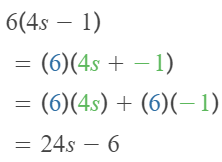
Answer:
The ordered pair represents (1, 4).

Explanation:
In the above-given question,
given that,
the lion can run four times as fast as a squirrel.
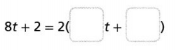
x + 4y.
x represents the speed of a squirrel.
y represents the speed of a lion.
so a lion can run four times as fast as a squirrel.
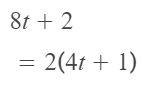
Question 10.
Number Sense Candace drives a total of 48 miles each day to get to work and back home. She works 5 days a week. Her car gets 21 miles per gallon of gas. About how many gallons of gas does she need to drive to work and back home each week?!
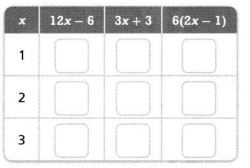
Answer:
The number of gallons of gas does she need to drive to work = 48 gallons.

Explanation:
In the above-given question,
given that,
Candace drives a total of 48 miles each day to get to work and back home.
She works 5 days a week.
Her car gets 21 miles per gallon of gas.
48 x 5 = 240.
240 / 5 = 48.
so the number of gallons of gas does she need to drive to work.

Assessment Practice

Question 11.
What does the point (15, 4) represent on the graph at the right?
Envision Math Common Core 5th Grade Answers Topic 14 Graph Points on the Coordinate Plane 26.2
A. The ant crawled 15 meters in 19 seconds.
B. The ant crawled 15 meters in 4 seconds.
C. The ant crawled 4 meters in 19 seconds.
D. The ant crawled 4 meters in 15 seconds.

Answer:
Option B is correct.

Explanation:
In the above-given question,
given that,
point (15, 4) is in the coordinate plane.
15 is on the x-axis.
4 is on the y-axis.
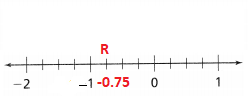
the ant crawled 15 meters in 4 seconds.
so option B is correct.

Question 12.
What does the point (20, 5) represent on the graph?
A. In 20 seconds, the ant crawled 5 centimeters.
B. In 20 seconds, the ant crawled 5 meters.
C. In 5 seconds, the ant crawled 20 meters.
D. In 5 seconds, the ant crawled 15 meters.

Answer:
Option C is correct.

Explanation:
In the above-given question,
given that,
the point is (20, 5).

20 is on the x-axis.
5 is on the y-axis.
in 5 seconds the ant crawled 20 meters.
so option C is correct.

Lesson 14.4 Reasoning

Activity

Problem Solving

Solve & Share
Six clowns apply for a circus job. The specific job requires the clown to have a clown shoe size less than 15 inches and to be shorter than 5 ft 8 in. tall.
How many clowns meet the size requirements for the job? Complete the graph below to help you decide.

Envision Math Common Core 5th Grade Answers Topic 14 Graph Points on the Coordinate Plane 28.1

Thinking Habits
Be a good thinker! These questions can help you.
• What do the numbers and symbols in the problem mean?
• How are the numbers or quantities related?
• How can I represent a word problem using pictures, numbers, or equations?
Envision Math Common Core 5th Grade Answers Topic 14 Graph Points on the Coordinate Plane 28.2

Look Back! Reasoning How can you use reasoning about the completed graph to find the number of clowns that meet the requirements? Explain.

Visual Learning Bridge

Essential Question How Can You Use Reasoning to Solve Mathematical Problems?

A.
In 1705, a ship sank in the ocean at the point shown. Every year the ocean currents moved the ship 1 mile east and 2 miles north. Where was the ship located after 4 years? Where was the ship located after 10 years? Tell how you decided.
Envision Math Common Core 5th Grade Answers Topic 14 Graph Points on the Coordinate Plane 28.3

What do I need to do to solve the problem?
I need to find the ship’s location after 4 years and after 10 years.

B.
How can I use reasoning to solve this problem?
I can
• use what I know about graphing points.
• graph ordered pairs.
• look for relationships in the coordinates.
• decide if my answer makes sense.

Here’s my thinking..
Envision Math Common Core 5th Grade Answers Topic 14 Graph Points on the Coordinate Plane 29.1

C.
I will use the graph to show the location each year for 4 years. Each point is 1 mile east and 2 miles north from the previous point.
After 4 years the ship was at (8, 14).
I see a pattern. The x-coordinate increases by 1, and the y-coordinate increases by 2:
(4, 6), (5, 8), (6, 10), (7, 12), (8, 14)
Envision Math Common Core 5th Grade Answers Topic 14 Graph Points on the Coordinate Plane 29.2
I can continue the pattern for another 6 years:
(9,16), (10, 18), (11, 20), (12, 22), (13, 24), (14, 26)
After 10 years, the ship was at (14, 26).

Convince Me! Make Sense and Persevere How could you decide if your answers make sense?

Guided Practice

Tanya marked a grid in her garden. She planted a rose bush at (3, 1). She moved 2 feet east and 1 foot north and planted the second rose bush. She continued planting rose bushes so that each bush is 2 feet east and 1 foot north of the previous bush.

Envision Math Common Core 5th Grade Answers Topic 14 Graph Points on the Coordinate Plane 30.1

Question 1.
How can a coordinate grid help you reason about the problem?

Answer:
The point is (3, 1), (5, 2), and (7, 3).

Explanation:
In the above-given question,
given that,
the point is (3, 1).
She moved 2 feet east and 1 foot north and planted the second rose bush.
3 + 2 = 5.
5 + 2 = 7.
1 + 1 = 2.
2 + 1 = 3.
so the points are (3, 1), (5, 2), and (7, 3).
Envision-Math-Common-Core-5th-Grade-Answers-Key-Topic-14-Graph Points on the Coordinate Plane-6

Question 2.
Draw and label the locations of the first four bushes on the grid. Do Tanya’s 0 2 bushes lie on a straight line? How do you know?

Answer:
The bushes lie in a straight line.

Explanation:
In the above-given question,
given that,
the point is (3, 1).
She moved 2 feet east and 1 foot north and planted the second rose bush.
3 + 2 = 5.
5 + 2 = 7.
1 + 1 = 2.
2 + 1 = 3.
so the points are (3, 1), (5, 2), and (7, 3).

Question 3.
What are the locations of the fifth and ninth rose bushes?

Answer:
The locations of the fifth and ninth rose bushes are in a straight line.

Explanation:
In the above-given question,
given that,
the point is (3, 1).
She moved 2 feet east and 1 foot north and planted the second rose bush.
3 + 2 = 5.
5 + 2 = 7.
7 + 2 = 9.
1 + 1 = 2.
2 + 1 = 3.
3 + 1 = 4.
so the points are (3, 1), (5, 2), and (7, 3), (9, 4).

Independent Practice

Reasoning
A marching band uses a grid to determine the members’ positions. Juan starts at (2, 2). Every 15 seconds, he moves 4 yards east and 3 yards north.

Envision Math Common Core 5th Grade Answers Topic 14 Graph Points on the Coordinate Plane 30.11

Question 4.
How can you model this problem?

Answer:
After 15 seconds Juan moves (6, 5).

Explanation:
In the above-given question,
given that,
A marching band uses a grid to determine the members’ positions.
Juan starts at (2, 2).
Every 15 seconds, he moves 4 yards east and 3 yards north.
2 + 4 = 6.
2 + 3 = 5.
so after 15 seconds Juan moves (6, 5).

Question 5.
Draw and label the locations of Juan’s first four positions. Do the points form a pattern? How can you tell?

Answer:
Juan’s first four positions are (6, 5), (10, 8), (14, 11), and (18, 14).

Explanation:
In the above-given question,
given that,
A marching band uses a grid to determine the members’ positions.
Juan starts at (2, 2).
Every 15 seconds, he moves 4 yards east and 3 yards north.
2 + 4 = 6, 6 + 4 = 10, 10 + 4 = 14, and 14 + 4 = 18.
2 + 3 = 5, 5 + 3 = 8, 8 + 3 = 11, and 11 + 3 = 14.
so Juan’s first four positions are (6, 5), (10, 8), (14, 11), and (18, 14).

Question 6.
What will Juan’s location be after 60 seconds? 90 seconds? How does the coordinate grid help you reason about the locations?

Answer:
Juan,s location be after 60 and 90 seconds are (14, 11), and (18, 14).

Explanation:
In the above-given question,
given that,
A marching band uses a grid to determine the members’ positions.
Juan starts at (2, 2).
Every 15 seconds, he moves 4 yards east and 3 yards north.
2 + 4 = 6, 6 + 4 = 10, 10 + 4 = 14, and 14 + 4 = 18.
2 + 3 = 5, 5 + 3 = 8, 8 + 3 = 11, and 11 + 3 = 14.
so Juan,s location be after 60 and 90 seconds are (14, 11), and (18, 14).

Problem Solving

Performance Task

Rozo Robot
A toy company is testing Rozo Robot. Rozo is 18 inches tall and weighs 2 pounds. The employees of the company marked a grid on the floor and set Rozo at (2,5). They programmed Rozo to walk 3 yards east and 4 yards north each minute. What will Rozo’s location be after 7 minutes?

Envision Math Common Core 5th Grade Answers Topic 14 Graph Points on the Coordinate Plane 31.2

Question 7.
Make Sense and Persevere Do you need all of the information given in the problem to solve the problem? Describe any information that is not needed.

Answer:

Question 8.
Model with Math Label the graph and plot Rozo’s starting position. Then plot and label Rozo’s position at the end of each of the first 4 minutes.
Answer:

Question 9.
Use Appropriate Tools What tool would you choose for drawing a line segment between points on a coordinate grid? Explain your thinking.
Answer:

You can use the coordinate grid to reason about relationships between the points
Envision Math Common Core Grade 5 Answers Topic 14 Graph Points on the Coordinate Plane 35.1

Question 10.
Look for Relationships Describe the relationships between the coordinates of the points that represent Rozo’s locations.
Answer:

Question 11.
Reasoning What will Rozo’s location be after 7 minutes? Explain how you determined your answer.
Answer:

Topic 14 Fluency Practice

Activity

Point & Tally

Find a partner. Get paper and a pencil. Each partner chooses light blue or dark blue.
At the same time, Partner 1 and Partner 2 each point to one of their black numbers. Both partners find the product of the two numbers.
The partner who chose the color where the product appears gets a tally mark. Work until one partner has seven tally marks.
Envision Math Common Core Grade 5 Answers Topic 14 Graph Points on the Coordinate Plane 352

Envision Math Common Core Grade 5 Answers Topic 14 Graph Points on the Coordinate Plane 353

Topic 14 Vocabulary Review

Glossary

Understand Vocabulary

Choose the best term from the Word List. Write it on the blank.

Word List
• coordinate grid
• ordered pair
• origin
• x-axis
• x-coordinate
• y-axis
• y-coordinate

Question 1.
The point where the axes of a coordinate grid intersect is the _____

Answer:
The point where the axes of a coordinate grid intersect is the origin.

Explanation:
In the above-given question,
given that,
the point where the axes of a coordinate grid intersect is the origin.
for example:
(x, y) = (3, 2).

Question 2.
A(n) ____ names an exact location on a coordinate grid.

Answer:
A(n) coordinate grid names an exact location on a coordinate grid.

Explanation:
In the above-given question,
given that,
A(n) coordinate grid names an exact location on a coordinate grid.
for example:
(2, 3) is on the coordinate plane.
2 is on the x-axis.
3 is on the y-axis.

Question 3.
The first number of an ordered pair describes the distance from the origin along the ____

Answer:
The first number of an ordered pair describes the distance from the origin along with the ordered pair.

Explanation:
In the above-given question,
given that,
the first number of an ordered pair describes the distance from the origin along with the ordered pair.
for example:
(4, 5) 4 units on the x-axis.
5 units on the y-axis.

Question 4.
The second number of an ordered pair is the ______

Answer:
The second number of an ordered pair is the y-coordinate.

Explanation:
In the above-given question,
given that,
the second number of an ordered pair is the y-coordinate.
for example:
In an ordered pair, the first number is always the x-coordinate.
the second number is the y-coordinate.

Question 5.
A ____ is formed by two number lines that intersect at a right angle.

Answer:
A coordinate plane is formed by two number lines that intersect at a right angle.

Explanation:
In the above-given question,
given that,
A coordinate plane is formed by two number lines that intersect at a right angle.
for example:
x-axis = horizontal number line.
y-axis = vertical number line.
origin = where the number lines intersect.
the coordinates of the origin are (0, 0).

Draw a line from each lettered point in Column A to the ordered pair it represents.

Envision Math Common Core Grade 5 Answers Topic 14 Graph Points on the Coordinate Plane 341

Envision Math Common Core Grade 5 Answers Topic 14 Graph Points on the Coordinate Plane 342

Envision-Math-Common-Core-5th-Grade-Answers-Key-Topic-14-Graph Points on the Coordinate Plane-7

Use Vocabulary in Writing

Question 12.
Why is the order of the coordinates important in an ordered pair? Use terms from the Word List in your explanation.

Answer:
The order of the coordinates is important because it forms a shape, a straight line.

Explanation:
In the above-given question,
given that,
points are A(5, 2), B(1, 7), C(2, 3), D(0, 7), E(7, 1), and F(0, 6).
the points formed a shape.
so the order of the coordinates is important in an ordered pair.

Topic 14 Reteaching

Set A
pages 565-568

What ordered pair names Point A?
Start at the origin. The x-coordinate is the horizontal distance along the x-axis. The y-coordinate is the vertical distance along the y-axis.
Envision Math Common Core Grade 5 Answers Topic 14 Graph Points on the Coordinate Plane 401
Point A is at (7, 3).

Remember to first find the x-coordinate. Then find the y-coordinate. Write the coordinates in (x, y) order.

Use the grid to answer the questions.

Question 1.
Which point is located at (9, 5)?

Answer:
Point is located at (9, 5) is R.

Explanation:
In the above-given question,
given that,
point is (9, 5).
9 is on the x-axis.
5 is on the y-axis.
so the point is located at (9, 5) is R.

Question 2.
Which point is located at (2, 3)?

Answer:
Point is located at (2, 3) is K.

Explanation:
In the above-given question,
given that,
the point is (2, 3).
2 is on the x-axis.
3 is on the y-axis.
so the point is located at (2, 3) is K.

Question 3.
What ordered pair names Point T ?

Answer:
Point is located at (3, 4) is T.

Explanation:
In the above-given question,
given that,
the point is (3, 4).
3 is on the x-axis.
4 is on the y-axis.
so the point is located at (3, 4) is T.

Question 4.
What is the ordered pair for the origin?

Answer:
Point is located at (0, 7).

Explanation:
In the above-given question,
given that,
the point is (0,7).
0 is on the x-axis.
7 is on the y-axis.
so the point is located at (0, 7) is the origin.

Set B
pages 569-572, 573-576
In the table, the x-coordinate is in the left column and the y-coordinate is in the right column. Use the table to plot the ordered pairs. Then draw a line to connect the points.
Envision Math Common Core Grade 5 Answers Topic 14 Graph Points on the Coordinate Plane 402

Remember that you can use a tool, such as a ruler, to draw a line to connect the points on the graph.

Question 1.
Use the table below to plot the ordered pairs. Then complete the graph by connecting the points.
Envision Math Common Core Grade 5 Answers Topic 14 Graph Points on the Coordinate Plane 413

Answer:
The points are (2, 1), (4, 2), (6, 3), and (8, 4).

Explanation:
In the above-given question,
given that,
the points on the x-axis are 2, 4, 6, and 8.
the points on the y-axis are 1, 2, 3, and 4.
so the ordered pairs are (2, 1), (4, 2), (6, 3), and (8, 4).
Envision-Math-Common-Core-5th-Grade-Answers-Key-Topic-14-Graph Points on the Coordinate Plane-8

Question 2.
Write two ordered pairs with x-coordinates greater than 10 that are on the line.

Answer:
The two ordered pairs are (10, 5), and (12, 6).

Explanation:
In the above-given question,
given that,
the points on the x-axis are 2, 4, 6, and 8.
the points on the y-axis are 1, 2, 3, and 4.
2 + 2 = 4.
4 + 2 = 6.
6 + 2 = 8.
1 + 1 = 2.
2 + 1 = 3.
3 + 1 = 4.
4 + 1 = 5.
so the two ordered pairs are (10, 5), and (12, 6).

Set C
pages 577-580
Think about these questions to help you use reasoning to solve problems.

Thinking Habits
• What do the numbers and symbols in the problem mean?
• How are the numbers or quantities related?
• How can I represent a word problem using pictures, numbers, or equations?

Remember that you can use a graph or a table to reason about and solve word problems.
A company uses the graph to show how many packages each truck driver delivers. How many packages will one truck driver deliver in a 7-hour day?
Envision Math Common Core Grade 5 Answers Topic 14 Graph Points on the Coordinate Plane 456

Question 1.
What information can help you solve the problem?

Answer:
The number of packages each truck driver delivers in hours.

Explanation:
In the above-given question,
given that,
the number of packages each truck driver delivers in hours.
in 1 hour the number of packages is 15.
in 2 hours the number of packages is 30.
in 3 hours the number of packages is 45.
in 4 hours the number of packages is 60.

Question 2.
How can you find the number of packages a driver delivers in 3 hours?

Answer:
The number of packages a driver delivers in 3 hours is 45.

Explanation:
In the above-given question,
given that,
the number of packages each truck driver delivers in hours.
in 1 hour the number of packages is 15.
in 2 hours the number of packages is 30.
in 3 hours the number of packages is 45.
in 4 hours the number of packages is 60.
so the number of packages a driver delivers in 3 hours is 45.

Question 3.
How many packages will one truck driver deliver in a 7-hour day?

Answer:
The number of packages will one truck deliver in a 7-hour day is 105.

Explanation:
In the above-given question,
given that,
the number of packages each truck driver delivers in hours.
in 1 hour the number of packages is 15.
in 2 hours the number of packages is 30.
in 3 hours the number of packages is 45.
in 4 hours the number of packages is 60.
in 5 hours the number of packages is 75.
in 6 hours the number of packages is 90.
in 7 hours the number of packages is 105.

Question 4.
How can you find how many hours it will take for one truck driver to deliver 120 packages?

Answer:
The number of hours is 8.

Explanation:
In the above-given question,
given that,
the number of packages each truck driver delivers in hours.
in 1 hour the number of packages is 15.
in 2 hours the number of packages is 30.
in 3 hours the number of packages is 45.
in 4 hours the number of packages is 60.
in 5 hours the number of packages is 75.
in 6 hours the number of packages is 90.
in 7 hours the number of packages is 105.

Topic 14 Assessment Practice

Use the coordinate grid below to answer 1-4.

Envision Math Common Core Grade 5 Answers Topic 14 Graph Points on the Coordinate Plane 521

Question 1.
Which is the ordered pair for Point Y?
A. (4, 5)
B. (4, 9)
C. (7, 9)
D. (9, 4)

Answer:
Option B is correct.

Explanation:
In the above-given question,
given that,
the point is (4, 9).
4 is on the x-axis.
9 is on the y-axis.
so option B is correct.

Question 2.
Which point is located at (5, 2) on the coordinate grid?
A. M
B. N
C. Q
D. P

Answer:
Option B is correct.

Explanation:
In the above-given question,
given that,
the point is (5, 2).
5 is on the x-axis.
2 is on the y-axis.
so option B is correct.

Question 3.
What is the ordered pair for Point Z?

Answer:
The ordered pair for point Z is (9, 1).

Explanation:
In the above-given question,
given that,
the point is (9, 1).
9 is on the x-axis.
1 is on the y-axis.
so the ordered pair for point Z is (9, 1).

Question 4.
What is the ordered pair for Point P?

Answer:
The ordered pair for point P is (4, 5).

Explanation:
In the above-given question,
given that,
the point is (4, 5).
4 is on the x-axis.
5 is on the y-axis.
so the ordered pair for point P is (4, 5).

Question 5.
Each year, Ginny recorded the height of a tree growing in her front yard. The graph below shows her data.
Envision Math Common Core 5th Grade Answer Key Topic 14 Graph Points on the Coordinate Plane 62.2
What does the point (1, ?) represent?

Answer:
The point (1, 5) represents the height in feet.

Explanation:
In the above-given question,
given that,
Ginny recorded the height of a tree growing in her front yard.
the points on the x-axis are 0, 1, 2, 3, and 4.
the points on the y-axis are 4, 5, 6, 7, and 8.
add the 1 on the x and y-axis.
so the point (1, 5) represents the height in feet.

Question 6.
Explain how to graph the point (6, 4) on a coordinate plane.

Answer:
Point 6 is on the x-axis and 4 is on the y-axis.

Explanation:
In the above-given question,
given that,
the point is (6, 4).
point 6 is on the x-axis and 4 is on the y-axis.

Question 7.
Varsha draws a map of her neighborhood on a coordinate plane. Her map shows the park at P (3, 1), her house at H (5, 6), and the soccer field at S (2,4). Graph and label each location below.
Envision Math Common Core 5th Grade Answer Key Topic 14 Graph Points on the Coordinate Plane 70.1

Answer:
The point is P(3, 1) is the park.
the point H(5, 6) is her house.
the point S(2, 4) is the soccer field.

Explanation:
In the above-given question,
given that,
Varsha draws a map of her neighborhood on a coordinate plane.
Her map shows the park at P (3, 1), her house at H (5, 6), and the soccer field at S (2,4).
the point is p(3, 1) is the park.
the point H(5, 6) is her house.
the point S(2, 4) is the soccer field.
Envision-Math-Common-Core-5th-Grade-Answers-Key-Topic-14-Graph Points on the Coordinate Plane-9

Question 8.
Yesterday Billy earned $30 trimming hedges for Mrs. Gant. Today he will earn $10 an hour for weeding her garden. If he weeds her garden for 8 hours, how much in all will he earn working for Mrs. Gant?
Envision Math Common Core 5th Grade Answer Key Topic 14 Graph Points on the Coordinate Plane 70.2
A. $40
B. $ 80
C. $ 110
D. $ 120

Answer:
Option B is correct.

Explanation:
In the above-given question,
given that,
Billy earned $30 trimming hedges for Mrs. Gant.
Today he will earn $10 an hour for weeding her garden.
If he weeds her garden for 8 hours,
8 x $10 = $80.
so option B is correct.

Question 9.
How is graphing (0, 12) different from graphing (12, 0)?

Answer:
(0, 12) is different from (12, 0).

Explanation:
In the above-given question,
given that,
the ordered pairs are (0, 12) and (12, 0).
(0, 12) is on the y-coordinate.
(12, 0) is on the x-coordinate.
so (0, 12) is different from (12, 0).

Question 10.
What ordered pair represents the point where the x-axis and y-axis intersect? What is the name of this point?

Answer:
The ordered pair (0, 0) represents the point where the x-axis and y-axis intersect.

Explanation:
In the above-given question,
given that,
the ordered pair (0, 0) represents the origin.
the x-axis and y-axis intersect are called the origin.
so the ordered pair (0, 0) represents the point where the x-axis and y-axis intersect.

Question 11.
Three vertices of a rectangle are located at (1, 4), (1, 2), and (5, 2).
A. Graph and label each of the three vertices below.
Envision Math Common Core 5th Grade Answer Key Topic 14 Graph Points on the Coordinate Plane 75.6
B. What are the coordinates of the fourth vertex of the rectangle?

Answer:
The coordinates of the fourth vertex of the rectangle are (5, 4).

Explanation:
In the above-given question,
given that,
three vertices of a rectangle are located at (1, 4), (1, 2), and (5, 2).
the other side is (5, 4).
for the rectangle, opposite sides are equal in length.
so the coordinates of the fourth vertex of the rectangle are (5, 4).
Envision-Math-Common-Core-5th-Grade-Answers-Key-Topic-14-Graph Points on the Coordinate Plane-10

Topic 14 Performance Task

Digging for Dinosaur Bones
Omar’s mother is a paleontologist. She digs up and studies dinosaur bones. Omar is helping at the dig site.

Question 1.
The Dinosaur Bone Dig 1 grid shows the location of the tent and the triceratops skull Omar’s mother found.
Part A
What ordered pair names the location of the triceratops skull? Explain how you know.
Envision Math Common Core 5th Grade Answer Key Topic 14 Graph Points on the Coordinate Plane 80.1
Part B
omar found a leg bone at (4, 12). Graph this point on the coordinate grid and label it L. Explain how you located the point using the terms origin, x-coordinate, x-axis, y-coordinate, and y-axis.
Part C
Next, Omar dug 3 meters east and 1 meter south from the leg bone. Graph a point where Omar dug and label it A. What ordered pair names the point?

Answer:
Part A: (6, 2).
Part B: (4, 12).
Part C: (7, 13).

Explanation:
In the above-given question,
given that,
Omar found a leg bone at (4, 12).
Omar dug 3 meters east and 1 meter south from the leg bone.
4 + 3 = 7.
12 + 1 = 13.
so part C is (7, 13).

Question 2.
Omar’s mother started at the triceratops skull. She kept moving east 1 meter and north 2 meters to dig for more dinosaur bones. Complete the table and the graph to find how far north she was when she was 11 meters east of the tent.

Answer:
When she was 11 meters east of the tent, the far = 6.

Explanation:
In the above-given question,
given that,
Omar’s mother started at the triceratops skull.
She kept moving east 1 meter and north 2 meters to dig for more dinosaur bones.
(4, 12) is the ordered pair given?
4 + 1 = 5.
12 + 2 = 14.
(5, 14) is the ordered pair.
11 – 5 = 6.
so when was 11 meters east of the tent, the far is 6 meters.
Part A
Complete the table of ordered pairs.
Envision Math Common Core 5th Grade Answer Key Topic 14 Graph Points on the Coordinate Plane 85.1

Part B
Graph the points from the table in Part A on the coordinate grid in the Dinosaur Bone Dig 2 grid. Draw a line through the points. Extend the line past 11 meters east.
Part C
How far north was Omar’s mother when she was 11 meters east of the tent? Explain how to use the graph to solve and why your answer makes sense.

Answer:
The ordered pairs are (6, 2), (7, 3), ( 8, 4), and (9, 5).

Explanation:
In the above-given question,
given that,
East of the tent in meters is given.
they are 6, 7, 8, and 9 meters are given.
the first ordered pair is (6, 2) is given.
so the ordered pairs are (7, 3), (8, 4), and (9, 5).
when she was 11 meters east of the tent is (11, 7).
Envision-Math-Common-Core-5th-Grade-Answers-Key-Topic-14-Graph Points on the Coordinate Plane-11

enVision Math Common Core Grade 5 Answer Key Topic 13 Write and Interpret Numerical Expressions

Go through the enVision Math Common Core Grade 5 Answer Key Topic 13 Write and Interpret Numerical Expressions and finish your homework or assignments.

enVision Math Common Core 5th Grade Answers Key Topic 13 Write and Interpret Numerical Expressions

Envision Math Common Core Grade 5 Answer Key Topic 13 Write and Interpret Numerical Expressions 1
enVision STEM Project: Food Chains and Food Webs
Do Research Use the Internet or other sources to find out more about food chains and food webs. Investigate the roles of producers, consumers, and decomposers. Explain how energy from sunlight is transferred to consumers.

Journal: Write a Report Include what you found. Also in your report:
• Draw a food web from an ecosystem near your home.
• Draw arrows on your food web to show how energy moves. Explain why the order is important.
• On one food chain of your food web, label each organism as a producer, consumer, or decomposer.

Review What You Know

Vocabulary

Choose the best term from the box. Write it on the blank.

• difference
• equation
• product
• sum
• quotient

Question 1.
The answer to a division problem is the ____.
Answer:

The answer to a division problem is the  Quotient

Question 2.
The ____ of 5 and 7 is 12.
Answer:

The sum of 5 and 7 is 12

Question 3.
To find the ___ between 16 and 4, you subtract.
Answer:

To find the difference between 16 and 4, you subtract

Question 4.
A number sentence that shows two equivalent values is a(n) ____.
Answer:

A number sentence that shows two equivalent values is an Equation

Mixed Review
Find each answer.

Question 5.
648 ÷ 18
Answer:

Question 6.
35 × 100
Answer:

3500

Question 7.
47.15 + 92.9
Answer:

140.05

Question 8.
\(\frac{1}{4}\) + \(\frac{1}{4}\) + \(\frac{1}{4}\)
Answer:

1/4 + 1/4 + 1/4

1/2 + 1/4

3/4

Question 9.
3.4 – 2.7
Answer:

0.7

Question 10.
1.9 + 7
Answer:

8.9

Question 11.
3\(\frac{2}{5}\) + \(\frac{1}{2}\)
Answer:

3 2/5 + 1/2

17/5 + 1/2

39/10

Question 12.
75 ÷ \(\frac{1}{5}\)
Answer:

75 ÷ 1/5

75 / 1/5

75 x 5

= 375

Question 13.
$3.75 + $2.49
Answer:

$6.24

Question 14.
8\(\frac{5}{8}\) – 1\(\frac{2}{8}\)
Answer:

8 5/8 – 1 2/8

69/8 – 10/8

59/8

Question 15.
31.8 × 2.3
Answer:

73.14

Question 16.
9 – 4.6
Answer:

4.4

Question 17.
Jackson bought 2 tickets to the state fair. Each ticket cost $12. He spent $15 on rides and $8.50 on food. How much did Jackson spend in all?
Answer:

Total cost of tickets = $12 x 2 = $24

Total money after spending $15 on rides = $24 + $15 =$39

Total money after spending $8.50 on food = $39 + $8.50 = $47.50

Total money spent =  $47.50

Question 18.
A baker has 3 pounds of dried fruit. Each batch of a recipe she is making uses \(\frac{1}{2}\) pound of the fruit. How many batches can she make?
A. 9 batches
B. 6 batches
C. 2 batches
D. 1\(\frac{1}{2}\) batches
Answer:

B. 6 batches

Multiplication

Question 19.
What equation comes next in the pattern below? Explain.
7 × 10 = 70
7 × 100 = 700
7 × 1,000 = 7,000
Answer:

7 × 10,000 = 70,000

pick a Project

PROJECT 13A
What’s been recovered from the wreck of the Atocha?
Project: Write a Treasure Adventure Mystery Story
Envision Math Common Core Grade 5 Answer Key Topic 13 Write and Interpret Numerical Expressions 3.1

PROJECT 13B
Do you like to play games?
Project: Design a Game Using Dominos
Envision Math Common Core Grade 5 Answer Key Topic 13 Write and Interpret Numerical Expressions 13.2

PROJECT 13C
What happens when a calculation is incorrect?
Project: Program a Robot
Envision Math Common Core Grade 5 Answer Key Topic 13 Write and Interpret Numerical Expressions 13.3

3-ACT MATH PREVIEW

Math Modeling

Video

Envision Math Common Core Grade 5 Answer Key Topic 13 Write and Interpret Numerical Expressions 13.4
Before watching the video, think:
A conjecture is a statement someone believes is true based on observations. You can usually either prove or disprove a conjecture. Keep an eye out for the conjecture in this video.

Lesson 13.1 Evaluate Expressions

Activity

Solve&Share

Jordan and Annika are working on 15 + 12 ÷ 3 + 5. Jordan says the answer is 14 and Annika says the answer is 24. Who is right?
Envision Math Common Core Grade 5 Answer Key Topic 13 Write and Interpret Numerical Expressions 13.5

Solve this problem any way you choose.
Envision Math Common Core Grade 5 Answer Key Topic 13 Write and Interpret Numerical Expressions 13.6

Look Back! Construct Arguments Do you think two students, who made no computation errors, would get different values for this numerical expression? Explain.
(4 × 35) + (36 × 8)

Visual Learning Bridge

Essential Question What Order Should You Use When You Evaluate an Expression?

A.
Jack evaluated [(7 × 2) – 3] ÷ 8 = 2 × 3.
To avoid getting more than one answer, he used the order of operations given at the right.

Parentheses, brackets, and braces are all used to group numbers in numerical expressions.
Envision Math Common Core Grade 5 Answer Key Topic 13 Write and Interpret Numerical Expressions 14.1

Order of Operations
1. Evaluate inside parentheses (), brackets [ ], and braces {}.
2. Multiply and divide from left to right.
3. Add and subtract from left to right,

B.
Step 1
First, do the operations inside the parentheses.
Envision Math Common Core Grade 5 Answer Key Topic 13 Write and Interpret Numerical Expressions 14.2
Then, evaluate the terms inside the brackets.
Envision Math Common Core Grade 5 Answer Key Topic 13 Write and Interpret Numerical Expressions 14.3

C.
Step 2
Next, multiply and divide in order from left to right.
Envision Math Common Core Grade 5 Answer Key Topic 13 Write and Interpret Numerical Expressions 14.4

D.
Step 3
Finally, add and subtract in order from left to right.
11 + 12 = 23
So, the value of the expression is 23.

Convince Me! Construct Arguments Would the value of {2+[(15 – 3) – 6]} ÷ 2 change if the braces were removed? Explain.

Guided Practice

Do You Understand?

Question 1.
Explain the steps involved in evaluating the expression [(4 + 2) – 1] × 3.
Answer:

[(4 + 2) – 1] × 3

[(6) – 1] × 3

[5] × 3

15.

Question 2.
Would the value of (12 – 4) ÷ 4 + 1 change if the parentheses were removed? Explain.
Answer:

(12 – 4) ÷ 4 + 1

(8) ÷ 4 + 1

2 + 1

3.

Do You Know How?

In 3-6, use the order of operations to evaluate the expression.

Question 3.
[7 × (6 – 1)] + 100
Answer:

[7 × (6 – 1)] + 100

[7 × (5)] + 100

[35] + 100

135

Question 4.
17 + 4 × 3
Answer:

17 + 4 × 3

17 + 12

29

Question 5.
(8 + 1) + 9 × 7
Answer:

(8 + 1) + 9 × 7

(9) + 9 × 7

(9) + 63

72

Question 6.
{[(4 × 3) ÷ 2] + 3} × 6
Answer:

{[(4 × 3) ÷ 2] + 3} × 6

{[(12) ÷ 2] + 3} × 6

{6 + 3} × 6

{9} × 6

54.

Independent Practice

Remember to evaluate inside parentheses, brackets, and braces first.
Envision Math Common Core Grade 5 Answer Key Topic 13 Write and Interpret Numerical Expressions 20.1

Leveled Practice In 7-21, use the order of operations to evaluate the expression.

Question 7.
Envision Math Common Core Grade 5 Answer Key Topic 13 Write and Interpret Numerical Expressions 20.2
Answer:

Question 8.
Envision Math Common Core Grade 5 Answer Key Topic 13 Write and Interpret Numerical Expressions 20.3
Answer:

Question 9.
Envision Math Common Core Grade 5 Answer Key Topic 13 Write and Interpret Numerical Expressions 20.4
Answer:

Question 10.
5 ÷ 5 + 4 × 12
Answer:

5 ÷ 5 + 4 × 12

1 + 4 × 12

1 + 48

49

Question 11.
[6 – (3 × 2)] + 4
Answer:

[6 – (3 × 2)] + 4

[6 – (6)] + 4

[0] + 4

4

Question 12.
(4 × 8) ÷ 2 + 8
Answer:

(4 × 8) ÷ 2 + 8

(32) ÷ 2 + 8

16 + 8

24

Question 13.
(18 + 7) × (11 – 7)
Answer:

(18 + 7) × (11 – 7)

(25) × (4)

100

Question 14.
2 + [4 + (5 × 6)]
Answer:

2 + [4 + (5 × 6)]

2 + [4 + (30)]

2 + [34]

36

Question 15.
(9 + 11) ÷ (5 + 4 + 1)
Answer:

(9 + 11) ÷ (5 + 4 + 1)

(20) ÷ (10)

2

Question 16.
90 – 5 × 5 × 2
Answer:

90 – 5 × 5 × 2

90 – 50

40

Question 17.
120 – 40 ÷ 4 × 6
Answer:

120 – 40 ÷ 4 × 6

120 – 10 × 6

120 – 60

60

Question 18.
22 + (96 – 40) ÷ 8
Answer:

22 + (96 – 40) ÷ 8

22 + (56) ÷ 8

22 + 7

29

Question 19.
(7.7 + 0.3) ÷ 0.1 × 4
Answer:

(7.7 + 0.3) ÷ 0.1 × 4

(8) ÷ 0.1 × 4

80 x 4

320

Question 20.
32 ÷ (12 – 4) + 7
Answer:

32 ÷ (12 – 4) + 7

32 ÷ (8) + 7

4 + 7

11

Question 21.
{8 × [1 + (20 – 6)} ÷ \(\frac{1}{2}\)
Answer:

{8 × [1 + (20 – 6)} ÷ \(\frac{1}{2}\)

{8 × [1 + (20 – 6)} ÷ 1/2

{8 × [1 + (14)} ÷ 1/2

{8 × 15} ÷ 1/2

{120} ÷ 1/2

240.

Problem Solving

Question 22.
Dan and his 4 friends want to share the cost of a meal equally. They order 2 large pizzas and 5 small drinks. If they leave a tip of $6.30, how much does each person pay?
Envision Math Common Core Grade 5 Answer Key Topic 13 Write and Interpret Numerical Expressions 40.1
Answer:

Given,

They order 2 large pizzas and 5 small drinks.

They leave a tip of $6.30

So,

(2 x 12) + (5 x 1.50) + 6.30

(24) + (7.50) + 6.30

$37.8

Total Number of friends = 5

Each person have to pay = 37.8 ÷ 5

= $7.56


Question 23.
Higher Order Thinking Use the operation signs +, -, ×, and ÷ once each in the expression below to make the number sentence true.
Envision Math Common Core Grade 5 Answer Key Topic 13 Write and Interpret Numerical Expressions 40.2
Answer:

Question 24.
Be Precise Carlotta needs 12\(\frac{1}{2}\) yards of ribbon for a project. She has 5\(\frac{1}{4}\) yards of ribbon on one spool and 2\(\frac{1}{2}\) yards on another spool. How much more ribbon does she need?
Answer:

Question 25.
Theresa bought three containers of tennis balls at $2.98 each. She had a coupon for $1 off. Her mom paid for half of the remaining cost. How much did Theresa pay? Evaluate the expression [(3 × 2.98) – 1] ÷ 2.
Answer:

[(3 × 2.98) – 1] ÷ 2

[8.94 – 1] ÷ 2

[7.94] ÷ 2

3.97

Question 26.
enVision®STEM Giraffes are herbivores, or plant eaters. A giraffe can eat up to 75 pounds of leaves each day. Write and evaluate an expression to find how many pounds of leaves 5 giraffes can eat in a week.

Evaluate the expression in the parentheses first. Then subtract inside the brackets.
Envision Math Common Core Grade 5 Answer Key Topic 13 Write and Interpret Numerical Expressions 40.8

Assessment Practice

Question 27.
Which expression has a value of 8?
A. 11 – 6 – 3
B. 4 + 30 ÷ 6
C. (9 + 7) ÷ 2
D. 1 + 1 × (2 + 2)
Answer:

C. (9 + 7) ÷ 2
D. 1 + 1 × (2 + 2)

Question 28.
Using the order of operations, which operation should you perform last to evaluate this expression?
(1 × 2.5) + (52 ÷ 13) +(6.7 – 5) – (98 + 8)
A. Addition
B. Subtraction
C. Multiplication
D. Division
Answer:

B. Subtraction

Lesson 13.2 Write Numerical Expressions

Activity

Solve & Share
A baker packages 12 cupcakes to a box. Sean orders 5 boxes for his sister’s graduation party and 3.5 boxes for the Variety Show party. Write an expression that shows the calculations you could use to find the number of cupcakes Sean orders.

Model with Math
You can write a numerical expression to model this situation.
Envision Math Common Core Grade 5 Answer Key Topic 13 Write and Interpret Numerical Expressions 42.1

Look Back! Write a different expression to model Sean’s order. Evaluate both expressions to check that they are equivalent. How many cupcakes does Sean order?

Visual Learning Bridge

Essential Question How Can You Write a Numerical Expression to Record Calculations?

A.
The school auditorium has 546 seats on the main floor and 102 in the balcony. Every seat is filled for all of the Variety Show performances. Write an expression that shows the calculations you could use to determine how many tickets were sold.
Envision Math Common Core Grade 5 Answer Key Topic 13 Write and Interpret Numerical Expressions 53.1

B.
Think about how you would calculate the total number of tickets.
Add 546 + 102 to find the total number of seats.
Then multiply by the number of performances, 4.
So, you need to write a numerical expression that represents:
“Find 4 times the sum of 546 and 102.”

C.
Use numbers and symbols to write the numerical expression.
The sum of 546 and 102: 546 + 102
4 times the sum: 4 × (546 + 102)

Remember, parentheses show which calculation to do first.
Envision Math Common Core Grade 5 Answer Key Topic 13 Write and Interpret Numerical Expressions 53.2
The expression 4 × (546 + 102) shows the calculations for the number of tickets sold.

Convince Me! Reasoning Two students wrote different expressions to find the total number of tickets sold. Is their work correct? Explain.
Envision Math Common Core Grade 5 Answer Key Topic 13 Write and Interpret Numerical Expressions 53.4

Guided Practice

Do You Understand?

Question 1.
Why do some numerical expressions contain parentheses?
Answer:

Parentheses are symbols that group things together. This becomes very important in numerical expressions because operations inside parentheses are always completed first when evaluating the expression.

Question 2.
Show how to use a property to write an equivalent expression for 9 × (7 + 44). Can you use a different property to write another equivalent expression? Explain.
Answer:

Do You Know How?

In 3-6, write a numerical expression for each calculation.

Question 3.
Add 8 and 7, and then multiply by 2.
Answer:

(8 + 7) x 2

Question 4.
Find triple the difference between 44.75 and 22.8.
Answer:

3 x (44.75 – 22.8)

Question 5.
Multiply 4 times \(\frac{7}{8}\) and then add 12.
Answer:

(4 x 7/8) + 12

Question 6.
Add 49 to the quotient of 125 and 5.
Answer:

49 + (125 ÷ 5)

Independent Practice

In 7-11, write a numerical expression for each calculation.

Question 7.
Add 91, 129, and 16, and then divide by 44.
Answer:

(91 + 129 + 16) ÷ 44

Question 8.
Find 8.5 times the difference between 77 and 13.
Answer:

8.5 x (77 – 13)

Question 9.
Subtract 55 from the sum of 234 and 8.
Answer:

(234 + 8) – 55

Question 10.
Multiply \(\frac{2}{3}\) by 42, and then multiply that product by 10.
Answer:

( 2/3 x 42 ) x 10

Question 11.
Write an expression to show the calculations you could use to determine the total area of the rectangles at the right.
Envision Math Common Core Grade 5 Answer Key Topic 13 Write and Interpret Numerical Expressions 56.1
Answer:

3 x ( 18 x 22 )

Problem Solving

Question 12.
Model with Math Ronnie’s Rentals charges $25 plus $15 per hour to rent a chain saw. David rented a chain saw for 5 hours. Write an expression to show how you could calculate the total amount David paid.
Answer:

5 x (25 + 15)

Question 13.
Fourteen students bought their art teacher a new easel for $129 and a set of blank canvases for $46. Sales tax was $10.50. They shared the cost equally. Write an expression to show how you could calculate the amount each student paid.
Answer:

[(129 + 46) + 10.50] ÷ 14

Question 14.
A-Z Vocabulary When evaluating an expression, why is it important to use the order of operations?
Answer:

When evaluating an expression, it is important to use the order of operations. The order of operations is a set of rules for how to evaluate expressions. They make sure everyone gets the same answer.

Question 15.
A storage shed is shaped like a rectangular prism. The width is 8 yards, the height is 4 yards, and the volume is 288 cubic yards. Explain how to find the length of the storage shed.
Answer:

Volume = Length x Breadth x Height

Length = Volume ÷ (Breadth x Height)

Length = 288 ÷ (8 x 4)

Length = 288 ÷ 32

Length = 9 yards

Question 16.
Higher Order Thinking Danielle has a third of the amount needed to pay for her choir trip expenses. Does the expression (77 + 106 +34) ÷ 3 show how you could calculate the amount of money Danielle has? Explain.
Envision Math Common Core 5th Grade Answers Topic 13 Write and Interpret Numerical Expressions 57.1
Answer:

Yes.

The expression (77 + 106 +34) ÷ 3 show how I could calculate the amount of money Danielle has

(77 + 106 +34) ÷ 3

(217) ÷ 3

$72.3


Assessment Practice

Question 17.
Which expression represents the following phrase?
Subtract 214 from 721 and then divide by 5.
A. (721 ÷ 214) – 5
B. 721 – 214 ÷ 5
C. (721 ÷ 5) – 214
D. (721 – 214) ÷ 5
Answer:

D. (721 – 214) ÷ 5

Question 18.
What is the first step in evaluating this expression?
2 × (47 + 122) – 16
A. Multiply 2 and 47
B. Multiply 2 and 16
C. Add 47 and 122
D. Add 2 and 47
Answer:

C. Add 47 and 122

Lesson 13.3 Interpret Numerical Expressions

Solve & Share
Mrs. Katz is planning her family’s trip to the museum. She made a list of the expenses. Then she wrote the following expression to show how she can calculate the total cost.
6 × (4.20 + 8 + 12 + 3.50)
How many people do you think are in the family? How can you tell?

Envision Math Common Core 5th Grade Answers Topic 13 Write and Interpret Numerical Expressions 58.1
Use Structure You can interpret the relationships in numerical expressions without doing any calculations.
Envision Math Common Core 5th Grade Answers Topic 13 Write and Interpret Numerical Expressions 58.2

Look Back! While they are at the museum, the family decides to watch a movie about earthquakes for $2.75 per person. Jana and Kay disagree as to how they should adjust Mrs. Katz’s expression to find the total expenses for the trip. Jana says the expression should be 6 × (4.20 + 8 + 12 + 3.50) + 2.75. Kay says the expression should be 6 × (4.20 + 8 + 12 + 3.50 + 2.75). Who is correct? Explain.

Visual Learning Bridge

Essential Question
How Can You Interpret Numerical Expressions Without Evaluating Them?

A.
Jimmy’s clown costume requires \(\frac{7}{8}\) + \(\frac{1}{2}\) + 1\(\frac{3}{4}\) yards of fabric.
His dad’s matching clown costume requires 3 × (\(\frac{7}{8}\) + \(\frac{1}{2}\) + 1\(\frac{3}{4}\))) yards. How does the amount of fabric needed for the dad’s costume compare to the amount needed for Jimmy’s costume?
Envision Math Common Core 5th Grade Answers Topic 13 Write and Interpret Numerical Expressions 60.1

You can compare the expressions and solve the problem without doing any calculations.
Envision Math Common Core 5th Grade Answers Topic 13 Write and Interpret Numerical Expression 60.2

B.
Interpret the part of each expression that is the same.
\(\frac{7}{8}\) + \(\frac{1}{2}\) + 1\(\frac{3}{4}\)
Envision Math Common Core 5th Grade Answers Topic 13 Write and Interpret Numerical Expressions 60.3
Both expressions contain the sum \(\frac{7}{8}\) + \(\frac{1}{2}\) + 1\(\frac{3}{4}\). This is the amount of fabric needed for Jimmy’s costume.

C.
Interpret the part of each expression that is different.
Envision Math Common Core 5th Grade Answers Topic 13 Write and Interpret Numerical Expressions 60.4
Remember, multiplying by 3 means “3 times as much.”
Envision Math Common Core 5th Grade Answers Topic 13 Write and Interpret Numerical Expressions 60.5
The second expression shows that the sum is multiplied by 3. So, the dad’s costume requires 3 times as much fabric as Jimmy’s costume.

Convince Me! Reasoning The 7 students in a sewing class equally share the cost of fabric and other supplies. Last month, each student paid ($167.94 + $21.41) ÷ 7. This month, each student paid ($77.23 + $6.49) ÷ 7. Without doing any calculations, in which month did each student pay more? Explain.

Answer:

In the last month each student paid more. Because the value is more compared to this month.

Guided Practice

Do You Understand?

Question 1.
The number of yards of fabric needed for Rob’s costume is Envision Math Common Core 5th Grade Answers Topic 13 Write and Interpret Numerical Expressions 61. How does the amount of fabric needed for Rob’s costume compare to the amount needed for Jimmy’s costume? Explain.
Answer:


Question 2.
Without doing any calculations, explain why the following number sentence is true.
14 + (413 × 7) > 6+ (413 × 7)
Answer:

Do You Know How?

Without doing any calculations, describe how Expression A compares to Expression B.

Question 3.
A 8 × (41,516 – 987)
B 41,516 – 987
Answer:

In 4 and 5, without doing any calculations, write >, <, or =.

Question 4.
Envision Math Common Core 5th Grade Answers Topic 13 Write and Interpret Numerical Expressions 62.1
Answer:

Question 5.
Envision Math Common Core 5th Grade Answers Topic 13 Write and Interpret Numerical Expressions 62.2
Answer:

Independent Practice

In 6 and 7, without doing any calculations, describe how Expression A compares to Expression B.

Question 6.
A (613 + 15,090) ÷ 4
B 613 + 15,090
Answer:

Question 7.
A (418 × \(\frac{1}{4}\)1) + (418 × \(\frac{1}{2}\))
B 418 × \(\frac{3}{4}\)
Answer:

In 8-11, without doing any calculations, write >, <, or =.

Question 8.
(284 + 910) ÷ 30 img 73 (284 + 7,816) ÷ 30
Answer:

(284 + 910) ÷ 30 < 73 (284 + 7,816) ÷ 30

Question 9.
\(\frac{1}{3}\) × (5,366 – 117) img 735,366 – 117
Answer:

\(\frac{1}{3}\) × (5,366 – 117) < 735,366 – 117

Question 10.
71 +(13,888 – 4,296) img 73 70 + (13,888 – 4,296)
Answer:

71 +(13,888 – 4,296) < 73 70 + (13,888 – 4,296)

Question 11.
15 × (3.6 + 9.44) img 73 (15 × 3.6) + (15 × 9.44)
Answer:

15 × (3.6 + 9.44) < 73 (15 × 3.6) + (15 × 9.44)

Problem Solving

Question 12.
A four-story parking garage has spaces for 240 + 285 + 250 + 267 cars. While one floor is closed for repairs, the garage has spaces for 240 +250 + 267 cars. How many spaces are there on the floor that is closed? Explain.
Answer:

240 + 285 + 250 + 267 > 240 +250 + 267

By comparing,

285 spaces are there on the floor that is closed

Question 13.
Use Structure Peter bought Envision Math Common Core 5th Grade Answers Topic 13 Write and Interpret Numerical Expressions 74.1 yards of ribbon. Marilyn bought Envision Math Common Core 5th Grade Answers Topic 13 Write and Interpret Numerical Expressions 74.2 yards of ribbon. Without doing any calculations, determine who bought more ribbon. Explain.
Answer:

Marilyn bought more ribbon.

Question 14.
Brook’s score in a card game is 713 + 102 + 516. On her next turn, she draws one of the cards shown. Now her score is (713 + 102 + 516) ÷ 2. Which card did Brook draw? Explain.
Envision Math Common Core 5th Grade Answers Topic 13 Write and Interpret Numerical Expressions 75.1
Answer:

Question 15.
Marta bought a 0.25-kilogram box of fish food. She uses 80 grams a week. Is one box of fish food enough for 4 weeks? Explain.
Answer:

No. For 4 weeks, she needs 4 x 80 = 320 grams

But, she bought only 250 grams.

Question 16.
Higher Order Thinking How can you tell that (496 + 77 + 189) × 10 is twice as large as (496 + 77 + 189) × 5 without doing complicated calculations?
Answer:

10 is twice 5. Hence, (496 + 77 + 189) × 10 is twice as large as (496 + 77 + 189) × 5

Assessment Practice

Question 17.
Which statement describes the expression (21 + 1.5) × 12 – 5?
A. The sum of 21 and 1.5 times the difference of 12 and 5
B. Five less than the sum of 21 and 1.5 multiplied by 12
C. Five less than the product of 12 and 1.5 added to 21
D. Subtract the product of 12 and 5 from the sum of 21. and 1.5
Answer:

A. The sum of 21 and 1.5 times the difference of 12 and 5

Lesson 13.4 Reasoning

Activity

Problem Solving

Solve & Share
The camp cook has 6 dozen eggs. He uses 18 eggs to bake some brownies. Then he uses twice as many eggs to make pancakes. How many eggs does the cook have left? Use reasoning to write and evaluate an expression that represents the problem.

Envision Math Common Core 5th Grade Answers Topic 13 Write and Interpret Numerical Expressions 78.1

Thinking Habits
Be a good thinker! These questions can help you.
• What do the numbers and symbols in the problem mean?
• How are the numbers or quantities related?
• How can I represent a word problem using pictures, numbers, or equations?
Envision Math Common Core 5th Grade Answers Topic 13 Write and Interpret Numerical Expressions 78.2

Look Back! Reasoning Explain how the numbers, symbols, and operations in your expression represent this problem.

Visual Learning Bridge

Essential Question How Can You Use Reasoning to Solve Problems?

A.
Rose has 3 albums for her soccer cards. She gets 7 more cards for each of her albums for her birthday. How many cards does Rose have in all?
Envision Math Common Core 5th Grade Answers Topic 13 Write and Interpret Numerical Expressions 78.3
What do I need to do to solve the problem?
I need to find how many cards, including Rose’s new cards, will be in each album. Then I need to multiply to find the number of cards in 3 albums.

You can use tools or draw a diagram to help solve the problem.
Envision Math Common Core 5th Grade Answers Topic 13 Write and Interpret Numerical Expressions 78.4

B.
How can I use reasoning to solve this problem?
I can
• identify the quantities I know.
• use mathematical properties, symbols, and operations to show relationships.
• use diagrams to help.

Here’s my thinking…
Envision Math Common Core 5th Grade Answers Topic 13 Write and Interpret Numerical Expressions 78.5

C.
I need to find how many cards Rose has in all.
I can use a diagram to show how the quantities in the problem are related. Then I can write an expression.
There are 22 cards in each of her 3 albums. She gets 7 more cards for each of her 3 albums.
Envision Math Common Core 5th Grade Answers Topic 13 Write and Interpret Numerical Expressions 78.6
3 × (22 + 7) = 3 × 29
= 87
Rose has 87 cards.

Convince Me! Reasoning How can you use the Distributive Property to write an expression equivalent to the one given above? Use reasoning to explain how you know the expressions are equivalent.

Guided Practice

Reasoning Todd has 4 baseball card albums like the one pictured. He lets his best friend Franco choose 5 cards from each album. How many cards does Todd have now?

Question 1.
Write an expression to represent the total number of cards in Todd’s albums before he gives some cards to Franco. Explain how your expression represents the quantities and the relationship between the quantities.
Envision Math Common Core 5th Grade Answers Topic 13 Write and Interpret Numerical Expressions 80.1
Answer:

(4 x 42)

4 represents the number of card albums

42 represents the number of cards in each album

multiplication or ‘x’ gives the total number of cards in 4 albums.

Question 2.
Write an expression to represent the total number of cards in Todd’s albums after he gives some cards to Franco.
Answer:

(4 x 42) – (4 x 5)

Question 3.
How many cards does Todd have after he gives some cards to Franco? Explain how you solved the problem.
Answer:

(4 x 42) – (4 x 5)

168 – 20 = 148

Todd have 148 cards.

Independent Practice

Remember to think about the meaning of each number before solving the problem.
Envision Math Common Core 5th Grade Answers Topic 13 Write and Interpret Numerical Expressions 80.2

Reasoning
Brandon is filling a flower order for a banquet. He needs 3 large arrangements and 12 small arrangements. The large arrangements each contain 28 roses. The small arrangements each contain 16 roses. How many roses does Brandon need in all?

Question 4.
Write an expression to represent the total number of roses Brandon needs. You can use a diagram to help.
Answer:

(3 x 28) + (12 x 16)

Question 5.
Explain how the numbers, symbols, and operations in your expression represent the problem.
Answer:

the number represents the number of arrangements and number of roses

the operation represents multiplication and addition

symbols represent the separation between the large and small arrangements.

Question 6.
How many roses does Brandon need? Explain how you solved the problem.
Answer:

(3 x 28) + (12 x 16)

84 + 192

276.

Problem Solving

Performance Task

Math Supplies
Ms. Kim is ordering sets of place-value blocks for the 3rd, 4th, and 5th graders. She wants one set for each student, and there are 6 sets of blocks in a carton. How many cartons should Ms. Kim order?
Envision Math Common Core 5th Grade Answers Topic 13 Write and Interpret Numerical Expressions 81.2

Question 7.
Make Sense and Persevere What information in the problem do you need?
Answer:

Information related to 3rd, 4th, and 5th graders and the number of students.

Question 8.
Reasoning Does this problem require more than one operation? Does the order of the operations matter? Explain.
Answer:

Yes.

As there are 6 sets of blocks are in each carton. We have to divide the whole by 6.

Question 9.
A model with Math Writes an expression to represent the number of cartons Ms. Kim needs to order. You can use a diagram to help.
Answer:

Use reasoning to make sense of the relationship between the numbers.
Envision Math Common Core 5th Grade Answers Topic 13 Write and Interpret Numerical Expressions 82.1

Question 10.
Construct Arguments Did you use grouping symbols in your expression? If so, explain why they are needed.
Answer:

Question 11.
Be Precise Find the total number of cartons Ms. Kim should order. Explain how you found the answer.
Answer:

Topic 13 Fluency Practice

Activity

Find a Match
Work with a partner. Point to a clue. Read the clue. Look below the clues to find a match. Write the clue letter in the box next to the match. Find a match for every clue.
Envision Math Common Core 5th Grade Answers Topic 13 Write and Interpret Numerical Expressions 83.1

Clues
Envision Math Common Core 5th Grade Answers Topic 13 Write and Interpret Numerical Expressions 83.2

Envision Math Common Core 5th Grade Answers Topic 13 Write and Interpret Numerical Expressions 83.3

Answer:

Topic 13 Vocabulary Review

Word List

Glossary

Understand Vocabulary

Choose the best term from the Word List. Write it on the blank.

• braces
• brackets
• evaluate
• numerical expression
• order of operations
• parentheses
• variable

Question 1.
A set of rules that describes the order in which calculations are done is known as the ____
Answer:

A set of rules that describes the order in which calculations are done is known as the order of operations

Question 2.
____ , ____ and _____ are symbols used in mathematical expressions to group numbers or variables.
Answer:

braces, brackets, and parentheses are symbols used in mathematical expressions to group numbers or variables.

Question 3.
A(n) ____ is a mathematical phrase that contains numbers and at least one operation.
Answer:

a numerical expression is a mathematical phrase that contains numbers and at least one operation.

For each term, give an example and a non-example.

Envision Math Common Core 5th Grade Answers Topic 13 Write and Interpret Numerical Expressions 85.1

Answer:

Draw a line from each number in Column A to the correct value in Column B.

Envision Math Common Core Grade 5 Answers Topic 13 Write and Interpret Numerical Expressions 85.2

Answer:

Use Vocabulary in Writing

Question 11.
Explain why the order of operations is important. Use at least three terms from the Word List in your explanation.
Answer:

The order of operations is a rule that tells you the right order in which to solve different parts of a math problem. … Subtraction, multiplication, and division are all examples of operations. The order of operations is important because it guarantees that people can all read and solve a problem in the same way.

Topic 13 ReTeaching

Set A
pages 537-540
Use the order of operations to evaluate 50 + (8 + 2) × (14 – 4).

Order of Operations
1. Calculate inside parentheses, brackets, and braces.
2. Multiply and divide from left to right.
3. Add and subtract from left to right.
Perform the operations inside the parentheses, brackets, and braces.
50 + (8 + 2) × (14 – 4) = 50 + 10 × 10
Multiply and divide in order from left to right.
50 + 10 × 10 = 50 + 100
Add and subtract in order from left to right.
50 + 100 = 150

Remember that if the parentheses are inside brackets or braces, perform the operations inside the parentheses first.

Evaluate each expression.

Question 1.
(78 + 47) ÷ 25
Answer:

(78 + 47) ÷ 25

(125) ÷ 25

5

Question 2.
4 + 8 × 6 ÷ 2 + 3
Answer:

4 + 8 × 6 ÷ 2 + 3

4 + 8 × 3 + 3

4 + 24 + 3

31

Question 3.
[(8 × 25) ÷ 5] + 120
Answer:

[(8 × 25) ÷ 5] + 120

[200 ÷ 5] + 120

[40] + 120

160

Question 4.
312 × (40 + 60) ÷ 60
Answer:

312 × (40 + 60) ÷ 60

312 × (100) ÷ 60

312 × (100) ÷ 60

312 x 5/3

520

Question 5.
80 – (0.4 + 0.2) × 10
Answer:

80 – (0.4 + 0.2) × 10

80 – (0.6) × 10

80 – 6

74

Question 6.
(18 – 3) ÷ 5 + 4
Answer:

(18 – 3) ÷ 5 + 4

(15) ÷ 5 + 4

3 + 4

7


Question 7.
8 × 5 + 7 × 3 – (10 – 5)
Answer:

8 × 5 + 7 × 3 – (10 – 5)

8 × 5 + 7 × 3 – (5)

40 + 21 – (5)

61 – 5

56

Question 8.
22 – {[87 – 32) ÷ 5] × 2}
Answer:

22 – {[87 – 32) ÷ 5] × 2}

22 – {55 ÷ 5] × 2}

22 – 11 × 2

0.

Set B
pages 541-544
Write a numerical expression for the phrase: “Subtract 15 from the product of 12 and 7”.
Think:
Sum → Addition (+)
Difference → Subtraction (-)
Product → Multiplication (×)
Quotient → Division (÷)
Product of 12 and 7: 12 × 7
Subtract 15 from the product: (12 × 7) – 15
So, a numerical expression for the phrase is: (12 × 7) – 15.

Remember that you can use parentheses to show which calculation to do first. Write a numerical expression for each phrase.

Question 1.
Add 15 to the product of \(\frac{3}{4}\) and 12.
Answer:

(3/4 x 12) + 15

Question 2.
Find the difference of 29 and 13, and then divide by 2.
Answer:

(29 – 13) ÷ 2

Question 3.
Add 1\(\frac{1}{2}\) and \(\frac{3}{4}\), and then subtract \(\frac{1}{3}\).
Answer:

( 1 1/2 + 3/4 ) – 1/3

Question 4.
Multiply 1.2 by 5 and then subtract 0.7.
Answer:

( 1.2 x 5 ) – 0.7

Question 5.
Add the quotient of 120 and 3 to the product of 15 and 10.
Answer:

(120 ÷ 3) + (15 x 10)

Set C
pages 545-548
The expressions below show how many miles each student ran this week. How does Alex’s distance compare to Kim’s distance?
Kim: (4 × 3\(\frac{1}{2}\))
Alex: (4 × 3\(\frac{1}{2}\)) + 2\(\frac{1}{2}\)
What is the same about the expressions? Both contain the product 4 × 3\(\frac{1}{2}\).
What is different about the expressions?
2\(\frac{1}{2}\) is added in Alex’s expression.
So, Alex ran 2\(\frac{1}{2}\) miles farther than Kim this week.

Remember that sometimes you can compare numerical expressions without doing any calculations.

Without doing any calculations, write >, <, or =

Question 1.
72 × (37 – 9) Envision Math Common Core Grade 5 Answers Topic 13 Write and Interpret Numerical Expressions 80 69 × (37 – 9)
Answer:

72 × (37 – 9)  > 69 × (37 – 9)

Question 2.
(144 ÷ 12) – 6 Envision Math Common Core Grade 5 Answers Topic 13 Write and Interpret Numerical Expressions 80 144 ÷ 12
Answer:

(144 ÷ 12) – 6  <  144 ÷ 12

Question 3.
(4 + \(\frac{1}{2}\) + 3) × 2 Envision Math Common Core Grade 5 Answers Topic 13 Write and Interpret Numerical Expressions 80 2 × (4 + \(\frac{1}{2}\) + 3)
Answer:

(4 + \(\frac{1}{2}\) + 3) × 2 <  2 × (4 + \(\frac{1}{2}\) + 3)

Question 4.
Describe how Expression A compares to Expression B.
A $3.99 + ($9.50 × 2)
B $9.50 × 2
Answer:

Value of A is  3.99 more than Value of B

Set D
pages 549-552

Think about these questions to help you reason abstractly and quantitatively.

Thinking Habits
• What do the numbers and symbols in the problem mean?
• How are the numbers or quantities related?
• How can I represent a word problem using pictures, numbers, or equations?
Envision Math Common Core Grade 5 Answers Topic 13 Write and Interpret Numerical Expressions 90.1

Remember that you can use diagrams to help solve problems.

Question 1.
Kerry has 5 metal and 3 wood paperweights in her collection. She has twice as many glass paperweights as metal paperweights. Write an expression to represent the total number of paperweights in her collection. Then find the total number of paperweights.
Answer:

Question 2.
Reese had 327 baseball cards. Then he lost 8 of them and gave 15 of them to his brother. Write an expression to represent the number of baseball cards he has left. Then find how many baseball cards he has left.
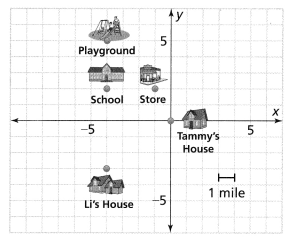
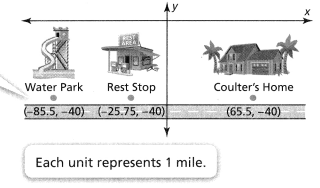
Answer:

Topic 13 Assessment Practice

Question 1.
Which of the following is equal to 10?
A. 2 × (45 ÷ 9)
B. 24 – (7 × 3)
C. 1 + (4 × 2)
D. (2 × 25) × 5
Answer:

A. 2 × (45 ÷ 9)

Question 2.
Select all of the expressions that are equal to 8 × 65.
Envision Math Common Core Grade 5 Answers Topic 13 Write and Interpret Numerical Expressions 93 3 + 5 × 60
Envision Math Common Core Grade 5 Answers Topic 13 Write and Interpret Numerical Expressions 93 8 × (60 + 5)
Envision Math Common Core Grade 5 Answers Topic 13 Write and Interpret Numerical Expressions 93 8 × (50 + 15)
Envision Math Common Core Grade 5 Answers Topic 13 Write and Interpret Numerical Expressions 93 (8 + 60) × (8 + 5)
Envision Math Common Core Grade 5 Answers Topic 13 Write and Interpret Numerical Expressions 93 (8 × 60) + (8 × 5)
Answer:

Envision Math Common Core Grade 5 Answers Topic 13 Write and Interpret Numerical Expressions 93 8 × (60 + 5)
Envision Math Common Core Grade 5 Answers Topic 13 Write and Interpret Numerical Expressions 93 8 × (50 + 15)

Envision Math Common Core Grade 5 Answers Topic 13 Write and Interpret Numerical Expressions 93 (8 × 60) + (8 × 5)

Question 3.
Which is the value of the expression 7 + (3 × 4) – 2?
A. 38
B. 20
C. 17
D. 12
Answer:

C.17

Question 4.
Which expression represents the following calculation?
Add 16 to the quotient of 72 and 8.
A. (72 – 8) + 16
B. (72 ÷ 8) + 16
C. (16 + 72) ÷ 8
D. (16 + 72) + 8
Answer:

B. (72 ÷ 8) + 16

Question 5.
What is the value of
(100 × 15) + (10 × 15)?
Answer:

(100 × 15) + (10 × 15)

(1500) + (150)

1650

Question 6.
Describe how the value of Expression A compares to the value of Expression B.
A. 12 × (54 ÷ \(\frac{2}{5}\))
B. 54 ÷ \(\frac{2}{5}\)
Answer:

Value of A is 12 times the value of B

Question 7.
Write >, <, or = in the circle to make the statement true.
(368 × 19) – 24 img 95 (368 × 19) – 47
Answer:

(368 × 19) – 24 < 95 (368 × 19) – 47

Question 8.
Insert parentheses to make the statement true.
7 + 6 × 14 – 9 = 37
Answer:

Question 9.
Which expression represents the following calculation?
Subtract 2 from the product of 7 and 3.
A. (7 + 3) – 2
B. 7 × (3 – 2)
C. (7 × 3) – 2
D. (7 × 2) – 3
Answer:

C. (7 × 3) – 2

Question 10.
What is the value of the expression (6 + 3) × 2?
Answer:

(6 + 3) × 2

9 × 2

18

Question 11.
Evaluate the expression (6 + 12 ÷ 2) + 4. Show your work.
Answer:

(6 + 12 ÷ 2) + 4

(6 + 6) + 4

12 + 4

16

Question 12.
Write >, <, or = in the circle to make the statement true.
(249 + 1,078) × \(\frac{1}{3}\) img 96 (249 + 1,078) ÷ 3
Answer:

(249 + 1,078) × \(\frac{1}{3}\) < 96 (249 + 1,078) ÷ 3

Question 13.
Write an expression to find the product of 3 and 28 plus the product of 2 and 15. Then solve.
Answer:

(3 x 28) + (2 x 15)

84 + 30

114

Question 14.
Evaluate the expression.
6 + (24 – 4) + 8 ÷ 2
A. What step do you perform first in evaluating this expression?
B. What step do you perform second in evaluating this expression?
C. What is the value of the expression?
Answer:

A. Subtraction 24-4

B. Division 8 ÷ 2

C. 30

Decorating
Jackie is decorating her room. She wants to put a border around the ceiling. She will put wallpaper on one wall and paint the other three walls.

Question 1.
The drawing of Jackie’s Room shows the width of the room. The expression [13.2 – (2 × 2.8)] ÷2 represents the length of her room.
Part A
How much border does Jackie need to go around the entire ceiling of her room? Explain how you can tell from the expression.
Envision Math Common Core Grade 5 Answers Topic 13 Write and Interpret Numerical Expressions 98.1
Part B.
What is the length of Jackie’s room? Show the steps you use to evaluate the expression.
Answer:

Question 2.
The Painted Walls drawing shows the three walls Jackie wants to paint. One wall is 2.8 meters long. The length of each of the other walls is the answer you found in Question 1, Part B.
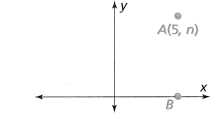
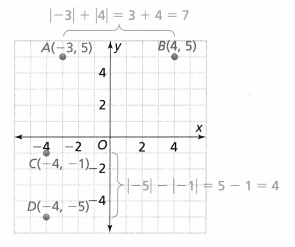
Envision Math Common Core Grade 5 Answers Topic 13 Write and Interpret Numerical Expressions 98.2
Answer:

Part A
Write an expression to represent how many square meters Jackie will paint.
Part B
Evaluate the expression you wrote in Part A to find how many square meters Jackie will paint. Show the steps you used to evaluate the expression.
Answer:

Question 3.
The wall Jackie wants to wallpaper has two windows. The Wallpapered Wall drawing shows the lengths and widths of the wall and the windows. Each roll of wallpaper covers 0.8 square meter.
Envision Math Common Core Grade 5 Answers Topic 13 Write and Interpret Numerical Expressions 96.1
Part A
What does the expression 2 × (1.5 × 0.8) represent? What does the expression (2.8 × 2) – (2 × (1.5 × 0.8)] represent?
Part B
Write an expression to find how many rolls of wallpaper Jackie needs to buy. Show the steps you used to evaluate the expression.
Answer:

enVision Math Common Core Grade 5 Answer Key Topic 12 Convert Measurements

Go through the enVision Math Common Core Grade 5 Answer Key Topic 12 Convert Measurements and finish your homework or assignments.

enVision Math Common Core 5th Grade Answers Key Topic 12 Convert Measurements

Envision Math Common Core Grade 5 Answer Key Topic 12 Convert Measurements 1
enVision STEM Project: Grand Canyon
Do Research Use the Internet and other sources to learn about the Grand Canyon and the Colorado River. Where is the Grand Canyon? How was it formed? What do the different rock layers tell us? Predict how you think the canyon dimensions will change in a million years.
Journal: Write a Report Include what you found. Also in your report:
• Describe the canyon’s dimensions.
• Describe the Colorado River’s dimensions.
• Define erosion.
• Make up and solve problems involving measurement units and conversions.

Review What You Know

A-Z Vocabulary

Choose the best term from the box. Write it on the blank.

• customary
• multiplication
• subtraction
• exponent
• metric

Question 1.
A meter is a unit of length in the ___ system of measurement.
Answer:

A meter is a unit of length in the Metric system of measurement.

Question 2.
A foot is a unit of length in the ____ system of measurement.
Answer:

A foot is a unit of length in the British imperial and United States customary system of measurement.

Question 3.
The division has an inverse relationship with _____
Answer:

The division has an inverse relationship with Multiplication.

Question 4.
A(n) ____ shows the number of times a base is used as a factor.

Answer:

An Exponent shows the number of times a base is used as a factor.

Multiplication

Find each product.

Question 5.
60 × 6
Answer:

60 × 6 = 360

Question 6.
24 × 103
Answer:

24 × 103  

= 24000

Question 7
16 × 7
Answer:

16 × 7 = 112

Question 8.
102 × 1.6
Answer:

102 × 1.6 = 160

Question 9.
100 × 34
Answer:

100 x 34 = 3400

Question 10.
104 × 0.37
Answer:

104 × 0.37 = 3700

Question 11.
46.102 × 10²
Answer:

46.102 × 102 = 

= 4702. 404

Question 12.
101 × 0.005
Answer:

0.05

Division
Find each quotient.

Question 13.
1,000 ÷ 100
Answer:

1,000 ÷ 100

Quotient = 10

Question 14.
176 ÷ 16
Answer:

176 ÷ 16

Quotient = 11

Question 15.
3,600 ÷ 60
Answer:

3,600 ÷ 60

Quotient = 60

Question 16.
120 ÷ 24
Answer:

120 ÷ 24

Quotient = 5

Measurement
Circle the more appropriate unit of measure for each item.

Question 17.
The capacity of a swimming pool: liters or milliliters
Answer: Liters

Question 18.

The length of an ear of corn: yards or inches
Answer: Yards

Question 19.
The mass of a gorilla: grams or kilograms
Answer: Kilograms

Question 20.
The weight of a tennis ball: ounces or pounds

Answer: Ounces

Question 21.

Would you use more centimeters or meters to measure the length of car? Explain.
Answer:

meters is more useful to measure the length of the car.

meters are used to measure the length of the car. Because centimeters are shorter than meters.

Pick a Project
PROJECT 12A
What makes a treehouse so cool?
Project: Build a Model of a Treehouse
Envision Math Common Core Grade 5 Answer Key Topic 12 Convert Measurements 1.1

PROJECT 12B
What would you weigh on Mars?
Project: Make a Mobile Display of the Solar System
Envision Math Common Core Grade 5 Answer Key Topic 12 Convert Measurements 12.2

PROJECT 12C
Have you ever heard of National Punch Day?
Project: Plan a Class Party
Envision Math Common Core Grade 5 Answer Key Topic 12 Convert Measurements 12.3

PROJECT 12D
What are the characteristics of Florida panthers?
Project: Design a Zoo Space for Florida Panther Cubs
Envision Math Common Core Grade 5 Answer Key Topic 12 Convert Measurements 12.4

Lesson 12.1 Convert Customary Units of Length

Activity

Solve & Share
William has a piece of wire that measures 1 yard long. He will use wire to fix several electrical outlets in his house. How many inches long is the wire? Solve this problem by using bar diagrams.

You can show the relationship between yards and inches in a bar diagram. Show your work!
Envision Math Common Core Grade 5 Answer Key Topic 12 Convert Measurements 12.5

Envision Math Common Core Grade 5 Answer Key Topic 12 Convert Measurements 12.6

Look Back! Generalize How can you convert inches to yards? Would you multiply or divide when converting from a smaller unit to a larger unit? Explain.

Visual Learning Bridge

Essential Question How Do You Change from One Leon Unit of Length to Another?

A.
Some frogs can jump 11\(\frac{1}{4}\) feet. What are some other ways to describe the same distance?
Envision Math Common Core Grade 5 Answer Key Topic 12 Convert Measurements 12.7

The table shows equivalent measures.
Envision Math Common Core Grade 5 Answer Key Topic 12 Convert Measurements 12.8

B.
To change larger units to smaller units, multiply.
Envision Math Common Core Grade 5 Answer Key Topic 12 Convert Measurements 12.9

You know 1 foot equals 12 inches.
Envision Math Common Core Grade 5 Answer Key Topic 12 Convert Measurements 13
You know 3 feet is equal to 1 yard.

C.
To change smaller units to larger units, divide.
Ed’s frog jumped 11 feet. How many yards is this?
Envision Math Common Core Grade 5 Answer Key Topic 12 Convert Measurements 13.1
11 ÷ 3 = 3 R2 So, 11 feet = 3 yards, 2 feet.

Convince Me! Generalize In the example above, explain how you could use a mixed number to write 11 feet as an equivalent measure in yards.

Guided Practice

Do You Understand?

Question 1.
If you want to convert yards to feet, what operation would you use?
Answer:

To convert a yard measurement to a foot measurement, multiply the length by the conversion ratio. The length in feet is equal to the yards multiplied by 3.

Question 2.
If you want to convert feet to miles, what operation would you use?
Answer:

To convert a foot measurement to a mile measurement, divide the length by the conversion ratio.

Question 3.
What are some tools you could select to measure length? Explain when you would use them.
Answer:

The most common way to measure length is by using the scale on some sort of hand-held tool or implement, but you can also measure length — or distance — with radar, sonar, and laser beams.

Do You Know How?

In 4-8, convert each unit of length.

Question 4.
9 ft = ___ yd
Answer: 3

Question 5.
8 ft 7 in. = ___ in.
Answer:

103 inches

Question 6.
5\(\frac{1}{2}\) ft = __in.
Answer: 66 inches

Question 7.
288 in. = __ yd
Answer:

8 yards

Question 8.
219 in. = ___ ft ___ in. or. ___ ft
Answer:

18 feet 3 inches

18.25 ft

Independent Practice

In 9 and 10, complete the table to show equivalent measures.

Will the number in your answer be greater than or less than the number in the given measurement?
Envision Math Common Core Grade 5 Answer Key Topic 12 Convert Measurements 15.1

Question 9.
Envision Math Common Core Grade 5 Answer Key Topic 12 Convert Measurements 15.2
Answer:

1 feet = 12 inches

2 feet = 24 inches

3 feet = 36 inches

4 feet = 48 inches

Question 10.
Envision Math Common Core Grade 5 Answer Key Topic 12 Convert Measurements 15.3
Answer:

1 yard = 3 feet

2 yard = 6 feet

3 yard = 9 feet

4 yard = 12 feet

In 11-16, convert each unit of length.

Question 11.
3 yd = ___ in.
Answer:

3 yd = 108 inches

Question 12.
324 ft =__ yd
Answer:

324 ft = 108 yd

Question 13.
2\(\frac{2}{3}\) mi = ___ ft
Answer:

2 2/3 miles = 14080 feet

Question 14.
56 ft = ___ yd ___ ft
Answer:

56 ft = 18 yd 2 ft

Question 15.
12\(\frac{1}{2}\)  = ___ in.
Answer:

12 1/2 feet = 150 inches

Question 16.
6 in. = ___ ft
Answer:

6 in = 0.5 feet

In 17-19, compare lengths. Write >,<, or = for each Envision Math Common Core Grade 5 Answer Key Topic 12 Convert Measurements 16

Question 17.
100 ft Envision Math Common Core Grade 5 Answer Key Topic 12 Convert Measurements 16 3 yd
Answer:

100 ft >3 yd

Question 18.
74 in. Envision Math Common Core Grade 5 Answer Key Topic 12 Convert Measurements 16 2 yds 2 in.
Answer:

74 in = 2 yd 2 in

Question 19.
5,200 ft 145 in. Envision Math Common Core Grade 5 Answer Key Topic 12 Convert Measurements 16 1 mi 40 in.
Answer:

5200 ft 145 in > 1 mi 40 in.

Problem Solving

Question 20.
Number Sense Which number would be greater, the height of a tree in feet or the height of the same tree in yards?
Answer:

1 feet = 30.48 centimeters

1 yard = 91.44 centimeters.

Question 21.
Reasoning The dimensions of the nation’s smallest post office are 8 feet 4 inches by 7 feet 3 inches. Why would you use the measurement 8 feet 4 inches instead of 7 feet 16 inches?

Answer:

16 inches = 1 foot 4 inches

1 foot is added to 7 inches

Therefore,

The measurement 8 feet 4 inches instead of 7 feet 16 inches

Question 22.
Roger earns $24 a week mowing lawns. He spends \(\frac{1}{6}\) of his earnings on lunch and \(\frac{2}{3}\) of his earnings on music. He saves the rest. How many dollars does Roger save? Tell me how you found the answer.
Answer:

Given that, Roger earns $24 a week

The amount he spends on his lunch = 1/6 of his earnings

Which means, 1/6 x 24 = 4

Also given, he spends 2/3 of his earnings on music

This means, 2/3 x 24 = 16

Total amount he spend = 16 + 4 = 20

Remaining amount = 24 – 20

= $4

Therefore, Roger saves 4 dollars.

Question 23.
Ariana has 144 peaches. She has to pack 9 boxes with an equal number of peaches. How many peaches should she pack in each box?
Envision Math Common Core Grade 5 Answer Key Topic 12 Convert Measurements 16.1
Answer:

Total number of peaches = 144

The number of boxes she has to pack  = 9

Now,

144/9 = 16

Therefore, Ariana has to pack 15 peaches in each box.

Question 24.
Higher-Order Thinking How do you convert 108 inches to yards?
Answer:

108 inches = 3 yards

1 inch = 0.02 yards

108 inches =

= 108 x 0.02

= 3 yards.

Question 25.
A-Z Vocabulary What is an appropriate customary unit to use when measuring the length of a driveway? Justify your answer.
Answer:

The most appropriate units are either feet, yards, or meters.

Assessment Practice

Question 26.
Select all of the measurements greater than 7 feet.
Envision Math Common Core Grade 5 Answer Key Topic 12 Convert Measurements 17 2 yards
Envision Math Common Core Grade 5 Answer Key Topic 12 Convert Measurements 17 2 yards 2 inches
Envision Math Common Core Grade 5 Answer Key Topic 12 Convert Measurements 17 2 yards 2 feet
Envision Math Common Core Grade 5 Answer Key Topic 12 Convert Measurements 17 3 yards
Answer:

c. 2 yards 2 feet

d. 3 yards.

Question 27.
Select all of the measurements less than 435 inches.
Envision Math Common Core Grade 5 Answer Key Topic 12 Convert Measurements 17 37 feet
Envision Math Common Core Grade 5 Answer Key Topic 12 Convert Measurements 17 36 feet 2 inches
Envision Math Common Core Grade 5 Answer Key Topic 12 Convert Measurements 17 12 yards 3 inches
Envision Math Common Core Grade 5 Answer Key Topic 12 Convert Measurements 17 12 feet 3 inches
Answer:

36 feet 2 inches

12 feet 3 inches

Lesson 12.2 Convert Customary Units of Capacity

Activity

Solve&Share

A recipe makes 16 cups of soup. How many quarts does the recipe make? Remember, there are 2 cups in a pint and 2 pints in a quart. Solve this problem any way you choose!

Envision Math Common Core Grade 5 Answer Key Topic 12 Convert Measurements 17.1

Given,

There are 16 cups of soup

4 cup =  1 quart

16 cups = 4 pints.

You can use reasoning to help you convert between different units.
Envision Math Common Core Grade 5 Answer Key Topic 12 Convert Measurements 17.2

Look Back! Is the number of cups greater than or less than the number of quarts? Why do you think that is?

Visual Learning Bridge

Essential Question How Do You Convert Customary stion Units of Capacity?

A.
Sue is making punch. She needs 3\(\frac{3}{4}\) cups of orange juice and 5 pints of lemonade. How many fluid ounces of orange juice and how many quarts of lemonade does she need?

1 gallon (gal) = 4 quarts (qt)
1 quart = 2 pints (pt)
1 pint = 2 cups (c)
1 cup = 8 fluid Ounces (fl oz)

You can multiply or divide to convert one unit of capacity to a different one.
Envision Math Common Core Grade 5 Answer Key Topic 12 Convert Measurements 17.3

B.
To change a larger unit to a smaller unit, multiply.
Envision Math Common Core Grade 5 Answer Key Topic 12 Convert Measurements 17.4

C.
To change a smaller unit to a larger unit, divide.
Envision Math Common Core Grade 5 Answer Key Topic 12 Convert Measurements 17.5
Find 5 ÷ 2.
5 ÷ 2 = \(\frac{5}{2}\) = 2\(\frac{1}{2}\)
So, 5 pints = 2\(\frac{1}{2}\) quarts.

Convince Me! Generalize When you convert from pints to quarts, why do you divide?

Guided Practice

Do You Understand?

Question 1.
Why would you change 4 gallons 5 quarts to 5 gallons 1 quart?
Answer:

Given, 4 gallons 5 quarts

4 quarts = 1 gallon

So, 4 gallons 5 quarts can also be written as 5 gallons 1 quart.

Question 2.
Why is \(\frac{1}{8}\) cup equal to 1 fluid ounce?
Answer:

1 cup = 8 fluid ounces

1/8 cup = 2 tablespoon  = 1 fluid ounce

Do You Know How?

In 3-8, convert each unit of capacity.

Question 3.
32c = __ gal
Answer:

2 gal

Question 4.
\(\frac{1}{4}\)qt = __ gal
Answer:

64 gal

Question 5.
48 qt = __ pt
Answer:

96 pt

Question 6.
6\(\frac{1}{8}\) qt = __ c
Answer:

1 qt = 4 cups

6 qt = 24 cups

1/8 qt = 0.5 cups

6 1/8 qt = 24.5 cups

Question 7.
73 qt 1 pt = __ pt
Answer: 147 pints

1 qt = 2 pints

73 qt= 73 x 2

= 146

146 pt + 1 pt

= 147 pints.

Question 8.
9 pt = __ qt__ pt or ___ qt
Answer:

1 qt = 2 pt

9 pt =

4 qt 1 pt

or

4.5 qt.

Independent Practice

You may need to convert more than once.
Envision Math Common Core Grade 5 Answer Key Topic 12 Convert Measurements 21.1

In 9-20, convert each unit of capacity.

Question 9.
10 pt = __ qt
Answer: 5 qt

Question 10.
48 fl oz = ___ c
Answer: 6 c

Question 11.
\(\frac{1}{2}\)c = __ pt
Answer: 0.25 pt

1  cup = 0.5 pt

So, 1/2 cup = 0.25 pt

Question 12.
9\(\frac{1}{4}\) pt = ___ c
Answer:

1 pt = 2 cups

9 pt = 9 x 2 = 18 cups

1/4 = 0.5 or 1/2 cups

Total = 18+0.5

= 18.5 cups

Question 13.
36 pt = ___ qt
Answer: 18 qt

1 pt = 0.5 qt

36 pt =

36 x 0.5

= 18 qt.

Question 14.
30 qt = __ gal __ qt
Answer:

1 quart = 0.25 gal

30 qt = 7 gal 2 qt

Question 15.
1qt = ____ gal
Answer:

1 qt = 0.25 gal

Question 16.
5 gal = ___ c
Answer:

1 gal = 16 cups

So, 5 gal = 5 x 16 = 80 cups.

Question 17.
1 gal 1c = ___ fl oz
Answer:

136 fl oz

1 gal = 16 c

16 c + 1 c = 17 c

1 c = 8 fl oz

17 c = 17 x 8 = 136 fl oz

Question 18.
7c = __ fl oz
Answer:

1 cup = 8 fl oz

7 c = 7 x 8

= 56 fl oz

Question 19.
72 pt = ___ gal
Answer: 9 gal

Question 20.
\(\frac{1}{3}\) pt = ___ c
Answer:

1/3 pt = 0.66 c

Question 21.
Complete the table to show equivalent measures.
Envision Math Common Core Grade 5 Answer Key Topic 12 Convert Measurements 25.1
Answer:

1 gallon = 4 quarts = 8 pints = 16 cups = 128 fl oz

2 gallon = 8 quarts = 16 pints = 36 cups = 256 fl oz.

Problem Solving

For 22-24, use the aquarium.

Question 22.
The class aquarium holds 2 gallons of water. How many cups is this? How many fluid ounces is this?
Envision Math Common Core Grade 5 Answer Key Topic 12 Convert Measurements 25.2
Answer:

1 gallon = 16 cups

Which means, 2 gallon  = 2 x 16 = 32 cups

Therefore, there are 32 cups in 2 gallons

1 gallon = 128 fl oz

Which means, 2 gallons = 2 x 128 = 256 fl oz .

Therefore, 256 fl oz are there in 2 gallons.

Question 23.
Susan finds that 2 pints 1 cup of water have evaporated from the class aquarium. How many pints of water are left in the aquarium?
Answer:

The number of cups in aquarium = 32 cups

2 pints 1 cup = 5 cups

Now, 32 – 5 = 27 cups

1 cup = 0.5 pints

So, 27 cups = 13.5 pints

Therefore, 13.5 pints of water are left in the aquarium.

Question 24.
If all of the dimensions of the aquarium were doubled, what would be the volume of the new aquarium?
Answer:

Given,

the dimensions of the aquarium are doubles means

Volume = 20 in x 16 in x 18 in

= 4320 cubic inches.

Therefore, the volume of the new aquarium = 4320 cubic inches.

Question 25.
Carrie has 3 gallons of paint. Bryan has 10 quarts of paint. How many more pints of paint does Carrie have than Bryan?
Answer:

Given Carrie has 3 gallons of paint

3 gallons = 24 pints

Bryan has 10 quarts of paint

10 quarts = 20 pints

Now,

24 pints – 20 pints

= 4 pints

There are 4 more pints of paint Carrie has than Bryan.

Question 26.
Reasoning Lorelei filled her 5-gallon jug with water. How many times could she fill her 2-quart canteen with water from the jug? Explain.
Answer:

1 gallon = 4 quarts

5 gallons = 4 x 5 = 20 quarts

Now, 20/2 = 10

Therefore, she can fill the canteen by 10 times.

Question 27.
Higher-Order Thinking A recipe calls for 3 tablespoons of pineapple juice. A can of pineapple juice is 12 fluid ounces. How many teaspoons of juice are in the can?
Envision Math Common Core Grade 5 Answer Key Topic 12 Convert Measurements 26.1
Answer:

Given, a can of pineapple juice = 12 fluid ounces

1 fl oz = 2 tablespoon

Now, 12 fl oz = 24 tablespoons

The amount of pineapple juice recipe contains = 3 tablespoon

Now, 3  x 24 tablespoons = 72 teaspoon

Therefore, there are 72 teaspoons of pineapple are there in the can.

Assessment Practice

Question 28.
Choose all the measurements that are greater than 4 cups.
Envision Math Common Core Grade 5 Answer Key Topic 12 Convert Measurements 27 30 fluid ounces
Envision Math Common Core Grade 5 Answer Key Topic 12 Convert Measurements 27 2 pints
Envision Math Common Core Grade 5 Answer Key Topic 12 Convert Measurements 27 3 pints
Envision Math Common Core Grade 5 Answer Key Topic 12 Convert Measurements 27 1 quart
Envision Math Common Core Grade 5 Answer Key Topic 12 Convert Measurements 27 1 gallon
Answer:

1 gallon > 4 cups.

Question 29.
Choose all the statements that are true.
Envision Math Common Core Grade 5 Answer Key Topic 12 Convert Measurements 27 15 pt < 2 gal
Envision Math Common Core Grade 5 Answer Key Topic 12 Convert Measurements 27 1 gal < 5 qt
Envision Math Common Core Grade 5 Answer Key Topic 12 Convert Measurements 27 12 fl oz > 2c
Envision Math Common Core Grade 5 Answer Key Topic 12 Convert Measurements 27 2 qt 1 cup > 10 cups
Envision Math Common Core Grade 5 Answer Key Topic 12 Convert Measurements 27 20 pints = 10 quarts
Answer:

20 pints = 10 quarts

Lesson 12.3 Convert Customary Units of Weight

Activity

Solve & Share
Maria adopted 4 dogs. All together they eat 1\(\frac{3}{4}\) pound of food each day. One pound is equal to 16 ounces. How many ounces of food will the dogs eat in 5 days? Solve this problem any way you choose.

Answer:

1 pound = 16 ounces

1 3/4 pounds = 28 ounces

Number of days = 5

Now, 28 x 5

= 140 ounces

Therefore, the dogs can eat 140 ounces of food in 5 days.

A model with Math You can use drawings or equations to solve the problem. Show your work!
Envision Math Common Core 5th Grade Answers Topic 12 Convert Measurements 27.1

Look Back! Which is the larger unit of weight, an ounce or a pound? How can you use this relationship to find the number of ounces in 5 pounds?

Answer:

1 pound = 16 ounces

5 pounds = 5 x 16 = 80 ounces

Visual Learning Bridge

Essential Question How Can You Convert Units of Weight?

A.
An adult African elephant weighs about 5 tons. A baby African elephant weighs about 250 pounds. How many pounds does the adult elephant weigh? How can you convert 250 pounds to tons?
Envision Math Common Core 5th Grade Answers Topic 12 Convert Measurements 27.2

To convert from one unit of weight to another, you can use multiplication or division.
Envision Math Common Core 5th Grade Answers Topic 12 Convert Measurements 27.3

B.
To convert from larger units to smaller units, multiply.
Envision Math Common Core 5th Grade Answers Topic 12 Convert Measurements 27.4
Find 5 × 2,000.
5 × 2,000 = 10,000
So, 5 tons = 10,000 pounds.

C.
To convert from smaller units to larger units, divide.
Envision Math Common Core 5th Grade Answers Topic 12 Convert Measurements 27.5

Convince Me! Generalize When you convert 16 pounds to ounces, do you multiply or divide? Explain.

To convert pounds to ounces we have to multiply.

16 pounds = 256 ounces

Guided Practice

Do You Understand?

Question 1.
Would it be best to measure the weight of an egg in tons, pounds, or ounces? Explain.
Answer:

Ounces are the best way to measure the weight of an egg.

Question 2.
What types of tools do people select to measure weight? Explain your example.
Answer:

A scale or a balance are the tools used to measure weight

A balance is used to determine an object’s mass.

A scale to measure ounces and pounds.

Do You Know How?

In 3-6, convert each unit of weight.

Question 3.
2,000 lb = __ T
Answer: 0.907 T

Question 4.
48 oz = ___ lb
Answer: 3 lb

Question 5.
6,500 lb = ___oz
Answer: 96000 oz

Question 6.
\(\frac{1}{2}\) lb = __ oz
Answer: 8 oz

In 7 and 8, compare. Write >, <, or = for each Envision Math Common Core 5th Grade Answers Topic 12 Convert Measurements 28.

Question 7.
2T Envision Math Common Core 5th Grade Answers Topic 12 Convert Measurements 28 45,000 lb
Answer:

2T < 45,000 lb

Question 8.
4 lb Envision Math Common Core 5th Grade Answers Topic 12 Convert Measurements 28 64 oz
Answer:

4 lb = 64 oz

Independent Practice

In 9-14, convert each unit of weight.

Will your answer be greater than or less than the number you started with?
Envision Math Common Core 5th Grade Answers Topic 12 Convert Measurements 29.1

Question 9.
240 oz = __ lb
Answer: 15 lb

Question 10.
7\(\frac{1}{10}\)T = ___ lb
Answer: 14200lb

Question 11.
8 lb = ___ oz
Answer: 128 oz

Question 12.
4 oz = ___ lb
Answer: 0.25 lb

Question 13.
250 lb = ___ T
Answer: 0.113 T

Question 14.
1 T = ___ oz
Answer: 32,000 oz

In 15-17, compare. Write >, <, or = for each Envision Math Common Core 5th Grade Answers Topic 12 Convert Measurements 30.

Question 15.
5,000 lb Envision Math Common Core 5th Grade Answers Topic 12 Convert Measurements 30 3 T
Answer:

5,000 lb > 3 T

Question 16.
24 lb Envision Math Common Core 5th Grade Answers Topic 12 Convert Measurements 30 124 oz
Answer:

24 lb > 124 oz

Question 17.
64,000 oz Envision Math Common Core 5th Grade Answers Topic 12 Convert Measurements 30 2 T
Answer:

64,000 oz < 2 T

In 18 and 19, complete each table to show equivalent measures.

Question 18.
Envision Math Common Core 5th Grade Answers Topic 12 Convert Measurements 31.1
Answer:

1/2 lb = 8

2 lb = 32 oz

5 lb = 80 oz

Question 19.
Envision Math Common Core 5th Grade Answers Topic 12 Convert Measurements 31.2
Answer:

1/2 t = 1000 pounds

2 pounds = 4000

6 tons = 12,000

Problem Solving

Question 20.
Be Precise The perimeter of the rectangular playground shown below is 160 feet. What is the area of the playground?
Envision Math Common Core 5th Grade Answers Topic 12 Convert Measurements 31.3
Answer:

Given, perimeter = 160 feet

We know that, perimeter = 2 (l + b )

160 = 2 ( 50 + b )

80 = 50 + b

b = 80 – 50

b = 30 feet

We know that area of rectangle = length x breadth

A = 80 x 30

= 2400 square feet

Therefore, Area = 2400 square feet.

Question 21.
enVision® STEM Humans exploring space have left behind bags of trash, bolts, gloves, and pieces of satellites. There are currently about 4,000,000 pounds of litter in orbit around Earth. Julia says that this amount using number names is four billion. Do you agree? Explain your thinking.
Answer:

No,  I do not agree because 4 billion > 4,000,000

In 22-25, use the table.

Question 22.
What would be the most appropriate unit to measure the combined weight of 4 horses?
Answer: Tons will be the most appropriate unit to measure the combined weight of 4 horses

Envision Math Common Core 5th Grade Answers Topic 12 Convert Measurements 31.4

Question 23.
About how much would 4 horses weigh? Write the weight in two different ways.
Answer: The horses weigh 1500 pounds

1500 pounds = 0.75 tons

1500 pounds = 24000 ounces

Question 24.
How many more ounces do the sheep weigh than the ape?
Answer:

1600 ounces more the sheep weigh than the ape.

Question 25.
Higher-Order Thinking What is the difference in weight between the horse and the combined weight of the dolphin and the ape? Write your answer in tons.
Answer:

The  weight of 4 horses = 0.75 tons

The combined weight of dolphin and ape = 0.3 tons

Now, the difference between the weights =

= 0.75 – 0.3

= 0.45 tons

Therefore, the weight difference = 0.445 tons

Assessment Practice

Question 26.
Part A
The world’s heaviest lobster weighed 44 pounds 6 ounces. Write the lobster’s weight in ounces below.
44 lb 6 oz = ___ ounces

Answer:

44 lb 6 oz = 710 ounces
Part B
Describe the steps you took to find your answer.
Answer:

1 lb = 16 ounces

44 lb = 44 x 16

= 704 oz

704 oz + 6 oz

= 710 oz

Lesson 12.4 Convert Metric Units of Length

Activity

Solve & Share
Measure the length of your book in centimeters. Then measure it in millimeters. What do you notice about the two measurements?

Envision Math Common Core 5th Grade Answers Topic 12 Convert Measurements 33.1

1 cm = 10 mm

length of book = 25 cm

length of book = 250 mm

You can select appropriate units and tools to measure the length of objects!
Envision Math Common Core 5th Grade Answers Topic 12 Convert Measurements 33.2

Look Back! Use Structure How many meters long is your textbook? How do you know?

Visual Learning Bridge

Essential Question How Do You Convert Metric question Units of Length?

A.
The most commonly used metric units of length are the kilometer (km), meter (m), centimeter (cm), and millimeter (mm).
1 km = 103 m = 1,000 m
1 m = 102 cm = 100 cm
1 m = 103 mm = 1,000 mm
1 cm = 10 mm
Envision Math Common Core 5th Grade Answers Topic 12 Convert Measurements 33.3

Every metric unit is 10 times as great as the next smaller unit.
Envision Math Common Core 5th Grade Answers Topic 12 Convert Measurements 33.4

B.
The distance between two towns is 3 kilometers. How many meters apart are they?
3 km = __ m
To change from larger units to smaller units, multiply.
Find 3 × 10³.
3 km = 3,000 m
So, the towns are 3,000 meters apart.

One kilometer equals 1,000 meters.
Envision Math Common Core 5th Grade Answers Topic 12 Convert Measurements 40.1
To change from smaller units to larger units, divide.

C.
The distance between a kitchen and living room is 1,200 centimeters. How many meters apart are they?
1,200 cm = __ m
Find 1,200 ÷ 102
1,200 cm = 12 m
So, the kitchen and the living room are 12 meters apart.

Convince Me! Critique Reasoning Elena says that 25 cm is equal to 250 mm. Do you agree? Why or why not?

Answer:

Yes, I agree because,

1 cm = 10 mm

Now,

25 cm = 25 x 10 = 250 mm

Guided Practice

Do You Understand?

Question 1.
To find the number of meters in six kilometers, why do you multiply 6 × 10³?
Answer: 6000 meters = 6 kilometers

Because, 1 km = 1000 m

6 km = 6 x 1000 = 6000m

Question 2.
Convert 12.5 centimeters to millimeters. Explain.
Answer:

12.5 cm = 125 mm

Explanation:

1 cm = 10 mm

12 cm = 120mm

0.5 cm = 5 mm

Total : 120 + 5 = 125 mm

Do You Know How?

In 3-6, convert each unit of length.

Question 3.
103 cm = __ m
Answer: 1000 m

Question 4.
58 m = ___ mm
Answer: 58000 mm

Question 5.
1,000 mm = __ cm
Answer: 100 cm

Question 6.
3 km = ___ m
Answer: 3000 m

In 7 and 8, compare lengths. Write >,<, or = for each Envision Math Common Core 5th Grade Answers Topic 12 Convert Measurements 41.

Question 7.
9,000 m Envision Math Common Core 5th Grade Answers Topic 12 Convert Measurements 41 20 km
Answer:

9,000 m < 20 km

Question 8.
400 cm Envision Math Common Core 5th Grade Answers Topic 12 Convert Measurements 41 4m
Answer:

400 cm = 4 m

Independent Practice

In 9-14, convert each unit of length.

Question 9.
7.5 cm = ___ mm
Answer: 75 mm

Question 10.
6m = __ сm
Answer: 600 cm

Question 11.
0.8 km = ___ cm
Answer: 80000 cm

Question 12.
17,000 m = ___ km
Answer: 17 km

Question 13.
48,000 mm = ___ m
Answer: 48 m

Question 14.
4 km = ___ m
Answer: 4000 m

In 15-20, compare lengths. Write >, <, or = for each Envision Math Common Core 5th Grade Answers Topic 12 Convert Measurements 42.

Question 15.
25,365 cm Envision Math Common Core 5th Grade Answers Topic 12 Convert Measurements 42 30 m
Answer:

25,365 cm > 30 m

Question 16.
3.6 km Envision Math Common Core 5th Grade Answers Topic 12 Convert Measurements 42 3,600 m
Answer:

3.6 km = 3600

Question 17.
1,200 mm Envision Math Common Core 5th Grade Answers Topic 12 Convert Measurements 42 12 m
Answer:

1200 mm< 12 m

Question 18.
52,800 cm Envision Math Common Core 5th Grade Answers Topic 12 Convert Measurements 42 1 km
Answer:

52,800 cm <  1 km

Question 19.
7,500,000 m Envision Math Common Core 5th Grade Answers Topic 12 Convert Measurements 42 750 km
Answer:

7,500,000 m > 750 km

Question 20.
800 m Envision Math Common Core 5th Grade Answers Topic 12 Convert Measurements 42 799,999 mm
Answer:

800 m > 799,999 mm

In 21 and 22, complete each table.

Question 21.
Envision Math Common Core 5th Grade Answers Topic 12 Convert Measurements 42.1
Answer:

1 km = 1000 m

0.5 km = 500 m

0.1 km = 100 m

Question 22.
Envision Math Common Core 5th Grade Answers Topic 12 Convert Measurements 42.2
Answer:

50 m = 5,000 cm

5 m = 500 cm

0.5 m = 50 cm

Problem Solving

Question 23.
Number Sense Let x = the length of an object in meters and y = the length of the same object in millimeters. Which is a smaller number, x or y?
Answer: y

1 meter = 1000 mm

1 mm = 0.001 mm

Therefore, Y is smaller than x

Question 24.
Higher-Order Thinking How many millimeters are equal to one kilometer? Show your work.
Answer:

One kilometer is equal to 1000000 millimeters.

1 km = 1000000 mm

Question 25.
Reasoning Which fraction is greater: \(\frac{7}{8}\) or \(\frac{9}{12}\)? Explain how you know.
Answer:

7/8 >9/12

Explanation :

L.c.m of 8,12 = 24

Now,

7/8 x 3/3 = 21/24

9/12 x 2/2 = 18/24

21/24 > 18/24

Therefore,

7/8 >9/12

Question 26.
A week ago, Trudy bought the pencil shown. Now the pencil measures 12.7 centimeters.
How many centimeters of the pencil has been used?
Envision Math Common Core 5th Grade Answers Topic 12 Convert Measurements 50.1
Answer:

The original length of the pencil = 18 cm

The present length of pencil = 12.7 cm

Length difference = 18 – 12.7

= 5.3 cm

Therefore, the length of pencil used = 5.3 cm

How do you compare fractions?
Envision Math Common Core 5th Grade Answers Topic 12 Convert Measurements 50.2

Question 27.
enVision® STEM Mount St. Helens, located in Washington, erupted on May 18, 1980. Before the eruption, the volcano was 2.95 kilometers high. After the eruption, the volcano was 2.55 kilometers high. Use the bar diagram to find the difference in height of Mount St. Helens before and after the eruption. Convert the difference to meters.
Envision Math Common Core 5th Grade Answers Topic 12 Convert Measurements 50.3
Answer:

The original height of the volcano = 2.95 km

After the eruption, the height of the volcano = 2.55 km

Difference = 2.95 – 2.55

= 0.4 km

0.4 km = 400 meters.

Therefore, the difference in height of the volcano = 400 meters.

Assessment Practice

Question 28.
Eileen plants a tree that is 2 meters tall in her yard. Which of the following is equivalent to 2 meters?
A. 200 mm
B. 20 cm
C. 200 km
D. 2,000 mm
Answer:

B. 2 meters = 20 cm

Question 29.
Which of these number sentences is NOT true?
A. 600 cm = 6 m
B. 1 m < 9,000 mm
C. 900 mm = 9 cm
D. 10 km > 5,000 m
Answer:

B. 1 m < 9,000 mm

Lesson 12.5 Convert Metric Units of Capacity

Solve & Share
A pitcher holds 4 liters of water. How many milliliters does the pitcher hold? Solve this problem any way you choose.

You can convert metric units of capacity using multiplication or division. Show your work!
Envision Math Common Core 5th Grade Answers Topic 12 Convert Measurements 50.20

Answer:

1 liter = 1000000 milliliters

4 liters = 4 x 1000000 mL

= 4000000 mL

Look Back! Look for Relationships Juanita shares a one-liter bottle of water equally with 3 friends. How much water does each person get? Give your answer in liters and milliliters.

Visual Learning Bridge

Essential Question How Do You Convert Metric Units of Capacity?

A.
The most commonly used units of capacity in the metric system are the liter (L) and the milliliter (mL).

Can you find a liter or milliliter in the real world?
Envision Math Common Core 5th Grade Answers Topic 12 Convert Measurements 50.30

B.
Susan has 1.875 liters of water. How many milliliters is this?
1.875 L = __ mL
To change a larger unit to a smaller unit, multiply.
Find 1.875 × 10³.
1.875 × 103 = 1,875
1.875 L = 1,875 mL
So, Susan has 1,875 milliliters of water.

C.
Jorge has 3,500 milliliters of water. How many liters is this?
3,500 mL = __ L
To change a smaller unit to a larger unit, divide.
Find 3,500 ÷ 103.
3,500 ÷ 103 = 3.5
3,500 mL = 3.5 L
So, Jorge has 3.5 liters of water.

Convince Me! Reasoning Order these measurements from greatest to least. Explain how you decided.
Envision Math Common Core 5th Grade Answers Topic 12 Convert Measurements 50.80

2,300 L >22L > 3000 mL > 2L > 500 mL

Guided Practice

Do You Understand?

Question 1.
Explain how you can convert milliliters to liters.
Answer:

1 milliliters = 0.001 liters

To convert milliliters to liters, we divide by 1000.

Question 2.
What types of tools would you select to measure capacity? Give an example and explain how that tool could be used.
Answer:

The most popular tool used to measure capacity is the measuring cup.

And also There are five basic units for measuring capacity in the U.S. customary measurement system. These are the fluid ounce, cup, pint, quart, and gallon.

Do You Know How?

In 3-8, convert each unit of capacity.

Question 3.
2.75 L = ___ mL
Answer: 2750 ml

Question 4.
3,000 mL = ___L
Answer: 3 L

Question 5.
5L = ___ mL
Answer: 5000 mL

Question 6.
250 mL = __ L
Answer: 0.25 L

Question 7.
0.027 L = __ mL
Answer: 27 ml

Question 8.
400 mL = __ L

Answer : 0.4 L

Independent Practice

In 9-20, convert each unit of capacity.

Question 9.
5,000 mL = ___ L
Answer:

5 L

Question 10.
45,000 mL = __ L
Answer:

45

Question 11.
4.27 L = __ mL
Answer:

4270 ml

Question 12.
13 L = ___ mL
Answer:

13000

Question 13.
3,700 mL = __ L
Answer:

3.7 L

Question 14.
0.35 L = __ mL
Answer:

350 ml

Question 15.
2,640 mL = ___ L
Answer:

2.64 L

Question 16.
314 mL = ___ L
Answer:

0.314 L

Question 17.
0.06 L = __ mL
Answer:

60

Question 18.
2,109 mL = ___ L
Answer:

0.0021

Question 19.
85 mL = __ L
Answer:

0.085 L

Question 20.
9.05 L = ___ mL
Answer:

9050

In 21 and 22, complete each table to show equivalent measures.

Question 21.
Envision Math Common Core 5th Grade Answers Topic 12 Convert Measurements 52.1
Answer:

0.1 L = 100 mL

1 L = 1000 mL

10 L = 10000 mL

Question 22.
Envision Math Common Core 5th Grade Answers Topic 12 Convert Measurements 52.2
Answer:

500 mL = 0.5

5000 mL = 5

50,000 mL =50

Problem Solving

Question 23.
Reasoning Carla’s famous punch calls for 3 liters of mango juice. The only mango juice she can find is sold in 500-milliliter cartons. How many cartons of mango juice does Carla need to buy?
Answer:

Amount of Carla’s Famous punch = 3 liters

We know that 1 liter = 1000 milliliters

Also given, 500 mL = 1 Carton

Now, Number of cartons =

3000/ 500 = 6

Therefore, Carla needs to buy 6 cartons of mango juice.

Question 24.
Carla makes 6 liters of punch. She pours the punch into 800 ml bottles. How many bottles can she fill?
Answer:

6 liters of punch = 6000 milliliters

Now, 6000/800

=  7.5

Therefore, she can fill approximately 7.5 bottles.

Question 25.
Bobby filled the jug with water for soccer practice. If each player gets 250 milliliters of water, how many players will the water jug serve?
Envision Math Common Core 5th Grade Answers Topic 12 Convert Measurements 53.1
Answer:

The capacity of water jug =  5 liters

1 litre = 1000 millilitres

Now, 5 litres = 5000 millilitres

Now, 5000/ 250

= 20

Therefore, the water jug will serve 20 people.

Question 26.
Higher-Order Thinking One cubic centimeter will hold 1 milliliter of water. How many milliliters will the aquarium below hold? How many liters will it hold?
Envision Math Common Core Grade 5 Answers Topic 12 Convert Measurements 53.2
Answer:

Volume of the aquarium =

length x width x height

V =  40 x 20 x 30

V = 24000 cubic centimeters

We know that, 1 L = 1000 mL

Therefore, The aquarium holds 24 L .

Question 27.
Terry is buying juice. He needs 3 liters. A half-liter of juice costs $2.39. A 250-milliliter container of juice costs $1.69. What should Terry buy so he gets 3 liters at the lowest price? Explain.
Answer:

He needs 3 L.

A half-liter of juice costs $2.39.
A 250 mL container of juice costs $1.69.
One liter of juice in half-liter packs costs,

$2.39 x 2 = $4.78.
One liter of juice in 250 mL packs costs,

$1.69 x 4 = $6.76.
So, Terry should buy 6 half-liter packs of juice and spend
$2.39 x 6 = $9.56 to get 3 liters at the lowest price.

What steps do you need to do to solve this problem?
Envision Math Common Core Grade 5 Answers Topic 12 Convert Measurements 53.3

Assessment Practice

Question 28.
A birdbath holds 4 liters of water. How many milliliters of water does it hold?
A. 400 ml
B. 800 mL
C. 4,000 mL
D. 8,000 mL
Answer:

C. 4,000 mL

1 litre = 1000 milliliters

So, 4 litres = 4000 millilitres.

Question 29.
You are filling a 2-liter bottle with liquid from full 80-milliliter containers. How many containers will it take to fill the
A. 400
B. 250
C. 40
D. 25
Answer:

1 litre = 1000 millilitres

So, The number of  80 mL containers need are

2000/80

= 25

Therefore, 25 containers are required.

Lesson 12.6 Convert Metric Units of Mass

Activity

Solve & Share
In chemistry class, Rhonda measured 10 grams of a substance. How many milligrams is this? Solve this problem any way you choose.

Answer:

1 gram = 1000 mg

So,

10 grams = 10000 milligrams.

Look for Relationships You can use patterns to help you see a relationship between the units.
Envision Math Common Core Grade 5 Answers Topic 12 Convert Measurements 53.4

Envision Math Common Core Grade 5 Answers Topic 12 Convert Measurements 53.5

Look Back! How many kilograms did Rhonda measure? Write an equation to model your work.

Visual Learning Bridge

Essential Question How Do You Convert Metric Units of Mass?

A.
The three most commonly used units of mass are the milligram (mg), the gram (g), and the kilogram (kg).

Envision Math Common Core Grade 5 Answers Topic 12 Convert Measurements 53.6

Converting metric (units of mass is like converting other metric units.

B.
A whistle has a mass of about 5 grams. How many milligrams is this?
To change from a larger unit to a smaller unit, multiply.
Find 5 × 10³
5 × 103 = 5 × 1,000 = 5,000
So, 5 g = 5,000 mg
So, a whistle has a mass of about 5,000 milligrams.

C.
How many kilograms is the whistle?
To change from a smaller unit to a larger unit, divide.
Find 5 ÷ 103
5 ÷ 103 = 5 ÷ 1,000 = 0.005
So, 5 g = 0.005 kg.
So, a whistle has a mass of about 0.005 kilograms.

Convince Me! Use Structure in the picture above, what is the football player’s mass in grams and in milligrams? How can you tell?

Guided Practice

Do You Understand?

Question 1.
A-Z Vocabulary How does the relationship between meters and millimeters help you understand the relationship between grams and milligrams?
Answer:

1 meter = 1000 millimeters.

1 Gram = 1000 milligrams.

Question 2.
Which has the greater mass: 1 kilogram or 137,000 milligrams? Explain how you made your comparison.
Answer:

137,000 is greater

Because, 1 kg = 1000000

Therefore, 137,000 is greater than 1 kg

Do You Know How?

In 3 and 4, convert each unit of mass.

Question 3.
9.25 g = ___ mg
Answer:

9250 mg

Question 4.
190 g = __ kg
Answer:

0.19 kg

In 5 and 6, compare. Write >,<, or = for each Envision Math Common Core Grade 5 Answers Topic 12 Convert Measurements 60

Question 5.
7,000 mg Envision Math Common Core Grade 5 Answers Topic 12 Convert Measurements 60 7,000 g
Answer:

7,000 mg < 7,000 g

Question 6.
102 kg Envision Math Common Core Grade 5 Answers Topic 12 Convert Measurements 60 104 g
Answer:

102 kg > 104 g

Independent Practice

In 7-12, convert each unit of mass.

Question 7.
17,000 g = ___ kg
Answer:

17,000 = 17 kg

Question 8.
18 kg = ___ g
Answer:

18 kg = 18000 g

Question 9.
4,200 mg = ___ g
Answer: 4.2 g

Question 10.
0.276 g = ____ mg
Answer: 276 mg

Question 11.
4.08 kg = ___ g
Answer: 4080 g

Question 12.
43 mg = ___ g
Answer: 0.043 g

In 13-18, compare. Write >, <, or = for each Envision Math Common Core Grade 5 Answers Topic 12 Convert Measurements 61

Question 13.
2,000 g Envision Math Common Core Grade 5 Answers Topic 12 Convert Measurements 61 3 kg
Answer:

2000 g < 3 kg

Question 14.
4 kg Envision Math Common Core Grade 5 Answers Topic 12 Convert Measurements 61 4,000 g
Answer:

4 kg = 4000 g

4 kg  = 4,000 g

Question 15.
104 mg Envision Math Common Core Grade 5 Answers Topic 12 Convert Measurements 61 13 g
Answer:

104 mg < 13 g

Question 16.
7 kg Envision Math Common Core Grade 5 Answers Topic 12 Convert Measurements 61 7,000 g
Answer:

7 kg < 7000 g

Question 17.
9,000 g Envision Math Common Core Grade 5 Answers Topic 12 Convert Measurements 61 8 kg
Answer:

9000 g > 8 kg

Question 18.
8,000 g Envision Math Common Core Grade 5 Answers Topic 12 Convert Measurements 61 5 kg
Answer:

8000 > 5 kg

In 19 and 20, complete each table.

Question 19.
Envision Math Common Core Grade 5 Answers Topic 12 Convert Measurements 62
Answer:

1 grams = 1000 milligrams

10 grams = 10000 milligrams

100 grams = 100000 milligrams

Question 20.
Envision Math Common Core Grade 5 Answers Topic 12 Convert Measurements 62.1
Answer:

500 grams = 0.5 kg

5000 grams = 5 kg

50000 grams = 50 kg

Problem Solving

Question 21.
Make Sense and Persevere Sheryl has a recipe for pasta with vegetables. The recipe calls for 130 grams of vegetables and twice as much pasta as vegetables. What is the total mass in grams of the recipe?
Answer:

Given,

The mass of vegetables = 130 grams

Also given, the mass of pasta is twice as vegetables

Which means, 130 x 2 = 260

Total mass = 260 + 130

= 390 grams

Therefore, the total mass of the recipe = 390 grams.

Question 22.
Terri is beginning a science experiment in the lab. The instructions call for 227 milligrams of potassium. Calculate the difference between this amount and 1 gram.
Answer:

We know that,

1 gram = 1000 milligrams

Given that, The weight of potassium = 227 milligrams

Now, The difference between the amount

= 1000 – 227

= 773 grams.

Therefore, the difference between the amount and 1 gram = 773 grams.

Question 23.
Number Sense One of the world’s heaviest hailstones weighed 2.2 pounds. Which is more appropriate to express its mass, 1 kilogram or 1 gram?
Answer:

2.2 pounds = 0.997 kg

2.2 pounds = 997. 9 grams

Therefore, 1 kilogram is more appropriate to express the mass.

Question 24.
Higher Order Thinking A cook has 6 onions that have a total mass of 900 grams and 8 apples that have a total mass of 1 kilogram. All onions are the same size, and all apples are the same size. Which has the greater mass, an onion or an apple? Explain.
Answer:

Given,

Number of onions = 6

Total mass = 900 grams

Weight of each onion = 900/6

= 150 grams.

Number of apples = 8

Total mass = 1 kg or 1000 grams

Weight of each apple = 1000/8

= 125 grams.

Therefore, Onion has a greater mass than apple.

In 25 and 26, use the given information and the picture.

Envision Math Common Core Grade 5 Answers Topic 12 Convert Measurements 62.5

enVision® STEM If a man weighs 198 pounds on Earth, his mass on Earth is 90 kilograms.

Question 25.
What is this man’s weight on the Moon?
Answer:

Given,

The weight of the person on the moon is 1/6 weight on earth.

Also given, the mass on earth = 90 kgs

The weight of man’s weight on the moon =

90/6 =15 or 14.9 approx.

Question 26.
What is his mass in grams?
Answer:

1 kg = 1000 grams.

15 kg = 15000 grams

Assessment Practice

Question 27.
Write the following masses on the lines from least to greatest.
Envision Math Common Core Grade 5 Answers Topic 12 Convert Measurements 62.9
Answer:

5000 mg > 500 g > 50 kg

Question 28.
If you convert grams to milligrams, what operation would you use?
A. Addition
B. Subtraction
C. Multiplication
D. Division
Answer:

Multiplication.

Lesson 12.7 Convert Units of Time

Activity

Solve&Share
Emily played softball all weekend. She was wondering the difference in time between the shortest game and the longest game. Can you help her figure it out?
Envision Math Common Core Grade 5 Answers Topic 12 Convert Measurements 63.1

Envision Math Common Core Grade 5 Answers Topic 12 Convert Measurements 63.2

Select a common unit of time to help compare game times.
Envision Math Common Core Grade 5 Answers Topic 12 Convert Measurements 63.3

Look Back! Make Sense and Persevere Mateo saw a professional baseball game, which lasted 2\(\frac{1}{2}\) hours. How many minutes longer was the professional game than Emily’s Game 3? Explain.

Visual Learning Bridge

Essential Question How Do You Solve Problems that Involve Different Units of Time?

A.
Kendall’s family is driving to the theater to see a 2-hour movie. Kendall notices this sign at the parking lot closest to the theater. Do you think they should park there?

You can convert one of these times so you are comparing like units.
Envision Math Common Core Grade 5 Answers Topic 12 Convert Measurements 63.4

B.
One Way:
Convert 2 hours to minutes. Then compare.
To change from larger units to smaller units, multiply.

Remember, 1 hour equals 60 minutes.
Envision Math Common Core Grade 5 Answers Topic 12 Convert Measurements 63.5

2 × 60 minutes = 120 minutes
120 minutes > 90 minutes, so Kendall’s family should not park in that lot.

C.
Another Way:
Convert 90 minutes to hours. Then compare.
To change from smaller units to larger units, divide.
90 ÷ 60 = \(\frac{90}{60}\) = 1\(\frac{1}{2}\) hours
1\(\frac{1}{2}\) hours < 2 hours, so Kendall’s family should not park in that lot.

Convince Me! Make Sense and Persevere explain how to convert 4 hours, 15 minutes to minutes.

Another example!
There is often more than one way to show converted units of time. Find the missing numbers.
Divide. Write the quotient with a remainder.
210 ÷ 60 = 3 R 30
So, 210 seconds = 3 minutes, 30 seconds

Remember, 1 minute equals 60 seconds.
Envision Math Common Core Grade 5 Answers Topic 12 Convert Measurements 65.1

210 seconds = ___ minutes
Divide. Write the quotient as a mixed number.
\(\frac{210}{60}\) = 3\(\frac{30}{60}\) = 3\(\frac{1}{2}\)
So, 210 seconds = 3\(\frac{1}{2}\) minutes

Guided Practices

Do You Understand?

Question 1.
Which is the longest time: 5 minutes, 25 seconds, or 315 seconds? Explain.
Answer:

5 hours 25 seconds

Explanation :

1 minute = 60 seconds

So, 5 minutes = 300 seconds

Now, 300 +25 = 325 seconds

Therefore, 325 seconds is longer than 315

Question 2.
How many minutes are in a quarter-hour? How do you know?
Answer:

Quarter hour = 15 minutes

We know that 15 minutes = quarter.

Do You Know How?

In 3-6, convert each time.

Question 3.
240 seconds = ___ minutes
Answer:

4 Minutes.

Question 4.
2 hours, 18 minutes = ___ minutes
Answer:

120 + 18

138 minutes

Question 5.
4\(\frac{1}{2}\) minutes ___ seconds
Answer:

4 minutes = 4 x 60 = 240 seconds

1/2 minute = 30 seconds

Now, 240 + 30 = 270 Seconds

Therefore, 4 1/2 Minute = 270 seconds.

Question 6.
80 minutes = ___ Seconds

Answer:

1 minute = 60 seconds

80 minutes = 80 x 60 = 480 seconds.

Independent Practice

In 7-10, convert each time.

Question 7.
6 hours = ___ minutes
Answer:

1 hour = 60 minutes

So, 6 hours = 6 x 60 =

= 360 minutes.

Question 8.
390 seconds = ___ minutes
Answer:

60 seconds = 1 minute

Now, 360 seconds = 6 minutes

30 seconds = 1/2 minute

390 seconds = 6 1/2 minutes.

Question 9.
208 minutes = ___hours, ___ minutes
Answer:

1 hour = 60 minutes

3 hours = 180 minutes And

208 – 180 = 28 minutes

Therefore, 208 minutes = 3 hours 28 minutes.

Question 10.
7 minutes, 12 seconds = ___ seconds

Answer:

1 minute = 60 seconds

7 minutes = 7 x 60 = 420 seconds

420 + 12 = 432 seconds .

Therefore, 7 minutes, 12 seconds = 432 seconds

In 11-12, compare. Write >, <, or = for each

Question 11.
330 minutes Envision Math Common Core Grade 5 Answers Topic 12 Convert Measurements 66 7.5 hours
Answer:

330 minutes  < 7.5 hours

Question 12.
45 minutes Envision Math Common Core Grade 5 Answers Topic 12 Convert Measurements 66 \(\frac{3}{4}\) hour
Answer:

45 minutes  = 3/4  hour

Problem Solving

Question 13.
Brock spends 15 minutes walking to school and 15 minutes walking home each day. By the end of the school week (5 days) how many hours has Brock spent traveling between home and school?
Answer:

Given,

Brock spends 15 minutes walking to school

15 minutes walking home

Total = 15 + 15

= 30

Number of days = 5

Now, 5 x 30 = 150 minutes

1 hour = 60 minutes

150 minutes = 2.5 hours

Therefore, Brock spent 2.5 hours traveling between home and school

Question 14.
A television station shows commercials for 7\(\frac{1}{2}\) minutes each hour. How many 45-second commercials can it show per hour?
Answer:

1 minute  = 60 seconds

7 minutes = 60 x 7 = 420 seconds

420 + 30 = 450

450/45 = 10

Therefore, 10 45 second commercials it can show per hour.

Question 15.
Leslie is making these two recipes. Which takes longer to make, the strawberry bread or the spaghetti sauce? How many minutes longer?
Envision Math Common Core Grade 5 Answers Topic 12 Convert Measurements 67.1
Answer:

The time is taken to prepare spaghetti sauce is 1 hour 40 minutes

Also, the time taken to prepare strawberry bread is 1 hour 15 minutes

Therefore spaghetti sauce takes longer

Now,

1 hour 40 minutes – 1 hour 15 minutes

= 25 minutes

spaghetti sauce takes 25 minutes longer than strawberry bread.

Question 16.
Critique Reasoning The school day is 6 hours, 15 minutes long. Jenna says that it’s 6\(\frac{1}{4}\) hours. Henry says it’s 6.25 hours. Can they both be correct? Explain.
Answer:

Jenna is correct.

Given, the time of the school day = 6 hours 15 minutes long

1 hour = 60 minutes

1/4 hour = 15 minutes and 6 hours

Total: 6 1/4 hour

6.25 hours means 25 minutes more

But the school day is only 15 minutes long

Therefore, Jenna is correct.

Question 17.
Higher-Order Thinking How many seconds are there in 1 hour? In 10 hours? Explain.
Answer:

1 hour = 60 minutes

1 minute = 60 seconds

60 minutes = 60 x 60 = 3600 seconds

10 hours = 10 x 60 = 600 minutes

600 minutes = 600 x 600 = 36000 seconds.

Assessment Practice

Question 18.
Three hikers reported how long it took to hike a trail. Write the names of the hikers from fastest to slowest.
___ ____ _____
Envision Math Common Core Grade 5 Answers Topic 12 Convert Measurements 68.1
Answer:

Anita – First – 70 minutes

Brad – second – 75 minutes

Sanjay – Third – 90 minutes

Lesson 12.8 Solve Word Problems Using Measurement Conversions

Activity

Solve&Share
Amy wants to frame a poster that has a width of 8 inches and a length of 1 foot. What is the perimeter of the poster? Solve this problem any way you choose.

Make Sense and Persevere
You can use measurement conversions in real-world situations. Show your work!
Envision Math Common Core Grade 5 Answers Topic 12 Convert Measurements 68.2

Look Back! Which measurement did you convert? Can you find the perimeter by converting to the other unit of measurement?

Visual Learning Bridge

Essential Question How Can You Convert Units of Session Measurement to Solve a Problem?

A.
A city pool is in the shape of a rectangle with the dimensions shown. What is the perimeter of the pool?

You can convert one of the measures so that you are adding like units.
Envision Math Common Core Grade 5 Answers Topic 12 Convert Measurements 68.3

B.
What do you know?
The dimensions of the pool:
l = 25 yards
w = 60 feet
What are you asked to find?
The perimeter of the pool

You can use feet for perimeter.
Envision Math Common Core Grade 5 Answers Topic 12 Convert Measurements 68.4

C.
Convert 25 yards to feet so you can add like units.
1 yard = 3 feet
To change from larger units to smaller units, multiply.
25 × 3 feet = 75 feet
So, 25 yards = 75 feet.

D.
Substitute like measurements into the perimeter formula.
Perimeter = (2 × length) + (2 × width)
P = (2 × l) + (2 × w)
P = (2 × 75) + (2 × 60)
P = 150 + 120
P = 270 feet
The perimeter of the pool is 270 feet.

Convince Me! Be Precise If the width of the pool is increased by 3 feet, what would be the new perimeter of the pool? Explain.

length = 75 feet

width = 63 feet

Perimeter = 2 ( l+b)

2 (75+63)

2 ( 138 )

= 276 feet.

Guided Practice

Do You Understand?

Question 1.
In the example on the previous page, how could you find the perimeter by converting all measurements to yards?
Answer:

75 feet = 25 yards

60 feet = 20 yards

perimeter = 2 ( 25 + 20 )

= 2 ( 45)

perimeter = 90 feet

Question 2.
Write a real-world multiple-step problem that involves measurement.
Answer:

Multiple-step problem :

Robert had 16 marbles. His brother gave him 3 more bags of marbles. If each bag contained 5 marbles, how many marbles does Robert have now?

Do You Know How?

Question 3.
Stacia needs enough ribbon to wrap around the length (l) and height (h) of a box. If the length is 2 feet and the height is 4 inches, how much ribbon will she need?
Envision Math Common Core Grade 5 Answers Topic 12 Convert Measurements 69.1
Answer:

Given length = 2 feet

And height = 4 inches

Perimeter = 2 (l+b)

= 2 ( 2 + 4)

= 2 (6)

= 12 feet

1 feet = 12 inches

Now, 12 feet = 12 x 12

= 144 inches.

Question 4.
If ribbon is sold in whole number yards and costs $1.50 per yard, how much will it cost Stacia to buy the ribbon?
Answer:

144 x $1.05

= 151.2

Therefore it costs approx $151 to buy the ribbon.

Independent Practice

In 5-7, use conversions to solve each problem.

Edging means she will put bricks around the perimeter of the hexagon.
Envision Math Common Core Grade 5 Answers Topic 12 Convert Measurements 69.2

Question 5.
Becca wants to edge her hexagonal garden with brick. All sides are equal. The brick costs $6 per yard. What is the perimeter of the garden? How much will it cost to buy the edging she needs?
Answer:

The perimeter of the hexagon =

Number of sides = 6

Now, 12 x 6 = 72 feet

The perimeter of hexagon = 72 feet or 24 yards

Given, the cost of the brick = $6

Now, 24 x $6

= $144

Therefore, it costs $144 to buy the edging.

Question 6.
Isaac buys milk to make milkshakes for his friends. He buys 1 quart of milk and \(\frac{1}{2}\) gallon of milk. How many cups of milk does he buy?
Answer:

1 quart = 4 cups

1/2 gallon = 8 cups

Total = 4 + 8

= 12 cups

Therefore, he bought 12 cups of milk.

Question 7.
Maggie buys 1\(\frac{1}{2}\) pounds of walnuts, 8 ounces of pecans, and pound of almonds. How much do the nuts weigh in all?
Answer:

1 1/2 pounds of walnuts = 24 ounces

8 ounces of pecans

1 pound of walnuts = 16 ounces

Total : 24 + 8 + 16

= 48 ounces

Therefore, the nuts weigh 48 ounces

Problem Solving

Question 8.
Reasoning Matt’s family is thinking about buying a family pass to the city pool. The pass is $80 for a family of 4. Individual passes are $25 each. How much money can Matt’s family save by purchasing a family pass instead of 4 individual passes?
Answer:

Given, the amount of family pass = $80

Also given, the price of an individual pass = $25

Total number of family members = 4

Now, $25 x 4

= $100

So, $100 – $80

=$20

Therefore, Matt’s family saves $20 by purchasing a family pass instead of 4 individual passes

Question 9.
Marcia walked 900 meters on Friday. On Saturday, she walked 4 kilometers. On Sunday, she walked 3 kilometers, 600 meters. How many kilometers did Marcia walk over all three days?
Answer:

Given,

On Monday she walked 900 meters

On Tuesday she walked 4 kilometers

1 km = 1000 m

4 km = 4000 m

On Sunday, she walked 3 km,600 m

3 km =3000 m + 600 m

= 3600 m

Total : 900 + 4000 + 3600

= 8500 meters.

8500 meters = 8.5 kilometers

Therefore, Marica walked 8.5 kilometers.

Question 10.
Higher-Order Thinking

Raul wants to put wood shavings in his rabbit’s cage. The floor of the cage measures 1 yard wide by 5 feet long. One bag of shavings covers 10 square feet. How many bags will Raul have to buy to cover the floor of the cage? Explain.
Answer:

1.5 bags

Explanation:

Width = 1 yard = 3 feet

Length = 5 feet

Area of the floor = 5ft × 3ft = 15sqft

1 bag = 10sqft

x bag = 15sqft

x bags = (15 × 1)/10

= 1.5 bags

Therefore, Raul needs 1.5 bags.

Question 11.
Cheryl’s fish tank is 2 yards long by 24 inches wide by 3 feet high. What is the volume of Cheryl’s tank in cubic inches?
Envision Math Common Core Grade 5 Answers Topic 12 Convert Measurements 70.1
Answer:

Given,

length = 2 yards

2 yards = 72 inches

wide = 24 inches

Height = 3 feet

3 feet = 36 inches

Volume of the tank = length x width x height

Question 12.
Some statistics about a typical adult Royal antelope are shown in the data table.
a What is a typical Royal antelope’s tail length in millimeters?
b. How many centimeters high can a typical Royal antelope jump?
c. What is the mass of a typical Royal antelope in grams?
Envision Math Common Core Grade 5 Answers Topic 12 Convert Measurements 70.2
Answer:

a.

Given,

tail length =  6 cm

1 cm = 10 mm

6 cm = 6 x 10 = 60 mm

b.

Given, vertical leap = 2 meters

1 m = 1000 cm

Now, 2 meters = 2 x 1000 = 2000 cm

Therefore, it can jump 2000 cm

c.

2.4 kg = mass of antelope

1 kg = 1000 grams

2.4 kg = 2000 + 400

= 2400 grams.

Therefore, the mass of a typical Royal antelope in grams= 2400 grams

Assessment Practice

Question 13.
Joann wants to put a wallpaper border around her room. The border costs $3 per foot. The diagram shows Joann’s room. How much money will the border cost?
A. $120
B. $102
C. $84
D. $60
Envision Math Common Core Grade 5 Answers Topic 12 Convert Measurements 70.3
Answer:

Given,

The cost of border per foot = $3

Now, 11 x 3 = $33

3 yards = 9 feet

9 feet = 9 x 3 = $27

Total : $33 + $27

= $60

The border cost $60.

Lesson 12.9 Precision

Problem Solving

Solve & Share
Beth wants to make a picture frame like the one pictured below. She recorded the outside dimensions as 5 cm by 7 cm. Measure the outside dimensions of the frame in millimeters. Compare your measurements to Beth’s. Do you think her measurements are precise enough? Explain.

Envision Math Common Core Grade 5 Answers Topic 12 Convert Measurements 70.4

Thinking Habits
Think about these questions to help you attend to precision.
• Am I using numbers, units, and symbols appropriately?
• Am I using the correct definitions?
• Am I calculating accurately?
• Is my answer clear?
Envision Math Common Core Grade 5 Answers Topic 12 Convert Measurements 70.5

Look Back! Be Precise What is the difference between the perimeter based on the measurements Beth made and the perimeter based on the measurements you made? Explain how you found the answer.

Visual Learning Bridge

Essential Question How Can You Be Precise When Solving Math Problems?

A.
Chad and Rhoda are hanging a swing. Chad cut a piece of chain 6 feet 2 inches long. Rhoda cut a piece of chain 72 inches long. When they hung the swing, it was crooked.
Use precise language to explain why.
Envision Math Common Core Grade 5 Answers Topic 12 Convert Measurements 70.6
Be Precise means that you use appropriate math words, symbols, and units as well as accurate calculations when you solve problems.
Envision Math Common Core 5th Grade Answer Key Topic 12 Convert Measurements 70.7

B.
How can I be precise in solving this problem?
I can
• calculate accurately.
• give a clear answer.
• use the correct units.

Here’s my thinking.
Envision Math Common Core 5th Grade Answer Key Topic 12 Convert Measurements 70.8

C.
Convert 6 ft 2 inches to inches to see if Chad and Rhoda cut equal lengths of chain.
6 ft 2 in. = ___ in.
6 × 12 = 72, so 6ft = 72 in.
6 ft 2 in. = 72 +2 = 74 in.
Chad’s chain is 74 inches long, but Rhoda’s chain is only 72 inches long. Since Chad and Rhoda used unequal lengths of chain, the swing is crooked.

Convince Me! Be Precise What recommendations would you make to Chad and Rhoda so that the swing hangs level?

Guided Practice
Mary needs a board 4 feet 8 inches long. She cut a board 56 inches long.

Remember to be precise by converting measurements accurately.
Envision Math Common Core 5th Grade Answer Key Topic 12 Convert Measurements 70.9

Question 1.
What measurements are given? Are the same units used for each measurement? Explain.
Answer: No

The measurements are mentioned with different units.

Question 2.
Explain how you can convert one of the measurements so that both use the same unit.
Answer:

4 feet 8 inches can be converted into 56 inches as

1 foot = 12 inches

Now, 4 feet = 4 x 12 = 48 inches

48 + 8 = 56 inches.

Question 3.
Is the board Mary cut the right length? Give a clear and appropriate answer.
Answer:

Yes, mary cut the right length.

4 feet 8 inches can be shown as 56 inches

Therefore, mary cut the right length.

Independent Practice

Be Precise
Sean is making meat loaf. He used the amount of catsup shown in the measuring cup.

Envision Math Common Core 5th Grade Answer Key Topic 12 Convert Measurements 71.1

Question 4.
Are the units that Sean used to measure the catsup s the same as those given in the recipe? Explain.
Answer:

No, the units that Sean used to measure the catsup s the same as those given in the recipe.

Question 5.
How can you convert one of the measurements so that both use the same unit?
Answer:

1 fl oz = 0.125 cups

So, 6 fl oz = 0.75 cups.

Question 6.
Did Sean use the right amount of catsup? Give a clear and appropriate answer.
Answer:

No,

6 fl oz = 0.75 cups

0.75 cups = 3/4

But sean used 2/3 cup of catsup.

Problem Solving

Performance Task
Shipping a Package
A customer is using regular delivery to ship a package. Northside Shipping Company discovered that its old scale is not very accurate. It registers a weight that is 2 ounces too heavy. A new, accurate scale shows that the actual weight of the customer’s package is 2 pounds 11 ounces.
Envision Math Common Core 5th Grade Answer Key Topic 12 Convert Measurements 80.1

Question 7.
Make Sense and Persevere Which information do you need to determine the total shipping cost using either scale?
Answer:

We need the weight of the package and delivery charges to the total shipping cost using either scale

Question 8
Be Precise Why do you need to convert measurements to determine total shipping costs?
Answer:

Because To make the answer accurate we have to convert the measurements.

To be precise, you need to check that the words, numbers, symbols, and units you use are correct and that your calculations are accurate.
Envision Math Common Core 5th Grade Answer Key Topic 12 Convert Measurements 80.2

Question 9.
Model with Math Show how to convert the measurements you described in exercise 8.
Answer:

1 pound =16 ounces.

2 pounds 11 ounces = 43 ounces.

Question 10.
Be Precise What would the total cost be if the package is weighed on the new scale? What would the total cost be if the package is weighed on the old scale? Show your work.
Answer:

The weight on the new scale = $ 25. 95

The weight on the old scale = $27.15

Topic 12 Fluency Practice

Activity

Point&Tally

Find a partner. Get paper and a pencil. Each partner chooses light blue or dark blue.
At the same time, Partner 1 and Partner 2 each point to one of their black numbers. Both partners find the product of the two numbers.
The partner who chose the color where the product appears gets a tally mark. Work until one partner has seven tally marks.
Envision Math Common Core 5th Grade Answer Key Topic 12 Convert Measurements 80.30

Envision Math Common Core 5th Grade Answer Key Topic 12 Convert Measurements 80.4

Topic 12 Vocabulary Review

Glossary

Word List

• capacity
• centimeter
• cup
• fluid ounce
• foot
• gallon
• gram
• inch
• kilogram
• kilometer
• liter
• mass
• meter
• mile
• milligram
• milliliter
• millimeter
• ounce
• pint
• pound
• quart
• ton
• weight
• yard

Understand Vocabulary

Choose the best term from the Word List. Write it on the blank.

Question 1.
One ___ is equivalent to twelve ___
Answer:

one foot is equivalent to 12 inches

Question 2.
The measure of the amount of matter in an object is known as ___
Answer: Mass

Question 3.
The volume of a container measured in liquid units is its ____
Answer: liters

Question 4.
There are 1,000 meters in one ____
Answer: kilometer

Question 5.
Finding how light or how heavy an object is means measuring its _____
Answer: Weight

Question 6.
There are 2 cups in one _____

Answer: Pint

For each of these objects, give an example and a non-example of a unit of measure that could be used to describe it.

Envision Math Common Core 5th Grade Answer Key Topic 12 Convert Measurements 81.2

Milk is measured in liters

person’s height is measured in feet

shoe’s length is measured in centimeters or inches

Use Vocabulary in Writing

Question 10.
Explain the relationship among the metric units of mass in the Word List.
Answer:

Length = meter, kilometer

Mass = gram, kilogram

volume = liter, milliliter.

Topic 12 Reteaching

Set A
pages 489-492, 517-520

Convert 3 yards to inches.
1 foot (ft) = 12 inches (in.)
1 yard (yd) = 3 ft = 36 in.
1 mile (mi) = 1,760 yd = 5,280 ft
1 yard = 36 inches. To change larger units to smaller units, multiply: 3 × 36 = 108.
So, 3 yards = 108 inches.

Remember to divide when changing smaller units to larger units.
Convert.

Question 1.
7 ft = ___ in.
Answer: 84 in

Question 2.
7,920 ft = ___ mi
Answer: 1 1/2 mi

Question 3.
Max wants to put a fence around his triangular garden. If each side is 6 yards, how many feet of fencing does Max need?
Answer:

Given, the side of the triangle = 6 yards

Perimeter = 6 x 6 x 6

= 18 yards

1yd/3 ft x 18/18

Now, 18/ 54

Therefore, Max have 54 feet of fencing.

Set B
pages 493-496
Convert 16 cups to pints.
2 cups = 1 pint. To change smaller units to larger units, divide: 16 ÷ 2 = 8.
So, 16 cups = 8 pints.

Remember that 1 gal = 4 qt, 1 qt = 2 pt, 1 pt = 2 c, and 1 c= 8 fl oz.

Convert.

Question 1.
36C = ___ gal
Answer: 2.25 gal

Question 2.
7 pt = __qt
Answer: 3.5 qt

Question 3.
1\(\frac{1}{2}[latex] gal = ___ fl oz
Answer:

1 1/2 gal = 192 fl oz

Question 4.
6 pt = ___ c
Answer:

1 pt = 2 cups

So, 6 pt = 6 x 2 = 12 cups.

Set C
pages 497-500
Convert 6 pounds to ounces. 1 pound = 16 ounces. To change larger units to smaller units, multiply: 6 × 16 = 96.
So, 6 pounds = 96 ounces.

Remember that 2,000 pounds = 1 ton.

Convert.

Question 1.
2[latex]\frac{3}{4}\) lb = __oz
Answer: 44 oz

Question 2.
56 oz = __ lb
Answer: 3 1/2 lb

Question 3.
4,000 lb = ___ T
Answer: 2 T

Question 4.
6\(\frac{1}{2}\)T = __ lb

Answer: 13,000 lb

Set D
pages 501-504
Convert 2 meters to centimeters.
1 km = 1,000 m
1 m= 100 cm
1 m = 1,000 mm
1 cm = 10 mm
1 meter = 100 centimeters. To change larger units to smaller units, multiply: 2 × 100 = 200.
So, 2 meters = 200 centimeters.

Remember to multiply or divide by a power of 10 to convert metric measurements.

Convert.

Question 1.
5.4 m = ___ cm
Answer: 540 cm

Question 2.
2.7 km = ___ m
Answer: 2700 m

Question 3.
0.02 km = __ cm
Answer: 20000 cm

Question 4.
0.025 m = ___ mm
Answer: 25mm

Question 5.
675 mm = ___ m
Answer: 0.675m

Question 6.
7,435 cm = ___ m
Answer: 74.35 m

Set E
pages 505-508
Convert 6,000 milliliters to liters.
1,000 milliliters = 1 liter. To change milliliters to larger units, divide: 6,000 ÷ 1,000 = 6.
So, 6,000 milliliters = 6 liters.

Remember that the most commonly used metric units of capacity are the liter and milliliter.

Convert.

Question 1.
6L = ___ mL
Answer: 6000

Question 2.
0.15 L = ___mL
Answer: 150

Question 3.
2,000 mL = __ L
Answer:  2

Question 4.
900 mL = ___ L
Answer: 9

Set F
pages 509-512
Convert 6 kilograms (kg) to grams (g).
1 kilogram = 1,000 grams. To change larger units to smaller units, multiply:
6 × 1,000 = 6,000.
So, 6 kg = 6,000 g.

Remember that to convert metric units, you can annex zeros and move the decimal point.

Convert.

Question 1.
30 kg = ___ g
Answer: 30000

Question 2.
3,000 mg = ___ g
Answer:  3

Question 3.
560 g = ___ kg
Answer: 56

Question 4.
0.17g = __mg
Answer: 170

Set G
pages 513-516
The choir concert is scheduled to last 90 minutes. The band concert is scheduled from 7:00-8:45. Which concert is scheduled to be longer? By how many minutes?
The choir concert will last 90 minutes = 1 hour, 30 minutes. The band concert will last 1 hour, 45 minutes. The band concert will be 15 minutes longer.

Remember to check if the units in the problem are the same.

Convert.

Question 1.
8 minutes = ___ seconds
Answer:

1 minute = 60 seconds

8 minutes = 8 x 60 = 480 seconds

Question 2.
86 minutes = ___ hour, ___ minutes
Answer:

1 hour = 60 minutes

86 minutes = 1 hour 26 minutes

Question 3.
A movie starts at 7:10 and ends at 9:03. How long does the movie last? __ hour, ___ minutes
Answer:

The movie lasts 1 hour 53 minutes

Set H
pages 521-524
Think about these questions to help you be precise in your work.

Thinking Habits
• Am I using numbers, units, and symbols appropriately?
• Am I using the correct definitions?
• Am I calculating accurately?
• Is my answer clear?
Envision Math Common Core 5th Grade Answer Key Topic 12 Convert Measurements 90.1

Remember that the problem might have more than one step.

Solve. Show your work.

Question 1.
Monica bought a 40-pound bag of dog food. Twice a day, she gives her dog 6 ounces of food. How many pounds of dog food will she use in 1 week? Explain.
Answer:

Given, The amount of dog food Monica bought = 40 pounds

40 pounds = 640 ounces

The amount of food Monica gives dog = 6 ounces

Twice = 6 x 2 = 12 oz

In one week = 12 x 7 = 84 oz

Therefore, Monica gives 84 oz of dog food will she use in 1 week

Topic 12 Assessment Practice

Question 1.
Which of the following are equivalent to 7 grams? Select all that apply.
Envision Math Common Core 5th Grade Answer Key Topic 12 Convert Measurements 93 0.007 kilogram
Envision Math Common Core 5th Grade Answer Key Topic 12 Convert Measurements 93 70 milligrams
Envision Math Common Core 5th Grade Answer Key Topic 12 Convert Measurements 93 7,000 kilograms
Envision Math Common Core 5th Grade Answer Key Topic 12 Convert Measurements 93 7,000 milligrams
Envision Math Common Core 5th Grade Answer Key Topic 12 Convert Measurements 93 0.007 milligram
Answer:

0.007 kilogram

7,000 milligrams

Question 2.
Justin’s garden is shown below.
Envision Math Common Core 5th Grade Answer Key Topic 12 Convert Measurements 93.1
A. How can you convert the dimensions of Justin’s garden from yards to inches?
B. What is the perimeter of Justin’s garden in inches?
Answer:

A.

Given, Length = 8 yards

8 yards = 8 x 36 = 288 inches

6 yards = 6 x 36 = 216 inches.

B.

Perimeter = length x width

288 x 216 = P

62208 = Perimeter

Therefore, The perimeter of Justin’s Garden = 62208  inches.

Question 3.
Which of the following equations can be used to find how many kilograms are in 2,000 grams?
A. 1,000 ÷ 2,000 = 0.5 kilogram
B. 2,000 ÷ 1,000 = 2 kilograms
C. 2,000 × 1,000 = 2,000,000 kilograms
D. 2,000 × 100 = 200,000 kilograms
Answer:

2,000 ÷ 1,000 = 2 kilograms

Question 4.
A. 10 bales of cotton weigh approximately 5,000 pounds. How can you convert 5,000 pounds to tons?
B. Which comparison is true?
A. 5,000 pounds > 10,000 tons
B. 5,000 pounds = 3 tons
C. 5,000 pounds < 3 tons
D. 5,000 pounds > 3 tons
Answer:

A.

1 pound = 0.0005 tons

Now, 5000 pounds = 2.5 tons.

B.

5,000 pounds > 3 tons

Question 5.
Tyrell bought 4 liters of fruit punch for a party. He will serve the punch in glasses that can hold 200 milliliters. How many full glasses of fruit punch can he serve?
Answer:

1 litre = 1000 millilitres

Now, 4 litres = 4000 milliliters.

4000/200 = 20

Therefore, Tyrell can fill 20 glasses of fruit punch.

Question 6.
Select each equation that the number 103 will make true.
Envision Math Common Core 5th Grade Answer Key Topic 12 Convert Measurements 94 ? km = 1 mm
Envision Math Common Core 5th Grade Answer Key Topic 12 Convert Measurements 94 ? mm = 1 m
Envision Math Common Core 5th Grade Answer Key Topic 12 Convert Measurements 94 ? cm = 1 m
Envision Math Common Core 5th Grade Answer Key Topic 12 Convert Measurements 94 ?m = 1 km
Envision Math Common Core 5th Grade Answer Key Topic 12 Convert Measurements 94 ? dm = 1 m
Answer:

1000000 km = 1 mm

1000 mm = 1 m

100 cm = 1 m

1000 m = 1 km

10 dm = 1m

Question 7.
Match each measurement on the left to its equivalent measurement.
Envision Math Common Core 5th Grade Answer Key Topic 12 Convert Measurements 94.1
Answer:

1 gallon = 4 quarts

1 cup = 8 fl oz

1 quart = 2 pints

1 pint = 2 cups.

Question 8.
Select all lengths that are equal to 6 feet 12 inches.
Envision Math Common Core 5th Grade Answer Key Topic 12 Convert Measurements 95 3 yd 1 ft
Envision Math Common Core 5th Grade Answer Key Topic 12 Convert Measurements 95 7 ft
Envision Math Common Core 5th Grade Answer Key Topic 12 Convert Measurements 95 7 ft 2 in.
Envision Math Common Core 5th Grade Answer Key Topic 12 Convert Measurements 95 2 yd 1 ft
Envision Math Common Core 5th Grade Answer Key Topic 12 Convert Measurements 95 1 yd 4 ft
Answer:

a. 7 feet

b. 2 yd 1 ft

c. 1 yd 4 ft

Question 9.
Write and solve an equation to find how many milliliters are in 3.4 liters.
Answer:

1 liter = 1000 milliliters

3.4 liters = 3400 milliliters.

Question 10.
Mason made 5 quarts of salsa. Which of the following can be used to find the number of cups of salsa Mason made?
A. 5 × 2 × 2
B. 5 × 4 × 4
C. 5 ÷ 2 ÷ 2
D. 5 × 4 ÷ 2
Answer:

1 quart = 4 cups

The answer is 5 x 2 x 2.

Question 11.
Alicia bought 5 pounds of potting soil. She wants to put 10 ounces of soil in each flower pot.
A. How can she convert 5 pounds to ounces?
B. How many flower pots can she fill?
Answer:

A.

1 pound = 16 ounces

So, 5 pounds = 5 x 16 = 80 ounces

B.

Now, 80/10 = 8

Therefore, she can make 8 flower pots.

Question 12.
The tail of a Boeing 747 is 63 feet 8 inches tall. How many inches tall is the tail?
Answer:

Given,

The length of tail = 63 feet

1 feet = 12 inches

Now, 63 x 12

= 756

Total = 756 + 8

= 764 inches

Question 13.
Write and solve an equation to convert 0.38 meters to centimeters.
Answer:

1 meter = 100 centimeters

Now, 0.38 meters = 38 cm.

Topic 12 Performance Task

Orange Juice
Heidi sells freshly-squeezed orange juice in Heidi’s Orange Juice cups.

Question 1.
Use the Information About Oranges. Answer the questions below to find how many pounds of oranges Heidi needs for her orange juice.
Part A
How many oranges does Heidi need to make one large orange juice? Show your work.
Envision Math Common Core 5th Grade Answer Key Topic 12 Convert Measurements 95.1

Part B
How many pounds of oranges does Heidi need to make one large orange juice? Show your work.
Envision Math Common Core 5th Grade Answer Key Topic 12 Convert Measurements 95.2
Answer:

2.5 cups = 20 fluid ounces.

20 fl oz = 1.5 pounds

Question 2.
Answer the following to find the area of Heidi’s Display Shelf.
Part A
What units can you use for the area? Explain.
Envision Math Common Core 5th Grade Answer Key Topic 12 Convert Measurements 95.3
Part B
What is the area of Heidi’s Display Shelf? Show your work.
Answer:

4 feet = 48 inches

Area = length x width

= 48 x 15

= 720 sq. inches

therefore, the area of hiedi’s shelf = 720 inches

Question 3.
The Orange Nutrition table shows nutrients in one medium-sized orange that weighs 5 ounces or 140 grams. All the nutrients in the orange are also in Heidi’s orange juice.
Envision Math Common Core 5th Grade Answer Key Topic 12 Convert Measurements 95.4
Part A
How many grams of potassium are in one large cup of Heidi’s orange juice? Explain how you solved.

Answer:

Given,

250 milligrams of potassium is there in the juice cup

1 milligram = 0.001

250 mg = 0.25 grams

therefore, there are 0.25 grams of potassium in orange juice.

Part B
How many milligrams of fiber is in one large cup of Heidi’s orange juice? Use an exponent when you explain the computation you used to solve.
Answer:

1 gram = 1000 milligrams

3.5 grams = 3500 milligrams

Therefore, there is 3500 mg of fiber.

Question 4.
Heidi also sells cartons of orange juice. Use the picture of Heidi’s Orange Juice Carton. Find the volume of the carton in cubic centimeters. Explain.
Envision Math Common Core 5th Grade Answer Key Topic 12 Convert Measurements 96
Answer:

The measurements of the carton are

10 cm, 50 mm = 5 cm, 0.2 m = 20 cm

Volume = l x w x h

= 50 x 5 x 20

= 500 Cubic centimeters

therefore, volume = 500 cubic centimeters.

enVision Math Common Core Grade 5 Answer Key Topic 11 Understand Volume Concepts

Go through the enVision Math Common Core Grade 5 Answer Key Topic 11 Understand Volume Concepts and finish your homework or assignments.

enVision Math Common Core 5th Grade Answers Key Topic 11 Understand Volume Concepts

Envision Math Common Core Grade 5 Answer Key Topic 11 Understand Volume Concepts 1
Essential Questions: What is the meaning of volume of a solid? How can the volume of a rectangular prism be found?

enVision STEM Project: Everyday Energy
Do Research Use the Internet and other sources to learn more about these five types of energy: electrical, light, mechanical, sound, and thermal. Make a table of the various types of energy you use every day. Include at least one example of how you use each type of energy.

Journal: Write a Report Include what you found. Also in your report:
• Draw a diagram of your classroom and label where and how 3 types of energy are used.
• Estimate how far your desk is from a light energy source and add this dimension to your sketch.
• Use your diagram to make up and solve problems involving measurements such as the volume of your classroom.

Review What You Know

A-Z Vocabulary

Choose the best term from the box. Write it on the blank.

• compensation
• partial products
• rectangle
• unit fraction

Question 1.
Adjusting a number to make a computation easier and balancing the adjustment by changing another number is called ____
Answer:

Adjusting a number to make a computation easier and balancing the adjustment by changing another number is called compensation

Question 2.
A fraction with a numerator of 1 is called a ____
Answer:

A fraction with a numerator of 1 is called a  unit fraction

Question 3.
A quadrilateral with 2 pairs of parallel sides that are the same length and 4 right angles is a ____
Answer:

A quadrilateral with 2 pairs of parallel sides that are the same length and 4 right angles is a rectangle

Area
Find the area of each figure.

Question 4.
Envision Math Common Core Grade 5 Answer Key Topic 11 Understand Volume Concepts 3.1
Answer:

From the figure,

Length = 10h

breadth =6h

Area of rectangle = Length x Breadth = 10h x 6h = 60h^2


Question 5.
Envision Math Common Core Grade 5 Answer Key Topic 11 Understand Volume Concepts 3.2
Answer:

From the figure,

Length = 12cm

breadth = 8cm

Area of rectangle = Length x Breadth = 12cm x 8cm = 96cm^2

Operations

Find each product or quotient.

Question 6.
16 × 6
Answer:

96

Question 7.
3 × 42
Answer:

126

Question 8.
216 ÷ 3
Answer:

Question 9.
128 ÷ 4
Answer:

Question 10.
(5 × 6) × 3
Answer:

(5 × 6) × 3

(30) x 3

90

Question 11.
(6 × 6) × 6
Answer:

(6 × 6) × 6

(36) x 6

=196

Question 12.
Joanie has two 12-inch-long wood pieces and two 16-inch-long wood pieces. What is the combined length of the wood pieces?
A. 28 inches
B. 32 inches
C. 56 inches
D. 192 inches
Answer:

Given,

Number of 12 inch wood pieces = 2 = 12 x 2 = 24

Number of 16 inch wood pieces = 2 = 16 x 2 = 32

combined length of the wood pieces = 24 + 32 = 56

C. 56 inches is correct


Finding Area

Question 13.
Niko used square tiles to make a rectangle with 2 rows and 7 tiles in each row. Explain how you can find the area of the rectangle.
Answer:

Pick a Project

PROJECT 11A
How big are skyscrapers?
Project: Build a Skyscraper with Unit Cubes
Envision Math Common Core Grade 5 Answer Key Topic 11 Understand Volume Concepts 4.1

PROJECT 11B
Why do cats climb into boxes?
Project: Design a Cat Tree
Envision Math Common Core Grade 5 Answer Key Topic 11 Understand Volume Concepts 4.2

PROJECT 11C
Why are trucks useful for transporting packages?
Project: Model a Truck’s Capacity
Envision Math Common Core Grade 5 Answer Key Topic 11 Understand Volume Concepts 4.3

3-ACT MATH PREVIEW

Math Modeling

Video

Fill ‘er Up

Envision Math Common Core Grade 5 Answer Key Topic 11 Understand Volume Concepts 4.4
Before watching the video, think:
Ice is frozen below 32°F (or 0°C), but most picnics and cookouts happen when it’s warm out. The insulated walls of a cooler help keep ice from melting, which keeps my juice nice and cold!

Lesson 11.1 Model Volume

Activity

Solve & Share
Gina is building a rectangular prism out of sugar cubes for her art class project. She started by drawing a diagram of the rectangular prism that is 4 cubes high, 4 cubes long and 2 cubes wide. How many cubes does she use to make the prism? Solve this problem any way you choose.

Envision Math Common Core Grade 5 Answer Key Topic 11 Understand Volume Concepts 4.6

Use Appropriate Tools You can use cubes to build a rectangular prism and then draw a picture to show the different faces. Show your work!

Look Back! Gina decided to change her art project and build a rectangular prism that is 3 cubes long, 4 cubes wide, and 2 cubes high. Use the picture to determine the number of cubes she used.
Envision Math Common Core Grade 5 Answer Key Topic 11 Understand Volume Concepts 4.8

Visual Learning Bridge

Essential Question How Can You Measure Space Inside a Solid Figure?

A.
Volume is the number of cubic units needed to pack a solid figure without gaps or overlaps. A cubic unit is the volume of a cube measuring 1 unit on each edge. What is the volume of this rectangular prism?
Envision Math Common Core Grade 5 Answer Key Topic 11 Understand Volume Concepts 4.9

Each cube of a solid figure is 1 cubic unit.
Envision Math Common Core Grade 5 Answer Key Topic 11 Understand Volume Concepts 4.11

B.
Use unit cubes to make a model.
Envision Math Common Core Grade 5 Answer Key Topic 11 Understand Volume Concepts 5.1
Count the number of cubes.
There are 15 unit cubes in the bottom layer. The volume of the bottom layer is 15 cubic units.

C.
There are two layers.
Envision Math Common Core Grade 5 Answer Key Topic 11 Understand Volume Concepts 5.2
Multiply the volume of the bottom layer by 2.
The volume of the prism is 2 × 15 or 30 cubic units.

Convince Me! Reasoning in the picture below, how many unit cubes does it take to make the rectangular prism below without gaps or overlaps? How many 2-cube towers does it take to make the rectangular prism?
Envision Math Common Core Grade 5 Answer Key Topic 11 Understand Volume Concepts 5.3
Envision Math Common Core Grade 5 Answer Key Topic 11 Understand Volume Concepts 5.4

Guided Practice

Do You Understand?

Question 1.
Make a model of a rectangular prism with a bottom layer that is 3 cubes long by 3 cubes wide. Make a top layer that is the same as the bottom layer. Then draw a picture of your model. What is the volume?
Answer:

Each cube of a solid figure is 1 cubic unit.

There are 9 unit cubes in the bottom layer. The volume of the bottom layer is 9 cubic units.

Multiply the volume of the bottom layer by 2.

The volume of the prism is 2 × 9 or 18 cubic units.

Question 2.
A-Z Vocabulary What is the difference between a unit cube and a cubic unit?
Answer:

A unit cube, more formally a cube of side 1, is a cube whose sides are 1 unit long. The volume of a 3-dimensional unit cube is 1 cubic unit, and its total surface area is 6 square units.

Do You Know How?

In 3 and 4, use unit cubes to make a model of each rectangular prism. Find the volume.

Question 3.
Envision Math Common Core Grade 5 Answer Key Topic 11 Understand Volume Concepts 5.40
Answer:

Each cube of a solid figure is 1 cubic unit.

There are 4 unit cubes in the bottom layer. The volume of the bottom layer is 4 cubic units.

Multiply the volume of the bottom layer by 2.

The volume of the prism is 2 × 4 or 8 cubic units.

Question 4.
Envision Math Common Core Grade 5 Answer Key Topic 11 Understand Volume Concepts 5.5
Answer:

Each cube of a solid figure is 1 cubic unit.

There are 12 unit cubes in the bottom layer. The volume of the bottom layer is 12 cubic units.

The volume of the prism is 12 × 1 or 12 cubic units.

Independent Practice

In 5-13, find the volume of each solid. Use unit cubes to help.

Question 5.
Envision Math Common Core Grade 5 Answer Key Topic 11 Understand Volume Concepts 6.1
Answer:

Each cube of a solid figure is 1 cubic unit.

There are 9 unit cubes in the bottom layer. The volume of the bottom layer is 9 cubic units.

Multiply the volume of the bottom layer by 3.

The volume of the prism is 9 × 3 or 27 cubic units.

Question 6.
Envision Math Common Core Grade 5 Answer Key Topic 11 Understand Volume Concepts 6.2
Answer:

Each cube of a solid figure is 1 cubic unit.

There are 8 unit cubes in the bottom layer. The volume of the bottom layer is 8 cubic units.

Multiply the volume of the bottom layer by 3.

The volume of the prism is 8 × 3 or 24 cubic units.

Question 7.
Envision Math Common Core Grade 5 Answer Key Topic 11 Understand Volume Concepts 6.3
Answer:

Each cube of a solid figure is 1 cubic unit.

There are 20 unit cubes in the bottom layer. The volume of the bottom layer is 20 cubic units.

Multiply the volume of the bottom layer by 2.

The volume of the prism is 20 × 2 or 40 cubic units.

Question 8.
Envision Math Common Core Grade 5 Answer Key Topic 11 Understand Volume Concepts 6.4
Answer:

Each cube of a solid figure is 1 cubic unit.

There are 8 unit cubes in the bottom layer. The volume of the bottom layer is 8 cubic units.

Multiply the volume of the bottom layer by 2.

The volume of the prism is 8 × 2 or 16 cubic units.

Question 9.
Envision Math Common Core Grade 5 Answer Key Topic 11 Understand Volume Concepts 6.5
Answer:

Each cube of a solid figure is 1 cubic unit.

There are 2 unit cubes in the bottom layer. The volume of the bottom layer is 2 cubic units.

Multiply the volume of the bottom layer by 5.

The volume of the prism is 2 × 5 or 10 cubic units.

Question 10.
Envision Math Common Core Grade 5 Answer Key Topic 11 Understand Volume Concepts 6.6
Answer:

Each cube of a solid figure is 1 cubic unit.

There are 6 unit cubes in the bottom layer. The volume of the bottom layer is 6 cubic units.

Multiply the volume of the bottom layer by 3.

The volume of the prism is 6 × 3 or 18 cubic units.

Question 11.
Envision Math Common Core Grade 5 Answer Key Topic 11 Understand Volume Concepts 6.7
Answer:

Each cube of a solid figure is 1 cubic unit.

There are 12 unit cubes in the bottom layer. The volume of the bottom layer is 12 cubic units.

Multiply the volume of the bottom layer by 3.

The volume of the prism is 12 × 3 or 36 cubic units.

Question 12.
Envision Math Common Core Grade 5 Answer Key Topic 11 Understand Volume Concepts 6.8
Answer:

Each cube of a solid figure is 1 cubic unit.

There are 12 unit cubes in the bottom layer. The volume of the bottom layer is 12 cubic units.

Multiply the volume of the bottom layer by 2.

The volume of the prism is 12 × 2 or 24 cubic units.

Question 13.
Envision Math Common Core Grade 5 Answer Key Topic 11 Understand Volume Concepts 6.9
Answer:

Each cube of a solid figure is 1 cubic unit.

There are 10 unit cubes in the bottom layer. The volume of the bottom layer is 10 cubic units.

The remaining cubes are 4 x 3 or 12 and the volume is 12 cubic units

The volume of the prism is 10 + 12 or 22 cubic units.

Problem Solving

In 14-18, use the table.

Compare the volumes of the prisms. Write >, <, or = for each Envision Math Common Core Grade 5 Answer Key Topic 11 Understand Volume Concepts 7

Envision Math Common Core Grade 5 Answer Key Topic 11 Understand Volume Concepts 6.10

Question 14.
Prism A Envision Math Common Core Grade 5 Answer Key Topic 11 Understand Volume Concepts 7 Prism B
Answer:

Prism A > Prism B

Question 15.
Prism B Envision Math Common Core Grade 5 Answer Key Topic 11 Understand Volume Concepts 7 Prism C
Answer:

Prism B = Prism C

Question 16.
Prism C Envision Math Common Core Grade 5 Answer Key Topic 11 Understand Volume Concepts 7 Prism A
Answer:

Prism C < Prism A

Question 17.
If you added another layer of unit cubes on top of Prism A, what would the volume of the new solid be in cubic units?
Answer:

Each cube of a solid figure is 1 cubic unit.

There are 8 unit cubes in the bottom layer. The volume of the bottom layer is 8 cubic units.

Multiply the volume of the bottom layer by 2.

The volume of the prism is 8 × 2 or 16 cubic units.

Question 18.
If you put Prism C on top of Prism A, what would the volume of the new solid be in cubic units?
Answer:

The volume of A is 16 cubic units

The volume of C is 6 cubic units

If you put Prism C on top of Prism A, Then the volume is 16 + 6 or 22 cubic units

Question 19.
Reasoning In an election, 471 people voted. Candidate B received \(\frac{2}{3}\) of the votes. How many votes did Candidate B receive?
Answer:

Number of votes voted = 471

Candidate B received 2/3 of the votes

Number of votes B received = 2/3 x 471 =314

Question 20.
Higher Order Thinking Ms. Kellson’s storage closet is 3 feet long, 3 feet wide, and 7 feet high. Can she fit 67 boxes that each have a volume of 1 cubic foot in her closet? Explain your answer.
Answer:

No.

Each cube of a solid figure is 1 cubic unit.

There are 9 unit cubes in the bottom layer. The volume of the bottom layer is 9 cubic units.

Multiply the volume of the bottom layer by 7.

The volume of the prism is 9 × 7 or 63 cubic units.

She can not fit 67 boxes that each have a volume of 1 cubic foot in her closet.

Assessment Practice

Question 21.
Natalie made the solid figures shown using unit cubes. Which statement about these models is true?
Envision Math Common Core Grade 5 Answer Key Topic 11 Understand Volume Concepts 8.1
A. Model X and Model Y have the same volume.
B. The volume of Model X is 9 cubic units greater than the volume of Model Y.
C. The volume of Model X is 19 cubic units greater than the volume of Model Y.
D. The volume of Model X and Model Y combined is 45 cubic units.
Answer:

C. The volume of Model X is 19 cubic units greater than the volume of Model Y.

Visual Learning Bridge

Essential Question How Can You Use a Formula to Find Stor the Volume of a Rectangular Prism?

A.
Remember that volume is the number of cubic units (units”) needed to pack a solid figure without gaps or overlaps.
Find the volume of the rectangular prism if each cubic unit represents 1 cubic foot.
Envision Math Common Core Grade 5 Answer Key Topic 11 Understand Volume Concepts 8.2

A formula is a rule that uses symbols to relate two or more quantities.
Envision Math Common Core Grade 5 Answer Key Topic 11 Understand Volume Concepts 8.3
You can find the volume of a rectangular prism by counting cubes or using a formula.

B.
If the dimensions of a rectangular prism are given as length l, width w, and height h, then use this formula to find the volume V:
Envision Math Common Core Grade 5 Answer Key Topic 11 Understand Volume Concepts 8.4
Volume = length × width × height
V = l × w × h
V = (6 × 4) × 3
V = 24 × 3
V = 72
The volume of the rectangular prism is 72 cubic feet or 72 ft3.

C.
Another formula for the volume of a rectangular prism is V = b × h, where b is the area of the base.
V = b × h.
V = 24 × 3
V = 72 ft3
Envision Math Common Core Grade 5 Answer Key Topic 11 Understand Volume Concepts 9.6

Convince Me! Reasoning Give the dimensions of a different rectangular prism that also has a volume of 72 ft3. Explain how you decided.

Guided Practice

Do You Understand?

Question 1.
In the Example on page 462, could you first multiply the width by the height? Explain.
Answer:

Question 2.
A wooden block measures 5 centimeters tall, 3 centimeters wide, and 2 centimeters long. The area of the base is 6 centimeters. Draw a rectangular prism to show the block and label it. What is the volume of the block?
Answer:

Do You Know How?

In 3 and 4, find the volume of each rectangular prism.

Question 3.
Envision Math Common Core Grade 5 Answer Key Topic 11 Understand Volume Concepts 10.1
Answer:

Volume = length × width × height
V = l × w × h
V = (9 × 2) × 4
V = 18 × 4
V = 72
The volume of the rectangular prism is 72 cubic inch or 72 in3.

Question 4.
Envision Math Common Core Grade 5 Answer Key Topic 11 Understand Volume Concepts 10.2
Answer:

The volume of a rectangular prism is V = b × h, where b is the area of the base.
V = b × h.
V = 24 × 9
V = 216 yd3

Independent Practice

In 5-10, find the volume of each rectangular prism.

Question 5.
Envision Math Common Core Grade 5 Answer Key Topic 11 Understand Volume Concepts 10.3
Answer:

Volume = length × width × height
V = l × w × h
V = (7 × 4) × 3
V = 28 × 3
V = 84

The volume of the rectangular prism is 84 cubic cm or 72 cm3.

Question 6.
Envision Math Common Core 5th Grade Answers Topic 11 Understand Volume Concepts 10.4
Answer:

Volume = length × width × height
V = l × w × h
V = (4 × 4) × 5
V = 16 × 5
V = 80
The volume of the rectangular prism is 80 cubic inch or 80 in3.

Question 7.
Envision Math Common Core 5th Grade Answers Topic 11 Understand Volume Concepts 10.5
Answer:

The volume of a rectangular prism is V = b × h, where b is the area of the base.
V = b × h.
V = 52 × 3
V = 156 m3

Question 8.
Envision Math Common Core 5th Grade Answers Topic 11 Understand Volume Concepts 10.6
Answer:

The volume of a rectangular prism is V = b × h, where b is the area of the base.
V = b × h.
V = 64 × 4
V = 256 cm3

Question 9.
Envision Math Common Core 5th Grade Answers Topic 11 Understand Volume Concepts 10.7
Answer:

Volume = length × width × height
V = l × w × h
V = (7 × 7) × 7
V = 49 × 7
V = 343
The volume of the rectangular prism is 343 cubic meter or 343 m3.


Question 10.
Envision Math Common Core 5th Grade Answers Topic 11 Understand Volume Concepts 10.8
Answer:

The volume of a rectangular prism is V = b × h, where b is the area of the base.
V = b × h.
V = 153 × 7
V = 1071 cm3

Problem Solving

Question 11.
The dictionary is 3 inches thick. What is the volume of the dictionary?
Envision Math Common Core 5th Grade Answers Topic 11 Understand Volume Concepts 11.1
Answer:

Volume = length × width × height
V = l × w × h
V = (7 × 3) × 9
V = 21 × 9
V = 189
The volume of the rectangular prism is 189 cubic inch or 189 in3.

Question 7.

Question 12.
Higher Order Thinking Two ovens have measurements as shown. Which oven has a greater volume? How much greater is its volume? Show your work.
Envision Math Common Core 5th Grade Answers Topic 11 Understand Volume Concepts 11.2
Answer:

The volume of a First oven is V = b × h, where b is the area of the base.
V = b × h.
V = 576 × 15
V = 8640 in3

The volume of a second oven is V = b × h, where b is the area of the base.
V = b × h.
V = 672 × 14
V = 9408 in3

The second oven has greater volume and 768 in3 greater than the first one.

Question 13.
The perimeter of an equilateral triangle is 51 feet. What is the length of one of its sides? Explain your work.
Answer:

The formula of the perimeter of an equilateral triangle is 3a, where a is the length of one side.

Given, The perimeter of an equilateral triangle is 51 feet

3a = 51

a = 51/3 = 17

Therefore, the length of one of its sides is 17 and all sides are equal.


Question 14.
Reasoning Harry is in line at the store. He has three items that cost $5.95, $4.25, and $1.05. Explain how Harry can add the cost of the items mentally before he pays for them.
Answer:

Given,

Harry has three items that cost $5.95, $4.25, and $1.05.

$5.95 approximately equals $6

$4.25  approximately equals $4

$1.05 approximately equals $1

Therefore, by approximation, Harry can add the cost of the items mentally before he pays for them.

$6 + $4 + $1 = $11. (approximately)

Assessment Practice

Question 15.
Choose all the Expressions that can be used to find the volume of this wooden box.
Envision Math Common Core 5th Grade Answers Topic 11 Understand Volume Concepts 11.3
Envision Math Common Core 5th Grade Answers Topic 11 Understand Volume Concepts 12 (6 × 4) < 3
Envision Math Common Core 5th Grade Answers Topic 11 Understand Volume Concepts 12 (6 × 4) + 3
Envision Math Common Core 5th Grade Answers Topic 11 Understand Volume Concepts 12 6 × 4
Envision Math Common Core 5th Grade Answers Topic 11 Understand Volume Concepts 12 6 × (4 × 3)
Envision Math Common Core 5th Grade Answers Topic 11 Understand Volume Concepts 12 24 × 3
Answer:

Envision Math Common Core 5th Grade Answers Topic 11 Understand Volume Concepts 12 6 × 4

Envision Math Common Core 5th Grade Answers Topic 11 Understand Volume Concepts 12 24 × 3

Lesson 11.3 Combine Volumes of Prisms

Activity

Solve & Share
Ariel is thinking of a three-dimensional figure that is made by combining two rectangular prisms. What is the volume of this three-dimensional figure? Solve this problem any way you choose.

Envision Math Common Core 5th Grade Answers Topic 11 Understand Volume Concepts 12.1
Use Structure You can find the volumes of the rectangular prisms that make up the solid figure. Show your work!
Envision Math Common Core 5th Grade Answers Topic 11 Understand Volume Concepts 12.2

Look Back! How did you separate the solid into simpler rectangular prisms? Write the dimensions of each of the prisms.

Visual Learning Bridge

Essential Question How Can You Find the Volume of a Solid Figure question Composed of Two Rectangular Prisms?

A.
The shape and size of a storage building are shown in the figure. The building supervisor wants to find the volume to determine how much storage space is available. What is the volume of the building?
Envision Math Common Core 5th Grade Answers Topic 11 Understand Volume Concepts 12.3
You can find the volume of this figure by finding the volume of two rectangular prisms that make up the figure.
Envision Math Common Core 5th Grade Answers Topic 11 Understand Volume Concepts 12.4

B.
The building can be separated into two rectangular prisms as shown. Identify the measurements for the length, width, and height of each prism.
Envision Math Common Core 5th Grade Answers Topic 11 Understand Volume Concepts 12.5

C.
Use the formula V = l × w × h to find the volume of each rectangular prism.
Envision Math Common Core 5th Grade Answers Topic 11 Understand Volume Concepts 12.30
Add to find the total volume.
180 + 630 = 810
The volume of the storage building is 810 cubic meters.

Convince Me! Reasoning What is another way to divide the solid above into two rectangular prisms? What are the dimensions of each prism?

Guided Practice

Do You Understand?

In 1 and 2, use the solid below. The dashed line separates it into two rectangular prisms, A and B.

Envision Math Common Core 5th Grade Answers Topic 11 Understand Volume Concepts 100

Question 1.
What are the length, width, and height of Prism A? What are the length, width, and height of Prism B?
Answer:

length, width, and height of Prism A are 4 ft, 3 ft, 12 ft respectively.

length, width, and height of Prism B are 3 ft, 2 ft, 5 ft respectively.

Question 2.
What is another way you could separate the shape into two rectangular prisms? What are each prism’s dimensions?
Answer:

Bisecting the figure horizontally, another way I could separate the shape into two rectangular prisms.

length, width, and height of Prism A are 4 ft, 3 ft, 7 ft respectively.

length, width, and height of Prism B are 6 ft, 3 ft, 5 ft respectively.

Do You Know How?

In 3 and 4, find the volume of each solid figure.

Question 3.
Envision Math Common Core 5th Grade Answers Topic 11 Understand Volume Concepts 13.1
Answer:

Volume = length × width × height
Volume of A = l × w × h
V = (5 × 7) × 8
V = 35 × 8
V = 280

The volume of the A is 280 cubic in or 280 in3.

Volume = length × width × height
Volume of B  = l × w × h
V = (10 × 7) × 2
V = 70 × 2
V = 140

The volume of the B is 140 cubic in or 140 in3.

Combined Volume  of Solid Figure is 280 in3 + 140 in3  = 420 in3 

Question 4.
Envision Math Common Core 5th Grade Answers Topic 11 Understand Volume Concepts 13.2
Answer:

Volume = length × width × height
Volume of A = l × w × h
V = (5 × 8) × 5
V = 40 × 5
V = 200

The volume of the A is 200 cubic cm or 200 cm3.

Volume = length × width × height
Volume of B  = l × w × h
V = (7 × 8) × 2
V = 56 × 2
V = 112

The volume of the B is 112 cubic cm or 112 cm3.

Combined Volume  of Solid Figure is 200 cm3 + 112 cm3  = 312 in3

Independent Practice

In 5-7, find the volume of each solid figure.

Question 5.
Envision Math Common Core 5th Grade Answers Topic 11 Understand Volume Concepts 13.6
Answer:

Volume = length × width × height
Volume of A = l × w × h
V = (8 × 4) × 7
V = 32 × 7
V = 224

The volume of the A is 224 cubic cm or 224 cm3.

Volume = length × width × height
Volume of B  = l × w × h
V = (6 × 4) × 3
V = 24 × 3
V = 72

The volume of the B is 72 cubic cm or 72 cm3.

Combined Volume  of Solid Figure is 224 cm3 + 72 cm3  = 296 cm3

Question 6.
Envision Math Common Core 5th Grade Answers Topic 11 Understand Volume Concepts 13.7
Answer:

Volume = length × width × height
Volume of A = l × w × h
V = (6 × 10) × 5
V = 60 × 5
V = 300

The volume of the A is 300 cubic ft or 300 ft3.

Volume = length × width × height
Volume of B = l × w × h
V = (6 × 2) × 4
V = 12 × 4
V = 48

The volume of the B is 48 cubic ft or 48 ft3.

Combined Volume  of Solid Figure is 300 ft3 + 48 ft3  = 348 ft3

Question 7.
Envision Math Common Core 5th Grade Answers Topic 11 Understand Volume Concepts 13.8
Answer:

Volume = length × width × height
Volume of A = l × w × h
V = (4 × 6) × 12
V = 24 × 12
V = 288

The volume of the A is 288 cubic m or 288 m3.

Volume = length × width × height
Volume of B  = l × w × h
V = (9 × 5) × 12
V = 45 × 12
V = 540

The volume of the B is 540 cubic m or 540 m3.

Combined Volume  of Solid Figure is 288 m3 + 540 m3  = 828 m3

Problem Solving

For 8-10, use the drawing of the solid figure.

Question 8.
How would you find the volume of the figure shown?
Answer:

Envision Math Common Core 5th Grade Answers Topic 11 Understand Volume Concepts 14.1

Question 9.
Algebra Write two Expressions that can be added to find the volume of the solid figure.
Answer:

Volume = length × width × height
Volume of A = l × w × h
V = (5 × 4) × 10
V = 20 × 10
V = 200

The volume of the A is 200 cubic m or 200 m3.

Volume = length × width × height
Volume of B  = l × w × h
V = (5 × 2) × 7
V = 10 × 7
V = 70

The volume of the B is 70 cubic m or 70 m3.

Question 10.
What is the volume of the solid figure?
Answer:

Combined Volume  of Solid Figure is 200 m3 + 70 m3  = 270 m3


Question 11.
Higher Order Thinking A solid figure is separated into two rectangular prisms. The volume of Rectangular Prism A is 80 cubic feet. Rectangular Prism B has a length of 6 feet and a width of 5 feet. The total volume of the solid figure is 200 cubic feet. What is the height of Rectangular Prism B? Show your work.
Answer:

Question 12.
Model with Math The Peters family will drive 615 miles to reach their vacation destination. If they drive 389 miles the first day, how many miles will they drive the second day? Complete the bar diagram to help.
Envision Math Common Core 5th Grade Answers Topic 11 Understand Volume Concepts 15.1
Answer:

Assessment Practice

Question 13.
A horizontal line separates the solid figure at the right into two rectangular prisms. Write an Expression for the volume of the solid figure.
Envision Math Common Core 5th Grade Answers Topic 11 Understand Volume Concepts 15.2
Answer:

Volume of A  = length × width × height
V = l × w × h
V = (6 × 10) × 5
V = 60 × 5
V = 300

The volume of the rectangular prism is 300 cubic in or 300 in3.

Volume of B  = length × width × height
V = l × w × h
V = (10 × 10) × 2
V = 100 × 2
V = 200

The volume of the rectangular prism is 200 cubic in or 200 in3.

Total volume =  200 in3 + 300 in3  = 500 in3

Lesson 11.4 Solve Word Problems Using Volume

Activity

Solve & Share
A school has two wings, each of which is a rectangular prism. The school district is planning to install air conditioning in the school and needs to know its volume. What is the volume of the school? Solve this problem any way you choose.

Model with Math Write a multiplication Expression for the volume of each wing of the building.
Envision Math Common Core 5th Grade Answers Topic 11 Understand Volume Concepts 15.3

Look Back! Write a mathematical Expression that can be used to find the total volume of the school.

Visual Learning Bridge

Essential Question How Can You Use Volume Formulas to Solve Real-World Problems?

A.
The nature center has a large bird cage called an aviary. It consists of two sections, each shaped like a rectangular prism. There needs to be 10 cubic feet of space for each bird. How many birds can the nature center have in the aviary?
Envision Math Common Core 5th Grade Answers Topic 11 Understand Volume Concepts 15.4

You can make sense of the problem by breaking it apart into simpler problems.

B.
Find the volume of each section. Use the formula V = l × w × h.
Small section:
V = 4 × 3 × 8 = 96
Large section:
V = 10 × 6 × 8 = 480
Add to find the total volume:
96 + 480 = 576
The combined volume is 576 cubic feet.

C.
Divide to find the number of birds that will fit.
Envision Math Common Core 5th Grade Answers Topic 11 Understand Volume Concepts 16.1
576 ÷ 10 = 57.6
The nature center can put 57 birds in the aviary.

Convince Me! Critique Reasoning Tom solved the problem in a different way. First, he found the total area of the floor, and then he multiplied by the height. Does Tom’s method work? Explain.

Guided Practice

Do You Understand?

Question 1.
How can you find the volume of the china cabinet?
Envision Math Common Core 5th Grade Answers Topic 11 Understand Volume Concepts 16.2

Question 2.
What is the height of the top section of the china cabinet? Explain.

Height of the top section of the china cabinet is 4 ft

Because, 7 ft – 3 ft = 4 ft

Question 3.
Find the volume of the china cabinet.
Answer:

Volume of china cabinet  = length × width × height
V = l × w × h
V = (4 × 1) × 4
V = 4 × 4
V = 16

The volume of the rectangular prism is 16 cubic ft or 16 ft3.


Do You Know How?

Question 4.
Find the volume of the building below.
Envision Math Common Core 5th Grade Answers Topic 11 Understand Volume Concepts 16.3
Answer:

Volume of A = length × width × height
V = l × w × h
V = (35 × 54) × 82
V = 1890 × 82
V = 154,980

The volume of the rectangular prism is 154,980 cubic ft or 154,980 ft3.

Volume of B = length × width × height
V = l × w × h
V = (40 × 30) × 50
V = 1200 × 50
V = 60000

The volume of the rectangular prism is 60000 cubic ft or 60000 ft3

Therefore, Combined volume is  154,980 ft3 + 60000 ft3  = 214,980 ft3

Question 5.
The nature center has a fish tank shaped like a rectangular prism that measures 6 feet long by 4 feet wide by 4 feet high. It can be stocked safely with 3 small fish in each cubic foot of water. How many small fish can safely fit in the tank?
Answer:

Volume of rectangular prism  = length × width × height
V = l × w × h
V = (6 × 4) × 4
V = 24 × 4
V = 96

The volume of the rectangular prism is 96 cubic ft or 96 ft3.

If it can be stocked safely with 3 small fish in each cubic foot of water. Then 96/3 = 12

12 fish can be stocked safely with 3 small fish in each cubic foot of water.

Independent Practice

Question 6.
Sophie built a house out of building blocks. Find the volume of the house Sophie built.
Envision Math Common Core 5th Grade Answers Topic 11 Understand Volume Concepts 16.20
Answer:

Volume of A = length × width × height
V = l × w × h
V = (3 × 5) × 10
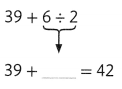
V = 15 × 10
V = 150

The volume of the rectangular prism is 150 cubic cm or 150 cm3.

Volume of B = length × width × height
V = l × w × h
V = (20 × 24) × 20
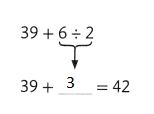
V = 480 × 20
V = 9600

The volume of the rectangular prism is 9600 cubic cm or 9600 cm3

Therefore, Combined volume is  150 cm3 + 9600 cm3  = 9750 cm3

Question 7.
How many cubic inches of concrete would it take to make these stairs?
Envision Math Common Core 5th Grade Answers Topic 11 Understand Volume Concepts 16.31
Answer:

Volume of first stair = length × width × height
V = l × w × h
V = (40 × 10) × 7
V = 400 × 7
V = 2800

The volume of the first stair is 2800 cubic in or 2800 in3.

Volume of Second stair = length × width × height
V = l × w × h
V = (40 × 10) × 14
V = 400 × 14
V = 5600

The volume of the second stair is 5600 cubic in or 5600 in3

Volume of third stair = length × width × height
V = l × w × h
V = (40 × 10) × 21
V = 400 × 21
V = 8400

The volume of the rectangular prism is 8400 cubic in or 8400 in3

Therefore, Combined volume is  2800 in3 + 5600 in3 + 8400 in3  = 16800 in3

16800 cubic inches of concrete it takes to make these stairs

Problem Solving

Question 8.
A floor plan of Angelica’s bedroom and closet is shown at the right. The height of the bedroom is 9 feet. The height of the closet is 7 feet. What is the total volume of the bedroom and the closet?
Envision Math Common Core 5th Grade Answers Topic 11 Understand Volume Concepts 16.4
Answer:

Volume of bedroom = length × width × height
V = l × w × h
V = (14 × 12) × 9
V = 168 × 9
V = 1512

The volume of the second stair is 1512 cubic ft or 1512 ft3

Volume of  closet = length × width × height
V = l × w × h
V = (3 × 4) × 7
V = 12 × 7
V = 84

The volume of the rectangular prism is 84 cubic ft or 84 ft3

Therefore, Combined volume is  1512 ft3 + 84 ft3  = 11596 ft3

Question 9.
Critique Reasoning Does it make sense for Angelica to find the combined area of the bedroom floor and closet floor before finding the total volume? Explain your thinking.
Answer:

Yes. the total volume is sum of the bedroom and closet of Angelica room

Question 10.
Higher Order Thinking An office building surrounds a rectangular open air courtyard. What is the volume of the building? How did you find the answer?
Envision Math Common Core Grade 5 Answers Topic 11 Understand Volume Concepts 16.5
Answer:

Volume of building = length × width × height
V = l × w × h
V = (64 × 60) × 28
V = 3840 × 28
V = 107,520

The volume of the second stair is 107,520 cubic m or 107,520 m3

Volume of open air courtyard = length × width × height
V = l × w × h
V = (18 × 30) × 28
V = 540 × 28
V = 15120

The volume of the rectangular prism is 15120 cubic m or 15120 m3

Therefore, Total volume of building is  107,520 m3 – 15120 m3  = 92400 m3

Assessment Practice

Question 11.
Mrs. Bhatia’s closet consists of two sections, each shaped like a rectangular prism. She plans to buy mothballs to keep the moths away. She needs one box for every 32 cubic feet of space. How many boxes should she buy?
A. 6 boxes
B. 7 boxes
C. 8 boxes
D. 10 boxes
Envision Math Common Core Grade 5 Answers Topic 11 Understand Volume Concepts 16.6
Answer:

Volume of first section = length × width × height
V = l × w × h
V = (5 × 4) × 8
V = 20 × 8
V = 160

The volume of the first section is 160 cubic ft or 160 ft3

Volume of open second section = length × width × height
V = l × w × h
V = (3 × 2) × 8
V = 6 × 8
V = 48

The volume of the second section is 48 cubic ft or 48 ft3

Therefore, the total volume of the building is  160 ft3 + 48 ft3  = 208 ft3

If she needs one box for every 32 cubic feet of space. Then Number of boxes = 208 / 32 = 6.5

She needs 6 or 7 boxes.


Lesson 11.5 Use Appropriate Tools

Problem Solving

Solve & Share
A space station is being built from 24 cubic modules. The space station can be any shape but the modules must be placed together so that entire faces match up with each other. Choose a tool to create two different plans for the space station. Explain why you chose the tool you selected.

Thinking Habits
Be a good thinker! These questions can help you.
• Which tools can I use?
• Why should I use this tool to help me solve the problem?
• Is there a different tool I could use?
• Am I using the tool appropriately?
Envision Math Common Core Grade 5 Answers Topic 11 Understand Volume Concepts 17.1

Look Back! Use Appropriate Tools How did you decide which tool to use?

Visual Learning Bridge

Glossory

Essential Question How Can You Use Appropriate Tools question to Solve Volume Problems?

A.
Jeremiah needs to build a display of boxes that is 4 feet tall.
The boxes he uses are cubes that measure 1 foot on each edge. His display needs to look like a pyramid, with just one box in the top layer.
How many boxes will Jeremiah need to make his display?
Envision Math Common Core Grade 5 Answers Topic 11 Understand Volume Concepts 17.2

What do I need to do?
I need to choose an appropriate tool to solve this problem.

Here’s my thinking…
Envision Math Common Core Grade 5 Answers Topic 11 Understand Volume Concepts 17.3

B.
How can I use appropriate tools strategically to help me solve this problem?
I can
• decide which tool is appropriate.
• use cubes to solve this problem.
• use the tool correctly.

C.
I could use grid paper, but I will use cubes because building a display will make it easier to count the cubes.
Each cube represents 1 box in the display. My display will have 4 layers because it needs to be 4 feet tall, and each box is 1 foot high.
The display has 1 + 4 + 9 + 16 = 30 cubes.
Envision Math Common Core Grade 5 Answers Topic 11 Understand Volume Concepts 17.4
So, Jeremiah needs 30 boxes in all to make his display.

Convince Me! Use Appropriate Tools What tools other than cubes could you use to solve this problem? Explain.

Guided Practice

Use Appropriate Tools
A paint store manager is going to build a display with same-sized cubes. The display will look like a staircase with 5 steps. Each step in the display will be 6 cubes long. The store manager will build the staircase display with 1-foot plastic cubes.

Envision Math Common Core Grade 5 Answers Topic 11 Understand Volume Concepts 20.1

Question 1.
What tool might the manager use to be sure that there is enough space for the display? Explain.
Answer:

Question 2.
What is the volume of the display? Explain how you used tools to decide.
Answer:

Independent Practice

Use Appropriate Tools

Cindy plans to make a jewelry box shaped like a rectangular prism. She wants it to have a volume of 96 cubic inches.

Question 3.
How can you find possible dimensions of the box?
Answer:

Think about a tool you can use to help represent and solve the problem.
Envision Math Common Core Grade 5 Answers Topic 11 Understand Volume Concepts 20.3

Question 4.
What could the dimensions of that jewelry box be?
Answer:

Question 5.
Can Cindy build the box so that it is twice as wide as it is tall?
Answer:

Question 6.
Cindy has some ribbon to decorate the jewelry box. What tool might help her decide how much of the jewelry box she can decorate?
Answer:

Problem Solving
Performance Task

Flower Planters
An architect is designing flower planters for a park. Each planter consists of a border of 1-foot concrete cubes surrounding a square opening. Each concrete cube weighs 120 pounds. The diagram below shows the top view of some of the planters.
Envision Math Common Core Grade 5 Answers Topic 11 Understand Volume Concepts 21.1

Remember to think about which tools make sense for these problems.

Question 7.
Use Structure What is the total volume of a planter that has a 6 × 6 opening?
Answer:

Question 8.
Use Structure What is the total volume of a planter that has an 8 × 8 opening?
Answer:

Question 9.
Use Appropriate Tools What will be the total volume of a planter that has a 12 × 12 opening? Can you determine this by just using paper and pencil? Explain.
Answer:

Question 10.
Model with Math Each concrete cube used to make the planters costs $3.00. What is the total cost of the cubes needed for two planters with 6 × 6 openings, two with 8 × 8 openings, and two with 12 × 12 openings? Write an Expression that represents the total cost.
Answer:

Topic 11 Fluency Practice

Activity

Find a Match

Work with a partner. Point to a clue. Read the clue.
Look below the clues to find a match. Write the clue letter in the box above the match.
Find a match for every clue.

Envision Math Common Core Grade 5 Answers Topic 11 Understand Volume Concepts 50.1

Envision Math Common Core Grade 5 Answers Topic 11 Understand Volume Concepts 50.2

Answer:

Topic 11 Vocabulary Review

Word List

Glossory

Understand Vocabulary

In 1-3, choose the best term from the Word List. Write it on the blank.
• area
• cubic unit
• formula
• rectangular prism
• unit cube
• volume

Question 1.
The number of same-size unit cubes that fill a solid figure without overlaps or gaps in the figure’s ____
Answer:

The number of same-size unit cubes that fill a solid figure without overlaps or gaps in the figure’s volume

Question 2.
A solid figure with 6 rectangular faces that are not all squares is a(n) ___
Answer:

A solid figure with 6 rectangular faces that are not all squares is a rectangular prism

Question 3.
A rule that uses symbols to relate two or more quantities is a(n) ___.
Answer:

A rule that uses symbols to relate two or more quantities is a formula

Question 4.
Cross out the Expression(s) below that do NOT represent the volume of the prism.
Envision Math Common Core Grade 5 Answers Topic 11 Understand Volume Concepts 51.1
Answer:

Draw a line from each three-dimensional figure in Column A to its volume in Column B.

Envision Math Common Core Grade 5 Answers Topic 11 Understand Volume Concepts 52.1

Answer:

Question 8.
One box is 3 inches by 4 inches by 5 inches. A second box is 4 inches by 4 inches by 4 inches. Explain how to decide which box holds more.
Answer:

Volume of the first box is, V = 3 x 4 x 5 = 60 cubic inches.

Volume of the second box is, V = 4 x 4 x 4 = 64 cubic inches.

The second box holds more because it has more volume.

Topic 11 Reteaching

Set A
pages 457-460

Find the number of cubes needed to make this rectangular prism.
Envision Math Common Core Grade 5 Answers Topic 11 Understand Volume Concepts 60.1
Multiply to find the total number of cubes.
3 × 5 × 3 = 45
The volume is 45 cubic units.

Remember, you can multiply the numbers in any order!
Envision Math Common Core Grade 5 Answers Topic 11 Understand Volume Concepts 60.6

Remember that you can find the number of cubes in each layer and then multiply by the number of layers.

Find each volume. You may use cubes to help.

Question 1.
Envision Math Common Core Grade 5 Answers Topic 11 Understand Volume Concepts 60.8
Answer:

Each cube of a solid figure is 1 cubic unit.

There are 14 unit cubes in the bottom layer. The volume of the bottom layer is 14 cubic units.

The volume of the prism is 14 × 2 or 28 cubic units.

Question 2.
Envision Math Common Core Grade 5 Answers Topic 11 Understand Volume Concepts 60.9
Answer:

Each cube of a solid figure is 1 cubic unit.

There are 10 unit cubes in the bottom layer. The volume of the bottom layer is 10 cubic units.

The volume of the prism is 10 × 2 or 20 cubic units.

Question 3.
Envision Math Common Core Grade 5 Answers Topic 11 Understand Volume Concepts 60.10
Answer:

Each cube of a solid figure is 1 cubic unit.

There are 12 unit cubes in the bottom layer. The volume of the bottom layer is 12 cubic units.

The volume of the prism is 12 × 6 or 72 cubic units.

Set B
pages 461-464
Find the volume of this rectangular prism.
Envision Math Common Core Grade 5 Answers Topic 11 Understand Volume Concepts 60.11
Volume = length × width × height V=l×w×h
= 9 cm × 4 cm × 2 cm
V = 72 cubic centimeters or 72 cm3
The volume of the prism is 72 cm3.

Remember if you know the area of the base of a rectangular prism, use the formula V = b × h, where b is the area of the base.

Find each volume. You may use cubes to help.

Question 1.
Area of the base, b = 42 square meters and height = 3 meters
Answer:

The volume of a rectangular prism is V = b × h, where b is the area of the base.
V = b × h.
V = 42 × 3
V = 126 m3

Question 2.
Area of the base = 75 square inches and height = 15 inches
Answer:

The volume of a rectangular prism is V = b × h, where b is the area of the base.
V = b × h.
V = 75 × 15
V = 1125 in3

Question 3.
Envision Math Common Core Grade 5 Answers Topic 11 Understand Volume Concepts 65.1
Answer:

Volume = length × width × height
Volume = l × w × h
V = (8 × 4) × 3
V = 32 × 3
V = 96

The volume of the B is 96 cubic ft or 70 ft3.

Set C
pages 465-468, 469-472

Some solid figures can be separated into two rectangular prisms.
Envision Math Common Core Grade 5 Answers Topic 11 Understand Volume Concepts 65.2
Add the volume of each prism to find the total volume of the solid figure.
V = (4 × 4 × 5) + (10 × 4 × 5)
= 80 + 200
= 280
The volume of the solid figure is 280 cubic inches.

Remember to identify the length, width, and height of each prism, so that you can calculate the volume of each part.

Question 1.
Find the volume.
Envision Math Common Core Grade 5 Answers Topic 11 Understand Volume Concepts 70.1
Answer:

Volume = length × width × height
Volume of A = l × w × h
V = (10 × 6) × 2
V = 60 × 2
V = 120

The volume of the A is 120 cubic cm or 120 cm3.

Volume = length × width × height
Volume of B  = l × w × h
V = (2 × 6) × 3
V = 12 × 3
V = 36

The volume of the B is 36 cubic cm or 36 cm3.

Combined Volume  of Solid Figure is 120 cm3 + 36 cm3  = 156 cm3

Question 2.
An office building has the dimensions shown. What is the volume of the building?
Envision Math Common Core Grade 5 Answers Topic 11 Understand Volume Concepts 70.2
Answer:

Volume = length × width × height
Volume of A = l × w × h
V = (70 × 50) × 90
V = 3500 × 90
V = 315,000

The volume of the A is 315,000 cubic m or 315,000 m3.

Volume = length × width × height
Volume of B  = l × w × h
V = (60 × 50) × 20
V = 3000 × 20
V = 60000

The volume of the B is 60000 cubic m or 60000 m3.

Combined Volume  of Solid Figure is 315,000 m3 + 60000 m3  = 375,000 m3

Set D
pages 473-476
Think about these questions to help you use appropriate tools strategically.

Thinking Habits
Molly used 1-inch cubes to build the structure shown. She left a 3-inch by 1-inch opening in both layers of the structure.
• Which tools can I use?
• Why should I use this tool to help me solve the problem?
• Is there a different tool I could use?
• Am I using the tool appropriately?
Envision Math Common Core Grade 5 Answers Topic 11 Understand Volume Concepts 101

Remember that tools such as place-value blocks, cubes, and grid paper can help you solve problems involving volume.

Envision Math Common Core 5th Grade Answer Key Topic 11 Understand Volume Concepts 70.4

Question 1.
What tools could you use to model the problem?
Answer:

cubes

Question 2.
What is the total volume of the structure?
Answer:

Total blocks in bottom layer = 5 x 3 =15

Height =2 ; total volume is 15 x 2 = 30.

blocks left = 3 x 1 x 2 = 6

Therefore, total volume = 30 – 6 = 24 cubic units

Topic 11 Assessment Practice

Question 1.
Julio used unit cubes to make a rectangular prism. What is the volume of the prism?
Envision Math Common Core 5th Grade Answer Key Topic 11 Understand Volume Concepts 70.40
A. 18 cubic units
B. 72 cubic units
C. 54 cubic units
D. 108 cubic units
Answer:

B. 72 cubic units

Question 2.
Select the possible dimensions for a prism with each given volume.
Envision Math Common Core 5th Grade Answer Key Topic 11 Understand Volume Concepts 80.1
Answer:

Question 3.
A. A swimming pool is 50 meters long, 15 meters wide, and 3 meters deep. What is the volume of the pool?
A. 4,500 cubic meters
B. 2,250 cubic meters
C. 900 cubic meters
D. 750 cubic meters
B. After filling the pool for several minutes, the water is 1 meter deep. What is the volume of water in the pool?
Answer:

A.

Volume = length × width × depth
Volume of Swimming pool = l × w × h
V = (50 × 15) × 3
V = 750 × 3
V = 2250

The volume of the Swimming pool is 2250 cubic m or 2250 m3.

B.

Volume = length × width × depth
Volume of Swimming pool after filling the pool for several minutes, the water is 1 meter deep =
V = (50 × 15) × 4
V = 750 × 4
V = 3000

The volume of the Swimming pool is 3000 cubic m or 3000 m3.

Question 4.
A small building has the dimensions shown.
A. Write an Expression for the total volume of the building.
Envision Math Common Core 5th Grade Answer Key Topic 11 Understand Volume Concepts 80.2
B. What is the volume of the building?
Answer:

A.

Volume = length × width × height
Volume of A = l × w × h
V = (8 × 12) × 24
V = 96 × 24
V = 2304

The volume of the A is 2304 cubic ft or 2304 ft3.

Volume = length × width × height
Volume of B  = l × w × h
V = (32 × 12) × 16
V = 384 × 16
V = 6114

The volume of the B is 6114 cubic ft or 6114 ft3

B.

Combined Volume  of Solid Figure is 2304 ft3 + 6114 ft3  = 8418 ft3

Question 5.
A. Choose all the Expressions that could NOT be used to find the volume of the bale of hay.
Envision Math Common Core 5th Grade Answer Key Topic 11 Understand Volume Concepts 103
Envision Math Common Core 5th Grade Answer Key Topic 11 Understand Volume Concepts 81 100 × 40
Envision Math Common Core 5th Grade Answer Key Topic 11 Understand Volume Concepts 81 (100 × 40) × 20
Envision Math Common Core 5th Grade Answer Key Topic 11 Understand Volume Concepts 81 4,000 × 20
Envision Math Common Core 5th Grade Answer Key Topic 11 Understand Volume Concepts 81 (100 × 40) + 20
Envision Math Common Core 5th Grade Answer Key Topic 11 Understand Volume Concepts 81 (100 + 40) + 20
B. Another 10 cm of hay is added to the top of the bale. What is the volume of the bale of hay now?
Answer:

A.

Envision Math Common Core 5th Grade Answer Key Topic 11 Understand Volume Concepts 81 (100 × 40) × 20
Envision Math Common Core 5th Grade Answer Key Topic 11 Understand Volume Concepts 81 4,000 × 20

B.

Volume = length × width × height
Volume of bale of hay  = l × w × h
V = (100 × 40) × 30
V = 4000 × 30
V = 120000

The volume of the bale of hay is 120000 cubic cm or 120000 cm3

Question 6.
Madeline made the wooden steps shown. What is the volume of the steps?
Envision Math Common Core 5th Grade Answer Key Topic 11 Understand Volume Concepts 82
A. 72 cubic inches
B. 540 cubic inches
C. 840 cubic inches
D. 1,080 cubic inches
Answer:

Volume = length × width × height
Volume of A = l × w × h
V = (10 × 9) × 6
V = 90 × 6
V = 540

The volume of the A is 540 cubic in or 540 in3.

Volume = length × width × height
Volume of B  = l × w × h
V = (10 × 5) × 6
V = 50 × 6
V = 300

The volume of the B is 300 cubic in or 300 in3

Combined Volume  of Solid Figure is 540 in3 + 300 in3  = 840 in3

Question 7.
A. What is the volume of the trunk shown?
Envision Math Common Core 5th Grade Answer Key Topic 11 Understand Volume Concepts 83
B. Which equation was used to find the volume of the trunk?
A. V = b × h
B. V = l × w × h
C. V = l × w
D. V = b × b × h
Answer:

A.

The volume of a rectangular prism is V = b × h, where b is the area of the base.
V = b × h.
V = 750 × 25
V = 18750 in3

B.

Option A. V = b × h

Question 8.
For her science project, Jada wants to build a rectangular prism out of foam blocks. The prism should have a volume of 350 cubic inches and a height of 5 inches.
What does the area of the base of the prism need to be for the given volume and height? Give one pair of possible whole-number dimensions for the base.
Answer:

The volume of a rectangular prism is V = b × h, where b is the area of the base.
V = b × h.
350 = b × 5
b = 350/5 = 70

The area of the base of the prism needs to be for the given volume and height is 70 in2

Question 9.
Martin’s suitcase has a volume of 1,080 cubic inches. Lily’s suitcase measures 9 inches wide, 13 inches long, and 21 inches high. What is the combined volume of the two suitcases?
Answer:

The volume of the first suitcase is 1080 cubic in or 1080 in3.

Volume = length × width × height
Volume of Second suitcase is  = l × w × h
V = (9 × 13) × 21
V = 117 × 21
V = 2457

The volume of the second suitcase is 2457 cubic in or 2457 in3

The combined volume of both suitcases is 1080 in3 + 2457 in3  = 3537 in3

Question 10.
Select all the Expressions that can be used to find the volume of the box in cubic centimeters.
Envision Math Common Core 5th Grade Answer Key Topic 11 Understand Volume Concepts 104
Envision Math Common Core 5th Grade Answer Key Topic 11 Understand Volume Concepts 84 8 × 6
Envision Math Common Core 5th Grade Answer Key Topic 11 Understand Volume Concepts 84 (4 × 8) × 6
Envision Math Common Core 5th Grade Answer Key Topic 11 Understand Volume Concepts 84 32 × 6
Envision Math Common Core 5th Grade Answer Key Topic 11 Understand Volume Concepts 84 46 × 8
Envision Math Common Core 5th Grade Answer Key Topic 11 Understand Volume Concepts 84 (4 × 8) + 6
Answer:

Envision Math Common Core 5th Grade Answer Key Topic 11 Understand Volume Concepts 84 (4 × 8) × 6
Envision Math Common Core 5th Grade Answer Key Topic 11 Understand Volume Concepts 84 32 × 6

Topic 11 Performance Task

Sporting Goods
Hiroto works in a sporting goods store. 1. Hiroto stacks identical boxes of golf balls to form a rectangular prism. Each box is a cube.
Envision Math Common Core 5th Grade Answer Key Topic 11 Understand Volume Concepts 85
Part A
How many boxes are in the Golf Ball Display?

Answer:

There are 84 boxes in the Golf Ball Display
Part B
Explain how the number of boxes you found in Part A is the same as what you would find by using the formula V= l × w ×h.

Answer:

Each block has volume of 1 cubic unit.

Length = 7 boxes

Breadth = 4 boxes

Height = 3 boxes

Volume is length x breadth x height

V= l × w ×h = 7 x 4 x 3

v = 28 x 3 = 84 cubic units.

Part C
Hiroto needs to restack the boxes so the display is 2 layers high, less than 14 inches wide, and less than 30 inches long. The size of each box is shown in at the right. What is one way Hiroto can stack the boxes? Justify your answer.
Envision Math Common Core 5th Grade Answer Key Topic 11 Understand Volume Concepts 86
Part D
What is the volume of the golf ball display in cubic inches? Explain how you solved.
Answer:

Question 2.
Hiroto builds two displays using rectangular foam blocks.
Part A
What is the volume of the foam block used for the Baseball Hats and Helmets Display? Explain how to solve using the formula V = b × h.
Envision Math Common Core 5th Grade Answer Key Topic 11 Understand Volume Concepts 86.1
Part B
Hiroto used two blocks to build the Baseball Uniforms Display. What is the combined volume of the blocks? Explain how you solved.
Envision Math Common Core 5th Grade Answer Key Topic 11 Understand Volume Concepts 87
Part C
Explain how you knew which units to use for your answer to Part B.
Answer: