Everyday Math Grade 3 Answers Unit 7 Fractions

Everyday Mathematics 3rd Grade Answer Key Unit 7 Fractions

Everyday Mathematics Grade 3 Home Link 7.1 Answers

Liquid Volume Hunt

Family Note Today your child used a set of benchmark beakers to estimate and measure liquid volume in liters (L) and milliliters (mL). Liquid volume is a measure of how much liquid a container can hold. Help your child look at labels to find containers of liquids that are measured in milliliters and liters. Have your child record the items in the table below.
Please send clean, empty, unbreakable containers to school for our next lesson.

Question 1.
Examine labels on items for liquid volume measured in liters or milliliters. Record your findings in the table below.
Everyday Mathematics Grade 3 Home Link 7.1 Answers 1

Answer:
Flavored water bottle = 530ml.
non-flavored water bottle = 1 liter.
orange color bottle = 500 ml.
green color bottle = 250 ml.
yellow color bottle = 750 ml.

Explanation:
In the above-given question,
given that,
Liquid volume is a measure of how much liquid a container can hold.
containers of liquids that are measured in milliliters and liters.
I am assuming the bottles with liquids.
Flavored water bottle = 530ml.
non-flavored water bottle = 1 liter.
orange color bottle = 500 ml.
green color bottle = 250 ml.
yellow color bottle = 750 ml.
 Everyday-Mathematics-Grade-3-Answer-Key-Chapter-7-Fractions-1

Question 2.
Circle an item that you can use as a benchmark for 1 liter.

Answer:
The item is non-flavored water bottle.

Explanation:
In the above-given question,
given that,
Liquid volume is a measure of how much liquid a container can hold.
containers of liquids that are measured in milliliters and liters.
I am assuming the bottles with liquids.
The item is non-flavored water bottle.
 Everyday-Mathematics-Grade-3-Answer-Key-Chapter-7-Fractions-2

Question 3.
Put a star next to an item that you can use as a benchmark for 500 milliliters.

Answer:
The item is orange color bottle.

Explanation:
In the above-given question,
given that,
Liquid volume is a measure of how much liquid a container can hold.
containers of liquids that are measured in milliliters and liters.
I am assuming the bottles with liquids.
so the 500 ml contains orange color bottle.

Try This
Question 4.
Estimate the liquid volume of a clean dinner plate: about _________ mL
If you have a measuring tool marked with milliliters, find the liquid volume of your dinner plate by measuring how much water it holds before spilling over the edges.
about _________ mL
On the back of this page, explain how you found the liquid volume of the dinner plate.

Answer:
The dinner plate holds 500 ml of water before it spilling over the edges.

Explanation:
In the above-given question,
given that,
The clean dinner plate is about 500 ml.

Everyday Math Grade 3 Home Link 7.2 Answer Key

Exploring Equivalent Fractions

Family Note Today your child explored different representations of equal shares and played Fraction Memory. Help your child make sense of the Fraction Memory round below.

Question 1.
Nash chose these two cards in a round of Fraction Memory:
Everyday Math Grade 3 Home Link 7.2 Answer Key 1
Nash says that these cards show equivalent fractions. Do you agree or disagree? Explain.

Answer:
No.

Explanation:
In the above-given question,
given that,
in 1st circle is shaded with 5/6 portion.
2nd circle is shaded with 6/8.
so both of the circles are not equal.
so disagree.

Practice
Solve.
Question 2.
6 × 9 = _________

Answer:
6 x 9 = 54.

Explanation:
In the above-given question,
given that,
Multiply.
6 x 9 = 54.

Question 3.
9 × 8 = _________

Answer:
9 x 8 = 72.

Explanation:
In the above-given question,
given that,
Multiply.
8 x 9 = 72.
9 x 8 = 72.

Question 4.
_________ = 7 × 8

Answer:
7 x 8 = 56.

Explanation:
In the above-given question,
given that,
Multiply.
7 x 8 = 56.

Everyday Mathematics Grade 3 Home Link 7.3 Answers

Number Stories with Measures

Family Note Today your child solved number stories involving time, volume, mass, and length. Help your child make sense of the stories below. Problems 1 and 2 are similar to those we solved in class. For the Try This problem, you may wish to remind your child that 2 halves make 1 whole.

Solve. Use drawings or number models to show your work.
Question 1.
The liquid volume of 1 juice box is about 150 mL. What is the liquid volume of 3 juice boxes?
about Everyday Mathematics Grade 3 Home Link 7.3 Answers 1

Answer:
The liquid volume of 3 juice boxes = 450 ml.

Explanation:
In the above-given question,
given that,
The liquid volume of 1 juice box is about 150 ml.
150 + 150 = 300.
300 + 150 = 450.
150 x 3 = 450.
so the liquid volume of 3 juice boxes = 450 ml.
 Everyday-Mathematics-Grade-3-Answer-Key-Chapter-7-Fractions-3

Question 2.
Art club ends at 3:30 P.M. Your mom arrives to pick you up at 3:10 P.M. If the teacher lets you out 5 minutes late, about how long does your mom have to wait?
about Everyday Mathematics Grade 3 Home Link 7.3 Answers 1
Answer:
The number of minutes mom have to wait = 25 minutes.

Explanation:
In the above-given question,
given that,
Art club ends at 3:30 P.M.
Mom arrives to pick up at 3:10 P.M.
If the teacher lets you out 5 minutes late.
3:30 + 5 = 3:35.
3:35 – 3:10 = 3:25.
so the mom have to wait for 25 minutes.
 Everyday-Mathematics-Grade-3-Answer-Key-Chapter-7-Fractions-4

Try This
Question 3.
Anastasia’s water bottle has a liquid volume of about 1 liter. She drinks about 1 \(\frac{1}{2}\) bottles of water every day.
About how many liters of water does Anastasia drink in 5 days? You may draw a picture.
about Everyday Mathematics Grade 3 Home Link 7.3 Answers 1

Answer:
The number of liters of water does Anastasia drink in 5 days = 7.5 liters.

Explanation:
In the above-given question,
given that,
Anastasia’s water bottle has a liquid volume of about 1 liter.
She drinks about 1 \(\frac{1}{2}\) bottles of water every day.
1 day = 1.5.
5 x 1.5 = 7.5.
so the number of liters of water does Anastasia drink in 5 days = 7.5 liters.
Everyday-Mathematics-Grade-3-Answer-Key-Chapter-7-Fractions-5

Everyday Math Grade 3 Home Link 7.4 Answer Key

Fraction Strips

Family Note Today your child made a set of fraction strips. Fraction strips are equal-length strips folded into equal parts. Each equal part is labeled with the appropriate unit fraction, such as \(\frac{1}{2}\) and \(\frac{1}{4}\). The strips can be used to compare fractions.
Help your child shade rectangles to show each fraction and write fractions that match the shaded parts.

Shade each rectangle to match the fraction below it.
Example: Everyday Math Grade 3 Home Link 7.4 Answer Key 1

Question 1.
Everyday Math Grade 3 Home Link 7.4 Answer Key 2

Answer:
2 boxes are filled out of 3 boxes.

Explanation:
In the above-given question,
given that,
there are 3 boxes.
out of 3 boxes,2 are filled.
2/3.
 Everyday-Mathematics-Grade-3-Answer-Key-Chapter-7-Fractions-6

Question 2.
Everyday Math Grade 3 Home Link 7.4 Answer Key 3

Answer:
3 boxes are filled out of 8 boxes.

Explanation:
In the above-given question,
given that,
there are 8 boxes.
out of 8 boxes,3 are filled.
3/8.
 Everyday-Mathematics-Grade-3-Answer-Key-Chapter-7-Fractions-7

Question 3.
Everyday Math Grade 3 Home Link 7.4 Answer Key 4

Answer:
3 boxes are filled out of 6 boxes.

Explanation:
In the above-given question,
given that,
there are 6 boxes.
out of 6 boxes,3 are filled.
3/6.
 Everyday-Mathematics-Grade-3-Answer-Key-Chapter-7-Fractions-7

Question 4.
Everyday Math Grade 3 Home Link 7.4 Answer Key 5

Answer:
1 box is filled out of 4 boxes.

Explanation:
In the above-given question,
given that,
there are 4 boxes.
out of 4 boxes,1 are filled.
1/4.
 Everyday-Mathematics-Grade-3-Answer-Key-Chapter-7-Fractions-8

Compare the shaded parts of the fraction strips. Write >, <, or = to make the number sentence true
Everyday Math Grade 3 Home Link 7.4 Answer Key 6

Question 5.
Everyday Math Grade 3 Home Link 7.4 Answer Key 7
\(\frac{1}{4}\) ________ \(\frac{1}{3}\)

Answer:
1/4 < 1/3.

Explanation:
In the above-given question,
given that,
the numbers are 1/4 and 1/3.
1/4 = 0.25.
1/3 = 0.3.
0.25 < 0.3.
1/4 < 1/3.

Question 6.
Everyday Math Grade 3 Home Link 7.4 Answer Key 8
\(\frac{4}{6}\) __________ \(\frac{2}{6}\)

Answer:
4/6 > 2/6.

Explanation:
In the above-given question,
given that,
the numbers are 4/6 and 2/6.
4/6 = 0.6.
2/6 = 0.3.
0.6 > 0.3.
4/6 > 2/6.

Practice
Make an estimate. Then show how you solve each problem on the back of this page. Explain to someone how you can use your estimate to check whether your answer makes sense.
Question 7.
963 – 548 = __________
My estimate: __________

Answer:
963 – 548 = 415.

Explanation:
In the above-given question,
given that,
difference.
963 – 548 = 415.
950 – 550 = 400.

Question 8.
412 + 298 = __________
My estimate: __________

Answer:
412 + 298 = 710.

Explanation:
In the above-given question,
given that,
Addition.
412 + 298 = 710.
400 + 300 = 700.

Everyday Mathematics Grade 3 Home Link 7.5 Answers

Fractions on Number Lines

Family Note Today your child learned about fractions as numbers on a number line. Children made their own Fraction Number-Line Posters by dividing number lines from 0 to 1 into equal-size parts, or distances. They labeled the tick marks with the appropriate fractions. Support your child in locating fractions on the number lines below.

Question 1.
Write the fraction that represents the distance the triangle moved.
Everyday Mathematics Grade 3 Home Link 7.5 Answers 1

Answer:
The missing fractions are 1/2 and 3/8.

Explanation:
In the above-given question,
given that,
some of the fractions are missing.
the missing fractions are 1/2 and 3/8.
 Everyday-Mathematics-Grade-3-Answer-Key-Chapter-7-Fractions-9

Question 2.
Write the missing fractions.
Everyday Mathematics Grade 3 Home Link 7.5 Answers 2

Answer:
The missing fractions are 1/3, 2/3, 0/4, 1/4, and 4/4.

Explanation:
In the above-given question,
given that,
the number lines.
some of the fractions are missing.
the missing fractions are 1/3.
1/3 + 1/3 = 2/3.
1/3 and 2/3.
0/4 + 1 = 1/4.
1/4 + 3 = 4/4.
 Everyday-Mathematics-Grade-3-Answer-Key-Chapter-7-Fractions-10

Practice
Fill in the unit. Solve. Show your work.
Everyday Mathematics Grade 3 Home Link 7.5 Answers 3
Question 3.
333 + 492 = _________

Answer:
333 + 492 = 825.

Explanation:
In the above-given question,
given that,
Addition.
333 + 492 = 825.

Question 4.
_______ = 888 – 678

Answer:
888 – 678 = 210.

Explanation:
In the above-given question,
given that,
Subtraction.
888 – 678 = 210.

Everyday Math Grade 3 Home Link 7.6 Answer Key

More Fractions on Number Lines

Family Note Today your child identified fractions that are less than or greater than 1 on number lines. Help your child count the number of equal parts or distances between 0 and 1 and label each tick mark with a fraction.

For each number line, fill in the missing numbers. Then name the fraction at each point.
Question 1.
Everyday Math Grade 3 Home Link 7.6 Answer Key 1
_________ names the point on the number line.

Answer:
The missing fractions are 1/3, 2/3.

Explanation:
In the above-given question,
given that,
the numbers on the number line.
0/3 + 1 = 1/3.
1/3 + 1 = 2/3.
so the missing numbers are 1/3, 2/3.
 Everyday-Mathematics-Grade-3-Answer-Key-Chapter-7-Fractions-11

Question 2.
Everyday Math Grade 3 Home Link 7.6 Answer Key 2
_________ names the point on the number line.

Answer:
The missing fractions are 1/3, 3/3, 5/3.

Explanation:
In the above-given question,
given that,
the numbers on the number line.
1/3 + 1 = 2/3.
2/3 + 1 = 3/3.
4/3 + 1 = 5/3.
so the missing numbers are 1/3, 3/3, 5/3.
Everyday-Mathematics-Grade-3-Answer-Key-Chapter-7-Fractions-12

Question 3.
Everyday Math Grade 3 Home Link 7.6 Answer Key 3
_________ names the point on the number line.

Answer:
The missing fractions are 1/6, 2/6, 3/6, 4/6, 5/6, 7/6, 8/6, 9/6, 10/6, 11/6.

Explanation:
In the above-given question,
given that,
the numbers on the number line.
0/6 + 1 = 1/6.
1/6 + 1 = 2/6.
2/6 + 1 = 3/6.
3/6 + 1 = 4/6.
4/6 + 1 = 5/6.
6/6 + 1 = 7/6.
7/6 + 1 = 8/6.
8/6 + 1 = 9/6.
9/6 + 1 = 10/6.
10/6 + 1 = 11/6.
so the missing numbers are 1/6, 2/6,3/6, 4/6, 5/6, 7/6, 8/6, 9/6, 10/6, 11/6.
 Everyday-Mathematics-Grade-3-Answer-Key-Chapter-7-Fractions-13

Question 4.
Look at the point on each number line. Which point names a fraction greater than 1?

Answer:
The fraction greater than 1 is 9/6.

Explanation:
In the above-given question,
given that,
the fraction greater than 1.
6/6 = 1.

Practice
Fill in the unit. Solve. Show your workon the back of this page.
Everyday Math Grade 3 Home Link 7.6 Answer Key 4
Question 5.
549 – 289 = ________

Answer:
549 – 289 = 260.

Explanation:
In the above-given question,
given that,
Subtraction.
549 – 289 = 260.

Question 6.
739 + 261 = _________

Answer:
739 + 261 = 1000.

Explanation:
In the above-given question,
given that,
Addition.
739 + 261 = 1000.

Everyday Mathematics Grade 3 Home Link 7.7 Answers

Comparing Fractions to \(\frac{1}{2}\)

Family Note Today your child wrote number sentences comparing fractions shown with fraction circles and number lines. Ask your child to explain whether the fractions represented below are greater than (>), less than (<), or equal to (=) \(\frac{1}{2}\)

Shade each circle to match the fraction below it.
Example:
Everyday Mathematics Grade 3 Home Link 7.7 Answers 1

Question 1.
Everyday Mathematics Grade 3 Home Link 7.7 Answers 2

Answer:
2 boxes are filled out of 3 boxes.

Explanation:
In the above-given question,
given that,
the circle is divided into 3 parts.
out of 3 parts 2 parts are filled.
2/3.
 Everyday-Mathematics-Grade-3-Answer-Key-Chapter-7-Fractions-14

Question 2.
Everyday Mathematics Grade 3 Home Link 7.7 Answers 3

Answer:
3 boxes are filled out of 6 boxes.

Explanation:
In the above-given question,
given that,
the circle is divided into 6 parts.
out of 6 parts 3 parts are filled.
3/6.
 Everyday-Mathematics-Grade-3-Answer-Key-Chapter-7-Fractions-15

Question 3.
Everyday Mathematics Grade 3 Home Link 7.7 Answers 4

Answer:
1 box are filled out of 4 boxes.

Explanation:
In the above-given question,
given that,
the circle is divided into 4 parts.
out of 4 parts 1 part are filled.
1/4.
 Everyday-Mathematics-Grade-3-Answer-Key-Chapter-7-Fractions-16

Look at the shaded parts of the circles.
Question 4.
Write the fraction above that is less than \(\frac{1}{2}\).

Answer:
1/4.

2 boxes are filled out of 3 boxes.

Explanation:
In the above-given question,
given that,
1/2 = 0.5.
1/4 = 0.25.
1/4 < 1/2.

Question 5.
Write the fraction above that is equal to \(\frac{1}{2}\).

Answer:
3/6.

Explanation:
In the above-given question,
given that,
3/6 = 0.5.
1/2 = 0.5.

Question 6.
Write the fraction above that is greater than \(\frac{1}{2}\).

Answer:
2/3.

Explanation:
In the above-given question,
given that,
2/3 = 0.6.
1/2 = 0.5.

Question 7.
Write <, >, or = to make the sentence true. You may draw a picture to help.
\(\frac{3}{4}\) __________ \(\frac{1}{4}\)

Answer:
3/4 > 1/4.

Explanation:
In the above-given question,
given that,
the numbers are 3/4 and 1/4.
3/4 = 0.75.
1/4 = 0.25.
0.75 > 0.25.

Everyday Math Grade 3 Home Link 7.8 Answer Key

Sorting Fractions

Family Note Today your child looked for patterns to help order fractions with the same numerator. Children recognized that as a fraction’s denominator gets larger the fraction gets smaller. They were able to write this as a rule for ordering fractions with the same numerator. For Problem 1, your child will sort a set of fractions into two groups: fractions greater than 1 and fractions less than 1. In Problem 2, your child will look for patterns to help sort any set of fractions into these two groups.

Question 1.
Look at the fractions below and sort them into two groups: fractions less than 1 and fractions greater than 1. Use the number lines on the following page to help you.
\(\frac{1}{2}, \frac{2}{3}, \frac{6}{4}, \frac{3}{2}, \frac{7}{8}, \frac{5}{3}, \frac{6}{8}, \frac{7}{6}\)
Everyday Math Grade 3 Home Link 7.8 Answer Key 1

Answer:
The fraction less than 1 = 1/2, 2/3, 7/8, 6/8.
The fraction greater than 1 = 6/4, 3/2, 5/3, 7/6.

Explanation:
In the above-given question,
given that,
the fractions are 1/2, 2/3, 7/8, 6/8, 6/4, 3/2, 5/3, 7/6.
the fractions less than 1 = 1/2, 2/3, 7/8, 6/8.
the fraction greater than 1 = 6/4, 3/2, 5/3, 7/6.
 Everyday-Mathematics-Grade-3-Answer-Key-Chapter-7-Fractions-17

Question 2.
Look for a pattern in the fractions you sorted. Describe a pattern that can help you decide whether a fraction is less than 1 or greater than 1.
Fraction Number Lines
Everyday Math Grade 3 Home Link 7.8 Answer Key 2

Answer:
The fractions that are less than 1 is the numerator is less than the denominator.
the fractions that are greater than 1 is the numerator is greater than the denominator.

Explanation:
In the above-given question,
given that,
the fractions less than 1 are 1/2, 1/3, 1/4, 2/3, 3/4.
the fraction greater than 1 are 16/8, 15/8, 14/8, 13/8, 12/8 ….

Everyday Mathematics Grade 3 Home Link 7.9 Answers

Locating Fractions on Number Lines

Family Note Today your child learned to partition, or divide, number lines into equal parts and then locate and label fractions between whole numbers. The denominator of the given fraction describes the number and size of the equal parts. A whole on each number line below is equal to the distance between 0 and 1.

Partition the wholes on each number line. Then locate and label the given fractions. Tell someone at home how you partitioned your number lines.
Question 1.
\(\frac{1}{2}\)
Everyday Mathematics Grade 3 Home Link 7.9 Answers 1

Answer:
The missing fractions are 1/2.

Explanation:
In the above-given question,
given that,
the fraction is 1/2.
1/2 is located in the middle of the number line.
 Everyday-Mathematics-Grade-3-Answer-Key-Chapter-7-Fractions-18

Question 2.
\(\frac{1}{4}\)
Everyday Mathematics Grade 3 Home Link 7.9 Answers 1

Answer:
The missing fractions are 1/4.

Explanation:
In the above-given question,
given that,
the fraction is 1/4.
1/4 is located in the middle of the number line.
 Everyday-Mathematics-Grade-3-Answer-Key-Chapter-7-Fractions-19

Question 3.
\(\frac{2}{3}\)
Everyday Mathematics Grade 3 Home Link 7.9 Answers 1

Answer:
The missing fractions are 2/3.

Explanation:
In the above-given question,
given that,
the fraction is 2/3.
2/3 is located in the right side of the number line.

Question 4.
\(\frac{5}{6}\)
Everyday Mathematics Grade 3 Home Link 7.9 Answers 1

Answer:
The missing fractions are 5/6.

Explanation:
In the above-given question,
given that,
the fraction is 5/6.
5/6 is located in the right side of the number line.
 Everyday-Mathematics-Grade-3-Answer-Key-Chapter-7-Fractions-20

Try This
Question 5.
\(\frac{3}{2}\)
Everyday Mathematics Grade 3 Home Link 7.9 Answers 2

Answer:
The missing fractions are 3/2.

Explanation:
In the above-given question,
given that,
the fraction is 3/2.
3/2 is located in the right side of the number line.
 Everyday-Mathematics-Grade-3-Answer-Key-Chapter-7-Fractions-21

Everyday Math Grade 3 Home Link 7.10 Answer Key

Matching Fraction Tools

Family Note Your child has been using number lines, fraction circles, and fraction strips to learn about and represent fractions. Today your child used these tools to make and justify fraction comparisons. Encourage your child to explain how he or she matched each number sentence with a picture that represents the fraction comparison.

Draw a line from each number sentence to the picture that represents it.
Everyday Math Grade 3 Home Link 7.10 Answer Key 1
On the back of this page, write one of the above fraction number sentences. Sketch a different fraction tool that shows the same comparison.

Answer:
1/2 > 1/8.

Explanation:
In the above-given question,
given that,
2/6 < 5/6 is matched with circles.
 Everyday-Mathematics-Grade-3-Answer-Key-Chapter-7-Fractions-22

Everyday Mathematics Grade 3 Home Link 7.11 Answers

Fraction Number Stories

Family Note Today your child solved fraction number stories using a variety of fraction models, including pictures. Encourage your child to sketch a picture to represent each story.

Solve these number stories. Show your answer as a fraction. You may draw pictures to show your work.
Question 1.
Ralph read \(\frac{1}{8}\) of his book. What fraction of the book does he still have left to read?
My sketch:
____________ of his book

Answer:
The fraction of the book does he still has left to read = 7/8.

Explanation:
In the above-given question,
given that,
Ralph read 1/8 of his book.
1/8 + 7/8 = 8/8.
8/8 = 1.
so the fraction of the book does he still have left to read = 7/8.

Question 2.
Four friends equally share two bottles of juice. How much juice will each friend get?
My sketch:
____________ of a bottle of juice

Answer:
The fraction of juice will each friend gets = 1/2.

Explanation:
In the above-given question,
given that,
Four friends equally share two bottles of juice.
1/4 + 1/4 = 2/4.
2/4 = 1/2.
so the fraction of juice will each friend gets = 1/2.

Question 3.
Nora rode her bike \(\frac{2}{2}\) of a block. Brady rode his bike \(\frac{4}{4}\) of the same block. Compare the distances each child rode. What do you notice?
Explain your answer.
My sketch:

Answer:
They both rode the same distance.

Explanation:
In the above-given question,
given that,
Nora rode her bike 2/2 = 1 of a block.
Brady rode his bike 4/4 = 1 of the same block.
so they both rode the same distance.

Everyday Math Grade 3 Home Link 7.12 Answer Key

Fractions of Collections

Family Note Today your child used fractions to name parts of collections of objects. As you help your child, encourage him or her to use sketches, pennies, or other tools to solve the number stories.

Solve. Explain to someone at home how you figured out the numerator and the denominator for each fraction in Problems 1–3.
Question 1.
12 dogs are in the park. 2 of them are chasing a ball.
What fraction of the dogs are chasing a ball? ________

Answer:
The fraction of the dogs are chasing a ball = 2/12.

Explanation:
In the above-given question,
given that,
12 dogs are in the park.
2 of them are chasing a ball.
2/12 = 1/6.
so the fraction of the dogs are chasing a ball = 2/12.

Question 2.
7 children are waiting for the school bus. 4 of them are girls.
What fraction of the children are girls? ________

Answer:
The fraction of the children are girls = 4/7.

Explanation:
In the above-given question,
given that,
7 children are waiting for the school bus.
4 of them are girls.
4/7.
so the fraction of the children are girls = 4/7.

Question 3.
There are 16 tulips in the garden. 4 of them are red.
What fraction of the tulips are not red? ________

Answer:
The fraction of the tulips are not red = 12/16.

Explanation:
In the above-given question,
given that,
There are 16 tulips in the garden.
4 of them are red.
16 – 4 = 12.
12/16.

Question 4.
Lisa and Carlie each have 6 cups. \(\frac{2}{6}\) of Lisa’s cups are yellow. \(\frac{4}{6}\) of Carlie’s cups are yellow. Who has more yellow cups?
Draw a picture to show your thinking.
________ has more yellow cups.

Answer:
Carlie has more yellow cups.

Explanation:
In the above-given question,
given that,
Lisa and Carlie each have 6 cups.
2/6 of Lisa’s cups are yellow.
4/6 of Carlie’s cups are yellow.
2/6 = 0.33.
4/6 = 0.6.
so Carlie has more yellow cups.

Practice
Fill in the un it. Solve. Show your work on the back of this page.
Everyday Math Grade 3 Home Link 7.12 Answer Key 1
Question 5.
476 = 741 – ________

Answer:
741 – 265 = 476.

Explanation:
In the above-given question,
given that,
Subtraction.
265 + 476 = 741.
741 – 265 = 476.

Question 6.
558 = ________ – 328

Answer:
886 – 328 = 558.

Explanation:
In the above-given question,
given that,
subtraction.
558 + 328 = 886.
886 – 328 = 558.

Everyday Math Grade 3 Answers Unit 3 Operations

Everyday Mathematics 3rd Grade Answer Key Unit 3 Operations

Everyday Mathematics Grade 3 Home Link 3.1 Answers

“ What’s My Rule? ”

Family Note Today your child practiced adding, subtracting, multiplying, and dividing in “What’s My Rule?” problems. Children were introduced to the “What’s My Rule?” routine in Kindergarten Everyday Mathematics. In First and Second Grade Everyday Mathematics, they continued to use the routine to practice addition and subtraction. You can find an explanation of function machines and “What’s My Rule?” tables on pages 74-75 in the Student Reference Book. Ask your child to explain how they work. Help your child fill in all the missing parts for these problems.

Complete the “What’s My Rule?”problems. Make up problems of your own for the last table. Explain to someone how you figured out the in and out numbers.
Question 1.
Everyday Mathematics Grade 3 Home Link 3.1 Answers 1
Answer:
Everyday Math Grade 3 Answers Unit 3 Operations-1

Explanation:
Rule : Subtract 7 so
in – 14 , out – 14 -7 = 7,
in -7, out – 7 – 0 = 7,
in – 12, out – 12 – 7 = 5,
in – 15, out – 15 – 7 = 8,
in – 10, out – 10 – 7 = 3,
in – 21, out – 21 – 7 = 14 as shown above.

Question 2.
Everyday Mathematics Grade 3 Home Link 3.1 Answers 2
Answer:
Everyday Math Grade 3 Answers Unit 3 Operations-2
Explanation:
Rule : Multiply by 5 so
in – 1 , out – 1 X 5 = 5,
in -5, out – 5 X 5 = 25, (25/5 = 5),
in – 4, out – 4 X 5 = 20,(20/5 = 4),
in – 6, out – 6 X 5 = 30, (30/5 = 6),
in – 2, out – 2 X 5 = 10 as shown above.

Question 3.
Everyday Mathematics Grade 3 Home Link 3.1 Answers 3
Answer:
Everyday Math Grade 3 Answers Unit 3 Operations-3
Explanation:
Rule : Adding 30 so
in – 70 , out – 70 + 30 = 100,
in -20, out – 20 + 30 = 50,
in – 30, out – 30 + 30 = 60, (60 – 30 = 30),
in – 90, out – 90 + 30 = 120,
in – 50, out – 50 + 30= 80,
in – 60, out – 60 + 30 = 90, (90 – 30 = 60)  as shown above.

Question 4.
Everyday Mathematics Grade 3 Home Link 3.1 Answers 4
Answer:
Everyday Math Grade 3 Answers Unit 3 Operations-4
Explanation:
Rule : Dividing by 2 so
in – 8 , out – 8/2 = 4,
in -6, out – 6/2 = 3,
in – 20, out – 20/2 = 10,
in – 12, out – 12/2 = 6,
in – 30, out – 30/2= 15 as shown above.

Everyday Math Grade 3 Home Link 3.2 Answer Key

Solving Problems Home Link 3-2 with Estimation

Family Note Today your child used close-but-easier numbers and estimation to solve problems. Ask your child to explain what a close-but-easier number is and when it might make sense to use an estimate rather than an exact answer. Using mental math in making estimates is important in everyday life and in Everyday Mathematics.

Question 1.
Use close-but-easier numbers to estimate the answer to this problem.
78 + 43 = ?
My close-but-easier numbers are _____120________
My estimate is ___121_______
Answer:
My close-but-easier numbers are 120,
My estimate is 121,

Explanation:
Used close-but-easier numbers to estimate
the answer to this problem 78 + 43 =
My close-but-easier numbers are 120,
My estimate is 121.

Question 2.
At their October meeting, the school’s book club set a goal for its members to read 1,000 books before the end of the year. In October the book club read 221 books, and in November they read 387 books. Without using a pencil and paper, use close-but-easier numbers to make an estimate of about how many books the club will need to read in December to reach its goal.
My close-but-easier numbers are _____400________.
The club needs to read about _____392________ books in December.
Answer:
My close-but-easier numbers are _____400________.
The club needs to read about _______392______ books in December,

Explanation:
Given at their October meeting, the school’s book club
set a goal for its members to read 1,000 books before
the end of the year.
In October the book club read 221 books, and in
November they read 387 books. Without using
a pencil and paper, used close-but-easier numbers
to make an estimate of about how many books the
club will need to read in December to reach its goal
as (1,000 – (221 + 387)) = 1,000 – 608 = 392 books,
Therefore, my close-but-easier numbers are 400.
The club needs to read about 392 books in December.

Everyday Mathematics Grade 3 Home Link 3.3 Answers

Partial-Sums Addition

Family Note Today your child learned about adding 3-digit numbers using partial-sums addition. Your child may choose to use partial-sums addition or may prefer a different method.

Solve each addition problem. You may want to use partial-sums addition. Use an estimate to check that your answer makes sense. Write a number model to show your estimate
Question 1.
Estimate: ____340_____
Everyday Mathematics Grade 3 Home Link 3.3 Answers 1
Answer:
Everyday Math Grade 3 Answers Unit 3 Operations-5
Explanation:
Solvedaddition problem used partial-sums addition.
Used an estimate to check that myour answer makes sense.
Wrote a number model to show my estimate as 340.

Question 2.
Estimate: _340________
Everyday Mathematics Grade 3 Home Link 3.3 Answers 2
Answer:

Everyday Math Grade 3 Answers Unit 3 Operations-6

Explanation:
Solvedaddition problem used partial-sums addition.
Used an estimate to check that myour answer makes sense.
Wrote a number model to show my estimate as 340.

Question 3.
Estimate: __560_______
Everyday Mathematics Grade 3 Home Link 3.3 Answers 3
Answer:

Everyday Math Grade 3 Answers Unit 3 Operations-7
Explanation:
Solvedaddition problem used partial-sums addition.
Used an estimate to check that myour answer makes sense.
Wrote a number model to show my estimate as 560.

Question 4.
Estimate: __570_______
Everyday Mathematics Grade 3 Home Link 3.3 Answers 4
Answer:

Everyday Math Grade 3 Answers Unit 3 Operations-8

Explanation:
Solvedaddition problem used partial-sums addition.
Used an estimate to check that myour answer makes sense.
Wrote a number model to show my estimate as 570.

Everyday Math Grade 3 Home Link 3.4 Answer Key

Multidigit Addition

Family Note Today your child learned column addition, a strategy for adding multidigit numbers. Discuss the example with your child.

Tell someone about column addition.
Example: 248 + 79 = ?
Estimate: 200 + 100 = 300
Everyday Math Grade 3 Home Link 3.4 Answer Key 1
Add each column of numbers.
There are two digits in the ones column, so trade 10 ones for 1 ten,
then move 1 ten to the tens column.
There are two digits in the tens column, 2 12 7 so trade 10 tens for 1 hundred, then move 1 hundred to the hundreds column.
248 + 79 = 327.

Question 1.
For the problem below, estimate the sum. Then use column addition to solve. Show your work. Use your estimate to check whether your answer makes
sense.
89 + 26 = ?
Estimate: _____90 + 30 = 120______
89 + 26 = _____115______
Answer:
Everyday Math Grade 3 Answers Unit 3 Operations-9
Explanation:
Adding each column of numbers.
There are two digits in the ones column,
so trade 10 ones for 1 ten,
then move 1 ten to the tens column.
There are two digits in the tens column,
1 1 so trade 10 tens for 1 hundred, then
move 1 hundred to the hundreds column.
89 + 26 = 115.

Everyday Mathematics Grade 3 Home Link 3.5 Answers

Counting-Up Subtraction

Family Note Today your child reviewed the counting-up method for subtraction. Discuss the example problem with your child.

Explain counting-up subtraction to someone at home. Use it to solve Problems 1 and 2. Show what you did on an open number line or with number sentences. Compare your answers to your estimates to check whether your answers make sense.
Example: 468 – 274 = ?
Estimate: 500 – 300 = 200
Everyday Mathematics Grade 3 Home Link 3.5 Answers 1
468 – 274 = 194

Question 1.
531 – 329 = ?
Estimate: ___500 – 300 = 200________
531 – 329 = ____202_______
Answer:
Everyday Math Grade 3 Answers Unit 3 Operations-10
531 – 329 = 202,

Explanation:
Given to solve 531 – 329 =
So estimate is 500 – 200 = 200 and on number line
as shown above we get 531 – 329 = 202 which is near
to my estimate as 500 – 300 = 200, So 202 ≈ 200.

Question 2.
331 – 209 = ?
Estimate: __300 –  200 = 100___
331 – 209 = ____122_____
Answer:
Everyday Math Grade 3 Answers Unit 3 Operations-11
Explanation:
Given to solve 331 – 209 =
So estimate is 300 – 200 = 100 and on number line
as shown above we get 331 – 209 = 122 which is near
to my estimate as 300 – 200 = 100, So  122 ≈ 100.

Everyday Math Grade 3 Home Link 3.6 Answer Key

Expand-and-Trade Subtraction

Family Note Today your child used expand-and-trade subtraction to find differences between 3-digit numbers. This method reinforces children’s understanding of place value. Learning different strategies helps children think flexibly and apply strategies that make sense to them.

Fill in the unit. Estimate and then solve the problems. You may use any strategy you like. Use your estimates to check that your answers make sense. On the back of this Home Link, explain how you solved one of the problems.
Question 1.
Estimate: ____500 – 300 = 200___
Everyday Math Grade 3 Home Link 3.6 Answer Key 1
Answer:
Estimate : 500 – 300 = 200,
Everyday Math Grade 3 Answers Unit 3 Operations-12

Explanation:
Given to solve 468 – 274,
As per estimate it is 500 – 300 = 200 and
solving we get 468 – 274 = 194, So 200 ≈ 194.

Question 2.
Estimate: ___500 – 300 = 200____
Everyday Math Grade 3 Home Link 3.6 Answer Key 2
Answer:
Estimate : 500 – 300 = 200,
Everyday Math Grade 3 Answers Unit 3 Operations-13

Explanation:
Given to solve 531 – 329,
As per estimate it is 500 – 300 = 200 and
solving we get 531 – 329 = 202, So 200 ≈ 202.

Question 3.
Estimate: ____300 – 200 = 100___
Everyday Math Grade 3 Home Link 3.6 Answer Key 3
Answer:
Estimate : 300 – 200 = 100,
Everyday Math Grade 3 Answers Unit 3 Operations-14

Explanation:
Given to solve 331 – 209,
As per estimate it is 300 – 200 = 100 and
solving we get 331 – 209 = 122, So 100 ≈ 122.

Question 4.
Estimate: ___600 – 400 = 200___
Everyday Math Grade 3 Home Link 3.6 Answer Key 4
Answer:
Estimate :  600 – 400 = 200,
Everyday Math Grade 3 Answers Unit 3 Operations-15

Explanation:
Given to solve 653 – 447,
As per estimate it is 600 – 400 = 200 and
solving we get 653 – 447 = 206, So 200 ≈ 206.

Everyday Mathematics Grade 3 Home Link 3.7 Answers

Scaled Bar Graph

Family Note Today your child sorted pattern blocks and created a bar graph with a scale of more than 1 to represent the data. Scales on bar graphs should have equally spaced intervals to represent data, such as below, where the scale is marked in intervals of 2.

Talk to someone at home about the data shown on the bar graph below. Then use the information shown on the graph to answer the questions.
Everyday Mathematics Grade 3 Home Link 3.7 Answers 1
Question 1.
How many more children chose Shuffle to 100 than Multiplication Draw?
Answer:
2 more children chose Shuffle to 100 than Multiplication Draw,

Explanation:
As per data shown on the bar graph above
Shuffle to 100 have 9 number of children and
Multiplication Draw have 7 number of children so
number of  more children chose Shuffle to 100 than
Multiplication Draw is 9 – 7 = 2.

Question 2.
How many more children chose Roll to 1,000 than Spin and Round?
Answer:
2 more children chose Roll to 1,000 than Spin and Round,

Explanation:

As per data shown on the bar graph above
Roll to 1000 have 6 number of children and
Spin and Round have 4 number of children
More children chose Roll to 1,000 than Spin and Round is
6 – 4 = 2,

Question 3.
How many fewer children chose Shuffle to 100 than the
combined total of children who chose Roll to 1,000 and
Multiplication Draw?
Answer:
4 fewer children chose Shuffle to 100 than the
combined total of children who chose Roll to 1,000 and
Multiplication Draw,

Explanation:
As per data shown on the bar graph above
Shuffle to 100 have 9 children, Roll to 1,000
have 6 children and Multiplication Draw have
7 children, So combined total of children who
chose Roll to 1,000 and Multiplication Draw are
6 + 7 = 13, Now fewer children chose Shuffle to 100
than the combined total of children who chose Roll
to 1,000 and Multiplication Draw are 13 – 9 = 4.

Question 4.
Write your own question about the graph. Then write the answer.
Answer:
The graph is about favourite math games,

Explanation:
On X-axis we have games names as Spin and Round,
Shuffle to 100, Multiplication Draw and Roll to 1,000
and on Y-axis we have number of children
from zero(0) to ten(10) as shown above.

Everyday Math Grade 3 Home Link 3.8 Answer Key

Interpreting a Picture Graph

Family Note Today your child learned to read and draw picture graphs with a scale of more than one. The key on a picture graph shows a symbol that represents the scale.

The picture graph shows how many fish each child caught on a fishing trip.
Everyday Math Grade 3 Home Link 3.8 Answer Key 1
Use the graph to answer the questions.
Question 1.
How many fish did Amy catch? ____2____ fish
Answer:
2 fish Amy catch,

Explanation:
As shown in the picture graph Amy catch 2 fish,

Question 2.
How many fish did Chen catch? ___8_____ fish
Answer:
Chen catch 8 fish,

Explanation:
As shown in the picture graph Chen catch 8 fish,

Question 3.
How many more fish did Bill catch than Maria? ____6____ fish
Answer:
Bill catch 6 fish more than Maria,

Explanation:
As shown in the picture graph Bill catch 10 fish and
Maria has catched 4 fish, So more fish did Bill catch
than Maria is 10 – 4 = 6 fish.

Question 4.
Maria catches 3 more fish. Now how many has she caught in all? ____7____ fish
Answer:
Maria catches 7 fish in all,

Explanation:
As shown in the picture graph Maria has catch 4 fish,
if Maria catches 3 more fish then in all Maria catches
4 + 3 = 7 fish.

Revise the picture graph to show the number of fish Maria caught in all.
Question 5.
Did Chen and Max or Beth and Bill catch more fish? How many more? Explain your answer.
Answer:
Beth and Bill caught more fish than Chen and Max,
Beth and Bill caught 6 more fish,

Explanation:
As shown in the picture graph Beth catch
11 fish, Bill catch 10 fish so Beth and Bill caught
11 + 10 = 21 fish, Now Chen catch 8 fish and
Max catch 7 fish so Chen and Max catch 8 + 7 = 15 fish,
So more fish are catched by Beth and Bill than by
Chen and Max by 21 – 15 = 6 more fish.

Everyday Mathematics Grade 3 Home Link 3.9 Answers

Multiplication Squares

Family Note Today your child learned about multiplication squares,
such as 3 × 3 = 9 and 7 × 7 = 49.
Help your child practice multiplication squares by
completing the Rolling and Recording Squares activity below.
If you don’t have a 10-sided die, you will need a
set of cards numbered 1 through 10,
preferably two or more of each.
You can use a regular deck of playing cards 2–10,
using the aces as 1s.
Continue to help your child practice multiplication
with the included Fact Triangles.

Rolling and Recording Square s
Directions
1 Work with a family member.
2 Roll a 10-sided die (or draw a card) and make a
multiplication square using that number as both factors.
3 Figure out the product. Shade the first open box above that product.
4 Take turns until one column is filled. (If drawing cards, reuse them.)
Everyday Mathematics Grade 3 Home Link 3.9 Answers 1

Practice
Fill in the unit box. Write these problems on the back of this page and
show your work there. Write a number sentence for your estimate.
Use any method you wish to solve each problem.
Everyday Mathematics Grade 3 Home Link 3.9 Answers 2
12 = 1, Number sentence : 1 X 1 = 1,
22 = 4, Number sentence : 2 X 2 = 4,
32 = 9, Number sentence : 3 X 3 = 9,
42 = 16, Number sentence : 4 X 4 = 16,
52 = 25, Number sentence : 5 X 5 = 25,
62 = 36, Number sentence : 6 X 6 = 36,
72 = 49, Number sentence : 7 X 7 = 49,
82 = 64, Number sentence : 8 X 8 = 64,
92 = 81, Number sentence : 9 X 9 = 81,
102 = 100, Number sentence : 10 X 10 = 100.

Question 5.
Estimate: ___50 + 770 = 820_____
49 + 768 = ___817_____
Answer:
Estimate: 50 + 770 = 820,
49 + 768 = 817,

Explanation:
Given to solve 49 + 768 =,
Estimate is 50 + 770 = 820 and
49 + 768 = 817.

Question 6.
Estimate: ____360 + 600  = 960______
356 + 598 = ____954______
Answer:
Estimate: 360 + 600 = 960,
356 + 598 = 954,

Explanation:

Given to solve 356 + 598 =,
Estimate is 360 + 600 = 960 and
356 + 598 = 954.

×, ÷ Fact
Triangles: Multiplication Squares
Everyday Mathematics Grade 3 Home Link 3.9 Answers 3
Explanation:
As shown above in the triangle : Multiplication Squares
3 X 3 = 9, 9 ÷ 3 = 3,
4 X 4 = 16, 16 ÷ 4 = 4,
6 X 6 = 36, 36 ÷ 6 = 6,
7 X 7 = 49, 49 ÷ 7 = 7,
8 X 8 = 64, 64 ÷ 8 = 8,
9 X 9 = 81, 81 ÷ 9 = 9.

Everyday Math Grade 3 Home Link 3.10 Answer Key

The Turn-Around Rule for Multiplication

Family Note Today your child explored the turn-around rule for multiplication, which says two numbers may be multiplied in either order and the product will remain the same.
For example: 2 × 5 = 10 and 5 × 2 = 10.
Knowing this rule can help children multiply more easily.
Children also took inventory of the facts they can solve quickly and
easily and those they still need to practice.

Sketch an array to match each fact. Then sketch that array turned around. Record a number sentence to match the second array.
Question 1.
Everyday Math Grade 3 Home Link 3.10 Answer Key 1
Answer:
Everyday Math Grade 3 Answers Unit 3 Operations-16Explanation:
Sketched an array to match each fact as 2 X 6 = 12,
Then sketched that array turned around as 6 X 2 = 12.
Recorded a number sentence to match the second array as
6 X 2 = 12 as shown above.

Question 2.
Everyday Math Grade 3 Home Link 3.10 Answer Key 2
Answer:
Everyday Math Grade 3 Answers Unit 3 Operations-17
Explanation:
Sketched an array to match each fact as 5 X 3 = 15,
Then sketched that array turned around as 3 X 5 = 15.
Recorded a number sentence to match the second array as
3 X 5 = 15 as shown above.

Question 3.
Use Problems 1 and 2 to tell someone why the turn-around rule works.
Answer:
The turn-around rule works and gets the same results,

Explanation:
Each array shows the same number of dots,
but the rows and columns are switched,
I can also switch the numbers around when I multiply
so the turn-around rule works and gets the same results.

Question 4.
Choose a multiplication fact you need to practice.
Write a strategy you can use to figure it out.
My fact: ______2____ × _____3_____ = ____6______
Strategy: ___3 + 3 = 6_______
Answer:
My fact : 3 X 2 = 6,
Strategy = 3 + 3 = 6,

Explanation:
My fact is 3 X 2 = 6 and applying strategy is
the repeated addition of the same number is
expressed by multiplication in short, hence
repeated addition of 3 two times is equal to
3 multiplied by 2, So 3 x 2 = 3 + 3 = 6, the result is same.

Everyday Mathematics Grade 3 Home Link 3.11 Answers

Adding a Group

Family Note Today your child learned another strategy for solving multiplication facts. Children used familiar facts, or helper facts, including the 2s, 5s, and 10s facts, to figure out facts they didn’t know. Today your child learned the adding-a-group strategy. Children added a group to helper 2s and 5s facts to solve other facts. Eventually children will know all their multiplication facts, but in the meantime, practicing strategies such as adding a group helps them figure out facts they do not know and also supports their understanding of multiplication and its properties.

Solve.
Question 1.
Jamila has 5 shelves of books with 7 books on each shelf.
How many books does she have?
Draw an array to show Jamila’s books.
5 × 7 = _____35_____
Answer:
Everyday Math Grade 3 Answers Unit 3 Operations-18

Explanation:

Given Jamila has 5 shelves of books with
7 books on each shelf, So number of books
does she have are 5 X 7 = 35,
Drawn an array to show Jamila’s books above.

Question 2.
Jamila’s sister gives her 7 more books to fill a new shelf.
Now she has 6 rows of 7 books. Add a row of books to
your array above. Then figure out how many books Jamila has now.
6 × 7 = ____42____
Answer:
Everyday Math Grade 3 Answers Unit 3 Operations-19

Explanation:

Given Jamila’s sister gives her 7 more books to fill a new shelf.
Now she has 6 rows of 7 books. Added a row of books to
my array above. Number of books Jamila has now are
6 X 7 = 42 books.

Question 3.
How did 5 × 7 help you figure out 6 × 7?
Answer:
5 X 7 helped to figure out 6 X 7 by adding
1 X 7 one more time to result of 5 X 7,

Explanation:
5 X 7 helped to figure out 6 X 7 as we get
5 X 7 = 35 to this result we add one more time 1 X 7
and get results of 6 X 7= 35 + 7 = 42,
therefore 5 X 7 helped to figure out 6 X 7.

Everyday Math Grade 3 Home Link 3.12 Answer Key

Subtracting a Group

Family Note Today your child learned the subtracting-a-group
strategy for solving multiplication facts.
Children subtracted groups from 5s and 10s helper facts
to solve other facts.
For example, to solve 4 × 6,
they might start with 5 × 6 = 30 and
subtract a group of 6: 30 – 6 = 24, so 4 × 6 = 24.
Continue to help your child practice multiplication
with the included Fact Triangles.

Question 1.
Use 10 × 4 and the array below to help figure out 9 × 4.
9 × 4 = ?
Helper fact: 10 × 4 = 40
Everyday Math Grade 3 Home Link 3.12 Answer Key 1
a. Draw on the array above to show how to use
10 × 4 to figure out 9 × 4.
Answer:
Everyday Math Grade 3 Answers Unit 3 Operations-20

Explanation:
Drawn on the array above to show how to use
10 × 4 to figure out 9 × 4 respectively.

b. Solve. 9 × 4 = ____36______
Answer:
9 X 4 = 36,

Explanation:
Solved 9 X 4 as 9 times 4 we get 36.

c. How did knowing 10 × 4 help you figure out 9 × 4?
Answer:
By subtracting 1 from 10 = 9 and multiplying with 4,
or as 10 X 4 = 40 and subtracting 1 group of 4 as
40 – 4 = 36,

Explanation:
10 X 4 helped out to figure out 9 X 4 by
subtracting 1 from 10 = 9 and then multiplying it
with 4 helped to solve 9 X 4 or multiplying 10 to 4
we get 40 to it subtracting 1 group of 4 we get
40 – 4 = 36 also.

Practice
Question 2.
9 × 10 =
Answer:
9 X 10 = 90,

Explanation:
To solve 9 X 10 we multiply 9 by 10 we get 90.

Question 3.
9 × 5 =
Answer:
9 X 5 = 45,

Explanation:
To solve 9 X 5 we multiply 9 by 5 we get 45.

Question 4.
__________ = 8 × 5
Answer:
40 = 8 X 5,

Explanation:
To solve 8 X 5 we multiply 8 by 5 we get 40.

Question 5.
____80______ = 8 × 10
Answer:
80 = 8 X 10,

Explanation:
To solve 8 X 10 we multiply 8 by 10 we get 80.

Everyday Mathematics Grade 3 Home Link 3.13 Answers

Name-Collection Boxes

Family Note Today your child discussed and wrote equivalent names for numbers in name collection boxes. You can find an explanation of name-collection boxes on pages 96-97 in the Student Reference Book.

Question 1.
Write at least 10 names for the number 18 in the name-collection box.
Then explain to someone at home how the box works.
Have that person add another name for 18.
Everyday Mathematics Grade 3 Home Link 3.13 Answers 1
Answer:
Everyday Math Grade 3 Answers Unit 3 Operations-21
Explanation:
Wrote at least 10 names for the number 18 in the
name-collection box above as
1. 9 + 9, adding 9 to 9 we get 18,
2. 2 X 9, multiplying 2 by 9 we get 18,
3. Number of days in 2 weeks + 4 days means
14 + 4 = 18,
4. 36 ÷ 2 =18, Dividing 36 by 2 we get 18,
5. One and half dozen means 12 + 6 = 18,
6. By using tally numbers as shown above,
7. Adding 6 to 6 and 6 we get 18,
8. Subtracting 2 from 20 we get 18,
9. Writing 18 in words as Eighteen,
10. Adding 8 to 10 we get 18,
Now adding one more name for 18 as
multiplying 3 with 6 we get 18.

Question 2.
Three of the names do not belong in this box. Cross them out.
Then write the name of the box on the tag.
Everyday Mathematics Grade 3 Home Link 3.13 Answers 2
Answer:
Everyday Math Grade 3 Answers Unit 3 Operations-22

Explanation:
Wrote three of the names do not belong in this box as
1. Tally number,
2. 18 – 4,
3. 9 – 3 crossed them out as shown above,
rest all names are 12 so wrote the name of
the box on the tag as 12.

Question 3.
Make up a problem like Problem 2. Do not write
the name of the box on the tag. Write 4 names for
the number and 2 names that are not names for the number.
To check whether the problem makes sense, ask someone
at home to tell you which 2 names do not belong.
Then have that person write the name of the box on the tag.
Answer:
Names are 1. 10 + 6,  2. 4 X 4,
3. 2 dozen,  4. 32 ÷ 2, 5. 24 – 4 and 6. 8 + 8,
Now 2 names that are not names for the number are
2 dozen and 24 -4, The name of the box on the tag is 16,

Explanation:
Wrote 4 names for the number and 2 names that
are not names for the number as
1. 10 + 6, adding 6 to 10 we get 16,
2. 4 X 4, multipling 4 by 4 we get 16,
3. 2 dozen,  two dozens = 12 + 12 we get 24,
4. 32 ÷ 2, 32 divided by 2 we get 12,
5. 24 – 4, subtracting 4 from 24 we get 20 and
6. 8 + 8, adding 8 to 8 we get 16,
Now 2 names that are not names for the number are
3. 2 dozen and 5. 24 -4, therefore the name of the box
on the tag is 16.

Everyday Math Grade 3 Answers Unit 4 Measurement and Geometry

Everyday Mathematics 3rd Grade Answer Key Unit 4 Measurement and Geometry

Everyday Mathematics Grade 3 Home Link 4.1 Answers

Body Measures

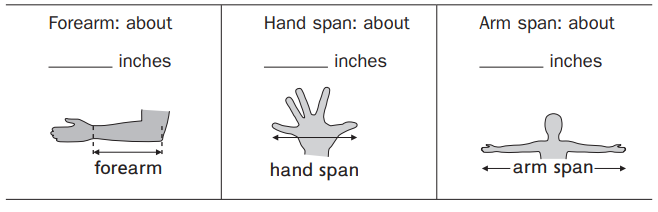
Family Note Today your child measured to the nearest half inch. Help your child measure an adult at home. Use a tape measure if available, or mark lengths on a piece of string and then measure the string with a ruler.

Measure an adult at home to the nearest \(\frac{1}{2}\) inch. Fill in the information below:
Name of adult: ___________
Height: about ___________ inches
Length of shoe: about ___________ inches
Around neck: about ___________ inches
Around wrist: about ___________ inches
Distance from waist to floor:
about ___________ inches
Everyday Mathematics Grade 3 Home Link 4.1 Answers 1

Practice
Fill in the unit box. Solve. Show your work in the space below.
Everyday Mathematics Grade 3 Home Link 4.1 Answers 2
Question 1.
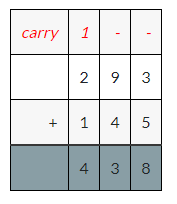
_______ = 293 + 145
Answer:

Explanation:
The sum of 293 and 145 is 438.

Question 2.
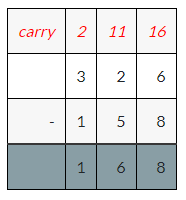
326 – 158 = ________
Answer:

Explanation:
The difference between 326 and 158 is 168.

Everyday Math Grade 3 Home Link 4.2 Answer Key

Describing Data

Family Note Today your child represented shoe-length measures on a line plot. Help your child answer questions about the line plot below.

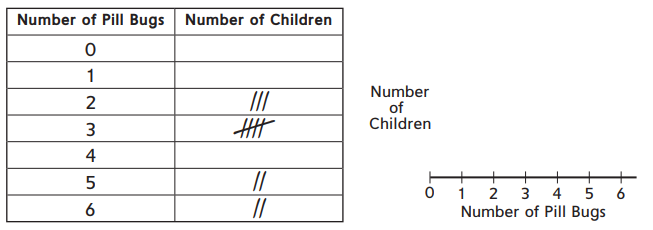
Children in the Science Club collected pill bugs. The tally chart shows how many they collected. Use the data from the tally chart to complete the line plot.
Everyday Math Grade 3 Home Link 4.2 Answer Key 1
Use the information in the line plot to answer the questions.
Question 1.
What is the greatest (maximum) number of pill bugs found? ________
Answer:
6

Explanation:
The number of pills are given on the left side of the above table, the greatest(maximum) number of pillbugs found by children in science lab are 6.

Question 2.
What is the least (minimum) number of pill bugs found? _________
Answer:
2

Explanation:
The number of pills are given on the left side of the above table, the least(minimum) number of pillbugs found by children in science lab are 2.

Question 3.
How many pill bugs were collected all together? _________
Answer:

Explanation:
3 students collected 2 pill bugs, 3 x 2 = 6
5 students collected 3 pill bugs, 5 x 3 = 15
2 students collected 5 pill bugs, 2 x 5 = 10 and
2 students collected 6 pill bugs 2 x 6 = 12.
Add 6, 15, 10 and 12.
Therefore 6+15+10+12=43

Practice
Think how the first fact can help you solve the second. Draw an array to show your strategy. Then solve.
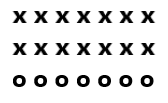
Question 4.
2 × 7 = _________
3 × 7 = _________
Answer:

Explanation:
There are 7 cross marks in 2 rows, first fact is 7+7=14, and there are 7 o’s in the third row so, second fact is 7+7+7=21.

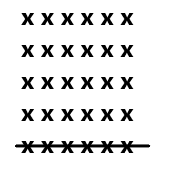
Question 5.
5 × 6 = _________
4 × 6 = _________
Answer:
5 x 6 = 30
4 x 6 = 24

Explanation:
There are 6 cross marks in 5 rows, first fact is 6+6+6+6+6=30, and if we remove a row,we are left with 6 cross marks in 4 rows

Everyday Mathematics Grade 3 Home Link 4.3 Answers

Measuring Distances Around Objects

Family Note Today your child measured the distance around his or her head and wrist, as well as around different objects in the classroom. Finding the distance around objects helps children understand perimeter, which is formally introduced in Lesson 4-6. It is also good practice for measuring to the nearest \(\frac{1}{2}\) inch.

Talk to someone at home about finding the distances around objects.
Question 1.
What tools can be used to measure the distance around an object?
Answer: Tape measure, toolkit ruler, 12 inch ruler, string and yardstick

Question 2.
Choose two objects in your home, such as a small picture frame and a book. Choose a measuring tool and use it to measure the distance around each object to the nearest \(\frac{1}{2}\) inch.
Object: _________ Measurement: about _________ inches
What measuring tool did you use? ________________
Answer:
Object: Book Measurement: about 11 inches
Object: Photo frame Measurement: about 6 inches
What measuring tool did you use? Ruler

Practice
Think of how the first fact can help you solve the second. Then solve both. You may draw arrays to help.
Question 3.
5 × 7 = _________
6 × 7 = _________
Answer:
The product of two numbers 5 and 7 is
5 × 7 = 35
The product of two numbers 6 and 7 is
6 × 7 = 42

Question 4.
10 × 6 = _________
9 × 6 = _________
Answer:
The product of two numbers 10 and 6 is
10 × 6 = 60
The product of two numbers 9 and 6 is
9 × 6 = 54

Question 5.
5 × 8 = _________
6 × 8 = _________
Answer:
The product of two numbers 5 and 8 is
5 × 8 = 40
The product of two numbers 6 and 8 is
6 × 8 = 48

Question 6.
10 × 7 = _________
9 × 7 = _________
Answer:
The product of two numbers 10 and 7 is
10 × 7 = 70
The product of two numbers 9 and 7 is
9 × 7 = 63

Everyday Math Grade 3 Home Link 4.4 Answer Key

Polygons

Family Note Today your child learned the names of different polygons. A polygon is a 2-dimensional shape with only straight sides that meet end to end to make one closed path. The sides may not cross one another. Polygons are named by the number of sides they have. Polygons are all around us. For example, a stop sign is an octagon, an 8-sided polygon, and this Home Link page is a rectangle, a 4-sided polygon with 4 right angles (square corners).

Question 1.
Cross out the shapes that are not polygons.
Everyday Math Grade 3 Home Link 4.4 Answer Key 1
How do you know which shapes are not polygons?
Answer:
The third and fifth shapes should be crossed out,
Polygons have straight sides that do not cross.
The shapes I crossed out have curved sides or sides that cross

Question 2.
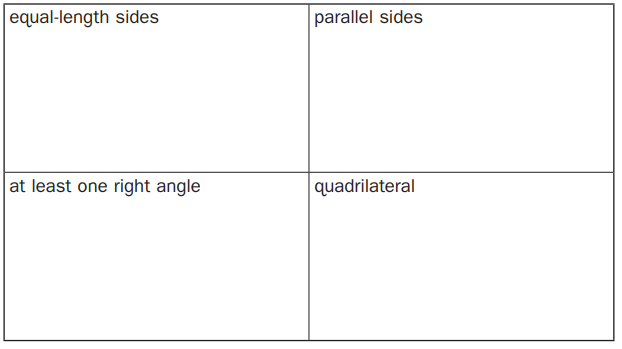
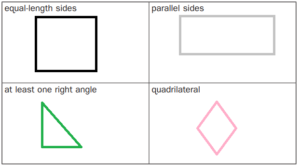
Cut out pictures of shapes from newspapers and magazines to match each of the descriptions below. Tape or glue your pictures on the front or back of this page .
Everyday Math Grade 3 Home Link 4.4 Answer Key 2
Answer:
Everyday-Math-Grade-3-Home-Link-4.4-Answer-Key-2

Everyday Mathematics Grade 3 Home Link 4.5 Answers

Special Quadrilaterals

Family Note Today your child learned about six different categories of quadrilaterals, which are polygons that have four sides: squares, rectangles, rhombuses, parallelograms, trapezoids, and kites. Although these categories have specific definitions, a particular shape may fall into more than one category.

Question 1.
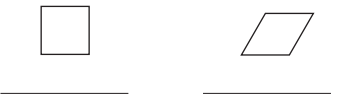
Name the two special quadrilaterals below.
Everyday Mathematics Grade 3 Home Link 4.5 Answers 1
How are these two shapes alike? _____________
How are they different? _____________
Answer:
Square, Rhombus, Both shapes have 4 same length sides.
A square has to have 4 right angles.
A rhombus does not have to have all 4 right angles.

Question 2.
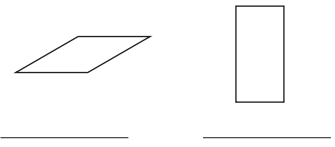
Name the two special quadrilaterals below.
Everyday Mathematics Grade 3 Home Link 4.5 Answers 2
How are these two shapes alike? _____________
How are they different? _____________
Answer:
Rhombus, rectangle both shapes have 2 pairs of equal opposite sides.
A rhombus has all 4 equal-length sides.
A rectangle has 4 right angles.

Everyday Math Grade 3 Home Link 4.6 Answer Key

Perimeter

Family Note Today your child found the perimeters of several polygons. Perimeter is the distance around a 2-dimensional shape. Finding perimeters gives your child practice measuring to the nearest \(\frac{1}{2}\) inch and the nearest whole centimeter.

If you do not have a ruler at home, cut out and use the 6-inch ruler on the next page. Measure the sides of each polygon to the nearest \(\frac{1}{2}\) inch. Use the side lengths to find the perimeter of each polygon. Write a number sentence to show how you found the perimeter.
Question 1.
Everyday Math Grade 3 Home Link 4.6 Answer Key 1
Number sentence: _____________
Perimeter: about _____________ inches
Answer:
Let the base = 2 inches
Height = 1 in
2 + 2 + 1 + 1 = 6
Perimeter is about 6 inches

Question 2.
Everyday Math Grade 3 Home Link 4.6 Answer Key 2
Number sentence: _____________
Perimeter: about _____________ inches
Answer:
l1 = 2 \(\frac{1}{2}\) in
l2 = 1 in
w = 1 in
Perimeter: 2 \(\frac{1}{2}\) + 1 + 1 + 1 = 5 \(\frac{1}{2}\) inches

Find the perimeters of the square and the rectangle below.
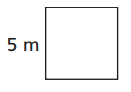
Question 3.
Everyday Math Grade 3 Home Link 4.6 Answer Key 3
Number sentence: _____________
Perimeter: _____________ meters (m)
Answer:
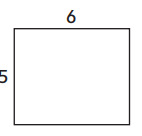
The above figure is a square. All the sides of a square is equal.
Perimeter of a square = 4s
P = 4 × 5 m = 20 meter

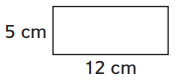
Question 4.
Everyday Math Grade 3 Home Link 4.6 Answer Key 4
Number sentence: _____________
Perimeter: _____________ centimeters (cm)
Answer:
L = 12 cm
W = 5 cm
Area = L.W
= 12 × 5 = 60 sq. cm
Perimeter = 12 + 12 + 5 + 5 = 34 centimeters

Question 5.
Draw a quadrilateral below. Find the perimeter to the nearest \(\frac{1}{2}\) inch.
Answer:

Everyday Mathematics Grade 3 Home Link 4.7 Answers

Perimeter and Area

Family Note Today your child compared measuring perimeter to measuring area using 1-foot squares. Perimeter is the distance around a shape. It can be measured in units of length, such as centimeters, inches, feet, and so on. Area is the measure of surface space inside the boundary of a shape. It can be measured in square units, such as square centimeters, square inches, square feet, and so on. To measure perimeter, children used the edges of 1-foot squares as their units. To measure area, they used the area of 1-foot squares as their units.

Trace the boundary of the rectangle with a crayon to show where you measure the perimeter.
With a different colored crayon, shade the surface inside the rectangle to show where you measure area.
Question 1.
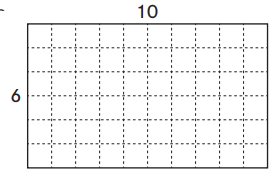
Everyday Mathematics Grade 3 Home Link 4.7 Answers 1
Dale said the perimeter of this rectangle is 16 feet and the area is 12 square feet. Do you agree? Explain.
Answer:
I agree. The perimeter is the total length of sides,
2 + 2 + 6 + 6 = 16.
The area is the number of squares inside the rectangle.

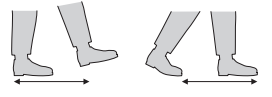
Your pace is the length of one of your steps.
Everyday Mathematics Grade 3 Home Link 4.7 Answers 2
Question 2.
Find the perimeter, in paces, of your bedroom. Walk along each side and count the number of paces.
The perimeter of my bedroom is about _____________ paces.
Answer: The perimeter of my bedroom is about 7 paces.

Question 3.
Which room in your home has the largest perimeter? Use your estimating skills to help you decide.
The _____________ has the largest perimeter.
Its perimeter is about _____________ paces.
Answer: The living room has the largest perimeter.
Its perimeter is about 25 paces.

Everyday Math Grade 3 Home Link 4.8 Answer Key

Areas of Rectangles

Family Note Today your child found areas of rectangles using composite units. Composite units are made up of two or more square units. Using composite units to find area helps children see a rectangle as having a row-by-column structure, and it helps them measure area more efficiently.

Question 1.
Sarah tiled her floor with square tiles. This is a drawing of her floor:
Shade a composite unit made of 10 squares. Use the composite unit to figure out the number of tiles Sarah needs.
Sarah needs _____________ tiles.
Everyday Math Grade 3 Home Link 4.8 Answer Key 1
Answer:
Given,
Shade a composite unit made of 10 squares.
6 × 10 = 60 tiles
Thus Sarah needs 60 tiles.

Question 2.
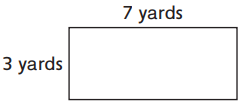
Alejandro painted a wall that is 3 yards tall and 7 yards long. This is a drawing of the wall:
Everyday Math Grade 3 Home Link 4.8 Answer Key 2
Partition the rectangle to show 3 rows with 7 squares in each row. Shade a composite unit made of 3 squares. Then figure out the area of the wall.
How many square yards did Alejandro paint? _____________ square yards
Answer:
Partition the rectangle to show 3 rows with 7 squares in each row
3 × 7 = 21 square yards

Question 3.
Explain how you found the area of the wall in Problem 2.
Answer:
I made a composite unit of a column of 3 squares and counted by 3s seven times to get 21.

Everyday Mathematics Grade 3 Home Link 4.9 Answers

Arrays, Side Lengths, and Area

Family Note Today your child learned that side lengths of rectangles correspond to the number of square units in the rectangles’ rows and columns. Just as rows and columns in arrays can be multiplied to find total numbers of objects, side lengths can be multiplied to find areas of rectangles.

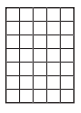
Make a dot inside each small square in one row. Then fill in the blanks.
Question 1.
Number of rows: _____________
Number of squares in a row: _____________
Number sentence: _____________ × _____________ = _____________
Area: _____________ square units
Everyday Mathematics Grade 3 Home Link 4.9 Answers 1
Answer:
Number of rows: 7
Number of squares in a row: 5
Number sentence: Seven × Five = Thirty Five
7 × 5 = 35 sq. units
Area: 35 square units

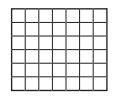
Question 2.
Number of rows: _____________
Number of squares in a row: _____________
Number sentence: _____________ × _____________ = _____________
Area: _____________ square units
Everyday Mathematics Grade 3 Home Link 4.9 Answers 2
Answer:
Number of rows: 6
Number of squares in a row: 7
Number sentence: 6 × 7 = 42
Area: 42 square units

Mark the dots to show each array. Then fill in the blanks.
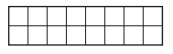
Question 3.
Everyday Mathematics Grade 3 Home Link 4.9 Answers 3
Make a 4-by-8 array.
Number sentence: _____________ × _____________ = _____________
Answer:
4 × 8 = 32

Question 4.
Everyday Mathematics Grade 3 Home Link 4.9 Answers 4
Make a 9-by-5 array.
Number sentence: _____________ × _____________ = _____________
Answer: 9 × 5 = 45

Everyday Math Grade 3 Home Link 4.10 Answer Key

Area and Perimeter

Family Note Today your child learned how to play The Area and Perimeter Game to practice finding the areas and the perimeters of rectangles.

Find the area and the perimeter of each rectangle.
Question 1.
Everyday Math Grade 3 Home Link 4.10 Answer Key 1
This is a 2-by-8 rectangle.
Area: _______ square units
Perimeter: ________ units
Answer:
Area:
2 × 8 = 16 square units
Perimeter = 2 + 2 + 8 + 8 = 20 units

Question 2.
Everyday Math Grade 3 Home Link 4.10 Answer Key 2
This is a 3-by-4 rectangle.
Area: _______ square units
Perimeter: ________ units
Answer:
Area:
3 × 4 = 12 sq. units
Perimeter:
3 + 3 + 4 + 4 = 14 units

Question 3.
What strategies did you use to solve Problem 2?
Answer:
I multiplied two side lengths to find the area:
3 × 4 = 12.
I added the side lengths to find the perimeter: 3 + 3 + 4 + 4 = 14 units

Try This
Question 4.
Everyday Math Grade 3 Home Link 4.10 Answer Key 3
This is a 5-by-6 rectangle.
Area: ________ square units
Perimeter: ________ units
What strategies did you use?
Answer:
Area: 5 × 6 = 30 sq. units
Perimeter : 5 + 5 + 6 + 6 = 22 units
We can find the area by multiplying 5 with 6 we get 30.
Next we have to add the side lengths and double the total to find the perimeter:
5 + 6 = 11 and 11 × 2 = 22

Everyday Mathematics Grade 3 Home Link 4.11 Answers

Working with Perimeter and Area

Family Note Today your child solved problems involving perimeter, the distance around a shape, and area, the amount of surface inside a shape. Ask your child to explain how area and perimeter are used in solving the two problems below.

Question 1.
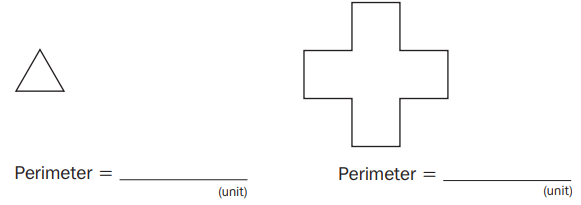
All of the sides of the two figures below are 2 feet long. Find the perimeter of each figure. Remember to write the units with your answers.
Everyday Mathematics Grade 3 Home Link 4.11 Answers 1
Answer: Perimeter: 2 + 2 + 2 = 6 units
Perimeter: 4 × 6 = 24 units

Question 2.
Sue wants to paint the longest wall in her bedroom pink. She measured the wall and found that it is 10 feet long and 8 feet tall. When she went to the hardware store to buy paint, Sue learned that 1 quart of paint can cover 50 square feet.
Sue should buy Everyday Mathematics Grade 3 Home Link 4.11 Answers 2 of paint.
Show how you figured out how much paint Sue will need.
Answer: 2 quarts

Everyday Math Grade 3 Home Link 4.12 Answer Key

Finding the Area of Rectilinear Figures

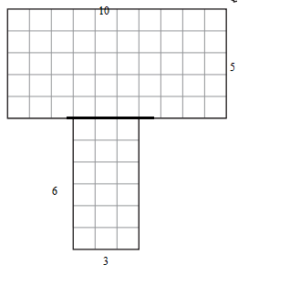
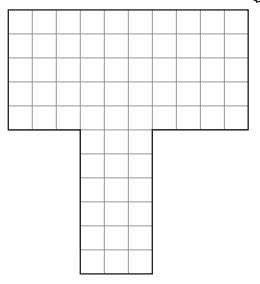
Family Note Today your child learned how to find the area of a rectilinear figure (a polygon whose sides all meet to make right angles) by decomposing, or separating, it into smaller rectangles. Help your child follow the steps to find the area of the rectilinear figure below.

Everyday Math Grade 3 Home Link 4.12 Answer Key 1
Question 1.
Partition the shape into 2 or 3 rectangles.
Answer:
Everyday-Math-Grade-3-Home-Link-4.12-Answer-Key-1

Question 2.
Find the area of each rectangle.
Answer:
Area of rectangle 1:
A = 5 × 10 = 50 sq. units
Area of rectangle 2:
A = 6 × 3 = 18 sq. units

Question 3.
Add the areas of the rectangles to find the area of the whole shape.
Answer:
area of the whole shape = 50 + 18 = 68 sq. units

Question 4.
Everyday Math Grade 3 Home Link 4.12 Answer Key 2
Area of whole shape: ___________ square units
Answer:
Sample:
5 × 10 = 50
6 × 3 = 18
50 + 18 = 68
Thus the area is 68 sq. units

Question 5.
How can the area of each rectangle help you find the area of the whole shape?
Answer: I can find the area of each rectangle and then add the two together to get the area of the whole shape.

Everyday Math Grade 3 Answers Unit 2 Number Stories and Arrays

Everyday Mathematics 3rd Grade Answer Key Unit 2 Number Stories and Arrays

Everyday Mathematics Grade 3 Home Link 2.1 Answers

Fact Extensions

Family Note Today your child used basic facts to solve similar problems with larger numbers. These similar problems are known as fact extensions. For example, the basic fact 6 + 7 = 13 helps solve the fact extension 60 + 70 = 130 . Talk to your child about the patterns in each set of problems. Help your child think of more fact extensions to complete this Home Link.

Write the answer for each problem.
Question 1.
I know: Everyday Mathematics Grade 3 Home Link 2.1 Answers 1 This helps me know: Everyday Mathematics Grade 3 Home Link 2.1 Answers 2
Answer:Everyday Mathematics 3rd Grade Answer Key Unit 2 Number
Explanation:
As we know 9 + 7 = 16
So we divide 19 into 1 and 9 like in the picture below
Everyday Mathematics 3rd Grade Answer Key Unit 2 Number
So 9 + 7 = 16
Now add 10 to 16 as we have 1 in tens place
16 + 10 = 26
So we get 19 + 7 = 26

As we know 9 + 7 = 16
So we divide 69 into 6 and 9 like in the picture below
Everyday Mathematics 3rd Grade Answer Key Unit 2 Number
So 9 + 7 = 16
Now add 60 to 16 as we have 6 in tens place
16 + 60 = 76
So we get 69 + 7 = 76

As we know 9 + 7 = 16
So we divide 99 into 9 and 9 like in the picture below:
Everyday Mathematics 3rd Grade Answer Key Unit 2 Number
So 9 + 7 = 16
Now add 90 to 16 as we have 9 in tens place
16 + 90 = 106
So we get 99 + 7 = 106

Question 2.
I know: Everyday Mathematics Grade 3 Home Link 2.1 Answers 3 This helps me know: Everyday Mathematics Grade 3 Home Link 2.1 Answers 4
Answer:
Everyday Mathematics 3rd Grade Answer Key Unit 2 Number
Explanation:
As we know 8 + 4 = 12
So we divide 18 into 1 and 8 like in the picture below
Everyday Mathematics 3rd Grade Answer Key Unit 2 Number
So 8 + 4 = 12
Now we add 10 to12 as we have 1 in tens place
10 + 12 = 22
So we get 18 + 4 = 22

As we know 8 + 4 = 12
So we divide 58 into 5 and 8 like in the picture belo
Everyday Mathematics 3rd Grade Answer Key Unit 2 Number
So 8 + 4 = 12
Now we add 50 to 12 as we have 5 in tens place
50 + 12 = 62
So we get 58 + 4 = 62

As we know 8 + 4 = 12
So we divide 278 into 27 and 8 like in the picture below:
Everyday Mathematics 3rd Grade Answer Key Unit 2 Number
As 8 + 4 = 12
Now we add 270 to 12 as we have 27 before 8
270 + 12 = 282
So we get 278 + 4 = 282

Question 3.
I know: Everyday Mathematics Grade 3 Home Link 2.1 Answers 5 This helps me know: Everyday Mathematics Grade 3 Home Link 2.1 Answers 6
Answer:

Explanation:
As we know 15 – 7 = 8
we divide the 3 and 5 as 3 is before 5 like in the picture below

As we know 15 – 7 = 8
Now to make 5 into 15 we have to remove 1 from 3
3 – 1 = 2
Then we have to add 1o 2 times
2 x 10 = 20
Then add 20 to 8
20 + 8 = 28
So we get 35 – 7 = 28

As we know 15 – 7 = 8
we divide 65 into 6 and 5 as 6 is before 5 like in the picture below

As we know 15 – 7 = 8
Now to make 5 into 15 we have to remove 1 from 6
6 – 1 = 5
Then we have to add 10, 5 times
5 x 10 = 50
Then add 50 to 8
50 + 8 = 58
So we get 65 – 7 = 58

As we know 15 – 7 = 8
we divide 105 into 10 and 5 as 10 is before 5 like in the picture below


As we know 15 – 7 = 8
Now to make 5 into 15 we have to remove 1 from 10
10 – 1 = 9
Then we have to add 10, 9 times
9 x 10 = 90
Then add 90 to 8
90 + 8 = 98
So we get 105 – 7 = 98

Question 4.
I know: Everyday Mathematics Grade 3 Home Link 2.1 Answers 7 This helps me know: Everyday Mathematics Grade 3 Home Link 2.1 Answers 8
Answer:

Explanation:

As we know 13 – 8 = 5
we divide 23 into 2 and 3 as 2 is before 3 like in the picture below

As we know 13 – 8 = 5
Now to make 3 into 13 we have to remove 1 from 2
2 – 1 = 1
Then we have to add 10, 1 times
1 x 10 = 10
Then add 10 to 5
10 + 5 = 15
So we get 23 – 8 = 15

As we know 13 – 8 = 5
we divide 123 into 12 and 3 as 12 is before 3 like in the picture below

As we know 13 – 8 = 5
Now to make 3 into 13 we have to remove 1 from 12
12 – 1 = 11
Then we have to add 10, 11 times
11 x 10 = 110
Then add 110 to 5
110 + 5 = 115
So we get 123 – 8 = 115

As we know 13 – 8 = 5
we divide 483 into 48 and 3 as 48 is before 3 like in the picture below

As we know 13 – 8 = 5
Now to make 3 into 13 we have to remove 1 from 48
48 – 1 = 47
Then we have to add 10, 47 times
47 x 10 = 470
Then add 470 to 5
470 + 5 = 475
So we get 483 – 8 = 15

Question 5.
I know: Everyday Mathematics Grade 3 Home Link 2.1 Answers 9 This helps me know: Everyday Mathematics Grade 3 Home Link 2.1 Answers 10
Answer:

Explanation:
As we know 6 + 7 = 13
we will first add 6 and 7 like in the picture below:

So we get 6 + 7 = 13
In 60 we divide it into 6 an 10 as 6 x 10 = 60
So 6 + 7 = 13
Now multiply 13 with 10 as we have 1 zero in the units place
13 x 10 = 1300, So 600 + 700 = 1300

As we know 6 + 7 = 13
we will first add 6 and 7 like in the picture below:

So we get 6 + 7 = 13
In 600 we divide it into 6 and 100 as 6 x 100 = 60
So 6 + 7 = 13
Now multiply 13 with 10 as we have 2 zero in the units place
13 x 100 = 1300
So 6000 + 7000 = 13000

As we know 6 + 7 = 13
we will first add 6 and 7 like in the picture below:

So we get 6 + 7 = 13
In 6000 we divide it into 6 an 10 as 6 x 1000 = 6000
So 6 + 7 = 13
Now multiply 13 with 1000 as we have 1 zero in the units place
13 x 1000 = 13000
So 6000 + 7000 = 1300

Make up another set of fact extensions.
Question 6.
I know: Everyday Mathematics Grade 3 Home Link 2.1 Answers 11 This helps me know: Everyday Mathematics Grade 3 Home Link 2.1 Answers 12
Answer:
I
Explanation:
By using fact extensions we can make our own facts and perform calculations like addition and subtracting

Everyday Math Grade 3 Home Link 2.2 Answer Key

Number Stories

Family Note Today your child reviewed parts-and-total, change, and comparison diagrams. These diagrams help organize the information in a number story. For more information, see Student Reference Book, page 76. Remind your child to write the unit with the answer. For example, the problem below asks about the number of cans, so the answer should include cans as the unit.

For the problem below:

  • Write a number model. Use ? for the unknown.
  • You may draw adiagram like the ones shown below or a picture to help.
    Everyday Math Grade 3 Home Link 2.2 Answer Key 1
  • Solve the problem and write your answer.
  • Explain how you know your answer makes sense.

Question 1.
The second- and third-grade classes collected 750 cans to recycle. The second graders collected 300 cans. How many cans did the third graders collect?
Number model: ____________
_____________ (unit)
Check: How do you know your answer makes sense?
Answer: 450 cans
Explanation:
Number model: 750 – 300 = 450 cans
300 cans +  ______________ = 750  cans

The unknown has to be smaller then 750

I know 3+4=7, so ..
3 (100)+4 (100)=7(100)+50 = 750
300 + 450 = 750
The answer makes my number model True

Everyday Mathematics Grade 3 Home Link 2.3 Answers

More Number Stories

Family Note Today your child solved more number stories using diagrams or pictures to help organize the information in the problems. Remind your child to write the unit with the answer. For example, the unit in the problem below is dollars, which can be represented by the dollar sign ($). Talk with your child about how he or she knows an answer makes sense.

For the number story below:

  • Write a number model. Use a ? for the unknown.
  • You may draw adiagram like those shown below or a picture to help.
    Everyday Mathematics Grade 3 Home Link 2.3 Answers 1
  • Solve and write your answer with the unit.
  • Explain how you know your answer makes sense.

Question 1.
Jasmine had $35. She earned some money helping her neighbors. Now she has $52. How much money did she earn?
Number model: _________________________ (unit)
Check: How do you know your answer makes sense?
Answer:
Number model: $35 + $17 = $52
Explanation:
35 +____ = 52
52 – 35 = 17

The answer has to be less than 35 and 52 because she started with  $35 and ended with $52.
The answer makes my number model True

Everyday Math Grade 3 Home Link 2.4 Answer Key

Multistep Number Stories, Part 1

Family Note Today your child practiced solving number stories with two or more steps. These solution strategies often combine at least two different operations (addition, subtraction, multiplication, or division). Children used drawings, words, and number models to help keep track of their thinking. Encourage your child to draw pictures or use objects to act out the stories below. Help your child make sense of each story by asking questions such as: What do you know from the story? What do you want to find out? What is your plan? What will you do first? Next? Does your answer make sense?

Solve each problem. Draw pictures or use words or number models to help keep track of your thinking. Remember to write the unit.
Question 1.
1 You have 12 red balloons and 13 blue balloons. Then 5 balloons pop. How many balloons do you have left?
_____________ (unit)
Answer:
No. of balloons left : 20
Explanation:
No. of red balloons : 12
No. of blue balloons : 13
Total number of balloons : 12 + 13 = 25
No. of balloons popped : 5
Number of balloons remaining : 25 – 5 = 20

Question 2.
You have 3 bags of marbles with 6 marbles in each bag. Then you find 8 more marbles. How many marbles do you have now?
_____________ (unit)
Answer:
total no. of marbles : 26
Explanation :
No. of marbles in each bag : 6
No. of bags : 3
total no. of marbles : 3 x 6 = 18
No. of marbles found : 8
total no. of marbles : 18 + 8 = 26

Everyday Mathematics Grade 3 Home Link 2.5 Answers

Multistep Number Stories, Part 2

Family Note Today your child practiced solving additional number stories with two or more steps and writing number models for each step. Help your child make sense of the stories below by asking: What do you know from the story? What do you want to find out? What is your plan? What will you do first? Next? Have you answered the question? Does your answer make sense?

Solve each problem. Show your work with pictures, words, or numbers. Write number models to keep track of your thinking. Remember to write the unit.
Question 1.
Each basket in basketball is worth 2 points. Cathy makes 5 baskets and scores 6 more points with free throws. How many points did she score in all?
Number models: _____________
_____________ (unit)
Answer:
number models:

Total no. of points = 16 points
Explanation:
No. of points for each basket : 2 points
No. of baskets Cathy makes  : 5 baskets
No. of points Cathy makes by free throws : 6 points
Total no. of points = No. of points Cathy makes by free throws + No. of points Cathy makes by baskets.
No. of points Cathy makes by baskets = No. of points for each basket x No. of baskets Cathy makes.
= 2 points x 5 points      [2 x 5 = adding 2 5 times]
= 10 points                     [ 2 + 2 + 2 + 2 + 2 = 10 ]
Total no. of points = No. of points Cathy makes by free throws + No. of points Cathy makes by baskets.
= 6 points + 10 points
Total no. of points = 16 points

Question 2.
Elias reads 4 chapters. Each chapter has 10 pages. Then he reads 8 more pages. How many pages does Elias read in all?
Number models: _____________
_____________ (unit)
Answer:
Number models: 48 pages

Total no. of pages Elias read = 48 pages
Explanation:
No. of chapters read by Elias = 4 chapters
No. of pages in each chapter = 10 pages
No. of extra pages read by Elias = 8 pages
Total no. of pages read by Elias = No. of pages read by Elias in 4 chapters + No. of extra pages read by Elias
No. of pages read by Elias in 4 chapters = No. of chapters read by Elias x No. of pages in each chapter
= 4 x 10 pages                     [4 x 10 = 10 added 4 times]
= 40 pages                           [10 + 10 + 10 + 10 = 40]
Total no. of pages read by Elias = No. of pages read by Elias in 4 chapters + No. of extra pages read by Elias
= 40 pages + 8 pages
= 48 pages

Everyday Math Grade 3 Home Link 2.6 Answer Key

Equal-Groups Number Stories

Family Note Today your child practiced using efficient ways to solve equal-groups number stories, such as using repeated addition, skip counting, or using facts he or she knows. Children also talked about what multiplying by 0 or 1 means. Encourage your child to use the number stories to explain why multiplying by 0 equals 0 and multiplying by 1 equals the number in one group.

Solve. Show your thinking using drawings, words, or number models.
Question 1.
A pack of Brilliant Color Markers contains 5 markers. Each pack costs $2.
If you buy 6 packs, how many markers will you have?
_____________ (unit)
Answer:
Total no. of markers : 30 markers
Explanation:

Total no. of markers : 30 markers
Explanation:
No. of makers each pack has : 5 markers
Each pack costs : $2.
No. of packs bought : 6 packs
Total no. of markers : No. of packs bought x No. of makers each pack has
: 6 x 5 markers            [6 x 5 = 6 added 5 times]
: 30 markers                [6 + 6 + 6 + 6 + 6 = 30 ]
Total no. of markers : 30 markers

Question 2.
How much do 0 packs of Brilliant Color Markers cost?
_____________ (unit)
Explain your answer.
Answer:
Cost of 0 packs : $0
Explanation:
Each pack costs : $2.
No. of packs bought : 0 packs
Cost of 0 packs : No. of packs bought x Cost of each pack
: 0 x $2            [2 x 0 = 0 added 2 times]
: $0                  [0 + 0 = 0]
Cost of 0 packs : $0

Question 3.
Make up a number story to match the number sentence below:
1 × 5 = 5
Answer:
A toy box costs $5 . If you buy 1 toy box , How much do you need to pay to the shopkeeper?

Everyday Mathematics Grade 3 Home Link 2.7 Answers

Representing Situations with Arrays

Family Note Today your child practiced drawing arrays to represent number stories. Your child also played Array Bingo to practice multiplication facts with arrays and equal groups.

Question 1.
There are 12 trombone players in a parade. Show at least 3 different ways they can be arranged into arrays. Show your work on the dot grids below. Write a number model for each array.
Everyday Mathematics Grade 3 Home Link 2.7 Answers 1
Answer:

Explanation:
1) array : 1 x 12 = 12
2) array : 2 x 6  = 12
3) array : 3 x 4 = 12
4) array : 4 x 3 = 12

Question 2.
Can you make an array with 5 rows for the 12 players? Explain.
Answer:
No
Explanation:
As an array of 5 x 2 will be 10
An array of 5 x 3 will be 15
we will not get an array for 5 rows
So when I make an array of 5 rows I will have 2 less.

Everyday Math Grade 3 Home Link 2.8 Answer Key

Creating Mathematical Representations

Family Note Your child is learning how to create mathematical representations, such as drawings, words, and number models, to help solve division problems. In this lesson we solved division problems with and without remainders. Talk to your child about the representations he or she can use to help solve Problems 1 and 2 and how to handle the remainder in Problem 2.

Solve. Show your thinking in a drawing or number model.
Question 1.
Amit won a pack of 24 stickers in a school contest. He put the stickers into 3 equal piles, one for himself and one each for his friends, Danny and Sue. How many stickers will each get?
Each gets __8_____ stickers.
Answer:
Total 24 Stickers
Explanation:

Amit put stickers into 3 equal piles of each 8 stickers
8 + 8 + 8 = 24 stickers
Danny :8 Stickers
Sue      :8 Stickers
Amit    : 8 stickers (for him self)

Question 2.
Parents are organizing a field trip to the zoo for Amit’s class. They want to take the 23 children in their cars. If each car can carry 5 children, how many cars are needed?
__________ cars are needed for the field trip.
Answer:
5 cars are needed for the field trip.
Explanation:
No. of children in Amit’s class : 23
Parents : 2    [Mom and Dad]
Total no. of persons going to the Zoo : No. of children in Amit’s class + Parents
: 23 + 2 = 5
1 car can carry : 5 persons
No of cars needed : Total no. of persons going to the Zoo ÷ No. of persons 1 car can carry
: 25 ÷ 5
: 5
So 5 cars are needed for the field trip.

Everyday Mathematics Grade 3 Home Link 2.9 Answers

Modeling with Division

Family Note Today your child solved equal-sharing number stories. Sometimes when we share or divide a quantity, there are parts left over, or remainders. Your child practiced recording division number models with remainders. For example, 10 marbles shared 3 ways could be recorded as 10 ÷ 3 → 3 R 1, which can be read as “10 divided by 3 gives us 3 with a remainder of 1.” Help your child solve the problems below. You may want to use counters, such as coins or dry pasta, to act out each story.

Draw pictures to show someone at home how you can use division to solve number stories. Write a number model for each story.
Question 1.
Jamal gives 24 marbles to 4 friends. Each friend gets the same number of marbles. How many marbles does each friend get?
____________ (unit)
How many marbles are left over? ____________ (unit)
Number model: ____________
Answer:
Each friend gets 6 marbles
Marbles left : 0 marbles
Number model :

Explanation :
No. of marbles Jamal has : 24 marbles
No. of friends Jamal has : 4
To divide 24 marbles equally among Jamal’s friends
We have to : No. of marbles Jamal has ÷ No. of friends Jamal has
: 24 ÷ 4
: 6 marbles
Each friend gets 6 marbles
Since there is no remainder left
No. of marbles left : 0 marbles

Question 2.
Eliza has 29 flowers to arrange in 5 vases. She puts the same number of flowers in each vase. How many flowers does she put in each vase? ____________ (unit)
How many flowers are left over? ____________ (unit)
Number model: ____________
Answer:
Eliza puts 5 flowers in each vase
There are 4 flowers left over
Number model:

Explanation:
No. of flowers Eliza  has : 29 flowers
No. of flowers Eliza : 5 vases
To find out how many flowers each vase has we need to :
No. of flowers Eliza ÷ No. of flowers Eliza
29 ÷ 5 = 5
remainder : 4
So Eliza puts 5 flowers in each vase
Since there are 4 flowers left over
There are 4 flowers left over

Question 3.
A sheet of stamps has 46 stamps. A complete row has 10 stamps. How many complete rows are there? ____________ (unit)
How many stamps are left over? ____________ (unit)
Number model: ____________
Answer:
No. of complete rows of stamps : 4 rows
No. of stamps left : 6 stamps
Number model :

Explanation:
No. of stamps in a sheet : 46 stamps
No. of stamps in each row : 10
No. of rows : No. of stamps in a sheet ÷ No. of stamps in each row
: 46 ÷ 10
: 4
reminder : 6
So No. of complete rows of stamps : 4 rows
As remainder is 6
No. of stamps left : 6 stamps

Everyday Math Grade 3 Home Link 2.10 Answer Key

Division with Arrays

Family Note Today your child practiced using arrays to model problems and show division with and without remainders. Children also learned a new game called Division Arrays.

Use arrays to represent each division problem. If there is a remainder, show it in the Leftovers column.
Everyday Math Grade 3 Home Link 2.10 Answer Key 1
Answer:

Explanation:
1) 15 ÷ 3 = 5
As 15 ÷ 3 means dividing 15 into 3 parts
So 15 ÷ 3 = 5
we have drawn a 3 x 5 array
as there is no remainder we have not drawn anything in the leftovers column
2) 32 ÷ 5 = 6
As 32 ÷ 5 means dividing 32 into 5 parts
S o 32 ÷ 5 = 6
we have draw a 6 x 5 array
as there is no remainder we have not drawn anything in the leftovers column.

Question 3.
List household items you could share with your family members that might have leftovers, for example, spoons, plates, and cups.
Answer:
A pack of markers
pillows in the house

Practice
Question 4.
5 × 5 = _______
Answer:
5 x 5 = 25
Explanation:
5 x 5 = adding 5, 5 times
5 + 5 + 5 + 5 + 5 = 25

Question 5.
40 = 5 × _______
Answer:
40 = 5 x 8
Explanation:
by taking 5 to the left side of the equation we get:
40 ÷ 5 = ___
so now 40 ÷ 5 = 8  [dividing 40 into 5 parts]

Question 6.
20 ÷ 5 = _______
Answer:
20 ÷ 5 = 4
Explanation:
20 ÷ 5 = __
dividing 20 with 5  we will get 4
so,
20 ÷ 5 = 4

Question 7.
45 ÷ _______ = 5
Answer:
45 ÷ 9 = 5
Explanation:
45 ÷ _______ = 5
if we take 5 to the left side of the equation we will get:
45 ÷ 5 = ___
dividing 45 with 5 we get 9
so,
45 ÷ 9 = 5

Everyday Mathematics Grade 3 Home Link 2.11 Answers

Frames and Arrows

Family Note Today your child reviewed Frames and Arrows, which provide opportunities to look for addition, subtraction, multiplication, or division patterns. Your child used the patterns to fill in missing rules and blank frames.

Show someone at home how to complete these Frames-and-Arrows diagrams.
Question 1.
Everyday Mathematics Grade 3 Home Link 2.11 Answers 1
Answer:

Explanation:
Using +3 rule we get
12 + 3 = 15
15 + 3 = 18
18 + 3 = 21
21 + 3 = 24
24 + 3 = 27

Question 2.
Everyday Mathematics Grade 3 Home Link 2.11 Answers 2
Answer:

Explanation:
Using – 100 rule we get
1000 – 100 = 900
900 – 100 = 800
800 – 100 = 700
700 – 100 = 600
600 – 100 = 500

Question 3.
Everyday Mathematics Grade 3 Home Link 2.11 Answers 3
Answer:

Explanation:
Rule = 6
We can find the rule by :
48 – 42 = 6
24 + 6 = 30
30 + 6 = 36
36 + 6 = 42
42 + 6 = 48
48 + 6 = 54

Practice
Solve.
Question 4.
_______ = 6 × 5
Answer:
30 = 5 x 6
Explanation:
5 x 6 means adding 6 five times
6 + 6 + 6 + 6 + 6 = 30
So we get 6 x 5 = 30

Question 5.
_______ = 6 × 10
Answer:
6 x 10 = 60
Explanation:
6 x 10 means adding 10 6 times
10 + 10 +10 + 10 + 10 + 10 = 60

Question 6.
5 × _______ = 20
Answer:
5 x 4 = 20
Explanation:
5 x __ = 20
if we take 5 to the right side of the equation
we get:    20 ÷ 5 = __
20 ÷ 5 = 4   [dividing 20 with 5 we get 4]

Question 7.
10 × _______ = 40
Answer:
10 x 4 = 40
Explanation:
10 x ___ = 40
if we take 10 to the right side of the equation
we get:    40 ÷ 10 = __
40 ÷ 10 = 4   [dividing 40 with 10 we get 4]


Everyday Math Grade 3 Home Link 2.12 Answer Key

Liquid Volume and Area

Family Note Today your child explored the ideas of liquid volume and area. Before your child is exposed to formal work with these measures (such as equivalent units of liquid volume or formulas for finding area), it is important to have concrete, exploratory experiences with these measures.

In Problem 1, help your child see that although the glasses may have different dimensions, they can still hold about the same amount of water. In Problem 2, the number of squares that your child counts is the area measurement in square centimeters.
Question 1.
Pour some water into a cup at home. Pour all the water from the cup into a bowl. Does the volume or amount of liquid change when you pour it from one container to the other? Explain your thinking.
Answer:
No the volume of the water does not change when I pour it from one container to the other.
Explanation:

Question 2.
Count squares to find the area of each figure.
Everyday Math Grade 3 Home Link 2.12 Answer Key 1
Answer:

Explanation:
first count the no. of squares in the given first shape
then write the number of squares in the blank
in figure 1:
No. of squares : 15
in figure 2:
No. of squares : 8

Practice
Question 3.
6 × 2 = _______
Answer:
6 x 2 = 12
Explanation:
by multiplying 6 with 2 we get
6 x 2 = [adding 6 two times]
6 + 6 = 12
So, 6 x 2 = 12

Question 4.
14 = 2 × _______
Answer:
14 = 2 x 7
Explanation:
14 = 2 x __
by taking 2 to the right side of the equation, We get
14 ÷ 2 = 7 [dividing 14 with 2 we get 7]

Question 5.
_______ = 18 ÷ 2
Answer:
9 = 18 ÷ 2
Explanation:
18 ÷ 2 = 9        [by dividing 18 with 2 we get 9]

Question 6.
16 ÷ _______ = 8
Answer:
16 ÷ 2 = 8
Explanation:
16 ÷ ___ = 8
by taking 16 to the right side of the equation we get:
16 ÷  8 = 2 [dividing 16 with 8 we get 2]

Everyday Math Grade 2 Answers Unit 7 Whole Number Operations and Measurement and Data

Everyday Mathematics 2nd Grade Answer Key Unit 7 Whole Number Operations and Measurement and Data

Everyday Math Grade 2 Home Link 7.1 Answer Key

Missing Addends

Family Note
In this lesson your child used mental strategies to find differences between 2-digit numbers and larger multiples of 10. For example, your child found what number added to 44 equals 50. (The answer is 6.) In Problems 1–2 your child will find the difference between a number and the next larger multiple of 10. In Problem 3 your child will find different combinations of numbers that add to 70. If your child has difficulty with this problem, suggest first adding 1s to the first number in each combination to find the next-larger multiple of 10. For example, add 2 to 48 to make 50. Then add 20 (or two 10s) to 50 to make 70. Finally, add 2 + 20 to find the answer, 22. So 48 + 22 = 70.
Please return this Home Link to school tomorrow.

Question 1.
4 + __ = 10
10 = 3 + __
__ + 5 = 10
10 = __ + 1
8 + __ = 10
Answer:
4 + 6 = 10
10 = 3 + 7
5 + 5 = 10
10 = 9 + 1
8 + 2 = 10
Explanation:
An addition sentence is a mathematical expression that shows two or more values added together.
ADD four with six then we got the sum ten.
ADD three with seven then we got the sum ten.
ADD five with five then we got the sum ten.
ADD one with nine then we got the sum ten.
ADD eight with two then we got the sum ten.

Question 2.
54 + __ = 60
90 = 83 + __
75 + __ = 80
40 = 31 + __
__ + 42 = 50
Answer:
54 + 6 = 60
90 = 83 + 7
75 + 5 = 80
40 = 31 + 9
8 + 42 = 50
Explanation:
An addition sentence is a mathematical expression that shows two or more values added together.
ADD 54 with 6 then we got the sum 60.
ADD 83 with 7 then we got the sum 90.
ADD 75 with 5 then we got the sum 80.
ADD 31 with 9 then we got the sum 40.
ADD 42 with 8 then we got the sum 50.

Question 3.
Make 70s. Show someone at home how you did it.
Everyday Math Grade 2 Home Link 7.1 Answer Key 1
Answer:
Everyday-Math-Grade-2-Home-Link-7.1-Answer-Key-1
Explanation:
An addition sentence is a mathematical expression that shows two or more values added together. By adding 1s to the first number in each combination is used to find the next-larger multiple of 10.
Add 2 to 48 to make 50. Then add 20 (or two 10s) to 50 to make 70. Finally, add 2 + 20 to find the answer, 22. So 48 + 22 = 70.
Add 8 to 32 to make 40. Then add 30 (or three 10s) to 40 to make 70. Finally, add 8 + 30 to find the answer, 38. So 32 + 38 = 70.
Add 5 to 65 to make 70. So 65 +5 = 70.
Add 60 to 10 to make 70. So 10 + 60 = 70.
Add 7 to 43 to make 50. Then add 20 (or two 10s) to 50 to make 70. Finally, add 7 + 20 to find the answer, 27. So 43 + 27 = 70.
Add 1 to 19 to make 20. Then add 50 (or five 10s) to 20 to make 70. Finally, add 1 + 50 to find the answer, 51. So 19 + 51 = 70.
Add 9 to 51 to make 60. Then add 10 (or one 10) to 60 to make 70. Finally, add 9 + 10 to find the answer, 19. So 51 + 19 = 70.
Add 3 to 27 to make 30. Then add 40 (or four 10s) to 30 to make 70. Finally, add 3 + 40 to find the answer, 43. So 27 + 43 = 70.
Everyday Math Grade 2 Home Link 7.2 Answer Key

Adding Three or More Numbers

Family Note
Today your child added more than 2 addends. Changing the order of the addends can make it easier to find the sum. For example, when adding 17, 19, and 23, some people may first calculate 17 + 23, which equals 40, and then add 19 (40 + 19 = 59). For Problems 1–4, help your child look for easy combinations. Before working on Problems 5–10, you might go over the example with your child.
Please return this Home Link to school tomorrow.

For each problem:

  • Think about an easy way to add the numbers.
  • Write a number model to show the order in which you are adding the numbers.
  • Find each sum. Tell someone at home why you added the numbers in that order.

Question 1.
Everyday Math Grade 2 Home Link 7.2 Answer Key 2
Answer:
Everyday-Math-Grade-2-Home-Link-7.2-Answer-Key-2
20 + 6 = 26
Explanation:
An addition sentence is a mathematical expression that shows two or more values added together. Here we are Changing the order of the addends to find the sum in easy way. We are adding the numbers in a order so we have to write the number model first. The number model for above image is 13 + 7 + 6= 26. First add thirteen and seven then we got twenty, then add twenty with six then we got 26.

Question 2.
Everyday Math Grade 2 Home Link 7.2 Answer Key 3
Answer:
Everyday-Math-Grade-2-Home-Link-7.2-Answer-Key-3
30 + 5 = 35
Explanation:
An addition sentence is a mathematical expression that shows two or more values added together. Here we are Changing the order of the addends to find the sum in easy way. We are adding the numbers in a order so we have to write the number model first. The number model for above image is 22 + 8 + 5= 35. First add 22 and 8 then we got 30, then add 30 with 5 then we got 35.

Question 3.
Everyday Math Grade 2 Home Link 7.2 Answer Key 4
Answer:
Everyday-Math-Grade-2-Home-Link-7.2-Answer-Key-4
40 + 9 = 49
Explanation:
An addition sentence is a mathematical expression that shows two or more values added together. Here we are Changing the order of the addends to find the sum in easy way. We are adding the numbers in a order so we have to write the number model first. The number model for above image is 25 + 15 + 9= 49. First add 25 and 15 then we got 40, then add 40 with 9 then we got 49.

Question 4.
Everyday Math Grade 2 Home Link 7.2 Answer Key 5
Answer:
Everyday-Math-Grade-2-Home-Link-7.2-Answer-Key-5
40 + 10 = 50
Explanation:
An addition sentence is a mathematical expression that shows two or more values added together. Here we are Changing the order of the addends to find the sum in easy way. We are adding the numbers in a order so we have to write the number model first. The number model for above image is 29 + 11 + 6 + 4 = 50. First add 29 and 11 then we got 40, then add 6 and 4 then we got 10. ADD 40 with 10 then we got 50.

Add. Use the partial-sums method.
Example:
Everyday Math Grade 2 Home Link 7.2 Answer Key 6

Practice

Question 5.
Everyday Math Grade 2 Home Link 7.2 Answer Key 7
Answer:
Everyday-Math-Grade-2-Home-Link-7.2-Answer-Key-7
Explanation:
An addition sentence is a mathematical expression that shows two or more values added together. In the above image we can observe three numbers 23,32 and 14. First add the tens (20 + 30 + 10 ). Next add the ones (3 + 2 + 4 ). By adding the tens we got 60 and adding the ones we got 9. By adding the partial sums we got 69 (60 + 9).

Question 6.
Everyday Math Grade 2 Home Link 7.2 Answer Key 8
Answer:
Everyday-Math-Grade-2-Home-Link-7.2-Answer-Key-8
Explanation:
An addition sentence is a mathematical expression that shows two or more values added together. In the above image we can observe three numbers 14, 29 and 27. First add the tens (10 + 20 + 20 ). Next add the ones (4 + 9 + 7 ). By adding the tens we got 50 and adding the ones we got 20. By adding the partial sums we got 70 (50 + 20).

Question 7.
Everyday Math Grade 2 Home Link 7.2 Answer Key 9
Answer:
Everyday-Math-Grade-2-Home-Link-7.2-Answer-Key-9
Explanation:
An addition sentence is a mathematical expression that shows two or more values added together. In the above image we can observe three numbers 8, 19 and 35. First add the tens (10+ 30 ). Next add the ones (8 + 9+ 5 ). By adding the tens we got 40 and adding the ones results 22. By adding the partial sums we got 62 (40 + 22).

Question 8.
Everyday Math Grade 2 Home Link 7.2 Answer Key 10
Answer:
Everyday-Math-Grade-2-Home-Link-7.2-Answer-Key-10
Answer:
An addition sentence is a mathematical expression that shows two or more values added together. In the above image we can observe three numbers 46, 25 and 12. First add the tens (40 + 20 + 10 ). Next add the ones (6 + 5 + 2 ). By adding the tens we got 70 and adding the ones results 13. By adding the partial sums we got 83 (70 + 13).

Question 9.
Everyday Math Grade 2 Home Link 7.2 Answer Key 11
Answer:
Everyday-Math-Grade-2-Home-Link-7.2-Answer-Key-11
Explanation:
An addition sentence is a mathematical expression that shows two or more values added together. In the above image we can observe three numbers 21, 40, 45 and 14. First add the tens (20 + 40 + 40 + 60 ). Next add the ones (1 + 0 + 5 + 3 ). By adding the tens we got 160 and adding the ones results 9. By adding the partial sums we got 169 (160 + 9).

Question 10.
Everyday Math Grade 2 Home Link 7.2 Answer Key 12
Answer:
Everyday-Math-Grade-2-Home-Link-7.2-Answer-Key-12
Explanation:
An addition sentence is a mathematical expression that shows two or more values added together. In the above image we can observe three numbers14, 9, 85, 96. First add the tens (10 + 80 + 90 ). Next add the ones (4 + 9 + 5 +6 ). By adding the tens we got 180 and adding the ones results 24. By adding the partial sums we got 204 (180 + 24).

Everyday Math Grade 2 Home Link 7.3 Answer Key

Who Scored More Points?

Family Note
In this lesson your child added three or more 1-digit and 2-digit numbers. As your child completes the problems below, encourage him or her to share the different ways in which the points can be added. Your child might add all the 10s first and then add all the 1s. For example, 20 + 5 + 4 + 6 = 20 + 15 = 35. Your child may also look for combinations of numbers that are easier to add. In Game 1, for example, first add 14 and 6 to get 20 and then add 15 to get 35.
Please return this Home Link to school tomorrow.

Do the following for each problem:

  • Add the points for each team.
  • Decide which team scored more points.

The team with more points wins the game.
• Circle your answer.

Question 1.
Game 1
Team A:
15 + 1 4 + 6 = __
Team B:
5 + 13 + 7 = __
Who won? A or B
Answer:
Everyday-Math-Grade-2-Home-Link-7.3-Answer-Key-1
Team A scored more points. So Team A won the game.
Explanation:
An addition sentence is a mathematical expression that shows two or more values added together. In the above image we can observe two teams Team A and Team B.
Team A having 15, 14, 6 points. First add 14 with 6 then we got 20. ADD 15 with 20 then we got 35.
Team B having 5, 13, 7 points. First add 13 with 7 then we got 20. ADD 5 with 20 then we got 25.
Team A scored more points. So Team A won the game. Draw a circle for 35.

Question 2.
Game 2
Team A:
12 + 6 + 4 + 8 = ___
Team B:
5 + 10 + 19 + 1 = __
Who won? A or B
Answer:
Everyday-Math-Grade-2-Home-Link-7.3-Answer-Key-2
Team B scored more points. So Team B won the game.
Explanation:
An addition sentence is a mathematical expression that shows two or more values added together. In the above image we can observe two teams Team A and Team B.
Team A having 12, 6, 4, 8 points. First add 12 with 8 then we got 20, next add 6 with 4 then we got 10. Add 20 with 10 then we got 30.
Team B having 5, 10, 19, 1 points. First add 19 with 1 then we got 20. ADD 10 with 20 then we got 30. ADD 5 with 30 then we got 35
Team B scored more points. So Team B won the game. Draw a circle for 35.

Question 3.
Game 3
Team A:
17 + 4 + 5 + 3 = __
Team B:
2 + 1 1 + 9 + 18 = __
Who won? A or B
Answer:
Everyday-Math-Grade-2-Home-Link-7.3-Answer-Key-3
Team B scored more points. So Team B won the game.
Explanation:
An addition sentence is a mathematical expression that shows two or more values added together. In the above image we can observe two teams Team A and Team B.
Team A having 17, 4, 5, 3 points. First add 17 with 3 then we got 20, next add 4 with 5 then we got 9. Add 20 with 9 then we got 29.
Team B having 2, 11, 9, 18, 2 points. First add 11 with 9 then we got 20. ADD 18 with 2 then we got 20. ADD 20 with 20 then we got 40
Team B scored more points. So Team B won the game. Draw a circle for 40.

Question 4.
Game 4
Team A:
7 + 4 + 1 6 + 13 + 5 = ___
Team B:
22 + 9 + 8 + 3 + 1 7 = __
Who won? A or B
Answer:
Everyday-Math-Grade-2-Home-Link-7.3-Answer-Key-4
Team B scored more points. So Team B won the game.
Explanation:
An addition sentence is a mathematical expression that shows two or more values added together. In the above image we can observe two teams Team A and Team B.
Team A having 7, 4, 16, 13, 5 points. First add 7 with 13 then we got 20, next add 4 with 16 then we got 20. Add 20 with 20 and 5 then we got 45.
Team B having 22, 9, 8, 3, 17 points. First add 22 with 8 then we got 30. ADD 3 with 17 then we got 20. ADD 30 with 20 and 9 then we got 59
Team B scored more points. So Team B won the game. Draw a circle for 59.

Everyday Math Grade 2 Home Link 7.4 Answer Key

Using Measurement

Family Note

In class today your child measured distances with a yardstick. Talk with your child about measurements you use at your job, around the house, in sports, or in other activities. If you don’t have measuring tools to show your child, you might find pictures of measuring tools online or in a catalog, magazine, or book. Discuss with your child how these tools are used.
Please return this Home Link to school tomorrow.

Question 1.
Talk with people at home about how they use measurements at home, at their jobs, or in other activities.
Answer: The people at my home use measurements for a wide range of activities such as

  • Measuring length of a cloth for tailoring
  • Measuring level of fuel in tank for continuous running
  • Measuring the amount of water used to cook food
  • Measuring the length of wall for holding nails or to fix something on it.

Question 2.
Ask people at home to show you the tools they use for measuring. Write the names of some of these tools. Be ready to talk about your list in class.
___ ___
___ ___
___ ___
Answer:
Tailor Measuring Tool
Everyday-Math-Grade-2-Home-Link-7.4-Answer-Key-1
Ruler
Everyday-Math-Grade-2-Home-Link-7.4-Answer-Key-2 Measuring jar:
Everyday-Math-Grade-2-Home-Link-7.4-Answer-Key-3

Explanation:
In the above images we can observe three types of measuring tools. one is tailor measuring tape second one is ruler and third one is measuring jar.
Tailors measuring tape is made for cloth and are used to take measurements of the person for whom the clothing is being made. As such, these tape measures are used to measure around a person’s waist, chest, and hips.
A ruler is an instrument used to measure distances, degrees and determine straight lines. There are many different types of measuring rulers, available in different shapes, sizes and materials. These rulers are used in various occupations and fields of study, such as geometry, printing, technical drawing, building and engineering.
Plastic Measuring Jar 25ml. Measuring Jar is designed to give approximate measurement of ml, in general day to day cooking Preparations of Rice, Sugar, Chana. It Is one of the basic requirements of every kitchen to get the exact taste of every meal.

Question 3.
Look for measurements in pictures, in newspapers, or magazines. For example, an ad might tell the height of a bookcase or how much a container holds. Ask an adult if you may bring the pictures to school for our Measures
All Around Museum. Circle the measurements.
Answer:
Everyday-Math-Grade-2-Home-Link-7.4-Answer-Key-4
Explanation:
Attach a piece of tape from the bottom to the top of an empty half-gallon container. Fill a measuring cup with a half-cup of water.
Pour the water into the container. Do all of our pouring on a tray to catch the drips. Mark the tape to show how high the water is inside the container. Write 1/2 c next to the mark. Pour another half-cup of water into the container. Mark the tape and write 1 c next to the mark. Mark the tape 1 1/2 c to show 3 half-cups, 2 c for 4 half-cups, 4c for 8 half-cups. Fill the container. Pour the water back into the pitcher.

Practice

Solve.

Question 4.
93 + 1 = __
Answer:
93 + 1 = 94
Explanation:
An addition sentence is a mathematical expression that shows two or more values added together. In the above expression we can observe two numbers 93 and 1. First add three and one in one’s place right side then we got four. Keep four in one’s place and then add zero to nine in ten’s place, left side then we got nine write nine in ten’s place. By adding these two numbers 93 and 1 we got 94.

Question 5.
__ = 6 + 61
Answer:
67 = 6 + 61
Explanation:
An addition sentence is a mathematical expression that shows two or more values added together. In the above expression we can observe two numbers 6 and 61. First add six and one in one’s place right side then we got seven. Keep seven in one’s place and then add zero to six in ten’s place, left side then we got six write six in ten’s place. By adding these two numbers 6 and 61 we got 67.

Question 6.
__ = 26 + 8
Answer:
34 = 26 + 8
Explanation:
An addition sentence is a mathematical expression that shows two or more values added together. In the above expression we can observe two numbers 26 and 8. First add six and eight in one’s place right side then we got fourteen. Keep four in one’s place and then add one to two in ten’s place, left side then we got three write three in ten’s place. By adding these two numbers 26 and 8 we got 34.

Question 7.
5 + 49 = __
Answer:
5 + 49 = 54
Explanation:
An addition sentence is a mathematical expression that shows two or more values added together. In the above expression we can observe two numbers 5 and 49. First add five and nine in one’s place right side then we got fourteen. Keep four in one’s place and then add one to four in ten’s place, left side then we got five write five in ten’s place. By adding these two numbers 5 and 49 we got 54.

Everyday Math Grade 2 Home Link 7.5 Answer Key

Measuring Height

Family Note
In this lesson your child was introduced to a metric unit of length called the meter. One meter is equal to 100 centimeters. We compared metersticks to yardsticks and noticed that 1 meter is a little longer than 1 yard. Then we used tools such as rulers, yardsticks, metersticks, and tape measures to measure lengths. Your child may wonder why there are two standard units—yards and meters—that
are nearly the same size. You may want to explore this issue by searching online for information about the metric and U.S. customary systems of measurement.
If you don’t have tools to measure length with metric units at home, you and your child can cut
pieces of string or strips of paper to match the heights of a table and an adult. Your child can bring
the string or strips to school to measure.
Please return this Home Link to school tomorrow

Question 1.
Work with someone at home to measure the height of a table.
The table is about __ centimeters high.
The table is about __ meters high.
Answer:
The table is about 200 centimeters high.
The table is about 2 meters high.
Explanation:
Centimeter is a metric unit of length, equal to one hundredth of a meter. The table is measured with tape and the table is about 200 centimeters high. In meters the table is about 2 meters high.

Question 2.
Measure the height of an adult.
The adult is about __ centimeters tall.
The adult is about __ meters tall.
Answer:
The adult is about 150 centimeters tall.
The adult is about 1.5 meters tall.
Explanation:
Centimeter is a metric unit of length, equal to one hundredth of a meter. The table is measured with tape and the adult is about 150 centimeters tall. In meters the adult is about 1.5 meters tall.

Question 3.
Are there more centimeters or more meters in your measurements? __ Explain.
Answer:
More centimeters, centimeters are shorter, so it takes more of them to measure the same height.
Explanation:
Centimeter is a metric unit of length, equal to one hundredth of a meter. There are more centimeters in my measurements because centimeters are shorter, so it takes more of them to measure the same height.

Practice

Question 4.
18 + __ = 20
Answer:
18 + 2 = 20
Explanation:
An addition sentence is a mathematical expression that shows two or more values added together. In the above expression we can observe two numbers 18 and 2. First add eight and two in one’s place right side then we got ten. Keep zero in one’s place and then add one to one in ten’s place, left side then we got two write two in ten’s place. By adding these two numbers 18 and 2 we got 20.

Question 5.
__ + 3 = 53
Answer:
50 + 3 = 53
Explanation:
An addition sentence is a mathematical expression that shows two or more values added together. In the above expression we can observe two numbers 50 and 3. First add zero and three in one’s place right side then we got three. Keep three in one’s place and then add zero to five in ten’s place, left side then we got five write five in ten’s place. By adding these two numbers 50 and 3 we got 53.

Question 6.
__ = 86 + 7
Answer:
93 = 86 + 7
Explanation:
An addition sentence is a mathematical expression that shows two or more values added together. In the above expression we can observe two numbers 86 and 7. First add six and seven in one’s place right side then we got thirteen. Keep three in one’s place and then add one to eight in ten’s place, left side then we got nine write nine in ten’s place. By adding these two numbers 86 and 7 we got 93.

Question 7.
8 + 33 = __
Answer:
8 + 33 = 41
Explanation:
An addition sentence is a mathematical expression that shows two or more values added together. In the above expression we can observe two numbers 8 and 33. First add eight and three in one’s place right side then we got eleven. Keep one in one’s place and then add one to three in ten’s place, left side then we got four write four in ten’s place. By adding these two numbers 8 and 33 we got 41.

Everyday Math Grade 2 Home Link 7.6 Answer Key

Comparing Arm Spans

Family Note
In today’s lesson your child measured his or her standing jump and arm span in both centimeters and inches. Help your child compare his or her arm span to someone else’s arm span at home. Also help your child find objects around the house that are about the same length as his or her arm span.
Please return this Home Link to school tomorrow.

My arm span is about __ inches long.

Question 1.
Tell someone at home about how long your arm span is in inches.
Answer: I’ve measured and my arm span is about 36 inches.
Explanation:
An inch is an imperial unit of length, approximately equal to 2.54 centimeters. We can measure arm span in both centimeters and inches. I have measured and my arm span  is about 36 inches.

Question 2.
Compare your arm span to the arm span of someone at home. Can you find someone who has a longer arm span than you do? Is there someone at home who has a shorter arm span?
_____ has a longer arm span than I have.
____ has a shorter arm span than I have.
Answer:  My father has a longer arm span than I have.
My sister has a shorter arm span than I have.
Explanation:
An inch is an imperial unit of length, approximately equal to 2.54 centimeters. We can measure arm span in both centimeters and inches. I have measured my arm span, My father arm span and My sister arm span. My father has a longer arm span than I have.
My sister has a shorter arm span than I have.

Question 3.
List some objects that are about the same length as your arm span.
Answer: My wardrobe, our mini-fridge, our dining table, our cot have the same length as my arm span.
Explanation:
An inch is an imperial unit of length, approximately equal to 2.54 centimeters. We can measure arm span in both centimeters and inches. Some objects are about the same length of my arm span. My wardrobe, our mini-fridge, our dining table, our cot have the same length as my arm span.

Question 4.
Explain how you know the objects you listed in Problem 3 are about the same length as your arm span.
Answer: I’ve measured with tape and the length of all those objects are nearly of same length as y arm span. Also, when I check with my arm span, they almost match to my arm span length.
Explanation:
An inch is an imperial unit of length, approximately equal to 2.54 centimeters. We can measure arm span in both centimeters and inches. I’ve measured with tape and the length of all those objects are nearly of same length as my arm span. Also, when I check with my arm span, they almost match to my arm span length.

Practice

Solve.

Question 5.
57 + 3 = ___
Answer:
57 + 3 = 60
Explanation:
An addition sentence is a mathematical expression that shows two or more values added together. In the above expression we can observe two numbers 57 and 3. First add seven and three in one’s place right side then we got ten. Keep zero in one’s place and then add one to five in ten’s place, left side then we got six write six in ten’s place. By adding these two numbers 57 and 3 we got 60.

Question 6.
4 + 71 = __
Answer:
4 + 71 = 75
Explanation:
An addition sentence is a mathematical expression that shows two or more values added together. In the above expression we can observe two numbers 4 and 71. First add four and one in one’s place right side then we got five. Keep five in one’s place and then add zero to seven in ten’s place, left side then we got seven write seven in ten’s place. By adding these two numbers 4 and 71 we got 75.

Question 7.
__ = 34 + 9
Answer:
43 = 34 + 9
Explanation:
An addition sentence is a mathematical expression that shows two or more values added together. In the above expression we can observe two numbers 34 and 9. First add four and nine in one’s place right side then we got thirteen. Keep three in one’s place and then add one to three in ten’s place, left side then we got four write four in ten’s place. By adding these two numbers 34 and 9we got 43.

Question 8.
48 + __ = 56
Answer:
48 + 8 = 56
Explanation:
An addition sentence is a mathematical expression that shows two or more values added together. In the above expression we can observe two numbers 48 and 8. First add eight and eight in one’s place right side then we got sixteen. Keep six in one’s place and then add one to four in ten’s place, left side then we got five write five in ten’s place. By adding these two numbers 48 and 8 we got 56.

Everyday Math Grade 2 Home Link 7.7 Answer Key

Interpreting Data

Family Note

In this lesson your child examined classroom data on the length of classmates’ standing jumps. The class found the shortest jump length and the longest jump length and calculated the difference between the lengths. They also made a line plot based on the data.
Please return this Home Link to school tomorrow.

The track team collected these standing-jump data:
Everyday Math Grade 2 Home Link 7.7 Answer Key 30.9

List the inches for each jump in order from shortest to longest.
___, ___, ___, ___, ___, ___, ___, ___
Answer:
The inches for each jump from shortest to longest is 57, 60, 62, 64, 64, 68, 71, 72.
Explanation:
In the above image we can observe jumper name and standing jump length. The data is in the form of inches. An inch is an imperial unit of length, approximately equal to 2.54 centimeters. The inches for each jump from shortest to longest is 57, 60, 62, 64, 64, 68, 71, 72.

Question 2.
What is the shortest jump length? ___ inches
Answer:
57 inches is the shortest jump length.
Explanation:
In the above image we can observe jumper name and standing jump length. The data is in the form of inches. An inch is an imperial unit of length, approximately equal to 2.54 centimeters. In the above table we can observe 57 inches is the shortest jump length by comparing with other standing jump lengths.

Question 3.
What is the longest jump length? __ inches
Answer:
72 inches is the longest jump length.
Explanation:
In the above image we can observe jumper name and standing jump length. The data is in the form of inches. An inch is an imperial unit of length, approximately equal to 2.54 centimeters. In the above table we can observe 72 inches is the longest jump length by comparing with other standing jump lengths.

Question 4.
What is the difference between the longest jump length and the shortest jump length? __ inches
Answer:
72 inches is the longest jump length.
57 inches is the shortest jump length.
The difference between the longest jump length and the shortest jump length is 15 inches.
72 – 57 = 15
Explanation:
In the above image we can observe jumper name and standing jump length. The data is in the form of inches. An inch is an imperial unit of length, approximately equal to 2.54 centimeters. In the above table we can observe 72 inches is the longest jump length and 57 inches is the shortest jump length by comparing with other standing jump lengths. Subtraction is an arithmetic operation that represents the operation of removing objects from a collection. The result of a subtraction is called a difference. The difference between the longest jump length and the shortest jump length is 15 inches.
72 – 57 = 15

Practice

Question 5.
__ = 1 + 97
Answer:
98 = 1 + 97
Explanation:
An addition sentence is a mathematical expression that shows two or more values added together. In the above expression we can observe two numbers 1 and 97. First add one and seven in one’s place right side then we got eight. Keep eight in one’s place and then add zero to nine in ten’s place, left side then we got nine write nine in ten’s place. By adding these two numbers 1 and 97 we got 98.

Question 6.
23 + 6 = __
Answer:
23 + 6 = 29
Explanation:
An addition sentence is a mathematical expression that shows two or more values added together. In the above expression we can observe two numbers 23 and 6. First add three and six in one’s place right side then we got nine. Keep nine in one’s place and then add zero to two in ten’s place, left side then we got two write two in ten’s place. By adding these two numbers 23 and 6 we got 29.

Everyday Math Grade 2 Home Link 7.8 Answer Key

Interpreting Data

Family Note

Today your child represented class arm span data in a frequency table and on a line plot. Line plots like the one below help us organize and display data. Each X in this line plot represents one basketball player. Help your child use the data in the line plot to answer the questions.
Please return this Home Link to school tomorrow.

Ms. Ortiz is a basketball coach. She measured the height of each player on the team. Then she made this line plot.
Everyday Math Grade 2 Home Link 7.8 Answer Key 30.12

Question 1.
How many players are 61 inches tall? __ players
Answer:
Each X in this line plot represents one basketball player. 2 players are 61 inches tall.
Explanation:
Line plots like the one above help us organize and display data. Each X in this line plot represents one basketball player. The data height is in the form of inches. In the above image we can observe basket players and their height. In this line plot we can see 61 inches in that we can observe two X’s. So two players are 61 inches tall.

Question 2.
How many players are 58 inches tall? __ players
Answer:
Each X in this line plot represents one basketball player. 0 players are 58 inches tall.
Explanation:
Line plots like the one above help us organize and display data. Each X in this line plot represents one basketball player. The data height is in the form of inches. In the above image we can observe basket players and their height. In this line plot we can see 58 inches in that we can observe zero X’s. So zero players are 58 inches tall.

Question 3.
The shortest player is __ inches tall.
Answer:
The shortest player is 57 inches tall.
Explanation:
Line plots like the one above help us organize and display data. Each X in this line plot represents one basketball player. The data height is in the form of inches. In the above image we can observe basket players and their height. The shortest player is 57 inches tall.

Question 4.
The tallest player is __ inches tall.
Answer:
The tallest player is 63 inches tall.
Explanation:
Line plots like the one above help us organize and display data. Each X in this line plot represents one basketball player. The data height is in the form of inches. In the above image we can observe basket players and their height. The tallest player is 63 inches tall.

Question 5.
How many players did Ms. Ortiz measure? __ players
Answer:
Ms. Ortiz  measured 9 players.
Explanation:
Line plots like the one above help us organize and display data. Each X in this line plot represents one basketball player. The data height is in the form of inches. In the above image we can observe basket players and their height. Ms. Ortiz  measured nine players.

Question 6.
Which height occurs most often? __ inches
Answer:
The height occurs most often is 59 inches.
Explanation:
Line plots like the one above help us organize and display data. Each X in this line plot represents one basketball player. The data height is in the form of inches. In the above image we can observe basket players and their height. The height occurs most often is 59 inches.

Practice

Question 7.
33 + 6 = __
Answer:
33 + 6 = 39
Explanation:
An addition sentence is a mathematical expression that shows two or more values added together. In the above expression we can observe two numbers 33 and 6. First add three and six in one’s place right side then we got nine. Keep nine in one’s place and then add zero to three in ten’s place, left side then we got three write three in ten’s place. By adding these two numbers 33 and 6 we got 39.

Question 8.
__ = 65 + 2
Answer:
67 = 65 + 2
Explanation:
An addition sentence is a mathematical expression that shows two or more values added together. In the above expression we can observe two numbers 65 and 2. First add five and two in one’s place right side then we got seven. Keep seven in one’s place and then add zero to six in ten’s place, left side then we got six write six in ten’s place. By adding these two numbers 65 and 2 we got 67.

Question 9.
__ + 3 = 22
Answer:
19 + 3 = 22
Explanation:
An addition sentence is a mathematical expression that shows two or more values added together. In the above expression we can observe two numbers 19 and 3. First add nine and three in one’s place right side then we got twelve. Keep two in one’s place and then add one to one in ten’s place, left side then we got two write two in ten’s place. By adding these two numbers 19 and 3 we got 22.

Question 10.
9 + 52 = __
Answer:
9 + 52 = 61
Explanation:
An addition sentence is a mathematical expression that shows two or more values added together. In the above expression we can observe two numbers 9 and 52. First add nine and two in one’s place right side then we got eleven. Keep one in one’s place and then add one to five in ten’s place, left side then we got six write six in ten’s place. By adding these two numbers 9 and 52 we got 61.

Everyday Math Grade 2 Home Link 7.9 Answer Key

Vegetable Picture Graph

Family Note
Today your child drew a picture graph, which uses pictures or symbols to show data. The key on a picture graph tells what each picture is for. Have your child use the data table to draw the graph.
Please return this Home Link to school tomorrow.

Everyday Math Grade 2 Home Link 7.9 Answer Key 50.2
Answer:
Everyday-Math-Grade-2-Home-Link-7.9-Answer-Key-50.2
Explanation:
In the above image we can observe favorite vegetables with name of vegetable and number of people. In favorite vegetables picture graph one smiley represents one child. Four people like Carrots and five people like peas, three people like corn and other vegetables like six people.

Practice

Question 1.
__ = 21 + 5
Answer:
26 = 21 + 5
Explanation:
An addition sentence is a mathematical expression that shows two or more values added together. In the above expression we can observe two numbers 21 and 5. First add one and five in one’s place right side then we got six. Keep six in one’s place and then add zero to two in ten’s place, left side then we got two write two in ten’s place. By adding these two numbers 21 and 5 we got 26.

Question 2.
63 + 4 = __
Answer:
63 + 4 = 67
Explanation:
An addition sentence is a mathematical expression that shows two or more values added together. In the above expression we can observe two numbers 63 and 4. First add three and four in one’s place right side then we got seven. Keep seven in one’s place and then add zero to six in ten’s place, left side then we got six write six in ten’s place. By adding these two numbers 63 and 4 we got 67.

Question 3.
__ + 88 = 90
Answer:
2 + 88 = 90
Explanation:
An addition sentence is a mathematical expression that shows two or more values added together. In the above expression we can observe two numbers 2 and 88. First add two and eight in one’s place right side then we got ten. Keep zero in one’s place and then add one to eight in ten’s place, left side then we got nine write nine in ten’s place. By adding these two numbers 2 and 88 we got 90.

Question 4.
7 + 35 = __
Answer:
7 + 35 = 42
Explanation:
An addition sentence is a mathematical expression that shows two or more values added together. In the above expression we can observe two numbers 7 and 35. First add seven and five in one’s place right side then we got twelve. Keep two in one’s place and then add one to three in ten’s place, left side then we got four write four in ten’s place. By adding these two numbers 7 and 35 we got 42.

Everyday Math Grade 2 Answers Unit 6 Whole Number Operations and Number Stories

Everyday Mathematics 2nd Grade Answer Key Unit 6 Whole Number Operations and Number Stories

Everyday Math Grade 2 Home Link 6.1 Answer Key

Making a Bar Graph

Family Note
Your child is exploring different ways to display data. One way to display data is in a bar graph. For the activity below, your child may have to ask a neighbor or call a relative to gather the needed pockets data.
Please return this Home Link to school tomorrow.

Question 1.
Pick four people. Count the number of pockets on the clothes that each person is wearing. Record your data in the table.
Everyday Math Grade 2 Home Link 6.1 Answer Key 6.1
Answer:

Question 2.
Draw a bar graph for your data. First write each person’s name on a line under the graph. Then color the bar above each name to show the number of pockets that each person has.
Everyday Math Grade 2 Home Link 6.1 Answer Key 6.2
Answer:

Explanation:
Emma has 3 pockets
Cathy has 2 pockets
Peter has 7 pockets
John has 5 pockets

Everyday Math Grade 2 Home Link 6.2 Answer Key

Comparison Number Stories

For each number story, follow these steps:

  • Write the numbers you know in the comparison diagram. Use ? for the number you need to find.
  • Write a number model. Use ? for the number you don’t know.
  • Solve the problem and answer the question.

Question 1.
Rosa has $29. Omeida has $10. Who has more money? __ How much more?
Number model:
Rosa has $ __ more than Omeida.
Everyday Math Grade 2 Home Link 6.2 Answer Key 6
Answer:
Rosa has $19 more then Omeida

Explanation:
Roas has         : $29
Omeida has    : $10

Difference : $29 – $10 =  $19
Rosa has $19 more then Omeida

Question 2.
Omar ran 15 miles. Omar ran 8 more miles than Anthony. How many miles did Anthony run?
Number model:
Anthony ran miles.
Everyday Math Grade 2 Home Link 6.2 Answer Key 7
Answer:
Anthony ran  7miles

Explanation :
Omar ran 15 miles
Omar ran 8 more miles that means:
Anthony ran 15- 8 = 7miles


Everyday Math Grade 2 Home Link 6.3 Answer Key

Addition and Subtraction Number Stories

Family Note

In today’s lesson your child used diagrams to help solve addition and subtraction number stories. Diagrams help children organize the information from number stories, identify the missing information, and decide whether to add or subtract to solve the problem. Organizing information in a diagram also helps children write a number model using ? to represent what they don’t know.
Encourage your child to choose a diagram that best matches the way he or she sees the problem. There’s no right or wrong diagram for a problem. What matters is that it matches the child’s thinking.
Please return this Home Link to school tomorrow.

Do the following for each number story:
• Write a number model. Use ? to show what you need to find. To help, you may draw a
Everyday Math Grade 2 Home Link 6.3 Answer Key 10
• Solve the problem and write the answer.

Question 1.
It snowed 16 inches in Chicago on Friday night. It snowed 7 inches on Saturday night. How much snow did Chicago receive in all?
Number model: __
Answer: __ inches
Answer:
Chicago receive 23 inches in all
Explanation :
No. of inches snowed on Friday night : 16 inches
No. of inches snowed on Saturday night : 7 inches
Total snow received by Chicago : 16 + 7 = 23 inches

Question 2.
Evelyn has 30 blocks. She used 24 blocks to build a tower.
How many blocks are not used for the tower?
Number model: __
Answer:
Evelyn has not use 6 blocks in building the tower.

Explanation :
Total no. of blocks Evelyn has : 30
No. of blocks she used in building a tower : 24
No. of blocks not used in building the tower : Total no. of blocks – No. of blocks used in building the tower
: 30 – 24
: 6 blocks
Evelyn has not use 6 blocks in building the tower.

Everyday Math Grade 2 Home Link 6.4 Answer Key

Solving Problems

Family Note
In class today your child solved addition and subtraction number stories involving the heights and lengths of various animals. Some children used mental strategies to solve the stories. Others used tools such as base-10 blocks or open number lines. Others drew pictures or situation diagrams to help organize the information from the stories. Please do not teach your child a formal method, such as the addition method shown at the right. At this stage it is important for children to work with more concrete representations. Children will be introduced to a formal method for addition in Lessons 6-7 and 6-8.
Please return this Home Link to school tomorrow.

Solve the problems below. You may use base-10 shorthand, open number lines, or any other tool except a calculator to help. You may also draw pictures or diagrams.

Question 1.
How tall are the ostrich and polar bear together?
Together they are ___ feet tall.
Everyday Math Grade 2 Home Link 6.4 Answer Key 11.1
Answer:
20 feet
Explanation :
Height of the bear : 11 feet
Height of the ostrich : 9 feet
Height of ostrich and bear together = Height of the bear + Height of the ostrich
:                                                         = 11 + 9
:                                                         = 20 feet
Height of ostrich and bear together = 20 feet

Question 2.
How much longer is the giant squid than the crocodile?
Everyday Math Grade 2 Home Link 6.4 Answer Key 11.2
The giant squid is ___ feet longer than the crocodile.
Talk to someone about how you solved each problem.
Answer:
The giant squid is 32 feet longer than the crocodile.
Explanation :
Length of the squid : 55 feet
Length of the crocodile : 23 feet
If we subtract the length of the crocodile from the length of the giant squid we will get
55 – 23 = 32 feet
so,
The giant squid is 32 feet longer than the crocodile.

Everyday Math Grade 2 Home Link 6.5 Answer Key

Two-Step Number Stories

Family Note

In today’s lesson your child solved two-step number stories, which can be broken into two parts and then solved in two steps. For example: Jonathan had 6 tickets for rides at the fair. His mother gave him 9 more. Then he gave 5 tickets to his friend. How many tickets does he have now?
To break this story into two parts, ask: What do you know from the story? (Jonathan had 6 tickets.)
What happened first? (He received 9 more tickets.) What happened next? (He gave away 5 tickets.)
What do you need to find out? (The number of tickets Jonathan has now.)
The first step is to figure out how many tickets Jonathan had after receiving some from his mother. The second step is to figure out how many tickets he had after giving some to his friend. Children are encouraged to solve two-step number stories using a variety of tools: drawings, open number lines, number grids, manipulatives, and diagrams. They also learned to record either one or two number models for each number story—one for each part of the story or one number model to represent the whole story.

For example: Use one number model, such as 6 + 9 – 5 = ?, for both parts. Or, use two number models, such as 6 + 9 = ? and 15 – 5 = ?, one for the first part and one for the second part. Answer: Jonathan now has 10 tickets. Ask your child to explain the steps he or she takes to solve the problem below.
Discuss how his or her number model(s) relates to the number story.
Please return this Home Link to school tomorrow.

• Write a number model or number models. Use ? to show the number you need to find. To help, you may draw a
Everyday Math Grade 2 Home Link 6.5 Answer Key 20.1
• Solve the problem and write the answer.

Question 1.
At the beach, 11 children were playing in the sand. Then 6 more children joined them. Then 8 decided to go swimming. How many children were still playing in the sand?
Number model(s): ___
Answer: __ children
Answer:
9 children were still playing in the sand
Explanation :
Children already playing in the sand : 11
Children joined them : 6
Total children playing in the sand : 11 + 6 = 17
Children decided to go swimming : 8
Children were still playing in the sand : Total children playing in the sand – Children decided to go swimming
:                                                            : 17 – 8 = 9
9 children were still playing in the sand

Everyday Math Grade 2 Home Link 6.6 Answer Key

Addition Strategies

For each problem:

  • Make a ballpark estimate.
  • Solve the problem using any strategy you choose. Use words or pictures to show your thinking.
  • Check to make sure your answer makes sense.

Question 1.
34 + 59 = ?
Ballpark estimate:
30 + 60 = 90
Strategy:
Combining tens and ones
Answer:
34 + 59 = 93
Explanation :
34 + 59 = ?
Nearest number to 34 is 30 and nearest number to 59 is 60
So ballpark estimate is 30 + 60 = 90
By using the 10’s and ‘s strategy
N30 +4] + [50 + 9]
Now add the tens and ones
30 + 50 = 80
4 + 9 = 13
34 + 59 = 80 + 13 = 93

Question 2.
17 + 68 = ?
Ballpark estimate:
20 + 70 = 90
Strategy:
Open line strategy
Answer :
17 + 68 = 85
Explanation:
The nearest number to 17 is 20
The nearest number to 68 is 70
So the ballpark will be 20 + 70 = 90
By using open line strategy we can calculate 17 + 68
First we have to add 10 to 68
68 + 10 = 78
And then we have to add 7 to 78
78 + 7 = 85

So we get,
17 + 68 = 85

Choose one of the problems above. Explain your estimate to someone at home. Then explain how you checked to make sure your answer made sense.
Answer :
(As in Question 1)
Explanation :
34 + 59 = ?
Nearest number to 34 is 30 and nearest number to 59 is 60
So, I knew that the ballpark estimate is 30 + 60 = 90
By using the 10’s and ‘s strategy i know
[30 +4] + [50 + 9]
I have add the tens and ones
30 + 50 = 80
4 + 9 = 13
34 + 59 = 80 + 13 = 93
I checked my answer using the calculator as 34 + 59 = 93
So I know that my answer is correct

Practice

Complete each number sentence to show the expanded form.

Question 3.
__ = 200 + 40 + 6
Answer:
200 + 40 + 6 = 246
Explanation:
By adding the hundreds, tens and the unit digits we get :
200 + 40 = 240
240 + 6 = 246
So,
200 + 40 + 6 = 246

Question 4.
278 = __+ __ + __
Answer:
200 + 70 + 8 = 278
Explanation:
By splitting the hundreds, tens and the unit digits we get :
200 + 70 + 8 = 278

Question 5.
300 + 50 = __
Answer:
300 + 50 = 350
Explanation:
By adding the hundreds and tens digits we get :
300 + 50 = 350
So,
300  + 50 = 350

Question 6.
420 = __ + __
Answer:
420 = 400 + 20
Explanation:
By splitting the hundreds and tens digits we get :
420 = 400 + 20

Everyday Math Grade 2 Home Link 6.7 Answer Key

Adding with Base-10 Blocks

Family Note

Today children used base-10 blocks to help them add numbers. Three types of base-10 blocks were used: A cube represents 1. A long (a rod that is 10 cubes long) represents 10. A flat (a square that is 10 cubes long and 10 cubes wide) represents 100.
To solve 24 + 32 with base-10 blocks, children first represent each number with blocks or base-10 shorthand:
Then children combine the blocks according to type (longs with longs; cubes with cubes) and count each type of block: 5 longs show 5 tens, or 50; 6 cubes show 6 ones, or 6. The 50 and the 6 are called partial sums because they are parts of the final sum. Finally, children add the partial sums to find the total: 50 + 6 = 56.
Children also use base-10 blocks to add 3-digit numbers by adding the 100s, 10s, and 1s separately and then combining the partial sums to find the total.
Please return this Home Link to school tomorrow.

Use base-10 shorthand to show each number. Then write the partial sums and find the total sum.

Question 1.
Everyday Math Grade 2 Home Link 6.7 Answer Key 30.1
Answer :
34 + 41 = 75
Explanation :

1 rod = 10 cubes
So total number of rods = 3 + 4 = 7
Total number of cubes = 4 + 1 = 5
Partial sums are 70 and 5
Sum = 70 + 5 = 75

Question 2.
Everyday Math Grade 2 Home Link 6.7 Answer Key 30.2
Answer:
27 + 25 = 52
Explanation :

1 rod = 10 cubes
So total number of rods = 2 + 2 = 4
Total number of cubes = 7 + 5  = 12
Partial sums are 40 and 12
Sum = 40 + 12 = 52

Explain to someone at home how you use base-10 blocks to add.

Practice

Complete each number sentence to show the expanded form of a number.

Question 3.
__ = 500 + 30 + 2
Answer:
500 + 30 + 2 = 532
Explanation :
By adding the hundreds, tens and the unit digits we get :
500 + 30 = 530
530 + 2 = 532
So,
500 + 30 + 2 = 532

Question 4.
340 = __ + __
Answer:
340 = 300 + 40
Explanation :
By splitting the number we get the 2 partial sums
300 and 40
So
340 = 300 + 40

Question 5.
400 + 5 = __
Answer:
400 + 5 = 405
Explanation :
By adding the 2 partial sums we get :
400 + 5 = 405

Question 6.
609 = __ + __
Answer:
609 = 600 + 9
Explanation :
By splitting the number into its partial sums we get
609 = 600 + 9

Everyday Math Grade 2 Home Link 6.8 Answer Key

More Partial Sums

Family Note

In the previous lesson your child used base-10 blocks to help find partial sums. Today your child used expanded form. Expanded form shows numbers broken apart into a sum of place-value pieces, such as hundreds, tens, and ones. For example, the expanded form for 324 is 300 + 20 + 4.
To solve 324 + 255, your child can first write or think about each number in expanded form, then use the expanded form to help find the partial sums:
Everyday Math Grade 2 Home Link 6.8 Answer Key 30.9
Encourage your child to use place-value language when working with this method. For example, when adding the 100s in this example, guide your child to say “300 + 200 = 500,” not “3 + 2 = 5.” Writing the expanded form can help children remember to use the correct language.
This method of finding partial sums and then combining the partial sums to find the total is called partial-sums addition. Partial-sums addition was introduced only recently, so allow plenty of time for practice before expecting your child to use it easily.
Please return this Home Link to school tomorrow.

Fill in the unit box. For each problem:

  • Make a ballpark estimate. Solve the problem using partial-sums addition. Show your work.
  • Use your ballpark estimate to check if your answer makes sense.

Question 1.
Everyday Math Grade 2 Home Link 6.8 Answer Key 30.10
Answer:
Ballpark Estimate :
50 + 30 = 80
Answer : 53 + 36 = 89
Explanation :
According To Ballpark Estimate :
50 + 30 = 80
Add the tens digits:
50 + 30 = 80
Now add the units digits :
3 + 6 = 9
Now add them together
80 + 9 = 89
53 + 36 = 89

Question 2.
Everyday Math Grade 2 Home Link 6.8 Answer Key 30.11
Answer:
According To Ballpark Estimate :
30 + 80 = 110
Answer :
27 + 81 = 108
Explanation :
Ballpark Estimate : 30 + 80 = 110
Add the 10s digits
20 + 80 = 100
7 + 1 = 8
100 + 8 = 108 so we get
27 + 81 = 108

Question 3.
Everyday Math Grade 2 Home Link 6.8 Answer Key 30.12
Answer:
Ballpark estimate :
Answer :
125 + 240 = 365
Explanation :
Ballpark estimate : 125 + 240 = 365
Now add the hundreds
100 + 200 =  300
Now add the tens
20 + 30 = 50
Now add the ones
6 + 7 = 13
Now add the hundreds, tens and ones
300 + 50 + 13 = 363
So we get,
126 + 237 = 363

Everyday Math Grade 2 Home Link 6.9 Answer Key

Subtraction Number Stories

Family Note

In today’s lesson, your child solved subtraction number stories using different tools and strategies based on place-value concepts and explained his or her thinking in drawings and words. Being able to solve problems in multiple ways and explain their strategies helps children become flexible problem solvers.
As your child solves these problems, ask him or her to explain the strategy.
Please return this Home Link to school tomorrow.

Question 1.
Sam is on a baseball team. This year he set a goal of scoring 36 runs for his team. So far Sam has scored 26 runs. How many more runs does Sam need to score in order to meet his goal?
__ runs
Answer:
10 runs
Explanation :
Total runs to be scored : 36
Runs Sam scored : 26
Runs need for Sam to reach is goal : 36 – 26 = 10 runs
10 runs need more to score to meet his goal

Question 2.
Sam helped his mother unload the dishwasher. As he was putting the silverware away, Sam counted 21 spoons and 13 forks. How many more spoons than forks did Sam unload?
__ spoons
Answer:
8 spoons
No. of spoons : 21 spoons
No. of forks : 13 forks
21 – 13 = 8
8 spoons more then forks

Practice

Question 3.
a. Everyday Math Grade 2 Home Link 6.9 Answer Key 40.1
Answer:
28
Explanation :
17 + 3 + 8 = 28

b. Everyday Math Grade 2 Home Link 6.9 Answer Key 40.2
Answer:
25
Explanation :
13 + 5 + 7 = 25

c. Everyday Math Grade 2 Home Link 6.9 Answer Key 40.3
Answer:
25
Explanation :
11 + 2 + 9 + 3 = 25

d. Everyday Math Grade 2 Home Link 6.9 Answer Key 40.4
Answer:
29
Explanation :
8 + 6 + 12 + 3 = 29

Everyday Math Grade 2 Home Link 6.10 Answer Key

How Many?

Family Note

Your child has been working with arrays to develop readiness for multiplication. Arrays are rectangular arrangements of objects that have the same number of objects in each row. For example, a 3-by-5 array is shown at the right.
Your child found the total number of objects in each array and learned to write addition number models to represent arrays. One example of an addition number model for this array is 5 + 5 + 5 = 15. There are 15 Xs in all.
When your child writes an addition number model to show the number of objects in a 5-by-4 array, he or she is building understanding of the meaning of four 5s, or 4 × 5.
Please return this Home Link to school tomorrow.

Question 1.
Draw an array with 2 rows of Xs with 8 Xs in each row.
Write an addition number model for the array.
Answer:

Number model :
8 + 8 = 16

Question 2.
Draw an array with 4 rows of Xs with 6 Xs in each row.
Write an addition number model for the array.
Answer:

Number model :
6 + 6 + 6 + 6 = 24

Question 3.
Draw an array with 3 rows of Xs with 7 Xs in each row.
Write an addition number model for the array.
Answer:

Number model :
7 + 7 + 7 = 21

Everyday Math Grade 2 Answers Unit 5 Addition and Subtraction

Everyday Mathematics 2nd Grade Answer Key Unit 5 Addition and Subtraction

Everyday Math Grade 2 Home Link 5.1 Answer Key

Solving Addition Facts

Family Note

Today we continued working with additional facts. Children can develop number-fact reflexes the same way that they develop any other habit—by practicing them over and over. In Everyday Mathematics knowing facts automatically is called fact power. We discussed ways to develop fact power, such as practicing with Fact Triangles and playing fact games.
When your child has solved the addition facts below and is ready to draw the mouse’s path through
the maze, explain that the mouse can move up, down, left, right, or diagonally to find the cheese.
Please return this Home Link to school tomorrow.

Solve the facts. Then draw a path for the mouse to find the cheese. The mouse can go through only those boxes with a sum of 7

Everyday Math Grade 2 Home Link 5.1 Answer Key 1

Answer :

Everyday Math Grade 2 Home Link 5.2 Answer Key

Paying for Items

Family Note

In class today we reviewed coin equivalencies and found different coin combinations to represent the same amount of money. For example, 12¢ can be shown with 12 pennies, with 2 nickels and 2 pennies, 1 nickel, and 7 pennies, or 1 dime and 2 pennies. In this activity, your child looks through advertisements, selects items that cost less than $2, and shows how to pay for those items by drawing coins and bills. If you do not have access to advertisements, make up some items and prices.
Please return this Home Link to school tomorrow.

Look at newspaper or magazine ads. Find three items that cost less than $2. Write the name and the price of each item. Show someone at home how you could pay for these items with coins and a $1 bill. Write ℡, ℣, ℤ, ℥, and ℘.

Question 1.
I would buy __. It costs ___. This is how I would pay:
Answer:

I would like to buy a book.

It Costs 21 ¢

21 ¢ Can be shown as

2 dime 1 penny

1 dime = 10 cents

So 2 dimes = 2 x 10 = 20 cents

1 penny = 1 cent

Total : 20 + 1 = 21 ¢

Question 2.
I would buy __. It costs __. This is how I would pay:
Answer:

I would like to buy a toy car.

It costs $1 30 ¢

$1 30¢ can be shown as

$1 bill + 1 quarter + 1 Nickel

Total = $1 + 25 + 5 = $1 30 cents.

Question 3.
I would buy __. It costs ___. This is how I would pay:

Answer:

I would like to buy A Drawing book

It Costs 75 ¢

75¢ Can be shown As

3 quarters

We know that,

1 quarter = 25 cents

So, 3 quarters = 3 x 25

Total : 75¢

Practice

Fill in the unit box. Solve.

Question 4.
17 – 8 = __
Answer:

9

Question 5.
6 + ___ = 13
Answer:

7

Question 6.
__ – 4 = 9
Answer:

13

Question 7.
9 + 7 = __
Answer:

16

Everyday Math Grade 2 Home Link 5.3 Answer Key

Change at a Garage Sale

Family Note

Today your child practiced making change by counting up. For example: Suppose an apple costs 17¢ and is paid for with a quarter (or 25¢). One way to make change by counting up is to put down three pennies as you say “18, 19, 20” and then put down a nickel and say “25 cents,” making 8¢ in change. In today’s Home Link activity your child “sells” small items from around your home at a mock garage
sale. Using real coins will make this activity easier. If you feel your child is ready, you can increase the cost of some items and use combinations of coins to pay for them.
Please return the second page of this Home Link to school tomorrow.

Pretend you are having a garage sale. Do the following:

  • Find small items in your home to “sell.”
  • Give each item a different price. Every price should be less than 25¢.
  • Pretend that customers pay for each item with a quarter.
  • Show someone at home how you would make change by counting up. Use Everyday Math Grade 2 Home Link 5.3 Answer Key 40.1 to draw the change.

Example:
Everyday Math Grade 2 Home Link 5.3 Answer Key 40.2

Question 1.
The customer buys ___ for ___. The change is __.
Answer:

The customer buys a ball for 24¢.

The change is 1¢

Question 2.
The customer buys ___ for __. The change is ___.
Answer:

The customer buys a Chocolate for 10¢.

The change is 15¢

Question 3.
The customer buys __ for __. The change is ___.
Answer:

The customer buys a Pencil for 10¢.

The change is 15¢

Question 4.
The customer buys ___ for ___. The change is __.

Answer:

The customer buys a Scale for 15¢.

The change is 10¢

Practice

Fill in the unit box. Solve.

Question 5.
11 – __ = 8
Answer:

3

Question 6.
8 + __ = 15
Answer:

7

Question 7.
__ + 7 = 14
Answer:

7

Question 8.
13 – 8 = __
Answer:

5

Everyday Math Grade 2 Home Link 5.4 Answer Key

Counting Up to Make Change

Family Note

Help your child identify the change he or she would receive by counting up from the price of the item to the amount of money used to pay for it. Use real coins and bills to act out the problems with your child. You will need a $1 bill and at least 3 quarters, 5 dimes, 5 nickels, and 5 pennies.
Please return this Home Link to school tomorrow.

Complete the table.
Everyday Math Grade 2 Home Link 5.4 Answer Key 50.2

Answer :

Practice

Solve.

Question 1.
12 – __= 9
Answer:

3

Question 2.
9 + __ = 16
Answer:

7

Question 3.
__ + 8 = 11
Answer:

3

Question 4.
14 – 8 = __
Answer:

6

Everyday Math Grade 2 Home Link 5.5 Answer Key

Clock Faces and Digital Notation

Family Note

Today your child played Clock Concentration, a game that involves matching clock faces to times in digital notation (such as 6:00 or 12:30). By the end of Grade 2, your child is expected to tell time to the nearest 5 minutes. By the end of Grade 3, your child will be expected to tell time to the nearest minute.
Please return this Home Link to school tomorrow.

Draw a line matching each clock face to a time.

Question 1.
Everyday Math Grade 2 Home Link 5.5 Answer Key 60.1

Question 2.
Everyday Math Grade 2 Home Link 5.5 Answer Key 60.2

Question 3.
Everyday Math Grade 2 Home Link 5.5 Answer Key 60.3

Question 4.
Everyday Math Grade 2 Home Link 5.5 Answer Key 60.4

Answer:


Practice

Question 5.
__ = 5 + 6
Answer:

11

Question 6.
12 – __ = 8
Answer:

4

Everyday Math Grade 2 Home Link 5.6 Answer Key

Adding and Subtracting 10 and 100

Family Note
Today we learned rules for adding and subtracting 10:

  • To add 10, increase the tens digit of a number by 1: 24 + 10 = 34 772 + 10 = 782
  • To subtract 10, decrease the tens digit of a number by 1: 98 – 10 = 88 615 – 10 = 605 When the number has a 9 in the tens place (for addition) or 0 in the tens place (for subtraction), the hundreds digit also changes:
  • To add 10, increase the hundreds digit by 1 and change the tens digit to 0: 396 + 10 = 406
  • To subtract 10, decrease the hundreds digit by 1 and change the tens digit to 9: 703 – 10 = 693 We also learned rules for adding and subtracting 100:
  • To add 100, increase the hundreds digit of a number by 1: 643 + 100 = 743
  • To subtract 100, decrease the hundreds digit of a number by 1: 451 – 100 = 351

These rules help children mentally add or subtract 10 or 100.
Please return this Home Link to school tomorrow.

Solve mentally. Tell someone at home about the rules you used.

Question 1.
62 + 10 = ___
Answer:

72

The rule used for this is: To add 10, increase the tens digit of a number by 1

Question 2.
58 – 10 = __
Answer:

48

The rule used for this: To subtract 10, decrease the tens digit of a number by 1

Question 3.
116 + 10 = __
Answer:

126

The rule used for this is: To add 10, increase the tens digit of a number by 1

Question 4.
__ = 391 – 10
Answer:

381

The rule used for this: To subtract 10, decrease the tens digit of a number by 1

Question 5.
__ = 786 + 100
Answer:

886

The rule used for this is: To add 10, increase the tens digit of a number by 1

Question 6.
625 – 100 = __
Answer:

525

The rule used for this: To subtract 10, decrease the tens digit of a number by 1.

Question 7.
Clare did 24 sit-ups. She rested and then did 10 more. How many sit-ups did she do in all? __ sit-ups.
Answer:

24+10 = 34

Therefore, Clare did 34 sit-ups

Question 8.
Freddie had 215 marbles. He gave 10 to a friend. How many does he have left? __ marbles
Answer:

215-10= 205

Freddie has 205 marbles

Practice

Question 9.
3 + __ = 12
Answer:

9

Question 10.
16 – 9 = __
Answer:

7

Question 11.
14 = __ + 8
Answer:

6

Question 12.
11 – __ = 8
Answer:

3

Everyday Math Grade 2 Home Link 5.7 Answer Key

Using Open Number Lines

Family Note
Today your child learned about open number lines. Children can use open number lines to quickly record their thinking when they use mental strategies to add or subtract.
Here is an example: To solve 29 + 36, think of 36 as three 10s and six 1s. Add the 10s first. Think,
“29 plus 10 is 39, plus 10 more is 49, plus 10 more is 59.”
Everyday Math Grade 2 Home Link 5.7 Answer Key 30.1
Then add the 1s. Think, “If I add 1 more, I get to 60. Then I still have 5 to go; 60 plus 5 is 65.”
Everyday Math Grade 2 Home Link 5.7 Answer Key 30.2
Open number lines are quick and easy to draw because they show only the numbers needed to solve a particular problem. For example, the open number line above only shows 29, 39, 49, 59, 60, and 65 because these are the stopping points used in the mental addition strategy described above.
Please return this Home Link to school tomorrow.

Solve. You may use the open number lines to help.

Question 1.
There are 32 beads on one necklace and 26 beads on another. How many beads in all? __ beads
Everyday Math Grade 2 Home Link 5.7 Answer Key 30.3
Answer:

58

Explanation :

Question 2.
You have 16 apples in your basket. You pick 17 more. How many do you have now? __ apples
Everyday Math Grade 2 Home Link 5.7 Answer Key 30.4
Answer:

33

Explanation :

Everyday Math Grade 2 Home Link 5.8 Answer Key

Change Number Stories

Family Note

Your child has learned how to represent a problem by using a change diagram, which is shown in the example below. Using diagrams like this can help children organize the information in a problem. When the information is organized, it is easier to decide which operation (+, -, ×, ÷) to use to solve the problem. Change diagrams are used to represent problems in which a starting quantity is
increased or decreased. For the number stories on this Home Link, the starting quantity is always increased.
Please return the second page of this Home Link to school tomorrow.

Do the following for each number story on the next page:

  • Write the numbers you know in the change diagram.
  • Write ? for the number you need to find.
  • Write a number model. Use ? for the number you need to find.
  • Answer the question.

Everyday Math Grade 2 Home Link 5.8 Answer Key 40.6
Example: Twenty-five children are riding on a bus. At the next stop,5 more children get on. How many children are on the bus now?
The number of children on the bus has increased by 5.
Possible number model: 25 + 5 = ?
Answer: There are now 30 children on the bus.

Everyday Math Grade 2 Home Link 5.9 Answer Key

Parts-and-Total Number Stories

Question 1.
You wear a backpack and carry a small suitcase. How many pounds do you carry in all?
Everyday Math Grade 2 Home Link 5.9 Answer Key 50.1

Number model:
Answer: __ pounds

Answer:

Number model: 17+30  =?
Answer = 47 pounds

Question 2.
You carry the large suitcase and the small suitcase. How many pounds do you carry in all?
Everyday Math Grade 2 Home Link 5.9 Answer Key 50.2
Number model:
Answer: __ pounds

Answer:

Number model: 45+30 =?
Answer = 75 pounds

Question 3.
You wear the backpack and carry the package. How many pounds do you carry in all?
Draw your own parts-and-total diagram:
Number model:
Answer: __ pounds

Answer:

Number model: 17+15 =?
Answer = 32 pounds

Everyday Math Grade 2 Home Link 5.10 Answer Key

Temperature

Question 1.
Everyday Math Grade 2 Home Link 5.10 Answer Key 50.3
Answer:

Question 2.
Everyday Math Grade 2 Home Link 5.10 Answer Key 50.4
Answer:

Question 3.
Explain how you found the answer to Problem 2.
Answer:

The initial temperature is 65

The final temperature is 50

So, I  Counted from 50 to 65 and the answer is 15.

Everyday Math Grade 2 Home Link 5.11 Answer Key

Addition Strategies

Family Note

In this lesson we added multidigit numbers. Your child solved an addition number story using two different strategies. Being able to solve problems more than one way and with different tools can help children confirm their answers and choose methods that work well in certain situations. Adding multidigit numbers will be revisited throughout the year.
Please return this Home Link to school tomorrow.

Uma bought a telephone for $36 and blank CDs for $14. What was her total cost?

Question 1.
Show how to solve this problem using base-10 blocks.
Answer:

Question 2.
Show how to solve this problem using an open number line.
Everyday Math Grade 2 Home Link 5.11 Answer Key 60.2
Answer:

Answer is 50.

Everyday Math Grade 2 Answers Unit 4 Place Value and Measurement

Everyday Mathematics 2nd Grade Answer Key Unit 4 Place Value and Measurement

Everyday Math Grade 2 Home Link 4.1 Answer Key

Telling Time to the Half Hour

Family Note
Today we reviewed telling and writing times to the hour and half hour on an analog clock. We discussed the movement of the hour and minute hands and units of time such as hour and minute.
Please return this Home Link to school tomorrow.

Write the time shown on each clock.

Question 1.
Everyday Math Grade 2 Home Link 4.1 Answer Key 1
Answer:
Everyday Math Grade 2 Answers Unit 4 Place Value and Measurement-1
4:00,

Explanation:
The time shown on the clock is 4:00.

Question 2.
Everyday Math Grade 2 Home Link 4.1 Answer Key 2
Answer:
Everyday Math Grade 2 Answers Unit 4 Place Value and Measurement-2
8:30,

Explanation:
The time shown on the clock is 8:30.

Question 3.
Everyday Math Grade 2 Home Link 4.1 Answer Key 3
Answer:
Everyday Math Grade 2 Answers Unit 4 Place Value and Measurement-3
11:30,

Explanation:
The time shown on the clock is 11:30.

Draw the hour hand and the minute hand to show the time.

Question 4.
Everyday Math Grade 2 Home Link 4.1 Answer Key 4
Answer:
Everyday Math Grade 2 Answers Unit 4 Place Value and Measurement-4

Explanation:
Drawn the hour hand as 9 and the minute hand at 6
to show the time as 9:30.

Question 5.
Everyday Math Grade 2 Home Link 4.1 Answer Key 5
Answer:
Everyday Math Grade 2 Answers Unit 4 Place Value and Measurement-5
Explanation:
Drawn the hour hand as 3 and the minute hand at 6
to show the time as 3:30.

Question 6.
Everyday Math Grade 2 Home Link 4.1 Answer Key 6
Answer:
Everyday Math Grade 2 Answers Unit 4 Place Value and Measurement-6

Explanation:
Drawn the hour hand as 9 and the minute hand at 6
to show the time as 9:30.

Practice

Question 7.
6 + 5 = __11_
Answer:
6 + 5 = 11,

Explanation:
Adding 5 to 6 we will get 11.

Question 8.
_4_ + 3 = 7
Answer:
4 + 3 = 7,

Explanation:
Subtracting 3 from 7 we will get 4,
So the missing number is 4 and 4 + 3 = 7.

Question 9.
7 + _6_ = 13
Answer:
7 + 6 = 13,

Explanation:
Subtracting 7 from 13 we will get 6,
So the missing number is 6 and 7 + 6 = 13.

Question 10.
_16_ = 8 + 8
Answer:
16 = 8 + 8,

Explanation:
Adding 8 to 8 we will get 16.

Everyday Math Grade 2 Home Link 4.2 Answer Key

Times of Day

Family Note
Your child is learning how to tell time by writing times displayed on an analog clock (a clock with an hour hand and a minute hand) and by setting the hands on an analog clock to show specific times. Your child should have brought home a clock to use while completing the exercises on this page. Ask your child to use the clock to show you other times that don’t appear here.
Please return this Home Link to school tomorrow.

Question 1.
Use your clock to show someone at home the time you do the following activities. Write the time under each activity.
Everyday Math Grade 2 Home Link 4.2 Answer Key 11.1
Answer:
Everyday Math Grade 2 Answers Unit 4 Place Value and Measurement-7

Explanation:
I eat dinner around 7:00 pm,
I go to bed at 8:00 pm,
I get up around 5:00 am every morning and
I eat my lunch daily by 12:30 pm.

Write the time.

Question 2.
Everyday Math Grade 2 Home Link 4.2 Answer Key 11.2
Answer:
6:30,
Everyday Math Grade 2 Answers Unit 4 Place Value and Measurement-8

Explanation:
The time shown on the clock is 6:30.

Question 3.
Everyday Math Grade 2 Home Link 4.2 Answer Key 11.3
Answer:
9:40,
Everyday Math Grade 2 Answers Unit 4 Place Value and Measurement-9

Explanation:
The time shown on the clock is 9:40.

Question 4.
Everyday Math Grade 2 Home Link 4.2 Answer Key 11.4
Answer:
1:25,
Everyday Math Grade 2 Answers Unit 4 Place Value and Measurement-10

Explanation:
The time shown on the clock is 1:25.

Question 5.
Everyday Math Grade 2 Home Link 4.2 Answer Key 11.5
Answer:
2:15,
Everyday Math Grade 2 Answers Unit 4 Place Value and Measurement-11

Explanation:
The time shown on the clock is 2:15.

Draw the hands to match the time.

Question 6.
Everyday Math Grade 2 Home Link 4.2 Answer Key 12.1
Answer:
Everyday Math Grade 2 Answers Unit 4 Place Value and Measurement-12
Explanation:
Drawn the hour hand as 9 and the minute hand at 6
to show the time as 9:30.

Question 7.
Everyday Math Grade 2 Home Link 4.2 Answer Key 12.2
Answer:
Everyday Math Grade 2 Answers Unit 4 Place Value and Measurement-13
Explanation:
Drawn the hour hand as 4 and the minute hand at 1
to show the time as 4:05.

Question 8.
Everyday Math Grade 2 Home Link 4.2 Answer Key 12.3
Answer:
Everyday Math Grade 2 Answers Unit 4 Place Value and Measurement-14
Explanation:
Drawn the hour hand as 12 and the minute hand at 9
to show the time as 12:45.

Question 9.
Everyday Math Grade 2 Home Link 4.2 Answer Key 12.4
Answer:
Everyday Math Grade 2 Answers Unit 4 Place Value and Measurement-15
Explanation:
Drawn the hour hand as 2 and the minute hand at 8
to show the time as 2:40.

Practice

Solve the facts.

Question 10.
7 + 5 = _12_
Answer:
7 + 5 = 12,

Explanation:
Adding 5 to 7 we will get 12.

Question 11.
_8_ + 6 = 14
Answer:
8 + 6 = 14,

Explanation:
Subtracting 6 from 14 we will get missing number as 8,
So 8 + 6 = 14.

Question 12.
3 + _7_ = 10
Answer:
3 + 7 = 10,

Explanation:
Subtracting 3 from 10 we will get missing number as 7,
So 3 + 7 = 10.

Question 13.
4 + 9 = _13_
Answer:
4 + 9 = 13,

Explanation:
Adding 9 to 4 we will get 13.

Everyday Math Grade 2 Home Link 4.3 Answer Key

A.M. and P.M.

Family Note

Today we discussed the meanings of a.m. and p.m. Your child learned that a.m. describes times from 12:00 midnight to 12:00 noon and that p.m. describes times from 12:00 noon to 12:00 midnight. We identified events that occur throughout the day and labeled them on a 24-hour timeline.
Talk with your child about events that take place during your family’s day, such as eating dinner, doing homework, reading, getting ready for bed, sleeping, and waking up.
Please return this Home Link to school tomorrow.

Question 1.
Draw pictures of things that happen at home.
Write the time for each using A.M. and P.M.
Everyday Math Grade 2 Home Link 4.3 Answer Key 11.6

Everyday Math Grade 2 Answers Unit 4 Place Value and Measurement-16

Explanation:
Drawn the  pictures of things that happen at home,
Wrote the time for each using A.M. and P.M as
shown above as
1. Waking up at 5:00 am,
2. Getting ready for school 8:30 am,
3. Writing in the class 10:00 am,
4. Reading at home 6:00 pm,
5. Eating dinner at home 8:00 pm and
6. Sleeping time around 9:00 pm respectively.

Practice

Question 2.
6 + 3 = _9__
Answer:
6 + 3 = 9,

Explanation:
Adding 3 to 6 we will get 9.

Question 3.
5 + _7_ = 12
Answer:
5 + 7 = 12,

Explanation:
Subtracting 5 from 12 we will get missing number as 7,
So 5 + 7 = 12.

Question 4.
_2_ + 8 = 10
Answer:
2 + 8 = 10,

Explanation:
Subtracting 8 from 10 we will get missing number as 2,
So 2 + 8 = 10.

Question 5.
_9_ = 5 + 4
Answer:
9 = 5 + 4,

Explanation:
Adding 4 to 5 we will get 9.

Everyday Math Grade 2 Home Link 4.4 Answer Key

Times of Day

Family Note
Your child is learning how to tell time by writing times displayed on an analog clock (a clock with an hour hand and a minute hand) and by setting the hands on an analog clock to show specific times. Your child should have brought home a clock to use while completing the exercises on this page. Ask your child to use the clock to show you other times that don’t appear here.
Please return this Home Link to school tomorrow.

Question 1.
What number do the base-10 blocks show?
a. Everyday Math Grade 2 Home Link 4.4 Answer Key 12.1
b. Everyday Math Grade 2 Home Link 4.4 Answer Key 12.2
Answer:
a. The base – 10 blocks show the number 374,
b. The base – 10 blocks show the number 507,

Explanation:
a. Given blocks are 3 – 10 X 10 blocks so 3 X 100 blocks = 300,
7 X 10 blocks = 70 and 4 X 1 block = 4,
therefore 300 + 70 + 4 = 374 so
the base – 10 blocks show the number as 374,

b. Given blocks are 5 – 10 X 10 blocks so 5 X 100 blocks = 500
and 7 X 1 block = 7,
therefore 500 + 7 = 507 so
the base – 10 blocks show the numberas 507.

Question 2.
Write a number with 7 in the hundreds place, 0 in the ones place, and 4 in the tens place. _740__
Answer:
The number with 7 in the hundreds place, 0 in the ones place and
4 in the tens place is 740,

Explanation:
Given to write the number with 7 in the hundreds place,
0 in the ones place and 4 in the tens place therefore it is
7 X 100 + 0 X 1 + 4 X 10 = 700 + 0 + 40 = 740 respectively.

Question 3.
Write a number with 3 in the tens place, 6 in the ones place, and 9 in the hundreds place. _936__
Answer:
The number with 3 in the tens place, 6 in the ones place and
9 in the hundreds place is 936,

Explanation:
Given to write the number with 3 in the tens place,
6 in the ones place and 9 in the hundreds place therefore
it is 3 X 10 + 6 X 1 + 9 X 100 = 30 + 6 + 900 = 936 respectively.

Question 4.
In 806, there are _8_ hundreds, _0_ tens, and _6_ ones.
Answer:
806 = 8 hundreds, 0 tens and 6 ones,

Explanation:
Given to write 806 so they are 8 is at hundreds place,
0 is at tens place and 6 is at ones place therefore
806 = 8 hundreds, 0 tens and 6 ones.

Question 5.
In 235, there are _2_ hundreds, _3_ tens, and _5_ ones.
Answer:
235 = 2 hundreds, 3 tens and 5 ones,

Explanation:
Given to write 235 so they are 2 is at hundreds place,
3 is at tens place and 5 is at ones place therefore
235 = 2 hundreds, 3 tens and 5 ones.

Everyday Math Grade 2 Home Link 4.5 Answer Key

Comparing Numbers

Family Note
Today we practiced comparing numbers by playing a game called Number Top-It. (See directions below.) You can make cards by writing the numbers 0−9 on index cards (make four cards for each number), or you can use a deck of playing cards. If you use playing cards, you will first need to change the four queens to 0s, change the four aces to 1s, and remove the jacks, kings, and jokers.
Please return this Home Link to school tomorrow.

Play Number Top-It with someone at home:

  1. Shuffle the cards. Place the deck number-side down.
  2. Take turns drawing cards until each player has three cards.
  3. Each player uses their three cards to make a 3-digit number and reads the number aloud.
  4. Compare the two numbers. The player with the larger number for the round scores 1 point, and the player with the smaller number scores 2 points.
  5. Play five rounds per game. When you’ve used all the cards in the deck, shuffle them to make a new deck. The player with the fewest points at the end of five rounds wins the game.

Answer:
Everyday Math Grade 2 Answers Unit 4 Place Value and Measurement-25
player 2 wins the game with 7 points fewer to player 1,

Explanation:
Shuffled the cards. Placed the deck number-side down.
Took turns drawing cards until each player has three cards.
Each player uses their three cards to make a 3-digit number and
reads the number aloud and wrote as shown above
compared the two numbers and the player with the
larger number for the round scored 1 point and the player
with the smaller number scored 2 points in
Round 1 – player 1 scored 1 pt and player 2 scored 2 pts,
Round 2 – player 1 scored 2 pts and player 2 scored 1 pt,
Round 3 – player 1 scored 2 pts and player 2 scored 1 pt,
Round 4 – player 1 scored 2 pts and player 2 cored 1 pt and in
Round 5 – player 1 scored 1 pt and player 2 cored 2 pts,
Played five rounds as the player with the fewest points at
the end of five rounds wins the game.
So Player 1 scored 8 points and Player 2 scored 7 points,
therefore Player 2 wins the game with 7 points.

Practice

Solve the facts.

Question 1.
5 + 9 = _14_
Answer:
5 + 9 = 14,

Explanation:
Adding 9 to 5 we will get 14.

Question 2.
_16_ = 9 + 7
Answer:
16 = 9 + 7,

Explanation:
Adding 7 to 9 we will get 16.

Question 3.
_8_ + 4 = 12
Answer:
8 + 4 = 12,

Explanation:
Subtracting 4 from 12 we will get missing number as 8,
So 8 + 4 = 12.

Question 4.
2 + _7_ = 9
Answer:
2 + 7 = 9,

Explanation:
Subtracting 2 from 9 we will get missing number as 7,
So 2 + 7 = 9.

Everyday Math Grade 2 Home Link 4.6 Answer Key

Using Base-10 Blocks

Family Note

Today we explored how to write numbers shown by base-10 blocks. In this lesson, we decided that making a trade can sometimes help us find the number the blocks represent. Making trades with base-10 blocks will be revisited throughout the year in games and addition and
subtraction situations.
Please return this Home Link to school tomorrow.

Question 1.
Shane had these base-10 blocks:
Everyday Math Grade 2 Home Link 4.6 Answer Key 20.9
He made a trade. Then he showed the same number in base-10 short hand:
Everyday Math Grade 2 Home Link 4.6 Answer Key 20.10 The number shown here is .
Answer:
The number is 145,

Explanation:
Shane have base-10 blocks as
1 X 100 + 3 X 10 +15 X 1 = 100 + 30 + 15 = 145,
therefore shane have the number as 145.

Question 2.
Suppose you have these base-10 blocks:
Everyday Math Grade 2 Home Link 4.6 Answer Key 20.11
Make a trade. Then draw the base-10 blocks and write the number shown. See the example in Problem 1. The number shown here is. __328_
Answer:
Everyday Math Grade 2 Answers Unit 4 Place Value and Measurement-17,
the number shown is 328,

Explanation:
Made a trade and showed the same number in base-10 short hand
because we have 12 X 10 + 2 X 100 + 8 X 1 =
120 + 200 + 8 = 328, therefore the number shown is 328 with
2 lines for 10 each, 3 square blocks for 100 each and 8 small dots for
1 each as shown above.

Everyday Math Grade 2 Home Link 4.7 Answer Key

Making Exchanges

Family Note

Today your child used base-10 blocks to represent, add, and subtract 2-digit numbers. When adding, children often exchange 10 ones for 1 ten to represent the final number using the fewest possible blocks. When subtracting, children often need to exchange 1 ten for 10 ones to have enough ones to take away. Ask your child to explain how they represent numbers for the problems below.
Please return this Home Link to school tomorrow.

Write the numbers shown by the blocks.

Question 1.
Everyday Math Grade 2 Home Link 4.7 Answer Key 20.12
What is the total value?
Use base-10 shorthand to show your answer:
Answer:
Everyday Math Grade 2 Answers Unit 4 Place Value and Measurement-18
Explanation:
The numbers shown by the blocks are
3 X 10 + 2 X 1 = 30 + 2 = 32 and 1 X 10 + 7 x 1 = 10+ 7 = 17,
The total value is 32 + 17 = 49 shown
base-10 shorthand with 4 long lines 10 each and
9 small dots for 1 each as shown above.

Question 2.
Everyday Math Grade 2 Home Link 4.7 Answer Key 20.13
What is the total value?
Use base-10 shorthand to show your answer:
Answer:
Everyday Math Grade 2 Answers Unit 4 Place Value and Measurement-19Explanation:
The numbers shown by the blocks are
2 X 10 + 6 X 1 = 20 + 6 = 26 and 3 X 10 + 4 X 1 = 30 + 4 = 34,
The total value is 26 + 34 = 60 shown
base-10 shorthand with 6 long lines 10 each as shown above.

Question 3.
Everyday Math Grade 2 Home Link 4.7 Answer Key 20.14
Use base-10 shorthand to show how you can take away 3 cubes.
Hint: Exchange 1 long for 10 cubes.
What is the value of the blocks that are left? _29_
Talk to someone at home about making exchanges
between base-10 longs and cubes.
Answer:
32,
Everyday Math Grade 2 Answers Unit 4 Place Value and Measurement-20
The value of the blocks that are left are 29,

Explanation:
Given 3 X 10 + 2 X 1 = 30 + 2 = 32 now
shown above as 2 lines for 10 each then took 1 block from
10 blocks (10 – 9 = 1), so I made 9 small dots of 1 block each to
represent 9 and took 1 left block to 2 individual blocks as
1 + 2 = 3 and made 3 cross marks  to show 3 blocks taken away,
therefore the value of the blocks that are left are
32 – 3 = 29 as shown above.

Everyday Math Grade 2 Home Link 4.8 Answer Key

Measuring with a Foot-Long Foot

Family Note

Today we talked about the importance of measuring with standard units so that we all get the same results. You and your child can use the foot-long (12-inch) foot to measure objects or distances around your home. Objects or distances will usually be longer or shorter than a whole number of feet,
so encourage your child to use language such as “about __ feet,” “a little less/more than __ feet,” or “about halfway between __ and __ feet.”
Please return this Home Link to school tomorrow

Follow these steps:

1. Cut out the foot-long foot on the next page.
2. Measure three objects or distances to the nearest foot.
Write your measurements in the chart.
3. Have someone else measure the same things.
Write their measurements in the chart.
4. Agree on a measurement that is close.
Everyday Math Grade 2 Home Link 4.8 Answer Key 30.1

Everyday Math Grade 2 Answers Unit 4 Place Value and Measurement-21

Explanation:
Measured three objects or distances to the nearest foot.
Wrote my measurements in the chart and
wrote someone else measurements for the
same things in the chart as shown above and
agreed on a measurement that is close as
1. Agreed Chair for about 4 feet,
2. Agreed Book for more than 2 feet and
3. Agreed Comb for about 1 foot respectively.

Everyday Math Grade 2 Home Link 4.9 Answer Key

Measuring in Inches

Family Note

In today’s lesson your child learned to measure objects in inches with a 12-inch (foot-long) ruler. We also discussed the important concept that an inch ruler is composed of a series of inch-long spaces. We measured short objects first with inch-long blocks and then with 12-inch rulers to show that the measurements are the same.
Please return this Home Link to school tomorrow.

Question 1.
Cut out the 6-inch ruler below.
Measure four short objects or distances to
the nearest inch. Record your measures below.
Everyday Math Grade 2 Home Link 4.9 Answer Key 30.2
Answer:
Everyday Math Grade 2 Answers Unit 4 Place Value and Measurement-22

Explanation:
Cutted out the 6-inch ruler above.
Measured four short objects or distances to the
nearest inch and recorded my measures above as
1. Sketch pen about 5 inches,
2. Eraser about 1 inches,
3. Calculator about 6 inches and
4. Stapler about 4 inches respectively.

Practice

Solve the facts.

Question 2.
6 + 8 = _14__
Answer:
6 + 8 = 14,

Explanation:
Adding 8 to 6 we will get 14.

Question 3.
9 + _6_ = 15
Answer:
9 + 6 = 15,

Explanation:
Subtracting 9 from 15 we will get missing number as 6,
So 9 + 6 = 15.

Question 4.
7 + 6 = _13__
Answer:
7 + 6 = 13,

Explanation:
Adding 6 to 7 we will get 13.

Question 5.
_13_ = 8 + 5
Answer:
13 = 8 + 5,

Explanation:
Adding 5 to 8 we will get 13.

Everyday Math Grade 2 Home Link 4.9 Answer Key 30.3

Everyday Math Grade 2 Home Link 4.10 Answer Key

Measuring in Centimeters

Family Note

Today your child learned about the metric unit of length called the centimeter. The inch, introduced in the previous lesson, is a length unit in the U.S. customary system of measurement. With the exception of the United States, most countries use the metric system in everyday life. People in the United States and the rest of the world use the metric system for scientific purposes. It is important for your child to become proficient in both measurement systems.
Please return this Home Link to school tomorrow.

Question 1.
Cut out the 10-centimeter ruler below.
Measure three short objects or distances to the
nearest centimeter.
Record your measurements in the table.
Everyday Math Grade 2 Home Link 4.10 Answer Key 30.4
Answer:
Everyday Math Grade 2 Answers Unit 4 Place Value and Measurement-23

Explanation:
Cutted out the 10-centimeter ruler above.
Measured three short objects or distances to
the nearest centimeters and recorded my
measures in the table above as
1. Saftey pin about 4 centimeters,
2. Color pencil about 9 centimeters,
3. Ear bud about 8 centimeters respectively.

Practice

Solve the facts.

Question 2.
6 + 2 = _8_
Answer:
6 + 2  = 8,

Explanation:
Adding 2 to 6 we will get 8.

Question 3.
7 + _5_ = 12
Answer:
7 + 5 = 12,

Explanation:
Subtracting 7 from 12 we will get missing number as 5,
So 7 + 5 = 12.

Question 4.
_9_ + 3 = 12
Answer:
9 + 3 = 12,

Explanation:
Subtracting 3 from 12 we will get missing number as 9,
So 9 + 3 = 12.

Question 5.
_15_ = 7 + 8
Answer:
15 = 7 + 8,

Explanation:
Adding 8 to 7 we will get 15.

Everyday Math Grade 2 Home Link 4.10 Answer Key 40.1

Everyday Math Grade 2 Home Link 4.11 Answer Key

Measuring to the Nearest Centimeter

Family Note

In today’s lesson your child measured the length of a long path to the nearest inch and the nearest centimeter (cm). Ask your child to explain how to measure each section of the path on this page. Encourage your child to measure objects at home. If you don’t have a ruler at home, have your child cut out and use the 10-centimeter ruler at the bottom of the page.
Please return this Home Link to school tomorrow

A ladybug walked around the garden.
Measure each part of its path to the nearest centimeter.
Record the measurements in the table.
Everyday Math Grade 2 Home Link 4.11 Answer Key 40.2
Answer:
Everyday Math Grade 2 Answers Unit 4 Place Value and Measurement-24

Explanation:
Given a ladybug walked around the garden,
Measured each part of its path to the nearest centimeter.
Recorded the measurements in the table above as
from grass to the flower it measures about 12 cm,
from flower to the leaf it measures about 6 cm and
from leaf to the rock it measures about 8 cm, So in total
the ladybug walked around the garden is
12+ 6 + 8 = 26 cm.

Everyday Math Grade 2 Answers Unit 3 More Fact Strategies

Everyday Mathematics 2nd Grade Answer Key Unit 3 More Fact Strategies

Everyday Math Grade 2 Home Link 3.1 Answer Key

Addition Strategies

Family Note
In this lesson we learned about the making-10 strategy for adding numbers. We looked at dots arranged in two ten frames and discussed how to figure out the total number without counting each dot one by one. One way is to move dots from one frame in order to fill up the other frame to “make 10.” This strategy can make addition easier because many of us are good at adding numbers when 10 is one of them. We will revisit making 10 along with other addition strategies throughout the year.
Please return this Home Link to school tomorrow.

Question 1.
Show on the double ten frame how to use the making-10
strategy to find the total number of dots.
Then write a number model.
Number model:
Everyday Math Grade 2 Home Link 3.1 Answer Key 1
Answer:
Everyday Math Grade 2 Answers Unit 3 More Fact Strategies-1
Number Model : 8 + 2 = 10,

Explanation:
Shown on the double ten frame and made – 10
strategy in finding the total number of dots as
8 + 2 = 10, Therefore, Number Model : 8 + 2 = 10.

Question 2.
Show on the double ten frame how to use the making-10
strategy or a doubles fact to find the total number of dots.
Then write a number model.
Number model:
Everyday Math Grade 2 Home Link 3.1 Answer Key 2
Answer:
Everyday Math Grade 2 Answers Unit 3 More Fact Strategies-2

6 + 5 = 11,

Explanation:
Shown on the double ten frame and made – 10
strategy in finding the total number of dots as
6 + 5 = 11, Therefore, Number Model : 6 + 5 = 11.

Question 3.
Tell someone at home how to find the total number of dots.
Use any strategy except counting by ones.
Then write a number model.
Number model:
Everyday Math Grade 2 Home Link 3.1 Answer Key 3
Answer:
Everyday Math Grade 2 Answers Unit 3 More Fact Strategies-3
8 + 5 = 13,

Explanation:
Shown on the double ten frame and made – 10
strategy in finding the total number of dots as
8 + 5 = 13, Therefore, Number Model : 8 + 5 = 13.

Practice

Solve.
Question 4.
4 + 4 = __8_
Answer:
4 + 4 = 8,

Explanation:
Adding 4 to 4 we will get 8.

Question 5.
_14_ = 7 + 7
Answer:
14 = 7 + 7,

Explanation:
Adding 7 to 7 we will get 14.

Question 6.
4 + 5 = _9_
Answer:
4 + 5 = 9,

Explanation:
Adding 5 to 4 we will get 9.

Question 7.
_16_ = 7 + 9
Answer:
16 = 7 + 9,

Explanation:
Adding 9 to 7 we will get 16.

Everyday Math Grade 2 Home Link 3.2 Answer Key

Domino Facts

Family Note
Today we learned about related addition facts and subtraction facts.
For example, 5 + 3 = 8 has two related subtraction facts: 8 – 5 = 3 and
8 – 3 = 5. Each domino shown below can be used to
write two addition facts and two related subtraction facts.
Please return this Home Link to school tomorrow.

Write two addition facts and two subtraction facts for each domino.
Everyday Math Grade 2 Home Link 3.2 Answer Key 4

Question 1.
Everyday Math Grade 2 Home Link 3.2 Answer Key 5
Answer:
Everyday Math Grade 2 Answers Unit 3 More Fact Strategies-4

Explanation:
Domino shown above shows about
two addition facts and two related subtraction facts as
Addition facts: 6 + 9 = 15, 9 + 6 = 15,
Subtraction facts: 15 – 9 = 6, 15 – 6 = 9.

Question 2.
Everyday Math Grade 2 Home Link 3.2 Answer Key 6
Answer:
Everyday Math Grade 2 Answers Unit 3 More Fact Strategies-5

Explanation:
Domino shown above shows about
two addition facts and two related subtraction facts as
Addition facts: 7 + 8 = 15, 8 + 7 = 15,
Subtraction facts: 15 – 8 = 7, 15 – 7 = 8.

Question 3.
Everyday Math Grade 2 Home Link 3.2 Answer Key 7
Answer:
Everyday Math Grade 2 Answers Unit 3 More Fact Strategies-6
Explanation:
Domino shown above shows about
two addition facts and two related subtraction facts as
Addition facts: 9 + 5 = 14, 5 + 9 = 14,
Subtraction facts: 14 – 9 = 5, 14 – 5 = 9.

Facts Practice
Fill in the unit box. Solve the problems.

Question 4.
7 + 3 = _10_
Answer:
7 + 3 = 10,

Explanation:
Adding 3 to 7 we will get 10.

Question 5.
_12_ = 7 + 5
Answer:
12 = 7 + 5,

Explanation:
Adding 5 to 7 we will get 12.

Question 6.
6 + 4 = _10_
Answer:
6 + 4 = 10,

Explanation:
Adding 4 to 6 we will get 10.

Question 7.
6 + 5 = _11_
Answer:
6 + 5 = 11,

Explanation:
Adding 5 to 6 we will get 11.

Everyday Math Grade 2 Home Link 3.3 Answer Key

Fact Triangles

Cut out the Fact Triangles. Show someone at home how
you use them to practice adding and subtracting.

Everyday Math Grade 2 Home Link 3.3 Answer Key 20.8

Everyday Math Grade 2 Answers Unit 3 More Fact Strategies-7
Adding            Subtracting
1. 2 + 3 = 5,      5 – 3 = 2,
2. 2 + 4 = 6,       6 – 4 = 2,
3. 2 + 5 = 7,       7 – 5  = 2,
4. 2 + 6 = 8,       8 – 6 = 2,
5. 2 + 7 = 9,       9 – 7 = 2,
6. 2 + 8 = 10,     10 – 8 = 2,
7. 2 + 9 = 11,     11 – 9 = 2,
8. 2 + 10 = 12,   12 – 2 = 10,
9. 3 + 10 = 13,   13 – 3 = 10,
10. 4 + 10 = 14,  14 – 4 = 10,
11. 5 + 10 = 15, 15 – 5 = 10,
12. 6 + 10 = 16, 16 – 6 = 10,
13. 7 + 10 = 17, 17 – 7 = 17,

Explanation:
Cutted the Fact Triangles as shown above,
added and subtracted the fact triangles as
Adding            Subtracting
1. 2 + 3 = 5,      5 – 3 = 2,
2. 2 + 4 = 6,       6 – 4 = 2,
3. 2 + 5 = 7,       7 – 5  = 2,
4. 2 + 6 = 8,       8 – 6 = 2,
5. 2 + 7 = 9,       9 – 7 = 2,
6. 2 + 8 = 10,     10 – 8 = 2,
7. 2 + 9 = 11,     11 – 9 = 2,
8. 2 + 10 = 12,   12 – 2 = 10,
9. 3 + 10 = 13,   13 – 3 = 10,
10. 4 + 10 = 14,  14 – 4 = 10,
11. 5 + 10 = 15, 15 – 5 = 10,
12. 6 + 10 = 16, 16 – 6 = 10,
13. 7 + 10 = 17, 17 – 7 = 17.

Cut out the Fact Triangles. Show someone at home how
you use them to practice adding and subtracting.

Everyday Math Grade 2 Home Link 3.3 Answer Key 20.9
Answer:
Everyday Math Grade 2 Answers Unit 3 More Fact Strategies-8
Adding            Subtracting
1. 10 + 8 = 18,     18 – 8 = 10,
2. 10 + 9 = 19,      19 – 9 = 10,
3. 10 + 10 = 20,    20 – 10  = 10,
4. 2 + 2 = 4,       4 – 2 = 2,
5. 3 + 3 = 6,       6 – 3 = 3,
6. 4 + 4 = 8,     8 – 4 = 4,
7. 5 + 5 = 10,     10 – 5 = 5,
8. 6 + 6 = 12,   12 – 6 = 6,
9. 7 + 7 = 14,   14 – 7 = 7,
10. 8 + 8 = 16,  16 – 8 = 8,
11. 9 + 9 = 18, 18 – 9 = 9,
12. 7 + 3 = 10, 10 – 3 = 7,
13. 6 + 4 = 10, 10 – 4 = 6,
14. 4 + 3 = 7,   7 – 3 = 4,

Explanation:
Cutted the Fact Triangles as shown above,
added and subtracted the fact triangles as
Adding            Subtracting

1. 10 + 8 = 18,     18 – 8 = 10,
2. 10 + 9 = 19,      19 – 9 = 10,
3. 10 + 10 = 20,    20 – 10  = 10,
4. 2 + 2 = 4,       4 – 2 = 2,
5. 3 + 3 = 6,       6 – 3 = 3,
6. 4 + 4 = 8,     8 – 4 = 4,
7. 5 + 5 = 10,     10 – 5 = 5,
8. 6 + 6 = 12,   12 – 6 = 6,
9. 7 + 7 = 14,   14 – 7 = 7,
10. 8 + 8 = 16,  16 – 8 = 8,
11. 9 + 9 = 18, 18 – 9 = 9,
12. 7 + 3 = 10, 10 – 3 = 7,
13. 6 + 4 = 10, 10 – 4 = 6,
14. 4 + 3 = 7,   7 – 3 = 4.

Everyday Math Grade 2 Home Link 3.4 Answer Key

Finding Missing Addends

Family Note
In this lesson children played Salute! to practice finding missing addends, which helps them develop fluency with basic facts. Children may solve missing-addend problems by subtracting, counting up, or counting back. Salute! is played with three players and a deck of cards. Remove the face cards and jokers before you begin.
Everyday Math Grade 2 Home Link 3.4 Answer Key 20.10
Everyday Math Grade 2 Answers Unit 3 More Fact Strategies-9

Explanation:
Given addend + Missing addend = sum as
3 +  __ = 5, therefore the missing addend is
5 – 3 = 2 as shown above.

Directions
1. One person is selected as the dealer. The dealer gives one card to each of the other two players.
2. Without looking at their cards, players hold them on their foreheads with the number facing out.
3. The dealer looks at both cards and says the sum of the two numbers.
4. Each player looks at the other player’s card, keeping in mind the sum said by the dealer. The
object is for the players to figure out the number on their own card and say it aloud.
5. After both players have said their numbers, they can look at their own cards.
6. Rotate roles and repeat the game.
7. Play continues until all cards have been used or each player has been the dealer five times.
Please return this Home Link to school tomorrow.

Find the missing addends for the rounds of Salute!

Everyday Math Grade 2 Home Link 3.4 Answer Key 20.11

Everyday Math Grade 2 Answers Unit 3 More Fact Strategies-10

Explanation:
The missing addends for the rounds of Salute are
Round 1 : 5  + ____ = 10, therefore missing addends is
10 – 5 = 5.
Round 2 : ___ + 2 = 8, therefore missing addends is
8 – 2 = 6.
Round 3 : ___ + 7 = 12, therefore missing addends is
12 – 7 = 5 as shown above respectively.

Everyday Math Grade 2 Home Link 3.5 Answer Key

Counting Up and Counting Back

Family Note

Today we learned about two subtraction strategies: counting up and counting back. We can use the counting-up strategy when the numbers in a subtraction problem are close together. For example, to solve 11 – 9 it is easier to start at 9 and count up to 11. This takes 2 counts (9 to 10 and 10 to 11), so the answer is 2. When the number being subtracted is small, the counting-back strategy is easier.
For example, to solve 12 – 3 it is easier to start at 12 and count back 3 (12 to 11, 11 to 10, and 10 to 9). We end on 9, so the answer is 9.
Please return this Home Link to school tomorrow.

Use the counting-up strategy to solve.

Question 1.
7 – 4 = _3_
Answer:
7 – 4 = 3,

Explanation:
To solve 7 – 4 it is easier to start at 4 and
count up to 7. This takes 3 counts (4 to 5, 5 to 6 and
6 to 7), so the answer is 3.
We used the counting-up strategy as the numbers
in a subtraction problem are close together.

Question 2.
9 – 7 = _2_
Answer:
9 – 7 = 2,

Explanation:
To solve 9 – 7 it is easier to start at 7 and
count up to 9. This takes 2 counts (7 to 8 and 8 to 9),
so the answer is 2.
We used the counting-up strategy as the numbers
in a subtraction problem are close together.

Question 3.
11 – 8 = _3_
Answer:
11 – 8 = 3,

Explanation:
To solve 11 – 8 it is easier to start at 8 and
count up to 11. This takes 3 counts (8 to 9, 9 to 10 and
10 to 11), so the answer is 3.
We used the counting-up strategy as the numbers
in a subtraction problem are close together.

Question 4.
13 – 11 = _2_
Answer:
13 – 11 = 2,

Explanation:
To solve 13 – 11 it is easier to start at 11 and
count up to 13. This takes 2 counts ( 11 to 12 and 12 to 13),
so the answer is 2.
We used the counting-up strategy as the numbers
in a subtraction problem are close together.

Use the counting-back strategy to solve.

Question 5.
9 – 2 = _7_
Answer:
9 – 2 = 7,

Explanation:
To solve 9 – 2 it is easier to start at 9 and count back 2
(9 to 8 and 8 to 7). We end on 7, so the answer is 7.
As the number being subtracted is small,
so the counting-back strategy is easier.

Question 6.
12 – 3 = _9_
Answer:
12 – 3 = 9,

Explanation:
To solve 12 – 3 it is easier to start at 12 and count back 3
(12 to 11, 11 to 10 and 10 to 9). We end on 9, so the answer is 9.
As the number being subtracted is small,
so the counting-back strategy is easier.

Question 7.
14 – 2 = _12__
Answer:
14 – 2 = 12,

Explanation:
To solve 14 – 2 it is easier to start at 14 and count back 2
(14 to 13 and 13 to 12). We end on 12, so the answer is 12.
As the number being subtracted is small,
so the counting-back strategy is easier.

Question 8.
15 – 4 = _11_
Answer:
15 – 4 = 11,

Explanation:
To solve 15 – 4 it is easier to start at 15 and count back 4
(15 to 14, 14 to 13, 13 to 12 and 12 to 11).
We end on 11, so the answer is 11.
As the number being subtracted is small,
so the counting-back strategy is easier.

Write “counting up” or “counting back” on the line.

Question 9.
To solve 13 – 9, _Counting up__ is faster.
Answer:
13 – 9 = 4, Counting up is faster,

Explanation:
To solve 13 – 9 it is easier to start at 9 and
count up to 13. This takes 4 counts (9 to 10, 10 to 11,
11 to 12 and 12 to 13), so the answer is 4.
We used the counting-up strategy as the numbers
in a subtraction problem are close together.

Question 10.
To solve 13 – 2, __Counting back_ is faster.
Explain your answer.
Answer:
13 – 2 = 11, Counting back is faster,

Explanation:
To solve 13 – 2 it is easier to start at 13 and count back 2
(13 to 12 and 12 to 11). We end on 11, so the answer is 11.
As the number being subtracted is small,
so the counting-back strategy is easier.

Practice

Write the turn-around fact for each addition fact.

Question 11.
7 + 6 = 13___
Answer:
Turn-around fact:  6 + 7 = 13,

Explanation:
Given 7 + 6 = 13, the turn-around fact
or reverse the addends or factors for 7 + 6 = 13 is
6 + 7 = 13 and we got the same answer as 13.

Question 12.
4 + 8 = 12 ___
Answer:
Turn-around fact:  8 + 4 = 12,

Explanation:
Given 4 + 8 = 12, the turn-around fact
or reverse the addends or factors for 4 + 8 = 12 is
8 + 4 = 12 and we got the same answer as 12.

Everyday Math Grade 2 Home Link 3.6 Answer Key

Family Note
In today’s lesson children explored the – 0 (minus 0) and – 1 (minus 1) fact strategies:
• If 0 is subtracted from any number, that number doesn’t change.
Examples: 3 – 0 = 3 and 27 – 0 = 27
• If 1 is subtracted from any number, the result is the next smaller number.
Examples: 7 – 1 = 6 (6 is the next smaller number) and 48 – 1 = 47 (47 is the next smaller number)
Children also played Subtraction Top-It to practice using subtraction strategies. They will be exposed to various strategies throughout the year to help develop fluency with subtraction facts.
Please return this Home Link to school tomorrow.

Solve.
Question 1.
8 – 1 = _7_
Answer:
8 – 1 = 7,

Explanation:
As 1 is subtracted from 8, So the result is
the next smaller number 7 as 8 – 1 = 7.

Question 2.
_11_ = 11 – 0
Answer:
11 = 11 – 0,

Explanation:
As 0 is subtracted from 11 number,
the number doesn’t change, so 11 – 0 = 11.

Question 3.
9 – 1 = _8_
Answer:
9 – 1 = 8,

Explanation:
As 1 is subtracted from 9, So the result is
the next smaller number 8 as 9 – 1 = 8.

Question 4.
12 – _0_ = 12
Answer:
12 = 12 – 0,

Explanation:
As 0 is subtracted from 12 number,
the number doesn’t change, so 12 – 0 = 12.

Question 5.
13 – 1 = _12_
Answer:
13 – 1 = 12,

Explanation:
As 1 is subtracted from 13, So the result is
the next smaller number 12 as 13 – 1 = 12.

Question 6.
_9_ = 10 – 1
Answer:
9 = 10 – 1,
10 – 1 = 9,

Explanation:
As 1 is subtracted from 10, So the result is
the next smaller number 9 as 10 – 1 = 9.

Practice

Solve.
Question 7.
5 + 5 = _10_
Answer:
5 + 5 = 10,

Explanation:
Adding 5 to 5 we will get 10.

Question 8.
5 + 7 = _12_
Answer:
5 + 7 = 12,

Explanation:
Adding 7 to 5 we will get 12.

Question 9.
_18_ = 9 + 9,
Answer:
18 = 9 + 9,

Explanation:
Adding 9 to 9 we will get 18.

Question 10.
_17_ = 8 + 9
Answer:
17 = 8 + 9,

Explanation:
adding 9 to 8 we will get 17.

Everyday Math Grade 2 Home Link 3.7 Answer Key

“What’s My Rule?”

Give the Family Note to someone at home. Show that person how you can complete “What’s My Rule?” tables. Show that person how you can find rules.

Question 1.
Fill in the table.
Everyday Math Grade 2 Home Link 3.7 Answer Key 52.1
Answer:
Everyday Math Grade 2 Answers Unit 3 More Fact Strategies-11
Explanation:
Given rule is + 9 , so in 1 means out will be 1 + 9 = 10,
in 4 means out will be 4 + 9 = 13,
if in is 6 means out will be 6 + 9 = 15,
if in is 8 means out will be 8 + 9 = 17,
if in is 5 means out will be 5 + 9 = 14.

Question 2.
Fill the rule.
Everyday Math Grade 2 Home Link 3.7 Answer Key 52.2
Answer:
Everyday Math Grade 2 Answers Unit 3 More Fact Strategies-12
Explanation:
Given  in 10 and out 2 means  10 – 2 = 8,
in 12 and out 4  means 12 – 4 = 8,
in 9 and out 1 means 9 – 1 = 8,
in 14 and out 6 means 14 – 6 = 8,
in 8 and out 0 means 8 – 0 = 8, therefore
rule is -8 respectively.

Question 3.
Fill in the table
Everyday Math Grade 2 Home Link 3.7 Answer Key 52.3
Answer:
Everyday Math Grade 2 Answers Unit 3 More Fact Strategies-13
Explanation:
Given  out 10 and rule +6  means in is 10 -6 = 4,
out 12 and rule + 6 means in is 12 – 6 = 6,
out 9 and rule + 6 means in is 9 – 6 = 3,
out 15 and rule + 6 means in is 15 – 6 = 9,
out 6 and rule + 6 means in is 6 – 6 = 0 respectively.

Question 4.
Fill the rule and fill in the missing in and out numbers.
Everyday Math Grade 2 Home Link 3.7 Answer Key 52.4
Answer:
Everyday Math Grade 2 Answers Unit 3 More Fact Strategies-14
Explanation:
Given  in 8 and out 13 means 13 – 8 = 5, so rule +5
in 4 and out 9  means 9 – 4 = 5, so rule + 5,
in 13 and out is 13 + 5 = 18 by applying rule + 5,
given out 10 so in will be 10 – 5 = 5 by applying rule +5,
by applying rule + 5 in will be 2 means out will be 2 + 5 = 7.

Everyday Math Grade 2 Home Link 3.8 Answer Key

Finding Missing Addends

Family Note
In this lesson children learned about using doubles facts to help solve subtraction facts. This is a strategy children can use whenever a subtraction fact is related to an addition double or to an addition fact close to a double. To solve 8 – 4 = _4__, children might think of the related addition double 4 + 4 = 8 to find the answer 4. To solve 15 – 8 = _8_, children could think 8 + _7_ = 15. Starting from the double 8 + 8 = 16, they will find the solution is 1 less than 8, or 7.
Please return this Home Link to school tomorrow

Look at the missing addend in each Fact Triangle. Tell someone at home how to use doubles to help find it.
Everyday Math Grade 2 Home Link 3.8 Answer Key 52.5

Question 1.
Explain how you found the missing addend.
Everyday Math Grade 2 Home Link 3.8 Answer Key 52.6
Answer:
Everyday Math Grade 2 Answers Unit 3 More Fact Strategies-15
13 – 6 = 7,

Explanation:
I know 6 + 6 =12 and
13 is more 1 than 12. So I added 1 to
one of the 6s. So answer is 7.

Question 2.
Explain how you found the missing addend.
Everyday Math Grade 2 Home Link 3.8 Answer Key 52.7
Answer:
Everyday Math Grade 2 Answers Unit 3 More Fact Strategies-16
17 – 8 = 9,

Explanation:
I know 8 + 8 =16 and
17 is more 1 than 16. So I added 1 to
one of the 8s. So answer is 9.

 Practice

Solve.

Question 3.
8 + 2 = _10_
Answer:
8 + 2 = 10,

Explanation:
Given to find 8 + 2 = ,
So adding 2 to 8 we will get 10.

Question 4.
8 + 3 = _11_
Answer:
8 + 3 = 11,

Explanation:
Given to find 8 + 3 = ,
So adding 3 to 8 we will get 11.

Everyday Math Grade 2 Home Link 3.9 Answer Key

Subtraction Strategy: Going Back Through 10

Family Note

In today’s lesson your child learned a subtraction strategy called going back through 10. Because 10 is a friendly number that children are comfortable working with, children break the subtraction into two steps, using 10 as a breaking point. To solve 12 – 5 = ? your child may say:
• Start from 12, take away 2 to get to 10, and then take away 3 more to get to 7. By taking away the two parts 2 and 3, I get to 7. So the answer is 12 – 5 = 7.
Everyday Math Grade 2 Home Link 3.9 Answer Key 50.9
Your child may choose to use a different strategy to subtract, but it’s important to expose him or her to various strategies. Help your child solve the problems below by going back through 10.
Please return this Home Link to school tomorrow.

Solve each problem using the going-back-through-10 strategy. Use the number line to show your work. Then explain your thinking.

Question 1.
13 – 4 = _9_
Everyday Math Grade 2 Home Link 3.9 Answer Key 50.10
Everyday Math Grade 2 Answers Unit 3 More Fact Strategies-17
Explanation:
Given 13 – 4 =
Starting from 13, take away 3 we will get to 10 and
then take away 1 more I will get  to 9.
By taking away the two parts 3 and 1 = 4,
I will get to 9. So the answer is 13 – 4 = 9.

Question 2.
15 – 7 = _8_
Everyday Math Grade 2 Home Link 3.9 Answer Key 50.11

Everyday Math Grade 2 Answers Unit 3 More Fact Strategies-18

Explanation:
Given 15 – 7 =
Starting from 15, take away 5 we will get to 10 and
then take away 2 more I will get to 8.
By taking away the two parts 5 and 2 = 7,
I will get to 8. So the answer is 15 – 7 = 8.

Explain how you solved Problems 1−2 to someone at home.

Practice

Write the turn-around fact.

Question 3.
3 + 5 = 8 __
Answer:
Turn around fact : 5 + 3 = 8,

Explanation:
Given 3 + 5 = 8, the turn-around fact
or reverse the addends or factors for 3 + 5 = 8 is
5 + 3 = 8 and we got the same answer as 8.

Explanation:

Question 4.
15 = 9 + 6 ___
Answer:
Turn around fact : 15 = 6 + 9,

Explanation:
Given 9 + 6 = 15, the turn-around fact
or reverse the addends or factors for 9 + 6 = 15 is
6 + 9 = 15 and we got the same answer as 15.

Everyday Math Grade 2 Home Link 3.10 Answer Key

Going-Through-10 Strategies

Family Note
In today’s lesson your child learned a subtraction strategy called going up through 10. This strategy is similar to the going-back-through-10 strategy your child learned in Lesson 3-9. Children use 10 as a friendly number to solve subtraction facts, but they go up instead of back.
To solve 13 – 8 = ? your child may say the following:
• Start from 8. Go up to 10, which is 2. Then go up to 13, which is 3 more. By adding together the two parts 2 and 3, I get 5. So the answer is 13 – 8 = 5.
Everyday Math Grade 2 Home Link 3.10 Answer Key 52.9
Your child might use a different strategy to subtract, but it’s important to expose him or her to a variety of strategies. Parents can help children by guiding them to solve problems using the going-up-through-10 strategy and asking them to explain what they are thinking as they use it.
Please return this Home Link to school tomorrow.

Solve each problem using the going-up-through-10 strategy. Use the number line to show your work. Then explain your thinking to someone at home.

Question 1.
11 – 5 = _6_
Everyday Math Grade 2 Home Link 3.10 Answer Key 52.10
Answer:
Everyday Math Grade 2 Answers Unit 3 More Fact Strategies-19

Explanation:
Given 11 – 5 = 6,
Starting from 5. Going up to 10, which is 5. Then going
up to 11 which is 1 more. By adding together the
two parts 5 and 1, I will get 6. So the answer is 11 – 5 = 6.

Question 2.
13 – 6 = _7_
Everyday Math Grade 2 Home Link 3.10 Answer Key 52.11
Answer:
Everyday Math Grade 2 Answers Unit 3 More Fact Strategies-20

Explanation:
Given 13 – 6 = 7,
Starting from 6. Going up to 10, which is 4. Then going
up to 13 which is 3 more. By adding together the
two parts 4 and 3, I will get 7. So the answer is 13 – 6 = 7.

Practice

Solve.

Question 3.
_12_ = 6 + 6
Answer:
12 = 6 + 6,

Explanation:
Given 6 + 6 =, so adding 6 to 6 we will get 12.

Question 4.
9 + 1 = _10_
Answer:
9 + 1 = 10,

Explanation:
Given 9 + 1 = , so adding 9 to 1 we will get 10.

Question 5.
_14_ = 6 + 8
Answer:
14 = 6 + 8,

Explanation:
Given 6 + 8 = , so adding 8 to 6 we will get 14.

Everyday Math Grade 2 Home Link 3.11 Answer Key

Counting Coins

Family Note

In this activity your child will count combinations of coins and write each group’s value. Children have learned to count coins in order of value: they count quarters first, then dimes, then nickels, and finally pennies. Your child will also draw coins to show different ways to make a certain amount of money. For example, your child might show 28¢ with 1 quarter and 3 pennies or with 2 dimes, 1 nickel, and 3 pennies. You might provide real coins for your child to use for this Home Link.
Please return this Home Link to school tomorrow.

In Problems 1–3, write the total amount.

Question 1.
Everyday Math Grade 2 Home Link 3.11 Answer Key 53.1
Answer:
Total amount = 33¢,

Explanation:
As we know 1 penny = 1 cent ,
A nickel = 5 cents,
A dime = 10 cents and
A quarter =  25 cents, therefore
Given picture consists of
2 pennies + 1 dime + 1 cent + 2 dimes, so
2 X 1¢ + 1 X 10¢ + 1 X 1¢ + 2 X 10¢ =
2¢ + 10¢ + 1¢ + 20¢ = 33¢,
So total amount = 33¢.

Question 2.
Everyday Math Grade 2 Home Link 3.11 Answer Key 53.2
Answer:
Total amount = 34¢ ,

Explanation:
As we know 1 penny = 1 cent ,
A nickel = 5 cents,
A dime = 10 cents and
A quarter =  25 cents, therefore
Given picture consists of
1 penny + 1 cent + 2 dimes + 5 cents + 1 nickel + 2 cents, so
1 X 1¢ + 1 X 1¢ + 2 X 10¢ + 5 X 1¢  + 1 X 5¢ + 2 X 1¢ =
1¢ + 1¢ + 20¢ + 5¢ + 5¢ + 2¢   = 34¢,
So total amount = 34¢.

Question 3.
Everyday Math Grade 2 Home Link 3.11 Answer Key 53.3
Answer:
Total amount = 52¢,

Explanation:
As we know 1 penny = 1 cent ,
A nickel = 5 cents,
A dime = 10 cents and
A quarter =  25 cents, therefore
Given picture consists of
1 dime + 1 dime + 1 quarter + 1 nickel + 1 cent + 1 penny so
1 X 10¢ + 1 X 10¢ + 1 X 25¢ + 1 X 5¢ + 1 X 1¢ + 1 X 1¢ =
10¢ + 10¢ + 25¢ + 5¢ + 1¢  + 1¢ = 52¢, So Total amount = 52¢.

Question 4.
Everyday Math Grade 2 Home Link 3.11 Answer Key 53.4
Answer:
Everyday Math Grade 2 Answers Unit 3 More Fact Strategies-21
Explanation:
As we know 1 penny = 1 cent ,
A nickel = 5 cents,
A dime = 10 cents and
A quarter =  25 cents, therefore
different ways to make 57¢ are:
1. 1 quarter + 1 quarter + 1 nickel + 2 pennies =
25¢ + 25¢ + 5¢ + 2¢ = 57¢ or
2. 5 dimes + 7 pennies =
5 X 10 cents = 50¢  so 50¢ + 7¢ = 57¢  as shown above.

Everyday Math Grade 2 Answers Unit 1 Establishing Routines

Everyday Mathematics 2nd Grade Answer Key Unit 1 Establishing Routines

Everyday Math Grade 2 Home Link 1.11 Answer Key

Relations: <, >, =

Family Note

This icon will often appear on the Home Links. This icon tells children where to look in My Reference Book to find more information about the concept or skill addressed in the Home Link. In today’s lesson, we reviewed and practiced using the <, >, and = symbols. For information about relation symbols, see page 75 in My Reference Book.

Show someone at home your My Reference Book. Together find three things you found interesting and write them below.

Question 1.
______________
Answer:
The assignments encourage children to take initiative and
responsibility for completing them.
As they respond with encouragement and assistance,
It will help my child build independence and self-confidence.

Question 2.
______________
Answer:
• Home Links reinforce newly learned skills and concepts.
They provide opportunities for children to think and
practice at their own pace.
• The Home Links will give them a better idea of the
mathematics my child is learning in school.

Question 3.
______________
Answer:
• These assignments are often designed to relate
what is done in school to children’s lives outside school.
This helps tie mathematics to the real world,
which is very important in the in this program.

Explanation:
Found three things interesting and wrote them above.

Explain to someone at home how to do Problems 4–7.
Then write <, >, or = on each blank. Use My Reference Book to look up the symbols.

Question 4.
8 _<__ 12
Answer:
8 < 12,

Explanation:
Given to comapre 8, 12 as 8 is less than 12,
So 8 < 12.

Question 5.
25¢ _>__ 18¢
Answer:
25¢ > 18¢,

Explanation:
Given to compare 25¢, 18¢ as 25¢ is greater than 18¢,
So 25¢ > 18¢.

Question 6.
103 _>__ 53
Answer:
103 > 53,

Explanation:
Given to comapre 103, 53 as 103 is greater than 53,
So 103 > 53.

Question7.
79¢ _=_ 79¢
Answer:
79¢ > 79¢,

Explanation:
Given to compare 79¢, 79¢ as 79¢ is equal to 79¢,
So 79¢ 79¢.

Write numbers in the blanks to make up your own.

Question 8.
___7___ < __9___
Answer:
7 < 9,

Explanation:
Given to find numbers as first number should be
less than second number, So many numbers are there
therefore one set of numbers are 7 < 9.

Question 9. __15____ > __12___
Answer:
15 > 12,

Explanation:
Given to find numbers as first number should be
greater than second number, So many numbers are there
therefore one set of numbers are 15 > 12.

Everyday Math Grade 2 Home Link 1.12 Answer Key

Base-10 “Buildings”

Family Note

In today’s lesson, children were introduced to Grade 2 Explorations. Explorations are small-group, hands-on activities designed to introduce or extend mathematical topics. One of the Explorations reviewed the values represented by base-10 blocks. Children made “buildings” with the blocks and calculated the values of the buildings.
Please return this Home Link to school tomorrow.

Look at the picture of a “building” that is made with base-10 blocks.
Everyday Math Grade 2 Home Link 1.12 Answer Key 10.1
Count the value of the flats, longs, and cubes that make up the building. What number does the building show? Use the symbols in the box to help you. _158__
Write about how you counted the blocks.
Answer:
158 number does the building show,

Explanation:
Counting the value of the flats, longs, and cubes
that make up the building as shown above are
flats – 1 – 1 X 100 blocks = 100 blocks, as 1 flat has 100 blocks,
longs – 5 – 5 X 10 blocks = 50 blocks, as 1 long has 10 blocks,
cubes – 8 – 8 X 1 block = 8 blocks,
therefore in total the building showm100 + 50 + 8 = 158 number.