Eureka Math Grade 3 Module 7 Lesson 14 Answer Key

Engage NY Eureka Math 3rd Grade Module 7 Lesson 14 Answer Key

Eureka Math Grade 3 Module 7 Lesson 14 Pattern Sheet Answer Key

Multiply.
Engage NY Math 3rd Grade Module 7 Lesson 14 Pattern Sheet Answer Key p 1
multiply by 8 (6–10)
Answer:
Engage-NY-Eureka-Math-3rd-Grade-Module-7-Lesson-14-Answer-Key-Eureka Math Grade 3 Module 7 Lesson 14 Pattern Sheet Answer Key

Explanation:
8 × 5 = 40
8 × 6 = 48
8 × 7 = 56
8 × 8 = 64
8 × 9 = 72
8 × 10 = 80.

Eureka Math Grade 3 Module 7 Lesson 14 Problem Set Answer Key

Question 1.
Label the unknown side lengths of the regular shapes below. Then, find the perimeter of each shape.
a.
Engage NY Math Grade 3 Module 7 Lesson 14 Problem Set Answer Key pr 1
Perimeter = _______ in
Answer:
Length of the side of the ABCDEFG Octogen = 64in.

Explanation:
Engage-NY-Eureka-Math-3rd-Grade-Module-7-Lesson-14-Answer-Key-Eureka Math Grade 3 Module 7 Lesson 14 Problem Set Answer Key-1a
Length of the side of the ABCDEFG Octogen = 8in
Perimeter of the ABCDEFG Octogen = 8 × side
= 8 × 8in
= 64in.

b.
Engage NY Math Grade 3 Module 7 Lesson 14 Problem Set Answer Key pr 2
Perimeter = _______ ft
Answer:
Perimeter of the ABC Triangle = 21ft.

Explanation:
Engage-NY-Eureka-Math-3rd-Grade-Module-7-Lesson-14-Answer-Key-Eureka Math Grade 3 Module 7 Lesson 14 Problem Set Answer Key-1b
Length of the side of the ABC Triangle = 7ft
Perimeter of the ABC Triangle = 3 × Side
= 3 × 7ft
= 21ft.

c.
Engage NY Math Grade 3 Module 7 Lesson 14 Problem Set Answer Key pr 3
Perimeter = _______ m
Answer:
Perimeter of the ABCD Square = 36m.

Explanation:
Engage-NY-Eureka-Math-3rd-Grade-Module-7-Lesson-14-Answer-Key-Eureka Math Grade 3 Module 7 Lesson 14 Problem Set Answer Key-1c
Length of the Side of the ABCD Square = 9m
Perimeter of the ABCD Square = 4 × Side
= 4 × 9m
= 36m.

d.
Engage NY Math Grade 3 Module 7 Lesson 14 Problem Set Answer Key pr 4
Perimeter = _______ in
Answer:
Perimeter of the ABCDE Pentagon = 36in.

Explanation:
Engage-NY-Eureka-Math-3rd-Grade-Module-7-Lesson-14-Answer-Key-Eureka Math Grade 3 Module 7 Lesson 14 Problem Set Answer Key-1d
Length of the side of the ABCDE Pentagon = 6in
Perimeter of the ABCDE Pentagon = 6 × Side
= 6 × 6in
= 36in.

Question 2.
Label the unknown side lengths of the rectangle below. Then, find the perimeter of the rectangle.
Engage NY Math Grade 3 Module 7 Lesson 14 Problem Set Answer Key pr 5
Perimeter = _______ cm
Answer:
Perimeter of the side of the ABCD Rectangle = 18cm.

Explanation:

Engage-NY-Eureka-Math-3rd-Grade-Module-7-Lesson-14-Answer-Key-Eureka Math Grade 3 Module 7 Lesson 14 Problem Set Answer Key-2
Length of the side of the ABCD Rectangle = 7cm
Width of the side of the ABCD Rectangle = 2cm
Perimeter of the side of the ABCD Rectangle = 2 (Length + Width)
= 2 ( 7cm + 2cm )
= 2 × 9cm
= 18cm.

Question 3.
David draws a regular octagon and labels a side length as shown below. Find the perimeter of David’s octagon.
Engage NY Math Grade 3 Module 7 Lesson 14 Problem Set Answer Key pr 6
Answer:
Perimeter of the ABCDEFGH Octogen = 36cm.

Explanation:
Engage-NY-Eureka-Math-3rd-Grade-Module-7-Lesson-14-Answer-Key-Eureka Math Grade 3 Module 7 Lesson 14 Problem Set Answer Key-3
Length of the side of the ABCDEFGH Octogen = 6cm
Perimeter of the ABCDEFGH Octogen = 6 × Side
= 6 × 6cm
= 36cm.

Question 4.
Paige paints an 8-inch by 9-inch picture for her mom’s birthday. What is the total length of wood that Paige needs to make a frame for the picture?
Answer:
Perimeter of the Paige’s paints = 34inch.

Explanation:
Length of the Paige’s paints = 9inch
Width of the Paige’s paints = 8inch
Perimeter of the Paige’s paints = 2 (Length + Width )
= 2 (9inch + 8inch)
= 2 × 17inch
= 34inch.

Question 5.
Mr. Spooner draws a regular hexagon on the board. One of the sides measures 4 centimeters. Giles and Xander find the perimeter. Their work is shown below. Whose work is correct? Explain your answer.
Giles’s Work
Perimeter = 4 cm + 4 cm + 4 cm + 4 cm + 4 cm + 4 cm
Perimeter = 24 cm

Xander’s Work
Perimeter = 6 × 4 cm
Perimeter = 24 cm
Answer:
Perimeter of the Hexagon = 24 centimeters.
Both Giles and Xander’s work is correct because they got the calculation value correct even though the methodology was different of each.

Explanation:
Length of the side of the Hexagon = 4 centimeters
Perimeter of the Hexagon = 6 × Side
= 6 × 4 centimeters
= 24 centimeters.
Both are correct.

Eureka Math Grade 3 Module 7 Lesson 14 Exit Ticket Answer Key

Travis traces a regular pentagon on his paper. Each side measures 7 centimeters. He also traces a regular hexagon on his paper. Each side of the hexagon measures 5 centimeters. Which shape has a greater perimeter? Show your work.
Answer:
Perimeter of the Pentagon is greater than the Perimeter of the regular hexagon because the measurement value of the Pentagon is more than the measurement value of the regular hexagon.

Explanation:
Engage-NY-Eureka-Math-3rd-Grade-Module-7-Lesson-14-Answer-Key-Eureka Math Grade 3 Module 7 Lesson 14 Exit Ticket Answer Key
Length of the side of the Pentagon = 7 centimeters
Perimeter of the Pentagon = 5 × Side
= 5 × 7 centimeters
= 35 centimeters.
Length of the side of the regular hexagon = 5 centimeters
Perimeter of the regular hexagon = 6 × Side
= 6 × 5 centimeters
= 30 centimeters.

Eureka Math Grade 3 Module 7 Lesson 14 Homework Answer Key

Question 1.
Label the unknown side lengths of the regular shapes below. Then, find the perimeter of each shape.
a.
Eureka Math Grade 3 Module 7 Lesson 14 Homework Answer Key h 1
Perimeter = _______ in
Answer:
Perimeter of the ABC Triangle = 16in.

Explanation:
Engage-NY-Eureka-Math-3rd-Grade-Module-7-Lesson-14-Answer-Key-Eureka Math Grade 3 Module 7 Lesson 14 Homework Answer Key-1a
Length of the Side of the ABC Triangle = 4in
Perimeter of the ABC Triangle = Side + Side + Side
= AB + BC + CA
= 4in + 4in + 4in
= 12in + 4in
=16in.

b.
Eureka Math Grade 3 Module 7 Lesson 14 Homework Answer Key h 2
Perimeter = _______ cm

Answer:
Perimeter of the square = 32cm.

Explanation:
Engage-NY-Eureka-Math-3rd-Grade-Module-7-Lesson-14-Answer-Key-Eureka Math Grade 3 Module 7 Lesson 14 Homework Answer Key-1b
Length of the Side of the square = 8cm
Perimeter of the square = 4 × Side
= 4 × 8cm
= 32cm.

c.
Eureka Math Grade 3 Module 7 Lesson 14 Homework Answer Key h 3
Perimeter = _______ m
Answer:
Perimeter of the Octagon = 72m.

Explanation:
Engage-NY-Eureka-Math-3rd-Grade-Module-7-Lesson-14-Answer-Key-Eureka Math Grade 3 Module 7 Lesson 14 Homework Answer Key-1c
Length of the side of the Octagon = 9m
Perimeter of the Octagon = 8 × Side
= 8 × 9m
= 72m.

d.
Eureka Math Grade 3 Module 7 Lesson 14 Homework Answer Key h 4
Perimeter = _______ in
Answer:
Perimeter of the Hexagon = 36in.

Explanation:
Engage-NY-Eureka-Math-3rd-Grade-Module-7-Lesson-14-Answer-Key-Eureka Math Grade 3 Module 7 Lesson 14 Homework Answer Key-1d
Length of the side of the Hexagon = 6in
Perimeter of the Hexagon = 6 × Side
= 6 × 6in
= 36in.

Question 2.
Label the unknown side lengths of the rectangle below. Then, find the perimeter of the rectangle.
Eureka Math Grade 3 Module 7 Lesson 14 Homework Answer Key h 5
Perimeter = _______ cm
Answer:
Perimeter of the rectangle =  2 ( Length + Width )
= 2 ( 9cm + 4cm )
= 2 × 13cm
= 26cm.

Explanation:
Length of the rectangle = 9cm
Width of the rectangle = 4cm
Perimeter of the rectangle =  2 ( Length + Width )
= 2 ( 9cm + 4cm )
= 2 × 13cm
= 26cm.

Question 3.
Roxanne draws a regular pentagon and labels a side length as shown below. Find the perimeter of Roxanne’s pentagon.
Eureka Math Grade 3 Module 7 Lesson 14 Homework Answer Key h 6
Answer:
Perimeter of the Roxanne’s pentagon = 5 × Side
= 5 × 7cm
= 35cm.

Explanation:
Length of the side of the Roxanne’s pentagon = 7cm
Perimeter of the Roxanne’s pentagon = 5 × Side
= 5 × 7cm
= 35cm.

Question 4.
Each side of a square field measures 24 meters. What is the perimeter of the field?
Answer:
Perimeter of the Square field = 4 × Side
= 4 × 24meters
= 96meters.

Explanation:
Length of the side of the Square field = 24 meters
Perimeter of the Square field = 4 × Side
= 4 × 24meters
= 96meters.

Question 5.
What is the perimeter of a rectangular sheet of paper that measures 8 inches by 11 inches?
Answer:
Perimeter of the rectangular sheet of paper = 2 ( Length  + Width )
= 2 (11inches + 8inches)
= 38inches.

Explanation:
Length of the rectangular sheet of paper = 11inches
Width of the rectangular sheet of paper = 8inches
Perimeter of the rectangular sheet of paper = 2 ( Length  + Width )
= 2 (11inches + 8inches)
= 2 × 19inches
= 38inches.
Eureka Math Grade 3 Module 1 Lesson 7 Answer Key

Engage NY Eureka Math 3rd Grade Module 1 Lesson 7 Answer Key

Eureka Math Grade 3 Module 1 Answer Key

Eureka Math Grade 3 Module 1 Lesson 7 Problem Set Answer Key

Question 1.
a. Draw an array that shows 6 rows of 2.
b. Write a multiplication sentence where the first factor represents the number of rows.
________ × ________ = ________

Answer:
a.
Eureka Math Grade 3 Module 1 Lesson 7 Answer Key-1
Explanation:
Drawn an array that shows 6 rows of 2 as 6 × 2 as shown above in the picture.

b. Multiplication sentence where the first factor represents the number of rows as 6 × 2 = 12.

Explanation:
Wrote a multiplication sentence where the first factor represents the number of rows as 6 × 2 = 12.

Question 2.
a. Draw an array that shows 2 rows of 6.
b. Write a multiplication sentence where the first factor represents the number of rows.
____2____ × ____6____ = ___12_____

Answer:
a.
Eureka Math Grade 3 Module 1 Lesson 7 Answer Key-2
Explanation:
Drawn an array that shows 2 rows of 6 as 2 × 6 as shown above in the picture.

b. Multiplication sentence where the first factor represents the number of rows as 2 × 6 = 12.

Explanation:
Wrote a multiplication sentence where the first factor represents the number of rows as 2 × 6 = 12.

Question 3.
a. Turn your paper to look at the arrays in Problems 1 and 2 in different ways. What is the same and what is different about them?
b. Why are the factors in your multiplication sentences in a different order?

Answer:

a. Same is the result because both have the same value as 12, Different is number of rows and number of columns are not the same,

Explanation:
Turned my paper to look at the arrays in Problems 1 and 2 in different ways.
Is the same because both got same results as 12 and different about them is in problems 1 and 2 the number of rows and number of columns are not the same as one is 6 rows × 2 columns  and in other it is  2 rows × 6 columns.

b. The factors in my multiplication sentences are in a different order because first we are taking 6 rows × 2 columns and in other it is  2 rows × 6 columns.

Explanation:
The factors in my multiplication sentences are in a different order because first we are taking 6 rows X 2 columns  and in other it is  2 rows × 6 columns,
So, rows and columns differ in the both.

Question 4.
Write a multiplication sentence for each expression.
You might skip-count to find the totals.
Eureka Math Grade 3 Module 1 Lesson 7 Problem Set Answer Key 1

Eureka Math Grade 3 Module 1 Lesson 7 Answer Key-3Explanation:
Wrote a multiplication sentence for each expression as shown above, might have skipped-count to find the totals.

Question 5.
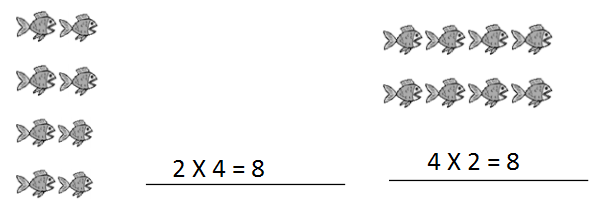
Write and solve multiplication sentences where the second factor represents the size of the row.
Eureka Math Grade 3 Module 1 Lesson 7 Problem Set Answer Key 2

Eureka Math Grade 3 Module 1 Lesson 7 Answer Key-4Explanation:
Wrote and solved multiplication sentences where the second factor represents the size of the row as
2 × 4 = 8 and 4 × 2= 8.

Question 6.
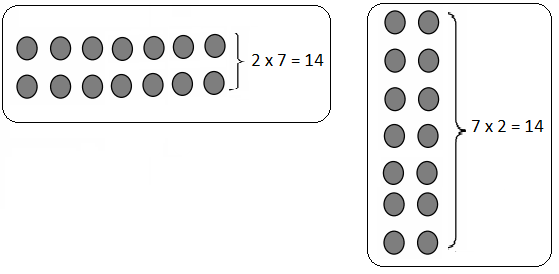
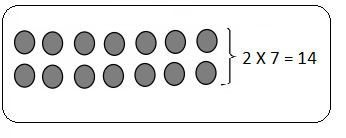
Ms. Nenadal writes 2 × 7 = 7 × 2 on the board.
Do you agree or disagree? Draw arrays to help explain your thinking.

Answer:
Yes, I agree Ms. Nenadal writings as 2 × 7 = 7 × 2,
Eureka Math Grade 3 Module 1 Lesson 7 Answer Key-5
Explanation:
Given Ms. Nenadal writes 2 × 7 = 7 × 2 on the board,
Yes, I agree because 2 × 7 = 14 and 7 × 2 = 14,
Drawn arrays to help and explained my thinking as shown above.

Question 7.
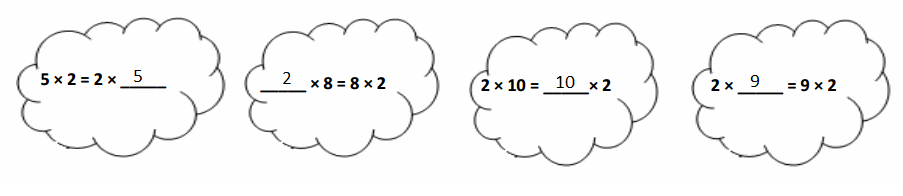
Find the missing factor to make each equation true.
Eureka Math Grade 3 Module 1 Lesson 7 Problem Set Answer Key 3

Eureka Math Grade 3 Module 1 Lesson 7 Answer Key-6
Explanation:
Found the missing factor to make each equations true as below
5 × 2 = 2 × 5,
As each equation is true, so the missing factor in 2 X ___ is 5 as LHS is equal to RHS, So 5 X 2 = 2 X 5.

2 × 8 = 8 × 2,
As each equation is true, so the missing factor in ___ X 8 is 2 as LHS is equal to RHS, So 2 X 8 = 8 X 2.

2 × 10 = 10 × 2,
As each equation is true, so the missing factor in ___ X 2  is 10 as LHS is equal to RHS, So 2 X 10 = 10 X 2.

2 × 9 = 9 × 2,
As each equation is true, so the missing factor in 2 × ___ is 9 as LHS is equal to RHS, So 2 × 9 = 9 × 2.

Question 8.
Jada gets 2 new packs of erasers. Each pack has 6 erasers in it.
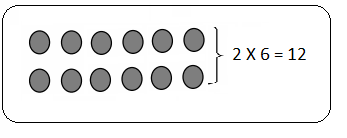
a. Draw an array to show how many erasers Jada has altogether.
b. Write and solve a multiplication sentence to describe the array.
c. Use the commutative property to write and solve a different multiplication sentence for the array.

Answer:

a.
Eureka Math Grade 3 Module 1 Lesson 7 Answer Key-7
Jada has 12 erasers altogether,

Explanation:
Given Jada gets 2 new packs of erasers. Each pack has 6 erasers in it.
So, drawn an array to show 2 × 6 = 12 number of erasers
Jada has altogether.

b. Multiplication sentence is 2 × 6 = 12, the array has 12 erasers.

Explanation:
Wrote and solved a multiplication sentence as 2 × 6 = 12 erasers, describing the array as 2 packs in rows and 6 erasers in columns, So 2 packs X 6 erasers = 12 erasers.

c.  Commutative property for multiplication sentence for the array is 2 × 6 = 6 × 2 = 12.

Explanation:
Used the commutative property to write and solve a different multiplication sentence for the array as 2 × 6 = 6 x 2 = 12 erasers.

Eureka Math Grade 3 Module 1 Lesson 7 Exit Ticket Answer Key

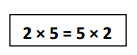
Engage NY Math 3rd Grade Module 1 Lesson 7 Exit Ticket Answer Key 3.1
Do you agree or disagree with the statement in the box?
Draw arrays and use skip-counting to explain your thinking.

Answer:
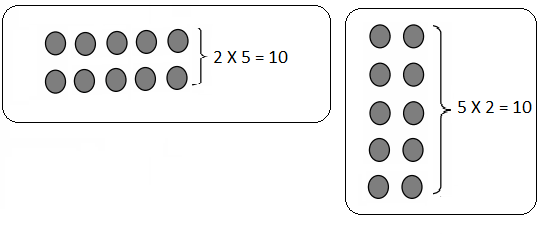
Yes, I agree with the statement in the box as 2 x 5 = 5 X 2,
Eureka Math Grade 3 Module 1 Lesson 7 Answer Key-8
Explanation:
Yes, I agree or disagree with the statement in the box as 2 × 5 = 10 = 5 × 10,
Drawn arrays and used skip-counting as 2 × 5 = 10 = 5 × 10.

Eureka Math Grade 3 Module 1 Lesson 7 Homework Answer Key

Question 1.
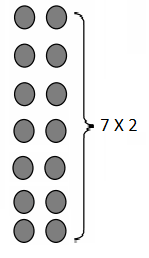
a. Draw an array that shows 7 rows of 2.
b. Write a multiplication sentence where the first factor represents the number of rows.
____7____ × ___2____ = ____14____
Eureka Math Grade 3 Module 1 Lesson 7 Answer Key-9
Explanation:
Drawn an array that shows 7 rows of 2 as 7 × 2 as shown above in the picture.

b. Multiplication sentence where the first factor represents the number of rows as 7 × 2 = 14.

Explanation:
Wrote a multiplication sentence where the first factor represents the number of rows as 7 × 2 = 14.

Question 2.
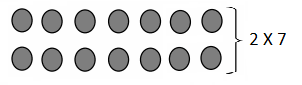
a. Draw an array that shows 2 rows of 7.
b. Write a multiplication sentence where the first factor represents the number of rows.
____2____ × ___7_____ = ___14____
Eureka Math Grade 3 Module 1 Lesson 7 Answer Key-10

Explanation:
Drawn an array that shows 2 rows of 7 as 2 × 7 as shown above in the picture.

b. Multiplication sentence where the first factor represents the number of rows as 2 × 7 = 14.

Explanation:
Wrote a multiplication sentence where the first factor represents the number of rows as 2 × 7 = 14.

Question 3.
a. Turn your paper to look at the arrays in Problems 1 and 2 in different ways. What is the same and what is different about them?
b. Why are the factors in your multiplication sentences in a different order?

a. Same is the result because both have the same value as 14,
Different is number of rows and number of columns are not the same,

Explanation:
Turned my paper to look at the arrays in Problems 1 and 2 in different ways.
Is the same because both got same results as 14 and different about them is in problems 1 and 2 the number of rows and number of columns are not the same as one is 7 rows × 2 columns  and in other it is  2 rows × 7 columns.

b. The factors in my multiplication sentences are in a different order because first we are taking 7 rows × 2 columns and in other it is  2 rows × 7 columns.

Explanation:
The factors in my multiplication sentences are in a different order because first we are taking 7 rows X 2 columns  and in other it is  2 rows × 7 columns,
So, rows and columns differ in the both.

Question 4.
Write a multiplication sentence to match the number of groups.
Skip-count to find the totals. The first one is done for you.
Eureka Math 3rd Grade Module 1 Lesson 7 Homework Answer Key 4
Eureka Math Grade 3 Module 1 Lesson 7 Answer Key-11
Explanation:
Wrote a multiplication sentence to match the number of groups as shown above, might have skipped-count to find the totals.

Question 5.
Write and solve multiplication sentences where the second factor represents the size of the row.
Eureka Math 3rd Grade Module 1 Lesson 7 Homework Answer Key 5
Eureka Math Grade 3 Module 1 Lesson 7 Answer Key-12
Explanation:
Wrote and solved multiplication sentences where the second factor represents the size of the row as
2 × 6 = 12 and 6 × 2= 12.

Question 6.
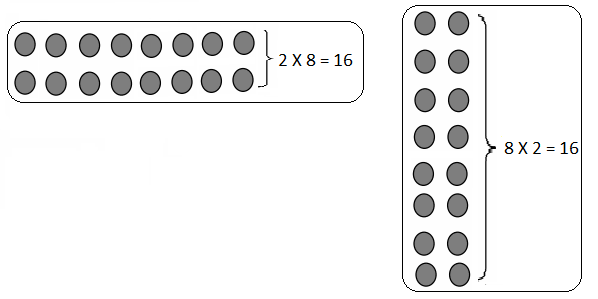
Angel writes 2 × 8 = 8 × 2 in his notebook.
Do you agree or disagree? Draw arrays to help explain your thinking.
Eureka Math Grade 3 Module 1 Lesson 7 Answer Key-13
Explanation:
Given Angel writes 2 × 8 = 8 × 2 in his notebook,
Yes, I agree because 2 × 8 = 16 and 8 x 2 = 16,
Drawn arrays to help and explained my thinking as shown above.

Question 7.
Find the missing factor to make each equation true.
Eureka Math 3rd Grade Module 1 Lesson 7 Homework Answer Key 6
Eureka Math Grade 3 Module 1 Lesson 7 Answer Key-14
Explanation:
Found the missing factor to make each equations true as below
2 × 6 = 6 × 2,
As each equation is true, so the missing factor in 6 × ___ is 2 as LHS is equal to RHS, So 2 × 6 = 6 × 2.

7 × 2 = 2 × 7,
As each equation is true, so the missing factor in ___ × 2 is 7 as LHS is equal to RHS, So 7 × 2 = 2 × 7.

9 × 2 = 2 × 9,
As each equation is true, so the missing factor in ___ × 9 is 2 as LHS is equal to RHS, So 9 × 2 = 2 × 9.

2 × 10 = 10 × 2,
As each equation is true, so the missing factor in 2 × ___ is 10 as LHS is equal to RHS, So 2 × 10 = 10 × 2.

Question 8.
Tamia buys 2 bags of candy.
Each bag has 7 pieces of candy in it.
a. Draw an array to show how many pieces of candy Tamia has altogether.
b. Write and solve a multiplication sentence to describe the array.
c. Use the commutative property to write and solve a different multiplication sentence for the array.

a.
Eureka Math Grade 3 Module 1 Lesson 7 Answer Key-15
Tamia has 14 candy’s altogether,

Explanation:
Given Tamia buys 2 bags of candy. Each bag has 7 pieces of candy in it.
So, drawn an array to show 2 × 7 = 14 number of candy’s Tamia has altogether.

b. Multiplication sentence is 2 × 7 = 14, the array has 14 candy’s.

Explanation:
Wrote and solved a multiplication sentence as 2 × 7 = 14 candy’s, describing the array as 2 bags in rows and 7 candy’s in columns, So 2 bags X 7 candy’s = 14 candy’s.

c.  Commutative property for multiplication sentence for the array is 2 × 7 = 7 × 2 = 14.

Explanation:
Used the commutative property to write and solve a different multiplication sentence for the array as 2 × 7 = 7 x 2 = 14 candy’s.

Eureka Math Grade 3 Module 7 Lesson 13 Answer Key

Engage NY Eureka Math 3rd Grade Module 7 Lesson 13 Answer Key

Eureka Math Grade 3 Module 7 Lesson 13 Pattern Sheet Answer Key

Multiply.
Engage NY Math 3rd Grade Module 7 Lesson 13 Pattern Sheet Answer Key p 1
multiply by 8 (1–5)
Answer:
Engage-NY-Eureka-Math-3rd-Grade-Module-7-Lesson-13-Answer-Key-

Explanation:
8 × 1 = 8
8 × 2 = 16
8 × 3 = 24
8 × 4 = 32
8 × 5 = 40.

Eureka Math Grade 3 Module 7 Lesson 13 Problem Set Answer Key

Question 1.
Find the perimeter of the following shapes.
a.
Engage NY Math Grade 3 Module 7 Lesson 13 Problem Set Answer Key pr 1
P = 3 in + 8 in + 3 in + 8 in
= _________ in
Answer:
Perimeter of the ABCD Rectangle = Side + Side + Side + Side
= AB + BC +CD + DA
= 8in + 3in + 8in + 3in
= 22in.

Explanation:
Engage-NY-Eureka-Math-3rd-Grade-Module-7-Lesson-13-Answer-Key-Eureka Math Grade 3 Module 7 Lesson 13 Problem Set Answer Key- 1a

Length of the AB side of the Rectangle = 8in
Length of the BC side of the Rectangle = 3in
Length of the CA side of the Rectangle = 8in
Length of the DA side of the Rectangle = 3in
Perimeter of the ABCD Rectangle = Side + Side + Side + Side
= AB + BC +CD + DA
= 8in + 3in + 8in + 3in
= 11in + 8in + 3in
= 19in + 3in
= 22in.

b.
Engage NY Math Grade 3 Module 7 Lesson 13 Problem Set Answer Key pr 2
P = ____ cm + ____ cm + ____ cm + ____ cm
= _________ cm
Answer:
Perimeter of the ABCD Square = Side + Side + Side + Side
= AB + BC +CD + DA
= 4cm + 4cm + 4cm + 4cm
= 16cm.

Explanation:
Engage-NY-Eureka-Math-3rd-Grade-Module-7-Lesson-13-Answer-Key-Eureka Math Grade 3 Module 7 Lesson 13 Problem Set Answer Key- 1b
Length of the AB side of the ABCD Square = 4cm
Length of the BC side of the ABCD Square = 4cm
Length of the CD side of the ABCD Square = 4cm
Length of the DA side of the ABCD Square = 4cm
Perimeter of the ABCD Square = Side + Side + Side + Side
= AB + BC +CD + DA
= 4cm + 4cm + 4cm + 4cm
= 8cm + 4cm + 4cm
= 12cm + 4cm
= 16cm.

c.
Engage NY Math Grade 3 Module 7 Lesson 13 Problem Set Answer Key pr 3
P = ____ cm + ____ cm + ____ cm
= _________ cm
Answer:
Perimeter of the ABC Triangle = Side + Side + Side
= AB + BC + CA
= 9cm + 11cm + 6cm
= 26cm.

Explanation:
Engage-NY-Eureka-Math-3rd-Grade-Module-7-Lesson-13-Answer-Key-Eureka Math Grade 3 Module 7 Lesson 13 Problem Set Answer Key- 1c
Length of the AB side of the ABC Triangle =  9cm
Length of the BC side of the ABC Triangle = 11cm
Length of the CA side of the ABC Triangle = 6cm
Perimeter of the ABC Triangle = Side + Side + Side
= AB + BC + CA
= 9cm + 11cm + 6cm
= 20cm + 6cm
= 26cm.

d.
Engage NY Math Grade 3 Module 7 Lesson 13 Problem Set Answer Key pr 4
P = ____ m + ____ m + ____ m + ____ m
= _________ m
Answer:
Perimeter of the ABCD Trapezium = Side + Side + Side + Side
= AB + BC + CD + DA
= 15m + 9m + 5m + 7m
= 36m.

Explanation:
Engage-NY-Eureka-Math-3rd-Grade-Module-7-Lesson-13-Answer-Key-Eureka Math Grade 3 Module 7 Lesson 13 Problem Set Answer Key- 1d

Length of the AB side of the ABCD Trapezium = 15cm
Length of the BC side of the ABCD Trapezium = 9cm
Length of the CD side of the ABCD Trapezium = 5cm
Length of the DA side of the ABCD Trapezium = 7cm
Perimeter of the ABCD Trapezium = Side + Side + Side + Side
= AB + BC + CD + DA
= 15m + 9m + 5m + 7m
= 24m + 5m + 7m
= 29m + 7m
= 36m.

e.
Engage NY Math Grade 3 Module 7 Lesson 13 Problem Set Answer Key pr 5
P = ____ in + ____ in + ____ in + ____ in + ____ in
= _________ in
Answer:
Perimeter of the ABCDE Pentagon = Side + Side + Side + Side + Side
= AB + BC + CD + DE + EA
= 9in + 2in + 2in + 9in + 3in
= 25in.

Explanation:
Engage-NY-Eureka-Math-3rd-Grade-Module-7-Lesson-13-Answer-Key-Eureka Math Grade 3 Module 7 Lesson 13 Problem Set Answer Key- 1e
Length of the AB side of the ABCDE Pentagon = 9in
Length of the BC side of the ABCDE Pentagon = 2in
Length of the CD side of the ABCDE Pentagon = 2in
Length of the DE side of the ABCDE Pentagon = 9in
Length of the EA side of the ABCDE Pentagon = 3in
Perimeter of the ABCDE Pentagon = Side + Side + Side + Side + Side
= AB + BC + CD + DE + EA
= 9in + 2in + 2in + 9in + 3in
= 11in + 2in + 9in + 3in
= 13in + 9in + 3in
= 22in + 3in
= 25in.

Question 2.
Alan’s rectangular swimming pool is 10 meters long and 16 meters wide. What is the perimeter?
Engage NY Math Grade 3 Module 7 Lesson 13 Problem Set Answer Key pr 6
Answer:
Perimeter of the ABCD Rectangle = Side + Side + Side + Side
= AB + BC + CD + DA
= 16m + 10m + 16m + 10m
= 52m.

Explanation:

Engage-NY-Eureka-Math-3rd-Grade-Module-7-Lesson-13-Answer-Key-Eureka Math Grade 3 Module 7 Lesson 13 Problem Set Answer Key- 2
Length of the AB side of the ABCD Rectangle = 16m
Length of the BC side of the ABCD Rectangle = 10m
Length of the CA side of the ABCD Rectangle = 16m
Length of the DA side of the ABCD Rectangle = 10m
Perimeter of the ABCD Rectangle = Side + Side + Side + Side
= AB + BC + CD + DA
= 16m + 10m + 16m + 10m
= 26m + 16m + 10m
= 42m + 10m
= 52m.

Question 3.
Lila measures each side of the shape below.
Engage NY Math Grade 3 Module 7 Lesson 13 Problem Set Answer Key pr 7
a. What is the perimeter of the shape?
b. Lila says the shape is a pentagon. Is she correct? Explain why or why not.
Answer:
a. The perimeter of the ABCDE shape = Side + Side + Side + Side + Side
= AB + BC + CD + DE + EA
= 9in + 6in + 3in + 2in + 4in
= 24in.

b. Lila is correct because Pentagon is a figure which has five sides in it and her figure is a five sided shape.

Explanation:
Engage-NY-Eureka-Math-3rd-Grade-Module-7-Lesson-13-Answer-Key-Eureka Math Grade 3 Module 7 Lesson 13 Problem Set Answer Key- 3a
a. The perimeter of the ABCDE shape = ???
Length of the AB side of the ABCDE shape = 9in
Length of the BC side of the ABCDE shape = 6in
Length of the CD side of the ABCDE shape = 3in
Length of the DE side of the ABCDE shape = 2in
Length of the EA side of the ABCDE shape = 4in
The perimeter of the ABCDE shape = Side + Side + Side + Side + Side
= AB + BC + CD + DE + EA
= 9in + 6in + 3in + 2in + 4in
= 15in + 3in + 2in + 4in
= 18in + 2in + 4in
= 20in + 4in
= 24in.

b. Pentagon is a figure which has  five side in it. Lila is correct.

Eureka Math Grade 3 Module 7 Lesson 13 Exit Ticket Answer Key

Which shape below has the greater perimeter? Explain your answer.
Eureka Math 3rd Grade Module 7 Lesson 13 Exit Ticket Answer Key t 1
Answer:
Perimeter of shape A = 14in
Perimeter of shape B = 15in
Perimeter of shape B is greater than the Perimeter of shape A because the measurement value of Perimeter of shape B is more than the the measurement value of Perimeter of shape A.

Explanation:
Engage-NY-Eureka-Math-3rd-Grade-Module-7-Lesson-13-Answer-Key-Eureka Math Grade 3 Module 7 Lesson 13 Exit Ticket Answer Key
Perimeter of shape A = Side + Side + Side + Side + Side + Side + Side
= AB + BC + CD + DE + EF + FG + GA
= 2in + 2in + 2in + 2in + 2in + 2in + 2in
= 4in + 2in + 2in + 2in + 2in + 2in
= 6in + 2in + 2in + 2in + 2in
= 8in + 2in + 2in + 2in
= 10in + 2in + 2in
= 12in + 2in
= 14in.
Perimeter of shape B = Side + Side + Side + Side + Side
= HI + IJ + JK + KL +LH
= 4in + 2in + 2in + 4in + 3in
= 6in + 2in + 4in + 3in
= 8in +  4in + 3in
= 12in + 3in
= 15in.

Eureka Math Grade 3 Module 7 Lesson 13 Homework Answer Key

Question 1.
Find the perimeters of the shapes below. Include the units in your equations. Match the letter inside each shape to its perimeter to solve the riddle. The first one has been done for you.
Eureka Math Grade 3 Module 7 Lesson 13 Homework Answer Key h 1.1

Eureka Math Grade 3 Module 7 Lesson 13 Homework Answer Key h 1
What kind of meals do math teachers eat?
Eureka Math Grade 3 Module 7 Lesson 13 Homework Answer Key h 2
Answer:
Perimeter of q Triangle shape = 21in.
Perimeter of r Pentagon shape = 36ft.
Perimeter of s Parallelogram shape = 24cm.
Perimeter of a Trapezium shape = 28yd.
Perimeter of m rhombus shape = 16in.
Perimeter of e Rectangular shape = 26cm.
Perimeter of u quadrilateral shape = 20m.
Perimeter of l Pentagon shape = 15m.

Engage-NY-Eureka-Math-3rd-Grade-Module-7-Lesson-13-Answer-Key-Eureka Math Grade 3 Module 7 Lesson 13 Homework Answer Key-1
Square meals kind of meals  math teachers eats.

Explanation:
Eureka Math Grade 3 Module 7 Lesson 13 Homework Answer Key h 1.1
Eureka Math Grade 3 Module 7 Lesson 13 Homework Answer Key h 1


Perimeter of q Triangle shape = Side + Side + Side
= 7in + 7in + 7in
= 14in + 7in
= 21in.

Perimeter of r Pentagon shape = Side + Side + Side + Side + Side
= 6ft + 9ft + 6ft + 6ft + 9ft
= 15ft + 6ft + 6ft + 9ft
= 21ft + 6ft + 9ft
= 27ft + 9ft
= 36ft.

Perimeter of s Parallelogram shape = Side + Side + Side + Side
= 7cm + 5cm + 7cm + 5cm
= 12cm + 7cm + 5cm
= 19cm + 5cm
= 24cm.

Perimeter of a Trapezium shape = Side + Side + Side + Side
= 9yd + 7yd + 5yd + 7yd
= 16yd + 5yd + 7yd
= 21yd +  7yd
= 28yd.

Perimeter of m rhombus shape = Side + Side + Side + Side
= 4in + 4in + 4in + 4in
= 8in  + 4in + 4in
= 12in + 4in
= 16in.

Perimeter of e Rectangular shape = Side + Side + Side + Side
= 8cm + 5cm + 8cm + 5cm
= 13cm + 8cm + 5cm
= 21cm + 5cm
= 26cm.

Perimeter of u quadrilateral shape = Side + Side + Side + Side
= 6m + 4m + 7m + 3m
= 10m + 7m + 3m
= 17m + 3m
= 20m.

Perimeter of l Pentagon shape= Side + Side + Side + Side + Side
= 4m + 2m + 2m + 4m + 3m
= 6m + 2m + 4m + 3m
= 8m + 4m + 3m
= 12m + 3m
= 15m.

Engage-NY-Eureka-Math-3rd-Grade-Module-7-Lesson-13-Answer-Key-Eureka Math Grade 3 Module 7 Lesson 13 Homework Answer Key-1

Question 2.
Alicia’s rectangular garden is 33 feet long and 47 feet wide. What is the perimeter of Alicia’s garden?
Eureka Math Grade 3 Module 7 Lesson 13 Homework Answer Key h 3
Answer:
Perimeter of Alicia’s rectangular garden = 160ft.

Explanation:
Engage-NY-Eureka-Math-3rd-Grade-Module-7-Lesson-13-Answer-Key-Eureka Math Grade 3 Module 7 Lesson 13 Homework Answer Key-2
Length of the ABCD Alicia’s rectangular garden = 33ft
Width of the ABCD Alicia’s rectangular garden = 47ft
Perimeter of ABCD Alicia’s rectangular garden = 2 (Length + Width)
= 2 ( 33ft + 47ft )
= 2 × 80ft
= 160ft.

Question 3.
Jaque’s measured the side lengths of the shape below.
Eureka Math Grade 3 Module 7 Lesson 13 Homework Answer Key h 4
a. Find the perimeter of Jaques’s shape.
b. Jaques says his shape is an octagon. Is he right? Why or why not?
Answer:
a. Perimeter of Jaques’s shape =  Side + Side + Side + Side + Side + Side + Side + Side
= AB + BC + CD + DE + EF + FG + GH +HA
= 7 in + 3 in + 4 in+ 5 in + 4 in + 3 in + 2 in +5 in
= 33in.

Explanation:
a.
Engage-NY-Eureka-Math-3rd-Grade-Module-7-Lesson-13-Answer-Key-Eureka Math Grade 3 Module 7 Lesson 13 Homework Answer Key-2a
Perimeter of Jaques’s shape =  Side + Side + Side + Side + Side + Side + Side + Side
= AB + BC + CD + DE + EF + FG + GH +HA
= 7 in + 3 in + 4 in+ 5 in + 4 in + 3 in + 2 in +5 in
= 10 in + 4 in + 5 in + 4 in + 3 in + 2 in +5 in
= 14 in + 5 in + 4 in + 3 in + 2 in +5 in
= 19 in + 4 in + 3 in + 2 in +5 in
= 23 in + 3 in + 2 in +5 in
= 26 in + 2 in+5 in
= 28 in + 5 in
= 33 in.

b.  Yes, he is correct. Jaques says his shape is an octagon because in geometry , an octagon is an eight-sided  polygon or 8-gon. His shape has eight sides.

Explanation:
Engage-NY-Eureka-Math-3rd-Grade-Module-7-Lesson-13-Answer-Key-Eureka Math Grade 3 Module 7 Lesson 13 Homework Answer Key-2a
His shape has eight sides. In geometry , an octagon is an eight-sided  polygon or 8-gon.

Eureka Math Grade 3 Module 1 Lesson 6 Answer Key

Engage NY Eureka Math 3rd Grade Module 1 Lesson 6 Answer Key

Eureka Math Grade 3 Module 1 Answer Key

Eureka Math Grade 3 Module 1 Lesson 6 Problem Set Answer Key

Question 1.
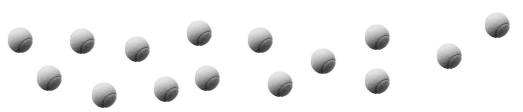
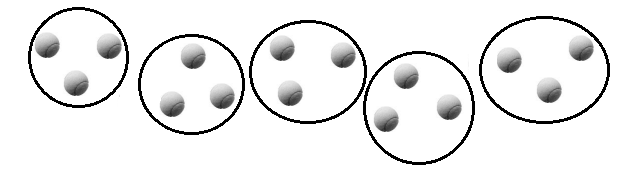
Rick puts 15 tennis balls into cans. Each can holds 3 balls.
Circle groups of 3 to show the balls in each can.
Eureka Math Grade 3 Module 1 Lesson 6 Problem Set Answer Key 1
Rick needs ____5___ cans.
___5___ × 3 = 15
15 ÷ 3 = __5____

Eureka Math Grade 3 Module 1 Lesson 6 Answer Key-1
Answer:
Rick needs 5 cans,

Explanation:
Given Rick puts 15 tennis balls into cans and each can holds 3 balls. Circled groups of 3 to show the balls in each can.
Rick needs 15 ÷ 3 = 5, 5 × 3 = 15,
Therefore Rick needs 5 cans.

Question 2.
Rick uses 15 tennis balls to make 5 equal groups.
Draw to show how many tennis balls are in each group.
There are ____3___ tennis balls in each group.
5 × __3____ = 15
15 ÷ 5 = ___3___
Eureka Math Grade 3 Module 1 Lesson 6 Answer Key-2
Answer:
There are 3 tennis balls in each group.

Explanation:
Given Rick uses 15 tennis balls to make 5 equal groups.
Drawn circles to show 3 number of tennis balls are in each group as 15 ÷ 5 = 3, 5 × 3 = 15,
Therefore, there are 3 tennis balls in each group.

Question 3.
Use an array to model Problem 1.
a. ___5___ × 3 = 15
15 ÷ 3 = ___5___
The number in the blanks represents
_____5 groups___________________.
Eureka Math Grade 3 Module 1 Lesson 6 Answer Key-3
Explanation:
Used an array to model Problem 1 as
5 × 3 = 15 or 15 ÷ 3 = 5,
The number in the blanks represents groups as
5 groups of balls.

b. 5 × __3____ = 15
15 ÷ 5 = __3____
The number in the blanks represents
____________3 balls in each group________.

Answer:
The number in the blanks represents 3 balls in each group,

Explanation:
Rick uses 15 tennis balls to make 5 equal groups,
15 ÷ 5 = 3 or 5 × 3= 15, The number in the blanks
represents 3 balls in each group.

Question 4.
Deena makes 21 jars of tomato sauce. She puts 7 jars in
each box to sell at the market. How many boxes does Deena need?
21 ÷ 7 = __3____
___3___ × 7 = 21
What is the meaning of the unknown factor and quotient?
_________3______________

Answer:
Deena needs 3 boxes,

Explanation:
Given Deena makes 21 jars of tomato sauce and she puts 7 jars in each box to sell at the market.
So number of boxes Deena needs are 21 ÷ 7 = 3, (3 × 7 = 21)
Therefore, Deena needs 3 boxes.

Question 5.
The teacher gives the equation 4 × __3__ = 12. Charlie finds the answer by writing and solving 12 ÷ 4 = __3__.
Explain why Charlie’s method works.

Answer:
Charlie method is 12 ÷ 4 = 3,

Explanation:
Given The teacher gives the equation 4 × ____ = 12.
Charlie finds the answer by writing and solving as
12 ÷ 4 = 3,
because multiplication and division are closely related,
given that division is the inverse operation of multiplication.
When we divide, we look to separate into equal groups,
while multiplication involves joining equal groups.
If we divide this product by one of the factors,
we get the other factor as a result. So Charlie uses division method to solve missing factor in the given equation as 3. So the equation is 4 X 3 = 12.

Question 6.
The blanks in Problem 5 represent the size of the groups.
Draw an array to represent the equations.
Eureka Math Grade 3 Module 1 Lesson 6 Answer Key-4
Explanation:
Drawn an array that represents the equations as  4 × 3 = 12.

Eureka Math Grade 3 Module 1 Lesson 6 Exit Ticket Answer Key

Cesar arranges 12 notecards into rows of 6 for his presentation.
Draw an array to represent the problem.
12 ÷ 6 = ___2_____
____2____ × 6 = 12
What do the unknown factor and quotient represent?
___2 notecards in each row____
Eureka Math Grade 3 Module 1 Lesson 6 Answer Key-5
Explanation:
Given Cesar arranges 12 notecards into rows of 6 for his presentation.
Drawn an array to represent the problem as 12 ÷ 6 = 2, 2 × 6 = 12, means 6 rows  and 2 columns as shown above, The unknown factor and quotient 2
represents 2 notecards in each row.

Eureka Math Grade 3 Module 1 Lesson 6 Homework Answer Key

Question 1.
Mr. Hannigan puts 12 pencils into boxes. Each box holds 4 pencils.
Circle groups of 4 to show the pencils in each box.
Eureka Math 3rd Grade Module 1 Lesson 6 Homework Answer Key 11
Mr. Hannigan needs ___3____ boxes.
___3___ × 4 = 12
12 ÷ 4 = __3____

Eureka Math Grade 3 Module 1 Lesson 6 Answer Key-6
Mr. Hannigan needs 3 boxes,

Explanation:
Given Mr. Hannigan puts 12 pencils into boxes.
Each box holds 4 pencils.
Circled groups of 4 to show the pencils in each box as shown above, So Mr. Hannigan needs 12 ÷ 4 = 3 boxes,
( 3 x 4 = 12).

Question 2.
Mr. Hannigan places 12 pencils into 3 equal groups.
Draw to show how many pencils are in each group.
There are ___4____ pencils in each group.
3 × ___4___ = 12
12 ÷ 3 = ___4___
Eureka Math Grade 3 Module 1 Lesson 6 Answer Key-7
There are 4 pencils in each group,

Explanation:
Given Mr. Hannigan places 12 pencils into 3 equal groups,
Drawn to show 4 number of pencils are in each group as 12 ÷ 3 = 4, 3 × 4 = 12, Therefore 4 pencils are there in each group.

Question 3.
Use an array to model Problem 1.
a. ___3___ × 4 = 12
12 ÷ 4 = ___3___
The number in the blanks represents
___________3 groups______________.
a.
Eureka Math Grade 3 Module 1 Lesson 6 Answer Key-8
The number in the blanks represents 3 groups,

Explanation:
Used an array to model Problem 1 as 3 x 4 = 12, or 12 ÷ 4 = 3, therefore the number in the blanks represents 3 groups.

b. 3 × ___4___ = 12
12 ÷ 3 = __4____
The number in the blanks represents
___________4 pencils in each group_____________.

Answer:

The number in the blanks represents 4 pencils in each group,

Explanation:
Given Mr. Hannigan places 12 pencils into 3 equal groups.
12 ÷ 3 = 4 or 3 × 4= 12, The number in the blanks represents 4 pencils in each group.

Question 4.
Judy washes 24 dishes. She then dries and stacks the dishes equally into 4 piles. How many dishes are in each pile?
24 ÷ 4 = ___6____
4 × ___6_____ = 24
What is the meaning of the unknown factor and quotient?
__________6 dishes are in each pile____________________

Answer:
There are 6 dishes in each pile,

Explanation:
Given Judy washes 24 dishes and she then dries and stacks the dishes equally into 4 piles.
So number of dishes in each pile are 24 ÷ 4 = 6, or 4 × 6 = 24, The meaning of the unknown factor and quotient is 6 dishes are there in each pile.

Question 5.
Nate solves the equation _____ × 5 = 15 by writing and solving 15 ÷ 5 = ____. Explain why Nate’s method works.

Answer:
Nate solves the equation as 3 × 5 = 15,

Explanation:
Given Nate solves the equation _____ × 5 = 15 by writing and solving as 15 ÷ 5 = 3, Nate’s method is correct because in the given equation ___ X 5 = 15 , we bring 5 to the other side it becomes as
15 ÷ 5 = 3 now we check as 3 × 5 it becomes 15 only.
So Nate’s method work.

Question 6.
The blanks in Problem 5 represent the number of groups.
Draw an array to represent the equations.
Eureka Math Grade 3 Module 1 Lesson 6 Answer Key-9

Explanation:
Drawn an array to represent the equations as
3 × 5 = 15 or 15 ÷ 5 = 3 as shown in the picture above.

Eureka Math Grade 3 Module 1 Lesson 1 Answer Key

Engage NY Eureka Math 3rd Grade Module 1 Lesson 1 Answer Key

Eureka Math Grade 3 Module 1 Answer Key

Eureka Math Grade 3 Module 1 Lesson 1 Problem Set Answer Key

Question 1.
Fill in the blanks to make true statements.
Eureka Math Grade 3 Module 1 Lesson 1 Problem Set Answer Key 1
a. 3 groups of five = ___15______
3 fives = ____15_____
3 × 5 = ___15______

3 groups of five = 15,
3 fives = 15,
3 × 5 = 15,

Explanation:
Given expressions as
3 groups of five means 3 × 5 = 15,
3 fives = 3 × 5 = 15 and
3 × 5 = 15 as 3 is multiplied by 5 we get 15.

Eureka Math Grade 3 Module 1 Lesson 1 Problem Set Answer Key 2
b. 3 + 3 + 3 + 3 + 3 = __15___
5 groups of three = ___15______
5 × 3 = ____15_____

3 + 3 + 3 + 3 + 3 = 15,
5 groups of three = 15,
5 × 3 = 15,

Explanation:
Given expressions as
3 + 3 + 3 + 3 + 3 = 15 as 3 is added 5 times,
5 groups of three = 15 means 5  × 3 = 15,
5 × 3 = 15 as 5 is multiplied by 3 we get 15.

Eureka Math Grade 3 Module 1 Lesson 1 Problem Set Answer Key 3
c. 6 + 6 + 6 + 6 = ___24________
____4___ groups of six = ___24_______
4 × __6____ = ____24______

6 + 6 + 6 + 6 = 24,
4 groups of six = 24,
4 × 6 = 24,

Explanation:
Given expressions as
6 + 6 + 6 + 6 = 24 as 6 is added 4 times,
4 groups of six = 24 means 4  × 6 = 24,
4 × 6 = 24 as 4 is multiplied by 6 we get 24.

Eureka Math Grade 3 Module 1 Lesson 1 Problem Set Answer Key 4
d. 4 +__4__ + __4__ + __4__ + _4___ + __4__ = ___24______
6 groups of ____4____ = ____24_______
6 × __4____ = ____24______

4 + 4 + 4 + 4 + 4 + 4 = 24,
6 groups of 4 = 24,
6 × 4 = 24,

Explanation:
Given expressions as
4 + ___ + ___ +___ +___ +___ =  means by seeing the picture
4 is added 6 times as 4 + 4 + 4 + 4 + 4 + 4 we get 24,
6 groups of ______ =  means again by seeing the picture
6 × 4 we get 24, So 6 groups of 4 = 24,
6 × 4 = 24 as 6 is multiplied by 4 we get 24.

Question 2.
The picture below shows 2 groups of apples. Does the picture show 2 × 3? Explain why or why not.
Eureka Math Grade 3 Module 1 Lesson 1 Problem Set Answer Key 5
No, the picture does not show 2 × 3,

Explanation:
Given the picture below shows 2 groups of apples but in the 2 groups the number of apples are not the same as in group -1 we have 3 apples, group 2 we have 2 apples in total there are 5 apples and 2 × 3 = 6 whose value is not same as shown in the picture.
So, the picture does not show 2 × 3.

Question 3.
Draw a picture to show 2 × 3 = 6.
Eureka Math Grade 3 Module 1 Lesson 1 Answer Key-1
Explanation:
Drawn a picture above to show 2 × 3 = 6 .

Question 4.
Caroline, Brian, and Marta share a box of chocolates. They each get the same amount. Circle the chocolates below to show 3 groups of 4. Then, write a repeated addition sentence and a multiplication sentence to represent the picture.
Eureka Math Grade 3 Module 1 Lesson 1 Problem Set Answer Key 5.1
Eureka Math Grade 3 Module 1 Lesson 1 Answer Key-2

Addition sentence is 4 + 4 + 4 = 12,
Multiplication sentence is 3 × 4 = 12,

Explanation:
Given Caroline, Brian, and Marta share a box of chocolates and they each get the same amount as 12 ÷ 3 = 4 each.
Circled the chocolates above to show 3 groups of 4 and wrote a repeated addition sentence as  4 + 4 + 4 = 12 and a multiplication sentence to represent the picture as 3 × 4 = 12.

Eureka Math Grade 3 Module 1 Lesson 1 Exit Ticket Answer Key

Question 1.
The picture below shows 4 groups of 2 slices of watermelon.
Fill in the blanks to make true repeated addition and multiplication sentences that represent the picture.
Engage NY Math 3rd Grade Module 1 Lesson 1 Exit Ticket Answer Key 6
Eureka Math Grade 3 Module 1 Lesson 1 Answer Key-3

True repeated addition is 2 + 2 + 2 + 2 = 8,
Multiplication sentences is 4 X 2 = 8.

Explanation:
Given the picture above shows 4 groups of 2 slices of watermelon.
Filled in the blanks to make true repeated addition as 2 + 2 + 2 + 2 = 8 and multiplication sentences that represent the picture as 4 X 2 = 8.

Question 2.
Draw a picture to show 3 + 3 + 3 = 9. Then, write a multiplication sentence to represent the picture.
Eureka Math Grade 3 Module 1 Lesson 1 Answer Key-4
Addition sentence is  3 + 3 + 3 = 9,
Multiplication sentences is 3 X 3 = 9.

Explanation:
Drawn a picture above as  3 groups of 3 birds  to show 3 + 3 + 3 = 9 and writing a multiplication sentence to represent the picture as 3 X 3 = 9 birds in total.

Eureka Math Grade 3 Module 1 Lesson 1 Homework Answer Key

Question 1.
Fill in the blanks to make true statements.
Eureka Math 3rd Grade Module 1 Lesson 1 Homework Answer Key 6.1
a. 4 groups of five = ____20_____
4 fives = ___20______
4 × 5 = ____20_____

4 groups of five = 20,
4 fives = 20,
4 × 5 = 20,

Explanation:
Given expressions as
4 groups of five means 4 × 5 = 20,
4 fives = 4 × 5 = 20 and
4 × 5 = 20 as 4 is multiplied by 5 we get 20.

Eureka Math 3rd Grade Module 1 Lesson 1 Homework Answer Key 6.2

b. 5 groups of four = _________
5 fours = _________
5 × 4 = _________

5 groups of four = 20,
5 fours = 20,
5 × 4 = 20,

Explanation:
Given expressions as
5 groups of four means 5 × 4 = 20,
5 fours = 5 x 4 = 20 and
5 × 4 = 20 as 5 is multiplied by 4 we get 20.

Eureka Math 3rd Grade Module 1 Lesson 1 Homework Answer Key 6.3
c. 6 + 6 + 6 = ___18________
____3___ groups of six = ____18______
3 × __6____ = ____18______

6 + 6 + 6  = 18,
3 groups of 6 = 18,
3 × 6 = 18,

Explanation:
Given expressions as 6 + 6 + 6 = 18 as
6 is added 3 times we get 18,
_____ groups of six =  means again by seeing the picture
3 groups of 6 =  3 × 6 we get 18, So 3 groups of 6 = 18,
3 × 6 = 18 as 3 is multiplied by 6 we get 18.

Eureka Math 3rd Grade Module 1 Lesson 1 Homework Answer Key 6.4
d. 3 + __3__ + __3__ + __3__ + __3__ + __3__ = ___18____
6 groups of ____3____ = _____18______
6 × __3__ = ____18______

3 + 3 + 3 + 3 + 3 + 3 = 18,
6 groups of 3 = 18,
6 × 3 = 18,

Explanation:
Given expressions as
3 + ___ + ___ +___ +___ +___ =  means by seeing the picture
3 is added 6 times as 3 + 3 + 3 + 3 + 3 + 3 we get 18,
6 groups of ______ =  means again by seeing the picture
6 × 3 we get 18, So 6 groups of 3 = 18,
6 × 3 = 18 as 6 is multiplied by 3 we get 18.

Question 2.
The picture below shows 3 groups of hot dogs. Does the picture show 3 × 3? Explain why or why not.
Eureka Math 3rd Grade Module 1 Lesson 1 Homework Answer Key 7

Yes, the picture shows 3 × 3,

Explanation:
Given the picture below shows 3 groups of hot dogs,
In the 3 groups the number of hot dogs are the same as 3, So in total we have 3 X 3 = 9 hotdogs in the picture which matches with the given equation as 3 × 3 whose value is also same 9, So, the picture shows 3 × 3.

Question 3.
Draw a picture to show 4 × 2 = 8,
Eureka Math Grade 3 Module 1 Lesson 1 Answer Key-5

Explanation:
Drawn picture of flowers as shown above to show 4 × 2 = 8.

Question 4.
Circle the pencils below to show 3 groups of 6. Write a repeated addition and a multiplication sentence to represent the picture.
Eureka Math Grade 3 Module 1 Lesson 1 Homework Answer Key 8
Eureka Math Grade 3 Module 1 Lesson 1 Answer Key-6
Repeated addition sentence is 6 + 6 + 6 = 18,
Multiplication sentence is 3 X 6 = 18,

Explanation:
Circled the pencils above to show 3 groups of 6.
Wrote a repeated addition as 6 + 6 + 6 = 18 and a multiplication sentence as 3 X 6 = 18 to represent the picture.

Eureka Math Grade 3 Module 7 Lesson 12 Answer Key

Engage NY Eureka Math 3rd Grade Module 7 Lesson 12 Answer Key

Eureka Math Grade 3 Module 7 Lesson 12 Pattern Sheet Answer Key

Multiply.
Engage NY Math 3rd Grade Module 7 Lesson 12 Pattern Sheet Answer Key p 1
multiply by 7 (6–10)
Answer:
Engage-NY-Eureka-Math-3rd-Grade-Module-7-Lesson-12-Answer-Key-Eureka Math 3 Module 7 Lesson 12 Pattern Sheet Answer Key

Explanation:
7 × 6 = 42
7 × 7 = 49
7 × 8 = 56
7 × 9 = 63
7 × 10 = 70.

Eureka Math Grade 3 Module 7 Lesson 12 Problem Set Answer Key

Question 1.
Measure and label the side lengths of the shapes below in centimeters. Then, find the perimeter of each shape.
a.
Engage NY Math Grade 3 Module 7 Lesson 12 Problem Set Answer Key pr 1
Perimeter = _____cm +_____cm +_____cm +_____cm
= _______ cm
Answer:
Perimeter of the ABCD given shape = Side + Side + Side + Side
= 2cm + 2cm + 2cm + 2cm
= 8cm.

Explanation:
Engage-NY-Eureka-Math-3rd-Grade-Module-7-Lesson-12-Answer-Key-Eureka Math 3 Module 7 Lesson 12 Pattern Sheet Answer Key-1a
Length of the AB side of the ABCD shape = 2cm
Length of the BC side of the ABCD shape = 2cm
Length of the CD side of the ABCD shape = 2cm
Length of the DA side of the ABCD shape = 2cm
Perimeter of the given ABCD shape = Side + Side + Side + Side
= AB + BC + CD+ DA
= 2cm + 2cm + 2cm + 2cm
= 4cm + 2cm + 2cm
= 6cm + 2cm
= 8cm.


b.
Engage NY Math Grade 3 Module 7 Lesson 12 Problem Set Answer Key pr 2
Perimeter = _____________________
= _______ cm
Answer:
Perimeter of the given ABCDEF Hexagon shape = Side + Side + Side + Side + Side + Side
= 3cm + 3cm + 3cm + 3cm + 3cm + 3cm
= 18cm.

Explanation:
Engage-NY-Eureka-Math-3rd-Grade-Module-7-Lesson-12-Answer-Key-Eureka Math 3 Module 7 Lesson 12 Pattern Sheet Answer Key-1b
Length of the AB side of the given ABCDEF Hexagon shape = 3cm.
Length of the BC side of the given ABCDEF Hexagon shape = 3cm.
Length of the CD side of the given ABCDEF Hexagon shape = 3cm.
Length of the DE side of the given ABCDEF Hexagon shape = 3cm.
Length of the EF side of the given ABCDEF Hexagon shape = 3cm.
Length of the FA side of the given ABCDEF Hexagon shape = 3cm.
Perimeter of the given ABCDEF Hexagon shape = Side + Side + Side + Side + Side + Side
= AB + BC + CD + DE + EF + FA
= 3cm + 3cm + 3cm + 3cm + 3cm + 3cm
= 6cm +3cm + 3cm + 3cm + 3cm
= 9cm +3cm + 3cm + 3cm
= 12cm +3cm + 3cm
= 15cm + 3cm
= 18cm.

c.
Engage NY Math Grade 3 Module 7 Lesson 12 Problem Set Answer Key pr 3
Perimeter = _____________________
= _______ cm
Answer:
Perimeter of the given ABCD Parallelogram shape = Side + Side + Side + Side
= 4cm + 4cm + 4cm + 4cm
= 16cm.

Explanation:
Engage-NY-Eureka-Math-3rd-Grade-Module-7-Lesson-12-Answer-Key-Eureka Math 3 Module 7 Lesson 12 Pattern Sheet Answer Key-1c
Length of the AB side of the given ABCD Parallelogram shape = 4cm
Length of the BC side of the given ABCD Parallelogram shape = 4cm
Length of the CD  side of the given ABCD Parallelogram shape = 4cm
Length of the DA side of the given ABCD Parallelogram shape = 4cm
Perimeter of the given ABCD Parallelogram shape = Side + Side + Side + Side
=AB + BC + CD +DA
= 4cm + 4cm + 4cm + 4cm
= 8cm + 4cm + 4cm
= 12cm + 4cm
=16cm.

d.
Engage NY Math Grade 3 Module 7 Lesson 12 Problem Set Answer Key pr 4
Perimeter = _____________________
= _______ cm
Answer:
Perimeter of the ABC Triangle = Side + Side + Side
= 5cm + 5cm + 5cm
= 15cm.

Explanation:
Engage-NY-Eureka-Math-3rd-Grade-Module-7-Lesson-12-Answer-Key-Eureka Math Grade 3 Module 7 Lesson 12 Problem Set Answer Key-1d
Length of the AB side of the ABC Triangle = 5cm
Length of the BC side of the ABC Triangle = 5cm
Length of the CA side of the ABC Triangle = 5cm
Perimeter of the ABC Triangle = Side + Side + Side
= AB + BC + CA
= 5cm + 5cm + 5cm
= 10cm + 5cm
= 15cm.

e.
Engage NY Math Grade 3 Module 7 Lesson 12 Problem Set Answer Key pr 5
Perimeter = _____________________
= _______ cm
Answer:
Perimeter of the given ABCDEF figure = Side + Side + Side + Side + Side + Side
= AB + BC + CD + DE+ EF + FA
= 5.5cm+ 1cm + 3cm + 2cm + 3cm + 3cm
= 17.5cm

Explanation:
Engage-NY-Eureka-Math-3rd-Grade-Module-7-Lesson-12-Answer-Key-Eureka Math Grade 3 Module 7 Lesson 12 Problem Set Answer Key-1e
Length of AB side if the given ABCDEF figure = 5.5cm
Length of BC side if the given ABCDEF figure = 1cm
Length of CD side if the given ABCDEF figure = 3cm
Length of DE side if the given ABCDEF figure = 2cm
Length of EF side if the given ABCDEF figure = 3cm
Length of FA side if the given ABCDEF figure = 3cm
Perimeter of the given ABCDEF figure = Side + Side + Side + Side + Side + Side
= AB + BC + CD + DE+ EF + FA
= 5.5cm+ 1cm + 3cm + 2cm + 3cm + 3cm
= 6.5cm + 3cm + 2cm + 3cm + 3cm
= 9.5cm + 2cm + 3cm + 3cm
= 11.5cm + 3cm + 3cm
= 14.5cm + 3cm
= 17.5cm

Question 2.
Carson draws two triangles to create the new shape shown below. Use a ruler to find the side lengths of Carson’s shape in centimeters. Then, find the perimeter.
Engage NY Math Grade 3 Module 7 Lesson 12 Problem Set Answer Key pr 6
Answer:
Perimeter of ABCD Carson’s shape = Side + Side + Side + Side
= AB + BC + CD+ DA
= 2cm + 2cm + 2cm + 2cm
=8cm.

Explanation:
Engage-NY-Eureka-Math-3rd-Grade-Module-7-Lesson-12-Answer-Key-Eureka Math 3 Module 7 Lesson 12 Pattern Sheet Answer Key-2

Length of AB side of ABCD Carson’s shape = 2cm
Length of BC side of ABCD Carson’s shape = 2cm
Length of CD side of ABCD Carson’s shape = 2cm
Length of DA side of ABCD Carson’s shape = 2cm
Perimeter of ABCD Carson’s shape = Side + Side + Side + Side
= AB + BC + CD+ DA
= 2cm + 2cm + 2cm + 2cm
=4cm + 2cm + 2cm
= 6cm + 2cm
=8cm.

Question 3.
Hugh and Daisy draw the shapes shown below. Measure and label the side lengths in centimeters. Whose shape has a greater perimeter? How do you know?
Engage NY Math Grade 3 Module 7 Lesson 12 Problem Set Answer Key pr 7
Answer:
Perimeter of ABCDE Hugh’s shape = Side + Side + Side + Side + Side
= AB + BC + CD + DE + EA
= 3cm + 3cm + 3cm + 3cm + 3cm
= 15cm.
Perimeter of FGHI Daisy’s shape =  Side + Side + Side + Side
= FG+ GH+ HI+ IF
=  4cm + 5cm + 4cm + 3cm
= 16cm.
Perimeter of FGHI Daisy’s shape is greater than the Perimeter of ABCDE Hugh’s shape because the  measurement value is greater than the other one’s shape.

Explanation:
Engage-NY-Eureka-Math-3rd-Grade-Module-7-Lesson-12-Answer-Key-Eureka Math Grade 3 Module 7 Lesson 12 Homework Answer Key-3..
Length of the AB side of ABCDE Hugh’s shape = 3cm
Length of the BC side of ABCDE Hugh’s shape = 3cm
Length of the CD side of ABCDE Hugh’s shape = 3cm
Length of the DE side of ABCDE Hugh’s shape = 3cm
Length of the EA side of ABCDE Hugh’s shape = 3cm
Perimeter of ABCDE Hugh’s shape = Side + Side + Side + Side + Side
= AB + BC + CD + DE + EA
= 3cm + 3cm + 3cm + 3cm + 3cm
= 6cm + 3cm + 3cm + 3cm
= 9cm + 3cm + 3cm
= 12cm + 3cm
= 15cm.

Length of the FG side of FGHI Daisy’s shape = 4cm
Length of the GH side of FGHI Daisy’s shape = 5cm
Length of the HI side of FGHI Daisy’s shape = 4cm
Length of the IF side of FGHI Daisy’s shape = 3cm
Perimeter of FGHI Daisy’s shape =  Side + Side + Side + Side
= FG+ GH+ HI+ IF
=  4cm + 5cm + 4cm + 3cm
= 9cm + 4cm +3cm
= 13cm + 3cm
= 16cm.

Question 4.
Andrea measures one side length of the square below and says she can find the perimeter with that measurement. Explain Andrea’s thinking. Then, find the perimeter in centimeters.
Engage NY Math Grade 3 Module 7 Lesson 12 Problem Set Answer Key pr 8
Answer:
Andrea’s figure is a Square. So, her figure’s  all sides are going to be equal. Yes, she is correct in her thinking.
Perimeter of ABCD Andrea’s Square = Side + Side + Side + Side
= 4cm + 4cm + 4cm+ 4cm
= 16cm.

Explanation:
Engage-NY-Eureka-Math-3rd-Grade-Module-7-Lesson-12-Answer-Key-Eureka Math Grade 3 Module 7 Lesson 12 Problem Set Answer Key-4
Andrea’s figure is a Square. So, her figure’s  all sides are going to be equal. Yes, she is correct in her thinking, ” measuring one side length of the square below, she can find the perimeter with that measurement.”
Length of AB side of Andrea’s Square = 4cm
Perimeter of ABCD Andrea’s Square = Side + Side + Side + Side
= 4cm + 4cm + 4cm+ 4cm
= 8cm + 4cm + 4cm
=12cm + 4cm
= 16cm.

Eureka Math Grade 3 Module 7 Lesson 12 Exit Ticket Answer Key

Measure and label the side lengths of the shape below in centimeters. Then, find the perimeter.
Eureka Math 3rd Grade Module 7 Lesson 12 Exit Ticket Answer Key t 1
Perimeter = __________________________________________
= _______ cm
Answer:
Perimeter of the given ABCDEFGHIJK Shape =  Side + Side + Side + Side + Side + Side + Side + Side + Side + Side + Side + Side
= AB + BC+ CD + DE + EF + FG + GH + HI + IJ + JK +KL + LA
= 4cm + 2cm + 2cm + 4cm + 2cm + 2cm + 4cm + 2cm + 2cm + 4cm + 2cm + 2cm
= 32cm.

Explanation:
Engage-NY-Eureka-Math-3rd-Grade-Module-7-Lesson-12-Answer-Key-Eureka Math Grade 3 Module 7 Lesson 12 Exit Ticket Answer Key
Length of the AB side of the given ABCDEFGHIJK Shape = 4cm
Length of the BC side of the given ABCDEFGHIJK Shape = 2cm
Length of the CD side of the given ABCDEFGHIJK Shape = 2cm
Length of the DE side of the given ABCDEFGHIJK Shape = 4cm
Length of the EF side of the given ABCDEFGHIJK Shape = 2cm
Length of the FG side of the given ABCDEFGHIJK Shape = 2cm
Length of the GH side of the given ABCDEFGHIJK Shape = 4cm
Length of the HI side of the given ABCDEFGHIJK Shape = 2cm
Length of the IJ side of the given ABCDEFGHIJK Shape =  2cm
Length of the JK side of the given ABCDEFGHIJK Shape = 4cm
Length of the KL side of the given ABCDEFGHIJK Shape = 2cm
Length of the LA side of the given ABCDEFGHIJK Shape = 2cm
Perimeter of the given ABCDEFGHIJK Shape =  Side + Side + Side + Side + Side + Side + Side + Side + Side + Side + Side + Side
= AB + BC+ CD + DE + EF + FG + GH + HI + IJ + JK +KL + LA
= 4cm + 2cm + 2cm + 4cm + 2cm + 2cm + 4cm + 2cm + 2cm + 4cm + 2cm + 2cm
= 6cm + 2cm + 4cm + 2cm + 2cm + 4cm + 2cm + 2cm + 4cm + 2cm + 2cm
= 8cm + 4cm + 2cm + 2cm + 4cm + 2cm + 2cm + 4cm + 2cm + 2cm
= 12cm + 2cm + 2cm + 4cm + 2cm + 2cm + 4cm + 2cm + 2cm
= 14cm + 2cm + 4cm + 2cm + 2cm + 4cm + 2cm + 2cm
= 16cm + 4cm + 2cm + 2cm + 4cm + 2cm + 2cm
= 20 cm + 2cm + 2cm + 4cm + 2cm + 2cm
= 22cm + 2cm + 4cm + 2cm + 2cm
= 24cm + 4cm + 2cm + 2cm
= 28cm + 2cm + 2cm
= 30cm + 2cm
= 32cm.

Eureka Math Grade 3 Module 7 Lesson 12 Homework Answer Key

Question 1.
Measure and label the side lengths of the shapes below in centimeters. Then, find the perimeter of each shape.
a.
Eureka Math Grade 3 Module 7 Lesson 12 Homework Answer Key h 1
Perimeter = _____cm +_____cm +_____cm
= _______ cm
Answer:
Perimeter of ABC triangle = Side + Side + Side
= AB + BC + CA
= 3cm + 5cm + 4cm
= 12cm.

Explanation:
Engage-NY-Eureka-Math-3rd-Grade-Module-7-Lesson-12-Answer-Key-Eureka Math Grade 3 Module 7 Lesson 12 Homework Answer Key-1a
Length of the AB side of ABC triangle = 3cm
Length of the BC side of ABC triangle = 5cm
Length of the CA side of ABC triangle = 4cm
Perimeter of ABC triangle = Side + Side + Side
= AB + BC + CA
= 3cm + 5cm + 4cm
= 8cm + 4cm
= 12cm.

b.
Eureka Math Grade 3 Module 7 Lesson 12 Homework Answer Key h 2
Perimeter = _____________________
= _______ cm
Answer:
Perimeter of ABCD rectangle = Side + Side + Side + Side
= AB + BC + CD + DA
= 6cm + 4cm + 6cm + 4cm
= 20cm.

Explanation:
Engage-NY-Eureka-Math-3rd-Grade-Module-7-Lesson-12-Answer-Key-Eureka Math Grade 3 Module 7 Lesson 12 Homework Answer Key-1b
Length of the AB side of ABCD rectangle = 6cm
Length of the BC side of ABCD rectangle = 4cm
Length of the CD side of ABCD rectangle = 6cm
Length of the DA side of ABCD rectangle = 4cm
Perimeter of ABCD rectangle = Side + Side + Side + Side
= AB + BC + CD + DA
= 6cm + 4cm + 6cm + 4cm
= 10cm + 6cm + 4cm
= 16cm + 4cm
= 20cm.


c.
Eureka Math Grade 3 Module 7 Lesson 12 Homework Answer Key h 3
Perimeter = _____________________
= _______ cm
Answer:
Perimeter of the ABCD Quadrilateral = Side + Side + Side + Side
= AB + BC + CD + DA
= 3cm + 4cm + 5cm + 4cm
= 16cm.

Explanation:
Engage-NY-Eureka-Math-3rd-Grade-Module-7-Lesson-12-Answer-Key-Eureka Math Grade 3 Module 7 Lesson 12 Homework Answer Key-1c
Length of the AB side in the ABCD Quadrilateral = 3cm
Length of the BC side in the ABCD Quadrilateral = 4cm
Length of the CD side in the ABCD Quadrilateral = 5cm
Length of the DA side in the ABCD Quadrilateral = 4cm
Perimeter of the ABCD Quadrilateral = Side + Side + Side + Side
= AB + BC + CD + DA
= 3cm + 4cm + 5cm + 4cm
= 7cm + 5cm + 4cm
= 12cm + 4cm
= 16cm.

d.
Eureka Math Grade 3 Module 7 Lesson 12 Homework Answer Key h 4
Perimeter = _____________________
= _______ cm
Answer:
Perimeter of the ABCD Parallelogram = Side + Side + Side + Side
= AB + BC + CD + DA
= 5cm + 5cm + 5cm + 5cm
= 20cm.

Explanation:
Engage-NY-Eureka-Math-3rd-Grade-Module-7-Lesson-12-Answer-Key-Eureka Math Grade 3 Module 7 Lesson 12 Homework Answer Key-1d
Length of the AB side of the ABCD parallelogram = 5cm
Length of the BC side of the ABCD parallelogram = 5cm
Length of the CD side of the ABCD parallelogram = 5cm
Length of the DA side of the ABCD parallelogram = 5cm
Perimeter of the ABCD Parallelogram = Side + Side + Side + Side
= AB + BC + CD + DA
= 5cm + 5cm + 5cm + 5cm
= 10cm + 5cm + 5cm
= 15cm + 5cm
= 20cm.

e.
Eureka Math Grade 3 Module 7 Lesson 12 Homework Answer Key h 5
Perimeter = _____________________
= _______ cm
Answer:
Perimeter of the given ABCDEFGH figure = Side + Side + Side + Side + Side + Side + Side + Side
= AB + BC + CD + DE + EF + FG + GH + HA
= 2cm + 2cm + 3.5cm + 2cm + 2cm + 2.5cm + 7.5cm + 2.5cm
= 24cm.

Explanation:
Engage-NY-Eureka-Math-3rd-Grade-Module-7-Lesson-12-Answer-Key-Eureka Math Grade 3 Module 7 Lesson 12 Homework Answer Key-1e
Length of AB side of the given ABCDEFGH figure = 2cm
Length of BC side of the given ABCDEFGH figure = 2cm
Length of CD side of the given ABCDEFGH figure = 3.5cm
Length of DE side of the given ABCDEFGH figure = 2cm
Length of EF side of the given ABCDEFGH figure = 2cm
Length of FG side of the given ABCDEFGH figure = 2.5cm
Length of GH side of the given ABCDEFGH figure = 7.5cm
Length of HA side of the given ABCDEFGH figure = 2.5cm
Perimeter of the given ABCDEFGH figure = Side + Side + Side + Side + Side + Side + Side + Side
= AB + BC + CD + DE + EF + FG + GH + HA
= 2cm + 2cm + 3.5cm + 2cm + 2cm + 2.5cm + 7.5cm + 2.5cm
= 4cm + 3.5cm + 2cm + 2cm + 2.5cm + 7.5cm + 2.5cm
= 7.5cm + 2cm + 2cm + 2.5cm + 7.5cm + 2.5cm
= 9.5cm + 2cm + 2.5cm + 7.5cm + 2.5cm
= 11.5cm + 2.5cm + 7.5cm + 2.5cm
= 14cm + 7.5cm + 2.5cm
= 21.5cm + 2.5cm
= 24cm.

Question 2.
Melinda draws two trapezoids to create the hexagon shown below. Use a ruler to find the side lengths of Melinda’s hexagon in centimeters. Then, find the perimeter.
Eureka Math Grade 3 Module 7 Lesson 12 Homework Answer Key h 6
Answer:
Perimeter of ABCDEF Melinda’s hexagon = Side + Side + Side + Side + Side + Side
= AB + BC + CD + DE + EF +FA
= 3cm + 3cm + 3cm + 3cm + 3cm + 3cm
= 18cm.

Explanation:
Engage-NY-Eureka-Math-3rd-Grade-Module-7-Lesson-12-Answer-Key-Eureka Math Grade 3 Module 7 Lesson 12 Homework Answer Key-2
Length of the AB side of ABCDEF Melinda’s hexagon = 3cm
Length of the BC side of ABCDEF Melinda’s hexagon = 3cm
Length of the CD side of ABCDEF Melinda’s hexagon = 3cm
Length of the DE side of ABCDEF Melinda’s hexagon = 3cm
Length of the EF side of ABCDEF Melinda’s hexagon = 3cm
Length of the FA side of ABCDEF Melinda’s hexagon = 3cm
Perimeter of the ABCDEF Melinda’s hexagon = Side + Side + Side + Side + Side + Side
= AB + BC + CD + DE + EF +FA
= 3cm + 3cm + 3cm + 3cm + 3cm + 3cm
= 6cm + 3cm + 3cm + 3cm + 3cm
= 9cm + 3cm + 3cm + 3cm
= 12cm + 3cm + 3cm
= 15cm + 3cm
= 18cm.

Question 3.
Victoria and Eric draw the shapes shown below. Eric says his shape has a greater perimeter because it has more sides than Victoria’s shape. Is Eric right? Explain your answer.
Eureka Math Grade 3 Module 7 Lesson 12 Homework Answer Key h 7
Answer:
Yes, Eric is correct because DEFG Square has more sides than the ABC Victoria’s triangle shape.
Perimeter of DEFG Eric’s Square shape is greater than the Perimeter of ABC Victoria’s triangle shape.
Perimeter of ABC Victoria’s triangle shape = 12cm

Explanation:
Engage-NY-Eureka-Math-3rd-Grade-Module-7-Lesson-12-Answer-Key-Eureka Math Grade 3 Module 7 Lesson 12 Homework Answer Key-3
Length of AB Victoria’s triangle shape = 3cm
Length of BC Victoria’s triangle shape = 5cm
Length of CA Victoria’s triangle shape =4cm
Perimeter of ABC Victoria’s triangle shape = Side + Side + Side
= 3cm +  4cm + 5cm
= 7cm + 5cm
= 12cm.

Length of DEFG Eric’s Square shape = 4cm
Perimeter of DEFG Eric’s Square shape = Side × Side
= 4cm × 4cm
= 16cm.
Perimeter of Eric’s Square shape is greater than the Perimeter of Victoria’s triangle shape.

Question 4.
Jamal uses his ruler and a right angle tool to draw the rectangle shown below. He says the perimeter of his rectangle is 32 centimeters. Do you agree with Jamal? Why or why not?
Eureka Math Grade 3 Module 7 Lesson 12 Homework Answer Key h 8
Answer:
NO, I disagree with Jamal. Jamal answer is incorrect because actual Perimeter of his ABCD rectangle is 30cm not 32cm.

Explanation:
Engage-NY-Eureka-Math-3rd-Grade-Module-7-Lesson-12-Answer-Key-Eureka Math Grade 3 Module 7 Lesson 12 Homework Answer Key-4
Length of the ABCD Rectangle Jamal drawn = 7.5cm
Width of the ABCD Rectangle Jamal drawn = 4cm
Perimeter of ABCD Rectangle Jamal drawn = Length × Width
= 7.5 × 4
= 30 cm.
Jamal answer is incorrect because actual Perimeter of his ABCD rectangle is 30cm not 32cm.

Eureka Math Grade 3 Module 1 Lesson 5 Answer Key

Engage NY Eureka Math 3rd Grade Module 1 Lesson 5 Answer Key

Eureka Math Grade 3 Module 1 Answer Key

Eureka Math Grade 3 Module 1 Lesson 5 Problem Set Answer Key

Question 1.
Eureka Math Grade 3 Module 1 Lesson 5 Problem Set Answer Key 1
Divide 6 tomatoes into groups of 3.
There are ____2_____ groups of 3 tomatoes.

Answer:
6 ÷ 3 = 2
There are 2 groups of 3 tomatoes,

Explanation:
Dividing 6 tomatoes into groups of 3 we get
6 ÷ 3 = 2 groups
So there are 2 groups of 3 tomatoes.

Question 2.
Eureka Math Grade 3 Module 1 Lesson 5 Problem Set Answer Key 2
Divide 8 lollipops into groups of 2.
There are ____4___ groups.
8 ÷ 2 = ___4____
Eureka Math Grade 3 Module 1 Lesson 5 Answer Key-1

Answer:

There are 4 groups,

Explanation:
Dividing 8 lollipops into groups of 2 as
8 ÷ 2 = 4 we get 4 groups,
So, there are 4 groups of 2.

Question 3.
Eureka Math Grade 3 Module 1 Lesson 5 Problem Set Answer Key 3
Divide 10 stars into groups of 5.
10 ÷ 5 = ___2____
Eureka Math Grade 3 Module 1 Lesson 5 Answer Key-2

Answer:

There are 2 groups,

Explanation:
Dividing 10 stars into groups of 5 as
10 ÷ 5 = 2 we get 2 groups,
So, there are 2 groups of 5.

Question 4.
Eureka Math Grade 3 Module 1 Lesson 5 Problem Set Answer Key 4
Divide the shells to show 12 ÷ 3 = ____4____,
where the unknown represents the number of groups.
How many groups are there? ___4_____
Eureka Math Grade 3 Module 1 Lesson 5 Answer Key-3

Answer:

There are 4 groups,

Explanation:
Dividing 12 shells into groups of 3 as
12 ÷ 3 = 4 we get 4 groups,
So, there are 4 groups of 3.

Question 5.
Rachel has 9 crackers. She puts 3 crackers in each bag.
Circle the crackers to show Rachel’s bags.
Eureka Math Grade 3 Module 1 Lesson 5 Problem Set Answer Key 5
a. Write a division sentence where the answer represents the number of Rachel’s bags.
b. Draw a number bond to represent the problem.
Eureka Math Grade 3 Module 1 Lesson 5 Answer Key-4

Answer:

Division sentence 9 ÷ 3 = 3,
Number of Rachel’s bags are 3,

Explanation:
Given Rachel has 9 crackers.
She puts 3 crackers in each bag.
Circled the crackers to show Rachel’s bags,
a. Division sentence 9 ÷ 3 = 3,
therefore, number of Rachel’s bags are 3.
b.
Eureka Math Grade 3 Module 1 Lesson 5 Answer Key-5
Explanation:
Drawn a number bond to represent the problem
as shown above

Question 6.
Jameisha has 16 wheels to make toy cars.
She uses 4 wheels for each car.
a. Use a count-by to find the number of cars Jameisha can build. Make a drawing to match your counting.
b. Write a division sentence to represent the problem.

a.
Eureka Math Grade 3 Module 1 Lesson 5 Answer Key-6
Answer:
Number of cars Jameisha builds are 4,

Explanation:
Given Jameisha has 16 wheels to make toy cars.
She uses 4 wheels for each car.
Used a count-by to find the number of cars
Jameisha can build as 16 ÷ 4 = 4 cars,
Made a drawing to match my counting as shown above.

b. Division sentence to represent the problem is 16 ÷ 4 = 4 cars,

Explanation:
Given Jameisha has 16 wheels to make toy cars.
She uses 4 wheels for each car, So the division sentence to represent the problem is 16 ÷ 4 = 4 cars.

Eureka Math Grade 3 Module 1 Lesson 5 Exit Ticket Answer Key

Question 1.
Divide 12 triangles into groups of 6.
Engage NY Math 3rd Grade Module 1 Lesson 5 Exit Ticket Answer Key 6
12 ÷ 6 = ___2____
Eureka Math Grade 3 Module 1 Lesson 5 Answer Key-7
Answer:
There are 2 groups of 6,

Explanation:
Dividing 12 triangles into groups of 6 as 12 ÷ 6 = 2 we get 2 groups,
So, there are 2 groups of 6.

Question 2.
Spencer buys 20 strawberries to make smoothies.
Each smoothie needs 5 strawberries.
Use a count-by to find the number of smoothies
Spencer can make.
Make a drawing to match your counting.

Eureka Math Grade 3 Module 1 Lesson 5 Answer Key-8
Answer:
Spencer makes 4 smoothies,

Explanation:
Given Spencer buys 20 strawberries to make smoothies.
Each smoothie needs 5 strawberries.
Used a count-by the number of smoothies
Spencer can make are 20 ÷ 5 = 4,
Made a drawing to match my counting as 5 X 4 = 20 strawberries as shown above in the picture.

Eureka Math Grade 3 Module 1 Lesson 5 Homework Answer Key

Question 1.
Eureka Math 3rd Grade Module 1 Lesson 5 Homework Answer Key 7
Divide 4 triangles into groups of 2.
There are _____2____ groups of 2 triangles.
4 ÷ 2 = 2

Answer:
There are 2 groups of 2 triangles,

Explanation:
Dividing 4 triangles into groups of 2 as
4 ÷ 2 = 2 we get 2 groups,
So, there are 2 groups of 2 triangles.

Question 2.
Eureka Math 3rd Grade Module 1 Lesson 5 Homework Answer Key 8
Divide 9 eggs into groups of 3.
There are ___3____ groups.
9 ÷ 3 = __3_____
Eureka Math Grade 3 Module 1 Lesson 5 Answer Key-9

Answer:
There are 3 groups of 3 eggs,

Explanation:
Dividing 9 eggs into groups of 3 as
9 ÷ 3 = 3 we get 3 groups,
So, there are 3 groups of 3 eggs.

Question 3.
Eureka Math 3rd Grade Module 1 Lesson 5 Homework Answer Key 9
Divide 12 buckets of paint into groups of 3.
12 ÷ 3 = __4_____
Eureka Math Grade 3 Module 1 Lesson 5 Answer Key-10
Answer:
There are 4 groups of 3 paint buckets,

Explanation:
Divided 12 buckets of paint into groups of 3 as
12 ÷ 3 = 4 we get 4 groups of paint buckets,
So, there are 4 groups of 3 paint buckets.

Question 4.
Eureka Math 3rd Grade Module 1 Lesson 5 Homework Answer Key 10
Group the squares to show 15 ÷ 5 = __3___,
where the unknown represents the number of groups.
How many groups are there? ____3____
Eureka Math Grade 3 Module 1 Lesson 5 Answer Key-11
Answer:
There are 3 groups of 5 squares,

Explanation:
Grouped the squares to show 15 ÷ 5 = 3,
where the unknown represents the number of groups as 3 groups of 5 squares.

Question 5.
Daniel has 12 apples. He puts 6 apples in each bag.
Circle the apples to find the number of bags Daniel makes.
Eureka Math 3rd Grade Module 1 Lesson 5 Homework Answer Key 11
a. Write a division sentence where the answer represents the number of Daniel’s bags.
b. Draw a number bond to represent the problem.
a.
Eureka Math Grade 3 Module 1 Lesson 5 Answer Key-12
Daniel’s has 2 bags of 6 apples each,
Division sentence : 12 ÷ 6 = 2 bags,

Explanation:
Daniel has 12 apples and he puts 6 apples in each bag.
Circled the apples to find the number of bags Daniel makes as 12 ÷ 6 = 2 bags,
a. Writing a division sentence where the answer represents the number of Daniel’s bags as 12 ÷ 6 = 2 bags.

b.
Eureka Math Grade 3 Module 1 Lesson 5 Answer Key-13
Explanation:
Drawn a number bond to represent the problem as shown above in the picture.

Question 6.
Jacob draws cats. He draws 4 legs on each cat for a total of 24 legs.
a. Use a count-by to find the number of cats Jacob draws. Make a drawing to match your counting.
b. Write a division sentence to represent the problem.

a.
Eureka Math Grade 3 Module 1 Lesson 5 Answer Key-14
Answer:
The number of cats Jacob draws are 6,

Explanation:
Given Jacob draws cats. He draws 4 legs on each cat for a total of 24 legs.
a. Used a count-by to find the number of cats Jacob draws as 24 ÷ 4 = 6 cats,
Made a drawing to match my counting as shown above.

b. Division sentence is 24 ÷ 4 = 6 cats,

Explanation:
Wrote a division sentence to represent the problem as
24 ÷ 4 = 6 cats.

Eureka Math Grade 2 Module 2 End of Module Assessment Answer Key

Engage NY Eureka Math 2nd Grade Module 2 End of Module Assessment Answer Key

Eureka Math Grade 2 Module 2 End of Module Assessment Answer Key

Question 1.
Use your ruler to find the length of the pencil and the crayon.
Eureka Math Grade 2 Module 2 End of Module Assessment Answer Key 1
a. How long is the crayon? _______ centimeters
Answer:

b. How long is the pencil? _______ centimeters
Answer:

c. Which is longer? pencil             crayon
Answer:

d. How much longer? ________ centimeters
Answer:

Question 2.
Samantha and Bill are having a beanbag throwing contest and need to measure each of their throws.
Eureka Math Grade 2 Module 2 End of Module Assessment Answer Key 2
a. Circle the most appropriate tool to measure their throws.
ruler         paper clips               meter stick               centimeter cubes
Answer:

b. Explain your choice using pictures or words.
Answer:

c. Bill throws his beanbag 5 meters, which is 2 meters farther than Samantha threw her beanbag. How far did Samantha throw her beanbag? Draw a diagram or picture to show the length of their throws.
Answer:

d. Sarah threw her beanbag 3 meters farther than Bill. Who won the contest? How do you know?
Answer:

Question 3.
Use the broken centimeter ruler to solve the problem.
A grasshopper jumped 7 centimeters forward and 4 centimeters back and then stopped. If the grasshopper started at 18, where did the grasshopper stop? Show your work.
Eureka Math Grade 2 Module 2 End of Module Assessment Answer Key 3
Answer:

Question 4.
Eureka Math Grade 2 Module 2 End of Module Assessment Answer Key 4
a. Measure the length of Ribbon A with your centimeter ruler and your paper clip. Write the measurements on the lines below.
______ centimeters                       ______ paper clips
Answer:

b. Explain why the number of centimeters is larger than the number of paper clips. Use pictures or words.
Answer:

c. Estimate the length of Ribbon B in paper clips.
______ paper clips
Answer:

d. How much longer is Ribbon A than Ribbon B? Give your answer in centimeters.
Answer:

e. Vanessa is using the ribbons to wrap a gift. If she tapes the ribbons together with no overlap, how many centimeters of ribbon does she have altogether?
Answer:

f. If Vanessa needs 20 centimeters of ribbon, how much more does she need?
Answer:

Eureka Math Grade 5 Module 4 Lesson 6 Answer Key

Engage NY Eureka Math 5th Grade Module 4 Lesson 6 Answer Key

Eureka Math Grade 5 Module 4 Lesson 6 Sprint Answer Key

A
Divide Whole Numbers
Eureka Math Grade 5 Module 4 Lesson 6 Sprint Answer Key 1
Eureka Math Grade 5 Module 4 Lesson 6 Sprint Answer Key 2

Question 1.
1 ÷ 2 =

Question 2.
1 ÷ 3 =

Question 3.
1 ÷ 8 =

Question 4.
2 ÷ 2 =

Question 5.
2 ÷ 3 =

Question 6.
3 ÷ 3 =

Question 7.
3 ÷ 4 =

Question 8.
3 ÷ 10 =

Question 9.
3 ÷ 5 =

Question 10.
5 ÷ 5 =

Question 11.
6 ÷ 5 =

Question 12.
7 ÷ 5 =

Question 13.
9 ÷ 5 =

Question 14.
2 ÷ 3 =

Question 15.
4 ÷ 4 =

Question 16.
5 ÷ 4 =

Question 17.
7 ÷ 4 =

Question 18.
4 ÷ 2 =

Question 19.
5 ÷ 2 =

Question 20.
10 ÷ 5 =

Question 21.
11 ÷ 5 =

Question 22.
13 ÷ 5 =

Question 23.
6 ÷ 2 =

Question 24.
7 ÷ 2 =

Question 25.
8 ÷ 8 =

Question 26.
9 ÷ 8 =

Question 27.
15 ÷ 8 =

Question 28.
8 ÷ 4 =

Question 29.
11 ÷ 4 =

Question 30.
15 ÷ 2 =

Question 31.
24 ÷ 5 =

Question 32.
17 ÷ 4 =

Question 33.
20 ÷ 3 =

Question 34.
13 ÷ 6 =

Question 35.
30 ÷ 7 =

Question 36.
27 ÷ 8 =

Question 37.
49 ÷ 9 =

Question 38.
29 ÷ 6 =

Question 39.
47 ÷ 7 =

Question 40.
53 ÷ 8 =

Question 41
67 ÷ 9 =

Question 42.
59 ÷ 6 =

Question 43.
63 ÷ 8 =

Question 44.
71 ÷ 9 =

B
Divide Whole Numbers
Eureka Math Grade 5 Module 4 Lesson 6 Sprint Answer Key 3
Eureka Math Grade 5 Module 4 Lesson 6 Sprint Answer Key 4

Question 1.
1 ÷ 3 =

Question 2.
1 ÷ 4 =

Question 3.
1 ÷ 10 =

Question 4.
5 ÷ 5 =

Question 5.
5 ÷ 6 =

Question 6.
3 ÷ 3 =

Question 7.
3 ÷ 7 =

Question 8.
3 ÷ 10 =

Question 9.
3 ÷ 4 =

Question 10.
4 ÷ 4 =

Question 11.
5 ÷ 4 =

Question 12.
2 ÷ 2 =

Question 13.
3 ÷ 2 =

Question 14.
4 ÷ 5 =

Question 15.
10 ÷ 10 =

Question 16.
11 ÷ 10 =

Question 17.
13 ÷ 10 =

Question 18.
10 ÷ 5 =

Question 19.
11 ÷ 5 =

Question 20.
13 ÷ 5 =

Question 21.
4 ÷ 2 =

Question 22.
5 ÷ 2 =

Question 23.
15 ÷ 5 =

Question 24.
16 ÷ 5 =

Question 25.
6 ÷ 6 =

Question 26.
7 ÷ 6 =

Question 27.
11 ÷ 6 =

Question 28.
6 ÷ 3 =

Question 29.
8 ÷ 3 =

Question 30.
13 ÷ 2 =

Question 31.
23 ÷ 5 =

Question 32.
15 ÷ 4 =

Question 33.
19 ÷ 4 =

Question 34.
19 ÷ 6 =

Question 35.
31 ÷ 7 =

Question 36.
37 ÷ 8 =

Question 37.
50 ÷ 9 =

Question 38.
17 ÷ 6 =

Question 39.
48 ÷ 7 =

Question 40.
51 ÷ 8 =

Question 41.
68 ÷ 9 =

Question 42.
53 ÷ 6 =

Question 43.
61 ÷ 8 =

Question 44.
70 ÷ 9 =

Eureka Math Grade 5 Module 4 Lesson 6 Problem Set Answer Key

Question 1.
Find the value of each of the following.
a. Eureka Math Grade 5 Module 4 Lesson 6 Problem Set Answer Key 31
\(\frac{1}{3}\) of 9 =
\(\frac{2}{3}\) of 9 =
\(\frac{3}{3}\) of 9 =

b. Eureka Math Grade 5 Module 4 Lesson 6 Problem Set Answer Key 41
\(\frac{1}{3}\) of 15 =
\(\frac{2}{3}\) of 15 =
\(\frac{3}{3}\) of 15 =

c. Eureka Math Grade 5 Module 4 Lesson 6 Problem Set Answer Key 51
\(\frac{1}{5}\) of 20 =
\(\frac{4}{5}\) of 20 =
\(\frac{}{5}\) of 20 = 20

d. Eureka Math Grade 5 Module 4 Lesson 6 Problem Set Answer Key 61
\(\frac{1}{8}\) of 24 =

\(\frac{3}{8}\) of 24 =

\(\frac{4}{8}\) of 24 =

\(\frac{6}{8}\) of 24 =

\(\frac{7}{8}\) of 24 =

Question 2.
Find \(\frac{4}{7}\) of 14. Draw a set, and shade to show your thinking.

Question 3.
How does knowing \(\frac{1}{8}\) of 24 help you find three-eighths of 24? Draw a picture to explain your thinking.

Question 4.
There are 32 students in a class. Of the class, \(\frac{3}{8}\) of the students bring their own lunches. How many students bring their lunches?

Question 5.
Jack collected 18 ten-dollar bills while selling tickets for a show. He gave \(\frac{1}{6}\) of the bills to the theater and kept the rest. How much money did he keep?

Eureka Math Grade 5 Module 4 Lesson 6 Exit Ticket Answer Key

Question 1.
Find the value of each of the following.
Engage NY Math 5th Grade Module 4 Lesson 6 Exit Ticket Answer Key 81
a. \(\frac{1}{4}\) of 16 =

b. \(\frac{3}{4}\) of 16 =

Question 2.
Out of 18 cookies, \(\frac{2}{3}\) are chocolate chip. How many of the cookies are chocolate chip?

Eureka Math Grade 5 Module 4 Lesson 6 Homework Answer Key

Question 1.
Find the value of each of the following.
a. Eureka Math 5th Grade Module 4 Lesson 6 Homework Answer Key 91
\(\frac{1}{3}\) of 12 =

\(\frac{2}{3}\) of 12 =

\(\frac{3}{3}\) of 12 =

b. Eureka Math 5th Grade Module 4 Lesson 6 Homework Answer Key 92
\(\frac{1}{4}\) of 20 =

\(\frac{2}{4}\) of 20 =

\(\frac{3}{4}\) of 20 =

\(\frac{4}{4}\) of 20 =

c. Eureka Math 5th Grade Module 4 Lesson 6 Homework Answer Key 93
\(\frac{1}{5}\) of 35 =
\(\frac{2}{5}\) of 35 =

\(\frac{3}{5}\) of 35 =
\(\frac{4}{5}\) of 35 =

\(\frac{5}{5}\) of 35 =
\(\frac{6}{5}\) of 35 =

Question 2.
Find \(\frac{2}{3}\) of 18. Draw a set and shade to show your thinking.

Question 3.
How does knowing \(\frac{1}{5}\) of 10 help you find \(\frac{3}{5}\) of 10? Draw a picture to explain your thinking.

Question 4.
Sara just turned 18 years old. She spent \(\frac{4}{9}\) of her life living in Rochester, NY. How many years did Sara live in Rochester?

Question 5.
A farmer collected 12 dozen eggs from her chickens. She sold \(\frac{5}{6}\) of the eggs at the farmers’ market and gave the rest to friends and neighbors.
a. How many dozen eggs did the farmer give away? How many eggs did she give away?

b. She sold each dozen for $4.50. How much did she earn from the eggs she sold?

Eureka Math Grade 5 Module 4 Lesson 10 Answer Key

Engage NY Eureka Math 5th Grade Module 4 Lesson 10 Answer Key

Eureka Math Grade 5 Module 4 Lesson 10 Problem Set Answer Key

Question 1.
Write expressions to match the diagrams. Then, evaluate.
Eureka Math Grade 5 Module 4 Lesson 10 Problem Set Answer Key 1

Question 2.
Write an expression to match, and then evaluate.
a. \(\frac{1}{6}\) the sum of 16 and 20

b. Subtract 5 from \(\frac{1}{3}\) of 23.

c. 3 times as much as the sum of \(\frac{3}{4}\) and \(\frac{2}{6}\)

d. \(\frac{2}{5}\) of the product of \(\frac{5}{6}\) and 42

e. 8 copies of the sum of 4 thirds and 2 more

f. 4 times as much as 1 third of 8

Question 3.
Circle the expression(s) that give the same product as \(\frac{4}{5}\) × 7. Explain how you know.
Eureka Math Grade 5 Module 4 Lesson 10 Problem Set Answer Key 20

Question 4.
Use <, >, or = to make true number sentences without calculating. Explain your thinking.

a. 4 × 2 + 4 × \(\frac{2}{3}\) Eureka Math Grade 5 Module 4 Lesson 10 Problem Set Answer Key 50 3 × \(\frac{2}{3}\)

b. (5 × \(\frac{3}{4}\) ) Eureka Math Grade 5 Module 4 Lesson 10 Problem Set Answer Key 50 (5 × \(\frac{3}{4}\)) × \(\frac{2}{7}\)

c. 3 × (3 + \(\frac{15}{12}\)) Eureka Math Grade 5 Module 4 Lesson 10 Problem Set Answer Key 50 (3 × 3) + \(\frac{15}{12}\)

Question 5.
Collette bought milk for herself each month and recorded the amount in the table below. For (a)–(c), write an expression that records the calculation described. Then, solve to find the missing data in the table.

Month

Amount (in pounds)

January

3

February

2

March

1\(\frac{1}{4}\)

April

May

\(\frac{9}{8}\)

June

July

1\(\frac{1}{4}\)

August

September

\(\frac{11}{4}\)

October

\(\frac{3}{4}\)

a. She bought \(\frac{1}{4}\) of July’s total in June.

b. She bought \(\frac{3}{4}\) as much in September as she did in January and July combined.

c. In April, she bought \(\frac{1}{2}\) gallon less than twice as much as she bought in August.

d. Display the data from the table in a line plot.

e. How many gallons of milk did Collette buy from January to October?

Eureka Math Grade 5 Module 4 Lesson 10 Exit Ticket Answer Key

Question 1.
Rewrite these expressions using words.
\(\frac{3}{4}\) × (2\(\frac{2}{5}\) – \(\frac{5}{6}\))

b. 2\(\frac{1}{4}\) + \(\frac{8}{3}\)

Question 2.
Write an expression, and then solve.
Three less than one-fourth of the product of eight thirds and nine

Eureka Math Grade 5 Module 4 Lesson 10 Homework Answer Key

Question 1.
Write expressions to match the diagrams. Then, evaluate.
Eureka Math 5th Grade Module 4 Lesson 10 Homework Answer Key 60

Question 2.
Circle the expression(s) that give the same product as 6 × \(\frac{3}{8}\). Explain how you know.
Eureka Math 5th Grade Module 4 Lesson 10 Homework Answer Key 61

Question 3.
Write an expression to match, and then evaluate.
a. \(\frac{1}{8}\) the sum of 23 and 17

b. Subtract 4 from \(\frac{1}{6}\) of 42.

c. 7 times as much as the sum of \(\frac{1}{3}\) and \(\frac{4}{5}\)

d. \(\frac{2}{3}\) of the product of \(\frac{3}{8}\) and 16

e. 7 copies of the sum of 8 fifths and 4

f. 15 times as much as 1 fifth of 12

Question 4.
Use <, >, or = to make true number sentences without calculating. Explain your thinking.

a. \(\frac{2}{3}\) × (9 + 12) Eureka Math 5th Grade Module 4 Lesson 10 Homework Answer Key 80 15 × \(\frac{2}{3}\)

b. (3 × \(\frac{5}{4}\)) Eureka Math 5th Grade Module 4 Lesson 10 Homework Answer Key 80 (3 × \(\frac{5}{4}\)) × \(\frac{3}{8}\)

c. 6 × (2 + \(\frac{32}{16}\)) Eureka Math 5th Grade Module 4 Lesson 10 Homework Answer Key 80 (6 × 2) + \(\frac{32}{16}\))

Question 5.
Fantine bought flour for her bakery each month and recorded the amount in the table to the right. For (a)–(c), write an expression that records the calculation described. Then, solve to find the missing data in the
table.

Month

Amount (in pounds)

January

3

February

2

March

1\(\frac{1}{4}\)

April

May

\(\frac{9}{8}\)

June

July

1\(\frac{1}{4}\)

August

September

\(\frac{11}{4}\)

October

\(\frac{3}{4}\)

a. She bought \(\frac{3}{4}\) of January’s total in August.

b. She bought \(\frac{7}{8}\) as much in April as she did in October and July combined.

c. In June, she bought \(\frac{1}{8}\) pound less than three times as much as she bought in May.

d. Display the data from the table in a line plot.

e. How many pounds of flour did Fantine buy from January to October?