Eureka Math Grade 5 Module 1 Lesson 3 Answer Key

Engage NY Eureka Math 5th Grade Module 1 Lesson 3 Answer Key

Eureka Math Grade 5 Module 1 Lesson 3 Sprint Answer Key

A
Multiply by 3
Eureka Math Grade 5 Module 1 Lesson 3 Sprint Answer Key 1
Eureka Math Grade 5 Module 1 Lesson 3 Sprint Answer Key 2
Answer:-
Eureka-Math-Grade-5-Module-1-Lesson-3-Sprint-Answer-Key-1
Eureka-Math-Grade-5-Module-1-Lesson-3-Sprint-Answer-Key-2

Question 1.
1 × 3 =
Answer:-
1 x 3 = 3

Question 2.
3 × 1 =
Answer:-
3 x 1 = 3

Question 3.
2 × 3 =
Answer:-
2 x 3 = 6

Question 4.
3 × 2 =
Answer:-
3 x 2 = 6

Question 5.
3 × 3 =
Answer:-
3 x 3 = 9

Question 6.
4 × 3 =
Answer:-
4 x 3 = 12

Question 7.
3 × 4 =
Answer:-
3 x 4 = 12

Question 8.
5 × 3 =
Answer:-
5 x 3 = 15

Question 9.
3 × 5 =
Answer:-
3 x 5 = 15

Question 10.
6 × 3 =
Answer:-
6 x 3 = 18

Question 11.
3 × 6 =
Answer:-
3 x 6 = 18

Question 12.
7 × 3 =
Answer:-
7 x 3 = 21

Question 13.
3 × 7 =
Answer:-
3 x 7 = 21

Question 14.
8 × 3 =
Answer:-
8 x 3 = 24

Question 15.
3 × 8 =
Answer:-
3 x 8 = 24

Question 16.
9 × 3 =
Answer:-
9 x 3 = 27

Question 17.
3 × 9 =
Answer:-
3 x 9 = 27

Question 18.
10 × 3 =
Answer:-
10 x 3 = 30

Question 19.
3 × 10 =
Answer:-
3 x 10 = 30

Question 20.
3 × 3 =
Answer:-
3 x 3 = 9

Question 21.
1 × 3 =
Answer:-
1 x 3 = 3

Question 22.
2 × 3 =
Answer:-
2 x 3 = 6

Question 23.
10 × 3 =
Answer:-
10 x 3 = 30

Question 24.
9 × 3 =
Answer:-
9 x 3 = 27

Question 25.
4 × 3 =
Answer:-
4 x 3 = 12

Question 26.
8 × 3 =

Question 27.
5 × 3 =
Answer:-
5 x 3 = 15

Question 28.
7 × 3 =
Answer:-
7 x 3 = 21

Question 29.
6 × 3 =
Answer:-
6 x 3 = 18

Question 30.
3 × 10 =
Answer:-
3 x 10 = 30

Question 31.
3 × 5 =
Answer:-
3 x 5 = 15

Question 32.
3 × 6 =
Answer:-
3 x 6 = 18

Question 33.
3 × 1 =
Answer:-
3 x 1 = 3

Question 34.
3 × 9 =
Answer:-
3 x 9 = 27

Question 35.
3 × 4 =
Answer:-
3 x 4 = 12

Question 36.
3 × 3 =
Answer:-
3 x 3 = 9

Question 37.
3 × 2 =
Answer:-
3 x 2 = 6

Question 38.
3 × 7 =
Answer:-
3 x 7 = 21

Question 39.
3 × 8 =
Answer:-
3 x 8 = 24

Question 40.
11 × 3 =
Answer:-
11 x 3 = 33

Question 41.
3 × 11 =
Answer:-
3 x 11 = 33

Question 42.
12 × 3 =
Answer:-
12 x 3 = 36

Question 43.
3 × 13 =
Answer:-
3 x 13 = 39

Question 44.
13 × 3 =
Answer:-
13 x 3 = 39

B
Multiply by 3
Eureka Math Grade 5 Module 1 Lesson 3 Sprint Answer Key 3
Eureka Math Grade 5 Module 1 Lesson 3 Sprint Answer Key 4
Answer:-
Eureka-Math-Grade-5-Module-1-Lesson-3-Sprint-Answer-Key-3
Eureka-Math-Grade-5-Module-1-Lesson-3-Sprint-Answer-Key-4

Question 1.
3 × 1 =
Answer:-
3 x 1 = 3

Question 2.
1 × 3 =
Answer:-
1 x 3 = 3

Question 3.
3 × 2 =
Answer:-
3 x 2 = 6

Question 4.
2 × 3 =
Answer:-
2 x 3 = 6

Question 5.
3 × 3 =
Answer:-
3 x 3 = 9

Question 6.
3 × 4 =
Answer:-
3 x 4 = 12

Question 7.
4 × 3 =
Answer:-
4 x 3 = 12

Question 8.
5 × 3 =
Answer:-
5 x 3 = 15

Question 9.
3 × 5 =
Answer:-
3 x 5 = 15

Question 10.
6 × 3 =
Answer:-
6 x 3 = 18

Question 11.
3 × 6 =
Answer:-
3 x 6 = 18

Question 12.
7 × 3 =
Answer:-
7 x 3 = 21

Question 13.
3 × 7 =
Answer:-
3 x 7 = 21

Question 14.
8 × 3 =
Answer:-
8 x 3 = 24

Question 15.
3 × 8 =
Answer:-
3 x 8 = 24

Question 16.
9 × 3 =
Answer:-
9 x 3 = 27

Question 17.
3 × 9 =
Answer:-
3 x 9 = 27

Question 18.
10 × 3 =
Answer:-
10 x 3 = 30

Question 19.
3 × 10 =
Answer:-
3 x 10 = 30

Question 20.
3 × 3 =
Answer:-
3 x 3 = 9

Question 21.
1 × 3 =
Answer:-
1 x 3 = 3

Question 22.
2 × 3 =
Answer:-
2 x 3 = 6

Question 23.
9 × 3 =
Answer:-
9 x 3 = 27

Question 24.
3 × 3 =
Answer:-
3 x 3 = 9

Question 25.
8 × 3 =
Answer:-
8 x 3 = 24

Question 26.
4 × 3 =
Answer:-
4 x 3 = 12

Question 27.
7 × 3 =
Answer:-
7 x 3 = 21

Question 28.
5 × 3 =
Answer:-
5 x 3 = 15

Question 29.
6 × 3 =
Answer:-
6 x 3 = 18

Question 30.
3 × 5 =
Answer:-
3 x 5 = 15

Question 31.
3 × 10 =
Answer:-
3 x 10 = 30

Question 32.
3 × 1 =
Answer:-
3 x 1 = 3

Question 33.
3 × 6 =
Answer:-
3 x 6 = 18

Question 34.
3 × 4 =
Answer:-
3 x 4 = 12

Question 35.
3 × 9 =
Answer:-
3 x 9 = 27

Question 36.
3 × 2 =
Answer:-
3 x 2 = 6

Question 37.
3 × 7 =
Answer:-
3 x 7 = 21

Question 38.
3 × 3 =
Answer:-
3 x 3 = 9

Question 39.
3 × 8 =
Answer:-
3 x 8 = 24

Question 40.
11 × 3 =
Answer:-
11 x 3 = 33

Question 41.
3 × 11 =
Answer:-
3 x 11 = 33

Question 42.
13 × 3 =
Answer:-
13 x 3 = 39

Question 43.
3 × 13 =
Answer:-
3 x 13 = 39

Question 44.
12 × 3 =
Answer:-
12 x 3 = 36

Eureka Math Grade 5 Module 1 Lesson 3 Problem Set Answer Key

Question 1.
Write the following in exponential form (e.g., 100 = 102).
a. 10,000 = __________
Answer:- 10,000 = 104
b. 1,000 = _________
Answer:- 1,000 = 103
c. 10 × 10 = __________
Answer:- 10 x 10 = 102
d. 100 × 100 = _________
Answer:- 100 x 100 = 104
e. 1,000,000 = __________
Answer:- 1,000,000 = 106
f. 1,000 × 1,000 = _________
Answer:- 1,000 x 1,000 = 106

Question 2.
Write the following in standard form (e.g., 5 × 102 = 500).

a. 9 × 103 = ____________
Answer:- 9 × 103 = 9000
b. 39 × 104 = ____________
Answer:-  39 × 104 = 390000
c. 7,200 ÷ 102 = ___________
Answer:-  7,200 ÷ 102 = 72
d. 7,200,000 ÷ 103 = _________
Answer:- 7,200,000 ÷ 103 = 7200
e. 4.025 × 103 = ____________
Answer:- 4.025 × 103 = 4025
f. 40.25 × 104 = ____________
Answer:- 40.25 × 104 = 402500
g. 72.5 ÷ 102 = ____________
Answer:- 72.5 ÷ 102 = 0.725
h. 7.2 ÷ 102 = _____________
Answer:- 7.2 ÷ 102 =  0.072

Question 3.
Think about the answers to Problem 2(a–d). Explain the pattern used to find an answer when you multiply or divide a whole number by a power of 10.
Answer:- When multiply by power of 10 I will add zeroes on top of my whole number and that equals to my exponent.
In the similar way, when we divide by the power of 10 I will remove or subtract the zeroes on to my whole number and
that equals to my exponent.

Question 4.
Think about the answers to Problem 2(e–h). Explain the pattern used to place the decimal in the answer when you multiply or divide a decimal by a power of 10.
Answer:- When multiplying the decimal number by the power of 10, I will move the decimal number to the left side of
exponent and that make the number more value. In the similar way, When dividing the decimal number by the power
of 10, I will add or move the exponent number to the decimal value side and that makes the value lower one than the
actual one.

Question 5.
Complete the patterns.
a. 0.03 0.3 _______________ 30 _______________ _______________
Answer:-   0.03, 0.3, 3,  30,  300,  3000

b. 6,500,000 65,000 _______________ 6.5 _______________
Answer:-  6,500,000,  65000,  650,  6.5,  0.065

c. _______________ 9,430 _______________ 94.3 9.43 _______________
Answer:-  94300,    9430,   943,  94.3,  9.43,  0.943

d. 999 9990 99,900 _______________ _______________ _______________
Answer:-  999,  9990,  99900,  999000,  9990000,  99900000

e. _______________ 7.5 750 75,000 _______________ _______________
Answer:-  0.075,  7.5,  750,  75000,  7500000,  75000000

f. Explain how you found the unknown numbers in set (b). Be sure to include your reasoning about the number of zeros in your numbers and how you placed the decimal.
Answer:- The next number in the pattern had two zeroes, So the numbers were being divided by 100 which make it smaller by two numbers.
Likewise, we had continued to do all the numbers in same way.

g. Explain how you found the unknown numbers in set (d). Be sure to include your reasoning about the number of zeros in your numbers and how you placed the decimal.
Answer:-  The whole numbers were added one zero and continued so that means the whole numbers were being multiplied by 10. So, we had
multiplied the whole numbers by 10.

Question 6.
Shaunnie and Marlon missed the lesson on exponents. Shaunnie incorrectly wrote 105 = 50 on her paper, and Marlon incorrectly wrote 2.5 × 102 = 2.500 on his paper.
a. What mistake has Shaunnie made? Explain using words, numbers, or pictures why her thinking is incorrect and what she needs to do to correct her answer.
Answer:- Shaunnie thinks that 10 power 5 means  10 x 5 which is 50 but 10 power 5 is 10 x 10 x 10 x 10 x 10 i.e., 100000.

b. What mistake has Marlon made? Explain using words, numbers, or pictures why his thinking is incorrect and what he needs to do to correct his answer.
Answer:- Marlon made the mistake by adding two zeroes at the end of the decimal number that had worked there, but 2.5 is a decimal number
he need to move the number to other point to two shifts making it as 250.

Eureka Math Grade 5 Module 1 Lesson 3 Exit Ticket Answer Key

Question 1.
Write the following in exponential form and as a multiplication sentence using only 10 as a factor
(e.g., 100 = 102 = 10 × 10).
a. 1,000 = ______________ = ______________
Answer:- 1,000 =            =  10 x 10 x 10
b. 100 × 100 = ______________ = ______________
Answer:- 100 x 100 =              = 10 x 10 x 10 x 10

Question 2.
Write the following in standard form (e.g., 4 × 102 = 400).

a. 3 × 102 = ______________
Answer:-  3 × 102 = 300
b. 2.16 × 104 = ______________
Answer:-  2.16 × 104 = 21600
c. 800 ÷ 103 = ______________
Answer:-  800 ÷ 103 = 0.800
d. 754.2 ÷ 102= ______________
Answer:-  754.2 ÷ 102= 7.542

Eureka Math Grade 5 Module 1 Lesson 3 Homework Answer Key

Question 1.
Write the following in exponential form (e.g., 100 = 102).

a. 1000 = __________
Answer:- 1000 = 103
b. 10 × 10 = _________
Answer:- 10 x 10 = 102
c. 100,000 = __________
Answer:- 100000 = 105
d. 100 × 10 = _________
Answer:- 100 x 10 = 103
e. 1,000,000 = __________
Answer:- 1,000,000 = 106
f. 10,000 × 10 = _________
Answer:- 10,000 x 10 = 105

Question 2.
Write the following in standard form (e.g., 4 × 102 = 400).

a. 4 × 103 = ____________
Answer:- 4 × 103 = 4000

b. 64 × 104 = ____________
Answer:- 640000

c. 5,300 ÷ 102 = ___________
Answer:- 5,300 ÷ 102 = 0.05300

d. 5,300,000 ÷ 103 = _________
Answer:- 5,300,000 ÷ 103 = 5300

e. 6.072 × 103 = ____________
Answer:- 6.072 × 103 = 6072

f. 60.72 × 104 = ____________
Answer:- 60.72 × 104 = 607200

g. 948 ÷ 103 = ____________
Answer:- 948 ÷ 103 =  0.948

h. 9.4 ÷ 102 = _____________
Answer:- 9.4 ÷ 102 = 0.094

Question 3.
Complete the patterns.
a. 0.02 0.2 __________ 20 __________ __________
Answer:-  0.02,  0.2,  2,  20,  200,  2000

b. 3,400,000 34,000 __________ 3.4 __________
Answer:- 3400000,  34000,  340,  3.4,  0.034

c. __________ 8,570 __________ 85.7 8.57 __________
Answer:-  85700,  8570,  857,  85.7, 8.57,  0.857

d. 444 4440 44,400 __________ __________ __________
Answer:- 444,  4440,  44400, 444000,  4440000,  44400000

e. __________ 9.5 950 95,000 __________ __________
Answer:- 0.095,  9.5,  950,  95000,  9500000, 950000000

Question 4.
After a lesson on exponents, Tia went home and said to her mom, “I learned that 104 is the same as 40,000.” She has made a mistake in her thinking. Use words, numbers, or a place value chart to help Tia correct her mistake.
Answer:-  Actually, 10 power 4 = 10 x 10 x 10 x 10 = 10000. Probably she used power 4 as a factor so she thinks that 104 is the same as 40,000.

Question 5.
Solve 247 ÷ 102 and 247 × 102.
a. What is different about the two answers? Use words, numbers, or pictures to explain how the digits shift.
Answer:-  In the division sum the value is decreasing and its value is shifting to the right and in Multiplication the value is increasing and its added by
3 zeroes.

b. Based on the answers from the pair of expressions above, solve 247 ÷ 103 and 247 × 103.
Answer:-

247 ÷ 103  = 0.247

247 × 103  = 247000

Eureka Math Grade 5 Module 1 Lesson 2 Answer Key

Engage NY Eureka Math 5th Grade Module 1 Lesson 2 Answer Key

Eureka Math Grade 5 Module 1 Lesson 2 Problem Set Answer Key

Question 1.
Solve.
a. 54,000 × 10 = ___________________
Answer:-
54,000 × 10 = 5,40,000
b. 54,000 ÷ 10 = ___________________
Answer:-
54,000 ÷ 10 = 5,400

c. 8.7 × 10 = ___________________
Answer:-
8.7 × 10 = 87

d. 8.7 ÷ 10 = ___________________
Answer:-
8.7 ÷ 10 = 0.87

e. 0.13 × 100 = ___________________
Answer:-
0.13 x 100 = 13

f. 13 ÷ 1,000 = ___________________
Answer:-
13 ÷ 1,000 =  0.013

g. 3.12 × 1,000 = ___________________
Answer:-
3.12 x 1000 = 3120

h. 4,031.2 ÷ 100 = ___________________
Answer:-
4,031.2 ÷ 100 = 40.312

Question 2.
Find the products.
a. 19,340 × 10 = ___________________
Answer:-
19,340 × 10 = 193400

b. 19,340 × 100 = ___________________
Answer:-
19,340 × 100 = 1934000

c. 19,340 × 1,000 = ___________________
Answer:-
19,340 × 1000 = 19340000

d. Explain how you decided on the number of zeros in the products for (a), (b), and (c).

Question 3.
Find the quotients.
a. 152 ÷ 10 = ___________________
Answer:-
152 ÷ 10 = 15.2

b. 152 ÷ 100 = ___________________
Answer:-
152 ÷ 100 = 1.52

c. 152 ÷ 1,000 = ___________________
Answer:-
152 ÷ 1000 = 0.152

d. Explain how you decided where to place the decimal in the quotients for (a), (b), and (c).
Answer:- When we divide any number  by 10,100,1000 it changes its quotient and becomes less value because  when the number
is in right of the decimal it has less value. Likewise, when the value is dividing it with 1000 its value becomes 0 Something.
When we divide any number with any number its gradually decreases and distribute its value to the dividing number. If the number
having one zero it get one point if two zeroes two points etc.,

Question 4.
Janice thinks that 20 hundredths is equivalent to 2 thousandths because 20 hundreds is equal to 2 thousands. Use words and a place value chart to correct Janice’s error.
Answer:-  20 hundredths is not equal to 2 thousandths because 20 hundredths is 0.20 and 2 thousandths is 0.002 therefore they are not equal.
Eureka-Math-Grade-5-Module-1-Lesson-1-Problem-Set-Answer-Key-21

Question 5.
Canada has a population that is about \(\frac{1}{10}\) as large as the United States. If Canada’s population is about 32 million, about how many people live in the United States? Explain the number of zeros in your the answer.
Answer:- Canada is 1/10 of United States. So, that means United states has 10 times the population of Canada. Then, we have to multiply
Population of Canada with 10. We get,
32,000,000 x 10 = 320,000,000
So, the population of Canada is 32million and the population of United states is 10 times more of Canada that means 320million population.

Eureka Math Grade 5 Module 1 Lesson 2 Exit Ticket Answer Key

Question 1.
Solve.
a. 32.1 × 10 = ___________________
Answer:-
32.1 x 10 = 321

b. 3632.1 ÷ 10 = ___________________
Answer:-
3632.1 ÷ 10 = 363.21

Question 2.
Solve.
a. 455 × 1,000 = ___________________
Answer:-
455 x 1,000 = 455000

b. 455 ÷ 1,000 = ___________________
Answer:-
455 ÷ 1,000 = 0.455

Eureka Math Grade 5 Module 1 Lesson 2 Homework Answer Key

Question 1.
Solve.
a. 36,000 × 10 = ___________________
Answer:-
36,000 × 10 = 360000

b. 36,000 ÷ 10 = ___________________
Answer:-
36,000 ÷ 10 = 3600

c. 4.3 × 10 = ___________________
Answer:-
4.3 x 10 =  43

d. 4.3 ÷ 10 = ___________________
Answer:-
4.3 ÷ 10 = 0.43

e. 2.4 × 100 = ___________________
Answer:-
2.4 x 100 = 240

f. 24 ÷ 1,000 = ___________________
Answer:-
24 ÷ 1,000 = 0.024

g. 4.54 × 1,000 = ___________________
Answer:-
4.54 × 1,000 = 4540

h. 3,045.4 ÷ 100 = ___________________
Answer:-
3,045.4 ÷ 100 = 30.454

Question 2.
Find the products.

a. 14,560 × 10 = ___________________
Answer:-
14,560 × 10 = 145600

b. 14,560 × 100 = ___________________
Answer:-
14,560 × 100 = 1456000

c. 14,560 × 1,000 = ___________________
Answer:-
14,560 × 1,000 = 14560000

Explain how you decided on the number of zeros in the products for (a), (b), and (c).
Answer:- When any number is multiplied with any number means the actual number increases its value. If multiplied with 10 one zero
will be added and if with 100, two zeroes will be added. Likewise, if more zeroes added it has highest value .

Question 3.
Find the quotients.
a. 16.5 ÷ 10 = ___________________
Answer:-
16.5 ÷ 10 = 1.65

b. 16.5 ÷ 100 = ___________________
Answer:-
16.5 ÷ 100 = 0.165

c. Explain how you decided where to place the decimal in the quotients for (a) and (b).
Answer:-  In (a) I have moved 6 to decimal value now it is 10 times smaller and in the same way I have moved both 1 and 6 to the
decimal value now it becomes 100 times smaller to its actual value.

Question 4.
Ted says that 3 tenths multiplied by 100 equals 300 thousandths. Is he correct? Use a place value chart to explain your answer.
Answer:-  No, He is not right. The 3 tenth value is 0.3 if it is multiplied with 100 means it becomes 30. He thinks 0.3 have to divide with 100
Then it becomes 0.003.
Eureka-Math-Grade-5-Module-1-Lesson-1-Problem-Set-Answer-Key-21

Question 5.
Alaska has a land area of about 1,700,000 square kilometers. Florida has a land area \(\frac{1}{10}\) the size of Alaska. What is the land area of Florida? Explain how you found your answer.
Answer:- Florida is 1/10 of Alaska. So, that means Florida has 10 times less land area of Alaska. Then, we have to divide the land are of Alaska
with 10. Then We get,
1,700,000 ÷ 10 = 1,70,000
So, the population of Canada is 32million and the population of United states is 10 times more of Canada that means 320million population.

Eureka Math Grade 5 Module 1 Lesson 1 Answer Key

Engage NY Eureka Math 5th Grade Module 1 Lesson 1 Answer Key

Eureka Math Grade 5 Module 1 Lesson 1 Sprint Answer Key

A
Multiply by 10
Eureka Math Grade 5 Module 1 Lesson 1 Sprint Answer Key 1
Eureka Math Grade 5 Module 1 Lesson 1 Sprint Answer Key 2
Answer:-
Eureka-Math-Grade-5-Module-1-Lesson-1-Sprint-Answer-Key-1
Eureka-Math-Grade-5-Module-1-Lesson-1-Sprint-Answer-Key-2

Question 1.
12 × 10 =

Answer:-
12 x 10 = 120
Explanation:-
By multiplying 12 x 10 we will get the result as 120.

Question 2.
14 × 10 =

Answer:-
14 x 10 = 120
Explanation:-
By multiplying 14 x 10 we will get the result as 140.

Question 3.
15 × 10 =

Answer:-
15 x 10 = 150
Explanation:-
By multiplying 15 x 10 we will get the result as 150.

Question 4.
17 × 10 =

Answer:-
17 x 10 = 170
Explanation:-
By multiplying 17 x 10 we will get the result as 170.

Question 5.
81 × 10 =

Answer:-
81 x 10 = 810
Explanation:-
By multiplying 81 x 10 we will get the result as 810.

Question 6.
10 × 81 =

Answer:-
10 x 81 = 810
Explanation:-
By multiplying 10 x 81 we will get the result as 810.

Question 7.
21 × 10 =

Answer:-
21 x 10 = 210
Explanation:-
By multiplying 21 x 10 we will get the result as 210.

Question 8.
22 × 10 =

Answer:-
22 x 10 = 220
Explanation:-
By multiplying 22 x 10 we will get the result as 220.

Question 9.
23 × 10 =

Answer:-
23 x 10 = 230
Explanation:-
By multiplying 23 x 10 we will get the result as 230.

Question 10.
29 × 10 =

Answer:-
29 x 10 = 290
Explanation:-
By multiplying 29 x 10 we will get the result as 290.

Question 11.
92 × 10 =

Answer:-
92 x 10 = 920
Explanation:-
By multiplying 92 x 10 we will get the result as 920.

Question 12.
10 × 92 =

Answer:-
10 x 92 = 920
Explanation:-
By multiplying 10 x 92 we will get the result as 920.

Question 13.
18 × 10 =

Answer:-
18 x 10 = 180
Explanation:-
By multiplying 18 x 10 we will get the result as 180.

Question 14.
19 × 10 =

Answer:-
19 x 10 = 190
Explanation:-
By multiplying 19 x 10 we will get the result as 190.

Question 15.
20 × 10 =

Answer:-
20 x 10 = 200
Explanation:-
By multiplying 20 x 10 we will get the result as 200.

Question 16.
30 × 10 =

Answer:-
12 x 10 = 120
Explanation:-
By multiplying 12 x 10 we will get the result as 120.

Question 17.
40 × 10 =

Answer:-
40 x 10 = 400
Explanation:-
By multiplying 40 x 10 we will get the result as 400.

Question 18.
80 × 10 =

Answer:-
80 x 10 = 800
Explanation:-
By multiplying 80 x 10 we will get the result as 800.

Question 19.
10 × 80 =

Answer:-
10 x 80 = 800
Explanation:-
By multiplying 10 x 80 we will get the result as 800.

Question 20.
10 × 50 =

Answer:-
10 x 50 = 500
Explanation:-
By multiplying 10 x 50 we will get the result as 500.

Question 21.
10 × 90 =

Answer:-
10 x 90 = 900
Explanation:-
By multiplying 10 x 90 we will get the result as 900.

Question 22.
10 × 70 =

Answer:-
10 x 70 = 700
Explanation:-
By multiplying 10 x 70 we will get the result as 700.

Question 23.
34 × 10 =

Answer:-
34 x 10 = 340
Explanation:-
By multiplying 34 x 10 we will get the result as 340.

Question 24.
134 × 10 =

Answer:-
134 x 10 = 1340
Explanation:-
By multiplying 134 x 10 we will get the result as 1340.

Question 25.
234 × 10 =

Answer:-
234 x 10 = 2340
Explanation:-
By multiplying 234 x 10 we will get the result as 2340.

Question 26.
334 × 10 =

Answer:-
334 x 10 = 3340
Explanation:-
By multiplying 334 x 10 we will get the result as 3340.

Question 27.
834 × 10 =

Answer:-
834 x 10 = 8340
Explanation:-
By multiplying 834 x 10 we will get the result as 8340.

Question 28.
10 × 834 =

Answer:-
10 x 834 = 8340
Explanation:-
By multiplying 10 x 834 we will get the result as 8340.

Question 29.
45 × 10 =

Answer:-
45 x 10 = 450
Explanation:-
By multiplying 45 x 10 we will get the result as 450.

Question 30.
145 × 10 =

Answer:-
145 x 10 = 1450
Explanation:-
By multiplying 145 x 10 we will get the result as 1450.

Question 31.
245 × 10 =

Answer:-
245 x 10 = 2450
Explanation:-
By multiplying 245 x 10 we will get the result as 2450.

Question 32.
345 × 10 =

Answer:-
345 x 10 = 3450
Explanation:-
By multiplying 345 x 10 we will get the result as 3450.

Question 33.
945 × 10 =

Answer:-
945 x 10 = 120
Explanation:-
By multiplying 945 x 10 we will get the result as 9450.

Question 34.
56 × 10 =

Answer:-
56 x 10 = 560
Explanation:-
By multiplying 56 x 10 we will get the result as 560.

Question 35.
456 × 10 =

Answer:-
456 x 10 = 4560
Explanation:-
By multiplying 456 x 10 we will get the result as 4560.

Question 36.
556 × 10 =

Answer:-
556 x 10 = 5560
Explanation:-
By multiplying 556 x 10 we will get the result as 5560.

Question 37.
950 × 10 =

Answer:-
950 x 10 = 9500
Explanation:-
By multiplying 950 x 10 we will get the result as 9500.

Question 38.
10 × 950 =

Answer:-
10 x 950 = 9500
Explanation:-
By multiplying 10 x 950 we will get the result as 9500.

Question 39.
16 × 10 =

Answer:-
16 x 10 = 160
Explanation:-
By multiplying 16 x 10 we will get the result as 160.

Question 40.
10 × 60 =

Answer:-
10 x 60 = 600
Explanation:-
By multiplying 10 x 60 we will get the result as 600.

Question 41.
493 × 10 =

Answer:-
493 x 10 = 4930
Explanation:-
By multiplying 493 x 10 we will get the result as 4930.

Question 42.
10 × 84 =

Answer:-
10 x 84 = 840
Explanation:-
By multiplying 10 x 84 we will get the result as 840.

Question 43.
96 × 10 =

Answer:-
96 x 10 = 960
Explanation:-
By multiplying 96 x 10 we will get the result as 960.

Question 44.
10 × 580 =

Answer:-
10 x 580 = 5800
Explanation:-
By multiplying 10 x 580 we will get the result as 5800.

B
Multiply by 10
Eureka Math Grade 5 Module 1 Lesson 1 Sprint Answer Key 3
Eureka Math Grade 5 Module 1 Lesson 1 Sprint Answer Key 4
Answer:-

Eureka-Math-Grade-5-Module-1-Lesson-1-Sprint-Answer-Key-3

Eureka-Math-Grade-5-Module-1-Lesson-1-Sprint-Answer-Key-4

Question 1.
13 × 10 =

Answer:-
13x 10 = 130
Explanation:-
By multiplying 13 x 10 we will get the result as 130.

Question 2.
14 × 10 =

Answer:-
14 x 10 = 140
Explanation:-
By multiplying 14 x 10 we will get the result as 140.

Question 3.
15 × 10 =

Answer:-
15 x 10 = 150
Explanation:-
By multiplying 15 x 10 we will get the result as 150.

Question 4.
19 × 10 =

Answer:-
19 x 10 = 190
Explanation:-
By multiplying 19 x 10 we will get the result as 190.

Question 5.
91 × 10 =

Answer:-
91 x 10 = 910
Explanation:-
By multiplying 91 x 10 we will get the result as 910.

Question 6.
10 × 91 =

Answer:-
10 x 91 = 910
Explanation:-
By multiplying 10 x 91 we will get the result as 910.

Question 7.
31 × 10 =

Answer:-
31 x 10 = 310
Explanation:-
By multiplying 31 x 10 we will get the result as 310.

Question 8.
32 × 10 =

Answer:-
32 x 10 = 320
Explanation:-
By multiplying 32 x 10 we will get the result as 320.

Question 9.
33 × 10 =

Answer:-
33 x 10 = 330
Explanation:-
By multiplying 33 x 10 we will get the result as 330.

Question 10.
38 × 10 =

Answer:-
38 x 10 = 380
Explanation:-
By multiplying 38 x 10 we will get the result as 380.

Question 11.
83 × 10 =

Answer:-
83 x 10 = 830
Explanation:-
By multiplying 83 x 10 we will get the result as 830.

Question 12.
10 × 83 =

Answer:-
10 x 83 = 830
Explanation:-
By multiplying 10 x 83 we will get the result as 830.

Question 13.
28 × 10 =

Answer:-
28 x 10 = 280
Explanation:-
By multiplying 28 x 10 we will get the result as 280.

Question 14.
29 × 10 =

Answer:-
29 x 10 = 290
Explanation:-
By multiplying 29 x 10 we will get the result as 290.

Question 15.
30 × 10 =

Answer:-
30 x 10 = 300
Explanation:-
By multiplying 30 x 10 we will get the result as 300.

Question 16.
40 × 10 =

Answer:-
40 x 10 = 400
Explanation:-
By multiplying 40 x 10 we will get the result as 400.

Question 17.
50 × 10 =

Answer:-
50 x 10 = 500
Explanation:-
By multiplying 50 x 10 we will get the result as 500.

Question 18.
90 × 10 =

Answer:-
90 x 10 = 900
Explanation:-
By multiplying 90 x 10 we will get the result as 900.

Question 19.
10 × 90 =

Answer:-
12 x 90 = 900
Explanation:-
By multiplying 10 x 90 we will get the result as 900

Question 20.
10 × 20 =

Answer:-
10 x 12 = 120
Explanation:-
By multiplying 10 x 12 we will get the result as 120.

Question 21.
10 × 60 =

Answer:-
10 x 60 = 600
Explanation:-
By multiplying 10 x 60 we will get the result as 600.

Question 22.
10 × 80 =

Answer:-
10 x 00 = 800
Explanation:-
By multiplying 10 x 80 we will get the result as 800.

Question 23.
43 × 10 =

Answer:-
43 x 10 = 430
Explanation:-
By multiplying 43 x 10 we will get the result as 430.

Question 24.
143 × 10 =

Answer:-
143 x 10 = 430
Explanation:-
By multiplying 43 x 10 we will get the result as 430.

Question 25.
243 × 10 =

Answer:-
243 x 10 = 2430
Explanation:-
By multiplying 243 x 10 we will get the result as 2430.

Question 26.
343 × 10 =

Answer:-
343 x 10 = 3430
Explanation:-
By multiplying 343 x 10 we will get the result as 3430.

Question 27.
743 × 10 =

Answer:-
743 x 10 = 7430
Explanation:-
By multiplying 743 x 10 we will get the result as 7430.

Question 28.
10 × 743 =

Answer:-
10 x 743 = 7430
Explanation:-
By multiplying 10 x 743 we will get the result as 7430.

Question 29.
54 × 10 =

Answer:-
54 x 10 = 540
Explanation:-
By multiplying 54 x 10 we will get the result as 540.

Question 30.
154 × 10 =

Answer:-
154 x 10 = 1540
Explanation:-
By multiplying 154 x 10 we will get the result as 1540.

Question 31.
254 × 10 =

Answer:-
254 x 10 = 2540
Explanation:-
By multiplying 254 x 10 we will get the result as 2540.

Question 32.
354 × 10 =

Answer:-
354 x 10 = 3540
Explanation:-
By multiplying 354 x 10 we will get the result as 3540.

Question 33.
854 × 10 =

Answer:-
854 x 10 = 8540
Explanation:-
By multiplying 854 x 10 we will get the result as 8540.

Question 34.
65 × 10 =

Answer:-
65 x 10 = 650
Explanation:-
By multiplying 65 x 10 we will get the result as 650.

Question 35.
465 × 10 =

Answer:-
465 x 10 = 4650
Explanation:-
By multiplying 465 x 10 we will get the result as 4650.

Question 36.
565 × 10 =

Answer:-
565 x 10 = 5650
Explanation:-
By multiplying 565 x 10 we will get the result as 5650.

Question 37.
960 × 10 =

Answer:-
960 x 10 = 9600
Explanation:-
By multiplying 960 x 10 we will get the result as 9600.

Question 38.
10 × 960 =

Answer:-
10 x 960 = 9600
Explanation:-
By multiplying 10 x 9600 we will get the result as 9600.

Question 39.
17 × 10 =

Answer:-
17 x 10 = 170
Explanation:-
By multiplying 17 x 10 we will get the result as 170.

Question 40.
10 × 70 =

Answer:-
70 x 10 = 700
Explanation:-
By multiplying 70 x 10 we will get the result as 700.

Question 41.
582 × 10 =

Answer:-
582 x 10 = 5820
Explanation:-
By multiplying 582 x 10 we will get the result as 5820.

Question 42.
10 × 73 =

Answer:-
10 x 73 = 730
Explanation:-
By multiplying 10 x 73 we will get the result as 730.

Question 43.
98 × 10 =

Answer:-
98 x 10 = 980
Explanation:-
By multiplying 98 x 10 we will get the result as 980.

Question 44.
10 × 470 =

Answer:-
10 x 470 = 4700
Explanation:-
By multiplying 10 x 470 we will get the result as 4700.

Eureka Math Grade 5 Module 1 Lesson 1 Problem Set Answer Key

Question 1.
Use the place value chart and arrows to show how the value of the each digit changes. The first one has been done for you.
a. 3.452 × 10 = 34.52
Eureka Math Grade 5 Module 1 Lesson 1 Problem Set Answer Key 6

b. 3.452 × 100 = _________
Eureka Math Grade 5 Module 1 Lesson 1 Problem Set Answer Key 17

Answer:-
3.452 × 100 = 345.2
Eureka-Math-Grade-5-Module-1-Lesson-1-Problem-Set-Answer-Key-17

c. 3.452 × 1,000 = ________
Eureka Math Grade 5 Module 1 Lesson 1 Problem Set Answer Key 18
Answer:-
3.452 × 1,000 = 3452
Eureka-Math-Grade-5-Module-1-Lesson-1-Problem-Set-Answer-Key-18

d. Explain how and why the value of the 5 changed in (a), (b), and (c).
Answer:-  The value of 5 in (a) is tenth place, the value of 5 has changed when its multiplying with 100 and placed in 100th value.
Likewise, when the 5 is multiplying with 1000 its changes its place to 1000. When we multiply any number with 10 or 100 or 1000
it increases its value like if the number is in right side the decimal it has less value and left side of the decimal it has more value.

Question 2.
Use the place value chart and arrows to show how the value of each digit changes. The first one has been done for you.
a. 345 ÷ 10 = 34.5
Eureka Math Grade 5 Module 1 Lesson 1 Problem Set Answer Key 19

b. 345 ÷ 100 = ____________
Eureka Math Grade 5 Module 1 Lesson 1 Problem Set Answer Key 20
Answer:-
345 ÷ 100 = 3.45
Eureka-Math-Grade-5-Module-1-Lesson-1-Problem-Set-Answer-Key-20

c. 345 ÷ 1,000 = _____________
Eureka Math Grade 5 Module 1 Lesson 1 Problem Set Answer Key 21
Answer:-
345 ÷ 1,000 = 0.345
Eureka-Math-Grade-5-Module-1-Lesson-1-Problem-Set-Answer-Key-21

d. Explain how and why the value of the 4 changed in the quotients in (a), (b), and (c).
Answer:-  The value of 4 in (a) is tenth position when we dividing it by 100 it changes its quotient and becomes less value because
when the number is in right of the decimal it has less value. Likewise, when the value is dividing it with 1000 its value becomes 0. something. When we divide any number with any number its gradually decreases and distribute its value to the dividing number.

Question 3.
A manufacturer made 7,234 boxes of coffee stirrers. Each box contains 1,000 stirrers. How many stirrers did they make? Explain your thinking, and include a statement of the solution.

Answer:- There are totally 7234 boxes and in each box they contains 1000 stirrers. That means we have to multiply 7234 boxes with
1000 then we get the answer. In the same way, I have elaborated my answer.

The No. of boxes of coffee stirrers made by Manufacturer = 7234
Each box contains coffee stirrers  = 1000
Total Number of coffee stirrers = No. of boxes X Each box contains coffee stirrers
=  7234 X 1000
= 7,23,4000
Therefore, The total No. of coffee stirrers are 7,23,4000.

Question 4.
A student used his place value chart to show a number. After the teacher instructed him to multiply his number by 10, the chart showed 3,200.4. Draw a picture of what the place value chart looked like at first.
Eureka Math Grade 5 Module 1 Lesson 1 Problem Set Answer Key 21.1
Explain how you decided what to draw on your place value chart. Be sure to include your reasoning about how the value of each digit was affected by the multiplication. Use words, pictures, or numbers.
Answer:-  The teacher gave 3200.4 and said to multiply with 10. If any number has to multiply with 10 which has decimal value and the value get higher
Actual decimal number has least value so its get higher value when multiplied by 10. Before the value mutliplied  by 10 is show below:
320.04 x 10 = 3200.4

Eureka-Math-Grade-5-Module-1-Lesson-1-Problem-Set-Answer-Key-21.1

Question 5.
A microscope has a setting that magnifies an object so that it appears 100 times as large when viewed through the eyepiece. If a tiny insect is 0.095 cm long, how long will the insect appear in centimeters through the microscope? Explain how you know.
Answer:- A microscope has a setting that magnifies an object so that it appears 100 times that means we have to multiply the insect size with 100.
Insect size is 0.095 x 100 = 9.5 which means the insect appears 9.5 times larger from its actual size.  9.5 cm of size the insect represents its size through
microscope.

Eureka Math Grade 5 Module 1 Lesson 1 Exit Ticket Answer Key

Use the place value chart and arrows to show how the value of each digit changes.
a. 6.671 × 100 = ____________
Engage NY Math 5th Grade Module 1 Lesson 1 Exit Ticket Answer Key 22
Answer:-
6.671 × 100 = 667.1
Eureka-Math-Grade-5-Module-1-Lesson-1-Problem-Set-Answer-Key-17

b. 684 ÷ 1,000 = ____________
Engage NY Math 5th Grade Module 1 Lesson 1 Exit Ticket Answer Key 23
Answer:-
684 ÷ 1,000 = 0.684
Engage-NY-Math-5th-Grade-Module-1-Lesson-1-Exit-Ticket-Answer-Key-23

Eureka Math Grade 5 Module 1 Lesson 1 Homework Answer Key

Question 1.
Use the place value chart and arrows to show how the value of each digit changes. The first one has been done for you.
a. 4.582 × 10 = 45.82
Eureka Math 5th Grade Module 1 Lesson 1 Homework Answer Key 24

b. 7.281 × 100 = ____________

Eureka Math 5th Grade Module 1 Lesson 1 Homework Answer Key 25
Answer:-
7.281 × 100 = 72.81
Eureka-Math-5th-Grade-Module-1-Lesson-1-Homework-Answer-Key-25

c. 9.254 × 1,000 = ____________
Eureka Math 5th Grade Module 1 Lesson 1 Homework Answer Key 26
Answer:-
9.254 × 1,000 = 9254
Eureka-Math-5th-Grade-Module-1-Lesson-1-Homework-Answer-Key-26

d. Explain how and why the value of the 2 changed in (a), (b), and (c).
Answer:-  The value of 2 in (a) is tenth place, the value of 2 has changed when its multiplying with 100 and placed in 100th value.
Likewise, when the 2 is multiplying with 1000 its changes its place to 1000. When we multiply any number with 10 or 100 or 1000
it increases its value like if the number is in right side the decimal it has less value and left side of the decimal it has more value.

Question 2.
Use the place value chart and arrows to show how the value of each digit changes. The first one has been done for you.
a. 2.46 ÷ 10 = 0.246
Eureka Math 5th Grade Module 1 Lesson 1 Homework Answer Key 27

b. 678 ÷ 100 = ____________
Eureka Math 5th Grade Module 1 Lesson 1 Homework Answer Key 28
Answer:-
678 ÷ 100 = 6.78
Eureka-Math-5th-Grade-Module-1-Lesson-1-Homework-Answer-Key-28

c. 67 ÷ 1,000 = ____________
Eureka Math 5th Grade Module 1 Lesson 1 Homework Answer Key 29
Answer:-
67 ÷ 1,000 = 0.067
Eureka-Math-5th-Grade-Module-1-Lesson-1-Homework-Answer-Key-29

d. Explain how and why the value of the 6 changed in the quotients in (a), (b), and (c).
Answer:- The value of 6 in (a) is tenth position when we dividing it by 100 it changes its quotient and becomes less value because
when the number is in right of the decimal it has less value. Likewise, when the value is dividing it with 1000 its value becomes 0. something. When we divide any number with any number its gradually decreases and distribute its value to the dividing number.

Question 3.
Researchers counted 8,912 monarch butterflies on one branch of a tree at a site in Mexico. They estimated that the total number of butterflies at the site was 1,000 times as large. About how many butterflies were at the site in all? Explain your thinking, and include a statement of the solution.
Answer:- There are 8912 monarch butterflies on one branch of a tree and they have estimated total was 1000 times large so we have multiplied that with 1000 then will get the total no. of butterflies of all branches of a tree

Monarch Butterflies of a tree in Mexico = 8912
The Estimated butterflies at the Site                  = 1000
Therefore, The total No. of butterflies at the site           = Monarch Butterflies of a tree in Mexico x The Estimated butterflies at the Site
= 8912 x 1000
= 89,12,000

Question 4.
A student used his place value chart to show a number. After the teacher instructed him to divide his number by 100, the chart showed 28.003. Draw a picture of what the place value chart looked like at first.
Eureka Math 5th Grade Module 1 Lesson 1 Homework Answer Key 30
Explain how you decided what to draw on your place value chart. Be sure to include reasoning about how the value of each digit was affected by the division.
Answer:-  The teacher gave 2800.3 and said to divide with 100. If any number has to divide with 100 which has decimal value and the value get lower
Actual decimal number has  value highest so its get lowest value when divide by 100. Before the value divided  by 100 is show below:
2800.3 ÷ 100 = 28.003
Eureka-Math-5th-Grade-Module-1-Lesson-1-Homework-Answer-Key-30

Question 5.
On a map, the perimeter of a park is 0.251 meters. The actual perimeter of the park is 1,000 times as large. What is the actual perimeter of the park? Explain how you know using a place value chart.
Answer:-
The perimeter on the map is 0.251 and the actual perimeter is 1000 times larger i.e., 0.251 x 1000 = 251
So the actual perimeter of the park is 251. We have multiplied the number with actual size of the perimeter.
The teacher gave 3200.4 and said to multiply with 10. If any number has to multiply with 10 which has decimal value and the value get higher  Actual decimal number has least value so its get higher value when multiplied by 10. Before the value mutliplied  by 10 is show below: 320.04 x 10 = 3200.4

Eureka Math Geometry Module 2 Lesson 20 Answer Key

Engage NY Eureka Math Geometry Module 2 Lesson 20 Answer Key

Eureka Math Geometry Module 2 Lesson 20 Example Answer Key

a. If the circumference of the earth is about 25,000 miles, what is the earth’s diameter in miles?
Answer:
\(\frac{25000}{\pi}\) ≈ 8000
The earth’s diameter is approximately 8,000 miles.

b. Using part (a), what is the moon’s diameter in miles?
Answer:
\(\frac{2}{7} \cdot \frac{25000}{\pi}\) ≈ 2300
The moon’s diameter is approximately 2,300 miles.

c. How far away is the moon in miles?
Answer:
\(108 \cdot \frac{2}{7} \cdot \frac{25000}{\pi}\) ≈ 246 000
The moon is approximately 246,000 miles from the earth.

Eureka Math Geometry Module 2 Lesson 20 Opening Exercise Answer Key

What is a solar eclipse? What is a lunar eclipse?
Answer:
A solar eclipse occurs when the moon passes between the earth and the sun, and a lunar eclipse occurs when the earth passes between the moon and the sun.

Discussion

Eureka Math Geometry 2 Module 2 Lesson 20 Opening Exercise Answer Key 1
Answer:
Lead students through a conversation regarding the details of solar and lunar eclipses.
→ A total solar eclipse lasts only a few minutes because the sun and moon appear to be the same size.
→ How would appearances change if the moon were closer to the earth?
The moon would appear larger.

→ The moon would appear larger, and the eclipse would last longer. What if the moon were farther away from the earth? Would we experience a total solar eclipse?
The moon would appear smaller, and it would not be possible for a total solar eclipse to occur, because the moon would appear as a dark dot blocking only part of the sun.

→ Sketch a diagram of a solar eclipse.

Students’ knowledge on eclipses varies. This is an opportunity for students to share what they know regarding eclipses. Allow a minute of discussion, and then guide them through a basic description of the moon’s shadow and how it is conical (in 3D view), but on paper in a profile view, the shadow appears as an isosceles triangle whose base coincides with the diameter of the earth. Discuss what makes the shadows of celestial bodies similar. Describe the two parts of the moon’s shadow, the umbra and penumbra.

Note that the distances are not drawn to scale in the following image.

Eureka Math Geometry 2 Module 2 Lesson 20 Opening Exercise Answer Key 2
→ The umbra is the portion of the shadow where all sunlight is blocked, while the penumbra is the part of the shadow where light is only partially blocked. For the purposes of our discussion today, we will be simplifying the situation and considering only the umbra.

→ What is remarkable about the full shadow caused by the eclipse? That is, what is remarkable about the umbra and the portion of the moon that is dark? Consider the relationship between the 3D and 2D image of it.
If a cone represents the portion of the moon that is dark as well as the umbra, then the part that is entirely dark in the 2D image is an isosceles triangle.

→ We assume that shadows from the moon and the earth are all similar isosceles triangles.

This is, in fact, not the case for all planetary objects, as the shadow formed depends on how far away the light source is from the celestial body and the size of the planet. For the sake of simplification as well as approximation, this assumption is made. Then, shadows created by the moon and the earth will have the following relationship:
Eureka Math Geometry 2 Module 2 Lesson 20 Opening Exercise Answer Key 3

→ You can imagine simulating a solar eclipse using a marble that is one inch in diameter. If you hold it one arm length away, it will easily block (more than block) the sun from one eye. Do not try this; you will damage your eye!

→ To make the marble just barely block the sun, it must be about 9 feet (i.e., 108 inches) away from your eye. So the cone of shadow behind the marble tapers to a point, which is where your eye is, and at this point, the marble just blocks out the sun. This means that the ratio of the length of the shadow of the marble to the diameter of the marble is about 108: 1.

→ In fact, by experimenting with different-size spheres, we find that this ratio holds true regardless of the size of the sphere (or circular object) as long as the sphere is at the point where it just blocks the sun from our vantage point. In other words, whether you are using a marble, a tennis ball, or a basketball to model the eclipse, the distance the sphere must be held from the eye is 108 times the diameter of the sphere.

→ We conclude that this ratio also holds for the moon and the earth during a solar eclipse. Since the moon and sun appear to be the same size in the sky (the moon just blocks the sun in a solar eclipse), we can conclude that the distance from the earth to the moon must also be roughly 108 times the diameter of the moon because the earth is at the tip of the moon’s shadow.

→ Let us now consider what is happening in a lunar eclipse. A lunar eclipse occurs when the moon passes behind the earth. Once again, the earth, sun, and moon lie on a straight line, but this time the earth is between the moon and the sun.

→ Consequently, during a lunar eclipse, the moon is still faintly visible from the earth because of light reflected off the earth.

→ Sketch a diagram of a lunar eclipse.

Eureka Math Geometry 2 Module 2 Lesson 20 Opening Exercise Answer Key 4

→ Based on what we know about the ratio of distances for an object to just block the sun, we can conclude that the moon must be within 108 earth diameters; if it were not within that distance, it would not pass through the earth’s shadow, and the earth could not block the sun out completely.

→ Studying total lunar eclipses was critical to finding the distance to the moon. Other types of eclipses exist, but they involve the penumbra. The following measurement required a total eclipse, or one involving the umbra.

→ By carefully examining the shadow of the earth during a total lunar eclipse, it was determined that the width, or more specifically, the diameter of the cross section of the earth’s conical shadow at the distance of the moon, is about 2\(\frac{1}{2}\). moon diameters.

→ With this measurement, a diagram like the following was constructed, where the shadow of the moon was reversed along the shadow of the earth:

Eureka Math Geometry 2 Module 2 Lesson 20 Opening Exercise Answer Key 5

→ What length and angle relationships can we label in this diagram?

Pose the following questions one at a time, and allow students to discuss and mark their diagrams.

→ Based on what is known about the shadows of the moon and the earth, what do we know about the measures of ∠ABF and ∠BEC?
The angle measures are equal since we are assuming the shadows can be modeled by similar isosceles triangles.

→ What is the relationship between AF and AB?
Since the distance an object must be from the eye to block out the sun is 108 times the object’s diameter, the length of AB must be 108 times that of AF.

→ What is the relationship between AF and FD?
We know that the diameter of the cross section of the earth’s conical shadow at the distance of the moon is about 2\(\frac{1}{2}\) moon diameters, so the length of FD is 2.5 times the length of AF.

Eureka Math Geometry 2 Module 2 Lesson 20 Opening Exercise Answer Key 6

→ Reversing the moon’s shadow completes parallelogram ABCD. How can we be sure that ABCD is a parallelogram?

Allow students time to discuss why this must be true, using the relationships determined in the diagram. Share out ideas
before explaining further.

→ \(\overline{A D}\) must be parallel to \(\overline{B C}\) by construction. The diameter of the earth is parallel to the segment formed by the moon’s diameter and the diameter of the shadow at the distance of the moon.

→ We know that mz.ABF mz.BEC since the shadows are similar triangles. This means that \(\overline{A B}\) is parallel to \(\overline{D C}\) (alternate interior angles).

→ Since we know that ABCD is a parallelogram, then AD = BC, or BC = 3.5 units.

→ From our work in Lesson 19, we know the Greeks had the circumference of the earth at this time, which means they also had the earth’s diameter. Then, it was known that BC ≈ 8000 miles. With this information, we
conclude:
3.5 units ≈ 8000
1 unit ≈ 2300.

→ We already know that the distance from the moon to the earth is 108 times the diameter of the moon. If the moon has a diameter of approximately 2,300 miles, then the distance from the moon to the earth is roughly (2300 × 108) miles, or 248,000 miles.

→ With some careful observation and measurement (that of a lunar eclipse) and basic geometry, Aristarchus was able to determine a fairly accurate measure of the distance from the earth to the moon.

Eureka Math Geometry Module 2 Lesson 20 Problem Set Answer Key

Question 1.
If the sun and the moon do not have the same diameter, explain how the sun’s light can be covered by the moon during a solar eclipse.
Answer:
The farther away an object is from the viewer, the smaller that object appears. The moon is closer to the earth than the sun, and it casts a shadow where it blocks some of the light from the sun. The sun is much farther away from the earth than the moon, and because of the distance, it appears much smaller in size.

Question 2.
What would a lunar eclipse look like when viewed from the moon?
Answer:
The sun would be completely blocked out by the earth for a time because the earth casts an umbra that spans a greater distance than the diameter of the moon, meaning the moon would be passing through the earth’s shadow.

Question 3.
Suppose you live on a planet with a moon, where during a solar eclipse, the moon appears to be half the diameter of the sun.
a. Draw a diagram of how the moon would look against the sun during a solar eclipse.
Answer:
Sample response:
Eureka Math Geometry 2 Module 2 Lesson 20 Opening Exercise Answer Key 7

b. A 1-inch diameter marble held 100 inches away on the planet barely blocks the sun. How many moon diameters away Is the moon from the planet? Draw and label a diagram to support your answer.
Answer:
If the diameter of the moon appears to be half the diameter of the sun as viewed from the planet, then the moon will not cause a total eclipse of the sun. In the diagram, PQ is the diameter of the moon, and TU is the diameter of the sun as seen from the planet at point I.
Eureka Math Geometry 2 Module 2 Lesson 20 Opening Exercise Answer Key 8
The diameter of the moon is represented by distance PQ. For me to view a total eclipse, where the sun is just blocked by the moon, the moon would have to be twice as wide, so TU = 2 (P Q). ∆ TIU and ∆ YI’X are both isosceles triangles, and their vertex angles are the same, so the triangles are similar by the SAS criterion.

If the triangles are similar, then their altitudes are in the same ratio as their bases. This means = \(\frac{I J}{T U}=\frac{I^{\prime} A}{Y X}\). By substituting values, \(\frac{I J}{2 P Q}=\frac{100}{1}\), so Ij = 200(PQ). The moon is approximately 200 moon diameters from the planet.

c. If the diameter of the moon is approximately \(\frac{3}{5}\) of the diameter of the planet and the circumference of the planet is 185,000 miles, approximately how far is the moon from the planet?
Answer:
The diameter of the planet:
dplanet = \(\frac{185000}{\pi}\)
The diameter of the planet is approximately 58,887 miles.

The diameter of the moon:
dmoon = \(\frac{3}{5}\) dplanet
dmoon = \(\frac{3}{5}\left(\frac{185000}{\pi}\right)\)
dmoon = \(\frac{111000}{\pi}\)
The diameter of the moon is approximately 35,332 miles.

The distance of the moon from the planet:
IJ = 200(PQ)
IJ = 200\(\left(\frac{111000}{\pi}\right)\)
IJ = \(\frac{22200000}{\pi}\)
The planet’s moon is approximately 7,066,479 miles from the planet.

Eureka Math Geometry Module 2 Lesson 20 Exit Ticket Answer Key

Question 1.
On Planet A, a\(\frac{1}{4}\)-inch diameter ball must be held at a height of 72 inches to just block the sun. If a moon orbiting
Planet A just blocks the sun during an eclipse, approximately how many moon diameters is the moon from the planet?
Answer:
The ratio of the diameter of the ball to the specified height is \(\frac{\frac{1}{4}}{72}=\frac{1}{288}\). The moon’s distance in order to just block the sun would be proportional since the shadows formed are similar triangles, so the moon would orbit approximately 288 moon diameters from Planet A.

Question 2.
Planet A has a circumference of 93,480 miles. Its moon has a diameter that is approximately \(\frac{1}{8}\) that of Planet A. Find the approximate distance of the moon from Planet A.
Answer:
To find the diameter of Planet A:
\(\frac{93480}{\pi}\) = dplanet A
The diameter of Planet A is approximately 29,756 miles.

To find the diameter of the moon:
dmoon = dp1anetA
dmoon = \(\frac{1}{8}\left(\frac{93480}{\pi}\right)\)
dmoon = \(\frac{93480}{8 \pi}=\frac{11685}{\pi}\)
The diameter of the moon is approximately 3,719 miles.

To find the distance of the moon from Planet A:
distancemoon = 288(dmoon)
distancemoon = 288\(\left(\frac{11685}{\pi}\right)\)
distancemoon = \(\frac{3365280}{\pi}\)
The distance from Planet A to its moon is approximately 1,071,202 miles.

Eureka Math Grade 1 Module 4 Lesson 28 Answer Key

Engage NY Eureka Math 1st Grade Module 4 Lesson 28 Answer Key

3939

Question 1.
Solve using quick ten drawings, number bonds, or the arrow way. Check the rectangle if you made a new ten.
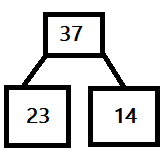
a. 23 + 12 = ____
Engage NY Math Grade 1 Module 4 Lesson 28 Problem Set Answer Key 1
Answer: 35
A number bond is a simple addition of two numbers that add up to give the sum. Using number bonds, one can instantly tell the answer without the need for the actual calculation. Number bonds help us to understand that a whole number is made up of parts.
Given two numbers are 23 and 12
By adding 23 and 12 we get 35
23+12=35
Eureka Math Grade 1 Module 4 Lesson 28 Problem Set Answer Key img 1

b. 15 + 15 = ____
Engage NY Math Grade 1 Module 4 Lesson 28 Problem Set Answer Key 1
Answer:30
A number bond is a simple addition of two numbers that add up to give the sum. Using number bonds, one can instantly tell the answer without the need for the actual calculation. Number bonds help us to understand that a whole number is made up of parts.
Given two numbers are 15 and 15
By adding 15 and 15 we get 30
15+15=30
Eureka Math Grade 1 Module 4 Lesson 28 Problem Set Answer Key img 2

c. 19 + 21 = ____
Engage NY Math Grade 1 Module 4 Lesson 28 Problem Set Answer Key 1
Answer:40
A number bond is a simple addition of two numbers that add up to give the sum. Using number bonds, one can instantly tell the answer without the need for the actual calculation. Number bonds help us to understand that a whole number is made up of parts.
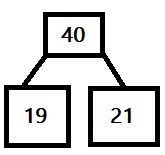
Given two numbers are 21 and 19
By adding 19 and 21 we get 40
21+19=40
Eureka Math Grade 1 Module 4 Lesson 28 Problem Set Answer Key img 3

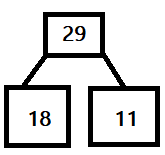
d. 17 + 12 = ____
Engage NY Math Grade 1 Module 4 Lesson 28 Problem Set Answer Key 1
Answer:29
A number bond is a simple addition of two numbers that add up to give the sum. Using number bonds, one can instantly tell the answer without the need for the actual calculation. Number bonds help us to understand that a whole number is made up of parts.
Given two numbers are 17 and 12
By adding 17 and 12 we get 29
17+12=29
Eureka Math Grade 1 Module 4 Lesson 28 Problem Set Answer Key img 4

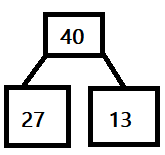
e. 27 + 13 = ____
Engage NY Math Grade 1 Module 4 Lesson 28 Problem Set Answer Key 1
Answer:40
A number bond is a simple addition of two numbers that add up to give the sum. Using number bonds, one can instantly tell the answer without the need for the actual calculation. Number bonds help us to understand that a whole number is made up of parts.
Given two numbers are 27 and 13
By adding 27 and 13 we get 40
27+13=40
Eureka Math Grade 1 Module 4 Lesson 28 Problem Set Answer Key img 5

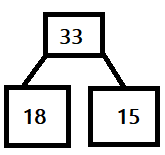
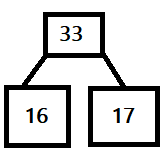
f. 17 + 16 = ____
Engage NY Math Grade 1 Module 4 Lesson 28 Problem Set Answer Key 1
Answer:33
A number bond is a simple addition of two numbers that add up to give the sum. Using number bonds, one can instantly tell the answer without the need for the actual calculation. Number bonds help us to understand that a whole number is made up of parts.
Given two numbers are 17 and 16
By adding 17 and 16 we get 33
17+16=33
Eureka Math Grade 1 Module 4 Lesson 28 Problem Set Answer Key img 6

Question 2.
Solve using quick ten drawings, number bonds, or the arrow way.
a. 15 + 13 = _____
Answer:28
A number bond is a simple addition of two numbers that add up to give the sum. Using number bonds, one can instantly tell the answer without the need for the actual calculation. Number bonds help us to understand that a whole number is made up of parts.
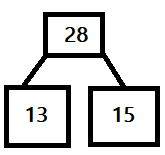
Given two numbers are 15 and 13
By adding 15 and 13 we get 28
15+13=28
Eureka Math Grade 1 Module 4 Lesson 28 Problem Set Answer Key img 7
b. 25 + 13 = ____
Answer:38
A number bond is a simple addition of two numbers that add up to give the sum. Using number bonds, one can instantly tell the answer without the need for the actual calculation. Number bonds help us to understand that a whole number is made up of parts.
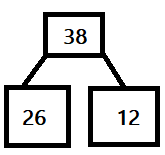
Given two numbers are 25 and 13
By adding 25 and 13 we get 38
25+13=38
Eureka Math Grade 1 Module 4 Lesson 28 Problem Set Answer Key img 8
c. 24 + 14 = ____
Answer:38
A number bond is a simple addition of two numbers that add up to give the sum. Using number bonds, one can instantly tell the answer without the need for the actual calculation. Number bonds help us to understand that a whole number is made up of parts.
Given two numbers are 24 and 14
By adding 24 and 14 we get 38
24+14=38
Eureka Math Grade 1 Module 4 Lesson 28 Problem Set Answer Key img 9
d. 25 + 15 = ____
Answer:40
A number bond is a simple addition of two numbers that add up to give the sum. Using number bonds, one can instantly tell the answer without the need for the actual calculation. Number bonds help us to understand that a whole number is made up of parts.
Given two numbers are 25 and 15
By adding 25 and 15 we get 40
25+15=40
Eureka Math Grade 1 Module 4 Lesson 28 Problem Set Answer Key img 10
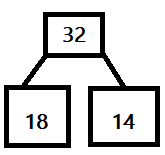
e. 18 + 14 = ____
Answer:32
A number bond is a simple addition of two numbers that add up to give the sum. Using number bonds, one can instantly tell the answer without the need for the actual calculation. Number bonds help us to understand that a whole number is made up of parts.
Given two numbers are 18 and 14
By adding 18 and 14 we get 32
18+14=32

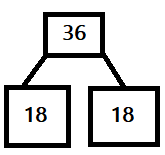
f. 18 + 18 = ____
Answer:36
A number bond is a simple addition of two numbers that add up to give the sum. Using number bonds, one can instantly tell the answer without the need for the actual calculation. Number bonds help us to understand that a whole number is made up of parts.
Given two numbers are 18 and 18
By adding 18 and 18 we get 36
18+18=36
Eureka Math Grade 1 Module 4 Lesson 28 Problem Set Answer Key img 12
g. 24 + 16 = ____
Answer:40
A number bond is a simple addition of two numbers that add up to give the sum. Using number bonds, one can instantly tell the answer without the need for the actual calculation. Number bonds help us to understand that a whole number is made up of parts.
Given two numbers are 24 and 16
By adding 24 and 16 we get 40
24+16=40
Eureka Math Grade 1 Module 4 Lesson 28 Problem Set Answer Key img 13
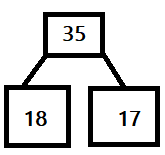
h. 17 + 18 = ____
Answer:35
A number bond is a simple addition of two numbers that add up to give the sum. Using number bonds, one can instantly tell the answer without the need for the actual calculation. Number bonds help us to understand that a whole number is made up of parts.
Given two numbers are 17 and 18
By adding 17 and 18 we get 35
17+18=35
Eureka Math Grade 1 Module 4 Lesson 28 Problem Set Answer Key img 14

Eureka Math Grade 1 Module 4 Lesson 28 Exit Ticket Answer Key

Solve using quick tens and ones, number bonds, or the arrow way.
a. 12 + 16 = ____
Answer:28
A number bond is a simple addition of two numbers that add up to give the sum. Using number bonds, one can instantly tell the answer without the need for the actual calculation. Number bonds help us to understand that a whole number is made up of parts.
Given two numbers are 16 and 12
By adding 16 and 12 we get 28
16+12=28
Eureka Math Grade 1 Module 4 Lesson 28 Problem Set Answer Key img 15
b. 26 + 14 = ____
Answer:40
A number bond is a simple addition of two numbers that add up to give the sum. Using number bonds, one can instantly tell the answer without the need for the actual calculation. Number bonds help us to understand that a whole number is made up of parts.
Given two numbers are 26 and 14
By adding 26 and 14 we get 40
26+14=40
Eureka Math Grade 1 Module 4 Lesson 28 Problem Set Answer Key img 16
c. 18 + 16 = ____
Answer:34
A number bond is a simple addition of two numbers that add up to give the sum. Using number bonds, one can instantly tell the answer without the need for the actual calculation. Number bonds help us to understand that a whole number is made up of parts.
Given two numbers are 18 and 16
By adding 18 and 16 we get 34
18+16=34
Eureka Math Grade 1 Module 4 Lesson 28 Problem Set Answer Key img 17
d. 19 + 17 = ____
Answer:36
A number bond is a simple addition of two numbers that add up to give the sum. Using number bonds, one can instantly tell the answer without the need for the actual calculation. Number bonds help us to understand that a whole number is made up of parts.
Given two numbers are 19 and 17
By adding 19 and 17 we get 36
19+17=36
Eureka Math Grade 1 Module 4 Lesson 28 Problem Set Answer Key img 18

Eureka Math Grade 1 Module 4 Lesson 28 Homework Answer Key

Solve using quick tens and ones, number bonds, or the arrow way.
a. 13 + 16 = ____
Answer:29
A number bond is a simple addition of two numbers that add up to give the sum. Using number bonds, one can instantly tell the answer without the need for the actual calculation. Number bonds help us to understand that a whole number is made up of parts.
Given two numbers are 16 and 13
By adding 13 and 16 we get 29
13+16=29
Eureka Math Grade 1 Module 4 Lesson 28 Problem Set Answer Key img 19
b. 15 + 16 = ____
Answer:31
A number bond is a simple addition of two numbers that add up to give the sum. Using number bonds, one can instantly tell the answer without the need for the actual calculation. Number bonds help us to understand that a whole number is made up of parts.
Given two numbers are 15 and 16
By adding 15 and 16 we get 31
15+16=31
Eureka Math Grade 1 Module 4 Lesson 28 Problem Set Answer Key img 20
c. 16 + 16 = ____
Answer:32
A number bond is a simple addition of two numbers that add up to give the sum. Using number bonds, one can instantly tell the answer without the need for the actual calculation. Number bonds help us to understand that a whole number is made up of parts.
Given two numbers are 16 and 16
By adding 16 and 16 we get 32
16+16=32
Eureka Math Grade 1 Module 4 Lesson 28 Problem Set Answer Key img 21
d. 26 + 12 = ____
Answer:38
A number bond is a simple addition of two numbers that add up to give the sum. Using number bonds, one can instantly tell the answer without the need for the actual calculation. Number bonds help us to understand that a whole number is made up of parts.
Given two numbers are 26 and 12
By adding 26 and 12 we get 38
26+12=38
Eureka Math Grade 1 Module 4 Lesson 28 Problem Set Answer Key img 22
e. 22 + 17 = ____
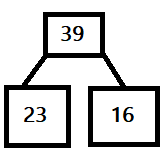
Answer:39
A number bond is a simple addition of two numbers that add up to give the sum. Using number bonds, one can instantly tell the answer without the need for the actual calculation. Number bonds help us to understand that a whole number is made up of parts.
Given two numbers are 22 and 17
By adding 17 and 22 we get 39
22+17=39
Eureka Math Grade 1 Module 4 Lesson 28 Problem Set Answer Key img 23
f. 17 + 15 = ____
Answer:32
A number bond is a simple addition of two numbers that add up to give the sum. Using number bonds, one can instantly tell the answer without the need for the actual calculation. Number bonds help us to understand that a whole number is made up of parts.
Given two numbers are 15 and 17
By adding 15 and 17 we get 32
17+15=32
Eureka Math Grade 1 Module 4 Lesson 28 Problem Set Answer Key img 24
g. 17 + 16 = ____
Answer:33
A number bond is a simple addition of two numbers that add up to give the sum. Using number bonds, one can instantly tell the answer without the need for the actual calculation. Number bonds help us to understand that a whole number is made up of parts.
Given two numbers are 16 and 17
By adding 16 and 17 we get 33
17+16=33
Eureka Math Grade 1 Module 4 Lesson 28 Problem Set Answer Key img 25
h. 18 + 17 = ____
Answer:35
A number bond is a simple addition of two numbers that add up to give the sum. Using number bonds, one can instantly tell the answer without the need for the actual calculation. Number bonds help us to understand that a whole number is made up of parts.
Given two numbers are 18 and 17
By adding 18 and 17 we get 35
18+17=35
Eureka Math Grade 1 Module 4 Lesson 28 Problem Set Answer Key img 26
i. 24 + 13 = ____
Answer:37
A number bond is a simple addition of two numbers that add up to give the sum. Using number bonds, one can instantly tell the answer without the need for the actual calculation. Number bonds help us to understand that a whole number is made up of parts.
Given two numbers are 24 and 13
By adding 24 and 13 we get 37
24+13=37
Eureka Math Grade 1 Module 4 Lesson 28 Problem Set Answer Key img 27
j. 15 + 24 = ____
Answer:39
A number bond is a simple addition of two numbers that add up to give the sum. Using number bonds, one can instantly tell the answer without the need for the actual calculation. Number bonds help us to understand that a whole number is made up of parts.
Given two numbers are 24 and 15
By adding 24 and 15 we get 39
15+24=39
Eureka Math Grade 1 Module 4 Lesson 28 Problem Set Answer Key img 28
k. 19 + 16 = ____
Answer:35
A number bond is a simple addition of two numbers that add up to give the sum. Using number bonds, one can instantly tell the answer without the need for the actual calculation. Number bonds help us to understand that a whole number is made up of parts.
Given two numbers ar19 and 16
By adding 19 and 16 we get 35
19+16=35
Eureka Math Grade 1 Module 4 Lesson 28 Problem Set Answer Key img 29
l. 14 + 22 = ____
Answer:36
A number bond is a simple addition of two numbers that add up to give the sum. Using number bonds, one can instantly tell the answer without the need for the actual calculation. Number bonds help us to understand that a whole number is made up of parts.
Given two numbers are 22 and 14
By adding 22 and 14 we get 36
14+22=36
Eureka Math Grade 1 Module 4 Lesson 28 Problem Set Answer Key img 30
m. 27 + 12 = ____
Answer:39
A number bond is a simple addition of two numbers that add up to give the sum. Using number bonds, one can instantly tell the answer without the need for the actual calculation. Number bonds help us to understand that a whole number is made up of parts.
Given two numbers are 27 and 12
By adding 27 and 12 we get 39
27+12=39
Eureka Math Grade 1 Module 4 Lesson 28 Problem Set Answer Key img 31
n. 28 + 12 = ____
Answer:40
A number bond is a simple addition of two numbers that add up to give the sum. Using number bonds, one can instantly tell the answer without the need for the actual calculation. Number bonds help us to understand that a whole number is made up of parts.
Given two numbers are 28 and 12
By adding 28 and 12 we get 40
28+12=40

Eureka Math Grade 1 Module 4 Lesson 28 Problem Set Answer Key img 32
o. 18 + 17 = ____
Answer:35
A number bond is a simple addition of two numbers that add up to give the sum. Using number bonds, one can instantly tell the answer without the need for the actual calculation. Number bonds help us to understand that a whole number is made up of parts.
Given two numbers are 18 and 17
By adding 18 and 17 we get 35
18+17=35
Eureka Math Grade 1 Module 4 Lesson 28 Problem Set Answer Key img 33
p. 19 + 18 = ____
Answer:37
A number bond is a simple addition of two numbers that add up to give the sum. Using number bonds, one can instantly tell the answer without the need for the actual calculation. Number bonds help us to understand that a whole number is made up of parts.
Given two numbers are 19 and 18
By adding19 and 18 we get 37
19+18=37
Eureka Math Grade 1 Module 4 Lesson 28 Problem Set Answer Key img 34

Eureka Math Grade 1 Module 4 Lesson 29 Answer Key

Engage NY Eureka Math 1st Grade Module 4 Lesson 29 Answer Key

Eureka Math Grade 1 Module 4 Lesson 29 Problem Set Answer Key

Question 1.
Solve using quick ten drawings, number bonds, or the arrow way.
a. 13 + 12 = ____
Answer:25
A number bond is a simple addition of two numbers that add up to give the sum. Using number bonds, one can instantly tell the answer without the need for the actual calculation. Number bonds help us to understand that a whole number is made up of parts.
Given two numbers are 13 and 12
By adding 13 and 12 we get 25
13+12=25
Eureka Math Grade 1 Module 4 Lesson 28 Problem Set Answer Key img 1
b. 23 + 12 = ____
Answer:35
A number bond is a simple addition of two numbers that add up to give the sum. Using number bonds, one can instantly tell the answer without the need for the actual calculation. Number bonds help us to understand that a whole number is made up of parts.
Given two numbers are 23 and 12
By adding 23 and 12 we get 35
23+12=35
Eureka Math Grade 1 Module 4 Lesson 28 Problem Set Answer Key img2
c. 13 + 16 = ____
Answer:29
A number bond is a simple addition of two numbers that add up to give the sum. Using number bonds, one can instantly tell the answer without the need for the actual calculation. Number bonds help us to understand that a whole number is made up of parts.
Given two numbers are 13 and 12
By adding 13 and 12 we get 25
13+12=25
Eureka Math Grade 1 Module 4 Lesson 28 Problem Set Answer Key img3
d. 23 + 16 = ____
Answer:39
A number bond is a simple addition of two numbers that add up to give the sum. Using number bonds, one can instantly tell the answer without the need for the actual calculation. Number bonds help us to understand that a whole number is made up of parts.
Given two numbers are 23 and 16
By adding 23 and 16 we get 39
23+16=39
Eureka Math Grade 1 Module 4 Lesson 28 Problem Set Answer Key img4
e. 13 + 27 = ____
Answer:40
A number bond is a simple addition of two numbers that add up to give the sum. Using number bonds, one can instantly tell the answer without the need for the actual calculation. Number bonds help us to understand that a whole number is made up of parts.
Given two numbers are 13 and 27
By adding 13 and 27 we get 40
13+27=40
Eureka Math Grade 1 Module 4 Lesson 28 Problem Set Answer Key img5
f. 17 + 16 = ____
Answer:33
A number bond is a simple addition of two numbers that add up to give the sum. Using number bonds, one can instantly tell the answer without the need for the actual calculation. Number bonds help us to understand that a whole number is made up of parts.
Given two numbers are 17 and 16
By adding 17 and 16 we get 33
17+16=33
Eureka Math Grade 1 Module 4 Lesson 28 Problem Set Answer Key img6
g. 14 + 18 = ____
Answer:32
A number bond is a simple addition of two numbers that add up to give the sum. Using number bonds, one can instantly tell the answer without the need for the actual calculation. Number bonds help us to understand that a whole number is made up of parts.
Given two numbers are 14 and 18
By adding 14 and 18 we get 32
14+18=32
Eureka Math Grade 1 Module 4 Lesson 28 Problem Set Answer Key img7
h. 18 + 17 = ____
Answer:35
A number bond is a simple addition of two numbers that add up to give the sum. Using number bonds, one can instantly tell the answer without the need for the actual calculation. Number bonds help us to understand that a whole number is made up of parts.
Given two numbers are 18 and 17
By adding 18 and 17 we get 35
18+17=35
Eureka Math Grade 1 Module 4 Lesson 28 Problem Set Answer Key img8

Question 2.
Solve using quick ten drawings, number bonds, or the arrow way. Be prepared to discuss how you solved during the Debrief.
a. 17 + 11 = ____
Answer:28
A number bond is a simple addition of two numbers that add up to give the sum. Using number bonds, one can instantly tell the answer without the need for the actual calculation. Number bonds help us to understand that a whole number is made up of parts.
Given two numbers are 17 and 11
By adding 17 and 11we get 28
17+11=28
Eureka Math Grade 1 Module 4 Lesson 28 Problem Set Answer Key img9
b. 17 + 21 = ____
Answer:38
A number bond is a simple addition of two numbers that add up to give the sum. Using number bonds, one can instantly tell the answer without the need for the actual calculation. Number bonds help us to understand that a whole number is made up of parts.
Given two numbers are 17 and 21
By adding 17 and 21 we get 38
17+21=38
Eureka Math Grade 1 Module 4 Lesson 28 Problem Set Answer Key img10
c. 27 + 13 = ____
Answer:40
A number bond is a simple addition of two numbers that add up to give the sum. Using number bonds, one can instantly tell the answer without the need for the actual calculation. Number bonds help us to understand that a whole number is made up of parts.
Given two numbers are 27 and 13
By adding 27 and 13 we get 40
27+13=40
Eureka Math Grade 1 Module 4 Lesson 28 Problem Set Answer Key img11
d. 17 + 14 = ____
Answer:31
A number bond is a simple addition of two numbers that add up to give the sum. Using number bonds, one can instantly tell the answer without the need for the actual calculation. Number bonds help us to understand that a whole number is made up of parts.
Given two numbers are 17 and 14
By adding 17 and 14 we get 31
17+14=31
Eureka Math Grade 1 Module 4 Lesson 28 Problem Set Answer Key img12
e. 13 + 26 = ____
Answer:39
A number bond is a simple addition of two numbers that add up to give the sum. Using number bonds, one can instantly tell the answer without the need for the actual calculation. Number bonds help us to understand that a whole number is made up of parts.
Given two numbers are 13 and 26
By adding 13 and 26 we get 39
13+26=39
Eureka Math Grade 1 Module 4 Lesson 28 Problem Set Answer Key img13
f. 17 + 17 = ____
Answer:34
A number bond is a simple addition of two numbers that add up to give the sum. Using number bonds, one can instantly tell the answer without the need for the actual calculation. Number bonds help us to understand that a whole number is made up of parts.
Given two numbers are 17 and 17
By adding 17 and 17 we get 34
17+17=34
Eureka Math Grade 1 Module 4 Lesson 28 Problem Set Answer Key img14
g. 18 + 15 = ____
Answer:33
A number bond is a simple addition of two numbers that add up to give the sum. Using number bonds, one can instantly tell the answer without the need for the actual calculation. Number bonds help us to understand that a whole number is made up of parts.
Given two numbers are 18 and 15
By adding 18 and 15 we get 33
18+15=33
Eureka Math Grade 1 Module 4 Lesson 28 Problem Set Answer Key img15
h. 16 + 17 = ____
Answer:33
A number bond is a simple addition of two numbers that add up to give the sum. Using number bonds, one can instantly tell the answer without the need for the actual calculation. Number bonds help us to understand that a whole number is made up of parts.
Given two numbers are 16 and 17
By adding 16 and 17 we get 33
16+17=33
Eureka Math Grade 1 Module 4 Lesson 28 Problem Set Answer Key img16

Eureka Math Grade 1 Module 4 Lesson 29 Exit Ticket Answer Key

Solve using quick ten drawings, number bonds, or the arrow way.
a. 18 + 14 = ____
Answer:32
A number bond is a simple addition of two numbers that add up to give the sum. Using number bonds, one can instantly tell the answer without the need for the actual calculation. Number bonds help us to understand that a whole number is made up of parts.
Given two numbers are 18 and 14
By adding 18 and 14 we get 32
18+14=32
Eureka Math Grade 1 Module 4 Lesson 28 Problem Set Answer Key img17
b. 14 + 23 = ____
Answer:37
A number bond is a simple addition of two numbers that add up to give the sum. Using number bonds, one can instantly tell the answer without the need for the actual calculation. Number bonds help us to understand that a whole number is made up of parts.
Given two numbers are 14 and 23
By adding 14 and 23 we get 37
14+23=37
Eureka Math Grade 1 Module 4 Lesson 28 Problem Set Answer Key img18
c. 28 + 12 = ____
Answer:40
A number bond is a simple addition of two numbers that add up to give the sum. Using number bonds, one can instantly tell the answer without the need for the actual calculation. Number bonds help us to understand that a whole number is made up of parts.
Given two numbers are 28 and 12
By adding 28 and 12 we get 40
28+12=40
Eureka Math Grade 1 Module 4 Lesson 28 Problem Set Answer Key img19
d. 19 + 21 = ____
Answer:40
A number bond is a simple addition of two numbers that add up to give the sum. Using number bonds, one can instantly tell the answer without the need for the actual calculation. Number bonds help us to understand that a whole number is made up of parts.
Given two numbers are 19 and 21
By adding 19 and 21 we get 40
19+21=40
Eureka Math Grade 1 Module 4 Lesson 28 Problem Set Answer Key img20

Eureka Math Grade 1 Module 4 Lesson 29 Homework Answer Key

Question 1.
Solve using quick ten drawings, number bonds, or the arrow way.
a. 13 + 15 = ____
Answer:28
A number bond is a simple addition of two numbers that add up to give the sum. Using number bonds, one can instantly tell the answer without the need for the actual calculation. Number bonds help us to understand that a whole number is made up of parts.
Given two numbers are 13 and 15
By adding 13 and 15 we get 28
13+15=28
Eureka Math Grade 1 Module 4 Lesson 28 Problem Set Answer Key img21
b. 26 + 12 = ____
Answer:38
A number bond is a simple addition of two numbers that add up to give the sum. Using number bonds, one can instantly tell the answer without the need for the actual calculation. Number bonds help us to understand that a whole number is made up of parts.
Given two numbers are 26 and 12
By adding 26 and 12 we get 38
26+12=38
Eureka Math Grade 1 Module 4 Lesson 28 Problem Set Answer Key img22
c. 23 + 16 = ____
Answer:39
A number bond is a simple addition of two numbers that add up to give the sum. Using number bonds, one can instantly tell the answer without the need for the actual calculation. Number bonds help us to understand that a whole number is made up of parts.
Given two numbers are 23 and 16
By adding 23 and 16 we get 39
23+16=39
Eureka Math Grade 1 Module 4 Lesson 28 Problem Set Answer Key img23
d. 17 + 16 = ____
Answer:33
A number bond is a simple addition of two numbers that add up to give the sum. Using number bonds, one can instantly tell the answer without the need for the actual calculation. Number bonds help us to understand that a whole number is made up of parts.
Given two numbers are 17 and 16
By adding 17 and 16 we get 33
17+16=33
Eureka Math Grade 1 Module 4 Lesson 28 Problem Set Answer Key img24
e. 14 + 17 = ____
Answer:31
A number bond is a simple addition of two numbers that add up to give the sum. Using number bonds, one can instantly tell the answer without the need for the actual calculation. Number bonds help us to understand that a whole number is made up of parts.
Given two numbers are 14 and 17
By adding 14 and 17 we get 31
14+17=31
Eureka Math Grade 1 Module 4 Lesson 28 Problem Set Answer Key img25
f. 27 + 12 = ____
Answer:39
A number bond is a simple addition of two numbers that add up to give the sum. Using number bonds, one can instantly tell the answer without the need for the actual calculation. Number bonds help us to understand that a whole number is made up of parts.
Given two numbers are 27 and 12
By adding 27 and 12 we get 39
27+12=39
Eureka Math Grade 1 Module 4 Lesson 28 Problem Set Answer Key img26
g. 15 + 18 = ____
Answer:33
A number bond is a simple addition of two numbers that add up to give the sum. Using number bonds, one can instantly tell the answer without the need for the actual calculation. Number bonds help us to understand that a whole number is made up of parts.
Given two numbers are 15 and 18
By adding 15 and 18 we get 33
15+18=33
Eureka Math Grade 1 Module 4 Lesson 28 Problem Set Answer Key img27
h. 18 + 16 = ____
Answer:34
A number bond is a simple addition of two numbers that add up to give the sum. Using number bonds, one can instantly tell the answer without the need for the actual calculation. Number bonds help us to understand that a whole number is made up of parts.
Given two numbers are 18 and 16
By adding 18 and 16 we get 34
18+16=34
Eureka Math Grade 1 Module 4 Lesson 28 Problem Set Answer Key img28

Question 2.
Solve using quick ten drawings, number bonds, or the arrow way.
a. 17 + 12 = ____
Answer:29
A number bond is a simple addition of two numbers that add up to give the sum. Using number bonds, one can instantly tell the answer without the need for the actual calculation. Number bonds help us to understand that a whole number is made up of parts.
Given two numbers are 17 and 12
By adding 17 and 12 we get 29
17+12=29
Eureka Math Grade 1 Module 4 Lesson 28 Problem Set Answer Key img29
b. 21 + 17 = ____
Answer:38
A number bond is a simple addition of two numbers that add up to give the sum. Using number bonds, one can instantly tell the answer without the need for the actual calculation. Number bonds help us to understand that a whole number is made up of parts.
Given two numbers are 17 and 21
By adding 17 and 21 we get 38
21+17=38
Eureka Math Grade 1 Module 4 Lesson 28 Problem Set Answer Key img30
c. 17 + 15 = ____
Answer:32
A number bond is a simple addition of two numbers that add up to give the sum. Using number bonds, one can instantly tell the answer without the need for the actual calculation. Number bonds help us to understand that a whole number is made up of parts.
Given two numbers are 17 and 15
By adding 17 and 15 we get 32
17+15=32
Eureka Math Grade 1 Module 4 Lesson 28 Problem Set Answer Key img31
d. 27 + 13 = ____
Answer:40
A number bond is a simple addition of two numbers that add up to give the sum. Using number bonds, one can instantly tell the answer without the need for the actual calculation. Number bonds help us to understand that a whole number is made up of parts.
Given two numbers are 13 and 27
By adding 13 and 27 we get 40
27+13=40
Eureka Math Grade 1 Module 4 Lesson 28 Problem Set Answer Key img32
e. 23 + 14 = ____
Answer:37
A number bond is a simple addition of two numbers that add up to give the sum. Using number bonds, one can instantly tell the answer without the need for the actual calculation. Number bonds help us to understand that a whole number is made up of parts.
Given two numbers are 23 and 14
By adding 23 and 14 we get 37
23+14=37
Eureka Math Grade 1 Module 4 Lesson 28 Problem Set Answer Key img33
f. 18 + 17 = ____
Answer:35
A number bond is a simple addition of two numbers that add up to give the sum. Using number bonds, one can instantly tell the answer without the need for the actual calculation. Number bonds help us to understand that a whole number is made up of parts.
Given two numbers are 18 and 17
By adding 18 and 17 we get 35
18+17=35
Eureka Math Grade 1 Module 4 Lesson 28 Problem Set Answer Key img34

g. 18 + 11 = ____
Answer:29
A number bond is a simple addition of two numbers that add up to give the sum. Using number bonds, one can instantly tell the answer without the need for the actual calculation. Number bonds help us to understand that a whole number is made up of parts.
Given two numbers are 18 and 11
By adding 18 and 11 we get 29
18+11=29
Eureka Math Grade 1 Module 4 Lesson 28 Problem Set Answer Key img35
h. 18 + 18 = ____
Answer:36
A number bond is a simple addition of two numbers that add up to give the sum. Using number bonds, one can instantly tell the answer without the need for the actual calculation. Number bonds help us to understand that a whole number is made up of parts.
Given two numbers are 18 and 18
By adding 18 and 18 we get 36
18+18=36
Eureka Math Grade 1 Module 4 Lesson 28 Problem Set Answer Key img36

Eureka Math Grade 1 Module 4 Lesson 27 Answer Key

Engage NY Eureka Math 1st Grade Module 4 Lesson 27 Answer Key

Eureka Math Grade 1 Module 4 Lesson 27 Problem Set Answer Key

Question 1.
Solve using number bonds with pairs of number sentences. You may draw quick tens and some ones to help you.
a. 19 + 12 = ____
b. 18 + 12 = ____
c. 19 + 13 = ____
d. 18 + 14 = ____
e. 17 + 14 = ____
f. 17 + 17 = ____
g. 18 + 17 = ____
h. 18 + 19 = ____
Answer:
a. 19 + 12 = 31
Engage NY Eureka Math 1st Grade Module 4 Lesson 27 Answer Key img_1
A number bond is a simple addition of two numbers that add up to give the sum. Number bonds help us to understand that a whole number is made up of parts.
19 and 12 are the parts of the sum and 31 is the whole part.

b. 18 + 12 = 30
Engage NY Eureka Math 1st Grade Module 4 Lesson 27 Answer Key img_2
A number bond is a simple addition of two numbers that add up to give the sum. Number bonds help us to understand that a whole number is made up of parts.
18 and 12 are the parts of the sum and 30 is the whole part.

c. 19 + 13 = 32
Engage NY Eureka Math 1st Grade Module 4 Lesson 27 Answer Key img_3
A number bond is a simple addition of two numbers that add up to give the sum. Number bonds help us to understand that a whole number is made up of parts.
19 and 13 are the parts of the sum and 32 is the whole part.

d. 18 + 14 = 32
Eureka Math Grade 1 Module 4 Lesson 27 Answer Key img_4
A number bond is a simple addition of two numbers that add up to give the sum. Number bonds help us to understand that a whole number is made up of parts.
18 and 14 are the parts of the sum and 32 is the whole part.

e. 17 + 14 = 31
Eureka Math Grade 1 Module 4 Lesson 27 Answer Key img_5
A number bond is a simple addition of two numbers that add up to give the sum. Number bonds help us to understand that a whole number is made up of parts.
17 and 17 are the parts of the sum and 31 is the whole part.

f. 17 + 17 = 34
Eureka Math Grade 1 Module 4 Lesson 27 Answer Key img_6
A number bond is a simple addition of two numbers that add up to give the sum. Number bonds help us to understand that a whole number is made up of parts.
17 and 17 are the parts of the sum and 34 is the whole part.

g. 18 + 17 = 35
Eureka Math Grade 1 Module 4 Lesson 27 Answer Key img_7
A number bond is a simple addition of two numbers that add up to give the sum. Number bonds help us to understand that a whole number is made up of parts.
18 and 17 are the parts of the sum and 35 is the whole part.

h. 18 + 19 = 37
Eureka Math Grade 1 Module 4 Lesson 27 Answer Key img_8
A number bond is a simple addition of two numbers that add up to give the sum. Number bonds help us to understand that a whole number is made up of parts.
18 and 19 are the parts of the sum and 37 is the whole part.

Question 2.
Solve. You may draw quick tens and some ones to help you.
a. 19 + 12 = ____
b. 18 + 13 = ____
c. 19 + 13 = ____
d. 18 + 15 = ____
e. 19 + 16 = ____
f. 15 + 17 = ____
g. 19 + 19 = ____
h. 18 + 18 = ____
Answer:
a. 19 + 12 = 31
Eureka Math Grade 1 Module 4 Lesson 27 Answer Key img_9
Straight line indicates tens and x indicate ones.

b. 18 + 13 = 31
Eureka Math Grade 1 Module 4 Lesson 27 Answer Key img_10
Straight line indicates tens and x indicate ones.

c. 19 + 13 = 32
Eureka Math Grade 1 Module 4 Lesson 27 Answer Key img_11
Straight line indicates tens and x indicate ones.

d. 18 + 15 = 33
Eureka Math Grade 1 Module 4 Lesson 27 Answer Key img_12
Straight line indicates tens and x indicate ones.

e. 19 + 16 = 35
Eureka Math Grade 1 Module 4 Lesson 27 Answer Key img_13
Straight line indicates tens and x indicate ones.

f. 15 + 17 = 32
Eureka Math Grade 1 Module 4 Lesson 27 Answer Key img_14
Straight line indicates tens and x indicate ones.

g. 19 + 19 = 38
Eureka Math Grade 1 Module 4 Lesson 27 Answer Key img_15
Straight line indicates tens and x indicate ones.

h. 18 + 18 = 36
Eureka Math Grade 1 Module 4 Lesson 27 Answer Key img_16
Straight line indicates tens and x indicate ones.

Eureka Math Grade 1 Module 4 Lesson 27 Exit Ticket Answer Key

Solve using number bonds with pairs of number sentences. You may draw quick tens and some ones to help you.
a. 16 + 15 = ____
b. 17 + 13 = ____
c. 16 + 16 = ____
d. 17 + 15 = ____
Answer:
a. 16 + 15 = 31
Eureka Math Grade 1 Module 4 Lesson 27 Answer Key img_18

b. 17 + 13 = 30

Eureka Math Grade 1 Module 4 Lesson 27 Answer Key img_34

c. 16 + 16 = 32
Eureka Math Grade 1 Module 4 Lesson 27 Answer Key img_35

d. 17 + 15 = 32
Engage NY Eureka Math 1st Grade Module 4 Lesson 27 Answer Key img_28

Eureka Math Grade 1 Module 4 Lesson 27 Homework Answer Key

Question 1.
Solve using number bonds with pairs of number sentences. You may draw quick tens and some ones to help you.
a. 17 + 14 = ____
b. 16 + 15 = ____
c. 17 + 15 = ____
d. 18 + 13 = ____
e. 18 + 15 = ____
f. 18 + 16 = ____
g. 19 + 15 = ____
h. 19 + 16 = ____
Answer:
a. 17 + 14 = 31
Eureka Math Grade 1 Module 4 Lesson 27 Answer Key img_17

b. 16 + 15 = 31
Eureka Math Grade 1 Module 4 Lesson 27 Answer Key img_18

c. 17 + 15 = 32
Engage NY Eureka Math 1st Grade Module 4 Lesson 27 Answer Key img_28

d. 18 + 13 = 31
Engage NY Eureka Math 1st Grade Module 4 Lesson 27 Answer Key img_29

e. 18 + 15 = 33
Engage NY Eureka Math 1st Grade Module 4 Lesson 27 Answer Key img_30

f. 18 + 16 = 34
Engage NY Eureka Math 1st Grade Module 4 Lesson 27 Answer Key img_31

g. 19 + 15 = 34
Engage NY Eureka Math 1st Grade Module 4 Lesson 27 Answer Key img_32

h. 19 + 16 = 35
Engage NY Eureka Math 1st Grade Module 4 Lesson 27 Answer Key img_33

Question 2.
Solve. You may draw quick tens and some ones to help you.
a. 19 + 14 = ____
b. 19 + 17 = ____
c. 18 + 17 = ____
d. 16 + 16 = ____
e. 17 + 14 = ____
f. 15 + 16 = ____
g. 19 + 19 = ____
h. 18 + 18 = ____
Answer:
a. 19 + 14 = ____
Eureka Math Grade 1 Module 4 Lesson 27 Answer Key img_39
Straight line indicates tens and x indicate ones.

b. 19 + 17 = ____
Eureka Math Grade 1 Module 4 Lesson 27 Answer Key img_38
Straight line indicates tens and x indicate ones.

c. 18 + 17 = 35
Eureka Math Grade 1 Module 4 Lesson 27 Answer Key img_36
Straight line indicates tens and x indicate ones.

d. 16 + 16 = ____
Eureka Math Grade 1 Module 4 Lesson 27 Answer Key img_40
Straight line indicates tens and x indicate ones.

e. 17 + 14 = ____
Eureka Math Grade 1 Module 4 Lesson 27 Answer Key img_37
Straight line indicates tens and x indicate ones.

f. 15 + 16 = ____
Eureka Math Grade 1 Module 4 Lesson 27 Answer Key img_41
Straight line indicates tens and x indicate ones.

g. 19 + 19 = 38
Eureka Math Grade 1 Module 4 Lesson 27 Answer Key img_15
Straight line indicates tens and x indicate ones.

h. 18 + 18 = 36
Eureka Math Grade 1 Module 4 Lesson 27 Answer Key img_16
Straight line indicates tens and x indicate ones.

Eureka Math Grade 1 Module 4 Lesson 26 Answer Key

Engage NY Eureka Math 1st Grade Module 4 Lesson 26 Answer Key

Eureka Math Grade 1 Module 4 Lesson 26 Problem Set Answer Key

Question 1.
Solve using a number bond to add ten first. Write the 2 addition sentences that helped you.
a.
Engage NY Math Grade 1 Module 4 Lesson 26 Problem Set Answer Key 1

Answer:
18 + 10 = 28
28 + 4 = 32

b.
Engage NY Math Grade 1 Module 4 Lesson 26 Problem Set Answer Key 2

Answer:
18 + 10 = 28
28 + 4 = 32

c.
Engage NY Math Grade 1 Module 4 Lesson 26 Problem Set Answer Key 3
19 + 10 = _____
____ + 5 = _____

Answer:
19 + 10 = 29
29 + 5 = 34

d.
Engage NY Math Grade 1 Module 4 Lesson 26 Problem Set Answer Key 4
18 + 10 = _____
____ + 5 = _____

Answer:
18 + 10 = 28
28 + 5 = 33

e.
Engage NY Math Grade 1 Module 4 Lesson 26 Problem Set Answer Key 5
19 + 10 = _____
____ + ____ = _____

Answer:
19 + 10 = 29
29 + 3 = 32

f.
Engage NY Math Grade 1 Module 4 Lesson 26 Problem Set Answer Key 6
19 + 10 = _____
____ + ____ = _____
Answer:
19 + 10 = 29
29 + 6 = 35

Question 2.
Solve using a number bond to make a ten first. Write the 2 number sentences that helped you.
a.
Engage NY Math Grade 1 Module 4 Lesson 26 Problem Set Answer Key 7

Answer:
19 + 1 = 20
20 + 13 = 33

b.
Engage NY Math Grade 1 Module 4 Lesson 26 Problem Set Answer Key 8

Answer:
18 + 2 = 20
20 + 11 = 31

c.
Engage NY Math Grade 1 Module 4 Lesson 26 Problem Set Answer Key 9

Answer:
18 + 2 = 20
20 + 12 = 32

d.
Engage NY Math Grade 1 Module 4 Lesson 26 Problem Set Answer Key 10
18 + 2 = ____
____ + 14 = ____

Answer:
18 + 2 = 20
20 + 14 = 34

e.
Engage NY Math Grade 1 Module 4 Lesson 26 Problem Set Answer Key 11
____ + 3 = ____
____ + 12 = ____

Answer:
12 + 3 = 15
15 + 12 = 27

f.
Engage NY Math Grade 1 Module 4 Lesson 26 Problem Set Answer Key 12
____ + ____ = ____
____ + ____ = ____
Answer:
15 + 18 = 33
33 + 2 = 35

Eureka Math Grade 1 Module 4 Lesson 26 Exit Ticket Answer Key

Question 1.
Solve using number bonds to add ten first. Write the 2 number sentences that helped you.
a.
Eureka Math 1st Grade Module 4 Lesson 26 Exit Ticket Answer Key 1
____ + ____ = ____
____ + ____ = ____

Answer:
15 can be written as 10 + 5
10 + 19 = 29
29 + 5 = 34

b.
Eureka Math 1st Grade Module 4 Lesson 26 Exit Ticket Answer Key 2
____ + ____ = ____
____ + ____ = ____
Answer:
17 can be written as 10 + 7 = 17
19 + 10 = 29
29 + 7 = 36

Question 2.
Solve using number bonds to make a ten. Write the 2 number sentences that helped you.
a.
Eureka Math 1st Grade Module 4 Lesson 26 Exit Ticket Answer Key 3
____ + ____ = ____
____ + ____ = ____

Answer:
15 can be written as 10 + 5
10 + 19 = 29
29 + 5 = 34

b.
Eureka Math 1st Grade Module 4 Lesson 26 Exit Ticket Answer Key 4
____ + ____ = ____
____ + ____ = ____
Answer:
17 can be written as 10 + 7 = 17
19 + 10 = 29
29 + 7 = 36

Eureka Math Grade 1 Module 4 Lesson 26 Homework Answer Key

Question 1.
Solve using a number bond to add ten first. Write the 2 addition sentences that helped you.
a.
Eureka Math Grade 1 Module 4 Lesson 26 Homework Answer Key 1

Answer:
18 + 10 = 28
28 + 3 = 31

b.
Eureka Math Grade 1 Module 4 Lesson 26 Homework Answer Key 2

Answer:
19 + 10 = 29
29 + 3 = 32

c.
Eureka Math Grade 1 Module 4 Lesson 26 Homework Answer Key 3
17 + 10 = _____
____ + 5 = _____

Answer:
17 + 10 = 27
27 + 5 = 32

d.
Eureka Math Grade 1 Module 4 Lesson 26 Homework Answer Key 4
17 + 10 = _____
____ + 6 = _____

Answer:
17 + 10 = 27
27 + 6 = 33

e.
Eureka Math Grade 1 Module 4 Lesson 26 Homework Answer Key 5
17 + 10 = _____
____ + ____ = ____

Answer:
17 + 10 = 27
27 + 4 = 31

f.
Eureka Math Grade 1 Module 4 Lesson 26 Homework Answer Key 6
19 + 10 = _____
____ + ____ = ____
Answer:
19 + 10 = 29
29 + 7 = 36

Question 2.
Solve using a number bond to make a ten first. Write the 2 number sentences that helped you.
a.
Eureka Math Grade 1 Module 4 Lesson 26 Homework Answer Key 7

Answer:
19 + 1 = 20
20 + 12 = 32

b.
Eureka Math Grade 1 Module 4 Lesson 26 Homework Answer Key 8

Answer:
19 + 1 = 20
20 + 13 = 33

c.
Eureka Math Grade 1 Module 4 Lesson 26 Homework Answer Key 9
18 + 2 = ____
20 + 13 = ____

Answer:
18 + 2 = 20
20 + 13 = 33

d.
Eureka Math Grade 1 Module 4 Lesson 26 Homework Answer Key 10
18 + 2 = ____
____ + 15 = ____

Answer:
18 + 2 = 20
20 + 15 = 35

e.
Eureka Math Grade 1 Module 4 Lesson 26 Homework Answer Key 11
____ + 1 = ____
____ + 17 = ____

Answer:
19 + 1 = 20
20 + 17 = 37

f.
Eureka Math Grade 1 Module 4 Lesson 26 Homework Answer Key 12
____ + ____ = ____
____ + ____ = ____
Answer:
18 + 19 = 37
37 + 1 = 38

Eureka Math Grade 1 Module 4 Lesson 25 Answer Key

Engage NY Eureka Math 1st Grade Module 4 Lesson 25 Answer Key

Eureka Math Grade 1 Module 4 Lesson 25 Sprint Answer Key

A
Write the missing number.
Engage NY Math 1st Grade Module 4 Lesson 25 Sprint Answer Key 1

Question 1.
5 + ☐ = 10
Answer: 5
Given two numbers are 5 and 10
By removing 5 from 10 we get 5
10-5=5

Question 2.
9 + ☐ = 10
Answer: 1
Given two numbers are 9 and 10
By removing 9 from 10 we get 1
10-9=1

Question 3.
10 + ☐ = 10
Answer:0
Given two numbers are 10 and 10
By removing 10 from 10 we get 0
10-10=0

Question 4.
0 + ☐ = 10
Answer:10
Given two numbers are 0 and 10
By removing 0 from 10 we get 10
10-0=10

Question 5.
8 + ☐ = 10
Answer:2
Given two numbers are 8 and 10
By removing 8 from 10 we get 2
10-8=2

Question 6.
7 + ☐ = 10
Answer:3
Given two numbers are 7 and 10
By removing 7 from 10 we get 3
10-7=3

Question 7.
6 + ☐ = 10
Answer:4
Given two numbers are 6 and 10
By removing 6 from 10 we get 4
10-6=4

Question 8.
4 + ☐ = 10
Answer:6
Given two numbers are 4 and 10
By removing 4 from 10 we get 6
10-4=6

Question 9.
3 + ☐ = 10
Answer:7
Given two numbers are 3 and 10
By removing 3 from 10 we get 7
10-3=7

Question 10.
☐ + 7 = 10
Answer:3
Given two numbers are 7 and 10
By removing 7 from 10 we get 3
10-7=3

Question 11.
2 + ☐ = 10
Answer:8
Given two numbers are 2 and 10
By removing 2 from 10 we get 8
10-2=8

Question 12.
☐ + 8 = 10
Answer:2
Given two numbers are 8 and 10
By removing 8 from 10 we get 2
10-8=2

Question 13.
1 + ☐ = 10
Answer:9
Given two numbers are 1 and 10
By removing 1 from 10 we get 9
10-1=9

Question 14.
☐ + 2 = 10
Answer:8
Given two numbers are 2 and 10
By removing 2 from 10 we get 8
10-2=8

Question 15.
☐ + 3 = 10
Answer:7
Given two numbers are 3 and 10
By removing 3 from 10 we get 7
10-3=7

Question 16.
9 + ☐ = 10
Answer:1
Given two numbers are 9 and 10
By removing 9 from 10 we get 1
10-9=1

Question 17.
19 + ☐ = 20
Answer:1
Given two numbers are 19 and 20
By removing 19 from 20 we get 1
20-19=1

Question 18.
5 + ☐ = 10
Answer:5
Given two numbers are 5 and 10
By removing 5 from 10 we get 5
10-5=5

Question 19.
15 + ☐ = 20
Answer:5
Given two numbers are 15 and 20
By removing 15 from 20 we get 5
20-5=5

Question 20.
1 + ☐ = 10
Answer:9
Given two numbers are 1 and 10
By removing 1 from 10 we get 9
10-1=9

Question 21.
11 + ☐ = 20
Answer:9
Given two numbers are 11 and 20
By removing 11 from 20 we get 9
20-11=9

Question 22.
3 + ☐ = 10
Answer:7
Given two numbers are 3 and 10
By removing 3 from 10 we get 7
10-3=7

Question 23.
13 + ☐ = 20
Answer:7
Given two numbers are 13 and 20
By removing 13 from 10 we get 7
20-13=7

Question 24.
4 + ☐ = 10
Answer:6
Given two numbers are 4 and 10
By removing 4 from 10 we get 6
10-4=6

Question 25.
14 + ☐ = 20
Answer:6
Given two numbers are 14 and 20
By removing 14 from 20 we get 6
20-14=6

Question 26.
16 + ☐ = 20
Answer:4
Given two numbers are 16 and 20
By removing 16 from 20 we get 4
20-16=4

Question 27.
2 + ☐ = 10
Answer:8
Given two numbers are 2 and 10
By removing 2 from 10 we get 8
10-2=8

Question 28.
12 + ☐ = 20
Answer:8
Given two numbers are 12 and 20
By removing 12 from 20 we get 8
20-12=8

Question 29.
18 + ☐ = 20
Answer:2
Given two numbers are 18 and 20
By removing 18 from 20 we get 2
20-18=2

Question 30.
11 + ☐ = 20
Answer:9
Given two numbers are 11 and 20
By removing 11 from 20 we get 9
20-11=9

B
Write the missing number.
Engage NY Math 1st Grade Module 4 Lesson 25 Sprint Answer Key 2

Question 1.
10 + ☐ = 10
Answer:0
Given two numbers are 10 and 10
By removing 10 from 10 we get 0
10-10=10

Question 2.
0 + ☐ = 10
Answer:10
Given two numbers are 0 and 10
By removing 0 from 10 we get 10
10-0=10

Question 3.
9 + ☐ = 10
Answer:1
Given two numbers are 9 and 10
By removing 0 from 10 we get 10
10-0=10

Question 4.
5 + ☐ = 10
Answer:5
Given two numbers are 5 and 10
By removing 5 from 10 we get 5
10-5=5

Question 5.
6 + ☐ = 10
Answer:4
Given two numbers are 6 and 10
By removing 6 from 10 we get 4
10-6=4

Question 6.
7 + ☐ = 10
Answer:3
Given two numbers are 7 and 10
By removing 7 from 10 we get 3
10-7=3

Question 7.
8 + ☐ = 10
Answer:2
Given two numbers are 8 and 10
By removing 8 from 10 we get 2
10-8=2

Question 8.
2 + ☐ = 10
Answer:8
Given two numbers are 2 and 10
By removing 2 from 10 we get 8
10-2=8

Question 9.
3 + ☐ = 10
Answer:7
Given two numbers are 3 and 10
By removing 3 from 10 we get 7
10-3=7

Question 10.
☐ + 7 = 10
Answer:3
Given two numbers are 7 and 10
By removing 7 from 10 we get 3
10-7=3

Question 11.
2 + ☐ = 10
Answer:8
Given two numbers are 2 and 10
By removing 2 from 10 we get 8
10-2=8

Question 12.
☐ + 8 = 10
Answer:2
Given two numbers are 8 and 10
By removing 8 from 10 we get 2
10-8=2

Question 13.
1 + ☐ = 10
Answer:9
Given two numbers are 1 and 10
By removing 1 from 10 we get 9
10-1=9

Question 14.
☐ + 9 = 10
Answer:1
Given two numbers are 9 and 10
By removing 9 from 10 we get 1
10-9=1

Question 15.
☐ + 2 = 10
Answer:8
Given two numbers are 2 and 10
By removing 2 from 10 we get 8
10-2=8

Question 16.
5 + ☐ = 10
Answer:5
Given two numbers are 5 and 10
By removing 5 from 10 we get 5
10-5=5

Question 17.
15 + ☐ = 20
Answer:5
Given two numbers are 15 and 20
By removing 15 from 20 we get 5
20-15=5

Question 18.
9 + ☐ = 10
Answer:1
Given two numbers are 9 and 10
By removing 9 from 10 we get 1
10-9=1

Question 19.
19 + ☐ = 20
Answer:1
Given two numbers are 19 and 20
By removing 19 from 20 we get 1
20-19=1

Question 20.
8 + ☐ = 10
Answer:2
Given two numbers are 8 and 10
By removing 8 from 10 we get 2
10-8=2

Question 21.
18 + ☐ = 20
Answer:2
Given two numbers are 18 and 20
By removing 18 from 20 we get 2
20-18=2

Question 22.
2 + ☐ = 10
Answer:8
Given two numbers are 2 and 10
By removing 2 from 10 we get 8
10-2=8

Question 23.
12 + ☐ = 20
Answer:8
Given two numbers are 12 and 20
By removing 12 from 20 we get 8
20-12=8

Question 24.
3 + ☐ = 10
Answer:7
Given two numbers are 3 and 10
By removing 3 from 10 we get 7
10-3=7

Question 25.
13 + ☐ = 20
Answer:7
Given two numbers are 13 and 20
By removing 13 from 10 we get 7
20-13=7

Question 26.
17 + ☐ = 20
Answer:3
Given two numbers are 17 and 20
By removing 17 from 20 we get 3
20-17=3

Question 27.
4 + ☐ = 10
Answer:6
Given two numbers are 4 and 10
By removing 4 from 10 we get 6
10-4=6

Question 28.
16 + ☐ = 20
Answer:4
Given two numbers are 16 and 20
By removing 16 from 20 we get 4
20-16=4

Question 29.
18 + ☐ = 20
Answer:2
Given two numbers are 18 and 20
By removing 18 from 20 we get 2
20-18=2

Question 30.
12 + ☐ = 40
Answer:8
Given two numbers are 12 and 20
By removing 12 from 20 we get 8
20-12=8

Eureka Math Grade 1 Module 4 Lesson 25 Problem Set Answer Key

Question 1.
Solve using number bonds. This time, add the tens first. Write the 2 number sentences to show what you did.
a. 11 + 14 = ____
Answer:25
A number bond is a simple addition of two numbers that add up to give the sum. Using number bonds, one can instantly tell the answer without the need for the actual calculation.
Eureka Math Grade 1 Module 4 Lesson 25 Problem Set Answer Key img 1

b. 21 + 14 = ____
Answer:35
A number bond is a simple addition of two numbers that add up to give the sum. Using number bonds, one can instantly tell the answer without the need for the actual calculation.
Eureka Math Grade 1 Module 4 Lesson 25 Problem Set Answer Key img 2

c. 14 + 15 = ____
Answer:29
A number bond is a simple addition of two numbers that add up to give the sum. Using number bonds, one can instantly tell the answer without the need for the actual calculation.
Eureka Math Grade 1 Module 4 Lesson 25 Problem Set Answer Key img 3

d. 26 + 14 = ____
Answer:40
A number bond is a simple addition of two numbers that add up to give the sum. Using number bonds, one can instantly tell the answer without the need for the actual calculation.
Eureka Math Grade 1 Module 4 Lesson 25 Problem Set Answer Key img 4

e. 26 + 13 = ____
Answer:39
A number bond is a simple addition of two numbers that add up to give the sum. Using number bonds, one can instantly tell the answer without the need for the actual calculation.
Eureka Math Grade 1 Module 4 Lesson 25 Problem Set Answer Key img 5

f. 13 + 24 = ____
Answer:37
A number bond is a simple addition of two numbers that add up to give the sum. Using number bonds, one can instantly tell the answer without the need for the actual calculation.
Eureka Math Grade 1 Module 4 Lesson 25 Problem Set Answer Key img 6

Question 2.
Solve using number bonds. This time, add the ones first. Write the 2 number sentences to show what you did.
a. 29 + 11 = ____
Answer:40
A number bond is a simple addition of two numbers that add up to give the sum. Using number bonds, one can instantly tell the answer without the need for the actual calculation.
Eureka Math Grade 1 Module 4 Lesson 25 Problem Set Answer Key img 7

b. 17 + 13 = ____
Answer:30
A number bond is a simple addition of two numbers that add up to give the sum. Using number bonds, one can instantly tell the answer without the need for the actual calculation.
Eureka Math Grade 1 Module 4 Lesson 25 Problem Set Answer Key img 8
c. 14 + 16 = ____
Answer:30
A number bond is a simple addition of two numbers that add up to give the sum. Using number bonds, one can instantly tell the answer without the need for the actual calculation.
Eureka Math Grade 1 Module 4 Lesson 25 Problem Set Answer Key img 9

d. 26 + 13 = ____
Answer:39
A number bond is a simple addition of two numbers that add up to give the sum. Using number bonds, one can instantly tell the answer without the need for the actual calculation.
Eureka Math Grade 1 Module 4 Lesson 25 Problem Set Answer Key img 10

e. 28 + 11 = ____
Answer:39
A number bond is a simple addition of two numbers that add up to give the sum. Using number bonds, one can instantly tell the answer without the need for the actual calculation.
Eureka Math Grade 1 Module 4 Lesson 25 Problem Set Answer Key img 11

f. 12 + 27 = ____
Answer:39
A number bond is a simple addition of two numbers that add up to give the sum. Using number bonds, one can instantly tell the answer without the need for the actual calculation.
Eureka Math Grade 1 Module 4 Lesson 25 Problem Set Answer Key img 12
g. 18 + 12 = ____
Answer:30
A number bond is a simple addition of two numbers that add up to give the sum. Using number bonds, one can instantly tell the answer without the need for the actual calculation.
Eureka Math Grade 1 Module 4 Lesson 25 Problem Set Answer Key img 13

h. 22 + 18 = ____
Answer:40
A number bond is a simple addition of two numbers that add up to give the sum. Using number bonds, one can instantly tell the answer without the need for the actual calculation.
Eureka Math Grade 1 Module 4 Lesson 25 Problem Set Answer Key img 14

Eureka Math Grade 1 Module 4 Lesson 25 Exit Ticket Answer Key

Solve using number bonds. Write the 2 number sentences to record what you did.
a. 12 + 27 = ______
Answer:39
A number bond is a simple addition of two numbers that add up to give the sum. Using number bonds, one can instantly tell the answer without the need for the actual calculation.
Eureka Math Grade 1 Module 4 Lesson 25 Problem Set Answer Key img 12

b. 21 + 19 = ______
Answer:40
A number bond is a simple addition of two numbers that add up to give the sum. Using number bonds, one can instantly tell the answer without the need for the actual calculation.
Eureka Math Grade 1 Module 4 Lesson 25 Problem Set Answer Key img 16

Eureka Math Grade 1 Module 4 Lesson 25 Homework Answer Key

Question 1.
Solve using number bonds. This time, add the tens first. Write the 2 number sentences to show what you did.
a. 12 + 14 = ____
Answer:26
A number bond is a simple addition of two numbers that add up to give the sum. Using number bonds, one can instantly tell the answer without the need for the actual calculation.
Eureka Math Grade 1 Module 4 Lesson 25 Problem Set Answer Key img 17

b. 14 + 21 = ____
Answer:35
A number bond is a simple addition of two numbers that add up to give the sum. Using number bonds, one can instantly tell the answer without the need for the actual calculation.
Eureka Math Grade 1 Module 4 Lesson 25 Problem Set Answer Key img 18

c. 15 + 14 = ____
Answer:29
A number bond is a simple addition of two numbers that add up to give the sum. Using number bonds, one can instantly tell the answer without the need for the actual calculation.
Eureka Math Grade 1 Module 4 Lesson 25 Problem Set Answer Key img 19

d. 25 + 14 = ____
Answer:39
A number bond is a simple addition of two numbers that add up to give the sum. Using number bonds, one can instantly tell the answer without the need for the actual calculation.
Eureka Math Grade 1 Module 4 Lesson 25 Problem Set Answer Key img 20

e. 23 + 16 = ____
Answer:39
A number bond is a simple addition of two numbers that add up to give the sum. Using number bonds, one can instantly tell the answer without the need for the actual calculation.
Eureka Math Grade 1 Module 4 Lesson 25 Problem Set Answer Key img 21

f. 16 + 24 = ____
Answer:40
A number bond is a simple addition of two numbers that add up to give the sum. Using number bonds, one can instantly tell the answer without the need for the actual calculation.

Eureka Math Grade 1 Module 4 Lesson 25 Problem Set Answer Key img 22

Question 2.
Solve using number bonds. This time, add the ones first. Write the 2 number sentences to show what you did.
a. 27 + 10 = ____
Answer:37
A number bond is a simple addition of two numbers that add up to give the sum. Using number bonds, one can instantly tell the answer without the need for the actual calculation.
Eureka Math Grade 1 Module 4 Lesson 25 Problem Set Answer Key img 23

b. 17 + 13 = ____
Answer:30
A number bond is a simple addition of two numbers that add up to give the sum. Using number bonds, one can instantly tell the answer without the need for the actual calculation.
Eureka Math Grade 1 Module 4 Lesson 25 Problem Set Answer Key img 8

c. 13 + 26 = ____
Answer:39
A number bond is a simple addition of two numbers that add up to give the sum. Using number bonds, one can instantly tell the answer without the need for the actual calculation.
Eureka Math Grade 1 Module 4 Lesson 25 Problem Set Answer Key img 24

d. 26 + 14 = ____
Answer:40
A number bond is a simple addition of two numbers that add up to give the sum. Using number bonds, one can instantly tell the answer without the need for the actual calculation.
Eureka Math Grade 1 Module 4 Lesson 25 Problem Set Answer Key img 25

e. 12 + 18 = ____
Answer:30
A number bond is a simple addition of two numbers that add up to give the sum. Using number bonds, one can instantly tell the answer without the need for the actual calculation.
Eureka Math Grade 1 Module 4 Lesson 25 Problem Set Answer Key img 26

f. 18 + 21 = ____
Answer:39
A number bond is a simple addition of two numbers that add up to give the sum. Using number bonds, one can instantly tell the answer without the need for the actual calculation.
Eureka Math Grade 1 Module 4 Lesson 25 Problem Set Answer Key img 27

g. 19 + 11 = ____
Answer:30
A number bond is a simple addition of two numbers that add up to give the sum. Using number bonds, one can instantly tell the answer without the need for the actual calculation.
Eureka Math Grade 1 Module 4 Lesson 25 Problem Set Answer Key img 28

h. 21 + 19 = ____
Answer:40
A number bond is a simple addition of two numbers that add up to give the sum. Using number bonds, one can instantly tell the answer without the need for the actual calculation.
Eureka Math Grade 1 Module 4 Lesson 25 Problem Set Answer Key img 29

Eureka Math Grade 1 Module 4 Lesson 24 Answer Key

Engage NY Eureka Math 1st Grade Module 4 Lesson 24 Answer Key

Eureka Math Grade 1 Module 4 Lesson 24 Problem Set Answer Key

Question 1.
Solve using number bonds. Write the two number sentences that show that you added the ten first. Draw quick tens and ones if that helps you.
a.
Engage NY Math Grade 1 Module 4 Lesson 24 Problem Set Answer Key 1
14 + 10 = 24
24 + 3 = 27
Answer:14 + 10 = 24
24 + 3 = 27
Engage-NY-Math-Grade-1-Module-4-Lesson-24-Problem-Set-Answer-Key-1
The arrow way involves chunking a number into more manageable mental pieces in order to add or subtract.They record their mathematical values as an expression with arrows in between the numbers to show the chunks of numbers .

b.
Engage NY Math Grade 1 Module 4 Lesson 24 Problem Set Answer Key 2
24 + 10 = _____
_____ + 3 = _____
Answer:14 + 10 = 24
24 + 3 = 27
Engage-NY-Math-Grade-1-Module-4-Lesson-24-Problem-Set-Answer-Key-2
The arrow way involves chunking a number into more manageable mental pieces in order to add or subtract.They record their mathematical values as an expression with arrows in between the numbers to show the chunks of numbers .

c.
Engage NY Math Grade 1 Module 4 Lesson 24 Problem Set Answer Key 3
16 + 10 = _____
_____ + 3 = _____
Answer:14 + 10 = 24
24 + 3 = 27
Engage-NY-Math-Grade-1-Module-4-Lesson-24-Problem-Set-Answer-Key-3
The arrow way involves chunking a number into more manageable mental pieces in order to add or subtract.They record their mathematical values as an expression with arrows in between the numbers to show the chunks of numbers .

d.
Engage NY Math Grade 1 Module 4 Lesson 24 Problem Set Answer Key 4
26 + 10 = _____
_____ + ______ = _____
Answer:14 + 10 = 24
24 + 3 = 27
Engage-NY-Math-Grade-1-Module-4-Lesson-24-Problem-Set-Answer-Key-3
The arrow way involves chunking a number into more manageable mental pieces in order to add or subtract.They record their mathematical values as an expression with arrows in between the numbers to show the chunks of numbers .

e.
Engage NY Math Grade 1 Module 4 Lesson 24 Problem Set Answer Key 5
_____ + ______ = _____
_____ + ______ = _____
Answer:14 + 10 = 24
24 + 3 = 27
Engage-NY-Math-Grade-1-Module-4-Lesson-24-Problem-Set-Answer-Key-5
The arrow way involves chunking a number into more manageable mental pieces in order to add or subtract.They record their mathematical values as an expression with arrows in between the numbers to show the chunks of numbers .

f.
Engage NY Math Grade 1 Module 4 Lesson 24 Problem Set Answer Key 6
_____ + ______ = _____
_____ + ______ = ______
Answer:14 + 10 = 24
24 + 3 = 27
Engage-NY-Math-Grade-1-Module-4-Lesson-24-Problem-Set-Answer-Key-6
The arrow way involves chunking a number into more manageable mental pieces in order to add or subtract.They record their mathematical values as an expression with arrows in between the numbers to show the chunks of numbers .

Question 2.
Solve using number bonds or the arrow way. Part (a) has been started for you.
a.
Engage NY Math Grade 1 Module 4 Lesson 24 Problem Set Answer Key 7
Answer:14 + 10 = 24
24 + 3 = 27
Engage-NY-Math-Grade-1-Module-4-Lesson-24-Problem-Set-Answer-Key-7
The arrow way involves chunking a number into more manageable mental pieces in order to add or subtract.They record their mathematical values as an expression with arrows in between the numbers to show the chunks of numbers .

b. 14 + 23 = ____
Answer:14 + 10 = 24
24 + 3 = 27
Engage-NY-Math-Grade-1-Module-4-Lesson-24-Problem-Set-Answer-Key-img1
The arrow way involves chunking a number into more manageable mental pieces in order to add or subtract.They record their mathematical values as an expression with arrows in between the numbers to show the chunks of numbers .
c. 16 + 14 = ____
Answer:14 + 10 = 24
24 + 3 = 27
Engage-NY-Math-Grade-1-Module-4-Lesson-24-Problem-Set-Answer-Key-img2
The arrow way involves chunking a number into more manageable mental pieces in order to add or subtract.They record their mathematical values as an expression with arrows in between the numbers to show the chunks of numbers .
d. 14 + 26 = ____
Answer:14 + 10 = 24
24 + 3 = 27
Engage-NY-Math-Grade-1-Module-4-Lesson-24-Problem-Set-Answer-Key-img3
The arrow way involves chunking a number into more manageable mental pieces in order to add or subtract.They record their mathematical values as an expression with arrows in between the numbers to show the chunks of numbers .
e. 21 + 17 = ____
Answer:14 + 10 = 24
24 + 3 = 27
Engage-NY-Math-Grade-1-Module-4-Lesson-24-Problem-Set-Answer-Key-img4
The arrow way involves chunking a number into more manageable mental pieces in order to add or subtract.They record their mathematical values as an expression with arrows in between the numbers to show the chunks of numbers .

f. 17 + 23 = ____
Answer:14 + 10 = 24
24 + 3 = 27
Engage-NY-Math-Grade-1-Module-4-Lesson-24-Problem-Set-Answer-Key-img5
The arrow way involves chunking a number into more manageable mental pieces in order to add or subtract.They record their mathematical values as an expression with arrows in between the numbers to show the chunks of numbers .
g. 21 + 18 = ____
Answer:14 + 10 = 24
24 + 3 = 27
Engage-NY-Math-Grade-1-Module-4-Lesson-24-Problem-Set-Answer-Key-img5
The arrow way involves chunking a number into more manageable mental pieces in order to add or subtract.They record their mathematical values as an expression with arrows in between the numbers to show the chunks of numbers .
h. 18 + 12 = ____
Answer:14 + 10 = 24
24 + 3 = 27
Answer:
Engage-NY-Math-Grade-1-Module-4-Lesson-24-Problem-Set-Answer-Key-img7
The arrow way involves chunking a number into more manageable mental pieces in order to add or subtract.They record their mathematical values as an expression with arrows in between the numbers to show the chunks of numbers .

Eureka Math Grade 1 Module 4 Lesson 24 Exit Ticket Answer Key

Solve using number bonds. Write the two number sentences that show that you added the ten first.
Question 1.
Eureka Math 1st Grade Module 4 Lesson 24 Exit Ticket Answer Key 1
_____ + ______ = _____
_____ + ______ = _____
Answer:14 + 10 = 24
24 + 3 = 27
Eureka-Math-1st-Grade-Module-4-Lesson-24-Exit-Ticket-Answer-Key-1
The arrow way involves chunking a number into more manageable mental pieces in order to add or subtract.They record their mathematical values as an expression with arrows in between the numbers to show the chunks of numbers .

Question 2.
Eureka Math 1st Grade Module 4 Lesson 24 Exit Ticket Answer Key 2
_____ + ______ = _____
_____ + ______ = _____
Answer:14 + 10 = 24
24 + 3 = 27
Eureka-Math-1st-Grade-Module-4-Lesson-24-Exit-Ticket-Answer-Key-2
The arrow way involves chunking a number into more manageable mental pieces in order to add or subtract.They record their mathematical values as an expression with arrows in between the numbers to show the chunks of numbers .

Eureka Math Grade 1 Module 4 Lesson 24 Homework Answer Key

Question 1.
Solve using number bonds. Write the two number sentences that show that you added the ten first. Draw quick tens and ones if that helps you.
a.
Eureka Math Grade 1 Module 4 Lesson 24 Homework Answer Key 1
16 + 10 = 26
26 + 3 = 29
Answer:14 + 10 = 24
24 + 3 = 27
Eureka-Math-Grade-1-Module-4-Lesson-24-Homework-Answer-Key-1
The arrow way involves chunking a number into more manageable mental pieces in order to add or subtract.They record their mathematical values as an expression with arrows in between the numbers to show the chunks of numbers .

b.
Eureka Math Grade 1 Module 4 Lesson 24 Homework Answer Key 2
23 + 10 = _____
_____ + 6 = _____
Answer:14 + 10 = 24
24 + 3 = 27
Eureka-Math-Grade-1-Module-4-Lesson-24-Homework-Answer-Key-2
The arrow way involves chunking a number into more manageable mental pieces in order to add or subtract.They record their mathematical values as an expression with arrows in between the numbers to show the chunks of numbers .

c.
Eureka Math Grade 1 Module 4 Lesson 24 Homework Answer Key 3
16 + 10 = _____
_____ + 4 = _____
Answer:14 + 10 = 24
24 + 3 = 27
Eureka-Math-Grade-1-Module-4-Lesson-24-Homework-Answer-Key-3
The arrow way involves chunking a number into more manageable mental pieces in order to add or subtract.They record their mathematical values as an expression with arrows in between the numbers to show the chunks of numbers .

d.
Eureka Math Grade 1 Module 4 Lesson 24 Homework Answer Key 4
26 + 10 = _____
_____ + _____ = _____
Answer:14 + 10 = 24
24 + 3 = 27
Eureka-Math-Grade-1-Module-4-Lesson-24-Homework-Answer-Key-4
The arrow way involves chunking a number into more manageable mental pieces in order to add or subtract.They record their mathematical values as an expression with arrows in between the numbers to show the chunks of numbers .

e.
Eureka Math Grade 1 Module 4 Lesson 24 Homework Answer Key 5
_____ + _____ = _____
_____ + _____ = _____
Answer:14 + 10 = 24
24 + 3 = 27
Eureka-Math-Grade-1-Module-4-Lesson-24-Homework-Answer-Key-5
The arrow way involves chunking a number into more manageable mental pieces in order to add or subtract.They record their mathematical values as an expression with arrows in between the numbers to show the chunks of numbers .

f.
Eureka Math Grade 1 Module 4 Lesson 24 Homework Answer Key 6
_____ + _____ = _____
_____ + _____ = _____
Answer:14 + 10 = 24
24 + 3 = 27
Eureka-Math-Grade-1-Module-4-Lesson-24-Homework-Answer-Key-6
The arrow way involves chunking a number into more manageable mental pieces in order to add or subtract.They record their mathematical values as an expression with arrows in between the numbers to show the chunks of numbers .

Question 2.
Solve using number bonds. Part (a) has been started for you.
a.
Eureka Math Grade 1 Module 4 Lesson 24 Homework Answer Key 7
The arrow way involves chunking a number into more manageable mental pieces in order to add or subtract.They record their mathematical values as an expression with arrows in between the numbers to show the chunks of numbers .
_____ + _____ = _____
_____ + _____ = _____
Answer:14 + 10 = 24
24 + 3 = 27
Eureka-Math-Grade-1-Module-4-Lesson-24-Homework-Answer-Key-7

b. 24 + 14 = _______
_____ + _____ = _____
_____ + _____ = _____
Answer:14 + 10 = 24
24 + 3 = 27
Engage-NY-Math-Grade-1-Module-4-Lesson-24-Problem-Set-Answer-Key-img8
The arrow way involves chunking a number into more manageable mental pieces in order to add or subtract.They record their mathematical values as an expression with arrows in between the numbers to show the chunks of numbers .

c. 15 + 14 = ________
Answer:14 + 10 = 24
24 + 3 = 27
Engage-NY-Math-Grade-1-Module-4-Lesson-24-Problem-Set-Answer-Key-img9
The arrow way involves chunking a number into more manageable mental pieces in order to add or subtract.They record their mathematical values as an expression with arrows in between the numbers to show the chunks of numbers .
d. 24 + 15 = ________
Answer:14 + 10 = 24
24 + 3 = 27
Engage-NY-Math-Grade-1-Module-4-Lesson-24-Problem-Set-Answer-Key-img10
The arrow way involves chunking a number into more manageable mental pieces in order to add or subtract.They record their mathematical values as an expression with arrows in between the numbers to show the chunks of numbers .
e. 22 + 17 = ________
Answer:14 + 10 = 24
24 + 3 = 27
Engage-NY-Math-Grade-1-Module-4-Lesson-24-Problem-Set-Answer-Key-img11
The arrow way involves chunking a number into more manageable mental pieces in order to add or subtract.They record their mathematical values as an expression with arrows in between the numbers to show the chunks of numbers .
f. 27 + 12 = ________
Answer:14 + 10 = 24
24 + 3 = 27
Engage-NY-Math-Grade-1-Module-4-Lesson-24-Problem-Set-Answer-Key-img12
The arrow way involves chunking a number into more manageable mental pieces in order to add or subtract.They record their mathematical values as an expression with arrows in between the numbers to show the chunks of numbers .
g. 18 + 12 = ________
Answer:14 + 10 = 24
24 + 3 = 27
Engage-NY-Math-Grade-1-Module-4-Lesson-24-Problem-Set-Answer-Key-img13
The arrow way involves chunking a number into more manageable mental pieces in order to add or subtract.They record their mathematical values as an expression with arrows in between the numbers to show the chunks of numbers .
h. 28 + 12 = ________
Answer:14 + 10 = 24
24 + 3 = 27
Engage-NY-Math-Grade-1-Module-4-Lesson-24-Problem-Set-Answer-Key-img14
The arrow way involves chunking a number into more manageable mental pieces in order to add or subtract.They record their mathematical values as an expression with arrows in between the numbers to show the chunks of numbers .