Eureka Math Grade 3 Module 1 Lesson 6 Answer Key

Engage NY Eureka Math 3rd Grade Module 1 Lesson 6 Answer Key

Eureka Math Grade 3 Module 1 Answer Key

Eureka Math Grade 3 Module 1 Lesson 6 Problem Set Answer Key

Question 1.
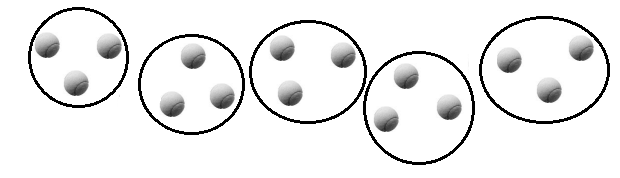
Rick puts 15 tennis balls into cans. Each can holds 3 balls.
Circle groups of 3 to show the balls in each can.

Eureka Math Grade 3 Module 1 Lesson 6 Problem Set Answer Key 1
Rick needs ____5___ cans.
___5___ × 3 = 15
15 ÷ 3 = __5____
Eureka Math Grade 3 Module 1 Lesson 6 Answer Key-1
Answer:
Rick needs 5 cans,

Explanation:
Given Rick puts 15 tennis balls into cans and each can holds 3 balls. Circled groups of 3 to show the balls in each can.
Rick needs 15 ÷ 3 = 5, 5 × 3 = 15,
Therefore Rick needs 5 cans.

Question 2.
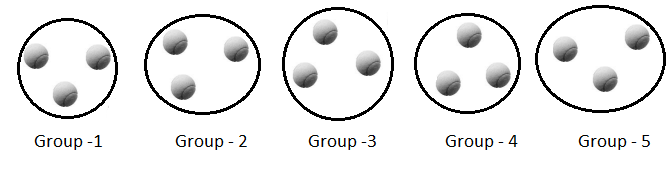
Rick uses 15 tennis balls to make 5 equal groups.
Draw to show how many tennis balls are in each group.
There are ____3___ tennis balls in each group.
5 × __3____ = 15
15 ÷ 5 = ___3___
Eureka Math Grade 3 Module 1 Lesson 6 Answer Key-2
Answer:
There are 3 tennis balls in each group.

Explanation:
Given Rick uses 15 tennis balls to make 5 equal groups.
Drawn circles to show 3 number of tennis balls are in each group as 15 ÷ 5 = 3, 5 × 3 = 15,
Therefore, there are 3 tennis balls in each group.

Question 3.
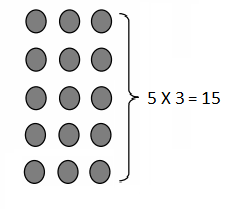
Use an array to model Problem 1.
a. ___5___ × 3 = 15
15 ÷ 3 = ___5___
The number in the blanks represents
_____5 groups___________________.
Eureka Math Grade 3 Module 1 Lesson 6 Answer Key-3
Explanation:
Used an array to model Problem 1 as
5 × 3 = 15 or 15 ÷ 3 = 5,
The number in the blanks represents groups as
5 groups of balls.

b. 5 × __3____ = 15
15 ÷ 5 = __3____
The number in the blanks represents
____________3 balls in each group________.

Answer:
The number in the blanks represents 3 balls in each group,

Explanation:
Rick uses 15 tennis balls to make 5 equal groups,
15 ÷ 5 = 3 or 5 × 3= 15, The number in the blanks
represents 3 balls in each group.

Question 4.
Deena makes 21 jars of tomato sauce. She puts 7 jars in
each box to sell at the market. How many boxes does Deena need?
21 ÷ 7 = __3____
___3___ × 7 = 21
What is the meaning of the unknown factor and quotient?
_________3______________

Answer:
Deena needs 3 boxes,

Explanation:
Given Deena makes 21 jars of tomato sauce and she puts 7 jars in each box to sell at the market.
So number of boxes Deena needs are 21 ÷ 7 = 3, (3 × 7 = 21)
Therefore, Deena needs 3 boxes.

Question 5.
The teacher gives the equation 4 × __3__ = 12. Charlie finds the answer by writing and solving 12 ÷ 4 = __3__.
Explain why Charlie’s method works.

Answer:
Charlie method is 12 ÷ 4 = 3,

Explanation:
Given The teacher gives the equation 4 × ____ = 12.
Charlie finds the answer by writing and solving as
12 ÷ 4 = 3,
because multiplication and division are closely related,
given that division is the inverse operation of multiplication.
When we divide, we look to separate into equal groups,
while multiplication involves joining equal groups.
If we divide this product by one of the factors,
we get the other factor as a result. So Charlie uses division method to solve missing factor in the given equation as 3. So the equation is 4 X 3 = 12.

Question 6.
The blanks in Problem 5 represent the size of the groups.
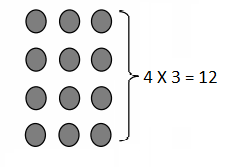
Draw an array to represent the equations.
Eureka Math Grade 3 Module 1 Lesson 6 Answer Key-4
Explanation:
Drawn an array that represents the equations as  4 × 3 = 12.

Eureka Math Grade 3 Module 1 Lesson 6 Exit Ticket Answer Key

Cesar arranges 12 notecards into rows of 6 for his presentation.
Draw an array to represent the problem.
12 ÷ 6 = ___2_____
____2____ × 6 = 12
What do the unknown factor and quotient represent?
___2 notecards in each row____
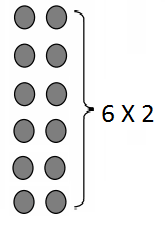
Eureka Math Grade 3 Module 1 Lesson 6 Answer Key-5
Explanation:
Given Cesar arranges 12 notecards into rows of 6 for his presentation.
Drawn an array to represent the problem as 12 ÷ 6 = 2, 2 × 6 = 12, means 6 rows  and 2 columns as shown above, The unknown factor and quotient 2
represents 2 notecards in each row.

Eureka Math Grade 3 Module 1 Lesson 6 Homework Answer Key

Question 1.
Mr. Hannigan puts 12 pencils into boxes. Each box holds 4 pencils.
Circle groups of 4 to show the pencils in each box.
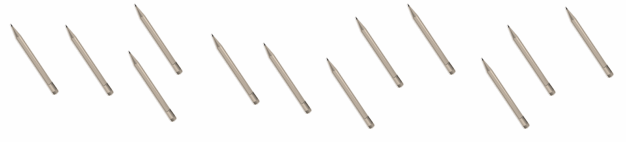
Eureka Math 3rd Grade Module 1 Lesson 6 Homework Answer Key 11
Mr. Hannigan needs ___3____ boxes.
___3___ × 4 = 12
12 ÷ 4 = __3____
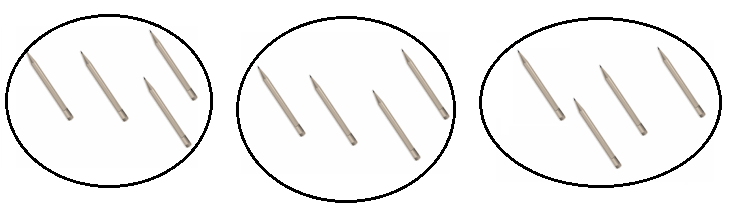
Eureka Math Grade 3 Module 1 Lesson 6 Answer Key-6
Mr. Hannigan needs 3 boxes,

Explanation:
Given Mr. Hannigan puts 12 pencils into boxes.
Each box holds 4 pencils.
Circled groups of 4 to show the pencils in each box as shown above, So Mr. Hannigan needs 12 ÷ 4 = 3 boxes,
( 3 x 4 = 12).

Question 2.
Mr. Hannigan places 12 pencils into 3 equal groups.
Draw to show how many pencils are in each group.
There are ___4____ pencils in each group.
3 × ___4___ = 12
12 ÷ 3 = ___4___
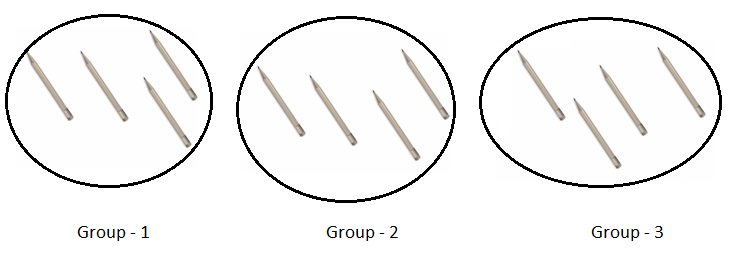
Eureka Math Grade 3 Module 1 Lesson 6 Answer Key-7
There are 4 pencils in each group,

Explanation:
Given Mr. Hannigan places 12 pencils into 3 equal groups,
Drawn to show 4 number of pencils are in each group as 12 ÷ 3 = 4, 3 × 4 = 12, Therefore 4 pencils are there in each group.

Question 3.
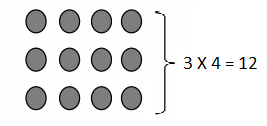
Use an array to model Problem 1.
a. ___3___ × 4 = 12
12 ÷ 4 = ___3___
The number in the blanks represents
___________3 groups______________.
a.
Eureka Math Grade 3 Module 1 Lesson 6 Answer Key-8
The number in the blanks represents 3 groups,

Explanation:
Used an array to model Problem 1 as 3 x 4 = 12, or 12 ÷ 4 = 3, therefore the number in the blanks represents 3 groups.

b. 3 × ___4___ = 12
12 ÷ 3 = __4____
The number in the blanks represents
___________4 pencils in each group_____________.

Answer:

The number in the blanks represents 4 pencils in each group,

Explanation:
Given Mr. Hannigan places 12 pencils into 3 equal groups.
12 ÷ 3 = 4 or 3 × 4= 12, The number in the blanks represents 4 pencils in each group.

Question 4.
Judy washes 24 dishes. She then dries and stacks the dishes equally into 4 piles. How many dishes are in each pile?
24 ÷ 4 = ___6____
4 × ___6_____ = 24
What is the meaning of the unknown factor and quotient?
__________6 dishes are in each pile____________________

Answer:
There are 6 dishes in each pile,

Explanation:
Given Judy washes 24 dishes and she then dries and stacks the dishes equally into 4 piles.
So number of dishes in each pile are 24 ÷ 4 = 6, or 4 × 6 = 24, The meaning of the unknown factor and quotient is 6 dishes are there in each pile.

Question 5.
Nate solves the equation _____ × 5 = 15 by writing and solving 15 ÷ 5 = ____. Explain why Nate’s method works.

Answer:
Nate solves the equation as 3 × 5 = 15,

Explanation:
Given Nate solves the equation _____ × 5 = 15 by writing and solving as 15 ÷ 5 = 3, Nate’s method is correct because in the given equation ___ X 5 = 15 , we bring 5 to the other side it becomes as
15 ÷ 5 = 3 now we check as 3 × 5 it becomes 15 only.
So Nate’s method work.

Question 6.
The blanks in Problem 5 represent the number of groups.
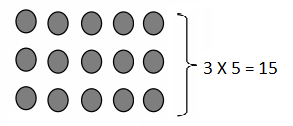
Draw an array to represent the equations.
Eureka Math Grade 3 Module 1 Lesson 6 Answer Key-9

Explanation:
Drawn an array to represent the equations as
3 × 5 = 15 or 15 ÷ 5 = 3 as shown in the picture above.

Eureka Math Grade 3 Module 1 Lesson 1 Answer Key

Engage NY Eureka Math 3rd Grade Module 1 Lesson 1 Answer Key

Eureka Math Grade 3 Module 1 Answer Key

Eureka Math Grade 3 Module 1 Lesson 1 Problem Set Answer Key

Question 1.
Fill in the blanks to make true statements.
Eureka Math Grade 3 Module 1 Lesson 1 Problem Set Answer Key 1
a. 3 groups of five = ___15______
3 fives = ____15_____
3 × 5 = ___15______

3 groups of five = 15,
3 fives = 15,
3 × 5 = 15,

Explanation:
Given expressions as
3 groups of five means 3 × 5 = 15,
3 fives = 3 × 5 = 15 and
3 × 5 = 15 as 3 is multiplied by 5 we get 15.

Eureka Math Grade 3 Module 1 Lesson 1 Problem Set Answer Key 2
b. 3 + 3 + 3 + 3 + 3 = __15___
5 groups of three = ___15______
5 × 3 = ____15_____

3 + 3 + 3 + 3 + 3 = 15,
5 groups of three = 15,
5 × 3 = 15,

Explanation:
Given expressions as
3 + 3 + 3 + 3 + 3 = 15 as 3 is added 5 times,
5 groups of three = 15 means 5  × 3 = 15,
5 × 3 = 15 as 5 is multiplied by 3 we get 15.

Eureka Math Grade 3 Module 1 Lesson 1 Problem Set Answer Key 3
c. 6 + 6 + 6 + 6 = ___24________
____4___ groups of six = ___24_______
4 × __6____ = ____24______

6 + 6 + 6 + 6 = 24,
4 groups of six = 24,
4 × 6 = 24,

Explanation:
Given expressions as
6 + 6 + 6 + 6 = 24 as 6 is added 4 times,
4 groups of six = 24 means 4  × 6 = 24,
4 × 6 = 24 as 4 is multiplied by 6 we get 24.

Eureka Math Grade 3 Module 1 Lesson 1 Problem Set Answer Key 4
d. 4 +__4__ + __4__ + __4__ + _4___ + __4__ = ___24______
6 groups of ____4____ = ____24_______
6 × __4____ = ____24______

4 + 4 + 4 + 4 + 4 + 4 = 24,
6 groups of 4 = 24,
6 × 4 = 24,

Explanation:
Given expressions as
4 + ___ + ___ +___ +___ +___ =  means by seeing the picture
4 is added 6 times as 4 + 4 + 4 + 4 + 4 + 4 we get 24,
6 groups of ______ =  means again by seeing the picture
6 × 4 we get 24, So 6 groups of 4 = 24,
6 × 4 = 24 as 6 is multiplied by 4 we get 24.

Question 2.
The picture below shows 2 groups of apples. Does the picture show 2 × 3? Explain why or why not.
Eureka Math Grade 3 Module 1 Lesson 1 Problem Set Answer Key 5
No, the picture does not show 2 × 3,

Explanation:
Given the picture below shows 2 groups of apples but in the 2 groups the number of apples are not the same as in group -1 we have 3 apples, group 2 we have 2 apples in total there are 5 apples and 2 × 3 = 6 whose value is not same as shown in the picture.
So, the picture does not show 2 × 3.

Question 3.
Draw a picture to show 2 × 3 = 6.
Eureka Math Grade 3 Module 1 Lesson 1 Answer Key-1
Explanation:
Drawn a picture above to show 2 × 3 = 6 .

Question 4.
Caroline, Brian, and Marta share a box of chocolates. They each get the same amount. Circle the chocolates below to show 3 groups of 4. Then, write a repeated addition sentence and a multiplication sentence to represent the picture.
Eureka Math Grade 3 Module 1 Lesson 1 Problem Set Answer Key 5.1
Eureka Math Grade 3 Module 1 Lesson 1 Answer Key-2

Addition sentence is 4 + 4 + 4 = 12,
Multiplication sentence is 3 × 4 = 12,

Explanation:
Given Caroline, Brian, and Marta share a box of chocolates and they each get the same amount as 12 ÷ 3 = 4 each.
Circled the chocolates above to show 3 groups of 4 and wrote a repeated addition sentence as  4 + 4 + 4 = 12 and a multiplication sentence to represent the picture as 3 × 4 = 12.

Eureka Math Grade 3 Module 1 Lesson 1 Exit Ticket Answer Key

Question 1.
The picture below shows 4 groups of 2 slices of watermelon.
Fill in the blanks to make true repeated addition and multiplication sentences that represent the picture.
Engage NY Math 3rd Grade Module 1 Lesson 1 Exit Ticket Answer Key 6
Eureka Math Grade 3 Module 1 Lesson 1 Answer Key-3

True repeated addition is 2 + 2 + 2 + 2 = 8,
Multiplication sentences is 4 X 2 = 8.

Explanation:
Given the picture above shows 4 groups of 2 slices of watermelon.
Filled in the blanks to make true repeated addition as 2 + 2 + 2 + 2 = 8 and multiplication sentences that represent the picture as 4 X 2 = 8.

Question 2.
Draw a picture to show 3 + 3 + 3 = 9. Then, write a multiplication sentence to represent the picture.
Eureka Math Grade 3 Module 1 Lesson 1 Answer Key-4
Addition sentence is  3 + 3 + 3 = 9,
Multiplication sentences is 3 X 3 = 9.

Explanation:
Drawn a picture above as  3 groups of 3 birds  to show 3 + 3 + 3 = 9 and writing a multiplication sentence to represent the picture as 3 X 3 = 9 birds in total.

Eureka Math Grade 3 Module 1 Lesson 1 Homework Answer Key

Question 1.
Fill in the blanks to make true statements.
Eureka Math 3rd Grade Module 1 Lesson 1 Homework Answer Key 6.1
a. 4 groups of five = ____20_____
4 fives = ___20______
4 × 5 = ____20_____

4 groups of five = 20,
4 fives = 20,
4 × 5 = 20,

Explanation:
Given expressions as
4 groups of five means 4 × 5 = 20,
4 fives = 4 × 5 = 20 and
4 × 5 = 20 as 4 is multiplied by 5 we get 20.

Eureka Math 3rd Grade Module 1 Lesson 1 Homework Answer Key 6.2

b. 5 groups of four = _________
5 fours = _________
5 × 4 = _________

5 groups of four = 20,
5 fours = 20,
5 × 4 = 20,

Explanation:
Given expressions as
5 groups of four means 5 × 4 = 20,
5 fours = 5 x 4 = 20 and
5 × 4 = 20 as 5 is multiplied by 4 we get 20.

Eureka Math 3rd Grade Module 1 Lesson 1 Homework Answer Key 6.3
c. 6 + 6 + 6 = ___18________
____3___ groups of six = ____18______
3 × __6____ = ____18______

6 + 6 + 6  = 18,
3 groups of 6 = 18,
3 × 6 = 18,

Explanation:
Given expressions as 6 + 6 + 6 = 18 as
6 is added 3 times we get 18,
_____ groups of six =  means again by seeing the picture
3 groups of 6 =  3 × 6 we get 18, So 3 groups of 6 = 18,
3 × 6 = 18 as 3 is multiplied by 6 we get 18.

Eureka Math 3rd Grade Module 1 Lesson 1 Homework Answer Key 6.4
d. 3 + __3__ + __3__ + __3__ + __3__ + __3__ = ___18____
6 groups of ____3____ = _____18______
6 × __3__ = ____18______

3 + 3 + 3 + 3 + 3 + 3 = 18,
6 groups of 3 = 18,
6 × 3 = 18,

Explanation:
Given expressions as
3 + ___ + ___ +___ +___ +___ =  means by seeing the picture
3 is added 6 times as 3 + 3 + 3 + 3 + 3 + 3 we get 18,
6 groups of ______ =  means again by seeing the picture
6 × 3 we get 18, So 6 groups of 3 = 18,
6 × 3 = 18 as 6 is multiplied by 3 we get 18.

Question 2.
The picture below shows 3 groups of hot dogs. Does the picture show 3 × 3? Explain why or why not.
Eureka Math 3rd Grade Module 1 Lesson 1 Homework Answer Key 7

Yes, the picture shows 3 × 3,

Explanation:
Given the picture below shows 3 groups of hot dogs,
In the 3 groups the number of hot dogs are the same as 3, So in total we have 3 X 3 = 9 hotdogs in the picture which matches with the given equation as 3 × 3 whose value is also same 9, So, the picture shows 3 × 3.

Question 3.
Draw a picture to show 4 × 2 = 8,
Eureka Math Grade 3 Module 1 Lesson 1 Answer Key-5

Explanation:
Drawn picture of flowers as shown above to show 4 × 2 = 8.

Question 4.
Circle the pencils below to show 3 groups of 6. Write a repeated addition and a multiplication sentence to represent the picture.
Eureka Math Grade 3 Module 1 Lesson 1 Homework Answer Key 8
Eureka Math Grade 3 Module 1 Lesson 1 Answer Key-6
Repeated addition sentence is 6 + 6 + 6 = 18,
Multiplication sentence is 3 X 6 = 18,

Explanation:
Circled the pencils above to show 3 groups of 6.
Wrote a repeated addition as 6 + 6 + 6 = 18 and a multiplication sentence as 3 X 6 = 18 to represent the picture.

Eureka Math Grade 3 Module 1 Lesson 5 Answer Key

Engage NY Eureka Math 3rd Grade Module 1 Lesson 5 Answer Key

Eureka Math Grade 3 Module 1 Answer Key

Eureka Math Grade 3 Module 1 Lesson 5 Problem Set Answer Key

Question 1.
Eureka Math Grade 3 Module 1 Lesson 5 Problem Set Answer Key 1
Divide 6 tomatoes into groups of 3.
There are ____2_____ groups of 3 tomatoes.

Answer:
6 ÷ 3 = 2
There are 2 groups of 3 tomatoes,

Explanation:
Dividing 6 tomatoes into groups of 3 we get
6 ÷ 3 = 2 groups
So there are 2 groups of 3 tomatoes.

Question 2.
Eureka Math Grade 3 Module 1 Lesson 5 Problem Set Answer Key 2
Divide 8 lollipops into groups of 2.
There are ____4___ groups.
8 ÷ 2 = ___4____
Eureka Math Grade 3 Module 1 Lesson 5 Answer Key-1

Answer:

There are 4 groups,

Explanation:
Dividing 8 lollipops into groups of 2 as
8 ÷ 2 = 4 we get 4 groups,
So, there are 4 groups of 2.

Question 3.
Eureka Math Grade 3 Module 1 Lesson 5 Problem Set Answer Key 3
Divide 10 stars into groups of 5.
10 ÷ 5 = ___2____
Eureka Math Grade 3 Module 1 Lesson 5 Answer Key-2

Answer:

There are 2 groups,

Explanation:
Dividing 10 stars into groups of 5 as
10 ÷ 5 = 2 we get 2 groups,
So, there are 2 groups of 5.

Question 4.
Eureka Math Grade 3 Module 1 Lesson 5 Problem Set Answer Key 4
Divide the shells to show 12 ÷ 3 = ____4____,
where the unknown represents the number of groups.
How many groups are there? ___4_____
Eureka Math Grade 3 Module 1 Lesson 5 Answer Key-3

Answer:

There are 4 groups,

Explanation:
Dividing 12 shells into groups of 3 as
12 ÷ 3 = 4 we get 4 groups,
So, there are 4 groups of 3.

Question 5.
Rachel has 9 crackers. She puts 3 crackers in each bag.
Circle the crackers to show Rachel’s bags.
Eureka Math Grade 3 Module 1 Lesson 5 Problem Set Answer Key 5
a. Write a division sentence where the answer represents the number of Rachel’s bags.
b. Draw a number bond to represent the problem.
Eureka Math Grade 3 Module 1 Lesson 5 Answer Key-4

Answer:

Division sentence 9 ÷ 3 = 3,
Number of Rachel’s bags are 3,

Explanation:
Given Rachel has 9 crackers.
She puts 3 crackers in each bag.
Circled the crackers to show Rachel’s bags,
a. Division sentence 9 ÷ 3 = 3,
therefore, number of Rachel’s bags are 3.
b.
Eureka Math Grade 3 Module 1 Lesson 5 Answer Key-5
Explanation:
Drawn a number bond to represent the problem
as shown above

Question 6.
Jameisha has 16 wheels to make toy cars.
She uses 4 wheels for each car.
a. Use a count-by to find the number of cars Jameisha can build. Make a drawing to match your counting.
b. Write a division sentence to represent the problem.

a.
Eureka Math Grade 3 Module 1 Lesson 5 Answer Key-6
Answer:
Number of cars Jameisha builds are 4,

Explanation:
Given Jameisha has 16 wheels to make toy cars.
She uses 4 wheels for each car.
Used a count-by to find the number of cars
Jameisha can build as 16 ÷ 4 = 4 cars,
Made a drawing to match my counting as shown above.

b. Division sentence to represent the problem is 16 ÷ 4 = 4 cars,

Explanation:
Given Jameisha has 16 wheels to make toy cars.
She uses 4 wheels for each car, So the division sentence to represent the problem is 16 ÷ 4 = 4 cars.

Eureka Math Grade 3 Module 1 Lesson 5 Exit Ticket Answer Key

Question 1.
Divide 12 triangles into groups of 6.
Engage NY Math 3rd Grade Module 1 Lesson 5 Exit Ticket Answer Key 6
12 ÷ 6 = ___2____
Eureka Math Grade 3 Module 1 Lesson 5 Answer Key-7
Answer:
There are 2 groups of 6,

Explanation:
Dividing 12 triangles into groups of 6 as 12 ÷ 6 = 2 we get 2 groups,
So, there are 2 groups of 6.

Question 2.
Spencer buys 20 strawberries to make smoothies.
Each smoothie needs 5 strawberries.
Use a count-by to find the number of smoothies
Spencer can make.
Make a drawing to match your counting.

Eureka Math Grade 3 Module 1 Lesson 5 Answer Key-8
Answer:
Spencer makes 4 smoothies,

Explanation:
Given Spencer buys 20 strawberries to make smoothies.
Each smoothie needs 5 strawberries.
Used a count-by the number of smoothies
Spencer can make are 20 ÷ 5 = 4,
Made a drawing to match my counting as 5 X 4 = 20 strawberries as shown above in the picture.

Eureka Math Grade 3 Module 1 Lesson 5 Homework Answer Key

Question 1.
Eureka Math 3rd Grade Module 1 Lesson 5 Homework Answer Key 7
Divide 4 triangles into groups of 2.
There are _____2____ groups of 2 triangles.
4 ÷ 2 = 2

Answer:
There are 2 groups of 2 triangles,

Explanation:
Dividing 4 triangles into groups of 2 as
4 ÷ 2 = 2 we get 2 groups,
So, there are 2 groups of 2 triangles.

Question 2.
Eureka Math 3rd Grade Module 1 Lesson 5 Homework Answer Key 8
Divide 9 eggs into groups of 3.
There are ___3____ groups.
9 ÷ 3 = __3_____
Eureka Math Grade 3 Module 1 Lesson 5 Answer Key-9

Answer:
There are 3 groups of 3 eggs,

Explanation:
Dividing 9 eggs into groups of 3 as
9 ÷ 3 = 3 we get 3 groups,
So, there are 3 groups of 3 eggs.

Question 3.
Eureka Math 3rd Grade Module 1 Lesson 5 Homework Answer Key 9
Divide 12 buckets of paint into groups of 3.
12 ÷ 3 = __4_____
Eureka Math Grade 3 Module 1 Lesson 5 Answer Key-10
Answer:
There are 4 groups of 3 paint buckets,

Explanation:
Divided 12 buckets of paint into groups of 3 as
12 ÷ 3 = 4 we get 4 groups of paint buckets,
So, there are 4 groups of 3 paint buckets.

Question 4.
Eureka Math 3rd Grade Module 1 Lesson 5 Homework Answer Key 10
Group the squares to show 15 ÷ 5 = __3___,
where the unknown represents the number of groups.
How many groups are there? ____3____
Eureka Math Grade 3 Module 1 Lesson 5 Answer Key-11
Answer:
There are 3 groups of 5 squares,

Explanation:
Grouped the squares to show 15 ÷ 5 = 3,
where the unknown represents the number of groups as 3 groups of 5 squares.

Question 5.
Daniel has 12 apples. He puts 6 apples in each bag.
Circle the apples to find the number of bags Daniel makes.
Eureka Math 3rd Grade Module 1 Lesson 5 Homework Answer Key 11
a. Write a division sentence where the answer represents the number of Daniel’s bags.
b. Draw a number bond to represent the problem.
a.
Eureka Math Grade 3 Module 1 Lesson 5 Answer Key-12
Daniel’s has 2 bags of 6 apples each,
Division sentence : 12 ÷ 6 = 2 bags,

Explanation:
Daniel has 12 apples and he puts 6 apples in each bag.
Circled the apples to find the number of bags Daniel makes as 12 ÷ 6 = 2 bags,
a. Writing a division sentence where the answer represents the number of Daniel’s bags as 12 ÷ 6 = 2 bags.

b.
Eureka Math Grade 3 Module 1 Lesson 5 Answer Key-13
Explanation:
Drawn a number bond to represent the problem as shown above in the picture.

Question 6.
Jacob draws cats. He draws 4 legs on each cat for a total of 24 legs.
a. Use a count-by to find the number of cats Jacob draws. Make a drawing to match your counting.
b. Write a division sentence to represent the problem.

a.
Eureka Math Grade 3 Module 1 Lesson 5 Answer Key-14
Answer:
The number of cats Jacob draws are 6,

Explanation:
Given Jacob draws cats. He draws 4 legs on each cat for a total of 24 legs.
a. Used a count-by to find the number of cats Jacob draws as 24 ÷ 4 = 6 cats,
Made a drawing to match my counting as shown above.

b. Division sentence is 24 ÷ 4 = 6 cats,

Explanation:
Wrote a division sentence to represent the problem as
24 ÷ 4 = 6 cats.

Eureka Math Grade 3 Module 1 End of Module Assessment Answer Key

Engage NY Eureka Math 3rd Grade Module 1 End of Module Assessment Answer Key

Eureka Math Grade 3 Module 1 Answer Key

Eureka Math Grade 3 Module 1 End of Module Assessment Task Answer Key

Question 1.
Mr. Lewis arranges all the desks in his classroom into 6 equal groups of 4. How many desks are in his classroom? Show a picture and multiplication sentence in your work.
a. What does the product in your multiplication sentence represent?

Answer:
24 desks are there in Mr. Lewis classroom,
Multiplication Sentence: 4 X 6 = 24, the product in your multiplication sentence represent there are 24 desks.
Eureka Math Grade 3 Module 1 End of Module Assessment Task Answer Key-1

Explanation:
Given Mr. Lewis arranges all the desks in his classroom into 6 equal groups of 4.
So total desks his classroom are 24,
Shown a picture and multiplication sentence is 4 × 6 = 24.

b. Fill in the blanks below to complete a related division sentence.
_24_ ÷ 4 = ___6___,

Explanation:
Related division sentence is 24 ÷ 4 = 6,
when 24 is divided into 4 times we get 6 parts each.

c. What does the quotient in Part (b) represent?
Quotient represents 6 parts,

Explanation:
The quotient in the division sentence 24 ÷ 4 represents 24 is divided by 4 then we get quotient as 6 equal parts.

Question 2.
a. Draw an array that shows 9 rows of 2. Write a multiplication sentence to represent the array, and circle the factor that represents the number of rows.
b. Draw another array that shows 2 rows of 9. Write a different multiplication sentence, and circle the factor that represents the size of the row.
c. Explain the relationship between the two arrays using number sentences and words.

Answer:

a.
Eureka Math Grade 3 Module 1 End of Module Assessment Task Answer Key-2
Explanation:
Drawn an array that shows 9 rows of 2,
Wrote a multiplication sentence to represent the array as 9 × 2 = 18 and circled the factor 9 that represents the number of rows.

b.
Eureka Math Grade 3 Module 1 End of Module Assessment Task Answer Key-3
Explanation:
Drawn another array that shows 2 rows of 9.
Wrote a different multiplication sentence as 2 × 9 = 18 and circled the factor that 2 represents the size of the row.

c. The relationship between the two arrays is the results is same,

Explanation:
The relationship between the two arrays is same as number sentences is 9 × 2 = 18, 2 × 9 = 18, means if 9 rows are multiplied by 2 times we get 18 and if 2 is multiplied by 9 times also we get result as 18 only. therefore if x rows and y columns are there then x × y = y × x the product result will be the same.

Question 3.
Ms. Park buys a tray of apples for a class party. There are 5 rows of 4 red apples. There is 1 row of 4 green apples.
a. The picture below shows Ms. Park’s apples. Fill in the blanks to complete the expressions.
Eureka Math Grade 3 Module 1 End of Module Assessment Task Answer Key 1
Eureka Math Grade 3 Module 1 End of Module Assessment Task Answer Key-4
Explanation:
Given Ms. Park buys a tray of apples for a class party.
There are 5 rows of 4 red apples.
There is 1 row of 4 green apples,
The expression is Total apples: 6 × 4,
Red apples: 5 × 4, Green apples: 1 × 4.

b. Fill in the unknowns in the equation below to match the picture of the apples in Part (a). Use the break apart and distribute strategy to find the total number of apples Ms. Park bought.
_____ × 4 = _____ × 4 + _____ × 4
Ms. Park bought ________ apples.

Answer:
Equation is 6 × 4 = ((5 × 4) + (1 × 4)),
A total number of apples Ms. Park bought 24 apples.

Explanation:
The equation below to match the picture of the apples in Part (a). Using the break apart and distribute strategy is Equation is 6 × 4 = ((5 × 4) + (1 × 4)),
The total number of apples Ms. Park bought are 24 apples.

c. Lilly brings 8 green apples for the class party. Show Lilly’s green apples on the picture in Part (a). Then, fill in the unknowns in the equation below to match the new picture. Solve to find the total number of apples.
_____ × 4 = _____ × 4 + _____ × 4
There are ________ apples in all.

Answer:
Eureka Math Grade 3 Module 1 End of Module Assessment Task Answer Key-5

Equation is 8 × 4 = ((5 × 4) + (3 × 4)),
Total number of apples are 32.

Explanation:
Given Lilly brings 8 green apples for the class party.
Shown Lilly’s green apples in the picture in Part (a) as above, Then, filled the unknowns in the equation below to match the new picture as 8 × 4 = ((5 × 4) + (3 × 4)), on solving to find the total number of apples are 20 + 12 = 32 apples.

Question 4.
Mr. Myer’s class plays a game. The class earns 5 points each time they answer a question correctly. The class earns 50 points playing the game on Monday.
a. How many questions did the class answer correctly? Show a picture and division sentence in your work.

The class answered 10 questions correctly,
Eureka Math Grade 3 Module 1 End of Module Assessment Task Answer Key-6
The division sentence is 50 ÷ 5= 10,

Explanation:
Given Mr. Myer’s class plays a game, The class earns 5 points each time they answer a question correctly. The class earns 50 points playing the game on Monday. So the number of questions the class answered correctly is (50 ÷ 5= 10) 10 questions.
Shown a picture and division sentence in the picture above,
Division Sentence : 50 ÷ 5= 10.

b. Mr. Myer uses the equation 5 × _____ = 50 to find how many questions the class answered correctly. Is his method correct? Why or why not?

Answer:

His method is correct only but it is time consuming,

Explanation:
Given Mr. Myer uses the equation 5 × _____ = 50 to find how many questions the class answered correctly. His method is correct, Why because he goes on
substituting numbers till he gets the answer, Mr. Myer gets the answer as 5 X 10 = 50, But his method is time consuming and little long.

c. The class answered 7 questions correctly on Tuesday. What is the total number of points the class earned on both days?

Answer:

The total number of points the class earned on both days is 50 + 35 = 85 points,

Explanation:
Given the class answered 7 questions correctly on Tuesday. So the total number of points the class earned on both days is Monday – 50 points, Tuesday – 5 × 7 = 35 points, In total 50 + 35 = 85 points.

Question 5.
Complete as many problems as you can in 100 seconds. Your teacher will time you and tell you when to stop.
Eureka Math Grade 3 Module 1 End of Module Assessment Task Answer Key 5

Eureka Math Grade 3 Module 1 End of Module Assessment Task Answer Key 6

Answer:
All most completed the given problems in 100 seconds,

Explanation:
Completed as many problems as I can in 100 seconds,
till my teacher says when to stop as shown below,
Eureka Math Grade 3 Module 1 End of Module Assessment Task Answer Key-7

Eureka Math Grade 3 Module 1 End of Module Assessment Task Answer Key-8

Eureka Math Grade 3 Module 1 Mid Module Assessment Answer Key

Engage NY Eureka Math 3rd Grade Module 1 Mid Module Assessment Answer Key

Eureka Math Grade 3 Module 1 Answer Key

Eureka Math Grade 3 Module 1 Mid Module Assessment Task Answer Key

Question 1.
Mrs. Tran plants 2 rows of 5 carrots in her garden.
a. Draw an array that represents Mrs. Tran’s carrots. Use an X to show each carrot.
Eureka Math Grade 3 Module 1 Mid Module Assessment Task Answer Key-1
Explanation:
Given Mrs. Tran plants 2 rows of 5 carrots in her garden,
Drawn an array that represents Mrs. Tran’s carrots,
Using an X to show each carrot as shown above.

b. Mrs. Tran adds 3 more rows of 5 carrots to her garden.
• Use circles to show her new carrots on the array in Part (a).
• Fill in the blanks below to show how she added the five rows.
__ fives + __ fives = __ fives
• Write a sentence to explain your thinking.

Eureka Math Grade 3 Module 1 Mid Module Assessment Task Answer Key-2

(_2) ×_ fives + (3)_×_ fives = _(5)_× fives,
2 times 5 and 3 times 5 makes 5 times fives,

Explanation:
Given Mrs. Tran adds 3 more rows of 5 carrots to her garden.
Using circles shown her new carrots on the array in Part (a),
To show how she added the five rows as 2 × 5 + 3 × 5 = 5 × 5,
The sentence is 2 times by five and 3 times by five makes 5 by five times.

c. Find the total number of carrots Mrs. Tran planted.

Total number of carrots Mrs. Tran planted are 25,

Explanation:
Total number of carrots Mrs. Tran planted are ( 2 X 5 + 3 X 5) =
10 + 15 = 25 carrots.

d. Write a multiplication sentence to describe the array representing the total number of carrots Mrs. Tran planted.

Multiplication Sentence : (2 + 3) × 5 = 5 × 5,

Explanation:
Multiplication sentence to describe the array representing the total number of carrots Mrs. Tran planted is
(2 + 3) × 5 = 5 × 5 = 25.

Question 2.
Mrs. Tran picks 15 tomatoes from her garden.
She puts 5 tomatoes in each bag.
a. Draw Mrs. Tran’s bags of tomatoes.
b. Write a multiplication sentence that describes your drawing in Part (a).

a. Eureka Math Grade 3 Module 1 Mid Module Assessment Task Answer Key-3
Explanation:
Drawn to show Mrs. Tran’s bags of tomatoes, 5 tomatoes in each bag.

b. Multiplication Sentence : 5 × 3 = 15,

Explanation:
The multiplication sentence that describes my drawing in Part (a) is we have 5 tomatoes in each bag so 5 X 3 = 15 and Mrs. Tran’s picked 15 tomatoes from her garden.

Question 3.
Mrs. Tran plants 12 sunflowers in her garden. She plants them in 3 rows.
a. Fill in the blanks below to make a true division sentence.
What does the answer represent?
__ ÷ __ = __

a. Division sentence : 12 ÷ 3 = 4,
4 sunflowers in a row,

Explanation:
Given Mrs. Tran plants 12 sunflowers in her garden.
She plants them in 3 rows.
Division sentence is 12 ÷ 3 = 4,
The 4 represents there are 4 sunflower plants in a row.

b. Mrs. Tran adds 2 more identical rows of sunflowers to her 3 original rows. Draw an array to show how many flowers she has now.

Eureka Math Grade 3 Module 1 Mid Module Assessment Task Answer Key-4
Explanation:
Drawn an array to show the number of sun flowers Mrs. Tran has 24 now.

c. Mrs. Tran figured out how many flowers she planted.
Her work is shown in the box below. Would Mrs. Tran get the same result if she multiplied 5 × 4? Explain why or why not.
Eureka Math Grade 3 Module 1 Mid Module Assessment Task Answer Key 1
Yes, Mrs. Tran get the same result if she multiplied 5 × 4,

Explanation:
Mrs. Tran worked as (3 × 4) + (2 × 4) = 12 + 8 = 20, and Mrs. Tran got the same result if she multiply 5 × 4 = 20, because in the equation both 3 and 2 are multiplied by 4.
So we add 3 and 2 first we get 5 and multiply by 4, So the result remains same 20 for 5 × 4 also.

Eureka Math Grade 3 Module 1 Lesson 21 Answer Key

Engage NY Eureka Math 3rd Grade Module 1 Lesson 21 Answer Key

Eureka Math Grade 3 Module 1 Answer Key

Engage NY Math Grade 3 Module 1 Lesson 21 Pattern Sheet Answer Key

Multiply.
EngageNY Math Grade 3 Module 1 Lesson 21 Pattern Sheet Answer Key 1
EngageNY Math Grade 3 Module 1 Lesson 21 Pattern Sheet Answer Key 2

multiply by 5 (1–5)
Eureka Math Grade 3 Module 1 Lesson 21 Answer Key-1
Eureka Math Grade 3 Module 1 Lesson 21 Answer Key-2
Explanation :
Multiplied the given numbers and wrote respectively.

Eureka Math Grade 3 Module 1 Lesson 21 Problem Set Answer Key

Question 1.
Jason earns $6 per week for doing all his chores. On the fifth week, he forgets to take out the trash, so he only earns $4. Write and solve an equation to show how much Jason earns in 5 weeks.
Eureka Math Grade 3 Module 1 Lesson 21 Problem Set Answer Key 3
Jason earns ___$28__________.

Answer:
Eureka Math Grade 3 Module 1 Lesson 21 Answer Key-3
Jason earns $28 in 5 weeks,

Explanation:
Given Jason earns $6 per week for doing all his chores.
On the fifth week, he forgets to take out the trash,
so he only earns $4. Equation of Jason’s earnings is
$6 +$6 + $6 +$6 + $4 = $28 is Jason earnings in 5 weeks.

Question 2.
Miss Lianto orders 4 packs of 7 markers. After passing out
1 marker to each student in her class, she has 6 left.
Label the tape diagram to find how many students are in Miss Lianto’s class.
Eureka Math Grade 3 Module 1 Lesson 21 Problem Set Answer Key 3.1
There are __22__ students in Miss Lianto’s class.

Answer:
Eureka Math Grade 3 Module 1 Lesson 21 Answer Key-4
There are __22__ students in Miss Lianto’s class.

Explanation:
Given Miss Lianto orders 4 packs of 7 markers. After passing out 1 marker to each student in her class, she has 6 left.
Labeled the tape diagram to show how many students are in Miss Lianto’s class as 4 packs of 7 markers means the number of markers are
7 × 4 = 28 or 7 + 7 + 7 + 7 = 28,
Each student got 1 marker in her class and 6 left, means number of students in Miss Lianto’s class are 28 – 6 = 22 students as labeled in the tape diagram.
Therefore, there are  22 students in Miss Lianto’s class.

Question 3.
Orlando buys a box of 18 fruit snacks. Each box comes with an equal number of strawberry-, cherry-, and grape-flavored snacks. He eats all of the grape-flavored snacks. Draw and label a tape diagram to find how many fruit snacks he has left.
Eureka Math Grade 3 Module 1 Lesson 21 Answer Key-5
Fruit snacks Orlando left are 12,

Explanation:
Given Orlando buys a box of 18 fruit snacks. Each box comes with an equal number of strawberry-, cherry-, and grape-flavored snacks, Orlando eats all of the grape-flavored snacks.
Drawn and labeled a tape diagram to show how many fruit snacks Orlando has left are
Total fruit snacks 18, equal number of 3 fruit flavored snacks,
So each flavor is 18 ÷ 3 = 6 each, Now Orlando ate all of the grape – flavored snacks, So fruit snacks Orlando has left are 18 – 6 = 12.
Therefore, Orlando has left 12 fruit snacks.

Question 4.
Eudora buys 21 meters of ribbon. She cuts the ribbon so that each piece measures 3 meters in length.
a. How many pieces of ribbon does she have?
b. If Eudora needs a total of 12 pieces of the shorter ribbon, how many more pieces of the shorter ribbon does she need?

Answer:

a. Eudora has 7 pieces of ribbon,

Explanation:
Given Eudora buys 21 meters of ribbon. She cuts the ribbon so that each piece measures 3 meters in length,
So number of pieces of ribbon she has is 21 ÷ 3 = 7 pieces of ribbon.

b. Eudora needs more 5 pieces of the shorter ribbon,

Explanation:
If Eudora needs a total of 12 pieces of the shorter ribbon.
She needs more pieces of the shorter ribbon as 12 – 7 = 5 pieces.

Engage NY Math 3rd Grade Module 1 Lesson 21 Exit Ticket Answer Key

Ms. Egeregor buys 27 books for her classroom library. She buys an equal number of fiction, nonfiction, and poetry books. She shelves all of the poetry books first. Draw and label a tape diagram to show how many books Ms. Egeregor has left to shelve.

Answer:
Ms. Egeregor has left with 18 more books to shelve,
Eureka Math Grade 3 Module 1 Lesson 21 Answer Key-6

Explanation:
Given Ms. Egeregor buys 27 books for her classroom library.
She buys an equal number of fiction, nonfiction, and poetry books.
So each numbers of books are 27 ÷ 3 = 9,
9 books of fiction, 9 books of nonfiction and 9 books of poetry.
She shelves all of the poetry books first.
Drawn and labeled a tape diagram to show number of books Ms. Egeregor has left to shelve is 27 – 9 = 18 more books.

Eureka Math 3rd Grade Module 1 Lesson 21 Homework Answer Key

Question 1.
Tina eats 8 crackers for a snack each day at school. On Friday, she drops 3 and only eats 5. Write and solve an equation to show the total number of crackers Tina eats during the week.
Eureka Math 3rd Grade Module 1 Lesson 21 Homework Answer Key 4
Tina eats ____37______ crackers.

Answer:

Tina eats 37 crackers during the week,
Eureka Math Grade 3 Module 1 Lesson 21 Answer Key-7

Explanation:
Given Tina eats 8 crackers for a snack each day at school.
On Friday, she drops 3 and only eats 5. So Wrote and solved an equation to show the total number of crackers Tina ate during the week is 8 + 8 + 8 + 8 + 5 = 37 crackers.

Question 2.
Ballio has a reading goal. He checks 3 boxes of 9 books out from the library. After finishing them, he realizes that he beat his goal by 4 books! Label the tape diagrams to find Ballio’s reading goal.
Eureka Math 3rd Grade Module 1 Lesson 21 Homework Answer Key 5
Ballio’s goal is to read ___23____ books.

Answer:
Eureka Math Grade 3 Module 1 Lesson 21 Answer Key-8
Explanation :
Given Ballio has a reading goal. He checks 3 boxes of 9 books out from the library. 3 × 9 = 27 books,
After finishing them, he realizes that he beat his goal by 4 books
So his goal was 27 – 4 = 23 books,
Labeled the tape diagrams to show Ballio’s reading goal as 23 books.

Question 3.
Mr. Nguyen plants 24 trees around the neighborhood pond. He plants equal numbers of maple, pine, spruce, and birch trees. He waters the spruce and birch trees before it gets dark. How many trees does Mr. Nguyen still need to water? Draw and label a tape diagram.

Answer:
Mr. Nguyen still needs to water 12 trees,

Explanation:
Given Mr. Nguyen plants 24 trees around the neighborhood pond.
He plants equal numbers of maple, pine, spruce, and birch trees.
So each numbers of trees are 24 ÷ 4 = 6 trees,
He waters the spruce and birch trees before it gets dark.
So number of more trees Mr. Nguyen still need to water is 24 – 12 = 12 trees.
Eureka Math Grade 3 Module 1 Lesson 21 Answer Key-9
Drawn and labeled a tape diagram to show Mr. Nguyen still needs to water 12 trees.

Question 4.
Anna buys 24 seeds and plants 3 in each pot. She has 5 pots. How many more pots does Anna need to plant all of her seeds?

Answer:
Anna needs 3 more pots to plant all of her seeds.

Explanation:
Given Anna buys 24 seeds and plants 3 in each pot. She has 5 pots.
So she planted 5 × 3 = 15 seeds, Seeds left are 24 – 15 = 9 seeds.
As each pot she can plant 3 seeds she needs pots for 9 seeds as 9 ÷ 3 = 3,
Therefore, number of more pots Anna need to plant all of her seeds are 3 pots.

Eureka Math Grade 3 Module 1 Lesson 20 Answer Key

Engage NY Eureka Math 3rd Grade Module 1 Lesson 20 Answer Key

Eureka Math Grade 3 Module 1 Answer Key

Eureka Math Grade 3 Module 1 Lesson 20 Sprint Answer Key

A
Skip-Count by 5
Eureka Math Grade 3 Module 1 Lesson 20 Sprint Answer Key 21
Eureka Math Grade 3 Module 1 Lesson 20 Sprint Answer Key 22
Eureka Math Grade 3 Module 1 Lesson 20 Sprint Answer Key 23
Eureka Math Grade 3 Module 1 Lesson 20 Sprint Answer Key 24

Answer:
Eureka Math Grade 3 Module 1 Lesson 20 Answer Key-1
Eureka Math Grade 3 Module 1 Lesson 20 Answer Key-2
Eureka Math Grade 3 Module 1 Lesson 20 Answer Key-3
Eureka Math Grade 3 Module 1 Lesson 20 Answer Key-4

Question 1.
0, 5, __

Answer:
0, 5, 10,

Explanation:
Given 0, 5, ___ skip count by 5,
0, 0 + 5 = 5, 5 + 5 = 10,
So, 0, 5, 10.

Question 2.
5, 10, __

Answer:
5, 10, 15,

Explanation:
Given 5, 10, ___ skip count by 5,
5, 5 + 5 = 10, 10 + 5 = 15,
So, 5, 10, 15.

Question 3.
10, 15, __

Answer:
10, 15, 20,

Explanation:
Given 10, 15, ___ skip count by 5,
10, 10 + 5 = 15, 15 + 5 = 20,
So, 10, 15, 20.

Question 4.
15, 20, __

Answer:
15, 20, 25,

Explanation:
Given 15, 20, ___ skip count by 5,
15, 15 + 5 = 20, 20 + 5 = 25,
So, 15, 20, 25.

Question 5.
20, 25, __

Answer:
20, 25, 30,

Explanation:
Given 20, 25, ___ skip count by 5,
20, 20 + 5 = 25, 25 + 5 = 30,
So, 20, 25, 30.

Question 6.
25, 30, __

Answer:
25, 30, 35,

Explanation:
Given 25, 30, ___ skip count by 5,
25, 25 + 5 = 30, 30 + 5 = 35,
So, 25, 30, 35.

Question 7.
30, 35, __

Answer:
30, 35, 40,

Explanation:
Given 30, 35, ___ skip count by 5,
30, 30 + 5 = 35, 35 + 5 = 40,
So, 30, 35, 40.

Question 8.
35, 40, __

Answer:
35, 40, 45,

Explanation:
Given 35, 40, ___ skip count by 5,
35, 35 + 5 = 40, 40 + 5 = 45,
So, 35, 40, 45.

Question 9.
40, 45, __

Answer:
40, 45, 50,

Explanation:
Given 40, 45, ___ skip count by 5,
40, 40 + 5 = 45, 45 + 5 = 50,
So, 40, 45, 50.

Question 10.
50, 45, __

Answer:
50, 45, 40,

Explanation:
Given 50, 45, ___ skip count by 5,
50, 50 – 5 = 45, 45 – 5 = 40,
So, 50, 45, 40.

Question 11.
45, 40, __

Answer:
45, 40, 35,

Explanation:
Given 45, 40, ___ skip count by 5,
45, 45 – 5 = 40, 40 – 5 = 35,
So, 45, 40, 35.

Question 12.
40, 35, __

Answer:
40, 35, 30,

Explanation:
Given 40, 35, ___ skip count by 5,
40, 40 – 5 = 35, 35 – 5 = 30,
So, 40, 35, 30.

Question 13.
35, 30, __

Answer:
35, 30, 25,

Explanation:
Given 35, 30, ___ skip count by 5,
35, 35 – 5 = 30, 30 – 5 = 25,
So, 35, 30, 25.

Question 14.
30, 25, __

Answer:
30, 25, 20

Explanation:
Given 30, 25, ___ skip count by 5,
30, 30 – 5 = 25, 25 – 5 = 20,
So, 30, 25, 20.

Question 15.
25, 20, __

Answer:
25, 20,15,

Explanation:
Given 25, 20, ___ skip count by 5,
25, 25 – 5 = 20, 20 – 5 = 15,
So, 25, 20, 15.

Question 16.
20, 15, __

Answer:
20, 15, 10,

Explanation:
Given 20, 15, ___ skip count by 5,
20, 20 – 5 = 15, 15 – 5 = 10,
So, 20, 15, 10.

Question 17.
15, 10, __

Answer:
15, 10, 5,

Explanation:
Given 15, 10, ___ skip count by 5,
15, 15 – 5 = 10, 10 – 5 = 5,
So, 15, 10, 5.

Question 18.
0, __, 10

Answer:
0, 5, 10,

Explanation:
Given 0, ___, 10 skip count by 5,
0, 0 + 5 = 5, 5 + 5 = 10,
So, 0, 5, 10.

Question 19.
25, __, 35

Answer:
25, 30, 35,

Explanation:
Given 25, ___, 35 skip count by 5,
25, 25 + 5 = 30, 30 + 5 = 35,
So, 25, 30, 35.

Question 20.
5, __, 15

Answer:
5, 10, 15,

Explanation:
Given 5, ___, 15 skip count by 5,
5, 5 + 5 = 10, 10 + 5 = 15,
So, 5, 10, 15.

Question 21.
30, __, 40

Answer:
30, 35, 40,

Explanation:
Given 30, ___, 40 skip count by 5,
30, 30 + 5 = 35, 35 + 5 = 40,
So, 30, 35, 40.

Question 22.
10, __, 20

Answer:
10, 15, 20,

Explanation:
Given 10, ___, 20 skip count by 5,
10, 10 + 5 = 15, 15 + 5 = 20,
So, 10, 15, 20.

Question 23.
35, __, 45

Answer:
35, 40, 45,

Explanation:
Given 35, ___, 45 skip count by 5,
35, 35 + 5 = 40, 40 + 5 = 45,
So, 35, 40, 45.

Question 24.
15, __, 25

Answer:
15, 20, 25,

Explanation:
Given 15, ___, 25 skip count by 5,
15, 15 + 5 = 20, 20 + 5 = 25,
So, 15, 20, 25.

Question 25.
40, __, 50

Answer:
40, 45, 50,

Explanation:
Given 40, ___, 50 skip count by 5,
40, 40 + 5 = 45, 45 + 5 = 50,
So, 40, 45, 50.

Question 26.
25, __, 15

Answer:
25, 20, 15,

Explanation:
Given 25, ___, 15 skip count by 5,
25, 25 – 5 = 20, 20 – 5 = 15,
So, 25, 20, 15.

Question 27.
50, __, 40

Answer:
50, 45, 40,

Explanation:
Given 50, ___, 40 skip count by 5,
50, 50 – 5 = 45, 45 – 5 = 40,
So, 50, 45, 40.

Question 28.
20, __, 10

Answer:
20, 15, 10,

Explanation:
Given 20, ___, 10 skip count by 5,
20, 20 – 5 = 15, 15 – 5 = 10,
So, 20, 15, 10.

Question 29.
45, __, 35

Answer:
45, 40, 35,

Explanation:
Given 45, ___, 35 skip count by 5,
45, 45 – 5 = 40, 40 – 5 = 35,
So, 45, 40, 35.

Question 30.
15, __, 5

Answer:
15, 10, 5,

Explanation:
Given 15, ___, 5 skip count by 5,
15, 15 – 5 = 10, 10 – 5 = 5,
So, 15, 10, 5.

Question 31.
40, __, 30

Answer:
40, 35, 30,

Explanation:
Given 40, ___, 30 skip count by 5,
40, 40 – 5 = 35, 35 – 5 = 30,
So, 40, 35, 30.

Question 32.
10, __, 0

Answer:
10, 5, 0,

Explanation:
Given 10, ___, 0 skip count by 5,
10, 10 – 5 = 5, 5 – 5 = 0,
So, 10, 5, 0.

Question 33.
35, __, 25

Answer:
35, 30, 25,

Explanation:
Given 35, ___, 25 skip count by 5,
35, 35 – 5 = 30, 30 -5 = 25,
So, 35, 30, 25.

Question 34.
__, 10, 5

Answer:
15, 10, 5,

Explanation:
Given  ___,10, 5 skip count by 5,
15, 5 + 5 = 10, 5 + 0 = 5,
So, 15, 10, 5.

Question 35.
__, 35, 30

Answer:
40, 35, 30,

Explanation:
Given  ___,35, 30 skip count by 5,
40, 30 + 5 = 35, 25 + 5 = 30,
So, 40, 35, 30.

Question 36.
__, 15, 10

Answer:
20, 15, 10,

Explanation:
Given  ___,15, 10 skip count by 5,
20, 10 + 5 = 15, 5 + 5 = 10,
So, 20, 15, 10.

Question 37.
__, 40, 35

Answer:
45, 40, 35,

Explanation:
Given  ___,40, 35 skip count by 5,
45 = 40 + 5, 40 = 35 + 5, 35 = 30 + 5,
So, 45, 40, 35.

Question 38.
__, 20, 15

Answer:
25, 20, 15,

Explanation:
Given  ___,20, 15 skip count by 5,
25 = 20 + 5, 20 = 15 + 5, 15 = 10 + 5,
So, 25, 20, 15.

Question 39.
__, 45, 40

Answer:
50, 45, 40,

Explanation:
Given  ___,45, 40 skip count by 5,
50 = 45 + 5, 45 = 40 + 5, 40 = 35 + 5,
So, 50, 45, 40.

Question 40.
50, 55, __
50, 55, 60,

Explanation:
Given 50, 55, ___ skip count by 5,
50, 50 + 5 = 55, 55 + 5 = 60,
So, 50, 55, 60.

Question 41.
45, 50, __

Answer:
45, 50, 55,

Explanation:
Given 45, 50, ___ skip count by 5,
45, 45 + 5 = 50, 50 + 5 = 55,
So, 45, 50, 55.

Question 42.
65, __, 55

Answer:
65, 60, 55

Explanation:
Given 65, ___, 55 skip count by 5,
65, 55 + 5 = 60, 50 + 5 = 55,
So, 65, 60, 55.

Question 43.
55, 60, __

Answer:
55, 60, 65,

Explanation:
Given 55, 60, ___ skip count by 5,
50 + 5 = 55, 55 + 5 = 60, 60 + 5 = 65,
So, 55, 60, 65.

Question 44.
60, 65, __

Answer:
60, 65, 70

Explanation:
Given 60, 65, ___ skip count by 5,
55 + 5 = 60, 60 + 5 = 65, 65 + 5 = 70,
So, 60, 65, 70.

B
Skip-Count by 5
Eureka Math Grade 3 Module 1 Lesson 20 Sprint Answer Key 25
Eureka Math Grade 3 Module 1 Lesson 20 Sprint Answer Key 26
Eureka Math Grade 3 Module 1 Lesson 20 Sprint Answer Key 27
Eureka Math Grade 3 Module 1 Lesson 20 Sprint Answer Key 28

Answer:

Eureka Math Grade 3 Module 1 Lesson 20 Answer Key-5

Eureka Math Grade 3 Module 1 Lesson 20 Answer Key-6
Eureka Math Grade 3 Module 1 Lesson 20 Answer Key-7

Eureka Math Grade 3 Module 1 Lesson 20 Answer Key-8

Question 1.
5, 10, __

Answer:
5, 10, 15,

Explanation:
Given 5, 10, ___skip count by 5,
0 + 5 = 5, 5 + 5 = 10, 10 + 5 = 15,
So, 5, 10, 15.

Question 2.
10, 15, __

Answer:
10, 15, 20

Explanation:
Given 10, 15, ___skip count by 5,
5 + 5 = 10, 10 + 5 = 15, 15 + 5 = 20,
So, 10, 15, 20.

Question 3.
15, 20, __

Answer:
15, 20, 25.

Explanation:
Given 15, 20, ___skip count by 5,
10 + 5 = 15, 15 + 5 = 20, 20 + 5 = 25,
So, 15, 20, 25.

Question 4.
20, 25, __

Answer:
20, 25, 30.

Explanation:
Given 20 25, ___skip count by 5,
15 + 5 = 20, 20 + 5 = 25, 25 + 5 = 30,
So, 20, 25, 30.

Question 5.
25, 30, __

Answer:
25, 30, 35.

Explanation:
Given 25, 30, ___skip count by 5,
20 + 5 = 25, 25 + 5 = 30, 30 + 5 = 35,
So, 25, 30, 35.

Question 6.
30, 35, __

Answer:
30, 35,40.

Explanation:
Given 30, 35, ___skip count by 5,
25 + 5 = 30, 30 + 5 = 35, 35 + 5 = 40,
So, 30, 35, 40.

Question 7.
35, 40, __

Answer:
35, 40, 45.

Explanation:
Given 35, 40, ___skip count by 5,
30 + 5 = 35, 35 + 5 = 40, 40 + 5 = 45,
So, 35, 40, 45.

Question 8.
40, 45, __

Answer:
40, 45, 50.

Explanation:
Given 40, 45, ___skip count by 5,
35 + 5 = 40, 40 + 5 = 45, 45 + 5 = 50,
So, 40, 45, 50.

Question 9.
50, 45, __

Answer:
50, 45, 40.

Explanation:
Given 50, 45, ___skip count by 5,
55 – 5 = 50, 50 – 5 = 45, 45 – 5 = 40,
So, 50, 45, 40.

Question 10.
45, 40, __

Answer:
45, 40, 35.

Explanation:
Given 45, 40, ___skip count by 5,
50 – 5 = 45, 45 – 5 = 40, 40 – 5 = 35,
So, 45, 40, 35.

Question 11.
40, 35, __

Answer:
40, 35, 30,

Explanation:
Given 40, 35, ___skip count by 5,
45 – 5 = 40, 40 – 5 = 35, 35 – 5 = 30,
So, 40, 35, 30.

Question 12.
35, 30, __

Answer:
35, 30, 25,

Explanation:
Given 35, 30, ___skip count by 5,
40 – 5 = 35, 35 – 5 = 30, 30 – 5 = 25,
So, 35, 30, 25.

Question 13.
30, 25, __

Answer:
30, 25, 20,

Explanation:
Given 30, 25, ___skip count by 5,
35 – 5 = 30, 30 – 5 = 25, 25 – 5 = 20,
So, 30, 25, 20.

Question 14.
25, 20, __

Answer:
25, 20, 15

Explanation:
Given 25, 20, ___skip count by 5,
30 – 5 = 25, 25 – 5 = 20, 20 – 5 = 15,
So, 25, 20, 15.

Question 15.
20, 15, __

Answer:
20, 15, 10,

Explanation:
Given 20, 15, ___skip count by 5,
25 – 5 = 20, 20 – 5 = 15, 15 – 5 = 10,
So, 20, 15, 10.

Question 16.
15, 10, __

Answer:
15, 10, 5,

Explanation:
Given 15, 10, ___skip count by 5,
20 – 5 = 15, 15 – 5 = 10, 10 – 5 = 5,
So, 15, 10, 5.

Question 17.
0, __, 10

Answer:
0, 5, 10,

Explanation:
Given 0, ___, 10 skip count by 5,
0 + 0 = 0, 0 + 5 = 5, 5 + 5 = 10,
So, 0, 5, 10.

Question 18.
25, __, 35

Answer:
25, 30, 35,

Explanation:
Given 25, ___, 35 skip count by 5,
20 + 5 = 25, 25 + 5 = 30, 30 + 5 = 35,
So,  25, 30, 35.

Question 19.
5, __, 15

Answer:
5, 10, 15,

Explanation:
Given 5, ___, 15 skip count by 5,
0 + 5 = 5, 5 + 5 = 10, 10 + 5 = 15,
So, 5, 10,15.

Question 20.
30, __, 40

Answer:
30, 35, 40,

Explanation:
Given 30, ___, 40 skip count by 5,
25 + 5 = 30, 30 + 5 = 35, 35 + 5 = 40,
So, 30, 35, 40.

Question 21.
10, __, 20

Answer:
10, 15, 20,

Explanation:
Given 10, ___, 20 skip count by 5,
5 + 5 = 10, 10 + 5 = 15, 15 + 5 = 20,
So, 10, 15, 20.

Question 22.
35, __, 45

Answer:
35, 40, 45,

Explanation:
Given 35, ___, 45 skip count by 5,
30 + 5 = 35, 35 + 5 = 40, 40 + 5 = 45,
So, 35, 40, 45.

Question 23.
15, __, 25

Answer:
15, 20, 25,

Explanation:
Given 15, ___, 25 skip count by 5,
10 + 5 = 15, 15 + 5 = 20, 20 + 5 = 25,
So, 15, 20, 25.

Question 24.
35, __, 45

Answer:
35, 40, 45,

Explanation:
Given 35, ___, 45 skip count by 5,
30 + 5 = 35, 35 + 5 = 40, 40 + 5 = 45,
So, 35, 40, 45.

Question 25.
20, __, 30

Answer:
20, 25, 30,

Explanation:
Given 20, ___, 30 skip count by 5,
15 + 5 = 20, 20 + 5 = 25, 25 + 5 = 30,
So, 20, 25, 30.

Question 26.
25, __, 15

Answer:
25, 20, 15,

Explanation:
Given 25, ___, 15 skip count by 5,
30 – 5 = 25, 25 – 5 = 20, 20 – 5 = 15,
So, 25, 20, 15.

Question 27.
50, __, 60

Answer:
50, 55, 60,

Explanation:
Given 50, ___, 60 skip count by 5,
45 + 5 = 50, 50 + 5 = 55, 55 + 5 = 60,
So, 50, 55, 60.

Question 28.
20, __, 10

Answer:
20, 15, 10,

Explanation:
Given 20, ___, 10 skip count by 5,
25 – 5 = 20, 20 – 5 = 15, 15 – 5 = 10,
So, 20, 15, 10.

Question 29.
45, __, 35

Answer:
45, 40, 35,

Explanation:
Given 45, ___, 35 skip count by 5,
50 – 5 = 45, 45 – 5 = 40, 40 – 5 = 35,
So, 45, 40, 35.

Question 30.
15, __, 5

Answer:
15, 10, 5,

Explanation:
Given 15, ___, 5 skip count by 5,
20 – 5 = 15, 15 – 5 = 10, 10 – 5 = 5,
So, 15, 10, 5.

Question 31.
35, __, 25

Answer:
35, 30, 25,

Explanation:
Given 35, ___, 25 skip count by 5,
40 + 5 = 35, 35 – 5 = 30, 30 – 5 = 25,
So, 35, 30, 25.

Question 32.
10, __, 0

Answer:
10, 5, 0,

Explanation:
Given 10, ___, 0 skip count by 5,
15 – 0 = 10, 10 – 5 = 5, 5 – 5 = 0,
So, 10, 5, 0.

Question 33.
35, __, 25

Answer:
35, 30, 25,

Explanation:
Given 35, ___, 25 skip count by 5,
35, 35 – 5 = 30, 30 – 5 = 25,
So, 35, 30, 25.

Question 34.
__, 15, 10

Answer:
20, 15, 10,

Explanation:
Given ___, 15, 10 skip count by 5,
20 = 15 + 5, 15 = 10 + 5, 10 = 5 + 5,
So, 20, 15, 10.

Question 35.
__, 40, 35

Answer:
45, 40, 35,

Explanation:
Given ___, 40, 35 skip count by 5,
45 = 40 + 5, 40 = 35 + 5, 35 = 30 + 5,
So, 45, 40, 35.

Question 36.
__, 20, 15

Answer:
25, 20, 15,

Explanation:
Given ___, 20, 15 skip count by 5,
25 = 20 + 5, 20 = 15 + 5, 15 = 10 + 5,
So, 25, 20, 15.

Question 37.
__, 45, 40

Answer:
50, 45, 40,

Explanation:
Given ___, 45, 40 skip count by 5,
50 = 45 + 5, 45 = 40 + 5, 40 = 35 + 5,
So, 50, 45, 40.

Question 38.
__, 10, 5

Answer:
15, 10, 5

Explanation:
Given ___, 10, 5 skip count by 5,
15 = 10 + 5, 10 = 5 + 5, 5 = 5 + 0,
So, 15, 10, 5.

Question 39.
__, 35, 30

Answer:
40, 35, 30,

Explanation:
Given ___, 35, 30 skip count by 5,
40 = 35 + 5, 35 = 30 + 5, 30 = 25 + 5,
So, 40, 35, 30.

Question 40.
45, 50, __

Answer:
45, 50, 55,

Explanation:
Given 45, 50, ___ skip count by 5,
45, 45 + 5 = 50, 50 + 5 = 55,
So, 45, 50, 55.

Question 41.
50, 55, __

Answer:
50, 55, 60,

Explanation:
Given 55, 55, ___ skip count by 5,
50, 50 + 5 = 55, 55 + 5 = 60,
So, 50, 55, 60.

Question 42.
55, 60, __

Answer:
55, 60, 65,

Explanation:
Given 55, 60, ___ skip count by 5,
55, 55 + 5 = 60, 60 + 5 = 65,
So, 55, 60, 65.

Question 43.
65, __, 55

Answer:
65, 60, 55,

Explanation:
Given 65, 60, ___ skip count by 5,
65, 65 – 5 = 60, 60 – 5 = 55,
So, 65, 60, 55.

Question 44.
__, 60, 55

Answer:
65, 60, 55,

Explanation:
Given 65, 60, ___ skip count by 5,
65 = 60 +5, 60 = 55 + 5, 55 = 50 + 5,
So, 65, 60, 55.

Eureka Math Grade 3 Module 1 Lesson 20 Problem Set Answer Key

Question 1.
Ted buys 3 books and a magazine at the book store. Each book costs $8. A magazine costs $4.
Eureka Math Grade 3 Module 1 Lesson 20 Problem Set Answer Key 1
a. What is the total cost of the books?
b. How much does Ted spend altogether?

Answer:

a. Total cost of the books is $24,

Explanation:
Given Ted buys 3 books and each book costs $8, So, total cost of the books is 3 X $8 = $24.

Answer:

b. Ted has spend $28 altogether,
Eureka Math Grade 3 Module 1 Lesson 20 Answer Key-9

Explanation:
Given Ted buys 3 books and a magazine at the book store.
Each book costs $8 and  A magazine costs $4.
So total amount spent is Cost of books + Cost of magazine =
(3 × $ 8) + $4  = $24 + $4 = $28.

Question 2.
Seven children share 28 silly bands equally.
Eureka Math Grade 3 Module 1 Lesson 20 Problem Set Answer Key 2
a. How many silly bands does each child get?
b. How many silly bands do 3 children get?
Eureka Math Grade 3 Module 1 Lesson 20 Answer Key-10

Answer:

a. Each child gets 4 silly bands,

Explanation:
Given seven children share 28 silly bands equally, so each child get 28 ÷ 7 = 4.

b. 3 children gets 12 silly bands,

Explanation:
We know each child gets 4 silly bands, So 3 children gets 3 × 4 = 12 silly bands.

Question 3.
Eighteen cups are equally packed into 6 boxes. Two boxes of cups break. How many cups are unbroken?

Answer:

12 cups are unbroken,

Explanation:
Given eighteen cups are equally packed into 6 boxes means each box has 18 ÷ 6 = 3 cups.
Two boxes of cups break means 2 × 3 = 6 cups are broken,
Now number of cups unbroken are 18 – 6 = 12 cups.

Question 4.
There are 25 blue balloons and 15 red balloons at a party. Five children are given an equal number of each color balloon. How many blue and red balloons does each child get?

Answer:

Each child gets 5 blue balloons and 3 red balloons in the party,

Explanation:
Given there are 25 blue balloons and 15 red balloons at a party.
Five children are given an equal number of each color balloon.
So each child gets blue balloons as 25 ÷ 5 = 5 and red balloons as 15 ÷ 5 = 3.

Question 5.
Twenty-seven pears are packed in bags of 3. Five bags of pears are sold. How many bags of pears are left?

Answer:

4 bags of pears are left,

Explanation:
Given Twenty-seven pears are packed in bags of 3,
So number of bags of pears are 27 ÷ 3 = 9 bags, and 5 bags of pears are sold, therefore left bags of pears are 9 – 5 = 4 bags.

Eureka Math Grade 3 Module 1 Lesson 20 Exit Ticket Answer Key

Question 1.
Thirty-two jelly beans are shared by 8 students.
Engage NY Math 3rd Grade Module 1 Lesson 20 Exit Ticket Answer Key 3
a. How many jelly beans will each student get?
b. How many jelly beans will 4 students get?

Answer:

a. 4 jelly beans each student will get.
Eureka Math Grade 3 Module 1 Lesson 20 Answer Key-11

Explanation:
Given Thirty-two jelly beans are shared by 8 students,
So each student will get 32 ÷ 8 = 4 jelly beans.

b. 4 students will get 4 × 4 = 16 jelly beans,

Explanation:
As we know each student will get 4 jelly beans, for 4 students it will be 4 x 4 = 16 jelly beans.

Question 2.
The teacher has 30 apple slices and 20 pear slices. Five children equally share all of the fruit slices. How many fruit slices does each child get?

Answer:

Each child gets 6 apple slices and 4 pear slices,

Explanation:
Given the teacher has 30 apple slices and 20 pear slices,
Five children equally share all of the fruit slices.
So the number of fruit slices each child gets is 30 ÷ 5 = 6 apple slices and 20 ÷ 5 = 4 pear slices.

Eureka Math Grade 3 Module 1 Lesson 20 Homework Answer Key

Question 1.
Jerry buys a pack of pencils that costs $3. David buys 4 sets of markers. Each set of markers also costs $3.
Eureka Math 3rd Grade Module 1 Lesson 20 Homework Answer Key 4
a. What is the total cost of the markers?
b. How much more does David spend on 4 sets of markers than Jerry spends on a pack of pencils?

Answer:

a. Total cost of markers are $12,
Eureka Math Grade 3 Module 1 Lesson 20 Answer Key-12

Explanation:
Given David buys 4 sets of markers,
Each set of markers costs $3, So total cost of markers are 4 × $3 = $12,

b. $9 more David has spend on 4 sets of markers than Jerry spends on a pack of pencils,

Explanation:
Given Jerry buys a pack of pencils that costs $3.
David buys 4 sets of markers. Each set of markers also costs $3 and we know total cost of markers is $12, Now more David has than Jerry is $12 – $3 = $9.

Question 2.
Thirty students are eating lunch at 5 tables. Each table has the same number of students.
a. How many students are sitting at each table?
Eureka Math 3rd Grade Module 1 Lesson 20 Homework Answer Key 5
b. How many students are sitting at 4 tables?
Eureka Math Grade 3 Module 1 Lesson 20 Answer Key-13

Answer:
a. 6 students are sitting on each table,

Explanation:
Given thirty students are eating lunch at 5 tables. Each table has the same number of students.
So the number of students sitting at each table are 30 ÷ 5 = 6.

b. 24 students are sitting at 4 tables,

Explanation:
We know at each table there are 6 students sitting and eating lunch, So at 4 tables there are 6 x 4 = 24 students having lunch.

Question 3.
The teacher has 12 green stickers and 15 purple stickers. Three students are given an equal number of each color sticker. How many green and purple stickers does each student get?

Answer:

Each student will get 4 green stickers and 5 purple stickers,

Explanation:
Given the teacher has 12 green stickers and 15 purple stickers. Three students are given an equal number of each color sticker.
So number of green and purple stickers each student gets is 12 ÷ 3 = 4 green stickers and 15 ÷ 3 = 5 purple stickers.

Question 4.
Three friends go apple picking. They pick 13 apples on Saturday and 14 apples on Sunday. They share the apples equally. How many apples does each person get?

Answer:

Each person will get 9 apples,

Explanation:
Given three friends go for apple picking. They pick 13 apples on Saturday and 14 apples on Sunday and they share the apples equally.
Therefore number of apples each person will get is 13 + 14 = 27 apples,
27 ÷ 3 = 9 apples each.

Question 5.
The store has 28 notebooks in packs of 4. Three packs of notebooks are sold. How many packs of notebooks are left?

Answer:

4 packs of notebooks are left,

Explanation:
Given the store has 28 notebooks in packs of 4. Three packs of notebooks are sold.
So, number of packs of notebooks are 28 ÷ 4 = 7 packs,
Now from 7 packs of notebooks 4 packs are sold,
So, left packs of notebooks are 7 – 3 = 4 packs.

Eureka Math Grade 3 Module 1 Lesson 19 Answer Key

Engage NY Eureka Math 3rd Grade Module 1 Lesson 19 Answer Key

Eureka Math Grade 3 Module 1 Answer Key

Eureka Math Grade 3 Module 1 Lesson 19 Problem Set Answer Key

Question 1.
Label the array. Then, fill in the blanks to make true number sentences.
a. 36 ÷ 3 = 12__
Eureka Math Grade 3 Module 1 Lesson 19 Problem Set Answer Key 1

Answer:
a. 36 ÷ 3 = 12,
Eureka Math Grade 3 Module 1 Lesson 19 Answer Key-1

Explanation:
36 ÷ 3 can be written as (30 ÷ 3) + (6 ÷ 3) = 10 + 2 = 12 or
36 ÷ 3 = 12. Filled the blanks to make true number sentences.

b. 25 ÷ 5 = _5_
Eureka Math Grade 3 Module 1 Lesson 19 Problem Set Answer Key 2

Answer:
b. 25 ÷ 5 = 5,
Eureka Math Grade 3 Module 1 Lesson 19 Answer Key-2
Explanation:
25 ÷ 5 can be written as (20 ÷ 5) + (5 ÷ 5) = 4  + 1 = 5 or
25 ÷ 5 = 5. Filled the blanks to make true number sentences.

c. 28 ÷ 4 = __7___
Eureka Math Grade 3 Module 1 Lesson 19 Problem Set Answer Key 3

Answer:

28 ÷ 4 =7,
Eureka Math Grade 3 Module 1 Lesson 19 Answer Key-3
Explanation:
28 ÷ 4 can be written as (20 ÷ 4) + (8 ÷ 4) = 5  + 2 = 7 or
28 ÷ 4 = 7. Filled the blanks to make true number sentences.

d. 32 ÷ 4 = _8_
Eureka Math Grade 3 Module 1 Lesson 19 Problem Set Answer Key 4

Answer:
32 ÷ 4 = 8,
Eureka Math Grade 3 Module 1 Lesson 19 Answer Key-4
Explanation:
32 ÷ 4 can be written as (20 ÷ 4) + (12 ÷ 4) = 5  + 3 = 8 or
32 ÷ 4 = 8. Filled the blanks to make true number sentences.

Question 2.
Match the equal expressions.
Eureka Math Grade 3 Module 1 Lesson 19 Problem Set Answer Key 5

Answer:
Matched the equal expressions as
Eureka Math Grade 3 Module 1 Lesson 19 Answer Key-5
Explanation:
Matching the equal expressions as
24 ÷ 2 = (20 ÷ 2) + (4 ÷  2),
24 is written as (20 + 4) ÷ 2.
36 ÷ 3 = (30 ÷ 3) + (6 ÷ 3),
36 is written as (30 + 6) ÷ 3.
39 ÷  3 = (30 ÷  3) + (9 ÷  3),
39 is written as (30 + 9) ÷ 3.
26 ÷ 2 = ( 20 ÷ 2) + (6 ÷ 2),
26 is written as (20 + 6) ÷ 2.

Question 3.
Nell draws the array below to find the answer to 24 ÷ 2. Explain Nell’s strategy.

Answer:
Eureka Math Grade 3 Module 1 Lesson 19 Problem Set Answer Key 6
Nell’s strategy is 24 ÷ 2 = (12 ÷ 2) + (12 ÷ 2),
6 + 6 = 12, So, 24 ÷ 2 = 12,

Explanation:
To find answer for 24 ÷ 2 Nell draws an array his strategy is he divided 24 as 12 + 12 then has divided with 2, So equation for Nell’s drawing is
24 ÷ 2 = (12 ÷ 2) + (12 ÷ 2), 6 + 6 = 12.
Therefore 24 ÷ 2 = 12.

Eureka Math Grade 3 Module 1 Lesson 19 Exit Ticket Answer Key

Complete the equations below to solve 22 ÷ 2 = __11___.

Engage NY Math 3rd Grade Module 1 Lesson 19 Exit Ticket Answer Key 7

Answer:
22 ÷ 2 = 11,

Explanation:
Eureka Math Grade 3 Module 1 Lesson 19 Answer Key-6
We solve 22 ÷ 2 as below first we write 22 as 20 + 2
and divide by 2,
(20 + 2) ÷ 2 = (20 ÷ 2) +(2 ÷ 2) = 10 + 1 = 11,
So 22 ÷ 2 = 11.

Eureka Math Grade 3 Module 1 Lesson 19 Homework Answer Key

Question 1.
Label the array. Then, fill in the blanks to make true number sentences.
a. 18 ÷ 3 = _6_
Eureka Math 3rd Grade Module 1 Lesson 19 Homework Answer Key 8

Answer:
Eureka Math Grade 3 Module 1 Lesson 19 Answer Key-7
18 ÷ 3 = 6,

Explanation:
Labelled the array, filled the blanks to make true number sentences as
18 ÷ 3 = ( 9 ÷ 3) + (9 ÷ 3) = 3 + 3 = 6 or 18 ÷ 3 = 6.
We wrote 18 ÷ 3 as (9 + 9) ÷ 3.

b. 21 ÷ 3 = _7_
Eureka Math 3rd Grade Module 1 Lesson 19 Homework Answer Key 9

Answer:
Eureka Math Grade 3 Module 1 Lesson 19 Answer Key-8
21 ÷ 3 = 7,

Explanation:
Labelled the array, filled the blanks to make true number sentences as
21÷ 3 = (15 ÷ 3) + (6 ÷ 3) = 5 + 2 = 7 or 21 ÷ 3 = 7.
We wrote 21 ÷ 3 as (15 + 6) ÷ 3.

c. 24 ÷ 4 = _6_
Eureka Math 3rd Grade Module 1 Lesson 19 Homework Answer Key 10

Answer:

Eureka Math Grade 3 Module 1 Lesson 19 Answer Key-9

24 ÷ 4 = 6,

Explanation:
Labelled the array, filled the blanks to make true number sentences as
24 ÷ 4 = (20÷ 4) + (4 ÷ 4) = 5 + 1 = 6 or 24÷ 4 = 6.
We wrote 24 ÷ 4 as (20 + 4) ÷ 4.

d. 36 ÷ 4 = _9_
Eureka Math 3rd Grade Module 1 Lesson 19 Homework Answer Key 11

Answer:
Eureka Math Grade 3 Module 1 Lesson 19 Answer Key-10
36 ÷ 4 = 9,

Explanation:
Labelled the array, filled the blanks to make
true number sentences as 36 ÷ 4 = (20÷ 4) + (16 ÷ 4) =
5 + 4 = 9 or 36÷ 4 = 9.
We wrote 36 ÷ 4 as (20 + 16) ÷ 4.

Question 2.
Match equal expressions.
Eureka Math 3rd Grade Module 1 Lesson 19 Homework Answer Key 12

Answer:

Matched the equal expressions as
Eureka Math Grade 3 Module 1 Lesson 19 Answer Key-11
Explanation:
Matching the equal expressions as
28 ÷ 2 = (20 ÷ 2) + (8 ÷  2),
28 is written as (20 + 8) ÷ 2.
33 ÷ 3 = (30 ÷ 3) + (3 ÷ 3),
33 is written as (30 + 3) ÷ 3.
36 ÷  3 = (30 ÷  3) + (6 ÷  3),
36 is written as (30 + 6) ÷ 3.
26 ÷ 2 = ( 20 ÷ 2) + (6 ÷ 2),
26 is written as (20 + 6) ÷ 2.

Question 3.
Alex draws the array below to find the answer to 35 ÷ 5. Explain Alex’s strategy.
Eureka Math 3rd Grade Module 1 Lesson 19 Homework Answer Key 13

Answer:
Alex’s strategy is 35 ÷ 5 = (20 ÷ 5) + (15 ÷ 5) =
4 + 3 = 7, So, 35 ÷ 5 = 7,

Explanation:
To find answer for 35 ÷ 5 Alex draws an array his strategy is he divided 35 as 20 + 15 then has divided with 5,
So equation for Alex’s drawing is
35 ÷ 5 = (20 ÷ 5) + (15 ÷ 5), 4 + 3 = 7,
Therefore 35 ÷ 5 = 7.

Eureka Math Grade 3 Module 1 Lesson 18 Answer Key

Engage NY Eureka Math 3rd Grade Module 1 Lesson 18 Answer Key

Eureka Math Grade 3 Module 1 Answer Key

Eureka Math Grade 3 Module 1 Lesson 18 Sprint Answer Key

A
Add or Subtract Using 5
Eureka Math Grade 3 Module 1 Lesson 18 Sprint Answer Key 21
Eureka Math Grade 3 Module 1 Lesson 18 Sprint Answer Key 22
Eureka Math Grade 3 Module 1 Lesson 18 Sprint Answer Key 23
Eureka Math Grade 3 Module 1 Lesson 18 Sprint Answer Key 24

Answer:

Eureka Math Grade 3 Module 1 Lesson 18 Answer Key-1
Eureka Math Grade 3 Module 1 Lesson 18 Answer Key-2
Eureka Math Grade 3 Module 1 Lesson 18 Answer Key-3

Eureka Math Grade 3 Module 1 Lesson 18 Answer Key-4

Question 1.
0 + 5 =

Answer:
0 + 5 = 5,

Explanation:
Given 0 + 5 = adding 5 to 0 we get 5,
So, 0 + 5 = 5.

Question 2.
5 + 5 =

Answer:
5 + 5 = 10,

Explanation:
Given 5 + 5 = adding 5 to 5 we get 10,
So, 5 + 5 = 10.

Question 3.
10 + 5 =

Answer:
10 + 5 = 15,

Explanation:
Given 10 + 5 = adding 5 to 10 we get 15,
So, 10 + 5 = 15.

Question 4.
15 + 5 =

Answer:
15 + 5 = 20,

Explanation:
Given 15 + 5 = adding 5 to 15 we get 20,
So, 15 + 5 = 20.

Question 5.
20 + 5 =

Answer:
20 + 5 =25,

Explanation:
Given 20 + 5 = adding 5 to 20 we get 25,
So, 20 + 5 = 5.

Question 6.
25 + 5 =

Answer:
25 + 5 = 30,

Explanation:
Given 25 + 5 = adding 5 to 25 we get 30,
So, 25 + 5 = 30.

Question 7.
30 + 5 =

Answer:
30 + 5 = 35,

Explanation:
Given 30 + 5 = adding 5 to 30 we get 35,
So, 30 + 5 = 35.

Question 8.
35 + 5 =

Answer:
35 + 5 = 40,

Explanation:
Given 35 + 5 = adding 5 to 35 we get 40,
So, 35 + 5 = 40.

Question 9.
40 + 5 =

Answer:
40 + 5 = 45,

Explanation:
Given 40 + 5 = adding 5 to 40 we get 45,
So, 40 + 5 = 45.

Question 10.
45 + 5 =

Answer:
45 + 5 = 50,

Explanation:
Given 45 + 5 = adding 5 to 45 we get 50,
So, 45 + 5 = 50.

Question 11.
50 – 5 =

Answer:
50 – 5 = 45,

Explanation:
Given 50 – 5 = subtracting 5 from 50 we get 45,
So, 50 – 5 = 45.

Question 12.
45 – 5 =

Answer:
45 – 5 = 40,

Explanation:
Given 45 – 5 = subtracting 5 from 45 we get 40,
So, 45 – 5 = 40.

Question 13.
40 – 5 =

Answer:
40 – 5 = 35,

Explanation:
Given 40 – 5 = subtracting 5 from 40 we get 35,
So, 40 – 5 = 35.

Question 14.
35 – 5 =

Answer:
35 – 5 = 30,

Explanation:
Given 35 – 5 = subtracting 5 from 35 we get 30,
So, 35 – 5 = 30.

Question 15.
30 – 5 =

Answer:
30 – 5 = 25,

Explanation:
Given 30 – 5 = subtracting 5 from 30 we get 25,
So, 30 – 5 = 25.

que25 16.
25 – 5 =

Answer:
25 – 5 = 20,

Explanation:
Given 25 – 5 = subtracting 5 from 25 we get 20,
So, 25 – 5 = 20.

Question 17.
20 – 5 =

Answer:
20 – 5 = 15,

Explanation:
Given 20 – 5 = subtracting 5 from 20 we get 15,
So, 20 – 5 = 15.

Question 18.
15 – 5 =

Answer:
15 – 5 = 10,

Explanation:
Given 15 – 5 = subtracting 5 from 15 we get 10,
So, 15 – 5 = 10.

Question 19.
10 – 5 =

Answer:
10 – 5 = 5,

Explanation:
Given 10 – 5 = subtracting 5 from 10 we get 5,
So, 10 – 5 = 5.

Question 20.
5 – 5 =

Answer:
5 – 5 = 0,

Explanation:
Given 5 – 5 = subtracting 5 from 5 we get 0,
So, 5 – 5 = 0.

Question 21.
5 + 0 =

Answer:
5 + 0 = 5,

Explanation:
Given 5 + 0 = adding 5 to 0 we get 5,
So, 5 + 0 = 5.

Question 22.
5 + 5 =

Answer:
5 + 5 = 10,

Explanation:
Given 5 + 5 = adding 5 to 5 we get 10,
So, 5 + 5 = 10.

Question 23.
10 + 5 =

Answer:
10 + 5 = 15,

Explanation:
Given 10 + 5 = adding 5 to 10 we get 15,
So, 10 + 5 = 15.

Question 24.
15 + 5 =

Answer:
15 + 5 = 20,

Explanation:
Given 15 + 5 = adding 5 to 15 we get 20,
So, 15 + 5 = 20.

Question 25.
20 + 5 =

Answer:
20 + 5 = 25,

Explanation:
Given 20 + 5 = adding 5 to 20 we get 25,
So, 20 + 5 = 25.

Question 26.
25 + 5 =

Answer:
25 + 5 = 30,

Explanation:
Given 25 + 5 = adding 5 to 25 we get 30,
So, 25 + 5 = 30.

Question 27.
30 + 5 =

Answer:
30 + 5 = 35,

Explanation:
Given 30 + 5 = adding 5 to 30 we get 35,
So, 30 + 5 = 35.

Question 28.
35 + 5 =

Answer:
35 + 5 = 40,

Explanation:
Given 35 + 5 = adding 5 to 35 we get 40,
So, 35 + 5 = 40.

Question 29.
40 + 5 =

Answer:
40 + 5 = 45,

Explanation:
Given 40 + 5 = adding 5 to 40 we get 45,
So, 40 + 5 = 45.

Question 30.
45 + 5 =

Answer:
45 + 5 = 50,

Explanation:
Given 45 + 5 = adding 5 to 45 we get 50,
So, 45 + 5 = 50.

Question 31.
0 + 50 =

Answer:
0 + 50 = 50,

Explanation:
Given 0 + 50 = adding 0 to 50 we get 50,
So, 0 + 50 = 50.

Question 32.
50 + 50 =

Answer:
50 + 50 = 100,

Explanation:
Given 50 + 50 = adding 50 to 50 we get 100,
So, 50 + 50 = 100.

Question 33.
50 + 5 =

Answer:
50 + 5 = 55,

Explanation:
Given 50 + 5 = adding 5 to 50 we get 55,
So, 50 + 5 = 55.

Question 34.
55 + 5 =

Answer:
55 + 5 = 60,

Explanation:
Given 55 + 5 = adding 5 to 55 we get 60,
So, 55 + 5 = 55.

Question 35.
60 – 5 =

Answer:
0 + 50 = 50,

Explanation:
Given 0 + 50 = adding 0 to 50 we get 50,
So, 0 + 50 = 50.

Question 36.
55 – 5 =

Answer:
55 – 5 = 50,

Explanation:
Given 55 – 5 = subtracting 5 from 55 we get 50,
So, 55 – 5 = 50.

Question 37.
60 + 5 =

Answer:
60 + 5 = 65,

Explanation:
Given 60 + 5 = adding 5 to 60 we get 65,
So, 60 + 5 = 15.

Question 38.
65 + 5 =

Answer:
65 + 5 = 70,

Explanation:
Given 65 + 5 = adding 5 to 65 we get 70,
So, 65 + 5 = 70.

Question 39.
70 – 5 =

Answer:
70 – 5 = 65,

Explanation:
Given 70 – 5 = subtracting 5 from 70 we get 65,
So, 70 – 5 = 65.

Question 40.
65 – 5 =

Answer:
65 – 5 = 60,

Explanation:
Given 65 – 5 = subtracting 5 from 65 we get 60,
So, 65 – 5 = 60.

Question 41.
100 + 50 =

Answer:
100 + 50 = 150,

Explanation:
Given 100 + 50 = adding 50 to 100 we get 150,
So, 100 + 50 = 150.

Question 42.
150 + 50 =

Answer:
150 + 50 = 200,

Explanation:
Given 150 + 50 = adding 50 to 150 we get 200,
So, 150 + 50 = 200.

Question 43.
200 – 50 =

Answer:
200 – 50 = 150,

Explanation:
Given 200 – 50 = subtracting 50 from 200 we get 150,
So, 200 – 50 = 150.

Question 44.
150 – 50 =

Answer:
150 – 50 = 100,

Explanation:
Given 150 – 50 = subtracting 50 from 150 we get 100,
So, 150 – 50 = 100.

B
Add or Subtract Using 5
Eureka Math Grade 3 Module 1 Lesson 18 Sprint Answer Key 25
Eureka Math Grade 3 Module 1 Lesson 18 Sprint Answer Key 26
Eureka Math Grade 3 Module 1 Lesson 18 Sprint Answer Key 27
Eureka Math Grade 3 Module 1 Lesson 18 Sprint Answer Key 28

Answer:

Eureka Math Grade 3 Module 1 Lesson 18 Answer Key-5
Eureka Math Grade 3 Module 1 Lesson 18 Answer Key-6
Eureka Math Grade 3 Module 1 Lesson 18 Answer Key-7
Eureka Math Grade 3 Module 1 Lesson 18 Answer Key-8
Question 1.
5 + 0 =

Answer:
5 + 0 = 5,

Explanation:
Given 5 + 0 = adding 5 to 0 we get 5,
So, 5 + 0 = 5.

Question 2.
5 + 5 =

Answer:
5 + 5 = 10,

Explanation:
Given 5 + 5 = adding 5 to 5 we get 10,
So, 5 + 5 = 10.

Question 3.
5 + 10 =

Answer:
5 + 10 = 15,

Explanation:
Given 5 + 10 = adding 5 to 10 we get 15,
So, 5 + 10 = 15.

Question 4.
5 + 15 =

Answer:
5 + 15 = 20,

Explanation:
Given 5 + 15 = adding 5 to 15 we get 20,
So, 5 + 15 = 20.

Question 5.
5 + 20 =

Answer:
5 + 20 = 25,

Explanation:
Given 5 + 20 = adding 5 to 20 we get 25,
So, 5 + 20 = 25.

Question 6.
5 + 25 =

Answer:
5 + 25 = 30,

Explanation:
Given 5 + 25 = adding 5 to 25 we get 30,
So, 5 + 25 = 30.

Question 7.
5 + 30 =

Answer:
5 + 30 = 35,

Explanation:
Given 5 + 30 = adding 5 to 30 we get 35,
So, 5 + 30 = 35.

Question 8.
5 + 35 =
5 + 35 = 40,

Explanation:
Given 5 + 35 = adding 5 to 35 we get 40,
So, 5 + 35 = 40.

Question 9.
5 + 40 =

Answer:
5 + 40 = 45,

Explanation:
Given 5 + 40 = adding 5 to 40 we get 45,
So, 5 + 40 = 45.

Question 10.
5 + 45 =

Answer:
5 + 45 = 50,

Explanation:
Given 5 + 45 = adding 5 to 45 we get 50,
So, 5 + 45 = 50.

Question 11.
50 – 5 =

Answer:
50 – 5 = 45,

Explanation:
Given 50 – 5 = subtracting 5 from 50 we get 45,
So, 50 – 5 = 45.

Question 12.
45 – 5 =

Answer:
45 – 5 = 40,

Explanation:
Given 45 – 5 = subtracting 5 from 45 we get 40,
So, 45 – 5 = 40.

Question 13.
40 – 5 =

Answer:
40 – 5 = 35,

Explanation:
Given 40 – 5 = subtracting 5 from 40 we get 35,
So, 40 – 5 = 35.

Question 14.
35 – 5 =

Answer:
35 – 5 = 30,

Explanation:
Given 35 – 5 = subtracting 5 from 35 we get 30,
So, 35 – 5 = 30.

Question 15.
30 – 5 =

Answer:
30 – 5 = 25,

Explanation:
Given 30 – 5 = subtracting 5 from 30 we get 25,
So, 30 – 5 = 25.

Question 16.
25 – 5 =

Answer:
25 – 5 = 20,

Explanation:
Given 25 – 5 = subtracting 5 from 25 we get 20,
So, 25 – 5 = 20.

Question 17.
20 – 5 =

Answer:
20 – 5 = 15,

Explanation:
Given 20 – 5 = subtracting 5 from 20 we get 15,
So, 20 – 5 = 15.

Question 18.
15 – 5 =

Answer:
15 – 5 = 10,

Explanation:
Given 15 – 5 = subtracting 5 from 15 we get 10,
So, 15 – 5 = 10.

Question 19.
10 – 5 =

Answer:
10 – 5 = 5,

Explanation:
Given 10 – 5 = subtracting 5 from 10 we get 5,
So, 10 – 5 = 5.

Question 20.
5 – 5 =

Answer:
5 – 5 = 0,

Explanation:
Given 5 – 5 = subtracting 5 from 5 we get 0,
So, 5 – 5 = 0.

Question 21.
0 + 5 =

Answer:
0 + 5 = 5,

Explanation:
Given 0 + 5 = adding 5 to 0 we get 5,
So, 0 + 5 = 5.

Question 22.
5 + 5 =

Answer:
5 + 5 = 10,

Explanation:
Given 5 + 5 = adding 5 to 5 we get 10,
So, 5 + 5 = 10.

Question 23.
10 + 5 =

Answer:
10 + 5 = 15,

Explanation:
Given 10 + 5 = adding 5 to 10 we get 15,
So, 10 + 5 = 15.

Question 24.
15 + 5 =

Answer:
15 + 5 = 20,

Explanation:
Given 15 + 5 = adding 5 to 15 we get 20,
So, 15 + 5 = 20.

Question 25.
20 + 5 =

Answer:
20 + 5 = 25,

Explanation:
Given 20 + 5 = adding 5 to 20 we get 25,
So, 20 + 5 = 25.

Question 26.
25 + 5 =

Answer:
25 + 5 = 30,

Explanation:
Given 25 + 5 = adding 5 to 25 we get 30,
So, 25 + 5 = 30.

Question 27.
30 + 5 =

Answer:
30 + 5 = 35,

Explanation:
Given 30 + 5 = adding 5 to 30 we get 35,
So, 30 + 5 = 35.

Question 28.
35 + 5 =

Answer:
35 + 5 = 40,

Explanation:
Given 35 + 5 = adding 5 to 35 we get 40,
So, 35 + 5 = 40.

Question 29.
40 + 5 =

Answer:
40 + 5 = 45,

Explanation:
Given 40 + 5 = adding 5 to 40 we get 45,
So, 40 + 5 = 45.

Question 30.
45 + 5 =

Answer:
45 + 5 = 50,

Explanation:
Given 45 + 5 = adding 5 to 45 we get 50,
So, 45 + 5 = 50.

Question 31.
50 + 0 =

Answer:
50 + 0 = 50,

Explanation:
Given 50 + 5 = adding 0 to 50 we get 50,
So, 50 + 0 = 50.

Question 32.
50 + 50 =

Answer:
50 + 50 = 100,

Explanation:
Given 50 + 50 = adding 50 to 50 we get 100,
So, 50 + 50 = 100.

Question 33.
5 + 50 =

Answer:
5 + 50 = 55,

Explanation:
Given 5 + 50 = adding 5 to 50 we get 55,
So, 5 + 50 = 55.

Question 34.
5 + 55 =

Answer:
5 + 55 = 60,

Explanation:
Given 5 + 55 = adding 5 to 55 we get 60,
So, 5 + 55 = 60.

Question 35.
60 – 5 =

Answer:
60 – 5 = 55,

Explanation:
Given 60 – 5 = subtracting 5 from 60 we get 55,
So, 60 – 5 = 55.

Question 36.
55 – 5 =

Answer:
55 – 5 = 50,

Explanation:
Given 55 – 5 = subtracting 5 from 55 we get 50,
So, 55 – 5 = 50.

Question 37.
5 + 60 =

Answer:
5 + 60 = 65,

Explanation:
Given 5 + 60 = adding 5 to 60 we get 65,
So, 5 + 60 = 65.

Question 38.
5 + 65 =

Answer:
5 + 65 = 70,

Explanation:
Given 5 + 65 = adding 5 to 65 we get 70,
So, 5 + 65 = 70.

Question 39.
70 – 5 =

Answer:
70 – 5 = 65,

Explanation:
Given 70 – 5 = subtracting 5 from 70 we get 65,
So, 65 – 5 = 60.

Question 40.
65 – 5 =

Answer:
65 – 5 = 60,

Explanation:
Given 65 – 5 = subtracting 5 from 65 we get 60,
So, 65 – 5 = 60.

Question 41.
50 + 100 =

Answer:
50 + 100 = 150,

Explanation:
Given 50 + 100 = adding 50 to 100 we get 150,
So, 50 + 100 = 150.

Question 42.
50 + 150 =

Answer:
50 + 150 = 200,

Explanation:
Given 50 + 150 = adding 50 to 150 we get 200,
So, 50 + 150 = 200.

Question 43.
200 – 50 =

Answer:
200 – 50 = 150,

Explanation:
Given 200 – 50 = subtracting 50 from 200 we get 150,
So, 200 – 50 = 150.

Question 44.
150 – 50 =

Answer:
150 – 50 = 100,

Explanation:
Given 150 – 50 = subtracting 50 from 150 we get 100,
So, 150 – 50 = 100.

Eureka Math Grade 3 Module 1 Lesson 18 Problem Set Answer Key

Question 1.
8 × 10 = __80____
Eureka Math Grade 3 Module 1 Lesson 18 Problem Set Answer Key 1
5 tens + ______3 tens_________ = 8 tens
(5 × 10) + (___3___ × 10) = 8 × 10
50 + ___30______ = ___80______
8 × 10 = ____80________

Answer:

8 × 10 = 80
Eureka Math Grade 3 Module 1 Lesson 18 Answer Key-9
5 tens + 3 tens = 8 tens
(5 × 10) + (3 × 10) = 8 × 10
50 + 30 = 80
8 × 10 = 80

Explanation:
Given 8 × 10 =
We can write 8 × 10 as 5 tens + 3 tens,
(5 × 10) + (3 × 10) = 8 × 10,
50 + 30 = 80 or 8 × 10 = 80.

Question 2.
7 × 4 = ___28___
Eureka Math Grade 3 Module 1 Lesson 18 Problem Set Answer Key 2
5 fours + ______2 fours____ = 7 fours
(5 × 4) + (___2___ × 4) = 7 × 4
20 + ____8_____ = ____28_____
7 × 4 = _____28_______

Answer:
7 x 4 = 28,
Eureka Math Grade 3 Module 1 Lesson 18 Answer Key-10
5 fours + 2 fours = 7 fours
(5 × 4) + (2 × 4) = 7 × 4
20 + 8 = 28
7 × 4 = 28,

Explanation:
Given 7 × 4 =
We can write 7 x 4 as 5 fours + 2 fours,
(5 × 4) + (2 × 4) = 7 × 4,
20 + 8 = 28 or 7 × 4 = 28.

Question 3.
9 × 10 = ___90___
Eureka Math Grade 3 Module 1 Lesson 18 Problem Set Answer Key 3
5 tens + _____4 tens__________ = 9 tens
(5 × 10) + (___4___ × 10) = 9 × 10
___50______ + ___40______ = ___ 90______
9 × 10 = _____90_______

Answer:

9 X 10 = 90,
Eureka Math Grade 3 Module 1 Lesson 18 Answer Key-11
5 tens + 4 tens = 9 tens
(5 × 10) + (4 × 10) = 9 × 10
50 + 40 =  90
9 × 10 = 90

Explanation:
Given 9 × 10 =
We can write 9 X 10 as 5 tens + 4 tens,
(5 × 10) + (4 × 10) = 9 × 10,
50 + 40 = 90 or 9 × 10 = 90.

Question 4.
10 × 10 = __100____
Eureka Math Grade 3 Module 1 Lesson 18 Problem Set Answer Key 4
____5 tens_________ + ___5 tens_________ = 10 tens
(___5___ × 10) + (__5____ × 10) = 10 × 10
___50_____ + ___50______ = ___100______
10 × 10 = ____100________

Answer:

10 × 10 = 100
Eureka Math Grade 3 Module 1 Lesson 18 Answer Key-12
5 tens + 5 tens = 10 tens
(5 × 10) + (5 × 10) = 10 × 10
50 + 50 = 100
10 × 10 = 100

Explanation:
Given 10 × 10 =
We can write 10 × 10  as 5 tens + 5 tens,
(5 × 10) + (5 × 10) = 10 × 10,
50 + 50 = 100 or 10 × 10 = 100.

Question 5.
There are 7 teams in the soccer tournament. Ten children play on each team. How many children are playing in the tournament? Use the break apart and
distribute strategy, and draw a number bond to solve. There are ____70______ children playing in the tournament.

Answer:
There are 70 children playing in the tournament,
7 X 10 =
Eureka Math Grade 3 Module 1 Lesson 18 Answer Key-13
5 tens + 2 tens = 7 tens
(5 × 10) + (2 × 10) = 7 × 10
50 + 20 = 70
7 × 10 = 70

Explanation:
Given there are 7 teams in the soccer tournament.
Ten children play on each team. So number of children playing in the tournament are 7 × 10 = 70,
Used the break apart and distribute strategy, drawn a number bond to solve 7 × 10 =
wrote 7 as 5 tens + 2 tens = 7 tens,
(5 × 10) + (2 × 10) = 7 × 10,
50 + 20 = 70,
7 × 10 = 70,
Therefore, there are 70 children playing in the tournament.

Question 6.
What is the total number of sides on 8 triangles?

Answer:
Total number of 24 sides on 8 triangles,

Explanation:
Given to find the total number of sides on 8 triangles, as we know a triangle has 3 sides so 8 triangles means
3 sides ×  8  = 24 sides,
therefore, total number of 24 sides on 8 triangles.

Question 7.
There are 12 rows of bottled drinks in the vending machine. Each row has 10 bottles. How many bottles are in the vending machine?

Answer:
There are 120 bottles in total in the vending machine,

Explanation:
Given there are 12 rows of bottled drinks in the vending machine and each row has 10 bottles, So total number of bottles in the vending machine are
12 × 10 = 120 bottles.

Eureka Math Grade 3 Module 1 Lesson 18 Exit Ticket Answer Key

Dylan used the break apart and distribute strategy to solve a multiplication problem. Look at his work below, write the multiplication problem Dylan solved,
and complete the number bond.
Engage NY Math 3rd Grade Module 1 Lesson 18 Exit Ticket Answer Key 5

Answer:

Eureka Math Grade 3 Module 1 Lesson 18 Answer Key-14
Explanation:
Given Dylan used the break apart and distribute strategy to solve a multiplication problem. Looking at his work,
wrote the multiplication problem Dylan solved, and completed the number bond as shown above,
as 6 × 4 = (5 × 4) + (1 × 4) = 20 + 4 =24, or 6 × 4 = 24.

Eureka Math Grade 3 Module 1 Lesson 18 Homework Answer Key

Question 1.
Match.
Eureka Math 3rd Grade Module 1 Lesson 18 Homework Answer Key 6

Answer:
Matched as shown below :
Eureka Math Grade 3 Module 1 Lesson 18 Answer Key-15
Explanation:
Matched expressions as
7 tens = 5 tens + 2 tens = (5 × 10) + (2 × 10) = 70,
8 fours = 5 fours + 3 fours = (5 × 4) + (3 × 4) = 32,
9 tens =  6 tens + 3 tens = (6 × 10) + (3 × 10) = 90,
7 threes = 5 threes + 2 threes = (5 × 3) + (2 × 3) = 21.

Question 2.
9 × 4 = ___36___
Eureka Math 3rd Grade Module 1 Lesson 18 Homework Answer Key 7
(_5_ × 4) + (_4_ × 4) = 9 × 4
_20__ + _16_ = _36_
9 × 4 = _36_.

Answer:

9 X 4 = 36,
Eureka Math Grade 3 Module 1 Lesson 18 Answer Key-16
(5 X 4 + 4 X 4) = 9 X 4,
20 + 16 = 36,
9 X 4 = 36,

Explanation:
Given 9 × 4 =
We can write 9 × 4 as 5 fours + 4 fours,
(5 × 4) + (4 × 4) = 9 × 4,
20 + 16 = 36 or 9 × 4 = 36.

Question 3.
Lydia makes 10 pancakes. She tops each pancake with 4 blueberries. How many blueberries does Lydia use in all?
Use the break apart and distribute strategy, and draw a number bond to solve.
Lydia uses __40__ blueberries in all.

Answer:
Lydia uses 40 blueberries in all,
Eureka Math Grade 3 Module 1 Lesson 18 Answer Key-17
Explanation:
Given Lydia makes 10 pancakes. She tops each pancake with 4 blueberries. So number of  blueberries Lydia use in all are 4 × 10 = 40, Used the break apart and distribute strategy as (2 × 10) + (2 × 10) = 20 + 20 = 40 and drawn a number bond to solve 4 × 10 as 40.

Question 4.
Steven solves 7 × 3 using the break apart and distribute strategy. Show an example of what Steven’s work might look like below.

7 × 3 = 21,
Eureka Math Grade 3 Module 1 Lesson 18 Answer Key-18
Example: Steven has 7 friends and each friend has 3 balloons, how many total balloons Steven will collect from his friends?

Explanation:
Given Steven has 7 friends and each friend has 3 balloons, how many total balloons Steven will collect
from his friends?
Steven solves 7 × 3 using the break apart and distribute strategy shown above as
7 × 3 = (4 × 3) + (3 × 3) = 12 + 9 = 21,
or 7 × 3 = 21.
So Steven collects 21 balloons in all.

Question 5.
There are 7 days in 1 week. How many days are there in 10 weeks?

Answer:
There are 70 days in 10 weeks,

Explanation:
Given there are 7 days in 1 week. So number of days in 10 weeks are 7 × 10 = 70 days.
Therefore there are 70 days in 10 weeks.

Eureka Math Grade 3 Module 1 Lesson 17 Answer Key

Engage NY Eureka Math 3rd Grade Module 1 Lesson 17 Answer Key

Eureka Math Grade 3 Module 1 Answer Key

Eureka Math Grade 3 Module 1 Lesson 17 Sprint Answer Key

A
Multiply or Divide by 4

Eureka Math Grade 3 Module 1 Lesson 17 Sprint Answer Key 1
Eureka Math Grade 3 Module 1 Lesson 17 Sprint Answer Key 2
Eureka Math Grade 3 Module 1 Lesson 17 Sprint Answer Key 3
Eureka Math Grade 3 Module 1 Lesson 17 Sprint Answer Key 4

Answer:

Eureka Math Grade 3 Module 1 Lesson 17 Answer Key-1
Eureka Math Grade 3 Module 1 Lesson 17 Answer Key-2
Eureka Math Grade 3 Module 1 Lesson 17 Answer Key-3
Eureka Math Grade 3 Module 1 Lesson 17 Answer Key-4
Explanation:
Multiplied or divided the given number by 4,
as shown above.

B
Multiply or Divide by 4

Eureka Math Grade 3 Module 1 Lesson 17 Sprint Answer Key 5
Eureka Math Grade 3 Module 1 Lesson 17 Sprint Answer Key 6
Eureka Math Grade 3 Module 1 Lesson 17 Sprint Answer Key 7
Eureka Math Grade 3 Module 1 Lesson 17 Sprint Answer Key 8

Answer:

Eureka Math Grade 3 Module 1 Lesson 17 Answer Key-5
Eureka Math Grade 3 Module 1 Lesson 17 Answer Key-6
Eureka Math Grade 3 Module 1 Lesson 17 Answer Key-7
Eureka Math Grade 3 Module 1 Lesson 17 Answer Key-8

Eureka Math Grade 3 Module 1 Lesson 17 Problem Set Answer Key

Question 1.
Use the array to complete the related equations.
Eureka Math Grade 3 Module 1 Lesson 17 Problem Set Answer Key 10

Answer:

Eureka Math Grade 3 Module 1 Lesson 17 Answer Key-9
Explanation:
Used the array to complete the related equations as shown above and as
1 × 4 = 4,   4 ÷ 4 = 1,
2 × 4 = 8,   8 ÷ 4 = 2,
3 × 4 = 12, 12 ÷ 4 = 3,
4 × 4 = 16, 16 ÷ 4 = 4,
5 × 4 = 20, 20 ÷ 4 = 5,
6 × 4 = 24, 24 ÷ 4 = 6,
7 × 4 = 28, 28 ÷ 4 = 7,
8 × 4 = 32, 32 ÷ 4 = 8,
9 × 4 = 36, 36 ÷ 4 = 9,
10 × 4 = 40, 40 ÷ 4 = 10.

Question 2.
The baker packs 36 bran muffins in boxes of 4. Draw and label a tape diagram to find the number of boxes he packs.

Answer:
The baker packs 9 boxes of muffins,
Eureka Math Grade 3 Module 1 Lesson 17 Answer Key-10
Explanation:
The baker packs 36 bran muffins in boxes of 4.
Drawn and labeled a tape diagram,
The number of boxes baker packs is 36 ÷ 4 = 9 boxes.
Therefore, the baker packs 9 boxes of muffins.

Question 3.
The waitress arranges 32 glasses into 4 equal rows. How many glasses are in each row?

Answer:
There are 8 glasses in each row,

Explanation:
Given the waitress arranges 32 glasses into 4 equal rows.
Number of glasses in each row are 32 ÷ 4 = 8 (8 X 4 = 32),
Therefore, there are 8 glasses in each row.

Question 4.
Janet paid $28 for 4 notebooks. Each notebook costs the same amount. What is the cost of 2 notebooks?

Answer:
The cost of 2 notebooks is $14,

Explanation:
Given Janet paid $28 for 4 notebooks and each notebook costs the same amount, So cost of each notebook is $28 ÷ 4 = $7 (4 X 7 = 28),
Now cost for 2 notebooks is 2 X $7 = $14.

Eureka Math Grade 3 Module 1 Lesson 17 Exit Ticket Answer Key

Question 1.
Mr. Thomas organizes 16 binders into stacks of 4. How many stacks does he make? Draw and label a number bond to solve.

Eureka Math Grade 3 Module 1 Lesson 17 Answer Key-11
Answer:
Mr. Thomas makes 4 stacks of 4,

Explanation:
Given Mr. Thomas organizes 16 binders into stacks of 4.
So number of stacks does he make are 16 ÷ 4 = 4 ( 4 X 4 = 16),
Drawn and labeled a number bond to solve number of stacks
Mr. Thomas makes as shown above in the picture.

Question 2.
The chef uses 28 avocados to make 4 batches of guacamole. How many avocados are in 2 batches of guacamole?
Draw and label a tape diagram to solve.

Answer:
In 2 batches of guacamole the chef uses 14 avocados,
Eureka Math Grade 3 Module 1 Lesson 17 Answer Key-12
Explanation:
Given the chef uses 28 avocados to make 4 batches of guacamole.
So number of avocados in one batch of guacamole are
28 ÷ 4 =7 (7 × 4 = 28),
Now number of avocados are in 2 batches of guacamole are
2 × 7 = 14 avocados.
Drawn and labeled a tape diagram as shown above.

Eureka Math Grade 3 Module 1 Lesson 17 Homework Answer Key

Question 1.
Use the array to complete the related equations.

Eureka Math Grade 3 Module 1 Lesson 17 Homework Answer Key 11

Answer:
Eureka Math Grade 3 Module 1 Lesson 17 Answer Key-13
Explanation:
Used the array to complete the related equations as shown above and as
1 × 4 = 4,   4 ÷ 4 = 1,
2 × 4 = 8,   8 ÷ 4 = 2,
3 × 4 = 12, 12 ÷ 4 = 3,
4 × 4 = 16, 16 ÷ 4 = 4,
5 × 4 = 20, 20 ÷ 4 = 5,
6 × 4 = 24, 24 ÷ 4 = 6,
7 × 4 = 28, 28 ÷ 4 = 7,
8 × 4 = 32, 32 ÷ 4 = 8,
9 × 4 = 36, 36 ÷ 4 = 9,
10 × 4 = 40, 40 ÷ 4 = 10.

Question 2.
The teacher puts 32 students into groups of 4. How many groups does she make? Draw and label a tape diagram to solve.

Answer:
Teacher makes 8 groups,
Eureka Math Grade 3 Module 1 Lesson 17 Answer Key-14
Explanation :
Given the teacher puts 32 students into groups of 4.
Teacher makes 32 ÷ 4 = 8 (4 X 8 = 32) groups,
Drawn and labeled tape diagram to solve number of groups teacher has made.

Question 3.
The store clerk arranges 24 toothbrushes into 4 equal rows. How many toothbrushes are in each row?

Answer:
In each row there are 6 toothbrushes,

Explanation:
Given the store clerk arranges 24 toothbrushes into 4 equal rows.
So number of toothbrushes in each row are 24 ÷ 4 = 6 (6 X 4 = 24).

Question 4.
An art teacher has 40 paintbrushes. She divides them equally among her 4 students. She finds 8 more brushes and divides these equally among the students, as well. How many brushes does each student receive?

Answer:
Each student will receive 12 paintbrushes,

Explanation:
Given An art teacher has 40 paintbrushes. She divides them equally among her 4 students. She finds 8 more brushes and divides these equally among the students, as well.
So number of brushes she has 40 + 8 = 48 brushes,
Now number of brushes each student will receive are
48 ÷ 4 = 12 ( 12 × 4 = 48).
Therefore, each student will receive 12 paint brushes.